‘Russia will soon unveil missile system’

0

Russia’s Almaz-Antey corporation says the country will soon unveil its latest mid-range missile defense system named the S-350E Vityaz.

The company said in a statement on Friday that, Vityaz, which is expected to replace the outdated S-300 missile system, is superior to similar foreign models and will be displayed at the upcoming MAKS-2013 air show near the capital Moscow.

MAKS 2013 will run from August 27 through September 1.

According to the company, the new Russian system has been in the works since 2007 and is equipped with advanced all-aspect phased array radar, a new mobile command post and a launcher carrying 12 vertical-launch missiles.

Almaz-Antey plans to deliver the missile system to the Russian Defense Ministry for testing before the end of 2013 and start deliveries to the Russian military next year.

The Vityaz air defense system will engage targets at ranges from five 5-400 kilometers, with a firing altitude of five meters to near space.

YH/HN

…read more

Republished from: Press TV

Was the Oil and Gas Industry Promoting Peak Oil to Make Maximum Profits?

0

August 19, 2013
 |

Like this article?

Join our email list:

Stay up to date with the latest headlines via email.

The following is an excerpt from Snake Oil: How Fracking False Promise of Plenty Imperils Our Future by Richard Heinberg ( Post Carbon Institute).

For the past decade I’ve been a participant in a high-stakes energy policy debate–writing books, giving lectures, and appearing on radio and television to point out how downright dumb it is for America to continue relying on fossil fuels. Oil, coal, and natural gas are finite and depleting, and burning them changes Earth’s climate and compromises our future, so you might think that curtailing their use would be simple common sense. But there are major players in the debate who want to keep us burning more.

In the past two or three years this debate has reached a significant turning point, and that’s what this book is about. Evidence that climate change is real and caused by human activity has become irrefutable, and serious climate impacts (such as the melting of the Arctic ice cap) have begun appearing sooner, and with greater severity, than had been forecast. Yet at the same time, the notion that fossil fuels are supply-constrained has gone from being generally dismissed, to being partially accepted, to being vociferously dismissed. The increasingly dire climate story has achieved widespread (though still insufficient) coverage, but the puzzling reversals of public perception regarding fossil fuel scarcity or abundance have received little analysis outside the specialist literature. Yet, as I will argue, claims of abundance are being used by the fossil fuel industry to change the public conversation about energy and climate, especially in the United States, from one of, “How shall we reduce our carbon emissions?” to “How shall we spend our new-found energy wealth?”

I will argue that this is an insidious and misleading tactic, and that the abundance argument is based not so much on solid data (though oil and gas production figures have indeed surged in the United States), as on exaggerations about future production potential, and on a pattern of denial regarding steep costs to the environment and human health.

The change in our public conversation about energy is predicated on new drilling technology and its ability to access previously off-limits sup- plies of crude oil and natural gas. In the chapters ahead, we will explore this technology–its history, its impacts, and its potential to deliver on the promises being made about it. As we will see, horizontal drilling and hydrofracturing (“fracking”) for oil and gas pose a danger not just to local water and air quality, but also to sound energy policy, and therefore to our collective ability to avert the greatest human-made economic and envi- ronmental catastrophe in history.

***

Permit me to use a metaphor to further frame the discussion we’ll be having about fossil fuel abundance or scarcity. Since all debates are contests, at least superficially, it’s possible to summarize this one as if it were a game–like a soccer match or a bowling tournament. Of course, it is far more than just a game; the stakes, after all, may amount to the survival or failure of industrial civilization. But games are fun, and it’s easy to keep track of the score. So . . . let the metaphor begin!

First, who are the teams? On one side we have the oil and gas industry, its public relations minions and its bankers, as well as a few official agencies–including the US Energy Information Administration (EIA) and the International Energy Agency (IEA)–that tend to parrot industry statistics and forecasts. This team is respected and well funded. For reasons that will become apparent in a moment, we’ll call this team “the Cornucopians” (after the mythical horn of plenty, an endless source of good things).

Republished from: AlterNet

The 11 Most Bizarre SWAT Team Raids

0

August 20, 2013
 |

Like this article?

Join our email list:

Stay up to date with the latest headlines via email.

Last week, AlterNet reported on the wrongful police raid of an organic farm suspected of growing marijuana in Arlington, Texas. The massive SWAT team raid lasted for more than 10 hours and resulted in the seizure of vegetables and flowers–but no marijuana was found on the premises.

This is not the first time police have used paramilitary tactics to raid people’s properties to enforce regulatory laws in the absence of any justifiable threat of harm. Here’s a list of the most outlandish SWAT team raids across the county.

1. Armed agents raid animal shelter in search of baby deer–and kill it.

Shelter employee Ray Schulze was working in the barn of the Society of St. Francis animal shelter in Wisconsin, when a swarm of squad cars arrived with a search warrant for a baby fawn.

“[There were] nine DNR agents and four deputy sheriffs and they were all armed to the teeth,” Schulze told WISN 12 News.

A family who thought the animal had been abandoned brought the fawn, named Giggles, to the shelter. The agents told the staff they had come to seize the deer because the law forbids possession of wildlife. Schulze explained that the deer was scheduled to go to the wildlife rehabilitation reserve the following day. He believed the officers were going to take the deer to the shelter, but to his horror, the officers returned carrying the baby deer over their shoulder in a body bag.

“I said, ‘Why did you do that?’ He said, ‘That’s our policy’, and I said, ‘That’s one hell of a policy,” Schulze said.

The supervisor, Jennifer Niemeyer, claimed the law requires Department of National Resources agents to euthanize animals like Giggles because they may be carrying diseases or be dangerous to humans. However, when questioned why the department didn’t just phone the shelter to advise them of the seizure instead of spending resources on a SWAT team, Niemeyer replied: “If a sheriff’s department is going in to do a search warrant on a drug bust, they don’t call them and ask them to voluntarily surrender their marijuana … before they show up.”

2. Girl’s home wrongfully raided with flashbangs despite door being open.

In Indiana, a SWAT team raided an 18-year-old girl’s house smashing her windows and throwing flashbangs inside, despite the fact that the girl had her front door open and was just watching TV. In a case of mistaken identity, someone else in the street had signed onto the girl’s open WiFi network and was making threats about police. Once the police realized their error, they advised the girl to secure her WiFi account.

Their target was actually a teenage boy who admitted he had a “smart mouth” and a dislike for cops but denied making any threats. According to Gizmodo, the boy had posted a message that read, “Cops Beware! I’m proud of my country but I hate police of any kind. I have explosives :) made in America. Evansville will feel my pain.”

3. SWAT team raids DJ’s studio to enforce copyright law.

Federal police in Atlanta used a SWAT team to help the recording industry enforce copyright laws despite the fact that the target was not even involved in commercial piracy operations. The local news reported that a famous mixtape DJ was under investigation for piracy, but supporters say he is not a bootlegger.

Even if the officers had found evidence of piracy, the bigger issue, according to Reason, is why the Recording Industry Association of America was part of the police action in the first place and why a SWAT team was used to raid a professional studio under investigation for a “non-violent white-collar crime.”

Republished from: AlterNet

Walmart’s Latest Scheme to Replace the Middle Class With an Underclass Forced to Buy its Shoddy Goods

4

This article was published in partnership with the Institute for Local Self-Reliance .

Almost 30 years ago, as the U.S. was bleeding jobs, Walmart launched a “Buy America” program and started hanging “Made in America” signs in its 750 stores. It was a marketing success, cementing the retailer’s popularity in the country’s struggling, blue-collar heartland. A few years later, NBC’s Dateline revealed the program to be a sham . Sure, Walmart was willing to buy U.S.-made goods – so long as they were as cheap as imports, which, of course, they weren’t. Dateline found that Walmart’s sourcing was in fact rapidly shifting to Asia.

This year, Walmart is back with a new “Buy America” program. In January, the company announced that it would purchase an additional $50 billion worth of domestic goods over the next decade. This week, Walmart is convening several hundred suppliers, along with a handful of governors, for a summit on U.S. manufacturing . 

This sounds pretty substantial, but in fact it’s just a more sophisticated and media savvy version of Walmart’s hollow 1980s Buy America campaign. For starters, $50 billion over a decade may sound huge at first, but measured against Walmart’s galactic size, it’s not. An additional $5 billion a year amounts to only 1.5 percent of what Walmart currently spends on inventory.

Worse, very little of this small increase in spending on American-made goods will actually result in new U.S. production and jobs. Most of the projected increase will simply be a byproduct of Walmart’s continued takeover of the grocery industry. Most grocery products sold in the U.S. are produced here. As Walmart expands its share of U.S. grocery sales – it now captures 25 percent, up from 6 percent in 1998 – it will buy more U.S. foods. But this doesn’t mean new jobs, because other grocers are losing market share and buying less. What it does mean is lower wages. As I reported earlier this year, Walmart’s growing control of the grocery sector is pushing down wages throughout food production . 

Groceries now account for 55 percent of Walmart’s U.S. revenue, up from 24 percent in 2003. The company is planning to grow that ratio even further, with about 100 Neighborhood Market stores (Walmart’s new-ish supermarket format) in the pipeline this year alone, along with 125 new supercenters. So we can expect that at least half of Walmart’s new spending on U.S. goods will be for groceries, with no net gain in jobs and, very likely, a further decline in wages.

As for the rest, to a large extent, Walmart is simply taking credit for a shift that has already happened. Over the last few years, U.S. manufacturing has undergone a modest revival, owing mainly to rising labor costs in China. Unfortunately, it’s not at all clear that this revival will do much to resurrect the American middle class, because a lot of the new production is highly automated and located in the anti-union South.

This is especially true for the companies supplying Walmart. Take 1888 Mills, a Georgia towel maker that has a new (and much-publicized) contract to produce American-made towels for Walmart. The company, which plans to maintain its overseas workforce of 14,000 for the bulk of its production, will be adding only 35 jobs at its U.S. factory to meet Walmart’s multi-year purchase agreement. The jobs pay $12-14 an hour.

In a way, Walmart’s Buy America program represents the home stretch of the economic transformation the company set in motion decades ago, when it set out to replace the American middle class, rooted in small business ownership and unionized jobs, with a vast underclass that has little choice but to rely on the shoddy, short-lived products sold at big-box stores to get by.

5 Myths about Sex and Aging

0

Photo Credit: Shutterstock.com/Robert Kneschke

August 22, 2013
 |

Like this article?

Join our email list:

Stay up to date with the latest headlines via email.

An enormous and depressingly ignorant chasm lies between anatomical fact and sexual mythology. Unfortunately, sexual urban legends persist long after people have clumsily fucked themselves out of their erotic formative years. Pervasive figments linger about aging and sex, perhaps due to America’s lack of interest in its elder citizens. Below are a handful of these mistruths.

1) Sexual Peaks. The concept of a biologically predetermined “sexual prime” is mostly made up. Just because a 19-year-old guy can jerk off four times in the span of an “It’s Always Sunny in Philadelphia” episode, that feat should not be mislabeled as one’s “ sexual prime” but rather a “hormonal prime.”

Hormones hit their apex for men at 18, and mid-20s for women, but as Marc Goldstein of Cornell University’s Weill Medical College told Men’s Health, “peak hormones don’t mean peak sexual performance.” Lisa Wade identified gendered “sexual peaks” as a cultural phenomenon, not a corporeal one, in piece for Salon last week. Wade writes:

When we teach children about reproduction….There’s almost never any discussion of girls’ sexual desires or pleasure. Often, however, there’s plenty of talk about how sex can get girls “into trouble”: pregnancy, emotional harm, sexually transmitted infections, ruined reputations and sexual assault. So, essentially, girls learn the same lesson that boys learn — sex is natural and pleasurable for boys — so watch out. It may take decades for them to understand that sex is natural and pleasurable for them too.

Since female orgasms aren’t subject to the same imperative in heterosexual hookups as male ejaculation, it shouldn’t surprise anyone if it takes some women longer to discover what pleases them, or to overcome cultural double standards regarding sex. But this should not be confused as some kind of latent physical development; a woman can enjoy better and more frequent orgasms when she has figured out her body’s erogenous nuances, and feels comfortable exploring them with her partner.

And no, “cougars” are not evidence of a delayed female sexual peak. Men (and women) have always lusted after younger men and women and always will. They’ve also always fantasized about older men and women and always will.

2) Penis shelf life. There’s no reason to fear your dick will shrivel up and fall off as you ascend in years. While it’s true many older men may not be able to reload post-ejaculation every 15 minutes like an ambitious twentysomething, it doesn’t mean they won’t ever or don’t want to. Erections simply take longer to raise to full mast later on in life, but raise they do!

AARP conducted a study showing that most men over the age of 70 reported few to no issues getting and keeping it up. And should one suffer erectile dysfunction, there are products designed to combat the issue (including a little blue pill which 20 million men have tried worldwide, as of 2011), though one Cornell study showed that only 7% of men have ever tried E.D. drugs.

A coquettish glance from Britney Spears gyrating with a Burmese python, or a fleeting touch from his lab partner, could send a young man walking briskly through the halls holding a textbook over his crotch, but mature men will need more from an erection excitant. Later-in-life hard-ons will benefit from a more “hands on” approach from one’s partners, a la foreplay.

3) Vaginal expiration date? Menopause is some major bullshit, but it’s not a vaginal death sentence. Many will suffer post-menopausal dryness, but like most things, practice makes perfect. Sex does not exacerbate dryness, and the more you continue to knock boots after menopause, the more blood will flow to your vagina, causing natural lubrication.

Republished from: AlterNet

Plutocrats' New Pitch: Let Us Rob You Now So You Can Plan Ahead for Poverty

0

Photo Credit: Shutterstock.com

August 22, 2013
 |

Like this article?

Join our email list:

Stay up to date with the latest headlines via email.

Somehow, I’ve wound up on the mailing list for a group of oligarchs campaigning to swindle Americans out of their hard-earned retirement insurance. Hedge fund billionaire Pete Peterson, the budget buffoons Erskine Bowles and Alan Simpson, and the rest of their merry band of hustlers over at the hilariously named Committee for a Responsible Budget have asked me to consider their latest proposal.

So I thought I’d oblige them, what the heck.

Judging from the shrill headline in their mailing, these men (and a token woman or two) wish to sell me on the idea of “Social Security Reform and the Cost of Delay.”

The cost of delay? Boys, I hear you on that. Any delay in ripping me off must be very costly – for you.

Social Security, the most prudently managed and economically sound retirement program the country has ever seen, and with the very lowest costs, is preventing you from piling up even more money in your bank accounts. Trust me, I really do understand how you feel: Financiers desperately wish to get their mitts on American retirements so they can charge all sorts of outrageous fees. And you hate the prospect of having to pay higher taxes in the future if you don’t “fix” Social Security.

I know how diligently you’ve tried to privatize America’s best-loved program in order to get this show going. You must be bone tired! And I also fully get that as rich people interested far more in the size of your bank accounts than anything so trifling as, say, the strength and health of your country, you hate paying taxes of any kind. You deeply resent such citizen responsibilities, and so you want to cut Social Security as quickly as possible (calling your cutting “reform,” you clever marketing devils!) because doing so will lessen your already minuscule tax burden. Your aim is to hurt America’s retirement program to the point where you can bring up your privatization hustle again. Does that about sum it up?

The thing is, though, cutting Social Security does not make any economic sense for the other 99 percent of the country. The program is in very good shape, hard-working Americans have paid into it, and if (and that’s a big if) any adjustments need to be made a decade or two down the road, we can talk about it then. For now, the only real justification for cutting seems to be the prospect of fattening your bank accounts. Sorry, not sold. I know that’s one less yacht for you but I think you can live with it.

Your fear-mongering pitch to me is filled with all sorts of extraordinary economic predictions, which are all the more amazing as none of you had so much as the ghost of an idea that the financial crisis was coming. But never mind, you in your infinite wisdom know that based on your calculations, if you don’t rob me by cutting Social Security now, I will lose benefits in the future. You may not realize I actually read economic projections written by legitimate economists, who inform me that your predictions are worth about as much as those of a carnival fortune-teller. Probably less.

In their paper, “ Deficit Fantasies in the Great Recession,” Thomas Ferguson and Robert Johnson, both of the Institute of New Economic Thinking, write:

“Current discussions of Social Security [fall] into two groups: One rails on about how ‘runaway entitlements’ are leading to a deficit explosion; while the other advises patronizingly that Social Security can be saved in the long run by timely changes, typically involving a mix of taxes and benefit cuts, including, notably, yet another rise in the age of eligibility for the program. Neither point of view is persuasive.”

Republished from: AlterNet

Evidence of Chemical Attack Seems Compelling–But Remember There's a Propaganda War Going On

0

Photo Credit: Shutterstock.com/19srb81

August 23, 2013
 |

Like this article?

Join our email list:

Stay up to date with the latest headlines via email.

Pictures showing that the Syrian army used chemical weapons against rebel-held Eastern Ghouta just east of Damascus are graphic and moving. But they are likely to be viewed sceptically because the claims so much resemble those made about Saddam Hussein’s possession of weapons of mass destruction (WMDs) before the US and British invasion of Iraq in 2003. Nevertheless, the present claim differs from previous ones in the number of dead, variously put at between 213 and 1,360 and the quantity of YouTube evidence of the dead and dying supported by interviews with local activists.

Like the Iraqi opposition to Saddam, who provided most of the evidence of WMDs, the Syrian opposition has every incentive to show the Syrian government deploying chemical weapons in order to trigger foreign intervention. Although the US has gone cold on armed involvement in Syria, President Obama did say a year ago that President Bashar al-Assad’s use of such weapons was “a red line”. The implication is that the US would respond militarily, though just how has never been spelt out.

But the obvious fact that for the Syrian government to use chemical weapons would be much against their own interests does not prove it did not happen. Governments and armies do stupid things. But it is difficult to imagine any compelling reason why they should do so since they have plenty of other means of killing people in Eastern Ghouta, such as heavy artillery or small arms, which they regularly use. Every day, Damascus resounds to the sound of outgoing artillery fire aimed at rebel strongholds.

The problem is that the evidence so far for the use of chemical weapons by the Syrian army is second-hand and comes from a biased source. This is a good reason to have a 20-strong team of UN experts in Damascus to investigate in three cases if either the government or the opposition has been using poison gas. Could they go to Eastern Ghouta and investigate the opposition claim immediately? This is not very likely given the limited nature of their mandate and the necessity to cross between government and rebel-held territory.

In June, the US said it has conclusive evidence for the use of chemical weapons by the Syrian government and would therefore give aid to the rebels. The US action was most likely precipitated by the government’s loss of the town of al-Qusayr and a fear that the Damascus government might be starting to dominate the battlefield. Chemical-weapons experts expected the US to go out of its way to prove its conclusions were correct by being open about the origin of tested materials and the means by which they reached laboratories in the US. They also wanted details of the laboratory testing but little of this was produced.

International media organisations do their best to verify YouTube footage, but they do not have reporters who are eyewitnesses to chemical-weapons attacks. Scepticism about film produced by opposition activists has increased in the past two years but frequently it is the only evidence available. The difficulty is, can it be concocted or edited to prove a point? The propaganda war fought through YouTube is an important front in the Syrian civil war. How sure is one that a film of a Syrian soldier being decapitated by al-Qa’ida-linked fighters has not been staged by Syrian security? Opposition groups use film against each other. Film purporting to show that 400 Kurds had been massacred by the rebels appears to have been manufactured by a Kurdish party using film of similar atrocities in Syria and Iraq.

Republished from: AlterNet

"Empowering, So Brave": Trans Activists Praise Chelsea Manning, Raise Fears over Prison Conditions

0

Photo Credit: http://gawker.com/army-releases-photo-of-wikileaker-bradley-manning-in-wi-1149171595

August 23, 2013
 |

Like this article?

Join our email list:

Stay up to date with the latest headlines via email.

The following content originally appeared on Democracy Now!: 

One day after a military judge handed down a 35-year sentence for leaking classified U.S. files to WikiLeaks, Bradley Manning announced a gender transition to female under the name Chelsea Manning. “As I transition into this next phase of my life, I want everyone to know the real me,” Manning said. “I am Chelsea Manning. I am a female. Given the way that I feel, and have felt since childhood, I want to begin hormone therapy as soon as possible. I hope that you will support me in this transition.” The announcement has raised many issues about how Manning will be treated in military prison, whether she will have access to hormone therapy and broader issues about transgender rights. We’re joined by two guests: Lauren McNamara, a transgender activist in Florida who became an online confidant of Manning in 2009 and later testified at the military trial; and Chase Strangio, a staff attorney with the American Civil Liberties Union’s Lesbian Gay Bisexual and Transgender Project.

Transcript

This is a rush transcript. Copy may not be in its final form.

Amy Goodman: We turn now to the case of Chelsea Manning, the Army whistleblower known to the world up until yesterday as Bradley Manning. One day after a military judge handed down a 35-year sentence, Manning announced plans live as a woman under the name Chelsea Manning. Manning said, “As I transition into this next phase of my life, I want everyone to know the real me. I am Chelsea Manning. I am a female. Given the way that I feel, and have felt since childhood, I want to begin hormone therapy as soon as possible. I also request that, starting today, you refer to me by my new name and use [the feminine] pronoun.”

The announcement has raised many issues about how Manning will be treated in military prison, whether she will have access to hormone therapy and broader issues about transgender rights. A spokeswoman at Fort Leavenworth said treatment for transgender prisoners does not extend beyond psychiatric care. Kimberly Lewis said, quote, “The Army does not provide hormone therapy or sex-reassignment surgery for gender identity disorder.”

To talk more about Chelsea Manning’s decision and its significance, we’re joined by two guests. In Orlando, we’re joined by Lauren McNamara, a transgender activist in Florida and online confidant of Private Manning. In 2009, McNamara and Manning spent about 15 hours chatting with each other online over the course of six months after Manning came across McNamara’s YouTube channel. McNamara later testified at Manning’s trial. She recently wrote a blog post called the “The Humanity of Private Manning.” And we’re joined by Chase Strangio, a staff attorney with the American Civil Liberties Union’s Lesbian Gay Bisexual and Transgender Project.

Lauren and Chase, we welcome you both to Democracy Now! Let’s begin with Lauren. So you have known Chelsea when she was Bradley. Talk about how you first got in touch, Lauren, and the relationship that you had online.

Lauren McNamara: Well, she first got in touch with me in February of 2009 after viewing my videos on YouTube. She contacted me first, and we spoke over AOL Instant Messenger for a period of several months. She was mostly interested in my videos about politics, religion, LGBT issues, and she felt we shared a similar mindset on these issues. And so, we spoke at length about that. She opened up to me about her history, her dealings with her family, her troubles in school, and her decision to join the military and her role as an intelligence analyst. And we spoke at length about that job and how she enjoyed it and how it was working out for her.

Republished from: AlterNet

Police Crackdown at Burning Man Alarms the Community

2

Workers and volunteers who arrived early to Nevada’s Black Rock Desert  for the annual art, self-reliance, and free-expression event called Burning Man are reporting an unprecedented police presence on the playa, and whispers of a police crackdown on the event are spreading. The “burn” does not officially kick off until August 26, but as it appears the police have already arrived.

A law enforcement presence always exists at Burning Man, but this year’s is markedly more severe, according to a Burning Man participant, or “burner,” of 18 years named Aaron Muszalski–screen name “sfslim.” As usual, Muszlaski arrived at the event early this year. On Tuesday he posted a photo of ranger trucks to Instagram, accompanied by the following message:

“The pigs are here. And uncommonly badge heavy. Earlier tonight, the #BLM pulled over El Couchino [a Burning Man staff vehicle, marked as such] for a registration violation. In 18 years on the playa, I’ve never seen a more aggressive police presence than what’s been going down today. Deeply upsetting, outrageous stuff. One DPW [Department of Public Works] member was issued a $275 ticket for urinating on the playa, and threatened with being forced to register as a convicted sex offender. (a note for people not familiar with Burning Man, the “Playa” is what Burning Man attendees or “Burners” call the land that this event is held on.) I suspect this is fallout from the lawsuit BMORG won against the BLM earlier this year. Whatever the cause, know this: Law enforcement is going to be VERY AGGRESSIVE at Burning Man this year. Keep your shit as right as you do back in the world. Don’t give them any excuses. Be extremely cautious, and MAKE SURE TO TELL YOUR FRIENDS. Things are changing. #BM2013 #LEO #police IF YOU DO GET STOPPED: Make sure to file an incident report with Burning Man. And before you get here, LEARN YOUR RIGHTS.”

While one of the key tenets of Burning Man is the absence of rules (other than those that serve to protect the health, safety, and experience of the community at large, according ot the Burning Man website), Black Rock City–as the temporary Burning Man metropolis is called–does not operate outside the law. Federal, state and local laws apply. Every year six different law enforcement agencies patrol the event, which takes place on federal land overseen by the Bureau of Land Management. These include local county sheriffs departments, BLM rangers, and Nevada Highway Patrol.

On the Burning Man website page regarding law enforcement it says:

“It is not the mission of these agencies to police your lifestyle or inhibit self expression. They fulfill the same function as the police in any city. In the past, they have conducted search and rescue missions and assisted us in evictions. It is also their duty to respond to any infraction of the law that is brought to their attention or is in plain view.”

Burning Man has historically been a peaceful event with little to no incidents that would merit increased law enforcement. For example, at last year’s event, which had more than 52,000 attendees, a total of four drug-related arrests were made and 13 nonviolent misdemeanor citations were given (in lieu of arrests) according to the Washoe County Sheriff’s Office. All of the violations were for the possession of a controlled substance (marijuana/drug paraphernalia), and no violent crimes were recorded.

Muzslaski, whose Twitter page lists him as a San Francisco resident and founder of other.io  and formerly the Wikimedia Foundation,  also said he suspects the apparent crackdown is a response to a lawsuit the Burning Man organization–Black Rock, LLC–took up against Pershing County’s unconstitutional festival permitting process this year. In April, a district court judge denied the County’s efforts to have the lawsuit dropped.

Republished from: AlterNet

Right-Wing Wannabe Obama Impeachers Are Living in Dreamland

0

Photo Credit: Gage Skidmore [CC-BY-SA-3.0 (http://creativecommons.org/licenses/by-sa/3.0)], via Wikimedia Commons

August 23, 2013
 |

Like this article?

Join our email list:

Stay up to date with the latest headlines via email.

The last time Sen. Tom Coburn spoke warmly but candidly to his Oklahoma constituents about his “friend” Barack Obama, it was to reassure them that the president doesn’t want to “destroy America.” Instead, Coburn said two years ago, “his intent is to create dependency because it worked so well for him.” He went on: “As an African-American male,” Obama received “tremendous advantage from a lot of these programs.” That’s what friends do, in Coburn’s world: They indulge in delusional racial stereotyping to defend their “friend” from detractors.

Also? Apparently they claim their “friend” is “perilously close” to “high crimes and misdemeanors” — the standard for impeaching a president — and promise they won’t let their friendship stand in the way of impeaching the “lawless” president.

Coburn is just the latest Republican to humor his crackpot constituents in August town halls by suggesting the president can and/or should be impeached. By the standards of the modern GOP, he may be the most surprising, since every once in a while he has an outbreak of sanity and refuses to go along with his party’s nihilism caucus. Most recently he said Sen. Mike Lee’s drive to shut down the government to repeal Obamacare amounts to “destroying the Republican Party.”

To make up for that breach with the base, Coburn told constituents in Muskogee that the administration is “lawless” and “getting perilously close” to the constitutional standard for impeachment. He one-upped Lee by joining crackpot Mark Levin’s call for a new constitutional convention. “The constitutional republic that we have is at risk,” he told the crowd. When asked directly about impeachment, he said, “I think those are serious things, but we’re in serious times. And I don’t have the legal background to know if that rises to ‘high crimes and misdemeanors,’ but I think you’re getting perilously close.”

To be fair, Coburn also defended his “friend” Obama by allowing that the first black president just might not be very good at his job. “I think there’s some intended violation of law in this administration, but I also think there’s a ton of incompetence,” he said.  Glad to have that out there.

Though Coburn’s impeachment remarks have triggered a lot of coverage, he’s gotten less attention for another wild assertion to the Muskogee crowd: that a better strategy for repealing Obamacare than shutting down the government is to use the debt ceiling deadline.

“If you wanna do it,” he told an angry constituent, “do it on the debt limit, don’t do it on shutting down the government, because the economy’s so precarious right now, and shutting down the government won’t stop Obamacare one iota.” If the economy is too “precarious” for a government shutdown, imagine what a debt-ceiling meltdown would do. Nobody in the crowd asked Coburn to explain.

Coburn’s impeachment rambling comes on the heels of similar musings by other congressional Republicans at their August town halls. Just Monday, when asked why not impeach the president, Sen. Ted Cruz genially replied: “It’s a good question. And I’ll tell you the simplest answer: To successfully impeach a president you need the votes in the U.S. Senate.” Actually, the supposedly brilliant Cruz ought to know that to impeach a president, you need the votes in the House — the Senate then votes on whether to “convict” him.

But you know, maybe Cruz is getting ahead of himself because he believes his fellow Texan Rep. Blake Farenhold, who recently told his constituents that Republicans have the votes in the House to impeach Obama. “If we were to impeach the president tomorrow, you could probably get the votes in the House of Representatives to do it,” he said. “But it would go to the Senate and he wouldn’t be convicted.”

Republished from: AlterNet

Bales sentence prompts angry reactions

0

Family members of the sixteen Afghan villagers killed by a US soldier have vented anger after learning about a ruling that he would not face the death penalty.

On Friday, surviving victims and relatives of the dead, who traveled nearly 7,000 miles to testify against Staff Sergeant Robert Bales, were deeply unsatisfied with the decision made by a military jury that sentenced the soldier to the life in prison without the possibility of parole.

“We wanted this murderer to be executed,” Hajji Mohammad Wazir, who lost 11 family members in the attack, was quoted as saying by The Associated Press.

“We were brought all the way from Afghanistan to see if justice would be served. Not our way – justice was served the American way,” he said.

“He only got a life sentence without parole but I’m asking average Americans right here — if somebody jumps in your house in the middle of the night, kills 11 members of your family and tried to burn them, what sort of punishment would you be passing along on that person?” he added.

“I saw his mother trying to cry, but at least she can go visit him,” Hajji Mohammad Naim, who was shot in the neck, said. “What about us? Our family members are actually 6 feet under.”

The six-member jury made the decision after less than two hours of discussion on Friday.

A colonel read the verdict in a room crowded with Bales’ family, friends and the survivors of the slaughter.

Bales pled guilty in June in a deal to avoid the death penalty for the massacre.

The 40-year-old soldier attacked two villages in Kandahar province’s Panjwai district in March 2012, slaughtering 16 people — most of them women and children.

The massacre prompted many protests in Afghanistan and forced the United States to temporarily halt combat operations.

IA/HN

…read more

Republished from: Press TV

Drumbeat for War on Syria

0

Drumbeat for War on Syria
by Stephen Lendman
Whenever America goes to war or plans one, media scoundrels march in lockstep. Truth is the first casualty. Managed news misinformation substitutes. 
It happens every time. It’s standard practice. It’s no different this time. Facts on the ground don’t matter. They’re systematically ignored. 
Nations Washington opposes are vilified. Harsh media scoundrel rhetoric targets them. It repeats with disturbing frequency. It’s escalating now. 
Wednesday’s Ghouta incident ignited a firestorm. Emotion and misinformation substitute for responsible reporting. Credible analysis is systematically lacking. 
Fingers point the wrong way. It’s de rigueur. It’s shameless. It’s reprehensible. It’s unconscionable. It doesn’t matter.
On August 22, New York Times editors headlined “The Corpses in Syria.”
Assad’s government was called a “cutthroat regime.” If he’s proved responsible for Wednesday’s Ghouta incident, “as many suspect, the United States and other major powers will almost certainly have to respond much more aggressively than they have so far,” said Times editors.
“Russia and China, veto-wielding council members, have long protected Mr. Assada.”
“Obama’s credibility is on the line. We have supported Mr. Obama’s cautious approach to Syria, his unwillingness to embroil the United States in another Middle East war, and his push for a negotiated solution, which Russia and Mr. Assad continue to thwart.”
“But chemical weapons would be a chilling escalation. The White House insisted again on Wednesday that those responsible for using them ‘must be held accountable.’ ” 
“At some point, those words have to mean something.”
Throughout much of the conflict, Washington Post editors supported direct US intervention. 
Following Wednesday’s incident, they urged “direct US retaliation against the Syrian military forces responsible and by adopting a plan to protect civilians in southern Syria with a no-fly zone.”
They barely stopped short of urging full-scale war. It won’t surprise if a forthcoming editorial does so.
On August 23, the Wall Street Journal headlined “US Weights Plans to Punish Assad,” saying:
“The US began refining its military options for possible strikes in Syria, officials said, and initiated diplomatic efforts to craft an international response to allegations that Syria’s government killed over 1,100 civilians with chemical weapons.”
“US military options include potential strikes on ‘regime targets,’ including Syrian government functions crucial to its war effort.” 
They “include strikes on Syrian military ‘delivery capabilities and systems’ that are either used directly in attacks with poison gas or to facilitate them, from command-and-control facilities to front-line artillery batteries, officials said.”
“Officials said these options are being fine-tuned by military officials so Mr. Obama can act in short order if a determination is made that Mr. Assad’s forces carried out chemical attacks and if Mr. Obama chooses to respond with force.”
French Foreign Minister Laurent Fabius urged responding with “a reaction of force.” He said if Russia blocks decisive Security Council action, “another way” should be approved.
WSJ editors went on the warpath. They headlined “Double-Secret Probation for Bashar,” saying:
Obama warned a year ago. He said using chemical weapons  crosses his “red line.” Doing so “would change (his) calculus.” 
He repeated the warning several times. It’s “had no discernible impact” on his “calculus.”
“Assad’s behavior has grown commensurately more brazen as a result.” 
“The dynamic played out again this week as the world saw what appears to be Assad’s latest chemical attack: rows of corpses, some of them of infants, bundled in white sheets.”
Administration “indifference masquerad(es) as moral outrage. (W)hen the next chemical attack (occurs) and the White House reacts with similarly hollow protests, someone in the Administration might have the decency to resign.”
Chicago Tribune editors headlined “Atrocity in Syria,” asking:
“How will the world respond to a suspected war crime?”
“The world may be heading toward a showdown in Syria over a suspected poison gas attack launched by government forces, killing scores of civilians near Damascus.”
Suspicions that “Assad’s forces unleashed toxic chemicals may harden into evidence of a war crime. If so, that would – and should – change the world’s calculation about how to help rebels overthrow Assad.”
World leaders “approach a moment of decision.” Will they “impose a no-fly zone. Or will (they) shrug, await Assad’s next outrage, and debate the meaning of ‘red line?”
Los Angeles Times editors headlined “Enforcing a ‘red line’ on Syria,” saying:
“If new reports of the use of nerve gas to massacre hundreds of Syrian civilians are confirmed, Obama must make good on that warning to punish the government and protect its population.”
“(I)deally (he must do so) in concert with other nations. The Syrian government must not be allowed to cross (Obama’s) line with impunity.”
London Guardian editors headlined “Syria: chemical weapons with impunity,” saying: 
“There is next to no doubt that chemical weapons were used in Ghouta.” Guardian editors compared the incident to Saddam attacking Kurds in Halabja.
It’s an “unmistaken challenge” to Obama’s “red line” vow, they said. There’s not “much doubt about who committed the atrocity.” Despite clear evidence suggesting otherwise, Guardian editors blamed Assad.
At the same time, they see no best option. Ones suggested are “all bad. That leaves a regional war in freefall,” they added. This chemical attack may not be the last.”
Enlisting public support for war requires selling it. Previous articles explained. In 1917, Woodrow Wilson’s Committee on Public Information (Creel Committee) turned pacifist Americans into raging German haters.
Wilson’s 1916 campaigned promised no war. He was reelected pledging “He Kept Us Out of War.” Straightaway, he began planning US involvement. He got the war he wanted.
Edward Bernays (1891 – 1995) is considered the father of public relations (aka propaganda). He said it’s possible to “regiment the public mind every bit as much as an army regiments their bodies.”
“If we understand the mechanism and motives of the group mind, is it not possible to control and regiment the masses according to our will without their knowing about it?”
He called the technique the “engineering of consent.” He invented the press release. He used it effectively.
He used Freudian psychoanalytic techniques. He believed manipulating public opinion was needed to sell ideas.
He called engineering consent “the very essence of the democratic process.” He ignored how it’s used manipulatively to sell war, not peace.
Big Lies launch wars. They’re weapons of mass deception. They work when repeated ad nauseam. It’s the same every time. They facilitate America’s permanent war agenda. They advance imperial lawlessness.
One country after another is ravaged. Syria is Washington’s latest target. The road to Tehran runs through Damascus. Political solutions are systematically avoided. It’s a US tradition.
In 1845, America lawlessly annexed Texas. It was Mexican territory. President James Polk said he’d ask Congress to declare war if Mexican forces retaliated.
He wanted war whether or not they did. He got the war he wanted. Half of Mexico was annexed. America expanded from “sea to shining sea.” It did so through lawless imperialism.
In 1898, Cubans neared freeing themselves from Spanish colonial rule. President William McKinley promised to respect its sovereignty. He lied.
“Remember the Maine.” On February 15, a huge explosion sunk it. The Spanish-American war followed.
William Randolph Hearst hyped the Big Lie. He wrongfully blamed Spain. An internal coal bunker explosion was responsible. It didn’t matter.
He told his Havana illustrator: “You furnish the pictures, and I’ll furnish the war.” Big Lies work that way. They’re an American tradition. They’re headlined again now.
They manipulate public opinion. They manufacture consent. Are they heading America for war on Syria? The fullness of time will tell.
Stephen Lendman lives in Chicago. He can be reached at lendmanstephen@sbcglobal.net. 
His new book is titled “Banker Occupation: Waging Financial War on Humanity.”
http://www.claritypress.com/LendmanII.html
Visit his blog site at sjlendman.blogspot.com. 
Listen to cutting-edge discussions with distinguished guests on the Progressive Radio News Hour on the Progressive Radio Network.
It airs Fridays at 10AM US Central time and Saturdays and Sundays at noon. All programs are archived for easy listening.
http://www.progressiveradionetwork.com/the-progressive-news-hour 

…read more

Republished from: Stephen Lendman

False Flag Chemical Weapons Attack on Syria

0

False Flag Chemical Weapons Attack on Syria
by Stephen Lendman
False flags are an American tradition. They’re an Israeli tradition. They’re used strategically. They reflect Big Lies. 
Merriam-Webster calls them “deliberate gross distortion(s) of the truth used especially as a propaganda tactic.”
Official stories are false. They’re contrary to reality. They turn truth on its head. They point fingers the wrong way. 
They’re pretexts for militarism, wars, mass killing and destruction, occupations, domestic repression, and other extremist national security state measures.
Wednesday’s Ghouta incident raises disturbing questions. It was a clear anti-Syrian provocation. No evidence suggests Assad’s involvement. Clear analysis shows he’d have everything to lose and nothing to gain.
Syrian insurgents used chemical weapons numerous times before. Clear evidence proves it. Media scoundrels suppressed it. They substituted lies for truth. They do it every time. It’s standard practice.
On August 23, Russia Today headlined “Materials implicating Syrian govt in chemical attack prepared before incident – Russia.”
According to Russian Foreign Ministry spokesman Aleksandr Lukashevich:
We’re getting more new evidence that this criminal act was of a provocative nature.”
“In particular, there are reports circulating on the Internet, in particular that the materials of the incident and accusations against government troops had been posted for several hours before the so-called attack. Thus, it was a pre-planned action.”
It reflects “another anti-Syrian propaganda wave.” Calls for force “heard from EU capitals (are) unacceptable.”
Assad demonstrated a “constructive approach.” He did so by letting UN experts investigate sites of previous chemical weapon attacks.
Insurgents don’t display a similar cooperative willingness, Lukashevich added.
“This directly impedes the objective investigation of allegations of possible cases of chemical weapons use in Syria, which is called for by a number of countries and which the Russian side supports.”
On August 23, the Syrian Arab News Agency (SANA) headlined “Two phone calls affirm the use of chemical weapons in Homs by terrorists,” saying:
“A phone call between a terrorist affiliated to the so-called ‘Shuhada al-Bayada Battalion’ in Homs and his boss who was called Adulbasit from Saudi Arabia uncovered that terrorists used the chemical weapons in Deir Ballba in Homs countryside.”
“During a phone call broadcast on the Syrian TV Channel, the terrorist said that his group which comprises 200 terrorists escaped from al-Bayadah to al-Daar al-Kabera through a tunnel, adding that they needed to buy weapons to attack the City of Homs.”
“The Saudi financier who was present in Cairo asked the Syrian terrorists about details on his group and the way they will receive the money, admitting his support to terrorists in Daraa and Damascus Countryside, in turn the Syria terrorist told him that one of the achievements of his ‘Battalion’ was the use of chemical weapons in Deir Ballba.”
“In the same context, another phone call reveled the cooperation between tow terrorist groups to bring two bottles of Sarin Gas from Barzeh neighborhood in Damascus.” 
All indications suggest insurgents’ responsibility for Wednesday’s incident. Was America complicit? Was Israel? Were key NATO allies and/or rogue regional partners?
Was the Ghouta chemical attack pretext for direct US and/or NATO/Israeli intervention?
In June, Obama officials wrongfully accused Syria of chemical weapons use. They suggest Assad responsibility for Ghouta. They do it reprehensibly. They do it anyway.
On August 22, State Department spokeswoman Jennifer Psaki said Syria crossed Obama’s red line earlier.
He has a “range of options” going forward, she said. They’re being “discuss(ed) with his national security team.”
“Appropriate steps are being considered with key allies.”
Asked if administration officials are urging direct action, she said “any step we would take would be one (that) helps advance our interests in Syria, and certainly, the crossing of a redline would be part of that calculus and part of that decision.”
Obama and John Kerry “feel a great sense of urgency about getting to the bottom of the facts as quickly as possible.”
Obama’s redline “has always been the use of chemical weapons.”
If reports on the Ghouta incident are true, she added, “it would be an outrageous and flagrant use of chemical weapons by the regime.”
On August 21, the Wall Street Journal headlined “US Suspects Syria Used Gas,” saying:
“The US sees ‘strong indications’ that Syria’s government used chemical weapons in attacks early Wednesday that opposition groups claimed killed more than 1,100 people.”
An unnamed senior administration said:
“There are strong indications there was a chemical weapons attack – clearly by the government.” 
“But we do need to do our due diligence and get all the facts and determine what steps need to be taken.”
Options being considered include cruise missile strikes, an air campaign, and cross-border shelling, among others.
An unnamed senior Obama official said “(t)here’s a split between those who feel we need to act now and those who feel that now is a very bad time to act.” He stopped short of naming names.
Neither Washington or EU allies have “smoking gun” proof, he added. Intelligence agencies amassed circumstantial evidence of chemical weapons use in Ghouta.
Stars and Stripes is an official Defense Department publication. It said US officials are divided on how to respond to the Ghouta incident.
“Top military leaders have cautioned against even limited action in Syria. Dempsey, the Joint Chiefs chairman, said in a letter this week to a congressman that the US military is clearly capable of taking out Assad’s air force and shifting the balance of the war toward the armed opposition.”
“But such an approach would plunge the US into the war without offering any (end game) strategy.”
Jeffrey White’s a former Defense Intelligence Agency Middle East analyst. He’s now a pro-Israeli Washington Institute for Near East Policy (WINEP) fellow.
“Assuming that there was a large-scale chemical attack, it indicates (Assad’s) regime has not been deterred by the statements coming out of Washington,” he said.
Turkey’s Foreign Minister Ahmet Davutoglu declared “all red lines” crossed. He urged more direct action.
Israel pointed fingers the wrong way. It blamed Syria for Wednesday’s incident. Netanyahu said if Assad’s not punished, Iran will be encouraged to develop nuclear weapons.
“Syria has become Iran’s testing ground, and Iran is closely watching whether and how the world responds to the atrocities committed by Iran’s client state Syria,” he said.
“These events prove yet again that we simply cannot allow the world’s most dangerous regimes to acquire the world’s most dangerous weapons.”
French Foreign Minister Laurent Fabius said “we need a reaction by the international community.” He urged military force.
On August 22, Voice of Russia headlined “Chemical attack” ‘rough work’ of Syrian opposition,” saying:
Russia accused opposition militants. Assad had nothing to do with Ghouta. Claims otherwise are spurious. They have no basis in fact. 
Attacking Ghouta was a “prearranged provocation.” It’s not the first one. It won’t be the last.
Russia’s Ministry of Foreign Affairs (MFA) said:
“Early in the morning of August 21, a homemade missile with a so far unknown chemical poison gas was shot in the direction of this district from the positions of the militants.” 
“It was similar to the missile used by terrorists on March 19, this year, in Khan al-Asal (near Aleppo).”
All-Russia Center of Disaster Medicine Professor Gennady Prostakishin said:
“I don’t know, whether there is sarin in Syria, or not. Remember, what happened to Saddam Hussein.” 
“Americans voiced complaints against him concerning sarin and other toxic agents, too. But there was nothing there. The same thing is likely to be happening here.”
According to Institute of Strategic Assessments and Analysis expert Sergei Demdenko:
“The opposition has nothing to lose. It cannot win, and it does all it can to force the West to intervene in the conflict, to convince the West that the regime is ‘bloody and inhuman.’ “
Following chemical attack incidents, “TV channels financed by” opposition supporters automatically blame Assad.
“It has all happened before. As soon as America has declared that it would intervene in case chemical weapons were found in Syria, Qatari(-controlled) al-Jazeera channel announced that it had already found it.” 
“As soon as the group of UN experts arrived in Syria in order to examine the data about chemical weapons, (Saudi Arabia’s) Al Arabiya channel immediately reported that it had been used by the government troops. This is a very rough work.”
It’s much the same in America. European media report Big Lies. Whether full-scale war follows remains to be seen.
Washington appears heading toward it. On August 22, London’s Guardian headlined “Syria crisis: US holds talks as concern grows over chemical weapons claims,” saying:
Washington “held a flurry of diplomatic talks on Thursday to discuss possible new action against the Syrian government amid mounting international concern over alleged chemical weapons attacks.”
John Kerry “held seven calls with overseas counterparts on Thursday, and had taken part in a national security council meeting at the White House.”
“The British Foreign Office confirmed Kerry had spoken to William Hague. A spokesman declined to comment on the contents of the call.”
“(Britain’s) Foreign Office spokeswoman said the UK would not rule out any option in its response to the latest massacre.”
On August 22, Le Monde editors headlined: “Syrie: l’indignation ne suffit pas (Indignation is not enough),” saying:
“Terrible symbol: chemical crime hit a few kilometers from the place where the UN team arrived two days earlier.” 
“Beyond the horror of these scenes, it is a stinging humiliation of the United Nations which has just taken place in Syria.”
“Bashar al-Assad is certainly a keen observer of the international scene. It has been observed in recent months, weak foreign reactions to ‘spot’ and repeated chemical attacks, carried out by (his) troops.”
“The United States and European countries, including France” threatened decisive action earlier.
“Faced with what could be likened to a ‘Syrian Halabja’ words of indignation will not suffice.”
Throughout nearly two-and a half years of conflict, Western-backed insurgents committed numerous atrocities. They were caught red-handed many times. Assad was wrongfully blamed.
It’s happening again. It’s happening despite no evidence suggesting Syrian responsibility for Ghouta. It doesn’t matter. It remains to be seen whether greater US/NATO/Israeli intervention follows.
Stephen Lendman lives in Chicago. He can be reached at lendmanstephen@sbcglobal.net. 
His new book is titled “Banker Occupation: Waging Financial War on Humanity.”
http://www.claritypress.com/LendmanII.html
Visit his blog site at sjlendman.blogspot.com. 
Listen to cutting-edge discussions with distinguished guests on the Progressive Radio News Hour on the Progressive Radio Network.
It airs Fridays at 10AM US Central time and Saturdays and Sundays at noon. All programs are archived for easy listening.
http://www.progressiveradionetwork.com/the-progressive-news-hour 
http://www.dailycensored.com/false-flag-syrian-chemical-weapons-attack/

…read more

Republished from: Stephen Lendman

California emergency as wildfire rages

0

In this undated photo provided by the US Forest Service, the Rim Fire burns near Yosemite National Park, Calif.

A rapidly spreading wildfire three times the size of San Francisco roared in to Yosemite National Park on Friday, fanning fears that California would actually see the fiery summer many envisioned following the bone-dry winter.

On Thursday, the Rim Fire nearly quadrupled in size in 24 hours to more than 63,000 acres, or one-fifth the total land burned in California so far this year, prompting tourists to flee the Yosemite area, closing the main highway access to the renowned national park and damaging the Hetch Hetchy water and power system. The Strawberry Music Festival at Camp Mather, a popular bluegrass destination for Bay Area music fans scheduled for next week, was canceled.

Overnight into Friday morning, the Rim Fire nearly doubled in size again to about 106,000 acres, or almost the size of San Jose. The number of homes threatened jumped from 2,500 to 4,500 Friday and the fire crossed over the Yosemite National Park boundary for the first time.

Gov. Jerry Brown declared a state of emergency for Tuolumne County, five days after the fire started, saying that statewide resources were needed to help with evacuations and emergency shelters as the cost to fight the fire hit $5.4 million. Sixteen structures were destroyed, and one firefighter suffered heat exhaustion. The cause of the blaze is under investigation.

Bay Area crews were among the 2,000 firefighters called in to douse the blaze, which workers had only 2 percent contained as they struggled to get fire trucks into the steep canyons bordering Yosemite.

“It’s extremely difficult terrain to work in,” said Dennis Mathisen, a spokesman for Cal Fire, which is leading the joint effort of state, federal and local firefighters. “It just takes a lot of resources and time to get to where they need to be.”

The blaze is even more significant because California had thus far gotten off pretty easy this fire season.

Across the Golden State, 216,948 acres of state and federal land had burned in wildfires this year through Tuesday, just before the Rim Fire exploded in size, according to the US Forest Service. But even when including the Rim Fire, that’s still fewer than half the 529,761 acres that had burned by this time last year — and about half the amount of land charred on average over the last five years.

“In general, drier years are worse fire years, and this is a drier year. But you need lots of other things” such as high temperatures, low humidity and winds, said Jan Null, a forecaster with Golden Gate Weather Services in Saratoga. Plus, when you factor in human mistakes and arson, “there’s a lot of randomness that goes into it beside the weather.”

The fire season was expected to be worse after Californians enjoyed sunny skies much of the winter. San Francisco, at 3½ inches of rain since January, had the driest start to the year on record since 1850, Null said. San Jose’s rainfall during the past year was 60 percent of normal and Oakland’s was 70 percent of normal, mirroring trends around the state, according to the National Weather Service.

But the Bay Area and other parts of California, including the Sacramento and Fresno areas, were a couple of degrees cooler on average in August, Null said, helping keep the risk of fires low.

Now, as the Diablo and Santa Ana winds start to whip up, the fire danger could change quickly, said Craig Clements, director of the Fire Weather Research Lab at San Jose State University. September and October in California are typically the worst two months for fires as timber reaches its driest state.

“We are getting into more critical conditions,” Clements said. “The total acres burned this year? That could triple by Sept. 1 or Sept. 15.”

Fire officials fear that the busy season kicked off with the Rim Fire, which spread through the tiny rural communities around Groveland. Yosemite, though, was mostly untouched.

Still, a main route to the park from the Bay Area, Highway 120, was closed for four miles, forcing detours that officials estimated would tack on 15 to 20 minutes per drive. The park also closed its Hodgdon Meadow Campground, which includes 105 campsites, and was monitoring the fire as it stood about five miles from Yosemite on Thursday afternoon.

“Everything basically is business as usual,” Yosemite spokesman Scott Gediman said. While smoke is visible from the western edge of the park, he said, “Where I am, in Yosemite Valley, it’s crystal clear blue skies.”

The San Francisco Public Utilities Commission, which owns the Hetch Hetchy system that originates at a reservoir in Yosemite, said despite damage to its infrastructure, water quality and supply was not affected Thursday.

The city was buying extra power to make up for hydropower plants that went offline and typically power municipal buildings, schools and San Francisco International Airport. And officials were monitoring ash that threatened to float into the reservoir for the system that supplies water to 2.6 million Bay Area residents and businesses.

Tuolumne County residents and businesses braced for the worst.

“This fire, it’s killing our financial picture,” said Corinna Loh, whose family owns the still-open Iron Door Saloon and Grill in Groveland. “This is our high season and it has gone to nothing; we’re really hurting.”

Loh said most of her employees have left town. And the family’s Spinning Wheel Ranch, where they rent cabins to tourists, has also been evacuated because it’s directly in the line of fire. Two outbuildings have burned at the ranch, Loh said, and she still has no word whether the house and cabins survived.

“We’re all just standing on eggshells, waiting,” Loh said. Mercury News

AT/ISH

…read more

Republished from: Press TV

Ex-Chinese politician trial continues

0

Bo Xilai (center) stands on trial at the court in eastern China’s Shandong province on August 22, 2013.

A court in China has begun hearing a third day of evidence against former top Chinese politician Bo Xilai, following his denial of all charges against him on the first two days.

The 64-year-old has faced the charges of bribery, embezzlement and abuse of power.

The court in the eastern city of Jinan resumed on Saturday, hearing evidence that Bo embezzled some 5 million yuan (820,000 dollars) of public money from construction projects.

According to reports, on Saturday Wang Zhenggang, former urban planning director of Dalian, the city where Bo was mayor in the 1990s, gave testimony on the charge of embezzlement against him.

An indictment said in July that the former Communist Party figure Å“embezzled a large amount of public money and abused his power, seriously harming the interests of the state and people.”

Bo is also accused of accepting 21.8 million yuan ($3.56 million) in bribes from two Dalian-based businessmen, Xu Ming and Tang Xiaolin.

During his second day of trial on Friday, Bo rejected testimony from his wife, Gu Kailai, that implicated him in corruption and claimed that she was insane.

Bo was expelled from the Communist Party of China in September 2012 over allegations of massive corruption, illicit sexual affairs and complicity in the cover-up of a murder by his wife.

On August 20, 2012, Boâ„¢s wife, Gu Kailai, was found guilty of murder and given a suspended death sentence.

Bo was one of Chinaâ„¢s high-profile politicians and considered a contender for one of the seven seats on the partyâ„¢s Standing Committee.

If found guilty, Bo could face a death penalty or a suspended death sentence that effectively means life imprisonment, or a 20-year term.

MR/HN

…read more

Republished from: Press TV

Rouhani, Cabinet pay tribute to late Imam

0

Iranian President Hassan Rouhani (third from right) and his Cabinet reassert allegiance to the late founder of the Islamic Republic Imam Khomeini at his mausoleum in Tehran, August 24, 2013.

Iranian President Hassan Rouhani and his Cabinet have reasserted their allegiance to the late founder of the Islamic Republic, Imam Khomeini.

The Iranian president and the members of his administration paid tribute to the late Imam by laying wreaths at his mausoleum in Tehran on Saturday.

The visit took place on the first day of the Government Week, which is observed in Iran each year in commemoration of former President Mohammad-Ali Rajai and late Prime Minister Mohammad-Javad Bahonar, who were assassinated in a terrorist attack on August 30, 1981.

The attack was carried out by the Mujahedin-e Khalq Organization (MKO) terrorist group about two months after Iranian Chief Justice Mohammad Beheshti was killed along with 72 state officials and lawmakers in another MKO bombing in Tehran.

The MKO is listed as a terrorist organization by much of the international community and has committed numerous terrorist acts against Iranians and Iraqis.

SF/HMV/HJL

…read more

Republished from: Press TV

Hamas calls for reopening of Rafah

0

Hamas calls on Egypt interim govt. to reopen Rafah

The Palestinian resistance movement Hamas has called on the Egyptian interim government to reopen the Rafah border crossing with the Gaza Strip.

Hamas deputy foreign minister, Ghazi Hamed, said on Friday that some 1,200 people were using the crossing each day while the former Egyptian President Mohammed Morsi was in power but after he was removed by the military on 3 July the number fell to about 50 a day.

Egyptian officials closed the border crossing on August 19 after at least 25 policemen were killed in an ambush near the border by suspected militants.

He told state-run BBC that thousands of Palestinians, including students and medical patients, wanting to leave or enter Gaza have been stuck due to the closure of the key border crossing.

Rafah terminal is Gaza’s sole gateway to the outside world bypassing Israel.

Many people in the blockaded coastal enclave avoid traveling through the Israeli controlled Erez crossing in northern Gaza.

Many of those stranded in Gaza stand to lose their jobs or their chances to obtain education in foreign countries because they overstayed in Gaza.

After Morsi’s ouster the Egyptian military tightened the restriction in Rafah and created hardships for Gazans.

Observers say that the military -controlled government in Egypt has only more trouble in store for the 1.7 million people living in Gaza.

People here say that the closure of the Rafah crossing has increased their suffering and will leave them at the mercy of the Israeli-controlled crossing.

DB/HN

…read more

Republished from: Press TV

Mexico teachers block access to airport

0

Riot police stand guard at the Benito Juarez international airport while teachers block highways to protest education reform legislation, Mexico City, August 23, 2013.

Thousands of teachers have blocked access to the international airport in the Mexican capital during a protest rally against proposed education reforms.

On Friday, the protesting educators, who have gathered in the capital from across the country to protest the planned reforms, forced some travelers to abandon their cars and roll their suitcases on foot and others to take the metro to the airport.

Airport director general Alfonso Sarabia said many travelers were late for planes because the protesters disrupted access to the airport terminals.

Some airlines offered to change tickets for free to the people who arrived late because of the demonstration.

An airport official, speaking on the condition of anonymity, said the airport might consider diverting flights to other airports Å“if this situation continues for several days.”

Jesus Rodriguez Almeida, the city’s public security secretary, said 1,700 police officers were deployed to guard the airportâ„¢s terminals.

Earlier on Wednesday, thousands of teachers blocked access to the countryâ„¢s Chamber of Deputies, or the lower house of its congress, forcing 90 of the 128 senators and more than 300 deputies to hold a planned session at an alternative site.

Last December, Mexican President Enrique Pena Nieto pushed through changes to the countryâ„¢s constitution in a move to bring education under government control.

The bill introduces mandatory teacher evaluations and reduces the power of unions in hiring teachers.

The reform was signed into law on February 25, moving the control of the educational system from the teachersâ„¢ union to the federal government. Mexican lawmakers are now debating how to implement the law.

The union that organized the protests urged lawmakers to halt the debate and enter talks with the teachers, who have also gone on strike.

More than 70,000 teachers went on strike in southern Mexico earlier this week, leaving over one million children without classes at the start of the school year.

YH/HN/HJL

…read more

Republished from: Press TV

'Turkey losing credit as Mideast mediator'

0

Turkey™s policy vis-à-vis Syria has undermined Ankara™s credibility as a mediator in the Middle East and posed new challenges to the country, a political analyst tells Press TV.

In a Friday interview, Bill Jones pointed to Turkeyâ„¢s policy against the government of Syrian President Bashar al-Assad, saying, Å“Turkey has suffered a lot in the change in policy that they had.”

Å“They played a major role as a mediator in a variety of crises in the Middle East. They were on their way to becoming a major player in the region, but I think this has really undermined them in a very significant way,” he added.

Jones expressed regret that Turkey, instead of becoming a mediator with regard to the Syrian crisis, has turned into Å“a party to the conflicts” and warned against the ramifications of the strategy for Ankara, including the potential spillover of unrest from Syriaâ„¢s Kurdish regions into Turkey.

Turkey has persistently served as a major supply line and safe haven for the foreign-sponsored militants in Syria.

In early August, Premier Recep Tayyip Erdogan and US President Barack Obama once again expressed their support for the Syrian opposition.

Syria has been gripped by deadly unrest since 2011. According to the United Nations, more than 100,000 people have been killed and millions of others displaced in the violence.

According to reports, Western powers and their regional allies, especially Qatar, Saudi Arabia, and Turkey, are supporting the militants operating inside Syria.

ASH/HMV

…read more

Republished from: Press TV

‘Attack on Syria to endanger Mideast’

0

A senior Iranian lawmaker has warned against the adverse consequences of a foreign military attack on Syria, saying such aggression will threaten the security of the entire Middle East.

Å“If the West launches a war on Syria, an all-out and uncontrollable war will undoubtedly begin in the region, which will pose a serious threat to the security of the Middle East region; and its final outcome will be harmful to the US and the Zionist regime (Israel),” Chairman of Iran’s Majlis Committee on National Security and Foreign Policy Alaeddin Boroujerdi said on Friday.

US Defense Secretary Chuck Hagel said on Friday that the Pentagon was positioning military forces as part of Å“contingency options” provided to US President Barack Obama regarding Syria.

Å“The Defense Department has a responsibility to provide the president with options for all contingencies,” Hagel said. Å“And that requires positioning our forces, positioning our assets to be able to carry out different options – whatever the president might choose.” The remarks have been interpreted as a tacit suggestion that the US may be preparing for a military attack on Syria.

Reacting to the hawkish remarks by Hagel as well as similar comments by other Western officials, Boroujerdi said that such statements, besides being threats against Syria, will also be challenging the security of the Israeli regime.

The Iranian lawmaker said that a war on Syria would be a repeat of the Westâ„¢s past mistakes in Iraq and Afghanistan.

Boroujerdi stated that the US and its regional allies have so far made use of their utmost potential and utilized all levers that run counter to human rights, including full support for the terrorists in Syria, to defeat the Syrian government of President Bashar al-Assad.

Å“In case of a potential attack, Syria will defend itself with greater unity and power; and Syriaâ„¢s regional allies will not stand idly by in the face of such a potential attack,” Boroujerdi pointed out.

On August 21, the militants in Syria alleged that 1,300 people had been killed in a government chemical attack on militant strongholds in the Damascus suburbs of Ain Tarma, Zamalka and Jobar.

However, the Syrian government vehemently dismissed the claim, saying the new accusations were fabricated to distract a visiting team of UN chemical weapons experts and to cover up militantsâ„¢ losses.

Syria has been gripped by deadly unrest since 2011.

A very large number of the militants operating inside Syria are reportedly foreign nationals.

According to reports, the West and its regional allies – especially Qatar, Saudi Arabia, and Turkey – are supporting the militants inside Syria.

SF/HMV/HJL

…read more

Republished from: Press TV

US spy agency paid tech firms millions

0

An anti-PRISM demonstration.

The US National Security Agency has paid technology companies millions of dollars to cover the cost of handing over emails and other electronic communications to the federal government.

The companies, which include Google, Yahoo, Microsoft and Facebook, have been cooperating with the NSA in running its PRISM surveillance program, the Guardian reported based on documents it received from whistleblower Edward Snowden.

The documents, which shed light on millions of dollars paid by the NSA, represents the first evidence of a financial relationship between the agency and the Internet companies.

The NSA made such payments after a Foreign Intelligence Surveillance court ruling in October 2011 found that the spy agency was gathering thousands of Americansâ„¢ emails and other electronic communications illegally.

The FISA court ruling did not concern the PRISM program directly but in the wake of this ruling, the NSA had to issue new certifications for the Internet companies to continue their cooperation, which cost the agency a significant amount of money.

“Last year’s problems resulted in multiple extensions to the certifications’ expiration dates, which cost millions of dollars for PRISM providers to implement each successive extension — costs covered by Special Source Operations,” an NSA newsletter from last December said of the situation.

“Microsoft only complies with court orders because it is legally ordered to, not because it is reimbursed for the work,” a spokesperson for Microsoft told the Guardian. Å“We could have a more informed discussion of these issues if providers could share additional information, including aggregate statistics on the number of any national security orders they may receive.”

Documents leaked by Snowden have blown the lid on top-secret spying programs run by the US government including PRISM for tracking the use of US-based web servers by people around the world.

US officials, including President Barack Obama, have repeatedly defended the governmentâ„¢s massive surveillance, claiming it protects Americans against what they call Å“terrorist attacks.”

AT/ISH

…read more

Republished from: Press TV

‘Crisis shouldn’t affect Tokyo Olympic bid’

0

An aerial view shows Tokyo Electric Power Co.’s tsunami-crippled Fukushima Daiichi nuclear power plant and its contaminated water storage tanks, bottom, in Fukushima. (file photo)

The governor of Tokyo says the crisis at the countryâ„¢s Fukushima nuclear plant should have no impact on the city’s bid to host the 2020 Olympics.

On August 19, the plant owner Tokyo Electric Power Co (TEPCO) said that around 300 tons of radioactive liquid had escaped from one of the tanks that hold polluted water.

The latest development came more than two years after a huge earthquake and tsunami crippled the plant.

On Friday, Tokyo governor Naoki Inose expressed confidence the problem at the plant would be resolved, referring to promises from Japanese Prime Minister Shinzo Abe.

Å“Our food and water are totally safe and all the data is published on our home page. Right now, there’s absolutely no difference between the radiation levels in Tokyo, London, New York and Paris,” Inose said.

Å“As a result, the Fukushima issue is one that must be solved swiftly, but I think there is no direct connection to the hosting of the Tokyo Olympic and Paralympic Games,” he added.

Also on Friday, Japan’s nuclear watchdog deployed a 15-member inspection team to the Fukushima plant a day after workers discovered two spots close to other containers where radiation was unexpectedly high. However, they could see no leaks.

On the same day, Nuclear Regulation Authority (NRA) Commissioner Toyoshi Fuketa told reporters after a visit to the plant that TEPCO failed to properly monitor tanks storing radioactive water and keep records of their inspections.

Å“Fundamentally, for a facility holding that kind of radioactive water, they did not take action that foresaw the risks of possible leaks,” Fuketa said, adding that Å“the inspections were careless.”

The plant in north of Tokyo was hit by a powerful tsunami on March 11, 2011. The tsunami caused fuel-rod meltdowns at three reactors, radioactive contamination of air, sea and food and triggered the evacuation of 160,000 people.

MR/HN

…read more

Republished from: Press TV

Qatar to commemorate Iran’s Kiarostami

0

Doha film institute (DFI) is planning to commemorate internationally acclaimed Iranian auteur Abbas Kiarostami during celebrating his cinematic masterpieces.

Some 14 short screen creation and feature length films selected from among the auteurâ„¢s directorial works are programmed to be screened at the ceremony.

Kiarostamiâ„¢s Taste of Cherry, Certified Copy, The Wind Will Carry Us, And Life goes On…, Through the Olive Trees, and Where is the Friendâ„¢s Home, are among the movies that will be presented at the event.

Kiarostami has been also invited to attend the commemorating ceremony, said director of Doha Film Institute and Islamic Arts Museum Abdulaziz Al khater.

œDFI is proud to present this rich selection of Abbas Kiarostami™s great works for the first time in the region, he stated.

Å“One of the most admired contemporary auteurs of cinema, Abbas Kiarostami is an inspiration for emerging as well as established filmmakers. His approach to filmmaking, which often defies conventional techniques, is much discussed and often emulated,” said head of Film Programming at Doha Film Institute Ludmila Cvikova.

The commemorating celebration is scheduled to take place from September 13 to 21, 2013.

Kiarostami was also paid tribute by Hong Kong International Film Festival Society (HKIFFS) during a retrospective seminar held few days ago.

HKIFFS in its monthly program had earlier hosted Kiarostamiâ„¢s film retrospective and workshop in May, 2013.

The internationally-lauded Iranian film director, screenwriter and photographer Abbas Kiarostami has mounted numerous artistic workshops and programs in different countries.

Born in 1940, Kiarostami has received very positive reviews and acclaim from international critics for his diverse works of art such as painting, photography, Poetry and filmmaking.

He has also garnered many prestigious awards, including the 1997 Cannes Golden Palm award and the 2008 Glory to the Filmmaker award of the Venice Film Festival.

FGP/FGP

…read more

Republished from: Press TV

North Carolina agrees to compensate sterilization victims for 45-year eugenics program

0

After a ten-year deliberation process, North Carolina is set to be the first state to offer monetary compensation to victims of government-sponsored sterilization.

Between 1929 and 1974, the state sterilized an estimated 7,600
people by choice, force or coercion under the authority of the
North Carolina Eugenics Board program.

The North Carolina General Assembly in late July approved
compensation for the remaining victims of the sterilization
program. State Governor Pat McCrory signed into law the $10
million compensation package — to be distributed among living
victims — as part of the state’s $20.6 billion budget shortly
after the General Assembly’s vote. Verified victims will be
issued a share by 2015.

The number of victims alive in 2013 is unknown. However, the
state Center for Health Statistics estimates that 2,944 victims
may be living as of 2010. Less than 200 people have come forward
with sterilization claims, Charmaine Fuller-Cooper, former
director of the North Carolina Justice for Sterilization Victims
Foundation, told CNN.

The N.C. Eugenics Board’s program started in 1933 after a 1929
sterilization law was ruled unconstitutional by the state supreme
court. The 1929 law stated that “the governing body or
responsible head of any penal or charitable institution supported
wholly or in part by the State of North Carolina, or any
sub-division thereof, is hereby authorized and directed to have
the necessary operation for asexualization or sterilization
performed upon any mentally defective or feeble-minded inmate of
patient thereof.”

The law struck down on grounds that it did not provide adequate
notice and a hearing to a person deemed in need of sterilization,
nor did it allow that person the right to appeal the decision in
court. A 1933 law included these missing provisions.

Under North Carolina’s law, ultimately anyone could request that
someone be sterilized, though a diagnosis of either
“feebleminded, epilepsy, or mentally diseased” had to be
verified by “a psychologist, a physician who has made a
specific examination to determine epilepsy, or a
psychiatrist,
” source documents state of the petition
procedure. Petitions would then be assessed by the state’s
eugenics board.

The five-member board included the state Commissioner of Public
Welfare, the secretary of the state Board of Health, the chief
medical officer of a state hospital outside Raleigh, the chief
medical officer of the state hospital in Raleigh and the state
attorney general.  

In the 1940s, the state Department of Public Welfare started to
promote more sterilizations to help address “solutions to
poverty and illegitimacy,
” the sterilization victims
foundation’s site reports.

“In the late 1950s, a dramatic rise of sterilizations occurred
amongst White women that did not reside in state institutions and
African Americans,
” the foundation’s site says of how the
program was administered. “Prior to the 1950s, many of the
sterilization orders primarily impacted persons residing in state
institutions.”

Public pamphlets were issued in the state to increase awareness
and support for the program. A pamphlet released in 1950 “extolling the
benefit of selective sterilization in North Carolina,”
begins
by stating, “North Carolina’s Selective Sterilization Law:
Protects … its mentally handicapped men and women, the children
of future generations and the community at large. It saves …
thousands of taxpayer dollars, needless human tragedy, wasted
lives.”

Throughout the 20th century up to the 1970s, an estimated
60,000-plus Americans were forcibly sterilized. Of the 33 states
with sterilization programs, California’s was the largest,
affecting 20,000 people.

In 1927, the US Supreme Court effectively approved of eugenics
programs in the case, Buck v. Bell. In his written opinion for
the case, Justice Oliver Wendell Holmes wrote:

“We have seen more than once that the public welfare may call
upon the best citizens for their lives. It would be strange if it
could not call upon those who already sap the strength of the
State for these lesser sacrifices, often not felt to be such by
those concerned, to prevent our being swamped with incompetence.
It is better for all the world, if instead of waiting to execute
degenerate offspring for crime, or to let them starve for their
imbecility, society can prevent those who are manifestly unfit
from continuing their kind. The principle that sustains
compulsory vaccination is broad enough to cover cutting the
Fallopian tubes.”

Despite the Supreme Court’s justification for eugenics, North
Carolina doctors still had trepidations about the legality of
sterilization in the 1950s, according to source documents
released by the state. In the decade from June 1950 to June 1960,
about 3,000 of the total 7,600 victims were sterilized.

In a 1950 document reprinted from the North Carolina Medical
Journal titled, “The Legality of Human Sterilization in North
Carolina,” the author addressed the fears of illegality and
outlines the process that led to an individual’s procedure.

“A petition is presented to the Eugenics Board of North
Carolina.… Proceedings shall be begun when the head of an
institution or a county superintendent believes that
sterilization of a mentally dis­eased, feeble-minded or epileptic
person is ‘for the best interest of the mental, moral, or
physical improvement of the patient,’ or ‘for the public good,’
or is needed to pre­vent the probable procreation ‘of a child or
children who would have a tendency to se­rious physical, mental
or nervous disease or deficiency.’ The next of kin or legal
guar­dian may also make a written request for sterilization of
such a patient. If the Eugenics Board is satisfied that one or
more of the above named reasons ex­ists, it may order ‘an
operation of asexuali­zation or sterilization.’ Notice of this
order must be delivered ‘by registered mail, return receipt
demanded, to all parties in the case, including the legal
guardian, the solicitor and the next of kin of the inmate,
patient or in­dividual resident.”

The patient or someone on her behalf had 15 days from a
sterilization order to appeal the decision, the document states.

As for legal protection for doctors, the document outlines that
“‘neither the said petitioner nor any other person legally
participating in the execution of the provisions of this ar­ticle
shall be liable, either civilly or criminally, on account of such
participation, except in case of negligence in the performance of
said operation.’”

The North Carolina Justice for Sterilization Victims Foundation
began upon approval of then-governor Beverly Perdue in 2010. The
organization is the “primary point of contact for victims,
potential victims and the general public who are seeking guidance
about North Carolina’s former sterilization laws and program.”

Republished from: RT

‘UK intel. agency spying on ME data’

0

A British newspaper has revealed that the British intelligence agency is spying on Å“vast quantities of emails, telephone calls and web traffic” in the Middle East on behalf of the National Security Agency (NSA) in the United States.

The Independent reported on Friday that the UK is running a secret internet-monitoring station, which is Å“able to tap into and extract data from the underwater fiber-optic cables passing through” the Middle East.

Å“The information is then processed for intelligence and passed to the Government Communications Headquarters (GCHQ) in Cheltenham and shared with the National Security Agency (NSA) in the United States.”

The Independent said that the information was contained in the documents leaked by NSA whistleblower Edward Snowden.

The revelation added that the secret station Å“can access submarine cables passing through the region” and send into giant computer storage Å“buffers” and then sifted for data of special interest.

Å“Information about the project was contained in 50,000 GCHQ documents that Snowden downloaded during 2012,” the newspaper said.

The massive surveillance operations by the NSA was uncovered in June, when former US intelligence contractor, Snowden, leaked two top secret US government spying programs, under which the NSA and the Federal Bureau of Investigation (FBI) are spying on millions of American and European phone records and the Internet data from major Internet companies.

The 30-year-old NSA leaker, who was granted political asylum in Russia on August 1, is wanted in the United States, where he faces charges of Å“espionage” and Å“theft of government property.”

Earlier this week, British Prime Minister David Cameron pushed British paper The Guardian newspaper to destroy the classified documents it received from former NSA contractor.

Cameron ordered his top civil servant Sir Jeremy Heywood to collect sensitive material which has been leaked to the paper.

Multiple sources, including the paperâ„¢s editor Alan Rusbridger, said Heywood had been tasked by the British PM to warn The Guardian to either Å“hand over the documents or destroy them if it did not want to face legal action”.

DB/HN

…read more

Republished from: Press TV

Pakistan’s former US-backed dictator indicted for Benazir Bhutto’s murder

0


By
Sampath Perera

24 August 2013

A Pakistani court Tuesday indicted the country’s former military strongman, ex-president Pervez Musharraf, for the murder of former prime minister and Pakistan Peoples Party (PPP) leader Benazir Bhutto. The decision by the current government of Prime Minister Nawaz Sharif to allow the prosecution of Musharraf, a major ally of the US in its “war on terror” and a former chief of the country’s powerful military, could have significant political consequences.

Charges of “murder, criminal conspiracy for murder and facilitation for murder” were laid against Musharraf in a closed session of a Rawalpindi anti-terrorism court. The charges carry the death sentence or life imprisonment. Six others, two senior police officers and four suspected militants, were also indicted.

Musharraf reportedly denied the charges. Prior to the indictment, he claimed the case was “politically motivated.” His spokesmen, Raza Bokhari, dismissed the charges as “false, fabricated and fictitious.”

Bhutto was killed in December 2007 while she was campaigning for national and provincial assembly elections. She returned from exile two months before her assassination on a deal masterminded in Washington to prop up the Musharraf regime. The US was troubled by the existence of mass opposition to Musharraf for lending support to the American-led occupation of Afghanistan, punitive military actions directed at anti-occupation militants operating in Pakistan, and his rigorous implementation of pro-market policies imposed by the International Monetary Fund. However, the deal that the US attempted to broker regarding Bhutto’s return started to unravel from the get go, with Musharraf and his cronies loath to share power. An initial attempt was made on her life the day of her return to the country.

Earlier this year, the army reportedly tried to dissuade Musharraf from returning from self-exile to contest the general election held in Pakistan in May 2013, indicating that it considered him a spent political force and that it would create a problem for the military if he were arrested. Despite these warnings, in March 2013 Musharraf returned to Pakistan, where he was placed under house arrest in April on charges arising from two other cases. The military has so far remained silent about the indictment of its former leader. Despite differences that exist within this layer with Musharraf, his indictment must have rung alarm bells in the military-intelligence establishment, which has ruled Pakistan for half of its existence and continues to claim to be the final arbiter in the country’s foreign and security policy.

Even though Prime Minister Sharif began his political career as a protégé of the US-backed dictator General Zia-ul Haq, his relations with the army sharply deteriorated following his ouster in the 1999 military coup that brought Musharraf to power. In an attempt to bridge distrust with the army, following his election Sharif made clear that he held Musharraf alone culpable for the coup, thereby absolving the military establishment of its role in the matter.

Sharif’s statement came after army chief Ashfaq Kayani expressed dissatisfaction over how Musharraf has been treated by civilian authorities during his house arrest. An article published by Reuters noted that Kayani’s statement that “retribution” would not end “this game of hide and seek between democracy and dictatorship” was a sign of displeasure over Musharraf’s detention. Sharif and Kayani privately held hours of discussions over the matter.

However, despite the views of local and foreign analysts that the indictment is “symbolic” and will not result in a sentence for Musharraf, there is general agreement that tensions between the military and Sharif’s government have escalated. “The fact that he has been indicted may be seen negatively by the army,” commented Hasan Askari Rizvi, a prominent political analyst. “The army will view it with some concern, but they will stay quiet for the time being and see how things proceed and to what extent not only Musharraf but the institution as a whole gets dragged in.”

According to the Financial Times, “the Obama administration had privately urged Mr Sharif’s government not to prosecute Mr Musharraf, fearing that intensifying political infighting in Pakistan could disturb Washington’s planned withdrawal of troops from Afghanistan next year.”

Remarks by Lisa Curtis, a specialist at the right-wing Heritage Foundation in Washington, in an article on August 20, hint of the possibility of some sort of backdoor deal between the US and Pakistani governments over the fate of Musharraf. Arguing that “sentencing Musharraf to a harsh prison sentence or capital punishment is unjustified,” Curtis speculated, “Kayani would try to broker a deal behind the scenes that forces Musharraf to leave the country but spares his life and keeps him out of a Pakistani prison.”

The US’ desire to defend Musharraf, similar to its concerns over growing tensions along the India-Pakistan border, is rooted in its geopolitical interests in the region. Regarding Pakistan as a junior partner, Washington maintains separate relationships with the military and the civilian government, as it pursues its aims. In addition, Musharraf was a major player in the US “war on terror,” allowing, for instance, the use of Pakistan as a site for offshore CIA torture operations and American drone strikes in the border region with Afghanistan. Washington may not yet be prepared to fully endorse the prosecution of one of its most loyal flunkeys and is also likely concerned about what Musharraf knows about the US’ criminal operations in the region.

A genuine probe of the circumstances surrounding Bhutto’s assassination is highly unlikely, as any investigation would also have to take up Washington’s statement soon after the attack that Al Qaeda and the Taliban were responsible.

Evidence, however, points to the involvement of the Pakistani security services. The attack took place in the garrison city of Rawalpindi, where security is usually tight. Hours after the assassination the entire scene, including the car inside which Bhutto died, was cleaned up and all evidence destroyed. Further raising suspicions about the involvement of the military-intelligence apparatus, the prosecutor who handled the case previously was gunned down in Islamabad by “unidentified” attackers in May of this year.

Heraldo Muñoz, who led a United Nations’ investigation into the murder, wrote an article in Foreign Affairs recounting his discussions with Kayani and then Pakistan Inter-Services Intelligence Director Shuja Pasha about the Bhutto murder. “Suspicions of the ISI’s–or at least of some retired officers or rogue members of the agency–involvement in the assassination were not unfounded,” he remarked. He said Kayani did not believe that the Taliban was behind the assassination.

The judiciary for its part has a record of politically motivated rulings. Despite its ultimate fallout with Musharraf, it has been an ardent backer of military dictatorships.

Islamabad will be embroiled in further political turmoil if Sharif indicts Musharraf on treason charges. The government is presently preparing a case that deals with the 1999 coup, as well as suspension of the constitution in November 2007.

The charged political atmosphere in Pakistan could also intensify due to the flaring up of clashes with India along the disputed Kashmiri border. The Pakistani army has fought three wars over Kashmir, the last of which, the undeclared war in Kargil in 1999, was followed by the coup that ousted Sharif.


‘
];
var html = htmlArray.join(”);
var pCount = $(‘#content’).children(‘p’).length;
var position = Math.floor(pCount*0.1);
$(‘#content’).children(‘p’).eq(position).before(html);
$(‘#inline-appeal’).children(‘form’).children(‘.more-options’).children(‘a’).click(function() {
$(‘#inline-appeal’).children(‘.initially-hidden’).show();
$(this).parent().hide();
return false;
});
}
}

function appendBottomAppeal() {
var excludes = [ ‘lect-a20’ ];
var url = document.location.href;
var filename = url.substring(url.lastIndexOf(“/”) + 1, url.length);
if (!$(‘#content’).is(‘.width72,.category’) && excludes.indexOf(filename.substr(0,8)) == -1) {
var htmlArray = [
‘

‘
];
var html = htmlArray.join(”);
if ($(‘#article-tools’).length > 0) {
$(‘#article-tools’).before(html);
} else {
$(‘#content’).append(html);
}
$(‘#inline-appeal’).children(‘form’).children(‘.more-options’).children(‘a’).click(function() {
$(‘#inline-appeal’).children(‘.initially-hidden’).show();
$(this).parent().hide();
return false;
});
}
}
$(document).ready(function(){
appendInlineAppeal();
//appendBottomAppeal();
});

…read more

Republished from: World Socialist Web Site

China warns US over island remarks

0

This file aerial shot taken on September 15, 2010 shows the disputed islands known as Senkaku in Japan and Diaoyu in China in the East China Sea.

China has warned the US over its words and deeds regarding a group of uninhabited islands known as Diaoyu Islands, urging Washington to understand the issue of the islands correctly.

In a meeting with visiting US senators John McCain and Sheldon Whitehouse on Friday, Chinese State Councilor Yang Jiechi denounced their recent remarks on the Diaoyu Islands, saying China has indisputable sovereignty over the islands.

At a news conference in Tokyo on Wednesday, McCain had described the islands as “Japanese territory” and accused China of violating Japan’s fundamental right to the islands.

After the meeting on Friday, McCain said that the US does not take a position on the sovereignty of the islands.

On Thursday, Chinese Foreign Ministry’s spokesman Hong Lei also urged “relevant US lawmakers” to stop making irresponsible remarks on the islands.

Japan has long been in a dispute with China over the sovereignty of a group of uninhabited islands in the East China Sea, known as Senkaku in Japan and Diaoyus in China.

The disputed islands are controlled by Japan and form part of Okinawa prefecture.

The islands are located near a crucial shipping lane and would give the owner exclusive oil, mineral and fishing rights in the surrounding waters.

On September 11, 2012, Tokyo signed a deal to buy three of the islands from their private Japanese owner in line with plans to nationalize the archipelago.

In late April, Japanese Prime Minister Shinzo Abe said Tokyo would Å“expel by force” any Chinese individuals landing on the islands, following an incident where eight Chinese vessels entered the disputed waters.

IA/HN

…read more

Republished from: Press TV

US Navy to reinforce Marine taskforce in Australia

0


By
Peter Symonds

24 August 2013

The US Navy’s strategic plan for building up naval forces in the Indo-Pacific region, as part of the Obama administration’s “pivot to Asia” aimed against China, was released last week. The Australian newspaper featured a front-page story yesterday highlighting the plan for a special naval task force to provide US Marines stationed in Darwin in northern Australia with “amphibious lift.”

The centrality of Australia to US war plans against China was underscored by President Obama’s decision to formally announce his “pivot” in the Australian parliament in November 2011. At the same time, he announced an agreement with former Australian Prime Minister Julia Gillard to base US Marines in Darwin. The number of Marines is due to expand from 250 to 1,150 next year and 2,500 in 2016.

Washington and Canberra have both been at pains to disguise the purpose of the deployment of US Marines, suggesting they could be used for humanitarian and other non-military purposes. However, US Chief of Naval Operations, Admiral Jonathan Greenert, bluntly declared in his just-released “Navigation Plan 2014-2018” that his basic tenets were “warfighting first, operate forward and be ready.”

Greenert added: “[The] Navy focuses in particular on deterring and defeating aggressors and assuring access by implementing the Air-Sea Battle concept.” Air-Sea Battle refers to the Pentagon’s strategy for a war against China through a devastating assault on Chinese command centres, communications, military bases and missiles, supplemented by a naval blockade of its key shipping lanes from the Middle East and Africa.

The stationing of US Marines in Darwin with the potential for deployment to South East Asia is to ensure continued US domination of key “choke points,” such as the Malacca Straits, through which much of China’s shipping passes. The plans for a Marine Air Ground Task Force (MAGTF), fully equipped with armoured vehicles and aircraft, had already been announced. Now Greenert’s plan ensures the Marine force could be transported throughout the region “by establishing a fifth amphibious readiness group in the Pacific by financial year 2018.”

Chris Westhoff, a US military attaché in Canberra, told the Australian that with naval support, the Marine task force in Darwin would constitute a fully-fledged Marine Expeditionary Unit (MEU) that would “leave a temporary and light footprint when partnering or conducting humanitarian operations or they can serve as an enabler for a larger joint forces effort.” The mention of “larger joint forces” refers to the fact that in any conflict such a unit would operate with a full aircraft carrier battle group.

Lowy Institute analyst James Brown suggested that the new Pacific amphibious readiness group (ARG) would not be based in Darwin, but in Guam. Admiral Greenert, however, spelled out his plans at the Center for Strategic and International Studies (CSIS) last month, declaring that US forces would expand “until we have a MEU-size force operating out of Darwin” by the end of the decade.

With two weeks to go in the Australian federal election campaign, the implications of the mounting US preparations for war against China throughout the region, including Darwin, are being systemically blocked out. Opposition defence spokesman David Johnston declared that the Coalition was “very supportive” of the US forces in Darwin, but neither Prime Minister Kevin Rudd nor Defence Minister Stephen Smith have commented.

Rudd was ousted as prime minister in 2010 by Julia Gillard in an inner-party coup orchestrated by Labor and trade union powerbrokers closely aligned with the US embassy in Canberra. Rudd had angered the Obama administration by calling for an accommodation between the US and China, which cut across US plans to aggressively undermine China’s strategic position in Asia.

Under Gillard, Australia was closely integrated into the US military build-up, including the possible stationing of US warships at the Stirling base in Western Australia, and drones and aircraft on the Cocos Islands in the Indian Ocean. Since his reinstallation as prime minister in June this year, Rudd has maintained a complete silence on tensions between Washington and China, and Australian involvement in US military plans.

Speaking at the CSIS last month, Admiral Greenert was confident of Rudd’s full support. “You know, we’ve just had a change in government in Australia. The previous government, though, was very bullish on their relationship with the United States of America. There’s every indication that the new [Rudd] government is exactly the same way,” he declared.

Behind the backs of the working class, the Labor government has put the Australian population on the frontline of a US war with China. Greenert’s strategic document reiterated that by 2020, the US naval will have shifted 60 percent of its forces to the Indo-Pacific region. Despite budget reductions, the navy will maintain an aircraft carrier strike group in the Middle East and Asia Pacific, with the capacity to “surge” another strike group to the region. The naval forces will not only be increased in size, but bolstered with new military hardware, including the deployment of Virginia class nuclear submarines.

The US Air Force will also deploy 60 percent of its overseas-based assets to the region. Late last month, General Herbert Carlisle announced plans to station war planes and personnel throughout the Indo Pacific, including in northern Australia, Changi East air base in Singapore, Korat air base in northern Thailand, India, the Philippines, Indonesia and Malaysia. (See: “US general reveals plans for Air Force expansion in Asia”)

The Indian government has reacted by denying that US aircraft will be based at Thiruvanthapuram in the southern Indian state of Kerala, but has not denied that American planes would use Indian military bases. Access to air force bases throughout the region is part of US Air Force plans to be able to “redirect” its war planes to alternative sites in the event that a conflict with China renders its main air bases inoperable.

The Pentagon is also seeking to refurbish old World War II airfields in the Pacific for the same purpose. US Marines are rebuilding an airfield on Tinian in the North Marianas, while the Air Force has applied to establish an airfield on nearby Saipan. Jan Van Tol, an analyst with the Center for Strategic and Budgetary Assessments, who has been closely involved in discussions of Air-Sea Battle, has suggested that other wartime bases on Palau and Wake Island are also under consideration.


‘
];
var html = htmlArray.join(”);
var pCount = $(‘#content’).children(‘p’).length;
var position = Math.floor(pCount*0.1);
$(‘#content’).children(‘p’).eq(position).before(html);
$(‘#inline-appeal’).children(‘form’).children(‘.more-options’).children(‘a’).click(function() {
$(‘#inline-appeal’).children(‘.initially-hidden’).show();
$(this).parent().hide();
return false;
});
}
}

function appendBottomAppeal() {
var excludes = [ ‘lect-a20’ ];
var url = document.location.href;
var filename = url.substring(url.lastIndexOf(“/”) + 1, url.length);
if (!$(‘#content’).is(‘.width72,.category’) && excludes.indexOf(filename.substr(0,8)) == -1) {
var htmlArray = [
‘

‘
];
var html = htmlArray.join(”);
if ($(‘#article-tools’).length > 0) {
$(‘#article-tools’).before(html);
} else {
$(‘#content’).append(html);
}
$(‘#inline-appeal’).children(‘form’).children(‘.more-options’).children(‘a’).click(function() {
$(‘#inline-appeal’).children(‘.initially-hidden’).show();
$(this).parent().hide();
return false;
});
}
}
$(document).ready(function(){
appendInlineAppeal();
//appendBottomAppeal();
});

…read more

Republished from: World Socialist Web Site

Obama lays out program to slash higher education funding

0


By
Andre Damon

24 August 2013

Speaking Thursday at the University of Buffalo and Henninger High School in Syracuse, New York, US President Barack Obama laid out a program to slash higher-education funding and cut liberal arts programs from colleges in the name of “lowering tuition.”

Obama called his proposal part of “a better bargain for the middle class” and aimed at “bring[ing] down costs” for current and future students. In fact, his proposal consists of extending the market-based “reforms” of K-12 schools–which have forced the shutdown of hundreds of public schools throughout the country and the layoffs of hundreds of thousands of teachers–into the sphere of higher education.

Obama called for the creation of a national ranking system for universities by 2015, and tying federal and state funding to these rankings by 2018. Obama said that the rankings would be based on “metrics like how much debt does the average student leave with, how easy is it to pay off, how many students graduate on time, how well do those graduates do in the workforce.”

He added that “colleges that keep their tuition down are the ones that will see their taxpayer funding go up. We’ve got to stop subsidizing schools that are not getting good results, start rewarding schools that deliver for the students and deliver for America’s future. That’s our goal.”

Similarly to the use of standardized testing in K-12 schools, Obama’s proposal would systematically and intentionally de-fund colleges that serve poor and working-class students, which would rank lower because they have higher dropout rates resulting from the financial burdens put on low-income students.

Furthermore, tying funding to “bringing down costs” will force universities to slash their arts, humanities, and sports programs, leaving only the programs demanded by major corporations–the so-called “STEM fields” of science, technology, engineering, and mathematics.

Referring to widespread opposition to the dismantling of the institutions of public education, particularly among educators, Obama said, “some of these reforms won’t be popular … with everybody, because some folks are making out just fine under the status quo.”

In his remarks, Obama demagogically sought to blame universities for the financial effects of government funding cutbacks, saying that “Colleges have not been cutting back on their costs, and so what you end up with is taxpayers putting in more money, students and families picking up the tab, but young people are still ending up with more debt.”

In recent decades state and federal funding for higher education has been slashed, leading universities to hike tuition fees. The percentage of revenues raised by public universities through tuition has doubled, from 25 percent in the late 80s to 50 percent now.

This process has been accelerated under the Obama Administration. Since 2008, state governments have slashed spending for public higher education by 28 percent, or $2,353 per student, according to a report published earlier this year by the Center for Budget and Policy Priorities.

Nationwide, tuition has increased by 27 percent or $1,850 per student, adjusted for inflation, since the 2007-2008 school year. In some states the tuition rise has been especially steep, with California and Arizona schools implementing increases exceeding 70 percent.

Later in his remarks, Obama boasted that “Democrats and Republicans worked together to keep student loan rates from doubling. And that saves typical undergraduates more than $1,500 for this year’s loans.”

In fact, the bill passed earlier this month completely eliminates lower interest rates for low-income subsidized, student loan borrowers, and ties interest rates for all student loans to government borrowing costs, allowing interest rates to go up to 8.25 percent for undergraduates, 9.25 percent for graduates and over ten percent for parents.

When interest rates begin to rise, as is expected in the coming years, student loan rates will increase dramatically; for example, if interest rates rose to the average level of the 1990s, student loan interest rates would rise to over eight percent.

The federal student loan program is already a financial racket, in which debt-laden students furnish the government with tens of billions in revenues. The Congressional Budget Office reported earlier this year that the US government will receive a record $51 billion in revenue this fiscal year from student loan interest. This figure is equal to the combined profits of the four largest US banks and is significantly higher than the profits of either Apple, which recorded $41.7 billion last year, or Exxon Mobil’s $44.9 billion.

The total amount of student loan debt, standing at $1.1 trillion, has eclipsed credit card debt and is the largest form of household debt outside of mortgages.

Obama’s proposals would do nothing to address the student debt crisis or the skyrocketing price of education for young people. Rather, it would only further slash government subsidies for higher education, forcing universities to further increase tuition or be forced to cut back programs.


‘
];
var html = htmlArray.join(”);
var pCount = $(‘#content’).children(‘p’).length;
var position = Math.floor(pCount*0.1);
$(‘#content’).children(‘p’).eq(position).before(html);
$(‘#inline-appeal’).children(‘form’).children(‘.more-options’).children(‘a’).click(function() {
$(‘#inline-appeal’).children(‘.initially-hidden’).show();
$(this).parent().hide();
return false;
});
}
}

function appendBottomAppeal() {
var excludes = [ ‘lect-a20’ ];
var url = document.location.href;
var filename = url.substring(url.lastIndexOf(“/”) + 1, url.length);
if (!$(‘#content’).is(‘.width72,.category’) && excludes.indexOf(filename.substr(0,8)) == -1) {
var htmlArray = [
‘

‘
];
var html = htmlArray.join(”);
if ($(‘#article-tools’).length > 0) {
$(‘#article-tools’).before(html);
} else {
$(‘#content’).append(html);
}
$(‘#inline-appeal’).children(‘form’).children(‘.more-options’).children(‘a’).click(function() {
$(‘#inline-appeal’).children(‘.initially-hidden’).show();
$(this).parent().hide();
return false;
});
}
}
$(document).ready(function(){
appendInlineAppeal();
//appendBottomAppeal();
});

…read more

Republished from: World Socialist Web Site

‘American militants in Syria threat to US’

0

FBI Director Robert Mueller has warned that American citizens who joined militants fighting in Syria could bring terrorist tactics back to the United States.

In a Friday interview with ABC News, Mueller confirmed that there are US citizens fighting against the Syrian government.

“You have individuals traveling to those venues, you are concerned about the associations they will make, and secondly about the expertise they will develop and whether or not they will utilize those associations, utilize that expertise, to undertake an attack upon the homeland,” Mueller said.

“So, yes, we are concerned about that, and, yes, we are monitoring it,” he said.

Places like Syria may end up harboring “radical extremists who want to do harm” to the United States, Mueller said.

US and European security officials also have warned about the traffic in and out of Syria of militants from European countries, including Britain, France and Germany.

Citing US intelligence sources, The Times newspaper reported earlier this week that Å“Syria is now the world’s foremost terrorist training ground, with up to 10,000 foreigners fighting to overthrow President Bashar al-Assad.”

The report added that Syria has become the favored training ground for terrorists, replacing Afghanistan, Pakistan and Somalia.

Syria has been gripped by deadly unrest since 2011. According to the United Nations, more than 100,000 people have been killed and millions of others displaced in the violence.

According to reports, Western powers and their regional allies, especially Qatar, Saudi Arabia, and Turkey, are supporting the militants operating inside Syria.

DB/HN

…read more

Republished from: Press TV

8-year-old boy shot elderly woman

0

An 8-year-old boy has intentionally shot and killed his 90-year-old caregiver after he watched a video game containing violent themes, said authorities in the US state of Louisiana.

The woman died when the boy shot her at least one time in the back of the head while she was watching television.

The shooting happened at the Country Breeze Mobile Home Park off La. Highway 67 east of Slaughter shortly after 5 p.m. on Thursday and the woman was pronounced dead at the scene.

According to East Feliciana Parish sheriffâ„¢s deputies, the boy was playing the video game Å“Grand Theft Auto IV”, a realistic game full of violence which gives points to those players who kill people.

The sheriffâ„¢s office said the child told investigators that he accidentally shot his caregiver, though investigators say evidence suggests that he intentionally shot her while playing with a firearm.

The child was released to his parents Thursday night as Louisiana law states that authorities cannot charge the boy with a crime because of his age.

“Those who have not reached the age of 10 years are exempt from criminal responsibility. However, nothing in this article shall affect the jurisdiction of juvenile courts as established by the constitution and statutes of this state,” says the law.

Critics have blamed the notoriously liberal gun control laws in the US for the high rate of gun violence in the country.

According to an interactive project between slate.com and the anonymous creator of the Twitter feed @GunDeaths, more than 7,400 people have been killed by guns across the US since the deadly shooting in Newtown on December 14, 2012.

However, slate.com says the actual number of deaths as of 8/24/2013, could be over 22,000, almost three times more than the numbers reported in US media.

AT/ISH

…read more

Republished from: Press TV

US prepares military assault on Syria

0


On pretext of chemical attack

By
Barry Grey

24 August 2013

US officials have outlined a series of options that are being considered for a direct assault by American and allied military forces against Syria, using Wednesday’s alleged chemical weapons attack as the pretext. The stepped-up military preparations make clear that the events on Wednesday are part of a provocation to justify yet another neo-colonial war in the Middle East.

The growing threat of direct US intervention in the war for regime-change against Syrian President Bashar al-Assad was also underscored Friday by President Obama, who used an interview on CNN to indicate he was seeking to marshal international support and some form of legal cover for a US-led attack.

The New York Times reported in a front-page article Friday that senior officials from the Pentagon, the State Department and the intelligence agencies met with White House officials for three-and-a-half hours Thursday to outline possible military measures. The article cited unnamed officials, who said no decision was reached amid internal differences over whether to launch direct US military action in the coming days.

According to the Times, the military options discussed ranged from cruise missile strikes launched from US ships currently deployed in the Mediterranean Sea to a full-scale air war targeting civilian as well as military sites. The newspaper wrote: “The targets could include missile or artillery batteries that launch chemical munitions or nerve gas, as well as communications and support facilities. Symbols of the Assad government’s power–headquarters and government offices–also could be among the proposed targets, officials said.”

The Wall Street Journal, also in a front-page article, reported that the Pentagon on Thursday was “updating target lists for possible air strikes on a range of Syrian government and military installations… as part of contingency planning should President Barack Obama decide to act.”

The newspaper continued: “US military options include potential strikes on ‘regime targets,’ including Syrian government functions crucial to its war effort. In addition, options include strikes on Syrian military ‘delivery capabilities and systems’ that are either used directly in attacks with poison gas or to facilitate them, from command-and-control facilities to front-line artillery batteries, officials said.”

Other options being drawn up reportedly include “standoff” attacks that would not require sending US planes into Syrian air space, such as the missile attacks launched this year by Israel against Syrian targets.

“These options are being fine-tuned by military officials,” the Journal reported, “so that Mr. Obama can act in short order if a determination is made that Mr. Assad’s forces carried out chemical attacks and if Mr. Obama chooses to respond with force.”

The preparations for direct US military action come amidst a propaganda barrage by the government and the media using still unsubstantiated reports of a chemical weapons attack on towns to the east of Damascus to accuse the Syrian regime of war crimes and justify an escalation of the imperialist-led sectarian war that has already devastated the country.

Estimates of fatalities in the attack, all coming from opposition militias and officials or groups that support them, vary wildly from 130 to 2,000, and no evidence has been produced to implicate the Syrian government, which denies having played any role.

Nor has any US, French or British official or media commentator explained what the Syrian regime would have to gain from carrying out such an attack at this time. The government has in recent weeks been dealing major military blows to the US-backed and US-armed opposition militias, including the Al Qaeda-linked Al Nusra Front, and this week launched an offensive to retake the Damascus suburbs, which are currently under the control of Al Nusra.

Moreover, the alleged chemical attack occurred just days after the arrival of a United Nations inspection team, invited by Syria to investigate previous alleged chemical attacks. Why would the regime carry out a chemical attack only a few miles from the capital, where the UN inspections team is based?

The so-called “rebels,” on the other hand, would have ample reason to carry out a provocation, under conditions where they face being driven from their sanctuaries near the capital and are locked in a bitter fight with local Kurdish militias. The Al Qaeda cutthroats of Al Nusra are eminently capable of killing scores or even hundreds of civilians to promote their reactionary agenda.

Opposition militias have boasted of possessing chemical weapons and being prepared to use them, and last May Turkish media reported the arrest of Syrian “rebels” holding sarin nerve gas. Also in May, UN official Carla Del Ponte reported that there was “strong, concrete” evidence that sarin had been used by Western-backed forces.

Obama simply ignored these facts and in June announced, without providing any proof, that the US had concluded the Syrian regime had used chemical weapons. This was used as the pretext to announcing the direct US arming of the so-called “rebels.”

For the US, a major escalation in Syria could, it is argued, salvage its flagging war to topple the Assad regime, the only Arab ally of Iran, and install a puppet regime that would sign onto a US-led war against Tehran. Washington considers the Iranian regime an obstacle to its drive to establish unchallenged US hegemony in the oil-rich Middle East.

Such are the real calculations behind the hypocritical blather about human rights and protecting civilians. Another advantage of an escalation in Syria is the potential to distract public attention from the ongoing and undeniable mass killing being carried out by the US-backed military junta in Egypt. No US official or media outlet is demanding US military action to protect civilian protesters being murdered in Egypt, which only demonstrates the double-standard employed by US imperialism when it comes to “human rights.” Such things apply only to regimes the US wants to remove, not to those it backs.

The New York Times on Friday joined the media campaign for stepped-up war in Syria, writing in an editorial that “the United States and other major powers will almost certainly have to respond much more aggressively than they have so far” if the deaths outside of Damascus “prove to be the work” of the Assad regime.

In his CNN interview, conducted Thursday and broadcast Friday morning, Obama called the alleged chemical attack a “big event of grave concern.” He stressed Washington’s demand, which has been taken up by US allies Britain and France and United Nations Secretary-General Ban Ki-moon, that the Syrian government allows the UN inspection team immediate access to the area where the attack reportedly occurred.

This demand, which ignores the fact that the East Ghouta area is still controlled by Al Nusra, appears to be designed to create a pretext for military escalation. “We don’t expect cooperation,” Obama said of the Assad regime, “given their past history.”

It remains to be seen whether Damascus will agree to this demand, which has been seconded by its main international ally, Russia. Assad has good reason to fear a trap and frame-up, given the role of the UN in sanctioning and participating in every imperialist war of aggression from Afghanistan to Iraq to Libya.

While arguing for a degree of caution, Obama proceeded to outline a case for direct US military intervention, stating, “Then that starts getting to some core national interests that the United States has, both in terms of making sure that weapons of mass destruction are not proliferating as well as needing to protect our allies, our bases in the region.”

He further indicated a desire to rally the support of Washington’s allies in Europe and the Middle East behind a US-led attack on Syria as well as concern over providing a legal fig leaf for such a move. “If the US goes in and attacks another country without a UN mandate and without clear evidence that can he presented,” he said, “then there are questions in terms of whether international law supports it, do we have the coalition to make it work…”

Meanwhile, the drumbeat for war was stepped up Friday by both American and British officials. Obama administration officials said that US intelligence had detected activity at Syrian chemical weapons sites before Wednesday’s alleged attack. The unnamed officials said US intelligence agencies were “now leaning to the conclusion that Syria did use chemical weapons.”

British Foreign Secretary William Hague in a statement on television said the chances the Syrian opposition was responsible for the attack were “vanishingly small.” He continued, “We do believe this is a chemical attack by the Assad regime on a large scale,” and added that “we don’t rule out any option for the future.”

Russian officials continued to call the alleged chemical attack a provocation carried out by the opposition. The Russian ambassador to Lebanon, Alexander Zasypkin, was quoted by the official Syrian news agency, SANA, as saying, “I’d like to remind that the issue of chemical weapons should not be exploited for serving other goals as was the case in Iraq.”

The Russia Foreign Ministry declared, “More new evidence is starting to emerge that this criminal act was clearly provocative… On the internet, in particular, reports are circulating that news of the incident carrying accusations against government troops was published several hours before the so-called attack. So, this was a pre-planned action.”

Even in advance of any open US military attack, US involvement in the fighting in Syria is increasing. Euronews.com on Thursday cited separate French and Israeli reports that Jordanian, Israeli and American commandos are heading up hundreds of Syrian rebels they have trained in a drive on Damascus. “The reports claim a force of some 300 men crossed into Syria from Jordan on August 17, with a second group crossing on the 19th” the web site reported.

It continued: “Analysts say this is stage one of the US strategy, training and leading in the field handpicked members of the Free Syrian Army to carve out a southern buffer zone along the Jordanian and Israeli border within which rebel forces can be trained and based.”

The US-instigated and backed sectarian civil war in Syria continues to stoke up sectarian conflicts across the entire region. On Friday, two car bombs exploded in the northern Lebanese city of Tripoli, killing 42 people and wounding hundreds more. The bombs targeted the Sunni population and follow a series of bomb attacks against the Lebanese Shiite-dominated Hezbollah movement.

In addition, Israeli warplanes on Friday struck a so-called “terror site” between Beirut and Sidon. It was the first Israeli air raid on the area since the 2006 Israeli invasion of southern Lebanon.

The mounting provocations and war preparations against the Assad regime threaten to unleash a far wider and more bloody war across the Middle East–one that could bring the US into direct conflict with Russia and China.

Please enable JavaScript to view the comments powered by Disqus.
<!– blog comments powered by Disqus –>


‘
];
var html = htmlArray.join(”);
var pCount = $(‘#content’).children(‘p’).length;
var position = Math.floor(pCount*0.1);
$(‘#content’).children(‘p’).eq(position).before(html);
$(‘#inline-appeal’).children(‘form’).children(‘.more-options’).children(‘a’).click(function() {
$(‘#inline-appeal’).children(‘.initially-hidden’).show();
$(this).parent().hide();
return false;
});
}
}

function appendBottomAppeal() {
var excludes = [ ‘lect-a20’ ];
var url = document.location.href;
var filename = url.substring(url.lastIndexOf(“/”) + 1, url.length);
if (!$(‘#content’).is(‘.width72,.category’) && excludes.indexOf(filename.substr(0,8)) == -1) {
var htmlArray = [
‘

‘
];
var html = htmlArray.join(”);
if ($(‘#article-tools’).length > 0) {
$(‘#article-tools’).before(html);
} else {
$(‘#content’).append(html);
}
$(‘#inline-appeal’).children(‘form’).children(‘.more-options’).children(‘a’).click(function() {
$(‘#inline-appeal’).children(‘.initially-hidden’).show();
$(this).parent().hide();
return false;
});
}
}
$(document).ready(function(){
appendInlineAppeal();
//appendBottomAppeal();
});

…read more

Republished from: World Socialist Web Site

Syria’s Kurdish-Islamist conflict destabilises Turkey

0


By
Jean Shaoul

24 August 2013

Hundreds of Syria’s Kurdish population have died in clashes in north-eastern Syria with Islamic factions armed and financed by Turkey, Saudi Arabia and Qatar, with US support.

The fighting between the Kurds and the Islamists adds another layer of conflict to the proxy war to unseat President Bashar al-Assad. Fighting within the anti-Assad opposition has already set the so-called Free Syrian Army (FSA) against Jihadist groups such as the Al Nusra Front and Islamic State of Iraq and Levant (ISIS).

It testifies to the reactionary character of the US campaign for regime change in Syria, which has seen sectarian fighting and bombings spread throughout the region. The Kurdish conflict in particular threatens to unleash fighting inside Turkey and in the oil-rich semi-autonomous Kurdish Regional Government in Iraq.

While there has been sporadic fighting between the Kurds and FSA/Islamists over the last two years, the Kurds have generally tried to avoid conflict with either government or opposition forces. The spark for the recent fighting was an attack last month on a group of Kurdish women fighters by the al-Nusra Front in Hassakeh province, in north-east Syria.

The opposition forces, made up of the Free Syrian Army (FSA) and various Islamist groups, have carved out a mini-Islamic state in the Euphrates valley stretching from the Turkish border, through the eastern part of Aleppo, Raqqah, the oil-rich region around Deir el-Zour, as far as Iraq, where they have instituted a reign of terror. They are seeking to extend their control further east to the oil-producing region held by the Kurds.

The People’s Defence Units (YPG), the armed wing of the dominant Kurdish group, the Democratic Union Party (PYD), responded by driving the Islamists out of Ras al-Ain and taking control of a border crossing with Turkey’s south east, predominantly Kurdish region. The PYD is affiliated to Turkey’s Kurdistan Workers Party (PKK), which seeks Kurdish autonomy.

In the fighting Islamists killed hundreds of Kurdish civilians in the towns of Tal Aran and Tal Hasel, south-east of Aleppo, and a prominent Kurdish politician, Isa Huso. The attacks were so egregious that the Obama administration felt obliged to join Russia in condemning them.

The fighting has forced tens of thousands of Kurds to flee across the border into Iraqi Kurdistan. The Turkish border is much closer, but this has been sealed in what is effectively a blockade, both to support the Islamists and to avoid any increase in the number of Kurds living within Turkey.

The PYD has accused Ankara of arming the Islamists against them. Some 150,000 Syrian refugees are already registered in Iraq where the Kurdistan regional government and relief organisations are struggling to cope.

The president of Iraq’s Kurdistan Regional Government, Massoud Barzani has sought to avoid being drawn into the civil war in Syria while increasing trade and oil exports to Turkey. He threatened to intervene to defend Syria’s Kurdish population.

In July 2012, the Assad regime withdrew its forces from the predominantly Kurdish areas in northern Syria, adjacent to its borders with Turkey, Iran and Iraq, also home to significant Kurdish minorities, in the hope of neutralising the Kurds in the conflict.

The PYD has largely assumed control of the region, carving out semi-autonomous territories.

Syria is gradually breaking into three, a result favourable to the Western powers. Last month, the PYD announced a constitution and a plan to elect a council to administer the area which it calls Rojava, or West Kurdistan, although it has been anxious to reassure Turkey that this is only a temporary set up pending the resolution of the conflict in Syria.

The Kurds are the largest ethnic minority in Syria, about ten percent of the population, with most living in the north east, although significant numbers also live in Aleppo province and other parts of the country. Hostile to the Assad regime, which has long subjected the Kurdish population to political and cultural repression, including the denial of citizenship to hundreds of thousands following the 1962 census, the Syrian Kurds also face Western-backed forces pursuing a sectarian and Sunni Islamist agenda. This is driven in significant measure by foreign fighters and large amounts of Saudi and Qatari arms and aid.

Turkey plays host to and arms and trains the anti-Assad insurgents. The Islamist government of Recep Tayyip Erdogan was the most aggressive in calling for “regime change” in Syria and the prime mover in organising the military build-up against Syria in 2011. It has massed tanks and warplanes on its border and carried out artillery barrages against Syrian targets in retaliation for any stray rounds that crossed the Turkish border.

Of great concern to Erdogan is the impact of the Syrian Kurdish- Islamist clashes on the domestic situation in Turkey, where his government’s role in the Syrian conflict is deeply unpopular–particularly following two bombings, assumed to be by al-Nusra Front, that killed at least 51 people and injured 140 last May in Reyhanli, near the Syrian border which the Syrian opposition forces use as their base.

The clashes also threaten the talks with Turkey’s Kurdish leaders, begun following jailed PKK leader Abdullah Ocalan’s announcement of a ceasefire after months of talks with the intelligence forces in March.

Erdogan has sought to negotiate a peace deal with the Kurdish separatist forces and then use them to further his war aims in Syria. But there were also important domestic considerations. The support of the Kurdish Peace and Democratic Party (BDP), which is close to the PKK and has several MPs in the Turkish parliament and many of the mayors in the predominantly Kurdish southeast of the country, and their “left” hangers-on would provide him with additional support in his attacks on the working class.

It would aid his attempts to amend the constitution in favour of an executive presidency, for which he would run in 2015 when his maximum period in the premiership expires. A more authoritarian presidential system is important for Erdogan as a means of curbing the power of the army, which has organised repeated coups in 1960, 1971, 1980 and the 1997 “soft coup” against the government of the AKP’s forerunner, the Islamist Welfare Party.

Erdogan was enraged by Washington and the regional Sunni powers’ backing for the military coup against the elected Muslim Brotherhood government of President Mohamed Mursi. He is determined to neutralise the Turkish army as an independent power factor.

The long prison terms handed down to hundreds of top army officers, officials and journalists in the Ergenekon trial earlier this month for plotting coups against the Erdogan government, killings and paramilitary operations were aimed at reining in the army and strengthening popular hostility to it.

But Erdogan faces bitter opposition to any deal with the Kurdish separatist forces, which is why the promises of a reform package and the release of Kurdish political prisoners have yet to materialise. Without any concessions before Kurdish National Congress, due to take place in Erbil on August 24 with delegations from Turkey, Syria, Iraq and Iran, the PKK has indicated its willingness to take up arms again.


‘
];
var html = htmlArray.join(”);
var pCount = $(‘#content’).children(‘p’).length;
var position = Math.floor(pCount*0.1);
$(‘#content’).children(‘p’).eq(position).before(html);
$(‘#inline-appeal’).children(‘form’).children(‘.more-options’).children(‘a’).click(function() {
$(‘#inline-appeal’).children(‘.initially-hidden’).show();
$(this).parent().hide();
return false;
});
}
}

function appendBottomAppeal() {
var excludes = [ ‘lect-a20’ ];
var url = document.location.href;
var filename = url.substring(url.lastIndexOf(“/”) + 1, url.length);
if (!$(‘#content’).is(‘.width72,.category’) && excludes.indexOf(filename.substr(0,8)) == -1) {
var htmlArray = [
‘

‘
];
var html = htmlArray.join(”);
if ($(‘#article-tools’).length > 0) {
$(‘#article-tools’).before(html);
} else {
$(‘#content’).append(html);
}
$(‘#inline-appeal’).children(‘form’).children(‘.more-options’).children(‘a’).click(function() {
$(‘#inline-appeal’).children(‘.initially-hidden’).show();
$(this).parent().hide();
return false;
});
}
}
$(document).ready(function(){
appendInlineAppeal();
//appendBottomAppeal();
});

…read more

Republished from: World Socialist Web Site

SEP 2012 US presidential candidate to speak at Australian election meetings

0


By
our reporters

24 August 2013

The SEP (Australia) is proud to announce that Jerry White, the 2012 presidential candidate of the Socialist Equality Party (US), will speak at the party’s final election meetings in Melbourne, Sydney and Brisbane. His visit flows from the central aim of the SEP’s 2013 election campaign: to fight for the development of a unified political movement of the international working class against the dangers of war, austerity and the global assault on fundamental democratic rights. It follows visits by SEP candidates this month to Sri Lanka and New Zealand to address meetings of workers and youth in those countries. The SEP is also holding final election meetings in Adelaide and Perth.

Jerry White, 54, has dedicated his entire adult life to the fight for international socialism. He joined the American Trotskyist movement in 1979 at the age of 19 and has represented the SEP (US) in several elections. He has also played a major role in the party’s interventions into numerous struggles of the American working class, particularly among auto workers. He writes regularly for the World Socialist Web Site, assessing the bitter experiences of the working class with the Obama administration and the Democratic Party, the trade unions, and the pseudo-left organisations that serve as their apologists.

The SEP’s campaign in the 2012 US presidential election won a significant hearing and response among broad layers of American workers and youth. Over the course of the year, White, a powerful speaker, addressed meetings and conferences across the United States. As well, he made an international tour of Sri Lanka, Britain and Germany, addressing audiences there on the necessity for an international strategy and program to unite workers around the world. He also spoke at factories and public meetings in Canada.

The meetings in Australia will provide workers and youth with the opportunity to hear about and discuss the accelerating assault on democratic rights–which has been courageously exposed by whistleblower Edward Snowden, Bradley Manning and WikiLeaks–and the relationship between the Obama administration’s moves to establish a police state within the US and its aggressive militarist policies around the globe–including the US “pivot” to China. White will also provide details of the drive by the American corporate elite, backed by the Democrats, to destroy the wages and conditions of American workers, thereby setting new benchmarks for stepped-up attacks on workers in every country, including Australia.

Meeting Details:

Melbourne

Saturday, August 31, 4 p.m.
Arts House, Meat Market
5 Blackwood Street, North Melbourne

Sydney

Sunday, September 1, 2 p.m.
University of Sydney, Camperdown Campus
Carslaw Building, Lecture Theatre 157
Eastern Avenue
Parking: $6 in City Road entrance car park

Brisbane

Wednesday, September 4, 7 p.m.
Ithaca Hall
Cnr Kennedy Terrace & Enogerra Terrace
Red Hill

Adelaide

Thursday, September 5, 7 p.m.
Grenville Community Hub
10 Playford Boulevard
Elizabeth

Perth

Thursday, September 5, 7 p.m.
Citiplace Community Centre Conference Room
Wellington Street, Perth
(Located upper level walkway Perth City Railway Station Complex)

Tickets for all meetings: $3 or $2 concession

Authorised by Nick Beams, 113/55 Flemington Rd, North Melbourne VIC 3051


‘
];
var html = htmlArray.join(”);
var pCount = $(‘#content’).children(‘p’).length;
var position = Math.floor(pCount*0.1);
$(‘#content’).children(‘p’).eq(position).before(html);
$(‘#inline-appeal’).children(‘form’).children(‘.more-options’).children(‘a’).click(function() {
$(‘#inline-appeal’).children(‘.initially-hidden’).show();
$(this).parent().hide();
return false;
});
}
}

function appendBottomAppeal() {
var excludes = [ ‘lect-a20’ ];
var url = document.location.href;
var filename = url.substring(url.lastIndexOf(“/”) + 1, url.length);
if (!$(‘#content’).is(‘.width72,.category’) && excludes.indexOf(filename.substr(0,8)) == -1) {
var htmlArray = [
‘

‘
];
var html = htmlArray.join(”);
if ($(‘#article-tools’).length > 0) {
$(‘#article-tools’).before(html);
} else {
$(‘#content’).append(html);
}
$(‘#inline-appeal’).children(‘form’).children(‘.more-options’).children(‘a’).click(function() {
$(‘#inline-appeal’).children(‘.initially-hidden’).show();
$(this).parent().hide();
return false;
});
}
}
$(document).ready(function(){
appendInlineAppeal();
//appendBottomAppeal();
});

…read more

Republished from: World Socialist Web Site

Obama assembling “panel of experts” to review surveillance programs

0


By
Thomas Gaist

24 August 2013

Reports surfacing Thursday indicated that appointments have been made to President Barack Obama’s promised “high-level group of outside experts,” which will assess the government’s use of “intelligence and communications technologies.”

Two of the panel members are longtime intelligence officials, while the other two have worked as officials in the Obama administration.

Among the intelligence panelists will be recent acting head of the CIA, Michael Morell, and former National Security Council staff member in charge of security, Richard Clarke. The panel will also include Cass Sunstein, former administrator of the White House Office of Information and Regulatory Affairs under Obama, and Peter Swire, another current administration official.

Sunstein gained notoriety in 2008 when he advised the government to consider “cognitive infiltration” of dissident political groups. In a 2008 paper titled “Conspiracy Theories,” Sunstein wrote, “Government agents (and their allies) might enter chat rooms, online social networks, or even real-space groups and attempt to undermine percolating conspiracy theories by raising doubts about their factual premises, causal logic or implications for political action.”

In the paper, Sunstein refers to groups that attribute responsibility for terrorist attacks to the US government, or allege government complicity in such attacks, as “extremist groups,” which should be subject to penetration by government agents.

Sunstein has also argued that the speech protections guaranteed by the First Amendment are too broad, calling for a “large-scale reassessment of the appropriate role of the First Amendment.”

Sunstein is married to Samantha Power, a leading exponent of so-called “humanitarian” war, who aggressively promoted US military interventions in the Balkan peninsula and Libya.

Morell is former Deputy Director of the Central Intelligence Agency, having retired from the agency in June 2013. He had been in the CIA since the 1980s.

Clarke worked for the State Department under President Ronald Reagan, chaired the Counter-terrorism Security Group under George H. W. Bush and was promoted to chief counter-terrorism advisor of the National Security Council under Bill Clinton. Clarke served as Special Advisor to the President for cybersecurity under George W. Bush until 2003.

Swire served in the Obama administration as part of the National Economic Council in 2009-10, before accepting a position at Georgia Institute of Technology.

Michelle Richardson of the American Civil Liberties Union described the panelists as people who are “deeply enmeshed in the intelligence community” and whose “livelihoods depend on the surveillance superstructure.”

“This group is very closely related to the White House already,” said Mark Rumold of the Electronic Frontier Foundation. “When we go down this road of having executive branch insiders continually placed in charge of reviewing the executive branch, it is more of a fox guarding the henhouse situation.”

The Guardian also noted, “The review of US surveillance programs which Barack Obama promised would be conducted by an ‘independent’ and ‘outside’ panel of experts looks set to consist of four Washington insiders with close ties to the security establishment.”

So much for Obama’s “outside” experts.


‘
];
var html = htmlArray.join(”);
var pCount = $(‘#content’).children(‘p’).length;
var position = Math.floor(pCount*0.1);
$(‘#content’).children(‘p’).eq(position).before(html);
$(‘#inline-appeal’).children(‘form’).children(‘.more-options’).children(‘a’).click(function() {
$(‘#inline-appeal’).children(‘.initially-hidden’).show();
$(this).parent().hide();
return false;
});
}
}

function appendBottomAppeal() {
var excludes = [ ‘lect-a20’ ];
var url = document.location.href;
var filename = url.substring(url.lastIndexOf(“/”) + 1, url.length);
if (!$(‘#content’).is(‘.width72,.category’) && excludes.indexOf(filename.substr(0,8)) == -1) {
var htmlArray = [
‘

‘
];
var html = htmlArray.join(”);
if ($(‘#article-tools’).length > 0) {
$(‘#article-tools’).before(html);
} else {
$(‘#content’).append(html);
}
$(‘#inline-appeal’).children(‘form’).children(‘.more-options’).children(‘a’).click(function() {
$(‘#inline-appeal’).children(‘.initially-hidden’).show();
$(this).parent().hide();
return false;
});
}
}
$(document).ready(function(){
appendInlineAppeal();
//appendBottomAppeal();
});

…read more

Republished from: World Socialist Web Site

Military junta puts Egypt in lockdown amid Friday protests

0


By
Alex Lantier

24 August 2013

Heavy police and army deployments put Egypt in lockdown yesterday, as the Muslim Brotherhood (MB) of deposed President Mohamed Mursi called “Friday of Martyrs” protests against the army’s July 3 coup and the repeated massacres of pro-MB protesters in recent weeks.

Protests took place in many cities–including Cairo, Giza, Alexandria, Ismailia, Rafah, Minya, Fayoum, Tanta, Mansoura, Assiut and several smaller towns. However, in a climate of fear, turnout was low, with hundreds or thousands attending.

Anti-Mursi and pro-Mursi supporters clashed amid a heavy police presence in several Nile Delta cities, including Tanta and Mansoura. One protester, Mohamed Abdullah, was killed in Tanta, where 25 protesters were also injured.

Egypt’s largest cities–including Cairo, Giza and Alexandria–were all under a state-imposed curfew, running daily from 7 p.m. to 6 a.m. in 14 of Egypt’s 27 governorates, as part of the emergency rule re-imposed amid the bloody army crackdown last week.

Tanks were on the streets of downtown Cairo, as the army seized control of all the major protest sites. Tahrir Square was closed off, with every entrance to the square guarded by tanks and barbed wire. Security forces guarded and closed off the Ittihadeya presidential palace, the Mostafa Mahmoud Mosque and the Rabaa al-Adawiya Mosque–the site of the bloodiest crackdown last Wednesday, in which well over 600 pro-Mursi protesters were killed and thousands wounded.

One protestor in Cairo remarked: “It is like an occupation. People want to go to the streets to defend their freedom, but they are afraid. They are killing us.”

Passers-by also bitterly complained about the curfew. One complained of intense crowds as people rushed to pack Cairo’s round-the-clock schedules into 13 hours. Junta leader General Abdel Fattah “El-Sisi is treating us as if we were not human,” she said. “They are packing us into subway cars as if we were chickens and making all the people sleep at 7 p.m.”

The atmosphere of fear and military intimidation is the product of weeks of crackdowns on MB protesters. These culminated on Thursday with the junta’s release from prison of former dictator General Hosni Mubarak, who was overthrown by mass working class protests in 2011.

Though Mubarak is widely hated, there were no significant organized protests against his release, as Egypt’s bourgeois “left” parties backed both the July 3 coup and the formation of the junta.

The April 6 Youth Movement, a liberal group that worked in the Tamarod (“Rebel”) coalition that helped organize the July 3 coup, had initially called protests against Mubarak’s release for yesterday. It called them off at the last minute, however, stating that it did not want to hold protests because they could be joined by Mursi supporters “who may take advantage of our mobilization for their own interests.”

Some members of the Revolutionary Socialists (RS), which also supported the Tamarod coalition, tried to cover up their role in facilitating the coup and the release of Mubarak. They attended a brief protest by a few dozen people in front of the Cairo court, a long-time stronghold of support for Mubarak. (See also: “How Egypt’s Revolutionary Socialists helped pave the way for military repression”)

The army is also continuing its campaign to arrest and jail the MB leadership. A week ago, the army reported that it had arrested 1,004 MB members.

Nineteen MB officials were arrested on Thursday in cities across Egypt, including former parliamentarian Ahmed Abu-Baraka, former Egyptian subway authority chief Abdel-Moneim Mohamed Amin, and former deputy governor of Alexandria Hassan El-Prince.

While the arrests continue, the junta is moving to prosecute the MB’s top leader. The trial of MB Supreme Guide Mohamed Badie, who was arrested Tuesday, and his deputy, billionaire Khairat al-Shater, will begin on Sunday. They are charged with inciting violence against protesters attacking MB premises, and possession of explosives, firearms and automatic rifles.

In an Orwellian initiative to present itself as a democratic regime, the civilian government set up by the junta has announced a “proposition” to ensure democratic rights and a peaceful resolution to political conflict in Egypt.

Fresh from the massacre of thousands of unarmed protesters on the streets, the junta’s Deputy Prime Minister Ziad Bahaa El-Din issued a statement in Al Shourouk Wednesday, calling for the adoption of the junta’s “road map” while respecting freedom of expression, of the press, and of peaceful protest.

Various liberal or pseudo-left parties who support the junta praised El-Din’s initiative. The Strong Egypt Party called for “serious mechanisms to adopt the freedoms and rights mentioned in the initiative,” proposing that the junta organize investigations into the killings during the dispersals of pro-Mursi protests.

In a statement on El-Din’s document, the Socialist Popular Alliance Party enthused: “Fighting terrorism does not need exceptional laws as much as it needs a complete vision like the one presented by the vice prime minister’s initiative that ensures social justice.”

The Salafist Nour (“Light”) Party, which has worked with the junta, called on the MB to consider the initiative as a “realistic option” and a basis for talks.


‘
];
var html = htmlArray.join(”);
var pCount = $(‘#content’).children(‘p’).length;
var position = Math.floor(pCount*0.1);
$(‘#content’).children(‘p’).eq(position).before(html);
$(‘#inline-appeal’).children(‘form’).children(‘.more-options’).children(‘a’).click(function() {
$(‘#inline-appeal’).children(‘.initially-hidden’).show();
$(this).parent().hide();
return false;
});
}
}

function appendBottomAppeal() {
var excludes = [ ‘lect-a20’ ];
var url = document.location.href;
var filename = url.substring(url.lastIndexOf(“/”) + 1, url.length);
if (!$(‘#content’).is(‘.width72,.category’) && excludes.indexOf(filename.substr(0,8)) == -1) {
var htmlArray = [
‘

‘
];
var html = htmlArray.join(”);
if ($(‘#article-tools’).length > 0) {
$(‘#article-tools’).before(html);
} else {
$(‘#content’).append(html);
}
$(‘#inline-appeal’).children(‘form’).children(‘.more-options’).children(‘a’).click(function() {
$(‘#inline-appeal’).children(‘.initially-hidden’).show();
$(this).parent().hide();
return false;
});
}
}
$(document).ready(function(){
appendInlineAppeal();
//appendBottomAppeal();
});

…read more

Republished from: World Socialist Web Site

India: Plummeting rupee fuels fears of banking crisis

0


By
Keith Jones

24 August 2013

After sinking to an all-time low of 65.56 rupees to the US dollar in trading Thursday, India’s currency staged a modest recovery, closing Friday at 63.20 rupees per dollar.

While India’s corporate media breathed a huge sigh of relief, many financial analysts said a major factor in the rise was a large selloff of dollars by state-owned commercial banks, a move they attributed to instructions from India’s central bank, the Reserve Bank of India (RBI).

On Thursday, Finance Minister P. Chidambaram, the RBI’s outgoing governor, D. Subbarao, and the man who will replace him next month–former IMF chief economist and US Federal Reserve Board advisor, Raghuram Rajan–held a hastily organized three hour meeting to discuss the rupee crisis.

Following the meeting, Chidambaram and Subbarao held back-to-back press conferences at which they argued that the rupee’s decline has been fueled by “excessive or unwarranted pessimism.” “There is no cause,” declared Chidambaram, “for the panic that seems to have gripped the currency market and that is feeding other markets.”

Both the finance minister and RBI governor pledged that India will not introduce further capital controls, “including controls on repatriations” of the earnings of foreign investors. These statements were an implicit admission that the limits imposed last week on Indians transferring assets overseas backfired, as they caused foreign investors, fearful that they might be next, to withdraw funds from India.

Since May, the rupee has depreciated by more than 15 percent, despite increasingly desperate efforts by the Congress Party-led United Progressive Alliance government and the RBI, to arrest the slide. The government has removed or scaled back limits on foreign investment in a dozen sectors, pledged to accelerate the introduction of other pro-investor “reforms,” and announced budget “deficit consolidation” measures, including the doubling of natural gas prices next April. The RBI resisted pressure from manufacturers to lower interest rates to stimulate a badly flagging economy, then in recent weeks tightened credit. On August 14, Indian authorities imposed limits on the amount of money that domestically-owned companies and Indian residents can send out of the country, as well as measures to restrict gold imports.

While the rupee’s plummet has been triggered by the expectation that the US Federal Reserve Board will soon curtail its “cheap credit” policies, the more fundamental cause is the sharp decline in India’s growth rate and the interrelated fall in long-term foreign investment. With exports hard hit by the recession in Europe and anemic growth in the US, India’s economic growth rate fell to just 5 percent in the 2012-13 fiscal year, the lowest in a decade. Foreign investors have soured on India, with a crescendo of complaints about poor infrastructure and the government’s reputed lack of resolve in imposing unpopular “pro-market policies,” including gutting restrictions on the layoff of workers.

The government has tried to project a public image of calm in the face of the rupee’s plummet. But behind the scenes fear, if not outright panic, prevails. The Indian press has been full of warnings that India could soon face a current accounts crisis, due to a mammoth trade deficit and a huge increase in short-term corporate and government debt.

In its March budget, as part of its efforts to convince bond-rating agencies not to slash India’s credit-rating to junk bond status, the government pledged to significantly reduce the Current Accounts Deficit (CAD) from the record high of 4.8 percent of GDP recorded in 2012-13. At the end of July, Chidambaram baldly vowed that the CAD will be held to 3.7 percent of GDP in the current fiscal year.

The continuing fall in the value of the rupee is not only making Chidambaram’s vow appear less and less credible, it is threatening India’s economic prospects as a whole. The depreciation of the rupee is driving up the cost of India’s imports–most importantly of oil (India imports more than three-quarters of the oil it consumes) and of the advanced machinery it needs to equip its export-oriented manufacturing sector–and thereby increasing the country’s trade and current accounts deficits while fueling inflation and dampening economic growth.

After it was reported last week that Finance Minister Chidambaram had met with the Indian executive directors of the World Bank, International Monetary Fund, and Asian Development Bank, the press suggested this might be preparatory to seeking IMF support. In an interview with Le Monde, former RBI deputy governor Subir Gokarn said an IMF loan was “an option” for Indian policy makers in their current predicament.

The threat of a current accounts crisis is real and mounting, but it is far from the only threat looming over the Indian economy. India’s banking system is burdened by a growing number of “non-performing loans.” Moreover, many of these loans are to corporations that have borrowed money in the US and European markets, where interest rates have been much lower than in India. With the plummet in the value of the rupee, these dollar-denominated loans have suddenly become a major liability, threatening to wreak havoc with corporate balance sheets and those of India’s banks.

A recent report by Credit Suisse found that ten major Indian business houses, including such stars of India Inc. as Reliance Industries and Vedanta, have total debts of around $100 billion, a 15 percent increase from last year. “Many companies’ loans are 40-70 percent foreign-currency dominated,” observed the report, “therefore, the sharp depreciation of the rupee is adding to their debt burden.”

India’s banks have extended these same ten companies loans equal to 13 percent of all the loans on their books–meaning they threaten to be caught in the same vise.

With these and other major Indian companies struggling due to the world economic crisis, India’s state banks, with the RBI’s blessing, have systematically “restructured” corporate loans by extending the period of the loan, reducing the interest rate, or by even taking a “haircut.”

Whereas the banks must put aside funds equivalent to 15 percent of “non-performing” loans, they are required to have reserves equivalent to just 2.75 percent of “restructured” loans. According to one banking analyst this amounts to a “giant Ponzi scheme” through which India’s banks have hidden huge potential losses.

Even so, the State Bank of India, India’s largest bank, reported that its non-performing loans for the April to June quarter increased to 5.6 percent of total loans, a steep increase from 4.8 percent at the end of the previous quarter. This statistic is symptomatic of the whole banking sector, whose “asset-quality” has progressively decreased as the economic growth rate has taken a nosedive.

Whatever the fate of the rupee in the days immediately ahead, it is evident that India is in the maelstrom of the world capitalist crisis. The coming period will see a rapid intensification of the class struggle as the Indian elite and international capital seek to force the working class and rural poor to pay for the bankruptcy and irrationality of the profit system.


‘
];
var html = htmlArray.join(”);
var pCount = $(‘#content’).children(‘p’).length;
var position = Math.floor(pCount*0.1);
$(‘#content’).children(‘p’).eq(position).before(html);
$(‘#inline-appeal’).children(‘form’).children(‘.more-options’).children(‘a’).click(function() {
$(‘#inline-appeal’).children(‘.initially-hidden’).show();
$(this).parent().hide();
return false;
});
}
}

function appendBottomAppeal() {
var excludes = [ ‘lect-a20’ ];
var url = document.location.href;
var filename = url.substring(url.lastIndexOf(“/”) + 1, url.length);
if (!$(‘#content’).is(‘.width72,.category’) && excludes.indexOf(filename.substr(0,8)) == -1) {
var htmlArray = [
‘

‘
];
var html = htmlArray.join(”);
if ($(‘#article-tools’).length > 0) {
$(‘#article-tools’).before(html);
} else {
$(‘#content’).append(html);
}
$(‘#inline-appeal’).children(‘form’).children(‘.more-options’).children(‘a’).click(function() {
$(‘#inline-appeal’).children(‘.initially-hidden’).show();
$(this).parent().hide();
return false;
});
}
}
$(document).ready(function(){
appendInlineAppeal();
//appendBottomAppeal();
});

…read more

Republished from: World Socialist Web Site

German parliamentary committee covers up NSU affair

0


By
Christoph Dreier

24 August 2013

The German parliament’s investigative committee published its concluding report on the neo-Nazi terror organisation National Socialist Underground (NSU) on Wednesday. It was signed by representatives of all parliamentary fractions and was aimed at drawing a line under the NSU affair, while covering up the gang’s close links to the intelligence services.

In the autumn of 2011, it was revealed that the NSU was responsible for at least ten murders between 2000 and 2007. Since then, an increasing number of links between the ultra right terrorist organisation and the German intelligence services have come to light, including direct links to the three main suspects, Uwe Mundlos, Uwe Böhnhardt and Beate Zschäpe.

The investigative committee was established by all parliamentary fractions on January 26, 2012. From the beginning, its aim was not to investigate the illegal intrigues of the secret services but to cover them up. During the period in which the NSU carried out their attacks all of the participating parties, from the Christian Democratic Union (CDU) to the Left Party, were involved in state and federal governments and were responsible for the oversight of the relevant intelligence services.

As a result they were all united in presenting the systematic collaboration between the right-wing extremists and the secret services as a “breakdown” or “mistake.” “It is our task to uncover the lapses and oversights of the security forces and then make suggestions as to what we can do better,” the Social Democratic Party (SPD) representative Eva Högl told Deutschlandfunk.

In fact, the committee has utilised the NSU affair to repeatedly advise the intelligence services to work more “effectively.” In September 2012, the right-wing extremism database came online featuring details of prominent individuals active in the far right scene. All of the intelligence services and police authorities have access to this databank. The post war separation between the intelligence services and the police has thereby been weakened even further.

Under these conditions the more than 70 committee hearings, during which over 100 witnesses were questioned, were largely a farce. Those on the committee invariably declared themselves to be satisfied with every lie, evasion and cover-up from the agents of the security services.

Permission was refused for the committee to access files, or the files were simply not turned over. Important witnesses stated they were unwell or were given no authority by their superiors to make statements. The systematic destruction of evidence by the domestic intelligence service (BFW) was never examined, let alone pursued in the courts. Sebastian Edathy (SPD), the committee’s chairman, described the shredding of the relevant files only three days after the uncovering of the NSU simply as “downright stupidity,” and “irresponsible idiocy.”

Despite the attempt by the investigative committee to trivialise and cover up what took place, a number of facts came to light indicating the close collaboration between the domestic intelligence services and the NSU.

The intelligence service for the state of Thüringen (LFV) was already deeply involved in intrigues with the far right scene when the NSU emerged in the 1990s out of a group called Thüringen Homeland Protection (THS). The THS had itself been built up by an intelligence operative, Tino Brandt, who financed it with large contributions from the LFV.

The NSU’s network of supporters, which according to current estimates included 129 people, contained at least two dozen on the payroll of the police or intelligence services as undercover investigators or intelligence agents. Among them was LFV agent Juliana W who even had the keys to the secret home of the NSU trio for a time.

In addition, there are indications that the police had been informed of the existence of the NSU at least since 2007. In some of the investigations into the series of terrorist attacks, such as the explosion of a nail bomb in Cologne in 2004, witness statements that suggested the involvement of state forces or pointed to the existence of the NSU were deliberately suppressed.

The extreme frequency of such cases and the repeated destruction of important evidence leads to only one conclusion: the ultra right-wing gang and German intelligence agencies worked together closely from the outset. This would be fully in keeping with the nature of these reactionary organisations. Built up by former Nazis, the intelligence agencies after the war were directed from the start against left-wing forces and representatives of the working class.

It is a clear warning to workers in Germany and across Europe that all political parties have come together to cover up the criminal operations of the intelligence agencies. They are preparing for further massive attacks on social gains after the federal election and plan to brutally suppress any opposition. The NSA affair has already shown that Germany’s foreign intelligence service (BND) and the BFW are carrying out mass surveillance of the population, and that the framework of a police state already exists.

The Left Party is playing a particularly repugnant role in this respect. Having emerged out of the Stalinist state party in the former East Germany it has a long tradition of suppressing the working class. Their representative on the investigative committee, Petra Pau, described the cooperation of all of the parliamentary fractions as “exemplary.”

“This committee has been able to put the wrangling over short-term political advantage and one’s own profile to one side and concern itself with the real work,” said Pau. “Whenever there were conflicts, which of course there were, then they were resolved out of the public eye with a great willingness to compromise on all sides.”

Pau also supports the fairy tale of the supposed “failures” of the intelligence services. According to Pau, there were only differences over how the intelligence agencies should be restructured. Each party published their own report on this issue.

Finally, Pau spoke out against the continuation of the committee’s investigations. Although she acknowledged that many questions remain unanswered and some files had only been made accessible at the last minute, Pau saw no need to continue the investigation. The Left Party obviously intends to use the concluding report to bury the NSU affair.

The defence of the intelligence services by the Left Party is nothing new. When Edward Snowden exposed the close collaboration between the German intelligence agencies and the American NSA to conduct surveillance of the whole population, the Left Party’s representative on the parliamentary committees tasked with overseeing the intelligence agencies rushed to their defence.


‘
];
var html = htmlArray.join(”);
var pCount = $(‘#content’).children(‘p’).length;
var position = Math.floor(pCount*0.1);
$(‘#content’).children(‘p’).eq(position).before(html);
$(‘#inline-appeal’).children(‘form’).children(‘.more-options’).children(‘a’).click(function() {
$(‘#inline-appeal’).children(‘.initially-hidden’).show();
$(this).parent().hide();
return false;
});
}
}

function appendBottomAppeal() {
var excludes = [ ‘lect-a20’ ];
var url = document.location.href;
var filename = url.substring(url.lastIndexOf(“/”) + 1, url.length);
if (!$(‘#content’).is(‘.width72,.category’) && excludes.indexOf(filename.substr(0,8)) == -1) {
var htmlArray = [
‘

‘
];
var html = htmlArray.join(”);
if ($(‘#article-tools’).length > 0) {
$(‘#article-tools’).before(html);
} else {
$(‘#content’).append(html);
}
$(‘#inline-appeal’).children(‘form’).children(‘.more-options’).children(‘a’).click(function() {
$(‘#inline-appeal’).children(‘.initially-hidden’).show();
$(this).parent().hide();
return false;
});
}
}
$(document).ready(function(){
appendInlineAppeal();
//appendBottomAppeal();
});

…read more

Republished from: World Socialist Web Site

Detroit auto plant produces five-millionth Jeep

0


By
Patrick Martin

24 August 2013

An event last week, which was noted with little fanfare in the local media and entirely ignored in the national media, spotlights the social contradictions that underlie the bankruptcy of Detroit. Management at Chrysler’s Jefferson North plant on Detroit’s east side marked the occasion of the five millionth Jeep built at the facility with a brief ceremony.

The Jefferson North plant has been producing SUVs bearing the Jeep nameplate for more than 21 years, since January 14, 1992. The plant has had its ups and downs, and it was even threatened with closure during the Chrysler bankruptcy in 2009. Nevertheless, it has averaged nearly 250,000 vehicles a year. In 2012, total production hit 291,403.

The cumulative output of five million vehicles is staggering. The figure is particularly remarkable when the economic value of this output is calculated. Assuming the average value of a Jeep produced at the plant is $40,000, five million vehicles would be worth $200 billion.

The gross profit on a Jeep Grand Cherokee, the staple of Jefferson North and the most lucrative vehicle in Chrysler’s lineup, is estimated at $4,000 to $5,000. Five million vehicles would mean a gross profit between $20 billion and $25 billion in the course of the plant’s two decades of operation.

Yet according to the universal consensus of the big business politicians and commentators in the corporate-controlled media, there is “no money” in Detroit! The resources simply do not exist, these seers claim, to meet the elementary requirements of civilized life in the Motor City: fire protection, street lighting, garbage collection, public education, health care, pensions for retired city workers.

Jefferson North gives the lie to these claims. The profits generated by this single plant exceed the total debt of the city of Detroit, even the grossly inflated estimate of $18.8 billion made by Emergency Manager Kevyn Orr to justify the bankruptcy filing.

Taking into account the dozens of plants that once existed within the city limits of Detroit, where hundreds of thousands of autoworkers produced profits for GM, Ford and Chrysler for many decades, it is clear that the total wealth generated by Detroit labor must amount to many trillions of dollars.

Under the capitalist system, however, these profits were accumulated by the handful of superrich families who controlled the auto corporations, as well as the major Wall Street banks and other financial interests. These parasites bled the working people of Detroit dry, and then condemned the Motor City to the scrap heap. Detroit is now the poorest major city in America, with the highest rate of unemployment and the worst public services.

There is an additional dimension to last week’s ceremony at Jefferson North. According to the company press release, the five-millionth vehicle came off the assembly line with “Chrysler Group’s Senior Vice President of Manufacturing Scott Garberding behind the wheel and UAW Assistant Director Virdell King riding shotgun.”

“Riding shotgun” is an apt metaphor for the role that the UAW has played over the past three decades, since it ended even token resistance to the auto corporations and adopted a policy of all-out collaboration, transforming the union into nothing more than an industrial policeman to suppress working-class resistance to the dictates of the corporate bosses.

A critical point in this process was the Obama administration bailout of the auto industry in 2009, which “saved” Chrysler and General Motors at the expense of the autoworkers. At the insistence of the White House, the UAW enforced a 50 percent cut in wages for newly hired workers.

This enormously increased the profitability of plants like Jefferson North, where Chrysler added 1,100 new workers in October 2012, nearly all of them paid a $16 hourly starting wage, as the plant converted to the notorious Alternative Work Pattern, running three crews, working ten-hour shifts, producing six days a week.

None of these newly hired workers earns a much in a year as a single Jeep Cherokee costs at a Chrysler dealership. Their base pay is equivalent to the gross profit on eight vehicles — the number of cars produced at the plant every ten minutes.

These figures testify to the extreme level of class exploitation that characterizes American and world capitalism–enforced at every stage by a union apparatus that, as a large shareholder in the auto corporations, directly profits from the sweated labor of its own members.


‘
];
var html = htmlArray.join(”);
var pCount = $(‘#content’).children(‘p’).length;
var position = Math.floor(pCount*0.1);
$(‘#content’).children(‘p’).eq(position).before(html);
$(‘#inline-appeal’).children(‘form’).children(‘.more-options’).children(‘a’).click(function() {
$(‘#inline-appeal’).children(‘.initially-hidden’).show();
$(this).parent().hide();
return false;
});
}
}

function appendBottomAppeal() {
var excludes = [ ‘lect-a20’ ];
var url = document.location.href;
var filename = url.substring(url.lastIndexOf(“/”) + 1, url.length);
if (!$(‘#content’).is(‘.width72,.category’) && excludes.indexOf(filename.substr(0,8)) == -1) {
var htmlArray = [
‘

‘
];
var html = htmlArray.join(”);
if ($(‘#article-tools’).length > 0) {
$(‘#article-tools’).before(html);
} else {
$(‘#content’).append(html);
}
$(‘#inline-appeal’).children(‘form’).children(‘.more-options’).children(‘a’).click(function() {
$(‘#inline-appeal’).children(‘.initially-hidden’).show();
$(this).parent().hide();
return false;
});
}
}
$(document).ready(function(){
appendInlineAppeal();
//appendBottomAppeal();
});

…read more

Republished from: World Socialist Web Site

Defunding threatens school libraries throughout US

0


By
Isabelle Belanger

24 August 2013

Steep budget cuts accompanied by the damaging impact of high-stakes standardized testing are undermining one of the most reliable and proven means of improving academic performance: well stocked, up-to-date school libraries staffed by professionally certified school librarians.

Since 2005-2006, there has been a 4.27 percent reduction in the number of school librarians across the United States. Virtually no other school staff position has suffered such a reduction in numbers–and salaries are contracting as well, with a 2 percent decline in wages since 2011. During this same period, states more than doubled spending on standardized testing, to an annual rate of $1.1 billion in 2008, which continues to increase under the Obama administration.

The American Library Association (ALA) has reported, “school library funding is declining and … is most severe in places where [they] … are needed most–in high-poverty areas. Overall, school expenditures on information resources from 2009-2010 decreased 9.4 percent, but in high-poverty areas, the decrease was 25 percent .” [Emphasis added.] This staggering decrease at the expense of the poorest and most vulnerable sections of the population is an indictment of governments at every level in the US.

This decline involves books, periodicals, databases and, most importantly, staffing. According to the National School Boards Association, sequestration will have an even more devastating effect on school libraries.

Children in poverty have insufficient access to books at home and in their communities, where there are few if any bookstores, and budget cuts have forced the closure or reduced the hours of public libraries. Numerous studies have shown this lack of access to books represents one of the fundamental causes of low test scores among poor children.

According to the National Council of Teachers of English (NCTE), recent studies indicate that “access to books not only has a positive effect on reading achievement, but also that the positive impact of access is as large as the impact of poverty. … This suggests that a good library can offset the effects of poverty on reading achievement.” While their conclusion regarding the importance of books in overcoming poverty may be overstated, the fact remains that stripping children in poverty of books is academically and culturally detrimental (as well as morally shameful).

Research has also shown that school libraries and librarians play a major role in the development of literacy skills among early learners, as well as supporting at-risk students, both of which lead to increased graduation rates. More than 60 such studies, known as the “school library impact studies,” conducted in states across the country, have produced clear evidence that school library programs staffed by professionally certified school librarians have a strong and positive impact on student academic achievement. In fact, the overriding conclusion of these studies is that the presence of a full-time professional librarian is the most important factor in improved educational outcomes.

According to the impact studies, students with adequately staffed library programs scored as much as 22 percent higher on standardized English tests and 17 percent higher on standardized reading tests compared to students in schools where library programs had less staff and fewer hours. There is a direct correlation between improved academic performance and the number of hours the library was staffed by a certified librarian, the number of hours students spent in the library with professional staff and the amount of current resources and technology available in the library.

Despite the well-publicized research, many states are cutting funds to school libraries. In 2011, 56 percent of all public schools in Pennsylvania did not have a full-time librarian. California ranks 51st in the nation (behind Puerto Rico) in librarian-to-pupil ratio, with one librarian for every 5,124 students. In 2010, only 24 percent of California schools had credentialed librarians, and this figure is expected to drop further. Meanwhile, Democratic Gov. Jerry Brown’s most recent budget includes over $1 billion for Common Core-related school and testing materials.

The Common Core Curriculum (CCC), a federal educational initiative promoted by the Obama administration, tests children as young as five years old to determine whether they are “college or career ready.” Children who score well are placed in a college track while the remaining students are channeled into low-wage trade skill tracks. Implementation of the CCC is costing states billions of dollars, further cutting into funds available for school libraries.

In 2009, one California district eliminated four librarians, leaving only two to serve in its six schools. By 2011, only one librarian was left to serve 14,000 students. In an interview with the School Library Journal, the librarian commented that she would not be able to make much of a dent in the reading skills of so many students.

This situation faces thousands of education professionals, as the Obama administration demands that evaluations and job security be tied directly to student test scores, while class sizes increase dramatically. The two major teachers unions, the American Federation of Teachers and the National Education Association, have agreed to all of these dictates in direct opposition to their members’ interests.

Federal funding for school libraries has also deteriorated significantly in the past few years. In 2011, the Obama administration eliminated funding for the Improving Literacy Through School Libraries (LSL) program, which was established under Title I of the No Child Left Behind Act of 2001, a reauthorization of the 1965 Elementary and Secondary Education Act.

LSL’s purpose was to improve literacy skills and academic achievement by providing students with increased access to current school library materials, well equipped, technologically advanced school libraries and professionally certified school librarians. School districts with 20 percent or more of their students living below the federal poverty level were eligible for these dedicated funds. Between 2002 and 2010, LSL was the primary source for federal funding of school libraries.

In response to this cut, the executive director of ALA’s Washington office, Emily Sheketoff, stated, “This decision shows that school libraries have been abandoned by President Obama and the Department of Education. … Withdrawing support from this crucial area of education is an astounding misstep by an administration that purports to be a champion of education reform.”

Far from being a misstep, the decision to eliminate school library funding is entirely in line with the Obama administration’s reactionary “reform” agenda, which includes tailoring school curricula to the demands of corporations and expanding for-profit charter schools while closing public schools. Since Obama has taken office, 330,000 teachers and other school staff have lost their jobs and more than 4,000 public schools have closed, including mass shutdowns in New York City, Chicago, Detroit and Washington DC.

Parents, students and teachers are angered by the cuts to school libraries. In a recent post on the education blog Schools Matter, for example, one parent commented, “I just found out that there will no longer be a librarian at Sam’s middle school due to budget cuts. Really??? Not acceptable. It appears my tax dollars will be used to further fund testing … which do not improve student achievement, yet a staffed library, which DOES improve student achievement, will not be available to my eighth grader. So Pearson [a multi-national corporation that produces standardized testing materials] fills its pockets and my son is fed tests and denied a librarian? Again, not acceptable.”

In an earlier period, public education was supported and expanded by the powers that be in the US, both to create a skilled workforce and because there was a belief that an educated population was vital to a democratic society. In the present period of American capitalism’s decay, the ruling elite seeks to slash public education and divert the funds into its own pockets, at the same time creating a low-wage workforce and assaulting democratic rights.


‘
];
var html = htmlArray.join(”);
var pCount = $(‘#content’).children(‘p’).length;
var position = Math.floor(pCount*0.1);
$(‘#content’).children(‘p’).eq(position).before(html);
$(‘#inline-appeal’).children(‘form’).children(‘.more-options’).children(‘a’).click(function() {
$(‘#inline-appeal’).children(‘.initially-hidden’).show();
$(this).parent().hide();
return false;
});
}
}

function appendBottomAppeal() {
var excludes = [ ‘lect-a20’ ];
var url = document.location.href;
var filename = url.substring(url.lastIndexOf(“/”) + 1, url.length);
if (!$(‘#content’).is(‘.width72,.category’) && excludes.indexOf(filename.substr(0,8)) == -1) {
var htmlArray = [
‘

‘
];
var html = htmlArray.join(”);
if ($(‘#article-tools’).length > 0) {
$(‘#article-tools’).before(html);
} else {
$(‘#content’).append(html);
}
$(‘#inline-appeal’).children(‘form’).children(‘.more-options’).children(‘a’).click(function() {
$(‘#inline-appeal’).children(‘.initially-hidden’).show();
$(this).parent().hide();
return false;
});
}
}
$(document).ready(function(){
appendInlineAppeal();
//appendBottomAppeal();
});

…read more

Republished from: World Socialist Web Site

David Miranda’s detention and the raid on Britain’s Guardian newspaper

0


24 August 2013

Events of the last week provide chilling confirmation of the police state apparatus built up by successive British governments on the pretext of the “war on terror.” They demonstrate how invocations of “national security” are used to justify anti-democratic conspiracies against working people and intimidate and punish anyone who dares to reveal the truth.

This is the significance of the illegal detention of David Miranda, the partner of Guardian journalist Glenn Greenwald, for nearly nine hours at Heathrow Airport on August 18. Officials threatened Miranda with jail and seized his laptop, camera, cell phone and other personal items.

The detention was carried out under Schedule 7 of the UK Terrorism Act 2000, which permits the police to detain any individual at UK borders and confiscate their possessions, even if the police have no suspicion of criminal activity. It is illegal for those held not to answer questions, even in the absence of a lawyer, as was the case with Miranda.

Drawn up under the Labour government of Tony Blair, this draconian legislation was justified on the grounds that it was necessary to prevent bombings or other threats to airport security. No such considerations apply in the case of Miranda. The action was taken solely because of his relationship with Greenwald, who has collaborated closely with former National Security Agency whistleblower Edward Snowden in documenting mass surveillance by US and UK spy agencies.

Snowden has been forced into exile in Russia in the face of an international campaign of threats and vilification against him by the Obama administration. Having failed to this point to railroad Snowden on trumped-up charges of espionage, the US and UK authorities are hunting down anyone associated with him.

US politicians have made no secret of their desire to see Greenwald arrested. Now, after official denials, both UK and US authorities have admitted they knew of Miranda’s travel plans and effectively sanctioned his detention.

Among items seized from Miranda was material thought to be related to US and UK spying operations against their own populations and globally.

At the High Court on Thursday, Miranda sought to prevent the British government and police from “inspecting, copying or sharing” the data they had illegally seized. But it emerged that officers from the SO15 Counter Terrorism Command had already began trawling through the data on the grounds that it contained “highly sensitive material the disclosure of which would be gravely injurious to public safety.”

In the Orwellian world of modern-day Britain, the mere suspicion that a person holds information on state crimes is tantamount to “terrorism.” Thus, the High Court ruled that the authorities may not inspect or distribute the data, except for “national security purposes” or to investigate whether Miranda himself is involved in the commission, instigation or preparation of an act of terrorism .

Not only is this a toothless restriction, it is an implicit threat against Miranda. The High Court was informed that the Metropolitan Police had already launched a criminal investigation after seizing the data.

The implications for democratic rights are underscored by the disclosure earlier this week by Guardian Editor-in-Chief Alan Rusbridger that he and other Guardian journalists were threatened with legal action and forced to destroy hard drives containing material from Snowden.

Two months ago, Rusbridger wrote, he had been contacted by “a very senior government official claiming to represent the views of the prime minister” about the Snowden material. “The tone was steely, if cordial, but there was an implicit threat that others within government and Whitehall favoured a far more draconian approach,” he said.

According to Rusbridger, “two GCHQ [Government Communications Headquarters] security experts” oversaw the destruction of hard drives as journalists used drills and grinders to smash memory chips containing encrypted files. This was despite the fact, as Rusbridger acknowledged, that the Guardian had agreed with the government to release only a small portion of the material it held.

This unprecedented assault on press freedom was authorised by Prime Minister David Cameron. Citing a “Downing Street source”, Tim Ross of the Telegraph recounted that Cameron had “explicitly” sanctioned the destruction of the Guardian’s equipment.

In yet another example of double-speak, the source claimed this was due to “fears that the Guardian ’s own computer system was not secure enough to be trusted with protecting such highly sensitive information.”

It was subsequently confirmed that the senior official involved was Britain’s top civil servant, Cabinet Secretary Sir Jeremy Heywood. “Heywood was directed by the prime minister to contact the Guardian”, the Independent reported. “The intention was to spell out the serious consequences of continuing to publish material about UK and US intelligence operations.”

Confirmation of the prime minister’s personal involvement makes clear that the UK and the US have declared open season on journalists, whistle-blowers and their friends, family and supporters.

While Snowden has been forced into exile, WikiLeaks founder Julian Assange remains trapped in the Ecuadorian Embassy in London under threat of immediate arrest and extradition should he step out of the building. Wednesday saw the jailing of US whistleblower Bradley Manning for 35 years after a show trial aimed at whitewashing the state crimes he had courageously revealed.

No credence can be given to the self-serving claims of Charles Falconer QC, architect of the Terrorism Act 2000, that these actions result from a “misuse” of otherwise legitimate anti-terror powers.

Everywhere the bourgeoisie recognise that their economic order, based on massive and growing social inequality, is unviable and faces popular revolt. Hence the criminalisation of any form of political dissent and its branding as terrorism–the same pretext being used by the US- and UK-backed Egyptian military junta to massacre thousands of protesters.

The defence of democratic rights can be taken forward only independently of, and in opposition to, all sections of the bourgeoisie and its political representatives, in the struggle of the working class for the revolutionary overthrow of capitalism.

Julie Hyland

Please enable JavaScript to view the comments powered by Disqus.
<!– blog comments powered by Disqus –>


‘
];
var html = htmlArray.join(”);
var pCount = $(‘#content’).children(‘p’).length;
var position = Math.floor(pCount*0.1);
$(‘#content’).children(‘p’).eq(position).before(html);
$(‘#inline-appeal’).children(‘form’).children(‘.more-options’).children(‘a’).click(function() {
$(‘#inline-appeal’).children(‘.initially-hidden’).show();
$(this).parent().hide();
return false;
});
}
}

function appendBottomAppeal() {
var excludes = [ ‘lect-a20’ ];
var url = document.location.href;
var filename = url.substring(url.lastIndexOf(“/”) + 1, url.length);
if (!$(‘#content’).is(‘.width72,.category’) && excludes.indexOf(filename.substr(0,8)) == -1) {
var htmlArray = [
‘

‘
];
var html = htmlArray.join(”);
if ($(‘#article-tools’).length > 0) {
$(‘#article-tools’).before(html);
} else {
$(‘#content’).append(html);
}
$(‘#inline-appeal’).children(‘form’).children(‘.more-options’).children(‘a’).click(function() {
$(‘#inline-appeal’).children(‘.initially-hidden’).show();
$(this).parent().hide();
return false;
});
}
}
$(document).ready(function(){
appendInlineAppeal();
//appendBottomAppeal();
});

…read more

Republished from: World Socialist Web Site

Georgia to display Sinaei’s artworks

0

Iran-based Hungarian female painter Gizella Varga Sinaei is slated to showcase her works of art during an exhibition in the Georgian capital, Tbilisi.

Tbilisi will host Sinaeiâ„¢s collection titled Travel Diary in upcoming autumn.

The collection includes 10 large-size paintings that feature the life story of the artist in Hungary, Austria and Iran.

The paintings had been earlier exhibited in different countries such as Finland, Austria and Hungary.

During her exhibition in Hungary in 2011, Sinaei was honored with the Parallel Cultural Awards at the Hungarian Media Wave Festival for her achievements in connecting the two cultures.

Travel Diary is also scheduled to have exhibition tour in several other countries such as Dubai and finally in Iran.

Born in Hungary in 1944, Gizella is wife of the renowned Iranian filmmaker and music composer Khosro Sinaei.

She has held several art exhibitions and workshops in various countries across the world.

As a member of the Society of Iranian Painters, she has been also teaching for more than a quarter century.

FGP/FGP

…read more

Republished from: Press TV

US jails Muslim cleric over phone call

0

A US judge has sentenced a 78-year-old Muslim cleric to 25 years in prison after he was convicted of terrorism support-related charges based on evidence recorded during his phone conversations.

Hafiz Khan, a US citizen born in Pakistan, was convicted in March on charges of supporting terrorism by sending money overseas to allegedly support the Pakistani Taliban.

Prosecutors allege that money sent by Khan to Pakistan between 2008 and 2010 was funneled to the Taliban. Evidence against Khan included his wiretapped phone calls.

Nevertheless, Khan, who was the imam of a Miami mosque prior to his arrest in 2011, has said the money he sent overseas was intended to support relatives, the poor, war victims, and a school he had founded in his native Swat Valley in northwest Pakistan.

Å“I did not send one dollar to the terrorists or the fighting Taliban,” he said. Å“I am absolutely against the terrorists and the violence.”

Evidence against Khan included an FBI recording of his phone calls in which he was heard wishing for the death of US occupying forces in Afghanistan.

Khanâ„¢s wife, Fatima, appealed to US District Judge Robert Scola, to allow him to come home, saying the FBI recordings did not mean Khan was a supporter of violence and terrorism.

Å“He gets angry a lot. He is not speaking from his heart,” she said.

Two of Khanâ„¢s sons were also initially charged, however, the charges were dismissed.

Meanwhile, Scola refused to order a new trial for Khan, which his attorney said was warranted based on evidence from an Associated Press interview with an FBI informant.

ISH/ISH

…read more

Republished from: Press TV

ISAF soldier killed in Afghanistan

0

International Security Assistance Force (ISAF) soldiers in Afghanistan (file photo)

Another soldier enlisted with the NATO-led International Security Assistance Force (ISAF) has died in Afghanistan, raising the number of foreign soldiers killed in the Asian country in the last 24 hours to three, Press TV reports.

According to the US-led military alliance, the soldier was killed in an improvised explosive device (IED) attack in the country’s east.

Meanwhile, the ISAF did not elaborate on the exact location of the incident or the nationality of the dead soldier.

Explosion killed another two US-led foreign soldiers also in eastern Afghanistan earlier on Friday.

According to the latest figures released by the website icasualties.org, 3,364 foreign soldiers have been killed in Afghanistan since the US-led war began more than a decade ago.

A total of 402 US-led soldiers lost their lives in Afghanistan in 2012. However, 2010 remains the deadliest year for US-led military casualties, with a death toll of 711.

The increasing number of military casualties in Afghanistan has caused widespread anger in the US and other NATO member states, undermining public support for the Afghan war.

The US and its allies invaded Afghanistan in 2001 as part of Washingtonâ„¢s so-called war on terror. The offensive removed the Taliban from power, but the country is still gripped by insecurity.

FKO/MR/HN

…read more

Republished from: Press TV

Hagel says US ready for war on Syria

6

Pentagon chief Chuck Hagel says the United States was positioning naval forces and assets in case President Barack Obama decides to order a military strike against Syria.

“The Defense Department has responsibility to provide the president with options for all contingencies,” Hagel told reporters aboard his plane en route to Malaysia on Friday.

“And that requires positioning our forces, positioning our assets, to be able to carry out different options – whatever options the president might choose,” he was quoted as saying by Reuters.

His remarks come after some American defense officials said earlier on Friday that Washington was considering military options against Syria over the allegations of the chemical weapons use by the Syrian government.

An unnamed defense official said the USS Mahan is set to stay in the region after it had finished its deployment and was due to head back to its home base in Norfolk, Virginia.

When asked if it was fair to report that the US had moved assets, Hagel said, “I don’t think I said that. I said that we’re always having to prepare – as we give the president options – prepare our assets and where they are and the capability of those assets to carry out the contingencies we give the president.”

On Wednesday, Syria’s foreign-backed opposition claimed that around 1,300 people were killed in a government chemical attack on militant strongholds. The Syrian government denied the allegations.

A team sent by the United Nations is set to investigate the latest claim of chemical weapons use outside Damascus.

UN Secretary General Ban Ki-moon on Thursday asked Syria to allow UN inspectors to investigate “without delay” the alleged chemical attack.

Meanwhile, President Barack Obama said the United States cannot attack Syria without a UN mandate for the allegations.

“If the US goes in and attacks another country without a UN mandate and without clear evidence that can be presented, then there are questions in terms of whether international law supports it. Do we have the coalition to make it work? And, you know, those are considerations that we have to take into account,” he said in an interview with CNN on Friday.

AGB/AGB

…read more

Republished from: Press TV

Bomb blast kills 2 Yemeni soldiers

0

A car bomb attack has killed two Yemeni soldiers and injured six others in the central city of Shibam, officials say.

The bombing took place after the car was stopped at a checkpoint at the entrance to the city in Hadhramaut province on Friday, a security official told The Associated Press on condition of anonymity.

There was no immediate claim of responsibility for the attack.

On Wednesday, a top intelligence official, identified as Colonel Ali al-Hadi, was killed along with his son in the southern city of Aden, security officials said.

Hadi, who was in charge of intelligence gathering in Aden, was shot dead in his car while his son, who was also shot in the car, died of injuries at a hospital.

NT/MHB

…read more

Republished from: Press TV

UN combat brigade fires on Congo rebels

0

Congolese M23 rebels carry their weapons as they patrol near the town of Rutshuru, North-Kivu province, on August 3, 2013.

A new United Nations intervention brigade has fired on M23 rebels in the eastern Democratic Republic of Congo for the first time since the brigade was formed earlier this year with a mandate to neutralize armed groups.

UN and Congolese military officials said on Friday that the Intervention Brigade, which has a stronger mandate than past UN peacekeeping missions, backed the Congolese army against M23 rebel fighters.

The UN “brigade is on our side. They’re supporting us with artillery,” said Congolese army spokesman Colonel Olivier Hamuli.

Late on Wednesday, fighting between M23 rebels and the Congolese army broke out in Goma, the main city in the eastern Congo, after a relative lull in an 18-month mutiny.

On Thursday, mortar shells rained on homes in several residential areas of Goma, leaving at least four civilians dead and a dozen others injured.

Later on the same day, the UN Organization Stabilization Mission in the Democratic Republic of Congo (MONUSCO), which has 17,000 troops in the country, issued a statement saying it would take “necessary steps to protect civilians.”

On February 8, leaders from the International Conference on the Great Lakes Region (ICGLR) approved the deployment of a special intervention force to Congo.

On March 28, the UN Security Council passed a resolution, which not only renewed the mandate of MONUSCO for one year, but also endorsed the 4,000-strong Intervention Brigade, which consists of Tanzanian, South African and Malawian soldiers.

The M23 rebels and several other armed groups are active in the eastern Congo and are fighting for control of the countryâ„¢s vast mineral resources, such as gold, the main tin ore cassiterite, and coltan (columbite-tantalite), which is used to make many electronic devices, including cell phones.

Since early May 2012, nearly three million people have fled their homes in the eastern Congo. About 2.5 million have resettled in Congo, but about 500,000 have crossed into neighboring Rwanda and Uganda.

Congo has faced numerous problems over the past few decades, such as grinding poverty, crumbling infrastructure, and a war in the east of the country that has dragged on since 1998 and left over 5.5 million people dead.

GJH/MHB

…read more

Republished from: Press TV

‘Boko Haram killed 35 in NE Nigeria’

0

Nigerian officials say at least 35 people were killed in an attack by the Boko Haram militant group in the northeast of the country earlier this week.

The attack took place after militants opened fire on Muslims leaving a mosque in the village of Dumba on Monday, AFP quoted army spokesman Brigadier General Chris Olukolade as saying on Friday.

“Boko Haram people attacked the village on the ground that they have refused to cooperate with them, that they refused their message,” the spokesman said.

“The report that was presented has it that 35 people were killed and 14 wounded,” he added.

A separate military source said on condition of anonymity that the militants, who had been disguised as soldiers, entered the village early on Monday and took up positions at a crossroads, where they started shooting at worshippers leaving a mosque after morning prayers.

Although the attack occurred on Monday the information was not made public because the phone lines were cut in the region.

Meanwhile, other reports put the death toll at 44.

On August 11, suspected members of Boko Haram launched an offensive against a mosque in the town of Konduga in northeastern state of Borno and gunned down 47 Muslim worshippers.

On May 15, the Nigerian army launched an offensive against Boko Haram, a day after President Goodluck Jonathan declared a state of emergency in the three northeastern states of Borno, Yobe, and Adamawa.

Boko Haram — whose name means Å“Western education is forbidden” — says its goal is to overthrow the Nigerian government.

The group has claimed responsibility for a number of deadly gun and bomb attacks in various parts of Nigeria since 2009.

Over the past four years, violence in the north of Africaâ„¢s most populous country has claimed the lives of 3,600 people, including killings by the security forces.

NT/MHB

…read more

Republished from: Press TV

Yemen president backs US terror drones

0

Yemeni President Abd Rabbuh Mansur Hadi has expressed support for US assassination drone attacks in the country.

According to a report by The Associated Press on Friday, Hadi said on Thursday that US terror drone attacks were in accordance with an agreement signed between Washington and Yemenâ„¢s former dictator Ali Abdullah Saleh after September 11, 2001.

“Cooperation (with the US) in the field of combating terrorism is not a secret as we take part in the operation room in Djibouti and we have officers in Bahrain’s operation room with other world countries,” the Yemeni president said.

The US has come under fire for increasing its drone attacks in Yemen, where the people have held many demonstrations to condemn the violation of their national sovereignty.

On Sunday, thousands of Yemenis took to the streets of capital Sanaâ„¢a to protest against the rising number of US terror drone attacks in the country.

Å“These US drones target Yemenis everywhere. Yemen is however like one body. If part of it is affected then the whole body suffers. We call on the Yemeni government to bring about a solution to these American attacks,” one of the protesters told Press TV.

Washington has stepped up its assassination drone operations in Yemen over the past few years.

The US claims it is targeting militants but witness reports and figures provided by local officials indicate that civilians are the main victims of the attacks.

NT/MHB

…read more

Republished from: Press TV

Iran beats Argentina in FIVB U21 games

0

Iranian national junior volleyball players jubilate after a 3-0 victory against Argentina at the Baskent Hall in Ankara on August 23, 2013.

The Iranian national junior volleyball team has registered its second straight victory at the group stage of the FIVB Volleyball Men’s U21 World Championship in Turkey.

The Iranians shut out the Argentine side by 3-0 (25-19, 25-20, 25-18) at the Baskent Volleyball Hall in Ankara on Friday, and pleased the numerous Iranian fans on the stands.

Pablo Koukartsev of Argentine topped the scorersâ„¢ chart of the match with 10 points. Ghara Ebadipour and Javad Hosseinabadi contributed 9 points each to Iranâ„¢s victory.

In its opening match at the tournament on Thursday, Iran defeated Estonia 3-1 (22-25, 25-11, 25-17, 25-22).

Estoniaâ„¢s great blocking efforts helped the team take control at the beginning and at the end of the first set. The 25-22 outcome of the first set in favor of Estonia prompted an immediate reaction from the Iranian team.

The Iranians established complete domination on court and closed the second set off at 25-11. The Estonian squad tried to fight back in the third set and almost caught up in the score, but their excessive unforced error in the conclusive moments enabled their opponents to win it by 25-17.

A fierce battle between Iranâ„¢s continual attacks and Estoniaâ„¢s fantastic blocks marked the beginning of the fourth set. However, the European team could not hold on to it, which allowed Iran to achieve an incredible run towards the final 25-22.

Iranâ„¢s Javad Hosseinabadi and Estoniaâ„¢s Renee Tepan became the top scorers of the match with 19 points each.

The FIVB Men’s U21 World Championship opened in Turkey on August 22, and will wrap up on September 1.

The Baskent Hall in Ankara hosts Pool A and B matches, while the Pool C and D matches of the tournament take place at the Ataturk Volleyball Hall in Izmir.

The competition features a revised format having been expanded from 16 to 20 teams, made up of the hosts and 19 qualifiers, and will run over 10 days with two rest days.

The 20 teams are divided into four pools of five teams each and will play a round-robin tournament. The bottom-ranked team of each pool will play classification matches for 17th-20th place in a round-robin system.

Iran is in Pool B along with Argentina, Estonia, Japan and Mexico. China, Egypt, India, Morocco and Turkey form Pool A.

Canada, Rwanda, Serbia, Tunisia and the United States are in Pool C, while Brazil, France, Italy, Russia and Venezuela play in Pool D.

MP/MHB

…read more

Republished from: Press TV

NSA analysts ‘wilfully’ skirted policy to spy on Americans, agency admits

0

National Security Agency intelligence analysts knowingly and purposely broke rules meant to prevent against unlawful spying on US citizens, the agency said in an admission that contradicts President Obama’s claim that violations were accidental.

A report from the NSA inspector general — an internal,
independent watchdog — found that analysts ignored
“minimization processes” meant to curb any violations. The
incidents in question are expected to fuel current conversations
about bolstering oversight of the NSA’s surveillance
apparatus. 

“Over the past decade, very rare instances of wilful
violations of NSA’s authorities have been found
,” the NSA
confirmed to Bloomberg, which first published word of the
inspector general report. “NSA takes very seriously any
allegations of misconduct, and cooperates fully with any
investigations — responding as appropriate. NSA has zero
tolerance for wilful violations of the agency’s
authorities
.” 

NSA Director General Keith Alexander told a New York conference
on August 8 that “no one has wilfully or knowingly disobeyed
the law or tried to invade your civil liberties or privacy
.”

During an interview with CNN, Obama said he was comfortable
telling Americans that the NSA surveillance has been “done the
right way
.” 

“Because there are no allegations, and I am very confident —
knowing the NSA and how they operate — that purposefully somebody
is out there trying to abuse this program or listen in on
people’s email
,” he said. “I think there are legitimate
concerns that people have that technology is so quick that, you
know, at some point, does the technology outpace the laws that
are in place and the protections that are in place
? Do
some of these systems end up being like a loaded gun out there
that somebody at some future point could abuse
?” 

The administration has been under harsh scrutiny because of a
series of misleading statements regarding the surveillance
programs that later turned out to be false. 

An ABC report Thursday revealed that four members of a board
designed to review NSA policies had spent much of their career
working in presidential administrations. While at least one
member of the review panel had previously criticized the NSA
programs, others, including former CIA Director Michael Morrell,
have long-standing ties with the intelligence community.  

“There’s a pattern of the administration making misleading
statements about its surveillance activities
,” Jameel Jaffer,
a deputy legal director at the American Civil Liberties Union,
told Bloomberg. “The government tells us one thing, and
another thing is true
.”

Republished from: RT

Prison riot in Bolivia leaves 29 dead

0

Medical personnel transport a wounded man at the Palmasola prison in Santa Cruz, Bolivia, on August 23, 2013.

A riot at a prison in Bolivia has left some 29 people dead and at least 60 others injured, the South American countryâ„¢s security officials say.

The deadly clashes between rival gangs broke out early on Friday in the Palmasola prison in the eastern city of Santa Cruz.

“The latest information we have is that the number of dead is already at 29. Of those hospitalized, 35 of them have very serious injuries,” said Ramiro Llanos, the director general of prisons.

Alberto Aracena, the Bolivian police chief, said that the clashes had also ignited a huge fire in the prison, adding that many of the bodies had been badly burnt.

“There was a fight for control in two cellblocks in the prison,” he said.

Prisoners from one of the blocks had blasted a metal propane tank in another block early in the morning, Aracena said.

The Bolivian police chief added that the authorities had brought the situation under control and put out the fire.

Celso Parada, another government official, said, Å“I saw some 60 injured inmates. Some of them were badly burnt.” He also said that he expected the death toll to rise.

Bolivian President Evo Morales expressed “dismay” over the deadly clashes and ordered an urgent investigation into the matter.

GJH/MHB

…read more

Republished from: Press TV

US soldier in Afghan massacre given life

0

A military jury has sentenced Staff Sgt. Robert Bales, who pleaded guilty to killing 16 Afghans in a shooting spree last year, to life in prison without the possibility of parole.

The six-member jury made the decision after less than two hours of discussion on Friday.

A colonel read the verdict in a room crowded with Bales’ family, friends and the survivors of the slaughter.

Bales pled guilty in June in a deal to avoid the death penalty for the massacre.

The 40-year-old soldier attacked two villages in Kandahar province’s Panjwai district in March 2012, slaughtering 16 people — most of them women and children.

Surviving victims and relatives of the dead were deeply unsatisfied with the verdict.

“We wanted this murderer to be executed,” Hajji Mohammad Wazir, who lost 11 family members in the attack, was quoted as saying by the Associated Press.

“We were brought all the way from Afghanistan to see if justice would be served. Not our way – justice was served the American way,” he added.

The Afghan villagers traveled nearly 7,000 miles to testify against Bales.

“I saw his mother trying to cry, but at least she can go visit him,” Hajji Mohammad Naim, who was shot in the neck, said. “What about us? Our family members are actually 6 feet under.”

The massacre prompted many protests in Afghanistan and forced the United States to temporarily halt combat operations. The severity of the issue was such that it took three weeks for Army investigators to be able to reach the crime scene.

AGB/AGB

…read more

Republished from: Press TV

Homeland Security Made in Israel

0

If there should happen to be an al-Qaeda attack in Calhoun County Alabama, Sheriff Larry Amerson will presumably know what to do. That is because he and a number of colleagues in law enforcement have received paid trips to Israel to learn how to deal with the terrorist threat.

The Washington-based Jewish Institute for National Security Affairs (JINSA) sponsors a Law Enforcement Exchange Program “in order to learn how to better protect the U.S. communities from terrorist attacks.” The program takes law enforcement officials from the United States and sends them to Israel for training in the “strategies and techniques perfected by Israeli law enforcement.” Amerson, past president of the National Sheriff’s Association, made his trip in 2012. Along the way, he reportedly benefited from a “greater understanding of the situation in Israel as it relates to terrorist threats.” JINSA also hosts conferences in the U.S. where Israeli officers are brought over to brief American law enforcement officials.

The American Israel Public Affairs Committee (AIPAC) is also involved in the effort to indoctrinate the U.S. law enforcement community. Its website’s Homeland Security Monitor chronicles numerous meetings between Israeli intelligence and police officials and their U.S. counterparts, to include numerous trips to Israel to learn from the masters of the craft about various aspects of security, including controlling borders and airports. Even firemen have made the journey, presumably to learn how a fire in Israel differs from a fire in the United States.

Ironically, American law enforcement and emergency services are every bit as capable as those in Israel and really have nothing to learn. The difference in practice is that Israel uses extensive profiling to identify threats, which means Arabs are regularly stopped and questioned. Exposure to that dubious technique is often paid for by the U.S. taxpayer as much of the travel to Israel is funded by the Department of Homeland Security (DHS), which provides billions of dollars in training grants to cover the expenses. Marc Kahlberg of International Security Consulting offers a package that is called “Eye of the Storm.” He promises “an exclusive learning tour into the heart of Hebron. You will have the opportunity to see first-hand how the police there are dealing with a daily volatile situation. You will feel the adrenalin, but be completely safe and will be the guests of the Israeli Police Commander.” As Hebron is the largest Arab city on the West Bank with a population of 250,000 that against its will hosts an illegal Israeli settlement of 1,000 protected by the police and army, it promises to be an interesting experience.

It has been reported that when the United States was attacked on 9/11 Israeli Prime Minister Benjamin Netanyahu was pleased because he understood that Washington and Tel Aviv would now be joined at the hip in their mutual response to what Israel has been defining as terrorism. When Netanyahu spoke before congress shortly afterwards he said “We are all targets” before engaging in a number of meetings instructing Washington regarding what must be done. Netanyahu’s Israel succeeded beyond its wildest dreams, exploiting the incident to such an extent that the United States has adopted wholesale Israeli perceptions of Middle Eastern politics. As Scott McConnell has observed, there exists “a transmission belt, conveying Israeli ideas on how the United States should conduct itself in a contested and volatile part of the world. To a great extent, a receptive American political class now views the Middle East and their country’s role in it through Israel’s eyes.”

Beyond that political assessment, the Israel-terrorism nexus operates on a number of levels. It has been sometimes noted that the United States has adopted the Israeli model to deal with terrorism, so much so that American politicians sometimes consider Israel a component of U.S. national security. Republican Vice Presidential candidate Paul Ryan’s website included “Israel” under the category “Homeland Security.”

The federal bureaucracy has also been changed to accommodate the new reality. Since the Clinton Administration, every senior diplomat or official dealing with the Middle East region has had to pass through a vetting process to ensure full support of and deference to Israeli interests, which include its view of the terrorist threat. Non-compliance is career ending. Chas Freeman, who was named to head the National Security Council in 2009, was quickly forced to step down when it was determined that he was not sufficiently pro-Israel.

Since 2001, many senior appointees throughout the federal government have gone one step farther, no longer making any effort to hide their strongly pro-Israel sentiments. Witness the ascendancy of Paul Wolfowitz, Doug Feith, William Boykin, and Eric Edelman at the Defense Department under George W. Bush. Given the openly expressed identification with Israel at the Pentagon and National Security Council it is no surprise that Washington and Tel Aviv appear to align completely on how to combat terrorism. Both claim the right to engage in preemptive warfare and to assassinate people in other countries without any transparent legal process. Both operate lethal drones to kill suspected militants on the ground, both have engaged in torture, and both operate high security prisons containing numerous suspects who are described as terrorists but who have never been and quite likely never will be tried. Many of the detainees have been confined for years and will undoubtedly die in prison without ever being charged with a crime. Some of them are surely innocent.

The Israeli-American model for dealing with terrorism is itself unusual. Historically speaking, countries that have been plagued with a terrorism problem have focused on countering that specific threat without seeking to expand the conflict. But that has not been the case for post 9/11 America, with George W. Bush grandiloquently proclaiming a global war on terror which was later euphemized into a “global freedom mission” under Bush and as “overseas contingency operations” under Barack Obama. Bush set the United States up as an international policeman with the rest of the world relegated to being either “with us or against us.”

Israel meanwhile set the framework for the program, defining the terrorist threat against itself and Washington as “radical Islam,” a phrase that has been readily picked up by American politicians and the media. Radical Islam implies a worldwide struggle that is frequently conflated into a complete rejection of political Islam and suspicion regarding the intentions of anyone who is a practicing Muslim, a predisposition that is playing out currently vis-a-vis Egypt.

Israel has also done much to name the players and define the playing field. The hypocrisy of the process is evident when groups like Hezbollah and Hamas are thereby identified by Washington as “terrorists” even though they do not threaten the United States and see themselves as national liberation movements for the Palestinian and Lebanese people. Meanwhile, groups like the Mujaheddin e Khalq (MEK), which have actually killed Americans, have been removed from the State Department list because they are perceived as enemies of the regime in Iran and are therefore by extension friends of Israel and its allies in Congress and the media.

Less visible is Israel’s hand in shaping and profiting from the domestic agenda against terrorism, which is where Sheriff Amerson comes in. The Lobby and its friends are intent on projecting a positive image of Israel as a bulwark against terrorism and the “only democracy in the Middle East.”

The disparate groups that make up The Lobby are active in creating the tie that binds regarding the perception of terrorism on the ground and they do it through exchange programs and the actual involvement of Israeli security companies and contractors in the lucrative homeland security marketplace. Israel is a militarized state and the United States over the past twelve years has also moved in the same direction vis-a-vis its own police forces, a development that again reflects the priorities of national and local governments and the predilection to deal with the perceived terrorism threat through the use of overwhelming force and intimidation.

New York City’s unconstitutional “stop and frisk” police activity is a preemptive doctrine modeled on Israeli counter-terrorism practice and it should be no surprise that the New York Police Department has an overseas office in Tel Aviv.

It has been noted that the terrorism threat itself is greatly exaggerated, with more Americans killed by falling television sets than by terrorist action, but this has not stopped the proliferation of state level departments of homeland security, fusion centers for sharing information, and the introduction of consultants and security service providers at all levels. Much of the activity is either wasteful, redundant, or completely unnecessary. America’s seventy-two fusion centers, where many of the Israeli contractors and advisers wind up, have been denounced in a Senate report as useless, ineffective, and frequently engaged in spying on American citizens, particularly Arabs, but also including anti-abortionists and Ron Paul supporters.

This effort to turn a buck from the woefully mismanaged Department of Homeland Security is multifaceted. The Israeli newspaper Haaretz reports that fully 97% of DHS discretionary grants are given to Jewish organizations even though Janet Napolitano has admitted that there is no “specific, credible threat” against Jewish targets. And the flow of money is combined with similar efforts being undertaken by other elements in the Israel Lobby to influence opinion and create an American national consensus unshakably favorable to Israel.

The Israeli arms and security industry, which is partially “covert” so it can sell to countries and rulers on arms embargo lists, is a partner to the process. It is now the fourth largest weapons exporter in the world, behind only the U.S., Russia, and France. It has 6,800 licensed arms and security services providers, making it the largest industry in Israel. Israeli companies can and do bid on federal and local government contracts in the U.S. and they are also able to export their products freely to America thanks to the Israel-United States Free Trade Agreement of 1985 and the Counterterrorism Cooperation Accord Between the Government of the State of Israel and the Government of the United States of America of 1996. This direct involvement of Israel in American security has been recently expanded through passage of 2012’s United States-Israel Enhanced Security Cooperation Act.

Israeli companies dominate the international airline security industry, frequently doing double duty as the covert, local Mossad station, but their failures are better known than their successes, including the case of the Nigerian underwear bomber Umar Farouk Abdulmutallab who was ultimately detected by an alert passenger. Israeli technology companies also produce many of the devices used by police departments and the FBI to tap telephone conversations and record call data. And the employment of their high tech telecommunications equipment comes at a national security price as, for example, they exploited a back door in the technology to listen in to White House phone conversations during the Clinton Administration.

Israeli contractors and companies dot the homeland security landscape but only rarely attract any attention. One notable exception to that rule was the 2002 attempt by New Jersey governor Jim McGreevey to appoint an Israeli Golan Cipel, who was also his lover, as his Homeland Security adviser. The companies sometimes boast about their role in the occupation of the Palestinian West Bank. They claim to provide what they describe as “real” experience and expertise based on their recurring conflict with their Arab neighbors. They often combine that narrative with proselytizing their point of view about the politics of the Middle East. The Israel Law Center (Shurat HaDin) is currently offering an October “Israeli Adventure of a Lifetime — the Ultimate Mission to Israel,” which includes meetings with Mossad officials, observing a trial of a Hamas terrorist, riding an ATV on the Golan Heights, and a briefing by Israeli soldier heroes, all experienced while residing in five star accommodations. It is something like Disneyland with guns and real live Arabs to shoot at.

If one starts looking, scores or even hundreds of Israeli companies and consultants pop up nearly everywhere in U.S. national security while a search of the Israel-America Chamber of Commerce website did not identify even a single American security company operating in Israel attempting to obtain Israeli government and private sector contracts. Israel’s Security Solutions International offers U.S. taxpayer funded training courses using “Israeli veterans” as instructors. Defense contractor Elbit Systems is providing spy towers on the Arizona border with Mexico. Magal Security Systems, which has four subsidiary companies in the U.S., has a contract for security at American nuclear power plants. Rozin Security Consulting provides security at Mall of America, using its trademarked Suspicion Indicators Recognition and Assessment System, which is basically profiling. Global Security International, with offices in New York City, offers consulting services relating to counter-terrorism operations.

The broader question American taxpayers should be asking themselves is whether the hundreds of billions of dollars being spent on national security is money well spent. Israel has a vested interest in making the terrorist threat appear more real than it actually is and also to present itself as the only reliable partner of the United States in the war against global terror. It also profits substantially as its companies and former security officers have exploited their “real experience” credentials to entrench themselves in U.S. homeland security at all levels. With the aid of the domestic Israel Lobby, Tel Aviv has become adept at selling a product, which includes the false depiction of Israel as the victim in the Middle East.

This victimhood has apparently obtained traction in the United States, where politicians and the mainstream media persist in describing the nation with the world’s largest economy and most powerful military and security forces as somehow threatened. As a result, as Professor Steven Walt has described it, Washington is “chasing spooks and ghosts all over the world,” convinced that it is “very, very vulnerable.” Israel has certainly done its best to encourage that mindset.

…read more

Republished from: Global Research

NSA punished analysts over privacy

0

A computer workstation bears the National Security Agency (NSA) logo inside the Threat Operations Center inside the Washington suburb of Fort Meade, Maryland, intelligence gathering operation.

The National Security Agency took disciplinary actions against analysts who intentionally overstepped their legal authority, according to a government official familiar with the actions.

The agency informed Congress of the privacy violations and subsequent punishments, the official said. It is unclear whether any NSA analysts lost their jobs over the incidents.

The NSA acknowledged on Friday that analysts had deliberately violated privacy rights multiple times in recent years. The agency had previously said that other legal violations were inadvertent and largely the result of technical glitches.

“Over the past decade, very rare instances of willful violations of NSAâ„¢s authorities have been found, but none under [the Foreign Intelligence Surveillance Act] or the Patriot Act,” the agency said in a statement. “NSA takes very seriously allegations of misconduct, and cooperates fully with any investigations – responding as appropriate. NSA has zero tolerance for willful violations of the agencyâ„¢s authorities.”

Senate Intelligence Committee Chairwoman Dianne Feinstein (D-Calif.) said in a statement on Friday that there has only been about one case per year of intentional privacy violations.

“These incidents were not related to FISA, and in most instances did not involve an Americanâ„¢s information. I have been informed by NSA that disciplinary action has been taken, and I am reviewing each of these incidents in detail,” she said.

Å“Clearly, any case of noncompliance is unacceptable, but these small numbers of cases do not change my view that NSA takes significant care to prevent any abuses and that there is a substantial oversight system in place. When errors are identified, they are reported and corrected,” she added. The Hill

AGB/AGB

…read more

Republished from: Press TV

Iran soccer team second in Asian games

0

Iranâ„¢s national under-15 football team has finished second and claimed the silver medal at the 2nd Asian Youth Games in China, after losing the final match to powerhouse South Korea, which won the gold.

The South Korean squad defeated the Iranians 1-0 in a penalty shootout on Friday at the Jiangning Sports Center in the eastern Chinese city of Nanjing.

Kim Jungmin scored the lone goal of the game two minutes into the second half.

In another match of the day, North Korea edged past Iraq 6-5 to snatch the bronze medal.

National Iranian under-15 football team advanced to the final of the 2nd Asian Youth Games after defeating Iraq in a penalty shootout in the semifinal.

The Iranian team defeated Iraq 1-0 in the semifinal match at Wutaishan Stadium in the eastern Chinese city of Nanjing on Wednesday.

The penalty kick taker — Iranian striker Shahab Rashno — put the ball at the back of the net in the 24th minute to score the sole goal of the game.

The 2nd Asian Youth Games opened in Nanjing on August 16, and wraps up on August 24.

The games serve as a dress-rehearsal for the upcoming 2014 Summer Youth Olympics, which will be held in the same city.

The 2nd Asian Youth Games feature 122 events under 16 sports: aquatics (including swimming and diving), athletics, badminton, basketball, fencing, football, golf, handball, judo, rugby, shooting, squash, table tennis, tennis, taekwondo and weightlifting.

A subordinate of the Olympic Council of Asia, the Asian Youth Games is a quadrennial multi-sports event. The previous event was held in Singapore.

MP/MHB

…read more

Republished from: Press TV

1 killed, several injured in Egypt clashes

0

At least one person has been killed and several others injured in Egypt during clashes between security forces and supporters of ousted President Mohamed Morsi.

Muslim Brotherhood activists and their supporters, who once used to hold mega rallies, changed their tactics on Friday and staged several scattered, small demonstrations across the country, calling for Morsiâ„¢s reinstatement.

In the Nile Delta city of Tanta, police clashed with the protesters, leaving at least one person dead and several others injured.

There are no immediate reports of similar clashes from other cities.

The protesters chanted slogans against army chief General Abdel Fattah al-Sisi and called for the release of Brotherhood activists arrested by police.

The protests were held against the backdrop of deployment of large numbers of security forces across the country.

The government of army-appointed interim President Adly Mansour has launched a fierce crackdown on Morsi supporters and arrested more than 2,000 Brotherhood members, including the partyâ„¢s leader, Mohamed Badie, who was detained on August 20.

The demonstrations come as ex-dictator Hosni Mubarak is now under house arrest at a military hospital following his release from jail on Thursday, whereas Morsi, the countryâ„¢s first democratically president, who was removed from office by the army on July 3, remains under arrest.

Nearly 1,000 people were killed in a week of violence between Morsi anti-coup protesters and security forces after police dispersed their protest camps in a deadly operation on August 14.

The massacre sparked international condemnation and prompted world bodies to call for an independent investigation into the violence.

GJH/MHB

…read more

Republished from: Press TV

Bomb blast kills 26 in Iraq’s capital

0

A man checks the scene of a car bomb attack in the northeastern Iraqi city of Kirkuk on August 22, 2013.

At least 26 people have been killed and 55 others injured in a bomb explosion in the Iraqi capital Baghdad.

The blast took place at a park in the Qahira neighborhood, a crowded area of northern Baghdad, late on Friday, The Associated Press reported.

The attack, which was the deadliest of the day, followed a number of other separate shootings and explosions across the country.

Earlier in the day, three people were killed by gunmen, who burst into a house in a mostly Shia-populated town north of the capital.

Violence left two others dead in the central city of Hilla, a predominantly Shia city, which lies 100 kilometers south of Baghdad.

Other shootings and bombings claimed two lives and injured 12 people in the capital and the northern city of Mosul.

The incidents are the latest in a string of attacks across Iraq that have left more than 4,400 people dead since the beginning of 2013.

According to the United Nations, a total of 1,057 Iraqis, including 928 civilians, were killed and another 2,326 were wounded in terrorist attacks throughout the country in July — the deadliest month since 2008.

In an interview with Press TV in July, an international human rights lawyer said that foreign powers are attempting to fabricate and benefit from Shia-Sunni discord in Iraq and elsewhere, seeking to see the Muslim world weakened in the wake of such rifts.

Iraqâ„¢s Interior Ministry has said that militants have launched an open war in Iraq and they want to push the Middle Eastern country into chaos.

NT/MHB

…read more

Republished from: Press TV

Mueller says FBI expanded after 9/11

1

Outgoing FBI director Robert Mueller says the US Federal Bureau of Investigation expanded significantly in the wake of 9/11 attacks in 2001.

“I think it took me a while to fully understand that the training that I had had…with the FBI, and others, which was to investigate criminal acts after they’d occurred, was not going to be the paradigm for the future,” Muller was quoted as saying by The Washington Post on Friday.

“I did not expect to be spending my time preventing terrorist attacks,” he added.

Mueller, who is stepping down next month, also said the FBI opened 18 overseas posts and invested heavily in its intelligence programs and information technology after the attacks.

According to the Post, more than half of the FBIâ„¢s 36,000 employees have been recruited since 2001.

Mueller said he remains concerned about the possibility of another attack on a plane; a Å“weapon of mass destruction in the hands of a terrorist,” including a cyber-weapon that could attack financial institutions or the energy sector.

The FBI director also defended the spying programs of the US National Security Agency.

Å“The programs are tremendously important to protection not only from terrorist attacks but from other threats to the United States,” he said. Å“And there have been occasions where, and very few I might say, where there has had to be some adjustment.”

Mueller is being succeeded by James Comey.

AGB/AGB

…read more

Republished from: Press TV

Another Iranian filmmaker slain in Syria

0

Foreign-backed Takfiri terrorists have killed another Iranian filmmaker near the Syrian capital Damascus.

The 30-year-old Iranian documentarist, identified as Esmail Heidari, was slain by the operatives of the al-Qaeda-linked al-Nusra Front in a suburb of Damascus on Wednesday afternoon, ISNA reported on Friday.

His death came a day after al-Nusra militants killed Iranian journalist and filmmaker Hadi Baghbani on the outskirts of the capital.

Baghbani had traveled to Syria to shoot a documentary about the ongoing crisis in the country.

In September 2012, Press TV correspondent Maya Nasser was killed by a sniper while reporting on air in Damascus.

Hossein Mortada, who serves as the Damascus bureau chief for two Iranian networks, the English-language Press TV and the Arabic-language Al-Alam, was injured in the September attack.

The two journalists were covering the aftermath of a twin bombing that had targeted a military complex in Damascus.

Syria has been gripped by deadly unrest since March 2011.

According to the United Nations, more than 100,000 people have been killed and millions of others displaced in the violence.

Reports indicate that Western powers and their regional allies — especially Qatar, Saudi Arabia, and Turkey — are supporting the militants operating inside the country.

MP/MHB

…read more

Republished from: Press TV

Hezbollah raps bombings in N Lebanon

0

Lebanese civilians gather at the site of a bomb blast outside the Al-Taqwa mosque in the northern city of Tripoli on August 23, 2013.

The Lebanese resistance movement Hezbollah has condemned twin bomb attacks that left at least 42 people dead and hundreds of others injured in the northern Lebanese city of Tripoli.

In a statement released on Friday, Hezbollah voiced solidarity with the Å“brothers and people in the beloved city of Tripoli in these tragic moments,” adding that the explosions meant to cause chaos in the country.

Å“Hezbollah expresses its deep sorrow for what happened to our people in Tripoli and condemns this new terrorist crime, in which [the party] sees a continuation of the project that aims to drag Lebanon into chaos and destruction, and accomplish the hateful objectives of the Zionist enemy and all those who stand behind it,” the resistance movement said.

Hezbollah also called on the Lebanese people Å“not get caught behind the rumors and accusations that want to cause destruction to the country and its nation.”

Å“The explosions aimed to prompt the Lebanese people to fight internally under religious and sectarian titles, which serves the hypocrite regional-international project that wants to divide our region and drown it in seas of blood and fire,” the statement read.

Lebanese Grand Mufti Mohammed Rashid Qabbani also slammed the explosion, saying, Å“This terror act today is a conspiracy that is targeting all Lebanese, and instigating Sunnis to attack Shias and Shias to attack Sunnis, and igniting the fire of strife between them.”

Lebanese officials said earlier in the day that the blasts hit two mosques in the city, 70 kilometers (40 miles) from the capital Beirut, at the Friday prayers.

According to reports, the first explosion took place outside al-Taqwa mosque. A few minutes later, a car laden with 100 kilograms (220 pounds) of explosives detonated outside al-Salam mosque, the Lebanese Interior Ministry said.

“We were just bowing down to pray for the second time and the bomb went off. The air cleared, and I looked around me and saw bodies,” a witness said.

United Nations Secretary General Ban Ki-moon strongly condemned the bombings, expressing hope that Å“those responsible for such cowardly acts of violence will be brought to justice as soon as possible.”

The European Union and the UN Security Council also censured the attacks.

NT/MHB

…read more

Republished from: Press TV

Militants kill nine Shias in Pakistan

0

An ambulance carries away a person injured in Fridayâ„¢s clashes in central Pakistan.

Pro-Taliban militants have clashed with Shia Muslims in central Pakistan, leaving at least nine Shias dead and six others injured, according to security and hospital sources.

Members of the Ahle Sunnat Wal Jamaat, the new name of the banned anti-Shia group Sipah-e-Sahaba Pakistan (SSP), were involved in Fridayâ„¢s clashes, which happened in the town of Bhakkar in Punjab province.

At least two militants were also killed in the violence.

The SSP was established in the early 1980s during the military rule of General Zia-ul-Haq. However, Pervez Musharraf, another military ruler, banned the outfit in 2002, declaring it a terrorist organization under the Anti-Terrorism Act of 1997.

Hundreds of Shia Muslims later held a demonstration in Bhakkar against the killings and blocked a local road.

The protesters also called on the government to take immediate action against the forces involved in the violence.

Majlis Wahdat-e-Muslimeen, which is one of the largest Shia political formations in Pakistan, announced a three-day mourning period for the victims.

Human rights groups have criticized the Pakistani government for its failure to stem the rising tide of violence against the countryâ„¢s Shia Muslims.

According to Human Rights Watch, about 400 Shia Muslims were killed in 2012 in Pakistan, and more than 200 have been killed since the beginning of 2013.

The New York-based group said Islamabad’s failure to capture or prosecute terrorists suggested it was “indifferent” to the killings.

On February 16, a bomb attack targeting Shia Muslims in the main bazaar of the southwestern Pakistani city of Quetta killed at least 90 people, including women and children, and injured 200 others. According to the police, most of the victims were Hazara Shias.

On January 10, a twin bomb attack at a crowded billiard hall killed more than 90 people, mostly Shia Muslims, in Quetta, which is the capital of Balochistan province.

According to former Pakistani Interior Minister Rehman Malik, anti-Shia terrorist group Lashkar-e-Jhangvi (LeJ) has been involved in 80 percent of terrorist incidents in the country.

The LeJ was founded in 1996 by Riaz Basra after he broke away from the SSP over differences with his superiors.

GJH/MHB

…read more

Republished from: Press TV

Iran denounces Israeli strike on Lebanon

1

Iranian Foreign Ministry Spokesman Seyyed Abbas Araqchi has condemned an Israeli airstrike on an area south of Beirut, describing the raid as a flagrant violation of international regulations particularly Lebanon’s national sovereignty.

Å“Certainly, the Lebanese government and nation are well aware of the malicious intentions of Zionists in the current volatile regional situation, and will not allow them to take any aggressive advantage,” Araqchi said on Friday.

He added, “The Islamic Republic of Iran urges international and regional institutions, the Organization of Islamic Cooperation in particular, to clearly condemn the Zionistsâ„¢ latest aggression, and work to prevent the repetition of such internationally unlawful acts in the future.”

Earlier in the day, Israeli warplanes bombed a target near the coastal town of Naameh, between Beirut and Sidon, a day after rockets were fired from Lebanon into Israel.

The Israeli military said in a statement that its air force targeted a site south of Beirut “in response to rockets launched at northern Israel yesterday.”

The Lebanon-based Popular Front for the Liberation of Palestine-General Command (PFLP-GC) said one of its bases was hit in Naameh. The group, however, denied any involvement in Thursday’s rocket attack into Israel.

Abdullah Azzam Brigades, an Al-Qaeda-linked group, has claimed responsibility for Thursdayâ„¢s rocket attack.

Lebanese President Michel Sleiman has tasked caretaker Foreign Minister Adnan Mansour with filing an urgent complaint with the United Nations Security Council against the Israeli airstrike.

MP/MHB

…read more

Republished from: Press TV

GAS ATTACK REPORTED BEFORE IT HAPPENED

1

Bzerbel
Planet Infowars
August 23, 2013

Well here’s something else the mainstream media whores can ignore. Earlier this week a gas attack in Syria took the lives of more than 1000 people. Immediately, France and other NATO countries blamed the government in Syria, but there is one small problem. The initial reports of the gas attack actually took place BEFORE the attack. You media whores are slipping. You should at least wait for the attack to take place before blaming it on the government of Syria.

Here’s another question. What would the Syrian government have to gain by killing their own people in a gas attack? Not only would such an attack turn world opinion against them, but it would turn their own people against them. On top of that there is no military advantage in doing that whatsoever.

Let’s hope this doesn’t give the insaniacs the excuse they’re looking for to start another war. I have heard it said, World War 3 is a really bad idea.

Read More

This article was posted: Friday, August 23, 2013 at 4:24 pm

Tags:


<!– this is where we need to show the related articles

–> …read more

Republished from: Infowars

Border Patrol agents seize nearly 9 tons of marijuana in 2 days

0

Progress Times
August 23, 2013

U.S. Border Patrol agents from the Rio Grande Valley Sector confiscated an estimated $14.3 million worth of marijuana in multiple seizures over Aug. 15-16.

Agents assigned to the Falfurrias Checkpoint made the largest seizure on Aug. 15. During an immigration inspection of the driver of a tractor-trailer, a Border Patrol K-9 detected the presence. Agents found more than 10,300 pounds of marijuana hidden inside the trailer.

Another large seizure occurred on Aug. 16 when agents assigned to the Rio Grande City Station spotted a truck traveling away from the Rio Grande. When the driver of the pickup spotted Border Patrol agents and a helicopter from the Office of Air and Marine, he made an abrupt U-turn and sped back to the river.

Read full article

This article was posted: Friday, August 23, 2013 at 4:20 pm

Tags:


<!– this is where we need to show the related articles

–> …read more

Republished from: Infowars

Americans support unmanned aircraft for search-and-rescue and border patrol, but not issuing traffic tickets

0

Government Security News
August 23, 2013

A poll conducted by Monmouth University shows that a majority of Americans support the use of unmanned aircraft systems (UAS) for search and rescue and border patrol.

The poll found that 83 percent of Americans support UAS use for search and rescue and 62 percent support the use of the technology for patrolling our nation’s border.

“On the other hand, only 21% support using drones to issue speeding tickets,” said a news release about the poll results issued by Monmouth University.

Read full article

This article was posted: Friday, August 23, 2013 at 4:18 pm

Tags:


<!– this is where we need to show the related articles

–> …read more

Republished from: Infowars

More Border Patrol agents arrive in South Texas

0

Ildefonso Ortiz
The Monitor
August 21, 2013

In response to the increase in drug trafficking and human smuggling in its Rio Grande Valley Sector, the U.S. Border Patrol has deployed a contingent of agents from other sectors, officials said.

The new agents have arrived in the area and are part of a flexible mobile workforce sent to the Valley to augment the agency’s current operations, said Border Patrol spokesman Enrique Mendiola.

The added agents come after an ongoing increase in drug and human smuggling that has caused the agency’s apprehensions to climb over 100,000 since October 2012. The trend shows an eastward shift from years past, when most of the smuggling was done through the Arizona desert. An increase of manpower and federal resources deployed to that area has caused a shift in smuggling routes to the Rio Grande Valley, statistics show.

Read full article

This article was posted: Friday, August 23, 2013 at 4:12 pm

Tags:


<!– this is where we need to show the related articles

–> …read more

Republished from: Infowars

Obama Targets Colleges for More Federal Control

0

Despite overwhelming evidence that government meddling in higher education has led to soaring tuition costs and decreased quality at U.S. colleges and universities, Obama announced his latest scheme to use federal power in a supposed effort to make higher education more “affordable” while imposing new standards. Rather than following the advice of serious economists by letting the market reduce costs and improve quality, the president insisted this week that more government and more “reforms” were needed to achieve his goals.

Opponents of the agenda have already started lashing out, saying that the federal government has no constitutional authority to get involved in higher education to begin with. Critics of the plan also noted that, if enacted as described, it would see Washington, D.C., establishing federal “standards” for institutions of higher learning across America – a radical transformation that experts say will have far-ranging repercussions. As The New American has documented extensively, the federal takeover of K-12 education through national “Common Core” standards is well underway.      

According to Obama, who unveiled the higher-education scheme this week during his two-day bus tour, the new plan to “reform” colleges and universities will involve a combination of taxpayer-funded carrots, sticks, and “shaming.” Demanding action from Congress, Obama called for the creation of, among other new programs, a federal “rating system” that would “rate” schools based on how well they comply with federal mandates and decrees on everything from costs to “quality.”

Eventually, under the proposal, taxpayer-funded student-aid would be linked to the controversial rating scheme, forcing colleges and universities to fall in line if they hope to keep receiving tax money unconstitutionally doled out by federal authorities. “It is time to stop subsidizing schools that are not producing good results,” Obama told students at the University of Buffalo, with “good results” presumably to be defined by federal bureaucrats. “We need to rate colleges on best value so students and taxpayers get a bigger bang for their buck.”

Skeptics, however, are already sounding the alarm. “The proposal would be a huge change in higher education, with the federal government asserting itself as the definer of institutional goals and policy, and doing it through need-based financial aid,” National Association of System Heads Executive Director Jane Wellman was quoted as saying in the New York Times. “The federal government has never been in higher education policy before – it has just administered financial aid – and I’m not sure you can just take that role and stretch it like a rubber band. It seems like a very clumsy way to try to reshape the roles of the federal government, the states, and the institutions’ boards.”

Republican lawmakers, meanwhile, are up in arms, blasting the plan as yet another federal overreach that could have devastating consequences. “The U.S. did not create the best higher education system in the world by using standards set by Washington bureaucrats,” declared Sen. Marco Rubio (R-Fla.) in a widely quoted statement about the plan, adding that he is “strongly opposed” to federal standards on higher-education institutions. “There are many things we can do to make higher education more affordable and available that do not involve massive increases in the federal government’s role in our nation’s higher education system…. This is a slippery slope, and one that ends with the private sector inevitably giving up more of its freedom to innovate and take risks.”

Incredibly, the president publicly claimed he could create his new “ratings” system using “executive actions,” promising to unveil it by 2015. By 2018, he claimed, federal funding would be tied to obedience to federal decrees. While apparently conceding that Congress would have to be cajoled into tying student aid to the new rating regime, Obama expressed confidence that his scheme would become a reality. “Colleges that keep their tuition down and are providing high-quality education are the ones that are going to see their taxpayer money going up,” he predicted, despite the fact that leading Republican lawmakers, who control the House of Representatives and may even take the Senate, have already slammed the idea.  

Acknowledging that exploding costs – tuition has reportedly increased by some 250 percent over the last 30 years – are at least partly driven by the $150 billion in federal aid to students every year, Obama’s rhetoric largely focused on bringing down costs. “Higher education should not be a luxury. It is an economic imperative that every family in America should be able to afford,” he told students, seemingly oblivious to how the economy operates. “Colleges are not going to just be able to keep on increasing tuition year after year and passing it on to students…. We can’t price the middle class and everybody working to get into the middle class out of college.”

In an e-mail touting other recent education “reforms” to supporters through his political machine “Organizing for Action,” Obama said he was seeking “real reforms to fundamentally rethink how we pay for college in this country” – “it’s not enough just to tinker around the edges.” He urged OFA members, who could not muster a single supporter for a “climate change” rally this month, to lobby Congress about his latest plot. Even without lawmakers, however, Obama pledged that “my administration will continue to do what we can to make sure quality, affordable higher education is in reach for millions more young Americans.”

Education Secretary Arne Duncan, meanwhile, who has led the administration’s efforts to seize control over the K-12 educational system, echoed Obama’s claims, suggesting taxpayer funds should be doled out based on obedience to federal decrees. “We want to see good actors be rewarded. We want to see them get more resources,” he told reporters. “And when we’re not seeing that kind of commitment, we want to challenge that status quo.”

Unsurprisingly, Democrats in Congress promptly lined up to applaud the president’s latest proposal. House Committee on Education and the Workforce Chairman Rep. John Kline (R-Minn.), however, released a statement expressing serious doubts about the scheme. “I remain concerned that imposing an arbitrary college ranking system could curtail the very innovation we hope to encourage – and even lead to federal price controls,” he explained. “As always, the devil is in the details.”

Of course, the president’s broad agenda to, as he put it, “fundamentally transform” America, has a heavy emphasis on education – after all, if the youth represents the future, then ensuring control over education is crucial. In addition to bribing and bludgeoning state governments into adopting deeply controversial K-12 national standards, Obama has devoted a great deal of attention to higher education. The most recent initiative, signed into law last week, dealt with keeping student-loan interest rates far below market rates. Before that, under Obama’s leadership, the federal government began publishing “scorecards” for colleges, established a “college tax credit,” doubled funding for Pell grants, and more. 

According to experts and economists, however, increasing the amount of taxpayer funding for higher education will inevitably lead to higher costs – just as it has in healthcare, K-12 education, and every other field where government has become involved. Virtually every economist understands that stepping up low-interest loans to students while reducing the amount they have to repay leads institutions of higher learning to raise tuitions. In addition to soaring costs, taxpayers are also being squeezed even harder to pay for it all. The alleged benefits, meanwhile, are dubious at best, and non-existent at worst.

The situation is similar abroad, too. “In contrast to the conventional wisdom, there is no compelling evidence to suggest that public subsidies to higher education have any economic benefit,” noted a report by researcher James Stanfield with the E.G. West Centre at Newcastle University. “Moreover, once its hidden costs and unintended consequences are taken into account, government intervention in higher education is doing far more harm than good, and is holding back the development of one of the UK’s most important service sectors.”

Beyond the pragmatic problems, the federal government has no constitutional authority to meddle in education – period. That includes subsidies, regulations, standards, student aid, and even the entire U.S. Department of Education, which conservatives have long sought to abolish. However, like with the countless other unconstitutional usurpations of power under Obama and previous administrations, analysts say the only way to stop it is for citizens to get involved.
 
Alex Newman is a correspondent for The New American, covering economics, politics, and more. He can be reached at
This email address is being protected from spambots. You need JavaScript enabled to view it.
.

Photo of President Obama: AP Images

Related articles:

Common Core: A Scheme to Rewrite Education

Orwellian Nightmare: Data-mining Your Kids

Higher Education: Brainwashing 101

Diploma Disaster?

Obama’s Solution to High College Costs: Fight Subsidies With Subsidies

Obama-linked Think Tank Wants Universal Preschool, More Child-care Subsidies

…read more

Republished from: The New American

Drugs, steel, and MKULTRA: engineering the super-soldier

0

Jon Rappoport


The reference here is a January 2013 report funded by the Greenwall Foundation titled: “Enhanced Warfighters: Risk, Ethics, and Policy.”

The report utilized military consultants, and reflects what the National Security State is promoting as “the wave of the future.”

Of course, this is a done deal. Enhancement is already an overall experiment.

Here is a key quote from the report: “…cognitive and physical enhancements aim to create a super-soldier from a biomedical direction, such as with drugs and bionics.”

This indicates pharmaceutical attempts to increase endurance, focus, and pain threshold, but also to alter states of mind: mood, emotional range (restricted), attitude (controlled, stepped up aggression).

Whatever mad chemists can fantasize about–for instance, the boosting of leadership traits–they’ll try to induce it in the lab.

Bionics, of course, means the replacement of body parts with machines. This would function as repair, in the case of wounds, but robotic devices would be installed simply because they work better than flesh. In which case, we can look forward to replacement as a general strategy–without the prior need for wounds.

“Listen, soldier, if we give you a new eye, you’ll be able to spot an enemy combatant at five hundred yards…and this miniaturized transmitter can be joined to your brain so you can receive commands directly from headquarters.”

(Article continues on next page.)

Article pages: 1 2 3

This article was posted: Friday, August 23, 2013 at 3:46 pm

Tags: ,


<!– this is where we need to show the related articles

–>

Republished from: Infowars

Iran censures deadly attacks in N Lebanon

0

The Islamic Republic of Iran has strongly condemned a deadly twin car bombing in northern Lebanon that killed dozens of people, and expressed sympathy with the families of the victims.

Å“Undoubtedly, the wicked hands of the Zionist regime (of Israel) have now come out of the sleeves of Takfiri groups and irresponsible extremists, who intend to sow the seeds of sedition, undermine national unity and peaceful co-existence of different Lebanese ethnic groups, particularly Islamic sects,” Iranian Foreign Ministry Spokesman Seyyed Abbas Araqchi said on Friday.

He added that the vigilant Lebanese nation will once more stop their enemies from seizing any opportunity to benefit themselves, thanks to the foresight of their religious and political leaders.

Å“The Islamic Republic of Iran calls on relevant international organizations to condemn todayâ„¢s terrorist and seditious act in Tripoli, and to spare no effort to take measures to disclose the hidden facts behind this ominous and treacherous incident,” Araqchi pointed out.

On Friday, at least 42 people were killed and hundreds of others wounded in car bomb explosions outside two mosques in the northern Lebanese city of Tripoli.

The first blast happened outside the al-Taqwa Mosque at the city’s Abu Ali Square as worshippers were leaving the mosque.

The second explosion, which occurred about five minutes later, struck the al-Salam Mosque in the Mina district of the city.

Fourteen people, including five children, were killed in the first attack.

The Lebanese Red Cross said at least 500 people were injured in the car bomb attacks.

MP/MHB

…read more

Republished from: Press TV

Neo-Nazis plan to build all-white city in North Dakota

0

A 61-year-old neo-Nazi is trying to turn his small town in North Dakota into a stronghold for white supremacists.

Paul Craig Cobb, a neo-Nazi who lives in Leith, N.D., is quickly
buying properties in the small town, which has a population of 19
people. Abandoned houses are scattered throughout the desolate
town and there is only one storefront business for miles.

“I didn’t have a clue who the guy was until he showed up. All
I know is he bought that house sight unseen, $5,000 cash, and had
no idea what it looked like, where it was, other than he knew the
directions to get to Leith,”
Mayor Ryan Schock told the
Hatewatch blog, which is a media project by a civil rights group
called the Southern Poverty Law Center. 

Cobb hopes to turn Leith into a haven for white supremacists.
Last year, he posted in an online forum called Vanguard News
Network (VNN), claiming that he will build an all-white bastion
of racists as fast as possible. Ultimately, he wants white
supremacists and neo-Nazis to take over the country and control
the government. He also hopes to rename the town “Cobbsville”.

Tenants of Cobb’s properties will be required to fly a “racialist
banner”, such as the Nazi flag, on a daily basis. They would also
be required to become legal residents of the state for voting
purposes, as well as join his recruiting effort to attract
“radical, hard-core” white nationalists.

North Dakota is already 90 percent white, and Grant County —
where Cobb currently lives — is 97 percent white, according to
the US Census. But for Cobb, the racial diversity in his state is
still too high for him to be satisfied.

Racist organizations across the country have already supported
the 61-year-old’s vision. Tom Metzger, founder of the White Aryan
Resistance, purchased one of Cobb’s abandoned lots for $1 — a
move that is largely symbolic. Alex Linder, operator of
VVN, also purchased a lot. Cobb told the Hatewatch blog that he
also donated several buildings to the National Socialist
Movement, which the New York Times in 2011 described as “the
largest supremacist group, with about 400 members in 32
states.”


“Imagine strolling over to your neighbors to discuss world
politics with nearly all like-minded folk,”
Cobb wrote last
year in the VNN. “Imagine the international publicity and
usefulness to our cause! For starters, we could declare a Mexican
illegal invaders and Israeli Mossad/IDF spies no-go zone. If
leftist journalists or antis come and try to make trouble, they
just might break one of our local ordinances and would have to be
arrested by our town constable.”

In 2010, Cobb, who has both US and Canadian citizenship, was
arrested in Canada on federal charges of willful promotion of
hatred. Grant County Sherriff Steve Bay told the Bismarck Tribune
that he will keep an eye on Leith, but that Canada has no
interest in extraditing the man on hate crime charges.

Mark Potok, editor of the Intelligence Report and Hatewatch blog,
said people should be concerned about Cobb, since “he’s one of
the most vicious neo-Nazi activists around.”

But now that the media has caught wind of Cobb’s plans, both
Potok believes the neo-Nazi will fail in his endeavor to create a
white supremacist haven. Bobby and Sherrill Harper, a mixed race
couple that currently resides in Leith, said they were vilified
on a white activism website, but that it only helps the word
about Cobb’s racist intentions get out and be put to a stop.


“The more the word gets out, the better chance that we can
move him out,”
Sherrill Harper told the Bismarck Tribune.

“People are welcome if they’re here to improve our
community, but they’re here to bring hate,”
Bobby Harper
added.

Republished from: RT

U.N. Intervention Brigade fires on Congo rebel positions

0

Kenny Katombe
Reuters
August 23, 2013

A special U.N. brigade formed to neutralize armed groups in Congo has taken its first military action, firing artillery at rebels menacing the border city of Goma, U.N. and Congolese military officers said on Friday.

The force of Tanzanian, South African and Malawian soldiers was backing the Congolese army against M23 fighters, whose brief occupation of the city last year damaged the image of the U.N. mission in Congo and led the Security Council to create the brigade.

The United Nations pledged in July to prevent the rebels from getting back within range of the city of about a million people on the Rwandan border.

Read More

This article was posted: Friday, August 23, 2013 at 3:20 pm

Tags: ,


<!– this is where we need to show the related articles

–> …read more

Republished from: Infowars

Chicago Police Implement Precrime Tactics

0

Kurt Nimmo

Employing mathematical analysis, Chicago police are generating “heat lists” containing what they believe are potential criminals.

Acting on the speculative data, the cops are conducting home visits, intimidating residents, and threatening people with arrest.

The effort, known as Two Degrees of Association, is funded by a federal grant from the National Institute of Justice

“The strategy calls for warning those on the heat list individually that further criminal activity, even for the most petty offenses, will result in the full force of the law being brought down on them,” reports the Chicago Tribune.

The tactic is reminiscent of a short story by the late Philip K. Dick later made into feature film by Steven Spielberg. In the story, “precogs,” individuals with precognitive ability, are used by police to predict future crimes.

The theory of precrime parallels that of preemptive arrest, a “forward-looking mechanism” in which a person is arrested prior to committing a crime.

Preemptive arrest and detention are characteristic of authoritarian and totalitarian governments and are usually consider anathema to the principles of republic and democratic forms of government.

(Article continues on next page.)

Article pages: 2

Republished from: Infowars

German agency warns Windows 8 PCs vulnerable to cyber threats

0

Harro Ten Wolde
Reuters
August 23, 2013

A German government technology agency has warned that new security technology incomputers running Microsoft’s Windows 8 operating system may actually make PCs more vulnerable to cyber threats, including sabotage.

Germany’s Federal Office for Information Security, or BSI, said in a statement posted on its website on Wednesday that federal government agencies and critical infrastructure operators should pay particular attention to the risk.

The warning comes after weeks of public indignation in Germany over leaks related to U.S. surveillance programs. The spying scandal has become a headache for Chancellor Angela Merkel ahead of a Sept. 22 election.

The problem, according to the BSI, is with the use of a computer chip known as the Trusted Platform Module, or TPM 2.0, which is built into Windows 8 computers. TPM 2.0 is designed to better protect PCs by interacting with a variety of security applications.

But the BSI, which provides advice on technology and security to the government as well as the public, said the joint implementation of Windows 8 and TPM 2.0 chips could lead to “a loss of control” over both the operating system and hardware, without specifying exactly how that could occur.

“As a result, new risks occur for users, especially for federal and critical infrastructure,” it said.

The statement concluded: “The new mechanisms in use can also be used for sabotage by third parties. These risks need to be addressed.”

Microsoft declined comment on the BSI statement.

The company provided Reuters with a statement saying that PC makers have the option to turn off TPM technology, so that customers can buy PCs with it disabled.

TPM was developed by the Trusted Computing Group, a non-profit organization backed by technology firms including IBM , Intel, Hewlett-Packard and Microsoft.

The BSI said it was working with the Trusted Computing Group and operating systems producers to find a solution.

A spokeswoman for that group declined to comment on the specific claims raised by the BSI. She said the group has provided PC makers and users with plenty of advice on best security practices to avoid any threats that they may face.

Euro-Zone Bulls Stay on the Sidelines

0

Nick Hastings
The Wall Street Journal
August 23, 2013

Why isn’t positive economic data from the euro zone doing anything to help the euro?

This morning there was promising economic news both, both the euro zone, where business activity increased at its fastest pace in two years, from Germany, whose latest GDP data showed the economy growing by 0.7% in the second quarter and from the U.K., where the economy grew more than previously thought in the second quarter. The latter, of course, matters for euro-zone exports.

But investors remain stubbornly reluctant to push the single currency above the $1.34 level where it’s been capped for most of this year.

Read more

This article was posted: Friday, August 23, 2013 at 3:14 pm

Tags: ,


<!– this is where we need to show the related articles

–> …read more

Republished from: Infowars

US can attack Syria by UN mandate: Obama

0

President Obama was interviewed by CNN on Friday.

President Barack Obama says the United States cannot attack Syria without a UN mandate for the allegations that the Syrian government used chemical weapons.

“If the US goes in and attacks another country without a UN mandate and without clear evidence that can be presented, then there are questions in terms of whether international law supports it. Do we have the coalition to make it work? And, you know, those are considerations that we have to take into account,” he said in an interview with CNN on Friday.

The US president made the comments after Syria’s foreign-backed opposition claimed that more than 1,000 people were killed in a government chemical attack on militant strongholds.

A team sent by the United Nations is set to investigate the latest claim of chemical weapons use outside Damascus.

UN Secretary General Ban Ki-moon on Thursday asked Syria to allow UN inspectors to investigate “without delay” the alleged chemical attack.

A top Pentagon official also said on Friday the US military has updated its options for a military strike, adding that target lists for possible airstrikes have been updated.

The planning also included updates on the potential use of cruise missiles, which would not require fighter pilots to enter Syrian airspace, the unnamed official said.

President Obama also pointed to the high costs of other recent American engagements, saying, “We’re still spending tens of billions of dollars in Afghanistan.”

“Sometimes what we’ve seen is that folks will call for immediate action, jumping into stuff, that does not turn out well, gets us mired in very difficult situations, can result in us being drawn into very expensive, difficult, costly interventions that actually breed more resentment in the region,” Obama said.

AGB/AGB

…read more

Republished from: Press TV

Hacker pilots a drone with Google Glass using just his head movements

2

Victoria Woollaston
The Daily Mail
August 23, 2013

A developer has created code that makes it possible for Google Glass wearers to pilot drones using the slightest of head movements.

Blaine Bublitz, from coding company, IcedDev developed the app for an annual event called Nodebots Day, which is for fans of robots controlled by a JavaScript program called node.js.

He developed the code to work with wheeled robots moving back and forth before adapting it to add right and left movements, as well as up and down, specifically to be used with a NodeCopter.

On his blog, Bublitz explained that he began by creating code that controlled wheeled robots on a table top, before adding left and right steering using a palm-controlled device.

However, he couldn’t see what he was looking at as he moved his head so wanted to control a robot that could be steered and seen from at least eye height.

During a video demonstration, Bublitz, from Phoenix, explained that he developed the code using the Face app that was unveiled during a talk at the event in Portland.

The app can send sensor information –– the data needed to fly the drone that is usually sent to the device using a joystick or remote control – to a web server which then rebroadcasts it.

This new broadcast can then be picked up and used by the Google Glass headset.

In the video Bublitz adds that he’s used pitch and roll movements but could also add a rotation option.

Read More

Still not the ‘red line’: Obama edges away from ‘difficult, costly’ Syrian ‘mire’

0

Barack Obama has cautioned against US entry into the Syrian conflict, even though American intelligence believes the regime was likely behind a deadly chemical attack earlier this week. Previously, the president said chemical warfare was a ‘red line’.

Questioned on the continuing upheaval in Syria and Egypt during
Friday’s CNN interview, Obama said the United States should be
wary “being drawn into very expensive, difficult, costly
interventions that actually breed more resentment in the
region.”

Throughout his answers, the president sounded like a man reciting
a litany of reasons for not joining the 30-month internecine
conflict that has already claimed more than 100,000 lives
according to UN estimates.

“If the US goes in and attacks another country without a UN
mandate and without clear evidence that can be presented, then
there are questions in terms of whether international law
supports it, [and] do we have the coalition to make it work?”

said Obama.

The US leader is under renewed pressure to take action following
the emergence of footage of what appears to be the aftermath of a
toxic agent attack in a Damascus suburb on Wednesday. The forces
of President Bashar Assad were assaulting a rebel stronghold in
the district at the time, but deny responsibility. Moscow, which
has maintained close ties with the regime, called the incident a
rebel “provocation” possibly designed to derail upcoming
Geneva peace talks.

Republican Senator McCain immediately pinned the blame for the
incident — which opposition reports may have killed as many as
1,300 people — on government forces. He also said that if the
administration was to “let this go on”, it was “writing
a blank check to other brutal dictators around the world if they
want to use chemical weapons.”
McCain also outlined a
concrete plan for a military incursion.

Inevitably, Obama called the attack “a big event of great
concern”
, but bristled when faced with McCain’s accusations.

“What I think the American people… expect me to do as
president is to think through what we do from the perspective of,
what is in our long-term national interests?”


“Folks will call for immediate action, jumping into stuff… that
does not turn out well, gets us mired in very difficult
situations.”

Yet for all their cool-headed sense, Obama’s words unmistakably
clashed with his own pronouncements exactly a year ago, when he
claimed that any utilization (or even movement) of chemical
weapons by the government forces was a “red line” that
would engender “enormous consequences”.

But more than going back on his words, Obama seemed to question
the entire rationale for a US intervention.

While the conflict in Syria was never as simple as a battle of
democracy against dictatorship, even since Obama’s “red
line”
quote the “mire” has grown increasingly murky.
Increasingly, the Syrian conflict has become divided along
religious lines, while outside forces with their own agendas have
picked their own sides. Documented atrocities by radical
Islamists among the rebels, and fears for the stability of a
future Syrian state, have also diluted outsider sympathies.

And while Obama insisted that the United States remains “the
one indispensable nation”
in international diplomacy, he
suggested that perhaps this is not the one conflict where the
world should look to Washington for an answer.

“The notion that the US can somehow solve what is a sectarian
complex problem inside of Syria sometimes is overstated,”

said the president.

The White House later released a statement confirming Obama’s
words, and emphasizing that the US has no plans to put “boots
on the ground”.

Republished from: RT

Glimmerglass Intercepts Undersea Cable Traffic for Spy Agencies

0

Glimmerglass, a northern California company that sells optical fiber technology, offers government agencies a software product called “CyberSweep” to intercept signals on undersea cables. The company says their technology can analyze Gmail and Yahoo! Mail as well as social media like Facebook and Twitter to discover “actionable intelligence.”

Could this be the technology that the U.S. National Security Agency (NSA) is using to tap global communications? The company says it counts several intelligence agencies among its customers but refuses to divulge details. One thing is certain — it is not the only company to offer such capabilities — so if such data mining is not already taking place, that day is not far off.

“Revolutions in communications technologies are usually followed by revolutions in collection capabilities,” Jeffrey Richelson, a senior fellow at the National Security Archives and the author of the definitive guide to the U.S. intelligence agencies, told CorpWatch.

The recent leaks by whistleblower Edward Snowden to the Guardian newspaper specifically suggest that the NSA is tapping undersea cables although no details on the specific technology have yet been published. Notably Snowden has revealed evidence that the NSA paid £15.5 million ($25 million) in 2009 to “radically” upgrade a listening stationoperated by its U.K. equivalent — the Government Communications Head Quarters (GCHQ) in Bude, north Cornwall, England, where many of the cables surface.

If GCHQ and the NSA installed Glimmerglass’s commercial optical fiber switching technology on the undersea cables to tap the torrent of data that crosses the Atlantic, they will be able to pair it up with CyberSweep to make sense of the information, according to advertising claims made in a treasure trove of documents on dozens of surveillance contractors released by Wikileaks.

Privacy experts say that if the NSA is using this Glimmerglass technology, it will prove whistleblower Edward Snowden’s claim that the government is collecting everyone’s communications, regardless of their citizenship or innocence.

Vanee Vines, a spokesperson for the NSA, declined to comment to CorpWatch on either Glimmerglass or the tapping of the undersea cables. Glimmerglass officials did not return multiple email and phone calls.

CyberSweep

On the Glimmerglass website, the company claims that CyberSweep can process optical signals to “extract the data source format” and aggregate the data for “probes” to uncover “actionable information from the flood of data on persons of interest, known and unknown targets, anticipated and known threats.”

More details on what Glimmerglass claims CyberSweep can do are explained in “Paradigm Shifts” — a confidential 18 page Powerpoint presentation made in 2011 by Jim Donnelly, the Glimmerglass vice president of North American sales. The document was released by Wikileaks as part of the Spy Files series in December of that year.

On page five of the presentation, Glimmerglass notes that CyberSweep is an “end to end cyber security solution” that can “select, extract and monitor” all “mobile and fixed line data, voice and video, internet, web 2.0 and social networking” with “probes and sniffers.” On the following page, it notes that its product can be used at “submarine landing stations” — a reference to the locations where the undersea cables are connected to terrestrial systems.

On page eight, Glimmerglass provides specific examples of what it can gather — like Gmail, Yahoo! Mail as well as Facebook and Twitter. Over the next four pages it offers screenshots of these capabilities.

One display of what CyberSweep is capable of is a visual grid of Facebook messages of a presumably fictional person named John Smith. His profile is connected to a number of other individuals with arrows indicating how often he connected to each of them. Each individual can be identified with images, user names and IDs. Another pane shows the detailed chat records. Yet another graphic shows Facebook connections between multiple individuals, presumably to identify networks.

A third graphic is a grid of phone calls made by an individual with a pane that allows an operator to select and listen to audio of any specific conversation. Other images show similar demonstrations of monitoring webmail and instant message chats.

Where is this product being used? In a product video on the company website, Glimmerglass states that their optical data management products have been used by the U.S. intelligence agencies for the last five years. The video specifically mentions data transmissions from Predator drones and well as the tapping of undersea fiber optic cables, but it does not go into any details.

“The challenge of managing information has become the challenge of managing the light,” says an announcer. “With Glimmerglass, customers have full control of massive flows of intelligence from the moment they access them.”

The description mirrors the technology described in documents provided by Edward Snowden to the Guardian newspaper.

Collecting All the Signals

The GCHQ Advantage
Why go overseas to collect the data? Well, there are legal obstacles in the U.S. to collecting phone calls made by U.S. citizens — such a program would violate the fourth amendment to the U.S. constitution that protects individuals against invasion of privacy. (Exceptions are granted for communications with foreigners if government agencies suspect terrorism under a 1981 presidential executive order, although they still need approval of the U.S. Attorney General).

But given that U.S. laws stop at the border, foreign spy agencies like GCHQ can legally pick up and store any and all information from data that travels outside the country, suggest reporters at the Guardian newspaper.

“We know the NSA is forbidden from spying on American citizens; in the case of (Faizal) Shahzad (the would-be Times Square bomber in New York), this question remains — was GCHQ doing it for them?” ask the Guardian reporters, noting that the GCHQ now has the “opportunity to build such a complete record of someone’s life through their texts, conversations, emails and search records” allowing it to make a “unique contribution to the NSA in providing insights into some of their highest priority targets.”

In a document released by Snowden, Lieutenant General Keith Alexander, the NSA director, was quoted on a June 2008 visit to an intelligence facility in the U.K., saying: “Why can’t we collect all the signals all the time? Sounds like a good summer project.”

According to the leaked documents, a three year trial project was soon set up with a $25 million grant from the NSA to “radically enhance the infrastructure” at the Cyber Development Centre in Bude, Cornwall, as well as potentially at other sites like the GCHQ base in Cheltenham.

Probes were installed on 200 undersea cables and in the fall of 2011, a project code-named Tempora was launched with the help of NSA analysts who came to help at the Bude site. At least seven companies took part in the project – British Telecom, Global Crossing, Interoute, Level 3, Viatel, Verizon Business and Vodafone Cable — according to the German paper Suddeutsche Zeitung, all of whom manage major undersea cable systems.

Under Tempora, a three day buffer of global internet traffic was held at any given time — totaling some 600 million “telephone events” a day or as much as 21 petabytes (million gigabytes) of data. While much of it was deleted through a process called Massive Volume Reduction for reasons of space, the meta-data (such as the details of who called whom, and when, but not the content) was held for as long as 30 days.

Snowden’s documents suggest that GCHQ now “produces larger amounts of metadata than NSA” which was being analyzed by 300 U.K. analysts in addition to 250 NSA analysts, as of last May. The U.K. analysts were encouraged to dig deep since they had a less onerous oversight regime compared to the U.S.

“Over the last five years, GCHQ’s access to ‘light’ (has) increased by 7,000%,” a Tempora official is quoted as saying in another Powerpoint document cited in the Guardian. “We will have exploited to the full our unique selling points of geography, partnerships, the UK’s legal regime and our skilled workforce.”

A recent interview of a “senior intelligence official” by the New York Times confirmed that “the N.S.A. is temporarily copying and then sifting through the contents of what is apparently most e-mails and other text-based communications that cross the border” by making a “clone of selected communication links.” The official did not state where the communications were being intercepted.

Optical Tapping

It so happens that the undersea cables are an extremely convenient place to collect all the signals all the time: An estimated 90 percent of trans-border telecommunications data travels along the transatlantic cables, even if they are merely connections between an individual in Asia and another in Africa, especially if they are using services like Skype.

These cables date back in history to 1858 when they were first installed to support the international telegraph system, with the British taking the lead to wire the far reaches of its empire. Today a multi-billion dollar shipping industry continues to lay and maintain hundreds of such cables that crisscross the planet — over half a million miles of such cables are draped along the ocean floor and snaked around coastlines — to make landfall at special locations to be connected to national telecommunications systems.

The original cables were made of copper but about 25 years ago, they were replaced by fiber-optic cables. The oldest undersea cable was Trans Atlantic-8 (installed in 1988 by AT&T to transmit data from Tuckerton, New Jersey to Bude, Cornwall) which transmitted data at 280 megabits per second. The latest cables like Yellow/Atlantic Crossing 2 (installed in 2000 and upgraded in 2007 by Level Three Communications from Brookhaven, New York to Bude, Cornwall) is capable of transmitting data at an astonishing 640 gigabits per second, which is roughly equal to 7.5 million simultaneous phone calls.

In order to make sure that data and voice are transmitted quickly and accurately across the world even if cables break or equipment fails, cable companies break the data into separate tiny packets that are dispatched over what they call “redundant fiber optic paths” across the ocean before it is captured and re-assembled on the other side, where it also becomes easy to intercept the data unobtrusively.

This is where Glimmerglass comes in. In September 2002, the company started to ship a pioneering technology to help transmit data accurately over multiple optical paths. Their patented “3D Micro-Electro-Mechanical-System (MEMS) mirror array” is composed of 210 gold-coated mirrors mounted on microscopic hinges, each measuring just one millimeter in diameter, etched on a single wafer of silicon.

Each mirror can be individually managed by remote operators anywhere in the world to capture or bounce the light signals and even more importantly, communicate with the other mirrors to make sure that the rest of the array stays in place, allowing very accurate data transmission. This technology slashed the cost of optical switching by a factor of 100, and the company claims that the switches are very robust with an expected failure rate of once in 30 years.

For telecommunication companies, Glimmerglass offers three hardware racks to handle optical data — the entry level “100” system which can handle as many as 96×96 fiber ports for traffic as high as 100 gigabits per second all the way up to the “600” system which can handle 192×192 fiber ports. It also offers the “3000” system which can hold up to 12 racks.

Another major advantage of the Glimmerglass technology, according to the company, is that operators can “monitor and test remote facilities” at undersea cable landings from a central office and then select any one of multiple optical signals to distribute it to multiple recipients, as well as ability to redirect any signal.

“With Glimmerglass Intelligent Optical Systems, any signal travelling over fiber can be redirected in milliseconds, without adversely affecting customer traffic. At a landing site, this connectivity permits optical layer connections between the wet side and dry side to be re-provisioned in milliseconds from the Network Operations Center with a few clicks of a mouse.”

In another section of the public website the company also promotes a product named Glimmerglass Intelligent Optical System (IOS) that combines the 3D-MEMS switches with CyberSweep into an integrated product that has the ability to “monitor and selectively intercept communications.”

“Service Providers can use the speed and flexibility of the IOS to select and deliver signals to Law Enforcement Agencies (LEA),” add company brochures uncovered by Wikileaks. “The agency gains rapid access, not just to signals, but to individual wavelengths on those signals (and) make perfect photonic copies of optical signals … for comprehensive analysis.”

Glimmerglass does not deny that its equipment can be used to capture global internet traffic by intelligence agencies, in fact it assumes that this is probably happening.

“If you are going to monitor (communications traffic), you need to do much of it optically. But clearly, the massive top of the (intelligence gathering) funnel is coming through optically and you need to manage that,” Robert Lundy, the CEO of Glimmerglass for the last nine years, told AviationWeek in 2010. “If we were (installed) at an operations center of some country, our systems could be used to look at all the international entry and exit points for fiber optics. Once you have extracted the wavelengths, you can dynamically select the ones you are interested in and do it all from a remote location.”

Keith May, his deputy in charge of business development, has gone even further. “We believe that our 3D MEMS technology — as used by governments and various agencies — is involved in the collection of intelligence from sensors, satellites and undersea fiber systems,” May told the magazine. “We are deployed in several countries that are using it for lawful interception.”

Cashing in on the Fiber Boom

Lundy is a graduate of the U.S. Military Academy at West Point, with two degrees from Stanford University in the heart of northern California’s high technology Silicon Valley — a Master’s degree in Electrical Engineering and a Masters in Business Administration —making him well placed to ride the fiber optic boom.

In addition to the right degrees from the right military and technology colleges, Lundy retired as an Army lieutenant colonel after working for the U.S. Army in Europe where his job was managing contracts for “tactical data systems.” He worked as the first general manager of IBM’s wireless business unit and then he helped found three successful start-ups: Wavtrace, a pioneer in manufacturing wireless broadband access systems for business; Optos, a company that builds optical switches for metropolitan networks; as well as Xtera, a company that provides equipment to push data via submarine cables.

Lundy was hired as chief operating officer for Glimmerglass in 2004 when it was a five year old start-up that had patented dozens of 3D MEMS inventions, from its offices in Hayward on the eastern edge of Silicon Valley. Initially the company made its money selling testing and measurement equipment for what Lundy calls their “core optical switch or engine” to a couple of dozen customers in the telecommunications industry like Cisco and Sandvine, but was unable to expand in a major way because of the collapse of the telecommunications industry at the time. (Global Crossing, a major cable operator, had just gone bankrupt, as had WorldCom)

The company branched out to make most of its profits from the software to manage the optical switches, rather than the physical hardware which sold for under $100,000 in competition with similar products from companies like Calient. Glimmerglass quickly landed contracts with AMS-IX, the largest internet exchange in Europe, and with Cable & Wireless in the UK.

Eavesdropping On The Whole World
Analysis of bulk telecommunications data to track as yet unknown targets has long been on the NSA wish list. For decades, the agency stuck to following specific individuals because there was no way to capture and analyze everything.

In 2000, two rival projects were commissioned to try to collect “all the signals all the time.” Science Applications International Corporation, based in Tyson’s Corner, Virginia, was given a contract to design a collection system called TrailBlazer, while the NSA’s in-house Signals Intelligence (SIGINT) Automation Research Center (SARC) worked on a project called ThinThread.

Trailblazer was eventually jettisoned as unworkable after $1.2 billion had been spent. ThinThread was more successful, according to its proponents, because it was able to selectively process important information and dump the rest. The designers also created controls to anonymize the data collection to avoid violating privacy laws.

ThinThread could “correlate data from financial transactions, travel records, Web searches, G.P.S. equipment, and any other ‘attributes’ that an analyst might find useful in pinpointing ‘the bad guys,’” writes Jane Mayer in the New Yorker magazine, based on her interviews with former NSA staff.

Unfortunately for the SARC team, ThinThread was vetoed by upper management at the NSA in August 2001. But after the September 11, 2001 attacks, the NSA is believed to have returned to the drawing board. Rumor has it that the project was restarted, stripped of any privacy controls.

Recently William Binney, a former NSA staffer who helped design ThinThread and has now become a whistleblower, says that the project was a mistake. “I should apologize to the American people,” Binney who was once the technical director for the 6,000 employees of the NSA’s World Geopolitical and Military Analysis Reporting Group told Mayer. “It’s violated everyone’s rights. It can be used to eavesdrop on the whole world.”

In May 2005, Lundy was promoted to CEO of the company. Four months later — on September 21, 2005 — Glimmerglass Networks was awarded a no-bid contract of $769,600 for telecommunications support equipment for the U.S. Navy Sea Systems Command.

Lundy’s experience managing data contracts for the U.S. Army in Europe would not have hindered the sale. Nor would the deep connections ofGlimmerglass board member Alan Rogers, a retired U.S. Air Force Major General, who had previously been in charge of planning for the Pentagon at the North Atlantic Treaty Organization (NATO) Supreme Headquarters Allied Powers Europe (SHAPE) headquarters in Brussels.

By 2010, Lundy had successfully expanded Glimmerglass’ business by marketing “lawful interception systems” to seven international customers outside the U.S., which appear to include Germany, Israel and the UK as well as two unnamed countries in Asia.

“We’ve become as a result a gold standard in the intel and defense community … they’re managing these optical signals so they can acquire, split, move and obtain the necessary information to protect the country,” Lundy told Fierce Telecom, an industry blog, in an interview about global malware threats. “At their undersea landing locations, their major points of presence, on a selective basis they need to acquire and monitor those optical signals … rather than wait to get it off somebody’s, when it hits a PC or cellphone.”

Questions remain as to how well the Glimmerglass product works. Ed Loomis, who worked on the NSA’s ThinThread signal collection and monitoring project in the 1990s, (see box: Eavesdropping On The Whole World) told CorpWatch that the company claim that they can extract “actionable information” would be limited to little more than selecting from a customer-supplied list of phone numbers, IP addresses, and DNS email addresses.

“In order to replicate an analyst’s deductive reasoning process to create an artificial intelligence equivalent requires an immense amount of cooperation by an analyst and an understanding of analytic processes by the programmer,” said Loomis. “Unless the two have acquired years of experience in the intelligence production business, I doubt the ‘target analytics’ is as robust as Glimmerglass would have its clients believe.”

Are Companies Helping Invade Privacy?

Civil liberties experts have denounced the practice of wholesale data collection. “By injecting the N.S.A. into virtually every crossborder interaction, the U.S. government will forever alter what has always been an open exchange of ideas,” says Jameel Jaffer, the deputy legal director of the American Civil Liberties Union.

Such collection would also violate numerous legal principles that safeguard individual privacy. In addition to the fourth amendment to the U.S. constitution, human rights experts say that it would violate Article 8 of the European Convention on Human Rights and Article 12 of the Universal Declaration of Human Rights.

The big questions now are what role did the telecommunication companies play in the data interception and are intelligence contractors like Glimmerglass helping to design the collection and analysis system?

“Tempora would not have been possible without the complicity of these undersea cable providers,” says Eric King, head of research at Privacy International. “What we, and the public, deserve to know is this: To what extent are companies cooperating with disproportionate intelligence gathering, and are they doing anything to protect our right to privacy?”

The Glimmerglass brochures can be downloaded here:

http://www.wikileaks.org/spyfiles/docs/glimmerglass/55_glimmerglass-cybersweep.html 

and here:

http://www.wikileaks.org/spyfiles/docs/glimmerglass/275_transparent-signal-access-and-monitoring.html

Republished from: Global Research

The Black Mis-Leaders’ Love-Fest with Power on the Mall

0

The commemoration of the March on Washington has been ruined. President Obama, the global assassin, protector of Wall Street, and reigning Great Mass Incarcerator, will star in the production on the National Mall. “Dr. Martin Luther King serves as a mere prop in the ceremony.” In their embrace of Power, the organizers have desecrated the Black American legacy of struggle.

For those who seek an independent Black politics that is faithful to the historical Black consensus for peace and social justice, the inclusion of President Barack Obama in the 50th anniversary of the 1963 March on Washington is a desecration. The ancestral sanctum is to be utterly defiled by the presence of the very personification of imperial savagery and a ballooning domestic police state.

Of course, the organizers of this monumental self-debasement — this obscene groveling at the feet of Power — see Obama’s participation as the ultimate testimony to Black progress. Proximity to Power has always been their Dream. Dr. Martin Luther King serves as a mere prop in the ceremony, which seeks to draw a straight line from the 1863 Emancipation Proclamation, through the 1963 mass march, to the First Black President’s embrace of the 2013 commemoration — a kind of holy trinity.

For the Black Misleadership Class, the great social movement in which Dr. King played such a pivotal role was brought forth, not to confront Power, but to integrate it. President Obama is the perfect blending — the literal embodiment of Black Power, in the warped worldview of the 2013 organizers. Dr. King has no place in this abomination, except to mark the tolling of the bell on his dream to overcome the three evils inherent in imperial capitalism: racism, militarism and materialism.

It is a funereal occasion.

Not that the actors were so different in 1963. But, back then, the grasping Black classes had not yet been launched on the trajectory that would give them a stake in the imperial order. Their status was still aspirational. Years of tumult would unfold — and Dr. King’s assassination — before the system would deign to offer serious silver to the Judases in his entourage and the larger movement. For those that spent much of the next 50 years jockeying for greater opportunities to join structures of power — the “burning house” that Dr. King feared he was leading his people into — there is no shame in hosting the nominal head of Empire at a great public ceremony. Rather, such an event is the pinnacle of success — especially for folks that imagine they have a special, complexional relationship with His Highness.

It has been so long since the dissolution of the Black Freedom Movement, the pretenders to Black leadership have forgotten how to speak the language of struggle. Non-violent “direct action,” Dr. King’s preferred tactic to “create such a crisis and foster such a tension that a community which has constantly refused to negotiate is forced to confront the issue,” has degenerated to mean simplymarching down a street on a sunny day.

The 1963 march was not an example of direct action — quite the opposite. The purpose was to gather as many people as possible for an orderly and “dignified” demonstration of the movement’s mass following and broad support — and then get them out of town by sundown, as promised to the powers-that-be. The last thing the organizers wanted was that a quarter million marchers create a “crisis” in the heart of Washington — a scenario that Dr. King hoped to organize in the summer of 1968, but was interrupted by an assassin.

The 1963 march was so accommodating to the Kennedy’s demand for orderliness, Malcolm X dubbed it the “Farce on Washington.”

“It ceased to be a black march; it ceased to be militant; it ceased to be angry; it ceased to be impatient,” said Malcolm. “In fact, it ceased to be a march. It became a picnic, an outing with a festive, circus-like atmosphere….”

It was also the biggest show of massed humanity in the history of the Nation’s Capitol — which certainly made the intended impression. But, accommodation with Power is not what created the movement that brought the throngs to Washington for the one-day “outing,” nor did strolling in the park carry that movement forward in the ensuing years of confrontation with power.

The 1963 March on Washington was sanitized by the organizers, themselves, whose goal was to impress the nation — including other Black people — with the size and the breadth of the forces the leaders could call on at that point in time. It did not seek confrontation on that day, although its immensity served as implicit warning that masses of people were deeply committed to social transformation, and might not always be so orderly.

In that sense, the event on the Mall was quite unrepresentative of the movement. It was, as Malcolm described from the sidelines, “a festive, circus-like atmosphere” — but it also occurred smack in the middle of years of mortal combat with the “system.” When the march is taken out of the context of what happened before and after, all that remains is the “picnic” and the self-censored, deliberately non-confrontational speeches — most notably Dr. King’s vague “dreaming.” Which perfectly suits the needs of today’s Black Misleadership Class, who have no intention of confronting Power — ever! On the contrary, they cling to the garments of Power, in the person of the First Black President, and wrap themselves in the flag of Empire.

Dr. King rejected U.S. empire, and broke with President Lyndon Johnson over the “inter-related” issues of foreign war and and domestic poverty. There is not a shadow of a doubt that King would denounce Obama in the strongest terms, were he alive, today. Yet, those who pose as his political and moral descendants hug the presidential scorpion to their bosoms.

Malcolm’s critique of the 1963 March does not seem so dated if one substitutes the words “Obama” or “Democrats” for “white liberals”:

“The white liberals [Democrats/Obama] control the Negro and the Negro vote by controlling the Negro civil rights leaders. As long as they [Democrats/Obama] control the Negro civil rights leaders, they can also control and contain the Negro’s struggle, and they can control the Negro’s so-called revolt.”

This August 28th will be a day of control and containment — amid a love-fest with Power.

BAR executive editor Glen Ford can be contacted at Glen.Ford@BlackAgendaReport.com.

…read more

Republished from: Global Research

The Blueprint: James Madison’s Advice

0

Mike Maharrey
tenthamendmentcenter.com
August 23, 2013

Lysander Spooner was a 19th century anarchist and staunch abolitionist.

Every once in a while I run into those who’ve given up on the constitutional system in America. They argue that the whole thing suffers from fatal flaws, and they will often quote Spooner to make their case.

“But whether the Constitution really be one thing, or another, this much is certain — that it has either authorized such a government as we have had, or has been powerless to prevent it. In either case it is unfit to exist.”

I understand the frustration, but I think those who make this argument miss an important point. They almost act as if the Constitution should enforce itself, or self-execute. They seem to think that because waving the document in front of rogue federal officials fails to compel them to stop usurping power, we should simply abandon the constitutional system altogether. But a contract doesn’t enforce itself. Some power must stand behind the ink and parchment to ensure compliance with its terms.

Read more

This article was posted: Friday, August 23, 2013 at 2:05 pm

Tags: ,


<!– this is where we need to show the related articles

–> …read more

Republished from: Infowars

Cinnamon Reduces Blood Pressure while Balancing Blood Glucose

0
Cinnamon Reduces Blood Pressure while Balancing Blood Glucose

Recent research from the University of Toronto has confirmed that even short-term use of cinnamon can significantly reduce blood pressure — especially among those who are prediabetic or type-2 diabetic.

The researchers conducted a systematic review study of clinical trials using cinnamon between 2000 and 2012. The researchers found three clinical trials that met their quality requirements. The researchers then meta-analyzed the results of the studies, and determined that the short-term use of cinnamon results in an average drop in systolic blood pressure of over 5 mmHg, while diastolic blood pressure is reduced by an average of 2.6 mmHg.

The most recent clinical study on blood pressure and cinnamon involved 59 subjects who had type-2 diabetes. They were randomized and either given 1,200 milligrams of cinnamon per day or a placebo. After twelve weeks, the cinnamon group’s systolic blood pressure reduced by 3.4 mmHg on average.

In another clinical study, 58 type-2 diabetics took either a placebo or 2 grams of cinnamon per day for twelve weeks. The cinnamon group’s average systolic blood pressure decreased by over 3 mmHg and their diastolic blood pressure reduced by 5 mmHg.

There is also clear evidence that cinnamon is helpful for non-diabetic persons. In a study last year from Ball State University, 30 healthy adults were tested after adding cinnamon to their morning cereals. The addition of cinnamon significantly reduced blood glucose levels at 15, 30, 45 and 60 minutes from their typical post-meal (postprandial) levels. 

Hypertension and Diabetes

Hypertension or high blood pressure is common among the prediabetic and type-2 diabetics. This is because high blood glucose levels damage the arteries as oxidative radicals are created.

This damage to the arteries in turn results in the scarring of the blood vessels – known as atherosclerosis. This scarring builds up plaque, which reduces the lumen size – the diameter of the blood vessel. This smaller diameter increases blood pressure.

Which is Real Cinnamon?

Cinnamon has been used in Ayurvedic and other Asian medicines for thousands of years, as both a medicine and a spice. It’s use in Indonesia is famous and it was exported from Java to Europe several centuries ago and embraced by European herbalists for its tremendous healing properties

There are generally four types of cinnamon referred to in ancient times, and some of them are from different plants. Cinnamonum verum is considered true cinnamon, as recognized from Indonesia and ancient Hebrews.

Cinnamonum tamala has been utilized in Ayurvedic medicine, and grows in Southern India. This is called Malobathrum. Meanwhile, C. cassia comes from China, and is also known as Seres.

And finally, Cassia — or Cinnamonum iners — is also considered by some as cinnamon, but today it is accepted as Cassia instead of cinnamon by herbalists. While the other cinnamons are still considered cinnamon by their regional medicines, the Indonesian Cinnamonum verum is considered the true cinnamon among Western herbalists.

Today, most of the world’s cinnamon is produced in Sri Lanka. It has a number of constituents, including various flavanols and proanthocyanidins, including epicatechins, epiafzelechins, and epicatechingallates.

Cinnamon’s mechanisms of action are not well understood, but some research has shown Cinnamon reduces hemoglobin A1C levels, which directly relate to blood sugar levels. As blood sugar levels are reduced, the damage to arteries is also reduced.

REFERENCES:

Nasri H, Madihi Y, Marikhi A. Commentary on: Effects of Cinnamon Consumption on Glycemic Status, Lipid Profile and Body Composition in Type 2 Diabetic Patients. Int J Prev Med. 2013 May;4(5):618-9.

Akilen R, Pimlott Z, Tsiami A, Robinson N. Effect of short-term administration of cinnamon on blood pressure in patients with prediabetes and type 2 diabetes. Nutrition. 2013 Jul 15. doi:pii: S0899-9007(13)00191-3.

Wainstein J, Stern N, Heller S, Boaz M. Dietary cinnamon supplementation and changes in systolic blood pressure in subjects with type 2 diabetes. J Med Food. 2011 Dec;14(12):1505-10. doi: 10.1089/jmf.2010.0300.

Akilen R, Tsiami A, Devendra D, Robinson N. Glycated haemoglobin and blood pressure-lowering effect of cinnamon in multi-ethnic Type 2 diabetic patients in the UK: a randomized, placebo-controlled, double-blind clinical trial. Diabet Med. 2010 Oct;27(10):1159-67. doi: 10.1111/j.1464-5491.2010.03079.x.

 Magistrelli A, Chezem JC. Effect of ground cinnamon on postprandial blood glucose concentration in normal-weight and obese adults. J Acad Nutr Diet. 2012 Nov;112(11):1806-9. doi: 10.1016/j.jand.2012.07.037.

Disclaimer: This article is not intended to provide medical advice, diagnosis or treatment. Views expressed here do not necessarily reflect those of GreenMedInfo or its staff.

Republished from: Green Med Info

Bombs Blast Across Lebanon on Friday

0

Violence from the conflict in Syria continues to spill over into Lebanon with explosive consequences.

A car burns outside one of two mosques hit by explosions in Lebanon’s northern city of Tripoli, August 23, 2013. (Photo: Reuters/Omar Ibrahi) Early Friday morning the Israeli air force bombed what they labeled a “terror site” in Naameh, an area between Beirut and Sidon.

According to media reports, the attack targeted a site of the Popular Front for the Liberation of Palestine-General Command (PFLP-GC), a group that has supported Syrian President Bashar al-Assad.

Israel said the attack was “in response to a barrage of four rockets launched at northern Israel yesterday.” The PFLP denied responsibility for the attack on Israel on Thursday.

The New York Times notes that Capt. Eytan Buchman, a spokesperson for the Israel Defense Forces,

declined to comment on the nature of the facility that was targeted, or why israel [sic] hit a different geographic area than the one from which the rocket was launched.

Neither the rockets fired from Lebanon nor Israel’s bombing resulted in injuries, according to media reports.

Meanwhile, in the northern, largely Sunni city of Tripoli, Reuters reports that at least 42 people were killed and hundreds wounded when bombs went off at two mosques following Friday prayers. The Times reports that no one has taken responsibility for the bombs at this point. Reuters adds:

A recent resurgence of sectarian violence in Lebanon has been stoked by the conflagration in Syria, where President Bashar al-Assad is fighting a largely Sunni-led rebellion. Both Hezbollah and radical Sunni groups in Lebanon have sent fighters over the border to support opposing sides in Syria.

Zeina Khodr of Al Jazeera reports that it is a “volatile time for the country,” and said that Tripoli “is a place which has witnessed clashes between supporters of the Syrian government and opponents of the Syrian government [and] Lebanese factions exchanging fire on many occasions over the past year.”

Between 700,000 and one million Syrian refugees have fled to Lebanon, a country a little more than two decades out from its own civil war. Ben Hubbard reported this week in the Times:

Always looming in the background for older Lebanese are memories of the country’s own civil war, which raged on and off between 1975 and 1990, destroying communities and deeply scarring the society. “There is a general neurosis in the country because this reminds us of a period of the Lebanese civil war when every car was a potential bomb,” said Bassel Salloukh, associate professor of political science at the Lebanese American University. “This has a lot of psychological costs and impacts.”

_____________________

This work is licensed under a Creative Commons Attribution-Share Alike 3.0 License

Republished from: Common Dreams

UN Request for Chemical Weapon Inquiry in Syria Backed by Russia

0

The Russian government, one of Syria’s staunchest and most powerful allies, added its voice to those calling for the government of Bashar al-Assad to give the UN investigative team that recently arrived in the country access to the site of an alleged chemical weapons attack that took place earlier this week in the eastern suburbs surrounding Damascus.

An activist wearing a gas mask in an area of Damascus where activists say chemical weapons were used by Assad forces. (Photograph: Stringer/Reuters) A statement from its foreign ministry on Friday said that Russia was calling “on the Syrian government to co-operate with the UN chemical experts” and later the Russian Foreign Minister Sergei Lavrov demanding an “objective investigation” into the incident.

As Al-Jazeera reports:

The Syrian opposition has alleged that President Bashar al-Assad’s government on Wednesday fired rockets with chemical warheads into the Damascus suburbs of Arbeen, Zamalka and Ein Tarma. The attack reportedly left hundreds dead.

The opposition said on Friday that it would ensure the safety of the UN chemical weapons inspectors in areas under their control and stressed that it was critical that the inspectors reached the site of the alleged attack within 48 hours.

Meanwhile China, another Syrian ally, has said that no side should rush to pre-judge the results of any probe by UN chemical weapons experts in Syria.

A statement from the office of United Nations chief Ban Ki-Moon also announced on Friday that the UN’s Under Secretary General Angela Kane was on her way to Damascus in order to hold talks and with hopes that the Assad regime would permit investigators to proceed with an official inquiry.

The intention of the UN, said the statement, would be to “conduct a thorough, impartial and prompt investigation on the reports of the alleged use of chemical weapons during these attacks.”

“The Secretary-General urges the Syrian authorities to respond positively and promptly to his request without delay,’ it said, while also calling on Syria’s opposition leaders to cooperate.

Speculation over the incident and its possible implications, however, remained steady. Despite the horrific and compelling photographic and video evidence of what are clearly dead and wounded Syrian civilians–including young children–journalist Patrick Cockburn was among those who expressed caution this week, writing in his Thursday column the importance of acknowledging that the civil war in Syria has also been paralleled by a “propaganda campaign” on both sides and that in this case, “the Syrian opposition has every incentive to show the Syrian government deploying chemical weapons in order to trigger foreign intervention.”

However, Cockburn said, the idea that the deaths are the result of a conspiracy by the anti-Assad opposition forces or the Free Syrian Army should also be held in check.

“The obvious fact that for the Syrian government to use chemical weapons would be much against their own interests does not prove it did not happen,” he said. “Governments and armies do stupid things.”

As Common Dreams reported Thursday, the growing push for Western military intervention–despite profound concern for civilian lives and human rights abuses–was criticized as short-sighted and counter-productive by regional experts, peace advocates, and even top military officials.

That call for intervention, though well-represented in the U.S Congress, is currently loudest among European nations opposed to the Assad regime, including France and Britain, whose foreign secretary William Hague pushed aside caution over the available facts and accusing the Syria government directly for the attacks. “It seems the Assad regime has something to hide,” Hague said. “Why else have they not allowed the UN team to go there?”

President Obama also weighed in on the subject Friday, calling the allegations of chemical weapons deployment an issue of “grave concern” though he expressed less certainty about events than Hague.

“There is no doubt that when you start seeing chemical weapons used on a large scale — and, again, we’re still gathering information about this particular event, but it is very troublesome,” said the president in an interview on CNN on Friday.

But in what will be at least small (and/or temporary) comfort to those warning against more overt U.S. military involvement, Obama also described why being cautious was necessary.

“Sometimes what we’ve seen is that folks will call for immediate action, jumping into stuff that does not turn out well, gets us mired in very difficult situations, can result in us being drawn into very expensive, difficult, costly interventions that actually breed more resentment in the region,” he said.

____________________________________________

This work is licensed under a Creative Commons Attribution-Share Alike 3.0 License

Republished from: Common Dreams

23-Year-Old Died in Solitary Confinement Jail Cell While Awaiting Misdemeanor Trial

0

Elizabeth Warmerdam
alternet.org
August 23, 2013

The 7th Circuit denied immunity to a doctor and nurse over the death of a schizophrenic prisoner whose diabetes went untreated after he was arrested for a misdemeanor.

Phillip Okoro had been jailed in Williamson County, Ill., for 69 days in late 2008 after he was arrested on suspicion of having committed a misdemeanor property crime.

While Okoro waited for a probable cause hearing, his family called the jail to inform it that Okoro suffered from Type I diabetes, which was controlled with careful monitoring of his blood sugar levels. Because Okoro had also been diagnosed with schizophrenia as teenager, he had difficulty monitoring and caring for his diabetes himself.

Read more

Why law professors don’t tell us much about our Constitution

2

Mike Maharrey
tenthamendmentcenter.com
August 23, 2013

Lysander Spooner was a 19th century anarchist and staunch abolitionist.

Every once in a while I run into those who’ve given up on the constitutional system in America. They argue that the whole thing suffers from fatal flaws, and they will often quote Spooner to make their case.

“But whether the Constitution really be one thing, or another, this much is certain — that it has either authorized such a government as we have had, or has been powerless to prevent it. In either case it is unfit to exist.”

I understand the frustration, but I think those who make this argument miss an important point. They almost act as if the Constitution should enforce itself, or self-execute. They seem to think that because waving the document in front of rogue federal officials fails to compel them to stop usurping power, we should simply abandon the constitutional system altogether. But a contract doesn’t enforce itself. Some power must stand behind the ink and parchment to ensure compliance with its terms.

Read more

America’s 1st slave owner

0
legalslaveowner

Lou!
Planet Infowars
August 23, 2013

This article was posted: Friday, August 23, 2013 at 2:02 pm

Tags:


<!– this is where we need to show the related articles

–>

Republished from: Infowars

Scams Related To Obamacare Expected to Rise

0

Eric Scheiner
CNS News
August 23, 2013

The new Obamacare insurance exchanges haven’t opened but scammers already are abusing the system in order to steal identities, according to the Coalition Against Insurance Fraud.

“Crooks are exploiting peoples’ confusion about what health reform means to them by weaseling into their living rooms and trying to pretend they’re from the federal government – requiring them to sign up for what they term Obamacare insurance and then saying, ‘Hey, all you need to do is give me your bank account numbers, your credit card number and your Social Security number and then we’ll sign you up on the federal roster,’” according to James Quiggle of the Coalition Against Insurance Fraud.

Instead, the con artists are stealing identities, ruining credit scores and committing medical fraud with the victim’s insurance information. The scams reportedly started not long after the Affordable Care Act was signed into law.

Read more

This article was posted: Friday, August 23, 2013 at 1:36 pm

Tags: ,


<!– this is where we need to show the related articles

–> …read more

Republished from: Infowars

Pilot Group Expresses Concern Over Sharing the Sky With Drones

0

Dennis M. Crowley
CNS News
August 23, 2013

Aviation groups are questioning whether manned aircraft and remote-controlled drones can safely share the same airspace.

Last week, CNSNews.com quoted John Porcari, deputy secretary of the U.S. Department of Transportation, telling attendees at the August 14 Association of Unmanned Vehicle Systems International Conference in Washington D.C. that “safety, not privacy, is the main priority of the Federal Aviation Administration (FAA) regarding drones.”

Porcari was speaking about federal legislation passed by Congress in 2012 that will require the FAA to open the national airspace, currently restricted to manned aircraft, to military and commercial drones by September 30, 2015.

Aviation groups are questioning whether manned aircraft and remote-controlled drones can safely share the same airspace.


Last week, CNSNews.com quoted John Porcari, deputy secretary of the U.S. Department of Transportation, telling attendees at the August 14 Association of Unmanned Vehicle Systems International Conference in Washington D.C. that “safety, not privacy, is the main priority of the Federal Aviation Administration (FAA) regarding drones.”

Porcari was speaking about federal legislation passed by Congress in 2012 that will require the FAA to open the national airspace, currently restricted to manned aircraft, to military and commercial drones by September 30, 2015.

Although the drones will be remote-controlled by operators on the ground, aviation groups are concerned that they could compromise the safety of other aircraft.

The Air Line Pilots Association (ALPA) is the collective bargaining representative for over 59,000 pilots employed by 39 U.S. and Canadian airlines. ALPA has issued a “White Paper on Unmanned Aircraft Systems” (UAS) that underscores the point that commercial aviation is pilot centric and that a well-trained, well qualified pilot remains the single most important safety component of any commercial aircraft. (See ALPA White Paper.pdf)

“The fundamental function of operating the aircraft in a safe manner must be maintained at the same level of safety regardless of the location of the pilot or the levels of automation,” the document asserts, adding that current Department of Defense UAS operations are neither designed nor operated to the same standards required for a commercial airliner.

In some instances, drone pilots are not required to have the same training and experience as military and commercial airline pilots, ALPA pointed out, adding that significant design and operational safety improvements must be made before UASes can safely share airspace with airliners carrying passengers, crew and cargo.

On March 4, an Alitalia pilot reported seeing a drone over Long Island while on approach to JFK International Airport. An FBI news release says the pilot told JFK controllers he had spotted a “drone aircraft” at 1,750 feet and said the unmanned drone came within 200 feet of the Alitalia plane as it prepared to land.

Officials of the Academy of Model Aeronautics (AMA), the world’s largest recreational model aviation association, expressed concern over the incident. The AMA issued a statement saying  that its standards require that model aircraft not interfere with, and remain well clear of, manned aircraft. They also prohibit members from acting in a careless or reckless manner that would endanger the life or property of others.

The AMA added that what by all indications appeared to be a larger UAS hovering near the approach path of one of the country’s busiest airports was neither safe nor responsible, and a clear violation of AMA’s safety programming. The group said it does not condone the actions of the unknown drone operator.

CNSNews.com asked Rich Hanson, AMA’s government relations and regulatory affairs representative, about the current status of drone safety. “The Academy of Model Aeronautics (AMA) welcomes the advent of unmanned aircraft. We believe these platforms will serve as a great benefit to our communities and our society as a whole,” he said.

“Of course, the safe operation of these aircraft is our primary concern. We understand that the FAA is currently developing regulations that will allow for the safe operation of small unmanned aircraft systems, and we’re hopeful that this will be accomplished and that integration of sUAS into the national airspace system will occur on or before the congressionally mandated deadline of September 30, 2015,” he added.

“Model aircraft have operated in the national airspace for well over 100 years and the AMA has provided safety guidelines for the recreational users since 1936,” Hanson said. “Over this time, model aircraft have achieved an exceptional safety record and have operated safely and harmoniously within our local communities. AMA stands ready to assist the FAA in educating the public on the safety aspects of UAS and will continue to provide safety guidelines for the recreational, personal and amateur UAS operators.”

Obama tells CNN key decisions nearing on Syria, Egypt

0

Alan Silverleib
wgntv.com
August 23, 2013

The time is nearing for a potentially definitive U.S. response to alleged Syrian government atrocities and an increasingly violent military crackdown in Egypt, President Barack Obama said in an exclusive interview broadcast Friday on CNN’s “New Day.”

The U.S. remains “one indispensable nation” in the volatile Middle East and elsewhere, Obama told “New Day” anchor Chris Cuomo.

“We have to think through strategically what’s going to be in our long term national interests.”

Asked by Cuomo whether the U.S. government is now facing a “more abbreviated time frame” on key decisions in Egypt and Syria, Obama repeatedly gave a one-word response: yes.

Read more

This article was posted: Friday, August 23, 2013 at 1:39 pm

Tags: ,


<!– this is where we need to show the related articles

–> …read more

Republished from: Infowars

Electrical Engineer Sues Power Company Over Smart Meter

0

Mikael Thalen
Infowars.com
August 23, 2013

A couple in North Bend, Washington is suing their power company after being forced to pay a monthly fine for refusing to install a new digital electric “smart meter.”

Electrical engineer Larry Costello and his wife Christy chose to opt-out of the smart meter program after their power company, Tanner Co-Op electric utility, began installing the meters on all their customers’ homes.

Tanner Co-Op claims the fee is to cover the cost of the meter reader who has to visit the Costellos’ home each month, but the Costellos say the fee is unjustified since the meter is an invasion of privacy to begin with.

“The issue that we have with the smart meter technology is that it really is an invasion of privacy to the homeowner,” said Larry Costello to Kiro 7 News.

While analog meters simply report the total power usage in a home, smart meters have the ability to analyze and control specific devices being used. The new meters can even allow a power company to change the temperature of a home by electronically accessing the thermostat.

“I don’t know what the future holds. I don’t want to be told when I can run my dishwasher and when I can run my refrigerator. So those are my concerns and also knowing when I’m home and when I’m not home,” said Christy Costello.

The Costellos also noted that certain smart meters even have the ability to tell what channel a TV is on. Tanner’s general manager claims his company’s meters are incapable of reading that information and denied further comments due to the ongoing lawsuit.

Not only do smart meters pose a privacy risk from power companies and the federal government, hackers have also proven that many smart meters are vulnerable.

Just last year, researchers in Germany analyzed several smart meters and discovered that the devices transmitted unencrypted data, allowing the researchers to know whether or not anyone was home. The data even revealed what movie was being watched on TV.

The U.S. Department of Energy even warned that information collected by smart meters could be shared with third parties such as insurance companies, creditors and businesses that could use the information to learn about a homeowner’s habits. Former CIA Director James Woolsey even called the entire smart grid “stupid” while noting how easily smart meters could be hacked.

Smart meters have also raised massive health concerns regarding the amount of electromagnetic radiation being emitted. Several doctors, including physician and epidemiologist Sam Milham, say the meters give off as much as 100 times the amount of radiation as a cell phone and have been linked to several health issues.

Daniel Hirsch, a senior lecturer on nuclear policy at UCSC, says the federal government purposely misleads the public on smart meter safety by conducting biased studies backed by power companies.

An investigation by WSUA 9 News also found that a power company in Washington DC was lying to the public about how often their smart meters emitted radiation. The company stated that the meters emitted radiation once every 4 to 6 hours despite the investigation finding the number to be 4 to 6 times every minute.

While some have been able to opt-out of the smart meter program, others have had meters installed on their property against their will. Two mothers in Illinois were arrested earlier this year for legally filming police and trying to block city utility workers from installing the new meters.

This article originally appeared at SecretsOfTheFed.com.

This article was posted: Friday, August 23, 2013 at 1:38 pm

Tags: , ,


<!– this is where we need to show the related articles

–> …read more

Republished from: Infowars

DEA anti-marijuana order might provoke new wave of drug violence

0

Even though some US states have legalized marijuana for medical or recreational use, the Drug Enforcement Administration has ordered all security and armored vehicle companies to stop servicing legal cannabis dispensaries.

The DEA’s announcement comes less than two weeks after Attorney
General Eric Holder said he wants to reform US drug laws to keep
non-violent drug offenders out of prisons. By placing further
restrictions on legal cannabis dispensaries, the DEA is
inflicting harsh limitations on marijuana providers, despite the
drug’s medical and recreational legalization in several states.

In California, legal medical marijuana dispensaries rely on
armored vehicles to transport large amounts of cash. In 2011, the
federal government pressured banks and credit card companies to
stop servicing pot dispensaries, leaving many providers with no
choice but to pay all their bills in cash. California
dispensaries have long relied on armored vehicles to carry their
cash across the state when, for example, they are required to pay
the city or the state’s Board of Equalization.

Without the option to use armored vehicles, marijuana providers
might find themselves in grave danger when transporting their
earnings.

“In 2011 they closed our bank accounts, which forced us to
handle and store cash on-site,”
said Steve DeAngelo,
executive director of Oakland dispensary Harborside Healthcare,
in a release. “Now they have denied us any secure way to
transport that cash to those whom we owe money, like the City of
Oakland and the California Board of Equalization.”

Tom Angell, chairman of policy group Marijuana Majority, told the
Huffington Post that the Obama administration acts as if there
are more important issues than battling marijuana, but
nevertheless slams the industry with rules that make it difficult
to continue.

“The president says he has bigger fish to fry than go after
individual users, but at nearly every step, his administration
has tried to make it so those users are unable to purchase
marijuana through safe and regulated means,”
Angell said,
noting that cash robberies are more common in the marijuana
industry.

Kevin A Sabet. A former Obama administration drug policy adviser,
defended the DEA’s actions, arguing that the agency will continue
to go after high-level drug providers, since their operations are
still in violation of federal law, regardless how they are
treated by states. He also said that “with the money these
guys are making, I’m sure they will be able to create their own
armored cars that discreetly transfer their cash.”

For years, the federal government has refused to treat marijuana
dispensaries like other businesses, even in states where selling
the drug is legal. By inflicting strict regulations on pot
providers, the government is foregoing the option to gain
billions of dollars in federal taxes.

Some dispensary owners are eager to pay federal taxes. DeAngelo
told the Kansas City Star this week that he’s just “waiting
for that door to open and we’ll happily come walking in with lots
of tax revenue.”

Two bills are currently pending in the House of Representatives,
both of which would legalize marijuana, tax it and regulate it.

But by prohibiting armored vehicles from servicing dispensaries
and by discouraging banks from working with medical marijuana
providers, the DEA is potentially holding back a lucrative
industry that could ultimately serve as a vital source of tax
revenue for the federal government.

Republished from: RT

Hacker accuses US government of tricking Anonymous into attacking foreign targets

0

A former member of Anonymous says the United States government coerced hackers to do their dirty work during an ever-escalating international cyberwar. Meanwhile, the sentencing hearing for the movement’s alleged ex-ringleader has been delayed yet again.

The hacker-turned-informant who compromised the underground
movement known as Anonymous for the FBI will remain free for at
least another two months following a Friday morning decision to
postpone sentencing for the man behind the online alias “Sabu.”

Hector Xavier Monsegur, a single father from New York involved
with a number of high-profile hacks carried out by Anonymous and
its offshoots, had been scheduled to be sentenced Friday morning in
Manhattan. He pleaded guilty to a dozen criminal counts two years
prior.

Just one day earlier, an ex-colleague within the ranks of
Monsegur’s cyber-clan published a statement in which he suggested the US
government gave Anonymous the ammunition to take down foreign
targets, and directed those orders through a cast of characters
who took direction from the infamous informant.

RT reported previously that Monsegur, better known by his
Internet handle “Sabu,” was scheduled to be sentenced on Friday
after a federal judge decided twice already to postpone previous
hearings that would have sealed the turncoat’s fate. For the
third time in 12 months, however, the United States District
Court for the Southern District of New York elected once again to
adjourn the hearing Friday morning without handing out a
punishment.

Lulz Security

A spokesperson for the court told RT over the phone on Friday
that Monsegur’s sentencing has been moved to October 25, 2013 at
2:30 p.m. Should District Judge Loretta Preska make a
determination at that time, it will come 28 months after Monsegur
was arrested for his connection with a series of hacks that
impacted the websites and servers of Sony, PBS, News Corp,
Stratfor and others. Those operations were
carried out by hacktivists aligned to Anonymous and its offshoots
Lulz Security and Anti-Sec, and a number of individuals in the US
and abroad have been arrested, indicted, convicted and sentenced
already for their involvement with those groups thanks to
Monsegur’s cooperation with the authorities.

Assistant US Attorney James Pastore said previously that Monsegur
has been cooperating with the government proactively since
“literally the day he was arrested.” When Judge Preska
authorized a sentencing hearing for Monsegur that was slated for
six months ago, she signed-off on postponing her decision “in
light of the defendant’s ongoing cooperation with the
Government
.”

Representatives at both the District Court and the office of lead
prosecutor, US Attorney Preet Bharara, declined to cite why
Preska has postponed sentencing for another two months, but
Friday’s news marks the third instance in which she has agreed to
delay her decision in the case. It also comes just days after a
leading FBI cyber-cop declared the Anonymous movement all but
dead and cited the arrests that stemmed from Monsegur’s
cooperation as the catalyst in their demise.

Austin P. Berglas, assistant special agent in charge of the FBI’s
cyber division in New York, told Huffington Post this week that
the arrests of five LulzSec hackers in March 2012 had a “huge
deterrent effect
” on Anonymous and brewed distrust within the movement.

Austin P. Berglas (Image from thebigthrill.org)

“All of these guys [arrested] were major players in the
Anonymous movement, and a lot of people looked to them just
because of what they did
,” Berglas told HuffPost. “The
movement is still there, and they’re still yacking on Twitter and
posting things, but you don’t hear about these guys coming
forward with those large breaches
.”

“It’s just not happening,” he said, “and that’s because
of the dismantlement of the largest players
.”

Among those top-dogs taken down last year is Jeremy Hammond, a
28-year-old political activist from Chicago who has been in
confinement since his arrest 17 months ago. Hammond pleaded guilty earlier this year to a number
of computer crimes in a deal that will allow him to escape a
possible life sentence.

On Thursday, a website managed by Hammond’s supporters published
a statement the hacktivist penned from behind bars in advance of
Monsegur’s since-adjourned sentencing.

“It is widely known that Sabu was used to build cases against
a number of hackers, including myself
,” Hammond wrote.
“What many do not know is that Sabu was also used by his
handlers to facilitate the hacking of targets of the government’s
choosing — including numerous websites belonging to foreign
governments. What the United States could not accomplish legally,
it used Sabu, and by extension, me and my co-defendants, to
accomplish illegally. The questions that should be asked today go
way beyond what an appropriate sentence for Sabu might be: Why
was the United States using us to infiltrate the private networks
of foreign governments? What are they doing with the information
we stole? And will anyone in our government ever be held
accountable for these crimes
?”

Hon. Loretta Preska, Chief Judge, Southern District of New York (Image from uscourts.gov)

In an earlier statement published by Hammond in February,
he wrote that the US government “and numerous
federally-contracted private corporations openly recruit hackers
to develop defensive and offensive capabilities and build
Orwellian digital surveillance networks, designed not to enhance
national security but to advance US imperialism
.” Attempts to
enlist hackers for such activity, he said, “should be
boycotted or confronted every step of the way
.”

Hammond is expected to be sentenced in November by Judge Preska
to a maximum of ten years in prison, but attorneys working with
related cases have said previously that they don’t expect
Monsegur to be sent away until the FBI has finished with
Anonymous. When Monsegur’s February 2013 hearing was postponed,
attorney Jay Leiderman said he thought the case would be
continuously delayed “until he either testifies against
Hammond or Hammond pleads guilty
.” Leiderman is not working
on the Monsegur case, but is co-representing Matthew Keys, a
journalist who was indicted in March with conspiring to damage a
computer system after allegedly enlisting members of Anonymous to
deface a former employer’s website. Federal prosecutors have
since filed a Notice of Related Cases motion linking the Keys and
Monsegur matters since the Anon-turned-informant “appeared in
the Internet chat log at the core of the Keys case, and, in that
chat log, offered advise on how to conduct the network
intrusion
” for which the journalist was indicted.

USA vs. Keys: Related Cases
by Matthew Keys

In public tweets Friday morning about the latest Monsegur
adjournment, Leiderman wrote, “Don’t expect him to get
sentenced until the Keys case is over, at very least
.”
Monsegur’s new sentencing hearing is scheduled shortly after
Keys’ next date, Leiderman added.

Meanwhile, the FBI’s claims about dismantling Anonymous may be
only instigating the collective further. OpLastResort, an
Anonymous-affiliated Twitter account, released on Friday what’s
alleged to be the personal information pertaining to roughly
23,000 employees of the US Federal Reserve.

Republished from: RT

George Galloway Says Israel Gave Al-Qaeda Chemical Weapons To Use In Syria

0

huffingtonpost.co.uk
August 23, 2013

George Galloway has said if there were a chemical weapons attack on civilians in Syria earlier this week — the most likely culprit was not the regime of president Assad, but rather either the rebels or al-Qaeda using munitions supplied by Israel.

http://www.youtube.com/watch?v=kPzvy808pr8

In an edited video clip from Iranian channel Press TV posted on YouTube, the Respect MP for Bradford West said: “If there’s been any use of nerve gas it’s the rebels that used it.”

He adds: “If there has been a use of chemical weapons it was al-Qaeda that used the chemical weapons — who gave al-Qaeda the chemical weapons? Here’s my theory, Israel gave them the chemical weapons.”

Galloway’s comments came amid international calls for United Nations inspectors to be given access to the site of a chemical weapon attack which is claimed to have left more than 1,300 people dead.

France’s foreign minister Laurent Fabius said yesterday said the international community may have to use force if it is proven that Syria used chemical weapons in an attack the opposition says killed more than 100 people.

Unverified footage of casualties, including children, in makeshift hospitals suffering convulsions and breathing difficulties has circulated on YouTube.

Accounts of the death toll vary wildly from around 100 deaths to the claim by the Syrian National Coalition, the main opposition group in exile, that 1,300 were killed. The group said it was basing its claim on accounts and photographs by activists on the ground.

Keeping Homeschooling Private

0

Isabel Lyman is the author of The Homeschooling Revolution (2000).

‘‘There’s no place like home” has become the mantra of successful homeschoolers. By most measures – scholastic, social, economic – the modern homeschooling movement is a triumph. The actual undertaking requires initiative, patience, and, in many cases, financial sacrifice. But this grand educational adventure continues to work because resourceful homeschoolers have largely been left alone.

Unfortunately, it is the “home alone” aspect that scares opponents, who waste precious human resources criticizing this successful private-sector, parent-managed endeavor. Meanwhile, thousands of ill-supervised children have languished, decade after decade, in public schools.

Rob Reich, a Stanford University assistant professor of political science, is one such critic. In a paper entitled “Testing the Boundaries of Parental Authority over Education: The Case of Homeschooling,” Reich states, “I argue … that at a bare minimum one function of any school environment must be to expose children to and engage students with values and beliefs other than those they are likely to encounter within their homes. Because homeschooling is structurally and in practice the least likely to meet this end, I argue that while the state should not ban homeschooling it must nevertheless regulate its practice with vigilance.”

This attitude is seen in the resolution passed by the Representative Assembly of the National Education Association (NEA). Last July, at their annual summer convention, the NEA passed Resolution B-69, which states that “home schooling programs cannot provide the student with a comprehensive education experience.”

But the NEA cannot begin to inflict the same kind of damage on homeschoolers as can zealous state officials. Phonics specialist and homeschooling advocate Samuel Blumenfeld has observed: “Today the law is not being used to force delinquents and truants into the schools, but to harass and regulate home schoolers.” In Blumenfeld’s home state of Massachusetts, Kim and George Bryant, homeschooling parents, endured a seven-hour standoff with police officers and social service employees merely because the Bryant children – teenagers Nicholas and Nyssa – declined to take a standardized test ordered by the Department of Social Services.

Revolt in the Constitution State

Like minutemen of old, homeschooling families must also be ready to fight unexpected assaults on their rights. For example, last year in Connecticut, home educators challenged the Act Concerning Independent Instruction, which contained a tedious list of new mandates, including ones requiring homeschooling parents to possess a high school diploma, as well as have their individual curriculum plans scrutinized by school superintendents.

The Hartford Courant reported that state Rep. Cameron Staples (D-New Haven), the act’s sponsor, championed this proposal because in Connecticut “the only law on home schooling requires parents to let local school districts know that they plan to teach their children at home.” Apparently, this approach was too laissez faire for the lawmaker, and one wonders what Staples would do if he were in Oklahoma, where there is no requirement for parents to initiate contact with the state if they choose to homeschool their children.

Staples and his ilk, however, were probably not expecting scores of parents to challenge his clumsy attempt to increase homeschool regulations. Diane Connors, president of the Connecticut Homeschool Network, sent an e-mail to parents and other concerned citizens, alerting them to the public hearing regarding the bill. Her dispatch was wildly successful. On March 4, 2002, over 1,000 people – many coming from the Legislative Office building in Hartford – attended the hearing to voice their opposition to the House version of the act (H.B. 5535). According to Connors, only one Connecticut superintendent showed up to support the legislation.

Summarizing the prevailing sentiment against the bill, homeschooling parent John Paradis was quoted in the Courant as explaining, “We have removed our kids from the public schools because we think the public schools are not educating our students properly. This [the bill] puts their education back in the hands of the public schools.”

Legislators didn’t ignore the outcry. On March 22, 2002, H.B. 5535 died, missing the deadline for receiving a favorable vote.

Big Sky Showdown

Even though no evidence exists indicating that state regulation improves homeschoolers’ performance, legislators continue their campaigns to control and restrict home education. This year, another showdown – like the one in Connecticut – occurred in Montana.

State Senator Don Ryan (D-Great Falls) sponsored Senate Bill No. 276. If the legislation passed, it would have required homeschoolers to take state assessment tests to measure academic competency. Even though Montana is a state with an undemanding existing homeschooling law and where homeschoolers had outperformed public school students on national standardized tests, the responsible were to be penalized. Ryan, employing the emotional language of left-wing children’s-rights advocates, said he was concerned about protecting at-risk children from “inadequate” or “abusive” parents.

On February 12, 2003, hundreds of Montana homeschoolers, alerted by phone and e-mail chains by another attentive parent (Steve White, the legislative liaison for the Montana Coalition of Home Educators), converged on the capitol in Helena to lobby against the bill. The arguments the Senate Education Committee heard ranged from the unfairness of testing homeschoolers on material they had not studied, to being held to higher standards than their lower-performing public school counterparts, to concerns about state infringement on teaching religious beliefs.

The hearing lasted a record four hours, and nearly 500 Montana citizens signed the hearing registry as opponents of the bill. Home School Legal Defense Association (HSLDA) lawyer Dewitt T. Black wrote in an e-mail alert that “over 50 people testified against it.” Only one person – Senator Don Ryan – spoke in favor. The education committee voted 9-1 to “postpone indefinitely,” insuring that S.B. 276 was dead on arrival.

Never-Ending Battles

J. Michael Smith, president of HSLDA, notes that his organization lobbied against a cache of bad bills during the 2002-03 school year. “We had nine states where there were specific threats to home school freedom that we lobbied: Montana state assessment test required for home schools; North Dakota state assessment test; Nevada state assessment test; Wyoming state assessment test; California habitual truants would be treated as educational neglect; Texas would have required registration of home schoolers; Colorado habitual truants would be treated as educational neglect; Louisiana attempted to do away with private school exemption for homeschoolers; and Virginia wanted home schoolers to pass the standards of learning tests given to public school students. None of these bills were successfully passed.”

Clearly, some state legislators are trying to regulate a nonexistent problem. These lawmakers are trying to hinder, not help, the vast majority of homeschoolers. They are also unprepared to deal with the fierce opposition and almost zero public support that their meddling produces.

The only assistance state lawmakers can offer home educators is to deregulate homeschooling – eliminate cumbersome laws and not introduce new, costly legislation. Some states are catching on. The opening of a story from the Oakland Tribune was pleasantly surprising: “Just nine months after declaring homeschooling largely illegal, the California Department of Education recently reversed its position, pronouncing the practice as essentially none of the state’s business.” The California Department of Education, in fact, has begun referring interested parties to statewide homeschooling organizations to receive their information.

Frederic Bastiat, the 19th-century French economist, could have been writing about deregulating homeschooling when he opined, “It [the law] can permit this transaction of teaching-and-learning to operate freely and without use of force.” Perhaps more American legislators will get the message: Homeschooling works best when it is left alone.

…read more

Republished from: The New American

US soldier gets life in prison without release for killing 16 Afghans

0

A military jury has sentenced the United States soldier responsible for the ambush on two Afghan villages last year that left 16 civilians dead to life in prison without the possibility of parole.

One day after Staff Sgt. Robert Bales apologized in court for the
2012 rampage, a jury said Friday that he’ll have to spend the
rest of his life behind bars without the option of ever petition
for his release.

Bales was the only soldier involved in storming two small Afghan
villages before dawn on the morning of March 11, 2012. He pleaded
guilty to the murders earlier this year in exchange for a deal
that let him escape the possibility of being executed for the
crimes. In turn, the jury was asked to determine whether Bales
should be sentenced to life in prison with or without the option
of an eventual release pending good behavior. On Friday, the jury
elected to decide the latter.

“What I did is an act of cowardice,” Bales said at his
court-martial on Joint Base Lewis-McChord, Washington on
Thursday. “I’m a mass of fear and bullshit and bravado. I’m
truly, truly sorry to those people whose families got taken
away
.”

Earlier in the proceedings, Army prosecutors called on witnesses
to testify against Bales, including the family members of those
killed during the rampage.

Republished from: RT

Washington worries grow over Saudi ties

0

Saudi Foreign Minister Prince Saud Al-Faisal (R) speaks during a joint news conference with US Secretary of State John Kerry at the Ministry of Foreign Affairs in Riyadh, March 4, 2013.

As the administration of President Barack Obama continues wrestling with how to react to the military coup in Egypt and its bloody aftermath, officials and independent analysts are increasingly worried about the crisisâ„¢s effect on US ties with Saudi Arabia.

The oil-rich kingdomâ„¢s strong support for the coup is seen here as having encouraged Cairoâ„¢s defense minister Gen. Abdul Fattah al-Sisi to crack down on the Muslim Brotherhood and resist western pressure to take a conciliatory approach that would be less likely to anger the Brotherhoodâ„¢s followers and push them into taking up arms.

Along with the United Arab Emirates and Kuwait, Saudi Arabia did not just pledge immediately after the Jul. 3 coup that ousted President Mohamed Morsi to provide a combined 12 billion dollars in financial assistance, but it has also promised to make up for any western aid – including the 1.5 billion dollars which Washington supplies Cairo annually in mostly military assistance – that may be withheld as a result of the coup and the ongoing crackdown in which about 1,000 protestors are believed to have been killed to date.

Perhaps even more worrisome to some experts here has been the exceptionally tough language directed against Washingtonâ„¢s own condemnation of the coup by top Saudi officials, including King Abdullah, who declared Friday that Å“[t]he kingdom stands …against all those who try to interfere with its domestic affairs” and charged that criticism of the army crackdown amounted to helping the Å“terrorists.”

Bruce Riedel, a former top CIA Middle East analyst who has advised the Obama administration, called the comments Å“unprecedented” even if the king did not identify the United States by name.

Charles Freeman, a highly decorated retired foreign service officer who served as US ambassador to Riyadh during the [Persian] Gulf War, agreed with that assessment.

Å“I cannot recall any statement as bluntly critical as that,” he told IPS, adding that it marked the culmination of two decades of growing Saudi exasperation with US policy – from Washingtonâ„¢s failure to restrain Israeli military adventures and the occupation of Palestinian territory to its empowering the Shia majority in Iraq after its 2003 invasion and its abandonment of former Egyptian President Hosni Mubarak and its backing of democratic movements during the Å“Arab awakening”.

Å“For most of the past seven decades, the Saudis have looked to Americans as their patrons to handle the strategic challenges of their region,” Freeman said. Å“But now the Al-Saud partnership with the United States has not only lost most of its charm and utility; it has from Riyadhâ„¢s perspective become in almost all respects counterproductive.”

The result, according to Freeman, has been a Å“lurch into active unilateral defense of its regional interests”, a move that could portend major geo-strategic shifts in the region. Å“Saudi Arabia does not consider the US a reliable protector, thinks itâ„¢s on its own, and is acting accordingly.”

A number of analysts, including Freeman, have pointed to a Jul. 31 meeting in Moscow between Russian President Vladimir Putin and the head of the Riyadhâ„¢s national security council and intelligence service, Prince Bandar bin Sultan, as one potentially significant Å“straw in the wind” regarding the Saudiâ„¢s changing calculations.

According to a Reuters report, Bandar, who served as Riyadhâ„¢s ambassador to Washington for more than two decades, offered to buy up to 15 billion dollars in Russian arms and coordinate energy policy – specifically to prevent Qatar from exporting its natural gas to Europe at Moscowâ„¢s expense – in exchange for dropping or substantially reducing Moscowâ„¢s support for Syrian President Bashar al-Assad.

While Putin, under whom Moscowâ„¢s relations with Washington appear to have a hit a post-Cold War low recently, was non-committal, Bandar left Moscow encouraged by the possibilities for greater strategic co-operation, according to press reports that drew worried comments from some here.

Å“[T]he United States is apparently standing on the sidelines – despite being Riyadhâ„¢s close diplomatic partner for decades, principally in the hitherto successful policy of blocking Russiaâ„¢s influence in the Middle East,” wrote Simon Henderson, an analyst at the pro-Israel Washington Institute for Near East Policy (WINEP).

Å“It would be optimistic to believe that the Moscow meeting will significantly reduce Russian support for the Assad regime,” he noted. Å“But meanwhile Putin will have pried open a gap between Riyadh and Washington.”

As suggested by Abdullahâ„¢s remarks, that gap has only widened in the wake of the Egyptian militaryâ„¢s bloody crackdown on the Brotherhood this month and steps by Washington to date, including the delay in the scheduled shipment of F-16 fighter jets and the cancellation of joint US-Egyptian military exercises next month, to show disapproval.

US officials have told reporters that Washington is also likely to suspend a shipment of Apache attack helicopters to Cairo unless the regime quickly reverses course.

Meanwhile Moscow, even as it joined the West in appealing for restraint and non-violent solutions to the Egyptian crisis, has also refrained from criticizing the military, while the chairman of Foreign Affairs Committee of the Dumaâ„¢s upper house blamed the United States and the European Union for supporting the Muslim Brotherhood.

Å“It is clear that Russia and Saudi Arabia prefer stability in Egypt, and both are betting on the Egyptian military prevailing in the current standoff, and are already acting on that assumption,” according to an op-ed that laid out the two countriesâ„¢ common interests throughout the Middle East and was published Sunday by Alarabiya.net, the news channel majority-owned by the Saudi Middle East Broadcasting Centre (MBC).

Some observers argue that Russia and Saudi Arabia have shared interests, including reducing Turkish influence in the region; co-operating on energy issues and bolstering autocratic regimes.

Å“Thereâ„¢s a certain logic to all that, but itâ„¢s too early to say whether such an understanding can be reached,” said Freeman, who noted that Bandar Å“wrote the book on outreach to former ideological and geo-strategic enemies”, including China, and that his visit to Moscow Å“looks like classic Saudi breakout diplomacy”.

But Mark N. Katz, an expert on Russian Middle East policy at George Mason University, is skeptical about the prospects for a Russian-Saudi entente, noting that Bandar has pursued such a relationship in the past without success.

Å“Iâ„¢m not saying it canâ„¢t work, but this has been his hobby horse,” he told IPS. Å“Whatever happens in Saudi-American relations, however, the Saudis donâ„¢t trust the Russians and donâ„¢t want them meddling in the region. Everything about the Russians ticks them off.”

He added that Abdullahâ„¢s harsh criticism was intended more as a Å“wake-up call” and the fact that Å“the Saudis are on the same side [in supporting the Egyptian military] as the Israelis has emboldened them”.

AHT/HJ

…read more

Republished from: Press TV

State-Sponsored Terrorism on Lebanon

0

State-Sponsored Terrorism on Lebanon
by Stephen Lendman
Washington’s war on Syria targets Lebanon. Cross-border spillover’s increasing. Neighborhoods were attacked. State-sponsored anti-Assad/Hezbollah terrorists bear full responsibility.
In May, two rockets stuck south Beirut. Four casualties were reported. Attacks occurred hours after Hezbollah leader Sheikh Hassan Nasrallah spoke. 
He vowed to help Assad achieve victory over Western-backed insurgents. His forces contribute significantly. They were instrumental in routing insurgents from Qusair. 
It’s near Lebanon’s border. Anti-Assad forces controlled it for over a year. In early June, they were defeated.
Doing so shut down a strategic supply route. At the time, General Yahya Suleiman said “(w)hoever controls Qusair controls the center of the country, and whoever controls the center of the country controls all of Syria.”
On July 9, Beirut’s Beir el-Abed was targeted. It’s a Hezbollah stronghold. A car bomb exploded. About 50 casualties were reported.
On August 15, south Beirut’s Roueiss neighborhood was attacked. A car bomb killed 27. Another 300 or more were injured. Al Manar said it struck near an Islamic center.
It aired images of thick smoke at the blast site. People rushed injured victims to hospitals. A Sunni Islamist group called Brigades of Aisha claimed responsibility. It said Hezbollah was targeted.
Lebanese President Michel Suleiman blamed Israel. He had good reason to do so. He said:
“The fingerprints of the Israeli terrorism are all over it. Their goal is to destabilize the region and undermine the steadfastness of the Lebanese people.” 
Druze leader Walid Jumblatt also attributed the blast to Israel. A previous article discussed Israel’s undeclared war on Syria.
It’s partnered with Washington doing so. It supports insurgent fighters. It supplies arms and munitions. It hospitalizes wounded terrorists.
Netanyahu lied saying Israel’s sole interest is preventing Syrian weapons transfers to Hezbollah. It’s about regime change. 
It’s about ravaging another country. It’s about eliminating a regional rival. It’s about unchallenged Middle East dominance.
Since conflict began in March 2011, Israel launched several cross-border ground attacks. It made one or more incursions. It conducted four air attacks. 
These type incidents are acts of war. They’re lawless aggression. They’re Israeli and US specialties. They repeat numerous times.
On August 23, Israeli warplanes stuck south of Beirut. Allegedly it was in response to katyusha rockets fired into Israel the previous day.
Israeli Defense Minister Moshe Ya’alon and IDF chief General Benny Gantz met Friday morning. After doing so, Ya’alon said:
“The IDF attacked a terror target in Lebanese territory overnight, south of Beirut.” 
“The attack was a response to rocket fire at the western Galil yesterday.” 
“Israel holds the Lebanese government responsible for the incidents, and will not ignore any rocket fire or other provocation.” 
“We take yesterday’s attack very seriously, and we will not allow any foreign element to disrupt the lives of our citizens.” 
“We are acting responsibly and cautiously in order to preserve the safety of Israel and its citizens.”
Israel’s a serial aggressor. Its bloodstained history proves it. In 2006, it waged aggressive war on Lebanon.
It caused vast destruction. It killed over 1,000. It injured thousands more. It displaced one-fourth of Lebanon’s four million population. 
Mostly civilians were harmed. They’re considered legitimate targets. Israel’s “Dahiya Doctrine” explains.
It’s named after a Beirut suburb. It reflects how Israel wages wars. It’s longstanding official strategy. 
Disproportionate force targets civilians and non-military infrastructure. Doing so violates international law. Israel spurns it repeatedly. It does so with impunity.
August 23 was the latest example. Israel struck targets between Beirut and Sidon. Spokesman Ramez Moustafa for the Popular Front for the Liberation of Palestine (PFLP) said its territory was attacked.
“We will not respond to this assault in the way that serves the Zionist plan to lure us, yet in the proper place and at the proper time,” he said.
No significant injuries or damage were caused, he added. Israel overflies Lebanon virtually daily. It does so multiple times. It does so lawlessly. Expect repeats of August 23’s incident.
Netanyahu said “(w)e are acting on all fronts, in the north and in the south, to defend the citizens of Israel.”
“We employ various measures, both defensive and preventive, and we are acting responsibly.” 
“Our policy is clear: to protect and to prevent. Whoever tries to harm us should know we will harm them.”
Following the attack, Lebanon’s National News agency reported Israeli drone overflights. They repeat regularly. 
They’re predator drones. They carry Hellfire anti-armor missiles. They’re supersonic. They strike before targets can react.
On August 23, Al Manar headlined “Twin Explosions Target Two Mosques in Tripoli, Leaving 27 killed and 352 wounded. Other reports cited over 40 dead.
One blast struck city center. It was near outgoing Prime Minister Najib Mikati’s home. He was away at the time. It set dozens of cars and a nearby building ablaze.
It punctured a water main. It caused flooding. A wrecked car was blown atop the roof of Taqwq mosque’s entryway. 
The second blast struck close to former police chief Ashraf Rifi’s home. It left a six-foot deep crater. It shattered windows of nearby buildings.
Friday’s incident represents deadliest Tripoli violence since Lebanon’s 1975 – 1990 civil war ended.
The attacks came as Friday prayers ended. They came a week after Beirut’s Roueiss neighborhood was targeted. They suggest much more to come.
Hezbollah condemned what happened, saying:
“These two terrorist explosions come as a translation of the criminal plot that seeks to sow the seeds of discord among the Lebanese and drag the country to internal strife under the headline of sectarianism and religious differences.”
A spokesman blamed unnamed foreign forces. Their violence benefits “the evil regional international plan that wants to break up our region and drown it in oceans of blood and fire.”
On July 25, EU nations designated Hezbollah’s military wing a terrorist organization. Washington/Israeli pressure forced it. 
Hezbollah’s a legitimate part of Lebanon’s government. Its members were democratically elected. It’s no terrorist organization. It doesn’t matter. 
Expect stepped up attacks ahead. EU leaders wrongfully blamed Hezbollah for July 2012’s Burgas, Bulgaria Sarafovo airport bus bombing.
Israeli tourists and others were killed. No evidence suggested Hezbollah. Plenty suggested an Israeli false flag. Hezbollah had nothing to gain. Israel and Washington benefitted greatly.
Timing of the incident was no coincidence. It came on the anniversary of the 1994 AMIA (Argentine Israelite Mutual Association) Buenos Aires bombing. It killed 85. It injured hundreds. 
Argentina has Latin America’s largest Jewish population. It numbers around 200,000. Israel falsely blamed Iran.
Its officials jumped on the Burgas attack. Defense Minister Ehud Barak pointed fingers the wrong way, saying:
“The immediate executors are Hezbollah people, who of course have constant Iranian sponsorship.”
Mossad specializes in targeted and larger scale attacks. Car bombs are a favorite tactic. Burgas was a classic false flag. State terror is official Israeli policy.
Mossad’s dirty hands were responsible for dozens of similar incidents. Israel and America perfected the art of killing. They’re experts at pointing fingers the wrong way. 
Victims are wrongfully blamed. It’s longstanding rogue state policy. False claims about fighting terrorism persist. They’re Big Lies. They repeat ad nauseam. 
Repetition manipulates public opinion. Media scoundrels support what demands condemnation. They turn truth on its head. They do it repeatedly. They do it consistently. They violate core journalistic ethics.
Friday’s Tripoli incident raises concerns. President Michel Suleiman rushed home from abroad. He met with security officials. He urged them to “deploy their efforts to reveal the perpetrators and instigators.”
Prime Minister-designate Tamman Salam said “the Tripoli crime is an additional indicator that the situation in Lebanon has reached a very dangerous level.”
Washington and Israel bear full responsibility. They partner in imperial lawlessness. They want Syria ravaged and destroyed. They want Iran isolated. They want puppets replacing independent leaders.
They threaten regional violence and instability. They threaten regional war. They risk spreading it globally. Their agenda reflects madness. 
They’re in unchartered territory. They risk what no responsible leaders would dare. They risk WW III.
Stephen Lendman lives in Chicago. He can be reached at lendmanstephen@sbcglobal.net. 
His new book is titled “Banker Occupation: Waging Financial War on Humanity.”
http://www.claritypress.com/LendmanII.html
Visit his blog site at sjlendman.blogspot.com. 
Listen to cutting-edge discussions with distinguished guests on the Progressive Radio News Hour on the Progressive Radio Network.
It airs Fridays at 10AM US Central time and Saturdays and Sundays at noon. All programs are archived for easy listening.
http://www.progressiveradionetwork.com/the-progressive-news-hour 

…read more

Republished from: Stephen Lendman

Obama, Russia Address Syrian Chemical Weapons

0

In an interview with CNN’s New Day anchor Chris Cuomo broadcast on August 23, President Obama – when asked about allegations made by anti-government activists in Syria that President Bashar al-Assad’s forces had used chemical weapons in an attack said to have killed more than 1,300 people – said that officials are “right now gathering information” and that “what we’ve seen indicates that this is clearly a big event of grave concern.”

“It is very troublesome,” Obama commented.

The president did stop short of advocating intervention in Syria, however, and his language seemed more restrained than that used by former President Bush when advocating the invasion of Iraq because Saddam Hussein was also alleged to have used chemical weapons. (For example, during a radio address on February 8, 2003, Bush said: “We have sources that tell us that Saddam Hussein recently authorized Iraqi field commanders to use chemical weapons – the very weapons the dictator tells us he does not have.” And during an address to the nation on March 17, 2003, Bush said: “We cannot live under the threat of blackmail. The terrorist threat to America and the world will be diminished the moment that Saddam Hussein is disarmed.”)

Obama said during the interview that the ability of the United States to solve “a sectarian, complex problem was sometimes overstated,” in reference to calls by France and the anti-Assad Syrian opponents for international intervention.

“We have to think through strategically what’s going to be in our long-term national interests,” said the president, calling attention to the casualties from the U.S. war in Iraq and Afghanistan who are still hospitalized.

“Every time I go to Walter Reed [Hospital] and visit wounded troops, and every time I sign a letter for a casualty of that war, I’m reminded that there are costs and we have to take those into account as we try to work within an international framework to do everything we can to see Assad ousted.”

President Obama’s Deputy Press Secretary Josh Earnest posted a statement on the White House website on August 21 that condemned chemical weapons but carefully avoid making unproven charges against the Assad regime. The statement read, in part:

The United States is deeply concerned by reports that hundreds of Syrian civilians have been killed in an attack by Syrian government forces, including by the use of chemical weapons, near Damascus earlier today. We are working urgently to gather additional information.

The United States strongly condemns any and all use of chemical weapons. Those responsible for the use of chemical weapons must be held accountable. Today, we are formally requesting that the United Nations urgently investigate this new allegation. 

As was the case in Iraq, the U.S. government has routinely called on the United Nations to intervene (or to authorize U.S. intervention) in the affairs of other nations. On December 19, 2002, as the United States geared up for the invasion of Iraq, which came about the following March, U.S. Secretary of State Colin Powell stated that Iraq was in “material breach” of Security Council Resolution 1441. On February 5, 2003, Powell appeared before the UN Security Council to make an urgent case for war with Iraq, stating: We know that Saddam Hussein is determined to keep his weapons of mass destruction; he’s determined to make more…. The United States will not and cannot run that risk to the American people. Leaving Saddam Hussein in possession of weapons of mass destruction for a few more months or years is not an option.”

As the situation in Syria intensifies, Russia’s Foreign Ministry in Moscow issued a statement on August 23 urging Assad’s government – as well as opposition forces – to allow United Nations investigators to examine evidence of the suspected chemical weapons attack.

“The Russian side called on the Syrian government to cooperate with the U.N. chemical experts,” read the statement. “It is now up to the opposition, which should guarantee safe access for the mission to the alleged place of the incident.”

The New York Times reported that Russia has accused the rebels of staging the attack to cast blame on the government, which has denied any involvement. 

Aleksandr Lukashevich, a Russian foreign ministry spokesman, said in the statement: “More and more evidence emerges indicating that this criminal act had an openly provocative character.” Lukashevich said there were reports circulating on the Internet, with accusations against government troops, that were posted several hours before the alleged attacks. “So the talk here is about a previously planned action,” he said.

Syria’s state-run SANA news agency charged on Friday that “such allegations are part of the dirty media war led by some countries against Syria.”

The Times also quoted British Foreign Secretary William Hague, who remains convinced that the Assad regime is behind the alleged attacks. “I know that some people in the world would like to say that this is some kind of conspiracy brought about by the opposition in Syria,” said Hague. “I think the chances of that are vanishingly small and so we do believe that this is a chemical attack by the Assad regime.”

“It seems the Assad regime has something to hide,” he said. “Why else have they not allowed the U.N. team to go there?”

China’s government also weighed in on the controversy in Syria, but was careful not to pick sides. Chinese Foreign Ministry spokesman Hong Lei was quoted by China’s official news agency, Xinhua: “China’s position is clear. No matter which side in Syria uses chemical weapons, China resolutely opposes it.”

Hong continued: “The current situation once again shows the importance and urgency of advancing a political solution for the Syrian issue. China calls on relevant parties to make joint efforts to start the Geneva 2 conference on the Syria issue as soon as possible and launch an inclusive political transitional process.”

Geneva II is a planned UN-backed peace conference in Geneva, Switzerland, aimed to resolve the Syrian crisis in the Middle East.

Remembering George Santayana’s oft-quoted statements, “Those who cannot remember the past are condemned to repeat it,” and “Only the dead have seen the end of war,” it might be worthwhile to consider a few statements related to chemical weapons (included among “weapons of mass destruction,” or WMDs) made by former President George W. Bush and members of his team in the period bracketing the U.S. war in Iraq.

– October 7, 2002: During a speech in Cincinnati, Bush declared: “Iraq could decide on any given day to provide a biological or chemical weapon to a terrorist group or individual terrorists.”

– October 28, 2002: During a speech at the Riner Steinhoff Soccer Complex in Alamogordo, New Mexico, Bush stated: “[Saddam Hussein’s] got weapons of mass destruction. This is a man who has used weapons of mass destruction.”

– November 3, 2002: During a speech at the Sioux Falls Convention Center in Sioux Falls, South Dakota, Bush said: “Saddam Hussein is a man who told the world he wouldn’t have weapons of mass destruction, but he’s got them…. It’s a man who not only has chemical weapons, but he’s used chemical weapons against some of his neighbors.”

– May 30, 2003: During a press conference, Lt. General James Conway, USMC stated: “It was a surprise to me then, it remains a surprise to me now, that we have not uncovered weapons … in some of the forward dispersal sites. Again, believe me, it’s not for lack of trying. We’ve been to virtually every ammunition supply point between the Kuwaiti border and Baghdad, but they’re simply not there…. We were simply wrong.”

– July 14, 2003: Bush said: “I think the intelligence I get is darn good intelligence. And the speeches I have given were backed by good intelligence. And I am absolutely convinced today, like I was convinced when I gave the speeches, that Saddam Hussein developed a program of weapons of mass destruction, and that our country made the right decision.”

– January 23, 2004: In an interview with Reuters, former weapons inspector David Kay stated: “I don’t think [the WMDs] existed. I think there were stockpiles at the end of the first Gulf War and … a combination of U.N. inspectors and unilateral Iraqi action got rid of them. I think the best evidence is that they did not resume large-scale production, and that’s what we’re really talking about, is large stockpiles, not the small. Large stockpiles of chemical and biological weapons in the period after ’95.”

– February 3, 2004: Secretary of State Colin Powell tells the Washington Post he is unsure whether he would have recommended invading Iraq if he had known there were no WMDs there. “I don’t know, because it was the stockpile that presented the final little piece that made it more of a real and present danger and threat to the region and to the world…. [The] absence of a stockpile changes the political calculus; it changes the answer you get.”

– March 24, 2004: At the annual Radio and Television News Correspondents Association dinner, Bush showed slides of himself searching clumsily behind furniture in the Oval Office, joking: “Those weapons of mass destruction have got to be somewhere … nope, no weapons over there … maybe under here?”

Despite his many faults, it may be well that President Obama makes it a practice to visit Walter Reed Hospital to visit the veterans wounded in Iraq and Afghanistan. America certainly needs to be reminded about the consequences of going to war hastily, and without just cause.

Photo of President Barack Obama: AP Images

…read more

Republished from: The New American

Leaked Document Reveals Government Paid Millions to PRISM Participants

0
Photo:  By Thomas Tolkien via Wikimedia Commons

Government offered millions to tech companies in exchange for unlimited consumer data access

Julie Wilson
Infowars.com
August 23, 2013

As recently as this past June, nine U.S. tech companies denied their involvement and/or participation in the National Security Agency’s (NSA) data-mining program, known as PRISM.

Photo: By Thomas Tolkien via Wikimedia Commons

Tech Crunch reported that Google, Apple, Facebook, Dropbox, Microsoft, Paltalk, AOL and Yahoo have all “categorically denied” their participation in the tyrannical NSA program.

According to a new RT report, documents leaked to the Guardian newspaper revealed that not only did some of the tech companies participate, but they were paid millions to do so.

On Friday the Guardian published “new documentation attributed to former intelligence contractor Edward Snowden in which it’s suggested that the US National Security Agency spent millions of dollars making sure the biggest names on the Internet were kept compliant with an international surveillance program disclosed by the leaker earlier this year,” reported RT.

The exposed material suggests the NSA spent millions “ensuring Google, Yahoo, Microsoft and Facebook were able to share information sent over the Web with the federal government.”

When Facebook was questioned regarding their involvement in PRISM in June, they gave the following response:

“We do not provide any government organization with direct access to Facebook servers. When Facebook is asked for data or information about specific individuals, we carefully scrutinize any such request for compliance with all applicable laws, and provide information only to the extent required by law.”

Click here for a complete list of tech giant denials.

A day later, the White House confirmed that U.S. intelligence agencies did in fact have “access to data held by Facebook, Google, Apple and other web giants for nearly six years in a bid to ward off threats to national security,” reported The Week.

The Guardian’s Ewen MacAskill said, “The material provides the first evidence of a financial relationship between the tech companies and the NSA.”

Despite a Foreign Intelligence Surveillance Court ruling the program’s domestic data-mining unconstitutional and a blatant violation of the Fourth Amendment, a NSA newsletter admits it “spent millions to keep tech companies cooperating.”

Special Source Operations, a unit of the NSA, “handles surveillance programs such as PRISM, in which telecommunication companies and Internet providers sign-on to ‘corporate partnerships’ with Uncle Sam,” revealed the classified documents.

Yahoo, who initially denied PRISM involvement said:

“Yahoo! takes users’ privacy very seriously. We do not provide the government with direct access to our servers, systems, or network.”

In regards to the latest disclosure, Yahoo told the Guardian:

“Federal law requires the US government to reimburse providers for costs incurred to respond to compulsory legal process imposed by the government. We have requested reimbursement consistent with this law.”

In June Google defended themselves and their stance on privacy through the following statement:

“Google cares deeply about the security of our users’ data. We disclose user data to government in accordance with the law, and we review all such requests carefully. From time to time, people allege that we have created a government ‘back door’ into our systems, but Google does not have a backdoor for the government to access private user data.”

Now the tech company says, “We await the US government’s response to our petition to publish more national security request data, which will show that our compliance with American national security laws falls far short of the wild claims still being made in the press today.”

Google clearly went from denial to downplaying their relationship with the NSA spy program.

Verizon Wireless is another example of a corporation in bed with the government. In May, the cellphone giant denied media reports that it had a contract with the NSA that provided customer data to the government, reported CNN Money.

Verizon’s statement read, “One of the most glaring and repeated falsehoods in the media reporting is the assertion that, in the aftermath of the 9/11 attacks, Verizon was approached by NSA and entered into an arrangement to provide the NSA with data from its customers’ domestic calls.”

The company said they were “not asked by the government agency to provide, nor did Verizon give out, customer phone records from any of its businesses, or any customer call data.”

Just four months later Verizon announced their willingness to “give the federal government unfettered access to its customers’ phone records,” in exchange for a 10-year $10 billion contract,” reported the New American.

Verizon is just one of ten companies expected to participate. The latest admission projects even more transparency on the “buddy-buddy relationship with departments of the federal government.”

While proof of the government’s domestic spy program is now unavoidable, the President continues to lead the way when it comes to deceiving unsuspecting Americans. On a recent Jay Leno appearance, the President denies that a domestic spy program even exists.

It’s no wonder participating corporations practice the same tactless deceit.

This article was posted: Friday, August 23, 2013 at 1:04 pm

Tags: , , ,


<!– this is where we need to show the related articles

–>

Republished from: Infowars

1953 Coup d’Etat in Iran: “Perfidious Albion”- the View of the U.S. National Security Archive?

0

This week, to coincide with the sixtieth anniversary of the CIA-MI6 overthrow of the democratically elected Prime Minister of Iran, Mohammad Mossaddegh, on 19th August 1953, the (US) National Security Archive has released documents confirming the details of the coup and the grubby US-UK involvement. (i)

The document makes fairly clear that the British government has fought for much of the sixty years to prevent revelations of details of another shameful event — which has anyway long been public knowledge, if not in minute detail.

The document: “CIA Confirms Role in 1953 Iran Coup”, a posting of recently declassified documents, “includes what is believed to be the CIA’s first formal acknowledgement that the agency helped to plan and execute the coup.”

Page one, sub-headed: “Decades of Delay” questions: “Have the British been meddling with the FRUS (Foreign Relations of the United States) Retrospective Volume on 1953?”

In paragraphs which will surely raise questions as to possible ongoing current misleadings about Afghanistan, Iraq, Libya and now Syria, the document states: “The United Kingdom sought to expunge ‘very embarrassing’ information about its role in the 1953 coup in Iran from the official U.S. history of the period, British documents confirm. The Foreign Office feared that a planned State Department publication would undermine U.K. standing in Iran…” The cynic might ask: What standing?

Further: “The British censorship attempt happened in 1978, but London’s concerns may play a key role even today in holding up the … long awaited history — even though U.S. law required its publication years ago.”

The dogged academics at the National Security Archive obtained the released documents through the U.S. Freedom of Information Act, but opine that they feel that CIA intransigence is less to do with its own role in a decades ago coup, but: “its desire to protect lingering British sensitivities about 1953 — especially regarding the activities of the U.K. Intelligence services. There is also evidence that State Department officials have been just as anxious to shield British interests over the years.” Presumably in case they want a smallish island off Franceto act as “coalition” in further foreign shenanigans, as in recent years.

The U.S. Historical Advisory Committee too had attempted to work with the British on an Iran retrospective volume as a joint venture “but the idea evidently went nowhere.”

In seemingly a tacit rebuke, the Archive document points out that the CIA has even released “troubling materials such as assassination manuals that demonstrate how to murder political opponents using anything from ‘edge weapons” to “bare hands”, and in 2007 released details: “from planning to poison foreign leaders to conducting surveillance on American journalists.”

Given that such deeply embarrassing information has been released, it is queried that regarding Iran: “Perhaps the British are just saying no and their American counterparts are just going along.”

Malcolm Byrne, Archive Deputy Director comments on the non-sensical refusal to release such ancient material, since: “The basic facts are widely know to every school child in Iran. Suppressing the details only distorts history and feeds in to myth-making on all sides.”

The basis for the Anglo-American Iranian coup has resonance for more recent ones. Think Iraq,Libya, the bloody meddling and arming of the organ eating cannibals and beheaders in Syria, legitimized by being called “opposition.”

In 1951, the Iranian parliament, under the leadership of the nationalist movement of Mossaddegh, voted unanimously to nationalize the oil industry. This shut out the immensely profitable Anglo-Iranian Oil Company which was a pillar of Britain’s economy and political clout. In July 1952, Mossaddegh was elected Iran’s Prime Minister.

Under the direction of Kermit Roosevelt Jnr., grandson of former U.S. President Theodore Roosevelt and CIA Director of Plans, the CIA and British Intelligence funded and led a campaign of black propaganda and bribery leading to a coup d’etat to overthrow Mossaddegh, with the help of military forces loyal to the Shah (Operation Ajax.) The plot hinged on orders signed by the Shah to dismiss Mossaddegh as Prime Minister and replace him with General Fazlollah Zahedi, a choice agreed on by the British and Americans.

How history repeats, as they agreed on puppet Prime minister Nuri al- Maliki in Iraq, President Hamid Karzai in Afghanistan and, with France, Libya’s post coup Prime Minister Ali Zeidan.

After the Iranian coup it was business as usual for Anglo-Iranian Oil, apart from their name change to British Petroleum Corporation (now BP) in 1954.

There was little the plotters did not map out. On 22nd July 1953 the CIA outlined the U.S. statement in anticipation of “a successful coup.” It should read along the lines of: “crediting the Iranian people, under the leadership of their Shah” for the coup, which, it is pointed out: “Tracks precisely with the  wording used by the State Department and the (UK) Foreign Office in their official paperwork” after their shameful overthrow.

Mohammad Mossaddegh was imprisoned for three years, then spending the rest of his life under house arrest until his death in 1967. He was buried at home, since a public funeral, it was thought, might ignite passions under a populace now under the iron rule of the US-UK’s pet Shah, whose fearsome secret police (Savak) were trained by the father of General Norman Schwartzkopf — of 1991 Iraq war and “no one left to kill” comment.

A special commendation was recommended for the communications personnel who served in Operation Ajax for coping with: “ … the exceptionally heavy volume of traffic which the operation has necessitated.” A comment is made on the poignancy of this remark: “given how little of that documentation has survived.”

The references to terms such as “embarrassing things about the British” were documents released, are fairly numerous.

The episode further, led to deep mistrust between Iran and the U.S.-U.K., it is implied. Goodness, extraordinary.

There is much more fascinating reading, with appended documents.

  1. http://www.globalresearch.ca/cia-confirms-role-in-1953-iran-coup/5346308

…read more

Republished from: Global Research

Fort Hood shooter found guilty on all counts, qualifies for death penalty

0


 Keep up with the news by installing RT’s extension for . Never miss a story with this clean and simple app that delivers the latest headlines to you.


Major Nidal Hasan has been found guilty of all charges for the attack that killed 13 people and injured more than 30 others at Fort Hood military base in 2009.

According to the verdict Major Hasan qualifies for the death
penalty. The jury will begin hearing the penalty phase on
Monday. 

DETAILS TO FOLLOW

Republished from: RT

Materials Implicating Syrian Government in Chemical Attack Prepared Before Incident — Russia

0

A man holds the body of a dead child among bodies of people activists say were killed by nerve gas in the Ghouta region, in the Duma neighbourhood of Damascus August 21, 2013. (Reuters/Bassam Khabieh)

Materials implicating the forces of Syrian president Bashar Assad in chemical weapons use near Damascus were prepared prior to the alleged incident on August 21, the Russian foreign ministry said.

Moscow continues to monitor closely the event surrounding the“alleged”  chemical attack near Damascus, Russian Foreign Ministry spokesman, Aleksandr Lukashevich, said in a statement.

“We’re getting more new evidence that this criminal act was of a provocative nature,”
 he stressed. “In particular, there are reports circulating on the Internet, in particular that the materials of the incident and accusations against government troops had been posted for several hours before the so-called attack. Thus, it was a pre-planned action.”

The Damascus chemical attack accusations indicate the launch of “another anti-Syrian propaganda wave” and, in this context, the calls on the UN Security Council to immediately use force in Syria “heard from some EU capitals” are “unacceptable”, Lukashevich said.

The Foreign Ministry spokesman said that Assad’s government has demonstrated a “constructive approach” to the chemical weapons issue by allowing UN experts into the country.

But it’s alarming that the “same signals” aren’t coming from the Syrian opposition, which so far hasn’t displayed willingness to ensure the safety and efficient operations of UN investigators on the territory it controls, he said.

“This directly impedes the objective investigation of allegations of possible cases of chemical weapons use in Syria, which is called for by a number of countries and which the Russian side supports,”Lukashevich noted.

The Russian foreign ministry “strongly appeals to those who should put pressure on the opposition, making it take the necessary steps in order to ensure the full realization of the objectives of the international expert mission,” the spokesman said.

Meanwhile, the UK has put the blame for the Damascus chemical attack on Assad’s forces, saying it thought the Syrian government had “something to hide.”

“I know that some people in the world would like to say that this is some kind of conspiracy brought about by the opposition in Syria,” William Hague, British Foreign Secretary, is cited as saying by Reuters. “I think the chances of that are vanishingly small and so we do believe that this is a chemical attack by the Assad regime.”

The reports of a chemical weapons use in the suburbs of the Ghouta region on the outskirts Damascus appeared in the pro-opposition media on Wednesday, August 21, coinciding with the arrival of the UN investigators to the Syrian capital.

The Islamist rebels claimed that over a 1,000 people, including many children, were killed in the attack, with the government saying that the accusations were fabricated in order to cover up the opposition’s battle losses and undermine the work of the UN mission.

…read more

Republished from: Global Research

Gaza protest condemns PA-Israel talks

0

Palestinians shout slogans during a protest against Palestinian Authority-Israeli negotiations on August 23, 2013, in Gaza City.

Hundreds of Palestinians have rallied in the Gaza Strip to protest against the US-mediated talks between Palestinian Authority (PA) and Israel.

Chanting “No to the negotiations,” hundreds of Palestinians converged on a square in Gaza City center to condemn what they called the “political failure” of Acting Palestinian Authority Chief Mahmoud Abbas, AFP reported.

The rally was organized by Palestinian resistance movements Hamas and Islamic Jihad.

“All the Palestinian factions say you don’t have the right to relinquish any piece of our land, or to give up Palestinian rights,” Hamas Religious Affairs Minister Ismail Ridwan told the crowd.

Hamas says Abbas’ decision to return to the negotiating table with Israel is not representative of the will of the Palestinian people.

Last month, PA and Israel resumed a fresh round of negotiations to end the decades-long Palestinian-Israeli conflict based on the so-called two-state solution after a three-year hiatus.

Palestinians are seeking to create an independent state on the territories of the West Bank, East al-Quds (Jerusalem), and the Gaza Strip and are demanding Israel to withdraw from the occupied Palestinian territories.

Tel Aviv, however, has refused to return to the 1967 borders and is unwilling to discuss the issue of al-Quds. Even days before the start of the talks Israel announced plans for more than 2,000 new settler units in East al-Quds and the West Bank, which angered Palestinians.

Much of the international community regards the Israeli settlements illegal because the territories were captured by the Tel Aviv regime in a war in 1967, and are hence subject to the Geneva Conventions, which forbid construction on occupied lands.

HM/SS

…read more

Republished from: Press TV

100s battle raging forest fire in Spain

0

A forest fire rages across the northwestern parts of Spain on August 22, 2013.

More than 200 Spanish firefighters have been called in to battle flames in northwestern part of the country, as three-quarters of the country is under extreme risk of fire.

The fire raged on Friday close to the village of Villardiegua de la Ribera, near the border with Portugal and consumed a national park, according to a spokesperson for the firefighting service of the regions of Castile and Leon.

The spokesperson added that some 300 people were allowed to return to their homes after being evacuated on Thursday as the danger to residents had eased.

Several other fires have also been reported recently, one in the Madrid region of Tres Cantos, where 40 people were forced to evacuate and another on the island of Majorca, where 200 people fled their homes temporarily due to a wildfire.

The country’s weather service placed on Thursday three-quarters of the country on a state of high alert due to fire risks.

Spain is highly prone to forest fires during the summer months due to a combination of high temperatures, strong winds and dry vegetation.

In the beginning of August, over 550 firefighters were called in to put out a forest fire west of the capital, Madrid.

In addition, on June 28, a forest fire broke out in Valencia after people carelessly tossed away hot coals from a barbecue, forcing 700 people to evacuate their homes and indirectly causing a brief power cut at a nuclear plant.

CAH/SS

…read more

Republished from: Press TV

Video Footage of ‘Chemical Weapons Attack’ Uploaded Before it Happened?

0

Russia: Provocation was “pre-planned”

Paul Joseph Watson
Infowars.com
August 23, 2013

Hundreds of videos showing apparent victims of a chemical weapons attack in Syria were uploaded to YouTube on August 20, a day before media reports say the attack actually happened, prompting Russia’s Foreign Ministry spokesman to assert the incident was a “pre-planned” provocation staged by rebels.

As PBS reports, “At around 3 a.m. (on August 21st) , patients started streaming in from neighborhoods in suburban Damascus like Zamalka and Ain Terma,” following the alleged chemical weapons attack.

However, a playlist of videos entitled ‘Alleged Chemical Attack in Eastern Ghouta August 21st 2013‘ contains 159 videos — every one of which was uploaded to YouTube on August 20th.

While no one is denying that some kind of attack did indeed take place, the fact that hundreds of videos showing victims of the attack were uploaded to YouTube a day before the incident is supposed to have actually happened remains unexplained.

The time stamp attributed to uploaded videos applies to the country in which they were uploaded, meaning that the videos were uploaded in Syria on August 20th, which is seemingly impossible given that the attack took place in the early hours of the 21st. The only way the videos could display as being uploaded on the 20th was if they were uploaded in America, which is on an earlier time zone.

According to Russian Foreign Ministry spokesman Aleksandr Lukashevich, this represents evidence of a “pre-planned” provocation. Lukashevich labeled the accusations “another anti-Syrian propaganda wave.”

“We’re getting more new evidence that this criminal act was of a provocative nature,” he told RT. “In particular, there are reports circulating on the Internet, in particular that the materials of the incident and accusations against government troops had been posted for several hours before the so-called attack. Thus, it was a pre-planned action.”

The unanswered question as to how footage showing victims of an attack that occurred on August 21 was uploaded to YouTube on August 20 is in addition to doubts cast about the veracity of the videos by several chemical weapons experts.

Paula Vanninen of the Finnish Institute for Verification of the Chemical Weapons Convention questions the behavior of those seen handling the victims in the video footage. “At the moment, I am not totally convinced because the people that are helping them are without any protective clothing and without any respirators….In a real case, they would also be contaminated and would also be having symptoms,” he stated.

Stephen Johnson, an expert in weapons and chemical explosives at Cranfield Forensic Institute, told Euro News that the video footage also looked suspect.

“There are, within some of the videos, examples which seem a little hyper-real, and almost as if they’ve been set up. Which is not to say that they are fake but it does cause some concern. Some of the people with foaming, the foam seems to be too white, too pure, and not consistent with the sort of internal injury you might expect to see, which you’d expect to be bloodier or yellower,” Johnson said.

His comments were echoed by chemical and biological weapons researcher Jean Pascal Zanders, who said that the footage appears to show victims of asphyxiation, which is not consistent with the use of mustard gas or the nerve agents VX or sarin. “I’m deliberately not using the term chemical weapons here,” he said, adding that the use of “industrial toxicants” was a more likely explanation.

Facebook @ https://www.facebook.com/paul.j.watson.71
FOLLOW Paul Joseph Watson @ https://twitter.com/PrisonPlanet

*********************

Paul Joseph Watson is the editor and writer for Infowars.com and Prison Planet.com. He is the author of Order Out Of Chaos. Watson is also a host for Infowars Nightly News.

This article was posted: Friday, August 23, 2013 at 12:42 pm

Tags: ,


<!– this is where we need to show the related articles

–>

Republished from: Infowars

CIA authors ‘secret key’ unlocks CIA redactions

0

Douglas J. Hagmann
Homelandsecurityus.com
August 23, 2013

“I was in the belly of the beast. I began to see the lengths to which the CIA will go to conceal unconstitutional operations, hide information from Congress and silence anyone inside who challenges it.”

Those are the words of Kevin M. Shipp, a former category 1, highly decorated CIA agent who held positions as an agent on the protective detail of the director and deputy director of the CIA, a manager of ongoing operations, an internal Security Officer, a counterintelligence investigator tasked to ferret moles out of the CIA, a Counter Terrorism Center (CTC) officer, a protective operations team leader and a polygraph examiner.

While working to identify moles inside the agency in the wake of the 1994 Aldrich Ames spy scandal, Mr. Shipp uncovered a significant global vulnerability that if left uncorrected, allowed the personal identities of CIA agents working undercover to be disclosed to our enemies. Every day, every hour that this vulnerability was allowed to remain, the lives of countless undercover agents were in real jeopardy. “The more I looked into this, the worse it became.”

Upon concluding his lengthy investigation, he submitted an extremely detailed report of his findings to the top channels of the CIA. In fact, he submitted his explosive findings three times, only to learn that each time the report was “lost” or destroyed, with no record of it existing anywhere within the internal system.

It was then he realized that something was terribly wrong. The third time he submitted his findings, he hand carried the report to the highest levels of the CIA. Yet, the hole remained unplugged and the lives of his fellow agents working undercover remained at risk.

Read more

2 US-led soldiers killed in E Afghanistan

0

Two foreign soldiers serving with the US-led International Security Assistance Force (ISAF) have been killed by an improvised explosive device (IED) explosion in the troubled eastern Afghanistan, the Western military alliance says.

The US-led military alliance said in a statement that the two servicemen died following an IED attack in the country’s troubled east on Friday.

In line with the ISAF policy, the statement did not disclose the soldiers’ nationality, nor did it provide further details on the exact whereabouts of the incident. Most of the troops stationed in the volatile region are Americans.

The latest deaths bring the number of US-led soldiers killed in Afghanistan this year to at least 115. However, 2010 remains the deadliest year for foreign military casualties with a death toll of 711.

According to the latest figures released by the website icasualties.org, 3,364 foreign soldiers have been killed in Afghanistan since the US-led war began more than eleven years ago.

The increasing number of military casualties in Afghanistan has caused widespread anger in the US and other NATO member states, undermining public support for the Afghan war.

The US and its allies invaded Afghanistan in 2001 as part of Washingtonâ„¢s so-called war on terror. The offensive removed the Taliban from power, but the country is still gripped by insecurity.

JR/KA

…read more

Republished from: Press TV

Nationwide Post-Sandy Hook Terror Drills

0

With the school year now underway a flurry of federally-coordinated “active shooter drills” are taking place across the country. The exercises are part of a broader program the FBI is carrying out as a result of an Obama’s directive following the December 2012 Newtown school massacre.

The FBI has teamed up with an existing active-shooter training program –Advanced Law Enforcement Rapid Response Training (ALERRT) – begun in Texas after the 1999 Columbine High School shootings and funded in part by the US Department of Justice. The FBI sent roughly 100 tactical instructors to ALERRT training and then placed them throughout the US to oversee mock terror exercises with local law enforcement agencies.

“Officers and instructors were divided into gunmen, responders, hostages and victims and given real-life scenarios that test their ability to enter a building and confront a shooter,” according to an Associated Press report.

“The officers, in blue protective helmets, fired non-lethal projectiles from lookalike handguns – enough to make a loud “pop” and sting on impact … “In that kind of event, you can never get to the point where it’s real life. Always in back of the officer’s head, they know, ‘I’m not actually going to die. No one’s being killed,’” said J. Pete Blair, the ALERRT program’s research director and an associate professor at Texas State University-San Marcos. But, he added, “It’s as close as we can get to the real thing without people getting hurt. The [new] drills coach officers to directly engage the shooter instead of waiting for specialized SWAT teams to arrive … The protocol marks a stark shift from past training that focused on containing the scene, controlling the perimeter and calling for SWAT help. That strategy, though widely accepted at the time, was criticized as too slow and painstaking after the Columbine shootings.” [1]

Since these exercises are designed to be as realistic as possible, students, school personnel and the broader public may be unsuspectingly caught up in the contrived terror, unable distinguish whether the “actors” alongside the accompanying gunfire and explosions are real or fake. This important facet is left up to the relevant agencies to explain to the press.

Further, such events are purportedly carried out to ensure civilians’ “safety” while sharpening police officers’ skills in “real life” environments. Yet local communities and the families of frightened children might wonder why military training-style maneuvers have to be carried out with their loved ones as props, especially in light of the fact that the entire program is based on an event the public still has only limited information about.

Such government mandates and exercises also call up several deeper questions that will scarcely be considered by those claiming to act in out best interest. For example, aren’t these trainings a fundamental component toward convincing young people and the broader public that virtually no place is safe? Through such drills and increasingly militarized policing isn’t it safe to conclude that those authorities suggesting the sole remedy for possibly being in the wrong place at the wrong time is a virtual police state?

Moreover, when one takes into consideration the slipshod and even downright dishonest nature of so much journalism today, such drills may in fact provide the basis for the carefully coordinated news spectacle should they “go live,” thereby providing further rationale for the perpetual state of terror and surveillance the nation presently finds itself in.

It is important to note that just as these drills were taking place a real event transpired in Decatur, Georgia–indeed, one that at first glance is difficult distinguish from the many federally-orchestrated shooter drills, not to mention the 2012 Newtown school massacre. A 20-year-old gunman dressed in black and carrying an AK-47 allegedly found his way into the Ronald E. McNair Discovery Learning Academy where a school secretary occupied him with small talk long enough for police to arrive. “The gunman also held other employees hostage,” the New York Times reports. When police made it there

the gunman stepped outside of the building and fired four to six shots, and went back inside, the police said. An officer returned fire. [school clerk Antoinette] Tuff said he wanted to go back outside but she told him to empty his pockets and backpack and to put his weapons down. “He got down on the floor, but when the police officers came in, he was actually laying on the floor with his hands behind his back,” she said. [2]

It is important to note how the Decatur Township School District received FEMA training in emergency management response less than one month ago. At the conclusion of that training Decatur Township School Board President and Decatur Township Fire Department Chief Dale Henson observed, “As leaders, there is no better way to spend our time than preparing for incidents which we hope will never occur, but for which we must be ready, in order to protect our most precious resources — our children and those who work in our schools to enrich their lives.” [3]

The following are descriptions of some of the mock terror events that have taken place throughout the country since August 1, 2013.

Rossford, Ohio

“In the scenario: A school bus is en route to an event when suddenly it’s hijacked! A camera inside the bus captured the whole thing while an audience of school teachers, administrators and transportation directors watched it all unfold on a live feed. ‘Every driver, administrator will take something away from this saying that this could actually happen on my bus. That’s what our focus was. This could happen on any bus’, says Jeff Culler, Rossford Schools Transportation Director.”

“School Bus Hijacking Drill Takes Place in Rossford,” WTVG 13 ABC, August 14, 2013.

West Orange, New Jersey

“’The police came in and they were like, “Get down! Get down!” becausethey didn’t know if there were shooters or not,’ said student Brian Cheda. ‘I actually thought I was going to get shot for a moment. I was really scared.’ Cheda, who played the role of a student calling for help, gets shot in the drill – not by police, but by an active shooter. Other students were inside too.”

“Volunteer Agencies, Volunteers Take Part in NJ ‘Active Shooter Drill,” CBS 2 New York, August 20, 2013.

Houston, Texas

“The scenario is terrifying: An armed gunman is atta[c]king students at U of H Downtown and the university police are learning state of the art tactics to protect the students and faculty.”

“Active Shooter Drill Held at University of Houston-Downtown,” KPRC Houston, August 20, 2013.

Long Beach, California

“Will Nash, spokesman for the Long Beach Fire Department, said emergency workers were particularly focused on practicing a process called simple triage and rapid transit/treatment. The idea is to remain calm in an active-shooter situation while quickly caring for those most injured … The wounded were carried to a small lawn near the 7th Street entrance to the campus, where staff from St. Mary Medical Center, clad in bright orange vests, cared for them. By 10:35 a.m., about an hour after the exercise started, campus officials released the first injury count, which included 11 critically, with three “transported” to St. Mary Medical Center, two to Long Beach Memorial Medical Center and one to Harbor-UCLA Medical Center, a county-run trauma center near Torrance.”

“Agencies Conduct Active Shooter Drill on Cal State Long Beach Campus,” Josh Dulaney, Long Beach Press Telegram, August 13, 2013.

Washington County, Pennsylvania

“Joy Ranko, who also works in the prothonotary’s office, kept watching the clock waiting for the drill to start at 3 p.m. But when the “gunman” fired three blanks in succession near the office, Ranko took cover behind the front desk and saw a stranger standing just a few feet away. She still had goosebumps and was flustered moments after authorities apprehended the fake gunman.”

Mike Jones, “’Active Shooter’ Drill Prepares Courthouse Staff, Police Officers,”  Observer-Reporter.com, August 19, 2013.

Hanover, Pennsylvania

“Penn Township Police Chief James Laughlin never wants to face a scenario like the Sandy Hook school shooting. Even so, he realizes that preparing to respond to a similar event is a valuable exercise. ‘These incidents are real and happening today,’ Laughlin said. ‘That’s why we continually have to train and be prepared. We have to have some sort of edge to help ourselves. The citizens expect that and deserve for us to be prepared to encounter that.’”

Adam Michael, “Local Police Train with Active Shooter Drill,” The Evening Sun, August 14, 2013.

Buffalo, New York

“The drill … will include staged first responders from the Sheriff’s Department, Springville Police Department, New York State Police and Springville Fire Department. There will be five staged ‘victims,’ and SWAT members will take EMS personnel to the victims. Plastic weapons will be used.”

“Active Shooter Drill at Spring Valley High School Wednesday,” The Buffalo News, August 20, 2013.

Santa Maria, California

“Video: Active Shooter Drill,” Santa Maria Times, August 13, 2013.

Homewood, Alabama

“Students and teachers are only days away from the start of the new school year, and the Homewood City School district is taking time to revamp security measures. Educators with the district met at Homewood High School for active shooter training.”

Josh Zavadil, “Homewood City Schools Hold Active Shooter Drill,” WIAT CBS 42, August 15, 2013.

Elko, Nevada

Two unidentified hostages are escorted after being released by an Elko County Special Response Team member Monday during a report of an active shooter on GBC campus during an active shooter drill.

Ross Anderson, “Great Basin College Active Shooter Drill-3,” Elko Daily Free Press, August 20, 2013.

Johnstown, Pennsylvania

“These instructors are top-notch. They’ve been all over the world,” [Johnstown officer Erin Kabler] said. “We’re drawing from all their experience and things they’ve done, things they’ve seen and actual action reports.” “The whole paradigm changed. Up until the late-’90s — in fact, 1999 — the local officers would surround the situation and isolate it, then call a SWAT team,” [Kentucky policeman Don] Alwes said. “After Columbine, everyone understood you can’t wait for a SWAT team. A SWAT team is at least an hour away and people are dying.”

Justin Dennis, “Video: Officers Participate in ‘Active Shooter’ Drill,” The Tribune Democrat, August 6, 2013.

Clarksville, Arkansas

“What [this drill] does is it is designed to make you start thinking about possible scenarios that could happen,” said Clarksville Superintendent Dr. David Hopkins. ”It allows you to work through these scenarios in your mind so that at least you’ve thought about it, at least you don’t lock up because you don’t have a plan.”

“Clarksville School Staff Takes Part in Active Shooter Drill,” KFSM 5 News, August 16, 2013.

Carrollton, Georgia

“’We had our shooter first go into the Community Center, and he “shot” some people there before making his way to the Suite 3 of the dorms,’ Chief of University Police Tom Mackel said. ‘Once there, our officers were able to locate and confront him and then neutralize the shooter.’ The two buildings were populated by student actors who will be working as RAs in the coming school year … The department set up a mock dispatch center, which received calls from the students who were present in the sites. The dispatchers handled the calls as if they were normal calls, sending officers where they were told they were needed.”

“UWG Holds Active Shooter Drill,” Times-Georgian, August 19, 2013.

082013dm-wartburg-krull-1

Waverly police officer Tony Krull works his way through a hall make Tuesday, Aug. 20, 2013, during a training exercise at Wartburg College. The scenario featured an active shooter on campus.

“Photos: Active Shooter Training at Wartburg College,” WCF Courier, August 21, 2013.

Taos, New Mexico

“For the second year in a row, the first week of school will see increased police presence around the schools, particularly in the mornings, at lunch and when school lets out. Superintendent of schools Rod Weston said he appreciates law enforcement’s efforts to keep the schools safe. He said strong relationships between teachers and students is [sic] an integral part of ensuring safety at schools. ‘Students often know if something is up, and if they have a good relationship with teachers they will feel comfortable enough to bring it up,’ he said[, adding] Taos schools are probably safer than most schools around the country.”

Elizabeth Cleary, “Taos Schools Use Active Shooter Drill to Prepare for School Year,” The Taos News, August 18, 2013.

La Mirada, California

A training instructor, right, watches as a Sheriff's Deputy, left, encounters a suspect as Biola University hosts an Active Shooter training drill with simulations and less lethal weapons systems at Biola University on Aug. 14 with simulations and less lethal weapons systems on Wednesday August 14, 2013. Training instructors from the Los Angeles County Sheriff’s Department Tactics and Survival Training Staff will provide briefing on “Active Shooter Response and School Safety.” (Whittier Daily News/Staff Photo by Keith Durflinger)

“’In this day and age you have to look at what’s happening around the nation, said John Ojeisekhoba, chief of campus safety for Biola. ‘It can happen anywhere. We’re not immune.’ More than 100 sheriff’s deputies and 12 Biola public safety officers participated in the two drills that took about one hour. Ojeisekhoba said it went well. ‘We have trained with the Sheriff’s Department at Monterey Park,’ he said. ‘We do training regularly with their tactics. Now we had the chance to conduct a joint training exercise.’”

Mike Sprague, “Biola, LA County Sheriff’s State School Shooter Drill,” Whittier Daily News, August 14, 2013.

Priceville, Alabama

“’I’ve had a lot of people come to me and say they don’t really care what the education provides if you can’t keep your children safe,’ Morgan County Schools Superintendent Bill Hopkins said. Multiple law enforcement agencies were involved in the drill, including the Alabama Alcohol and Beverage Control Board, the Morgan County Sheriff’s Department and the Priceville Police Department. ‘This really gives them, the school administrators and the faculty, the tools they need to deal with the situation prior to a law enforcement response,’ said Alabama ABC Sergeant Wayne Mackey. About 30 school administrators attended the drill, which began with a Power Point presentation and finished with the shooting and lockdown simulation.

Christina Pae, “PriceVille High School Hosts Active Shooter Drill,” WAFF 48 News, August 1, 2013.

Notes

[1] “FBI Works to Train Police on Mass Killing Response,” The Buffalo News/Associated Press, August 20, 2013.

[2] Kim Severson and Alan Blinder, “Clerk Thwarts Gunman, 20, at Atlanta-Area School,” New York Times, August 20, 2013.

[3] “Decatur Township Leadership Team Completes Incident Command Training,” Decatur Township Schools, July 25, 2013.

Republished from: Global Research

U.S. Refines “Military Options” Ahead Of Syrian Strikes

0
Credit: Dvidshub via Wikimedia Commons

Zero Hedge
August 23, 2013

Now that the US has made up its mind once more and “knows” that Wednesday’s chemical attack in Syria was conducted by the government and targeting the “rebels”, even as the “developed” west calls for a UN investigation to determine just that, and as the US (including the CIA), Israel and Jordan have already sent an advance military force into Syria to conduct more false flag provocations and blame it on the regime, the only next step is to soften and prepare popular opinion for what comes next.

Credit: Dvidshub via Wikimedia Commons

And what comes next is on the front page of theWSJ this morning: “The U.S. began refining its military options for possible strikes in Syria, officials said… Officers at the Pentagon on Thursday were updating target lists for possible airstrikes on a range of Syrian government and military installations.” Then again we have seen all this before. Surely, one of these times the administration will actually go ahead and push the button instead of just talking about it.

From the WSJ:

Officers at the Pentagon on Thursday were updating target lists for possible airstrikes on a range of Syrian government and military installations, officials said, as part of contingency planning should President Barack Obama decide to act after what experts said may be the worst chemical-weapons massacre in more than two decades.

As the Pentagon worked on its options, Secretary of State John Kerry talked by telephone with French Foreign Minister Laurent Fabius and the foreign-policy chiefs of Turkey, Jordan and the European Union, as well as with United Nations Secretary-General Ban Ki-moon, officials said.

The US’ strawman for an attack is simple: assume a false flag operation was conducted in Syria, then demand full compliance with the West’s demands that it be given full investigation privileges to confirm it wasn’t a false flag operation, and scream bloody murder if those privileges are not granted. A story as old as the last Iraq war in fact. But that doesn’t mean it will stop any time soon.

The Syrian government denied allegations it gassed its own people, backed by new statements from regime allies Iran and Russia accusing Syrian President Bashar al-Assad’s international foes of conspiring against him. U.S. officials said they have seen “strong indications” that chemical weapons were used but that more work was needed to evaluate and collect evidence.

The regime gave no indication, however, that it would agree to Mr. Ban’s plea to let U.N. inspectors investigate the chemical-weapons allegations, as Syrian forces pressed on with an offensive in the towns around the capital where the attacks were alleged to have occurred.
(Article continues on next page.)

Article pages: 1 2 3

This article was posted: Friday, August 23, 2013 at 12:27 pm

Tags: , ,


<!– this is where we need to show the related articles

–>

Republished from: Infowars

How the West Bugs Middle East Revealed, But Who Leaked It?

0

The surveillance station in the Middle East intercepts and processes vast quantities of emails, telephone calls and web traffic.

According to exclusive new reporting by the UK Independent, citing information contained in documents leaked by NSA whistleblower Edward Snowden, the British government maintains a secret monitoring station that allows Western intelligence agencies to tap into telecommunication systems across the Middle East.

Though the reporting did not reveal the exact location of the station, which sifts through electronic data extracted from “underwater fibre-optic cables passing through the region,” the British government claims the program is a centerpiece of the US and UK’s so called “war on terror” as key agencies, including the CIA, NSA, and GCHQ, pour over the information provided.

If Snowden or Greenwald didn’t leak the info, who did?

Strikingly, the Independent‘s reporting caused Glenn Greenwald, the journalist behind much of the reporting so far on the NSA documents, to question publicly how the newspaper received the information contained in its ‘exclusive.’ At the Guardian on Friday morning, Greenwald wrote:

This is the first time the Independent has published any revelations purportedly from the NSA documents, and it’s the type of disclosure which journalists working directly with NSA whistleblower Edward Snowden have thus far avoided.

That leads to the obvious question: who is the source for this disclosure?

The indication, it seems, was that following the recent detention of Greenwald’s partner David Miranda at Heathrow Airport and the confiscation of his electronic equipment–widely believed to contain at least portions of the information provided by Snowden–that it may have been the government itself who leaked portions of that information to the Independent.

Greenwald, who has been in consistent communication with Snowden via email, then quoted the whistleblower himself, who said:

I have never spoken with, worked with, or provided any journalistic materials to the Independent. The journalists I have worked with have, at my request, been judicious and careful in ensuring that the only things disclosed are what the public should know but that does not place any person in danger. People at all levels of society up to and including the President of the United States have recognized the contribution of these careful disclosures to a necessary public debate, and we are proud of this record.

It appears that the UK government is now seeking to create an appearance that the Guardian and Washington Post’s disclosures are harmful, and they are doing so by intentionally leaking harmful information to The Independent and attributing it to others. The UK government should explain the reasoning behind this decision to disclose information that, were it released by a private citizen, they would argue is a criminal act.

The suggestion that his newspaper was “duped” their reporting was met with derision by the Independent‘s Oliver Wright, who tweeted: “For the record: The Independent was not leaked or ‘duped’ into publishing today’s front page story by the Government.”

But still, argued Greenwald:

Leaving aside the fact that the Independent article quotes an anonymous “senior Whitehall source”, nobody said they were “duped” into publishing anything. The question is: who provided them this document or the information in it? It clearly did not come from Snowden or any of the journalists with whom he has directly worked. The Independent provided no source information whatsoever for their rather significant disclosure of top secret information. Did they see any such documents, and if so, who, generally, provided it to them? I don’t mean, obviously, that they should identify their specific source, but at least some information about their basis for these claims, given how significant they are, would be warranted. One would think that they would not have published something like this without either seeing the documents or getting confirmation from someone who has: the class of people who qualify is very small, and includes, most prominently and obviously, the UK government itself.

What the Independent reported

According to the Independent, the authority of the secret program was sanctioned from the highest levels of government, with certificates reauthorizing it are renewed every six months. In addition, indications exist that

“The data-gathering operation is part of a £1bn internet project still being assembled by GCHQ,” the newspaper reports.

In addition, the monitoring of fiber-optic cables seems to be part of a larger surveillance, code-named “Tempora”, which includes separate infrastructure that monitor satellite dishes and telephone lines and “whose wider aim is the global interception of digital communications, such as emails and text messages.”

As the newspaper reports:

The Middle East installation is regarded as particularly valuable by the British and Americans because it can access submarine cables passing through the region. All of the messages and data passed back and forth on the cables is copied into giant computer storage “buffers” and then sifted for data of special interest.

Information about the project was contained in 50,000 GCHQ documents that Mr Snowden downloaded during 2012. Many of them came from an internal Wikipedia-style information site called GC-Wiki. Unlike the public Wikipedia, GCHQ’s wiki was generally classified Top Secret or above.

The disclosure comes as the Metropolitan Police announced it was launching a terrorism investigation into material found on the computer of David Miranda, the Brazilian partner of The Guardian journalist Glenn Greenwald — who is at the centre of the Snowden controversy.

__________________________________

This work is licensed under a Creative Commons Attribution-Share Alike 3.0 License

Republished from: Common Dreams

Yemen Asks US to Supply It With Drones

0

In the midst of a spate of U.S. drone attacks on Yemen which have left civilians terrorized and innocents killed, the Yemeni president has asked Washington to provide his country with drones of its own, state news agency Saba reported.

In a speech on Thursday, President Abd-Rabbu Mansour Hadi also said that “The drones that are conducting operations are part of the cooperation between us and the United States,” Saba reported.

This “cooperative” drone war on Yemen has been widely condemned by Yemenis. The drone strikes have targeted supposed al-Qaeda “militants,” though exactly who these people are, why they cannot be brought to justice without an assassination and who else is killed in the attacks remains unclear.

Hadi also defended the use of drones by saying they were more accurate than other weapons, and vowed to continue the fight against al-Qaeda. “We will pursue them until they seek peace, give up their weapons and return to their senses as Yemeni citizens and not as enemies of Yemen, and kick out the foreigners who carry out these military attacks with them,” Hadi said in his speech.

For the people of impoverish nation, however, continued drone strikes mean a continuation of trauma.

“You just don’t know when another one will come,” a Yemeni teenager from the Marib province told journalist Adam Baron. “Civilians have been killed and injured. Each time we hear the sound of a plane, we immediately worry it will happen again.” 

“Do Americans know this?” he asked, fighting tears. “Does your government?”

_______________________

This work is licensed under a Creative Commons Attribution-Share Alike 3.0 License

Republished from: Common Dreams

Military Prison Blasted for Refusing Whistleblower Chelsea Manning Care

0

Fort Leavenworth Prison (Reuters / U.S. military barracks public affairs department / Handout)Military prison authorities in Fort Leavenworth, Kansas declared Thursday they will deny WikiLeaks whistleblower Chelsea Manning hormone therapy and other care related to gender transitioning, while forcing her to serve in a men’s prison, sparking outrage at what many are calling a gross violation of her human rights and prompting David Coombs, Manning’s lawyer, to vow a lawsuit.

“All inmates are considered soldiers and are treated as such with access to mental health professionals, including a psychiatrist, psychologist, social workers and behavioral science non-commissioned officers with experience in addressing the needs of military personnel in pre- and post-trial confinement,” Ft. Leavenworth spokeswoman Kimberly Lewis told Courthouse News Service.

“The Army does not provide hormone therapy or sex-reassignment surgery for gender identity disorder.”

The statement immediate followed Manning’s Thursday statement, in which she explicitly requested hormone therapy:

I am Chelsea Manning. I am a female. Given the way that I feel, and have felt since childhood, I want to begin hormone therapy as soon as possible. I hope that you will support me in this transition. I also request that, starting today, you refer to me by my new name and use the feminine pronoun (except in official mail to the confinement facility).

The military’s position flouts broad medical and legal agreement that withholding treatment for transgender and gender nonconforming people violates their medical rights.

“The position taken by the Army has been a position taken by other corrections agencies at the state and federal level and has been found by all leading medical and mental health associations, including the national commission on correctional healthcare, as well as the majority of federal courts who have discussed this issue to be both inconsistent with medical recommendations and unconstitutional under the 8th amendment,” declared Chase Strangio, Staff attorney with the American Civil Liberties Union’s Lesbian Gay Bisexual and Transgender Project, on Democracy Now!.

Yet, a Fort Leavenworth public affairs official, reached by phone by Common Dreams, refused to answer questions about why care is being denied given this consensus, and simply repeated, “The Army does not allow hormone therapy in the prison system.” The official confirmed that Manning arrived at the prison yesterday.

Another public affairs official told Common Dreams “No one at Fort Leavenworth can speak to medical and mental health issues,” then hung up the phone following further questions.

Manning’s announcement, following her crushing sentence to 35 years in prison for blowing the whistle on US war crimes, has drawn broader attention to the plight of transgender and gender nonconforming people in U.S. prisons that extends far beyond lack of access to healthcare.

The Sylvia Rivera Law Project outlined some of these abuses in the statement released Thursday:

Not only do transgender people in prison have problems accessing healthcare, but they experience a heightened level of gender policing. The clothing they wear, their hairstyles and grooming practices, their bodies, mannerisms and identities are scrutinized and controlled by the state. Any deviance from norms can lead to violence at the hands of corrections officers or other people who are incarcerated. Legal “protections” are hard to access as there is little accountability on the inside.

Transgender activist and writer Janet Mock released a statement Thursday outlining the vital importance of public support campaigns for incarcerated transgender and gender nonconforming people, citing the case of incarcerated African-American transgender woman Cece McDonald, who was able to win limited gains with the help of support from the outside.

Mock declared, “We are all, whether we’ve been charged with a crime or not, whether we are popular or unpopular, whether we are loved or unloved, whether we are understood or stigmatized, deserve safe, quality, knowledgeable healthcare.”

_____________________

This work is licensed under a Creative Commons Attribution-Share Alike 3.0 License

Republished from: Common Dreams

Swedish politician escapes abduction

0

A Swedish politician, who was shot recently by unknown gunmen in an attack which killed two people in Somali capital Mogadishu, says the assailants tried to abduct her.

“They tried to pull me into their car, I grabbed onto a car seat and held on,” said Ann-Margarethe Livh, group leader of the Left Party in Stockholm city council, adding, Å“I felt being shot and bleeding and saw the others get shot.”

The deadly attack occurred on Wednesday in a busy area in central Mogadishu near the Turkish Embassy, after the gunmen ambushed a car carrying the Livh and killed two people.

A witness, Shamso Ismail said, “The gunmen, who drove a car, opened fire on the [Swedish politician’s] car with the white lady inside…. Then they fled after the shooting.”

Following the attack, Swedish Foreign Ministry Spokeswoman Lena Tranberg issued a statement saying preparations were under way to transfer the women to a hospital in Kenya.

No group has claimed responsibility for the deadly attack, but the Somali officials lay the blame on local al-Shabab fighters who have carried out similar assaults in the past.

On Thursday, Somali government spokesman, Ridwan Xaji Abdiwali, said three people in connection with the attack were detained, adding, Å“The security forces are searching for two others who are believed to be the masterminds behind the attack.”

The Somali capital has been the scene of frequent attacks since the fighters were driven out of the city two years ago.

The al-Shabab group has vowed to topple President Hassan Sheikh Mohamud, who took office in September 2012 after being chosen by the country’s parliament.

MAM/SS

…read more

Republished from: Press TV

US jobless picture gets worse: Gallup

0

Amid deep economic stagnation, the US unemployment rate jumped to an 8.6 percent in August, according to Gallup data.

The unemployment rate rose from 7.8 percent in July to 8.6 percent in August, Gallup weekly average revealed. When counting the underemployed, the rate spikes to 17.7 percent.

Figures from the US Bureau of Labor Statistics, which is statistically more rigorous, put the jobless rate at 7.4 percent in July, mainly because many job seekers have stopped looking for work.

Gallup’s data is based on a 30-day rolling average. The organization says, “Because results are not seasonally adjusted, they are not directly comparable to numbers reported by the US Bureau of Labor Statistics, which are based on workers 16 and older.”

The new figure has sparked concern about what the government’s report will reveal next week.

The Labor Department reported last week that more than half of US states had an increase in their unemployment rates in July, reflecting slow economic growth and a frustratingly weak job market.

Moreover, most of the jobs created in the US during the month of July were either part-time or low-paying jobs.

Three out of four of the nearly 1 million people hired by US businesses this year have been working part-time or paid low wages, according to the Bureau of Labor Statistics.

US median income has declined by 7.2 percent since 2000, underscoring the lasting damage wrought by the economic downturn, a new report released Wednesday by Sentier Research said.

AHT/HJ

…read more

Republished from: Press TV

Looking Backward on Bradley Manning

0

A military judge sentenced 25-year-old Bradley Manning to 35 years in prison for leaking classified documents including evidence of U.S. war crimes and proof the U.S. public was being manipulated. Yet, the perpetrators of the crimes and lies face no accountability in an upside-down case of moral justice, writes Robert Parry.

In 2009 — faced with undeniable evidence of major war crimes by President George W. Bush and his administration — President Barack Obama famously chose to “look forward, not backward,” a political calculation, not a rational argument for jurisprudence.

For his decision not to prosecute his predecessor, Obama received many kudos around Official Washington, especially among the “talking heads” who had cheered Bush on when he was committing his worst war crimes, especially the unprovoked invasion of Iraq in 2003 which inflicted hundreds of thousands of deaths on the Iraqi people.

Bush’s torture policies also elicited excuses from Washington’s “wise men,” who suddenly saw all the grays of moral ambiguity about practices like waterboarding, stress positions, wall-slamming, sleep deprivation, forced nudity, etc. These acts of torture — at least when U.S. enemies used the techniques — were now points for abstract discussion, certainly not cause for prosecution.

Yet, on Wednesday, when Pvt. Bradley Manning, 25, was sentenced to 35 years in prison for exposing damning details about those war crimes, some voices even on liberal-leaning MSNBC were adopting a firm law-and-order stance. By releasing 700,000 classified documents — even if many disclosed government wrongdoing — Manning had violated the law and deserved punishment, they said. Indeed, one pundit said that was the price for wanting to be a hero.

Some pundits intoned how necessary it was to establish a precedent to discourage other low-level military analysts or government bureaucrats from deciding that some evidence of wrongdoing needed to be shared with the American people.

Yet, the pundits didn’t seem to feel that it was necessary to put Bush and his underlings in prison to discourage future acts of aggressive war and torture. To do that, in Official Washington’s view, would simply have fanned the flames of partisanship with Republicans resenting that “their” president was being prosecuted by his successor. No one suggested that Bush might like to spend several decades in jail to prove his heroism.

Thus, the conventional wisdom in 2009 – and even today – has been the need to “look forward, not backward” regarding Bush’s crimes. But there is no credible way for President Obama or anyone else in Washington to continue insisting that we live under a system of laws, not men — or that justice is blind to a person’s social and political standing.

If your friends are powerful or intimidating enough, you can apparently get away with mass murder. If you’re just an average guy (albeit Bradley Manning displayed extraordinary integrity), you can expect the book to be thrown at you.

Rather than all the technicalities being arrayed to prevent your conviction and punishment, you will be held to account for every detail of your “offense,” with little or no attention to the larger context, that you found yourself in the middle of an historic war crime and tried to do something to stop it.

And, Manning’s actions did have powerful effects. His disclosure of the “Collateral Murder” video showing U.S. helicopter gunners in 2007 casually mowing down civilians, including two Reuters journalists,  on the streets of Baghdad contributed to Iraqi government resistance to allowing a U.S. military stay-behind force. [See Consortiumnews.com’s “The Moral Imperative of Bradley Manning.”]

His revelation that the new head of the International Atomic Energy Agency had been installed by the United States and was meeting secretly with Israeli officials with the goal of hyping nuclear allegations against Iran alerted the public to a possible propaganda trick that could have plunged America into another Mideast war. [See Consortiumnews.com’s “Did Manning Help Avert War in Iran?”]

Yet, while Manning is punished for his service to peace and to the principle that high officials should be held accountable, Bush and his subordinates walk free despite their crimes against peace and their reckless disregard for the human consequences of their rush to war.

Perhaps this is a time for President Obama to neither look forward nor backward, but into his conscience.

Investigative reporter Robert Parry broke many of the Iran-Contra stories for The Associated Press and Newsweek in the 1980s. You can buy his new book, America’s Stolen Narrative, either in print here or as an e-book (from Amazon and barnesandnoble.com). For a limited time, you also can order Robert Parry’s trilogy on the Bush Family and its connections to various right-wing operatives for only $34. The trilogy includesAmerica’s Stolen Narrative. For details on this offer, click here

…read more

Republished from: Global Research

Iran condemns north Lebanon bombings

0

Lebanese people gather at the site of a bomb explosion in the northern city of Tripoli on August 23, 2013.

Iranâ„¢s Foreign Ministry has condemned the deadly Friday bombings in northern Lebanon, suggesting that the perpetrators of the terrorist attacks are in cahoots with Israel.

Å“The terrorist explosions in Lebanonâ„¢s Tripoli, which coincide with the strikes [launched] by the Zionist regime [of Israel] on this country, indicate coordination between Takfiri militants and the Zionists,” Deputy Foreign Minister Hossein Amir-Abdollahian said on Friday.

Amir-Abdollahian called on Lebanese religious and political leaders to close ranks and form a united front against Takfiri terrorists.

Terrorists and Takfiris will not be allowed to wreak havoc in Lebanon, he stressed.

The Iranian official expressed sympathy with the families of the blast victims and stressed Iranâ„¢s sustained support for the Lebanese resistance.

At least 42 people were killed and over 500 others injured in explosions that hit near two mosques in the city of Tripoli which has witnessed deadly clashes between supporters and opponents of Syrian President Bashar al-Assad over the past two years.

The first blast occurred as worshippers were leaving the al-Taqwa Mosque at the city’s Abu Ali Square – close to the home of outgoing Lebanese Prime Minister Najib Mikati.

The second explosion followed five minutes later when some 100 kilograms of explosives were detonated outside the al-Salam Mosque in the Mina district of the city – which is reportedly close to the home of former police chief, Ashraf Rifi.

Earlier in the day, Israeli military spokesman Lieutenant Colonel Peter Lerner announced that the regimeâ„¢s warplanes had pounded an area near Naâ„¢ameh, between Beirut and Sidon, south of Lebanon, during the early hours of Friday.

The Lebanon-based Popular Front of Palestine said the Israeli attack targeted its base but did not cause any casualties.

Lener said the strike came in response to the Thursday firing of Katyusha rockets into northern Israel from a location in southern Lebanon.

Israeli media reported that the rockets did not cause any injuries or damage to property and that one of the rockets was intercepted by the Å“Iron Dome” missile system.

But Israeli Prime Minister Benjamin Netanyahu did not fail to vow retaliatory attacks.

MRS/KA

…read more

Republished from: Press TV

Bahrainis rally to demand PM resignation

0

A Bahraini protester holds an anti-regime sign during a rally in Manama. (File photo)

Bahrainis have staged a fresh anti-regime demonstration near the capital, Manama, demanding the resignation of countryâ„¢s long-time prime minister.

The protest was held along the Budaiya highway, west of Manama, on Friday following a call by Bahrain’s main opposition bloc, al-Wefaq.

The demonstrators also called for the release of political prisoners. There were no immediate reports of clashes between protesters and regime forces.

“Our homeland cannot remain a hostage to a small group that controls power and wealth,” al-Wefaq said in a statement on Thursday, adding, “It is the right of the Bahraini people, including all its groups, to have a peaceful rotation of power.”

Bahrain’s Prime Minister Prince Khalifa bin Salman Al Khalifa, an uncle of King Hamad, has been in his post since 1971.

The fresh demonstration comes despite the ongoing crackdown on anti-regime protests.

On August 14, regime forces fired tear gas and bird shots to disperse anti-regime demonstrations in several towns near the capital.

In July, Bahrain passed a law banning all protests in Manama.

Bahrainis have been staging demonstrations since mid-February 2011, demanding political reforms and a constitutional monarchy, a demand that later changed to an outright call for the ouster of the ruling Al Khalifa family following its brutal crackdown on popular protests.

Scores have been killed, many of them under torture while in custody, and thousands more detained since the popular uprising in Bahrain began.

Protesters say they will continue holding anti-regime demonstrations until their demand for the establishment of a democratically-elected government and an end to rights violations are met.

HM/SS

…read more

Republished from: Press TV

University panel discusses cutting off food, bioweapons to reduce population

2

Christina Sarich

Edible vaccine supporter and head of the Biodesign Institute for Infectious Diseases and Vaccinology, Dr. Charles Arntzen has recently responded to questions about the issue of overpopulation with the following sardonic remarks, “Has anybody seen Contagion? That’s the answer! Go out and use genetic engineering to create a better virus [to wipe out the population]“.

According to the Institute for which Dr. Arntzen works,

“Infectious disease causes 35 percent of deaths worldwide, and is the world’s biggest killer of children and young adults. Our researchers are focused on basic bacterial and viral infectious disease processes as well as the design and use of vaccines and protein therapeutics to combat infectious diseases. These include newly emerging pathogens and potential biological warfare agents.

We are devising new and effective ways of producing advanced vaccines and therapeutics, methods include the use of recombinant attenuated bacteria and viruses as well as genetically modified plants, and transferring this technology to the developing world to help fight diseases. Accomplishing our goals requires the creation and evaluation of novel bio-manufacturing systems for cost-effective production of vaccines and therapeutics and the development and implementation of new strategies for translation of this research into health benefits for the developing world.”

It seems the professor isn’t joking about using germ warfare to wipe out over 25% of the population, as he joked during an Arizona State University Biotech department discussion that took place this past February. This is similar to how some biotechs support GMOs role in causing infertility. In one email we received, a ‘biotech scientist’ known as ‘Ed’ explains how he thinks it’s ‘awesome’ that GMOs are contributing to infertility, as he believes the world is overpopulated.

When Arntzen was asked if he felt the world population of over 8 billion people deserved to be fed or if population reduction was a more intelligent pursuit, he laughed off the question with sarcastic remarks. Artzen, not surprisingly, was one of the first scientists to pursue an edible vaccine that would take the place of injections with funding from the Boyce Thompson Institute in 1996 under funding from the Rockefeller Foundation. He believed that “children of developing countries may not be the only beneficiaries of this technology.”

It seems the eugenics claims made by non-GMO activists are not an exaggeration. The scientists are being funded to come up with the technology to carry out a Malthusian prerogative.

This post originally appeared at Natural Society

Twin blasts kill over 40 in Lebanon’s Tripoli

0

Reuters
August 23, 2013

Red Cross: At least 500 wounded in explosions outside mosques in northern Lebanese city; blasts in the largely Sunni city appear to be coordinated; Hezbollah says “terrorist explosions” aim to provoke sectarian tensions.

Twin explosions hit two mosques in the northern Lebanese city of Tripoli on Friday, killing at least 42 people and wounding hundreds, intensifying the sectarian strife that has spilled over from the civil war in neighboring Syria.

The apparently coordinated blasts — the biggest and deadliest in Tripoli since the end of Lebanon’s own civil war — struck as locals were finishing Friday prayers in the largely Sunni Muslim city. Lebanese officials appealed for calm.

Full story here.

This article was posted: Friday, August 23, 2013 at 11:45 am

Tags:


<!– this is where we need to show the related articles

–> …read more

Republished from: Infowars

Taper Turbulence

0

The mood on Wall Street has changed dramatically since the Fed announced it planned to scale-back QE by the end of 2013. Although the Central Bank continues to purchase $85 billion of US Treasuries (UST) and Mortgage-Backed Securities (MBS) per month (as it has since the program was launched nearly a year ago), the expectation of reduced accommodation has pushed the 3 major indices to 6 week lows and roiled currency markets around the world. The fear of —what one analyst called— “The Great Unwind” has triggered “a period of sustained, savage volatility” that has burst the bubble in emerging markets (EM), put jittery traders on hair-trigger alert, and sparked a vicious selloff of US debt. Managing director and co-CIO of PIMCO Bond funds Bill Gross summed it up best on Thursday in a tweet that was widely circulated on the Internet. He said: “No more QE’s? No more bull markets.” Stocks went into freefall shortly after Gross issued the tweet.

Here’s more on the recent rout in USTs from Reuters:

“China and Japan led an exodus from U.S. Treasuries in June after the first signals the U.S. central bank was preparing to wind back its stimulus, with data showing they accounted for almost all of a record $40.8 billion of net foreign selling of Treasuries.

The sales were part of $66.9 billion of net sales by foreigners of long-term U.S. securities in June, a fifth straight month of outflows and the largest since August 2007, U.S. Treasury Department data showed on Thursday.

China, the largest foreign creditor, reduced its Treasury holdings to $1.2758 trillion, and Japan trimmed its holdings for a third straight month to $1.0834 trillion. Combined, they accounted for about $40 billion in net Treasury outflows….

“Holding too much U.S. debt is not wise at a time when Treasury yields rise and prices fall.” (“China, Japan lead record outflow from Treasuries in June”, Reuters)

Yields have been edging higher on benchmark 10-Treasuries since Fed Chairman Ben Bernanke first announced his “taper” plan in May. On Thursday, the 10-year yield hit a two-year high after the minutes of the FOMC’s meeting suggested that the Fed thought the economy was strong enough to begin scaling back sometime in the Autumn. The announcement pushed stocks into the red while the 10-year yield spiked to 2.9 percent perilously close to psychologically-important 3 percent milestone. The sudden rise in yields has slashed mortgage applications and forced over-extended speculators to trim their margin debt exposure. There is no scenario in which higher rates are positive for stocks or housing. As for margin debt; check out this 38 second video from Bloomberg News which shows how margin debt (the amount of stocks that are purchased with credit) traces the rise and fall of the S&P 500.

Just as extra leverage helps to drive markets higher, any downturn in prices forces heavily-exposed investors to dump stocks in order to cover the declining value of their collateral. That’s what leads to crashes. In the video, the Bloomberg anchor asks if we are on the verge of another full-blown meltdown saying,  “Some have asked if we are in a 2000 or 2007 environment?” To which she blandly responds, “It looks that way.” (Talk about understatement!)

As late as March, margin debt amounted to $379.5 billion “the second-highest in the history of the NYSE’s figures, going back to 1959.” Investors felt confident loading up on debt knowing that Bernanke “had their back”, that is, that the Fed would prevent stocks from falling too far. Traders call the Fed’s liquidity support the “Bernanke Put”. Winding down QE means the Bernanke Put will no longer be in effect which will lead to a repricing of risk and lower stock prices. The Fed is now trying to convince investors that QE is no big deal and really didn’t have the impact on stocks that traders think. But no one is buying it. Here’s an excerpt from a recent paper by the SF Fed which attempts to downplay the effects of QE:

“Asset purchase programs like QE2 appear to have, at best, moderate effects on economic growth and inflation. …. Moreover, the magnitude of LSAP (Large Scale Asset Purchases) effects depends greatly on expectations for interest rate policy, but those effects are weaker and more uncertain than conventional interest rate policy. This suggests that communication about the beginning of federal funds rate increases will have stronger effects than guidance about the end of asset purchases.” (“How Stimulatory Are Large-Scale Asset Purchases?”, San Francisco Fed)

In other words, what really matters communication, expectations, and short-term interest rates, not the $4 billion the Fed is pumping into financial assets every day of the month. Does that sound credible to you?

No, of course not, and the market’s not buying it either which is why stocks have been violently seesawing for the last 60 days.

The looming taper has also shoved emerging markets to the brink. Blogger Wolf Richter gives a first-rate rundown of recent goings-on in a post at his website Testosterone Pit. Here’s a clip from his latest on the turbulence in the EMs:

“QE drove yield-seeking investors.. to chase down yield wherever they could find it, no matter what the risks, and they found it in emerging markets and in junk. India, Indonesia, Thailand, Brazil, and other developing countries could suddenly borrow from the future at record low rates — much like developed countries — to goose growth. Companies, governments, and consumers ran up debts. Imports ballooned.

It had nefarious consequences. As the Fed was trying to devalue the dollar, other currencies rose. In September 2010, Brazilian Finance Minister Guido Mantega denounced the “international currency war” that the money-printers in Washington and elsewhere were waging against his and other emerging countries where the hot money had washed ashore. “This threatens us because it takes away our competitiveness,” he warned.

But in early May, when the Fed penciled “taper” on the calendar as something to consider, the hot money got antsy. That month, interest rates started to soar globally. Junk bonds got slammed, as did the debt of emerging markets, particularly of countries that had splurged on imports and had to fund large current-account deficits.

The selloff doused all sorts of hopes in India and has since contaminated Indonesia, Thailand, and other countries. … the Indian rupee lost 20% of its value, hitting a historic low of 64.13 to the greenback early Tuesday, after a 2.3% swoon on Monday. The Indian stock market index Sensex has fallen over 11% since mid-July. Government debt, a hair above junk, got hammered, with the 10-year yield jumping 20 basis points on Tuesday to 9.43%, a Lehman-moment high. The stench of crisis was in the air, and investors who’d been holding their noses for years, finally smelled it and tried to yank their money out.” (“When ‘QE Infinity’ Turns Into A Pipedream: Hot Money Evaporates, Rout Follows”, Testosterone Pit)

So the zero rates and extreme ”pump priming” in the US lowered borrowing costs in emerging markets which led to higher inflation, bigger current account deficits, and a credit boom. Now the tide has turned and the Fed’s tightening is wreaking all kinds of havoc on EM economies. Policies which had been hyper-stimulative, are now a drag on growth; borrowing costs are rising, demand is drying up, and EM currencies are being whipsawed by capital flight. All the problems in the EMs can be traced back to the Fed’s ZIRP (zero interest rate policy) and QE. Bernanke was warned that QE would fuel widespread financial instability, but he shrugged off the warnings to keep stocks marching upwards. (Wall Street always comes first) Now Bernanke has lost control of long-term rates and the hot money has begun to flee vulnerable, mostly commodities-dependent economies. The storm in the EMs has just begun, too. The scaling back of asset purchases will not take place until September at the earliest. That’s when the full impact of the Fed’s extraordinary price-fixing program will be felt. Here’s how the higher rates are walloping mortgage applications. This is from Wall Street Cheat Sheet:

“According to the Mortgage Bankers Association’s latest report, for the week ended August 16, loan applications dropped 4.6 percent on a seasonally adjusted basis from one week earlier – the thirteenth decline in 15 weeks.

The average interest rate for a 30-year fixed-rate mortgage increased to 4.68 percent from 4.56 percent in the week before. …. Between the beginning of May and the end of June, the average interest rate for a 30-year fixed-rate mortgage surged from 3.59 percent to 4.68 percent.” (“Is the Housing Market Losing the Battle Against Higher Interest Rates?”, Wall Street Cheat Sheet)

As mortgage rates creep higher, mortgage apps will drop more sharply, slowing housing sales and dimming the prospects for a lasting recovery. And while existing home sales just checked in at an impressive 5.39 million seasonally adjusted annual rate in July, the data does not reflect the sudden uptick in rates following the Fed’s announcement. The bloodbath will appear in the September data. Here’s how analyst Mark Hanson sums it up on a recent post at his blog:

“Remember, “existing” home sales, or “resales”, are counted at the close of escrow. The real house sale – when the “purchase & pricing decision was made – occurred 30 to 60 days prior when the house went “pending”. This means the local, regional, and national “July” existing sales data we get out this month are backward looking to the point of being almost meaningless, as the they don’t incorporate the “surge” in rates in the back half of June that really hit the market.” (July” Existing Sales Data Virtually Meaningless…They Don’t Incorporate Rate “Surge”, Mark Hanson)

The next existing homes sales report—which will be released in late September— will probably show sales tumbling as much as 30 percent as they did following the Firsttime Homebuyer fiasco in 2009. The plunge in sales will put immediate pressure on prices as wary investors and all-cash buyers who—according to a recent report by Goldman Sachs, represent 60 percent of all 2013 home sales—try to avoid bigger losses on their investments by exiting the market before prices slam into reverse. . The Fed has no way to arrest the decline of housing sales without increasing its purchases of USTs and MBS which it cannot do without sparking another crisis in the financial markets. As of Thursday, the 30-year fixed-rate is at a two-year high of 4.58 percent and headed higher even though the Fed is still on track to buy its full compliment of $85 billion in USTs and MBSs. Long-term rates are presently driven by expectations alone, that is, investors expect bonds to drift lower when the market’s biggest buyer (The Fed) reduces its purchases. It’s a safe bet.

Droopy mortgage applications and higher rates are just two of the headwinds facing housing. There’s also this tidbit which wasn’t picked up by any of the major media but will undoubtedly dampen the would-be recovery.  This is from National Mortgage News in an article titled “FHA Loan Applications Plummet 49% in June”:

“Applications for FHA single-family loans dropped off a cliff in June as a regressive mortgage insurance policy kicked in early in the month and potential borrowers were dealing with rising mortgage rates.

In a monthly loan production report issued Friday, the Federal Housing Administration reported that loan applications fell nearly 50% in June from the prior month.” (“FHA Loan Applications Plummet 49% in June”, National Mortgage News)

The Fed’s reckless monetary policy is spreading financial instability across the world. Here’s a look at the impact of the fed’s announcement on the bond market. This is from CNN

“Worries that the central bank could taper its $85 billion a month in bond purchases, or quantitative easing, as early as September has spurred a huge sell-off in bonds…

Investors have yanked nearly $20 billion from bond mutual funds and exchange traded funds so far in August. That’s the fourth highest pullback ever, according to TrimTabs data. In June, investors took out $69.1 billion – the highest on record.” (“Is the bond bubble finally bursting?”, CNN)

And here’s what Bernanke’s unconventional pedal-to-the-metal policies have done to the rupee, which could be the prelude to a broader currency crisis. This is from Bloomberg:

“India’s rupee plunged to a record low on speculation a strengthening U.S. economy will prompt the Federal Reserve to pare its $85 billion of monthly bond purchases as soon as next month. Government bonds declined. The rupee slid as much as 1.3 percent today to an unprecedented 62.4600 per dollar and traded at 62.3138 at 10:00 a.m. in Mumbai, according to prices from local banks compiled by Bloomberg. It weakened 1.3 percent last week.

“The rupee is reacting to the strength of the dollar globally and I think the weakness in the local currency will persist,” Ashtosh Raina, head of foreign-exchange trading at HDFC Bank Ltd. in Mumbai, said by phone. “None of the efforts by the government and the central bank seem to be having any impact.” “India Rupee Sinks to Record Low, Bonds Drop on Fed Taper Concern”, Bloomberg)

QE has even ravaged the repo market (repurchase agreement)

“where banks and investors borrow and lend Treasuries and other fixed-income securities.”….

“The repo markets are really the grease in many financial market systems,” Josh Galper, the managing principal of securities-finance consultant Finadium LLC in Concord, Massachusetts.”.

The repo market is also shrinking as the Fed scoops up Treasuries through its monthly bond purchases. The central bank owns about 17 percent of the market.” (Bloomberg)

Less Triple A collateral available, (The Fed owns 17 percent of the market due to QE) means less liquidity and higher borrowing costs for consumers and businesses. In short, the Fed is shooting itself in the foot.

The surge in capital flows from emerging markets, the plunging rupee and (Brazilian) real, the gigantic selloff in bond funds, the spike in long-term interest rates, and the “sustained, savage volatility” in stocks are all prelude to the Fed’s forthcoming announcement that will reduce its bond purchases sometime in the Fall. Despite the ruinous impact the Great Unwind could have on markets and the broader economy, Bernanke has no choice but to end the program and return rates to their normal range. Bubbles are now visible across the spectrum of financial assets, from junk bonds to tech stocks.  As Pimco’s co-chief executive Mohamed El-Erian told Bloomberg News, “We see artificial pricing in virtually every asset class.” Indeed, Fed policy has incentivized excessive risk-taking and pushed the financial system to the brink once again. The probability of another global financial crisis is now greater than ever.

Time to run up the red flags.

MIKE WHITNEY lives in Washington state. He is a contributor to Hopeless: Barack Obama and the Politics of Illusion (AK Press). Hopeless is also available in a Kindle edition. Whitney’s story on the Fed’s quantitative easing disaster appears in the August issue of CounterPunch magazine. He can be reached at fergiewhitney@msn.com.

…read more

Republished from: Counterpunch

Canada urged to reveal spying extent

0

Canadian government is urged to reveal its surveillance programs.

The government of Canada has been urged to reveal the extent of monitoring by its electronic eavesdropping agency after a report by the countryâ„¢s watchdog says it appears the agency has illegally spied on Canadians.

The Canadian press reported on Thursday that the demands have been raised after a recent report was released by the Communications Security Establishment Commissioner (CSEC) Robert Decary.

Å“Minister of National Defense Rob Nicholson needs to release all information related to this spying immediately,” said Jack Harris from the New Democratic Party.

In the report presented to the countryâ„¢s Parliament on August 21, Decary said some of the spying at CSEC could have affected Canadian citizens during the past year. However, he was not able to pinpoint any violations due to Å“poor record-keeping” by the agency.

Å“A number of CSEC records relating to these activities were unclear or incomplete,” said Decary in the report, adding, Å“After in-depth and lengthy review, I was unable to reach a definitive conclusion about compliance or non-compliance with the law.”

As a response to the report, Raymond Boisvert, who stepped down last year as former deputy director of the Canadian Security Intelligence Service said, Å“Given the massive volume of millions and billions of pieces of data tracked, those [recordings] are kind of like accounting errors.”

The commissionerâ„¢s findings come amid recent revelations by US intelligence leaker, Edward Snowden, about the massive surveillance by the American and British intelligence services.

In addition, Decary was critical of the Harper government, as numerous CSEC watchdogs have called for clarification of the agencyâ„¢s authority but no changes have been forthcoming.

“I am deeply disappointed at the lack of action by the government, which is no longer in a minority situation, to address the ambiguities identified by my predecessors and myself,” said Decary.

Under Canadaâ„¢s, so-called Anti-Terrorism Act, only CSEC, which is a part of the Department of National Defense, can actually spy or monitor communications on the internet. However it is forbidden from intentionally collecting or analyzing information from Canadian citizens either at home or abroad.

CAH/SS

…read more

Republished from: Press TV

Snowden questions UK’s self-exposing

0

NSA leaker: UK govt. Å“is now leaking documents about itself”

U.S. National Security Agency (NSA) whistleblower, Edward Snowden says the UK government is now Å“leaking documents about itself”, dismissing an earlier report published by The Independent.

The Independentâ„¢s front page story on Friday disclosed that “Britain runs a secret internet-monitoring station in the Middle East to intercept and process vast quantities of emails, telephone calls and web traffic on behalf of Western intelligence agencies”.

It was the revelation, which the newspaper claimed its source was Å“documents obtained from the NSA by Edward Snowden”.

However, Snowden categorically rejected the claim saying, Å“I have never spoken with, worked with, or provided any journalistic materials to the Independent”.

Meanwhile, itâ„¢s the first time the Independent has published any revelations obtained from the NSA documents, as it claims. Moreover, journalists working directly with the NSA leaker have so far avoided providing such a document to the Independent.

Snowden, himself, as reported by Glenn Greenwald in The Guardian, has rejected the claim that he was the source for the Independentâ„¢s story.

Å“I have never spoken with, worked with, or provided any journalistic materials to the Independent. The journalists I have worked with have, at my request, been judicious and careful in ensuring that the only things disclosed are what the public should know but that does not place any person in danger. People at all levels of society up to and including the President of the United States have recognized the contribution of these careful disclosures to a necessary public debate, and we are proud of this record”, Snowden said.

“It appears that the UK government is now seeking to create an appearance that the Guardian and Washington Post’s disclosures are harmful, and they are doing so by intentionally leaking harmful information to The Independent and attributing it to others. The UK government should explain the reasoning behind this decision to disclose information that, were it released by a private citizen, they would argue is a criminal act”, he added.

MOL/HE

…read more

Republished from: Press TV

Decomposed human bodies now routinely found floating down China’s rivers

0

Ethan A. Huff

Natural News
August 23, 2013

As if China’s legacy of tainted food and unspeakable environmental pollution were not enough to raise some eyebrows, the most populated country in the world is now in the spotlight for a growing environmental problem that is destroying its rivers: decomposing human bodies. New reports indicate that hundreds of bodies are retrieved just from the Yellow River near Lanzhou every single year as part of a massive “body fishing” scheme, and authorities are doing nothing to try to stop it.

According to WantChinaTimes.com, it is a burgeoning business for many poor villagers, who are paid small cash sums to retrieve decomposed bodies from the river and return them to their living family members. Over the past 50 years, in fact, more than 10,000 dead bodies have been dumped and later retrieved from a roughly 50-mile stretch of the Yellow River for this purpose, and in recent years this number has been on the rise.

State-run media sources in China have provided every excuse under the sun as to why so many bodies are being found. They blame the high prevalence on careless swimmers, people who accidentally fell into the water and drowned, and people who committed suicide – basically anything other than foul play. But one major cause that is being ignored, according to at least one source, is the underground human trafficking trade.

“Most of the bodies that are not claimed by relatives are female migrant workers who had moved to Lanzhou,” says Wei Jinpeng, one of the local body fishers who reportedly retrieves as many as 100 corpses a year from the spot where he lives on the Yellow River. Jinpeng and others can make about $16 for every 20-or-so bodies they retrieve. “Most of them have been murdered.”

Despite its rank as a ‘developing’ country, China appears to be devolving

Writing for Forbes.com, contributing writer Gordon G. Chang explains that there has been an annual increase of between 200 and 300 additional corpses retrieved in and around Lanzhou, a surge that local authorities continue to deny is really much of an issue. An obvious lie, local media and state authorities also continue to claim that the rise in dead bodies is not affecting water quality, and that drinking water is safe.

“China’s great rivers are becoming morgues for humans, birds, and animals,” writes Chang, referring to the recent discoveries of thousands of dead pigs, swans, and other creatures that have turned up in Chinese waterways. “As a consequence, decomposing humans continue to plague Yellow River communities.”

What does this mean for the future of China? If authorities are willing to turn a blind eye to the obvious problem of human trafficking throughout China, which is very clearly contributing to the recent uptick in dead bodies floating down its rivers, then it just goes to show that China is not really “developing” at all, at least not in a civil sense. It also means that disgusting stories like this one will only continue to be written.

15 MB members arrested in Egypt

0

Egyptian Army soldiers are seen on top of an armored personnel carrier behind a barbed wire checkpoint in Cairo on August 23, 2013.

Egyptian security forces have arrested 15 members of the Muslim Brotherhood amid rallies held by supporters of the ousted president Mohamed Morsi demanding his reinstatement.

The arrests were made on Friday in the Nile Delta city of Tanta, where police fired tear gas to disperse pro-Morsi protesters.

Meanwhile, thousands of people took to the streets across Egypt in response to calls made by the Muslim Brotherhood for nationwide protests on the “Friday of Martyrs.”

The protests were held against the backdrop of deployment of large numbers of security forces across the country.

The government of army-picked interim President Adly Mansour has launched a fierce crackdown on Morsi supporters and arrested more than 2,000 Muslim Brotherhood members, including the partyâ„¢s leader, Mohamed Badie, who was detained earlier this week.

The demonstrations come as ex-dictator Hosni Mubarak is now under house arrest at a military hospital following his release from jail on Thursday, whereas Morsi, the countryâ„¢s first democratically president who was removed from office by the army on July 3, remains under arrest.

Nearly 1,000 people were killed in a week of violence between Morsi fans and security forces after police dispersed their protest camps in a deadly operation on August 14.

The massacre sparked international condemnation and prompted world bodies to call for an independent investigation into the violence.

MRS/KA

…read more

Republished from: Press TV

EU condemns attacks in Lebanon

0

European Union foreign policy chief Catherine Ashton has condemned deadly attacks in the northern Lebanese city of Tripoli, calling for a swift probe into the incidents.

Ashton “condemns this terrorist attack in the strongest terms and reaffirms that terrorism and any use of violence against civilians are completely unacceptable,” a statement from her office said on Friday, adding that she was Å“appalled” by the attacks.

“She calls for a swift investigation into the events and to bring the perpetrators to justice,” the statement said.

At least 42 people were killed and hundreds more injured in explosions near the al-Taqwa Mosque at the city’s Abu Ali Square and the al-Salam Mosque in the Mina district of the city.

Lebanese Red Cross says at least 500 people were injured in the car bomb attacks.

The explosions also destroyed many cars and damaged several buildings.

Hezbollah resistance movement also condemned the terror attacks on mosques in Tripoli.

Tensions are running high in Tripoli, a city of nearly 200,000 people and Lebanon’s second largest, since the beginning of unrest in the neighboring Syria.

The city has witnessed deadly clashes between supporters and opponents of Syrian President Bashar al-Assad over the past two years.

IA/KA

…read more

Republished from: Press TV

NSA Analysts Intentionally Abused Spying Powers Multiple Times

0

Chris Strohm
Bloomberg
August 23, 2013

Some National Security Agency analysts deliberately ignored restrictions on their authority to spy on Americans multiple times in the past decade, contradicting Obama administration officials’ and lawmakers’ statements that no willful violations occurred.

“Over the past decade, very rare instances of willful violations of NSA’s authorities have been found,” the NSA said in a statement to Bloomberg News. “NSA takes very seriously allegations of misconduct, and cooperates fully with any investigations – responding as appropriate. NSA has zero tolerance for willful violations of the agency’s authorities.”

The incidents, chronicled in a new report by the NSA’s inspector general, provide more evidence that U.S. agencies sometimes have violated legal and administrative restrictions on domestic spying, and may add to the pressure to bolster laws that govern intelligence activities.

The inspector general documented an average of one case per year over 10 years of intentionally inappropriate actions by people with access to the NSA’s vast electronic surveillance systems, according to an official familiar with the findings. The incidents were minor, the official said, speaking on the condition of anonymity to discuss classified intelligence.

The deliberate actions didn’t violate the 1978 Foreign Intelligence Surveillance Act or the USA Patriot Act, the NSA said in its statement. Instead, they overstepped 1981 Executive Order 12333, issued by President Ronald Reagan, which governs U.S. intelligence operations.

The actions, said a second U.S. official briefed on them, were the work of overzealous NSA employees or contractors eager to prevent any encore to the September 11, 2001, terrorist attacks.

Defending NSA

The agency has taken steps to ensure that everyone understands legal and administrative boundaries, whom to consult when questions arise, and the consequences of violations or willful ignorance, said the official, who spoke on the condition of anonymity because the inspector general’s report is classified. The report was provided to the congressional intelligence committees, according to administration officials.

The compilation of willful violations, while limited, contradicts repeated assertions that no deliberate abuses occurred.

Army General Keith Alexander, director of the NSA, said during a conference in New York on Aug. 8 that “no one has willfully or knowingly disobeyed the law or tried to invade your civil liberties or privacy.”

Senator Dianne Feinstein, a California Democrat who heads the Senate Intelligence Committee, and Republican Representative Mike Rogers of Michigan, chairman of the House Intelligence Committee, have defended the NSA.

Read full article

Three Good Reasons To Liquidate Our Empire

0

http://www.truthdig.com/report/item/three_good_reasons_to_liquidate_our_empire_20130823/

Posted on Aug 23, 2013

Republished from: TruthDig

Latest Docs Show Financial Ties Between NSA and Internet Companies

0

Newly released NSA documents, along with fresh reporting from the Guardian on Friday, show that not only were large internet company in the U.S.–including Yahoo, Google, Microsoft and Facebook–aware of massive surveillance operations by the intelligence agency but were receiving payment from the government in order to cover financial costs incurred by their compliance with the measures.

The material provides the first evidence of a financial relationship between the tech companies and the NSA. As the Guardian’s Ewan MacAskill reports:

The disclosure that taxpayers’ money was used to cover the companies’ compliance costs raises new questions over the relationship between Silicon Valley and the NSA. Since the existence of the program was first revealed by the Guardian and the Washington Post on June 6, the companies have repeatedly denied all knowledge of it and insisted they only hand over user data in response to specific legal requests from the authorities.

The reporting by MacAskill utilized internal NSA memos about the agency’s ‘Prism’ program provided by whistleblower Edward Snowden and coupled them with recent declassified information about a 2011 ruling by the Foreign Intelligence Surveillance Court (FISC) which ruled that aspects of certain surveillance programs were unconstitutional.

In the aftermath of that 2011 FISC ruling, as MacAskill, the NSA was forced to pay “millions of dollars to cover the costs of major internet companies involved in the Prism surveillance program.”

_________________________________________________

This work is licensed under a Creative Commons Attribution-Share Alike 3.0 License

Republished from: Common Dreams

Tunisia issues warrant for Salafi leader

0

Tunisia has issued an international arrest warrant for a Salafi leader who is said to be one of the key figures of the terrorist group, al-Qaeda, in the Maghreb.

A Tunisian court issued the arrest warrant for Seifallah Ben Hassine also known as Abou Iyadh who heads Ansar al-Sharia group earlier this week.

According to Tunisian officials, the man has connections to terrorist groups and on many occasions visited a mountainous region known as Mount Chaambi near Algerian border where eight Tunisian soldiers were found dead with their throats cut following an attack by unknown gunmen in the area, situated southwest of the capital, Tunis, on July 29.

Tunisia has seen numerous clashes between the authorities and Salafists over the past few months.

In May, at least 200 people including the supporters of the Salafist group, Ansar al-Sharia, were arrested following clashes between security forces and Salafists in a suburb of the capital.

Following the clashes, Tunisian Prime Minister Ali Larayedh issued a statement saying that Ansar al-Sharia is an illegal organization which Å“defies and provokes state authority.”

Å“Members from the Tunis Salafist movement have connections with local and foreign terrorist groups. They are encouraging armed rebellion against the state through violence and terrorism,” the statement added.

Tunisia, the birthplace of pro-democracy protests across North Africa and the Middle East, is struggling with a democratic changeover after the overthrow of its Western-backed dictator, Zine El Abidine Ben Ali, in 2011.

MAM/SS

…read more

Republished from: Press TV

FBI scared Americans fighting alongside Syrian rebels will become domestic threat

0

Outgoing FBI Director Robert Mueller is concerned about growing domestic terror threats, and says he is particularly worried about Americans traveling to Syria and coming back with intentions “to undertake an attack upon the homeland.”

Speaking to reporters on Thursday before he departs
the FBI next month, Mueller said terrorist threats are now
originating in countries such as Tunisia, Libya, Mali, Algeria,
Syria and Egypt. Syria, in particular, had been recruiting
fighters from around the world, including Americans, he noted.

“Every one of these countries now has cadres of individuals
who you would put in the category of extremists, violent
extremists that will present threats down the road, not only
threats to us here in the United States, but also threats to
Americans overseas,”
Mueller said.

The United Nations estimates that at least 100,000 people have
died since the Syrian uprising began in 2011. More Westerners
have traveled to Syria to participate in the conflict than the
number of those who fought in Iraq, Afghanistan, Somalia or
Yemen. Matthew G. Olsen, the director of the National
Counterterrorism Center, last month called Syria “the predominant
jihadist battlefield in the world.”

And Mueller, who served as FBI director for 12 years, is
concerned that Syria could breed a radicalized class of American
terrorists that may conduct further attacks in the US.

“[When] you have individuals traveling to those venues, you
are concerned [first] about the associations they will make, and
secondly about the expertise they will develop and whether or not
they will utilize those associations, utilize that expertise, to
undertake an attack upon the homeland,”
Mueller told ABC
News’ Pierre Thomas in an exclusive interview.

Mueller said FBI officials are concerned about and monitoring the
flow of American fighters into Syria.

But Mueller is not just concerned about American fighters who
might be radicalized in Syria; the outgoing FBI director said he
is also troubled about the possibility that terrorists might use
biological weapons of mass destruction, or that domestic attacks
could be conducted by American citizens that he described as
“lone wolf” suspects.

He pointed to the rising danger of homegrown terrorism, such as
the attacks at Fort Hood and the Boston Marathon. Although Boston
bombing suspect Tamerlan Tsarnaev came “to our attention”
before the attack occurred, Mueller said the FBI could do nothing
more beyond conducting its investigation. Unless there is stark
evidence that a terrorism suspect has plans to conduct an attack,
federal authorities are not able to take any action against a
suspect.

“In the future, we will have a case where the person has been
on our radar screen, but we do not have the evidence and there is
no outward evidentiary capability to bring the person into the
criminal justice system,”
Mueller warned, expressing fear
that further domestic terrorist attacks might occur in the
future. “That is going to happen.”

Mueller’s term as FBI director expires on Sept. 4.
He will be succeeded by former US Deputy Attorney General
James
Comey
.

Republished from: RT

Militants welcome Sharif talks offer

0

In this Thursday Aug. 15, 2013 photo, Asmatullah Muawiya, head of the Talibanâ„¢s faction of fighters from central Punjab province, listens to reporters at an undisclosed place in the tribal region of Waziristan.

A senior pro-Taliban commander has welcomed a recent offer by Pakistani Prime Minister Nawaz Sharif to hold peace talks with militant groups operating across the violence-wracked country.

Asmatullah Muawiya, a close ally of Tehrik-i-Taliban Pakistan (TTP) and leader of the so-called Punjabi Taliban, said that Premier Sharif has demonstrated political maturity by reiterating his offer to hold peace negotiations, the daily Dawn newspaper reported on Friday.

Muawiya is a senior member of a death squad of the pro-Taliban group that has carried out several terrorist attacks across Pakistan over the past few years.

The remarks by the top militant come after Premier Sharif called for peace talks with the pro-Taliban militant groups in a televised speech on Monday.

Å“I would like to take a step forward and invite those elements for dialogue who have unfortunately taken the path of extremism,” Sharif said, adding, Å“Like every Pakistani, I want to put an end to this bloodshed as soon as possible, whether this is done through mutual understanding at the negotiating table or the use of full fledged state force.”

The Pakistani prime minister also went on to say that the South Asian country is facing Å“serious challenges” such as terrorism which jeopardize Å“the very survival of the country.”

Sharif has been an advocate of peace talks with Taliban militants since his election campaign which ended in his May victory.

In May, a Taliban spokesman was quoted as saying that the militants might agree on a truce if Sharif and his party showed seriousness in holding the peace talks.

However, pro-Taliban militants withdrew their offer of peace talks to the new government after a US terror drone killed their deputy chief, Wali-ur-Rahman Mehsud.

Militants have carried out numerous attacks against security forces as well as civilians, and managed to spread their influence in various regions of the country, despite frequent offensives by the Pakistani Army.

Pakistani security forces have launched several operations in the troubled northwest and southwest in a bid to flush out militants from its tribal zone.

Despite the Pakistani government’s operations against pro-Taliban militants and associated groups, they have been able to spread their influence in various regions of the country and kill thousands of people.

Thousands of Pakistanis have lost their lives in bombings and other militant attacks since 2001 when Pakistan entered an alliance with the US on the so-called war on terror, according to local media.

JR/KA

…read more

Republished from: Press TV

Wash. City Sued for ‘Peeping Tom’ Hidden Surveillance Cameras in Jail Cells

0
jailsc1

Captured “attractive” females changing clothing and urinating

Adan Salazar
Infowars.com
August 23, 2013

The City of Puyallup, Washington is facing a lawsuit claiming members of its police department were spying on inmates picked up on DUI charges through hidden surveillance cameras set up in restrooms and jail cells where “apparently young, attractive women” were forced to change clothing, including underwear.

Seattle attorney James Egan filed the lawsuit Thursday, according to KIRO 7 news. “He said it appears attractive women were being video recorded more than others.”

“I have defended thousands of DUI cases over years and I have never – I mean never – come across anything like this,” Egan told the Seattle Times.

Egan has been collecting evidence against the Puyallup PD’s unethical surveillance tactics over the past 2 and a half years after he began noticing “a pattern and practice for DUI detainees…where apparently young, attractive women were subject to observation relieving themselves in toilets, and/or were also directed to change all clothes, to include bras and panties, in monitored cells where hidden cameras recorded them doing so.”

The complaint alleges that “Because the officers apparently want all identification photos to be in jail issued clothing,” which is not a state requirement, “the officers tend to direct people to change into the jail-issue clothes for the photo, and then change back into street clothes for release.”

According to the lawsuit, only one plaintiff, J.H., actually witnessed the small camera which immediately made her feel “extremely uncomfortable about having to take my shirt off.” She says afterward, “One of the officers made the comment ‘She’s a squatter’ referring to how I used the restroom while in the cell.”

Another plaintiff, S.C., said that after she changed clothes, officers were talking to her in a more sexualized manner. “…after I got back into my clothes I remember them talking to me in a sexual manner something to the effect of: ‘You have a nice body’ and ‘you don’t look your age’ and ‘I love red heads.’ …This is like a porn video they were watching.” She said to her knowledge there were no signs warning that the holding cell or toilet room were being video recorded.

(Article continues on next page.)

Article pages: 1 2

This article was posted: Friday, August 23, 2013 at 11:15 am

Tags: ,


<!– this is where we need to show the related articles

–>

Republished from: Infowars

Snowden: UK Government Intentionally Leaking Harmful Information To Blame Whistleblowers

Those at centre of surveillance scandal say government is running a false flag operation


Steve Watson

Image: Wikimedia Commons

NSA Whistleblower Edward Snowden has accused the British government of intentionally leaking potentially harmful information today in order that it can blame whistleblowers like Snowden for putting lives at risk.

Snowden points specifically to an article that appeared this morning in the London Independent, which reveals that “Britain runs a secret internet-monitoring station in the Middle East to intercept and process vast quantities of emails, telephone calls and web traffic on behalf of Western intelligence agencies.”

The Independent article states the revelation was “contained in the leaked documents obtained from the NSA by Edward Snowden.”

However, Snowden is disputing the claim that he is the source, telling London Guardian journalist Glenn Greenwald “I have never spoken with, worked with, or provided any journalistic materials to the Independent.”

Snowden continues, “The journalists I have worked with have, at my request, been judicious and careful in ensuring that the only things disclosed are what the public should know but that does not place any person in danger.”

“People at all levels of society up to and including the President of the United States have recognized the contribution of these careful disclosures to a necessary public debate, and we are proud of this record.” the Whistleblower adds.

Snowden then makes a claim that is sure to generate further headlines.

“It appears that the UK government is now seeking to create an appearance that the Guardian and Washington Post’s disclosures are harmful, and they are doing so by intentionally leaking harmful information to The Independent and attributing it to others.”

In other words, he is suggesting that the government has intentionally disclosed the information in order to justify its own claims that material leaked by Snowden and held by Glenn Greenwald and his partner David Miranda puts lives at risk.

“The UK government should explain the reasoning behind this decision to disclose information that, were it released by a private citizen, they would argue is a criminal act.” Snowden adds.

“Right as the UK government is trying to tell a court that there are serious dangers to the public safety from these documents, there suddenly appears exactly the type of disclosure the UK government wants but that has never happened before.” Greenwald writes, echoing Snowden’s claims of a false flag disclosure.

Greenwald notes that the US government regularly uses such tactics, intentionally leaking national security secrets for political gain, while simultaneously waging a war on legitimate whistleblowers.

The London Independent has rejected the idea that it was tricked into publishing the article by the British government.

Oliver Wright, one of the authors of the piece, posted the following tweet:

Glenn Greenwald fired back:

Greenwald notes that the Independent article quotes an anonymous “senior Whitehall source” and does not provide any details regarding who provided the material to the newspaper.

“The Independent provided no source information whatsoever for their rather significant disclosure of top secret information. Did they see any such documents, and if so, who, generally, provided it to them?” Greenwald states.

“I don’t mean, obviously, that they should identify their specific source, but at least some information about their basis for these claims, given how significant they are, would be warranted. One would think that they would not have published something like this without either seeing the documents or getting confirmation from someone who has: the class of people who qualify is very small, and includes, most prominently and obviously, the UK government itself.” Greenwald adds.

Republished from: Infowars

Mueller: NSA surveillance could have prevented 9/11

0

Jonathan Easley
thehill.com
August 23, 201

Outgoing FBI Director Robert Mueller said Thursday that if the National Security Agency’s controversial surveillance and data collection programs had been in place earlier, they could have potentially stopped the 9/11 terror attacks.

“I think there’s a good chance that we would have prevented at least part of 9/11,” Mueller said in an interview on CNN. “In other words, there were four planes and almost 20, 19 persons involved, and I think we would have had a much better chance of identifying those individuals who were contemplating that attack … by the various programs that have been put in place since then.”

Many lawmakers, including Senate Intelligence Committee Chairwoman Dianne Feinstein (D-Calif.), have defended the NSA programs, saying they have been directly responsible for thwarting terrorist attacks.

Read more

This article was posted: Friday, August 23, 2013 at 11:13 am

Tags: , , ,


<!– this is where we need to show the related articles

–> …read more

Republished from: Infowars

‘Germans seek transparency on US spying’

0

Germans are seeking transparency after their government has offered a limited response to reports that the United States systematically and actively spied on the country, Press TV, reports.

The demands for answers from Chancellor Angela Merkel and her government have come after reports show that Germany was the most spied country in Europe by the US National Security Agency (NSA) where NSA recorded 60 million calls and internet transactions on peak days.

Å“Half of the people in Germany is very unhappy with the situation that our friends spy at us and they ask our government, why do you allow such things? Should you not ask the United States to stop this? But our government tells us that there is no problem,” said Stefan Liebich from the Left Party.

Meanwhile, it was recently revealed that the large-scale surveillance by the NSA was not only for the purpose of security but that the agency also had a financial strategy, as it monitored markets in order to make financial decisions.

A report published last month showed that the NSA explored German market demands as it spied on Germansâ„¢ medical records to see which medicines they consumed.

The massive surveillance operations by the NSA was uncovered in June, when former US intelligence contractor, Edward Snowden, leaked two top secret US government spying programs, under which the NSA and the Federal Bureau of Investigation (FBI) are spying on millions of American and European phone records and the Internet data from major Internet companies.

The 30-year-old NSA leaker, who was granted political asylum in Russia on August 1, is wanted in the United States, where he faces charges of Å“espionage” and Å“theft of government property.”

CAH/SS

…read more

Republished from: Press TV

UPS to Drop Health Coverage for Working Spouses

0

In anticipation of President Obama’s healthcare reform law, U.S. businesses are making drastic changes to employee-benefit plans, leaving Americans with higher premiums, larger deductibles, or sometimes no health coverage at all. The United Parcel Service (UPS) is among a league of other companies now easing their healthcare burdens, by dropping coverage for 15,000 of its workers’ spouses who are eligible for coverage through their own employers.

And UPS, one of the country’s largest employers, attributes its decision not only to rising medical costs but also the costly provisions of ObamaCare. The soaring costs of medical care, “combined with the costs associated with the Affordable Care Act, have made it increasingly difficult to continue providing the same level of health care benefits to our employees at an affordable cost,” reads a memo to employees.

In its decision, UPS has been added to the six percent of U.S. employers that omitted spouses from health coverage last year – a two-fold increase from 2008. “Is it a harbinger of things to come? Possibly,” Paul Fronstin, a director at the Employee Benefit Research Institute, said of the move. “Once a major employer like UPS takes a step, all of the others will at least start looking at it.”

Fronstin attributes UPS’ controversial decision to government manipulation of the free market, as businesses determine their health-benefit packages on employee recruitment and retention. “There’s a reason that employers have been offering health benefits voluntarily for decades,” he explains. “For some, it makes sense for business.”

UPS is now one of the highest-profile companies yet to eliminate working spouses from their company health plan. While many businesses already require surcharges for working-spouse health coverage, more are taking the next step by denying them coverage altogether. “They are simply saying to the spouse outright, ‘If you have coverage somewhere else you are not eligible here,’” says Edward Fensholt, a senior vice president at insurance broker Lockton Companies. “We don’t see a lot of that out there, but more than we used to.”

As Frontsin notes, UPS stands on the front end of an emerging trend, as more and more companies are considering similar options. But the trend is rapidly evolving, with a number of large employers scrapping their former health plans and implementing more cost-effective plans. The University of Virginia, for instance, is also rolling out a new benefits plan for its employees, and similar to UPS, it will be terminating health coverage to employees’ spouses whose own employers offer coverage.

“With U.Va. facing rising health care costs, spiking expenses of high-dollar claims and looming fees and taxes connected with federal health reform, the modifications are designed to maintain the quality of the plan and contain costs in the years ahead,” read a news release published Wednesday.

And much of the blame lies on ObamaCare, the university emphasizes. “The University estimates the effects of the Affordable Care Act for this coming year alone are going to add $7 million to the cost of us implementing and operating our health plan,” U.Va. spokesperson McGregor McCance said of the move. Among the changes are:

– Emphasis on wellness: Plan premiums will rise about $40 a month this year. Employees, however, can avoid increases by completing two components of U.Va.’s Hoo’s Well program – a biometric screening and an online health assessment.

– New plan option: The University is adding a third plan option, featuring low premiums and a high deductible. A “Health Savings Account,” included as part of the new option, will receive $1,000 at the start of each year from U.Va. to help pay for eligible medical expenses.

– Working spouse provision: Starting Jan. 1, spouses who have access to coverage through their own employer will no longer be eligible for coverage under U.Va.’s plan. Spouses who do not have coverage elsewhere can remain on the employee’s plan, and coverage of children is not affected.

A new employer survey by Towers Watson reveals massive changes for future employee health plans, marking a progressive shift away from traditional employer-sponsored coverage. According to the study, which surveyed 420 mid- and large-sized businesses, some 40 percent of businesses plan to change their health benefits next year in light of looming healthcare reforms.

The shift from conventional employer-sponsored health plans indicates corporate America’s willingness to make drastic changes to health plans once perceived as commonplace for U.S. workers. And ObamaCare, which is estimated to hike business expenses by two to four percent next year, has ignited an evolving trend that has already spurred higher premiums and fewer healthcare options for workers.

“The feeling is drastic times call for drastic measures,” says Rich Fuerstenberg, a New York-based benefits consultant for Mercer Inc. “What employers are adopting today are strategies that were considered crazy or out of the mainstream just a few years ago.”

…read more

Republished from: The New American

Voice of Russia: News of chemical weapons attack in Syria published one day before massacre

0
Сирия

voiceofrussia.com
June 23, 2013

The Islamic politics and cultural website Islamic Invitation Turkey claims that several videos were uploaded one day before the reports on chemical weapons use near Damascus in Syria. This evidence shows that the terrorists massacred people then recorded the scenes to deceive the world, but they gave themselves away. Terrorists in Syria uploaded the video of their crimes in East Ghouta, Damascus on August 20, 2013 and then blamed the Syrian government for the attack early on August 21, 2013, says the IIT website.

This evidence supposedly shows the massacre by terrorists in Syria and their struggle to convince the public that the Syrian regime is behind the massacre. You will see that the terrorists uploaded the videos before the massacre and their so-called allegation of the time when the chemical weapons attack by the Syrian Army occurred.

Even if we regard the chemical attack as taking place at 03:30, it is impossible to take the film of the scene and uploading those tens of videos… this shows that terrorists prepared and organized all of the scenes beforehand then accused the Syrian regime of a massacre that terrorists carried out.

syria

They did not even have mercy for the children and used them to deceive the public. They gathered all civilians, women and children to certain areas and then killed them brutally, then blamed the Syrian regime in order to legalize their brutality.

GRAPHIC VIDEO 18+

http://www.youtube.com/verify_controversy?next_url=/watch%3Fv%3DcO8_eZcZkNE

Syria


Australia’s Floods Had Global Effects

0

http://www.truthdig.com/report/item/australias_floods_had_global_effects_20130823/

Posted on Aug 23, 2013

Republished from: TruthDig

NYC Council overturns Bloomberg’s veto on ‘stop-and-frisk’

2

RT

August 23, 2013

The New York City Council has voted to affirm legislation previously vetoed by Mayor Michael Bloomberg that seeks to ban discriminatory profiling within the NYPD’s stop-and-frisk program and establishes oversight over the department.

The Community Safety Act includes two pieces of legislation. The End Discriminatory Profiling Act, passed by a vote of 34-15, establishes an enforceable ban on profiling and discrimination by the NYPD and broadens the categories of communities protected to include age, gender, gender identity and expression, sexual orientation, immigration status, disability, and housing status, in addition to race, ethnicity, religion, and national origin.

The NYPD Oversight Act, passed by a margin of 39-10, puts department oversight responsibility on the Commissioner of the Department of Investigation. The NYPD does not currently have an inspector general, whose role will be limited to policy recommendations to the mayor and NYPD commissioner.

The override of the program vociferously defended by Bloomberg and NYPD Commissioner Ray Kelly comes ten days after it was deemed unconstitutional by a federal judge.

Judge Schira Scheindlin ruled on August 12 that the “stop, question and frisk” program instituted in by the NYPD in 2002 is unlawful, agreeing with the American Civil Liberties Union (ACLU) and other civil liberty groups that the program has clearly and wrongfully targeted racial minorities. As a result, a federal monitor will be assigned to oversee the stop-and-frisk program.

In addition, Scheindlin has called for a test program in which officers will wear body cameras in high-crime areas.

Scheindlin said she wasn’t putting an end to the practice, but merely trying to reform the way the NYPD carried it out.

“The city officials have turned a blind eye to the evidence that officers are conducting stops in a racially discriminatory manner,” Scheindlin wrote in her opinion. “In their zeal to defend a policy that they believe to be effective, they have willfully ignored overwhelming proof that the policy of targeting the right people is racially discriminatory.”

The lawsuit pertaining to the case, Floyd v. City of New York, was originally filed in 2004.

Havana, Where Everyone Can Dance

0
Buena Vista Social Club after the concert

Havana, Cuba

It is crowded and loud. La Froridita, a famous old bar in Havana Vieja (Old Havana), is packed to the roof. Patrons consist mostly of foreigners and some overseas Cubans. They are loud, trying to shout over the upbeat son music booming from an old stage where the confident lead singer of an all-girl-band is threatening her boyfriend or husband, by a stunning re-arrangement of the old bolero ‘Si Tu Te Vas’ (‘If you go away’).

It is all very cool. This is the exact bar where Hemingway used to have his countless daiquiris. Not those touristy and over-sugary ones that one can get anywhere in the world nowadays (even here, at La Floridita), but those very ‘masculine’ daiquiris, bitter and unsweetened, made only from rum, squeezed grapefruits and crushed ice.

The waiters, all middle-aged men, are working in unison, with perfectly coordinated movements, wearing “Havana Club” aprons.

Drinks here go for US$6, making them out of reach for most ordinary Cuban citizens. But this place is just a part of that huge hard-currency earning industry, with countless outlets all over the island: beach resorts, clubs, restaurants, bars, and boutiques. Propaganda beamed from the North calls this arrangement ‘cynical’. Some Cuban citizens, critics of the Communist system, as well as various revolutionary ‘purists’, also dislike the arrangement. But there is consensus among the rest of the population that this is the best way to maintain the free and excellent health system, education, housing and culture.

Clubs, theatres, galleries, all are powerful magnets for educated visitors from all over the world. Cuba has the reputation of a cultural powerhouse. And unlike in any other nation in the world, Cuba’s main attraction are the high-quality artists, and the main ‘exports’ are not manufacturing or agriculture; it is culture and arts.

People from all over the world are traveling here to listen to some of the greatest music played anywhere on earth, to visit countless research centers, art schools, to attend concerts and performances, or simply stroll through many magnificent cities, world heritage sites declared by UNESCO, like those of Santiago de Cuba and Havana.

Buena Vista Social Club after the concert.

In the Old Havana, the atmosphere is always electrifying. Unlike in Western Europe and United States where culture and arts have become mostly decorative and ‘form over substance’, in Cuba, art is alive, it overflows onto the streets, and it is magnificently vibrant.

I lean over the bar and scream into the ear of old barkeep whose name is Jose:

“They say this is like surrendering to capitalism. This bar; places like this bar…”

“Let them eat shit”, he replies laconically, working with his powerful mixer. “Look, do you see that door; the entrance door? It is open right? This place is air-conditioned but the door is open. All over the Old Havana, the doors and all those huge windows that grow from the floor, are open. Do you know why? So everybody can hear the music. Windows here are like walls. And if they are open, it is as if there is nothing between the musicians and the street. Nothing at all! You just stand and listen, for free.”

“And if they, people, want to come inside?” I ask.

“So they come in”, he replies. “They don’t have to drink our booze here. It is their country. They can enter, and listen, of course. Do you see any bouncers here? Look, in this country we care about feeding people and curing the sick first… It is not easy with the embargo… We will make sure in the future that everyone can have a drink in places like this too. But for now, honestly, it is not the priority!”

Just playing in the street.

At the end of the L-shaped bar, a bronze statue of Ernest Hemingway is leaning on a perfectly polished wooden surface. Several tourists take snapshots of the embracing great North American novelist, one of the best friends of the revolutionary Cuba. Hemingway lived here. He donated money from his Nobel Prize for Literature, to this country.

Here, in this bar, Hemingway is not politicized too much. But it is clear what the Western establishment is ready to do to those who support Cuba and socialism:

The FBI tailed Hemingway, he was harassed and until now there are many unanswered questions regarding his death. Some suggest that his 1960 medical treatment was actually supervised by the government authorities and that he was given excessive doses of electric shocks that destroyed his memory and drove him to suicide.

new concept of restaurants - old printing house

New concept of restaurants — old printing house.

This is of course not common knowledge embedded in the minds of North American and European visitors. They come here for the arts, for the unrepeatable atmosphere of lightness and good humor. They come here to listen to music and to dance. And to taste bits of ‘forbidden fruits’, and to break the US embargo here and there.

Very few can resist falling in love with the country where entire streets; entire neighborhoods, are turned into concert halls and dance floors.

One of the iconic phrases symbolizing Latin American revolutions has always been: “Everybody Dances or Nobody Dances!”

In Cuba, music and dance are synonymous with life. Here, everybody dances, and that is how the revolution survives.

Cuban doctor at work in Rancagua, Chile, after deadly earthquake

Cuban doctor at work in Rancagua, Chile, after deadly earthquake.

Yet things are not always ‘light’. Cuba is under an embargo, de-facto under siege. It is often forced to literally fight for its survival. The East European Block collapsed a quarter of a century ago. The Cuban economy was instantly pushed into a corner, it almost collapsed, as the ‘newly capitalist’ European countries almost immediately refused to honor trade agreements with its former ally, all too eager to join as quickly as possible, the club of global oppressors. And then, the brutal US trade embargo has been clearly geared, for decades, to destroy this proud Communist island-nation.

A short walk away from La Floridita, another iconic restaurant La Bodegita de Medio used to witness the indulgence and over-indulgence of Hemingway of yet another typically Cuban drink mojito. And La Bodegita was just one of many places bombed by Cuban exiles.

There were countless terrorist attacks against the island, coming from both the United States, and from the right-wing Cuban exiles settled abroad. Passenger airliners were blown from the sky in full flight, clouds were diverted to trigger draughts, crops were poisoned and tourist destinations were repeatedly bombed.

But Cuba stood proud and tall. It sometimes bled badly, its people had to get used to tightening their belts, but the country managed to survive the worst hours, and began growing once again.

Even in its most difficult hours, Cuba continued to help poor countries by sending there their doctors and teachers. Even when it stood, for several years, almost alone, it never abandoned its internationalist path.

Its culture and the arts became the main pillars of the fight for survival, for the nation’s identity.

During my latest visit, Mario Hubert Garrido, Director of Prensa Latina Television (Prensa Latina is the Cuban and International press agency founded by Ernesto Che-Guevara, after the revolution in 1956), explained the role culture plays in his country:

“Cuban culture has always had deep roots in the Cuban nation. And it is what feeds the spirit of resistance so embedded in the psyche of our people, always, but especially during the most difficult times. Here, people are united, because of the blockade, and because of the aggression against our nation. Here, culture means, above all, solidarity.”

We talk. I agree to write for Prensa Latina. Here, interiors are simple. There are photos of Vietnam on the walls, the iconic villages of Ha Long Bay. There is some artwork and paintings depicting Fidel jumping from a tank. There are exposed, naked light bulbs. A pre-historic radio receiver broadcasts a program about Jose Marti and his long journey; I can’t comprehend from where to where, really.

I feel at home here, inside this old dilapidated villa, very close to the statue of my great Chilean hero, President Salvador Allende.

“Do Cubans really hate North Americans?” I ask. “Do Cuban artists?”

He smiles. His smile is gentle, despite the fact that he is the director of an important revolutionary television station.

“No”, he replies after a while. “Here, despite the political situation, we still maintain many vivid cultural contacts between Cuba and the United States. You know: writers, film directors…”

He looks at me, and he almost winks.

“It has never stopped. It will never stop. It never will… Even right now, as we are speaking, there is a meeting of Cuban and North American academics taking place in Washington D.C.”

“Culture is solidarity,” I smile.

He nods. Before I go, we embrace.

Cubanismo big band performing in Malaysia

Cubanismo big band performing in Malaysia.

At the historic “Hotel Inglaterra” a band of local salseros is playing in the open, right on the pavement. Nothing special, honestly, but good and honest stuff nevertheless.

Inside, in the restaurant, the ceramics are magnificent, but the food is mediocre.

But I am actually content as I am sitting at an enormous wooden table with my best friend, the Chinese concert pianist Yuan Sheng. He flew in to Havana all the way from Beijing, in order to participate in a festival of some of the best pianists from all over the world; the festival organized by his former professor from the Manhattan School of Music, the legendary Solomon Gadles Mikowsky, himself originally from Cuba.

“I am tremendously impressed by the cultural life and art scene in Cuba”, explains Yuan, excitedly. “I traveled to and performed in so many countries in North America, Europe, Africa and Asia… But what I see here is unprecedented. Music, ballet, arts… Even the art objects that people sell on the street… It all shows how heroic the national character of Cuban people is.”

“Cuba is also very open-minded and receptive of international culture; there is a constant interchange with the world. The plane which I took here was bringing an entire delegation of Chinese artists and performers. And that is at the same time as I was coming to take part in yet another festival, which was featuring top international pianists. Coming here, I am helping to deepen the understanding between China and Cuba. And you know, in the last years, many educated Chinese people are fascinated with this island and its artists. When I was talking to my friends back in Beijing, that I am going to Cuba, their eyes widened. They were envious, they kept telling me how lucky I am. They wanted to know, to understand Cuba.”

National Ballet - Shakespear and His Masks - New National Theatre

National Ballet — Shakespear and His Masks — New National Theatre.

Later that night we ended up drinking beer with the renowned North American concert pianist Simone Dinnerstein, talking about the music and artwork of her famous father, Simon Dinnerstein.

We are in a café, in one of those beautiful squares, at night. Nearby, some band is playing old Mexican boleros. Simone, Yuan and I switch our discussion to the piano festival, but then, suddenly we all fell silent.

There is an unmistakable, confident, perfect sound coming from nearby. It’s the Buena Vista Social Club! The stars are brilliant. Historic buildings are brightly illuminated. Two great classic pianists, one North American and one Chinese, are trying to catch the sounds coming from the Taberna. It is not difficult: all the windows and doors are open!

great Chinese pianist Yuan Sheng and a local singer

Great Chinese pianist Yuan Sheng and a local singer.

One night, Yuan and I go to the National Ballet of Cuba, to see a performance of “Shakespeare and His Masques” under the choreography of the legendary Alicia Alonso.

There are literally thousands of people queuing in front of the entrance doors. The tickets cost almost nothing, just a symbolic token, everyone here can actually attend some world-class performances.

But that very particular evening, something goes wrong. The doors do not open 15 minutes before the performance, as they should; they do not open even when it is time to begin.

The crowd mumbles, but stays calm. Ushers look indifferent. I knock on one of the glass doors and ask what is happening. The ‘electric system collapsed’, I am told. ‘Does it happen often?’ I ask. Not often, hardly ever.

The usher is at first rude, but then I ‘win her heart’ by smiling and explaining that I am a writer and my friend is famous Chinese pianist, and we would actually like to wait inside, walk through the semi-darkness of this legendary theatre, and just dream.

She likes that. She obviously likes dreaming in semi-darkness, too. She let’s us in.

“It reminds me of China, when I was growing up”, says Yuan.

still going strong

Still going strong.

To some extent it also reminds me of Prague some time ago. But what exactly is it that we feel?

People are absolutely real here. They are not ‘trained’ to be servile, even in the service ‘industry’. They are gloomy if they are in a bad mood, or cheerful when something good happens to them. They are not afraid of losing their job.

Cuban people are honest, sometimes brutally honest. They laugh when they are happy and they cry when it hurts. They show affection to those they love, and scorn to those they hate. It is a pure and sincere society. And in many ways much freer than those societies that are promoting their own freedom as the only model for the world.

Eventually, the enormous space of the Nation Theatre fills up with thousands of people. The performance begins. It is powerful, as expected, sharp as a razor blade, with an unmistakably brilliant choreography and excellent dancers.

Love stories and stories of death, of betrayal and hope. It is Shakespeare at his best, converted to classical ballet, on this green tropical island obsessed with artistic and intellectual excellence.

But at the end, the audience does not cheer. The applause is lukewarm. The long wait in front of the theatre was not forgiven. It is Cuba, after all, and in Cuba, one does not feel obliged to applaud, even when confronted by unmistakable greatness.

Hemingway's room at hotel Ambos Mundos

Hemingway’s room at hotel Ambos Mundos.

In the old lobby of the historic hotel San Felipe, in old Havana, Solomon Mikowsky, a legendary Professor of piano at Manhattan School of Music, continues to be impressed with Cuba, his native land:

“Before, Cuba honored only great people, great artists like Jose Marti. But now, Cuba is honoring every single person, every single artist, who contributed to the creation of this great nation. Poets, musicians, actors, writers, alongside the great warriors… Now the history of Cuba has expanded to several hundreds of heroes who made a true contribution… And by educating people, the government has made sure that so many citizens of Cuba are now thirsty for knowledge! Culturally, Cuba is to Latin America what Athens used to be to Europe. Cuban arts are not designed to ‘please the audience’. They are designed to aim at excellence and creativity… they are geared to produce great poets in virtually every field of the arts.”

In La Floridita

In La Floridita.

Great bards and filmmakers, poets… That’s Havana. Bookstores selling high quality, subsidized books…

I walk through the center of the city; I stop at an old and elegant bookstore. I decide to buy ten books of contemporary poetry. This store does not accept convertible currency (CUC).

“Please go next door and buy local pesos”, I am told. I go to the bank. “What for?” the young clerk asks me. “I need to buy books.” “How many?” Ten, I tell her. “Then change only 5 dollars and after you pay at the bookstore, you will get plenty of change for public buses, so you can write for the rest of the week.”

I talk to great artists, to journalists and students. For days I talk, and watch. I listen to music, day and night. I read.

“Obama, give me 5!” I see posters on the wall. It is referring to the 5 Cuban patriots who have been held in high security prisons in the United States, for infiltrating the CIA, and for trying to prevent hostile, even terrorist actions, against Cuba. The posters are very artistic. But then, here, everything graphic could pass for art.

Then, one night, a young woman, a student, asks me about my impressions:

“What do you think about Cuban culture?”

We are in the old Basilica, where the piano festival is held. She is holding a small notepad in her hands.

“Do not think…” she smiles. “Answer quickly. Just few words…”

“Revolution… dignity… passion…” I shoot.

She nods.

I then turn the tables around:

“You? What is it for you?’

She thinks only for two or three seconds: “Everything… Life… Death… Love…”

Behind us, we hear Chopin’s etude. And behind the walls of the Basilica, as the sun goes down, one of the most beautiful cities on earth is beginning to explode in a perfect harmony of sounds and rhythms.

This is not necessarily how revolutions are made. But this is how they survive!

Andre Vltchek is a novelist, filmmaker and investigative journalist. He covered wars and conflicts in dozens of countries. His critically acclaimed political revolutionary novel Point of No Return is now re-edited and available. Oceania is his book on Western imperialism in South Pacific. His provocative book about post-Suharto Indonesia and market-fundamentalist model is called “Indonesia — The Archipelago of Fear” (Pluto). He just completed feature documentary “Rwanda Gambit” about Rwandan history and the plunder of DR Congo. After living for many years in Latin America and Oceania, Vltchek presently resides and works in East Asia and Africa. He can be reached through his website.


Republished from: Counterpunch

U.S. Sets Syria Invasion in Motion Following Reported Chemical Attack

0

Kurt Nimmo
Infowars.com
August 22, 2013

Obama has ordered U.S. intelligence agencies to “urgently probe” the unsubstantiated claim that the Syrian government used chemical weapons on civilians outside Damascus this week. Within hours of the alleged attack, France called for a “reaction with force” and American politicians, led by Arizona Senator John McCain, demanded an immediate attack on Syria.

CNN mulls options for illegal Syrian intervention.

“It is long past time for the United States and our friends and allies to respond to Assad’s continuing mass atrocities in Syria with decisive actions, including limited military strikes to degrade Assad’s air power and ballistic missile capabilities,” said McCain, who is a senior member of the Senate Armed Services Committee.

Obama hinted the United States is now working to arrange a consensus ahead on an attack. “If the U.S. goes in and attacks another country without a U.N. mandate and without clear evidence that can be presented, then there are questions in terms of whether international law supports it, do we have the coalition to make it work,” he said.

“Sometimes what we’ve seen is that folks will call for immediate action, jumping into stuff, that does not turn out well,” he said in response to McCain and the neocons in Congress pushing for immediate military action. “We have to think through strategically what’s going to be in our long-term national interests, even as we work cooperatively internationally to do everything we can to put pressure on those who would kill innocent civilians.”

Following earlier disputed chemical attacks in Syria, Obama signed off on arms shipments to the CIA’s mercenaries in the country. The latest supposed attack, characterized as a false flag provocation by Russia, may result in further escalation of the war by assorted proxies, including the disorganized Free Syrian Army, the ruthless al-Nusra Front and Iraqi affiliates of al-Qaeda.

In addition to meeting with top officials at the European Union, the United Nations and in Jordan, Qatar and Turkey, the last two playing instrumental roles in the ongoing attempt to undermine the al-Assad government, Secretary of State John Kerry met with the French Foreign Minister Laurent Fabius and Syrian opposition leader Ahmad Assi Jarba.

Ahmad Jarba, who replaced Moaz al-Khatib as president of the National Coalition for Syrian Revolutionary and Opposition Forces, has close ties with the government of Saudi Arabia.

The timing of the alleged chemical attack and the probability of a Western military response following a cursory investigation and a rubber stamped United Nations imprimatur for an attack on Syria could not have arrived at a more opportune time.

“The situation in Syria is now desperate,” declared Jarba during a meeting with Kerry prior to the supposed chemical attack.

Objective observers admit that the CIA’s proxies, despite their radical Sunni extremism and numerous massacres — in Jisr Al-Shugur, in the Alawi village of Hatla in Deir Al-Zor, the disputed attack in the town of Taldou (known as the Houla massacre), and the horrific massacre at Tal Abyad (450 Kurd civilians, including more than 120 children, murdered by the Turkish supported al-Nusra Front) — are losing the terror war against al-Assad and his highly disciplined military.

This article was posted: Friday, August 23, 2013 at 10:27 am

Tags: , , ,


<!– this is where we need to show the related articles

–> …read more

Republished from: Infowars

Libyan colonel killed in shooting

0

Unidentified gunmen have shot and killed a Libyan army colonel in a drive-by shooting in the restive eastern city of Benghazi, security officials say.

“Unknown gunmen in a car with tinted windows shot and killed Colonel Mustafa al-Aguili,” said a security source, who spoke on condition of anonymity, on Friday.

“The attack took place after the victim left a mosque in the Al-Hadaiek neighborhood of Benghazi, following the main Friday prayers,” the source added.

Meanwhile, on Tuesday, Colonel Jelal al-Arafi escaped an assassination attempt after he discovered an improvised explosive device planted under his car in Benghazi.

On Monday, Khadija al-Ammami, director of Benghazi office for the privately-owned Libya al-Ahrar television channel, narrowly survived an assassination attempt after unidentified gunmen opened fire at her.

Benghazi, Libya’s second largest city, was the birthplace of the 2011 revolution. It is largely governed by militias in the absence of unified Libyan security and military forces.

The former rebels refuse to lay down their arms, despite efforts by the central government to impose law and order.

Benghazi has been the scene of numerous attacks and political assassinations over the past year as the power struggles between militiamen have intensified.

IA/KA

…read more

Republished from: Press TV

Manning, Snowden and the U.S. Coup in Iran

0

With the CIA finally admitting the open secret this week that it and its counterparts in the British oil mafia (‘intelligence’ service) were behind the overthrow of Iran’s democratically elected leader Mohammad Mossadegh in a coup it orchestrated in 1953 the economic interests behind American geopolitics in the Middle East were partly revealed. Apparently left to be revealed another half century hence is the current open secret, that the U.S. war on and occupation of Iraq was also oil geopolitics sold to the always gullible American public as self preservation –‘attack them over there before they attack us over here.’ That from what is known the al Qaeda attacks of September 11, 2001 were ‘blowback’ for previous meddling to secure oil in Saudi Arabia should raise fundamental questions about truer motives for the ‘war on terror’ and whose interests the American and British oil mafias are really working in?

This question unites the thirty-five year prison sentence of Bradley Manning for revealing inconvenient truths about U.S. actions in Iraq and Afghanistan with the illegal detention of David Miranda, husband of journalist Glenn Greenwald who reported on illegal NSA surveillance in the name of this so-called war on terror, by British ‘authorities’ at Heathrow Airport. Framed differently, the CIA and British intelligence overthrew democratically elected governments whose leaders were acting in the interests of their citizens to install despotic regimes that immiserated ‘their’ populations to facilitate the control over, and extraction of, cheap oil for the U.S. When purportedly non-state actors brought the fight back to the U.S. on ‘9/11’ the U.S. responded by doubling down to declare war on Iraq in which over one-million people died and the nation was substantially destroyed. While terrorism no doubt played a role in the U.S. war on Iraq, it was hardly the Iraqis doing the terrorizing.

In alleged response to the attacks on the U.S. brought about by oil geopolitics a surveillance state was created to monitor and control the domestic population much as the despotic leaders installed by the U.S. overseas had done to their populations. When NSA contractor Edward Snowden revealed evidence of this surveillance state the U.S. threatened foreign governments believed to harbor him, orchestrated the brief kidnapping of the President of Bolivia, Evo Morales, and illegally detained (a/k/a kidnapped) Mr. Greenwald’s husband as he passed through the U.K. on his way back to his home in Brazil. Some fair proportion of brave and noble Americans— who stand a greater chance of dying from furniture falling on them than from blowback for the overseas depredations of the oil mafia (CIA), now cower by their televisions wandering out only to wish for the violent deaths of those courageous souls who bring them news of what their government, in the interests of its plutocrat masters, is doing.

The ‘shadow’ back-story, presented as indelible, anti-historical fact, is that current circumstance is the result of ‘natural’ development, that the way we live in the West, with its dependencies that require global depredations, somehow self-generated to arrive at ‘the world’ we inhabit. Put another way, through free choice we ‘consumers’ chose the world we were born into before we were born into it. Left out is the history of American industry tearing out mass transit systems to engineer a ‘car culture’ to sell cars, car parts and oil. Left out is the arrangement of cities that require driving to and from work to pay for the cars that transport us to and from work. Left out is that the largest ‘user’ of energy is the U.S. military so that it can fight wars to secure the energy it needs to fight wars to secure energy. Left out is the century of corporate propaganda (advertising) needed to sell the idea that what we ‘want’ is the stuff capitalism produces. And left out is the relation of the stuff we now want to the facts of the world required to produce it.

The question for we in ‘the West’ is who more fears the disclosures of Bradley Manning, Edward Snowden and the other reporters on the doings of empire—the U.S. government so clearly acting in the interests of imperial capitalism or the co-opted masses staring through the mall window believing, as we have been so well taught, that our lives would be complete if we could just get one more iGadget? What Bradley Manning revealed, and Edward Snowden well articulated, is the distance between ‘the world’ as it has been sold to us and the world as it is. Both persons were inserted into circumstances of disjunction, partly stumbling, partly intentional, where cost was suddenly and forcibly associated with price. And both determined the cost was too high. This possibility was well understood by the architects and engineers of conquest, hence the ‘privatization’ of the military where cost could be better associated with price for those willing to draw their circle of humanity tightly enough to ‘grow’ profits.

The more telling stories of America’s heroic efforts to spread freedom and democracy in Iraq came in pairs–the young girl whose head was cut off and a dog’s head sewn onto her body and the boy- child whose hands were drilled through and bolted before he was murdered. Western reports of ‘those people’ thrive on ignorance of similar stories from everywhere American empire has gone. The banned chemical weapon white phosphorous that burns through flesh to the bone was reportedly used extensively in the siege of Fallujah where the city was emptied of all but ‘military-age’ men 12-75 years old so that only ‘terrorists’ would be incinerated by the thousands. And prior still was a century of brutality and slaughter always sold as making ‘them’ like ‘us,’ only raped, dismembered and / or dead. But Bradley Manning had made an oath and Edward Snowden had signed a contract promising the crimes they uncovered wouldn’t be revealed. And we all understand the sanctity, nay–the moral imperative, of a contract.

The temptation in the face of horror is to isolate it, to categorize it in a way that allows it to be packed away. This is also one definition of psychological alienation–the separation of what we know from its being known to us. When Mr. Mossadegh was deposed he was publicly humiliated and this became standard practice as U.S. foreign policy ‘liberated’ one country after another from freedom and any possibility of self-determination. The imperative that United Fruit Company not have to pay a minimum wage in Guatemala or respect land reforms in Honduras was well worth the tens of thousands of persons raped, tortured and slaughtered under U.S. / CIA guidance with U.S. supplied arms as long as profits accrued to the connected capitalists on whose behalf U.S. foreign policy is always undertaken. And through the magic of capitalism there is never any indication in the price at the store of how the bananas were gotten–of their true cost. A few, Messrs. Manning and Snowden, got a glimpse of the cost, determined it to be too high, and made the moral decision to make the costs known.

While the events–the practices and their results, brought to light by Bradley Manning and Edward Snowden are often framed as ‘embarrassing’ or ‘humiliating’ to the public officials so exposed, in the first place, the premise they are capable of embarrassment or humiliation needs to be proven and in the second place, irrespective of the answer to the first, the more relevant term is ‘costly.’ This doesn’t mean costly in the contrived frames of those who were exposed such as ‘putting American lives at risk.’ It means costly in the sense of interfering with business. Anyone contending those freed from their mortal coils by the U.S. in Iraq, Vietnam, Honduras, East Timor and on and on were the intended beneficiaries of U.S. foreign policy slept through history class. By articulating the distance between cost in terms of human misery and the price at the gas station, between the idiot-child cartoons of television and print news and the facts as they apply to human existence, Messrs. Manning and Snowden shifted the costs ever so microscopically back toward empire. And what is inferred in the response of political leaders to their revelations is that ultimately some proportion of the acts of empire, its ability to profit through malevolent actions, depends on the consent of we ‘little people.’

The purpose of the surveillance state is to keep the price of this consent low. The secret interpretations of secret laws by the powerful make a mockery of the ‘self-rule’ intended by laws. And Mr. Snowden’s ‘crime’ was to demonstrate that law has no bearing on state actions–the surveillance conducted by the NSA was ruled illegal even by the kangaroo (FISA) court put together to give it the faux semblance of judicial oversight. Threatening to put NSA chief Keith Alexander in charge of the ‘independent’ review of the NSA’s activities was President Barack Obama’s ever so charming way of telling those opposed to NSA intrusion into their lives exactly where to stick their opposition. So while the actors behind the state spy apparatus probably regret the release of some of the specifics of the programs–most likely because it raises the cost of carrying the spying out, there is little regret that we now know that they know what we had for breakfast and what the recent fight with our partner was over. A monitored populace is a compliant populace–until it isn’t.

With Mr. Manning destined to spend the next decade or three in Federal custody and Edward Snowden tucked away in Russia, the imperial state, in the service of its plutocrat masters, is planning its next moves. The current ‘revelations’ are public relations propaganda 101–admit in the vaguest terms possible what is already known and ‘leak’ enough additional information to create the likelihood in the public’s mind that the nature and the scope of the NSA’s predations against us have been revealed. Get some well-placed windbags in Congress to hold faux ‘investigations’ where NSA talking points are voiced as if they resulted from questions being both asked and answered. Appoint some Democrats to the FISA court in case the illusion this makes a difference still resonates with the duller ‘constituencies.’ Finally, issue a report and force insistence across ‘officialdom,’ government employees, contractors and the lap dog bourgeois press, that the matter is closed. And oh yes, create a new ‘threat’ to get the television crowd ready for a good slaughter–we all have bills to pay.

Rob Urie is an artist and political economist in New York. His book Zen Economics will be published by Counterpunch / CK Press in Spring 2014.

…read more

Republished from: Counterpunch

Outgoing FBI Director Warns of Americans Traveling to Syria and Bringing Terrorist Tactics Home

0

Pierre Thomas, Jack Cloherty and Mike Levine
Yahoo News
August 23, 2013

The outgoing director of the FBI gave a sobering assessment Thursday of the current threats facing the U.S. homeland: A biological weapon of mass destruction detonated inside the country and a plane downed in mid-flight are viable scenarios. Americans now traveling to war-torn Syria could bring terrorist tactics home with them.

Terrorism has “changed so much since the days after Sept. 11th,” director Robert Mueller said in a rare interview with ABC News’ Pierre Thomas.

In particular, Mueller said, the threat emanating out of Afghanistan and Pakistan has now “migrated” to places like Yemen, Libya, Egypt and Syria. In Syria, a near-civil war has reportedly killed more than 1,000 people and is drawing fighters from around the world, including the United States.

Read More

This article was posted: Friday, August 23, 2013 at 10:14 am

Tags: ,


<!– this is where we need to show the related articles

–> …read more

Republished from: Infowars

‘Over 300,000 affected by Sudan floods’

0

Aid workers carrying boxes of medicines and supplies wade across flooded areas in Aroma district, Kassala, East Sudan. (file photo)

The UN’s World Health Organization (WHO) says more than 300,000 people across Sudan have been affected by floods that killed nearly 50 people in August.

“Heavy rains and floods in Sudan have affected lives and properties of some 65,957 families or 320,000 people,” WHO said in a statement on Friday.

As of Wednesday, 48 people had been killed and 70 injured, with property damage reported in 14 of the country’s 18 states, added the statement.

Sudanese Interior Minister Ibrahim Mahmoud Hamed, however, put the death toll at 53 last week.

The WHO said one of the major health concerns in the flood-hit areas was the collapse of almost 53,000 latrines.

Following flash floods that struck urban neighborhoods earlier this month, the Blue Nile River in Khartoum is feared to break its banks.

Mark Cutts, who heads the UN’s Office for the Coordination of Humanitarian Affairs in Sudan, earlier described the incident as “a huge disaster.”

Cutte said the UN is ready to support the government to help those affected by the floods which the UN has described as the worst inundation in the country in the past quarter century.

He added that the UN humanitarian operations in Sudan “have been severely underfunded” this year.

MRS/KA

…read more

Republished from: Press TV

Aspartame: Putting the DIE Into Dieting Since 1981

1
Aspartame: Putting the DIE Into Dieting Since 1981

Male rat with lymphoma following aspartame treatment.

Pushed globally as a beneficial to dieters since its approval in 1981, accumulating research indicates that aspartame may actually damage the brain and cause cancer, to name but a few of a wide range of adverse health effects consumers risk by using this ‘no-calorie’ sugar alternative.

Google “aspartame” and you will find http://www.aspartame.org/ in search result position #1. Billing itself as an ‘Aspartame Information Center,’ this website opens with “The Benefits of Aspartame,” discussing how as a ‘low-calorie’ sweetener aspartame helps consumers with weight control, diabetes and the prevention of tooth decay.

The website is the creation of an organization calling itself the Calorie Control Council (CCC), a non-profit association established in 1966 whose public mission is “…to provide an objective channel of scientific-based communications about low-calorie foods and beverages, to assure that scientific and consumer research and information is made available to interested parties.”

Ironically, Aspartame.org contains virtually no reference to primary scientific literature, rather, opts for an appeal to authority, listing a series of “Expert Opinions” on the presumed safety of aspartame. Examples include “Science Experts,” e.g. American Diabetic Association, “Consumer Experts,” e.g. Snopes.com, “Regulatory Experts,” e.g. FDA, and even lists its own sponsoring organization — the CCC — as an example of an “Industry Expert,” even though its mission statement clearly identifies itself as a propaganda arm of the global low- and reduced-calorie food and beverage industry:

“The Council’s mission is to foster industry growth and vitality by reinforcing and expanding the Calorie Control Council’s role as a globally trusted authority on the safety and benefits of ingredients, foods, and beverages to facilitate the control of calories.” [emphasis added]

Of course, there is no mention of the dozens of adverse health effects linked to aspartame in the peer-viewed biomedical literature itself, and which GreenMedInfo.com indexes and provides free access to in order to provide a non-industry sponsored Aspartame Information Center.

Before we look at some of the science on aspartame’s toxicity that the industry would like consumers to overlook, let’s first debunk the primary claims put forward by the CCC’s website about aspartame’s presumptive health benefits.

According to the CCC’s website, aspartame is good for maintaining a healthy weight and for satisfying the diabetic’s sweet tooth “without affecting blood sugar.” And yet, one of the characteristic issues with all non-nutritive sweeteners is that when you separate caloric content from the taste of sweetness you ‘short circuit’ one of the most ancient, hard-wired physiological pathways in the human body. After millions of year of evolution, our bodies were designed to anticipate the immediate availability of a simple carbohydrate (i.e. “sugar”) following the sensation of sweetness, and indeed, it automatically produces gastric secretions when tasting sweetness in what is known as the cephalic phase (cephalic = “head”) of the act of eating, the initial phase before food enters the stomach involving taste, smell, thought, etc., which accounts for approximately 20% of the gastric secretions associated with eating a meal. This means that aspartame’s intense sweetness will cause the release of neurochemicals such as dopamine and pancreatic hormones such as insulin, that latter of which signals the cellular upregulation of glucose intake. If no glucose is available, this could result in hypoglycemia and/or elevated levels of insulin, further stimulating appetite and molecular processes associated with fat-storage. This same effect may help to explain why Splenda (sucrlose) was recently found to have diabetes-promoting properties. [1]

Non-nutritive sweeteners, therefore, are not ideal weight control or diabetes aids. They could be considered endocrine disrupters, due to the way in which they disrupt the normal release of hormones like insulin, and likely contribute to insulin resistance, as well as stimulating the release of various neurochemicals that could produce addictive behavior and/or over-eating. In fact, a 2012 study published in the journal Appetite actually found that saccharin and aspartame, compared with sucrose, induce greater weight gain in adult rats, at similar total caloric intake levels.[2]

One of the primary reasons why consumers seek out sugar alternatives is because of the well-known increase in dental problem such as cavities in those who consume sugar-sweetened products. While aspartame is less cariogenic than sucrose, recent research published in the journal Archives of Oral Biology indicates that it does in fact contribute to the demineralization of enamel through both stimulating acidity and bacterial biofilm formation.[3] There is, therefore, no real scientific credibility to the CCC’s website claim that “Aspartame Does Not Promote Tooth Decay.”

Now that we have debunked two prevailing myths associated with aspartame’s perceived “benefits,” let’s move to a few of its known harms.

In 2006, the Cesare Maltoni Cancer Research Center of the European Ramazzini Foundation of Oncology and Environmental Sciences released a study which revealed that aspartame can induce a wide range of malignancies in rodents, including lymphoma and leukemia, concluding that aspartame is a potential carcinogen at doses much less (20 mg/kg bw) than the current acceptable daily intake (ADI) for humans in Europe (40 mg/kg bw) and in the United States (50 mg/kg bw). .[4]

A follow-up study published in 2007 confirmed and reinforced aspartame’s “multipotential carcinogenicity” at a dose level close to the ADI for humans, including the discovery that fetal exposure results in increasing its carcinogenic effects later in life.[5]

More recently, a 2012 study published in the American Journal of Clinical Nutrition, which assessed dietary pattern data from the Nurses’ Health Study (NHS) and Health Professionals Follow-Up Study (HPFS), found that men who consumed 1 or more servings of diet soda a day had on average a 31% increased risk of non-Hodgkins lymphoma and 102% increased risk of multiple myeloma, in comparison to men without diet soda consumption.

Finally, this year, a study published in the Polish medical journal Folia Neuropathologica discussed a commonly overlooked aspect of aspartame’s carcinogenicity. Aspartame, which the researchers describe as a “highly hazardous compound,” produces a metabolite known as diketopiperazine, which they described as contributing to the formation of tumors in the central nervous system such as gliomas, medullobastomas and meningiomas.[6] Indeed, the hypothesis that increasing brain tumor rates in the US may be linked to increasing aspartame consumption goes all the way back to 1996 in the biomedical literature.[7]

The reality is that all the peer-reviewed and published scientific research in the world either for or against aspartame’s safety will not take away the most fundamental fact of toxicology: 10% of aspartame breaks down into methanol, a highly toxic compound, which itself is oxidized to the carcinogenic substance formaldehyde. It has also been hypothesized that oxidative stress caused by hydrogen peroxide release during catalase-induced metabolism of methanol to formaldehyde may contribute to aspartame’s carcinogenicity.

For an excellent analysis of how the aspartame metabolite methyl alcohol (methanol) causes far greater bodily harm than previous animal research has demonstrated, read “Toxicology Expert Explains Why Aspartame is so Dangerous to Your Health” on Mercola.com.

One of the most well known problems with aspartame is that it contains 40% aspartic acid by weight, which after being ingested, metabolized and released in its free form, can generate excitotoxicity, meaning it is capable of stimulating neurons to the point of cell death. Plenty of animal research has demonstrated that aspartame caused brain damage and cognitive issues,[8] and preliminary human research indicates that fibromyalgia patients may see improvement when removing this excitotoxin from their diets.[9] [10] For more information on the brain-damaging potential of aspartame read our article: Aspartame: Safety Approved in 90 Nations, But Damages Brain.

Beyond cancer-promoting and brain-damaging properties, aspartame like any chemical that does not belong in the human body is just another avoidable chemical exposure that we should go to great lengths to eliminate, as it will likely contribute to the entire gamut of diseases that commonly afflict opulent societies who rather than reduce the over consumption of nutritive sweeteners would rather attempt to trick and/or poison themselves with non-nutritive ‘alternatives.’ For more information on aspartame’s adverse health effects go to our research page on the topic: http://www.greenmedinfo.com/toxic-ingredient/aspartame

When it comes to dieting, stick with the moderate consumption of naturally sweet foods, especially high-quality, organically-produced fruits. There are also sweet substances, such as honey, xylitol and even stevia, that may provide a natural alternative to synthetic/artificial sweeteners. But be forewarned, even natural low- or no-calorie sweeteners may participate in unintended, adverse consequences of divorcing caloric content from the sensation of sweetness, subsequently stimulating appetite ‘back lash.’

As long as we remember that no form of dieting is worth dying for, and try to stay away from ‘tricking’ our body into thinking its getting something its not, we should be able to reach our ideal weight by exerting a good balance of patience and discipline with ourselves.

Disclaimer: This article is not intended to provide medical advice, diagnosis or treatment. Views expressed here do not necessarily reflect those of GreenMedInfo or its staff.

Republished from: Green Med Info

Japan watchdog checks Fukushima plant

0

An aerial file photo of the crippled Fukushima nuclear plant in Japan.

Japan’s nuclear watchdog has examined the crippled Fukushima nuclear plant following reports of a huge toxic water leak and unexplained radiation hotspots.

The country’s nuclear regulator said on Friday that the plant owner TEPCO failed to properly monitor storage tanks and keep records of their inspections.

This comes after a 15-member team, including Nuclear Regulation Authority (NRA) committee member Toyoshi Fuketa and experts on radiation and water flow, started the inspection on Thursday. They inspected areas particularly near where the radioactive water was found escaping.

Japan’s nuclear agency has already raised the severity level of a radioactive water leak at the crippled plant from one to three on an international scale, describing it as a Å“serious incident.”

Earlier, TEPCO said around 300 tons of radioactive water has leaked from one of the plantâ„¢s tanks.

The leak is the fifth and worst since last year, raising concerns that more leaks are likely in the future. Meanwhile, fishing bans remain in place off the coast of Fukushima. TEPCOâ„¢s officials earlier apologized for the inconvenience caused to Japanese fishermen.

The Fukushima nuclear plant has suffered multiple meltdowns following a massive earthquake and tsunami in March 2011. But TEPCO is still struggling with the clean-up efforts.

A report released by a Japanese parliamentary panel later said the incident at the Fukushima nuclear plant was not only due to the tsunami, but was a Å“man-made disaster.”

The report criticized Å“governments, regulatory authorities and Tokyo Electric Power” for being devoid of Å“a sense of responsibility to protect peopleâ„¢s lives and society.”

JR/KA

…read more

Republished from: Press TV

NSA payed millions to Internet companies to cover surveillance program costs

1

Top-secret national security documents leaked to the Guardian newspaper reveal that the United States government compensated the tech companies that signed on to participate in the controversial NSA spy program known as Prism.

The Guardian published on Friday new documentation attributed to former intelligence contractor Edward Snowden in which it’s suggested that the US National Security Agency spent millions of dollars making sure the biggest names on the Internet were kept compliant with an international surveillance program disclosed by the leaker earlier this year.

According to the paperwork provided by Snowden and discussed by the Guardian’s Ewen MacAskill on Friday, the NSA emptied millions of dollars on ensuring Google, Yahoo, Microsoft and Facebook were able to share information sent over the Web with the federal government.

“The material provides the first evidence of a financial relationship between the tech companies and the NSA,” wrote MacAskill.

The Guardian article cites a top-secret NSA document from December 2012 in which the agency said through a newsletter that it spent millions to keep the tech companies cooperating with the government after the Foreign Intelligence Surveillance Court ruled that it was a violation of the US Constitution’s Fourth Amendment to be collecting purely domestic communications through the Prism program.

“Last year’s problems resulted in multiple extensions to the certifications’ expiration dates which cost millions of dollars for Prism providers to implement each successive extension — costs covered by Special Source Operations,” it reads in part.

Snowden, the 30-year-old leaker who has exasperated the US and British governments through a steady stream of classified disclosures, told the Guardian that the Special Source Operations unit handles surveillance programs, such as Prism, in which telecommunication companies and Internet providers sign-on to “corporate partnerships” with Uncle Sam.

Asked about the latest disclosure, a representative for Yahoo told the Guardian, “Federal law requires the US government to reimburse providers for costs incurred to respond to compulsory legal process imposed by the government. We have requested reimbursement consistent with this law.”

Facebook denied that it received compensation from the US government ever for facilitating the flow of private data. A representative for Google told the Guardian, “We await the US government’s response to our petition to publish more national security request data, which will show that our compliance with American national security laws falls far short of the wild claims still being made in the press today.”

In the wake of the first NSA disclosures leaked by Mr. Snowden, lawmakers in the US and abroad have debated whether or not the secretive surveillance programs, such as the Internet one operated under the name Prism, strike the proper balance between privacy and security. President Barack Obama and his administration have made numerous claims that those operations exist with significant oversight to prevent any errors, including constitutional violations, but other documents released by Snowden in the wake of the first disclosures have shown that the NSA has accidentally collected the personal correspondence of Americans at least thousands of times annually. According to their latest report, the federal government is spending millions to find a way to keep those companies only collecting data that invades the privacy of those outside the US.

Republished from: RT

Bob Filner to resign as part of a sexual harassment lawsuit deal

0

Tony Perry
L.A. Times
August 23, 2013

After six weeks of scandal and demands for his ouster, Mayor Bob Filner has agreed to resign just eight months into his first term as part of a proposed mediation deal reached with city officials over his sexual harassment lawsuit, sources familiar with the negotiations said Thursday.

At least 18 women have publicly accused the 70-year-old Democrat of sexual misconduct, including a former aide who filed a lawsuit seeking damages from the city and Filner.

As more women went public with accusations, public opinion polls showed that a large majority of residents wanted Filner out.

In exchange for his resignation, the city will pay some, if not all, of Filner’s legal fees and his share of any damages awarded in the lawsuit, said the sources, who spoke on the condition of anonymity because they were not authorized to speak publicly. One estimate is that the agreement will cost the city several hundred thousand dollars.

Filner’s decision to resign came after three days of closed-door mediation. The City Council is set to vote on the proposed settlement in a closed session Friday. Under the city charter, a special election would have to be held within 90 days to find a successor.

The lawsuit against Filner was filed July 22 by Los Angeles attorney Gloria Allred on behalf of Irene McCormack Jackson, Filner’s former director of communications.

In a news conference Thursday, Allred said that although she does not know the details of the mediation deal, it would be “morally repugnant” for the city to “make a gift of public funds” to Filner so that he can, in effect, continue to fight against the lawsuit.

“Our lawsuit is not settled,” Allred said.

Allred said that Filner should offer “a resignation without conditions.” A deal from City Council to make a financial settlement in exchange for his resignation would represent “a callous and unholy agreement,” she said.


Read More

Obama: US reviewing ties with Egypt

0

President Barack Obama said on Thursday that the United States is conducting a Å“full evaluation” of its ties with Egypt and Å“can’t return to business as usual” after the violent crackdown on protesters.

Obama said that US aid to Egypt is unlikely to influence the militaryâ„¢s crackdown of protesters. Hundreds of people have been killed during the military-backed interim governmentâ„¢s recent crackdown on supporters of ousted President Mohamed Morsi.

“My sense with Egypt is that the aid itself may not reverse what the interim government does,” Obama said in a CNN interview airing Friday.

“So what we’re doing right now is doing a full evaluation of the US-Egyptian relationship.”

The White House has not called the July 3 military-led ouster of Morsi a coup as such acknowledgement would have ended the US military aid to Egypt in accordance with US law.

The US gives Egypt $1.3 billion in military aid and about $250 million in economic aid each year, making the North African country the second largest recipient of US foreign aid after Israel.

Analysts say that the US lavishes billions of its tax dollars on Egypt to influence the events in the country and make Cairo abide by the Camp David accords with Israel.

Under pressure from members of his own administration and Congress to cut off military aid, Obama canceled a planned joint military exercise with Egypt, and delayed the delivery of four F-16 fighter jets to the country.

Obama insisted Thursday that the assistance package continued to be under review.

Meanwhile, more than half of Americans say it is better for the United States to cut off military aid to Egypt to put pressure on its government, according to a recent poll by the Pew Research Center.

Despite the political turmoil and violence in Egypt, Obama emphasized the importance of US relations with the strategically important country.

“This is a partnership that’s been very important to us, in part because of the peace treaty with Israel and the work that’s been done to deal with the Sinai,” the president said.

AHT/HJ

…read more

Republished from: Press TV

Taxpayer cost of housing NYC prisoners last year: $167,000 per inmate

0

Rebecca Harshbarger
NY Post
August 23, 2013

Crime doesn’t pay – but it costs a fortune.

The city spent about $167,000 per inmate last year and had 12,287 prisoners on an average day, according to the Independent Budget Office’s first-ever study of the Big Apple’s jails.

“The numbers provide a troubling statistical portrait of the more than 12,000 people in our city jails on a typical day last year, coming at a significant fiscal cost to the city and no doubt great social cost to families and communities,” said the IBO’s Doug Turetsky.

Read More

This article was posted: Friday, August 23, 2013 at 9:25 am

Tags: , ,


<!– this is where we need to show the related articles

–> …read more

Republished from: Infowars

Tunisia opp. insists on govt. dissolution

0

Tunisia’s opposition has rejected proposals by the ruling Ennahda party for putting an end to the political crisis in the country, reiterating its call for the dissolution of the government.

“All negotiations without the (immediate) dissolution of the government are a waste of time,” said Taieb Baccouche, a representative of the National Salvation Front (NSF) on Friday after meeting members of the powerful Tunisian General Labor Union (UGTT) which forwarded the ruling party’s proposals.

Jilani Hammami, another NSF representative, described Ennahda’s proposals, as ambiguous, saying, “We are going to keep up the pressure for the governmentâ„¢s dissolution, we have a plan to step up the mobilization on the ground.”

On Thursday, after a meeting with UGTT Secretary General Hussein Abassi, the leader of the ruling party, Rashid Al-Gannushi, said that the party is ready to negotiate with the opposition on the formation of a new technocrat government.

“The Ennahda movement accepted the proposal of the UGTT as a starting point for resolving the political crisis in the country,” the leader said.

The North African country has been witnessing massive protests since the leader of the left-wing Popular Movement Party, Mohamed Brahmi, was killed on July 25. Opposition leader, Chokri Belaid, was also assassinated in February.

Following the assassination last month, a coalition of opposition groups called for the formation of a non-partisan national unity government. The ruling Ennahda party, however, rejected the calls.

The opposition accuses officials of failing to take action over Brahmiâ„¢s assassination.

The opposition has also accused the government of failing to take measures to improve the countryâ„¢s economy.

A revolution occurred in Tunisia in 2011, which ousted former dictator Zine El Abidine Ben Ali.

IA/KA

…read more

Republished from: Press TV

Demos underway in Egyptian cities

0

A supporter of Egypt’s toppled president, Mohamed Morsi, holds a copy of the Quran during a demonstration against the Morsiâ„¢s ouster following Friday noon prayers in Cairo, on August 23, 2013.

Demonstrations are under way in several cities across Egypt, in opposition to the military-backed interim government.

In the capital Cairo, hundreds of supporters of ousted president, Mohamed Morsi, have taken to the streets, calling for the reinstatement of Egyptâ„¢s first democratically elected president and the release of Muslim Brotherhood leaders.

Supporters of Morsi had earlier invited the Egyptians to hold “Friday of Martyrs” demonstrations across the country to protest against the presidentâ„¢s ouster.

Other Egyptians also joined the pro-Morsi demonstrators in voicing their outrage at the release of the North African countryâ„¢s former dictator Hosni Mubarak.

In Giza governorate, located in the west bank of the Nile and about 20 kilometers southwest of central Cairo, protesters chanted slogans against the army.

Å“I will keep protesting until our legitimate president comes back. Even if this means that we have to die for our cause. And he will come back and resume the Islamic project. We are not afraid of death or thugs or the police or the army,” said a protester during the rally.

Referring to 2011 revolution that toppled Hosni Mubarak, another protester said, Å“I’m participating now to revive the January 25 (2011) revolution. The Mubarak era is back, worse and stronger.”

Following more than two years in detention, an Egyptian court ordered Mubarakâ„¢s conditional release on August 21 after being cleared in a corruption case. He was flown out of Cairoâ„¢s Tora Prison by a military helicopter to a military hospital in the capital a day later.

Meanwhile, in the northern city of al-Mansoura, heavy clashes erupted after supporters of Morsi held similar demonstrations.

Moreover, in Egyptâ„¢s Nile Delta city of Tanta, several people were injured during clashes between supporters and opponents of Morsi in the city.

Egypt has been rocked by a fresh wave of political chaos after the military overthrew Morsi on July 3.

Egyptian security guards have arrested hundreds of Morsi’s supporters including top leaders of the Muslim Brotherhood in recent days as the military-backed government has tried to end weeks of protests and to stamp its authority on the deeply polarized North African nation.

Almost 900 people, including nearly 100 soldiers and police, have died in the country since August 14, when security forces of the interim government launched a brutal crackdown on thousands of pro-Morsi protesters in Cairo.

MAM/SS

…read more

Republished from: Press TV

Ruling Reveals NSA Lies to Courts, Congress About Scope of Surveillance

0

The National Security Agency was forced to de-classify a document, the contents of which make it easy to see why the snoops wanted it kept secret.

In an 85-page ruling handed down by Foreign Intelligence Surveillance Court (commonly known as the FISA court) judge John D. Bates, the NSA was called out “for repeatedly misleading the court that oversees its surveillance on domestic soil, including a program that is collecting tens of thousands of domestic e-mails and other Internet communications of Americans each year,” the New York Times reported on Thursday.

Bates found that the NSA routinely misled the court as to the scope of its domestic surveillance activities.

“The court is troubled that the government’s revelations regarding N.S.A.’s acquisition of Internet transactions mark the third instance in less than three years in which the government has disclosed a substantial misrepresentation regarding the scope of a major collection program,” former FISA court chief judge Bates wrote in his ruling.

Most of the secret NSA programs recently brought to light by the Edward Snowden leaks are mentioned by Bates as being evidence of the NSA’s blatant disregard for the Constitution and for legal limits on its surveillance authority.

As reported by the New York Times:

“Contrary to the government’s repeated assurances, N.S.A. had been routinely running queries of the metadata using querying terms that did not meet the standard for querying,” Judge Bates recounted. He cited a 2009 ruling that concluded that the requirement had been “so frequently and systematically violated that it can fairly be said that this critical element of the overall … regime has never functioned effectively.”

In a statement, Senator Ron Wyden (D-Ore.), a familiar foe of government abrogation of the Fourth Amendment, said it was about time Bates’ ruling was released by the government.

While the declassification of the FISA court’s ruling on the constitutionality of Section 702 collection procedures is an important addition to the public discussion being held on government surveillance authorities, its declassification is long overdue. And while the NSA eventually made changes to its minimization procedures in response to this ruling, the very collection it describes was a serious violation of the 4th Amendment and demonstrates even more clearly the need to close the back-door searches loophole that allows for the communications of Americans to be searched without a warrant if they are swept up under procedures that were intended to target foreigners.


Moreover, the ruling states that the NSA has knowingly acquired tens of thousands of wholly domestic communications under section 702 of the Foreign Intelligence Surveillance Act, even though this law was specifically written to prohibit the warrantless acquisition of wholly domestic communications.  The FISA Court has noted that this collection violates the spirit of the law, but the government has failed to address this concern in the two years since this ruling was issued. This ruling makes it clear that FISA Section 702, as written, is insufficient to adequately protect the civil liberties and privacy rights of law-abiding Americans and should be reformed.

Questions about the NSA’s ability to effectively audit its own abuses of privacy laws and Fourth Amendment protections multiplied after representatives of the intelligence community were caught lying to Congress and the public about the scope of the surveillance.

In the Atlantic, Conor Friedersdorf provides an excellent summary of the duplicity:

NBC News revealed Tuesday that “more than two months after documents leaked by former contractor Edward Snowden first began appearing in the news media, the National Security Agency still doesn’t know the full extent of what he took, according to intelligence community sources.” Two separate sources told the network that the NSA doesn’t know how many documents were taken or what they are. “One U.S. intelligence official said government officials ‘are overwhelmed’ trying to account for what Snowden took,” the write-up states. “Another said that the NSA has a poor audit capability, which is frustrating efforts to complete a damage assessment.”


This flatly contradicts what General Keith Alexander, the NSA’s director, has told the public. NBC News gives an example:

Appearing at the Aspen Security Forum on July 18, NSA Director Alexander responded “Yes” when NBC News correspondent Pete Williams asked, “Do you feel you now know what [Snowden] got?” Asked “Was it a lot?”, Alexander again said, “Yes.” On Tuesday, NSA spokesperson Vanee Vines said Alexander’s Aspen answer was not intended as “a hard, ‘We know everything, completely,’ answer to Williams’ question. He did not say the assessment had been completed in absolute terms,” Vines added in an email. “The Director answered a question about his general sense.”

That attempt to wriggle out of being caught in a lie is incredibly unpersuasive, but there’s actually an even more clearcut example of Alexander misrepresenting the NSA’s audit capabilities. “The assumption is our people are just out there wheeling and dealing,” he told a hacker conference in July. “Nothing could be further from the truth. We have tremendous oversight over these programs. We can audit the actions of our people 100 percent, and we do that.”

If NBC’s latest reporting is accurate – if either of its two intelligence sources are telling the truth – then the head of the NSA has already publicly misrepresented the audit capabilities of the NSA. And if it can’t audit the actions of its people 100 percent, if a subcontractor like Edward Snowden could abscond with an unknown quantity of the most sensitive secrets kept by the NSA in such a way that, even months later, what exactly he took is unknown, it is that much harder to believe that the NSA’s May 2012 audit would even be capable of picking up all analyst violations.

From e-mail and social media posts, to web search history and phone records, the NSA is collecting all the data – historical and real-time – necessary to make every citizen a suspect and keep their every movement under the watchful eye of the federal government.

Then, when caught looking where the Constitution forbids, the spy agency lies and the crime continues.

Joe A. Wolverton, II, J.D. is a correspondent for The New American and travels frequently nationwide speaking on topics of nullification, the NDAA, and the surveillance state. He can be reached at
This email address is being protected from spambots. You need JavaScript enabled to view it.
.

…read more

Republished from: The New American

ObamaCare Will Lead to Insurance “Death Spiral,” Study Says

1

Is the health insurance market headed for a “death spiral” of increasing premiums, fewer beneficiaries, and less competition under ObamaCare? A recent study from the National Center for Public Policy Research answers that question in the affirmative.

The study, by healthcare policy analyst David Hogberg, finds that the individual mandate’s carrots and sticks will probably be insufficient to induce large numbers of currently uninsured “young invincibles” – healthy, childless 18- to 34-year-olds – to buy coverage. Yet these people are the ones who must enter the market en masse if the healthcare law’s mandates on insurers are not to overwhelm them with older, more sickly – and therefore much more costly – beneficiaries.

Under ObamaCare, beginning next year insurers must accept all applicants regardless of pre-existing conditions and must charge them the same rates for the same coverage. Everyone – including proponents of the law – knows that under such conditions, most of the people who have heretofore been unable to obtain insurance because of pre-existing conditions will immediately purchase policies. This will result in a sudden, steep increase in the benefits that insurers must pay without a corresponding increase in premiums, and that can only be bad news for the insurance industry.

What the industry, needs, therefore, is a large pool of healthy individuals also to enter the market. These people will pay premiums but rarely draw benefits, thereby subsidizing the benefits of the newly insured sick.

But healthy people already often balk at paying the relatively low rates insurers would charge them. “Indeed,” Hogberg pointed out in a blog post, “the age group with the highest rate of uninsured is 18-34-year-olds. About 19.1 million are uninsured at any given time, according to the Census Bureau, and somewhere in the ballpark of about 11 million are uninsured for at least one year.”

While others might chide these folks for taking such a risk, given that young adults have very few healthcare expenses, they are hardly being unreasonable in choosing to forgo health insurance in favor of saving money, particularly since many of them also have low incomes. As the Washington Examiner’s Philip Klein put it, “Purchasing health insurance, in aggregate, is a bad deal for younger Americans.”

ObamaCare is only going to make it a worse deal, driving rates for the young and healthy even higher. “The design of Obamacare rests on the very assumption that windfall profits from selling younger and healthier Americans more insurance than they need will be enough to subsidize older and sicker Americans,” observed Klein.

The law “sells” this insurance to young invincibles in two ways. First, it requires that they – and everyone else – carry health insurance or pay a penalty: the greater of $95 or one percent of income in 2014, rising to the greater of $695 or 2.5 percent of income in 2016 and succeeding years. Second, it subsidizes the purchase of government-approved insurance, which often includes benefits that healthy people – who frequently purchase catastrophic coverage when they buy any at all – do not need and would rather not pay for. The subsidies are based on income, with those with the lowest incomes getting the largest subsidies and those making over 400 percent of the Federal Poverty Level (FPL) getting none.

The question is whether the combination of penalty and subsidy will be potent enough to convince young invincibles to flood the insurance market next year. Hogberg’s study, based on Census Bureau data and premium calculations by the Kaiser Family Foundation, concluded that it probably will not.

The study found that among 18- to 34-year-olds with no children, millions will benefit financially from choosing not to buy insurance next year and instead paying the penalty, even when the available subsidies are taken into account. Specifically, over 3.7 million individuals – 61 percent of the young invincibles – will save at least $500 if they opt out of health coverage next year, and over 3 million – 49 percent – will save at least $1,000.

“In both cases,” Hogberg noted, “the uninsured comprise the bulk of these individuals. These people have already decided, for whatever reason, that purchasing insurance is not worth the cost. Getting these people to shell out $500 or $1,000 of their own after-tax income is going to be a difficult task, to say the least.”

What’s more, he wrote, “roughly two-thirds of the individuals for whom insurance will cost at least $1,000 more than the fine are men.” Young men are the people most likely to have few, inexpensive claims – the very people the exchanges need to enter the pool to subsidize coverage of older and sicker individuals. With such a large incentive to forgo coverage, it seems unlikely that many will opt into the system in 2014.

In addition, Hogberg found that next year even low-income individuals – the ones who get the biggest subsidies – will benefit from paying the penalty instead of buying insurance and that in 2016 and later, those with incomes of about 300 percent of the FPL and higher will still have an incentive to forgo coverage.

All of this suggests that ObamaCare’s insurance exchanges may be in some serious trouble very soon. The Obama administration estimated that about 2.7 million 18- to 30-year-olds would have to buy coverage on an exchange next year in order for the system to work. According to Hogberg’s calculations, however, of the 4.3 million 18- to 30-year-old single people who will be eligible for exchange coverage, “about 2.9 million have a $500 incentive to avoid the exchange and about 2.38 million have a $1,000 incentive.” Subtracting either of these figures from 4.3 million comes up well short of the administration’s goal.

Should young invincibles succumb to the powerful incentives ObamaCare offers them to remain (or even become) uninsured, the exchanges will enter a “death spiral” of increasing claims costs for those buying coverage, followed by higher insurance rates to pay for those claims, which in turn will drive more healthy people out of the market, and so on, until only the sickest individuals maintain coverage and only a few insurers remain in business, driving premiums even higher.

And what happens then? As Richman’s Law explains, “No matter how much the government controls the economic system, any problem will be blamed on whatever small zone of freedom that remains.” Those in power will never admit that ObamaCare is the cause of the faltering insurance industry. Instead, they will claim that the industry’s failure is proof that the only solution to America’s healthcare woes is a British-style single-payer nationalized healthcare system. No wonder many observers are convinced that ObamaCare was never intended to solve anything but to pave the way for the fully socialized healthcare system its proponents, very much including Barack Obama, have wanted all along.

…read more

Republished from: The New American

Despite Cooling, Warmists Haven’t Cooled on Global Warming

0

Perhaps we could say that old mistaken theories never die – they just keep pace with government funding. A case in point is the vaunted scientists of the Intergovernmental Panel on Climate Change (IPCC). They cannot explain why the Earth, defying their climate models, hasn’t warmed now in 15 years, but they’re still “‘95% sure’ humans are to blame for climate change,” writes the Daily Mail.

Theorizing about why they (the IPCC scientists) were all wrong, the Mail quotes environment reporter Alister Doyle, who said, “‘Scientists believe causes [of the lower temperatures] could include: greater-than-expected quantities of ash from volcanoes, which dims sunlight; a decline in heat from the sun during a current 11-year solar cycle; more heat being absorbed by the deep oceans; or the possibility that the climate may be less sensitive than expected to a build-up of carbon dioxide.’”

The scientists didn’t say how sure they were of these explanations. But word has it that when the confidence level drops below 82 percent, the government checks stop coming.

Now, there’s much we could say here about Anthropogenic Global Warming (AGW) theory. There’s the fact that atmospheric CO2 in the age of the dinosaurs was five to 10 times current levels and that the gas is basically steroids for plants, which is why T. rex’s world was so lush and why botanists today pump carbon dioxide into greenhouses. It has been said that CO2-level changes don’t precede temperature changes, but follow them. It’s also true that global temperatures dropped between 1940 and 1975 even as man continued industrializing and creating “greenhouse gases”; thus were my elementary school classmates and I warned of an impending ice age (which scared the heck out of us). And then there was the U.K.’s Climategate Scandal, in which it was revealed that the University of East Anglia’s Climatic Research Unit had advanced AGW theory via scientific fraud. But all that has been done to death. Besides, there’s still scientific “consensus” that AGW theory is valid, right?

Of course, we could ask if it really is consensus or just agreement among cherry-picked, government-grant-drunk researchers. But there’s a larger question here: What does “consensus” really mean, anyway? Author Michael Crichton tackled this very topic in a 2003 Caltech speech curiously entitled “Aliens Cause Global Warming” – and it’s a must-read.

Crichton likens AGW’s climate models to the Drake equation, which purports to be able to predict all sorts of probabilities with respect to extraterrestrial life; and a “TTAPS report” equation which supposedly could predict the severity of a nuclear winter. Crichton points out a similarity between climate models and these two equations: None of the variables they depend on can be determined. None.

Yet they all were lent credibility via the imprimatur of scientific “consensus.”

And here’s what Crichton had to say about that:

I regard consensus science as an extremely pernicious development that ought to be stopped cold in its tracks. Historically, the claim of consensus has been the first refuge of scoundrels; it is a way to avoid debate by claiming that the matter is already settled. Whenever you hear the consensus of scientists agrees on something or other, reach for your wallet, because you’re being had.

Let’s be clear: the work of science has nothing whatever to do with consensus. Consensus is the business of politics. Science, on the contrary, requires only one investigator who happens to be right, which means that he or she has results that are verifiable by reference to the real world.

In science consensus is irrelevant. What is relevant is [sic] reproducible results. The greatest scientists in history are great precisely because they broke with the consensus. There is no such thing as consensus science. If it’s consensus, it isn’t science. If it’s science, it isn’t consensus.

“Science … requires only one investigator who happens to be right.” And how often throughout history did consensus damn such an individual as a fool? Crichton provides many such examples, such as how even though a few “skeptics” proved that puerperal fever (the post-partum fever once the greatest killer of women) was an infectious process, it took the scientific community 125 years to cede the point. And what – aside from allowing the unnecessary death of women – did the vaunted consensus builders do in the meantime? They took Dr. Ignaz Semmelweis, who had “virtually eliminated puerperal fever in hospitals under his management […,] said he was a Jew, ignored him, and dismissed him from his post,” writes Crichton.

And I’d like to expand on one point. Pick whatever field you like – physics, biology, philosophy, music, etc. – and you’ll find most within it quite mediocre. Just along for the ride, these people never become the great innovators and inventors. It’s that rare exceptional person who shakes the world. Yet the also-rans can do one thing the genius cannot: give you consensus.

And how many exceptional people are within the IPCC? One? Two?

Zero?

The IPCC’s consensus is quite simply this: the averaged out opinions of average minds – in at best an average organization. And the kicker is that they’re greased with an above average amount of taxpayer money.

Getting back to Crichton, the four most important lines in his speech just may be the following:

Finally, I would remind you to notice where the claim of consensus is invoked.… Nobody says the consensus of scientists agrees that E=mc2. Nobody says the consensus is that the sun is 93 million miles away. It would never occur to anyone to speak that way.

… Consensus is invoked only in situations where the science is not solid enough.

Digest that for a moment. It is undeniable: If the warmists really had evidence for their AGW theory, they wouldn’t be talking about consensus. They’d present the evidence.

Consensus is simply the power of the mob. But environmentalists do have good reason to activate their Greenshirts.

The mob is all they’ve got.

…read more

Republished from: The New American

How West Bugs Middle East Revealed, But Who Leaked It?

0

The surveillance station in the Middle East intercepts and processes vast quantities of emails, telephone calls and web traffic. (Image: Reuters)According to exclusive new reporting by the UK Independent, citing information contained in documents leaked by NSA whistleblower Edward Snowden, the British government maintains a secret monitoring station that allows Western intelligence agencies to tap into telecommunication sytems across the Middle East.

Though the reporting did not reveal the exact location of the station, which sifts through electronic data extracted from “underwater fibre-optic cables passing through the region,” the British government claims the program is a centerpiece of the US and UK’s so called “war on terror” as key agencies, including the CIA, NSA, and GCHQ, pour over the information provided.

If Snowden or Greenwald didn’t leak the info, who did?

Strikingly, the Independent’s reporting caused Glenn Greenwald, the journalist behind much of the reporting so far on the NSA documents, to question publicly how the newspaper received the information contained in its ‘exclusive.’ At the Guardian on Friday morning, Greenwald wrote:

This is the first time the Independent has published any revelations purportedly from the NSA documents, and it’s the type of disclosure which journalists working directly with NSA whistleblower Edward Snowden have thus far avoided.

That leads to the obvious question: who is the source for this disclosure?

The indication, it seems, was that following the recent detention of Greenwald’s partner David Miranda at Heathrow Airport and the confiscation of his electronic equipment–widely believed to contain at least portions of the information provided by Snowden–that it may was the government itself who leaked portions of that information to the Independent.

Greenwald, who has been in consistent communication with Snowden via email, then quoted the whistleblower himself, who said:

I have never spoken with, worked with, or provided any journalistic materials to the Independent. The journalists I have worked with have, at my request, been judicious and careful in ensuring that the only things disclosed are what the public should know but that does not place any person in danger. People at all levels of society up to and including the President of the United States have recognized the contribution of these careful disclosures to a necessary public debate, and we are proud of this record.

It appears that the UK government is now seeking to create an appearance that the Guardian and Washington Post’s disclosures are harmful, and they are doing so by intentionally leaking harmful information to The Independent and attributing it to others. The UK government should explain the reasoning behind this decision to disclose information that, were it released by a private citizen, they would argue is a criminal act.

The suggestion that his newspaper was “duped” their reporting was met with derision by the Independent’s Oliver Wright, who tweeted: “For the record: The Independent was not leaked or ‘duped’ into publishing today’s front page story by the Government.”

But still, argued Greenwald:

Leaving aside the fact that the Independent article quotes an anonymous “senior Whitehall source”, nobody said they were “duped” into publishing anything. The question is: who provided them this document or the information in it? It clearly did not come from Snowden or any of the journalists with whom he has directly worked. The Independent provided no source information whatsoever for their rather significant disclosure of top secret information. Did they see any such documents, and if so, who, generally, provided it to them? I don’t mean, obviously, that they should identify their specific source, but at least some information about their basis for these claims, given how significant they are, would be warranted. One would think that they would not have published something like this without either seeing the documents or getting confirmation from someone who has: the class of people who qualify is very small, and includes, most prominently and obviously, the UK government itself.

What the Independent reported

According to the Independent, the authority of the secret program was sanctioned from the highest levels of government, with certificates reauthorizing it are renewed every six months. In addition, indications exist that

“The data-gathering operation is part of a £1bn internet project still being assembled by GCHQ,” the newspaper reports.

In addition, the monitoring of fiber-optic cables seems to be part of a larger surveillance, code-named “Tempora”, which includes separate infrastructure that monitor satellite dishes and telephone lines and “whose wider aim is the global interception of digital communications, such as emails and text messages.”

As the newspaper reports:

The Middle East installation is regarded as particularly valuable by the British and Americans because it can access submarine cables passing through the region. All of the messages and data passed back and forth on the cables is copied into giant computer storage “buffers” and then sifted for data of special interest.

Information about the project was contained in 50,000 GCHQ documents that Mr Snowden downloaded during 2012. Many of them came from an internal Wikipedia-style information site called GC-Wiki. Unlike the public Wikipedia, GCHQ’s wiki was generally classified Top Secret or above.

The disclosure comes as the Metropolitan Police announced it was launching a terrorism investigation into material found on the computer of David Miranda, the Brazilian partner of The Guardian journalist Glenn Greenwald — who is at the centre of the Snowden controversy.

__________________________________

This work is licensed under a Creative Commons Attribution-Share Alike 3.0 License

Republished from: Common Dreams

Forward to Fascism?

0

The Orwellian concept of doublethink, and its synonyms ‘doublespeak’ and ‘doubletalk’, are relatively recent euphemisms for political deceit, but they have a classical analogue in the Roman Empire. Janus was the Roman god of transitions, principally between war and peace. As such, he hovered in spirit over doors and passageways and gates, was celebrated during harvests and weddings and births. As depicted on Roman coinage, he boasted two heads, which allowed him to look forward and backward. Hence, the term “Janus-faced”, which is now almost universally synonymous with hypocrisy, even though the god was not initially a symbol of mendacity. Perhaps Janus’ primary claim to fame–aside from being a phenomenally apt metaphor for every American politician–is that he is a uniquely Roman creation. The Greeks had no corollary. If you’ve read any Gibbon, you’ll instantly see why the Romans required a two-faced personage to preside over their society. Augustus, to pluck one name from the imperial genealogy, cleverly bought off the Senate, ostensibly restoring them but subtly disempowering them, assuming for himself all the essential authorities of state. His behavior naturally belied his rhetoric.

Some things never change. Last Sunday Glenn Greenwald, the tireless Guardian journalist and defender of civil liberties, got word his boyfriend David Miranda was detained, harassed, and needlessly interrogated for nine hours at Heathrow Airport in London. On Wednesday, Miranda “won” a British court decision that claimed his seized assets could not be used in criminal investigation, but only to track terrorist connections. While discrediting the criminal investigation of Miranda launched by London’s Metropolitan police, the judgment does little to prevent harassment of journalists or those around them.

Similarly to David Miranda, in July Bolivian President Evo Morales was blocked by France, Portugal, and Italy from passing through their sacred “airspace” for fears he was smuggling Edward Snowden to asylum in South America. (One conjures visions of symbologist Tom Hanks and Jesus’ lineal descendent, Audrey Tautou, being secretly squired to Rome on their manic “grail quest” in Dan Brown’s Da Vinci Code). In a related and equally contemptible incident, the British police ransacked offices of The Guardian, destroying hardware containing Snowden’s leaked files. Surely these events happened at the behest of the American government, which is the implicated party in the files and which has targeted the fugitive contractor since his revelations. Now the United States is extending its scope to include intimidation not simply of journalists, but also of those who assist them (much like double-tap drone strikes target suspects and those who try to rescue them).

Both of these international fiascos also happened in transit, the rightful territory of our twin-faced Roman deity. Miranda was even held by the British under the Terrorism Act 2000 act, which applies only in areas of transit: borders, ports, and airports. Snowden himself spent a month huddled in the “transit zone” of Moscow’s Sheremetyevo airport. This is all apposite since these behaviors not only occurred in transitory spaces, but also because they indicate a regressive program of intimidation, sponsored by the White House, but that curiously is nowhere to be found in its progressive posturing about liberty.

Janus’ unmistakable modern approximation is Barack Obama, who has made sickeningly disingenuous statements in the wake of the Spygate eruption, namely that “we don’t have a domestic spying program” (that The Atlantic called, “Obama’s Bill Clinton moment”).  But Obama also said that he wants to set up a “national conversation” about NSA spying and that it’s “right to ask questions about surveillance.” As if, without the Snowden leak, he would’ve hosted a town hall meeting on CNN–moderated by the venerable Candy Crowley–to discuss the overblown global surveillance networks entrenched in our digital infrastructure. Perhaps asking a question about surveillance is all right, but one must then accept, with all the obtuse credulity of a born patriot, whatever sophomoric answers the spy state offers. That’s not a conversation; it’s a prefabricated Q&A. It’s Jay Leno pretending to be a journalist and Charlie Rose fashioning a rhetorical landing strip for the Dissembler in Chief. Tilt your head back and swallow the blue pill offered by our serene Morpheus.

How he pacifies us with his calmly imparted but utterly casuistic prescriptions. We’ll add an independent voice to the FISA court review–a privacy ombudsman representing…god only knows what. The interests of the populace? Wasn’t the FISA court supposed to do that? This is beginning to resemble a regression argument in which each justification requires its own justification. But who will supervise the ombudsman after he is bought off by Northrop Grumman or intimidated by Homeland Security or converted to the Tea Party? Beside, as Obama silkily explained to Rose, he is already looking after our interests (while scrupulously balancing them with our desire for freedom). In an almost surreal disclosure Wednesday, the administration is developing (via outsourcing, naturally) a Federal Cloud Credential Exchange (FCCX) that will allow citizens to safely access federal websites and services using a single password. The cloud-based authentication network will secure sensitive personal data from everyone except–the government! It’s all part of the President’s now-comically named “National Strategy for Trusted Identities in Cyberspace” (NSTIC).

But this is just one of the many ways in which the administration will soothe our civil anxieties. As Obama tells it, we won’t simply appoint a feckless scarecrow to watch as the crows (and hawks) ravage our privacy. We’ll hold closed-door meetings with lapdog Fortune 500 companies, industry lobbyists in cash-lined suits, and privacy activists (one small step removed from ‘domestic extremists’). We’ll reform Section 215 of the Patriot Act to create a new lexical puzzle for the DOJ to swiftly solve (like a six-year old savant with a Rubik’s Cube). And, the piece de resistance, we’ll launch a brand new website disclosing intelligence activities to the nation, easily accessed with your new FCCX password, courtesy of NSTIC. All of this stands in disfigured contrast to the needless harrowing of Morales and Miranda, and the easily forgotten fact that all of these programs–from PRISM to XKEYSCORE–are all active and haven’t been restrained in the least.

The world is splitting down sharp ideological lines over the surveillance revelations. The line runs between the smoldering resentment of Latin American leaders, who were disgusted both by the Morales grounding and the NSA spying on South American governments, and the obsequious European governments who surely prostrated themselves before requests from Washington to interdict Morales. One region looks forward to a future of expanded rights and participatory governments. The other looks back to the cloistered fascisms of history, where the dictums of state were sacrosanct, and meant to be thoughtlessly ingested by a scorned and marginalized body politic.

In Roman antiquity, the gates to Janus’ numerous sanctuaries were traditionally left open in times of war so that he might intervene when appropriate. They were closed during peacetime. They now look to remain open for a long time to come. Our surveillance apparatus is premised on the fear of the other, the terrifying enemy who lurks in the shadows and silhouettes of our own backyards, but so rarely shows himself. The purveyors of 9/11 are dead, but their namesakes are metastasizing in distant lands thanks to our own clever efforts to produce–largely via signature strikes, sanctions, and shock-and-awe–an enemy worthy of our totalitarian dreams. Our imperial president seems intent on masking the master plan, but the destination is clear. As George Orwell slyly warned, a society transitions to totalitarianism when its ruling class retains power by dint of either “Force or Fraud,” which in our case is both: a fist for the foreigner and a façade for the free. We live in a land of in-betweens, but we are tipping forward into fascism, and away from anything resembling republicanism. Not to worry, though. Like Janus, we can always look the other way.

Jason Hirthler is a veteran of the communications industry. He lives and works in New York City and can be reached at jasonhirthler@gmail.com.

…read more

Republished from: Counterpunch

Russia slams calls to use force in Syria

0

Russia has slammed as Å“unacceptable” calls by some European countries for use of force against the Syrian government, following claims that it had used chemical weapons in a recent deadly attack.

In a statement released on Friday by the countryâ„¢s Foreign Ministry, it said Moscow is against further propaganda targeting the Syrian regime.

“Against the background of another anti-Syrian wave of propaganda, we believe calls from some European countries to apply pressure on the UN Security Council and already now take a decision on the use of force are unacceptable,” Russian Foreign Ministry said in the statement.

In addition, Russian Foreign Ministry said evidence was mounting that the attack was “clearly provocative in nature” and that footage posted online claiming to incriminate the Syrian regime had been posted before the chemical attack took place. It also accused the insurgents of “directly impeding an objective investigation” of the incident.

There were also calls by the Ministry earlier on Friday for Takfiri militants operating in Syria to Å“ensure safe access” for the UN investigation team to the area where chemical weapons were allegedly used.

The head of the so-called Syrian National Coalition, George Sabra, claimed on August 21 that 1,300 people were killed in a government chemical attack on militant strongholds in Damascus suburbs of Ain Tarma, Zamalka and Jobar.

However, the Syrian government vehemently dismissed the baseless claims, saying the new accusations were fabricated to distract the visiting team of the UN chemical weapons experts and to cover up militantsâ„¢ losses.

Meanwhile, the UN childrenâ„¢s agency, UNICEF, reported on the same day that one million Syrian children now live as refugees abroad and another two million are displaced within the country as a result of the ongoing fighting.

According to the UN, more than 100,000 people have been killed and millions of others displaced in Syria since March 2011.

CAH/SS

…read more

Republished from: Press TV

Photojournalist gang-raped in India

0

Police try to stop supporters of India’s main opposition Bharatiya Janata Party as they march towards the residence of the chief of India’s ruling Congress party, Sonia Gandhi, during a protest rally in New Delhi. (file photo)

A young female photojournalist has been gang-raped in an isolated overgrown corner of India’s business hub of Mumbai, security sources say.

Local Indian police officials said on Friday that the woman was on assignment to take pictures of an abandoned textile factory in south Mumbai late Thursday.

She fell prey to five men who apparently tied her up on the site and then raped her repeatedly.

The journalist was accompanied by a male colleague who was beaten by her attackers.

Medical sources say the 22-year-old woman is now in hospital and in stable condition.

“She went through a minor investigation procedure today [Friday] morning. She had both internal and external injuries,” media outlets quoted a senior medical officer as saying.

Police say they have arrested all of the suspects.

The assault is the latest in a string of rape crimes that have sparked nationwide outrage and protests.

In a similar case last December, a 23-year-old medical student was gang-raped on a moving bus in the capital, Delhi. In that case, the woman and her male companion were brutally assaulted and she later died in hospital from her injuries.

The brutal incident sparked nationwide protest rallies and forced the Indian authorities to introduce tougher laws for crimes against women.

According to the National Crime Records Bureau, one woman is raped every 20 minutes in the worldâ„¢s second most populous country.

JR/KA

…read more

Republished from: Press TV

Obama heckled by Manning supporters

0

Two women holding a Å“Free Bradley Manning” sign yelled at President Barack Obama in the middle of his speech at Henninger High School in Syracuse, N.Y., on Thursday.

US President Barack Obama was heckled by Bradley Manning supporters while delivering a speech Thursday in Syracuse, New York.

Two women, one of whom was holding a giant Å“Free Bradley Manning” sign, were taken out of the event after disrupting the presidentâ„¢s speech.

Manning, a former US soldier, was sentenced to 35 years in prison on Wednesday for handing a massive cache of sensitive government files to the anti-secrecy group WikiLeaks.

Obama was giving a speech at Henninger High School as part of his college affordability tour that focuses on reducing the costs of education in America.

The president was talking about the resiliency of Americans during the economic downturn when he was heckled by the young women.

Å“Can I just say that as hecklers go, that young lady was very polite,” Obama said, trying to appear playful.

Manningâ„¢s defense team has said it plans to ask President Obama to pardon the soldier.

David Coombs, Manningâ„¢s attorney, said Wednesday he would file a request early next week asking the president either to pardon his client or commute his sentence.

The American Civil Liberties Union (ACLU), Amnesty International and other activists have slammed the punishment.

Manning is viewed by many as a hero who exposed the inner workings of US wars in Iraq and Afghanistan.

Among the 700,000 files leaked by Manning was a video of a 2007 US helicopter attack in Baghdad that reportedly killed a dozen civilians including a Reuters cameraman and his driver.

HJ/HJ

…read more

Republished from: Press TV

'Syria militants preventing chem. probe'

0

Videos posted online by opposition activists on 21, August 2013 show hundreds of lifeless bodies near Damascus.

Russia has accused Syria’s opposition of preventing an objective investigation into an alleged chemical attack near the capital, Damascus.

Russian Foreign Ministry said on Friday that by remaining silent and refusing to guarantee safe access for the UN investigators to the alleged place of the chemical attack, the opposition is directly preventing a probe into the incident, Reuters reported.

“Much needed signals from the opposition, including its readiness to guarantee the safety and effective work of UN experts on territory controlled by militants, unfortunately are not forthcoming,” the ministry said in a statement, adding, “It is directly preventing an objective investigation into the possible use of chemical weapons in Syria.”

On Wednesday, Syria’s opposition claimed that hundreds were killed in a government chemical attack on militant strongholds in Damascus suburbs of Ain Tarma, Zamalka and Jobar before dawn.

Head of Syria’s opposition National Coalition, George Sabra, told reporters in Istanbul that more than 1,300 people were killed in the alleged attack.

The Syrian army has vehemently denied allegations that it used chemical weapons against Takfiri militants in the suburbs of the Ghouta region, saying the accusations were fabricated to distract the visiting team of UN chemical weapons experts and to cover up militant losses.

The UN investigators are staying at a hotel just a few kilometers away from the site of the attack. They arrived in Syria on Sunday.

In March, dozens of people were killed in a chemical attack in the northern province of Aleppo. A Russian-led inquiry said that militants were behind the deadly attack.

HM/SS

…read more

Republished from: Press TV

UK MP blames Israel for Syria massacre

0

Syrian children are killed in a nerve gas attack by foreign-backed terrorists.

A British lawmaker says he believes the Israeli regime was the main culprit behind killing hundreds of civilians in Syria, because it provided terrorist groups affiliated with al-Qaeda with chemical weapons they used against civilians.

Å“If thereâ„¢s been any use of nerve gas, itâ„¢s the rebels that used it…If there has been use of chemical weapons, it was Al Qaeda who used the chemical weapons”, said Respect Party MP for Bradford West, George Galloway.

Å“Who gave Al Qaeda the chemical weapons? Hereâ„¢s my theory: Israel gave them the chemical weapons”, Galloway MP added.

Meanwhile, media reports had it that Qatarâ„¢s Al Jazeera TV and Reuters news agency published the news of massacre in East Ghouta, Damascus Å“one day” before the massacre happened.

According to the reports tens of videos were uploaded before foreign-backed terrorists announced and accused the Syrian government of conducting chemical attacks on its own people. Those evidences show the terrorists massacred people, including women and children, then recorded and uploaded the scenes to deceive the worldâ„¢s public opinion, but they did so hurriedly and gave themselves up.

The question here is why the Syrian government and its army should have committed such a heinous mass murder using chemical weapons when the United Nations inspectors are visiting the country to investigate the use of such weapons?

The foreign-backed terrorists and mercenaries hired by certain regional Arab countries are making up those allegations against the popular government of President Bashar al Assad to invoke a foreign armed intervention in Syria the same as what they did in Libya.

Qatarâ„¢s Al Jazeera TV published the news of the alleged chemical weapons attack by the Syrian army, citing unknown activists as its source.

A website funded by foreign-backed terrorists also uploaded videos of the alleged attacks and wrote that Å“Baath Regime used chemical weapons in East Ghouta, Damascus, Jobar, Ain Tarma, Zamalka, Western Ghouta, Muaddamiyah around 03: 30 am.”

At the same time, one of the well-known pro- terroristsâ„¢ Youtube account ËœSHAMSNNâ„¢ swiftly uploaded tens of videos between 03: 00 and 04: 00 am, 20 August. The same people behind all these scenarios accused the government of Syria and its army of carrying out chemical attacks on 21 August.

Now, even if the chemical attacks had happened at 03:30 on 20 August, itâ„¢s not possible to film the scenes and upload tens of videos of these heinous crimes with the best quality pictures.

Therefore, all the evidence shows is that foreign-backed terrorists perpetrated the crimes, filmed and uploaded the scenes and went to their mouthpieces such as al Jazeera, al-Arabiya, Sky News and Reuters to accuse the Syrian government of a massacre the terrorists did.

Another best evidence of such brutality by the terrorists, who are regularly coming close to their end of life, is that they had gathered innocent civilians including women and children into certain places, killed them by nerve gas and filmed the brutal murder scenes, then they did what they were ordered to accuse the Syrian government.

Syrian Information Minister Omran al-Zoubi highlighted certain countriesâ„¢ hostile stance towards his country telling the world that a media and political campaign of lies is being circulated by certain Arab and foreign media outlets including al-Jazeera, al-Arabiya, Sky News and others which are involved in the shedding of Syrian blood and supporting terrorism, with the objective of distracting the UN committee of inspectors of its mission to investigate which party to the conflict has used chemical weapons.

Å“The cries of terrorists and their calls for aid accompany the fact that the Armed Forces are advancing on the ground, and also accompany the fabricated campaign waged by some channels in desperate bid to imbue false morale in the armed terrorist groups,” he said.

Omran al-Zoubi described the support by some Arabs and the so-called Arab League for these allegations as ridiculous, naïve and illogical.

MOL/HE

…read more

Republished from: Press TV

Is the Media Covering Up the Beginnings of a Race War?

0

No national debate over spate of black on white crimes

Paul Joseph Watson
Infowars.com
August 23, 2013

Despite engaging in a seemingly endless and racially-charged national debate about the Trayvon Martin case, the US corporate media has shown no interest in reviving this obsession despite a spate of black on white murders, at least two of which indicate a racially-charged hate crime motivation behind the killings.

Image: Chris Lane.

George Zimmerman’s acquittal last month drew a line under nearly 18 months of hand-wringing over the threat posed to black people by racially-charged hate crimes. Black ideologues like Jesse Jackson, Al Sharpton and others were constantly in the headlines holding up the Trayvon case as a dire warning that African-Americans could now be targeted for murder merely as a result of the color of their skin.

In light of several high profile black on white murders in recent days, the invective has been noticeably less verbose. The most anger Jesse Jackson could muster over the gang-initiation hate crime slaying of Australian student Chris Lane was a tepid tweet stating that the incident should be “frowned upon.”

Lane was slaughtered by a gunshot to the back as part of a gang initiation by three juveniles, an incident which the media initially tried to downplay as “bored teens.” Two of the suspects are black. It subsequently emerged that one of the suspects had posted racist tweets on his account before the murder, stating “90% of white ppl are nasty. #HATE THEM.” Another reads, “Ayeee I knocced out 5 woods since Zimmerman court! :) ”. “Woods” is a racist term for white people.

Barack Obama, who personally inserted himself into the Trayvon Martin case on two separate occasions, was “not familiar” with Lane’s murder, according to the White House.

Meanwhile, in Spokane Washington, 88-year-old World War Two veteran Delbert Belton, who survived being wounded during the Battle of Okinawa, did not survive a brutal beating carried out by two black teens outside a pool hall.

Image: Delbert Belton.

As one respondent to the story remarked, “If this had been 2 white kids beating up an old black dude, it’d be all over the national news by now.”

The story has received local attention but comparatively little national coverage, despite the Drudge Report prominently linking the story. Drudge has consistently highlighted the problem of black on white crime over the last few years and been attacked for doing so.

The national media has also largely ignored what could be the most shocking story out of all three — the apparent “Trayvon-revenge” killing of David Santucci in downtown Memphis by three African-Americans named Mario Patterson, Dondre Johnson and Jerrica Norfleet.

According to Santucci’s brother Miguel De Diago, police are covering up the fact that the murder was a racist hate crime and that Santucci was killed because he was white in revenge for George Zimmerman’s acquittal. Although authorities claim the murder was motivated by robbery, nothing was taken from Santucci, he still had his wallet, keys and cell phone on him after being shot dead.

Image: Murder suspects.

These three murders all occurred within the last two weeks, but the press attention they have received in comparison to the Trayvon case has been virtually non-existent.

Trayvon Martin supporters have made the claim that these murders have not sparked a national debate because the culprits were arrested and charged, unlike George Zimmerman who was initially released.

However, this misses the point entirely. During Zimmerman’s trial, no racially-based motivation for the shooting was uncovered, yet a national debate about race ensued. In at least two of these cases, there are clear indications that two white men were indeed the victims of racist hate crime, yet the outrage has been comparatively muted.

As Pat Buchanan highlights, “interracial violence is overwhelmingly black-on-white,” yet the national debate over the Trayvon Martin case would suggest the opposite. The media is deliberately avoiding difficult questions about why black culture encourages broken homes and criminal behavior in preference of manufacturing the myth that blacks are under some kind of endemic hate crime assault from whites.

In reality, crime statistics drawn from Justice Department and FBI figures show that “Blacks are an estimated 39 times more likely to commit violent crime against a white person than vice versa, and 136 times more likely to commit robbery.”

Facts cannot be labeled “racist”. The deliberate policy of the national media in hyping the idea that blacks face a growing hate crimes threat from whites — when it clearly appears that the opposite is true — means the genuine problem of black violence and how to address its root causes for the benefit of all Americans no matter what their skin color is being buried.

Facebook @ https://www.facebook.com/paul.j.watson.71
FOLLOW Paul Joseph Watson @ https://twitter.com/PrisonPlanet

*********************

Paul Joseph Watson is the editor and writer for Infowars.com and Prison Planet.com. He is the author of Order Out Of Chaos. Watson is also a host for Infowars Nightly News.

This article was posted: Friday, August 23, 2013 at 8:45 am


<!– this is where we need to show the related articles

–>

Republished from: Infowars

The Terrifying World of Electronic Monitoring

0

I spend a considerable part of my life doing research and writing about electronic monitors-those black plastic ankle bracelets best known for landing on the legs of a number of the rich and notorious-Martha Stewart, Paris Hilton, Michael Vick, and Charley Sheen, just to name a few. I hear stories about house arrest and the absurd sets of obstacles authorities put in peoples’ way as they try to wend their way back into life post-incarceration while being tracked by the latest technology.

I reflect a lot about little computer chips and spying and what some lawyers call the deprivation of liberty by technological means. In essence, electronic monitoring is about tracking and marking. The GPS technology that is trending in electronic monitors tracks people’s every movement with the purpose of marking them for punishment if they deviate from the program (or at least if the technology reports that they have deviated from the program.)

Though everyone keeps telling me that at least being on a monitor is better than being in prison, (which I agree with, having done both) I keep telling them they are missing the point. The point is that we need to have some control over this technology, some clear rules, guidelines and ideas about what it should and should not be allowed to do, that while it may be applied to those “guilty” of a crime today, we don’t actually know who is next.

Edward Snowden’s revelations have awakened people to this sort of reality since NSA surveillance is all about tracking and marking. Only the NSA is monitoring everyone-tracking and marking, though none of us are exactly sure who is being marked, why they are being marked or what the consequences of that marking will be. We are leaving the whole process to the security and technology experts to decide. They will determine what patterns of telecommunications amount to a threat or a violation warranting action by the authorities.

None of this comes as a big shock to me since I have seen how with the advance of GPS, people on parole who are minding their own business trying to do what normal people do-shop, get their laundry done, play with their child in the park, are constantly presented with the record of their movements. If they stop at an address that is not on the approved list, if they go to a store that is not on the approved list they run the risk of being violated and either kept under lockdown (24 hour a day house arrest) or sent back to prison.

Not long ago I heard the story of a man who stopped for nine minutes at a house a block away from where he lived to ask about some things the owner was selling. Those nine minutes got sent to the parole office via his GPS tracker and he got a few days of lockdown in response. The neighbor’s address was not on the approved list.

And then there are the dozen cases in Wisconsin unveiled by journalist Mario Koran where the GPS device falsely reported people as out of the house when they were at home. Aaron Hicks served 51 days in jail for what he claims was one of those false violations. You can’t argue with the facts. As one man on monitoring who chose to remain anonymous because he’s still on parole told me, “we are the guinea pigs.”

But this mark and track process hit a new low last week with the release of Gregory Johnsen’s Atlantic magazine story about an eight year old Yemeni boy named Barq al-Kulaybi. Once an impoverished street child in the village of Baty-al-Ahmar, al-Kulaybi had been taken in by an apparently kind man named Adnan al-Qadhi. Unbeknownst to the little boy, Yemeni authorities (and likely the CIA) suspected al-Qadhi of having links with Al Qaeda. In a bizarre translated video, al-Kulaybi told the story of how last year his biological father, a member of the Yemeni Republican Guard, and some fellow security personnel persuaded him to plant a computer chip on al-Qadhi. Given precise instructions on how to activate the chip, the boy explained how he dropped it into the man’s coat pocket when al-Qadhi was out of the room. The boy had kicked off a track and mark process with a tragic ending. On November 7, 2012 a US drone strike killed al-Qadhi. Subsequently, Al Qaeda kidnapped the boy and his father and produced the video mentioned above. According to a Johnsen interview on Democracy Now, Al-Qaeda has apparently executed the boy’s father. Tracking and marking can be a deadly business.

The story of Barq al-Kulaybi is disturbing on many levels. The use of an eight year old boy as an operative in this instance qualifies as one of the low points even in the murky amoral world of surveillance. But the real problem is that like with the NSA monitors and with the parole agents who put people on lockdown at their own discretion, there is no process of accountability, not even any transparent guidelines of operation. The technology experts (read: boys with toys) are in the driver’s seat and following a map that no one else can see, much less read. I wish the case of Barq al-Kulaybi would give people pause, would at least occasion a few sighs of distress before we think about how small these chips are going to be in the future, all the new “apps” they will have, who will control them and whose pocket they may end up in. Who is next to be tracked and marked? By the way, have you switched off your cellphone?

James Kilgore is a research scholar at the Center for African Studies at the University of Illinois (Urbana-Champaign). He writes on issues of mass incarceration with a focus on electronic monitoring and labor. He is also the author of three novels, all of which he drafted during his six and a half years in prison, 2002-09. He can be contacted at waazn1@gmail.com  

…read more

Republished from: Counterpunch

Property speculation exacerbates German housing crisis

0


By
Konrad Kreft

23 August 2013

At the start of August the Federal Working Group for the Homeless (BAGW) announced a sharp increase of homelessness in Germany. According to BAGW, during 2010 an estimated 260,000 people were homeless nationwide. This figure had already increased by 15 percent in 2012 to 284,000 and is expected to increase by an additional 33 percent (380,000 homeless) by 2016.

The homelessness figures include not only people living on the street but also those who live either with relatives or in institutions because they no longer have their own home. Eleven percent of the homeless are children and young people, and 140,000 of those affected are eligible for homeless aid. BAGW reports that the number of homeless persons living on the street increased from 22,000 in 2010 to 24,000 in 2012.

BAGW writes that the causes for the rise are sharp increases in rents, growing poverty due to long-term unemployment, a huge expansion of the low-wage sector in Germany, a lack of affordable housing and attacks on social benefits inaugurated by the Hartz IV policy, which have particular consequences for young adults. In addition, municipalities and states have refrained from using their legal powers to prevent a housing crisis.

In addition to the homeless, about 130,000 people in 2012 lived in “endangered housing conditions”, i.e., with the risk of losing their homes. BAGW notes for the same year that an estimated 25,000 evictions were carried out, with an additional 40,000 people quitting their homes because of a threatened eviction.

The degrading methods used to force long-term tenants out of their homes was the subject of a report by the “Report Mainz” television program on August 12, which explored how the housing market has become an increasing target for speculators, particularly in urban areas. To reduce their debts, municipalities and states have sold off large amounts of housing to speculators. For decades this “social housing” provided affordable accommodation to the less well off. To increase the value of their acquired properties, new owners intimidate and pressure long-established tenants who for decades have paid an affordable rent. After squeezing out the tenants, their apartments are modernized and either rented or sold off at exorbitant prices.

“Report Mainz” documented a number of cases from Berlin and Hamburg. In the apartments of long-term tenants, windows were bricked up, hallways and basements filled with rubble, lifts removed and, in some cases, chimneys filled in. In addition, tenants were exposed for months to unbearable construction noise.

Filmed with a hidden camera, a property company representative openly bragged about his repertoire of perfidious methods to break down stubborn tenants. When necessary, the property company can exert legal pressure on cash-strapped tenants who have no adequate means to defend themselves.

Property speculators are able to rely on the full support of the political parties in power and the legal system. A new law passed on May 1 by the ruling Conservative-Free Democratic coalition awards even more rights to landlords. The renovation of apartments can now be carried out by companies while tenants no longer have a right to rent reduction due to the noise and dust. Following modernization, the landlord can increase rents by up to 11 percent per year; in the case of new leases, there is no upper limit on rents. In addition, the new law facilitates evictions. This change in the law has been rapidly seized upon by investors to transform their properties into luxury apartments.

“Report Mainz” also attended the annual meeting of the House and Property Owners Association, which euphorically welcomed the new tenancy act as “our law”. A guest speaker at the meeting in June was Peter Ramsauer, the federal minister of transport, building and urban development. Ramsauer made no secret of the fact that the government is on the side of the property owner.

The report also exposed the cynical role played by the Left Party, which purports to defend the rights of tenants, but has in fact supported the sale of municipal housing to speculators. The team of reporters attended a meeting organized by disgruntled tenants in Berlin at which Left Party leader Gregor Gysi sought to justify the selloff of apartments by the former Left Party-SPD Senate in Berlin.

The report also dealt with the role of Regine Paschke, a judge at the Berlin state court. The Berlin Tagesspiegel reported in March of this year that Ms. Paschke writes articles for a magazine for property owners and gives “very well-paid” seminars to landlords. The television crew then accompanied a group of tenants who took action at a Berlin district court against harassment by their landlords. The court concluded that the tenants were in the right on all counts. Judge Paschke then overturned the tenants’ claim on appeal.

Some parties are trying to exploit the housing crisis in the federal election campaign without having any intention of doing anything seriously about it.

While the governing parties, the Christian Democratic Union, the Christian Social Union and the Free Democratic Party, together with the real estate lobby, celebrated the new tenancy law as a great success, the proposals of the opposition SPD differ only marginally. The Social Democrats want to extend the period that landlords have to wait before enforcing the maximum rental increase, changing it to four years instead of three. In addition, they call for rents on newly signed contracts not to exceed more than 10 percent of the local average rent. Past history indicates that the SPD will drop its humble demands as soon as the poll booths are closed.

The Greens want to “jointly solve” the problem, i.e., in alliance with the wealthy and under their direction. Official support is provided for property owners undertaking modernization of housing, which investors use as a pretext for massive rent increases. These actions also have the unconditional support of the Greens, who propose to expand such measures.

The Left Party hypocritically seeks to portray itself as the advocate of the little man. It spouts empty phrases claiming it is possible to pressure the ruling class to legislate in the interests of poorer tenants. No one should be fooled by these lies. Upon taking power, this party of ex-Stalinists and trade union bureaucrats invariably sided with the speculators. When in power at a local or state level the Left Party has continually supported policies aimed at the privatisation of public housing.


‘
];
var html = htmlArray.join(”);
var pCount = $(‘#content’).children(‘p’).length;
var position = Math.floor(pCount*0.1);
$(‘#content’).children(‘p’).eq(position).before(html);
$(‘#inline-appeal’).children(‘form’).children(‘.more-options’).children(‘a’).click(function() {
$(‘#inline-appeal’).children(‘.initially-hidden’).show();
$(this).parent().hide();
return false;
});
}
}

function appendBottomAppeal() {
var excludes = [ ‘lect-a20’ ];
var url = document.location.href;
var filename = url.substring(url.lastIndexOf(“/”) + 1, url.length);
if (!$(‘#content’).is(‘.width72,.category’) && excludes.indexOf(filename.substr(0,8)) == -1) {
var htmlArray = [
‘

‘
];
var html = htmlArray.join(”);
if ($(‘#article-tools’).length > 0) {
$(‘#article-tools’).before(html);
} else {
$(‘#content’).append(html);
}
$(‘#inline-appeal’).children(‘form’).children(‘.more-options’).children(‘a’).click(function() {
$(‘#inline-appeal’).children(‘.initially-hidden’).show();
$(this).parent().hide();
return false;
});
}
}
$(document).ready(function(){
appendInlineAppeal();
//appendBottomAppeal();
});

…read more

Republished from: World Socialist Web Site

Noose Tightens Around Freedom in Egypt

0

The killing of Muslim Brotherhood supporters has only strengthened resolve within the party to resist the current regime. (Credit: Khaled Moussa al-Omrani/IPS)CAIRO – The ongoing crackdown on Egypt’s Muslim Brotherhood and supporters of ousted president Mohamed Morsi has prompted some analysts to warn of the apparent resurgence of the Mubarak-era police state.

“Since the Jul. 3 military coup against President Morsi, we’ve seen what can only be described as a return of the police state,” Seif Abdel-Fattah, professor of political science at Cairo University and former Morsi aide (who resigned from the post last November), told IPS.

“We’ve now reverted to Mubarak-era fascism, replete with killing demonstrators, raiding homes [of political activists], emergency laws and perpetual surveillance,” said Abdel-Fattah, who is not affiliated with the Muslim Brotherhood.

Since Morsi’s ouster, hundreds — possibly thousands — have been killed by security forces, including Brotherhood members and others opposed to renewed military rule.

On Wednesday Aug. 14, hundreds of demonstrators were gunned down in a violent dispersal of a pro-Morsi protest in Cairo’s Rabaa al-Adawia Square.

The authorities say that scores of security personnel have been killed in clashes with “armed demonstrators” and in attacks by “militants”.

Speaking on Monday (Aug. 19), social solidarity minister Ahmed al-Borei defended the methods used by security forces to disperse pro-Morsi protests, alleging that demonstrators at Rabaa al-Adawiya were armed and had posed a “threat to national security.”

Following the bloody protest dispersal and the angry demonstrations that came in its wake, the government announced a month-long state of emergency, including an 11-hour daily curfew. A staple of Mubarak’s 30-year rule, Egypt’s emergency law allows police to make arrests without charge and search homes without warrant.

This week, authorities rounded up hundreds of Brotherhood members nationwide, along with figures from allied Islamist groups, such as Egypt’s Gamaa Islamiya. At least 1,000 high- and mid-ranking Brotherhood members are reported to have been arrested to date.

On Tuesday (Aug. 20), Muslim Brotherhood leader Mohamed Badie was arrested in Cairo and charged with “inciting violence”. His trial has already been set for later this month and he reportedly faces the death penalty if convicted.

“Carrying out mass arrests in such a manner…constitutes nothing less than a return to the Mubarak era, the emergency state, media lies and fabrications,” Gamaa Islamiya declared in a statement.

It went on to note that senior group member Mustafa Hamza had been arrested by “dawn visitors” who raided his home in Egypt’s Beni Sueif province, “taking him from his family without levelling any charges.”

“Dawn visitors” is a Mubarak-era term used to describe early morning raids by security forces on the homes of the regime’s opponents.

The military-backed government, insisting that it is “fighting terrorism,” blames the Brotherhood for a series of attacks on security installations and personnel in the restive Sinai Peninsula.

On Monday, the government announced that 25 policemen had been killed by “suspected militants” near the North Sinai city of Rafah.

The Brotherhood has condemned the violence in Sinai, denying any involvement or that of its Islamist allies. It also strenuously denies any connection to a recent spate of attacks on Christian churches, and has continued to call for strictly peaceful means of protest.

State media organs, meanwhile, along with most of their privately-owned counterparts, have consistently portrayed pro-Morsi demonstrations as “violent” threats to the general public — while providing little credible proof in support of their claims.

Last year Brotherhood candidate Morsi became Egypt’s first-ever freely elected president. On Jul. 3 of this year he was overthrown by the head of the powerful military establishment Abdel-Fattah al-Sisi, head of military intelligence under Mubarak, amid massive and well-coordinated demonstrations against his presidency.

Morsi, who faces a raft of criminal charges his supporters say are politically motivated, has been held at an undisclosed location ever since.

Morsi’s opponents call his ouster a “second revolution” along the lines of Egypt’s January 2011 uprising, which ostensibly ended the Mubarak regime.

But Morsi’s supporters call it a “military coup” against a democratically elected president; a “counter-revolution” by Mubarak’s “deep state” which they say has remained deeply entrenched in Egypt’s judicial system, media institutions, intelligence apparatus and security services.

Fears of looming oppression — especially of Islamists — were stoked last month when interior minister Mohamed Ibrahim announced the reactivation of a Mubarak-era police unit devoted to monitoring and combating “religious extremism”. The unit had been part of Mubarak’s dreaded state security apparatus, known for committing gross rights violations, especially against the regime’s Islamist opponents.

Last week Ibrahim went further, vowing to provide levels of “security” unseen since before Egypt’s Jan. 25, 2011 uprising. “As soon as conditions stabilise and the Egyptian street stabilises… security will be restored to this nation as if it was before Jan. 25 — and more,” he said.

According to Cairo University’s Abdel-Fattah, Ibrahim’s comments “reveal an intention to restore the interior ministry to its pre-revolution glory with all that it entails, including rights violations, spying, heavy-handed policing, a total lack of accountability, and the domination of Egypt’s political and cultural spheres.

“And from what we’ve seen recently,” he added, “it’s already begun.”

Foreign ministry spokesman Badr Abdel Ati dismissed any comparison between the Mubarak regime and Egypt’s new military-installed government.

“The emergency law will only last for one month and for one objective: to fight terrorism,” he declared. “And the only way to fight terrorism is to apply the rule of law and some emergency measures, for only one month, to restore law and order.”

Abdel-Fattah, in line with increasingly common opinion, was not reassured. “Since Morsi’s ouster, some of those most closely associated with the Mubarak regime, including key members of Mubarak’s [now defunct] National Democratic Party, have begun returning to political life.”

On Wednesday, Mubarak himself was released from prison after being acquitted of corruption allegations. Although he still faces other criminal charges, including complicity in the murder of unarmed protesters in 2011, the Brotherhood described the development as “a victory for the counter-revolution.”

The Muslim Brotherhood formally renounced violence in the 1950s and says it has used strictly political methods to accomplish its aims ever since. Under Mubarak, the group was outlawed and its members routinely persecuted.

In Egypt’s first post-revolution parliamentary poll in late 2011, the Brotherhood’s Freedom and Justice Party won roughly half of the seats in the People’s Assembly (later dissolved by the military), while another quarter went to other Islamist-leaning parties.

This work is licensed under a Creative Commons Attribution-Share Alike 3.0 License

Republished from: Common Dreams

WWII veteran brutally beaten to death

0

Delbert Belton who survived Delbert Belton died Thursday after two teenagers beat in his parked car.

An 88-year-old man who survived the Battle of Okinawa in World War II died Thursday in the US state of Washington after police say two teenagers beat him and left him for dead in his parked car.

Delbert Belton, nicknamed “Shorty” by his friends for his 5-foot-tall stature, was waiting for a friend Wednesday night at the Eagles Lodge on 6410 N. Lidgerwood St. Two men approached him in his car at random and beat him, police said. He was found with serious head injuries and was transported to the hospital, where he later died.

“I was going to surprise him last night and show up there, then I got the phone call telling me he was dead at Sacred Heart,” said Ted Denison, a friend of Belton.

Police launched a search Thursday for two black males 16 to 19 years old, releasing surveillance images of the suspects. Both are of average height and build and were dressed all in black at the time of the incident. One was wearing a do-rag. As of late Thursday, neither had been arrested.

The community was outraged by the beating, lighting up social media and news websites with angry and mournful comments for the man who friends say touched so many lives.

Belton was born and raised in Spokane, Washington before he joined the Army and was shipped to the Pacific Theater during World War II. Belton fought in the Battle of Okinawa, where he was shot in the leg, friends said. The Spokesman-Review

AHT

…read more

Republished from: Press TV

Lebanon to take Israeli attack to UN

0

Lebanese President Michel Sleiman has tasked caretaker Foreign Minister Adnan Mansour with filing an urgent complaint with the UN Security Council against a recent Israeli airstrike.

Israeli warplanes bombed a target near the coastal town of Naameh, between Beirut and Sidon, on Friday, a day after rockets were fired from Lebanon into Israel.

The Israeli military said in a statement that its air force targeted a site south of Beirut “in response to rockets launched at northern Israel yesterday.”

The Lebanon-based Popular Front for the Liberation of Palestine-General Command (PFLP-GC) said one of its bases was hit in Naameh. The group, however, denied any involvement in Thursday’s rocket attack into Israel. The Palestinian group supports the government of Syrian President Bashar al-Assad.

Neither of the attacks caused casualties or much damage.

Abdullah Azzam Brigades, an Al-Qaeda-linked group, has claimed responsibility for the rocket attack into Israel. The group had fired rockets into Israel in 2009 and 2011.

HM/SS

…read more

Republished from: Press TV

Twin blasts kill 27 in Lebanon's Tripoli

0

Smoke rises above people gathering near al-Taqwa Mosque on the site of a powerful explosion in the northern Lebanese city of Tripoli on August 23, 2013.

At least 27 people have been killed and hundreds more injured in explosions near two mosques in the northern Lebanese city of Tripoli.

The first blast happened near the al-Taqwa Mosque at the city’s Abu Ali Square as worshippers were leaving the mosque. The mosque is close to the home of outgoing Lebanese Prime Minister Najib Mikati.

The second explosion, which occurred about five minutes later, struck the al-Salam Mosque in the Mina district of the city. The mosque is close to the home of former police chief, Ashraf Rifi, a security source said.

“Up to now, there are 27 martyrs and 352 wounded in hospitals,” Lebanon’s Health Minister Ali Hassan Khalil said on television, without saying whether this was the final toll.

The explosions also destroyed many cars and damaged several buildings.

Heavy gunfire was also heard following the explosions.

Hezbollah resistance movement has condemned the terror attacks on mosques in Tripoli.

Tensions are running high in Tripoli, a city of nearly 200,000 people and Lebanon’s second largest, since the beginning of unrest in the neighboring Syria.

The city has witnessed deadly clashes between supporters and opponents of Syrian President Bashar al-Assad over the past two years.

HM/SS

…read more

Republished from: Press TV

EU calls for urgent end to Syria crisis

0

European Union foreign policy chief Catherine Ashton has expressed concerns over possible use of chemical arms in Syria, calling for an urgent political solution to spiraling violence in the country.

“The international community must now act with a sense of urgency and responsibility,” Ashton said in a statement released on Friday.

She said she fully backs the United Nations call for “a thorough, impartial and prompt investigation” into an alleged chemical attack in the Arab country.

“Without further delay we must move forward on a diplomatic process along the lines of the initiative for a Geneva II conference” as agreed by Moscow and Washington, she added regarding the long-awaited conference on Syria.

On Thursday, the US Department of State announced that top Russian and US diplomats are set to meet at The Hague on August 28 to discuss ways to end the ongoing crisis in Syria.

US State Department Undersecretary for Political Affairs Wendy Sherman and US Ambassador to Syria Robert Ford will represent Washington in the talks, while the Russian delegation will include Deputy Foreign Ministers Gennady Gatilov and Mikhail Bogdanov.

The August 28 talks are scheduled to focus on preparations for the long-delayed Geneva II conference on the Syrian issue, which was proposed by Washington and Moscow on May 7.

On August 21, the head of the so-called Syrian National Coalition, George Sabra, claimed that 1,300 people were killed in a government chemical attack on militant strongholds in Damascus suburbs of Ain Tarma, Zamalka and Jobar.

However, the Syrian government vehemently dismissed the baseless claims, saying the new accusations were fabricated to distract the visiting team of the UN chemical weapons experts and to cover up militants losses.

According to the UN, more than 100,000 people have been killed and millions of others displaced in Syria since March 2011.

IA/KA

…read more

Republished from: Press TV

Pakistan releases 337 Indian prisoners

0

Released prisoners will be handed over to the Indian authorities at Wagah border on Saturday.

Pakistan government has released 337 Indian prisoners in an attempt to defuse tensions after recent border clashes in disputed region of Kashmir.

The authorities say most of the prisoners released on Friday were fishermen who had strayed into Pakistani-controlled waters.

Å“We have set free 330 fishermen and seven juveniles from our jails,” media outlets quoted Muzaffar Alam, chief of prisons police in the southern port city of Karachi, as saying.

The released prisoners are being taken to the eastern city of Lahore in Punjab Province where they would be handed over to the Indian authorities on Saturday.

Pakistan and India frequently arrest and accuse each otherâ„¢s fishermen of violating their respective zones in territorial waters.

The developments come as Islamabad is seeking to defuse tensions with India over a spate of recent border clashes along the de facto border dividing the disputed Kashmir.

India and Pakistan have in recent weeks accused each other of violating a 10-year-old ceasefire over Kashmir.

Pakistani Prime Minister Nawaz Sharif and his Indian counterpart Manmohan Singh are due to meet in September on the sidelines of the UN General Assembly in New York.

Sharif has recently called for a new beginning with India, amid simmering tensions, and killings in the Kashmir region. Sharif said it is vital for India and Pakistan to mend their relations and become good friends after the recent jump in violence.

India and Pakistan have fought three wars since their independence from Britain in 1947 — two of them over Kashmir.

Kashmir is divided between India and Pakistan by the UN-monitored Line of Control, but is claimed in full by both countries. It lies at the heart of more than 60 years of hostility between India and Pakistan.

JR/SS

…read more

Republished from: Press TV

US forces, CIA men entered Syria: Report

0

Syrian militants attend a training session in Idlib, Syria, Dec. 17, 2012.

US special operations and CIA teams, along with Israeli and Jordanian troops, have entered Syria to command members of the militant groups fighting against the Syrian government, according to a French newspaper.

Å“According to our information, Le Figaro reported on Thursday, Å“The regime’s opponents, supervised by Jordanian, Israeli and American commandos have been moving towards Damascus since mid-August.”

US and Jordanian teams have set up a training camp in Jordan where special operations units are training members of the militant groups in Syria.

According to Le Figaro, the first group of these specially trained militant fighters, commanded by American special forces, crossed the border into Syria on August 17 along with a number of CIA operatives. A second group joined them two days later, the report said.

The newspaper cites military sources saying the operation began in the southern Syrian region of Deraa.

DEBKAfile, an Israeli newspaper, also reported that up to 250 US-trained rebels entered an area of Syria near the Israeli border this past Saturday and were joined by an additional 300 on Monday.

The US troops and intelligence officers reportedly made their way into Syria a few days before reports emerged that hundreds of men, women and children were killed by an alleged chemical weapons attack in the suburbs of Damascus.

The alleged chemical attack, which some experts argue was suspicious, prompted the United States and other Western courtiers to call for a military response.

US officials said Thursday that the Pentagon was refining its military options for possible strikes on a number of government and military installations in Syria, the Wall Street Journal reported.

Syria’s foreign-backed opposition claimed on Wednesday that around 1,300 people were killed in a government chemical attack on militant strongholds in the Damascus suburbs of Ain Tarma, Zamalka and Jobar.

The Syrian government and the army categorically denied any role in the alleged chemical attack.

HJ/HJ

…read more

Republished from: Press TV

The Gainesville 8 and a Nixonized World

0

A 40-year reunion is being planned for the end of this month in Gainesville, Fla., of the Gainesville 8. Sadly, Richard Nixon won’t be able to join them, although his presidential library has just released more audio recordings of his descent into madness — or what we like to call today: standard government practice.

The Gainesville 8 were eight men, seven of them members of Vietnam Veterans Against the War (VVAW), who planned to nonviolently demonstrate at the 1972 Republican National Convention in Miami. They were wrongfully prosecuted for planning violence, and they were all acquitted by a jury on August 31, 1973, in a highly publicized trial.

Under the shadow of the chaos that surrounded the Democratic National Convention in Chicago in 1968, VVAW took extra steps to avoid violence at the ’72 RNC, meeting with the Miami police and with right-wing groups in an effort to prevent conflicts. And yet, prior to the convention, President Nixon’s FBI began preemptively arresting VVAW leaders, accusing them of plotting murder and mayhem, and attempting to prevent them from taking part in what they were really plotting: a nonviolent march to the convention, where they would request to meet with the president.

Many VVAW members managed to pull off the march, during the course of which they came upon an activist carrying weapons; they turned him in to the police. Three vets, including Ron Kovic, made it into the convention to pose some uncomfortable questions to some long-distance, stay-at-home war supporters.

Just prior to the arrests of the VVAW members in Florida, burglars working for Nixon had been arrested breaking into the Democratic National Committee headquarters in the Watergate. When the Watergate burglars were captured, one of them, James McCord, explained that they were investigating a link between the Democrats and the VVAW which they believed was planning trouble at the upcoming Republican National Convention. McCord submitted an affidavit to the Gainesville 8 defense team restating this. The Gainesville 8 defense argued that their prosecution was aimed at strengthening Nixon’s thugs’ phony case for the Watergate break-in.

One of several infiltrators and would-be provocateurs who made up the fabricated case against the Gainesville 8 was Vincent Hanard. He said that Nixonian henchmen Howard Hunt, Bernard Barker, and Frank Sturgis had asked him to infiltrate VVAW and cause trouble. Another hired trouble-maker, Alfred Baldwin, was employed both monitoring a bug at the Watergate and infiltrating VVAW with a goal of embarrassing Democrats if VVAW demonstrated at the RNC.

Another professional provocateur named Pablo Fernandez was summoned to a grand jury investigating Nixonian henchman Donald Segretti. Fernandez said he’d tried to sell the VVAW guns and been turned down (something the Miami police confirmed), and that he’d spied on the veterans using electronic devices. In fact, he’d tried to record a conversation with VVAW leader Scott Camil, but Fernandez’ hidden microphone had failed.

Other of the government’s many infiltrators in the VVAW included William Koehler, Karl Becker, Emerson Poe, and William Lemmer. Poe had become best friends with Camil (or so Camil thought). Poe sat in meetings with the defendants right up until he was called as a prosecution witness, thus blowing his cover — about which the government had previously lied under oath. Lemmer was the star witness, however, alleging wild tales of violent plans. He was himself violent and unstable. Lemmer had already set up a 17 year old to vandalize a building in Arkansas and arranged to have the FBI waiting for him. Lemmer had helped bust six people for marijuana. His specialty was talking people into considering the use of violence. He just wasn’t very convincing as a witness.

Scott Camil was the southeast regional coordinator of VVAW. His lawyer’s office was broken into during these proceedings, and his file taken. Also, FBI agents with electronic gear were found hiding in a closet of the room that the defendants and lawyers were meeting in during the trial.

“It’s not really 11 years till 1984,” Camil said in his closing statement (PDF) in court. “It’s a lot closer than that.” 

This sounds odd to us, living in 2013. Technology, if not morality, has made great leaps forward. There’s no more need for bungling idiots with brief cases full of spy gear hiding in closets. The government can spy on us without making its presence known. But provocateurs are still employed to manufacture crimes, and much of what was considered illicit under Nixon is treated as acceptable established practice under Obama.

A careful study of the FBI’s own data on terrorism in the United States, reported in Trevor Aaronson’s book The Terror Factory, finds one organization leading all others in creating terrorist plots in the United States today: the FBI. Peace groups today, including chapters of Veterans For Peace, have been redefined as “security threats” and “potential terrorists.” The police have been militarized. Free speech cages are established at great distance from political conventions. Preemptive detentions before demonstrations don’t always bother with charges or prosecutions at all. And the corporate-state media has internalized these practices as normal. In 1973, CBS sued for the right to cover the Gainesville 8 trial. Today I think it would be easier to find a media outlet willing to pay money to avoid having to cover something. Chelsea Manning’s trial was covered by bloggers.

Camil represented himself in court, and included no apologies, as observers of Chelsea Manning’s trial might have expected. Camil’s opening statement should be read in full (PDF). He put the government and the war and President Nixon on trial. Here’s an excerpt:

“The evidence will show that the seven of us who went to Vietnam spent a total of 111 months over there, received 57 medals and citations, and were all honorably discharged. The evidence will also show that we threw our medals away out of shame, because we knew that what they stood for was wrong. For myself, the throwing away of the medals I once cherished was the cutting of the umbilical cord between myself and the government lies, such as, ‘We are helping the people of Vietnam,’ ‘Our purpose is honorable,’ the covering up, such as, ‘We are not bombing Cambodia,’ ‘We are not murdering unarmed civilians,’ ‘We are not bombing hospitals,’ the immorality, such as ‘free fire zones,’ where all life was fair game, to show the American people back home that we were winning the war by giving them a tool of measurement to judge, and that tool of measurement was the use of dead human beings — it was called ‘body count.'”

On August 31st the jury quickly acquitted all of the defendants. VVAW said at the time:

“The government needed, first of all, to defuse the anti-war issue in the 1972 presidential campaign. What better way to do this was there than by portraying a leading anti-war group as a bunch of vicious killers? With the public outcry caused by the Watergate scandal, a secondary purpose for the trial can be found: an attempt to partially divert attention away from the Watergate affair by fabricating a phony ‘threat to national security.’ James McCord specifically named VVAW/WSO as the chief villain in this ‘threat to national security’ and as a justification for their actions.”

The Gainesville 8 were John Briggs, Scott Camil, Alton Foss, John Kniffin, Peter Mahoney, Stanley Michelson, William Patterson, and Don Perdue. All but Briggs were Vietnam veterans. Kniffin and Patterson are now deceased.

Four of the eight are gathering for a reunion in Gainesville this month: Peter Mahoney, Don Perdue, Alton Foss, and Scott Camil. Joining them are three of the lawyers who worked on the defense: Larry Turner, Nancy Stearns (Center for Constitutional Rights), and Brady Coleman (Texas National Lawyers Guild). Also coming are jurors from the trial: Donna Ing, and the husband of Jury Foreperson Lois Hensel who is now deceased. Plus members of the defense committee: Nancy Miller Saunders, Nancy Burnap, and Carol Gordon. And John Chambers who spent 40 days in jail for refusing to answer questions from the grand jury. And Richard Hudgens who was subpoenaed to the grand jury. The Oral History Department at the University of Florida will be doing interviews.

I went ahead and did my own interview of Scott Camil. “We came home from Vietnam,” he said, “and saw that the government was not telling the truth about the war. We exercised the Constitutional rights that we fought to protect and tried to educate the public to the truth. The government came after us with a vengeance, trampling on our rights in an effort to silence and intimidate us. We stood up to the government and prevailed.”

And what has happened since?

“Things have gotten much worse since then — the illegal activities that brought down President Nixon are now legal. Then the press accepted its role as the 4th estate.  Today the press has become a propaganda arm of the National Security State. Today the National Security State wipes its boots on the Constitution. And the public, rather than standing up for the Constitution, cowers and hides its head in the sand.

“Today’s whistleblowers trying to educate the public to what is being done in our name with our tax money are under attack as we once were. I hope that they are able to prevail as we once did.”

Republished from: David Swanson

‘Further aid to Greece will be smaller’

0

Further aid to Greece will be smaller: German finance min.

Germany Finance Minister Wolfgang Schaeuble says a third aid package to Greece will be much smaller than the two earlier rescue programs.

The statement came during an interview published by German daily Handelsblatt on Friday.

“We have held out the prospect of further aid, on condition that the government in Athens meets its agreed commitments and on the expectation the sums involved will be much smaller than before,” said Schaeuble.

The remark came just three days after Schaeuble revealed during a campaign event ahead of next month’s general election that Greece would need another rescue package after 2014.

The revelation caused Chancellor Angela Merkel to go and say that any decision on a new aid package for Greece would not come before next year.

Merkelâ„¢s statement was seen as an attempt to defuse the issue, which could prove divisive since there is a feeling among the countryâ„¢s taxpayers that they have already paid too much to various European rescue programs.

Also during the interview, Schaeuble was unapologetic over his previous comment on further aid to Greece.

“I’m happy that the broad public is aware of what I’ve been saying for a long time, that we’ll have to look next year at further measures for Greece,” said Schaeuble.

Greece has been dependent on bailout funds from international rescue loans approved by the troika of international creditors since May 2010.

The Greek economy is in its sixth year of recession due to fiscal mismanagement resulting in tax rises and spending cuts.

This is while Greeceâ„¢s jobless rate stands at over 27 percent, which is more than double the eurozone’s average reading of 12.1 percent, reflecting a deepening recession after years of austerity being imposed under the EU bailout plan.

Europe plunged into financial crisis in early 2008. The worsening debt crisis has forced the EU governments to adopt harsh austerity measures and tough economic reforms, which have triggered incidents of social unrest and massive protests in many European countries.

CAH/SS

…read more

Republished from: Press TV

Egypt army tightens security in Cairo

0

Egyptian soldiers stand guard as they close one of the entrances to Tahrir Square in Cairo, on August 23, 2013.

Egypt army has tightened security at several key protest sites in the capital Cairo, ahead of fresh protest rallies against the military-backed interim government.

On Friday, the army and police forces were deployed across the capital including near Rabaa el-Adawiya Mosque in Nasr City where hundreds of supporters of ousted Egyptian president, Mohamed Morsi, have been killed in clashes with security forces in recent days.

That security forces were reportedly positioned near Defense Ministry and the Ittihadeya presidential palace in Heliopolis district which are near the Rabaa el-Adawiya Mosque.

Moreover, the countryâ„¢s army deployed tanks and barbed wire around Tahrir Square in central Cairo.

Supporters of Morsi, are expected to pour into the streets following the Friday Prayers later in the day, calling for the reinstatement of Egyptâ„¢s first democratically elected president as well as the release of Muslim Brotherhood leaders.

This comes after a pro-Morsi coalition known as the National Coalition to Support Legitimacy called on the Egyptians to hold Å“Friday of Martyrs” demonstrations across the country.

Meanwhile, the army has imposed a curfew from seven o’clock in the evening to six o’clock in the morning in over a dozen governorates across the North African country including Cairo, Alexandria and Giza.

Egypt has been experiencing unrelenting violence since July 3, when the army toppled Morsi, suspended the constitution and dissolved the parliament. The army also appointed the head of the Supreme Constitutional Court, Adly Mahmoud Mansour, as the new interim president.

Since July 3, thousands of supporters of ousted Egyptian president have staged nationwide rallies to demand Morsi’s reinstatement.

MAM/SS

…read more

Republished from: Press TV

‘Iran to raise oil exports against all odds’

0

Iranian technicians work at the oil-separator facilities in the country’s Azadegan oil field, 80 km west of Ahvaz. (file photo)

Iranian Oil Minister Bijan Namdar Zanganeh says the country will soon increase its oil exports in defiance of restrictions imposed on the Islamic Republic’s energy sector.

Å“Production capacity and output are the primary factors that elevate the status of countries in international markets, [thus] Iranâ„¢s oil production capacity must return to the 2005 level in six to seven months,” Zanganeh said on Friday.

He acknowledged that Iranâ„¢s oil sector is faced with many obstacles, but stressed the need for Iran, an influential OPEC member, to boost its crude exports and make a strong return to international oil markets.

Zanganeh also voiced Iranâ„¢s willingness to cooperate with any foreign energy firms which could help the countryâ„¢s oil exploration and extraction.

Å“There are no limitations in this regard and we will open the countryâ„¢s market and [investment] potentials once again to them in a bid to win their cooperation in the new phase of oil industry development,” he noted.

With 137.6 billion barrels of proven reserves, Iran enjoys the world’s fourth largest crude deposits, and the second largest gas reserves, estimated at 29.61 trillion cubic meters (tcm).

On January 23, 2012, under pressure from the United States, the European Union’s foreign ministers approved a round of sanctions against Iran’s oil and financial sectors.

The sanctions, which prevent EU member states from purchasing Iran’s oil or extending insurance coverage for tankers carrying Iranian crude, came into effect on July 1, 2012.

The illegal US-engineered sanctions were imposed based on the unfounded accusation that Iran is pursuing non-civilian objectives in its nuclear energy program.

Iran rejects the allegation, arguing that as a committed signatory to the Non-Proliferation Treaty (NPT) and a member of the International Atomic Energy Agency, it has the right to use nuclear technology for peaceful purposes.

MRS/KA

…read more

Republished from: Press TV

Review of US Surveillance Programs to be Led by Panel of Intelligence Insiders

0

The review of US surveillance programs which Barack Obama promised would be conducted by an “independent” and “outside” panel of experts looks set to consist of four Washington insiders with close ties to the security establishment.

President Barack Obama announced the creation of an ‘independent’ panel during a speech earlier this month. (Photograph: Win Mcnamee/Getty) The president announced the creation of the group of experts two weeks ago, in an attempt to stem the rising tide of anger over National Security Agency surveillance techniques disclosed by the whistleblower Edward Snowden.

Obama trumpeted what he said would be a “high-level group of outside experts” tasked with assessing all of the government’s “intelligence and communication technologies”.

However a report by ABC News, which has not been denied by the administration, said the panel would consist of Michael Morell, a recent acting head of the CIA, and three former White House advisers.

The list of apparent panel members prompted criticism among privacy and civil liberty advocates, who said the review would lack credibility and was unlikely to end the controversy over US surveillance capabilities.

When Obama announced the review earlier this month, he said it would “step back and review our capabilities — particularly our surveillance technologies”. The panel would also be asked to ensure there is “absolutely no abuse” government spying programs, Obama added, in order to ensure “the trust of the people”.

The review was one of four concrete proposals laid out by the president, including working with Congress to draft new legislation, to reassure the public about NSA surveillance tactics and bring about reforms.

In addition to Morell, who was deputy director of the CIA until just three months ago, the panel is believed to consist of former White House officials Richard Clarke, Cass Sunstein and Peter Swire.

None responded to requests for comment, however sources close to Sunstein and Swire said they understood them to have been selected. A formal White House announcement is expected soon.

Sunstein, a Harvard law school professor who has been described as an intellectual inspiration for Obama, only left his job as White House’s “regulatory czar” last year.

Sunstein is a particularly controversial appointment. In a paper in 2008, he appeared to propose the US government employing covert agents to “cognitively infiltrate” online groups and activist websites that advocate theories that are considered false and conspiratorial.

He has also proposed reformulating the first amendment, arguing that in some instances it goes too far in protecting damaging forms of speech.

He is married to Samantha Power, the former White House adviser whom Obama recently appointed as US ambassador to the United Nations.

Richard Clarke, the fourth member of the panel, is a well-known and sometimes outspoken figure in the intelligence establishment who served as a senior White House adviser to the last three presidents.

He now runs a private security company, Good Harbor Security Risk Management, headquartered in Washington.

“This group is very closely related to the White House already,” said Mark Rumold, a staff attorney at the Electronic Frontier Foundation. “When we go down this road of having executive branch insiders continually placed in charge of reviewing the executive branch, it is more of a fox guarding the henhouse situation.”

He pointed out that the new panel is the second executive body given responsibility for monitoring domestic surveillance operations.

The other oversight committee is the secretive Privacy & Civil Liberties Board (PCLOB), which was asked by the president to review surveillance capabilities in June, shortly after Snowden, a former NSA contractor, made his disclosures.

The EFF has been calling for the creation of a far more wide-ranging congressional inquiry, along the lines of the bipartisan Church Committee, which in 1975 investigated the FBI, CIA and NSA in the wake of the Watergate scandal.

Rumold said that committee was only created after a panel set-up by President Gerald Ford — similar in makeup to the one Obama appears to have chosen —was deemed to be insufficiently independent.

The review will provide an interim report in 60 days and issue a final report by the end of this year. Both reports will address how NSA surveillance programs impact security, privacy and foreign policy.

Of the three White House officials expected to be on Obama’s panel, only one — Peter Swire — is considered by some civil liberty experts to be an appropriate choice.

A recently appointed professor at Georgia Institute of Technology, Swire has is a privacy expert, and fellow at two liberal think tanks: the Center for American Progress and the Center for Democracy & Technology.

Leslie Harris, president of the CD&T, described Swire’s appointment as a “home run” for privacy groups.

“He understand the inside ways in which you can make things happen in government and the range of potential options for enhancing privacy,” she said.

Harris said she also backed the appointments of Cass Sunstein and Richard Clarke, who she believed were sufficiently independent figures who had the experience to know how to navigate the upper echelons of government.

But she added: “They’re not outsiders. That is a fair criticism. Certainly it gave me pause that they all had a prior involvement in the government.”

“It doesn’t look too independent, does it?” said Democratic congresswoman Zoe Lofgren. “It doesn’t give the appearance of independence that was anticipated. Individuals who are not so closely associated with the administration would have been better.”

Lofgren, who said she has had several conversations with voters who are concerned about NSA surveillance since returning to her California district during recess, said the makeup of the panel might backfire.

“The president, I would guess, intended to put the whole surveillance issue to rest with the establishment with an outsider review panel. Well, I don’t think this will be perceived as the kind of independent group as most people had expected,” she said.

“The apparent goal of sorting through the issues, and getting a credible report out there that was reassuring, will not be achieved. And therefore, he [Obama] is going to have to do something else.”

Michelle Richardson, a legislative counsel at the American Civil Liberties Union, said that all four reported panel members, with the possible exception of Swire, were “folks are deeply enmeshed in the intelligence community”.

She said she had expected the panel to consist of more independent figures, including known critics of the administration whose “livelihoods depend on the surveillance superstructure”.

“Inside baseball has gotten us to routine spying on everyday Americans,” she said. “Inside baseball has gotten us to routine spying on everyday Americans,” she said. “It has been building up for decades. And the folks on the inside have a lot of skin in the game — these are their pet projects. It is so hard, once you have the authority, to give it up.”

Republished from: Common Dreams

US considering strikes on Syria: Officials

0

Following recent allegations of chemical attacks in Syria, the Pentagon has begun refining its military options for possible strikes in the Middle Eastern country, US officials said.

Officers at the Pentagon said they were updating target lists for potential airstrikes on a number of of government and military installations in Syria, should President Barack Obama give the green-light to a military assault, officials said Thursday according to the Wall Street Journal.

The military options being revised at the Pentagon range from possible strikes on Syrian military “delivery capabilities and systems” to command-and-control facilities and artillery batteries, officials said.

US officials, however, said the purpose of the military options would not be Å“regime” change but to punish President Bashar al-Assad if there was conclusive evidence that his government was behind the alleged chemical attacks.

Syria’s foreign-backed opposition claimed on Wednesday that around 1,300 people were killed in a government chemical attack on militant strongholds in the Damascus suburbs of Ain Tarma, Zamalka and Jobar.

Washington has said that it does not have all the facts to determine the veracity of that claim.

US State Department spokeswoman Jennifer Psaki said on Thursday that President Obama had directed the US intelligence community to gather information about the alleged use of chemical weapons in Syria.

“At this time, right now, we are unable to conclusively determine CW (chemical weapons) use,” Psaki said. “We are doing everything possible in our power to nail down the facts.”

Other administration officials used a stronger language when talking to the media about the incident.

“There are strong indications there was a chemical weapons attack-clearly by the government,” an unnamed senior administration official was quoted as saying by the Wall Street Journal. “But we do need to do our due diligence and get all the facts and determine what steps need to be taken.”

The Syrian government and the army categorically denied any role in the alleged chemical attack.

In March, dozens of people were killed in a chemical attack in the northern province of Aleppo. A Russian-led inquiry said militants were behind the deadly attack.

HJ/HJ

…read more

Republished from: Press TV

German MPs warn of neo-Nazi threats

0

Neo-Nazi Beate Zschaepe is the main defendant on trial for killing ethnic Turks in Germany.

German lawmakers have called for a much tighter scrutiny of neo-Nazi elements in the country following a probe of a series of murders targeting ethnic Turks.

The MPs are demanding in a published report that the nationâ„¢s law enforcement and justice officials must exchange surveillance data on neo-Nazis, improve training and recruit more ethnic minorities, according to a Thursday report by the BBC.

Their parliamentary report further censured “major failures” by Germanyâ„¢s security services for not even suspecting a violent neo-Nazi cell.

This is while an alleged member of the racist cell, Beate Zschaepe, went on trial in May.

The group has been charged with carrying out 10 murders throughout Germany in a span of seven years.

The lawmakers, in a cross-party special committee, made 47 recommendations, underscoring lessons to be learnt from the police blunders.

Meanwhile, committee chairman Sebastian Edathy of the Social Democrats (SPD), described the faults as “a historically unprecedented disaster.” He submitted the 1,000-page report to Norbert Lammert, president of the Bundestag – the lower house of parliament.

“The danger of militant neo-Nazis must never again be underestimated,” he emphasized, noting that the threats coming from such groups had even been at times “trivialized.”

“I’m pretty sure that, if a leading police investigator had had a Turkish background, investigating authorities would not have taken six years before seriously considering the possibility that racism was the motive,” he said.

Attorneys for the victims, however, insisted that the report did not go far enough, saying that “institutional racism” was a factor in the botched investigation into the killings.

During their investigation, the panel of lawmakers met 75 times, heard from 107 witnesses and experts, and looked at thousands of files.

However, they were hindered by authorities that reportedly delayed handing over information, and in some cases significant information was missing, according to German media outlets.

MFB/MFB

…read more

Republished from: Press TV

Princess Diana police contact Prince Charles

0

John Twomey
UK Express
August 23, 2013

Detectives also alerted Lord Justice Scott Baker, the senior judge who presided at her inquest.

As well as notifying Charles, officers approached Mohamed Al Fayed, whose son Dodi died alongside Diana in a Paris car crash 16 years ago. The move means a proper investigation into the sensational claims is now far more likely.

Diana, 36, and Dodi, 42, were killed when their Mercedes crashed into a pillar in the Pont de l’Alma underpass on August 31, 1997.

At the 2008 inquest a jury returned a verdict of unlawful killing. Mr Al Fayed is convinced the lovers were murdered on the orders of the British Establishment, which then covered up the crime.

The former Harrods owner has not commented publicly on the allegations but sources close to Dodi’s family fear the claims might be “swept under the carpet” and dismissed without proper scrutiny.

Full article here

This article was posted: Friday, August 23, 2013 at 5:55 am

Tags:


<!– this is where we need to show the related articles

–> …read more

Republished from: Infowars

Media Ignores ‘Trayvon Revenge Killing’ of Young Man

0
santucci-suspects

Daniel G. J. 
Infowars.com
August 23, 2013

The absurd bias of the American media is on display in regards to a slew of recent murders that have received virtually zero coverage compared to the Trayvon Martin case. One such outrageous murder occurred in Memphis, Tenn., on Aug. 12, 2013, when a young man named David Santucci was killed in what is being pinned as a potential Trayvon Martin revenge killing.

Like Trayvon Martin, Santucci’s death was related to being in the wrong neighborhood at the wrong time, and Santucci was not found to initiate any dispute when killed in downtown Memphis. The difference is that Santucci was white and Martin was black, so Santucci’s killing was ignored by the media. As Anthony Gucciardi has highlighted while predicting verbatim the outcome of the Chris Lane murder, where three teenagers murdered the budding athlete for gang initiation purposes, Oprah and Obama are not drawing attention to these disturbing cases as they did Trayvon Martin.

TRAYVON REVENGE KILLING

Police have arrested three suspects: Mario Patterson, Dondre Johnson and Jerrica Norfleet. Police claim that the motive of the killing was robbery, but Santucci’s brother Miguel De Diago told The Blaze website he thinks the killing was a hate crime. All three of the suspects are African American. He also thinks that local authorities in Memphis are trying to cover up the truth about the killing because it occurred near Beale Street, a popular local tourist attraction.

The Santucci killing doesn’t sound like a robbery when considering he was killed with one 9 mm bullet to the head. That actually sounds like a professional hit, rather than a hate crime or a robbery. De Diago believes the killing might have been a revenge killing for the Martin killing. It occurred on the same day that Trayvon’s killer, George Zimmerman was acquitted.

Obviously we don’t know enough about Mr. Santucci and the three suspects to know if there was racial bias involved or not outside of these statements. Yet we should know, and the media should investigate this story to see what’s there. They should also investigate Mr. Santucci and see if he was really innocent or if there was some reason professional criminals wanted him dead. But they’re not.

MEDIA IGNORES KILLINGS THAT DON’T FIT AGENDA

(Article continues on next page.)

This article was posted: Friday, August 23, 2013 at 5:57 am

Tags: ,


<!– this is where we need to show the related articles

–>

Republished from: Infowars

Hedge funds, insider traders begin dumping Monsanto stock as reality of GMOs sinks in across Wall Street

0

Mike Adams
Natural News
August 23, 2013

Monsanto executives and insiders are dumping Monsanto stock in record volumes, sending the stock price spiraling downward. CEO Hugh Grant just sold off 40,000 shares at $97.74, and both Janet Holloway and Gerald Steiner – both high-level Monsanto executives – recently ditched more than 10,000 shares each. Tom Hartley also bailed on another 6,000 shares at $100.15. (See sources below.)

Hedge funds, meanwhile, are also dumping Monsanto stock, most likely due to sharply increased “negative sentiment.” This means people increasingly don’t like Monsanto, and that’s a direct result of all the growing realizations about the dangers of GMOs, Monsanto’s predatory business practices, the company’s dangerous experiments that have already unleashed genetic pollution, and the fact that GM corn has been experimentally found to cause widespread cancer tumors in rat studies.

Just the fact that Monsanto’s GE wheat trials got out of control and contaminated a wheat field in Oregon – causing Japan and South Korea to ban U.S. wheat imports – has resulted in 150 groups now demanding the USDA keep a tighter lid on Monsanto’s GMO experiments. These groups are fed up with seeing the market value of their crops destroyed by sloppy “open field” experiments being conducted by Monsanto that spread genetic pollution across the country and contaminate non-GMO crops. (Monsanto goes even further and actually sues the farmers whose fields they contaminated!)

Hedge funds dumping Monsanto

As InsiderMonkey.com reports, Monsanto “has experienced declining interest from the entirety of the hedge funds we track.”

The report goes on to say:

At the top of the heap, Jeffrey Vinik’s Vinik Asset Management said goodbye to the largest stake of the 450+ funds we monitor, totaling close to $100.8 million in [Monsanto] stock. Sean Cullinan’s fund, Point State Capital, also dropped its [Monsanto] stock, about $54.7 million worth.

These sales leave Stephen Mandel’s Lone Pine Capital with the largest holdings of Monsanto, over $613 million worth of the company’s stock. Natural News urges all investors to ditch Lone Pine Capital and take your money somewhere else that doesn’t invest in “the world’s most evil corporation.”

(Article continues on next page.)

This article was posted: Friday, August 23, 2013 at 5:59 am

Tags: , ,


<!– this is where we need to show the related articles

–> …read more

Republished from: Infowars

WWII vet, 88, beaten by teens in random attack, dies

2

Former US infantryman, Delbert Belton, survived wounds received in World War II only to be beaten and left for dead by two teens at the Eagles Lodge in Spokane on Wednesday evening.

Belton, who was known as “Shorty” by his friends at the Eagles
Lodge, served in the US Army in the Pacific during WWII and was
shot in the leg during the Battle of Okinawa, according to a
report by KXLY television.

Yet it was not a battle in the Pacific that would end the US
veteran’s life, but rather an apparently random attack outside
the lodge where he was about to join friends in a game of pool.

Witnesses say Belton was in the parking lot of the men’s club on
Wednesday evening when two male suspects attacked him.

“It does appear random. He was in the parking lot, it appears
he was assaulted in the parking lot and there was no indication
that he would have known these people prior to the assault,”

Spokane Police Major Crimes Detective, Lieutenant Mark Griffiths,
said.

Belton, 88, succumbed to his injuries on Thursday morning at the
Sacred Heart Medical Center.

“I don’t understand how somebody could do this. I really
don’t,”
a friend of Belton’s told KXLY.

K-9 police attempted to track the suspects’ trail but were
unsuccessful. However, video surveillance footage captured images
of two black youths — one in the parking lot and another in a
nearby convenience store – suspected of being the assailants in
the attack.

With the suspects still at large, the Spokane Police Department
is working to track them down.

Spokane police are searching for two male suspects – African
Americans between 16 and 19 years old – in the attack. One
suspect was described as heavy set and wearing all black
clothing. The other was described as being about 6 feet tall and
150 pounds. There was no description of what clothing the second
suspect was wearing aside from a silk do-rag.

Republished from: RT

‘Syria Takfiris must allow safe UN probe’

0

Russia has called on Takfiri militants operating in Syria to Å“ensure safe access” for the UN investigation team to the area where chemical weapons were allegedly used.

Å“It is now up to the opposition to ensure safe access for the mission to the site of the alleged incident,” Russiaâ„¢s Foreign Ministry said in a Friday statement.

Russian Foreign Minister Sergei Lavrov said in a phone conversation with his US counterpart John Kerry that Moscow has asked the Syrian government to cooperate with the UN team, according to the statement.

Lavrov and Kerry stressed the need for an Å“objective investigation” into the alleged use of chemical substances in the violence-stricken country.

Å“Common interest was expressed in an objective investigation by a UN expert mission, which is currently in the country, in connection with the reports about the possible use of chemical weapons in a Damascus suburb,” said the statement.

The head of the so-called Syrian National Coalition, George Sabra, claimed on August 21 that 1,300 people were killed in a government chemical attack on militant strongholds in Damascus suburbs of Ain Tarma, Zamalka and Jobar.

However, the Syrian government vehemently dismissed the baseless claims, saying the new accusations were fabricated to distract the visiting team of the UN chemical weapons experts and to cover up militantsâ„¢ losses.

Russia also described recent claims by the Takfiri militants as Å“premeditated provocation,” saying previous such reports have proven false.

MKA/KA

…read more

Republished from: Press TV

US-Trained Rebels Moved Towards Damascus Days Before ‘Chemical Attack’

0

Lawmakers who opposed arming FSA militants “reconsider intervention”

Paul Joseph Watson
Infowars.com
August 23, 2013

300 handpicked rebel militants trained by the US, Israel and Jordan entered Syria and began advancing towards Damascus in the days before an alleged chemical weapons attack, the French newspaper Le Figaro is reporting.

Image: YouTube

“The rebels were trained for several months in a training camp on the Jordanian-Syrian border by CIA operatives, as well as Jordanian and Israeli commandos,” reports the Jerusalem Post.

Four days before the announcement that a chemical weapons attack had taken place near Damascus, a group of FSA fighters crossed into the Deraa region, followed by a second contingent on August 19th.

The CIA began conducting covert training of the rebels — despite their links to Al-Qaeda – late last year, advising them on how to use anti-tank and anti-aircraft weapons.

In the absence of any independent evidence that Assad’s forces were behind this week’s alleged chemical weapons attack, several countries have seized upon the story to threaten military action, with numerous lawmakers in Congress who had initially opposed arming the rebels now “beginning to reconsider intervention,” according to Foreign Policy.

Whether the alleged chemical weapons attack was an attempt by the Assad regime to target the militants, or as Russia asserts it was a conveniently timed “planned provocation” carried out by the rebels themselves to coincide with the movement of CIA-trained FSA militants, remains to be seen.

Numerous impartial analysts have commented on how it makes little sense for Assad’s forces to have carried out such an attack days after UN chemical weapons inspectors entered the country.

In addition, other experts have cast doubt on the assertion that chemical weapons were used at all.

John Hart, the head of the Chemical and Biological Security Project at Stockholm International Peace Research Institute, remarked that “he had not seen the telltale evidence in the eyes of the victims that would be compelling evidence of chemical weapons use.”

Paula Vanninen of the Finnish Institute for Verification of the Chemical Weapons Convention questions the behavior of those seen handling the victims in the video footage. “At the moment, I am not totally convinced because the people that are helping them are without any protective clothing and without any respirators….In a real case, they would also be contaminated and would also be having symptoms,” he stated.

Although some experts are claiming that the nerve agent used was most likely sarin, compare photos of the protective gear worn by Japanese chemical weapons specialists who cleaned a metro station in Tokyo eight hours after a small bottle of sarin was thrown in 1995, to thecomplete lack of protective gear worn by those seen handling victims in the video footage released earlier this week.

Stephen Johnson, an expert in weapons and chemical explosives at Cranfield Forensic Institute, told Euro News that the video footage also looked suspect.

“There are, within some of the videos, examples which seem a little hyper-real, and almost as if they’ve been set up. Which is not to say that they are fake but it does cause some concern. Some of the people with foaming, the foam seems to be too white, too pure, and not consistent with the sort of internal injury you might expect to see, which you’d expect to be bloodier or yellower,” Johnson said.

His comments were echoed by chemical and biological weapons researcher Jean Pascal Zanders, who said that the footage appears to show victims of asphyxiation, which is not consistent with the use of mustard gas or the nerve agents VX or sarin. “I’m deliberately not using the term chemical weapons here,” he said, adding that the use of “industrial toxicants” was a more likely explanation.

Facebook @ https://www.facebook.com/paul.j.watson.71
FOLLOW Paul Joseph Watson @ https://twitter.com/PrisonPlanet

*********************

Paul Joseph Watson is the editor and writer for Infowars.com and Prison Planet.com. He is the author of Order Out Of Chaos. Watson is also a host for Infowars Nightly News.

This article was posted: Friday, August 23, 2013 at 5:38 am

Tags: , ,


<!– this is where we need to show the related articles

–>

Republished from: Infowars

Over 50,000 affected in Russian floods

0

Floods in Russia’s Far East affect 50,000.

More than 50,000 people in Russiaâ„¢s far eastern region have been affected by devastating floods, according to authorities.

Russiaâ„¢s Far East Development Ministry announced Friday that over 2,000 houses in the Amur Region were severely damaged by the floods, requiring alternative and temporary housing, RIA Novosti reports.

Moreover, some 20,000 residents have so far been evacuated from the flooded regions in the Russian Far East, while hundreds of others are reportedly refusing to leave their homes.

According to local authorities, more than 40,000 people in the countryâ„¢s Far East are currently engaged in relief and rescue operations in the Amur, the Khabarovsk Territory and the Jewish Autonomous Region, following severe rains that caused the Amur River to burst its banks.

According to the report, Deputy Minister of Regional Development Sergei Nazarov announced earlier in the week that a total of 3.2 billion rubles (USD97 million) has been allocated for the rescue operations as well as those affected by the floods.

Meanwhile, Russian and Chinese Prime Ministers Dmitry Medvedev and Li Keqiang have agreed on mutual assistance in dealing with floods that have hit both countries, authorities in Moscow have reported.

In a Thursday telephone conversation between the two top officials, the Russian premier expressed condolences to his Chinese counterpart over the death toll from floods in China that has reportedly exceeded 100.

This is while local weather forecasters predict the level of the Amur River will only begin to subside in late September or early October.

MFB/MFB

…read more

Republished from: Press TV

Morsi supporters to stage fresh protests

0

Supporters of Egyptâ„¢s ousted president, Mohamed Morsi, are preparing to stage fresh protest rallies against the Egyptian army and the military-backed interim government.

The protesters are expected to pour into the streets following the Friday Prayers later in the day, calling for the reinstatement of Egyptâ„¢s first democratically elected president as well as the release of Muslim Brotherhood leaders.

Supporters of Morsi had earlier urged the Egyptians to hold Å“Friday of Martyrs” demonstrations across the country to protest against the presidentâ„¢s ouster.

Other Egyptians are also set to join pro-Morsi demonstrators in voicing their outrage at the release of the North African countryâ„¢s former dictator Hosni Mubarak.

After more than two years in detention, an Egyptian court ordered Mubarakâ„¢s conditional release on August 21 after being cleared in a corruption case. He was flown out of Cairoâ„¢s Tora Prison by a military helicopter to a military hospital in the capital a day later.

Mubarakâ„¢s release threatens to increase tensions across the North African country. Many in Egypt say Mubarakâ„¢s release is a slap in the face of the 2011 revolution that ended his decades-long grip on power.

Egypt has been rocked by a fresh wave of political chaos after the military overthrew Morsi on July 3.

Egyptian security guards have arrested hundreds of Morsi’s supporters in recent days as the military-backed government has tried to end weeks of protests and to stamp its authority on the deeply polarized North African nation.

Almost 900 people, including nearly 100 soldiers and police, have died in the country since August 14, when security forces of the interim government launched a brutal crackdown on thousands of pro-Morsi protesters in Cairo.

MKA/HMV

…read more

Republished from: Press TV

‘Erdogan’s Turkey betrayed Mideast’

0

A political commentator says Turkish Prime Minister Recep Tayyip Erdoganâ„¢s hypocritical policies have Ëœbetrayed everybodyâ„¢ in the Middle East and brought trouble to Ankara, Press TV reports.

Professor Rodney Shakespeare wrote in a recent article for Press TV that the Turkish premierâ„¢s self-imploding policies have vexed the peace process in the Middle East.

Å“In Syria, no doubt dreaming of a huge territorial expansion under his benign rule, Erdogan went from friend to not just enemy but to being the worst thing of all – a vicious sectarian out to put the whole of the Middle East at each otherâ„¢s throats,” said Shakespeare.

In early August, Premier Erdogan and US President Barack Obama once again expressed their support for the Syrian opposition.

Å“Turkey is arming Takfiris in Syria and establishing secret routes for them, in fact, doing everything to ensure that Turkey itself is one day going to be attacked by them. How idiotic can you get?” Shakespeare stated.

Å“Can anybody guess what will be the consequences for the unity of Turkey itself (which has a large Kurdish minority) given that the Kurds of Syria have to fight against the Takfiri throat-slitters supported by Turkey?” the British scholar said.

Shakespeare added that Turkey is œfinding out the hard way that it cannot rely on the USA or Israel as allies.

Å“So, Turkeyâ„¢s Syria policy is now down the drain and itâ„¢s beginning to look as if Turkey itself is going down the drain (although the country will probably push Erdogan down the drain before it gets near to going down itself….)” the professor concluded.

GMA/HSN

…read more

Republished from: Press TV

Iran Army to unveil new achievements

0

Iranian tanks in a military parade. (File photo)

Iranâ„¢s Army plans to showcase its latest military accomplishments on the occasion of the 33rd anniversary of Iraqâ„¢s invasion of the Islamic Republic, a senior Iranian commander says.

The Armyâ„¢s Ground, Air and Naval forces will hold a massive parade in late September to mark Sacred Defense Week, which commemorates eight years of defense against Iraq’s aggression under former Iraqi dictator Saddam Hussein, Commander of the Iranian Army’s Ground Forces Brigadier General Ahmad-Reza Pourdastan told reporters on Thursday.

The Armyâ„¢s achievements as well as new defense weaponry, including medium- and long-range missiles, will be displayed during the event, he said.

The parade is a message of peace and friendship to the regional countries and indicates that Å“we are capable of maintaining regional security and that there is no need for the presence of foreigners,” Pourdastan pointed out.

In recent years, Iran has made great achievements in its defense sector and attained self-sufficiency in producing essential military equipment and systems.

Iranâ„¢s Air Force and Defense Ministry are currently cooperating in a joint project to produce an indigenous state-of-the-art fighter jet, which will entirely end the Islamic Republicâ„¢s dependence on foreign fighter jets, particularly those used for training purposes.

Tehran has repeatedly assured other nations that its military might poses no threat to other countries, stating that the Islamic Republicâ„¢s defense doctrine is entirely based on deterrence.

ASH/NN/HMV

…read more

Republished from: Press TV

UK cardinal blocked sex abuse probe

0

Britainâ„¢s most senior Roman Catholic cleric, Cardinal Keith Oâ„¢Brien, has been accused of blocking a report into sex abuse in the church before resigning over sexual misconduct during his career.

In a letter to the Catholic newspaper The Tablet, former Archbishop of Glasgow Mario Conti revealed that O’Brien prevented an independent investigation into cases of historic sexual abuse a year before stepping down from his post as archbishop of St Andrews and Edinburgh over his inappropriate sexual conduct.

The Bishops’ Conference of Scotland commissioned an inquiry into church-related abuse allegations in 2011, but it was halted when O’Brien withdrew his support as the then-president of the conference.

“It was the intention of all but one member of the bishops’ conference to commission an independent examination of the historical cases we had on file in all of our respective dioceses and publish the results but this was delayed by the objection of the then-President of the Conference,” Archbishop Conti wrote.

The scandal came into limelight after the British paper the Observer revealed that three priests and a former priest in Scotland had complained to Vaticanâ„¢s ambassador to Britain, nuncio Antonio Mennini, about allegations of Oâ„¢Brienâ„¢s inappropriate behavior against them about 30 years ago.

The clergyman admitted to sexual misconduct during his career, issued an apology and resigned in February.

SSM/HE

…read more

Republished from: Press TV

Racial gaps in US have widened: Study

0

Martin Luther King Jr. Memorial, on the National Mall in Washington, D.C.

Economic and social gaps between whites and African-Americans have widened over the last few decades amid massive spending by federal and state governments, according to a Pew study released for the 50th anniversary of Rev. Martin Luther Kingâ„¢s most famous speech.

The August 22 report also shows that hopes for racial harmony have dramatically faded during the presidency of President Barack Obama, a self-described progressive.

Only 26 percent of African-Americans, and 35 percent of whites, say the situation of black people is better than five years ago, says the Pew report, titled Å“Kingâ„¢s Dream Remains an Elusive Goal; Many Americans See Racial Disparities.” Thatâ„¢s down from 39 percent and 49 percent in early 2009.

Only 32 percent of blacks say the country has made Å“a lot” of progress Å“toward Martin Luther Kingâ„¢s dream of racial equality.” Thatâ„¢s one-third less than the 48 percent of whites who see a lot of progress. Seventy-nine percent of blacks, but only 44 percent of whites, say a lot more is needed to achieve Å“racial equality.”

The drop-off in hope and the racial gaps are matched by other polls.

Only 52 percent of whites and 38 percent of blacks have a favorable opinion of race relations in the country, according to a July poll by Hart Research Associations and Public Opinion Strategies. Thatâ„¢s a sharp drop from the beginning of Obamaâ„¢s first term, when 79 percent of whites and 63 percent of blacks held a favorable view of race relations.

According to Pewâ„¢s study, the gap between whitesâ„¢ and blacksâ„¢ median household income has grown by 50 percent to $27,414 and the median household wealth gap has expanded by 10 percent to $84,960, partly because fewer blacks and whites are getting married. The gap between whitesâ„¢ and blacksâ„¢ marriage rates has almost doubled to 24 points, said the Pew report.

The report did not discuss the role of federal welfare, regulatory, immigration, tax and education policies in growing those gaps.

The gap between white home-ownership and black home-ownership has expanded by 16 percent to 30 points, partly because of the disastrous federal housing and bank policies that were cheered by progressives, including Obama.

School and college education gaps have narrowed, as has life expectancy, says the report.

The black-white gap was eliminated in only the only category that is crucial to the Democratic Partyâ„¢s machine – election-day turnout.

In 2012, a higher percentage of African-American voters turned out than whites, by 67 percent to 64 percent. Prior to 2008, African-Americans had a much lower turnout than whites.

That high turnout, coupled with a bloc vote for President Barack Obama, helped him win reelection last November, regardless of the huge economic damage inflicted on African-Americans by federal policies.

In 2012, white turnout dropped almost 10 percent below its record turnout level in 1994, especially among poorer whites. The passivity helped deny a victory to Republican candidate, Gov. Mitt Romney. The Daily Caller

AN/ISH

…read more

Republished from: Press TV

'Syria militants hatched chemical plot'

0

A militant takes position in an unknown location in Syria to fight government troops. (file photo)

An Iranian lawmaker says the alleged chemical attack in Damascus was a set-up devised by the militants to undercut the government of President Bashar al-Assad.

Å“Syria terrorists drew up the scenario of a chemical attack on Damascus suburbs to deal a blow to Assad,” said Hojjatollah Soori, who sits on the National Security and Foreign Policy Committee of Iranâ„¢s Majlis, on Friday.

Whenever Syrian government forces manage to purge the countryâ„¢s cities of terrorists, said the MP, the opposition in the Arab country orchestrates a new scenario to downplay the armyâ„¢s achievements.

As the Syrian military units advance to strategic areas and launch massive anti-terrorist operations, Soori said, the opposition hurls fresh false allegations against the Assad government.

The Syrian government would never use chemical weapons against its opponents, said the legislator, adding that such claims are meant to raise a hue and cry and create a negative climate on the international stage to distort the realities on the ground in the Arab country.

He said the Syrian armyâ„¢s cleansing of cities of terrorists and confiscation of large caches of weapons supplied to militants by certain Arab and Western countries heralded a coming victory for the Assad government against the enemies of the anti-Israeli resistance front.

On Wednesday, the head of the so-called opposition Syrian National Coalition, George Sabra, claimed that 1,300 people were killed in a government chemical attack on militant strongholds in Damascus suburbs of Ain Tarma, Zamalka and Jobar.

The Syrian government, however, has vehemently rejected allegations that it used chemical arms, saying the accusations were fabricated to distract a visiting team of the UN chemical weapons experts and to cover up militants’ losses.

Syria has been gripped by deadly unrest since 2011. The United Nations says more than 100,000 people have been killed and a total of 7.8 million others displaced since the outbreak of the violence.

AR/NN/HMV

…read more

Republished from: Press TV

US-led tankers torched in Afghanistan

0

Taliban militants have attacked a convoy of fuel tankers belonging to the US-led foreign forces in Afghinstan, Press TV reports.

Afghan officials said the militants set fire to four tankers carrying fuel for the foreign forces in Wardak province on Friday.

The convoy was being escorted by a private security company when it came under attack.

No casualties have been reported so far.

On August 16, Taliban militants launched a similar attack on a convoy of US-led tankers in the western province of Farah.

Afghan officials said four tankers were destroyed in the assault, but Taliban claimed to have targeted ten tankers and killed eight guards of the convoy.

On July 25, a Taliban spokesman said heavily armed militants assaulted a convoy of 15 NATO fuel tankers in Farah. Five Afghan guards providing security to the convoy were killed in the incident.

In July, the militants destroyed seven trucks carrying supplies to the foreign troops in the southern province of Kandahar.

Taliban militants frequently attack trucks carrying supplies from Pakistan to the US-led forces deployed in Afghanistan. Pakistan is the cheapest way for the Western military alliance to dispatch supplies to the foreign forces.

Militants in neighboring Pakistan have also destroyed hundreds of oil tankers and containers carrying fuel and other supplies to foreign forces in Afghanistan.

The United States and its allies invaded Afghanistan in 2001 as part of Washingtonâ„¢s so-called war on terror.

The offensive removed the Taliban from power, but, years into the invasion, insecurity remains in the country, despite the presence of foreign troops.

FKO/MR/HSN

…read more

Republished from: Press TV

BBC payoffs create an appalling divide

0

The British Broadcasting Corporationâ„¢s (BBC) golden payoffs to senior staff have created an Ëœappalling divideâ„¢ between staff and management, the BBC’s director general Tony Hall has admitted.

Hall said he understands the employeeâ„¢s anger at severance payoffs, according to which the corporation has paid about £25 million to 150 of its high-ranking personnel since 2010 but defended the payments to those who are right for the job.

According to reports, director of strategy James Purnell and director of BBC News James Harding receive £295,000 and £340,000 respectively by the corporation.

“I really do want to heal this appalling divide between the people who are running the BBC and the people who are doing really hard work day in, day out, doing amazing things,” said Hall.

Earlier last month, British MPs asked the BBC to name the individuals who receive golden payouts by the corporation.

MPs warned the BBC that they would be in “contempt of Parliament” if they failed to provide the information.

According to the National Audit Office (NAO), around one fourth of the payments are more than the state-broadcaster had to pay out under the staffsâ„¢ contracts.

MOS/HE

…read more

Republished from: Press TV

Kagame’s Mass Atrocities in Rwanda and the Congo

0

by Christopher Black , Alex Mezyaev

On 17th August 2012 counsel (1) for several Rwandan and Congolese (DRC) political and civil organizations, (2) delivered a complaint to the Prosecutor of the ICC concerning crimes allegedly committed by the current President of Rwanda Paul Kagame which are within the jurisdiction of the ICC. (3)

The complaint filed included UN reports dating back to 1994 concerning Kagame’s mass atrocities in Rwanda and Congo. These reports, two of which were suppressed by the UN and the prosecutors of the ICTR (4), are just a small sample of the extensive and overwhelming evidence which exists in the possession of the ICTR prosecutors that establish that serious crimes against humanity and war crimes were committed by Kagame and his Ugandan and western allies in Rwanda and Congo since 1990. The reports filed include the report of Robert Gersony of USAID who was tasked by the UNHCR in later 1994 with determining the conditions for the return of Hutu refugees who had fled the RPF forces into then Zaire that year. In his October 1994 report, Gersony states that the RPF forces committed systematic and sustained massacres of Hutus civilians beginning in April 1994 and that they were continuing. The UNHCR marked this report confidential and it was suppressed. However, it was placed in the hands of the prosecutor at the ICTR but the various prosecutors there have also kept it suppressed and even denied its existence.

The second report is that of Michael Hourigan, the Australian lawyer and Lead Investigator for Louise Arbour when she was Prosecutor. She tasked him with the mission of determining who had assassinated the Hutu presidents of Rwanda and Burundi and the Rwandan Army chief of staff on April 6, 1994 when their plane was shot down over Kigali. She did so thinking those responsible were Hutu «extremists». However, Hourigan learned, and had the documentary evidence and testimony to prove it, that the Zero Network of the RPF shot down the plane on Kagame’s orders, with the help of a foreign power.

When Hourigan presented this evidence to Arbour she ordered the investigation terminated and the file handed over to her. No further action has been taken on that evidence since. There is evidence that she stopped the investigation on the orders of the American government. This had three consequences; it hid the truth of who was responsible for the events in Rwanda in 1994 from the world, it made Louise Arbour an accessory to a mass murder, and at the same time, it established her value as a cooperative asset that the USA could use in the aggression against Yugoslavia in 1999 when she was told by Bill Clinton to prevent negotiations and prolong the war by charging President Milosevic with false accusations of crimes against humanity.

The third report included in the complaint is the Mapping Report of 2010 to the UN Secretary General that details the large-scale atrocities that were committed by the RPF and the Ugandans and the Congolese in Rwanda and Zaire (DRC) from 1993 to 2003. The final UN report is the Addendum report of the Special Committee of the Security Council (Group of Experts) on the situation in the Congo of June 2012.

These UN reports are supported by the evidence held by the Prosecutors at the ICTR and by the evidence presented by the defence in several of the trials as to what actually transpired in Rwanda from 1990 to 1994. This evidence is completely at odds with the accepted western version but has been studiously ignored by both the western media and academics and many so-called experts.

The UN Report giving the ICC jurisdiction over Kagame is known as the Addendum. It is a supplement to a letter to the Secretary General of the UN submitted by the Group of Experts. Once again, it appears there were efforts to suppress this report as the United States tried to prevent its release. These documents present findings that provide a reasonable basis to conclude that crimes within the jurisdiction of the International Criminal Court have been and are being committed by Paul Kagame and others under his command and control and which could not escape the attention of an ICC Prosecutor who was dedicated to eliminating impunity for war crimes. The documented evidence establishes that the Rwandan authorities, led by President Paul Kagame, and including, among others, his minister of defence, General James Kaberebe, General Charles Kayonga, the Rwandan Defence Forces Chief of Staff, and his Permanent Secretary of the Ministry of Defence, General Jack Nziza, committed serious international crimes in the DRC by supporting the M23 «rebel» group.

Specifically the Addendum provides reliable and documented evidence that these officers are providing direct military assistance to the M23 rebellion inside the DRC including the use of children under the age of 18 as M23 combatants (5), and forced former enemy combatants of the Democratic Forces For the Liberation of Rwanda (FDLR) to serve with units sent by the Rwanda Defence Forces to reinforce M23 (6). The criminal responsibility of the President Paul Kagame and his subordinates for these crimes is based on Article 28 of the Rome Statute of the ICC concerning superior responsibility.

The Mapping Report of 2010, which covers the period 1993 to 2003, provides evidence that the crimes committed by Kagame and his allies amounting to genocide against the Hutu people in Rwanda spread into the territory of the Democratic Republic of the Congo, beginning in 1996 through to 2003, where the armed forces of Rwanda, Uganda and of the DRC committed genocide against the Hutu ethnic group in the DRC. One Hutu witness at the ICTR who fled 3,000 kilometers through the Congo forest to escape this attempted extermination called it the «genocide with no name and further testified, along with other witnesses, that they observed UN and US spotter planes over them before each RPF attack». (7) During the entire period of time in which these crimes were committed Paul Kagame had command responsibility over the Rwandan armed forces. (8)

The Complainants in the action of August 17 represent various civil society groups in Rwanda and Congo and include former senior members of the RPF government in Rwanda. This action is perhaps the first of its kind by Hutus and Tutsis acting in cooperation against the Kagame regime and provides a basis for optimism that Hutus and Tutsis can come to an accord and can lead Rwanda and its people forward together. They have requested the Prosecutor to commence an investigation with a view to laying charges against Paul Kagame and any other person or persons complicit in the crimes set out in the Addendum and they have relied on the stated intention of the ICC, set out in its preamble, that no one has impunity for crimes committed within the jurisdiction of the ICC.

The Complaint also notes that there is a vast amount of evidence against Kagame in the hands of the Prosecutors of the ICTR and that, while neither this evidence nor that of the Gersony, Hourigan or Mapping reports provide the ICC with evidence of crimes within its jurisdiction, they do provide evidence that the crimes of Kagame are of a continuing and grave nature and reveal a systematic pattern and intention and add credence to the Addendum Report. The Complainants also note that this protection of Kagame and his allies from prosecution at the ICTR has had the direct consequence of giving him a sense of impunity and has encouraged him to commit more crimes. An example of the evidence in the hands of the ICTR, (the Hourigan Report being another cited above) is the testimony of defence witness Abdul Ruzibiza, a former officer of the RPF, who testified in the Military I trial that the assassination of the Rwanda and Burundi presidents in 1994 was planned and committed by the Rwandan Patriotic Front under command of current President Kagame and that he was a member of the shoot down team. (9) In September of 2010, Ruzibiza died in Norway at the age of 40 under unclear circumstances and amid rumours of threats against him by the CIA.

This is not the first death of witnesses who gave testimony or others who were intent on exposing the crimes of the RPF and Kagame. Witness GAP, a prosecution witness in the Military II trial against General Bizimungu, the Rwandan army chief of staff, and who had recanted his testimony as false and extorted by threats of the RPF regime was recalled in 2009 to the ICTR to explain his recantation. He never reached the courtroom. He arrived in Arusha and was placed in a UN safe house to await his testimony. The day before he was due to testify he disappeared from the UN safe house and has not been seen by anyone since. Protests and a demand for an investigation by defence counsel about how he could disappear from a UN guarded safe house were ignored.

Seth Sendashonga, the former RPF Minister of Interior, was assassinated by an RPF death squad in Nairobi May 16, 1998, after he announced he was going to testify at the ICTR that the witnesses provided by the RPF to the tribunal were all forced to give false testimony by the RPF government (10). In December 2005, Juvenal Uwilingiyimana, a Hutu, and former Minister of Trade and Commerce, was found floating in a canal in Brussles, naked, with his hands cut off, after disappearing a few weeks earlier. He had been in contact with Steven Rapp and two of his investigators, who were pressuring him to give false testimony for the prosecution at the ICTR, according to a letter he had sent to the President of the ICTR prior to his disappearance. In the letter to the President of the ICTR and to Rapp, he said that Rapp’s two Canadian investigators had threatened to kill him and cut his body in pieces unless he cooperated. He refused to do so and refused to meet with them again. Shortly after that letter was sent he was murdered. Again, a demand by defence counsel for the suspension of Rapp and the two Canadian investigators pending an investigation into their possible involvement was ignored.

One of the writers (11), counsel to General Augustin Ndindiliyimana, chief of staff of the gendarmerie of Rwanda in the Military II trial, was himself threatened in July 2008 by a CIA officer working at the ICTR that if he did not watch his step he would be killed. This threat, echoing previous threats by the RPF, was reported to the President of the Tribunal but he was disbelieved. Scottish lawyer Andrew McCartan, Scotland’s foremost military lawyer, was killed in October 2003 when his car went off a cliff in Scotland just a few weeks after having told the same writer at a meeting in Toronto that he had tried to confront Bill Clinton about the US role in Rwanda and that he had learned secrets about the US involvement in Rwanda in 1994 and its control of the ICTR. Scottish police could find no cause for the car crash. In her memoirs the former Chief Prosecutor of International Criminal Tribunal for Rwanda, Carla del Ponte, reported that Paul Kagame torpedoed the investigation of crimes committed by RPF and that the US government also put pressure on her to leave Kagame alone and when she refused to sign a document to that effect she was soon replaced. (12) To no one’s surprise the new Prosecutor, Hassan Jallow, immediately lost interest in the RPF and Kagame. In 2010, American defence counsel, Peter Erlinder was arrested by the RPF regime the day he arrived in Rwanda to try to defend FDU-Inkingi politician Victoire Ingabire, facing political charges by the regime, because he had merely repeated publicly what the evidence was at the ICTR about RPF crimes. He was only released after extensive intervention by other defence counsel and the reluctant intervention of the US State Department.

The Rwandan and Ugandan invasions of the Democratic Republic of the Congo beginning in 1996 created a severe problem for Africa. Year by year the situation became worse. In 1999 the Democratic Republic of the Congo initiated proceedings against Rwanda in the International Court of Justice. (13) That proceeding was later discontinued because of the Congo’s expressed belief in their ability to resolve the matter by negotiation. But in 2002 Congo was forced to institute new proceedings against Rwanda. Because of technical reasons (with very questionable argumentation) (14) the ICJ found no jurisdiction in the case, so the Congolese claims stay unanswered. (15)

The attempts by the NANO powers to indict heads of state for actions committed on the territory of foreign countries, using the UN as their tool, have become more and more frequent but the leaders targeted for this treatment are those who stand in the way of western interests, never those that bend to their interests. We can cite as examples the case against Yugoslav president Slobodan Milosevic for the alleged planning and fuelling of the war crimes in Bosnia, that against Liberian President Charles Taylor for his alleged aiding and abetting crimes committed in Sierra Leone, and finally the case against the vice-president of the DRC J-P.Bemba for the military assistance in CAR.

Kagame is an example of an American supported leader whose crimes go unpunished because he is useful to them and because they are party to his crimes. The Prosecutors of the ICTR have wasted 17 years protecting Kagame from his responsibility for the crimes he and his forces committed in Rwanda in 1994. The consequence has been a continuation of those crimes into the Congo, drowning the Great Lakes region of Africa in blood. Since the ICTR has refused to act on its responsibilities, it is now up to the ICC to take up the burden and to commence an investigation into the crimes set out in the Addendum report and the crimes committed by Kagame and others who support him since 2003, the date on which the jurisdiction of the ICC begins. The impunity given to Kagame and his allies can only come to an end, and with it the wars in the Great Lakes region, when his crimes and those of the powers that support him are exposed and brought to justice. It is not enough to study the consequences of these wars. It is necessary to understand the reasons and the causes for these wars. The August 17 action at The Hague is an attempt to start the long delayed process of bringing Kagame and his allies to justice. Only when this is achieved can Africans begin the to create the conditions for the restoration of peace and the conditions necessary to develop Africa’s immense potential . The August 17 action should be supported.

Christopher C. Black — Barrister, Counsel to the complainants in the present case (Canada).
Alexander B. Mezyaev — Head of the Department of International Law, Law Faculty, University of Management (Russia).

Notes

(1) Christopher Black
(2) The United Forces For Democracy in Rwanda (FDU), the Rwanda National Congress (RNC), le Reseau International des Femmes pour la Democratie et la Paix (RIFDP) — from Rwanda; and L’Association Pour la Promotion de la Democratie et du Developpement de la RDC (APRODEC) and Congonova, represent significant elements of the civil society of the Democratic Republic of Congo — from the DRC.
(3)Article 15 (1) of the ICC Statute states that «The Prosecutor may initiate investigations proprio motu on the basis of information on crimes within the jurisdiction of the Court». And article 53 of the ICC Statute requires the Prosecutor to «initiate an investigation unless he or she determines there is no reasonable basis to proceed…».
(4) The report of Robert Gersony to the UNHCR of October 1994 and the report of ICTR Lead investigator for Louise Arbour of 1997 to the UN OIOS (Office of Internal Oversight)
(5) See Addendum (para 19). This action constitutes a war crime under Article 8(b)(xxvi) and 8(e)(vii) of the ICC Statute.
(6) See Addendum (paras 20-21). This action constitutes a war crime under Article 8(2)(a)(v) of the ICC Statute (that forbids compelling a prisoner of war or other protected person to serve in the forces of a hostile power).
(7) Transcripts, Military II Trial, ICTR.
(8) DRC Final Report (the Mapping Report) of June 2010 (made to the Secretary-General of the United Nations by United Nations High Commissioner for Human Rights N.Pillay,). Paras 20-33.
(9) Prosecutor v. Bagosora et al., transcript of 9 March 2006. See also the book of this witness «Rwanda. L’Histoire Secret». Paris. 2005.
(10) Prunier, Gerard (2009) Africa’s World War: Congo, the Rwanda Genocide, and the Making of a Continental Catastrophe, Oxford
(11) Christopher Black
(12) C. Del Ponte, The Hunt. Me and the War Criminals. 2008, Oxford, Oxford University Press pp 366-367.
(13) Application instituting proceedings see on the official website of the International Court of Justice on the Internet: http://www.icj-cij.org/docket/files/117/7071.pdf. The Livre blanc prepared of the Government of the DRC is available: http://www.icj-cij.org/docket/files/117/13461.pdf.
(14) Two judges expressed their dissenting opinions and eight judges — separate opinions to the judgment.
(15) Armed Activities on the Territory of the Congo (New Application : 2002) (Democratic Republic of the Congo v. Rwanda). ICJ Judgment of 3 February 2006.

…read more

Republished from: Global Research

The CIA Came at Night

0
Hopeless-Barack-Obama-and-the-Politics-of-Illusion-Book-Jacket-photo

They came for Jabour at night. He was ordered by the men to turn around and face the wall, while his hands were cuffed and his legs shackled. A blind- fold was fastened to his head. He was led from his cell in an Islamabad jail to a waiting van.

Jabour was then driven to an airport and marched into a bathroom, where his blindfold was removed. He was confronted by a group of Americans, talking to each other in sign language.

A doctor approached him. He took Jabour’s blood pressure and then in- jected him with a drug. Jabour began to feel dizzy. A black hood was placed over his head and he was led onto a military plane. His hands were cuffed behind his back. His legs were locked to a d-ring on the floor of the plane. “I knew it was the end of my life,” Jabour said later.

This is the story of a rendition, just one account from the hundreds of men who have been snatched, tortured and dehumanized in the post-911 wars.

Marwan al-Jabour is a Palestinian who was born in Amman, Jordan. In 1994, he moved to Pakistan, where he pursued his education. In the spring of 2004, Jabour was detained by Pakistan’s notorious ISI after having dinner with a friend and university professor in Lahore. He was taken to a detention fa- cility where he was interrogated about his friend and about the location of Arab militants.

Through the night he was beaten, kicked and repeatedly shocked with an electric prod. Two days later, three American agents entered his cell and questioned him about his ties to al-Qa- eda. He repeatedly denied having any relation to terrorists.

Jabour was detained in Pakistan for nearly a month, where he was tortured regularly and savage threats were made against his wife and two children. He was bound for four consecutive days and refused even the right to urinate. He was never charged with a crime or allowed to see a lawyer. Then the Americans came again.

The men who put him on the plane that night worked for the Central Intelligence Agency. The prison they flew him to was a ghost site, a secret CIA interrogation facility, in some re- dacted corner of Afghanistan.

Two guards led Jabour to a dark cell, three feet wide and six feet long, where his clothes were cut off. One of his hands was cuffed to an iron ring in the wall. His feet were chained to a similar ring welded to the floor. Two video cameras were trained down on him. Loudspeakers blared heavy metal music, hour after hour, night after night. He was left standing in the cell naked.

The guards returned the next morning, shaved his head and his beard, unchained him and led him, still naked, to an interrogation room. Inside, there were ten people, includ- ing two women and a doctor. The doctor was filmed as he probed Jabour’s naked body. He was then pushed into a chair and his legs and hands cuffed. A large, thickly muscled man called the “Marine” stood ominously behind him.

His interrogators warned Jabour to cooperate fully or he would be stuffed into the Dog Box. The man pointed to a small wooden box, three-feet by three- feet in size. Jabour was shown hundreds of photographs, quizzed about each. This went on day after day, week after week, month after month. He was fed rancid food from cans. Arbitrarily, his captors would chain him into contorted stress positions for hours at a time.

For more than two years, he followed the same routine. His legs were always shackled, his cell dark, his eyes blind- folded as he was moved from cell to interrogation room. Jabour’s answers remained the same. He was not a ter- rorist. He didn’t know the men in the photographs. He never associated with Al Qaeda.

Unknown to Jabour, in late June 2006, the Supreme Court ruled that de- tainees held by government as enemy combatants came under the protection of the Geneva Convention. Four weeks later, Jabour was told that he was going to be transferred again. Once more Jabour was stripped naked. This time he was forced to wear a diaper.

Again his naked body was filmed by his captors. Cotton balls were stuffed in his ears and taped over his eyes. A thick rubber band was strapped around his head. A mask was buckled around his face. “I felt like a mummy,” Jabour later told Human Rights Watch inves- tigators.

Before he was put on the plane, Jabour was pushed around by his captors and forced to sit in a chair next to another prisoner. He heard three gunshots and then was shoved into a small plane for a four-hour flight to Jordan, where he was ultimately turned over to the Israelis and released in Gaza. He had been held prisoner under orders of the CIA for more than two- and-a-half years.

Jabour has been free now for seven years. Still he waits for justice. When will it come? Who will deliver it?

We assess this sequence of horrors soberly. Our teeth gnash; our stomachs quiver. Our outrage intensifies with the revelation of each iniquity. For we are people of conscience and empathy. We feel shame and anger at the revolting crimes committed by our government, in our name. Because we express our disgust, we feel morally superior to the torturers.

But what have we done?

Ask Jabour. He knows.

JEFFREY ST. CLAIR is the editor of CounterPunch and the author of Been Brown So Long It Looked Like Green to Me: the Politics of Nature, Grand Theft Pentagon and Born Under a Bad Sky. His latest book is Hopeless: Barack Obama and the Politics of Illusion. He can be reached at: sitka@comcast.net.

This article originally appeared in the June issue of CounterPunch magazine. 

Republished from: Counterpunch

The Specter of Another Clinton Presidency

0

By the end of the nineteenth century, after decades of struggle, socialists and other proponents of “change we can believe in” (to use an expression Barack Obama has forever befouled) gained the right to operate freely and to contest elections nearly everywhere that governments were elected.

For them, the question then became: is an electoral route to socialism (or whatever the desired end might be) feasible? Many thought not; they thought that capitalists and their political and ideological retainers would block the way.

Before long, however, the opposite view came to predominate.

There were some on the far left who thought, for any of a variety of reasons, that, even if state power could be gained by electoral means, a revolutionary route is preferable.

But the majority view among proponents of fundamental social change, including some who thought that the changes they envisioned would only be possible if the old regime and its ruling class were overthrown, was that if power could be attained electorally, that would be best.

As recently as the 1960s, Malcolm X seemed to agree: “ballots or bullets,” he famously proclaimed – implying that insofar as an electoral route is available, ballots are the way to go.

The rationale is plain: revolutions – the kinds the Left had in mind, the kinds that involve bullets – are inherently bad for all the reasons that violence is bad. They are also precarious because the old regime is bound to fight back with all the means at its disposal — as the revolution unfolds and afterwards, should revolutionaries be victorious.  Ballots are therefore better — unless there is no other way.

That argument may have logic and morality on its side, but it prevailed for reasons that had mainly to do with historical circumstances.

As the prospects for revolution receded — first, in the most developed capitalist countries and eventually everywhere (including, by now, even agrarian peasant societies) — the electoral route was all that remained.

There were and still are sectarian holdouts, and revolutionary romanticism has never gone away. But even in their circles, it is the received view that engagement in the electoral arena must be at least part of any plausible strategy for change.

This remains the view on the Left, insofar as a real Left, true to its historical convictions, still exists in the centers of modern capitalism.

It is obviously also the view on the left end of the mainstream left-right political spectrum in the United States — where the leftmost point, the left of the Democratic Party, would barely count as centrist even by local historical, much less world, standards.

Unfortunately, in this respect as in many others, the rest of the world is following the American lead.

It is broadly understood, of course, that non-electoral forms of political activity are indispensable too. On the Left, they have always been considered more important. The accepted wisdom is that elections only ratify changes that have already been secured outside the electoral arena.

Still, the idea that elections matter in more or less the way democratic theorists claim — that the majority rules not just procedurally but also substantively, that public policy reflects the peoples’ will — was never seriously questioned.

But that was then. As the effects of neoliberal globalization became increasingly apparent in the waning years of the twentieth century, the idea that the majority rules has become difficult to sustain.

This was only to be expected because in real world democracies the majority plainly does not rule, at least not in the way that it did a few decades ago. That fact was bound eventually to register in public consciousness.

The problem is not only that radicalism has become relegated to the margins of political life. This is the case, but it is more an aspect of the larger problem than a root cause of it.

It should be added that the marginalization of radical dissidence did not happen because public opinion has shifted towards the right. If the best polling data is on track, the public is more left leaning than the political class that represents it, and the part of the public that favors radical change is as large as ever.

It is the politicians, not the people, who have veered rightward; and it is they, along with a media subservient to the powers that be, that marginalize dissident views.

But the ultimate culprit is capitalism itself — at this stage of its evolution.

In a world where financial speculation only tenuously connected with the real (productive) economy has become the main generator of wealth, and where financial institutions and corporations have become so large and so global that states, especially small states, cannot control them, public opinion has ceased to matter — except on issues of no concern to capitalists or to the logic of capitalist development.

The result is a radical disconnect between electoral politics and the actual governance of so-called democratic states.

Elections are held, as they were in the past, and democratic procedures are generally respected.  If elections produce the right results, their outcomes stand.

But if they do not — if the people are “wrong” – the interests of capital, not the will of the people, prevail.

Elections remain important because they convey the impression that the people do indeed rule. This helps assure the legitimacy of the regime. Democratic values, born out of centuries of struggle, are not easily cast aside.

But when the people are “wrong” — wrong in the eyes of the rulers — the rulers will put legitimacy in jeopardy before letting the people have their way.  They will see to it that electoral outcomes are effectively nullified.

Electoral nullification is seldom expressly acknowledged.    But at the limit, when the voters choose very wrongly and there is no denying the fact or getting around it, nullification happens by any means necessary.

We Americans are comparatively lucky in this respect — ironically because our electoral system is less democratic than most. We can cast protest votes for independent or “third party” candidates, but for all practical purposes, we have only two choices — a Democrat or a Republican.

In the primaries, we sometimes do have a say over who those candidates will be. But primary elections, like general elections, are nowadays so overrun with corporate money that they seldom amount to more than popularity contests between well-vetted candidates acceptable to the corporate paymasters.

Our system is therefore incapable of producing outcomes that would merit nullification. The majority still rules, but only because it is neutered beforehand, guaranteeing that no matter what “we, the people” think or want, we cannot challenge the interests of the fraction of the one percent who run the show.

Europeans are less fortunate – because most European Union countries have more democratic electoral systems. Ballot access is easier, and parties that promote counter-systemic policies  are not as marginalized as “third parties” are in the United States.

Moreover, for institutional and historical reasons, elections in European countries are not as corrupted by corporate money as our elections are, and they are run less like corporate marketing campaigns. On the whole, they better approximate the precepts of normative democratic theory.

But the governing institutions of the EU, the European Commission and the European Central Bank, are always at the ready to nullify the consequences of votes that go wrong in the eyes of EU bureaucrats and European and world financiers.

The most notorious instances of electoral nullification have occurred in the economically weaker countries of Europe’s southern fringe: in Greece and Cyprus most flagrantly, but also in Portugal, Spain, Slovakia, Slovenia, and elsewhere. Even French and Dutch voters have had their collective decisions cast aside.

There would doubtless be even more electoral nullification throughout the EU if the citizens of EU countries had more opportunities to express their views on the austerity politics of their leaders, and on other features of the currency bloc’s economic model.

And Europeans have it good in comparison with the peoples of many developing countries, where the World Bank and the International Monetary Fund, in alliance with First World, mainly American, banks and local grandees in league with Western interests might as well just govern directly, without giving the people a voice at all.

Then there is northern Africa and the nearby Middle East, where the outlook for majority rule is worst of all. Witness the bloody fate of Islamist electoral victors in Algeria in 1992 and in Egypt today, or of Palestinians in the Gaza Strip when they had the temerity to vote Hamas into office in a free and fair election.

Plainly, in this era of neoliberal globalization, government “of, by, and for the people” is finished – wherever and whenever electoral outcomes conflict with the exigencies of global capitalism or, not unrelatedly, the geopolitical interests of the world’s remaining “superpower.”

In a democracy, the people rule; we citizens of so-called democratic states therefore do not live in democracies, even to the extent that we did a few decades ago.

We live in states that respect democratic forms whenever they can — whenever the popular will is more or less in accord with the interests of the real rulers.

But these are also states whose leaders will do whatever they think they must to make the world of those rulers as safe as can be — safe, that is, from the ninety-nine percent or more of us who would be better off with a different kind of capitalism, or without capitalism at all.

Those leaders seldom need to do anything very egregious because most people, most of the time, believe, for one reason or another, that they have no choice but to go along with the system in place.

This is why, so far, Egypt is not the norm; America is. The American way of democratic nullification is epitomized in the Obama presidency — where “hope” and “change” morphed into drones and state surveillance in the blink of an eye.

Democratic politics nowadays is stuck in a cul-de-sac. Revolutions, with or without bullets, are off the agenda, and, where it counts, ballots are off the agenda too —because, for “change we can believe in,” the electoral route is a snare and a delusion.

But sitting elections out is not an option, especially not in the United States – not when our government spreads terror, murder and mayhem over large swathes of the planet. With longstanding rights and liberties under attack, inequality intensifying, and environmental catastrophes in progress, something must be done.

If nothing else, we can do our best to shake things up – in the hope that a way forward will come into view.  If there is any truth in the idea that “where there’s a will, there’s a way,” this is bound to happen eventually.

Meanwhile, there is no avoiding the electoral circus. For Americans, this is especially unfortunate because our presidential elections suck up resources and energies that would be better expended on more productive, counter-systemic efforts. But presidential elections are like a force of nature; there is no willing them away. And they do offer opportunities that would be foolish to waste.

* * *

The 2016 presidential election is still a long way off; we have hardly even begun to slog our way through the midterm elections of 2014.

Already, though, the specter of another Clinton presidency haunts the political landscape.

This is a dreadful prospect because this time around the offending Clinton will not be that old horndog, Bill. His politics were hideous, but his antics were diverting, and his Eddie Haskell personality had a certain appeal.  Nobody could “feel your pain” like Slick Willy.

Now it is the Slickster’s wife, and there is no redeeming comic value in that. Worse still, her politics, unlike his in 1992, has been marinating in the foul waters of post-9/11 Washington for years.

With the inmates running the asylum that the GOP has become, the Democratic candidate, whoever she or he is, will almost certainly prevail in the general election. Therefore, unless Hillary is stopped, expect the Clintons to be moving back into the White House in January 2017.

Why should anybody care if elections no longer matter? Why indeed – especially in the American case where we now know not only that the majority doesn’t rule, but also that we cannot infer anything about what a candidate will do in office from what that person was like before coming onto the national scene.

Before he ran for the legislature in Illinois, Barack Obama had been a community organizer in Chicago. Early on, his speeches and writings suggested that he knew which end is up, and there was every reason to think that his instincts were sound.

But, by the time he decided to run for the Senate from Illinois, he had transformed himself enough to win over corporate support.

Passing muster in corporate circles is crucial in American politics today. It almost as obligatory for a politician who aspires to high office as obtaining clerical approval is for politicians in contemporary Iran.

Had Obama not been up to par, his race with Hillary Clinton in the Democratic primaries in 2008 would not have been the popularity contest it became; it would not have been a contest at all.

From that point on, it made no difference that while she was enabling her husband’s predations and fashioning a kick-ass neoliberal, pro-military, imperialist persona of her own, he was “paling around” with good, thoughtful people.

With either one of them in the White House, a Clintonite Restoration was a virtual certainty.

For a while, it was possible to hope that, if Obama won, he would install an Administration that was not just an up-dated version of husband Bill’s. But that didn’t happen. Obama reempowered every old Clinton hand he could find; he even made Hillary Secretary-of-State.

If that was how it turned out when the winner was someone whose past suggested better, why should we expect that it would be different this time around with yet another more promising Democrat than Clinton?

Why not, then, just let Clinton happen and get on with other things?

One reason is that nobody has a good idea of what those other things might be. It is also relevant that no matter how plain it is that our elections are useless, they inevitably draw everyone in. The Occupy movement petered out for many reasons but the impending presidential election was surely high on the list.

A Clinton victory would be awful, but is it worth getting exercised over the prospect — especially this far out, when we have so much on our plate already?

I think there are at least two reasons why an ounce of prevention now might not be a waste of effort and time.

The first is that if Clinton just glides into the nomination without being seriously challenged, the “liberal” commentariat, the MSNBC variety, will have no reason to discuss any position that falls outside the purview of the Bush-Obama-Clinton consensus.

They will therefore continue to do what they have been doing for as long as it has been impossible to say anything good about their own standard-bearer: they will make fun of Republicans and go on endlessly about how scary they are.

That has become increasingly tiresome because Republicans are such easy prey. Skewering them is like shooting fish in a barrel.

The other reason is more idiosyncratic.

Was it a good thing that Obama won in 2012? Probably. Unrepentant lesser evilists have many reasons for thinking so; some of them have merit.

But, on the other side, there is the fact that had Mitt Romney won, opposition to the post-9/11 consensus would be more mainstream than it now is because Democrats would be on board.

I would venture that this consideration cancels out the reasons lesser evilists proffer. But there is a tie breaker: Obama’s victory put Romney and everything Romneyish out to pasture.

That consideration may be more “aesthetic” than political, but it is not to be despised. Having Romney in the public eye for four or eight years would be too much to bear, too cruel and “unusual” – even by degraded, contemporary standards.

Getting rid of him, therefore, is an achievement almost on a par with what it would be to rid the body politic of the House of Bush. John Kerry had a chance to pull that off in 2004, and he failed miserably.

The Bush family’s departure from the political scene could therefore still be reversed. Fortunately, though, brother Jeb is probably not crazy enough for today’s GOP.

That Romney is finished is more certain.  Obama had less to do with this than Romney himself or the way “undecided” voters reacted to Republican craziness. But Obama does deserve some of the credit. It is among the few good things he has done.

And if someone would similarly vanquish Hillary, ridding us of those irksome Clintons, that person too would merit praise. By 2016, they will have been in the public eye for more than three decades.   Enough is enough.

Trying to stop her by backing a new Obama-like figure would be a waste of time. Obama taught us that.

But ridicule can’t hurt.

In the 2008 primary season, I dreamed of Gennifer Flowers – Monica Lewinsky Democratic Clubs springing up across the land. But it was probably too late for that even then; and, in any case, a more decorous strategy would be more apt for rallying high-minded Democratic voters.

Fortunately, there are vastly more enlightening functional equivalents available.

Thanks to two heroic whistleblowers, Bradley Manning and Edward Snowden, the truth is now out — the truth about how clueless the Clinton State Department was, and about how wrong-headed and self-defeating American foreign and military policy has been in the post-9/11 era.

The embarrassment already and the potential for more is limitless. We must do all we can to put it to maximum advantage.

How topsy-turvy our world has become when our whistle blowers are tortured and then handed out thirty-five year prison sentences, or when they are forced into exile, while the real criminals prosper!

It isn’t just banksters who are too-big-to-be-punished or Bush-era war criminals who must get off scot free, our President and Attorney General tell us, so that we can “look forward” — in other words, so that they can continue with more of the same while adding a few flourishes of their own.

It is also the Clintons and the scores of lesser malefactors whose follies and gross stupidities Manning’s and Snowden’s revelations expose.  What they get, for all the harm they have caused, are astronomical speaker’s fees and, in Hillary’s case, corporate backing for 2016.

This is the world late capitalism has built. It is a world that the Clintons have done much to fashion.

In the struggle against all things Clintonite — against neoliberalism and militarism, and against imperialist policies as clueless as they are deadly – we can never do too much, and it is never too soon to start.

We may not be able to do as much as we could if our political system was less undemocratic, even if it was only more like it used to be, but, as lesser evilists remind us, even shades of difference can have important consequences.

To the extent that they are right, an ounce of prevention now could save everyone a lot of grief later on.

ANDREW LEVINE is a Senior Scholar at the Institute for Policy Studies, the author most recently of THE AMERICAN IDEOLOGY (Routledge) and POLITICAL KEY WORDS (Blackwell) as well as of many other books and articles in political philosophy. His most recent book is In Bad Faith: What’s Wrong With the Opium of the People. He was a Professor (philosophy) at the University of Wisconsin-Madison and a Research Professor (philosophy) at the University of Maryland-College Park.  He is a contributor to Hopeless: Barack Obama and the Politics of Illusion (AK Press).

Republished from: Counterpunch

The Bitter End of the Arab Spring

0
15125371

Over the weekend of August 16-18, 30,0000 Syrians crossed into Iraq over the Peshkhabour Bridge that spans River Tigris. They left the towns of Aleppo, Efrin, Hassake and Qamishly for the Kurdish region, where UNHCR field officers were stunned to see them. “The factors allowing this sudden movement are not fully clear to us,” said spokesperson Adrian Edwards. Thousands continue to make the transit, leaving a Syria paralysed by what U.N. envoy Lakhdar Brahimi calls “a civil war, a sectarian war, and a proxy war,” and entering Iraq, where a string of car bombs over the past month has brought the highest death toll since 2008. A major bomb blast in Beirut’s southern district of Dahieh (which means suburb) rattled Lebanon, where one million Syrians have sought refuge – now one in four of the people who live in this small Levantine country. Sounds of gunfire and bombs have become routine from the Mediterranean coast to the Iranian border, from the souqs of Egypt to the small coastal towns of Libya.

Since the Arab Spring of 2011 opened up in North Africa, all eyes are focused there once more as events seem to turn the clock backwards. In Tunisia, assassinations of left-wing leaders (Chokri Belaid and Mohammed Brahmi) convulsed the country into recriminations. Next-door Libya has been beset with major security challenges, and the new government of Ali Zeidan finds his Interior Ministers and his defence chiefs playing an uneasy game of musical chairs. The most dramatic events are reserved for Egypt, the self-defined centre of the Arab world. The massacres of August 14 portend for many a turn in Egypt toward the kind of slide into darkness that took place in Syria through the second half of 2011. Crackdowns against peaceful protests, there as well, morphed into a major collapse of state hegemony and the development of a serious and unending civil war.

Keeping the lines open

A year ago, the U.N. turned to its veteran Lakhdar Brahimi to start a political process in Syria. Its previous envoy, former U.N. Secretary-General Kofi Annan, had failed, as had every detachment from the Arab League. Already catastrophic numbers of dead and of injured filled the rosters of the U.N. agencies tasked with relief. When Mr. Brahimi began he was sceptical, but nonetheless met with the various opposition groups as well as Syrian President Bashar al-Assad. After a meeting with the latter in December 2012, Mr. Brahimi found himself the brunt of a hostile speech by Mr. Assad the next month. The Syrian state media, Mr. Brahimi said in an interview this month, was “not only critical of my declarations – which would be perfectly acceptable – but insulting, at times in the most vulgar terms.” Mr. Brahimi’s deputy, Mokhtar Lamani, maintains an office in Damascus and keeps an open line to the regime. The myriad and fractious opposition groups are also in touch with Mr. Brahimi, whose calls for an end to the supply of arms to both sides has led to some conflict with the rebel groups. There is no question that the war inside Syria remains asymmetrical, despite some defections from the armed forces to the rebellion, and that the destruction of the cities and the killing of civilians have proceeded apace. “The biggest concern,” Mr. Brahimi says mournfully, “is that one day Syrians and everyone else will wake up to find that Syria has been completely destroyed.”

Unwilling to relent

Does an exit remain for the carnage that has claimed over 100,000 lives? Neither side in the conflict is genuine about a ceasefire and a peace process. Mr. Brahimi called for a four-day ceasefire over the Id al-Adha holiday, which was accepted by all parties. But it did not hold. The Assad regime believes that it has the upper hand on the ground, with the rebels defeated in several strongholds along their logistical supply chain (notably when the regime took back Al Qusayr and Homs). The local geo-politics has also altered to Mr. Assad’s favour. The Gezi Park protests in Turkey as well as the revival of the Kurdish resistance have dampened the Erdogan government’s neo-Ottoman policy. The new emir of Qatar has had to drawdown the ambitions of the small emirate as their ally has fallen in Egypt and as their old rivalry with Saudi Arabia has given the advantage to the latter. The Syrian opposition, on the other hand, is undaunted as Saudi Arabia presses its advantage amongst them with its funds and as the North Atlantic states continue to give verbal support to their ambitions.

Sucked into the vortex

The powers that live far from the region (the U.S. and Russia) play their Cold War type antics in Syria, whose neighbours will have to suffer the consequences of its social haemorrhage. Lebanon, Jordan and Iraq are being sucked into the vortex of the civil war, says Mr. Brahimi. But they are not the only ones who will suffer. “Remember 11 September 2001,” asks Mr. Brahimi chillingly. “That was the direct result of the neglect of the conflict in Afghanistan.” The U.S. and Russia have committed themselves to a
process that is called Geneva II, whose meeting has been repeatedly postponed because, as Mr. Brahimi notes, “the conditions for starting that conference with a reasonable chance of success are not there yet.” The reason Mr. Brahimi did not create a peace plan over the course of the year is that he believes Mr. Annan’s plan is sufficient. It is not the lack of a peace plan that stops the process; it is the lack of trust between the parties to agree to any plan. A U.S.-Russia meeting in The Hague next week is unlikely to result in any forward motion.

If the far powers (U.S./Russia) cannot or will not broker such a peace, two other blocs exist for the task. One of them, the Syria Contact Group (Egypt, Iran, Saudi Arabia and Turkey), worked in 2012 with no support from the international community. In fact, the U.S. and the Russians consistently undermined it. With the turmoil in Egypt and Turkey, and with an ascendant Saudi Arabia, it is unlikely that the Contact Group will be revived. Prince Bandar bin Sultan, head of the Saudi Intelligence Directorate, travelled to Moscow to insert the Kingdom into the process but returned with nothing concrete. It is a sign that Riyadh wants to have a seat at the table with Moscow and Washington, rather than be part of a regional platform.

If the regional players have failed, convulsed by the implosion of the Arab Spring, and the far powers are uninterested in a foundation for peace, it is perhaps appropriate for the Non-Aligned Movement (NAM) to send envoys to both the Assad regime and the opposition. India could play a crucial role in such an endeavour.

India’s advantage

The Syrian government and the opposition see India as a sober party. India’s votes at the U.N. have depended on the merits of each vote rather than based on partisan support in one direction or another. Prime Minister Manmohan Singh’s statement at the 2012 NAM meeting in Tehran set out a course that appeals to all sides: “India supports popular aspirations for a democratic and pluralistic order. Nevertheless, such transformations cannot be prompted by external intervention, which exacerbate the suffering of ordinary citizens.” Verbal support is no longer enough. India needs to push for a NAM, a BRICS delegation or a Sino-Indian delegation to visit all sides and press for a ceasefire and a new peace process. It is the kind of initiative that Mr. Brahimi needs, anything to revive the dialogue and prevent Syria from slipping into a social coma.

Vijay Prashad’s most recent book is The Poorer Nations: A Possible History of the Global South (Verso, 2013).

A version of this article originally ran in The Hindu.

Republished from: Counterpunch

13 Things the Government is Trying to Keep Secret From You

0

“We believe most Americans would be stunned to learn the details of how these secret court opinions have interpreted…the Patriot Act. As we see it, there is now a significant gap between what most Americans think the law allows and what the government secretly claims the law allows. This is a problem, because it is impossible to have an informed public debate about what the law should say when the public doesn’t know what its government thinks the law says.”

— US Senators Ron Wyden and Mark Udall

The President, the head of the National Security Agency (NSA), the Department of Justice, the House and Senate Intelligence Committees, and the Judiciary, are intentionally keeping massive amounts of information about surveillance of US and other people secret from voters.

Additionally, some are, to say it politely, not being factually accurate in what they are telling the public. These inaccurate statements are either intentional lies meant to mislead the public or they are evidence that the people who are supposed to be in charge of oversight do not know what they are supposed to be overseeing. The most recent revelations from the Washington Post, by way of Edward Snowden, indicate the NSA breaks privacy rules or overstep its legal authority thousands of times each year. Whether people are lying or do not know what they are doing, either way, this is a significant crisis. Here are thirteen examples.

One. The Government seizes and searches all internet and text communications which enter or leave the US

On August 8, 2013, the New York Times reported that the NSA secretly collects virtually all international email and text communications which cross the US borders in or out. As the ACLU says, “the NSA thinks it’s okay to intercept and then read Americans’ emails, so long as it does so really quickly. But that is not how the Fourth Amendment works…the invasion of Americans’ privacy is real and immediate.”

Two. The Government created and maintains secret backdoor access into all databases in order to search for information on US citizens

On August 9, 2013, The Guardian revealed yet another Edward Snowden leaked document which points out “the National Security Agency has a secret backdoor into its vast databases under a legal authority enabling it to search for US citizens’ email and phone calls without a warrant.” This is a new set of secrets about surveillance of people in the US. This new policy of 2011 allows searching by US person names and identifiers when the NSA is collecting data. The document declares that analysts should not implement these queries until an oversight process has been developed. No word on whether such a process was developed or not.

Three. The Government operates a vast database which allows it to sift through millions of records on the internet to show nearly everything a person does

Recent disclosures by Snowden and Glenn Greenwald of The Guardian demonstrate the NSA operates a massive surveillance program called XKeyscore. The surveillance program has since been confirmed by other CIA officials. It allows the government to enter a person’s name or other question into the program and sift through oceans of data to produce everything there is on the internet by or about that person or other search term.

Four. The Government has a special court which meets in secret to authorize access for the FBI and other investigators to millions and millions of US phone, text, email and business records

There is a special court of federal judges which meets in secret to authorize the government to gather and review millions and millions of phone and internet records. This court, called the Foreign Intelligence Surveillance Court (FISA court), allows government lawyers to come before them in secret, with no representatives of the public or press or defense counsel allowed, to argue unopposed for more and more surveillance. This is the court which, in just one of its thousands of rulings, authorized the handing over of all call data created by Verizon within the US and between the US and abroad to the Federal Bureau of Investigation. The public would never have known about the massive surveillance without the leaked documents from Snowden.

Five. The Government keeps Top Secret nearly all the decisions of the FISA court

Nearly all of the thousands of decisions of the FISA court are themselves classified as top secret. Though the public is not allowed to know what the decisions are, public records do show how many times the government asked for surveillance authorization and how many times they were denied. These show that in the last three years, the government asked for authorization nearly 5000 times and they were never denied. In its entire history, the FISA court has denied just 11 of 34,000 requests for surveillance.

As noted above, two US Senators warned the Attorney General ‘We believe most Americans would be stunned to learn the details of how these secret court opinions have interpreted section 215 of the Patriot Act. As we see it, there is now a significant gap between what most Americans think the law allows and what the government secretly claims the law allows. This is a problem, because it is impossible to have an informed public debate about what the law should stay when the public doesn’t know what its government thinks the law says.”

Six. The Government is fighting to keep Top Secret a key 2011 decision of the FISA court even after the court itself said it can be made public

There is an 86 page 2011 top secret opinion of the FISA court which declared some of the National Security Agency’s surveillance programs unconstitutional. The Administration, through the Department of Justice, refused to hand this over to the Electronic Frontier Foundation which filed a public records request and a lawsuit to make this public. First the government said it would hurt the FISA court to allow this to be made public. Then the FISA court itself said it can be made public. Despite this, the government is still fighting to keep it secret.

Seven. The Government uses secret National Security Letters (NSL) issued by the FBI to seize tens of thousands of records

With a NSL letter the FBI can demand financial records from any institution from banks to casinos, all telephone records, subscriber information, credit reports, employment information, and all email records of the target as well as the email addresses and screen names for anyone who has contacted that account. Those who received the NSLs from the FBI are supposed to keep them secret. The reason is supposed to be for foreign counterintelligence. There is no requirement for court approval at all. So no requests have been denied. The Patriot Act has made this much easier for the FBI.

According to Congressional records, there have been over 50,000 of these FBI NSL requests in the last three years. This does not count the numerous times where the FBI persuades the disclosure of information without getting a NSL. Nor does it count FBI requests made just to find out who an email account belongs to. These reported NSL numbers also do not include the very high numbers of administrative subpoenas issued by the FBI which only require approval of a member of the local US Attorney’s office.

Eight. The National Security Head was caught not telling the truth to Congress about the surveillance of millions of US citizens

The Director of National Intelligence, James Clapper, told US Senate on March 12 2013 that the NSA did not wittingly collect information on millions of Americans. After the Snowden Guardian disclosures, Clapper admitted to NBC that what he said to Congress was the “least untruthful” reply he could think of. The agency no longer denies that it collects the emails of American citizens. In a recent white paper, the NSA now admits they do “collect telephony metadata in bulk,” but they do not unconstitutionally “target” American citizens.

Nine. The Government falsely assured the US public in writing that privacy protections are significantly stronger than they actually are and Senators who knew better were not allowed to disclose the truth

Two US Senators wrote the NSA a letter objecting to one “inaccurate statement” and another “somewhat misleading statement” made by the NSA in their June 2013 public fact sheet about surveillance. What are the inaccurate or misleading statements? The public is not allowed to know because the Senators had to point out the details in a secret classified section of their letter.

In the public part of their letter they did say “In our judgment this inaccuracy is significant, as it portrays protections for Americans’ privacy as being significantly stronger than they actually are…” The Senators point out that the NSA public statement assures people that communications of US citizens which are accidently acquired are promptly destroyed unless it is evidence of a crime. However, the Senators wrote that the NSA does in fact deliberately search the records of American citizens and that the NSA has said repeatedly that it is not reasonably possible to identify the number of people located in the US whose communications have been reviewed under the authority of the FISA laws. The NSA responded to these claims in an odd way. They did not say publicly what the misleading or inaccurate statements were nor did they correct the record, instead they just deleted the fact sheet from the NSA website.

Ten. The chief defender of spying in the House of Representatives, the Chair of the oversight intelligence subcommittee, did not tell the truth or maybe worse did not know the truth about surveillance

Mike Rogers, Chair of the House Permanent Intelligence Subcommittee, repeatedly told Congress and the public on TV talk shows in July that there was no government surveillance of phone calls or emails. “They do not record your e-mails…None of that was happening, none of it — I mean, zero.” Later, Snowden and Glenn Greenwald of The Guardian disclosed the NSA program called X-keyscore, which intercepts 1.7 billion emails, phone calls and other types of communications each day. Now the questions swirl about Rogers, whether he lied, or was lied to by those who engaged in surveillance, or did not understand the programs he was supposed to be providing oversight to.

Eleven. The House intelligence oversight committee repeatedly refused to provide basic surveillance information to elected members of the House of Representatives, Republican and Democrat

The House intelligence oversight committee refused to allow any members of Congress outside the committee to see a 2011 document that described the NSA mass phone record surveillance. This has infuriated Republicans and Democrats who have tried to get basic information to carry out their mandated oversight obligations.

Republican Representative Morgan Griffith of Virginia wrote the House Committee on Intelligence on June 25, 2013, July 12, 2013, July 22, 2013, and July 23 2013 asking for basic information on the authorization “allowing the NSA to continue collecting data about Americans’ telephone calls.” He received no response to those requests.

After asking for basic information from the House Committee about the surveillance programs, Democrat Congressman Alan Grayson was told the committee voted to deny his request on a voice vote. When he followed up and asked for a copy of the recorded vote he was told he could not get the information because the transcript of the committee hearing was classified.

Twelve. The paranoia about secrecy of surveillance is so bad in the House of Representatives that an elected member of Congress was threatened for passing around copies of the Snowden disclosures which had been already printed in newspapers worldwide 

Representative Alan Grayson was threatened with sanctions for passing around copies of the Snowden information on the House floor, the same information published by The Guardian and many other newspapers around the world.

Thirteen. The Senate oversight committee refused to allow a dissenting Senator to publicly discuss his objections to surveillance

When Senator Ron Wyden (D-OR) tried to amend the surveillance laws to require court orders before the government could gather communications of American citizens and to disclose how many Americans have had their communications gathered, he lost in a secret 2012 hearing of the Senate Select Committee on Intelligence. He was then also prohibited from publicly registering or explaining his opposition for weeks.

These attempts to keep massive surveillance secrets from the public are aggravated by the constant efforts to minimize the secrets and maximize untruths.

Most notably, despite all this documented surveillance, on August 6, 2013, the President said on the Jay Leno show “We don’t have a domestic spying program.” This is, to say it most politely, not accurate. Some commentators think the government is perversely tying itself in knots and twisting the real meaning of words with flimsy legal arguments and irrational word games. Others say the President is engaged in “Orwellian newspeak.” Finally, more than a few say the President was not telling the truth.

Others who are defending the surveillance may not actually know what is going on but think they do because the government, like the President, is telling them there is nothing to worry about. For example, Senator Diane Feinstein, Chair of Senate Intelligence Committee, the congressional oversight committee which is to protect people from unlawful spying, and another chief defender of surveillance, publicly responded to Edward Snowden’s claims to have the ability to wiretap anyone if he had their personal email by saying, “I am not a high-tech techie, but I have been told that is not possible.” How that squares with revelations about the Xkeyscore program is not known. She also stated her committee’s position about protecting the privacy of people against government surveillance, “We’re always open to change, but that does not mean there will be any.”

Conclusion  

Thomas Paine said eternal vigilance is the price of liberty.

President Obama just promised the nation that he would set up an independent group of outside experts to “step back and review our capabilities — particularly our surveillance technologies.”

Days later Obama appointed the Director of National Intelligence James Clapper, the same person who has admitted he did not tell Congress the truth about the program, to establish a review group to assess whether surveillance is being done in a manner that maintains the public trust. After an uproar about the fox guarding the henhouse, the White House reversed itself and said Clapper will not choose the members of the group after all.

Who these members will be has not been made public as of the time this is written. Another secret?

Stay vigilant!

Bill Quigley is a law professor at Loyola University New Orleans and an active human rights advocate with the Center for Constitutional Rights. A version with full sources is available. You can write Bill at quigley77@gmail.com 

…read more

Republished from: Counterpunch

New Zealand law prompts criticism

0

A New Zealand civil liberties group has criticized Wellington for passing a new law allowing wider surveillance of the countryâ„¢s citizens, saying authorities were Ëœbuying intoâ„¢ the US spy program.

On Thursday, the New Zealand Council for Civil Liberties denounced the new legislation that authorizes the countryâ„¢s foreign intelligence department, the Government Communications Security Bureau (GCSB), further involvement in surveillance of domestic agencies including the Security Intelligence Service and the police.

Å“The new law enables mass surveillance on New Zealanders, and that’s not acceptable in a modern democratic society,” said the groupâ„¢s spokesman, Thomas Beagle.

Å“We seem to be buying into this Ëœsurveillance societyâ„¢ which has been exposed by [NSA whistleblower Edward] Snowden, the US, and the UK. I think we’re on the wrong side of history on this one,” Beagle added.

The New Zealand Privacy Commissioner and New Zealand Law Society also condemned the passing of the spy bill.

On August 21, the New Zealand parliament passed the bill by 61 to 59 votes, to expand the power of the GCSB. The GCSB shares data with the US, Australia, Canada and Britain under the so-called Å“Five Eyes” Partnership.

The bill drew criticism last year after it was revealed that the GCSB had illegally spied on Internet tycoon Kim Dotcom as part of an investigation into online privacy by Washington.

Following the revelation, an official report said that Dotcom was just one among many other New Zealanders to have been spied on by the intelligence agency.

Western spy agencies are facing scrutiny after Snowden exposed widespread electronic eavesdropping by Washington.

GMA/HSN

…read more

Republished from: Press TV

Arkansas school arms staff, puts up sign

0

A private school in Bryant is in the national spotlight, commended for its decision to train and arm its schoolâ„¢s staff.

“I just felt like with what’s going on in many of the public sectors where there seems to be a lot of shootings we need to take the same stance that we do in church on Sunday for our kids Monday through Friday,” says Pastor Perry Black.

Pastor Black has armed security during Sunday service, but now his school will be seeing the same thing five days a week. He posted some signs in front of the Arkansas Christian Academy in Bryant that read, Å“Staff is armed and trained. Any attempt to harm children will be met with deadly force.”

Pastor Black says about 1 to 7 staff members are armed on any given day.

“We have the same law enforcement officers that have helped us through training and helped us through our concealed carry permits,” he says.

The staffâ„¢s been training since the beginning of this year, following the deadly Connecticut school shooting. Attorney General Dustin McDaniel shot down plans to arm staff in Arkansasâ„¢ public schools earlier this month.

On Wednesday however, Republican gubernatorial candidate Curtis Coleman is praising the Bryant school. He released this statement, “I admire the school’s administrator, Perry Black, for recognizing that every moment counts when a gun-toting criminal intent on taking innocent lives is on campus.”

“We certainly recognize his authority and his right to his opinion and we reserve our right as American citizens and as Christians to protect the children on our campus,” said Pastor Black.

Pastor Black said staff and parents are very excited to be a part of the program that puts the safety of their children number one. ArkansasMatters.com

AN/ISH

…read more

Republished from: Press TV

The Fight is On in Brazil

0

Rio de Janeiro.

In June 2013 what seemed like a minor demonstration against the increase of 20 cents in the public transportation ticket  in Sao Paulo,  Brazil’s largest city, turned into a free for all of police brutality.  Police riot  control troops unleashed a series of savage attacks on protesters eerily similar to those used by the military coup of 1964.  FIFA Confederations Cup  football (soccer) championship was underway  in Brazil’s major cities to showcase the country  as an emerging economic power prior to the World Cup of 2014.  What no one could foresee was that a 20 cents raise in the transport ticket would mushroom into a series of nationwide manifestations.

Although it is true that Brazil has developed socially and economically in recent years, there is a growing frustration with the unpopular political elite enshrined at the capital Brasilia.  The fixed election routine with electronic voting urns prone to fraud have come into question and suspicion — as has Brazil’s representative democracy . The cost of an elected representative in Brazil is three times that of European countries such as  France according to www.transparencia.org.br

With a growing urban population, there is a need for massive investments and ambitious planning In public transportation, but the government reacts to problems with makeshift measures. The auto industry lobby  has pressed successfully for tax discounts to put more cars in the streets  without the corresponding  public investment in road infrastructure and  transit systems.  The result is chaos in the urban centers and interstates, with a record number of vehicle accident fatalities. Over 43 thousand perish per year. Electronic traffic monitoring cameras have created a multimillion dollar “Ticket industry”. Public health and education are relegated to the “future” as in one election after the other promises are made and then broken.

Brazilians were mad,  and using the world wide platform of the Confederation Cup, focused their grievances on the new football  ”Arenas”  built for the 2014 World Cup that cost the state coffers  a staggering 28 billion Reais — approximately 13 billion dollars.  President Dilma Rouseff proudly inaugurated the Arenas —  a political mistake she would  live to regret.  The cost of these “First World” arenas were double the cost in Europe. Brazil is known throughout the world as the “Football Nation” but nevertheless,   massive demonstrations erupted against the ultra modern temples of sport.   Protesters shouted for “FIFA standard” hospitals and schools alluding to the  World Cup demands by football’s sanctioning body for technologically marvelous and incredibly expensive  arenas.  The national feeling is:  If there are billions for the stadiums, where is the money for health care, public transportation and education?

Citizens felt cheated. The World cup was sold to the population in 2007 by President Lula as being a private enterprise deal with “not one cent of public money” . The only exception was for the  infrastructure  to be considered as a “legacy” for the country . Road and rail network money has been funneled  into emergency funds to keep up with a FIFA “timetable”. This questionable expediency of public emergency funding without a transparent bidding system was considered by  football icon and congressman Romario as the “greatest heist in history”. Some of these modern arenas were built in far off places with little football culture and run the risk of turning into White Elephants. The World Cup of 2010 in South Africa left a legacy of abandoned stadiums. FIFA has a been under scrutiny  for fraud. Former FIFA President Joao Havelange was  recently convicted for involvement with the ISL scam.  FIFA has been accused of organizing  World Cups in countries where there is a corruption culture  in place. In 2018 the Cup will be held in Russia.

Many football fans are distraught with the reform of  the iconic Stadium  Maracana in Rio for the 2014 World Cup.  The former largest stadium in the world built for the 1950′s World Cup, was imploded to build a much smaller, “sanitized” European style arena  costing twice the price of building a new one elsewhere in Rio .  The once famous standing room only “Geral” in Maracana , a space for the poorer spectator, was abolished.  What was supposed to showcase Brazil as a “modern” country backfired, as these actions are viewed  by the population as foreign interference and domination in the national sport, aimed at cleansing  the stadiums of the less affluent and not so desirable poorer class.

The demonstrations took everyone by surprise.  No one was more surprised than President Dilma Rouseff and Rios’s Governor Sergio Cabral..  Caught with their pants down in the middle of the Confederation Cup with the whole world watching,  President Dilma came on National TV with the proverbial “egg on her face” to announce immediate actions.  She quickly promised  a political reform plebiscite, and  to make corruption a heinous crime.  She vowed to import “thousands “of doctors from overseas.  She promised oil royalty revenue would be spent on education.  Finally she promised to cut down the number of executive branch “ministries”.

Once the Confederation Cup ended these promises turned out to be simple political expediencies and have been put in the back burner to be forgotten. She did however; announce a deal to hire 4 thousand Cuban doctors. It became apparent  to the populace that President Dilma  lacks political and management skills to deal with crisis situations.  If you can believe the polls,  Dilma’s  popularity went from the heady 83% of approval  to just 32% in a few weeks.

Recently Brazil’s neighbor Uruguay  at odds with  both the US and UN,  legalized marijuana in an effort to break the “Drug War” stranglehold.  The drug war cycle of violence is never ending in Brazil, with continuous deadly  police action  against the “Favelado” less fortunate citizens who  are killed or declared missing on a daily basis.  The corporate  media  calls these nameless victims  ”traficantes” or drug traffickers, a perverse  moniker  used by the police state  to kill and maim at will by “dehumanizing” the victims of the drug war.

In June, Amarildo,  an Afro Brazilian resident of  Rocinha, the biggest Favela in Rio  went missing after being detained by police at the newly installed UPP or Police Pacifying Unit.  The UPP’s were designed  to  showcase  a squeaky clean  “pacified” Rio to the world for the forthcoming World Cup and Olympics..    The UPP  is now under attack  by Favela community leaders and evenby the mainstream media for serving as a foothold for police  backed armed militias  to take  control of the lucrative drug trade and other illegal business in these communities.

Amarildo has become a house hold name, and a symbol of police brutality and dehumanizing actions in the favelas.   Apparently the police UPP  apparatus now in place in the favelas is behind the missing (and most surely dead) Amarildo.  Thousands of demonstrators have gone to the street with banners “Where is Amarildo?”  What was a common occurence of missing people in the poor communities escaped into the social network and became big news.

With massive demonstrations to take place on September 7,  Brazilian independence day,  and with the whole world watching  the World Cup next year and the Olympics in 2016, Brazilians will be taking to the streets by the millions demanding a just society, an end of police state  tactics and a complete revision of the rules now governing our “representative” democracy  where a privileged few,  fueled by  corruption and violence,  rule to their own benefit and to the detriment of the rest of society.

What is refreshingly new in this surge of demonstrations is that there are no leaders.  Communications are done via internet. Cell phones are the weapon of choice.  There is no left or right ideology.  Democracy is viewed as an empty word used by the ruling class for its own benefit.

Recognized as the enemy, corporate news and political parties are banned forcefully from the demonstrations.  Political awareness is growing by leaps and bounds. Hackers pry into government and media to expose fraud and corruption on  an unprecedented scale.  Well in the spirit of Brazil’s  joie de vivre,  the hated political elite is continuously bombarded on the internet with caustic humor and fierce irony exposing their corrupt personas in  clever, tragicomic ways,  well in keeping with the Brazilian’s great sense of humor. Nevertheless, Brazilians are dealing with serious, deadly business, enduring tear gas, rubber bullets and real bullets in order to undergo change. The government and politicians hitherto ensconced in the capital have been served notice that things are changing. Will this be enough to promote the change that all Brazilians want of a corruption free political system? The fight is on.

Richard Brokaw lives in Rio de Janeiro.  He is a Sociologist, musician and off-road motorcycle rider.  He can be reached atRichardbrokaw@hotmail.com 

…read more

Republished from: Counterpunch

Hollywood and Black America

0

Recently ‘ The Butler and Fruitvale Station, both Harvey Weinstein productions, arrived at my local “better” movie theater and settled down next to Woody Allen’s latest navel-gazing exercise. At the same time HBO was running The Help, a 2011 film that garnered BET’s Best Movie award. Harvey Weinstein was fresh on my mind from an article I had written on “How Commerce Trumped Art at Miramax” for the launch of the new journal Class, Race, and Corporate Power.

Over the last decade or so Weinstein has turned into an old-time studio boss. That made me curious to see what influence he had on two very different films about the Black experience in racist America. Meanwhile, the Disney Corporation, the parent company of Miramax for 17 years, distributed The Help, a film that I suspected would have much in common with Lee Daniels’ The Butler. According to Peter Biskind, the author of Down and Dirty Pictures, a history of independent filmmaking in the 1990s, Miramax had become “Disneyfied” while Disney was being “Miramaxized”. As arbiters of mainstream politics and culture, it is hard to imagine anything that could surpass Disney and Weinstein. Of course, the wild card was Fruitvale Station, a film by a young Black director that dramatized the cop killing of Oscar Grant in Oakland on the night of December 31, 2008, hardly the sort of fare expected to run cheek-by-jowl to Woody Allen’s privileged, white, narcissistic, fantasy.

When it comes to Hollywood and the Black experience, there is little doubt that the civil rights era did a lot to make films like Gone with the Wind and characters like the ones played by Stepin Fetchit relics of a horrible past. Watermelon eatin’ and shufflin’ along went into the ashbin of history. However, what replaced it was deeply flawed by a liberal paternalism that inevitably cast Sidney Poitier as the long-suffering victim of “intolerance”. Ironically, there is an argument set in 1960 over Poitier at the dinner table between Cecil Gaines, the eponymous lead character of Lee Daniels’ The Butler, and his activist son with the father claiming that the actor was helping to “lift up the Negro people” and the son deriding the actor, and his father implicitly, as an Uncle Tom. Like much else in the film, it is a Black version of All in the Family but without the jokes. I doubt that Lee Daniels, his screenwriter, or any other principal involved with his film understood that they were not that different from Guess Who’s Coming to Dinner. All the problems in America are a function of “hatred”, for which the cure is replacing evil politicians by enlightened ones.

The Help is a “woman’s movie” very much in the Lifetime Cable TV vein set in Jackson, Mississippi in the early 60s. It stars Emma Stone as Eugenia “Skeeter” Phelan, a recent graduate of Ole Miss who is a kind of proto-feminist. She is far more interested in developing a career as a writer rather than getting married, raising kids, and joining the woman’s auxiliary of the White Citizen’s Council.

She cajoles the publisher of a local newspaper to give her a job but it is hardly the sort of thing that got Ernest Hemingway started. She is assigned to write the homemaker hints column, something she knows little about. Turning to Aibileen, a neighborhood maid, for help, she eventually is put into contact with other maids who have something to offer. A lightbulb then goes on over her head. Why not write a book based on the experience of humble African-American maids?

One of these maids is Minny (Octavia Spencer) who has been hired by Celia Foote (Jessica Chastain), a hapless housewife who does not even seem capable of boiling an egg. Minny, a world-class cook who has just been fired for using her boss’s bathroom during a tornado, comes to the rescue but under unusual circumstances. She has to leave before Celia’s husband comes home in the evening because he would not approve of her having hired someone just to teach her to cook.

Celia is portrayed as a slightly hysterical sort badly in need of help, not just in the kitchen. Despite being a southern belle, the inspiration for her character seems to be Butterfly McQueen’s turn as Prissy, the maid in Gone With the Wind who goes to pieces just before uttering the words “I don’t know nothin’ ’bout birthin’ babies!” Change the race and make it cookin’ instead of birthin’ and you’ll have an idea about the kind of role the overexposed Jessica Chastain was playing.

Even more to the point, the film foreshadows the Paula Deen scandal. Minny’s gift to the world is making fried chicken apparently, a skill that Celia absorbs in order to preserve her marriage. Undoubtedly Paula Deen was much more skilled in the culinary arts starting out than Celia but not any less backward than the bigoted female characters. Accused falsely of stealing a particularly odious housewife’s diamond ring, Minny gets her revenge by presenting her a gift of a shit-laden chocolate pie, a variation on Jesse Jackson spitting into the food of whites who treated him badly when he worked in a restaurant. As is generally the case in this film, Black maids are incapable of collective action and rely on Skeeter to speak for them. When her book is finally published, they rejoice in the checks she sends them for services rendered.

Unlike the characters in the movie and the novel by Katherine Stockett it is based on, the real-life inspiration for Aibileen got nothing. Abilene Cooper, a maid who worked for Stockett’s brother, was shocked to see that a life very similar to her own was portrayed in the novel. When she sued for $75,000 in damages, the court predictably took the side of the author who claimed that she only spent fifteen seconds in Cooper’s company. Katherine Stockett’s brother took his maid’s side and agreed with her that the book’s Aibileen was not only identical to his long-time maid but was belittled throughout, especially in the way she described herself at one point: “That night after supper, me and that cockroach stare each other down across the kitchen floor. He big, inch, inch an a half. He black. Blacker than me.”

Somehow the living, breathing maid had the temerity to suggest that this characterization was an assault on her dignity despite all the awards the author had walked off with. Like Lisa Jackson, the cook who worked for Paula Deen, Abilene Cooper got the shitty end of the stick.

Since August first I have received twenty emails about Lee Daniels The Butler from The Weinstein Company, the new name for the same old Miramax, but not one about Fruitvale Station, a telling indication about their priorities. One suspects that Harvey Weinstein is putting all his money on the film in the hopes that it will walk off with a fistful of Oscars.

While there is a strong possibility that his investments will pay off, I would have advised the studio executive to have spent more on the screenplay, which is even more of a comic book than The Help.

Although the film is touted as African-American in its provenance by virtue of Lee Daniel’s direction, the screenplay is anything but. I was so appalled by the overdrawn characters, the ham-fisted plotting, and the cheap melodrama that the first thing I did after returning home from the theater was to look up the identity of the screenwriter. In my humble opinion, the screenplay is the movie.

For that dubious distinction, we look to Danny Strong, a 39-year-old Jewish actor who has exactly one writing credit to his name before The Butler. Strong was best known for playing Jonathan Levinson on Buffy the Vampire Slayer, a nerdy high-school pal of Buffy who discovers his inner tough guy through mastery of black magic. Weinstein would have been better off hiring Josh Wheedon, the writer for the Buffy series, than Strong or, more usefully, a Black writer who knows something about the Black experience.

One scene in particular made me laugh at loud at Strong’s ineptitude. The butler’s son Louis and his girlfriend have become transformed from freedom riders believing in Gandhi to members of the Black Panther Party. No attempt is made to explain their transformation. They just show up at the dinner table with Louis wearing his beret as if it were a Jewish skullcap that is never removed and the girlfriend is adorned with an Afro of immense (and intentionally comical, in my view) proportions. In the course of the meal, she belches out loud–a sign no doubt that the Panthers meant business. Who knows? After some stilted dialogue back and forth about “the Man”, Cecil throws the couple out. The entire Black Nationalist experience in the United States is thus reduced to a scene from All in the Family.

The history of the Black struggle in the United States is transmitted through old newsreels seen either in the President’s office or in the living room of the Gaines family. As political commentary, we rely on the various Presidents offering pat observations on what is transpiring, with a frightfully aging Robin Williams as Eisenhower peeved over Orville Faubus causing trouble in Arkansas. In every one of these scenes, Cecil Gaines stands at attention ready to pour tea or remove dirty dishes, with nothing but a bland smile on his face. He has been taught from an early age to be a “house Negro” and is quite good at it, only becoming transformed in his late 60s into an elder statesman on the White House staff who reminds the white supervisor of the staff that Blacks are not paid the same as whites for doing the same work. Wouldn’t it be possible to give them a raise? In Strong’s version of civil rights history, this is tantamount to Rosa Parks refusing to give up her seat. It is a sad commentary on Hollywood that movies are made about Cecil Strong, but not about Rosa Parks.

Ultimately, the real star of the movie is Barack Obama who is never seen but whose run for the presidency is backed fervently by the butler and his son, who got rid of his afro once he decided to launch a career as a Democratic Party politician. Father and son are already reconciled, just at the time that Obama is ready to occupy the Oval Office. The message of the film could not be any clearer: Obama represents the fulfillment of Black aspirations even as they suffer disproportionately.

I would be remiss if I did not include a reference to my colleague Armond White’s review of Lee Daniels’ The Butler. White, an African-American with ability to detect bad-faith and cant second to none, put it this way:

The Butler will feel inauthentic to most Americans who painfully, cagily work menial jobs; it is designed to appease condescending elites–what politicians call “the Middle Class”—who like to sentimentalize about workers who are beneath their regard (symbolized by the ever-changing line of Presidents, lightly satirizing the indifference of patronizing whites). The Butler may feature a largely Black cast under a Black director’s baton, but it’s really a movie for whites who seek self-congratulatory lessons rather than entertainment.

Even if you haven’t seen Fruitvale Station, you are likely familiar with the story, a by-now dreary tale of trigger-happy cops this time taking the life of an unarmed youth in a subway station captured on phone cameras that went viral, no doubt leading to the arrest of his killer.

The killing is depicted in the final moment of the film, which is much more about the quotidian struggle for existence by Oscar Grant, a young man just short of his 23rd birthday who had already served two terms in prison, one for dealing drugs. Having lost his job as a butcher in a supermarket, Grant is dealing marijuana once again on the day of his death. His decision to throw away the drugs in the San Francisco Bay in order to turn over a new leaf might have been a fictional touch, but there is little doubt that he was a responsible father and mate to his Mexican-American girlfriend.

Unlike the other two films under consideration here, director-screenwriter Ryan Coogler’s has the stamp of authenticity. Every word and gesture has both plausibility and dramatic weight, a testament to the wisdom of the advice given to all young writers: write from your own experience.

That being said, my hope is that Coogler can develop screenplays in the future that stick with the everyday lives of Black people and not look for stories of victimization, even if they are obviously deserving of attention. If there was any genre more in need of replenishment and renewal than neorealism, I cannot think of it. With so many slapstick comedies and cop buddy movies being the customary fare for Black actors, there is a crying need for drama about ordinary people scuffling to make a living, which is essentially what Fruitvale Station is about.

Coogler had the exact background to understand what made Oscar Grant tick. Hailing from Oakland with a father who is a probation office and a mother who is a community organizer, he has worked with youth offenders in San Francisco for the past six years while studying film. If Forrest Whittaker had any apologies to make for taking the role of Cecil Gaines, he redeemed himself through his backing of the film through his Significant Production company.

If Whittaker, a major player in Hollywood, had not stepped in, it is highly doubtful that Harvey Weinstein would have shown any interest. The simple truth is that for as long as I have been receiving Weinstein Company DVD’s submitted for New York Film Critics Online year-end awards, there has not been a single one before this directed or written by Black people except of course for the sorry Lee Daniels movie.

You can get an idea about Weinstein’s concerns for Black artists through his reaction to Spike Lee’s reaction to Pulp Fiction, a Miramax movie that fattened the corporation’s coffers and that made the merger with Disney possible.

Spike Lee had taken such exception to the Black characters calling each other “nigger” in “Pulp Fiction” that he even instructed one of his interns to count up the number of times the word was used: 38. Lee thought that Tarantino aspired to be an “honorary black man” after the fashion of the Danny Hoch’s role in Whiteboyz, a dark comedy about a farm boy who sees himself as an aspiring gangsta. After Weinstein’s golden boy Quentin Tarantino sought confrontations with Lee for his criticisms, Weinstein, who outweighs Lee by a hundred pounds, joined in: “If Spike wants to take his gloves off with me, come on.”

Despite Lee’s long history in the film business and his knack for making crowd-pleasing and profitable films, he has been afforded the same kind of treatment as the maids in “The Help”, being removed from a job as if he were a potted plant.

Lee was hired by Brian Grazer to write and direct a biopic about legendary rhythm and blues artist James Brown in 2006. For reasons known only to Grazer, Lee was fired last week and replaced by Tate Taylor, the white director of The Help. One can easily imagine Grazer now dumping Lee’s screenplay and putting Danny Strong on the job.

As is the case with just about everything in Hollywood, you cannot do anything without big capital behind you. Tyler Perry has become one of the richest men in Hollywood based on an ability to turn out garbage. When Perry decided to forgo his usual buffoonish fare destined for the Cineplex and get behind something “serious”, what did he decide to produce? You guessed it. Precious.

Louis Proyect blogs at http://louisproyect.com and is the moderator of the Marxism mailing list. In his spare time, he reviews films for CounterPunch.

…read more

Republished from: Counterpunch

Faux Progressivism

0

One of the perks of being a name journalist is never having to admit you got it wrong. Take Michael Lewis, perhaps the most admired nonfiction writer in the US today, who in 2007, in a column for Bloomberg.com, casually dismissed warnings that the financial system might be at risk of a disastrous collapse. Not likely, said Lewis, financial institutions are more expert at managing risk than ever before. Not a word of apology from Lewis after the crash. Instead, he quickly wrote another bestselling book, The Big Short–“brimming with indignation,” according to his publisher–about the speculative bubble and a group of Wall Street players who predicted the crash and made fortunes betting on it.

As in publishing as on Wall Street, nothing succeeds like success. And with success, all is forgotten and forgiven.

George Packer isn’t a superstar like Lewis, but he enjoys success and high reputation as a journalist and interpreter of our times, for the last 10 year as a New Yorker staff writer. In 2005, he published The Assassins’ Gate, based on his reporting from Iraq following the US invasion and hailed by mainstream critics as a “magisterial” achievement. He’s back this year with The Unwinding: An Inner History of the New America, an even more ambitious book tackling no less than the vast transformation of the US economy and society that began in the 1970s and has rippled forward ever since–the end of the New Deal social contract, the deindustrialization of America, the rise to dominance of finance capital, and the devastation of countless working and middle-class communities.

Like his previous work, The Unwinding has been greeted ecstatically by mainstream reviewers. “Something close to a nonfiction masterpiece,” said New York Times. “A work not just of fact, but of wit, irony, and astounding imagination,” enthused the Paris Review. “Original, incisive, courageous, and essential,” said journalist Katherine Boo. An “awe-inspiring X-Ray of the modern American soul,” the internet magazine TheMillions.com chimed in.

Given the devastating metamorphosis it embraces, we could certainly use a work of the sort that The Unwinding claims to be, and it’s perhaps understandable that his Big Media compatriots should accept it as such. But before delving into what’s perhaps the most overpraised non-fiction book of the year, let’s take a closer look at Packer himself–his dubious rise to prominence, his muddled political thinking, and the essentially conservative presumptions that underpin his latest book.

Although he’d been writing and reporting for some years, Packer first gained wide recognition in 2002, when he came forward as a major “liberal” voice in favor of a US invasion of Iraq. In a series of articles including a New York Times Magazine cover story, he pumped up the public policy relevance of a small group of intellectuals supporting intervention who identified as leftists, notably journalists Christopher Hitchens and Paul Berman. Given the tiny number of these “liberal hawks,” Packer was forced to shoehorn in a few other figures such as The New Republic’s Leon Wieseltier, who could be described as left or even liberal only by draining the terms of all meaning.

Nevertheless, Packer worked hard to create the illusion that there was a real debate on the left about whether unseating Saddam Hussein was American democracy’s absolute moral imperative and whether anyone to the left of Al Gore should therefore support the Bush White House’s plans for Iraq. Along the way, he did his best to delegitimize the mass opposition to the coming invasion, sneering in his Times Magazine piece that the movement was “controlled by the furthest reaches of the American left,” disparaging its use of “unnuanced” slogans like “No Blood for Oil,” and concluding, contemptuously, “This is not a constructive liberal antiwar movement.”

Packer’s next project, the reporting from Iraq that culminated in The Assassins’ Gate, was crammed with detail fully substantiating the movement’s conclusion that the occupation was a misbegotten disaster before it even began. And yet he offered not a word of regret for his role in smoothing the path to invasion, insisting in his book that the Iraq conflict was still winnable–while offering no hint of how he defined victory in such a place.

The closest he’s come to a mea culpa, in the introduction to a 2009 collection titled Interesting Times, are two brief, almost casual remarks–that he supported the war “for reasons having more to do with strong emotion than global strategy,” and that, referring airily to his Times Magazine piece, “something in the tone and language no longer sits well.” He’d certainly led his readers to believe that in supporting the invasion, he was going on something more than “strong emotion.” That’s generally the case when the newspaper of record features your advocacy in its pages, right? Well, maybe not.

Successful name journalists know how to shift gears, of course, or at least change the subject. And so The Unwinding focuses on America at home rather than abroad, adopting a superficially progressive political standpoint that aligns him with critics of the neoliberal economic order without pinning him down to any specific ideology. Like The Assassins’ Gate, The Unwinding is at once a cobbled-together collection of reportage and an ambitious attempt to sum up a major chunk of contemporary history. He builds his story around a series of long profiles he originally published in The New Yorker–of Tammy Thomas, an African American woman from Youngstown, Ohio who lost what she had thought was a secure job when autoparts maker Delphi was sold and stripped; of Jeff Connaughton, a lobbyist and political operative who gradually became disillusioned with the venality of Washington policymaking; of Dean Price, an entrepreneur struggling to build a biodiesel business in North Carolina.

Packer slices and dices these stories to fit a rough chronological framework that carries America from the Carter years to the present. Interspersing them are pages of soundbites evoking particular cultural-historical moments, none of them terribly surprising (“twenty-twenty-twenty-four hours to go / I wanna be sedated” … “WALL STREET GIANTS PROSPER AMID DOWNTURN” … “WHAT BOTCHED THE FACEBOOK IPO?”), and capsule biographies of public figures who exemplify aspects of his larger story: Newt Gingrich, Oprah Winfrey, Jay-Z, Robert Rubin, Sam Walton, and Elizabeth Warren, among others.

The structure is derived from U.S.A., John Dos Passos’s trilogy of novels that provided a social-cultural history of America from roughly the beginning of the 20th century to the Great Depression. Dos Passos’s still very readable creation combines fine storytelling with a powerful understanding of how social and economic forces shape people’s lives and a strong–left social democratic–framework for understanding those forces. Packer, in using U.S.A. as a model, is clearly aiming not just for journalistic but for literary glory, notwithstanding the fact that the personal stories forming the core of The Unwinding are nonfiction (many of Dos Passos’s fictional characters were based on real people).

In comparison to his model, however, Packer’s book grievously lacks historical context. The decades of the New Deal consensus appear in a gauzy, sentimentalized light–never mind that they were also the years of the Cold War and Vietnam, that the Democratic Party had to be dragged kicking and screaming into the Civil Rights era, and that vital reforms like universal health care never came about. This deficiency runs deep. For instance, a biographical vignette in which Packer tries to turn Colin Powell into a quasi-tragic figure, an honest and public-spirited warrior forced to become the public face of the Bush administration’s PR campaign against Saddam Hussein’s fictitious chemical arsenal–omitting Powell’s backchannel political wire-pulling during the Clinton administration to preserve discrimination against gay people serving in the military.

Other of these vignettes veer wildly in the opposite direction, notably a critique of Jay-Z and his success-at-any-cost philosophy. Some perspective: Americans have been glorifying gangsters and smooth criminals going back to the days of Al Capone, at least. If Jay-Z is symbolic of anything, it’s the hypocrisies of a 200-year-old capitalist culture laced with racism, not of the “unwinding.” Likewise with Packer’s scathing slapdown of Oprah and the bootstrapping “magical thinking” she propagates through her media empire. No doubt he’s correct in his indictment. But tying Oprah specifically to the cultural atmosphere of the post-Reagan era is also a stretch. Her brand of moralistic self-help and self-reinvention has been an everyday part of American life at least since Benjamin Franklin’s Poor Richard. It’s not specific to the brutality of the period Packer chronicles, and didn’t cause it.

What makes this especially puzzling is that Packer’s affection for the people he profiles at length in his book partakes of a very Oprah-esque set of values. Although they come from different backgrounds, all are strivers–hard working, enterprising people who’ve been buffeted by the economic brutality of our era but who continue to tug at their bootstraps. Many of them have reinvented themselves multiple times. Except for one family profiled toward the end of the book, none of these people are on welfare–which is mildly disparaged–and all display considerable energy in pursuing their goals. These are the exemplary poor who Bill Clinton had in mind when he talked about people who “work hard and play by the rules” and still find themselves on the economic short end.

The result, in The Unwinding, is a drastically incomplete picture of America’s economic disaster, and an easy out for middle class readers looking to empathize without getting too far out of their comfort zone. Another writer who made a career of writing about economic and class differences, George Bernard Shaw, called attention, in plays like Pygmalion and Major Barbara, to the implicit differentiation between the “deserving” and the “undeserving poor.” It’s perfectly easy for respectable, propertied people to feel sympathy and even a certain amount of obligation toward the deserving poor. But they find it far harder to summon anything but disgust toward the “undeserving”–the panhandler, the addict, the “unemployable,” those stuck on welfare and food stamps because they never had the skills (or, perhaps, the skin color) the market prefers, anyone for whom bondage to money is simply poisonous.

The deserving poor are a perennial feature of the corporate media–see, for example, the New York Times’ “Neediest Cases” stories–always carefully screened to avoid anyone who might be guilty of not being, fundamentally, a striver. This principle applies fully to the stories in The Unwinding. There are no alcoholics here, nobody who ever seems to have despaired and given up, even for a short period. To all appearances, hardly anybody in this book even smokes. Packer gives us permission to sympathize with them because they are like us in these respects, not because of our common humanity.

Shaw’s point was that the “undeserving” poor test us, challenging our values and assumptions about the merits of middle-class life and what makes someone worthy of consideration by the rest of society–or of being called an “American,” perhaps. Packer, in avoiding these issues in his choice of subjects, merely follows the conventions of the kind of journalism he’s made his career. But his book suffers for it, offering us an insular and narrow-minded view of the 40-year tragedy he attempts to describe. Millions of people who were cast aside by the capitalist system had no chance even before “the unwinding” began, and their story is not included here.

Something else is missing from The Unwinding: race. Although one of his protagonists is an African-American woman, racism and its effects go practically unmentioned in Packer’s book. You’d never know from reading it that, for example, the housing bubble was not only a financial but a racial problem. Booby-trapped mortgages were disproportionately peddled to communities with majority-minority populations, and African American households were punished far more than whites by the collapse and the devastating wave of foreclosures and evictions that followed.

Yet somehow, Packer manages to tell Tammy Thomas’s story with practically no reference to the racism that defines the world she lives in. Deteriorating schools are mentioned in The Unwinding, but not the fact that urban public schools with largely black student populations have been defunded and degraded to a vastly greater extent than their counterparts in the suburbs. Racism vastly complicates the story of America’s 40-year journey away from the New Deal consensus, but it’s absent from Packer’s portrait.

One more important chunk of contemporary America is left out: the war. Astonishingly for someone who rose to fame writing about Americans in Iraq, 9/11 and the war on terror make practically no appearance at all in The Unwinding (aside from that brief mention in the Colin Powell vignette). Packer may have been–understandably–reluctant to grapple with the toll that the war he did his bit to facilitate has taken on the fabric of this country. But his refusal leaves out much of the tragedy of post-9/11 America:

* the thousands of veterans who have come back physically and emotionally disabled (barely mentioned here),

* the poisoning of civil society and degradation of civil liberties by the PATRIOT Act, the US torture gulag, and the pervasiveness of the Homeland Security state (not mentioned at all),

* the leverage that 9/11 afforded Bush to muscle through a succession of fiscally ruinous upper-income tax cuts (Packer completely misses the connection between the two), and

* the renewed pumping-up of the military-industrial-security complex, which helped crowd out a larger domestic stimulus following the 2008 financial crash (also unmentioned in The Unwinding).

Packer gets some things right in his book. His strength is his reporting, and the account of Youngstown’s decline that he tells in the sections on Tammy Thomas is shocking–even now–while the story of her economic victimization and her subsequent turn to activism is often affecting. The account of Washington cynicism and sleaze that comes through in the story of Connaughton, the former Beltway lobbyist (who last year published his own, more detailed book, The Payoff: Why Washington Always Wins), is intimate and revealing, if not exactly full of surprises. A series of snapshots of the housing bubble’s collapse in Tampa tap genuine outrage. Other elements, such as a capsule bio of Robert Rubin, Wall Street’s most influential emissary in Washington, are well told but overfamiliar.

The fatal weakness of Packer’s book, however, is its basic incoherence–the absence of any convincing, overarching explanation for what has happened to America–indeed, of any real explanatory roadmap. Amidst the torrent of praise greeting The Unwinding, the one critic who has grasped this, perversely, is the conservative voice of the New York Times op-ed page, David Brooks. Here, he nicely captures the problem:

“When John Dos Passos wrote the U.S.A. trilogy, the left had Marxism. It had a rigorous intellectual structure that provided an undergirding theory of society – how social change happens, which forces matter and which don’t, how society works and who causes it not to work. Dos Passos’ literary approach could rely on that structure, fleshing it out with story and prose….

“Packer’s work has no rigorous foundation to rely on, no ideology to give it organization and shape…. The lack of a foundational theory of history undermines the explanatory power of The Unwinding, just as it undermines the power and effectiveness of modern politics more generally.”

It’s not that Packer doesn’t know what’s going on. He notes the Reagan tax cuts, the deregulation of finance, globalization and the hollowing out of industrial America, the rise of a new and more politically ruthless conservative political machine, and so on. But he makes no attempt to tie all this together, and his few stabs at explaining the more fundamental drivers of the “unwinding” dissolve into a stream of vague complaints: of greed, of amorality, of political cynicism, of a culture of personal alienation. He stops far short of critiquing capitalism itself, or of asking whether something of the seeds of the post-Reagan order lay in the imperfections of the New Deal Republic itself. The tone in these passages, peevish and righteous, is actually not too different from the one that conservatives often take when they try to pin America’s economic and social woes on what they defined as the decline in “personal morality”: women’s rights, abortion, sexual freedom, popular culture.

As it happens, though, Packer has elsewhere expressed some more definite views on the root causes of the “unwinding”–and they suggest he has more in common politically with the right than he acknowledges in his book. In an op-ed for The Guardian shortly after his book came out, Packer summed up what could be called the mainstream, center-right version of recent American history.

“In one view, the Unwinding is just a return to the normal state of American life,” he wrote. “The rules and regulations of the Roosevelt Republic were aberrations brought on by accidents of history–depression, world war, the cold war–that induced Americans to surrender a degree of freedom in exchange for security…. Once American pre-eminence was challenged by international competitors, and the economy hit rough seas in the 70s, and the sense of existential threat from abroad subsided, the deal was off. Globalisation, technology and immigration hurried the Unwinding along, as inexorable as winds and tides. It is sentimental at best, if not ahistorical, to imagine that the social contract could ever have survived–like wanting to hang on to a world of nuclear families and manual typewriters.

“This deterministic view is undeniable but incomplete. What it leaves out of the picture is human choice.” Gingrich and other “conservative ideologues” exploited these inexorable developments in order to “serve their narrow, short-term interests, and when the Gingrich revolution brought Republicans to power in Congress, the tactics were affirmed.”

But the vast transformation of America wasn’t the dirty work of a gaggle of opportunistic politicians. And the “deterministic” view of the recent American past that Packer regrets but glumly accepts as fact, is false as well. The “Roosevelt Republic” was not an accident, but was made possible by mass movements that found their voice and demanded change during the Depression years. The New Deal consensus ended because America’s propertied class leveraged a series of economic jolts in the late ’60s and early ’70s to begin a systematic push in the opposite direction. Deregulation, globalization, and the pitting of American working people against cheaper labor in other countries were not inevitable, but were implemented piece by piece through laws and treaties passed and signed by politicians of both parties. Gingrich’s “poisoning” of Washington politics–toxic to begin with–was merely one element in their toolkit.

One final thing is missing from The Unwinding–a last chapter. Packer’s not obliged to tell us how we’re supposed to find our way out of this destructive era, but he at least should have posed the question. Can we simply vote the rascals out, turn back the clock to 1968, and write the next chapter in the story of American progressivism? Or has the US changed too much in the intervening decades, and does the country need to locate its next transformation somewhere else, perhaps in something more radical?

This is the question any progressive history of the past four decades must ask; by avoiding it, Packer arrives at a dead end. Late in his book, he treats us to mini-portraits of some people who were politicized by Occupy Wall Street, but fails to explore OWS itself or its reverberations. Was it a brief moment of engagement, or did the people he writes about go on to help build a longer-lasing movement? We never find out. Tammy Thomas’s community organizing work in Youngstown gets some space, but we never hear much about its strategy or objectives–or the larger ideological vision that might lie behind it.

Just as he had no use, in his pro-war polemics following 9/11, for an antiwar movement that focused on collective action outside the mainstream political discourse, Packer seems uninterested in whatever creative solutions to the neoliberal stranglehold may be brewing beneath the media-friendly surface. He ends The Unwinding with a glimpse of Dean Price reconstructing his biodiesel business from scratch–surely a fine thing, but a modest, unthreatening, entrepreneurial, non-ideological initiative. Nothing to challenge the basics of capitalism. Hardly the germ of a new social-economic vision.

Perfect for Oprah.

Eric Laursen is the author of The People’s Pension: the Struggle to Defend Social Security Since Reagan (AK Press, 2012).

Republished from: Counterpunch

The Case of Spain

0

The Vice President of the European Commission, Olli Rehn, in charge of Economic and Monetary Affairs is becoming the most unpopular Commissioner in Spain. He emphasizes over and over again that labor market rigidities are causing the high unemployment in Spain. Labor rigidities is a polite way of accusing the Spanish trade unions for the high rate of unemployment that exists in Spain. Indeed, labor rigidities are supposed to mean that, because the unions have been able to get job security for some workers, employers have it too difficult to fire them. This supposed rigidity has not stopped them, however, from firing nearly 4 million workers out of the whole labor force of 16 million). According to Olli Rehn, employers should have it even easier to get rid of workers. The more workers they can fire, the more workers they will hire.

This position also appears in large sectors of academia, although using a different narrative. They divide the labor market between the “insiders” (those who have a job due to the power of the unions, primarily male adults), and the “outsiders,” (those excluded from the labor market, i.e. the unemployed, youth and women,) due to the rigidities. And they present the first responsible for the unemployment of the second. This position has achieved the category of dogma, not only in the European Commission, but also in the other two components of the Troika, the International Monetary Fund (IMF) and the European Central Bank. In Spain, such position has become part of the conventional wisdom, reproduced by major economic policy research centers, such as FEDEA, funded by the major banks and large corporations of that country.

The intention of this insiders (adult men) verses outsiders (youth and women) position is to divide the working population, indicating that job security is a “threat” to both youth and women’s employment prospects. And a result of the pressure exercised by the Troika over the Spanish governments, both the one led by the social democrat José Luis Rodríguez Zapatero and the other one, the Conservative party led by Mariano Rajoy, have been eliminating job protection and permanent fixed contracts. And as a result, unemployment has exploded. It already reaches 27%. And among the unemployed youth, 57%. Employers have been firing and firing, with very little hiring in return. The outcome of eliminating the so-called rigidities has been the largest unemployment ever.

The Problem is Not in the Labor Market

The evidence is overwhelming that the major cause of unemployment in Spain has very little to do with the supposed rigidities of the labor market. European countries with greater job protections than Spain have less unemployment. Many Northern European countries, where trade unions have consistently had a stronger role and influence over the state than in Spain, have lower unemployment figures and higher occupational rates. Unemployment rates in Sweden (8%), Norway (3.2%), Finland (7.7%) and Iceland (6%) are markedly lower than the EU average (with the EU-27 at 10.5% and EU-15 at 10.6%), and much, much lower than Spain’s (27%). Actually, one of the reasons for the low unemployment in Germany (usually presented as a model for other countries in the EU) is because of “work sharing” rather than firing workers; work sharing that has been established at the workplace as a result of the power of the trade unions in Germany.

Why Spain (and the EU) Has Higher Unemployment than in the US

The evolution of unemployment in the EU and Spain as compared with the US is another case used in support of the argument that Spanish unemployment is a result of labor market rigidities. It is constantly said that the US has lower unemployment than the EU average and Spain because of greater US labor market flexibility. In other words, it is assumed that unemployment is lower in the US because it is easier to fire workers in the US than in the EU (including Spain). If that is the case, then how can it be explained that the U.S. unemployment was higher than the average of the countries that later on became the EU-15 for the majority of years in the post-World War II period, even as the U.S. labor market was already more ‘flexible’ than those of the countries that would eventually form the EU-15? In fact, unemployment in the EU only started to overtake the US unemployment rate when preparations to establish the Euro were underway, as the governing institutions of the euro set controlling inflation as a top priority rather than job creation.

The True Cause of Unemployment: Macroeconomic Policies Pushed by the Troika, including Commissioner Olli Rehn

Higher unemployment in the EU is due, in large part, to the system of governance of the euro, a system of governance that starkly contrasts with that of the dollar. The mechanisms governing the euro reveal the clear domination of financial actors over the economic life of Europe, a practically absolute and suffocating domination with no comparable model elsewhere. For American progressives, accustomed to criticizing (for good reasons) the Federal Reserve Board, it may come as a surprise that the Feds, under Bernanke, are far to the left of the European Central Bank (ECB), the most right wing and independent central bank in existence today. Actually, the ECB is not even a Central Bank: it is a lobby for banking (very close to German banking community, the center of European financial capital). The formation of the Euro system (See “The Causes and Consequences of the Euro”, published in Publico in Spanish, July 2012) was indeed a triumph of neoliberal ideology; it weakened states and forced them to weaken the European social model, a model that ensured social protections for workers. One can simply peruse the published statements and documents of the European Central Bank (ECB), of the European Commission, of the International Monetary Fund or of the Bank of Spain to gain a quick and clear view of what these financial institutions are proposing as solutions to the high levels of unemployment in Spain. Ostensibly, their proposals disempower the working class even further, reducing the system to even greater levels of human and social suffering. These three Troika institutions, whose officers generally enjoy the highest pay and best job stability in the European labor market, continue to callously impose cuts, including curtailing unemployment insurance on unemployed populations with minimal resources. Aided and abetted by academics and economic think tanks in well financed institutions that enjoy the same lifestyle and privileges, the individuals behind these institutions proceed with an aggressiveness and class hostility that manifests itself in how these establishments have been treating the popular classes of the countries of the EU. What used to be called the class war is obvious and clear. The control of inflation requires, according to the ECB and to the European Commission to weaken labor as much as possible. And they are achieving what they have always wanted.

Meanwhile the evidence shows clearly that the US has a lower unemployment rate than the Eurozone because there is a federal government with a US Central Bank (the Federal Reserve Board or FRB) with the goal of stimulative economic growth through creation of employment, besides controlling inflation. The agenda of the FRB, led by Mr. Bernanke, is indeed very different than the one pursued by the ECB, led by Mr. Draghi and, before him, by Mr. Trichet.

The poverty Underlying the Physical and Social Infrastructure in Spain

Another significant factor contributing to Spain’s high unemployment is the slow production of jobs, due in part, to the enormous poverty of social and physical infrastructure. This poverty stems from the tremendous poverty of state resources (whether central, regional or local). The figures sadly speak for themselves. Spain is one of the Eurozone countries with the lowest state revenues, lowest public employment and least developed public services (as documented in my book the Underdevelopment of Social Spain, 2006, in Spanish). These conditions are the result of an enormous regression in fiscal policies, conditions similar to those suffered in Greece, Ireland and Portugal, countries that are in even greater crises than in Spain (For more on the crises in the peripheral countries, see “Why Does the Crisis in Spain Remain Unresolved and What Can be Done About It”, published in System in Spanish, July 2012).

The argument put forward by the ECB, the European Commission and the IMF that the Spanish State has spent too much, far above its possibility, is also false and it is easy to show it. Spain has the lowest public expenditures per capita in the EU 15, and it was so when the crisis started in 2007. The rapid growth of its public deficit had nothing to do with overspending but rather with an enormous decline of revenues due to high unemployment and reduction of economic activity (facilitated by the enormous cuts of public expenditures and investments pushed by Olli Rehn, the Troika, and co.). What we are witnessing in Europe is the control of the institutions of governance of the Commission and of the ECB by economists of neoliberal persuasion (close to the Tea Party in its mentality) that are achieving what they want: i.e., to weaken labor.

Vicente Navarro is a Professor of Public Policy at Pompeu Fabra University, Spain and Johns Hopkins University.

This article was originally published by the Social Europe Journal.

…read more

Republished from: Counterpunch

Bales apologizes for Afghan massacre

0

Staff Sgt. Robert Bales massacred 16 Afghan civilians in 2012.

A US soldier who murdered 16 Afghan civilians last year has apologized for the massacre, saying he is sorry for his Å“act of cowardice.”

Å“What I did was an act of cowardice, behind a mask of fear, bull**** and bravado,” Staff Sgt. Robert Bales told a courtroom packed with his friends, family members, fellow soldiers and reporters on Thursday.

“I’m truly, truly sorry to those people whose families got taken away,” 40-year-old Bales said. Å“I murdered their families.”

His apology went unheard by the Afghan villagers who had testified in detail how the US soldier methodically slaughtered 16 of their relatives. Earlier this week, they described how Bales opened fire on children, women and the elderly in two villages outside of his remote military outpost in Kandahar province.

All nine afghan boys and men flown in for the sentencing declined to attend Baleâ„¢s Thursday proceedings, Army officials said.

In June, Bales pleaded guilty in order to avoid capital punishment for killing the Afghan villagers.

A panel of six high ranking soldiers will decide if Bales should be charged with life in prison or be eligible for parole after 20 years once Army prosecutors make their closing arguments Friday.

Bales had earlier expressed a desire for revenge after a fellow soldier had been wounded in a roadside bomb blast in the Asian country and lost his leg.

The defense team repeatedly tried to make the case that Bales suffered from PTSD and traumatic brain injury before the massacres.

The March 11, 2012 massacre prompted fierce protests and forced US to temporarily halt combat operations, according to USA Today. The severity of the issue was such that it took three weeks for Army investigators to be able to reach the crime scene.

Family members of the Afghan civilians who were murdered by Bales have demanded the death penalty for him.

Å“A prison sentence doesn’t mean anything,” said Said Jan, who lost his wife and three other relatives in the massacre.

Å“My last request from the world, all the countries, is that as a family of the victims we want our killer to be hanged,” said Haji Baran, whose brother was killed in the massacre.

Å“If someone entered your house and killed the children and old men and women of the family, what would your response be?” Haji Baran asked.

AN/ISH

…read more

Republished from: Press TV

China’s Bo Xilai trial enters second day

0

Former senior Chinese politician Bo Xilai has appeared in a court in the eastern city of Jinan for a second day on charges of bribery, embezzlement and abuse of power.

The court resumed on Friday, a day after Bo, 64, denied bribery charges against him.

Å“The court has resumed its investigation of the facts of defendant Bo Xilai’s bribery as outlined by the prosecution,” the court in Jinan said on its verified account on Sina Weibo, which is a Chinese equivalent of Twitter.

Bo has not been seen in public since he was fired as the municipal chief of the city of Chongqing in March 2012.

He is accused of receiving bribes totaling 21.8 million yuan ($3.56 million) from two Dalian-based businessmen, Xu Ming and Tang Xiaolin.

An indictment also said in July that the former Communist Party figure Å“embezzled a large amount of public money and abused his power, seriously harming the interests of the state and people.”

The 64-year-old was expelled from the Communist Party of China in September 2012 over allegations of massive corruption, illicit sexual affairs and complicity in the cover-up of a murder by his wife.

On August 20, 2012, Boâ„¢s wife, Gu Kailai, was found guilty of murder and given a suspended death sentence.

According to state broadcaster CCTV, Bo’s trial was scheduled continues for two days and the verdict is likely to be given in early September.

If found guilty, Bo who used to be the mayor of Dalian in the 1990s, could face a death penalty or a suspended death sentence that effectively means life imprisonment, or a 20-year term.

MR/HMV

…read more

Republished from: Press TV

Mexico corpses may be of missing youths

0

A Mexico City municipal police truck at the entrance of Rancho la Mesa, which leads to a mass grave site where seven bodies have so far been found and feared to belong to 12 youth, abducted in May.

Mexican authorities have exhumed several bodies from a clandestine mass grave in the capital of Mexico City, fearing they may be the remains of 12 youth abducted back in May.

At least seven bodies were recovered by midday on Thursday in eastern part of the capital, where the search continues under heavy police guard for more bodies.

This is while the cityâ„¢s top prosecutor Rodolfo Rios stated that DNA tests would be used to identify the badly decomposed corpses, adding that the process would take at least 48 hours.

According to police authorities, a suspect led them to a couple of graves in a wooded area near an eco-tourism park.

The 12 missing youngsters, ages 16 to 34, disappeared together in broad daylight after leaving a bar in Mexico Cityâ„¢s popular Zona Rosa entertainment district close to the US Embassy.

Footage taken from security cameras showed the youth getting into vehicles and driven away. They were never seen again.

There were reportedly no obvious sign of force used against the abducted individuals and the men that took them away did not wear masks, nor did they appear to carry arms.

An acquaintance of one of the abducted youth linked the kidnapping at the time to a rivalry between the Union and Tepis drug gangs in the Tepito neighborhood of Mexico City, describing the motive as Å“warfare between rival drug-dealing gangs.”

This is while all of those kidnapped are from the cityâ„¢s Tepito area, with three of them related to jailed crime bosses from the neighborhood.

The development comes as an estimated 70,000 people have perished in drug-linked violence in the Central American country over the past six years.

MFB/MFB

…read more

Republished from: Press TV

Egypt: Educating the Empire

0

In the imperial center, much continues to be made of contemporary Egyptian politics. Despite theatre and rhetoric to the contrary, the empire’s attention is not the result of humanist values. Nor has the parade of functionaries — Burns, Ashton, Leon, Westerwelle, McCain and Graham — visited Cairo with the primary goal of serving imperial, including Israeli, interests, conventionally understood. The empire’s ruling social forces want the Egyptian crisis resolved lest the ongoing struggle continue to provide valuable political lessons to dominated and subordinate classes around the world.

Almost a century ago Lenin observed in On Imperialism that it is fundamentally wrongheaded to contrast foreign and domestic politics (On Imperialism, 1960, p. 18). Politics are not isolated in distinct, bounded realms but are always interpenetrated in the global political economy. Relations of power are always already local and global. A scant two years ago, Cornell West, in his inimitable style, said that “[America can] learn democratic lessons from North Africa…[to fight domination, America needs to] learn from Cairo, Egypt.” (Al Jazeera Riz Khan, “Cornell West and the fight against injustice,” 25 April 2011). These seminal insights still hold, and reveal precisely why ruling social forces want the Egyptian crisis ended — the longer the crisis persists, the greater the threat to the global order, including class dominance in the imperial center. The material crisis of 2008 was exported from the core to the periphery in the form of inflated commodity prices and increased military spending. Dominant social forces do not want political crises, including challenges to extant orders and governing techniques, exported from the periphery to the core.

Having persisted for a month and a half, it is now possible to draw a number of valuable political lessons from the crisis, provided the mendacity of ideological representations is pierced. I identify and explain five here.

First and foremost, the Egyptian crisis has laid bare the myth of a harmony of social interests and exposed the lie of liberalism. Members of the same society are not all in the same boat. The interests of different classes in a society are irreconcilable; capital’s interest of accumulation can only be served at the expense of the interests of labor and the peasantry. Furthermore, the pursuit and promotion of individual interests does not serve the community’s interests. All societies are at war. Different social forces in societies are constantly struggling for power. This struggle can be occulted and made less directly violent by ideological manipulation, material redistribution and/or institutional mediation of the exercise of power, but it is always being waged. The state exists to forcibly “harmonize” interests, and the instruments it uses to do so are patently familiar — the police, soldiers, laws, prisons, courts. Liberalism represses and occults the irreconcilable disharmony of social interests at the heart of contemporary bourgeois society and reduces it; it reduces the structural to the individual, in the present case from Egypt’s dependent location and rentier condition in the global political economy to Morsi’s failings, and the material to the psychological, from crushing poverty to anger.

Interestingly, and this dynamic is by no means exclusive to Egypt, at the same time that irreconcilable differences in society undermine liberalism they are used by liberals as the rationale for fascism. Then Vice President ElBaradei, for example, defended the July coup on the grounds that the military had to intervene explicitly in the political domain in order to avert a civil war. Liberals support(ed) the USA PATRIOT Act so as to forestall more political violence in and against the U.S. This is precisely why fascism arrives to applause and acclaim — it provides the appearance of social peace by subduing some of the antagonists, specifically workers.

The second political lesson, and a direct corollary of the first, is that all states are premised on violence. Ideological manipulation is a more efficient and effective mechanism of social control, and consequently the first choice of the ruling classes. It does not always succeed in controlling dominated and exploited classes, however. When ideology fails, when subordinate social forces are not spending so much of their time submitting to god or consumed by sports scores as to completely ignore politics, direct violence is used to compel them to accept their domination. The Egyptian state used direct violence on 8 July 2013. It used it again on 27 July. And it continues to do so now on a daily basis, killing more than eight people a day on average. While their ideological apparatuses constantly encourage historical amnesia, this kind of state violence is etched into the histories of all of the imperial states too — think genocide of indigenous peoples and attacks on workers such as that committed in Ludlow, Colorado. Violence is just as much the cornerstone of bourgeois democracies as it is military juntas; direct violence is more obvious in the latter than in the former where ideological consensus plays a larger governing role than coercion. Paradoxically, while dominant classes have historically paid for the means of direct violence and the wielders have been drawn from the ranks of the dominated, as tax burdens have shifted in the imperial center, the laboring classes now pay for and man the very violent means that are directed against them.

The third lesson afforded by the political struggle ongoing in Egypt is that media that accumulates, for a state or bourgeois class, is never independent. The military claims that its intervention on 3 July 2013 restored a revolution and was not a coup, and the media — both state and privately owned — has dutifully represented the intervention as restoring a revolution and not a coup. For a particularly egregious example of this see Foreign Minister Fahmy’s bumbling and nonsensical interview on France 24. The military labels all those opposed to its coup “extremists” and the media obediently incites against the military’s opponents calling them “terrorists.” Possibly the worst offender in this regard is ONTV which was launched, not surprisingly, by one of Egypt’s richest men and reputed financier of the Tamarod movement which collaborated with the military to depose Morsi. And now, the state is requiring that all reporters be accredited by Egyptian intelligence and the Minister of the Interior. The parallels are blatant, even if we ignore the frighteningly familiar terrorism discourse — the dominant narrative in the American media still holds that in 2003 the country liberated, did not occupy, Iraq; Rupert Murdoch’s empire continues to incite against the poor, Muslims and immigrants; and accreditation is functionally identical to embedding. The names vary — New York Times, Al-Ahram, Pravda — but media that accumulates is always the instrument of the dominant classes in society. And make no mistake — the dominant classes are those controlling material wealth, not the numerical majority.

The fourth lesson is that calls for “security” and to “combat terrorism” are articulated by dominant classes as ideological means of perpetuating their political order. Security is a profoundly political value. Claiming security as a good is about projecting an already defined political order, with all its extant classist, racist and gendered relations of domination and subordination, into the future. It is about freezing and perpetuating the existing limits of politics (R.B.J. Walker, Inside/Outside: International Relations as Political Theory, p.x). Concomitantly, the term “terrorism” is about dehistoricizing grievances and dehumanizing subjects so at to transform them into acceptable, in the eyes of others, objects of violence. These processes, in turn, enable dominant social forces to assign blame for violence to dominated classes. Foreign Minister Fahmy’s lecture to the foreign press at the end of July is a prime example of the deployment of these mechanisms — only after dehistoricizing and dehumanizing those opposed to the military’s coup could its chief international apologist assert with a straight face that those without American supplied tear gas, guns, tanks and planes were responsible for the violence in Egypt. The finance capital classes ruling the U.S. and Israel use the exact same techniques to justify empire and colonialism abroad and fascism at home.

It is a long incubated fallacy that the weak are to blame for violence. The world over, the social forces with the more destructive means at their disposal rely relatively more on violence. These forces deploy more violence first because they believe that their superior means will enable them to win the political war. This dynamic is what is escalating violence in Egypt just as surely as it has escalated the violence characterizing the state’s so-called war on drugs in the U.S.

The fifth lesson is that bourgeois democratic institutions are reactionary, politically conservative in the sense that they exist to curtail change not facilitate it. Constitutions, elections and legislatures are about perpetuating the political order that produced them. Institutions “lock in” power relations obtaining at their moment of emergence. This is why, on the global scale, Britain and France still have veto powers in the United Nations Security Council, while India and Brazil do not. In the run up to the protests at the end of June, the Muslim Brotherhood demanded that institutional outcomes — presidential elections, constitutional referendums — be respected. These demands were attempts to head off popular political demands and a wider and richer extra-institutional politics. These are the same richer and wider extra-institutional politics the military is already trying to domesticate with its road map for a reconfigured political system. In the imperial center, for politics to be legitimate, they must be channeled through parties and legislatures. Legitimizing is, in effect, a process of institutionalizing demands such that they conform to the interests of the ruling classes. Again examples of this ruling classes managed change abound, two include the delegitimizing of local iterations of the Occupy movement, and the sidelining of single-payer health care in the U.S.

One other point on the reactionary nature of bourgeois democratic values — calls that the will of a majority be respected are really calls for maintenance of the status quo.

According to Emma Goldman, change is always initiated by a minority. At the outset, Rosa Parks was no more in the majority than were the Castros and Guevara and their 26 July Movement. Majorities are obedient and enemies of innovation. The majority is converted to the minority’s position when the latter prevails in the political battle. All polemic recourses to the majority, including the Muslim Brotherhood’s of late June and the military’s more recently, are attempts to realize reactionary politics.

Contemporary Egyptian politics are teaching working people everywhere that we should not take sides in the internecine struggles fought by capitalist factions. When we do, we are used as cannon fodder, as we always have been. They are also providing us another opportunity to abandon the none too subtle and still prevalent imperial mentality that we have a responsibility to educate the noble savage. More workers in the imperial center must transcend self-congratulatory, exclusivist nationalisms or civilizationalisms and recognize that they have important political lessons to learn from the experiences of other toiling peoples, including Egyptians. Our politics are indivisible; their struggles with exploitation, ideological manipulation, militarism and fascism are our struggles with exploitation, ideological manipulation, military and fascism.

S. Fitzgerald Johnson is the nom de plume of a professor of political science specializing in the Middle East.

…read more

Republished from: Counterpunch

The Gold Mines of Colombia

0

Father Jose Reynal Restrepo is on edge. Flustered and eyes flicking frenetically across the room, his shirt is unbuttoned and he sweats. A video camera rolls.

“The voice of the people is the voice of God,” he announces.

“If the people stick together and put their faith in God we won’t be beaten.”

“I believe in non-violent peaceful protest and violence should be only used as a last resort. But if we have to use it, we will. And we may have to.”

It’s August 2011 and Father Restrepo is being interviewed for a documentary featuring locals from Marmato, a gold mining town of around 2,000 people on the slopes of the western Andes in central Colombia. They are arguing passionately against government plans to move the population to a new location several kilometres away.

Father Restrepo is one the project’s fiercest critics and he accuses the government of ignoring the wishes of the local population in favour of a Canadian multi-national mining company that, over the last four years, has been busily buying up mining titles in the area.

Gran Colombia Gold wants to create an opencast mine on the El Burro mountaintop where the town is perched. To do so they need to displace the people and blow the top off the hill. Understandably, the people of Marmato have been left unimpressed.

“I’m a parish priest and if they come for me and tell me to leave they will have to do so with their machetes and guns,” Father Restrepo warns.

Two days after the documentary is uploaded to YouTube, the father is murdered.

Shot from his motorbike on a lonely mountain dirt track a few miles south of his parish, the police concluded it to be an act of petty crime, a mugging gone wrong.

But in the town of Marmato, few believe it.

Before setting off on that fateful journey, the 36-year-old priest had received death threats advising him to end his opposition to the mine. The warnings weren’t the first.

Two years on, nobody has been convicted of Father Restrepo’s murder and the flames of political fury still grip the town.

Last month, miners from the over five hundred family-run mines that speckle the hills in this region decided they’d had enough. They went on strike and took to blocking one of Colombia’s main roads, the Panamericana highway that stretches along the backbone of South America, to voice their anger.

President Santos accused the miners of being infiltrated by terrorist groups and labeled their small-scale mining operations dangerous and environmentally unfriendly.

The protesters were left infuriated but things took a turn for the worse on August 1 when the government sent in special police forces to storm the blockade. It broke a previous agreement between local police and the protestors to open the road every two hours to allow traffic to pass.

“This government respects the right to protest, but I won’t allow any strike to blockade any road,” Santos vowed.

Caught unaware, the protesters were sent scattering back up the mountainside. The police burned the miners’ camp and the blockade was temporarily lifted.

But, undeterred, a day later the protesters returned, sticks and stones in hand. The police were pushed back down the hill and violence flared. It left one person dead and twenty injured.

As the tension increased, Marmato’s mayor fled the area. Last-ditch talks between the miners and the government failed to resolve the situation but disgruntled strikers returned to work saying they had run out of food.

Now, they are threatening to escalate their struggle.

Starting this week they will return to the picket line and join a wave of largely rural groups and workers across the country in nationwide action involving teachers, health workers, farmers, truckers, coffee growers and students.

At the root of the problem is the fight over resources. It’s a conflict raging across modern-day Colombia and President Santos has firmly chosen his side.

Upon taking office in 2010 Santos stated his government’s intentions to use mining as an engine to push development. Alongside this would be a drive to attract foreign direct investment.

But while some have benefitted — mining companies operating in Colombia pay some of the lowest tax rates in the world — others have lost out. On the bustling high streets of Colombia’s main cities, an unknown number of people dressed in filthy rags and with desperate faces sit with outstretched arms, plastic cup in hand. The elderly sit side-by-side with the young, faces worn with poverty. The majority of them belong to Colombia’s indigenous population.

The push to suck Colombia dry of its rich resources has only exacerbated the yawning inequality gap that maintains Colombia’s place as one of the most unequal countries in the world. Furthermore, the UN ranks Colombia as the country with more internally displaced people than any other.

The 2,000 inhabitants of Marmato are fighting against being added to that shameful list that includes almost ten percent of Colombians forced from their land.

People from Marmato have been mining these hills for over 300 years and they argue their history and traditions are more important than the vast wealth contained beneath the town’s surface.

Indeed, encrusted under Marmato’s earth is an estimated $14 billion dollar’s worth of gold, enough to sustain gold mining operations in the area for 20 years. Along with $1 billion dollar’s of silver also contained there, it has been described as “Colombia’s best under-developed mine.”

“The government is just interested in money, they have no interest in our lives,” Martin Garcia*, a local mine owner says. “They don’t care about us.”

He stands hunched over a large wooden disk, his neck as thick as leather and as dark as treacle.

His eyes are fixed on the flecks of glitter twinkling on the plate below. He swills water around the disk and discards the swill on the sludge pit below. To the uneducated observer the mound sitting atop of the plate is a mountain of gold, its wondrous purity winking furiously, seductively.

But there’s something lost in that lustful glint and demonic glow. Only a small fraction of the mound is real gold.

“This is the beauty of artisanal mining — small-scale mining. They still haven’t been able to find machine to do a better job than the human touch.”

“Look here,” Martin motions, pursing his lips to indicate the torn and weathered hands of the craftsman who continues to swirl water round the plate. “This is our revolver, these are our bombs.” Later he points to a “terrorist” trotting through the town square on a donkey. He’s a boy of around 8 years old.

We move out of the burning midday sun and over to the local restaurant. Martin hands me a glass of lemonade made, I suspect, from local tap water. I drink it reluctantly, fully aware that the local water supply reportedly has the highest levels of mercury in the world. In his nearby storage warehouse my luggage is sat next to dozens of huge drums of sodium cyanide, imported from Georgia. Cyanide is another dangerous chemical visibly present in rivers surrounding the town.

Not all is rosy in Marmato and soon our conversation about the fortunes of the local football side is interrupted by a commotion breaking the peace of the midday siesta. Several miners are furiously herding a teenage boy onto the back of motorbike. He’s had two of his fingers sliced off in one of the mine’s worn and creaking machines.

“We know things aren’t perfect here,” Martin admits. “But can you imagine what it would be like here after the company has finished? It will be a wasteland. The company aren’t interested in our lives, they just want our resources. This is a fight that we cannot afford to lose.”

* Name changed to protect identity.

Carl Worswick is a British journalist based in Colombia. He can be reached at carlworswick@gmail.com.

…read more

Republished from: Counterpunch

Ode to a Revolution

0

Two and a half years of multiple massive popular demonstrations, millions of Egyptians taking to the streets, alternating paths of revolutions and counter-revolutions and thousands of dead and wounded; and the only real change Egypt has witnessed was switching from the Qatari sponsor to the Saudi patron, and whenever the name of any of these two reactionary oil-rich Sheikhdoms is mentioned, it sure isn’t for a good thing, will this be the final legacy of Tahrir Square? The great January 25th revolution was reduced to nothing more than a mere foreign policy dossier passed around from one tyrannical GCC handler to the next. Way to nail the coffin tightly closed on a fleeting promise of real change, popular will and freedom.

Yet the crowds are still roaring… against each other; the Egyptian uprising has dissolved into a series of intermittent, feuding mini-uprisings (or mini-civil wars as is the case nowadays) on the streets of Cairo, each with the aim of eliminating the other, none with the aim of ridding Egypt of the Camp David agreement for instance, and therein lies the rub; the Israelis must be rubbing their hands with ecstatic glee right about now; and why shouldn’t they? Egypt’s on fire; and the flames are nowhere even near their precious peace treaty, let the country burn to the ground and they’ll set on top of its ashes.

To recall those early images of Tahrir square has become arduous; it was the beautiful revolution; the one we all saddled with overblown hopes and expectations, the one everyone tore apart claiming to speak in its name and under its (confiscated) authority, the one that was weighed down with our misplaced judgments and dogmatic assumptions, and the one we watched wither away despondently beyond recognition under our microscopic analysis and relentless scrutiny.

It was the purest revolution of them all, unblemished by UNSC resolutions or NATO’s humanitarian interventions, a sectarian-free revolution; that was until the Muslim Brotherhood rode its back to power… for a while. It was the one that took them all by surprise, the one that managed to slip away from the razor-edged noose of foreign agendas… or so we theorized, and the one that later perished twice; once under the weight of political Islam (funded by Qatar) and again under the boots of the Military Generals (backed by Saudi Arabia). Now we know in order to preserve a revolution you need to align yourself squarely and completely against deep-pocketed regressive Gulf monarchies. A tall order it seems.

It was the perfect revolution yet not perfect “enough” for us, the one we reveled in exposing its inadequacies and shortcomings, the one that was not destined to live long past its own symbolic victory of toppling Mubarak; the one we made sure would suffer a slow, writhing death rather than an honorable quick one, and the one we began to curse the moment the Arab Spring went ugly in Libya and more horrifically in Syria.

It was the revolution we thought would get Egypt away from the IMF’s stranglehold and the clutches of western imperialism, the one we thought would end the Israeli-imposed blockade on Gaza, and the one we hoped would redeem the tragic loss of Iraq for the Arab World. Overblown hopes and expectations indeed.

Now ironically the threat of “Iraqization” looms large and heavy over conflict-stricken Cairo, it could be “Syrianization”, who knows? After all aren’t these the real fruits of this seemingly never-ending volatile revolutionary season? Either way there are dark days ahead for Egypt; it’s more than enough to know that the Saudis have marked the country as their own territory to figure that out; Saudi Arabia’s sphere of influence has been worryingly growing after the Arab Spring and this can only mean one thing; plunging the Arab World further into criminal mayhem, chaos and internal bloodletting. I’m sure there was a fine print somewhere to it all; we just didn’t bother looking for it.

Then there was the June 30th revolution, the “re-course”, the uprising to end all uprisings, the Muslim Brotherhood’s fragile footing in power couldn’t hold the weight of their own acrid policies and inaptitude at home and abroad; from nurturing sectarianism to surrendering the entire country and its political will to the whims and deviant fancies of a tiny gulf oligarchy and its fanatical TV preacher, joining the west’s coalition of the willing against Syria, not to mention their bizarre attempt at transforming Egypt into a potential springboard for Jihadi fighters looking to join in the fight against Syrian President Bashar Al Assad, the Brotherhood’s fall was inevitable and their popularity was at its lowest, massive demonstration erupted demanding the downfall of President Mohammad Morsi, but the Egyptian military intervened and unwittingly heroized an otherwise lackluster Morsi by detaining him, holding him incommunicado and overthrowing his government with a prima facie military coup; the crowds at Tahrir Square cheered for one last time and celebrated with an overkill of green laser beams… and then simply went home; giving credence and tacit popular approval for the military’s fast ascension to fill in the power vacuum.

In one fell swoop of half-revolution/half-coup-d’état; the MB was out (and chased after and mercilessly hounded and lynched); the Military and remnants of the old order were in.

The coup was akin to a much needed adrenaline shot through a political movement that was under a cardiac arrest, energized and probably feeling like the jilted bride at the altar after the promise of future riches being blown away, the Muslim Brotherhood decided to fight back to regain their “legitimacy”, a battle of sit-ins and counter sit-ins ensued between pro and anti-Morsi rival camps, Mubarakites and remnants of the old regime went after the Brotherhood with a vengeance; spearheading a vicious witch-hunting campaign against the movement’s members and supporters, and in the blink of an eye; Mubarak’s old draconian and militaristic measures against civilians were alive and well under the captaincy of General Abdel Fattah Al Sissi (the current de facto leader of the country), albeit this time neatly packaged with some sort of a “revolutionary” caveat; people were rounded up and incarcerated en mass, denied due process and torture reigned supreme like the old days, Muslim Brotherhood sympathizers in turn responded by torching police stations, attacking security forces and targeting the military’s installations. At this point no one’s talking about a revolution; the situation has quickly veered more towards a civil conflict with one side fighting for a lost “legitimacy” till martyrdom, and the other —more ominously- fighting “terrorism”.

This is how you force a genuine revolution to self-destruct; all it takes is for one gulf despot to start throwing petrodollars around and voila… a civil war erupts, this is a very familiar tale; Libya, Syria, post-Occupation Iraq and now in Egypt, the Saudis must be smiling a happily contented smile now as the sea of innocent blood overflows in Cairo.

So who’s running Egypt now? The answer is glaringly obvious; it’s Mubarak’s security men… on steroids. You might call the ghastly massacres of Rabaa Al Adawiah and Al Nahda squares ‘Exhibit A’, and Mubarak himself was acquitted, he walked out of Tora prison today… and soon into the presidential palace perhaps? The Egyptian revolution coming full circle. Of course the Americans don’t give two hoots if the new ruler of Egypt is elected or not, if he wears a suite or a military uniform, or if he prays five times a day or not, it all comes down to his willingness to fulfill his role as the omnipotent master and guardian of the Camp David agreement, other than that it’s all just smoke and double-talk, although it would be nice for them to get a Mubarkite (or Mubarak himself) to rule the country; only on the grounds that he’s already been tried and tested.

Egyptians call their country “the Mother of the World”, well this mother could have left her children all squabbling over power and slashed her wrists and no-one would have cared, nor even noticed when she decided to bleed herself out on her own pavements.

And she knows… because that’s exactly what happened.

Ahmad Barqawi, a Jordanian freelance columnist & writer based in Amman, he has done several studies, statistical analysis and researches on economic and social development in Jordan

…read more

Republished from: Counterpunch

What the Irish Hate About Bono

0
frontman

What sticks in the craw about Bono with most people in Ireland is his crafty avoidance of massive tax liabilities at home while simultaneously strutting the world stage as a Messiah, a ‘jumped up Jesus’ (Bono’s own words), intent on ‘saving’ Africa’s poor.

O dear.

Up to now, and the publication of ex-Irish Times writer Harry Browne’s book, The Front Man: Bono (In the Name of Power), ammunition to sling has been thin on the ground.  Deliberately so.  From the get go, when U2 were kids bawling out songs at the Dandelion Market in Dublin, Bono’s ambitions were as high as his stacked heels; when he and U2’s legendary manager Paul McGuinness teamed up, a roadmap exploiting Bono and the boys’ talent, plus Bono’s ambition, joined with Mc Guinness’s ruthless understanding of how to ‘PR the PR’ was laid down. The image was going to be everything.

So far, so rock and roll.

Interestingly, it was fellow rocker, Bob Geldof, who opened the door to international stardom.

At the Live Aid gig Bono stole the show — grabbing a girl from the crowd, dancing with her on stage and borrowing some of Geldof’s thunder, by ‘discovering’ Africa.  Within a month, he and his wife Ali were in Ethiopia for a month as volunteers.

Browne says what perhaps started out as genuine desire to help those less well off than himself quite quickly morphed into the Bono we see today — Rockstar Dude who’s going to save the world, or St. Bono, who has gatecrashed the inner circles of the world’s power elite preaching charity and debt reduction, and now, thanks to years of schmoozing, casually name checks George Bush, (Senior and Junior), Paul Wolfowitz, Tony Blair, Bill Gates, Bill Clinton, Warren Buffet,.

In ‘Frontman’ Browne manages to peel back some of the PR aspic covering St. Bono to reveal Paul Hewson, a tough businessman firmly astride a very tough business empire which aggressively avoids the tax man, particularly in Bono’s own, bankrupt homeland, Ireland.

During the years of tax exemption for artists here, Bono and Co made millions, however, as soon as the Irish government put a cap of €250,000 per anum (a great deal more than many writers or artists ever make) in 2006, Bono and Co’s tax affairs were transferred to The Netherlands quicker than you could say Joshua Tree.

During the Celtic Tiger ‘boom’ years this was bad enough, but since Ireland’s economic collapse, it’s felt toxic.   Bono may be the darling of American chat shows, with Oprah Winfrey saying that in her eyes he is the ‘living embodiment of hope’ — here in his hometown, graffiti in the inner city offer a different opinion: ‘Bono is a poxbottle’. Or as another wag put it, ‘What’s the difference between God and Bono? God doesn’t strut around Dublin all day thinking he’s Bono’.

Interestingly, ‘The Frontman’ hits the shelves at a time when national governments, their hands forced by hard pressed tax payers, are questioning the tax practices of giants Amazon, Starbucks, Apple, Google et al, who earn millions in profit and pay pennies in tax.

In the UK in 2012, Amazon paid 2.4 million in tax, on sales of 4.2 billion.

In 2010, U2 Ltd paid €16,500 in corporate tax, while U2 the band two yearly returns showed they grossed $736,137,344.

Not only that, the biggest tax avoiders — the Apples, Starbucks, Googles and  Facebook — are the very people Bono is in bed with.

Take his company (RED) ‘a model of opacity’ — a company supposed to garner millions for the world’s poor by selling its conscience friendly branding to the world’s rich.  In returns posted in 2009 (actual figures for all of Bono’s companies are notoriously difficult to come by) just $18 million reached its parent company the Global Fund, while a staggering $100 million went on advertising.

Yikes.

It’s the core of all Bono’s transactions Browne argues — neo liberal clothing covering brutal self enrichment.

Even Bono’s wife, Ali, through her ‘ethical’ clothing company Edun, now outsources manufacturing to China (not so ethical), while collaborating in Uganda with the American right wing, evangelicals ‘Invisible Children’, or the people who made the discredited ‘Kony’, child soldiers, video.

Sadly, for Africa, American right wing evangelicalism is at the heart of many of Bono’s activities, and at the heart of many of his best buddies activities too.  While Bono gives a cheery TED talk on how world poverty and AIDS are on the decrease (thanks largely to him being the subtext), the truth is less benign:  AIDS drugs come with evangelical puritanism. Birth control drugs come with more puritanism. The rise of anti gay and anti abortion movements in many African countries is no coincidence, says Browne.

Even more alarmingly the big boys Bono is in bed with — the Bill Gates and the Warren Buffets — are part of the newest global power broking deals that see Africa as an inchoate resource to be milled. Land to be ‘managed’ for global food production (hello Monsanto). Resources to be grabbed (hello virgin lands, oil, gas, gold, diamonds).

Instead of fighting for African farmers to be paid properly for what they produce (African coffee growers get 0.25 cent per pound of coffee while we in the West sup cappuccinos at €3 per cup), it’s more politically advantageous to Bono and his pals to say Africa needs aid, specifically the very questionable aid of multi billionaires who’ve spent their lives avoiding tax, crushing competitors, asset stripping weakened colleagues.

Bono’s real dangerousness, argues Browne, is as a ‘Frontman’ for these super rich now planning to launch what many see as another wave of colonialism, under the aegis of the very questionable, New Alliance for Food Security and Nutrition — launched at the G8 last year and enthusiastically supported by Bono. A danger picked up, and amplified by George Monbiot in his review in The Guardian, and later, in the same paper, Terry Eagleton, who dismissed Bono as ‘a crony of bankers and neocons’.

Or as Harry Browne puts it in ‘Frontman’, Bono’s approach to Africa is “a slick mix of traditional missionary and commercial colonialism, in which the poor world exists as a task for the rich world to complete”.

Naturally Bono has activated his (considerable) PR department to try counter the dark picture Harry Browne has painted in ‘The Frontman’ — bringing in pals Bill Clinton (‘Bono is the best advocate for the poor I have ever worked with’), appearing on TED, (everything’s groovey man, in 5 more years aids and world poverty are OVER), having cosy chats with Charlie Rose on CNN (‘Transparency is the vaccine for corruption’). And appearing here in Ireland with fellow saint, Gay Byrne, on the hour long ‘The Meaning of Life’ programme.

Perhaps the most bizarre piece of PR however was Bono and Ali’s ‘private lunch’ with Michelle Obama here in Dublin at the beginning of the Summer.  While her husband, Barak Obama, was in the North of Ireland at the G8 — pushing for tax transparency, she and her daughters were being lunched by one of Ireland’s biggest tax avoiders, the lunch date kept absolutely secret until the very last minute, presumably to stop us natives revolting.

Some commentators argued the Michelle lunch date was a sop to Bono for not being invited personally to the G8, others saw it as both an astonishing snub to our President, our Prime Minister, our many women’s organisations, and an indication of where the real power in the world now lies, i.e., with the super rich.

To show just how far Bono (and Paul McGuinness’s) power reaches not one newspaper of quality in Ireland has seriously addressed the issues raised in ‘The Frontman’, instead attempts to rubbish it have been everywhere, with one senior journalist dismissing it as ‘just a bunch of newspaper clippings’.

Interested Irish have had to search the web to find intelligent critiques; a bizarre situation indeed.

Still, the facts assembled by Harry Browne in ‘The Frontman’, cannot be so easily schmoozed:  Bono has spent his life becoming filthy rich (grand); he now uses his rock and roll celebrity status to gain access to, and sprinkle some rock and roll gold dust on ‘the suits’ in power (not so grand), and preaches aid, and AIDS, in the company of some really nasty, right wing tax dodgers, while tax avoiding and asset accumulating with the best of them (not very grand at all).

As legendary left wing activist from the Bogside, passionate music lover, Eamonn McCann put it at the launch for ‘The Frontman’, Bono’s political antics are a ‘dishonour to the tradition of rock and roll’.

Rock and roll was music’s high rolling apex. Orgiastic, wild, explosive — the music of Jimi Hendrix, The Doors, the Rolling Stones. Rock and roll was the counter culture. Delusions of saving the world did not figure. For true rock and rollers here in Ireland, to see it’s global commodification energetically helped along by one of our own, moreover, used as a shield for billionaire neocons, is too sad.

One can only hope that Harry Browne’s book will bring ‘Bono, The Frontman’ back to us. Back to earth.  And back to the music.  Bono and U2 did after all give us all some unforgettable rock anthems and for those many, many thank you’s.

Dave Marsh, editor of Rock and Rap Confidential in the US, saw in his June review, ‘Bono as that little boy in man’s boots, surrounded by forces he fathoms no more than a five-year-old fathoms the perils of the sea… not so much a huckster as a sucker; not a con man so much as a victim of the world’s greatest con artists; not an egomaniac but someone so insecure he has found ways to be shielded from almost all harsh realities’.

Huckster or sucker? Read ‘The Frontman’ and see. Perhaps ‘our’ Bono still hasn’t really found what he’s looking for?

Rosita A. Sweetman lives in Ireland.

Republished from: Counterpunch

UK abused anti-terror law: watchdog

0

British police detain David Miranda in blatant attempt to intimidate journalist Glenn Greenwald.

A leading press freedom watchdog has written to British Prime Minister David Cameron about the arrest of a journalistâ„¢s partner allegedly linked with US intelligence leaker Edward Snowden, saying the UK has abused anti-terror law to detain him.

The New York-based Committee to Protect Journalists (CPJ) demanded Cameron to launch a “thorough and transparent investigation” into the “deeply troubling” detention and harassment of David Miranda, partner and assistant to Guardian journalist Glen Greenwald, at Heathrow international airport.

“The latest example in a disturbing record of official harassment of the Guardian over its coverage of the Snowden leaks”, said the letter which was signed by the CPJ’s executive director Joel Simon.

The CPJâ„¢s letter also accused British police officers of abusing anti-terror law to access to journalistic material while they did not suspect him for terrorism.

Miranda was detained on Sunday, August 18 and informed that he was to be questioned under Schedule 7 of Britainâ„¢s Terrorism Act 2000.

“To detain my partner for a full nine hours while denying him a lawyer, and then seize large amounts of his possessions, is clearly intended to send a message of intimidation to those of us who have been reporting on the NSA [US National Security Agency] and [Britain’s eavesdropping agency] GCHQ,” Glen Greenwald said.

Earlier this week, British Prime Minister David Cameron pushed The Guardian to destroy the classified documents it received from former NSA contractor.

MOS/HE

…read more

Republished from: Press TV

Russia, US to talk Syria on August 28

0

File photo shows Takfiri militants operating in Syria.

Senior Russian and US diplomats are set to meet at The Hague on August 28 to discuss ways to end the ongoing crisis in Syria.

The US Department of State announced the exact date of the previously reported meeting on Thursday.

According to the report, State Department Undersecretary for Political Affairs Wendy Sherman and US Ambassador to Syria Robert Ford will represent Washington during the talks, while the Russian delegation will include Deputy Foreign Ministers Gennady Gatilov and Mikhail Bogdanov.

US State Department spokeswoman Jen Pskai said the ambassador to Syria will also hold talks with leaders of Syriaâ„¢s foreign-backed opposition coalition in the Turkish city of Istanbul on Sunday.

The August 28 talks are scheduled to focus on preparations for the long-delayed Geneva 2 conference on the Syrian issue, which was proposed by Washington and Moscow on May 7.

On August 19, Gatilov said, Å“The aim of this meeting is to bilaterally compare our positions on organizing the conference. We’ll discuss an entire range of issues relating to it.”

However, a senior US official, speaking on condition of anonymity, said the alleged use of chemical weapons in Syria would also be discussed in the meeting.

On August 21, the head of the so-called Syrian National Coalition, George Sabra, claimed that 1,300 people were killed in a government chemical attack on militant strongholds in Damascus suburbs of Ain Tarma, Zamalka and Jobar.

However, the Syrian government vehemently dismissed the baseless claims, saying the new accusations were fabricated to distract the visiting team of the UN chemical weapons experts and to cover up militants losses.

Russia also described recent claims by the Takfiri militants as Å“premeditated provocation,” saying previous such reports have proven false.

According to the UN, more than 100,000 people have been killed and millions of others displaced in Syria since March 2011.

MKA/HSN

…read more

Republished from: Press TV

'Egypt army has US, Israel ties at heart'

0

The Egyptian military seeks to push back the country into its pre-revolution era in an attempt to safeguard Cairoâ„¢s ties with Israel and the US, a political analyst tells Press TV.

In a Thursday interview, Sara Flounders slammed the Egyptian militaryâ„¢s role in suppressing the public demands in the country, saying, Å“This is very much an all-out effort by the Egyptian military to drag, forcibly drag, Egypt back to pre-February 2011.”

Å“They want to be sure that the Camp David Accords are enforced. They want to ensure that relations with Israel and with the US are secure,” she pointed out.

Egypt has been experiencing unrelenting violence since July 3, when the army toppled Mohamed Morsi, the first democratically elected Egyptian head of state, and suspended the constitution and dissolved the parliament.

The army also appointed the head of the Supreme Constitutional Court, Adly Mahmoud Mansour, as the new interim president.

Since July 3, thousands of supporters of ousted Egyptian president have staged nationwide rallies to demand Morsi’s reinstatement.

On August 14, the interim government launched a brutal crackdown on thousands of peaceful pro-Morsi protesters in Cairo.

The crackdown triggered a wave of violence in the country. Almost 900 people, including nearly 100 soldiers and police, have died in the country since then.

ASH/NN/HMV

…read more

Republished from: Press TV

Zero-hour contracts at 1 in 4 UK firms

0

A new study shows that over a quarter of UK firms use zero-hour contracts.

Over one in four companies in Britain have staff on controversial zero-hour contracts, a new report shows.

According to a study by the Recruitment and Employment Confederation among 600 employers, some 27 percent used zero-hours contracts.

Under the contract, workers are not guaranteed work from one week to the next and they must be ready to work whenever they are asked instead of working a specific number of hours per week.

“With so many jobseekers chasing too few vacancies, zero-hours contracts have become the easy option for employers keen to keep their costs down as they take advantage of people’s desperation to find work,” said Frances O’Grady, general secretary of Britain’s largest unions body the Trades Union Congress (TUC).

A recent report has suggested that up to a million workers in the UK are employed on zero-hours contracts.

Earlier in August, the UKâ„¢s Buckingham Palace also came under fire from trade unions, politicians and activists after it was emerged that hundreds of its summer staff were hired on unfavorable zero-hours contracts.

SSM/HE

…read more

Republished from: Press TV

Until Our Dying Day

0

In the musical “A Chorus Line,” the audience follows a group of dancers auditioning for the chance to be in a Broadway chorus line. It’s a popular show about love, coming-of-age and struggle. Told in a series of monologues (and the occasional ensemble number), we eventually meet Paul, a young, gentle, Puerto Rican musical theater enthusiast. “And there was the thing of trying to hide it from my parents,” says Paul, “that was something.” The 16 year old could have been hiding anything from his parents – condoms, drugs, a flask of whiskey. But in this deeply moving monologue, he’s referring to his drag outfit. Paul is gay.

“A Chorus Line” premiered Off Broadway in 1975 between two notable events in the gay rights movement: the Stonewall Riots of 1969 and the AIDS epidemic. Both created a generation of aggressive and proud activists angered by the government’s willingness to bust a gay club, but complacency when it came to addressing a deadly epidemic. Even amidst the shared anger and ongoing activism fueled by Stonewall, gentle Paul was not an activist. I imagine he later will be devastated by the impact of the AIDS epidemic. And I also imagine it will fuel him to help his “family,” especially given the outsized presence of groups like the AIDS Coalition to Unleash Power (ACT-UP), Gay Men’s Health Crisis (GMHC) and People With AIDS (PWA) Self-Empowerment Movement.

Paul, still, was proud to be gay.

Since first seeing the musical 15 years ago, I still wonder about Paul. Where will he perform next? Will he reconcile with his parents? My understanding of queer struggle and history in the States has matured since then, and I have also endured the queer personal experience. I now imagine Paul’s life will mimic so many other young queer men’s and women’s: his family will fall into the shadows as he will likely create his own family of gays, lesbians, drag queens and the like. These surrogate family members will then replace his birth family, as they will have drifted away, feeling pain, grief and confusion over their son’s sexuality. His family’s withdrawal will leave questions unanswered and hearts broken. Through it all, I imagine, he will still have talent – and his pride, which will foster new relationships and replace those that will be missing. Eventually he will die. When he dies, his birth family will still plan the funeral. When that funeral ends, those bonds and intimate relationships will be buried with him.

When an ex-boyfriend – let’s call him Robert – unexpectedly died this week, I was reminded among all the sympathies and condolences that he played Paul in a production of “A Chorus Line.” Listening to his poignant coming-of-age monologue again reveals it is written to represent the struggle of growing up young and queer. So it will be with Robert. A life cut short, his funeral will likely not be planned by a disparate group of surrogates, but instead by distant family members, with whom, as far as I recall, he was not close and with whom the public’s memory of him rests.

As it is said, “pride commemorates bravery.” My understanding of our history suggests pride means celebrating our willingness to fight back. Pride, like our parades, is a collective experience; not just a personal one. It is an act of protest, born from our queer struggle. Then there is Paul. For one of nearly two-dozen characters in a musical developed nearly 30 years ago, his story still resonates. Paul’s story shaped Robert’s performance. Robert’s story shaped his understanding of Paul. Robert performed Paul proudly. They overcame their early identity struggles.

Robert liked me in part because I was a vocal activist for any number of causes. Yet while he was out and proud to his family, which likely fueled their distance, I was not. What I saw happen to friends who came out of the closet, like the attempted suicides; removal of any familial financial and emotional support; divorces, bullying. It was devastating and made me sick, scared. I ultimately was silent about my identity.

Silence equals death. Silence equals pain.

Our relationship represented all the complexities and drama of such a complicated dynamic. We would break up. We would get back together. We would not talk for months. We saw other people. But it just wasn’t about one personal relationship’s ups and downs. We were rooted in the struggle; a microcosm of the pain our community still endures. We were mocked when we held hands on campus. When making out in a park after dark, the police came, interrogated us, and kicked us off the property. At our conservative college, I remember friends telling me that we were destined for Hell.

It is different now in some ways, as the gay rights movement claims progress on many fronts (as I wrote about here). As society’s views change, institutions like the church and the government, which once brutalized, damned and shunned us, have as well. “It gets better” has become a household term. Same-sex marriage is gaining approval in the polls (most of the nation, found one poll, sees same-sex marriage as “inevitable”). Conservative Christian denominations, as Molly Ball notes in The Atlantic, are moving “away from the vitriolic rhetoric of yesteryear and toward a more compassionate tone.” Where conservative churches toned down their rhetoric and message, progressive churches affirmed their queer members: a month before he died, Robert’s denomination, Disciples of Christ (Christian Church), passed a non-binding resolution affirming queer members of its churches.

But the Stonewall Inn raids are still not over. The complacency of the AIDS epidemic is not over. Those memories shaped us. I fear that the funeral, even if a somber celebration of his life, will ignore his struggle and the path to his pride. His performance of Paul may be remembered, but will he – will we – be afforded an opportunity to share with everyone this intimate part of his life … or will it be forgotten? Will it be until my dying day that I create a public record of the intimate memories we shared, the internal and external brutality we sometimes endured, and the façade created to conceal our romance from the public when necessary?

Every queer person struggles. If we survive, that struggle creates a stronger identity. We should be remembered for both the struggle toward affirming our identity – a struggle which defines our resilience. But as I fear it, even the contributions within our community likely will be relegated to the shadows. Our lives will not be wholly remembered. Hugh Ryan’s recent essay in the New York Times (“How to Whitewash a Plague”) touches on this fear. In criticizing a troubling new exhibit about the AIDS epidemic, the queer activist notes how it “takes a black mark in New York City’s history – its homophobic, apathetic response to the early days of AIDS in the early 1980s – and transforms it into a moment of civic pride.” Near the end of his essay, Ryan writes, “I’m not afraid we will forget AIDS; I am afraid we will remember it and it will mean nothing.” I imagine Robert’s funeral will do the same. While it will no doubt celebrate his life, will it be about his life, his experiences and the secret life we lead? I fear the latter will be forgotten, and it will be about the life they choose to remember. The true story will indicate whether the arc of justice bends toward tolerance or acceptance. The gap between the two is still wide, after all.

James Russell is a journalist and Book Review Editor for New Clear Vision.

…read more

Republished from: Counterpunch

There Is An Alternative: reflections on elements of an anti-austerity economic policy.

0
Poster by freestylee

Similarly to the 1980s, when Thatcher proclaimed that There Is No Alternative (TINA) to her restructuring policies, again we are told in the UK that considering national debt levels, austerity is the only way forward. Up to one million public sector jobs are to be axed, public sector pensions and wages are under attack and welfare services are cut across the board.

Importantly, however, politics is always about choices and deciding on priorities. There are always several possible ways forward. In this post, I will reflect on some elements of an alternative, anti-austerity economic policy.

What would an anti-austerity policy look like?

  • clearly, as a result of government bailout of banks, national debt has significantly increased. Nevertheless, as the PCS has already made clear a couple of years ago, the current national debt level is lower than between 1918 and 1961, when the British welfare state was established (PCS). In short, the gravity of the situation is exaggerated;

  • tax justice — close tax loopholes by employing more inspectors: ‘figures produced for PCS by the Tax Justice Network show that £25 billion is lost annually in tax avoidance and a further £70 billion in tax evasion by large companies and wealthy individuals’ (PCS). Employing more staff at HM Revenue & Customs would allow the government to collect additional billions of Pounds every year;
  • moreover, the PCS further calculates that if the so-called Robin Hood tax, ‘a 0.05% tax on global financial transactions — was applied to UK financial institutions it would raise an estimated £20—30bn per year (PCS). At the European level, it is the UK government which currently blocks moves towards a financial transaction tax;
  • tax justice would also imply that unlike the current government, an anti-austerity policy would not lower the income tax rate for high earners;
  • government investment into infrastructure projects such as the generation of green energy and especially social housing to create employment. This would also help to address the energy crisis as well as solve the housing crisis, with many people finding it impossible to secure affordable housing at the moment (BBC, 8 July 2013). While this would initially lead to larger national debts, the creation of jobs would result in higher demand levels, less government spending on jobseeker’s allowances and an overall more positive economic outlook;
  • small companies struggle to raise necessary finance (BBC, 17 September 2012). An anti-austerity policy would imply that the government gives more direction to state-owned banks towards finance for businesses and a more focused industrial policy;
  • emphasising cuts to wages is counter-productive as it takes demand out of the economy. An anti-austerity policy would protect wage levels in line with inflation and productivity increase;
Photo by Eddie Truman

  • spending is always also about deciding on what are the key priorities. Do we actually need to replace Trident? ‘The government estimates renewal costs will be between £15bn and £20bn but anti-nuclear campaigners say the figure will be much higher’ (BBC, 16 July 2013). Is the British involvement in Afghanistan a societal priority? In addition to the loss of human lives, ‘the war in Afghanistan has cost Britain at least £37bn and the figure will rise to a sum equivalent to more than £2,000 for every taxpaying household, according to a devastating critique of the UK’s role in the conflict’ (The Guardian, 30 May 2013). An anti-austerity policy would channel finance from war adventures to investment into schools, social housing, the health sector, etc.;
Of course, these are just a range of potential elements of an anti-austerity economic policy. They are not a comprehensive programme. What is clear, however, is that there are alternative policies available. If this is the case, then why does the UK government pursue these austerity policies in the first place?
What is the real purpose of government austerity policy?
 

The government claims that austerity policies are necessary to reduce national debt. However, how much money do these policies actually save?

  • it is highly likely that the new loan scheme in Higher Education will ultimately be more expensive for the state than the past system of financing university education via block grants (see The Great University Gamble). Perhaps the real focus is on opening the door to private providers?
Photo by lusciousblopster
  • in secondary education, finance is moved from comprehensives to academies and free schools. Is this really about saving money, or is the goal ‘to incentivise’ private sector involvement (see  Hands Off Our Schools)?
  • the implementation of the bedroom tax is in all probability more expensive than what is actually saved in the process (see Nottingham Bedroom Tax Campaign). Is the real purpose an attack on social housing?
  • NHS restructuring: is privatising the most profitable parts really about saving money and making service delivery more efficient, or is the objective to provide private investors with profitable investment opportunities (see also Broxtowe Save Our NHS)?

Photo by infomatique

In short, the real objective of current austerity policies is not to save money, but to open up the public sector for private investment. The financial crisis is used as a justification for a drastic transformation of society resulting in a redistribution of wealth from the poor to the rich and a change in the power balance from labour to capital. Austerity policies are a strategy of class warfare!

And yet, alternative policies are available. Whether they are implemented is a matter of political will and, ultimately, a matter of the balance of class power in society.  

Prof. Andreas Bieler
Professor of Political Economy
University of Nottingham/UK
Personal website: http://andreasbieler.net

23 August 2013

Koreas hold talks on family reunions

0

North Koreaâ„¢s chief delegate Pak Yong-il (2nd L) shakes hands with his South Korean counterpart Lee Duck-hang before their meeting in Panmunjom on August 23, 2013.

North Korea and South Korea have resumed talks in an effort to help reunite families that have been separated for decades by the 1950-53 Korean War.

On Friday, North and South Korean Red Cross officials held talks in the symbolic village of Panmunjom on the demilitarized border located in Gyeonggi Province, Yonhap news agency reported.

Å“The issue of separated families is one of the most urgent tasks…I will do my best to relieve their pain,” the head of South Koreaâ„¢s Red Cross delegation, Lee Duck-hang, said before meeting his North Korean counterpart, Pak Yong-il.

Tens of thousands of Koreans have been waiting for a chance to reunite with their families.

The talks come after South Korean President Park Geun-hye said during a speech a week ago that Seoul will allow divided families to contact each other.

On August 18, North Korea also expressed willingness for the resumption of family reunions to commence on September 19.

Pyongyang also announced that it will seek to restart South Korean tours to the Northâ„¢s Mount Kumgang resort.

In 2008, Seoul suspended the tours after a North Korean soldier shot dead a female tourist who ventured into a restricted zone.

The two Koreas recently made an agreement on the resumption of operations at their jointly-operated industrial park in the Kaesong border area, which was shut down by Pyongyang after the United States and South Korea held military exercises in April.

GMA/HSN

…read more

Republished from: Press TV

The Virtue of Chelsea Manning

0

“Mr. Manning’s treatment has been intended to send a signal to people of conscience in the U.S. government who might seek to bring wrongdoing to light.”

Julian Assange, ABC News, Aug 21, 2013

Wikileaks chief editor Julian Assange, and leader of the WikiLeaks Party, deemed it a “tactical victory” though still revolting to western concepts of justice. The 35 year sentence of Bradley (now Chelsea) Manning immediately brings to mind a sense of disproportion, an enormous swatter taken to the hapless fly. True, it was not the Sisyphean rock he would have to push up the hill for the rest of his life. 35 seems better in terms of carceral brutality than 60. But the premise remains grotesque.

For one thing, the documents Manning disclosed, for the vast part, would not have qualified for a sentence beyond their classification date — 25 years. That was the position of the defence, which was rejected by Col. Denise Lind. In another, the material, as pointed out by Chase Madar in The Passion of Bradley Manning (2012) was qualified under the label of “top secret”. From the trove of 250 thousand documents, a mere 15-16 thousand, in Madar’s reading, were “secret”.

The final absurdity here is that no harm came of what effectively was, by any serious analysis, a patriotic affirmation. Not a slither of proof has been adduced to the contrary, despite the numb assertions by an unimaginative prosecution to the contrary. Indeed, as Assange himself pointed out on numerous occasions, the WikiLeaks organisation itself prides itself on having harmed no individual while publishing authentic documents.

No matter for such individuals as Dianne Feinstein of the U.S. Senate’s Select Committee of Intelligence, who persists in the fantasy that harm need not have any form at all, be empirically examined, or even tested. The harm for such individuals as Feinstein lies in the disclosure, not the detail. The latter is irrelevant to the former.

Tactical victories are costly, but the Manning conviction remains the most stunningly violent in terms of its attack on whistleblowers by a western state. The history of WikiLeaks, which is intimately bound to Manning’s activities, is one that revealed the criminal, the unacceptable, and the violent. Furthermore, it operated on the key premise that to expose abuses was not merely a flippant assertion but a discharge of duty. The responsible citizen is democracy’s indispensable sentinel.

A man who, in all good conscience, revealed the appalling infractions of the U.S. military, who effectively poured cold water on a smug, brutal establishment, is now paying the price that virtue brings.

The police mentality, the surveillance disease, produces terrible symptoms. It institutionalises the collaboration with its truth even as it buttresses the “necessary” lies. It generates its own hideous bureaucratic rationality that the sociologist Max Weber was only too keen to forewarn us about.

For Pentagon Papers whistleblower, Daniel Ellsberg, the Manning conviction sees the traces of a police state appearing on the U.S. security landscape. On Wednesday, a worried Ellsberg told HuffPost Live how, “We have not only the capability of a police state, but certain beginnings of it right now.” Ellsberg is hardly a howling Cassandra, harbinger of dystopian times to come. He is, rather, the realist of his age: to not own up to the condition is to accept an addiction. U.S.A. Inc., via its octopi functions through the NSA and private security firms such as Stratfor, is addicted and is proving to be a violent drunk. Many citizens, without realising it, continue to provide the liquor.

This does not prevent Ellsberg from issuing a call to arms, the message of challenging reform. “And I absolutely agree with Edward Snowden. It’s worth a person’s life, prospect of assassination, or life in prison or life in exile — it’s worth that to try to restore our liberties and make this a democratic country.”

In a peculiar quirk of history, the reformers of democracy, those who have enabled citizens to see its flowing blood again, in fact, to find its veins, are doing so in remote style. They do so in exile; they labour in sanctuary. They do so in the Ecuadorean compound, which has become a centre of magnetic repulsion for the U.S. security state with Assange himself. They do so from a basis of Russian exile, where Edward Snowden remains a threatening voice to the secrecy fiends. (What will be spilling next from his whistling mouth?)

Manning himself has written history, but the writing style has been tormented. He has done what a placard held by a French woman outside the Ecuadorean embassy in Hans Crescent, London described as telling a history of the vanquished (London Review of Books, Jul 19, 2012). While she was speaking about Assange, Manning had provided the valuable ink. The pen will have to continue even as his broken body and being cope with the detention.

It is incumbent for any state-based morality to assume the worst of those who challenge it. That is the fundamental tenet of any police state. According to Ellsberg, we are seeing the start, not so much a creeping as a roar into the sinister spotlight. More to the point, it is incumbent on us to ensure the end of that beginning.

Binoy Kampmark was a Commonwealth Scholar at Selwyn College, Cambridge. He lectures at RMIT University, Melbourne and is on the Victorian ticket for the Senate, running with Julian Assange and Dr. Leslie Cannold. Email: bkampmark@gmail.com

…read more

Republished from: Counterpunch

My Surveilled Life

0

Ever since Glenn Greenwald and Laura Poitras interviewed Edward Snowden, government surveillance has been in the news. Then there was a lengthy article in the New York Times in which Poitras’ experience with flying, particularly with arriving in the US, was documented. Then Jacob Appelbaum recounted similar experiences on Democracy Now!.  And Greenwald’s partner was detained at Heathrow for just under nine hours, all his digital devices were confiscated by the authorities there, and the Guardian’s offices in London were raided, and the authorities forced people there to erase computer hard drives. In something I read about David Marina’s detention at Heathrow, it was noted that 3 in 10,000 people who enter the UK are detained for questioning, and when detained, the detentions generally last under an hour. When Poitras was detained in one instance, she developed a rapport with the official who was questioning her, who helpfully informed her that the US government had a system for scoring people for their security risk and that sort of thing, and that her score was 400 out of 400. Various people noted the Kafka-esque nature of all this stuff – how the officials generally don’t tell you why things are happening to you, and you’re generally left not knowing if you were part of a random sample or whether you were being targeted for some unknown reason.

All of these folks have experienced far more intense levels of scrutiny than I have, and generally they’re all people who are involved with disseminating massive amounts of government secrets provided to them by organizations like Wikileaks and people like Bradley Manning and Edward Snowden. But for being a topical songwriter with a more or less nonexistent criminal record (a few misdemeanors, all of which resulted in charges being dropped, all of them over 20 years old), as I was listening to these various interviews, there were many instances where I thought, oh yeah, that happened to me, too. And I’m just starting to develop the impression that, perhaps, the things that happen to me aren’t quite random. Recent experiences have led me to the pretty solid conclusion that although I’m definitely not scoring 400, I’ve got some kind of rating, and the experiences I’ve had with surveillance and government harassment of one kind or another over the past 13 years aren’t random, and aren’t normal. I mostly tended to think, well, I travel a heck of a lot more than most people, so maybe my experiences are par for the course as a frequent flier. I don’t think that anymore. I’m curious what other frequent travelers’ experiences are like. I thought I’d recount some of mine, for the sake of comparison.

Sometime after the WTO protests in Seattle, but well before 9/11, I was heading up to Quebec City with a German anti-nuclear organizer to participate in the protests against the Free Trade Area of the Americas talks that were taking place there. Prior to that border-crossing experience, my experiences with crossing the Canadian border was usually one of being waved through after a quick ID check. Until around that time, US citizens didn’t even need to show a passport. This time we were directed to go inside the Customs and Immigration building. Our vehicle was thoroughly searched, and we were questioned separately for about two hours. During the time we were being questioned, a number of other people were being sent back home, after they had gotten tired of answering the same questions over and over again. We were also being asked the same questions repeatedly, but we kept on answering them, knowing that if we stopped answering their questions, this would be grounds for turning us back. Eventually, they let us cross.

I have probably crossed the Canadian border a hundred times since then, either to visit friends or lovers, or to do gigs, sometimes gigs that required a work permit, other times gigs that didn’t require one. I have been waved through after showing my passport maybe once or twice, early on, but the rest of the time, crossing the Canadian border has involved a thorough search of my vehicle and some combination of waiting around and being questioned for between a half hour and two hours. On one occasion the agents took my laptop and copied the hard drive, and they took a notebook and photocopied it. They took these items into another room, but the door was open, and they were fairly open about what they were doing. They forgot to give me my notebook back, and very helpfully mailed it to my PO Box a couple weeks later.

Prior to the G8 meetings in Alberta in 2002 I intended to cross the border north of Missoula, Montana. The Immigration agent was a nice guy, a fellow musician, and we talked for 15 minutes or so about music, Martin guitars, and musicians we both liked. He was a fan of Martin Sexton. I mentioned that I heard Martin Sexton playing on the streets of Boston back when he was a young street performer. He said I was going to be able to cross, after they searched my vehicle. After they searched the vehicle, the agent looked very nervous, because he had just been handed a piece of paper that had come out of their computer system. I’m pretty sure he wasn’t supposed to show it to me, but he did. I was pretty sure I wasn’t supposed to photocopy it, and I didn’t ask if I could, which I regret. But what it said was that I was an activist with ill intent, and that they should basically throw the book at me and try to find a good reason to turn me away. It didn’t say I should be turned away for no reason, but that a reason should be found. The agent was visibly shaken by this piece of paper, and he told me very directly that he wanted to let me in, but he was afraid if he did, he could lose his job. I was given an 8-day ban on entering Canada – the length of the G8 meetings. I was told there would be an all-points warning put out on me, and that if I attempted to cross the border anywhere else, I would be detained for 8 days. After that time, he said, I would be free to cross the border.

On another occasion several years later, I had a gig that required a work permit, but I hadn’t lined one up that time, so I made the mistake of saying I was just crossing the border to visit friends. The agent at the crossing south of Vancouver looked online and found that I had a gig in a music club, and she turned me back and banned me from entering Canada for one year.

Even if I actually was just going to visit friends, having a guitar with me has always caused me to be treated as a suspicious character that needs to be questioned and searched. At least I assume the guitar is a contributing factor. I don’t know, since I never travel without one. On one occasion I was not allowed to enter Canada with the guitar, but they said I could enter the country without my guitar, so I left it on the US side of the border inside my vehicle, and got someone to pick me up at the border.

For two years or so, most of the time I flew within the US or from the US to somewhere else, my flight ticket would have “SSSS” printed on it, which means the person with that ticket needs to be thoroughly searched. (This also happened to Laura Poitras for a couple years around the same time, according to the New York Times article.) For some reason that stopped as suddenly as it had started.

On one plane, I had sat down in my seat, when a flight attendant sat down next to me, and told me I could change my (political) t-shirt or get off the plane. I didn’t want to argue, and I changed my shirt, because I had a gig to get to. On a prior occasion, before I boarded a plane, an airline employee asked me if I wouldn’t mind changing my (political) t-shirt because another customer had complained about it. I responded that I had a strong belief in free speech and would rather not change my shirt. She went away and came back with an offer for me to take a later flight and get $300 in credit for a future ticket fo rmy trouble. (That worked out well!)

For a number of years, most of the time I flew a plane in the US or leaving the US, I had an empty seat next to me. While this is not unusual on planes that aren’t full, it very regularly was the case that the empty seat next to me was one of the only empty seats on the plane. Too often, I suspect, for this to be random, but it’s very hard to say for sure.

There have been a number of occasions during protests, such as the G20 protests in Pittsburgh, that me and some of my friends and fellow protesters at the event had very strange things happening with our cell phones. Regardless of how much we rebooted our phones, a number of us experienced things like the phone could make outgoing calls but couldn’t accept incoming calls, or vice versa. When we did connect, there would be a very pronounced echo, and lots of clicking noises. Sometimes it seemed certain key words would set off the clicking, such as the word, “explosive.”

And then most recently, last week, I had six gigs booked in New Zealand, for which I had not lined up a work permit in advance, and I received a phone call on an airline worker’s cell phone at Narita Airport in Tokyo from an immigration agent in Auckland who informed me that she had read my blog, made it clear that she knew all about my troubles crossing the Canadian border and the fact that I had been strip-searched on (false) suspicion of drug-smuggling at an airport in Norway, and that I would not be welcome to board the flight to New Zealand, even if I canceled all my gigs there. A few days later I was denied a tourist visa to Australia, although after that I was granted a temporary work visa to Australia, as I had been three times in past years.

These experiences with crossing or attempting to cross borders in Canada, New Zealand and Australia make me think that I am on a list that generally indicates that border agents should consider it their responsibility to look for an excuse to turn me away – like it said in black and white on the paper the immigration agent showed me on the Alberta border in 2002. Of course the surreal part is I can’t prove that, and it is my fault for not lining up the right paperwork on every occasion when attempting to enter Canada or another country to do one or a few gigs. But did I get on the international radar in all the Anglo countries for political reasons or for purely bureaucratic reasons? I don’t know, and can’t know. But if the paper the agent showed me in 2002 is not just a one-off thing, it’s political. Do other people have these kinds of problems? Especially for those of you out there who travel internationally on a regular basis for work or leisure, I’d be curious to hear if you have or haven’t had similar experiences to those I’ve outlined here.

David Rovics is a singer/songwriter who grew up in suburban Connecticut, currently based in Portland, Oregon. Songs and poems he’s written relevant to gun violence and modern-day massacres include “Song for Eric,” “All the Ghosts That Walk This Earth,” “I’m Taking Someone With Me When I Go,” “Aurora Massacre,” and “Breivik.” All of these songs can be found at www.davidrovics.com for free download.

…read more

Republished from: Counterpunch

Iran, Russia urge peaceful Syria solution

0

Iranâ„¢s Foreign Minister Mohammad Javad Zarif (L) and his Russian counterpart Sergei Lavrov

Iranâ„¢s Foreign Minister Mohammad Javad Zarif and his Russian counterpart Sergei Lavrov have underlined the need for a peaceful settlement of the Syria crisis through political means.

In a telephone conversation on Thursday, the two ministers strongly condemned any use of chemical weapons by terrorists in Syria and expressed deep concern over the escalation of tensions in the Arab country.

On Wednesday, the head of the so-called opposition Syrian National Coalition, George Sabra, claimed that 1,300 people were killed in a government chemical attack on militant strongholds in Damascus suburbs of Ain Tarma, Zamalka and Jobar.

The Syrian government, however, has vehemently rejected allegations that it used chemical weapons, saying the accusations were fabricated to distract a visiting team of the UN chemical weapons experts and to cover up militants’ losses.

Syria has been gripped by deadly unrest since 2011. The United Nations says more than 100,000 people have been killed and a total of 7.8 million others displaced since the outbreak of the violence.

Lavrov also congratulated Zarif on his endorsement and appointment as foreign minister, calling for the continuation of the close cooperation between Tehran and Moscow to help secure their interests, consolidate regional ties and support global security and stability.

Highlighting the need for continued consultations between the two sides, the two ministers also discussed major regional and international developments as well as issues of mutual interest, including Iranâ„¢s nuclear energy program.

AR/NN/HMV

…read more

Republished from: Press TV

Looking, Seeing

0

I saw the dime when I was running. I continued on and then circled back, picking up the coin to throw to the gods for an unselfish wish. I thought about the mythology, a ritual I usually associate with finding a penny.

Later, mid-afternoon, as I walked to the grocery, a disheveled man approached. “Can you spare a dime? I need something to eat,” he said. I started to tell him I’d tossed one on his behalf just hours before–that if my wish came true, he wouldn’t be hungry. No one would.

I thought it was clever–to ask only for a dime. He smelled like stale beer. But so what? Around 4:00, I’d have a drink. Maybe two. And possibly smell like stale Prosecco later.

Tucked between finding that dime and encountering the hungry man, a floor expert was in my apartment.

Because………………

A few nights before, I lay awake, fixated on furniture placement. Finally, I got out of bed and began to work.

Facing the dining table, I eyed its legs and their position on the rug. The goal was balance. The rug needed inching, about eight, to the right. The heavy dining table and chairs prevented that. I moved them.

The sofa’s front legs secured the rug at its other end. I bent down, lifting the sofa, pulling, pushing, and then felt or heard (don’t know which sense registered first) condo-monium.

Standing, turning, I saw a porcelain and glass tango. The huge vase and a small table’s top seemed to tease each other–teasing me. And then in a grand finale, the two collided. When the last shard was quiet, I saw divots in the wall,  baseboard, and the wood floor. Beneath the table was a third casualty, another porcelain. My favorite expletive was followed with, “Oh, well, it’s not human life, or a pet.”

E-pal P. commiserated, after I’d related details of the wreckage, writing a commentary on the importance of beauty in our lives. Telling me she had cut pink peonies from her garden and placed them in a cut glass crystal vase. Said she intended to photograph this “…so I remember how much pleasure that simple action brought me.” She continued:

I am so sorry you lost your porcelain vase, as you

say, just a thing, but some things, like a gorgeous,

huge Chinese vase, bring us such simple pleasures

the loss of that pleasure is greater than the loss of

the actual thing.

I thought of Charles. Those long walks we’d take in Manhattan. I’d see something lovely through a shop’s window, stop, pull him close, and say, “Look at this. Wouldn’t you like to have it?” And he, not a material man, would shake his head no.

“But I wouldn’t mind knowing the person who does,” he’d say.

Yesterday, on the balcony’s rail, a pair of cardinals rested, gazing into each other’s eyes, flirting. I sat and watched through a space the porcelain vase once claimed. I moved closer to the window. The loving birds must’ve sensed a violation of their privacy. Because the feathers flew, soaring somewhere. Next time, I’ll maintain distance.

If that big vase had been on the table, I wouldn’t have noticed the cardinals. I think about that. What I’ve missed by adorning my life with ornaments, the acquisitions that, while individualizing a place, attract more attention than they deserve.

Now, back to the floor expert: Pointing to a sad bonsai tree not too far from the damaged wood, he began to tell me about his hobby. And then he scrolled through his photos to reveal the breathtaking bonsai Eden in his backyard. He told me to remove my troubled plant from its pot and use chopsticks, like a comb, to separate the tangled roots and loosen the soil. “Cut the roots about three inches from the bulb,” he instructed.

All this nature and nurture lead to its logical segue–the health of the world, our planet. Politics.

Milos immigrated to the US seventeen years ago from the Czech Republic.

If I hadn’t obsessed on the furniture, gotten out of bed, and wreaked havoc in my living/dining room, I’d be wondering what to do with the withering bonsai, oblivious to the birds, and I wouldn’t have met this interesting man whose wife is pregnant with their first child.

And that guy who was hungry? I saw him again. He said, “Can you spare a dime? I’m hungry.” He asks so little.

I’m going to stop wishing on coins. Nothing’s happening with that. Maybe I’ll wish on stars. In fact, I’ll look out at the night sky and the deck that’s slightly illuminated when darkness settles, in a few minutes. But first I want to mention an article I just read. It details a report from a panel of climate change scientists whose authors are “95 percent to 100 percent confident that human activity is the primary influence on planet warming.” That carbon dioxide levels are “up 41 percent since the Industrial Revolution…” These experts warn that increased temperatures will lead to  “widespread melting of land ice, extreme heat waves, difficulty growing food and massive changes in plant and animal life, probably including a wave of extinctions.”

Okay, I’m shutting down the computer, off to look and see something, while there’s still something left to see.

Missy Beattie has written for National Public Radio and Nashville Life Magazine. She was an instructor of memoirs writing at Johns Hopkins’ Osher Lifelong Learning Institute in Baltimore. Email: missybeat@gmail.com.

…read more

Republished from: Counterpunch

Why a Left Movement Has Never Really Happened

0

In my heart I’m a lifelong leftist, but a very frustrated one. I see too little of a movement at a time, when it’s never been more needed. I understand too often the movement was run by white men talking over everyone, so I’ll not be bossy and be as brief as possible. Here are the reasons why I never felt plugged in, and possibly, why many others, especially workers, don’t tend to join. I’m not blaming. Maybe you saw it different, but maybe some of this will help in trying to gather a thriving movement. The dialogue has moved so far to the Wrong Wing that “leftism” or “leftist” are seen as almost dirty words today, but almost every single beneficial thing in society we had, and barely have left, was originally a leftie cause. And against major opposition. All of these gains were paid for by blood in the streets, literally. We owe it to the martyrs to remember, to never forget; yet, it’s so hard to keep gains and to progress further. Each of us found, events, groups, and protests at different times so a few years, months, days, or minutes could easily have changed the whole experience.

The overall, first major reason, is we compete against a gigantic corporate owned tsunami of purposeful idiocy, by an army of high paid spokes idiots on all the airwaves. TV, in particular, is a brainwashing machine that would even make Joseph Goebbels blush. We have to slowly undo their instantaneous media lies with of our truth. And do that without much access at all to the so called public airwaves. It’s encouraging when Noam Chomsky, Michael Moore, Chis Hedges, Naomi Klein, and so many other great thinkers break through, and it’s encouraging to see their ideas resonate. People love them. We need far more of that. Like the chapter in Moore’s Stupid White Men book, people poll much further far to the liberal/left than the media credits them with. We don’t have big left donors like the Koch brothers. It is our piggy banks against their billions. It’s probably why Air America went down. Every advance of left ideals has been hard fought to get established, then hard fought again, as it was wrecked and undone. We have to dust ourselves off and push further.

People are hungry in their hearts for these ideas. They know our present path is can’t last. It’s produced a world of want, while a tiny handful have the vast majority of the cash, resources, and our politician’s ears. They are able to ride roughshod over us, because we practically have to concede the field. It’s a very noisy battle, but for now, only their side gets a national voice. Job one is to fix this dramatic imbalance. Education is the key in fixing dumbed down nation. Just in my lifetime, leftism, liberalism, and even minor democratic thinking, has been totally vilified by the Wrong Wing. Why do we call them right wing? When are they ever right? The entire public conversation has shifted so far to the Wrong Wing that it poses as near center, almost mainstream now, which allows the so called “liberal media” to create and spin even more outrageous Wrong Wing talking points, as outright propaganda, or for an appearance of objectivity, always an unobtainable ideal in a media completely owned by a corporate driven agenda. It’s their professed mantra, but there is never a true balance.

Five huge corporations, guided by wrong wing values, owns every media outlet. We already tried most of the Wrong Wing’s horrible ideas and they failed. Legislation was fought in place to stop their abuses. The lack of a collective memory, with constant media misdirection, let’s paid shills undo those laws, dragging our nation back to the future. A failed past, offered as the way forward, with too few voices to remind us we’ve already been there, regarding poor worker safety, no voting rights laws, with no livable wage, or proper housing, along with so many other pressing issues. Issues we long ago should’ve gone forward on. For instance, we work eight hours a day. An accident? No. It took a hundred years to get eight hours legislated as a work day. Like voting rights, it had to be enacted and enforced by federal law. The bosses will never do the proper thing on their own without force. Their police murdered workers in the streets for decades, trying to get the 10 hour day, then decades more for the 8 hour day, and to stop child labor. We not only allow the corporate owners to export all of these abuses to the Third World, we allow them to also be subsidized by our tax dollars to do it, the same way our taxes subsidize their massive CEO pay.

The owners do not mind that it’s a world wide race to the bottom regarding hours, wages and safety. There has been no time in America when the left had a seat at the table of power. The best years, for most people, were the mid 1960s to mid 1970s, anti-Vietnam War to No Nukes era. We seemed powerful during, and slightly post war, but fell into smaller identity groups and issues after.We only won the culture war. Maybe. If we keep the gains. Another time in history was the late 1800s into the pre — World War 1 era, after the horrors of slavery, the Civil War, and decimating the Native Nations, sparked the U.S. peace and justice movement, and even a Populist Movement. The ideas of Marx, Engels, unions, trade guilds, fraternities about worker’s rights bloomed across Europe, to join practical ideas here. Eugene Debs was widely popular. Millions of people felt Socialism had real merit. Soon Mine, Mills, and Factory unions grew, and even unaffiliated , like the I.W.W., The International Workers Of The World, more famously known as Wobblies, became widespread. Their efforts threatened owners so much they were brutally beaten and some members given huge prison sentences, when not murdered. I dream I see Joe Hill every night, in a nation that barely remembers him.

The companies and government fought, but didn’t destroy, others unions like the AFL, which later joined the CIO. Unions were slowly usurped by industry and government, then taken over by criminals. Companies moving to “Right To Work” southern states, Reaganism, and endless compromise nearly extinguished them. Now they’re tiny and easily whipped, but it’s the only solution to ever having real worker’s rights. Unions delivered the only long term safety and wage improvements for working people. It helped all of society. Early union organizing was brutal. You never knew when a snitch, or agent, would end your life. Later, it was more about your family, and business connections. I was lucky to have an Uncle who knew all this history. Most people don’t know or remember. They see their city possibly thriving, and don’t realize that an instant corporate decision can make their lives hollowed out like Detroit. Companies flee overseas to avail themselves of far worse conditions, and far lower pay. You might think with all this love, knowledge, and passion for them, that I’m a union man, but I’ve never once been asked, or allowed, to join a union. Nor allowed to organize, no matter how badly I needed it. My life was the worse for it. All our lives are worse without unions. Unions groom activists.

The picket line, sit down strikes, or walk outs, are all original union tactics that moved over to the Peace, Justice, Civil Rights, and anti-war movements, but they won’t help whenever the company moves overseas. They don’t help when the government turns blind. The companies essentially walk out on us. No discussion, no bargaining. Just go to Walmart and buy the crap you used to make, if you can afford it. Businesses and government rolls on with its rogue, self enriching program oblivious to us all. They no longer hear a word we the people say. Millions protested the Iraq Invasion, but it drags on, and those huge demonstrations are now long ago echos. The government’s arrogance and elitism cuts across all strata of society. There is a two sided elitism in society as a whole, and deep in left circles as well. One is defined by age, and the other by education level. If you were born a minute after any boomer, you might as well stay quiet. Ironic, this later became born a second before an X’er. Either side of that age and you are almost mute. Especially so, if you were in college or had a university event. At that point the strata was based on under, and post grad, levels.

Later many activist groups demanded college degrees, with a Master or a Phd, if you wanted leadership. Working people, even veteran activists, were too often shunned by the learned ones. It had a great bearing on tactics and how effective the tactics were, and were not. Being leftist is hard enough work. One has to study a lot and know the issues, but it takes the wind completely out people’s sales if someone who studied War 101 over rides those who did not attend college, but had actually been in war. It was sad to be continually gut checked by party hard liners, or dogmatic intellectuals, or naive wanna be types, to see that your ideas were thought bourgeois , when you had got your head cracked the last few demonstrations while they were busy studying, or leading some steering committee. Since the September 11, 2001 terror false flag, our government has become far more abusive, arrogant and unresponsive, treating citizens like enemy combatants, to be spied on, harassed, threatened, locked up, or gang stalked. Leftist activists in particular get this treatment. It is no fun for a working person to fight for justice, laying it all on the line, but be lectured about “the workers” by someone whose Daddy, or Ivory Tower purchased their lecturing ways.

I was born too late for much of the anti- Vietnam War groups, but those members held sway in every activist group after, taking, or trying to, all leadership. But sometimes they would get marginalized too. If channeled correctly, it’s awesome knowledge. If channeled improperly, it is just boomer snobbery. Eventually one wears out on it, whether from academics, or lifer legacy activists, particularly Trots, or from young anarchy types, that can’t define what that even is. Working people get things done. We are usually at our jobs during the planning meetings based on student, or professional’s schedules. We might not know all the minutia of arch analysis, but we make clever signs, make things instead of talk about it, and maybe can keep you from getting beat up. I don’t really want to hear about how to evade riot police injuries by someone doing their Master’s thesis on it. I want street knowledge. And every step along the way, as individuals and a movement, we were hamstrung by “pacifism”. Violence may not be the answer, but we get no respect by not defending ourselves. Everybody honors Gandhi and Dr. King, but we don’t face a long ago power structure with enough of a conscience to give way. Presently, ours is sicker, more abusive, and drunk on power.

Our power structure loves its abuses. It might pay million dollar lawsuits to a lucky few later, but it will mess you up today. Many of us celebrate Cubans, the Viet Cong and Nicaragua, and Zapatistas, yet somehow, it’s never ever time for a violent overthrow here at home, in this most violent of nations, one founded on violence, predicated on violence, that seeks only violence. In some future, apparently for the first time in human history, a government that spends massive efforts, and money, for its pipe dream of Total Spectrum Dominance to try to prop up for its world wide Petro Dollar fiat currency control scam, will see our parades, look at our signs, hear our chants, and simply give us back our rights, our freedoms, and peace again. It’s frustrating to continually be taught non-violence, like a religion, by scholars usually home when violence hits. It’s beyond frustrating to live and work in the ghetto yet get shunned by academics who say we can’t keep have a gun for personal protection. The worker, unless he sees Matewan, or Deacons For The Defense, feels we conceded our right to self defense to the domain of Right Wing Militias. A worker may march with you sometimes but generally is not going fully join on those terms.

I personally don’t decry Right Wing Militias, if only as a suburban exercise program. It’s kind of hopeful, how left and right thinking can often converge. Why do we concede worries over the Constitution and Bill Of Rights being usurped to the Righties? It IS long past usurped. It states right in that document that we must dissolve the government whenever its usurpations become intolerable. Do we know our peaceful change is won’t cut it? Now “our” party, the Democrats, usurp these rights. Usurpation is usurpation isn’t it? We worry about a war crazy government spawning these militia groups as a byproduct, but in practice, they too, see an out of control government, and at least are thinking of ways, however futile, to try to counter it. The same way our government tends to avoid invading nations who could actually fight back, like North Korea, they are far more worried over the righties than our unarmed left. They manipulate it, and stir their hatred, but when they’re caught eaves dropping and directing IRS investigations on them and their Tea Party pals, it shows that they are enemies of the state too. We should stand beside them as brothers in persecution. Yes, they were silent when we got attacked by police, agents and stalkers, but now is a great time to double our ranks.

How can we, as people, and groups, like Move On, simply give Obama a free pass on abuses that we would be livid over had Bush Junior done them? Rightly so. They are the very same abuses. Often Obama has made them worse. We have a government now completely out of control. Why are we too silent? Righties say they want to drown government, which means basically letting corporations to have unfettered control, but it deserves to be drowned and dismantled anyways. The elite tell us our dictator is careful, but those same abusive powers used by the other team is evil? Why do self promoting groups like the Southern Poverty Law Center, make detailed reports on “right wing, probable racist groups” yet completely ignore massive Israeli spying and blackmail, from the ADL, AIPAC, JDL and their telecoms, along with their criminal gang stalkers Protest Warriors? Who commits real crimes, and who simply runs around the woods in cammo and stores canned food? The left neuters itself with elitism and allows arrogance to cuts its own ranks by not addressing ALL government abuses. Our groups in fight and brow beat ourselves on very trivial matters, so how are we going to reach out to others? Workers see this conundrum. They’ll join you on a few things, but never truly join.

Another way of losing out on truly bonding with the left is culture work, particularly playing original music. One runs across strict reconstructionists, who know all great songs came from Pete Seeger and (maybe) Bob Dylan. One runs against party liners nit picking your lyrics, but then you face the public who is not likely to dance to diatribes. I remember when I released my first record and sent it to the gatekeeper left ‘zines, but they were too busy praising Billy Bragg and The Clash. The Clash helped a little, but I bet no one has ever danced to Billy Bragg or Dave Rovics. Unless you also included Rage Against The Machine, Midnight Oil and Michael Franti, you could not get a crowd for leftie music, as it is now. Too much of it is too boring. There are gifted songs that manage to say something, like Marley and Dylan, but seldom does “saying something” translate into a gifted song. Musicians faces a brutal task of buying gear, getting ideas down, recorded, and out into a cruel market place, as others try to copy, and steal it, or steal our style. The last thing we need is lyric checked by dogmatists who can only get a tiny handful of people to a show they’re kind of miserable at. Working folks are not dumb. They know what fun is. It’s seldom fun to sit around our leftie circles criticizing everything.

I’ve been a vegetarian a long time. Leftie circles are not as cool with that as you might think. How do people matter if animals don’t? How are we human if we don’t consider ALL of the living world? At one time slaves were seen as less than people too. When I started, I could preach the merits of vegetarianism and few would listen. But now that I’m older, as a living example of how fun it is to age slower, and avoid doctors, it attracts a lot more. I have done Civil Rights and neighborhood work, yet looking white, am sometimes excluded from joining minority groups, As a man I’m typically excluded from women groups. Straights are seldom welcomed in gay groups. I’m part native, but don’t want to trade on that. But if I can go out in the cruel world and get people on their feet rocking, while presenting history, a good living example, and to present ways out of our mess, I don’t deserve to be shunned by a local yokel leader who thinks Bruce wrote the last best song. It chaffs me if my songs are ignored but far worse when my lyrics, style and manner, ends up being stolen by someone who is accepted. If you’re ever given a choice, be a pop star who sometimes says something, not the home boy of ideologues. Stay to the edge of groups who want to control you. Truly joining is a dead end to your soul, and career.

Anyways, to end on a higher note, it was really encouraging to see Occupy. I would prefer to occupy the inside of banks and government until they are jailed, but we do not yet have the numbers. Like the Star Trek episode “Tribbles” I would like to see millions of people fall upon D.C., Wall St, and military centers and pack them so densely, we’d to hand criminal politicians, lobbyists, banksters, war mongers, profiteers and all their enablers, over our heads into jail. Congress has to return to serving us. Even if it takes new members. The Supreme Court needs replaced and all of its errors undone. It was smart talking about the 99% versus the 1%, though it’s probably the top 10% with another top 20% doing their dirty work, that is the issue. If we’d back Occupy with a ground up political party it would start seeing real power. Remember, the Wrong Wing took its power slowly from the bottom, taking over churches, school boards, city councils. People keep saying third parties won’t work, but there was another political party, focused on one issue, slavery, who climbed from a few people gathering to having the White House in just fifteen years. It was Republicans.

They are completely different than their founding creed. So radically deluded from even just a few decades ago, that Ike, Nixon, and even Reagan, would now be too liberal to join them. This needs pointed out loudly. Too many people identify as Republicans over them, and fail to see how far they have been Limbaugh-ized, and Fox-ed away, from their core values. Occupy was great. So was the original honest Tea Party, not the Koch funded version. They could go further together. Populism is good, even if the powers that be work to usurp it. I was with Occupy. I am a behind- the -scenes type. I do things, make posters, tend to logistics and leave leadership to those who cat fight over it. Occupy’s leaderless example literally saved their lives, as the FBI colluded with businesses to assassinate them. But as a worker, I wasn’t homeless hippie drum circle anarchy punk enough to really fit in. Frankly, most of the 99% isn’t that style either. So I stayed on the edges trying to keep people from being hurt. Why did other workers not join in? We occupy our jobs, and can not just camp out. Workers saw too many spare change types, not a sustainable movement. A movement isn’t about just hanging out. It has to pay its own way equitably, otherwise it’s just another party, and a poor party at that, not a Political Party people want to join. I’ll keep working the sidelines. I have no other team, but thought I would say this. Good luck to us all.

Charles Haymarket is a life long activist, organizer, author, watchmaker timepiece technician, and original music playing half of The Haymarket Orphans, a cool band you should have heard. He can be reached at Haymarketorphans@hotmail.com

…read more

Republished from: Counterpunch

Socialist Breakthrough Highlights Path for Independent Politics

0

In the August primary election for Seattle City Council, Socialist Alternative candidate Kshama Sawant won a stunning 35% of the vote in a three-way race against two Democratic Party candidates. Over 44,000 people voted for Sawant, more votes than the incumbent Seattle mayor or any of his opponents.

A majority of primary voters voted against 16-year Democratic incumbent Richard Conlin, who despite a massive fund-raising advantage and name recognition, received less than 48% of the vote, with the remaining votes going to Sawant and Democrat (and Amazon manager) Brian Carver. Sawant will move on to the general election campaign facing a vulnerable Conlin in a two-way race.

This follows on the heels of Sawant’s first election campaign last year, when she received over 29% with almost 21,000 votes running against the Democratic Washington State House speaker Frank Chopp — one of the highest votes for an independent socialist candidate in decades.

With her clarion call for a citywide $15/hour minimum wage, rent control, and a tax on millionaires to fund mass transit and education, Sawant had been written off as “too hard left for Seattle” by The Seattle Times, the region’s largest daily newspaper, and portrayed as a fringe underdog by other corporate media.

In defiance of the corporate punditry, the race has been catapulted into a serious contest between Sawant and Conlin. The flurry of media coverage following election night demonstrates the shake-up that has occurred. As Tom Barnard, a long-time Seattle political commentator wrote, “Certainly, the facts themselves are amazing. But what happened conceptually was even more revolutionary, if you will excuse that word applied to the run of a socialist.”

“For what Kshama did was to simply overturn the common wisdom of how to succeed in local elections in general and City Council races in particular. She took what were viewed as two immutable political laws [the need for big money and Democratic Party endorsements] and essentially threw them out the window … It’s nothing short of an earthquake … Kshama has shown a new path for independent candidates who directly advance working people’s interests and issues.”

Calvin Pope is an activist with Socialist Alternative and contributor to SocialistAlternative.org. He was active in the Occupy Seattle movement and is an organizer with the Kshama Sawant campaign for Seattle City Council.

The significance of the primary result is even greater given the context of a low voter turnout (34%) and a primary electorate which is significantly more conservative and higher-income than in general elections — the most unfavorable terrain for left-wing and socialist candidates.

Independent Working Class Politics

Sawant’s working-class message and bold campaign for an alternative to corporate politics has had an electrifying effect. “A majority of workers and young people face an increasingly unaffordable city. Most are disgusted by the endless parade of politicians who play with progressive rhetoric at election time, then pander to big corporations and the super-rich while in office,” said Sawant.

“It is a scandal that Seattle councilmembers pay themselves $120,000 a year, second only to Los Angeles. Meanwhile, the majority of the workforce in the city struggles with low pay,” continued Sawant. She has pledged that as a councilmember, she will only take the average worker’s wage, and donate the rest to building social justice movements.

When Richard Conlin launched his political career, he laid claim to progressive and green credentials, yet in his 16 years in power he has been consistently pro-corporate, with a long record of advocating for billionaire real estate developers like Paul Allen. He was recently the sole city council vote against paid sick leave for Seattle workers.

He has presided over an exponential rise in rental costs, and publicly argued that affordable housing for low-income workers should be pushed to the fringes of the city. His record on the homeless is also abominable — he has piled obstacles in the path of providing shelters and voted to criminalize panhandling.

Sawant called out Conlin on these points and more throughout the primary, using them to illustrate the rotten pro-corporate record of Seattle’s Democratic Party politicians and the need for workers and youth to organize their own independent movements and political campaigns. But a correct message, while essential, is not enough. Her campaign was successful in no small part due to its systematic organizing and outreach.

The Sawant campaign has been a constant and visible presence at Seattle area protests. “If there’s a working class protest somewhere in Seattle, Socialist Alternative council candidate Kshama Sawant always seems to be there,” was how The Stranger (Seattle’s second-largest circulation newspaper) summed it up.

Sawant posters were plastered throughout the city, and 25,000 leaflets were distributed. Thousands of doors were knocked on, along with street corner tabling and phone banking. Over 100 people played an active role as volunteers in one capacity or another. Sawant refused to take any corporate money, instead relying on the support of workers and left-wing activists, raising $26,000, a majority of which were donations of $25 or less.

Sawant was also endorsed by The Stranger newspaper, four Seattle unions representing over 9,000 workers (AFT Local 1789, IBEW Local 46, AFSCME/WFSE Local 1488, and CWA Local 37083), the Green Party of Seattle, the Transit Riders Union, and the Freedom Socialist Party, as well as many prominent community activists.

Political Context and Implications

The stunning results show Sawant’s 29% vote in 2012 was not a flash in the pan. Both races demonstrate the opening that has developed for left-wing challenges to the Democratic Party, a space created by the ruptures developing within US capitalism.

Since the Occupy movement brought to the fore the seething anger and resentment of millions, political debate among ordinary people has dramatically shifted. Young people are especially objecting to what they correctly perceive as a bleak future of student debt and low-wage jobs, instead of the promised American Dream. Workers all over the US have started to question the status quo of cuts to social services and attacks on unions, while watching the bi-partisan assault on whistleblowers and the commitment of the Obama administration to an expanding surveillance state.

Polls from last year show around 60% of Americans disapprove of the job done by Democrats in Congress, while more than 67% disapprove of the job done by Republicans (pollingreport.com, 6/6/2013). Unfortunately, this sentiment did not immediately find a clear political expression in the electoral arena. With the exception of the Sawant campaign in 2012 the Occupy mood largely was diverted behind Obama and the Democrats as many were fearful of a Republican election victory and because of the failure of the leaders of the left to put forward a serious political challenge to both parties.

As Socialist Alternative predicted, Obama in his second term has systematically betrayed the hopes of millions of people on virtually all the burning issues of our times — from budget cuts to women’s reproductive rights to the dismantling of the public school system to drone attacks, NSA surveillance, and the persecution of truth tellers like Bradley Manning.

Obama’s fall has been spectacular. His approval has dropped 17 percentage points among young voters, and 9 points in the black community in recent months.

The collapse of Obama’s support has not translated so far into a surge of support for the Republicans. Both the corporate parties are discredited and rife with internal crises. Rarely has the US political system so clearly cried out for a genuinely working class and left-wing alternative to the Democrats and Republicans.

The Sawant campaigns show both the need and potential for serious alternatives to the corporate parties and the creation of a mass party that will fight unreservedly for the interests of working people. Sawant and Socialist Alternative intend to use her campaign to popularize and spread the idea — in Seattle and nationwide — of independent anti-corporate, working class candidates for the 2014 elections and beyond as a step towards such a party.

If the left doesn’t break from the Democratic Party, who control the federal government and most major cities, there is a serious danger that it will open the space for the Republicans and the Tea Party in 2014 to exploit working-class people’s legitimate frustrations and misdirect them at women, minorities, and environmentalists.

Fighting for a $15/hr Minimum Wage

“We don’t promise that … one electoral campaign is going to shift everything dramatically. We’re activists, and ultimately, this space has to be occupied by mass movements and grassroots struggle, and this is something we have to do together. And that is the most empowering message that any electoral campaign can take to working people,” said Sawant.

Socialists recognize that elections are unfavorable terrain for the working class and insufficient by themselves to carry out real change. The power of corporate money and media dominates politics under capitalism, and history shows that all real victories for working people have been won by mass movements.

Passing a $15/hr minimum wage — the signature issue of Sawant’s campaign — will require massive and active support, with major protests on the streets and low-wage workers carrying out coordinated strikes in their workplaces. Sawant is using her platform to help build just such a movement, mobilizing for the protests and actions called by fast food workers against their dismal pay and conditions, and putting the issue of raising the minimum wage to $15/hr on the political agenda and exerting pressure on all the candidates running for city office to clarify where they stand on this vital issue for working people and youth.

At her primary night election party, Sawant called for labor and organizations on the left to jointly build mass rallies to fight for a $15/hour minimum wage in Seattle and pledged to hold Town Hall meetings throughout Seattle this fall to build the Fight for $15.

The city of Sea-Tac, neighboring Seattle, has placed an initiative on the November ballot for a $15/hour minimum wage, paid sick leave, full-time work, and union contracting for airport workers. Kshama Sawant is actively campaigning for the Sea-Tac initiative, which will be a victory for workers in Seattle and across the country.

Next Steps and Prospects

The Sawant campaign plans to organize over 300 volunteers and carry out a massive door knocking campaign to popularize the $15/hour minimum wage and to elect Kshama Sawant, along with a drive to raise $100,000. ($30,000 has been raised so far.) If these goals are met, the campaign will have a real shot at seeing Sawant elected.

What position the labor movement and other progressive organizations take will be crucial in determining the outcome. If Seattle unions were to throw their weight behind Sawant — with endorsements, mobilizing their members, and donations — there is no doubt Sawant would win. However, this would require a break from the union leaders’ longstanding policy of supporting the Democratic Party and avoiding independent working-class and socialist campaigns.

While Sawant picked up the endorsement of four unions in the primary, the majority of Seattle’s unions, including the King County Labor Council, endorsed the corporate politician, Democrat Richard Conlin. Labor leaders indicated that while they recognized Sawant was a real fighter for working people, they had doubts about her “viability” as a candidate.

Now that the primary election has thoroughly demonstrated the popularity of Sawant’s pro-worker message, will labor leaders break new ground and mobilize behind a genuine workers’ candidate? The next few weeks will see a vigorous discussion and debate on these questions, with plans underway to establish a “Labor for Sawant” campaign.

Another key factor in determining the general election outcome will be voter turnout. While general elections are usually more representative than primaries, they still tend to under-represent low-wage workers, youth, and people of color. Despite the disingenuous “everyone should vote” refrain from establishment politicians, this race will give a clear demonstration that the political elite — including liberal Democrats — rely on a low voter turnout and a disengaged electorate. In contrast, the Sawant campaign depends on an informed and politically-engaged public and the maximum voter turnout.

But most important will be the development of social struggle this fall. The “viability” of Sawant’s politics depends on workers and youth moving into mass action. An upturn in protests, strikes and other actions would be decisive. Sawant has made clear she will use her campaign to help spur on any such movements.

Win or lose in the general election, Sawant and Socialist Alternative have already seriously shaken up the formerly sleepy political landscape in Seattle. Sawant’s campaign has already helped to build support for a series of radical demands, especially the need for a $15/hr minimum wage, raising the sights and confidence of Seattle’s workers and activists.

Crucially, Sawant has succeeded in putting socialism on the map in Seattle. Her campaign has fueled a public debate on capitalism and socialism and demonstrated the growing support for socialist ideas.

Richard Conlin will face a serious run for his money and will be under intense pressure to give reforms to shore up his base. The Sawant campaign will provide a living demonstration of how workers and the left can run a serious independent election campaign which will serve as a model to spread throughout the country. It is a harbinger of the coming wave of political upheaval and challenges to the two parties of big business.

…read more

Republished from: Counterpunch

The History of a One-sided Dialogue With Todd Ashker

0
nothingbut

This is the story of my attempts to speak publicly about my friendship with Todd Ashker, a reputed “leader” of the hunger strike in California’s prisons. Since the latest hunger strike began on July 8, the California authorities have targeted Ashker for special attention, placing articles, editorials and op-eds in the California Press that paint him as some kind of neo-Nazi devil. The evidence they give for this portrayal is entirely from 1991 and before.

I know the Todd Ashker of 2013. For some years, I have corresponded with him and I have visited him in the Security Housing Unit (SHU) of Pelican Bay prison, near the Oregon Border.

People change. Todd Ashker is not the man that the California authorities and the popular press make him out to be. Yet the press has consistently refused to print the alternative story of Todd Ashker today. California’s top newspapers refused to print op-eds that I submitted to tell this story, instead printing ones that rehash the stereotyped view of him from 1991. They have no obligation to print my views. Yes, I am an expert of hunger strikes and isolated imprisonment around the world, having done research in Britain/Ireland, Turkey, and the US. These are the countries that have used this form of imprisonment most widely and I may be the only scholar who has done intensive work in all of these countries. I also published the definitive biography of Bobby Sands, a book that had a big influence on the men who are now on hunger strike. And I am among a handful of people outside of prison who actually know Todd Ashker.

Yet I am not concerned that California’s newspapers refuse to publish my views. What concerns me is that they have refused to publish anything that paints a more accurate picture of the men in Pelican Bay who have taken this most selfless and courageous act of hunger strike.

Background

On July 8 of this year, thousands of prisoners in California went on hunger strike. Their cause was simple, and just. They wanted to end one of the most horrific human rights abuses in recent US history: the confinement of thousands of poor men in conditions that would cause tremendous outcry if committed against an animal, such as a dog. A law suit filed by the Center for Constitutional Rights claims that long-term isolation in California’s Security Housing Units (SHUs) is a violation of the Eighth Amendment of the US Constitution, which bars cruel and unusual punishment.

Some 80,000 men are today held in isolated confinement in US prisons, many of them in cells no bigger than a parking space, often without windows, and with just an hour of exercise alone in a “yard” that may be hardly bigger than their cell and is likely covered with plexiglass or expanded metal grating. Some men go for decades without human contact…even plant contact. No contact with any living thing except for the occasional guard on the other end of a chain.

A PBS reporter asked one California prisoner, when was the last time he saw the moon? Puzzled, he thought for a while and then answered, “The moon? Oh, I don’t even know. It would have to have been back in ’98.”

I once asked my friend Bomani Shakur, in isolation in Ohio State Penitentiary (OSP) since it opened in 1998, when was the last time he touched a tree? At first, he was also puzzled at the question. Then he said he thought it was in 1993. He told me that a leaf once worked its
way through the metal grating that covers their “outside” exercise yard. He took it back into his cell to have some slight contact with nature until a guard confiscated it sometime later.

In January 2011, three of four men who are held in such conditions in OSP went on hunger strike. The authorities told the men that they would never give in to such pressure. But after thirteen days they relented and they granted the prisoners their demands: to be able to touch their family on visits, to have recreation together, to have access to computers so that they could research their cases. Basically, these death-sentenced men were asking the authorities to grant them the same rights given to anyone else on dea

th row.

The Short Corridor Collective

The example spread to other prisons. Most significantly, it spread to Pelican Bay State prison in California, where a mixed-race group of eight men were held in solitary confinement on a single wing of the Security Housing Unit (SHU) nicknamed the “short corridor” since 2003 (they had all been in isolation much longer but in 2003 they were moved into a single pod and then kept together). They were in windowless cells and they were not allowed to have any direct contact. They were accused of being gang leaders because of things that had transpired in California prisons some decades before.

When they built the SHU in 1989, the California authorities instituted a program that they called “debriefing.” It was a nice term for snitching. In order to get out of solitary and in some cases even to get proper medical care, prisoners would have to snitch against other prisoners. Amazingly, most men have refused this act. An oft-cited reason is that they would face imminent danger from other prisoners if they did so. But the main reason for many, including Todd Ashker, is that snitching would break an ethical code: one should not put others in danger just to save your own skin.

Placed in conditions of long-term confinement without hope of release, the prisoners in the “short corridor” did what other isolated prisoners have done since time immemorial: they began to create a community based on oral communication, or, shouting out the door. They found ways to pass notes. In spite of the authorities’ efforts to separate them from each other, they built community. And the community transcended race. If these were men who had been isolated because of their leadership of racially-distinct gangs, no longer were they Latinos, Afro-Americans or whites; Black Guerrilla Family, Nuestra Familia, or Aryan Brothers. As prisoners in Lucasville, Ohio, had insisted twenty years before, during their 1993 prison uprising, the only race in the short corridor was the “convict race.”

The “Short Corridor Collective” debated politics and discussed their situation. They read classics by Tom Paine and Howard Zinn. They discussed Mayan cosmology. Then, in 2009, two of their members — men who were accused of being Aryan brothers and one of whom would later be named in the mainstream press as a neo-Nazi — took part in a course I taught at Binghamton University-SUNY. Along with the students in the course, they and eight other prisoners from supermax prisons across the United St

ates, read classics in the sociology of prisons by authors such as Erving Goffman and Michel Foucault. They also read about experiences of other prisoners around the world, particularly political prisoners like Nelson Mandela and Bobby Sands. The point of the course was two-fold: to restore voice to those from whom it had been taken, and to recognize and learn from the expertise of those who actually lived a prison experience.

As in Ohio, the history of Bobby Sands and the Irish hunger strikers of 1980-81 held particular resonance for men in the SHU. For five years beginning in 1976, the “blanketmen” of the H-Blocks of Long Kesh prison outside of Belfast had endured conditions of isolation not unlike those faced by the men on the short corridor. And in response to those conditions, instead of turning inward they built a vibrant community based on solidarity. They sang songs and learned the Irish language together. They told stories to each other every night. They built a strong political consciousness. And they took great risks for each other, smuggling contraband like pen refills, cigarette papers, and tobacco into the wings and devising ingenious ways to share their booty. If caught, the Northern Irish prison authorities meted out punishments to them including a diet of bread and water and horrific beatings.

The men on Pelican Bay’s short corridor learned a lot from Bobby Sands and his comrades. One of them, Todd Ashker, was imprisoned at the age of nineteen for burglary. In prison, he got caught up in the activities of the Aryan Brothers and he became heavily tattooed with symbols of white supremacy including swastikas. He was involved in violent incidents and a charge of a prison murder in 1987 finally landed him in isolation, first in the “bedrock” section of New Folsom Prison and then in the newly built Security Housing Unit (SHU) of Pelican Bay. In a horrific incident, in which Ashker insists he was set up by the authorities, a guard shot him at close range through a mattress, shattering one arm. He was left for days without medical care and in great pain.

In Pelican Bay’s SHU, Todd told our class, he went through a transformation. He met another prisoner who introduced him to Howard Zinn’s People’s History of the United States, which had a great effect on him. Soon, instead of identifying with Nazis, Todd came to revile the kind of state oppression that they had imposed on populations. He began to think of many of the state’s authorities, including the worst of the prison guards, as being akin to Nazis. The very word “Nazi” became a term of derision for him, and one that he has used in many letters to me over the years since 2009.

Most importantly, Todd learned to practice solidarity with all of his fellow prisoners (of all races and backgrounds). He gained a paralegal degree and he began to help others prepare cases against abusive practices by the authorities. He won six cases against the state of California for the lack of adequate healthcare he received after he was shot. The state of California just completed an 800 million dollar healthcare complex for prisoners. The state was dragged kicking and screaming into this program and they still have a long way to go, just as authorities including Governor Jerry Brown have inexplicably resisted US Supreme Court instructions to reduce their prison population from 174,000 to 119,000. How much of this would have happened without the pressure applied from Todd Ashker and other like-minded fighters for prison rights, many of them prisoners who gained expertise despite the state’s intentions to just warehouse them?

By the way, one thing that we learned in our class was that many men in solitary confinement in the United States are not there for violent behavior, and hardly any of them are there because of their original conviction. Even if they were put into a SHU because of a violent act, many men spend years in isolation because they practice solidarity by helping other prisoners, most often as jailhouse lawyers. The authorities call this kind of thing “disruptive behavior.” In California it can get a man “validated” as a member of a gang.

Now, I won’t pretend that Todd Ashker was a stranger to violence. Even he admits that he committed crimes and he deserved to be imprisoned. But I know about the debates and discussions in the Short Corridor Collective since 2009. I visited Todd in late 2012, his first personal visit since 2007, and we discussed the debates of the Short Corridor Collective at length. Todd is a militant, but he is also committed to nonviolent resistance. He was already beginning to think that way before 2009 but then he was deeply influenced when he read about the example of Bobby Sands and his Irish comrades. The lesson Todd Ashker and his friends on the Short Corridor learned was that peaceful protest is the most effective way to speak truth to power. He consistently held to that position and it is the position that the

Collective has consistently put forward.

The California prisoners went through two hunger strikes in the summer and fall of 2011. They say that their studies of Mayan cosmology helped them to recognize the importance of timing. And their study of the Irish “blanketmen” taught them that they were not powerless. Like Bobby Sands and his comrades, they used the only weapons they had left: their own bodies and the knowledge that they were right. Indeed, the torture of isolation was so bad that they felt, as they still feel now on their third hunger strike, that it is better to die with dignity than to live in the conditions of hopelessness that the California authorities have imposed on them. While a core of prisoners led the strike and remained on it, they were supported at some points by thousands of prisoners.

After the 2011 hunger strikes, the men on the short corridor thought that they had reached an agreement with the California Department of Rehabilitation and Corrections (CDRC) that would stop the horrendous practice of long-term isolation, and which would give prisoners ways to show good faith and to get out of solitary by good behavior rather than by “debriefing.”

According to the prisoners, the CDRC officials went back on their word. They stalled and never put the agreement into effect.

A year ago, Todd Ashker wrote passionately to me about the prisoners’ disappointment at the authorities’ proposals and he laid out his vision of the future, a future that is unfolding as I write.

“We’re quietly working to make the next action bigger than last year’s — involving a lot more general population prisoners — hopefully a combination hunger strike/work stoppage [all peaceful actions!]; & it will not be for 2-3 weeks this time!!”

He added, “I personally don’t expect to survive — but, it’s all good, for the good of the cause…and I believe that while my body will die my conscious/spirit/life force/soul??? is eternal! So, I’m prepared for this — without fear!!”

The Current Hunger Strike and the Press Offensive

And that brings us to the current hunger strike. Early on, officials high up in the CDCR recognized that the only way to fight this powerful protest was to win the war of the media. Clearly, they cannot win a propaganda war that is based on prison conditions — the conditions and effects of long-term isolation are simply indefensible, as many experts pointed out in a joint Congressional hearing last year that was chaired by Senator Dick Durbin of Illinois. And the state is reeling from court decisions at all levels against their prison policies.

Since they could not win on the facts, the authorities set out to blacken the hunger strikers, particularly the four men from the short corridor who they identified as their leaders. How did they do this? They placed articles in the media that spread two ideas. First, they claimed that most of the hunger strikers are not fasting voluntarily but are doing so because they are afraid of being punished by the “godfathers” who lead California’s prison gangs if they do not participate. Second, they spread the word that the “godfathers” themselves were not at all concerned about the torturous conditions they face in the SHU but, rather, they were just trying to get out so that they could regain their positions of gang leadership within the general prison population.

The latter claim I find particularly galling because it is a form of blaming the victim. No-one should be tortured by months, much less decades, of the kind of imprisonment that men face in the SHU. As Todd Ashker recently told The Guardian newspaper (9 August 2013), “each minute has been torturous to my mind and body.” The men in the SHU don’t need an excuse for protesting. The conditions they have faced for twenty to thirty years are reason enough.

The most scurrilous claims, first presented in a story written by Paige St. John of the Los Angeles Times (July 19), appeared under the headline “Gang members say hunger strike aim is to ‘sell drugs, make money’.” The article quoted two prisoners who got out of the SHU by “debriefing” and, reportedly, by quitting their gang affiliations with the Latino gang Nuestra Familia and the Aryan Brotherhood. One was quoted that, “The goal of the 2011 hunger strikes, from the perspective of the Aryan Brotherhood, was to get out of the [Security Housing Unit] because we knew it would kill the organization…We believed that if we were in the general population, we could sell drugs, make money and develop an influence on the streets.” Now, anyone who knows anything about gang politics knows that this is a patently ridiculous statement, as the Aryan Brothers hardly depend on a few guys in the SHU to stay alive, especially “on the streets.” But it is an effective piece of propaganda for the CDCR because they know that there is a large part of the population that is ready to believe anything about prisoners.

As a follow-up to this story, St. John contacted me, saying that Todd Ashker had told her about the influence my work on Bobby Sands had had in Pelican Bay and asking if I would talk to her about our relationship and about Ashker’s character. I agreed. But then I decided that I must do more. I decided that I must tell what I know about Todd Ashker because I am one of the few people who had deep political and personal discussions with him over the past years.

I decided to write an op-ed for the LA Times, to refute the black propaganda that CDRC head Jeffrey Beard and the two prison snitches had been putting into the media.

On July 25, I submitted my article entitled “My Friend Todd Ashker” to the LA Times Op-ed team. They notified me the next day that they would not use the article.

On August 6, the LA Times instead ran an op-ed by Jeffrey Beard, in which he repeated the claim that the “Hunger strike in California prisons is a gang power play.” Basically, Beard repeated the claims made in the first St. John story, about the purpose of the hunger strike and the character of the men from the Short Corridor Collective (a term, of course, that he did not use). But what set this new story in the op-ed apart from the earlier one was Beard’s fantastic claim that the SHU “is not ‘solitary confinement,’ in that prisoners can have visitors and, in many cases, interaction with other inmates.”

I have been there and I have seen the SHU. Visits are restricted to a couple of hours on Saturday and Sunday, and one can only speak to loved ones on a visit through a phone and through security glass. When I was on my last visit with Todd Ashker, I met a sister-in-law of Arturo Castellanos, one of the “leaders” from the Short Corridor.

“I come here every weekend to visit my husband,” she told me, “but I have not touched him in twenty-three years.”

As for “interaction with other inmates,” this is done by shouting out the door. The fronts of the cells are covered with a porous metal sheet that you can barely see through. And, in Todd Ashker’s case, since 2011 he has been in a cell that has a sheet of plexiglass over the metal front. It is like living in a bubble.

Not solitary confinement?! Please…

On the day that the LA Times told me they would not print my article, I decided to send it on to the Sacramento Bee, on the assumption that the newspaper in the state capital would be another good place to try and get out what I knew to be the real story of the Todd Ashker of today, and not the Todd Ashker of twenty years ago. I never heard back from the Bee.

But, like the LA Times, the Bee responded soon after by publishing the most insidious couple of articles in this whole episode. An article by reporter Dan Morain, “the Real Story behind Hunger Strike” (August 11, 2013) repeated a set of accusations that had already come out in previous articles that were leaked to the mainstream press by California’s prison authorities. In it, a state-appointed attorney named Philip Cozens who represented Todd Ashker back in 1991, more than twenty years ago, claimed that he “never ran across anyone more dangerous than Todd Ashker.” Calling him a “sociopath”, Cozens told a story about how he was stabbed 23 years ago by an Aryan Brother named “Cornfed” Schneider. Without citing any evidence, Cozens simply asserts his belief that Ashker organized the stabbing.

One of the worst parts of the article is that it repeats the assertion that “[Ashker] and other gang leaders [sic] fomenting the hunger strike want out of security housing because their isolation limits their ability to conduct gang business, prison officials say.”

The only evidence these unnamed prison officials have for this is a statement by two men who snitched after the 2011 hunger strikes in order to get out of the SHU, the same two snitches on whose testimony CDRC head Beard relied for his assertions about the hunger strikers’ intentions in his LA Times op-ed. Like snitch evidence in general, this is most unreliable because these men would say anything to get out of the torturous conditions they faced. And now, as they are held in protective custody in “Sensitive Needs Yards” with the constant fear that the administration could turn them back to the general population, they will obviously say anything to protect themselves.

The article concludes that, “People who know Ashker say he is exactly where he belongs…there are people who walk this earth who are cunning and manipulative in ways the rest of us cannot imagine, least of all the pampered elite of Hollywood.”

Well, perhaps the pampered elite do not know Todd Ashker, but I do. I have a different story to tell about him but it is one that the California authorities and the popular media do not want to hear.

Not satisfied with their reporter’s claims, the Bee’s editorial board lambasted celebrities who support the hunger strikers, under the headline, “Why are celebrities doing bidding of prison gang leaders?” In their editorial, they stated that “civil libertarians and Hollywood celebrities” like Jay Leno and Susan Sarandon “ought to save their outrage”. Why? Because CDRC Secretary Jeffrey Beard told them that “the hunger strike has nothing to do with conditions and everything to do with gang leaders wanting to get into the general population so they can more readily conduct their gang business. We see no reason to
gainsay his statement.”

In one of the most muddled statements of the new millennium, Beard “made clear” [sic] to the Bee’s editors that “he is trying to move away from long-term segregation, while reserving long-term housing in the units for truly hard cases.” Beard repeated his claim that solitary is not really solitary because inmates “can talk through the locked doors to their neighbors.” And, after all, if they get too bored they can watch one of 23 channels on TV, “including the four broadcast networks, PBS, BET and ESPN, plus educational and self-help channels and Bible channels in English and Spanish.” In a reckless endorsement of cruel and inhumane punishment, the Bee claimed that some prisoners “should remain” in the SHU and that “celebrities such as Peter Coyote, Jay Leno and Susan Sarandon and civil libertarians diminish their credibility by embracing the cause of gang leaders who masquerade as human rights advocates.”

The strategy of the California authorities, in the face of indefensible human rights violations in their SHUs, has been to blacken the names of the leaders of the current hunger strike, which is about nothing more than ending those intolerable conditions.

Justice: The Real Reason to Hunger

Hunger strike leader Arturo Castellanos has stated publicly that he does not expect to ever be released from the SHU. He is doing this for others. And Todd Ashker has told me and others of a small group of friends that he expects to die before the California authorities make substantial reforms to their policies of long-term isolation.

His words bring to mind a story that an Irish priest told about his efforts to persuade Bobby Sands to end his hunger strike in 1981. He argued and argued, but eventually Sands quoted John 15:13 to him,

“Greater love hath no man than this, that a man lay down his life for his friends.”

The priest knew that he was beaten.

Negotiations are in train that will hopefully bring an end to the worst agonies of the majority of prisoners in California’s SHU. Yet CDRC head Jeffrey Beard has repeatedly stated that he intends to keep certain prisoners in indefinite SHU confinement.

But why? What have they done to deserve this treatment? Let us look at the record.

In their discussions, the men from the Short Corridor agreed that peaceful protest is the only way forward. They renounced the use of any form of violence. Todd Ashker was a major mover in this collective discussion.

As a result, they drafted a communique in August 2012 that called on California’s prisoners to “collectively seize this moment in time and put an end to more than 20-30 years of hostilities between our racial groups.” They continued, “beginning on Oct. 10, 2012, all hostilities between our racial groups in SHU, ad-seg, general population and county jails will officially cease. This means that from this date on, all racial group hostilities need to be at an end. And if personal issues arise between individuals, people need to do all they can to exhaust all diplomatic means to settle such disputes; do not allow personal, individual issues to escalate into racial group issues!”

The first signature on the document was Todd Ashker.

The communique had more than its intended effect when a coalition of youth gang leaders called the Youth Justice Coalition issued their own statement. Saying that, “the men in the Security Housing Unit at Pelican bay are again leading all of us,” the gang leaders called on
“all youth in the streets, schools and lock-ups throughout California” to “end all the killing and drama between hoods, crews, and races” and to “work toward lasting truces.” The statement called on young people to “take the same mentality and skills we have used to hustle drugs, bang our hoods and promote our crews to unite in a powerful movement to demand dignity, respect and equality for all our people.”

Todd Ashker is a major mover in the movement for peaceful change in California’s prisons and on its streets. I think one could say the same of the other three men who develop and sign statements from the Short Corridor Collective, as well as many others who support them. There are similar people who are locked up in solitary confinement all across the United States. It is not just a violation of the Eighth Amendment to keep them there. It is a waste that we do not find a way to utilize and encourage the talents and energies of men like Todd Ashker. We as a people are poorer for it.

Denis O’Hearn is author of Nothing But an Unfinished Song: Bobby Sands, the Irish Hunger Striker Who Ignited a Generation (Nation Books, 2006). He is Professor of Sociology at Binghamton University — SUNY, Visiting Professor at BoÄŸaziçi University Istanbul, and has been Keough Visiting Professor, Keough-Naughton Institute for Irish Studies, Notre Dame University.

Republished from: Counterpunch

DoJ: Iraq War trial without Bush

0

Former US President George W. Bush

The US Department of Justice has asked for the exemption of former President George W. Bush and some senior figures in his administration from being tried over the Iraq War.

Other US officials whose exemption from the Iraq War trial the DoJ requested were former Vice President Richard Cheney, former Secretary of Defense Donald Rumsfeld, retired four-star General Colin Powell, former Secretary of State Condoleezza Rice, and former Deputy Secretary of Defense Paul Wolfowitz, reported RT.

A 1998 US law authorizes the granting of absolute immunity to US politicians for actions they have carried out while in the governmentâ„¢s employ.

Å“The DoJ claims that in planning and waging the Iraq War, ex-President Bush and key members of his Administration were acting within the legitimate scope of their employment and are thus immune from suit,” chief counsel Inder Comar of Comar Law, a San Francisco-based law firm, said.

Comar has agreed to take a case brought by an Iraqi single mother of three, Sundus Saleh, who filed a complaint in March in the San Francisco federal court arguing the war in Iraq could be judged as Å“crime of aggression.”

Å“If the expectation is that a federal court will declare that the invasion, although duly authorized by Congress, violated international law and thus violates U.S. law, I would respond that we walked up and down that hill with respect to Vietnam… No federal court ever has recognized such a claim,” said Corey Hill, a member of Global Exchange, an international human rights organization.

In July, a lawsuit filed by four former Abu Ghraib prisoners, who had accused US defense contractor CACI International of torturing, humiliating, and dehumanizing them, was dismissed.

The Arlington-based company even sued the plaintiffs for the legal expenses it paid over the dismissed lawsuit.

ISH/ISH

…read more

Republished from: Press TV

UK, Turkey FMs discuss Mideast crisis

0

British Foreign Secretary William Hague and Turkish Foreign Minister Ahmet Davutoglu (from L)

British Foreign Secretary William Hague and Turkish Foreign Minister Ahmet Davutoglu have exchanged ideas about the situation in Syria and Egypt.

The two sides met in London on Thursday to explore cooperation on stability in the Middle East.

This meeting came as both Britain and Turkey are among the countries supporting militants fighting inside Syria against President Bashar al-Assad.

It also came after claims accusing the Syrian government of using chemical weapons against militant positions near the Syrian capital.

On Wednesday, the head of the so-called opposition Syrian National Coalition, George Sabra, claimed that 1,300 people were killed in a government chemical attack on militant strongholds in Damascus suburbs of Ain Tarma, Zamalka and Jobar.

But the Syrian Army vehemently rejected allegations that it used chemical weapons against Takfiri militants, saying the accusations were fabricated to distract the visiting team of the UN chemical weapons experts and to cover up militants’ losses.

Hague and his Turkish counterpart also discussed recent violence in Egypt and agreed on a Å“politically inclusive and democratic process” to end bloodshed in the North Arab country.

The deadly violence in Egypt erupted on August 14 in the capital city of Cairo when security forces attacked supporters of ousted President Mohamed Morsi, leaving hundreds of people dead and thousands injured.

SSM/HE

…read more

Republished from: Press TV

Working-Man’s Death and Multitudinous Struggle

0
ILRACC cover

Elysium, the newly released sci-fi film from 33-year old director Neill Blomkamp starring Matt Damon as the proletarian hero Max, is not to me an escapist artwork. Instead, I believe Elysium to lie within the contemporary genre which we might call “art of the transition”–that is, which depicts the struggles and various contradictions and negations of the ongoing historical shift away from capitalism and rampant social brutality. (Other prominent recent examples from the world of film I would include in this line would be Children of Men, Blomkamp’s very own District 9, Avatar, and the Matrix, among others.) Invoking (and inverting) a trope seen in classic sci-fi art works like Ursula K. LeGuin’s The Dispossessed and Kim Stanley Robinson’s Mars trilogy, which contrast social conditions on an emancipated anarchist planetary body (Anarres/Mars) versus those seen on the capitalist-totalitarian Earth or its stand-in (Urras, in LeGuin’s world), Elysium is a revolutionary slice of life from the seemingly-apocalyptical landscape of Los Angeles in 2154–wherein generalized impoverishment and oppression are starkly present, reminiscent of “Baghdad” (says Damon)–which contrasts with the orbiting space-station Elysium, home to the affluent and capitalist overlords. While on Elysium there any many green, open spaces, with mansions adorned by pools and maintained by robot servants, Earth-dwellers inhabit a veritable hell. That the Earth scenes were filmed in a landfill in Mexico City (reportedly the second-largest in the world), with the Elysium scenes shot in Vancouver, BC, speaks clearly to the types of inequalities Blomkamp concerns himself with in his new work.

I do not wish to spoil too much of the film’s plot, so as not to degrade the experience of those others who have not yet seen it. Yet, briefly, to explain: Max, the protagonist and hero, is a presumably orphaned child raised by Mexican (or Central American?) nuns who comes to land a job working assembly-line production of robot police-units after having done time for stealing private property for a few years. As in George Lucas’s THX-1138–Lucas’s very first and his most anti-authoritarian work, which I would claim directly inspired Max’s assembly-line occupation in Elysium–disabling accidents take place at the workplace, with no accountability processes in place to check managers and upper administration. Max falls victim to such a workplace accident, due to negligence and pressure from his overseer–who flatly warns Max that, if the latter refuses to perform the risky maneuver, he will demand Max’s resignation and easily replace him with any number of other prospective workers, to be called up from the mass labor-army reserve. Following this negative turn of events, and with mere days to live, Max tries desperately to find a way aboard Elysium, where seemingly every building famously contains a highly advanced therapeutic machine which can free the body of all ailment and disease. To get Max onto Elysium is a difficult demand to fulfill–as Max’s clandestine/criminal electronics collaborator Julio knows well, various spacecraft carrying wounded and ill Earth-humans have been incinerated by the capitalist security forces as their desperate voyages approached Elysium’s perimeter.

To observe the scenes from the Elysium station–particularly those involving Secretary of Defense Delacourt (Jodie Foster)–is to confront legitimate depictions of the closely-knit ties binding the most privileged to State repression. Blomkamp is certainly presenting a left-wing account of politics here, with the wealthy minority turning ever-increasingly to fascist means to uphold their privilege–a tendency observed last century by Herbert Marcuse, as by Chris Hedges in the present one! On the other side of the dialectic, a veritable revolutionary humanism informs the struggle-from-below shown in the Earth scenes, as symbolized most centrally in Max’s journey from proletarian to disabled ex-worker and artificially augmented revolutionary militant. In positive (and realistic) terms, the Earth-based opposition we see in the film is ethnically diverse–mostly Latin@, with Max as the exception–as against the white-washed country club of Elysium. Unfortunately, a specifically feminist critique of the hegemonic oppression depicted in Elysium is largely lacking–Delacourt, at the top, coordinates the Elysium station’s “defensive measures” against incoming “undocumented” space-flights of refugees from Earth (thus depicting “liberal feminism”), while the only other female lead, Frey, is a nurse and mother who, other than for helping to heal a wound incurred by Max in his escape, is largely passive in her roles.

The film provides a great opportunity to reflect on prevailing power relations, and how it is that they might project into a future like that shown in Elysium. While the film’s course does not directly examine the historical turns and negations which led Earth into near-total oppression, with the physical separation of the ruling class into an orbiting station–the film is not Star Trek: Deep Space Nine, which dedicated two episodes to a time-warp to Earth which takes the crew to a time just before a popular uprising by the poor, which would ineluctably pave the way for the transition beyond capitalism and the founding of the Federation–it viscerally demonstrates to the audience how that likely did arise: through militarized, unchecked exploitation of the Earth and its working classes by the vampiric capitalist class. Dialectically, in its presentation of globalized (and extra-terrestrialized) solidarity and resistance to the machine–and particularly in Max’s impressive strength and combat skills, as exercised against the guardians of the system–Elysium also advances an anti-statist, internationalist message which speaks to the revocability of given oppressive power relations. In this way, the film explores an important set of principles that arguably correspond to present and future hope for the human race: mass-struggle, as through the multitude.

So then, assuming the rule of Elysium is indeed overthrown and the formerly privatized advanced medical technologies socialized (I will not say whether the terrestrial proletarians are victorious in the end), the question arises: what would the peoples of Earth decide to do? How would they respond? Would they also socialize production on Earth and fairly redistribute the concentrated wealth previously held by the overlords of Elysium? Would they collectively decide to dedicate significant resources to address the catastrophic ecological changes wrought on Earth by the capitalist system–insofar as this is possible? As a first act, they would doubtlessly abolish the gross inequalities separating Elysium from Earth.

To contemplate the prospect of overthrowing the neo-feudal powers-that-be, as Elysium helps us to do, is an exciting prospect. Regardless of what Blomkamp feels he must say so as not to alienate potential investors in his future films (“It’s just human nature” that “the gap between rich and poor on Earth will simply get worse and worse, no matter how hard we try to change it”), to watch Elysium might perhaps serve to strengthen one’s hopes for and commitment to the successful future anti-capitalist revolution.

Hopefully it will not take until 2154 to achieve.

Javier Sethness Castro is author of Imperiled Life: Revolution against Climate Catastrophe and For a Free Nature: Critical Theory, Social Ecology, and Post-Developmentalism. His essays and articles have appeared in Truthout, Climate and Capitalism, Dissident Voice, MRZine, Countercurrents, and Perspectives on Anarchist Theory. He is currently working on writing a political and intellectual biography of Herbert Marcuse.

Republished from: Counterpunch

Yemen says pursuing Iranian’s release

0

Yemeni Foreign Minister Abu Bakr al-Qirbi says Sanaâ„¢a is making every effort to secure the release of the Iranian diplomat abducted in the country more than a month ago.

In a Thursday telephone conversation with his Iranian opposite number Mohammad Javad Zarif, the top Yemeni diplomat said Sanaâ„¢a is seriously following up on the issue, expressing optimism that Nour Ahmad Nikbakht will be freed in the near future.

Nikbakht, an administrative staff member of the Iranian Embassy in Yemen, was kidnapped by unknown gunmen while he was travelling in the diplomatic quarter in southern Sanaâ„¢a on July 21, say police sources in Yemen.

Armed men reportedly blocked the road, forced him to get out of his vehicle, and took him to an unknown location.

Iran is to dispatch a diplomatic delegation to Yemen next week to pursue the matter.

Qirbi also congratulated Zarif on his recent endorsement and appointment as Iranâ„¢s foreign minister, and said his country was ready to enhance relations with Tehran.

Zarif, for his part, thanked the Yemeni government for its efforts to secure Nikbakhtâ„¢s release.

The Iranian foreign minister further stressed that Tehran has always been an advocate of stability and unity in Yemen.

ASH/NN/HMV

…read more

Republished from: Press TV

The “Looney Left”

0

I’m a socialist and an animal-rights advocate. I also live with Obsessive Compulsive Disorder (OCD).

After hearing about my mental health challenges, a typical reactionary comment might be: “Well, I should have known you were a nut from your politics!” (Of course, the joke’s funny because one would have to be crazy to support an egalitarian society or to oppose killing animals for gustatory preference.) The fear of having my perspective easily dismissed in this way is one factor that has, in the past, led me to delay and sometimes altogether avoid getting the psychological support I need.

Those who are outside the mainstream are frequently pathologized. And because those on the far left of a particular issue are, by definition, outside the mainstream, it’s no surprise that pejoratives used against progressives are often couched in terms of mental illness. One hears phrases like “the looney left” all the time on right-wing radio, for instance. Thus a situation is created in which radicals who suffer from psychological problems are reluctant to admit their trouble for fear of confirming conservative criticism that their politics are not based on principle but on mental instability.

Progressive writers, while respectful of mental-health issues, seem all too aware of the potential unwanted implications that leftists with psychological trouble would represent. I’m very, very far from an Encyclopedia Brown of socialism or animal rights. But I’ve read a bit. And off the top of my head, I can’t think of a single significant radical figure who has been identified as suffering from psychological trouble. This is surprising, even assuming those who rise to leadership positions are least likely to be those in mental distress, given what we known about the frequency of mental health problems in the general population.

I can only assume a history of women and men working for change with the burden of mental health problems exists, but progressives choose to not to discuss it for fear the left is at the moment so weak it can’t bear the additional stigma. Whether this realpolitik is justifiable in today’s conservative climate, I don’t know. But it has been unhelpful for me and I imagine many others.

The potential of leftists with mental health problems having their politics pathologized is quite real. I experienced this during the breakdown that led to my diagnosis with OCD intrusive thoughts. To be fair, this was done less by mental-health professionals and more by my family, who believed they were acting in my best interest.

To understand this, one must know a little bit about scrupulosity, which is often described as “OCD plus religion.” The classic sufferer might repeat a prayer thousands of times a day in the hope of thinking or saying it in just the “right” way. The Catholic Church has long been aware of this destructive phenomenon of hyper-morality and one could speculate that significant figures, such as the founder of the Jesuits, who confessed petty sins unceasingly for hours and couldn’t bear to step on pieces of straw that formed a cross, as he feared doing so was blasphemous, were sufferers.

As our society has become more secular, psychiatrists are beginning to diagnose obsessive adherence to non-religious ideological systems as scrupulosity. And here’s where it gets complicated. I believe at times I have been pathologically scrupulous in my commitment to socialism and animal rights. Now, this might give you the impression that I am or was some kind of perfect progressive. But that would be inaccurate and represent a misunderstanding of how OCD works.

First, scrupulous obsessions often focus on completely meaningless things, as shown by the example of avoiding the crossed straw. Second, OCD sufferers often avoid what triggers their obsessive thoughts because the mental and behavioral compulsions associated with them are simply too exhausting.

For instance, most people would assume that those who engage in cleaning rituals have immaculate houses. This isn’t always the case. Sometimes their hygienic compulsions become so burdensome they will allow their living spaces to degenerate into squalor rather than engage their obsessions.

“If something dropped on the floor I couldn’t pick it up again,” one poster on OCDForums.org relates. “If I did pick it up I went into cleaning compulsions.”

In a similar way, at various times in the past I have avoided politics altogether, often moving intentionally in reactionary directions, because I knew from experience that engaging with progressive thought could bring me to create arbitrary, hyper-moral, and increasingly restrictive rules for myself that would eventually lead to a nervous breakdown.

But the difference between those with a religious scrupulosity and those with a leftist strand (such as mine) is that sufferers of the former are never counseled to give up religion altogether. Instead, they are encouraged to adopt a less draconian and more self-tolerating faith. I, on the other hand, was encouraged to avoid political activism completely. My family, for instance, discouraged me from publishing broad critiques of capitalism in our local newspaper and argued with me when I decided to resume my veganism, which I had given up in the immediate wake of my breakdown. I don’t blame them for this, especially considering the amount of heartache my turmoil put them through. But I think their position needs to be examined within a context of religious ideology today being mainstream and therefore sane, and socialist and animal rights ideology being outside the mainstream and thus potentially pathological.

OCD is often described as pathological intolerance of doubt. This can be seen in how I am most comfortable in being completely politically committed or, conversely, totally disengaged. I am uneasy in the uncertain middle ground that most of us belong to. It’s going to be a long-term struggle for me to learn to tolerate that uneasiness and find balance, without either engaging in a self-destructive, impossible search for political perfection or abandoning my ideals entirely. Still, my OCD affects only my expression of my political ideals, not their essence.

I’m a socialist and an animal rights advocate with mental health challenges. My politics are not a symptom of my disorder.

Jon Hochschartner is a freelance writer from upstate New York.

…read more

Republished from: Counterpunch

Lawless NSA Spying Exposed

0

Lawless NSA Spying Exposed
by Stephen Lendman
It’s longstanding. It’s no secret. It’s well known. Now we know more. The Electronic Frontier Foundation (EFF) deserves credit.
On August 21, it headlined “Intelligence Agency Attorney on How ‘Multi-Communication Transactions’ Allowed for Domestic Surveillance.”
EFF filed a FOIA lawsuit. For over a year, it fought for public disclosure. It demanded release of an 86-page FISA court opinion.
In October 2011, it was gotten. It called NSA’s so-called “upstream collection (UC)” system illegal and unconstitutional. It violates the FISA Amendments Act. 
It breaches constitutional provisions. NSA violates the letter and spirit of federal law. 
Its UC occurs when it “gets a copy of Internet traffic as it flows through major telecommunications hubs, and searches through for ‘selectors,’ like an email address or a keyword.”
Declassified documents show NSA collected 58,000 or more domestic emails. It obtained other US communications. It’s done it annually for at least three years. It’s likely done it much longer.
It constitutes a gross invasion of privacy. It’s unconstitutional. It violates Fourth and Fourteenth Amendment provisions. It’s unrelated to terrorism. 
In February 2006, Supreme Court Chief Justice John Roberts appointed US District Court for the District of Columbia Judge John D. Bates to serve on the FISA court.
From May 2009 – February 2013, he was presiding judge. He said (at least) three times over a three-year period, Washington “disclosed a substantial misrepresentation regarding the scope of a major collection program.”
“(T)he volume and nature of the information (NSA’s) been collecting is fundamentally different than what the court had been led to believe.”
One example was redacted from his disclosure. Another involved a separate NSA program. It keeps logs of all domestic phone calls.
In March 2009, the FISA court learned that NSA analysts used them extrajudicially. Doing so went way beyond what the judges believed earlier. New information revealed “repeated inaccurate statements.” 
Official government filings lied. According to Bates:
“Contrary to the government’s repeated assurances, NSA had been routinely running queries of the metadata using querying terms that did not meet the standard for querying.”
Bates cited a 2009 ruling. It concluded that the requirement had been “so frequently and systematically violated that it can fairly be said that this critical element of the overall regime has never functioned effectively.” 
It violated the letter and spirit of US statute and constitutional law. Doing so reflects a systematic pattern. It reveals serious violations.
On August 20, the Wall Street Journal headlined “New Details Show Broader NSA Surveillance Reach,” saying:
NSA “built a surveillance network that covers more Americans’ Internet communications than officials have publicly disclosed, current and former officials say.”
“The system has the capacity to reach roughly 75% of all US Internet traffic in the hunt for foreign intelligence, including a wide array of communications by foreigners and Americans.”
The ability to reach US Internet traffic to that extent means it can access virtually all of it. Programs codenamed Blarney, Fairview, Oakstar, Lithium, Stormbrew and others “filter and gather information at major telecommunications companies.”
Doing so occurs at “major Internet junctions” nationwide. Algorithms obtain desired data. Post-9/11, they were enhanced to collect massive volumes.
New information on what NSA calls “multi-communication transactions (MCTs)” was revealed. MCT’s cut to the heart of illegal spying. 
They represent meta-data collections of tens of thousands of documents. They’re gotten without warrant authorization. They’re gotten lawlessly.
Declassified information sheds new light on intrusive NSA domestic spying. It gives some idea about the volume of US communications it obtains, the nature of its violations, and one FISA court judge’s assessment of its activities.
EFF and others said repeatedly. What’s known reflects the tip of the iceberg. Edward Snowden revealed plenty. Thousands more documents are in secure hands. Much more has yet to come out. It’ll tell lots more than already known.
In early August, Glenn Greenwald said he has up to 20,000 more documents. They’re “very very complete and very long,” he said.
“The stories we have published are a small portion. There will certainly be more revelations on the espionage activities of the US government and allied governments.”
They have nothing to do with national security or terrorism, he explained. They reflect espionage on other nations. 
They pertain to “competition with other countries, in business, industrial and economic fields.”
One surveillance program is codenamed XKeyscore. It monitors Internet traffic. It does so without warrant authorization.
It permits meta-data searches. They sweep up emails, social media and browsing history. Every keystroke enters a database. 
NSA training materials call XKeyscore its “widest-reaching” online intelligence gathering tool. Agency officials call it their Digital Network Intelligence (DNI).
It collects nearly everything users do online. Virtually nothing escapes scrutiny. Snowden explained, saying:
“I, sitting at my desk, (can) wiretap anyone, from you or your accountant, to a federal judge or even the president, if I had a personal email” address.
Greenwald said XKeyscore lets analysts “mine enormous agency databases by filling in a simple on-screen form giving only a broad justification for the search.” 
“The request is not reviewed by a court or any NSA personnel before it is processed.”
Agency personnel use XKeyscore and other systems for “real-time” interception of personal online activity.
Analysts can search by name, telephone number, IP address, keywords, language in which online activity was conducted or type of browser used.
According to Snowden, XKeyscore lets analysts conduct “searches within bodies of emails, webpages and documents.”
They can access “To, From, CC, BCC, (and) ‘Contact Us’ pages on websites.” Analysts can monitor anyone. They can read and save their personal communications. 
Virtually nothing online escapes scrutiny. Constitutional rights don’t matter. NSA does what it pleases. Nothing ahead suggests meaningful change.
EFF won a small victory. It’s FOIA lawsuit forced release of information people have a right to know. It came heavily redacted. It’s not good enough. It’s better than nothing. 
Having a federal judge call NSA surveillance unconstitutional marks an important milestone. What follows remains to be seen. America’s war on freedom rages. 
NSA operates secretly. Obama supports the worst of its practices. He claims otherwise. Expect cosmetic changes ahead at best. The worst of lawless spying continues.
EFF called Wednesday’s release “just one step in advancing a public debate on the scope and legality of the NSA’s domestic surveillance programs.” 
It’ll “keep fighting until the NSA’s domestic surveillance program is reined in, federal surveillance laws are amended to prevent these kinds of abuse from happening in the future, and government officials are held accountable for their actions.”
It’s got miles to go. What’s accomplished so far represents a baby step. Lots of giant ones are needed. 
Success won’t be achieved until all 16 US spy agencies are constrained. Laws are made to be obeyed. Washington acts like they don’t exist. Big Brother is official policy. It’ll be long and hard getting it changed.
Stephen Lendman lives in Chicago. He can be reached at lendmanstephen@sbcglobal.net. 
His new book is titled “Banker Occupation: Waging Financial War on Humanity.”
http://www.claritypress.com/LendmanII.html
Visit his blog site at sjlendman.blogspot.com. 
Listen to cutting-edge discussions with distinguished guests on the Progressive Radio News Hour on the Progressive Radio Network.
It airs Fridays at 10AM US Central time and Saturdays and Sundays at noon. All programs are archived for easy listening.
http://www.progressiveradionetwork.com/the-progressive-news-hour 

…read more

Republished from: Stephen Lendman

Loyalists, republicans clash in Belfast

0

Loyalists and republicans have been involved in hand-to-hand clashes in Northern Ireland capital city of Belfast.

The two groups engaged in hand-to-hand fighting outside Crumlin Road jail in North Belfast after a group of loyalists moved down on the former prison for a protest and republicans arrived for an event inside the building.

According to reports, pro-British loyalists pelted the bus bringing republicans with eggs before clashes broke out in the

Loyalists also turned their anger on the Police Service of Northern Ireland (PSNI) who had to escort the republicans in to the prison building. Nationalists arrived at the place as part of a pre-planned tour.

The trouble erupted at around 7.30 pm and there are reports of a man being stabbed near the jail at Clifton Park Avenue. The PSNI, however, have not confirmed the report yet.

Earlier this month, Fifty six police officers were injured during pro-British loyalist riots in Belfast.

The violence flared up as thousands of loyalists protested a republican parade in the Royal Avenue area, close to City Hall.

MOS/HE

…read more

Republished from: Press TV

Bradley Manning: Imprisoning a National Hero

0

Bradley Manning: Imprisoning a National Hero
by Stephen Lendman
We’re all vulnerable. We’re all Bradley Manning. His fate is ours.
Charging, prosecuting, convicting, sentencing and imprisoning him reflects the shame of the nation. It reveals its true face.
Previous article said American honors its worst. It spurns its best. It vilifies them. It persecutes them. It does so shamelessly. It does it irresponsibly. It does it repeatedly. It does it lawlessly.
War criminals win Nobel Peace Prizes. They’re awarded Presidential Medals of Freedom. They deserve prosecution. They deserve prison. They deserve the hardest of hard time longterm.
When exposing crimes of war and against humanity is criminalized, justice gets turned on its head. Manning faces 35 years in prison. It’s for acting responsibly. It’s for doing the right thing. 
He deserves high praise, not prosecution. He faces potential decades behind bars instead. Washington intends making it hard time. A previous article explained.
Imprisoning Manning shows America’s true face. It exposes its dark side. It mocks judicial fairness. It conceals Washington’s true agenda.
Mass slaughter, destruction and human misery explain best. So does waging war on humanity. It’s doing it globally. It’s targeting freedom.
America’s no democracy. It never was. For sure it’s not now. It’s an out-of control pariah state. It’s a rogue state. It’s a criminal state. It’s a tyrannical one.
Paul Craig Roberts calls it a “gangster state.” It partners with likeminded ones. America, Britain and Israel represent the real axis of evil. 
They’re the greatest threat humanity faces. They’re unmatched in human history. Their agenda threatens to end it.
They mock democratic values. They spurn rule of law principles. They operate extrajudicially. They pretend otherwise. They’re unapologetic. 
They threaten humanity’s survival. They bear full responsibility for global wars. They plan more ahead. Human lives don’t matter. They’re are a small price to pay. Unchallenged dominance alone counts.
“(G)et accustomed to the police state,” said Roberts. Imprisoning Manning’s Exhibit A.
After Wednesday’s sentencing, his lawyer David Coombs answered reporters’ questions. Manning revealed nothing sensitive, he said. 
“I think the damage there was an embarrassment there of having other people see that we don’t always do the right thing for the right reasons.” 
This “might come as a surprise to some people.”
“(I)f people actually look to (the) documents he revealed, they’ll see that we don’t always do what we should do and we’re not always the country we should strive to be.”
Manning thought “he (could) make a difference.”
“How disheartening it must have been (to learn it) really wasn’t always the mission.”
“And we didn’t always just kill bad people. Sometimes we just kill people because they were in the wrong place, and no one asked questions.” 
“And no one investigated to see if we do something wrong. And when we did do something wrong, we didn’t come forward with that information.” 
“We didn’t readily admit the mistake and say we’re sorry and show how we’re going to prevent this from happening in the future.” 
“We owe that to the American public. We owe that to the public that we go to protect, and to help them build a good country.”
“And yet, we didn’t do that. And so for Brad to see that, I think that is probably what accelerated his belief that the public needed to see this information.”
John Paul Jones is called the Father of the United States Navy. He was a Revolutionary War naval fighter. He’s known for having said “I have not yet begun to fight.”
He said it in response to British Captain Richard Pearson. He asked Jones to surrender his ship – the USS Bonhomme Richard.
On October 31, 1936, Franklin Roosevelt announced his second New Deal. He did it during his reelection campaign. “We have not come this far without a struggle,” he said. 
“I assure you,” he added, “we cannot go further without (more) struggle. (W)e have only just begun to fight.”
Coombs ended his press conference the same way, saying:
“Please know that (Manning’s) fight is not over.”
Great struggles require longterm commitment. Quitting isn’t an option. The stakes are far too great. They reflect much more than Manning.
Perhaps he best symbolizes what’s wrong. There’s so much more. Today is the most perilous time in world history. Daily events should scare everyone. Upside down reality threatens humanity’s survival.
Lawlessness is rewarded, not punished. So is warmaking. Peacemakers are vilified. Advocating it is considered unpatriotic. It’s considered sissy. It’s considered wrongheaded. It’s considered criminal.
Exposing crimes of war, against humanity and genocide risks prosecution. Doing the right thing’s considered wrong.
Humanity’s survival is threatened. It may not survive Obama’s second term. Rogue governance bears full responsibility. Top priority is challenging it. It’s doing so responsibly. There’s nothing more important than that.
The Bradley Manning Support Network published his request for a presidential pardon. Chances are virtually nil. It’s in letter form. It’s passionate. It’s powerful. It’s sincere. It’s morally and ethically principled.
It’s polar opposite Obama. It reflects the highest form of patriotism. It’ll be delivered to Obama at the White House.
At his press conference, Coombs read it aloud. It states:
“The decisions that I made in 2010 were made out of a concern for my country and the world that we live in. Since the tragic events of 9/11, our country has been at war.” 
“We’ve been at war with an enemy that chooses not to meet us on any traditional battlefield, and due to this fact we’ve had to alter our methods of combating the risks posed to us and our way of life.”
“I initially agreed with these methods and chose to volunteer to help defend my country. It was not until I was in Iraq and reading secret military reports on a daily basis that I started to question the morality of what we were doing.” 
“It was at this time I realized that (in) our efforts to meet the risk posed to us by the enemy, we have forgotten our humanity.” 
“We consciously elected to devalue human life both in Iraq and Afghanistan. When we engaged those that we perceived were the enemy, we sometimes killed innocent civilians.” 
“Whenever we killed innocent civilians, instead of accepting responsibility for our conduct, we elected to hide behind the veil of national security and classified information in order to avoid any public accountability.”
“In our zeal to kill the enemy, we internally debated the definition of torture. We held individuals at Guantanamo for years without due process.” 
“We inexplicably turned a blind eye to torture and executions by the Iraqi government. And we stomached countless other acts in the name of our war on terror.”
“Patriotism is often the cry extolled when morally questionable acts are advocated by those in power.” 
“When these cries of patriotism drown out any logically based dissension, it is usually the American soldier that is given the order to carry out some ill-conceived mission.”
“Our nation has had similar dark moments for the virtues of democracy – the Trail of Tears, the Dred Scott decision, McCarthyism, and the Japanese-American internment camps – to mention a few.” 
“I am confident that many of the actions since 9/11 will one day be viewed in a similar light.”
“As the late Howard Zinn once said, ‘There is not a flag large enough to cover the shame of killing innocent people.’ “
“I understand that my actions violated the law; I regret if my actions hurt anyone or harmed the United States.” 
“It was never my intent to hurt anyone. I only wanted to help people. When I chose to disclose classified information, I did so out of a love for my country and a sense of duty to others.”
“If you deny my request for a pardon, I will serve my time knowing that sometimes you have to pay a heavy price to live in a free society.” 
“I will gladly pay that price if it means we could have a country that is truly conceived in liberty and dedicated to the proposition that all women and men are created equal.”
America isn’t beautiful. It never was. It’s not now. It’s not the land of the free and home of the brave. Longstanding policies belie high-minded rhetoric. 
Things are worse than ever today. Humanity’s very existence is threatened. Dismissiveness increases the possibility of its annihilation. Mass activism alone has a chance to save it.
America believes war is peace. Regional wars may spread globally. Doing so is madness. Today’s super-weapons make earlier ones look like toys.
Admiral Hyman Rickover’s known as the father of America’s nuclear navy. In 1982, he delivered the Morgenthau Memorial Lecture. He titled it “Thoughts on Man’s Purpose in Life.”
He discussed “some basic principles of existence, propounded by thinkers through the ages.”  
He highlighted responsibility, perseverance, excellence, creativity and courage. He said they’re vital for “intellectual growth and development.” 
He asked: “How can we equate nuclear weapons and warfare with moral and ethical values?”
“Weapons of themselves are neither moral nor amoral; it is their use that raises the moral and ethical issue.”
“In all wars, man has used the best weapons available to him.”
“If history has any meaning for us, it shows that men will continue to use the best weapons they have to win.”  
“Throughout history, even when men have established leagues to prevent war, they have nevertheless resorted to it. Utopia is still beyond the horizon.”
In testimony before Congress the same year, Rickover said:
“I do not believe that nuclear power is worth it if it creates radiation.” He said he’s “a great exponent of stopping this whole nonsense of war.”
He repeated his Morgenthau Memorial Lecture warning, saying:
“The lesson of history is when a war starts, every nation will ultimately use whatever weapon it has available.”
Before the nuclear age, wars didn’t threaten humanity. Rickover knew things changed. The risk of mushroom shaped denouement is real.
Jimmy Carter was part of Rickover’s nuclear navy. In 1984, he said:
“I wish that nuclear power had never been discovered. I would forego all the accomplishments of my life, and I would be willing to forego all the advantages of nuclear power to propel ships, for medical research and for every other purpose of generating electric power, if we could have avoided the evolution of atomic explosives.”
Waging peace matters most. Wars beget more of them. They risk greater ones. They risk mass destruction. They risk ending history.
Humanity must either end wars or risk annihilation. There’s no in between.
A Final Comment
On August 21, the Center for Constitutional Rights condemned Manning’s persecution. It issued the following statement, saying:
“We are outraged that a whistleblower and a patriot has been sentenced on a conviction under the Espionage Act.” 
“The government has stretched this archaic and discredited law to send an unmistakable warning to potential whistleblowers and journalists willing to publish their information.” 
“We can only hope that Manning’s courage will continue to inspire others who witness state crimes to speak up.”
“This show trial was a frontal assault on the First Amendment, from the way the prosecution twisted Manning’s actions to blur the distinction between whistleblowing and spying to the government’s tireless efforts to obstruct media coverage of the proceedings.” 
“It is a travesty of justice that Manning, who helped bring to light the criminality of US forces in Iraq and Afghanistan, is being punished while the alleged perpetrators of the crimes he exposed are not even investigated.”  
“Every aspect of this case sets a dangerous precedent for future prosecutions of whistleblowers – who play an essential role in democratic government by telling us the truth about government wrongdoing – and we fear for the future of our country in the wake of this case.”
“We must channel our outrage and continue building political pressure for Manning’s freedom. President Obama should pardon Bradley Manning, and if he refuses, a presidential pardon must be an election issue in 2016.
Ben Wizner heads the ACLU’s Speech, Privacy & Technology Project. He addressed Manning’s mistreatment, saying:
“When a soldier who shared information with the press and public is punished far more harshly than others who tortured prisoners and killed civilians, something is seriously wrong with our justice system.” 
“A legal system that doesn’t distinguish between leaks to the press in the public interest and treason against the nation will not only produce unjust results, but will deprive the public of critical information that is necessary for democratic accountability.” 
“This is a sad day for Bradley Manning, but it’s also a sad day for all Americans who depend on brave whistleblowers and a free press for a fully informed public debate.”
Stephen Lendman lives in Chicago. He can be reached at lendmanstephen@sbcglobal.net. 
His new book is titled “Banker Occupation: Waging Financial War on Humanity.”
http://www.claritypress.com/LendmanII.html
Visit his blog site at sjlendman.blogspot.com. 
Listen to cutting-edge discussions with distinguished guests on the Progressive Radio News Hour on the Progressive Radio Network.
It airs Fridays at 10AM US Central time and Saturdays and Sundays at noon. All programs are archived for easy listening.
http://www.progressiveradionetwork.com/the-progressive-news-hour 
http://www.dailycensored.com/bradley-manning-imprisoning-a-national-hero/

…read more

Republished from: Stephen Lendman

Racism and the Movement to End the Israeli Occupation

0

On August 6, 2013, State House spokeswoman Jen Psaki made history by telling AP reporter Matt Lee that the U.S. had “determined that we do not need to make a determination” whether the military coup in Egypt was in fact a coup d’état, which would have triggered a suspension of roughly $1.5 billion annually in mostly military aid to Egypt. This head-in-the-sand approach to policymaking and implementation apparently has other applications, as groups dedicated to “ending the Israeli occupation” of Palestinian land are discovering.

The question came up as one of those groups, the U.S. Campaign to End the Israeli Occupation, sought to formulate a statement and policy against racism within its ranks. The draft statement expressed the opposition of USCEIO to  “…all forms of racism, including Islamophobia, anti-Semitism or any other expressions of bigotry…” In the discussion, one of the participants (me) proposed the addition of Zionism to the expressed forms of racism.
Zionism is obviously a key cause of injustice to Palestinians and therefore an important consideration in the mission of the USCEIO. However, is Zionism racism?
There are several definitions of Zionism, but it is widely understood as the movement to create and preserve a Jewish state in Palestine.  If you advocate a Jewish state, you are a Zionist (although some people claim to defend a Jewish state because Zionists want one and not because they are themselves Zionist).
In order to create Israel, which defines itself as a Jewish state, it was necessary to expel most of the existing non-Jewish population, which outnumbered the Jewish population two-to-one at the time. The determination of whom to expel was simple: Jews stay; non-Jews leave. Racist? You decide.
Then there’s the matter of immigration. Who gets to become Israeli? Jews, of course, and occasionally their non-Jewish immediate family (who will hopefully convert). Non-Jews, including those who were expelled from their homes are out of luck. Racist?
The third and final illustration is the matter of housing in Israel for Israeli citizens. More than 93% of Israeli land is off limits to its non-Jewish citizens.
There is much, much more, but the point is that all of this is done in the name of Zionism. Granted, not all Zionists agree with all of these policies. In fact some of them — often called “anti-occupation” Zionists — advocate the return of Palestinian lands seized by Israel in the 1967 war, and they oppose any further land seizures within Israel. However, they do not advocate returning the much larger seizures of Palestinian land prior to 1967 and allowing Palestinians to return to their homes in those areas.
Why? Because they want those lands for their Jewish state. Palestinians must be excluded from returning to their homes in those areas because they are not Jews. Is that racist? You decide.
Strategically, there may be reasons to cooperate with anti-occupation Zionists even if they are racist. They are critical of Israel and some of their objectives are the same as those of non-racists. This is in fact what the BDS (Boycott, Divestment and Sanctions) campaign has done. It surreptitiously modified its original mission statement in order to accommodate a subgroup of these Zionists (those who support BDS), which has now come to dominate the movement, with some significant results to its credit.
The USCEIO would also like to pursue the agenda of anti-occupation, pro-BDS Zionists. Unfortunately, this is incompatible with an anti-racism statement. A model of such a statement was signed by more than 100 prominent Palestinians and published on the Electronic Intifada (EI), but it seems unlikely to win approval by USCEIO because it includes Zionism, along with Islamophobia and anti-Semitism, as forms of racism.  The preferable course, therefore, appears to be to “determine that it does not need to determine” that Zionism is racism.
What are the consequences of this choice?  Since there are few if any Palestinian groups that participate in USCEIO, the inescapable conclusion is that USCEIO prefers to be inclusive of some Zionists rather than most Palestinians, who are unlikely to join unless USCEIO takes a strong stand against Zionism and a consistent stand on racism, like the EI declaration.
Is it possible to include both? Perhaps, but in order to move in that direction, USCEIO would need to become an anti-Zionist organization that accommodates anti-occupation Zionists that have some common strategic interests, not an anti-occupation Zionist organization that accommodates anti-Zionists willing to bend to Zionist ends, which is what it is now. Only then can a consistent statement against racism be crafted.

Paul Larudee is a writer and human rights advocate, and one of the co-founders of the movement to break the siege of Gaza by sea.

…read more

Republished from: Counterpunch

March Against the Genocide of Black People in Brazil

0
reaja ou seja morte

“React or be Dead” is a campaign initiated by many Black communities and movements in Salvador, Bahia, and that has been taken up nationally, with the objective of organizing to fight against the police brutality, prison industrial complex and genocidal state of affairs in their communities. Essentially, these communities are asserting their right to survive and live free of state violence and its machineries such as the police, paid death squads, militias and extermination groups that seek to defend the status quo.

This campaign began in 2005 in an environment of unrelenting domination by the same political groupings that for decades control finances, means of production and also inevitably the systems of (in) justice and communication that predictably have racism as a key ingredient of this power – an important instrument of which is the penal system. The deaths of thousands of Black youth nationally, whether by violent action or inaction, confirm this politics of genocide by those in political control.

These murders were more than enough to provoke the campaign “React or be Dead” which began as an articulation of Afro-Brazilian community and social movements in the struggle to politicize these deaths; an organizing that builds upon resistance by Afrikans in Brazil. Nonetheless, these homicides have not ceased in the 8 years since the inception of the campaign in 2005, and in fact have increased even in spite of the activism of the Black movement in both national and international spheres; an activism that has seen them deliver reports and demands to both the United Nations and the Organization of America States. In contrast, homicides in Brazil are more than those in Iraq, a country that is at/in a “war” provoked by violent imperialist occupation. In light of this situation, it is not a stretch to declare that many Black communities in Brazil are living in a state of siege.

In recognition of this, and coupled with other organizing on different fronts, on August 22nd the “React or be Dead” campaign has planned a march in at least three different cities in Brazil. This demonstration is referred to as the “March Against the Genocide of Black People.”

While the life expectancy of Afro-Brazilians is lower than other groups, and homicides are the principal cause of death for Black males between the ages of 15 and 29 years and who, often, live in poor urban settlements, it is important that the discontent with this state of affairs is shown in the streets. Furthermore, even the Ministry of Health documented in 2010 that over 53.3% of the roughly fifty thousand homicide deaths in Brazil are youths and from these 76.6% are Black Brazilians and 91.3% are young men. This is coupled with poverty and lack of access to services such as health care and education – all wide spread manifestations of the white supremacy that is pervasive in the lives Black Brazil and which mark Afro Brazilians as “enemies to be combatted” by the Police and injustice systems.

This is indeed a genocide.

In addition, the gendered implications of this situation are evident in many aspects. Black women, mothers, grandmothers, sisters, aunties are often left to deal, emotionally and materially, with the repercussions of the death, imprisonment or injury of one of their own. Moreover, it is often women who are tasked with looking for the bodies, often mutilated, of those who have been killed. Furthermore, it is women who wait for the news of the disappeared and dedicate themselves to implementing the healing(s) that their communities require in the face of these violences. Therefore we note that, and as has been conveyed by many organizers of this campaign: “the suffering of black women is not only perpetuated but is catalyzed by the state.”
The normalization of the genocide of young, black and poor males and their families, facilitated by the powers that be, must stop and it is for this reasons that Black communities and movements nationally have organized this “March Against the Genocide of Black People” on the 22nd of August. It is indeed “React or be Dead” since the colour of homicides is indeed telling of the situation of many Black communities in Brazil.

From Oscar Grant, to Trayvon Martin to Zoltan Hyacinth and to all those many Black bodies that are murdered in the poor urban communities in Brazil, and wherever Black communities exist; these should no longer be our stories and survival should no longer be so consistently imperilled for Afrikan peoples.

As Afrikans, as allies and comrades please lend your critical solidarity to this initiative.

For more information see (in Portuguese)
https://www.facebook.com/ReajaOuSeraMortoReajaOuSeraMorta?ref=ts&fref=ts
http://correionago.ning.com/profiles/blogs/mobilizacao-pede-fim-do-genocidio-de-jovens-negros-no-brasil

Wangui Kimari in a Member of Network for Pan-Afrikan Solidarity (NPAS) Toronto and Bunge La Mwananchi/ The People’s Parliament in Nairobi, Kenya.

Republished from: Counterpunch

Autumn in America

0

Autumn 1973 was quite the autumn. Personally, I had just moved to New York City to attend college at the Bronx campus of Fordham University. I vaguely recall my first full weekend in New York, checking out the Village and attending a showing of National Lampoon’s production Lemmings at the Village Gate. Some of the cast members would be household names by 1980: John Belushi, Christopher Guest and Chevy Chase. I smoked a joint during the show and afterwards took the D Train back to the Grand Concourse. The next weekend I met an older woman who invited a fellow dorm resident and me back to her apartment. We drank whiskey and danced.

Perhaps a week after we danced, the Chilean military overthrew the elected government of Salvador Allende and his Popular Unity party. This is exactly what the international Left had feared. Articles regarding the subversion of the socialist Allende government by US corporations IT&T and Anaconda Copper had been running in the Left and underground press for a while. Of course, these corporations were generously assisted by the CIA and the Nixon White House. I followed the news with an expectant horror. After the generals attacked the palace, I knew it was over. There was a protest outside the UN building in Manhattan where Angela Davis spoke. The numbers attending were pitifully small. Elsewhere in the world tens of thousands protested. Meanwhile, the junta in Chile continued to round up leftists, journalists and others opposed to the coup. Copper futures rose sharply.

On September 25, the great poet Pablo Neruda was buried by his friends after the authorities refused a state funeral and made it illegal for mourners to attend. Thousands did anyhow. His last poem had been smuggled out of the country to Argentina where it was published. The poem lashed out at the authors of the coup in Washington and Santiago, calling the latter “prostitute merchants/of bread and American air,/deadly seneschals,/ a herd of whorish bosses/with no other law but torture/and the lashing hunger of the people.” Meanwhile, in the football stadium in Santiago, soldiers and other authorities tortured thousands and killed hundreds, including the popular folksinger Victor Jara. Other detainees were held on an island off the Chilean coast. On September 28, the Weather Underground bombed the ITT offices in Manhattan in protest of the coup. Six days earlier, coup architect Henry Kissinger was appointed Secretary of State.

It seemed like only days later that Egypt, Syria and a couple other Arab armies attacked Israeli military positions. Within days the television was saying that the Soviet Union was threatening to join the fray while Washington was sending an emergency shipment of arms to Israel. Like most wars, this wasn’t exactly a surprise, but the fact that Israel had not pre-empted the attack was at least unusual. To add to the sense of crisis, the oil-producing nations instituted an oil embargo against the United States and other nations providing arms to Israel (European nations quickly ended their shipments). Even in Manhattan, there were long lines of cars waiting to buy their ration of gasoline at every service station. Like always, the energy industry would profit no matter what happened. So would Henry Kissinger, who was awarded the Nobel Peace Prize along with northern Vietnamese negotiator Le Duc Tho. Mr. Tho refused the prize because there was no peace in Vietnam.

In the United States, the situation known as Watergate continued to expand in terms of how it affected the White House, Congress, and the relationship of the US citizenry to the government. To stave off his critics, Nixon had appointed a special prosecutor whose job was to investigate the possibility that crimes had been committed (even though most of the US already knew the answer) and what those crimes might be. On October 10, Nixon ordered his Attorney General to fire the special prosecutor. Elliott Richardson, the Attorney General resigns instead, as did his assistant. However, the man who was third in line at the Justice Department, Robert Bork, carried out Nixon’s order and fired Cox. The shit had barely begun to hit the fan as far as Watergate was concerned.

Thanks to my perusal of several leftist and underground newspapers, I was somewhat aware that students opposed to the military dictatorship of General Papodopoulos in Greece had taken over Athens Polytechnic University. This had followed a series of protests and the conviction of seventeen protesters for resistance to authority. The convictions provoked more, larger protests. After a couple weeks, the army sent tanks through the gates of the university and police chased students off the campus. Around four hundred young people died that night and the next day, killed by the authorities. Students continued the protest, while the dictators outlawed numerous student organizations and arrested dozens. Papadopoulos made some efforts to appeal to the students and others opposed to the dictatorship. In response, he was overthrown by another set of military officers opposed to what they saw as a liberalization of Greek society and the protests continued.

A friend from Teaneck, New Jersey who skipped class for a week while he hired himself out to commuters needing gas but not having the time to sit in the growing lines of gas purchasers. The price at the pump was slowly creeping up to $.59 a gallon and rumors of rationing were growing. Tempers were heating up, too. The nightly news on WABC usually featured at least one story per broadcast of a fight or sometimes a shooting at a gas station. Usually, the incident was provoked because someone jumped in line. Back then, Geraldo Rivera was a local reporter and still had somewhat liberal political leanings. So did a lot of people who would eventually swallow the poison pill offered by Ronald Reagan less than a decade later.

There was an Attica Brigade chapter on my campus. This was a leftist anti-imperialist youth organization connected to the Revolutionary Union, which was one of many organizations arising from the 1969-1970 dissolution of the Students for a Democratic Society. They were primary sponsors of the first Impeach Nixon rally in New York that fall and inspired a fair number of protesters to attempt a takeover of the Justice Department at another impeachment protest in DC the following April. Their battle cry was “Throw the Bum Out!” We all know that the bum was eventually thrown out, only to be succeeded by a procession of more bums, some worse but none much better. This is what so-called democracy looks like, although objectively it doesn’t seem much different from the aforementioned colonels’ junta in Greece or the revolving dictatorship in Egypt. We fool ourselves when we pretend that it is.

Ron Jacobs is the author of the just released novel All the Sinners, Saints. He is also the author of  The Way the Wind Blew: a History of the Weather Underground and Short Order Frame Up and The Co-Conspirator’s Tale. Jacobs’ essay on Big Bill Broonzy is featured in CounterPunch’s collection on music, art and sex, Serpents in the Garden. His third novel All the Sinners Saints is a companion to the previous two and is due out in April 2013.  He is a contributor to Hopeless: Barack Obama and the Politics of Illusion, published by AK Press. He can be reached at: ronj1955@gmail.com.

…read more

Republished from: Counterpunch

Beautiful Noize

0

The summer road trip seems to offer the chance to catch up on all those recordings accumulated over the previous year. Depending on your perspective, the endless government pork ladled out onto the highways of this country can lead to teeth-grinding back-ups or to the welcome chance to listen to a new reading of both books of the Well-Tempered Clavier as the freshly poured tarmac steams outside. A missed exit to Newark’s Liberty Airport forces not just another foray into the blight of northern New Jersey, but more importantly, the chance to follow a friend’s free-form jazz odyssey to its outer limits.

I will admit to being slow to turn my attention to a CD that landed on my doorstep way back in January. The Return of Phineas McBoof  is the latest offering from the fabulously talented, endlessly imaginative, and unfailingly fearless performer/composer/showman Cory Cullinan. This album shouted out to be played and heard, like a child eager to display its latest creations to the world. But when I tried to locate the disc a few days after its arrival it had scuttled off to hide in some nook or cranny.

Fast forward to the dog days of August and a battle-scarred red Honda hurtling eastward on US Highway 17 along the West Branch of the Delaware River through New York along the Pennsylvania border. It’s a stretch of road being dragged towards Interstate status as otherworldly signs promising a “Future 86” inform motorists. 17 is being 86ed: at home or abroad, American nation-building always involves killing.

Few things put this driver in worse temper than seeing swaths of Catskill Mountains cleared and leveled, and ugly new bridges planked over the gorgeous waters of the undulating river. I’m of the same mind as Auden on this one:

I well might think myself

A humanist,
Could I manage not to see

How the autobahn
Thwarts the landscape
In godless Roman arrogance.

I need cheering up, and luckily I’d ferretted out that long-lost Dr. Noize disc minutes before departing. The album had barricaded itself behind a metronome and a GPS, and when I grabbed the latter I also corralled the CD.

My destination is Hartford to pick up a daughter from a string quartet camp at the Hartt School of Music. One of her best loved childhood discs is the first Dr. Noize installment: the Ballad of Phineas McBoof, a work ecstatically reviewed by me in these pages some years ago. Though said fifteen-year-old daughter’s musical tastes have changed, those noizeful songs from that CD remain in her heart on her play list, and not just the infectious mega-hit Banana, which reappears in different guise on the latest recording now accompanying my progress along Future 86.

The fundamental belief motivating Cullinan’s efforts as an untiring live performer and recording artist is that kids are the most creative, demanding, and resourceful listeners. Dumbing things down for their supposed benefit is not only boring and insulting, but misses a huge opportunity for involving young listeners in the joys of music-making, invention, and self-discovery. And like the best of “children’s” cinema, literature, and music, his work operates on several levels, pleasing, edifying, entertaining, and occasionally mystifying not just kids of all ages, but people of all ages.

The Return of Phineas McBoof begins in medias res during the intermission of a concert given by the virtuoso musical monkey McBoof and his Band of Misunderstood Geniuses, a group made up of a host of other animals, from hippo to lizard, with Cullinan’s alter ego Dr. Noize the only human-being admitted into this august assemblage. So powerful is the music impulse among these various species that even when cooling their collective heels, claws, and suction cups back stage at a gig, they can’t help bringing new songs to life. Dr. Noize and the many-limbed drummer Backbone the Octopus (a role taken by Cullinan’s wife Janette) remind themselves of their just-invented chord progression and congratulate each other in a bantering display of off-beat collegiality. Along the way they inform us that the verse is in E-Major the chorus moves to F-sharp to lend the proceedings more “Gravitas”– right from the starting gate we experience Cullinan’s knack for elevating the listeners rather than pulling them down with boring baby babble. Cullinan’s vast gifts and irreverent pursuit of his mission of education and uplift allow him to take a seemingly ponderous Latin word like Gravitas and toss it out there with nonchalant lightness.

What we are hearing is a (reenacted) world premiere of the song, one conjured in the break from a “job.” This first performance is buttressed by the other band members as it proceeds from a sunny optimistic duet to ensemble frolic. Aside from the concrete knowledge about structure and harmony conveyed in the set-up, the message imparted by this opening tableau is that music is an irrepressible delight for all: as the song proceeds in rich colors, and harmonic turns worthy of Lennon and McCartney, we are swept up and along, through to the disarming, colloquial injunction of the refrain: “Go be Awesome!”

We then follow fiddle-master Lenny Long Tail making his way back to the stage for the second half of the show. Even this short journey, one that undertakes an unexpected detour into a hallucinatory cabaret, is full of fantasy and allusion, packed with references, musical quotations and gags. Resuming the concert, Dr. Noize recounts his past as a pontificating kids’ performer ladling out soporific musical sermons. Among Cullinan’s many strengths is self parody and the puncturing of political correctness. Passing by one of Cory’s painfully didactic concerts, Phineas and his band recognize the future Dr. Noize’s potential for engaging audiences of all ages. Out of this reverie breaks a rock ‘n roll romp of the Funky Monkey that demonstrates forcefully Dr. Noize’s transformation from preacher to no-holds-barred musical madman.

Following this bracing survey of styles and moods is like shooting musical rapids on the mighty Colorado in Cullinan’s adopted state. One is continually astounded that Cullinan can pack his hour-long disc so full of the most diverse music: from folk to classical, from the urban grit of rap to the natural world of birdsong, serving up the funkiest soul food sandwich served up in the history of recorded sound.

With so much on offer Missteps could lead to disaster, whether failed jokes or barrage allusions like so many academic footnotes, and Cullinan is not afraid of taking risks. Meticulously constructed and presented, the CD nonetheless exudes a sense of being created in the moment with unbounded humor. The album is a towering artistic achievement, that never feels weighty and reveals new secrets with each listening.

This narrative discovery, doubt, and affirmation follows bandleader McBoof as he seeks artistic fulfillment away from the spotlight, music itself being of greater importance than fame and celebrity. Personal integrity, friendship, and the difficulty of farewell are confronted along with myriad other emotions and shifting musical representations of them. Among many highlights is a raucous reprise of Banana as if sung by the three tenors. This is one of many examples of Cullinan-the-voracious-musical-omnivore: young listeners introduced to foreign languages, harpsichords, recitatives, grand opera, and too much else to enumerate here. Only a tremendously generous musician could carry this off without becoming hostage to his own genius.

Dr. Noize’s next destination is the orchestra: Phineas McBoof Crashes the Symphony. That should get me a long way down the road ahead and open up new vistas onto the endlessly captivating landscapes of Cullinan’s musical imagination.

DAVID YEARSLEY is a long-time contributor to CounterPunch and the Anderson Valley Advertiser. His latest book is Bach’s Feet. He can be reached at  dgyearsley@gmail.com

…read more

Republished from: Counterpunch

Paraguay president gets military powers

0

Paraguayan President Horacio Cartes has won new powers by the nationâ„¢s legislators to deploy military forces to crush the unrest in the country just a week after being sworn into office.

Paraguayâ„¢s Senate vote Thursday to back the measure, one day after the lower house of the nationâ„¢s parliament approved the move.

The measure is reportedly aimed at combating the countryâ„¢s armed rebel group, known as the Paraguayan People’s Army (EPP), which has been blamed for a number of attacks in northern parts of the nation.

The ruling Colorado Party and its allies in the poor countryâ„¢s legislature wasted no time in agreeing to a plea by President Cartes to deploy military forces to fight the rebels even without first declaring a state of emergency.

A multi-millionaire businessman before he became president and his nationâ„¢s richest individual, Cartes pledged to Ëœwage war on povertyâ„¢ during his inaugural speech last week.

Cartesâ„¢s Colorado Party dominated power in the impoverished country for 60 years and played a key role in backing the military rule of Gen Alfredo Stroessner from 1954 to 1989.

In 2008, however, Cartesâ„¢s party was beaten by a left-wing coalition led by Fernando Lugo, who was impeached in June 2012 by the nationâ„¢s opposition-controlled parliament in a politically controversial process that took less than 48 hours.

The measure was widely deemed unfair by many of Paraguayâ„¢s neighboring states, leading them to expel it from the Mercosur trading bloc that includes Argentina, Brazil, Uruguay and Venezuela.

Meanwhile, Cartesâ„¢s new powers to deploy the military come nearly a week after five security guards were kidnapped and then killed, allegedly by EPP rebels, in Paraguayâ„¢s San Pedro region, north of its capital of Asuncion.

President Cartes decided to deploy the army to the area, but first had to amend the law so it could reinforce the police in its fight against the EPP.

Critics of the move, however, describe the new powers as a dangerous development for a country that spent much of the 20th Century under a military dictatorship.

MFB/MFB

…read more

Republished from: Press TV

One million kids flee Syria crisis: UN

0

The United Nations Childrenâ„¢s Fund (UNICEF) says the number of child refugees who have fled the turmoil in Syria has reached one million.

Å“This one millionth child refugee is not just another number. This is a real child ripped from home, maybe even from a family, facing horrors we can only begin to comprehend,” said UNICEF Executive Director Anthony Lake on Friday.

Kids make up half of all refugees who have fled the foreign-sponsored turmoil in Syria. According to recent UN figures, over 740,000 Syrian child refugees are under the age of 11.

The Office of the UN High Commissioner for Human Rights (OHCHR) also said some 7,000 children have lost their lives during the ongoing crisis in Syria, while over two million others have been internally displaced in the country.

In this regard, UN High Commissioner for Refugees Antonio Guterres said, Å“What is at stake is nothing less than the survival and wellbeing of a generation of innocents.”

Å“The youth of Syria are losing their homes, their family members and their futures. Even after they have crossed a border to safety, they are traumatized, depressed and in need of a reason for hope,” said Guterres.

Most of the Syrian refugees have crossed into neighboring countries. They are also increasingly fleeing to North Africa and Europe.

On August 19, the UNHCR announced that more than 30,000 people fled the Arab country to seek refuge in Iraqâ„¢s Kurdistan region over the past days, the biggest influx of refugees since November 2012, when approximately 9,000 Syrians crossed into Turkey.

According to UN Secretary General Ban Ki-moon, more than 100,000 people have been killed and a total of 7.8 million of others displaced since the outbreak of the violence in March 2011.

MKA/HSN/HMV

…read more

Republished from: Press TV

Flood in Philippines: 600,000 homeless

0

A woman and her children wade down flooded street in the town of Calumpit, Bulacan province, north of Manila on August 22, 2013.

Days of heavy rain and flood have left an estimated 600,000 people in the Philippines homeless and killed 20, officials say.

According to the state weather service, the capital Manila and the surrounding provinces received more than a monthâ„¢s rain between August 18 and August 21 and seasonal monsoons submerged nearly half the capital in floodwaters.

Tropical Storm Trami, which struck China on Thursday after hovering off the northern Philippines earlier in the week, exacerbated the downpours.

The Philippine National Disaster Risk Reduction and Management Council said 200,000 people were in temporary government-run shelters on Friday. The council added that 400,000 others were staying with friends or relatives and receiving food rations and other emergency aid.

Officials say although floods ebbed in Manila, the difficult situation in the central Luzon plains to the north is prolonged by pools of water and high tides in coastal areas.

Å“These are mainly farmers and fisher folk who still cannot return to their homes or resume work. We are still supplying their needs,” said civil defense chief for the region, Josefina Timoteo.

Å“These are low-lying regions and this happens every year. It is a way of life for many of them and the local governments are well-organized to provide relief,” Timoteo added.

Timoteo further said that most of those who have yet to come back to their homes are from the central Luzon region. More than 480 villages are still under floodwaters up to a meter (3.3 feet) deep in the area.

She noted that the evacuation centers, which are mostly schoolbuildings, are expected to start emptying next week.

The government says the floods inflicted 7.3 billion pesos ($2.2 billion) worth of damage to infrastructure and crops.

MR/HSN

…read more

Republished from: Press TV

NYC Council reverses stop-and-frisk veto

0

Critics of the New York City Police Department’s stop-and-frisk policy celebrate after City Council members vote on whether to bring a motion to the floor to override Mayor Michael Bloomberg’s vetoes to establish an inspector general for the department.

The New York City Council passed into law two bills to stop NYPDâ„¢s use of stop-and-frisk practices, defeating Mayor Michael Bloombergâ„¢s earlier mayoral vetoes of both bills.

The racial profiling bill passed Thursday by the minimum 34 votes in the 51-member council expands the means by which New Yorkers can sue NYPD for biased policing.

The number of votes was exactly the minimum number needed to override a veto. Bloomberg did extensive lobbying to turn even one vote in his favor, but failed to change any memberâ„¢s opinion on the issue.

The second bill that was overridden by the council passed 39 to 10 and approved the creation of an NYPD inspector general with subpoena power, a measure that Bloomberg and Police Commissioner Raymond Kelly had called a matter of Å“life and death.”

The two measures which are also called Community Safety Act, try to control an ongoing abuse of the tactic.

One of the measures is to establish a permanent watch to monitor the NYPDâ„¢s stop-and-frisk activities, conduct investigations, and recommend changes.

The other measure allows citizens to sue NYPD in state court if they think they are subjected to illegal profiling. Any individual or groups of minorities that feel violated by police profiling can take class actions against the police. Age, gender, housing status, and sexual orientation are among the added categories of the new definitions of profiling.

The votes were another indication for Bloomberg administrationâ„¢s waning influence in the cityâ„¢s politics.

People and lawmakers have been frustrated by police and have been trying to force change from outside.

The votes come two weeks after US District Court ruled the New York Police Departmentâ„¢s crime-fighting stop-and-frisk practices are in violation of New Yorkersâ„¢ constitutional rights.

The judge wrote in her 105-page decision that police personnel were under pressure to raise the number of stops by Mayor Bloomberg since he took office in 2002 and designated Raymond Kelly to be NYPD Commissioner.

As a result, officers stopped and searched young minority men without any reasons in violation of their constitutional Fourth Amendment rights that protects citizens against unreasonable searches and seizures.

The New York Civil Liberties Union demonstrated in a 2012 report that there had been a sharp increase in the number of police stops over the period of Bloombergâ„¢s three terms in office.

The number of searches rose from 160,851 stops in 2003 to 685,724 in 2011, while half of the 2011 searches included physical searches.

AN/ISH

…read more

Republished from: Press TV

Ecuador raps US-, UK-led '53 coup in Iran

0

Ecuador’s President Rafael Correa has slammed Washingtonâ„¢s imperialistic policy of interference in other countries’ internal affairs, including the US-, and UK-engineered 1953 coup in Iran, Press TV reports.

Å“It is clear that there were tremendously disastrous policies. There have been colonization, imperialism and intervention. Look at all data that the CIA is publishing, the last one. It said CIA participated in a coup. Where was it? Iran. They put the Shah in power, a completely corrupt regime. Itâ„¢s real,” said Correa on Wednesday, speaking to a group of international TV networks, including Iran’s Spanish language channel Hispan TV.

On August 15, 1953, the British and US intelligence agencies initiated a coup through the Iranian military, setting off a chain of events including riots in the streets of the Iranian capital, Tehran, that led to the overthrow and arrest of Iranâ„¢s then democratically-elected Prime Minister Mohammad Mosaddeq four days later.

Mosaddeq, convicted of treason, served three years in prison and died under house arrest in 1967.

On Monday, the CIA for the first time published a document that confirmed Washington™s role in the 1953 coup d™état.

Correa also condemned the US spying activities in Latin America.

Å“All our emails have been hacked. Our telephones have been tapped. Our source who took part in these operations told us about it. But even our source didnâ„¢t know about where the espionage has been conducted from. That is an espionage case different from [the one revealed by US whistleblower Edward] Snowden,” Correa said.

Å“It spied on [Colombian President Manuel] Santosâ„¢ government, the Ecuadorian, Venezuelan and Argentine governments and we have evidence for that. There is no doubt about it,” he added.

On August 5, foreign ministers from the South American trade bloc Mercosur – Venezuela, Argentina, Brazil, Paraguay, Uruguay as well as associate member Bolivia – complained to UN Secretary-General Ban Ki-moon about the US global espionage practices revealed by Snowden.

Snowden disclosed classified information about Washingtonâ„¢s electronic surveillance programs on a global scale last month.

The former National Security Agency (NSA) contractor disclosed that the agency’s so-called PRISM Internet surveillance program gathered phone logs and Internet data on a massive scale.

Documents leaked by Snowden reveal that the program targeted most Latin American countries and collected massive amounts of data on a wide range of developments in the region.

IA/ASH/NN/HMV

…read more

Republished from: Press TV

UK’s oil, gas output fall to persist

0

A sharp decline in production of oil and gas from under British waters is set to persist into next year, industry leaders have warned.

Oil & Gas UK, the industry group that represents offshore operators in British waters, said it expected average North Sea oil and gas production to fall further to between 1.2 million and 1.4 million bpd this year.

This comes as the output dropped by almost a third between 2010 and 2012 to 1.55 million bpd.

Oil & Gas UK warned of unplanned shutdowns on offshore platforms for maintenance on aging infrastructure or following accidents despite record investment this year of £13.5 billion.

The organizationâ„¢s chief executive Malcolm Webb described the output slum as “a worrying trend that could have a major influence on the longevity of the UK Continental Shelf”.

The industry is seeking to lift oil and gas output back to the 2 million barrel a day mark by 2017 despite rising concerns over the cost of extracting the average barrel of oil.

SSM/HE

…read more

Republished from: Press TV

UK has Mideast spy post, Snowden leaks

0

Britain is running secret surveillance base in the Middle East, Edward Snowden reveals.

The latest documents leaked by the US National Security Agency (NSA) whistleblower Edward Snowden has revealed that the UK is running a secret spying center in the Middle East.

Britain runs the secret snooping station in the Middle East to intercept huge numbers of emails, telephone calls and web traffic for the United States and other Western intelligence agencies, The Independent reported.

The newspaper, however, has not disclosed the exact location of the snooping station.

According to the leaked documents, the information extracted from the underwater fibre-optic cables, is passed to Britain’s eavesdropping agency, the Government Communications Headquarters (GCHQ) and then shared with the US NSA.

British government claimed the Middle East installation, is a key element in the Westâ„¢s so-called Å“war on terror” and provides a vital Å“early warning” system when it comes to possible attacks.

The UKâ„¢s secret surveillance base in the Middle East is part of a larger $1.5 billion clandestine electronic operation, codenamed Å“Tempora,” which includes recordings of telephone calls, the content of email messages, Facebook entries and the personal internet history of users around the world.

Secret documents on the GCHQ Tempora project monitoring global phones and internet traffic was revealed by Snowden earlier in June.

Earlier this week, British Prime Minister David Cameron pushed the British paper The Guardian to destroy the classified documents it received from former NSA contractor.

Cameron ordered his top civil servant Sir Jeremy Heywood to collect sensitive material which has been leaked to the paper.

Multiple sources, including the paperâ„¢s editor Alan Rusbridger, said Heywood had been tasked by the British PM to warn The Guardian to either Å“hand over the documents or destroy them if it did not want to face legal action”.

MOS/HE

…read more

Republished from: Press TV

Preparing for What is Coming

0
survivalpulse

This informative article has been contributed by Survival Pulse.

The signs that a SHTF event is headed to the U.S. have become so overwhelming that I felt a responsibility to write this. In this article, I will talk about economic warning signs that are signaling a collapse. I will touch on the recent government activity that hints they are preparing for something big. I’ll talk about the reality of what might happen in a true crash, and finally provide some basic steps you can take to quickly prepare for what is coming.

Economic Warning Signs

There are so many economic indicators signaling that a crash could be headed our way that I couldn’t possibly begin to cover them in one article. Here are 3 of the major ones.

Interest Rates — The Federal Reserve has been printing money and using it to buy $85 billion dollars worth of government bonds per month. Doing this has artificially kept interest rates low, delaying the complete collapse of our economy. However, many signs indicate that the Federal Reserve is simply inflating the bubble before it bursts. Even mainstream media admits the bubble may already be starting to burst. Regardless of when it happens, a rapid increase in interest rates will likely result. Such an increase would be catastrophic for the economy.

Debt – We have a global debt crisis on our hands the likes of which has never been seen before. We all have seen what happened in Greece, but what happens when bigger countries like the United States can’t pay their debt back? Many experts agree that defaulting on U.S. national debt would be disastrous. The dollar could lose its reserve currency status and rapidly devalue, causing an inflationary collapse.

The scariest part about the debt crisis to me is that there really is no solution to it. Raising taxes and implementing drastic spending cuts would only begin to scratch the surface of our debt problems.

Unemployment – Unemployment numbers have been heavily “massaged” to make it seem like our economy is recovering. As you probably know, those who stop receiving government benefits are no longer considered unemployed even if they still don’t have a job. The truth is that the official unemployment rate is wrong. Furthermore, four out of five U.S. adults struggle with joblessness, are near poverty, or rely on welfare for at least parts of their lives.

Students just graduating college are expected to know more and take a lower pay to compete for entry level jobs. All the while student loan debt is being racked up faster than ever. This Huffington Post article from 2012 explains that only half of recent college grads have a full time job. Does that sounds like a recipe for a booming future economy?

Telling Government Activity

The government has been out of control for a long time. Recently though, the actions they have taken are becoming increasingly blatant. Many would argue that they are preparing for something big to go down in the U.S. Check out what some of our government agencies have been up to below.

NSA — The NSA has been caught spying on Americans. They have been collecting phone records, emails, internet searches, and just about every other type of digital communications that exist. Large companies like Microsoft and Google have played a part in this by handing over our data. The part that really bothers me is that I have yet to meet someone in person who actually approves of this. But this behavior goes on, clearly against the will of the American public.

If it couldn’t get any more outrageous, the guy who let us know about it, Edward Snowden, is being called a terrorist and a spy. Really?!!! In my opinion the government definition of a terrorist has become quite blurry. It’s starting to look like anyone that sticks their neck out for freedom gets their head chopped off.

TSA — You remember, the ones who pat you and your children down at airports? They have now created what they call Visible Intermodal Prevention and Response (VIPR) squads. These VIPR teams patrol sporting events, music festivals, rodeos, highway weigh stations and train terminals with firearms and bulletproof vests.

To top it off, the TSA is now looking to purchase an additional 3.5 million rounds of ammo.

DHS — The Department of Homeland Security has placed an order for more than 1.6 billion rounds of ammunition. 360,000 of which are hollow point bullets made for killing, not training. If you are not familiar with firearms, hollow points are so lethal that they are banned from international warfare. Think about that. We won’t use them on our worst enemy but we have plenty ready for domestic use.

In addition to ammunition, the DHS has been accused of obtaining 2,700 Mine Resistant Armor Protected (MRAP) vehicles. Official response has denied this number, saying that only 16 MRAPs are used nationwide by the DHS. Given the governments track record, it’s not surprising that the official statement has been met with skepticism.

Local Police — Federal agencies like the DHS have been helping fund militarization of local police departments. Many speculate that all the free gear and training actually comes with a price. The price of using that gear against innocent American citizens. If you watched coverage of the door to door raids after the Boston bombing this year, you probably realize that this concern is more than just a conspiracy theory.

What a True Crash Could Look Like

OK, so if a crash is head our way, how bad could it possibly be right? Worse than you think! Here is what you can expect to see even during a short term disaster.

Panic Buying – When the general public finally realizes a disaster is headed their way, necessary items disappear from the shelves before you can blink.

Take for example the recent ammunition shortages in the United States. Out of fear that new legislation might further attack the 2nd amendment, gun owners kept ammo shelves empty for months. Just now we are starting to see ammo become available!

Another great example is hurricane Sandy. The panic buying of massive crowds cleared bread, water, batteries and more from the store shelves ahead of the storm. Many gas stations even ran out of gas!

Supply Chain Interruption – If panic buying isn’t bad enough, some disasters prevent new supplies from being delivered to stores. If stores are closed due to power outages or delivery trucks can’t get to an area, you won’t be seeing any new supplies come in.

Looting and Violence — The truth is that human beings quickly resort to looting and violence without easy access to food, water, and other necessities. It is a survival instinct. People will throw their morals right out the window and will be willing to injure or kill other people for basic items.

Looting was common after hurricane Katrina. With no law enforcement stopping them, expect to defend yourself and your property if you get caught up in a situation like this.

It also didn’t take long for violence to become a problem in the Katrina aftermath. A criminologist was quoted saying “We might not ever know how many people were shot, killed, or whose bodies will never be found.”.

Martial Law — As I mentioned earlier, we have seen a martial law test run in Boston this year. Yet some people are still convinced the government wouldn’t declare martial law in an emergency. Well, they may actually be right. After Katrina they didn’t bother to officially declare martial law! They simply went door to door and confiscated guns.

The police state is here and they are now only waiting for the chance to use all their shiny new gear to kick your door in.

An Easy Plan for Anyone to Start Preparing

Despite the horrors of a shtf event and the warning signs that one might be coming soon, you can still greatly improve your chances of survival. Many individuals avoided all the chaos in both hurricane Katrina and hurricane Sandy by having a simple emergency preparedness plan.

Don’t be a victim of the chaos if/when the time comes. Even having a basic level of preparedness will help you avoid the most dangerous parts of a disaster.

1. Create and Practice an Emergency Plan with Your Loved Ones – The single most important thing you can do is have a plan. It takes very little time and costs nothing. Here are some tips to get you started creating an emergency plan:

  • Decide on an emergency meeting place — Disasters do not wait until you are at home polishing your rifle to happen. What will you do if you are at work and something major happens? Make sure your family members are on the same page so you can quickly re-connect if something goes down.
  • Determine evacuation routes – Come up with a few different routes, preferably avoiding main roads, you can take to leave your meeting location if you are forced to leave the area. Although it is ideal to stay put, it is sometimes safer to leave the area. If you live in a populated area, it could become very difficult to get out once everyone has the same idea.
  • Include extended family and friends in your plan – If a shtf event does occur, you can’t risk being held up waiting for the unprepared. Are you willing to bug out without your parents or your best friend down the road? If not, it is critical to include them in your planning.
  • Have a backup plan – No plan is perfect. Have a backup plan in case something happens that prevents you from executing your original plan.

2. Keep Some Extra Supplies in Stock — Toilet paper, protein bars, water, batteries, feminine products, etc. You don’t have to go out and buy some expensive survival products right away. Start by adding 1 more of everything that you normally keep in stock.

3. Learn Critical Skills — Everyone has their own opinion of which skills are “critical”, but few could argue the importance of these two.

  • Own a Weapon and Know How to Use It — If you find yourself in the middle of a true collapse, there is a good chance you are going to have to deal with increased crime and violence. Being able to defend yourself and your family is a critical skill that you need to know. Learn how to be effective with the most lethal weapon that is legal in your area.
  • Learn Basic Medical Skills – Taking a class on basic medical skills is an important addition to an emergency preparedness plan. A doctor or even an ER visit might not be an option when the time comes.

4. Monitor the News and Be Ready to Act — Being able to calmly and quickly act is your best chance at making it through any disaster. Whether it’s getting last minute supplies or getting out of town before the traffic, you should always be one step ahead of the masses. Stay alert and keep your eyes on alternative news sources.

Preparing Beyond the Basics

Once you have a basic level of preparedness, you can take comfort in knowing that you are already better prepared for a crisis than the vast majority of the general population. Here are some additional steps you can take to further increase your preparedness and chances of survival.

Keep Printed Copies of Advanced Information – If a major long term shtf event occurs, we will all have to rely on our wits and ability to adapt to the change. If you are like me you probably don’t have time right now to learn all the skills to be completely self-reliant during such an event. Keeping some books that teach advanced survival techniques will ensure that you are able to learn the necessary skills should the time come.

Make Small Improvements Regularly – With a basic survival plan in place you can begin learning extra skills that you are interested in at your own pace. There are many websites/blogs available online to give you ideas on becoming more prepared. If you don’t have the time to discover and read through them all, I invite you to check out my website, Survival Pulse, where I read through hundreds of emergency preparedness blogs each day and link to the best articles.


Find the latest preparedness articles and resources at SurvivalPulse.com. You can also follow their regularly updated Facebook page and Twitter.

Republished from: SHTF Plan

“Sometimes you have to pay a heavy price to live in a free society”

0


23 August 2013

Text of Bradley Manning’s letter to President Obama

The decisions that I made in 2010 were made out of a concern for my country and the world that we live in. Since the tragic events of 9/11, our country has been at war. We’ve been at war with an enemy that chooses not to meet us on any traditional battlefield, and due to this fact we’ve had to alter our methods of combating the risks posed to us and our way of life.

I initially agreed with these methods and chose to volunteer to help defend my country. It was not until I was in Iraq and reading secret military reports on a daily basis that I started to question the morality of what we were doing. It was at this time I realized that (in) our efforts to meet the risk posed to us by the enemy, we have forgotten our humanity. We consciously elected to devalue human life both in Iraq and Afghanistan. When we engaged those that we perceived were the enemy, we sometimes killed innocent civilians. Whenever we killed innocent civilians, instead of accepting responsibility for our conduct, we elected to hide behind the veil of national security and classified information in order to avoid any public accountability.

In our zeal to kill the enemy, we internally debated the definition of torture. We held individuals at Guantanamo for years without due process. We inexplicably turned a blind eye to torture and executions by the Iraqi government. And we stomached countless other acts in the name of our war on terror.

Patriotism is often the cry extolled when morally questionable acts are advocated by those in power. When these cries of patriotism drown out any logically based dissension, it is usually the American soldier that is given the order to carry out some ill-conceived mission.

Our nation has had similar dark moments for the virtues of democracy–the Trail of Tears, the Dred Scott decision, McCarthyism, and the Japanese-American internment camps–to mention a few. I am confident that many of the actions since 9/11 will one day be viewed in a similar light.

As the late Howard Zinn once said, “There is not a flag large enough to cover the shame of killing innocent people.”

I understand that my actions violated the law; I regret if my actions hurt anyone or harmed the United States. It was never my intent to hurt anyone. I only wanted to help people. When I chose to disclose classified information, I did so out of a love for my country and a sense of duty to others.

If you deny my request for a pardon, I will serve my time knowing that sometimes you have to pay a heavy price to live in a free society. I will gladly pay that price if it means we could have a country that is truly conceived in liberty and dedicated to the proposition that all women and men are created equal.


‘
];
var html = htmlArray.join(”);
var pCount = $(‘#content’).children(‘p’).length;
var position = Math.floor(pCount*0.1);
$(‘#content’).children(‘p’).eq(position).before(html);
$(‘#inline-appeal’).children(‘form’).children(‘.more-options’).children(‘a’).click(function() {
$(‘#inline-appeal’).children(‘.initially-hidden’).show();
$(this).parent().hide();
return false;
});
}
}

function appendBottomAppeal() {
var excludes = [ ‘lect-a20’ ];
var url = document.location.href;
var filename = url.substring(url.lastIndexOf(“/”) + 1, url.length);
if (!$(‘#content’).is(‘.width72,.category’) && excludes.indexOf(filename.substr(0,8)) == -1) {
var htmlArray = [
‘

‘
];
var html = htmlArray.join(”);
if ($(‘#article-tools’).length > 0) {
$(‘#article-tools’).before(html);
} else {
$(‘#content’).append(html);
}
$(‘#inline-appeal’).children(‘form’).children(‘.more-options’).children(‘a’).click(function() {
$(‘#inline-appeal’).children(‘.initially-hidden’).show();
$(this).parent().hide();
return false;
});
}
}
$(document).ready(function(){
appendInlineAppeal();
//appendBottomAppeal();
});

…read more

Republished from: World Socialist Web Site

The release of Hosni Mubarak

0


23 August 2013

The US-backed Egyptian military junta’s release of former dictator Hosni Mubarak yesterday, more than two years after he was toppled by mass revolutionary struggles of the working class, symbolizes the advance of counterrevolution in Egypt since the July 3 coup.

The junta is acting with brazen contempt for popular hatred for Mubarak, in line with its hostility to every demand of the working class. Since the coup, it has massacred over 1,000 unarmed protesters in several bloody crackdowns and announced plans to slash key subsidies, drastically increasing bread and fuel prices for workers.

As Mubarak was flown by helicopter to a military hospital in Cairo, the affluent and rich could barely contain their euphoria. While “Mubarak’s release, attributed to a legal technicality, would have provoked mass outrage in the months after Egypt’s 2011 popular uprising,” the Washington Post noted, “some met the court decision with nostalgia for Mubarak’s order.”

Two years after the eruption of one of the truly great revolutionary upsurges of the modern epoch, the political situation seems to have been thrown far back. The critical questions are: how was this possible, and who is responsible?

In February 2011, massive crowds in Tahrir Square fought off Mubarak’s thugs, brought down his regime, and sang paeans to the unity of the people and of the army. As masses of people assembled, drawn from varied segments of society and reflecting different class interests, it was a time of political illusions. Those whose voices predominated in the media were largely intoxicated with vague democratic sentiments, hopes for a more lenient regime, and plans for a redistribution of the wealth of Mubarak and his cronies.

Beyond this, however, masses of impoverished workers and the urban and rural poor understood democracy as a way to effect far deeper changes in society.

The working class–the decisive force behind the 2011 revolution–became ever more insistent after it toppled Mubarak. While the years before the revolution saw approximately 200 strikes per year, and 2011 saw over 1,000 strikes, 2013 has seen a record-breaking 5,500 strikes and social protests. This ultimately culminated in demonstrations of millions of Egyptians against Islamist President Mohamed Mursi’s unpopular regime, starting on June 30.

The affluent middle class recoiled in horror and anger, fearing for their social position as they realized that the demands of the working class went far beyond their own concerns over lifestyle, for more sexual freedom or access to more expensive goods at the mall. They gave up play-acting at revolution and received Mubarak and junta leader General Abdel Fattah al-Sisi as their saviors. To combat the spreading radicalization of the working class, they rented themselves out to the rich, hatching the Tamarod (“Rebel”) conspiracy.

Tamarod was a coalition including supporters of the late Egyptian intelligence chief and CIA torturer General Omar Suleiman; ex-Mubarak regime officials like Amr Mousa and General Ahmed Shafik; Coptic billionaire Naguib Sawiris and the liberal National Salvation Front of Mohamed ElBaradei.

A critical role in this reactionary swindle was played by an organization embodying pseudo-left political charlatanry, the so-called Revolutionary Socialists (RS). This group–which functions as a political instrument of the AFL-CIO bureaucracy, different media interests, and dubious non-governmental organizations–threw itself behind Tamarod, seeking to give it credibility.

While Tamarod prepared a “road map” for the July 3 coup in weeks of talks with the generals, the RS gave it political cover, promoting it as “a group of revolutionary youth … opening up space for revolutionary work and experience from below.” The RS and other youth groups and parties inside Tamarod constantly presented preparations for a counterrevolutionary coup as a “revolutionary” response to popular hostility to Mursi.

The WSWS warned of the reactionary role Tamarod and its allies sought to play in the mass protests after June 30. Noting that “The protests are politically dominated by the ‘Tamarod’ (‘rebel’) platform, which is backed by various liberal, Islamist, and pseudo-left parties and remnants of the Mubarak regime,” the WSWS wrote before the coup that the political coalition envisaged by the military “would serve to delegitimize protests and give the military time to prepare a more violent crackdown.”

Events proved the WSWS’ warnings about the army and the RS correct. By working to direct opposition to Mursi behind the perspective of a coup, they helped drive a shift of broad sections of the petty bourgeoisie into the camp of dictatorship and counterrevolution. These are the conditions in which it is possible for the junta to rehabilitate Mubarak.

The RS epitomize a type of reactionary pseudo-left politics that spouts leftish phrases but supports the bourgeoisie. During the two years of the Egyptian revolution, they have found themselves in alliance with every right-wing faction of Egypt’s political establishment, whether in the army or the Muslim Brotherhood. The only consistent theme of their politics has been their vehement opposition to an independent movement of the working class.

The Egyptian revolution provides a comprehensive refutation of their entire perspective. The working class has played the central role in the revolution, again and again mounting powerful offensives. Without a revolutionary party to lead it, however, the working class was left disoriented and unprepared to successfully oppose the pseudo-left’s latest reactionary maneuvers.

Once again, a great revolutionary experience has underscored the significance of Leon Trotsky’s Theory of Permanent Revolution. This theory holds that in countries of belated capitalist development, the struggle for democracy can only be victorious as a politically independent struggle of the working class for socialism, led by a mass revolutionary party; and that the victory of revolution in any country is only possible on the basis of an international strategy to unify the world working class.

The working class has unquestionably suffered a significant setback. The military will seek to impose order. However, the Egyptian revolution has not yet run its course, nor has the working class said its last word. Raising Mubarak from the grave will not breathe new life into the sclerotic veins of Egyptian capitalism, let alone resolve the conflicts in the Middle East provoked by imperialist wars and the deepening crisis of global capitalism. The bourgeoisie, which cannot hold power save when protected by the tanks of the Egyptian army, stands discredited as a force for democracy.

The decisive question remains in the building of a political leadership in the working class to prepare for the struggles to come. This means the construction of sections of the International Committee of the Fourth International in Egypt, throughout the Middle East, and internationally.

Alex Lantier and David North

Please enable JavaScript to view the comments powered by Disqus.
<!– blog comments powered by Disqus –>


‘
];
var html = htmlArray.join(”);
var pCount = $(‘#content’).children(‘p’).length;
var position = Math.floor(pCount*0.1);
$(‘#content’).children(‘p’).eq(position).before(html);
$(‘#inline-appeal’).children(‘form’).children(‘.more-options’).children(‘a’).click(function() {
$(‘#inline-appeal’).children(‘.initially-hidden’).show();
$(this).parent().hide();
return false;
});
}
}

function appendBottomAppeal() {
var excludes = [ ‘lect-a20’ ];
var url = document.location.href;
var filename = url.substring(url.lastIndexOf(“/”) + 1, url.length);
if (!$(‘#content’).is(‘.width72,.category’) && excludes.indexOf(filename.substr(0,8)) == -1) {
var htmlArray = [
‘

‘
];
var html = htmlArray.join(”);
if ($(‘#article-tools’).length > 0) {
$(‘#article-tools’).before(html);
} else {
$(‘#content’).append(html);
}
$(‘#inline-appeal’).children(‘form’).children(‘.more-options’).children(‘a’).click(function() {
$(‘#inline-appeal’).children(‘.initially-hidden’).show();
$(this).parent().hide();
return false;
});
}
}
$(document).ready(function(){
appendInlineAppeal();
//appendBottomAppeal();
});

…read more

Republished from: World Socialist Web Site

Obama administration asks Supreme Court to back warrantless cell phone searches

0


By
Kate Randall

23 August 2013

The Obama administration is seeking the approval of the US Supreme Court for police to search the cell phones of arrested suspects without a warrant. In a petition filed last week, Solicitor General Donald B. Verrilli, Jr. and other government officials argued that warrantless cell phone searches do not violate protections of the Fourth Amendment of the US Constitution against unreasonable searches and seizures.

The Obama Justice Department is moving to overturn a ruling of the First Circuit Court of Appeals in the 2007 arrest of a Massachusetts man suspected of selling crack cocaine. The police seized his “flip” cell phone, noticed that it was receiving calls from a particular caller and then opened the phone to determine the number. This led them to the man’s home, where the police found drugs, cash and guns.

The defendant was subsequently tried and convicted, largely on the basis of the evidence obtained through the search of his cell phone. He argued on appeal that the warrantless search was a violation of his Fourth Amendment rights, and earlier this year the First Circuit Court of Appeals ruled that the police should have obtained a warrant before accessing any information on the man’s cell phone.

The Obama administration argues that the circuit court’s ruling conflicts with several lower court rulings as well as rulings of the Supreme Court, in which police had been given broad leeway to search the possessions of an arrested suspect, including notebooks, calendars and pages.

The government’s petition notes that a previous high court ruling held that “items found on the person of an arrestee may be searched incident to a lawful arrest and had emphasized that the rule was designed to avoid case-by-case determinations of whether a particular search incident to arrest was lawful.”

The Obama administration’s aggressive move to allow such warrantless searches comes in the context of the continual revelations of massive illegal spying by the National Security Agency (NSA), in which the government has secretly compiled vast databases containing private information of the public, including personal emails, web site searches, mobile phone GPS location data, medical records and much more.

Warrantless access to today’s “smart” phones would allow police to extract vast personal data about an individual without a warrant, including call logs, phone numbers, text messages and emails, photos, videos, passwords, location data, and more. Information found through such warrantless searches would also violate the constitutional rights of other individuals whose identity and other personal information could be extracted and stored as evidence.

Government claims that these searches are vital to “fight crime” are disingenuous at best. Warrantless searches could be utilized by police to search the cell phones of anti-war or other protesters, or of whistle-blowers or others opposing government policy. It could be used as well against undocumented immigrants picked up in government sweeps to locate their families and associates.

The Obama Justice Department argues that the ability of the police to put criminals, drug offenders in particular, behind bars, would be hampered by the inability to conduct these warrantless searches. They contend that by the time a warrant had been obtained, the content of the phone could be wiped out by the suspect, or remotely by another person, and evidence would be destroyed.

The ruling of the First Circuit Court of Appeals, however, noted that it is “not … particularly difficult” for police to prevent this from occurring. Police can turn off the device, remove its battery, or place it in a “Faraday enclosure,” an aluminum container that blocks the cell phone from receiving wireless signals. The appeals court concluded that concern that evidence on a cell phone could be quickly destroyed was, therefore, merely “theoretical.”

The government argued that the circuit court’s speculation ignored “the burden on the police of having to traipse about with Faraday bags or [other] technology and having to be instructed in the use of these methods for preventing remote wiping or rendering it ineffectual.” Police practices to protect a suspect against unreasonable searches and seizures are thus derided as burdensome traipsing about on the part of police officers.

The government also argued at the time that there was no reason to believe that police conducting the search of cell phones would seize evidence outside the bounds of their investigation. “While officers could arguably have searched [respondent’s] entire phone,” they wrote, “they limited [the search] to gathering information specific to the ongoing drug investigation, i.e., the location of his residence.” In fact, there is no reason to believe that police would not utilize evidence obtained in such searches to implicate the suspect or other individuals in criminal activity disconnected from the immediate arrest.

The Obama administration’s petition to allow warrantless searches of cell phones is of a piece with the government’s drive to assemble massive databases of personal information on virtually every American, which can be shared between government agencies. According to Reuters reports published earlier this month, information gathered by the NSA is being shared with the Drug Enforcement Agency (DEA), a Justice Department division.

The Special Operations Division (SOD), an interagency unit that includes the DEA, the FBI and the NSA, is using this information to target US citizens for investigation and prosecution, including for narcotics crimes. On the basis of this shared data, police could pull a person over for what appears to be an ordinary traffic stop. This individual could potentially be arrested and prosecuted, never knowing that he or she was the victim of illegal surveillance.

The author also recommends:

The subversion of due process in America

[12 August 2013]


‘
];
var html = htmlArray.join(”);
var pCount = $(‘#content’).children(‘p’).length;
var position = Math.floor(pCount*0.1);
$(‘#content’).children(‘p’).eq(position).before(html);
$(‘#inline-appeal’).children(‘form’).children(‘.more-options’).children(‘a’).click(function() {
$(‘#inline-appeal’).children(‘.initially-hidden’).show();
$(this).parent().hide();
return false;
});
}
}

function appendBottomAppeal() {
var excludes = [ ‘lect-a20’ ];
var url = document.location.href;
var filename = url.substring(url.lastIndexOf(“/”) + 1, url.length);
if (!$(‘#content’).is(‘.width72,.category’) && excludes.indexOf(filename.substr(0,8)) == -1) {
var htmlArray = [
‘

‘
];
var html = htmlArray.join(”);
if ($(‘#article-tools’).length > 0) {
$(‘#article-tools’).before(html);
} else {
$(‘#content’).append(html);
}
$(‘#inline-appeal’).children(‘form’).children(‘.more-options’).children(‘a’).click(function() {
$(‘#inline-appeal’).children(‘.initially-hidden’).show();
$(this).parent().hide();
return false;
});
}
}
$(document).ready(function(){
appendInlineAppeal();
//appendBottomAppeal();
});

…read more

Republished from: World Socialist Web Site

New York City high-rise to have separate entrances for rich and poor

0


By
Sandy English

23 August 2013

A New York real estate developer, the Extell Development Company, has filed plans with the city to construct a 33-story building on the Upper West Side of Manhattan that will have one entrance for affluent condominium owners and another, at the back of the building, for working people who have won a city lottery to obtain affordable apartments in the building.

The building, to be located on Riverside Drive between 61st and 62nd streets, will have 213 condo units that sell at about $1 million each and 55 two-bedroom apartments that will each rent for $1099 a month. To qualify for participation in the lottery for the reduced-rate apartments, families must earn no more than 60 percent of the median annual income.

Residential space in the area sells for as much as $2000 a square foot, making market-rate rentals unaffordable for most New Yorkers. Since the 55 apartments for the poor are technically considered to be a separate building, Extell will receive tens of millions of dollars in tax breaks for building the “affordable” units.

The two types of units will be physically separated, each having their own entrances and doors. The condominium area will include luxury amenities such as swimming pools and full-sized basketball courts. These will be unavailable for use by working-class tenants, who will only have access to a common room on the ground floor. The “affordable” housing will be located behind the condominium area on floors 2 though 6, whereas many of the luxury apartment owners will have a view of the Hudson River.

Such flagrant social segregation is an increasingly common feature of the architecture of Manhattan and other wealthier areas of the city. Two years ago, the New York Times reported that a developer in the trendy Williamsburg neighborhood of Brooklyn had constructed two developments with luxury condo and “affordable” components. The condos sell for between $385,000 to $2.9 million and the rental units charge up to $889 monthly.

As the Times noted at the time, “The lobbies of the luxury sides have doormen, plush sofas and potted plants; the lobbies of their affordable counterparts are lined with tiles and little else. Tenants on the affordable side are not allowed access to any of the condos’ many amenities―pools, billiard rooms and Jacuzzis, to name a few.”

The general erosion of living conditions for the working class and the poor in New York is proceeding rapidly. It is one of the main legacies of the city’s billionaire Mayor Michael Bloomberg, who has encouraged luxury housing development for the super-rich and the upper middle class over the last ten years.

Bloomberg is now directing the New York City Public Housing Authority (NYCHA) to lease public land on or near housing developments for working class people to developers of luxury rental and condo buildings. The NYCHA’s plans have encountered widespread resistance from tenants, who rightly suspect they are the beginning of attempts to end affordable public housing in the city. Entrances to some of these proposed building would face away from the facilities that house workers.

The conditions in NYCHA developments for workers are abominable, with rodent infestation in many cases and years-long backlogs in repairs.

The city has over 50,000 people living in homeless shelters and thousands of others on city streets. Meanwhile, Manhattan has increasingly become a playground for the top 5 percent of income earners. Here, in the wealthiest of New York City’s five boroughs, the lowest fifth of income earners has a median annual income of $9,681, while the highest fifth has a median income of $391,022–that is, 38 times more.

Extell, the most active development company in Manhattan, benefits from close ties to the political establishment in New York. In June, state legislators passed a law that gives special tax breaks to five Manhattan properties, including Extell’s One57 apartment towers. Just days before Democratic Governor Andrew Cuomo signed the bill, two companies related to Extell made two donations of $50,000 to the governor’s campaign fund.


‘
];
var html = htmlArray.join(”);
var pCount = $(‘#content’).children(‘p’).length;
var position = Math.floor(pCount*0.1);
$(‘#content’).children(‘p’).eq(position).before(html);
$(‘#inline-appeal’).children(‘form’).children(‘.more-options’).children(‘a’).click(function() {
$(‘#inline-appeal’).children(‘.initially-hidden’).show();
$(this).parent().hide();
return false;
});
}
}

function appendBottomAppeal() {
var excludes = [ ‘lect-a20’ ];
var url = document.location.href;
var filename = url.substring(url.lastIndexOf(“/”) + 1, url.length);
if (!$(‘#content’).is(‘.width72,.category’) && excludes.indexOf(filename.substr(0,8)) == -1) {
var htmlArray = [
‘

‘
];
var html = htmlArray.join(”);
if ($(‘#article-tools’).length > 0) {
$(‘#article-tools’).before(html);
} else {
$(‘#content’).append(html);
}
$(‘#inline-appeal’).children(‘form’).children(‘.more-options’).children(‘a’).click(function() {
$(‘#inline-appeal’).children(‘.initially-hidden’).show();
$(this).parent().hide();
return false;
});
}
}
$(document).ready(function(){
appendInlineAppeal();
//appendBottomAppeal();
});

…read more

Republished from: World Socialist Web Site

Growing calls for attack on Syria follow chemical weapons claims

0


By
Bill Van Auken

23 August 2013

The report of a chemical weapons attack in the eastern suburbs of Damascus has been seized upon by the Western powers and their regional allies as the pretext to push for direct military intervention.

Government denunciations combined with massive media coverage indicting the government of President Bashar al-Assad–before there has been any independent confirmation of the nature of the attack or a shred of evidence linking it to the regime–all point to a filthy, stage-managed provocation.

France, Syria’s former colonial oppressor, has taken the lead in this campaign, much as it did in the 2011 war for regime change in Libya.

French Foreign Minister Laurent Fabius Thursday declared that in response to the incident in Syria, “we need a reaction by the international community…. a reaction of (military) force.” While ruling out the deployment of French troops on the ground in Syria, he insisted on “a reaction that can take a form, I don’t want to be more precise, of force.”

Similarly, Turkey’s Islamist government, which has provided Al-Qaeda-affiliated gangs operating inside Syria with bases, arms and logistical support, pushed for a military response. Turkish Foreign Minister Ahmet Davutoglu declared Thursday that “all red lines” had been crossed in Syria, employing the phrase used by US President Barack Obama when he threatened US military action if the Syrian government used chemical weapons.

And Israel, which has warmed its hands over the civil war in Syria while continuing to occupy Syria’s Golan Heights, chided the Western powers for not carrying out direct military strikes.

Israeli Prime Minister Benjamin Netanyahu argued that aggression against Syria was necessary as a prelude to confronting Iran. “Syria has become Iran’s testing ground, and Iran is closely watching whether and how the world responds,” he said in a statement.

The Obama administration has thus far limited itself to demands that the Assad regime allow UN inspectors access to the site of the alleged chemical attack “without any interference or manipulation from the Syrian Government.” The fact that US-backed armed militias, including Al-Qaeda-linked elements, control the site and not the Syrian government is a matter of indifference to both Western governments and media that have echoed this demand.

Other elements within the US ruling establishment, however, have seized on the incident to demand military action. Arizona Republican Senator John McCain slammed Obama’s failure to act on his “red line,” declaring: “The word of the president of the United Sates can no longer be taken seriously.”

McCain argued that US attacks could destroy Syria’s air force within a “couple of days,” advocating a “no fly zone” and the provision of “the right kind of weapons” to the so-called rebels.

The demands for military intervention have been amplified by the breathless reports of American television, with faithful conduits for the CIA and the Pentagon like ABC News’s chief foreign affairs correspondent Martha Raddatz reporting the allegations made by the Western-backed opposition as fact.

This has been accompanied by the broadcasting of images from YouTube videos posted by the “rebels” showing shrouded bodies and people being treated in medical facilities. Television announcers have given solemn warnings to viewers about the “disturbing images.”

Yet the same media showed little or no interest in presenting similar “disturbing images” from the slaughter of up to 2,000 unarmed demonstrators in Egypt over the past week. The begrudging coverage of these massacres reflects the interests and policies of the US government and ruling establishment, which have continued aid and support to the blood-soaked junta in Cairo, even as they threaten military action against Syria.

Absent from all of this reporting–and from the fulminations of various Western officials–is any critical consideration of why the Syrian government would carry out such an attack in the first place.

The alleged chemical attack came precisely on the first day that a United Nations chemical weapons inspection team invited into Syria by the Assad government was to begin its work. Is this a likely moment to carry out–just 10 miles from Damascus–what is being reported as the biggest chemical weapons attack internationally in decades?

Why would the Damascus regime resort to such weapons, under conditions where it is widely reported to be making steady military advances against the Western-backed Islamist militias? And why, if it were to carry out such an attack, would it not send its forces afterwards to take control of the area, but instead leave it in the hands of the “rebels” so that they could record the scene and post images of the victims on the Internet?

Among the many images that have been made available is one of the rocket that supposedly carried the chemical weapon, a patently homemade device that bears no resemblance to the munitions that Iran and Russia have supplied to the Syrian military.

While the Assad regime has nothing to gain from carrying out such an attack, and a great deal to lose, this is not the case for the Free Syrian Army and the Al Qaeda-affiliated Al Nusra Front, which have become increasingly desperate in the face of advances by the Syrian military, stiff resistance from Kurdish fighters in northeastern Syria and growing popular hostility to the sectarian atrocities of these Western-backed “rebels.”

That these forces have the capability to carry out such attacks is indisputable. They themselves have publicly bragged about access to chemical weapons, and the Turkish media reported the arrest of several of their members last May in possession of the nerve agent sarin. The far-right cutthroats of Al Nusra and other Al Qaeda-linked elements would have no compunction about carrying out such a mass slaughter in order to blame it on the regime and provoke US-NATO intervention.

When Carla Del Ponte, a leading member of the UN Independent Commission of Inquiry on Syria, reported last May that there was “strong, concrete” evidence that sarin had been used by the Western-backed forces, Washington and its European allies simply ignored these findings. Such crimes are viewed as necessary in the prosecution of a vicious war for regime change that these powers have provoked and sustained.


‘
];
var html = htmlArray.join(”);
var pCount = $(‘#content’).children(‘p’).length;
var position = Math.floor(pCount*0.1);
$(‘#content’).children(‘p’).eq(position).before(html);
$(‘#inline-appeal’).children(‘form’).children(‘.more-options’).children(‘a’).click(function() {
$(‘#inline-appeal’).children(‘.initially-hidden’).show();
$(this).parent().hide();
return false;
});
}
}

function appendBottomAppeal() {
var excludes = [ ‘lect-a20’ ];
var url = document.location.href;
var filename = url.substring(url.lastIndexOf(“/”) + 1, url.length);
if (!$(‘#content’).is(‘.width72,.category’) && excludes.indexOf(filename.substr(0,8)) == -1) {
var htmlArray = [
‘

‘
];
var html = htmlArray.join(”);
if ($(‘#article-tools’).length > 0) {
$(‘#article-tools’).before(html);
} else {
$(‘#content’).append(html);
}
$(‘#inline-appeal’).children(‘form’).children(‘.more-options’).children(‘a’).click(function() {
$(‘#inline-appeal’).children(‘.initially-hidden’).show();
$(this).parent().hide();
return false;
});
}
}
$(document).ready(function(){
appendInlineAppeal();
//appendBottomAppeal();
});

…read more

Republished from: World Socialist Web Site

Germany: How the Left Party creates a platform for neo-Nazis

0


By
Emma Bode and Peter Schwarz

23 August 2013

For several days the German media has been full of reports prominently featuring neo-fascists agitating against refugees in the Berlin suburb of Marzahn-Hellersdorf.

On Monday, the main news on Germany’s first public television channel featured an interview with a man with a shaved head who complained loudly about plans to provide accommodation for refugees from Syria and Afghanistan in a former school in Hellersdorf. On Tuesday, the same man with the same message was interviewed on the main news program on Germany’s second public TV channel.

The man allegedly represented “residents” of the area, while the much larger number of demonstrators opposing the Nazis and defending the refugees were described as “outsiders.” How this assessment was made is not explained to the audience. The news reports sought to give the impression that a right-wing mob dominates in Hellersdorf, a suburb largely inhabited by working class families.

In fact there is no evidence of widespread racism in Hellersdorf. When the Socialist Equality Party collected signatures in the area a few weeks ago as part of its campaign to qualify for the German election, it received more support there than anywhere else.

The anti-refugee protests were not initiated by local residents, but rather by ultra-right organizations such as the National Democratic Party (NPD) and the Pro Germany Citizens Movement, which officially registered their xenophobic protests. Despite the fact that they mobilized nationwide, the parties were unable to assemble more than a few dozen people. The right-wingers were heavily outnumbered by a factor of 10 to 20 times by counter-demonstrators.

The conflicts in Hellersdorf are not the product of xenophobia on the part of residents, but rather the result of cynical political manoeuvres by the Left Party, which gave the right-wingers a backhanded invitation to come to the suburb. Now the Left Party is using the subsequent racist protests to divert attention from burning social problems at the height of the German election campaign, while at the same time closing ranks with all the other bourgeois parties in the name of anti-fascism.

The Berlin Senate took the decision to accommodate up to 400 refugees in cramped conditions in the premises of the former Max Reinhardt High School on short notice and away from the public spotlight. The district of Marzahn-Hellersdorf first invited tenants to a public information meeting on July 9, i.e., less than a month before its scheduled opening.

The mayor of the district, Stefan Komoß of the Social Democratic Party (SPD), and Councillor for Social Affairs Dagmar Pohle (Left Party) sent out a letter advertising the meeting, formulated in such a fashion that any racist would recognize it as an invitation. The letter expressed the desire “to discuss with you any concerns, reservations, worries and fears with the new situation in your area.”

The web site of the Left Party in Marzahn Hellersdorf was even more explicit, declaring: “The residents meeting is a good opportunity to inform yourselves extensively and express concerns.” The statement continued: “It is not permitted, however, that this be used as a platform by right-wing organizations thereby abusing the concerns and fears of local residents.”

The right wing took the hint. Around 70 neo-Nazis from all over Germany turned up at the meeting and intimidated the audience with their xenophobic propaganda. The Left Party had achieved its aim. The media denounced local residents as the source of the racism, and the Left Party was able to organize an alliance of all bourgeois parties in a supposed struggle against this racism.

The party wrote two resolutions that “unconditionally” supported the decision of the Senate to set up a refugee camp in a former school. In addition to the Left Party, these resolutions were officially supported by the Social Democratic Party, the Greens, the Christian Democratic Union, the Free Democratic Party and the Pirate Party.

This right-wing alliance was then able to pose as a defender of “democratic principles”, calling for “respect for human dignity” in opposition to “racist and inhumane attitudes”. In other words, the Left Party enabled precisely those parties responsible for the abolition of the right to asylum in Germany, leading to thousands of refugee deaths every year, to pose as champions of human rights and democracy! This alone demonstrates that the Left Party has situated itself firmly in the camp of right-wing bourgeois politics.

It would be naive, however, to regard this manoeuvre merely as a misguided attempt at anti-fascism. Dagmar Pohle, one of the signatories of the letter of July 9, is a shrewd politician with a long history. Born in 1953 in East Germany, she studied philosophy at Leipzig in 1975 and joined the East German Stalinist ruling party, the SED, in 1975. She has admitted that she worked as an unofficial collaborator for the East German secret police, the Stasi.

Following the reunification of Germany in 1990, Pohle continued her political career in the neo-Stalinist PDS and the Left Party. Since 2002 she has been councillor for social affairs in the suburb of Marzahn-Hellersdorf and was district mayor from 2006 to 2011. During this period she played a key role in enforcing the massive social cuts demanded by the SPD-PDS Senate at the time, measures that involved closing schools, recreational and cultural facilities and dismissing thousands of public service workers.

Pohle is also chair of a longstanding group of former Stalinists known as the Local Political Forum-Berlin. Many leading members of this forum have a similar biography to Pohle, and some even studied with her in Leipzig. They know each other very well.

Marzahn-Heller village is a stronghold of the PDS and the Left Party. It is one of the few constituencies where the Left Party has won a direct representative to the parliament. The deputy for the district, Petra Pau, is also one of the vice presidents of the German parliament.

In the election for the Local Assembly in Hellersdorf in 2001, the PDS, forerunner of the Left Party, received 51 percent of the vote. After 10 years of welfare cuts, the Left Party’s share of the vote has shrunk to just 31 percent. The party has responded to its decline by closing ranks with other leading bourgeois parties and demonstrating its willingness to suppress future social conflict. This is the background to the party’s political manoeuvres around the refugee accommodation in Hellersdorf.

A genuine struggle against fascism and xenophobia is inextricably linked to the struggle against capitalism and against social inequality, oppression and war. It requires the international unity of the working class on the basis of a socialist program. This is the perspective of the Socialist Equality Party, the German section of the Fourth International.

The Left Party, stemming from the tradition of Stalinism, is vehemently opposed to such a perspective.


‘
];
var html = htmlArray.join(”);
var pCount = $(‘#content’).children(‘p’).length;
var position = Math.floor(pCount*0.1);
$(‘#content’).children(‘p’).eq(position).before(html);
$(‘#inline-appeal’).children(‘form’).children(‘.more-options’).children(‘a’).click(function() {
$(‘#inline-appeal’).children(‘.initially-hidden’).show();
$(this).parent().hide();
return false;
});
}
}

function appendBottomAppeal() {
var excludes = [ ‘lect-a20’ ];
var url = document.location.href;
var filename = url.substring(url.lastIndexOf(“/”) + 1, url.length);
if (!$(‘#content’).is(‘.width72,.category’) && excludes.indexOf(filename.substr(0,8)) == -1) {
var htmlArray = [
‘

‘
];
var html = htmlArray.join(”);
if ($(‘#article-tools’).length > 0) {
$(‘#article-tools’).before(html);
} else {
$(‘#content’).append(html);
}
$(‘#inline-appeal’).children(‘form’).children(‘.more-options’).children(‘a’).click(function() {
$(‘#inline-appeal’).children(‘.initially-hidden’).show();
$(this).parent().hide();
return false;
});
}
}
$(document).ready(function(){
appendInlineAppeal();
//appendBottomAppeal();
});

…read more

Republished from: World Socialist Web Site

Report: War Looms: Hundreds of American Troops and CIA Operatives Have Entered Syria

0
warlooms

While the media panicked over the halting of NASDAQ stock trading due to a reported bug in the system (more on that shortly), one critical development went under-reported. In fact, it wasn’t reported at all.

If the following from France’s second largest newspaper Le Figaro is accurate, then we must assume that war is now a foregone conclusion.

According to our information, the regime’s opponents, supervised by Jordanian, Israeli and American commandos moving towards Damascus since mid-August. This attack could explain the possible use of the Syrian president to chemical weapons.

According to information obtained by Le Figaro , the first trained in guerrilla warfare by the Americans in Jordan Syrian troops reportedly entered into action since mid-August in southern Syria, in the region of Deraa. A first group of 300 men, probably supported by Israeli and Jordanian commandos, as well as men of the CIA, had crossed the border on August 17. A second would have joined the 19. According to military sources, the Americans, who do not want to put troops on the Syrian soil or arming rebels in part controlled by radical Islamists form quietly for several months in a training camp set up at the border Jordanian- Syrian fighters ASL, the Free Syrian Army, handpicked.

Translation via Google

What’s equally as intriguing as boots on the ground inside of the Syrian border is the fact that these troops and intelligence officers reportedly made their way into the country on August 17th, fully four days before reports and images surfaced showing hundreds of men, women and children killed by a chemical weapons attack allegedly at the hands of Syrian President Bashar al-Assad.

The purported attack, which some experts argue was a set-up, left even the pacifist government of France calling for military intervention. Furthermore, should UN investigators, who conveniently happen to be in-country investigating possible chemical weapons stockpiles, confirm that the attack did take place, then we can expect armed military confrontation in the middle east once again.

Of interest is also the fact the NASDAQ stock market exchange was halted today due to what NASDAQ officials call a technical glitch. Within hours of the ‘glitch’ cyber security experts suggested that this was no accident, but rather, a hack attack originating from the “hacking collective” known as the Cyber Fighters of Izz ad-Din al-Qassam, an Iranian backed organization.

Earlier this week President Obama met with the heads of the Federal Reserve, the SEC, the FDIC and several other agencies responsible for monitoring and implementing U.S. financial, economic and monetary policy, indicating that there could be a serious crisis unfolding behind the scenes of our financial system. This comes on the heels of the Federal Reserve claiming that they would begin to “taper” the stimulus, a move that would likely send massive shock waves through domestic and global stock markets.

This is all speculation, of course, but it’s hard to ignore the fact that the US financial system is potentially on the brink of a massive re-collapse, while the Obama administration is actively engaging Syria in what we can only conclude will lead to a broader conflict in the middle east.

Throughout history governments have deflected blame for economic disasters by turning their efforts to a far off enemy and going to war. It’s certainly no accident and it’s a forecast that contrarian observers have made repeatedly as the global economic crisis deepened.

Is this what we’re seeing play out right now?

If so, then the implications are far reaching, because anyone who thinks this is going to be another Iraq are kidding themselves. This time, the Russians and the Chinese have a stake in the game, and they too have been positioning pieces on the Grand Chessboard. Not only have the Russians already advised western nations that the Syrians will be armed with weapons never before seen in the middle east, but they have warned that any military confrontation in the region could potentially go nuclear.

The question then becomes: who were the Russians talking about?

Syria doesn’t have nuclear weapons. Neither does Iran (at least not for a few more months if Israeli intelligence reports are to be believed).

But the United States, Israel, Russia and China do have nukes.

Thus, one can only conclude that the Russians were talking about a nuclear engagement between them… and us.

It’s a realistic possibility also put forth by survival specialist Joel Skousen in his documentary Strategic Relocation and a warning reiterated by a DHS Insider who claimed in June of 2013 that a World War was about to break out and would lead to the deaths of millions.

This is getting real folks. All signs point to a serious confrontation in our near future.

Republished from: SHTF Plan

Pakistan seeks India talks over Kashmir

0

Pakistanâ„¢s Foreign Ministry says the Islamabad government seeks a resumption of dialogue with India to discuss the worsening relations in Kashmir, Press TV reports.

In a recent emergency session in Islamabad, Pakistanâ„¢s civil and military leadership discussed the relations with India, and decided to use all military and diplomatic channels to prevent ceasefire violations at the border in the disputed region of Jammu and Kashmir.

Å“Responding provocations by provocations does not serve the interests of peace. However, at the same time, the people of Pakistan, the leadership of Pakistan, the institutions of Pakistan are quite capable of defending their territory and their interests,” said spokesperson for the Pakistani Foreign Ministry, Aizaz Ahmed Chaudhry.

Pakistan Prime Minister Nawaz Sharif has recently called for a new beginning with India, saying that it is vital for India and Pakistan to mend their relations and become good friends after the recent jump in violence.

The statements come as the situation remains tense in Kashmir. The two sides have repeatedly accused each other of violating a ten-year-old ceasefire.

On August 17, Pakistan accused India of firing on border posts in Kashmir and the neighboring Punjab province, killing a civilian with unprovoked firing.

Meanwhile, New Delhi accused the Pakistani army of involvement in a deadly overnight ambush in Kashmir that killed five Indian soldiers in early August.

Commentators say the flaring up of tensions is related to the current turmoil in Afghanistan, with Islamabad accusing New Delhi of using its diplomatic missions in Kabul for subversive activities in Pakistan.

Å“There is an outflow of allied forces, NATO from Afghanistan, and the deadline is approaching very fast. Since this region is going to see a very important change, thatâ„¢s why the two countries have their interests. Pakistan has their primary interests. India claims to have its own interests. So, this is an element which, at least, I cannot ignore,” said Shaukat Piracha, a security analyst.

The Pakistani premier and his Indian counterpart Manmohan Singh are due to meet in September on the sidelines of the UN General Assembly in New York.

India and Pakistan have fought three wars since their independence from Britain in 1947 — two of them over Kashmir.

Kashmir is divided between India and Pakistan by the UN-monitored Line of Control, but is claimed in full by both countries. It lies at the heart of more than 60 years of hostility between India and Pakistan.

GMA/HSN

…read more

Republished from: Press TV

Sanctions won't change Iran policy: Zarif

0

Iran’s Foreign Minister Mohammad Javad Zarif says Western sanctions will fail to force the Islamic Republic to change its foreign policy principles.

Å“Sanctions put people under pressure but they will not force a change in foreign policy. The West should understand this. This is not the right way to deal with Iran,” Zarif said in a televised interview on Thursday night.

He stressed that Iranâ„¢s foreign policy principles are immutable and are determined by the countryâ„¢s Constitution and the guidelines of the late founder of the Islamic Republic Ayatollah Ruhollah Khomeini and the Leader of the Islamic Revolution Ayatollah Seyyed Ali Khamenei.

Å“These principles are and will be the basis of the Islamic Republic of Iranâ„¢s international relations and they will not change,” he said.

The minister said that the most important parts of the unchangeable principles are Å“safeguarding the countryâ„¢s territorial integrity, the nation’s independence and freedom as well as serving to improve the public living conditions through establishing relations on an equal footing on the international arena.”

He said the world currently does not have a correct conception of Iran, adding that the Iranian nation will neither give up nor compromise on its rights.

Criticizing Washingtonâ„¢s contradictory policies, Zarif said the Zionist lobby in the US pushed the government to impose new sanctions against Iran just as the new Iranian administration was about to take office.

He also expressed hope that the administration of President Hassan Rouhani would play a strong and instrumental role on the international scene with a serene, refined and logical discourse.

In the latest move against Iran, the US House approved a bill on July 31 to impose tougher embargoes on Iranâ„¢s oil exports and other economic sectors. The bill must be approved by the Senate and signed by President Barack Obama to become law.

The United States, Israel and some of their allies have repeatedly accused Iran of pursuing non-civilian objectives in its nuclear energy program, with the US and European Union using the claim as an excuse to impose illegal sanctions against Tehran.

Iran has categorically rejected the allegation, stressing that as a committed member of the International Atomic Energy Agency and a signatory to the Non-Proliferation Treaty it is entitled to develop nuclear technology for peaceful purposes.

AR/HMV

…read more

Republished from: Press TV

China urges ‘objective’ probe in Syria

0

Scores of people, mostly civilians, were rushed to hospitals in Aleppo, northwestern Syria, following a terrorist chemical attack on March 19, 2013.

China says the UN team of inspectors tasked with investigating the alleged use of chemical weapons in Syria should be Ëœobjectiveâ„¢ and Ëœfully consultâ„¢ with the government of President Bashar al-Assad in their work.

Å“At present, the UN chemical weapons inspection team for Syria is on the ground beginning its investigations, and (China) hopes that the team fully consults with the Syrian government and maintains an objective, impartial and professional stance, to ascertain what really happened,” Chinaâ„¢s Foreign Ministry said in statement released on Thursday.

The statement came a day after the Syrian opposition claimed that around 1,300 people were killed in a government chemical attack on Takfiri strongholds in the Damascus suburbs of Ain Tarma, Zamalka and Jobar.

The Chinese ministry added that Beijing Å“resolutely opposes” the use of chemical weapons in Syria.

The United Nations Security Council held a meeting behind closed doors on August 21 regarding allegations of the pre-dawn attack on the eastern suburbs of the capital.

On the same day, Russia called for an objective and professional investigation into the alleged attack, adding that previous reports of this kind have proven false.

Reports of the alleged attack were issued just as a UN chemical weapons inspection team arrived in Syria, making Å“us think that we are once again dealing with a premeditated provocation,” Russian Foreign Ministry spokesman Alexander Lukashevich said in a statement.

In July, Russian Foreign Minister Sergei Lavrov confirmed that the foreign-backed Takfiri militants had used chemical weapons in the region of Khan al-Assal on March 19, killing over two dozen people, including 16 Syrian troops.

MR/HSN

…read more

Republished from: Press TV

Moody’s mulls downgrading US banks

0

Credit ratings agency Moodyâ„¢s Investors Service has warned that it could cut the credit ratings of major US banks due to an expected reduction in the US governmentâ„¢s support for them.

Moodyâ„¢s reasoned Thursday in an announcement that if big US banks like JPMorgan Chase & Co and Goldman Sachs Group Inc. run into financial problems, the chances that government would bail them out is low, Reuters reported.

Wells Fargo & Co. and Morgan Stanley are other banks Moodyâ„¢s has named in its announcement on bonds downgrading, while ratings for Bank of America Corp and Citigroup Inc. might change in either direction.

Proposals over the last year have called for forcing debt investors to save failing banks instead of using American taxpayersâ„¢ money.

According to Moodyâ„¢s, US bankâ„¢s debt may be less creditworthy as bondholders bear more of the burden to save tottering banks.

The firm says the factors it is considering include a lower level of systematic support for big banks that translates into limiting the losses to investors in a default scenario.

Å“In the past year, we have seen progress towards establishing a framework to credibly resolve these large systemically-important banks, as called for under the Dodd-Frank Act,” said Moodyâ„¢s managing director Robert Young. Å“We have also seen greater cooperation and discussion among international banking regulators to manage the coordinated resolution of global banking groups.”

Moodyâ„¢s downgraded its ratings on Goldman, JP Morgan, Morgan Stanley, Bank of American and Citigroup in June 2012.

Banks borrow huge amounts of money, more than other types of corporations, to finance their activities. Downgrades can increase costs of a bankâ„¢s borrowing and make it harder for them to find buyers for their debt. This can force the bank to post more collateral in derivative trades, reducing its profitability and draining the bankâ„¢s cash.

A reduced rating can also mean a lower chance of trading partners entering lucrative transactions with a bank.

AN/ISH

…read more

Republished from: Press TV

Bahrainis to stage fresh protest rallies

0

File photo shows Bahraini protesters holding an anti-regime demonstration in the capital, Manama.

Bahrainâ„¢s main opposition group al-Wefaq says anti-regime demonstrators are to stage fresh protest rallies across the Persian Gulf state on Friday.

Al-Wefaq said in a statement issued on Thursday that all the major opposition parties in Bahrain are set to take part in the protests, which are planned to be held later in the day.

Å“The demonstrations are to insist on a right that is clear and legitimate for the Bahraini people to move towards democratic transformation,” said the statement.

The Bahraini group also stressed that anti-regime protests will continue in the country until the demands of the nation are met.

The call for fresh protests in Bahrain comes despite the law passed by the Al Khalifa regime in July, banning all protests in the capital, Manama.

On August 14, Bahraini protesters took to the streets in several towns near Manama, chanting slogans against Al Khalifa amid a heavy-handed crackdown by security forces.

Clashes erupted in several areas between regime forces and protesters. Reports said that police fired tear gas and birdshot to disperse protesters.

The uprising in Bahrain began in mid-February 2011.

The Al Khalifa regime launched a brutal crackdown on the peaceful protests and called in Saudi-led Arab forces from neighboring states. Scores of people have been killed and hundreds of others arrested in the clampdown.

Al-Wefaq says more than 200 people, including a woman and 19 children, were detained during the regime crackdown on protesters in July.

The protesters say they will continue demonstrations until their demand for the establishment of a democratically elected government is met.

MKA/HSN

…read more

Republished from: Press TV

Israel says bombed target in Lebanon

0

The Israeli regime says its warplanes have bombed a target in southern Lebanon in retaliation for Thursdayâ„¢s rocket attack.

Israeli military spokesman Lieutenant Colonel Peter Lerner announced that the regimeâ„¢s warplanes launched an airstrike on an area near Naâ„¢ameh, between Beirut and Sidon, south of Lebanon, during the early hours of Friday.

The Israeli official did not provide further details about the airstrike.

Meanwhile, the Lebanon-based Popular Front of Palestine said the Israeli attack targeted its base. The Palestinian group said the airstrike left no casualties.

On Thursday, three Katyusha rockets fired from southern Lebanon reportedly landed near Israelâ„¢s northern city of Nahariya. The Israeli police said the rockets landed in an open area and caused no serious damage or casualties.

Israeli media reported that one of the rockets was intercepted by the Å“Iron Dome” missile system.

According to reports, the attack drove Tel Aviv into a state of confusion with maximum alert.

Lebanese media said the rockets were fired from the village of Housh in the city of Tyre.

Israeli Prime Minister Benjamin Netanyahu also vowed that Tel Aviv would carry out retaliatory attacks.

MKA/HSN

…read more

Republished from: Press TV

UK High Court allows police to investigate documents illegally seized from David Miranda

0


By
Robert Stevens

23 August 2013

Lawyers for David Miranda, the partner of Guardian journalist Glenn Greenwald, appeared in the High Court in London on Thursday, seeking an injunction to stop access to the material seized from him by British police.

Miranda, a Brazilian national was illegally detained at Heathrow Airport on Sunday and questioned for nine hours. Under the draconian provisions of Section 7 of the UK Terrorism Act 2000, he was denied the right to a lawyer and to remain silent. Nine of his personal items were seized, including his computer, cell phone, camera, and memory sticks.

The memory sticks are alleged to contain material pertaining to information leaked by former US National Security Agency contractor Edward Snowden on the mass surveillance techniques employed by US and UK spy agencies. Greenwald has collaborated closely with Snowden, who has been forced into exile in Russia in the face of US efforts to railroad him on charges of espionage.

After hearing submissions from Miranda’s legal representative and those representing the Metropolitan Police (Met) and the UK’s Home Office, judges Lord Justice Beatson and Justice Kenneth Parker granted a limited injunction supposedly preventing the government and police from “inspecting, copying or sharing” the data seized. This, however, was effectively ruled null and void by their judgement that police could examine the data for “national security purposes.”

A full hearing on the issue is to take place on August 30.

In another blatant denial of Miranda’s democratic rights, the Guardian reported that the ruling also allows authorities to investigate whether the 28-year old is “himself involved in the commission, preparation or instigation of acts of terrorism.”

Miranda’s solicitors had given the Met until Tuesday afternoon to state there would be “no inspection, copying, disclosure, transfer, distribution or interference, in any way with our client’s data”. The deadline expired with no action.

In a letter to Home Secretary Theresa May and the Met, Bindmans, the London firm representing Miranda, stated that their client’s detention “amounted to a frustration of the legislative policy and objects of the Terrorism Act 2000” and was for “an improper purpose and was therefore unlawful.”

“The decisions to use schedule 7 powers in our client’s case amounted to a grave and manifestly disproportionate interference with the claimant’s rights” under European human rights legislation, it noted.

Bindmans initiated legal proceedings to “protect the confidentiality of the sensitive journalistic material.”

“If interim relief is not granted then the claimant is likely to suffer irremediable prejudice, as are the other journalistic sources whose confidential information is contained in the material seized by the defendants”, they warned.

In court, Matthew Ryder QC, representing Miranda, asked for a 14-day freeze on the inspection of Miranda’s phone and computer. He also requested that the police reveal with whom they may have shared information they had taken. Ryder said Miranda’s possessions were seized “under threat of criminal prosecution in a coercive use of Schedule 7 which was unlawful.”

Jonathan Laidlaw QC, representing the Met, said that the counterterrorism unit, SO15, had opened a criminal investigation, adding, “I am not prepared to alert defendants here or abroad about the criminal investigation that has begun.”

Laidlaw said the data seized contained “highly sensitive material the disclosure of which would be gravely injurious to public safety”. Preventing police from continuing their inspection “would be [a] dreadful situation to confront the police [with], bearing in mind the results of the part of the assessment it has been possible thus far to undertake.”

Steven Kovats QC, for the Home Office, also claimed “Material taken from the claimant includes material the unauthorised disclosure of which would endanger national security of the UK and put lives at risk.”

The Home Office argued in court that a ruling on the legality of Miranda’s detention and the seizure of his documents would be completed months from now or longer, if it was required to be made in secret.

Miranda’s detention was a blatant act of political intimidation, sanctioned at the highest levels by London and Washington. Their aim is to silence any further disclosure of the mass illegal surveillance operations conducted by their spying agencies, as revealed by Snowden.

The illegality of Miranda’s detention was confirmed by Lord Falconer, one of the main architects of the 2000 Terrorism Act. Falconer was a close ally of then Labour Party Prime Minister Tony Blair, under whose government the act was introduced, serving as Solicitor General and later Lord Chancellor.

In a column published in the Guardian Wednesday, Falconer, whilst defending the continued use of schedule 7, added, “There is no suggestion that Miranda is a terrorist, or that his detention and questioning at Heathrow was for any other reason than his involvement in his partner Glenn Greenwald’s reporting of the Edward Snowden story.”

Falconer stated, “Publication in the Guardian is not instigating terrorism. If it is obvious to the state the person detained is not a terrorist, the state must have some purpose other than determining whether he is a terrorist in using the power–and that would render the use of the power unlawful.”

The persecution of Miranda is part of a larger effort by the British state to intimidate those involved in the Snowden leaks and all those opposed to the massive police state being built up in the UK, US and around the world.

Earlier in the week, the Guardian’s editor-in-chief Alan Rusbridger wrote that two months ago, he and other Guardian journalists were faced with unofficial threats of legal action by the British government, and forced to destroy hard drives containing material from Snowden.

The threat had been made by a “senior government official claiming to represent the views of the prime minister”, David Cameron, Rusbridger said. The drives were destroyed in the basement of the Guardian’s office in the presence of spies from Government Communications Headquarters (GCHQ).

On Tuesday the Independent revealed that the senior official was Britain’s top civil servant, Cabinet Secretary Sir Jeremy Heywood. 


‘
];
var html = htmlArray.join(”);
var pCount = $(‘#content’).children(‘p’).length;
var position = Math.floor(pCount*0.1);
$(‘#content’).children(‘p’).eq(position).before(html);
$(‘#inline-appeal’).children(‘form’).children(‘.more-options’).children(‘a’).click(function() {
$(‘#inline-appeal’).children(‘.initially-hidden’).show();
$(this).parent().hide();
return false;
});
}
}

function appendBottomAppeal() {
var excludes = [ ‘lect-a20’ ];
var url = document.location.href;
var filename = url.substring(url.lastIndexOf(“/”) + 1, url.length);
if (!$(‘#content’).is(‘.width72,.category’) && excludes.indexOf(filename.substr(0,8)) == -1) {
var htmlArray = [
‘

‘
];
var html = htmlArray.join(”);
if ($(‘#article-tools’).length > 0) {
$(‘#article-tools’).before(html);
} else {
$(‘#content’).append(html);
}
$(‘#inline-appeal’).children(‘form’).children(‘.more-options’).children(‘a’).click(function() {
$(‘#inline-appeal’).children(‘.initially-hidden’).show();
$(this).parent().hide();
return false;
});
}
}
$(document).ready(function(){
appendInlineAppeal();
//appendBottomAppeal();
});

…read more

Republished from: World Socialist Web Site

The class issues in the parental leave “debate”

0


By
Patrick O’Connor–SEP Senate candidate for Victoria

23 August 2013

The rival paid parental leave schemes of the Labor government and the opposition Liberal-National coalition, pitched to different sections of the corporate-financial elite and the upper middle class, underscore the major parties’ shared contempt for working-class women.

Labor’s paid parental leave (PPL) scheme was introduced in 2011 and modelled on a Productivity Commission report earlier commissioned by Prime Minister Kevin Rudd. The government hailed its legislation as an historic and progressive “reform.” In reality, the measure had one overriding aim–to expand the exploitable low wage workforce available to business, boosting profits by lowering average wages.

Under the scheme, new mothers can receive the weekly full-time minimum wage, currently $622, for 18 weeks. The initiative involves new annual government spending of $260 million, with those accessing the PPL scheme stripped of other previously available tax and welfare benefits. Women accessing the scheme receive an average of just $2,000 more than they would have before its implementation–the equivalent of less than four weeks’ payments of the minimum wage.

Every aspect of Labor’s PPL is geared toward boosting the international competitiveness of Australian capitalism. The Productivity Commission noted that Australia has among the lowest female workforce participation rates of advanced economies, and said PPL ought to produce “behavioural change” in women with a weak “attachment” to the workforce. The commission cited “compelling” scientific evidence that a period of at least 26 weeks is most beneficial to the health and wellbeing of mothers and their babies. Nevertheless, it recommended the 18-week period, because providing payments for longer would reduce the number of women who returned to work. The boost in workforce participation rates, the Productivity Commission estimated, would see women’s average “long run wages” fall by 2 percent.

On this basis, Rudd is appealing for the support of big business against the rival plan of opposition leader Tony Abbott.

Under Abbott’s proposed PPL, new mothers will receive the equivalent of their full wage and superannuation and other benefits, capped at annual salaries of $150,000, for six months. The Productivity Commission explicitly rejected this model as being of little benefit to corporate Australia: “Full replacement wages for highly educated, well-paid women would be very costly for taxpayers and, given their high level of attachment to the labour force and a high level of private provision of paid parental leave, would have few incremental labour supply benefits.”

The opposition’s proposal involves estimated annual spending of $5.5 billion, about 20 times more than Labor’s scheme. It is to be funded, in part, by a 1.5 percent levy on the profits of more than 3,000 large corporations. Abbott first announced this policy in 2010, as part of his efforts to appeal to women voters. It was immediately denounced by corporate lobby groups, the establishment media, and many of Abbott’s senior colleagues.

Abbott’s official relaunch of the policy earlier this week, rebuffing the pressure to junk or at least water down the proposals, was again condemned in corporate circles and the media. The Australian Financial Review editorialised on Tuesday that “fiscal restraint” was required, with Abbott’s “proposal for excessive entitlement a worrying sign” that the opposition “is not prepared for the fiscal challenges the next government will face.” The nominally liberal Age newspaper similarly declared that the timing of the proposal, when Abbott was warning of a budget “emergency,” was “bizarre.”

The Labor Party attacked the opposition from the right over the issue, promoting its own “fiscal discipline” and willingness to implement further sweeping spending cuts to deliver its scheduled budget surplus.

Rudd denounced Abbott’s proposal as the most “unaffordable, economically irresponsible scheme that I think any political leader in this country has ever come up with.” Labor also rushed to the defence of wealthy shareholders, who under Abbott’s 1.5 percent corporate profits levy would see a reduction in their income tax credits. The Greens too defended existing tax credits, insisting that if Abbott wins the election they will work to water down his proposals in the Senate, including lowering the PPL salary cap to $100,000 rather than $150,000.

Abbott’s scheme will almost certainly never be implemented. Behind the scenes of the official campaign, amid an escalating economic crisis, both major parties are preparing to unleash ruthless economic restructuring and austerity measures aimed at lowering working-class living standards and boosting corporate profits. The opposition’s PPL plan is supposedly to be implemented in 2015, but the financial press is already anticipating a post-election revolt among Abbott’s colleagues on the issue, junking or indefinitely delaying the policy.

During the campaign, Abbott is nevertheless promoting his PPL scheme to the targeted constituency–upper middle class women–who have been promised a $75,000 government handout for each child they have.

The opposition leader relaunched the policy this week in the wealthy Melbourne suburb of Malvern, where the median weekly household income is $2,800. Several journalists noted the brazenness of Abbott’s appeal to the wealthy, with the chosen venue, a “Tuscan-inspired café,” offering $70 fruitcakes and organic granola at $12 a serve. An Australian reporter noted that Abbott spoke about assisting women on “struggle street,” but “in Malvern Road, the daily struggle for local mums is finding enough room to reverse-park the Porsche Cayenne.” One of the women assembled for Abbott’s photo opportunity, a “fashion buyer,” told the Age that the proposed PPL scheme would be “fantastic,” allowing her to “continue my lifestyle” when she had more children.

Rudd sought to win support by deriding the opposition’s proposal as a scheme for millionaires, but this pitch is shot through with cynicism and hypocrisy. The inequality inherent within Abbott’s PPL scheme is a reflection of the extreme social inequality that the Labor government’s economic and social policies have produced.

Under Abbott’s scheme, working-class women would receive far less than the maximum $75,000 for six months’ leave, because they earn nowhere near $150,000 a year. According to the Australian Bureau of Statistics, about half of all women workers are employed for less than 30 hours a week, with median female earnings (including part-time and full-time workers) just under $40,000 a year. In Liverpool, Bankstown, Fairfield, Penrith and Campbelltown–working-class suburbs of western Sydney–around 40 percent of women earn less than $600 a week. They would receive only marginally more income support under Abbott than they would under Labor’s current scheme.

The Socialist Equality Party demands as a basic social right the provision of a decent living wage for everyone, paid both to those who work and to those who are unable, due to disability, old age, illness or study and care responsibilities. New mothers ought to be provided with such paid leave for as long as is required to ensure the psychological and physical wellbeing of both the new-born baby and the mother. Adequate leave must also be provided for new fathers and partners.

There are ample resources in society to fund such measures. The corporate elite and their political representatives make unlimited funds available when it comes to bailing out the banks, fighting predatory wars around the world and inflicting brutal detention regimes on refugees and asylum seekers–but cry poor when it comes to funding basic social programs, such as parental leave.

The SEP calls for the implementation of a genuinely progressive tax system targeting the wealthy elite as an initial step in the complete reorganisation of society to meet the social needs of the majority, not the profits of the wealthy few. That will only be realised through the independent mobilisation of the working class to establish a workers’ government committed to socialist policies.

Authorised by Nick Beams, 113/55 Flemington Rd, North Melbourne VIC 3051


‘
];
var html = htmlArray.join(”);
var pCount = $(‘#content’).children(‘p’).length;
var position = Math.floor(pCount*0.1);
$(‘#content’).children(‘p’).eq(position).before(html);
$(‘#inline-appeal’).children(‘form’).children(‘.more-options’).children(‘a’).click(function() {
$(‘#inline-appeal’).children(‘.initially-hidden’).show();
$(this).parent().hide();
return false;
});
}
}

function appendBottomAppeal() {
var excludes = [ ‘lect-a20’ ];
var url = document.location.href;
var filename = url.substring(url.lastIndexOf(“/”) + 1, url.length);
if (!$(‘#content’).is(‘.width72,.category’) && excludes.indexOf(filename.substr(0,8)) == -1) {
var htmlArray = [
‘

‘
];
var html = htmlArray.join(”);
if ($(‘#article-tools’).length > 0) {
$(‘#article-tools’).before(html);
} else {
$(‘#content’).append(html);
}
$(‘#inline-appeal’).children(‘form’).children(‘.more-options’).children(‘a’).click(function() {
$(‘#inline-appeal’).children(‘.initially-hidden’).show();
$(this).parent().hide();
return false;
});
}
}
$(document).ready(function(){
appendInlineAppeal();
//appendBottomAppeal();
});

…read more

Republished from: World Socialist Web Site

New report shows American wages stagnating for 10 years

0


By
James Brewer

23 August 2013

Wages for the vast majority of Americans have stagnated over the last 10 years while dramatic increases in productivity have been recorded, according to a new report from the Washington think tank, the Economic Policy Institute (EPI).

The report, titled, “A Decade of Flat Wages: The Key Barrier to Shared Prosperity and a Rising Middle Class,” finds that the benefits of overall economic growth “have accrued disproportionately to the richest households.” While the focus of the report is on the period since the so-called “Great Recession” resulting from the collapse of the housing bubble in 2007, statistics presented show that the stagnation of wages is a longer-standing process going back more than 10 years.

“The wage-setting mechanism is broken,” EPI president and coauthor Lawrence Mishel states in the report. He relates the endemic inequality revealed by the figures: “A decade of flat wages is evidence that the current economic system is not fair to working Americans. The economy has been designed to produce these results. Right now, employers hold all the cards.”

A summary of the findings of the report shows that the general trend of wage stagnation, particularly compared to productivity, has been across-the-board for the vast majority of American workers, regardless of industry, gender, ethnicity or education level. The entire bottom 70 percent of the workforce experienced a fall in wages since the 2007 crash, while productivity for the same period grew by 7.7 percent.

In the seven years before the crash–2000 to 2007–the median wage for all working Americans grew by just 2.6 percent while productivity grew by 16.0 percent. In the same period, workers in the 20th percentile saw only a 1.0 percent increase while in the 80th percentile was only 4.6 percent.

Between 2000 and 2012, wage increases of the bottom 60 percent of the workforce were flat or declined, while productivity grew by 25 percent.

Between 1979 and 2012, while productivity grew by 74.5 percent, median wages grew by just 5.0 percent. The report documents that the vast majority of Americans experienced decades upon decades of “inadequate wage growth.”

The opening paragraphs of the report cite President Obama’s July 24 speech on the economy in Galesburg, Illinois, where he launched his so-called “Better Bargain for the Middle Class” campaign. Taking a mildly critical attitude, the report calls Obama “too optimistic” and charged him with overlooking “what it will take to solve the wage problem.”

The World Socialist Web Site wrote on the speech on July 25, calling it “a collection of empty phrases, banalities and lies,” noting, “Obama did not advance a single serious proposal to address the mass unemployment, rising poverty and increasing social desperation facing tens of millions of Americans.” (See “Obama combines demagogy and right-wing policies in speech on economy” )

In themselves, the statistics presented in the EPI report provide a devastating critique of the economic policy of not only previous governments, but the administration of Barack Obama in particular. The empty platitudes about growing the economy from the “middle out” and “innovations in energy, technology, manufacturing, and health care” are no more than a verbal screen behind which a systematic campaign is being conducted to enrich the ruling elite at the expense of the conditions of life for the working class.

A New York Times article published Wednesday, “Median Income Rises, but Is Still 6% Below Level at Start of Recession in ’07,” cites a study which the Times suggests may be a preview to the official US Census statistics on Income and poverty for 2012. The study, issued by two ex-Census officials, now at Sentier Research, showed that household income has declined for all but a few population groups since June 2009, supposedly the end of the “Great Recession.”

The report is based on a monthly government survey of about 50,000 households, using the same definition of income as the Census Bureau.

The only group in the study that experienced a statistically significant increase in income since June 2009 was that of households headed by people aged 65 to 74. This is explained by many older workers deciding to either remain working or re-enter the workforce. Every other group has experienced significant income losses in that period. Heads of households with only a high school education have lost 9.3 percent of income; with associate degrees (two years of college), 8.6 percent; those with bachelor’s degree (four years of college) saw a 6.5 percent loss in income.

Undoubtedly, the Census study due to be released for 2012 incomes will show the same continuing erosion of household income, despite the recession being declared over four years ago.

The political establishment has no solutions for the continually worsening economic conditions facing the vast majority of the population. In fact, new conspiracies are in progress to impose even more austerity on workers, in both the private and public sector.


‘
];
var html = htmlArray.join(”);
var pCount = $(‘#content’).children(‘p’).length;
var position = Math.floor(pCount*0.1);
$(‘#content’).children(‘p’).eq(position).before(html);
$(‘#inline-appeal’).children(‘form’).children(‘.more-options’).children(‘a’).click(function() {
$(‘#inline-appeal’).children(‘.initially-hidden’).show();
$(this).parent().hide();
return false;
});
}
}

function appendBottomAppeal() {
var excludes = [ ‘lect-a20’ ];
var url = document.location.href;
var filename = url.substring(url.lastIndexOf(“/”) + 1, url.length);
if (!$(‘#content’).is(‘.width72,.category’) && excludes.indexOf(filename.substr(0,8)) == -1) {
var htmlArray = [
‘

‘
];
var html = htmlArray.join(”);
if ($(‘#article-tools’).length > 0) {
$(‘#article-tools’).before(html);
} else {
$(‘#content’).append(html);
}
$(‘#inline-appeal’).children(‘form’).children(‘.more-options’).children(‘a’).click(function() {
$(‘#inline-appeal’).children(‘.initially-hidden’).show();
$(this).parent().hide();
return false;
});
}
}
$(document).ready(function(){
appendInlineAppeal();
//appendBottomAppeal();
});

…read more

Republished from: World Socialist Web Site

In letter to Obama, Bradley Manning defends exposure of war crimes

0


By
David Walsh

23 August 2013

US Army Private Bradley Manning, who helped bring to light innumerable crimes of the American government and armed forces, was sentenced to 35 years in military prison Wednesday, a sentence without precedent for the “crime” of whistle-blowing.

At a press conference the same day, Manning’s attorney, David Coombes, read aloud an open letter from the 25-year-old army private to President Barack Obama. The statement will be included in a request to the Secretary of the Army asking Obama to pardon Manning or commute his sentence to time already served.

The letter is an honest, powerful document, which outlines Manning’s motives for leaking hundreds of thousands of classified documents. It is unlike the stage-managed “confession” that Manning was obliged to give before his military tribunal in Ft. Meade, Maryland on August 14, during which he apologized for his actions.

In his letter to Obama, Manning first explains that the decision to release the incriminating material was “made out of a concern for my country and the world that we live in.” He adds that he agreed at first with the methods adopted by US authorities following 9/11. Not until Manning was deployed to Iraq and began “reading secret military reports on a daily basis” did he start “to question the morality of what we were doing.”

The Army private notes that the US military “consciously elected to devalue human life both in Iraq and Afghanistan.” When American forces killed “innocent civilians … instead of accepting responsibility for our conduct, we elected to hide behind the veil of national security and classified information in order to avoid any public accountability.”

Manning lists other crimes: “We held individuals at Guantanamo for years without due process. We inexplicably turned a blind eye to torture and executions by the Iraqi government. And we stomached countless other acts in the name of our war on terror.”

The young whistleblower compares the “morally questionable acts” committed in Iraq and Afghanistan to other “dark moments” in US history: “the Trail of Tears [the forced relocation of Native Americans in the 1830s], the Dred Scott [pro-slavery] decision, McCarthyism, and the Japanese-American internment camps–to mention a few.” He adds that he is confident “that many of the actions since 9/11 will one day be viewed in a similar light.”

Manning cites the comment of the late Howard Zinn, “There is not a flag large enough to cover the shame of killing innocent people.”

He concludes his letter to Obama by noting that if his request for a pardon is denied, “I will serve my time knowing that sometimes you have to pay a heavy price to live in a free society. I will gladly pay that price if it means we could have a country that is truly conceived in liberty and dedicated to the proposition that all women and men are created equal.”

The US government, the Pentagon and the American media have done everything in their power to stigmatize Manning, to smear and degrade him in the eyes of the public. It must be said, however, that in the directness with which he approaches the issues, in his disgust for the crimes committed in Iraq and Afghanistan and in his courage, Manning bears a far, far greater resemblance to the overwhelming majority of the American people than do the officials who rule in its name.

Manning, in fact, advances views and sentiments held by countless millions in the US, including a sincere devotion to the principles enunciated by Abraham Lincoln in the Gettysburg Address [“Four score and seven years ago our fathers brought forth on this continent, a new nation, conceived in Liberty, and dedicated to the proposition that all men are created equal.”]

Official America long ago betrayed and repudiated those principles, and presides over a nation where the rich own or steal everything they can get their hands on and the US military goes to war everywhere to protect the interests of that tiny elite.

In official Washington, Manning’s letter will fall on deaf and, indeed, hostile ears. Barack Obama, elected in 2008 as the candidate of “change” and the political beneficiary of the accumulated hatred of masses of people for the Bush-Cheney administration, has shown himself to be the implacable defender of American capitalist interests and the implacable foe of the working class and its elementary democratic rights.

As Obama’s angry response to the actions of former NSA employee Edward Snowden has revealed, hardly anything outrages the intelligence-bureaucrat in the White House more than the exposure of the American state’s “national security” secrets.

With typical brutality and indifference, the White House, according to the Associated Press, indicated Manning’s request would be considered “like any other application.” The AP continues, “However, a pardon seems unlikely. Manning’s case was part of an unprecedented string of prosecutions brought by the U.S. government in a crackdown on security breaches. The Obama administration has charged seven people with leaking to the media; only three people were prosecuted under all previous presidents combined.”

Underscoring the degree to which the illegal wars and invasions of Iraq and Afghanistan are the consensus policy of the US ruling elite, Obama’s Department of Justice went to federal court in San Francisco the day before Manning’s sentencing in defense of George W. Bush, Dick Cheney and others who are being sued by an Iraqi woman for violating international law.

Sundus Shaker Saleh, a single mother of three now living in Jordan, is the lead plaintiff in a class action lawsuit targeting six key members of the previous administration: Bush, Cheney, Donald Rumsfeld, Condoleezza Rice, Colin Powell and Paul Wolfowitz.

The lawsuit alleges that the Bush administration officials “broke the law in conspiring and committing the crime of aggression against the people of Iraq.” It further charges that the defendants “planned the war against Iraq as early as 1998; manipulated the United States public to support the war by scaring them with images of ‘mushroom clouds’ and conflating the Hussein regime with al-Qaeda; and broke international law by commencing the invasion without proper legal authorization.”

Furthermore, Saleh’s lawsuit notes, “More than sixty years ago, American prosecutors in Nuremberg, Germany convicted Nazi leaders of the crimes of conspiring and waging wars of aggression. They found the Nazis guilty of planning and waging wars that had no basis in law and which killed millions of innocents.”

The plaintiff “was an innocent civilian victim and of the Iraq War. She seeks justice under the Nuremberg principles and United States law for the damages she and others like her suffered because of Defendants’ premeditated plan to invade Iraq.”

Saleh’s complaint makes a critical point the WSWS has often referred to, that the chief crime prosecuted against the Nazis in the Nuremberg trials “was the crime of aggression: engaging in a premeditated war without lawful reason.” [Emphasis in the original.] It cites the comment of chief counsel for the United States at Nuremberg, Robert H. Jackson: “Any resort to war–to any kind of a war– is a resort to means that are inherently criminal. War inevitably is a course of killings, assaults, deprivations of liberty, and destruction of property.” [Again, emphasis in the original.]

The complaint goes on to explain, quite correctly, how (a) “Once in power, the defendants use 9/11 as cover to plan their aggressive war against Iraq,” (b) “Defendants execute a plan to scare the American public so that they can invade Iraq” and, finally, (c) “Defendants commit the crime of aggression against Iraq.”

The legal document creates a class of “Iraq Civilian Victims,” noting that “it is likely that hundreds of thousands or even millions of Iraqis may have been subject to damages as a result of Defendants’ actions.”

The lawsuit, which accurately and articulately sums up the aggressive, criminal character of the US intervention in Iraq has no hope of succeeding in an American court, where the legal system, in every previous challenge to the Iraq war policy, has exonerated US officials.

On August 20, Obama Department of Justice officials filed court papers in response to Saleh’s lawsuit, arguing that Bush, Cheney and the others should be granted immunity on the grounds that they “were each acting within the scope of their federal office or employment at the time of the incidents” out of which the counts in the complaint arose.

In other words, in the true spirit of the Nazi defendants at Nuremberg, they were simply ‘doing their jobs.’ In fact, of course, they were–they were performing as the obedient servants of the American corporate-financial elite.

On August 20, the Obama administration went to court to shield the perpetrators of war crimes in Iraq. On August 21, American authorities handed down a savage sentence to an individual who helped expose certain of those crimes. Things could hardly be clearer.

Please enable JavaScript to view the comments powered by Disqus.
<!– blog comments powered by Disqus –>


‘
];
var html = htmlArray.join(”);
var pCount = $(‘#content’).children(‘p’).length;
var position = Math.floor(pCount*0.1);
$(‘#content’).children(‘p’).eq(position).before(html);
$(‘#inline-appeal’).children(‘form’).children(‘.more-options’).children(‘a’).click(function() {
$(‘#inline-appeal’).children(‘.initially-hidden’).show();
$(this).parent().hide();
return false;
});
}
}

function appendBottomAppeal() {
var excludes = [ ‘lect-a20’ ];
var url = document.location.href;
var filename = url.substring(url.lastIndexOf(“/”) + 1, url.length);
if (!$(‘#content’).is(‘.width72,.category’) && excludes.indexOf(filename.substr(0,8)) == -1) {
var htmlArray = [
‘

‘
];
var html = htmlArray.join(”);
if ($(‘#article-tools’).length > 0) {
$(‘#article-tools’).before(html);
} else {
$(‘#content’).append(html);
}
$(‘#inline-appeal’).children(‘form’).children(‘.more-options’).children(‘a’).click(function() {
$(‘#inline-appeal’).children(‘.initially-hidden’).show();
$(this).parent().hide();
return false;
});
}
}
$(document).ready(function(){
appendInlineAppeal();
//appendBottomAppeal();
});

…read more

Republished from: World Socialist Web Site

Australian public servant faces dismissal for criticising refugee policies

0


By
Mike Head

23 August 2013

In a decision with far-reaching implications for political free speech, an Australian federal court has ruled that a Canberra public servant can be sacked for condemning the official refugee policies, even though she did so in her own time, via an anonymous personal Twitter account.

The ruling effectively gives any federal, state or local government–or any other employer–carte blanche to dismiss workers for expressing political views.

Michaela Banerji, a public affairs officer in the immigration department, used her private @la legale account and other social media to denounce or mock the increasingly brutal steps by both the Labor government and the Liberal-National Coalition opposition to block and deport asylum seekers.

Banerji was subjected to an intensive investigation, which included monitoring her after-hours Internet activity, after she criticised tweets posted by one of the Labor government’s chief immigration department spokesman, Sandi Logan.

According to the court, Banerji also posted comments on the conditions inside immigration detention centres, and statements by the prime minister, foreign minister, opposition leader and shadow immigration minister.

Banerji has not yet been dismissed, but the ruling clears the way for that to happen. Federal Circuit Court judge Warwick Neville rejected Banerji’s objection that her right to voice criticisms was protected by the implied freedom of political communication in the Australian Constitution. There was no such “personal right,” Neville declared.

Responding to the decision, via a posting on Government News, a private media web site, Banerji stated: “I was not ever tweeting on behalf of the department, but in my own time and using a pseudonym. I did not ever defame or insult. I simply expressed political opinion. Do you consider it correct that a class of persons, public servants, should not have freedom of political opinion? First public servants, then teachers, then nurses … the list could go on. And all of this during an election campaign.”

The Australian Constitution, adopted in 1901 under the supervision of the British colonial authorities, contains no bill of rights, and no guarantee of any basic democratic rights, including the right to vote.

An implied constitutional freedom of political communication was recognised by the High Court in the early 1990s, but it bestowed no positive right to free speech akin to the First Amendment to the US Constitution. Instead, it promised limited protection from government interference in political discussion, except where that interference served a “legitimate” government function.

According to the judge, it was “legitimate” for the Australian Public Service Code of Conduct and departmental guidelines to say it is “inappropriate for the department’s employees to make unofficial public comment that is, or is perceived to be, harsh or extreme in its criticism of the government.”

Judge Neville insisted that the Constitution provided no “licence to breach a contract of employment.” This means that governments and employers have a free hand to use employment contracts to gag workers, even in their own time, in the face of deepening attacks on public services, jobs and working conditions.

An article on Government News commented: “One distinctly slippery slope is industrial activity, such as protests against funding cuts, where public servants routinely use their private social media accounts to help organise and gather public support. Some private sector organisations routinely use specialist human resources and reputation management firms to monitor their employees’ social media activity with a view to weeding out anyone who has the potential to cause problems.”

Judge Neville drew upon a string of rulings by the High Court, Australia’s supreme court, over the past 18 months, shredding what was left of the implied freedom of political communication in the constitution.

In a 2012 case, the High Court upheld sweeping gag orders–banning all public comments–imposed on Palm Island leader Lex Wotton after he was released on parole, having spent two years in jail on trumped-up “riot” charges. Another ruling early this year backed the power of Adelaide City Council to prohibit the distribution of any leaflets in the city’s main pedestrian mall. A third case permitted an Islamic cleric to be prosecuted for sending allegedly “offensive” antiwar letters to the families of Australian soldiers who died in Afghanistan.

In each case, the federal Labor government intervened to argue against free speech, making wide-ranging submissions that would give governments almost unlimited powers to prohibit political activity and protests, in the name of serving “legitimate ends,” such as ensuring “public safety” or protecting people from disruption or disturbance.

Even the limited “implied freedom” in the constitution cannot be tolerated by governments or the corporate elite under conditions where they fear growing opposition to their agenda of militarism, austerity and attacks on legal and democratic rights. A public servant objecting to the cruel treatment of refugees is now regarded as a political threat.

In another recent decision, the Federal Court rubberstamped the removal of Occupy Sydney protesters from Sydney’s Martin Place last year, and the charging of participants with the offence of “failing to comply” with a notice erected by the city council. The judge conceded that the police crackdown cut across political communication, but insisted that it served the “legitimate end” of “protecting public health, safety and amenity.”

Over the past decade, ever-greater inroads have been made into freedom of speech and other fundamental democratic rights, including those of refugees, who are now being forcibly transported to Papua New Guinea or Nauru in violation of international law. Under the so-called “war on terrorism,” bipartisan legislation was passed, outlawing expressions of opinions that could be interpreted as supporting terrorism–broadly defined in ways that can cover a range of political dissent–and permitting compulsory secret questioning, “control orders” and various types of detention without trial. Step-by-step, these police-state powers have been extended to other agencies that clearly have no claim to be combating terrorism, such as the Australian Crime Commission.

This is part of a global assault on democratic rights, most sharply expressed in the persecution by the Obama administration in the US, backed by its allies–including the Australian Labor government–of whistleblowers such as Edward Snowden, Bradley Manning and Julian Assange, who have exposed the war crimes and illegal surveillance being conducted, in blatant violation of core legal and constitutional rights, by these governments against the world’s population.

The author also recommends:

Australian High Court further erodes free speech
[8 March 2013]


‘
];
var html = htmlArray.join(”);
var pCount = $(‘#content’).children(‘p’).length;
var position = Math.floor(pCount*0.1);
$(‘#content’).children(‘p’).eq(position).before(html);
$(‘#inline-appeal’).children(‘form’).children(‘.more-options’).children(‘a’).click(function() {
$(‘#inline-appeal’).children(‘.initially-hidden’).show();
$(this).parent().hide();
return false;
});
}
}

function appendBottomAppeal() {
var excludes = [ ‘lect-a20’ ];
var url = document.location.href;
var filename = url.substring(url.lastIndexOf(“/”) + 1, url.length);
if (!$(‘#content’).is(‘.width72,.category’) && excludes.indexOf(filename.substr(0,8)) == -1) {
var htmlArray = [
‘

‘
];
var html = htmlArray.join(”);
if ($(‘#article-tools’).length > 0) {
$(‘#article-tools’).before(html);
} else {
$(‘#content’).append(html);
}
$(‘#inline-appeal’).children(‘form’).children(‘.more-options’).children(‘a’).click(function() {
$(‘#inline-appeal’).children(‘.initially-hidden’).show();
$(this).parent().hide();
return false;
});
}
}
$(document).ready(function(){
appendInlineAppeal();
//appendBottomAppeal();
});

…read more

Republished from: World Socialist Web Site

Florida town unites against infamous Koran-burning pastor

0

Residents of the town of Mulberry, Florida are growing concerned about notorious Koran-burning pastor Terry Jones since his organization recently announced its intention to repeat the infamous 2010 event.

Last month, Jones announced plans to burn 2,998 Korans on
September 11 – one book for every victim of the 2001 Al-Qaeda
terrorist attacks on the US. In 2010 – the first time that Jones
carried out the stunt – news of the event spread quickly through
international media and ultimately caused riots to break out in
Afghanistan.

The “Stand Up America Now with Dr. Terry Jones”
organization put out a press release regarding the upcoming Koran
burning.

“The radical hand of Islam shows itself with violence against
anyone who dares to stand up and speak the truth,”
read the
statement. “We at Stand Up America Now will not back down. We
will not be silent.”

Bill McKinney, a resident of Mulberry who has been a supporter of
Terry Jones for several years, was aware that Jones needed a new
location for the Koran burnings and suggested that it take place
on his property.

But the town of Mulberry has not welcomed the news. The small
community of 4,000 has launched a group called “Not in
Mulberry,”
which has been meeting at a local pizza
restaurant every week. It also launched a page on Facebook
titled “Not in Mulberry Dr. Jones,” in an effort to
dissuade him from carrying out his plan.

“Why would you come to little Mulberry, that is peaceful and
diverse?”
Suzanne Carter-Moore told WTSP 10 News. “We
like it that way, and why come to our town and stir up the pot of
hate and division?”

Jones, who has held Koran burnings every year since 2010, has
said that his opponents are “confused,” and told WTSP
that “we by no means, and never in any of the protests we
have ever done, demonstrated any type of hate. And we definitely
do not hate Muslims. We respect their right here in America to be
here, to practice their religion under the First Amendment.”

“It’s not about Muslims, it is about that violent core
message that Islam has,”
Jones added.

Mulberry’s mayor told local media that although he does not
support Jones, the property where the proposed Koran burning
would take place actually lies outside of his jurisdiction.

Both Jones and his supporter Bill McKinney are not particularly
concerned over the small group of Mulberry residents opposing the
event, WTSP reported.

“The fact they don’t want us there, that of course doesn’t
bother us because we feel there is a higher calling in our
message and a higher purpose,”
said Jones. “And there
are probably people who do want us there and who do believe in
the message.”

Republished from: RT

Syria chemical attack ‘propaganda’

0

The claims that chemical weapons were used against militants in the suburbs of the Syrian capital, Damascus, are being Å“used more for propaganda,” says Rob Kall, executive editor at OpEdNews.com.

On Wednesday, Syria’s foreign-backed opposition claimed that around 1,300 people were killed in a government chemical attack on militant strongholds in Damascus suburbs of Ain Tarma, Zamalka, and Jobar.

The Syrian Army vehemently rejected the allegation that it used chemical weapons against Takfiri militants, saying the accusation was fabricated to distract the visiting team of the UN chemical weapons experts and to cover up militants’ losses.

On Thursday, the US State Department announced that it was unable to determine whether chemical weapons were used near Damascus but said it would do Å“everything possible in our power to nail down the facts.”

US President Barack Obama has said that the use of chemical weapons is a Å“red line” for the US which could trigger military intervention in Syria.

Å“My feeling is that this is not a fight that the US should be diving into,” said Kall in a phone interview with Press TV on Thursday.

Å“One thing that I try to apply to an awful lot of different political actions, and this is thereâ„¢s certainly politics here, is the Latin question Ëœcui bonoâ„¢ Ëœwho benefits?â„¢ Who benefits from a gas attack killing citizens in a neighborhood?” Kall asked.

Å“The fact is that to me this attack was probably used more for propaganda than to kill any enemies,” he added.

ISH/ISH

…read more

Republished from: Press TV

Manning heads to notorious Fort Leavenworth prison to serve sentence

0

Bradley Manning has returned to Fort Leavenworth prison in Kansas to begin serving a 35-year sentence for espionage, theft, and fraud for leaking classified documents to WikiLeaks.

Concurrently, Manning announced in a written statement his
intentions to live out the rest of his life as a woman. In a
letter revealed on NBC’s ‘Today’ show on Thursday, the
whistleblower asked to be referred to as Chelsea Manning.

Fort Leavenworth, located in northeast Kansas, is the site of the
United States Army Command and General Staff College, the Foreign
Military Studies Office, the United States Army Combined Arms
Center, and three prisons: a medium-security federal
penitentiary, the military Midwest Joint Regional Correctional
Facility, and the United States Disciplinary Barracks – where
Manning will serve time.

The United States Disciplinary Barracks (USDB) is an all-male
facility reserved for service members convicted at a
court-martial for violations of the Uniform Code of Military
Justice and facing at least a ten-year sentence.

The prison is also where Staff Sgt. Robert Bales resides, after
being convicted of killing 16 Afghan civilians during nighttime
raids in 2012. In addition, Maj. Nidal Malik Hasan, who is
currently on trial for killing 13 of his fellow soldiers at Fort
Hood in 2009, could soon join the list of inmates at the infamous
prison.

Since 1875, the barracks have accommodated prisoners such as Lt.
William Calley, who was convicted for the murders associated with
the My Lai Massacre in 1968, during the Vietnam War.

The current 515-bed prison facility was opened in 2002 at a cost
of $67.8 million. USDB is surrounded by two 14-foot fences topped
with razor wire.

Prisoners’ routines revolve around the level of supervision
required. Custody grades include installation trusty, minimum,
minimum inside only, medium, and maximum. A special housing unit
can hold up to 95 maximum-security and protective-custody
inmates, who can be required to spend up to 23 hours per day in
their cell.

Inmates spend an average of 19 years at USDB. Manning’s lawyer,
David Coombs, said he hopes Manning is out on parole in seven
years, but will ask for a presidential pardon in the meantime.

USDB prisoners are required to work 40 hours per week on
maintenance, warehouse, laundry, and kitchen details, though
multiple vocational training programs are available. Inmates are
paid very meager sums for work, but are allowed to be sent money
orders.

Visitors to USDB have called the routine for prisoners highly
repetitive and militarized. Inmates wear starched brown uniforms,
though they are allowed to pick their own shoe wear.

Inmates can see visitors any day of the week, though usually only
during evening hours on weekdays. No conjugal visits are allowed
at USDB.

A protester shouts for the release of Bradley Manning, the U.S. soldier convicted of the biggest breach of classified data in the nation's history, interrupting a speech by U.S. President Barack Obama on affordable education at Henninger High School in Syracuse, New York, August 22, 2013 (Reuters / Jason Reed)

During Manning’s trial at Fort Meade in Maryland, the defense
presented an email with a subject line titled “My Problem.” In
the correspondence, which was written from Manning to a former
supervisor in April 2010, the Army private said he was a
transgender person. The email included a photo of Manning wearing
a wig and lipstick.

“I am Chelsea Manning. I am female,” the Army private
wrote in the statement revealed on Thursday. “Given the way
that I feel, and have felt since childhood, I want to begin
hormone therapy as soon as possible. I hope that you will support
me in this transition.”

The statement was read in Manning’s absence during an interview
with Attorney David Coombs on the ‘Today’ show.

“The stress that he was under was mostly to give context to
what was going on at the time,”
Coombs said on ‘Today.’
“It was never an excuse because that’s not what drove his
actions. What drove his actions was a strong moral compass.”

Military officials said Manning will not be provided any
treatment to facilitate her gender identity announcement.

“Inmates at the United States Disciplinary Barracks and Joint
Regional Correctional Facility are treated equally regardless of
race, rank, ethnicity or sexual orientation,”
the Army wrote
in a statement. “All inmates are considered soldiers and are
treated as such with access to mental health professionals,
including a psychiatrist, psychologist, social workers and
behavioral science noncommissioned officers with experience in
addressing the needs of military personnel in pre- and post-trial
confinement.”

Fort Leavenworth spokesman George Marcec told the Associated
Press that Manning will be forbidden from wearing a wig or bra,
and must maintain a haircut that adheres to military standards.

Republished from: RT

If You Love Pvt. Manning, Help Set Her Free

0

Republished from: TruthDig

Obama Admin. Wants Supreme Court to OK Warrantless Cellphone Searches

1

President Obama wants the Supreme Court to revoke the Fourth Amendment.

In a petition for a writ of certiorari filed last week by lawyers for the United States in the case of U.S. v. Wurie, the Obama administration asserted that cellphone records can be searched without a warrant, despite the protections against such government intrusion provided by the Fourth Amendment.

The Washington Post published a brief background on the case:

In 2007, the police arrested a Massachusetts man who appeared to be selling crack cocaine from his car. The cops seized his cellphone and noticed that it was receiving calls from “My House.” They opened the phone to determine the number for “My House.” That led them to the man’s home, where the police found drugs, cash and guns.

The defendant was convicted, but on appeal he argued that accessing the information on his cellphone without a warrant violated his Fourth Amendment rights. Earlier this year, the First Circuit Court of Appeals accepted the man’s argument, ruling that the police should have gotten a warrant before accessing any information on the man’s phone.

The Appeals Court ruling doesn’t sit well with a president who considers the Constitution irrelevant and who is accustomed to the court’s collusion in the federal government’s continuing effort to revoke all civil liberties.

Of specific interest in the Wurie case is the government’s claim that a cellphone is no different than any other items a suspect might be carrying that are subject to search by law enforcement, “including notebooks, calendars, and pagers,” the Post points out.

One of these things is not like the others, however. Today, a cellphone is as much a personal computer as a telephone and most people carry things inside their smart phones that have not been placed within the scope of acceptable searches: “our e-mails, text messages, photographs, browser histories and more,” the Washington Post explains.

Should the Obama administration succeed in compelling the Supreme Court to hear the Wurie case and to rule that police do not need a specific – constitutionally qualifying – warrant to search a suspect’s cellphone, the threat to the Fourth Amendment and individual liberty is incalculable.

For example, a person arrested on a bench warrant for failing to appear for a hearing would have his entire life subject to search and seizure if he was carrying his smartphone at the time he was taken into police custody. Then, the photos, texts, social media posts, and photos stored on that phone would come under the scrutiny of government and the data could be collected and saved in order to blackmail the citizen turned suspect.

In light of the broad discretion granted to government and law enforcement by the Supreme Court in the 1979 case of Smith v. Maryland, police (and those to whom the information gleaned from the cellphone was shared) could do whatever they deem “reasonable” with regard to the information obtained from the warrantless search of the cellphone.

In the case of Smith v. Maryland, the court held that “a person has no legitimate expectation of privacy in information he voluntarily turns over to third parties.”

The court in that case ruled that if someone is talking to another person by way of a medium provided by a third-party (in the Smith case it was a telephone company), both parties must expect that the “intermediary” will have access to the content of the communication.

Regarding the telephone company, the court explained that when a person uses a telephone, he “voluntarily convey[s] numerical information to the telephone company and ‘expose[s]’ that information to its equipment in the ordinary course of business.”

Not surprisingly, the Obama administration in its brief filed in the Wurie case references the Smith case. The government says Smith supports its position that there is a reduced expectation of privacy regarding the contents of a cellphone.

The upshot of Wurie is that it is just another piece of evidence of the president’s pursuit of a country where citizens are nothing but future suspects and where privacy and civil liberties are defined not by the Constitution, but by the federal government. From the NSA and Homeland Security, to the U.S. Postal Service and the IRS, the wall of protection provided by the Fourth Amendment is being demolished and the government given life by the Constitution is now on the verge of patricide.

Joe A. Wolverton, II, J.D. is a correspondent for The New American and travels frequently nationwide speaking on topics of nullification, the NDAA, and the surveillance state. He can be reached at
This email address is being protected from spambots. You need JavaScript enabled to view it.
.

…read more

Republished from: The New American

Bomb kills one, injures 16 in S Pakistan

0

Pakistani police gather at the site of a bomb explosion in Karachi on June 15, 2013.

A bomb explosion targeting a military truck has killed at least one civilian and injured 16 others, including 11 soldiers, in the southern Pakistani port city of Karachi, security sources say.

Å“A civilian was killed and five others were also wounded. At least 11 soldiers were wounded in the bomb blast on their truck,” said a military official, who spoke on condition of anonymity, on Thursday.

Reports say that the force of the explosion also damaged several cars and motorcycles nearby.

Security forces said they have launched an investigation into the violent incident.

There has been no claim of responsibility for the attack so far, but pro-Taliban militants are often blamed for bomb attacks in Pakistan.

Despite frequent operations by the Pakistani army, militants have carried out numerous attacks against security forces and civilians, and have managed to spread their influence in various regions of the country.

Karachi has experienced a fresh spate of violence and targeted killings over the past few months.

On August 20, separate acts of violence left at least seven people dead in the city.

Thousands of people have lost their lives in bombings and other militant attacks since 2001, when Pakistan entered an alliance with the United States on the so-called war on terror.

Thousands more have been displaced by the wave of violence and militancy sweeping across the country.

MAM/MHB

…read more

Republished from: Press TV

Bus crash injures 55 in Los Angeles

0

Dozens of people were on their way to the San Manuel Indian Bingo & Casino Thursday morning when their charter bus crashed on the 210 freeway in Irwindale, Calif.

55 people suffered mostly minor injuries, though several people were taken to the hospital. All victims were ages 60 to 80.

Da Zuan is a Chinese tour bus company that often transports people to casinos.

“It’s a little early to determine whether it was driver error,” California Highway Patrol told reporters. “We are worried more about the injured people than the actual investigation itself.”

Though it’s unclear what caused the accident, one witness told KNX Newsradio that the bus swerved too far when trying to merge.

Å“The tires locked up and then they swerved left again, and then it swerved right, and it looked like he was gonna get on the shoulder okay, but then he over-corrected and then it went over on its faster side into the dirt,” the witness said.

Å“There were elderly people stuck on top of the other. They were going about 70 miles an hour and got thrown onto each other,” eyewitness Jeff Lewis said of the crash. Å“They were very quiet; I would say they were in shock.”

Lewis also said that he and other drivers who saw the crash got out of their cars to help pull people out of the wreckage. UPI

AGB/AGB

…read more

Republished from: Press TV

‘US unclear on Syria chemical arms use’

0

Syrian survivors from an alleged gas attack rest inside a mosque in the Duma neighborhood of Damascus on August 21, 2013.

The United States says it is still unclear about Wednesdayâ„¢s use of chemical weapons in an attack near the Syrian capital Damascus that reportedly killed hundreds of people.

US State Department spokeswoman Jennifer Psaki said on Thursday in Washington that President Barack Obama had directed the countryâ„¢s intelligence agencies to gather information about the incident.

“That means gathering information from witnesses on the ground, it means intelligence gathering, it means open-source reporting, it means scientific gathering,” Psaki told reporters.

“At this time, right now, we are unable to conclusively determine CW (chemical weapons) use,” Psaki said. “We are doing everything possible in our power to nail down the facts.”

Syria’s foreign-backed opposition claimed on Wednesday that around 1,300 people were killed in a government chemical attack on militant strongholds in the Damascus suburbs of Ain Tarma, Zamalka and Jobar.

Earlier in the day, the United Nations demanded Syria provide its chemical weapons experts immediate access to the Damascus suburbs.

UN Secretary General Ban Ki-moon said Syria should allow the UN team, which is already in Damascus, to investigate the incident “without delay”.

The UN Security Council, which held a meeting behind closed doors on Wednesday to discuss the matter, has said that it seeks clarity on the alleged use of chemical weapons by the Syrian government.

“There is a strong concern among council members about the allegations and a general sense that there must be clarity on what happened and the situation must be followed closely,” said Argentinean Ambassador to the UN Maria Cristina Perceval, who is the president of the council this month, at a press conference following the meeting.

The Syrian government and the army vehemently denied any role in the alleged chemical attack.

On Thursday, French Foreign Minister Laurent Fabius threatened force against Syria if the allegations prove true.

“France’s position is that there must be a reaction, a reaction that could take the form of a reaction with force,” he told the French BFM TV channel.

Russia also called for an objective and professional investigation into the alleged attack, adding that previous such reports have proven false.

Reports of the alleged attack were issued just as a UN chemical weapons inspection team arrived in Syria, making Å“us think that we are once again dealing with a premeditated provocation,” Russian Foreign Ministry spokesman Alexander Lukashevich said in a statement.

In July, Russian Foreign Minister Sergei Lavrov confirmed that foreign-backed militants used chemical weapons in the region of Khan al-Assal on March 19, killing over two dozen people, including 16 Syrian troops.

Syria has been gripped by deadly unrest since 2011. According to reports, the Western powers and their regional allies — especially Qatar, Saudi Arabia, and Turkey — are supporting the militants operating inside Syria.

According to the UN, more than 100,000 people have been killed and a total of 7.8 million of others displaced due to the violence.

GJH/HN

…read more

Republished from: Press TV

Ron Paul: Snowden, Manning 'should be treated as heroes'

0

Ron Paul, the physician and libertarian former Texas congressman, spoke to RT’s Larry King and advocated an end to the surveillance programs exposed over recent months and called for former Army private Bradley Manning’s immediate release from prison.

Paul, who also conducted an Ask-Me-Anything session on the social
news site Reddit Thursday, is perhaps best known as the perennial
presidential hopeful who has advocated for a de-regulated free
market economy and drastic cuts in US foreign aid. He recently
launched the Ron Paul Channel, an online news network that will
air three 30-minute shows each week.  

Paul has made headlines over the past 24 hours for asserting that
Manning — who, as an intelligence analyst in Iraq, leaked 700,000
diplomatic cables, combat video, and battlefield reports in 2010
– should be freed immediately instead of serving the 35 year
sentence handed down by a military court Wednesday. 

Manning, in a statement made public one 24 hours after the
sentence, announced he identifies as a woman and would prefer to
be referred to as Chelsea. The 25-year-old has returned to Fort
Leavenworth prison in Kansas, where military officials say they
will not adhere to his gender identity request. 

“Most military personnel who are caught
committing war crimes never receive any penalties
,” Paul said in the Reddit
question-and-answer session. “
I think he should be released now, [and]
that he has done us a great service by letting the people know
the truth
.”  

He compared Manning and Edward Snowden, the former National
Security Agency contractor who revealed widespread domestic and
foreign surveillance programs, to Daniel Ellsberg, who disclosed
that the US government had systematically lied over the true
cause of the Vietnam War. 

“I think highly of them. I think of them like Daniel Ellsberg,
who they tried to put away for a long time and they tried the New
York Times for releasing the truth of how the Vietnam War started
and how we were lied into that war
,” he said. “The people
now telling us the truth about what happened in Iraq and
Afghanistan should be seen more as heroes. A guy like Snowden
knows exactly what he was up to and he knows the danger of it. I
sincerely believe, although I’ve never met him, that he believed
he was doing a service to the people by doing this. We shouldn’t
be calling people like this traitors
.”  

Also discussed was Julian Assange, the founder of the
anti-secrecy group WikiLeaks who has supported Paul’s position of
opening the conversation up for a more beneficial political
dialogue. 

“I want as much government transparency as possible and think
WikiLeaks has worked very hard to make sure no one has been hurt,
and there’s no evidence anyone has, but if our government is
doing something wrong and they’re hiding it from us I think there
is a moral obligation of those who know it and can reveal that to
us to let us know
,” Paul told RT. 

Paul admitted national lawmakers’ private disputes have always
been of little relevance when the true matter at hand should be
how to govern the nation, and how to best administer affairs
overseas. 

“I’ve never been too interested in politics in spite of the
fact that I spent so many years there
,” he said. “I don’t
pay a lot of attention to it. I’m more interested, as I always
have been, in monetary policy, foreign policy, and I don’t think
we get very far with the partisan bickering
.” 

Especially egregious has been the number of politicians who claim
to have major philosophical differences while agreeing on topics
that apply to the public interest, he said. That problem was
never more evident than when Republican Justin Amash proposed
legislation that would have defunded the surveillance apparatus
Snowden recently revealed.

“I don’t see it as one party versus the other. I see both
parties as very closely aligned and the independent-minded people
being separate from them
,” Paul continued. “If you look at
that Amash vote, having to do with the NSA and whether or not we
should rein them in a little bit, leadership on both sides were
very much in favor of spying. Yet there was a large number of
people responding to Republicans and Democrats in opposition to
this…I think some of us just see things differently
.” 

Republished from: RT

As Fukushima Crisis Spirals, Expert Warns 'It's Much Worse' Than Claimed

0

An anti-nuclear march in Taipei. (Photo: Julian/cc/flickr)In the latest setback of the spiraling crisis at the Fukushima nuclear power plant, operator TEPCO announced on Thursday that it had discovered radiation hotspots near contaminated water storage tanks, while a nuclear expert warns that the disaster may even be “much worse” than has been claimed.

Though new leaks were not found, the hotspots detected Thursday were emitting between 70 and 100 millisieverts an hour, the high end of which is the maximum exposure allowed for nuclear plant workers over a five-year period, and the same amount workers detected in pools of leaked water on Tuesday.

TEPCO’s announcement two days ago that 300 metric tons of water had leaked from a storage tank prompted Japanese authorities to up the threat level to “serious,” and marked only the latest in a series of leaks and mishaps in the never-ending emergency at the disaster-stricken nuclear plant.

As bad as the situation seems, Mycle Schneider, lead author for the World Nuclear Industry status reports, told BBC News that the situation “is much worse than we have been led to believe, much worse.”

He warned that they are dealing with “absolutely gigantic” amounts of radioactive water, and that there were leaks “not just from the tanks. It is leaking out from the basements, it is leaking out from the cracks all over the place. Nobody can measure that,” Schneider told BBC.

Apart from the unsustainable contaminated water-storage system and leak after leak allowing radioactivity to pour into the ground and ocean, alarms were raised over plans to remove fuel rods containing radioactive material equivalent to 14,000 times the amount released in the atomic bombing of Hiroshima, a plan that “has never been attempted before on this scale.”

________________________

This work is licensed under a Creative Commons Attribution-Share Alike 3.0 License

Republished from: Common Dreams

‘3 detained over Mogadishu attack’

0

Somalia says it has detained three people in connection with an attack in Somali capital Mogadishu, in which a Swedish politician was injured and two other men were killed.

“So far three people who are confirmed to have been involved in that failed operation, which was a kidnap attempt, have been captured and detained for further interrogation,” said government spokesman Ridwan Xaji Abdiwali on Thursday.

“The security forces are searching for two others who are believed to be the masterminds behind the attack,” Abdiwali added.

The attack occurred on Wednesday in a busy area in central Mogadishu near the Turkish Embassy, after the gunmen ambushed a car carrying the Swedish politician known as Ann-Margarethe Livh, group leader of the Left Party in Stockholm city council.

Following the attack, Swedish Foreign Ministry Spokeswoman Lena Tranberg issued a statement saying preparations were under way to transfer the women to a hospital in Kenya.

No group has claimed responsibility for the deadly attack, but the Somali officials lay the blame on local al-Shabab fighters who have carried out similar assaults in the past.

In June, 15 people were killed in an attack on the main UN compound in Mogadishu.

Following the attack, a senior al-Shabab official said, Å“Our commandos have attacked the UN compound … we set off an explosion and have entered the compound.”

The Somali capital has been the scene of frequent attacks since the fighters were driven out of the city two years ago.

The al-Shabab group has vowed to topple President Hassan Sheikh Mohamud, who took office in September 2012 after being chosen by the country’s parliament.

IA/HN

…read more

Republished from: Press TV

Rodeo Clown Banned From Missouri State Fair Over Obama Parody

0

Has parodying the president become a punishable offense in pockets of the United States? The Missouri State Fair has imposed a lifetime ban on a rodeo clown whose routine during a state fair rodeo included a depiction of President Obama (a second clown wearing an Obama mask) as the target of an angry bull. Additionally, the Missouri State Fair Commission has ordered that all rodeo clowns for future fairs undergo “sensitivity training” to prevent further such “unconscionable” situations.

According to news reports rodeo clown Tuffy Gessling, who provided the voice for the slapstick routine, will be disallowed from performing at the state fair ever again. “Fair officials say they’re also reviewing whether to take any action against the Missouri Rodeo Cowboy Association, the contractor responsible for [the August 10] event,” reported the Associated Press.

The routine featured the clown in the Obama mask standing like a mannequin on the rodeo ground, with Gessling asking the crowd if they wanted to see “Obama run down by a bull,” reported the AP. On a YouTube video of the incident, Gessling can be heard warning “Obama” that a runaway bull is going to “get ya, get ya, get ya!”

The incident sparked a firestorm of criticism from Missouri politicos – mostly Democrats – who condemned the action as racist and insensitive. Missouri Democratic U.S. Senator Claire McCaskill called the comedy routine “shameful” and “unacceptable,” saying that the “young Missourians who witnessed this stunt learned exactly the wrong lesson about political discourse – that somehow it’s ever acceptable to, in a public event, disrespect, taunt, and joke about harming the President of our great nation. Missouri is better than this and I expect someone to be held accountable.”

The Democratic conclave in Jackson County, Missouri, was representative of the state party’s posture over the incident, calling it “a show as ugly [as] any you could see…. Disrespecting the President is one thing; whipping a crowd into a frenzy is another. Encouraging physical harm to the President, whatever the party, is not acceptable and should not be tolerated.”

Even Republican Lieutenant Governor Peter Kinder sounded off, tweeting that the State Fair “celebrates Missouri and our people. I condemn the actions disrespectful to POTUS the other night. We are better than this.”

The Missouri State Fair Commission reacted quickly to the politicized backlash, announcing in a written statement that the routine was an “unconscionable stunt” and “not in keeping with the Fair’s standards.” While not identified by state fair officials, Gessling bore the brunt of the backlash, receiving a lifetime ban from involvement in the fair.

For his part, Gessling apologized for the satire, telling Missouri news site digitalburg.com that he never intended to offend anybody. “Comedians all over the country have used political figures to make fun of current events – it’s nothing new,” Gessling said. “I never tried to be a racist or anything like that. I love all people no matter their background. I live to make people laugh.”

He noted that poking fun at a sitting President has been traditional among American comics. “Making fun of political and famous people is kind of the platform,” he said. “People like Jay Leno and Conan O’Brien make them all the time. I’ve never tried to dishonor or disrespect anyone, so the whole thing was not meant to be racist or disrespectful. I was just trying to make people laugh.”

However, Jim Bainbridge, a spokesman for the the Professional Rodeo Cowboys Association, conceded that Gessling may have stepped over the line in how he played out the Obama gag. “It’s not unheard of for a rodeo clown, depending on how he reads his audience, to play politics a little bit,” Bainbridge told the AP. “But this crossed a line. Clearly, when you’re suggesting that the President should be injured, it kind of gets to a level of hostility that is inappropriate.”

While stopping short of punishing the Missouri Rodeo Cowboy Association, which sponsored the rodeo event, state fair officials said in a statement that they would require the group to “provide evidence to the director of the Missouri State Fair that they have proof that all officials and subcontractors of the MRCA have successfully participated in sensitivity training.”

In what appears to be a politically motivated move calculated to appease hotter tempers, Mark Ficken, the president of the Missouri Rodeo Cowboy Association, stepped down from running the state group, even as his regular job as school superintendent in Boonville, Missouri, apparently hung in the balance. The Associated Press reported that an attorney for Ficken insisted his resignation from the group was “not an acknowledgment of wrongdoing on his part, but rather a protest that the association has not banned the rodeo clown from its membership.”

Attorney Albert Watkins was quoted as saying that when Ficken “found out that the association had no plans to remove the rogue clown from its membership ranks, he felt that the better part of valor – given what was said – was to resign from the association.”

Meanwhile, the Boonville School District announced that it had hired an investigator to find out if Ficken had been involved in any “inappropriate conduct.”

Not everyone was criticizing Gessling’s comedic routine, however. Fox News reported that several days after the clown was banned from the Missouri State Fair, Texas Republican Congressman Steve Stockman invited him to bring his act to the Lone Star State.

“Liberals want to bronco bust dissent,” said Stockman in a statement. “But Texans value speech, even if it’s speech they don’t agree with. From Molly Ivins to Louie Gohmert and every opinion between, Texans value free and open political speech. I’m sure any rodeo in Texas would be proud to have performers.”

Addressing the Missouri State Fair’s extreme reaction to Gessling’s act, Stockman said that “disagreeing with speech is one thing. Banning it and ordering citizens into re-education classes for mocking a liberal leader is another. Liberals have targeted this man for personal destruction to create a climate of fear.”

Photo of clown wearing Obama mask at Missouri State Fair: AP Images

…read more

Republished from: The New American

US Economic Hegemony: Consolidation and Deepening of the Pacific Alliance Trade Bloc

0

In a short period of time, the Pacific Alliance has emerged as one of the leading economic integration projects in Latin America. It aims to succeed where others have failed by creating a gateway to Asian markets and building a Pacific-rim trade deal. The U.S. and Canada are both pursuing deeper ties with the group and have been granted observer status. This is part of efforts to revive and expand their presence in Latin America. In some areas of integration, the Pacific Alliance has surpassed NAFTA. By merging the two together, it could be used to fill the void left by the collapse of the Free Trade Area of the Americas (FTAA).

The Pacific Alliance was officially launched by Chile, Colombia, Mexico and Peru in June 2012. Its objectives include to construct, “an area of profound market-driven economic integration that will contribute to the free movement of goods, services, capital and persons.” The group also seeks to, “become a platform for economic and commercial integration as well as political coordination with global outreach, particularly towards the Asia Pacific.” A key requirement in joining the Pacific Alliance is to have free trade agreements with all existing member states. Costa Rica recently received approval to become a permanent member. Other countries have also shown interest with a growing number requesting observers status. The goal of the Pacific Alliance is to go beyond traditional free trade deals and pursue even more liberalized economic policies.
The May 23, 2013 Pacific Alliance Summit in Cali, Colombia marked the next steps in the consolidation and deepening of the Latin American trade bloc. The presidents of the four founding member countries agreed to remove tariffs on 90 percent of the goods traded between them and to gradually eliminate duties on the remaining 10 percent. They also adopted measures to begin visa-free travel between member states and moved closer towards full labor mobility. In addition, the leaders announced the creation of a cooperation fund and ratified agreements to open up joint embassies and trade offices in Asia and Africa. They also pledged to continue to deepen regional financial integration. The stock markets of Chile, Peru and Colombia have already been merged together and Mexico is expected to join them within the next year. While other Latin American countries are seeking to curb U.S. influence, Pacific Alliance members seem to have a willingness to maintain and increase ties with Washington.
Just days after the Pacific Alliance Summit, Vice President Joe Biden met with Colombian President Juan Manuel Santos where he praised the progress the economic bloc has made and also expressed interest in the U.S. joining as an observer country. On July 19, the Department of State announced U.S. participation as an observer in the group. While full membership may be far off, the U.S. is expanding cooperation with Alliance members. Over the years, there has been a steady erosion of U.S.-Latin American relations. Some analysts have pointed out that that both the U.S. and Canada’s grip on Latin America is loosening. This ties in with an article from Global Research which noted that the Obama administration is stepping up its strategy of regime change against the left-of-center governments in the region. The U.S. could use the Pacific Alliance as a means to recover political and economic influence in Latin America.
When Prime Minister Stephen Harper attended the Pacific Alliance Summit in May, it was expected that he would request full membership. Canada already achieved observer status back in November 2012. While Harper acknowledged their accomplishments, he said that it was too soon to decide whether Canada should join the trade bloc. During his trip, Harper also took the opportunity to meet with mining company executives. The Conservative government has been criticized for not putting enough emphasis on corporate accountability with regards Canadian mining operations in the region. Maude Barlow explained that, “The Pacific Alliance, like Canada’s existing trade and investment deals in Latin America, puts the profits of those companies above anything else. The deals, like the Alliance, have nothing to say about the environmental and human rights impact of mining in the region.” The Pacific Alliance appears to be another attempt to accelerate the privatization of natural resources. It goes against the efforts of some Latin American countries that have joined together to fight the growing problem of investor-state privileges found in NAFTA-style trade agreements. These rules allow foreign corporations to sue for any potential profit losses related to government policies.
A recent article by Eric Farnsworth advocated linking NAFTA with the Pacific Alliance. He recommended that the leaders from both trade groups, “should consider meeting to forge a pragmatic economic agenda for cooperation. This offers an important opportunity to kick-start a common agenda with willing partners that has languished since the FTAA.” Farnsworth also described how, “building out a NAFTA-Pacific Alliance economic relationship would improve the collective regional approach toward the Asia-Pacific region, which currently includes precisely the same Western Hemisphere nations within APEC and the Trans Pacific Partnership (TPP) negotiations except Colombia. It would also offer a means to improve market efficiencies and update NAFTA without the need to re-open or re-negotiate its provisions.” There is an overlap between the Pacific Alliance and the much larger TPP trade talks. Both initiatives seek to bridge the Americas with Asia and create Pacific-based trade blocs. With the possibility of TPP negotiations dragging on and the difficulty the deal might have getting ratified by the U.S. Senate, the Pacific Alliance could open new doors to trade with Asian countries sooner.

In Latin America, there is a growing divide over the future of continental political and economic integration. Some countries have banded together to resist U.S. imperialism and any attempts to destabilize the region. There is also a move to end the destructive cycle of investment treaties and replace it with an alternative economic structure that better respects the sovereignty of nation states. The Pacific Alliance stands as a counterbalance to some of the other regional integration efforts that are trying to protect against the dangers of globalization. It is designed to signal a commitment to free trade and open markets to its neighbours and to the rest of the world. In many ways, the Pacific Alliance represents a resurgence of the failed U.S. initiated FTAA which was part of an agenda to consolidate corporate control.

…read more

Republished from: Global Research

Blue helmets to protect civilians in DRC

0

United Nations peacekeepers patrol in Kivu-Nord province of the Democratic Republic of Congo on May 5, 2012.

The United Nations has asked its peacekeeping troops in the Democratic Republic of Congo to protect civilians after a new round of fighting started in the eastern city of Goma.

On Thursday, the UN Organization Stabilization Mission in the Democratic Republic of Congo (MONUSCO) issued a statement saying it would take “necessary steps to protect civilians.”

MONUSCO head Martin Kobler issued the statement in response to a Thursday shelling of a civilian area in the city, where at least two people were killed and five others injured.

“I have ordered the MONUSCO Force to react and to take necessary action to protect civilians and prevent an advance by the M23,” he said.

Late on Wednesday, fighting between M23 rebels and the Congolese army broke out in Goma, the main city in the eastern Congo, after a relative lull in the 18-month mutiny.

MONUSCO has 17,000 peacekeepers in Congo — the largest UN peacekeeping force in the world.

The M23 rejected the central governmentâ„¢s accusations that the rebels were behind Thursday’s shelling, and claimed that the army shelled the populated areas of the city.

“We want the (Congolese army) removed from Goma and for it to be protected by the neutral forces of MONUSCO and the police. We have no intention of entering Goma,” M23 spokesman Amani Kabasha said. “We are waiting for negotiations to start.”

Earlier this month, M23 rebels said they could recapture Goma if the government in Kinshasa would not meet its international commitments.

The M23 rebels seized Goma on November 20, 2012 after UN peacekeepers gave up the battle for the frontier city. The rebels withdrew from the city on December 1, 2012 under a ceasefire accord.

During a November 24 summit of the International Conference on the Great Lakes Region (ICGLR), an 11-member regional bloc, the Congolese government pledged to start peace talks with M23 rebels.

The talks between Kinshasa and the M23 began in December 2012 but broke down in April 2013.

“If the government does not comply with the (November 24) declaration of ICGLR heads of state, this allows us to alter our deployment and move positions back to Goma,” M23 president Bertrand Bisimwa said on August 3 in Bunagana, a town on the border with Uganda.

The ICGLR summit called on the M23 to withdraw to positions about 20 kilometers out of Goma. The rebels withdrew from the city.

“We stuck to the positions we were assigned by the ICGLR. The Goma withdrawal happened,” he stated.

“Yet the deployment of an M23 battalion at Goma airport never happened, nor did the city’s demilitarization,” said Bisimwa, adding, “We’ve held our part of the deal, we want the government to hold theirs.”

The M23 rebels defected from the Congolese army in April 2012 in protest over alleged mistreatment in the army.

The M23 rebels and several other armed groups are active in the eastern Congo and are fighting for control of the countryâ„¢s vast mineral resources, such as gold, the main tin ore cassiterite, and coltan (columbite-tantalite), which is used to make many electronic devices, including cell phones.

Since early May 2012, nearly three million people have fled their homes in the eastern Congo. About 2.5 million have resettled in Congo, but about 500,000 have crossed into neighboring Rwanda and Uganda.

Congo has faced numerous problems over the past few decades, such as grinding poverty, crumbling infrastructure, and a war in the east of the country that has dragged on since 1998 and left over 5.5 million people dead.

GJH/MHB

…read more

Republished from: Press TV

Washington insiders appointed to 'independent' NSA review panel – report

0

The Obama administration will appoint a group of former White House officials and security experts who have spent their careers working in intelligence to oversee the review of National Security Agency surveillance programs, according to a new report.

While an official announcement remains forthcoming, ABC reported
that the review panel will include Michael Morell, Richard
Clarke, Cass Sunstein, and Peter Swire. Each of the four men have
held high positions in the Obama administration, a stipulation
that privacy advocates quickly noticed despite Obama’s pledge
that the review commission would consist of a “high-level
group of outside experts
.” 

Morell’s presence, in particular, has drawn the ire of NSA
opponents because he has worked at the CIA in a variety of ways
since 1980. He was President Bush’s intelligence briefer on
September 11, 2001 and retired from his position as deputy
director of the CIA earlier this year. 

Amie Stepanovich, the director of the Electronic Privacy
Information Center’s (EPIC) domestic surveillance project, told
the Washington Post that the appointments are not encouraging for
privacy advocates. 

“An independent evaluation of the NSA’s surveillance programs
is needed
,” she said. “But a worthwhile review requires an
independent team of evaluators. We continue to learn how each of
the oversight mechanisms that the administration has pointed to
have continuously failed. The background of this panel indicates
that it, too, is unlikely to be meaningful or
effective
.” 

Despite all four men having backgrounds in the upper echelon of
government, optimists are encouraged by Swire’s presence on the
oversight board. Currently a professor at the Georgia Institute
of Technology, Swire criticized what he perceived as surveillance
abuse in the Bush administration and has signed two amicus briefs
to the Supreme Court challenging the NSA programs disclosed by
Edward Snowden in June. 

One of the briefs signed by Swire said the NSA’s order to Verizon
to hand over millions of phone call logs and data “clearly
violates the law and presents an extraordinary risk to personal
privacy of millions of US persons…Such sweeping collection of
data about individuals who ‘have done nothing to warrant
government suspicion…has the potential to be a 21st century
equivalent of general searches
.’” 

During an interview last month with Information Security Media
Group, Swire argued that the time has come for less secrecy
around government programs and called for restraint given the
nation’s current technological capabilities. 

“The problem with great big databases is, once they exist,
people find way to use them
,” he said. “I also think the
collection about Americans doing domestic calls is highly
questionable under the Fourth Amendment
.” 

The review panel will meet in 60 days and provide an interim
report to the director of national intelligence, James Clapper,
who will then brief the President on the group’s determinations.
ABC noted that the aforementioned list may be incomplete. An
official White House announcement is expected soon.

Republished from: RT

They Actually Expect Us To Have Faith In These Financial Markets After This Week?

What in the world is happening to our financial markets? Trading on the Nasdaq was halted on Thursday for more than 3 hours, and the only formal explanation that we got was that it was a “technical issue”. On Tuesday, Goldman Sachs made thousands of “erroneous trades” that are now being canceled. If those trades had not been canceled, it could have cost Goldman “hundreds of millions of dollars” according to the Wall Street Journal. How nice for them that they get a “do over”. When Knight Capital made a similar “trading error”, they were not so fortunate. Our financial system has become completely and totally dependent on computers, and that means that it is extremely vulnerable. After what we have witnessed this week, how can they actually expect us to have faith in these financial markets? And what happens if these “technical issues” get even worse?

The stoppage on the Nasdaq on Thursday was unprecedented. Trading in literally thousands of stocks and options was halted. Big names like Apple, Netflix, Intel and Facebook were affected.

As of right now, officials are not telling us what caused the “technical issue”, but there are rumblings that hacking was involved.

And the Nasdaq would hardly be the first exchange to be hacked. In fact, according to NBC News, about half of all the security exchanges around the world were hacked last year.

USA Today is suggesting that a group of Iranian hackers known as “Cyber Fighters of Izz ad-Din al-Qassam” may be responsible for what happened to the Nasdaq. Apparently they have been quite active since last September…

The first wave of denial-of-service attacks attributed to the Cyber Fighters of Izz ad-Din al-Qassam began last September and lasted about six weeks. Knocked offline for various periods of time were Wells Fargo, U.S. Bank, Bank of America, JPMorgan Chase & Co. and PNC Bank.

The second wave commenced in December and lasted seven weeks, knocking out mid-tier banks and credit unions.

And a third wave of high-powered denial-of-service attacks commenced in March targeting credit card companies and financial brokerages.

But of course the Iranians have not been the only ones hacking financial institutions. According to Gartner banking security analyst Avivah Litan, some “profit-minded hackers” have had quite a bit of success attacking U.S. banks…

More recently, a copycat group of profit-minded hackers has conducted denial-of-service attacks against certain U.S. banks as a smoke screen to divert attention while they execute an Ocean’s 11-style wire transfer fraud.

Litan earlier this month blogged about that caper. These bad guys, she says, set into motion sophisticated denial-of-service attacks that overwhelmed pretty sturdy bank network security. While tech staff labored manually to get the banks’ websites back into service, the crooks scrambled behind the scenes to extract funds from a bank employee’s privileged account, which they had gained access to.

Instead of getting into one customer account at a time, the criminals used the employee’s account to control the master payment switch for wire transfers, and moved as much money as they could from as many accounts as possible for as long as possible, Litan reports.

“Considerable financial damage has resulted from these attacks,” says Litan.

However, let’s certainly not blame all of the “technical issues” in the financial markets on hackers. What happened to Goldman Sachs on Tuesday appears to be very much their own fault…

A programming error at Goldman Sachs Group Inc. caused unintended stock-option orders to flood American exchanges this morning, roiling markets and shaking confidence in electronic trading infrastructure.

An internal system that Goldman Sachs uses to help prepare to meet market demand for equity options inadvertently produced orders with inaccurate price limits and sent them to exchanges, said a person familiar with the situation, who asked not to be named because the information is private. The size of the losses depends on which trades are canceled, the person said. Some have already been voided, data compiled by Bloomberg show.
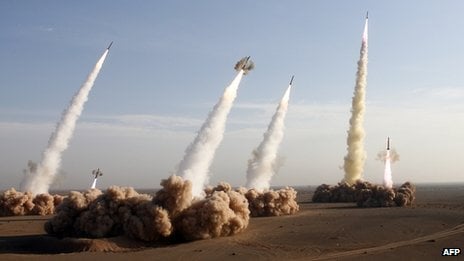
Of course if those trades had made hundreds of millions of dollars for Goldman they would have been allowed to stand.

But because Goldman was about to lose hundreds of millions of dollars authorities worked very rapidly to start “breaking” those trades.

This is just another example that shows how much of a joke our financial system has become.

Wall Street has become a massive computerized casino, and at some point this fraudulent house of cards is going to come crashing down hard.

The seeds for all of this were planted back in the late 1990s. The Glass-Steagall Act was repealed and the big banks started to go hog wild.

And according to an absolutely shocking memo uncovered by investigative reporter Greg Palast, a certain U.S. Treasury official was at the heart of the plot to make this possible…

When a little birdie dropped the End Game memo through my window, its content was so explosive, so sick and plain evil, I just couldn’t believe it.

The Memo confirmed every conspiracy freak’s fantasy: that in the late 1990s, the top US Treasury officials secretly conspired with a small cabal of banker big-shots to rip apart financial regulation across the planet. When you see 26.3 percent unemployment in Spain, desperation and hunger in Greece, riots in Indonesia and Detroit in bankruptcy, go back to this End Game memo, the genesis of the blood and tears.

The Treasury official playing the bankers’ secret End Game was Larry Summers. Today, Summers is Barack Obama’s leading choice for Chairman of the US Federal Reserve, the world’s central bank.

If Summers and U.S. Treasury Secretary Robert Rubin had not been working so hard for the benefit of the big banks, we might not be facing a quadrillion dollar derivatives bubble today…

The year was 1997. US Treasury Secretary Robert Rubin was pushing hard to de-regulate banks. That required, first, repeal of the Glass-Steagall Act to dismantle the barrier between commercial banks and investment banks. It was like replacing bank vaults with roulette wheels.

Second, the banks wanted the right to play a new high-risk game: “derivatives trading”. JP Morgan alone would soon carry $88 trillion of these pseudo-securities on its books as “assets”.

Deputy Treasury Secretary Summers (soon to replace Rubin as Secretary) body-blocked any attempt to control derivatives.

But what was the use of turning US banks into derivatives casinos if money would flee to nations with safer banking laws?

The answer conceived by the Big Bank Five: eliminate controls on banks in every nation on the planet — in one single move. It was as brilliant as it was insanely dangerous.

To learn more about how they used the WTO to transform the global financial system into a gigantic casino, head on over and read the rest of Palast’s outstanding article right here.

And you know what is truly frightening?

Larry Summers appears to be Barack Obama’s top choice to become the next chairman of the Federal Reserve.

That statement should send chills up your spine.

The truth is that Larry Summers should not even be running a Dairy Queen, much less the most powerful financial institution on the planet.

If Larry Summers becomes the next head of the Federal Reserve, it will be an unmitigated disaster.

But it looks like that is exactly what we are going to get.

We are rapidly heading toward the next major global financial crisis, and on top of everything else we will probably have Larry Summers running things soon.

What a nightmare.

Republished from: Michael Snyder

‘Mali election contributes to democracy’

0

A UN envoy says Maliâ„¢s presidential election contributes to the consolidation of peace and democracy in the West African country and in the region.

In a statement issued on Thursday, Romano Prodi, the UN special envoy to the Sahel, also congratulated Malian President Ibrahim Boubacar Keita on winning the presidential election.

Å“The collective focus must now move to embedding democratic institutions, fostering national reconciliation and spearheading development through economic growth and job creation,” Prodi said.

The Sahel region covers parts of Senegal, southern Mauritania, Mali, Burkina Faso, southern Algeria, Niger, northern Nigeria, Chad, northern Cameroon, the Republic of Sudan (including Darfur and the southern part of the country), and Eritrea.

The UN envoy also highlighted “the regional nature of the challenges and the opportunities, cautioning that the entire fragile Sahel region needs to be supported so as to build sustainable peace.”

Keita, a former prime minister, won the presidential election against his rival Soumaila Cisse in the run-off on August 11, two weeks after the first round.

The government said voter turnout was 51.5 and 45.7 in the first and second rounds respectively.

IA/MHB

…read more

Republished from: Press TV

Ron Paul: Do not believe US propaganda

0

Former Rep. Ron Paul says Bradley Manning should be released.

Former Congressman Ron Paul says American people should not believe the Å“propaganda of those who are trying to defend the Empire” following the sentencing of US whistleblower Bradley Manning.

In a Reddit question-and-answer session on Thursday, Paul also urged the US government to release the Army private.

Å“Most military personnel who are caught committing war crimes never receive any penalties,” Paul said. Å“I think he should be released now, [and] that he has done us a great service by letting the people know the truth.”

Manning was sentenced to 35 years in prison for leaking hundreds of thousands of classified US documents to WikiLeaks.

The 25-year-old soldier was found guilty on five counts of violating the Espionage Act for leaking the secret documents to the anti-secrecy group in 2010. The private, however, was acquitted of the aiding the enemy charge.

Paul also praised the whistleblower for leaking the documents.

Å“I believe his goal was to inform the American people of the truth about what was happening in the Iraq-Afghanistan wars,” Paul said.

The Obama administration has come under criticism by freedom of speech advocates for what they call waging a war on whistleblowers.

“Barack Obama has proceeded with more prosecutions against whistleblowers for espionage than all previous presidents combined going all the way back to 1917,” WikiLeaks founder Julian Assange said last month. “In fact he’s done double.”

Charges have been laid against seven current or former federal government employees or contractors for disclosing government secrets since Obama took office in 2009.

This is while prior to the Obama administration, the Espionage Act had been used only three times against five individuals.

AGB/AGB

…read more

Republished from: Press TV

Berlusconi implies govt. collapse

0

Former Italian Prime Minister Silvio Berlusconi has tacitly warned that his tax fraud conviction could cause the government to collapse, saying his opponents would be responsible if it occurs.

“They will say it is my fault if ministers from the (centre-right People of Freedom Party) PDL are weighing their resignations,” Berlusconi said on Thursday.

“But I ask myself, if two friends are in a boat and one of them throws the other into the sea, whose fault is it if the boat then drifts off course?” he added.

There have been reports in Italian newspapers that Berlusconi would bring down the government in October if he is expelled from the Senate.

Last week, Francesco Nitto Palma, a senior member of PDL, said that Berlusconi, banned from holding public office for complicity in tax fraud, would remain a political leader.

Palma said that Å“I don’t believe being in or out of parliament can keep Berlusconi from exercising leadership.”

The ban from holding office was issued earlier this month by Romeâ„¢s Court of Cassation with regard to Berlusconiâ„¢s tax fraud case relating to the purchase of broadcasting rights by his television network Mediaset.

The Italian Senate is set to decide in September on whether to uphold the ban for the ex-premier.

The Italian tycoon has faced many legal cases in his two decades in politics. Most of the time, he has either been acquitted or the charges have been dismissed when statues of limitations expired.

Previous charges against Berlusconi included Mafia collusion, false accounting,inappropriate relations with an under-age girl,corruption and bribing police officers, and judges.

Berlusconi, who served as the country’s prime minister from 1994 to 2011, resigned last November after coming under immense pressure to step down for mishandling the Italian economy.

IA/HN

…read more

Republished from: Press TV

Canada calls for oil transfer safety review

0

Rescue workers dig through the rubble for victims of a train disaster in Lac-Megantic, Quebec on July 8, 2013.

Canada’s Senate has called for a comprehensive safety review of crude oil transportation means, including pipelines and railroads, more than a month after a deadly rail disaster killed 47 people in the country.

“We’ve been working on these issues for the last nine months and the shocking Lac-Megantic rail disaster has only intensified the need to address hydrocarbon transportation safety,” said Senator Richard Neufeld, chair of the standing committee on energy, in a report on Thursday.

The Senate report also urged that more information be disclosed to the public about the site of the pipelines and oil spills.

“In the years ahead, hydrocarbon production will continue to grow and so will transport capacity. That’s why we believe Canadians need to know more about what the federal government has in place to protect citizens and the environment, and what more can be done to enhance current practices,” Neufeld added.

Mandatory audits of the safety protocols used by rail, pipeline and marine transportation companies, and boosting spill preparedness and response capabilities were among the most important issues raised in the report.

The report of the Senate committee, which commenced investigating energy safety issues in November 2012, came after a crude oil-carrying train exploded in Canada’s Quebec province.

On July 6, the freight train with 72 tankers full of crude oil crashed after it began to roll downhill without a conductor towards the town of Lac-Megantic, around 250 kilometers (155 miles) east of Montreal.

It caused a huge blaze that tore through part of the town, destroyed 40 buildings, and forced around 2,000 people to flee their homes.

On August 13, the Canadian Transportation Agency revoked the operating license of the Montreal, Maine & Atlantic Railway (MMA) company whose train was involved in the Lac-Megantic disaster.

IA/MHB

…read more

Republished from: Press TV

Texas sued for voter discrimination as fallout from Supreme Court ruling continues

0

The US Department of Justice has filed suit against Texas in an attempt to halt lawmakers from enacting a new law that would prevent large sections of the population from voting.

State lawmakers in Texas and elsewhere quickly gutted the Voting
Rights Act (VRA) of 1965, a historic Civil Rights
legislation, after a June ruling from the US Supreme Court.
The VRA required states with a history of voter discrimination,
mostly in the southern United States, to submit any changes in
election policy to the federal government for approval. 

Earlier this year, after federal monitors stopped dozens of
would-be discriminatory policies dating back to 1965, the Supreme
Court invalidated Section 4 of the VRA, a crucial section of the
law that explained the formula used by Congress to identify
regions of the US subject to extra scrutiny when local lawmakers
try to change election rules. 

Section 4 was the precursor to Section 5, which gives the federal
government the power to pre-clear any state or local changes
in election rules that could potentially prevent minorities from
voting. Section 5 remains intact but has been rendered largely
irrelevant because of congressional inaction. 

One such law that used the Supreme Court decision as inspiration
was Texas’ photo identification law (known as SB 14). Federal
prosecutors filed suit under Section 2 of the Voting Rights Act,
which remains applicable after the June decision, saying that the
photo ID law intentionally targets Texans who do not have access
to such a document. 

A recent analysis found that at least 10 percent of registered
voters throughout 27 Texas counties might be banned under SB
14. 

“In the voter ID lawsuit, the United States’ complaint
contends that SB 14 was adopted with the purpose, and will have
the result, of denying or abridging the right to vote on account
of race, color, or membership in a language minority group
,”
the Justice Department announced in a Thursday statement. 

“The complaint asks the court to prohibit Texas from enforcing
the requirements of the law, and also requests that the court
order bail-in relief under Section 3 of the Voting Rights Act. If
granted, this would subject Texas to a new preclearance
requirement
,” it continued. 

Just as the federal government has begun to intervene, reports
have surfaced about a Texas municipality that has proposed a plan
that would effectively prevent Hispanic citizens from gaining
political office. 

Johnny Isbell, the mayor of Pasadena – a Houston suburb –
announced that his administration is seeking to replace two of
the town’s single-member voting districts with at-large
districts. The strategy would favor wealthy candidates and
disseminate minority voting blocs, according to an op-ed in the
Houston Chronicle. 

“Historically, replacing districts with at-large seats has
been used to discriminatory ends, and such moves are often
blocked by the Department of Justice
,” the Chronicle editors
wrote. “Only a few months ago, that would have been the case
here. Not anymore
.”

Republished from: RT

Police Powers For Sale

RINF Alternative News

 Critics fear the creation of a private police force in Cambridge as companies bid for police powers. 

The two private security companies, GSL Dardan and Combined Service Provider, are currently bidding for authority over Cambridge’s traffic management. This would result in drivers being forced to surrender their personal details, such as their name and address, to security guards.

These so-called “officers” will also have the power to impose fines.

Establishing a private police force allowed this level of authority may put citizens at risk to abuse of power. After all, these security guards work for a company, whose purpose is to gain profit, as opposed to for the people or the government, whose purpose is supposedly to serve and protect.

Nick Pickles, director of Big Brother Watch, said:

“This is policing on the cheap, handing out serious powers to people who don’t need them and who are not public servants by any stretch of the imagination.

“I fail to see why someone directing traffic at an event needs any legal power to wear a hi-vis jacket and point cars in certain directions. Private companies shouldn’t be handing out fines and demanding people’s details for disobeying instructions.”

Cambridge MP Julian Huppert is also worried that the powers could be abused:

“I am instinctively concerned at the idea of private companies being given policing powers — this needs to be very carefully controlled, and we have seen cases around the country where these powers have been given very widely and abused.

“However, I can see some merit in giving very limited and specific traffic management powers for managing events. If this can keep traffic flowing and minimise disruption while freeing up police officers to attend to other duties it is right that it should be considered.

“But there have to be absolutely rigorous checks in place, and the permission should be withdrawn if the companies step outside very tight limits.”

Handing over authoritative responsibilities to deputized security guards is a frugal approach to distribute power and free up police officers.

Alternative courses of action could be to recruit more officers or create a system with rotating shifts.

Manpower is hardly a good reason to give grave responsibilities to private companies,  without fully  realizing the consequences.

Trust is not something that comes along easily these days. With cases like identity theft and corruption so abundant in the news, it is asking too much for the public to trust individuals who are not working for them, but for a private company. The true intentions of these companies can never be assured.

The public can never be sure if the security guards are working on commission, or if they are given a quota of fines they have to reach in a day.

Putting abuse and brutality to one side for a moment, physical police presence in areas is meant to be assuring. Eliminating this presence may bring a spike in crime rates.

According to recent statistics, in June 2013 alone, there have been 719 crimes within a 1 mile radius of Cambridge. How can these security guards protect the citizens if they are not well versed with the protocols of the police force? Public safety has and always should be the top priority of the state. It should not be risked just because of lack of manpower.

Police officers are public servants. They should not be outsourced to private companies who offer mediocre service to the citizens.

The responsibility must not be passed on to corporations. Power comes with responsibility, and that responsibility should be held with the highest dignity of officers dedicated to the public, and only the public.

As Predicted, Chis Lane Murder Was Gang Initiation Yet No Calls for ‘Justice’

0

Anthony Gucciardi

As predicted in my article on the day the news broke over the Chris Lane two days ago, the three teenagers murdered the rising student via an impersonal gunshot to the back as part of a gang initiation. And Obama and other talking heads who were screaming from the rooftops over the Trayvon Martin case do not care.

The father of one teenager who turned down recruitment from the boys to join in their gang is now confirming my investigation into the event that the mainstream media once again utterly failed to even mention. But once again, we were on the case (with the help of Infowars posting up the story) long before there was an admission to confirm the research completely. My article entitled ‘Investigation Reveals Death of Chris Lane Result of Gangster Culture, Gang Related‘ was immediately published following my discovery of James Edwards’ Facebook page, who was the teen that was extremely instrumental in the murder of Chris Lane and an avid Crip wannabe.

James Johnson, who again is the father of the boy who was targeted by the three teenage murders and asked to join their gang, has gone on record in confirming the murder was absolutely related to gang initiation. In the interview with Sydney Morning Herald, Johnson states:

“I don’t think it was an initiation — I know it was an initiation, my son told me it was an initiation.”

NO CALLS FOR ‘JUSTICE’

And there it is. Now the media is supposed to be calling ‘for justice’, right? We saw it with Trayvon Martin, who was dubbed the modern day ‘Emmett Till’ even though there was no actual evidence of racial motivation (and let’s not forget the fact that the evidence actually led to the understanding that Trayvon was on top of Zimmerman assaulting him). But what about Chris Lane? Lane was an accomplished academic, sports player, and all around ‘good guy’.

Where’s the calls for ‘justice’? Because in this case, where the suspects may actually be affiliated with high profile gangs, it’s clearly something that needs to be done. And in fact, it represents a large portion of young boys who are being indoctrinated into this culture. Where’s the calls for justice?

The Crips, as you may be aware, are one of the most notorious gangs in the United States. Represented by their blue colors (while The Bloods are represented by red), they often require new initiates to ‘prove’ themselves by killing an innocent person or similar atrocity. One of the key photos found on the Facebook page of James Edwards sports him wearing a blue bandana that is most certainly related to The Crips.

Whether this 15-year-old truly was linked up with the gang or simply had a deluded idea of ‘getting in’ by murdering Chris Lane is really not certain. But I do know that gang members often love to take advantage of young and gullible children who are willing to perform horrible tasks for them that the average member may not. Roles like drug mule come to mind, which may coincide with his numerous Facebook photos detailing massive amounts of cash.

But one thing is for certain: the White House is ignoring the entire thing.

WHITE HOUSE ‘NOT FAMILIAR’

In fact, the White House press secretary’s response was that the White House was not ‘familiar’ with the case. A rather peculiar answer when considering we know the White House at large is clinically obsessed with Drudge Report and what it chooses to report on. The Chris Lane murder being among the top story for over 42 hours now, I find it rather amazing that they’d manage to miss it.

Republished from: Infowars

Assad reshuffles cabinet: Report

0

Syrian President Bashar al-Assad has made important changes in the cabinet of the Arab country that has been battling a foreign-sponsored militancy for more than two years.

Assad appointed six new cabinet ministers by issuing a presidential decree on Thursday, the official SANA news agency reported.

The Syrian president replaced the ministers of economy and external trade, industry, internal trade, higher education, tourism, and appointed a minister without portfolio, according to the decree.

Syria has been experiencing deadly unrest since March 2011. The Syrian government says that the chaos is being orchestrated from outside the country, and there are reports that a very large number of the armed militants are foreign nationals.

According to reports, the Western powers and their regional allies — especially Qatar, Saudi Arabia, and Turkey — are supporting the militants operating inside Syria.

According to the UN, more than 100,000 people have been killed and a total of 7.8 million of others displaced due to the violence.

GJH/MHB

…read more

Republished from: Press TV

Bomb attack kills child in W Afghanistan

0

Afghan security personnel inspect the wreckage of vehicles at the site of a roadside bomb attack in Jalalabad on August 4, 2013.

An Afghan child has been killed and 15 people, including four members of the security forces, injured in a bomb attack in Afghanistanâ„¢s western province of Farah.

On Thursday, an explosives-laden motorcycle detonated near a vehicle carrying the provincial commander of the National Directorate of Security (NDS) in the city of Farah.

NDS chief Abdul Samada, who survived the attack unharmed, was travelling towards his office when the attack took place.

No group has claimed responsibility for the attack so far but the Taliban are usually blamed for such attacks in Afghanistan.

According to a recent report by the UN Assistance Mission in Afghanistan (UNAMA), war-related civilian casualties in the country increased by 23 percent in the first half of 2013 compared to the same period last year.

US-led foreign forces have also killed thousands of people, including many civilians, in airstrikes and night raids since they invaded the country in 2001.

The United States and its allies entered the war in Afghanistan in October 2001 as part of Washingtonâ„¢s so-called war on terror. The offensive removed the Taliban from power, but after more than 11 years, the foreign troops have still not been able to establish security in the country.

MAM/MHB

…read more

Republished from: Press TV

As Fukushima Crisis Spirals, Expert Warns ‘It’s Much Worse’ Than Claimed

0

In the latest setback of the spiraling crisis at the Fukushima nuclear power plant, operator TEPCO announced on Thursday that it had discovered radiation hotspots near contaminated water storage tanks, while a nuclear expert warns that the disaster may even be “much worse” than has been claimed.

Though new leaks were not found, the hotspots detected Thursday were emitting between 70 and 100 millisieverts an hour, the high end of which is the maximum exposure allowed for nuclear plant workers over a five-year period, and the same amount workers detected in pools of leaked water on Tuesday.

TEPCO’s announcement two days ago that 300 metric tons of water had leaked from a storage tank prompted Japanese authorities to up the threat level to “serious,” and marked only the latest in a series of leaks and mishaps in the never-ending emergency at the disaster-stricken nuclear plant.

As bad as the situation seems, Mycle Schneider, lead author for the World Nuclear Industry status reports, told BBC News that the situation “is much worse than we have been led to believe, much worse.”

He warned that they are dealing with “absolutely gigantic” amounts of radioactive water, and that there were leaks “not just from the tanks. It is leaking out from the basements, it is leaking out from the cracks all over the place. Nobody can measure that,” Schneider told BBC.

Apart from the unsustainable contaminated water-storage system and leak after leak allowing radioactivity to pour into the ground and ocean, alarms were raised over plans to remove fuel rods containing radioactive material equivalent to 14,000 times the amount released in the atomic bombing of Hiroshima, a plan that “has never been attempted before on this scale.”

________________________

This work is licensed under a Creative Commons Attribution-Share Alike 3.0 License

Republished from: Common Dreams

US blasted for arming Riyadh with bomb

0

US Air Force Global Striek Command B-2 Spirit bombers returned to base at Whiteman Air Force Base in Missouri.

The Cluster Munition Coalition (CMC) has denounced the United States for planning to supply 1,300 cluster bombs to Saudi Arabia.

Å“We are disappointed with the US decision to export cluster bombs to Saudi Arabia as both countries acknowledge the negative humanitarian impact of these weapons on civilians,” CMC Director Sarah Blakemore said on Thursday.

Å“Cluster munitions have been banned by more than half the worldâ„¢s nations so any transfer goes against the international rejection of these weapons,” she added.

The US Defense Department announced on Tuesday that Textron Defense Systems won a contract valued at $641 million to build the bombs for the Persian Gulf state.

The contract, expected to be completed by 2015, formalizes the sale of CBU-105 cluster bombers. Congress was first notified about the deal in December 2010.

The company said the weapon, also known as a Sensor Fuzed Weapon, has “greater than 99 percent reliability,” meaning less than 1 percent remain as unexploded ordnance.

The United States and its Middle Eastern ally have refused to sign the Convention on Cluster Munitions, which prohibits the production, transfer, use, and stockpiling of cluster munitions.

The US has previously announced sales of CBU-105 cluster bombers to India, South Korea, and Taiwan.

Saudi Arabia has used cluster munitions in the past and stockpiles the weapons, but it is not believed to produce or export cluster munitions.

Å“The US should acknowledge the treatyâ„¢s ban on cluster munition exports and reevaluate the criteria for its export moratorium so that no cluster munitions are transferred,” Blakemore said.

Meanwhile, London-based Action on Armed Violence warned about the consequences of the use of the cluster bombs.

Å“That cluster munitions continue to kill and injure civilians for many years is one of the many reasons why the international community saw fit to outlaw their future use or transfer. Sixty per cent of cluster bomb casualties occur while the victim is undertaking their normal activities,” the group said.

Saudi Arabia and the US are amongst the twelve countries that have used cluster munitions in the past (US in multiple locations; Saudi Arabia against Iraq in 1991).

AGB/AGB

…read more

Republished from: Press TV

‘Attacks kill 26, injure dozens in Iraq’

0

A new wave of attacks in Iraq, mostly targeting security forces and Shia Muslims, has killed at least 26 people and injured dozens more, according to Iraqi security and hospital sources.

All of the deadly incidents occurred on Thursday.

The first bombing took place near the city of Ramadi in Iraqâ„¢s western Anbar province, killing at least a dozen people and injuring several more. The bomber drove his fuel tanker packed with explosives to a military barrack and detonated it. Most of the victims were soldiers.

Later a bomber struck a wedding party for a Shia family in the northern town of Dujail, killing nine civilians and wounding 27.

And gunmen killed a local leader and two of his guards in Madain, which is about 25 kilometers southeast of Baghdad.

In the northern city of Mosul, a bomb exploded next to a police patrol, killing two police officers.

The incidents are the latest in a string of attacks across Iraq that have left more than 4,400 people dead since the beginning of 2013.

According to the United Nations, a total of 1,057 Iraqis, including 928 civilians, were killed and another 2,326 were wounded in terrorist attacks throughout the country in July – the deadliest month since 2008.

Iraqâ„¢s Interior Ministry has said that militants have launched an open war in Iraq and they want to push the Middle Eastern country into chaos.

“The country is currently facing an open war from bloodthirsty sectarian forces that aim to plunge the country into chaos,” the Interior Ministry said in a statement issued on July 30.

In an interview with Press TV in July, an international human rights lawyer said that foreign powers are attempting to fabricate and benefit from Shia-Sunni discord in Iraq and elsewhere, seeking to see the Muslim world weakened in the wake of such rifts.

Å“Who benefits is of course the key issue. Itâ„¢s really not the people of Iraq, itâ„¢s not the Sunnis, itâ„¢s not the Shias. It is external powers that want to exploit and create division. Those are the parties that benefit,” said Canada-based attorney Edward Corrigan.

Å“Itâ„¢s certainly not the people in the region [that benefit from sectarian conflicts]; itâ„¢s not Iran; itâ„¢s not Iraq; itâ„¢s not the people of Syria, which are now witnessing the destruction of their state and where there has been attempts to provoke similar sectarian conflict in Lebanon,” he added.

GJH/HN

…read more

Republished from: Press TV

America: Home of the Brave, Land of the… Jailed?

0

The United States of America, a country that prides itself on being the “land of the free and home of the brave”, stands this week as a monument to hypocrisy. In a bitter twist of irony, it has been made clear that those who act with bravery can expect to pay for it with the loss of their freedom.

Never has this been more clearly evidenced than by the recent sentencing of army whistleblower Bradley Manning. The biased and inhumane treatment of Manning, a man willing to give up his personal freedom and security in the spirit of justice and humanity, has been legally sanctioned even while Washington takes further steps toward global militarization in countries like Syria and North Korea.

As Norman Solomon wrote in an open letter to President Obama:

“Bradley Manning… didn’t just follow orders or turn his head at the sight of unconscionable policies of the U.S. government. Finding himself in a situation where he could shatter the numbed complacency that is the foundation of war, he cared – and he took action as a whistleblower.”

Upon receiving his 35-year prison sentence and dishonourable discharge, Bradley Manning issued the following in a statement to the U.S. President:

“The decisions that I made in 2010 were made out of a concern for my country and the world that we live in. Since the tragic events of 9/11, our country has been at war. We’ve been at war with an enemy that chooses not to meet us on any traditional battlefield, and due to this fact we’ve had to alter our methods of combating the risks posed to us and our way of life.”

The bottom line is clear: in a country that glorifies armed conflict, Manning’s sentencing comes as a warning to those who choose peace over war, truth over deception. In the words of Stephen Lendman:

“America today represents heart of darkness harshness. It’s a hair’s breadth from full-blown tyranny. Manning’s fate can be anyone’s.”

Republished from: Global Research