Hypocrite David Cameron defends selling arms to outrageous Saudi regime

1

David Cameron has voiced support for the controversial Saudi-led air-strike campaign in Yemen and dismissed concerns that Riyadh is funneling funds to Islamic State.

Speaking to BBC Radio 4’s Today program on Monday, the Prime Minister defended UK’s arms exports to the oil-rich autocracy and said that the UK carefully monitors how the Saudis use British-made weapons.

“Our relationship with Saudi Arabia is important for our own security. They are opponents of Daesh [Islamic State] and this extremist terrorism,” he said.

“In terms of our arms exports, I think we have some of the most stringent controls anywhere in the world and I’ll always make sure they’re properly operated.”

The UK has sold £5.6 billion in arms, fighter jets and other military hardware to Saudi Arabia since 2010, according to the Campaign Against the Arms Trade (CAAT).

Last week, the Saudi Foreign Minister Adel al-Jubeir revealed that British and American officials have access to lists of Yemeni targets and are present in the command and control centers where airstrikes are launched.

Since the war in Yemen broke out in March, nearly 3,000 civilians have been killed and 1 million have been displaced, according to UN figures. Rights groups have criticized the Saudi-led raids for civilian deaths, including hitting Medecins Sans Frontieres clinics and a school for the blind, where Yemen’s Houthi rebels had posted militia.

“We’re trying to do everything we can to make sure that the work done by Saudi Arabia is properly targeted and it’s right that we should do that,” Cameron told the BBC.

However, the PM expressed concerns about Saudi-funded training programs and schools around the world.

“We do need to look at where the money… it is already illegal for anyone to fund extremist groups in our country. We ban, proscribe, extremist groups,” he said.

“I think there are deeper connections where you see what is being taught in schools – not perhaps always here but around the world – and the money that is funding those educational materials.”

Via RT. This piece was reprinted by RINF Alternative News with permission or license.

Sanders embarsses Clinton over shameless Wall St connections

1

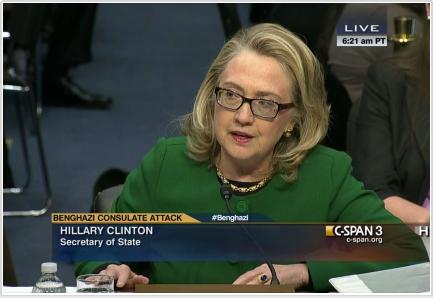
Democratic candidate Bernie Sanders gave frontrunner Hillary Clinton a piece of his mind in the most vigorous of their four presidential debates, accusing her of cozying up to Wall Street and accepting hundreds of thousands of dollars from big banks.

“The first difference is I don’t take money from big banks,” Vermont Senator Sanders said. “I don’t get personal speaking fees from Goldman Sachs. I have huge doubts when people receive money from Wall Street,” he added.

Discussing national security, both Sanders and Clinton voiced support for Obama’s diplomatic decisions on Iran and his opposition to sending US ground troops into Syria.

Moderator Andrea Mitchell asked whether the US president was right not to act on his “red line” vow regarding his Syrian counterpart Bashar Assad and the use of chemical weapons.

“I know from my own experience as secretary of state that we were deeply worried about Assad’s forces using chemical weapons because it would have had not only a horrific effect on people in Syria, but it could very well have affected the surrounding states – Jordan, Israel, Lebanon, Turkey. So getting those chemical weapons out was a big deal,” Clinton said.

She said the United States had a “very big interest in trying to help stabilize the region.”

“If there is any blame to be spread around, it starts with the prime minister of Iraq, who sectarianized his military, setting Shia against Sunni,” she noted.

Clinton acknowledged that Russia-brokered deal to get chemical weapons away from Assad was an “opportunity to build on.”

“I think that the president’s decision to go after the chemical weapons once there was a potential opportunity to build on when the Russians opened that door resulted in a very positive outcome. We were able to get the chemical weapons out,” Clinton said.

When asked whether she would give another ‘reset’ button to Vladimir Putin, Clinton replied evasively.

“It would depend on what I got for it.

“I can tell you what we got in the first term, we got a New Start treaty, to reduce nuclear weapons between the United States and Russia. We got permission to resupply our troops in Afghanistan by traveling across Russia. We got Russia to sign on to our sanctions against Iran and other very important commitments.”

READ MORE: ‘Trump is best ISIS recruiter’: Clinton, Sanders round on GOP ‘Islamophobia’ in 3rd Democrat debate
Clinton mentioned that when Putin reassumed the presidency, he accused her of fomenting dissent.

How would she describe her relationship with Mr. Putin these days?

“It’s interesting,” Clinton laughed. “It’s one, I think, about respect. We’ve had some very tough dealings with one another. I know that he’s someone you have to continually stand up to, because like many bullies he is somebody who will take as much as he possibly can unless you do.”

This piece was reprinted by RINF Alternative News with permission or license.

Via RT.

The Financial Apocalypse Accelerates As Middle East Stocks Crash To Begin The Week

0

By Michael Snyder


(RINF) – It looks like it is going to be another chaotic week for global financial markets. On Sunday, news that Iran plans to dramatically ramp up oil production sent stocks plunging all across the Middle East. Stocks in Kuwait were down 3.1 percent, stocks in Saudi Arabia plummeted 5.4 percent, and stocks in Qatar experienced a mammoth 7 percent decline. And of course all of this comes in the context of a much larger long-term decline for Middle Eastern stocks. At this point, Saudi Arabian stocks are down more than 50 percent from their 2014 highs. Needless to say, a lot of very wealthy people in Saudi Arabia are getting very nervous. Could you imagine waking up someday and realizing that more than half of your fortune had been wiped out? Things aren’t that bad in the U.S. quite yet, but it looks like another rough week could be ahead. The Dow, the S&P 500 and the Nasdaq are all down at least 12 percent from their 52-week highs, and the Russell 2000 is already in bear market territory. Hopefully this week will not be as bad as last week, but events are starting to move very rapidly now.Much of the chaos around the globe is being driven by the price of oil. At the end of last week the price of oil dipped below 30 dollars a barrel, and now Iran has announced plans “to add 1 million barrels to its daily crude production”…

Iran could get more than five times as much cash from oil sales by year-end as the lifting of economic sanctions frees the OPEC member to boost crude exports and attract foreign investment needed to rebuild its energy industry.

The Persian Gulf nation will be able to access all of its revenue from crude sales after the U.S. and five other global powers removed sanctions on Saturday in return for Iran’s curbing its nuclear program. The fifth-biggest producer in the Organization of Petroleum Exporting Countries had been receiving only $700 million of each month’s oil earnings under an interim agreement, with the rest blocked in foreign bank accounts. Iran is striving to add 1 million barrels to its daily crude production and exports this year amid a global supply glut that has pushed prices 22 percent lower this month.

It doesn’t take a genius to figure out what this is going to do to the price of oil.

The price of oil has already fallen more than 20 percent so far in 2016, and overall it has declined by more than 70 percent since late 2014.

When the price of oil first started to fall, a lot of people out there were proclaiming that it would be really good for the U.S. economy. But I said just the opposite. And of course since that time we have seen an endless parade of debt downgrades, bankruptcies and job losses. 130,000 good paying energy jobs were lost in the United States in 2015 alone because of this collapse, and things just continue to get even worse. At this point, some are even calling for the federal government to intervene. For example, the following is an excerpt from a CNN article that was just posted entitled “Is it time to bail out the U.S. oil industry?“…

America’s once-booming oil industry is suddenly in deep financial trouble.

The epic crash in oil prices has wiped out tens of thousands of jobs, caused dozens of bankruptcies and spooked global financial markets.

The fallout is already being felt in oil-rich states like Texas, Oklahoma and North Dakota, where home foreclosure rates are spiking and economic growth is slowing.

Now there are calls in at least some corners for the federal government to come to the rescue.

Is it just me, or is all of this really starting to sound a lot like 2008?

And of course it isn’t just the U.S. that is facing troubles. The global financial crisis that began during the second half of 2015 is rapidly accelerating, and chaos is erupting all over the planet. The following summary of what we have been seeing in recent days comes from Doug Noland…

The world has changed significantly — perhaps profoundly — over recent weeks. The Shanghai Composite has dropped 17.4% over the past month (Shenzhen down 21%). Hong Kong’s Hang Seng Index was down 8.2% over the past month, with Hang Seng Financials sinking 11.9%. WTI crude is down 26% since December 15th. Over this period, the GSCI Commodities Index sank 12.2%. The Mexican peso has declined almost 7% in a month, the Russian ruble 10% and the South African rand 12%. A Friday headline from the Financial Times: “Emerging market stocks retreat to lowest since 09.”

Trouble at the “Periphery” has definitely taken a troubling turn for the worse. Hope that things were on an uptrend has confronted the reality that things are rapidly getting much worse. This week saw the Shanghai Composite sink 9.0%. Major equities indexes were hit 8.0% in Russia and 5.0% in Brazil (Petrobras down 9%). Financial stocks and levered corporations have been under pressure round the globe. The Russian ruble sank 4.0% this week, increasing y-t-d losses versus the dollar to 7.1%. The Mexican peso declined another 1.8% this week. The Polish zloty slid 2.8% on an S&P downgrade (“Tumbles Most Since 2011”). The South African rand declined 3.0% (down 7.9% y-t-d). The yen added 0.2% this week, increasing 2016 gains to 3.0%. With the yen up almost 4% versus the dollar over the past month, so-called yen “carry trades” are turning increasingly problematic.

Closer to home, the crisis in Puerto Rico continues to spiral out of control. The following is an excerpt from a letter that Treasury Secretary Jack Lew sent to Congress on Friday…

Although there are many ways this crisis could escalate further, it is clear that Puerto Rico is already in the midst of an economic collapse…

Puerto Rico is already in default. It is shifting funds from one creditor to pay another and has stopped payment altogether on several of its debts. As predicted, creditors are filing lawsuits. The Government Development Bank, which provides critical banking and fiscal services to the central government, only avoided depleting its liquidity by halting lending activity and sweeping in additional deposits from other Puerto Rico governmental entities. A large debt payment of $400 million is due on May 1, and a broader set of payments are due at the end of June.

It isn’t Michael Snyder from The Economic Collapse Blog that is saying that Puerto Rico is “in the midst of an economic collapse”.

That is the Secretary of the U.S. Treasury that is saying it.

Those that have been eagerly anticipating a financial apocalypse are going to get what they have been waiting for.

Right now we are about halfway through January, and this is the worst start to a year for stocks ever. The Dow is down a total of 1,437 points since the beginning of 2016, and more than 15 trillion dollars of stock market wealth has been wiped out globally since last June.

Unfortunately, there are still a lot of people out there that are in denial.

There are a lot of people that still believe that this is just a temporary bump in the road and that things will return to “normal” very soon.

They don’t understand that this is just the beginning. What we have seen so far is just the warm up act, and much, much worse is yet to come.

Visit Michael’s blog

When Peace Breaks Out With Iran…

1

This has been the most dramatic week in US/Iranian relations since 1979.

Last weekend ten US Navy personnel were caught in Iranian waters, as the Pentagon
kept changing its story on how they got there. It could have been a disaster
for President Obama’s big gamble on diplomacy over conflict with Iran.
But after several rounds of telephone diplomacy between Secretary of State John
Kerry and his Iranian counterpart Javad Zarif, the Iranian leadership —
which we are told by the neocons is too irrational to even talk to — did
a most rational thing: weighing the costs and benefits they decided it made
more sense not to belabor the question of what an armed US Naval vessel was
doing just miles from an Iranian military base. Instead of escalating, the Iranian
government fed the sailors and sent them back to their base in Bahrain.

Then on Saturday, the Iranians released four Iranian-Americans from prison,
including Washington Post reporter Jason Rezaian. On the US side, seven Iranians
held in US prisons, including six who were dual citizens, were granted clemency.
The seven were in prison for seeking to trade with Iran in violation of the
decades-old US economic sanctions.

This mutual release came just hours before the United Nations certified that
Iran had met its obligations under the nuclear treaty signed last summer and
that, accordingly, US and international sanctions would be lifted against the
country.


Read more

Video: Intl community let Saddam, Gaddafi, Saudi dictatorships flourish: Cardboard Citizens CEO

0


Full interivew: https://youtu.be/_HHWbhpOpkE From the fantastical and improbable, to the introspective and analytical – theatre is often considered a diversion …

Via Youtube

Video: Ashes & clouds: Stunning time-lapse shows Colima volcano erupt again

0


Colima volcano, one of most active in Mexico, erupts again RT LIVE http://rt.com/on-air Subscribe to RT!

Via Youtube

Video: RAW: Mass grave believed to be of Yazidi men killed by ISIS found near Iraq’s Sinjar

0


Kurdish forces have found sculls, bone fragments, and pieces of clothing near Sinjar, Iraq, which was captured by ISIS in August of 2014. Around 15-20 Yazidi …

Via Youtube

Playing Games with War Deaths

1

There’s a double standard in how the U.S. mainstream media reports civilian deaths depending if the U.S. military is fighting the wars or not, accepting absurdly low numbers when the U.S. is at fault and hyping death tolls when “enemies” are involved, a manipulation of human tragedy, says Nicolas J S Davies.

By Nicolas J S Davies

How many people have been killed in the wars in Afghanistan, Iraq, Syria, Yemen and Somalia? On Nov. 18, a UN press briefing on the war in Yemen declared authoritatively that it had so far killed 5,700 people, including 830 women and children. But how precise are these figures, what are they based on, and what relation are they likely to bear to the true numbers of people killed?

Throughout the U.S.-led war in Afghanistan, the media has cited UN updates comparing numbers of Afghans killed by “coalition forces” and the “Taliban.” Following the U.S. escalation of the war in 2009 and 2010, a report by McClatchy in March 2011 was headlined, “UN: U.S.-led forces killed fewer Afghan civilians last year.” It reported a 26 percent drop in U.S.-led killing of Afghan civilians in 2010, offset by a 28 percent increase in civilians killed by the “Taliban” and “other insurgents.”

U.S. Army troops on patrol in during Operation Southern Strike III in the Spin Boldak district of Afghanistan's Kandahar province on Sept. 2, 2012. (U.S. Army photo by Staff Sgt. Katie Gray)

U.S. Army troops on patrol in during Operation Southern Strike III in the Spin Boldak district of Afghanistan’s Kandahar province on Sept. 2, 2012. (U.S. Army photo by Staff Sgt. Katie Gray)

This was all illustrated in a neat pie-chart slicing up the extraordinarily low reported total of 2,777 Afghan civilians killed in 2010 at the peak of the U.S.-led escalation of the war.

Neither the UN nor the media made any effort to critically examine this reported decrease in civilians killed by U.S.-led forces, even as U.S. troop strength peaked at 100,000 in August 2010. Pentagon data showed a 22 percent  increase in U.S. air strikes, from 4,163 in 2009 to 5,100 in 2010, and U.S. special forces “kill or capture” raids exploded from 90 in November 2009 to 600 per month by the summer of 2010, and eventually to over 1,000 raids in April 2011.

Senior U.S. military officers quoted in Dana Priest and William Arkin’s book, Top Secret…

Read more

A Balanced View of the Obama Presidency

0

Eric Zuesse, originally posted at strategic-culture.org

Barack Obama’s Presidency turns out to have been what neither his supporters nor his opponents expected. A balanced historical view of his performance in office will take a long time to develop, but enough is already known so that intelligent preliminary estimates can now be made: the following is just one historian’s attempt to do this, a year before his Presidency ends.

As with every President, Obama has done some things that are bad, and some that are good. The great question is: how will historians make sense of it all? The challenge is to identify his priorities. We’ll start here with the bad, because his good can’t be understood accurately outside the context of his bad. His priorities drove both, and did not change – and are producing his actual historical legacy, which will be what’s most-remembered about his Presidency.

He was no Abraham Lincoln, whose motives were what he said they were. That’s one of the reasons why both Democrats and Republicans misrepresent the type of person he is, the type of President he is, and the Obama Presidency itself – including his selections of the people to occupy the cabinet departments and the other key positions in his Administration. Republicans cannot criticize him honestly, because many of his actual motives are similar to theirs, and Republicans cannot acknowledge that he’s largely one of them except in his rhetoric (which often contradicts his actions). Many of his actions reflect longstanding Republican policies – against which the Democratic Party had long fought (and has now lost, under his Presidency – a ‘Democratic’ victory for the Republicans: one which, were a Republican President to have done it, would be far likelier to be able to be undone by some future Democratic Administration, which then would be accused by Democrats for reversing a ‘Democratic’ policy). Thus, his legacy will likely be especially longlasting, not only large.

Obama is a highly intelligent and competent person, and his priorities shaped many of the important changes that have occurred, both in America, and in the wider world, during his Presidency. Unfortunately, as will be demonstrated here, he happens to be also extremely dishonest, and very skillfully so: he’s the most skillful American politician since the time of Ronald Reagan, and perhaps the most deceptive person ever to occupy the White House. Neither the Republican view nor the Democratic view of Obama is realistic, nor can a realistic view of him become constructed by some sort of combination of those two views.

This is why no balanced view of his Presidency is possible which demands that he be interpreted in the light only of his stated goals and priorities. Many of those he not only didn’t achieve, but he actually and intentionaly blocked: he didn’t really want them.

One must start with his actions, not with his mere words. And one must acknowledge that, while some of his actions were good, some of his actions were bad. The problem in trying to understand the Obama Presidency is to dig deeper than his words, and deeper even than his actions alone, to the actual priorities that produced both. In his case, the good cannot be understood outside the context of his bad. If he were merely a bumbler, instead of a brilliant leader – which he has, in fact, been – then one could reasonably attribute the bad to mere errors on his part. But that’s not the case with him. Obama is actually an extraordinarily effective President.

This is the reason why Obama’s Presidency turns out to have been what neither his supporters nor his opponents expected. His exquisitely subtle and skillfully-applied dishonesty has greatly confused people on both sides. This is also the reason why many of Presidential candidate Obama’s campaign promises – on the basis of which he had won first the Democratic nomination over Hillary Clinton and John Edwards in 2008, and then went on to beat Republican John McCain in the general election – were abandoned by him immediately when he won the election, such as, for example, his first promise about health care (as he announced it on the morning of 24 March 2007):  

My commitment is to make sure that we’ve got universal health care for all Americans by the end of my first term as president.

There are some basic principles that this plan will have. Number one, we’re going to have to make sure that everybody is in. Number two, we’ve got to make sure that we apply some principles, because I think every expert agrees to in terms of how we save money and get more out of the dollars that we’re already spending. For example, we’ve got to put more money in prevention. It makes no sense for the children to be going to the emergency room for treatable ailments like asthma. And if we are giving them regular checkups with their primary care physician, then we’re going to save money in the system. Twenty percent of our patients who have chronic illnesses account for eighty percent of the costs. And so it’s absolutely critical that we invest in managing those with chronic illnesses, like diabetes. If we, for example, hire a case manager to work with them to ensure that they’re taking the proper treatments, then potentially we’re not going to spend $30,000 on a leg amputation if they’re diabetic. Application of medical technology can not only reduce administrative costs but it can also improve quality and reduce medical errors. We’re going to have to take those savings and apply them to those persons who can’t afford health insurance so that they can buy into the system that we’re subsidizing them in some fashion.

Another principle is that it’s going to have to be some form of pooling of costs of risk. And there are going to be a number of proposals, and they’re out. I heard in some of the previous questions that one pool would be the federal pool that already exists for myself and other federal workers. Some states, like California and Massachusetts, already started to set up their pools. Whatever the mechanism, we going to have to have a pooling system so that individuals have the benefits of being part of a larger group. And the final thing that I’ll just mention is that we’re going to have to do something serious about quality and how we spend our money. Not only do we have to put more money in prevention, but we’ve also got to make sure that, for example, if a generic works just as well as a brand name drug, that we’re not fighting drug companies to dictate what is on the formulary, what drugs are available under a plan but we make sure that the money is spent on the most efficient drug for that particular disease.

If we do all those things, I believe there’s no reason why we can’t end up with the kind of health care system that would ensure that every American has high quality, basic health care.

(The transcript is here.)

Gallup, which provides the most reliable estimates of the percentages of the American public who are insured and who aren’t, headlined on 7 January 2016 “U.S. Uninsured Rate 11.9% in Fourth Quarter of 2015,” and they presented a graph showing the comparable figures going back to the First Quarter of 2008 – which turned out to have been the only pre-crash figure in Gallup’s entire series. It also happened to have been the very time when Barack Obama, Hillary Clinton, and the other candidates, were originally introducing their proposals regarding health insurance. So: it’s the real baseline for comparison. The uninsured figure then was 14.6%, which thus constitutes the real baseline for comparison between the pre-Obama norm, versus today’s Obamacare reality. When Obama was promising to reduce the figure to zero uninsureds, or universal insurance, that 14.6% is the figure he was actually promising the nation he’d reduce down to zero, or universal insurance (100% coverage). That figure rose to 18.0% by the Third Quarter of 2013, when Obamacare ultimately started. Many Americans were deciding then not to renew their existing health insurance policies, in the hope and expectation that better alternatives would soon become available to them in the new system. So, there was an artificial rise while Americans were in that limbo, awaiting the new system. But that rise didn’t produce a new baseline. Instead, it went in the opposite direction from what had been promised, but it was only temporary anyway.

Obama had said “My commitment is to make sure that we’ve got universal health care for all Americans by the end of my first term as president. … Number one, we’re going to have to make sure that everybody is in.”

Right now, 11.9% of Americans are not in. Pre-Obamacare, 14.6% had been not in. Obama’s promise, his “number one” “commitment,” was that “by the end of my first term as president,” it would be 0%. That’s “universal health care for all Americans.” It’s 100% of Americans who are “in.” By the time of “the end of my first term as president,” which was on 19 January 2013, Obamacare hadn’t even yet started (Republicans had delayed it with rants about its “death panels” and other such demagogic lies), but the uninsured-rate at that time was around 16.5% – that’s at the time when Obamacare started, not the 14.6% at the time Obama was running for President and promising to reduce that 14.6% rate down to 0%.

The uninsured-rate is now going up, not down, after having bottomed-out at 11.4% in the Second Quarter of 2015. It rose again to 11.6% by the Third Quarter of 2015, and was next the latest available figure, 11.9%, in the Fourth Quarter of 2015. Whether it will go back up to 14.6% can’t yet be known, and no prediction is being made here.

Obamacare thus increased the insured-rate from the pre-Obamacare norm of 85.4% (100%-14.6%) up to a high of 88.6% (100%-11.4%), and it’s now heading back down again; but, even if it turns around and starts heading back up again (instead of sinking below its current level of 88.1%), it will never be able to reach the other nations’ rate, which is 100% (the level that Obama, like all of the other Democratic candidates, was promising), unless Obamacare becomes replaced, by some form of socialization of either the health-insurance function (such as in France), or else the health-care function itself (such as in UK).

All other advanced industrialized nations have a 0% uninsured-rate. 100% of the citizens have health insurance there. It’s called socialized health insurance or socialized healthcare; and, in most countries, it is paid for via taxes on everybody, instead of as in America, via corporate-insurance premiums. And the quality of health care is superior in all of those other nations. (And that study also found: in the latest comparable year, the U.S. had by far the highest per-capita spending on health care (twice the average spending in the other advanced nations). The U.S. ranked lowest of all nations on “efficiency,” as well as in “equity,” “healthy lives,” and “overall.” In other words: the U.S. health-insurance system is atrocious: it robs the public in multiple ways. (But, since the loot is going to private investors, not to the government, the American public consider it to be ‘capitalism’ and thus okay.)

Regarding public-welfare matters, the historical record is clear that democratic socialism is vastly more efficient than is capitalism. Only the U.S. (and the countries that it most fully controls) fails to make the distinction between democratic socialism, such as exists in those other countries, versus dictatorial socialism or “communism,” such as had existed in the Soviet Union. Americans are ideologically mind-stuck decades behind reality, in the U.S-versus-U.S.S.R era – the ideological Cold War (which the West won – because the real contest was between democracy versus dictatorship, and not between socialism and capitalism). Barack Obama knew, when he made his campaign promises, that he wouldn’t challenge the American system; he wouldn’t challenge that misconception, because his billionaire-backers wouldn’t back him if he did that. If he were to have tried to educate the American public about the stark differences between democratic socialism and dictatorial socialism, then he wouldn’t have been able to win. He knew he wouldn’t even try to make the distinction clear, between socialism (which is democratic) versus communism (which is dictatorial). The billionaires simply prohibited that. Least of all would he praise democratic socialism: no billionaire would tolerate his doing that – all of them had gotten where they were via the existing system. Democratic socialism is something they all fear (even though billionaires in some other countries seem to have acclimated themselves to it, at least partially).

So: he simply lied to the public. There is no way “to make sure that we’ve got universal health care for all Americans” without socializing the health-care or health-insurance function. And Obama is smart enough to have recognized this fact. He was no fool. There is no way that, “Number one, we’re going to have to make sure that everybody is in,” except by socializing it. There is no way that costs will go down and quality go up in American health care, but by democratically socializing this function.

There is no way to have universal coverage other than to socialize either the healthcare function, or the health-insurance function, and Obama knew that.

In fact, here is what he told the very pro socialized health-insurance AFL-CIO Civil, Human and Women’s Rights Conference in 2003 (probably on June 30th):

“I happen to be a proponent of single-payer universal health care coverage. I see no reason why the United States of America, the wealthiest country in the history of the world, spending 14 percent of its gross national product on health care, cannot provide basic health insurance to everybody. And that’s what Jim’s talking about because: everybody in, nobody out. A single-payer health care coverage, universal health care coverage, that’s what I’d like to see. But as all of you know, we may not get there immediately.” (See him saying this in the video here.)

During his first year as President, before there was complete certainty that Obama wouldn’t include a “public option” in his plan (a device to serve as a possible wedge into socialized or single-payer health insurance – and progressives knew that it was an essential feature to include in any plan other than one that goes directly to single-payer), Politifact headlined “Obama Statements on Single-Payer Have Changed a Bit,” and identified the “Jim” that’s referred to in that 2003 video as “Jim Duffett, director of the Illinois advocacy group Campaign for Better Health Care.” And they spoke to him: “‘I’ve never felt that his core principles for accessible, guaranteed health care for everyone were ever compromised. He’s an organizer, and you have to figure out as strategically as you can, how to win,’ he said.” All progressives were simply expecting Obama’s plan to include its promised public option – a health-insurance option designed and run with accountability only to the public, none at all to the aristocracy (who own the insurance companies) – something that was overwhelmingly popular with the American public. But Obama never pushed for it. Senator Ted Kennedy wanted to draft that, but Obama refused to allow it.

By the time of 30 May 2007, Obama introduced the plan on which he ran for – and won – the Presidency: “BARACK OBAMA’S PLAN FOR A HEALTHY AMERICA: Lowering health care costs and ensuring affordable, high-quality health care for all.” It included: “Specifically, the Obama plan will: (1) establish a new public insurance program, available to Americans who neither qualify for Medicaid or SCHIP nor have access to insurance through their employers, as well as to small businesses that want to offer insurance to their employees.” That “new public insurance program” was his public option, and it was the first-mentioned of his plan’s six listed features. He gave it emphasis. And yet Obama blocked that feature from being included at all in the plan that, as President, he handed off to the conservative Democratic Senator Max Baucus to draw up and present to Congress, to win his signature.

Obama knows the score. He’s basically satisfied for America to rank at the very bottom in quality and universality – and at the very top in prices – on healthcare. This combination presents a huge drag on the entire American economy; every company (especially small ones) that operates here pays for it, even when they don’t pay for health insurance for their employees: sick days, disability rates, decreased performance, etc. But all of the big investors, the billionaires, want the profits that derive from the pharmaceutical industry, the medical-products industry, the hospital-industry, etc., which profits gain billionaires far more than sick workers can ever cost them. Anyway, those jobs and sick workers can be replaced cheaper, offshored to places like India – and Obama (especially with his proposed ‘trade’ treaties, TISA, TPP, and TTIP) is the all-time champion at assisting the offshoring of labor to cheaper countries. Obama is an international champion of capitalism, including of the international shell-game that his political opponent Mitt Romney famously profited from at Bain Capital, and that Obama criticized him for during the 2012 campaign. (Romney wasn’t even nearly as skillful a deceiver as was Obama. He generally believed what he was saying.)

Obama lied about several other things regarding his health-insurance plan, such as that he would fight for the inclusion in it of a “public option,” and his promise that his plan wouldn’t include any “healthcare mandate” or penalty to be paid by Americans who refuse to buy health insurance. He abandoned both of those promises as soon as he won the election. He never fought for them. He opposed them. Obamacare does include the individual mandate, and doesn’t include any public option. Obama had campaigned vigorously against Hillary Clinton’s plan because it had included the individual mandate – the requirement to purchase insurance. But as soon as he was elected, he started pushing for the individual mandate to be included in the plan that he assigned to the conservative Democratic Party U.S. Senator Max Baucus (instead of to the progressive Democratic Party U.S. Senator Ted Kennedy) to draft. (Republicans attacked him for its including the individual mandate, the requirement for individuals to purchase health insurance, but the individual mandate had originally been a Republican idea. And it had also been part of the health insurance plan that Obama’s 2012 opponent, Mitt Romney, had introduced in Massachusetts in 2006 and on the basis of which had been constructed the health-insurance proposal that came from each of the three major 2008 Democratic Presidential candidates: Obama, Clinton, and John Edwards. But now, after having produced the ‘Democratic’ plan – minus the public option that all Democrats proposed – Romney was condemning the plan that the ‘Democrat’ Obama passed with support from congressional ‘Democrats’.) This is called “bait-and-switch.” It makes suckers of voters, not people to be served but instead people who are manipulated for the benefit of the real beneficiaries: instead of there being a democracy, there is now a dictatorship via deceits. (Jimmy Carter recently called it an “oligarchy.”)

In other important ways, too, Obama was lying during his campaigns. I have addressed those in other articles, such as this one. 

Concerning the issue of NAFTA and other U.S. Government policies for sending American jobs to cheaper foreign countries so as to increase the profits to America’s international corporations and thus raise the wealth of the U.S. aristocracy who own and control those corporations and who are also the major benefactors to all top U.S. politicians, here is one of Obama’s 2008 campaign-flyers (and Hillary was doing the same to him that he was doing to her – only not nearly as effectively):

http://blog.cleveland.com/openers/2008/02/1obma.pdf

Screen Shot 2015-10-22 at 12.41.26 PM

By the time of 2015, even the Democratic Party’s loyal website the Daily Kos started to issue articles such as “The Liberal Apologies for Obama’s Ugly Reign.” Even that liberal site was no longer entirely in denial about the reality. And, unlike in the few prior instances where someone at that site had criticized Obama, the reader-comments to this critical commentary about Obama’s performance were no longer to blackball the writer for having pointed out the ugly truth: the readers were by now finally starting to recognize that they had previously been fooled, and that they had been fools for having refused, for such a long time, to acknowledge the by-now-obvious truth. (And, to many Democrats, it’s still not obvious enough. On the night when Obama delivered his final State of the Union Address, 12 January 2016, the latest Gallup report on his job-approval rating was 84% approval among Democrats, and 10% approval among Republicans. And one has no reason to assume that Republicans were disapproving his performance for any rational reasons – that’s not the Republican way of anything. The total result of that insanity on both sides was 47% approval, 49% disapproval, which likewise has no correlation with the reality of Obama’s job-performance. ‘Democracy’ that’s based on misinformed insanity of the public is no real democracy at all. It’s based instead on a manipulated public, which is bifurcated on bogus grounds.)

The same was the case across-the-board. For example, Obama’s policies on k-12 education were simply extensions of George W. Bush’s No-Child-Left-Behind school-privatization-and-high-stakes-testing, that were focused on punishing teachers and administrators who served people in the lowest-income school districts, and that did nothing to raise the quality of education for America’s children, to competitive international standards. Only teachers and administrators in low-income districts were fired. Punishing low-performing schools when it’s what the children bring to class from their impoverished backgrounds, not what the teachers and administrators are bringing to their students in their classrooms, that’s actually causing the low performance, may please billionaires (whose children can be educated just as they were before), but the poorest Americans suffer greatly from it, especially because that new system provides an even higher incentive for any new teacher to avoid even applying to get a job in a low-income district. Higher-income districts then receive yet more teacher-applicants than before. Most teachers prefer an easier job at a higher pay. However, the rich also benefit, by not needing to pay their teachers as a high salary as might otherwise be necessary to attract applicants. In other words: it’s perverse – yet it’s Republican policy in two successive Presidencies, one of which is nominally ‘Democratic’.

Furthermore, President Obama’s foreign policies have been outright catastrophic for the people in Honduras, Libya, Syria, and Ukraine, and harmful elsewhere (including Europe). They will be catastrophic for the entire world if his international-trade treaties, TPP, TTIP, and TISA, become passed into law. That’s the highest-priority item in his entire Presidency (higher even than Obamacare was); and, if he succeeds in it (as he probably will at least on TPP with almost solid Republican support for it), then democracy itself will shrivel, if not completely die, throughout the world. If all three of those proposed treaties become approved, then Barack Obama will certainly have been the worst President in all of American history, and maybe even the worst head-of-state in all of human history. The world was able to recover and get over Hitler and Stalin, even if many millions of their victims weren’t. But if Obama gets even just two of his trade-treaties pased, then the world itself will probably be doomed. (That’s a ‘prediction,’ but a conditional one; so, in that sense, it’s not fully a prediction.)

Now, for the good about Obama: This side of the issue was covered well by Michael Grunwald at Politico on 6 January 2016, under the banner “The Nation He Built: A POLITICO review of Barack Obama’s domestic policy legacy–and the changes he made while nobody was paying attention.” Grunwald admiringly reports there: 

Obamacare would cover millions of the uninsured, a giant step toward the Democratic dream of health care for all. It also included dozens of less prominent provisions to rein in the soaring cost and transform the dysfunctional delivery of American medicine. It was the kind of BFD that the most consequential presidencies are made of, even though it had squeaked through Congress without any Republican votes, and few Americans truly understood what was in it. …

Tucked into the parliamentary maneuver that rescued his health care law was a similarly radical reform of the trillion-dollar student loan program. When Biden’s wife, Jill, a professor at Northern Virginia, introduced Obama that day, she called it “another historic piece of legislation.” The House Republican leader, John Boehner of Ohio, complained that “today, the president will sign not one, but two job-killing government takeovers.”

Obamacare wasn’t really a government takeover, but the student loan overhaul actually was; it yanked the program away from Sallie Mae and other private lenders that had raked in enormous fees without taking much risk. The bill then diverted the budget savings into a $36 billion expansion of Pell Grants for low-income undergraduates, plus an unheralded but extraordinary student-debt relief effort that is now quietly transferring the burden of college loans from struggling borrowers to taxpayers. It all added up to a revolution in how America finances higher education, completely overshadowed by the health care hoopla and drama.

Over the past seven years, Americans have heard an awful lot about Barack Obama and his presidency, but the actual substance of his domestic policies and their impact on the country remain poorly understood. He has engineered quite a few quiet revolutions–and some of his louder revolutions are shaking up the status quo in quiet ways. Obama is often dinged for failing to deliver on the hope-and-change rhetoric that inspired so many voters during his ascent to the presidency. But a review of his record shows that the Obama era has produced much more sweeping change than most of his supporters or detractors realize. …

What he’s done is changing the way we produce and consume energy, the way doctors and hospitals treat us, the academic standards in our schools and the long-term fiscal trajectory of the nation. Gays can now serve openly in the military, insurers can no longer deny coverage because of pre-existing conditions, credit card companies can no longer impose hidden fees and markets no longer believe the biggest banks are too big to fail. Solar energy installations are up nearly 2,000 percent, and carbon emissions have dropped even though the economy is growing. …

It’s fairly well known that Obama bailed out U.S. automakers, enacted an enormous economic stimulus package, signed the most sweeping rewrite of financial rules since the Great Depression, killed the Keystone XL pipeline and issued historic carbon regulations to fight climate change. But how many Americans are aware of his administration’s harsh regulations cracking down on for-profit diploma mills, inefficient industrial motors and investment advisers with conflicts of interest? Everyone knows the Obamacare website was a disaster, but few realize that Obama got some of the Silicon Valley techies who fixed it to stick around and start up a U.S. Digital Service, a groundbreaking effort to bring government tech into the 21st century. …

The economy was bleeding 800,000 jobs a month when Obama took office; it has now enjoyed a record 69 straight months of private-sector job growth, though economists disagree about how much credit Obama deserves for the recovery, and in any case wage growth has been tepid. The deficit has shrunk by nearly $1 trillion, and Medicare’s long-term solvency has been extended by 13 years. The resuscitated auto industry produced 11 million vehicles in 2014. Federal contractors can no longer discriminate against gays, women can now serve in combat and the rich are paying higher taxes. A new Consumer Financial Protection Bureau is policing unscrupulous mortgage brokers, payday lenders and other rip-off artists, and the financial system has much less risky leverage.

Before Obama, Americans were using more energy every year; now we use less energy overall, and more of that energy is clean. …

There’s lots more; you can see it all there. However, that article said nothing about foreign policy. Obama did have two positive achievements in foreign policy: the nuclear sanctions deal with Iran, and his acceptance of the 2015 global agreement to place restraints against future production of carbon gases. (He did that climate-control deal even though he wasn’t really supportive of action against global warming.) If Obama gets his ‘trade’ deals passed into law – especially if two or all three of them are – then the global-warming promises will almost certainly turn to dust. TPP and TTIP especially would make practically impossible any increase in economic regulation by governments, and this includes any increase in environmental regulations.

Obama was vastly less progressive than he pretended, but never as far right as the Republican Party moved in order to be able to stay to his right. The Republicans always moved even farther to the right so as to retain the loyalty of the voters in America’s conservative Party. Without the votes of Republicans in Republican primaries, no Republican candidate has even a chance of contesting in, much less winning, a general election. Thus, no matter how rightwing Obama actually performed, the Republican Party moved even farther to the right, and so America’s political center moved to the right even though the American public really did not. The public became politically almost inconsequential during the Obama years, continuing a long-term trend in that direction: “oligarchy,” otherwise called “aristocracy.”

What all of this – both the cons and the pros – exhibits consistently is that Obama brilliantly protected and carried out the basic agenda of America’s billionaire-class, while still doing enough on the ‘left’ so as to retain also the requisite loyalty of Democratic Party voters. This way, by serving the “oligarchy,” even while pretending to be ‘a man of the people,’ he will end his Presidency with at least as rich a future for himself and his progeny as Bill Clinton left his. (After all, Clinton not only passed NAFTA but he ended the Democratic Party’s FDR bank-reforms and restored essentially the pre-FDR regulatory system, which Wall Street loved.) In other words: Obama’s Presidential operation was a skillful business-plan, which will serve him and his family well, regardless of what it has done and might ultimately result in doing to the nation, and to the entire world. 

Obama’s top priority is himself and his family. And he has served it brilliantly. Don’t believe what Democrats say about him, or what Republicans say about him. Believe his actual record, which has been presented here. That’s what a real historian will believe. The only substantial question that remains is how to explain his record, how to explain the man. The serious attempts to do that started only in 2010.

The following is adapted here from an earlier article I wrote, “The Two Contending Visions of World Government: The Origin & Broader Context of Obama’s ‘Trade’ Deals,” which digs deeper into Obama’s world-view; so, I close with this description of Obama’s personal background:

As the great independent investigative journalist Wayne Madsen has reported, in depth, in his many articles, such as (and these are repostings of originals from Madsen’s subscription-only website) “Obama’s CIA Pedigree” and “Details revealed about Obama’s former CIA employer” and “The Story of Obama: All in The Company,” and in his 2012 book The Manufacturing of a President: The CIA’s Insertion of Barack H. Obama, Jr. into the White House, Obama’s parents and grandparents were in the pay alternately of the U.S.-aristocracy-controlled CIA and of the U.S.-aristocracy-controlled Ford Foundation; and the boss of Obama’s mother at the Ford Foundation was none other than Peter Geithner, who was the father of Timothy Geithner, the Wall Street operative who ran the U.S. Treasury Department in Obama’s first term and who bailed out the investors in the megabanks while he refused to bail out the uneducated and poor mortgagees they had suckered with excessive loans, and the pension funds and other outside investors in the fraudulent resulting ‘AAA’-rated Mortgage Backed Securities (MBSs, which the Federal Reserve until recently was buying up and transferring onto the backs of future U.S. taxpayers).

So, Obama was deep into service to America’s aristocracy, ever since he was in college; and his parents even raised him with money from the CIA and the Ford Foundation. Furthermore, Obama’s first employment was with the CIA front firm, Business International Corporation, in 1983 and 1984, though he might have been recruited by the CIA as early as around 1980. (Going back even farther than Madsen, some terrific independent investigators, such as Joseph Cannon and the libertarian Robert Wenzel, were already exploring Obama’s CIA connections within mere months of his having won the U.S. Presidency in 2008. And, then, after Madsen, Andrew Krieg, in his 2013 blockbuster Presidential Puppetry, brought all of this together into a much broader, well documented, recent history of the U.S. as being an oligarchic instead of a democratic nation. But nobody was onto Obama’s reality until Obama had already won the White House. Nobody. That’s how skillfully Obama constructed his act.)

–––––

Investigative historian Eric Zuesse is the author, most recently, of They’re Not Even Close: The Democratic vs. Republican Economic Records, 1910-2010, and of  CHRIST’S VENTRILOQUISTS: The Event that Created Christianity.

Daily Kos Cites FAIR on WaPo’s Trump Hype

0

Daily Kos: WaPo's Chris Cillizza Exhibits His Anti-Bernie BiasMeteor Blades of Daily Kos (1/8/16) excerpted Jim Naureckas’ FAIR post (1/6/16) on how the Washington Post hyped Donald Trump’s crowd numbers. The excerpt was prefaced:

Jim Naureckas at Fairness & Accuracy In Reporting focuses on yet another of the pathetically shallow campaign analyses of Chris Cillizza at the Washington Post to how biases generate inaccuracy.

Cillizza, the blogger of the newspaper’s The Fix feature, expressed surprise at how big Donald Trump’s crowd was in Lowell, Massachusetts, this week. But he fails to put that in the context of the crowd that showed Bernie Sanders in South Boston three months ago was more than twice as large as the Trump Rally. It’s not that Cilizza didn’t know this; he wrote about Bernie’s visit.

This piece was reprinted by RINF Alternative News with permission from FAIR.

Video: Riyadh Hijab of the ‘Syrian opposition’ should start fighting elections in Syria like everybody else

0


No excuse for Syrian opposition to avoid elections and peace talks Investigative journalist Tony Gosling said that Riyadh Hijab of the ‘Syrian opposition’ should …

Via Youtube

Video: Washington Cops Allow Drunk Deputy to Drive Home

0


https://photographyisnotacrime.com/2015/12/washington-cops-allow-drunk-deputy-to-drive-home-claiming-no-probable-cause-to-arrest-even-though-body-cam- …

Via Youtube

Video: ‘Kept nuclear promises’ – UN watchdog final report paves way for Iran sanctions relief

0


Western sanctions against Tehran have been officially lifted after the UN nuclear watchdog — the International Atomic Energy Agency (IAEA) — released a …

Via Youtube

Video: EU backlash? Brussels threatens sanctions over new Polish media law

0


Brussels has launched a probe against Poland into its laws controlling state media – Warsaw can hire and fire senior managers working in state media. Besides …

Via Youtube

AlterNet Cites FAIR on Media and Inequality

0

PovertyLevelAlterNet associate editor (and frequent FAIR contributor) Adam Johnson cited FAIR’s research on media and poverty:

Bringing up the issue of poverty to the debates’ sizable audience isn’t superficial: a 2012 study by Fairness & Accuracy In Reporting found that cable news mentions of key topics like inequality were inextricably linked to their coverage of Occupy Wall Street. The national conversation follows political dialogue and priority is given to those issues highlighted by our political class.

This piece was reprinted by RINF Alternative News with permission from FAIR.

Video: Online racism? Whites-only dating site stirs anger – but it’s a hit

0


The dating website ‘Where White People Meet.com’ is pretty self explanatory. Despite its name which has infuriated plenty of people who say the site’s racist it is …

Via Youtube

Video: Bloody lesson: Danish zoo dissects another lion publicly to ‘educate’ kids

0


A Danish zoo has dissected another lion. Zoo-keepers say the lion was killed because there were too many to ensure the rest of the pride’s health and because …

Via Youtube

‘If We Don’t Look at the Larger Structural Issues, We Can’t Begin to Solve the Problem’

0

The December 25, 2015, CounterSpin reprised three interviews dealing with the issues highlighted by the Black Lives Matter movement. This is a lightly edited transcript of those interviews.

Robin Kelley

Robin Kelley: “Stand Your Ground rules were already embedded in the system, in the culture, from the beginnings of the nation.”

X

MP3jPLAYLISTS.MI_4 = [
name: “1. CounterSpin Robin Kelley “, formats: [“mp3”], mp3: “aHR0cDovL3d3dy5mYWlyLm9yZy9hdWRpby9jb3VudGVyc3Bpbi9Db3VudGVyU3BpbjE1MTIyNUtlbGxleS5tcDM=”, counterpart:””, artist: “”, image: “true”, imgurl: “”
];

MP3jPLAYERS[4] = list:MP3jPLAYLISTS.MI_4, tr:0, type:’MI’, lstate:true, loop:false, play_txt:’Play’, pause_txt:’Pause’, pp_title:’FAIR’, autoplay:false, download:true, vol:80, height:71, cssclass:’ ‘, popout_css: enabled:true, colours: [“#fff”, “rgba(201,207,232,0.35)”, “rgb(241,241,241)”, “rgba(245,5,5,0.7)”, “rgba(92,201,255,0.8)”, “transparent”, “transparent”, “#525252”, “#525252”, “#768D99”, “#47ACDE”, “”, 600, 200 ],
cssInterface: “color”: “#525252” ,
cssTitle: “left”: “16px”, “right”:”16px”, “top”:”8px” ,
cssImage: “overflow”: “hidden”, “width”:”auto”, “height”:”71px” ,
cssFontSize: “title”: “16px”, “caption”: “11.2px”, “list”: “12px” ,
classes: interface:’ verdana-mjp’, title:’ left-mjp norm-mjp plain-mjp childNorm-mjp childPlain-mjp’, image:’ Himg right-mjp’, poscol:”, ul:’ darken1-mjp verdana-mjp med-mjp childNorm-mjp childPlain-mjp left-mjp’ ;

MP3 Link

Janine Jackson: Robin Kelley is Gary B. Nash Professor of American History at UCLA and author of Africa Speaks, America Answers: Modern Jazz in Revolutionary Times, among other titles. We spoke with him in July 2013 after the acquittal of George Zimmerman in the shooting death of unarmed teenager Trayvon Martin. CounterSpin’s Peter Hart asked about Kelley’s contention that it was really Martin, and not Zimmerman, who was on trial.

Robin Kelley: Trayvon Martin was always the one on trial because the question became: “Did he actually have a right to be there? Did he look suspicious?” In other words, was racial profiling actually justifiable, given not just recent burglaries in the neighborhood, but just the whole conception of African-Americans and Latinos–in this particular case, young black men–being a threat, and actually embodying criminality. This is something that the jury bought.

And in fact what I find really curious is that for all the debates about the jury instructions in “Stand Your Ground,” the one instruction they got long before they entered the courtroom was who’s a predator and who has a right to own property and be present. In some ways, George Zimmerman became the protector of the neighborhood. No matter what Trayvon Martin’s relationship was to that community, he was always going to be the outsider, and that is how he was tried.

Peter Hart: And there’s this deep history–and you go through it in the column that you wrote. To not be surprised by this verdict is just an acknowledgment that we have seen things like this happen again and again. The circumstances are not always exactly the same, but there is this commonality.

RK: Right; it is like deja vu. It’s amazing: If you just take 2012, 136 black people were shot and killed by police or vigilantes. Unarmed people. Three hundred thirteen were killed, altogether, by state or state-sanctioned violence. If you take the whole history of just the last 25 years, if I start naming names, we will be here for three or four hours.

And in many cases where there’s state-sanctioned violence, or vigilante violence, it’s a very similar scenario. You have an all-white jury or predominantly white jury; police officers or vigilantes are acquitted; and usually the defense for the shooter is that their life was in danger, they thought the person had a gun, there was evidence that they most likely were about to commit a crime. And so this has happened over and over again.

This is why one of my concerns is that if we focus, politically, so much on Stand Your Ground laws–which I think we should, because they are very important–what ends up happening is that once we eliminate the laws, we think we’ve solved the problem. But this kind of violence and these kinds of verdicts long predate Stand Your Ground, because Stand Your Ground rules were already embedded in the system, in the culture, from the beginnings of the nation. That is, that those who represent a kind of settler/colonial reality, the folks who came here and settled and occupied the land, were the ones who laid claims to the land, laid claims to citizenship, and everyone else is a predator or a threat to property or properties.

PH: One of the more frustrating aspects of some of the analysis has been seeing people almost speak past each other. There’s this strictly legalistic framework that argues that there was no other verdict that could be reached based on the law in Florida and the evidence at hand. And that can be used, and I’ve seen it be used, to stifle discussions of broader issues of racism and racial justice: Zimmerman “could not be found guilty”; all of these other issues are being grafted onto an “imperfect” case; and this is the work of what the Washington Post editorial page [7/14/13] called “hucksters and political demagogues.” We can’t talk about race and racism unless a pure example comes along where there’s no ambiguity.

RK: Right. It’s a weakness in the analysis, because these are not contradictory positions. I read a piece recently, I think it was from Huffington Post, where someone was arguing that you’ve got to take race out of it, because the real issue centers on the jury instructions on Stand Your Ground laws. When, in fact, the reason we have Stand Your Ground Laws has a lot to do with race and privilege and the way the criminal justice system is set up.

So the thing is, you can do both. You can make the argument that ALEC-supported laws are dangerous, need to be repealed, need to be challenged. You can make the argument that the prosecution made a terrible mistake by not making race a centerpoint of the argument when the defense, actually, did that. But this ends up, if you leave it there, you end up kind of picking beans. When, in fact, if we don’t look at the larger structural issues, we can’t begin to solve the problem–because this is a problem that goes back 150 years.

PH: The Washington Post columnist Richard Cohen [7/15/13] created quite a bit of controversy over this, because he wrote a column essentially defending racial profiling: Following young black men around just makes sense, and stopping and frisking them makes sense, because they are the ones who are committing crime. And I thought it was so telling, because an establishment voice could make this explicitly racist appeal based on, as you put it in your column, based on this assumption that black men are up to no good, so you have to keep an eye on them. And of course his response was, “Don’t you dare call me a racist.” What do the discussions of this trial and those kinds of conversations tell us about “post-racial America”?

RK: Well, post-racial America means–I’ll quote a friend of mine; Eduardo Bonilla-Silva wrote a very important book which talks about racism without racists. This is not a new phenomenon, but what it basically means is that by claiming that there is objective evidence that certain people engage in certain kinds of behaviors that are cultural, you basically say, “Well, I’m not being racist, I’m just looking at the facts.”

“Post-racial” means that we are not going to have a racial analysis of racial justice or injustice. In other words, we are going to eliminate race altogether–and that in itself is a racial argument, because what happens is, Richard Cohen’s kinds of claims depend on associating a small group of people’s behavior with the entire group–now, if we took the same logic, then any older white man with a gun should be considered a threat, as in the case of this kid that was killed in Milwaukee [AP, 7/23/13]. But there’s no way that any behavior on the part of a small group of white people would be projected on to the whole “race,” but the same thing happens for black and brown people, for Arabs. So racial profiling is always about nonwhite people, because whiteness is considered the norm.

Post-racialism is about acknowledging that there’s only one legitimate citizenry, and that is those who are the settlers. Everyone else has to prove their citizenry, their worth, their value, and the fact that they are not dangerous. This is sort of where we are. We accept it because we think it’s making us safer, and it’s not. It actually does the very opposite, in that it undermines democracy in very, very direct ways that are dangerous, not just for people of color, but for everybody.

PH: We’ve been speaking with Robin Kelley; his column on this, “The US v. Trayvon Martin: How the System Worked,” appeared at numerous outlets, including CounterPunch. Robin Kelley, thanks for joining us this week on CounterSpin.

RK: Thank you very much, Peter.

Malkia Cyril:

Malkia Cyril: “There is no path to victory, to change, without the visibility and representation that media provides.” (photo: Naomi Ishisaka)

X

MP3jPLAYLISTS.MI_5 = [
name: “1. CounterSpin Malkia Cyril “, formats: [“mp3”], mp3: “aHR0cDovL3d3dy5mYWlyLm9yZy9hdWRpby9jb3VudGVyc3Bpbi9Db3VudGVyU3BpbjE1MTIyNUN5cmlsLm1wMw==”, counterpart:””, artist: “”, image: “true”, imgurl: “”
];

MP3jPLAYERS[5] = list:MP3jPLAYLISTS.MI_5, tr:0, type:’MI’, lstate:true, loop:false, play_txt:’Play’, pause_txt:’Pause’, pp_title:’FAIR’, autoplay:false, download:true, vol:80, height:71, cssclass:’ ‘, popout_css: enabled:true, colours: [“#fff”, “rgba(201,207,232,0.35)”, “rgb(241,241,241)”, “rgba(245,5,5,0.7)”, “rgba(92,201,255,0.8)”, “transparent”, “transparent”, “#525252”, “#525252”, “#768D99”, “#47ACDE”, “”, 600, 200 ],
cssInterface: “color”: “#525252” ,
cssTitle: “left”: “16px”, “right”:”16px”, “top”:”8px” ,
cssImage: “overflow”: “hidden”, “width”:”auto”, “height”:”71px” ,
cssFontSize: “title”: “16px”, “caption”: “11.2px”, “list”: “12px” ,
classes: interface:’ verdana-mjp’, title:’ left-mjp norm-mjp plain-mjp childNorm-mjp childPlain-mjp’, image:’ Himg right-mjp’, poscol:”, ul:’ darken1-mjp verdana-mjp med-mjp childNorm-mjp childPlain-mjp left-mjp’ ;

MP3 Link

JJ: The killing of 18-year-old Michael Brown by Ferguson, Missouri police officer Darren Wilson in August 2014, and the resulting protest, would probably have received some media coverage, but the amount and the tenor of that coverage was decidedly shaped by the intervention of black social media, who, along with other activists, made Brown’s killing a watershed moment in the fight for racial justice. We talked about the role of media at the time with Malkia Cyril, executive director for the Center for Media Justice.

Malkia Cyril: Yes, I mean, the lingo “black Twitter” isn’t about the company at all; it’s about the hundreds of black blogs, independent black blogs and black bloggers, websites, individual pundits that use the social media platform to micro-blog and talk about what they see as the primary issues affecting black communities. And one of the reasons that is so important is because these journalists, black journalists, have been slowly excluded and marginalized in mainstream media.

The number of black journalists that have been able to work in mainstream media has decreased over the last ten years significantly, and what we find is that both these journalists and the community journalists that we’re talking about on Twitter have found social media to be an outlet, to be a way to share their work in a way that wasn’t able to happen on CNN, MSNBC or any of the other cable news outlets, because cable is owned by mega-corporations and doesn’t allow for the kind of independent voice that a more social platform on the internet allows for.

So black Twitter, reminiscent of and reflecting the black blog, an independent black voice, that is what really brought the story of Ferguson to the majority of black audiences.

JJ: On the one hand, you want to say it’s not the technology that’s key–I mean, media and other powers could have tried listening to black people if they were writing on parchment–but at the same time, the technology and the kind of communication that it makes possible is something different, isn’t it?

MC: Absolutely. The decentralized nature of the internet allows for a level of democratized voice that we’ve never seen. I mean, the internet as a platform, as a vehicle for voice in black communities, has become one of the most powerful ways to bypass the exclusionary and discriminatory mainstream media. And because of that, because of its decentralized and democratized nature, black people are very conscious of the need to maintain their online and digital voice.

JJ: Well, let’s talk about that fight. We know that for corporate media, this story is going to go away; every racist act in corporate media is an anecdote. We’re told that things “raise questions” when they might more appropriately be said to answer them. We hear, “Gosh, this doesn’t look like America,” when it looks exactly like America. And Ta-Nehisi Coates wrote recently about the politics of changing the subject, you know, “Let’s talk about the black folks killing each other.”

All of this is why, even when decent coverage happens, it feels like reinventing the wheel, and it points up the need for a sustained space to have a conversation that doesn’t just serve as corrective for that dominant narrative and stop there, but moves forward. So what is the state of play on the fight to have the internet be that sort of space?

MC: Right now, as the people of Ferguson are on the front lines demanding justice for yet another murder of another young black man unarmed, black people are also on the front lines to maintain the right to speak online about the rampant police brutality in our communities. And one of the front lines that black people are fighting on is the fight for the open internet.

Black communities across this country are saying loud and clear that they want to keep the internet open. We understand that the only way–the court in Verizon v. the FCC said very clearly–the only way the Federal Communications Commission can enforce nondiscrimination rules online is to reclassify broadband as a Title II common carrier service.

Now, let me explain that for a minute, because people say, “What is Title II”? Title II simply means that the internet should be treated as a public utility; it should be regulated like a public utility. Some organizations are concerned that if we regulate the internet as a public utility, it’ll kill innovation, but what black communities know very well is that it’s two things:

One: Public utilities, when are they truly public, are secure and reliable, so that’s number one. We want a reliable platform for independent voices and treating it like a utility, regulating it as such makes it a civil right that we can access publicly, so that’s number one.

Number two: Some organizations and individuals have been concerned that if we treat the internet like a public utility that a future commission, an FCC commission, a future Congress will come along and take that away, and to that I think black communities are very clear.

When we fought against segregation in education, we did not accept anything less than the ruling in Brown v. Board of Education. There were rulings prior to that, there were court cases for more than a decade prior to that victory, but we didn’t accept any piecemeal, half-baked legislation. We only took what was morally right and just, and that was an end to segregation in education, and that’s what we’re talking about right now.

Ultimately, reclassifying broadband would ensure no segregation online, that all voices were able to join the public conversation, and that black voices in particular were able to be raised around issues like police brutality, like the incident in Ferguson, and that’s what we’re fighting for.

JJ: Let me just ask you, finally: Used to be when you told someone you were working on media policy, they would come back with, “Oh, well, I do real activism, I’m in the street,” and media is somehow an ancillary issue. That day’s over, isn’t it? Not everyone can work on every issue, but the separation of media policy issues from other issues that we care about is not a meaningful separation….

MC: It was never a meaningful separation, and civil rights activists in the 1960s knew that very well when they took television news station WLBT to task for their failure to cover segregation in the South. And in fact that case, the case of WLBT, became the defining case that allowed for public comment in media policy processes. So civil rights organizations have long been an advocate for media as a civil rights issue.

It’s only as media and telecommunications have become so lucrative, it’s only as telecommunication companies have used the buyout of our communities as a public relations strategy, that these issues have become technocratic, wonky and separate from the core issues of social justice.

What we know, what Ferguson shows us, what it showed me, is that in fact that there is no path to victory, to change, without the visibility and representation that media provides. As long as that media is owned, operated and controlled by the largest internet service providers, the largest cable companies, the largest private families, the black voice is in jeopardy; and if the black voice is in jeopardy, then black freedom is in jeopardy, and that’s what we’re fighting for. We’re not fighting for some back-end technocratic issues, we’re fighting for the cause of black freedom, we’re fighting for the same cause that all the black newspapers right after slavery were fighting for, we’re fighting for an end to any kind of system that violates or limits our voice.

And that is what we are talking about here today. It’s not about media policy; it’s about real justice.

JJ: We’ve been speaking with Malkia Cyril from the Center for Media Justice, online at CenterForMediaJustice.org. Her recent article, “Thank You, Black Internet, for Bringing #Ferguson to Me” appeared in the Huffington Post, among other outlets. Thank you so much, Malkia Cyril, for joining us this week on CounterSpin.

MC: Thank you for having me.

Richard Rothstein

Richard Rothstein: “When we think it happened by accident, we then think there is nothing we can do about it.”

X

MP3jPLAYLISTS.MI_6 = [
name: “1. CounterSpin Richard Rothstein “, formats: [“mp3”], mp3: “aHR0cDovL3d3dy5mYWlyLm9yZy9hdWRpby9jb3VudGVyc3Bpbi9Db3VudGVyU3BpbjE1MTIyNVJvdGhzdGVpbi5tcDM=”, counterpart:””, artist: “”, image: “true”, imgurl: “”
];

MP3jPLAYERS[6] = list:MP3jPLAYLISTS.MI_6, tr:0, type:’MI’, lstate:true, loop:false, play_txt:’Play’, pause_txt:’Pause’, pp_title:’FAIR’, autoplay:false, download:true, vol:80, height:71, cssclass:’ ‘, popout_css: enabled:true, colours: [“#fff”, “rgba(201,207,232,0.35)”, “rgb(241,241,241)”, “rgba(245,5,5,0.7)”, “rgba(92,201,255,0.8)”, “transparent”, “transparent”, “#525252”, “#525252”, “#768D99”, “#47ACDE”, “”, 600, 200 ],
cssInterface: “color”: “#525252” ,
cssTitle: “left”: “16px”, “right”:”16px”, “top”:”8px” ,
cssImage: “overflow”: “hidden”, “width”:”auto”, “height”:”71px” ,
cssFontSize: “title”: “16px”, “caption”: “11.2px”, “list”: “12px” ,
classes: interface:’ verdana-mjp’, title:’ left-mjp norm-mjp plain-mjp childNorm-mjp childPlain-mjp’, image:’ Himg right-mjp’, poscol:”, ul:’ darken1-mjp verdana-mjp med-mjp childNorm-mjp childPlain-mjp left-mjp’ ;

MP3 Link

JJ: Black Lives Matter addresses more than police violence, which of course happens in a societal context. There’s also a demand to recognize other policies and practices that oppress and marginalize black Americans. As media moved to Baltimore in the wake of Freddie Gray’s April 2015 death after arrest, we talked about other aspects of that societal context with the Economic Policy Institute’s Richard Rothstein.

Richard Rothstein: Well, we have a myth in this country that we have what the lawyers call de facto segregation, that we created these neighborhoods–like the inner city of Baltimore–that are almost all black, that are poor, segregated from mainstream society, by accident, either because black people were too poor to move to the suburbs, or because there was private prejudice, or because it was white flight of people who didn’t want to live near blacks.

And although some of that is true, the bigger cause, the most important cause of segregation is public policy that was deliberately intended for the first two-thirds of the 20th century to separate black and white families. And segregation was a government policy, it was racially conscious, it was not the unintended consequence of benign policies. It was designed by federal, state and local governments to segregate our communities. This is true in every metropolitan area in the country.

Now in Baltimore, in the early 20th century, Baltimore actually passed an ordinance defining which blocks blacks could live on and which blocks whites could live on. When that kind of ordinance was declared unconstitutional by the Supreme Court in 1917, the mayor of Baltimore set up a committee on segregation to make sure that even without the ordinance still being in effect, that housing inspectors and health inspectors would enforce segregation, and if any family in a white neighborhood were to sell to a black family, the housing inspectors and health inspectors would make sure that the black family could no longer live there. And this kind of thing went on at the local level for many years.

Then the federal government played a major role in explicitly segregating neighborhoods in Baltimore and throughout the country. The first civilian public housing program began in a deal under the Public Works Administration; it was a New Deal program to create housing for civilian populations, and it was segregated. The director of the Public Works Administration in the Franklin Roosevelt administration established what he called a neighborhood composition rule, which was that public housing could only be established for people of the race in the neighborhood where the public housing was established.

In fact, many of the public housing projects were established in integrated neighborhoods; they tore down integrated neighborhoods and created segregated neighborhoods in their place. That’s one of the things that happened in St. Louis, for example, that lead to the kind of situation we have in Ferguson.

That continued; public housing continued to be segregated throughout the 20th century up until the mid-1950s. In 1949, President Truman proposed a massive expansion of public housing programs in this country; at the time, there was still a civilian housing shortage for whites, not just for blacks. And in order to try and defeat his public housing proposal, Republicans in Congress put forward what they called the “poison pill amendment.” That was an amendment that would require public housing to be integrated–knowing that if the amendment passed, Southern Democrats would no longer vote for public housing, and the entire public housing program would be defeated.

So liberal Democrats in the Senate and the House, led by people like Hubert Humphrey, campaigned against the integration amendment, because they argued that if the public housing was integrated, there would be no public housing at all.

And this was true throughout the country, not just for the South. So segregated public housing was created throughout the country.

The biggest federal policy probably was the policy of the Federal Housing Administration, which financed, starting in the early 1940s, builders of subdivisions, mass production builders of places like you’re familiar with in Levittown, New York, or Daly City in California, and subdivisions everywhere in between. They financed builders to create subdivisions of single-family homes in the suburbs on conditions that they be sold to whites only. That was an explicit condition of the Federal Housing Administration financing of bank loans to developers.

So while whites and blacks who were of similar incomes, returning war veterans for example, working-class families, could have afforded to buy into the suburbs, only whites were permitted to do so. Blacks were consigned not only to urban ghettos, but to segregated public housing in urban ghettos, and those are the kinds of policies that resulted in what we see in Baltimore today, what we see in St. Louis and what we see around the country in the last 50 years.

One more thing: In 1970, the secretary of Housing and Urban Development in the Nixon administration was a fellow named George Romney, the father of the recent presidential candidate. George Romney understood everything I just described to you, as did most people at that time; we’ve forgotten this history. George Romney said that the federal government created a white noose around inner-city ghettos, and it was the job of the federal government now to untie that noose, and George Romney began a program which he called “open communities,” in which he denied federal funds to suburbs that refused to desegregate.

One of the first test cases he made of this policy of denying federal funds for sewers and park lands and water projects was Baltimore County. He told Baltimore County that it was not going to get any more federal funds for any urban projects unless it repealed its exclusionary zoning ordinance, the ordinance that prohibited the construction of multi-family dwellings in the suburbs, unless it accepted public housing with African-Americans, and unless it accepted subsidized low-income housing. Baltimore County was one of the first places that he tried to do that.

Eventually George Romney was reined in by the Nixon administration, because there was a white backlash to his desegregation policies, and Romney himself was eventually forced out as secretary of Housing and Urban Development, and we’ve had nothing as aggressive in way of desegregation since.

So this history was once well-known; it was once widely accepted and understood that segregation was not an accident, but a purposeful creation of state, federal and local government, and we’ve now forgotten it, and we think it happened by accident. And when we think it happened by accident, we then think there is nothing we can do about it. Whereas if we understood that this was the product of government policy, we would understand that there are government policies that could reverse it.

JJ: And maybe it should go without saying, but of course the connection between housing ownership and the accumulation of wealth is absolutely critical, so these policies explain even more than where people live.

RR: Well, that’s correct. When you concentrate the low-income population in an area, of course they become more low-income, because they don’t have access to jobs. And as you probably know, in the 1950s jobs began to move from urban areas out to suburbs. Because African-Americans were concentrated in a noose, as George Romney said, in central cities, they had no access to the jobs that were being created, so the community became poorer than it was before.

JJ: We’ve been speaking with Richard Rothstein of the Economic Policy Institute. You can find his work on their site; it’s epi.org. Richard Rothstein, thank you so much for joining us this week on CounterSpin.

RR: Thank you.

This piece was reprinted by RINF Alternative News with permission from FAIR.

Richard Prince: ‘Media Critics Registered Admiration’ for Bowie

0

Hello!: David Bowie, Iman and childMedia blogger Richard Prince (Journal-isms, 1/11/16) quoted from Jim Naureckas’ review of David Bowie’s media criticism (1/11/16) in his roundup of reactions to Bowie’s death:

Media critics, too, registered their admiration. “It’s hard to think of an artist who has used the media as part of their art more than David Bowie did,” Jim Naureckas wrote for Fairness & Accuracy In Reporting.

“To me the classic example is 1972’s The Rise and Fall of Ziggy Stardust and the Spiders From Mars: As an obscure singer/songwriter, Bowie wrote and recorded an album about an obscure singer/songwriter who rises to superstardom, succumbs to decadence and retires to obscurity – and he used it to rise to superstardom, only to succumb to decadence and retire to obscurity (for a time). It may be the greatest called shot in artistic history.

“Among many other things, Bowie was a shrewd observer and sharp critic of the media – from his earliest hit, 1969’s ‘Space Oddity,’ in which Major Tom is told that ‘the papers want to know whose shirts you wear.’

“It’s a central theme of his pre-Ziggy masterpiece ‘Life on Mars?’ (1971), a haunting meditation on the gap between the consumption (and creation) of media and the experience of life. . . .”

Naureckas’ Bowie piece was also reposted by Common Dreams (1/12/16).

This piece was reprinted by RINF Alternative News with permission from FAIR.

Video: Burkina Faso hostage siege: 126 freed, at least 20 killed in Islamist attack

0


The terrorist takeover of the luxury Splendid hotel in the Burkina Faso capital is over, with all three militants reportedly killed and 126 hostages freed.

Via Youtube

Video: Arctic infantry test drive new Ruslan ATV on mountainous snow in Russia

0


Russia’s Defence Ministry released footage of drills involving the new Ruslan All-Terrain-Vehicle which has been designed for operations in artic conditions, …

Via Youtube

Video: CCTV: Gas explosion devastates restaurant in Mexico City

0


At least eight people have been injured by an explosion in Mexico City, according to the city’s ambulance service. The city’s mayor, Miguel Angel Mancera, …

Via Youtube

Video: Keiser Report: Class, Financial Warfare (E863)

0


Check Keiser Report websitefor more: http://www.maxkeiser.com/ Max Keiser and Stacy Herbert discuss the geniuses calling for World War III, while the debt …

Via Youtube

David Bowie, Media Critic

0

It’s hard to think of an artist who has used the media as part of their art more than David Bowie did. To me the classic example is 1972’s The Rise and Fall of Ziggy Stardust and the Spiders From Mars: As an obscure singer/songwriter, Bowie wrote and recorded an album about an obscure singer/songwriter who rises to superstardom, succumbs to decadence and retires to obscurity–and he used it to rise to superstardom, only to succumb to decadence and retire to obscurity (for a time). It may be the greatest called shot in artistic history.

Among many other things, Bowie was a shrewd observer and sharp critic of the media–from his earliest hit, 1969’s “Space Oddity,” in which Major Tom is told that “the papers want to know whose shirts you wear.”

It’s a central theme of his pre-Ziggy masterpiece “Life on Mars?” (1971), a haunting meditation on the gap between the consumption (and creation) of media and the experience of life, which grotesquely observes:

It’s on America’s tortured brow
That Mickey Mouse has grown up a cow
Now the workers have struck for fame
‘Cause Lennon’s on sale again

1974’s Diamond Dogs, which began as Bowie’s attempt to translate 1984 into a rock opera idiom, naturally takes on the press as part of Big Brother’s apparatus:

I’m having so much fun with the poisonous people
Spreading rumours and lies and stories they made up

You could mistake that for typical rock star griping about bad publicity–though few rock stars would compare those who “wrote up scandal” with “les tricoteuses,” the women who knitted by the side of the guillotine during the French Revolution.

His 1975 album Young Americans included “Fame,” a bitter attack on celebrity culture that was a collaboration with the same John Lennon who was on sale again in “Life on Mars?” It also includes a portrait of a messianic figure described as “the savage son of the TV tube” in “Somebody Up There Likes Me.”

Adopting the Big Brother-ish persona of the Thin White Duke in 1976, at the height of his cocaine-fueled mania, Bowie released on the album Station to Station a song called “TVC 15” that remains ahead of its time as a nightmare vision of total absorption by media, represented by “a very good friend of mine,” the singer’s “quadraphonic…hologramic” multichannel television set:

I brought my baby home, she sat around forlorn
She saw my TVC 15, baby’s gone
She crawled right in, oh my, she crawled right in my
So hologramic, oh my TVC 15
Oh, so demonic, oh my TVC 15

Off cocaine and secluded in Berlin from the fame monster he had ridden so brilliantly, Bowie produced some of the best work of his career–producing a three-album trilogy that concluded with Lodger (1979), which included some of his most direct political commentary in the song “Fantastic Voyage”: “And the wrong words make you listen in this criminal world.”

In 1980, Bowie released Scary Monsters, after which every album he released was doomed to be described as his best since Scary Monsters. In the album opener “It’s No Game,” he alluded to the themes of charismatic dictatorship, martyrdom and the power of corporate media that obsessed him from the beginning of his career:

Draw the blinds on yesterday,
And it’s all so much scarier
Put a bullet in my brain,
And it makes all the papers


Jim Naureckas is the editor of FAIR.org. When he put out an alternative paper in high school, he and his colleagues listened to nothing but David Bowie. Follow him on Twitter: @JNaureckas.

This piece was reprinted by RINF Alternative News with permission from FAIR.

Video: Day Trip: Refugees sent to Merkel office return to Bavaria

0


A busload of Syrian refugees, dispatched to the German Chancellor’s office on Friday, has been sent back to Bavaria. A governor there came good on his …

Via Youtube

Video: Sliding Stocks: 2016 off to rocky start amid plunging oil prices

0


Plunging oil prices and sliding stock markets. 2016 really isn’t getting off to a good start, with storm clouds gathering over the global economy. RT LIVE …

Via Youtube

WPost’s Deadly Lack of Realism

0

The Washington Post’s neocon editors advocate one regime change after another, oblivious to the death and destruction that their strategies have unleashed across the Mideast and now into Europe — and reflecting a lack of realism about what U.S. foreign policy can achieve, as ex-CIA analyst Paul R. Pillar notes.

By Paul R. Pillar

Fred Hiatt, whose Washington Post editorial page has been beating its drum incessantly for more U.S. intervention in Syria, comes at that same theme from another angle with a signed column that criticizes President Obama’s State of the Union address. Hiatt’s critique illustrates some recurring and fallacious patterns of thought that arise in debate about U.S. intervention and especially military intervention.

Hiatt didn’t like that the President, in Hiatt’s words, reserved any optimism in the speech for America and that “for the rest of the world, Obama was pessimistic, even fatalistic.”

Washington Post's editorial page editor Fred Hiatt.

Washington Post’s editorial page editor Fred Hiatt.

Specific passages in the speech Hiatt cites are one that referred to the Middle East “going through a transformation that will play out for a generation, rooted in conflicts that date back millennia” and another that noted how “instability will continue for decades in many parts of the world–in the Middle East, in Afghanistan, parts of Pakistan, in parts of Central America, in Africa, and Asia.”

Then Hiatt asks, “Why would a president ask Americans to assume that the problems of Central America, say, are intractable and inevitable?” But the President didn’t say anything about intractability or inevitability. He was merely making an observation about a reality – the sort of reality that, if ignored, can work to the detriment of sound U.S. foreign policy.

Even with insertion of the time frame “for decades”, the President’s observation about what we can expect regarding instability “in” some regions and in “parts of” other places is so safe as to be undebatable. To expect otherwise would be to predict a sweeping, benign transformation of a conflict-prone world the likes of which have never been seen.

Hiatt comments that Costa Rica has been stable for a good…

Read more

Obama’s Invasion Plan of Syria Was Drawn Up by Kim Roosevelt in 1957

Eric Zuesse

The same person, Teddy Roosevelt’s grandson, who planned and headed the CIA coup to overthrow Iran’s progressive secular democratic anti-communist President Mohammed Mossadegh in 1953, and to replace him with the brutal dictator Shah Reza Pahlevi, so as to continue Western oil companies’ control over Iran’s oil and gas, went on to plan four years later, in 1957, the invasion of Syria by the U.S., along with Saudi Arabia, Qatar, and Turkey; and it’s virtually exactly the plan that U.S. President Barack Obama has been placing into action ever since Obama first stepped into the White House: Obama’s plan, like Kermit “Kim” Roosevelt’s plan, entailed what in the intelligence trade is referred to as “false flag” events, which are intended to deceive the public into thinking that the actual victims of the overthrow-operation were instead to be blamed for it. (That’s like Obama’s 2013 sarin gas attack in Syria that he wanted to use as an excuse to invade Syria to remove Assad.)

Back in 1957, there was no Assad dynasty in Syria, but only the Ba’ath Party, which was, and is, the only effective non-sectarian, or non-theocratic, political force in Arabic countries; so, America’s oil companies used instead the Islamic forces, in order to grab Middle Eastern oil, and to be able to use Syria as the vital pipeline-route for it into Europe (the world’s largest energy-market). The Ba’athists refused to cooperate with any such plan for foreign control over their national resources. This was the basis for America’s determination to overthrow the Ba’athists, and replace them with their enemies, the Islamists. (This was likewise a reason for America’s wars against the Ba’athist Saddam Hussein.)

Whereas U.S. President Dwight Eisenhower was ultimately forced to cancel Kim’s plan because only Turkey was willing to participate in it, Obama was able to get the royals of Saudi Arabia and Qatar to perform as Kim had planned for them: getting U.S. weapons to Syria’s jihadists, and supporting the main jihadist organization, Sunni Islam’s fundamentalist Muslim Brotherhood, to be the chief Syrian participants in overthrowing the Ba’athists. 

Kim’s plan, just like his earlier and successful plan to take over Iran, enjoyed the full backing of both of the Dulles brothers – Allen Dulles who ran Eisenhower’s CIA, and John Foster Dulles who ran Eisenhower’s State Department. Both Dulleses headed the U.S. operation to bring top Nazis to America and give them fake backgrounds. Here’s a good documentary about specifically their still-ongoing European “Operation Gladio” to conquer Russia, but which until 1990 fronted as being instead (and was widely thought to have been) anti-communist. It actually was anti-communist, in the very narrow sense that any pro-fascist operation is, but it was anything but ‘democratic’ or pro-democratic. The CIA was set up by Eisenhower as a fascist entity, after President Truman had dithered with its predecessor the OSS, not knowing what to do with the post-WW-II incipient emerging U.S. intelligence bureaucracy. Eisenhower as President was no longer answering to FDR as he had been doing in WW II; he was on his own after the war, and became more and more fascist, so that, when he put together his Presidential Administration, the switch of the U.S. toward fascism began in earnest, and it has never really stopped.

Obama, also unlike Eisenhower, enjoyed additionally the backing of the Syrian branch of Al Qaeda, called Al Nusra. Al Qaeda was actually created by the U.S. in the late 1970s to exhaust the Soviets in Afghanistan. Al Qaeda was financed by Arabia’s royal families, especially the Sauds. After that success in supplying Osama bin Laden’s people with U.S. weapons paid for by the Sauds (and incidentally boosting profits for U.S. armaments-makers), the Sunni aristocracies had more respect for Kermit Roosevelt’s original vision. Obama tweaked Kim’s plan, which had been sitting on CIA-MI6 shelves unused, for more than 50 years; but it was, indeed, KR’s plan, not originally Obama’s. Only now in Obama’s time, the situation was finally right for it.

Kermit Roosevelt was at least as effective at advancing the American aristocracy’s conquest of foreign lands, as his much more famous grandfather had been. (The FDR wing of the Roosevelt clan were utterly opposed to American Empire, but FDR fatefully decided in 1945 to ally with King Saud in order to block Britain from resuming after the War the British aristocracy’s control over Arabic countries. It was FDR’s hope to break up even the British Empire – and the U.S. had actually even developed a secret plan between 1927 and 1939, for a military conflict between the U.S. and Britain, because the two countries had been at war against each other several times prior to WW I. FDR thought that America’s alliance with King Saud would make that plan unnecessary.)

The fact that defeating Soviet communism is no longer even an available excuse for overthrowing Russia-allied rulers, doesn’t deter Obama at all, because Obama has been skillful at demonizing post-communist Russia, which still remains as Syria’s key backer, even after the so-called ‘ideological’ war is long-since over, and NATO now increasingly surrounds Russia at Russia’s very borders. If Hillary Clinton or another candidate who demagogues against Russia becomes the next U.S. President, there’s no way of telling how bad things will get, because they’re already almost out of control.

The plan that Obama dusted off and placed into action has turned out to be, under Obama, part of a far broader U.S. war against Russia. One of the major decisions for the next U.S. President will be what to do with that broader war. Vladimir Putin can’t prevent it from become even more intense, because he has been doing everything possible in order to stop it. But Barack Obama won the Nobel Peace Prize; Putin didn’t.

As Seymour Hersh has reported, Obama’s aggression in Syria was too much for the head of his Joint Chiefs of Staff to be associated with, so he quit. And as I have reported, it was also too much for his second Secretary of State, John Kerry, to accept, and so he virtually dared Obama to fire him, but Obama fortunately backed down there. The world might not be able to afford another Peace Prize Winner – or American President – like that.

–––––

Investigative historian Eric Zuesse is the author, most recently, of They’re Not Even Close: The Democratic vs. Republican Economic Records, 1910-2010, and of  CHRIST’S VENTRILOQUISTS: The Event that Created Christianity.

Video: Seeing Stars: Russian animated film up for Oscar

0


A Russian animated film, about two friends striving to achieve their childhood dream of going to space, has been short listed for an Oscar. Daniel Bushell went to …

Via Youtube

Video: Video emerges showing IDF joking as they shoot Palestinian protesters

0


A video has emerged of Israeli soldiers allegedly sharing a joke about shooting a protester – prompting Palestinian activists to reportedly present the footage to …

Via Youtube

Video: Banning Refugees: Recent sexual assault allegations give rise to anti-migrant sentiments

0


In western Germany, a public swimming pool in one town has forbidden entry to male refugees aged over eighteen. Anti-migrant sentiments have been evident …

Via Youtube

Requiem for a News Channel

0
USA Today: Is the USA ready for Al Jazeera America?

From USA Today (8/13/13): Turns out the skeptics were right.

Skeptics said it wouldn’t last, and they were right.

Al Jazeera America launched in the summer of 2013, a spin-off of the Doha-based channel’s English version to specifically target a United States audience. For the last decade, Al Jazeera had built what some might consider the one of the most coveted of journalistic reputations: It was considered anti-American and anti-Zionist in the US, while Arab governments saw its stories as pure Western propaganda. By the time of the Arab Spring, Al Jazeera English became indispensable for anyone in the United States who wanted to know what was going on.

Having poached English language talent from other news providers, Al Jazeera’s English-language service could no longer be ignored in North America. In a market where television news is saturated with screaming pundits and websites that spend more time on aggregation and the click-hungry hot takes, a new channel dedicated to covering US issues and the world with a cold and serious eye seemed like a worthy gamble.

On January 13, the world learned that Al Jazeera America would soon close. And while some employees could migrate into the network’s expanded digital operations, many will spend the coming days and weeks looking for new work.

The news comes as Al Jazeera’s primary patron, the Qatari government, enters a financial downturn; it will have its first budget deficit in 15 years. AJAM always struggled with low ratings; as the New York Times reported last May, “The station has been a nonfactor in news, drawing about 30,000 viewers a night.” And while its online presence has been expansive, that still isn’t what brings home the proverbial bacon. Al Jazeera English always struggled to get onto US cable service, and so too was it difficult for AJAM–not to mention that especially for younger viewers, more and more news is consumed online rather than through traditional cable. People aren’t sitting at home waiting for the nightly news anymore–they’re getting their information on their phones throughout the day.

Al Jazeera in America (cc image: Mike Licht via Free Press)

(cc image: Mike Licht via Free Press)

All news organizations have their institutional problems, their insufferable office politics where reporters have to battle favoritism and petty bean counters, and according to many who work there and who worked there in the past, Al Jazeera America was no different. There’s no sense lamenting it as some angelic institution that couldn’t hack it a septic American media market.

But if AJAM gave us one thing in its brief life in the United States, it was a dedication to covering economic inequality and the growing opposition to it in the wake of Occupy Wall Street. It seems contradictory that a news organization made possible almost entirely by a petrol monarchy would be the go-to source for economic progressives, but its editors, especially opinion editor David Johnson (formerly of the Boston Review), focused almost laser-like on a mission to promote stories about the widening wealth gap in the United States and the monopolistic grip American tycoons had on political power.

This gave it the ability to lift voices large and small, from former New York Times reporter David Cay Johnston and economist Dean Baker to labor reporters like Ned Resnikoff, who came from MSNBC, and Paul Abowd, an associate producer at AJAM’s show Fault Lines, who got his start at Labor Notes, the scrappy radical journal that reports from the perspective of rank-and-file workers demanding more militancy and democracy in their unions. Yours truly has been a frequent contributor; in fact, my last article (1/12/16), about a Supreme Court case affecting public sector unions, was published the day before news of the channel’s demise was announced. In a media-scape where its still difficult to mention class consciousness, this was indeed a radical development.

It’s easy to dismiss that by saying not many Americans outside of educated, worldly circles in big cities and university towns tuned in. But it’s not that simple. Al Jazeera America’s presence never went unnoticed by other news organizations like MSNBC or even the New York Times, eager to expand its digital presence, giving AJAM competitive influence in the American media world. More than that, it provided real jobs for journalists with class consciousness and a critical eye when it came to US foreign policy. A decade ago, many of these writers would have real job options. Now, in a world where even the venerable McClatchy family of newspapers is shuttering its foreign bureaus, hope seems far off.

The fall is also a major setback for media unions in what has been widely seen as their renaissance in the digital age. The NewsGuild of New York, a Communications Workers of America affiliate, organized the shop last year, which along with new bargaining units at Salon and Gawker seemed to show that media unions were growing with the changing landscape. Alas, one of the Guild’s landmark shops will close down before it even had the chance to settle a contract. That also means the union means little to those facing layoffs. The union gave few specifics of what it could do for those facing unemployment, other than that it will “vigorously advocate for them in the coming months.”

Perhaps there’s a little bit of hope that American news consumers will have more access to the digital output of Al Jazeera English, which also has many talented journalists. But, again, it will feel a bit more like an imported product, a service produced overseas because we Americans can’t create something sophisticated as that on our own.

In a sense, that’s what made Al Jazeera America so special. It was American. And that will be missed, because it was so necessary.


Ari Paul has reported for the Nation, the Guardian, the Forward, the Brooklyn Rail, Vice News, In These Times, Jacobin and many other outlets. 

This piece was reprinted by RINF Alternative News with permission from FAIR.

Video: Ruffling Feathers: Farmers reveal secrets of chicken meat trade in America

0


Chicken farms in the US are notoriously hard to access if you’re not involved in the industry. But one American farmer, contracted to a meat processing company, …

Via Youtube

How Neocons Banished Realism

1

The grip that neocons and liberal interventionists have on Official Washington’s opinion circles is now so strong that “realists” who once provided an important counterbalance have been almost banished from foreign policy debates, a dangerous dilemma that James W Carden explores.

By James W Carden

In a widely remarked upon article for the online version of Foreign Policy last week, Harvard’s Stephen Walt asked a very good question. Why, Walt asked, are elite outlets like the Washington Post, the Wall Street Journal and the New York Times “allergic to realist views, given that realists have been (mostly) right about some very important issues, and the columnists they publish have often been wrong?”

Walt then went on to do something pundits are generally loath to do: he admitted that he’d didn’t really know the answer. This is not to say that I do, but I think Walt’s question is worth exploring.

Prominent neocon intellectual Robert Kagan. (Photo credit: Mariusz Kubik, http://www.mariuszkubik.pl)

Prominent neocon intellectual Robert Kagan. (Photo credit: Mariusz Kubik, http://www.mariuszkubik.pl)

Why indeed? My own hunch is that we realists are a source of discomfit for the Beltway armchair warrior class not so much because we have been right about every major U.S. foreign policy question since the invasion of Iraq, but because we dare to question the premise which undergirds the twin orthodoxies of neoconservatism and liberal interventionism.

The premise, shared by heroes of the Left and Right, is this: America, a “shining city on a hill” (John Winthrop, later vulgarized by Ronald Reagan) “remains the one indispensable nation” (Barack Obama) and deprived of America’s “benevolent global hegemony” (Robert Kagan) the world will surely collapse into anarchy.

This strain of messianic thinking has deep roots in the psyche of the American establishment and so, in a sense, neoconservatism, which is really little more than a latter-day Trotskyist sect, is as American as apple pie.

Common though it is to trace, or conflate, the rise of American messianism to 1898 when the country first emerged as a global power, the cult of “American exceptionalism” has its roots in Puritan theology.

In his indispensable work, The Irony of American…

Read more

Video: 8000+ civilians dead: UK troops are helping with Saudi’s war crimes in Yemen

0


Exclusive: UK Helping Saudi’s Yemen Campaign http://news.sky.com/story/1618646/exclusive-uk-helping-saudis-yemen-campaign British military experts are …

Via Youtube

Video: Jordan Maxwell Christmas Special On The Richie Allen Show.

0


Please Support The Show — http://richieallen.co.uk/ http://JordanMaxwellShow.Com/ http://FreeStyleHomes.Com/ https://www.facebook.com/therichieallenshow …

Via Youtube

Laura Carlsen on the Arrest of ‘El Chapo,’ Omar Shakir on Closing Guantanamo

0
X

MP3jPLAYLISTS.MI_0 = [
name: “1. CounterSpin Laura Carlsen Omar Shakir “, formats: [“mp3”], mp3: “aHR0cDovL3d3dy5mYWlyLm9yZy9hdWRpby9jb3VudGVyc3Bpbi9Db3VudGVyU3BpbjE2MDExNS5tcDM=”, counterpart:””, artist: “”, image: “true”, imgurl: “”
];

MP3jPLAYERS[0] = list:MP3jPLAYLISTS.MI_0, tr:0, type:’MI’, lstate:true, loop:false, play_txt:’Play’, pause_txt:’Pause’, pp_title:’FAIR’, autoplay:false, download:true, vol:80, height:71, cssclass:’ ‘, popout_css: enabled:true, colours: [“#fff”, “rgba(201,207,232,0.35)”, “rgb(241,241,241)”, “rgba(245,5,5,0.7)”, “rgba(92,201,255,0.8)”, “transparent”, “transparent”, “#525252”, “#525252”, “#768D99”, “#47ACDE”, “”, 600, 200 ],
cssInterface: “color”: “#525252” ,
cssTitle: “left”: “16px”, “right”:”16px”, “top”:”8px” ,
cssImage: “overflow”: “hidden”, “width”:”auto”, “height”:”71px” ,
cssFontSize: “title”: “16px”, “caption”: “11.2px”, “list”: “12px” ,
classes: interface:’ verdana-mjp’, title:’ left-mjp norm-mjp plain-mjp childNorm-mjp childPlain-mjp’, image:’ Himg right-mjp’, poscol:”, ul:’ darken1-mjp verdana-mjp med-mjp childNorm-mjp childPlain-mjp left-mjp’ ;

MP3 Link

Sean Penn with El Chapo Guzman (photo: Rolling Stone)This week on CounterSpin: The arrest of storied Mexican drug cartel leader Joaquin “El Chapo” Guzman raises questions: How can a person sought vigorously by law enforcement from at least two countries be unearthed by…Sean Penn? And if the reason the arrest is so significant is its impact on the war on drugs–what, really, is that impact? Laura Carlsen is the director of the Americas Program of the Center for International Policy, in Mexico City. She’ll join us to talk about that.

X

MP3jPLAYLISTS.MI_1 = [
name: “1. CounterSpin Laura Carlsen Omar Shakir “, formats: [“mp3”], mp3: “aHR0cDovL3d3dy5mYWlyLm9yZy9hdWRpby9jb3VudGVyc3Bpbi9Db3VudGVyU3BpbjE2MDExNUNhcmxzZW4ubXAz”, counterpart:””, artist: “”, image: “true”, imgurl: “”
];

MP3jPLAYERS[1] = list:MP3jPLAYLISTS.MI_1, tr:0, type:’MI’, lstate:true, loop:false, play_txt:’Play’, pause_txt:’Pause’, pp_title:’FAIR’, autoplay:false, download:true, vol:80, height:71, cssclass:’ ‘, popout_css: enabled:true, colours: [“#fff”, “rgba(201,207,232,0.35)”, “rgb(241,241,241)”, “rgba(245,5,5,0.7)”, “rgba(92,201,255,0.8)”, “transparent”, “transparent”, “#525252”, “#525252”, “#768D99”, “#47ACDE”, “”, 600, 200 ],
cssInterface: “color”: “#525252” ,
cssTitle: “left”: “16px”, “right”:”16px”, “top”:”8px” ,
cssImage: “overflow”: “hidden”, “width”:”auto”, “height”:”71px” ,
cssFontSize: “title”: “16px”, “caption”: “11.2px”, “list”: “12px” ,
classes: interface:’ verdana-mjp’, title:’ left-mjp norm-mjp plain-mjp childNorm-mjp childPlain-mjp’, image:’ Himg right-mjp’, poscol:”, ul:’ darken1-mjp verdana-mjp med-mjp childNorm-mjp childPlain-mjp left-mjp’ ;

MP3 Link

Prisoners at Guantanamo BayAlso on the show: It’s Barack Obama’s “legacy time,” say elite media, and one of the questions is whether he can fulfill what’s described as a personal “quest” to close the Guantanamo Bay detention center. What if reporters approached the military prison as a problem for detainees and for the rule of law, rather than as an item on Obama’s “to do” list? We’ll hear from Omar Shakir, fellow at the Bertha Justice Institute at the Center for Constitutional Rights.

X

MP3jPLAYLISTS.MI_2 = [
name: “1. CounterSpin Omar Shakir “, formats: [“mp3”], mp3: “aHR0cDovL3d3dy5mYWlyLm9yZy9hdWRpby9jb3VudGVyc3Bpbi9Db3VudGVyU3BpbjE2MDExNVNoYWtpci5tcDM=”, counterpart:””, artist: “”, image: “true”, imgurl: “”
];

MP3jPLAYERS[2] = list:MP3jPLAYLISTS.MI_2, tr:0, type:’MI’, lstate:true, loop:false, play_txt:’Play’, pause_txt:’Pause’, pp_title:’FAIR’, autoplay:false, download:true, vol:80, height:71, cssclass:’ ‘, popout_css: enabled:true, colours: [“#fff”, “rgba(201,207,232,0.35)”, “rgb(241,241,241)”, “rgba(245,5,5,0.7)”, “rgba(92,201,255,0.8)”, “transparent”, “transparent”, “#525252”, “#525252”, “#768D99”, “#47ACDE”, “”, 600, 200 ],
cssInterface: “color”: “#525252” ,
cssTitle: “left”: “16px”, “right”:”16px”, “top”:”8px” ,
cssImage: “overflow”: “hidden”, “width”:”auto”, “height”:”71px” ,
cssFontSize: “title”: “16px”, “caption”: “11.2px”, “list”: “12px” ,
classes: interface:’ verdana-mjp’, title:’ left-mjp norm-mjp plain-mjp childNorm-mjp childPlain-mjp’, image:’ Himg right-mjp’, poscol:”, ul:’ darken1-mjp verdana-mjp med-mjp childNorm-mjp childPlain-mjp left-mjp’ ;

MP3 Link

And our usual look back at the week’s press, including Nikki Haley’s twisted history, Fox‘s PowerBall boosterism and the end of Al Jazeera America.

X

MP3jPLAYLISTS.MI_3 = [
name: “1. CounterSpin Banter “, formats: [“mp3”], mp3: “aHR0cDovL3d3dy5mYWlyLm9yZy9hdWRpby9jb3VudGVyc3Bpbi9Db3VudGVyU3BpbjE2MDExNUJhbnRlci5tcDM=”, counterpart:””, artist: “”, image: “true”, imgurl: “”
];

MP3jPLAYERS[3] = list:MP3jPLAYLISTS.MI_3, tr:0, type:’MI’, lstate:true, loop:false, play_txt:’Play’, pause_txt:’Pause’, pp_title:’FAIR’, autoplay:false, download:true, vol:80, height:71, cssclass:’ ‘, popout_css: enabled:true, colours: [“#fff”, “rgba(201,207,232,0.35)”, “rgb(241,241,241)”, “rgba(245,5,5,0.7)”, “rgba(92,201,255,0.8)”, “transparent”, “transparent”, “#525252”, “#525252”, “#768D99”, “#47ACDE”, “”, 600, 200 ],
cssInterface: “color”: “#525252” ,
cssTitle: “left”: “16px”, “right”:”16px”, “top”:”8px” ,
cssImage: “overflow”: “hidden”, “width”:”auto”, “height”:”71px” ,
cssFontSize: “title”: “16px”, “caption”: “11.2px”, “list”: “12px” ,
classes: interface:’ verdana-mjp’, title:’ left-mjp norm-mjp plain-mjp childNorm-mjp childPlain-mjp’, image:’ Himg right-mjp’, poscol:”, ul:’ darken1-mjp verdana-mjp med-mjp childNorm-mjp childPlain-mjp left-mjp’ ;

MP3 Link


SOURCE LINKS:

This piece was reprinted by RINF Alternative News with permission from FAIR.

The Good, Bad and Ugly in Oregon Standoff Coverage

0

Unraveling the Gordian knot of media issues in the Oregon standoff between federal authorities and a Patriot/Militia alliance of building occupiers is a daunting task. Some journalists have written excellent, thoughtful articles, and some have wasted wood pulp and bandwidth. Most early reporting sat between those extremes.

The Patriot movement is the term used by many scholars to describe a collection of distinct submovements. Some recent reports make the false assumption that the white racism in the Patriot movement emerged from the South, and was then brought to the Pacific Northwest. This is partly true in the sense that the Ku Klux Klan, born in the South in the 1860s, later flourished in Oregon in the 1920s. There was also an American Nazi movement in Oregon.

The Patriot movement, on the other hand, came to Oregon via California. The Patriot movement is based on a white supremacist and antisemitic conspiracy theory that solidified as a social movement called the Posse Comitatus. There are a number of well-researched books explaining how William Potter Gale in California developed the theory of the US government being seized by a secret cabal operating outside the “real” constitutional laws of the United States. This ideology forged the Posse Comitatus as a movement. In Oregon, Mike Beach started issuing an instruction booklet on how to form a local group.

The rising aggressive militancy of the Patriot/Militia movement in Oregon has been a matter of discussion among progressive journalists, researchers, scholars and activists for many months. As a necessary disclosure, I have been part of that discussion and have done volunteer and paid research for some of the activist and research groups mentioned in this article. I have written about right-wing movements, civil liberties and government repression for over 40 years, and for three decades was a researcher at Political Research Associates (PRA).

Published reporting predicting a coming confrontation in Oregon was online as early as July 2015 in a report written by Spencer Sunshine of PRA for Oregon’s Rural Organizing Project, a human rights group that has been targeted for intimidation by a coalition of militias, the 3 Percenters, Sovereign Citizens and Oath Keepers, all subgroups of the broader Patriot movement. According to Sunshine, the Patriot movement is a form of hard-right politics that exists between the right-wing Tea Party end of the Republican Party and the extreme-right white supremacist movement. Generally those in the Patriot movement view the current US federal government as an illegitimate state rapidly heading toward totalitarianism.

In December 2015, PRA (12/23/15) ran an article by Doug Gilbert warning that the “Hard Right” in the US was “Being Bolstered by the Mainstream”:

Segments of the hard right are also acting in a context where their discourse continues to push into mainstream and is magnified around Donald Trump’s campaign trail. From making heinous comments about Latinos and immigrants, telling protesters to “go back to Africa,” retweeting neo-Nazi soundbites, declaring that all Muslims should be barred from the US, to proclaiming that Black Lives Matter demonstrators should have been “roughed up,” Trump has encouraged a new generation of white nationalists–much like David Duke did in the late 1980s.

After the Oregon standoff began, Sunshine posted a new article on US Uncut (1/3/16), with five analytical talking points about the building occupiers:

  1. It’s actually a land grab – with guns
  2. The paramilitaries are powered by conspiracy theories
  3. The “Patriot” movement is a child of the White Power movement
  4. Federal government policies have allowed this situation to happen
  5. There is widespread opposition to the Malheur [federal wildlife facility] takeover

The article included a link to a Patriot Movement Resources List from PRA.

Also ahead of the curve was Phillip Martin on Boston’s WGBH TV (7/10/15, 7/17/15, 1/4/16), examining the resurgence of the Patriot movement as part of series on “Defining Domestic Terrorism.”

What follows is part media critique and part resource guide, divided into topical themes.

Placing the Oregon Standoff in Ideological and Historic Context

The winner in this category is the New York Times, with a series of articles and commentary so extensive that it already requires a separate web listing to give it the proper credit. A standout in this set of reports was an essay in the New York Times Magazine (1/8/16) by R. McGreggor Cawle, a professor of political science at the University of Wyoming and the author of Federal Land, Western Anger: The Sagebrush Rebellion and Environmental Politics.

Oregon news media had some excellent coverage, especially reports from the Oregonian that predated the building occupation (12/30/15) and then reported it (1/2/16). The roundup of interviews (1/12/16) on why the feds are not storming the building is long and detailed. An overview (1/14/16) of the declining economic situation in the area is sadly enlightening. Oregon Public Broadcasting aired some meaty reports, as did other statewide media.

In the alternative news scene, CounterPunch (1/4/16, 1/5/16, 1/6/16, 1/7/16, 1/8/16) carried an informative and provocative series of articles with much history and analysis.

Several articles explored the backstory of the roles the earlier “Wise Use” movement and “Sagebrush Rebellion” play in the ideology and narrative behind the Oregon occupation. Ben Geman in the National Journal (1/11/16) interviewed professor Carolyn Gallaher, a bona fide expert on the militia movement and other paramilitary movements in the US.

Tarso Ramos of PRA was interviewed by the New York Times (1/10/16) about the ideological roots of the standoff in the Wise Use movement and Sagebrush Rebellion interpretation of private property rights. I published one of the earliest pieces on the subject, written by Ramos in 1995, when I edited PRA’s Public Eye magazine.

A challenging and informative piece by Heather Ann Thompson on Huffington Post (1/6/16), “Putting the Oregon Standoff in Perspective: America’s History of Protest and Its Ironies,” noted that the Oregon standoff is “by no means the first time in American history that a group of armed men and women…staged a dramatic occupation out West and made demands of the federal government”:

Nearly 43 years ago, almost to the month, there was another major occupation against federal land theft out West. In this case, over 200 American Indian activists, Oglala Lakota as well as members of the American Indian Movement (AIM), took over Wounded Knee, South Dakota, in February 1973. Their occupation would last 71 days.

This set the stage for Thompson’s “examination of that 1973 uprising,” which she suggests “illustrates very clearly not only that the occupation still unfolding in Oregon will not be ended easily, but also that its very raison d’etre is, at best, ironic,” since Native people argue the land was stolen from them in the first place.

Should Right-Wing Protesters With Anti-Government Narratives Be Taken Seriously?

Deadspin: Those Jamokes in Oregon Aren't Terrorists, They're Jamokes

The website Deadspin invites us to laugh at the Patriot movement as “a handful of slow-witted white dorks.”

It’s easy to make fun of the Patriot/Militia movement. Some of their claims seem absurd: Obama is a Muslim and/or the Antichrist. Agenda 21 is a UN plot to control US land. Regulating guns is a prelude to black helicopters arriving with troops to impose tyranny.

Here is a starling reality check: There is no recent social science evidence showing that people who join the Patriot movement (or any social movement on the right or left) are mentally ill, suffer from paranoid delusions, or are more or less uneducated, ignorant or stupid than people in a surrounding batch of zip codes. They tend to be just like their neighbors. If, as a reporter, you are relying on social science–popular or scholarly–written before 1980, there is a good chance you may be relying on information that is outdated and in some cases has been refuted by sociologists using computer-based, data-driven analysis.

The Concourse’s Deadspin is a website that attempts to put a journalistic spin on snarky blogging, so no surprise that it featured one of the most offensive stories on the web making fun of the Oregon standoff, Albert Burneko’s “Those Jamokes in Oregon Aren’t Terrorists, They’re Jamokes” (1/4/16). According to the author, “When you call these horse’s asses ‘terrorists,’ you are not only dignifying their ridiculous, impotent actions, you are doing them the biggest favor for which they can hope.” Now, this is a comment with a scintilla of valid meaning, but that’s the high point of the article built around the idea that no one should take these losers seriously. The day before, another site author suggested the “Best Way to Mock Those Oregon Dinguses.”

The Patriot movement is heavily armed, and its supporters can be dangerous. They sometimes intimidate, threaten or assault people with whom they disagree. And they take over buildings or ranches and have standoffs with government authorities. This is not funny if you live in communities where the Patriot movement is active; especially if you work for the government, are a person of color, Mexican, Muslim, feminist, gay, a supporter of reproductive rights, etc.

My wife and I spent 10 years living on the southwest side of Chicago involved in anti-racist organizing for racial equality and open housing against an anti-integration coalition of right-wing Patriots, the white-robed Ku Klux Klan, uniformed neo-Nazis and racist skinheads. A reference to this was included in the film The Blues Brothers, when Jake and Elwood Blues in their car force a neo-Nazi to jump off a small bridge into a stream. Jake says, “I hate Illinois Nazis.” I agreed.

The scene was filmed in Chicago’s Jackson Park, but I walked across the actual bridge used by the Illinois Nazis in Marquette Park when I lived in that neighborhood in Chicago in the 1970s and 1980s. The film, one of my favorites, is hilariously funny. Less funny was that racist bullies, some of them armed, assaulted black people just walking in our neighborhood, and that there were fire bombings of our black neighbors’ homes.

Our perception of personal and communal threat is shaped by the confluence of our existing biases, the biases of the media we consume, and the biases in language used by the federal government. As in the case of alleged Charleston shooter Dylann Roof, the “media and federal representatives rarely use the word ‘terrorism’ to describe” the violent actions of white right-wing militants, according to Naomi Braine, a sociologist at Brooklyn College. Braine writes in an article for Political Research Associates (6/19/15) that:

In the nearly 14 years since 9/11, more people have died in the US from politically motivated violence perpetrated by right-wing militants than by Muslim militants…. The disparity between treatment of Muslims and right-wing militants highlights the centrality of political power and vulnerability as factors shaping law enforcement anti-terrorism measures.

Cas Mudde is one of the world’s leading scholars on right-wing movements, about which he has authored several books and numerous articles. Mudde, a professor at the University of Georgia, warns that “the No. 1 threat, particularly from the law enforcement perspective, is the broad sovereign citizen movement milieu, which has been responsible for the most deaths.”

The idea that the United States is heading for an economic or political collapse is widespread in the Patriot right, Christian right and white supremacist movements The result is a countersubversion panic. This fear-based narrative, which targets both rural and urban areas, is enhanced and exploited by survivalist supplies vendors, right-wing investment firms, and vendors of bulk gold and silver. Right-wing AM radio and internet demagogues push these themes and often have advertisers selling survivalist items. I have visited Christian right congregations where the pastor’s sermon warns of the coming apocalypse and the need to prepare, and discussions of survivalism and liberal treachery flavor the coffee hour.

There is another reason to take the right-wing Patriot movement more seriously. The fears and anxieties spread by the growth of this sector has created a large constituency of primarily white people who fear immigrants, people of color, Muslims, gay people and liberals. Many of them take as facts the assertions they are fed by Fox News about the treachery of Obama and the plan by liberal big government enthusiasts to impose tyranny in the United States. Obscure phrases such as “Agenda 21” and the “New World Order” stand in for elaborate and longstanding conspiracy theories rampant on the right.

In the 1990s, at the height of the armed Militia movement, politicians allied with right-wing populist movements were elected to public office, including Helen Chenoweth and Steve Stockman. Grassroots support for the Republican-led call for the impeachment of President Bill Clinton came from the Patriot movement and its reliance on conspiracy theories.

John Sepulvado and Dave Blanchard at Oregon Public Broadcasting (1/10/16) report: “Nevada, Oregon State Reps Meet With Armed Occupiers.” Is this the scenario we will face through 2016 as the Republican Party becomes unhinged from its conservative mooring and continues to tolerate demonizing, demagogic and often bigoted rhetoric? Aren’t we as journalists supposed to be the Fourth Estate, guarding against damage to civil society in the face of the “fragility of democracy?”

Our previous century as a nation struggling to implement democracy for all witnessed the following: The Ku Klux Klan briefly held the reins of state politics in Ohio and Indiana. White supremacist eugenics was an academic sub-discipline in the Ivy League and other colleges for children of “proper breeding.” Charles Lindbergh flew off in defense of futuristic fascist discipline, while Father Charles Coughlin took to the air to excoriate the Jewish menace. The Dies and McCarthy hearings inculcated a paranoid Cold War mentality while suppressing postwar union and civil rights activism. Segregationist intransigence caused federal troops to once again march South for federalism.

Talk to the folks at Oregon’s Rural Organizing Project or the Montana Human Rights Network, or national groups such as Sister Song, the Highlander Research and Education Center, Political Research Associates or the Center for New Community, about what we as a nation face right now in 2016 from the growing Patriot movement.

Let’s Talk About Something Else

Vox: Militia antics aside, the mandatory minimum given to the Oregon ranchers is absurd

Vox invites us to set aside “the merits of taking over a federal building with the threat of gun violence.”

German Lopez on Vox (1/4/16) manages to trivialize the armed protesters and their seizure of federal property while shifting the story focus to buttress the phony Patriot narrative that it was mandatory minimum sentencing that caused the confrontation. “Militia Antics Aside, the Mandatory Minimum Given to the Oregon Ranchers Is Absurd,” suggests the headline. According to Lopez, “What led a militia to take over a federal building in Oregon? Behind the tense standoff is a legitimate protest over a troubling law.”

No, that claim was a ruse, as was repeatedly pointed out by local citizens after their protest over the Hammonds being forced back to jail was used as a cover for seizing federal property by activists primarily from outside the state. Local folks have overwhelmingly signaled their lack of support for the building seizure.

Mandatory minimums are a rigid and heartless way to punish people. They recall the Dickensian legal system in England before religious social conscience movements forced reforms in criminal justice. Some writers who focused on mandatory minimums, though, seemed more concerned with finding a news peg using a subject familiar to them rather than digging deeper in their reporting on the Oregon standoff.

In The Atlantic (1/5/16), Conor Friederdorf played the same hand without blushing, but added in the dubious claim that “in theory, those on the left who care about vanquishing mandatory minimums could have used the news story about the Hammonds to broaden awareness and opposition to the practice.” The subhead claims “Members of America’s political left share far more concerns in common with the armed protesters than many apparently realize.”

The fact is, advocates for reforms in the criminal justice system and for more humane prison conditions have been working together with folks in the religious right and other political tendencies for over a decade. Few social or political movement organizers across the political spectrum are so dense as to think it would be advisable to form an ongoing alliance with “armed protesters.”

It was the uber-conservative Heritage Foundation that published a thoughtful story on the Oregon standoff and mandatory minimums on its Daily Signal page (1/6/16).

Bashing Liberals and Leftists for Noting Black and White Militant Protesters Are Treated Differently by Law Enforcement

Boston Globe: Liberals take the low road in Oregon standoff

Boston Globe columnist Michael Cohen wrote that liberals “have been loudly calling for blood” in the Oregon standoff–citing “one widely retweeted tweet.”

For some, the standoff provided a platform for bashing liberals and leftists. Boston Globe columnist Michael A. Cohen (1/5/16) writes that “it’s been liberals, in the days since the militia seizure, who have been loudly calling for blood–and pointing out alleged double standards.” I have been unable to find persuasive evidence that this claim is true. There were a few such responses, notably by former syndicated talkshow host Montel Williams on Twitter (1/3/16). Most statements “calling for blood” are to be found on social media, not serious news sites.

Cohen then moves on to a broader assertion:

Liberal news site Think Progress compared the muted response of federal officials to the seizure in Oregon by armed with whites with the more aggressive 1985 standoff between Philadelphia police and the black nationalist group MOVE – as if Waco and Ruby Ridge, in which dozens of white Americans were killed, had never happened.

The statements separated by a dash are in reality only linked only by an unproven assertion. A number of liberal and left journalists and scholars condemned the aggressive and deadly federal actions at Ruby Ridge and Waco, including me. The article being criticized is by Carimah Townes on Think Progress (1/4/16). Townes accurately noted that some 30 years ago,

a similar standoff between police and a black anti-government group in Philadelphia played out very differently. Armed members of a fringe liberation group called MOVE were bombed and burned alive for directing their weapons at police. The bombing highlighted the stark contrast in the way cops treat black and white radicals.

The #BlackLivesMatter movement has called attention to disparate treatment of black and white citizens by law enforcement in the United States. As the Washington Post noted after analyzing 2015 data on police shootings, “Looking at population-adjusted rates, unarmed black men were seven times as likely as unarmed whites to die from police gunfire.”

But some writers objected to those who applied this observation to the Oregon standoff. “No, There Isn’t a Racial Double Standard at Work in Oregon” was the headline of a National Memo piece by columnist Gene Lyons (1/6/16)–arguing that it’s “clearly false that armed white crackpots are always given a pass.” Lyons rejected the argument that in Oregon, police showed more restraint than they did toward less-threatening African-Americans like Tamir Rice, a 12-year-old black child shot while carrying a toy gun; he calls such comparisons “tempting, but specious,” because “everybody acknowledges the boy’s death was a pointless tragedy.”

Meanwhile, at Slate, the headline over a Jamelle Bouie column (1/4/16) answers the question, “Is the Oregon Standoff Evidence of a Racial Double Standard?” with “Not Really”–because the shootings of unarmed African-Americans “are fundamentally different from that of a standoff between armed fanatics and federal law enforcement.”

US Government Treatment of Militant Protests and Standoffs

The Oregon standoff has a backstory that involves government policy toward standoffs and confrontations.

A senior US Justice Department official during the 1993 standoff with the Branch Davidian religious sect outside Waco, Texas, recalls that there was conflicting advice on how to handle the situation. The Justice Department policy was being pulled in two opposite directions, according to the former official, who requested anonymity.

On one side, hardliners inside and outside the government were urging that the Branch Davidians in the compound building be forced into submission through psychological warfare, including blaring loud rock music and flashing bright lights. This was accompanied by the compound being surrounded by a highly visible, heavily armed force of law enforcement agents.

At the same time, the Justice Department was receiving phone calls from scholars of apocalyptic religious and political movements (including myself) warning that the approach being followed by law enforcement could create a dynamic of militant violence. Why? Because the Branch Davidians believed they were living in the End Times of Biblical prophecy. During this period, the Branch Davidians believed they would be tempted by Satan to renounce their loyalty to Jesus Christ. They came to believe that the federal government was allied with the Satanic End Times Antichrist system, and if they surrendered, they were literally surrendering their everlasting souls to eternal damnation. Far better to die as faithful Christians so their souls would be embraced by God in Heaven. That was their apocalyptic belief system.

The violence was ultimately turned inward when a military tank was used to breach the walls of the main building. At least 76 people died in a conflagration. Later, 12 surviving members of the Branch Davidian sect were indicted for the unlawful possession of firearms and the deaths of federal law enforcement officers.

Anger over the government response to the Branch Davidians, and to the standoffs with Randy Weaver and his family at Ruby Ridge, Idaho, in 1992, increased the size and militancy of the Patriot and armed Militia movements. Pushing these movements to insurgent rebellion was the purpose of the bombing of the Oklahoma City federal building in 1995. According to the senior Justice Department official, some experts affiliated with national human relations groups were so appalled by the bombing they were actually suggesting that the federal government should round up everyone in the armed militia movement–which would have created a huge civil liberties nightmare. Luckily, cooler heads prevailed inside the Justice Department.

The standoff with the Montana Freeman in 1996 saw the implementation of a new Justice Department strategy of waiting out the occupants and negotiating for a peaceful settlement. This was a step forward, but federal policy now seems inconsistent and misguided.

The failure of federal officials to indict scofflaw Bundy after the Nevada standoff was a serious policy error that may well have emboldened those who seized the federal building in Oregon. David Neiwert, an expert on right-wing movements, argued in a Washington Post column (1/7/16) that not punishing the Bundy family and its associates, who pointed loaded weapons at federal officers, helped lead to the Oregon occupation.

The US government has failed to effectively deal with the consistent pattern of violence from within the Patriot/Militia movement. This confusion over policy has reignited a controversy over an earlier report issued by the US Department of Homeland Security on domestic threats. The headline in the New York Times (1/9/16) reads “Homeland Security Looked Past Antigovernment Movement, Ex-Analyst Says.” This happened in part because a Department of Homeland Security report was suppressed under pressure from the Republican Party and conservatives, a factor examined by the WGBH program “Defining Domestic Terrorism, Part Three: Conservative Politicians Downplay Threat From the Far Right”(1/4/16).

The DHS report contained much reliable research, but as the ACLU (5/8/08) and other civil liberties groups pointed out at the time, it was flawed by a failure to make a distinction between ideology and rhetoric–protected by the First Amendment–and criminal acts. This is embedded in a controversy of the new rhetoric of political repression developed by the US government.

Violence is not caused by “extremism” or “radicalization.” This is an outdated concept. Many social scientists now argue that other factors such as humiliation, a compulsion to exact revenge or a need to be perceived as a hero are the important factors. Today the phrases “homegrown terrorism” and “violent radicalization” are often used to justify intrusive and abusive surveillance and political repression of suspect groups. Political centrists and law enforcement use these vague terms to demonize dissent on the left and right.

Sue Udry, the executive director of the Defending Dissent Foundation and Bill of Rights Defense Committee (recently merged), gave me the following statement on the subject:

We defend the right of people in the US to protest peacefully, no matter what the cause. We urge law enforcement to seek to de-escalate the situation in Oregon and seek a peaceful resolution.

Unfortunately, elements of US law enforcement have a tragic history of over-reacting to protesters, responding with unnecessary force and violence. The list is long: the crushing of anarchists and union workers at the dawn of the 20th century; the fire hoses turned on civil rights marchers, the infiltration and forceful removal of Occupy activists in cities across the country; and the militarized response to the Black Lives Matter movement.

History reveals that government surveillance, disruption and repression overwhelmingly target activists on the political left. However, we do not condone seeking to level the playing field by mistreating those on the political right, as some have suggested. We urge that the government respect the right to protest of all people; and defuse confrontations with the absolute minimum of force required.

Mormon Mania Stereotyping

The headline for Alex Beam’s report in the Boston Globe (1/5/16) is “Oregon Standoff Has Roots in Mormon Fanaticism.” According to Beam:

Most mainstream news accounts of antigovernment protesters’ occupation of a Fish and Wildlife Service facility in Oregon have ignored or downplayed the group’s religious beliefs. Ammon Bundy’s small band of armed followers turn out to be religious fanatics, and – inconveniently for the Salt Lake City-based Church of Jesus Christ of Latter-day Saints – Mormon religious fanatics.

This is an overbroad claim and appears to suggest all members of the LDS faith could be painted as fanatics.

Some of the participants in the Nevada and Oregon standoffs are Mormons. There is no social science evidence that the Mormon church contains more conspiracy cranks or members of Patriot movement groups than any other religion in the United States. This is a fallacy of statistical analysis, based on the fact that a lot of the Patriot movement activists in the news lately are self-identified Mormons. They are also white and men. Most white men are not in the Patriot movement, although the movement is largely composed on white men.

Many Patriot movement confrontations occur in the Rocky Mountain States, the Pacific Northwest and the Southwest, where there are also significant concentrations of Mormons. The connection works, however, when reporters point out that the single-most influential supplier of Patriot movement conspiracy theories nationally is media huckster Glenn Beck, who highlights his conversion to the Mormon faith. Beck gets many of his lurid conspiracy theories from the John Birch Society, relied on as a trusted source by many in the Patriot movement and far too many Republicans.

Beck also relies on the late W. Cleon Skoussen, an ultra-conservative Mormon and leading Birch Society ideologue. This is explored in detail in Alexander Zaitchik’s 2010 book Common Nonsense: Glenn Beck and the Triumph of Ignorance. Skoussen is a major influence on the Patriot movement. In 2010, Mother Jones noted:

Right-wing historian W. Cleon Skousen has seen a posthumous rise in popularity thanks to Fox News host Glenn Beck, who has praised Skousen’s book The 5,000 Year Leap and said that the nine principles and 12 values of his 912 Project were inspired by Skousen’s “28 principles of freedom.” As MoJo‘s Stephanie Mencimer reports, demand for the constitutional seminars offered by Skousen’s National Center for Constitutional Studies has more than tripled since the Tea Party movement took off. A new edition of The 5,000 Year Leap (with a foreword by Beck) is flying off the shelves.

The LDS church, however, has not converted to Beck’s or the Bircher’s crackpot yarns about the federal government being run by a vast perfidious conspiracy. The church issued a statement clarifying its position on the Oregon standoff:

While the disagreement occurring in Oregon about the use of federal lands is not a Church matter, Church leaders strongly condemn the armed seizure of the facility and are deeply troubled by the reports that those who have seized the facility suggest that they are doing so based on scriptural principles. This armed occupation can in no way be justified on a scriptural basis. We are privileged to live in a nation where conflicts with government or private groups can – and should – be settled using peaceful means, according to the laws of the land.

Many other fascinating tidbits about Utah and Mormon history are found in Salt Lake City Weekly (1/13/16), “Militias and Public Lands: A Utah Story,” which explains “How Two Right-Wing Movements Became Inseparably Joined in Bountiful, Utah.” The article is by local staffer Eric Ehterington, who also works for PRA.

Finally, high-profile Christian Right Protestant conspiracy theorists outnumber Mormon conspiracy theorists in national public discourse. Leading the pack is author and Christian Right icon Tim LaHaye, whose fiction and “non-fiction” books warn of a vast federal government conspiracy to impose tyranny on behalf of Satan in the End Times prophesied in the Bible. This apocalyptic fear-mongering appears in the form of sign, and leaflets warning of the United Nations’ “Agenda 21,” the “New World Order” and federal “gun grabs.” Republican hopefuls Donald Trump and Ted Cruz are competing for support from the Christian Right, which makes up some 15 percent of the electorate in presidential elections–and is as a social movement the largest single organized ideological voting bloc in the Republican party.

Republican Rhetoric and Patriot/Militia Movement Resurgence

There is a dynamic relationship between the alarming rhetoric of the current crop of Republican presidential contenders and the resurgence of the Patriot/Militia movement, and it is fueled by a widespread belief in conspiracy theories. The Southern Poverty Law Center has issued two reports on the mainstreaming of conspiracy theories, one by Alexander Zaitchik (8/1/10), and a recent staff report by Mark Potok and Don Terry titled “Margins to Mainstream” (10/27/15).

Patriot movement conspiracy theories about the Feds emerged from the white supremacist movement. That most current members of the Patriot Movement do not seem to be aware of this fact is a sad commentary of the absorption of ideology without critical thinking. Back in the 1990s, there were Republicans elected to public office who echoed or even endorsed Patriot/Militia conspiracy theories–Rep. Helen Chenoweth (R.-Idaho) being a prime example. According to a Washington Post obituary (10/4/06), “Chenoweth attracted much support from the militia fringe movement that found a home in the interior West during the 1990s.” Chenoweth also

scolded Congress after the Oklahoma City federal building bombing for not trying to understand anti-government activists. She also held hearings on “black helicopters,” which militia members believed were filled with United Nations—sponsored storm troopers eager to swoop into the broken-down ranches of the rural West and impose international law.

The conspiracist attacks on President Bill Clinton by Republican elected officials and their supporters made primetime news, even though the claims were later revealed to be specious.

Tacit and overt approval of conspiracy theories within right-wing political and social movement subcultures helped build a constituency in the Republican Party, which relied on Fox News and Glenn Beck for further proof of Democratic Party and liberal perfidy. The current leading Republican presidential hopefuls–Donald Trump and Ted Cruz–are both appealing to right-wing conspiracist social movements. Trump pulls ideas from the white nationalist subculture, while Cruz pulls ideas from the Christian nationalist subculture. In the electorate, these subcultures overlap in the Tea Parties. Much of the anti-Federal sentiment in the US can be traced to these two social movement ideologies.

Old Sociology vs. New Sociology

In a nutshell–no pun intended–the old sociology was that people who joined radical social movements on the left or right were addled dysfunctional misfits who played no serious role in mainstream politics, but primarily disrupted the ideal political center. Not so, say more recent social movement scholars in sociology. There is a dynamic relationship between social movements and the two mainstream political parties. When there is a large, angry and activist social movement outside the Democratic or Republican parties, electoral politicians move in the direction of the movement on their flank.

In our book Right-Wing Populism in America: Too Close for Comfort, Matthew N. Lyons and I traced the influence of this form of ideology in the United States. We explained how the Ku Klux Klan emerged after the Civil War as a right-wing populist movement seeking to prevent black people from exercising their newly granted rights. The Klan’s legacy still haunts the South. Sociologists Rory McVeigh, David Cunningham and Justin Farrell (American Sociological Review, 12/14) found that a significant predictor of current Republican voting patterns in the South is the prior existence of a strong chapter of the Ku Klux Klan in the 1960s.

While the participants in the Patriot Movement (which includes the Tea Party movement) frequently garble the messages about sinful abortion and euthanasia, secular society and healthcare in their signs and slogans, the stories are part of a narrative toolkit used by movement conservatives for decades.

Sociologist Arlie Hochschild is working on a book tentatively titled Strangers in Their Own Land: A Journey Into the Heart of the Right. She explains that many of the Tea Party activists she interviewed doubted that Obama was American, even after the publication of his long-form birth certificate; some still suspect that he is Muslim and harbors ill-will toward America.

Hochschild observed that this and other dubious beliefs were widely shared among people who otherwise seemed reasonable, friendly, accepting. How, she wondered, could this be? Her explanation is that amid a rising gap between the rich and poor, the middle class has been pressed out–“especially blue-collar men, the bottom of the middle.” With few other alternatives, they search for ways to restore their lost sense of honor and dignity. Hochschild feels their emotional need to reclaim a more respected place in society is the underlying crisis mobilizing Tea Party members into political action. And as they do this, they encounter resistance, in the form of criticism, disrespect and insult, from upper-middle class liberals and the mass media, who look down on them as “rednecks.”

Folks who support the Tea Party and other right-wing populist movements are responding to rhetoric that honors them as the bedrock of American society. These are primarily middle-class and working-class white people with a deep sense of patriotism who bought into the American dream of upward mobility. Now they feel betrayed. They feel the government is allowing them to be shoved aside, displaced, dispossessed and disrespected by newcomers, outsiders, immigrants and other people they don’t see as proper citizens. Trump and his Republican allies appeal to their emotions by naming scapegoats to blame for their sense of being displaced by “outsiders” and abandoned by their government.

Jason Wilson in the British Guardian (1/14/16) nailed down the story better than most journalists in the United States when he wrote that the very real anger in rural Oregon

will hardly be reduced by the circus that has attended the Bundys’ occupation, or the tendency to focus on their stunts, rather than the real pain this community has felt over decades. What are the kindnesses we can offer communities like Burns? As the siege drags on in the Malheur national wildlife refuge, the question has become far more urgent.

Sociologist Rory McVeigh argues that shifting power dynamics that disrupt traditional hierarchies in economic, political and social power relationships launch the processes by which right-wing groups mobilize a mass base large enough to intrude into public debates in the larger society. Earlier social movement theories that were based on studying left-wing movements had much value in explaining the patterns and practices of right-wing movements, says McVeigh, but some theories, including Resource Mobilization and the Political Process Model, were less useful for the study of the right. These latter theories worked best when studying left-wing liberation movements and movements in which relatively oppressed groups are seeking equality.

Nella Van Dyke and Sarah A. Soule explained variance in levels of participation in state-based Patriot movements and armed citizen militias in the 1990s by measuring the degree of “structural social change” in the various states. Change makes some people nervous or anxious. Building a base of support for a social movement mobilization by constructing fears of a serious threat is very effective, according to Charles Tilly. It is the perception of the threat that matters, not the reality, although both can exist simultaneously. This phenomenon is known within sociology as the Thomas Theorem, which states that situations defined as real are real in their consequences.

The late scholar Jean Hardisty, the founder of Political Research Associates, argued in 1995 that this situation resulted from a confluence of several historic factors:

  • white racial resentment and bigotry;
  • a conservative religious revitalization of the Christian Right;
  • economic contraction and restructuring via “Free Market” neoliberalism;
  • organized right-wing backlash movements–involving gender, race and class–generating widespread cleavages and social stress; and
  • a network of foundation-funded national and grassroots right-wing organizations.

“Each of these conditions has existed at previous times in US history,” wrote Hardisty. While they usually overlap to some extent, they also can be seen as distinct, identifiable phenomenon.” Hardisty concluded that “in this period they not only overlap, but reinforce each other. This mutual reinforcement accounts for the exceptional force of the current rightward swing.” I explained this in my recent article, “‘Trumping’ Democracy: Right-Wing Populism, Fascism and the Case for Action,” published in PRA’s magazine, the Public Eye (12/12/15).

Law Enforcement Cover-Ups of Misconduct or Misfeasance

Some of the anger on the political right is shared on the political left and stems from the longstanding and growing political repression of dissent in the United States by federal, state and local law enforcement agencies. Repression often spawns coverups of official misconduct, which can occur when the targets are on the left, right or are non-ideological suspects. There is a long and tawdry tradition of the “Thin Blue Line” standing together to cover up inappropriate or criminal behavior.

While in Chicago, I helped start a legal newsletter on police misconduct that grew out of the corrupt practices of the city of Chicago police and the country sheriffs. Both were complicit in setting up the execution of radical activist and Black Panther Party leader Fred Hampton and others in a raid predicated on a false report from an FBI informer about illegal gun possession–part of the massive, secret and illegal FBI COINTELPRO operations from 1956 to 1971. (This is detailed in the book The Assassination of Fred Hampton by attorney Jeffrey Haas.)

Federal authorities tried repeatedly to sweep under the rug their errors in handling the deadly raid on the Weaver family at Ruby Ridge and the disastrous handling of the Waco standoff. This incensed activists in the Patriot and Militia movements, and convinced Timothy McVeigh, a Patriot tuned neo-Nazi, to punish the government by bombing the federal building in Oklahoma City in 1995.

As detailed in the book Patriots, Politic, and the Oklahoma City Bombing by sociology professor Stuart A. Wright, federal authorities mishandled a probe of a right-wing anti-federal criminal conspiracy prior to the Oklahoma City bombing, and then prematurely gave federal immunity to Michael Fortier, indicted in the bombing plot along with Timothy McVeigh and Terry Nichols. A critical legal analysis of the McVeigh trial details the conspiracy and cites court testimony. A reading of trial transcripts reveals that some witness testimony changed and contradicted itself between the trials of McVeigh and Nichols.

Nichols told his trial attorneys that he was willing to name the other unindicted co-conspirators in the Oklahoma City bombing if the federal authorities would agree to shield him from the death penalty in the federal and state trials. The feds refused and Nichols, in prison for life, remains silent.

Law enforcement cover-ups of misconduct or misfeasance increases the paranoid-sounding conspiracy theories on both the right and left. In addition, there is ample evidence of historic law enforcement collaboration with right-wing movements to target left-wing movements. This is detailed in two books by Frank Donner: The Age of Surveillance: The Aims & Methods of America’s Political Intelligence System, and Protectors of Privilege: Red Squads and Police Repression in Urban America.

Future Coverage

One problem of the 24-minute online news cycle is that too often the first content spotlights the unverified claims of the protagonists in an unfolding drama, which sets the dominant narrative in their favor. That’s what happened in the Oregon Standoff story. Early sympathy for the supposedly beleaguered heroic ranchers often was based on shallow, ahistorical reporting, as detailed in FAIR’s early commentary (1/4/16).

New media technologies, however, have real value in covering fast-breaking news. There has also been timely coverage posted in Twitter feeds, especially by Forbes magazine contributor JJ MacNab (aka @jjmacnab) who covered the Patriot scene in 2014 and 2015 from a more conservative perspective. St. Martin’s Press, the publisher of McNabb’s forthcoming book, touts her as “the nation’s leading expert on the various right-wing” movements. This is hype, but her reporting is solid and she is one of a handful of genuine experts, some of whom are mentioned in this article, that span the political spectrum. These experts should be interviewed and their work studied as background for serious reporting.

Between now and the 2016 presidential election, the role of the news media as the Fourth Estate will become increasingly crucial. The advertising budgets for the Republican and Democratic candidates will be huge. Serious reporting, including factchecking advertising claims, will help our buffeted ship of state through to a port where democracy and civil society are valued and have a safe and strong mooring.


Chip Berlet has written about bigotry for over 40 years, much of it while an analyst at Political Research Associates. He is co-author with Matthew N. Lyons of Right-Wing Populism in America: Too Close for Comfort, and has published scholarly articles on civil liberties, the dynamics of right-wing social movements and fascism. Berlet is collecting additional updated resources online for this story.


This piece was reprinted by RINF Alternative News with permission from FAIR.

Video: Loading Goods: Russian army launches humanitarian aid mission in Syria

0


The Russian military is maintaining logistics support for a humanitarian operation in Syria aimed to provide the civilian population with basic needs. International …

Via Youtube

Video: Turkey detains 12 academics for petition against anti-Kurdish military campaign

0


Turkey has arrested 12 academics for signing a declaration denouncing Ankara’s military operations against Kurdish militants. The move comes after more than …

Via Youtube

Video: CrossTalk: Tehran’s compliance

0


Ahead of schedule: Tehran is finishing its compliance with the nuclear deal that it negotiated with the world powers only months ago. This will automatically …

Via Youtube

Video: Robo-Chefs: 90min wait time for some delicious Raman in China

0


Diners at the Toyako Robot Ramen restaurant in Shanghai’s Hongkou district were treated to a unique culinary experience after they tucked into ramen cooked …

Via Youtube

Video: “He Has Summoned a Political Revolution”: The Nation Magazine Endorses Bernie Sanders for President

0


http://democracynow.org – With just weeks to go, polls show Vermont Senator Bernie Sanders is edging ahead of front-runner Hillary Clinton in the primary …

Via Youtube

Video: International Space Station: Tim Peake becomes first Brit to walk in space

0


Welcome to 2016! Major Tim Peake made history, becoming the first Briton to walk in space. The 43-year-old ventured out of the International Space Station to …

Via Youtube

Video: Emergency for Democracy: Unelected Manager Who Caused Flint Water Crisis Now Runs Detroit Schools

0


http://democracynow.org – Flint’s water contamination crisis began in April 2014 after Darnell Earley, an unelected emergency manager appointed by Snyder, …

Via Youtube

‘This Really Is About Taking Away Access to Safe Abortion’

0

Janine Jackson interviewed Jodi Jacobson about the Planned Parenthood “sting” videos for the August 7, 2015, CounterSpin. This is a lightly edited transcript.

Jodi Jacobson: (Image: We Act Radio)

Jodi Jacobson: “Planned Parenthood is the most investigated organization, probably, in the history of the United States.” (image: We Act Radio)

JANINE JACKSON: When an anti-abortion group calling itself the Center for Medical Progress released a secretly recorded video purporting to show a representative of Planned Parenthood discussing making money from the sale of fetal tissue, some saw a hardly veiled effort to damage the women’s health organization and the broader cause of women’s reproductive health and autonomy by blowing smoke suggesting some sort of criminal enterprise.

But big media, while editorially supportive of abortion rights (along with the majority of the US public), are in election mode, and Republican presidential candidates are making hay with the video. And so what could have been a day’s story about an amateur stunt designed to further a well-known argument continues to make headlines. Here to help us see what’s going on is Jodi Jacobson, editor-in-chief at RH Reality Check.

Welcome back to CounterSpin, Jodi Jacobson.

JODI JACOBSON: Thank you. I’m so glad to be joining you.

JACKSON: For some, of course, any opportunity to say that abortion is ghoulish and horrific is a good one, and we’ve seen a great deal of lingering over details about fetal body parts that’s clearly just meant to provoke disgust about abortion per se. But the pretense here, the reason that it’s supposedly news, is that this isn’t about the fact that abortions happen, it’s the supposed uncovering of Planned Parenthood’s venality, because they’re actually making money from abortion. So maybe it’s not really women’s rights that they care most about, I suppose we’re meant to think.

So, for the record, for those who’ve avoided the story, what does Planned Parenthood do and not do with regard to fetal tissue?

JACOBSON: Well, first I want to underscore what you just said, which is that, you know, this really is about taking away the access to safe abortion services that we take for granted. What has been done here is to use a normal research process and make it seem ghoulish. Planned Parenthood obviously offers abortions. Women go to Planned Parenthood because they’re known as a trusted caregiver. Some of those women decide that they want to donate the fetal tissue that results from their abortion to science, and Planned Parenthood facilitates the transfer of that fetal tissue to researchers.

By law, they are allowed to recover the cost of storing, shipping and taking care of the tissue, and that’s what they do. There’s no profit involved, there’s never been any evidence of a profit involved. And what this group has done, using altered, falsified videos, is to try to imply that somehow Planned Parenthood is engaged in making a profit from fetal tissue.

JACKSON: So if the question is, does Planned Parenthood sell fetal body parts, the answer really is no. And there have been–and I’ve seen media factchecks that say that, essentially. Even if it sounds like so much sound and fury to some of us, this kind of noise-making and distraction does have a real impact in terms of actual threats on abortion providers, and making it more difficult for women for whom access to reproductive healthcare is already difficult. So it sounds as though it’s kind of smoke and mirrors, but it can have a real effect in the world.

JACOBSON: Absolutely has a real effect. I mean, now we’re going to spend untold amounts of taxpayer dollars on fake investigations at the federal level into Planned Parenthood. Then we’re going to spend untold thousands or millions of dollars at the state level in Texas and Ohio and all these other places, Louisiana, to investigate Planned Parenthood.

Planned Parenthood is the most investigated organization, probably, in the history of the United States, with the fewest ever, in fact no, productive investigations. In other words, no investigation has ever found any wrongdoing, and yet the so-called fiscal conservatives continue to spend your, mine and everybody else’s money investigating Planned Parenthood.

JACKSON: And if this purported show of concern for human life should lead directly to threats against the lives of doctors, not to mention women, that’s really not such a hysterical leap to make. I mean, the original founder of the Center for Medical Progress, the group behind these videos, is Troy Newman. And what might listeners know about Troy Newman?

JACOBSON: Troy Newman is leader of Operation Rescue. And Operation Rescue has been connected to murders of doctors, or has literally directly and indirectly supported the murders of doctors. For example, Cheryl Sullenger, who is an employee of Operation Rescue and is on the board of the Center for Medical Progress, her phone number was found on the dashboard of the car of the murderer of Dr. Tiller in Kansas. This murderer murdered Dr. Tiller, literally assassinated him in the vestibule of his church. In other cases, Troy Newman has made it clear that he thinks it’s a justifiable homicide if you kill a doctor who provides abortions.

JACKSON: Finally, I know that you can’t blame media for everything, but I do feel that as long as reporters feel that they have to report every politician’s claims basically credulously, to give weight and attention to baseless assertions because they were in fact made by a–

JACOBSON: Right.

JACKSON: –person who’s running for office, then there’s always a benefit to saying the most inflammatory–

JACOBSON: Outrageous.

JACKSON: –distorted thing. Because even if it’s criticized, the journalists’ rule still requires going back to that person to credulously entertain whatever cockamamie thing they say next.

JACOBSON: Right, and look at Donald Trump; that’s the sort of ultimate example.

JACKSON: Exactly. Well, I know you’re at a journalism conference right now. What would you like to see more or less of in terms of media coverage here, or what could journalists be doing to help us cut through this story?

JACOBSON: Well, I would really like to see journalists stop reporting as basic fact things that are said by these groups without immediately investigating what exactly has happened. I mean it didn’t need to wait several days for Media Matters, for example, to understand that those videos were doctored. Any journalist should have looked at those videos, looked at the complete video before they reported on the short version, and seen that they were doctored. That’s good journalism. Reporting false assertions as though they were fact, and later on another page inside the paper making a correction, is not good journalism.

JACKSON: We’ve been speaking with Jodi Jacobson from RH Reality Check. You can find them online at RHRealityCheck.org. Jodi Jacobson, thank you very much for joining us this week on CounterSpin.

JACOBSON: Thank you for having me.

This piece was reprinted by RINF Alternative News with permission from FAIR.

Video: ‘Can’t take more’: Bavaria sends bus load of refugees to Merkel’s office

0


The head of a Bavarian district has sent a bus with 30 refugees aboard on a 550km trip to Angela Merkel’s Berlin office — fulfilling a threat made in October, when …

Via Youtube

Video: Flint Doctor Mona Hanna-Attisha on How She Fought Gov’t Denials to Expose Poisoning of City’s Kids

0


http://democracynow.org – Protesters filled the Michigan state Capitol in Lansing on Thursday, calling on Governor Rick Snyder to resign over the contamination …

Via Youtube

Video: Al-Shabaab Rise: Terror org attacks military base in Somalia, kills 60

0


In Africa, militants from the terrorist group al-Shabaab claim to have killed 60 soldiers in Somalia. RT LIVE http://rt.com/on-air Subscribe to RT!

Via Youtube

Video: Swedish journo under fire for reporting about sexual assaults by migrants

0


It was discovered that police covered up sexual harassment complaints from girls at music festivals in Stockholm in 2014. Chang Frick, the Swedish journalist …

Via Youtube

Video: ISIS Frontline: Kurdish forces in high spirits after various victories

0


The Kurds made significant progress in fighting with ISIS from the beginning of last year. Murad Gazdiev reports from the Kurds’ frontline with Islamic State.

Via Youtube

Obama-Appointed Head of Ukraine Seems to Have Been Ousted

Eric Zuesse

Arseniy Yatsenyuk, the banker whom, on 4 February 2014, U.S. President Barack Obama’s Assistant Secretary of State for European & Eurasian Affairs instructed the U.S. Ambassador to Ukraine to lead Ukraine after the planned coup would be over (which occurred 18 days later), was apparently ousted from his post, on Thursday, January 14th, barely shy of his second anniversary as Ukraine’s Prime Minister.

The person who ousted him appears to have been the former CIA asset whom the U.S. Administration allowed to run as a candidate in Ukraine’s Presidential election on 25 May 2014, and who had won that election – the billionaire Petro Poroshenko. Poroshenko had assisted in the coup, and admitted it to the EU’s investigator who was sent right after the overthrow. (The information that it had been a coup instead of an authentic revolution came as a shock to the EU’s Foreign Affairs Minister.)

This apparent ouster was first reported by the TV channel 112 Ukraine, which is owned by a publicly unnamed anti-coup politician, whom the government has been trying to dispossess of the channel, but hasn’t yet succeeded in achieving that.

The news report indicated this apparent ouster by a succession of vague asides, which is the traditional way that dictatorships make their most important announcements. On December 30th, Channel 112 reported that, “Yesterday the final press conference was chaired by Prime Minister Arseniy Yatsenyuk.” However, this was a statement with two meanings, one of which would be “final press conference of the year.” At that press conference, Yatsenyuk had been asked whether he was about to be ousted, and he gave vague answers. 

The news-report on January 14th was headlined, apparently tellingly, “Poroshenko is waiting for immediate personnel changes in the Cabinet,” and it said, in another ambiguous side-comment, “It should be noted that the Prime Minister of Ukraine Arseniy Yatsenyuk gave a final conference for the press at the end of last year.” The Fort Russ news-site provided the transcript of Poroshenko’s latest public statement, but it included nothing at all which was new. 

However, Prime Minister Yatsenyuk’s official website appears remarkably empty now. Its “Upcoming Events” page shows nothing at all. The “News” page is also interesting. On January 15th, the only headline is “Ukraine launched a new Silk Road bypassing Russia.” That news-item doesn’t even mention Yatsenyuk. Its relevance (if any) to his office isn’t at all clear.

–––––

Investigative historian Eric Zuesse is the author, most recently, of They’re Not Even Close: The Democratic vs. Republican Economic Records, 1910-2010, and of  CHRIST’S VENTRILOQUISTS: The Event that Created Christianity.

Video: Syria aid drop: 1st Russian air force humanitarian mission

0


Russian jets deliver humanitarian aid to Syria near Deir ez-Zor using Russian parachute systems. RT LIVE http://rt.com/on-air Subscribe to RT!

Via Youtube

GOP’s Nikki Haley Stands Up for an Imaginary America

0
Segregated drinking fountain, Montgomery, Alabama.

South Carolina Gov. Nikki Haley told reporters “we’ve never in the history of this country passed any laws or done anything based on race or religion.”

Media are heralding South Carolina governor Nikki Haley’s Republican rebuttal to Obama’s State of the Union address. Haley’s call for the party to resist the “siren call of the angriest voices” was, according to AP (1/13/16), a message “of diversity and openness to immigrants that could answer the GOP establishment’s increasingly desperate search for an antidote to the loud pronouncements of presidential front-runner Donald Trump.”

The LA Times (1/12/16) cited her words that “no one who is willing to work hard, abide by our laws, and love our traditions should ever feel unwelcome in this country,” noting that for those just noticing Haley, “she probably seemed like a voice of reason in a campaign that has often featured the opposite.”

And when Trump predictably attacked Haley as “weak on illegal immigration,” many outlets noted her remark, “I stand by what I believe.”

Nikki Haley (cc photo: Albert N. Milliron/Wikimedia)

Nikki Haley (cc photo: Albert N. Milliron/Wikimedia)

You might have wanted a little more detail, though, on what it is Haley apparently does believe, which, as Gawker (1/13/16) pointed out, is pretty weird. “When you’ve got immigrants who are coming here legally,” Haley told ABC News‘ Jonathan Karl (1/13/16), “we’ve never in the history of this country passed any laws or done anything based on race or religion. Let’s not start that now.”

The LA Times thought Haley’s showing in her rebuttal speech would have “implications for her future.” Maybe in the meanwhile, someone could help her brush up on the past.


Janine Jackson is FAIR’s program director and the host of CounterSpin.

This piece was reprinted by RINF Alternative News with permission from FAIR.

MH-17’s Unnecessary Mystery

0

Exclusive: Nearly 18 months after Malaysia Airlines Flight 17 crashed in eastern Ukraine, one of the troubling mysteries is why the U.S. government — after rushing to blame Russia and ethnic Russian rebels — then went silent, effectively obstructing the investigation into 298 deaths, writes Robert Parry.

By Robert Parry

As the whodunit mystery surrounding the shoot-down of Malaysia Airlines Flight 17 nears the 1½-year mark, the Obama administration could open U.S. intelligence files and help bring justice for the 298 people killed in eastern Ukraine on July 17, 2014. Instead, a separate mystery has emerged: why has the U.S. government clammed up since five days after the tragedy?

Immediately after the crash, senior Obama administration officials showed no hesitancy in pointing fingers at the ethnic Russian rebels who were then resisting a military offensive by the U.S.-backed Kiev regime. On July, 20, 2014, Secretary of State John Kerry appeared on TV talk shows claiming there was a strong circumstantial case implicating the rebels and their Russian backers in the shoot-down.

Secretary of State John Kerry and Russian Foreign Minister Sergey Lavrov.

Secretary of State John Kerry and Russian Foreign Minister Sergey Lavrov.

After mentioning some information gleaned from “social media,” Kerry said on NBC’s “Meet the Press”: “But even more importantly, we picked up the imagery of this launch. We know the trajectory. We know where it came from. We know the timing. And it was exactly at the time that this aircraft disappeared from the radar.”

Two days later, the Office of the Director of National Intelligence released a “Government Assessment,” also citing “social media” seeming to implicate the rebels. Then, this white paper listed military equipment allegedly supplied by Russia to the rebels. But the list did not include a Buk missile battery or other high-powered anti-aircraft missiles capable of striking MH-17, which had been flying at around 33,000 feet.

The DNI also had U.S. intelligence analysts brief a few select mainstream reporters, but the analysts conveyed much less conviction than their superiors may have wished, indicating that there was still great uncertainty about who was responsible.

The Los Angeles…

Read more

Increasing Accuracy and Flexibility in Nuclear Weapons Actually Undermines Arm Control

0
The B-61-12 is a “dial-a-yield,” weapon, which means the explosive power can be tailored to its target. (Photo: Visokio.com)

The B-61-12 is a “dial-a-yield,” weapon, which means the explosive power can be tailored to its target. (Photo: Visokio.com)

The B-61 is 12-foot-long, 700-pound thermonuclear (hydrogen) bomb that has been a stalwart of the U.S. nuclear weapons arsenal since the 1960s. (Hey, at least it’s not as old as the B-52 bomber, which first flew in – you guessed it – 1952.) Its re-design, which now makes it the B-61-12, has generated even more controversy than nuclear weapons in general. Here are three of the sticking points.

First, the cost of refurbishing the U.S. nuclear weapons program: Up to $1 trillion over 30 years, it does – under the department of thank-goodness-for-small favors – lend credence to those who think that the program will die a slow death due to budgetary attrition.

Second, the B-61-12’s re-design: Is it actually a new weapon or just “modernization,” in accord with the administration’s stated aims to create no new nuclear weapons? Granted, it doesn’t seem like much in these days of precision-guided munitions and Minuteman ICBMs (intercontinental ballistic missiles), but one new feature of the B-61-12 is that it can be steered via movable tail fins. Previously air-to-surface nuclear bombs (those deslivered by fighters and bombers) were just dropped.

Whichever the case, it’s the third point featured in a New York Times article that’s actually useful by the  much-reviled by foreign-policy progressive duo William Broad and David Sanger. The B-61-12’s “yield, the bomb’s explosive force, can be dialed up or down depending on the target, to minimize collateral damage.”

Critics argue that “the smaller yields and better targeting can make the arms more tempting to use – even to use first, rather than in retaliation.” Accuracy in nuclear bombs is considered destabilizing to the nuclear balance because it makes the other side think you’re going to zero right in on their weapons in a possible preemptive counterforce strikes. As for the smaller yields, Broad and Sanger quote Gen. James E. Cartwright, one-time head of the U.S. Strategic Command, which includes nuclear weapons.

“what going smaller does … is to make the weapon more thinkable.”

And

“What if I bring real precision to these weapons? … Does it make them more usable? It could be.”

Though Cartwright is not opposed to the re-design and also said:

“It makes the trigger easier to pull but makes the need to pull the trigger less likely.”

It’s similar to a feature that dogs gun violence prevention. New weapons are easier and more efficient than ever. On the one hand, that increases their ability to  threaten and their value as a deterrent; on the other, they virtually cry out to be used.

This piece was reprinted from Foreign Policy In Focus by RINF Alternative News with permission.

From Copenhagen to India, Restoring the Link Between Farmer and Consumer and Challenging the Corporate Hijack of Global Food and Agriculture

0


“Food systems have been reduced to a model of industrialised agriculture controlled by a few transnational food corporations together with a small group of huge retailers. It is a model designed to generate profits… Instead of being dedicated to the production of food … it focuses increasingly on the production of raw materials such as agrofuels, animal feeds or commodity plantations… it has caused the enormous loss of agricultural holdings and the people who make their living from those holdings… it promotes a diet which is harmful to health and which contains insufficient fruit, vegetables and cereals.”

The above quote comes from the final declaration of the Nyeleni Europe food sovereignty forum in 2011. Nyeleni Europe represents community-supported agriculture collectives, organic farmer unions, local food cooperatives, seed swapping organisations, food activists, farmers’ markets and community gardens. The organisation forms part of the global resistance to the corporate hijack of food and agriculture that has resulted in bad food, poor health, environmental degradation and the marginalisation and displacement of small farmers along with the destruction of local (and global) food sovereignty and security.

The global agritech/agribusiness sector is poisoning people and the environment with its pesticides, herbicides, GMOs and various other chemical inputs. The Rockefeller clan exported the petrochemical intensive ‘green revolution’ around the world with the aim of ripping up indigenous agriculture to cement its hegemony over global agriculture and to help the US create food deficit regions and thus use agriculture as a tool of foreign policy.

Last year,  31 pesticides with a value running into billions of pounds could have been banned in the EU because of potential health risks if a blocked EU paper on hormone-mimicking chemicals had been acted upon. The global agrichemicals lobby is responsible for preventing public protection from chronic diseases and environmental damage. Certain industries are raking in massive profits to the detriment of the public’s health and the environment.

Also last year, a study by the University of Koblenz-Landau explained that no field data-based evaluation of the regulatory acceptable concentrations (RACs) and therefore of the overall protectiveness of EU pesticide regulations exists. The researchers found that 44.7 percent of the 1,566 cases of measured insecticide concentrations in EU surface waters exceeded their respective RACs. The findings challenged the efficacy of the regulatory environmental risk assessment conducted for pesticide authorisation and concluded that effective mitigation measures are urgently needed to reduce the risks arising from agricultural insecticide use.

In the US, some 34,000 pesticides are currently registered for use. Drinking water it is often contaminated by pesticides, more babies are being born with preventable birth defects due to pesticide exposure and chemicals are so prevalent that they show up in breast milk. Many illnesses are on the rise too, such as asthma, autism and learning disabilities, birth defects and reproductive dysfunction, diabetes and Parkinson’s and Alzheimer’s diseases along with several types of cancer. The connection to pesticide exposure is clear.

Moreover, pollinating insects have been impacted by chemical herbicides and pesticides, which are also stripping the soil of nutrients. As a result, for example, there has been a 41.1 to 100 percent decrease in vitamin A in 6 foods: apple, banana, broccoli, onion, potato and tomato. Both onion and potato saw a 100 percent loss of vitamin A between 1951 and 1999.

In India, the impacts of depleted soils, water-guzzling cash crops and loss of food diversity and biodiversity due to green revolution practices have been condemned by campaigner and farmer Bhaskar Save and by botanist Stuart Newton. The fact that, according to Newton, mineral-depleted soils lead to undernourishment speaks volumes.

The unnecessary transportation of food over long distances also does not help, not least in terms of energy consumption and pollution and chemical treatment and processing.

The modern corporate-controlled food system is not only bad for our health and the environment but farmers’ incomes are also being forced downwards. Take the case of the India farmer, for instance.

According to the Navdanya website, a customer pays 10 rupees for a 50-gram packet of Pepsico’s Lays chips. A potato farmer in West Bengal gets only 50 paise (half a rupee) to one rupee for a kg of potato, which is only 0.02 percent of what the customers pays for the processed food packet.

While the customer pays 50 rupees for a kg of branded atta (wheat flour), the farmer only gets 14 rupees out of which he has spent a large share on buying chemicals and earns only 1,645 rupees per month per acre. This amounts to a mere 51.15 rupees per day. The daily legal wage for a skilled worker is 423 rupees. Even an unskilled worker’s minimum wage is 348 rupees per day. The farmer therefore earns only 1/10th of the minimum legal wage. According to Vandana Shiva,

“Farming is one of the most skilled vocations because a farmer is a soil scientist and soil conserver, a seed breeder, manager of water, weeds and pests. Industry produces the chemicals that are destroying the planet and our health. Only small farmers can take care of the soil and the health of the soil is linked to our health.”

The small-scale farmer, the backbone of global food production, especially in the Global South, is being discriminated against through various policies (see this, this and this), marginalised and forced from the land. At the same time, however, the urban consumer across the world seems ever more disconnected from agriculture. The consumer has often become what Vandana Shiva describes as an “ignorant link” in the food chain.

Ultimately, the crisis affecting food and agriculture results from the capture of governments and international policy-making bodies by corporate interests (see this, this and this) and the relations of profit-driven global capitalism that, for example, fuel distorted trade, food commodity and land speculation, poverty and food deficit areas, etc.

Restoring the link between producer and consumer

While we should rightly expose and campaign against this system and the international and national bodies and public officials that have been co-opted by global agribusiness and agri-chemical companies, there are many grass-root initiatives throughout the world that are challenging the corporate dominance of the food system by bringing small-scale farmers and consumers together. By raising consumer awareness and rebuilding what has become a broken link between the urban dweller and the farmer, the aim is to create a better food system from the bottom up: in other words, ‘food smart’ environments whereby citizens actually know what they are eating and where their food comes from.

In Kerala, India, for example, Thanal supports a sustainable form of agriculture that enhances incomes for local farmers and their families as well as food safety and security for consumers by promoting organic farming and linking farmers to consumers through its ‘organic bazaar’.

The bazaar provides a wide range of organic products produced by organic farmers across the state. It was launched in 2003 to bring organic farmers and consumers together and was made possible through consistent outreach and sensitisation among marginal farmers in different pockets of Kerala to enlarge the supply base. Consumer sensitisation and awareness programmes also played an important role in getting more consumers to support the initiative.

In Europe too, there is an increasing awareness that local farmers need to secure a decent price for their produce, that organic food is healthier and that locally sourced food eradicates many of the environmental and health-related problems associated with transporting food over long distances. Copenhagen Food Cooperative is a city-wide initiative that offers an alternative to the profit-driven supermarket chains, it focuses on offering fresh, organic seasonal fruits and vegetables at fair but affordable prices. Founded in 2008, the initiative now has 3,000 and 10 local outlets supplying five tons of vegetables each week sourced from local farms.

All members are expected to put in three hours of work each month on a voluntary basis. This could be packing vegetables in the shop, ordering vegetables, arranging debates, fixing the website, etc. Any profit is used to reduce the price of the vegetables or to develop the co-op or socially responsible projects in the city. By buying from local farmers the costs are lowered, the produce is fresh and the impact on the environment is kept to a minimum. The co-operative supports local farmers who produce organic or biodynamic produce, which in turn supports sustainable agriculture that is good for the soil, the farmer and the health of the consumer

Throughout Europe there are similar community-supported agriculture initiatives that are bringing farmers and urban consumers together to support local farmers who produce healthy food that both respects the environment and keeps rural communities alive. From farmers’ markets to food co-ops, many consumers are no longer ‘ignorant links’ in a globalised corporate-controlled chain.

The Nyeleni Europe website contains some valuable information and serves as a resource for the food sovereignty movement in Europe. As a global movement, Nyeleni has a radical agenda that is committed to challenging, among other things:

“Imperialism, neo-liberalism, neo-colonialism and patriarchy, and all systems that impoverish life, resources and eco-systems, and the agents that promote the above such as international financial institutions, the World Trade Organisation, free trade agreements, transnational corporations, and governments that are antagonistic to their peoples.”

Less overtly political in scope, perhaps, is the concept of ‘food smart cities’. Some key principles underlying this concept include decentralized co-operation on food security and on sustainable development. In Europe, the initiative ‘Food Smart Cities for Development’ aims at creating a network of smart cities to guide European local authorities and civil society organizations in drafting, developing and implementing local food related policies. The initiative aims to maximise the contributions of local food policies to sustainable urban development and to increase understanding of the relation between local and global food systems. One aim is to enhance knowledge on how local food systems can contribute to sustainable cities worldwide and what role cities can take in the global challenge to optimise food sovereignty and sustainability.

While governments, trade agreements and regulatory agencies remain tethered to the interests of the powerful corporations that have come to define global food and agriculture in their own profit-driven image, local communities are fighting back with grass-root initiatives and city authorities are at least placing pertinent issues on the agenda for action and debate.

Colin Todhunter is an independent writer – his website is here


The Clintons’ Cheap Shot at Sanders

0

Seeing the polls tighten, Hillary Clinton’s campaign has gone on the attack against Sen. Bernie Sanders over his support for Medicare for all, accusing him of seeking to destroy Obamacare (though he voted for it). It’s a deceptive assault, say Bill Moyers and Michael Winship.

By Bill Moyers and Michael Winship

The Clinton campaign just made a serious mistake. They sent Hillary and Bill Clinton’s daughter Chelsea out on behalf of her mother to bash Sen. Bernie Sanders on the issue of health care.

What’s so wrong with that? Don’t all candidates use family surrogates when and where they can? The Kennedys, for example, deployed a horde of kinfolk for Jack’s campaign for president, then Bobby’s, then Teddy’s.

Democratic presidential candidate Hillary Clinton.

Democratic presidential candidate Hillary Clinton.

But when it’s the first time (as this was for Clinton the younger), the surrogate should be sure whereof she speaks, and had better stick to talking about her candidate, not the opponent. Unfortunately, Chelsea Clinton misrepresented Sen. Sanders’s position, and her premiere performance on the stump backfired, producing a flood of political donations to Sanders.

Here’s what she said: “Senator Sanders wants to dismantle Obamacare, dismantle the [Children’s Health Insurance Program], dismantle Medicare, and dismantle private insurance.” Whew! She would have us believe that the Vermont senator is a one-man wrecking crew, an enraged King Kong — or, to be modern about it, a mendacious Darth Vader — proposing “to go back to an era — before we had the Affordable Care Act — that would strip millions and millions and millions of people off their health insurance.”

Uh, not exactly. In fact, not even close. As Karen Tumulty noted in The Washington Post, Bernie Sanders has long been a champion of a single-payer health care system as the only way to assure that all Americans receive medical coverage. Rather than “strip” millions and millions of people of their health insurance, he wants to be sure millions and millions of people actually get health insurance.

This was Sanders’s position as far back as 1993 when newly-elected President Bill Clinton put First Lady Hillary Clinton in…

Read more

Video: Kim Hutchison – 2nd Energy Expression Centre Healing Meditation

0


Please Support The Show — http://richieallen.co.uk/ https://www.facebook.com/therichieallenshow http://www.youtube.com/RichieAllenShowMedia Tune in at …

Via Youtube

Highly toxic waste in UK waters threatens extinction for whales & dolphins

0

Whales and dolphins in British waters could face extinction because of the presence of toxic chemicals banned over three decades ago, environmental researchers have warned.

Data from the UK Cetacean Strandings Investigation Programme (CISP) published Friday showed blubber taken from whales and porpoises contains some of the highest levels of a man-made chemical called polychlorinated biphenyls (PCB).

The chemical was used to make a range of materials including flame retardants, electrical equipment and paints, but were banned in 1981.

Now a study has shown that the large marine mammals are extremely vulnerable to the chemical because they are “top marine predators” high up the food chain.

The study’s lead author, Dr Paul Jepson, from the Zoological Society of London (ZSL), said: “Our findings show that, despite the ban and initial decline in environmental contamination, PCBs still persist at dangerously high levels in European cetaceans.

Via RT.

Video: Top U.S. & World Headlines – January 15, 2016

0


Visit http://democracynow.org to watch the full independent, global news hour, read the transcript, search our archive and to make a donation to support us.

Via Youtube

Video: What is this GOP Race About? S.C. Debate Shows Trump’s Outsize Role Weeks Before Opening Contest

0


http://democracynow.org – Republicans held their first debate in the key state of South Carolina last night. Voters head to the polls in South Carolina on February …

Via Youtube

No, Iran Didn’t Commit an Act of Aggression

1

On Tuesday, a group of ten American service members on a training mission in the Persian Gulf were detained by Iran. Upon receiving the news, Secretary of State John Kerry called his counterpart in Iran to help secure the Americans’ release. This was all over the news over the past few days here in the US and, in traditional media outlets, it was usually accompanied with a standard denunciation of Iran. In more extreme cases, the event was described as an act of aggression that demanded a response. For instance, Senator John McCain, that perpetual fount of wisdom, described this incident as another example of “Iran’s provocative behavior.”

Unfortunately, what was missing in much of mainstream media coverage of this event was any meaningful consideration of the facts. In reality, the US ships apparently drifted into Iranian waters, and were intercepted by the Iranians as a result. There’s no dictionary in the world that defines that as aggression. If you break into my house, I have a right to defend myself. The same goes for countries. Iran clearly has a right to police its territorial waters, just as the US would have the right to detain an Iranian ship that found its way into San Francisco Bay. If something is self-defense, it can’t also be aggression. The two terms are mutually exclusive.

Frankly, we’re all lucky that cooler heads prevailed in the American and Iranian governments. It would have been all too easy for hardliners in Iran to (accurately) describe this as a breach of their territorial integrity and an act of aggression against them. Similarly, President Obama could have taken a cue from CNN and blamed Iran for the whole affair, omitting any mention of Iranian waters. Fortunately, this did not occur. An incident that could have dramatically raised tensions was basically over before it began. Yesterday morning, the detained Americans were promptly released, unharmed, by Iran, just as was promised.

Read more

Video: Donald Trump, the New George Wallace? Head of Segregationist’s 1968 Bid on GOP Front-Runner’s Racism

0


http://democracynow.org – Critics have noted the similarities in rhetoric between Donald Trump and segregationist Alabama Governor George Wallace’s 1968 …

Via Youtube

In the Keystone Suit, It’s Big Oil vs. Democracy

0
transcanada-keystone-xl-pipeline-lawsuit

(Photo: 350.org / Flickr)

A few years back, I was one of the hundreds of climate activists arrested while protesting the Keystone XL pipeline outside the White House. So when the president finally pulled the plug on the project last November, it felt like a huge victory – symbolic, maybe, but definitely worth a trip to the booking station.

In the new global economy, however, no victory is safe. I thought back to Miguel.

I met Miguel Rivera in 2009. He and four fellow activists were being honored with the Institute for Policy Studies’ Letelier-Moffitt human rights award for their leadership in El Salvador’s fight against toxic gold mining. Under massive public pressure, the government had agreed to a five-year moratorium on new gold mining permits and was considering the world’s first permanent ban.

Democracy, it seemed, had worked.

Then the Canadian mining company Pacific Rim, later bought by the Australian conglomerate Oceana Gold, sued El Salvador for more than $300 million for denying permits to dig. Brushing aside concerns that the mining would poison the Lempa River, the country’s primary source of drinking water, Pacific Rim claimed that the government was discriminating against it and was obliged under the Central American Free Trade Agreement (CAFTA) to protect its investments and potential future profits from mining.

Apparently democracy had an asterisk: “free trade.”

Corporate Privilege

A provision in CAFTA known as an “investor-state dispute settlement” clause, now ubiquitous in free trade agreements, allows foreign investors to challenge any national laws and regulations that undercut their ability to make money. Worse still, the fate of these cases is often decided behind closed doors in unaccountable tribunals – like the World Bank’s International Center for the Settlement of Investment Disputes, or ICSID.

While the Pacific Rim case remains unresolved, even the threat of such lawsuits can make governments reluctant to enact meaningful safeguards for public health and the environment. The legal case has dragged on in the courts for years, piling up legal costs and draining energy from the popular movement to safeguard drinking water, food, and crops.

Meanwhile, the suit exacerbated conflicts in El Salvador. Several activists opposed to mining were attacked, including Miguel Rivera’s brother Marcelo, who was kidnapped, tortured, and murdered. Miguel himself has been the target of threats and intimidation.

As extreme as the corporate right to sue sovereign nations for upholding public interests like preventing pollution seems, there’s little talk of investor-state clauses in the United States. That’s probably because we haven’t lost a case yet.

Which brings us back to Keystone.

A Taste of Things to Come

TransCanada, the Canadian firm that wanted to build the pipeline, announced at the start of the new year that it will seek $15 billion in damages under the North American Free Trade Agreement (NAFTA) for being “unjustly deprived” of the value of investments related to the nixed pipeline.

The White House decided just weeks before heading to Paris to sign a global climate pact that the pipeline, which would bisect the heartland carrying 830,000 barrels of oil to Gulf Coast refineries each day, wasn’t consistent with U.S. leadership in the fight against climate change.

The administration was also responding to mounting public criticism of the project from indigenous communities, ranchers, and residents along the pipeline route whose lives and livelihoods were being put at risk. A vibrant national movement grew up around these frontline forces, making citizen opposition to Keystone abundantly clear.

Yet TransCanada claims it had every reason to expect that the project permit would be granted, since similar pipelines have been built before. And as ridiculous as this sounds, tribunals have interpreted international investor protections in some cases to mean that basic public interest protections violate a government’s responsibility to provide a stable and predictable regulatory environment. Like Pacific Rim, TransCanada is suing to recoup the investments they’ve already made – as well as future profits they expected to earn.

NAFTA doesn’t allow TransCanada to overturn Obama’s decision to stop Keystone – though the company is attempting that through a federal case filed in Texas on the grounds that Obama overstepped his constitutional powers. But by allowing corporations to demand massive compensation for a policy decision, the tribunal process could have a chilling effect on future environmental and public health rulemaking. TransCanada has indicated that it’s “prepared for a lengthy process” that could take years and will certainly be expensive.

And if the company wins, it would send a strong signal to the U.S. government not to mess with foreign oil companies’ plans – even within our own borders.

A Bigger Threat

Now an even bigger threat looms on the horizon. The Trans-Pacific Partnership (TPP), a mega-free trade agreement between the U.S. and 11 countries in Asia and the Americas, could come before Congress this year. This agreement would give thousands of corporations in partner countries the right to sue the U.S. government for passing laws to secure climate stability and protect our kids’ futures.

In El Salvador, Miguel Rivera and activists in environmental, faith, youth, and human rights groups continue to risk their lives to defend their families against the ecological ills of gold mining.
Here in the U.S., we should do our part to protect the public from the narrow interests of giant corporations. One important step is to stop the TPP from getting congressional approval. Hopefully the TransCanada lawsuit, by making clear the threat these deals pose to our future, will help galvanize the broad-based public pressure on lawmakers needed to do just that.

This piece was reprinted from Foreign Policy In Focus by RINF Alternative News with permission.

The Two Smoking Guns That Expose Hillary Clinton

1

The federal criminal investigation of former Secretary of State Hillary Clinton’s
failure to secure state secrets was ratcheted up earlier this week, and at the
same time, the existence of a parallel criminal investigation of another aspect
of her behavior was made known. This is the second publicly revealed expansion
of the FBI’s investigations in two months.

I have argued for two months that Clinton’s legal woes are either grave or
worse than grave. That argument has been based on the hard, now public evidence
of her failure to safeguard national security secrets and the known manner in
which the Department of Justice addresses these failures.

The failure to safeguard state secrets is an area of the law in which the federal
government has been aggressive to the point of being merciless. State secrets
are the product of members of the intelligence community’s risking their lives
to obtain information.

Before she was entrusted with any state secrets — indeed, on her first full
day as secretary of state — Clinton received instruction from FBI agents on
how to safeguard them; and she signed an oath swearing to comply with the laws
commanding the safekeeping of these secrets. She was warned that the failure
to safeguard secrets — known as espionage — would most likely result in aggressive
prosecution.

In the cases of others, those threats have been carried out. The Obama Department
of Justice prosecuted a young sailor for espionage for sending a selfie to his
girlfriend, because in the background of the photo was a view of a sonar screen
on a submarine. It prosecuted a heroic Marine for espionage for warning his
superiors of the presence of an al-Qaida operative in police garb inside an
American encampment in Afghanistan, because he used a Gmail account to send
the warning.

It also prosecuted Gen. David Petraeus for espionage for keeping secret and
top-secret documents in an unlocked drawer in his desk inside his guarded home.
It alleged that he shared those secrets with a friend who also had a security
clearance, but it dropped those charges.


Read more

Caught With Our Pants Down in the Gulf

0

Your bullshit-ometer should be making an awful racket in response to the shifting
explanations given for the twenty-four-hour Iranian hostage scare involving
two US Navy boats intercepted in the Gulf.

First they told us “at least one of the boats” had experienced a “mechanical
failure
.” Then they said the boats had run
out of fuel
, although it wasn’t clear if they meant both boats. Then they
said “there was no mechanical problem.” Then they claimed that the two
crews had somehow not communicated with the military command, although “they
could not explain how the military had lost contact with not one but both of
the boats.” As the New York Times reported:

“Even as Mr. Kerry was describing the release
on Wednesday morning, American military officials were offering new explanations
about how the two 49-foot patrol boats, formally called riverine command boats,
had ended up in Iranian territorial waters while cruising from Kuwait to Bahrain.”

And they still haven’t explained it — or any of the other distinctly odd circumstances
surrounding this incident.

The best they could do was have an anonymous Navy officer aver “When you’re
navigating in those waters, the space around it gets pretty tight.” However,
as the Times put it:

“But that is hardly a new problem, and the boats’ crews
would almost surely have mapped out their course in advance, paying close attention
to the Iranian boundary waters. And each boat has radio equipment on board,
so it was unclear how the crews suddenly lost communication with their base
unless they were surrounded by Iranian vessels before they could alert their
superiors.”

We are told they were on a “training mission” — but what kind of mission? The
Washington Post adds a helpful detail by telling
us
that “The vessels, known as riverine command
boats, are agile and often carry Special Operations forces into smaller bodies
of water.”

Ah, now we’re getting somewhere.


Read more

Detroit-area residents protest Marathon Oil request to increase air pollution

0

Once again, the Michigan Department of Environment Quality, (MDEQ) is involved in a public relations ploy to deceive workers and youth just a few weeks after Republican Governor Rick Snyder publicly acknowledged that the state mishandled the water crisis in Flint for almost the past two years.

This time it is not the Drinking Water Division, but the Air Quality Division (AQD) which is another sub-group within the MDEQ.

With a crowd estimated at 300 people or more, angry residents and concerned citizens filled a high school auditorium is southwest Detroit to express their outrage and opposition over the AQD’s proposal to give Marathon Oil the legal right to release more toxic pollutants into the surrounding areas and atmosphere.

Coming off the completion of $2.2 billion upgrade which began 2012, Marathon is requesting a permit from the state to emit an additional 22 tons of sulfur dioxide per year. On average, 238 tons per year have been pushed out into the atmosphere by Michigan’s only refinery in the last two years.

AQD officials claim that the increase will remain within acceptable limits, thus not posing a danger to the public’s health in a half dozen downriver communities or across the Detroit river into Canada.

Before the official start of the public hearing, law enforcement officers were positioning themselves inside and outside the high school in preparation for any possible disturbance, in addition to the fact that police headquarters sits adjacent from the school.

MDEQ support staff were manning informational tables and pre-registering speakers in the main hallway while AQD representatives, who traveled from the state capital Lansing, were walking up and down the aisles soliciting questions from the audience for an hour.

During the opening of the public hearing, AQD officials read off a host of disclaimers as to the range and limits of their jurisdiction in what they were and not responsible for. However, there were two statements made by the AQD officials which established an antagonistic relationship with the audience. As a result, the underlying theme of political exclusion was set throughout the remainder of the formal meeting.

First, it was the chairperson for the AQD who said that the law did not require MDEQ to report support or opposition prior to its decision in granting a permit to Marathon. The overwhelming majority in attendance reacted with audible shock and dismay.

And second, the Chief of the Air Quality Division said that the MDEQ was in a partnership with the City of Detroit during the process. Many in the crowd began to suspect that the fix was already in the works due the fact that the Detroit city government is still under the auspices of the financial oversight committee for at least the next decade while retiree’ pensions have been severely slashed and hundreds of city workers laid-off late last year.

When the floor was opened for public comments, one person after another came to the microphone to explain how they, family members and friends have had to endure the smell of foul odors and chemicals back-flowing into their basements, which have contributed to an adverse effect on their personal health. A major cause of concern among residents is the breathing problems incurred by older neighbors and children who experience shortness of breath and/or asthma.

After the meeting a reporting team for the World Socialist Web Site interviewed Ebony Elmore, who is a life-long resident of River Rouge, a downriver suburb of Detroit, and a volunteer member of the Sierra Club, an environmental group, for the last 2 years.

Elmore stated, “I am here to speak out. I am concerned about the future of our younger generation. I am also concerned about the idea of adding more sulfur dioxide by Marathon into the air. My father used to work for US Steel on Zug Island for ten years. He suffers from chronic issues such as heart and lung problems. My father has to carry around a hand-held breathing ventilator and he has to get to help from his wife, who has also become sick, to see the doctor often. My mother was recently diagnosed with (COPD) chronic obstructive pulmonary disease. Now, both my father and mother each have to use a hand-held breathing ventilators. They have been married for over 20 years.”

Southeastern Michigan is one of the most heavily industrialized areas in the United States. Marathon is located along the I-75 corridor, which is also home to Detroit Salt, Detroit Wastewater Treatment Plant, CSX Railways, AK Steel Dearborn (formerly known as Severstal) and United States Steel. All of these industrial locations are within a geographical mile of each other. It is no coincidence then that the 48217 zip code has been the area with the highest pollution rate in the entire state for years.

Last month, the United States Steel Corporation in Ecorse, Michigan was granted a relaxed air quality permit by the AQD without any input from the general public. In an approval letter dated December 6, 2015, US Steel was given an early Christmas gift by the state when the AQD officials modified the permit to say “records shall be updated every shift rather than every hour. The recordkeeping did not need to be frequent due to the new alarm system and associated recordkeeping.”

And yet, thousands of US steelworkers and skilled tradesmen continued to work 12-hour shifts, 6 to 7 days a week, without a contract for a several months.

Behind the decision-making process of MDEQ stand both Republicans and Democrats. From the federal to local level, both parties have passed relaxed regulation laws, which have minimized job safety and public health standards, in order for big corporations and wealthy investors to make profit at the expense of society and the working class in particular.

Via WSWS. This piece was reprinted by RINF Alternative News with permission or license.

PTSD-afflicted veteran deprived of his 5 children over medical marijuana use

1

The family of a Gulf War veteran suffering PTSD lost custody of their youngest kids after moving from Colorado, where treatment with medical marijuana is legal, to Kansas, where pot is illegal. They have seen their children three times since last April.

Veteran Raymond Schwab and his wife Amelia are fighting to get back their five children, aged five to 16, taken from them by Kansas child-protection workers after a family squabble, while the family was preparing to move back to Colorado from the Kansas capital, Topeka. Raymond had worked there as benefits agent for fellow veterans since 2013 and was offered a same job in Denver.

Kansas child-protection workers took five youngest Schwab children after Amelia’s mother took the kids to a police station in another county and reported them abandoned – something she now reportedly regrets.

The children were taken from their parents’ custody and a child-abuse investigation was launched, alleging that Raymond and Amelia emotionally abused all five children. The allegations were dropped as unsubstantiated three months later, however the children were not returned to the parents.

Kansas child-protection workers and a Kansas judge are now demanding that Schwab give up cannabis in order to get the kids back, a deprivation that should be confirmed with four months of drug-free urinalysis tests.

After serving in the Navy from 1994 to 1996, Raymond Schwab, 40, qualified for a 50 percent disability rating.

To deal with his PTSD symptoms, the Department of Veterans Affairs prescribed Schwab with an assortment of medicines, including anti-anxiety drugs, muscle relaxants and pain medicines. However, they did not work well for the veteran.

“They were making me crazy, they made me worse,” he said, confessing that he even developed a heroin addiction because of his problems, but managed to overcome the cacoethes many years ago – with the help of cannabis therapy.

After years of using marijuana for medical purposes, Raymond Schwab is not sure he can hold on without cannabis for four months.

“They’re basically using my kids as a pawn to take away freedoms I fought for,” Raymond Schwab told the Denver Post. “It’s a horrible position to put me in.”

In Colorado, where medical and later recreational use of marijuana was legalized by a referendum, Schwab obtained his own card and had no problems treating post-traumatic stress and chronic pain with pot.

In Kansas it’s a different story, as the state has not allowed even medical marijuana use.

“I don’t think what we’re doing is illegal, immoral or wrong,” Amelia said.

According to the Denver Post, as of Wednesday, Kansas child welfare officials had failed to return phone calls regarding the Schwabs’ case.

Via RT. This piece was reprinted by RINF Alternative News with permission or license.

Video: Brit on trial after trying to smuggle refugee girl to UK

0


A British ex-soldier who tried to bring a young Afghan girl into the UK at the request of her father will be tried in France on Thursday on a charge of unlawful …

Via Youtube

Perpetual Bases, Perpetual War

2

Amid the distractions of the holiday season, the New York Times revealed that the Obama administration is considering a Pentagon proposal to create a “new” and “enduring” system of military bases around the Middle East. Though this is being presented as a response to the rise of the Islamic State and other militant groups, there’s remarkably little that’s new about the Pentagon plan. For more than 36 years, the U.S. military has been building an unprecedented constellation of bases that stretches from Southern Europe and the Middle East to Africa and Southwest Asia.

The record of these bases is disastrous. They have cost tens of billions of dollars and provided support for a long list of undemocratic host regimes, including Saudi Arabia, Bahrain, Qatar, and Djibouti. They have enabled a series of U.S. wars and military interventions, including the 2003 invasion of Iraq, which have helped make the Greater Middle East a cauldron of sectarian-tinged power struggles, failed states, and humanitarian catastrophe. And the bases have fueled radicalism, anti-Americanism, and the growth of the very terrorist organizations now targeted by the supposedly new strategy.

If there is much of anything new about the plan, it’s the public acknowledgement of what some (including TomDispatch) have long suspected: despite years of denials about the existence of any “permanent bases” in the Greater Middle East or desire for the same, the military intends to maintain a collection of bases in the region for decades, if not generations, to come.

Thirty-Six Years of Base Building

According to the Times, the Pentagon wants to build up a string of bases, the largest of which would permanently host 500 to 5,000 U.S. personnel. The system would include four “hubs” – existing bases in Afghanistan, Iraq, Djibouti, and Spain – and smaller “spokes” in locations like Niger and Cameroon. These bases would, in turn, feature Special Operations forces ready to move into action quickly for what Secretary of Defense Ashton Carter has called “unilateral crisis response” anywhere in the Greater Middle East or Africa. According to unnamed Pentagon officials quoted by theTimes, this proposed expansion would cost a mere pittance, just “several million dollars a year.”

Far from new, however, this strategy predates both the Islamic State and al-Qaeda. In fact, it goes back to 1980 and the Carter Doctrine. That was the moment when President Jimmy Carter first asserted that the United States would secure Middle Eastern oil and natural gas by “any means necessary, including military force.” Designed to prevent Soviet intervention in the Persian Gulf, the Pentagon build-up under Presidents Carter and Ronald Reagan included the creation of installations in Egypt, Oman, Saudi Arabia, and on the Indian Ocean island of Diego Garcia. During the first Gulf War of 1991, the Pentagon deployed hundreds of thousands of troops to Saudi Arabia and neighboring countries. After that war, despite the disappearance of the Soviet Union, the U.S. military didn’t go home. Thousands of U.S. troops and a significantly expanded base infrastructure remained in Saudi Arabia and Kuwait. Bahrain became home to the Navy’s Fifth Fleet. The Pentagon built large air installations in Qatar and expanded operations in the United Arab Emirates (UAE) and Oman.

Following the 2001 invasion of Afghanistan and the 2003 invasion of Iraq, the Pentagon spent tens of billions of dollars building and expanding yet more bases. At the height of those U.S.-led wars, there were more than 1,000 installations, large and small, in Afghanistan and Iraq alone. Despite the closing of most U.S. bases in the two countries, the Pentagon still has access to at least nine major bases in Afghanistan through 2024. After leaving Iraq in 2011, the military returned in 2014 to reoccupy at least six installations. Across the Persian Gulf today, there are still U.S. bases in every country save Iran and Yemen. Even in Saudi Arabia, where widespread anger at the U.S. presence led to an official withdrawal in 2003, there are still small U.S. military contingents and a secret drone base. There are secret bases in Israel, four installations in Egypt, and at least one in Jordan near the Iraqi border.Turkey hosts 17 bases, according to the Pentagon. In the wider region, the military has operated drones from at least five bases in Pakistan in recent years and there are nine new installations in Bulgaria and Romania, along with a Clinton administration-era base still operating in Kosovo.

Read more

US, Iran Step Back From the Brink

1

To awaken Thursday to front-page photos of U.S. sailors kneeling on the deck
of their patrol boat, hands on their heads in postures of surrender, on Iran’s
Farsi Island, brought back old and bad memories.

In January 1968, LBJ’s last year, 82 sailors of the Pueblo were captured by
North Korea and held hostage with Captain Lloyd “Pete” Bucher, and
abused and tortured for a year before release.

In the final 444 days of the Carter presidency, 52 Americans were held hostage
in Tehran, and released only when Ronald Reagan raised his hand to take the
oath.

In 2001, under George W. Bush, an EP-3 with 24 crew members was crashed by
a Chinese fighter and forced to land on Hainan Island, where they were held
for 11 days until we expressed “sorrow.”

Compared to these hostage-takings, the Farsi Island incident does not seem
serious. Its resolution within hours by Secretary of State John Kerry and Foreign
Minister Mohammad Javad Zarif suggests that Iran wants nothing to halt implementation,
just days away, of the nuclear deal that will release $100 billion in frozen
assets.

Facilitating the sailors’ release was a taped admission by one, identified
as the “commander,” who called Iran’s treatment of the sailors “fantastic,”
and said the intrusion into Iranian waters “was a mistake. That was our
fault. And we apologize for our mistake.”

Still, what the reactions to this incident reveal is that not only is the United
States dealing with a divided regime and nation in Iran, the U.S. is itself
divided on what course to pursue with Iran.


Read more

Border Boondoggle

0

Good fences, wrote Robert Frost, make good neighbors.

But an 18-foot high, 2,000-mile wall? That’s another story. It just antagonizes your neighbor – and shows your own fear and weakness.

Yet this is what self-described conservatives running for president propose to build to stop migrants from coming across our country’s southern border. Simple, right? Just fence ’em out!

Haven’t we already tried this?

In 2006, Congress mandated the construction of a wall along the 1,954 miles of our border with Mexico. A decade later, guess how many miles have been completed? About 650. It turns out that erecting a monstrous wall isn’t so simple after all.

U.S.-US-Mexico-border-crossing-fence-wall

Tony Webster / Flickr

First, it’s ridiculously expensive – about $10 billion just for the materials to build from the tip of Texas to the Pacific, not counting labor costs and maintenance.

Second, there’s the prickly problem of land acquisition: To erect the first 650 miles of fence, the federal government had to sue hundreds of property owners to take their land. Odd, isn’t it, that right-wing politicos who loudly rail against government overreach now favor using government muscle to grab private property?

Third, it’s impossible to fence the whole border. Hundreds of miles of it lie along the Rio Grande’s flood plain, and more miles cross the steep mountainous terrain of southern Arizona.

Donald Trump, Ted Cruz, and the other “just build a wall” simpletons either don’t know what they’re talking about or are deliberately trying to dupe voters.

Before you buy a 2,000-mile wall from them, take a peek at the small part already built. Because of the poor terrain and legal prohibitions, it’s not one long fence, but a fragment here and another there, with miles of gaps. Anyone wanting to cross into the United States can just go to one of the gaps and walk through.

But when they’re just trying to stir up fear of foreigners, what’s honesty have to do with it?

The post Border Boondoggle appeared first on OtherWords.

This piece was reprinted from Other Words by RINF Alternative News with permission.

Video: Success! Chinese firefighters use big tools to cut off toy handcuffs from boy’s foot

0


Firefighters cut toy handcuff off boy’s foot in south China county RT LIVE http://rt.com/on-air Subscribe to RT!

Via Youtube

Video: Power Struggle: Infighting makes it difficult to stop ISIS in Libya

0


As Islamic State loses ground in Syria and Iraq, it’s intensifying efforts in Libya. The jihadists’ growing presence there has sparked concerns among U.S. …

Via Youtube

Video: ‘Merkel is dependent on Erdogan in solving EU refugee crisis’

0


Reports emerged in the German media alleging that police were instructed to hush up refugee-related disturbances…RT is now joined live by professor Christian …

Via Youtube

Video: Keiser Report: ‘Post-Traumatic Debt Disorder’ (E862)

0


Check Keiser Report websitefor more: http://www.maxkeiser.com/ In this episode of the Keiser Report, Max Keiser and Stacy Herbert discuss ‘post-traumatic debt …

Via Youtube

Video: To wear or not to wear? Anti-Semitic attacks spark debates over kippa wearing

0


A top Jewish leader in southern France has urged Jews in the region to refrain from wearing traditional headwear “until better days.” It comes after a Jewish …

Via Youtube

Our Toxic Failure

0

Now that it’s already been phased out, the world can agree that a chemical used in Teflon – the famous coating on nonstick pots and pans – was toxic.

A recent New York Times Magazine article told the story of the heroic victims who paid with their health and the lawyer who represented them. Together they ensured that a study was done to link this chemical, called PFOA, to the health problems it caused.

PFOA is thought to be linked to several cancers, as well as thyroid disease, high cholesterol, ulcerative colitis, and more. It’s also probably in your blood.

This chemical is just one in a class of fluorine-based chemicals with slippery, nonstick properties. They’re often used in waterproof or stain-resistant items – even in Oral B’s Glide dental floss.

Chew on that for a moment. Oral B puts this chemical in a product designed to go straight into your mouth.

eggs-teflon-nonstick-toxic-chemical

ClickFlashPhotos / Flickr

The same week this article came out, I got a long-awaited jacket that I’d been researching for months. I go backpacking in the Sierra Nevada mountains in the summer, and it can snow up there in July. This jacket is the lightest weight, warmest option available.

I stalked the jacket online, prowling the sales and waiting for the perfect moment to strike. I got it in last season’s style, using an extra discount coupon over and above the already reduced price. The $350 jacket was now mine, for less than half the price. So what if it was hot pink?

Here’s what: My new jacket has a durable water resistant (“DWR”) coating. So does my sleeping bag. And, for that matter, so does my old jacket the new one is replacing. They all contain chemicals related to the one in the article.

You can also find these concoctions in shoes (including my Gore-Tex hiking boots), carpet, microwave popcorn bags, fast food wrappers, furniture, and – of course – nonstick cookware.

The Green Science Policy Institute includes these “highly fluorinated chemicals” as one of its six classes of “chemicals of concern.” Chemicals in these classes are often toxic, so researchers advocate precautions in their use and regulation.

The institute acknowledges that there may be cases when some of these chemicals are needed – or even safe, once they’re properly tested. But that means we must test them first, and even then only use them when they’re absolutely needed. Do we really need suspect chemicals in dental floss?

Ironically, the newer chemicals that have replaced PFOA – the ones used in my jacket and perhaps yours, too – haven’t been tested as much as the older ones we no longer use.

That doesn’t mean they aren’t toxic. It just means that we don’t know if they are.

They’re regulated by a law called the Toxic Substances Control Act, which the chemical industry itself helped write. Unlike pharmaceuticals, new manmade chemicals don’t need to be tested before they’re used or sold, and companies can keep a chemical’s identity a trade secret.

It’s wonderful that Americans can come together and agree that a chemical we no longer use is toxic – albeit, now that it’s already in our environment and in our blood. But why can’t we also come together about the other chemicals, the ones that are likely harmful but are still in use?

Is it really so radical to ask that companies test chemicals for safety before using them? Consumers buy them, wear them, live with them, even perhaps ingest them. Yet we’re expected to do so blindly, because the chemicals are a trade secret.

Let’s require better safety precautions for the classes of chemicals most likely to harm us.

The post Our Toxic Failure appeared first on OtherWords.

This piece was reprinted from Other Words by RINF Alternative News with permission.

Video: PKK steps up attacks on security forces in Turkey

1


Photos showing the aftermath of a massive blast that destroyed the entire face of a multi-story police HQ in Turkey’s Diyarbakir province has appeared online.

Via Youtube

Outrage in Oregon

0

The armed men occupying an isolated federal building in a remote Oregon bird sanctuary say they won’t leave until the federal government stops its “tyranny.” Yet it’s not clear what that tyranny is, exactly.

One of the group’s leaders is Ammon Bundy, who, along with his brother, participated in their father Cliven’s fight against the federal Bureau of Land Management in 2014, when the government tried to move the elder Bundy’s cattle off protected land. Their tense standoff with federal authorities became a cause célèbre among many movement conservatives.

That protest took on a life of its own, with anti-government activists around the country converging on the Bundy farm in Nevada to show their support. In the end, the feds gave up and walked away.

Ammon-Bundy-anarchy-government-takeover-Oregon

Gage Skidmore / Flickr

It was initially less clear what the younger Bundy wants, besides snacks and Facebook donations. He’s since told reporters that he essentially wants two things.

First, he wants the federal government to relinquish control of the wildlife refuge where he and his friends are holed up, “so people can reclaim their resources.” Second, he wants a lighter sentence for a local rancher and his son. They’re serving time after being convicted of committing arson on federal land.

There’s a range of broader principles at play in the actions of Bundy and his followers. They don’t just argue that farmers shouldn’t pay federal grazing fees, or that the federal government owns too much land. They say that government’s out of control, and the constitution must be defended. (Don’t take our guns away, either, they add.) You get the idea.

As somebody who’s been on the receiving end of the federal government’s wrath, part of me wants to sympathize with them.

I actually do agree that government is out of control. We have far too many prosecutions for piddling crimes in America. We have draconian mandatory minimum sentences, especially in drug cases. Solitary confinement is so severe here that the United Nations has deemed it a form of torture.

But whatever the particulars of the case against the ranchers that started the protests – they were charged under antiterrorism laws for burning grazing land – the federal government has gone very easy on Bundy and his friends.

When cult leader David Koresh decided back in 1993 that he was going to barricade himself in a compound with his followers and his guns, federal agents attacked, resulting in the deaths of 80 people. The previous year at Ruby Ridge, Idaho, three people died, including a U.S. marshal, when federal authorities opened fire on Randy Weaver and his family after Weaver missed a court date.

Both of those disasters loom large in the imaginations of militia-minded anti-government activists. Yet maybe Bundy and his clan don’t understand how good they have it: One can only wonder whether the feds would be standing idly by if Bundy and his white, heavily armed followers were African-American, Latino, or Muslim.

Fortunately, we have processes in our country that allow us to challenge the government without taking up arms or holing up in federal buildings. They’re called elections.

Don’t like a law or a federal policy? Petition your member of Congress – that’s a constitutional right. We can also march in the streets, solicit support in the press, and file lawsuits. It’s the American way.

Taking over a federal building at the point of a rifle, on the other hand, gives protest a bad name. If we all protested that way, our country might look more like Somalia than the land of the free. Anarchy is a poor answer to tyranny.

The post Outrage in Oregon appeared first on OtherWords.

This piece was reprinted from Other Words by RINF Alternative News with permission.

Will Reckless Saudis Seek War with Iran?

4

Exclusive: Under growing economic and political pressure, the new Saudi leadership is showing a dangerous impulse toward military interventions, raising prospects for a direct and destructive confrontation with its regional rival Iran, writes Daniel Lazare.

By Daniel Lazare

Now that Saudi Arabia has severed diplomatic ties with Iran and reportedly bombed Iran’s embassy in Yemen, the big question is whether the Saudis are desperate and unhinged enough to launch an attack across the Persian Gulf. While Saudi leaders insist they have no such intent, there are mounting pressures pushing them in that direction.

The ruling family is under unprecedented strain. Its economy is shrinking; it’s bogged down in a seemingly endless war in Yemen; and its human-rights policies are an international scandal. If countries could have nervous breakdowns, Saudi Arabia would be well on its way. And when breakdowns occur, nations do crazy things.

King Salman the President and First Lady to a reception room at Erga Palace during a state visit to Saudi Arabia on Jan. 27, 2015. (Official White House Photo by Pete Souza)

King Salman the President and First Lady to a reception room at Erga Palace during a state visit to Saudi Arabia on Jan. 27, 2015. (Official White House Photo by Pete Souza)

Of course, there is always the possibility that sanity will suddenly descend upon the Saudis.  But reason seems to be in increasingly short supply. Here’s a quick rundown of the reasons why Saudi Arabia is in such dire straits that war with Iran might appear to Saudi leaders as the best remaining option.

Reason #1: Economic collapse.

The 70-percent crash in oil prices since mid-2014 is not unprecedented. Crude plunged some 70 percent during and after the 2008 financial crisis, though it quickly bounced back once central bankers began cutting interest rates. But this time around the realization is growing that the prices will not be coming back anytime soon.

The reason is simple: a classic crisis of over-production straight out of Das Kapital as shale drillers grow more adept, sidelined producers such as Iran go on-stream, and demand continues to slide due to the collapse of the Chinese economy and ongoing listlessness in Japan and the West. Too many goods are chasing too few customers, a problem affecting not just energy but raw materials in…

Read more

German Economic News Interviews Seymour Hersh on Obama’s Syria Policy

5

Eric Zuesse, summary translation from the German:

On January 14th, German Economic News interviewed the investigative reporter Seymour Hersh regarding Obama’s war against Syrian President Bashar al-Assad:

German Economic News:  You recently issued a highly acclaimed essay in the London Review of Books in which you demonstrate that the US military was against the US invasion of Syria, but Obama didn’t listen to their advice. Why?

Hersh: I don’t know, I have no explanation. The fact is that the Chairman of the Joint Chiefs of Staff had gone to Obama and told him: If Assad falls, chaos will break out. General Dempsey said that we must support Assad against the Islamists. Even the Federal Intelligence Service (BND [Germany’s intelligence agency]) supplied information to the Americans indicating that Assad is firmly supported by the Syrian people. I can’t read the thoughts of the President, but it was clear at the outset that there was no so-called “moderate opposition” [such as Obama constantly referred to]. There were radical Islamists against Assad, but the vast majority of the Syrians were terrified of those fighters as being dangerous crazies. Syrians were fleeing from the Islamists, toward Damascus as refuge, because they felt protected by the Syrian Army. …

The Americans failed on one thing above all: not recognizing that Syria, like Iraq and Libya, was a secular ally of the West. Instead, we overran these countries, overthrew their governments, and helped the rise of our worst enemies – ISIS or Daesh and all the other extreme Sunnis.

German Economic News:  Why didn’t Obama recognize what he was doing?

Seymour Hersh:  I don’t know. …

–––––

Investigative historian Eric Zuesse is the author, most recently, of They’re Not Even Close: The Democratic vs. Republican Economic Records, 1910-2010, and of  CHRIST’S VENTRILOQUISTS: The Event that Created Christianity.

Video: Days of Revolt: America’s Death Squads

0


In this episode of teleSUR’s Days of Revolt, Chris Hedges and investigative journalist Allan Nairn break down the mechanics of U.S. intervention across the …

Via Youtube

GOP Reaps What Was Sown

3

Since the 1960s, the Republican Party has sought out and corralled the angry white vote which was back-lashing against the civil rights movement and black progress. But now that disaffected base is turning on the wealthy GOP elites and no one should be surprised, writes Michael Winship.

By Michael Winship

Now, On May 21, 1946, less than a year after the atomic bomb was dropped on Hiroshima and Nagasaki, physicist Louis Slotin performed a dangerous experiment his colleagues at Los Alamos called “tickling the dragon’s tail.” He took two half-spheres of beryllium, each containing a plutonium core, and brought them together as close to critical mass as he could without triggering a nuclear chain reaction.

Slotin had done this before, keeping the two half-spheres apart with the blade of a screwdriver. But this time, the screwdriver slipped, the half-spheres made contact and there was a bright blue flash and a burst of heat. Slotin quickly separated the pieces but had absorbed a frightening amount of radiation.

Billionaire businessman and Republican presidential candidate Donald Trump.

Billionaire businessman and Republican presidential candidate Donald Trump.

“Well, that does it,” he said. Nine days later, Louis Slotin was dead at 35.

We tell this sad story as a cautionary tale — although probably one told much too late — to which the Republican Party nonetheless should pay heed. After years of tickling the dragon’s tail, flirting with the demagoguery of America’s right wing and egging on a growing rage within a core constituency of disaffected, working-class white Americans, the dragon has started to breathe fire, and the flames have spread in all directions. The result is the maddening success of raving nativist Donald Trump and to a lesser extent, Sen. Ted Cruz.

Establishment Republicans are shocked, shocked that such a thing is possible. Late last week, Washington Post columnist and former Dubya speechwriter Michael Gerson fell into the prose version of a dead faint. He wrote that, “Trump’s nomination would not be the temporary victory of one of the GOP’s ideological factions. It would involve the replacement of the humane ideal at the center of the party and its history. If Trump were the nominee, the GOP would…

Read more

Video: UK Labor Party Departing from Austerity to Strengthen Economy

0


Economists for Rational Economic Policy: John Weeks, Ozlem Onaran and Jeremy Smith say Labor Party leader Jeremy Corbyn and Chancellor John …

Via Youtube

We Shouldn’t Take Their Oil

0

Donald Trump’s first presidential campaign ad pledges to “take their oil.” That’s what President (gasp) Trump would do after having “quickly cut the head off the Islamic State,” says the deep-voiced narrator.

Along with political decapitation, there are many disturbing things in the Republican front-runner’s commercials besides these three words. But stop and ponder the questions they raise.

First, the U.S. government lacks state-owned oil companies, the requisite drilling equipment, and a fleet of tankers. How would Trump “take their oil”?

He’d get around this inconvenience wrought by America’s capitalist system by giving ExxonMobil the job, and backing the corporation up with “a ring” of U.S. troops.

“You ever see these guys, how good they are, the great oil companies?” Trump crowed in Iowa in November. “They’ll rebuild that sucker, brand new – it’ll be beautiful.”

US-U.S.-army-explosion-american-flag-oil

U.S. Army / Flickr

(Exxon and its competitors aren’t “great” companies. They’re destroying the planet and are dangerous for investors. But let’s stick with those three words.)

Second, much of the territory the Islamic State controls today lies in oil-poor Syria. If a businessman-turned-president is going to deal with all the hassles that making our nation’s fifth-largest corporation an official agent of foreign policy would entail, why operate there?

Further, Syria faces a crisis so severe that babies are starving and the locals are eating cats and dogs to stay alive. Taking their oil would sow more instability and create more refugees. Doesn’t Trump see how bad snatching oil from the Islamic State’s survivors right after it falls would look?

Whether it’s out of humanitarian concern or propelled by the optics, shouldn’t the immediate post-ISIS U.S. mobilization focus on delivering aid and relief rather than further impoverishing the carpet-bombed populace?

Furthermore, the diplomatic conflict now brewing between Iran and Saudi Arabia may spiral into a regional war. Shouldn’t the Pentagon get out of the way instead of forming a “ring” around invasive oil rigs?

Finally, Uncle Sam can’t take oil that doesn’t lie below federal land without stealing it. How would swiping a commodity that belongs to other people foster stability in the Middle East and dial back the threat of “radical Islamic extremism,” three other words Trump likes to chant?

He’s also repeatedly criticized the U.S. government for not “taking” Iraq’s oil during Washington’s occupation, which began 13 years ago amid related oily delusions.

“The bulk of the funds for Iraq’s reconstruction will come from Iraqis,” notably including their oil revenue, former Defense Secretary Donald Rumsfeld wrongly predicted in October 2003.

Ultimately, Washington squandered $60 billion on Iraq’s botched reconstruction. The U.S. government left the country in shambles, vulnerable to the Islamic State’s operatives, and ready to forge military ties with Iran.

Trump’s call for easy fixes and letting post-conflict oil pay the bills coincides with our country’s latest Middle Eastern milestone. The Gulf War officially began with the bombing of Baghdad on January 17, 1991. Happy 25th anniversary, everybody!

While shorter and cheaper than the second Iraq War, that misadventure set the stage for the failures that followed. It dragged on in other ways through years of harsh economic sanctions and intermittent bombing.

The conflict inflicted immeasurable misery upon the Iraqi people with relatively little inconvenience on our part. Since it ended, however, cancers and other chronic diseases have sickened and even killed some 200,000 Gulf War veterans.

Isn’t it time to stop pretending that Americans can quickly fix the Middle East’s problems and deluding ourselves about how the profits from taking their oil will pay the tab for our military intervention?

It sure would be nice if the GOP presidential debate moderators were to ask The Donald some of these questions.

The post We Shouldn’t Take Their Oil appeared first on OtherWords.

This piece was reprinted from Other Words by RINF Alternative News with permission.

Video: Medvedev: Falling oil prices demand budget revision, bracing for worst

0


Russia is bracing for the worst economically – making serious changes to its annual budget… RT LIVE http://rt.com/on-air Subscribe to RT!

Via Youtube

Video: Challenges Ahead for the Legalization of Marijuana in Canada

0


Donald MacPherson, Executive Director of the Canadian Drug Policy Coalition, says there’s a long road to travel, but it can be done For more videos, go to: …

Via Youtube

Video: First Footage: Moment of US sailors detained by Iran

0


A video released by Iran shows the moment 10 US sailors were taken into custody as their boats crossed into the country’s waters on Tuesday, and their …

Via Youtube

Video: The Story of the 2015 Baltimore Uprising Told Through the Voices of the People

0


The TRNN staff’s coverage of the transformative year when the people demanded to be heard.

Via Youtube

Video: UK govt accused of selling weapons to Saudis, admits helping choose targets in Yemen

0


The British government has admitted that its military is helping choose targets for the Saudi-led coalition’s air strikes in Yemen. RT LIVE http://rt.com/on-air …

Via Youtube

Video: Top U.S. & World Headlines – January 14, 2016

0


Visit http://democracynow.org to watch the full independent, global news hour, read the transcript, search our archive and to make a donation to support us.

Via Youtube

Video: US considers training Syrian rebels despite previous failure

0


Ankara has asked the US to re-launch its program to train the so-called moderate opposition in Syria…Washington is considering the step – despite it failing …

Via Youtube

Video: The Black Radical Tradition in Our Time Conference Starts Friday

0


Glen Ford of Black Agenda Report explores the meaning of the gathering of black thinkers and activists set to start in Philadelphia on Jan 8th.

Via Youtube

Video: A Bad Week for Warmongers: U.S.-Iran Quickly Resolve Sailors’ Breach Just Before Nuke Deal Kicks In

0


http://democracynow.org – This week is not looking kind to opponents of the Obama administration’s diplomacy with Iran. On Wednesday, Iran freed 10 U.S. …

Via Youtube

Video: Robert Morningstar Talking About The Universe, Life and God On The Last Show Of 2015!

0


Please Support The Show — http://richieallen.co.uk/ http://UfoDigest.Com/ https://www.facebook.com/therichieallenshow …

Via Youtube

Video: Jakarta rocked by multiple explosions in ISIS-related attacks, several dead

0


The Indonesian capital of Jakarta has been rocked by multiple explosions and gunfire that have killed several people and injured dozens more in suspected …

Via Youtube

Buddy, Can You Spare a Dime for a CEO?

0

Wall Street buccaneer Carl Icahn has pocketed billions for his himself over the years. But now he says he’s passionate about helping others.

In particular, the corporate-takeover specialist is pushing a charitable cause for people who, through no fault of their own, are being forced out of America.

Are they poor refugees? No.

Icahn weeps for the incomprehensible suffering of a small tribe of Americans, namely: the CEOs of select U.S.-based multinational corporations.

Huh? Yes, Icahn wails in a New York Times op-ed, the poor super-rich chieftains of Pfizer and other profiteering giants are moving their corporate domains into exile abroad. They’ve been driven out of the United States, he says, by “our uncompetitive tax code.”

Money hiding offshore

thetaxhaven/Flickr

These American-raised corporations have been raking in enormous profits on foreign sales, but the CEOs have whined that those profits should be exempt from U.S. taxation, since they’re taxed by the countries where the products are sold.

In fact, however, their “double taxation” claim is a fraud: Most of the $2.6 trillion in profits they’re hiding overseas has been stashed in offshore tax havens that often don’t assess any taxes at all.

These rank corporate tax dodgers are starving America’s essential public services of some $600 billion they owe in taxes, yet Icahn sobs that they’re the victims. If these trillions are brought back home, he explains, they’ll be taxed – so, don’t you see, this “forces” CEOs to desert the United States, moving their corporate citizenship to a place that doesn’t make them pay for public services.

Icahn insists that America must let the CEOs “repatriate” their foreign bounty by essentially forgiving the taxes they owe on it. That way, the corporations get the money, and America gets to keep the corporations.

But Carl: Why should we want to keep scofflaw corporations that refuse to pay what they owe to America?

The post Buddy, Can You Spare a Dime for a CEO? appeared first on OtherWords.

This piece was reprinted from Other Words by RINF Alternative News with permission.

Video: Emails Reveal More Corporate Climate Hook-Ups and Less Fair Trade

0


DeSmogBlog Research Fellow Steve Horn details the relationship between The International Trade Administration and the fracking industry.

Via Youtube

Video: Experts Say U.S. Gov’t Caves to Meat Industry in New Dietary Guidelines

0


http://democracynow.org – Health and environmental experts are accusing the Obama administration of caving to the meat industry in its new dietary guidelines.

Via Youtube

Video: US govt faces questions over civilian deaths in air strikes

0


The US military has come in for criticism – over the price it was apparently willing to pay to destroy an Islamic State cash vault. As it turned out, up to seven …

Via Youtube

Video: Essure Problems

0


The horrors of a women’s contraceptive device called Essure could be a harbinger for what a new bill called the 21st Century Cures Act does more broadly to …

Via Youtube

Video: As California Methane Leak Displaces Thousands, Will U.S. Regulate Natural Gas Sites Nationwide?

0


http://democracynow.org – Today is day 84 of a runaway natural gas leak above Los Angeles that has emitted more than 150 million pounds of methane, …

Via Youtube

London receives extra police protection while other cities are ignored

0

Metropolitan Police officials have announced 600 more firearms officer posts for the British capital in response to November’s terror attacks on Paris, but experts warn London isn’t the only UK city at risk of terrorism.

Met Commissioner Sir Bernard Hogan-Howe, head of London’s police force, said the attacks on the French capital “reinforced the vital role that firearms officers would be called upon to play on behalf of all of us, to run forward and confront the deadly threat that such attackers would pose.”

One hundred and thirty people were killed and hundreds more wounded as gunmen and suicide bombers hit targets across Paris in the shocking 2015 attacks.

“We have seen individuals who are terrorists living in other parts of the country and they could just as easily decide to attack Bristol or Portsmouth as London.”

The Met will start internal recruiting immediately.

This piece was reprinted by RINF Alternative News with permission or license.

Via RT.

Video: Concrete Wasteland: Drone buzzes devastated Damascus neighborhood

0


RT footage from a drone flying over a Damascus neighborhood shows the scale of destruction inflicted upon it by years of warfare. The once-thriving area has …

Via Youtube

Video: US Corporate Media Amplifies the Saudi PR Machine

0


The Intercept’s Zaid Jilani says the Saudi Arabian government has been able to present its point of view free of any challenge in the western mainstream media.

Via Youtube

Government pressurizing tech firms to join big brother state

0

The pressure on social media companies to limit or take down content in the name of national security has never been greater. Resolving any ambiguity about how much the Obama administration values the companies’ cooperation, the White House on Friday dispatched the highest echelon of its national security team – including the attorney general, the FBI director, the director of national intelligence, and the NSA director – to Silicon Valley for a meeting with technology executives chaired by the White House chief of staff himself. The agenda for the meeting tried to convey a locked-arms sense of camaraderie, asking, “How can we make it harder for terrorists to leveraging [sic] the internet to recruit, radicalize, and mobilize followers to violence?”

Congress, too, has been turning up the heat. On December 16, the House passed the Combat Terrorist Use of Social Media Act, which would require the president to submit a report on “United States strategy to combat terrorists’ and terrorist organizations’ use of social media.” The Senate is considering a far more aggressive measure, which would require providers of Internet communications services to report to government authorities when they have “actual knowledge” of “apparent” terrorist activity (a requirement that, because of its vagueness and breadth, would likely harm user privacy and lead to over-reporting).

The government is of course right that terrorists use social media, including to recruit others to their cause. Indeed, social media companies already have systems in place for catching real threats, incitement, or actual terrorism. But the notion that social media companies can or should scrub their platforms of all potentially terrorism-related content is both unrealistic and misguided. In fact, mandating affirmative monitoring beyond existing practices would sweep in protected speech and turn the social media companies into a wing of the national security state.

The reasons not to take that route are both practical and principled. On a technical level, it would be extremely difficult, if not entirely infeasible, to screen for actual terrorism-related content in the 500 million tweets that are generated each day, or the more than 400 hours of video uploaded to YouTube each minute, or the 300 million daily photo uploads on Facebook. Nor is it clear what terms or keywords any automated screening tools would use – or how using such terms could possibly exclude beliefs and expressive activity that are perfectly legal and non-violent, but that would be deeply chilled if monitored for potential links to terrorism.

Read more

Protesters claim Oxford University is institutionally racist

2

Oxford University Chancellor Chris Patten has dismissed calls from student campaigners to remove a statue of colonial-era politician Cecil Rhodes from of the university’s Oriel College as an attempt to rewrite history.

Patten, whose role at the university is largely ceremonial, said in a speech Wednesday: “Our history is not a blank page on which we can write our own version of what it should have been, according to our contemporary views and prejudices.

“Because we value tolerance … we have to listen to those who presume they can rewrite history within the confines of their own notion of what is politically, culturally and morally correct.”

Patten’s comments come after the campaign to remove the statue by the group “Rhodes Must Fall” made headlines in recent weeks. The campaign was launched in May, shortly after a statue of Rhodes, who has been described as the father of apartheid, was removed from the University of Cape Town in South Africa following a mass campaign.

Commenting on Patten’s remarks, Sizwe Mpofu-Walsh, a PhD student at the university and one of the founding members of Rhodes Must Fall, told BBC’s Radio 4: “We think Oxford is institutionally racist and throughout its history it has had significant biases towards black people. The first black student was only accepted in 1938.”

Oriel College has said it will hold a six-month consultation exercise with students on what to do with the statue. The college has already announced it plans to take down a Rhodes plaque on a property owned by the college.

In a letter to the Guardian, a group of around 200 Rhodes scholars said the scholarships won’t “buy their silence” about Rhodes’ problematic legacy.

“There is no hypocrisy in being a recipient of a Rhodes scholarship and being publicly critical of Cecil Rhodes and his legacy,” they wrote.

Rhodes, a diamond magnate and imperialist, played a central role in Britain’s colonial expansion in Africa. After his death, Rhodes bequeathed a part of his fortune to Oxford to establish the prestigious Rhodes scholarship.

Via RT This piece was reprinted by RINF Alternative News with permission or license.

Campbell’s will label GMOs – but still claims they’re safe

2

Katherine Paul

Monsanto and the Grocery Manufacturers Association (GMA) have long defended their die-hard positions against mandatory GMO labeling laws, often by feigning concern about the financial impact labeling laws would have on consumers. Labeling will be costly for manufacturers, who will pass those costs on to consumers, they consistently argue (despite studies suggesting otherwise).

As if concern for consumers’ wallets had anything to do with Big Food’s determination to deceive.

So the first question we asked the Campbell Soup Co. (NYSE: CPB) last week, following the announcement that Campbell’s will label all of its products that contain GMOs, was this: Will you charge more for these products after you label them?

In an email to OCA, company spokesman Tom Hushen wrote:

“To be clear, there will be no price increase as a result of Vermont or national GMO labeling for Campbell products.”

Will Campbell’s have to absorb extra costs associated with labeling? Will profit margins on their GMO brands shrink?

No, says Carmen Bain, a sociology professor at Iowa State University who studies GMO labeling. Bain told PoliticoPro’s Jenny Hopkinson:

“Campbell has determined that the cost of labeling their products is negligible (and therefore won’t mean higher costs for consumers) and that it’s probably costlier for them not to get out in front of this thing.”

Campbell’s is the first major food company to break ranks with the biotech and food industries on the issue of mandatory labeling of GMOs. We don’t yet know how the decision will play out over time. (Campbell’s will finish rolling out its labels within 12-18 months, according to the New York Times).

But so far, we know this much. Consumers who still choose to buy Campbell’s GMO products, even after they read the labels, won’t pay more for those products. Campbell’s will continue to sell a mix of GMO and non-GMO foods. The company will use on-package labels (not QR codes), on all U.S. products that contain GMOs, not just those covered by Vermont’s mandatory labeling law (set to take effect July 1). Campbell’s will follow through on its labeling plan regardless of what happens at the federal level–passage of a voluntary QR code standard, preemption of Vermont’s law, or nothing at all.

And, despite all of the above, the sky will not fall.

Not perfect, but definitely a win

We’ve always viewed the GMO labeling fight as one small battle in a much larger war. That hasn’t changed.

We want GMO crops and foods to disappear, replaced by an organic regenerative food and farming system that produces chemical-free, nutrient-dense food using farming practices that restore biodiversity, keep our waters clean, treat animals humanely, support family farmers and local economies, and draw down carbon from the atmosphere by rebuilding soil health and organic matter.

Campbell’s isn’t on board with our mission, at least not yet. In an email, Campbell’s Hushen wrote:

“We still believe GMOs are safe and we continue to believe that they play an important role in feeding the world.”

Clearly, we disagree, on both counts. Most of us won’t be rushing out to buy Campbell’s non-organic soup anytime soon, label or no label.

That said, we congratulate Campbell’s for responding to consumer demand for truth and transparency in labeling. But from the “credit where credit is due” department, let’s not forget to congratulate the consumers who forced Campbell’s hand.

Campbell’s about-face on mandatory labeling didn’t happen overnight. And it’s safe to say it wouldn’t have happened at all, without consumer pressure.

For years, the most famous soup brand in the U.S. planted itself squarely in the GMA’s corner. When consumer demand for GMO labels took a political turn, sparking citizen-led ballot initiatives to mandate labels, Campbell’s stepped up to the plate. The company donated $589,000 to defeat California’s Proposition 37 in 2012, and another $385,000 to defeat a similar initiative in Washington State, in 2013.

But when the battle moved to Oregon and Colorado in 2014, Campbell’s sat on the sidelines.

Fast forward to last week, when Campbell’s CEO Denise Morrison, in an official statement, wrote:

We are operating with a “Consumer First” mindset. We put the consumer at the center of everything we do. That’s how we’ve built trust for nearly 150 years. We have always believed that consumers have the right to know what’s in their food. GMO has evolved to be a top consumer food issue reaching a critical mass of 92% of consumers in favor of putting it on the label.

Why spend nearly $1 million to defeat state labeling initiatives if you’ve “always believed” consumers have the right to know? According to Campbell’s, the company didn’t oppose the labeling of GMOs, though it didn’t label them. Campbell’s just didn’t like the idea of laws that might vary from state to state.

That may be the company’s line now, but until last week, all consumers knew was that Campbell’s refused to label, spent generously to defeat labeling laws, and was a member of the GMA which, among other things, sued Vermont to try to overturn the state’s mandatory labeling law.

So when the OCA launched its Traitor Boycott, targeting the GMA-member food companies that spent millions to defeat labeling laws, Campbell’s, including its organic brands, made the cut.

The boycott wasn’t exactly good for Campbell’s brand image. Could that have played into the company’s decision to cut and run from Monsanto and the GMA?

Timing is everything

Consumers can’t take all the credit for Campbell’s decision to label. Vermont’s labeling law is still on track to take effect July 1. Unless Monsanto and the GMA get Congress to preempt it, or the court overturns it, Campbell’s–and every other food company–will have to comply with Vermont’s standards, at least in Vermont.

Alternatively, food companies could remove GMO ingredients from their products, rather than label them (which is what many companies have done with products they sell in countries that require labeling). Or they could stop selling their GMO foods in Vermont, but continue selling them in other states (not likely).

When asked if Campbell’s would phase out GMOs from their brands, Hushen responded:

“We will follow our consumer-first approach and develop products that people want to eat. We expect that we will continue to have a mix of foods that are GMO free and foods that use ingredients derived from GMO crops.”

Here’s what we think: Campbell’s will closely monitor sales of products labeled as containing GMO ingredients. If sales fall off, look for more GMO-free products. If not, well, there goes another of the food industry’s phony claims–that labels will “scare” consumers away from GMO products. (To be clear, we believe consumers should be scared. GMOs have never been proven safe, they haven’t even been adequately tested. And GMO crops are grown with copious amounts of toxic chemicals, like glyphosate, recently classified as a probable carcinogen).

Either way, Hushen confirmed that Campbell’s will continue to respond to consumer demand for organic and non-GMO foods. Campbell’s already markets several organic lines, including Campbell’s Organic Soups, Wolfgang Puck Organic Soups, Campbell’s Organic Tomato Juice, Organic V8, Swanson Organic Broth and Plum Organics. (According to the New York Times, about 75 percent of the company’s products contain ingredients derived from corn, canola, soybeans or sugar beets, the four largest genetically engineered crops).

What does the GMA think about Campbell’s defection?

We asked, of course, and the GMA’s Roger Lowe emailed this response:

“GMA respects the rights of our individual member companies to communicate with their customers in whatever manner they deem appropriate and manufacturers have been asking for science-based guidelines from which they can reasonably disclose for the absence or presence of GMOs. For this reason, the national food supply chain advocated for a consistent national labeling standard as outlined in H.R. 1599, the Safe and Accurate Food Labeling Act which was sponsored by Rep. Mike Pompeo (R-KS) and Rep. G.K. Butterfield and passed by a bipartisan vote of  275-150 on July 23, 2015. It is imperative that Congress acts immediately to prevent the expansion of a costly patchwork of state labeling laws that will ultimately hurt consumers who can least afford higher food prices.”

There is also broad industry consensus that a 50 state patchwork of labeling laws would only prove costly and confusing for consumers, farmers and food manufacturers.

Providing consumers with the information they need to make informed product choices is a core commitment of GMA and is at the heart of our new SmartLabel initiative which will provide consumers with far more information than could ever appear on a food label.”

Missing from that statement is the word “voluntary,” which is the only form of labeling, QR code or otherwise, the GMA has so far been willing to support–and only if it preempts Vermont’s mandatory law.

And what about the fact that Campbell’s says labels won’t cause an increase in food prices? Lowe wrote: “GMA’s position on the cost issue has not changed.”

By all means, let’s not let facts get in the way of an entrenched position.

Any way you slice (or slurp) Campbell’s decision to label, this is change in the right direction. It’s proof that persistence pays. That Monsanto is not as unassailable as it thinks. And that consumers can drive corporations, even the big ones, to do the right thing.

Want to thank Campbell’s for breaking ranks with Monsanto and the GMA? Post on Campbell’s Facebook page. Or join the Stock It With Campbell’s campaign, but please — if you donate any Campbell’s products to your local food pantry, choose only an organic product.

Via Common Dreams. This piece was reprinted by RINF Alternative News with permission or license.

Flint River water may have lead to death

0

By James Brewer 

The Michigan Department of Health and Human Services (MDHHS) revealed in a press conference on Wednesday that from June 2014 to November 2015–the period when the water source for the city of Flint was switched to the Flint River–there have been 87 cases of Legionnaires’ disease in Genesee County, 10 of which were fatal. This figure represents a remarkable increase over the previous several years when a total of only six to 13 cases were recorded.

When asked by reporters, Governor Rick Snyder said he had just learned of these statistics “a few days ago,” adding that this news “just adds to the disaster we are already facing.”

Synder declared a state of emergency earlier this week, mobilizing the National Guard to distribute bottled water and water filters, in a criminally belated response to a lead poisoning crisis in the city which is also the result of the decision to switch water sources in April 2014, made by then Emergency Manager Darnell Earley.

Legionnaires’ disease was first recognized in 1976 when 221 attendees of a Philadelphia convention of Legionnaires contracted the lung infection. The disease resulted in the deaths of 34 Legionnaires. The bacteria that caused the disease was named Legionella.

Legionella grows best in warm water and enters the body through inhaling it. People with weakened immune systems are the most vulnerable to the bacteria.

Dr. Marc Edwards, who led the team from Virginia Tech University last summer in the sampling and testing that uncovered the serious extent of the lead-in-water problem in Flint, recognized the high probability that the Legionnaires’ disease spike was related to the corrosive water coming from the Flint River.

On Edwards’ Flint Water Study website, he noted: “A key hypothesis of our National Science Foundation RAPID grant is that the rapid corrosion of iron water mains in Flint would dramatically increase growth of Legionella in buildings. Mechanistically, higher rates of iron corrosion will produce: 1) higher iron in water, and 2) lower levels of free chlorine. Both of these factors were confirmed to be present in Flint during our field sampling, and have been shown to dramatically increase Legionella regrowth in our recently published laboratory research utilizing simulated distribution systems.”

[Source: flintwaterstudy.org]

MDHHS officials said that it was in the fall of 2014 that they first noticed the increase in cases of the disease, and months later, in April of 2015, began interviewing those who were infected. Edwards and his VT team noticed in their research last summer that high levels of the Legionella bacterium were found in large buildings, many with old plumbing.

Edwards said on Wednesday, “Something about the Flint River and lack of corrosion control, plus big buildings, is creating these problems.”

He added, “What’s clear is that there’s an association, which means that the increase of the Legionnaires increased pretty dramatically. And there’s a strong likelihood that it’s related to the water supply.

“We’ll never know for sure, but we did find very high levels in the time period when they were on the Flint River water.”

Edwards asserted the possibility that this may be the first time that Legionnaires’ disease was associated to lack of corrosion control in the water.

Via WSWS. This piece was reprinted by RINF Alternative News with permission or license.

White House wants to ‘edit’ Daesh propaganda

1

Since our providers and tech makers in Silicon Valley are already deep in bed with the NSA to help spy on us, it should be little surprise that the White House now wants them to climb on board another Bill of Rights busting train and help “disrupt” ISIS online by editing the Internet.

This new strategy is based on the government’s firm belief that the real cause of radicalization is because some suburban kid reads a Tweet and then poof! skips Spring Break for jihad. The idea that the roots of radical actions lie deep and involve complex motivations, including being torqued off at bloodthirsty U.S. foreign policy, meh, let’s blame social media and that damn rock ‘n roll you kids like and use it all as a way to clamp down on political speech the government doesn’t like.

And now, mighty tech giants, you can help.

Silicon Valley executives met with top government officials in a private (of course!) meeting this week to game out strategies to counter Islamic State online. The goal is for technology companies to crack down on ISIS’ social media. See, if Google does it based on government instructions instead of the government doing it directly, it does not technically violate the First Amendment.

According to America’s best newspaper, the UK Guardian, executives from Facebook, YouTube, Twitter, Apple, and Microsoft attended along with FBI Director James Comey, NSA Director Mike Rogers, NIA Director James Clapper, Attorney General Loretta Lynch, and White House Chief of Staff Denis McDonough.

The Guardian obtained a copy of the agenda for the meeting, which focuses heavily on the devil’s tool, social media. So here’s how the government thinks ISIS will be defeated online:

a. How can we make it harder for terrorists to leveraging [sic] the internet to recruit, radicalize, and mobilize followers to violence?

b. How can we help others to create, publish, and amplify alternative content that would undercut ISIL?

Read more

Rosa Luxemburg Explains Capitalism Using Spoons

0

The inspiring life, engaging prose and intellectual prowess of Rosa Luxemburg leaps off the page through Kate Evans’ art in a new graphic biography of the revolutionary socialist. Red Rosa captures the many elements of Luxemburg’s life, from her economic theories to her constant opposition to war.

In this excerpt, the teenage Rosa Luxemburg teaches her family about Marx’s Das Kapital, explaining material and social relations and the problem of money.

2016 0114gn1


Read more

Hillary Clinton attack on Bernie Sanders backfires

2

Bernie Sanders’ presidential campaign raised $1.4 million in one day, following attacks on his healthcare plan by Democratic opponent Hillary Clinton and her daughter Chelsea.

While Democrats have managed to (mostly) avoid mud-slinging, particularly in contrast to their Republican counterparts, the campaign took a dirty turn when the Clintons falsely suggested that Sanders’ single-payer health care plan would leave millions of Americans unprotected.

The fact-checking website PolitiFact confirmed the average household would save between $505 and $1,823 per year under Sanders’ Medicare-for-all proposal, thus debunking assertions made by the Clintons this week.

Sanders is enjoying a bump in popularity with rising poll numbers, donations, and a key endorsement from the powerful political group MoveOn.

He also received praise from Vice President Joe Biden for his gun record and the historic campaign he is running.

“I think that Bernie is speaking to a yearning that is deep and real. And he has credibility on it,” Biden said in an interview with CNN.

With the first contest just weeks away, the Vermont senator is leading the former secretary of state by five points in Iowa and 14 in New Hampshire.

Clinton’s 20-point national lead has shrunk to seven points, according to a New York Times and CBS poll on Tuesday.

Sanders’ campaign spokesperson Michael Briggs thanked the Clinton campaign on Wednesday.

“As of now, we are at about $1.4 million raised since yesterday when the panic attacks by the Clinton campaign began,” he said. “We’ve gotten 47,000 contributions. We’re projecting 60,000 donations. Even for our people-powered campaign, this is pretty darn impressive.”

Clinton denied feeling nervous about the direction of her campaign on the NBC morning show Today, instead saying she was “excited about where we are.”

While Sanders has relied on an unprecedented level of grassroots support, his team might expand its TV ad campaign with the new infusion of cash.

Via RT. This piece was reprinted by RINF Alternative News with permission or license.

Video: ‘ISIS is greater threat to Syria than Assad’ – Opposition officer

0


RT footage from a drone flying over a Damascus neighborhood shows the scale of destruction inflicted upon it by years of warfare. The once-thriving area has …

Via Youtube

Video: How did North Korea Acquire the Technology for the Bomb?

0


Robert Kelly, former director at the IAEA, explains the role of Pakistan as well as what information is needed to know what was detonated For more videos, go to: …

Via Youtube

Video: Dutch MH17 final report ‘unsubstantiated’ according to Russian probe

0


Some of the key conclusions of the Dutch Safety Board’s final report on the Malaysia Airlines flight MH17 crash were ‘unsubstantiated and inaccurate,’ Russia’s …

Via Youtube

Video: Judge Orders William Porter To Testify Against Fellow Officers in Freddie Gray Case

0


Judge Barry Williams rules Porter must testify against fellow officer Caesar Goodson in exchange for immunity against the prosecution using his own words …

Via Youtube

The Year of Trump

1

Is 2015 over yet? Is it safe to come out now?

What a bummer. Mass shootings, cops using unarmed civilians for target practice, the Middle East in rubble, terrorist attacks, Donald Trump.

Trump wasn’t the worst of it, perhaps. But he certainly was the most irritating.

It was a spectacle worthy of Tennyson – “Trump to the right of us, Trump to the left of us, Trump in front and behind. Into the valley of Trump rode the 300 million.”

A year ago he was a loud-mouthed reality show host who moonlighted as a developer of ugly buildings. Now he’s the leading candidate for the Republican presidential nomination.

donald-trump-immigration-racism-xenophobia-statue-of-liberty-cartoon

Statue of Trumperty, an OtherWords cartoon by Khalil Bendib

To any patriotic American with a sense of history, it’s embarrassing. We are a country of 320 million people – many of us smart, some informed and reasonable. And the best we can do is Donald Trump?

I used to marvel at the Italian propensity for electing ludicrous buffoons to high public office – people like Benito Mussolini and Silvio Berlusconi. How could so civilized a place treat the vote so lightly?

But, I reasoned, the Italian national pastime is the opera: the province of great, outsized, slightly ridiculous characters. Their politics seemed to be an extension of that.

Trump’s supporters don’t suffer traditional opera gladly. They’re more the Grand Ole Opry type, a different thing altogether.

It’s as though the Republican Party, a year ago, took an ad in The Wall Street Journal which read:

“Wanted: energetic self-starter to run a large, diverse organization. No experience necessary. As a matter of fact, experience is probably a disqualification.

“Nor is any knowledge required, particularly in the fields of science and arithmetic. A complete ignorance of history would be welcome, too.

“What we’re really looking for is someone who believes. The specific content of the beliefs required will be given to the applicant once he or she wins the job, but a passionate belief in God and the free market will be paramount among them.

“The job offers a handsome six-figure salary, free housing, and a liberal vacation allowance (that’s the only thing liberal about it), as well dynamite retirement benefits.

“Candidates must be prepared to spend the better part of the next two years telling people what they want to hear. Integrity is optional.”

It’s as though they ran the ad and, lo and behold, applicants began crawling out from under their rocks all over the country. And the loudest, most outrageous of the rock dwellers was Donald Trump.

So-called political experts like myself have been predicting Trump’s demise ever since he flashed upon the scene insulting war heroes, women, Latinos, Muslims, Jews, the mentally ill, and worst of all, journalists.

We all thought that, politically speaking, he’d be sleeping with the fishes by now, along with more plausible candidates like Scott Walker, Rick Perry, Bobby Jindal, Lindsey Graham, and that Democrat from Virginia whose name no one bothered to learn.

Well, to make a long story short, that’s not the way it rolled.

Ted Cruz, the meanest kid on the block, is gaining in Iowa, but the Donald is still leading in national polls.

Is it possible that, against all odds, this joke goes on into the general election – with Trump carrying the Republican banner into battle with Hillary Clinton?

I still say no. Not possible. We are not Italy. I refuse to believe that one of our major parties – the party of Lincoln, Teddy Roosevelt, and Dwight Eisenhower – would pick a clown like Trump to represent it. Ronald Reagan was bad enough, and Trump makes him look like Thomas Jefferson.

I don’t know who the GOP candidate will be, but not Trump.

On the other hand, one of the pluses of last year was Barack Obama awakening from his six-year slumber to begin acting like the president we elected, actually doing things despite the relentless opposition of the Republican Congress.

It wasn’t nearly enough. But in the land of Trump, every ray of sunshine is welcome.

The post The Year of Trump appeared first on OtherWords.

This piece was reprinted from Other Words by RINF Alternative News with permission.

Video: Youth Activist Kidnapped by Congo’s Secret Police

0


Friends of the Congo’s Kambale Musavuli discusses how the United States has supported Congo’s President Joseph Kabila despite human rights abuses.

Via Youtube

Video: Shelia Dixon: Baltimore is Going “Backwards”

0


In TRNN’s first in-depth interview with mayoral candidates former mayor Shelia Dixon says the city needs to change course on policing, public housing, and tax …

Via Youtube

Saudi Arabia v. Iran as Much of a Schism as Arabs v. Israel

0
King Salman seems bent on returning Saudi Arabia to the past. (Photo: the Guardian)

King Salman seems bent on returning Saudi Arabia to the past. (Photo: the Guardian)

On January 3, Saudi Arabia announced that it had executed 47 people. Among them were prominent Shiite cleric and protester Nimr al-Nimr. As Rob Prince wrote at Focal Points, it may have been an attempt at goading Iran, ever growing in arch-enemy-hood in the eyes of Saudi Arabia, into responding and thus somehow torpedo-ing the recent nuclear deal it had signed.

Since King Salman succeeded King Abdullah, Saudi Arabia has been harsher internally and more aggressive externally, e.g., its war on the Houthis in Yemen, which is seen as a way of rolling back Iranian influence. The United States has long maintained a close relationship with Saudi Arabia because of oil, profits from arms sales, the intelligence the Saudis share on Islamic extremists, and Saudi support for the Israeli-Palestinian peace process. The last has been a non-starter recently, though, because, as Richard Sokolsky writes in Foreign Affairs (behind a paywall):

… Saudi support for the Israeli-Palestinian peace process was once seen as critical to achieving a two-state solution. But the peace process is on life support at best, and Saudi Arabia has recently embraced Hamas, a group that is still on the U.S. terrorist list. Faint hopes for a two-state solution tomorrow are no reason to coddle Saudi Arabia today.

Or as  the Robin Wright writes at the New Yorker:

The last break in relations between Saudi Arabia and Iran, also initiated by Riyadh, occurred in 1988. It lasted three years. The current split mirrors a fundamental ideological and strategic division across the Middle East that is now at least as significant as the Arab-Israeli divide, which defined Mideast conflicts over the past six decades. The escalating sectarian rift in recent years is also one of the deepest fractures since the original schism between Sunnis and Shiites, nearly fourteen centuries ago, shortly after the death of the Prophet Muhammad. Then there are the ethnic tensions, dating back centuries, between Arabs and Persians. Even if the United States and others succeed in limiting the damage of the immediate crisis, prospects for healing the deeper divide seem more than unlikely.

This piece was reprinted from Foreign Policy In Focus by RINF Alternative News with permission.

Video: How Neoliberalism Infiltrated Black Politics

0


We talk to Lester Spence about Neoliberalism in Black Politics. Later, we talk to Wahleah Johns & Bill Gallegos about the recently completed COP21.

Via Youtube

Video: Saudi Arabia Fueling Sectarianism to Destabilize the Region and Suppress Domestic Dissent (1/2)

0


Toby Craig Jones says Saudi Arabia is beholden to sectarian violence and it is not a stabilizing force in the Middle East.

Via Youtube

Video: The Cracks Begin To Show in The UK Economy (1/2)

0


Economists for Rational Economic Policies release a review of the 2015 UK economy, some of the contributors: John Weeks, Özlem Onaran, and Jeremy Smith, …

Via Youtube

Throwing My Fez in the Ring

0

Most presidential candidates, with the glaring exception of Donald Trump, say Islam is no enemy of the United States. I agree wholeheartedly. And how could there be a better way to prove that point than for a Muslim cartoonist to lead this great nation?

That’s why I’m stepping up again. I want to be your prez in a fez.

People always ask me: “Mr. Bendib, where’s the beef?” and – more importantly – “is the beef Halal?” (Kosher, for Muslims.) What would a Bendib presidency deliver, my fellow Americans?

I’m so glad you asked. Here’s the heart of my presidential platform:

Khail Bendib, in a fez

Khail Bendib, in a fez

Foreign policy: Why stop at turning swords into ploughshares? Box cutters, machetes, Ginsu knives – I’d turn all sharp cutting implements into organic food-cultivating instruments.

Pork barrel spending: As a self-respecting Muslim, you can guess how I feel about pork.

Education: We need pens, not guns; books, not bombs; and math instruction, not mass destruction.

Making war vs. making love: As your president, I’d ban all wars and make love mandatory. To those who lust for ever more military conquests, I’d simply repeat that love conquers all.

Military overreach: As your commander in chief, I’d shut down the hundreds of overseas military bases we possess around the world and turn them into marijuana dispensaries. During the Great Depression, Herbert Hoover promised “a chicken in every pot.” I’d guarantee a little “pot in every kitchen.”

Nuclear proliferation: Instead of threatening to bomb Iran if it breaks the nuclear deal, I’d shame the Islamic Republic into voluntarily abandoning its nuclear ambitions forever. How? Leading by example, I’d demand the dismantlement of all nuclear weapons everywhere – starting with the world’s largest arsenal, our very own.

The environment: I’d do everything in my power to save the planet’s magnificent biodiversity and preserve all the animal species and all the plants…except for nuclear plants. I’d rid our country of all nukes. Green power to the people, I say. How about slapping more solar panels and wind turbines on those carbon-guzzling Trump Towers while we’re at it?

Economic justice: Why throw Bernie Madoff in prison for stealing from the rich while allowing billions in bonuses for those who steal from the 99 percent? I’d pardon Madoff and ask him to keep up the good work. I might even appoint him treasury secretary.

Immigration: I’d throw the gates open. Instead of Wall Street speculators moving our jobs and money across borders, people would be free to come and go as they please – including some of the Syrian huddled masses yearning to breathe free. I’d build bridges instead of walls, paying for them in dollars instead of pesos. Let’s let friendship trump paranoia.

Right-wing demagogues seem to forget the positive contributions Muslims have made to Western civilization over the past 14 centuries. Do you know who introduced coffee to the Western world? If you said the Arabs of Yemen and the Muslims of Turkey, you’re right.

Imagine how unproductive America would be today without its daily cup of Arabica. Donald Trump, it’s time for you to wake up, smell the coffee, and stand down.

President John F. Kennedy didn’t bring the Vatican into the White House, as initially feared during his 1960 campaign. Likewise, I wouldn’t bring Mecca into the Oval Office. To paraphrase a great president before me, “The only thing we have to fear is the fear of Islam itself.”

God bless America and as-salaamu alaikum – may peace be with you.

The post Throwing My Fez in the Ring appeared first on OtherWords.

This piece was reprinted from Other Words by RINF Alternative News with permission.

Video: Bernie Sanders Decries Lack of Wall Street Prosecutions

0


Former financial regulator Bill Black says it’s important to reimplement the Glass-Steagall Act – but it’s not enough to prevent another financial crisis.

Via Youtube

Video: California Methane Leak One of the Worst Climate Disasters in the US (1/2)

0


Hilary Lewis of Earthworks says Gov. Jerry Brown’s State of Emergency addressing the methane leak comes late, given the damage incurred and because Gov.

Via Youtube

Video: Top U.S. & World Headlines – January 13, 2016

0


Visit http://democracynow.org to watch the full independent, global news hour, read the transcript, search our archive and to make a donation to support us.

Via Youtube

Video: Part 2: An Alternative State of the Union: Progressives on Obama’s Legacy & Hopes for His Final Year

0


Democracynow.org – President Obama’s State of the Union Tuesday night was the seventh and final of his presidency. Obama defended his record while …

Via Youtube

Here’s the Thing About Terrorism Obama Won’t Tell You

1
state-of-the-union-sotu-2016

State of the Union screen grab by Steve Baker / Flickr.

One in 3.5 million: That’s your annual risk of dying from a terrorist attack in the United States, at least according to Cato analyst John Mueller. Rounded generously, that comes out to roughly 3 one-hundred thousandths of a percentage point, or 0.00003 percent.

And this, according to a recent Gallup poll cited by The New York Times, is the percentage of Americans “worried that they or someone in their family would be a victim of terrorism”: 51.

So that’s 51 percent of Americans who think a terrorist attack against themselves is sufficiently likely to warrant their personal concern, versus a 0.00003 percent chance it might actually happen. If you’ll forgive my amateur number crunching, that means Americans are overestimating their personal exposure to terrorism by a factor of approximately 1.7 million.

It’s no wonder people play the lottery.

A public mood that overestimates the risk of terrorism by upwards of 2 million times, you might imagine, is a pretty significant headwind for a presidential administration that – with a few notable exceptions, like the surge in Afghanistan and the free-ranging drone war – has generally sought to wind down the full-blown militarized response its predecessor took to terrorism.

But more militarization, particularly in the Middle East, is exactly what this insanely distorted threat perception would seem to demand. With Americans more fearful of terrorism than at any time since 9/11, it’s no wonder Republican presidential candidates like Ted Cruz can call for bona fide war crimes like “carpet-bombing” Syria – and then revel in applause rather opprobrium.

In a more rational world, it would be easy to explain away the problem by arguing that the risk of terrorism in the U.S. is actually quite small, while the human costs of yet another ill-considered military intervention in the Middle East could be enormous. But the politics of terrorism are anything but. “As a society we’re irrational about it,” said a former administration security official quoted by the Times. “But government has to accept that irrationality rather than fight it.”

Gawker‘s Hamilton Nolan drew a less charitable conclusion from those comments: “The public is too dumb to hear the truth about terrorism.”

Threading the Needle

All this helps explain why Obama said what he did about America’s ongoing ISIS war in his final State of the Union address. “Masses of fighters on the back of pickup trucks and twisted souls plotting in apartments or garages pose an enormous danger to civilians and must be stopped,” he allowed. “But they do not threaten our national existence. That’s the story [the Islamic State] wants to tell; that’s the kind of propaganda they use to recruit.”

In all this, Obama was essentially correct. Yet he tempered this disclaimer with the reassurance that “We spend more on our military than the next eight nations combined” – a fact more commonly cited by critics of America’s post-9/11 militarization than its supporters.

And then came an appeal to the carpet-bombing constituency.

Calling the Islamic State “killers and fanatics who have to be rooted out, hunted down, and destroyed,” Obama boasted: “With nearly 10,000 air strikes, we are taking out their leadership, their oil, their training camps, and their weapons. We are training, arming, and supporting forces who are steadily reclaiming territory in Iraq and Syria.”

Feel better?

Obama wanted to temper the hysteria of those who would look at ISIS and claim, as he put it, “this is World War III.” But given the apparently prevalent view to the contrary, he had to reassure his listeners that we’re still dropping an awful lot of bombs. It’s a college try at breaking the political taboo, identified by the Times, against lecturing people about the real – and low – risk of terrorism.

Unfortunately, that only illustrates a much deeper American taboo about foreign terrorism against the United States: namely, admitting that it’s almost always a response to U.S. foreign policies.

You know, policies like launching 10,000 air strikes.

Why Us?

Obama said something else that was pretty instructive: “In today’s world, we’re threatened less by evil empires and more by failing states.” That’s true, basically: There’s no conventional power on earth that poses an imminent military threat to the U.S.

But why, then, should “failing states”?

The usual answer is that weak or failing states offer fertile ground for militant groups to organize, train, recruit, and arm themselves. That’s how the Arab-dominated group that became al-Qaeda used Afghanistan in the years between the Soviet invasion and the 9/11 attacks (though they also plotted in decidedly stable environs like Hamburg). And it’s how the Islamic State is using Syria now after bursting out of its origins in Iraq, where it formed the core of a Sunni insurgency against the U.S.-backed Shiite government.

It makes sense that failing states might present opportunities for militant groups. And it’s reasonable to expect that failed states in the Muslim world would appeal to Islamist groups in particular. But all this explains nothing about why their militancy should uniquely threaten the United States. After all, if they’re simply religious zealots, hell-bent on killing or converting the infidels, why shouldn’t these failing states be a concern to non-Muslim powers like Brazil? Or Japan? Or South Africa?

Why aren’t they reduced to bean-counting air strikes on countries halfway around the world?

The simple answer is that no other non-Muslim country on earth has intervened in the region as extensively as the United States has.

Our Demons

Robert Pape – a political scientist who’s studied every suicide attack on record – argues that while religious appeals can help recruit suicide bombers, virtually all suicide terrorism can be reduced to political motives that are essentially secular. “What 95 percent of all suicide attacks have in common, since 1980, is not religion,” he concludes. Instead, they have “a specific strategic motivation to respond to a military intervention, often specifically a military occupation, of territory that the terrorists view as their homeland or prize greatly.”

Let’s look at some of our favorite demons.

In the years before al-Qaeda pulled off the 9/11 attacks (and since, for that matter), the U.S. propped up dictatorships in places like Saudi Arabia and Egypt, which ruthlessly repressed Islamist challengers. It armed and protected Israel, even as the country bombed its Muslim (and Christian) neighbors in Palestine and Lebanon, and violated UN resolutions against illegal settlement building in occupied Palestinian lands. And in between its two full-scale invasions of the country, the U.S. imposed a devastating sanctions regime on Iraq, which restricted the flow of food and medicine and is estimated to have caused some half a million Iraqi children to die.

Some Washington policy makers have professed benign motivations for these policies – in making strategic partnerships against terrorists, for example, protecting a besieged ally, or attempting to undermine the Iraqi dictatorship. But one could forgive the victims of those policies for seeing them differently.

In his letter explaining the 9/11 attacks, Osama bin Laden mentioned all of these things and more to argue that U.S. intervention in the Muslim world had to be stopped. Aside from its anti-Semitic ramblings, social conservatism, and appeals to the Quran, in fact, parts of the letter could have been written by any reputable international human rights organization.

Similarly, the Islamic State – an avowedly murderous organization, to be sure – emerged out of a Sunni insurgency against an increasingly sectarian U.S.-backed government in Baghdad after the second Iraq War, expanding into Syria in an audacious bid for strategic depth and territory. To the extent that it’s engaged in international terrorism – against France, Turkey, Lebanon, and Russia, among others – the attacks have been levied principally against foreign powers that have thrown themselves into the Syrian civil war on the side of its enemies.

If ISIS attempts to attack the U.S., it will certainly serve a propaganda purpose like the one Obama described. But it will also serve as a counterattack for those 10,000 air strikes he boasted about.

A Self-Fulfilling Prophecy

None of this excuses terrorism by al-Qaeda, ISIS, or anyone else. But if Obama or anyone else wants to take a realistic look at the threat, we can’t just look at the likelihood of it. We have to look at the reasons for it.

All things considered, given the scope of U.S. actions in the Middle East since 9/11 – by my count we’ve toppled three governments, launched a drone war stretching from Somalia to the Philippines, and sent hundreds of thousands of troops to Iraq and Afghanistan – a 0.0003 percent per capita risk of terrorism is quite modest, even if it feels much higher to some critics of the president.

But with Obama responding to those critics by launching “nearly 10,000 air strikes” and “training, arming, and supporting” a hodgepodge of armed forces in the region, there’s a very significant risk that our inflated threat perception will become a self-fulfilling prophecy.

The fact is, there’s not a bomb on this planet powerful enough to heal the political divisions in Iraq and Syria that have enabled the rise of ISIS. But if Obama legitimizes his hawkish critics by papering over the problem with bombs, he’s only paving the way for the Ted Cruzes and Donald Trumps of the world to argue that if some bombs are good, more bombs are better. And our fear-fueled plunge into intervention will only deepen our exposure to terrorism.

This piece was reprinted from Foreign Policy In Focus by RINF Alternative News with permission.

Here’s the Thing About Terrorism Obama Won’t Tell You

1

Peter Certo

State of the Union screen grab by Steve Baker / Flickr.

One in 3.5 million: That’s your annual risk of dying from a terrorist attack in the United States, at least according to Cato analyst John Mueller. Rounded generously, that comes out to roughly 3 one-hundred thousandths of a percentage point, or 0.00003 percent.

And this, according to a recent Gallup poll cited by The New York Times, is the percentage of Americans “worried that they or someone in their family would be a victim of terrorism”: 51.

So that’s 51 percent of Americans who think a terrorist attack against themselves is sufficiently likely to warrant their personal concern, versus a 0.00003 percent chance it might actually happen. If you’ll forgive my amateur number crunching, that means Americans are overestimating their personal exposure to terrorism by a factor of approximately 1.7 million.

It’s no wonder people play the lottery.

A public mood that overestimates the risk of terrorism by upwards of 2 million times, you might imagine, is a pretty significant headwind for a presidential administration that – with a few notable exceptions, like the surge in Afghanistan and the free-ranging drone war – has generally sought to wind down the full-blown militarized response its predecessor took to terrorism.

But more militarization, particularly in the Middle East, is exactly what this insanely distorted threat perception would seem to demand. With Americans more fearful of terrorism than at any time since 9/11, it’s no wonder Republican presidential candidates like Ted Cruz can call for bona fide war crimes like “carpet-bombing” Syria – and then revel in applause rather opprobrium.

In a more rational world, it would be easy to explain away the problem by arguing that the risk of terrorism in the U.S. is actually quite small, while the human costs of yet another ill-considered military intervention in the Middle East could be enormous. But the politics of terrorism are anything but. “As a society we’re irrational about it,” said a former administration security official quoted by the Times. “But government has to accept that irrationality rather than fight it.”

Gawker‘s Hamilton Nolan drew a less charitable conclusion from those comments: “The public is too dumb to hear the truth about terrorism.”

Threading the Needle

All this helps explain why Obama said what he did about America’s ongoing ISIS war in his final State of the Union address. “Masses of fighters on the back of pickup trucks and twisted souls plotting in apartments or garages pose an enormous danger to civilians and must be stopped,” he allowed. “But they do not threaten our national existence. That’s the story [the Islamic State] wants to tell; that’s the kind of propaganda they use to recruit.”

In all this, Obama was essentially correct. Yet he tempered this disclaimer with the reassurance that “We spend more on our military than the next eight nations combined” – a fact more commonly cited by critics of America’s post-9/11 militarization than its supporters.

And then came an appeal to the carpet-bombing constituency.

Calling the Islamic State “killers and fanatics who have to be rooted out, hunted down, and destroyed,” Obama boasted: “With nearly 10,000 air strikes, we are taking out their leadership, their oil, their training camps, and their weapons. We are training, arming, and supporting forces who are steadily reclaiming territory in Iraq and Syria.”

Feel better?

Obama wanted to temper the hysteria of those who would look at ISIS and claim, as he put it, “this is World War III.” But given the apparently prevalent view to the contrary, he had to reassure his listeners that we’re still dropping an awful lot of bombs. It’s a college try at breaking the political taboo, identified by the Times, against lecturing people about the real – and low – risk of terrorism.

Unfortunately, that only illustrates a much deeper American taboo about foreign terrorism against the United States: namely, admitting that it’s almost always a response to U.S. foreign policies.

You know, policies like launching 10,000 air strikes.

Why Us?

Obama said something else that was pretty instructive: “In today’s world, we’re threatened less by evil empires and more by failing states.” That’s true, basically: There’s no conventional power on earth that poses an imminent military threat to the U.S.

But why, then, should “failing states”?

The usual answer is that weak or failing states offer fertile ground for militant groups to organize, train, recruit, and arm themselves. That’s how the Arab-dominated group that became al-Qaeda used Afghanistan in the years between the Soviet invasion and the 9/11 attacks (though they also plotted in decidedly stable environs like Hamburg). And it’s how the Islamic State is using Syria now after bursting out of its origins in Iraq, where it formed the core of a Sunni insurgency against the U.S.-backed Shiite government.

It makes sense that failing states might present opportunities for militant groups. And it’s reasonable to expect that failed states in the Muslim world would appeal to Islamist groups in particular. But all this explains nothing about why their militancy should uniquely threaten the United States. After all, if they’re simply religious zealots, hell-bent on killing or converting the infidels, why shouldn’t these failing states be a concern to non-Muslim powers like Brazil? Or Japan? Or South Africa?

Why aren’t they reduced to bean-counting air strikes on countries halfway around the world?

The simple answer is that no other non-Muslim country on earth has intervened in the region as extensively as the United States has.

Our Demons

Robert Pape – a political scientist who’s studied every suicide attack on record – argues that while religious appeals can help recruit suicide bombers, virtually all suicide terrorism can be reduced to political motives that are essentially secular. “What 95 percent of all suicide attacks have in common, since 1980, is not religion,” he concludes. Instead, they have “a specific strategic motivation to respond to a military intervention, often specifically a military occupation, of territory that the terrorists view as their homeland or prize greatly.”

Let’s look at some of our favorite demons.

In the years before al-Qaeda pulled off the 9/11 attacks (and since, for that matter), the U.S. propped up dictatorships in places like Saudi Arabia and Egypt, which ruthlessly repressed Islamist challengers. It armed and protected Israel, even as the country bombed its Muslim (and Christian) neighbors in Palestine and Lebanon, and violated UN resolutions against illegal settlement building in occupied Palestinian lands. And in between its two full-scale invasions of the country, the U.S. imposed a devastating sanctions regime on Iraq, which restricted the flow of food and medicine and is estimated to have caused some half a million Iraqi children to die.

Some Washington policy makers have professed benign motivations for these policies – in making strategic partnerships against terrorists, for example, protecting a besieged ally, or attempting to undermine the Iraqi dictatorship. But one could forgive the victims of those policies for seeing them differently.

In his letter explaining the 9/11 attacks, Osama bin Laden mentioned all of these things and more to argue that U.S. intervention in the Muslim world had to be stopped. Aside from its anti-Semitic ramblings, social conservatism, and appeals to the Quran, in fact, parts of the letter could have been written by any reputable international human rights organization.

Similarly, the Islamic State – an avowedly murderous organization, to be sure – emerged out of a Sunni insurgency against an increasingly sectarian U.S.-backed government in Baghdad after the second Iraq War, expanding into Syria in an audacious bid for strategic depth and territory. To the extent that it’s engaged in international terrorism – against France, Turkey, Lebanon, and Russia, among others – the attacks have been levied principally against foreign powers that have thrown themselves into the Syrian civil war on the side of its enemies.

If ISIS attempts to attack the U.S., it will certainly serve a propaganda purpose like the one Obama described. But it will also serve as a counterattack for those 10,000 air strikes he boasted about.

A Self-Fulfilling Prophecy

None of this excuses terrorism by al-Qaeda, ISIS, or anyone else. But if Obama or anyone else wants to take a realistic look at the threat, we can’t just look at the likelihood of it. We have to look at the reasons for it.

All things considered, given the scope of U.S. actions in the Middle East since 9/11 – by my count we’ve toppled three governments, launched a drone war stretching from Somalia to the Philippines, and sent hundreds of thousands of troops to Iraq and Afghanistan – a 0.0003 percent per capita risk of terrorism is quite modest, even if it feels much higher to some critics of the president.

But with Obama responding to those critics by launching “nearly 10,000 air strikes” and “training, arming, and supporting” a hodgepodge of armed forces in the region, there’s a very significant risk that our inflated threat perception will become a self-fulfilling prophecy.

The fact is, there’s not a bomb on this planet powerful enough to heal the political divisions in Iraq and Syria that have enabled the rise of ISIS. But if Obama legitimizes his hawkish critics by papering over the problem with bombs, he’s only paving the way for the Ted Cruzes and Donald Trumps of the world to argue that if some bombs are good, more bombs are better. And our fear-fueled plunge into intervention will only deepen our exposure to terrorism.

This piece was reprinted from Foreign Policy In Focus by RINF Alternative News with permission.

Video: Why Has a Texas-Born Marine Veteran Been Left “Stateless” Under U.S. Immigration Policies?

0


Democracynow.org – We speak with Claudia Palacios, a racial and migrant justice activist and a U.S. Marines veteran. Palacios was among seven people …

Via Youtube

Video: Shaker Aamer: Gitmo built with sole purpose of breaking people (FULL INTERVIEW)

1


Guantanamo is run by psychologists with the sole purpose of destroying the human beings it holds, Shaker Aamer told RT in an exclusive interview. The US …

Via Youtube

Video: Arab Spring and Declining Oil Prices Drives Saudi Arabia’s Reactionary Barbarism

0


Bilal Ahmed of Souciant.com says, accusations of religious degeneracy and charges of heresy at the heart of the executions, such actions advance and protect …

Via Youtube

Video: Part 1: An Alternative State of the Union: Progressives on Obama’s Legacy & Hopes for His Final Year

0


Democracynow.org – President Obama’s State of the Union Tuesday night was the seventh and final of his presidency. Obama defended his record while …

Via Youtube

Chavismo’s Sturdy Legacy

0

Exclusive: Right-wing parties are staging a comeback in Latin America, with the most dramatic victory in Venezuela’s parliamentary elections. Yet, despite troubled leftist regimes facing weak economies and corruption charges, their social reforms have slashed poverty and appear safe for now, writes Andrés Cala.

By Andrés Cala

A string of recent electoral and political setbacks for Latin American leftist governments — brought about by voter fatigue and an acute economic crisis — is swinging the regional political pendulum in a revisionist direction with some analysts foreseeing a return to “free market” neoliberalism. But reversing a generation of social gains for the poor will not be easy or likely.

On Nov. 23, 2015, Argentineans elected center-right Mauricio Macri as president, replacing the 12-year Peronista regime led by Cristina Fernández de Kirchner. But the sharpest blow to the Left came in Venezuela on Dec. 6, when Chavismo, the most radical of the so-called Pink Tide regional movements, suffered its first electoral defeat in 16 years — and a massive one at that — when the opposition won an absolute majority in parliamentary elections.

The late Venezuelan President Hugo Chavez.

The late Venezuelan President Hugo Chavez.

In Brazil, the center-left regime that came to power in 2003 is fighting a recession and a string of corruption scandals that are raising popular and congressional pressures on President Dilma Rousseff to step down. Even Ecuador’s charismatic President Rafael Correa is facing increasing opposition, although like his ally, Bolivian President Evo Morales, he is not up for election in the near-term.

But these reversals do not mark the Pink Tide’s end, nor a return to the infamous neoliberal era of last century that deepened economic inequality and contributed to harsh political repression. Indeed, the decade-and-a-half pendulum swing to the left started slowing years ago and is now clearly moving in the opposite direction. But the new Latin American Right will be hesitant to reintroduce failed economic policies from the 1990s that ended up empowering the Left.

No doubt, the right-wing political movements will be more Wall Street friendly and challenge policies…

Read more

A Formula for More Murder

0

Picture a world in which most of the people you encounter – on the street or at work, in stores or classrooms, at the movies or in church – are openly carrying guns.

That’s the world Second Amendment absolutists are promoting when they repeat their mantra, “The only thing that stops a bad guy with a gun is a good guy with a gun,” and blame mass murder victims for not going about armed.

They’re wrong. More gun carrying is actually a formula for more murder.

To understand why, we need to look at two things – the nature of most American murders, and the nature of most American murderers.

Five mass shootings garnered the bulk of the news coverage about gun violence last year. But the 40 people slain in these well-known massacres account for a very small proportion of the 11,000 Americans who die in gun homicides each year.

President Barack Obama referred to that carnage in his recent remarks on gun violence, when he announced some modest executive orders to register more gun sellers and strengthen background checks on buyers.

gun-sales-rights-ammunition-second-amendment

Patrick Feller / Flickr

“Every time I think about those kids it gets me mad,” he said of the 2012 massacre of elementary school children in Connecticut. But, he added, “it happens on the streets of Chicago every day.”

Indeed it does. And throughout the land. The bulk of America’s gun homicides happen in a slow, daily, bloody grind.

Few involve mass murders by deranged strangers or terrorists. According to FBI data, 90 percent of murders in America involve a single victim. Four out of five victims are acquainted with their killers, and over a third of murders are committed by intimate partners or family members.

“Most homicides are momentary lapses,” a Kansas law enforcement official explains. “They happen in fits of anger or fights over drugs.”

Talk about “good guys” and “bad guys” is fine for cowboy movies. But in the real world, most killers were (more or less) good guys until they lost it and became murderers. Carrying a gun probably won’t protect you against the ordinary murderer you know.

Of course, some murderers aren’t ordinary. A handful of killers want to slay large numbers of strangers. But because random mass shootings are relatively rare, the shooters will always have the advantage of surprise – whether you’re armed or not.

Replay the Sandy Hook Elementary School murders with kindergarten teachers packing handguns. When the murderer enters the classroom in that event, what does he do first? He shoots the teacher.

Or are teachers supposed to draw their guns whenever the classroom door opens?

Sure, you can make up a scenario in which an armed bystander might limit a mass killing. It’s far more likely, though, that a civilian “good guy with a gun” would overreact and turn a misunderstanding into a bloodbath. Or that more people will kill each other in fits of anger.

This may explain why so few people have been ready to try the absolutist solution. Outside law enforcement, barely 3 percent of Americans carry guns outside the house on a daily basis.

A recent study looked at that 3 percent. More than half of them acknowledged losing their temper and getting into fights, smashing things, or having other angry outbursts.

Armed, angry, and impulsive: People who feel the need to have their guns with them all the time aren’t a bulwark against violence – they’re more likely a source of it.

Such people are less like Gary Cooper in High Noon and more like the man in Chapel Hill, North Carolina who brought his rifle along when he went to complain to his neighbors about parking issues – and ended up murdering them.

The “good guys with guns” jingle advertises a phony fix to the real problem of gun violence in America.

The post A Formula for More Murder appeared first on OtherWords.

This piece was reprinted from Other Words by RINF Alternative News with permission.

Video: RAW: Iraqi jets target ISIS, according to Defense Ministry

0


The Iraqi Ministry of Defense has released a video showing its jets targeting ISIS-controlled areas RT LIVE http://rt.com/on-air Subscribe to RT!

Via Youtube

Video: Tavis Smiley Calls Out Corporate Media for Uncritical Coverage of “Racial Arsonist” Donald Trump

0


Democracynow.org – The broadcaster Tavis Smiley made headlines this week for an appearance on ABC’s “This Week” when he called out Donald Trump for …

Via Youtube

Video: Obama delivers his last State of the Union address

2


US President Barack Obama said in his State of the Union address on Tuesday that America has “the strongest, most durable economy in the world” and called …

Via Youtube

Video: Medea Benjamin: Gitmo, Korean Peninsula, “Toxic” U.S.-Saudi Ties Should Top Obama’s Agenda in 2016

0


Democracynow.org – Medea Benjamin is the co-founder of CodePink, known worldwide for activism in the cause of justice and determination to confront …

Via Youtube

Video: ‘Breach of sovereignty’: US apologizes for intrusion into Iran waters

0


Tehran has reportedly released 10 US sailors seized after straying into Iranian waters in the Persian Gulf. RT’s Paula Slier has more. For more insight into this, …

Via Youtube

Replace Our Sick Narcotics Policies

0

Eric Zuesse

Existing narcotics policies lock-up addicts, punish them, instead of deal with the problem, which is the explosion of burglaries and robberies that are produced by addicts. Those thefts are resulting actually from the inflated, black-market, price that addicts must pay gangsters to feed their addiction. If the drugs were instead sold by the government, at the free-market prices that would exist if these drugs were legally sold over-the-counter as regular non-prescription and unpatented medications (and if the product is grown and manufactured by a government-owned corporation which is the only legal supplier of the product, and which wholesales the product at the price that would prevail if it were produced and marketed as a regular free-market product), then this would immediately put all of the illicit dealers out of business, and it would also immediately end the thefts, which are resulting from the need that addicts have to possess enough money to pay gangsters for their drugs at the current sky-high (artificially high) black-market price.

Addicts already suffer more than enough from their addiction, which does nobody but the gangsters they pay any good. What our government’s existing policies are doing is to force addicts to steal and pay that money to gangsters in order to be able to slake the addict’s need. A person who before addiction might have had no criminal record at all, becomes now a veritable theft-machine, in order to feed his addiction.

Part of the system that is proposed here will be government assistance to addicts, to help them end their addiction, and provide whatever social services are necessary in order to enable addicts to get out of the hole they’re in. There will be no longer a criminal record for anyone’s having been an addict. Addicts won’t become unemployable merely because they had formerly been addicted. An addict who has a theft-conviction on his record for a drug-related reason will also have that theft removed from his record, because the addiction that produced it in today’s black-market situation will be legally recognized as having been of relevance only to the past black-market-driven situation, not to the new, legalized-drug, one. Even if the person remains addicted, he won’t have the expense to pay black-market prices, but only to pay free-market prices (to the authorized government operation), a fraction of today’s narcotics-expenses. Any future theft-convictions, however, will remain on the person’s record in the future, because any such thefts will be unattributable to the addiction, and attributable instead only to an authentic proclivity to steal – and such a person therefore would be like any other thief: someone who deserves to be, and should be, imprisoned: a bad person. All addiction-convictions will be removed from the individual’s record, and all addicts will be helped by the government to get employment, either in any private-sector field, or else in the government service, to become social workers helping to de-zombify the people who continue to be addicted. Those zombies, in that changed legal environment, won’t need to pay exorbitant rates to slake their addiction, and they’ll therefore be vastly less likely to steal, and they certainly won’t need to steal the huge amounts they formerly had to steal, since the drugs will be free-market priced. So, these government social workers will encounter a far less challenging situation than today’s drug-counselors do. Far less.

The increase in economic productivity from this change will be enormous. Former zombies will now become productive regular people. They might formerly have been productive until they had gotten imprisoned by addiction and by the existing stupid governmental policies regarding addiction; but, under the new system, the government-stupidity will have ended, and everyone will have free access to well-staffed post-addiction support-services.

The decrease in thefts will be an immediate result of the sharp plunge in the drug’s price, and will also be enormous. The nation’s crime-problem will plunge.

The plunge in the need for police, and judges, and prison cells, and so forth – which currently are needed to carry out our sick narcotics policies – will free-up government to actually solve problems, instead of to produce problems (as it’s doing at present on the narcotics-issue).

In terms of governmental expense for these new services, it will be far less than the governmental expense for the stupid services (anti-narcotics cops etc.) that now are necessary in order to implement the existing sick narcotics policies.

No drug should be illegal. Every drug should be regulated, on the basis of the latest scientific findings. The main addictive drugs that are available over-the-counter are alcohol and nicotine, and the age-limits that apply to them could be applied to all; but those are mere details to be considered within the new framework. What’s important is that the punitive approach against addicts is the cause of the drug-crime problem, because it produces the thefts, and it produces the drug-overdoses, and it produces the entirely needless misery (including family break-ups) that’s currently associated with the resulting black market.

The way to end a black market for an addictive product is to legalize and regulate that market in the way that is best for the entire society – instead of for the drug-kingpins.

Switzerland, UK, and a few other countries, have prescription-based narcotics distribution systems, which have stabilized the number of addicts at remarkably low levels, but, because prescription-based distribution is costlier than over-the-counter, a black market narcotics-distribution network has existed alongside it. Whether that type of legalization is superior to what’s being proposed here is not known. The system that’s proposed here is more like the distribution of liquor and cigarettes than like prescription-based systems. This proposed type of system, virtually eliminates a black market in an addictive drug. It’s also the least coercive system. (For examples: the distributions of liquor and of cigarettes aren’t at all coercive.) It also reduces entirely the problem of stigmatizing addicts or otherwise segregating them by law from other people.

In some ways, the closest thing to what’s advocated here, that’s been in place long enough to have produced any significant results, is the ‘legalization’ of all drugs in Portugal starting in 2001. Wikipedia summarizes it: “The new law maintained the status of illegality for using or possessing any drug for personal use without authorization. However, the offense was changed from a criminal one, with prison a possible punishment, to an administrative one if the amount possessed was no more than ten days’ supply of that substance.” Here’s a 2015 report on that. On 27 March 2013, Germany’s Spiegel headlined, “Portugal, 12 Years after Decriminalizing Drugs,” and reported that though the Portuguese economy is generally not in good shape, Portugal has experienced less of the rise in drug-use than most other EU countries have.

However, all of those articles and studies have ignored the effect the change has had on crimes: thefts, etc. – the rate of real crimes. In other words: the academic and news coverage of the results has ignored the main problem. It’s blind; it is not at all scientific, because the priorities that guide it are wacky. In any scientific benefit/cost analysis, the priorities are centrally important; and the discussion of alternative narcotics-distribution systems has had wacky priorities.

Typical is this: An 80-page study of the heroin problem in Switzerland, commissioned by the Swiss Federal Office of Public Health, and reported in 2009, was titled “Assessing Drug Problems and Policies in Switzerland, 1998-2007.” It noted: “Though drug related crime and disorder are among the principal consequences of illegal drugs that concerns the public, there are no systematic data available, either in Switzerland or any other nation.” These data – the most crucial category of data of all: drug-related robberies, burglaries, and larcenies – aren’t even being tabulated, much less correlated with their perpetrator’s possible narcotics-addiction. Because of that, the 80-page Swiss Federal study ignored the entire issue of what, if any, such correlations exist between such addiction and thefts.

We’re wasting too much on sheer stupidity. The sickness of stupidity has produced – and has supported – a lot of entirely unnecessary problems. It needs to be cured, by intelligence, at the governmental level, even if not at the private and personal level (such as the addicts themselves). Because, we’re all paying way too much, for that governmental stupidity.

The proposal here is not conservative. The existing stupidity is conservative – that’s what we’ve long had, and what we’re all accustomed to; it is, itself, like an addiction, to the past. And, like any addiction, it is a disease. A disease needs to be cured, not to be handled as if it’s ‘the way things ought to be.’ Things ought not to be this way. Stupidity is not the correct way; it’s the wrong way – no matter how much that way is taken for granted on a given topic.

A brilliant college-senior, identified only as “Alex,” at William and Mary College, has posted to the internet the main portions of a research-project he was doing into narcotics policies around the world and their respective effects. It’s here. The gist of his findings is the following, from an “Update #1”:

My project focuses heavily on how much world governments spend and how that can be related to their choices of policy and the degree of severity that their laws contain for those who choose to participate in the black market for and consumption of illicit substances. A recent review of the LSE report on the Economics of Drug policy that had contributions and signatures from several Nobel prize-winning economists declared the importance of new research in this field. John Collins, A PhD candidate at the London School of Economics had this to say:

“A more thorough cost-benefit analysis of the merits of prohibition relative to the costs of enforcement which takes into account the cross-border spillovers [of the war on drugs] is required for a global cooperative framework. From this analysis a better appreciation of regulatory options and potential for experimentation and the readjustment of resources can be decided.”

If we wait the decades that will be required in order to validate the obvious logic of the analysis and proposal that the present article has summarized, then trillions of dollars of economic productivity will have been simply squandered during the meantime. The basic drug-related-crime data don’t even yet exist, to start being tabulated, so that the first findings and correlations from it can become available perhaps ten years afterwards. Far more sensible will be for the United States, or else some other country, to switch as soon as possible to the policy that’s been outlined here. That one country will then serve as a model for the entire world, and the model can then become improved and perfected during subsequent decades. However, the results of the change will start exhibiting themselves very quickly: as soon as addicts no longer will be buying drugs at black-market street prices but instead at what the prices would be as over-the-counter medications (and at standardized levels of potency and other regulatory means of reducing drug-related deaths), the black market will just collapse, and the robberies and breaks-ins will collapse along with it. That’s the most important thing, and it will happen almost immediately.

Some country will introduce this policy. Which will it be, and when will it be? One thing is certain, even if – as in some cases – the use of narcotics doesn’t go down: the crime-rate will plunge, if the country has any substantial amount of thefts. The real policy-focus concerning narcotics must be on that, not on the percentage of people who are using any particular drug. And yet, the real policy-focus has instead always been on the latter. That’s been plain stupid. There is no justification for it to continue. And there is no justification for the existing system to continue, either. But, how likely is it that policymakers, who have continued the existing narcotics-policy for as long as they have, will suddenly become smart in what they’re doing? Policymakers are more conservative than they are intelligent.

The alternative to saying that policymakers are stupid is to say that they don’t much care about reducing thefts. Of course, that’s a possibility, too, but it doesn’t place policymakers into any more-favorable a light.

The only way that policymakers can recover from their abysmal performance to-date, is for them to initiate this policy-transformation ASAP, and for them to do it with ceaseless focus until the policy-change is instituted and functioning well. The only recovery from decades and centuries of failure is that. It’s what the public should expect, and demand. They should demand it of their politicians, and no longer accept excuses.

–––––

Investigative historian Eric Zuesse is the author, most recently, of They’re Not Even Close: The Democratic vs. Republican Economic Records, 1910-2010, and of  CHRIST’S VENTRILOQUISTS: The Event that Created Christianity.

Video: Rhetoric Shift: Germany imposes stricter rules on refugees after Cologne sex assaults

3


Chancellor Angela Merkel is expected to discuss the string of mass sexual assaults on New Year’s Eve in cities across Germany, when she speaks in parliament …

Via Youtube

Diplomatic Sanity Prevails with Iran

1

Before President Obama’s State of the Union Address, U.S. cable news blasted out bulletins about Iran seizing American sailors, as Obama’s critics blasted him. But the U.S. intrusion into Iranian waters was quickly explained and the sailors returned, a sign of diplomatic sanity, writes ex-CIA analyst Paul R. Pillar.

By Paul R. Pillar

Hardliners who – for their separate reasons in each of the countries where such hardliners live – are still determined to sabotage the agreement to restrict Iran’s nuclear program must have been salivating when they first heard on Tuesday that Iran had taken into custody two U.S. Navy patrol boats and their crews in the Persian Gulf.

This is just the sort of military incident that historically has upended detentes, spoiled diplomatic initiatives, and escalated into something much more than just an incident. Amid the recently heightened tensions between Saudi Arabia and Iran, the potential for escalation of almost anything in the Persian Gulf may be higher than usual.

Iran’s Foreign Minister Mohammad Javad Zarif.

Iran’s Foreign Minister Mohammad Javad Zarif.

The hardliners are apt to see sabotage at this moment as especially attractive, coming shortly before the expected formal implementation of the nuclear agreement, an implementation made possible through completion by Iran of its obligations under the agreement.

Although some of the details of how the patrol boats got into this situation are still unclear, two central facts are undisputed. One, the U.S. boats entered Iranian territorial waters. Two, the entry was by accident, evidently for reasons having to do with failure of a navigation system or some other equipment problem.

The first fact was clear to both sides from the beginning; the second fact was accepted by the Iranians once they had a chance to question the U.S. crew about what the boats were doing.

To think about what is the proper response to such an incursion by the state whose waters have been intruded upon, imagine if a couple of Iranian naval craft had entered U.S. territorial waters. Of course the response would not be just to wish the Iranians calm seas and a prosperous voyage.

The United States would insist on questioning the Iranian crews until it…

Read more

Video: ‘Near Death’: Palestinian journalist hunger strike over no charge arrest in Israel

0


Human rights groups are highlighting the plight of a Palestinian journalist who they claim is near death in an Israeli prison. Read More: http://on.rt.com/71n9 RT …

Via Youtube

Winning the Fight for $15 in 2016

1

Millions of low-paid Americans rang in 2016 with a raise, as a handful of state minimum wage increases went into effect on the first day of January.

Many of those raises are a barely noticeable 15 or 20 cents an hour – little comfort to people struggling to make ends meet. But workers in the cities and states that voted for more robust wages last year saw much more significant gains.

Minimum wage workers in Alaska, California, Massachusetts, and Nebraska, for example, are finding a dollar-an-hour increase in their paychecks. Workers in Hawaii are enjoying an extra $1.25 an hour. In Seattle, some workers at bigger companies are seeing a substantial $2 hourly increase as the city’s $15 minimum wage is phased in.

The national campaign for a $15 minimum wage emerged as a leading economic justice issue last year. It’s also a critical racial justice issue: Half of all African-American workers and almost 60 percent of Latino workers make less than $15 an hour.

The momentum to raise the minimum wage will only increase in 2016 as public support grows. Yet too many states – 21 of them, concentrated mainly in the South – haven’t budged from the federal minimum wage of $7.25 an hour, unchanged since 2009.

Many of these holdouts have deep pools of poverty. Most deny poor families health care by refusing to expand Medicaid, and nearly all have held the sub-minimum wage for tipped workers to $2.13 an hour for 25 years.

The problem with efforts to raise the wage city by city and state by state is that it leaves out workers in states without a citizen initiative process, or in communities without strong unions or leadership. Millions of low-wage workers are at risk of becoming a left-behind underclass.

That means it’s time for Congress to increase the national minimum wage – and to abolish the lower, sub-minimum wage for tipped workers. If they aren’t sure how to do it, leaders from New York to Los Angeles have provided plenty of examples.

Research from my organization, the Alliance for a Just Society, shows that a living wage for a single adult ranges from $14.26 in Arkansas to $21.44 in Hawaii. On average, a worker would have to put in 93 hours a week just to get by on the federal minimum wage of $7.25 an hour.

The numbers underscore the crisis facing families in our country.

Often, low-wage workers are told that the solution is to go get a better-paying job, but the reality is there are nowhere near enough jobs that pay a living wage. The occupations with the most job openings – in retail and restaurants – pay the least, and they’re most likely to be part-time.

We’ve become a low-wage nation, with implications that reach far beyond just low pay. Low-wage jobs also mean part-time hours, unpredictable schedules, and no benefits or paid sick leave – making it impossible for workers to break even.

It’s unacceptable that anyone who works full-time in our country should go hungry, homeless, or without care for their child. This is the year to make all wages living wages. Without action, Congress is endorsing the creation of a new class of poverty among our workers.

Jill Reese is the associate director of the Alliance for a Just Society, a national organization focusing on economic and racial justice. AllianceForAJustSociety.org

irst on OtherWords.This piece was reprinted from Other Words by RINF Alternative News with permission.

Video: Turkey seals border with Kurdish enclave in Syria surrounded by ISIS

0


The clampdown on Kurds isn’t limited to south-east Turkey. Kurdish people, living in an enclave surrounded by ISIS across the border in Syria, are also being …

Via Youtube

Africa’s Success Story

0
botswana-president

Ian Khama (GovernmentZA / Flickr)

The most impressive person I met in Botswana barely said a word.

She was an older woman, small in stature. We were sitting next to each other at a table during lunch at a conference about Botswana’s economic model. In a quiet voice, she told me that she was a former government minister. We talked briefly about the conference, neither of us saying anything particularly memorable. Then we were both drawn away by other conversations.

I learned later that Gaositwe Chiepe was the first woman to serve as a government minister in Botswana, the large but sparsely populated country just to the north of South Africa and sandwiched between Namibia and Zimbabwe. Chiepe had served in a number of capacities, including foreign minister, over five decades of civil service. Now retired and in her late 80s, she was still attending public functions. She’d come not as a speaker, but only to listen, and she had no glitzy entourage.

Later, when I was trying to figure out why Botswana was an African success story, I realized that I’d already encountered the answer – in the person of Gaositwe Chiepe.

Since securing its independence in 1966, Botswana vaulted from one of the poorest countries on the continent to one of the richest. From 1966 to 2014, its economy was the third fastest growing in the world – by per capita GDP – after China and South Korea. During that time, it has achieved an adult literacy rate of 85 percent, and nearly 90 percent of children are enrolled in primary school. It’s one of the few countries in Africa with a stable democracy where the elected leaders have served their terms and then stepped down, instead of resorting to coups or constitutional changes to maintain power.

There’s no question that Botswana has been lucky. A year after independence, some of the richest diamond mines in the world were found there. But many countries in Africa have been blessed with comparable riches – Congo, Sierra Leone, Angola – and have experienced war, dictatorship, rampant corruption, and little else. The reason why Botswana has largely escaped the “resource curse” has something to do with luck, but much more to do with people like Gaositwe Chiepe. She’s a member of the 3H generation – hard-working, honest, and humble – a cadre of public servants who ensured that the country would succeed where so many others have not.

But the Botswanan economy remains dependent on its diamond wealth. A fifth of the population lives below the poverty line, and roughly one out of every three young people is unemployed. An uptick in corruption and political turmoil has begun to roil the traditionally placid society. The country needs another miracle to somehow get to the next level of prosperity. But who or what will supply that miracle?

Diamond Flush

The Jwaneng mine is the richest producer of diamonds in the world. It’s located a couple hours west of the Botswanan capital of Gaborone, and it’s surrounded on several sides by a game park. The mine itself doesn’t look like much, of course – just a huge gash in the ground, ringed by heaps of earth displaced by the diggers and the trucks. It’s a barren landscape, largely devoid of vegetation. The guide driving us around the pit mentions that baboons occasionally scamper into the area. We don’t see any animal life. It might as well be the moon.

At the bottom of the pit is the top of the “pipe,” a natural shaft that goes deep into the earth’s crust and through which the gems have been brought up close to the surface by past volcanic activity. Debswana – the joint venture between the De Beers diamond company and the Botswana government – is now preparing for what it calls Cut-8. Each “cut” is a wider-angle slice into the pit in order to reach deeper into the pipe and extract more diamonds. Cut-8 is expected to extend the life of the mine until 2025, providing $28 billion to the Botswana economy and more than 1,000 jobs.

I’m with a group of journalists invited by De Beers to tour its facilities and attend a conference co-sponsored with Chatham House. In addition to the mine, they take us to a school and a health clinic for the workers and their families – a community of around 30,000 people. Everything is spotless.

I’ve no reason to believe that Jwaneng is a Potemkin Village. Most Botswanan miners are unionized, and the jobs are coveted. De Beers took the lead in subsidizing antiretroviral treatments for its employees. None of this is charity, exactly. De Beers relies on a well functioning and highly trained workforce in a country of only two million people. It can’t afford to be cavalier about its workforce.

Also, De Beers doesn’t have an adversarial relationship with the Botswanan government. Instead of nationalizing the fledgling diamond industry in the 1960s or handing it over completely to De Beers, the government established a public-private partnership with the company. The government gets a large cut of the profits as well as a decision-making role on the corporation’s board. In exchange, De Beers operates in a stable and secure environment.

The latest twist in this partnership is “beneficiation,” a process by which Botswana extracts more value from each diamond mined on its territory as well as some of the diamonds mined elsewhere in the De Beers empire. As I write this week in Foreign Policy:

The plan turned the global diamond industry upside down. In the past, buyers traveled to London to view the rough gems that De Beers had mined from operations in 28 countries. But for the past two years, as a part of the beneficiation process, these buyers have gone to the other side of the globe, visiting the capital of Botswana to buy an annual $6 billion worth of diamonds.

These so-called “sightholder visits,” 20 of which have taken place since the beneficiation process was launched in 2013, have turned Gaborone into a diamond destination, and locals have been scrambling to take advantage of the influx of wealthy merchants. New hotels and restaurants have opened in the capital, and De Beers has even created an enterprise development program to mentor local entrepreneurs in support services like IT and catering.

But it’s not just that Gaborone has become a diamond-trading Mecca overnight; it has also started to build up its diamond-processing sector to ready the rough gemstones for sale. Whereas in the past nearly all of the diamonds were cut and polished abroad, now roughly 15 percent are handled by the 20 or so cutting and polishing operations that have sprouted up in the capital in recent years. These outfits are mostly run by expats, many from India, but they are training local workers to turn rough diamonds into the finished gemstones sold directly to Tiffany & Co. and other upmarket retailers, as well as to a handful of local jewelry manufacturers. In 2013, sales of cut and polished diamonds in Botswana reached nearly half a billion dollars.

Botswana was dealt a pretty good hand in 1967, and it has played its cards well. But the market for diamonds, like all commodities these days, is volatile. Even with Cut-8 and beneficiation, Botswana needs to diversify its economy. Diamonds contribute around 30 percent of GDP and 75 percent of export revenues. Botswana has some other potentially valuable commodities under ground, such as coal and copper. But diversification will require a move away from extractive industries altogether.

But the real challenge may well be political. Botswana is a democracy, but along the lines of Japan, where a single party has been in power for decades. This status quo is changing. Given some of the country’s current problems, it could perhaps use a little shaking up.

Mounting Opposition

In the run-up to parliamentary elections last year, opposition politician Gomolemo Motswaledi died in a car accident. The opposition Botswana Movement for Democracy (BMD), of which Motswaledi was the leader, immediately alleged government involvement in what they speculated was a politically motivated murder. The full report on the investigation into the incident has yet to be released.

If the incident had been unique, perhaps the public would have accepted the government’s explanation. But a number of people have died recently in unusual circumstances. In 2010, the body of former Debswana Managing Director Louis Goodwill Nchindo was found in a rural area, a month before he was to appear in court on corruption charges. There were rumors that he had secrets to tell about powerful people in Botswana, including the De Beers founding family, the Oppenheimers. Government security forces were implicated in the 2009 murder of businessman John Kalafatis and the attempted killing of his brother Costa four years later. President Ian Khama stepped in to pardon the guilty and allow them to return to their positions.

Botswana has a high reputation for transparency – it has the best ranking in all of Africa in Transparency International’s Corruption Perceptions index – but a great deal of mystery surrounds these cases. There’s also considerable controversy around the relocation of 3,000 San (also known as Bushmen), the indigenous nomadic people, from their ancestral homelands in the Kalahari Desert between 1997 and 2002. Two hundred San brought a case against the government, and the Supreme Court ruled in their favor. But the government has interpreted the ruling to apply only to the 200 litigants. Critics suspect that the relocation had something to do with gaining access to the mineral wealth lying beneath those lands.

Getting more information about these cases is not made easier by the fact that Botswana lacks a freedom of information act (the ruling party has twice rejected a proposed bill). Another problem is that the government has been leaning more heavily on the press – particularly last year around the elections, when it withdrew advertising from media noted for their unflattering coverage of the ruling party.

Some of the interventions were more sinister. Journalist Edgar Tsimane, for instance, had published quite a few critical articles about the government. But a piece he published in September 2014 must have really rubbed someone the wrong way because he received warnings from informants that his life was in danger. He fled over the border to South Africa, where sought and received asylum.

As it turned out, the ruling Botswana Democratic Party (BDP) won a parliamentary majority in the 2014 elections. But it had good reason to worry about its popularity: It actually lost the popular vote and only maintained its grip on power because of the intricacies of the country’s first-past-the-poll system.

“We are seeing a shift now,” investigative journalist Alvin Ntibinyane told me. “The ruling party is no longer popular, and people are saying maybe the country’s hope lies with the opposition. In the last election, the popular vote went to opposition by 52 percent. The ruling party got 47 percent. That signals something for the ruling party. For the 2019 elections, it’s likely that for the first time in history, the ruling party will lose the elections. The question is: How will they handle this?”

Tshireletso Motlogelwa, publisher of Botswana’s Business Weekly and Review, agrees. “The ruling party is now consigned to the outskirts of the urban areas and the rural areas, and the tribal areas where the president comes from,” he observed. “BDP insiders are worried about that. Once you lose the middle class and the influential people in public discourse, it won’t be long before you are losing the election itself.”

Critics single out President Khama for particular scrutiny. “He comes from the military,” Motlogelwa continued. “He also comes from the ruling family. He has a different thinking altogether. Because of his background, he has a certain impatience with engagement. He thinks democracy is a waste of time that holds back development.”

“His presidency in his eighth year, and he has never held a press conference,” Ntibinyane added. “He has never addressed the nation, whether on radio or TV, on any issue. His credentials remain a secret. He is still a black box.”

The press is trying to push harder to expose corruption at the highest levels. The opposition is mobilizing to end the ruling party’s grip on power. What’s missing from the equation is a vibrant civil society.

Tracy Sonny, an environmental activist in Botswana, connects the lack of a strong civil society to the country’s middle-income status. “It’s not that we don’t have issues that need to be addressed,” she told me. “But there’s no drive in people as in other African countries. We as the people are the ones to find solutions to problems, but we just leave everything to government.”

For decades, Botswanans could leave everything to government because the government was staffed by people like Gaositwe Chiepe. That era is over. Another miracle could come out of the ground. But it’s more likely that the miracle will come from Botswanans themselves, as they chart a new path that will allow them to claim once again the mantle of Africa’s success story.

This piece was reprinted from Foreign Policy In Focus by RINF Alternative News with permission.

Video: Welcome to the Future? Automated taxi test takes place in Seoul

0


Automated taxi trials on Seoul university campus RT LIVE http://rt.com/on-air Subscribe to RT!

Via Youtube

Video: Criminal Probe: Turkey launches investigation into ‘terrorist propaganda’ on TV channel

0


Turkish prosecutors have opened a criminal probe into a popular TV show for, what they say, is “terrorist propaganda”. The program’s host and producer are …

Via Youtube

Neocons want you to stop calling them Neocons, claiming anti-semitism. How stupid to you think we are, Neocons?

10

When pondering the intellectual decline of political movements, it is hard not to call to mind the former flagship publication of the Buckleyite wing of conservatism called National Review. Where once learned men (and women) made their case from the heights of argumentation and erudition – a force to be reckoned with, like it or not – the publication has over the years accelerated to absurdity, devolved to inanity, shrunk into a whiny club of simpering sycophants screaming full force in an empty echo chamber. An exercise in intellectual onanism, today’s NRO has nothing to say about the future because it remembers nothing of the past. It is conservatism not only without a conscience, but without understanding of that which it purports to conserve.

It may be debatable whether there was ever a Buckleyite movement wholly separate from the neoconservative impulse, or at what point the worms began eating into the flesh of the magazine. But that the neocons hijacked the magazine, silenced any conservative vein of thought not in harmony with their heterodox and revolutionary views (can one be at the same time a conservative and a revolutionary?), and proceeded to redefine what passes as modern conservatism to suit their alien agenda cannot be denied.

So now that the neoconservatives have successfully burrowed themselves so deeply into what was once the conservative movement that they have killed the host, they look around at the destruction they have wrought and scream, “don’t blame us!”

Thus we find ourselves faced with chief whiner of the National Review universe Jonah Goldberg, a man absolutely fearless at the thought of sending others to die in disastrous wars overseas but cowering at the thought of placing himself in harm’s way, arguing that we must not call him and his cohorts what they actually are. In his latest little bitch session in some corner of NRO, he tells us that, “The Term ‘Neocon’ Has Run It’s Course.”


Read more

Yahoo wants settlement to make privacy abuse claim vanish

1

Yahoo has agreed to modify its privacy policy as part of a settlement of a class-action lawsuit, which alleges that it scans the emails of non-users for data to be used for advertising purposes. The plaintiffs will not get a payout, however.

The internet giant was hit with six lawsuits in late 2013 that were subsequently consolidated into a class action in federal court. It argued that Web users who sent emails to Yahoo users but never used Yahoo themselves had never consented to allow the company to mine the private contents of their emails for marketing purposes. According to court papers filed on Thursday, Yahoo has submitted a settlement proposal to US District Court Judge Lucy Koh.

If accepted, Yahoo will not oppose any fee request up to $4 million to pay for the legal expenses of the attorneys who brought the case. However, the plaintiffs themselves won’t receive a payout.

Yahoo also agrees in the proposal to change the way it handles the scanning of emails, but not in the way the plaintiffs want. The company will continue to scan emails for information to use in advertising, but will make a technical change to when the information is collected.

Yahoo has agreed that email content will only be “sent to servers for analysis for advertising purposes after a Yahoo Mail user can access the email in his or her inbox.” Yahoo previously scanned all incoming and outgoing emails. These technical changes to Yahoo’s systems involve “substantial effort and cost,” according to the proposal.

California law requires that both senders and recipients consent to their electronic communications being intercepted. The terms of service for Yahoo email accounts stipulate that the company can analyze email for advertising purposes. However, the plaintiffs say that they didn’t have Yahoo email accounts and therefore had never agreed to the company’s terms of service.

“Yahoo is pleased to have resolved this matter, subject to the Court’s approval,” a Yahoo spokesperson told Ars Technica. “Yahoo denies any wrongdoing and it notes that the Court has not issued any ruling that Yahoo acted unlawfully.”

As part of the proposed settlement, Yahoo says it will add a line to its Privacy Center page notifying users about its scanning system: “Yahoo analyzes and stores all communications content, including email content from incoming and outgoing mail.”

The company will also add a bullet point to its Yahoo Mail page, saying that it “may share keywords, package tracking and product identification numbers with third parties in order to enhance your user experience and provide targeted ads.”

Google is currently facing a similar lawsuit concerning the scanning of Gmail. The case was filed in September and also came before Koh, who denied class action status to the plaintiffs. The case was resolved in less than two weeks, but the terms of the settlement were confidential.

Via RT. This piece was reprinted by RINF Alternative News with permission or license.

Watch as UK police storm peaceful anti-fracking protest camp

0

Nine activists who oppose the controversial fracking technique for extracting gas from the ground were arrested by UK police Tuesday.

Protestors took control of the site at Duttons Lane in Upton near Chester in April 2014 and operated the longest running anti-fracking camp in the country.

The Upton Community Protection Camp had been fortified with a number of tunnels, scaffolding, treehouses, and a moat.

Via RT

Video: ‘Turkey played with ISIS, today pays the price’ — Boaz Bismuth on terror attack intel

0


Turkish media claim to have a report from the country’s intelligence service, warning authorities about potential attacks in Ankara and Istanbul. Political analyst …

Via Youtube

Video: Richie Allen With An Update On Future Shows, Current News, Events & Much More!

0


Please Support The Show — http://richieallen.co.uk/ https://www.facebook.com/therichieallenshow http://www.youtube.com/RichieAllenShowMedia Tune in at …

Via Youtube

Video: CrossTalk: Arab Spring at five

1


Five years ago the phenomenon known as the Arab Spring started to play itself out. In retrospect there were exaggerated hopes for change in the Middle East.

Via Youtube

In OtherWords: January 13, 2016

0

This week in OtherWords, Jim Hightower sums up the logistical challenges behind building Donald Trump’s dream wall along the U.S. border with Mexico, I explain why the GOP front-runner’s pledge to “take their oil” is a terrible idea, and Donald Kaul observes that Trump was the most irritating thing about 2015. If that’s too Trumpy for you, OtherWords cartoonist Khalil Bendib jokes about hitting the presidential campaign trail again.

If you haven’t already subscribed, please ensure that you don’t miss the latest from OtherWords by signing up for our free weekly newsletter. And you can follow us on Twitter @OTWords.

To everyone who made tax-deductible donations over the holiday season, I would like to express my deepest gratitude. Thank you very much for your generous support, which keeps this service running.

donald-trump-immigration-racism-xenophobia-statue-of-liberty-cartoon

Statue of Trumperty, an OtherWords cartoon by Khalil Bendib

  1. Winning the Fight for $15 in 2016 / Jill Reese
    This is the year to make all wages living wages.
  2. A Formula for More Murder / Mitchell Zimmerman
    Most “bad guys” with a gun were “good guys” with a gun – until they weren’t.
  3. Throwing My Fez in the Ring / Khalil Bendib
    This Muslim-American cartoonist wants Donald Trump to wake up and smell the coffee.
  4. The Year of Trump / Donald Kaul
    The Donald wasn’t the worst thing about 2015, but he was the most irritating.
  5. We Shouldn’t Take Their Oil / Emily Schwartz Greco
    Donald Trump’s slippery slogan is delusional.
  6. Outrage in Oregon / John Kiriakou
    Taking over a federal building at the point of a rifle gives protest a bad name.
  7. Our Toxic Failure / Jill Richardson
    Is it really so radical to ask that companies test chemicals for safety before using them?
  8. Border Boondoggle / Jim Hightower
    The GOP’s “just build a wall” simpletons don’t know what they’re talking about.
  9. Statue of Trumperty / Khalil Bendib


The post In OtherWords: January 13, 2016 appeared first on OtherWords.

This piece was reprinted from Other Words by RINF Alternative News with permission.

Legal age of drinking could be lowered in three States

0

Americans who ask why the legal age for going to war is lower than that for buying alcohol could finally get a break: three states are considering lowering the drinking age, believing it will go a long way to combatting accidental deaths and bingeing.

New Hampshire, Minnesota and California have been reviewing pieces of legislation that would bring their state laws in line with much of the rest of the world’s — which would mean lowering the legal drinking age from 21 to 18. The overarching logic concerns curbing underage binge drinking and getting teens to relax about fake IDs and to drink socially, the way Europe does.

The New Hampshire legislation would allow 18-year-olds to drink beer and wine, but with a caveat: they still can’t drink liquor, and when they do drink, an adult over 21 has to accompany them, ABC reported on January 5, as a state representative proposed the bill.

A federal ruling in Minnesota could achieve the same, with backers saying it would greatly improve the problem of underage irresponsible binge drinking. Two new bills are being proposed by longtime advocate of the tactic, Rep. Phyllis Kahn. Although the governor, Mark Dayton, is set to be an obstacle, Kahn believes there’s reason for optimism, according to Pioneer Press. The state would no longer have to give up federal funding for the measure.

And a slightly altered (better, for some?) version of the two bills above is being looked over in California. The state will vote next November on an initiative that would bring the age down to 18 for every type of alcohol.

Unlike in Minnesota, California will have to give up eight percent of federal funding for highways, but they could live with that, seeing as alcohol sales would soar.

The legal age of 21 in the US has been in force since the National Minimum Drinking Age Act of 1984.

The organization Mothers Against Drunk Driving have sharply opposed the lowering, given that some 25,000 deaths were avoided after the age was raised to 21.

Its website says that “When states had lower legal drinking ages in the US, the underage drinking problem was worse. For example, before the 21 minimum legal drinking age was implemented by all states, underage drunk drivers were involved in over twice as many fatal traffic crashes as today.”

Luckily for the mothers, an increasing number of young Americans prefer marijuana to alcohol, especially since its legalization to a varying degree in different states. For example, this holds true for college students, according to a September study. It suggests that while pot is crowding out tobacco use, it does the same for alcohol.

While 63 percent of college students in 2014 said that they have had an alcoholic beverage at least once in the prior 30 days, that figure is down from 67 percent in 2000, and down considerably from 82 percent in 1981.

Via RT. This piece was reprinted by RINF Alternative News with permission or license.

US Navy vessels impounded in Iranian waters

1

By Keith Jones

Iran has impounded two US Navy high-speed boats and their crews–ten sailors in all–that were found yesterday a mile or more inside the country’s territorial waters in the Persian Gulf.

Effectively admitting that the US vessels had violated Iranian sovereignty, an American official said the vessels had suffered mechanical failure. No other details were provided and no explanation was given as to how both boats could suffer mechanical failure.

The vessels, which were purportedly travelling from Kuwait to Bahrain, were interdicted by the naval division of Iran’s Revolutionary Guards near Farsi Island, the site of a major Iranian naval base. According to the New York Times: “The waters where the boats were sailing are a frequent location for intelligence collection by the United States, Iran and many Gulf countries.”

Both the Obama administration and Pentagon appeared to downplay the incident, saying that Tehran has agreed to return the American sailors forthwith.

US Secretary of State John Kerry, who on learning of the seizure of the vessels immediately contacted his Iranian counterpart Javed Zarif, said Tuesday evening the US sailors would be released “very soon.”

Appearing on CNN, White House Press Secretary Josh Earnest said: “Everybody should be aware of the fact we have been in touch with the Iranians and they have assured us that our sailors are safe and that they’ll be allowed to continue their journey promptly.”

According to press reports, the sailors will be transferred to a vessel from the USS Harry S. Truman aircraft-carrier strike group in international waters Wednesday morning. The CBC reported an anonymous US Defense Department official as saying that “it was deemed safer to carry out the exchange in daylight.”

Obama’s Republican opponents were quick to seize on the incident to repeat their charge that Obama is “appeasing” Tehran and demand a renewed campaign of economic sanctions and military threats against Iran.

They, along with a minority faction of the Democratic Party leadership, are bitterly opposed to the nuclear agreement the Obama administration, Russia, China and the major European Union powers reached with Iran last year. Under that agreement, Iran made sweeping concessions, dismantling much of its civil nuclear program and agreeing to the most intrusive-ever nuclear inspections regime, in exchange for the suspension of punishing US-led economic sanctions.

Texas Senator and Republican presidential candidate Ted Cruz called the capture of the US sailors “the latest manifestation of the weakness of Barack Obama.”

Jeb Bush tweeted: “If our sailors aren’t coming home yet, they need to be now. No more bargaining. Obama’s humiliatingly weak Iran policy is exposed again.”

A third candidate for the Republican nomination, Florida Senator Marco Rubio, accused Obama of letting Iran “get away with many things” and said this would “accelerate” once the Iran nuclear deal came into force. “That’s why as president on my first day in office I will repeal the nuclear deal.”

Arkansas Republican Senator Tom Cotton, one of the most outspoken opponents of the Iran deal, said Iran’s “hostile action” was “exactly what I and so many others predicted.” The nuclear deal “would embolden their aggression.”

The reality is that the US has maintained a massive military flotilla off Iran’s Persian Gulf and Arabian Sea shores for decades. The nuclear agreement is a neo-colonial “unequal treaty” extorted from Iran through an economic blockade tantamount to war, a massive US military build-up and years of war threats.

Yesterday’s incident comes at a critical point in the implementation of the nuclear accord that was reached last July. Sometime next week, officials from the International Atomic Energy Agency (IAEA) are expected to confirm that Tehran has dismantled or mothballed much of its civilian nuclear infrastructure and reduced by more than nine-tenths its stockpile of enriched uranium. On Monday, Iran reportedly completed the removal of the core of its heavy-water reactor in Arak and filled it with cement.

Once the IAEA certifies that Iran has fulfilled its initial commitments under the nuclear accord, Iranian Foreign Minister Zarif and EU Foreign Policy Chief Frederica Mogherini are to issue a joint statement declaring that “implementation” of the nuclear accord has begun, the trigger for beginning the roll back of the sanctions and the time-limited parts of the 15-year agreement.

Iran has been the subject of bitter disputes within the US political and military-security establishments. The differences, however, are entirely of a tactical character–over how best to maintain US strategic dominance over the Middle East and assert global hegemony.

Obama calculates that the nuclear deal gives US imperialism significant leverage over Iran, the better to seek to harness the Islamic Republic’s bourgeois ruling elite to serve its strategic interests in stabilizing the Middle East and ultimately moving against Russia and China.

Since signing the nuclear accord a half-year ago, the Obama administration has continued to ratchet up military pressure on Iran. This has included backing the Saudi invasion of Yemen and stepping up its support for Islamist forces seeking to overthrow Syria’s Bashar al-Assad-led Baathist regime, Iran’s only governmental ally in the region. And, even as the US is bound under the nuclear agreement to dismantle some economic sanctions against Iran, the White House is preparing to impose other sanctions over Iran’s ballistic missile program.

At the same time, the Obama administration has suggested that if Teheran proves useful in arriving at a “political settlement” in Syria, i.e., in replacing the Assad regime with one more pliant to US interests, it would be willing to move forward to rapprochement with the Islamic Republic.

This policy is opposed by other sections of the US ruling class and military-security apparatus. They believe anything but the immediate and total subjugation of Tehran to US strategic interests is unacceptable and fear the detrimental impact of closer ties with Iran on Washington’s traditional regional clients, particularly Israel and Saudi Arabia.

In recent days, Saudi Arabia has stepped up its belligerence against Iran, beginning with the provocative January 2 execution of the dissident Saudi Shia cleric Nimr al-Nimr.

Via WSWS. This piece was reprinted by RINF Alternative News with permission or license.

Has Obama changed America or is he another ‘counterfeit progressive’?

1

Is Barack Obama a transformational president? That was his ambition: to be more, as he put it, like Ronald Reagan than Bill Clinton, to launch a new era, not simply tack to the prevailing winds of the old.

Not surprisingly, as the president readies his final State of the Union Address, the issue is contested. Liberals like New York Times op-ed columnist Paul Krugman hail Obama as “one of the most consequential and, yes, successful presidents in American history.” Conservatives scorn his administration as a “socialist” interlude in a conservative time. On the left, many like Professor Cornel West are disappointed, seeing Obama as a “counterfeit” progressive who failed to seize a historic opportunity for progressive change.

What makes a president transformational? The first African-American president is inherently historic. Obama’s cheerleaders tick off his big accomplishments, as well: healthcare reform; the 2009 fiscal stimulus that helped save the economy; more than 14 million jobs created in a record stretch of 70 months of growth; progressive tax reforms; progress on climate change; the nuclear deal with Iran; the move to normalize relations with Cuba, and more.

Skeptics note that his era may be called the “Long Depression” rather than the “Great Recession.” They say the Obama administration brought us worsening inequality; stagnant incomes; bigger banks; greater big-money corruption of U.S. politics and governance; decaying public infrastructure; accelerating catastrophic climate change; and the United States mired in endless wars, facing off against Russia and China and draining its coffers trying to police the world.

The presidents widely celebrated as transformational – William McKinley, Franklin D. Roosevelt, Reagan – all got big things done. But no president – even Roosevelt with his four terms – can be expected to realize a complete reform agenda. Real reforms are necessary but not sufficient to be a transformational president: He has to change the course of the nation.

That requires not only new policies but also framing and winning the ideological argument. It requires not only winning the presidency, but also helping to forge an enduring majority coalition that can sustain the era.

Obama is the first Democratic president to be elected and re-elected with a majority of the popular vote since Roosevelt. He both personifies and has helped to forge a new and growing majority coalition for progressive reform. Pollster Stan Greenberg has dubbed this coalition of millennials, people of color and single women the “rising American electorate.” Political analyst Bill Schneider calls it the “new America.”

Read more


Video: Snowy Combat: Chinese marines conduct ‘confrontational’ drills

0


Chinese Navy marines conduct ‘confrontation’ drill in Xinjiang RT LIVE http://rt.com/on-air Subscribe to RT!

Via Youtube

Iraq War facilitated Israeli-Saudi axis of convenience

0

Geopolitics makes strange bedfellows. Take Israel and Saudi Arabia for instance. The two Middle Eastern powers might be expected to have zero common ground. Israel is the arch-colonizer of Arabs and Muslims, while Saudi Arabia governs the motherland of the Arabs and the two capitals of Islam, Mecca and Medina. The two do not even have formal diplomatic relations.

Yet since 2006, and especially since the 2011 Arab Spring, Israel and Saudi Arabia have been close de facto allies in what might be called the Crescent Wars: a sustained assault against the “Shia Crescent” (Iran, Syria, Yemen, Hezbollah, and to some extent Iraq) by a US-led coalition (including both Western and Sunni Muslim forces).

Today’s Israeli-Saudi axis was facilitated by the Iraq War.

Israel has long loathed any Muslim state not in the pay and orbit of its patron the US as a dangerous potential champion of the occupied Palestinians. After the overthrow of Saddam’s Sunni regime in Iraq, the two remaining intransigently independent Muslim states (Iran and Syria) happened to have Shia regimes. The new Iraqi regime is also Shia-dominated. And, in spite of its sponsorship by the US, it is pro-Iran and not pro-Israel.

Israel also hates Iran and Syria for their support of Hezbollah, a powerful Shia militia based in Lebanon that for decades has frustrated Israeli designs on that neighboring country.

The fact that all of Israel’s chief enemies now happen to be Shia is the reason its interests have become so tightly aligned with anti-Shia Saudi Arabia.

Saudi Arabia is anti-Shia because it is a theocracy whose state religion is Wahhabism: a fundamentalist, militant strand of Sunni Islam that is virtually identical to the Salafist creed of Al Qaeda and ISIS. Both the Wahhabis and Salafis embrace the doctrine of Takfir; they consider Shia and other non-Sunnis to be apostates (non-Muslims), and therefore frequently worthy of divinely sanctioned slaughter.

Read more

Ex-CIA director claims Daesh support growing faster than Al Qaeda’s did

0

Groups allying themselves with Islamic State are breeding faster than Al Qaeda affiliates ever did, a former CIA boss told Congress following the latest attack in Turkey, which officials say was carried out by a bomber connected with the terrorist group.

Allegiance to Islamic State (IS, previously ISIS/ISIL) has grown from “nothing” only a year ago to nearly 20 countries, President Barack Obama’s former CIA director Michael Morell testified at the House Armed Services Committee.

“ISIS has gained affiliates faster than Al Qaeda ever did,” Morell was cited by Breitbart as saying, as the dust continues to settle on the deadly blast that claimed 10 lives and wounded 15 people in the heart of Istanbul.

“They have conducted attacks that have already killed Americans and they carry the potential to themselves to grab large amounts of territory.”

IS is now “a significant strategic and lethal threat” to the United States and beyond, Morell said, as he reiterated calls to destroy the group, which no longer operates by its own former rules of keeping to its conquered territories of Syria and Iraq.

The ex-CIA director reiterated calls to degrade the group, or “they would succeed.”
Morell said that Libya could become the next IS hub. “Libya is a place where this could happen in the near term. ISIS controls territory in Libya,” he said.

“They are currently expanding that territory and foreign fighters are beginning to go to Libya to fight with the ISIS group there. I would not be surprise if we woke up one morning and ISIS in Libya had grabbed a large part of Libyan territory. The same kind of blitzkrieg on a smaller scale that we saw in Iraq,” he said, Defense News reported.

The issue of returnee jihadists has been plaguing Europe for some time, as hundreds more continue to join fighters in Syria, or are simply radicalized on home soil. The Paris attacks recently are testament to the horrifying prospect of a Europe in flames.

Evidence of such a spread are witnessed around Russia as well, most notably the North Caucasus region of Dagestan, where IS claimed responsibility for attacking a group of tourists in the run-up to New Year celebrations.

Earlier in December, the director of Russia’s Federal Security Service (FSB), Aleksandr Bortnikov, urged for tougher criminal punishment for anyone joining terrorist groups, including IS. “I deem it necessary that together with lawmakers we once again analyze the existing legislative base in order to make corrections… to tighten criminal responsibility for participation in terrorist activities,” Bortnikov said at a joint session of the Russian National Anti-Terror HQ and the Federal Operative HQ of the FSB.

Despite these warnings, and despite the Obama administration’s creation of a “narrative working group” to up the military strategy against IS abroad, the US president did not seem too disturbed by the specter of terrorism on US soil in November. Back then he had said there was “no specific and crediblethreat” to the US, upon receiving special national security briefings two days in a row about potential holiday terrorism threats by Islamic State.

A few days after Obama’s comments, a US Muslim couple opened fire at the Inland Resource Center in San Bernardino, California, killing 14 people and injuring a further 21.

Their commitment to the idea of jihad was all over the internet and was expressed on the husband’s Facebook page.

Via RT. This piece was reprinted by RINF Alternative News with permission or license.

TTIP, GMOs & Pesticides Could Destroy EU Farmers

0

TTIP trade agreement will be boon to Big Ag, study finds

by Lauren McCauley

Europe’s farmers should be forewarned. According to a new study, if the pending Transatlantic Trade and Investment Partnership (TTIP) become a reality, the United States’ distinctly low food standards, coupled with the dominance of industrial agriculture, could trigger a complete “downfall” of the entire European farming sector.

Pointing to the significant differences between Europe and the United States’ agriculture industries, the study examines how the pending trade pact would try to “harmonize” standards pertaining to such things as genetically modified (GMO) crops, growth hormones in meat, and pesticides.

The study, carried out by the German federal association of green economy, UnternehmensGrün, and previewed by Euractiv on Monday, warns that the “TTIP, in its proposed form, strengthens the position of the large agri-food companies,” at the peril of Europe’s small farmers.

U.S. farms, the study finds, are in a superior position due to their larger size as well as “the lower consumer and production standards under which they are obligated to operate.”

“No one can produce products like cereal as cheaply as the USA,” the report states.

In the case of GMOs and the U.S. and Canada’s refusal to label them, Euractiv reports:

The USA has a markedly different attitude towards GMOs, where they are considered to be safe and are therefore produced at a cheaper cost. Due to this price advantage, European farmers would be forced to at least feed their livestock with GMO products, the end products of which are not governed by the same labelling requirement.

Conventional, GMO-free farmers could be squeezed out of the market, warned the study. Furthermore, the German government has legislation in the pipeline that would indeed obligate producers to label products such as milk, meat and eggs if they were produced using GMO feed. TTIP would complicate the adoption of such a law.

The EU’s longstanding ban on growth hormones in meat, which has restricted the sale of most U.S. products in the bloc, will also face challenges under the trade deal. Euractiv notes that “the U.S. meat industry has long called upon Washington to eliminate this barrier within the TTIP negotiations.”

As for the United States’ liberal application of pesticides on its crops, during draft negotiations last year, the European Commission debated increasing pesticide levels to assure the agreement’s passage.

Current U.S. exports of agricultural products and foodstuff to Europe hover around €8 billion. But, the analysis found that once trade barriers are removed, U.S. agribusiness will gain “near-unlimited access to the European market.”

“European farmers are, economically speaking, outgunned,” it continues. “It would mean the almost automatic downfall of parts of the agricultural sector.”

Bolstering that argument, the U.S. Department of Agriculture released a recent study (pdf) that too found that if tariffs are removed under the TTIP EU farmers will overall export less than they currently do.

Critics have long-warned that the corporate-friendly agreement could have devastating impacts on agriculture, as well as the climate and food safety, among other things.

Last week, trade officials said they hoped to conclude TTIP negotiations in 2016, before the end of U.S. President Obama’s term.

Via Common Dreams. This piece was reprinted by RINF Alternative News with permission or license.

The impending fall of Saudi Arabia dictatorship

0
While the Saud family enjoys the last few moments of its dictatorship, the decapitation of the leader of the opposition, Nimr al-Nimr, deprives half of the Saudi population of all hope. For Thierry Meyssan, the fall of the kingdom has become inevitable. It will probably be accompanied by a long period of extreme violence.

In one year, the new king of Saudi Arabia, Salman, 25th son of the founder of the dynasty, has managed to consolidate his personal authority to the detriment of other branches of his family, including the clan of Prince Bandar ben Sultan and that of the old King Abdallah. However, we don’t know what Washington has promised the losers in order to dissuade them from making attempts to regain their lost power. In any case, certain anonymous letters published in the British Press lead us to believe that they have not abandoned their ambitions.

Forced by his brothers to nominate Prince Mohamad ben Nayef as heir, King Salman quickly isolated him and restricted his powers to the advantage of his own son, Prince Mohammed ben Salman, whose reckless and brutal nature is not restrained by the family Council, which no longer meets. De facto, he and his father govern alone, as autocrats with no counter-power, in a country which has never elected a Parliament, and where political parties are forbidden.

So we have seen Prince Mohammed ben Salman take over presidency of the Council for Economic Affairs and Development, force a new direction on the Ben Laden Group, and seize control of Aramco. Each time, the goal is to distance his cousins from power and place liegemen at the head of the kingdom’s major companies.

Read more

20th Largest Bank In The World: 2016 Will Be A ‘Cataclysmic Year’ And ‘Investors Should Be Afraid’

0

Michael Snyder

(RINF) – The Royal Bank of Scotland is telling clients that 2016 is going to be a “cataclysmic year” and that they should “sell everything”. This sounds like something that you might hear from The Economic Collapse Blog, but up until just recently you would have never expected to get this kind of message from one of the twenty largest banks on the entire planet. Unfortunately, this is just another indication that a major global financial crisis has begun and that we are now entering a bear market. The collective market value of companies listed on the S&P 500 has dropped by about a trillion dollars since the start of 2016, and panic is spreading like wildfire all over the globe. And of course when the Royal Bank of Scotland comes out and openly says that “investors should be afraid” that certainly is not going to help matters.

It amazes me that the Royal Bank of Scotland is essentially saying the exact same thing that I have been saying for months. Just like I have been telling my readers, RBS has observed that global markets “are flashing the same stress alerts as they did before the Lehman crisis in 2008″…

RBS has advised clients to brace for a “cataclysmic year” and a global deflationary crisis, warning that the major stock markets could fall by a fifth and oil may reach US$16 a barrel.

The bank’s credit team said markets are flashing the same stress alerts as they did before the Lehman crisis in 2008.

So what should our response be to these warning signs?

According to RBS, the logical thing to do is to “sell everything” excerpt for high quality bonds…

“Sell everything except high quality bonds,” warned Andrew Roberts in a note this week.

He said the bank’s red flags for 2016 – falling oil, volatility in China, shrinking world trade, rising debt, weak corporate loans and deflation – had all been seen in just the first week of trading.

“We think investors should be afraid,” he said.

And of course RBS is not the only big bank issuing these kinds of ominous warnings.

The biggest bank in America, J.P. Morgan Chase, is “urging investors to sell stocks on any bounce”…

J.P. Morgan Chase has turned its back on the stock market: For the first time in seven years, the investment bank is urging investors to sell stocks on any bounce.

“Our view is that the risk-reward for equities has worsened materially. In contrast to the past seven years, when we advocated using the dips as buying opportunities, we believe the regime has transitioned to one of selling any rally,” Mislav Matejka, an equity strategist at J.P. Morgan, said in a report.

Aside from technical indicators, expectations of anemic corporate earnings combined with the downward trajectory in U.S. manufacturing activity and a continued weakness in commodities are raising red flags.

Major banks have not talked like this since the great financial crisis of 2008/2009. Clearly something really big is going on. Trillions of dollars of financial wealth were wiped out around the world during the last six months of 2015, and trillions more dollars have been wiped out during the first 12 days of 2016. As I noted above, the collective market value of the S&P 500 is down by about a trillion dollars all by itself.

One of the big things driving all of this panic is the stunning collapse in the price of oil. U.S. oil was trading as low as $29.93 a barrel on Tuesday, and this was the first time that oil has traded under 30 dollars a barrel since December 2003.

Needless to say, this collapse is absolutely killing energy companies. The following comes from USA Today…

There aren’t many people who feel bad for oil companies. But the implosion in oil prices is causing a profit decline that almost invokes pity.

The companies in the Standard & Poor’s 500 energy sector are expected to lose a collective $28.8 billion this calendar year, down from $95.4 billion in net income earned during the industry’s bonanza year of 2008, according to a USA TODAY analysis of data from S&P Capital IQ. That’s a $124 billion swing against energy companies — and one you’re probably enjoying at the pump. The analysis includes only the 36 S&P 500 energy companies that reported net income in 2008.

If we are to avoid a major global deflationary crisis, we desperately need the price of oil to get back above 50 dollars a barrel. Unfortunately, that does not appear to be likely to happen any time soon. In fact, Dallas Fed President Robert Kaplan says that the price of oil is probably going to stay very low for years to come…

You’d expect at least some artificial optimism when the president of the Dallas Fed talks about oil. You’d expect some droplets of hope for that crucial industry in Texas. But when Dallas Fed President Robert Kaplan spoke on Monday, there was none, not for 2016, and most likely not for 2017 either, and maybe not even for 2018.

The wide-ranging speech included a blunt section on oil, the dismal future of the price of oil, the global and US causes for its continued collapse, and what it might mean for the Texas oil industry: “more bankruptcies, mergers and restructurings….”

The oil price plunge since mid-2014, with its vicious ups and downs, was bad enough. But since the OPEC meeting in December, he said, “the overall tone in the oil and gas sector has soured, as expectations have decidedly shifted to an ‘even lower for even longer’ price outlook.”

In recent articles I have discussed so many of the other signs that indicate that there is big trouble ahead, but today I just want to quickly mention another one that has just popped up in the news.

The amount of stuff being shipped across the U.S. by rail has been dropping dramatically. The only times when we have seen similar large drops has been during previous recessions. The following comes from Bloomberg…

Railroad cargo in the U.S. dropped the most in six years in 2015, and things aren’t looking good for the new year.

“We believe rail data may be signaling a warning for the broader economy,” the recent note from Bank of America says. “Carloads have declined more than 5 percent in each of the past 11 weeks on a year-over-year basis. While one-off volume declines occur occasionally, they are generally followed by a recovery shortly thereafter. The current period of substantial and sustained weakness, including last week’s -10.1 percent decline, has not occurred since 2009.”

BofA analysts led by Ken Hoexter look at the past 30 years to see what this type of steep decline usually means for the U.S. economy. What they found wasn’t particularly encouraging: All such drops in rail carloads preceded, or were accompanied by, an economic slowdown (Note: They excluded 1996 due to an extremely harsh winter).

The “next economic downturn” is already here, and it is starting to accelerate.

Yes, the financial markets are starting to catch up with economic reality, but they still have a long, long way to go. It is going to take another 30 percent drop or so just for them to get to levels that are considered to be “normal” or “average” by historical standards.

And the markets are so fragile at this point that any sort of a major “trigger event” could cause a sudden market implosion unlike anything that we have ever seen before.

So let us hope for the best, but let us also heed the advice of RBS and get prepared for a “cataclysmic” year.

Visit Michael’s blog

Video: Anti-migrant moat in Calais: Operator floods areas near Eurotunnel

0


Eurotunnel has intentionally flooded the area near the tunnel entrance in northern France to keep refugees who try to break into the Channel Tunnel out.

Via Youtube

Video: M.I.A. Responds to French Soccer Team Demanding Takedown of “Borders” Video About Refugees

1


Democracynow.org – M.I.A.’s video for her new song “Borders” has caused some controversy in the professional soccer world. The French team Paris …

Via Youtube

Saving the world? GMO’s only boost corporate profit while destroying health

0

Right now, all the focus for increasing crop yields is centered on one method: Genetically modifying crops to make them resistant to pesticides and herbicides. In this model of farming, haste makes waste. Instead of working with the land, we poison it instead with chemicals like glyphosate. Even the World Health Organization now admits that popular herbicide glyphosate is a carcinogen. Year after year, the food on our plate becomes more saturated with cancer-causing chemicals but we’re perpetually told that GMOs are saving the world.

That’s all about to change, however, as we start to learn the importance of growing a diverse selection of food in healthier soils to avoid disease and yes, increase food abundance! As we start to relearn the principle of personal responsibility in food production, we get back to respecting the land and making good use of our resources.

A new report finds that on a large scale, major investments in infrastructure can pave the way for ending hunger. For developing nations, billion dollar investments in electricity and transportation can curb widespread food waste that occurs after harvest. The United Nations believes poverty can be halved by 2030 if at least $239 billion can be invested over the next 15 years to promote better infrastructure in developing nations. These improvements include connecting roads and railways with farms and markets. Increasing access to electricity can drastically improve cold storage, reducing spoilage. They estimate that $3.1 trillion in food resources can be saved from spoilage if proper cold storage needs are met in the next 15 years.

The report also finds that 25 percent of all food harvested today is currently being wasted. Feeding growing populations may be as simple as making use of the food that’s already harvested. The biotech industry likes to tell the lie that GMOs are the answer for feeding the world. In actuality, feeding the world begins with cutting the waste already present. Feeding the world also requires a shift away from chemical based GMO agriculture because this model only profits corporations that manufacture pesticides and herbicides which ultimately just make people sicker.

The focus must be on building infrastructure and connecting farmers to resources in the most efficient manner, not controlling the seed and chemical market.

“In a world where currently up to 900 million people are chronically malnourished, reducing post-harvest losses could play a significant role in meeting the coming challenge,” wrote Christopher Barrett, a reviewer at Cornell University.

In essence, personal responsibility must return in order for hunger and malnutrition to end in the world. This starts in every person’s backyard. This starts with the decisions we make when buying food at the grocery store. From a policy standpoint, this starts with connecting farmers and resources instead of pushing GMOs and subsidizing them.

Mark Rosegrant, lead author and a director of the International Food Policy Research Institute in Washington, says that governments and investors are overlooking basic infrastructure advancements that would cut waste across the board, from rice fields, to cattle ranches. “The hope is to bring it (infrastructure) to the forefront,” he told Reuters.

Across the board, improving harvesting techniques, increasing cold storage to prevent rot, and reducing distance traveled from farm to market could literally feed a billion more people in the world, without the absurd need to introduce more GMOs. If we worked more sensibly with our resources and more efficiently with the technologies we have, then the whole world can be fed nutrient rich foods. Nations that would benefit the most right off the bat would Africa, Latin America and Asia.

If the growing populations are going to progress into the future, then the dominance of monoculture, including the ravaging of soil nutrition and the prevalence of processed foods must fade away into the bowels of history. If people plan on surviving the upcoming century, then working together to improve food system infrastructure must come first, and it must replace the quest for agricultural control and the lucrative business of patenting GMO seeds and selling chemicals to be sprayed on the food.

Sources for this article include

http://www.reuters.com

Reprinted on RINF Alternative News with permission from
Natural News.

Corrupt water corporations steal £1bn from public

0

For-profit companies formed out of the Thatcher administration’s privatization of English and Welsh water supplies overcharged customers by more than £1 billion with help from the regulator Ofwat, according to a new report from the House of Commons’ Public Accounts Committee (PAC).

Owned by global names such as Citibank and HSBC as well as Asia’s richest man, 18 private companies manage the water and sewage resources.

Ofwat estimates the costs involved and sets five-year price limits for charges by the firms.

The report highlighted massive failures by Ofwat that allowed water companies to make windfall gains by “consistently overestimating financial costs”, while customers were denied a “fair deal”.

Ofwat were created in 1989 when former Prime Minister Margaret Thatcher privatized the system and delivered 22 million new customers to the companies.

The Public Services International Research Unit found in a 2001 study that tariffs increased by 46 percent during the first nine years of privatization while operating profits have more than doubled (+142 percent) in eight years.

The report also revealed that investments were reduced and cut-offs for non-payment jeopardized the health of customers. An average household bill from 2014 to 2015 was £396 per year.

According to the new PAC report, the bills were “higher than they needed to be”, due to Ofwat “consistently over-estimating water companies’ financing and taxation costs when setting price limits.”

Unlike energy regulator Ofgem, Ofwat failed to adjust for corporation tax charges, allowing water companies to make windfall gains of at least £1.2 billion during the period 2010 to 2015, with no benefits shared with customers.

In light of the windfall, Ofwat asked the water companies to voluntarily forego a bill increase. Only six of the 10 largest companies agreed to do so.

“PAC’s comments on gains relate to decisions Ofwat made six years ago,” Ofwat CEO Cathryn Ross said in a statement. “Since 2012, we’ve stressed that customers are having a really tough time and stepped in to claw back £435m from companies.”

The report also found that Ofwat failed to look externally when bench-marking the efficiency of the private water companies.

All comparisons on efficiency were based on domestic examples instead of international practices, where they could have potentially found evidence of increased efficiency leading to lower costs for customers.

Via RT. This piece was reprinted by RINF Alternative News with permission or license.

B-52s Over Korea: Blatant display of bully-boy tactics

1

Why did the US fly a B-52 over South Korea yesterday? Was it a sign of superiority…or insecurity? North Korea tested some sort of nuclear device last week and the fly-over was part of a multi-pronged US response to the test. Today on the House Floor a bill strengthening sanctions against North Korea is likely to pass overwhelmingly. There is no shift in US thinking over the past 60 years. But if you think about it, even Kim Jong-Un’s foreign policy is more rational that Obama’s: in response to the threat posed by US troops in South Korea and strong rhetoric from Japan, North Korea has developed an effective nuclear deterrent. North Korea does not practice “regime change” overseas, it does not attempt to invade its neighbors. It merely has developed a deterrent to a threat. More on ineffective US foreign policy toward North Korea in today’s Liberty Report:

Reprinted from The Ron Paul Institute for Peace & Prosperity

Hundreds of teachers’ fight to save public education

1

Jerry White

The World Socialist Web Site salutes the fight by Detroit teachers against the deplorable conditions in their schools and urges workers throughout the US and internationally to support their stand in defense of public education.

On Monday, hundreds of teachers took part in a coordinated “sickout” that closed two-thirds of the district’s 97 schools. On Tuesday, 24 schools were closed. The job actions have been organized independently of the Detroit Federation of Teachers (DFT), which has long collaborated in the bipartisan attack on teachers and the public schools.

The WSWS condemns the attacks by Michigan Governor Rick Snyder and his state-appointed emergency manager, Darnell Earley, who are hypocritically denouncing the teachers and accusing them of abandoning their students. The enemies of school children are not their teachers, but the Republican governor and his Democratic hatchet-man, who are looting school funds and teacher pensions and handing the money over to wealthy bondholders and privately owned, profit-driven charter school firms.

The movement in Detroit has been largely organized by rank-and-file teachers associated with the Facebook page “DPS teachers fight back,” which stresses that it is not associated with any faction of the DFT or its parent union, the American Federation of Teachers. Describing itself as a “union within a union,” the insurgent movement of teachers is giving voice to the growing militancy and mood of resistance that is spreading among workers throughout the US and around the world.

It is no accident that social opposition is taking the form of a rebellion against the existing trade unions, which have long served as industrial police for the corporations and government. Their suppression of strikes, which last year fell to the second lowest level on record since 1947, has allowed the corporate-financial elite to wage a one-sided war against the working class, resulting in the greatest transfer of wealth from the bottom to the top of the society in American history.

The teachers have entered into struggle only weeks after tens of thousands of workers at Fiat Chrysler, General Motors and Ford clashed with the United Auto Workers union, leading at Fiat Chrysler to the first rank-and-file rejection of a national UAW contract since 1982. Millions of other workers in the airline, steel and telecommunications industries, and public-sector workers, including teachers, state employees and US Postal Service workers, are eager to do battle after more than decade of falling real wages and sharp cuts in health and pension benefits.

President Obama is planning to visit the Detroit Auto Show next week to hail the supposed revival of the former Motor City, which he, along with the rest of the political and media establishment, equates with record profits for the Detroit-based auto companies and the gentrification of parts of the city’s downtown.

This has been paid for by the slashing of autoworkers’ wages and benefits under the Obama administration’s 2009 forced bankruptcy of GM and Chrysler, the gutting of city workers’ pensions and health benefits, and the privatization of public assets carried out in violation of the state constitution in the 2013-2014 Detroit bankruptcy. This theft of workers’ income could not have been accomplished without the support of the DFT, the UAW and the other unions.

Meanwhile, autoworkers cannot afford to buy the cars they build and hundreds of thousands of city residents live in utter destitution. While the $400-a-ticket charity gala at the auto show this Friday will be the occasion for the wealthy glitterati to show off the latest fashions, furs and jewelry, just blocks away, the city’s children are packed into classrooms with 45-50 students in ice-cold, rat- and roach-infested school buildings that have leaking roofs and black mold.

Sixty miles away, the residents of Flint, Michigan, a devastated and deindustrialized former center of GM production, have had their water supply poisoned by lead due to the criminal actions of the city’s former emergency manager, Darnell Earley, the very same bankers’ puppet chosen by Governor Snyder to exercise dictatorial powers over the Detroit schools.

Detroit is a symbol of the failure of American capitalism, a system that subordinates the basic necessities of life to the profit drive of the corporations and banks.

In the first half the last century, autoworkers in Flint, Detroit and around the country wrenched major concessions from the corporations as a result of mass struggles carried out in the face of violent repression by the auto bosses and the state. The ruling class never forgave the workers, and by the late 1970s, with the international decline of US industry accelerating, the corporate and financial elite initiated a war against the working class.

Detroit, which had the highest per capita income in the US in 1960s and one of the nation’s best school systems, was ravaged by plant closings, mass layoffs and the decimation of social services. It was transformed into the poorest big city in America. Far from opposing this, the UAW, the DFT and the other unions functioned as junior partners in the attack on the working class.

The Detroit schools have been under emergency management for over a decade. In 2011, Obama’s education secretary, Arne Duncan, called the city “ground zero” for educational “reform” across the country. In the mouths of politicians and media commentators, “reform” is a code word for the dismantling of public education and its transformation into a for-profit, private business openly organized along class lines, with working class youth condemned to dilapidated holding pens where education is made impossible.

The Obama administration has fully backed the efforts by Governor Snyder and local Democrats to punish teachers for the educational problems in a district where more than half of the school children live in households below the poverty line, which face the constant reality of hunger, and electricity and water shutoffs.

Confronted with these horrific conditions every day and the indifference and hostility of the political establishment, including the unions, teachers have concluded that they have no choice but to fight. In an open letter to parents, a veteran Detroit special education teacher apologized not for the sickout, but for not standing up sooner, writing: “I, the teacher you trusted, had power to start a revolution and fight for you, and I didn’t fight back. Tonight, I am going to make you a promise that I won’t sit quiet any longer.”

Education is at the center of the fight for social equality. The American ruling class, drunk with profits and hell bent on stealing everything that is not nailed down, has repudiated the democratic principle that all children, regardless of their socio-economic background, have the right to a high-quality education.

While handing trillions to the financial crooks who crashed the economy in 2008, and squandering trillions more in ever-expanding wars, the Obama administration has cut Title I funds earmarked for impoverished districts like Detroit by 11 percent and reduced special education funding by 9 percent.

The struggle to defend public education poses the question of who controls society’s wealth and decides how it is distributed. Under capitalism, the wealth produced by the collective labor of working people is monopolized by the super-rich, which controls the entire political system and both the Democratic and Republican parties.

That is why the fight for education, along with every other social right–to a good paying job, health care, a comfortable retirement, a future for youth free from poverty, war and police brutality–requires the development of a mass political movement of the working class to put an end to capitalism and institute common ownership of the productive forces and social equality under socialism.

Via WSWS. This piece was reprinted by RINF Alternative News with permission or license.

FDA’s Ban of Three Toxic Chemicals in Food Packaging Comes Too Late, Say Critics

0

Last week, the Food and Drug Administration (FDA) announced that it will ban three grease-resistant chemicals from food packaging materials like pizza box liners, microwavable popcorn bags, and sandwich wrappers. The newly banned substances all come from a family of chemicals, known as perflourinated chemicals, known to be associated with cancer, digestive ailments, and reproductive harms.

The catch? The ban only applies to perflourinated chemicals that have already largely been taken off the market, while leaving dozens of other similar chemicals on the FDA’s approved list for use materials (like packaging) that come in contact with food, according to Environmental Working Group (EWG), an environmental organization.

“Industrial chemicals that pollute people’s blood clearly have no place in food packaging,” EWG President Ken Cook said in a statement. “This is another egregious example of how, all too often, regulatory actions under the nation’s broken chemical laws are too little and too late to protect Americans’ health.”

The FDA’s move comes at a time when there is growing public awareness of the hazards of PFOA or C8, a perflourinated chemical that DuPont used for decades to manufacture Teflon-coated pots and pans and other goods.

Read more

Anonymous blocks 300 Thai govt websites, protesting police conduct over tourist murders

0

Hacktivist collective Anonymous claims to have shut down hundreds of Thai government websites in protest at the investigation and trial of two Myanmar migrant workers found guilty of the 2014 murder of two British tourists.

The group took responsibility Tuesday for taking down almost 300 Thai websites and vowed to release “a huge leak of all Thai officials involved in corruption in Thai courts.”

In a Facebook post, the hacktivists said: “#Anonymous shuts down all Thai Court of Justice websites in protest over the #KohTao murder verdict. #Anonymous is supporting the campaign to ask tourists to boycott Thailand ‘until such time changes are made with the way Thai police handle investigations involving foreign tourists.’”

Police confirmed several websites had been hacked last week, but denied that hackers managed to obtain any confidential data.

Police spokesman Dechnarong Suthicharnbancha said: “They’re not good enough to hack into our system and steal any of our data.”

In December, Zaw Lin and Win Zaw Htun, both 22, were found guilty and sentenced to death for the grisly murder of British backpackers Hannah Witheridge, 23, and David Miller, 24, whose bodies were found on a beach on the island of Koh Tao in 2014.

Police drew widespread criticism for mishandling the investigation, with rights groups accusing them of torturing and coercing confessions from the two men and mishandling DNA evidence.

Human Rights Watch has called the verdict “profoundly disturbing.”

Koh Tao Murder – Thai Police, their scapegoats and tourist t…Koh Tao Murder – Thai Police, their scapegoats and tourist trade – Exposed by AnonymousThis video goes into the deep facts of the recent Koh Tao Island murder of David Miller and Hannah Witheridge.Recently a lower Thai court had sentence Wai Phyo and Zaw Lin to death for the murder of David and Hannah.Many bloggers and internet users online had said that these two Burmese migrants were actually scapegoats.Anonymous has looked into this very bizarre island and this murder case.Our findings are disgusting as we have discovered some very ugly corruption involving the Royal Thai Police and their lack of skills and competency with professional investigating serious crimes.The Thai Police have used scapegoats before and set people up in the past only to have been caught out.Their tourism trade is high on their protection list however anonymous has now put Thailand on High Alert.These findings Anonymous has found are shocking and pathetic to say the least.It is clear to Anonymous that this rape and murder case involving Hannah Witheridge and David Miller is far from perfect with their conviction.Below are the many links we used for our research and we will continue to follow this case on into the future for any further developments.Transcript:http://pastebin.com/biJLFVyhAfter viewing this video if you feel there is evidence of Thai Police corruption and that these two Burmese boys have been used as scapegoats, the we encourage you to sign this petition below.https://www.change.org/p/david-cameron-independently-investigate-the-horrific-murders-of-hannah-witheridge-and-david-miller/u/14822666Koh Tao Crime Photos:http://thailandjustice.com/photos/Videos about the Koh Tao murder case on the 15th Sept 2014http://thailandjustice.com/koh-tao-videos/Koh Tao Murders | Call for justice in the investigation & judicial procedurehttp://thailandjustice.com/—————————Case:Senior police officers give contradictory evidence at Hannah Witheridge murder trial http://www.eveningnews24.co.uknews/senior_police_officers_give_contradictory_evidence_at_hannah_witheridge_murder_trial_1_4215995Koh Tao murder trial: Defendents did not have representation during interrogations, court hears:http://thailandjustice.com/koh-tao-murder-trial-defendents-did-not-have-representation-during-interrogations-court-hears/Koh Tao ‘murderers’ were tortured, says Burmese embassy lawyer:http://www.dvb.no/news/koh-tao-murderers-were-tortured-says-burmese-embassy-lawyer-burma-myanmar/44781Thai motorbike gang mugged British women night before backpacker couple were murdered on Koh Tao island:http://www.telegraph.co.uk/news/worldnews/asia/thailand/11111774/Thai-motorbike-gang-mugged-British-women-night-before-backpacker-couple-were-murdered-on-Koh-Tao-island.htmlKoh Tao Suspicious Crimes & Deaths:http://thailandjustice.com/koh-tao-suspicious-crimes-deaths/Thailand backpacker murders: Burmese workers sentenced to death:http://www.theguardian.com/world/2015/dec/24/thailand-backpacker-murders-bar-workers-found-guilty-of-killing-british-touristsThailand beach murders: Burmese suspect claims he was beaten, tortured by police:http://www.news.com.au/travel/travel-updates/incidents/thailand-beach-murders-burmese-suspect-claims-he-was-beaten-tortured-by-police/news-story/0e81c99bc72a2233df8b0a39f10383edGUILTY Thailand – David Miller, 24, & Hannah Witheridge, 23, Koh Tao, 15 Sep 2014http://www.websleuths.com/forums/archive/index.php/t-256653-p-2.htmlPolice now rule out Koh Tao headman’s son a murder suspect, turn to foreign tourists in the probe:http://englishnews.thaipbs.or.th/police-now-rule-koh-tao-headmans-son-murder-suspect-turn-foreign-tourists-probeKoh Tao headman offers one million baht cash if evidence proves his family implicated in the tourist murder:http://englishnews.thaipbs.or.th/koh-tao-headman-offers-one-million-baht-cash-evidence-proves-family-implicated-tourist-murder Zaw Rim, Win ‘murdered’ Koh Tao backpackers Hannah Witheridge and David Millerhttp://www.news.com.au/travel/travel-updates/incidents/zaw-rim-win-murdered-koh-tao-backpackers-hannah-witheridge-and-david-miller/news-story/6fc6a619c41c629ed90694c435ca28e8New twist in murder of two Brits in Koh Tao:http://englishnews.thaipbs.or.th/new-twist-murder-two-brits-koh-taoPHUKET: DNA test for Koh Tao AC Bar owner’s sonhttp://www.thephuketnews.com/phuket-dna-test-for-koh-tao-ac-bar-owner-son-49385.phpKoh Tao: Suspects found guilty of murdering British backpackershttp://www.thaivisa.com/forum/user/151207-fayou/?tab=reputationNomsod — Putting a Suspect to Rest:https://crimesontheblog.wordpress.com/category/koh-tao-sept-2014/the-players-more/nomsod/One tourist murder suspect now arrested, another on the run:http://englishnews.thaipbs.or.th/one-tourist-murder-suspect-now-arrested-another-runCSI LA: Facebookhttps://www.facebook.com/CSILA90210/photos/a.600950366649359.1073741828.596740650403664/713718335372561/?type=3&theaterSOME OLD WOUNDS, SOME NEW ONES, COME TO THE FORE AS CONTROVERSIAL MURDER TRIAL ROW CONTINUES:http://www.andrew-drummond.com/2016/01/koh-tao-verdict-brings-out-victims-of.htmlSon of Koh Tao Island Chief Denies Role In Britons’ Murder:http://www.khaosodenglish.com/detail.php?newsid=1412093438&section————Kirsty jones:Murdered backpacker Kirsty Jones: Mum says Foreign Office prioritising diplomacy over justice for daughterhttp://www.mirror.co.uk/news/uk-news/murdered-backpacker-kirsty-jones-mum-5754931Mum of murdered backpacker Kirsty Jones accuses Foreign Office of putting diplomacy ahead of her quest for answers: http://www.walesonline.co.uk/news/wales-news/mum-murdered-backpacker-kirsty-jones-9312696Remembering Kirsty Jones Part III: Scapegoating:http://www.chiangmaicitylife.com/news-archive/remembering-kirsty-jones-part-iii-scapegoating/—————————————–Kelvin Bourke & Sheri McFarlane:Hill-tribe men ‘set up’ for rape, murder of Aussies: http://www.theaustralian.com.au/archive/news/hill-tribe-men-set-up-for-rape-murder-of-aussies/story-e6frg6t6-1111114342679Death sentence for Thai men who killed Australian:http://www.theage.com.au/articles/2002/07/10/1026185066402.htmlMystery still swirls over 2000 Aussie backpacker murder:http://www.smh.com.au/news/world/mystery-still-swirls-over-2000-aussie-backpacker-murder/2005/09/06/1125772522617.htmlDeath sentence for Australian’s slaying quashed:www.smh.com.au/articles/2004/07/22/1090464799838.htmlThailand Murder:http://www.aparchive.com/metadata/Thailand-Murder/d9ea7cfab1bb8966c67dc55f355cc0e0———————————-Nick Pearson:Thailand beach death: Parents convinced son murdered — and his killing covered up to protect tourismhttp://www.mirror.co.uk/news/uk-news/thailand-beach-death-parents-convinced-4410135Christina Annesley:Graduate, 23, died in Thailand just two weeks into a four month backpacking trip and only days after tweeting she had a chest infection and was taking Valium http://www.dailymail.co.uk/news/article-3293703/Parents-backpacker-died-track-man-alive.htmlThird young British backpacker dies on Thai island of Koh Tao:http://www.telegraph.co.uk/news/earth/environment/tourism/11363011/Political-activist-23-dies-backpacking-on-Thai-island-of-Koh-Tao.htmlKoh Tao autopsy raises medication + alcohol suspicions (updated)http://www.bangkokpost.com/learning/learning-from-news/459800/another-koh-tao-death-apparently-of-natural-causes-this-timeDimitri Povse:Frenchman found hung in Koh Tao: foul play suspected:http://www.nationmultimedia.com/national/Frenchman-found-hung-in-Koh-Tao-foul-play-suspecte-30251171.htmlWITH its spectacular turquoise water, lush jungles and laid-back vibe, the tiny island of Koh Tao seems like paradise.http://www.news.com.au/travel/travel-updates/warnings/mafia-island-from-paradise-to-bloodshed/news-story/f182352ffcef3eea28363ba1ef7c4525Thai Criminologist Doubtful in Koh Tao Hanging Suicide of Dimitri Povse:http://www.chiangraitimes.com/thai-criminologist-doubtful-in-koh-tao-hanging-suicide-of-dimitri-povse.htmlFrench man hanged on Koh Tao with hands tied handled as suicide:http://bangkok.coconuts.co/2015/01/05/french-man-hanged-koh-tao-hands-tied-handled-suicide————————————YouTube:https://www.youtube.com/watch?v=w3sHTxNP2N4https://www.youtube.com/watch?v=BFqcEz5dVlMhttps://www.youtube.com/watch?v=w3sHTxNP2N4https://www.youtube.com/watch?v=KHu-kYxoddUhttps://www.youtube.com/watch?v=6ojFuzLPp3shttps://www.youtube.com/watch?v=gO2OMywzkBchttps://www.youtube.com/watch?v=BFqcEz5dVlMhttps://www.youtube.com/watch?v=gO2OMywzkBc——————————————-#KohTao #Thailand #RoyalThaiPolice #DavidMiller #HannahWitheridge #KelvinBourke #WaiPhyo #ZawLin#SheriMcFarlane #KirstyJones #NickPearson #InTouchResort #AcBar #MontriwatToovichien #ChristinaAnnesley #DimitriPovse #WoratTuwichian#WoraphanTuwichian #SeanMcAnna #ThaiCorruption #Burma #DrPorntip #TeerawutPhomhaan #Corruption#ThaiMafia

Posted by We Are Anonymous on Sunday, January 3, 2016

Protests, led by Buddhist nationalist group Ma Ba Tha, erupted in Myannmar with hundreds of people gathering outside of the Thai embassy and at border crossing between the two countries in response to the verdict in late December.

“We do not believe justice was served by the Thai court. We are asking them to review the case,” Nay Myo Wai, of the nationalist group, said during the protests.

Via RT. This piece was reprinted by RINF Alternative News with permission or license.

Why the GOP’s Fence Fantasy Is a Farce

0

A long time ago, in a not-so-faraway land, a civilization existed that was governed through a fairly rational political system. Even conservative candidates for high office had to have a good idea or two – and be quasi-qualified.

That land was the USA. It still exists as a place, but these days, Republican candidates don’t even have to be qualified – much less sane – to run for the highest office in the land. All they need is the backing of one or more billionaires, a hot fear-button issue to exploit and a talent for pandering without shame to the most fanatical clique of know-nothings in their party. Also, they must be able to wall themselves off from reality, erecting a wall of political goop around their heads so thick that even facts and obvious truth cannot get through to them.

Indeed, the GOP’s “One Great Issue” of the 2016 campaign for president is: The Wall. Ted Cruz practically snarls when he declares again and again that he’ll “build a wall that works.” Marco Rubio is absolute about it: “We must secure our border, the physical border, with a wall, absolutely.” And Donnie Trump has basically built his campaign atop his fantasy of such an imperial edifice: “We’re going to do a wall,” he commands, as though he’s barking at one of his hotel construction crews.

Read more


Alli McCracken Says ‘Send Obama to Gitmo’

0

President Obama should be given props for the progress made in thawing US-Cuban relations, but there’s a piece of unfinished business that he could — and should — still attend to: returning the US Naval Base in Guantanamo to the Cuban people. In doing so, he could also solve another dilemma that has plagued his administration: closing the Guantanamo prison.

In November 2015, CODEPINK brought 60 delegates to the city of Guantánamo for an international conference about the abolition of foreign military bases. To explore the impact of the Guantánamo naval base on the Cuban people, we took a trip to Caimanera — a small town of 11,000 people that abuts the US Naval Base on the southeastern coast of Cuba.

Caimanera is hot and humid. Small, colorful but dilapidated houses pack the narrow town streets. There are crowded sidewalk cafes where highly coveted WiFi is available. In the middle of town there’s an impressive central plaza, decorated by statues of Cuban revolutionary heroes, surrounded schools, a community cultural center, Committee of the Defense of the Revolution offices, and more.


Since 1903, Caimanera has been a neighbor to a 73-square-mile US naval base. Before the 1959 Cuban Revolution, Caimanera bustled with visiting American civilians and Marines from the base who poured million of dollars into the tourist industry — mostly through bars and prostitution. Thousands of Cubans were employed on the naval base. After the revolution led by Fidel Castro, the US severed relations with Cuba and US military personnel were restricted to the base. The Cuban government stopped cashing the US annual $4,085 rent checks and demanded that the land be returned to the Cuban people.

closegitmo

As our buses pulled into the town, it was as if the entire community had come out to greet us. Men in suits, women in work uniforms, people holding large banners calling for the closure of foreign military bases, and hundreds of children in their school uniforms all lined the streets, smiling at us and waving Cuban flags. In fact, the whole town had come out to greet us, and they looked positively thrilled that we were there.


Read more

Removing Cancer of the Islamic State Can Kill the Patient

0

Not only has the Islamic State been driven out of Ramadi, but most of its citizens. Pictured: Government building in Ramadi.(Photo: Beshr O / Flickr Commons)

Not only has the Islamic State been driven out of Ramadi, but most of its citizens. Pictured: Government building in Ramadi. (Photo: Beshr O / Flickr Commons)

Iraqi security forces, with the help of the United States, may have managed to dislodge most of the Islamic State forces and personnel occupying Ramadi, Iraq. But the combination of Iraqi ground forces and U.S. airstrikes took a terrible toll on the city. Writes Ben Hubbard in the New York Times.

… the widespread destruction of Ramadi bears testament to the tremendous costs of dislodging a group that stitches itself into the urban fabric of communities it seizes by occupying homes, digging tunnels and laying extensive explosives.

…  Few civilians remain from a population that once numbered around 400,000, and the city lacks electricity and running water.

The Islamic State plays dirty by embedding with the population. But neither did the U.S. and Iraq do Ramadi any favors by killing the patient to save it.


This piece was reprinted from Foreign Policy In Focus by RINF Alternative News with permission.

Video: This is Trauma: Erica Garner & Ramsey Orta on Coping with the Aftermath of a Police Killing

0


Democracynow.org – In our post-show conversation, Eric Garner’s daughter, Erica Garner, talks about the impact of her father’s death on her family. Eighteen …

Via Youtube

Libya/Syria — Lies, Damned Lies and Statistics

0

Last month, before the parliamentary vote on whether to bomb Syria, British Chancellor George Osborne publicly stated that the cost of extending air strikes against Islamic State into Syria would run in the “low tens of millions of pounds”.

Reuters (December 1st 2015 Osborne referring to the bombing of Syria) — “I think the estimate of extended air action over Syria would be in the low tens of millions of pounds. That’ll come out of the special reserve which we established for the purposes of military action like this.” Osborne told a committee of lawmakers.

Reuters (March 23 2011 Osborne referring to the bombing of Libya) — “The cost of Britain’s involvement in military operations in Libya is likely to be measured in tens of millions of pounds rather than hundreds of millions, Chancellor George Osborne said on Tuesday. Osborne said the cost would be less than recent conflicts and would be fully met from contingency reserves rather than the defence ministry’s main budget”.

Same thing, different bloodbath.

Documents released from Westminster show the final statistics of the bombing campaign in Libya amounted to £320m. This included £50m spent on replacing spent weapons and munitions. These figures were clearly designed to disguise the truth from the British public.

It has since transpired, contrary to Osborne’s “tens of millions” prediction, that the actual total to Britain of bombing Libya is now estimated conservatively to be somewhere between £900 million and £1.25 billion.

We have a Chancellor in Britain who ‘miscalculated’ this campaign by around 1200%, give or take a few ‘tens of millions’. Any so-called ‘special monies’ set aside obliterated in days.

Read More

Video: RAW: Heavy gunbattle as police arrest Mexican drug baron ‘El Chapo’

0


Mexican police storm the house where notorious Mexican drug lord was hiding COURTESY: RT’s RUPTLY video agency, NO RE-UPLOAD, NO REUSE – FOR …

Via Youtube

Video: Inside Besieged Madaya: ‘Militants sold us 1 kg of rice for $250’

0


As a UN humanitarian convoy reached the besieged town of Madaya, RT spoke to its residents, who said that though they had managed to escape the blockade, …

Via Youtube

Video: Tim DeChristopher on Bundy Takeover: Gov’t is More Afraid of Civil Disobedience Than Armed Militias

3


The armed occupation of a federally owned wildlife outpost in remote Oregon has entered its second week. A self-styled right-wing antigovernment militia calling …

Via Youtube

Video: RAW: Dozens of beached whales die as hundreds wash up in India

0


Hundreds of whales were left beached on the coast of Thoothukudi in Tamil Nadu, India, after the animals started to wash up on the shores of the port city.

Via Youtube

Video: Top U.S. & World Headlines – January 12, 2016

0


Visit http://democracynow.org to watch the full independent, global news hour, read the transcript, search our archive and to make a donation to support us.

Via Youtube

Video: What is ‘Taharrush gamea’? Arab ‘rape game’ spreads to Europe from Middle East

0


Protests follow NYE’s in Cologne and other German cities where hundreds of women were harassed by men of foreign origin, asylum seekers. Germany has …

Via Youtube

Video: Mexican Writer Elena Poniatowska on the Missing 43 Students, 1968 Massacre & U.S.-Backed Drug War

0


Democracynow.org – One of Mexico’s most beloved writers, Elena Poniatowska is a founder of the newspaper La Jornada and the country’s first feminist …

Via Youtube

Video: Putin: Western press hushed Kunduz MSF hospital carnage

1


The Russian President has accused the Western media of double standards, saying uncomfortable details about U.S. operations across the Middle East region …

Via Youtube

Video: El Chapo is Caught, But Corruption, U.S. Consumption & Failed Drug War Keep the Cartels in Business

1


Democracynow.org – The Mexican government has moved toward extraditing drug lord Joaquín “Chapo” Guzmán to the United States after his recapture in …

Via Youtube

Recent Beheadings Show Saudi Arabia Is the One Really Running Around Like a Chicken Without Its Head

1

One goal of Saudi Arabia’s recent mass executions, including a prominent Shiite cleric, was to goad Iran into over-reacting.

By Rob Prince

Iran refrained from over-reacting to the execution of Sheikh Nimr al-Nimr. (Photo: Wikipedia)

Cross-posted from View from the Left Bank.

The Saudi P5+1 counter-offensive sputtering

When Israel — Netanyahu in particular, but past Israeli prime ministers as well — wants to “stick it” to Washington, knowing that it could complicate Obama’s agenda some, it announces it is going to build more settlements in the Occupied Territories at a sensitive moment for Washington, the goal being, repeatedly, to sabotage any genuine progress towards a diplomatic solution to the Israeli-Palestinian crisis.

It works like a charm every time! Washington bristles, perhaps makes a few critical remarks, but never does anything that will seriously undermine the underlying strategic relationship. This political tango has gone on for decades ad nauseam. In the end, it is based on an illusion, that being that Israeli policy is somehow independent of Washington’s overall policy. Nothing could be further for the truth as Washington holds virtually all the cards in the relationship in its hand. The idea that the “tail is wagging the dog” is, in a word, nonsense.

Saudi Arabia, that other U.S. Middle Eastern strategic ally, is also trying to influence Washington, but, it appears, less successfully at present. Like Israel, given the parameters of the “Obama Doctrine” the Saudis have a certain degree of political maneuverability from Washington although they cannot stray very far, if at all, from Washington’s overarching plans for the region.

While it had other goals as well, it seems that the main purpose of Saudi Arabia’s mass execution was to provoke Iran into overreacting in such a way that the P5+1 agreement (the Iran nuclear deal) would be scuttled. While critical of the Saudi executions, Iran has so far limited its response to a verbal rebuke. It did not take the bait and over-react.

The Saudi head lopping was the largest mass execution since 1980 when 63 rebels involved in the 1979 rebellion in Mecca were likewise “put to the sword.” This time some 47 people — the most prominent among them the Shi’ite cleric Nimr al Nimr — were executed on January 2 inside prisons in 12 Saudi provinces; 43 were beheaded, the other four executed by firing squads. Most of the others were executed for organizing or participating in a series of al Qaeda-linked attacks in the years after 2003.

But the victims also included Shi’ite protesters from civil rights movements in Saudi eastern provinces that erupted as a part of the early Middle East wide Arab Spring uprisings. Shi’ites make up anywhere from 15-25% of Saudi Arabia’s overall population and have a history of suffering discrimination from the Wahhabist Sunni government in Riyadh. They are heavily concentrated in the country’s eastern regions, where, incidentally, the bulk of Saudi oil reserves are located.

Worse, the executions have backfired and become a Saudi public relations nightmare. This current wave of Saudi repression has met with near universal condemnation, including here in the United States. The media here has a long history of ignoring the kingdom’s shameful human rights record. But this time it appears the Saudis have gone too far, even for U.S. mainstream outlets. There is a growing concern that King Salman, who took over on the death of his brother, Abdullah, a year ago, has instituted a more aggressive, narrow nationalist overall Saudi regional policy has “gone too far.”

Besides shaking up some, some of the old ways the royal families ruled, Salman appointed a young, inexperienced — if articulate in the English language — Adel Al Jubeir as foreign minister who has “pushed the envelope” on Saudi foreign policy towards Syria, Yemen, but most especially antagonistic towards Iran. As an indication of the degree to which the Saudis are feeling the walls crash in all around them, Al Jubeir is the first member of the Saudi royal family itself to hold the foreign ministry post.

A January 5, 2016 NY Times article was unusually frank. It quotes Fawaz Georges, director of the Middle East Center at the London School of Economics: “…the regional turmoil the executions have caused…could tear the social fabric between Sunnis and Shi’ites in Saudi Arabia.” Later in the article it notes that the Saudi policy of targeting Iran’s growing regional influence (at Saudi expense) as “reckless” “including a decision to go to war with Yemen.”

Add to this Saudi oil politics. Of late the Saudis, doing more damage to their own economy than anyone else’s, have decided to engage in an oil price war by flooding global oil markets with their crude, betting that they can outlast their oil competitors with the $700 billion in U.S. treasury bonds to fall back on.  Such a policy ultimately will hurt those countries whose economies remain undiversified and use oil as their only (or almost only) source of foreign exchange. Not true for either Russia or Iran, both of whom, will be negatively affected, but less so than Saudi Arabia itself. One of the ironies of the sanctions against Iran is that it has forced the country to diversify economically away from total dependence on oil and it has done so.

Beyond the cynicism, downright inhumanity and barbarism of these beheading, which merit all the international outcry they are receiving, one must ask the question: what’s the deal? After all, Salman and Al Jubeir knew well that going down such a path would provoke such a vibrant negative reaction. But they didn’t give a hoot about public opinion, did they, as long as they were assured that Washington, other than making a few feckless public statements, would stand behind them. Again, the comparison with Netanyahu’s Israel — immune to criticism as long as the White House considers Israel its strategic ally — comes to mind. As long as Washington — be it the Bush or Obama White House — stand with its regional strategic allies Israel and Saudi Arabia, it matters little what the rest of the world thinks.

What comes through, as the NY Times article suggests, is that the beheadings were a not-so-subtle way of the Saudis “sending a message.” What message though? To whom and for what purpose?

Iranian cautiousness

Like most public relations events — for that is precisely what these executions were — there are several purposes. The global backdrop for these primitive executions comes into play. Just yesterday (Jan. 7, 2015), the New York Times noted that U.S. Secretary of State John Kerry had announced that Iran is close to complying with last summer’s nuclear deal, “a step that would compel the U.S. and other Western nations to immediately suspend many sanctions on the Islamic republic.” The article goes on to state that the “landmark could usher in a new phase in the budding U.S.-Iranian rapprochement.”

Should the sanctions be lifted — and there is every indication that they will be at present — it is more than likely result in an Iranian economic boom of unprecedented proportions. Even before the formal lifting of sanctions, since the signing of the initial agreement this past September, there has been something approaching a flood of foreign financial and business people in Tehran hoping for contracts with the Iranian government.

While there are other factors involved, the timing of the event suggests the Saudis are trying to sabotage the P5 +1 agreement by Iran to over-react to the killings, especially of Nimr al-Nimr. Riyadh was betting that Iran would respond to the killings in such a way — militarily or politically — that pressure would be put on Washington to back out of it, which would effectively kill the process. Add to the executions, the recent Saudi bombing of the Iranian embassy in Sana, Yemen and an indication of just how far the Saudis are willing to go to provoke their neighbor across the Persian Gulf comes into focus.

It is no secret that the Obama Administration’s signing of the P5+1 agreement in Iran was unpopular among American hawks, AIPAC and the like who went all out to sabotage the agreement themselves. There remains pressure, significant pressure at that, to find a way out of the deal before it is finally realized. The Saudi provocations — should the Iranians “bite” — would give Washington a way to scuttle the agreement while maintaining their dignity — and of course blaming their exit on the Iranians.

But much as Russia did not take Turkey’s bait after the recent downing of its fighter jet over northern Syria by responding militarily (and thus creating a pretext for a great NATO presence in Syria) so from all appearances the Iranian response to the Saudi beheadings has been critical…but controlled. They haven’t taken the bait, and there is little indication from where I am sitting, that they will. Iran is anxious to have the sanctions lifted and was willing to curtail much of its nuclear energy program to achieve that goal.

In fact, the Iranians are, in this period between the signing of the P5+1 agreement and its implementation, being very cautious precisely not to antagonize the Saudis, not to “rub it in” so to speak that Iranian influence in the Middle East is rising while the Saudis find themselves more isolated. It suggests how important it is to Tehran that the sanctions be lifted. For they understand that should the agreement be finalized, that it will usher in — not just a new era in U.S.-Iranian relations — but give considerable dynamism to their economic development. And it is economically — rather than militarily — that Iran wants to compete with the Saudis, as they understand all too well, that between themselves and the Saudis there can be no military solution.

The Saudis understand the vulnerability of their position should the agreement be finalized and in a kind of frenzy, under the leadership of their young, inexperienced, arrogant and increasingly reckless foreign minister, Al Jubeir — who spent too much time cozying up to neocon and AIPAC like elements at Washington cocktail parties, are seeing just how far they can push things. As the finalization of the agreements with Iran come into focus, all appearances suggest that the Saudi saber-rattling approach is backfiring and going nowhere.

Rob Prince is a retired Senior Lecturer of International Studies at the University of Denver’s Korbel School of International Studies. He frequently writes about economic and political developments in North Africa, especially Algeria and Tunisia. He blogs at View from the Left Bank.

This piece was reprinted from Foreign Policy In Focus by RINF Alternative News with permission.

Video: Istanbul blast: At least 10 killed, 15 wounded in Sultanahmet Square explosion

0


A Syrian suicide bomber is believed to have carried out the deadly attack in Istanbul that killed at least 10 people and injured 15 more, including foreign tourists, …

Via Youtube

Video: Why is Ramsey Orta, Man Who Filmed Police Killing of Eric Garner, the Only One Criminally Charged?

1


Democracynow.org – As Sgt. Kizzy Adonis becomes the first officer to face reprimand for Eric Garner’s death, the only person present that day to be criminally …

Via Youtube

Video: Over 200 arrests, rioting & vandalism after right wing rally in Leipzig

0


Demonstrations attended by hundreds of people celebrating the one-year anniversary of right-wing PEGIDA’s local Leipzig branch were marred by violence, …

Via Youtube

Video: Eric Garner’s Daughter: Instead of Black Supervisor, Charge the White Officers Who Killed My Father

1


Democracynow.org – Eighteen months after Eric Garner’s death at the hands of New York City police, one officer is finally facing charges. But the charges are not …

Via Youtube

What Hillary Knew about Libya

0

Exclusive: In Official Washington’s propaganda world, the U.S. government and its “allies” are always standing for what’s right and good and the “enemies” are the epitome of evil doing the vilest things. But some emails to Secretary of State Hillary Clinton depicted a far different reality, writes Robert Parry.

By Robert Parry

To justify U.S. “regime changes,” the U.S. government has routinely spread rumors and made other dubious claims which — even when later doubted or debunked — are left in place indefinitely as corrosive propaganda, eating away at the image of various “enemies” and deforming public opinion.

Even though this discredited propaganda can have a long half-life — continuing to contaminate the public’s ability to perceive reality for years — President Barack Obama and his administration have shown no inclination to undertake a kind of HAZMAT clean-up of the polluted information environment that American citizens have been forced to live in.

Secretary of State Hillary Clinton testifies before Congress on Jan. 23, 2013, about the fatal attack on the U.S. mission in Benghazi, Libya, on Sept. 11. 2012. (Photo from C-SPAN coverage)

Secretary of State Hillary Clinton testifies before Congress on Jan. 23, 2013, about the fatal attack on the U.S. mission in Benghazi, Libya, on Sept. 11. 2012. (Photo from C-SPAN coverage)

A recent case in point was the emergence — in the State Department’s New Year’s Eve release of more than 3,000 emails to and from former Secretary of State Hillary Clinton — of evidence that two key propaganda themes used to advance violent “regime change” in Libya in 2011 may have originated with rebel-inspired rumors passed on by Clinton’s private adviser Sidney Blumenthal.

A March 27, 2011 email from Blumenthal reminded Clinton that “I communicated more than a week ago on this story – [Libyan leader Muammar] Qaddafi placing bodies to create PR stunts about supposed civilian casualties as a result of Allied bombing – though underlining it was a rumor. But now, as you know, [Defense Secretary] Robert Gates gives credence to it.”

Blumenthal’s email, which was slugged “Rumor: Q[addafi]’s rape policy,” then plunged ahead into his new rumor: “Sources now say, again rumor (that is, this information comes from the rebel side and is unconfirmed independently by Western…

Read more

American Foreign Policy Oxymorons

0

Oxymoron: a figure of speech by which a locution produces an incongruous, seemingly self-contradictory effect, as in “cruel kindness” or “to make haste slowly.” (Dictionary.com)

The way we use words matters — a lot. When words begin to lose their meaning or get distorted, the things we say begin to mean something entirely different…perhaps even expressing a sentiment opposite to the original intent. This is not unlike the term “doublespeak” (a concept highlighted in George Orwell’s 1984, where war is peace and peace is war). An important thing to note is that words do not change their meaning overnight…rather, it’s more often a case of “meaning creep;” the more often red is called orange, it will eventually come to be considered so. While this may not matter much for colors, it matters immensely in the world of war, peace, and foreign policy. Ideas form words, and action follows from ideas. When war is falsely called “defensive” or “humanitarian,” the words provide a vehicle for the public at large to silently (or openly) condone violent, immoral action against other humans. Let’s take a look at some of the common phrases bandied about modern American foreign policy, and assess whether they mean what they say…or something entirely different.

Department of Defense: It used to be called the Department of War, which was a lot more appropriate. Take, for instance, the Merriam-Webster definition of defense: “the act of defending someone or something from attack.” By definition, the word ‘defense’ implies that an attack is occurring, or perhaps even imminent (which is another of those words that has been twisted beyond recognition). In reality, the Department of Defense manages fighting forces that have a presence in dozens upon dozens of countries around the world. Even the “National Guard” is deployed in support of numerous engagements; just last week, the Wisconsin Guard sent 65 members to Iraq and Kuwait.

Humanitarian War: It’s actually kind of appalling that the phrase ‘humanitarian war’ even exists. This is the notion that sometimes, the best way to help people is by starting, meddling in, or taking sides in a violent conflict, often without the proper context or desires of the affected people in mind. US Ambassador to the United Nations Samantha Power is a prime example of the liberal war hawks who push this sort of agenda. Robert Parry provides a quick synopsis of Power, the humanitarian intervention agenda, and it’s dismal failings here. Intervening on behalf of Iraqi, Libyan, or Syrian citizens (if that was indeed the aim, rather than regime change) has not helped them much at all.

Read more

Video: Swedish police ‘migrant sex attacks coverup’ exposed

0


Sweden is dealing with a looming scandal, with police accused of covering up mass sexual harassments. RT LIVE http://rt.com/on-air Subscribe to RT!

Via Youtube

Video: New Mystery of Dyatlov Pass: Body found at site of unexplained tragedy of 1959

0


A body has been discovered by tourists at the infamous Dyatlov Pass in Russia’s Ural Mountains where nine hikers mysteriously died in 1959. Emergency …

Via Youtube

Video: Keiser Report: Bonfire of Misallocated Capital (E861)

0


Check Keiser Report websitefor more: http://www.maxkeiser.com/ In this episode of the Keiser Report, Max Keiser and Stacy Herbert discuss the bonfire of the …

Via Youtube

Video: The Families Of Steven Avery & Brendan Dassey In First British Interview With Richie Allen.

0


Please Support The Show — http://richieallen.co.uk/ https://www.facebook.com/therichieallenshow http://www.youtube.com/RichieAllenShowMedia Tune in at …

Via Youtube

Leading Republicans Are Promising to Commit War Crimes – and Their Base Loves It

1
afghanistan-kunduz-hospital-bombing-msf-doctors-without-borders-afghan-war

(Photo: mashleymorgan / Flickr)

They’re back!

From the look of the presidential campaign, war crimes are back on the American agenda.

We really shouldn’t be surprised, because American officials got away with it last time – and in the case of the drone wars, continue to get away with it today. Still, there’s nothing like the heady combination of a “populist” Republican race for the presidency and a national hysteria over terrorism to make Americans want to reach for those “enhanced interrogation techniques.” That, as critics have long argued, is what usually happens if war crimes aren’t prosecuted.

In August 2014, when President Obama finally admitted that “we tortured some folks,” he added a warning. The recent history of U.S. torture, he said, “needs to be understood and accepted. We have to as a country take responsibility for that so hopefully we don’t do it again in the future.” By pinning the responsibility for torture on all of us “as a country,” Obama avoided holding any of the actual perpetrators to account.

Unfortunately, “hope” alone will not stymie a serial war criminal – and the president did not even heed his own warning. For seven years his administration has done everything except help the country “take responsibility” for torture and other war crimes. It looked the other way when it comes to holding accountable those who set up and ran the CIA’s large-scale torture operations at its “black sites” around the world. It never brought charges against those who ordered torture at Guantánamo. It prosecuted no one, above all not the top officials of the Bush administration.

Now, in the endless run-up to the 2016 presidential elections, we’ve been treated to some pretty strange gladiatorial extravaganzas, with more to come in 2016. In these peculiarly American spectacles, Republican candidates hurl themselves at one another in a frenzied effort to be seen as the candidate most likely to ignore the president’s wan hope and instead “do it again in the future.” As a result, they are promising to commit a whole range of crimes, from torture to the slaughter of civilians, for which the leaders of some nations would find themselves hauled into international court as war criminals. But “war criminal” is a label reserved purely for people we loathe, not for us. To paraphrase former President Richard Nixon, if the United States does it, it’s not a crime.

In the wake of the brutal attacks in Paris and San Bernardino, the promises being openly made to commit future crimes have only grown more forthright. A few examples from the presidential campaign trail should suffice to make the point:

  • Ted Cruz guarantees that “we” will “utterly destroy ISIS.” How will we do it? “We will carpet bomb them into oblivion” – that is, “we” will saturate an area with munitions in such a way that everything and everyone on the ground is obliterated. Of such a bombing campaign against the Islamic State, he told a cheering crowd at the Rising Tide Summit, “I don’t know if sand can glow in the dark, but we’re going to find out.” (It’s hard not to take this as a reference to the use of nuclear weapons, though in the bravado atmosphere of the present Republican campaign a lot of detailed thought is undoubtedly not going into any such proposals.)
  • Kindly retired pediatric neurosurgeon Ben Carson evidently has similar thoughts. When pressed by CNN co-moderator Hugh Hewitt in the most recent Republican debate on whether he was “tough” enough to be “okay with the deaths of thousands of innocent children and civilian[s],” Carson replied, “You got it. You got it.” He even presented a future campaign against the Islamic State in which “thousands” of children might die as an example of the same kind of tough love a surgeon sometimes exhibits when facing a difficult case. It’s like telling a child, he assured Hewitt, that “we’re going to have to open your head up and take out this tumor. They’re not happy about it, believe me. And they don’t like me very much at that point. But later on, they love me.” So, presumably, will those “dead innocent children” in Syria – once they get over the shock of being dead.
  • Jeb Bush’s approach brought what, in Republican circles, passes for nuance to the discussion of future war crimes policy. What Washington needs, he argued, is “a strategy,” and what stands in the way of the Obama administration developing one is an excessive concern with the niceties of international law. As he put it, “We need to get the lawyers off the back of the warfighters. Right now under President Obama, we’ve created… this standard that is so high that it’s impossible to be successful in fighting ISIS.” Meanwhile, Jeb has surrounded himself with a familiar clique of neocon “advisers” – people like George W. Bush’s former Deputy Secretary of Defense Paul Wolfowitz and his former Deputy National Security Advisor Stephen Hadley, who planned for and advocated the illegal U.S. war against Iraq, which touched off a regional war with devastating human consequences.
  • And then there is Donald Trump. Where to start? As a simple baseline for his future commander-in-chiefdom, he stated without a blink that he would bring back torture. “Would I approve waterboarding?” he told a cheering crowd at a November rally in Columbus, Ohio. “You bet your ass I would – in a heartbeat.” And for Trump, that would only be the beginning. He assured his listeners vaguely but emphatically that he “would approve more than that,” leaving to their imaginations whether he was thinking of excruciating “stress positions,” relentless exposure to loud noise, sleep deprivation, the straightforward killing of prisoners, or what the CIA used to delicately refer to as “rectal rehydration.” Meanwhile, he just hammers on when it comes to torture. “Don’t kid yourself, folks. It works, okay? It works. Only a stupid person would say it doesn’t work.”

Only a stupid person – like, perhaps, one of the members of the Senate Intelligence Committee who carefully studied the CIA’s grim torture documents for years, despite the agency’s foot-dragging, opposition, and outright interference (including computer hacking) – would say that. But why even bother to argue about whether torture works? The point, Trump claimed, was that the very existence of the Islamic State means that someone needs to be tortured. “If it doesn’t work,” he told that Ohio crowd, “they deserve it anyway.”

Only a few days later, he triumphantly sallied even further into war criminal territory. He declared himself ready to truly hit the Islamic State where it hurts. “The other thing with the terrorists,” he told Fox News, “is you have to take out their families, when you get these terrorists, you have to take out their families. They care about their lives, don’t kid yourself. When they say they don’t care about their lives, you have to take out their families.” Because it’s a well-known fact – in Trumpland at least – that nothing makes people less likely to behave violently than murdering their parents and children. And it certainly doesn’t matter, when Trump advocates it, that murder is a crime.

The Problem with Impunity

Not that you’d know it in this country, but the common thread in all of these proposed responses to the Islamic State isn’t just the usual Republican hawkishness. Each one represents a serious violation of U.S. laws, international laws of war, and/or treaties and conventions that the United States has signed and ratified under Republican as well as Democratic presidents. Most campaign trail discussions of plans – both Republican and Democratic – to defeat ISIS have focused only on instrumental questions: Would carpet bombing, torture, or making sand glow in the dark work?

Candidates and reporters alike have ignored the obvious larger point – if, that is, we weren’t living in a country that had given itself a blanket pass on the issue of war crimes. Carpet-bombing cities, torturing prisoners, and rendering lands uninhabitable are all against the law. They are, in fact, grave crimes. That even critics of these comments will not identify such potential acts as war crimes can undoubtedly be attributed, at least in part, to the fact that no one – other than a few low-level military personnel and a CIA whistleblower who spoke publicly about the agency’s torture agenda – has been prosecuted in the U.S. for the startling array of crimes already committed in the so-called war on terror.

President Obama set the stage for this failure as early as January 2009, just before his first inauguration. He told ABC’s George Stephanopoulos that, when it came to the possible prosecution of CIA officials for U.S. torture policies, “We need to look forward as opposed to looking backwards.” He didn’t, he assured Stephanopoulos, want the “extraordinarily talented people” at the agency “who are working very hard to keep Americans safe… to suddenly feel like they’ve got to spend all their time looking over their shoulders and lawyering up.”

As it turned out, lawyering up was never a problem. In the end, Attorney General Eric Holder declined to charge any CIA personnel, closing the only two cases the Justice Department had even opened. Nor did any of the top officials responsible for the “enhanced interrogation” program, including President George W. Bush, Vice President Dick Cheney, Secretary of Defense Donald Rumsfeld, or CIA Director George Tenet, need to waste a cent on a lawyer. Instead, they’re now happily publishing their memoirs. Or, in the cases of Jay Bybee and John Yoo, the Justice Department authors of some of the more infamous “torture memos,” serving as a federal judge or occupying an endowed chair at the University of California-Berkeley School of Law, respectively.

On December 1, 2015, perhaps driven to frustration by the Obama administration’s ultimate failure to act, Human Rights Watch (HRW) released a 153-page report titled “No More Excuses.” In it, the organization detailed the specific crimes relating to that CIA torture program for which a dozen high-level officials of the Bush administration could have been brought to trial and called for their prosecution. HRW pointed out that such prosecutions are not, in fact, a matter of choice. They are required by international law (even if the alleged criminals have run the planet’s last superpower). For example, the United Nations Convention against Torture, a key treaty that the United States signed in 1988 (under President Ronald Reagan) and finally ratified in 1994 (under President Bill Clinton), specifically requires our nation to take “effective legislative, administrative, judicial, or other measures to prevent acts of torture in any territory under its jurisdiction.”

It doesn’t matter if there’s a war on, or if there’s internal unrest. The convention says, “No exceptional circumstances whatsoever, whether a state of war or a threat of war, internal political instability or any other public emergency, may be invoked as a justification of torture.”

Whenever torture is used, it’s a violation of that treaty, and that makes it a crime. When it’s used against prisoners of war, it’s also a violation of the 1949 Geneva Conventions and therefore a war crime. No exceptions.

But when Obama acknowledged that “we tortured some folks,” he claimed an exception for American torture. He cautioned us against overreacting. “It’s important for us not to feel too sanctimonious in retrospect about the tough job that those folks had,” he said, referring to the CIA’s corps of torturers. He pointed to American fear – of the very sort we’re seeing again over San Bernardino – as an exculpatory factor, reminding us of just how frightened all of us, including CIA operatives, were in the days after 9/11.

As it happens, whatever the former constitutional law professor in the White House or hotel-builder Donald Trump may believe, torture remains illegal. It makes no difference how frightened people may be of potential terrorists. After all, it’s partly because people do wicked things when they are afraid that we make laws in the first place – so that, when fear clouds our minds, we can be reminded of what we decided was right in less frightening times. That’s why the Convention against Torture says “no exceptional circumstances whatsoever” excuse such acts.

But the UN Convention is just a treaty, right? It’s not really a law. In fact, when the United States ratifies a treaty, it becomes part of American law under Article VI of our Constitution, which states that the Constitution itself and “all treaties made, or which shall be made, under the authority of the United States, shall be the supreme law of the land; and the judges in every state shall be bound thereby, anything in the Constitution or laws of any State to the contrary notwithstanding.”

So even if torture did work, it would still be illegal.

War Crimes for the New Year

What about the other proposals we’ve heard from Republican candidates? Some of them are certainly war crimes.

“Carpet bombing,” a metaphor that describes an all-too-real air-power nightmare (as many Vietnamese, Laotians, and Cambodians learned during our wars in Indochina), means the saturation of an entire area with enough bombs to destroy everything standing, without regard for the lives of anyone who might be on the ground. It is illegal under the laws of war, because it makes no distinction between civilians and combatants.

Because aerial bombardment hadn’t even been invented in 1907 when the Hague Conventions were signed, they don’t name carpet bombing specifically in a list of prohibited “means of injuring the enemy, sieges, and bombardments.” Nevertheless, at the center of the Hague Conventions, as with all the laws and customs of war, lies the crucial distinction between combatants and civilians. To destroy an entire populated area in order to eliminate a handful of fighters violates the long-held and internationally recognized principle of proportionality.

The Hague Conventions also put into the written international legal code long-held beliefs about the importance of distinguishing between civilians and combatants in war. Ben Carson’s willingness to allow the deaths of thousands of civilians and children in the pursuit of ISIS fundamentally violates exactly that principle.

In another shameful exception, the United States has never ratified a 1977 addition to the Geneva Conventions that specifically outlaws carpet bombing. Additional Protocol 1 specifically addresses the protection of civilians during warfare. Apart from such U.S. allies as Israel and Turkey, 174 countries have signed Protocol 1, explicitly making carpet bombing a war crime.

If the United States hasn’t ratified Protocol 1, does that mean it is free to violate its provisions? Not necessarily. When the vast majority of nations agree to such an accord, it can take on the power of “ international customary law” – a set of principles that have the force of law, whether or not they are written down and ratified. The International Committee of the Red Cross maintains a list of these rules of law. One section of these explicitly states that “indiscriminate attacks,” including “area bombardment,” are indeed illegal under customary law.

Senator Cruz’s promise to discover whether or not sand glows in the dark, presumably through the use of nuclear weapons, would violate the 1907 Hague Convention’s prohibitions on employing “poison or poisoned weapons” and on the use of “arms, projectiles, or material calculated to cause unnecessary suffering.” It no more matters that the United States ratified this convention over a century ago than that the Constitution is more than 200 years old. Jeb Bush’s suggestion that we get the lawyers “off the back of the warfighters” notwithstanding, both remain the law of the land.

That they don’t appear to have the force of law in the United States, that the description of possible future war crimes can rouse crowds to a cheering frenzy in this political season, represents a remarkable failure of political will; in particular, the willingness of the Obama administration to call a crime a crime and act accordingly. Globally, it is a failure of power rather than of the law. Prosecuting a former African autocrat or Serbian leader for war crimes is obviously a very different and far less daunting matter than bringing to justice top officials of the planet’s only superpower. That is made all the more difficult because, under George W. Bush, the United States informed the world that it would never ratify the accords that set up the International Criminal Court. 

In the Glare of San Bernardino

Human Rights Watch released its report on December 1st. The next day, a married couple, Syed Rizwan Farook and Tashfeen Malik, attacked a holiday party at San Bernardino’s Department of Public Health, where Farook worked.

They killed 14 people before dying in a police shootout. It was a horrific crime, and it appears that the two were, at least in part, inspired by the social media presence of the Islamic State (even if they were not in any way directed by that group). Not surprisingly, the HRW report sank like a stone from public view. With it went their key recommendations: that a special prosecutor be appointed to investigate and bring to trial those responsible for CIA torture practices and that U.S. torture victims be guaranteed redress in American courts, something both the Bush and Obama administrations have fought fiercely, even though it is a key requirement of the U.N. Convention Against Torture.

As last year ended, the fear machine had cranked up once again, and Americans were being reminded by those who aspire to lead us that no price is too high to pay for our security – as long as it’s paid by somebody else. Expect more of the same in 2016.

And yet it is precisely now, when we are most afraid, that our leaders – present and future – should not be stoking our fears. They should instead be reminding us that there is something more valuable – and more achievable – than perfect security. They should be encouraging us not to seek a cowardly exception from the laws of war, but to be brave and abide by them.

So here’s the challenge: Will we find the courage to resist the fear machine this time? Will we find the will to prosecute the war crimes of the past and prevent the ones our candidates are screaming for? Or will we allow our nation to remain what it has become: a terrible and terrifying exception to the international rule of law?

This piece was reprinted from Foreign Policy In Focus by RINF Alternative News with permission.

Does Obama’s Nuclear Modernization Make the Unthinkable ‘Thinkable’?

0

Even those who have advised President Obama on his modernization plan are concerned about the risks posed by the updated weapons

by Lauren McCauley

A new investigative report on Monday sheds light on the United States’ modernization of its nuclear arsenal and the details are troubling: weapons that are smaller, more accurate, and potentially more likely to be used–and a president who, critics say, has turned his back on hope for a global weapons ban.

Under President Obama, the Energy Department and the Pentagon have been modernizing existing weapons to produce “a smaller, more reliable arsenal,” write New York Times reporters William Broad and David Sanger, which allows Obama to claim allegiance to his 2010 pledge to end the development of new U.S. nuclear warheads or capabilities.

One such model, the B61 Model 12, “is the first of five new warhead types planned as part of an atomic revitalization estimated to cost up to $1 trillion over three decades,” the Times reports. “As a family, the weapons and their delivery systems move toward the small, the stealthy and the precise.”

Last year the bomb was flight-tested by the U.S. government in the Nevada desert. At the time, Russia’s Deputy Defense Minister Anatoly Antonov slammed the tests as “irresponsible” and “openly provocative.”

Internally, the updated arms have set off concerns that the once “unthinkable” deployment of a nuclear warhead may now enter the realm of the possible.

Though he backed the upgrades, Gen. James E. Cartwright, one of the president’s most influential nuclear strategists and former vice chairman of the Joint Chiefs of Staff, acknowledged to the reporters that “what going smaller does…is to make the weapon more thinkable.”

In a subsequent interview, Cartwright expressed concern that the overall modernization plan, and the new precision of the weapons, could alter how military officials assess the risk of using nuclear weapons. “Does it make them more usable?” Cartwright asked. “It could be.”

A similar concern was voiced by the Federation of American Scientists, which in early 2014 argued that “the high accuracy and low destructive settings [of the B61 Model 12] meant military commanders might press to use the bomb in an attack, knowing the radioactive fallout and collateral damage would be limited.”

Another updated weapon, a nuclear-tipped cruise missile–which the Times describes as “a ‘standoff weapon’ that bombers can launch far from their targets”–has set off additional alarm.

Andrew C. Weber, a former assistant secretary of defense, and William J. Perry, a secretary of defense under President Clinton and advocate for nuclear draw-down, co-authored a recent article that argued that the new cruise missile might compel a future president to consider “limited nuclear war.”

Such warnings are particularly resonant as some U.S. presidential hopefuls have expressed an eagerness to employ the country’s nuclear arsenal.

Weber told the Times that, with the new modernization plan, Obama has passed on a real chance at arms control.

“The president has an opportunity to set the stage for a global ban on nuclear cruise missiles,” Weber said. “It’s a big deal in terms of reducing the risks of nuclear war.”

Via Common Dreams. This piece was reprinted by RINF Alternative News with permission or license.

The Financial Crisis Of 2016 Rolls On — China, Oil, Copper And Junk Bonds All Continue To Crash

0

Michael Snyder

(RINF) – Never before have we seen a year start like this. On Monday, Chinese stocks crashed once again. The Shanghai Composite Index plummeted another 5.29 percent, and this comes on the heels of two historic single day crashes last week. All of this chaos over in China is one of the factors that continues to push commodity prices even lower. Today the price of copper fell another 2.40 percent to $1.97, and the price of oil continued to implode. At one point the price of U.S. oil plunged all the way down to $30.99 a barrel before rebounding just a little bit. As I write this article, oil is down a total of 6.12 percent for the day and is currently sitting at $31.13. U.S. stocks were mixed on Monday, but it is important to note that the Russell 2000 did officially enter bear market territory. This is yet another confirmation of what I was talking about yesterday. And junk bonds continue to plummet. As I write this, JNK is down to 33.42. All of these numbers are huge red flags that are screaming that big trouble is ahead. Unfortunately, the mainstream media continues to insist that there is absolutely nothing to be concerned about.

A little over a year ago, I wrote an article that explained that anyone that believed that low oil prices were good for the economy was “crazy“. At the time, many people really didn’t understand what I was trying to communicate, but now it is becoming exceedingly clear. On Monday, one veteran oil and gas analyst told CNBC that “half of U.S. shale oil producers could go bankrupt” over the next couple of years…

Half of U.S. shale oil producers could go bankrupt before the crude market reaches equilibrium, Fadel Gheit, said Monday.

The senior oil and gas analyst at Oppenheimer & Co. said the “new normal oil price” could be 50 to 100 percent above current levels. He ultimately sees crude prices stabilizing near $60, but it could be more than two years before that happens.

By then it will be too late for many marginal U.S. drillers, who must drill into and break up shale rock to release oil and gas through a process called hydraulic fracturing. Fracking is significantly more expensive than extracting oil from conventional wells.

Since the last recession, the energy industry has been the number one producer of good paying jobs in this country.

Now that those firms are starting to drop like flies, what is that going to mean for employment in America?

Just today, a huge coal company filed for bankruptcy, and so did a U.S. unit of commodity trading giant Glencore. The following comes from Zero Hedge…

While the biggest bankruptcy story of the day is this morning’s chapter 11 filing by Arch Coal, one which would trim $4.5 billion in debt from its balance sheet while handing over the bulk of the post-reorg company to its first-lien holders as part of the proposed debt-for-equity exchange, the reality is that the Arch default was widely anticipated by the market.

However, another far less noted and perhaps far more significant bankruptcy filing was that of Sherwin Alumina Co., a U.S. unit of commodity trading giant Glencore PLC, whose troubles have been extensively detailed on these pages. The stated reason for this far more troubling chapter 11 was “challenging market conditions” which is one way to describe an industry in which just one remaining U.S. smelter will be left in operation after Alcoa shut down its Warrick Country smelting ops last week.

A spokesman for Glencore, which owns the entire business, said the commodities producer and trader is “supportive of the restructuring process undertaken by Sherwin and is hopeful of an outcome that will allow for the continued operation of the Sherwin facility.”

We desperately need prices for oil and other commodities to rebound significantly. Unfortunately, that does appear to be likely to happen any time soon. In fact, according to CNN we could soon see the price of oil fall quite a bit more…

The strengthening U.S. dollar could send oil plunging to $20 per barrel.

That’s the view of analysts at Morgan Stanley. In a report published Monday, they say a 5% increase in the value of the dollar against a basket of currencies could push oil down by between 10% and 25% – which would mean prices falling by as much as $8 per barrel.

If prices for oil and other commodities keep falling, what is going to happen?

Well, Gina Martin Adams of Wells Fargo Securities says that what is happening right now reminds her of the correction of 1998…

Recent market volatility has dredged up memories of previous times of turmoil, most notably the 2008 crisis. But Gina Martin Adams of Wells Fargo Securities has been reminded of another, less dramatic correction year – 1998.

Adams posits that the current economic environment is suffering from themes that also played out in 1998, including falling oil prices, a rising U.S. dollar and troubles in emerging markets. Consequently, stocks may see a similar move to the 1998 correction, which saw a 20 percent drop for stocks over six weeks.

To me, it is much more serious than that. Just before U.S. stocks crashed horribly in 2008, we saw Chinese stocks crash, the price of oil crashed, commodity prices crashed, and junk bonds crashed really hard.

All of those things are happening again, and yet most of the “experts” continue to refuse to see the warning signs.

In fact, the mainstream media is full of articles that are telling people not to panic while the financial markets crumble all around them…

There’s no need to make big moves in response to the recent volatility. “Regular folks should take on a long-term view and avoid trying to anticipate short-term market movements,” says Stephen Horan, the managing director of credentialing at CFA Institute. “There is almost no evidence to suggest that professionals can do it effectively and a plethora of evidence suggesting individuals do it poorly.”

They want “regular folks” to keep holding on to their investments as the “smart money” dumps their stocks at a staggering pace.

A little more than six months ago, I predicted that “our problems will only be just beginning as we enter 2016″, and that is turning out to be dead on correct.

The financial crisis that began during the second half of last year is greatly accelerating, and yet most of the population continues to be in denial even though the average stock price has already fallen by more than 20 percent.

Hopefully it will not take another 20 percent decline before people begin to wake up.

Visit Michael’s blog

‘David Cameron is dead’: Radio presenter confuses PM with Bowie in live gaffe

0

Heart FM newsreader Fiona Winchester accidently announced the death of Prime Minister David Cameron instead of music legend David Bowie live on air, it has emerged.

As the world awoke on Monday to mourn the death of British music icon Bowie, the broadcast journalist made the embarrassing gaffe during a morning news bulletin, in which she accidently said “David Cameron has died.”

“He provided a soundtrack to our lives, from the first time I heard Space Oddity to the pride of welcoming British athletes at the London Olympics to one of his masterpieces — ‘Heroes’.

“He was also a master of reinvention, who kept getting it right, leaving a body of work that people will still be listening to in a 100 years’ time. He was someone who truly deserves to be described as a genius.”

The official news of Bowie’s death was shared on his social media accounts on Monday morning.

A statement from Bowie’s team said: “David Bowie died peacefully today surrounded by his family after a courageous 18 month battle with cancer.

“While many of you will share in this loss, we ask that you respect the family’s privacy during their time of grief.”

The singer’s son, Duncan Jones, said he is “very sorry and sad to say it’s true.”

“I’ll be offline for a while, Love you all,” he said on Twitter.

Meanwhile, David Bowie’s ex-wife Angie, who is currently in the Celebrity Big Brother house, has not yet been informed of the news.

“Following the very sad news of David Bowie’s death, we can confirm Angie will be informed off camera today at the earliest opportunity,” Big Brother UK said on Twitter.

This piece was reprinted by RINF Alternative News with permission or license.

Via RT.

‘This is a mini-Chernobyl’: LA County supervisor on California methane leak

3

The California gas company responsible for the storage site where methane has been leaking from a damaged well for over two months has promised action to stop the breach, while a Los Angeles County supervisor has branded the situation a “mini-Chernobyl.”

SoCal Gas said it was working on a plan to siphon off and safely burn some of the leaking methane, a crisis which has led to months of protests and the displacement of thousands of families in the Los Angeles County community of Porter Ranch. The gas has also leaked into homes and schools.

“SoCalGas is developing a system designed to capture and control a portion of the natural gas leaking from the well,” a spokeswoman said in an email on Sunday, according to The Guardian.

The operation is designed to reduce, but not eliminate, the leak, the company added.

“The design calls for a pipe to be installed in the area of the gas flow to capture a portion of the leaking gas and then carry it to separate units that will remove the fluids from the gas and then either incinerate it or filter the odorant out of it,” SoCal Gas stated.

The company would not say when the equipment would be installed, or how much gas could ultimately be burned or captured. It said in an email that the system was designed to burn up to 20 million standard cubic feet of gas.

The statement from SoCal Gas comes just days after the leak prompted California Governor Jerry Brown to declare a state of emergency. The breach has steadily sent 62 million cubic feet of methane gas into the air every day since October 23, according to an estimate from the Environmental Defense Fund. Methane is 80 times more potent as a warming agent than carbon dioxide.

The declaration called for SoCal Gas to maximize the amount of natural gas being removed from the facility, capture leaks while relief wells are being built, and to identify how the company will stop the leak if relief wells don’t fix the problem, or if the existing leak gets worse.

Since first being noticed by workers at Aliso Canyon, the location of the storage site, repeated attempts to stop the leakage have proved unsuccessful, leaving gas billowing downhill into Porter Ranch, where some 30,000 people live.

At a public hearing over the weekend, scientists, campaign groups, and residents of Porter Ranch said the gas company and California authorities had been slow to recognize the magnitude of the problem, or warn the public of potential dangers.

“This is a mini-Chernobyl,” Mike Antonovich, the LA county supervisor, told the assembly, according to The Guardian.

Public health officials are concerned about the potential health effects of benzene, a known carcinogen that is added to gas in order to help detect leaks when they occur.

“For about the first three weeks of November, there were levels of benzene being sampled in the community that were considerably higher than expected in the LA basin, and were likely to be higher than the government exposure level for eight-hour exposure,” Michael Jerrett, the chair of UCLA’s environmental health sciences department, told The Guardian.

On November 10, the company recorded benzene levels nearly six times higher than the safe limits for an exposure period over eight hours, the scientist said.

“If it was just two or three days, it would be one thing,” he said. “It made me think there were longer periods of time where these exposure levels were present.”

On Monday, state senator Fran Pavley said the older natural gas wells at Aliso Canyon should be shut down until state officials and an outside agency could verify that they didn’t pose a risk to public health. She has introduced a bill to enforce such a plan, reported The Los Angeles Times.

Of Aliso Canyon’s 111 gas storage wells, 48 were drilled before 1953, according to Pavley’s office. The leaking well was installed in 1953 as an oil well and converted to a gas storage well in 1973.

The Los Angeles city attorney’s office filed a civil lawsuit against SoCal over the gas leak last month. Los Angeles County also signed onto the case on Monday, according to the LA Times.

Via RT. This piece was reprinted by RINF Alternative News with permission or license.

Loopholes in US visa system play into human traffickers’ hands — report

1

Lack of communication and data sharing between the major immigration services has allowed human traffickers to bring hundreds of their victims into the US on work and fiancé visas, a Department of Homeland Security report has revealed.

According to the new DHS report, between 2005 and 2014, 17 of 32 human trafficking cases known to the feds primarily involved those two types of visas, which were used to legally bring victims into the country. In the remaining 15 cases, victims either entered the US illegally or failed to leave the country when their visas expired.

The DHS determined that family reunification visas have also been used.

All trafficking victims in these cases were then exploited for labor or prostitution, in some cases through physical or psychological abuse.

“From 2005 through 2014, 274 of over 10,500 (3 percent) of the subjects of ICE human trafficking investigations successfully petitioned [US Citizenship and Immigration Services] to bring family members and fiancés to the United States,” the DHS said, adding that the Immigration and Customs Enforcement (ICE) failed to say how many of the 274 petitioners were human traffickers. Its data did show that 18 people had been arrested on human-trafficking related charges, including 11 cases for the sex trafficking of children.

It is estimated that there could be hundreds of thousands of human trafficking victims in the United States. Most of them are US citizens, but many foreign nationals are also brought into the country for exploitation.

According to the DHS, many of those crimes could have been averted had the ICE and USICS shared the data they had collected on traffickers.

“We found that ICE and USICS cooperated on a limited basis to exchange human trafficking data,” the report said.

Both immigration services have accepted the DHS’ recommendations to improve cooperation between them in order to identify human traffickers.

Via RT. This piece was reprinted by RINF Alternative News with permission or license.

Twitter uses #IfIWereACop hashtag to take jabs at law enforcement

0

#IfIWereACop is trending, and it is providing equal parts humor, wish fulfillment and social commentary to Twitter users.

Twitter account @WorldOfHashtags created the hashtag as its part of its weekly event.

Many took the opportunity to criticize police, accusing them of being unaccountable and behaving violently toward innocent suspects, particularly minorities.

Others expressed their support for police officers, noting arising from situations on the job and from the current climate of public scrutiny.

Though the entertainment value of the social media phenomenon was eclipsed by tweets demonstrating allegiances to political causes, some users tweeted from a lighter angle. Perhaps ignoring the rigors and responsibilities of the position, many users tweeted about their fantasy scenarios they’d like to have as cops.

Others just played the hashtag for laughs.

Via RT. This piece was reprinted by RINF Alternative News with permission or license.

After 14 Years of Guantánamo, US Govt Faces Deadline Over Release of Force-Feeding Tapes

0

The Obama Administration has less than two weeks to decide whether to appeal a federal judge’s order that it must release videotapes showing the force-feeding of hunger-striking detainees at Guantánamo Bay — as the prison marks 14 years of existence.

US Government lawyers are nearing a key deadline, set for 22 January, in a court battle over a procedure which international bodies including the UN and Red Cross have said constitutes cruel, inhuman and degrading punishment. According to a recent Justice Department filing, Solicitor General Don Verrilli is tasked with making the decision before January 22. It is not known whether he, or any top Justice Department or White House staff, have yet watched the footage.

The Guantánamo authorities have long faced criticism for the force-feeding of detainees engaged on peaceful hunger-strikes in protest against their detention without trial. After it emerged that the prison had been video-taping such procedures, one detainee, who has since been released, had those videos disclosed to his lawyers. Sixteen major media outlets, including the New York Times, the Washington Post, AP and Reuters, are seeking release of the tapes under the US Constitution.

The case will, if the Solicitor General decides not to appeal on January 22, mark the first time classified force-feeding footage from Guantánamo has been released to the public. So far, only the court and security-cleared lawyers at international human rights organisation Reprieve have been allowed to review the tapes. However, the US Government has been ordered by a federal judge to release a censored version of them, and will have to either do so or appeal by the 22 January deadline — a date which also marks exactly 7 years since President Obama signed an order to close the prison.

Cori Crider, a director at Reprieve and one of the Guantánamo attorneys for Abu Wa’el Dhiab, who is the subject of the footage, said: “Americans need to know – on this grim anniversary most of all – that everything hasn’t been cleaned up down at Guantánamo. Abuse still goes on and the footage I’ve watched proves it. I very much hope the Solicitor General will review the tapes himself and decide to release them promptly: if the President is serious about getting the job done and closing Guantánamo, he should be honest with the American people about what force-feeding detainees really looks like. It’s high time to release the tapes.”

###

Reprieve is a UK-based human rights organization that uses the law to enforce the human rights of prisoners, from death row to Guantánamo Bay.

A Bunch of Liars on the Minimum Wage

0

Michael Hiltzik, a columnist and Los Angeles Times reporter, wrote an article titled “Does a minimum wage raise hurt workers? Economists say: We don’t know.” Uncertain was his conclusion from a poll conducted by the Initiative on Global Markets, at the University of Chicago’s Booth School of Business, of 42 nationally ranked economists on the question of whether raising the federal minimum wage to $15 over the next five years would reduce employment opportunities for low-wage workers.

The Senate Budget Committee’s blog says, “Top Economists Are Backing Sen. Bernie Sanders on Establishing a $15 an Hour Minimum Wage.” It lists the names of 210 economists who call for increasing the federal minimum wage. The petition starts off, “We, the undersigned professional economists, favor an increase in the federal minimum wage to $15 an hour as of 2020.” The petition ends with this: “In short, raising the federal minimum to $15 an hour by 2020 will be an effective means of improving living standards for low-wage workers and their families and will help stabilize the economy. The costs to other groups in society will be modest and readily absorbed.”

The people who are harmed by an increase in the minimum wage are low-skilled workers. Try this question to economists who argue against the unemployment effect of raising the minimum wage: Is it likely that an employer would find it in his interests to pay a worker $15 an hour when that worker has skills that enable him to produce only $5 worth of value an hour to the employer’s output? Unlike my fellow economists who might argue to the contrary, I would say that most employers would view hiring such a worker as a losing economic proposition, but they might hire him at $5 an hour. Thus, one effect of the minimum wage law is that of discrimination against the employment of low-skilled workers.


Read more

Israel’s shoot-to-kill policy against Palestinians

0

By Jean Shaoul

Israel’s use of live ammunition and a shoot-to-kill policy has claimed at least 146 Palestinian lives and injured thousands more since the beginning of October.

Such ruthlessness and criminality are part of its broader strategy of engineering the collapse of the Palestinian Authority, breaking up the occupied West Bank into a number of different cantons, bringing them under its direct control, and reducing the number of Palestinians living in East Jerusalem, in pursuit of its expansionist schemes.

Around 46 Palestinians have been killed during demonstrations and clashes with the security forces by a single shot to the head or chest, a clear indication of a shoot-to-kill policy. Others died from wounds inflicted by teargas canisters or rubber-coated steel bullets.

This does not include the killing of more than 90 alleged Palestinian assailants whom the security authorities held responsible for 21 lethal and other stabbing, stoning, shooting and car ramming attacks on Jewish Israelis. According to the Palestinian Ministry of Health, a further 1,887 Palestinians have been wounded by live ammunition and 3,105 by rubber-coated bullets, while around 10,000 have been treated for teargas inhalation.

A senior Israeli military official told the Washington Post that the overwhelming majority of Palestinians killed in recent clashes were shot at by M-16-type rifles or other weapons. M-16s are automatic high-velocity assault rifles that have 30-round magazines and a 600-metre target range.

Such a statement is tantamount to admitting that Israel has a policy of summary execution.

Just three of the Palestinians were killed by rifles loaded with .22-caliber bullets, known as “two-twos”, which Israeli officials say are meant to be less lethal. A spokesperson for the Israel Defence Forces said that “two-twos” were considered a useful tool for dispersing crowds. Such rounds were often fired at the legs of people Israeli soldiers consider “instigators” of violent demonstrations or at attackers posing less than lethal threats.

In one demonstration at the Huwara military checkpoint south of Nablus, the Israeli human rights group B’Tselem counted 72 Palestinians injured–68 by live rounds and four by rubber-coated metal bullets.

According to the prisoners’ rights group Addameer, Israeli military and police repeatedly used lethal force against Palestinians as a first resort, ignoring arrest procedures and failing to give warnings.

In the case of many of those killed in the context of alleged stabbing attempts, eyewitnesses and video footage show that suspects did not or no longer represented a threat at all–a breach of international law that limits the use of lethal force to cases where suspects pose a serious threat. In the absence of such a threat, such a killing amounts to extrajudicial execution and is a violation of the right to life under human rights law and a breach of the Fourth Geneva Convention that constitutes a war crime under the Rome Statute.

Israel has arrested more than 2,663 Palestinians since the beginning of October 2015, including more than 620 Palestinians, 177 of them children, from occupied East Jerusalem. As a result, there are now 6,800 political prisoners and detainees, including more than 470 children, 60 female prisoners and five members of the Palestinian Legislative Council. This number includes 660 administrative detainees who can be held indefinitely without trial, double the number at the beginning of October.

Addameer says that Israel has arrested dozens of Palestinians, claiming “incitement” via social media platforms, and is holding many of them under administrative detention. Israeli security forces are targeting Palestinian human rights defenders and journalists. Since the beginning of October, Israel has issued five expulsion orders, deporting Palestinians from Jerusalem, a number that is expected to increase as part of Israel’s broader policy of ridding the city of Palestinians.

The security forces have made increased use of collective punishment, illegal under international law, demolishing, sealing or rendering out of bounds 26 family homes of Palestinians accused of attempting attacks against Israelis, withholding the bodies of scores of Palestinians killed by Israeli security forces after alleged attacks, and harassing their families with arrests and repeated raids on their homes.

These punitive measures only served to raise tensions in the West Bank.

The current unrest was provoked last summer by right-wing Zionist elements, backed by the security forces, demanding access to the Al-Aqsa Mosque complex, clashing with Palestinians whose access to the mosque has been increasingly restricted. Underlying the Palestinian resistance, however, is the mounting violence by Zionist settlers and Israeli security forces against Palestinians and their property in the occupied West Bank and the steady expansion of Zionist settlements in the territory.

Lone Palestinian youths with no organisational affiliation have killed 21 Israelis, using stones, screwdrivers and knives, or their cars. But the huge disparity in the number of Palestinians killed for every Israeli, not to mention the thousands of Palestinians who have been wounded, has done nothing to blunt Prime Minister Benjamin Netanyahu or the media’s efforts to portray the unrest as the work of “terrorists” and hard-line Islamists, thereby justifying Israel’s repression of the Palestinians as part of the global war on terror.

The security measures put in place by Israel and the Palestinian Authority (PA) that have kept the West Bank more or less stable over the last decade are unravelling. The PA itself, notorious for its corruption and cronyism and servility towards Israel and US and European imperialism, is widely discredited. Its mandate under the 1993 Oslo Accords was meant to expire in 1999.

President Mahmoud Abbas’ term of office expired in 2009. There is no successor to the 81-year-old Abbas who has any popular support. His ruling clique in Fatah, the main party in the Palestinian Liberation Organisation, is made up of a handful of multimillionaire businessmen that have maintained their grip on the Palestinian institutions by brute force, despite the election of Hamas in 2006 and its failed attempt to organise a coup against Hamas in Gaza in 2007. Fatah is riven with factional infighting and its congresses have been postponed on several occasions.

Abbas has cooperated fully with Israel’s draconian crackdown. He has:

* stopped the Tanzim, Fatah’s military faction, from staging demonstrations and confrontations with Israel;

* deployed Palestinian security personnel at flashpoints such as Rachel’s Tomb in Bethlehem, the junction at the northern exit of Ramallah and the exit from Tul Karm in the West Bank to prevent confrontations with Israeli soldiers;

* arrested Hamas military activists in Nablus and Hebron;

* cut back on anti-Israel rhetoric on the PA’s official media outlets, and largely refrained from mentioning Israel’s designs on the al-Aqsa compound. Ha’aretz quoted an Israeli security source as saying that security coordination with the PA had improved and had been “exceptionally good” in recent weeks.

None of this has calmed the situation, sparking concerns that the PA could collapse later this year.

The Netanyahu government has Washington’s support in its campaign against the Palestinians, with President Barack Obama endorsing the crackdown and condemning in “the strongest terms Palestinian violence,” while reaffirming his “strong belief that Israel has not just the right, but the obligation to protect itself.”

Washington is expected to increase annual US military aid to Israel to possibly as much as $5 billion a year for the next 10 years. A key factor in this is the need, expressed in a report by the US Army War College’s Strategic Studies Institute published in January 2015, for “US security and military support” to its key allies in the Eastern Mediterranean, particularly Israel, over access to recent vast discoveries of regional oil and gas.

Via WSWS. This piece was reprinted by RINF Alternative News with permission or license.

UK military experts allegedly aiding Saudi military campaign in Yemen

0

The UK stands accused of joining Saudi Arabia’s military campaign against Houthi rebels in Yemen. Six British experts are helping their Saudi colleagues target areas for attacks, according to Sky News. The Ministry of Defence has denied the allegations.

Britain is well known for supplying the Saudi regime with billions of dollars worth of military hardware. However, it now appears the UK is helping the kingdom to use these weapons on the battlefield.

The experts are believed to be helping Saudi forces coordinate attacks against the Houthi rebels in Yemen. However, the Ministry of Defence (MoD) says no British military personnel are taking part in direct operations, but are merely helping to train the Saudis to make sure they comply with international law.

The claims have brought a stinging response from human rights groups, who say they have documented dozens of examples of the Saudi-led coalition committing breaches of international law.

“At a time when the Saudis and other members of the Gulf coalition are committing multiple violations of the laws of war in Yemen – we’ve documented that,” said David Mepham, the director of Human Rights Watch UK, as cited by Sky News.

“Human Rights Watch has put out numerous reports about what the Saudis are up to in Yemen – that the British are working hand in glove with the Saudis, helping them, enhancing their capacity to prosecute this war that has led to the death of so many civilians. I think it’s deeply regrettable and unacceptable,” he added.

The claims will come as further embarrassment to the UK with the government coming under pressure to loosen ties with Riyadh. Prime Minister David Cameron postponed a tour of the Gulf States, including Saudi Arabia this week, after public outrage following the country’s decision to execute 47 people, long-time dissenter and prominent Shiite cleric Sheikh Nimr al-Nimr among them.

News of the postponement came as it was revealed that Saudi Arabia was the only country omitted from the UK’s international anti-death penalty policy document.

The omission was found by the Independent in a 2011 Foreign Office document, which set out a five-year strategy for dealing with capital punishment around the world.

Countries named include Barbados and Jordan, which execute about 10 prisoners a year, but the document failed to mention close ally and UK arms trade customer Saudi Arabia, which carried out at least 158 executions in 2015, with beheadings reaching their highest level in two decades, according to human rights groups.

Reprieve death penalty team director Maya Foa told the Independent: “Saudi Arabia has consistently ranked in the world’s top five executioners, and a large proportion of beheadings carried out in the country have been for non-violent offences, including protest.”

The UK spends £55 million ($80 million) on aid to Yemen every year. However, Cameron’s government has been criticized for continuing to sell weapons to Saudi Arabia during the conflict, in which some 6,000 people have been killed

Former Conservative cabinet minister Andrew Mitchell told the Telegraph: “Britain’s humanitarian and foreign policy are pursuing different ends.

“The Yemenis are being pulverized by the Saudis while we try to get aid in through ports, which are being blockaded and while British ordnance is being dropped there.”

A recent report by the Campaign Against Arms Trade (CAAT) found the UK has received £5.6 billion ($8.19 billion) for arms deals with Saudi Arabia, since Cameron became prime minister. In December, the rights group pledged to pursue legal action against the government in response to arms sales to the kingdom.

“UK fighter jets and UK bombs have been central to the humanitarian catastrophe being unleashed on the people of Yemen. Thousands have died and essential infrastructure, including hospitals, has been destroyed,” Andrew Smith of CAAT said on the organization’s website.

“The UK has continued to support airstrikes and provide arms, despite strong evidence that war crimes are being committed. The Saudi regime has an appalling human rights record at home and abroad, and these arms sales should never have been approved in the first place,” he added.

Via RT.

Outraged Flint residents protest water contamination

0

“They’ve taken us back to the dark ages”

By Zac Corrigan and Shannon Jones

On Friday, January 8, more than 100 people gathered on the lawn of Flint, Michigan’s City Hall in the pouring rain to demonstrate against the ongoing poisoning of the city’s water supply.

Protesters at the rally in Flint

Nearly two years ago, Flint’s then Emergency Manager Darnell Earley, appointed by Michigan Governor Rick Snyder, disconnected Flint from Detroit’s water system and began drawing water directly from the polluted Flint River.

Subsequently health officials determined that the water contained dangerous levels of lead and that residents were being systematically and irreversibly affected.

Flint, an industrial city north of Detroit was once a prosperous center of automotive manufacturing. The water contamination crisis follows years of neglect and decay that has seen the city transformed into a near wasteland, blighted by vacant homes and abandoned factories, a symbol of the decline of American capitalism.

The crisis in Flint has attracted national and in fact international attention. The New York Times website featured a front page article on it over the weekend. Al Jazeera and the British Guardian have also followed the developments.

The organizers of the Friday protest focused attention on the role of Governor Snyder. However, the entire political establishment in Michigan, Democratic and Republican alike, is implicated in the crisis. Officials at all levels of government ignored citizen’s complaints over foul smelling and tasting water for more than a year. It was only the independent action of courageous health practitioners that finally led to the exposure of the lead contamination and the belated declaration of a state of emergency.

“They’re pulling bodies out of that water. They pull cars out of that water. People aren’t even supposed to eat the fish out of that water,” said Shica, a young Flint mother who works in medical billing. “But you’re going to serve it up to the city? Nobody had a vote on that! And you can sleep at night? There’s a special place in hell for you, and it’s nice and warm.”

The water from the Flint River is so corrosive that it has leached lead from the city’s pipes, causing a health crisis for the approximately 100,000 people who rely on the system. Dr. Mona Hanna-Attisha, a pediatrician at Flint’s Hurley Medical center, documented in September that the level of lead in the blood of Flint’s children had tripled since the switch from the Detroit water system was made. This can cause irreversible neurological damage, she said, explaining that “in five years, these kids are going to have cognition problems. Seven to ten years, they’re going to have behavioral problems.” Even though Flint has now been reconnected to Detroit’s system, the corroded pipes continue to contaminate the water with lead.

At Friday’s demonstration the outrage was unanimous. People demanded that state officials be held accountable for this man-made disaster. Many carried signs demanding the indictment and arrest of Governor Snyder.

Colleen, who works at a school in Flint, told the World Socialist Web Site, “They wonder why kids don’t want to go to school. It’s because of this situation right here. The kids don’t want to eat the food at school. The water in the food makes them throw up. They come to school smelling bad because they don’t want to take a bath. Their clothes aren’t clean. They tell me, ‘My mom says the water isn’t clean, we can’t use it.’ And it’s a medical problem, too. Some kids have got medicine to take at school, in special education. And they have to use water to do that.

“We’ve all got to work for a living, and we’ve got to have water to do it!” she continued. “The rich can get water some way. They can buy water. We are not able to do that, we live on a fixed income. We can’t do what the wealthy do.” In fact, over 40 percent of Flint residents live in official poverty. It is one of the poorest cities in the country.

Charles Krago

The most vulnerable layers of the population are suffering the most from the Flint water crisis. As Charles Krago, who worked in the Genesee County Jail, explained, “I witnessed them bring in a good fifty cases of bottled water and the deputies were drinking it for themselves and making the inmates drink the water out of the faucets. They give them tea that is made from the faucets, and they have to shower with it, brush their teeth with it, eat with it. They treat them worse than animals over there. A man at the jail got sick from drinking the water and all they did was put him on the medical floor and said he was just faking it.”

Colleen explained some of the ways in which the crisis is affecting the entire community. “You can’t drink it, can’t cook with it, you can’t wash dishes. It’s making people sick. People are scared to eat in a restaurant; the water is the same there. People won’t go to the hospital to get tests done because they’re so scared.

Hedieh

“And what about the people in nursing homes, like my father? What about the people in the jail? We’re out here for all the people who can’t be here. Some people are diabetic, going through kidney dialysis and all that. They cannot use the water. I believe you could die from that. Mark my words, you’re going to see a whole lot of people with medical problems because of this water.”

Hedieh, a student at University of Michigan, traveled 60 miles to participate in Friday’s protest. “The governor must be held accountable for what he did,” she said. “He appointed the emergency manager. The mayor who was in power when this happened was also directly responsible. There should be a process to change the situation, and money to help the people. It is not a simple issue.”

Robert Rowe

Despite the declaration of a state of emergency by Governor Snyder and the launching of a federal investigation by the Obama administration, no federal funds have been allocated to help with the crisis. “They’re not going to issue one more food stamp to the people of Flint,” said Shica. “They’re going to keep us in bondage. We’ve got money all day for wars, but we’ve got nothing for the poor! How do I explain this to my 7-year-old daughter?” Referring to the regularity of mass shootings in America she said, “It’s no wonder that people are going postal.”

Robert Rowe described the inability of the government to provide clean water as “taking the population back to the dark ages.”

“They call it an Emergency Manager, but that’s not what it is. It’s a usurpation of local leadership. It is a dictatorship. Snyder is a stooge for corporate interests,” he said.

Annie Gordon

“One thing I know is who is not responsible,” said long-time Flint resident Annie Gordon. “It’s the citizens of this town.” She said that since the water has become contaminated, “my hair is falling out, and I have been having dental problems. Why should we be punished for something we didn’t do?”

Pointing to City Hall, Colleen said, “They aren’t listening to us in there. We’ve got to come together with people all over the nation. What other choice do we have? If it happened here, it can happen somewhere else. Somebody over us made this bad decision, and they have to answer for it.”

Via WSWS. This piece was reprinted by RINF Alternative News with permission or license.

Supreme Court Appears Ready To Bankrupt Public-Employee Unions

3

After a decades-long effort to place ideologically committed “movement” members in the judicial branch of government, funded by extremely wealthy individuals and their corporations, it looks like the resulting corporate/conservative wing of the Supreme Court is ready to make a ruling that would bankrupt public-employee unions. And clearly already-decimated private-sector unions will be the next target.

The Supreme Court heard oral arguments Monday in the case of Friedrichs v. California Teachers Association. In this case the Court is asked to overturn a unanimous 1977 case that said public-employee unions can charge nonmembers a fee to cover the cost of the services the unions are required by law to provide those nonmembers. The fee does not cover political activities of the union, only the cost of services the unions must, by law, provide.

If the corporate/billionaire class gets its way — and it looks like it will — the terrible inequality you see in the country today is nothing compared to what’s coming. Having grabbed all the income gains since the recession, having wiped out the middle class, having pushed so much to the top that a few families now have more wealth than all of the rest of us combined, now the corporate/billionaire class is coming after the rest of the money in the economy.

Read more

Councils failed to spend millions intended for impoverished people — report

0

Local authorities in the most deprived parts of England have held back on spending millions of pounds in taxpayers’ money that was intended to offer emergency support to people who are plagued by poverty, a report has concluded.

Analysis published by the National Audit Office (NAO) on Tuesday reveals councils in the poorest parts of England spent less than fifty percent of the funds allocated to them to help impoverished residents who urgently required food, heating and clothing.

As a result, many of the people were forced to rely on charities providing vital services such as foodbanks, while local authorities retained the money that had not been spent.

Withholding funds

Britain’s Department for Work and Pensions (DWP) gave grant funding of £347 million (US$500 million) to single-tier and county councils to fund local welfare provision between 2013 and 2015. The funding was supposed to address impoverished people’s welfare needs after community care grants and crisis loans had been scrapped.

However, the NAO’s report revealed 80 percent of local authorities did not spend all of the funding they were allocated for welfare provision in 2013-14, while 25 percent did not expect to use it all in 2014-15. The DWP was also found to have spent less on advances and loans it gave after April 2013.

The NAO said councils had adopted a cautionary approach in their design of welfare support, as they were worried about high levels of demand and unsure about funding after 2015.

Local authorities the NAO spoke to admitted setting rigid eligibility criteria and limiting public awareness of the financial support that was available. But they insisted they were spending less than their allocated budget to help fund welfare needs in 2015-16 in the face of government cuts.

Charities reported a spike in demand for their services in areas where councils had cut back and expressed concern they might not be able to meet extra demand if local welfare provision is terminated.

‘Future of welfare provision uncertain’

The NAO’s report found that many councils did not collate data on applicants and their requirements, while local authorities that did made limited use of this information. The study also said councils’ understanding of the effectiveness of their spending on welfare provision at local level is limited.

The NAO warned that the future of welfare provision appears ambiguous. With scant resources and conflicting pressures, many local authorities say they cannot afford to continue offering current levels of welfare support in the absence of sufficient government funding.

Councils told the NAO a considerable proportion of the applications they dealt with for local welfare support were from residents who had faced financial crises.

They noted benefit delays or sanctions, switching between different types of benefits, and transitioning from benefits to the workplace as being primary drivers of this financial hardship.

While the NAO’s report revealed that the DWP offered assistance to councils to develop a strategy for local welfare provision, councils said this help was of limited use.

The NAO’s report called for improved co-ordination between national and local forms of welfare support.

Government funding shortfalls

National Audit Office (NAO) chief Sir Amyas Morse said councils are spending less on discretionary local welfare now than they were in 2013, which could lead to unknown results.

“The consequences of creating this gap in provision are not understood, either in terms of impact on vulnerable people or of creating potentially costly additional care or medical needs in the longer term.”

Councillor Claire Kober, the Local Government Association’s resources portfolio holder, conceded the scope and range of welfare support varies across the country.

“This variation has been driven by the significant funding shortfalls faced by many councils across the country and the government’s often piecemeal approach to funding the local safety net,” she said.

“We recognize that more can be done to identify and share good practice but the ability to tailor schemes to local circumstances has raised the overall standard of support available to those in need,” Kober said.

“Instead of continuing to provide separate money for local welfare assistance, the government wants councils to find the £74 million funding it provided last year from existing budgets at a time when they face huge financial challenges. This will put additional pressure on existing council services.”

The NAO’s report comes as Britain’s Work and Pensions Select Committee warns that people facing destitution must contend with a “postcode lottery” for emergency help. The committee says this is due to spending cuts and a failure to properly allocate the responsibility to local authorities.

The committee is calling for Whitehall to ensure better co-ordination is put in place to guarantee those affected by welfare reforms are not left without vital social safety nets.

Via RT. This piece was reprinted by RINF Alternative News with permission or license.

Victim? Maryland cop on 5yrs for putting gun in suspect’s mouth wants apology

7

A Maryland Police Officer sentenced to five years in prison on Friday over a assaulting a man in 2014 still believes he’s the victim.

Viral footage of Jenchesky Santiago sticking his gun in a man’s mouth led to the officer’s suspension and subsequent conviction.

In a recording of him speaking to his mother from a jailhouse phone, he says: “If anything, they should be saying ‘Sorry’ to me, because all he wanted was a payday,” said Santiago.

Via RT.

Federal Trial Begins Over Voting Rights in Ferguson, Missouri

0

ST. LOUIS – A federal trial gets underway today over voting rights and race discrimination in Ferguson, Missouri. The American Civil Liberties Union is challenging the Ferguson-Florissant School District’s at-large electoral system, charging it locks African-Americans out of the political process in violation of the Voting Rights Act.

The lawsuit, filed on behalf of the Missouri NAACP and African-American residents, aims to allow voters to cast their ballots for an individual school board member who resides in their neighborhood and better represents their community, instead of casting votes district wide.

“The current at-large system dilutes the voting power of African-Americans in the district and undermines their voice in the political process,” said Julie Ebenstein, an attorney with the ACLU’s Voting Rights Project.

The Ferguson-Florissant area has a long history of racial discrimination. The school district itself was created by a 1975 federal desegregation order intended to remedy the effects of discrimination against African-American students. Yet, over 40 years later, only two of the seven school board members are African-American – this in a district where African-Americans comprise nearly 80 percent of the student body. The area also suffers from severe patterns of racial inequality across a wide spectrum of other socioeconomic indicators, including income, employment, and criminal justice.

“Ferguson’s long history of shutting African-Americans out of the electoral process continues to affect its school system,” said Ebenstein. “This is unfair and unlawful.”

The lawsuit, Missouri NAACP v. Ferguson-Florissant School District, was filed in U.S. District Court for the Eastern District of Missouri in St. Louis. The trial is expected to last a week.

“This case will help right decades of systemic racially disparate treatment caused by government policies that have intentionally disadvantaged the African-American community and created economic, educational, voting and other inequalities,” said Jeffrey Mittman, executive director of the ACLU of Missouri. “By using the federal Voting Rights Act, we have a powerful tool to address these inequalities by giving the residents of the district more control over their own community.”

More information is at: https://www.aclu.org/cases/voting-rights-trial-ferguson?redirect=racial-justice-voting-rights/missouri-naacp-v-ferguson-florissant-school-district


###

The American Civil Liberties Union (ACLU) conserves America’s original civic values working in courts, legislatures and communities to defend and preserve the individual rights and liberties guaranteed to every person in the United States by the Constitution and the Bill of Rights.

Safe sex work: Britain declares 1st permanent, legalized ‘red light district’ open for business

2

A pilot scheme in Leeds to allow sex workers to ply their trade on the streets without fear of arrest will continue indefinitely after the council announced it had improved the safety of prostitutes and made it easier for them to report crimes.

The scheme, piloted by police and the local council, allows prostitutes to work in a “managed area” between 7pm and 7am.

The decision comes just three weeks after a sex worker was murdered in Holbeck, an area in the center of the city. West Yorkshire Police Superintendent Sam Millar called the scheme “brave” and pioneering.

“Having gone through years and years of enforcement, which hasn’t achieved the outcomes of breaking the cycle of sex work, we wanted to do something different which might help us better achieve those outcomes, to be brave and take some risks.”

Via RT.

Can Texas Gov. Greg Abbott help restore health freedom to protect holistic healing and natural medicine?

4

On Friday, Texas Gov. Greg Abbott took a strong stance for liberty, by introducing a plan to return power to the people and states, not through armed rebellion — but by using the Constitution to essentially save the Constitution.

Abbott’s plan, called Restoring the Rule of Law with States Leading the Way, issues a call for an Article V convention of states to propose new amendments to the Constitution that would devolve much of the federal government’s power back to states, where the founding fathers intended it to be.

The Constitution, under Article V, describes two ways in which amendments to the nation’s founding document can be added. One way has been used 17 times to add amendments to the Bill of Rights, the first 10 amendments to the Constitution: A two-thirds majority of both chambers of Congress proposed new amendments and then sent them to the states, where the required three-fourths of them approved, or ratified, the amendments, putting them in force.

But the second way — the process called for by Abbott and other freedom-minded lawmakers in the states and in Congress — has never been used. It involves having two-thirds of states petition Congress to call a convention for the express purpose of delegates from the participating jurisdictions coming together and proposing amendments, which would also then have to be approved by three-fourths of all states.

Less government = more liberty

Abbott and supporters of the Convention of the States project have concluded that Congress and law-skirting presidents will never “reform” themselves, so states must take matters into their own hands through this constitutional amendment process and impose their own solutions. A sample proposal for how a convention would work can be found here.

Among Abbott’s proposals are:

— An amendment requiring future congresses and presidents to pass balanced budgets so they stop adding to the massive federal debt now at more than $18 trillion, which has doubled under the Obama presidency;

— An amendment giving states power to override U.S. Supreme Court decision if two-thirds vote to do so, thereby giving states — finally — a means of combating a politicized, life-tenured high court in which often just five people impose rules on all 310 million Americans;

— An amendment that would prohibit the federal Congress from interfering with or regulating activities that take place solely in that state (such as open carry for firearms anywhere, recognizing only traditional marriage, legalizing marijuana etc.);

— An amendment requiring a seven-justice super-majority for the Supreme Court to overturn a state law — and more. Read the full proposal here.

“The Constitution is increasingly eroded with each passing year. That is a tragedy given the volume of blood spilled by patriots to win our country’s freedom and repeatedly defend it over the last 240 years,” begins an executive summary of Abbott’s proposal. “Moreover, the declining relevance of our Nation’s governing legal document is dangerous. Thomas Hobbes’s observation more than 350 years ago remains applicable today: the only thing that separates a nation from anarchy is its collective willingness to know and obey the law.”

What would you do with health freedom?

As you read through Abbott’s proposals — and his are just a few amendments and proposals that would be offered should an Article V convention be called (34 states need to petition Congress for that to happen) — imagine one day being given back your freedom to choose any health option you deem best for yourself, without being forced by the state or federal government to, say, take a flu shot or other immunizations; to be forced to subject your child to burning radiation therapy, dangerous surgery or poisonous chemotherapy for cancer treatment; and so forth. What would that be like?

Natural News editor Mike Adams, the Health Ranger, notes:

“What’s missing from [Abbott’s] list that needs to be in the U.S. Constitution? A health freedom amendment that protects the rights of citizens to be free from coercive medical interventions (forced chemotherapy and vaccinations) and to be able to choose the health practitioner of their choice, especially if that person is a holistic, alternative or naturopathic practitioner.

“The treatment of cancer patients with pioneering, advanced medicine treatments need to be decriminalized. (Right now, healing cancer patients is a crime in America.) And the licensing monopolies of the state medical boards needs to be shattered.”

Can you imagine?

This is the ticket to the restoration of our constitutional liberties, as Abbott, Adams and others have noted.

And don’t forget, before Barack Obama pushed for a federal takeover of health care, Hillary Clinton, the Democrats’ leading presidential contender, tried to get “universal health care” passed, which was essentially Obamacare on steroids. If she becomes president, do you think she will help restore health freedom, or limit it even more?

Read Mike’s full column here, and let him know what you think.

Sources:

NaturalNews.com

ConventionOfStates.com

Gov.Gexas.gov [PDF]

Reprinted on RINF Alternative News with permission from
Natural News.

The Power of Exaggerated Fear

0

As the American middle class shrinks and citizens feel vulnerable and angry, politicians have found that exaggerating the dangers from some bogeyman — “the Muslim terrorists are out to get you!” — works wonders in distracting them from far more serious threats, as ex-CIA analyst Paul R. Pillar describes.

By Paul R. Pillar

Journalists have noticed how much current political campaigns are trading on fear. As observed in a recent article in the Washington Post, “Most of the Republican presidential contenders and their allies are now waging campaigns focused on fear – bombarding voters with ominous television spots that warn of national security threats and amping up their alarming rhetoric on the stump.”

ISIS and foreign terrorism figure prominently in the bombardment. As a media tracker cited in the same article observes, such scare tactics usually don’t get relied on until late in an election campaign. (The famous “Daisy” ad that Lyndon Johnson’s campaign used to associate Barry Goldwater with nuclear war in 1964 aired only once, in September of that year.)

Sen. Marco Rubio, R-Florida.

Sen. Marco Rubio, R-Florida.

But in the current campaign, the GOP candidates are trying to outdo each other with the fear factor as a way of getting attention before the primaries have even started, and trying to use the scaring of people as “the fastest way to create an ad that resonates.”

There is a long history across many nations of fear-based demagoguery leading to extreme and sometimes disastrous political results. Even if that isn’t the result in this U.S. election year, even if the candidates using the scare candidates do not really believe their rhetoric, and even if any one of them, once in office, would try to take a less fearful and more measured approach to business, the rhetoric and the public fear that it stokes have consequences. They help to create a political milieu in which anyone in office will have to operate.

The rhetoric of fear promotes emotion rather than clear thinking as the prime shaper of public attitudes. It engages the amygdala rather than the cortex. That is not what makes for sound policy, or for the sort of political environment that supports…

Read more

Human organs can now be grown in sheep and pigs

0


Braving a funding ban put in place by America’s top health agency, some U.S. research centers are moving ahead with attempts to grow human tissue inside pigs and sheep with the goal of creating hearts, livers, or other organs needed for transplants.

The effort to incubate organs in farm animals is ethically charged because it involves adding human cells to animal embryos in ways that could blur the line between species.

Last September, in a reversal of earlier policy, the National Institutes of Health announced it would not support studies involving such “human-animal chimeras” until it had reviewed the scientific and social implications more closely.

Read more

Video: ‘Exteme Barber’: Skydiver shaving partner’s head while parachuting

0


A so-called ‘extreme barber’, Russian Denis Yushin, shaved the head of his parachuting partner and Alexander Orlov at a height of 250 metres (820.2 ft), and …

Via Youtube

Video: Putin: I’m no friend, bride, groom to West, I have to protect people

0


The fall of the Berlin Wall and USSR did not unite Europe, but only moved the division line eastwards. The West still declares Russia an enemy each time that …

Via Youtube

Video: RAW: Iraqi army recaptures Ramadi’s Great Mosque from ISIS, raises flag

0


Iraqi army forces recaptured Ramadi’s Great Mosque from the hands of the Islamic State on Sunday inflicting ISIS with heavy casualties. The soldiers raised their …

Via Youtube

Video: David Bowie fans place tributes at Brixton mural

0


Fans of David Bowie place candles and flowers at the foot of a mural of the pop icon in Brixton, London on Monday following the passing of one of the area’s …

Via Youtube

Nuclear War And Theft of 100 Nuclear and Radioactive Materials Each Year

0

In 1959, US President Dwight D. Eisenhower sought to reduce America’s atomic firepower by as much as 50% on the grounds that its stock alone was enough to wipe-out the entire human species and some.

Eisenhower was aware of US plans to kill millions of civilians in Russia in the event of a nuclear war. Documents revealed recently by the U.S. National Archives and Records Administration confirms the “systematic destruction” in major cities, including 179 in Moscow, 145 in Leningrad and 91 in East Berlin. The targets are referred to as DGZs or “Designated Ground Zeros.” While many are industrial facilities, government buildings and the like, one for each city is simply designated “Population.” In other words, America had atomic weapons targeted on mass population areas to kill as many civilians as possible in the event of a conflict with Russia.

Matthew G. McKinzie, the director of the nuclear program at the Natural Resources Defense Council also confirmed “The heart of deterrence is the threat to destroy the adversary’s cities, even today.”

Matters have not got better at all. In fact, the cold war may have been a very tense time but the situation is now much worse, or in the words of Richard Falk, American professor emeritus of international law at Princeton University, “Not since the dawn of the nuclear age at the end of World War II has the danger of nuclear war been greater.” Falk said just ten years after the end of the cold war.

The Guardian quotes former US defence Secretary William Perry — “The risks of a nuclear catastrophe — in a regional war, terrorist attack, by accident or miscalculation — is greater than it was during the cold war and rising.” Perry, who served at the Pentagon from 1994 to 1997, made his comments a few hours before North Korea’s nuclear test last week, and listed Pyongyang’s aggressive atomic weapons programme as one of the global risk factors.

Perry continues — “Progress made after the fall of the Soviet Union to reduce the chance of a nuclear exchange between the US and Russia is now unravelling. The probability of a nuclear calamity is higher today, I believe, that it was during the cold war. A new danger has been rising in the past three years and that is the possibility there might be a nuclear exchange between the United States and Russia” — just as Falk feared.

Read More

Video: Shaker Aamer: Gitmo shrouded in lies, even ‘belongings’ are fake (EXCLUSIVE)

0


British authorities must examine claims made by former Guantanamo Bay detainee Shaker Aamer, who says he was tortured during his long internment in the …

Via Youtube

Video: LEGIDA holds one-year anniversary march in Leipzig

0


The Leipzig chapter of Patriotic Europeans Against the Islamisation of Europe (PEGIDA) is due to mark its one-year anniversary with a march through Leipzig …

Via Youtube

Video: ‘Chaos’: Far-right thrives in Cologne attack fallout

0


Unknown assailants attacked and injured several immigrants in two districts of Cologne on Sunday evening. One of the attacks took place near the city train …

Via Youtube

The Best Way to Close Guantanamo? Give It Back to Cuba.

1

President Obama should be given props for the progress made in thawing U.S.-Cuban relations, but there’s a piece of unfinished business on the island that he could – and should – still attend to: returning the U.S. naval base at Guantanamo to the Cuban people.

In doing so, he could also solve another dilemma that’s plagued his administration: closing the Guantanamo prison.

In November 2015, CODEPINK brought 60 delegates to the city of Guantánamo for an international conference about the abolition of foreign military bases. To explore the impact of the Guantánamo naval base on the Cuban people, we took a trip to Caimanera – a small town of 11,000 people that abuts the U.S. naval base on the southeastern coast of Cuba.

Caimanera is hot and humid. Small, colorful, but dilapidated houses pack the narrow town streets. There are crowded sidewalk cafes where highly coveted WiFi is available. In the middle of town there’s an impressive central plaza decorated by statues of Cuban revolutionary heroes and surrounded by schools, a community cultural center, Committee of the Defense of the Revolution offices, and more.

Since 1903, Caimanera has been a neighbor to a 73-square-mile U.S. naval base. Before the 1959 Cuban Revolution, Caimanera bustled with visiting American civilians and Marines from the base who poured million of dollars into the tourist industry – mostly through bars and prostitution. Thousands of Cubans were employed on the naval base. After the revolution led by Fidel Castro, the U.S. severed relations with Cuba and U.S. military personnel were restricted to the base. The Cuban government stopped cashing Washington’s annual $4,085 rent checks and demanded that the land be returned to the Cuban people.

As our buses pulled into the town, it was as if the entire community had come out to greet us. Men in suits, women in work uniforms, people holding large banners calling for the closure of foreign military bases, and hundreds of children in their school uniforms all lined the streets, smiling at us and waving Cuban flags. In fact, the whole town had come out to greet us, and they looked positively thrilled that we were there.

We spent the day touring the town with the mayor and the governor of the province of Guantánamo. We visited a lookout point where we could see Cuba’s unwelcome neighbor through binoculars. The U.S. naval base, we were told, is an illegal occupation of Cuban land that violates the territorial sovereignty of the island. The base sits on a critical part of the bay that would vastly improve the local economy if the land were returned. They believe, as Raul Castro has said, that the closure of the base is a condition for the full normalization of relations between the two nations.

One part of the base that our Cuban hosts find particularly egregious is the infamous Camp X-Ray and the other buildings that form the U.S. military prison that’s housed 779 prisoners from the “war on terror” since January 11, 2002. The Cubans are well aware of President Obama’s 2008 campaign promise to shut down the prison and his subsequent failure to follow through. Seven years later, 105 prisoners still languish there.

January 11 marks 14 long years since the first prisoners arrived at the notorious prison. Human rights activists and advocates across the world are demanding Obama utilize his executive powers to close the prison and put an end to this blight on America’s history.

Blaming Congress for the hold up in closing the prison, President Obama has run out of excuses. Some of Obama’s top Guantánamo experts have argued that the President doesn’t need congressional approval to close the prison – after all, President Bush didn’t get congressional approval when he opened it. They claim that according to the Constitution, Congress cannot specify facilities in which particular detainees must be held and tried.

In his last year in office, President Obama must right two wrongs that would help salvage his legacy: Close the U.S. military prison at Guantanamo, and announce a willingness to close the naval base there as well – and then return the land to the Cuban people.

President Obama has said he’d like to visit Cuba before leaving office. Wouldn’t it be grand if he visited Caimanera to announce the closure of the prison and return of the lovely Cuban seaport to its rightful owners? The people of Caimanera – indeed people the world over – would come out to cheer him.

Alli McCracken (@allimccrack) is the National Coordinator of the peace group CODEPINK, which is based in Washington, DC. In 2015 she co-led three delegations to Cuba to celebrate diplomacy and learn about the normalization of relations. Sign up now to join CODEPINK in Cuba on May Day this year!

This piece was reprinted from Foreign Policy In Focus by RINF Alternative News with permission.

EU in Stress: the German-Polish Clash

1

Gilbert Doctorow

It may have been a foregone conclusion that Poland under the control of Jaroslaw Kaczynski’s Law and Justice Party — because of its Euroskeptic and nationalist positions — would quickly join Viktor Orban’s Hungary as a “bad boy” of the European Union.

In recent months, especially since the Law and Justice Party’s electoral victory last October, Poland has stood out as a leading naysayer to the E.U.’s calls for sharing the burden of receiving the wave of refugees arriving from Syria and the Middle East. Polish criticism of the open borders policy championed by German Chancellor Angela Merkel has been stinging.

For instance, before the election, Kaczynski raised alarms about the possibility that the Mideast refugees might carry diseases. “There are already signs of emergence of diseases that are highly dangerous and have not been seen in Europe for a long time: cholera on the Greek islands, dysentery in Vienna. There is also talk about other, even more severe diseases,” he said, though European health authorities have not reported any widespread outbreak of infectious diseases connected to the migrants.

Poland also has been quick to take a “we told you so” stand on the New Year’s Eve mass violence and sexual assaults allegedly perpetrated by youths from North Africa and the Middle East, including asylum seekers, outside the Cologne main train station in Germany. Polish media cited the five-day blackout in Germany on news about the New Year’s Eve violence to question the autonomy and social responsibility of German journalism.

Read more

Video: Leipzig unrest: Hundreds rally at LEGIDA anniversary, football fans get wild

0


Demonstrations attended by hundreds of people celebrating the one-year anniversary of right-wing PEGIDA’s local Leipzig branch were marred by violence, …

Via Youtube

Video: Muslim Woman & Jewish Man Booted from Trump Rally for Silent Protest Against Islamophobia

0


Democracynow.org – A Muslim woman and a Jewish man were kicked out of a Donald Trump rally on Friday after silently protesting the Republican …

Via Youtube

Video: “The National Shame Continues”: On Its 14th Anniversary, Will Guantánamo Ever Be Closed?

0


Democracynow.org – Today marks the 14th anniversary of the opening of the U.S. military prison at Guantánamo, where 107 prisoners are still being held.

Via Youtube

Video: Historic Settlement over NYPD’s Anti-Muslim Spying Imposes Oversight & Bars Ethnic-Based Targeting

0


Democracynow.org – In a major legal victory, New York City will appoint an independent civilian monitor to oversee the New York Police Department’s …

Via Youtube

Crime Seems to Be Surging in Germany, from New Refugees

Eric Zuesse

German Economic News (Deutsche Wirtschafts Nachrichten, or DWN) headlined on January 11th, “Security Situation in Germany Is Out of Control,” and reported: “The former chief of Austrian Constitutional Protection, Gert Polli, holds that a radical policy-change is essential for Germany regarding immigration. The new phenomena of mass crime can no longer be concealed from the public. The government requires the security apparatus to comply with this [concealment] policy.”

That report goes on to say:

To date, the federal government could largely rely on the media to ignore or belittle the refugee issue in its negative impact on the security situation in Germany. That’s over now. Even the mainstream media are gradually beginning to deal with this formerly taboo subject. It was no accident, but a common practice of the mainstream media, to largely ignore these and other crime phenomena [mainly robberies] that are associated with the current German refugee policy.

A January 11th DWN report had noted that the corporate-owned German Press Agency (DPA) “is responsible for 99 percent of all national media, the central source of information when it comes to the assessment of whether a local event has national significance. Reuters and the AFP are primarily economic and foreign agencies. Reuters rose to this topic for the first on Tuesday [January 5th]. AFP had done it on Monday [the 4th].” A police report from January 2nd, regarding the first criminal outburst, in Cologne on New Year’s Eve, December 31st, reported that “nearly 30 women” had been assaulted: “During New Year’s Day (January 1), the police in Köln received information about various incidents in which women have been victims of assaults. On New Year’s Eve, criminal groups took advantage of the turmoil around the cathedral and committed several types of crime. The Köln police have established an investigation team for these cases. … Several men surrounded them [the victims]. The size of the groups of offenders varied from two to three, according to witnesses, North African looking people, up to 20 of them. The suspects tried by deliberate touching of women to distract from the actual fact – the theft of valuables. In particular, wallets and mobile phones were stolen. In some cases, the men went further, however, and touched the women sexually.”

DWN, as the honest news-source it is, explored in that article the reason why the report on this matter by the DPA to the news-media had excluded mention of that police-report’s phrase “North African looking people.” DWN responded: “The reference to ‘North African looking’ needs to be interpreted by each editor who has basic humanistic education as being racist. … And, probably, that’s the reason the DPA decided not to accept this description in its agency report to the news-media.”

DWN asked DPA why “North African looking” wasn’t included, and DPA responded by noting the paragraph in the Press Code, which “states: in the reporting of crime, mention of the suspect’s religion, ethnicity, or other minority status, will be mentioned only if there is specific reason to do so, and only if due consideration is first given to the possibility that prejudice against minorities might be stirred up.”

DWN went on to criticize the popular German newspaper, Das Bild, that: “They headlined constantly ‘Sex Mob’, which suggests something other than violence of asylum seekers or refugees. On Monday [January 10th], the Cologne Police President finally announced that the perpetrators were men ‘appearing to be from the Arab or North African region’.” Yet, still, in “Hessen and North Rhine-Westphalia, the authorities seem to be under instruction to keep offenses by refugees under wraps.”

DWN urges that the German press ignore ethnicity or other such characterizations entirely in these reports, and focus instead on “asylum status,” so that the issue will be entirely Germany’s approach to the refugee-crisis, not at all on personal attributes or categories of refugees.

Later on January 11th, DWN bannered, “New Sexual Violence: Police Reports from 10 and 11 January,” and they noted that some of the reports were entirely unspecific about the attackers, but that in one case in Hamburg on January 7th:

“The suspect addressed the girl in the schoolyard. The conversation went pleasantly from the child’s point of view at first. They exchanged phone numbers. The suspect asked the girl, when he could see her again. She said that she had time on Friday at 14:00 clock in the same place. The girl was completely surprised that the stranger took her hand and kissed it. When asked where he lived because he answered that he lived in the central reception center, the girl wanted to leave, but he suddenly grabbed her waist and kissed her on the mouth. The girl then walked quickly away and told her mother of the experience. The mother informed the police, who in the course of extensive investigations found that it was a 23-year-old Somali housed as a refugee in a central reception center. The accused admitted the fact to the detectives, and was released after identification procedures and other police action, as no grounds for detention existed.” (Really?)

A homicide report on January 8th said: “Two Syrian brothers in Hanau are strongly suspected of having stabbed [to death] on the night of 7 to 8 January their sister who was pregnant.” The police report failed to indicate the asylum-status of anyone, but it did identify the suspects’ being a minority: “Syrian.” That characterization of them was exactly the opposite of the DPA’s Press-Code recommendation, that nationality “will be mentioned only if there is specific reason to do so …” The police report failed to indicate whether that family were refugees. So: DWN was there actually violating the DPA’s code, and also DWN’s own recommendation to focus on “asylum status,” not on nationality.

Other police reports included a Syrian who at the “central reception center in Hamburg-Meiendorf” was contemplating suicide because he saw no future for himself in Germany.

In another case: “A 35-year-old security guard prohibited a child from riding a scooter in the hall. This intervention by the security guard led two Syrians (45, 21) to insult and spit on him. The two Syrians demanded that more residents show solidarity against the guard. As the situation threatened to escalate, the guard called in the police. When the officers arrived, they were able to calm the situation. The two suspects were taken into custody. The 45-year-old Syrian was ill at police station (heart pain) and was driven by an ambulance to a hospital. The second was also released from police custody.” But, again: there was no indication as to whether those two Syrians were refugees, even though one might presume that they were.

In Lubeck on January 9th, a French Jew “was harassed by two refugees (30-year-old Syrian, 19-year-old Afghan). He was insulted in Arabic as “Ehud” (Jew) and torn to the ground in the waiting room. On the floor the victim was stepped on his hand and snatched a bag with cash, debit card, rail ticket and mobile.”

But many other cases didn’t indicate either nationality or refugee-status. At the present stage, there’s no way of knowing whether or not Germany’s open-asylum policy is causing a sharp upsurge in crime in Germany.

Is Germany ready for what seems likely to follow, if German Chancellor Angela Merkel’s open-asylum policy continues?

All that’s really clear now is that, as DWN’s main headline on January 11th said: “Security Situation in Germany Is Out of Control.” And that’s bad enough, even now.

–––––

Investigative historian Eric Zuesse is the author, most recently, of They’re Not Even Close: The Democratic vs. Republican Economic Records, 1910-2010, and of  CHRIST’S VENTRILOQUISTS: The Event that Created Christianity.

Why the B-52 Failed

8
hanoi station

Photo of the bombing of Hanoi Station on Christmas Day 1972, from the Hoa Lo Museum in Hanoi.

On the plane to Hanoi earlier this month, I opened my copy of The New York Times to find an article by Dave Philipps: “After 60 Years, B-52’s Still Dominate the U.S. Fleet.” The piece stuck with me for weeks as I traveled through north Vietnam, trying to unravel U.S. amnesia towards the people of this country and what they call “the American war.”

Philipps ends with a quote from a former South Vietnamese Navy officer, Phuoc Luong. “American technology is super,” he tells him. “It’s a great plane. In Vietnam we didn’t use it enough. That’s why we lost.”

If anyone knows the B-52, it’s the people of Hanoi. The enormous planes bombed them day and night for twelve days around Christmas in 1972. Today there’s a museum dedicated to the bomber, and the wreckage of one still sits in a small lake in the middle of the city.

When I tried to imagine what it was like living amid the constant deafening explosions, I found an earlier article in the archives of Philipps’ newspaper that gives an idea. It describes a visit by Telford Taylor, who’d been a judge at the Nuremberg war crimes trials, folksinger Joan Baez, and two other U.S. citizens in 1972. They’d gone to Hanoi that Christmas to deliver mail to pilots of those B-52s. Some had managed to survive being shot down while delivering President Nixon’s brutal holiday greeting, and then were apprehended by the people they’d been bombing.

The visitors described their fear in the midst of cataclysmic destruction, and their subsequent journey through the city and its ruins. “The most horrible scene that I’ve ever seen in my life was when we visited the residential area of Khan Thieu, and as far as I could see, everything was destroyed,” mourned Yale University Divinity School Associate Dean Michael Allen.

Thirty years later another Times writer, Laurence Zuckerman, also wrote about this iconic airplane: “The B-52’s Psychological Punch: The Enemy Knows You’re Serious.” Zuckerman was reacting to a documentary on the B-52s by filmmaker Harmut Bitomsky. Zuckerman’s piece was not exactly a paean to the aging airplane, but like Philipps, he couldn’t quite hide a certain admiration for its long life.

The B-52 was built originally in the early 1950s to drop nuclear bombs on the Soviet Union. Since then it has carried “conventional” bombs, releasing them over people and homes in dozens of other countries. “It is the longevity and versatility of the giant bomber, which started flying in 1952 and is expected to remain in service until 2037, that is so fascinating,” Zuckerman commented.

Although both writers carefully note that carpet bombing inspired massive protests both in the United States and internationally, what’s glaringly absent in their pieces is any sense of what it means to be under the B-52, on its receiving end.

The Christmas bombing of Vietnam was a war crime. No U.S. official was ever tried and punished for it, and it was as irrational as it was savage. The negotiations for the U.S. troop withdrawal from South Vietnam would reach a conclusion within a few weeks of it. Could some minute extraction of leverage in those talks have been worth the deaths of more than a thousand Vietnamese?

Throughout the eight years in which the U.S. bombed North Vietnam, its bombers had few military targets. One airman quoted by Philipps tried to claim that bombing nevertheless had some strategic value: “We’re doing a lot more than killing monkeys and making kindling wood out of the jungle,” he claimed. The B-52s targets, however, were people and the infrastructure that held their lives together. U.S. planes bombed dikes to try to cause flooding in Hanoi and the countryside. They bombed the Long Bien railroad bridge–the link that brought food and coal into Hanoi so that people could eat and keep warm.

The B-52s and their accompanying F-4s and F-14s bombed the small town of Sapa in the hills north of Hanoi, near the Chinese border. Sapa is a cultural center for many of Vietnam’s ethnic minorities. It has no military value. Why bomb it, if the purpose was not to terrorize people and extract revenge for their defiance?

At the Army Museum

Traveling through the north, I sometimes asked ordinary people–taxi drivers or restaurant workers–what I should see in Hanoi. Mostly they’d tell me to go to the Army Museum. One morning I did, and I could see why. On the ground outside the main halls are captured tanks, a Huey helicopter, and rows of bombs. In the courtyard, pieces of shot-down planes have been welded together into a tower, topped by the tail assembly of a U.S. jet.

Kids are climbing all over them. At the museum entrance sits an old MiG fighter the Vietnamese got from the Soviet Union. Parents send their children up a small ladder bolted to the side, and there they pose for iPhone pictures, next to the 14 red stars painted on the fuselage, each representing a U.S. plane it shot down.

It was a moment for conflicting feelings. I was glad to see the instruments of war surrounded by happy families. Then I thought about the pilot of the MiG. How terrifying it must have been to fly up into the anti-aircraft and missile fire above Hanoi and shoot at the B-52s and their phalanx of fighter escorts. And then I realized, it must have been terrifying for the U.S. pilots too. Eighty-four planes were shot down over Vietnam during the Christmas bombing, including 34 of the giant Stratofortresses, according to the museum.

Today’s remote controlled wars, with drones guided from computer screens in Colorado, seem antiseptic by comparison–for the pilots. Not so for those under the bombs. For people living in the ancient cities of Sana’a or Kunduz, the reality today is much as it was for people in Hanoi that Christmas.

A New Generation

Hanoi has long since been rebuilt. In the city and its environs, Vietnam is on a building binge, and the impact of the war is no longer so visible. Children born during the Christmas bombing are celebrating their 43rd birthdays.

People walk through the Army Museum exhibit halls lined with photographs showing all the things they did during that war. Some show Central Committee meetings that made the decision to fight the Americans. Some show people in demonstrations, especially in the South, demanding that the foreigners leave. Some show the hard work of people in the north, sending food and soldiers south to drive them out. There are many portraits of people killed, or imprisoned in the infamous tiger cages, for fighting the United States and the South Vietnamese government it propped up until the last helicopter took off from the roof of the U.S. Embassy on May 1, 1975.

But despite the bombing and the meticulous documentation of the war’s terrible cost, the people I met displayed little hostility or bitterness. In the end, they’d won. How could the war’s planners back in Washington have thought it would turn out otherwise? The Vietnamese were no latecomers to insurrectionary organizing. They were hardly ignorant or apolitical countryfolk, although this was certainly the prevalent stereotype in Congress and the Pentagon.

The Army Museum is focused on the American war. But the half-dozen other museums in Hanoi that also document Vietnam’s revolutionary history make plain how long liberation took. Sophisticated political organizations took decades to mature and gain experience. By the time of the U.S. intervention, they’d been at it for many, many years. That experience finally brought about the U.S. defeat.

The Language of War

The language used to demonize Vietnam’s Communists and nationalists by those they sought to overthrow was just as vituperative as that used in the U.S. Congress against Muslim radicals today. Terrorist, after all, was a term used to describe anarchists and socialists for over a century. That language of terrorism and the Cold War was used to create hysteria that easily justified sending U.S. advisors, and then troops, into Vietnam once the French had been defeated in 1954. Ultimately, it was used to justify the B-52s and the 1972 Christmas bombing. It cost millions of Vietnamese lives, and tens of thousands of U.S. lives as well.

When President Reagan and his successors sought to overcome the “Vietnam Syndrome” to make later interventions acceptable, they once again used that language. It justifies even today’s use of the B-52s, 63 years after they began flying. The U.S. Air Force has no intention of retiring the 76 remaining planes in its fleet. In fact, the successors to General Curtis (“Bomb them back to the stone age”) LeMay now want to deploy them in Syria.

They are institutionally unwilling to remember. Bombing did not defeat the Vietnamese. Phuoc Luong is wrong. More B-52s would not have won that war. They will not win any new war against a people willing to do whatever it takes to survive and win.

Walking through the streets of Hanoi, I could see why. One morning I went out to Long Bien Bridge to take photographs at sunrise. The trains going north leave downtown Hanoi just as it gets light. It’s a great moment to see them emerge from the warren of houses next to the tracks, their old cars flashing past as they set out across the long span over the Red River.

Long Bien is an old bridge, and was one of the four great bridges of the world when it was built in 1902. A plaque at one end reminds the commuters who trundle past on bicycles and scooters that it was built by Gustav Eiffel, who used the same iron that went into his tower along the Seine in Paris. During the American war it was probably the one structure that U.S. bombers could clearly see from on high, and they blew it apart over and over.

Down below the bridge abutment is the Long Bien market, where many of the city’s fruit and vegetable sellers go to meet farmers bringing produce into the city. As I took pictures of the train and the stalls below, I tried to imagine the columns of smoke, the deafening roar of jet engines and then explosions, the screams of people torn to shreds with their dogs, their pushcarts and melons.

As the trains passed I wondered if the locomotives were the same as those that must have been repaired a thousand times during the war. They look old. Despite the glitz of Hanoi’s new wave of foreign investment, Vietnam is still a poor country. Things must be saved and reused again and again, including railroad cars and bridges.

I felt that persistence as the sun came up. It’s why the bombing, despite its immense destruction, failed so utterly.

This piece was reprinted from Foreign Policy In Focus by RINF Alternative News with permission.

Surprised by Erratic Erdogan

0

In a volatile world, predictions are a risky business. But they are required in the intelligence community where analysts are called on not only to assess what happened but to anticipate what will happen, a process that ex-CIA official Graham E. Fuller continues as he assesses his last year’s accuracy.

By Graham E. Fuller

Prediction on Turkey: (I was considerably off base on this one)

2015 Prediction: President ErdoÄŸan in Turkey will find his influence beginning to crumble in 2015. After a brilliant prime-ministership for the first decade of AKP power, he has become mired in corruption charges and has lashed out in paranoid fashion against any and all who criticize or oppose his increasingly irrational, high-handed, and quixotic style of rule. He is in the process of damaging institutions and destroying his and his party’s legacy. I continue to have faith that Turkey’s broader institutions, however weakened by ErdoÄŸan, will nonetheless suffice to keep the country on a basically democratic and non-violent track until such time as ErdoÄŸan loses public confidence – which could be sooner rather than later.

2016 Assessment: Instead of politically declining as I believed he would, ErdoÄŸan went on to hold a plurality in the June 2015 elections – and, dissatisfied with that, quickly maneuvered to call for yet new elections in November in which he managed to win back enough of a majority to enable him to form a single-party government. I did not anticipate that.

Turkish President Recep Erdogan.

Turkish President Recep Erdogan.

In the process ErdoÄŸan increased intimidation of his opponents, and went on to arrest or detain large numbers of journalists, close down newspapers, and to manipulate and pressure the judiciary. He continues to act on the assumption that an electoral majority has given him carte blanche to rule arbitrarily with virtually no obligations of consultation with the rest of the political spectrum.

Most dangerously, after having done more to resolve the Kurdish situation than any other Turkish leader in the past decade, faced with an uncertain electorate this time he went on to create an atmosphere of insecurity in the country, and stepped up confrontation with the…

Read more

Video: Tina Rothery: “Oklahoma Earthquakes Prove Fracking Should Be Outlawed Immediately!”

0


Please Support The Show — http://richieallen.co.uk/ https://www.facebook.com/therichieall… http://www.youtube.com/RichieAllenSho… Tune in at 8pm GMT Mon …

Via Youtube

The new way police are surveilling you: Calculating your threat ‘score’

0

While officers raced to a recent 911 call about a man threatening his ex-girlfriend, a police operator in headquarters consulted software that scored the suspect’s potential for violence the way a bank might run a credit report.

The program scoured billions of data points, including arrest reports, property records, commercial databases, deep Web searches and the man’s social- media postings. It calculated his threat level as the highest of three color-coded scores: a bright red warning.

The man had a firearm conviction and gang associations, so out of caution police called a negotiator. The suspect surrendered, and police said the intelligence helped them make the right call – it turned out he had a gun.

As a national debate has played out over mass surveillance by the National Security Agency, a new generation of technology such as the Beware software being used in Fresno has given local law enforcement officers unprecedented power to peer into the lives of citizens.

More: The new way police are surveilling you: Calculating your threat ‘score’ – The Washington Post

Swedish police accused of covering up sexual assaults

2

Swedish police are accused of covering up mass sexual assaults allegedly committed by refugees at a music festival.

It follows claims that gangs of youths, mostly from Afghanistan, molested girls as young as 11 or 12 at the annual event.

According to Dagens Nyheter newspaper, an internal police report on the 2015 ‘We Are Sthlm’ festival stated that “the problem of young men rubbing themselves up against young girls returned as in previous years.”

“These are so-called refugee youths [mostly] from Afghanistan…the [group] was also responsible for several fights during the evening,” police wrote.

Noting that the youngest victims were only 11 or 12, an unnamed officer admitted that he would “never have let my own daughter [go to] the festival if I knew what happened.”

More: Swedish police accused of covering up sexual assaults

The British Threat to UK Security

0

British Prime Minister David Cameron has lately begun to speak out about the importance of European Union membership for the United Kingdom’s security. That is probably the most compelling argument for remaining in the EU that Cameron could present to British voters ahead of a referendum on whether the UK should withdraw. But is Cameron, who has promised to hold the vote by the end of 2017, making the security argument too late in the day?

Many claim that, because NATO ensures the UK’s defense, a British exit from the EU (“Brexit”) would not undermine the country’s security. But security and defense are not the same thing. True security entails the expectation that a country will not have to call upon the defense alliances to which it belongs — and that is what membership in the EU, as it stands today, provides.

More: The British Threat to UK Security by Jacek Rostowski – Project Syndicate

EXCLUSIVE: Navy Uses US Citizens as Pawns in Domestic War Games

0

These exclusive Navy documents outline plans for combat training exercises along vast areas of Washington State coastline. Each shows the areas the Navy is prepared to utilize.

Beginning in mid-January, Navy SEALs will be practicing unannounced and clandestine combat beach landings across Washington State’s Puget Sound and many other coastal areas of that state.

The simulated combat exercises, which will include the use of mini-submarines and other landing craft, will deposit Navy SEALs carrying “simulated weapons” on 68 beach and state park areas in Puget Sound, the Strait of Juan de Fuca and Washington’s west coast, unbeknownst to most of the relevant government agencies tasked with overseeing these areas.

Internal Navy emails, two slide shows (which can be viewed in full here and here) and other documents obtained exclusively by Truthout reveal the vast extent of the operations. They also reveal the fact that the Navy labeled the relevant files as “For Official Use Only” and emails as “Attorney-Client privilege,” a move that exempts such documents from the Freedom of Information Act (FOIA).

More: EXCLUSIVE: Navy Uses US Citizens as Pawns in Domestic War Games

FBI expanding investigation of Hillary Clinton’s private email use: report

1

The FBI is widening its investigation of Democratic presidential candidate Hillary Clinton’s use of a private email account while she was U.S. secretary of state to determine whether any public corruption laws were violated, Fox News reported on Monday.

The Federal Bureau of Investigation has been looking into whether classified material was mishandled during Clinton’s tenure at the State Department from 2009-2013.

It will expand its probe by examining possible overlap of the Clinton Foundation charity with State Department business, Fox reported, citing three unidentified intelligence officials.

Read more: FBI expanding investigation of Hillary Clinton’s private email use: report

Venezuela’s Food Revolution Has Fought Off Big Agribusiness and Promoted Agroecology

0

Nick Dearden

Just days before the progressive National Assembly of Venezuela was dissolved, deputies passed a law which lays the foundation for a truly democratic food system. The country has not only banned genetically modified seeds, but set up democratic structures to ensure that seeds cannot be privatized and indigenous knowledge cannot be sold off to corporations. President Maduro signed the proposal into law before New Year, when a new anti-Maduro Assembly was sworn in.

Since Hugo Chavez’s day, Venezuela  has always held out against agribusiness, including GM, famously halting 500,000 acres of Monsanto corn in 2004 . In fact, Chavez’s formal strategy for the country talked about creating an “an eco-socialist model of production based on a harmonic relationship between humans and nature.” The aim, explicitly, was food sovereignty — democratic control of food production.

“Ultimately Venezuela realizes, the only way to make the vision of food sovereignty a reality, is economic democracy.”

But that didn’t stop agribusiness trying to get a foothold in the country. A war is being waged by big agribusiness, which is trying to monopolize the very means of life — seeds — right across the world. In Africa, Latin America, Asia, even Europe. agribusiness is lobbying for new stronger intellectual property laws so they can more easily take traditional knowledge and resources and patent them, profiting from monopoly rights.

Agribusiness has been lobbying law-makers under the pretence that GM seeds will end food shortages the country is currently experiencing. But Venezuela’s strong peasant movement, part of the international peasant network La Via Campesina, fought back. They defeated a 2013 bill that would have provided a ‘back door’ to GM and initiating a two year democratic process, involving deputies, campaigners, peasants and indigenous groups, to forge a genuinely progressive seed law.

The result is the law passed before Christmas. It promotes agroecological production methods — that’s a form of farming that works with nature and avoids chemicals, pesticides and monocultures. It aims to make the county independent of international food markets. It outlaws the privatization of seeds and promotes instead small and medium scale farming and biodiversity. Article 8 “promotes, in a spirit of solidarity, the free exchange of seed and opposes the conversion of seed into intellectual or patented property or any other form of privatization.”

Venezuela’s step is hugely impressive, first because of the food shortages the country is undergoing — a result of deep dependency on the international market and destabilization efforts coming from inside and outside the country. One commentator points out “Venezuelans are not being fooled by promises of a quick fix to increase food production.” Food sovereignty can produce far more than more intensive methods of farming, especially over the long-term.

But second it is impressive because it extends decision-making deep down into Venezuelan society. Ordinary citizens have an ongoing role to play in regulating seeds. In an attempt to decentralize power, a Popular Council has been established, which will join officials and politicians in setting long-term food policy. Ultimately Venezuela realizes, the only way to make the vision of food sovereignty a reality, is economic democracy.

To all those countries fighting off agribusiness, Venezuela has lit a beacon of hope.

Via Common Dreams. This piece was reprinted by RINF Alternative News with permission or license.

Ex-military chiefs attack Iraq War investigators over ‘money making’ abuse claims

0

Former military officers are lining up to attack a law firm and an investigations team examining alleged Iraq War abuses by British Armed Forces.

Public Interest Lawyers and the Iraq Historical Allegations team (IHAT), which was formed to examine a backlog of allegations, have once again come under fire from former military figures for their investigations into the Iraq War.

Public Interest Lawyers, which has often defended military personnel against the government, is currently representing Iraqi clients who have filed up to 1,100 compensation claims.

Colonel Richard Kemp, a regular commentator on military issues, blasted the law firm in the Daily Mail over allegations that could see the accused soldiers facing up to five probes that could involve the International Criminal Court (ICC), military and civil investigations, and questions from IHAT.

“This is a case of exploiting lawyers and lying Iraqis wanting to make money,” he said.

“Just one investigation into soldiers who have been through immense trauma in Iraq causes huge concern and leaves the incident hanging over their heads.

“To potentially face five just doesn’t even bear thinking about. It is hugely damaging to every individual,” he said.

Former colonel and Tory politician and MP Bob Stewart blasted IHAT, telling the Mail that the organization was “irksome, irritating and upsetting for the Armed Forces.”

“Its record is appalling,” he said. “Soldiers hate going to court. Some have told me before they would prefer to be under fire.”

Via RT.

Under-the-Radar Supreme Court Case Poses Profound Threat to Unions Nationwide

1

Case could result in the enforcement of ‘Right to Work’ laws on all public sector labor unions in the United States

by Sarah Lazare

Workers across the United States are bracing for a major Supreme Court case, set for argument on Monday, that could strike a devastating blow to public sector unions nationwide.

Backed by right-wing anti-union groups including the Center for Individual Rights, Friedrichs v. California Teachers Association seeks to overturn the legal framework under which public sector unions require workers who benefit from their representation–from higher wages to improved conditions–to pay their fair share.

In other words, the case could result in the enforcement of so-called “Right to Work” (RTW) laws–dubbed by critics as “Right to Work for Less”–on all public labor unions in the United States.

The current case is one of many attempts to undo Abood v. Detroit Board of Education (1977) and follows the passage of RTW laws in 25 states.

The case has huge implications for public unions. According to the editorial board of The Nation, the reversal of Abood would “trigger an earthquake in American labor relations.”

“The legal foundations of thousands of public-sector bargaining agreements, covering millions of workers providing all manner of public services, will disappear,” the editorial continues. “The whole of American public employment, at all levels of government, will become a ‘right to work’ (i.e., right not to pay for service) killing field for unions.”

Unions are planning to mobilize to the steps of the Supreme Court in Washington, D.C. next week to warn that the case poses a significant threat, not only to union members, but to society at large.

States with RTW laws have more severe poverty, higher infant mortality rates, and greater workplace fatalities, according to studies. In fact, the Economic Policy Institute concluded in April that full-time workers in RTW states make, on average, $1,558 less a year in earnings.

What’s more, union members note, strong unions for public employees protect the people those workers serve.

“As nurses our ability to have a collective voice for our patients is critical,” Martese Chism, a public hospital nurse in Chicago, said in a statement released Friday by National Nurses United. “Without the support of our union, nurses have little protection to speak out and challenge unsafe staffing or other eroding patient care conditions that happen all too often in our hospitals.”

Whatever happens with the the case, rights campaigners urge that now is the time to be vigilant. As Labor Notes writer Samantha Winslow argued last summer, “organizing is the key to surviving Friedrichs.”

Via Common Dreams. This piece was reprinted by RINF Alternative News with permission or license.

German media and politicians demand increased state powers in response to Cologne assaults

0

By Dietmar Henning

The German government has moved rapidly to use alleged sexual assaults by refugees on New Year’s Eve in the city of Cologne as a pretence to strengthen the state apparatus and crack down on asylum seekers.

The executive of the ruling Christian Democratic Union (CDU) chaired by Chancellor Angela Merkel outlined its plans this weekend in a document referred to as the “Mainz Declaration”.

The document calls for accelerating the deportation of refugees convicted of crimes, as well as other asylum seekers. Under current law the deportation of refugees on the grounds of criminal violations is possible only after they are convicted of an offence and sentenced to prison for at least two years.

The aim of the CDU is to “lower the hurdles for the expulsion and deportation of foreign offenders” and, “in particular, rapidly repatriate rejected asylum seekers”. At the same time national borders are to be sealed off and the terms of deportation clarified in order “to preclude abuse”.

In addition, refugees are to be distributed to other European countries and “the causes of flight combatted, with support for transit countries and countries of origin”. The German government defines “support for transit countries” as the confinement of refugees in so-called “hotspot” detention centres and close cooperation with authoritarian governments such as that of Turkey.

The aim is “to appreciably reduce the number of refugees”. Chancellor Angela Merkel declared on Saturday, “We are working intensively on a sustainable reduction”. Both the CDU and its sister party, the CSU, are urging the adoption of the so-called asylum package II, which would abolish the constitutional right to asylum for a large group of refugees and accelerate deportations.

Simultaneously, the powers of the state are to be strengthened. According to the Mainz Declaration, the police should be able to conduct random identity checks “for the purpose of risk prevention”.

More video cameras are to be installed around “railway stations and in public transport”, and the number of police is to be expanded. The parliamentary group of the Social Democratic Party (SPD) has already called for the creation of 12,000 new police posts nationwide.

The police are to be protected with a vaguely specified “new offence against physical assaults and significantly higher imprisonment for violent attacks” on police.

The Mainz Declaration proudly presents existing plans to expand the powers of the secret services and announces new ones. “Extremists” are to be stripped not only of their passports but also their identity cards in order to prevent them from leaving the country. “People who are fighting abroad for a terrorist militia and possess dual citizenship, [should] be deprived of German citizenship”, the report declares.

In addition, data collected from the recently re-introduced “data retention” bill is to be made available to all of the country’s intelligence agencies.

The security authorities are to be “strengthened by unprecedented dimensions”, the CDU writes “In total they are to receive around additional 4,000 posts and their equipment greatly improved”. The document also proudly refers to the newly founded paramilitary elite force BFE+.

The SPD and the two opposition parties in the German parliament–the Left Party and Greens–agree in principle with the boosting of state powers. Federal Interior Minister Thomas de Maizière (CDU) declared in the Frankfurter Allgemeine Sonntagszeitung, that he would shortly submit the appropriate motions. He was conducting “good discussions about what consequences were appropriate” with Justice Minister Heiko Maas (SPD).

In an interview with the Bild newspaper last Friday, SPD leader and vice-chancellor Sigmar Gabriel called for the accelerated expulsion of refugees charged with a crime. They should serve their “detention in their home country”. He asked, “Why should German taxpayers pay for the prison time of foreign criminals?”

On the issue of expanding the police, Green Party leader Cem Ozdemir said on Thursday: “It is clear that more staff with an immigrant background are necessary”. Similar comments were made by the parliamentary group leader of the Greens, Katrin Göring-Eckardt, who said that the police must have the necessary technical capabilities and sufficient staff to reflect the size of the migrant population. Criminals without a residency permit in Germany should also be deported, she said.

On Thursday, the chairman of the Left Party, Bernd Riexinger, declared that budget cuts should not be made “at the expense of the proper functioning of the state”, and criticized the fact that “16,000 police jobs have been lost … in recent years”.

The racist agitation pumped out by leading political parties, police and media plays directly into the hands of the extreme right. On Saturday, about 1,700 supporters of the far right Pegida organisation gathered in Cologne. Police broke up the demonstration after participants made Hitler salutes and repeatedly attacked police officers and members of the press with firecrackers and bottles.

A counter-demonstration with fewer participants and a demonstration by women’s groups was confronted by a large contingent of police. About 1,700 state policemen were complemented by squads of federal police.

Commenting Saturday on the events in Cologne, the World Socialist Web Site noted, “The events in Cologne are the pretext and not the reason for the call for more powers for the state”.

In response to the events in Cologne, Heinrich Wefing, the deputy head of the political department of the newspaper Die Zeit, called for a “strong state”. He wrote that “Violence and misogyny” in “immigrant milieus” can only be countered by persistent prosecution by a well-equipped police.

While the call for expanded state powers targets migrants and refugees, it is, in fact, aimed at the population as a whole — to suppress growing opposition to social inequality, militarism, and the drive to war abroad.

Via WSWS. This piece was reprinted by RINF Alternative News with permission or license.

‘Insider Threat’ Program: Hundred Thousand Pentagon Personnel Under Total Surveillance

1

At least a hundred thousand military, civilian, and contractor personnel at the Defense Department have been subjected to a “continuous evaluation” or total surveillance of their electronic activities and communications. The surveillance is part of the department’s “Insider Threat” program and raises concerns about the extent to which whistleblower communications are being intercepted.

According to a 2015 report to Congress obtained by Steven Aftergood of Secrecy News, “Multiple pilots and concept demonstrations using ‘push’ and ‘pull’ capabilities to conduct continuous evaluation” have been used to monitor personnel with access to classified information.

“Pull” capabilities refers to an Automated Continuing System (ACES), which conducts “point-in-time records checks” and “pulls” data from “trusted data sources.” “Push” capabilities refers to an ACES Next Generation system, which automatically pushes relevant updated information to the system without additional requests for data.

The total surveillance of personnel with access to classified information makes it possible to conduct “insider threat analyses” of “law enforcement, personnel security, human resources, counterintelligence, physical security, network behavior monitoring, and cybersecurity activities,” according to the report to Congress.

There is only one small mention of the issue of privacy and civil liberties in the report. It relates to the issue of having experts who will help the “senior agency official” in charge of “insider threat detection and prevention.” One of the experts is to advise on “privacy and civil liberties” concerns related to information technology, data analysis, and systems engineering. Beyond that, it does not appear the Defense Department believes total surveillance of personnel raises any constitutional questions.

As Director of National Intelligence James Clapper has previously described, the system of “continuous evaluation” is designed to monitor “electronic behavior on the job as well as off the job.” Clapper expected the “Insider Threat” program would have six or seven data streams by September 2016, which would be relied upon to detect potential threats.

Read more

Walter Energy bankruptcy threatens thousands of workers and retirees

0

By Shelley Connor

Bankruptcy proceedings for Birmingham, Alabama-based Walter Energy could have serious consequences for both retired and current employees.

Throughout 2015, the struggling company laid off over 300 workers. In July, it declared Chapter 11 bankruptcy. Subsequently in mid-December, Federal Bankruptcy Judge Tamara Mitchell ruled that Walter Energy could terminate the retiree benefits of about 65 non-union employees and their dependents.

Union employees shortly found themselves in the same straits; on December 30, Mitchell ruled that Walter Energy could eliminate its bargaining agreements with the United Mine Workers of America (UMWA) and the United Steelworkers (USW).

Walter Energy had warned the unions in June that it would require them to provide “material concessions.” The health care and pensions of 3,100 union retirees, it argued, made the company unpalatable to its potential buyer. Walter Energy threatened that if forced to honor the agreements they would liquidate the company.

The UMWA countered that the elimination of union agreements would bring about a rapid deterioration of miners’ safety. Judge Mitchell compared the union’s demands to “playing chicken” with employees’ jobs, stating that the bankruptcy proceedings were not “just about employees and unions, because there are a lot of other stakeholders.”

Mitchell’s concern for those other stakeholders manifested itself in an unsurprising largesse to Walter Energy executives. On the same day that the judge granted the company its request to terminate union agreements, Mitchell also granted the company $2 million in retention bonuses for what she termed “key employees.” Anticipating the uproar that her decision would engender, she argued that the amount of the bonuses was actually very little in proportion to Walter Energy’s $5 billion debt.

Walter Energy, one of five coal companies to file for bankruptcy in 2015, and one amongst more than three dozen coal companies who filed for bankruptcy since 2012, stands out for the sheer magnitude of its debt. The purchase of a Canadian coal company in 2011, in the midst of global overproduction of coal, was certainly a decision that harmed the company’s profit margins.

Despite the magnitude of Walter Energy’s debt, it is part of a larger crisis amongst coal companies. The company’s failure is also a powerful signal of the crisis amongst American manufacturers.

Walter Energy strictly mines metallurgical coal–also called “met coal” or “coking coal”–which is used for steel production. A confluence of factors, notably a decrease in American steel production and export, caused the price of metallurgical coal to decrease by over 72 percent between 2011 and 2015, from $300 per ton to about $81 per ton.

Walter Energy’s crisis punctuates the end of an era for Birmingham. The Blue Creek Coal Seam that Walter Energy mines occurs alongside rich seams of iron ore. This providential combination allowed Birmingham to boom as the “Magic City” that sprung up seemingly overnight as a steel-producing town in the 1870’s.

The magic is gone. US Steel, once employing over 15,000 people as Birmingham’s largest business, laid off over 1,000 employees in November 2015 when it ended its blast furnace operations. Construction of an electric arc furnace (which requires no coal) was scheduled for November but has been postponed indefinitely.

Amid this stagnation, the UMWA and the USW have played a traitorous role. Throughout crucial nationwide contract negotiations last year, the USW forced concessions upon workers. Even when safety violations at Walter Energy and US Steel claimed Birmingham workers’ lives in 2013 and 2014, neither union mobilized any kind of strike action. They made none but the weakest demands for worker safety.

Neither union sprang into action until the summer of 2015. By that point, it was glaringly obvious that both US Steel and Walter Energy intended to strip employees of jobs and pensions. At that point, the leadership of both unions decided to make themselves more visible and vocal among workers.

The UMWA leadership, dressed in camouflage shirts emblazoned with the union’s logo, monopolized a US Steel rally in Birmingham last August. They loudly blamed “cheap Chinese steel” and environmentalists for America’s flagging steel industry. They obliquely raised the specter of international socialism, ominously prophesying the creation of a “United States of the Americas.”

As US Steel employees baked beneath the hot sun, tense and uncertain about their jobs and futures, the UMWA and the USW shamelessly sought to pit them against foreign workers, immigrants, and the environment.

This militant showmanship allowed the unions to deflect blame from both the companies and themselves. While union officials mentioned the vast discrepancy between the compensation for CEOs and workers, they failed to call out other incidents of company malfeasance. Most notably, they neglected to mention that they themselves had enforced lower salaries and fewer benefits on the workers throughout the years in the name of preserving jobs.

The UMWA states that they intend to negotiate with the buyers of the Walter Energy’s mines for safe conditions, reinstatement of pensions, and health care as the bankruptcy case comes to an end. For 3,100 miners, the union’s failure to hold Walter Energy accountable to its employees has life and death implications. As they retire from years of dangerous mining work, these workers will no doubt face significant health care expenses.

For the workers who remain employed by the mines, the situation is equally treacherous. Walter Energy laid 319 miners off at its Brookwood Number 4 mine at the end of December, leaving only 24 workers to maintain production. This imperils workers in an inherently hazardous occupation. With recent cuts to MSHA and OSHA, workers will have little protection from the threat of unsafe conditions.

Alabama’s miners and steelworkers represent the truth that the Obama administration attempts to repress: the economy is not improving for workers. Manufacturing jobs, which decreased by at least 40 percent between 2001 and 2015, have not rebounded. Most importantly, the mistreatment of Walter Energy workers reveals the hostility of the bourgeoisie and the unions towards the interests of the working class.

Via WSWS. This piece was reprinted by RINF Alternative News with permission or license.

‘Secret’ police files relating to Green Party peer ‘deleted in highly irregular cover up’

0

A Scotland Yard intelligence unit that spies on political campaigners, shredded files relating to Green Party peer Jenny Jones to stop her from discovering the extent of the police monitoring of her activities, an officer has claimed.

Exposing a “highly irregular” cover-up, whistleblower Sgt David Williams claims the police unit improperly destroyed Jones’ files stored in its secret database of “domestic extremists.”

In a four-page letter addressed to the peer, the ex-officer said: “I didn’t become a police officer to monitor politicians or political parties, nor to pay casual disregard to policy and procedure.”

“This letter to you may not be in my best interests but not sending it would be unconscionable for me. I fear it may initiate a series of escalating actions against me designed to discredit me or lead to my suspension from duty or my dismissal,” he said.

He then revealed that he saw three officers engaged in “physically destroying” a number of police records.

“I believe all of these records related to you. There were in excess of 30 reports,” he told Jones in the letter.

“One of these officers then began to electronically delete a number of police records from a police database. Again, I believe these records related to you.”

The whistleblower said the peer’s records were erased immediately without being retained on the unit’s back-up database. “This process would thwart any freedom of information request within a 28-day period from the initial deletion.”

Williams said he reported his concerns to the Directorate of Professional Standards (DPS) but the internal department responsible for investigating misconduct told him it had been unable to find any evidence to support his claims.

In the personal letter, Williams also alleged that another officer who complained about drunken behavior, racism and alleged fraud, was removed from the unit.

Commenting on the allegations, the Metropolitan Police insisted it did not delete the files “inappropriately,” adding they were destroyed as part of a legitimate program to improve record keeping.

“In fact the lead detective in the case, who spoke to all potential witnesses as part of their investigation, found that the unit was responding positively to demands to improve its document retention procedures by destroying information that it had no need to retain and that therefore should not be retained,” they told the Guardian.

Two years ago, Jones used the Data Protection Act to obtain records showing how the police had kept a log of her political movements between 2001 and 2012.

During that period, she had been a member of the official committee scrutinizing the Metropolitan Police Service.

“I would describe myself as many things, but domestic extremist is not one of them. In the eyes of the Metropolitan Police, however, that is what I am; and that’s why my name is on a file in their secret database of ‘domestic extremists,’” she wrote in the Guardian in June 2014.

Via RT. This piece was reprinted by RINF Alternative News with permission or license.

Bear Market: The Average U.S. Stock Is Already Down More Than 20 Percent

0

Michael Snyder

(RINF) – The stock market is in far worse shape than we are being told. As you will see in this article, the average U.S. stock is already down more than 20 percent from the peak of the market. But of course the major indexes are not down nearly that much. As the week begins, the S&P 500 is down 9.8 percent from its 2015 peak, the Dow Jones Industrial Average is down 10.7 percent from its 2015 peak, and the Nasdaq is down 11.0 percent from its 2015 peak. So if you only look at those indexes, you would think that we are only about halfway to bear market territory. Unfortunately, a few high flying stocks such as Facebook, Amazon, Netflix and Google have been masking a much deeper decline for the rest of the market. When the market closed on Friday, 229 of the stocks on the S&P 500 were down at least 20 percent from their 52 week highs, and when you look at indexes that are even broader things are even worse.

For example, let’s take a look at the Standard & Poor’s 1500 index. According to the Bespoke Investment Group, the average stock on that index is down a staggering 26.9 percent from the peak of the market…

Indeed, the Standard & Poor’s 1500 index — a broad basket of large, mid and small company stocks — shows that the average stock’s distance from its 52-week high is 26.9%, according to stats compiled by Bespoke Investment Group through Friday’s close.

“That’s bear market territory!” says Paul Hickey, co-founder of Bespoke Investment Group, the firm that provided USA TODAY with the gloomy price data.

So if the average stock has fallen 26.9 percent, what kind of market are we in?

To me, that is definitely bear market territory.

The rapid decline of the markets last week got the attention of the entire world, but of course this current financial crisis did not begin last week. These stocks have been falling since the middle part of last year. And what Bespoke Investment Group discovered is that small cap stocks have been hurt the most by this current downturn…

Here’s a statistical damage assessment, provided by Bespoke Investment Group, of the pain being felt by the average U.S. stock in the S&P 1500 index:

* Large-company stocks in the S&P 500 index are down 22.6%, on average, from peaks hit in the past 12 months.

* Mid-sized stocks in the S&P 400 index are sporting an average decline of 26.5% since hitting 52-week highs.

* Small stocks in the S&P 600 index are the farthest distance away from their recent peaks. The average small-cap name is 30.7% below its high in the past year.

After looking at those numbers, is there anyone out there that still wants to try to claim that “nothing is happening”?

Over the past six months or so, the sector that has been hit the hardest has been energy. According to CNN, the average energy stock has now fallen 52 percent…

And then there’s energy. The dramatic decline in crude oil prices rocked the energy space. The average energy stock is now down a whopping 52% from its 52-week high, according to Bespoke. The only thing worse than that is small-cap energy, which is down 61%.

If you go up to an energy executive and try to tell him that “nothing is happening”, you might just get punched in the face.

And it is very important to keep in mind that stocks still have a tremendous distance to fall. They are still massively overvalued by historical standards, and this is something that I have covered repeatedly on my website in recent months.

So how far could they ultimately fall?

Well, Dr. John Hussman is convinced that we could eventually see total losses in the 40 to 55 percent range…

I remain convinced that the U.S. financial markets, particularly equities and low-grade debt, are in a late-stage top formation of the third speculative bubble in 15 years.

On the basis of the valuation measures most strongly correlated with subsequent market returns (and that havefully retained that correlation even across recent market cycles), current extremes imply 40-55% market losses over the completion of the current market cycle, with zero nominal and negative real total returns for the S&P 500 on a 10-to-12-year horizon.

These are not worst-case scenarios, but run-of-the-mill expectations.

If the market does fall about 40 percent, that will just bring us into the range of what is considered to be historically “normal”. If some sort of major disaster or emergency were to strike, that could potentially push the market down much, much farther.

And with each passing day, we get even more numbers which seem to indicate that we are entering a very, very deep global recession.

For instance, global trade numbers are absolutely collapsing. This is a point that Raoul Pal hammered home during an interview with CNBC just the other day…

Looking at International Monetary Fund data, “the year-over-year change in global exports is at the second lowest level since 1958,” Raoul Pal, Publisher of the Global Macro Investor told CNBC’s”Fast Money”this week.

Basically, it means economies around the world are shipping their goods at near historically low levels. “Something massive is going on in the global economy and people are missing it,” Pal added.

The steep decline in 2015 exports is second only to 2009, when the global recession led to a 37 percent drop in export growth.

We have never seen global exports collapse this much outside of a recession.

Clearly we are witnessing a tremendous shift, and it boggles my mind that more people cannot see it.

As for this current wave of financial turmoil, it is hard to say how long it will last. As I write this article, markets all over the Middle East are imploding, stocks in Asia are going crazy, currencies are crashing, and carry trades are being unwound at a staggering pace. But at some point we should expect the level of panic to subside a bit.

If things do temporarily calm down, don’t let that fool you. Global financial markets have not been this fragile since 2008. Any sort of a trigger event is going to cause stocks all over the world to slide even more.

And let us not minimize the damage that has already been done one bit. As you just read, the average stock on the Standard & Poor’s 1500 index is already down 26.9 percent. The financial crisis that erupted during the second half of 2015 has already resulted in trillions of dollars of wealth being wiped out.

When people ask me when the “next financial crisis” is coming, I have a very simple answer for them.

The next financial crisis is not coming.

The next financial crisis is already here.

An angry bear has been released after nearly seven years in hibernation, and the entire world is going to be absolutely shocked by what happens next.

Visit Michael’s blog

Monsanto to face tribunal at The Hague for ‘ecocide’ against humanity and the planet

0

An international tribunal made up of some of the world’s leading environmental and human rights groups, is set to hold the world’s most evil corporation, Monsanto, accountable for its crimes against nature and humanity.

Dubbed “The Monsanto Tribunal,” a cohort of scientists, environmentalists and professionals from all across the globe will put Monsanto on trial at an upcoming hearing at The Hague this fall, where the purveyor of Genetically Modified Organisms (GMOs) and chemical crop herbicides will be charged for committing “ecocide.”

The goal of the hearing will be to lay out all the evidence against Monsanto, and come up with a concrete plan to hold the multinational corporation responsible for injuring human life and destroying the planet. The event will take place from October 12—16, 2016, with an official trial to be concluded on World Food Day.

“Recognizing ecocide as a crime is the only way to guarantee the right of humans to a healthy environment and the right of nature to be protected,” reads the mission statement on The International Monsanto Tribunal’s website.

Utilizing international guidelines for handling cross-border criminal activity, the Tribunal will assess the full extent of Monsanto’s improprieties and form a solid game plan for prosecuting the chemical giant in international courts.

“The Tribunal will rely on the ‘Guiding Principles on Business and Human Rights’ adopted at the UN in 2011,” the statement adds.

“It will also assess potential criminal liability on the basis of the Rome Statu[t]e that created the International Criminal Court in The Hague in 2002, and it will consider whether a reform of international criminal law is warranted to include crimes against the environment, or ecocide, as a prosecutable criminal offense, so that natural persons could incur criminal liability.”

Monsanto’s very existence was built on deception, manipulation and lies

Endorsed by the Organic Consumers Association (OCA), IFOAM International Organics, Navdanya, Regeneration International (RI) and Millions Against Monsanto, the Tribunal represents one of the first attempts at the international level to bring Monsanto to bear for its criminal activity.

Besides those injured or killed by Monsanto’s actions, the flood of GMOs and crop chemicals into food supplies throughout the world has led to severe planetary changes, not the least of which is climate change resulting from chemically-induced disruptions to the natural carbon cycle.

“The time is long overdue for a global citizens’ tribunal to put Monsanto on trial for crimes against humanity and the environment,” says OCA head Ronnie Cummins.

“We are in Paris this month to address the most serious threat that humans have ever faced in our 100-200,000 year evolution–global warming and climate disruption.”

Many people still falsely believe that Monsanto got to where it is today through honest scientific innovation and sound agricultural solutions that have helped both farmers and consumers achieve better food security. But this is hardly the case.

Monsanto and other key biotechnology players illicitly manufactured their own success by manipulating regulators, falsifying research and bullying politicians and health policy leaders into bringing GMOs and crop chemicals to the market without any evidence of safety or necessity.

Andre Leu, president of IFOAM and member of the RI Steering Committee, told the press that Monsanto’s entire existence has been predicated on its effectiveness in “lobbying regulatory agencies and governments … resorting to lying and corruption … financing fraudulent scientific studies … pressuring independent scientists … [and] manipulating the press and media.”

“Monsanto’s history reads like a text-book case of impunity, benefiting transnational corporations and their executives, whose activities contribute to climate and biosphere crises and threaten the safety of the planet,” Leu added.

To learn more about the Monsanto Tribunal, visit: Monsanto-Tribunal.org

Sources for this article include:

BlacklistedNews.com

Monsanto-Tribunal.org

Reprinted on RINF Alternative News with permission from
Natural News.

Video: CrossTalk on Middle East: Russia’s strategy

0


The shifting sands of geopolitics have turned into a tsunami. With Saudi Arabia upping the ante with sectarian escalation, where does the Syrian conflict stand?

Via Youtube

We Applaud Campbell Soup for GMO Labeling Decision

1

Campbell Soup should be applauded for its leadership and support of mandatory GMO labeling, according to Scott Faber, EWG’s senior vice president of government affairs. Faber said:

We applaud Campbell’s for supporting national, mandatory GMO labeling and we look forward to working with Campbell’s and other food leaders to craft a national GMO labeling solution. Consumers simply want the right to know what’s in their food and how it’s grown – just like consumers in 64 other nations.

Nine out of ten American consumers want the right to know, and want a GMO disclosure on the food package. They want to make their own choices. Campbell’s should be applauded for trusting consumers to do their homework and make the choices that reflect their values.

###

The mission of the Environmental Working Group (EWG) is to use the power of public information to protect public health and the environment. EWG is a 501(c)(3) non-profit organization, founded in 1993 by Ken Cook and Richard Wiles.

Arch Coal Bankruptcy: The End of an Era

0

Longview, WA – Arch Coal, Inc., the second largest coal supplier in the United States, announced today that it would be filing for bankruptcy protection after suffering several quarters of losses and being unable to restructure its debt. The company has been a major player in coal regions across the U.S., including Appalachia and the Powder River Basin. In the Northwest, the announcement significantly reduces the likelihood that several Arch Coal projects across Montana and Washington State will move forward, including the Otter Creek mine and Tongue River Railroad in Montana, as well as the proposed Millennium Bulk Terminals coal export terminal in Longview, Washington.

Due to plummeting profitability of domestic coal production, the company had planned to open a massive new mine coal at Otter Creek and then transport it using the Tongue River Railroad, for eventual export to Asia through the proposed Millennium coal terminal in Washington State. Today’s bankruptcy announcement puts these plans in jeopardy and underscores Arch Coal’s dwindling business prospects.

Arch Coal has experienced a dramatic decline in the five years since it purchased an interest in the Millennium coal terminal.  Arch’s stock price topped out at over $360 a share on a split adjusted basis, in early 2011.  Since then, it has plummeted to under $1 share before today’s bankruptcy announcement, which will likely result in the equity holders getting nothing. The bankruptcy filing is directly attributable to the Company’s spending spree during the market peak for coal prices, which resulted in it incurring over $5 billion in long-term debt, most of which is due over the next 2-4 years, as well as more than $500 million in losses in the past year. Arch has continued to dramatically increase pay for its executive to reward them for failed strategies, while failing to adapt to new public health concerns about coal pollution and the public’s increasing demand for clean energy.

In response, Dana Minium (Owner of Solo Storage), Ross Macfarlane (Climate Solutions), Clark Williams-Derry (Sightline Institute), and Mary Anne Hitt (Director of Sierra Club’s Beyond Coal Campaign) released the following statements:

Dana Minium, Owner of Solo Storage in Longview, WA —

“The last thing Longview businesses need is Arch Coal dragging down our community  with their financial insecurity. Their bankruptcy is further proof that coal is a dead end commodity to invest in. The risks are high and the return low. Why would Longview gamble with our future? We can do better!”

Ross Macfarlane, Senior Advisor with Climate Solutions, Seattle, Washington —

“Arch’s bankruptcy is the final nail in the coffin for the Millennium coal terminal in Longview, Washington, as well as the company’s fading dreams to make itself into a major player exporting Montana coal to Asian markets.  Today’s announcement leaves that project without any solvent backers and reflects the fact that financial markets have decisively rejected the idea of pouring hundreds of millions of dollars into risky export schemes.  We need to close the book on this effort to revive a dying industry and help Longview build a viable economy for the 21st century.”

Clark Williams-Derry, Sightline Institute, Seattle, Washington —

“Arch’s financial collapse shows that Big Coal makes a terrible partner for local communities looking for stability and economic prosperity. The domestic coal industry continues to disintegrate, international coal markets are at a decade low–and the smart money is staying as far away as possible from coal. Longview deserves a partner that can deliver on its economic promises. Arch can’t.”

Mary Anne Hitt, Director of the Sierra Club’s Beyond Coal Campaign —

“Arch Coal’s bankruptcy is the latest sign of a profound shift in America’s energy landscape. With one-third of the nation’s coal plants slated for retirement, due to grassroots advocacy and increased competition from renewable energy, the coal industry’s prospects are fading. The bankruptcy of America’s second largest coal company, which comes on the heels of an historic, universal climate agreement in Paris, is a clear signal that coal is a fuel of the past, and that America’s future will be powered by clean energy that doesn’t harm public health or our climate.”

“As we transition away from coal to clean energy, it is essential that all levels of government and the private sector invest in the coal workers and the communities who have powered our country for a over a century, so that they can enjoy new economic opportunities that provide long term stability. Congress in particular should support these communities during this transition by making sure that coal workers, and their families, continue to have financial stability, education and training opportunities, as well as all of the healthcare and pension benefits they’ve earned through their years of service. Additionally, lawmakers need to provide the kind of funding necessary for cleaning up the toxic legacy left behind by the industry.

“Coal workers and their communities were the backbone of America’s industrial revolution, were critical in our victory in two world wars, and were major contributors to the rise of American prosperity. As coal is replaced by cleaner forms of energy, we must provide those workers and communities with the support and gratitude they are due.”

###

Via Sierra Club. This piece was reprinted by RINF Alternative News with permission or license.

Abuse of foreign maids linked to domestic workers’ visa system — report

1

Britain’s domestic worker visa scheme contributes to a system of modern day slavery by tying domestic workers to the wealthy Gulf families who bring them to Britain, a government inquiry into the scheme has found.

The current system, introduced by the Home Office in 2012, legally binds overseas domestic workers to the employer that brought them to the country. The workers are allowed to enter the UK with their employers, but once in Britain they have no legal right to seek other employment.

The independent inquiry, authored by barrister James Ewins, found “the existence of a tie to a specific employer and the absence of a universal right to change employer and apply for extensions of the visa are incompatible with the reasonable protection of overseas domestic workers while in the UK.”

The report echoes the findings of NGOs and rights groups that showed domestic workers are subjected to a host of abuses, including physical and sexual violence, deprivation of food and non-payment of wages. The review recommends workers should be allowed to change employers and stay in the UK for up to two and a half years.

The British government issued some 17,000 overseas domestic work visas last year, the vast majority of which came from the Gulf States. Half of all visa applications came from Saudi Arabia and the United Arab Emirates.

Campaigners have been deeply critical of the visa scheme since its inception, decrying it as a “kafala” for the UK and have petitioned the government to abolish it. The kafala system in the Gulf States binds foreign workers to a single employer for the duration of their stay in a country.

Commenting on the report, Izza Leghtas of Human Rights Watch said: “[A] worker who is abused by her boss is faced with two choices: to stay and live with the abuse, or run away and risk deportation. This is a terrible ‘choice’, and leaves many trapped in horrific conditions.”

A spokesperson for the Home Office said: “This government is committed to stopping modern slavery in all its forms. We are working to ensure we provide all victims of modern slavery and trafficking with the protection and support they need through the national referral mechanism (NRM).”

Via RT. This piece was reprinted by RINF Alternative News with permission or license.

Arizona lawmaker introduces bill to criminalize filming police at close range

2

An Arizona state senator has proposed a law that would make it illegal to shoot close-up video of police activity. The senator justified the bill by saying that being filmed puts officers in danger by distracting them while they’re engaging suspects.

State Senator John Kavanagh would prevent citizens from filming within 20 feet of any “law enforcement activity,” even on public property. It would be a petty offense to violate the law, carrying a fine, but would become a misdemeanor if a person keeps filming after being told by an officer to stop. The bill will be considered in Monday’s session.

“Most cameras have great resolution where you don’t really lose anything when you’re 20 feet away,” he said, according to The New York Times. “At 20 feet you can pretty much pick up small objects.”

Kavanagh, a Republican and former cop, argued that pedestrians filming law enforcement activity are a distraction.

“Having one or more persons suddenly walking up behind and around them with cameras is a distraction,” Kavanagh said, according to Talking Points Memo. “The officer doesn’t know if this is somebody who’s a friend of the individual he’s doing law enforcement action against or what.”

However, American Civil Liberties Union attorney Dan Pochoda says the law would violate the First Amendment, pointing out that courts have previously struck down attempts to limit the ability of people to record law enforcement.

“There’s now a clearly established right in the [9th US Circuit Court of Appeals] and most circuits in this country to observe and record the activity of law enforcement in public spaces,” Pochoda said, according to Fox News. “Limiting that to when you’re further away than 20 feet obviously infringes on that established First Amendment right. I know my camera doesn’t work as well when I’m 21 feet away than when I’m 10 feet away, nor do I hear it as well.”

He added that the law already allows officers to make people move back if they are interfering with police activity.

Kavanagh, who teaches criminal justice at a community college, said that the First Amendment would not be an issue for the bill.

“The First Amendment is subject to reasonable restriction,” he said. “And asking somebody to simply stay back 20 feet so you don’t interject yourself into the scene and become a distraction to me seems reasonable.”

The bill comes at a time of heightened scrutiny of police behavior concerning the deaths of unarmed individuals at the hands of officers. Many pedestrian videos of shootings of unarmed victims by officers have gone viral on the internet, leading to public outcry and nationwide protests.

Via RT. This piece was reprinted by RINF Alternative News with permission or license.

The Most Complete Criminal Organization

3

Paul Craig Roberts

(RINF) – Unique among the countries on earth, the US government insists that its laws and dictates take precedence over the sovereignty of nations. Washington asserts the power of US courts over foreign nationals and claims extra-territorial jurisdiction of US courts over foreign activities of which Washington or American interest groups disapprove. Perhaps the worst results of Washington’s disregard for the sovereignty of countries is the power Washington has exercised over foreign nationals solely on the basis of terrorism charges devoid of any evidence.

Consider a few examples. Washington first forced the Swiss government to violate its own banking laws. Then Washington forced Switzerland to repeal its bank secrecy laws. Allegedly, Switzerland is a democracy, but the country’s laws are determined in Washington by people not elected by the Swiss to represent them.

Consider the “soccer scandal” that Washington concocted, apparently for the purpose of embarrassing Russia. The soccer organization’s home is Switzerland, but this did not stop Washington from sending FBI agents into Switzerland to arrest Swiss citizens. Try to imagine Switzerland sending Swiss federal agents into the US to arrest Americans.

Consider the $9 billion fine that Washington imposed on a French bank for failure to fully comply with Washington’s sanctions against Iran. This assertion of Washington’s control over a foreign financial institution is even more audaciously illegal in view of the fact that the sanctions Washington imposed on Iran and requires other sovereign countries to obey are themselves strictly illegal. Indeed, in this case we have a case of triple illegality as the sanctions were imposed on the basis of concocted and fabricated charges that were lies.

Or consider that Washington asserted its authority over the contract between a French shipbuilder and the Russian government and forced the French company to violate a contract at the expense of billions of dollars to the French company and a large number of jobs to the French economy. This was a part of Washington teaching the Russians a lesson for not following Washington’s orders in Crimea.

Try to imagine a world in which every country asserted the extra-territoriality of its law. The planet would be in permanent chaos with world GDP expended in legal and military battles.

Neoconned Washington claims that as History chose America to exercise its hegemony over the world, no other law is relevant. Only Washington’s will counts. Law itself is not even needed as Washington often substitutes orders for laws as when Richard Armitage, Deputy Secretary of State (an unelected position) told the President of Pakistan to do as he is told or “we will bomb you into the stone age.”

Try to image the Presidents of Russia or China giving such an order to a soverign nation.

In fact, Washington did bomb large areas of Pakistan, murdering thousands of women, children, and village elders. Washington’s justification was the assertion of the extra-territoriality of US military actions in other countries with which Washington is not at war.

As horrendous as all of this is, the worst of Washington’s crimes against other peoples is when Washington kidnaps citizens of other countries and renditions them to Guantanamo in Cuba or to secret dungeons in criminal states such as Egypt and Poland to be held and tortured in violation both of US law and international law. These egregious crimes prove beyond any doubt that the US government is the worst criminal enterprise that has ever existed on Earth.

When the criminal neoconservative George W. Bush regime launched its illegal invasion of Afghanistan, the criminal regime in Washington desperately needed “terrorists” in order to provide a justification for an illegal invasion that constitutes a war crime under international law. However, there were not any terrorists. So Washington dropped leaflets over warlord territories offering thousands in dollars in bounty money for “terrorists.” The warlords responded to the opportunity and captured every unprotected person and sold them to the Americans for the bounty.

The only evidence that the “terrorists” were terrorists is that the innocent people were sold to the Americans by warlords as “terrorists.”

Yesterday Fayez Mohammed Ahmed Al-Kandari was released after 14 years of torture by “freedom and democracy America.” The United States military officer, Col. Barry Wingard, who represented Al-Kandari said that “there simply is no evidence other than he is a Muslim in Afghanistan at the wrong time, other than double and triple hearsay statements, something I have never seen as justification for incarceration.” Much less, said Col. Wingard, was there cause for a litany of multi-year torture in an effort to force a confession to the alleged offenses.

Do not expect the Western prostitute media to report these facts to you. To find out, you must go to RT or to Stephen Lendman or here to this site.

The presstitute Western media are part of Washington’s criminal operation.

Paul Craig Roberts, a former Assistant Secretary of the US Treasury and former associate editor of the Wall Street Journal, has been reporting shocking cases of prosecutorial abuse for two decades. A new edition of his book, The Tyranny of Good Intentions, co-authored with Lawrence Stratton, a documented account of how americans lost the protection of law, has been released by Random House. Visit his website.

Copyright © 2016 Paul Craig Roberts

The Hypocrisy of Obama’s Gun Control Crusade

1

Garry Leech

President Barack Obama took to the stage last week to announce the latest initiative in his crusade to make it more difficult for Americans to purchase firearms. He even shed some tears for American children killed in mass shootings. But there is a blatant hypocrisy in Obama’s position on domestic gun control given that he has bombed more countries during his time in office than any president since World War Two. Where are his tears for the innocent Afghan, Iraqi, Pakistani, Libyan, Syrian, Somalian and Yemeni children who have been killed by his use of drones and other weapons?

Don’t get me wrong, I believe limiting the access to deadly weapons of potentially dangerous people is a good thing. I just don’t think it should apply only to individual US citizens. After all, the US government poses a far greater threat to innocent children and other civilians around the world than all of the crazed gunmen in the United States put together.

In the first five years of Obama’s presidency, according to the UK-based Bureau of Investigative Journalism, more than 2,500 people were killed by US drone strikes in Afghanistan, Pakistan, Somalia and Yemen. The study claims that as many as 951 of these deaths were civilians and that as many as 200 of the victims were children. And those 200 dead innocent children are just for starters. Who knows how many more children Obama has killed in those four nations during the past two years? Or how many hundreds or thousands have been killed by US bombing strikes in Iraq, Syria and Libya during his two terms in office.

During his speech, Obama struggled to hold back tears while empathizing with “every family who never imagined that their loved one would be taken from our lives by a bullet from a gun. Every time I think about those kids it gets me mad.” But while the deaths of American children are truly tragic–and should make people mad–are they any more tragic than the deaths of innocent children in other parts of the world? Their families also never imagined that their loved ones would be taken from them by a US bomb or missile.

And it’s not only the deaths of children killed directly by the US military that I am referring to. What about those killed by the regimes that we supply weapons to? Israel used US weapons to kill more than 1,500 Palestinian children between 2000 and 2013, which averages out to one child killed every three days. And the carnage wrought by US weaponry isn’t restricted to children. The US-backed Colombian military has become the primary human rights violator in that country’s armed conflict. According to Human Rights Watch, it has been responsible for at least 3,000 civilian deaths since 2002.

Meanwhile, in Egypt, the US-backed military not only recently ousted that country’s democratically-elected government, it is also killing civilians at a steady rate in its “war on terror.” Is it just a coincidence that the human rights-abusing militaries of these three countries–Israel, Egypt and Colombia–have been the largest recipients of US military aid over the past 15 years? At least our closest Islamic ally, Saudi Arabia, isn’t using the advanced weapons it gets from us to kill its own people. Instead, it is using swords to behead its citizens for various crimes including adultery and witchcraft. In fact, our good friends in the Saudi government lopped off 157 heads in public executions in 2015. But that’s no reason for Obama to stop sending them arms that they can use to kill thousands of civilians in neighboring countries.

As Obama noted in his speech, “So we’ve created a system in which dangerous people are allowed to play by a different set of rules than a responsible gun owner who buys his or her gun the right way and subjects themselves to a background check. That doesn’t make sense. Everybody should have to abide by the same rules.” While he was referring to “dangerous people” in the United States who are obtaining guns and killing innocent Americans, Obama’s words could just as easily have applied to the “dangerous people” like himself who oversee US foreign policy and believe that the United States should be able to “play by a different set of rules” than other countries, which simply “doesn’t make sense. Everybody should have to abide by the same rules.”

As part of his strategy to limit the access to guns of non-law abiding citizens, Obama called for more thorough background checks of potential gun buyers. In other words, officials of the government that is the world’s leading mass killer will determine if potential gun buyers might be mass killers. If only Obama would have the US government subject itself to a similar sort of background check by an independent party to investigate its violent past before allowing it access to deadly weapons that kill thousands of innocent people every year. And where are the independent background checks on the foreign militaries that we supply with weapons? But I guess any such checks would make it difficult for the United States to maintain its position as the world’s leading arms exporter.

So while Obama is shedding tears over victims of gun violence in the United States, he is continuing to wage his predecessor George W. Bush’s “crusade” in the Middle East and other parts of the world. And, like Bush and other US presidents who preceded him, Obama closed his speech to the American people with the words, “God bless you. Thank you. God bless America.” Because, apparently, it is only Americans who should be blessed by God and protected from violence in Obama’s gun control crusade.

Garry Leech is an investigative journalist and author of eight books including How I Became an American Socialist (Misfit Books, 2016), Capitalism: A Structural Genocide (Zed Books, 2012) and Beyond Bogota: Diary of a Drug War Journalist in Colombia (Beacon Press, 2009). He also teaches international politics at Cape Breton University in Nova Scotia, Canada and Javeriana University in Cali, Colombia. For more information about Garry’s work, visit garryleech.com

Via Common Dreams. This piece was reprinted by RINF Alternative News with permission or license.

Video: Starving Syrians: Aid trucks to enter besieged Madaya (EXCLUSIVE)

0


The first humanitarian convoys, carrying water, rice and flour, have reportedly reached the besieged town of Madaya in southern Syria, where people are dying …

Via Youtube

The Real Terrorists: The .01%

2

Paul Buchheit

They consist of 16,000 individuals, about the size of a crowd at a professional basketball game. The inequality horror they’ve fomented is reaching far beyond the half of America that is in or near poverty, for it now impacts those of us well above the median, those of us in the second highest of four wealth quartiles.

1. The .01% Have as Much Wealth as 80% of America

The combined net worth of the 16,000 richest Americans is approximately the same as the total wealth of 256,000,000 people. Details for this statistic and other facts to follow are at You Deserve Facts.

2. Americans with up to a Quarter-Million Dollars are Part of the Nearly 80% of Americans with Less Wealth Than the .01%

The 80% includes all Americans with a net worth up to about $277,000.

3. The .01% Own about as Much as 75% of the Entire World

The world’s poorest 75% own roughly 4 percent of total global wealth, approximately the same percentage of wealth owned by the .01% in the United States. Again, calculations are shown here.

4. The .01% – Who Are They?

It starts with the billionaires, the Forbes 400 and 136 more, for a total of 536 individuals with a total net worth of $2.6 trillion at the end of 2015.

It continues with more Ultra High Net Worth Individuals (UHNWIs). These loftily-named people, over 15,000 of them, are worth hundreds of millions of dollars apiece, bringing the total .01% wealth to about $6.2 trillion, based on 2013-14 data. But U.S. wealth has grown by about 30 percent in three years, and the Forbes 400 has grown by 38 percent, and thus the total wealth of the .01% has grown to over $9 trillion.

In contrast, a recent Institute for Policy Studies report calculated that the bottom half of America has about $732 billion in total wealth, and further calculations on the same data show that the bottom 75% of America owned about $6.2 trillion in 2013.

5. The Unique Brand of .01% Terror: Making a Game of Tax Avoidance While 2,500,000 Children Experience Homelessness

Wealth ownership is not contemptible if the owners of that wealth accept their responsibility to the society that makes their great fortunes possible. But instead of paying taxes, the wealthiest Americans have formed an “income defense industry” to shelter their riches, with, according to the New York Times, “a high-priced phalanx of lawyers, estate planners, lobbyists and anti-tax activists who exploit and defend a dizzying array of tax maneuvers, virtually none of them available to taxpayers of more modest means.”

On the corporate end, over half of U.S. corporate foreign profits are now being held in tax havens, double the share of just twenty years ago. Yet for some of our largest corporations, according to the Wall Street Journal, over 75 percent of the cash owned by their foreign subsidiaries remains in U.S. banks, “held in U.S. dollars or parked in U.S. government and corporate securities.” Thus they get the benefit of our national security while they eagerly avoid taxes.

The .01% go about their self-serving tax avoidance while 2.5 million children experience homelessness every year. The corporations of the .01% hoard hundreds of billions overseas while nearly two-thirds of American families don’t have enough money to replace a broken furnace.

This is real terror, facing life without shelter and warmth and sustenance, without a semblance of security for even one day in the future. It is terror caused in good part by the 16,000 people who don’t feel it’s necessary to pay for the benefits heaped upon them by a perversely unequal society.

Paul Buchheit is a college teacher, an active member of US Uncut Chicago, founder and developer of social justice and educational websites (UsAgainstGreed.org, PayUpNow.org, RappingHistory.org), and the editor and main author of “American Wars: Illusions and Realities” (Clarity Press). He can be reached at paul@UsAgainstGreed.org.

Via Common Dreams. This piece was reprinted by RINF Alternative News with permission or license.

Trade Union Bill may violate human rights, Tories’ own watchdog warns

0

The Conservative government’s Trade Union Bill may impose “potentially unlawful” restrictions on the right to strike, the government’s own human rights watchdog has warned in a new report.

The report, released by the Equality and Human Rights Commission (EHRC) as the House of Lords prepares to debate the bill on Monday, found “the regressive nature of measures” may violate the UK’s obligations under international human rights treaties.

Loran McGregor, a member of the EHRC, said: “As it stands, the Trade Union Bill is in danger of imposing potentially unlawful restrictions on everyone’s basic human right to strike.

“Joining a trade union and peacefully picketing outside workplaces is a right not a privilege, and restrictions have to be properly justified and proportionate.”

The legislation would impose several new hurdles for strikers, including the mandated selection of a picket supervisor who must wear an identifying badge and give personal details to the police. The Bill would also give ministers the power to make amendments to legislation concerning the amount of time members can spend on union activities at work, known as facility time, within the public sector.

“In the Commission’s analysis, these open-ended powers could be used to introduce disproportionate interference to freedom of association rights under Article 11 [of the European Convention on Human Rights],” the report says.

Employment Minister Nick Boles dismissed the EHRC’s concerns.

“We have carefully considered all of the legal issues throughout the passage of the Bill and are completely satisfied that we are compliant with our international obligations,” he said.

Trade Union Congress (TUC) General Secretary Frances O’Grady said: “This Bill isn’t about how many people vote in a strike ballot. It’s about the government’s real plan: taking power away from workers and giving it to the bosses.

“People aren’t stupid. They know who this Bill is really for.”

Labour leaders have called for the Bill to be scrapped altogether, decrying it as partisan and unfair because of a provision which would require Labour affiliated union members to opt in to pay a levy to the party, rather than paying automatically with an option to opt out under the current system.

Labour estimates it could lose up to £6 million (US$8.7 million) in funding from the change, according to a leaked document seen by the Guardian.

Former Labour General Secretary Lord Collins told the newspaper: “These changes are entirely partisan, unfair and going to hit the income of the party and union political funds very hard.

“No balancing measure is being taken to cap the donations of the Conservative Party.”

Via RT. This piece was reprinted by RINF Alternative News with permission or license.

Why “Collateral Damage” Elicits So Little Empathy Among Americans

4

After Senator Ted Cruz suggested that the United States begin carpet bombing Islamic State (IS) forces in Syria, the reaction was swift. Hillary Clinton mocked candidates who use “bluster and bigotry.” Jeb Bush insisted the idea was “foolish.” Rich Lowry, the editor of National Review, tweeted: “You can’t carpet bomb an insurgency out of existence. This is just silly.”

When CNN’s Wolf Blitzer objected that Cruz’s proposal would lead to lots of civilian casualties, the senator retorted somewhat incoherently: “You would carpet bomb where ISIS is — not a city, but the location of the troops. You use air power directed — and you have embedded special forces to direction the air power. But the object isn’t to level a city. The object is to kill the ISIS terrorists.” PolitiFact drily noted that Cruz apparently didn’t understand what the process of carpet (or “saturation”) bombing entails. By definition, it means bombing a wide area regardless of the human cost.

By almost any standard Cruz’s proposal was laughable and his rivals and the media called him on it. What happened next? By all rights after such a mixture of inanity and ruthlessness, not to say bloody-mindedness against civilian populations, his poll numbers should have begun to sag. After all, he’d just flunked the commander-in-chief test and what might have seemed like a test of his humanity as well. In fact, his poll numbers actually crept up. The week before the imbroglio, an ABC opinion poll had registered him at 15% nationally. By the following week, he was up to 18% and one poll even had him at a resounding 24%.

How to explain this? While many factors can affect a candidate’s polling numbers, one uncomfortable conclusion can’t be overlooked when it comes to reactions to Cruz’s comments: by and large, Americans don’t think or care much about the real-world consequences of the unleashing of American air power or that of our allies. The other day, Human Rights Watch (HRW) reported that, in September and October, a Saudi Arabian coalition backed by the United States “carried out at least six apparently unlawful airstrikes in residential areas of the [Yemeni] capital,” Sana’a. The attacks resulted in the deaths of 60 civilians. Just about no one in the United States took notice, nor was it given significant media coverage. More than likely, this is the first time you’ve heard about the HRW findings.

You might think that this is because the conflict in Yemen is off our national radar screen. But how much attention have Americans paid to U.S. air strikes and bombing runs in Iraq? Washington has literally been bombing Iraq on and off for twelve years and yet few have taken much notice.  That helps explain why bombing is such an attractive option for Washington any time trouble breaks out in the world. Americans don’t seem to care much what goes on when our bombs or missiles hit the ground. As pollsters found recently, a surprising number of Americans even want to bomb places that can’t be found on a map. When Public Policy Polling asked GOP voters in mid-December if they favoredbombing Agrabah, 30% said they did (as did 19% of Democrats), while only 13% opposed the idea. Agrabah is the fictional city featured in the Disney movie Aladdin.

Would you support or oppose bombing Agrabah?
Support bombing Agrabah…………………….. 30%
Oppose bombing Agrabah……………………… 13%
Not sure………………………………………………… 57%

That 57% were “not sure” might be considered at least modestly (but not wildly) reassuring.

Read more


Taiwan bans GMOs from school lunches… mandates GMO labeling nationwide… throws down gauntlet on toxic foods from USA and Monsanto

1

Even as the fascist, corrupt U.S. government and its regulators (FDA and USDA) actively conspire with the biotech industry to poison Americans with genetically modified foods, Taiwan has already passed and implemented a nationwide law to protect its citizens from GMOs.

Nearly a full year ago, Taiwan passed Food Act Amendments that achieve remarkable food safety milestones the U.S. government refuses to implement, placing Taiwan far ahead of the United States on food safety. These milestones include:

1) Requiring the mandatory labeling of GMOs on all food products that contain 3 percent or more GMOs. Foods that use no GMOs may be labeled “non-GMO” … and many already are, causing their sales to skyrocket across Taiwan. Just last year, imports of non-GMO soybeans to Taiwan grew nearly 300% to 58,000 tons.

2) Limiting the use of food additives to just 799 compounds approved by the Taiwan FDA. The FDA of the United States, by comparison, allows tens of thousands of chemicals to be used as additives, even when they are well known to cause cancer.

3) All GMO ingredients are required to be registered with the Taiwan government, and food manufacturers that use GMOs are required to establish an origins tracking system to identify where those GMOs originated.

4) All the soy milk, tofu, miso and other soy-derived products sold everywhere across the country — including at cafes and street food vendors — must be clearly labeled as GMOs if they use genetically modified soy.

5) Food products made using genetically modified soy as a processing agent or blended ingredient must also label their final food products as GMO, even if the soybean oil is not, itself, the final product.

6) Fines for violating these food safety provisions have been set at NT$50 million.

This shows yet again just how far behind the United States is on food safety compared to the rest of the world. Instead of promoting actual food safety, the FDA gives a free pass to GMOs, heavy metals, artificial additives and other toxic chemicals, focusing almost exclusively on bacteriological contamination issues such as e.coli and salmonella.

That’s why the USA lags far behind the rest of the world on the banning of artificial additives and preservative chemicals, most of which have already been banned across the EU. The U.S. government continues to allow extremely toxic pesticides and herbicides to be used across the agricultural industry (including California’s strawberry operations), and as the news in this article shows, the USA now lags far behind Taiwan on the issue of GMO labeling and banning GMOs from school lunches.

Increasingly, U.S. food safety looks like a third world nation being run by a cartel of imperialistic food corporations that dictate government policy. Public health has NOTHING to do with government regulatory policy at this point. It’s all about appeasing Monsanto, Syngenta, DuPont, Kellogg’s, PepsiCo and all the other poison-pushing food and beverage companies that continue to poison a nation of food victims into epidemics of diabetes, cancer, heart disease and Alzheimer’s.

In yet another milestone for food safety, Taiwan has banned GMOs from school lunches.

“The latest amendments to the School Health Act are aimed at all school meal providers, to ban genetically modified raw ingredients and any processed foods that contain genetically modified organisms (GMOs) from school menus,” reports the China Post. The Post also reports:

Legislator Lin Shu-fen, an advocate for passing the bill, said that studies abroad have shown a high connection between the consumption of GM foods and the prevalence of allergies, autism and rare diseases.

“Soy is a major ingredient in Taiwan’s school lunches,” said Lin. “Genetically modified soy has been shown to contains toxic residue from pesticides.”

You almost never hear such statements from the sellout politicians in America, nearly all of whom have been bribed and bought off by the biotech industry. Making matters even worse, poison-pushing U.S. publishers like Forbes.com — named the single most evil news publication of 2015 by EVIL.news — carry deceptive propaganda articles by sleazebag industry scientists like Henry Miller who ridiculously claims that herbicides are harmless and GMOs pose no health risks whatsoever.

The rest of the world, however, isn’t buying the U.S. propaganda. In fact, the rest of the world is revolting against U.S. agricultural imperialism where prostituted U.S. lawmakers and regulators are bought off by industry to shove GMOs down the throats of all the other countries under so-called “fair trade” regulations such as the TPP.

Taiwan’s pig farmers, for example, are also organizing a massive, nationwide protest over the U.S. pork industry’s continued usage of ractopamine, a toxic drug fed to pigs to cause rapid weight gain. The Taiwan government is under imperialistic pressure from U.S. trade representatives to lift its ban on the import of U.S. pork grown with the drug. If the ban is lifted, it would flood the Taiwan market with cheap, low-grade pork that’s been artificially multiplied with the use of a toxic drugs that isn’t used at all in the Taiwan pork industry, reports Asia News Network.

U.S. has long pushed tobacco products and other toxic chemicals onto Taiwan via international trade pressure. GMOs are also being aggressively shoved down the throats of the world’s children by the U.S. federal government, which is widely food as a “food bully” across the globe.

Perhaps that’s why countries like Taiwan are working so diligently to protect their own children from U.S. food policies that push poison for corporate (Monsanto) profits. “The passing of this bill not only means our children will be eating more safely, but it also indicates a heightened understanding of food safety in our society,” said legislator Lu Shiow-yen in the China Post article linked above.

Not surprisingly, there is virtually no Republican or Democrat in the entire U.S. Congress who’s willing to state GMOs and their accompanying herbicides are a danger to the health of children nationwide. In terms of the 2016 presidential election lineup, Hillary Clinton has very close ties to Monsanto and is known as the “Bride of Frankenfood.” Ted Cruz is likely to tow the GOP party line on GMOs and take a “pro business” stance that denies GMOs cause any harm. Only Donald Trump has any shot at being an anti-GMO candidate, as he’s already known to be a promoter of organic foods… and he can’t be bought off by Monsanto.

Stay informed about GMOs at GMO.news and my newly-launched news website, NewsTarget.com, which also carries GMO news.

Sources for this article include:
http://market.ltn.com.tw/news.php?no=777
http://www.chinapost.com.tw/taiwan/national/…
http://taiwantoday.tw/ct.asp?xItem=214026&ct…
http://evil.news/2015-09-28-americas-top-12-…
http://www.truthwiki.org/henry-i-miller/
http://www.asianews.network/content/taiwans-…
http://www.naturalnews.com/049755_Bride_of_F…
http://www.naturalnews.com/050266_Donald_Tru…

About the author:Mike Adams (aka the “Health Ranger“) is the founding editor of NaturalNews.com, the internet’s No. 1 natural health news website, now reaching 7 million unique readers a month.

In late 2013, Adams launched the Natural News Forensic Food Lab, where he conducts atomic spectroscopy research into food contaminants using high-end ICP-MS instrumentation. With this research, Adams has made numerous food safety breakthroughs such as revealing rice protein products imported from Asia to be contaminated with toxic heavy metals like lead, cadmium and tungsten. Adams was the first food science researcher to document high levels of tungsten in superfoods. He also discovered over 11 ppm lead in imported mangosteen powder, and led an industry-wide voluntary agreement to limit heavy metals in rice protein products to low levels by July 1, 2015.

In addition to his lab work, Adams is also the (non-paid) executive director of the non-profit Consumer Wellness Center (CWC), an organization that redirects 100% of its donations receipts to grant programs that teach children and women how to grow their own food or vastly improve their nutrition. Click here to see some of the CWC success stories.

With a background in science and software technology, Adams is the original founder of the email newsletter technology company known as Arial Software. Using his technical experience combined with his love for natural health, Adams developed and deployed the content management system currently driving NaturalNews.com. He also engineered the high-level statistical algorithms that power SCIENCE.naturalnews.com, a massive research resource now featuring over 10 million scientific studies.

Adams is well known for his incredibly popular consumer activism video blowing the lid on fake blueberries used throughout the food supply. He has also exposed “strange fibers” found in Chicken McNuggets, fake academic credentials of so-called health “gurus,” dangerous “detox” products imported as battery acid and sold for oral consumption, fake acai berry scams, the California raw milk raids, the vaccine research fraud revealed by industry whistleblowers and many other topics.

Adams has also helped defend the rights of home gardeners and protect the medical freedom rights of parents. Adams is widely recognized to have made a remarkable global impact on issues like GMOs, vaccines, nutrition therapies, human consciousness.

In addition to his activism, Adams is an accomplished musician who has released ten popular songs covering a variety of activism topics.


Reprinted on RINF Alternative News with permission from
Natural News.

German government votes to expand military interventions in Mali and Iraq

2

By Gustav Kemper and Johannes Stern

The German government voted last Tuesday to expand the German army’s intervention in Mali within the framework of the United Nations Minusma mission. The number of troops deployed is to be increased by 550 to 650. Thus far, 235 soldiers were involved in a so-called European Union training mission (EUTM) in the relatively quiet south, in the capital of Bamako. By contrast, the new soldiers are to be deployed in the northern city of Gao, and tasked with reconnaissance, protecting a military camp and logistics. The dispatch of the soldiers is to be completed by May 2016.

At the same time, the German government decided to increase the number of troops in Irbil, in northern Iraq, by 50 percent, to 150. They are training Kurdish Peshmerga fighters, in part in the use of German supplied weapons. In Syria, the German Luftwaffe’s Tornado fighter jets began their intervention this weekend to support the war against ISIS.

The German government’s proposal will extend the deployment until 31 January 2017. Both proposals require the assent of parliament, but with the large government majority, this is a foregone conclusion.

Defence minister Ursula Von der Leyen justified the expansion of troops in Mali last November by pointing to the need to support France after the Paris terrorist attacks. It was necessary to relieve the French army, which had been fighting in Mali since 2013 with thousands of soldiers, she said.

At a meeting of European Union (EU) defence ministers in Brussels, the French government asked all member states for support for the first time in the EU’s history. It based the demand on article 42 section 7 of the EU treaty. This states, “in the case of an armed attack on the sovereign territory of a member state … the other member states [owe] it all of their available assistance and support.” According to the French government, the Paris terrorist attacks fell into this category.

The German government’s attempt to justify the army’s fourth combat mission, after Yugoslavia, Afghanistan and Syria, as a response to the horrific terrorist attacks in Paris is a deliberate effort to cover up the intervention’s real agenda. The war is part of the new imperialist campaign to subordinate Africa, which began with the NATO war on Libya in 2011. Like Libya and the rest of the Sahel zone, Mali is rich in natural resources, which the imperialists intend to win control of in competition with China, a country with close economic ties to Mali and other countries in the region.

In contrast to the official propaganda that Western intervention would bring “stability to the country”, Mali was plunged into chaos by the bombardment of Libya. After a flood of weapons to Mali due to the overthrow of the Gaddafi regime in Libya, Tuareg rebels and Islamist militias began a rebellion against the Malian government at the beginning of 2012.

After the position of the Malian army was severely worsened due to heavy fighting and a military coup, France launched operation Serval in January 2013, with the support of the United States, to win back the resource-rich north of the country. The intervention was sold as an anti-terrorist mission. However, it was in fact part of the broader drive by the imperialist powers for their economic and geostrategic interests in Africa.

Unlike the invasion of Iraq in 2003 and the attack on Libya in 2011, Germany was an active party in this war from the outset. Immediately after the beginning of the French operation, the then-Christian Democratic Union/Christian Social Union-Free Democratic Party coalition government supported the intervention and made available Transall aircraft for the transportation of troops, weapons and equipment into the war zone. Ever since, the German contribution has been increased step by step.

The current expansion of the mission had been long planned and is part of Germany’s return to an aggressive foreign policy. Speaking on behalf of the government, finance minister Wolfgang Schäuble said in a recent interview with Bild am Sonntag that in 2016 “Germany will be challenged in foreign and security policy perhaps more strongly than we would like.” Schäuble identified the main avenue of Germany’s intervention as Africa, along with the Middle East.

A glance at the official foreign ministry web site leaves no doubt about the interests being pursued by German imperialism in Mali. In the section on “country information” for Mali, it states that the West African country is “increasingly oriented to a market economy” and “the privatisation of state companies is–if with difficulty–progressing.” “The volume of foreign direct investment in Mali”, however, amounted to “as in the past, still less than Mali’s economic potential.”

Also the “raw material deposits in the country, particularly limestone, phosphate, diamonds and marble,” are “currently hardly being exploited.” It states further, “Income improvements through the exploration of deposits of oil and phosphates in the north seem, given the open questions of investment and transport infrastructure and the current security situation, only conceivable in the medium term.”

This is now apparently to change with the intervention of the German army in the north.

Leading defence politicians are already openly talking about how German soldiers need to kill and be killed in Mali to secure raw materials and markets for export-hungry German capitalism. The armed forces spokesman in parliament, Hans-Peter Bartels, described the intervention in northern Mali as just as dangerous as that in Afghanistan, where 55 soldiers have lost their lives. “It is currently the most dangerous UN mission,” stated Bartels, before adding cynically, “the German army is not going there to fight against terrorists, but it could confront terrorists there. That is the risk.” He therefore recommended “a strong presence there.”

Via WSWS. This piece was reprinted by RINF Alternative News with permission or license.

What Clinton’s latest emails say about Benghazi, White House, private accounts

1

While the US public may be bored of Hillary Clinton’s “damn emails,” as her rival Bernie Sanders put it, the latest batch of messages — released in the dead of night — offers tantalizing glimpses into what the former secretary of state knew, and when.

In a second breach of a court-mandated deadline, the State Department published the most recent collection of Clinton’s emails at 1:39 a.m. ET (06:39 GMT) on Friday. The approximately 2,900 pages, representing 1,262 messages, were released in the same format as the New Year’s Eve release, with none of the documents searchable by sender, recipient or subject.

Foggy Bottom offered no explanation as to why the release was delayed from Thursday evening, as originally scheduled, to the dead of night on Friday.

While the previous releases contained unintentionally humorous material about printing all emails and struggles with the fax machine, this round of messages revealed how Clinton dealt with mistakes by her staff, policy suggestions and family members contacting her during the Benghazi crisis.

Do as I say, not as I do

In February 2011, before the US-backed rebellion in Libya began, a State Department employee named John Godfrey wrote a detailed analysis of prospects following the regime change in Tripoli. Deputy Chief of Staff Jake Sullivan forwarded the paper to Clinton, with a note, “Worth a read. This guy is very thoughtful.”

When Clinton noticed Godfrey was using a personal email account, she asked, “Who does he work for now?”

“Us,” Sullivan replied.

“Is he in NEA [Near Eastern Affairs] currently? Or was he in Embassy? I was surprised that he used personal email account if he is at State,” Clinton wrote back on February 27, 2011.

How to make a ‘nonsecure’ nonpaper

In June 2011, Clinton was supposed to talk with Maryland Senator Ben Cardin about his proposal to sanction Russia over the prison death of Sergei Magnitsky, a lawyer who represented a Western-owned investment firm accused by the authorities of fraud and tax evasion.

On the morning of June 17, after the talking points she expected to receive did not arrive, Clinton messaged Sullivan to inquire about their status. Sullivan replied that the staff was having problems sending a secure fax.

“If they can’t, turn into nonpaper w[ith] no identifying heading and send nonsecure,” Clinton replied.

In State Department jargon, a “nonpaper” is an informal document without official markings, which is not saved for official records, according to AP.

Cardin’s Magnitsky Act, introducing a ban on 18 Russian officials accused of playing a role in the lawyer’s death, was signed into law by President Barack Obama on Christmas Eve 2012.

‘Diane Reynolds’ was told the truth about Benghazi

Among the revelations that emerged last year was that Clinton’s daughter Chelsea also had a clintonemail.com account, set up under her preferred alias, “Diane Reynolds.” Around 8 p.m. on September 11, 2012, Clinton emailed “Diane” to ask her to call, because she would be working late due to the events in Libya.

Whether “Diane” called or not is unclear, but Clinton emailed her the following around 11 p.m.:

“Two of our officers were killed in Benghazi by an Al Queda-like [sic] group: The Ambassador, whom I handpicked and a young communications officer on temporary duty w a wife and two young children. Very hard day and I fear more of the same tomorrow. Let’s try again later.”

In emails released earlier, Clinton had trouble remembering the diplomat’s name, calling him “Chris Smith” instead of J. Christopher Stevens. The Obama administration’s initial response to the attack was to blame spontaneous protests by Muslims offended by a YouTube video. Emails released previously have shown how Clinton and longtime aide Sidney Blumenthal crafted that response.

Hold your horses, Hillary

A month earlier, Blumenthal had sent Clinton a note with advice on how President Barack Obama could exploit Hurricane Isaac in his reelection bid against Republican challenger Mitt Romney. By drawing comparisons with how President George W. Bush botched the response to 2005’s Hurricane Katrina, Blumenthal wrote, Obama could tar Romney by association. Clinton said she passed the memo on to the White House.

Several more emails show that her aides knew about Clinton’s ambitions for the presidency. In April 2012, Blumenthal told Clinton it was better to be a meme (“Texts from Hillary”) than a candidate. As far back as September 2010, however, senior advisor Philippe Reines cautioned Clinton against opposing Obama on the troublesome topic of the so-called ‘Ground Zero mosque’.

“You’ll be kicking the president when he’s down. Waay down,” Reines wrote. “There will be a day you need to publicly disagree with him, but that day is not Wed, Sep 8, 2010 and that issue is not the mosque.”

Via RT. This piece was reprinted by RINF Alternative News with permission or license.

Britain’s sale of arms to Saudi Arabia violates international law — lawyers

1

The British government has been accused of violating international law by enabling the export of British-made arms to Saudi Arabia, which may have been used to kill civilians.

In the face of mounting evidence that Saudi forces are breaching international law in Yemen, law firm Leigh Day has challenged the government’s export of missiles and other arms to the Gulf state.

A letter issued by the firm to the government on Sunday highlights global organizations that have branded Saudi airstrikes in Yemen illegal. Among these are the European Parliament (EP) and an array of prominent human rights groups that have been monitoring Saudi Arabia’s attacks on Yemen.

Leigh Day called on the government to confirm whether or not it accepts there is concrete evidence that Saudi Arabia’s conduct in Yemen has breached international law. It also urged the government to verify if Secretary of State for Business, Innovation & Skills (BIS) Sajid Javid will suspend Britain’s sale of arms to Saudi Arabia until a full review of their legality is carried out.

Leigh Day also urged Javid not to authorize further export licenses for Saudi Arabia until the inquiry is completed.

The law firm asked for a full response to its letter within two weeks. Failure to do this would spark legal proceedings against the government, forcing it to explain in the high court what steps it has undertaken to ensure British arms are not being used in violation of international law.

A BIS spokesperson confirmed the department’s receipt of the letter, but told the Guardian it would not comment on the matter because of “ongoing legal action.”

Leigh Day human rights lawyer Rosa Curling said the government has a legal duty to ensure arms and technological equipment exported from Britain are used in accordance with international law.

“Given the widespread and credible evidence that the Saudi authorities are breaching their international obligations in Yemen, we can see no credible basis upon which the UK government can lawfully continue to export arms to them,” she said.

“We hope our client’s letter will cause the government to reconsider its position and suspend all licenses with immediate effect pending a proper investigation into the issue.”

Andrew Smith of Campaign Against the Arms Trade (CAAT) warns that British weapons are central to the military campaign that has “killed thousands of people, destroyed vital infrastructure and inflamed tensions in the region.”

“The UK has been complicit in the destruction by continuing to support airstrikes and provide arms, despite strong and increasing evidence that war crimes are being committed,” he said.

“These arms sales should never have been approved in the first place. The Saudi regime has an appalling human rights record and always has done.”

Leigh Day’s legal maneuver highlights Britain’s lucrative arms trade with Saudi Arabia. Almost £6 billion worth of British arms have been licensed to the Gulf state since Prime Minister David Cameron took office in 2010.

There was pressure to suspend the UK’s military exports to Saudi Arabia in July 2015, but the government flatly refused. Foreign Office minister Tobias Ellwood told parliament at the time the government had seen no credible evidence indicating the Saudi-led coalition had acted illegally.

By contrast, Amnesty International warned of the coalition’s disgraceful disregard for civilian lives. The UN also expressed similar concern.

This piece was reprinted by RINF Alternative News with permission or license.

Via RT.

What’s the Real Story Behind Saudi Arabia’s Execution of Shia Cleric al-Nimr?

0

The execution of Shi’ite cleric Nimr al-Nimr and 46 convicted al-Qaeda members by the Saudis triggered a still-unfolding crisis between the Kingdom and Iran. Protesters in Tehran set fire to the Saudi embassy, and the Iranian government threatened that the Saudis will face “divine” revenge.

Riyadh responded by severing diplomatic relations and ordering Iran’s ambassador to depart the Kingdom, followed by the cutting off of all commercial ties with Iran. Saudi allies Bahrain, Sudan and the United Arab Emirates made formal diplomatic protests to Iran. Additional acts of retaliation in a region that embraces the concept will no doubt follow, likely inside the Saudi-Iranian proxy war in Yemen or Syria. There will be blood.

But why execute al-Nimr now?

The cleric has been a vocal critic of Saudi Arabia’s ruling royal family for some years. In 2009 he went as far as threatening Shi’ite secession, provoking a government crackdown in the minority’s eastern heartland. The Saudis have had al-Nimr in custody since 2012, and he was sentenced to death in 2014.

While there are external factors, particularly the broader Saudi-Iranian struggle for power in the Persian Gulf, those are secondary. The execution of al-Nimr was a signal sent by the new King to his supporters and adversaries at home.

The crucial point in understanding any part of Saudi politics is that the Kingdom has not had its Islamic revolution, a transition from a largely secular rule to a theocratic one, as in Iran in 1979 and as is fumbling forward in other nearby locations, such as Syria. Saudi has also not seen the unpredictable upheaval of an Arab Spring. It instead has been ruled by the al-Saud family for decades. The family’s rule has been made possible in part by fundamentalist Sunni Wahhabi clerics, who provide religious legitimacy to the al-Saud family. Alongside all this were a series of strong, patriarchal Saudi kings to keep control of the military and security forces.

Times have changed.


Read more

A Showdown Year for Reproductive Rights

1

(Photo: Exterior of the US Supreme Court Building via Shutterstock; Edited: LW / TO)

For advocates of women’s reproductive rights, 2015 was the definition of “annus horribilis:” marked by tough new limits on abortion, a debilitating Planned Parenthood scandal, and a shooting at a Colorado clinic that left three people dead. For abortion opponents, it was the year when decades of incremental political and legal gains merged into something much bigger. Now 2016 is shaping up to be even more turbulent – perhaps the most momentous year for reproductive issues in a generation.

At the Supreme Court, justices will decide two cases that could dramatically reshape abortion law and gut what remains of the landmark contraception-coverage mandate in President Obama’s health care reform law. In Congress and state legislatures, lawmakers are preparing a torrent of bills inspired by videos purporting to show an unsavory trade in fetal body parts for research. Looming over it all is a presidential race filled with GOP anti-abortion hard-liners and a female Democratic frontrunner who’s made defending reproductive rights a cornerstone of her campaign.

“I don’t think we’ve seen a more critical election cycle,” said Daniel Becker, executive director of the national Personhood Alliance, whose Georgia-based group supports Texas Sen. Ted Cruz, among the most outspoken abortion opponents in the GOP field. “Everything is coming to a head.”

The political and legal pressures have been building since the 2010 elections, which gave Republicans control of the House of Representatives and many legislatures across the country, emboldening abortion opponents. According to a new Guttmacher Institute analysis, states enacted 288 new abortion restrictions from 2011 through 2015 – nearly as many as were passed in the previous 15 years. “Momentum is on the side of life,” a jubilant Charmaine Yoest, president and CEO of Americans United for Life, the organization behind many of the legislative gains of the last…

Read more

I am a survivor! Ex-cancer patient hits back at trolls for ‘Meth Curry’ meme

2

A cancer survivor who was compared to a basketball star on meth in an internet meme has stepped forward to explain the devastating effects the illness has on the human body.

Leon Mitchell, 31, from Washington, became the subject of a cruel online phenomenon when pictures of him undergoing chemotherapy were picked up by internet trolls.

The meme likened Mitchell, who overcame the deadly disease, to NBA point guard Stephen Curry — if he were a meth addict.

However, after battling cancer Mitchell was not about to let “cruel” and “distasteful” people get the better of him on the internet.

He has posted an inspiring post on Instagram, describing the impact cancer had on him and reminding people he is much more than a meme.

“I was the butt of a not so funny meme “Meth Curry” directed at the outward physical appearance that I display,” he said in the post.

“The fact that the meme was posted was a reminder of how distasteful and cruel people can be without background knowledge of the person in the bullseye of the target.

“I’ve struggled deeply for years with the devastating effects cancer treatment plagued on my body with.”

So earlier today I was the butt of a not so funny meme “METH CURRY” directed at the outward physical appearance that I display. The fact that the meme was posted was a reminder of how distasteful and cruel people can be without background knowledge of the person in the bullseye of the target. I’ve struggled deeply for years with the devastating effects cancer treatment plagued my body with. The massive destruction it took on my neck, shoulders, nose, throat, and ability to function normally. I though have overcome all of those things and become so much stronger then the after effects of cancer treatment, and proudly bare myself and ravaged appearance to the world with KNOE shame!! I am strong enough to endure these attacks after years of rebuilding. However as we look at the power story I explain, let’s remember these types of social media attacks on people can be massively detrimental to some who still battle with insecurities and uncomfortability with themselves and their battles. If we are going to allow something like this go viral Let’s do it for the right reasons! I am more then a meme, I am a father, husband, survivor, mentor, community advocate, and Positive motivational speaker. Proud to have endured and conquered everything I have!!!! #FCANCER #FUCKCANCER #SURVIVOR #TEAMKNOE #KNOTNOWOREVER #AMERICANCANCERSOCIETY #STUARTSCOTT #POSITIVITY #LOVE #LIVESTRONG #POSITIVITYOVEREVERYTHING #FIGHT #FIGHTER #NBA #SICK #METHCURRY Follow @knoe_clothing and get the real message Knoeclothing.com

A photo posted by Leon Mitchell II (@mr_knoe) on

He explains how treatment had a “massive destruction” on his neck, shoulders, nose, throat, and “ability to function properly”.

Now stronger after his experience, Mitchell said people should think twice before posting social media content which “can be massively detrimental to some who still battle with insecurities”.

“If we are going to allow something like this go viral let’s do it for the right reasons! I am more than a meme, I am a father, husband, survivor, mentor, community advocate, and positive motivational speaker. Proud to have endured and conquered everything I have,” he added.

Via RT. This piece was reprinted by RINF Alternative News with permission or license.

Video: RAW: First footage from starving Madaya, civilians flee besieged Syrian town

0


The first humanitarian convoys, carrying water, rice and flour, have reportedly reached the besieged town of Madaya in southern Syria, where people are dying …

Via Youtube

Video: Top U.S. & World Headlines – January 11, 2016

0


Visit http://democracynow.org to watch the full independent, global news hour, read the transcript, search our archive and to make a donation to support us.

Via Youtube

Video: Toxic smoke over Melbourne: Massive pile of tyres burning, hardly put out

0


A huge industrial fire on a massive pile of tyres in Melbourne produced a cloud of toxic smoke. Up to 100 firefighters were brought in to battle the blaze, assisted …

Via Youtube

Fear of Wounded Pride Drives Our China Policy

0
U.S. policymaker are wearing blinders if they think China will take containment sitting down. Pictured: Chinese missiles. (Photo: the Diplomat)

U.S. policymaker are wearing blinders if they think China will take containment sitting down. Pictured: Chinese missiles. (Photo: the Diplomat)

Right-wing mass media, for instance, Fox and its publications, has demonstrably affected public opinion. Progressive sentiment is frozen out, but sometimes it does find its way into centrist or once conservative media. An example is the once conservative, now more centrist, New York Daily News featuring front page after front page attacking gun advocates. In that setting progressive media is probably capable of having its greatest impact.

Another example is the National Interest, a national-security publication that was actually co-founded by a Kristol (Irving), but, devoted to realist policy, is currently center right. Yet if often features progressive opinions.

For instance, a recent article by John Glaser titled The Ugly Truth About Avoiding War With China. He writes that “China threatens the United States only insofar as America insists on being the dominant power in China’s backyard.” Apparently the United States seeks to follow a policy of containment. But, “If we try to contain China’s rise … these predictions of doom may prove right.”

… containment is problematic: it carries the dubious presumption that China’s most likely reaction to U.S. expansion in the region is to become a docile power, eager to give up its regional ambitions. In reality, Washington’s determination to maintain dominance in East Asia is much more likely to generate an intense security dilemma.

In fact

America’s presence along China’s maritime periphery is highly militarized and provocative, with the U.S. Pacific Fleet conducting countless exercises and training events with dozens of countries in the region. Washington’s massive military presence on the Korean Peninsula, and just across the East China Sea on the southern tip of the Japanese archipelago, are perceived as substantive threats to Chinese security. America’s position as the largest naval presence in the East and South China Seas also stokes fear in China, particularly because roughly 40 percent of Chinese oil imports come by sea and pass through sea-lanes that are subject to interdiction by the United States.

…  Conflict over the sovereignty of Taiwan or uninhabited islands in the South China Sea risks entangling the United States in a regional war that serves the interests of other countries, not its own.

In other words:

Maintaining military predominance in East Asia simply doesn’t add much to our unusually secure position.

In the end:

The struggle for primacy in East Asia is not fundamentally one for security or tangible economic benefits. What is at stake is largely status and prestige. As the scholar William Wohlforth explains, hegemonic power transitions throughout history actually see the rising power seeking “recognition and standing rather than specific alterations in the existing rules and practices that constituted the order of the day.”

It might hurt U.S. pride to stand down in the Pacific, but that might be all that we would lose.

This piece was reprinted from Foreign Policy In Focus by RINF Alternative News with permission.

Cycling Smart In Copenhagen: India’s ‘Smart Cities’ Call For Smart Solutions

0

“Every increase in motorized speed creates new demands on space and time. The use of the bicycle is self-limiting. It allows people to create a new relationship between their life-space and their life-time, between their territory and the pulse of their being, without destroying their inherited balance. The advantages of modern self-powered traffic are obvious, and ignored.” Ivan Illich

India’s cities are in crisis. They are clogged with traffic, choked with pollution, blighted by concrete flyovers, overcrowded, suffer from power and water shortages, are prone to flooding and can at times be almost unbearable to live in. The plan to introduce ‘smart cities’ to India is intended to remedy many of these problems. These smart cities will function effectively, however, only if many of the underlying issues are addressed.

From the crisis in farming and associated rural migration to energy concerns and an expanding population, the problems are immense and varied. But let us focus on just one issue here – transport.

Delhi recently introduced ‘odd-even’ licence plate traffic days (vehicles with certain registration number endings allowed to be on the road on alternate days) to try to cut down on traffic congestion and pollution. Although this policy may bring some temporary relief, it will fail to solve the underlying problem because the model of social and economic ‘development’ being promoted is one that associates car ownership with progress and prosperity.

The greater the urban sprawl, the greater the benefits for the car industry and the real estate sector. As long as urban planning centres around motorised vehicles and warped notions of ‘development’ governed by powerful private-sector players, India’s cities will continue to sprawl ever outwards and be defined by traffic congestion and air and noise pollution. (And, as long as there is a headlong rush towards urbanisation, again, fuelled by corporate interests [not least global agribusiness], hundreds of millions will head for the cities and urban problems will mount).

India could do worse than look to somewhere like Denmark, which is a world leader in ‘green’ policies. For instance, over 20 per cent of the nation’s energy already comes from renewable energy, and the aim is to reach 100 per cent by 2050. But you don’t have to read up on statistics to appreciate Denmark’s record in this area. Go to Copenhagen and you will see ‘green’ and ‘sustainable’ all around, not least in the city’s approach to urban transport. Copenhagen alone has around 400 km of cycle paths and about 40 per cent of the capital’s population commute to work by bicycle.

Copenhagen is world famous for its cycling and has in recent years been voted the ‘best city for cyclists’ and the ‘world’s most liveable city’. The ‘liveability’ factor is due to many reasons, one of which stems from the emphasis placed on cycle transport. But, until the 1960s, Copenhagen’s history mirrored developments in many other Western cities – developments that are currently compounded many times over in Indian cities. It became increasingly difficult to ignore the traffic congestion and accidents and the growing traffic-pollution and noise problems. As in today’s Bengaluru where older residents wonder what happened to their ‘garden city’, Copenhagen was no longer the city that most Danes knew and loved.

The growing environmental movement at the time and the rising cost of oil helped the cause of the bicycle. The 1970s and 1980s witnessed conflicts between bicycle and car interests in Danish cities, not least because the authorities sought to establish road networks that cut across the beautiful lakes which separated the older part of the city from the more recent suburbs. This resulted in an urban transport solution that gave space to cars but perhaps more importantly to bicycles, pedestrians and public transport. Visit Copenhagen today and what is striking is the large amount of cyclists as well as the thoughtful planning that has facilitated an integrated system of bicycle lanes.

Throughout the world, there is now a desire to improve public health and combat climate change. As a result, Copenhagen’s renowned cycle-friendly policies are now serving as a template for some of the world’s most congested cities. In Mexico City, for example, the authorities are devising a bicycle strategy and recognise that, unlike cars, even the poorest segment of the population can access a bicycle. In this respect alone, the bicycle is a democratic means of mobility.

However, this type of transport is only truly democratic if spatial segregation is limited. Mexico City’s bicycle strategy attempts to address this issue through a comprehensive cycle path network, which aims to create mobility through areas that have been closed off due to previous planning strategies.

Cities designed for cars are also characterised by large distances and many obstacles which hamper movement both on foot and by bicycle. In some of the world’s metropolises, distances are so large that a well-developed cycle path network is insufficient to ensure mobility for all. In such cases this network has to be integrated with eco-friendly, bicycle friendly public transport.

To make cycling attractive, it is not enough just to created cycle lanes and make bicycles available to all (Copenhagen made 1,300 free bicycles available for cycling around the city centre; it now favours a ‘bike share’ programme). Interesting urban environments must be created. Long, monotonous stretches have to be broken down into smaller sections and offer appealing features at ground level. In other words, city planners have to stop thinking like motorists and plan for the needs of cyclists and pedestrians, in terms of, for instance, better and more greenery and intersections that allow for the free flow of cyclists.

In Denmark, the newly opened Copenhagen-Albertslund route is the first of a planned network that will comprise 26 Cycle Super Highways, covering a total of 300 km. The network will increase the number of cycle lanes in Greater Copenhagen by 15 percent and is predicted to reduce public expenditure by 40.3 million euros annually thanks to improved health. A total of 22 municipalities in the Greater Copenhagen area have all collaborated to build the new network of cycle routes. The project intends to expand, improve and link existing cycle lanes in Greater Copenhagen, as well as improving signage, so commuters can quickly identify the easiest route available.

Smart cities call for smart solutions in an age when carbon emissions and respect for the environment have come to the fore. And very often it is the low-energy, simpler forms of technology that can provide the answers. Writing in 1973, the philosopher and social commentator Ivan Illich stated the following:

“Man on a bicycle can go three or four times faster than the pedestrian, but uses five times less energy in the process. He carries one gram of his weight over a kilometer of flat road at an expense of only 0.15 calories… Equipped with this tool, man outstrips the efficiency of not only all machines but all other animals as well… In contrast, the accelerating individual capsule [the car] enabled societies to engage in a ritual of progressively paralyzing speed.”

According to Illich, bicycles offer a cheap, sustainable and affordable means of transport for the poor:

“With his much lower salary, the Chinese acquires his durable bicycle in a fraction of the working hours an American devotes to the purchase of his obsolescent car. The cost of public utilities needed to facilitate bicycle traffic versus the price of an infrastructure tailored to high speeds is proportionately even less than the price differential of the vehicles used in the two systems.”

Much modern urban planning is car-centric. But where is the need for the car if work, school or healthcare facilities are close by? Less need for ugly flyovers or six lane highways that rip up communities in their path. Getting from A to B would not require a race against the clock on the highway that cuts through a series of localities that are never to be visited, never to be regarded as anything but an inconvenience to be passed through en route to big-mac nirvana, multiplex overload or shopping-mall hedonism.

Instead, how about an enjoyable walk or cycle ride through an urban environment defined by ‘community’ rather than by the car and which is free from traffic pollution or noise, where the pedestrian is not regarded as an obstacle to be honked at with horn, where the cyclist is not a damned inconvenience to be driven off the road or where ‘neighbourhood’ has been stripped of its intimacy?

India is not Denmark, of course. Denmark is a small country with a low population. But, as in Mexico City, with its huge population and urban problems, India could learn much from Denmark’s attitude towards the bicycle. After all, smart cities call for smart thinking.

Certain information and data for this article was accessed via the ‘Official website of Denmark’

Colin Todhunter is an independent writer. Visit his site here

Video: 700 miles on board: Epic skater catches California trip on camera

0


An epic 700-mile-journey on a skateboard has been caught on camera. Clay Shank started his journey to raise awareness about how cars and fuel damage the …

Via Youtube

Video: Wanna be London cabby? Know all city inside out!

0


Since 1865 anyone wanting to become a London Cabbie has to pass a test, known as ‘The Knowledge’. But that’s about to change. Now wannabe cabbies learn …

Via Youtube

Video: Oregon militia dismiss armed supporters, negotiate with FBI

0


An armed group who arrived at an Oregon wildlife refuge swiftly departed after the leader of the occupation movement said they were “not needed.

Via Youtube

Video: Heritage for sale: Ancient treasures stolen from Syria by ISIS turn up in Lebanon

0


Soon after Islamic State first swept through Syria, thousands of antiquities, including Christian artefacts, were looted and sold illegally in other countries.

Via Youtube

Video: US flies B-52 over Korean peninsula in demonstration of ‘strength & capabilities’

0


The United States has deployed a strategic B-52 bomber for a low altitude demonstrative flight over South Korea to demonstrate the alliance’s might and …

Via Youtube

Video: Hundreds of angry commuters scuffle with police over Denmark-Sweden border control

0


Some 300 protesters have scuffled with police at Copenhagen Airport railway station. They were rallying against ID checks between Denmark and Sweden …

Via Youtube

Video: MSF hospital bombed in Yemen: 5 killed, Doctors Without Borders operations director confirms

0


At least five people have been killed in a missile strike on a Medecins Sans Frontieres medical facility in Yemen, Raquel Ayora, Director of Operations at …

Via Youtube

Video: Purported video of Salt Lake Cop Shooting James Barker

0


The video is not very clear but a former sheriff, a lawyer and several activists say it shows the cop shooting the man in the back. Read story here.

Via Youtube

Video: Tiffany Aliano: “My Son Was Taken From Me By A Corrupt Judge And CPS!”

0


Please Support The Show — http://richieallen.co.uk/ Help Tiffany Aliano at: https://www.gofundme.com/legalfees4sage …

Via Youtube

Video: Molotovs & stones: Protesters set Kosovo govt HQ on fire over deal with Serbia

0


Kosovo’s government HQ has caught fire after anti-government protesters threw Molotov cocktails at the building. Police used tear gas to disperse protesters, …

Via Youtube

Video: Russian puppy Dobrynya takes flight to Paris to replace dog killed in anti-terror raid

0


The German Shepherd puppy donated to the French police by Russia’s Interior Ministry was brought to Sheremetyevo International Airport in Moscow, Friday …

Via Youtube

Video: RAW: Iranian vessels fire rockets in Strait of Hormuz — US Navy

0


The US Navy has released a video showing Iranian Revolutionary Guard vessels fire rockets in the Strait of Hormuz in response to a Freedom of Information Act …

Via Youtube

UK Banking Industry — Most Unstable in G7 Implements Depositor Bail-in Scheme

1

Back in September we published an article “Grand Theft Auto — UK and EU Bank Depositor Bail-In Regime Implemented” in which we described how banks throughout the EU would simply steal your deposits if any of them failed.

The first paragraph stated “Shares and stocks are tumbling around the world, with investors worried that the next global crisis has already begun. There is considerable uncertainty and nervousness amongst economists and trend forecasters. Government’s sooth jittery markets with misinformation in the hope that confidence does not evaporate and their legitimacy with it.”

On the first day of 2016 all banks located within the EU follow the ‘Anglosphere’ nations of Britain, America, Australia, New Zealand and Canada into an agreement, where the next bank failure and bail-in could cost depositors all their money.

Think it won’t happen. Six years after the last financial calamity caused by reckless bankers aided by negligent politicians in late 2014, one in five European banks failed basic stress tests that would see bankruptcy on the first hint of trouble. What did they need to get past that stress test? Twenty four thousand million euros.

One should not forget that the Bank of Cyprus passed its stress test with flying colours just before it crashed and burned. That bail-out and bail-in came in at €23 billion to the taxpayer but it also took 47.5% of depositors money over €100k as well.

Think it won’t happen to British Banks? This from the Financial Times “The Bank of England’s stress tests of the banking sector have been attacked as “fatally flawed” for setting hurdles that are too easy to clear and giving false comfort about the safety of the financial system.”

Read More

Video: Hitler’s ‘Mein Kampf’ on sale in Germany for first time since WWII

1


An annotated edition of Adolf Hitler’s ‘Mein Kampf’ (‘My Struggle’), the book, illuminating the origins of Nazi ideology, is on sale for the first time in Germany since …

Via Youtube

Video: RAW: World’s most-wanted drug lord ‘El Chapo’ Guzman captured for the third time

0


The notorious Mexican drug lord Joaquin “El Chapo” Guzman has been arrested after his scandalous prison break last year, the Mexican president announced, …

Via Youtube

Video: Cologne NYE assaults: Women buying pepper spays, fearing refugees

0


The chaos took place in Cologne, Germany, on New Year’s Eve when over a hundred women were reportedly assaulted by asylum seekers. Now there is an …

Via Youtube

America’s Subservience to the Saud Family

0

Eric Zuesse, originally posted at strategic-culture.org

The Saud royal family are by far the world’s largest buyers of U.S. weapons. The King of Saudi Arabia is by far the world’s richest person, with a net worth well over a trillion dollars; and, when his (Aramco’s) 260 billion barrels of oil reserves were valued at $100 per barrel, his net worth was around $15 trillion. The King has total control over the world’s largest (in terms of dollar-value) company: Aramco. (On January 7th, Britain’s Economist bannered “Saudi Arabia is considering an IPO of Aramco, probably the world’s most valuable company.” Aramco is certainly the world’s largest oil company in terms of sales, and it has twice the reserves of the company that has the world’s second-largest reserves; nobody comes even close to Aramco’s dominance.) Since 1980, the Saudi government has owned 100% of Aramco; the Saudi government is totally under the King’s exclusive control. The King owns all that oil, and his extraction cost is reputed to be the world’s lowest. Forbes and Bloomberg decline to estimate his wealth, because kings don’t want them to; but, clearly, his dwarfs that of anyone such as Bill Gates or Warren Buffett. And Gates and Buffett don’t possess the power to keep their wealth from becoming published, but the Saudi King does.

On 13 September 2010, Britain’s Telegraph headlined “US secures record $60 billion arms sale to Saudi Arabia.” On 28 January 2012, Dayton Business Journal bannered “Top 10 foreign buyers of U.S. weapons,” and Saudi Arabia was #1 that year, with $13.8B. #2 was UAE, with 10.4B. UAE is run by six royal families, all friends of the Saud family; and, like the Sauds, they follow the strictest, Wahhabist-Salafist, form of Islam, the type of Sunni Islam that’s preached by ISIS and by Al Qaeda. Current ‘defense’ expenditure figures aren’t available; but, clearly, the Sauds are now fully embroiled in slaughtering Shiites both in Yemen and in Syria, and are buying far more U.S. weapons today than they were before – the sum probably dwarfs any previous sales-volume. 

It’s good business for the owners of U.S. ‘Defense’ contractors. On 15 May 2015, Alex Kane at Alternet headlined “4 U.S. Companies Getting Rich Off Gulf Arab Conflict With Iran,” and the companies were: Boeing, Raytheon, Lockheed Martin, and United Technologies. In 2015, lobbying for the “Defense” sector amounted to $96 million. $56 million of that was specifically on “Defense Aerospace.” If the Sauds weren’t buying lots of that hardware, then some very wealthy Americans would be significantly less wealthy than they now are. It’s mutually beneficial. (Though not beneficial for the people those bombs and bullets are killing and maiming.)

The Sauds have long been courted by U.S. Presidents; but, actually, it’s the U.S. Presidents who have been courting the Saudi kings. The Washington Post headlined on 27 January 2015, “13 times U.S. presidents and Saudi kings have met,” and, since 1945, all U.S. Presidents have privately met and spoken with the King of Saudi Arabia, except Truman and Ford. President Obama bowed deeply when meeting the Saudi King; but, this doesn’t mean that none of the others did; it means only that a cellphone-video happened to leak onto the Internet showing it – Obama’s bad luck.

When the U.S. President meets the Saudi King, it’s not the U.S. leader who has control over the two holiest sites in the world’s second-largest and fastest-growing religion, Mecca and Medina. It’s not the U.S. President in whose general direction more than a billion people around the world ritually bow several times a day.

Long after a U.S. President has become a former President, the Saudi King whom he has met can still be remaining as the Saudi King, until death. It’s sort of like the Papacy in that regard.

Iran is the center of Shiia Islam. The Saud family doesn’t hide that they are anti-Shia and very anti-Iran. The approximately 10% to 15% of Saudi Arabia’s population who are Shiites are discriminated against, by law, in education, work, and other ways, which have caused it to be termed a religious “apartheid.” On 26 May 2014, Catherine Shakdam at International Policy Digest wrote that, “Driven by political and territorial greed, the House of Saud has served as ground zero for anti-Shiism. The nefarious force behind the region’s sudden burst of ethnic-based violence and prejudices, disseminated by Saudi Arabia has sown the seeds of intolerance in the entire Middle Eastern region.”

On January 3rd, Iranians rioted in Tehran against the Embassy of Saudi Arabia because a Shiite cleric in Saudi Arabia who had spoken out for equal treatment by the Sauds’ government, regarding both Sunnis and Shia, had been beheaded the day before, for having publicly urged such a thing.

The Saudi King had had 47 people executed on January 2nd, and this Shiite cleric was only one; but he had been speaking for all Shia in Saudi Arabia; so, Shia everywhere felt as if they were the targets – and they actually were, because when in 1744 Muhammad Ibn Saud and Muhammad Ibn Wahhab came to the agreement that started Saudi Arabia, part of that agreement was for the Saud clan to exterminate all Shiia, and today’s Saud clan might actually have enough wealth to give that a try. They’re getting plenty of weapons from America to do it.

The U.S. Democratic Party’s leading candidate for President, Hillary Clinton, said “I don’t think it was a smart decision for them to make.” She didn’t say it was a wrong decision, just that she didn’t think it was “smart.” King Salman al-Saud will probably be understanding; after all, her suckers think that their Party is democratic in more than just its name – they don’t like head-choppers, particlularly not dictatorial ones; and most of them don’t even think much of the Wahhabist religion, which wants all non-Wahhabists dead, not merely Shia dead.

By contrast, Republican candidates don’t need to pander so much about the matter, because they don’t consider themselves to be hung up on the ‘democracy’ thing; they call themselves “Republicans,” which, even though it actually means the same thing (and so no democracy exists that isn’t also a republic), makes it easier for stupid people (including all non-aristocratic Republicans) to think it doesn’t.

Republican candidate Carly Fiorina said, “Saudi Arabia is our ally, despite the fact that they don’t always behave in a way that we condone. … Iran is a real and present threat.” She was singing King Salman’s song. She even condemned Iran’s condemnation of the Sauds’ execution of the Shiia-rights cleric: “I take the Iranian condemnation with a huge grain of salt. … This [in Iran] is a regime that tortures citizens routinely, that thinks nothing of executions, that still holds four Americans in jail.”

Republican candidate Ben Carson said: “The Saudis have been one of our strongest allies in the Middle East, and I think it’s unfortunate that we put them in the position we have by showing the support to Iran that we have with this foolish deal” on Iran’s nuclear program. “There’s no reason for the Saudis to believe that we’re really on their side when we do things like that.” If anything, he was trying to outdo Fiorina or anyone else.

The Saudi King terminated diplomatic relations with Iran over the matter.

U.S. President Barack Obama, via his State Department, said in response to that: “We’re aware that the Kingdom of Saudi Arabia has ordered the closure of Iranian diplomatic missions in the Kingdom. We believe that diplomatic engagement and direct conversations remain essential in working through differences and we will continue to urge leaders across the region to take affirmative steps to calm tensions.”

Below is a screen-shot of the end of Obama’s bow to the King of Saudi Arabia (the complete bow was telecast – at 5:33 in this video – by Rupert Murdoch’s Republican ‘news’ operation, against Obama as being a closeted ‘Muslim,’ not against King Saud, for his executions, slavery, or anything else; American politics is practically owned, on both its sides, by the Saud family, and Murdoch stirs bigotry – and religion, and religion-based hatreds – as much as the Sauds do; he’s even a business-partner with at least one of the royal Sauds, and this is what America’s ‘democracy’ has come to):

Screen Shot 2016-01-06 at 4.48.56 PM

–––––

Investigative historian Eric Zuesse is the author, most recently, of They’re Not Even Close: The Democratic vs. Republican Economic Records, 1910-2010, and of  CHRIST’S VENTRILOQUISTS: The Event that Created Christianity.

Video: Keiser Report: Fed power & American-Chinese wages convergence (E860)

0


Check Keiser Report websitefor more: http://www.maxkeiser.com/ In this episode of the Keiser Report, Max Keiser and Stacy Herbert discuss central bank …

Via Youtube

Video: Kurds take oil refinery from ISIS in Hasakah (EXCLUSIVE)

0


Kurdish soldiers in Syria managed to seize strategic territory, including large oil refineries, and continue to force the extremists back. RT’s correspondent Murad …

Via Youtube

Video: David Noakes: “Governments & Big Pharma Are Colluding To Keep Gc-MAF A Secret!”

0


Please Support The Show — http://richieallen.co.uk/ To learn more about GcMAF, David Noakes website: http://GcMAF.eu/ …

Via Youtube

Video: Banana jokes, ‘Night in White House’ offers – that’s Blair & Clinton’s weird phone chats

0


Newly released transcripts of phone calls made between Tony Blair and Bill Clinton sound not only humorous but often strange and so ridiculous that it’s hard to …

Via Youtube

When College Athletes Do the Corporate Hustle

0

For thrilling sports action on television, it’s hard to top the sheer excitement of bowling, isn’t it?

No, not that game with 10 pins. I’m talking about the passion and pageantry of college football’s bowl season.

America’s elite, powerhouse teams are rewarded for their successful seasons by traveling to various sunny vacation spots to play each other in such memorable “classics” as the GoDaddy Bowl, the Outback Bowl, the Famous Idaho Potato Bowl, and of course the Quick Lane Bowl (which sounds more like bowling than football).

In fact, bowl proliferation has become so ridiculous that even teams with poor seasons are playing in them. This past December’s Cure Bowl, for example, pit Georgia State (which lost half of its games this season) against San Jose State (which had a losing season). Of the more than 40 bowl games in this round, three featured teams that lost more games than they won, while nine included blah teams that won six and lost six.

There surely was a better and faster way to whittle things down for the National Championship game on January 11, when Clemson will battle Alabama for the title.

college-football-bowl-taxslayer-game

Gerry Dincher / Flickr

The real game, however, isn’t on the field, but the gaming of our tax laws by the corporate sponsors. Practically every one of these bowls has a brand-name corporation behind it that uses the hyped matchups to draw TV viewers, who are then blitzed for three hours or so with the sponsor’s ads.

Fine. But all of this hinges on a trick play – the IRS allows the sponsoring corporation to treat these self-promotion telecasts as a cost of doing business, wholly deductible from its tax bill.

The upshot is that bowl games that can’t pay for themselves through free-market ticket sales are artificially sustained by a corporate hustle that relies on a huge unwarranted government subsidy.

The post When College Athletes Do the Corporate Hustle appeared first on OtherWords.

This piece was reprinted from Other Words by RINF Alternative News with permission.

Video: PEGIDA rally & counter-protest in Cologne following NYE assaults

0


Supporters of the Patriotic Europeans Against the Islamisation of the West (PEGIDA) are rallying outside Cologne’s main train station. A counter-protest is taking …

Via Youtube

Video: Cologne naked protest: Swiss artist performs nude after NYE sex assaults

0


Swiss artist Milo Moiré defied the bitter cold to stage a naked protest outside Cologne Cathedral in Germany. She was supporting women’s rights after more than …

Via Youtube