Chinese Military On “High Alert” After It Scrambles Fighter Jets To “Counter” Japanese Jets

0

The one thing that most seem to forget in the epic 30 year old story (which has a very sad ending) that is the Japanese floundering economy, is that while the new Abe government may and will likely try everything to crush the Yen (which is already nearing the 90 USDJPY target, however briefly, before it resumes its grind lower once it dawns on investors what it will mean for the Japanese Treasury when bond yields soar), the main reason it has posted three massive monthly trade deficits in a row has nothing to do with its currency, and everything to do with what is now a permanent boycott of Japanese exports by China.

The paradox is that Abe, a well-known nationalist, may well crush the Yen but he will only aggravate Chinese tensions (thus hurting Japanese exports, GDP, and the current account even more) which recently approached boiling point on several occasions over the past few months, most notably in the spat over who owns the Senkaku/Diaoyu islands, and soon over other symbols of nationalist pride. And with the escalations coming faster and more frequent with each passing day, there is little room for optimism that despite all Japan is doing that its economy stands any hope of recovery in 2013 (or later).

In fact, the latest escalation in the seemingly neverending saga over a strategically located rock in the East China Sea, came hours ago, when Xinhua reported that Beijing has scrambled two J-10 jets to counter “Japanese military aircraft disrupting the routine patrols of Chinese administrative aircraft.”

From Xinhua:

At a press conference, an official with the ministry confirmed that China sent two J-10 fighters to the East China Sea after a Y-8 aircraft was closely followed by two Japanese F-15 fighters as it patrolled the southwest airspace of the East China Sea oil platform on Thursday.

The two J-10 fighters were sent to monitor the Japanese fighter jets tailing the Y-8 as well as another Japanese reconnaissance plane spotted in the same airspace, the official said.

Furthermore, the official said Japanese military aircraft have been increasingly active in closely scouting Chinese aircraft. The activity zone of Japanese military aircraft has also expanded recently, which is the root cause of security disputes concerning territorial waters and airspace between the two countries.

The Chinese military will be on high alert and China will resolutely protect the security of its air defense force and uphold its legitimate rights, the official said.

Suddenly very real concerns over a flare up in military escalations aside, it doesn’t look like anyone is ready to back down in what is becoming an ever more heated and rancorous expression of nationalist pride, and it certainly does not appear likely that China will lift its “blockade” on Japanese imports any time soon.

As to how China continues to see what is going on in Japan, we go to another Op-Ed from China Daily printed earlier today, titled “Unwise foreign policy turns Japan into own enemy” and this time even the Chinese propaganda is 100% accurate:

The Japanese economy, under the burden of years of deflation and an aging population, has been the “Patient of Asia” for the last two decades.

The Japanese people can cite many reasons for their economic malaise, from bad government policies that led to the forming and bursting of a giant economic bubble in late 1980s and early 1990s to cumbersome mega companies that have been losing money and shedding jobs due to increasing global competition.

More recently, the Japanese economy has suffered another blow due to a bitter row with China, a crucial trade and investment partner, ignited by Tokyo’s repeated provocations over the Diaoyu Islands, an integral part of Chinese territory.

Yet new Japanese Prime Minister Shinzo Abe turned the facts upside down when he claimed Friday that China has deliberately targeted Japanese companies as part of a strategy to confront Japan over the territorial dispute.

It is true that economic ties between China and Japan have chilled considerably since former Prime Minister Yoshihiko Noda’s cabinet decided to “buy” part of the Diaoyu Islands in September despite strong Chinese opposition.

The outcome is nothing but natural, as good economic relations are always based on sound political ties. It is naive to believe that Japan can maintain strong trade and investment ties with China while repeatedly provoking China on critical issues.

In addition, the pinch felt by Japanese companies results largely from an across-the-board boycott of Japanese goods spontaneously staged by Chinese consumers who felt betrayed by the bellicose Japanese government. The Chinese government has nothing to do with this.

Japanese politicians, including Abe, have only themselves to blame, because their brinkmanship is the root cause of the deterioration of China-Japan economic ties.

They have also been stoking fears about the so-called “China threat” in the broader Asia-Pacific region and trying to build a coalition of countries against China.

For many in China, Abe’s latest remarks are just part of an attempt by the Japanese government to depict China as the villain and gain an upper hand in the territorial dispute.

But Tokyo is doomed to lose the gamble, as more and more countries have come to realize that China acts responsibly in the international arena and its development is a real blessing for the whole world.

Meanwhile, Japan has raised concerns in capitals worldwide that its increasingly hawkish policy toward China will further escalate the situation and pose a serious risk to regional peace and stability.

For Japan, its fragile economy is in urgent need of the opportunities a sound China-Japan relationship brings, but Japan’s unwise foreign policy has made these opportunities harder to come by.

Thus it is of pressing importance that Abe immediately arrest his country’s self-destructive tendency and put its foreign relations and economic recovery back on track so as not to waste his second chance at the top.

Bottom line: don’t bet so fast on anything remotely resembling inflation or GDP growth in Japan yet. In fact, it may be time to take advantatge of the recent euphoria and to double down on red.

Your rating: None Average: 5 (3 votes)

Shura shake-up: Saudi women allowed on Consultative Council

0

AFP Photo / Fayez Nureldine

AFP Photo / Fayez Nureldine

For the first time, Saudi Arabian women will advise the king on policy and legislation. King Abdullah appointed 30 female advisors to the all-male Consultative Council. They will have a separate entrance to the chamber and sit apart from the men.

­In two royal decrees King Abdullah signed Friday he reconstituted the Shura Council for a new four-year term and changed the 150-member consultative body’s law to state that at least 20 per cent of its members should be women.

The Consultative Assembly functions as the formal advisory body of Saudi Arabia’s leader and, just like a parliament (but without formal powers), is authorized to propose draft laws and forward them to the king, who will pass and enforce them.

Its members — always appointed academics, clerics, businessmen and former civil servants, vets legislation — also have a right to review the country’s annual budget, call in ministers for questioning and recommend changes or additions to the government.

The female members to committees within the council will be chosen in compliance with the “committees’ need, the specialization of the member and the women’s participation in the committees,” according to the decree.

The women will enjoy in their “membership at the Shura Council complete membership rights and will abide by the obligations and responsibilities and assumes tasks,” the text of the second amendment reads. The decree also requires women to observe Islamic law and be properly covered.

King Abdullah signed a decree allowing women in politics and legislation following consultations with religious leaders of the kingdom, where women face many restrictions

In order to reform an ultra-conservative country, King Abdullah has been taking measures to expand women’s rights in the kingdom since he took power in 2005.

Thus, in September 2011 he granted women the right to vote and run as candidates in the next municipal elections slated for 2015.

Some powerful conservative Sunni Muslim clerics have sometimes argued against allowing women a role in politics, Reuters reports.  

Women in Saudi Arabia live under strict Islamic law and are forbidden from behavior that is common in Western cultures. They cannot travel, work or open a bank account without the permission of a male ‘guardian’.

The oil-rich Gulf kingdom is the only state in the world where women are still not allowed to drive vehicles, even though there is no law specifically banning them from driving.

Around 15 per cent of women, according to some estimates, are represented in the workforce.

In some Saudi’s existing industrial cities already have factories owned by women, as well as companies that employ a small portion of the female population.

To make things easier for women who embrace a Western lifestyle, the Saudi Industrial Property Authority (Modon) suggested building a new city exclusively for women.

The recent decree allowing female in the government’s body is not the first time women have been offered jobs in state structures.

In October the head of Saudi Arabia’s religious police — the mutawa — said that there was an urgent need to employ more women in the force.

But not everyone welcome expanded freedoms for female in Saudi Arabia.

In July 2012, women, for the first time ever, also obtained the right to represent their country at the Summer Olympic Games. However, though hailed as heroes in England, the young sportswomen were pilloried as prostitutes in their home country.  

Similarly, while some viewed the announcement of women’s representation in the council as a step toward equal rights for women in the Arab state, others considered their participation to be disrespectful to the country’s traditions.

Ferguson, best 21st century coach

0

Manager of the English professional Manchester United football club, Sir Alex Ferguson, has been officially declared the best coach of the 21st century.

The International Federation of Football History and Statistics announced on Friday that the 71-year-old Scot tops the list with 180 points.

He is followed closely by Real Madrid manager Jose Mourhino, who could collect 174 points and claim the second position.

Arsenal’s Arsene Wenger comes in next with 165 points.

Italian football manager and former national coach of England, Fabio Capello, was placed fourth with a total of 147 points.

The statistics come as Mourhino has been recognized as the best coach of 2012 with Ferguson selected 7th. The Real Madrid boss guided the club to the La Liga title whilst Manchester United failed to win a trophy.

Ferguson was appointed manager of Manchester United at Old Trafford football stadium on November 6, 1986.

With 25 years as manager of the team, Ferguson is the longest serving manager in Manchester United’s history after overtaking Sir Matt Busby’s record on December 19, 2010.

During this time, Ferguson has won many awards and holds many records including winning Manager of the Year most times in British football history.

In 2008, he became the third British manager to win the European Cup on more than one occasion, after Brian Clough and Bob Paisley.

Last year, Manchester United unveiled a statue of their manager outside the now-named Sir Alex Ferguson Stand.

MP/HG

Billion-dollar US nuclear sub comes off worst in Strait of Hormuz collision with ‘fishing boat’

0

USS Jacksonville (SSN-699)

USS Jacksonville (SSN-699)

The USS Jacksonville, a large nuclear submarine, has broken its periscope after colliding with a vessel which escaped unscathed. This is the latest collision to involve a US vessel in the busy and tense oil chokepoint of the Strait of Hormuz.

The American sub was performing a routine pre-dawn patrol when seamen heard a “thump”, according to a Navy source who spoke to several news agencies. The crew tried to ascertain the damage by looking into its periscope, only to realize it was no longer working. The other periscope on the submarine revealed that the first one had been “sheared off”.

It appears the ‘fishing trawler’ that collided with the 7,000-tonne submarine was not only undamaged, but barely noticed the accident.

“The vessel continued on a consistent course and speed, offering no indication of distress or acknowledgement of a collision,” says an official statement published on the US Navy website.

Authorities insist that USS Jacksonville is in no immediate danger.

“The reactor remains in a safe condition, there was no damage to the propulsion plant systems and there is no concern regarding watertight integrity,” they said.

The cost of repairing the damaged periscope are as yet unclear, but the discontinued Los Angeles-class submarines, to which USS Jacksonville belongs, would cost over $1 billion to build in today’s money (the sub was launched in 1978).

USS Jacksonville has now returned to Bahrain, where its damage will be assessed.

The Strait of Hormuz, by far the world’s busiest oil choke point and less than 40km across at its narrowest, has been a scene of several collisions since tension has risen between Iran and the US over the past two years.

The latest spiral of tension in the waterway, which is controlled by Iran on the north side, and US allies Oman and the United Arab Emirates on south, started with the gradual imposition of sanctions on the export of Iranian oil to most Western countries over the last two years.

In response, Iran has repeatedly threatened to close the strait, which transits a third of the world’s sea-borne oil, through ‘asymmetrical’ measures such as laying extensive minefields.

To counter the threat, the US and its allies have deployed what UK media has reported is the biggest concentrated naval force since World War II.

In the crowded passageway, with distrustful captains from dozens of nations operating at cross-purposes, collisions are inevitable.

Most notably, in August last year a Japanese oil tanker left a 3-meter-wide hole in the side of Navy destroyer USS Porter.

France says will help Mali fight off rebels

0

The French president says his country will help the Malian government fight against rebels following reports of the deployment of foreign troops and arms near a militant stronghold in the African country.

“They (rebels) are trying to deliver a fatal blow to the very existence of this country (Mali). We will be ready to stop the … offensive…. We will do it strictly within the framework of the United Nations Security Council resolution,” said President Francois Hollande on Friday.

Hollande’s remarks immediately followed reports that foreign troops and weapons had been flown into an army base near the central town of Konna. Rebel fighters took control of the city on Thursday.

In December 2012, the United Nations Security Council approved the deployment of foreign military forces in Mali to help the Malian government battle the militants controlling the northern part of the West African country.

The 15-member Security Council authorized an initial one-year deployment of African Union forces in the country.

The resolution, drafted by France, also authorized all European Union member states to help rebuild Mali’s security forces.

Chaos broke out in the West African country after Malian President Amadou Toumani Toure was toppled in a military coup on March 22, 2012. The coup leaders said they mounted the coup in response to the government’s inability to contain the two-month Tuareg rebellion in the north of the country.

However, in the wake of the coup d’état, the Tuareg rebels took control of the entire northern desert region, but the Ansar Dine extremists pushed them aside and wrested control of all the northern desert regions.

MAM/HMV

Financial Fraud and The Bank Bailouts: The Government’s Entire Strategy Was to Cover Up the Truth

0

IMF Calls for Huge New Round of Bank Bailouts

We noted in 2011 that the Geithner, Bernanke and Paulson lied about the health of the big banks in pitching bailouts to Congress and the American people:

The big banks were all insolvent during the 1980s.

And they all became insolvent again in 2008. See this and rammed down our throats under false pretenses.

But here’s the more important point. Paulson and Bernanke falsely stated that the big banks receiving Tarp money were healthy, when they were not. They were insolvent.

Tim Geithner falsely stated that the banks passed some time of an objective stress test but they did not. They were insolvent.

We explained:

[All of the big banks were] insolvent in the 1980s, but the government made aconcerted decision to cover that up.

Financial writers such as Mish and Reggie Middleton pointed out in late 2007 and early 2008 that B of A was again insolvent.

Nouriel Roubini noted in January 2009 that the entire U.S. banking system is “bankrupt” and “effectively insolvent”:

“I’ve found that credit losses could peak at a level of $3.6 trillion for U.S. institutions, half of them by banks and broker dealers,” Roubini said at a conference in Dubai today. “If that’s true, it means the U.S. banking system is effectively insolvent because it starts with a capital of $1.4 trillion.”

***

“The problems of Citi, Bank of America and others suggest the system isbankrupt,” Roubini said. “In Europe, it’s the same thing.”

We noted earlier this year:

The American government’s zero interest rate policy is very much like the British Libor manipulation scandal … it’s nothing but an attempt to breathe life back into the insolvent banks, at the expense of the taxpayer. And see this.

And the “financial reform” laws passed in the wake of the crisis have, in some ways, actually weakened regulations of the financial markets, allowed the big banks to get a lot bigger, and have intentionally allowed fraudulent accounting (and see this).

Likewise, the “stress tests” in both Europe and America have been a total scam … a naked attempt to put lipstick on a pig to cover up the fact that the big banks are insolvent.

Matt Taibbi adds details to the bailout scam:

The main reason banks didn’t lend out bailout funds is actually pretty simple: Many of them needed the money just to survive. Which leads to another of the bailout’s broken promises — that taxpayer money would only be handed out to “viable” banks.

Soon after TARP passed, Paulson and other officials announced the guidelines for their unilaterally changed bailout plan. Congress had approved $700 billion to buy up toxic mortgages, but $250 billion of the money was now shifted to direct capital injections for banks. (Although Paulson claimed at the time that handing money directly to the banks was a faster way to restore market confidence than lending it to homeowners, he later confessed that he had been contemplating the direct-cash-injection plan even before the vote.) This new let’s-just-fork-over-cash portion of the bailout was called the Capital Purchase Program. Under the CPP, nine of America’s largest banks — including Citi, Wells Fargo, Goldman, Morgan Stanley, Bank of America, State Street and Bank of New York Mellon — received $125 billion, or half of the funds being doled out. Since those nine firms accounted for 75 percent of all assets held in America’s banks — $11 trillion — it made sense they would get the lion’s share of the money. But in announcing the CPP, Paulson and Co. promised that they would only be stuffing cash into “healthy and viable” banks. This, at the core, was the entire justification for the bailout: That the huge infusion of taxpayer cash would not be used to rescue individual banks, but to kick-start the economy as a whole by helping healthy banks start lending again.

This announcement marked the beginning of the legend that certain Wall Street banks only took the bailout money because they were forced to — they didn’t need all those billions, you understand, they just did it for the good of the country. “We did not, at that point, need TARP,” Chase chief Jamie Dimon later claimed, insisting that he only took the money “because we were asked to by the secretary of Treasury.” Goldman chief Lloyd Blankfein similarly claimed that his bank never needed the money, and that he wouldn’t have taken it if he’d known it was “this pregnant with potential for backlash.” A joint statement by Paulson, Bernanke and FDIC chief Sheila Bair praised the nine leading banks as “healthy institutions” that were taking the cash only to “enhance the overall performance of the U.S. economy.”

But right after the bailouts began, soon-to-be Treasury Secretary Tim Geithner admitted to Barofsky, the inspector general, that he and his cohorts had picked the first nine bailout recipients because of their size, without bothering to assess their health and viability. Paulson, meanwhile, later admitted that he had serious concerns about at least one of the nine firms he had publicly pronounced healthy. And in November 2009, Bernanke gave a closed-door interview to the Financial Crisis Inquiry Commission, the body charged with investigating the causes of the economic meltdown, in which he admitted that 12 of the 13 most prominent financial companies inAmerica were on the brink of failure during the time of the initial bailouts.

On the inside, at least, almost everyone connected with the bailout knew that the top banks were in deep trouble. “It became obvious pretty much as soon as I took the job that these companies weren’t really healthy and viable,” says Barofsky, who stepped down as TARP inspector in 2011.

***

A month or so after the bailout team called the top nine banks “healthy,” it became clear that the biggest recipient, Citigroup, had actually flat-lined on the ER table. Only weeks after Paulson and Co. gave the firm $25 billion in TARP funds, Citi — which was in the midst of posting a quarterly loss of more than $17 billion — came back begging for more. In November 2008, Citi received another $20 billion in cash and more than $300 billion in guarantees.

We’ve repeatedly noted that the government’s whole strategy in dealing with the financial crisis is to cover up the fraud, and Taibbi notes:

Now, instead of using the bailouts as a clear-the-air moment, the government decided to double down on such fraud, awarding healthy ratings to these failing banks and even twisting its numerical audits and assessments to fit the cooked-up narrative.

***

A key feature of the bailout: the government’s decision to use lies as a form of monetary aid. State hands over taxpayer money to functionally insolvent bank; state gives regulatory thumbs up to said bank; bank uses that thumbs up to sell stock; bank pays cash back to state. What’s critical here is not that investors actually buy the Fed’s bullshit accounting — all they have to do is believe the government will backstop Regions [bank, as one example] either way, healthy or not. “Clearly, the Fed wanted it to attract new investors,” observed Bloomberg, “and those who put fresh capital into Regions this week believe the government won’t let it die.”

Through behavior like this, the government has turned the entire financial system into a kind of vast confidence game — a Ponzi-like scam in which the value of just about everything in the system is inflated because of the widespread belief that the government will step in to prevent losses. [Exactly.] Clearly, a government that’s already in debt over its eyes for the next million years does not have enough capital on hand to rescue every Citigroup or Regions Bank in the land should they all go bust tomorrow. But the market is behaving as if Daddy will step in to once again pay the rent the next time any or all of these kids sets the couch on fire and skips out on his security deposit. Just like an actual Ponzi scheme, it works only as long as they don’t have to make good on all the promises they’ve made. They’re building an economy based not on real accounting and real numbers, but onbelief.

And see this.

‘Strong Iran-Egypt ties irk US, Israel’

0

An international lawyer and political analyst says the restoration of bilateral relations between Iran and Egypt irritates the United States and Israel, Press TV reports.

“We have to admit that Iran is the biggest state that the US wanted to always nail and it is the biggest Islamic pole in this area of the world [the Persian Gulf and the Middle East],” Marwan al-Ashaal said in an interview with Press TV on Friday.

“Egypt is the other counterpart of Iran in this part of the world and adjacent to Israel; this is very much of the fact,” he added.

The analyst went on to say that Iran and Egypt are not only the two poles of the Islamic nations, but are also the controllers of Asia and Africa and their strong ties also irk the Persian Gulf monarchies.

“If Egypt allies with Iran and they restore full relationships as it was in the 70’s and before, this would create a threat to the [P]GCC [(Persian) Gulf Cooperation Council] countries,” the activist added.

Ashaal also pointed out that the restoration of relations between Cairo and Tehran will “put Turkey into the equation as well.”

“So the three hands [of Iran, Egypt and Turkey] are put together and forget about the differences between Sunni(s) and Shiite(s) and just remember that they are all Muslims under one Islamic rule, actually, and very similar regimes, this would make quite a threat [to US, Israel and the Persian Gulf monarchies],” he further explained.

The activist also stated that the United States and Israel have tried to drag Egypt away from the Islamic world by making the country’s foreign exports reliant on the American-Israeli side.

“So restoring relationships [between Iran and Egypt] means that it [Egypt] is not going to be reliant anymore to this cycle of foreign relations with the US and Israel, which would definitely irritate Israel so much,” Ashaal noted.

TNP/HGH/SS

So Which Is It: iPhone 5 Now Blamed For Q4 GDP Drop

0

It was only a month ago when JPM’s Michael Feroli humorously predicted that Q4 GDP would be boosted by 0.5% due iPhone 5 sales, a comment which even the most clueless economists saw right through, and which we commented on as follows: “don’t laugh: yes, US GDP, not that of China where the iPhone is actually produced, but the US where the consumer merely incurs more record student loans to be able to afford it.” Well, in a prime example of goal-seeking data to fit reality, here comes that other quite humorous “economist”, Deutsche Bank’s Joe LaVorgna (recall that Joe is sadly a loser when pitted against the groundhog), who has come up with a slightly different solution: namely that the iPhone led to a drop in Q4 GDP. Step aside Bush, now everything (both good and bad) is the iPhone’s fault.

The above is derived from his discussion of today’s massive trade deficit surge, driven as we observed earlier, by a spike in imports:

The surge in imports was in the ex?petroleum goods category ($158.9B vs. $149.6B previously). In fact, the increase in imports was heavily tilted toward consumer goods, which rose $4.6B, and to a lesser degree by autos ($1.5B) and industrial supplies ($1.3B). Perhaps the release of the iPhone 5 is boosting the consumer goods category, as cell phones increased by $1.8B.

And since soaring imports lead to a drop in GDP, it means iPhone5 launch -> US GDP drop. In other words, when all else fails, goal seek any variable BS to fit your flawed model.

If there are still those who are confused by why the title “economist/strategist” is the most laughter-inducing of all on Wall Street, this should hopefully answer it.

Your rating: None Average: 5 (3 votes)

‘Total control’: Warner Bros. wins legal battle over Superman

0

AFP Photo / Timothy A. Clary

AFP Photo / Timothy A. Clary

It’s been finally carved in kryptonite: Superman officially belongs to Warner Bros. An appeals court has granted complete commercial control of the iconic Superman franchise to one of the major film studios.

­A three-judge panel unanimously ruled that the heirs of Superman’s co-creator, Jerome Siegel, must abide by a letter written by the family’s attorney in 2001, accepting Warner Bros.’ offer for their 50 percent share of Superman. Despite the fact that the letter was never formalized into a contract, according to the appeals court it was still binding.

“Statements from the attorneys for both parties establish that the parties had undertaken years of negotiations, that they had resolved the last outstanding point in the deal during a conversation on Oct. 15, 2001, and that the letter accurately reflected the material terms they had orally agreed to on that day,” Judge Stephen Reinhardt wrote for the panel, AP reported.

The 9th Circuit Court of Appeals therefore undoes the 2008 court decision ordering Warner Bros. to share an undetermined amount of money earned since 1999 with the heirs, as well as to give the family control of key components of the Superman story, including his costume. If that decision were to stand, the studio would have had to negotiate a new costly royalty agreement with the family, according to AP.

“The court’s decision paves the way for the Siegel finally to receive the compensation they negotiated for and which DC has been prepared to pay for over a decade,” Warner Bros. said in a statement. “We are extremely pleased that Superman’s adventures can continue to be enjoyed across all media platforms worldwide for generations to come.”

Earlier the family’s attorney promised to appeal another Warner Bros. victory involving the family of Superman’s other creator, Joseph Shuster, and their bid for half the commercial rights. Marc Toberoff also represents the Shuster heirs, who lost their bid to retain half a share of Superman.

A federal judge in Los Angeles had ruled that Shuster’s sister and brother relinquished any chance to reclaim Superman copyrights in exchange for annual pension payments from DC Comics. According to U.S. District Judge Otis Wright, the families of both creators have received over $4 million since 1978, plus undefined bonuses and medical benefits.

‘Abducted Iran diplomats in Israeli jails’

0
No Operation

The requested page was not found.
Please visit the PressTV homepage Here

© Copyright 2010 Press TV. All rights reserved.

Russian Documentary: The Human Cost of the Syrian Crisis

0

A documentary about the human cost of the Syrian conflict and the scale of the devastation. No politics – only people telling their story.

Caution: previously unseen facts of brutality (16+).

Untold History: The Coup Against Wallace and What Might Have Been

0

Context: As yet there are no context links for this item.

Bio

Peter Kuznick, Professor of History; Director, American University’s Nuclear Studies Institute; Co-writer (with Oliver Stone) “Untold History of the United States”

Transcript

PAUL JAY, SENIOR EDITOR, TRNN: Welcome to The Real News Network. I’m Paul Jay in Baltimore. We’re continuing our series of interviews about The Untold History of the United States with coauthor Peter Kuznick. Thanks for joining us again, Peter.

And just one more time, to remind everybody, Peter teaches at American University, history, in D.C.So we’re just going to pick up the discussion. We were talking about the convention where Henry Wallace loses the vice presidency. We’ll–as we said in the last segment, you’ll see in the series, this is like a coup, in a sense.PETER KUZNICK, PROF. HISTORY, AMERICAN UNIVERSITY: Yeah. And, in fact, Edwin Pauley, the Democratic Party treasurer, referred to it as Pauley’s coup. Pauley’s an important figure. He went into–he was a California oil millionaire who went into politics, he said, when he realized it was cheaper to elect a new Congress than to buy up the old one. And so he later gets indicted. He’s corrupt. And he’s the treasurer of the Democratic Party. The chair of the Democratic Party is Bob Hannegan. And the two of them work together. Pendergast, who was Truman’s initial sponsor, was in federal prison in Kansas City in 1940 when Truman was up for reelection. Roosevelt refused to support him and endorse him.Truman was coming in third in that election, and he turned to Hannegan, who was the head of the St. Louis machine, the Hannegan-[‘dIkl3`] machine around St. Louis. And Hannegan throws his support to Truman, who barely pulls out that election in 1940. He was not very popular. In fact, most of the senators shunned him after his first term. They referred to him as the senator from Pendergast and thought of him as a corrupt hack. It’s during his second term where he begins to develop a national reputation. But Truman is no stellar figure at that point, which is why he had so little support.JAY: So let’s go back to this moment.KUZNICK: Yeah.JAY: Roosevelt says yes to Truman, knowing he’s a hack. He gives in to these party bosses. But there’s another step to it. We talked a lot about this thing about Roosevelt in the last segment, so I won’t go over that again, but once this coup takes place, it’s clear the majority of the party wants Wallace.KUZNICK: Yes.JAY: They manipulate the process to force–in a way that gives them time to rally the votes for Truman. They essentially steal it from Wallace. But then, once they do, Wallace says, okay, I accept this. And then the trade unions who one would think were a much more powerful force at the time–they were a powerful force–they accept it too. I mean, why isn’t there a war? Because it–you know, you could say the whole soul of what the Democratic Party was under FDR is being wrenched out of that party to quite a different path. Why does Wallace–and particularly the unions, why do they go along with this?KUZNICK: There’s no clear answer to that one. Wallace had the support. I mean, Wallace didn’t just have union support. He was the leading spokesperson for labor in the Democratic Party at that point, but he also had the support of every black delegate there. He was the leading spokesperson for civil rights in the Democratic Party. He had tremendous women’s support because he was an outstanding spokesperson for women’s rights much earlier, and feminism. And he–but his other enemies–Wall Street people hated him. The British and the French hated him, ’cause he had been writing books and pamphlets attacking British and French colonialism. And they actually had Roald Dahl spying on him for Churchill during this time. So he had a lot of enemies.But he had the support of labor, and he had the support of the black delegates, and he had the support of all the progressives and the liberal and the average Democratic Party voters. So why does he not fight more? It’s not really his nature, in a certain way, if you know Henry Wallace. He’s a man of great principle, but he’s not the–.JAY: Well, yeah, even if–but my question was more the unions. I understand Wallace might have felt, okay, I’m not going to split the party over this, I don’t want it to be about me, and I guess I can imagine that. But why the unions?KUZNICK: But that was why they were–when they went through the list of who they could replace Wallace with, the party bosses, they went through various people, and they decided Jimmy Burns was too segregationist, that’s not going to work.JAY: But were the unions in on the deal?KUZNICK: The unions were not in on the deal. The unions were very strongly supporting Wallace at the convention. And it was actually finally when they–given their choices, when it was clear they weren’t going to get Wallace, they agreed to Truman. But they were very, very angry about that and they fought very hard for Wallace at the convention.Truman was chosen because he didn’t have any real enemies. He wasn’t pro-labor, but he wasn’t anti-labor like a lot of the other people in the party. The party still had a conservative wing.JAY: And easily manipulable. KUZNICK: They knew he was manipulable ’cause he had always been manipulable. As a senator he was willing to go along with the conservative influences from Missouri who were behind him, Pendergast and other people.JAY: So does it tell us something about the character of the Democratic Party in the long run, which is, when push comes to shove, it is a party of one section of the American elite, and when push comes to shove, it’s those instincts that really take over the party?KUZNICK: But it was even worse during this time, ’cause you have such a strong southern segregationist wing of the party that it doesn’t have now. It’s not held back by those forces in the same way. And those people were outright racists, segregationists, and very conservative on most issues, and they wanted Jimmy Burns.So Roosevelt was always a pragmatic politician. I mean, he had some principle, of course, but he was always very pragmatic and he was always figuring how you put together coalitions that can get you elected and where the money was going to come from and where the votes were going to come from. And the party bosses convinced him that he would do better in ’44 with Truman on the ticket, or if not do better, then if they wanted his–he wanted their strong support.JAY: At this time does he think he’s going to live long enough for another term?KUZNICK: Yes, yes.JAY: So he’s not thinking it’s imminent that this guy’s going to be the next president.KUZNICK: No, no, he’s not thinking it, but everybody else understood that. When he would try to pour people’s drinks or light their cigarettes, his hands would shake at that point. They knew that his health was deteriorating rapidly and visibly.JAY: So this is more this guy can help me get reelected more than Wallace can, and as long as I’m around, things are okay.KUZNICK: But then he begged Wallace to stay in the cabinet, you know, said, you can have any position you want, he said, other than secretary of state; I don’t want to break old Cordell Hull’s heart. So he says, I have to leave him as secretary of state, but you can have any other position. And Wallace chose to stay in as secretary of commerce. And it’s from that vantage point that he fights against Truman’s policies. And he fights heroically. But I think in some ways it goes against his nature to be a fighter in that way. He’s always this man of principle. He’s above the fray, in a sense. And that’s why some people thought of him as so otherworldly. Some people thought of him as not a typical politician, and he wasn’t in any way.JAY: So, then, let me argue with you on one thing now.KUZNICK: Sure.JAY: Do you not think that if Wallace had remained vice president and he became president, that the fundamentals of the American political system, where power resides, that in spite of all his intentions, he would not have been able to do what he wanted to do, and one way or the other he wouldn’t have been president for long, whether they defeat him in an election or they shot him or whatever it was? He’s just too at odds with the basic class interest of those people who have real power in the country.KUZNICK: We don’t know that. I mean–.JAY: Well, I can speculate as well as you can.KUZNICK: You can speculate better than I can, I think. But certain things he could have done. And he could have prevented the atomic bombing at Hiroshima–JAY: Yeah, that’s possible.KUZNICK: –and Nagasaki. And the atomic bombing of Hiroshima and Nagasaki is a fundamental aspect of the Cold War as it goes forward. That was in large part a warning to the Russians, to the Soviets, of what the United–how ruthless the United States really was.JAY: But the bomb development begins under Roosevelt.KUZNICK: Bomb–and it begins under Wallace, because the October 1941 meeting in which they decide to move forward with the project, Wallace is the person who’s in that meeting with Roosevelt and Vannevar Bush and others. And I think Wallace had a lot of guilt as a result of that, because he–. But, you know, the people who were pushing the project at that point were mostly the emigre scientists who had escaped from Nazi-occupied Europe. It was the Leó Szilárds and the Albert Einsteins and the Fermis. These were the–.JAY: Because at that time they think Hitler could actually–KUZNICK: They thought–.JAY: –win this war,–KUZNICK: Yes.JAY: –and if push came to shove, you needed the ultimate weapon.KUZNICK: Well, they thought that Hitler–they knew that Hitler was going to develop a bomb himself. That was their belief. And the Germans do begin, ’cause the Germans, even though they’d gotten rid of the Jewish scientists, they still were very advanced in science and technology and physics, and they begin the bomb project, and they put it under Heisenberg, who’s a brilliant physicist. And so we didn’t know till 1944, late 1944, that the Germans had abandoned their bomb project back in 1942. But at this point, the scientists believed that we were actually possibly a year or more behind the Germans in developing the bomb. So that was the reason why Wallace and others supported it initially, for fear that the Germans would get it and use it to take over the world.JAY: Okay. In the next segment of the interview, we’re going to talk more about the role of the Soviet Union in the war, because certainly one of the things this series does that you’ve never seen on mainstream television before, I think, is unpack the role of the Soviet Union in being the real bulwark or the force that broke the back of German fascism. I mean, anyone that has ever studied this history with any seriousness kind of knows that, but it’s sure not part of what’s taught in schools–KUZNICK: No, it’s not taught at all.JAY: –and it’s not part of the official narrative.KUZNICK: And it’s not even a part of people’s consciousness. When you ask people who won World War II in Europe, they say the Americans. But when you explain it to them, they get it.JAY: Alright. So join us for the next segment of our interview with Peter Kuznick on the untold history of the United States on The Real News Network.

End

DISCLAIMER: Please note that transcripts for The Real News Network are typed from a recording of the program. TRNN cannot guarantee their complete accuracy.


Comments

Our automatic spam filter blocks comments with multiple links and multiple users using the same IP address. Please make thoughtful comments with minimal links using only one user name. If you think your comment has been mistakenly removed please email us at contact@therealnews.com

Please enable JavaScript to view the comments powered by Disqus.

Ed Schultz Interviews Utah Teacher Who Wants To Carry A Gun

0

If you can, watch this segment all the way through, because it highlights two points. First, the idea of teachers carrying guns in school is absurd. Second, even teachers who think they want to carry guns can’t quite answer some of the obvious objections to doing so.

Carolyn Cain is a special education teacher in Utah who thinks she might want to carry a gun, and who also thinks it’s insulting for parents to think teachers shouldn’t carry guns. Insulting? Really? The Ed Show blog has a great response to that: Teachers shouldn’t have to worry about defending their students and themselves. They should only have to worry about teaching.

For me, the most enlightening part of the interview was when Ed pressed her on how exactly she would explain this to parents. He specifically asked her how she would handle parents’ objections to having their child’s teacher packing heat in the classroom. And her response to that? “I don’t necessarily have to tell them.”

Oh, that’s awesome. So this woman wants to get a concealed carry permit so she can carry a gun in the classroom but not disclose that to the parents, because they don’t have to?

My kids are out of the K-12 realm now, but if I had one still in school, I would have plenty to say about a teacher carrying a gun in class. There are too many ways things could go horribly, terribly wrong, and to pile non-disclosure on that? Shameful.

I realize Ed had to go all the way to Utah to find that gun-packing teacher, but perhaps we could find a more reasonable solution to the problem?

Iran carpet exports hit USD330 million

0

A senior Iranian business official says the Islamic Republic has exported USD330 million worth of hand-woven Persian carpets in the first nine months of the current Iranian calendar year (started March 20, 2012).

Iran National Carpet Center’s Deputy Director for Marketing Mojtaba Feizollahi said South Africa, Russia, Brazil, China and Indonesia are new markets of Iranian rugs.

Iran exports carpets to more than 50 countries, including Germany, Italy and Japan. Hand-woven rugs are one of the country’s main non-oil products.

Experts attribute the increasingly lucrative market for Persian carpets worldwide to the quality of the rugs as well as their color and design.

In April, head of the National Carpet Center said the Islamic Republic plans to export as much as one billion dollars in carpets in the current Iranian calendar year.

“Carpets are of great importance in the non-oil exports of the Islamic Republic,” Baqer Aqa-Alikhani said, adding that more carpet exports to Asian and Arab states such as China and the UAE top Iran’s agenda.

There is an estimated population of 1.2 million carpet weavers in Iran, producing carpets for domestic and international markets.

MP/HGH/SS

Funny Tweets Of The Week

0

So, that was the week that was.

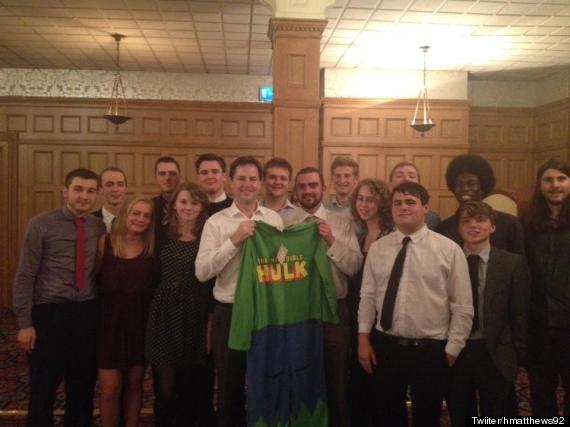
In politics, the ‘Ronseal’ Coalition released their midterm report, MPs demanded a pay rise – while voting for more benefit cuts – and Nick Clegg went on the radio (and revealed he had a onesie, an imagined sight we can never now imaginarily unsee).

In showbiz news, the Oscar nominations were announced – as were the Brit and Baftas – David Bowie released a new single, Lance Armstrong got set to reveal all to Oprah Winfrey, and the damp squib that was ‘Splash!’ hit our screens.

In showbiz and politics news: Gérard Depardieu was welcomed by his old mate Vladimir Putin and became a Russian citizen. You wouldn’t believe the steppes he had to go through to get that… (Sorry.)

And in neither showbiz nor politics: Jessops announced that it was closing, and a new portrait of Kate Middleton was unveiled. These two events are unrelated – although perhaps if the portrait had been a photo, and developed at Jessops, they would still be in business.

As usual, we’ve rounded up some of the tweets about these stories and more – specifically, the ones that made us laugh/smile/feel as high as Lance Armstrong. The old one, that is. Not the shiny new one that’s going to appear on Oprah next week.

Enjoy!

The History of the London Inter-Bank Offer Rate (Libor): Financial Fraud and Market Manipulation

0

Sandwiched between revelations of mounting losses ($5.8 billion and rising) at JP Morgan in the face of bungled bets by a trader known as the London Whale, and allegations of money laundering for Mexican drug cartels and breaches of U.S. sanctions by HSBC, the disclosures of deliberate rigging of the Libor rate by Barclay’s Bank might appear mundane and a trifle boring in comparison. It is, however, this scandal about an arcane interest rate that most starkly exposes the rotten core of the global financial system.

Barclays paid a fine of $450 million and saw the ignominious exit of its CEO Bob Diamond in a deal with U.S. and British regulatory agencies that involves an agreement to defer prosecution and drop criminal charges in two years if the bank does not commit any federal crimes “after the execution of this agreement.” But this might just be the tip of the iceberg. About twenty other global banks are currently being probed, and the full scale of the scandal is yet to be seen. The Economist, while decrying the “casual dishonesty” revealed in the email exchanges of the “banksters” (including promises of expensive champagne in return for favors!), pronounced this global finance’s “tobacco moment,” when it is forced to acknowledge its destructive practices, with potentially huge settlement costs, reminiscent of the settlements of around $200 billion made by U.S. tobacco companies in 1998 following a protracted lawsuit.1 But the scandal is not simply one of colossal greed and hubris. It is about systemic failure. It is about the fictions and illusions that form the basis of today’s complex global financial system.

The Libor is the London Inter-Bank Offer Rate–the rate at which leading banks can borrow from each other in the London markets. It is, however, not simply the banking system’s cost of borrowing or obtaining funds; it has emerged as the anchor of about $800 trillion worth of international financial transactions.2 A brief outline of the history of the process by which the Libor has become a fulcrum of the global financial system is necessary if we are to understand the significance of the current scandal.

The Libor and the Dawn of Neoliberalism

The origin of the Libor is rooted in the explosion of private financial flows in the international monetary system and more specifically the Eurodollar market (constituted by dollar-denominated bank deposit liabilities held in foreign banks or foreign branches of U.S. banks) in the 1970s. This explosion was itself an outcome of the resurgence of finance and the rise of neoliberalism. The sharp hike in interest rates in the United States in 1979–the Volcker anti-inflation shock, aimed in part at lowering wage rates by increasing unemployment–signaled the aggressive promotion of financial openness and integration as a way out of the crisis of the 1970s.3 This agenda served to buttress the growing power of U.S. corporate and financial capital globally. This “coup of finance” hinged on preserving and extending the pivotal place of the United States in international financial markets, and securing the global hegemony of the dollar after the collapse of the Bretton Woods system of fixed exchange rates.4

The Eurodollar market emerged even as the U.S. government was attempting to restrict capital outflows to reduce growing balance of payments deficits. U.S. banks resorted to the Eurodollar markets (primarily in London) as a way of evading restrictive capital controls and protecting their earnings. This offshore market was also a profitable place for Germany and Russia to park their dollar surpluses. Although international financial business was now based more on dollars than sterling, Eurodollar deposits helped to preserve London as a financial center in the face of the erosion of sterling’s importance as an international reserve. At the same time, its ties to the international hegemony of the dollar were cemented5 and the United Kingdom was drawn more closely “into the American imperial embrace.”6

The Big Bang reforms of 1986 in Britain were an important milestone in this process. In the United States, financial deregulation had been set in motion with the Deregulation of Monetary Control Act of 1980. This culminated almost two decades later with the final dismantling of the regulatory framework of the Glass-Steagall Act (legislated in response to the Great Depression, it had separated commercial from investment banking) by means of the Gramm-Leach-Bliley Act of 1999, giving legislative sanction to the erosion of the regulatory firewall between security traders and deposit bankers. This deregulatory agenda was echoed in the Big Bang reforms of banking in Britain in 1986. These reforms blurred the distinction between stockbrokers, investment advisers, and “jobbers” who created the markets in shares. Britain’s permissive regime brought an influx of U.S. banks and huge bonanzas for bankers. The stodgy world of banking was transformed into a heady world of cutthroat deal-making.

Through the 1970s, the oil surpluses of the OPEC countries were channeled through the Eurodollar markets and recycled to developing countries, especially Latin America, in the form of syndicated offshore dollar loans. The floating of the dollar in 1973 also fostered the growth of futures and swaps: derivatives that allowed international investors to hedge the risks of exchange rate and interest rate fluctuations. The investors and bankers who sought to rake in earnings and fees in these rapidly growing markets for new and exotic instruments of loan syndication and financial derivatives found themselves in desperate need of a benchmark against which to price their deals. The payments in the syndicated sovereign loan market, for instance, were based on some measure of a benchmark risk-free borrowing rate plus a risk premium based on assessments of the borrowing country’s capacity to repay the loan.

A key requirement of a benchmark is that it must bear a stable relationship to the prices of other securities and that it be liquid.7 The U.S. Treasury bill rate was one such price, but the volatility of this market in the late 1970s, a period of high inflation in the United States, prompted a search for new benchmarks around which bankers could structure their deals. Futures contracts on the three-month U.S. Treasury bill were introduced in this context as a way to tame the turbulence of the U.S. Treasury bill markets. Even as the Latin American debt crisis brought the bonanza of syndicated sovereign loans to an abrupt halt in the 1980s, U.S. financial markets were further jolted by the failure of the Continental Illinois Bank in 1984. The sudden surge in demand for safe U.S. Treasury bills led to huge losses for those who had used them as hedges for their purchases of private financial assets (since the price of Treasury bills rose while that of private financial assets fell). Such episodes underscored finance’s search for an alternative benchmark more aligned with the prices of private assets.8

Eurodollar futures contracts had begun to be traded in London in the early 1980s. In 1982 the volume of three-month Eurodollar futures transactions (at around $8 billion) was about one-third the volume of futures transactions in three-month U.S. Treasury bills (around $25 billion). By 1986 the volume of Eurodollar futures had risen to about $50 billion (about ten times the volume of corresponding U.S. Treasury bill futures transactions).9 The percentage share of Eurodollar transactions to all money market transactions–from where the wider financial system draws its short-term liquidity funds–rose from less than 5 percent in 1980 to about 50 percent by 1985.10 Since Eurodollar deposits were emerging as a major source of short-term funding for banks, the offshore Eurodollar borrowing rate emerged as an obvious anchor (the risk-free rate) for the proliferating financial trading. Particularly since financial institutions were finding that the prices of derivatives based on these offshore Eurodollar rates were closely aligned to their own borrowing costs. But in the early 1980s, there were not enough trades for a market-based index for Eurodollar deposits, and the Federal Reserve could not set and enforce targets for this rate like it could for the Federal Funds rate (the rate at which banks could borrow reserves overnight from each other). International financial markets felt hampered by a lack of standard reference rates. The solution was found through the offices of the British Bankers’ Association (BBA), the leading lobbying group of London Banks, with the blessing of the Bank of England.

In 1986, the BBA introduced a new benchmark rate, based on the average of daily estimates from the leading banks. The primary purpose of this new benchmark, the Libor, was to set a rate for dollar deposits held outside the United States and also to serve as a reference rate for a range of securities. Banks seeking to reduce their risk in a context of volatile interest rates found a closer approximation to their actual borrowing costs in this benchmark. The newly introduced standard came to be adopted as the basis of a variety of securities and derivatives (like interest rate swaps) that the banks used to hedge their risky portfolios. It was also adopted as the basis for the resetting of rates on long-term loans in line with the banks’ actual variable costs of funds. The volume of three-month Eurodollar futures contracts doubled between 1986 and 1988 to about $100 billion, while the share of Eurodollar transactions in short-term money market activity crossed 75 percent.11 Facilitated by the surge in Eurodollar lending in the syndicated loans market, the huge interest rate swap market, and later the markets for newer and more complex securities and derivatives got a huge boost.

And so, privately mediated financial instruments came to eclipse the publicly issued U.S. Treasury bill as the source of unregulated liquidity generation for the bloating global financial system. This is not to suggest that the U.S. Treasury bill was completely displaced. As the credit crisis of 2008 revealed, it remained the safe haven when the privately mediated mechanisms of liquidity generation and funding crashed in the wake of the collapse of Lehman Brothers.12 It is at the apex of the monetary hierarchy. In fact, a key indicator of financial distress is the difference between the interest rate banks charge each other on three-month loans (the three-month Libor) and the interest rate on three-month U.S. Treasury bills. A widening spread reflects the higher costs of unsecured interbank lending in a situation of evaporating confidence and growing uncertainty. At the peak of the credit crisis in 2008, this spread had risen to about 450 basis points (4.5 percent) from normal levels of between fifty and one hundred basis points (0.5—1 percent). Banks were finding it harder and harder to borrow from other banks, and interbank lending, which is not based on collateral, dried up. The Federal Reserve had to step in to fund the failing banks and restore lending. Even though private agents are a primary driving force in the money market, these decentralized parallel monetary mechanisms are, in the final instance, backstopped by the state and the market for U.S. Treasury bills.

The Emperor Has No Clothes!

So how is the Libor actually set? There are now rates set for deposits in ten currencies with fifteen maturity periods, for a total of 150 Libor rates. The borrowing rate is set daily by the BBA, on the basis of submissions by a panel of banks, for each of these ten currencies and fifteen maturities. The three-month dollar Libor is one of the most important of these rates. It is supposed to indicate what a bank would pay to borrow dollars for three months from other banks, at 11:00 AM on the day it is set. There are currently eighteen banks on the dollar Libor panel (including Citibank, JP Morgan, and Bank of America).

Each participating bank has to answer the question: At what rate could you borrow funds, were you to do so by asking for and then accepting interbank offers in a reasonable market size, just prior to 11:00 AM? The top quarter and bottom quarter estimates are then discarded, and the Libor is the trimmed average of the remaining submissions, (also known as fixings) calculated and posted by Thomsons-Reuters, the leading business data provider. The idea is that this process of trimming will get rid of outliers and rogues, and the number churned out will be a reasonably accurate gauge of the market. Libor thus claims to measure the rate at which banks can borrow from one another.

But in the real world, banks do not generally lend to each other for longer periods without adequate collateral. Interbank lending takes place through money market funds, but only for short periods. This means that quotes for longer periods are based on estimates and not on actual flows. The submissions are the banks’ own estimates of what they think they would have to pay to borrow if they needed money, and the body charged with collecting this information is not an independent regulatory agency but the banking sector’s own lobby group–the BBA. The calculation is undertaken by a data provider that derives huge chunks of its earnings from the same banking sector! The Libor is an accurate reflection of the state of funding liquidity only if most of the banks submit an honest assessment of the rate at which they believe they can borrow on a given day. The self-regulatory process of rate setting itself provides no checks and balances but relies on the integrity and discipline of markets to ensure the calculations are in line with real market conditions.

What the Barclays settlement has shown is that the bank’s submissions “were over a long period tainted by self-interest, whether to help some of its derivatives traders or out of a desire to protect its reputation in the market.”13 Groups of traders actively conspired with brokers to influence the banks’ rate submissions for the London rate. Banks colluded to push the rates in desired directions. The BBA, a group that had in its 2011 internal newsletter bragged about its lobbying victories and spent an estimated $8 million on lobbying in 2011, is hardly a body that would crack the whip on the sector it represents.14

What this boils down to is the mind-boggling revelation: this crucial rate that is the pivot of trillions of dollars worth of derivatives and loans is in a sense a fiction. “There simply is not enough trading, particularly at longer six-month and twelve-month lending periods, to be sure that the rate genuinely reflects the market.”15 As a senior trader said, “you have this vast overhang of financial instruments that hang their own fixes off a rate that doesn’t actually exist.”16 To make things even murkier, those involved in setting the rates had every incentive to lie, since not only did their banks stand to profit or lose, depending on the level at which the Libor was set each day, their own earnings hinged on these numbers. The Financial Services Authority “has identified price-rigging dating back to 2005, yet some current and former traders say that problems go back much further than that.”17 A former trader at the London office of Morgan Stanley has suggested that such misreporting of rates was fairly common practice even in 1991, a mere five years after the system was put in place.18

There have been, broadly speaking, two kinds of manipulations. The first category was designed to bolster traders’ profits. Traders nudged the money market desks of their banks to massage submissions in order to rake in the gains from deals they brokered. Requests were also passed on to these desks in collusion with counterparts at other banks. So a trader could ask the submitter of the fixings to keep the “fixings” high (or low) until certain deals went through. By keeping rates artificially raised or lowered, traders were guaranteed to make money on these deals. Where the income they paid out was fixed to the Libor, a lower rate reduced the payout; where their earnings were linked to the rate, a hike boosted these earnings. Far from being a manifestation of rogue trading, this pervasive rigging is a reflection of monopoly and cartel-like practices in the closed, clubby world of financiers.

A second category of manipulations, which emerged in the wake of the subprime market collapse, was the submission of artificially low rates. The motivation here was more complicated. Banks that were vulnerable sought to protect their reputations and their continued access to credit by obfuscating the actual difficulties they faced in borrowing. High borrowing costs signaled lack of credit worthiness. In fact, the persistently high Libor rates in 2008 were a sign of credit market distress. But, given the fragile state of investor confidence, persistently high Libor rates were seen, both by banks, regulators, and the central banks as an obstacle to restoring the credit engine.

Barclays’ high Libor submissions as the crisis was unfolding had thus prompted serious concern at the Bank of England. The recent travails of Royal Scotland bank had sent jitters though the financial markets, and Barclays was widely perceived to be the next to fail. The high rates were a signal of Barclays’ growing difficulties in borrowing from the market. There were numerous discussions between Bank of England officials and Barclays’ management (including the controversial phone conversations between bank managers and Paul Tucker, the deputy governor of the Bank of England) through this period. In May 2008, there were some reports of banks low-balling their borrowing rates to avoid looking desperate for cash. Timothy Geithner, who was then head of the New York Federal Reserve, sent a memo to Governor of the Bank of England Mervyn King outlining concerns (though no allegations of outright rigging) about the Libor and making recommendations to beef up its credibility. Given the close connections between private banks, central banks, and regulatory agencies, it is hardly credible that the scale of Libor manipulations caught the central bankers and regulators by surprise. The complete failure of the Central Bankers and regulators to respond reflects the structural stranglehold of private finance.

The relation between the state and the financial system erected on the complex interaction of private and public liquidity generation is fraught with contradiction. There has been a ratcheting up of state support of the banking system not just over the past three years or even the past few decades, but over the past century. However, the bulging safety net stokes even greater speculative and risk-taking behavior. Government interventions that rescue banks from their follies in order to restore stability, in effect, revive and reinvigorate the speculative juggernaut. The state again intervenes to rescue the financial institutions in the wake of the catastrophic bust that inevitably follows. The concentration and growing size of the institutions that need to be bailed out give rise to a dramatic scaling-up of central bank support to the financial system, even as regulatory control is being systematically weakened. As the bets keep increasing in size, the scope of the necessary intervention also grows, so that the cost of each successive meltdown becomes even larger. This destructive relationship has been christened “the doom loop.”19 In the process the state and central banks get more deeply implicated in the imperative to shore up the financial system and become hostage to the actions of private finance.

It is not surprising, given the immense control exercised by the Banking lobby, that any attempt at regulatory reform is resisted and stymied. The fundamental weakness of the Libor seems to have been ignored in the interests of protecting the financial system. It has been argued that the easing of the Libor rates late in 2008 was for the greater public good–a sort of collateral cost of preventing the complete collapse of the financial system. The truth is that it is simply testimony to how the power and influence of Wall Street continued to shape the response of the major central banks–the Bank of England and the Federal Reserve–even after its actions brought the global economy to the brink.

The deep ties and interpenetration between the government and financial sector also forged a common worldview that served the imperatives of finance and the neoliberal distaste for hindering, in any way, its forage for profits. The irony is that the neoliberal rhetoric of free markets that is deployed to justify obscene levels of profiteering and deter any forms of regulation is promoting a financial system where markets and market discipline have been banished! It is bad enough that in the world of exotic custom-built financial products and over the counter derivatives, the “models” spawned by the industry have completely usurped the role of the “market” that economic theory celebrates. As the conjurors of these models reaped fat profits from transactions that were conducted without any transparent process of price discovery through a market mechanism, they were immunized from the consequences of their actions. What we now know is that even these models are built around a notional price where no real market exists. Key features of a “properly functioning market”–wide and free participation and genuine price discovery–are conspicuously absent in the setting of the Libor. Pricing is based on private, self-reported quotes of a small clique of powerful banks without any reference to tangible financial transactions. These same banks also controlled the BBA, the organization that actually posts the daily Libor. While vociferously maintaining that self—regulation and unregulated market forces are the most effective form of discipline for this ballooning sector, the financial oligarchy colluded to preempt any genuine competitive process, or any form of accountability.

Equally blatant forms of collusion have recently come to light in the context of the municipal bond-rigging scam involving major banks, including J. P. Morgan Chase, Bank of America, UBS, Lehman Brothers, and Bear Stearns, who conspired and colluded to deliberately rig the public bids on municipal bonds, a business worth about $3.7 trillion. Towns and municipalities that borrow by issuing municipal bonds to finance various projects have also turned to brokers on Wall Street to handle investment of some of this money instead of keeping it idle over the course of the project. The bonds are supposed to be submitted to a competitive auction (of at least three bids), but what the brokers actually did was allow the bankers to collude to carve out chunks of business. The brokers charged with getting municipalities the best deal actually let the pre­arranged “winner” have a “last look” at the bids of the competitors, thus allowing the bank to make the lowest possible winning bid. “By shaving tiny fractions of a percent off their winning bids, the banks pocketed fantastic sums over the life of these multimillion-dollar bond deals,” while the broker collected not just fees and commissions but also a fat bribe. Four banks that took part in the scam (UBS, Bank of America, Chase, and Wells Fargo) have agreed to pay $673 million in damages. This is likely to be just a fraction of the actual sums skimmed from public projects all over the United States. Yet for the bankers concerned, this was a perfectly fair auction, since, despite the fact that the secret collusion resulted in lower returns to the municipalities, they still got the highest of the bids. The sharing of the extra margins between the colluding bankers was just extra topping on the cake!20

This same hubris of the financial oligarchs at the center of the complex financial infrastructure, who are in effect deciding market prices in a manner that leaves their clients with as bare a minimum as they can get away with, is evident in the Libor riggings. Bob Diamond, the Barclays CEO, complained in a memo to the staff after the fines scandal hit the headlines that, “We all know these events are not representative of our culture…on the majority of days, no requests were made at all.” Behind this arrogance is a perverse sense of entitlement to immunity from the disciplining ravages not simply of the law but of the market. Instead of the competitive markets espoused in the neoliberal dogma, the field was a hotbed of moral hazard, conflict of interest, and outright criminal fraud.

The Libor scandal is not about the risky bets or bad judgment of rogue traders, but the deliberate strangling of market forces in the pursuit of profits. The story of how such an obviously flawed rate came to enjoy such a central place in the global financial system is in the end a story about how corporate, financial capital was powerful enough to set in place institutional mechanisms to ensure the deliberate subversion of any efforts or any market forces that would stifle their pursuit of profits.

A Fantasy Built on Fiction, Breeding Illusion

Although the difference between the reported Libor rate and the actual borrowing costs might seem small, the total amount of money involved is huge, given that Libor rates affect contracts worth hundreds of trillions of dollars. The rate with which the traders and bankers were playing determines the prices that people and corporations around the world pay for loans or receive for their savings. And the mechanism set up allowed the bankers to dictate the rate, which was a pivotal determinant of their earnings, by conjuring these numbers literally out of thin air!

Adjustable-rate mortgages had been allowed in the U.S. mortgage sector after the St Germaine Depository Institutions Act of 1982. Today, about 90 percent of U.S. commercial and mortgage loans are linked to the Libor.21 In 1999, following the urgings of banking lobbies, the U.S. Student Loan Marketing Agency switched from pricing loans off the Treasury bill rates to using the Libor as a benchmark for loans. It is used as a benchmark to set payments on about $350 trillion worth of derivative contracts.22 The Libor, a fictional number based on good faith estimates of those whose earnings fluctuate dramatically with miniscule gyration of this same rate, is now an integral part of the hardwire of the financial system.

And while the banking system has raked in vast sums due to these manipulations, those on the wrong side of these deals have faced huge losses. Among those who have been defrauded through such deliberate rigging are municipalities like Baltimore. Bankers have embedded interest-rate swaps in many long-term municipal bonds, persuading municipalities and states to issue bonds and simultaneously enter into swaps. In these arrangements, the banks agreed to make variable-rate payments to the issuers, and the issuers, in turn, agreed to make fixed-rate payments to the banks involved. The City of Baltimore had entered into interest rate swaps worth $100 million, swapping fixed interest payment to banks for variable Libor-linked receipts. “Forty U.S. states currently allow municipalities to enter into swap agreements. The total estimated amount in 2010 was between $250—500 billion.”23 The artificial low-balling of the Libor after 2008 meant losses of millions of dollars annually to these government bodies. Such losses deprived these agencies of money at a time of prolonged recession and acute fiscal crisis, exacerbating job losses, and strangling public services. Pension funds that were entrusted with household savings were also ripped off though such manipulations.

And if that was not bad enough, after the crisis, when the State was forced to step in to shore up collapsing financial markets, the Treasury bailout programs used this artificially low Libor as the basis for lending to the banks under the Term Asset Backed Securities Loan Facility. And this despite the misgivings expressed by Timothy Geithner in his email to Mervyn King just a few months earlier! Not only did the structurally flawed rate receive further official sanction, but the rescued banks also ended up getting money at excessively cheap rates, skimming off the public exchequer. Meanwhile, families facing foreclosures of their homes or debts in significant excess of the value of their homes received no such relief.

The British government has announced a review of the Libor-setting process, to investigate ways of improving regulation and governance. Under consideration are recommendations like expanding the panel of banks submitting rates and exploring the possibility of a credible third party to monitor and collate submissions. Alternatives to Libor are being discussed. The bankers, however, do not see either the U.S. Treasury bill rate or the U.S. federal funds rate as a suitable benchmark for the parallel shadow financial system of derivatives and financial engineering, tethered as they are to state policy. An alternative that is finding favor with the bankers is an overnight index rate based on the weighted average of the interest rates paid each day on General Collateral Finance Repurchase Agreements (Repos), using the most traded collateral repos like U.S. government securities. This index will be given a further boost by U.S. Treasury Department moves to offer new floating-rate securities based on this index, as it attempts to maintain surging investor demand for government bonds. These proposals seek a patchwork fix of a system that has been usurped by the financial oligarchy for its own unfettered enrichment, when what is needed is an overhaul! The parties involved are, in the end, only trying to replace the fiction at the center without dispelling the neoliberal illusion that fostered the speculative juggernaut that enriched finance.

Even as the Libor scandal has turned the spotlight on the fundamentally flawed mechanisms of rate setting, Wall Street has been waging its battle against transparency in price setting on other fronts. This can be seen, for instance, in the strong pushback from the bank lobby against the Commodity Futures Trading Commission’s proposal that derivative trading facilities provide market participants with easily accessible prices on a centralized electronic screen and eliminate the one-to-one dealings between traders and investors. While espousing the neoliberal credo, and celebrating the virtues of “self-regulation,” the financial oligarchy continues to resist any attempt to curb its monopolistic stranglehold. Not only is regulatory control being preempted, the financial oligarchy also seeks immunity from market discipline.

The absence of the force of market discipline was, paradoxically enough, part of the argument against the socialist planning project, during a debate that took place before the Second World War between the advocates of capitalist markets and the defenders of planning–the “socialist calculation debate.” Ludwig Von Mises, an economist and philosopher of the Austrian school, argued that even if planners sought to mimic price signals, they could not create a disciplining mechanism analogous to the market, and could not therefore capture capitalism’s socially beneficial dynamism.24 It would seem that neoliberal orthodoxy and the hegemony of market fundamentalism has been instrumental in bringing into being a system plagued by this very failing!

Footnotes

  1. Syndicated loans are provided by a group or syndicate of banks to a borrowing sovereign or corporation. The rate on the loan is the benchmark rate plus some risk premium.
  2. Interest rate swaps allow two parties to negotiate a “swap” of payments from fixed rate and floating rate contracts. The floating rates are normally calculated on the basis of a benchmark like the Libor.
  3. A repo (repurchase agreement) is a method of short-term borrowing. The borrower “sells” a security to the lender with the understanding that the asset would be bought back at a higher price. The higher price represents the interest rate on the loan.

Ramaa Vasudevan is an assistant professor of economics at Colorado State University. She is a member of the Union for Radical Political Economics and an associate of the Dollars and Sense Collective.

Notes

  1. ↩ “The LIBOR Affair: Banksters” (online video), Economist blogs, July 7, 2012, http://economist.com
  2. ↩ “The LIBOR Scandal: The Rotten Heart of Finance,” Economist, July 7, 2012, http://economist.com.
  3. ↩ Gerard Dumenil and Dominique Levy, The Crisis of Neoliberalism (Cambridge, MA: Harvard University Press, 2010) and Capital Resurgent (Cambridge, MA: Harvard University Press, 2004).
  4. ↩ Ramaa Vasudevan, “Finance Imperialism and the Hegemony of the Dollar,” Monthly Review 59, no.11 (April 2008): 35—50.
  5. ↩ Ibid.
  6. ↩ Leo Panitch and Sam Gindin, “Finance and the American Empire,” in Leo Panitch and Colin Leys, eds., Socialist Register 2005: The Empire Reloaded (New York: Monthly Review Press, 2005), 54.
  7. ↩ Jacob Wintellberg and Phillip Woolridge, “Interbank Rate Fixings During the Recent Turmoil,” BIS Quarterly Review, March 2008, http://bis.org.
  8. ↩ Robert N. McCauley, “Benchmark Tipping in the Money and Bond Markets,” BIS Quarterly Review, March 2001, http://bis.org.
  9. ↩ Ibid.
  10. ↩ Ibid.
  11. ↩ Ibid.
  12. ↩ Ramaa Vasudevan, “The Credit Crisis: Is the International Position of the Dollar at Stake?” Monthly Review 60, no.11 (April 2009): 24­—35.
  13. ↩ “Fixing Libor,” Financial Times, June 27, 2012, http://ft.com.
  14. ↩ Melanie Newman, “British Bankers Association Claimed Key Lobbying Victories,” Guardian, July 9, 2012, http://guardian.co.uk.
  15. ↩ Michael Mckenzie and Brooke Masters, “After Libor–The Search for a New Benchmark,” Financial Times, July 10, 2012, http://ft.com.
  16. ↩ “The LIBOR Scandal: The Rotten Heart of Finance.”
  17. ↩ Ibid.
  18. ↩ Douglass Keenan, “My Thwarted Attempts to Tell of LIBOR Shenanigans,” Financial Times, June 26, 2012, http://ft.com.
  19. ↩ Andrew Haldane and Piergiorgio Allessandri, “Banking on the State, Presentation at Federal Reserve Bank of Chicago,” September 2009, http://bis.org.
  20. ↩ Matt Taibbi, “The Scam Wall Street Learned from the Mafia,” Rolling Stone, July 5, 2012, http://rollingstone.com.
  21. ↩ Mariane Ojo, “LIBOR, EURIBOR and the Regulation of Capital Markets: The Impact of Eurocurrency markets on Monetary Setting Policies,” Munich Personal REPEC Archive Paper No 42093, October 20, 2012, http://mpra.ub.uni-muenchen.de.
  22. ↩ Gillian Tett, “Libor Affair Shows Banking’s Big Conceit,” Financial Times, June 28, 2012, http://ft.com.
  23. ↩ “The Libor Probes: An Expensive Smoking Gun,” Economist, April 14, 2012, http://economist.com.
  24. ↩ Ludwig Von Mises, “Economic Calculation in the Socialist Commonwealth,” in Freidrich Von Hayek, ed., Collectivist Economic Planning (London: Routledge and Kegan Paul, 1935).

Tom DeMark: “Sell The World” And Soon, The US

0

Because there are still some traders who adhere to such old normal traditions as charting and technical analysis (because apparently the FOMC committee sits down each month and observes Ichimoku clouds, RSI indicators and Bollinger bands), it is probably notable that one of the most respected chartists, Steve Cohen’s favorite technician Tom DeMark, is now uniformly bearish on virtually all markets around the world which have triggered a sell signal in his studies, and is about to drop the axe on the US as well where a “Daily 13” signal is imminent. The caveat, of course, is that in a world in which fundamentals haven’t mattered in years, which should technicals?

Your rating: None Average: 4.5 (2 votes)

Billionaires Gain as Living Standards Fall

0

Government of the Rich, by the Rich and for the Rich

The world’s 100 richest people added $241 billion to their combined wealth in 2012, according to the Bloomberg Billionaires Index. The top 100 controlled an aggregate $1.9 trillion as calculated by the prices on world stock markets December 31, for an average of nearly $20 billion apiece.

If the top 100 were a separate state, their combined wealth would outstrip the Gross Domestic Product of all but eight countries. They would rank behind Italy, but ahead of India and Russia. Of course, being billionaire capitalists, the top 100 don’t actually produce anything. They own, and they reap the benefits of the labor of others.

The main driver in the increasing wealth of the super-rich was the rise in global stocks, up 13.2 percent worldwide, as measured by the MSCI World Index; up 13.4 percent in the US, as measured by the S&P 500. The Stoxx Europe 600 index is up 19.6 percent since June, when investors judged that the Greek debt crisis would not bring about the immediate collapse of the eurozone.

The United States accounted for nine of the top 12 billionaires and 37 of the top 100, with the combined holdings of American multibillionaires comprising half the total. Europe including Russia followed with 34, while Asia accounted for 14 and Latin America for 11.

The biggest single gainer among the top 100 was Amancio Ortega of Spain, the 76-year-old founder of the Inditex SA retailer, operator of the Zara clothing chain, whose fortune rose from $35.3 billion to $57.5 billion. This vaulted him into third place in the global index, passing American investor Warren Buffett, and trailing only the two who have headed the index for many years: Mexican banking, telecommunications and media mogul Carlos Slim, and Microsoft chief Bill Gates.

Ortega was part of a trend, as retail proprietors among the billionaires showed the biggest gains for the year, up 20 percent. Other retailers include IKEA founder Ingvar Kamprad, 86, the world’s fifth-richest man, at $42.9 billion; Jeff Bezos of Amazon.com; and the four direct heirs of Sam Walton, the founder of Wal-Mart.

This increase was all the more remarkable since consumer spending has essentially stagnated since the 2008 Wall Street crash. The retail bosses are increasing their fortunes not so much because sales are rising, as because their smaller competitors are being ruined by the crisis, giving the biggest companies monopoly profits. Bezos, for example, added $6.9 billion to his net worth in 2012, in the wake of the collapse of rival Borders, which led to the elimination of 20,000 jobs.

The divergence between the rising fortunes of the billionaires and the declining living standards of the masses is an essential feature of global capitalism. Nowhere is the contrast starker than in Spain, where Senor Ortega, the founder of Inditex and its 1,600 Zara stores, increased his fortune by $22.2 billion in the course of 2012.

The capitalist crisis has brought disaster for Spanish working people. Household wealth has fallen by 8 percent on average, second only to depression-ravaged Greece among European countries, while both overall unemployment and youth unemployment set records at 26.6 percent and 56.5 percent, respectively. The right-wing government headed by Prime Minister Mariano Rajoy has announced a series of massive cuts in public spending, devastating public education and other essential services.

But while the Spanish working class suffers through the worst economic conditions since the Great Depression, one Spanish billionaire possesses a personal fortune greater than the total amount of the cuts announced by the Rajoy government. At $57.5 billion, Ortega’s wealth would have allowed him to carry out last month’s $52 billion bailout of the Spanish banking system, which effectively wrecked Spain’s national budget, and have billions left over.

In recent months, Spain has been the scene of social tragedies unheard of since the depths of Franco fascism, including suicides by victims of foreclosure, and unemployed workers and the elderly picking through garbage dumps for food.

When in the human body a small group of cells begins to multiply and grow without limit, at the expense of other cells and the organism as a whole, medical science has a specific term for the phenomenon: it is called a cancer. In the social organism of 21st century capitalism, the super-rich play that fundamentally pernicious and destructive role.

In the sphere of health care, the prescribed response is to destroy the cancer through a variety of treatments, in order to save the human being. In capitalist society, however, the growth of the super-rich is hailed as the source of all progress, the social cancer is dubbed the “job creator” and the entire political system bows down before it.

Finland formally recognizes military grave of Russian submarine wreck

0

An open hatch of the remains of a Russian submarine is seen on the seabed of the Baltic Sea, near the islnd of Oland, in this handout picture received by Reuters on December 17, 2012 (Reuters / Swedish Defence Forces / Handout via Scanpix)

An open hatch of the remains of a Russian submarine is seen on the seabed of the Baltic Sea, near the islnd of Oland, in this handout picture received by Reuters on December 17, 2012 (Reuters / Swedish Defence Forces / Handout via Scanpix)

Russia expressed its gratitude to Helsinki for recognizing the site of a Soviet submarine that went down in Finnish waters in 1940.

­“We are grateful to our partners for their favorable decision on an issue that is significant for Russia,” the Foreign Ministry’s information and press department said in a statement. “Respect for the memory of the deceased sailors is very important for their family and friends, and for all citizens of Russia.”

Finnish officials notified Russia that the list of Russian (Soviet) military graves now includes the site of the Soviet Baltic Fleet submarine C-2.

The submarine, presumably destroyed by a mine off the Aland Archipelago in the territorial waters of Finland, perished together with its crew on January 3, 1940.

Swedish and Finnish divers discovered the wreckage of the submarine in June 2009.

“Immediately following the discovery, the Russian Federation requested that Finland recognize the site of the wreckage of the Soviet submarine as a military grave,” the ministry said.

Munitions were found aboard the submarine and were destroyed by the Finnish Defense Forces.

Since the collapse of the Soviet Union, Russia has had several diplomatic disputes with several neighboring countries regarding the treatment of memorials where Soviet soldiers lost their lives.

In April 2007, officials from the Estonian capital of Tallinn made the decision to move a Soviet-era memorial, known as the Bronze Soldier, together with the remains of several Soviet soldiers who died liberating Tallinn from fascist forces during World War II, to a graveyard outside of the city.

The decision sparked two days of mass riots, which led to the death of a young man of Russian ethnicity. The Estonian embassy in Moscow was also the site of large protests.

The monument of the Bronze Soldier was originally dedicated by Soviet officials in Estonia to “the liberators of Tallinn” on September 22, 1944.

Robert Bridge, RT

Central Banks’ gambling: Is easy money that easy?

0

The US Federal Reserve building.(AFP Photo / Karen Bleier)

The US Federal Reserve building.(AFP Photo / Karen Bleier)

Pumping billions into troubled economies has become the usual practice for the world central banks seeking to plug huge budget holes. Such an out of the box monetary strategy, generally known as ‘easy money’ may create another crisis, experts worry.

­Since the financial crisis kicked off in 2007, the biggest central banks have injected above $11tn into the world financial system, the Wall Street Journal (WSJ) calculated. As recoveries by troubled economies are slow to come, more billions are in the pipeline to be pumped into government bonds, mortgages and business loans.

In the framework of its quantitative easing initiative, the US Federal Reserve has bought $40bn worth of mortgage — backed securities. The Bank of England also joined the club and agreed to inject billions of pounds into businesses and households. The European Central Bank, in turn, decided to keep interest rates low for the countries in trouble. The Bank of Japan, facing deflation, is purchasing about $1.14tn in government bonds, corporate debt and stock.

“These emergency measures could have undesirable effects if continued for too long,” Jaime Caruana, general manager of the Bank for International Settlements, told WSJ.

“Will history decide they did too little or too much? We don’t know because it is still a work in progress,” said Kenneth Rogoff, an economics professor at Harvard and co-author of a book, “This Time Is Different,” that examines financial crises over eight centuries. “They are taking risks because it is an experimental strategy.”

Quantitative easing is an economic stimulus used by the monetary authorities at times when conventional tools can no longer be used, namely when interest rates are at, or close, to zero. When this is the case, a central bank buys financial assets from commercial banks and other financial institutions with the money they simply print for the purpose. The goal is to make borrowing cheaper, which in turn should stimulate spending and investment by households and businesses. But creating money out of thin air and then it them into an economy is a high — stakes experiment not explained in standard textbooks and implying huge inflationary risks.

“We’re all very conscious that we’re in an environment that’s unusual and we’re using a policy weapon that we don’t have a lot of experience with,” said Charles Bean, Deputy Governor of the Bank of England.

Should the experiment succeed, the world economy should step up onto a firm recovery track, while a failure could create an inflationary bubble that’ll prepare the unhealthy grounds for another financial crisis. Goodwill and independence of the central banks will also suffer in a case of misfortune.

Economist and private investor Michael Norman argues that quantitative easing by central banks is not analagous to “pumping billions” into economies. “These are merely monetary operations that are nothing more than big asset swaps. When the CB conducts quantitative easing it removes one asset from the private sector–usually a government security–and replaces it with another–reserves in the banking system,” he told RT. “The net amount of new financial assets created is zero.“

Moreover, according to Norman, these actions end up removing a tremendous amount of interest income that would have been earned by people and firms in the private economy. “Case in point, since the Fed started conducting these “extraordinary measures” back in 2008, a total of $400 bln in interest income has been removed. That more than offsets the gain in private wages and salaries over that time period,” Norman explained.

Another concern is that the central banks can’t solve structural problems in the economy. They control money supply, balancing between the need to spur economic growth and keeping inflation sustainable. Each bailout package thrown into an economy reduces the cost of borrowing, thus stimulating economic growth, but poses a risk of inflation. Alternatively, cutting the amount of money that circulates in the economy, CBs make interest rates go up, which restrains economic expansion, but tamps down prices.

“Government can “pump billions” into economies via deficit spending. However, most countries are embracing austerity in a desire to lower deficits and this can be viewed as money destruction. Central banks can only set interest rates. That’s it. And there’s no direct channel from interest rates to aggregate demand,” Michael Norman told RT.

A mere smoothing of economic wounds with easy money creates the illusion of things getting better, with policymakers becoming relaxed about implementing any structural reforms to address a core of the evil.

Easy come, easy go, as the saying goes, but time will show how much room there is to go.

Mark Grant: “2013: The Year The Resplendent Masks Are Removed”

0

From Mark Grant, author of Out of the Box,

The Trifling Consequences Of Cyprus

“Expect the best. Plan for the worst. Expect to get surprised.”

             -The Wizard

Cyprus downgraded to Caa3 by Moodys and not a snivel, barely mentioned anywhere and thought of “no consequence” by all but a trifling few. It is not just the size of the nation but the suit of armor pronounced by Mr. Draghi and, while not tested to date, it hangs proudly in the vestibule for all visitors to note and admire and point to proudly in moments of troublesome aggravation. The country is too small, the amounts of money required but a few days work at Volkswagen or Siemens. Yet I recall Arch Duke Ferdinand and the beginning of World War I. An event thought of as “no consequence” by all but a trifling few.

“His ignorance was as remarkable as his knowledge. Of contemporary literature, philosophy and politics he appeared to know next to nothing. Upon my quoting Thomas Carlyle, he inquired in the naivest way who he might be and what he had done. My surprise reached a climax, however, when I found incidentally that he was ignorant of the Copernican Theory and of the composition of the Solar System. That any civilized human being in this nineteenth century should not be aware that the earth travelled round the sun appeared to me to be such an extraordinary fact that I could hardly realize it.”

           -Doctor Watson

You see Cyprus will raise the principles upon which Europe now rests and the decisions will cast a shadow far past the economic consequences as the conclusion is meted out to the rest of us. Was Greece in fact a one-off event or did Europe mean Greek speaking people? Will Cyprus’s refusal to shed state assets and to raise taxes raise the ire and perhaps the rancor of those resting comfortably in the Bundestag enough to cause their Prussian backs to stand-up straight again and refuse on principle regardless of monetary minutia? Will other European nations roll-over once again like dogs on a hot summer day and bow to the Bürgermeisters of Berlin and accede to the demands of “More Europe” which is the German translation for “More Germany?” I would not be casting Cyprus so listlessly aside. The resolution of pending bankruptcy here may indeed spring some interesting surprises. 

“When a resolute young fellow steps up to the great bully, the world, and takes him boldly by the beard, he is often surprised to find it comes off in his hand, and that it was only tied on to scare away the timid adventurers.”

           -Ralph Waldo Emerson

 
You hear it now all across Europe. “We are out of the woods, the crisis has ended, the worst is over” but I take scarce solace from these comments. The numbers have been falsified, the figures have been altered, and that which should have been counted as been ignored as a matter of political expediency. Bills uncounted do not mean that they do not have to be paid and obligations ignored do not erase them. The problems of Greece, Cyprus, Spain and Portugal have been wallpapered over and the “new look” has been sung to the Press and the citizens alike but the wet plaster remains behind the façade and the upcoming peeling will commence in our New Year. More money equates to lower yields in the short run and assurances of health prevail in the world for the moment but the raw data tells another story as capital diminishes and debts build and uncounted liabilities surface once more.
 
2012 was a year of a vast and complicated charade. 2013 is likely to be a year when the resplendent masks are removed.

“It is not necessary that you leave the house. Remain at your table and listen. Do not even listen, only wait. Do not even wait, be wholly still and alone. The world will present itself to you for it’s unmasking, it can do no other, in ecstasy it will writhe at your feet.”

          -Franz Kafka

Your rating: None Average: 4 (2 votes)

Obama Picks Jack Lew for Treasury

0

Stephen Lendman, rinf.com |

Staff changes usually occur in second presidential terms. John Kerry was picked to replace Hillary Clinton at State. Chuck Hagel is Obama’s Defense choice. John Brennan was tapped for CIA director.

Wells Fargo Deposits Over Loans Rise To Record $176 Billion

0

While Wall Street combs through Wells Fargo’s numbers (which unlike the rest of US banks is not just a glorified hedge fund and actually still lends out deposits, primarily to fund home loans) to find some glimmer of good news (judging by the stock price it hasn’t succeeded yet and won’t), there is just one number that is of particular significance: that would be $176.5 billion, or the amount of excess total deposits ($976.1 billion) over loans ($799.6 billion) as of Q4. This is an all time record delta (as is to be expected since the entire US financial system now has a $2 trillion excess in deposits over loans), and a dramatic inversion from the excess loans over deposits that marked the bank’s “Old Normal” balance sheet.

Why is this significant? Because as we have been showing in recent weeks, this excess funding is nothing but Fed reserve-facilitated (and repoed) prop trading capital – see JPM CIO.

Which begs the question: just what is Wells Fargo doing with this $176.5 billion in dry powder? Because if JPM used its $423 billion “deposit to loan gap” to fund a $323 billion internal prop trading book, does this mean that Wells is using some $120 billion or so to buy the stock of other banks, or ETFs that contain WFC stock in them?

We will only find out, if/when Wells too has a “Fail Whale” moment.

As for the other metrics reported by the bank, here are the main ones courtesy of Bloomberg:

  • Wells Fargo 4Q home mortgage applications $152b vs $188b Q/q, application pipeline $81b qtr end vs $97b Q/q.
  • Originations $125b vs $139b
  • Residential servicing portfolio $1.9t
  • Loans 90+ days past due (govt. guaranteed) $21.8b vs $21.4b Q/q; (ex. govt guaranteed) $1.4b end qtr vs $1.5b Q/q
  • Provisions for loan repo losses $379m vs $462m Q/q
  • Net MSRs $220m vs $142m Q/q on MSRs valuation adjs. made in 3Q for increased servicing, foreclosure costs

And, of course, Net Interest Margin, which is rapidly approaching zero, thank you ZIRP Bernanke.

Full Q4 earnings supplement from Wells:

WFC Q4 by zerohedge

Your rating: None Average: 5 (1 vote)

The Challenge of the Era of Technological Abundance

0

Gar Alperovitz.Gar Alperovitz. (Photo: Stephen Voss)Truthout’s continuing series of excerpts from Gar Alperovitz’s “America Beyond Capitalism.”

This is an exclusive Truthout series from political economist and author Gar Alperovitz. We are publishing weekly installments of the new edition of “America Beyond Capitalism,” a visionary book first published in 2005, whose time has come. Donate to Truthout and receive a free copy.

Without local democracy, there can be no culture of democratic practice; without security and time, there can be only a weak citizenry; without decentralization, it is difficult to mobilize democratic practice and accountability; and without major and far-reaching new forms of wealth holding, there can never be adequate support for the conditions and policies needed to build a more egalitarian and free democratic culture.

The United States is the wealthiest nation in the history of the world. By the end of the twenty-first century it will have the technological capacity to increase the income of all its citizens many times over or to radically reduce work-time and thereby allow a new flowering of democracy, liberty, and personal and community creativity. The new century could be – should be – one of innovation, hope, even excitement.

Few Americans approach the century this way. The future is clouded by problems rather than opportunities; it appears as an era of great political difficulty and danger. At the most obvious level is the threat posed by terrorism and war – and the many challenges to liberty that overly zealous approaches to both have produced. At another level are the growing social, economic, racial, and other difficulties catalogued in the preceding pages. Critically, confidence that the great traditional values at the very heart of the American experience can be sustained has been declining rapidly.

America Beyond Capitalism.(Image: Democracy Collaborative)A society committed to enhancing equality, liberty, and democracy that is unable to achieve such values in practice – indeed, that is moving in precisely the opposite direction – is committed to a morally incoherent politics. If such a politics continues through time, ever greater cynicism must develop; and with it, an ever deepening sense that American society has lost its moral compass, that government policies are merely the result of power plays and brokering between interested parties that do not and cannot claim any deeper democratic or moral legitimacy.

A political-economic system can continue to violate the values it affirms for a very long time without major consequences. It is unlikely, however, to be able to do so forever. The question is: can a meaningful, morally coherent, and ultimately positive politics be constructed in the emerging era of technological abundance?

Can a new direction be set that acknowledges the systemic nature of our problems and openly posits a concrete alternative and a process that might move in a new direction? Can the system be changed?

It is important to stand back from the current moment to consider underlying issues of principle that will frame the politics of the coming era – to and through times of war and terrorism . . . and beyond. Leaving aside the question of near- or long-term political-economic feasibility, four fundamental contentions are suggested by the evolving political-economic developments we have reviewed:

First, that there is no way to achieve movement toward greater equality without developing new institutions that hold wealth on behalf of small and large publics.

Second, that there is no way to rebuild Democracy with a big D in the system as a whole without nurturing the conditions of democracy with a small d in everyday life – including the economic institutions that allow and sustain greater stability of local community life.

Third, that there is no way to achieve democracy in a continental-scale system with a population moving toward 400 million people – and possibly a billion or beyond – without radical decentralization, ultimately in all probability to some form of regional units.

Fourth, that there is no way to achieve meaningful individual liberty in the modern era without individual economic security and greater amounts of free time – and that neither of these, in turn, is possible without a change in the ownership of wealth and the income flows it permits.

These four contentions stand on their own. Indeed, at this point in American history, the ball is in the court of those who hold that equality, liberty, and meaningful democracy can be achieved without meeting the challenges suggested by the four basic points. Further related questions are whether there is any other way to achieve gender equality, ecological sustainability, and the sustained reality of meaningful community.

The Pluralist Commonwealth model holds, beyond this, that democratic control of large economic enterprise – a central problem confronting all political-economic systems – can never be achieved without transforming and making public the ownership of large-scale wealth and without developing a new culture – and further, that this can only be done by building on the four key elements.

Without local democracy, there can be no culture of democratic practice; without security and time, there can be only a weak citizenry; without decentralization, it is difficult to mobilize democratic practice and accountability; and without major and far-reaching new forms of wealth holding, there can never be adequate support for the conditions and policies needed to build a more egalitarian and free democratic culture.

Finally, the model is based on the judgment that greater equality, greater individual economic security, greater amounts of free time, and – upon this basis – the reconstitution of a culture of common responsibility are ultimately required if we are ever to reorient our community and national priorities in general.

The central argument of this book is that the first decades of the twenty-first century are likely to open the way to a serious debate about these and other systemic questions – and further, that real-world conditions during the coming period are likely to offer opportunities for establishing substantial foundations for a possible longer-term systemic transformation thereafter.

The prospects for near-term change are obviously not great – especially when such change is conceived in traditional terms. Indeed, although there may be an occasional progressive electoral win, there is every reason to believe that the underlying trends will continue their decaying downward course. In many ways times are likely to get worse before they get better.

On the other hand, fundamental to the analysis presented in the preceding pages is the observation that for precisely such reasons, there is likely to be an intensified process of much deeper probing, much more serious political analysis, and much more fundamental institutional exploration and development. We have also noted that there are important signs of change in the traditional “laboratories” of democratic process. States from Alaska to California, and from Alabama to Ohio, have moved forward to create – and systematically build political support for – many new political-economic experiments and strategies. Federal fiscal and other decisions are now producing pain and reassessment at every level.

Traditionally, a distinction has been made between reform, on the one hand, and revolution, on the other. The former implies nonviolent improvement in the outcomes of a given system – with no fundamental change in its basic institutional structure. It cleans up around the edges of the existing system, as it were – sometimes slowly, sometimes in major political outbursts. The latter commonly implies abrupt and often violent change – above all, of the fundamental institutional structures of the system.

The kind of change that appears in the various trajectories of emerging U.S. development involves an unusual combination of strategic approaches. Like reform, in the main it involves step-by-step nonviolent change. But like revolution, its process is oriented to the development of different institutional structures to replace traditional corporate forms over time. It might appropriately be called “evolutionary reconstruction.”

A politics based on evolutionary reconstructive principles does not abandon reform when it can achieve important gains. On the other hand, such a politics explicitly seeks to understand – and to foster – the longer-term foundational requirements of the values it affirms. It is not satisfied with, or misled by, occasional electoral gains that do little to alter the direction of long-term trends. It is a politics of historical perspective and commitment to the long haul.

Few predicted either the upheavals of the 1960s or the conservative revolution that followed. Major eruptions and political realignments are the rule, not the exception in U.S. history. Large numbers of working Americans; blacks and Hispanics who will become a majority as the century develops; senior citizens (and those who shortly will become seniors); women who seek practical ways to achieve thoroughgoing gender equality; liberals and conservatives alike who value family and community; environmentalists who cannot secure protections either for endangered goals or sustainable growth along current lines of development – all are finding it increasingly difficult to realize their objectives through traditional means.

A fundamental question is what may happen as various groups, each beginning with more narrowly defined interests, come to the realization that what they value most cannot be achieved without a new approach. If, as appears increasingly likely, such awareness begins to intersect with the knowledge and experience gained through the development of new strategies and ideas, new possibilities are likely to become available to politics in the coming era. Beneath the surface level of politics-as-usual, it is by no means clear that the public is or will remain quiescent forever – especially if social and economic pain continues, if political elites continue to overreach, and if new directions begin to be clearly defined.

The term “conjunktur” designates a coming together at one moment in time of diverse trends to create new, unforeseen, and often dramatic opportunities for change. A major electoral shift or political realignment is easily conceivable – and with it the truly interesting question of the first decades of the century: whether foundations for something much more far-reaching might be established for the period beyond.

The legitimacy of the present economic arrangements and entitlements is also likely to be called into question by large-order developments that intersect with – and strengthen – ongoing efforts to achieve change.

In the late 1990s economist William Baumol pointed out that per capita GDP in the United States had increased ninefold since 1870 – and that almost 90 percent of this growth was due to innovations developed over the previous 130-year period. Even pre-1870 innovations such as the steam engine and the railroad, he observed, “still add to today’s GDP.”

Nobel laureate Robert Solow has similarly pointed out that current economic growth must overwhelmingly be attributed to “residual” factors that, broadly speaking, involve the huge contributions of inherited technological knowledge. Again, research by economist Edward Denison has shown that advances in knowledge are “the biggest and most basic reason for the persistent long-term growth of output per unit of input.”

The moral – and hence, ultimately, political – implications of this growing understanding are beginning to be recognized. Above all, as historian Joel Mokyr observes, the vital knowledge we receive from the past comes to us through no effort of our own as a “free lunch.” The implicit question is inherently explosive: if so, who should rightly benefit, and in what proportions, from this extraordinary inheritance – this free gift that produces so much of our common abundance?

Seth Shulman, the author of Owning the Future, has made the obvious connection. The elites who hold most of the rights to modern technologies “are legally sanctioned, but the legitimacy of their claims often remains dubious because of the debt they owe to innovations that have been made possible only by years or decades of collective advances.”

The current technological contributions that produce such huge rewards for the fortunate few, in short, are a mere pebble placed atop a Gibraltar of received science and technology that makes the modern additions possible – and that was often paid for by the public, and that can be traced back through many generations, indeed, centuries. Current elites, William Gates Sr. urges, disproportionately reap the harvest of what is inherently a collective investment. Gates proposes their estates be taxed accordingly.

The late Herbert Simon, another Nobel laureate, defined the central issue this way: “[A]ny causal analysis explaining why American GDP is about $25,000 per capita [1998] would show that at least two-thirds is due to the happy accident that the income recipient was born in the U.S.” Simon termed the vast gift of the past a sort of “patrimony” received simply by the chance of birth – and like Gates, urged that this should be subject to large-order taxation.

We have noted growing anger at the extreme wealth of some amid the great poverty of others – and, too, at the corrupt practices of many leading corporate executives. We have seen that elite ownership has very little to do with the demands of efficiency and productivity, and that a variety of institutional forms can manage wealth effectively – indeed, often more effectively than traditional forms.

The new understandings that the computer, satellite communication, and the Internet increasingly underscore are the moral wild cards of the era of technological abundance. Nobel laureate Joseph Stiglitz urges in general that “just as the importance of land in production changed dramatically as the economy moved from agriculture to industry, so too does the movement to a knowledge economy necessitate a rethinking of economic fundamentals.” As recognition that the sources of modern abundance are deeply rooted in the legacy we all commonly receive from the past continues to develop, it is likely to bring with it a powerful critique of all justifications of current wealth ownership patterns and a powerful rationale for new, broader allocations and institutional strategies.

Little has been said in the preceding pages about global issues and international relations. The reason is not only that this book is devoted primarily to U.S. developments. It is that it is extremely difficult to imagine a fundamental shift in America’s stance toward the rest of the world absent a transformation of our own ways at home. The argument of Alexis de Tocqueville and John Stuart Mill – that ultimately democracy in a nation depends upon the development of democracy in its communities – is echoed in the judgment that America is unlikely to play a different role in the world until it is a different America – until it finds ways once again to realize values of equality, liberty, democracy, and, one day, perhaps even of community in our own land. Efforts to alter the excesses of America’s international stance and to persuade the United States to respond more humanely to global problems are both essential and laudable. If we Americans truly hope to help others around the world, however, we have much hard work to do, first and foremost, here at home.

Large-order institutional restructuring, we tend to forget, is exceedingly common in the long sweep of world history. The difficulty lies in pulling ourselves out of the present moment to consider our own possibilities in broader historical perspective.

We have begun a new century. The coming decades will establish the terms of reference for further, future change. It is not possible to know whether a new direction based on the developing ideas, models, practical experiments, and new alliance explorations can lay the foundations for the next political-economic system. Or whether, over time, a new basis can thereby be established for a politics capable of unleashing the moral energies that can flow from a renewed commitment to achieving equality, liberty, and democracy.

It is possible, however, for one person – each person – to help refine our understanding and our strategies and to help establish the practical and political elements needed in the first stage of any realistic forward-moving developmental process. Each step is valuable on its own terms, no matter what.

Long before the civil rights movement, there were many years of hard, quiet, dangerous work by those who came before. Long before the feminist explosion there were those who labored to establish new principles in earlier decades. It is within the possibilities of our own time in history that – working together and openly charting an explicit new course – this generation can establish the necessary foundations for an extraordinary future and for the release of new energies.

It may even be that far-reaching change will come much earlier and much faster than many now imagine.

‘The EU Needs To Change For Britain To Remain A Member’

0

Chancellor George Osborne has raised the prospect that Britain could leave the European Union unless there is change in Brussels.

In an interview with the German Die Welt newspaper, the Chancellor said that he very much wanted the UK to continue as an EU member state.

However he made clear that in order for that to happen, there would have to be meaningful reform of the current arrangements.

george osborne

George Osborne has raised the prospect that Britain could leave the European Union

“I very much hope that Britain remains a member of the EU. But in order that we can remain in the European Union, the EU must change,” he said.

A Treasury aide insisted that his comments were fully consistent with the Government’s position – that the EU needs to change “and indeed is changing”.

SEE ALSO: Cameron ‘To Offer EU Referendum In 2018’ In Dutch Speech

However the fact such a senior member of the Government is prepared publicly to discuss the possibility Britain may be unable to stay in the EU is likely to be welcomed by Tory eurosceptics who have been pressing for an in-out referendum on Britain’s membership.

Osborne made his comments during a visit to Berlin on Tuesday. On Thursday a key ally of German chancellor Angela Merkel issued a sharp warning that any attempt at “blackmailing” member states into accepting change would backfire on Britain.

Bundestag European affairs committee chairman Gunther Krichbaum said a referendum could leave the UK isolated in Europe.

“You cannot create a political future if you are blackmailing other states. That will not help Britain,” he said.

Earlier this week Sir Richard Branson teamed up with top businessmen to caution David Cameron his plans to renegotiate the UK’s relationship with the EU could harm Britain’s economy, and the US assistant secretary for European affairs, Philip Gordon, has made clear the Obama administration wanted “a strong British voice” in the EU and referendums risked turning countries “inward”.

Downing Street said today that David Cameron had talked Barack Obama through Britain’s approach to Europe when they spoke before Christmas and that the president was supportive.

Shadow foreign secretary Douglas Alexander said George Osborne’s real audience was not Die Welt but “Conservative backbenchers.”

“No wonder only this week Britain’s allies and British business leaders warned the Government about the risk of sleepwalking to exit.

“As this week has shown Cameron and Osborne are neither in control of their party nor the agenda,” he said.

Cameron is due to spell out his position more fully in a keynote speech later this month, where according to The Sun he will promise British voters an in/out referendum in 2018 if the Conservative Party is returned to power at the next election.

Chavez Misses Inauguration, Will Be Sworn in by Supreme Court if he Recovers

0

Context: As yet there are no context links for this item.

Bio

In his work at CEPR, Alexander Main focuses on U.S. foreign policy in Latin America and the Caribbean and regularly engages with U.S. policy makers and civil society groups to inform the public debate. He is frequently interviewed by media in the U.S. and Latin American and his analyses on U.S. policy in the Americas have been published in a variety of domestic and international media outlets including Foreign Policy, NACLA and the Monde diplomatique. Prior to CEPR, Alexander spent more than six years in Latin America working as an international relations analyst. He has a degree in history and political science from the Sorbonne University in Paris, France.

Transcript

PAUL JAY, SENIOR EDITOR, TRNN: Welcome to The Real News Network. I’m Paul Jay in Baltimore.

In Venezuela, the government announced that President Hugo Chávez was too ill to attend inauguration on January 10, the day he was supposed to be sworn in for his third term. This has stirred up quite a bit of controversy about what happens next.Now joining us to discuss all of this is Alex Main. Alex is a senior associate for international policy at the Center for Economic and Policy Research in Washington, D.C. He focuses on U.S. policy in Latin America and the Caribbean. Thanks for joining us again, Alex.ALEX MAIN, SENIOR ASSOC. FOR INTERNATIONAL POLICY, CEPR: Thank you, Paul.JAY: So what happens next? As I understand it, the Supreme Court has ruled that it was okay not to attend the inauguration and that President Chávez can be sworn in again at a future date by the Supreme Court. But how long and what are the parameters of that?MAIN: Well, they have not been defined yet, and it’s not clear that they will be any time soon, as the Constitution is not very specific in this point. I mean, what the Constitution says is that normally the inauguration of the president should take place on January 10 before the National Assembly, but if not, it should be before the Supreme Court, and then it simply doesn’t specify a date. So at this point we’re left hanging, and we don’t know, really, what the state of President Chávez’s health is. Clearly it’s not great at the moment. But there have been no images of him, and he has not been heard from directly, certainly not via television or radio, for a number of weeks now.JAY: Now, a Brazilian minister, I think, accompanied Vice President Moduro–I guess he’s still vice president–back to Venezuela from Cuba. Am I right about that? And essentially to say that the Brazilians think the way the process is being dealt with is constitutional.MAIN: That’s right. So that’s Marco Aurélio, adviser to President Dilma Rousseff of Brazil. He was just recently in Cuba and had long meetings. It’s not clear whether he met with President Chávez or not. He certainly met with [Vice] President Maduro. And he returned from that trip with some strong statements to the press, in which he said indeed he believed that it was constitutional for the inauguration to be postponed, and even offered that it might be postponed for as long as 180 days, according to the Constitution.JAY: Well, that’s–where is this 180-day figure come from? ‘Cause I’m hearing this in different places. Like, [crosstalk] one day you read there is no time parameter, and then another day we hear about 180 days.MAIN: Well, the 180 days is based on Article 233 of the Venezuelan Constitution, where it says that if the president cannot, you know, fully function as president, in a temporary manner (this is a temporary condition), then he can be given a 90-days leave, if you will, and those 90 days are renewable. So that gives you a total of 180 days. So that’s what it says in that article.JAY: Now, if President Chávez’s health is such that he really can’t assume power again, which it seems that is his health condition–it’s hard to imagine that even if he recovers from the crisis he’s in at the moment, that he’s going to be in shape to run a government. What would happen next? Why postpone things? It seems that if that’s the case, they’re going to have to head into elections sooner than later.MAIN: Well, that’s right. I mean, at some point, you know, of course they’re going to have to make a determination on whether Chávez can be temporarily absent or whether he will be permanently absent. And I imagine it has to do with his recovery process in Cuba, and that there are still hopes that he can recover and reassume the presidency, although the picture seems pretty bleak, based on the communiques that we’ve had so far about President Chávez’s health.Now, if he shouldn’t make it, he’s given very clear instructions, or very clear endorsement, in any case, of the next candidate. And there would have to be elections within 30 days if it were announced that he is permanently unable to be president. And so in 30 days there would be elections, and President Chávez clearly announced who he thought should be his successor, and that is Nicolás Maduro, the current vice president and foreign minister of Venezuela.JAY: Now, we’re seeing in the American press–I believe it was The Washington Post–today that quote-unquote the Americans are sending messages to Maduro, hoping for better relations and trying to–I think the language was create new openings between the United States and Venezuela. What is that about?MAIN: Well, I think that actually isn’t necessarily directly related to the current situation, because we learned that overtures began and some talks began towards the end of November, at which point President Chávez seemed to be in better shape and it appeared that he would be continuing as normal in the presidency. That’s when talks appeared to have begun. But I think, you know, regardless of that, the United States government is very clear that at the moment, you know, they probably will have to reckon with the forces of Chavismo for the foreseeable future. That was confirmed, really, in a strong way during the last elections in November–or, rather, in December, the regional elections, where the opposition did really quite badly. They won only 3 of 23 of Venezuela’s states, the governorships of those states. So that was a clear indication that the opposition is not gaining in popularity. If anything, it’s even declined a bit. And that’s despite the fact that President Chávez, during nearly that entire campaign for the regional elections, was not present, was not able to be there and campaign, and so he wasn’t actually one of the big contributors to the success of those Chavista candidates.JAY: Is there any reason to think that President Obama and his administration might have somewhat a different attitude towards Venezuela now that President Obama does not have to worry about getting reelected in Florida?MAIN: No, absolutely. I mean, you know, for a number of reasons, you know, there is hope that President Obama is going to have a different agenda from his first term and perhaps try to develop a more progressive agenda, certainly in terms of his foreign policy. His nomination of Republican former senator Chuck Hagel is an indication of that, I think. Certainly, in terms of Venezuela, you know, that could be the case as well, although, you know, what we’ve seen pretty consistently so far with President Obama is that he isn’t particularly concerned about Latin American relations, you know, even with some of the important countries of that region, like Brazil. I think a lot is actually going to rest on the future–well, the presumed future secretary of state John Kerry. And Kerry has focused quite a bit on Latin America over his long career in the Senate. He had very progressive positions in opposition to Ronald Reagan’s policies in Central America in the ’80s. Since then, he has become a bit more conservative, along with, I think, you know, most of Congress. He’s kind of gone in that same direction. But one could hope that he will have a more enlightened vision of relations with Latin America, including Venezuela.JAY: And if President Chávez does not survive this, or if he’s not capable of coming back and resuming his office, what do you think in terms of the election? We would be into an election fairly soon after that as well. I think it has to be called within 30 days of that becoming clear. Is that correct? And then how does the electorial situation look like, given that President Chávez’s party did sweep all the state elections and he just got reelected president? So in terms of the elections that will have to be called if President Chávez can’t resume office, I mean, is there any reason to think that Maduro wouldn’t simply repeat the same electoral victories that his party just won on state elections and the reelection of President Chávez?MAIN: No. Really, you know, barring some sort of catastrophe, it would seem very unlikely that he would lose future elections. I think the opposition is quite clear on that, and–or at least some of the opposition is, and particularly the opposition that is interested in electoral victories, because, unfortunately, you still have a sector of the opposition which seems to be more intent on trying to destabilize the country. But those who are, let’s say, more mature about, you know, following electoral democracy’s sort of precepts, they seem to be trying to buy time, and they haven’t objected that greatly to the postponement of Chávez’s inauguration. I think they see it as working in their favor. They would like to see perhaps a few months of rule under someone other than Chávez, whether it be Nicolás Maduro or the president of the National Assembly, Diosdado Cabello, and then try to undermine that individual in order to gain some clout, which they don’t have at the moment. They’re very weak, so they don’t really have much to gain by having elections in 30 days.JAY: Alright. Thanks very much for joining us, Alex.MAIN: Sure. Thank you, Paul.JAY: And thank you for joining us on The Real News Network.

End

DISCLAIMER: Please note that transcripts for The Real News Network are typed from a recording of the program. TRNN cannot guarantee their complete accuracy.


Comments

Our automatic spam filter blocks comments with multiple links and multiple users using the same IP address. Please make thoughtful comments with minimal links using only one user name. If you think your comment has been mistakenly removed please email us at contact@therealnews.com

Please enable JavaScript to view the comments powered by Disqus.

‘US, Israel want civil war in Iraq’

0

Tehran’s Interim Friday Prayers Leader Ayatollah Ahmad Jannati says the United States and Israel are trying to throw Iraq into chaos and civil war.

“The United States and the Zionist regime [of Israel] have devised a scheme for Iraq and seek to ignite the flames of sedition and civil war in the country,” Ayatollah Jannati said.

He went on to say that the United States and Israel are trying to create in Iraq the unrest which they have caused in Syria.

The senior Iranian cleric further stressed that the people of Iraq should remain vigilant and not pay attention to the enemy efforts which aim to sow discord among Iraqis.

Iraq has been the scene of anti-government demonstrations since December 23, 2012, when bodyguards of Finance Minister Rafie al-Issawi were arrested on terrorism-related charges.

The demonstrators allege that the arrests were made on sectarian grounds and demand an end to anti-terrorism laws. But the government says it is up to parliament to decide on abolishing those laws.

On January 6, Iraqi Prime Minister Nouri al-Maleki warned against foreign interference, saying it would push the country toward sectarian violence.

TNP/HGH/SS

US November Trade Deficit Soars To $48.7 Billion, Sub 1% Q4 GDP Revisions Imminent

0

So much for the US trade renaissance. After posting a better than expected October trade deficit of ($42.1) billion, November saw the net importer that is the US revert to its old ways, with a massive deficit of some $48.7 billion – the worst number since April, far more than the $41.3 billion in expectations, which makes it the biggest miss to expectations since June 2010, driven by a $1.8 billion increase in exports to $182.6 billion, and a surge in imports which rose from $222.9 billion to $231.3 billion. Specifically “The October to November increase in imports of goods reflected increases in consumer goods ($4.6 billion); automotive vehicles, parts, and engines ($1.5 billion); industrial supplies and materials ($1.3 billion); foods, feeds, and beverages ($0.6 billion); capital goods ($0.4 billion); and other goods ($0.1 billion).” And with this stark reminder that the US has to import the bulk of its products, something which a weak USD does nothing to help, expect a bevy of lower Q4 GDP revisions, as this number may push Q4 GDP in the sub-1% category.


From the release:

Goods by Geographic Area (Not Seasonally Adjusted)

  • The goods deficit with China decreased from $29.5 billion in October to $29.0 billion in November. Exports decreased $0.2 billion (primarily nonferrous metals and oilseeds and food oils) to $10.6 billion, while imports decreased $0.7 billion (primarily apparel and footwear) to $39.5 billion.
  • The goods deficit with Canada increased from $1.7 billion in October to $3.0 billion in November. Exports decreased $1.2 billion (primarily generators, passenger cars, and electric apparatus) to $24.7 billion, while imports increased $0.1 billion (primarily fuel oil) to $27.7 billion.
  • The goods deficit with Mexico increased from $4.4 billion in October to $4.9 billion in November. Exports decreased $1.6 billion (primarily petroleum products, computer accessories, and soybeans) to $18.8 billion, while imports decreased $1.1 billion (primarily crude oil, automotive parts and accessories, and computers) to $23.7 billion.

Your rating: None Average: 5 (1 vote)

Van Gogh given facelift by fun-loving photographer

0

image from http://www.tadaocern.com; Video courtesy of http://www.tadaocern.com

(6.6Mb) embed video

An architect-turned-photographer from Lithuania has digitally recreated one of the best known self-portraits by Van Gogh to find out what the men actually looked like in reality.

­Tadao Cern explained what triggered him to start the fun project.

“Some time ago a stranger asked me to make his portrait… So I did. I sent him the image and I never heard back from him again. Not long ago I saw one painting and I felt that it was very familiar. And then I got it — It was a copy of my photo! I did a little research and it seems the guy who draw(copied) it is quite well known around… His name is Vincent Van Gogh or something… Pity that he never mentioned me and I can’t find his contact now,” the artist wrote, jokingly, on his personal site.

Van Gogh′s Self-Portrait
Van Gogh’s Self-Portrait

­The video Cern posted on his website captures the process of turning Van Gogh as depicted on his self-portrait into a photograph.

The artist’s short life ended when the creator of the “Painter on the Road to Tarascon” shot himself dead aged 37. During his lifetime Van Gogh suffered from depression and would probably be diagnosed with bipolar disorder these days.

In 1889, a year before his death, local residents of Arles called on the authorities to have Van Gogh put into an asylum, claiming the painter appeared to be a public menace. Later the artist, famous for cutting off his own ear, voluntarily entered a mental asylum for the second time. What influenced his decision was that at Saint-Rémy he was allowed to paint and could therefore better control his hallucinations.

Stolper Time: Goldman Says To Go Long EURUSD With 1.37 Target, 1.29 Stop

0

With the EURUSD trading rangebound in the past few months, everyone needed a catalyst for a forward direction. Today, we got it courtesy of Goldman’s Tom Stolper, who just released yet another EURUSD trade recommendation with a 1.37 Target.

From Goldman:

As we discussed in Monday’s Global Markets Daily, we continue to expect the compression in Euro area risk premia to push EUR/$ higher. Having just closed our long EUR/CAD recommendation, and in order to maintain exposure to the theme, we recommend long EUR/$ positions with a target of 1.37 and a stop at 1.29.

So let’s get this straight: Goldman’s 0.000 batter has a trade recommendation that has upside of 400 pips, and downside of… 400 pips? As always: do the opposite of what Tom Stolper, who is almost as “accurate” as Whitney Tilson in his recommendations, says which also happens to be the same direction as what Goldman’s prop desk does.

In the meantime, mind the kneejerk short covering reaction, as Goldman pumps every correlated leveraged fulcrum point to send stocks even higher (remember: EURUSD correlates to the ES virtually 1 to 1). Because one can be certainly that Germany will be simply delighted to see its already impaired exports suffer even more as the EUR ramps, making German exports even more expensive, in the process deepening Germany’s recession.

One wonders: how long until the ECB realizes it should be doing all it can to lower the EUR (like every other central bank), not raise it. Oh wait: redenomination risk. Nevermind.

Your rating: None

Russia’s Gazprom and Sintez rush for Greek gas company

0

RIA Novosti / Egor Eryomov

RIA Novosti / Egor Eryomov

Greece is reportedly close to selling its state-owned natural gas group for 1.5bn euro to Russia bidders – either state-run Gazprom or privately run Sintez despite warnings from the EU and US against Russian expansion into the Greek market.

­“It begs the question — what if the Russians make us an offer we can’t refuse?” a senior Greek official told the Financial Times. “We are under pressure from the troika [the European Commission, European Central Bank and International Monetary Fund] to raise as much money as we can from privatization.”

The sale of DEPA, the gas trading company, and its subsidiary DESFA comes as part of Greece’s broad privatization plan, which includes the sale of the betting company OPAP and prime real estate projects. Through privatization the country hopes to raise up to 15bn euro by 2016 in order to reduce Greece’s debt burden by about 7%.

Among other bidders are Socar, the Azerbaijan state gas company; Greece’s M2M partnership between MotorOil, an oil refiner, and Mytilineos, an energy company; and GEK Terna, a Greek contractor and energy producer that is only interested in acquiring DESFA, the FT reported.

Italian energy companies Edison, АЕМ and ENI, Algeria’s Sonatrach, Spain’s Gaz Natural and Enagas of Israel, Japan’s Mitsui, the Dutch company Vopak, China’s ENN and Chezh CEZ were also reportedly interested in the Greek gas assets. None of them have made a final bid yet, highlighting the concerns of many international investors that Greece could leave the eurozone.

Gazprom announced its plans to bid for DEPA in Novemebr 2012. The company already supplies 90% of Greece’s natural gas demand through a pipeline from Bulgaria.

Meanwhile, the US state department warned that Greece should ensure diverse sources of natural gas supplies to ensure regular supply. The EU is also reluctant for Gazprom to expand intp Europe. In September 2012 the European Commission launched an anti-trust probe against Gazprom over alleged unfair competition and price fixing If Gazprom is found to have broken the rules it could be fined 10% its annual revenue or $1.1-1.4bn.

“Zero Dark Thirty”: Torturing the Facts

0

On January 11, eleven years to the day after George W. Bush sent the first detainees to Guantanamo, the Oscar-nominated film Zero Dark Thirty is making its national debut. Zero Dark Thirty is disturbing for two reasons. First and foremost, it leaves the viewer with the erroneous impression that torture helped the CIA find bin Laden’s hiding place in Pakistan. Secondarily, it ignores both the illegality and immorality of using torture as an interrogation tool.

The thriller opens with the words “based on first-hand accounts of actual events.” After showing footage of the horrific 9/11 attacks, it moves into a graphic and lengthy depiction of torture. The detainee “Ammar” is subjected to waterboarding, stress positions, sleep deprivation, and confined in a small box. Responding to the torture, he divulges the name of the courier who ultimately leads the CIA to bin Laden’s location and assassination. It may be good theater, but it is inaccurate and misleading.

The statement “based on first-hand accounts of actual events” is deceptive because it causes the viewer think the story is accurate. All it really means, however, is that the CIA provided Hollywood with information about events depicted in the movie. Acting CIA Director Michael Morrell wrote a letter to the Senate Select Committee on Intelligence in which he admitted the CIA engaged extensively with the filmmakers. After receiving his letter, Senators John McCain, Dianne Feinstein and Carl Levin requested information and documents related to the CIA’s cooperation.

The senators sent a letter to Morrell saying they were “concerned by the film’s clear implication that information obtained during or after the use of the CIA’s coercive interrogation techniques played a critical role in locating Usama Bin Laden (UBL).” They noted, “the film depicts CIA officers repeatedly torturing detainees. The film then credits CIA detainees subjected to coercive interrogation techniques as providing critical lead information on the courier that led to the UBL compound.” They state categorically: “this information is incorrect.”

The letter explains that after a review of more than six million pages of CIA records, Feinstein and Levin made the following determination:

The CIA did not first learn about the existence of the UBL courier from CIA detainees subjected to coercive interrogation techniques. Nor did the CIA discover the courier’s identity from CIA detainees subjected to coercive techniques. No CIA detainee reported on the courier’s full name or specific whereabouts, and no detainee identified the compound in which UBL was hidden. Instead, the CIA learned of the existence of the courier, his true name, and location through means unrelated to the CIA detention and interrogation program.

In a speech on the Senate floor, McCain declared, “It was not torture, or cruel, inhuman, and degrading treatment of detainees that got us the major leads that ultimately enabled our intelligence community to find Osama bin Laden.” McCain added: “In fact, not only did the use of ‘enhanced interrogation techniques’ on Khalid Sheik Mohammed not provide us with the key leads on bin Laden’s courier, Abu Ahmed; it actually produced false and misleading information.”

Many high-level interrogators, including Glenn L. Carle, Ali Soufan and Matthew Alexander, report that torture is actually ineffective and often interferes with the securing of actual intelligence. A 2006 study by the National Defense Intelligence College concluded that traditional, rapport-building interrogation techniques are very effective even with the most recalcitrant detainees, but coercive tactics create resistance.

Moreover, torture is counter-productive. An interrogator serving in Afghanistan told Forbes, “I cannot even count the amount of times that I personally have come face to face with detainees, who told me they were primarily motivated to do what they did, because of hearing that we committed torture . . . Torture committed by Americans in the past continues to kill Americans today.”

Torture is also illegal and immoral — important points that are ignored in Zero Dark Thirty. After witnessing the savage beating of a detainee at the beginning of the film, the beautiful heroine “Maya” says “I’m fine.” As he’s leaving Pakistan, Maya’s colleague Dan tells her, “You gotta be real careful with the detainees now. Politics are changing and you don’t want to be the last one holding the dog collar when the oversight committee comes.”

Torture is illegal in all circumstances. The Convention Against Torture and Other Cruel, Inhuman or Degrading Treatment or Punishment, a treaty the United States ratified which makes it part of U.S. law, states unequivocally: “No exceptional circumstances whatsoever, whether a state of war or a threat of war, internal political instability or any other public emergency, may be invoked as a justification of torture.” The prohibition of torture is absolute and unequivocal. Torture is never lawful.

Yet despite copious evidence of widespread torture and abuse during the Bush administration, and the Constitution’s mandate that the President enforce the laws, Obama refuses to hold the Bush officials and lawyers accountable for their law breaking.

Granting impunity to the torturers combined with propaganda films like Zero Dark Thirty, which may well win multiple Oscars, dilutes any meaningful public opposition to our government’s cruel interrogation techniques. Armed with full and accurate information, we must engage in an honest discourse about torture and abuse, and hold those who commit those illegal acts fully accountable.

Marjorie Cohn is a professor at Thomas Jefferson School of Law. Her most recent book is The United States and Torture: Interrogation, Incarceration, and Abuse.

11 Years of Guantanamo; Brennan CIA Nomination Consolidates Drone Assassination Strategy

0

Context: As yet there are no context links for this item.

Bio

Michael Ratner is President Emeritus of the Center for Constitutional Rights (CCR) in New York and Chair of the European Center for Constitutional and Human Rights in Berlin. He is currently a legal adviser to Wikileaks and Julian Assange. He and CCR brought the first case challenging the Guantanamo detentions and continue in their efforts to close Guantanamo. He taught at Yale Law School, and Columbia Law School, and was President of the National Lawyers Guild. His current books include “Hell No: Your Right to Dissent in the Twenty-First Century America,” and “ Who Killed Che? How the CIA Got Away With Murder.” NOTE: Mr. Ratner speaks on his own behalf and not for any organization with which he is affiliated.

Transcript

PAUL JAY, SENIOR EDITOR, TRNN: Welcome to The Real News Network. I’m Paul Jay in Baltimore. And welcome to this week’s edition of The Ratner Report with Michael Ratner, who now joins us from New York City.

Michael is president emeritus of the Center for Constitutional Rights in New York, chair of the European Center for Constitutional and Human Rights in Berlin, and a board member for The Real News. Thanks for joining us, Michael.MICHAEL RATNER, PRESIDENT EMERITUS, CENTER FOR CONSTITUTIONAL RIGHTS: Good to be with you, Paul.JAY: So what are you following this week? I guess the big issue will be the anniversary of Guantanamo.RATNER: I wish I could say it’s a big issue. Of course it’s a big issue. But it’s a grim anniversary. It’s the 11th year of Guantanamo. We’re entering the 12th year. The U.S. has had that detention camp since January 11, 2002. The original order came down in November 2001. That’s the order that the Center for Constitutional Rights and myself has been challenging since that time. And despite our challenges, despite Obama, we still have Guantanamo there. And we have a Guantanamo–and these numbers are important–that 166 people still remaining at Guantanamo, and that 86 of those, 86 have been cleared for release. That means they’re innocent, they shouldn’t be there anymore, and they are still there. And they’ve been there going on, in some cases, 11 years, ten years, nine years. Still there. So we’re still running a detention camp.JAY: Why are they still there if they’ve been cleared for release?RATNER: You know, that gets into the big issue on Guantanamo. It gets into the president’s promise to close it. The president on January 22, 2009, wrote an executive order saying exactly it has to be closed in one year from this date and saying it’s in the national security interests of the United States and the foreign policy interests and the interests of justice to close Guantanamo. And yet it remains open. So the big question is: why? Well, you know, politicians are politicians. And what happened in Guantanamo–I can do a couple of factors quickly, but they’re still at the politicians’ door. One is [incompr.] the first people who were ordered released from Guantanamo when Obama became president, the Uyghers from Western China, which is the Muslim split-off group from China, they were picked up in Afghanistan. The U.S. refused to let them come into the United States, despite a federal court order and despite a Uyghur community that was willing to take them in, and despite their complete clearance for release. Obama showed weak knees. That was early in his term, you know, probably by February or March. And then, after he refused to let those Uyghurs into the United States, Congress got in the act. And that goes on and on. Congress then said nobody from Guantanamo can come to the United States, nobody from Guantanamo can be sent to any other country, unless there are all kinds of hurdles that they go through and clearances. And that’s now reflected in, like, two years of legislation, which we’ve talked about before, called the National Defense Authorization Act. Obama signed that again. That contains the Guantanamo restrictions on transfer to the United States and to other countries. Obama said in his signing statement, I think a lot of it’s unconstitutional and I may override it. He said that last year as well. But I don’t expect him to do it. So my prediction: you and I will be celebrating, sadly, this grim anniversary year after year. And I put it–yes, I put it at the feet of Obama. I put it at the feet of Congress, and also the courts. While at my office we won a right for the Guantanamo detainees to challenge their detentions in courts, that right has not been carried out by the courts, and we have not yet gotten people out in the last few years as a result of any of the litigation. All of it has been reversed in the appeals court. And so we’re sitting there now with what I consider to be an incredible human rights and political outrage. The only way people seem to be getting out of the camp now is by death. And we had one death in September, a man named Adnan Latif, who’d been there for ten years. Government claimed suicide. Who knows. It was an overdose of drugs somehow. How he got that in a detention camp when there’s a camera on you every second is unclear to me. So Guantanamo is really like the albatross around Obama’s neck. But be honest: it’s not the only albatross. If we look at what the Obama administration has done, the areas that I care about and have litigated, he’s not very much different than President Bush was. If you look at Guantanamo, [it] exists. You look at military commissions, which are those special rum trials, still going on. If you look at death by drone, more under Obama by far than under Bush. If you look at the Foreign Intelligence Surveillance Act, which is the right that they’ve given the government to surveil your and my conversations, it’s as broad as it’s ever been. They don’t even have to name the U.S. citizens they’re surveilling anymore. They can go to the secret court and get a warrant and say, we just want to investigate The Real News, pick up all the American citizens they want by wiretap, and that’s it. So Obama on those issues is really hand-in-glove with President Bush. And on torture, of course, yes, he did do an order to stop the worst forms of torture–waterboarding and otherwise. That had actually ended by the time Obama took office.JAY: What about the appointment of John Brennan as director of the CIA?RATNER: Well, that really seals what I’ve been saying about the two wings of the same bird sense of Bush and Obama on these national security issues that I’ve been discussing. John Brennan has been the national security adviser for President Obama in the White House. The reason he was that adviser was because he couldn’t get to be head of the CIA, which is what Obama wanted to appoint him to four years ago. And he couldn’t appoint him to that because Brennan set up the counterintelligence center or the Counterterrorism Center in Washington to fight terrorism. And as part of that, of course, we had the torture techniques employed widely. Brennan was head of that. We had rendition employed widely. Brennan was head of that. So there was too much opposition for Brennan to get to be head of the CIA. Go ahead now four more years. Brennan’s been heading the drone program for President Obama. He’s become like a brother, as far as we can tell, to President Obama on the drone program. What happens next? Obama nominates Brennan to be head of the CIA. Is there going to be significant opposition? I doubt it. The torture stuff probably won’t come up at all. It seems that every member of Congress or at least every member of the Senate is on the same page or almost the same page on the drone issues with a few exceptions. And so probably Brennan is going to sweep through. So what does that tell you about what’s happened to the country? When we had Bush in office, I had a tremendous amount of support for the opposition that my office and others have had to Guantanamo, drones, the torture program, getting people prosecuted for torture [inaud.] Obama’s taken office, that support has evaporated. And worse than that, they’re now putting into the head of the CIA one of the architects of the Bush program, and actually the head of the drone program, essentially. We’ve seen a normalization now of these issues in the country. JAY: Just to be clear, when you said head of the drone program, now we know from–’cause they told The New York Times, this is Brennan and Obama sitting around, deciding who’s going to be killed.RATNER: That’s where they make up the kill list. Obama said he signs off on it personally. It includes a wide variety of people, not just people who are alleged terrorists, who they know the names of; it includes what are called signature strikes, which are just people who have characteristics they say belong to terrorists or in the areas where terrorists allegedly hang out; and it includes people killing outside of war zones, which is, I think, what people are really getting upset by, because it may be one thing–it’s like a bomber if you’re fighting a shooting war, to drop bombs on, you know, the other side; but when you’re talking about people who were not in uniforms, who were not in a war zone, but are living in Yemen or living in Somalia, or could be living in the United Kingdom or right here in the United States, you’re talking about something else. And that’s who’s going to be the head of our CIA. So I would say that this country on those issues is really in a hell somewhere. I mean, we have a long way to come back. Eleven years of Guantanamo, six, seven, eight years of drones, a dozen years of torture and no prosecutions for it, and then you throw into the mix the last little bit, a nice film like Zero Dark Thirty–and I mean nice facetiously–that essentially makes an argument that torture works and that we need torture to protect ourselves in the United States. Luckily, while it was nominated for an academy award, its director, who should not be directing, Kathryn Bigelow, was not nominated. But the film confirms, really, what this country has become, which is a country where torture is considered acceptable and necessary for its protection.JAY: Alright. Thanks for joining us, Michael.RATNER: Thank you, Paul.JAY: And thank you for joining us on The Real News Network.

End

DISCLAIMER: Please note that transcripts for The Real News Network are typed from a recording of the program. TRNN cannot guarantee their complete accuracy.


Comments

Our automatic spam filter blocks comments with multiple links and multiple users using the same IP address. Please make thoughtful comments with minimal links using only one user name. If you think your comment has been mistakenly removed please email us at contact@therealnews.com

Please enable JavaScript to view the comments powered by Disqus.

Pakistan blasts death toll climbs to 125

0

Pakistani Shia Muslim mourners sit beside the coffins of bombing victims at a mosque in Quetta, Balochistan Province, January 11, 2013.

The death toll from a wave of bomb attacks targeting both security guards and civilians, including Shia Muslims, in Pakistan has climbed to 125.

On Thursday, at least 92 people were killed and 121 others wounded in two separate bomb blasts in Quetta, the provincial capital of the southwestern Balochistan Province.

The first bomb struck inside a snooker club. Minutes later, a bomber blew himself up in a car, ripping through the site to which police officers, media workers and rescue teams had rushed, according to the police.

Officials said nine police officers, three local journalists, several rescue workers and a spokesman for the Frontier Corps paramilitary were among the dead.

Earlier on Thursday, 11 people were killed and dozens wounded in a bomb attack targeting a vehicle belonging to the security forces in a crowded part of Quetta.

Pakistani militant group Lashkar-e-Jhangvi has claimed responsibility for the deadly attacks.

Meanwhile, a separate blast at a religious gathering in the northwestern Swat valley killed 22 people and wounded more than 80.

Thousands of Pakistanis have lost their lives in bombings and other attacks since 2001, when Pakistan joined an alliance with the United States in Washington’s so-called war on terror.

Since late 2009, there has been a surge in militant attacks in Pakistan. Thousands have been displaced by the wave of violence and militancy sweeping the country.

Shia Muslims in the country have also been targeted in violent campaigns over the past few years.

Hundreds of Shia Muslims were killed across Pakistan last year. The attacks targeted many doctors, engineers, high-ranking government officials, teachers, and politicians.

YH/MRS/HMV

Mike’s Blog Round Up

0

The Political Carnival: Chris Christie can be entertaining when he turns against fellow Republicans — but keep some perspective.

Green Eagle: The bizarre AIG lawsuit episode told us something about the nature of modern capitalism.

Ed Brayton: The Tea Party is just the same old anti-freedom Christian Right.

Perrspectives: A lot of the public genuinely doesn’t understand the debt-ceiling issue.

Blog round-up by Infidel753. Tips to mbru [at] crooksandliars [dot] com.

Gitmo-go-round: No solution in sight on 11th Guantanamo anniversary

0

January 11 marks the 11th anniversary since the first inmates were airlifted into the US detention facility in Guantanamo Bay. With an almost blanket ban on transferring prisoners out of Camp Delta in operation, it is unlikely to be the last one.

­The date has been met with outright condemnation by human rights groups — with accusations that have been aired repeatedly over the past decade, to no avail.

“The USA’s claim that it is a champion of human rights cannot survive the Guantánamo detentions, the military commission trials, or the absence of accountability and remedy for past abuses by US personnel, including the crimes under international law of torture and enforced disappearance,” stated Rob Freer of Amnesty International.

Since George W. Bush established the detention camp that would operate outside normal standards of justice on a secluded base in Cuba, Guantanamo has — perhaps more visibly than anything else — eaten away at any moral high ground the US had in its War on Terror.

“The United States has an operation that can only be described as a medieval torture chamber. It’s in violation of Geneva Convention, and in violation of the US constitution. It violates legal principles such as trial by jury that goes back thousands of years,” anthropologist Dr. Mark Mason said to RT.

But while extraordinary renditions, military tribunals and “enhanced interrogation techniques” are largely a part of Camp Delta’s history (the last inmate was brought here in 2008) its continuing existence is perhaps even less justifiable.

It is one thing to capture and hold (potentially) genuine terrorists no-holds-barred, but it is another to be keep innocent people in jail. Shockingly, out of the 166 prisoners who are reported by outside sources to remain in Guantanamo, more than half have been cleared and are actually due for release. But they won’t be allowed to leave.

Just how confident Barack Obama sounded of closing Guantanamo during his initial campaign (repeatedly calling it the terrorists’ top “recruitment tool”) seems implausible in the light of what has happened since.

Obama ordered Guantanamo Bay shut within a year early in 2009, and still promised he would do so during his Nobel Peace Prize acceptance speech later this year.

What has happened since has been repeated obstruction by Congress, and a consistent display of weak political will from the President. Initial plans to transfer the prisoners to a newly-constructed facility in Illinois, dubbed “Gitmo North”, were struck down by lawmakers.

Further, they used the financial oversight committee to rule that no federal funds could be used to move any Guantanamo inmate to the US mainland.

Attempts to try suspects in US courts were also resisted by local politicians.

But at least acquitted suspects or enemies who have served their term could be repatriated to their own countries (providing they wanted them and could guarantee them safety — hardly a given).

This is no longer easily possible either. In 2011 Congress imposed a rule where the US Defense Secretary would have to sign a waiver promising that any released Guantanamo inmate would not harm America in the future.

As a result, only two people have been released from the facility since 2010. The only other way for people to leave has been to die of illness or to commit suicide.

Congress has overpowered the president by bundling the measures in with the National Defense Authorization Act (NDAA), the overall defense budget of the country. Obama has the power to veto the entire piece of legislation, but not to challenge it.

Obama has threatened to do so several times as Congress has imposed more and more stringent measures on Guantanamo, yet has backed down every time.

The latest NDAA, which further lessens the chance of Guantanamo closing, was signed only earlier this week. Obama reiterated that he wished to shut down Camp Delta, but rationalized his decision by saying “the need to renew critical defense authorities and funding was too great to ignore.”

To many of his supporters in the media and politics, Obama has been handed a problem of someone else’s making, for which there is no solution. But human rights experts have been roundly unimpressed.

“Under international law, domestic law and politics may not be invoked to justify failure to comply with treaty obligations. It is an inadequate response for one branch of government to blame another for a country’s human rights failure. International law demands that solutions be found, not excuses,” said Rob Freer.

“The burden is on Obama to show he is serious about closing the prison,” echoes Andrea Prasow from Human Rights Watch.

With extraordinary legal barriers to anyone leaving now in place, it is likely that Obama will not be able to shut Guantanamo even in his second term. It is not clear his successor will even want to.

In the meantime, this is what will remain:

A $150 million-a-year facility (which, as pointed out by the Obama administration, works out at $800,000 per inmate) that has produced only seven convictions, and holds more than 40 “indefinite detainees” — people who have been told they will face no charges due to lack of evidence, but will not be released, as the US has reason to believe they are dangerous, together with nearly 90 people who should not be there at all.

Whatever danger these people pose to the US (and no one argues that some of them are extremists), it is not likely to be greater than the damage Guantanamo is doing to its reputation.

“After 11 years, Guantanamo has immense symbolic power. To all those who believe in justice, truth and the rule of law it represents a continuing injustice,” Aisha Maniar, from the London Guantanamo Campaign, told RT.

Protestors wear orange prison jump suits and black hoods on their heads during protests against holding detainees at the military prison in Guantanamo Bay during a demonstration in front of the US Supreme Court in Washington, DC, on January 8, 2013 (AFP Photo / Saul Loeb)

George Osborne’s Ultimatum To The EU: Change Or Britain Leaves

0

George Osborne has delivered an ultimatum to the European Union, telling Brussels to change or Britain will leave.

In an interview with German newspaper Die Welt published on Friday, the chancellor said he hoped the UK would stay part of the union but questioned whether the British people would put up with the status quo for much longer.

“In order to stay in the European Union, the EU needs to change,” he said. “The British people are very disappointed with the EU, and the people have the feeling that too many decisions are taken too far away in Brussels.

He added: “Our citizens wonder whether Europe can really solve their most pressing problems and create jobs and wealth.”

Osborne’s comments come ahead of a mayor speech by David Cameron on Britain’s membership of the EU on 22 January.

The prime minister is reported to be prepared to offer an in/out referendum after the next election once he has re-negotiated the terms of Britain’s relationship with Brussels.

However Cameron’s desire to fashion a looser relationship with the EU could prove tricky. Yesterday a delegation of German MPs told the prime minister not to “blackmail” the rest of Europe with threats.

The Treasury tried to downplay Osborne’s comments, telling PoliticsHome there was “nothing new” in the interview.

“We want to remain the EU but the EU has to change, and indeed it is already changing.”

Related on HuffPost:

Troublesome draw for Davydenko at Australian Open

0

Nikolay Davydenko (AFP Photo / Karim Sahib)

Nikolay Davydenko (AFP Photo / Karim Sahib)

The draw for the Australian Open gave Russia’s Maria Sharapova a green light through to thefinal and potential second round trouble for Nikolay Davydenko, who could face four-time Melbourne champion Roger Federer.

Second seed Sharapova will start with an all-Russian match against lowly Olga Puchkova and could face seven-time Grand Slam winner Venus Williams in the third round, and fifth seed Angelique Kerber in the quarterfinals.

Serena Williams, who could become the oldest top-ranked woman to succeed in Melbourne, was drawn in the other half along with reigning champion Victoria Azarenka meaning Sharapova won’t meet either of them until the final.

In the men’s draw, Roger Federer starts his 15th Australian Open against France’s Benoit Paire, while former World No. 3 Nikolay Davydenko must overcome a qualifier to face the Swiss legend.

Federer is second in the world, while poor form has recently seen Davydenko go down to 40th. The Russian, however, proved his class last week by reaching the final of the Qatar Open and thrashing fifth-ranked David Ferrer on the way.

World No. 1 and defending champion Novak Djokovic faces 58th-ranked Frenchman Paul-Henri Mathieu in the first round and could face fifth seed Tomas Berdych in the quarterfinals.

Andy Murray, the U.S. Open champion and third seed, starts against Dutch player Robin Haase and could play Federer in the semi-finals, while clay king Rafael Nadal is still recovering after injury.

2013: Year of redeeming the Russia-US reset?

0

Barack Obama (R) and Vladimir Putin (AFP Photo / Jewel Samad)

Barack Obama (R) and Vladimir Putin (AFP Photo / Jewel Samad)

Amid rumors that US President Barack Obama will send a message to Vladimir Putin at the end of January, is the United States finally prepared to give the reset a much needed boost?

Despite the bilateral enthusiasm that accompanied the Russia-US reset, relations between the two nuclear superpowers remain frosty. Indeed, there has even been talk of “another Cold War” emerging between the two Soviet-era enemies.

However, now that the election cycle in Russia and the US is over, political analysts are watching to see if Moscow and Washington can find the political will to finally forge a meaningful partnership.

The first sign of a possible thaw came with the news that Obama will send his National Security Advisor Thomas Donilon to Moscow in late January to meet with President Putin.

“At the end of January, shortly after Barack Obama is sworn in, National Security Advisor Thomas Donilon will come to Moscow on a special mission,” Kommersant newspaper reported on Friday. “The US President’s envoy is expected to meet with Vladimir Putin.”

(Donilon) is expected to “convey a message from the US President to the Russian leader,” the article said.

Only Russian Security Council Secretary Nikolai Patrushev and US Ambassador to Russia Michael McFaul are expected to be present at the meeting, Kommersant reported.

In the heat of last year’s US presidential campaign season, which pitted Obama against the Republican challenger, Mitt ‘Russia-is-America’s-number-one-geopolitical-foe’ Romney, the Democratic leader told former President Dmitry Medvedev that he would have more “flexibility” after the elections.

“On all these issues, but particularly missile defense, this can be solved but it’s important…to give me space,” Obama was overheard telling Medvedev courtesy of an open mic. “This is my last election. After my election I have more flexibility.”

Now, political analysts are pondering whether the deterioration in Russia-US relations is due to Washington’s fiercely partisan political climate, or if it is simply a case that the Obama administration is not serious about fortifying the bilateral partnership.

To date, the single issue undermining the Russia-US reset is Washington’s plan for installing a missile defense shield in Europe, just miles from the Russian border. Ostensibly designed to protect Eastern Europe from rogue missile attack, the US ABM system also threatens to throw a monkey wrench into the strategic balance of the region.

Moscow has warned the US and NATO on numerous occasions that unless the two sides can reach agreement on the system, the world is heading for “another arms race.”

Despite such grim prospects, Washington continues to deny Russia’s participation in the project, while even refusing to provide Moscow with legal assurances that the system will not, in some hypothetical future crisis (a Romney presidency?) aim the technology at Russia’s nuclear arsenal.

At the same time, the US missile defense shield is a small part of an increasingly large machine, collected under the aegis of NATO, which continues its eastward march. The 28-state military bloc is on a constant membership drive that seems to know no limits.

Even Georgia, the Caucasian nation that launched a military offensive against South Ossetia in August 2008, killing Russian peacekeepers and triggering a 5-day conflict with Russia, has been declared a worthy candidate for membership.

These disturbing facts open a can of worms regarding Washington’s ultimate motives for pursuing a reset with Moscow in the first place. The irony has not been lost on many Russians that at the same time the Obama administration is pushing for renewed bilateral relations, even signing a New Start ballistic missile reduction treaty with Russia, it is adamantly opposed to Russia’s participation in the missile defense project.

Finally, one of the main architects of the Russia-US reset, Michael McFaul, was appointed by Barack Obama to the post of US Ambassador to Russia at practically the same moment that Russia was experiencing street protests.

“The fact is that McFaul is not an expert on Russia,” said Channel One analyst Mikhail Leontyev, one of the individuals who spoke out against McFaul’s nomination.

Commenting on the title of McFaul’s 2001 book — “An Unfinished Revolution in Russia, The political change from Gorbachev to Putin” — Leontev ventured to ask, “Has Mr. McFaul arrived in Russia to work on his specialty? That is, to finish the revolution?”

It is this sort of suspicion on both sides of the Atlantic that Moscow and Washington will have to overcome before any real breakthrough can be made in the reset.

Robert Bridge, RT

US drone hit hike tied to Afghan pullout

0

The recent major surge in US assassination drone strikes in Pakistan by American CIA spy agency has been linked to an Obama administration decision to reveal plans for withdrawing most of its forces from neighboring Afghanistan.

Quoting “current and former US intelligence officials,” influential US daily Washington Post attributes the hike in terror drone attacks to “a sense of urgency surrounding expectations that President Obama will soon order a drawdown that could leave Afghanistan with fewer than 6,000 US troops after 2014” in an article published on Friday.

“The strikes are seen as a way to weaken adversaries of the Afghan government before the withdrawal and serve notice that the United States will still be able to launch attacks,” the article contends, citing unnamed intelligence officials.

According to the report, an assassination drone strike in Pakistan’s North Waziristan border region on Thursday was the seventh in 10 days, “marking a major escalation in the pace of attacks.”

The report further reiterates that the series of recent targeted “CIA strikes” are a likely “signal” to militant groups “that the US will still present a threat” after most American-led forces are withdrawn from Afghanistan, quoting “counterterrorism expert” Seth Jones of prominent think tank Rand Corporation, which mainly conducts research studies for the US government.

“With the drawdown in U.S. forces, the drone may be, over time, the most important weapon against militant groups,” Jones is further quoted as saying.

According to the report, US officials have further tied the hike in CIA’s assassination drone attacks to “recent intelligence gains on groups blamed for lethal attacks on US and coalition forces in Afghanistan.”

The daily also states that CIA has begun preparing plans to trim back “its network of bases” across Afghanistan “to five from 15 or more because of the difficulty of providing security for its outposts after most US forces have left” the country, citing a former “intelligence official with extensive experience in Afghanistan.”

“As the military pulls back, the agency has to pull back,” the former US intelligence official is further quoted as saying on the condition of anonymity, “particularly from high-risk outposts along the country’s eastern border that have served as bases for running informant networks and gathering intelligence on al-Qaeda and Taliban strongholds in Pakistan.”

According to the article, CIA’s plans to reduce the number of its bases in Afghanistan are among a wide range of topics that American officials have been negotiating with Afghan President Hamid Karzai, who is meeting with top US authorities in Washington this week.

A CIA spokesman, the daily notes, declined to say whether agency officials had met with Karzai.

MFB/MFB

Honda to cut 800 jobs in Swindon by the Spring

0

Honda plans to cut 800 jobs at its Swindon plant, following “low demand” for its vehicles across Europe.

The Japanese carkmaker’s 3,500 UK staff were told the news this morning.

The surprise move – which marks the first time Honda have made UK redundancies – comes after the company hired 500 workers last year and invested £267m in its Swindon factory.

Demand for cars in Europe, including Spain, Italy and Greece, had fallen by a million in the past year, the company said.

Honda’s European vice president Ken Keir said the company’s remains “fully committed for the long-term” to its UK and European manufacturing operations.

“However, these conditions of sustained low industry demand require us to take difficult decisions,” he said.

“We are setting the business constitution at the right level to ensure long term stability and security.”

More follows…

EU not planning debt swap for Cyprus

0

Olli Rehn (AFP Photo / Georges Gobet)

Olli Rehn (AFP Photo / Georges Gobet)

The eurozone is not considering a debt restructuring for Cyprus, but continues talks with the indebted island nation over financial aid, says EU Commissioner Olli Rehn.

­“I expect that we can conclude the work and the Eurogroup can take decisions in due course so we can ensure financial stability in Cyprus,” Olli Rehn, the European Economic and Monetary Affairs Commissioner, said at the European Policy Centre in Brussels on Friday. But “a haircut is not an option for us,” Rehn stressed.

In June Cyprus bid for an EU bailout, citing heavy exposure to debt-stricken Greece. The rescue package could reach 17bn euro, which is the equivalent to the entire Cyprus GDP. However, the international creditors were reluctant to provide the package, saying that heavily indebted Cyprus was unlikely repay the aid without further concessions from the “Troika”.

Besides that, Germany’s policy makers expressed concern about providing money to a country which used to be a popular tax haven. The Cypriot government pledged it fully complies with international rules against money laundering. On Friday Rehn expressed the hope that Nicosia had made steps to clear up the problem of probable money laundering. Cyprus “has already enacted several laws against money laundering in recent weeks and months and now the critical thing is of course implementation,” Rehn said.

In 2011 the island nation got a 2.5bn euro loan from the Russian government, which was supposed to last three years. On Friday the Russian government announced it would look into possibly granting loan concessions to Cyprus. In 2012 Russia considered a 5bn euro loan requested by Cyprus, but did not approve it.

On Thursday Moody’s Investors Service downgraded its bond rating on Cyprus to Caa3 from B3, pointing to the country’s rising debt burden driven by a need to recapitalize its banks. “Moody’s believes there is a significantly increased likelihood that the Cypriot government may eventually default outright or press for a distressed exchange,” analysts wrote in a statement. Moody’s maintained its negative outlook on the rating.

Moody’s added that it saw a 50 percent probability the Mediterranean island would “default outright or press for a distressed exchange” on its debt.

Last December the US-based S&P rating agency cut the rating for Cyprus by two more notches, from ‘B/B’ to ‘CCC+/C, adding that the outlook is also negative.

Iran marks death of Islam Prophet

0

Iranians mark the anniversary of the death of Islam’s Prophet Muhammad (PBUH) and the martyrdom of Imam Hassan (PBUH) and Imam Reza (PBUH) in the northeastern Iranian city of Mashad on January 11, 2013.

Iranians across the country mourn the anniversary of the death of Islam’s Prophet Muhammad (PBUH) and the martyrdom of his grandson Imam Hassan (PBUH), the second revered Imam of Shias.

Millions of Iranian mourners all over the country marked the tragic events on Friday.

The 28th day of the month of Safar (the second month in the lunar calendar) marks the demise of Prophet Muhammad (PBUH) and martyrdom of his elder grandson, Imam Hassan.

Prophet Muhammad (PBUH) was born in about 570 AD in the Saudi Arabian city of Mecca. He was granted to be the final prophet by God at the age of 40. He passed away at the age of 63 after 23 years of disseminating the message of Islam.

Iranians are also mourning the martyrdom anniversary of Imam Reza (PBUH), the eighth Imam of Shias, who was martyred on the last day of the month of Safar.

AR/AZ

UK funds shady Ethiopian police

0

Britain is funding millions of pounds in foreign aid into training an Ethiopian paramilitary force, accused of human rights abuses, including rape and torture, as well as summary executions.

Based on a Department for International Development document seen by The Guardian, the £13 million to £15 million funding for training the militia in the Somali region of Ogaden, which lies within Ethiopia, is excused by the British government as a “peace-building” plan.

The Ethiopian government is leading a counter-insurgency campaign in Ogaden by its “special police” or the “Liyu police.”

The force was deployed to the area after federal security institutions halted operations there due to protests to the Ethiopian army’s conduct by rights groups including the Human Rights Watch.

This comes as the disclosed document shows the British government is training the force in the knowledge of its record.

“Human rights abuses committed by the special police are believed to be more widespread and severe than those committed during the military campaign,” the document said.

In a report in May 2012, the Human Rights Watch revealed the “special police” have been behind at least ten summary executions.

This comes as another rights group Amnesty International has also raised serious concerns about Britain training the force.

“There have been repeated allegations against the Liyu police of extrajudicial killings, rape, torture and other violations including destruction of villages,” Amnesty International’s Ethiopia researcher, Claire Beston said.

Britain’s links to the force follows repeated reports of London’s assistance to foreign agencies, widely accused of major human rights abuses and torture, including in the Muammar Gaddafi-led Libya.

AMR/HSN/HE

Trainspotting Author Wades In Scottish Independence Debate

0

Getting rid of the “imperialist baggage” of the UK state through Scottish independence will present new cultural and political opportunities, according to author Irvine Welsh.

In an article published online, in which he describes his early life visiting relatives in London, Welsh argues that political separation could promote cultural unity.

He suggests that expressions of Britishness – as displayed during last summer’s Olympics – will continue, also proposing that the British team could remain after independence.

irvinewelshIrvine Welsh “cheered for Bradley Wiggins as much as Chris Hoy”

On wider political issues, he considers that the peace process in Northern Ireland could be encouraged if the Irish Republic feels more like part of a “shared geographical” entity with Britain.

“This state has stopped England from pursuing its main mission, namely to build a inclusive, post-imperial, multi-racial society, by forcing it to engage with the totally irrelevant (from an English perspective) distractions of Scotland, Wales and Northern Ireland,” he wrote on the Bella Caledonia website.

“From the viewpoint of the Scots, it has foisted 35 years of a destructive neo-liberalism upon us, and prevented us from becoming the European social democracy we are politically inclined to be.

“Therefore I’m advancing another proposition: political separation could promote the cultural unity that the UK state, in its current form, with its notions of ‘assumed Englishness’ is constantly undermining.”

He refers to last summer’s Olympic celebrations, put together by director Danny Boyle, who turned Welsh’s book Trainspotting into a hit film.

“Despite the shallow flag-waving social engineers in Government and sections of the media, who tried to turn it into a bread-and- circuses propaganda event, the Olympics were the best expression of inclusive Britishness we’ve had for decades,” he argued.

“Danny Boyle, in a couple of hours, did more to assert democratic socialist values over neo-liberalism than the UK Labour Party has managed to do in almost 40 years. But it was also nostalgic; it mirrored not just what many of us still aspire to, it showed us what we have to accept we’ve irredeemably lost.

“But I cheered just as ecstatically when Brad Wiggins crossed the line as when Chris Hoy did, and plenty other Scots I know did too. So post UK, why not, for example, just keep the British Olympic team?”

He contrasts the countries that make up the UK with those of Scandinavia in an attempt to dispel any notion that Scottish political independence could lead to “conflict” or distrust.

“If we rid ourselves of the political imperialist baggage of the UK state, new possibilities emerge,” he continued.

“For example, it would become feasible for Ireland, as an established sovereign nation, to see itself as part of a shared geographical and cultural entity.

“This, in turn, brings potential opportunities for the continued development of the peace process in Northern Ireland.

“The idea of the political independence of England and Scotland leading to conflict, hatred and distrust is the mindset of opportunistic status-quo fearmongers and gloomy nationalist fantasists stuck in a Bannockburn-Culloden timewarp, and deeply insulting to the people of both countries.

“Swedes, Norwegians and Danes remain on amicable terms; they trade, co-operate and visit each other socially any time they like.

“They don’t need a pompous, blustering state called Scandinavia, informing them from Stockholm how wonderful they all are, but (kind of) only really meaning Sweden.”

The essay, which can be read in full at www.bellacaledonia.org.uk, begins with what he calls a “long digression” to the west London suburb of Southall in the 1970s, where he spent a lot of time as a teenager visiting his aunt Jessie.

It was those visits that helped inform his outlook on life, he wrote.

“As much as I loved London, I was also learning that the widely-assumed political and cultural homogeneity of the UK, even in the Seventies, was exaggerated and breaking down,” he continued.

Minister Who Overslept And Missed Interview Accused Of ‘Spin’ By Daybreak Presenter

0

The Conservative minister who missed an interview on morning television because he overslept has been accused of attempting to “spin” the story to make it look like he was not as late as he actually was.

On Thursday skills minister Matthew Hancock admitted he arrived late for a slot on ITV’s Daybreak just before 7am.

He owned up to his mistake on Twitter later in the day, acknowledging it was not good enough to be late.


Matthew Hancock

I got 2 tv studio at 6:41 this am so missed 6:40 slot. You’ve got to be on time for work or there r consequences. I’ll learn from my example

However on Friday morning Daybreak presenter Matt Barbet accused Hancock of being “much more than a minute late”.

“Spinning it as if he was stopped from going on-air having just missed the time slot is nonsense,” he said.

“A minute after the interview starts is around 20-30 minutes later than when he should’ve been in the building preparing.

The spat is embarrassing for Hancock, a protege of George Osborne, as the chancellor has previously railed against “the shift-worker, leaving home in the dark hours of the early morning, who looks up at the closed blinds of their next door neighbour sleeping off a life on benefits”.

Related on HuffPost:

Rare Judaic collection worth $11 million to go under the hammer

0

image from http://www.jnul.huji.ac.il

image from http://www.jnul.huji.ac.il

A selection of rare objects of Jewish history and culture — over 500-pieces — will be put up for sale in New York. The vast collection “has not come on the market in half a century” and is expected to fetch up to $11 million at a Sotheby’s auction.

­The Judaica collection, which belongs to philanthropist and former Wall Street money manager Michael Steinhardt, reportedly spans thousands of years, featuring objects from every corner of the globe.

“This is an incredibly exciting event in the field of Jewish art. I’ve been immersed in the world of Jewish material and culture for the last two decades and a collection of this scope and scale and quality has not come on the market in half a century,” the curator of the Judaica collection and museum at Temple Emanu-El in Manhattan, Elke Deitsch, told AP.

Among the most sought-after lots is a Torah from the 15th Century, worth up to $6 million.

The manuscript, known as the Frankfurt Mishneh Torah, has text by the Middle Age Jewish philosopher Moses Maimonides. It is the second of a two-volume manuscript. The first volume has its home in the Vatican.

“Now, at 72, it is time for the collection to be passed onto a new generation, in the hopes that it will encourage them in turn to discover a rich Jewish heritage and the joy of owning a piece of the past,” Steinhardt said in a release issued by Sotheby’s.

“What really sets this collection apart is the breadth, the astonishing variety of textiles, of silver, ceremonial art that covers every geographical aspect of the Jewish world and centuries and centuries of Jewish history,” senior consultant for Judaica at Sotheby’s and curator of The Jewish Theological Seminary in New York, Sharon Liberman Mintz, told AP.

Among the highlights is a 12th-century North German bronze lion aquamanile, a jug used for washing hands probably used for religious ceremonies.

The piece has a medieval Hebrew inscription and has been estimated between $200,000 and $400,000.

“It’s an extraordinarily important article of Judaica because of all the Jews’ journeys and difficulties that they encountered in various countries in Europe — the expulsions — there are literally only a handful of Medieval objects of Judaica left in the world,” Mintz explained.

Sotheby’s is scheduled to auction the collection on April 29 after exhibiting it in Moscow and Jerusalem.

Steinhardt is known worldwide as a great supporter of Jewish art. The NYU Steinhardt School of Culture, Education and Human Development is named after him. He also started the Steinhardt Foundation for Jewish Life seeking to revitalize Jewish identity through educational and cultural initiatives.

Former Defense Minister gives evidence in Russian graft case

0

Anatoly Serdyukov (RIA Novosti / Grigory Syisoev)

Anatoly Serdyukov (RIA Novosti / Grigory Syisoev)

Former Russian Defense Minister Anatoly Serdyukov has given evidence in the case of several of his former subordinates suspected of embezzling over $215mln in government money.

He spent two hours inside the Investigative Committee’s office and neither Serdyukov nor his lawyers gave any immediate comments to the press afterwards.

Technically, Serdyukov’s Friday visit to the Investigative Committee — Russia’s top law enforcement agency dealing with serious crimes — was his second inquisition. The former official refused to talk with investigators in late December without his lawyer present. The lawyer was sick at the time. Nevertheless, official representative of the agency stressed the importance of the event and promised that Serdyukov’s testimony would become the basis for further investigation.

Serdyukov lost his post in early November, after a major corruption scandal broke involving companies affiliated with the Defense Ministry. Investigators from the Central Investigation Committee claimed that several highly-placed executives picked lucrative state-owned assets of real estate, invested state funds into them and then sold them off to friendly companies at a significant discount.

A total of 10 criminal cases have been launched, but law enforcers claim that they expect the number of cases to rise. Initially the fraud amounted to about 4 billion roubles (about $130 million), but with more details it grew to 6.7 billion roubles (over $215 million).

Several people have been charged in the case, including the former head of the Defense Ministry’s property relations department, Evgenia Vasilyeva, who is described in the press as Serdyukov’s personal friend. In late November the court ordered the suspects to be held in pre-trial custody. After this, one of the former executives facing charges, Yekaterina Smetanova, has reportedly entered a plea deal and disclosed some information that allowed Serdyukov’s questioning.

However, Serdyukov’s defense attorney has stressed that so far his client is only a witness and is not suspected of anything.

Cameron ‘To Offer EU Referendum In 2018’ In Dutch Speech

0

David Cameron will enlist the support of the Dutch when he makes a bid to take back powers from Brussels in a long awaited speech on the EU, it has been reported.

According to The Sun the prime minister will travel to The Hague in the Netherlands on 22 January where he will promise British voters an in/out referendum in 2018 if the Conservative Party is returned to power at the next election.

The paper reports that Dutch prime minister Mark Rutte will support Cameron’s call for more powers and money to be returned to individual EU nations.

On Thursday Nick Clegg, no doubt aware of Cameron’s planned trip, joked with journalists about the coalition partners’ different views on Britain’s membership of the EU.

“As a native Dutch speaker I will be at hand to give a translation from double-Dutch to just Dutch,” the Lib Dem leader said.

Cameron has kept his eurosceptic backbenchers waiting for quite some time to deliver his EU speech, with a large proportion of Tory MPs unlikely to satisfied with anything less than a promise to hold an in/out referendum.

However Cameron’s desire to fashion a looser relationship with the EU could prove tricky. Yesterday a delegation of German MPs told the prime minister not to “blackmail” the rest of Europe with threats.

Washington will be watching Cameron’s speech closely, with the Obama administration having warned Britain on Wednesday not to turn “inwards” with a referendum.

Philip Gordon, the US assistant secretary for European affairs, made clear that the United States favoured a “strong British voice” within the EU.

Also on HuffPost:

Jimmy Savile ‘Abused Dying Hospice Patients’

0

Jimmy Savile sexually abused dying hospice patients, detectives are expected to reveal.

The late TV star also used the cover of his charity work to attack victims at many hospitals around the country, according to a dossier to be published by Scotland Yard.

It marks the end of the police investigation into allegations against Savile alone.

Prosecutors are also expected to offer an explanation over why Savile was never charged after some complaints were investigated during his life.

In the 10-week inquiry launched in October, after a TV documentary exposed Savile as predatory and prolific paedophile , 450 people claimed they were his victims.

Detectives had already revealed that they have formally recorded 31 rape allegations and a total of 199 crimes, mostly of sex abuse, across 17 police force areas.

Peter Saunders, of the National Association for People Abused in Childhood , said: “Savile is one of the worst offenders in history.

“I’d put him alongside killers such ad Fred West, Harold Shipman and the Moors Murderers, because he killed his victims’ spirit and soul.

“Everywhere he went was an opportunity to commit his vile crimes against the most vulnerable victims in the most inappropriate places, hospitals, hospices, schools and children’s homes.”

He added: “Although Savile will never face justice, the police investigation has allowed people to speak up where they didn’t before and free themselves of their burden.”

It is thought that a Department of Health investigation into Savile’s abuse at Stoke Mandeville Hospital, Leeds General Infirmary and Broadmoor – where he was a volunteer worker and allowed unprecedented access – will be expanded because of allegations from many other health establishments.

Broadmoor patient Steven George said: “For those who had gone while he was still living to the police they must be absolutely furious and there were I understand quite a few, I experienced the same almost cynical laughter when I tried to report him when he was alive and I hated that.

“But I would keep on reporting and I think victims need to come forward.”

Scotland Yard has closed the part of Operation Yewtree that investigated claims of crimes committed by Savile alone, but continues to examine allegations of Savile offending with others, and suspects with no connection with him.

Bahrainis hold demos in Diraz, Sanabis

0

File photo shows Bahraini protesters waving their national flag during an anti-regime demonstration in a village south of the capital, Manama.

Bahraini protesters have once again held demonstrations to condemn prison sentences handed down to a group of prominent activists.

On Thursday, outraged demonstrators took to the streets in the northwestern village of Diraz and the northern village of Sanabis, about 5.5 kilometers (3.5 miles) west of the capital, Manama.

Reports say Bahraini regime forces fired tear gas to disperse the demonstrators, who were chanting slogans against the Al Khalifa regime.

On January 7, Bahrain’s highest court upheld sentences handed down to 13 prominent political activists for organizing demonstrations against Al Khalifa.

The court’s verdict sparked protests in several towns, where demonstrators set tires on fire and blocked main roads.

A military court originally handed down the sentences in 2011. The rulings, which range from five years in prison to life sentences, were upheld by a civilian court in September 2012.

Those given life sentences include imprisoned human rights activist Abdulhadi al-Khawaja and opposition leader Hassan Mushaima.

Amnesty International has described the decision unjust and called for the release of the 13 people who have been imprisoned “simply for exercising their rights to freedom of expression and assembly.”

The Bahraini uprising began in February 2011. The Manama regime promptly launched a brutal crackdown on peaceful protests, calling in Saudi-led Arab forces from neighboring states.

Bahraini protesters say they will continue holding anti-regime demonstrations until their demand for the establishment of a democratically elected government is met.

MKA/HSN/AZ

‘Shia-Suuni rift Islam enemies plot’

0

Iran’s Foreign Minister Ali Akbar Salehi (R) and the Grand Sheikh of Al-Azhar Ahmed Al-Tayeb meet in the Egyptian capital, Cairo, on January 10, 2013.

Iran’s Foreign Minister Ali Akbar Salehi says the so-called issue of divide between Shia and Sunni Muslims is a plot hatched by the enemies of Islam.

In a meeting with the Grand Sheikh of Al-Azhar Ahmed Al-Tayeb in Cairo on Thursday, Salehi also called on Muslims to avoid conflicts and rely on commonalties instead.

“Enemies have made great efforts during recent years to cause a rift among Muslims and also to intensify it,” he added.

Salehi invited the Sheikh of Al-Azhar to visit Iran to hold talks with Iranian clerics and observe the peaceful coexistence of Shia and Sunni Muslims in the Islamic Republic.

Al-Tayeb, for his part, urged Muslims to foster unity and said enemies should not be allowed to achieve their objectives to create conflicts in the Muslim world.

Meanwhile, in a meeting with Patriarch of Egypt’s Coptic Christians Pope Tawadros II, the Iranian minister highlighted the significance of peaceful coexistence of Muslims and Christians.

Pope Tawadros, for his part, said Iran has a historical civilization and followers of different religions, including Zoroastrians, Jews, Christians and Muslims, have had a brotherly coexistence in the country.

Salehi wrapped up his day-long visit to Egypt and arrived in Tehran early on Friday.

During his Cairo trip, the Iranian minister held talks with senior Egyptian officials, including President Mohamed Morsi and Foreign Minister Mohamed Kamel Amr on Thursday.

Salehi also exchanged views with UN-Arab League special envoy to Syria Lakhdar Brahimi and Arab League Secretary-General Nabil al-Arabi on the latest developments in the region and the Syrian unrest in particular.

The Iranian minister began his tour of African countries on Saturday and visited Benin, Ghana and Burkina Faso.

SF/MA/AZ

Philippines hotel fire kills Americans

0

A Philippine National Police investigator takes photos of Dryden Hotel, which caught fire early Friday, January 11, 2013.

At least seven people, including three Americans, have been killed in a hotel fire near a former US naval base in northern Philippines.

The incident occurred at Dryden Hotel in Olongapo city west of the capital, Manila, on Friday.

One South Korean national and three women of unspecified nationalities are also among the victims of the blaze, which burned through the small two-storey hotel.

Olongapo civil defense chief Angelito Layug said an investigation had been launched into the incident in the resort city, which has a “fairly large population of retired American servicemen.”

Layug added that the Americans settled in and around the coastal city after the US military closed the nearby Subic Naval Base in 1991.

YH/HSN/AZ

Ex-Gitmo inmates share bitter memories

0

On the 11th anniversary of the opening of notorious US Guantanamo military prison and torture facility in Cuba, nine former British inmates at the camp gathered to share their bitter experiences while still one more Briton remains held there, Press TV reports.

British citizen Shaker Aamer is among more than a hundred captives still held in the controversial US military prison without any formal charges brought against them, disallowing any chance for legal representation or challenging terror allegations.

The gathering of the former Guantanamo inmates comes as the censured detention and torture facility remains open over four year after US President Barack Obama repeatedly pledged to shut it down as part of his pre-election “change” campaign in 2008.

While some of the ex-captives at Guantanamo talked on camera, others could not, offering at times emotional details about the harsh treatment they underwent at the military prison and how it had changed their lives forever.
“Every year I tell myself maybe …this year Guantanamo will finish, but unfortunately it is 11 years now and still there are people in Guantanamo that authorities at Guantanamo say they are cleared to be released but they have not been released yet,” said former inmate Bisher al-Rawi.

Many former Guantanamo detainees in Britain now work to highlight the injustices they suffered at the hands of US military and intelligence authorities and how lucky they have been to be freed from the facility.

This year’s anniversary comes as John Brennan, one of the chief advocates of the so-called “enhanced interrogation” or torturing of ‘terror suspects’ at Guantanamo and other foreign-based detention facilities run by the US military, has been nominated by Obama as the next director of the country’s spy agency CIA.

As Guantanamo turns eleven, 169 inmates still remain there. Almost half have been cleared, yet there are fears that they probably will never be released.

MFB/MFB

‘Loyalty’ demo held for Hugo Chavez

0

Supporters of Venezuelan President Hugo Chavez hold a demonstration outside the presidential palace in Caracas on January 10, 2013.

Thousands of people have held a demonstration in the Venezuelan capital to express ‘absolute loyalty’ to President Hugo Chavez.

The demonstration was staged outside the presidential palace in Caracas on Thursday, when Chavez was due to be inaugurated for a fourth term.

“Comandante, get better, because this people has sworn and is going to show absolute loyalty. So we have sworn. Long live Chavez!” said Vice President Nicolas Maduro, leading the people who packed the streets outside the palace.

The crowd took a collective oath for the 58-year-old president at the end of the speech by Maduro, who warned that the opposition wants to “stain this special moment in this life of our people.”

“I love the president,” said Pedro Brito, a 60-year-old man participating in the demonstration. “He has done a lot for poor people, the ones who had no place to sleep or food to eat. He has shown us how to love the country.”

Meanwhile, the presidents of several South American countries, including Uruguay, Bolivia and Nicaragua, were also present at the alternative inauguration ceremony.

“There is a man who is fighting for his life, who is in your hearts,” said Uruguay’s President Jose Mujica.

On January 9, the Venezuelan Supreme Court said Chavez could legally delay the inauguration, initially scheduled for Thursday. “The oath-taking of the re-elected president can be carried out at a time after January 10 before the Supreme Court if it is not done on the said day before the National Assembly,” the court ruling said.

Chavez, who first came to power in 1999, was re-elected to a new six-year term in October 2012. However, a month before the planned inauguration he underwent a fourth round of cancer surgery in Cuba’s capital Havana.

MR/HSN

Adoption: ‘Hotspots’ Map Released To Cut Waits

0

A map showing the parts of England where most children are in need of adoptive parents has been published.

Education officials are concerned that prospective parents are often not being pointed to high-need areas if their own has few youngsters on its list.

The map is going online on the same day as a Government-funded hotline is launched offering advice from existing adopters on negotiating the process.

Children and families minister Edward Timpson said the initiatives should “arm would-be adopters with the information they need to approach any local area”.

Rules allow people to apply to adopt from any part of the country.

Mr Timpson added: “We know many potential adopters out there can provide children with loving, stable homes but simply don’t know where to start.

“These new tools will give many more people support in taking the first steps to adopting a child and giving them the chance to succeed in life.”

But adoptive father Stevan Whitehead, from west London, told Sky News that the map is unlikely to have a big impact.

“It’s not going to make any significant difference because it’s not addressing the fundamental issues and problems in the overall adoption structure.

“We already know where all the children are. The problem is that local authorities are deterred from preparing sufficient adoptive parents,” said Mr Whitehead, who is a trustee for the charity Adopt A Better Way .

The British Association of Social Workers branded the initiative a “gimmick aimed at ‘exposing’ an apparent world of local authority failure to find good homes for children”.

“It is welcome to help signpost potential adopters to services that could help them to eventually take a child into their lives, but talk of ‘hotspots’, areas where children are spending the longest time ‘waiting for new homes’ is yet another example of this Government’s simplistic approach to an incredibly complex subject,” added BASW acting chief executive Bridget Robb.

The First4Adoption hotline can be accessed on 0300 222 0022 between 10am and 6pm Monday to Friday and the map can be accessed on the Department for Education website .

Iran FM meets Arab League chief

0

Iran’s Foreign Minister Ali Akbar Salehi (L) and Arab League Secretary General Nabil al-Arabi

Iran’s Foreign Minister Ali Akbar Salehi and Arab League Secretary General Nabil al-Arabi have met and held talks on the latest developments in the region, including the Palestinian issue and the Syria unrest.

During the Thursday meeting in the Egyptian capital, Cairo, both officials underlined the need to employ the potential of all regional countries to restore the legitimate rights of the Palestinian nation and confront Israel’s expansionism.

“It is the policy of the Islamic Republic of Iran to support all efforts to help the Palestinian cause materialize,” Salehi said.

He added that Iran, as the rotating president of the Non-Aligned Movement (NAM), is ready to cooperate with Arab League on Palestine.

Al-Arabi, for his part, described Israel’s occupation of Palestinian lands as the biggest challenge in the Middle East and called for continued consultations between the Arab league and Iran on the Palestinian issue.

Regarding the situation in Syria, both sides exchanged viewpoints on solutions to the ongoing unrest.

Salehi stressed Iran’s policy, which calls for the realization of public demands through a domestic solution, non-interference of foreign parties, halt of violence and start of national dialog.

Syria has been experiencing unrest since March 2011. Many people, including large numbers of army and security personnel, have been killed in the turmoil.

The Syrian government says the chaos is being orchestrated from outside the country, and there are reports that a very large number of the militants are foreign nationals.

AR/MA/AZ

California School Gunman ‘Planned Attack’

0

One person has been wounded in a shooting at a high school in California, as Vice President Joe Biden said he would provide the president with recommendations to curb gun violence in the next five days.

The victim was airlifted from Taft Union High School, about 120 miles north of Los Angeles, to hospital in nearby Bakersfield.

The suspected gunman, a student at the school, was arrested about 20 minutes after the shooting, said Ray Pruitt, spokesman for the Kern County Sheriff’s Department.

The victim’s condition was not immediately known. Mr Pruitt said a shotgun was used in the attack.

Local news media reported receiving phone calls from people who were hidden in closets inside the school.

Mr Biden has been meeting groups ranging from victims of gun violence to members of America’s powerful gun lobby as the country considers its response to the Newtown school massacre, which left 26 people dead.

“I have committed to him I will have his recommendations to him by Tuesday,” Biden said on Thursday, ahead of a meeting with sportsman and hunting organisations.

Mr Biden said the recommendations would be ideas gleaned from the various groups he has been meeting with in recent weeks. 

He hinted that his ideas could include new restrictions on high capacity ammunition magazines and more comprehensive background checks for gun buyers.

The Vice President is due to talk with representatives from the National Rifle Association, which opposes reforms like the reinstatement of an assault weapons ban – and has called for armed guards in all US schools.

Biden and other White House officials have also met mental health advocates to try to figure out how to make it harder for disturbed people to get firearms.

On Wednesday Mr Biden said Mr Obama may take executive action intended to prevent gun attacks.

Mr Biden’s involvement in this task force comes in response to the December massacre at Sandy Hook Elementary School in Connecticut, where 20 children and six staff members were killed by a 20-year-old gunman. 

Adam Lanza walked into Sandy Hook Elementary School on December 14 after killing his mother, Nancy Lanza, at her home. He later killed himself.

He had taken his mother’s guns, including a rifle which fires 20 to 30 rounds at a fast pace.

The AR-15 style rifle Lanza used is America’s most popular rifle. It is also the weapon most commonly used in mass shootings in the US and is the same as the one used by the gunman in the cinema shooting in Aurora, Colorado.

Market Buzz: ECB and China fail to stir things up

0

RT Photo / Irina Vaseivitskaya

RT Photo / Irina Vaseivitskaya

Russian stocks are expected to open slightly higher on Friday amid driving oil prices, but mixed statistics from China would cap the indices.

­Russian indices showed mixed picture Thursday in low-volume trading with the MICEX shed 0.3% and the RTS itched 0.2%.

European stocks traded mixed Thursday as the European Central Bank and the Bank of England both left monetary policy unchanged, while successful debt auctions in Spain and Italy supported the indices. The Stoxx Europe 600 fell 0.3%. France’s CAC 40 shed 0.4% and Germany’s DAX 30 lost 0.2%, while Italy’s FTSE MIB gained 0.7% and Spain’s IBEX 35 index rose 0.2%.

US stocks rose on Thursday after December exports data from China beat expectations, bolstering investor sentiment. The Dow Jones gained 0.6%, the S&P 500 added 0.8% and the Nasdaq Composite rose 0.5%.

Asian stocks mostly moved lower Friday after data showed an increase in Chinese inflation. Hong Kong’s Hang Seng slipped 0.1%, erasing early gains of 0.2%, while the Shanghai Composite declined 0.5% consumer prices’ data slightly exceeded consensus estimates. South Korea’s Kospi slipped 0.5%, while Australia’s S&P/ASX 200 index gave up 0.15%.But Japan’s Nikkei Stock added 1.5% supported by the tech sector and a weaker yen.

Mee-Ow! Kitten Survives After Eating TV Aerial

0

A kitten had to undergo emergency surgery after it swallowed a six-inch TV aerial.

The metal antenna became lodged in Alphie’s oesophagus and stomach.

Owner Vanessa Waite, 36, of Parson Cross, Sheffield, had only owned the young tabby kitten for a few days when he started his love affair with the TV.

“One night I heard a loud bang and went upstairs to investigate but I assumed Alphie had fallen off the window sill. He seemed okay and was just hiding under the bed.”

“However, during the night he was being sick so the next morning I took him to the PDSA . It wasn’t until later that I realised that one of the aerial antennas was missing from my TV.”

The aerial would have proved fatal if it remained inside him, so surgeons removed it through the kitten’s stomach.

Liz Airey, senior veterinary surgeon at the PDSA Sheffield PetAid hospital, said it was one of the most unusual cases she had ever come across.

She said: “It seems as though the kitten had been playing with the antenna and inadvertently swallowed it which is a very unusual accident.

“It’s fortunate that he didn’t swallow it the other way round as the sharp broken end could have punctured his stomach and caused damage to his intestines which could have been fatal.”

Ms Waite added: “I couldn’t believe it when I saw the X-ray. The aerial looked huge in his tiny body. I’m so grateful to PDSA for saving his life, and it’s amazing that he’s gone on to make a full recovery.”

Billionaires, Ballots and a State Budget Crisis Drive Education Reform in Washington State: A Case Study

0

Up until November 6th, Washington was one of eight states that did not have a charter school within its borders, and by all accounts it didn’t seem like that was going to change anytime soon. Voters had rejected charter initiatives three times – in 1996, 2000 and 2004.

But that was before millionaire donors like Bill Gates, Paul Allen and Alice Walton of Walmart fame poured millions of dollars into Ballot Initiative 1240, opening the state up to charter schools for the first time.

In the case of Washington State, a coalition that included well-known education reform groups like Stand for Children and Democrats for Education Reform hired people to gather enough signatures to get the initiative on the ballot, bought TV air time and sent canvassers door-to-door urging residents to vote yes on 1240.

When 1240 passed, despite opposition from the governor, many lawmakers and the teachers union, it was the closest vote among state initiatives in the 2012 election.

Big Money, Big Plans

The story of Washington is symbolic of where the fight for public education is playing out – with shrinking funds at the local level and big money coming in from the outside.

After the third failure to pass legislation on an initiative that would allow charter schools into Washington,  the well-funded education reform groups decided to take matters into their own hands.

The group behind the initiative called itself Yes on 1240 – now The Washington Coalition for Public Charter Schools. The initiative will bring as many as 40 new charter schools into Washington over the next five years.

It took only 18 days from the time the group got the go-ahead from a judge to collect signatures for a ballot initiative, to when they had exceeded the minimum 250,000 signatures.

DC Charter School.(Photo: U.S. Department of Agriculture / Flickr)Washington is one of few states that allows paid signature-collectors, and by July 2012 the group had signed up 350,000 people in favor of the ballot.

“We really looked at what are the different ways in which we can bring charter schools to Washington,” said Jana Carlisle, executive director of Partnership for Learning, a Washington-based education nonprofit that worked with Yes on 1240. “There was a general consensus that doing it during a general election made a lot of sense. That is kind of the genesis of the initiative – it was an outgrowth of prior legislative attempts to provide innovative schools for struggling kids in particular.”

As in many school districts around the country, Washington’s low-income population is disproportionately minority. According to data from the American Community Survey, 28 percent of the state’s white children under the age of18 were living in poverty, while 60 percent of African-American children were living at or below the poverty line. A majority of American Indian and Hispanic children were also in poverty.

The statewide high school drop-out rate was 4.4 percent, according to Washington’s Office of the Superintendent of Public Instruction, while for American Indians it was 10.7 percent; 6.9 percent for African-American students and 5.9 percent for Hispanic students in the 2010-2011 school year.

By the time Yes on 1240 had turned in their signatures to get the initiative on the ballot, they also had amassed a large portion of their donations. According to a Truthout analysis of financial disclosure records, between June 5, 2012, and July 6, 2012, Yes on 1240 had raised more than $2 million.

In total, the group raised more than $10.8 million in just under five months, from 181 donors. Donors included Bill Gates, who gave $3 million; Walmart heiress Alice Walton gave $1.7 million; Paul Allen, a co-founder of Microsoft, gave $1.6 million and Connie Ballmer, wife of the CEO of Microsoft, gave $500,000.

The money from the No on 1240 campaign, collected over four months, totaled a little more than $15,000, from 86 donors.

“It was a very clear picture of education reform and business versus parents and community,” said Melissa Westbrook, a public education activist and chair of the No on 1240 campaign. “Because of the amount of money they have, they get to dominate the conversation. There might be other things that have to get done, but people follow the money.”

Glenn Anderson, a Washington State representative listed on the Yes on 1240 web site as in favor the measure, did not respond to a request for comment.

As the donations rushed in for the Yes on 1240 campaign, Washington was embroiled in a state supreme court case about school funding. In January 2012, the court ruled that Washington was failing to do its duty in funding K-12 education. Nearly a year later, in December, the court said too little progress had been made in putting more funding toward education.

“Steady progress requires forward movement. Slowing the pace of funding cuts is necessary, but it does not equate to forward progress,” said Chief Justice Barbara Madsen in the court’s December opinion.

In the past ten years, according to the Associated Press, education spending has gone from nearly 50 percent, to just above 40 percent of the state budget. In the 2009-2011 state budget, investments in early learning were cut by $12 million (8.8 percent) and the budget for K-12 was cut by $1.6 billion (10.3 percent).

Lawmakers need an estimated $1 billion to $1.5 billion to fulfill their obligations in the court case.

Opponents of 1240 have said the new initiative will drain public schools of even more resources, which they argue could better be used for arts, music and new technology.

This also was a concern that Washington Gov. Chris Gregoire had expressed.

“The governor’s main concern was that we don’t have the funding right now to support charter schools,” said Karina Shagren, a spokeswoman for the governor’s office. “We have a proven record with other alternative schools here that have had success, so the governor didn’t see the need right now to encourage new charter schools, especially when there is no record to prove that they are highly successful.”

Shannon Campion, spokesperson for Yes on 1240 and the executive director of Stand for Children in Washington, told The Nation that funding will not be an issue, because funding follows a student when they move from one public school to another.

“Public charter schools are cracking the code in how to serve at-risk and struggling students,” she said.

The Washington Charter School Commission has been created as an independent state agency to oversee the initiative.

The state teachers union also has filed a lawsuit against the charter measure, and speculation continues in Washington as to whether the state schools superintendent also will sue.

Post-Assad plans: US focuses on Syrian chemical arms

0

US Secretary of Defense Leon Panetta and Chairman of the Joint Chiefs of Staff Martin Dempsey (R) speak during a press conference at the Pentagon in Washington, DC, on January 10, 2013 (AFP Photo / Saul Loeb)

US Secretary of Defense Leon Panetta and Chairman of the Joint Chiefs of Staff Martin Dempsey (R) speak during a press conference at the Pentagon in Washington, DC, on January 10, 2013 (AFP Photo / Saul Loeb)

Painting a picture of a post-Assad Syria, Washington has voiced concern over how it can secure the country’s chemical weapons stockpiles in case the regime falls while under attack. Some experts warn that this is only a new pretext for meddling.

Speaking to reporters, US Secretary of Defense Leon Panetta said he was concerned about how the US and its allies would be able to secure the chemical and biological weapons stored in various locations across Syria and make sure they do not end up in the wrong hands.

“I think the greater concern right now is, what steps does the international community take to make sure that when Assad comes down, that there is a process and procedure to make sure we get our hands on securing those sites,” Panetta told a news conference. “That, I think, is the greater challenge right now.”

Stressing that the US has no plans of putting ground troops in Syria, the Pentagon chief did however add that the US could provide forces if the Assad government agrees to a peaceful transition. “You always have to keep the possibility that, if there is a peaceful transition and international organizations get involved, that they might ask for assistance in that situation.”

At the same press conference, General Martin Dempsey, chairman of the Joint Chiefs of Staff, warned that if the Assad government decides to use its chemical weapons, the US military would be unable to stop it. He therefore stressed that the US must rely on deterrence and continue warning Syria that using them would be unacceptable.

“The act of preventing the use of chemical weapons would be almost unachievable,” Dempsey told reporters at the Pentagon. “You would have to have such clarity of intelligence, persistent surveillance, you’d have to actually see it before it happened. And that’s unlikely, to be sure.”

US President Barack Obama has said that the Assad government’s use of chemical weapons would cross a “red line” and cause him to change his “calculus” about possible military intervention in Syria.

Earlier, the Pentagon said that any military effort to seize Syria’s stockpiles of chemical weapons would require some 75,000 troops.

Middle East commentator and blogger Karl Sharro believes the talk about such stockpiles is just another pretext for Washington to get involved in Syrian affairs.

“There is a process of planning for the day after Assad, as Western powers are imagining it,” he told RT. “They are piling up different reasons for them to step in and take control of the country.”

He stressed that there are multiple forces engaged in this process, saying that “it is really shocking that the fate of Syria can be decided from outside this blatantly.”

Brahimi ‘flagrantly biased’

Meanwhile, Damascus has slammed UN and Arab League envoy for Syria Lakhdar Brahimi as “flagrantly biased,” casting doubt on his role as a mediator in the crisis that has claimed over 60,000 lives since March 2011.

The international peace envoy told the BBC that he didn’t see Assad as a part of a transitional government, and called for him to step down. Brahimi added that “ruling for 40 years is a little bit too long,” referring to Assad, who inherited the presidency from his father, whose tenure lasted 30 years.

The pro-Assad al-Watan newspaper referred to Brahimi as “a tool for the implementation of the policy of some Western countries.”

New York investigating evidence errors in 843 rape cases

0

In an unusual move, the New York medical examiner is reviewing hundreds of rape cases where a lab technician mishandled or overlooked DNA evidence. In some instances, the errors caused criminal investigators to make cases on bad information.

The Medical Examiner’s Office has already uncovered 26 cases where a lab technician overlooked DNA evidence, The New York Times reports. One of those cases led to a criminal indictment a decade after the piece of evidence was initially collected, while two other cases allowed investigators to link suspects to old crimes.

The technician whose work is being audited worked for the agency for nine years before resigning in November 2011. Speaking of the initiative, which began in March 2011, medical examiner’s spokeswoman Ellen Borakove told The Times, “This is the first time we’ve had anything like this.”

The cases under review span from 2001 to 2011.

And the examiners involved are still not sure how extensively the problem of mishandled DNA evidence may reach. One more than one occasion, supervisors believed they had completed a review of the technician’s errors — only to discover more and more cases requiring reassessment.

Most commonly, the technician — who was responsible for collecting DNA evidence from sex crime victims’ bodies at the hospital, and putting it in test tubes for more experienced lab workers to analyze — missed stains caused by biological material, or identified them but then bungled a chemical analysis. She also apparently accidentally mixed DNA from 19 separate investigations, the report says.

Such mistakes are no small matter, and could lead to a report claiming no evidence where in fact there had been, or vice versa.

The agency still has 412 cases to review out of a total 843.

A Medical Examiner’s Office attorney said the agency was “leaving no stone unturned” in reviewing casework handled by the technician.

Though the technician’s mistakes could plausibly have caused numerous wrong acquittals, doctors involved said that they did not lead to any wrong convictions.

Two Charged With Midnight Mass Murder

0

Two men have been charged with murdering the church organist Alan Greaves in Sheffield on Christmas Eve.

Ashley Foster, 21, and Jonathan Bowling, 22, have both been charged with the murder of Mr Greaves, a lay preacher, who was attacked just a few hundred metres from his home.

Mr Greaves, 68, was walking to St Saviour’s Church at High Green, Sheffield, for midnight mass when his assailants struck.

The father-of-four died from the severe head injuries he suffered three days later.

South Yorkshire Police have made four arrests in connection with the murder.

Two other men, one in his 20s and one in his 40s, were arrested last month and have been bailed pending further inquiries.

Foster and Bowling will appear in court later.

Mr Greaves’ death shocked the community where he lived and more than 50 police officers were drafted in to help with the inquiry.

An inquest into Mr Greaves’s death has been opened and adjourned by Sheffield Coroner Chris Dorries.

Mr Greaves’s widow Maureen attended the short hearing.

At a service after her husband’s death, Mrs Greaves said she had wept over the “evil that has been done”.

She told the congregation of St Saviour’s she had felt their love and support since her husband died.

UN calls for ‘rapid deployment’ of international troops in Mali

0

Malian troops patrol on a pick-up car (AFP Photo / Serge Daniel)

Malian troops patrol on a pick-up car (AFP Photo / Serge Daniel)

The UN Security Council has called for “rapid deployment” of international forces in Mali to combat Islamist militants in the north of the country. It comes as insurgents have seized the key city of Konna as they move south.

“This serious deterioration of the situation threatens even more the stability and integrity of Mali and constitutes a direct threat to international peace and security,” Security Council President Masood Khan said in a statement following an emergency meeting on Thursday evening.

Given the latest developments in the West African country, the members of the UNSC “expressed their determination to pursue the full implementation” of its resolutions on Mali, in particular Resolution 2085, adopted in December, which authorizes the deployment of over 3,000 African-led international troops.

The support force approved by the UN had not been expected to be deployed until September 2013.

Earlier in the day, diplomats said that the president of Mali had asked the UN and France to help counter the insurgent forces. French UN Ambassador Gerard Araud said the country must act urgently against the threat posed by the insurgents, who took control of northern Mali last year. Araud said French President Francois Hollande will respond to the letter on Friday.

Al-Qaeda-affiliated militants and Tuareg rebels, along with other separatists, seized control of Mali’s northern territories during a military coup in March that left a power vacuum in the country. They have since enforced hardline Muslim law in the areas under their control.

American Action Network Exists To Buy GOP Representatives

0

American Action Network is born

On June 30, 2009, Norm Coleman conceded the fierce race for his Minnesota Senate seat to Al Franken. On July 8, 2009, Franken was sworn in. On July 23, 2009, Coleman took the helm of a new non-profit entity seeded with over two million dollars in grants, courtesy of his billionaires.

Coleman’s entity is the American Action Network, self-branded as an “action tank” to create, encourage and promote center right policies”.

On the required filings for tax-exempt status with the IRS, AAN stated it would put a minor emphasis on political campaign intervention, seeking to focus instead on policies and creation of “educational materials.” It also claimed its priority was to educate “the public on values and policies that will promote prosperity, freedom and security, and advocating legislation that will do the same.” They went on to state that “express political advocacy by the Network will be ancillary and will not become the Network’s primary activity.”

Those statements were signed under penalty of perjury by Norm Coleman on February 20, 2010.

American Action Network in action

In its first reporting year (July 23, 2009 to June 30, 2010) AAN received over $2.75 million in grants. Two of the grants were for a million dollars each. None of them were less than $25,000.00. In the second reporting year, (July 1, 2010 to June 30, 2011) AAN received $27.5 million in grants.

In between its beginning and the end of the second reporting period, midterm elections took place in November, 2010. American Action Network spent $26 million on ads similar to the 2012 version at the top of this post.

In 2012, American Action Network reported federal independent expenditures of $10,747,500 and gave another $178,000 or so to the Congressional Leadership Fund to cover payroll and office expenses. The two organizations targeted Democratic Congressional candidates across the nation.

Donors to AAN for the 2012 election cycle, discovered via investigation by CREW, Open Secrets and ProPublica include PhRMA, American Natural Gas Alliance, and Crossroads GPS. Here’s the list with amounts donated:

Screen Shot 2013-01-09 at 1.13.46 PM.png

Currently, the only way to discover the amounts received from other organizations is to wait for them to file their disclosures and then use those to identify “grants” made from one organization to another. And as we’ve seen with some organizations, they do everything they can to avoid transparency requirements, including using weird acronyms, “forgetting” to add taxpayer ID numbers, shortening the address so it cannot be matched up, and other similar tactics. Add to that the delay in getting reports filed and it’s a hit-or-miss proposition, but so far this is what has been revealed.

The other large donor listed there, the Republican Jewish Coalition, is Sheldon Adelson’s 501c4 organization. Surprise!

AAN’s place in the puzzle

AAN seems to function as the Congressional race arm of the Karl Rove/Haley Barbour funding network. This would explain the higher expenditures in 2010 during the midterms, when a higher concentration of money can be put toward buying the House of Representatives. It’s clearly a favorite of Sheldon Adelson and other Rove cohorts. Despite the claim that it exists to “educate” the public, it’s clear that its sole purpose for existence is to be the conduit for high-rolling donors who don’t want to be identified.

It’s worth noting that Fred Malek, Mitt Romney’s finance chair serves on the AAN board along with C Boyden Gray, late of FreedomWorks. I’m sure there was no coordination going on there, of course. Other board members include Vin Weber, billionaire B. Wayne Hughes, Jr., George Allen, Mel Martinez, and Home Depot co-founder and financier Ken Langone.

As we roll toward the 2014 midterms, watch the ads. I’m willing to bet AAN will play big for any district where Democrats are running. It’s not just the gerrymandering that costs us the House; it’s the huge money poured into those districts.

USA 10th For Global Economic Freedom In 2013

0

When institutions protect the liberty of individuals, greater prosperity results for all. Economist Adam Smith formed this theory in his influential work, The Wealth of Nations, in 1776. In 2013, his theory is measured by the Index of Economic Freedom. The world average score of 59.6 was only one-tenth of a point above the 2012 average. Since reaching a global peak in 2008, the WSJ and Heritage note, economic freedom has continued to stagnate. 

From North Korea (the least ‘free’) to Hong Kong (the most ‘free’) the following heatmaps break down the 177 countries covered across 10 specific categories: property rights, freedom from corruption, fiscal freedom, government spending, business freedom, labor freedom, monetary freedom, trade freedom, investment freedom, and financial freedom. On the plus side, average government spending scores improved. Unfortunately, this was matched by a decline in regulatory efficiency, as a number of countries hiked minimum wages and tightened control of labor markets. The world’s most-improved country is Georgia, and the country that saw the biggest decline was Belize (we blame McAfee).

Overall Score:

See Full List of Country Rankings

The United States, with an economic freedom score of 76, registered a loss of economic freedom for the fifth consecutive year, and its lowest score since 2000. Its score is 0.3 point lower than last year, with declines in monetary freedom, business freedom, labor freedom, and fiscal freedom.

United States by xxyyxxyy123123

Your rating: None Average: 5 (1 vote)

Is Sitting Worse Than Smoking?

0

Yet another report says that staying seated for hours on end is dangerous. Maybe it’s time we take a stand.

January 10, 2013  |  

Like this article?

Join our email list:

Stay up to date with the latest headlines via email.

I have some news for you. Are you sitting down for it? Psych! Because the news is: Don’t sit down. Your chair. It’s going to smite you.

This is likely not the first time you’ve heard the warning. On “Rock Center” Thursday, NBC News’ Natalie Morales offers the latest take on the story, blowing the lid off America’s deadly epidemic of sitting down. “Sitting all day long is literally killing us,” says obesity expert Dr. James Levine, who describes exactly what you’re probably doing right this moment as “dangerous behavior.” And in case you’re thinking none of this applies to you because you Zumba, Morales adds, “A trip to the gym, while beneficial, can’t undo the damage done all day.”

The “Rock Center” report is just the latest in a string of bad news for the Snuggie demographic. Back in April, the New York Times urged readers to “Don’t Just Sit There.”In it, Gretchen Reynolds revealed the sobering results of a recent study on the hazards of staying seated, including the compelling statistic that “Every single hour of television watched after the age of 25 reduces the viewer’s life expectancy by 21.8 minutes. By comparison, smoking a single cigarette reduces life expectancy by about 11 minutes.” It turns out that watching “The Bachelor” may actually be worse for you than a pack of Kools. In August, Forbes solemnly wrote of “death by sitting” – and how a rise in sales of stand-up desks suggests the stigma of looking “goofy” is waning in light of health fears. And an October New York Times story, which quickly wound up posted on the Facebook page of every office-working person in America, cited another study that found that in stark contrast with our hunting, gathering and otherwise on-the-go ancestors, “The average adult spends 50 to 70 percent of their time sitting.” The consequences for the sedentary are dire — “a 112 percent increase in their relative risk of developing diabetes; a 147 percent increase in their risk for cardiovascular disease; and a 49 percent greater risk of dying prematurely – even if they regularly exercised.” Considering that the average child now spends almost six hours a day in front of some form of electronic screen, the imminent potential of the human race to go the way of WALL·E seems increasingly real. But the question is — what are we supposed to do about it?

And, as with any new health trend, it’s easy to go off the deep end. The Boston Globe recently noted the inevitable rise in “competitive non-sitting,” in a story that featured an anecdote about a woman shamed by her friends for wanting to take a table instead of standing healthfully at a packed bar. Great, something else for people to be smug about while they chug their kombucha.

Frankly, despite the enthusiastic raves of my friends who’ve made the switch to standing, my own butt is still getting used to last year’s darling – the damn yoga ball. Recalibrating my home-office setup — conveniently located in the living room I share with my family — isn’t likely in the immediate future, nor is parting with my beloved vintage steelcase tanker and swapping it for a treadmill desk. Not when I feel enough like a hamster on the wheel as it is. But I am going to be more vigilant about getting up for stretching breaks (I use and recommend a simple app called StopRSI for reminders), heeding Gretchen Reynolds’ advice on the exponential benefits of “simply breaking up the long, interminable hours of sitting.” Similarly, I have made it a goal for the new year to curtail my non-work chair time. After all, how many videos of baby sea otters can one person watch anyway? And I consider it a helpful sign that my local coffee shop/neighborhood second office recently plunked a tall table area in the middle of the room, the better for its clientele who prefer to work vertically.

Joe Scarborough Gets Male Chauvinist Award of the Day

0

[h/t Scarce]

Joe Scarborough needs some sensitivity lessons. You don’t snap your fingers at someone, talk over them, verbally barrage them with accusatory nonsense, and then claim you’re not a chauvinist.

Wonkette:

Joe Scarborough is trying to do the right thing. He is trying to get Barack Obama to hire more women. That is good! GOOD FOR YOU JOE SCARBOROUGH. (It is also somewhat akin to the Republican mouthpieces foaming that Chuck Hagel is too mean to gays, but baby steps.) Unfortunately, then Mika calls him a chauvinist, and he tries to make the point about how not-chauvinist he is by yelling over all the women, and snapping his fingers in their faces. This is … problematic.

I think the whole “more women in the Cabinet” idea is concern trolling on MSNBC’s part right now anyway. It isn’t as if this President doesn’t have a strong record of putting women in high places. Ahem, Hillary Clinton, Janet Napolitano, Elena Kagan, Sonia Sotomayor, Kathleen Sibelius, and Hilda Solis, anyone? Please.

There’s no question there’s a pipeline problem, as panelists on Alex Wagner’s show pointed out this morning. Speaking strictly for me, I’ll take the most qualified candidate regardless of gender, sexual preference, or skin color. Shoot, they could dye their hair purple for all I care if they’re qualified.

That doesn’t stop Scarborough from being outraged over the lack of women appointees, and in his outrage, demonstrating that Mika was absolutely correct to call him a chauvinist.

You know what happens to a man who snaps his fingers in my face? You probably don’t want to know. Suffice it to say, I hear nothing of what they might say after that. Nothing. Zero.

Funny how he fails to mention the savaging of a very qualified Susan Rice by his guys, isn’t it?

Spot The “Blockbuster” Retail Season

0

In the chart below, the blue bar is Toys ‘R’ Us retail sales for 2011. Red is 2012. Hence our confusion: just which is this “blockbuster” retail season CNBC’s Bob Pisani keeps referring to – the blue or the red?

Oh, and yes, the reason for the collapse in peak Holiday shopping demand, both in the US and around the world, at least according to the company that has been waiting to go public for nearly three years: “December sales were impacted by softness in the overall markets for videogames, electronics and toys, and by the uncertain economic environment in the United States and abroad.” That’s right: “softness for toys.“

Too bad there was no hurricane in December, and that there is no way anyone could blame Bush for anything after Obama won his reelection in November.

But at least, it’s always something.

Source: 2011, 2012

Your rating: None Average: 5 (1 vote)

Age of consent reduction ruled out

0

David Cameron has rejected an “offensive” suggestion by officials that the age of sexual consent might be reduced to 14.

The change was among ideas floated by the Number 10 policy unit after being asked to come up with new ways to extend personal freedoms, the Daily Mail reported.

Among other recommendations was a relaxation of laws against nudity but a Downing Street spokesman denied claims that was being considered.

“The Prime Minister considers the idea of lowering the age of consent to be offensive,” he said – insisting there were no plans to do so.

Asked about reforms to nudity laws, he added: “It’s not something that the Prime Minister is considering.”

Monday’s mid-term review of the Tory/Lib Dem coalition said the Government would take further steps to “limit the scope” of the state “and extend our freedoms”.

The age of consent has been 16 since 1875 but there have been calls for it to be lowered because so many teenagers are sexually active at a younger age.

Criminalising young people makes it harder to advise them on issues such as birth control and pregnancy and safeguards could be included to ensure it only applied to youngsters of a similar age, campaigners suggest.

Military to use Glock pistols after 40 years of Browning

0

LONDON (Reuters) – The military has changed its standard issue pistol to the Glock after using the Browning for more than 40 years, the Ministry of Defence said on Friday.

It said it had awarded a 9 million pound contract to Austrian arms firm Glock for 25,000 guns because their pistol is lighter, carries more bullets and is more accurate than the U.S.-made Browning.

“I have seen this pistol demonstrated in target ranges and am impressed that this new lighter, safer generation of pistol provides better value for money for the MoD,” Defence Equipment Minister Philip Dunne said.

(Reporting by Mohammed Abbas; Editing by Mark Heinrich)

S Africa police attack farmers again

0

Police in South Africa fire tear gas and rubber bullets at striking farmers in De Doorns on January 9, 2013.

Police in South Africa have once again attacked striking farmers in the southwestern province of Western Cape as the country braces for more strikes in its farming industry.

On Thursday, hundreds of farm workers in De Doorns threw stones at the police and tried to block the highway linking the provincial capital Cape Town to Johannesburg, the country’s largest city.

Police forces used tear gas and rubber bullets to disperse the protesters.

“There’s (sic) running battles between police and the strikers. Shooting and stone throwing is the order of the day in the area,” said Nosey Pieterse, the general secretary of the Agricultural Workers Union.

The farm workers demand their minimum daily wages of 69 rand (8 US dollars) be more than doubled.

On Wednesday, police clashed with hundreds of farm workers, who hurled stones at security forces and blocked roads with burning tires in De Doorns.

Police say over 60 strikers have been detained since Wednesday in the Western Cape province.

The country is one the world’s major fruit exporters, with 200,000 permanent and seasonal workers employed on its farmlands.

South Africa was rocked by a wave of strikes to demand higher wages in 2012.

On August 16, police opened fire on striking miners, who were demanding higher wages, killing 34 strikers and injuring dozens of others at Lonmin platinum mine in the town of Marikana in the province of North West.

MAM/MHB

Jon Stewart Lays Into ‘Disgraced Financial Institutions’ HSBC and AIG

0

We’ve covered both of these stories here, whether it’s the “too big to jail” corrupt HSBC, or the out of touch greedy AIG, which was considering suing the taxpayers after they’d bailed them out. This Wednesday evening, The Daily Show’s Jon Stewart took his turn going after them.

AIG decided not to join their former CEO “Hank” Greenberg’s lawsuit against the government after all. I guess they took a look at those booming sales of pitchforks and torches and decided it might not bode well for them to do so.

Canada chief warns of native retaliation

0

The Idle No More protesters block the International Bridge on the Canada-US border near Cornwall, Ontario, in support of the First Nations in Canada, January 5, 2013.

An influential aboriginal leader in Canada has warned the Ottawa government that natives could bring the economy to its knees if their demands are not met.

On Thursday, Grand Chief Derek Nepinak, from the province of Manitoba, called on the Conservative government of Prime Minister Stephen Harper to immediately address the social and economic grievances facing many of Canada’s 1.2 million aborigines, Reuters reported.

“We have had enough. Our young people have had enough. Our women have had enough…We have nothing left to lose,” Nepinak said.

Canada’s prime minister is due to hold talks on Friday with native leaders who say want more federal money, a greater say over what happens to resources on their land, and more respect from the federal Conservative government.

“These are demands, not requests,” said Nepinak, adding, “The Idle No More movement has the people – it has the people and the numbers – that can bring the Canadian economy to its knees…”

“We have the warriors that are standing up now, that are willing to go that far. So we’re not here to make requests, we’re here to demand attention,” he said.

The Idle No More, a protest movement of Canada’s native First Nations, has been locking up the country with protests and blockades along the US-Canadian border since November 2012.

On January 3, the Assembly of First Nations National Chief, Shawn Atleo also called on Harper to meet with the community’s leaders over their concerns, saying that the natives across the country have been voicing “concern and frustration with a broken system that does not address long-standing disparities between First Nations and the rest of Canada, and address priorities in ways that will provide for long-term solutions and sustainability.”

Canadian aboriginals have also held demonstrations since the government approved Bill C-45, which seeks to change the rules about aboriginal land. The protests intensified after the Chief of Attawapiskat First Nation in Northern Ontario, Theresa Spence went on a hunger strike on December 11, 2012, demanding a meeting with Harper.

She, however, issued a statement on Wednesday, saying that she would not attend the meeting with Harper, scheduled for Friday, because Governor General David Johnston, who is a representative of Queen Elizabeth II, will not be taking part in it.

In a report, released on December 19, 2012, Amnesty International called on Canada to address human rights abuses in the country, particularly with respect to the rights of indigenous peoples.

MN/HN

A Record $220 Billion “Deposit” Injection To Kick Start To The 2013 Market

0

When people talk about “cash in the bank“, or “money on the sidelines“, the conventional wisdom reverts to an image of inert capital, used by banks to fund loans (as has been the case under fractional reserve banking since time immemorial) sitting in a bank vault or numbered account either physically or electronically, and collecting interest, well, collecting interest in the Old Normal (not the New ZIRPy one, where instead of discussing why it is not collecting interest the progressive intelligentsia would rather debate such trolling idiocies as trillion dollar coins, quadrillion euro Swiss cheeses, and quintillion yen tuna). There is one problem, however, with this conventional wisdom: it is dead wrong.

As we explained in “Dear Steve Liesman: Here Is How The US Financial System Really Works“, in a day and age when i) the Fed has to step in and fill the void of deposit creation left by traditional bank lending, which has been dead for the past 4 years, via reserves, and ii) commercial banks like JP Morgan can step in and use this deposit excess (i.e., direct fungibility of excess reserves) for investment purposes, a surge in deposits means one simple thing: the banks have more dry powder to invest as they see fit.

Don’t believe us? Believe the Federal Reserve of the United States instead:

[B]anks are required to maintain reserves equal to only a fraction of their deposits. Reserves in excess of this amount may be used to increase earning assets – loans and investments.

…

Deposit expansion can proceed from investments as well as loans. Suppose that the demand for loans at some Stage 1 banks is slack. These banks would then probably purchase securities. If the sellers of the securities were customers, the banks would make payment by crediting the customers’ transaction accounts; deposit liabilities would rise just as if loans had been made. More likely, these banks would purchase the securities through dealers, paying for them with checks on themselves or on their reserve accounts.

Source: “Modern Money Mechanics”, Chicago Fed, 1961

We realize that this is diametrically opposite to what the general public has been indoctrinated by the Fed and its explanation of how excess reserves are used by banks, not to mention by an insolvent federal deposit insurance corporation, because imagine the panic that would ensue if people were to realize that the money they dutifully earn and save, and then deposit in a bank in a checking or savings account where it is assumed to be safe, is actually used as funding for ultra risky trades by firms like JPM’s London-based Chief Investment Office (as JPM itself showed precisely happened), for example allowing a bank like JP Morgan to buy the stock or bonds of a bank like Goldman Sachs?

And after all, when one strips away all the different schools of meaningless philosophic thought, and the quasi-religious monetary dogma, in this modern age all money (and reserves), whether low-powered, high-powered, M1, M2, is really just electronic 1s and 0s in some mainframe, resulting from credit creation, either by commercial banks, or by the Fed, either under traditional or shadow bank conduits, which can be repoed, re-repoed, hypothecated, re-hypothecated at a whim, and a moment’s notice.

Yes folks: this is money, it is not a philosophy textbook, and money will do whatever it is told, not what some archaic monetary school of thought allows it to do.

So when one puts all of this together, what does it mean from a fund flow perspective?

Simple: the Fed purchases assets on an unsterilized bases, as it started doing with QE3 but especially following the expiration of Twist when it is now adding $85 billion to its balance sheet on a monthly basis, the result is excess reserves, which appear on bank books as excess deposits over loans. Then commercial banks take a hint from the JPM CIO (which in turn was simply caught doing what banks have always down with excess reserves throughout history, and especially since 2008) and use the funds to buy risk assets.

Period. End of story.

Certainly the story that claims “money is on the sidelines” when talking about bank deposits: absolutely incorrect – money sitting in deposits is used by the banks to ramp the market, courtesy of the unwind of Glass-Steagall.

Which is why tracking deposit flow data is so critical, as it provides hints of major inflection points, such as when there is a massive build up of deposits via reserves (either real, from saving clients, or synthetic, via the reserve pathway) which can then be used as investments in the market.

And of all major inflection points, perhaps none is more critical than the just released data from today’s H.6 statement, which showed that in the trailing 4 week period ended December 31, a record $220 billion was put into savings accounts (obviously a blatant misnomer in a time when there is no interest available on any savings). This is the biggest 4-week total amount injected into US savings accounts ever, greater than in the aftermath of Lehman, greater than during the first debt ceiling crisis, greater than any other time in US history.

So the next time someone asks you how it was possible with retail investors fleeing the market in droves (see relentless, 24 week straight outflows from domestic equity mutual funds) and putting their money in other assets, or money markets, or, alas, in the “safety” of bank accounts, that the market experienced its biggest move higher ever to start the new 2013 year, now you know.

Oh and thank Bernanke for creating $85 billion in ‘deposits’ each month which will be used by banks to, what else, buy stocks.

Your rating: None Average: 5 (4 votes)

Hamas, Fatah agree to apply unity deal

0

Acting Palestinian Authority chief Mahmud Abbas (R) shaking hands with Hamas exiled leader Khaled Meshaal (L) during a meeting in Cairo. (file photo)

The leaders of rival Palestinian factions Hamas and Fatah have reached agreement to work towards implementing a unity deal, they signed two years ago.

The development came as the acting Palestinian Authority (PA) Chief, Mahmoud Abbas from the Fatah party and the Chairman of the Hamas Political Bureau, Khaled Meshaal met in Cairo on Thursday, the state-run BBC reported.

“The two parties agreed to call on all Palestinian factions to implement the reconciliation agreement,” Izzat al-Rishq, a member of the Hamas Political Bureau, was quoted as saying.

He added that the meeting, the first in 18 months, was held in “very good and promising atmosphere.”

In 2011, Hamas and Fatah signed a unity deal, which has not yet been implemented. The agreement was designed to lay the groundwork for the formation of a transitional government ahead of last year’s legislative election. But the process was halted.

On January 4, Abbas called on rival Palestinian factions Hamas and Fatah to end their five-year-long dispute and unite during a televised speech addressing his supporters in a massive rally, organized by the Fatah movement in the Israel-besieged Gaza Strip.

Hamas and Fatah have been at odds since Hamas won the Palestinian parliamentary elections in January 2006.

The dispute marginalized Hamas governance to the Palestinian territory of the Gaza Strip.

The Israeli regime also reacted to the victory by laying a crippling siege on Gaza and keeping the impoverished strip under regular deadly attacks.

Fatah, however, set up headquarters in the Israel-occupied Palestinian territory of the West Bank.

KA/HN

Jim Grant Exposes “The Bureau Of Money Materialization” And A Submerging America

0

Jim Grant spends exactly the correct amount of time (zero) discussing the “urban myth’ of the trillion dollar coin in this brief interview on CNBC; instead deciding to try and strike up some intelligent understanding of the dire situation we face. By providing context for our massive 16 trillion dollar debt (360 million pounds of $100 bills), and explaining how exponential the idiocy has become, Grant brings us full circle as he explains to the money-honey that once upon a time our debt was backed by gold, and “there was only so much gold and so many dollars,” thus limiting our exuberance, but “now we have neither the gold covering the dollar nor do we have interest rates constraining us [thanks to Bernanke et al.]; the only thing remaining to constrain us is some sort of civil discussion, a numerate discussion about the debt,” which it appears the bespectacled and bow-tie-bound bond brain-box hopes is possible. “The debt has increased twice as fast as federal receipts,” he warns, adding correctly that “the United States is truly submerging.”

Our fiscal problems are enormous and yet the Federal Reserve, that is “The Bureau of Money Materialization,” can print money (materialize dollars on a screen), removing the fiscal constraint too; so what we have is a fiscal problem when the underlying problem is monetary.

With the decidely un-Hamiltonian Lew now in charge and a hyprocritical ‘bewailing the debt’ Obama now wanting no limits, our future is in the hands of foreigners he warns – and the debt markets will only react when they grasp exactly how big a trillion really is.

Your rating: None Average: 4.9 (7 votes)

Cool Find: Russian team takes ice from biggest Antarctic sub-glacial lake, searching for life

0

A man stands near drilling apparatus at the Vostok (Lake) research camp in Antarctica (Reuters / Handout)

A man stands near drilling apparatus at the Vostok (Lake) research camp in Antarctica (Reuters / Handout)

Nearly a year after Russian researchers reached the unique sub-glacial Lake Vostok, the first sample of transparent ice from its water has been taken. The finding is of great value as it could reveal if the lake harbors life.

The Lake Vostok, isolated by 4-meter layer of ice for around the past 20 million years, has been of great interest to scientists since it was first discovered in the 1990s. Locating it became one of the major finds in modern geography.

If it turns out that some primitive bacteria or even more complex life-forms survived in the lake’s waters it could offer an earth-shattering insight into our planet’s past.

Scientists managed to reach the fresh ice only on the depth of 3383 meters and took samples at 3,406 meters.

“The first core of transparent lake ice, 2 meters long, was obtained on January 10 at a depth of 3,406 meters. Inside it was a vertical channel filled with white bubble-rich ice,” the Arctic and Antarctic Research Institute said in its statement.

The ice formed as the water from the lake rose up into the whole due to under-pressure in the crack researchers drilled in last February.

“Initially, we saw completely unknown to us ice — an opaque, porous, bright white,” explained Vyacheslav Martianov, the deputy head of the Russian Antarctic Expedition. “But 20 meters after that we saw transparent ice, with the white ice frozen inside of it.”

This ice may have very specific physical properties that are different from ordinary ice and anything ever known before, Martianov said.

No one could predict what scientists would find in the ice hole.

All samples will be brought to Saint-Petersburg in May on board the research ship Academic Fyodorov, which is currently working in the Antarctic.

Now researchers plan to continue drilling to the depth of 3430 meters.

Last year Russian scientists managed to drill through 3700 meters of ice, reach the surface of the lake and take 40 liters of prehistoric water. However, those samples, as scientists said later, were not clean enough to prove the existences of any kind of life — the water contained some substances from the outside.

The following day, drilling liquid was found— some 1,500 liters of kerosene and Freon poured into special containers.

That’s why rival Western expeditions also racing to probe the depths of the sub-glacial lake have been using the hot-water drilling method — boiling the ice — which is slower but cleaner.

Russian scientists hope to use this find to answer whether or not traces of life can be found in the lake.

Vostok is just one of hundreds of subglacial lakes in the Antarctic. There are plans to drill into two others, Lake Ellsworth and Lake Whillans.

A British team attempted to drill into Ellsworth and collect samples of sediment from the bottom. However, British scientists failed and later halted the mission.

The British scientists abandoned the mission for at least three years, after trying for 20 hours to connect two holes in the ice that were needed for the hot-water drill to work.

The US team plans to start drilling in Lake Whillans in the beginning of 2013.

Lake Vostok was discovered by Russian specialists, supported by their British counterparts, back in 1996. Sonar and satellite images later proved the lake to be one of the world’s largest freshwater reservoirs. With its area reaching 15,000 square kilometers and a depth exceeding 1,200 meters, Lake Vostok is one of the biggest among 370 subglacial lakes in Antarctica.

However in 1998, drilling was halted just 130 meters from the lake’s surface after alarming concerns the ancient and unblemished waters risked being polluted if special precautions were not taken.

The relevant technology was developed only in 2003 in St. Petersburg. Work resumed in 2005 after further tests.

Drilling in the lake is far from an easy task, with average temperatures near the Vostok Station in the Antarctic reaching around —66 degrees Centigrade. This is close to the record breaking freeze recorded in 1983 when Earths lowest ever temperature was recorded at —89.2 C.

Series of bombings kill 115 in Pakistan (PHOTOS)

0

Pakistani security officials examine the site of a bomb attack in Quetta on January 10, 2013 (AFP Photo / Banaras Khan)

Pakistani security officials examine the site of a bomb attack in Quetta on January 10, 2013 (AFP Photo / Banaras Khan)

A string of bombings across Pakistan killed 115 on Thursday in one of the deadliest days in the country’s recent history. A large portion of the victims were killed in twin attacks on a billiard hall in Quetta, in the country’s southwest.

­The Quetta billiard hall was hit by two blasts in five-minute succession Thursday night, killing 81 people and injuring another 120, police said.

Quetta is located in the restive Baluchistan province, home to a nationalist uprising that rejects the Pakistani government’s authority in the region.

The blasts killed and injured rescue workers, police and journalists as well as residents socializing at the pool hall.

Destroyed vehicles remain at the site of a bomb attack in Quetta on January 10, 2013 (AFP Photo / Banaras Khan)

­The double attack occurred in a majority Shiite Muslim area. Most of those killed or injured as the first bomb exploded were Shiite, according to police officer Mohammed Murtaza. The second was detonated as people swarmed the scene to help the victims, Murtaza said, and caused the building’s roof to collapse.

Pakistan is a majority Sunni country, and its Shiite minority often falls victim to such attacks. 

Militant group Lashkar-e-Jhangvi, which is known for its terrorist acts targeting Shiites, claimed responsibility for the blasts. Lashkar-e-Jhangvi spokesman Bakar Saddiq told journalists that a suicide bomber had conducted the first blast, while the second was the result of a bomb placed in a car and detonated by remote control.

Pakistani paramilitary soldiers were also targeted Thursday as a bomb hit a commercial area in Quetta. The blast killed twelve people and wounded 40 more, police said.

Pakistani volunteers and local residents remove dead bodies from the site of a bomb attack in Quetta on January 10, 2013 (AFP Photo / Banaras Khan)

­Insurgent separatist group United Baluch Army told local journalists that they were behind the attack.

In the city of Mingora, in the city’s north, a crowded Sunni mosque was hit by a bomb that killed 22 people and injured more than 70; no group has so far claimed responsibility.

Pakistani paramedics treat an injured blast victim at a hospital following a bomb attack in Quetta on January 10, 2013 (AFP Photo / Banaras Khan)

‘Heroics’ prevent worse US school shooting

0

A high school student in California walked into class on Thursday armed with a shotgun, shot one classmate and missed another before staff “heroics” helped prevent further bloodshed.

The 16-year-old gunman’s victim was airlifted to hospital where he was in a “critical condition” after the shooting at a high school in Taft, north of Los Angeles, said Kern County Sheriff Donny Youngblood.

After the shots were fired, a teacher and a campus supervisor arrived and engaged the shooter in conversation, allowing the rest of the 28-member class to get out safely.

“The student was still armed with a shotgun, and they stayed and… distracted him in a conversation, allowing the students to get out of the classroom and ultimately talking the student down,” Youngblood told reporters.

“The heroics of these two people goes without saying: to stand there and face someone who has a shotgun, whose already discharged it and shot a student, that speaks volumes for these two young men, and what they may have prevented.”

He added: “They could have just as easily tried to get out of the classroom and left students and they didn’t. They knew not to let him leave that classroom with that shotgun, and they took that risk.

“We’re very proud of the job they did.”

The incident happened around 9:00 am (1700 GMT) and the suspect was taken into custody about 20 minutes later, according to the Los Angeles Times. Taft is some 120 miles (190 kilometers) north of Los Angeles.

The newspaper cited the local ABC television news affiliate as saying they received phone calls from people hiding in closets inside the school, which was being evacuated and searched.

The shooting comes weeks after the massacre of 26 people including 20 young children at a school in Newtown, Connecticut, which has revived America’s perennial debate about gun control.

Taft Union High School was placed on lockdown after the morning incident, the latest in a spate of US shootings.

‘US can’t ensure safety of own citizens’

0

Protesters hold a demonstration outside the offices of the National Rifle Association in Washington DC on December 17, 2012, demanding the gun lobby stand down in reaction to the fatal shooting at the Sandy Hook Elementary School.

Forty-five percent of people responding to a Press TV poll say they believe the US government is unable to ensure the safety of its citizens in the wake of recent shooting incidents plaguing the country.

The data, gathered from December 30, 2012 to January 9, 2013, also found that 34 percent of respondents saw proposal by the United States’ top gun lobby, National Rifle Association (NRA), to place armed guards in all US schools as a strategy to sell more guns and reap more benefits.

The poll also showed that 21 percent considered arming school staff the best way to prevent gun massacres in US schools.

On December 21, 2012, NRA Executive Vice President Wayne LaPierre said that guns protect American children at schools and called for armed police officers to be posted in every school across the country.

There have been several deadly shootings across the United States over the several past months.

On December 14, 2012, 20 children and six adults were killed by a gunman — who later killed himself — at the Sandy Hook Elementary School in Newtown, Connecticut. The assailant had also killed his mother earlier in the day.

In another shooting incident a week later, four people, including the shooter, were killed in the state of Pennsylvania. A number of police officers were also injured in the exchange of fire.

After the Sandy Hook massacre, a Gallup poll found that the majority of Americans would like stricter gun laws and a ban on high-capacity firearms.

Over 100,000 US citizens have signed the White House’s We the People petition on line, asking the administration of President Barack Obama to make gun laws stricter and to promote a national debate on gun control.

MN/MHB

Two charged with murder of organist

0

Two men have been charged with the murder of a church organist who died after being attacked on his way to midnight mass on Christmas Eve.

Alan Greaves was making his way to St Saviour’s Church, near his home in High Green, Sheffield, when he was attacked.

He died three days later.

Ashley Foster, 21, and Jonathan Bowling, 22, have both been charged with the murder of Mr Greaves and will appear at Sheffield Magistrates’ Court on Friday, South Yorkshire Police said.

Andrew Marr Conscious And Eating After Stroke

0

Television presenter Andrew Marr is conscious and “responding to medication” as he recovers in hospital after suffering a stroke, the BBC said.

The 53-year-old broadcaster was taken ill on Tuesday.

A BBC spokesman said: “Andrew Marr is responding to medication and continuing to progress. He is conscious and eating.

“He and his family are touched by all the warm wishes and support flooding in.”

The corporation said it would continue to broadcast The Andrew Marr Show and Radio 4’s Start The Week with guest presenters. James Landale will present The Andrew Marr Show this Sunday.

The BBC said his family had asked for privacy while Marr recovers. The presenter is married to journalist Jackie Ashley and has three children.

Nick Robinson, the BBC’s current political editor, tweeted: “Excellent news that Andy Marr is conscious and continuing to make progress after his stroke. All thoughts with him, Jackie and his family.”

Many of Marr’s colleagues in the media took to Twitter to express their sympathy.

Fellow BBC politics presenter Andrew Neil wrote: “Very distressed to hear news about Andrew Marr. Best wishes for full and speedy recovery.”

Guardian columnist Polly Toynbee tweeted: “Andrew Marr, renaissance man, polymath, wise commentator, painter, runner, brilliant cook – and ace editor. Get well soon. Needed in public life.”

Marr, the BBC’s former political editor, began his career as a newspaper reporter, becoming the editor of The Independent before moving into television.

He has also presented a number of history programmes along with his politics show and has had five books published.

5 Reasons Natural Gas Won’t Be an Environmental and Economic Savior

0

We aren’t going to be able to drill our way out of the climate crisis without creating an even bigger mess in the process.

January 10, 2013  |  

Like this article?

Join our email list:

Stay up to date with the latest headlines via email.

This article was published in partnership with  GlobalPossibilities.org.

If you’re hoping the natural gas boom means we’ve solved our environmental and economic woes, you’re going to be disappointed. While natural gas produces less nitrogen oxides and carbon dioxide when burned compared to coal or oil, the end product is only part of the story. The natural gas boom in recent years has been fueled by extreme extraction methods like fracking that are posing a new slurry of environmental problems before the gas even makes it to consumers.  

If you look at the complete picture of how we extract natural gas today, you begin to realize pretty quickly that we aren’t going to be able to drill our way out of the climate crisis without creating an even bigger mess in the process. The list of impacts from fracking is huge, but here are five to kick off the conversation:

1. Methane 

Natural gas may release less pollution when burned, but it still may be a significant contributor to global warming pollution after all because we must take into account what happens during extraction, too. “Scientists are once again reporting alarmingly high methane emissions from an oil and gas field, underscoring questions about the environmental benefits of the boom in natural-gas production that is transforming the US energy system,” writes Jeff Tollefson for Nature. He explains:

The researchers, who hold joint appointments with the National Oceanic and Atmospheric Administration (NOAA) and the University of Colorado in Boulder, first sparked concern in February 2012 with a study suggesting that up to 4% of the methane produced at a field near Denver was escaping into the atmosphere. If methane – a potent greenhouse gas – is leaking from fields across the country at similar rates, it could be offsetting much of the climate benefit of the ongoing shift from coal- to gas-fired plants for electricity generation.

Industry officials and some scientists contested the claim, but at an American Geophysical Union (AGU) meeting in San Francisco, California, last month, the research team reported new Colorado data that support the earlier work, as well as preliminary results from a field study in the Uinta Basin of Utah suggesting even higher rates of methane leakage – an eye-popping 9% of the total production. That figure is nearly double the cumulative loss rates estimated from industry data – which are already higher in Utah than in Colorado.

When it comes to climate change, leaking methane is a big deal. The EPA reports, “Pound for pound, the comparative impact of CH4 [methane] on climate change is over 20 times greater than CO2 over a 100-year period. 

2. Water Pollution

Methane released during fracking doesn’t just end up in the air, but also in the water. By now you’ve likely already seen the videos of people living near gas drilling operations who can light their water on fire as it comes out of the tap. (If you haven’t then it’s time to see “ Gasland.”) In 2011 the United States Geological Survey released a report about water in Pavillion, Wyoming where residents complained about water quality after drilling. Here’s what they found: 

EPA’s analysis of samples taken from the Agency’s deep monitoring wells in the aquifer indicates detection of synthetic chemicals, like glycols and alcohols consistent with gas production and hydraulic fracturing fluids, benzene concentrations well above Safe Drinking Water Act standards and high methane levels. Given the area’s complex geology and the proximity of drinking water wells to ground water contamination, EPA is concerned about the movement of contaminants within the aquifer and the safety of drinking water wells over time.

Guest Post: The Return of Mercantilism

0

Via John Aziz of Azizonomics blog,

Mercantilist trade policies have returned in a big, big way.

Dani Rodrik:

The liberal model views the state as necessarily predatory and the private sector as inherently rent-seeking. So it advocates a strict separation between the state and private business. Mercantilism, by contrast, offers a corporatist vision in which the state and private business are allies and cooperate in pursuit of common objectives, such as domestic economic growth or national power.

The mercantilist model can be derided as state capitalism or cronyism. But when it works, as it has so often in Asia, the model’s “government-business collaboration” or “pro-business state” quickly garners heavy praise. Lagging economies have not failed to notice that mercantilism can be their friend. Even in Britain, classical liberalism arrived only in the mid-nineteenth century — that is, after the country had become the world’s dominant industrial power.

A second difference between the two models lies in whether consumer or producer interests are privileged. For liberals, consumers are king. The ultimate objective of economic policy is to increase households’ consumption potential, which requires giving them unhindered access to the cheapest-possible goods and services.

Mercantilists, by contrast, emphasize the productive side of the economy. For them, a sound economy requires a sound production structure. And consumption needs to be underpinned by high employment at adequate wages.

These different models have predictable implications for international economic policies. The logic of the liberal approach is that the economic benefits of trade arise from imports: the cheaper the imports, the better, even if the result is a trade deficit. Mercantilists, however, view trade as a means of supporting domestic production and employment, and prefer to spur exports rather than imports.

Today’s China is the leading bearer of the mercantilist torch, though Chinese leaders would never admit it — too much opprobrium still attaches to the term.

I have three things to add.

First, states around the world including in the West, and especially America, have massively adopted corporatist domestic policies, even while spouting the rhetoric of free trade and economic liberalism publicly. One only has to look at the growth trend in American Federal spending to see that America has drifted further and further and further away from its free market rhetoric, and toward a centrally planned economy.

Second, the key difference between a free market economy, and a corporatist command economy is the misallocation of capital by the central planning process. While mercantile economies can be hugely productive, the historic tendency in the long run has been toward the command economies – which allocate capital based on the preferences of the central planner – being out-innovated and out-grown by the dynamic free market economies, which allocate capital based on the spending preferences of consumers in the wider economy.

Third, these two facts taken together mean that the inherent long-term advantage of the free market system – and by implication, of the United States over the BRICs – has to some degree been eradicated. This means that the competition is now over who can run the most successful corporatist-mercantilist system. The BRIC nations, particularly China, are committed to domestic production and employment, to domestic supply chains and domestic resource strength. America continues to largely ignore such factors, and allow its productive base to emigrate to other nations. And the production factor in which America still has some significant advantage – design, innovation, and inventions – has been eroded by the fact that the BRIC nations can easily appropriate American designs and innovations, because these designs are now being manufactured predominantly outside of America, and because of (American) communication technologies like the internet. This is the worst of both worlds for America. All of the disadvantages of mercantilism – the rent-seeking corporate-industrial complex, the misallocation of capital through central planning, the fragility of a centralised system – without the advantage of a strong domestic productive base.

Your rating: None

Obama Chooses Anti-Gay Pastor to Give Inaugural Benediction. Again.

0

Louie Giglio, Laminin sermon, uploaded June 2008

He is before all things, and in him all things hold together.
Paul’s Letter to Colossians 1:17

Unfortunately, Louis Giglio doesn’t believe in holding all things together.

Back in 2008, when it was announced that Pastor Rick Warren had been selected to give the invocation at President Obama’s first inaugural, a cry went out for all the intolerant and — dare I say — un-Christlike things Warren had said and advocated.

It hurt all the LGBT activists especially to have Warren — an avowed conservative and homophobe — be given a position of honor after those activists mobilized to really bring out the vote for Obama. So you’d think that perhaps the Obama administration would be a little more sensitive this time around. I mean, since Obama’s election, eight states have legalized same sex marriage, Don’t Ask, Don’t Tell was repealed and Warren’s pet campaign of Prop 8 in California has been found unconstitutional (although still in a legal appelate limbo). But apparently, teh gays just need to be satisfied that the country has evolved past hatred (and DC), because the president is still throwing bones to the haters.

Here we go again. If you hated Rick Warren giving the invocation at the first Obama inaugural, then you’re gonna love Pastor Louie Giglio being selected to give the benediction this time around. (SPOILER ALERT: He thinks being gay is a “malfunction.”)[..]Here a few of Pastor Louie Giglio’s thoughts about gay people, via Andy Towle at Towleroad:

Gays are going to Hell:

(47:40) First Corinthians, Chapter 6. In verses nine and 10, it talks about the things that prevent people from entering the Kingdom of God. It talks about all kinds of immoral behavior. And right in the midst of that passage, right in the middle of that verse it says “and those who are homosexual.” It’s clear.

Gay people can become straight through Christianity:

(40:25) As the church of Jesus Christ, we cannot sit on the sidelines, we cannot sit back inside our churches, but we must reach out and we must aggressively move toward the homosexual community because we have a message and we’ve got something to say… our message is we know Jesus Christ and Jesus Christ is powerful enough to do anything and to do everything. And the only way out of a homosexual lifestyle, the only way out of a relationship that has been engrained over years of time, is through the healing power of Jesus.

(43:16) We’ve got to say the homosexuals, the same thing that I say to you and that you would say to me… it’s not easy to change, but it is possible to change.

More from ThinkProgress:

(31:45) We must lovingly but firmly respond to the aggressive agenda of not all, but of many in the homosexual community. … Underneath this issue is a very powerful and aggressive moment. That movement is not a benevolent movement, it is a movement to seize by any means necessary the feeling and the mood of the day, to the point where the homosexual lifestyle becomes accepted as a norm in our society and is given full standing as any other lifestyle, as it relates to family.

Gays are sinner:

Men, women, I can’t say anything other to you tonight than this, that if you look at the counsel of the word of God, Old Testament, New Testament, you come quickly to the conclusion that homosexuality is not an alternate lifestyle… homosexuality is not just a sexual preference homosexuality is not gay, but homosexuality is sin. It is sin in the eyes of God, and it is sin according to the word of God. You come to only one conclusion: homosexuality is less than God’s best for his creation. It is less than God’s best for us and everything in our lives that is less than God’s best for us and his plan for us and his design for us, is sin. That’s God’s voice. If you want to hear God’s voice, that is his voice to this issue of homosexuality. It is not ambiguous and unclear. It is very clear.

I’m just tired of this. You cannot tell me that there are no pastors in all of the US who do not demonize homosexuality. President Obama also picked an openly gay Latino to recite a poem at the inaugural and civil rights activist Myrlie Evers-Williams to give the invocation (the first non-cleric to do so). But even this display of diversity, as much as it outrages the right wing, does not make up for the slap in the face to the LGBT community that Giglio represents. Chuck Hagel, mindful that his earlier homophobic remarks against ambassador nominee James Hormel hurt his chances of being confirmed for Secretary of Defense, apologized.

But in this case, I think the Obama administration owes us an apology. It is exactly this kind of embracing of hate and intolerance wrapped up in a pious blanket that makes gay teens so hopeless for their future.

Here’s my idea: instead of yet another intolerant preacher ignoring the actual teachings of Jesus giving the benediction, why don’t we give it to a sexy liberal? Oh John Fugelsang….

UPDATE: Happy to report the Obama administration caved. Maybe there’s a chance for Fugelsang after all…

Lord Fowler Says A Royal Charter For Press Regulation Is ‘Absurd’

0

The government will look “absurd” if it rejects the Leveson Report’s recommendations for the regulation of the press in favour of a Royal Charter, a former chairman of the Conservative Party has said.

Lord Fowler, also a former chairman of the House of Lords Communications Committee, has urged David Cameron to reverse his opposition to Lord Justice wrLeveson’s suggestion for the statuatory underpinning of the independent self-regulation of the press.

On Friday peers will debate the Leveson Report, the recommendations of which has split parliament, the coalition and the Tory party down the middle.

The prime minister dismayed many anti-phone hacking campaigners when he decided to reject Leveson’s call for a new system of press regulation to be backed by a new law.

Opponents of the plan, including editors of national newspapers and magazines, have argued that any state involvement in regulation will seriously threaten the freedom of the press.

However Lord Fowler told The Huffington Post UK that in reality the Leveson plan as “modest and moderate” and should be adopted as soon as possible

“The whole thing is in a bit of a muddle, I think that the obvious thing to do would be implement the Leveson report and the proposal on statutory underpinning,” he said.

“There has been enormous amount of black propaganda about what all this is going to mean and a number of people have accepted what they say.

“There was an ex-cabinet colleague of mine who couldn’t understand what all the fuss was about, they said [Leveson] was a very modest measure, and that’s true.

“Those who say this is statutory control, I think that that’s inaccurate. I think it’s simply not statutory control; it’s a very modest underpinning.”

It has been reported that in an effort to find a solution to the impasse, the government is considering an alternative option that would see a new system of press regulation overseen by a Royal Charter – granted by the privy council and independent of parliament.

The privy council is headed by Nick Clegg and made up of other cabinet ministers and other members of the government — leaving open the possibility government could withdraw any new regulator the right to regulate the press if it dislikes how it acts.

Lord Fowler said because of this the idea in many ways was “worse than the Leveson proposals” as it went too far the other way towards state control.

“I think it’s a bad idea. First of all a Royal Charter is a very arcane and antique system,” he said. “It gives power to the privy council, which is not exactly a democratic body.”

“It effectively is saying the government is going to take a big part of the control.

“Behind close doors my understanding is, and I wouldn’t swear to this, my understanding is they trying to make the Royal Charter thing work.

He added: “But I think it will just look absurd if the government says we’re not going to have underpinning, but instead now have a Royal Charter.”

The former Tory chairman observed that a Royal Charter, which he said is in effect “stitch-up” between the government and the Corporation, oversees the BBC.

Armed militia of volunteers patrolling schools and streets in Maricopa County

0

Sheriff Joe Arpaio (AFP Photo / Sandy Huffaker)

Sheriff Joe Arpaio (AFP Photo / Sandy Huffaker)

Can more guns mean less violence? Sheriff Joe Arpaio seems to think so, and is using that logic to let a posse of armed volunteers patrol Maricopa County, Arizona.

Arpaio, a, 80-year-old law enforcement figure all too familiar with controversy, is making headlines once again. Arpaio created waves in 2008 when he called for harsh immigration laws, and his policy of putting Maricopa County prison inmates in crudely constructed outdoor tents hasn’t gone unnoticed either. This time he’s taking his efforts straight to the streets, though, and is bringing a militia along with him.

Arpaio’s office confirmed on Wednesday that the sheriff launched a program earlier in the week that involves dispatching hundreds of armed volunteers to make sure criminal activity within the community remains at a minimum.

Sheriff Arpaio made the news himself from a local elementary school, insisting that he wants his plan highly publicized to make would-be criminals aware of his plans.

“I want everyone to know about it for the deterrence effect,” he said at the press conference.

Arpaio may be right in that his program will scare would-be criminals away from committing crimes, but it is raising questions from members of the community who weren’t ready for a small army to start patrolling schools.

“They have guns?” resident Susanne Ross asked 3TV News this week. “No, I don’t like that and I can’t believe something like this would be implemented without speaking to parents first,”

Arpaio, on the other hand, says the people of Maricopa County have nothing to worry about. “We owe it to the community to do whatever we can to offset the fear many parents, teachers and administrators are experiencing as a result of the school shootings our nation has endured,” he said this week.

Following last month’s Sandy Hook elementary school massacre in Newtown, Connecticut, the National Rifle Association asked Congress to sponsor a program that would put armed guards in every school in the country. While the NRA’s idea doesn’t seem likely to earn an OK from Washington lawmakers, Arpaio has already started sending men with guns to stand outside of area schools.

“The Sheriff is starting this School Posse program in order to allow everyone to feel safe sending their kids to school,” Arpaio spokesman Brandon Jones tells The Daily Beast. “Using the history of his Mall Patrol Posse, statistically driving down crime at the local malls, he believes this is an appropriate way to address the public’s outcry for more security in and around schools.”

So far this week, Arpaio’s soldiers have been put outside 59 schools in unincorporated areas and communities that pay his agency for police services, the Associated Press reports. When the program is entirely off the ground, he hopes to have as many as 400 volunteers on assignment at any time, with another 100 militiamen to use as reinforcements. It likely won’t be that hard recruiting them, either, as Maricopa County already has around 3,000 volunteers ready to go on assignment – for now, though, only a fraction of them will have guns.

As word spreads across the county of his plans for more armed patrolman, opponents of Arpaio’s School Posse project are already hoping someone pulls the plug. According to comments made to AP, though, the sheriff seems sure that putting more guns on the street is an obvious solution.

“They’re well-trained,” Arpaio told CNN this week, adding that the armed posse members require “100 hours in training on guns” in order to join his ranks.

“They’re covered liability-wise. They have the authority to enforce the law once I mobilize them. And that’s what we’re going to do,” he said.

Iran refutes cyber strike allegations

0

Iran’s mission to the United Nations has dismissed allegations of the Iranian government being behind cyber attacks on the US banking system.

The mission said in a statement on Thursday that the Islamic Republic condemns any use of malware that target important service-providing institutes by violating the national sovereignty of states.

“Unlike the United States, which has, per reports in the media, given itself the license to engage in illegal cyber-warfare against Iran, Iran respects the international law and refrains from targeting other nations’ economic or financial institutions,” the statement said.

The US Center for Strategic and International Studies (CSIS) has claimed that Iran has orchestrated cyber attacks on US financial institutions.

“We believe that raising such groundless accusations are aimed at sullying Iran’s image and fabricating pretexts to push ahead with and step up illegal actions against the Iranian nation and government,” the Iranian mission’s statement noted.

KA/HN

The World In 2030

0

Authored by Joseph S. Nye, originally posted at Project Syndicate,

What will the world look like two decades from now? Obviously, nobody knows, but some things are more likely than others. Companies and governments have to make informed guesses, because some of their investments today will last longer than 20 years. In December, the United States National Intelligence Council (NIC) published its guess: Global Trends 2030: Alternative Worlds.

The NIC foresees a transformed world, in which “no country — whether the US, China, or any other large country — will be a hegemonic power.” This reflects four “megatrends”:

[These trends exist today, but during the next 15-20 years they will deepen and become more intertwined, producing a qualitatively different world. For example, the hundreds of millions of entrants into the middle classes throughout all regions of the world create the possibility of a global “citizenry” with a positive effect on the global economy and world politics. Equally, absent better management and technologies, growing resource constraints could limit further development, causing the world to stall its engines.]

1. Individual Empowerment and the growth of a global middle class;

2. Diffusion of Power from states to informal networks and coalitions;

3. Demographic changes, owing to urbanization, migration, and aging;

4. Increased demand for food, water, and energy.

Each trend is changing the world and “largely reversing the historic rise of the West since 1750, restoring Asia’s weight in the global economy, and ushering in a new era of ‘democratization’ at the international and domestic level.” The US will remain “first among equals” in hard and soft power, but “the ‘unipolar moment’ is over.”

It is never safe, however, to project the future just by extrapolating current trends. Surprise is inevitable, so the NIC also identifies what it calls “game-changers,” or outcomes that could drive the major trends off course in surprising ways.

First among such sources of uncertainty is the global economy: will volatility and imbalances lead to collapse, or will greater multipolarity underpin greater resilience? Similarly, will governments and institutions be able to adapt fast enough to harness change, or will they be overwhelmed by it?

Moreover, while interstate conflict has been declining, intrastate conflict driven by youthful populations, identity politics, and scarce resources will continue to plague some regions like the Middle East, South Asia, and Africa. And that leads to yet another potentially game-changing issue: whether regional instability remains contained or fuels global insecurity.

Then there is a set of questions concerning the impact of new technologies. Will they exacerbate conflict, or will they be developed and widely accessible in time to solve the problems caused by a growing population, rapid urbanization, and climate change?

The final game-changing issue is America’s future role. In the NIC’s view, the multi-faceted nature of US power suggests that even as China overtakes America economically — perhaps as early as the 2020’s — the US will most likely maintain global leadership alongside other great powers in 2030. “The potential for an overstretched US facing increased demands,” the NIC argues, “is greater than the risk of the US being replaced as the world’s preeminent political leader.”

Is this good or bad for the world? In the NIC’s view, “a collapse or sudden retreat of US power would most likely result in an extended period of global anarchy,” with “no stable international system and no leading power to replace the US.”

The NIC discussed earlier drafts of its report with intellectuals and officials in 20 countries, and reports that none of the world’s emerging powers has a revisionist view of international order along the lines of Nazi Germany, Imperial Japan, or the Soviet Union. But these countries’ relations with the US are ambiguous. They benefit from the US-led world order, but are often irritated by American slights and unilateralism. One attraction of a multipolar world is less US dominance; but the only thing worse than a US-supported international order would be no order at all.

The question of America’s role in helping to produce a more benign world in 2030 has important implications for President Barack Obama as he approaches his second term. The world faces a new set of transnational challenges, including climate change, transnational terrorism, cyber insecurity, and pandemics. All of these issues require cooperation to resolve.

Obama’s 2010 National Security Strategy argues that the US must think of power as positive-sum, not just zero-sum. In other words, there may be times when a more powerful China is good for the US (and for the world). For example, the US should be eager to see China increase its ability to control its world-leading greenhouse-gas emissions.

US Secretary of State Hillary Clinton has referred to the Obama administration’s foreign policy as being based on “smart power,” which combines hard and soft power resources, and she argues that we should not talk about “multipolarity,” but about “multi-partnerships.” Likewise, the NIC report suggests that Americans must learn better how to exercise power with as well as over other states.

To be sure, on issues arising from interstate military relations, understanding how to form alliances and balance power will remain crucial. But the best military arrangements will do little to solve many of the world’s new transnational problems, which jeopardize the security of millions of people at least as much as traditional military threats do. Leadership on such issues will require cooperation, institutions, and the creation of public goods from which all can benefit and none can be excluded.

The NIC report rightly concludes that there is no predetermined answer to what the world will look like in 2030. Whether the future holds benign or malign scenarios depends in part on the policies that we adopt today.

The upper chart below shows US share of real global GDP under four ‘alternate’ scenarios. The lower chart illustrates patterns in the shift in global economic clout across regions (measured in terms of regions’/countries’ share of global GDP) in 2010 and in our four scenarios for 2030. The four scenarios are:

  • Stalled Engines—a scenario in which the US and Europe turn inward and globalization stalls.
  • Fusion—a world in which the US and China cooperate, leading to worldwide cooperation on global challenges.
  • Gini-Out-of-the-Bottle—a world in which economic inequalities dominate.
  • Nonstate World—a scenario in which nonstate actors take the lead in solving global challenges.

GlobalTrends_2030 by xxyyxxyy123123

Your rating: None Average: 1.5 (4 votes)

Fox News’ Answer to Gun Control: Gun Appreciation Day!

0

Someone should do a mental health check on Roger Ailes before letting him do any more damage. It’s not bad enough that the Fox News anchors have gone utterly crazy over Joe Biden’s declaration that executive orders could well be part of a package of gun control measures, but now we have Fox touting a gun owners’ coalition putting on Gun Appreciation Day on January 19th.

These people have some serious obsessions with weapons of human destruction. Gun appreciation ranks right up there with worshipping at the drone altar as something I would not be caught dead doing.

According to the Fox News website, “the coalition behind the gun appreciation day includes the Second Amendment Foundation, Special Operations Speaks, Revolution PAC and the Conservative Action Fund.” They’re a bit hot under the collar and shaking their fists with threats:

“We need to ban politicians who assault our rights, not firearms that are used thousands of times a day to protect lives and property from criminal attack,” said Alan Gottlieb, founder of the Second Amendment Foundation and chairman of the Citizens Committee for the Right to Keep and Bear Arms.

I decided to have a look at these organizations a bit more closely, given that I was sure they were “educating the public about conservative values like liberty and gun ownership.” If I had a quarter for every time I’ve read that phrase in federal disclosures lately, I’d be wealthy beyond belief.

The Second Amendment Foundation

The Second Amendment Foundation had an interesting disclosure buried on the back pages. It seems they have nearly $1.5 million invested in “radio and TV station ownership” and an internet media website. Like Glenn Beck’s outfit, maybe?

Screen Shot 2013-01-09 at 9.57.07 PM.png

That’s sort of scary, don’t you think? No wonder we can’t have nice things, when gun nuts own media? Here’s the list of what they own. Each station is owned 50 percent by this foundation.

  • KSRN Radio, Inc. Bellevue, Washington
  • KITZ Radio, Inc, Bellevue, Washington
  • KBNP Radio, Inc, Bellevue, Washington

KBNP Radio seems to be the big money maker, with around $135,000 in income for 2011. It’s billed as The Money Station, and features Bruce Williams and Lou Dobbs as the big names, with a lot of money tips in between. Awesome that they can send all that free advertising for gun appreciation over to the radio stations.

KITZ Radio is all talk, presumably all right wing talk. KBNP is another Money Station, but it broadcasts in the Portland, Oregon market.

The SAF is the brain child of Alan Gottlieb, shown above in an interview with Bill O’Reilly. He also runs the radio stations.

Special Operations Speaks

This is a far right PAC led by Retired Brigadier General Joe Stringham, who has an interesting past. Via the Center for Public Integrity:

By 1993, the company was active in Angola, providing aerial surveillance operations to oil companies. AirScan’s mission is to patrol oil pipelines and installations to detect and counter guerilla activity by the secessionist Front for the Liberation of Cabinda (FLEC) and by UNITA forces.

AirScan’s commander in Angola was U.S. Brigadier General Joe Stringham, a decorated Special Forces veteran who commanded U.S. military advisors engaged in the unacknowledged war in El Salvador.

Revolution PAC

RevolutionPAC is run by Dan Backer and Lawrence Hunter, PhD. From their “

Dr. Hunter was a White House policy advisor to President Ronald Reagan. He was also Chief Economist and political advisor for Jack Kemp at Empower America between 1996 and 2005. During the 1996 presidential campaign, he served as a member of Senator Bob Dole’s Task Force on Tax Reduction and Tax Reform and on the National Commission on Economic Growth and Tax Reform. He currently serves as a member of the Advisory Board of “Gold Standard 2012,” the monetary reform initiative of American Principles in Action (APIA).

Revolution PAC was created to help Ron Paul’s bid for the presidency. Now it’s joining the parade to worship guns! Yeeeeha.

Finally, the Conservative Action Fund is exactly what the name implies. Their next event according to their website, gun worship day notwithstanding, is an evening with Ann Coulter.

There you go. The groups are lining up to worship AR 15s even as I write, I’m sure. Because you know, there’s nothing quite as warm and comforting as a gun in your hand and another on the altar.

Body armor optional, I’m sure.

BBC’s Marr recovering after stroke

0

Broadcaster Andrew Marr is conscious and “responding to medication” while “continuing to progress” as he recovers in hospital following a stroke, the BBC has said.

The 53-year-old journalist and television presenter was taken ill on Tuesday.

A BBC spokesman said: “Andrew Marr is responding to medication and continuing to progress. He is conscious and eating. He and his family are touched by all the warm wishes and support flooding in.”

The BBC has said it will continue to broadcast The Andrew Marr Show and Radio 4’s Start The Week with guest presenters in his absence.

James Landale will present The Andrew Marr Show this Sunday.

Marr is the corporation’s former political editor.

He began his career as a newspaper reporter, becoming the editor of The Independent before turning to television.

He has also presented a number of history programmes along with his politics show and has had five books published.

Goldman On The Debt Ceiling: “It’s Different This Time”

0

As Obi-Wan Kenobi might have said “This is not the debt ceiling debacle you are looking for.” That is the seeming 180-degree shift that Goldman appears to have taken with its latest missive on the pending ‘discussions’. Their reasoning that this time is different is based on the fact that, in contrast to now, the S&P 500 seemed immune to ‘cliff’ risks and traded in the 1300 range for the first half of 2011, even as the macro backdrop began to sharply deteriorate. Their models suggest it was clear that risk sentiment was buoying the market even as macro fundamentals were deteriorating. Goldman’s view is that the swift market 20% sell-off was in part a reflection of a levitating market reconnecting to still-deteriorating macro fundamentals, possibly catalyzed by the political debate. This time around, they claim, the macro backdrop is, at least for now, stable and far better then in 2011, which perhaps, will allow the market to better absorb the upcoming debt ceiling debate.

In Summer 2011, Macro data was weak but risk remained bd… until it caught down

Now, risks and stocks appear on the same trajectory – though European risks seem a little exuberant…

Hhhm, we are not so sure this ‘levitated’ market is perhaps just as prematurely exuberant as last summer… perhaps this chart will help them?

Of course, as always they have an out (though this is not their base case)

Of course all of this can change if the data weakens. And after a long patch of steady macro improvement, perhaps that is a current vulnerability, particularly for a market that has rewarded cyclical exposures consistently over the last several months. Indeed, early signs are that December GLI is pointing to a growth slowdown, which is consistent with our near-term US forecast, which calls for some slowing in 1Q before some reacceleration thereafter.

Your rating: None Average: 4 (1 vote)

‘Dialog only solution to Syria crisis’

0

Iranian Foreign Minister Ali Akbar Salehi (L) and his Egyptian counterpart Mohammed Kamel Amr attend a joint press conference in Cairo on January 10, 2013.

Iran’s Foreign Minister Ali Akbar Salehi has repeated Tehran’s call for dialog as the only solution towards the return of calm to the crisis-stricken country.

“Now, Syria is in a situation that requires dialog and negotiations…We hope these negotiations begin before the moment passes,” the visiting Iranian foreign minister told a joint news conference with his Egyptian counterpart Mohammed Kamel Amr in Cairo on Thursday.

He expressed hope that regional states would meet to find a “Syrian-Syrian solution.”

Syria has been experiencing unrest since mid-March 2011. Many people, including large numbers of Army and security personnel, have been killed in the violence.

The Syrian government says that the chaos is being orchestrated from outside the country, and there are reports that a very large number of the militants fighting the Syrian government are foreign nationals.

Several international human rights organizations have accused foreign-sponsored militants of committing war crimes.

KA/HN

Mehdi’s Morning Memo: 1% For You, 32% For Us

0

The ten things you need to know on Friday 11 January 2013…

1% FOR YOU, 32% FOR US

Who says MPs are out of touch, eh? From the Mirror’s splash:

“Grasping MPs sparked fury yesterday – by demanding a £20,000 pay rise.

“A poll showed 69% thought their £65,738 salary was not enough.

“Just days after capping benefits and branding hard-up families scroungers, they whined that they should get an average 32% increase.”

That would take their salary to £86,250. According to the Guardian, the survey of MPs carried out by the Independent Parliamentary Standards Authority (Ipsa) found that Conservatives – the guys and girls behind the below-inflation 1% rise in benefits – were “the most likely to believe they were underpaid, with 47% saying so, while 39% of Labour MPs and 9% of Liberal Democrats held the same view”.

Personally, I think there is a case to be made for higher salaries for MPs – but clearly now is not the time to make it. It’s difficult to disagree with Unison’s Dave Prentis: “At a time when millions of workers are getting zero pay rises, the idea that MPs believe they deserve a 32 per cent increase is living in cloud cuckoo land.”

2) HERE COME THE GERMANS

First, Barack, now Angela. From the Times:

“David Cameron’s hopes of negotiating looser ties between Britain and Brussels are all but impossible, according to an ally of Angela Merkel.

“Gunther Krichbaum, chairman of the Bundestag’s European Affairs Committee, said that the Prime Minister’s strategy was unwise and risked opening a Pandora’s box that would threaten European stability.

“He also urged Mr Cameron not to “blackmail” the rest of Europe with threats as he tries win opt-outs from EU treaties.”

The paper notes how his intervention comes “after President Obama’s Assistant Secretary of State for Europe warned that Britain would be diminished in America’s eyes if it marginalised itself within the EU.

“The flurry of diplomatic activity underlines the high stakes for Mr Cameron and his Europe policy with Britain’s closest allies. The Prime Minister will promise a referendum in the next Parliament on a new relationship with the EU in a speech this month.”

However, the Sun reports that

“David Cameron will hit back at President Obama’s attack on his EU referendum plan by unveiling a major European ally – the Dutch.

“The Sun has learned the PM will spell out his vision of a post-crisis Europe on January 22.

“And he will almost certainly make the speech in The Hague. Dutch leader Mark Rutte will back his bid to fight for powers and money to be returned to nation states.”

3) GIVE MONEY, GET A JOB

You could not make this up. From the Independent:

“A Conservative Party donor and venture capitalist whose charity funds two academy schools was appointed an education minister today.

“Labour raised questions about a possible conflict of interest after John Nash was named as the successor to Lord Hill of Oareford, who was promoted to Leader of the Lords on Monday following the surprise resignation of Lord Strathclyde.

“Mr Nash, his family and companies have donated about £300,000 to the Conservatives since the mid-1980s. The charity he founded, Future, sponsors the Pimlico Academy and Millbank Primary Academy in London. He is a former chairman of the British Venture Capital Association.”

Nash will be made a peer but won’t take a salary and won’t take any decisions in which his charity is involved.

Well, that’s okay then.

4) BLAIR’S BANKING UNION

There was a time, not so long ago, when Tony Blair had to make do with a modest MP’s salary.

Nowadays, however, as the Times reports, the ex-premier is able to do things like this:

“Tony Blair is in talks about a commercial alliance with one of the most highly paid bankers in the world.

“The combination would bring together Michael Klein’s unrivalled contacts in global finance with the former Prime Minister’s relationships in politics and government, particularly in the Middle East.

“The discussions, which could lead to a merger of their companies, highlight Mr Blair’s ambitions for his commercial operations, which generate millions of pounds a year from advising governments and companies around the world.

The paper says “Mr Klein was co-head of Citigroup’s investment bank, which made billions of dollars of losses on holdings of mortgage securities in the financial crisis”.

A shameless alliance? You tell me.

5) ‘SOCIAL ENGINEERING’

The former defence secretary and darling of the Tory right, Dr Liam Fox, has written a letter to 60 constituents. So what, I hear you ask?

Let the Daily Mail explain:

“Liam Fox has become the most prominent Conservative yet to announce that he will vote against gay marriage.

“The former defence secretary dismissed David Cameron’s ‘absurd’ plans as a form of ‘social engineering’ that is ‘divisive, ill-thought through and constitutionally wrong’.

“In a letter seen by the Daily Mail, Dr Fox said same-sex unions will alienate Conservative Party members and weaken the Church.

“He warned that pressing ahead with plans to introduce gay marriage is enraging ‘sections of the British public who are not normally stirred to political anger’, and called for a rethink before ‘things get out of hand’.”

BECAUSE YOU’VE READ THIS FAR..

Watch this video of two cats sharing one bowl of food. Go on, you know you want to..

6) PHONE HACKING, PART 557

The Guardian splashes on “the first hacking conviction”:

“Detective Chief Inspector April Casburn, 53, was found guilty of misconduct in public office at Southwark crown court after the jury decided she had tried to sell information from the phone-hacking inquiry, which was set up in 2010, to the News of the World.”

Meanwhile, my colleague Ned Simons reports:

“The government will look ‘absurd’ if it rejects the Leveson Report’s recommendations for the regulation of the press in favour of a Royal Charter, a former chairman of the Conservative Party has said.

“Lord Fowler, also a former chairman of the House of Lords Communications Committee, has urged David Cameron to reverse his opposition to Lord Justice wrLeveson’s suggestion for the statuatory underpinning of the independent self-regulation of the press.

“On Friday peers will debate the Leveson Report, the recommendations of which has split parliament, the coalition and the Tory party down the middle.”

7) WERE THE CURTAINS DRAWN, MATTHEW?

From the Daily Mail:

“Skills Minister Matthew Hancock missed his chance to publicise a flagship policy to help unemployed youths become more employable – by oversleeping.

“The red-faced minister was spurned by ITV’s Daybreak after he was late for his primetime breakfast slot just before 7am.

“He has admitted that he could not get out of bed on time, despite the broadcaster sending a chauffeur-driven executive car to get him from his West London home.”

8) ‘THE RAPE OF JUSTICE’

A shocking story on the front of the Independent (with an eye-catching infographic as its image):

“Fewer than one rape victim in 30 can expect to see her or his attacker brought to justice, shocking new statistics reveal.

“Only 1,070 rapists are convicted every year despite up to 95,000 people — the vast majority of them women — suffering the trauma of rape — according to the new research by the Ministry of Justice, the Home Office and the Office for National Statistics.

“The figures have reignited controversy over the stubbornly low conviction rates for sex crimes, as well as the difficulties in persuading victims to go to police in the first place.”

9) ‘BARBARIC SLAUGHTER’

Is Pakistan’s Sunni majority engaged in a war on its Shia minority? From the Guardian:

“The vicious double bombing of a snooker club capped one of the bloodiest days in Pakistan for many months yesterday, leaving more than 100 people dead and hundreds injured in three different attacks.

“.. Many of the dead and wounded, Murtaza said, were from the Shia sect of Islam, which extremist groups drawn from Pakistan’s majority Sunni population regard as heretics.

“Shias, many of whom are members of the Hazara ethnic community in Quetta, have been particularly targeted by sectarian terror groups. Human Rights Watch said the government’s failure to protect Shias ‘amounts to complicity in the barbaric slaughter of Pakistani citizens.'”

10) ‘ONESIE NATION’ LIB DEMS

‘Call Clegg’ on LBC yesterday morning didn’t go so well for the deputy prime minister. Even though he had a little ‘help’ from his friends..

From the Daily Mail:

“After half an hour of tough questioning, Nick Clegg must have been relieved to get a light-hearted question about whether he had worn a onesie.

“But caller ‘Harry from Sheffield’, was later unmasked as Harry Matthews, 20, a Liberal Democrat student activist and former intern in Mr Clegg’s office – who bought the outfit for him.

“.. He describes himself online as ‘King of the Young Liberals’, and gave Mr Clegg the green Incredible Hulk onesie at a party.

“Speaking afterwards, Mr Clegg denied the call was a stunt, saying: ‘Of course I had no idea who the guy was.'”

Nick Clegg’s ‘Incredible Hulk onesie’ can be seen here.

The Huffington Post UK’s picture desk has done a mock-up of Clegg wearing his green onesie here.

“My core philosophy,” the Lib Dem leader joked in front of the parliamentary press gallery lunch yesterday, “is of the Onesie Nation”

PUBLIC OPINION WATCH

From the Sun/YouGov poll:

Labour 42
Conservatives 31
Lib Dems 11
Ukip 10

That would give Labour a majority of 112.

140 CHARACTERS OR LESS

@DavidJonesMP Huge gap in my zeitgeist awareness. Until today I didn’t know what a onesie was and thought it was pronounced “oh-kneesy”.

@StewartWood Big paradox for UK Eurosceptics that their view that EU membership holds back our engagement with US & China is not shared by the US & China

@caitlinmoran Nadine Dorries: “The teenagers ask me a lot of questions now.” “What about?” Unspoken answer: what it’s like eating balls. #bbcqt

900 WORDS OR MORE

Philip Collins, writing in the Times, says: “If David Cameron wants to win in 2015 he must find a big problem to take on. Championing care of the elderly fits the bill.”

Menzies Campbell, writing in the Guardian, says: “Britain’s future in Europe must be defined by its national interests, not those of the Conservative party.”

Fraser Nelson, writing in the Telegraph, says: “The Tories have a moral mission — and David Cameron should say so.”

Got something you want to share? Please send any stories/tips/quotes/pix/plugs/gossip to Mehdi Hasan (mehdi.hasan@huffingtonpost.com) or Ned Simons (ned.simons@huffingtonpost.com). You can also follow us on Twitter: @mehdirhasan, @nedsimons and @huffpostukpol

Attacks kill over 100 in Pakistan

0

The scene of a bomb blast in Pakistan’s southwestern city of Quetta on January 10, 2013.

Over 100 people have been killed and many others injured in a wave of deadly attacks targeting both security guards and civilians, including Shia Muslims, in Pakistan.

On Thursday, at least 90 people were killed in three separate bomb blasts in Quetta, the capital city of southwestern Balochistan province.

The first explosion took place near a paramilitary checkpoint in a busy commercial area.

“According to our information, 11 people were killed and 27 injured in the blast,” said Quetta police chief, Mir Zubair Mehmood. “We will be able to tell you after some time what kind of device it was, but it was a crowded place.”

Hours later, over 80 lost their lives and at least 121 others were wounded in twin blasts outside a snooker club.

“The death toll has risen to 81 so far. Nine police personnel, including two officers, have lost their lives,” Mehmood added.

According to senior police officer, Hamid Shakil, the twin blasts occurred about 10 minutes apart from each other in the city in late evening.

Police officer Mohammed Murtaza said the second explosion caused the building to collapse, adding that many of the dead and wounded were Shia Muslims.

A separate blast in Mingora in the northwestern province of Swat also claimed the lives of 21 people and left over 60 others wounded. The attack took place during a religious gathering. Officials say the toll of Mingora blast could rise.

Thousands of Pakistanis have lost their lives in bombings and other attacks since 2001, when Pakistan joined an alliance with the United States in Washington’s so-called war on terror.

Since late 2009, there has been a surge in militant attacks in Pakistan. Thousands have been displaced by the wave of violence and militancy sweeping the country.

Anti-Shias militant groups have been engaged in a violent campaign against Shias over the past few years.

Hundreds of Shia Muslims were killed across Pakistan last year. The attacks targeted many doctors, engineers, high-ranking government officials, teachers, and politicians.

MAM/HN

Big bills, short lives: Costly healthcare can’t keep mortality rates down

0

Reuters / Brendan McDermid

Reuters / Brendan McDermid

While the US spends more on healthcare than any other developed nation, it also has one of the lowest life expectancies: People living in the US die sooner, get sicker and sustain more injuries than those in other high-income countries.

Compared to 16 other affluent nations, the US has the highest mortality rate, according to a new report titled “US Health in International Perspectives: Shorter Lives, Poorer Health.” The US death rate is more than 500 people per 100,000, which includes deaths from noncommunicable diseases, deaths from injuries and deaths from communicable, maternal, perinatal and nutritional conditions.

“The health of Americans is far worse than those of people in other countries, despite the fact that we spend more [on health care],” Dr. Steven Woolf, a professor of family medicine and chair of the panel that wrote the report, said at a news conference Wednesday.

Each year, the US spends an average $8,233 on healthcare per person, which is more than twice as much spent by other developed countries such as France, Sweden and the United Kingdom. About 17.6 percent of the US GDP is spent on healthcare, even though there are fewer physicians and hospital beds per person than in most other developed countries.

US life expectancy has been decreasing since 2010, and Americans are now only expected to live an average of 79.8 years. Even the wealthiest of Americans who can afford good insurance don’t fare as well as those in other countries.

“Even Americans who are white, insured, have college education or high income or [are] engaged in healthy behaviors seem to be in poorer health than people with similar characteristics in other nations,” Woolf said.

Gun violence is one of the main contributing factors of the lower life expectancy. Six out of every 100,000 US residents die in a violent encounter.

“The fact that our risk of death from homicide is seven times higher and from shootings 20 times higher is pretty dramatic,” Woolf added.

Researchers who worked on the report believe healthcare isn’t the only factor to blame: American culture also plays a significant role in the falling life expectancy and rising mortality rates. The common practice of keeping firearms in American homes — often unlocked — contributes to gun violence, while unhealthy eating habits, high rates of drug use and inadequate physical activity are sure to trigger health complications that may not be easily treatable.

“We have a culture in our country that, among many Americans, cherishes personal autonomy and wants to limit intrusion of government and other entities on our personal lives and also wants to encourage free enterprise and the success of business and industry,” Woolf says. “Some of those forces may act against the ability to achieve optimal health outcomes.”

The National Academy of Science also estimates that 30 percent of US health expenditures are wasted, often on expensive and unwarranted procedures. Fraud, excessive administration expenses and wasteful procedures increase the amount of money Americans spend on their health, while not reaping any benefits to the patients. With an overpriced and inefficient healthcare system, as well as cultural habits that are damaging to health, US life expectancy continues to decline and lag father behind other high-income countries.

“If we fail to act, life spans will continue to shorten and children will face shorter lives and greater rates of illness than those in other nations,” Woolf says.

Forget ‘Rotation’; 2013 Is The Great ‘Risk’ Recoupling So Far

0

Another day, another epic European close trend reversal (or is it POMO that is driving that odd timing-based shift?). S&P 500 closes at 5-year highs. Today’s ramp was brough to you by the algos that needed to enable high volume exits in AAPL and a Draghi-driven 200pip run in EUR against the USD (as the ECB head basically shut the door on rate cuts anytime soon). VIX slid lower (relatively outperforming stocks) but mid-dated VIX futures actually rose modestly today (to steepest in a year!); high yield credit ETFs tested new highs (but cash never followed) and even that collapsed again at the close; the USD dropped the most in 4 months (even as JPY weakened); and Silver surged (+2% on the week) along with gold (as oil slid in the afternoon). It appears that so far this year risk-assets in general had been less exuberant than stocks – but first Treasury yields, then VIX, and now FX markets (EURJPY today), and increasingly Gold (and Silver) are shifting to catch up to stocks. Today saw equities ramp from the end of POMO on to catch up to EUR-driven risk model perception, with AAPL trading like a penny stock (or HLF). The great recoupling of risk-assets from pre-holidays is almost complete…

New highs made in S&P 500 futures…

As only rates weren’t playing along today – but what was that flash-crash in HYG at the close?

and VIX front-end term structure jumped to its steepest in a year!!

and Internals were down right ugly!!!

The EU Close (or is it POMO-based) trend reversals continue… As a reminder POMO begins at 1015ET and ends around 11ET – few minutes for clean-up and sure enough it appears POMO is back as the trend-reversing driver…

Across broad risk-assets, rates were not totally buying into the risk-on meme (especially in ETF-land) – upper left; but thanks to smash higher in EURJPY, CONTEXT (our proxy for risk assets) led the way today and sure enough stocks followed…

But Gold and Silver are winning on the week (beta 1x and 2x to the USD it seems)…

The USD was slayed today – its biggest drop in over 4 months…even as JPY weakened…

AAPL swung +/-3% testing the 2013’s lows and dump-day VWAPs…

While POMO-based ramps seems unstoppable, the charts below (and the internals above) tend to indicate that there is less and less ammo to drive it as all the major ‘hedge’ assets have been recoupled with equities from prior to the fiscal cliff…

Charts: Bloomberg and Capital Context

The Great Recoupling of Risk Assets…

First Treasuries…

Then VIX (though notably it seems the longer-dated hedges are being piled into…)

Then FX…

Next Gold?

Your rating: None Average: 5 (3 votes)

Tell Gov. Deval Patrick to Appoint Barney Frank to Senate

0

I can’t tell you the Tweety-like tingles I get at the thought of Elizabeth Warren and Barney Frank in the Senate together. It thrills my liberal heart to imagine to strong, stalwart progressives unafraid to speak out for the American people.

So it is with great glee that I offer you a link to a petition now widely being circulated by the PCCC and MoveOn to let Massachusetts Governor Deval Patrick to support the nomination of Barney Frank as interim senator until a special election.

If you want to see Barney Frank in the Senate, please go to AppointBarneyFrank.com and sign the petition.

Now if we could just get Barney Frank to consider running permanently for the seat…

To “The Precious Metal Purchasing Act” From Executive Order 6102 – Santelli’s Take

0

“Ever heard of SB3341?” is Rick Santelli’s opening salvo in today’s rantless discussion of the concerns he has with Illinois’ ‘Precious Metal Purchasing Act’. While passed in the Illinois Senate last year, and moth-balled in the House since, Rick notes that “the long and short of it is is they want an audit trail to any precious metals, whether you’re talking coins or bullion.” It does not seem too much of a stretch to this Chicagoan to the 1933 Executive Order #6102 that confiscated gold and cleared the way eventually for Nixon’s 1971 disconnect of the dollar from gold. As Liberty Blitzkrieg’s Mike Krieger notes: “So let me get this straight. First they want gun registration and now precious metal registration? I’m sure the government would only use such information in our best interests, because as we all know: Your Government Loves You. Sounds reasonable, after all, only ‘terrorists’ buy guns and gold anyway.”

From the bill (found here)

…Provides that a person who is in the business of purchasing precious metal shall obtain a proof of ownership, create a record of the sale, and verify the identity of the seller. Provides that a person who is in the business of purchasing precious metal shall not pay for the precious metal in cash and shall record the method of payment.

Requires the purchaser to keep a record of the sale for one year or, if the purchase amount is over $500, for 5 years.

Your rating: None Average: 4.8 (8 votes)

Farmers demand an appeal in Monsanto GMO case

0

AFP Photo / Philippe Huguen

AFP Photo / Philippe Huguen

A group of farmers are in Washington, DC this week to demand that the federal court reconsiders a case against biotech giants Monsanto.

Last February, District Court Judge Naomi Buchwald dismissed a lawsuit filed by the Organic Seed Growers and Trade Association in which the plaintiffs sought legal protection from Monsanto, a billion-dollar corporation that has grown exponentially in recent years to become a dominating figure in the American agricultural market. Small time farmers say there is a reason for that, though, and they want the courts to do something about it.

Before Judge Buchwald rejected their plea, the plaintiffs wanted the government to step in to make sure small time farmers would no longer be sued by Monsanto, a company that has introduced a number of lawsuits in recent years against independent growers.

In addition to being a titan in the agricultural field, Monsanto is also known for patenting genetically modified seed types that can spawn crops that rival the ones made by Mother Nature. While those products are a hot commodity among some farmers, others aren’t fortunate enough to add them to their fields. That isn’t to say the occasional wind gust or other method doesn’t move those GMO seeds onto unlicensed farms, though, and Monsanto has spent millions to sue farmers that infringe, even accidently, on their costly patent.

When the plaintiffs hoped for federal protection last year, Judge Buchwald told them it wouldn’t be possible. This week, however, the Organic Seed Growers and Trade Association is back in the nation’s capital to file an appeal.

“The District Court erred when it denied the organic seed plaintiffs the right to seek protection from Monsanto’s patents,” Dan Ravicher, an attorney representing plaintiffs with the Public Patent Foundation, says in a statement. “At the oral argument on January 10, we will explain to the Court of Appeals the District Court’s errors and why the case should be reinstated.”

Carol Koury, a farmer that operates Sow True Seeds in Asheville, North Carolina, made the trek to Washington this week to show support. Before any news emerged from federal court, though, she was outside the White House to rally for justice.

“We want and demand the right of clean seed not contaminated by a massive biotech company that’s in it for the profit,” Koury told the St. Louis Post-Dispatch. She was joined by around 200 others outside of the president’s residence Thursday morning.

In Judge Buchwald’s original ruling, the justice stated, “there is no evidence to suggest that plaintiffs are infringing defendants’ patents, nor have plaintiffs suggested when, if ever, such infringement will occur.” In Washington this week, though, the Public Patent Foundation’s Ravicher directly challenged that decision.

“If our clients don’t have standing today to seek protection, when will they have standing? Do they have to wait to be contaminated?” he asked.

Commenting on the case in an official statement, Monsanto says attempts to drag them back into court are without merit.

“The district court ruling dismissing this case noted it was simply a transparent effort by plaintiffs to create a controversy where none exists,” says Tom Helscher, Monsanto’s director of corporate affairs. “Farmers who have no interest in using Monsanto’s patented seed products have no rational basis to fear a lawsuit from Monsanto, and claims to the contrary, to quote from the district Court, are ‘groundless’ and ‘baseless.’ As was stated in the court, it has been, and remains, Monsanto’s policy not to exercise its patent rights where trace amounts of our patents are present in a farmer’s fields as a result of inadvertent means.”

When Ravicher was in court last year to take on Monsanto, he said something quite the opposite.

“It seems quite perverse that an organic farmer contaminated by transgenic seed could be accused of patent infringement, but Monsanto has made such accusations before and is notorious for having sued hundreds of farmers for patent infringement, so we had to act to protect the interests of our clients,” the attorney insisted.

Monsanto announced earlier this month that profits during the first quarter of fiscal year 2013 had more than doubled. Pierre Courduroux, the company’s chief financial officer, tells Bloomberg he expects a gross profit in 2013 of $7.65 billion for the company.

Quote Of The Day From Leon Panetta

0

Pretty much sums up not only the present and future of US budget cuts, but everything else about the US:

  • PANETTA SAYS NO IDEA `WHAT THE HELL IS GOING TO HAPPEN’ ON CUTS

He added the following:

  • PANETTA SAYS SEQUESTRATION CUTS `SERIOUSLY THREATEN’ STRATEGY
  • PANETTA SAYS `MOST IMMEDIATE THREAT’ IS FISCAL UNCERTAINTY

And in other news:

  • DEPUTY SECRETARY CARTER AUTHORIZES STEPS TO REDUCE SPENDING
  • CARTER SAYS DEFENSE OFFICIALS CAN DISMISS TEMPORARY HIRES

Don’t worry Leon: nothing will happen on cuts, because there will be no cuts, as reducing the US deficit will mean the Fed has to monetize less Treasurys, which means less reserves are created, which means the Primary Dealers have less dry powder to buy 3x beta stocks and less IG9 or 19 collateral, which means less “wealth effect”, which means the 1% status quo is unhappy.

And the status quo can never be unhappy.

Your rating: None Average: 5 (3 votes)

On the News With Thom Hartmann: Decriminalization of Marijuana Possession Is one of New York Governor’s Top Legislative Priorities, and More

0

In today’s On the News segment: New York Governor Andrew Cuomo said that decriminalization of marijuana possession is one of his top legislative priorities; there’s talk coming out of the White House that President Obama is seriously considering hosting a climate summit; Sheriff Joe Arpaio is dispatching members of his armed, volunteer posse to schools around Maricopa county; and More.

TRANSCRIPT

Thom Hartmann here — on the news…

You need to know this. So-called Free Trade is destroying our national manufacturing base. According to a new report by the National Bureau of Economic Research, free trade relations with China, beginning in 2000, are responsible for killing off 30% of the manufacturing jobs we had in this nation. You can see this decline in the raw numbers. Around 2001, there were 17 million manufacturing jobs in America. Today, that’s collapsed to 11.5 million. And, according to the Economic Policy Institute, nearly 3 million of those lost manufacturing jobs went directly to China since 2001. Thanks to so-called Free Trade, our “job creators” are exporting those crucial blue-collar jobs that once sustained a prosperous middle class, from the end of World War 2 all the way until the 1980’s. And without those jobs, Americans are forced into the minimum wage service sector, asking, “Would you like Fries with that?” or greeting people at the door saying, “Welcome to Wal-Mart.” This is exactly what the transnational billionaires who push for these trade agreements want. And until we drop out of these so-called free trade agreements, and once again begin protecting domestic manufacturing with tariffs or VAT taxes — the middle class will continue to shrink — and America will look more and more like a Third-World nation.   

In screwed news…the days of guaranteed retirement benefit in the form of a pension are long gone. As numbers out of the Bureau of Labor Statistics show — defined benefit retirement pensions are on a drastic decline since 1981. That was the year when over 80% of full-time workers in the private sector participated in a pension plan. By 1997, that number had fallen to just over 50%. And by 2011, looking at all workers in all private businesses in America, fewer than 20% of workers have some sort of pension retirement plan. This creates massive economic insecurity for seniors — especially now that Republicans in the House are trying to give Social Security and Medicare to Wall Street. It also adds to the growing list of things that Corporate America, in its quest for higher and higher profits, is taking from their workers. In recent months — we’ve seen employers promise to cut hours to avoid providing health insurance, we’ve seen the right to free political speech taken away, guaranteed vacation time and maternity leave don’t exist — workplace safety laws are getting watered down — heck, they’ve even taken our money by flattening our wages during a time of increased productivity. In some states, they even want to take away our bathroom breaks! This is nothing short of theft. And pretty soon, we’ll be handing over the shirts on our backs, just so our bosses can squeeze out whatever profits they can.     

In the best of the rest of the news…

If you don’t want your kids’ school guarded by a gun-toting posse of excitable volunteers — then stay out of Maricopa County, Arizona. Beginning this week — Sheriff Joe Arpaio is dispatching members of his armed, volunteer posse to schools around that county, saying it will prevent violence. Arpaio’s posse is comprised of 3,000 mostly-volunteer officers — with a good chunk of them owning firearms. All posse members pay for their own weapons and equipment, but are insured by the Sheriff’s office. As you might expect, some parents are uneasy with the idea of armed posse members camped out in front of their children’s’ school. As one parent told a local news outlet, “They have guns? No, I don’t like that, and I can’t believe something like this would be implemented without speaking to parents first.” What we have here is yet another gun nut who thinks more guns will solve gun violence — and who thinks the best way to protect kids is to turn our schools into military zones. It’s enough to make Americans long for the good ol’ days when Sheriff Joe’s posse was just looking for the President’s birth certificate!

Coming off the hottest year ever recorded in the United States, there’s talk coming out of the White House that President Obama is seriously considering hosting a climate summit early in his second term. As the Guardian reports, “The White House has given encouraging signals to a proposal for Obama to use the broad-based, bipartisan summit, to launch a national climate action strategy.” Given that the last year has seen super storms, super droughts, and super heat — we’re past-due for action on global climate change. And not since 2009, when Democrats in the House passed cap-and-trade legislation, which was later filibustered by Republicans in the Senate, has there been any real legislative solution to our warming planet. A summit is a start — but the time for talk is over — and the time for action was yesterday.

And finally…the nation’s most influential state could be taking a big step in the right direction when it comes to stopping Richard Nixon’s failed drug war. In his State of the State Address on Wednesday, New York Governor Andrew Cuomo said that decriminalization of marijuana possession is one of his top legislative priorities this year. Referring to the thousands of people in the state who are busted for non-violent drug possession, Cuomo said, “It’s not fair, it’s not right. It must end, and it must end now.” Already, the number of marijuana arrests in New York is expected to decline, now that the courts have barred “stop and frisk” searches without reasonable suspicion. About half of all the people arrested in New York City for pot possession were targets of a “stop and frisk.” After California decriminalized marijuana — arrests for the drug dropped 61% – which means fewer taxpayer dollars being funneled into an unwinnable drug war. It’s time for the rest of the nation to chill out like California, Washington, Colorado, and, hopefully, New York state.

And that’s the way it is today — Thursday, January 10, 2013. I’m Thom Hartmann — on the news.

How Black Power Won the American West, and Why Tarantino Doesn’t Get It

0

“Django Unchained” is more entertainment than meaningful history.

January 10, 2013  |  

Like this article?

Join our email list:

Stay up to date with the latest headlines via email.

Black abolitionists. Black outlaws. Black gunslingers of the west, south, east or north. These are the three groups of people that truly scare white Americans. And they rarely, if ever, appear on a Hollywood screen. They don’t appear in Quenton Tarantino’s Django Unchained, either.

So what do we get? A violently entertaining, rugged individualist and shallow “abolitionist” by the name of Django, a bounty hunter whose killing spree is sanctioned by the U.S. government. That would be the same government which, in 1858, maintains “the peculiar institution” of slavery as a legal entity in many states. The same government that in most circumstances would have considered Django as bounty to be captured, not the bounty hunter. But this is Tarantino’s playground.

Watch Tarantino in interviews. He’s rather cocky about the history he thinks he’s relating to Americans (which is sad, actually), so while Django is not a documentary, it’s not “just a movie,” either. Unfortunately, much critical history is lost or completely skewed in Tarantino’s telling, even when totally unnecessary. This is a major flaw in a film that is supposed to be about a black superhero turning the tables on history. The problem is, you have to know the history first. 

Let’s start with the history of the way blacks have been stereotypically portrayed on the silver screen. In the film, Monsieur Candie (played by Leonardo DiCaprio), the French-speaking owner of the plantation Candyland tells Django that he is “one in 10,000.” In his interview with Henry Louis Gates Jr. in The Root, Quentin Tarantino

This fascination with “the exceptional negro” is an old stereotype born of white supremacy. It’s another form of what we might think of as the “model minority” — the exception that proves the rule. It implies that most blacks are something very far from laudable.

There’s also a problem of white characters “teaching” black characters about their own historical circumstances. Pondering slavery, Candie asks Django, “Why don’t they rise up?”

It”s supremely offensive, as if African people had never seen, dreamt of or participated in killing a white slavemaster, overseer or other plantation worker. Perhaps Tarantino has forgotten the many enslaved people who mastered “accidents” involving the burning of crops, sheds and houses, and the house slaves who, among other things, poisoned “Big Daddy” and “Miss Ann” with their culinary marksmanship.

In the first scene, when a German dentist known as Dr. King Schultz (oh, come on) tells the others enslaved on Django’s chain gang what their options are to get free, he points out the North Star for them. You’ve got to be kidding me. What slave, captive, runaway or free, would not know about the role of the North Star in African liberation? Ask Nat Turner, Gabriel Prosser, David Walker, Maria Stewart, Harriet Tubman, Sojourner Truth or any of the Maroons who used the star to guide their way. Ask the Africans who fled amongst the Native Americans and the ones who escaped to Mexico and later fought in the Spanish-American War, on the Spanish side.

In Django Unchained, Tarantino suggests that whites led the way for blacks to free themselves. But black abolitionists spearheaded the movement for their own freedom. It’s true that they were, thankfully, aided by conscientious whites who assisted them in various ways. But the violent revolts, the mutinies, the secret societies, the machete wielders, the forgers, the runaways, the spies, the fakers, the poseurs, the Underground Railroad leaders were overwhelming black. Let’s not forget the hundreds of thousands of blacks who joined the Union Army to “live free or die” for themselves and their loved ones.

Martian Central Bank Interested in Buying 100 $1 Trillion Coins

0

Submitted by Charles Hugh-Smith of OfTwoMinds blog,

The $1 trillion coin saga takes an unexpected twist….

The $1 trillion platinum coin saga took a surprising turn as the Central Bank of Mars has expressed interest in buying 100 of the proposed coins. Interpreters are puzzling over the meaning and subtexts of the Martian communique; since Martian is described as an often-ambiguous combination of Fortran and Hungarian, this is no easy task.

Opinion on the Martian offer is divided. Some suspect the Martian Central Bank intends to buy the $100 trillion in platinum coins with electronically created quatloos, i.e. worthless currency.

These observers believe the Martians intend to claim the $100 trillion in platinum coins constitutes a claim on the entire U.S.A., the purchase of which would effectively give the Martian Central Bank a massive beachhead on Earth.

Others believe the Martian Central Bank is simply playing an interplanetary practical joke, showing that any central bank that issues its own currency can magically create phantom money and assets. What better way to illustrate this than to buy $100 trillion in phantom assets with equally phantom quatloos?

A smaller cadre of analysts suspect the Martian Central Bank naively believes the fantasy that the arbitrary creation of assets, either via platinum coins or electronic entries in the Federal Reserve’s balance sheet, creates actual value. Though this credulity borders on the fantastic, these analysts point to the many commentators in the U.S. who have bought into the platinum coin fantasy.

If Paul Krugman et al. have swallowed the fantasy that something of real value can be created from nothing, then why not the Martian Central Bank?

Your rating: None Average: 4.4 (10 votes)

Rep. Paul Ryan Co-Sponsors Fetal Rights Bill — Again!

0

It didn’t take long for grandma killer Paul Ryan’s anti-choice views to rear their ugly head again so soon after a bitter defeat in November. You may remember that Paulie Muscles was virtually joined at the hip with Republican crank Todd Aiken over fetuses even after he tried to distance himself from Aiken—which caused Romney much grief. And to set the record straight, Ryan still stood by his virulent anti-abortion record in Congress at the same time as he tried to say “rape is rape,” in his interview in PA.

It’s two months after the 2012 election and Ryan is back to his old tricks, trying to pass legislation that gives full legal rights to human zygotes from the moment of fertilization.

Despite the deep unpopularity of fetal personhood bills in 2012, Rep. Paul Ryan (R-Wis.) has again decided to cosponsorthe Sanctity of Human Life Act, a bill that gives full legal rights to human zygotes from the moment of fertilization.

Ryan, who reportedly has 2016 presidential ambitions, had to de-emphasize his opposition to abortion without exceptions during the 2012 election to align his position with presidential candidate Mitt Romney. But this year, Ryan has been tapped as a keynote speaker for the anti-abortion group Susan B. Anthony List’s sixth annual Campaign for Life Gala, and he is re-upping his support for the most extreme anti-abortion legislation in the country.

The personhood bill, first introduced in 2011 by Rep. Paul Broun (R-Ga.) and reintroduced by Broun last week, specifies that a “one-celled human embryo,” even before it implants in the uterus to create a pregnancy, should be granted “all the legal and constitutional attributes and privileges of personhood.” Similar legislation has been rejected by voters in multiple states, including the socially conservative Mississippi, because legal experts have pointed out that it could outlaw some forms of birth control and in vitro fertilization as well as criminalize abortion at all stages

This must be a very deep-seated belief in Rep. Ryan’s psyche, since it failed in 2011 and it shows he’s not afraid to keep attacking women and their female parts — even as he makes his plans to run for the Oval Office in 2014.

The bill died in the House of Representatives in 2011, when a record number of anti-abortion bills were being passed, and it is equally unlikely to advance this year. The Oklahoma Supreme Court struck down a state personhood initiative in 2012, deeming it “clearly unconstitutional” because it blocks a woman’s legal right to have an abortion.

This bill is so far out there that Oklahoma called it unconstitutional and a non-starter. You’d have to be a committed pro-life zealot to continue on this path and Paul Ryan really stepped up big in that area.

2013 – Macro Deja Deja Vu

0

Ever feel like we have been here before? Overwhelmed by the chatter that this time is different and the ‘recovery’ is self-sustaining? Join the crowd (and Goldman). Their MAP indicator – which tracks both absolute (up/down) and relative (beat/miss) moves in macro-economic data – is once again at a level that in the last two years has perfectly marked the tipping point in expectations and absolute macro performance. While the markets (in their infinite wisdom) appear convinced – just as they were in 2007 – perhaps 4 weeks in a row of weakening claims and a gross downward revision of Philly Fed is a glimpse that it really is no different this time.

Chart: Goldman Sachs

Your rating: None Average: 5 (2 votes)

Conservative Donor Made Department Of Education Minister

0

Conservative donor and venture capitalist John Nash has been appointed a minister in the Department for Education.

Mr Nash, who will be made a life peer in order to take up his post, was appointed a non-executive director of the Department by Education Secretary Michael Gove in 2010.

Mr Gove said today that his “vast knowledge of the education sector” made him the best person to be junior minister for schools, replacing Lord Hill of Oareford, who was appointed Conservative Leader in the Lords earlier this week.

The new Lord Nash and his wife Caroline have donated a total of £182,000 to the Conservatives since 2006.

Lord Nash is the founder of the education charity Future, which sponsors academy schools, including Pimlico Academy and Millbank Academy in London.

Downing Street said that, in his new role, he will not take any decisions on Government policies with an impact on the charity.

He will also step away from all relevant business interests while serving as a minister and will not take a ministerial salary.
David Cameron’s official spokesman said: “What qualifies him for the job is his extensive knowledge of the education sector.

“He has had a role in an educational charity, but as part of his appointment, the (Education Department) permanent secretary and the Cabinet Office have agreed how to handle any areas in which there might be a perceived conflict or a conflict of interest, and of course he will not be taking any decisions where that might be the case.

“He will not take any general policy decisions in which Future the charity are referred to, may be involved or are perceived to be involved.”

Mr Gove said: “I’m delighted that John has joined the education team. He has vast knowledge of the education sector and is the best person to drive through reform started by Lord Hill and continue to raise standards.

“Jonathan Hill has been a fantastic minister whose energy and passion has ensured that the academies and free schools policy has been a great success. I am hugely in his debt for the work he has done since the coalition was formed.”

And Lord Nash said: “I have greatly enjoyed working in my capacity as a non-executive director with ministers and officials in the Department over the past two years.

“The Department is full of highly talented people and I greatly look forward to working even more closely with them.

“I believe that every child and young person should have the right to a really good education and that education is the key to the future success of our country.”

Labour vice-chair Michael Dugher said: “David Cameron is much better at creating jobs for his big-money donors than he is at providing jobs for the millions of young and long-term unemployed.

“This looks like jobs for the boys from an out-of-touch Prime Minister.

“With yesterday’s promotion of Lord Popat and now John Nash handed a peerage and a new post, two major Tory donors have been given ministerial jobs in just two days.

“Nice work if you can get it.”

Demanding the right to digitally protest: Hacktivists petition the White House to legalize DDoS

0

Is temporarily slowing down a website a legal form of protest? Current US law says it isn’t, but hacktivists want the White House to make changes that would force the government to reconsider their witch-hunt against alleged computer criminals.

In the latest WhiteHouse.gov petition to go viral, the Obama administration is asked to make a method of momentarily crippling a website comparable to real word demonstrations, essentially allowing for a whole new legal form of online protest.

“With the advance in internet technology comes new grounds for protesting,” writes ‘Dylan K’ of Eagle, Wisconsin.

Dylan’s petition, uploaded this week to the White House’s We the People page, is the most recent of these electronic pleas on the website to generate national headlines. A series of petitions in late 2012 demanding the peaceful secession of certain states from the US garnered nearly one million signatures from across the country, and just this week the Obama administration was prompted to respond to one popular request to depot CNN host Piers Morgan over his outspoken anti-gun views. That call for action, advocated by Second Amendment proponents and firearm owners concerned over a possible rifle ban, eventually accumulated around 110,000 electronic signatures.

When the White House responded to the petition to deport Morgan this week, press secretary Jay Carney said Americans shouldn’t let “arguments over the Constitution’s Second Amendment violate the spirit of its First.”

Those rallying for new computer laws say that current legislation limits those very constitutional rights, though, and that one electronic form of action should be covered under the First Amendment – the provision that provides for the freedom of speech, protest and assembly.

In the latest instance, the White House is asked to evaluate a federal rule that currently makes it unlawful to engage in distributed denial-or-service, or DDoS, attacks – a harmless but effective way of flooding a website’s server with so much traffic that it can’t properly render pages for legitimate users.

Performed by both seasoned hackers and novice computer users alike, DDoS-ing a website essentially makes certain pages completely unavailable for minutes, hours or days. Unlike real world protests, though, demonstrators don’t even have to leave the house to protest. Instead, humongous streams of information can be sent to servers with a single mouse click, only for that data to become so cumbersome that the websites targeted can’t properly function.

Under the Computer Fraud and Abuse Act, a DDoS assault is highly illegal. For those familiar with the method, though, they say it’s simply a matter of voicing an opinion in an online format and should be allowed.

“Distributed denial-of-service is not any form of hacking in any way,” states the petition. “It is the equivalent of repeatedly hitting the refresh button on a webpage.”

Overloading a targeted website with too much traffic, says Dylan K, is “no different than any ‘occupy’ protest.” According to him and the roughly 1,100 cosigners, there is much common ground between the two. “Instead of a group of people standing outside a building to occupy the area, they are having their computer occupy a website to slow (or deny) service of that particular website for a short time,” he says.

For companies that are hit with DDoS assaults, though, they sing a different song. In 2006, controversial radio host Hal Turner had his website taken offline after members of the then-infant hacktivist movement Anonymous used denial-of-service attacks to shut down his site to visitors. Turner said the bandwidth overflow cost him thousands of dollars in fees from his hosting company.

When Turner tried to sue those he blamed for the DDoS attack, a federal judge for the United States District Court in New Jersey eventually dismissed his claim. Other “hackers,” however, haven’t been so lucky.

When PayPal, Visa and MasterCard announced in 2010 that it would no longer accept funds for the website WikiLeaks, Anonymous and others responded with a DDoS attack on the payment service providers. The following summer, the US Department of Justice filed an indictment against 14 Americans they accused of participating in shutting down PayPal.

That same year, a homeless hacker using the alias “Commander X” was charged with waging a DDoS attack on the official government website of Santa Cruz, California because he opposed the city’s policy that outlawed sleeping in public space. X could have been sentenced to serious time for committing a felony, but he escaped the United States, allegedly seeking refuge in Canada where he is reported to be in hiding today.

“For a 30-minute online protest I’m facing 15 years in a penitentiary,” he told the National Post last year while on the run. According to an interview he gave last month with Ars Technica, he also participated in OpPayBack – the Anonymous-led assault PayPal and others over their WikiLeaks blockage.

California attorney Jay Leiderman has represented X, and has gone on the record to compare DDoS attacks with real life sit-ins.

“A DDoS is a protest, it’s a digital sit it. It is no different than physically occupying a space. It’s not a crime, it’s speech,” he told Talking Points Memo in 2011. “They are the equivalent of occupying the Woolworth’s lunch counter during the civil rights movement,” The Atlantic quoted him saying last year.

Speaking specifically of the operation against the companies that cut funding to WikiLeaks, the lawyer said online action is equivalent to peaceful protest.

“Take PayPal for example, just like Woolworth’s, people went to PayPal and said, I want to give a donation to WikiLeaks. In Woolworth’s they said, all I want to do is buy lunch, pay for my lunch, and then I’ll leave. People said I want to give a donation to WikiLeaks, I’ll take up my bandwidth to do that, then I’ll leave, you’ll make money, I’ll feel fulfilled, everyone’s fulfilled,” he said. “PayPal will take donations for the Ku Klux Klan, other racists and questionable organizations, but they won’t process donations for WikiLeaks. All the PayPal protesters did was take up some bandwidth. In that sense, DDoS is absolutely speech, it should absolutely be recognized as such, protected as such, and the law should be changed.”

Leiderman added that he considers the use of DDoS not to be an “attack” in some circumstances, but actually legitimate protest.

“[T]he law should be narrowly drawn and what needs to be excised from that are the legitimate protests,” he said. “It’s really easy to tell legitimate protests, I think, and we should be broadly defining legitimate protests,” he said.

New York attorney Stanley Cohen, who is representing one of the accused “PayPal 14” hackers responsible for the Anonymous-led operation, agrees.

“When Obama orders supporters to inundate the switchboards of Congress, that’s good politics, when a bunch of kids decide to send a political message with roots going back to the civil rights movement and the revolution, it’s something else,” Cohen told TPM in 2011. “Barack Obama urged people to shutdown the switchboard, he’s not indicted.”

“It’s not identity theft, not money or property, pure and simple case of an electronic sit in, at best,” he said.

So far over 1,100 people agree on WhiteHouse.gov, and hope the Obama administration will get their point. Until then, though, Commander X and others face upwards of a decade in prison apiece for violating a clause in the Computer Fraud and Abuse Act that makes it unlawful to “knowingly cause the transmission of a program, information code or command, and as a result of such conduct, intentionally causes damages without authorization to a protected computer.”

With attorneys like Leiderman and Cohen arguing that the damages in questions aren’t quite criminal, the White House may have to respond to the latest WhiteHouse.gov petition. The Obama administration is mandated to respond if it can garner 25,000 signatures in the next month. Until then, though, proponents of DDoS as free speech can cite what Jay Carney said when petitioners rallied for the deportation of Piers Morgan for his call to ban assault weapons.

“The Constitution not only guarantees an individual right to bear arms, but also enshrines the freedom of speech and the freedom of the press — fundamental principles that are essential to our democracy,” said Carney.

Meanwhile, exercising constitutional rights by way of overloading web servers isn’t being accepted as such by the government. That doesn’t mean that Anonymous or other so-called ‘hacktivists’ will change their ways: just last month, members of the hive-mind computer collective waged a DDoS attack on the website of the Westboro Baptist Church after the religious group announced plans to picket the funerals of mass shooting victims in Newtown, Connecticut. Anonymous waged a similar wave of attacks on the Church of Scientology in 2008, the result of which landed a number of Anons in prison for violating federal law.

Guest Post: Where Does The Hatred Of Constitutionalism Come From?

0

Submitted by Brandon Smith of Alt-Market blog

Where Does The Hatred Of Constitutionalism Come From?

The Constitution of the United States is an undeniably powerful document. So powerful in fact, that it took establishment elitists with aspirations of globalized governance over a century to diminish the American people’s connection to it. It’s been a long time coming, but in the new millennium, there is now indeed a subsection of the masses that not only have no relationship to our founding roots, they actually despise those of us who do!

There are a number of reasons for this dangerous development in our culture: A public school system that rarely if ever teaches children about the revolution, the founders, constitutional liberty, or the virtues of individualism in general. A mainstream media apparatus that has regurgitated endless anti-constitutional shlock for decades, attacking any person or group that presents a freedom oriented view. And a governmental structure that has become so corrupt, so openly criminal, that they ignore all aspects of constitutional law without regard, rarely feeling the need to explain themselves. As a people, we are surrounded daily by the low droning wash-talk of denigration and disdain for our principled foundations. The wretched ghosts of collectivism and tyranny mumble in our ears from birth to death. It’s truly a miracle that every man and woman in this nation has not succumbed to the mind numbing hypnotism…

However, our propaganda soaked environment is not the ONLY cause of our self destructive society; many people are themselves to blame. Severe character flaws and psychological imbalances have left some open to suggestion, manipulation, and fraud. Their hatred, though fueled in part by the socialization of the establishment, is still theirs to own.

The brutal ignorance on display in mainstream circles against the liberty-minded needs to be addressed. In my view, the American public is being conditioned to see us as a convenient “enemy” which they can use to project all their internal grief and woe. Our country is on the verge of collapse, economically, politically, and philosophically. Corporatized elements of our government and the financial high priests of the international banking sector are behind this calamity, and of course, they don’t plan to take responsibility. Who better to demonize as the catalyst for all the pain that is coming than the only people who have the awareness and the means to stand against the catastrophe?    

There is no doubt in my mind that a great conflict is near, between those of us who value liberty and constitutional protections, and those who would destroy them. This battle is unlikely to be solved with words. The anti-constitutionalist rhetoric is becoming so ruthless, so malicious, that it can only lead to a hardening of our own hearts, and an equally forceful response.

Most of us have seen all the mainstream magazines with front page headlines calling for the retirement of the Constitution.  Most of us know about the suggestions by media entities and political opportunists (including Joe Biden) for Barack Obama to bypass congress and the Constitution, implementing possible gun restriction, registration, and confiscation through “executive order” like a common dictator. There is an obviously brash and violent effort amongst political players today to mold our government into a godlike entity. But, this is not what concerns me most. What concerns me is the subversive boiling poison that is leaking into our culture at the local level, creating freedom hating zombies. Take, for instance, the anti-constitutionalist crusade by a New Hampshire representative against the New Hampshire Free State Project:

What causes someone to hate freedom-loving people so much that they would destroy their own liberties just to drive us away? Is this not cutting off their own nose just to spite OUR face? Or, do they even see the loss of freedom for themselves as a bad thing?

And how about Marine Corporal Joshua Boston, who after sending a letter to Dianne Feinstein stating he would not comply with unconstitutional gun restrictions, is now receiving death threats because of his membership in the NRA:

What is the source of the hatred towards constitutionalists? Where does it originate? Here are just some of the personal triggers and methodologies within the mind of the anti-freedom advocate which I believe have sullied them beyond repair…

The Anti-Constitutionalist Suffers From An Inferiority Complex

I have found in my role as a Liberty Movement analyst and through literally tens of thousands of debates that anti-constitution advocates are, for the most part, of limited intelligence. These are the average useful idiots who know little of history, politics, economics, etc., but feel the desperate need to appear as though they are experts on everything. This usually results in constant attempts to show off for anyone who will pay attention, usually with sound-bites they heard on the nightly news coupled with remedial attacks against the character of those who dare to step outside the mainstream. 

The problem is that deep down, they know they are not very bright. And so, they seek to always travel with the herd on every issue, for if they cannot be smart, they can at least be accepted. Ironically, if constitutionalism was being pushed by the mainstream, they would automatically change their tune. 

It is probable that they have run into a Liberty Movement proponent (most of whom are well versed in history, politics, and economics) at least once in their lives, went in for an attack, and were utterly destroyed. Their inferiority exposed, they learn to detest anything associated with constitutionalism.         

The Anti-Constitutionalist Does Not Like The Idea Of A Law He Cannot Use To His Advantage

Not all anti-constitutionalists are dense. A limited few are very intelligent, but morally bankrupt. The Constitution is not just a legal document; it is also an emotional and spiritual document. If one does not have a relationship with his own conscience and the concept of natural law, then he will discover little in the founding ideals of America that he agrees with. Some people (usually corrupt politicians and judges) see the law as a weapon to be used against their ideological opponents, whereas constitutionalists see the law as a shield to protect us from such despots. The Constitution and the Bill Of Rights are both designed to protect our Absolute Freedoms. That is, freedoms that are inborn and which no person or government is qualified to give as a gift, or take as if they are a privilege.

Nothing angers those who seek power more than a legal framework which they are not allowed to touch, or shift, or “tweak” to suit their private ambitions.      

Constitutional protections are not meant to be subject to the “buts” and “what ifs” common in the lesser legal world. They are not open to debate. Our rights are not subject to the demands of the so-called “majority”. Our rights are eternal, and unchangeable. Anti-constitutionalists attempt to work around the absolutes of the document by implementing subversive law backed by flawed logic. But, a law which destroys previous constitutional rights is not a law which any individual American is required to follow. Even an amendment that undermines our civil liberties is not legally binding. The freedoms put forth in the Constitution and the Bill Of Rights are SET IN STONE (and this includes the right to bear arms in common use of the military of our day). They cannot be undone without destroying the very fabric of the republic.

The Anti-Constitutionalist Hates Those Who Go Against The Tide, Even If The Tide Is Drowning Us All

Some people are predisposed to be followers. They do not want to take responsibility for their futures or even their own actions. They do not like questions. They do not like dilemmas. They want to be left to wallow in their own private prisons, where they are comfortably enslaved.

I remember participating in an End The Fed rally in Pittsburgh in early 2008 which was, like most activist rallies, meant to expose the uneducated public to ideas they may not have heard before. I found it interesting that around a quarter of the people who strolled by our picket line automatically sneered, as if by reflex, even though they had probably never heard our position, or even heard of the Fed. It dawned on me that they were not angered by our political or economic views. Instead they were angered by the mere fact that we were there. We were vocal, and defiant, and a disruption to their daily robot-like routine. They hated us because we were ruining their fantasy of disconnectedness. 

Constitutionalists are predominantly individualists. We do not cater to collectivist fairy tales. We do not seek to roll with the tide just for the sake of finding our “place” within the machine. We do not care about “fitting in” with the mainstream. This is often confounding and infuriating to those who have labored their whole lives to please “the group”. They accuse us of being “isolationists” in response. What they do not comprehend is that illusion and delusion have isolated THEM, while the truth has brought constitutionalists together. 

Constitutionalists Are Not Politically Correct

For the past few decades our society has become engrossed with the idea of “proper language and behavior”. Of course, their idea of “proper” usually involves ignoring the reality of a thing. For a Constitutionalist, a spade is a spade, and we tend to call it like we see it. We don’t bother ourselves with superficial niceties that get in the way of legitimate debate or legitimate change. We are not “pleasant” and tolerant with those who would kill our freedoms.  We do not pull punches.

We are direct, and sometimes, brutal in our analysis. 

In some parts of the Western world (especially the UK) language has become a game, a game of self censorship and deceit. This game has made its way to the United States in recent years, and Constitutionalists don’t play. We know that every overtly collectivist society begins with the fear of open expression. And so, our blunt honesty rattles those invested in the PC culture. Their ultimate and ideal revenge would be to see us painted as social malcontents; like people who smoke in public, or wear a mullet…

Constitutionalists Are Passionate In Their Beliefs

A large percentage of men and women in this world have never been truly passionate about anything. They simply eat, breath, and defecate their way through life, scrounging about the squalor of a broken system for whatever brief moments of comfort they can find. They have never explored their inner workings or suffered the hardship of individuation. They have never been forced to seek out an inner strength, a personal treasure, which guides them to a greater purpose. Everything they think they believe in has been conditioned into them. Their uniqueness is suppressed, and their characters shallow. They have never loved an idea, or a principle.

Constitutionalists LOVE liberty and the mechanics of freedom. We love the values of a sovereign republic and the opportunities that such a system provides when collectivists are removed from the picture. There is no question or doubt in our minds; we would fight and die to protect the pillars of the Constitution. 

When confronted with this kind of passion, the average person is shocked and sometimes appalled. The idea of unshakable will is frightening to them. They are so used to compromising in every aspect of their lives that when they run into an uncompromising man, they reel in horror. 

That which they see as “fanaticism” is instead an excitement, a boundless joy, a fervent desire to protect something universal and precious. What they see as “extreme”, we see as essential.

The Anti-Constitutionalist Thinks He Knows What’s Best For All Of Us

Most people who seek to deny and destroy constitutional liberties tend to lean towards a collectivist philosophy. They are usually socialist, or a variation (Marxist, Fascist), and can be professed members of either major political party. They believe that their vision of a perfect cultural system is the “correct” vision. They see the Constitution as “archaic” or “outdated”. They see it as nothing more than an obstacle to progress which must be toppled.

The “perfect world” that the collectivist strives for functions on centralization: the removal of options until there are no choices left for the common man except those which the collectivist wants him to have. This world usually suffers from limited free speech, limited civic participation, zero tolerance for dissent, near zero privacy from government eyes, a completely disarmed populous, unaccountable leadership, and the encouragement of informer networks and betrayal for profit. The goal is to intimidate the whole of a nation into dependence on the system, until every necessity from food to self defense is parceled out by the state.  

Collectivists understand one thing very clearly; an America without the Constitution is destined to become a centralized country. 

They will, of course, claim this is a gross exaggeration. They will claim that this time will be different. That the collectivist experiments of the past, which produced nothing but destruction and genocide of their own populations, are nothing similar to what they are espousing. They will pretend as if their vision is new, progressive, and far more practical than the vision of the Founding Fathers.  In the end though, all they are promoting is a system as old as history; the feudal kingdom. The mercantile oligarchy. The militarized state.

At the height of their vicious sabotage of the republic, they will demonize our very heritage, claiming that it was a sham. That we were never able to “live up to our beliefs anyway”. That we are “hypocrites”, and this somehow negates the reverence we give to the Constitution. Unfortunately for them, we know better. We understand that the principles of the Constitution are not something we grasp at all times, but rather, something to which we aspire to, and grow into as our nation matures. They require patience, and wisdom. They force us to question our own “brilliance”, and our own egos. They anchor us, preventing us from being swept away in the storms of fear.

There has never been and there will never be a better method of law and governance than that method which defends the individualism and freedom of the people. The most fantastic of human accomplishments, in technology as well as in philosophy, spring from the nurturing waters of liberty. Free minds and hearts create. They refuse to be contained, and the Constitution gives us license to ensure that they will never be contained, even to the point of revolution. 

To deny constitutionalism, is to endorse oppression. May we forever rebel against the agents of “progress”. May we forever give them something to hate.

Your rating: None Average: 5 (8 votes)

Pakistan Snooker Hall Blasts Kill Scores

0

At least 56 people have been killed after two bombs exploded at a snooker hall in southwest Pakistan, police say.

Police officer Mohammed Murtaza said the attack in Quetta, the capital of Baluchistan province, also wounded more than 100 people.

The first suicide bomber detonated his device inside the club, then about 10 minutes later another attacker in a car outside the building blew himself up late in the evening, officer Mir Zubair Mehmood said.

Many people who rushed to the scene of the first blast were hit by the second bomb, which caused the roof of the building to collapse, Mr Murtaza said.

He added that most of the casualties were Shia Muslims and policemen, journalists and rescue workers were among the dead.

Police said the bombings disrupted power supplies and plunged the area into darkness.

The sectarian militant group Lashkar-e-Jhangvi claimed responsibility for the attack to local journalists.

It came hours after a separate explosion targeting paramilitary soldiers in a crowded commercial area of the city left 11 dead.

The twin blasts are the worst attack in Quetta since a suicide bomber blew himself up at a 2010 Shiite rally, killing around 50 people.

Sunni Muslim extremists have stepped up attacks in Baluchistan against Shias, who they consider heretics.

Quetta is the capital of Baluchistan, one of the most deprived parts of Pakistan, which suffers from Islamist militancy, a separatist insurgency and sectarian violence.

Exclusive: Supermarket Row Over Festive Sales

0

Tensions between two of Britain’s biggest supermarket chains have burst into the open after an executive at Sainsbury’s urged City analysts to question market-leading Christmas sale figures produced by rival Tesco.

In an email sent to food retail analysts, a copy of which has been sent to Sky News, a senior member of Sainsbury’s investor relations team accused Tesco of being “a bit disingenuous” when it reported UK like-for-like sales growth for the six weeks to January 5 of 1.8%.

The allegation referred to the fact that Tesco’s headline sales number was based on an accounting rule that allows it to include sales where customers have used Clubcard vouchers.

“I thought it worth pointing out that the UK [like-for-like] number of 1.8pc that Tesco are reporting this morning is non-IFRIC compliant,” the email said. “This is a bit disingenuous, they should be using the 1.4pc number in their headline. All of our reported numbers are IFRIC compliant, as they have to be under IAS18!”

Sainsbury’s on Wednesday reported like-for-like sales growth over a longer period of 0.9 per cent. Sources said that if it had used the same accounting benchmark as Tesco and included sales using points under its Nectar loyalty scheme, its growth figure would have been 1.4%.

Tesco insiders said that Sainsbury’s was attempting to “smear” its Christmas trading performance.

Philip Clarke, Tesco chief executive, declined to comment on the performance of its competitors, saying that he was focused on “building a better Tesco”.

The row underlines the heightened sensitivity within Britain’s biggest food retailers about their performance in a lacklustre UK economy.

It also highlights the difficulty of relying on a measurement such as like-for-like sales, which gives little clue about the profitability of a business during a given period. The numbers announced by Tesco covered 42 trading days, while Sainsbury’s statement covered 98 days, further pointing to the danger of relying on comparisons which can be misleading.

The respective Christmas trading statements of Sainsbury’s and Tesco contained few surprises. Analysts had expected Tesco to rebound from a dire festive period in 2011-12, when it had to issue its first profit warning for decades, while Sainsbury’s has seen like-for-like sales grow for 32 consecutive quarters under the leadership of Justin King, its chief executive.

So far, Marks & Spencer, which saw clothing sales fall by nearly 4% over Christmas, and Wm Morrison, the supermarket group, have been the biggest losers from a tough Christmas. At the other end of the spectrum, Next and John Lewis Partnership registered a performance that was well-received by investors.

It is far from unusual for companies to raise questions about the performance of their competitors with City analysts, although it is less common for those suggestions to find their way into the public domain.

Tesco and Sainsbury’s both declined to comment further.

Jessops: Purchases Halted On Website

0

Troubled photography retail chain Jessops has stopped purchases on its website a day after it entered administration.

The firm’s website allows browsing but a small warning message has been inserted in a banner across the top of the home page.

It reads: “Please note that the Jessops website will not currently process orders however you are able to read product descriptions, customer reviews and watch videos.”

But although the website makes clear on other web pages that vouchers priced between £20 and £500 cannot be collected in store, they are still listed as being available for “home and work delivery”.

Attempts to add vouchers to the wish list prior to check-out then defaults to the same message that has been inserted on the home page.

Customers of Jessops, which was founded in 1935, have slammed the decision to not honour the firm’s vouchers.

Sky News Online reader Scrumpy Monkfish wrote: “I’ve been collecting Jessops vouchers for a year so that I could buy myself a new camera for Christmas.

“That’s £780 I doubt I’ll ever see again… Not honouring gift vouchers is theft.”

Other readers have left messages revealing how they have been left with gift vouchers that now appear worthless.

Francis Donnelly said: “I have over £150 of vouchers that I was given for my birthday in December, not only should they be valid I should be given a full refund as you would not want to buy anything from a shop that is going out of business.

“And anyone with vouchers should also be given any interest that the money sitting in their bank has made.”

PwC officially confirmed it would be administrator for Jessops as the Leicester-based firm became the first major high street casualty of the year.

The decision to not honour vouchers at Jessops has drawn similar parallels to last year when Comet customers found that they could not redeem cards as the electricals chain veered towards bankruptcy.

Following an outcry Comet vouchers were reinstated after two days.

Jessops staff have also tried to explain to consumers there is more at stake than vouchers.

Store manager Chris Baxter wrote to Sky News and said: “I am worried regarding not accepting gift vouchers or returns.

“Even if we are brought out we will struggle to get customers back on our side the only thing I would say is that if I was a customer with a gift card I would try and see the bigger picture and think that my voucher not being accepted anymore might just save people’s jobs.

“Which in my mind would be a small price to pay to ensure jobs survive and another high street shop is not boarded up.”

French taxis clog transportation links

0

Taxis drivers on strike take part in a nationwide demonstration on a highway near Paris to protest against legislative transport reforms, January 10, 2013.

French taxi drivers have blocked major roads and highways across the country to protest the government’s transportation reforms.

The protests, which involved taxis blocking the transport infrastructure of Paris and other major French cities, caused disturbances to airport users and commuters on Thursday.

The National Taxi Drivers’ Union (UNT) backed the demonstration.

UNT Head Alain Griset said, “It is regrettable that in France, we are obliged to take these kinds of actions which punish everyone simply to get the government’s attention.”

Some 5,000 taxis clogged the roads near the Eiffel Tower, a popular tourist attraction and business hub.

Drivers in the south of France reportedly formed a seven-kilometer (four-mile) line of taxis on a highway linking the southern coastal city of Marseilles to Lyon in the east.

The taxi associations say the new medical reforms and liberalization policies in France’s transportation sector will cost them their livelihoods and businesses.

GVN/HMV

2 people shot in US high school gunfire

0

Police vehicles are stationed outside Taft High School, where two people were been shot by a gunman, on Thursday, January 10, 2013.

At least two people have been reportedly shot in a gunfire which erupted at a high school in Bakersfield in the US state of California.

The incident took place about 9:00 am local time (1700 GMT) on Thursday at Taft Union High School.

“We have two victims and the shooter has been taken into custody,” a local official with the sheriff’s office told AFP.

The official did not provide further details with regards to the incident and the condition of the victims.

The shooting comes less than a month after 26 people, including 20 children and six adults, were killed by a gunman at the Sandy Hook Elementary School in the US state of Connecticut.

In another shooting incident a week later, four people, including the shooter, were killed in the state of Pennsylvania. A number of police officers were also injured in the exchange of fire.

There have been several deadly shootings across the United States over the past few weeks, putting the issue of lax gun control laws back in the spotlight.

TNP/SS

Two People Shot In California High School

0

With gun tzar Joe Biden expected to propose his “gun recommendations” to Obama by next Tuesday, a proposal which will certainly involve some additional measure of gun control, the last thing the nation needed was more gas being poured into the fire today. Yet that is precisely what it got following news that two people had been shot, one of which reportedly a student, at Taft Union High School in the San Joaquin Valley in California earlier. From AP: “A student was shot and wounded at a San Joaquin Valley high school Thursday and a suspect was taken into custody, officials said. The shooting occurred about 9 a.m. at Taft Union High School, an oil and agricultural community about 120 miles northwest of Los Angeles. The student who was shot was flown to a hospital in Bakersfield, said Ray Pruitt, spokesman for the Kern County Sheriff’s Department. There was no immediate word on the victim’s condition. “We have a suspect in custody,” Pruitt said, adding that the person was believed to be a student. Pruitt said it’s believed a shotgun was used in the attack. KERO-TV Bakersfield reported that the station received phone calls from people inside the school who hid in closets.”

Reuters adds: “A California ABC affiliate reported that sheriff’s deputies were going room-by-room to secure the school and that two people had been shot, but had no immediate word on their condition. It said the shooter had been apprehended by police.” Needless to say this will merely inflame tensions over both the cause of such incidents, as well as the mandated response, yet will hardly lead to an amicable resolution for people on both sides of the argument.

Meanwhile, USA today reports:

Vice President Biden said Thursday that he plans to deliver his gun violence task force’s recommendations to President Obama by early next week.

“I have committed to him that I will have the recommendations to him by Tuesday,” Biden said.

The vice president’s comments came at the start of a meeting with representatives of hunters and wildlife interest groups. Biden was tapped to develop a broad set of recommendations for Obama in the aftermath of last month’s shooting tragedy at Sandy Hook Elementary School in Newtown, Conn.

The vice president said he is considering several recommendations he has heard repeatedly from stakeholders – including instituting universal background checks and limiting size of high-capacity magazines.

“There is a surprising, so far, recurrence of suggestions that we have universal background checks,” Biden said.

Later Thursday afternoon, Biden and other senior administration officials will meet with representatives from gun rights groups, including James Baker, legislative director of the powerful National Rifle Association (NRA).

Biden, along with Attorney General Eric Holder and Secretary of Health and Human Services Kathleen Sebelius, are also scheduled to meet with entertainment industry executives later Thursday.

At this rate February is shaping up to be quite an active month: the debt ceiling, the sequester, possibly more tax hikes, and to top it all: gun control. At least the market is convinced that all will be promptly and effectively resolved, if few others.

Your rating: None Average: 3 (2 votes)

KBR Wants Taxpayers to Foot Bill After Being Found Guilty of Poisoning Soldiers in Iraq

0

Sodium dichromate is an orange-yellowish substance containing hexavalent chromium, an anti-corrosion chemical. To Lt. Col. James Gentry of the Indiana National Guard, who was stationed at the Qarmat Ali water treatment center in Iraq just after the 2003 U.S. invasion, it was “just different-colored sand.” In their first few months at the base, soldiers were told by KBR contractors running the facility the substance was no worse than a mild irritant.

Gentry was one of approximately 830 service members, including active-duty soldiers and members of the National Guard and reserve units from Indiana, South Carolina, West Virginia and Oregon, assigned to secure the water treatment plant, according to the Department of Veterans Affairs.

Sodium dichromate is not a mild irritant. It is an extreme carcinogen. In November 2009, at age 52, Gentry died of cancer. The VA affirmed two months later that his death was service-related.

In November, a jury found KBR, the military’s largest contractor, guilty of negligence in the poisoning of a dozen soldiers, and ordered the company to pay $85 million in damages. Jurors found KBR knew both of the presence and toxicity of the chemical. Other lawsuits against KBR are pending.

KBR, however, says taxpayers should be on the hook for the verdict, as well as more than $15 million the company has spent in its failed legal defense, according to court documents and attorneys involved with the case.

KBR’s contract with the U.S. to rebuild Iraq’s oil infrastructure after the 2003 invasion includes an indemnity agreement protecting the company from legal liability, KBR claims in court filings. That agreement, KBR insists, means the federal government must pay the company’s legal expenses plus the verdict won by 12 members of the Oregon National Guard who were exposed to the toxin at the Qarmat Ali water treatment plant.

The military disagrees. A U.S. Army Corps of Engineers contracting officer told KBR in November 2011 that litigation costs “are not covered by the indemnity agreement.”

The public doesn’t know what the indemnity agreement actually says because the military considers it classified. Until recently, the veterans exposed to the toxin couldn’t know either, nor could attorneys at the Department of Justice, who were left battling the contract in the dark, according to a source there.

Michael Doyle, a Houston-based lawyer who helped the successful suit against KBR, told The Huffington Post the military declassified the indemnification agreement on Dec. 21 and gave it to him under a protective order that banned him from sharing the language to parties not involved in the case. John A. Elolf, a spokesman for KBR, confirmed the declassification of the agreement and said the contractor also was prevented from providing a copy. HuffPost has requested the document under the Freedom of Information Act from the Corps of Engineers. Read on…

The Brutal Truth About How Childhood Determines Your Economic Destiny

0

The British class system looks frighteningly rigid in “56 Up.” But is America any better?

January 10, 2013  |  

Like this article?

Join our email list:

Stay up to date with the latest headlines via email.

“Give me the child until he is seven,” the old Jesuit teachers say, “and I will give you the man.”

Back in 1964, filmmaker Paul Almond set out to test that theory by documenting the lives of a group of seven-year-old British children. Some were born to the manor; others grew up in charity homes. There were tykes from both the countryside and the city. Almond wanted to know if the destiny of the children had already been scripted by the circumstances of their birth — particularly those of class. His film Seven Up! has grown into a series spanning over five decades. Every seven years, like the cycle in some mythological saga, Michael Apted, the assistant on the original project, has returned to these children as they have morphed before our eyes into awkward adolescents, tentative adults, and now, the paunchy survivors of late middle-age.

As bright-eyed children, participants like Jackie Bassett, the product of a working-class neighborhood, or Andrew Brackfield, who attends a posh prep school, are already miles apart in attitude and habits. Tellingly, the children speak very differently about what they see in their future. Those from the higher ranks already know which universities they’ll attend, while Paul Kligarman, who lives at the charity home, asks plaintively, “What’s a university?”

As an American watching the film, you probably have a strong urge to see the youngsters launched on stormy seas overcome their disadvantages. (You may also harbor a sneaking desire to see one or two of the most privileged children, like smug little John Brisby, receive some sort of comeuppance in life.)

It doesn’t go quite like that. When the first film in the series was released in the ‘60s, many believed that postwar affluence had translated into increased mobility and opportunity in Britain. Yet with few exceptions, the Up series shows that the children of cabbies tend to grow up to be cabbies and have children who do much the same. Likewise, the children of barristers grow up to be barristers and bequeath their legacies to future masters of the universe. The truth of the Jesuit adage stares starkly from the screen in the eyes of these real human beings.

Class is a touchy, complicated subject. Is it about money? Education? Tastes? Occupation? Above all, class is about social structure. In the UK the old hierarchical structure based on property in the form of land has stubbornly persisted, reinforced by the banking system. Certainly a variety of factors influence destiny that are not directly connected to that system. We don’t learn much about race in the Up series as just a single participant, one of the charity home boys, is of mixed ethnicity. But we do see that gender wields a mighty influence over fate. The lives of the less wealthy girls appear to be more precarious than those of boys with similar backgrounds. Individual circumstances can twist fate this way or that. The moderately comfortable childhood of Liverpudlian Neil Hughes does not prepare him for the ravages of adult-onset mental illness. Even so, he is able to cling to at least a semblance of middle-class existence as a local politician in Scotland.

Several of the participants in this unique documentary project are visibly uncomfortable with the project’s implied commentary on the class system. The less affluent tend to blame themselves for not working hard enough in school to make it to university. John Brisby, speaking for the upper class, attributes his success to personal merit as much as birthright, pointing out the hardship of a parent’s death that caused some financial upheaval for his family. But it’s clear that large socio-economic forces can easily wipe out the individual efforts of the working-class folks. Jackie’s rheumatoid arthritis has crippled her so badly she can hardly button her shirt, and yet the austerity-crazed British government has just reviewed her disability benefits and deemed her able to work. So she relies on the support of her sons to keep food on the table. Her childhood friend Lynn Johnson has lost her job as librarian due to budget cuts, and the pain of falling from security to insecurity burns from her gaze.

Obama nominates Jack Lew, White House chief of staff, as new secretary of Treasury

0

Lew, 57, is slated to replace current Treasury Secretary Timothy Geithner and become the principal economic advisor to the executive branch during Pres. Obama’s second term in office.

Lew, 57, is slated to replace current Treasury Secretary Timothy Geithner and become the principal economic advisor to the executive branch during Pres. Obama’s second term in office.

White House Chief of staff Jack Lew has been nominated by President Barack Obama to serve as the next secretary of the United States Treasury. Pres. Obama made the endorsement Thursday afternoon from Washington.

Lew, 57, is slated to replace current Treasury Secretary Timothy Geithner and become the principal economic advisor to the executive branch during Pres. Obama’s second term in office. A former director of the Office of Management and Budget, Lew is expected to be confirmed by the Senate for his new role in the coming days, and will eventually take on the position after the commander-of-chief retakes the oath of office in less than two weeks.

Twin blasts kill 57 in southwest Pakistan

0

File photo shows flames rising from a car at the site of a bomb blast in Pakistan’s southwestern city of Quetta.

Over 50 people have been killed in two successive bombings that ripped through a billiards hall in the capital of Pakistan’s southwestern Balochistan Province.

According to senior police officer Hamid Shakil, the twin blasts went off about 10 minutes apart in the city of Quetta late Thursday evening, killing 57 people and injuring more than 100.

Police officer Mohammed Murtaza said the second bomb caused the building to collapse, adding that many of the dead and wounded were Shia Muslims.

The incident comes hours after a separate bomb attack killed 11 people in a crowded commercial area of the city.

Anti-Shia militant groups have been engaged in a violent campaign against Shias over the past few years.

Hundreds of Shia Muslims were killed across Pakistan last year. The attacks targeted many doctors, engineers, high-ranking government officials, teachers, and politicians.

Human rights groups in Pakistan have vehemently criticized the government for its failure to stem the rising tide of violence against the country’s Shia Muslims.

Shias make up almost 20 percent of the country’s 176-million-strong population.

TE/HMV

‘PG states, West fuel problems in Iraq’

0

A political analyst says the Persian Gulf states and Western powers complicate the situation in Iraq by pursuing their own interests in the country.

“There are outside forces playing a role in the disturbances in Iraq…where [it] is fairly clear that some of the surrounding countries and some of the countries that are farther away are playing a role in trying to advance their own interest inside Iraq which further complicates the problems that the Iraqis would have if nobody was involved at all,” former chief of the US Mission in Iraq, \on Wednesday.

He further pointed out that the meddling of outside forces in the affairs of Iraq aggravates the situation and makes it difficult to resolve the country’s problems.

“You have all of the countries in the [Persian] Gulf, north of Iraq, east of Iraq, west of Iraq who are all trying to advance their own interests by strengthening or supporting or encouraging those groups of people that represent the ones that they would like to have greater power and that further complicates the problems faced by everyone in Iraq and of course especially the president and his government because almost anything they do, almost everything they do is going to be rejected by one side or the other or by a bunch of people on that side or a bunch of group on this side,” Peck explained.

The analyst also noted that the outside parties which try to advance their interests in opposition to the interests of the people of Iraq will lead the country into “chaos and shattered nationality”.

“It is not easy, it is especially difficult after blood has been spilled, a lot of blood and no one is sure of just how it is that they are going to solve the problem until the demonstrators who support reconciliation have the upper hand. But they are not going to do this by force and that gives them a serious disadvantage facing people who are prepared to use force or violence. That is what makes it so complicated,” Peck concluded.

TNP/SS

‘Iran friends top priority in oil exports’

0

Iran’s Oil Ministry spokesman says Tehran will give its oil export priority to countries which have supported Tehran in the face of the West’s embargoes against the country’s nuclear energy program.

In a Wednesday interview, Alireza Nikzad pointed to the latest requests by some European countries for purchasing the Iranian crude and noted, “At present, Iran’s oil export priority is given to the countries which cooperated with us during crisis.”

Nikzad pointed out that Iran has rejected the European countries’ request for purchasing the Iranian oil, adding, “Iran is currently adopting a clever policy in the oil market.”

The Iranian energy official stated that Iran plans to remain a reliable and long-term energy supplier for different countries, particularly in the Southeast and East Asia.

Referring to the West’s embargoes against Iran over the country’s nuclear energy program, he added, “Despite all these sanctions, the European countries have expressed astonishment at the technological progress and indigenous production of most of the products and equipment in Iran’s oil industry.”

Nikzad pointed to the new study by Petroleum Intelligence Weekly which ranks the National Iranian Oil Company as the world’s second largest oil firm after Saudi Arabia’s Aramco, and argued that such status for Iran unmasks the futility of the West’s embargoes against Iranian oil industry.

At the beginning of 2012, the United States and the European Union (EU) imposed new sanctions on Iran’s oil and financial sectors.

On October 15, the EU foreign ministers agreed on another round of sanctions against Iran.

The illegal US-engineered sanctions have been imposed based on the unfounded accusation that Iran is pursuing non-civilian objectives in its nuclear energy program.

Iran rejects the allegation, arguing that as a committed signatory to the Non-Proliferation Treaty and a member of the International Atomic Energy Agency, it has the right to use nuclear technology for peaceful purposes.

ASH/SS

Ipsa: MPs back 32% pay increase

0

MPs have told the watchdog reviewing their pay that they deserve a 32% hike to £86,250.

A survey carried out by the Independent Parliamentary Standards Authority (Ipsa) also found more than a third believe they should keep generous final salary pensions.

The findings emerged as Ipsa published a report on its initial consultation into pay and pensions, which ended last month. The research, which politicians completed anonymously, found that 69% thought they were underpaid on £65,738. The average level suggested for the salary was £86,250.

Ipsa also confirmed that it is not proposing to introduce performance-related pay, regional pay or to take outside earnings into account.

Chairman Sir Ian Kennedy said: “In the past, MPs have agreed their pay and pensions among themselves. So this new approach of independent decision-making marks a real and important change and is another crucial step in helping Parliament to regain the trust of the public.

“The consultation we held over the autumn has been hugely informative and important in directing our thinking. It also serves to show the spread of views and depth of feeling on this issue. We remain committed to listening and I would urge people to get involved in this debate.”

YouGov conducted online interviews with 100 MPs on Ipsa’s behalf. Conservatives were the most likely to believe they were underpaid, with 47% saying that was the case. Some 39% of Labour members and 9% of Lib Dems held the same view. On average, Tories said their salary should be £96,740, while Lib Dems thought the right amount was £78,361 and Labour £77,322. Other parties put the figure at £75,091.

Unison general secretary Dave Prentis said: “At a time when millions of workers are getting zero pay rises, the idea that MPs believe they deserve a 32% increase is living in cloud cuckoo land. MPs should get real about pay, this shows they are totally out of touch with working people. How can they think that they deserve a 32% increase when the rest of the country is being told to tighten their belts?”

Asked what David Cameron thought of MPs’ demand for more pay, the Prime Minister’s official spokesman said: “The Prime Minister’s view is that MPs’ pay is a matter for Ipsa. The ‘i’ in Ipsa stands for ‘independent’.”

When asked whether the PM believed that MPs should be subject to the same pay restraint as public sector workers, the spokesman said: “The Government’s position on public sector pay is well-known.”

Learning to Love Torture, Zero Dark Thirty-Style

0

Seven easy, onscreen steps to making US torture and detention policies once again palatable.

On January 11th, 11 years to the day after the Bush administration opened its notorious prison at Guantanamo Bay, Cuba, Zero Dark Thirty, Kathryn Bigelow’s deeply flawed movie about the hunt for Osama bin Laden, opens nationwide. The filmmakers and distributors are evidently ignorant of the significance of the date — a perfect indication of the carelessness and thoughtlessness of the film, which will unfortunately substitute for actual history in the minds of many Americans.

The sad fact is that Zero Dark Thirty could have been written by the tight circle of national security advisors who counseled President George W. Bush to create the post-9/11 policies that led to Guantanamo, the global network of borrowed “black sites” that added up to an offshore universe of injustice, and the grim torture practices — euphemistically known as “enhanced interrogation techniques” — that went with them. It’s also a film that those in the Obama administration who have championed non-accountability for such shameful policies could and (evidently did) get behind. It might as well be called Back to the Future, Part IV, for the film, like the country it speaks to, seems stuck forever in that time warp moment of revenge and hubris that swept the country just after 9/11.

As its core, Bigelow’s film makes the bald-faced assertion that torture did help the United States track down the perpetrator of 9/11. Zero Dark Thirty — for anyone who doesn’t know by now — is the story of Maya (Jessica Chastain), a young CIA agent who believes that information from a detainee named Ammar will lead to bin Laden. After weeks, maybe months of torture, he does indeed provide a key bit of information that leads to another piece of information that leads… well, you get the idea. Eventually, the name of bin Laden’s courier is revealed. From the first mention of his name, Maya dedicates herself to finding him, and he finally leads the CIA to the compound where bin Laden is hiding.  Of course, you know how it all ends.

However compelling the heroine’s determination to find bin Laden may be, the fact is that Bigelow has bought in, hook, line, and sinker, to the ethos of the Bush administration and its apologists. It’s as if she had followed an old government memo and decided to offer in fictional form step-by-step instructions for the creation, implementation, and selling of Bush-era torture and detention policies.

Here, then, are the seven steps that bring back the Bush administration and should help Americans learn how to love torture, Bigelow-style.

First, Rouse Fear. From its opening scene, Zero Dark Thirty equates our post-9/11 fears with the need for torture. The movie begins in darkness with the actual heartbreaking cries and screams for help of people trapped inside the towers of the World Trade Center: “I’m going to die, aren’t I?… It’s so hot. I’m burning up…” a female voice cries out. As those voices fade, the black screen yields to a full view of Ammar being roughed up by men in black ski masks and then strung up, arms wide apart.

The sounds of torture replace the desperate pleas of the victims. “Is he ever getting out?” Maya asks. “Never,” her close CIA associate Dan (Jason Clarke) answers. These are meant to be words of reassurance in response to the horrors of 9/11. Bigelow’s first step, then, is to echo former Vice-President Dick Cheney’s mantra from that now-distant moment in which he claimed the nation needed to go to “the dark side.”  That was part of his impassioned demand that, given the immense threat posed by al-Qaeda, going beyond the law was the only way to seek retribution and security.

Bigelow also follows Cheney’s lead into a world of fear. The Bush administration understood that, for their global dreams, including a future invasion of Iraq, to become reality, fear was their best ally. From Terre Haute to El Paso, Portland, Oregon, to Portland, Maine, Americans were to be regularly reminded that they were deeply and eternally endangered by terrorists.

Bigelow similarly keeps the fear monitor bleeping whenever she can. Interspersed with the narrative of the bin Laden chase, she provides often blood-filled footage from terrorist attacks around the globe in the decade after 9/11: the 2004 bombings of oil installations in Khobar, Saudi Arabia, that killed 22; the 2005 suicide bombings in London that killed 56; the 2008 Marriott Hotel bombing in Islamabad that killed 54 people; and the thwarted Times Square bombing of May, 2010. We are in constant jeopardy, she wants us to remember, and uses Maya to remind us of this throughout.

Second, Undermine the Law. Torture is illegal under both American and international law. It was only pronounced “legal” in a series of secret memorandums produced by the Bush Justice Department and approved at the highest levels of the administration. (Top officials, including Cheney and National Security Adviser Condoleezza Rice, evidently even had torture techniques demonstrated for them in the White House before green-lighting them.) Maintaining that there was no way Americans could be kept safe via purely legal methods, they asked for and were given secret legal authority to make torture the go-to option in their Global War on Terror. Yet Bigelow never even nods toward this striking rethinking of the law. She assumes the legality of the acts she portrays up close and personal, only hedging her bets toward the movie’s end when she indicates in passing that the legal system was a potential impediment to getting bin Laden. “Who the hell am I supposed to ask [for confirmation about the courier], some guy at Gitmo who’s all lawyered up?” asks Obama’s national security advisor in the filmic run-up to the raid.

Just as new policies were put in place to legalize torture, so the detention of terror suspects without charges or trials (including people who, we now know, were treated horrifically despite being innocent of anything) became a foundational act of the administration. Specifically, government lawyers were employed to create particularly tortured (if you’ll excuse the word) legal documents exempting detainees from the Geneva Conventions, thus enabling their interrogation under conditions that blatantly violated domestic and international laws.

Zero Dark Thirty accepts without hesitation or question the importance of this unconstitutional detention policy as crucial to the torture program. From the very first days of the war on terror, the U.S. government rounded up individuals globally and began to question them brutally. Whether they actually had information to reveal, whether the government had any concrete evidence against them, they held hundreds — in the end, thousands — of detainees in U.S. custody at secret CIA black sites worldwide, in the prisons of allied states known for their own torture policies, at Bagram Detention Center in Afghanistan, and of course at Guantanamo, which was the crown jewel of the Bush administration’s offshore detention system.

Dan and Maya themselves not only travel to secret black sites to obtain valuable information from detainees, but to the cages and interrogation booths at Bagram where men in those now-familiar orange jumpsuits are shown awaiting a nightmare experience. Bigelow’s film repeatedly suggests that it was crucially important for national security to keep a pool of potential information sources — those detainees — available just in case they might one day turn out to have information.

Third, Indulge in the Horror: Torture is displayed onscreen in what can only be called pornographic detail for nearly the film’s first hour. In this way, Zero Dark Thirty eerily mimics the obsessive, essentially fetishistic approach of Bush’s top officials to the subject. Cheney, former Secretary of Defense Donald Rumsfeld, Cheney’s former Chief of Staff David Addington, and John Yoo from the Office of Legal Counsel, among others, plunged into the minutiae of “enhanced interrogation” tactics, micro-managing just what levels of abuse should and should not apply, would and would not constitute torture after 9/11.

In black site after black site, on victim after victim, the movie shows acts of torture in exquisite detail, Bigelow’s camera seeming to relish its gruesomeness: waterboarding, stress positions, beatings, sleep deprivation resulting in memory loss and severe disorientation, sexual humiliation, containment in a small box, and more. Whenever she gets the chance, Bigelow seems to take the opportunity to suggest that this mangling of human flesh and immersion in brutality on the part of Americans is at least understandable and probably worthwhile.  The film’s almost subliminal message on the subject of torture should remind us of the way in which a form of sadism-as-patriotic-duty filtered down to the troops on the ground, as evidenced by the now infamous 2004 photos from Abu Ghraib of smiling American soldiers offering thumbs-up responses to their ability to humiliate and hurt captives in dog collars.

Fourth, Dehumanize the Victims. Like the national security establishment that promoted torture policies, Bigelow dehumanizes her victims. Despite repeated beatings, humiliations, and aggressive torture techniques of various sorts, Ammar never becomes even a faintly sympathetic character to anyone in the film. As a result, there is never anyone for the audience to identify with who becomes emotionally distraught over the abuses. Dehumanization was a necessary tool in promoting torture; now, it is a necessary tool in promotingZero Dark Thirty, which desensitizes its audience in ways that should be frightening to us and make us wonder who exactly we have become in the years since 9/11.

Fifth, Never Doubt That Torture Works.  Given all this, it’s a small step to touting the effectiveness of torture in eliciting the truth. “In the end, everybody breaks, bro’: it’s biology,” Dan says to his victim.  He also repeats over and over, “If you lie to me, I hurt you” — meaning, “If I hurt you, you won’t lie to me.” Maya concurs, telling Ammar, bruised, bloodied, and begging for her help, that he can stop his pain by telling the truth.

How many times does the American public need to be told that torture did notyield the results the government promised? How many times does it need to be said that waterboarding Khalid Sheikh Mohammed, the mastermind of 9/11, 183 times obviously didn’t work? How many times does it need to be pointed out that torture can — and did — produce misleading or false information, notably in the torture of Ibn al-Shaykh al-Libi, the Libyan who ran an al-Qaeda training camp in Afghanistan and who confessed under torture that there were weapons of mass destruction in Iraq?    

Sixth, Hold No One Accountable. The Obama administration made the determination that holding Bush administration figures, CIA officials, or the actual torturers responsible for what they did in a court of law was far more trouble than it might ever be worth. Instead, the president chose to move onand officially never look back. Bigelow takes advantage of this passivity to suggest to her audience that the only downside of torture is the fear of accountability. As he prepares to leave Pakistan, Dan tells Maya, “You gotta be real careful with the detainees now. Politics are changing and you don’t want to be the last one holding the dog collar when the oversight committee comes…”

The sad truth is that Zero Dark Thirty could not have been produced in its present form if any of the officials who created and implemented U.S. torture policy had been held accountable for what happened, or any genuine sunshine had been thrown upon it. With scant public debate and no public record of accountability, Bigelow feels free to leave out even a scintilla of criticism of that torture program. Her film is thus one more example of the fact that without accountability, the pernicious narrative continues, possibly gaining traction as it does.

Seventh, Employ the Media. While the Bush administration had the Fox television series 24 as a weekly reminder that torture keeps us safe, the current administration, bent on its no-accountability policy, has Bigelow’s film on its side. It’s the perfect piece of propaganda, with all the appeal that naked brutality, fear, and revenge can bring.

Hollywood and most of its critics have embraced the film. It has already been named among the best films of the year, and is considered a shoe-in for Oscar nominations. Hollywood, that one-time bastion of liberalism, has provided the final piece in the perfect blueprint for the whitewashing of torture policy. If that isn’t a happily-ever-after ending, what is?

British MP calls for royal referendum

0

Labour MP Paul Flynn has urged the British Parliament to launch a national referendum on the future of the monarchy after the Queen Elizabeth II.

Flynn demanded some improvements on the royal succession Bill, according to which the crown is inherited by male-preference cognatic primogeniture.

Talking about the referendum, Flynn said, “It would be a great chance for the public to express a view on whether they want Charles, another member of the royal family, or Citizen AN Other.”

He also asked the parliament to consider a referendum on whether or not the British Queen should be followed by an elected head of state instead of yet another monarch, The Morning Star reported.

The Queen is considered as the fountain of legitimacy in Britain, whereas her own legitimacy as an unelected monarch remains under question.

She undertakes constitutional and representational duties developed over one thousand years of history.

BGH/MOS/SSM/HE

The Grime Behind the Crime

0

It seemed, at first, preposterous. The hypothesis was so exotic that I laughed. The rise and fall of violent crime during the second half of the 20th century and first years of the 21st were caused, it proposed, not by changes in policing or imprisonment, single parenthood, recession, crack cocaine or the legalisation of abortion, but mainly by … lead.

I don’t mean bullets. The crime waves that afflicted many parts of the world and then, against all predictions, collapsed, were ascribed, in an article published by Mother Jones last week, to the rise and fall in the use of lead-based paint and leaded petrol(1).

It’s ridiculous — until you see the evidence. Studies between cities, states and nations show that the rise and fall in crime follows, with a roughly 20-year lag, the rise and fall in the exposure of infants to trace quantities of lead(2,3,4). But all that gives us is correlation: an association that could be coincidental. The Mother Jones article, based on several scientific papers, claimed causation.

I began by reading the papers. Do they say what the article claims? They do. Then I looked up the citations: the discussion of those papers in the scientific literature. The three whose citations I checked have been mentioned, between them, 301 times(5). I went through all these papers (except the handful in foreign languages), as well as dozens of others. To my astonishment, I could find just one study attacking the thesis(6), and this was sponsored by the Ethyl Corporation, which happens to have been a major manufacturer of the petrol additive tetraethyl lead. I found many more supporting it. Crazy as this seems, it really does look as if lead poisoning could be the major cause of the rise and fall of violent crime.

The curve is much the same in all the countries these papers have studied. Lead was withdrawn first from paint and then from petrol at different times in different places (beginning in the 1970s in the US in the case of petrol and the 1990s in many parts of Europe), yet, despite these different times and different circumstances, the pattern is the same: violent crime peaks around 20 years after lead pollution peaks(7,8,9). The crime rates in big and small cities in the US, once wildly different, have now converged, also some 20 years after the phase-out(10).

(US Bureau of Justice)

Nothing else seems to explain these trends. The researchers have taken great pains to correct for the obvious complicating variables: social, economic and legal factors. One paper found, after 15 variables had been taken into account, a four-fold increase in homicides in US counties with the highest lead pollution(11). Another discovered that lead levels appeared to explain 90% of the difference in rates of aggravated assault between US cities(12).

A study in Cincinnati finds that young people prosecuted for delinquency are four times more likely than the general population to have high levels of lead in their bones(13). A meta-analysis (a study of studies) of 19 papers found no evidence that other factors could explain the correlation between exposure to lead and conduct problems among young people(14).

Is it really so surprising that a highly potent nerve toxin causes behavioural change? The devastating and permanent impacts of even very low levels of lead on IQ have been known for many decades. Behavioural effects were first documented in 1943: infants who had tragically chewed the leaded paint off the railings of their cots were found, years after they had recovered from acute poisoning, to be highly disposed to aggression and violence(15).

Lead poisoning in infancy, even at very low levels, impairs the development of those parts of the brain (the anterior cingulate cortex and prefrontal cortex) which regulate behaviour and mood(16). The effect is stronger in boys than in girls. Lead poisoning is associated with attention deficit disorder(17,18), impulsiveness, aggression and, according to one paper, psychopathy(19). Lead is so toxic that it is unsafe at any level(21,22).

Because they were more likely to live in inner cities, in unrenovated housing whose lead paint was peeling and beside busy roads, African Americans have been subjected to higher average levels of lead poisoning than white Americans. One study, published in 1986, found that 18% of white children but 52% of black children in the US had over 20 milligrammes per decilitre of lead in their blood(23); another that, between 1976 and 1980, black infants were eight times more likely to be carrying the horrendous load of 40mg/dl(24). This, two papers propose, could explain much of the difference in crime rates between black and white Americans(25), and the supposed difference in IQ trumpeted by the book The Bell Curve(26).

There is only one remaining manufacturer of tetraethyl lead on earth. It’s based in Ellesmere Port in Britain, and it’s called Innospec. The product has long been banned from general sale in the UK, but the company admits on its website that it’s still selling this poison to other countries(27). Innospec refuses to talk to me, but other reports claim that tetraethyl lead is being exported to Afghanistan, Algeria, Burma, Iraq, North Korea, Sierra Leone and Yemen(28,29), countries afflicted either by chaos or by governments who don’t give a damn about their people.

In 2010 the company admitted that, under the name Associated Octel, it had paid millions of dollars in bribes to officials in Iraq and Indonesia to be allowed to continue, at immense profit, selling tetratethyl lead(30). Through an agreement with the British and US courts, Innospec was let off so lightly that Lord Justice Thomas complained that “no such arrangement should be made again.”(31) God knows how many lives this firm has ruined.

The UK government tells me that because tetraethyl lead is not on the European list of controlled exports, there is nothing to prevent Innospec from selling to whoever it wants(32). There’s a term for this: environmental racism.

If it is true that lead pollution, whose wider impacts have been recognised for decades, has driven the rise and fall of violence, then there lies, behind the crimes that have destroyed so many lives and filled so many prisons, a much greater crime.

References:

1. http://www.motherjones.com/environment/2013/01/lead-crime-link-gasoline

2. Rick Nevin, May 2000. How Lead Exposure Relates to Temporal Changes in IQ, Violent Crime, and Unwed Pregnancy. Environmental Research, Vol.83, Issue 1, pp1—22. http://dx.doi.org/10.1006/enrs.1999.4045

3. Rick Nevin, 2007. Understanding international crime trends: the legacy of preschool lead exposure. Environmental Research Vol. 104, pp315—336.
doi:10.1016/j.envres.2007.02.008

4. Jessica Wolpaw Reyes, May 2007. Environmental Policy as Social Policy? The Impact of Childhood Lead Exposure on Crime. National Bureau of Economic Research Working Paper 13097. http://www.nber.org/papers/w13097

5. The three papers whose citations I checked were Rick Nevin, May 2000, as above;
Rick Nevin, 2007, as above and Jessica Wolpaw Reyes, May 2007, as above.

6. Patricia L. McCalla and Kenneth C. Land, 2004. Trends in environmental lead exposure and troubled youth, 1960—1995: an age-period-cohort-characteristic analysis. Social Science Research Vol.33, pp339—359.

7. PB Stretesky and MJ Lynch, May 2001. The relationship between lead exposure and homicide. Archives of Pediatrics and Adolescent Medicine, vol.155, no.5, pp579-82.

8. Paul B. Stretesky and Michael J. Lynch, June 2004. The Relationship between Lead and Crime.Journal of Health and Social Behavior, Vol.45, no.2, pp214-229. doi: 10.1177/002214650404500207

9. Howard W. Mielke and Sammy Zahran, 2012. The urban rise and fall of air lead (Pb) and the latent surge and retreat of societal violence. Environment International Vol. 43, pp 48—55. doi:10.1016/j.envint.2012.03.005

10. Bureau of Justice, no date given. Homicide Trends in the U.S.http://bjs.ojp.usdoj.gov/content/homicide/city.cfm

11. PB Stretesky and MJ Lynch, May 2001, as above.

12. Howard W. Mielke and Sammy Zahran, 2012, as above.

13. Herbert L. Needleman et al, 2002. Bone lead levels in adjudicated delinquents: a case control study. Neurotoxicology and Teratology, Vol. 24, pp711 —717.

14. David K. Marcus, Jessica J. Fulton and Erin J. Clarke, 2010. Lead and Conduct Problems: a Meta-Analysis. Journal of Clinical Child and Adolescent Psychology, vol.39, no.2, pp234-241. http://dx.doi.org/10.1080/15374411003591455

15. R.K. Byers and E.E. Lord, 1943. Late effects of lead poisoning on mental development, American Journal of Diseases of Children, Vol. 66, pp. 471— 483.

16. Kim M Cecil et al, 2008. Decreased Brain Volume in Adults with Childhood Lead Exposure. Decreased Brain Volume in Adults with Childhood Lead Exposure. PLoS Medicine, vol. 5, no. 5. doi:10.1371/journal.pmed.0050112

17. Joel T. Nigg et al, January 2010. Confirmation and Extension of Association of Blood Lead with Attention-Deficit/Hyperactivity Disorder (ADHD) and ADHD
Symptom Domains at Population-Typical Exposure Levels. J Child Psychol Psychiatry. Vol. 51, no.1, pp.58—65. doi:10.1111/j.1469-7610.2009.02135.x.

18. Joe M. Braun et al, 2006. Exposures to Environmental Toxicants and Attention Deficit Hyperactivity Disorder in U.S. Children. Environmental Health Perspectives vol. 114, pp.1904—1909. doi:10.1289/ehp.9478

19. John Paul Wright, Danielle Boisvert and Jamie Vaske. July 2009. Blood Lead Levels in Early Childhood Predict Adulthood Psychopathy. Youth Violence and Juvenile Justice, vol.7, no.3, pp.208-222. doi: 10.1177/1541204009333827

20. Rick Nevin, 2007, as above, reports that “there is no lower blood lead threshold for IQ losses”.

21. David Bellinger concludes that “No level of lead exposure appears to be ‘safe’ and even the current ‘low’ levels of exposure in children are associated with neurodevelopmental deficits.”. April 2008. Very low lead exposures and children’s neurodevelopment. Current Opinion in Pediatrics, Vol.20, no.2, pp172-177. doi: 10.1097/MOP.0b013e3282f4f97b

23. Royal Society of Canada, 1986. Lead in the Canadian Environment. Science and Regulation. Cited by Rick Nevin, 2007, as above.

24. Agency for Toxic Substances and Disease Registry, 1988. The Nature and Extent of Lead Poisoning in Children in the United States. US Department of Health and Human Services. Cited by Rick Nevin, 2007, as above.

25. Rick Nevin, 2007, as above.

26. Rick Nevin, February 2012. Lead Poisoning and The Bell Curve. Munich Personal RePEc Archive MPRA Paper No. 36569. http://mpra.ub.uni-muenchen.de/36569/

27. http://www.innospecinc.com/octane-additives.html

28. http://www.economist.com/news/21566385-lead-tantalisingly-close-death-2013-world-meant-stop-using-leaded-petrol-toxin

29. Anne Roberts and Elizabeth O’Brien, 2011. Supply Chain for the Lead in Leaded Petrol. LEAD Action News, vol.11, no.4.

30. http://www.guardian.co.uk/uk/2010/mar/18/firm-bribes-banned-chemical-tetraethyl

31. http://www.guardian.co.uk/business/2010/jun/30/octel-petrol-iraq-lead

32. I was passed by Defra to the Department for Transport, then by the DfT to the Department for Business, which told me it was all down to the European list. It was clear that none of them were remotely interested in the issue, or had considered it before.

Obama Introduces The New Treasury Secretary – Live Webcast

0

President Obama is due to speak at 130pmET on what we pre-suppose is his introduction of Jack Lew as the new Treasury Secretary. As Geithner steps aside to take up his rumored role as Citigroup Chair (although more realistically to write a book over the next 12 months, bashing none other than Tim Geithner), he leaves behind a legacy of opacity that we are sure the incoming “political guy” will be all too happy to continue until his chairmanship is ready…

Lew-In? Lew-In?

Your rating: None Average: 5 (1 vote)

Bronx Residents Accosted by NYPD Win Landmark Court Ruling Deeming “Stop and Frisk” Tactic Illegal

0

A federal judge has ruled that New York City police are not allowed to routinely stop pedestrians outside of private residential buildings in the Bronx. The stops are part of the so-called Clean Halls program, which has prompted allegations of police harassment by some residents who say they are being accosted outside of the buildings in which they live. Previous data on the New York Police Department’s “stop-and-frisk” policy has shown African-American and Latino men make up a hugely disproportionate share of those stopped. We’re joined by Molly Kovel, staff attorney with the Bronx Defenders and part of the legal team in the case; and by Abdullah Turner, a Bronx resident whose building is enrolled in the Clean Halls program and who says he was unfairly arrested while waiting for a friend inside. 

GUESTS:

Molly Kovel, A staff attorney with the Bronx Defenders. Her clients are residents of the Bronx who were illegally stopped by New York City police as part of Operation Clean Halls —- part of the stop-and-frisk program that allows police officers to patrol in and around certain private apartment buildings.

Abdullah Turner, A Bronx resident whose building is enrolled in the “Clean Halls” program and who says he was unfairly arrested while waiting for a friend inside.

‘Divisive And Ill Thought Through’: Fox Takes Aim At Gay Marriage

0

Gay marriage proposals are “divisive, ill thought through and constitutionally wrong”, Liam Fox said as he pledged to vote against them in the Commons.

The Tory former defence secretary told constituents he did not believe the move was a deliberate effort to “antagonise” party traditionalists.

But he said it was “a form of social engineering of which Conservatives should be instinctively wary” and would please only “a very small, if vocal, minority”.

Dr Fox was particularly critical of planned legislation drawn up by the Government to allow same-sex marriage which he said appeared to have been written “on the hoof”.

liam fox

Gay marriage proposals are “divisive, ill thought through and constitutionally wrong”, Liam Fox has said

A legal bar on the Church of England performing such ceremonies – part of a series of safeguards designed to reassure religious critics – was “absurd and anomalous” when it did not also extend to the Catholic Church which had been still more vehement in its opposition, he said.

Prime Minister David Cameron has vowed to press ahead with a commitment to change the law by 2015 despite warnings the issue has caused widespread upset amongst grassroots Tories.

Dr Fox said it had already “led to the alienation of many loyal and, in many cases lifelong, supporters of the Conservative Party” and demanded a rethink “before things get out of hand”.

He stressed he was not anti-gay and as a doctor believed same-sex relationship were “a variant of the spectrum of human sexual behaviour and should be treated with tolerance and respect”.

But he said discrimination had been addressed by the introduction of civil partnerships and questioned the strength of demand for further reform.

“The principle of altering the accepted legal status of the majority of the population in order to satisfy what appears to be a very small, if vocal, minority is not a good basis on which to build a tolerant and stable society,” he said.

“What makes the position worse is the way that the legislation increasingly looks as though it was made on the hoof to deal with the political problem du jour.”

European courts could “drive a coach and horses” through the church safeguards, he warned, and it risked “weakening and splintering” Christians who already felt under threat.

“To fail to understand this is to risk an affront to a large stabilising and normally acquiescent section of this country which will sow completely unnecessary seeds of dissent.

“I do not doubt the sincerity of the proponents of this measure and think talk of attempts to purposefully antagonise traditional Conservatives is far-fetched,” he concluded.

“However, I believe these proposals are divisive, ill thought through and constitutionally wrong.

“That is why I will vote against them in the House of Commons.”

Pat Robertson Outrage: “Hard-Nosed,” “Awful Looking” Women Are Ruining Marriages!

0

Radical Christian televangelist Pat Robertson with one of his most offensive statements of all time.

January 10, 2013  |  

Like this article?

Join our email list:

Stay up to date with the latest headlines via email.

It always seems to be the woman’s fault. No really–check this one out.

So, a 17-year-old boy writes in to Maxim magazine, complaining that his father never pays any attention to his mother.

“I’m 17 years old and I’ve noticed that there has been a change in my father’s behavior,” he wrote. “He spends too much time at the computer playing a war game. I’ve noticed how alone my mom feels. I just want my father to spend more time with my mom. What should I do? How can I talk to my father? I feel shame for him. Please help.”

Luckily for this perceptive 17 year old, the radical Christian conservative Pat Robertson is on the case–and his answer is, well, exactly what you’d expect from this radical Christian televangelist.

He starts off with the suggestion that the boy try to get his parents out of the house on some type of romantic weekend getaway.

“The romance is obviously going out of the marriage,” he said.

But then–BAM! Robertson draws the woman-hating card, throws it on the flower-decorated glass table in the 700 Club’s studio and suddenly it’s the mother’s fault.

“You know, it may be your mom isn’t as sweet as you think she is, she may be kind of hard-nosed. And so, you say it’s my father, he’s not paying attention to mom, but you know mom…” he trails off and offers a spiteful little chuckle.

All great advice for a 17-year-old boy growing up in the United States’ enduringly patriarchal society. But wait–there’s more: Now it’s not only mom’s fault for being “hard-nosed,” it’s also her fault for being God forsakenly ugly.

He launches into another story: “A woman came to a preacher I know–it’s so funny. She was awful looking. Her hair was all torn up, she was overweight, and looked terrible…”

So far, this story sounds hilarious Pat, Please continue.

“And she said, ‘Oh, Reverend, what can I do? My husband has started to drink.’”

The hateful punch line is coming. I can feel it. I’m on the edge of my seat.

“And the preacher looked at her and he said, ‘Madam, if I were married to you, I’d start to drink too.’”

Yes! Of course! Because the woman is so ugly–not to mention hard-nosed, we can’t forget that problem–the man has turned to drinking, or playing computer games all day, or doing any number of marriage-killing activities that are not really his fault because, God, how could he help himself? I mean, seriously, with a woman like this, who needs enemies?

Can I get an amen and a Hallelujah?

So, obviously this is a classic example of Pat Robertson saying something that sounds absurdly misogynistic when it’s on television but is something that millions of men across the nation secretly think every day. Those women, with their nagging and ragged hair, are ruining marriages.

In fact, you don’t need to always turn to fringe male misogynists like Robertson to find examples of these women-blaming credos. As Alternet’s Lynn Parramore recently wrote, “The Huffington Post ran a front-page piece just this week with a headline that would make any old-school patriarch proud: “Women: Five Reasons Your Divorce Is Your Fault.”

But if you look at the data (instead of the Bible or silly self-help books), socio-economic factors, sexual violence and lack of access to education are the main reasons for divorce–not a bad haircut.

As Parramore writes:

Finger-wagging at women usually comes along with the oft-cited statistic that women file for divorce twice as often as men. What we hear less often is straight talk about the social and economic factors that drive the engine of divorce. The fact is that college-educated people are more likely to stay together, and there’s a higher risk of divorce for people with lower incomes and less education. When people are struggling to pay the rent and keep a roof over their heads, the marriage problem isn’t likely to be some kind of deficiency in managing intimacy. Given the fact that divorce is expensive and often leaves women financially insecure, the stressors would have to be pretty severe to lead women of few resources to divorce.

Debate: With Chávez Ailing, Venezuela’s Longstanding Divisions Threaten New Political Upheaval

0

Michael Shifter, president of the Inter-American Dialogue, a Washington-based policy forum on Western Hemisphere affairs. He is also an adjunct professor of Latin American politics at Georgetown University’s School of Foreign Service.

Juan Gonzalez: Venezuela has postponed today’s presidential inauguration as Hugo Chávez remains hospitalized in Cuba after complications from a fourth cancer operation. The 58-year-old Chávez, who was first elected in 1998, has not been seen in public nor heard from since his surgery on December 11.

The postponement of the inauguration has set off a political crisis in Venezuela. On Wednesday, Venezuela’s top court ruled that Chávez could begin a new term today and be sworn in later before the court. Vice President Nicolás Maduro, who is now in charge of the day-to-day government, praised the ruling.

VICE PRESIDENT NICOLÁS MADURO: [translated] In the name of the legitimate government of the commander president, who was re-elected by the Venezuelan people, the leader of this motherland, the government obeys the decision of the Supreme Court of Justice. Their word and their voice is sacred.

Amy Goodman: Opposition politicians in Venezuela have argued delaying President Chávez’s swearing-in for a new term leaves no one legally in charge of Venezuela once the current term ends today. They’ve called for the appointment of a caretaker president and new elections. Henrique Capriles, who lost October’s presidential election to Chávez, took aim at Venezuela’s judicial system.

HENRIQUE CAPRILES: [translated] The Supreme Court decided to resolve a problem for the ruling party. So what can I now say to Venezuelans? I am an example–and excuse me for speaking in first person, but I am an example of how one must fight against a judicial system that doesn’t work.

Juan Gonzalez: Supporters of Chávez have called for a huge rally outside the presidential palace in Caracas today. Allied leaders, including Uruguay’s José Mujica, Bolivia’s Evo Morales and Nicaragua’s Daniel Ortega, are expected to attend.

Meanwhile, The Washington Post reports that the Obama administration has embarked on a discreet, but concerted, weeks-long diplomatic initiative to open channels of communication with the Venezuelan government in the absence of Chávez. In 2002, Chávez survived a coup that toppled him briefly. He has long asserted that that coup was orchestrated by the United States.

Amy Goodman: For more on Venezuela, we’re joined by two guests. Michael Shifter is president of the Inter-American Dialogue, also an adjunct professor of Latin American politics at Georgetown University’s School of Foreign Service. And from Claremont, California, we’re joined by Miguel Tinker Salas, a professor at Pomona College, born in Venezuela, author of The Enduring Legacy: Oil, Culture, and Society in Venezuela. His new book, forthcoming, Venezuela: What Everyone Needs to Know.

Michael Shifter, Miguel Tinker Salas, we welcome you both to Democracy Now!Michael Shifter, talk about what isn’t happening today, the inauguration, and what you feel needs to take place, which side you take now.

Michael Shifter: Well, thank you very much.

I think that it’s not a surprise that the inauguration is not taking place today. I think that President Chávez clearly is very ill. I think there are going to be new elections. I think the government basically wants some time to figure out its strategy, to consolidate the authority of Nicolás Maduro, who is the key figure now, who I think will be the candidate of the government in the elections against Capriles. I don’t know if it’s going to take place in a month or two months, but it seems to me that that’s the scenario.

And it strikes me that the important thing in this situation are the politics. The Chávez government controls the executive, obviously, the judicial branch and also the National Assembly. So, they just–they won an election in October. They won regional elections in December. Chávez has enormous compassion–generates enormous compassion and sympathy among the Venezuelan people, so the government has the upper hand. But as we just heard, Henrique Capriles is beginning to come out and make some statements, because I think–I think people are getting ready for an election. I think the government probably has the edge at this point, but that’s the situation that we’re in.

Juan Gonzalez: And, Miguel Tinker Salas, you’ve questioned whether there is a constitutional crisis, as much of the press reporting has made out, or whether this is really more a strategy of the opposition and external opponents of the Chávez government. Could you talk about that?

Miguel Tinker Salas: Sure. I mean, if this was Panama, Costa Rica, any other country, Honduras, we would not be having this conversation. The reality is, those constitutions are very similar to the Venezuelan constitution, which clearly states in Article 231 that if the president cannot be inaugurated before the National Assembly on January 10th, he can be or she can be sworn in at a subsequent time before the Supreme Court, so that the issue is not a constitutional crisis, although I think the opposition would like to create a constitutional crisis. And we’re seeing a lot of echo of that in the national press and the international press.

The reality is that in Venezuela there is a transition, no doubt about that, but the opposition would like to strike while the iron is hot. They see Chávez weak. They see the Chávez movement possibly weak. They’ve lost two subsequent elections. And what they’re really looking for is an opportunity to expand their base of support. And the challenge for them is that they really–as they have in the past, they’ve cut their nose to spite their face. In the past, they have really engaged in a series of undemocratic actions, and they’re risking, at this point, also drawing on the sympathy vote that Chávez will have and the Chavistas will have. So I think that they’re very–in a very precarious position, but I don’t think we have a constitutional crisis in Venezuela. I think we have a series of positions that are trying to precipitate one, but I don’t see a crisis at this point.

Amy Goodman: We’re going to come back to this discussion and talk about what Hugo Chávez has meant for Venezuela over more than a decade. We’re speaking with Miguel Tinker Salas of Pomona College and Michael Shifter of the Inter-American Dialogue in Washington, D.C. Stay with us.

Is The Russell Bubble About To Pop – Interactive Brokers Hikes Small Cap Margins To 100%

0

Three months ago, in anticipation of the now traditional year end ramp in “story stocks” (i.e., those companies in the Russell 2000 that have negligible or negative cash flow, yet have a “story” to them, and/or massive short interest usually for a reason) we penned an article titled “Presenting the most shorted stocks” focusing on the 50 most shorted/hated names in the Russell 2000. We suggested that for “the overly aggressive out there, and those who are tired of watching paint dry, one option is to create an equal-weighted basket of the 20 most hated names, and hope for the arrival of the one catalyst that forces a massive squeeze.” That, or just await the traditional rotation into high beta garbage that comes every year like clockwork in the last months of the year.

Sure enough precisely this happened in 2012 as it always does, with the Russell 2000 outperforming the S&P notably since November, with the index hitting all time highs a few days ago, yet our most-shorted basket crushing the returns of both the S&P and the broader Russell 2000 by a substantial amount (see chart below).

Alas, those hoping that that the Russell bubble will continue indefinitely may want to promptly reassess, as moments ago Interactive Brokers just announced it would hike both initial and maintenance margins on all low cap stocks (under $250 million in market cap) beginning January 11, 2013, to 100%!

From IB:

Margin Increase on Low Cap Securities

Please be advised that IB has increased the initial margin rates to 100% on low capitalization stocks (currently defined as companies with less than $250 million in market capitalization). The maintenance margin increases will occur in stages starting with an increase to 50% beginning after each region’s market close on Friday, January 11, 2013 and will be implemented as
follows:

Friday January 11, 2013: Maintenance Margin – 50% Wednesday January 16,2013:
Maintenance Margin – 75% Monday January 21, 2013: Maintenance Margin – 100%

The list of stocks which are subject to this margin increase can be found on the following page:

http://ibkb.interactivebrokers.com/node/2007 ( IB../2007 )

Upon implementation, any of the incremental margin increases may result in a margin deficit in the account. A margin deficit implies that an account becomes subject to automated liquidation. Please carefully review the current positions within your account and adjust the portfolio accordingly.

This means that countless trading accounts will be forced to dump a lot of stocks immediately or wait for the dreaded “automated liquidation” where IB decides whose accounts to liquidate. And since one broker is never alone, expect all others to promptly follow suit with a comparable margin increase that is sure to have a major impact on the index price of the Russell, of whose 2000 stocks, some 508 have market caps under $250 million.

And should the margin hike move even more aggressively and impact say companies with a market cap under $500MM, that would impact a whopping 951 of the companies in the Russell.

Needless to say, we would urge anyone still nursing profits in to the “most shorted Russell 2000″ basket to close out post haste.

A list of the companies directly impacted by the IB move are listed on this following page.

Your rating: None Average: 5 (2 votes)

One student shot, another in custody after California high school shooting

0

At least two people shot at California high school - reports

At least two people shot at California high school – reports

At least two people have been shot at a high school in Taft, California. The shooter has been taken into custody according to ABC 7.

Some reports say that two people have been reported dead.

The shooting occurred around 9am local time. Students were evacuated to the football field. 

Students hid in closets and phoned local media, according to ABC 23.

Officials from the Kern County Sheriff’s Department went room-by-room to secure the school.

The Sheriff’s office has confirmed that at least two people have been wounded.

According to reports, the first person shot was airlifted to the hospital. The second person denied medical treatment.

MORE DETAILS TO FOLLOW.

Zionjuana – Netanyahu Headlines Birthright Rally

0

Israeli PM Benjamin Netanyahu headlines Jerusalem mega event for thousands of Jewish teenagers on Israel-bonding trip.

Since 1999, over 300,000 young Jews from around the world have embarked on the free, 10-day tour of Israel known as Taglit-Birthright. It’s considered the most effective means of connecting the next generation of the Jewish Diaspora to the state of Israel. The government of Prime Minister Benjamin Netanyahu recently pledged $100 million to the program. Netanyahu is also a regular speaker at Birthright mega-events, like the one The Real News’ Lia Tarachansky attended this week with journalist and Author Max Blumenthal.

Deadliest flu in a decade: Lethal influenza outbreak ravages US

0

The US is experiencing its deadliest flu outbreak in a decade, prompting the city of Boston to declare a public health emergency after the virus killed more than a dozen people and left hundreds struggling to fight off the illness.

From Florida to Maine, emergency rooms across the nation are flooded with patients experiencing symptoms of the flu. Last January, Boston had seen only 70 cases of influenza. This year, the numbers have reached 700, with at least 18 dead in Massachusetts — and the number of cases is still on the rise.

“In the last two weeks alone we’ve doubled our number,” Dr. Barbara Ferrer, executive director of the Boston Public Health Commission, tells CBS News. “So, if we continue at this rate to see new cases, we’ll have an explosion of flu in the city of Boston. We really need to get ahead of it at this point in time.”

Most states haven’t seen an outbreak this bad since the swine flu plagued the US in 2009. But in some regions, the most recent influenza outbreak has already surpassed the H1N1 outbreak by creating a high number of sick and dying patients.

Nationwide, the number of flu cases has more than doubled in the past month, and the Centers for Disease Control and Prevention has declared 44 states are experiencing a widespread influenza. Hospitals are overwhelmed with patients, with the Lehigh Valley Hospital in Pennsylvania seeing as many as 100 new patients a day that have flu-like symptoms.

Even south Florida has seen an unusually large number of cases, and the illness most recently killed a 6-year-old girl in Texas.

This year’s severe flu season has created a shortage of Tamiflu, which is used to treat symptoms of influenza. Roche Holding AG, the company that produces the drug, told wholesalers that there would be a delay in Tamiflu shipments. Across the nation, pharmacies have the liquid version of Tamiflu on backorder, prompting compounding pharmacies to start making their own versions of the drug.

But even the vaccines used to prevent further outbreaks are in low supply. Sanofi SA, which is the main flu vaccine provider in the US, announced Thursday that four out of six of its formulations of seasonal flu vaccines were sold out.

“We use Cardinal Health as our drug wholesaler and we have a secondary. Both of those are running low,” Andy Komuves, a pharmacist at the Dougherty’s Pharmacy in north Dallas, says to Fox News. “Supplies are spotty. Some of that is because there is a huge demand right now and of course when these types of things happen you always get a little bit of hoarding going on too.”

US lawmakers are encouraging the American public to stay home if they experience flu-like symptoms and to get the vaccine if they haven’t already. With the vaccine now in short supply, though, it will become increasingly difficult to take preventative measures against the deadly illness. With flu season lasting until March or early April, the death toll is likely to continue rising. To combat the epidemic, the city of Boston is providing free flu shots this weekend.

“You have to think about an anti-viral, especially if you’re elderly, a young child, a pregnant woman,” said ABC News Chief Medical Editor Dr. Besser. “They’re the people that are going to die from this. Tens of thousands of people die in a bad flu season. We’re not taking it serious enough.”

Half of all food produced in the world ‘thrown away’

0

As much as half of all the food produced in the world – two billion tonnes worth – ends up being thrown away, a new report claims.

The waste is caused by poor infrastructure and storage facilities, over-strict sell-by dates, “get-one-free” offers, and consumer fussiness, according to the Institution of Mechanical Engineers .

Each year countries around the world produce some four billion tonnes of food.

But between 30% and 50% of this total, amounting to 1.2 to 2 billion tonnes, never gets eaten, says the report Global Food; Waste Not, Want Not.

In the UK, up to 30% of vegetable crops are not harvested because their physical appearance fails to meet the exacting demands of consumers.

Half the food purchased in Europe and the US is thrown away after it is bought, the report adds.

Vast quantities of water are also wasted in global food production, it is claimed.

Around 550 billion cubic metres of water is used to grow crops that never reach the consumer, according to the report. Producing one kilogram of meat is also said to take 20 to 50 times more water than producing the same weight of vegetables.

The demand for water in food production could reach 10 to 13 trillion cubic metres a year by 2050, the institution said.

This is up to 3.5 times greater than the total amount of fresh water used by humans today, raising the spectre of dangerous water shortages.

Dr Tim Fox, head of energy and environment at the Institution of Mechanical Engineers, said: “The amount of food wasted and lost around the world is staggering.

“This is food that could be used to feed the world’s growing population – as well as those in hunger today.

“It is also an unnecessary waste of the land, water and energy resources that were used in the production, processing and distribution of this food.”

He blamed the situation on poor engineering and agricultural practices, inadequate transport and storage infrastructure, and supermarkets demanding cosmetically perfect foodstuffs and encouraging consumers to overbuy through buy-one-get-one free offers.

By 2075 the United Nations predicts that the world’s population will reach around 9.5 billion, resulting in an extra three billion mouths to feed.

Added stresses on the ability of the world to feed itself include global warming and the growing popularity of meat, which requires around 10 times more resources than staple plant foods such as rice or potatoes.

Dr Fox called on governments, development agencies and organisations like the UN to “work together to help change people’s mindsets on waste and discourage wasteful practices by farmers, food producers, supermarkets and consumers”.

William And Kate: Plans For Couple’s ‘New Home’

0

Royal aides have applied for planning permission for a “major development” on the Queen’s Sandringham Estate, rumoured to be earmarked for William and Kate.

The application to King’s Lynn Council follows reports that the Queen is preparing to give Anmer Hall to the Duke and Duchess who are expecting their first child.

The 10-bedroom Grade II listed property, which is two miles from Sandringham House, would likely be used as a country retreat by the couple.

Among the requests contained within the planning application is the rerouting of the existing driveway and the conversion of wood stores into accommodation.

Anmer Hall has been part of the royal estate since 1898 and was home to the Duke and Duchess of Kent from 1972 until 1990.

William and Kate currently live in Anglesey where Prince William works as a search and rescue pilot.

However, as the Duke prepares to decide on his future role, the couple are expected to make Kensington Palace their main residence.

But Anmer Hall, which stands in a small Norfolk village with a population of little more than 60, will afford the couple a degree of privacy during holidays.

While there isn’t a pub or shop in the village, there is a social club and a church which holds services twice a month.

The move would also allow William, Kate and their first born to be close to the Queen and Duke of Edinburgh when they stay at Sandringham House, yet be able to live in their own home.

Local residents have welcomed the news but a decision by the council is not expected until March and it is unlikely to be made public for security reasons.

Buckingham Palace declined to comment on news of the planning application.

Warning shot: Gun violence lands US lowest life expectancy among rich nations

0

(Reuters / Jessica Rinaldi)

(Reuters / Jessica Rinaldi)

Widespread gun ownership and lax firearms controls were deemed major reasons for the US topping a list of violent deaths in wealthy nations. The study comes amid a fiery gun control debate, triggered by the fatal school shooting at Sandy Elementary.

­The 378-page survey by a panel of experts from the Institute of Medicine and the National Research Council, listed unintentional injuries, quite often caused by guns, among reasons why people in America die young more often than in other countries.

“The prevalence of firearms in the United States looms large as an explanation for higher death rates from violence, suicidal impulses, and accidental shootings,” read the recent study, based on a broad review of mortality and health studies and statistic.

The blame placed on firearms — that in the US are often being stored unlocked at home —comes amid an increasingly divided battle over American gun regulation. Fiery debate on the issue was triggered anew by the deadly shooting in a Newtown school. The massacre on December 14 claimed lives of 26 people at Sandy Hook Elementary School, Conn. — 20 of whom were children.

The study highlights “dramatic” numbers of arms possessions in the US.

For example, the United States has the highest rate of firearm ownership among peer countries – 89 civilian-owned firearms for every 100 Americans, and the US is home to about 35 to 50 per cent of the world’s civilian-owned firearms, the report noted.

“One behavior that probably explains the excess lethality of violence and unintentional injuries in the United States is the widespread possession of firearms and the common practice of storing them (often unlocked) at home,” said the survey.

The United States has about six violent deaths per 100,000 residents, says the report, that also reviewed Canada, Japan, Australia and much of Western Europe. None of the 16 other countries examined in the study came anywhere close to that figure. Finland, which is said to have slightly more than two violent deaths per 100,000 residents, was closest to the US in the table.

“Although US youth may be no more violent than those in other countries, they are more likely to carry a firearm. In a survey of high school students in Boston, 5 percent reported carrying a firearm,” showed the study.

The researches listed homicide as the second leading cause of death among people aged 15-24, adding that the large majority of those homicides often involve firearms.

“The presence of a firearm in the home is a risk factor for suicide: fully 52 percent of all US suicides involve a firearm,” researchers found out. 

The survey revealed that the life expectancy for men in the United States ranked the lowest among the 17 countries reviewed, at 75.6 years, while women ranked second lowest at 80.7 years.

To explain this, the researchers examined three categories: the US health care system, harmful behaviors and social and economic conditions.

Thus, in addition to the impact of gun violence, Americans consume the most calories among peer countries and are involved in more accidents involving alcohol and drug use. AIDS, infant mortality and unintentional injuries have been also listed among reasons of lower life expectancy.

“With lives and dollars at stake, the United States cannot afford to ignore this problem,” the report said.

­

Gun control debate reloaded

­The horrific Newtown shooting has once again sparked debates over the nation’s gun laws. Many politicians and public figures called for new restrictions, whilst gun rights defenders claim the ban on arms violates the second Amendment and will not stop shooters, because the “real problem is the criminal”.

Vice- President Joe Biden, whose leading a panel on the issue, formed after 20 schoolchildren and six adults were killed on December 14, kicked off a series of meetings on gun violence Wednesday. It will negotiate with gun-control advocates and gun-rights supporters.

His group is expected to recommend to Congress the reinstatement of an assault weapons ban that expired in 2004.

President Obama has vowed to make gun control his priority as soon as he begins his second term on January 20.

The president said he believes that most Americans would support the reinstatement of a ban on the sale of military-style assault weapons as well as background checks on buyers before all gun purchases.

Rape in the Age of Social Media

0

From Steubenville to India, videos and tweets are being turned against perpetrators of sexual violence

January 10, 2013  |  

Like this article?

Join our email list:

Stay up to date with the latest headlines via email.

A video of a gleeful teenage boy crowing, “She is so raped” and “They raped her quicker than Mike Tyson!” An Instagram image of the same girl of Steubenville, Ohio, limply borne by boys holding wrists and ankles. An 11-year-old girl whose gang rape in Texas last year was discovered by adults via cellphone video, a video she then had to  watch when she took the stand. A teenage boy in Canada who posted photos on Facebook of a 16-year-old girl being gang-raped, sentenced last year to probation and  ordered to write an essay on “the pros and cons of social media.”

They are a loop of retraumatization, these images replaying sexual violence and the culture around it, but they are something else, too: evidence. They are proof not just for a courtroom that formally recognizes the existence of rape and sexual assault, but for a culture prone to denying it or explaining it away. The evidence is made not by concerned bystanders seeking to document crimes but by the victimizers themselves, who chronicle their actions because they see nothing wrong with them or because they think nothing will happen to them. Often the images are made by people who see only spectacle, not reason for intervention. But in all of these cases, the recorders eventually lost control of their own productions – in Steubenville, for example, the kids’ careless tweets were  screen-grabbedby an enterprising blogger. Their own creations were turned against them in the service of justice, if far too late and too often incomplete.

In the crudest journalistic terms, rape is having a moment, from India to Ohio. (Recall how much of last year’s widespread anger at Republican politicians had to do with rape at least as much as reproductive freedom. They’re intimately related, and both concern ownership over bodies that are considered collective property, but not everyone sees the connection.) It’s having a moment on the streets, in both of those places, though even that has had a virtual element, as people all over the world have  watched and live-tweeted the livestream of the Steubenville rallies and passed around stories of the Indian protests. Sexual violence remains something that is rarely openly discussed in daily life, but has become something that is urgently talked about on the Internet – by introverts, the semi-anonymous, those with too much to lose, those who named what happened to them too late, all rendered angry activists and confessors.

Sometimes, the survivors of such reproduced assaults take matters into their own hands. “There you go, lock me up. I’m not protecting anyone that made my life a living Hell,” wrote 16-year-old Savannah Dietrich on Twitter after naming, in defiance of a court order, the boys who had sexually assaulted her – and photographed it – while she was passed out. “I just wanted to stand up for myself,” she told the Daily Beast recently. “I’ll never take those tweets down.” That same story quoted a legal advocate saying that the new technologies are increasingly used “as a weapon to harass and humiliate the victim,” adding up to  “an invasion of privacy beyond what we’ve seen before.” That’s undeniable, but Dietrich chose to use another virtual platform to turn the glare back on the perpetrators.

For survivors of sexual assault for whom there is no public record, creating one by choice – as opposed to your victimizer taking yet another choice away by publicizing it – is a fraught decision. Jaclyn Friedman, co-editor of “Yes Means Yes! Visions of Female Sexual Power and a World Without Rape,” first wrote about her own experience with rape in 2007, years after it happened, and was immediately subjected to wild claims by people who said they had (totally made-up) information on the case.  “When you talk on the Internet about being a survivor of sexual violence, two things will invariably happen,” she said. “You will be surrounded by support and you will be called hateful names and hear abusive things.” She added,  ”The Internet is an accelerant, of both the bad and the good. It has the potential to make those violations much worse and much more public, and repeat them in ways that go beyond the most physical act. But it also makes it plain so that anyone can see.”

Ahmadinejad to visit Egypt in February

0

Iran’s President Mahmoud Ahmadinejad (C-R) and Egypt’s President Mohamed Morsi shake hands during their meeting in the Iranian capital city, Tehran, on August 30, 2012.

Iran’s President Mahmoud Ahmadinejad is scheduled to visit Egypt in early February upon the invitation of Egyptian President Mohamed Morsi.

Ahmadinejad will visit the Egyptian capital, Cairo, to attend the summit of the Organization of Islamic Cooperation which will kick off on February 7.

The news comes as Iranian Foreign Minister Ali Akbar Salehi is in Cairo for talks with Morsi to discuss ways of enhancing bilateral ties between the two Muslim nations.

Salehi arrived in the Egyptian capital on Wednesday night and is expected to convey a message from Ahmadinejad to Morsi.

Iran severed ties with Egypt after Cairo signed the 1978 Camp David Accord with the Israeli regime and offered asylum to Iran’s deposed monarch, Mohammad Reza Pahlavi.

However, the Egyptian revolution in February 2011 which led to the ouster of Egypt’s former dictator, Hosni Mubarak, thawed the three-decade frosty ties between Tehran and Cairo.

ASH/SS

Australia Is The Canary In The Global Warming Coal Mine

0

Rolling Stone has been covering Australia’s global warming extremes for two years, and they’ve stepped up their coverage in light of the continent’s current extreme heat emergency:

Though Australia’s existing heat record, set in 1960, still stands for the moment, officials believe it may soon be surpassed. The nation’s Bureau of Meteorology has been open about the impact that rising greenhouse gases are already having there: The agency’s website declares that Australia is “experiencing rapid climate change,” including more frequent heat waves and changing rainfall patterns.

The current heat wave has produced above-average temperatures for 80 percent of the country — the nationwide average on Monday was 104 degrees Fahrenheit — and scores of wildfires. The state of New South Wales, home to Australia’s most populous city, Sydney, is facing its greatest fire danger ever, officials say. In some areas of the state, the official fire danger rating is “catastrophic.

“Nor are heat waves and wildfires Australia’s only climate woes. Decades of drought are causing the salination of groundwater in the nation’s prime agricultural region; warming and acidifying oceans are killing the Great Barrier Reef; and extreme storms are increasing. As Rolling Stone‘s Jeff Goodell reported in 2011, the tendency of climate change to “amplify existing climate signals” means that already extreme places like Australia will be the first to experience the kind of major impacts that could be in store for the rest of the world.

“Australia is the canary in the coal mine,” said David Karoly, a climate researcher at the University of Melbourne, in that story. “What is happening in Australia now is similar to what we can expect to see in other places in the future.“

NIOC world’s 2nd largest oil co.

0

File photo shows the facade of Iran’s Oil Ministry.

An international energy research magazine has ranked the National Iranian Oil Company (NIOC) as the world’s second largest oil firm.

In a new report by Petroleum Intelligence Weekly (PIW), the NIOC was ranked the world’s second biggest oil company after Saudi Arabia’s Aramco in terms of the extent of operations as well as oil and gas reserves and products.

The PIW report which examines world’s 50 top oil and gas companies in 2011 fiscal year, ranked China’s CNPC, UK’s British Petroleum, Russia’s Gazprom and Norway’s Statoil after the NIOC.

Iran holds the world’s third-largest proven oil reserves and the second-largest natural gas reserves.

The country’s total in-place oil reserves have been estimated at more than 560 billion barrels, with about 140 billion barrels of recoverable oil. Moreover, heavy and extra-heavy varieties of crude oil account for roughly 70-100 billion barrels of the total reserves.

ASH/SS

Chart Of The Day: Chinese November Gold Imports Soar To 91 Tons; 2012 Total 720 Tons

0

Regular readers are familiar with our monthly series showing the inexorable surge in Chinese gold imports. It is time for the November update, and it’s a doozy: at 90.8 tons, this was the second highest gross import number of 2012, double the 47 tons imported in October (which many saw, incorrectly, as an indication of China’s waning interest in the yellow metal), and brings the Year to Date total to a massive 720 tons of gold through November. If last year is any indication, the December total will be roughly the same amount, and will bring the total 2012 import amount to over 800 tons, double the 392.6 tons imported in 2011.

Indicatively, should the full year total import number indeed print in the 800 tons range, it will mean that in one year China, whose official reserve holdings are still a negligible 1054 (and realistically at least double, if not triple, this number), will have imported more gold than the official holdings of Japan, last pegged at 765.2 tons (and well more than the ECB’s 502.1 tons).

Finally, putting the November import number in context, so far in 2012 China has bought some $39 billion worth of gold. How many US Treasurys has China bought in the same time period? Under $10 billion.

Finally, let’s not forget that recently China surpassed South Africa as the world’s biggest producer of gold with annual output in the hundreds of tons. Add the net imports number to this total (which amounted to some 281 tons in 2012 according to Bloomberg) and one can get a sense of how big China’s appetite for hard assets, instead of trillion dollar coin-backed “promises of repayment”, has become.

Your rating: None Average: 5 (3 votes)

Cowboys and Ranchers Stealing Bales of Hay — Climate Change Ushers in New Kind of Crime Wave

0

Droughts, fires and heat waves have sent the price of hay skyrocketing — and the temptation to swipe it.

January 10, 2013  |  

Like this article?

Join our email list:

Stay up to date with the latest headlines via email.

This article was published in partnership with  GlobalPossibilities.org.

This past year, the Midwest was scorched with heat waves, parched by droughts and seared by wildfires that an old fashioned cowboy crime–hay rustling–has become a lucrative trade in today’s economy.

With climate change warming the United States, which experienced its hottest year on record–by far–in 2012, the price of hay and other types of animal feed has skyrocketed as fire consumed grazing land and grain crops withered in thirst.

As a result, ranchers and renegade cowboys are literally stealing bales of hay from their neighbors to feed their cattle or sell to the highest bidder, reports The New York Times.

One sheriff in Colorado told The Times that hay rustling was “the economics of the times.”

But, in reality, this is an economic need driven not by complex derivatives but by extreme weather and soaring heat, some of the first sustained climate change-related disasters to measurably impact the United States.

Other countries have already received far more punishing climate change-related effects, such as floods, storms and heat waves. Currently, Australia is experiencing a historical heat wave, which prompted climatologists to add two new colors to the map to designate temperatures above 120 degrees Fahrenheit. Meanwhile, Pakistan has been experiencing deadly floods recently, while in Ethiopia, climate change’s effect on agriculture already costs the nation $450 million annually–a high sum in one of the world’s poorest countries.

According to the environmental research group DARA, climate change caused $700 billion in economic losses in 2010. Even more disturbingly, climate change and carbon-emissions killed nearly five million people in 2010, a number that DARA expects to rise to six million deaths annually by 2030.

But back on the ranch, farmers still aren’t fully making the connections, even as thieves hotwire flatbed trucks and make off with hundreds–sometimes thousands–of dollars of hay bales in the cover of darkness.

“Maybe it’s not the crime of the century, but it affects us,” one rancher, Mr. Reifenrath told The Times.

Well, the hay rustling may be a mere needle in a … (you know), but it’s one part of much bigger heist by multinational oil companies and carbon emitters that is, in fact, shaping up to be the crime of the millennium.

Laura Gottesdiener is a freelance journalist and activist in New York City.

Haiti by the Numbers, Three Years Later

0

Number of people killed in the earthquake in 2010: over 217,300

Number of people killed by cholera epidemic caused by U.N. troops since October 19, 2010: over 7,912 [i]

Number of cholera cases worldwide in 2010 and 2011: 906,632

Percent of worldwide cholera cases that were in Haiti in those years: 57

Total number of cholera cases in Haiti from 2010-2012: 635,980 [ii]

Days Since Cholera Was Introduced in Haiti Without an Apology From the U.N.: 813

Percent of the population that lacks access to “improved” drinking water: 42

Funding needed for U.N./CDC/Haitian government 10-year cholera eradication plan:$2.2 billion

Percent of $2.2 billion which the U.N. pledged to provide: 1

Percent of $2.2 billion that the U.N. has spent on MINUSTAH[iii] since the earthquake: 87

Amount disbursed by bilateral and multilateral donors to Haiti from 2010-2012: $6.43 billion

Percent that went through the Haitian government: 9

Amount the Haitian government has received in budget support over this time:$302.69 million

Amount the American Red Cross raised for Haiti: $486 million

Amount of budget support to the Haitian government in 2009, the year before the earthquake: $93.60 million

Amount of budget support to the Haitian government in 2011, the year after the earthquake: $67.93 million

Number of dollars, out of every $100 spent in humanitarian relief, that went to the Haitian government: 1

Value of all contracts awarded by USAID since the earthquake: $485.5 million [iv]

Percent of contracts that has gone to local Haitian firms: 1.2 [v]

Percent of contracts that has gone to firms inside the beltway (DC, Maryland, Virginia): 67.6 [vi]

Number of people displaced from their homes by the earthquake: 1.5 million

Number of people still in displaced persons camps today: 358,000

Percent that have left camps due to relocation programs by the Haitian government and international agencies: 25

Share of camp residents facing a constant threat of forced eviction: 1 in 5

Number of transitional shelters built by aid agencies since the earthquake: 110,964

Percent of transitional shelters that went to camp residents: 23

Number of new houses constructed since the earthquake: 5,911

Number of houses marked “red”, meaning they were in need of demolition: 100,178

Number of houses marked “yellow”, meaning they were in need of repairs to make safe enough to live in: 146,004

Estimated number of people living in houses marked either “yellow” or “red”: 1 million

Number of houses that have actually been repaired: 18,725

Percent growth of the Haitian economy (GDP) in 2012, predicted by the IMF in April 2011: 8.8

Actual percent growth of the Haitian economy (GDP) in 2012: 2.5

U.N. Office of Coordination of Humanitarian Affairs (OCHA) funding appeal for 2013:$144 million

Percent of last year’s OCHA appeal that was actually funded: 40

Funding committed by the U.S. Government for the Caracol industrial park: $124 million

Share of U.S. funds earmarked for “reconstruction” that this represents: 1/4th

Cost of building 750 houses near the Caracol park for workers: $20 million

Cost of building 86-100 houses for U.S. Embassy staff: $85 – 100 million

Share of garment factories in Haiti found to be out of compliance with minimum wage requirements: 21 of 22

Number of garment factories that have lost preferential tariff benefits to the U.S. because of labor violations: 0


[i] According to the Haitian Ministry of Health, based on reported cases. The actual number is probably much higher.

[ii] According to the Haitian Ministry of Health, based on reported cases. The actual number is probably much higher.

[iii] The U.N. Stabilization Mission in Haiti, comprised mostly of military troops and police officers. U.N. troops were responsible for causing the cholera epidemic, according to scientific studies.

[iv] Authors’ calculations based on information in Federal Procurement Data System.

[v] Ibid.

[vi] Ibid.

2015 Will Be The ‘Scarcity Election’, Predicts Nick Clegg

0

Nick Clegg has predicted 2015 will see the “first full blown scarcity election” as he set out how the Lib Dems would seek to occupy the centre ground between Labour and the Conservatives.

The Lib Dem leader told journalists in Westminster on Thursday that all thee main parties would accept “shared assumptions” about the level of spending cuts, but the debate would be about what to cut and when.

Clegg’s analysis was shared by David Miliband on Monday, who fuelled rumours of his return to the Labour front bench when he said he accepted the overall level of cuts to benefit payments needed.

“The Government have projected the cost of all benefits, all tax credits and all tax reliefs,” he told MPs. “I am happy to debate priorities within that envelope. A proper debate — about choices not the total sum.”

Clegg anticipated the 2015 campaign would be a “quite gritty realistic weighing up of options” rather than the “frothy happy-go-lucky” atmosphere of past elections.

And summing up the Lib Dem’s core centrist campaign message he said he hoped to convince voters that: “Labour can’t be trusted with money, the Tories can’t be trusted with society.”

Clegg also addressed the debacle of the Lib Dem’s promise not to ever vote for any increase in tuition fees. He said the 2015 manifesto would be “stress tested” for deliverability as well as desirability. “We are not going to make that mistake again,” he added.

The party’s manifesto, which will be written by David Laws, will repeat the practice of having “front row commitments” on the front page that the party would deliver in government “come Hell or high water”.

In any coalition negotiations in the wake of an inconclusive 2015 election, the Lib Dems would refuse to budge on these pledges, but would be prepared to compromise or drop other policies on the inside pages. He suggested both Labour and the Conservatives produced their manifestos in a similar manner.

Following the row over tuition fees, which severely damaged the party’s standing with its supporters as well as causing internal party fury, the Lib Dem leadership sought to point out that the pledge was not actually on the front page of the 2010 manifesto.

However that reasoning did not wash with most, meaning Clegg, Laws and their colleagues will likely make this distinction more explicit in 2015.

Asked if he would definitely contest the next election Clegg replied: “Of course I’ll stand in 2015”. However he would not be drawn on whether, like David Cameron, he intended to remain leader of his party until the following election in 2020.

The Lib Dem leader also repeated his support for the TV debates. When asked if Nigel Farage should be allowed on the platform alongside him, David Cameron and Ed Miliband, Clegg grinned before replying: “I think the format we had before was a good one”.

Earlier on HuffPost:

Is 807 The Number Of The S&P 500 Beast?

0

In today’s WTF moment, we note that the inexorable rise from the March 2009 lows to the most recent September 2012 highs has created exactly the same 807 point rise that the last bubble-blown levitation managed (from October 2002 to October 2007) . Curiouser and curiouser… and from a suspiciously devilish 666 low print, we can only hope our behavioral biases can cope with these glimpses.

(h/t Brad Wishak at NewEdge)

Your rating: None Average: 5 (3 votes)

How and Why the US Could Default

0

Having gotten through the fiscal cliff debacle by the skin of its teeth (somehow passing a deal that both raises taxes AND the deficit), the US political class is now playing chicken with the debt ceiling.

The media, as it likes to do, continues to rave about social issues (gun control being the latest), ignoring the fact that the US would be in technical default already if Treasury Secretary Tim Geithner hadn’t already raided various funds for some $200 billion.

We’re not here to debate social issues, but it’s telling that a US default, something that would affect every American, gets less airtime than assault rifles, which affect less than 5% of the population.

The market, is already giving us hints of what the likely outcome will be. Despite start of the year buying and a seasonal bias, the rallies of the last few days have been very weak, usually peaking out mid-day and then retreating.

More telling however is the big picture view of the S&P 500 where it is tracing out virtually the exact same pattern as it staged going into the failed debt ceiling talks of 2011.

Here’s the S&P 500’s recent action:

Here’s the market action going into the 2011 debt ceiling debacle:

Here’s what followed:

History doesn’t necessarily repeat, but it often rhymes. And the fiscal cliff situation has made it clear that when it comes to issues such as cutting the deficit and debt, US politicians are totally clueless. Remember, Congress hasn’t passed a budget in four years, which incidentally goes a long ways towards explaining why we’re about to breach the debt ceiling again. The notion that these folks are somehow going to “get religion” about the debt situation will very likely prove to be as misguided as the hope that the fiscal cliff deal would do anything to help the economy.

On that note, we’ve recently prepared a Free Special Report outlining how to prepare for this as well as the coming economic collapse. It’s called: Preparing Your Portfolio For Obama’s Economic Nightmare and it outlines several investments that will profit from Obama and Congress’ misguided economic policies, including one targeted at potentially huge returns when the US breaks through its debt ceiling again.

You can pick up your FREE copy here:

http://gainspainscapital.com/obama-nightmare/

Best Regards

Graham Summers

Your rating: None

Abducted Iranian pilgrims return home

0

Iranian pilgrims released by foreign-sponsored Syrian militants arrived at Tehran’s Mehrabad Airport on January 10, 2013.

Forty-eight Iranian pilgrims, who were kidnapped by foreign-sponsored Syrian militants several months ago, have arrived at Tehran’s Mehrabad Airport.

The abductees arrived in Tehran Thursday afternoon, a day after they were released in a swap deal between the Syrian government and armed opposition groups.

The Iranian pilgrims, who were traveling on a bus from Damascus International Airport to the shrine of Hazrat Zainab (AS) on the outskirts of the Syrian capital, were abducted by the militants on August 4, 2012.

In a video aired by the Saudi-owned Al-Arabiya television network, the militants threatened to kill all the Iranian abductees if the Syrian government did not release the captured militants and did not stop operations against the armed groups in the country within 48 hours. The threat, however, was never carried out.

Syria has been experiencing unrest since March 2011, and many people, including large numbers of security forces, have been killed in the turmoil.

The Syrian government says the chaos is being orchestrated from outside the country, and there are reports that a very large number of the militants are foreign nationals.

MP/SS

‘3 Delhi rape suspects to plead not guilty’

0

Three of the five men charged with the gang-rape and murder of a young Indian woman in New Delhi are set to enter a not guilty plea, a lawyer says.

Manohar Lal Sharma made the remarks on Thursday, before the five suspects made their second appearance in a court held behind closed doors.

The first hearing was held at a court in the Saket district of Delhi on January 7, and the suspects were given the full list of charges against them, including abduction, rape, and murder, which could bring them the death penalty.

The suspects, who have been identified as Ram Singh, Mukesh Singh, Vijay Sharma, Akshay Thakur, and Pawan Gupta are accused of attacking a 23-year-old medical student and her companion on a bus and throwing them out of the moving vehicle in New Delhi on December 16, 2012.

A sixth suspect, who is 17 years old, will be tried separately at a juvenile court if it is confirmed that he is a minor.

The raped medical student died of brain damage and massive internal injuries at a hospital in Singapore on December 29, 2012.

The horrific nature of the crime shocked Indians, who thronged the streets, demanding protection for women and capital punishment for rape, which currently carries a maximum penalty of life imprisonment.

On January 2, Indian activists staged a rally in New Delhi, calling for death penalty for the rapists. On the same day, lawyers in the Saket district announced that they would not defend the suspects.

TE/HMV

‘Underpaid’ MPs Call For 32% Payrise

0

MPs have told the watchdog reviewing their pay that they deserve a 32% hike to £86,250, leading to accusations they are living in “cloud cuckoo land”.

A survey carried out by the Independent Parliamentary Standards Authority (Ipsa) also found more than a third believe they should keep generous final salary pensions.

The findings emerged as Ipsa published a report on its initial consultation into pay and pensions, which ended last month.


Owen Jones

MPs’ high pay makes them more distant from those they exist to serve. Their pay should be slashed: representatives should be representative


politicshomeuk

Tory MP tells Radio 4’s PM show: Without a MP wage rise there’s the danger of not attracting the right people to the role

The research, which politicians completed anonymously, found that 69% thought they were underpaid on £65,738.

The average level suggested for the salary was £86,250.

Unison general secretary Dave Prentis said MPs should “get real”: “At a time when millions of workers are getting zero pay rises, the idea that MPs believe they deserve a 32% increase is living in cloud cuckoo land.

mps expenses

MPs have told the watchdog reviewing their pay that they deserve a 32% hike to £86,250

“MPs should get real about pay, this shows they are totally out of touch with working people. How can they think that they deserve a 32% increase when the rest of the country is being told to tighten their belts?”

But Tory MP Andrew Bridgen told BBC Radio 4’s PM programme he believed MPs deserved more cash.

“Most of my colleagues on the government benches took a large pay cut to be an MP, and I think there’s a real danger, if you need good people, you need the right people, there’s a lot of exclusion,” he said.

“A man or a woman who’s very capable, doing very well in their profession, whatever that may be, with a family, are they going to be willing to take that pay cut, look their children in the eye when it’s Christmas say you can’t have what you normally have because Mummy or Daddy wants to be an MP.”


Patrick O’Flynn

Economy is 15% smaller than we thought it would be, but MPs think they deserve a 32% pay rise. Cloud Cuckoo Land.

Ipsa watchdog will put firm proposals out for consultation in the spring, with final decisions likely to be taken in the autumn.

YouGov conducted online interviews with 100 MPs on Ipsa’s behalf, and weighted the results slightly to represent the Commons by party, gender, year elected, and geography.

Conservatives were the most likely to believe they were underpaid, with 47% saying that was the case. Some 39% of Labour members and 9% of Lib Dems held the same view.

On average, Tories said their salary should be £96,740, while Lib Dems thought the right amount was £78,361 and Labour £77,322. Other parties put the figure at £75,091.

One MP said they should be paid £40,000 or less. Some 5% said £60-65,000 was fair, and 17% went for £65-£70,000.
A fifth of those questioned said they should be paid £95,000 or more.

The research found that 27% of the MPs believed their pay should go up by more than 1% over the next two years – despite public sector rises and most working age benefits being controversially capped at that level.

However, nearly two-thirds said they should be subject to the same restraint.

Some 53% wanted to bring back so-called “golden goodbyes” worth tens of thousands of pounds that were previously handed to members who step down from parliament voluntarily.

Ipsa also confirmed that it is not proposing to introduce performance-related pay, regional pay or to take outside earnings into account.

Chairman Sir Ian Kennedy said: “In the past, MPs have agreed their pay and pensions among themselves. So this new approach of independent decision-making marks a real and important change and is another crucial step in helping Parliament to regain the trust of the public.

“The consultation we held over the autumn has been hugely informative and important in directing our thinking. It also serves to show the spread of views and depth of feeling on this issue.

“We remain committed to listening and I would urge people to get involved in this debate.”

Asked what David Cameron thought of MPs’ demand for more pay, the Prime Minister’s official spokesman said: “The Prime Minister’s view is that MPs’ pay is a matter for Ipsa. The ‘I’ in Ipsa stands for ‘independent’.”

When asked whether the PM believed that MPs should be subject to the same pay restraint as public sector workers, the spokesman said: “The Government’s position on public sector pay is well-known.”

‘Hagel unlikely to back Iran war’

0

New US nominee for secretary of defense, Chuck Hagel, is unlikely to throw his weight behind any scenario for military strike against Iran, an American politician tells Press TV.

“I think if [Chuck] Hagel gets appointed or confirmed by the Senate for the Defense Department, I think that will be a plus from Iran’s point of view because I do not think he would get involved in any plan to go to war with Iran,” said former US Senator in San Francisco Mike Gravel in an exclusive interview with Press TV.

On January 7, US President Barack Obama nominated Hagel as his next defense secretary despite political uproar over the nomination.

“Hagel would not be a friend of Israel. He would not be an enemy but he would certainly be a lot more circumspect with our relationship with Israel,” Gravel pointed out.

The US politician however noted, “The tragedy is that this new [US national security] team is not going to change Obama’s posture to speak with respect to American imperialism, but it could mean a plus with respect to Iran in a couple of instances.”

Hagel left the Senate in 2008. He sometimes spoke against Israel, voted against sanctions on Iran, and even made blunt comments about the influence of the “Jewish lobby” in Washington.

The 66-year-old was the first Republican senator to publicly criticize the war in Iraq, calling it the worst foreign policy blunder since the Vietnam War, and has consistently opposed any plan to launch a military strike against Iran.

ASH/SS

S.E. Cupp Can’t Answer Howard Fineman When Asked Why Civilians Need Assault Rifles

0

While discussing the White House commission on gun violence meeting this week, which the NRA has been invited to attend, along with Vice President Joe Biden’s remarks that an executive order is on the table as part of a solution to curb the gun violence in the United States, Howard Fineman did his best to pin down MSNBC’s The Cycle co-host S.E. Cupp and get an answer as to why any civilian out there needs an assault weapon or a high capacity magazine. To on one’s surprise, she couldn’t give him an answer.

Rather than answering his question, she started playing games with semantics on what the definition of an assault rifle, or high capacity, or rapid fire was and claimed that there were reasons someone would want them outside of the military or specialized police forces. When Fineman asked her to give one example, she punted and said she didn’t want to take up the time allotted to the other hosts.

I still don’t know why MSNBC hired Cupp. She’s as thick as a brick and takes great pride in just being as annoying as humanly possible rather than bringing a bit of intellectual honesty to single debate. This is just the latest example of what she does on a daily basis to make sure this stinker of a show stays exactly that.

TARGET-2 Imbalances – “The Debt Crisis Is Eating Its Way Ever Further Into Europe’s Core”

0

Via Pater Tenebrarum of Acting-Man blog,

As Der Spiegel reports, capital flight from Southern Europe has stopped and even slightly reversed in recent months. This is a belated reaction — so it is surmised — to the ‘OMT’ announcement effect.

However, the move is still quite small at this stage, although we suspect that several officially unconcerned central bankers in the ‘core’ are letting out a sigh of relief that their TARGET claims haven’t just risen even further.

“As recently as the summer of 2012, investors and those with savings accounts in crisis-stricken countries were moving their money out as quickly as they could. Billions of euros were withdrawn from accounts in Greece and Spain and banks in stable countries such as Germany put a cap on the amount of money they were willing to lend business partners in countries hit hardest by the euro crisis.

But since last autumn, this trend has come to a stop. Indeed, the most recent numbers indicate that a slight reversal is underway, with ECB statistics showing that deposits in Spanish and Greek banks have recently ticked upwards. Furthermore, Germany’s central bank, the Bundesbank, reported this week that imbalances in Europe’s so-called Target2 settlement system, in which euro-zone central banks and the ECB transfer money across the common currency union, have declined. As the euro crisis progressed, the system had become massively imbalanced, which could result in massive losses for countries such as Germany should Greece, for example, be forced to exit the euro zone.

Just prior to the ECB’s massive intervention on the bond markets in August, 2012, the Bundesbank had Target2 claims worth €751 billion ($981 billion). But by the end of December, they had sunk to €656 billion. The imbalance is still dramatic, but the trend reversal provides cause for hope, particularly because it is mirrored by falling debts at the other end of the transfer system. Taken together, the combined Target2 debts owed by Italy, Spain, Greece, Portugal and Ireland shrank from €989 billion at the end of August, 2012 to €902 billion at the end of October. More current data is unavailable.”

Here is the chart that illustrates the situation:

TARGET-2

The Bundesbank’s TARGET-2 claims versus the TARGET-2 liabilities of the PIIGS as of end October

However, as Hans-Werner Sinn reminds us (Sinn was the first mainstream economist to ring the alarm bell over the growing imbalances in the central bank payments system), the calming of the situation is entirely due to the risks having been shifted, not to the risks having gone away. The ESM with its new power to finance e.g. banks directly, simply shifts more of the risk to taxpayers residing in the ‘core’ countries. Quoth Sinn:

“The markets have been calmed because new ways have been found to make taxpayers in those European countries that are still healthy liable,” Sinn says. He is not just referring to the bond purchases that could be undertaken by the ECB – purchases that taxpayers are ultimately liable for. Rather, he is also referring to new rules allowing the crisis backstop fund, the European Stability Mechanism, to provide aid directly to banks.

“The debt crisis is eating its way ever further into the budgets of Europe’s core countries,” he says. “But policymakers are celebrating the obfuscation of this fact as a success.”

He certainly has a point.

Your rating: None Average: 4.7 (3 votes)

Between a Rock and a Hard Place, or Up Against the Wall?

0

A friend who teaches in the social sciences—but not economics—wrote:

“Did you read this Marty Feldstein piece in the WSJ yesterday? I know bupkes about Fed policy, but it seems to me the Fed is between a rock and a hard place.  It continues to buy U.S. securities (in part, by printing money) to keep the economy afloat.  But Feldstein suggests this is all going to come crashing down.  Do you agree? Who should I turn to for an alternative perspective?”

Feldstein warns that both quantitative easing and a softer line on inflation by the Fed are likely to “confuse the general public and undermine confidence in the bank’s commitment to price stability.”  In particular – and I think this what alarmed my friend – was Feldstein’s concern that:

“Because of the Fed’s purchases of bonds and mortgage-backed securities, commercial banks have $1.4 trillion more in reserves than is legally required by the size of their balance sheets. The banks can use these excess reserves to create loans and deposits, which will increase the money supply and fuel inflation…[T]he day will come when aggregate demand is increasing, companies want to borrow, and the banks are willing to lend aggressively….The final problem with the Fed’s unconventional policy is perhaps the most obvious. By keeping long-term interest rates low, it removes pressure on Congress and the Obama administration to deal with budget deficits…The Fed, in short, has killed the bond vigilantes before they could have forced Congress to act.” 

So from Feldstein’s perspective the Fed is interfering with healthy price signals from the bond market to both private agents and the Federal government.  The “bond market vigilantes” schtick is a retort to Paul Krugman and Brad DeLong.

Official U.S. unemployment is 7.8 percent and the employment-to-population ratio is around 6 percentage points below its 2000 peak – lower than it’s been anytime since 1984.  I just went to a session at the American Economics Association meetings in San Diego where Jesse Rothstein argued persuasively that the issue is strictly aggregate demand (not a growing taste for vacations). There is a lot of slack in this economy.

The Federal Reserve isn’t between a rock and a hard place: it’s up against a wall because it can’t lower interest rates below zero.  (In principle, the Fed could tax reserves which would effectively offer banks a negative interest rate for leaving money at the Fed rather than lending it out.)

Feldstein’s worry that the banks are poised for a wild lending binge seems far-fetched in the current climate. And if the banks were headed out for a binge, it’s clear from the last two major  bubbles that regulation, not interest rates, can stop the party. (Who cares if you are paying 5.5 percent or 6.6 percent if you “know” that your house will appreciate between 25 and 30 percent per year?)

As for creative uses for 1.4 trillion in reserves, blog contrtibutors Heidi Garrett-Peltier, James Heintz, Robert Pollin, and Jeannette Wicks-Lim have a great take on what could be possible if some of the funds that banks are hoarding got pushed out into loans for infrastructure and green investment.

Zero Dark Thirty receives Oscar nod as Spielberg’s Lincoln dominates

0

Zero Dark Thirty (Image from kinopoisk.ru)

Zero Dark Thirty (Image from kinopoisk.ru)

The drama focusing on the decade-long manhunt for Osama bin Laden, Zero Dark Thirty, is among the nine movies nominated for the best picture Oscar. The 2013 Academy Award nominations have been announced in Hollywood.

­This time around the film’s director Oscar-winner Kathryn Bigelow, didn’t scoop a nomination for Zero Dark Thirty. The drama, whose title is a military terminology for half past midnight, the time at which the hunt of Osama bin Laden by the CIA was scheduled to take place, received mixed reviews for its depiction of torture.

Zero Dark Thirty (Image from kinopoisk.ru)

­Steven Spielberg’s latest period drama Lincoln, about the 16th president of America, has picked up 12 nominations, including best picture, best director as well as nods for actors Daniel Day-Lewis, Tommy Lee Jones and Sally Field. The creator of Schindler’s List and Indiana Jones has been tipped to win his third Academy Award for best director. His directing nomination is his seventh.

(ImLincoln by Stephen Spielberg (image from kinopoisk.ru)

­Another possible shoo-in to win another award is Taiwan-born Oscar winning Ang Lee. His Life of Pi based on the bestseller from Canadian author Yann Martel has been described by film buffs as the most beautiful film of the year.

(ImaLife of Pi (image from kinopoisk.ru)

­The adventure of a man who survives a disaster at sea with a Bengal tiger has scooped 11 nominations, including best director.

Amour (image from kinopoisk.ru)

­Among the contenders to win the best director award is the celebrated Austrian Michael Haneke. His drama, Amour, puts the spotlight on two French movie legends, 85-year-old Emmanuelle Riva and the star of A Man and a Woman, 81-year-old Jean-Louis Trintignant.

(Image from kinopoisk.ru)

­They portray an elderly couple, the husband struggling to help his wife live on after she suffers a stroke that paralyzes half her body. Riva has received a best actress nomination for her part. Among her rivals are Jessica Chastain for Zero Dark Thirty and Naomi Watts in The Impossible.

Les Miserables (image from kinopoisk.ru)

­Best actor nominees feature Daniel Day-Lewis for Lincoln, Bradley Cooper for Silver Linings Playbook and Denzel Washington for Flight.
Robert De Niro, Alan Arkin and Anne Hathaway have won nods in the supporting performers’ category.

The epic musical Les Miserables from the director of The King’s Speech Tom Hooper and the romantic comedy Silver Linings Playbook have earned eight nominations each.

The nominations in a total of 24 categories have been selected by a ballot of 6,000 members of the Academy of Motion Picture Arts and Sciences.

The presentation ceremony will take place at the Dolby Theatre on 24 February in Los Angeles.

The Grilling that Brennan Deserves

0

As Washington’s pundit class sees it, Defense Secretary-designee Chuck Hagel deserves a tough grilling over his hesitancy to go to war with Iran and his controversial detection of a pro-Israel lobby operating in the U.S. capital, but prospective CIA Director John Brennan should get only a few polite queries about his role helping to create and sustain Dick Cheney’s “dark side.”

During the upcoming confirmation hearings of these two nominees for President Barack Obama’s national security team, we all may get a revealing look into the upside-down world of Washington’s moral and geopolitical priorities, where too much skepticism about rushing to war is disqualifying and complicity in war crimes is okay, maybe even expected.

Still, there is at least a hope that Brennan’s confirmation hearing might provide an opening for the Senate Intelligence Committee to force out the secret legal justifications and the operational procedures for the lethal drone program that has expanded under Obama, including successfully targeting for death U.S. citizen and al-Qaeda operative Anwar al-Awlaki in Yemen.

Over the past few years, senior administration officials have praised the rigorous standards applied to these life-or-death decisions by Brennan and his counterterrorism team, but have refused to release the constitutional rationales for the President exerting these extraordinary powers or to explain exactly the methodology of selecting targets.

Presumably, some committee member will ask Brennan about such nitpicky things as constitutional due process and the Bill of Rights even if the panel will have to scurry into a classified session to hear the answers. But there is still a chance that Brennan or one of the senators will blurt something out, shedding light on one of the darkest corners of the ongoing war against al-Qaeda and other Islamic militants.

Yet, what hits closest to home for many of my Veteran Intelligence Professionals for Sanity (VIPS) colleagues and me is Brennan’s earlier role, under President George W. Bush and CIA Director George Tenet, in corrupting the CIA’s analysis directorate into fabricating fraudulent intelligence to “justify” war on Iraq. From the perspective of CIA analysts who worked by a very different ethos, such treachery is truly unacceptable.

Brennan, as Tenet’s chief of staff and then the CIA’s Deputy Executive Director, had a front-row seat for all this. Former CIA colleagues who served with Brennan before and during the war with Iraq assert that there is absolutely no possibility that Brennan could have been unaware of the deliberate corruption of intelligence analysis.

Brennan’s confirmation hearing, with the nominee under oath, might be the best opportunity to hear his explanation of what he did when he faced two conflicting allegiances — his career advancement on one side and his duty to the nation as an intelligence officer on the other.

Phony Intelligence

After a five-year investigation by the Senate Intelligence Committee, the pre-Iraq-war “intelligence” was described by committee chair Jay Rockefeller, D-West Virginia, as “uncorroborated, contradicted, or even non-existent.”

Hagel, then a senator from Nebraska and a member of the committee, was one of two Republicans voting to approve the Senate report, making it bipartisan and presumably annoying some of his more partisan brethren who resisted admitting to the lies that President George W. Bush and Vice President Dick Cheney used to take the country to war.

Hagel also has co-chaired Obama’s Intelligence Advisory Board, giving him even more insights into the challenges of rebuilding a professional intelligence service, one that puts a commitment to objective analysis over pleasing the boss. If only Brennan could show such a commitment.

A principal objection to Brennan’s return to the CIA is that he has rarely displayed any rigorous discipline in his approach to the truth. One of his most famous deviations from reality was his gilding-the-lily presentation of Seal Team 6’s killing of al-Qaeda leader Osama bin Laden on May 1, 2011, in Abbottabad, Pakistan.

Just hours after Osama bin Laden was killed, Brennan gave the press this rendition of what had happened and how bin Laden had died: “He was engaged in a firefight with those that entered the area of the house he was in. … Just thinking about that from a visual perspective: here is bin Laden … living in this million-dollar-plus compound … in an area that is far removed from the front … hiding behind women who were put in front of him as a shield. I think it really just speaks to just, to how false his narrative has been over the years.”

Even giving Brennan the benefit of the doubt about the “fog of war” and such, his spin suggested not so much a lack of still-fuzzy details but an assembling of fake details, his own false narrative if you will. Brennan’s account was more agit-prop than an attempt to tell the story straight.

It was not enough to let the facts speak for themselves — Americans were surely not going to be sympathetic to the man they blame for the 9/11 attacks that killed nearly 3,000 innocent people — but Brennan still chose to further belittle bin Laden as a coward hiding behind one of his wives while seeking to save himself.

Later, White House spokesman Jay Carney clarified some of Brennan’s inaccuracies. Bin Laden was not armed; he did not use one of his wives as a shield; and there was no firefight to speak of, only an initial exchange of gunfire between the U.S. commandos and one of bin Laden’s couriers in an adjacent building.

There were other details that came out subsequently, including that bin Laden’s 12-year-old daughter was in the room and watched as he was shot and killed, according to the London Guardian. Pakistani officials said bin Laden’s daughter had been hit in the ankle moments before the American assault team reached the room where they found and killed her father, and she then passed out.

Given the recent sorry history of CIA directors participating in what amount to propaganda and disinformation campaigns aimed as much at the American people as any foreign enemy, a nominee for CIA director should not have a record of making stuff up or misleading the public.

Ducking Hard Truth

Another Brennan example of ducking hard truths was his claim in June 2011 that during the previous year, “there has not been a single collateral death” from CIA drone strikes in Pakistan. Far more credible reporting shows that there have been hundreds of people killed simply for being in the vicinity of an al-Qaeda or Taliban suspect.

Yet, some administration officials are so touchy on this point that they suggest that dissenters might be terrorist sympathizers. On Feb. 5, 2012, the New York Times’ Scott Shane reported the following quote from an anonymous “senior American counterterrorism official”:

“One must wonder why an effort that has so carefully gone after terrorists … has been subjected to so much misinformation. Let’s be under no illusions — there are a number of elements who would like nothing more than to malign these efforts and help Al Qaeda succeed.” So, raising tough questions means you’re with the terrorists.

Brennan had similar problems with forthrightness when he was assigned to explain to a press conference on Jan. 8, 2010, how the infamous “underwear bomber” Umar Farouk Abdulmuttalab almost downed an airliner over Detroit on Christmas Day 2009.

Clearly, Brennan did not expect to be asked a real question, like what motivates an upper-class Muslim youth from Nigeria to do such a thing, but a tenacious 89-year-old Helen Thomas was still in the White House press corps and was one of the very few journalists (as distinct from the stenographers) willing to pose such questions.

Thomas asked why Abdulmuttalab did what he did, a question of human motivation that is rarely part of the Washington conversation.

Thomas: “And what is the motivation? We never hear what you find out on why.”

Brennan: “Al Qaeda is an organization that is dedicated to murder and wanton slaughter of innocents. … They attract individuals like Mr. Abdulmuttalab and use them for these types of attacks. He was motivated by a sense of religious sort of drive. Unfortunately, al Qaeda has perverted Islam, and has corrupted the concept of Islam, so that he’s (sic) able to attract these individuals. But al Qaeda has the agenda of destruction and death.”

Thomas: “And you’re saying it’s because of religion?”

Brennan: “I’m saying it’s because of an al Qaeda organization that used the banner of religion in a very perverse and corrupt way.”

Thomas: “Why?”

Brennan: “I think this is a – long issue, but al Qaeda is just determined to carry out attacks here against the homeland.”

Thomas: “But you haven’t explained why.”

The why would be the sort of question you might wish a CIA director would want answered — and answered honestly — since enemy motivation is a crucial element in winning a war or, more importantly, avoiding one.

Just Boilerplate

But all the American public gets is boilerplate about how al-Qaeda evildoers are perverting a religion and exploiting impressionable young men. Or, as Brennan suggests, some “militants” are just hard-wired for things like knocking down aircraft over Detroit with themselves on board.

There is almost no discussion about why so many people in the Muslim world object to U.S. policies so strongly that they are inclined to resist violently and even resort to suicide attacks. Perhaps, the U.S. and Western proclivity toward intervening in their affairs over many decades — propping up corrupt dictators and favoring Israel over the Palestinians — has left some Muslims looking for any way to strike back, even self-destructive acts of terror.

Maybe today, one of the reasons for the number of “militants” willing to attack Americans might have something to do with drones buzzing over Pakistan, Afghanistan, Yemen, Somalia and other locales — and with distant “pilots” getting clearance from Brennan and his associates to push some button and obliterate some unsuspecting target.

Despite the American people’s legitimate right to know what’s being done in their name, Brennan gets thin-skinned when criticized or asked tough questions. Four years ago, when President Obama was first considering Brennan to head the CIA, Brennan faced questions about what he did for the Bush/Cheney “dark side” and promptly withdrew his name. In a bitter letter, he blamed “strong criticism in some quarters, prompted by [his] previous service with the” CIA.

Yet, Brennan’s 25-year career at the CIA would seem to be fair game in evaluating whether he should run the place. His former managers in CIA’s analysis directorate tell me he was a bust as an analyst.

Instead, like former CIA Director (and more recently Defense Secretary) Robert Gates, Brennan’s career zoomed upwards after he caught the attention of key White House officials — in Brennan’s case, George Tenet who held the top intelligence advisory job under President Bill Clinton before he was made CIA deputy director and then director.

Of course, the tradeoff for that kind of advancement often is your integrity, both as an intelligence officer and as a public servant. Indeed, it’s hard to conceive how someone could have flourished in the corrupt world of U.S. intelligence, especially since its descent into the post-9/11 “dark side,” without selling out one’s professionalism and morality.

Those who stood their ground and demonstrated integrity found themselves out on the street or marginalized as “soft on terror” — or maybe they were considered suspiciously finicky when it came to “quaint and obsolete” notions like the Constitution, the Bill of Rights, the Geneva Conventions and the rule of law.

But don’t worry. Endorsing the nomination of Brennan on Wednesday, the editors of the Washington Post tell usthat, although “the administration’s current strategy of countering al-Qaeda in Pakistan, Yemen, and Somalia with drone strikes is unsustainable … the strikes are certainly legal under U.S. and international law … [even though they] are problematic, given the backlash they have caused in Pakistan.”

Still, it might be nice if the American people could see the secret legal justifications underpinning Brennan’s last four years as keeper of the “kill lists.”

Which Lib Dem Minister Would Chris Huhne Replace If He Made A Comeback?

0

Nick Clegg has said he would like to Chris Huhne return to the cabinet if the former energy secretary is cleared of perverting the course of justice related to a speeding offence.

The Lib Dem leader told journalists in Westminster on Thursday that Huhne was a “formidable and accomplished politician” who he wanted to see back at the “top table” of British politics.

Clegg’s desire to have Huhne back inside the coalition maaxy in part be motivated by the view that it is better to have him inside doing nasty things to those outside it, than outside it doing nasty things to those within.

Asked if that meant the clock was ticking on the cabinet career of Huhne’s replacement at the Department of Energy and Climate Change, Ed Davey, Clegg praised Davey for the job he was doing. However it is Davey who appears the most vulnerable.

Under the current terms of the coalition the Lib Dems are allocated five cabinet positions. They are currently filled by Vince Cable at the business department, Michael Moore in the Scotland Office, Danny Alexander at the Treasury, Davey at DECC and Clegg himself.

Cable, the biggest beast in the party after Clegg, is unlikely to step aside for Huhne and with a referendum on independence on the horizon the deputy prime minister will not want to replace his Scottish Scotland secretary, Moore, with an Englishman with a south coast constituency.

SEE ALSO: Nick Clegg Jokes About Cameron’s ‘Double Dutch’ EU Position

Huhne may have long has his eye on Clegg’s job, but the Lib Dem leader is hardly going to give up his own seat at the table.

It would seem unfair for Clegg to reward his ally Alexander for being the face of public spending cuts over the course of the last two years by ditching him. And would Huhne, who fashions himself on the left of the party, really want to take over the job of public spending axeman alongside George Osborne?

Barring a reshuffle of ministries, on the face of it it looks like Davey is the most vulnerable to a triumphant Huhne return – assuming he is not convicted of course.

Related on HuffPost:

RGIII and the Crisis of Liberalism in the United States

0

Eugene Robinson, The Washington Post’s Pulitzer Prize—winning liberal political columnist, wrote that he knows who is to blame for Washington Redskins superstar quarterback Robert Griffin III’s horrific knee injury. He has seen the culprit and it is us. Reaching for a cliché with more age than the jokes at the White House Correspondents Dinner, Robinson writes, “If you are a football fan and are appalled by what happened Sunday and want to find someone to blame, look in the mirror.”

At first I shrugged off this analysis as a top columnist venturing out of his comfort zone to discuss a topic that had all of Washington buzzing, and falling flat. But Robinson’s analysis actually reveals more than the liberal lion intended. It may say little about how RGIII was hurt, but it says so much about the Washington consensus liberalism that Robinson so ably represents.

There was a time when progressives, as a point of principle, made an effort to side with the people against the tyrannical and corrupt. The best of Bob Herbert, Jimmy Breslin or Molly Ivins always makes clear that the fish rots from the head and that the Beltway wisdom that “you get the government you deserve” served only to shield those in positions of power. But times have changed. Now, if you criticize President Barack Obama, if you say that armed drones and kill-lists shouldn’t be part of US foreign policy, or that a negotiated austerity is nothing to cheer, or criticize anyone but Republicans, twenty-first-century liberals like Robinson see their role as blaming you for hobbling the president, weakening his hand and making the situation worse.

This shift of liberalism’s focus is seen so clearly in Robinson’s analysis of what happened to RGIII last Sunday. Robinson writes that the transcendent rookie was injured because “it is the fans–in the stands and in front of their television sets–who have made football our national sport. Risk and injury are not just a part of the game, they are at its heart.” This analysis might seem to make sense to some on the face of it, but it’s really just hot air that actually obscures the role that powerful people played in making RGIII’s injury an inevitability.

If Eugene Robinson would only turn his gaze away from all of us, he’d see that fault actually starts not in the stands but in the owner’s box with Redskins boss Dan Snyder. Snyder is a billionaire and despite years of terrible decisions, mediocre finishes and a franchise brand that’s racist as all hell, the Redskins are the third most valuable organization in the National Football League. Even though Snyder holds this reservoir of resources, the field on Sunday was in a condition that would shame a public high school. As Chris Chase ofUSA Today wrote, “FedEx Field’s turf was a dangerous embarrassment on Sunday. Before the game even started, there were bald patches between the hashmarks and sloppy turf near midfield. Once play began, conditions quickly got worse. Multiple Redskins slipped on the team’s first possession. When their feet slid, chunks of grass would fly up like after a golfer hitting a 9-iron…. Players didn’t need cleats, they needed work boots.”

The quality of the natural grass turf claimed not only RGIII but also Seahawks pass rushing specialist Chris Clemons, who tore his ACL and is now out of action indefinitely. The conditions at FedEx Field have been an issue for years, with Minnesota Vikings superstar Adrian Peterson tearing every ligament in his knee last season on the same turf. The league should have long ago sanctioned Dan Snyder for putting players at risk. Now, his penny-pinching has jeopardized the face and future of the franchise. If nothing else, this nationally televised OSHA violation should have been front and center in Eugene Robinson’s column, but neither the field nor Snyder are even mentioned.

Then there is Coach Mike Shanahan. Robinson’s column is actually framed as a defense of Shanahan’s decision to keep RGIII in the game after a first-quarter injury made the already ailing quarterback a limping, ineffective mess. The column is actually titled, “Don’t blame Shanahan for leaving RGIII in the game.” Shanahan, in Robinson’s mind, was just enacting the will of the fans to see RGIII squeezed dry until he was twitching husk on the stadium’s torn-up turf. This is beyond garbage. I watched the game with people who bleed the team colors of burgundy and gold, and they were screaming at the television after the first quarter to take RGIII out of the game. They were suffering with every limp, every hobble and every agonizing step the quarterback took. They wanted him out of there not just because he was completely ineffective and the team has an able backup in Kirk Cousins. They knew that he is the future of this team and that future needed to be protected. They’ve also grown to love the rookie and didn’t want to see him in pain. The imperative to sit RGIII was obvious to everyone but Shanahan. Former Washington Wizards Etan Thomas, in a terrific column on the Post’s website called “Robert Griffin III: An Open Letter” describes the reaction of his 7-year-old super-fan son Malcolm who said, “If RGIII is hurt and playing, couldn’t he get hurt more? Look at his face daddy. He is in pain. Why is he still playing if he is in that much pain?” Shanahan froze and didn’t protect his player, costing his team the game and perhaps costing the franchise its star. After the game, the veteran coach was even worse, saying that he kept RGIII in the game because the 22-year-old demanded to keep playing. What a profile in courage. As sports columnist Tom Boswell wrote in the Post, “If ever a veteran coach needed to accept responsibility for the reins of a player, it was Shanahan over Griffin in this game. Yet he simply passed the buck to his player.”

Even worse, USA Today is reporting that Mike Shanahan has openly misrepresented what team orthopedist Dr. James Andrews said to him about RGIII’s knee. As they reported, “Andrews insisted he never cleared Griffin to return to a game in which Griffin initially injured his knee, even though coach Mike Shanahan again tried to lay the responsibility on him.” If this is true, then Mike Shanahan should never work in the NFL again. If it’s true, it’s also a horrific example of a person in authority abusing their power. Once again, this is something Eugene Robinson could have discussed. Instead, just as Shanahan passed the buck to RGIII, Robinson passed the buck onto us.

Yes, football is a game unsafe at any speed. Yes, it’s governed by a toxic macho ethos that makes injuries like we saw Sunday inevitable. But there are real flesh-and-blood people we can hold to account for what took place. There was a time when we could count on liberals with a public platform to be a part of this fight. That era is starting to look as outdated as calling a team the “Redskins” or as much past its prime as a certain 60-year-old coach. If there is going to be a real fight against power and privilege, not just in sports but in politics, it might be time to champion some new fighters.

Snow: No One In UK Safe As Big Chill Sets In

0

Icy winds from Russia are set to whip up a fortnight of wintry weather across the UK, with forecasters warning of snow in most parts of the country.

The unseasonably mild start to the year is expected to give way to temperatures as low as minus 5C, caused by an area of high pressure developing over Scandinavia.

Cold air moving in from the Baltic and western Russia will clash with milder air and Atlantic weather systems arriving from the west, with the UK directly underneath.

Paul Gundersen, chief forecaster at the Met Office, said: “All parts of the UK will see cold weather setting in over the weekend.

“We can expect sleet and snow showers to affect eastern areas at times, but with a battle developing between the cold air in the east and mild air pushing in from the west, no one should be surprised to see sleet or snow over the weekend and next week.”

Sky News weather forecaster Isobel Lang it was “too early to give details on how much snow will fall and where.

“This is complicated by the fact that we are in the zone between cold air to the east and milder air to the west and at times one will become more dominant than the other.”

A dusting of hill snow is expected in the north before snow showers reach southern and eastern areas this weekend.

The Met Office said the wintry weather could last until around January 23 when the outlook is more uncertain.

Ms Lang said: “As wet weather spreads east across England and Wales on Saturday, some snow is likely, especially over hills but perhaps down to low levels later as the front clears southeastern areas.

“A chill east wind will feed in further snow showers to eastern Britain during Sunday, although western parts should be dry and bright.

“A covering of snow is likely over higher ground but some may settle at low levels too. Temperatures on Sunday may only reach around 2C to 4C at best.”

Debt Ceiling and Guns: Using Presidential Authority to the Fullest

0

Anyone who thinks congressional Republicans will roll over on the debt ceiling or gun control or other pending hot-button issues hasn’t been paying attention.

But the President can use certain tools that come with his office — responsibilities enshrined in the Constitution and in his capacity as the nation’s chief law-enforcer – to achieve some of his objectives.

On the debt ceiling, for example, he might pay the nation’s creditors regardless of any vote on the debt ceiling — based on the the Fourteenth Amendment’s explicit directive (in Section 4) that “the validity of the public debt of the United States … shall not be questioned.”

Or, rather than issue more debt, the President might use a loophole in a law (31 USC, Section 5112) allowing the Treasury to issue commemorative coins — minting a $1 trillion coin and then depositing it with the Fed.

Both gambits would almost certainly end up in the Supreme Court, but not before they’ve been used to pay the nation’s bills. (It’s doubtful any federal court, including the Supremes, would enjoin a President from protecting the full faith and credit of the United States).

Or consider guns. As Vice President Joe Biden said Wednesday, “there are executive orders, executive action that can be taken” that don’t require congressional approval.

The President probably needs new legislation to reinstate a ban on the sale of military-style assault weapons, stop the sale of high-capacity ammunition clips, and require background checks on all gun buyers.

But he has wide authority to use gun laws already on the books as the basis for regulations or executive orders strengthening gun enforcement. 

There’s ample precedent. After a mass school shooting in Stockton, California, in 1989, George H.W. Bush issued an executive order, pursuant to the 1968 Gun Control Act, that banned imports of certain assault weapons unless used for sporting purposes. Years later, Bill Clinton by executive order banned imports of almost five dozen different assault weapons that had been modified to get through that “sporting purposes” exemption. President Obama could go even further.

To take another example, the National Firearms Act of 1934 gives a president broad powers to oversee gun dealers. By executive order, the President could tighten that oversight.

Under his law-enforcement authority the President could also issue executive orders improving information sharing among state and local law enforcement authorities about illegal gun purchases,tracking gun buyers’ history of mental illness, and maintaining data on gun sales for longer periods.

The Administration has already issued a regulation designed to prevent sales of semi-automatic rifles to Mexican drug cartels. It requires stores in states bordering Mexico to notify federal law enforcement officials when someone buys two or more of a particular type of high-caliber, semi-automatic rifle with a detachable magazine. That regulation, too, could be expanded upon.

No doubt such executive orders and regulations would be challenged in the federal courts (the regulation on semi-automatic rifles is now in a federal appeals court that’s expected to rule on its legality within the next few months).

But it’s a fair argument that when the nation is jeopardized — whether in danger of defaulting on its debts or succumbing to mass violence — a president is justified in using his authority to the fullest.

The mere threat of taking such actions — using the President’s executive authority to pay the nation’s bills or broadly interpret gun laws already on the books — could be useful in pending negotiations with congressional Republicans.

They have not shied away from using whatever means available to them to get their way. The President should not be reluctant to play hardball, either.

Revision Wipes Outs “Surprising” December Philly Fed Surge

0

On December 20, when we posted on the miraculous surge in the Philly Fed, offsetting the far weaker NY Fed data, we were left scratching our heads as the upwardly inflecting data made little sense in the context of broader data. To wit: “Three days ago the New York Fed released the December print Empire State index which showed a broad contraction across all key verticals. Today, in fine “keeping them baffled with bullshit” form, the Philly Fed swing precisely the other way, and despite expectations for a second consecutive negative print of -3 to be precise, up from -10.7 last month, the General Business Activity indicator printed at 8.1, the highest print since April, with New Orders at 10.7, the highest since February, and Employment at 3.6, the highest since April. Naturally, the algos pretending to trade on news, took this news and ran futures higher…”

We also added, rather providently, “Needless to say, all economic data in the US at this point is completely meaningless, with regional distortions, seasonal adjustments, political pressures and overall central planning making a mockery of the US economic data apparatus.”

Today, 20 days after the data release, we get the explanation for this very surprising jump, which naturally put the algos in a buying tizzy and sent the market higher by 1% (before it flash crashed late in the night) on the date of its release, as well as the latest validation of our skepticism, courtesy of the Philly Fed annual data revision. To wit: “Overall, the data revisions adjust the current year-end indexes moderately downward. There were more pronounced downward adjustments of the six-month expectations indexes over the last two months of 2012.” And of course, it is the last data point – December – that matters most. So how does December looks like pre and post-revision? Well, it is self-explanatory: look at the chart and decide for yourselves – blue is original, red is revised.

This is the kind of “credible” data that drives headline scanning algos.

Your rating: None Average: 5 (2 votes)

Met officer guilty of leaking phone hacking details

0

Evening Standard |

A senior police officer faced jail today after being convicted of trying to sell details of the phone hacking inquiry to the News of the World.

HLF Update: ‘Ackman-Gap’ Filled

0

As Herbalife’s CEO denigrates Bill Ackman’s “insulting to real Americans” presentation, it appears the short-squeeze-a-palooza progresses. While this is far short of Volkswagen-esque explosives, the ‘Ackman-Gap’ has been filled (trading up to its 50DMA) and from here on out, based on the build in short-interest we have seen, young William is going further under-water (and along with him Mr. Tilson). Of course, following Mr. Loeb’s stake yesterday, we suspect all it takes now is for another major hedge fund name coming out with a 13-G exposing a position big enough to require the already hard-to-borrow (and extremely high cost of borrow) shorts to have their borrow bought in from under them to really set this ‘game’ on fire.

The ‘shorting’ began around the mid-$40s…

And that gap has been entirely filled…

Your rating: None Average: 5 (2 votes)

‘Stay for our sake’: US urges Britain to remain in EU

0

British Prime Minister Cameron listens as U.S. President Obama speaks. (Reuters / Eddie Keogh)

British Prime Minister Cameron listens as U.S. President Obama speaks. (Reuters / Eddie Keogh)

Amid growing concerns that the UK may drop out of the EU, the Obama administration has publicly stated that it is in US interests to see Britain as part of the bloc. Many see the move as interference in the national debate.

The comments from Washington come days before British Prime Minister David Cameron is set to deliver a speech in which he is expected to promise to hold a referendum over Britain’s place in the 27-member bloc.

Philip Gordon, assistant secretary for European Affairs at the State Department, warned that there would be consequences for Britain if it quits the union or plays lesser role in it.

“We welcome an outward-looking European Union with Britain in it. We benefit when the EU is unified, speaking with a single voice, and focused on our shared interests around the world and in Europe. We want to see a strong British voice in that European Union. That is in the American interest,” he said during a visit to London on Wednesday.

Washington officials have made similar warnings in private in recent weeks, but this marked the first time a named senior member of Obama’s government has spoken on the record about the risks posed by Britain’s EU-membership debate.

Cameron has been largely in favor of the UK staying within the EU, but believes there is a need to redefine the relationship in light of moves towards further integration by countries using the euro single currency. The premier suggested “fresh consent” for any new deal that emerges as a result of negotiations with other EU countries.

“The US wants an outward-looking EU with Britain in it, and so do we,” a spokeswoman for the PM’s Downing Street office responded to the US comments, according to Reuters.

However, the opposition Labour Party’s foreign affairs spokesman Douglas Alexander pointed out that the US comments raised concerns about Britain’s role in Europe.

“There is today a real risk of Britain sleepwalking towards exit because of a prime minister motivated more by the need for party unity than by the interests of the country,” he said.

It comes after anti-EU members of Cameron’s ruling Conservatives demanded a new UK role inside the bloc, or a referendum on whether Britain should leave the Union altogether. Many MPs are calling for the premier to carry out a referendum on the question of whether the UK remains in the EU or not, a so-called ‘in-out vote,’ which Cameron doesn’t support.

According to a Times poll in June, 82 per cent of people would like a referendum on Britain’s membership of the European Union. ComRes poll made for the Independent in December 2011 stated that 52 per cent of British people would agree that the eurocrisis provided an ideal opportunity for the UK to quit the bloc. Twenty-six per cent of Britons disagreed, while the remaining 22 per cent couldn’t agree or disagree. It should be pointed out that Conservative voters (58 per cent) were more likely than Labour (45 per cent) voters to agree that Britain should leave the EU.

Some argue that if Britain turns its back on the EU, its biggest trading partner, it may then compensate by drawing closer ties with the US.

Meanwhile, British business leaders have warned that a UK exit from Europe will leave it outside a possible future trade deal between the US and the EU.

American motivation

As Washington makes clear its view on the issue, many have accused the US of only looking out for its own interests.

“America wants Britain to stay in the EU because it only wants to deal with one centralized political state, not have the inconvenience of dealing with different democratic governments. Obama and the US Government couldn’t care less about our national interests or democratic rights. They just want an easy life,” British MEP Gerard Batten said on his website.

And according to Batten, it’s time the UK ignored outside opinion and made its own decisions.

“Britain needs to be a truly independent country, not just from the EU, but from the USA as well. We need to start running our own country for our own benefit,” he said.

Pack attack: Second Russian republic on hunt for wolves

0

Hunter Pavel Vasilyev kneels next to a trapped wolf outside the eastern Siberian city of Yakutsk in the Sakha (Yakutia) Republic January 10, 2013. (Reuters)

(18.8Mb) embed video

A second Russian republic in Siberia has begun hunting down wolves that continue to threaten livestock, following a similar move by Yakutia, the largest Russian republic in Siberia. But the experts are warning that the plan is not feasible.

In January Siberia’s Republic of Khakassia, located in south-central Siberia, organized a group of 30 people, made up of expert hunters and specialists from the State Committee that began hunting wolves in the Lake Balankul region.

“When wolves start attacking deer and livestock they have to be killed and the population controlled. This is the right policy,” Russian WWF’s Head of the Biodiversity Program Vladimir Krever told RT.

During the holiday season hunters were able to kill four wolves.

Wolf hunting involves a lot of resources. The hunters use a roundup tactic by first luring the animals to a specific place and making sure they stay there, then marking the territory with flags.

As the area is secured, somewhere between three to 12 hunters surround a pack of wolves and position themselves not more than 50-60 meters apart and pursue the attack together.

Republic of Khakassia has been implementing measures to cut down on the number of wolves in the area since 2011, as the predators continue to threaten domestic livestock.

Last year, the republic managed to hunt down 129 wolves, and the year before that 103.

Yakutia, located in north-eastern Russia, is also fighting with the influx of wolves in the area and has ordered more than 3,000 wolves to be killed in three months due to increased attacks on livestock. Authorities declared a state of emergency and summoned hunting parties, promising six-figure rewards for the top hunters.

More than 16,000 domestic reindeer and some 300 horses have been killed by the overpopulation of wolves in 2012, officials said, adding that damage to the region’s households topped 157 million rubles (US$5 million) last year.

Vladimir Krever argues that the number of wolves can even be higher in the region, but the main point is that the number of wolves in the area of such a size “isn’t even that many.”

Even though Krever does not disagree with the policy of increasing the hunt for the wolves, he still believes that the idea of killing 3,000 wolves is not a feasible one.

“Normally they kill around 600 wolves a year in Yakutia. If you really tried you might be able to double that figure if you used expensive helicopters and planes to spot them,” Krever said. “Even if they were able to kill 3,000 wolves the population would recover quickly. But they simply won’t get near to killing 3,000 wolves. This is a totally unrealistic target.”

Russia-US adoption agreement valid till 2014 — Putin’s spokesman

0

Orphan children look out from a window. (Reuters)

Orphan children look out from a window. (Reuters)

Russian presidential press secretary, Dmitry Peskov, explains the Russia-US adoption agreement is still in force and will remain so “until the first day of January 2014”.

The interstate agreement between the two nations must remain in force for one year after either of the parties informs the other about its intention to end it.

On January 1 Russian Foreign Ministry officially notified the US State Department that Russia was stopping its participation in the adoption agreement as the Dima Yakovlev Law came into force in the country. A few days later State Department spokesperson Victoria Nuland announced that her agency had received the Russian note. The US official added that between 50 and 200 Russian orphans were at different stages of adoption procedure and expressed hope that these children could make it to their future families despite the ban.

The Dima Yakovlev Law is Russia’s reply to the US Magnitsky Act and among various sanctions against US officials allegedly complicit in human rights violations it introduces a complete ban on adoption of Russian orphans by US citizens as well as any participation of US organizations in adoptions of Russian children.

The initiators of the amendment and the MPs who backed the bill said US courts were handlingthe cases of ill treatment or even manslaughter of adopted Russian children with inadmissible leniency and Russia had no other option than to stop the process completely. President Vladimir Putin also supported the move blasting the US attitude to Russian demands and complaints as arrogance that cannot be tolerated.

Russian society was split over the bill. In many people’s view the amendment would deprive many orphans of a chance of a better life with an American family and sometimes medical treatment that they need but cannot afford at home. Dozens of protesters picketed the parliament as the Lower House voted for the bill and besides, about 100,000 signed a petition asking to recall the adoption ban.

Russian legislators pointed out that the country must develop its own mechanism for the care of orphans and approved a framework program for improvements.

The opponents of the bill are maintaining their protest with a major rally scheduled for January 13 in Moscow.

Jon Stewart: We Have to Make Gun Violence Less Sexy — Like Casting Woody Allen in the Next Bourne Movie

0

Check out Jon Stewart’s hilarious and scathing attack on the pro-gun activists.

January 10, 2013  |  

Like this article?

Join our email list:

Stay up to date with the latest headlines via email.

On Tuesday, Jon Stewart continued his (unarmed) rampage against the nation’s inability to enact gun reform in the wake of Sandy Hook and the mass shooting in Aurora.

“We can’t do anything about this?” he railed. “How about we make assault rifles only available at shooting ranges, make guns less sexy so they won’t be considered cool by young people, the next Jason Bourne movie stars Woody Allen? How about that?!”

Rejecting the stock, Second Amendment argument used by many pro-gun activists, he exclaimed, “You can have all the muskets you want! You can even have assault muskets!”

Finally, as he dug down to the root of the inability for the U.S.–a nation of reactionaries who went so far as to demand McDonald’s put a “hot!” warning on its coffee cups–he realized that much of this reluctance was being driven by a few hyper-vigilant gun enthusiasts who fear a fascist future.

But did this convince Stewart? Of course not.

“Their paranoid fear of a possible dystopic future prevents us from addressing its actual dystopic present,” he said solemnly. “We can’t even begin to address 30,000 gun deaths that are actually, in reality, happening in our country every year because a few of us must remain vigilant against the rise of an imaginary Hitler. ”

The Daily Show with Jon Stewart
Get More: Daily Show Full Episodes,Political Humor & Satire Blog,The Daily Show on Facebook

7 Ways “Zero Dark Thirty” Excuses Torture

0

Zero Dark Thirty could not have been produced if the officials involved in U.S. torture policy had been held accountable.

January 10, 2013  |  

Like this article?

Join our email list:

Stay up to date with the latest headlines via email.

To stay on top of important articles like these, sign up to receive the latest updates from TomDispatch.com here.

On January 11th, 11 years to the day after the Bush administration opened its notorious prison at Guantanamo Bay, Cuba, Zero Dark Thirty, Kathryn Bigelow’s deeply flawed movie about the hunt for Osama bin Laden, opens nationwide. The filmmakers and distributors are evidently ignorant of the significance of the date — a perfect indication of the carelessness and thoughtlessness of the film, which will unfortunately substitute for actual history in the minds of many Americans.

The sad fact is that Zero Dark Thirty could have been written by the tight circle of national security advisors who counseled President George W. Bush to create the post-9/11 policies that led to Guantanamo, the global network of borrowed “ black sites” that added up to an offshore universe of injustice, and the grim torture practices — euphemistically known as “enhanced interrogation techniques” — that went with them. It’s also a film that those in the Obama administration who have championed non-accountability for such shameful policies could and ( evidently did) get behind. It might as well be called Back to the Future, Part IV, for the film, like the country it speaks to, seems stuck forever in that time warp moment  of revenge and hubris that swept the country just after 9/11.

As its core, Bigelow’s film makes the bald-faced assertion that torture did help the United States track down the perpetrator of 9/11. Zero Dark Thirty — for anyone who doesn’t know by now — is the story of Maya (Jessica Chastain), a young CIA agent who believes that information from a detainee named Ammar will lead to bin Laden. After weeks, maybe months of torture, he does indeed provide a key bit of information that leads to another piece of information that leads… well, you get the idea. Eventually, the name of bin Laden’s courier is revealed. From the first mention of his name, Maya dedicates herself to finding him, and he finally leads the CIA to the compound where bin Laden is hiding.  Of course, you know how it all ends.

However compelling the heroine’s determination to find bin Laden may be, the fact is that Bigelow has bought in, hook, line, and sinker, to the ethos of the Bush administration and its apologists. It’s as if she had followed an old government memo and decided to offer in fictional form step-by-step instructions for the creation, implementation, and selling of Bush-era torture and detention policies.

Here, then, are the seven steps that bring back the Bush administration and should help Americans learn how to love torture, Bigelow-style.

First, Rouse Fear. From its opening scene, Zero Dark Thirty equates our post-9/11 fears with the need for torture. The movie begins in darkness with the actual heartbreaking cries and screams for help of people trapped inside the towers of the World Trade Center: “I’m going to die, aren’t I?… It’s so hot. I’m burning up…” a female voice cries out. As those voices fade, the black screen yields to a full view of Ammar being roughed up by men in black ski masks and then strung up, arms wide apart.

The sounds of torture replace the desperate pleas of the victims. “Is he ever getting out?” Maya asks. “Never,” her close CIA associate Dan (Jason Clarke) answers. These are meant to be words of reassurance in response to the horrors of 9/11. Bigelow’s first step, then, is to echo former Vice-President Dick Cheney’s mantra from that now-distant moment in which he claimed the nation needed to go to “the dark side.”   That was part of his impassioned demand that, given the immense threat posed by al-Qaeda, going beyond the law was the only way to seek retribution and security.

Art Cashin On (Warren Buffet’s) “Handcuff Volunteer-ism”

0

We already posted Howard Marks’ most recent letter in its entirety previously, but it bears reposting a section from Art Cashin’s daily letter which focuses on one segment of Marks’ thoughts, which is especially relevant in light of today’s most recent comment from one Warren Buffett – a person who very directly benefited from the government/Fed’s bailout of the banking sector in 2008 – who said that “Bank Risk No Longer Threatens U.S. Economy.” The same banks, incidentally, who are TBerTFer than ever. An objective assessment or merely yet another example of the “handcuff volunteerism” (not to mention crony hubris) Marks touches on? Readers can decide on their own.

From Art Cashin:

Wisdom From A Sage — Howard Marks of Oaktree has another in his long and consistent series of wonderful client letters. This one has to do with things like risk, risk control and herd mentality.

Here is a key piece of his essay:

Arguably the eight pages of this memo leading up to this point are there for the sole purpose of establishing that when investors are sanguine risk is high, and when investors are afraid risk is low. Today there’s no question about it: investors are highly aware of the uncertainties attaching to the sluggish recovery, fiscal imbalance and political dysfunction in the U.S.; the same or worse in Europe; lack of growth in Japan; slowdown in China; resulting problems in the emerging markets; and geopolitical tensions. If the global crisis was largely the product of obliviousness to risk — as I’m sure it was — it’s reassuring that there is little risk obliviousness today.

Sober attitudes on the part of investors should be a source of comfort, since in normal times we would expect them to bring down asset prices to the point where they’re attractive. The problem, however, is that while few people are thinking bullish today, many are acting bullish. Their pro-risk behavior is having its normal dangerous impact on the markets, even in the absence of pro-risk thinking. I’ve become increasingly conscious of this inconsistency in recent months, and I think it is the most important issue that today’s investors have to confront.

What’s the reason for this seeming inconsistency between thoughts and actions? The answer is simple. These people aren’t buying because they want to, but because the feel they have to. In the past I’ve referred to them as “handcuff volunteers.”

The normal response of investors to uncertain times is to say, “Because of the risks that are present, I’m going to shy away from risky investments and stick with a very safe portfolio.” Such views would tend to depress prices of risky assets. But, thanks to the actions of the world’s central banks to keep rates near zero, that very safe portfolio — especially in the credit markets — will produce little if any return today.

Many investors have sought the safety of money market and T-bill funds yielding zero, Treasury notes at +/- 1%, and high grade bonds at 3%. But some can’t or won’t. The retiree living on his savings may not be able to abide the 90% reduction in short Treasury note returns. I imagine him picking up the phone, calling the 800 number and telling his mutual fund company “get me out of that fund yielding zero and get me into one yielding 6%. I have to replace the income I used to get from intermediate Treasurys.” And thus he becomes a high yield bond investor…whether consciously or not.

A similar process can affect a pension fund or endowment that needs a return of 7-8% and doesn’t want to bet its future on the ultra-low yields on high grade bonds and Treasurys, or the 6% that the institutional consensus expects stocks to return (especially given how badly stocks performed in 2000-02 and 2008 and their overall lack of gains since 1999).

This is the new universe that the Fed and, in fact, central banks around the world have brought us to.

Anyway, try to read the whole piece. As usual, it is structured on logic and filled with wisdom. No wonder that Warrant [sic] Buffett once said he reads anything written by Howard Marks.

Your rating: None Average: 5 (2 votes)

Tony Perkins Gets His Knickers In A Twist Over Military Yoga

0

Tony Perkins should just go away. No one pays any attention to anything he says except those who are as extreme as he is — which is to say, not many. Apparently the severe problems associated with seeing active service are a reflection of having a poor relationship with Jesus, and not the many traumas to which soldiers are exposed:

With a temporary ceasefire declared in the war over Christmas, fundamentalist Christian conservatives are looking for other places that religion may be under attack – and one radical thinks that that place may be the military.Tony Perkins, the head of the Family Research Council, a right-wing Christian think tank that has been classified as a hate group, has flipped out over a “wacky” new initiative being tested in U.S. military training programs. No, it’s not the end of “don’t ask, don’t tell” – it’s yoga and meditation classes.

A new Mind Fitness Training program being tested in the U.S. military has integrated yoga, breathing classes and meditation alongside other more traditional training regimes to keep soldiers calm and mentally fit and to reduce depression and use of alcohol and drugs. To Perkins, however, this new initiative is a stand-in for one’s personal relationship with God.

When he heard about the goals of the program – that yoga promotes relaxation, mental calm, productivity and restraint from substances– he exploded:

“What a coincidence—so does faith! Unfortunately, the military seems intent on driving religion out and replacing it with wacky substitutes,” he said on his morning radio program. “They’ve added atheist chaplains, Wiccan worship centers, and now, meditation classes. But none of them are as effective or as constructive as a personal relationship with God. Unfortunately, though, it’s mind over what matters—and that’s faith.”

Perhaps one shouldn’t tell Perkins this, but faith hasn’t really been keeping up its end of the bargain lately – at least as far as the mental health of service members goes. The suicide rate of active service members has skyrocketed in the last few years. In 2012, the U.S. military averaged one suicide every single day, with service members were – shockingly – more likely to commit suicide than be killed on the battlefield.

Meanwhile, there is already a disturbing pattern of aggressive Christian proselytizing and accusations of government-sponsored prayer in major military institutions, including at West Point and the US Air Force Academy, which some say is more divisive than healing. A Yale Divinity School study voiced “concern that the overwhelmingly evangelical tone of general Protestant worship encouraged religious divisions rather than fostering understanding among basic cadets.”

When you think of the numerous stories about military members being targeted and harassed for their lack of belief, or passed over for promotions, you know what a shameless hack Perkins is. Why, oh why, is he ever invited onto “news” channels?

Guest Post: Why You Are Powerless Against The Government

0

Via Lance Roberts of Street Talk Live,

Have you ever felt powerless? That no matter what you do it just won’t make ANY difference. You cast your vote for people to represent your best wishes but are repeatedly let down.  What can you possibly do? This is a great video from Larken Rose that clarifies the problem that we face today in our economy. It is a situation that is just too weird for 99.99% of the people to adequately explain. No commentary is needed.

Your rating: None Average: 5 (4 votes)

US urges Britain to keep strong voice in Europe

0

The United States has publicly expressed concerns about Britain’s plans to renegotiate its relationship with the EU, with a senior official saying Washington favours a “strong British voice” in Europe.

The comments by Philip Gordon, the US assistant secretary for European affairs, come ahead of a major speech by Prime Minister David Cameron this month in which he is expected to promise a referendum on Britain’s membership.

“We have a growing relationship with the EU as an institution, which has an increasing voice in the world, and we want to see a strong British voice in that EU,” Gordon told journalists in London, in remarks reported in Thursday’s press.

“That is in America’s interests. We welcome an outward-looking EU with Britain in it.”

Gordon warned that “referendums have often turned countries inward”, and raised concerns about the time spent discussing the EU’s structures.

“Every hour at a summit spent debating the institutional make-up of the European Union is one hour less spent on how to deal with the common issues of jobs, growth and international peace around the world,” he said.

However, he stressed: “What is in the UK’s interests is up to the UK.”

In his long-awaited speech later this month, Cameron is expected to set out his plans to renegotiate Britain’s relationship with the EU, including taking back powers, and to put that settlement to voters.

Cameron is under intense pressure from eurosceptic members of his Conservative party, including Mayor of London Boris Johnson who called in a speech last month for a purely trade-based relationship with Brussels.

But Cameron’s plans have raised concerns among British business leaders, who wrote him an open letter on Wednesday warning that a renegotiation of membership risked an exit from Europe, with “damaging” consequences for the economy.

Following Gordon’s comments, a spokesman for Cameron’s Downing Street office insisted: “The US wants an outward-looking EU with Britain in it, and so do we.”

Romanian tennis legend could become another tax exile in Russia

0

Romanian Ilie Nastase. (AFP Photo / Jaques Demarthon)

Romanian Ilie Nastase. (AFP Photo / Jaques Demarthon)

Former Romanian tennis star Ilie Nastase plans to follow French actor Gerard Depardieu’s footsteps and move to Russia in order to pay less tax.


“I have no desire to pay any more taxes. I am moving to Russia along with Depardieu,”

Bucharest tabloid Libertatea quotes the former tennis king as saying.

“What do they collect taxes from us for?” wonders the 66 year old. “For the salaries of parliamentarians and Euro-parliamentarians. I don’t want to pay any more.”

The winner of the 1972 U.S. Open and 1973 French Open said he would prefer to wait before he flees Romania.

“It’s cold in Russia at the moment. … I’ll wait until the summer to move,” Nastase said.

Last week distinguished French actor and filmmaker Gerard Depardieu received his new Russian passport from the hands of President Vladimir Putin a few days after publicly giving his French passport away.

‘Pakistani soldier killed by Indian gunfire’

0

File photo shows an Indian soldier at the Kangarh border checkpoint in Kashmir.

Pakistan’s military says Indian troops have killed a Pakistani soldier in Kashmir as tensions between the two neighbors escalate over the disputed area.

A Pakistani Army spokesperson said the soldier had been killed by “unprovoked” Indian gunfire while manning a post in the Battal sector of Kashmir, which is split between the two sides by a heavily fortified border known as the Line of Control (LOC).

“Pakistan Army soldier, Havildar Mohyuddin, embraced shahadat (martyrdom) due to unprovoked firing by Indian troops at Hotspring sector in Battal at 2:40 pm (0940 GMT) today,” the military said on Thursday.

Kashmir lies at the heart of more than 60 years of hostility between India and Pakistan with both countries claiming the region in full, but each only having control over a section of the territory.

Despite a 2003 ceasefire along the LOC, the area still witnesses violence by both sides.

Over the past week, two incidents have brought angry protesters from both sides into the streets.

Two Indian soldiers were killed when a battle broke out in Kashmir on Tuesday. According to military sources, an Indian patrol was ambushed by Pakistani soldiers in southern Kashmir’s Mendhar sector, 173 kilometers (107 miles) west of Jammu.

Indian authorities said the body of one of the soldiers had been “badly mutilated.”

Tuesday border clashes came after Pakistan said one of its forces had been killed in the area.

Over the past two decades, the conflict in Kashmir has left over 47,000 people dead by the official count, although other sources say the death toll could be as high as 90,000.

TE/HMV/SS

Nick Clegg Jokes That David Cameron’s EU Views Are ‘Double Dutch’

0

Nick Clegg has offered a robust defence of Britain’s membership of the European Union, amid warnings from Washington that the UK must not seek an exit.

Taking questions from journalists in Westminster on Thursday, the deputy prime minister said it was in Britain’s “vital national interest” to be a leading player in Brussels.

He said to leave the EU would reduce Britain to a “small” nation on the edges of power and said being part of the union was to “act big”.

“I think it’s an expression of self confidence,” he said of Britain’s continued membership. “Do we lead or do we hang back in a subsidiary status?”

And while he said the EU needed deep reform “in Britain’s image”, he said the UK could not try and re-write the fundamental principles of the institution. “You can’t be a member of a club and not be signed up to the basic rules of the club”.

The Lib Dem leader also dismissed calls from Tory backbenchers for there to be an immediate referendum on membership when there was no new treaty to be discussed. “Why would you provoke a great national debate,” he asked, when there were no immediate changes being proposed.

David Cameron is due to give a major speech on the EU this month — with many Tory MPs hoping he will commit the party to an in/out referendum should it win the 2015 election.

The speech has now taken on international significance, following the warning from the Obama administration it favoured a “strong British voice” within the EU.

Clegg joked that the prime minister would be giving his “major speech” on Britain’s membership of the EU in Holland. Playfully deriding Cameron’s more eurosceptic view, he added: “As a native Dutch speaker I will be at hand to give a translation from double-Dutch to just Dutch.”

Clegg said Cameron would be addressing the commitments the Conservative Party would be making on Europe in 2015. “He is not going to consult me on that,” he observed.

Related on HuffPost:

Bahrainis protest activist jail terms

0

Bahraini demonstrators hold posters of jailed human rights activist Abdulhadi al-Khawaja during a protest rally in a village west of Manama. (File photo)

Bahraini protesters have staged demonstrations to show solidarity with over a dozen prominent activists sentenced to jail terms earlier this week.

The rallies were held on Thursday in the towns of Bilad al-Qadim and Sitra despite the Bahraini regime’s continuous crackdown.

Bahraini forces tried to disperse the crowd by using tear gas and shot guns. Several people were reportedly injured in the violence.

On Monday, Bahrain’s top court handed 13 opposition figures jail terms ranging from five years to life in prison.

The activists, including prominent human rights activist Abdulhadi al-Khawaja and opposition leader Hassan Mushaima, were arrested on charges of involvement in anti-regime demonstrations in 2012.

Amnesty International has condemned the move as outrageous and urged the Bahraini regime to overturn the sentences.

The Bahraini uprising against the Al Khalifa rule in the Persian Gulf island nation began in February 2011. The regime promptly launched a brutal crackdown on peaceful protests and called in Saudi-led Arab forces from neighboring states.

A report published by the Bahrain Independent Commission of Inquiry in November 2011, found that the Al Khalifa regime had used excessive force in the crackdown and blamed Manama for torturing political activists, politicians, and protesters.

In the face of mounting pressure to end their popular revolt, Bahraini protesters vow to continue holding anti-regime demonstrations until their demand for a democratically elected government is met.

MRS/HGH

Blind man seeks UK police compensation

0

A British blind man tasered by UK police seeks compensation.

A British blind man has issued a compensation claim for being tasered by UK police officers, who claim to have mistaken his white stick for a samurai sword.

The 61-year-old Collin Farmer claimed damages for assault, false imprisonment and a breach of his human rights in a letter to Lancashire Constabulary.

He is also seeking a declaration of incompatibility from the High Court in relation to the use of the 50,000-volt Taser guns by the British police.

Farmer, who was thrown to the ground, had his arm wrenched by the officer and was handcuffed in the town centre in Chorley, Lancashire, on October 12, 2012.

He said the police blunder could have killed him who had suffered two strokes.

The British police have a record of targeting physically disabled people for no good reason, including the 20-year-old Jody McIntyre who was beaten with batons and pulled from his wheelchair and across the ground during London student protests of December 2010.

MOS/SSM/HE

Lebanese cmdr. lauds Iran regional role

0

Lebanese army cmdr. lauds Iran’s role in regional stability

Lebanese Army Commander Gen. Jean Kahwagi (L) confers with Iran’s Ambassador to Beirut Ghazanfar Roknabadi.

Lebanese Army commander Gen. Jean Kahwagi has praised Iran’s role in maintaining stability of regional countries, particularly Lebanon.

In a meeting with Iran’s Ambassador to Beirut Ghazanfar Roknabadi, the commander stressed the importance of securing Lebanon’s stability and security and called on all friendly countries to help Beirut achieve this goal.

He warned against the adverse consequences of war and conflict on the regional countries’ economic situation and expressed hope the ongoing crisis in Syria would be resolved as soon as possible and involved parties would take steps to settle their problems through peaceful ways.

We seek to prevent the destructive impacts of the Syria unrest on Lebanon by pursuing a neutral policy and need other countries’ help in this regard, Kahwagi added.

The Iranian ambassador, for his part, emphasized on the Islamic Republic’s policy of supporting stability of all regional countries, saying that it is an inevitable necessity to keep all Lebanese groups and sects united in order to counter the Israeli regime.

Roknabadi added that Iran is taking all-out measures to prevent the negative consequences of the Syria crisis on Lebanon and will spare no effort in this regard.

Syria has been the scene of unrest since early 2011 and has witnessed the deaths of thousands of people, including large numbers of army and security personnel in the violence.

SF/SS

Idle No More: Indigenous Uprising Sweeps North America

0

Idle No More has organized the largest mass mobilizations of indigenous people in recent history. What sparked it off and what’s coming next?

It took weeks of protests, flash mobs, letters, rallies, and thousands of righteous tweets, but Canadian Prime Minister Stephen Harper finally caved. He agreed to a meeting with the woman who had been petitioning him for twenty-four days, subsisting on fish broth, camped in a tepee in the frozen midwinter, the hunger striker and Chief of the Attawapiskat Theresa Spence.

No, this is not normal parliamentary process. The hunger strike was a final, desperate attempt to get the attention of a government whose relationship with indigenous people has been ambivalent at best and genocidal at worst, and force it to address their rising concerns. The meeting, set for this Friday, January 11, is unlikely to result in any major changes to Canada’s aboriginal policy. Yet the mobilization around Chief Spence’s hunger strike has already grown to encompass broader ideas of colonialism and our collective relationship to the land. The movement has coalesced under one name, one resolution: Idle No More.

Closed-Door Negotiations Spark a Movement

The Idle No More movement arose as a response to what organizers call the most recent assault on indigenous rights in Canada: Bill C-45, which passed on December 14. Bill C-45 makes changes to the Indian Act, removes environmental protections, and further erodes the treaties with native peoples through which Canada was created.

On December 4, when representatives of First Nations came to the House of Commons to share their concerns about the proposed bill, they were blocked from entering . A week later, after being repeatedly denied a meeting with Harper, Chief Spence began her hunger strike. Since then, the movement has grown to encompass a hundred years’ worth of grievances against the Canadian government, which is required by Section 35 of the Constitution Act to consult with native people before enacting laws that affect them. Indigenous leaders accuse the Harper administration of “ramming through” legislation without debate or consultation.

Even worse is the bill’s “weakening of environmental assessment and the removal of lakes and rivers from protection,” says Eriel Deranger, Communication Coordinator of Athabasca Chipewyan First Nation, which is directly downstream from toxic tar sands mining. She knows firsthand the importance of protecting waterways from industrial pollutants. “Indigenous people’s rights,” she says, “are intrinsically linked to the environment.” She adds that the removal of such protections paves the way for resource extraction, bringing Canada closer to its self-stated goal of becoming a global energy superpower. This isn’t just a native thing, Deranger says; this is something that affects everyone.

And so begins the largest indigenous mass mobilization in recent history. Native people and their allies from all over North America have gathered to peacefully voice their support for indigenous rights: they’ve organized rallies, teach-ins, and highway and train blockades, as well as “flash mob” round dances at shopping malls.

With Twitter and Facebook as the major organizing tools, #idlenomore has emerged as the dominant meme in the indigenous rights movement. In addition to events across Canada, a U.S. media blitz tour has inspired solidarity actions all over North America, as well as in Europe, New Zealand, and the Middle East. Mainstream media and the Harper government are taking notice.

Anger at Environmental Destruction in Canada Boils Over

But why now? The answer, says Deranger, is that people are ready. Idle No More arose at a moment of growing awareness of environmental justice issues, frustration with lack of governmental consultation, and widespread opposition to resource extraction on indigenous land–like the tar sands in Deranger’s home province of Alberta and the diamond mines in Chief Spence’s Ontario. It comes after years of grassroots organizing around indigenous rights–which are, in the end, basic human rights.

Visit almost any reserve in Canada, and you’re likely to see third world social indicators in a first world country: high incarceration rates, inadequate housing and sanitation, reduced life expectancy–due in part to abnormally frequent suicides–lack of employment and education opportunities, and substance abuse. This, after more than a century of colonization by a government that refuses to acknowledge its identity as a colonial power. Meanwhile, native youth are the fastest-growing segment of Canada’s population, according to Aboriginal Affairs. Is it any surprise that they’re taking on repressive legislation and using social media to organize?

For Canadians–and potentially all North Americans–this is a moment of reckoning. Just as Chief Spence’s hunger strike forced the issue with Harper, Idle No More forces us all to confront the ugliness of our collective colonial history, and to recognize that colonization continues today.

It holds up a mirror to our society, questioning the historical narrative we’re all taught to believe. It asks: On what values was our country founded? And, because identity is created out of that narrative: Who are we, really? And who do we want to be?

“It’s Starting To Feel A Lot Like 2007”

0

The credit markets this week already look very different to how they ended last year. As BofAML’s Barnaby Martin notes, beta-compression, flatter curves and credit outperformance versus equity have all been abundant themes of late. Relative value is still there, when one looks closely, but is unfortunately not what it used to be. He adds that “things in credit have started to feel a lot like 2007 again,” and while he believes the trend is set to continue (though slower) and the liquidity-flooded fundamentals in the high-yield bond market have been holding up well, it is trends in the leveraged loan market, that continue to deteriorate, that are perhaps the only canary in the coal-mine worth watching as global central bank liquidity merely slooshes to the highest spread product in developed markets (until that is exhausted). The rolling 12m bond default rate among European high-yield issuers fell to 1.8% in December, whereas loan default rates rose to 8.5%. With leverage rising, the hope for ever more greater fools continues, even as everyone is forced into the risky assets.

Investment Grade bond spreads are now through post-Lehman tights…

And High Yield bond yields are simple remarkable…

With the riskiest assets (from dismally performing peripheral economies) performing the best by a long way…

even though loan defaults are surging!!!

Charts: BofAML

Your rating: None Average: 4.3 (3 votes)

Canada: Prime Minister Harper Launches First Nations “Termination Plan”

0

On September 4th the Harper government clearly signaled its intention to:

1) Focus all its efforts to assimilate First Nations into the existing federal and provincial orders of government of Canada;

2) Terminate the constitutionally protected and internationally recognized Inherent, Aboriginal and Treaty rights of First Nations.

Termination in this context means the ending of First Nations pre-existing sovereign status through federal coercion of First Nations into Land Claims and Self-Government Final Agreements that convert First Nations into municipalities, their reserves into fee simple lands and extinguishment of their Inherent, Aboriginal and Treaty Rights.

To do this the Harper government announced three new policy measures:

  • A “results based” approach to negotiating Modern Treaties and Self-Government Agreements. This is an assessment process of 93 negotiation tables across Canada to determine who will and who won’t agree to terminate Inherent, Aboriginal and Treaty rights under the terms of Canada’s Comprehensive Claims and Self-Government policies. For those tables who won’t agree, negotiations will end as the federal government withdraws from the table and takes funding with them.
  • First Nation regional and national political organizations will have their core funding cut and capped. For regional First Nation political organizations the core funding will be capped at $500,000 annually. For some regional organizations this will result in a funding cut of $1-million or more annually. This will restrict the ability of Chiefs and Executives of Provincial Territorial organizations to organize and/or advocate for First Nations rights and interests.
  • First Nation Band and Tribal Council funding for advisory services will be eliminated over the next two years further crippling the ability of Chiefs and Councils and Tribal Council executives to analyze and assess the impacts of federal and provincial policies and legislation on Inherent, Aboriginal and Treaty rights.

Imposed Legislation

These three new policy measures are on top of the following unilateral federal legislation the Harper government is imposing over First Nations:

  • Bill C-27: First Nations Financial Transparency Act
  • Bill C-45: Jobs and Growth Act, 2012 [Omnibus Bill includes Indian Act amendments regarding voting on-reserve lands surrenders/designations]
  • Bill S-2: Family Homes on Reserves and Matrimonial Interests or Rights Act
  • Bill S-6: First Nations Elections Act
  • Bill S-8: Safe Drinking Water for First Nations
  • Bill C-428: Indian Act Amendment and Replacement Act [Private Conservative MP’s Bill, but supported by Harper government]

Then there are the Senate Public Bills:

  • Bill S-207: An Act to amend the Interpretation Act (non derogation of aboriginal and treaty rights)
  • Bill S-212: First Nations Self-Government Recognition Bill

The Harper government’s Bills listed above are designed to undermine the collective rights of First Nations by focusing on individual rights. This is the “modern legislative framework” the Conservatives promised in 2006. The 2006 Conservative Platform promised to:

“Replace the Indian Act (and related legislation) with a modern legislative framework which provides for the devolution of full legal and democratic responsibility to aboriginal Canadians for their own affairs within the Constitution, including the Charter of Rights and Freedoms.”

Of course “modern” in Conservative terms means assimilation of First Nations by termination of their collective rights and off-loading federal responsibilities onto the First Nations themselves and the provinces.

One Bill that hasn’t been introduced into Parliament yet, but is still expected, is the First Nations’ Private Ownership Act (FNPOA). This private property concept for Indian Reserves — which has been peddled by the likes of Tom Flanagan and tax proponent and former Kamloops Chief Manny Jules — is also a core plank of the Harper government’s 2006 electoral platform.

The 2006 Conservative Aboriginal Platform promised that if elected a Harper government would:

“Support the development of individual property ownership on reserves, to encourage lending for private housing and businesses.”

The long-term goals set out in the Harper government’s policy and legislative initiatives listed above are not new; they are at least as old as the Indian Act and were articulated in the federal 1969 White Paper on Indian Policy, which set out a plan to terminate Indian rights at the time.

Previous Termination Plans:
1969 White Paper and Buffalo Jump of 1980s

The objectives of the 1969 White Paper on Indian Policy were to:

  • Assimilate First Nations.
  • Remove legislative recognition.
  • Neutralize constitutional status.
  • Impose taxation.
  • Encourage provincial encroachment.
  • Eliminate Reserve lands and extinguish Aboriginal Title.
  • Economically underdevelop communities.
  • Dismantle Treaties.

As First Nations galvanized across Canada to fight the Trudeau Liberal government’s proposed 1969 termination policy the federal government was forced to consider a strategy on how to calm the Indian storm of protest.

In a memo dated April 1, 1970, David Munro, an Assistant Deputy Minister of Indian Affairs on Indian Consultation and Negotiations, advised his political masters Jean Chrétien and Pierre Trudeau, as follows:

“… in our definition of objectives and goals, not only as they appear in formal documents, but also as stated or even implied in informal memoranda, draft planning papers, or casaul conversation. We must stop talking about having the objective or goal of phasing out in five years… We can still believe with just as much strength and sincerity that the [White Paper] policies we propose are the right ones…

“The final [White Paper] proposal, which is for the elimination of special status in legislation, must be relegated far into the future… my conclusion is that we need not change the [White Paper] policy content, but we should put varying degrees of emphasis on its several components and we should try to discuss it in terms of its components rather than as a whole… we should adopt somewhat different tactics in relation to [the White Paper] policy, but that we should not depart from its essential content.” [Emphasis added]

In the early 1970s, the Trudeau Liberal government did back down publicly on implementing the 1969 White Paper on Indian Policy, but as we can see from Mr. Munro’s advice the federal bureaucracy changed the timeline from five years to a long-term implementation of the 1969 White Paper objectives of assimilation/termination.

In the mid-1980s the Mulroney Conservative government resurrected the elements of the 1969 White Paper on Indian Policy, through a Cabinet memo. In 1985, a secret federal Cabinet submission was leaked to the media by a DIAND employee. The Report was nicknamed the “Buffalo Jump of the 1980s” by another federal official. The nickname referred to the effect of the recommendations in the secret Cabinet document, which if adopted, would lead Status Indians to a cultural death — hence the metaphor.

The Buffalo Jump Report proposed a management approach for First Nations policy and programs, which had the following intent:

  • Limiting and eventually terminating the federal trust obligations;
  • Reducing federal expenditures for First Nations, under funding programs, and prohibiting deficit financing;
  • Shifting responsibility and costs for First Nations services to provinces and “advanced bands” through co-management, tri-partite, and community self-government agreements;
  • ‘Downsizing’ of the Department of Indian Affairs and Northern Development (DIAND) through a devolution of program administration to “advanced bands” and transfer of programs to other federal departments;
  • Negotiating municipal community self-government agreements with First Nations which would result in the First Nation government giving up their Constitutional status as a sovereign government and becoming a municipality subject to provincial or territorial laws;
  • Extinguishing aboriginal title and rights in exchange for fee simple title under provincial or territorial law while giving the province or territory underlying title to First Nations lands.

The Mulroney government’s “Buffalo Jump” plan was temporarily derailed due the 1990 “Oka Crisis.” Mulroney responded to the “Oka Crisis” with his “Four Pillars” of Native Policy:

  • Accelerating the settlement of land claims;
  • Improving the economic and social conditions on Reserves;
  • Strengthening the relationships between Aboriginal Peoples and governments;
  • Examining the concerns of Canada’s Aboriginal Peoples in contemporary Canadian life.

In 1991, Prime Minister Brian Mulroney also announced the establishment of a Royal Commission on Aboriginal Peoples, which began its work later that year; the establishment of an Indian Claims Commission to review Specific Claims; the establishment of a B.C. Task Force on Claims, which would form the basis for the B.C. Treaty Commission Process.

In 1992, Aboriginal organizations and the federal government agreed, as part of the 1992 Charlottetown Accord, on amendments to the Constitution Act, 1982 that would have included recognition of the inherent right of self-government for Aboriginal people. For the first time, Aboriginal organizations had been full participants in the talks; however, the Accord was rejected in a national referendum.

With the failure of Canadian constitutional reform in 1992, for the last twenty years, the federal government — whether Liberal or Conservative — has continued to develop policies and legislation based upon the White Paper/Buffalo Jump objectives and many First Nations have regrettably agreed to compromise their constitutional/international rights by negotiating under Canada’s termination policies.

Canada’s Termination Policies
Legitimized by Negotiation Tables

It has been thirty years since Aboriginal and Treaty rights have been “recognized and affirmed” in section 35 of Canada’s constitution. Why hasn’t the constitutional protection for First Nations’ Inherent, Aboriginal and Treaty rights been implemented on the ground? One answer to this question is, following the failure of the First Ministers’ Conferences on Aboriginal Matters in the 1980s, many First Nations agreed to compromise their section 35 Inherent, Aboriginal and Treaty rights by entering into or negotiating Modern Treaties and/or Self-government Agreements under Canada’s unilateral negotiation terms.

These Modern Treaties and Self-Government Agreements not only contribute to emptying out section 35 of Canada’s constitution of any significant legal, political or economic meaning. Final settlement agreements are then used as precedents against other First Nations’ who are negotiating.

Moreover, Canada’s Land Claims and Self-Government policies are far below the international standards set out in the Articles of the United Nations Declaration on the Rights of Indigenous Peoples (UNDRIP). Canada publicly endorsed the UNDRIP in November 2010, but obviously Canada’s interpretation of the UNDRIP is different than that of most First Nations, considering their unilateral legislation and policy approach.

Canada voted against UNDRIP on Sept. 13, 2007, stating that the UNDRIP was inconsistent with Canada’s domestic policies, especially the Articles dealing with Indigenous Peoples’ Self-Determination, Land Rights and Free, Prior Informed Consent. Canada’s position on UNDRIP now is that they can interpret it as they please, although the principles in UNDRIP form part of international not domestic law.

The federal strategy is to maintain the Indian Act (with amendments) as the main federal law to control and manage First Nations. The only way out of the Indian Act for First Nations is to negotiate an agreement under Canada’s one-sided Land Claims and/or Self-Government policies. These Land Claims/Self-Government Agreements all require the termination of Indigenous rights for some land, cash and delegated jurisdiction under the existing federal and provincial orders of government.

Canada has deemed that it will not recognize the pre-existing sovereignty of First Nations or allow for a distinct First Nations order of government based upon section 35 of Canada’s constitution.

Through blackmail, bribery or force, Canada is using the poverty of First Nations to obtain concessions from First Nations who want out of the Indian Act by way of Land Claims/Self- Government Agreements. All of these Agreements conform to Canada’s interpretation of section 35 of Canada’s constitution, which is to legally, politically and economically convert First Nations into what are essentially ethnic municipalities.

The first groups in Canada who have agreed to compromise their section 35 Inherent and Aboriginal rights through Modern Treaties have created an organization called the Land Claims Agreement Coalition. The Coalition Members are:

  • Council of Yukon First Nations (representing 9 land claim organizations in the Yukon)
  • Grand Council of the Crees (Eeyou Istchee)
  • Gwich’in Tribal Council
  • Inuvialuit Regional Corporation
  • Kwanlin Dun First Nation
  • Maa-nulth First Nations
  • Makivik Corporation
  • Naskapi Nation of Kawawachikamach
  • Nisga’a Nation
  • Nunavut Tunngavik Inc.
  • Nunatsiavut Government
  • Sahtu Secretariat Inc.
  • Tlicho Government
  • Tsawwassen First Nation
  • Vuntut Gwitchin First Nation

The Land Claims Agreement Coalition members came together because the federal government wasn’t properly implementing any of their Modern Treaties. So the Coalition essentially became a lobby group to collectively pressure the federal government to respect their Modern Treaties. According to members of the Coalition Modern Treaty implementation problems persist today.

The fact that Canada has already broken the Modern Treaties shouldn’t inspire confidence for those First Nations who are already lined up at Canada’s Comprehensive Claims and Self-Government negotiation tables. According to the federal Department of Aboriginal Affairs there are 93 Modern Treaty and/or Self-Government negotiation tables across Canada. Those First Nations who are negotiating at these 93 tables are being used by the federal government (and the provinces/Territories) to legitimize its Comprehensive Claims and Self-Government policies, which are based upon extinguishment of Aboriginal Title and termination of Inherent, Aboriginal and Treaty rights.

The First Nations who have been refusing to negotiate and are resisting the federal Comprehensive Claims and Self-Government negotiating policies are routinely ignored by the federal government and kept under control and managed through the Indian Act (with amendments).

Attempts by non-negotiating First Nations to reform the federal Comprehensive Claims and Self-Government policies aren’t taken seriously by the federal government because there are so many First Nations who have already compromised their Inherent, Aboriginal and Treaty rights by agreeing to negotiate under the terms and funding conditions of these Comprehensive Claims and Self-Government policies.

For example, following the 1997 Supreme Court of Canada Delgamuukw v. British Columbia decision, which recognized that Aboriginal Title exists in Canada, the Assembly of First Nations tried to reform the Comprehensive Claims policy to be consistent with the Supreme Court of Canada Delgamuukw decision. However, the then Minister of Indian Affairs, Robert Nault on December 22, 2000, wrote a letter addressed to then Chief Arthur Manuel that essentially said why should the federal government change the Comprehensive Claims policy if First Nations are prepared to negotiate under it as it is? A fair question: why do First Nations remain at negotiation tables that ultimately lead to the termination of their peoples Inherent and Aboriginal rights, especially since it appears that Modern Treaties are routinely broken after they are signed by the federal government?

Many of these negotiations are in British Columbia where despite the past twenty years of negotiations the B.C. Treaty process has produced two small Modern Treaties, Tsawwassan and Maa’Nulth. The Nisga’a Treaty was concluded in 2000, outside of the B.C. Treaty process. All of these Modern Treaties have resulted in extinguishing Aboriginal Title, converting reserve lands into fee simple, removing tax exemptions, converting bands into municipalities, among other impacts on Inherent and Aboriginal rights.

The Harper Government’s
Termination Plan

Aside from the unilateral legislation being imposed, or the funding cuts and caps to First Nation’s and their political organizations, the September 4, 2012, announcement of a “results based” approach to Modern Treaties and Self-Government negotiations amounts to a “take it or leave it” declaration on the part of the Harper government to the negotiating First Nations.

Canada’s Comprehensive Claims Policy requires First Nations to borrow money from the federal government to negotiate their “land claims.” According to the federal government:

“To date, the total of outstanding loans to Aboriginal groups from Canada to support their participation in negotiations is $711-million. This represents a significant financial liability for the Aboriginal community. In addition, the government of Canada provides $60-million in grants and contributions to Aboriginal groups every year for negotiations.”

It is Canada’s policies that forced First Nations to borrow money to negotiate their “claims,” so the “financial liability” was a policy measure designed by the federal government to pressure First Nations into settling their ‘claims’ faster. As the federal government puts it, the Comprehensive Claims negotiation process has instead “spawned a negotiation industry that has no incentive to reach agreement.”

This accumulated debt of $711-million along with the $60-million annual in grants and contributions have compromised those negotiating First Nations and their leaders to the point that they are unable or unwilling to seriously confront the Harper government’s termination plan.

Over 50% of the Comprehensive Claims are located in B.C. and the First Nations Summit represents the negotiating First Nations in B.C., although some negotiating First Nations have now joined the Union of B.C. Indian Chiefs (UBCIC), thus blurring the historic distinctions between to two political organizations. The latter organization previously vigorously opposed the B.C. Treaty process, but now the UBCIC remains largely silent about it.

These two main political organizations — the First Nations Summit and the UBCIC — have now joined together into the B.C. First Nations Leadership Council, further blending the rights and interests of their respective member communities together, not taking into account whether they are in or out of the B.C. Treaty process.

This may partially explain why the Chiefs who are not in the B.C. Treaty process also remain largely silent about the Harper government’s “results based” approach to Modern Treaties and Self-Government negotiations.

First Nations in British Columbia are failing to capitalize on that fact, that since the Delgamuukw Decision, the governments have to list unresolved land claims and litigation as a contingent liability. Such liabilities can affect Canada’s sovereign credit rating and provincial credit ratings. To counter this outstanding liability, Canada points to the British Columbia Treaty Process as the avenue how they are dealing with this liability, pointing to the fact that First Nations are borrowing substantive amounts to negotiate with the governments.

Another recent example of how disconnected B.C. First Nations and their organizations are on international versus domestic policy and law, is the First Nations’ outcry over the recent Canada-China Treaty.

The B.C. Chiefs and their organizations are publicly denouncing the Canada-China Foreign Investment Promotion and Protection Agreement as adversely impacting on Aboriginal Title and Rights, yet they say or do nothing about Harper’s accelerated termination plan. It seems the negotiating First Nations are more worried about the Canada-China Treaty blocking a future land claims deal under the B.C. Treaty process.

The Chiefs and their organizations at the B.C. Treaty process negotiation tables have had twenty years to negotiate the “recognition and affirmation” of Aboriginal Title and Rights, but this continues to be impossible under Canada’s policies aiming at the extinguishment of collective rights. As a result only two extinguishment Treaties have resulted from the process. Even Sophie Pierre, Chair of the B.C. Treaty Commission has said “If we can’t do it, it’s about time we faced the obvious — I guess we don’t have it, so shut her down.”

By most accounts the twenty year old B.C. Treaty process has been a failure. It has served the governments’ purpose of countering their contingent liabilities regarding Indigenous land rights. Yet it seems the negotiating First Nations are so compromised by their federal loans and dependent on the negotiations funding stream that they are unable or unwilling to withdraw from the tables en masse and make real on the demand that the Harper government reform its Comprehensive Claims and Self-Government policies to be consistent with the Articles of the UNDRIP.

The same can also be said for the negotiating First Nations in the Ontario, Quebec and Atlantic regions.

The Chiefs who are not in the B.C., Quebec or Atlantic negotiating processes have not responded much, if at all, to Harper’s “results based” approach to Modern Treaties and Self-Government. The non-negotiating Chiefs seem to be more interested in managing programs and services issues than their Aboriginal Title and Rights. As one federal official put it, the Chiefs are involved in the elements of the 1969 White Paper on Indian Policy like economic and social development while ignoring the main White Paper objective — termination of First Nations legal status.

Conclusion

Given their silence over the Harper government’s “results based” “take it or leave it” negotiations approach, it seems many of the negotiating First Nations at the Comprehensive Claims and/or Self-Government tables are still contemplating concluding Agreements under Canada’s termination policies. This can only lead to further division among First Nations across Canada as more First Nations compromise their constitutional and international rights by consenting to final settlement agreements under the terms and conditions of Canada’s termination policies, while undermining the political positions of the non-negotiating First Nations.

In the meantime, Harper’s government will continue pawning off Indigenous lands and resources in the midst of a financial crisis through free trade and foreign investment protection agreements, which will secure foreign corporate access to lands and resources and undermine Indigenous Rights.

Some First Nation leaders and members have criticised AFN National Chief Shawn Atleo for agreeing to a joint approach with the Harper government, including the Crown-First Nations Gathering (CFNG), but to be fair, the Chiefs across Canada did nothing to pressure Prime Minister Harper going into the CFNG. Instead, many Chiefs used the occasion as a photo op posing with the Prime Minister.

The negotiating First Nations who are in joint processes with Canada seem to be collectively heading to the cliff of the “Buffalo Jump” as they enter termination agreements with Canada emptying out section 35 in the process.

Much of the criticism of AFN National Chief Atleo has come from the Prairie Treaty Chiefs. Interestingly, if one looks at the federal chart of the 93 negotiation tables not too many First Nations from historic Treaty areas are involved in the Self-Government tables, except for the Ontario region where the Union of Ontario Indians and Nisnawbe-Aski Nation are negotiating Self-Government agreements.

As a result of the September 4, 2012 announcements regarding changes to Modern Treaties and Self-Government negotiations, cuts and caps to funding First Nations political organizations and unilateral legislation initiatives, it is obvious that Prime Minister Harper has tricked the AFN National Chief and First Nations by showing that the CFNG “outcomes” were largely meaningless.

One commitment that Prime Minister Harper made at the CFNG — which he will probably keep — is making a progress report in January 2013. The Prime Minister will probably announce the progress being made with all of the negotiating tables across Canada, along with his legislative initiatives.

It appears First Nations are at the proverbial “end of the trail” as the Chiefs seem to be either co-opted or afraid to challenge the Harper government. Most grassroots peoples aren’t even fully informed about the dangerous situation facing them and their future generations.

The only way to counter the Harper government is to:

  • have all negotiating First Nations suspend their talks; and
  • organize coordinated National Days of Action to register First Nations opposition to the Harper government’s termination plan;
  • Demand Canada suspend all First Nations legislation in Parliament, cease introducing new Bills and
  • Change Canada’s Land Claims and Self-Government Policies to “recognize and affirm” the Inherent, Aboriginal and Treaty Rights of First Nations, including respect and implementation of the Historic Treaties.

If there is no organized protest and resistance to the Harper government’s termination plan, First Nations should accept their place at the bottom of all social, cultural and economic indicators in Canada, just buy into Harper’s jobs and economic action plan — and be quiet about their rights. –

Russell Diabo is the Publisher and Editor of First Nations Strategic Bulletin where this article first appeared.

UK Lib Dems slammed for welfare vote

0

Labour MPs have slammed the Lib-Dems for backing the government’s welfare benefits cuts.

British Labour MPs have criticized the Liberal Democrats for ensuring a Commons victory in the coalition government’s benefit changes.

Reacting to the support of the Tories’ coalition partners for the controversial Welfare Uprating Bill, Halton Labour MP Derek Twigg said that the Liberal Democrats should “hang their heads in shame.”

Only four of the 57 Liberal Democrat MPs voted against the government’s plans to limit annual increases in working-age benefits to 1 percent for the next three years. Two other Liberal Democrats voted both ways in a form of abstention.

Twigg said Labour MPs would also pursue ministers to find out how many disabled people will be hit by the Bill.

Labour backbenchers spoke passionately about the suffering of poor people in their own constituencies, but the government side ran out of speakers for the debate in the Commons on January 8 an hour before the end.

North Durham MP Kevan Jones interrupted an angry outburst by right-wing Tory Aidan Burley to tell him, “The only worklessness in this chamber today is on the Tory back benches. There has been an average of only 12 Tory backbenchers all afternoon.”

This comes as the Institute for Fiscal Studies (IFS) said about 7 million working households in the UK will have their incomes slashed by the benefits cap introduced by the Chancellor George Osborne.

BGH/SSM/HE

A Lonely Pubic Hair.. Or A Very Important Signature?

0
  • Indonesian school children erupt into cheers on hearing the announcement that U.S. President Barack Obama had won the U.S. presidential election at SDN 01 Menteng elementary school to which Obama once attended in Jakarta, Indonesia, Wednesday, Nov. 7, 2012. Obama attended the school when he was a child while living in Indonesia. (AP Photo)

  • Cyclists ride on a beach passing by a sand sculpture congratulating U.S. president Barack Obama for a second term in office in Puri, India, Wednesday, Nov. 7, 2012. Obama captured a second White House term, blunting a mighty challenge by Republican Mitt Romney as Americans voted for a leader they knew over a wealthy businessman they did not. (AP Photo/Biswaranjan Rout)

  • Sarah Obama

    Sarah Obama, step-grandmother of President Barack Obama, waves her walking cane towards supporters in celebration before speaking to the media about her reaction to Obama’s re-election in the U.S. presidential election in the garden of her house in the village of Kogelo, western Kenya, Wednesday, Nov. 7, 2012. (AP Photo/Ben Curtis)

  • Students hold a poster of U.S. President Barack Obama as they watch the US election vote counting at SDN 01 Menteng elementary school where Obama studied in Jakarta, Indonesia, Wednesday, Nov. 7, 2012. Obama attended the school when he was a child while living in the Southeast Asian nation. (AP Photo)

  • An American supporter of President Barack Obama holds a flag and sports a T-shirt which has a portrait of Obama and a phrase that reads ‘Bangalore has hope’ during a screening of U.S. elections coverage organized at a restaurant over breakfast in Bangalore, India, Wednesday, Nov. 7, 2012. Obama captured a second White House term, blunting a mighty challenge by Republican Mitt Romney as Americans voted for a leader they knew over a wealthy businessman they did not. (AP Photo/Aijaz Rahi)

  • U.S citizens celebrate U.S. presidential election results in Mumbai, India, Wednesday, Nov. 7, 2012. President Barack Obama captured a second White House term, blunting a mighty challenge by Republican Mitt Romney as Americans voted for a leader they knew over a wealthy businessman they did not. (AP Photo/Rafiq Maqbool)

  • A Kenyan supporter of U.S. President Barack Obama cheers as he watches a broadcast showing that Obama has won the U.S. presidential election for a second term, Wednesday, Nov. 7, 2012. Obama won re-election Tuesday night despite a fierce challenge from Republican Mitt Romney, prevailing in the face of a weak economy and high unemployment that encumbered his first term and crimped the middle class dreams of millions. (AP Photo/Sayyuid Azim)

  • A U.S. citizen reacts as he watches the live telecast of U.S. presidential election results in Mumbai, India, Wednesday, Nov 7, 2012. Barack Obama captured a second White House term, blunting a mighty challenge by Republican Mitt Romney as Americans voted for a leader they knew over a wealthy businessman they did not. (AP Photo/Rafiq Maqbool)

  • An empty champagne bottle and glasses are left after President Barack Obama’s victory was announced Wednesday, Nov. 7, 2012, in Shanghai, China. Obama won re-election Tuesday night despite a fierce challenge from Republican Mitt Romney, prevailing in the face of a weak economy and high unemployment that encumbered his first term and crimped the middle class dreams of millions. (AP Photo/Eugene Hoshiko)

  • Villagers ride motorcycles and wave branches to celebrate Obama’s re-election, in the village of Kogelo, home to Sarah Obama the step-grandmother of President Barack Obama, in western Kenya Wednesday, Nov. 7, 2012. (AP Photo/Ben Curtis)

  • U.S. embassy staff, Iraqi guests, and ambassadors listen to the speech of U.S. re-elected President Barack Obama at the U.S. Embassy in Baghdad, Iraq, Wednesday, Nov. 7, 2012. (AP Photo/Khalid Mohammed, Pool)

  • Barack Obama

    A man reads a Spanish newspaper with the smiling portrait of U.S. President Barack Obama on his front page, in Pamplona northern Spain, Wednesday, Nov. 7, 2012. It is announced early Wednesday that Obama has been re-elected to be U.S. President for next four years. (AP Photo/Alvaro Barrientos)

  • Indian Muslim students pose for photographs near cutouts of U.S. President Barack Obama, background right, and Republican candidate Mitt Romney during an event organized by the U.S. Embassy in Chennai, India, Wednesday, Nov. 7, 2012. Obama captured a second White House term, blunting a mighty challenge by Romney as Americans voted for a leader they knew over a wealthy businessman they did not. (AP Photo/Arun Sankar K.)

  • Indian students react to results on television networks during an event organized by the U.S. embassy at the landmark Imperial Hotel in New Delhi, India, Wednesday, Nov. 7, 2012. Obama captured a second White House term, blunting a mighty challenge by Republican Mitt Romney as Americans voted for a leader they knew over a wealthy businessman they did not. (AP Photo/Kevin Frayer)

  • President Obama supporters gesture and celebrate upon hearing the presidential election results on Wednesday, Nov. 7, 2012, in Singapore. Obama won re-election Tuesday night despite a fierce challenge from Republican Mitt Romney, prevailing in the face of a weak economy and high unemployment that encumbered his first term and crimped the middle class dreams of millions. (AP Photo/Wong Maye-E)

  • U.S. Ambassador to Japan John Roos, center, and Japanese high-school students celebrate reports that President Barack Obama won the presidential election at the U.S. Embassy in Tokyo Wednesday, Nov. 7, 2012. (AP Photo/Itsuo Inouye)

  • Indian students react in front of photographers next to a cardboard cutout in the likeness of U.S. President Barack Obama after he was projected as the winner during an event organized by the U.S embassy at the landmark Imperial Hotel in New Delhi, India, Wednesday, Nov. 7, 2012. Obama defeated Republican presidential candidate Mitt Romney for a second term. (AP Photo/Kevin Frayer)

  • U.S. citizens Jaspal Singh, right, and Jane Ludin break into a dance as President Barack Obama’s win becomes certain, during a live telecast of U.S. presidential election results organized by the U.S. Embassy in New Delhi, India, Wednesday, Nov. 7, 2012. Obama captured a second White House term, blunting a mighty challenge by Republican Mitt Romney as Americans voted for a leader they knew over a wealthy businessman they did not. (AP Photo/Saurabh Das)

  • Indian students have their picture taken next to a cardboard cutout of President Barack Obama after he was projected as the winner of the U.S. presidential election during an event organized by the U.S. Embassy at the landmark Imperial Hotel in New Delhi, India, Wednesday, Nov. 7, 2012. Obama captured a second White House term, blunting a mighty challenge by Republican Mitt Romney as Americans voted for a leader they knew over a wealthy businessman they did not. (AP Photo/Kevin Frayer)

  • A young woman poses for a photo with a cutout of President Barack Obama, right, beside a cutout of Republican candidate Mitt Romney, left, during an election night event organized by the U.S. embassy in Skopje, Macedonia, early Wednesday, Nov.7, 2012. President Barack Obama won re-election Tuesday night despite a fierce challenge from Republican Mitt Romney. (AP Photo/Boris Grdanoski)

  • A shop assistant watches US President Barack Obama speaking on TV screen in Moscow TV shop, Russia, Wednesday, Nov. 7, 2012. Obama defeated Republican challenger former Massachusetts Gov. Mitt Romney. (AP Photo/Mikhail Metzel)

  • A U.S citizen reacts as she poses for the media after watching the live telecast of U.S presidential election results in Mumbai, India, Wednesday, Nov. 7, 2012. President Barack Obama captured a second White House term, blunting a mighty challenge by Republican Mitt Romney as Americans voted for a leader they knew over a wealthy businessman they did not. (AP Photo/Rafiq Maqbool)

  • Guests watch live television coverage showing the victory of U.S. President Barack Obama, Wednesday Nov. 7, 2012, in Shanghai, China. (AP Photo/Eugene Hoshiko)

  • Palestinians at a barber shop watch a televised speech by U.S. President Barack Obama after his vicotry, in the West Bank town of Jenin, Wednesday, Nov. 7, 2012.(AP Photo/Mohammed Ballas)

  • A Muslim woman poses for a photo with a cutout of President Barack Obama during a victory celebration for Obama in the U.S. presidential election in an event hosted by the U.S. Embassy in Jakarta, Indonesia, Wednesday, Nov. 7, 2012. (AP Photo/Tatan Syuflana)

  • New York Moves to Enact Tougher Controls on Guns

    0

    New York State is nearing agreement on a proposal to put what would be some of the nation’s strictest gun-control laws into effect, including what Gov. Andrew M. Cuomo vowed on Wednesday would be an ironclad ban on assault weapons and large-capacity magazines, and new measures to keep guns out of the hands of criminals and mentally ill people.

    Lawmakers in Albany, seeking to send a message to the nation that the recent mass shootings demand swift action, say they hope to vote on the package of legislation as soon as next week.

    The Assembly speaker, Sheldon Silver, a Manhattan Democrat, told reporters on Wednesday that Mr. Cuomo and legislative leaders were “95 percent” of the way toward an agreement. Senate Republicans, considered the only possible obstacle to the governor’s proposal, indicated they did not intend to block a deal.

    “When you hear about these issues all across the nation, whether it’s in the movie theater in Aurora, Colo., or Columbine, something needs to happen – something transformative,” said Senator Timothy M. Kennedy, a Democrat from Buffalo.

    The dash to enact new gun controls made New York the first flash point in the battles over firearm restrictions that are expected to consume several state capitals this year.

    But the debate also raged elsewhere on Wednesday, from Denver, where supporters of gun rights rallied to oppose weapon restrictions in the new legislative session, to Connecticut, whose governor, Dannel P. Malloy, in an emotional speech to lawmakers – he lost his composure talking about the mass killings at a Newtown elementary school last month – said, “More guns are not the answer.”

    At the White House, Vice President Joseph R. Biden Jr. met with gun-control advocates and said the Obama administration planned both to pass legislation and to use executive orders to try to reduce gun violence. “The president and I are determined to take action,” Mr. Biden said. “This is not an exercise in photo opportunities.”

    Mr. Cuomo’s aides said the proposed legislation in New York would expand the definition of what is considered an assault weapon to match California’s law, currently the most restrictive in the nation. But the overall package would go further, they said, by limiting detachable ammunition magazines to 7 rounds from the current 10, and requiring background checks for purchases of ammunition, not just weapons.

    Limiting magazines to seven rounds would give New York the toughest restrictions in the nation. Only around half a dozen states currently limit the size of magazines, and most of them allow magazines that contain up to 10 rounds, according to a survey by the Law Center to Prevent Gun Violence, which advocates gun control. The New York law would also close a loophole that has thwarted enforcement of limits on the size of magazines.

    Even as Mr. Cuomo detailed his plans, gun-rights groups mobilized to oppose the new restrictions.

    “We fully expect that New York state’s gun owners will be completely engaged in this debate and N.R.A. will be there to lead them,” said Chris W. Cox, the chief lobbyist for the National Rifle Association, which has donated more money to state politicians in New York than anywhere else, much of it to Senate Republicans.

    And immediately afterward, Budd Schroeder, the chairman of the Shooters Committee on Political Education, a New York gun-rights group, said he planned to meet with every state senator he knew to ask them to stand up to the governor.

    “The legislators are going to be getting a lot of phone calls in their district offices,” Mr. Schroeder said. “How is taking away my rights to own any type of firearm I choose going to change the attitude of a criminal?”

    Yet Mr. Schroeder’s group, on its Web site, acknowledged the challenging terrain. “We can say with certainty,” it warned, “that anything short of overwhelming our legislators with calls, e-mails and letters, we have virtually no chance.”

    Mr. Cuomo’s initiative drew praise from Mayor Michael R. Bloomberg, who has made gun control his signature cause. “I was particularly struck by his passionate leadership on gun violence,” Mr. Bloomberg said in a statement. “New York State has led the nation with strong, common-sense gun laws, and the governor’s new proposals will build on that tradition.”

    Mr. Cuomo is a possible 2016 presidential contender who is seeking to elevate his stature among Democrats base nationally, after a much-praised victory on same-sex marriage in his first year in office. His push for enhanced gun control even drew praise from Cardinal Timothy M. Dolan of New York, in a letter that otherwise criticized Mr. Cuomo’s support for abortion rights.

    Mr. Cuomo had already stirred up anxiety among gun rights groups by saying in a radio interview in December that “confiscation could be an option” for existing assault weapons.

    But on Wednesday, Mr. Cuomo backed away from that statement. “This is not about taking away people’s guns,” he said in his State of the State address. “It is about ending the unnecessary risk of high-capacity assault rifles. That’s what this is about.”

    The expectation from Senator Dean G. Skelos, the Republican leader, and his aides that the gun-control legislation would come to the Senate floor for a vote is significant; Senate Republicans have consistently rebuffed efforts by Democrats to pass more restrictive gun laws.

    But Republicans now have partial control of the chamber because of a coalition they recently established to share power with a group of dissident Democrats who favor more gun control. And Democrats believe that Republican leaders would rather accept a deal than jeopardize their warm relationship with Mr. Cuomo or risk a public relations backlash.

    Many Senate Republicans sought re-election in part by touting their bond with the governor, who remains popular with Republican voters as well as with Democrats; Mr. Cuomo, recognizing the extent of his political power, has vowed to travel the state blaming Senate Republicans if they do not back his efforts for gun control.

    The gun-control debate had already flared up in other ways in New York State since the shootings last month in Newtown and in Webster, N.Y., where two firefighters were killed. A newspaper’s publication of a map showing the names and addresses of gun owners in suburban Westchester and Rockland Counties set off a wave of threats against and harassment of the paper’s employees.

    In his State of the State address Wednesday, the governor told lawmakers it was their duty to “stop the madness” of violence.

    “Forget the extremists – it’s simple,” Mr. Cuomo said to a crescendo of applause. “No one hunts with an assault rifle. No one needs 10 bullets to kill a deer.”

    Michael Cooper and Michael D. Shear contributed reporting.

    China to make more investments in Iran

    0

    Chinese ambassador to Tehran says his country’s companies are prepared to make greater investments in infrastructural and economic sectors of the Islamic Republic.

    Yu Hongyang told IRNA on Wednesday that the illegal moves by certain countries in imposing unilateral sanctions against Iran will not shake Beijing’s determination to invest in the country.

    He added that 70 Chinese companies are currently active in various infrastructural projects in Iran.

    Yu further noted that Chinese firms are offering their services to Iranians in the fields of railroads, dam construction, and drip irrigation.

    The Chinese ambassador stated that the determination of the Chinese and Iranian governments and nations to expand bilateral relations has led to ever-increasing trade exchanges between the two Asian countries.

    China has frequently censured the United States for the imposition of unilateral sanctions on the Islamic Republic of Iran.

    Chinese Foreign Ministry spokeswoman Hua Chunying told reporters in Beijing on January 4 that her country “has consistently opposed” sanctions against Iran over its peaceful nuclear energy program.

    The United States, Israel and some of their allies have repeatedly accused Iran of pursuing non-civilian objectives in its nuclear energy program, using that allegation as excuse to impose international and unilateral sanctions against the country.

    Iran rejects the allegation, arguing that as a committed signatory to the Non-Proliferation Treaty and a member of the International Atomic Energy Agency, it has the right to use nuclear technology for peaceful purposes.

    MP/SS

    When Democracy Is Trumped by the Excesses of Capitalism

    0

    Richard D. Wolff. (Photo: Haymarket Books)Richard D. Wolff. (Photo: Haymarket Books)“Ideas of economic democracy are very much in the air, as they should be, with increasing urgency in the midst of today’s serious crises. Richard Wolff’s constructive and innovative ideas suggest new and promising foundations for much more authentic democracy and sustainable and equitable development, ideas that can be implemented directly and carried forward. A very valuable contribution in troubled times.” — Noam Chomsky

    In his new book, “Democracy at Work: A Cure for Capitalism,” Richard Wolff makes the compelling argument that modern capitalism has undermined democracy, replacing it with a plutocracy. All the props of a democracy remain intact – elections, legislatures, media – but they predominantly function at the service of the oligarchy.

    Truthout readers can get “Democracy at Work: A Cure for Capitalism” free with a minimum contribution by clicking here. 

    The following excerpt is entitled “Private Capitalism and Democracy”:

    The problems of capitalism flow in part from who directs productive enterprises and how they direct them. In capitalism, the directors are the capitalists; workers are excluded from direction.

    Driven by competition and other aspects of the system, capitalists direct the what, how, and where of production and the distribution of the surpluses they appropriate in their enterprises in very particular ways. Capitalists define goals such as maximizing profits and achieving high rates of growth or larger market shares, and then direct their enterprises accordingly. Capitalists routinely pursue those goals, often at the expense of their workers. For example, they fire workers and replace them with machines, or they impose a technology that exposes workers to health and environmental risks but increases profits, or they relocate production out of the country to exploit cheaper labor. However, if enterprises were organized differently–if workers collectively directed enterprises (and thus excluded capitalists)–the problems of enterprises would be solved in different ways, with different social consequences. I will develop this key point in detail in part III of this book.

    In societies where the private capitalist organization of production prevails, the workers – the vast majority of the people – must live with the results of capitalists’ decisions in directing enterprises. However, they are allowed no general participation in those decisions. Sometimes, workers, alone or allied with others, can influence capitalists’ allocations of an enterprise’s surplus. If, for example, workers threaten job actions while consumers threaten to boycott an enterprise’s products, their alliance might achieve changed surplus allocations to meet their respective demands. These might include, for example, job-site daycare facilities for workers’ children, medical insurance for workers and their families, and even pay supplements beyond basic wages. Capitalists recognize, in such cases, that the reproduction of their enterprises requires allocating some surplus to such usages.

    Generally, the appropriation and distribution of enterprise surpluses is the exclusive right and responsibility of the capitalists, not the workers. Thus the problems of modern capitalism – for example, environmental degradation, extremely unequal distributions of income and wealth, and recurring, socially costly business cycles – result in significant ways from how capitalists direct their enterprises. Derivative problems–for example, the undermining of democracy as corporations and the rich protect their disproportionate wealth and power by corrupting politics – also result, to a significant degree, from how capitalists direct their enterprises.

    Modern markets confront each capitalist enterprise with the competitive threat that another enterprise will be able to offer an alternative product of higher quality, lower price, or both. The uncertainties of changing tastes and preferences, changing interest rates for loans, changing prices for necessary inputs, and so on confront enterprises with a vast array of threats to their survival. Political shifts in the larger society mean that the taxes they have to pay, regulations they have to endure, and subsidies they may lose can also threaten their survival.

    The typical capitalist enterprise’s response is to seek more profits, increase the size of the company, or gain a bigger share of the market. Different enterprises stress one or another of these goals, depending on which is more important or available for its survival. Achieving these goals strengthens the capacity of the enterprise to prevent or lessen or absorb the endless array of threats it faces. Likewise, achieving these goals improves the enterprise’s capacity to take advantage of any opportunity that arises. Thus, for example, greater profits enable an enterprise to make the investments needed to tap a new market; faster growth attracts capital and good press reports; and a larger market share can secure lower prices for larger quantities of purchased inputs.

    In short, what capitalists do is governed by the system that unites the enterprises directed by capitalists, the markets in which they buy and sell, and the larger society and government for which they provide the bulk of goods and services. Capitalists respond to the signals they receive from the markets, the media, the government, and so on. The goals they pursue – profits, growth, and market share – are their rational responses to those signals. That pursuit is how the capitalist system defines their tasks or jobs. How well capitalists achieve these goals plays a major role in determining their remuneration, their social prestige, and their self-esteem.

    Indeed, some capitalists come to internalize the system’s rules and imperatives. They define themselves and mold their personalities in conformity with the behaviors imposed on them as capitalists. So it may seem and be said – even by capitalists themselves – that they are greedy or have other character flaws. However, when capitalists, for example, try to squeeze more work out of employees while trying to pay them less, replace workers with machines, relocate production to low-wage areas, risk their workers’ health with cheap but toxic inputs, and so on – those are behaviors prompted in them by the realities of the system within which they work and for which they are rewarded and praised. Many capitalists do these things without being greedy or evil. When capitalists do display greed or other character flaws, those flaws are less causes than results of a system that requires certain actions by capitalists who want to survive and prosper.

    The many different problems and failures of the capitalist system we have been discussing pertain to private capitalisms, whether they are more or less regulated. These problems and failures follow in large part from the internal organization of capitalist enterprises. Their directors often respond to the threats and opportunities facing the enterprise in ways that damage the interests of their workers, the workers’ families, and the larger communities. That is how the system works and generates its particular and often serious economic problems.

    What happens if we shift our focus from economics to politics? Politics in the United States has become utterly dependent on and corrupted by financial contributions to candidates, political parties, lobbyists, think tanks, and special committees, recently further enabled by the Citizens United Supreme Court decision. The disparity of interests between capitalists and workers and the disparity of the concentrated resources they can and do devote to supporting their favored positions, politicians, and parties undermine a democratic politics.

    In fact, we must question the very possibility of genuine democracy in a society in which capitalism is the basic economic system. A functioning democracy would require that all people be provided with the time, information, counsel, and other supports needed to participate effectively in decision-making in the workplace and at the local, regional, and national levels of their residential communities. The economic realities of capitalism preclude that for the overwhelming majority of workers, in stark contrast to corporate directors, top managers, their professional staff, and all those with significant incomes from property (above all, their property in shares of capitalist enterprises). Such persons also have concentrated wealth in the forms of their enterprises’ surpluses and/or their personal property that they can donate to their preferred representatives among the society’s major institutions, parties, and candidates. The political leadership created through such networks in turn advances these groups’ interests in a capitalist system that rewards them richly. Only a highly mobilized and coordinated organization of the workers could hope to secure the financial resources that might begin seriously to contest the political power of capitalists’ money by combining very small contributions from a very large number of donors. This possibility has sufficiently concerned capitalist interests that they have devoted enormous resources to sustaining opposition to workers’ organizations. That opposition helped to produce the last fifty years’ decline in US labor union membership as a percentage of workers and of political parties seeking to represent workers’ interests against those of capitalists.

    It is important to note that combinations and coalitions of corporate directors, top managers, large shareholders, and their various professional staffs have often used their financial resources in struggles among themselves.

    These groups have and pursue some conflicting interests. However, their struggles do not blind them to common interests in securing the political conditions of the capitalist economic system. Thus they worked together to secure the massive US government intervention to overcome the capitalist crisis that hit in 2007, even though the bailouts went more to some firms and industries than to others. Similarly, they nearly all endorsed the refusal of the Bush and Obama administrations to undertake a federal hiring program to slash unemployment, even though firms and industries would be differently affected by such a program.

    In the decades since the 1970s, stagnant real wages, rising hours of paid labor performed per person and per household, and rising levels of household debt all combined to leave working families with less time and energy to devote to politics – or indeed to social activities and organizations in general. Working-class participation in politics, already limited before the 1970s, shrank very significantly during the neoliberal period. At the same time, the soaring profits of US business and personal wealth of the richest Americans increasingly poured into US politics. In the first place, they had quickly growing resources that allowed them to influence politics to a greater extent than ever before.

    In the second place, they had greater incentives to do so than ever before. The inequalities of individual wealth and income in the United States were growing. The profitability of business, and especially of the largest corporations, was likewise growing. This posed a challenge. Rising economic inequalities are always issues of concern to those at the top because of the risks of envy, resentment, and opposition. There is always the possibility that the economically disadvantaged will seek to use political means to recoup their losses in the economy. The 99 percent might turn to politics to negate the economic gains of the 1 percent. Thus it became – and remains – more important than ever for the 1 percent to use their money to shape and control politics.

    The last three decades of US politics did not see a change of political opinion from more left to more right. Rather, what happened was a relative withdrawal from politics of those social groups that favored social-welfare and income-redistribution policies (the New Deal “legacy”) and a relative increase in the participation of business and the rich, who used their money to shift the tone and content of US politics.

    The result of this political shift has compounded the social costs and negative impacts of the economic crisis since 2007. Our dysfunctional economic system has suffered the added burden of a dysfunctional political system. Political parties and politicians stumble over one another in pandering to corporations and the rich.

    Thus the TARP program of 2008 provided money to bail out banks and other corporations while also claiming to help the millions facing foreclosure. While the bailouts were accomplished, foreclosure assistance was trivial and far below even what little had been promised. If this was trickle-down economics, workers saw only a very slight trickle. Bush and then Obama have insisted on limiting government programs to reduce unemployment to those that “provide incentives and encouragement to the private sector” to hire more people. The political establishments in both parties refuse to discuss federal programs to hire the millions of workers who are unemployed. Instead, the crisis since 2007 has prompted all levels of government to cut many programs and payrolls, imposing “austerity” budgets just when the mass of people need exactly the opposite. A virtual political taboo precludes public discussion of how the costs for more government spending and larger government payrolls could be defrayed by taxing corporations and the rich. That would be an anti-crisis “trickle-up” government economic policy that does not entail deficits or raise the national debt.

    What prevents another New Deal-type trickle-up economic policy from being adopted now is a political system compromised by its dependence on money drawn predominantly from certain social groups. Not surprisingly, those groups insist on trickle-down economics. The government helps them first, foremost, and overwhelmingly. The rest of the economy and society then wait to see what, if anything, actually trickles down.

    Meanwhile, the total losses for the US economy for the years since 2007 far exceed what could have been spent to keep the economy going. Since 2007, many millions of newly unemployed and around 20 percent of our productive capacity have been sitting idle. Those people want to work; our economy wants and needs the wealth they could create to solve many of our nation’s and the world’s problems. However, our private capitalist economic system cannot bring together the unemployed with the idle tools, equipment, and raw materials to produce that wealth. And a dysfunctional political system does nothing about that.

    The development of US capitalism, especially since the 1970s, has produced extreme economic inequality, the second major crisis in the last seventy-five years, and a political system in which money trumps democracy. To change this requires a cure for capitalism that targets both its economic and political problems directly and effectively. In part III of this book, I sketch the main features of such a cure.

    Receive a copy from Truthout with a minimum contribution. Just click here. 

    Copyright of Richard Wolff. May not be reprinted without permission of the author.

    ‘Socialism is the future’ — Russian Communist leader

    0

    Leader of the Communist Party of the Russian Federation Gennady Zyuganov. (RIA Novosti / Valeriy Melnikov)

    Leader of the Communist Party of the Russian Federation Gennady Zyuganov. (RIA Novosti / Valeriy Melnikov)

    Recent protests in capitalist countries indicate that the public mood is swinging from right to left and a turn to socialism has become inevitable for the entire world in the future, believes the head of the Russian Communist party, Gennady Zyuganov.

    “I’m confident that in 2013 it will become obvious to everyone,” the KPRF leader stated.

    In an article, published on Thursday on the party’s website, Zyuganov summed up the results of the previous year and shared his view on how past events will affect the future of Russia as well as other countries.

    In keeping with tradition, the Communist leader slammed the policy lead by the ruling power as “destructive.” The 2012 year “fell short of expectations” by those who waited for a start of positive social-economic and political changes in the country, he pointed out.

    “Those who made public property serve their private interests can’t save the country,” stated the head of the second-largest party.

    The only way to “revive Russia” and improve lives of its people is to go back to public ownership in economic, banking and financial sectors — as it was in the Soviet Union — Zyuganov believes.

    In his view, time proves that the Communists’ goal is correct and that the world will inevitably take path to socialism.

    “Look at what’s happening in Europe, America, and Asia. You’ll see that regions that were considered stronghold of capitalism not long ago are now leaping to the left — to the values of a social state, and the opposition to transnational corporations and financial scalpers,” the veteran politician observed.

    Mass protests that swept across Europe as well as election results in several countries are a clear indication of such a change of public political moods. For instance, left-wing Francois Hollande won France’s presidential poll last year, becoming the country’s first socialist leader since Francois Mitterrand left office in 1995.

    In Russia, as “social-economic situation is worsening,” young people are taking a growing interest in the Communist Party’s program, Zyuganov noted. There are fewer people who are ready to live in a society where ordinary people should “sweat their guts out” to get a pittance from a small bunch of the rich — “the new owners of life,” he added.

    The upcoming KPRF congress in February will provide for “a new breakthrough in our fight for the principles of social justice,” Zyuganov believes. And that, combined with the development of political work, will bring “hundreds of thousand” new members to the party, he concluded.

    Bill Ayers: A Letter to the President

    0

    President Barack Obama delivers remarks on education and budget priorities, while Jack Lew, Director of the United States Office of Management and Budget, right, and Arne Duncan, Secretary of Education, look on at the Parkville Middle School and Center of Technology, in Baltimore on February 14, 2011. (Photo: Drew Angerer / The New York Times) President Barack Obama delivers remarks on education and budget priorities, while Jack Lew, Director of the United States Office of Management and Budget, right, and Arne Duncan, Secretary of Education, look on at the Parkville Middle School and Center of Technology, in Baltimore on February 14, 2011. (Photo: Drew Angerer / The New York Times)

    Dear President Obama: 

    Congratulations!

    I’m sure this is a moment you want to savor, a time to take a deep breath, get some rest, hydrate, regain your balance, and take a long walk in the sunshine. It might be as well a good time to reflect, rethink, recharge, and perhaps reignite. I sincerely hope that it is, and I urge you to put education on your reflective agenda.

    The landscape of “educational reform” is currently littered with rubble and ruin and wreckage on all sides. Sadly, your administration has contributed significantly to the mounting catastrophe. You’re not alone: The toxic materials have been assembled as a bipartisan endeavor over many years, and the efforts of the last several administrations are now organized into a coherent push mobilized and led by a merry band of billionaires including Bill Gates, Michael Bloomberg, Sam Walton, and Eli Broad.

    Whether inept or clueless or malevolent–who’s to say?–these titans have worked relentlessly to take up all the available space, preaching, persuading, promoting, and, when all else fails, spreading around massive amounts of cash to promote their particular brand of school change as common sense. You and Secretary Arne Duncan–endorsed in your efforts by Newt Gingrich, Paul Ryan, and a host of reactionary politicians and pundits–now bear a major responsibility for that agenda.

    The three most trumpeted and simultaneously most destructive aspects of the united “school reform” agenda are these: turning over public assets and spaces to private management; dismantling and opposing any independent, collective voice of teachers; and reducing education to a single narrow metric that claims to recognize an educated person through a test score. While there’s absolutely no substantive proof that this approach improves schooling for children, it chugs along unfazed–fact-free, faith-based reform at its core, resting firmly on rank ideology rather than any evidence whatsoever.

    The three pillars of this agenda are nested in a seductive but wholly inaccurate metaphor: Education is a commodity like any other–a car or a refrigerator, a box of bolts or a screwdriver–that is bought and sold in the marketplace. Within this controlling metaphor the schoolhouse is assumed to be a business run by a CEO, with teachers as workers and students as the raw material bumping along the assembly line while information is incrementally stuffed into their little up-turned heads.

    It’s rather easy to begin to think that “downsizing” the least productive units, “outsourcing” and “privatizing” a space that was once public, is a natural event. Teaching toward a simple standardized measure and relentlessly applying state-administered (but privately developed and quite profitable) tests to determine the “outcomes” (winners and losers) becomes a rational proxy for learning; “zero tolerance” for student misbehavior turns out to be a stand-in for child development or justice; and a range of sanctions on students, teachers, and schools–but never on lawmakers, foundations, corporations, or high officials (they call it “accountability”)–is logical and level-headed.

    I urge you to resist these policies and reject the dominant metaphor as wrong in the sense of inaccurate as well as wrong in the sense of immoral.  

    Education is a fundamental human right, not a product. In a free society education is based on a common faith in the incalculable value of every human being; it’s constructed on the principle that the fullest development of all is the condition for the full development of each, and, conversely, that the fullest development of each is the condition for the full development of all. Further, while schooling in every totalitarian society on earth foregrounds obedience and conformity, education in a democracy emphasizes initiative, courage, imagination, and entrepreneurship in order to encourage students to develop minds of their own. 

    When the aim of education and the sole measure of success is competitive, learning becomes exclusively selfish, and there is no obvious social motive to pursue it. People are turned against one another as every difference becomes a potential deficit. Getting ahead is the primary goal in such places, and mutual assistance, which can be so natural in other human affairs, is severely restricted or banned. It’s no wonder that cheating scandals are rampant in our country and fraudulent claims are commonplace.

    Race to the Top is but one example of incentivizing bad behavior and backward ideas about education as the Secretary of Education begins to look and act like a program officer for some charity rather than the leading educator for all children: It’s one state against another, this school against that one, and my second grade in fierce competition with the second grade across the hall.

    You have opposed privatizing social security, pointing out the terrible risks the market would impose on seniors if the voucher plan were ever adopted. And yet you’ve supported–in effect–putting the most endangered young people at risk through a similar scheme. We need to expand, deepen, and fortify the public space, especially for the most vulnerable, not turn it over to private managers. The current gold rush of for-profit colleges gobbling up student loans is but one cautionary tale.

    You’ve said that you defend working people and their right to organize and yet you have publicly and noisily maligned teachers and their unions on several occasions. You need to consider that good working conditions are good teaching conditions, and that good teaching conditions are good learning conditions. We can’t have the best learning conditions if teachers are forced away from the table, or if the teaching corps is reduced to a team of short-termers and school tourists.

    You have declared your support for a deep and rich curriculum for all students regardless of circumstance or background, and yet your policies rely on a relentless regimen of standardized testing, and test scores as the sole measure of progress.

    You should certainly pause and reconsider. What’s done is done, but you can demonstrate wisdom and true leadership if you pull back now and correct these dreadful mistakes.

    In a vibrant democracy, whatever the most privileged parents want for their children must serve as a minimum standard for what we as a community want for all of our children. Arne Duncan attended the University of Chicago Laboratory Schools (as did our three sons); you sent your kids to Lab, and so did your friend Rahm Emanuel. There students found small classes, abundant resources, and opportunities to experiment and explore, ask questions and pursue answers to the far limits, and a minimum of time-out for standardized testing. They found, as well, a respected and unionized teacher corps, people who were committed to a life-long career in teaching and who were encouraged to work cooperatively for their mutual benefit (and who never would settle for being judged, assessed, rewarded, or punished based on student test scores).

    Good enough for you, good enough for the privileged, then it must be good enough for the kids in public schools everywhere–a standard to be aspired to and worked toward. Any other ideal for our schools, in the words of John Dewey who founded the school you chose for your daughters, “is narrow and unlovely; acted upon it destroys our democracy.”

    Sincerely, 

    William Ayers

    Zionjuana – Netanyahu Headlines Birthright Rally

    0

    Context: As yet there are no context links for this item.

    Precis

    Since 1999, over 300,000 young Jews from around the world have embarked on the free, 10-day tour of Israel known as Taglit-Birthright. It’s considered the most effective means of connecting the next generation of the Jewish Diaspora to the state of Israel. The government of Prime Minister Benjamin Netanyahu recently pledged $100 million to the program. Netanyahu is also a regular speaker at Birthright mega-events, like the one The Real News’ Lia Tarachansky attended this week with journalist and Author Max Blumenthal

    Comments

    Our automatic spam filter blocks comments with multiple links and multiple users using the same IP address. Please make thoughtful comments with minimal links using only one user name. If you think your comment has been mistakenly removed please email us at contact@therealnews.com

    Please enable JavaScript to view the comments powered by Disqus.

    Platinum Miners and Class Struggle in South Africa

    0

    Context: As yet there are no context links for this item.

    Bio

    Patrick Bond is the Director of the Center for Civil Society and Professor at the University of KwaZulu-Natal in South Africa. Bond is the author and editor of the recently released books, Politics of Climate Justice and Durban’s Climate Gamble.

    Transcript

    PAUL JAY, SENIOR EDITOR, TRNN: Welcome to The Real News Network. I’m Paul Jay in Baltimore. And welcome to this week’s edition of The Patrick Bond Report from South Africa.

    Patrick is the director of the Centre for Civil Society and professor of the University of KwaZulu-Natal in South Africa. His latest books are Politics of Climate Justice and Durban’s Climate Gamble. Thanks for joining us again, Patrick.PATRICK BOND, DIRECTOR, CENTRE FOR CIVIL SOCIETY: Great to be with you, Paul. Thanks.JAY: We were following the story of the South African platinum miners. What are some of the recent developments?BOND: Well, I was in fact in Marikana a couple of days ago. That’s the site where Lonmin, the third-largest platinum company in the world, based in London, had a huge upsurge of protest from the trade unions, lasting about a year. And it culminated in September. The worst event was the famous massacre, Marikana Massacre, in which 34 of the mineworkers were shot dead, another 78 wounded, 270 arrested. Another dozen people were killed in the course of two or three weeks of extreme tension in the platinum mining belt. And, Paul, you really have to see it. It’s very difficult to describe, but you can imagine a dusty and often frigid in the winter and boiling hot, now, in the summer site where most of the people live in either hostels, if they’re mineworkers, or in tin shanties, with a few decent houses. But there are these huge, big platinum mines. This is about 80 percent of the world’s platinum that comes from this belt of land, along with some old Afrikaans-owned farming land and some old homelands of the bantustans of the apartheid era. It’s a mix of poverty and extraordinary wealth. And it’s in that context that the workers demanded a living wage. And, of course, as your viewers will know, 34 were killed. And then, as a result of the continuing strength of the strike, they did win a 22 percent increase–really, unheard of at a time of labor unrest that is about the highest in the world but not all that successful. We were ranked here in South Africa by the World Economic Forum’s Global Competitiveness Survey in September as the site of the single worst capital labour relations, and our protests per person, as the police report them, rank at the highest in the world, along with China. So this is a very, very intense site of class struggle.And coming to the site again here in Marikana a couple of days ago, finding, again, tension–the workers have been off, and they are migrant workers, so they’re back in the eastern cape, in Mozambique, in Lesotho. And what I’m picking up is that they are still unhappy with Lonmin, and they may go back on strike again in coming days.JAY: There was some question at the time, Patrick, of how much this strike would spread throughout other platinum mines, and even to gold and some of the other mines across South Africa. To what extent did it spread?BOND: Well, it was quite extraordinary. It was the wildfire of wildcat strikes. And so it started in platinum in August. And then, after the Marikana workers won their 22 percent, it really created a kind of rumble of confidence of working-class people, and they went on strike. About 100,000 of the platinum, the gold, and the coal miners in roughly a 300-mile belt were all on strike at the same time at one point. It was extraordinary. And their traditional trade union, the National Union of Mineworkers, simply unable to control this upsurge of militancy. And, indeed, the NUM, the mineworkers union, actually got in the way. And, ironically, one of their former leaders, a great revolutionary at one point, Cyril Ramaphosa, was then a major mine owner and was a 9 percent shareholder in Lonmin, and he wrote some emails that were then publicized in a commission following the massacre. The emails were to his old friends and allies in the state–the minister of police, the minister of mines, and they were to Lonmin and to the chairman of the company, and they said, we must end this now. These were, as he put it, dastardly criminal acts, and we need, as he put it, concomitant action.JAY: Hang on. Just to be clear, the dastardly acts were the miners on strike, not the police shooting the miners.BOND: That’s right. And what Ramaphosa was, in his defense, referring to was the two policemen and two security guards had been killed in the prior three days. But really your viewers, I’m sure, will recall–and there’s a terrific interview with Vishwas Satgar that you conducted at the time on your website–and they’ll recall that the workers were simply roughly 3,000 sitting on a hill, and they were shot off the hill with rubber bullets and tear gas, and they were sort of directed into an area where, through a barbed wire fence, several of them emerged. Sixteen were shot at that point. Now, another 18 were killed back in the hinterland, near that entrance, but out of sight of the journalists, and they were really shot down from extraordinary, vicious attacks by the police. Now the police have come under such criticism for even planting weapons on the dead bodies and for repeated lies and misstatements.And it’s very, very interesting. This Farlam Commission that was convened to look into it will probably run for another two or three months. And there’s no question that the police will be condemned. But really what has been shown–and the question is what can be done about it–is this confluence of big labor, big management, big government, all up against very, very poorly paid rock drill operators. And the rock drill operators, when they revolted not only in Marikana but across the mining belt, then also spurred more wildcat strikes. They included the transport workers, truck drivers, nearly paralyzing the country’s transport system in September. Then the strikes moved to municipal and to some auto plants, and then into the Western Cape, where your viewers will know there are extraordinary wine farms, vineyards, and other fruit fields and other farms. And the Western Cape farmworkers were on, again, an extraordinary strike demanding about $20 per day as their minimum wage. And they didn’t win it. The momentum and the strength of workers had begun to ebb. But after the holiday break here, which now is just wrapping up, I do anticipate an upsurge again in the class struggle. And it’ll be very difficult for the state to move again with such force, because of the huge overreach that they had done in Marikana.JAY: And, Patrick, what has this done to the political struggle in South Africa? You mentioned one fellow in particular who owned 9 percent of the platinum mine that was on strike, but that’s just sort of, like, the tip of the iceberg, isn’t it, that there’s many black Africans that have become millionaires and even billionaires and a new elite as the conditions for workers have not improved very much–or some people, I’ve heard, think it’s even gotten worse in some ways. What is that doing on the political side?BOND: Well, in fact, the convention of the African National Congress–your listeners and viewers will know about Nelson Mandela and his party, which was once a great revolutionary and pure and genuinely enlightenment-oriented party, has over the last 18 years of ruling in South Africa by all accounts become one of the more corrupt governments, and particularly under Jacob Zuma. Now, Jacob Zuma two weeks ago was reelected as the head of this party just before Christmas, and that was one of the most watched events in politics around the world, because he was challenged by his number two, Kgalema Motlanthe, also a former mineworker leader. And Motlanthe lost badly because Jacob Zuma brought especially large numbers of people from his home region, KwaZulu, and the KwaZulu-Natal province had roughly a quarter of the delegates. But what was interesting was how when Motlanthe lost, he’s still the deputy president of the country, but he’s lost the deputy presidency of the ruling party, and the new deputy president, as you say, Cyril Ramaphosa, who is one of the two or three biggest black capitalists in South Africa–he’s number two in his assets, and they include McDonald’s franchise, a wide variety through his conglomerate, Shanduka, which will require him, if he does move deeply into the government, to now, as the number two in the ruling party, to make a large divestment or some sort of blind trust. But I think what’s important is that this ruling party distance itself from the masses and from the trade union movement by putting Cyril Ramaphosa in at such a high level, and also very clearly signaling to big business, there will be no talk of nationalization of mines.JAY: Alright. Thanks a lot for joining us, Patrick.BOND: Thank you.JAY: And thank you for joining us on The Real News Network.

    End

    DISCLAIMER: Please note that transcripts for The Real News Network are typed from a recording of the program. TRNN cannot guarantee their complete accuracy.


    Comments

    Our automatic spam filter blocks comments with multiple links and multiple users using the same IP address. Please make thoughtful comments with minimal links using only one user name. If you think your comment has been mistakenly removed please email us at contact@therealnews.com

    Please enable JavaScript to view the comments powered by Disqus.

    Britain May Consider Arming Syrian Rebels, Hague Says

    0

    The British government may consider arming the Syrian opposition movement, William Hague has indicated.

    In a statement to the House of Commons on Thursday, the foreign secretary said that while no decisions had yet been made, the UK would consider taking “additional steps” if the bloody conflict was not resolved in the near future.

    Hague confirmed that the EU arms embargo on Syria had been extended by just three months until 1 March, rather than for 12 months as had been planned.

    This means Britain and other EU nations would not have to wait for a whole year to provide arms to the Syrian rebels if they so wished.

    “No decisions have yet been made to change the support we provide to the Syrian National Coalition or the Syrian people,” he said.

    “But European countries now have the flexibility to consider taking additional steps to try to save lives if there is no progress in the near future.

    “Clearly the best outcome for the Syrian people would be a diplomatic breakthrough, bring an end to the bloodshed and establishing a new Syrian government able to restore stability.

    He added: “However, we must keep open options to help save lives in Syria and to assist opposition groups opposed to extremism if the violence continues. We should send a strong signal to Assad that all options are on the table. We will therefore seek to amend the EU sanctions so that the possibility of additional assistance is not closed off.”

    Hague condemned the “intransigence and brutality” of the Assad regine and said there was a serious risk that the violence worsen in the coming months.

    If that happens, the international community’s response will have to be stepped up,” he said. “We will not rule out any options to save lives and protect civilians in the absence of a political transition in Syria.”

    Related on HuffPost:

    Prosecutors to Present “Evidence” that Al Qaeda including Osama bin Laden “Benefited” from Bradley Manning Leaking

    0

    bradlymanning

    Accused US Army whistleblower Bradley Manning was subjected to illegal pretrial punishment, a military judge ruled January 8, but announced that any potential sentence would be reduced by only 112 days.

    The anti-democratic ruling came during the latest pretrial motion hearing for the 25-year-old Army private at Fort Meade, Maryland. Manning faces a possible life sentence on 22 charges for allegedly leaking hundreds of thousands of classified military and government documents.

    On Wednesday afternoon, government prosecutors said they planned to present evidence that Al Qaeda members, including Osama bin Laden, directly benefited from the publication of materials Manning is charged with leaking.

    In hearings that concluded December 11, David Coombs, Manning’s civilian lawyer, had asked the judge, Army Colonel Denise Lind, to dismiss the charges on the grounds that abusive conditions suffered by the young soldier constituted illegal pre-trial punishment. The judge rejected this argument on Tuesday. “The charges are serious in this case and there was no intent to punish,” Lind declared. Brig staff intended to ensure that Manning “did not hurt or kill himself and was present for trial… There is no argument to dismiss the charges.”

    Outside of a full dismissal of charges, Manning’s defense team had sought to at least have sentencing reduced by counting each day of his Quantico imprisonment as 10 days served. This Lind also refused, deciding only to grant a one-to-one ratio for select days over the nine-month period, as the government prosecution had offered.

    Between July 2010 and April 2011, Manning was held at Quantico Marine brig in Virginia. There he was held in a tiny windowless cell for 23 hours a day. He was denied basic personal effects such as his glasses, bedding or toilet paper. Kept under constant surveillance and forced to wear a “suicide smock” at night, he was awakened for turning away from a bright guard’s light. He was denied exercise in his cell, restrained in shackles, given only 20 minutes of “sunshine call” outside, subjected to forced nudity and bullied by guards.

    His treatment was closely managed by Quantico officers, who answered to Lieutenant General George Flynn in the Pentagon. Coombs charged that brig officials, acting at the behest of the Obama administration, held the private in abusive conditions under a pretense of protecting him from self-harm, while disregarding psychiatric recommendations that Manning be treated less severely. Extensive testimony last month from brig psychiatrists, guards, and Manning himself, pointed to political motivations behind the abuse.

    Lind rejected the defense argument that the Obama administration and military hierarchy exercised unlawful command influence over Manning’s day-to-day conditions. Flynn, she said, was merely concerned that brig staff took the “high ground” so that Manning would not harm himself. Manning was “not held” in solitary confinement, Lind declared, because due to the constant presence of guards, he was not “alone and without human contact.”

    Lind dismissed that the brig’s refusal to grant Manning a visit by Juan Mendez, the UN special rapporteur on torture, Congressman Dennis Kucinich and others, constituted a form of punishment. These were not “official visits,” she stated, and therefore it was permissible for the Quantico staff to deny an unmonitored interaction.

    Also on Tuesday, the government prosecutors moved to preclude discussions over Manning’s motive in leaking material, including evidence of war crimes. Prosecutors have asserted that Manning’s motivation–which the defense argues was one of conscience–is irrelevant from intent.

    The prosecution introduced a second motion prohibiting courtroom discussion over the question of over-classification of documents on the part of the government. The Obama administration, which has prosecuted a record number of whistleblowers and classified a higher proportion of material than the Bush administration, is seeking to avoid any challenge to government secrecy.

    Moreover, any analysis of the material attributed to Manning’s activity that was subsequently published by WikiLeaks may simultaneously draw public attention to the war crimes of the government and undermine the prosecution’s case that the leaks represented “aiding the enemy” by endangering US troops. For these reasons, the government is moving to preemptively disarm the defense of its whistleblower argument, stripping Manning of any legal rights.

    Lind is scheduled to rule on these motions during a hearing January 16-17. Manning’s full court martial trial, which was slated for March 6, has been pushed back until June 3. By that time, he will have been held for nearly 1,100 days without being convicted of a crime.

    Citing a Civil War-era espionage case Tuesday, Captain Angel Overgaard, a government lawyer, insisted that military courts have recognized that “publishing information in a newspaper” can “indirectly convey information to the enemy,” thereby aiding the latter.

    Coombs countered by pointing out that the case in question involved coded information disguised as an advertisement, not providing information openly to the press. “There’s been no case in the entire history of military jurisprudence that dealt with somebody providing information to a legitimate journalistic organization and having them publish it and that involved dealing with the enemy,” Coombs said.

    It is worth noting that in the government-cited case, Union Private Henry Vanderwater, found guilty of aiding the enemy by providing a command roster that was published, was sentenced to only three months’ hard labor and dishonorable discharge. Manning, by contrast, has already been imprisoned for three years and may spend the rest of his life behind bars.

    Prosecutor Joe Morrow claimed on Wednesday that the government had “digital media found during the UBL [Osama bin Laden] raid” that implicated Manning and WikiLeaks, such as a “letter from UBL to Al Qaeda requesting a member gather information.” A letter in response allegedly included some war logs from Iraq and Afghanistan and State Department cables.

    If the prosecution’s argument is upheld, the case will set a precedent for treating WikiLeaks, the media and the Internet as a whole as an extension of the battlefield, in which whistleblowers, journalists and others may be charged with aiding terrorism. WikiLeaks founder Julian Assange, along with volunteers, contributors, and virtually anyone who accesses the whistleblower organization’s web site, may be targeted for aiding terrorism.

    Significantly, Lind questioned the government prosecutors: “If we substituted the New York Times for WikiLeaks, would you still charge Bradley Manning in the way that you have?” Without hesitating, the prosecution said it would.

    Underscoring the anti-democratic character of the hearings themselves, no written transcript of the rulings or court proceedings has been issued for public review. Journalists in attendance are forbidden the use of electronic devices in the courtroom and are shuffled in and out by military guards. Expressing frustration over the Army’s restrictions, Firedoglake.com blogger Kevin Gosztola described Tuesday’s hearing as “a completely flagrant abuse of secrecy powers.”

    “The judge read a ruling for over one hour and a half and the entire press pool scrambled to keep up with what she was reading,” Gosztola commented. “There were no breaks. She read the entire ruling, which was probably at least fifty pages if not more.”

    Given the magnitude of the case, the minimal coverage in the US media is notable. The national evening news programs–including on ABC, CBS, NBC, cable news channels CNN and MSNBC–carried no reports on the case. Very little of substance concerning the courtroom proceedings has reached the American public.

    Chavez Inauguration Postponed

    0

    On January 8, Vice President Nicolas Maduro addressed National Assembly Speaker Diosdado Cabello. He said Chavez:

    “asked that (I) inform that, according to the recommendations made by the medical team that is watching over his health, the process of post-operation recovery should be extended beyond 10 January of the current year.”

    “For this reason, he won’t be able to appear on that date before the national assembly.”

    “This constitutes an irrefutable supervening reason to invoke article 231 of the Constitution of the Bolivarian Republic of Venezuela in order to formalize, at a later date, the corresponding swearing-in before the Supreme Court.”

    Article 231 states:

    “The candidate elected shall take office as President of the Republic on January 10 of the first year of his constitutional term, by taking an oath before the National Assembly.”

    “If for any supervening reason, the person elected President of the Republic cannot be sworn in before the National Assembly, he shall take the oath of office before the Supreme Tribunal of Justice.”

    No date is specified. It can happen any time. Dominant PSUV National Assembly members can extend Chavez’s absence up to six months. Vice President Nicolas Maduro can replace him for 90 days.

    The NA can authorize an additional 90 days. Constitutional wiggle room may permit more.

    Cabello responded, saying:

    “President Chavez, this assembly concedes to you the necessary time so that you can get better and recover.”

    The National Assembly approved Maduro’s request. More on Chavez below.

    Presidential illnesses aren’t rare. Noted US heads of state took ill, became sidelined, couldn’t perform their duties properly, or at times at all.

    Woodrow Wilson was America’s 28th president. He served two terms from 1913 — 1921. His health was a state secret.

    In November 1912, he was elected president. In March 1913, he took office. Few knew his health history.

    In 1896, he suffered a stroke. It caused marked right upper limb weakness. Sensory disturbances affected his fingers. For almost a year, he couldn’t write.

    In 1904, he developed right upper limb weakness. It lasted months. In 1906, he lost vision on his left eye. He had multiple neurological problems. He experienced double vision.

    He had severe episodic headaches. They lasted days. Hypertension and atherosclerosis affected him.

    In summer 1918, he was frail. He suffered breathing problems. Much worse lay ahead.

    On October 2, 1919, he collapsed. He experienced a debilitating stroke. For the rest of his presidency, he remained in seclusion. He was sidelined unable to govern.

    Historian John Milton Cooper called his condition “the worst instance of presidential disability we’ve ever had.”

    “We stumbled along….without a fully functioning president” for 18 months. Information about his health was suppressed. An official White House statement said he suffered from “nervous exhaustion.”

    He was dying. Few knew. His top officials and congressional leaders weren’t told. His personal physician, Dr. Cary Grayson, said nothing. The public was entirely shut out.

    He served two full terms. He hung on longer than expected. On February 3, 1924, he died.

    Franklin Roosevelt served from 1933 — 1945. In 1921, poliomyelitis left him paralyzed below the hips. In the 1920s, an enlarged pigmented lesion affected his left eye. Some believed it was malignant melanoma.

    In 1944, he was too ill to run. He was advised to step down. In January, he complained of headaches. He was visibly tired. Once he blacked out at his desk. He was gravely ill. He kept it secret.

    In March 1944, he developed heart disease and high blood pressure. His condition worsened. Congestive heart disease affected him.

    He was in no condition to serve. He ran in November. He was reelected. On April 12, 1945, he died.

    A state-sponsored assassination ended Jack Kennedy’s presidency. Had he lived, his health might have undone him.

    At age two, he nearly died from scarlet fever. He contracted measles, whooping cough, and chicken pox. He had upper respiratory infections and bronchitis problems.

    In 1935, he experienced jaundice. His weak physique caused multiple sports-related injuries.

    His mother called him “a very, very sick little boy.” In the 1930s, he began taking steroids for colitis. Complications followed.

    They included duodenal ulcers, back problems, and underactive adrenal glands. It’s called Addison’s disease.

    In 1947, his Addisonism was diagnosed. At the time, he was told he had a year to live. He was given his last rights.

    As a WW II naval officer in the Pacific, he experienced malaria. The 1960 presidential campaign exhausted him.

    As US senator and president, his health was kept secret. Few knew what later was revealed.

    Ronald Reagan served from 1981 — 1989. Before becoming president, he suffered from severe nearsightedness, fractures, urinary tract infections, prostate stones, hearing loss, temporomandibular (jaw) joint degeneration, osteoarthritis, and a trans-urethral prostatecomy.

    He had a history of benign prostatic hypertrophy. He experienced prostatis and skin cancer.

    In January 1981, he took office. In March, he was shot. Loss of blood alone might have killed him. Emergency surgery saved him. He never fully recovered.

    Early in his presidency, Alzheimer’s disease symptoms surfaced. They worsened. He forgot cabinet officer names. On a Brazil state visit, he toasted the people of Bolivia. He served two full terms. He lived to age 93.

    Other US presidents experienced serious health problems. John Adams was diagnosed manic depressive. James Madison suffered from epilepsy. He had high fevers. It left him “deranged” for weeks.

    George Washington experienced Klinefelter syndrone. Thomas Jefferson suffered from rheumatoid arthritis. Chester Arthur had chronic renal disease.

    Lincoln, Roosevelt, Kennedy, William Henry Harrison, Zachary Taylor, James Garfield, William McKinley, and Warren Harding died in office.

    Presidents are mortal like ordinary people. They carry on best they can.

    Hugo Chavez took office in February 1999. He institutionalized Bolivarianism. Chavismo reflects his social justice commitment. He’s been reelected four times. On October 7, Venezuelans gave him another six years.

    He’s recovering from his fourth cancer surgery in 18 months. He needs more time to regain health. He’s getting superb care in Havana.

    On January 8, the Havana Times headlined “Chavez to Remain in Cuba under Treatment,” saying:

    Doctors ordered continued round-the clock treatment. His scheduled January inauguration will be postponed. The governing United Socialist Unity Party (PSUV) plans a mass January 10 supportive rally.

    It’ll be held outside the Miraflores Presidential Palace. Expect tens of thousands to turn out. Cabello urged everyone to come.

    Bolivian President Evo Morales and Uruguay’s Jose Mujica will attend. So will Ecuador’s Foreign Minister Ricardo Patino. Other regional leaders may come or send representatives.

    The opposition Democratic Unity (MUD) coalition urged “civic strike.” Cabello said Chavismo will prevent destabilization.

    On January 7, Granma International headlined “Chavez assimilating treatment and in stable condition,” saying:

    Venezuelan Information Minister Ernesto Villegas said he’s “receiving rigorous and constant treatment.” He’s responding well. His condition is stable. He needs more recovery time.

    Venezuelans want him to take all he needs. They pray for his full recovery. They reelected him president. They hope he’ll fully recover and serve six more years.

    Media scoundrels take full advantage. Roger Noreiga is a former neocon US assistant secretary of state for Western Hemisphere affairs. He’s a world class scoundrel. He’s an unindicted war criminal.

    He’s been involved in Washington’s Latin American agenda since the 1980s. He aided Reagan’s Contra wars. He’s militantly hostile to Cuba. He helped force Haiti’s Aristide from office.

    He wants neoliberal harshness replacing Bolivarianism. He claims Chavez gave Iran a strategic hemispheric platform. He’s helping Tehran acquire nuclear weapons. He’s developing his own.

    He wants America denied Venezuelan oil. He seeks foreign buyer replacements. On January 7, his Foreign Policy article headlined “Venezuelan Roulette.”

    He claims “Chavez clinge(s) to life in a Havana hospital.” An “intense struggle is under way.”

    “Cuban-backed ideologues (and) narcogenerals” vie for control. The nation’s “future….hang(s) in the balance.”

    He and other ideologues make this stuff up. They claim split PSUV leadership. If Chavez dies, power struggles and destabilization will follow.

    MUD opposition figures spread Big Lies. Media scoundrels regurgitate them. Unnamed sources, dubious analysts, and right-wing ideologues are cited.

    Chavismo is institutionalized. It’s unified and resilient. Bolivarianism is part of Venezuela’s culture. It’s too strong to die. PSUV leaders intend to preserve it.

    They respect Chavez’s wishes. Before leaving for Cuba, he asked party officials to elect Nicolas Maduro president if he can’t serve. It’s unthinkable to believe they won’t do it.

    Preserving Bolivarianism matters most. Chavez called for unity under Maduro to assure it. PSUV leaders will honor his wish if needed.

    On January 8, The New York Times headlined “Chavez, Too Ill to Return to Venezuela, Will Be Sworn In Late, Official Says.”

    Maduro announced it. He “invoked a disputed section of the Constitution that government officials say allows the swearing-in to take place in the future.”

    Constitutional language is clear. Venezuela’s Supreme Tribunal of Justice can administer Chavez’s oath of office at an unspecified later date. The Times didn’t explain.

    The Washington Post demeaned Maduro. It called him a ‘bus driver turned vice president.” He’s a former union leader, legislator, National Assembly Speaker and Foreign Minister.

    His credentials are strong. He’s well-respected. He’ll rise to the occasion if called on. In 1999, Chavez did as a relative unknown. Maduro and other PSUV leaders won’t let Venezuelans down. Preserving Bolivarianism matters most.

    The Wall Street Journal headlined “Ailing Chavez Seeks to Delay Inauguration,” saying:

    Failure to return by January 10 “raise(s) the possibility of a constitutional crisis.” Demeaning Chavez followed. “The former tank commander” remains hospitalized.

    Opposition leaders cried foul. Delaying Chavez’s inauguration is “unconstitutional,” they claim. Venezuelan law explains otherwise.

    Venezuelans “are divided on whether Mr. Chavez’s illness means he should step aside,” said the Journal. Overwhelming popularity supports him. Scoundrel media misinformation changes nothing.

    Venezuela’s Catholic Church weighed in. Regional and Vatican authorities are notoriously right-wing. As Cardinal Ratzinger, Pope Benedict XVI opposed reform.

    His biographer, John Allen, said “today (he) believes the best antidote to political totalitarianism is ecclesial totalitarian-ism.”

    As cardinal and pope, he’s been hardline. He opposes liberal morality. He won’t tolerate diluting top-down authority.

    On January 7, Venezuela’s Catholic Church called it “morally unacceptable” to “alter” constitutional law because of Chavez’s health.

    Venezuelan Bishops Conference president Diego Parron said:

    “At stake are the good of the country and the defense of ethics. To alter the Constitution to attain a political objective is morally unacceptable.”

    Chavez’s illness puts “at grave risk the political and social stability of the nation.”

    Expect lots more anti-Chavista rhetoric ahead. Dark forces never quit. Expect Venezuelans to have the last word. They reelected Chavez overwhelmingly. They intend to keep him.

    They urge him speedy recovery. No matter how long it takes, he’s worth waiting for. He’s someone they don’t want to lose. Hopefully they won’t have to.

    Note: On January 9, Venezuela’s Supreme Tribunal of Justice postponed Chavez’s January 10 inauguration for an specified date to be named later.

    Chief Justice Luisa Morales said:

    “As president reelect, there is no interruption of performance of duties.”

    “The inauguration can be carried out at a later date before the Supreme Court.”

    The Constitution’s Article 231 stipulates it. Vice President Maduro will perform Chavez’s duties in his absence. Morales quashed opposition demands for a caretaker president.

     Stephen Lendman lives in Chicago and can be reached at lendmanstephen@sbcglobal.net.

    His new book is titled “Banker Occupation: Waging Financial War on Humanity.”

    http://www.claritypress.com/LendmanII.html

    Visit his blog site at sjlendman.blogspot.com and listen to cutting-edge discussions with distinguished guests on the Progressive Radio News Hour on the Progressive Radio Network Thursdays at 10AM US Central time and Saturdays and Sundays at noon. All programs are archived for easy listening.

    http://www.progressiveradionetwork.com/the-progressive-news-hour

    http://www.dailycensored.com/chavez-inauguration-postponed-2/

    Obama’s War Against Libya

    0

    nato

    The next time that empire comes calling in the name of human rights, please be found standing idly by

    Maximilian C. Forte’s new book Slouching Towards Sirte: NATO’s War on Libya and Africa (released November 20) is a searing indictment of NATO’s 2011 military intervention in Libya, and of the North American and European left that supported it. He argues that NATO powers, with the help of the Western left who “played a supporting role by making substantial room for the dominant U.S. narrative and its military policies,” marshalled support for their intervention by creating a fiction that Libyan leader Muammar Gaddafi was about to carry out a massacre against a popular, pro-democracy uprising, and that the world could not stand idly by and watch a genocide unfold.

    Forte takes this view apart, showing that a massacre was never in the cards, much less genocide. Gaddafi didn’t threaten to hunt down civilians, only those who had taken up armed insurrection–and he offered rebels amnesty if they laid down their arms. What’s more, Gaddafi didn’t have the military firepower to lay siege to Benghazi (site of the initial uprising) and hunt down civilians from house to house. Nor did his forces carry out massacres in the towns they recaptured…something that cannot be said for the rebels.

    Citing mainstream media reports that CIA and British SAS operatives were already on the ground “either before or at the very same time as (British prime minister David) Cameron and (then French president Nicolas) Sarkozy began to call for military intervention in Libya”, Forte raises “the possibility that Western powers were at least waiting for the first opportunity to intervene in Libya to commit regime change under the cover of a local uprising.” And he adds, they were doing so “without any hesitation to ponder what if any real threats to civilians might have been.” Gaddafi, a fierce opponent of fundamentalist Wahhabist/Salafist Islam “faced several armed uprisings and coup attempts before– and in the West there was no public clamor for his head when he crushed them.” (The same, too, can be said of the numerous uprisings and assassination attempts carried out by the Syrian Muslim Brothers against the Assads, all of which were crushed without raising much of an outcry in the West, until now.)

    Rejecting a single factor explanation that NATO intervened to secure access to Libyan oil, Forte presents a multi-factorial account, which invokes elements of the hunt for profits, economic competition with China and Russia, and establishing US hegemony in Africa. Among the gains of the intervention, writes Forte, were:

    1) increased access for U.S. corporations to massive Libyan expenditures on infrastructure development (and now reconstruction), from which U.S. corporations had frequently been locked out when Gaddafi was in power; 2) warding off any increased acquisition of Libyan oil contracts by Chinese and Russian firms; 3) ensuring that a friendly regime was in place that was not influenced by ideas of “resource nationalism;” 4) increasing the presence of AFRICOM in African affairs, in an attempt to substitute for the African Union and to entirely displace the Libyan-led Community of Sahel-Saharan States (CEN-SAD); 5) expanding the U.S. hold on key geostrategic locations and resources; 6) promoting U.S. claims to be serious about freedom, democracy, and human rights, and of being on the side of the people of Africa, as a benign benefactor; 7) politically stabilizing the North African region in a way that locked out opponents of the U.S.; and, 8) drafting other nations to undertake the work of defending and advancing U.S. political and economic interests, under the guise of humanitarianism and protecting civilians.

    Forte challenges the view that Gaddafi was in bed with the West as a “strange view of romance.” It might be more aptly said, he counters, that the United States was in bed with Libya on the fight against Al Qaeda and Islamic terrorists, since “Libya led by Gaddafi (had) fought against Al Qaeda years before it became public enemy number one in the U.S.” Indeed, years “before Bin Laden became a household name in the West, Libya issued an arrest warrant for his capture.” Gaddafi was happy to enlist Washington’s help in crushing a persistent threat to his secular rule.

    Moreover, the bed in which Libya and the United States found themselves was hardly a comfortable one. Gaddafi complained bitterly to US officials that the benefits he was promised for ending Libya’s WMD program and capitulating on the Lockerbie prosecution were not forthcoming. And the US State Department and US corporations, for their part, complained bitterly of Gaddafi’s “resource nationalism” and attempts to “Libyanize” the economy. One of the lessons the NATO intervention has taught is that countries that want to maintain some measure of independence from Washington are well advised not to surrender the threat of self-defense.

    Forte, to use his own words, gives the devil his due, noting that:

    Gaddafi was a remarkable and unique exception among the whole range of modern Arab leaders, for being doggedly altruistic, for funding development programs in dozens of needy nations, for supporting national liberation struggles that had nothing to do with Islam or the Arab world, for pursuing an ideology that was original and not simply the product of received tradition or mimesis of exogenous sources, and for making Libya a presence on the world stage in a way that was completely out of proportion with its population size.

    He points out as well that “Libya had reaped international isolation for the sake of supporting the Irish Republican Army (IRA), the Palestine Liberation Organization (PLO), and the African National Congress (ANC)”, which, once each of these organizations had made their own separate peace, left Libya behind continuing to fight.

    Forte invokes Sirte in the title of his book to expose the lie that NATO’s intervention was motivated by humanitarianism and saving lives. “Sirte, once promoted by Colonel Muammar Gaddafi as a possible capital of a future United States of Africa, and one of the strongest bases of support for the revolution he led, was found to be in near total ruin by visiting journalists who came after the end of the bombing campaign by members of the North Atlantic Treaty Organization (NATO). “ This,” observes Forte, “is what ‘protecting civilians’ actually looks like, and it looks like crimes against humanity.” “The only lives the U.S. was interested in saving,” he argues “were those of the insurgents, saving them so they could defeat Gaddafi.” And yet “the slaughter in Sirte…barely raised an eyebrow among the kinds of Western audiences and opinion leaders who just a few months before clamored for ‘humanitarian intervention.’”

    Among those who clamored for humanitarian intervention were members of the “North American and European left–reconditioned, accommodating, and fearful–(who) played a supporting role by making substantial room for the dominant U.S. narrative and its military policies.” Forte doesn’t name names, except for a reference to Noam Chomsky, whom he criticizes for “poor judgment and flawed analyses” for supporting “the no-fly zone intervention and the rebellion as ‘wonderful’ and ‘liberation’”.

    Forte also aims a stinging rebuke at those who treated anti-imperialism as a bad word. “Throughout this debacle, anti-imperialism has been scourged as if it were a threat greater than the West’s global military domination, as if anti-imperialism had given us any of the horrors of war witnessed thus far this century. Anti-imperialism was treated in public debate in North America as the province of political lepers.” This calls to mind opprobrious leftist figures who discovered a fondness for the obloquy “mechanical anti-imperialists” which they hurdled with great gusto at anti-imperialist opponents of the NATO intervention.

    “NATO’s intervention did not stop armed conflict in Libya,” observes Forte–it continues to the present. “Massacres were not prevented, they were enabled, and many occurred after NATO intervened and because NATO intervened.” It is for these reasons he urges readers to stand idly by the next time that empire comes calling in the name of human rights.

    Slouching Towards Sirte is a penetrating critique, not only of the NATO intervention in Libya, but of the concept of humanitarian intervention and imperialism in our time. It is the definitive treatment of NATO’s war on Libya. It is difficult to imagine it will be surpassed.

    Maximilian C. Forte, Slouching Towards Sirte: NATO’s War on Libya and Africa, Baraka Books, Montreal, ISBN 978-1-926824-52-9. Available November 20, 2012. http://www.barakabooks.com/

    Mike’s Blog Round Up

    0

    The Immoral Minority: Kyrsten Sinema sets a patriotic precedent at her swearing-in.

    Smartypants: Obamacare’s insurance exchanges could bring about real change.

    Desert Beacon: Debt-ceiling brinkmanship is nonsensical, even from the viewpoint of deficit reduction.

    Damned Already: Nuttiest conspiratards ever — people who believe that the Sandy Hook shooting was a staged event with actors.

    Blog round-up by Infidel753. Tips to mbru [at] crooksandliars [dot] com.

    2013: What is the United Nations Organization For?

    0

    un2

    The United Nations Organization was founded in 1945 to stop conflicts and provide a forum for debate, discussion and dialogue for crisis management. It costs around 15 billion USD a year to run, so in indexed terms has already spent some one thousand billion dollars of taxpayers’ money. On…er…?

    The basic question is, what is the UNO for? If the answer is a repetition of the paragraph above, then the response is that it has failed miserably and that it is an absurdly expensive waste of time and space. If it costs around 15 billion USD annually to run, that is getting on for two dollars per person per year, every year, and for what?

    Did the United Nations Organization provide a basis for debate before the invasion of Iraq?

    No, because the United States of America, the United Kingdom and a handful of NATO countries simply decided to sidestep the Organization, avoiding the UN Security Council because it would have voted against an invasion. The USA and UK therefore rendered it useless back in 2003. Since then, the UNO has spent an additional 150 billion dollars doing what exactly?

    Did it stop the war in Libya?

    No, it stood back as the aforementioned demonic duo, now joined by France (to form the FUKUS Axis — France, UK, US) ran amok, supporting terrorist groups on their own lists of proscribed groups, placing boots on the ground, despite being bound not to by UNSC 1970 and 1973 (2011) and yet again breaking every law in the book. If the British Foreign and Commonwealth Secretary of State, William Hague, is still sitting smugly in his job despite breaking the law of his own country, then it becomes patently obvious that the United Nations Organization has as much clout as a squashed, syphilitic slug lying under a tonne of sea salt.

    However, the slug doesn’t spend one thousand billion dollars and certainly doesn’t cost fifteen billion a year.

    Let us now move on to Somalia: this conflict started back in the early nineties (more precisely in 1991). What has the United Nations done? What has the United Nations done to stop al-Qaeda, apart from allowing al-Qaeda into Iraq, from which it was barred by Saddam Hussein, and allow al-Qaeda into Libya, from which it was barred by Muammar al-Qadhafi?

    Did the United Nations stop the conflict in the Balkans, as the West moved in to stir up hatred among Croats, Bosnians, Serbs, Macedonians?

    Did the UNO stop al-Qaeda moving into the Balkans?

    Did the UNO stop the Albanian terrorist movement Ushtria Çlirimtare ë Kosovës (Kosovo Liberation Army) perpetrating civil unrest attacks in Kosovo? Did the UNO stop the illegal declaration of independence of the Serbian Province of Kosovo and its subsequent (illegal and inconsequential) “recognition” by FUKUS poodle states?

    And what has the UNO done to prevent the bloodshed in Syria, where once again the FUKUS Axis has sided with terrorists, is sending in its own special forces and is making the conflict bloodier, the more the Syrian Government resists this demonic scourge?

    True, the UNO does some excellent humanitarian work, clearing up the mess it has failed to prevent; yet, if it did its job properly in the first place, there would be no need for the fire engine. True, UN Women does some excellent work against gender violence and towards women’s rights; UNESCO does a lot to protect world heritage, register languages and so on, António Guterres does a superb job in helping refugees at UNHCR and true, UNICEF does some excellent work in protecting and educating children.

    As for the World Health Organization, it is useful as a research facility and reasonably good at distributing medicines and mosquito nets; as a disease prevention organism it is as risible as the crisis management arm — after all, during the Swine Flu crisis in 2009 it limited itself to informing us as to what Phase the new potentially fatal virus was reaching as the WHO sat back and watched Influenza A H1N1 go globe-trotting.

    If this is where the UNO is at after sixty-seven years, then let us conclude it is a useful humanitarian organization but would be rendered useless if an effective United Nations Organization was to do the job the UN was set up to do in the first place.

    Let us be honest, if any manager of any company had spent a thousand billion dollars over 67 years producing the same sort of ineffective results the UNO has presented, then (s)he would be crucified. As for the UNO, this year it is set to waste another 15 billion USD…of OUR money.

    Give me ten valid professionals, a fraction of the money the UN has spent and seven years, not 67, and I can state publicly I would do a far better job myself.

    Bushfires: Firefighters race to beat heatwave

    0

    Firefighters in Australia are racing against the clock to prevent a bushfire from spreading to a former weapons range littered with unexploded bombs before another heatwave hits parts of the country.

    The blaze is burning 2km from the Tianjara plateau in New South Wales, which was used by the Australian army as a practice bombing range until the mid-1970s.

    Officials said the fire’s path was currently playing into their “firefighting strategy” and that if necessary, they had time to put in a firebreak in the area.

    However, were the flames to reach the plateau, located in the Morton National Park, it could complicate efforts, with the unexploded bombs making water-drops impossible.

    “We can’t do water-bombing with aircraft or something like that in case the weight of the water , when it hits the ground, sets off any unexploded ordnance,” Rural Fire Service inspector Brett Loughlin told ABC radio.

    “So it’s a total no-fly zone and that will mean (if) the fire gets into that area, there’s nothing we can do for it except wait for it on the other side.”

    As well as bull-dozing containment lines, aircraft are dropping special flame resistant gel on bushland to stop it from reaching the bomb site.

    Forecasters are warning more hot weather is on the way this weekend, bringing the risk of more infernos.

    Fires have been raging across Australia for nearly a week and while many have been contained, over 100 are still burning and about a dozen remain out of control in the country’s most populous state, New South Wales.

    A cooler weather front that brought some relief on Wednesday continued in many parts on Thursday, but temperatures are set to soar once again to well over 40 degrees Celsius on Friday, piling pressure on the emergency services.

    NSW Rural Fire Service commissioner Shane Fitzsimmons said crews were working flat out to do all they could before the heat returned.

    “It’s about focusing on getting as much contained and consolidated as we can ahead of a return to hotter and dryer conditions dominating much of NSW over the coming days,” he told ABC television.

    “We’re looking at temperatures across much of NSW into low-to-mid 40s and extending into the high 40s on Saturday.

    “The only reprieve, if you can call it that, is that we are not expecting significant wind strengths to build.

    “But it is almost academic. With such hot, dry and dominant (weather) movement from the northwest, even a moderate breeze is going to be problematic and risky for communities and firefighters over the weekend.”

    The blazes have burned more than 350,000 hectares (865,000 acres) of land in New South Wales alone, and while more than 100 homes were razed in Tasmania state last weekend, only a handful have been destroyed around the country since then.

    No deaths have been reported.

    The biggest impact has been on farmers, with vast amounts of pasture, crops and animal feed lost, as well as thousands of head of stock and agricultural infrastructure such as sheds and outbuildings.

    In Yass Shire, one of the worst hit areas to the west of Canberra, a fire has so far burnt out 16,000 hectares and killed 10,000 sheep.

    As well as New South Wales, fires continue to burn in the states of Victoria, Tasmania and Queensland.

    Wildfires are a fact of life in arid Australia, where 173 people died in the 2009 Black Saturday firestorm, the nation’s worst natural disaster of modern times.

    Dakar rally accident kills two people

    0

    The picture shows the other crash, which happened during the 4th stage of the Dakar Rally 2013 from Nazca to Arequipa, January 8, 2013. (Reuters)

    The picture shows the other crash, which happened during the 4th stage of the Dakar Rally 2013 from Nazca to Arequipa, January 8, 2013. (Reuters)

    Two people have died and seven were injured in a three-vehicle accident during the Dakar Rally according to race organizers.

    The accident took place at 9:30 pm local time on Wednesday at the end of the 5th stage between the Peruvian town of Arequipa and Chile’s Arica.

    A race support vehicle collided head-on with a taxi, while a second taxi somersaulted trying to avoid the accident.

    The driver and a passenger in the first taxi were both killed, while the three passengers in the support vehicle were among seven people who were injured and taken to hospitals in Tacna, Peru.

    Peruvian authorities have begun an inquiry into the accident, while several of the race’s security and paramedic vehicles were deployed to assist local emergency services in the aftermath of the collision.

    The 5th stage saw two Russian Kamaz trucks driven by Eduard Nikolaev and Ayrat Mardeev climb to second and third places in the overall standings behind the leader Gerard de Rooy driving an Iveco.

    Qatar offers Egypt $2.5bn currency aid

    0

    Qatari Prime Minister Sheikh Hamad bin Jassim Al Thani (R) and Egyptian Prime Minister Hisham Qandil

    Qatar says it has offered Egypt a lifeline of $2.5-billion to help the North African country tackle its currency crisis.

    Qatari Prime Minister Sheikh Hamad bin Jassim Al Thani said, “There was an initial package of $2.5 billion, of which $0.5 billion was a grant and two billion dollars a deposit.”

    He made the remarks in reference to the financial aid Qatar has provided Egypt with since the revolution that toppled former dictator Hosni Mubarak in 2011.

    “We discussed transferring one of the deposits into an additional grant so that the grants became one billion dollars and the deposits doubled to around four billion dollars,” he added.

    Hamad further said, “Some of the final details with the deposits are being worked on with the technical people, but the amount is there.”

    On January 7, Masood Ahmed, a senior International Monetary Fund (IMF) official met Egyptian government officials in Cairo to hold talks over a $4.8-billion IMF loan to Egypt amid a sharp deterioration in the value of the country’s pound, which has hit a number of record lows against the dollar.

    An IMF delegation is also expected to arrive in Egypt within weeks for further talks after Ahmed’s visit.

    Egyptian Prime Minister Hisham Qandil said in a statement on January 8 that the IMF “remained committed to supporting Egypt in confronting its economic challenges.”

    The IMF “views the authorities’ determination on taking the necessary steps to achieve financial stability as encouraging,” the statement added.

    Trying to revive an economy battered by a turbulent political transition, the government of Egyptian President Mohamed Morsi has signed an initial agreement with the IMF.

    However, Egypt had to postpone the formal conclusion of the contract due to a fresh wave of political confrontations within the country over the constitution that was approved in a popular referendum.

    Morsi’s government has temporarily avoided tax hikes and other measures of an economic reform program ahead of parliamentary elections in two months.

    The African country must now renegotiate some terms of the agreement in a bid to secure the IMF loan to control its currency crisis.

    MKA/HSN

    Bomb rocks Tel Aviv, casualties reported

    0

    A car bomb has exploded in Tel Aviv. (Image from twitter user@bneibraki)

    A car bomb has exploded in Tel Aviv. (Image from twitter user@bneibraki)

    A car bomb has exploded in central Tel Aviv. The blast occurred alongside a bus near the Israeli Defense Ministry. At least seven people have been injured.

    Most of the casualties are being treated on the spot, although several people have reportedly been taken to hospital. 

    The blast was an attempt to assassinate crime ring leader Nissim Alperon, Haaretz reports.

    The bomb was apparently detonated by a motorcyclist nearby.

    The car burst into flames immediately after the blast.

    Israeli police spokesperson Micky Rosenfeld told AP that he believes the explosion was criminally motivated, rather than a terrorist attack.

    Rescue forces are currently at the scene.

    The last major blast in Tel Aviv occurred during Operation Pillar of Defense on November 21, when terrorists planted a bomb on a bus in the center of the city. Twenty-eight people were wounded.

    MORE DETAILS TO FOLLOW.

    Cologne Cathedral shaken by new underground railway

    0

    The sign of the underground station Dom/Hauptbahnhof is pictured in front of the Cologne Cathedral in Cologne, January 10, 2013. (Reuters / Wolfgang Rattay)

    The sign of the underground station Dom/Hauptbahnhof is pictured in front of the Cologne Cathedral in Cologne, January 10, 2013. (Reuters / Wolfgang Rattay)

    Germany’s most visited landmark Cologne Cathedral is “under stress” after a new underground train line nearby has become operational.

    ­The first tremors were reported earlier this week when trains on Cologne’s No. 5 underground line first went to the new Dom/Hauptbahnhof station, according to The Local.

    The renowned monument of German Catholicism and Gothic architecture, which took over six centuries to complete, is a World Heritage Site. The cathedral is also the largest Gothic church in Northern Europe and gets 20,000 visitors a day.

    The vibrations were confirmed by an earthquake measuring station that has five sensors inside the cathedral. The nearby philharmonic concert hall has reported similar problems.

    Cathedral officials wrote a letter to the city’s Mayor to warn him of potential damage to the one of Germany’s best known landmarks, the Kölnische Rundschau newspaper reported.

    In 2009, two people died in Cologne when the historical archive building collapsed. Mistakes made during the construction of the nearby underground train track reportedly caused the incident.

    ‘Afghans trusting Karzai was mistake’

    0

    Abdullah Abdullah, Afghanistan’s former foreign minister and 2009 presidential candidate

    An Afghan opposition leader says it was a mistake to entrust President Hamid Karzai with the duty of securing the fate of people in Afghanistan.

    Abdullah Abdullah, the former Afghan foreign minister and a 2009 presidential candidate, wrote in an article published on the website of Foreign Policy on Tuesday that the “initial mistake was to entrust President Karzai with the sacred duty of securing the fate of our embattled nation.”

    He also stated that the current situation in Afghanistan is due to “a tragic combination of errors, some internal and some external.”

    Abdullah criticized Karzai’s lack of trust in his countrymen, citing the president’s request from the CIA to “provide bodyguards to him to protect him not from al-Qaeda but from the Afghans who helped install him in power.”

    His lack of faith therefore led to the “ill-conceived policy of disarmament, demobilization, and reintegration, best described as Iraqi-style de-Baathification, but in practice targeted against those who had fought as US allies against the Taliban,” Abdullah said.

    “It would be a tragic mistake for the international community to conclude that democracy doesn’t work in Afghanistan, while the only thing that doesn’t work is democracy as Karzai’s government understands it.”

    Rather than supporting the institutions of democracy, the Afghan government has confused people by “being passive to corruption” and followed an “ambivalent policy” considering the country’s armed insurgency, Abdullah added.

    The Afghan opposition leader said the country could experience a successful transition in 2014, despite rising challenges. The presidential election is scheduled to be held on April 5, 2014.

    Karzai had been the chairman of Afghanistan’s transitional administration since 2001, until he won the 2004 presidential election.

    Abdullah withdrew from the election runoff in 2009, accusing Karzai’s government of vote-rigging and fraud.

    SAB/HSN

    Australian firefighters battling wildfires

    0

    A firefighter is almost surrounded by red hot flames as he protects a property affected by the Dean’s Gully fire near the town of Wandandian south of Nowra, New South Wales, Australia, January 8, 2013.

    Firefighters in southeast Australia are battling to contain wildfires near a former bombing range, where unexploded bombs are scattered.

    A massive blaze near Wandandian, south of Sydney, is one of about a hundred fires burning in the state, razing through at least 300,000 hectares of land.

    The Dean’s Gap bushfire in New South Wales is just a few kilometers from the Tianjara plateau, which was used by the Australian Army as a practice bombing range until the mid-1970s.

    “We can’t do any water-bombing with aircraft or something like that in case the weight of the water when it hits the ground sets off any unexploded ordnance,” Brett Loughlin, from the Rural Fire Service (RFS), said.

    “So it’s a total no-fly zone and that will mean [if] the fire gets into that area, there’s nothing we can do for it except wait for it on the other side.”

    Fire fighters are using a special gel and are bulldozing containment lines to prevent the fire from entering the military range.

    High winds and record temperatures have made the task of containing the fire more difficult.

    Meanwhile, firefighters in the state of Victoria are trying to control a fire also caused by Australia’s heat wave.

    Teams in Tasmania are also fighting a blaze as the fire caused damage to many homes in the island over the weekend.

    Meanwhile, Australian Prime Minister Julia Gillard warned the residents in the affected areas and other regions to remain vigilant over the next few days.

    “It is very important that people keep themselves safe, that they listen to local authorities and local warnings. This is a very dangerous day,” she said.

    YH/HJL

    Greece jobless rate rises to 26,8%

    0

    Greece’s unemployment rate has increased to 26.8 percent in October as the eurozone country is facing a sixth year of recession, the state statistics agency says.

    YH/MA

    United Russia voices cautious support to return of election blocs

    0

    A woman casting her vote at Polling Station. (RIA Novosti / Andrei Lukovskiy)

    A woman casting her vote at Polling Station. (RIA Novosti / Andrei Lukovskiy)

    Russia’s parliamentary majority said it may be possible to reintroduce party blocs to the Lower House if a law is created that prevents the reorganization of these unions following the elections.

    At present only separate parties are allowed to run in parliamentary elections, but before the New Year holidays the Russian President ordered his administration together with the Central Elections Commission prepared a bill introducing changes to the Lower House elections system. The new elections rules must allow for the mixed parliamentary structure as they bring back the single constituency candidates and also, possibly, the election blocs — unions of smaller parties that could compete with the large and established ones. Putin also promoted the idea of election blocs in his address to the Federal Assembly delivered on December 12.

    In the post-holiday comments top United Russia officials supported the idea, but said that it was likely only under certain conditions. The secretary of the party’s General Council, Sergey Neverov, said that the new law must have a rule that the elections blocs must remain for the whole election term and the electoral threshold for blocs must be made higher than for separate parties.

    The parliamentary opposition were quick to criticize the idea. Top Communist Party official Sergey Obukhov noted in a press interview that once the party blocs are re-introduced he expected the ruling party United Russia to create a bloc with some of the newly-registered movements that would reinforce their already very strong position.

    Deputy Head of the Fair Russia faction Mikhail Yemelyanov agreed, saying that using the bloc tactics could bring United Russia the support of 60 to 70 percent of the voters.

    The minor parties, on the contrary, reacted to the news with enthusiasm and announced their readiness to enter the future blocs. However, some politicians noted that sometimes the regional politicians had their own ways of seeing allies and this could make the idea less realistic. Besides, a higher election threshold for blocs would mean bigger election budgets, that were less accessible for smaller parties and this also posed a problem.

    After Russia softened the party registration rules last year the number of political parties in the country quickly grew from seven to over fifty. Experts have earlier suggested the number could rise to as many as 140.

    Iran FM, Brahimi discuss Syria in Cairo

    0

    Iranian Foreign Minister Ali Akbar Salehi (R) and UN-Arab League Special Envoy to Syria Lakhdar Brahimi

    Iranian Foreign Minister Ali Akbar Salehi and UN-Arab League Special Envoy to Syria Lakhdar Brahimi have discussed the latest developments in the Arab state and proposed solutions to the ongoing unrest there.

    During a meeting in the Egyptian capital of Cairo on Thursday, Salehi and Brahimi exchanged views on Syrian President Bashar al-Assad’s roadmap for peace and Iran’s six-point peace plan to settle the unrest in Syria.

    In a key speech on January 6, Assad called for an end to the terrorist operations inside Syria and urged “concerned states and parties” to stop funding, arming and harboring militants.

    Assad added that his government is always ready to hold talks with the opposition and political parties and that he would call for a “comprehensive national dialog” after foreign parties end their support for the militants and the terrorist activities cease in the country.

    The Iranian minister pointed to the “difficult and sensitive” situation in Syria and stressed the importance of making constant and great efforts to resolve the woes in the country.

    Salehi voiced Iran’s readiness to cooperate and help settle the ongoing unrest in Syria.

    He added that Iran has pursued a clear stance on the unrest in Syria since its outset and has always placed emphasis on finding a Syrian-Syrian solution without the interference of foreign forces, putting an end to the violence and holding national dialogue.

    On December 16, Iran unveiled the details of the six-point plan to resolve the ongoing crisis in Syria, which calls for an immediate end to all violent and armed acts.

    The plan calls for sending humanitarian aid to Syrians following the end of all conflicts, lifting all economic sanctions imposed against the country, and facilitating the return of displaced Syrians to their homes.

    It also urges talks between the Syrian government and the representatives of all Syrian groups regardless of their political and social tendencies in order to form a national reconciliation committee.

    Brahimi, for his part, said Iran plays a leading role in regional developments, adding that the Islamic Republic’s status and influence can be used in line with regional interests.

    He emphasized that all bids and plans should protect the interests of the Syrian people and government.

    Brahimi and Salehi called for the continuation of bilateral consultations in the future.

    Meanwhile, the Iranian foreign minister, who is on an official visit to Egypt, also met with Arab League Secretary-General Nabil al-Arabi on Thursday and discussed the latest regional issues, particularly the ongoing unrest in Syria.

    Syria has been the scene of unrest since early 2011 and has witnessed the deaths of many people, including large numbers of army and security personnel, in the violence.

    SF/HJL/MA

    Iran slams verdict for Bahraini activists

    0

    The Islamic Republic of Iran has censured a recent decision by Bahrain’s highest court to uphold prison terms for 13 pro-democracy activists, including eight life sentences.

    SF/MA

    Davidson ‘mystified’ by sex claims

    0

    Jim Davidson has said he will be “completely exonerated” by a police investigation into allegations he sexually assaulted two women.

    The comic, 59, who was arrested at Heathrow Airport after flying back to the UK to take part in Celebrity Big Brother, said he was “totally gobsmacked” by what had happened.

    He was quoted in The Sun as having told a friend he was “mystified” by the allegations.

    The Londoner said: “It’s not in my make-up to do what I’ve been accused of”, adding: “I know at the end of this I will be completely exonerated. I have done nothing wrong.”

    The former Generation Game host was questioned by detectives investigating Jimmy Savile’s decades long campaign of sexual abuse and has been bailed until March, pending further inquiries.

    His solicitor said previously the allegations date back approximately 25 years.

    Scotland Yard is leading a national investigation into allegations against disgraced television presenter Savile and a number of other high-profile figures.

    Detectives have separated the inquiry into three strands: claims against Savile, those involving Savile and others, and those involving others.

    So far, officers have questioned people including former pop star Gary Glitter, comedian Freddie Starr and PR guru Max Clifford.

    Last month, police said a total of 31 allegations of rape had been made against former Top Of The Pops presenter Savile.

    Downing Street Suspected ‘Gigantic Conspiracy’ Over Plebgate, But Did Not Investigate

    0

    Sir Jeremy Heywood, the country’s top civil servant, has said he suspected there was a “gigantic conspiracy” behind the row that led to the resignation of Andrew Mitchell, but did not investigate further because it was outside of his remit.

    The cabinet secretary told MPs on Thursday that CCTV footage of the incident showed “inaccuracies and inconsistencies” in emails sent by someone who claimed to have seen the September altercation, which meant they should not be relied upon in deciding whether Mitchell should be sacked.

    “We accepted that there were unanswered questioned, including the possibility of a gigantic conspiracy or a small conspiracy. There were unanswered questions, but we decided on balance to let matters rest as they were; decided to stick by Andrew Mitchell, keep him in post and move on,” Sir Jeremy said.

    Mitchell was forced to quit in October 2012 after he was accused of swearing at police officers at the gates of Downing Street. He was also accused of calling them “plebs”, a charge he has repeatedly denied.

    The emails that backed up the police account of the disputed incident later turned out to have been sent by a serving police officer rather than an ordinary member of the public.

    Asked by incredulous MPs why he did not consult the police log and challenge its version of events before reporting back to David Cameron, Sir Jeremy said: “I can only do what I am asked to do. It’s not the role of a civil servant or the cabinet secretary to start investigating the police.

    “That’s not my job. I don’t have the powers, I don’t have the expertise, it wouldn’t be right for the cabinet secretary to be involved in that sort of thing.

    He added: “The investigation into whether these emails were reliable or not was totally within my remit and competence.”

    Sir Jeremy also revealed he did not investigate whether Mitchell had used the word “pleb”, the key toxic phrase Mitchell was accused of hurling at police that led to his resignation.

    The cabinet secretary said it was not “appropriate or necessary” for him to look at the police log of the incident, because it was “not material to my conclusion” that the emails were unreliable.

    “I did not look into the question of whether the word ‘plebs’ was used,” he said. “There was a genuine difference of opinion on that, and the CCTV footage doesn’t bear on that one way or the other.”

    And he added: “I was very comfortable with the time and resources that I had for my review, and I was very confident with my conclusion.”

    Cameron insisted that the chief whip should not lose his job over the incident, as he had apologised to police for swearing, Mitchell eventually resigned in October after weeks of controversy.

    Sir Jeremy today told the House of Commons Public Administration Committee that the prime minister had only asked him to look into the emails and it was not his role to investigate the police.

    He confirmed that he did not meet the sender of the emails, did not ask to see the police log and did not pass on his concerns about the emails to the police. A Metropolitan Police inquiry is currently under way into the emails, following allegations that they were sent by a serving police officer posing as a member of the public.

    Sir Jeremy faced challenges from committee members, including chairman Tory MP Bernard Jenkin, over whether someone in his position should even have been asked to carry out an inquiry into the incident.

    Jenkin told him: “You are just the wrong figure to conduct such an investigation. Is the cabinet secretary the correct person to conduct such an investigation in the midst of intense media furore, while there are contested accounts on which the career of a senior minister turns? You are not equipped to carry out the right investigation. You didn’t get to the truth about that email.

    “You lost a minister because of false allegations about him that were not properly investigated.”

    But Sir Jeremy insisted that Mitchell’s departure was not a result of his inquiry, and said it was not for him to suggest to the Prime Minister that his probe should be widened to look into the veracity of the police account.

    The cabinet secretary told the committee: “It’s a perfectly legitimate part of my role and frankly, I think I did the job competently and came to the right conclusion.”

    He said that once police investigations are complete, Downing Street would “take stock” of its response to the Mitchell affair.

    But he said it was too early to do so now: “Clearly there are a number of very serious unanswered questions here, not least the allegations that there have been about the leaking of Number 10 police logs to the media and continuing allegations that the logs were falsified in some way – absolutely not proven, but allegations.

    “These are very serious allegations. It is very, very important that the people guarding 10 Downing Street are people of integrity. If it is proven in a court of law – if it gets to that – that someone has tried to falsify evidence to bring down a Cabinet minister, that is a very fundamental issue, so I think it would be wrong to rush to judgment now.”

    Russia stuck between Guinea-Bissau and Vietnam in the ranking of economic freedom

    0

    (RIA Novosti / Vladimir Fedorenko)

    (RIA Novosti / Vladimir Fedorenko)

    Russia has moved up 5 points in the rating for economic freedom but remained pretty low in the overall list. It sits in 139th place out of 185 countries, and is classified as “mostly unfree”.

    Russia got 51.1 points out of 100 in a scale that measures the level of economic freedom in selected countries, sandwiched between Guinea-Bissau and Vietnam. Asian countries topped the ranking, with Hong Kong, Singapore and Australia taking the top 3 positions in the 2013 Index of Economic Freedom compiled by The Wall Street Journal and The Heritage Foundation think tank.

    The grade is assigned according to the state of such economic and social indicators as a rule of law, the amount of the government in the economy, regulatory efficiency and the level of market openness. Burkina Faso, Dominican Republic and Azerbaijan open the section for “mostly unfree” countries, leaving Russia behind with their rankings between 59.7 — 59.9 points.

    Another ranking by the World Bank indicating the ease of doing business across 185 countries put Russia 6 places higher in 2012 than the year before — at the number 112 economy. Earlier in the year President Vladimir Putin voiced the ambitious goal to move the country up to 20th place by 2020.However, poor law enforcement, corruption and red tape remain the key stumbling blocks on Russia’s way to a more economically efficient country.

    Political realities in Russia also make its economic profile look more dubious, Ms. Bogenrief, from ACM Partners, told Business RT. “It’s no secret the world is, if not outwardly than certainly on the periphery, concerned about Vladimir Putin’s recent re-ascension to the Russian presidency.To many, in 2012, it appeared that the “old Russia” was back, an assumption that demands attention on investment pricing curves.”

    On a more positive note,“the World Bank report shows that there has been some improvement in cutting red tape and the recent Transparency International Corruption Perception report also shows a small improvement in Russia’s position,” added Chris Weafer, chief strategist at Sberbank CIB. “Entry into the WTO in August is also a very positive step in this direction. So, a hopeful trend but a lot more needs to be done to attract the greater volume of investors required,” the expert concluded.

    According to the Heritage Foundation rating, economic freedom in advanced countries is fading away, which is now a key issue, according to one of the ranking authors Terry Miller, a director of the Center for International Trade and Economics at the Heritage Foundation.

    “Particularly concerning are the rise of populist “democratic” movements that use the coercive power of government to redistribute income and control economic activity,” Miller wrote in his comment in the Wall Street Journal.

    Among 5 countries classified as “free,” where New Zealand and Switzerland follow the leaders only Singapore managed to improve its performance since the previous ranking. All the rest lost between 0.1 and 0.7 points.

    No matter how surprising it may seem, but countries in struggling Europe made the best progress in the ranking, with post — Soviet republics leading the way. Georgia produced the best results, with Estonia and Poland breathing down its neck.

    The world economic powerhouse — the US — was just 10th on the list, with Ireland partnering the country as the only advanced economies to have lost economic freedom 5 years in a row. The lack of the US leadership was one of the key reasons for a slowdown in economic liberalization across the globe, as stagnation in the number 1 economy ate into the trade flows.

    The study covered the period between the second half of 2011 and the first half of 2012.

    Over a quarter of US kids on food stamps, under-50s dying young — reports

    0

    Katie Busker and her family eat dinner. Busker, who receives food stamps and is unemployed due to a disability, stays home and watches the kids. (Reuters / Jessica Rinaldi)

    Katie Busker and her family eat dinner. Busker, who receives food stamps and is unemployed due to a disability, stays home and watches the kids. (Reuters / Jessica Rinaldi)

    American health is in decline as new data finds that one in four US kids are on food stamps as of fiscal year 2011 and the younger generation is more prone to death and poorer health levels compared to their counterparts in other developed nations.

    Almost 20 million children out of 73.9 million under the age of 18 were in the Supplemental Nutrition Assistance Program (SNAP), or food stamps, in 2011, according to data from the United States Department of Agriculture and US Census Bureau.

    Moreover, children accounted for 45 per cent of aid receivers.

    The number of people using the food stamp program has been on a rise, since 2009 about 15.5 million more individuals have been added to SNAP.

    Latest data released for the month of October 2012 shows the drastic increase with one in 6.5 Americans using SNAP, while in the 1970s only one in 50 were part of the program.

    Alabama Republican Sen. Jeff Sessions argues that US is not working towards any real solutions for the problem.

    “It has become sadly clear that Agriculture Secretary Vilsack wishes to make welfare part of the normal American experience, with no regard for social or economic consequences,” Sessions told The Daily Caller.

    Americans have lowest probability of surviving till 50

    Also, new evidence revealed that younger generation of US citizens (those under 50) die earlier and have poorer health than their counterparts in other developed nations, according to a new study of health and longevity in US.

    US men ranked last in life expectancy among the 17 countries in the study, and American women as second to last.

    The 378-page report by a panel of experts convened by the Institute of Medicine and the National Research Council was based on a broad review of mortality and health studies and statistics and included other countries such as, Canada, Japan, Australia, France, Germany and Spain.

    More specifically, US male deaths before the age of 50 account for two-thirds of the difference in life expectancy when compared to their counterparts in other countries and about one-third of the difference for females.

    Americans have also a higher rate of death from guns, car accidents and drug addiction.

    “Something fundamental is going wrong,” chairman of the Department of Family Medicine at Virginia Commonwealth University Steven Woolf told the New York Times. “Something at the core is causing the US to slip behind these other high-income countries. And it’s getting worse.”

    The rate of firearm homicides was 20 times higher in the US than in the other countries, according to the report.

    The US also had the second-highest death rate from the most common form of heart disease and the second-highest death rate from lung disease.

    Americans even had the lowest probability of surviving till the age of 50.

    The study attempts to explain such low results by highlighting American disjointed healthcare system with a large number of uninsured citizens and high levels of poverty in the country as possible reasons for the outcome.

    These realities have taken their toll on the US annual rankings of World’s Happiest Countries as US has slipped from 10th to 12th place for the first time in the six-year history of the Legatum Institute‘s Prosperity Index.

    The US is now behind Canada, Australia, New Zealand and the Scandinavian countries, including Norway, Denmark and Sweden, which ranked top three in the index.

    Ferry boy ‘jumped in for £100 bet’

    0

    Police searching for a missing boy last seen leaping from a ferry believe he may have jumped into the icy waters over a £100 bet.

    Jordan Cobb, 16, was intending to take part in a New Year’s Eve street party in Torpoint, Cornwall, after catching the ferry from Plymouth in Devon. But the alarm was raised shortly after 9pm when Jordan disappeared beneath the surface of the River Tamar, around 70 yards from the shore.

    Police say they are still trying to track a handful of people who are believed to have been with Jordan in the moments leading up to his disappearance. They have been scanning social media and speaking to other witnesses, and say they believe the incident may be a “prank gone wrong”.

    Detective Inspector Nick West said: “We know that there was a discussion between the group about something – we’re still waiting for some people to come forward and clarify what went on – but we understand that for some reason Jordan has given his bag to a friend, he’s jumped up on to the front of the ferry and then jumped into the water.

    “There is information in the public domain that suggests this is all a prank, that someone within Jordan’s group has engaged with them in relation to a bet. We do understand that the figure of about £100 has been discussed, but that hasn’t been confirmed. That’s one line of inquiry that we’re keeping an open mind on.”

    Specialist dive teams, the coastguard and the Ministry of Defence took advantage of low tides on Thursday to continue the search for the Stoke Damerel Community College student. Jordan’s friends had previously scanned sections of the coastline from the shore in an attempt to find him, as well as bombarding social media sites with calls to keep up the search.

    Devon and Cornwall Police said they maintain hope of finding the teenager alive, despite the hunt for him entering a 10th full day. Mr West added: “It is still a missing persons inquiry. Obviously, we will keep all hope that Jordan is out there alive and well.

    “If this is a prank that’s gone not wrong, he’s jumped into the river and he’s embarrassed to the fact he’s caused all this commotion and all this activity, his friends’ involvement and his family’s distress – (if) he’s just hiding low somewhere, then I would appeal for him to come forward.

    “As time goes by, we have to be realistic. We will never forget that he is missing. If this is a tragic act that’s gone wrong, then lessons need to be learned from it.”

    He said Jordan’s parents and two brothers were trying to come to terms with the schoolboy’s disappearance. “Jordan’s family is obviously very distressed and distraught,” said Mr West. Collectively the family are all staying together and trying to give themselves support internally.”

    Chavez Inauguration Postponed

    0

    Stephen Lendman, rinf.com |

    On January 8, Vice President Nicolas Maduro addressed National Assembly Speaker Diosdado Cabello. He said Chavez:

    “asked that (I) inform that, according to the recommendations made by the medical team that is watching over his health, the process of post-operation recovery should be extended beyond 10 January of the current year.”

    “For this reason, he won’t be able to appear on that date before the national assembly.”

    “This constitutes an irrefutable supervening reason to invoke article 231 of the Constitution of the Bolivarian Republic of Venezuela in order to formalize, at a later date, the corresponding swearing-in before the Supreme Court.”

    Article 231 states:

    “The candidate elected shall take office as President of the Republic on January 10 of the first year of his constitutional term, by taking an oath before the National Assembly.”

    “If for any supervening reason, the person elected President of the Republic cannot be sworn in before the National Assembly, he shall take the oath of office before the Supreme Tribunal of Justice.”

    No date is specified. It can happen any time. Dominant PSUV National Assembly members can extend Chavez’s absence up to six months. Vice President Nicolas Maduro can replace him for 90 days.

    The NA can authorize an additional 90 days. Constitutional wiggle room may permit more.

    Cabello responded, saying:

    “President Chavez, this assembly concedes to you the necessary time so that you can get better and recover.”

    The National Assembly approved Maduro’s request. More on Chavez below.

    Presidential illnesses aren’t rare. Noted US heads of state took ill, became sidelined, couldn’t perform their duties properly, or at times at all.

    Woodrow Wilson was America’s 28th president. He served two terms from 1913 – 1921. His health was a state secret.

    In November 1912, he was elected president. In March 1913, he took office. Few knew his health history.

    In 1896, he suffered a stroke. It caused marked right upper limb weakness. Sensory disturbances affected his fingers. For almost a year, he couldn’t write.

    In 1904, he developed right upper limb weakness. It lasted months. In 1906, he lost vision on his left eye. He had multiple neurological problems. He experienced double vision.

    He had severe episodic headaches. They lasted days. Hypertension and atherosclerosis affected him.

    In summer 1918, he was frail. He suffered breathing problems. Much worse lay ahead.

    On October 2, 1919, he collapsed. He experienced a debilitating stroke. For the rest of his presidency, he remained in seclusion. He was sidelined unable to govern.

    Historian John Milton Cooper called his condition “the worst instance of presidential disability we’ve ever had.”

    “We stumbled along….without a fully functioning president” for 18 months. Information about his health was suppressed. An official White House statement said he suffered from “nervous exhaustion.”

    He was dying. Few knew. His top officials and congressional leaders weren’t told. His personal physician, Dr. Cary Grayson, said nothing. The public was entirely shut out.

    He served two full terms. He hung on longer than expected. On February 3, 1924, he died.

    Franklin Roosevelt served from 1933 – 1945. In 1921, poliomyelitis left him paralyzed below the hips. In the 1920s, an enlarged pigmented lesion affected his left eye. Some believed it was malignant melanoma.

    In 1944, he was too ill to run. He was advised to step down. In January, he complained of headaches. He was visibly tired. Once he blacked out at his desk. He was gravely ill. He kept it secret.

    In March 1944, he developed heart disease and high blood pressure. His condition worsened. Congestive heart disease affected him.

    He was in no condition to serve. He ran in November. He was reelected. On April 12, 1945, he died.

    A state-sponsored assassination ended Jack Kennedy’s presidency. Had he lived, his health might have undone him.

    At age two, he nearly died from scarlet fever. He contracted measles, whooping cough, and chicken pox. He had upper respiratory infections and bronchitis problems.

    In 1935, he experienced jaundice. His weak physique caused multiple sports-related injuries.

    His mother called him “a very, very sick little boy.” In the 1930s, he began taking steroids for colitis. Complications followed.

    They included duodenal ulcers, back problems, and underactive adrenal glands. It’s called Addison’s disease.

    In 1947, his Addisonism was diagnosed. At the time, he was told he had a year to live. He was given his last rights.

    As a WW II naval officer in the Pacific, he experienced malaria. The 1960 presidential campaign exhausted him.

    As US senator and president, his health was kept secret. Few knew what later was revealed.

    Ronald Reagan served from 1981 – 1989. Before becoming president, he suffered from severe nearsightedness, fractures, urinary tract infections, prostate stones, hearing loss, temporomandibular (jaw) joint degeneration, osteoarthritis, and a trans-urethral prostatecomy.

    He had a history of benign prostatic hypertrophy. He experienced prostatis and skin cancer.

    In January 1981, he took office. In March, he was shot. Loss of blood alone might have killed him. Emergency surgery saved him. He never fully recovered.

    Early in his presidency, Alzheimer’s disease symptoms surfaced. They worsened. He forgot cabinet officer names. On a Brazil state visit, he toasted the people of Bolivia. He served two full terms. He lived to age 93.

    Other US presidents experienced serious health problems. John Adams was diagnosed manic depressive. James Madison suffered from epilepsy. He had high fevers. It left him “deranged” for weeks.

    George Washington experienced Klinefelter syndrone. Thomas Jefferson suffered from rheumatoid arthritis. Chester Arthur had chronic renal disease.

    Lincoln, Roosevelt, Kennedy, William Henry Harrison, Zachary Taylor, James Garfield, William McKinley, and Warren Harding died in office.

    Presidents are mortal like ordinary people. They carry on best they can.

    Hugo Chavez took office in February 1999. He institutionalized Bolivarianism. Chavismo reflects his social justice commitment. He’s been reelected four times. On October 7, Venezuelans gave him another six years.

    He’s recovering from his fourth cancer surgery in 18 months. He needs more time to regain health. He’s getting superb care in Havana.

    On January 8, the Havana Times headlined “Chavez to Remain in Cuba under Treatment,” saying:

    Doctors ordered continued round-the clock treatment. His scheduled January inauguration will be postponed. The governing United Socialist Unity Party (PSUV) plans a mass January 10 supportive rally.

    It’ll be held outside the Miraflores Presidential Palace. Expect tens of thousands to turn out. Cabello urged everyone to come.

    Bolivian President Evo Morales and Uruguay’s Jose Mujica will attend. So will Ecuador’s Foreign Minister Ricardo Patino. Other regional leaders may come or send representatives.

    The opposition Democratic Unity (MUD) coalition urged “civic strike.” Cabello said Chavismo will prevent destabilization.

    On January 7, Granma International headlined “Chavez assimilating treatment and in stable condition,” saying:

    Venezuelan Information Minister Ernesto Villegas said he’s “receiving rigorous and constant treatment.” He’s responding well. His condition is stable. He needs more recovery time.

    Venezuelans want him to take all he needs. They pray for his full recovery. They reelected him president. They hope he’ll fully recover and serve six more years.

    Media scoundrels take full advantage. Roger Noreiga is a former neocon US assistant secretary of state for Western Hemisphere affairs. He’s a world class scoundrel. He’s an unindicted war criminal.

    He’s been involved in Washington’s Latin American agenda since the 1980s. He aided Reagan’s Contra wars. He’s militantly hostile to Cuba. He helped force Haiti’s Aristide from office.

    He wants neoliberal harshness replacing Bolivarianism. He claims Chavez gave Iran a strategic hemispheric platform. He’s helping Tehran acquire nuclear weapons. He’s developing his own.

    He wants America denied Venezuelan oil. He seeks foreign buyer replacements. On January 7, his Foreign Policy article headlined “Venezuelan Roulette.”

    He claims “Chavez clinge(s) to life in a Havana hospital.” An “intense struggle is under way.”

    “Cuban-backed ideologues (and) narcogenerals” vie for control. The nation’s “future….hang(s) in the balance.”

    He and other ideologues make this stuff up. They claim split PSUV leadership. If Chavez dies, power struggles and destabilization will follow.

    MUD opposition figures spread Big Lies. Media scoundrels regurgitate them. Unnamed sources, dubious analysts, and right-wing ideologues are cited.

    Chavismo is institutionalized. It’s unified and resilient. Bolivarianism is part of Venezuela’s culture. It’s too strong to die. PSUV leaders intend to preserve it.

    They respect Chavez’s wishes. Before leaving for Cuba, he asked party officials to elect Nicolas Maduro president if he can’t serve. It’s unthinkable to believe they won’t do it.

    Preserving Bolivarianism matters most. Chavez called for unity under Maduro to assure it. PSUV leaders will honor his wish if needed.

    On January 8, The New York Times headlined “Chavez, Too Ill to Return to Venezuela, Will Be Sworn In Late, Official Says.”

    Maduro announced it. He “invoked a disputed section of the Constitution that government officials say allows the swearing-in to take place in the future.”

    Constitutional language is clear. Venezuela’s Supreme Tribunal of Justice can administer Chavez’s oath of office at an unspecified later date. The Times didn’t explain.

    The Washington Post demeaned Maduro. It called him a ‘bus driver turned vice president.” He’s a former union leader, legislator, National Assembly Speaker and Foreign Minister.

    His credentials are strong. He’s well-respected. He’ll rise to the occasion if called on. In 1999, Chavez did as a relative unknown. Maduro and other PSUV leaders won’t let Venezuelans down. Preserving Bolivarianism matters most.

    The Wall Street Journal headlined “Ailing Chavez Seeks to Delay Inauguration,” saying:

    Failure to return by January 10 “raise(s) the possibility of a constitutional crisis.” Demeaning Chavez followed. “The former tank commander” remains hospitalized.

    Opposition leaders cried foul. Delaying Chavez’s inauguration is “unconstitutional,” they claim. Venezuelan law explains otherwise.

    Venezuelans “are divided on whether Mr. Chavez’s illness means he should step aside,” said the Journal. Overwhelming popularity supports him. Scoundrel media misinformation changes nothing.

    Venezuela’s Catholic Church weighed in. Regional and Vatican authorities are notoriously right-wing. As Cardinal Ratzinger, Pope Benedict XVI opposed reform.

    His biographer, John Allen, said “today (he) believes the best antidote to political totalitarianism is ecclesial totalitarian-ism.”

    As cardinal and pope, he’s been hardline. He opposes liberal morality. He won’t tolerate diluting top-down authority.

    On January 7, Venezuela’s Catholic Church called it “morally unacceptable” to “alter” constitutional law because of Chavez’s health.

    Venezuelan Bishops Conference president Diego Parron said:

    “At stake are the good of the country and the defense of ethics. To alter the Constitution to attain a political objective is morally unacceptable.”

    Chavez’s illness puts “at grave risk the political and social stability of the nation.”

    Expect lots more anti-Chavista rhetoric ahead. Dark forces never quit. Expect Venezuelans to have the last word. They reelected Chavez overwhelmingly. They intend to keep him.

    They urge him speedy recovery. No matter how long it takes, he’s worth waiting for. He’s someone they don’t want to lose. Hopefully they won’t have to.

    Note: On January 9, Venezuela’s Supreme Tribunal of Justice postponed Chavez’s January 10 inauguration for an specified date to be named later.

    Chief Justice Luisa Morales said:

    “As president reelect, there is no interruption of performance of duties.”

    “The inauguration can be carried out at a later date before the Supreme Court.”

    The Constitution’s Article 231 stipulates it. Vice President Maduro will perform Chavez’s duties in his absence. Morales quashed opposition demands for a caretaker president.

    Stephen Lendman lives in Chicago and can be reached at lendmanstephen@sbcglobal.net.

    Tattoo-covered professor may play kingmaker in Czech presidential election

    0

    Vladimir Franz, university teacher, painter and composer. (Reuters / David W Cerny)

    Vladimir Franz, university teacher, painter and composer. (Reuters / David W Cerny)

    An exotic-looking opera composer and painter who was compared to ‘an exotic creature from Papua New Guinea’, is holding a surprise third position in opinion polls ahead of Czech Republic’s first-ever direct presidential election this week.

    ­It’s no surprise that Vladimir Franz, a 53-year-old professor at Prague’s Academy of Performing Arts, received such a vivid description by a debate caller. He is hard to miss in a crowd, with his entire face covered in swirls of red, green and blue.

    Admitting to having no experience in either politics or economics, he still ran a successful campaign for the semi-ceremonial position of president of the Czech Republic.

    Supporters of Vladimir Franz carry banners of him as they prepare an election campaign rally in Prague. (Reuters / Petr Josek Snr)
    Supporters of Vladimir Franz carry banners of him as they prepare an election campaign rally in Prague. (Reuters / Petr Josek Snr)

    ­The country is electing a replacement for Václav Klaus, who is barred from holding the office for another term by the constitution. The ballot on Friday and Saturday will be the first after a reform which took the power to elect the head of state from the national parliament and made it an issue of popular vote.

    Franz, an independent candidate with no party affiliations, entered the race after a group of admirers launched the ‘Franz for President’ initiative and plead him to shake up the election with his shock factor.

    Since then he has spent US$25,000 from donations on his campaign. Most of his staffers, including a leading economist, are working for free. He didn’t put up any posters, focusing instead on social media and Internet audiences. A Facebook page for his campaign scored more than 55,000 ‘likes’ — far more than other candidates. Franz’s message highlights graft and underlines the importance of education and the nation’s moral standing.

    “The (political) system is so enchanted with itself that it’s lost the ability to self-reflect,” he said in an interview with The Associated Press Tuesday. Czechs, he says, “are fed up with this crap.”

    Vladimir Franz (C), university teacher, painter and composer arrives to a rally in Prague November 5, 2012. (Reuters / David W Cerny)
    Vladimir Franz (C), university teacher, painter and composer arrives to a rally in Prague November 5, 2012. (Reuters / David W Cerny)

    ­Franz is especially popular with young voters, who are enthusiastic about his non-conformist stance. In a mock election in 441 Czech high schools last month he won by a landslide. But many of his “voters” are too young to be eligible to have a say in the real election.

    He is seen as “a candidate who is not tainted by politics,” said Karel Strachota, who organized the school ballot. “They look with sympathy at his nonconformity and the way he presents himself.”

    The tattooed face of Franz apparently makes little difference compared to his lack of experience in politics for voters in Czech Republic, where he has been a well-known figure for quite some time. He says the pictures on his skin are signs of free will and lack of harm anyone’s freedom.

    The artist makes little secret that he is unlikely to abandon art for politics. He had to cut short a televised debate to appear at Prague’s National Theater. But he committed to staying to the end of another round on Thursday at the cost of not attending a world premiere at the opera, saying his credibility demanded it.

    He is expected to win around 11 per cent of votes in the first round, which is not enough to beat his main competition, centrist Jan Fischer and leftist Milos Zeman. But the two politicians may seek his endorsement in the second round, which may be held on January 25—26.

    Currently Zeman, who was the county’s prime minister in 1998—2002, leads the polls with about 25 per cent of votes. Fischer, who led a caretaker government in 2009—2010, has about 20 per cent support.

    Czech fully-tattooed artist and drama professor Vladimir Franz speaks during his campaign for the Czech presidential elections 2013. (AFP Photo / Michal Cizek)
    Czech fully-tattooed artist and drama professor Vladimir Franz speaks during his campaign for the Czech presidential elections 2013. (AFP Photo / Michal Cizek)

    ­The artist makes little secret that he is unlikely to abandon art for politics. He had to cut short a televised debate to appear at Prague’s National Theater. But he committed to staying to the end of another round on Thursday at the cost of not attending a world premiere at the opera, saying his credibility demanded it.

    He is expected to win around 11 per cent of votes in the first round, which is not enough to beat his main competition, centrist Jan Fischer and leftist Milos Zeman. But the two politicians may seek his endorsement in the second round, which may be held on January 25—26.

    Currently Zeman, who was the county’s prime minister in 1998—2002, leads the polls with about 25 per cent of votes. Fischer, who led a caretaker government in 2009—2010, has about 20 per cent support.

    EU to Snoop on Every British Motorist

    0

    Natalie Chalk |

    EU bureaucrats have sparked fury by demanding that Britain hands over the personal details of every motorist in the UK or face a £7.5million fine, it emerged last night.

    They also want the details of those on the national DNA database and fingerprint records so foreign police can check them against crime scenes.

    If the Government fails to provide access to the information it could be fined at least £7.5million by the European Court of Justice.

    Labour signed Britain up to the diktat known as the Prum Treaty in 2008, but Home Secretary Theresa May is yet to implement it.

    Politicians fear the release of the DVLA data could lead to identity errors with Britons being accused of crimes they did not commit.

    Tory MP Dominic Raab said: “The risks of data-sharing on such a scale have not been addressed, especially given the potential for innocent people to be caught up in the investigations of foreign authorities, and criminals gaining access to such information.”

    Texas schoolgirl loses case over RFID tag suspension

    The Register |

    A federal court has ruled against the Texan teenager who was challenging her suspension for refusing to wear an RFID tag, despite objections on religious and privacy grounds.

    Last November, Andrea Hernandez, 15, was expelled from the John Jay Science and Engineering Academy in San Antonio, Texas after refusing to take part in a pilot “Student Locator Project,” which tracks students anywhere in the school via RFID tags worn on a lanyard. Students need them to get food at the cafeteria, vote in school elections, or to take bathroom breaks.

    Hernandez declined to wear the tag on religious and privacy grounds. The school offered to let her use a lanyard without an RFID tag, but this too was declined. She was suspended from school, but that was lifted after a legal case was filed on her behalf by John Whitehead, president of The Rutherford Institute.

    On Tuesday, the court ruled that the Northside Independent School District (NISD) was within its rights to force Hernandez to change schools to one not using the RFID system and upheld the principle that students should wear the tags. The judge also came to the conclusion (PDF) that Hernandez’s religious rights were not breached because the district had agreed to allow the 15-year-old to remove the RFID chip and wear an unchipped lanyard which looked like those of the other students. But Whitehead toldThe Register the ruling ignored several factors and Supreme Court rulings and vowed to appeal.

    “The accommodation offered by the district is not only reasonable it removes plaintiff’s religious objection from legal scrutiny all together,” US District Judge Orlando Garcia.

    “We’re going to go all the way on this,” he said. “If someone disagrees religiously or constitutionally [to the RFID system] can they opt out? That’s all we’re asking here.”

    The issue was not going to go away, he warned, with another 200 schoolchildren now refusing to wear the RFID badges. Rutherford said that the purpose of the scheme wasn’t pupil safety, but so that it could confirm attendance numbers for extra funding, and said there are strong commercial pressures to expand the $500,000 pilot program, which is paid for from the education budget.

    So far there has been no sign of any more hacking activity against the school following the verdict. A hacker claiming to be affiliated with Anonymous took down the school’s website after the initial expulsion, but there is no sign of any reaction to the latest news.

    The mark of the beast

    Ms Hernandez’s privacy complaints are understandable, and she would hardly be alone in not wanting to be tracked constantly, but her spiritual complaint is rather more esoteric. It stems from the belief that the tags represent the ‘the mark of the beast’ quoted in the Bible’s Book of Revelation 13:16-18

    “And he causeth all, both small and great, rich and poor, free and bond, to receive a mark in their right hand, or in their foreheads,” the King James Bible reads. “And that no man might buy or sell, save he that had the mark, or the name of the beast, or the number of his name. Here is wisdom. Let him that hath understanding count the number of the beast: for it is the number of a man; and his number is Six hundred threescore and six.”

    Some biblical literalists, of which there are many in the US, take this to warn of RFID tags and other tracking technology. Others view the entire Book of Revelation as a fanciful piece of imagination, a satire on the Roman political situation in the first century AD, or simply that the author John liked to party as much as the next man.

    “We firmly believe that it is our Hell Fire Belief that if we compromise our faith and religious freedom to allow you to track my daughter while she is at school it will condemn us to hell,” Hernandez’s father wrote in a letter to the court, the San Antonio Express reports.

    The family will be filing for an appeal immediately, Rutherford said, but it may be that Ms Hernandez will be forced to leave the John Jay Science and Engineering Academy this month, although a staying order may be granted.

    “Today’s court ruling affirms NISD’s position that we did make reasonable accommodation to the student by offering to remove the RFID chip from the student’s smart ID badge,” the school district toldEl Reg in a statement.

    “The family now has the choice to accept the accommodation and stay at the magnet program or return to her home campus at the start of the second semester, Jan 22, 2013.” ®

    Social selection: MPs to look for young aides on Twitter

    0

    Members of the youth movement Nashi. (RIA Novosti / Sysoev)

    Members of the youth movement Nashi. (RIA Novosti / Sysoev)

    From the end of January Russian lawmakers will start searching popular social networking services and various websites to recruit young people as their assistants.

    The move is part of a program aimed to popularize work in state structures which was developed by the presidential council on inter-ethnic relations. Under the document, deputies at all levels must have at least one aide aged between 18 and 30, while those in rural settlements can even involve 15-year-olds in their work.

    Even though youngsters will not get paid, they will obtain experience in politics and, also, have a chance to realize their ideas through lawmakers, a member of the council, United Russia deputy Viktor Volodarsky told Izvestia daily.

    Vacancies and requirements for candidates will be posted on official internet websites of state departments, legislatures, and United Russia’s regional branches as well as on pages of social networks such as Twitter.

    The program will run till the end of 2016 — when the new State Duma (lower house) will be elected.

    Under the law, each MP can have up to 45 aides, including five staff members and 40 volunteers. Each deputy’s assistant is allowed to visit state offices and departments.

    Young volunteers can often be rather useful for lawmakers, says a senior member of the majority United Russia party, Olga Batalina. Many of them later become staff members or participate in other projects supervised by their bosses, she explained.

    Fair Russia’s Valery Gartung argues though that the proposed popularization idea makes absolutely no sense. In his view, the Duma’s image has been tainted lately as “the parliament turns any ridiculous ideas suggested by executive power into legislative initiatives.”

    Datsyuk to join Kovalchuk in KHL’s All-Star Game

    0

    CSKA player Pavel Datsyuk. (RIA Novosti / Vladimir Fedorenko)

    CSKA player Pavel Datsyuk. (RIA Novosti / Vladimir Fedorenko)

    Detroit Red Wings center Pavel Datsyuk will join fellow NHL star Ilya Kovalchuk at the KHL All-Star game on Sunday.

    ­“Heading to the Russian KHL All-Star Game in Chelyabinsk,” Datsyuk wrote on Twitter, before adding he will fly to North America shortly after.

    Datsyuk has notched up 11 goals and 25 assists in 31 games for CSKA Moscow during his lockout stay in Russia. He has also scored three goals and made five assists in three games for the Russian national team.

    The 34 year old will team up with New Jersey Devils wing Ilya Kovalchuk as the league confirmed Thursday both will be playing for Team West. The other NHLers, who were supposed to take part in the event, are already in America preparing for the truncated season. 

    The NHL unanimously supported the new collective bargaining agreement on players’ pay and conditions on Wednesday with ratification by the Players’ Association, due Saturday, the last remaining obstacle to completing a 10-year deal.

    Yemen stops oil flows after bombing

    0

    Yemen stops oil flows after unidentified attackers target a section of the country’s main pipeline. (File photo)

    Yemen has halted its oil flows again following an incident where unknown assailants blew up a section of the country’s main crude pipeline in a bomb attack.

    A Yemeni Oil Ministry official said on Thursday that the bombing of the pipeline “made us stop the crude pumping from the fields to the export terminal.”

    On December 31, 2012, Yemen resumed oil pumping at a rate of around 70,000 barrels per day (bpd) after the latest repairs to the Maarib pipeline, which used to carry around 110,000 bpd before a wave of attacks began in 2011.

    However, unidentified assailants attacked the pipeline again by placing a roadside bomb near a section of it in the Serwah area of the central province of Maarib, only 10 days after the flows restarted.

    Yemen’s oil and gas pipelines have been repeatedly sabotaged in recent months. Armed groups targeted gas pipelines feeding the Balhaf terminal in October, September, August, May and March 2012.

    Yemen’s economy depends on oil and gas production, with petroleum exports accounting for more than 60 percent of the country’s budget.

    MKA/HSN

    Lebanese rally outside Qatar embassy

    0

    Relatives of Lebanese pilgrims abducted in Syria hold a demonstration in Beirut. (File photo)

    The relatives of nine Lebanese people kidnapped in Syria have gathered outside the Qatari embassy in Beirut to demand Doha mediate the release of the abductees.

    The people gathered outside the embassy at about 7:00 a.m. local time on Thursday. They blocked the entrance to the Qatari mission.

    In 2012, eleven Lebanese people were kidnapped in the Syrian city of Aleppo on their way back from a pilgrimage in Iran. Two of them were released in August and September. The rest of the people are still held by the militants in Syria.

    The protesters said the demonstration would continue until the end of the working hours on Thursday.

    Hayat Awali, a relative of one of the abductees, said the protest was only the beginning. “We are here to say that we will no longer remain silent and today’s step is just the start of more protests.”

    The relatives of the Lebanese abductees have also pledged to hold more demonstrations in 2013 in order to call for increased pressure on governments that support the militants in Syria.

    Similar demonstrations have also been planned to be held outside the Turkish embassy in Lebanon and Turkish companies affiliated with the government in Ankara.

    On January 2, protesters gathered outside the offices of Turkish Airline in Beirut, putting a wax seal on the entrance to avoid the staff from entering the building.

    SAB/HSN/MA

    Morgan Stanley cuts 1,600 jobs to reduce cost

    0

    (Reuters / Shannon Stapleton)

    (Reuters / Shannon Stapleton)

    Morgan Stanley plans to cut hundreds of additional employees, largely in its prominent securities unit, to reduce expenses due to poor revenues and higher global capital requirements.

    ­The sixth largest US bank by assets is going to cut senior staff from the securities unit and also plans to promote the smallest number of employees this month since early 2009, according to people familiar with the situation. The move is expected to save several million dollars of managing directors’ salaries annually.

    About half the 1,600 layoffs will be made in the US, the bank said. These cuts follow a reduction of 4,200 employees through the first nine months of 2012. In July Morgan Stanley CEO James Gorman announced plan to reduce overall staff by 7% in 2012.

    Meanwhile, Morgan Stanley doesn’t expect to make any cuts among its roughly 16,800 financial advisers team, according to the Wall Street Journal. The unit, which focuses on dealing with volatile global markets, provides more stable revenue than the banking businesses.

    Morgan Stanley follows the example of other big investment banks, including Credit Suisse, Deutsche Bank, Citigroup and UBS that have made significant layoffs to reduce costs. Last year Citigroup Inc. said it would cut 11,000 jobs, and UBS AG said it would cut 10,000 positions worldwide.

    Bank of America, Citigroup, Wells Fargo & Co., Goldman Sachs and Morgan Stanley together have cut over 30,000 jobs since June 2011. Only J.P. Morgan Chase boosted staff in the 2011, adding 12,787 jobs in an effort to clean up its mortgage business and cut 1,000 of the worst-performing staffers. In total US financial firms announced plans to slash their workforce by 38,135 jobs in 2012, according to employment consulting firm Challenger, Gray & Christmas.

    Take “The No Facebook, No SmartPhone Challenge” & Don’t Fear the Tiny Dot

    0

    Someone commented on my last article that no one was going to read the whole article because it was too long and that I needed to present my points visually instead. While I respectfully disagree with the premise that no one would read my last two articles just because they were a little bit lengthy in comparison with newspaper articles, I wholeheartedly agree that the use of visual mediums is often a more effective tool in converying one’s message than the use of only words. Last week, I stumbled upon a YouTube video from LarkenRose called “The Tiny Dot” (thanks to a commenter on one my videos) that explains how just a few people can easily control many. So I am presenting it below.

    Secondly, the use of social media has been beneficial in many ways, allowing people to share ideas very quickly with strangers in far away lands. However, there are also some very definitive drawbacks to social media as well, including the granting to tyrannical governments of an instantaneous digital “footprint” that records a person’s thoughts and movements over many years. Furthermore, given the exploding popularity of the instant-gratification paradigm of social media, social media has also been very detrimental in many ways to our quality of life by decreasing our levels of patience and our socialization skills, while simultaneously increasing OCD-like behavior among many of us. Thus, I plead of you to “Take the No Facebook, No SmartPhone Challenge” with me. You just may discover that this challenge will greatly improve the quality of your life for a week. See you in a week!

    About the author: JS Kim is the founder and Managing Director of SmartKnowledgeU, a fiercely independent investment research & consulting firm that focuses on gold & silver as a means of resisting the tyranny of the global banking cartel and of restoring sound money that would lay the foundation for the reintroduction of sustainable, organic economic growth to the world. Follow him on twitter @smartknowledgeu, & sign up for his free newsletter here.

    Your rating: None

    Teen Computer Gamer Drives Into Record Book

    0

    A Cardiff teenager who trained himself to become an international racing driver by playing a computer game in his bedroom has entered the record books.

    Jann Mardenborough had always wanted to be a racing driver and was told by the owner of his local kart circuit that he was a natural at the age of 11.

    But when the circuit closed down, he could no longer afford to pursue his dream on the track so instead started taking part in virtual races on the videogame Gran Turismo.

    His years of playing the game paid off when in the middle of 2011, Jann, whose father Steve was a professional footballer, beat 90,000 other gamers to win the European round of GT Academy.

    The competition was set up by Sony and Nissan to find the fastest player on Gran Turismo 5 and see if it was possible to transform them into a real racing car driver.

    It was, and after six months of driver and fitness training at Silverstone, Jann went on to finish third in class at last year’s Dubai 24 Hour race.

    He described his achievement, at the age of just 19, as the “weekend of my life”.

    With his victory, he also cemented his name in the Guinness World Records Gamers Edition 2013 as the Youngest Gran Turismo Academy Winner Turned Pro Racing Driver.

    His talents also won him a place driving or Nissan in the Blancpain endurance Series.

    Another British entry featuring in the Guinness World Records Gamers Edition 2013 is 15-year-old Jacob Gaby from Bushey, Hertfordshire.

    He has taken the title as the Highest Score on FIFA after scoring 189 goals in one game — nearly five goals a minute.

    Jacob, who spends seven hours a week playing FIFA, said: “It’s incredible to have the record but I can’t let it go to my head — I’ve got my school exams coming up.”

    The record for the Largest Collection of Videogame Memorabilia went to Brett Martin, 31, from Colorado, USA, who has amassed more than 8,000 items.

    Mark Slevinsky, 30, a computer engineer from Alberta, Canada, took the record for the Smallest Arcade Machine for his device which is smaller than an iPhone.

    Diet drinks linked with higher depression risk — research

    0

    (AFP Photo / Frederic Brown)

    (AFP Photo / Frederic Brown)

    Sweet beverages, and especially diet versions, could make you 30 per cent more depressed. Coffee, however, saves the day according to research by US scientists.

    ­The study was conducted by the National Institutes of Health, the National Institute of Environmental Health Sciences and the National Cancer Institute.

    The research involved 265,000 people between the ages of 50 and 71, whose consumption of beverages like soda, tea, coffee, and fruit punch was monitored from 1995 to 1996. Ten years on, scientists questioned the participants again and found that 11,311 had been diagnosed with depression since 2000.  

    The research results disclosed that those who consumed over four cans or cups of soda per day were 30 per cent more likely to develop depression, in comparison with those who didn’t drink the beverage. People who consumed four cans of fruit punch daily were 38 per cent more prone to depression than those who didn’t. On the other hand, those participants who drank four cups of coffee per day were 10 per cent less likely to face depression, compared with people who didn’t consume any coffee.

    Furthermore the scientists discovered that the risk was elevated for those who drank the diet versions of beverages such as soda, fruit punch, or ice tea.

    “Our research suggests that cutting out or down on sweetened diet drinks or replacing those with unsweetened coffee may naturally help lower your depression risk,” the author of the study Honglei Chen, with the National Institutes of Health in North Carolina and a member of the American Academy of Neurology, told ScienceDaily.com.

    “More research is needed to confirm these findings, and people with depression should continue to take depression medications prescribed by their doctors,” Chen added.

    The study was initially released on January, 8 and will be presented at the American Academy of Neurology’s 65th Annual Meeting in San Diego, from March 16 to 23, 2013.

    According to the official data of Euromonitor International, in 2011 Americans were the top soda drinkers in the world, with 170 liters per year each. Mexico came second, with 146 liters. South American countries such as Chile, Argentina, and Uruguay follow the ranking, with 127, 124, and 120 liters consumed, respectively. In comparison, the European soda-drinking ‘champions’ turned out to be Belgium, Norway, and Ireland, with 108, 104, and 103 liters of soda drunk per person.

    Free Wifi for Russian ‘users’ of giant iPhone dedicated to Steve Jobs

    0

    The ceremony unveiling a monument to the founder of Apple in St. Petersburg at the National Research University of Information Technologies, Mechanics and Optics. (RIA Novosti / Igor Rustak)

    The ceremony unveiling a monument to the founder of Apple in St. Petersburg at the National Research University of Information Technologies, Mechanics and Optics. (RIA Novosti / Igor Rustak)

    Russia has constructed a giant iPhone the height of a man, to pay tribute to the late co-founder of Apple, Steve Jobs. The monument has an interactive touch screen, high-resolution photographs, videos of speeches and quotations from Jobs.

    ­The 1.9m monument to the Apple CEO, who died in 2011 after a long battle with cancer, can be found in St Petersburg, the tech capital of Russia. It’s on view at the National Research University of Information Technologies, Mechanics and Optics, whose students hold the record of being the only four-time World Champions in programming.

    An associate of Steve Jobs, Timothy Dion, speaks at the ceremony unveiling a monument to the founder of Apple in St. Petersburg at the National Research University of Information Technologies, Mechanics and Optics. (RIA Novosti / Igor Rustak)
    An associate of Steve Jobs, Timothy Dion, speaks at the ceremony unveiling a monument to the founder of Apple in St. Petersburg at the National Research University of Information Technologies, Mechanics and Optics. (RIA Novosti / Igor Rustak)

    ­The giant iPhone provides free Wifi to visitors, while the camera installed in it makes pictures of Job’s fans, synchronizing them with their accounts in social networking websites.

    (RIA Novosti / Igor Rustak)
    (RIA Novosti / Igor Rustak)

    ­The device has been designed to survive the Russian winter, and doesn’t freeze up even when the temperatures drops to minus 30 degrees Celsius.

    2nd US firm faces suit for Iraq torture

    0

    An Iraqi soldier closes the door of a cell in Abu Ghraib prison after the Iraqi government took over control of the facility near Baghdad in 2006.

    Another US military contractor faces legal action for involvement in torture and beating of detainees in Iraq’s notorious Abu Ghraib prison during American invasion of the country and over seven years after the torture scandal in the US-run prison became public.

    The legal case against Virginia-based CACI International comes as another defense contractor, Engiligy, also based in the state of Virginia where the Pentagon is located, recently paid USD5.28 million to settle a legal complaint filed on behalf of dozens of former Iraqi torture victims while in custody of US military contractors in Abu Ghraib and other American-run detention sites throughout Iraq during the invasion, The Washington Post reports Thursday.

    CACI employees are alleged to have been part of a group that tortured Iraqis detained by American troops, depriving them of food and water, according to federal court documents.

    The major company and military contractor, however, has vowed to challenge the legal complaint, which is due to go to trial later this year, the report says.

    According to the report, CACI has claimed in court document that the company and its personnel “should have immunity,” arguing that the plaintiffs have failed to detail “specific instances of interactions with company employees.”

    The legal suit against CACI in Eastern Virginia’s US District Court has four plaintiffs, “all Iraqis who spent time at Abu Ghraib,” according to court documents quoted by the daily.

    The complaint contends that the detainees were “brutally tortured” by US-led forces, including CACI employees, adding that all four torture victims continue to suffer from physical and mental injuries related to the abuse, the report states.

    The report further adds that Engility, “a new government-services business spun off by L-3 Communications,” paid USD5.28 million to former tortured detainees to settle their legal complaint.

    Meanwhile, the daily notes, “for these sizable contractors, a settlement of several million dollars generally isn’t damaging to stock prices, but analysts said the companies are focused on defending their record.”

    MFB/MFB

    MoD Overspends Equipment Budget By £6.5bn

    0

    The Ministry of Defence has overspent its equipment budget by £6.5bn and some of its major orders are likely to be delivered 39 years late.

    The National Audit Office (NAO), in its latest report into the MoD’s spending, has revealed that the 16 most costly projects, which originally totalled £56.5bn when they were approved and should have taken 159 years to deliver between them, now have a combined price tag of £61.1bn and will not be ready for a total of 195 years.

    However, the good news is things are improving. This year’s overspend is “only” £468m and most of that is due to the rising cost of fuel, though the NAO report author Tim Banfield said the defence buyers could do better.

    He said: “What we see is too much turbulence in the projects, there’s too much change, so if you look at the 16 projects this year that we are covering, 14 of them have got some change in cost or timescales in the last year.

    “If you are the MoD trying to budget well, getting that kind of uncertainty and movement makes it very difficult to plan in the long term.”

    Defence Secretary Philip Hammond said the huge “blackhole” is a legacy of the MoD ordering during the last Labour Government.

    He described a “conspiracy of optimism” between the MoD and contractors in the past and is adamant the current plans are “fully funded”.

    Mr Hammond likens balancing the defence budget to “turning round a supertanker”.

    “These are huge projects often delivered over periods of five, 10 even 15 years, often they’ve got legacies of poor management and financial control and getting this straight is a big task, but it’s happening,” he said.

    The real big ticket items include £17bn for more Typhoon fighter jets, £12bn for transport aircraft, including refuelling tankers and £5.3bn for the two new Queen Elizabeth Class aircraft carriers.

    The NAO says that delivery delays in air refuelling aircraft means there is likely to be too few to go around in the next three years, though Mr Hammond said he is already taking steps to prolong the life of the current air tankers by another six months to plug the gap.

    The NAO has acknowledged that the lead time for some of these projects is so great and the costs difficult to accurately assess, but nevertheless thinks the MoD could get better at it.

    It cites one smaller project for a communications system designed for troops in Afghanistan, which costs £32m but not will be ready until all UK forces are back home.

    Scores injured in Swiss train collision – reports

    0

    Scores injured in Swiss train collision. (Image from twitter user@russian_market)

    Scores injured in Swiss train collision. (Image from twitter user@russian_market)

    At least 30 people have been injured after two trains collided in Switzerland, local media report.

    “There are injuries. We are not commenting on the number or severity of the injuries,” a local police spokeswoman in the canton of Schaffhausen told AFP.

    DETAILS TO FOLLOW

    Car bombing kills five in Iraqi capital

    0

    Five people have been killed and 15 others wounded in a car bomb attack carried out in the Iraqi capital, officials say.

    Iraqi police sources reported that the car bombing was carried out near a bus stop in Baghdad’s Hurriyah neighborhood early on Thursday, killing at least five people.

    According to reports, nearly five minibuses were also damaged in the attack.

    Scores of people have lost their lives in attacks targeting Shia Muslim pilgrims across Iraq during recent weeks.

    On January 3, seventeen people were killed and over 45 others injured in a car bomb attack targeting a Shia Muslim mourning procession in the town of Musayyib, south of Baghdad.

    On December 31, 2012, nearly two dozen people, including children, were killed and 80 others injured in attacks carried out in several cities and towns in the country.

    The Iraqi government has stepped up efforts to increase security across the country over the past few months.

    MKA/HSN

    Nick Clegg Reveals What’s In His Closet

    0

    Nick Clegg made history on Thursday morning by being the first ever cabinet minister to admit to owning a onesie.

    A big green one.

    As the country choked on its breakfast, imagining Clegg dressed in a giant green baby grow, a select few people were chosen to fire off some questions towards the deputy prime minister.

    nick clegg onesie

    You can never un-see this

    Here’s 10 other things we also learned from the Lib Dem leader’s appearance on the breakfast slot:

    1) He doesn’t ‘admire’ Cameron or Osborne.

    When asked by host Nick Ferrari which Tories he admired most, Clegg squirmed out of answering whether or not he specifically admired his top two Tory colleagues.

    He said: “It’s not a question of admiration, in a coalition you have to make sure in a grown up respectful way you work together…to arrive at a decision you are happy to deliver together.”

    That’s a no then.

    2) Ken Clarke is a right laugh down the pub.

    Without the slightest bit of hesitation, Clegg admitted Clarke would be his first choice to share an apple martini with.

    3) At least one person in the country admires his decision to do a radio show.

    Clare from Park Royal, to be precise. In fact, in amongst all her introductory gushing, one could be forgiven for thinking she had been hired specially as some kind of airwaves fluffer to ease Clegg in gently.

    She even got round to asking him a question.

    4) He took Edwina Currie’s advice.

    Not only has Clegg never indulged in an affair with John Major but he also didn’t say the toxic phrase “I don’t know”.

    clegg

    Clegg catches a whiff of the inside of his onesie

    5) It’s STILL all Labour’s fault.

    This week’s favourite description of the let’s-blame-it-all-on-the-mess-Labour-left-us-in is the “massive black hole of a deficit”.

    Galactic.

    6) Clegg doesn’t carry his membership card with him.

    How does he get in anywhere? Or buy booze?. Actually it’s probably a wise move, in the event of what would be possibly the least cared about hostage situation in political history, Clegg could always claim to be someone else.

    David Cameron, for example.

    7) This week’s second favourite description of the let’s-blame-it-all-on-the-mess-Labour-left-us-in is “Labour left the cupboard bare”.

    8) We’ll never get to hear a live version of the “I’m Sorry” song.

    He did say it but resolutely stated he would not sing it, much to the relief of those still gagging on the “Cleeg in a Onesie vision”.

    9) To be fair to the deputy PM, he actually did a pretty good job.

    It took a lot of “shadow chancellors” to go live on air and face (what was almost certainly a highly screened cross-section) of society.

    He didn’t stumble badly and there weren’t any glaring examples of question evasion.

    He stuck to his guns and reiterated all the things he is proud of achieving namely income tax allowance, money for deprived children’s schools, free child care and apprenticeships.

    One thing though Clegg, how much money do you have to have to be classed as a “squillianaire”?

    10) Twitter still hates Clegg. Here are some of the responses that are fit to be published.


    Lauren Archer

    Must say, I really enjoyed being treated as if I had all the political knowledge of a 5-year-old.

    Lee Jasper

    Nick Clegg came over all sweetness and light on I felt like Id been kissed by the a smooth talking Mafia don.

    Stefan Plebovich

    If people are thick enough to be conned once again by Nick Clegg, then they really do deserve to be screwed by this coalition

    Michelle Kent

    Haha!! “@MartinShovel Nick Clegg may have never worn his onesie, but he doesn’t half talk a load of twosie!”


    Political Animal

    Hope springs eternal for Nick Clegg that he could have a huge lasting political legacy. He may have killed off the onesie once and for all.

    nick clegg onsie

    Unfortunately, it isn’t possible to disable you imagination


    Nick Clegg

    Curious about the onesie? Here’s a picture from when gave it to me –

    Tesco Sees Sales Up 1.8% Over Festive Period

    0

    Supermarket giant Tesco has seen UK like-for-like sales in the six weeks to January 5 rise by 1.8%.

    It was the strongest rate of growth for Britain’s biggest supermarket chain in three years.

    Online food sales saw growth of 18% in the period, with more than 500,000 food orders placed in the week before Christmas.

    Chief executive Philip Clarke said: “I am pleased with our performance over the important Christmas and New Year period in the UK, which reflects the progress we are making in improving our offer for customers.”

    The festive period has been exceedingly competitive for Britain’s supermarket chain, and while discounter Aldi reported sales up 30% in the run-up to Christmas, Morrisons declined by 2.5%.

    Morrisons weakness over the period was partially blamed on a lack of convenience stores but especially on a lack of online options.

    Tesco also confirmed that Chris Bush was being appointed as UK managing director.

    Mr Bush has been an employee of the firm for more than 30 years.

    Mr Clarke has temporarily led both the whole Tesco group and UK business for nine months.

    More follows…

    MEPs Cost £1.79m A Year Each, Three Times The Cost Of Westminster MPs

    0

    MEPs cost £1.79m a year, compared to MPs who cost £590,000 and peers who cost £130,000, figures published by the government reveal.

    On Wednesday the Commercial Secretary to the Treasury, Lord Sassoon, revealed the cost of politicians in a written parliamentary answer given to Labour peer Lord Stoddart of Swindon.

    The cost of parliamentarians is based on dividing their number by the overall amount of money spent on members.

    In Westminster the House of Commons, which has 650 MPs, costs £385m a year and the House of Lords, which has had between 821-831 members, costs £109m.

    However the 736 members of the European Parliament, which sits in Brussels and Strasbourg, cost European taxpayers £1,332bn.

    SEE ALSO: Obama Tells Cameron Not To Hold Referendum On EU

    Also on HuffPost:

    Finally flying colors: Yury Dolgoruky nuclear sub joins Russian Navy

    0

    Nuclear submarine "Yuri Dolgoruky" undergoing sea trials. (RIA Novosti)

    Nuclear submarine “Yuri Dolgoruky” undergoing sea trials. (RIA Novosti)

    After years of sea trials and missile test launches, the Borei class nuclear-powered submarine Yury Dolgoruky is officially becoming part of the Russian Navy. The sub and its siblings are to be part of Russia’s nuclear deterrence shield.

    ­The official ceremony of raising the Russian Navy colors on the submarine is to occur on Thursday. Yury Dolgoruky is the lead vessel of the Borei family, the most modern nuclear-powered strategic submarines made in Russia.

    Commenting on the news on Twitter, Russian Deputy Prime Minister Dmitry Rogozin, who is known for his saber-rattling, tongue-in-the-cheek rhetoric, posted: “Tremble, bourgeoisie! You’re done with!”

    The submarine was commissioned in 1996 at a shipyard in Severodvinsk. It endured several years of budget restraints and design changes, after the intercontinental ballistic missile Bark, which was slated to become its prime armament, was scrapped. Its reactor was finally launched in 2008.

    Between 2009 and 2012 the submarine was involved in both sea trial and test-firing of the Bulava missile, which was the replacement for the Bark. It was expected to enter service back in 2011, but the deadline was eventually postponed by a year. In December 2012 the Navy officially accepted the submarine as ready to take combat missions.

    Russia has commissioned three submarines of the Borei class. Yury Dolgoruky’s sister boats, Aleksandr Nevsky and Vladimir Monomakh have been in construction since 2004 and 2006 respectively. Nevsky has been undergoing sea trials since October 2012 while Monomakh has been put on water in late December 2012.

    In May 2012 the Navy has also contracted development of an upgraded version of the Borei class submarine, which will carry 20 ICBMs, compared to the regular version’s 16. It will also have improved characteristics, such as reduced noise, better measurability and more advanced weapon controls. The keel of the lead advanced vessel, Knyaz Vladimir, was laid down in July 2012, with four more submarines expected to be built.

    Three Kurdish women ‘shot dead’ in Paris, one reportedly member of separatist movement

    0

    Three kurdish women 'shot dead' in Paris, one reportedly member of separatist movement

    Three kurdish women ‘shot dead’ in Paris, one reportedly member of separatist movement

    Three Kurdish women have been found in Paris shot dead in the head, with one of them allegedly a PPK separatist movement co-founder.

    ­The women were found outside the Kurdish institute in the French capital at 1 am GMT.

    “The scene [of the crime] could give rise to the idea that this was an execution, but the investigation will have to establish the exact circumstances of this incident,” a police source told AFP.

    The three victims of the attack are Sakine Casiz, a co-founder of the militant PPK movement, Fidan Dogan, a representative of the National Congress of Kurdistan, an organization based in Brussels, while the third woman is young activist Leyla Soylemez, according to the Kurdish news website Actukurde.fr.

    All three women were last seen on Wednesday, late in the afternoon, in the building of the Kurdish institute.

    DETAILS TO FOLLOW

    Mehdi’s Morning Memo: Barack Obama Vs Nigel Farage

    0

    The ten things you need to know on Thursday 10th January 2013…

    1) BARACK OBAMA VS NIGEL FARAGE

    Yesterday, it was Richard Branson and a bunch of big business bosses; today, it’s the Obama administration. The Guardian and the FT both splash on how the US has warned the UK not to leave the EU.

    From the Guardian’s front-page story:

    “The Obama administration issued a direct challenge to David Cameron over Europe, on Wednesday when it warned of the dangers of holding a referendum on Britain’s membership of the EU.

    “… With just weeks to go until Cameron delivers a landmark speech in which he is expected to promise to hold a referendum on a ‘new settlement’ for Britain in the EU, the US assistant secretary for European affairs warned that ‘referendums have often turned countries inwards’.

    “‘We welcome an outward-looking European Union with Britain in it. We benefit when the EU is unified, speaking with a single voice, and focused on our shared interests around the world and in Europe,’ Philip Gordon said during a visit to London, adding: ‘We want to see a strong British voice in that European Union. That is in the American interest.'”

    Take that, Nigel Farage.

    The FT has this quote from Jacob Kirkegaard, of the Peterson Institute for International Economics in Washington: “This is essentially [the US] saying to the UK – ‘you guys are on your own’. There is an element of pre-emption here and must be clearly intended to create waves.”

    Oh, it’ll definitely “create waves”. The Europhobic Sun isn’t happy, in its leader: “Thanks for the advice, Mr Prez. But when we need your opinion, we’ll ask for it.”

    Take that, Barack.

    2) ‘COMPLETELY MISLEADING’

    The government finally published its “full and frank”, 122-page, 36,000-word audit of its successes and failures yesterday afternoon – after a heated exchange between Ed Miliband and David Cameron at PMQs over why the PM had withheld its publication.

    The Guardian reports:

    “Labour said the government was guilty of an ‘astonishing’ omission after failing to mention George Osborne’s pledge in his emergency budget of 2010 to ensure debt is falling as a share of GDP by 2015-16.

    “The lengthy audit — described by David Cameron as full, frank and ‘completely unvarnished’ — was panned by Peter Riddell, the director of the non-party Institute for Government, who called the section on university tuition fees ‘completely misleading’.

    “In an interview with Channel 4 News, Riddell said the audit had not mentioned that university tuition fees had been trebled to £9,000.”

    Shock! Horror! Ministers turn out not to be “full and frank”.

    3) TO PROFIT OR NOT TO PROFIT?

    From the Independent’s front page splash:

    “Private companies would be able to run state schools for profit under a plan to be published by Conservative modernisers which could be introduced if the party wins the next general election.

    “Michael Gove, the Education Secretary, has told friends he has no objections to ‘for profit’ firms setting up the free schools independent of local authority control he has pioneered since 2010.

    “… Bright Blue, a modernising pressure group regarded as David Cameron’s natural ally, will propose the move in a book to be published next week calling for the Coalition’s public service reforms to be extended through an injection of market forces.”

    I wonder what Nick Clegg makes of the Indy splash. In a speech in 2011, the deputy PM was pretty explicit in his pledge: “Let me reassure you: yes to greater diversity; yes to more choice for parents. But no to profit-seeking within our state-funded education sector.”

    Meanwhile, Labour’s Blairite shadow education secretary has come out against Gove and profit-making schools: “Labour is clear that schools should not be run for profit. Our schools are there to provide a good education – not make money.

    “The international evidence from countries such as Sweden shows that allowing companies to profit from schools threatens standards.”

    Over to you, Mr Gove.

    4) ACADEMIES: THE INCONVENIENT TRUTH

    There’s another good (bad?) ‘schools’ story on the front of the Guardian, which is worth a read and which seems to confirm something I’ve always suspected:

    “Some academy schools are today accused of manipulating admissions to improve results and using covert selection methods, according to a major report into the programme, which also warns that the government’s push to boost the number of academies is not leading to a consistent rise in standards.

    “A number of academy chains are seemingly more focused on expanding their empires than improving their existing schools, the report concludes.

    “The study, led by Ofsted’s former chief inspector Christine Gilbert, also notes an overall lack of transparency and openness, particularly over the way academy sponsors are chosen, and warns that too many school governors are not up to the more significant role they play in academies.”

    5) ‘I’VE NEVER BROKEN THE LAW’

    The Indy’s Andy McSmith takes issue with David Cameron’s rather definitive denial of law-breaking in the Commons (he was responding to a question from Labour MP John Spellar, who accused Mr Cameron of wanting to repeal the ban on fox hunting):

    “’I’ve never broken the law,’ David Cameron claimed at Prime Minister’s Questions. Not ‘I’ve never broken the law in this regard…’ as he said on 19 December, in relation to fox hunting. Never at all, he implies, forgetting the undenied story that he was fined and gated during his time at Eton College for smoking cannabis. That may be a minor offence, but is undoubtedly against the law — a law David Cameron is opposed to changing. He has also in the past evaded questions about what he may have got up to at Oxford.”

    The Guardian’s Michael White asks: “Has David Cameron ever broken the law? I hope so. He’d be a very odd sort of driver, let alone citizen, if he hadn’t.”

    Meanwhile, Labour MP Chris Bryant used Twitter to post this picture of the PM running a red light on his bike…

    BECAUSE YOU’VE READ THIS FAR…

    Watch Conan O’Brien’s brilliant spoof video version of gun nut Alex Jones’s crazy rant on Piers Morgan’s CNN show.

    6) ‘COWARDLY’ CAMERON?

    From the Huffington Post UK:

    “Voters think David Cameron would show himself to be a ‘coward’ if he dodged televised leaders debates at the next election, a poll published today has found.

    “A ComRes survey for the Daily Express found 67% of those asked agreed the prime minister ‘would look like a coward if he declined to take part in leader debates in 2015’, and just 12% disagree.”

    So, bad news for Cameron. But good news for Nigel Farage:

    “In a boost for Ukip the ComRes poll also found 54% of people believe Nigel Farage ‘should be offered the opportunity to take part alongside the other main party leaders’ and only one in five — 20% – disagree.”

    I can see it now – come May 2015, the country is overtaken by Faragemania. Or perhaps not.

    7) ‘CYNICAL AND SLEAZY’

    Should we pay a salary to our local councillors to encourage more people – from different backgrounds – to stand in local elections? And, if so, would it help the Labour Party?

    From the Telegraph:

    “The Conservative Party chairman has accused Labour of a ‘cynical and sleazy’ attempt to use a Commons report to benefit its own party funds.

    “A recommendation to raise local councillors’ allowances has been approved by the cross—party communities and local government select committee.

    “Grant Shapps claimed Labour had used its majority on the committee, chaired by Clive Betts MP, to back reforms that would leave it ‘quids in’. The committee report states that allowing independent bodies to set an ‘appropriate level of compensation’ for councillors would encourage a more diverse range of candidates.”

    8) SEEING RED…TAPE

    From the Times splash:

    “Millions of pounds of taxpayers’ money has been spent seeking public opinion on subjects ranging from ice-cream van chimes to scallops and the electronic monitoring of pigs.

    “An investigation by The Times has revealed that ministers commissioned nearly 1,000 consultations or policy reviews during the past two years, prompting accusations that they are putting off difficult decisions.

    “… A survey of the 15 biggest Whitehall departments showed that nearly a third of the consultations set up since 2010 were still awaiting a government response.

    9) GIMME YOUR GUNS

    For once, it looks like the Obama administration might actually be gearing up for a proper fight with the extreme US right. From the Independent:

    “[Vice President Joe] Biden, who is due to meet with representatives of the National Rifle Association, the powerful gun lobby group, told reporters that regardless of what Congress is able to agree on, there would be additional steps the President could take by executive order.

    “‘We’re reaching out to all parties on whatever side of this debate you fall,’ Mr Biden noted. ‘But the President is going to act. There are executive orders, executive action that can be taken.’ New laws that Congress might pass could include the resurrection of a ban on all assault weapons, tighter background checks for purchasers of guns and much tighter restrictions on access to guns for the mentally ill.”

    On a side note, guess what’s happening in the United States on 21sh January, the day before Obama’s inauguration? The gun lobby’s national “Gun Appreciation Day”. I wonder what parents in Newton, Connecticut, make of that…

    10) CALL CLEGG. GO ON, CALL HIM

    The deputy PM’s ‘Call Clegg’ radio shaw on LBC kicks off at 9am. Will it just be a load of abusive callers or will there be some decent questions to – and answers from – the Lib Dem leader?

    Brian Reade, writing in the Mirror, asks:

    “Will his theme tune be UB40’s Promises and Lies?

    “And when the Lib-Dems hand him his UB40 in the next year will he reprise Danny Baker’s speech, aiming it at his Tory chums in Cabinet: ‘We dwell amid pinheaded weasels who know only timid, the generic and the abacus. I hope they choke on the beads.'”

    Ex-BBC radio host Robin Lustig warns Clegg to “watch out” for his trouble-making co-host, LBC presenter (and Tory sympathizer) Nick Ferrari.

    QUOTE UNQUOTE

    “I managed to get through Christmas without spending any time with either of them…I am closer to all Conservatives than I am to anyone from any other party” – David Cameron’s answer to backbencher Philip Davies MP at PMQs yesterday. Davies had asked the Tory leader if he was closer to Norman Tebbit or Nick Clegg.

    PUBLIC OPINION WATCH

    From the Sun/YouGov poll:

    Labour 43
    Conservatives 33
    Lib Dems 10
    Ukip 10

    That would give Labour a majority of 120.

    140 CHARACTERS OR LESS

    @ChrisBryantMP Simple PMQ next week. The PM said last week that he has never broken the law. Is that true?

    @Mike_Fabricant Deficit has been cut by 25% in just 2 yrs, but until it is zero, Labour’s debt mountain will rise because of the interest etc.

    @jameschappers Who is more surprised at ‘unexpected’ ONS decision not to amend RPI measure, ‘experts’ or Today prog editors whose lead story has collapsed

    900 WORDS OR MORE

    Zoe Williams, writing in the Guardian, highlights the dangers of a “privatised NHS”: “Without basic financial transparency from public service contractors we can say goodbye to democratic accountability.”

    Sue Cameron, writing in the Telegraph, reveals how Mark Carney was appointed Bank of England governor: “The Treasury’s cloak-and-dagger interviews are hardly an advert for open government.”

    Rafael Behr, writing in today’s New Statesman, says: “Ed Miliband is about to have the burden of defending the EU foisted on him. Is he ready?”

    Got something you want to share? Please send any stories/tips/quotes/pix/plugs/gossip to Mehdi Hasan (mehdi.hasan@huffingtonpost.com) or Ned Simons (ned.simons@huffingtonpost.com). You can also follow us on Twitter: @mehdirhasan, @nedsimons and @huffpostukpol

    Shade: “Nothing In This World Works The Way You Think It Does” (Official HD Trailer)

    0
    Mac Slavo
    January 9th, 2013
    SHTFplan.com

    Read by 13,242 people

    For hundreds of years an elite group of oligarchs have ruled the land, fueled by a legacy of sex, money, power and greed…. in the last 60 years their power has become more consolidated as they have become more organized. 

    Their own white papers and other documents show the diabolic plans they have in store for the population.

    Nothing in this world works the way you think it does. Nothing.

    Governments do not operate the way you think they do.

    Banks do not do what you think they do.

    The police department is not here for what you think it is.

    Nothing in your world works the way you think it does.

    …

    Knowledge is power and this is why so many people, in America especially, feel powerless…

    Because they have no knowledge.

    Shade: The Motion Picture (www.shadethemotionpicture.com)
    Available February 15, 2013

    Watch the latest official trailer in HD:

    Watch more trailers, learn more about the film, get it on DVD at: www.shadethemotionpicture.com

    Author: Mac Slavo
    Views: Read by 13,242 people
    Date: January 9th, 2013
    Website: www.SHTFplan.com

    Copyright Information: Copyright SHTFplan and Mac Slavo. This content may be freely reproduced in full or in part in digital form with full attribution to the author and a link to www.shtfplan.com. Please contact us for permission to reproduce this content in other media formats.

    Subscribe To Our Newsletter

    What Watchdog? How the Financial Press Has Failed the American Public

    0

    Investigative journalist Dean Starkman explains why the mainstream press is so soft on Wall Street.

    January 9, 2013  |  

    Like this article?

    Join our email list:

    Stay up to date with the latest headlines via email.

    From revelations about this week’s hasty, multibillion-dollar bank settlements to AIG’s brief threat to sue the federal government for its own $128-billion bailout (which the company contends wasn’t as generous as other bailouts), 2013 is already shaping up to be another year of government-backed wins for Wall Street.

    As the New York Times’ Gretchen Morgenson wrote, “If you were hoping that things might be different in 2013 – you know, that bankers would be held responsible for bad behavior or that the government might actually assist troubled homeowners – you can forget it. A settlement reportedly in the works with big banks will soon end a review into foreclosure abuses, and it means more of the same: no accountability for financial institutions and little help for borrowers.”

    This type of clear condemnation of Wall Street and its lack of accountability remains a rare voice in mainstream media, with few willing to join Morgenson and Rolling Stone’s Matt Taibbi on their crusades against banking abuses.

    The lack of outrage or investigation by mainstream media comes in stark contrast to the public response to the settlement announcements. The comments sections of settlement-related articles are bursting with scathing comments–including demands for both criminal prosecution for bankers and more investigative journalism in the U.S. In an LA Times poll, 94 percent of respondents said that this latest settlement agreement lacked appropriate transparency.

    So if readers are hungering for more information and outrage, why is the mainstream press so soft on Wall Street? Is it the last three decades’ rampant media consolidation, which has put 90 percent of the nation’s media in the hands of only six major corporations? (That’s down from 50 companies in 1983.) What about the increasing magazine and newspaper ad revenue coming directly from Wall Street? Or perhaps it’s even due to a redefinition of what constititues financial journalism?

    Pulitzer Prize-winning investigative journalist Dean Starkman, whose 2009 Columbia Journalism Review article “Power Problem” outlined just how badly the financial press failed in the lead-up to 2006, has some ideas.

    Laura Gottesdiener: Thanks, Dean, for taking the time to talk. To start simple: In your mind, what’s the role of the press–if it’s doing its job?

    Dean Starkman: To me, journalism is particularly important because it is the oxygen of democracy. At its best, it is the main thing that is capable of explaining complex problems to a mass audience.That’s its most critical role–and its most difficult task.

    Looking back over the 20th century, the great stories are the ones that pull the curtain back on things that are truly complex, baffling and dangerous problems. I’m thinking particularly of an iconic story that journalists stand up and salute: the Standard Oil series from 1902-1904. This knowledge allowed the public to participate in the question of trusts, and the rest is literally history. The government filed an anti-trust case, and Standard Oil was broken up in 1911. That’s the gold standard, the benchmark for journalism.

    LG: So how does this relate to today’s financial press?

    DS: The financial system is almost deliberately complex; there’s that famous quote by the head of Morgan Stanley, when he said something along the lines of, “We create things that people don’t understand on purpose.”

    To me the business press is put on earth to help the public understand complex problems, and certainly the mortgage frenzy was one of them. And that’s where I have a bone to pick with the financial press.

    LG: That’s a nice way of putting it. In your piece you call the lead-up to 2006 a “general system failure” for the media, and wrote that the post-crash reporting gave the “short shrift to the breathtaking corruption that overran the mortgage business.” You also diagnosed the financial press today with Stockholm Syndrome.

    C&L’s Late Night Music Club With The Staple Singers

    0

    Title: If You’re Ready (Come Go With Me)

    Got a soul favorite?

    Best of the Staple Singers
    Best of the Staple Singers

    Artist: Staple Singers

    Price: $6.30

    (As of 01/09/13 06:24 pm details)

    Guest Post: Is American Justice Dead?

    0

    Submitted by David Galland, via Casey Research,

    Every nation-state has a body of laws woven into the fabric of society. As Peruvian economist Hernando de Soto has commented on extensively, the stronger the rule of law, the stronger the economy.

    And by “stronger” laws, I mean laws that are impervious to tampering for personal or political gains. The connection between a sound judiciary and economic health is readily comprehensible, except maybe to a politician… businesses and individuals are far more likely to invest capital in a country with understandable laws that are impartially and universally enforced than if the opposite condition exists.

    That’s because the lack of a consistent body of law breeds uncertainty and adds a huge element of risk for entrepreneurs. That is the case here in Argentina, where hardly a week goes by without La Presidenta and her meddlesome comrades cooking up some new hurdle for businesses to overcome.

    Which brings me back to the matter at hand — American justice on a slippery slope.

    Few recent cases make the contention clearer than the announcement last week by the US Justice Department that it had settled its case against HSBC for acting as the bag men for Colombian and Mexican drug cartels. The fine, $1.9 billion, amounts to about five weeks of revenue for the bank.

    And that was pretty much it.

    Matt Taibbi of Rolling Stone magazine, who can run hot or cold when it comes to reporting, in my opinion, nails his column on the verdict, which you can read here.

    The basic setup is that for years, at the highest levels of HSBC, the bank worked hand in glove with the drug cartels to launder their money. So smooth was their relationship that the drug gangs used special cardboard boxes for them to fill with cash — boxes that were designed to fit easily through the teller windows of the HSBC branches in Mexico.

    Now, don’t get me wrong — I am 100% against the so-called “War on Drugs.” That there are hundreds of thousands of Americans in prison for the “crime” of voluntarily ingesting recreational drugs, or providing said drugs in a rare free-market transaction (there’s a willing buyer and a willing seller and no regulations — at least none that anyone pays any attention to), is an abomination.

    And so it is that the US has the highest prison population in the world, and by a wide margin: on a per-capita basis, it is 33% higher than the closest contender, Russia.

    If you take into account everyone under “correctional supervision,” 3.1% of the US population is either in jail or on probation (for blacks, it’s a stunning 9.2%). According to Human Rights Watch, since 1980 the number of people in US jails for drug charges has increased twelvefold.

    Yet, the money men for the murderous cartels that supply the stuff — the sort of fat-cat villains that serve as the centerpiece of every James Bond movie — get off with a hand slap.

    How is this possible? The answer is that, just like the much-maligned “banana republic,” the judicial system in the Anglo-Saxon world has been bifurcated into two systems — one for the politically favored and the other for the rest of us.

    In the case of HSBC, the rationale for management being spared even a criminal trial, let alone years behind bars, is that the bank is too big to fail. And that should anyone within the bank be collared for their colossal crimes, it could provide the trigger for the widespread collapse of the global financial system.

    To which an Anglo-Saxon from the UK might retort, “Bollocks!” This is rather a case of the politically connected and their equally politically connected, high-priced law firms twisting the judicial system to their purposes.

    Another recent case is that of the LIBOR fixing scandal.

    As you know, in this case a group of banks clearly conspired to rig the rates on the interest-rate index used to underpin over $300 trillion in loans. As the scandal was revealed, it was also revealed that top tax dodger and now US Treasury Secretary Tim “Timmy” Geithner was aware of the rigging as far back as at least 2007 when operating the Federal Reserve Bank of New York.

    Yet Geithner’s elevated position in the Obama administration meant that this inconvenient revelation quietly faded into nothingness. As did the clear implication that if Geithner knew about it, so did untold scores of others at the Fed and other institutions at the time.

    Meanwhile, back in the present, instead of rounding up the heads of these institutions, it was announced this week that a handful of floor traders — the ever useful minions — have been fingered to take the fall. For the sake of the public show, I suspect the fall will be pretty hard.

    Hell, the last time I checked, even Jon Corzine, who as a former senator and governor of New Jersey is the über-insider, is still a free man despite being the lead actor in the bankruptcy of MF Global and the subsequent looting of billions in customer funds. No one, except maybe Corzine himself, thinks that he isn’t criminally complicit, yet, at this writing, there isn’t even a hint he’ll be prosecuted.

    As David Webb has so thoroughly documented, a spate of cases over the last decade has set a clear precedent that financial institutions — at least those of a size to count with the political class — are pretty much free to lie, cheat, misrepresent, and even use their clients’ funds to trade for their own book.

    And if things go wrong, they can pass the losses on to the clients, or in the case of Corzine simply shrug his Savile Row-clad shoulders, and feign ignorance about where said funds went.

    It Goes On… and On…

    And the conniving and criminality doesn’t stop at the judiciary but has infested pretty much every corner of the government.

    A personal recent favorite was Hillary Clinton‘s oh-so-convenient bout of fainting that kept her from testifying about the truly bizarre attack on the Benghazi consulate, thereby skipping the direct damage to her career that would have resulted from having to answer the unanswerable in front of television cameras.

    Then there’s the sweetheart deal embedded in the soon-to-be-updated federal regulations related to mortgages. Given all the abuses leading up to the housing crash, John Q. might posit that there will be strong teeth in these new regulations. Sure, there’s a couple — but lookie what else is in the new regs; this from the New York Times…

    As regulators complete new mortgage rules, banks are about to get a significant advantage: protection against homeowner lawsuits.

    The rules are meant to help bolster the housing market. By shielding banks from potential litigation, policy makers contend that the industry will have a powerful incentive to make higher-quality home loans.

    But some banking and housing specialists worry that borrowers are losing a critical safeguard. Industries rarely get broad protection from consumer lawsuits, and banks would seem unlikely candidates given the range of abuses revealed during the housing bust.

    Mind-boggling.

    Skipping across the pond, we have the truly incredible case of Julian Assange, who is now a prisoner, surrounded by upwards of 100 police officers, in the Ecuadorian embassy in London where he’s been seeking asylum.

    At one point, a senior British official suggested they were seriously considering throwing hundreds of years of diplomatic precedent out of the window by storming the embassy to get their man.

    Yet his purported crime, having consensual sex with two different women without a condom (in one case, he had one, but it apparently broke) would, at most, be treated as a minor offense in pretty much any court, in pretty much every country in the world. Unless, of course, he knew he had AIDS and was deliberately trying to transmit it, which he wasn’t.

    Do your own research, and maybe you’ll draw a different conclusion — here’s one fairly thorough story on the charges against Assange — but that the UK government is willing to spend untold sums of money it can’t afford keeping him penned up in the Ecuadorian embassy smacks of collusion and corruption.

    What’s really going on, of course, is that Assange’s WikiLeaks organization embarrassed the power elite by doing what the media no longer does — getting to the truth, in this case releasing a stash of embarrassing diplomatic cables.

    While Assange is fighting the good fight, it’s a fight against entrenched political interests, and so it’s a losing battle. Aided by the corrupt judiciary or, failing that, the malleable military, it’s just a matter of time before he ends up in a cell next to Bradley Manning whose tortured corpus is now on trial for giving up state secrets that were really not all that secret.

    In economic policy, too, the evidence of two different systems is glaring. Look no further than the Fed’s recent decision to light the afterburners on over a trillion in new money creation each year.

    Whom does such a policy help? The politicians, of course, by allowing them to claim they “fixed” the economy that they broke in the first place… when all they are really doing is replacing the capital formation and spending of a healthy private sector with the polluted effluence of government disbursements.

    Whom does such a policy hurt? The population at large, by eroding the value of everything they own and eviscerating their ability to earn money on their money through a free market in interest rates… all the while fostering yet more malinvestment in the Potemkin villages of an uneconomic solar industry, electric cars, high-speed trains, etc.

    Make no mistake, the Fed and the government are keenly aware of the damaging consequences of their actions — but, out of self-interest, take those actions nonetheless.

    The enviro-socialists that have bought their way into the corridors of power provide another array of examples, using laughably bad science and arbitrary rulings to disadvantage key sectors of the economy such as energy and mining.

    What’s It Mean to You and Me?

    There is little question that the vast majority of the public is ignorant or apathetic, or both, to the pervasive corruption of the political classes and their financiers.

    But even if they were paying attention and outraged, the fact of the matter is that things have degraded to the point where there is next to nothing John Q. can do about it. Sure, you can write your Congressman; just be sure to be extra polite, or your letter will end up in the hands of zee Homeland Security.

    Ditto if you write angry emails and send them to all your friends. Just don’t make the mistake of thinking there is still such a thing as privacy or the right of free speech in the Anglosphere.

    And heavens forbid you try to organize a physical protest. Next thing you know, you’ll end up wearing a pair of these bad boys coming to your friendly police officer’s belt soon.

    (Not only do these next-gen cuffs restrain you, but they allow the arresting officer to remotely deliver electric shocks and, if that doesn’t do the trick, even inject drugs into you.)

    Of course, if your company or industry wants to fight it out in the courts, you have to be ready and able to spend millions in legal fees fighting a government with unlimited funds (provided, of course, by your taxes and money borrowed from the Chinese or ginned up by the Fed).

    What I’m trying to say is that, regardless of what the popular corruption indexes show — and those are typically based on fairly suspect surveys on matters such as transparency in corporate reporting or whether bribes are required to do business — when you take into account the systematic skewing of the judicial and electoral systems to favor the entrenched politicos and their friends in high places, the level of corruption in the Anglosphere would make an African despot blush.

    It’s not an accident that the Republicans and the Democrats, two sides of the same coin despite all the rhetoric, are never remotely at risk of losing their collective grip on power — the system has been carefully and thoroughly rigged to prevent that from happening.

    Logically, if there is virtually nothing the public at large can do about the rigged game they are forced to live with, then it comes down to decisions we make as individuals.

    Some general approaches for your consideration.

    1. Suck it up. The Stoic approach is to recognize there are certain things you can’t do anything about, so put the hypocrisy and self-dealing of officialdom and their enablers out of mind and live your life the best you know how.
    1. Profit from it. While it may seem counterintuitive, the more challenging the environment for business creation, the more money an especially hard-charging entrepreneur can make. This is why Asian shop owners open up in ghettos and why the margins for “war profiteers” are so high — because they literally have to risk life and limb to collect them.

      A successful acquaintance recently told me that, as the head of the Argentine branch of a major international electronics brand, his division was regularly able to pull down margins in excess of 40% while his counterparts in less volatile political environments were happy with less than 10%.

      It just takes an extra measure of patience and fortitude to overcome the challenges that scare less determined individuals away.

    1. Move West… or South, but probably not North. A combination of #1 and 2 above, the brave minority might want to consider taking the show on the road.
    1. If you can’t beat them, join them. As Doug Casey has often pointed out, the effect of Pareto’s Law operating over time on the large democracies has resulted in the worst sort of people controlling the levers of government at the federal, state and local level. If you happen to be a sociopath with control issues, then you might want to hop on the gravy train and worm your way into government, or into one of the many parasitic enterprises sucking the life from the body politic.
    1. Go outlaw. Yesterday, a flash mob gathered in the southern Argentine city of Bariloche for the sole purpose of looting a large store of electronics, food and booze, and sundry other items that will make the Christmas holidays all the more festive.

      When I heard of the incident, I mentioned to my wife that this could very well be the proverbial first shot in the breakdown of civil society in cities around the world. And sure enough, as I was writing, the news broke that spontaneous mobs have formed in a number of cities around Argentina for the sole purpose of looting stores.

      This is precisely the sort of thing one can expect in an economy laid low by political corruption, malfeasance and self-serving meddling. When people lose hope, and lose faith that the judicial system will protect them from the entrenched interests, then it is well within the range of some of those people to just say screw it and go outlaw.

    I could be wrong, but I think what happened in Bariloche yesterday has the potential to be just as seminal as the self-immolation in Tunisia that set off the Arab Spring.

    The implications of mobs deciding to come together to just take what they want are potentially huge. In the Anglo-Saxon world, it could provide exactly the excuse needed to bring down the stainless-steel curtain built with hundreds of billions of homeland security expenditures over the past decade.

    In fact, while I am probably overstating it, the action of the mob in Bariloche yesterday could be the missing link between Neil Howe’s Third and Fourth Turning, ushering in the next and most troubled era.

    It’s ironic that it’s happening in here in my new retreat in Argentina, but it’s of no personal import because our new hometown of Cafayate is rural, small and very successful, and the sort of place where everyone knows everyone else. And, besides, there are no large supermarkets to raid.

    In addition, despite the dark era of military rule (or perhaps because of it), Argentina is not a violent culture, and the big cities are few and far between. The same can’t be said of places like Chicago and Detroit, where flash mobs have been increasingly cropping up with the primary intention of committing violence.

    How fast and how far things will spread from here is only a matter of conjecture, but the range of possibilities is wide.

    Regardless of whether the rule of law continues to be diminished through the acts of corrupt politicians or a mob — or through the militarized arm of the politicos trying to control the mob — I fear the knock-on consequences on the economy and on society at large.

    I really don’t want to be a Chicken Little, but taking some basic precautions to protect yourself and your assets is only commonsense at this juncture.

    Your rating: None Average: 2.7 (3 votes)

    Why #MintTheCoin Is A Good Strategy

    0

    NRCC_tweet.png

    NRCC ad attacks Mint The Coin

    I’m a big fan of Felix Salmon, and I love the Flying Spaghetti Monster, too so when he says, ‘If you believe that the country is best run by grown-ups, you can’t believe in #mintthecoin, because it simply isn’t a grown-up strategy,’ He makes the case for me. You see, the country is not run by the grownups, but by a cruel conservative caucus of tea party nuts that care nothing about the people of the US, but will give everything to a Jack Abramoff ideology of governing.

    Josh Barro and Atrios have been pushing the mint the coin idea hard and I have become a huge supporter.

    This morning, Joe Weisenthal and I took our message in favor of minting a trillion-dollar platinum coin to “Bloomberg Surveillance,” where we were met with the usual shock and horror from hosts Tom Keene and Sara Eisen. Platinum coin opponents are so distressed that one, Republican Representative Greg Walden, has said he will introduce legislation to ban the coin, citing my post from last week as a dangerous instigation.Walden, Keene and Eisen are all wrong. Here are my responses to the most common objections we are getting to the platinum coin proposal, in increasing order of persuasiveness:

    1. “That’s silly/zany/juvenile!” This is probably true, but it’s not a dispositive objection. Republican intransigence over the debt ceiling is juvenile. There is no particular reason that the president should not use a juvenile strategy in response.The key question to ask about the platinum coin is not “is it juvenile?” but “will it work?” Minting the coin will allow the federal government to continue to meet its spending obligations despite hitting the debt ceiling. It will allow President Barack Obama to pressure Congress to repeal the debt ceiling. That — not whether it seems silly — is the important thing.

    2. “Where will we get all the platinum?” I’m honestly surprised by this question, but I’m hearing it a lot, including from the Guardian’s Heidi Moore and from Keene this morning.To be clear: We do not need a trillion dollars’ worth of platinum to make the trillion-dollar coin — less than an ounce will do. This is not a move to a “platinum standard,” and it shouldn’t even have any impact on the markets in platinum. There will be no need for dump trucks full of precious metal to head toward the mint.

    3. “But that will be inflationary!” This is a more serious objection, and it gets at what the platinum coin strategy really is — financing the federal government’s operations by printing money instead of borrowing it. The trillion- dollar coin will never circulate, but it will be used to back cash payments coming from the Treasury that would have otherwise been financed by bond purchases.

    Paul Krugman has been weighing in also and says if the freaks in Congress continue to hold the debt ceiling hostage then just mint the damn thing.

    So minting the coin would be undignified, but so what? At the same time, it would be economically harmless – and would both avoid catastrophic economic developments and help head off government by blackmail. What we all hope, of course, is that the prospect of the coin or some equivalent strategy will simply take the debt ceiling off the table. But if not, mint the darn coin.

    Ezra Klein has been doing some reporting on the coin also and debunks a childish attack on the platinum coin idea from the NRCC:

    Funny, but quite wrong. The NRCC is suggesting that you need $1 trillion worth of platinum to mint a $1 trillion platinum coin. For some bullion coins, that may be true–the coin is worth the value of the underlying metal. But there’s a clear exception for U.S. platinum coins. Again, here’s Section (k) of 31 USC § 5112:

    (k) The Secretary may mint and issue platinum bullion coins and proof platinum coins in accordance with such specifications, designs, varieties, quantities, denominations, and inscriptions as the Secretary, in the Secretary’s discretion, may prescribe from time to time.

    That’s why the platinum coin option could technically work. The Secretary of Treasury can order up a small platinum coin and give it any value he wants. Say, $1 trillion. That coin would be deposited at the Federal Reserve. The Fed would credit the Treasury’s accounts with $1 trillion. Now the federal government would have enough money to pay its bills without having to worry about debt-ceiling restraints on borrowing. At least for a little bit.

    Any idiot who takes a minute to think about seigniorage understands that you don’t need an equal weight for value trade off when minting currency. And the former head of U.S. Mint agrees: The platinum coin option would work

    *The media refuses to report any real facts about the tea party politicians and Conservatives so when they once tried to renege on the debt in 2011 which would have collapsed economies world wide, nothing much was made of it.

    *When they refused to raise taxes on the wealthy even after the election, nothing much was made of it by the media and now they are once again trying to hold hostage the US government by kidnapping the debt ceiling.

    *They’ve made a mockery out of the filibuster rules ever since Obama took office and the media said nothing.

    * An insanely low number of judges have been appointed under Obama’s White House because Republicans block the nominations.

    With a record like this it’s not hard to see why the platinum coin is a strategy worth considering and using if need be. That’s why I’m behind it.

    Small Business Optimism Stagnates (Even Before Higher Taxes)

    0

    The release of the National Federation Of Independent Business (NFIB) Small Business Survey for December was much like the report we discussed in November. In short – there were very few positives to be found.  

    NFIB-Survey-010813

    According to the NFIB survey optimism among small businesses crept higher by 0.5% over November’s historically low report with a reading of 88.0 which is the second lowest reading since March of 2010.  This poor report showed continued deterioration in the labor market, or employment, components and in the surprising number of owners who expect businesses conditions to worsen in the next six months.

    NFIB-EconomicOutlook-010813

    The outlook for economic strength is important as it reflects on actions taken by businesses owners primarily in regards to future employment and capital expenditures.  The chart below shows the 3-month average of firms expectations of economic improvement (currently at the LOWEST level on record of -22.67%) compared with expectations of future employment and capital expenditures.

    NFIB-Capex-Economy-010813

    With the decline in economic expectations the most recent report showed reductions in inventory demand, continued concerns about future capital expenditures and not surprisingly job creation plans deteriorated sharply.

    According to the NFIB survey:  “Overall, owners reported a tiny increase in job creation, adding an average of 0.03 workers per firm, better than November’s -0.04 reading, but both roughly ‘0’.  The percent of owners reporting hard to fill job openings fell 1 point to 16 percent of all owners. This measure is highly correlated with the unemployment rate, so the NFIB survey anticipated little or no improvement in the rate. Job creation plans weakened substantially, falling 4 points to a net 1 percent planning to increase employment.”

    The chart below shows the high correlation between employment and the NFIB’s job creation plans.  This doesn’t bode well for continued employment expansion.

    NFIB-Employment-010813

    Importantly, the increases in payroll taxes from the recent “fiscal cliff” resolution could have a greater impact on consumption than expected in the months ahead.  With “poor sales” and “taxes” being two, of the top three, concerns by small businesses currently – it is unlikely that there will be any substantial improvement in economic outlooks in the months ahead.

    “Seventy percent of the owners characterize the current period as a bad time to expand; one in four of them cite political uncertainty as the top reason. This ‘uncertainty’ is likely to be a headline player for at least the first half of 2013. As the year progresses, those looking for some meaningful progress on the deficit are likely to be disappointed.  Spending will not be cut in any substantial way.  Many new ‘taxes’ will be imposed. The Federal Reserve will keep financing the deficit, continually expanding its portfolio. Eventually the Federal Reserve will be able to declare victory (unemployment rate at 6.5%) even if its policies are benign or even mildly counterproductive.”

    As we stated in last month’s report:  

    “The uncertainty surrounding the economy that currently exists limits the ability for businesses to plan…For businesses their outlook is driven by those silly little economic factors like supply, demand and profits. 

    It is important to view this report from the perspective of the business owner.  Business owners are some of the best allocators of capital and resources.  They spend money to increase production, expand facilities and hire employees to meet increasing demand.  They operate within the confines of the real economic environment, rather than theory, and the results of the recent election point to a tougher economic climate ahead.

    Until there is an improvement in the uncertainty that surrounds the economy there is likely very little headway that will be made in the months to come.  While further stimulative programs may boost asset markets in the near term it is unlikely that the engines of economic growth will kick in until debt levels are reduced, tax policies are clarified and the regulatory environment is cleared.”  

    The current survey was completed prior to the last minute “fiscal cliff” deal that raised taxes on small business owners and employers.  It is unlikely that higher tax rates will spur businesses to expand employment, make capital expenditures or increase production.  Furthermore, with the resolution to the upcoming debt ceiling likely resulting in few, if any, real spending cuts the worries about future economic strength will likely persist.  

    The January survey will be very telling as to the perceived impact of the new tax rules on small businesses. Overall, there is really very little positive to point out in the most recent report.  The environment within which small businesses operate doesn’t seem to be improving currently.

    Brodsky’s Thompsonesque Trip Into The World Of Monetary Idiots Vs Krugman’s Barbarians

    0

    Submitted by Paul Brodsky of QBAMCO,

    Speaking of monetary abstractionism, there has been recent talk of a fiscal gimmick called “The Trillion Dollar Coin,” in which a platinum coin valued at $1 trillion would be created by the U.S. Mint for the Treasury Department. Treasury would then rid itself of its pesky fiscal deficit in one fell swoop by simply keeping the coin on deposit at the Fed.

    The TDC idea is a marvel of political imagination and public ignorance (and so it seems to have legs!). As with most clever illusions, the TDC is based on sound logical footing, one in fact we have argued in favor of: asset monetization. But there is a fundamental difference separating the Fed monetizing Treasury’s gold to devalue the dollar, followed by a re-pegging of dollars to gold at the higher fixed exchange rate (our idea), and assigning an arbitrary value to an asset no one else is allowed to own.

    After declaring the coin to be worth $1 trillion there would be no market-based discipline. In its aftermath, twice or half the amount of global platinum could not be exchanged in the marketplace for double or half the amount of dollars. (It is reminiscent of the Weimar Germany scheme to back Papiermarks with agricultural land. Brilliant! Er, but how do its users exchange the money for the land?) Not only would it be difficult to value extant platinum, it would be almost impossible to value anything in the world (at least in dollars).

    Once the coin were struck, it would become obvious to the global marketplace — producers, consumers, savers, investors and trade partners — that future global purchasing power would be left exclusively in the hands of the US Treasury. Treasury would be able to simply outbid everyone on the planet for everything.

    We suspect the Japanese Ministry of Finance would soon mint a ¥100 trillion pair of chopsticks and put them on deposit with the BoJ. They could then purchase most if not all of the oil on the market today for future consumption! We are confident oil exporters would not raise their prices because they would have the magic chopsticks as collateral. And why wouldn’t all the world’s treasury ministries simply create priceless flux capacitors and use them to create all the taxes needed to self-fund their governments? (To do so Ben Bernanke would have to hand over its proprietary technology — the Fed “has a technology called a printing press…”)

    Obviously, the TDC idea is a political ploy with a targeted mission: to rid the US Treasury of its debt ceiling, which is an increasingly frequent and embarrassing public reminder of government ineptitude. Everyone knows government-led de-levering is not a serious threat. However, the irony of the scheme and its MMT (Modern Money Theory, is espoused by imaginative economists technically proficient in double-entry bookkeeping and deficient in confidence that free marketplaces can provide accurate valuations) / liberal Keynesian promoters could not be more delicious. The scheme exposes the forty year-old charade, otherwise known as the global monetary system, better than any mind-exercise we have been able to come up with.

    As we considered the plan, Hunter S. Thompson’s observation sprang to mind: “in a world of thieves, the only final sin is stupidity.” Though the TDC idea would work from an accounting standpoint, it seems awfully unlikely Americans and the rest of the world would let the US Treasury enjoy a very visible monopoly on fraudulent monetary accounting.

    Your rating: None Average: 5 (1 vote)

    Russian “Black Money” Threatens To Boot Cyprus Out Of The Eurozone

    0

    Wolf Richter  www.testosteronepit.com  www.amazon.com/author/wolfrichter

    German Bailout Chancellor Angela Merkel, who is trying to avoid any tumult ahead of the elections later this year, has a new headache. Cyprus, the fifth of 17 Eurozone countries to ask for a bailout, might default and exit the Eurozone under her watch. Using taxpayer money or the ECB’s freshly printed trillions to bail out the corrupt Greek elite or stockholders, bondholders, and counterparties of decomposing banks, or even privileged speculators, is one thing, but bailing out Russian “black money” is, politically at least, quite another.

    Cyprus is in horrid shape. Particularly its banks. Their €152 billion in “assets” are 8.5 times the country’s GDP of €17.8 billion. “Assets” in quotation marks because some have dissipated and because €23 billion in loans, or 27% of the banks’ entire credit portfolio, are nonperforming. That’s 127% of GDP! And then there are the Russian-owned “black-money” accounts.

    A “secret” report by the German version of the CIA, the Bundesnachrichtendienst (BND) was leaked last November, revealing that any bailout of Cyprus would benefit rich Russians and their €26 billion in “black money” that they deposited in the now collapsing banks. The report accuses Cyprus of creating ideal conditions for large-scale money laundering, including handing out Cypriot passports to Russian oligarchs, giving them the option to settle in the EU. Much of this laundered money then reverses direction, turning minuscule Cyprus into Russia’s largest foreign investor [read…  The Bailout of Russian “Black Money” in Cyprus].

    Now Cyprus needs €17.5 billion–just about 100% of its GDP–of which €12 billion would go directly to the murky and putrid banks. The package should be wrapped up and signed on February 10 at the meeting of the European finance ministers.

    “I cannot imagine that the German taxpayer will save Cypriot banks whose business model is to abet tax fraud,” grumbled Sigmar Gabriel, chairman of the opposition SPD that has been a supporter of euro bailouts; and Merkel, hobbled by opposition within her own coalition, had relied on them to get prior bailouts passed. “If Mrs. Merkel wants to have the approval of the SPD, she must have very good reasons,” he said. “But I don’t see any….”

    The Greens are resisting the Cyprus bailout for the same reasons. And 20 members of Merkel’s own coalition are categorically opposed to it. For the first time, Merkel has no majority to get a bailout package passed. The opposition smells an election advantage.

    Before the German finance minister can vote in the Euro Group of finance ministers for disbursement of bailout funds, he must seek parliamentary approval. The German Constitutional Court said so, inconveniently. But without his yes-vote, which weighs 29%, the qualified majority of 73.9% cannot be reached. The bailout disbursement crashes. That’s what Cyprus is contemplating.

    Fearing defeat, sources within the government now made it known that they wouldn’t even present a bailout package unless Cyprus agreed to “radical reforms,” including massive privatizations of the bloated state sector–precisely what communist President Dimitris Christofias has ruled out.

    The Russian “black money” is so unpalatable that even the bailout-happy President of the EU Parliament, Martin Schulz, got cold feet. Before a bailout package could be put together, he said, “it must be disclosed where the money in Cyprus is coming from.”

    Markus Ferber, head of Merkel’s coalition partner CSU, demanded a guarantee that “we help the citizens of Cyprus and not the Russian oligarchs.” In addition, he wants Cyprus to reform its naturalization law. If Cyprus wants to get bailed out, he mused, it must make sure “that not everyone who has a lot of money can get a Cypriot passport.”

    Foreign Minister Guido Westerwelle (FDP), who is no Eurosceptic, hammered home that the Cyprus won’t get special treatment. The European community is “ready for solidarity, but only in return for real structural reforms,” he said. “Greece didn’t get a blank check, Cyprus won’t either.” And those reforms included “banking transparence.” They’re all out there now, griping about German taxpayers bailing out Russian “black money.”

    Having learned a lesson from Greece, Cyprus has gone on a charm offensive to persuade the other 16 Eurozone countries that its “black money” problem has evaporated and that more reforms aren’t necessary. On Monday, Central Bank President Panicos Demetriades invited the finance ministers to a dog and pony show that would explain the banking sector and the perfectly legit activities of the Russian funds.

    If Greece is any guide, Merkel will vociferously demand more reforms and transparence in the banking sector. The February 10 deadline might pass. Cyprus will come up with a list of promises. Gradually the rhetoric will change. Words like “progress” will show up. “Black money” will disappear from the media. This might even culminate with a heartwarming meeting in Berlin between Merkel and Christofias. And suddenly, voting against the Cyprus bailout, once a safe bet, will become politically risky. It worked before. It might work again. If not, Cyprus with all its “black money” might become the first Eurozone country to go bust.

    The European Commission issued its report on bank bailouts, the “2012 State Aid Scoreboard.” Turns out, the amount that the 27 EU states had handed to their banks amounted to €1.6 trillion. 13% of GDP–to bail out bank stockholders, bondholders, and counter parties, and enrich privileged speculators. Read…. The EU Bailout Oligarchy Issues A Report About Itself.

    Your rating: None

    It’s Official: It’s A Broken Market And “Hundreds Of Thousands” of Orders Affected

    0

    It will not come as a surprise to too many Zero Hedge readers but we feel a big told-you-so dance coming on again. Via BATS:

    • *BATS SAYS ‘SYSTEM ISSUE’ CAUSED PRICING PROBLEMS OVER 4 YRS:WSJ
    • BZX Exchange (10/24/08 – 01/04/13) Average Daily Incidents: 410.1 Total Incidents: 433,039

    In simple terms BATS admits that the Reg NMS trading principle of NBBO (National Best Bid or Offer) has failed; meaning the core premise of market structure since 2005 has been massively abused by at least one and likely all exchanges. The bottom-line is that the primary and really only safeguard in the market when HFT was unleashed was never operational and the SEC has had i) no actual supervision over who or what was abusing the NBBO and ii) no way of keeping track of what really happens in the market.

    Via BATS:

    Dear Member,

    Please be advised that BATS has determined that upon an NBBO update on BATS’ BYX Exchange, BZX Exchange and BATS Options, there are certain cases where the Matching Engine will allow for a trade through or an execution of a short sale order at a price that is equal to or less than the NBB when a short sale circuit breaker is in effect under Regulation SHO. These cases result from the sequencing of certain required events in the Matching Engine related to re-pricing and sliding orders in response to the NBBO update.

    In the first case, a visible order that is posted and has been price slid can execute at a price that trades through another market center’s protected quote if that away market center locks the displayed price of the BATS order and then BATS receives another order that crosses the working price of the resting order.

    In the second case, the system was programmed to allow non-displayed peg orders to re-price in response to a change in the NBBO prior to sliding previously booked contra-side hidden orders that now cross an away market center. As a result, it is possible that in response to a change in the NBBO, the price of a resting hidden order could be crossing the NBBO momentarily and an execution could occur at that crossing price against a peg order that is re-priced in response to the NBBO change, resulting in a trade through. This particular issue can also result in a short sale order executing at a price that is equal to or less than the NBB while a Regulation SHO circuit breaker is in effect.

    These system compliance issues have resulted in the following incidents:

    Trade Throughs

    =============

    BATS Options

    (02/26/10 – 01/04/13)
    Average Daily Incidents: 1.4
    Total Incidents: 617

    BYX Exchange
    (10/15/10 – 01/04/13)
    Average Daily Incidents: 14.4
    Total Incidents: 7,884

    BZX Exchange
    (10/24/08 – 01/04/13)
    Average Daily Incidents: 410.1
    Total Incidents: 433,039

    Regulation SHO Incidents

    ====================

    BYX Exchange
    (02/28/11 – 01/04/13)
    Total Incidents: 174

    BZX Exchange
    (02/28/11 – 01/04/13)
    Total Incidents: 3,489

    BATS plans to deploy a permanent change to correct the second case on or about January 18, 2013 and the first case on or about January 25, 2013. Correction of the first case must be preceded by a rule filing with the SEC.

    Please contact the BATS Trade Desk or your Director of Sales with any questions.

    BATS Trade Desk
    913.815.7001
    tradedesk@bats.com
    www.batstrading.com/alerts

    Your rating: None Average: 5 (1 vote)

    Do you value independent, incisive news and analysis?

    0

    Do you value independent, incisive news and analysis?

    We would like to take this opportunity to extend our sincere thanks to readers and members for the continued support you have given Global Research. On account of your insightful feedback, your willingness to share and forward articles, and your financial contributions, Global Research is able to continue delivering critical, timely and always independent information to its readers.

    At a time when the world is facing unprecedented economic uncertainty, when job loss is rampant, and people across the globe awake to the grim reality of financial instability, it can be difficult to find the resources to support organizations which, like Global Research, operate on a shoestring budget. However, it is these very conditions that make the dissemination of news and analysis more important now than ever.

    We remind our readers that Global Research is able to maintain its independence because it does not seek financial support from private and public foundations. We have, in large part, been able to develop our activities thanks to the support of our readers. Bear in mind that all our authors, the CRG’s directors and research associates have generously volunteered their time and energy to Global Research.

    Therefore, we ask that you consider actively supporting Global Research through an annual or monthly membership, and show that you value having ongoing access to independent, incisive news and analysis.

    Don’t forget that every new subscription for a one-year membership is entitled to a FREE copy of “The Global Economic Crisis: The Great Depression of the XXI Century“, edited by Michel Chossudovsky and Andrew Gavin Marshall, shipped directly to you as our way of saying thank you for your support. All new annual memberships as well as new monthly memberships are entitled to receive the new e-book from Global Research, “Towards a WWIII Scenario: The Dangers of Nuclear War” by Michel Chossudovsky. (Note: Standard Annual Memberships receive the print version of this title!)

    Please show your support by starting your Global Research Membership today. If you are already a member, we extend our sincere thanks for your support, and encourage you to share this information with others!

    For more information on becoming a Global Research Member, please visit our Membership Page at:
    https://store.globalresearch.ca/member/

    For more information on how you can make a donation to Global Research, please visit our Donation Page at:
    https://store.globalresearch.ca/donate/

    For your convenience, payments are accepted online (using MasterCard, Visa or PayPal), by mail and by fax. Visit our Online Store for more information.

    Manager of YouTube Gun Video Channel Found Shot to Death

    0

    Evidently there are some corners of the Internet I haven’t discovered, because if I had, I’d know all about the guys behind the FPS Russia YouTube channel, which is one of the top-viewed channels on the Internet these days.

    The guy in front of the camera in that video lives on. But the guy who handled the business side of the videos, Keith Ratliff, was killed with a single gunshot sometime last week. Via Atlanta Journal-Constitution:

    One of the operators of a popular YouTube channel promoting high-powered guns and explosives was found shot to death last week in northeast Georgia.

    Keith Ratliff, 32, was found dead at 5:45 p.m. Thursday at his business on Hayes Road in Carnesville, said Franklin County Sheriff Steve Thomas in a press release.

    Ratliff, of Frankfort, Ky., had been shot once in the head, and his death is a homicide. He had been dead for some time when the body was discovered, Thomas said. He was last seen alive Wednesday around 7 p.m.

    The GBI has been called in to assist in the investigation, and Ratliff’s body was taken to the GBI Crime Lab in Atlanta for an autopsy.

    According to his LinkedIn profile, Ratliff was either working for or a partner in FPS Industries Global, LLC. In April, 2012, Ratliff appeared before the local planning commission to request a zoning change for the company’s property in order to allow for a work area to develop prototypes for accessories for firearms. That request was granted with some restrictions on the land use, such as a ban on live firing outdoors.

    This story is made for conspiracy theorists to run wild with it, and they are already picking up that ball and running with it, speculating that he was tied to a chair and shot once through the head as a “leftist plot”, among others. Evidently another high-profile gun gear guy, John Noveske, died in a vehicle accident on January 4th. This has sparked speculation that the left is somehow picking off people who are at best peripheral to the gun industry in their efforts to take away their guns pass reasonable gun control laws.

    Testing this story against the theory that if he had been armed, the outcome might have been different yields a predictable result:

    Ratliff’s body was sent to the GBI Crime Lab in Atlanta for autopsy. Thomas said Ratliff was found inside his FPS Industries business and there were multiple firearms inside. He would not say if the weapon relating to the homicide was recovered.

    My condolences to his wife and 2-year old son. It’s a terrible loss, and one I wish they hadn’t had to suffer.

    7 Theories Why Obama Keeps Getting Burned (Or Doesn’t!) Negotiating with Republicans

    0

    Obama’s presidency still tends to divide progressives.

    January 9, 2013  |  

    Photo Credit: Shutterstock.com/spirit of america

    Like this article?

    Join our email list:

    Stay up to date with the latest headlines via email.

    Barack Obama has negotiated deals with the Republicans four times since they won the House in the 2010 midterms. In late 2010, he extended the Bush tax cuts in exchange for extended unemployment benefits and aid to cash-strapped states; in early 2011 they haggled over a threatened government shut-down; that summer we had the first round of debt ceiling shenanigans and this month over the phony “fiscal cliff” that came out of those earlier negotitations. We’ll have another round — or rounds — in the next few months as the budget resolution expires, the debt limit comes up again and the automatic budget cuts known as a sequester looms.

    For the most part, progressives have not been terribly happy with the results of these negotiations. Few doubt the president’s political acumen, but the conventional wisdom has become that while he can win elections, he tends to get rolled by the GOP. And there are a number of theories for why that is — and there are also people who argue that it’s simply not true.

    We rounded up some of the possibilities progressive analysts have offered to explain this dynamic.

    1. Obama Hasn’t Been Rolled Because He’s Really a Closet Republican

    According to this line of thinking, Obama has only been thwarted in the sense that he hasn’t been able to realize his deeply held ambition of gutting the social safety net. FireDogLake’s Jane Hamsher is one of the proponents of this theory, pleading last December for progressives to “please stop pretending Obama is ‘capitulating’ on Social Security.”

    Everywhere you look, the media narrative is that President Obama is “capitulating” to Republicans by agreeing to cuts in Social Security benefits.

    And I have to ask, where is this collective political amnesia coming from?

    Obama has made a deliberate and concerted effort to cut Social Security benefits since the time he took office.

    Hamsher offers into evidence a paper laying out possible cuts to “entitlements” that was co-authored by former OMB director Peter Orszag when he was at the Brookings Institution, Obama’s creation of the Simpson-Bowles commission, and statements like this one, from a report in the Washington Post:

    Obama said that he has made clear to his advisers that some of the difficult choices—particularly in regards to entitlement programs like Social Security and Medicare — should be made on his watch. “We’ve kicked this can down the road and now we are at the end of the road,” he said.

    Hamsher concludes:

    But it’s clear that he did not arrive at the decision to “reform” Social Security and cut benefits because he is a poor negotiator, or because of Republican arm twisting. It defies all logic and reason to look at his actions over the years and think that the President is now “capitulating” on Social Security.

    2. Say What You Like About the Tenets of National Socialism, Dude, At Least It’s an Ethos

    Another theory is that the White House recognizes that House Republicans aren’t bound by ordinary usual political constraints. Many lawmakers in the Republican party’s tea party wing come from safe districts and worry more about a primary from their right than what the polls say Americans want to see happen.

    Jonathan Chait likens it to the nihilists in the Coen brothers’ classic film, The Big Lebowski. After the latest deal was struck, Chait wrote: “The big reveal from the negotiations is that, as the clock ticked down, the administration feared the consequences of a stalemate and feared the power of nihilistic House Republicans.”

    Chris Matthews Thumps Dick Armey for Pretending GOP is the Party of Limited Government

    0

    Chris Matthews actually tried to get a coherent response out of now ex-chairman of the astroturf FreedomWorks about why Republicans claim to be the party of small government, but they can’t seem to keep themselves from inserting government into women’s reproductive health or from hating on gay people and insisting that they can’t get married. Armey’s response was to basically fling as much poo as he could find in the direction of the other party and say “but the Democrats…”:

    Armey acknowledged there had been several “foolish mistakes” the GOP made during the campaign season, including Mitt Romney’s remarks about the 47%. He insisted the party was trying to “rediscover its relationship” with constitutional limitations on big government and fiscal responsibility.

    Host Chris Matthews asked why, if the Republicans are really the party of limited government, does the party have its candidates trying to get rid of contraception, and outlaw gay marriage and abortion. “Why don’t you stay out of people’s lives if you really wanted limited government?” asked Matthews.

    The former lawmaker insisted that there were simply a few bad apple candidates, just like the Democrats have “had a few rather strange people,” too. When Matthews pointed out the GOP platform includes items about personhood and contraception, Armey insisted the Democrats also have “unusual” and “strange” items in their platform.

    “Name one,” Matthews challenged.

    “Homosexual marriage, all right. Abortion on demand,” Armey shot back. “These issues are in your platform. You don’t think it’s strange for these issues to be in your platform pointing in one direction, but you consider it outrageous that the other party has the same issues pointing in the another direction in their platform.”

    Matthews responded, “The Democratic party generally supports Roe vs. Wade. It does not support ‘abortion on demand,’” adding the issue of gay marriage is going to be decided state by state, not nationally.

    Matthews tried to get Armey to dish on FreedomWorks a bit more, now that he’s taken the $8 million golden parachute of a retirement they paid so they could be rid of him, but Armey didn’t have much to say on that front and was still trying to pretend that they’re some grassroots movement — and not a rebranding effort to get the Bush-stink off the word Republican. Driftglass has more on that and Dick Armey from back in 2010 here.

    U.S. Banks Win Mortgage Fraud Settlement, Borrowers Lose

    0

    bankster

    Ten major U.S. banks settled charges of illegally kicking people out of their homes for pennies on the dollar, under two agreements with the government announced this week. The biggest beneficiary is Bank of America which will win a get-out-of-jail free card for selling fraudulent loans to two government-sponsored mortgage finance companies.

    Bank of America sold bad mortgages that led to numerous foreclosures via subprime mortgage lenders Countrywide Financial Corporation and Countrywide Home Loans, Inc. that it acquired in 2008. “Through a program aptly named ‘the Hustle,’ Countrywide and Bank of America made disastrously bad loans and stuck taxpayers with the bill,” said Preet Bharara, the U.S. Attorney for the Southern District of New York when he sued the company for $1 billion on behalf of the government last October.

    Under the new settlement Bank of America will buy back $6.75 billion in residential mortgage loans sold to the Federal National Mortgage Association (Fannie Mae) and give the government an additional $3.6 billion in cash. The other banks — which include Citigroup Inc, JPMorgan Chase and Wells Fargo — will pay out $3.3 billion in direct payments to people who lost their homes plus another $5.2 billion to others who are threatened with possible eviction for not being able to pay their loans. This is in addition to the $26 billion that many of the same banks agreed to pay out last February under a separate deal with 49 state attorneys general, the Justice Department and the Department of Housing and Urban Development.

    Despite the large sums involved, most consumer advocates say that the settlements are far too little for those who lost the most. “Communities of color were particularly hard hit by abusive mortgage practices,” said Debby Goldberg, special project director at the National Fair Housing Alliance. “The $8.5 billion and other settlements are not comparable to the trillions of dollars in wealth sucked from communities,” added Sasha Werblin, senior program manager at the Greenlining Institute.

    The two new settlements were drawn up after the effective failure of the Independent Foreclosure Review — a 2011 program set up by the banks to review bad mortgages and compensate those who were eligible. Only about one in ten of the potential 3.8 million beneficiaries signed up for the program because they were skeptical of the effort that was widely perceived as biased towards the lenders. They were probably not wrong — the consultants running the program was billing as much as $250 an hour for 20 hours for each case, according to the New York Times.

    “It has become clear that carrying the process through to its conclusion would divert money away from the impacted homeowners and also needlessly delay the dispensation of compensation to affected borrowers,” said Thomas Curry, the federal Comptroller of the Currency. “Our new course of action will get more money to more people more quickly.”

    But the activists say that the government had bungled the whole process. “If the reviews had been done right the first time, banks would have been on the hook to pay far more to homeowners,” said Alys Cohen, staff attorney for the National Consumer Law Center.

    David Lazarus of the Los Angeles Times put the numbers in context — he estimates that the average amount that most borrowers will get is just $2,000. On the other hand, Lazarus notes that the banks have done quite a bit better in 2011 — the year covered by the settlement: “Citigroup pocketed $11.3 billion in profit. JPMorgan Chase saw record profit of $19 billion. Wells Fargo posted almost $16 billion in profit. (Bank of America) was the poor relation of the family. It earned only $1.4 billion in profit.”

    New Boss at the CIA: Brennan’s “Legal Framework” for Drone Killings

    0

    cia

    As the majority of Washington’s political and media establishments concentrate their firepower on Senator Chuck Hagel’s nomination for U.S. Defense Secretary, John Brennan is doing what he does best and slipping through the shadows. Rumored since President Barack Obama secured his second term in office, Brennan has finally received a formal nomination to replace the scandalized David Petraeus and advance his work at the CIA. Disturbingly but not surprisingly, many American pundits have welcomed Brennan’s promotion as a logical choice for the CIA’s Directorship and expect a smooth confirmation.

    They generally avoid real discussions over the areas of operations affected (and afflicted) by U.S. counter-terrorism, instead preferring the glamorous statistics of high-profile kills and Brennan’s alleged construction of a “legal framework” for drones — as recently claimed by the United States District Court for the Southern District of New York (SDNY).

    Brennan’s positives are easy to list: “More al Qaeda leaders and commanders have been removed from the battlefield than at any time since 9/11.” He has applied his extensive influence to “literally building” and leading the National Counterterrorism Center, which entailed the coordination of various military, intelligence and civilian departments across the globe. In the process Brennan has become one of Obama’s most trusted advisers, so close that, “I don’t think we’ve had a disagreement.”

    “For the last four years,” Obama announced from the East Room, “as my Adviser for Counterterrorism and Homeland Security, John developed and has overseen our comprehensive counterterrorism strategy — a collaborative effort across the government, including intelligence and defense and homeland security, and law enforcement agencies.”

    However this fantasy hits a steel wall in Yemen, where Brennan and U.S. Ambassador Gerald Feierstein may be the most despised Americans to touch its soil. The immediate reaction to Brennan’s promotion has been overwhelmingly negative for good reason, as he reinforces the single-mindedness and unaccountability that drives an assortment of U.S. counter-terrorism platforms being constructed around the nation. Brennan now inherits Petraeus’s “secret” agreement with Yemen’s former dictator, Ali Abdullah Saleh, and was even deployed to Sana’a on multiple occasions during the country’s ongoing revolution; he would assist Feierstein in facilitating the Gulf Cooperation Council’s (GCC) unpopular power-sharing agreement when a drone strike didn’t require overseeing.

    Brennan told the Wilson Center in April 2012, “Yemen was fortunate that they do — did have a degree of political pluralism there, Ali Abdullah Saleh in fact allowed certain political institutions to develop, and we were very fortunate to have a peaceful transition from the previous regime to the government of President Hadi now.”

    A known intimate of Saudi Arabia’s royal circle, Brennan’s promotion also corresponds to recent investigative reporting on Saudi bombings in Yemen. Now he’s promoted less than a week later, highlighting the obvious favoritism and imperialism that assisted his rise atop the CIA.

    Given that Brennan has been nominated, in part, to embed the CIA deeper into Yemen, his presence is ultimately counterproductive to defeating al-Qaeda in the Arabian Peninsula (AQAP) and improving relations with Yemen’s people. “Traveling through the Arabian Peninsula where he camped with tribesmen in the desert” has done little to promote their human rights and dignity, which are trampled on daily by the national government and its foreign partners. Victims of drone strikes have no recourse, and Yemen’s revolution has been blocked by opportunistic relations with the ruling General People’s Congress (GPC) and oppositional Joint Meeting Parties (JMP).

    Washington’s Pakistani “model” has been improved by establishing better relations with the transitional government, led by Saleh’s former VP Abd Rabbuh Mansur Hadi, but the same hostility is repeating within those who serve as the real front lines against AQAP.

    A “keen understanding of a dynamic world” is noticeably absent from Yemen’s counterterrorism operations. During a prolonged defense of the CIA’s targeted killings, orchestrated throughout 2012 and Yemen’s emerging bombardment, Brennan claimed that drones don’t cause as much resentment as commonly believed. He never acknowledged a revolution amid the Obama administration’s micromanaging of a “political crisis,” and has no relationship with the people that are needed to stop AQAP at its roots.

    What Brennan will ensure is that AQAP’s status remains viable, and that Yemen remains under the firm grip of Washington and Riyadh.

    To overrule these “results,” as Obama calls them, flattery and hyperbole are piled onto Brennan’s shoulders in an effort to democratize him, so to speak. Instead of a calculated killer that has taken his share of civilian life, Brennan is heralded as a “legendary, tireless patriot” and a model of American “integrity.” Ethics and values are stressed as a counterweight to the perceived constitutional violations that drone warfare entails.

    “There’s another reason I value John so much, and that is his integrity and his commitment to the values that define us as Americans. He has worked to embed our efforts in a strong legal framework. He understands we are a nation of laws. In moments of debate and decision, he asks the tough question and he insists on high and rigorous standards. Time and again, he’s spoken to the American people about our counterterrorism policies because he recognizes we have a responsibility to be [as] open and transparent as possible.”

    The SDNY recently refused to address the killing of 16-year old U.S. citizen Abdulahman al-Awlaki, son of AQAP cleric Anwar al-Awlaki, on the grounds that the Obama administration never released information on his killing. Unlike his father, whose droned body was held aloft as a trophy by Brennan and company, Abdulrahman’s murder was first denied, then silenced and finally labeled an “outrageous mistake” by an anonymous official more than a year later.

    His or her statements were planted within a glowing profile of the CIA veteran.

    Brennan was incapable of bringing a shred of peace to Yemen as Obama’s counterterrorism adviser and remains helpless at the CIA — he can only deliver death and destruction. His tireless drone fleet will always kill civilians in between terrorists and the process will stay classified to Americans and Yemenis alike. The Predator and its sole purpose of killing serves as a permanent symbol of U.S. imperialism, and lacks the ability to build relationships at the local level. Mere flyovers cause terror. This policy violates America’s morals, the spirit of the Nobel and the strategic essence of counterinsurgency all at once. A plan that fails to kill more militants than it creates doesn’t qualify for counter-terrorism or counterinsurgency — expedient recklessness is a more accurate definition.

    “What scares me about drone strikes is how they are perceived around the world,” retired general Stanley McCrystal told Reuters in a new interview, coincidentally implicating Brennan himself. “The resentment created by American use of unmanned strikes… is much greater than the average American appreciates. They are hated on a visceral level, even by people who’ve never seen one or seen the effects of one.”

    Until U.S. policy undergoes a radical shift in fundamentals, a change unlikely to occur under Brennan, America has already lost its small war in Yemen.

    James Gundun is a political scientist and counterinsurgency analyst. His blog, The Trench, covers the underreported areas of U.S. foreign policy. Follow him on Twitter @RealistChannel.

    Why Isn’t Obama Meeting With Poor People Over His Budget?

    0

    The Nation’s Greg Kaufmann points out something that he shouldn’t have to point out to the White House: namely, why aren’t the president and his advisors meeting with actual poor people who will be affected by any budget agreement he makes? We hear about the middle class ad nauseum, but nothing at all about the most vulnerable among us:

    Throughout these budget talks, the Obama Administration has projected an image that it is open to good ideas from anyone, and interested in the prosperity of everyone.

    So Goldman Sachs CEO Lloyd Blankfein had his day at the White House along with thirteen other corporate heads. The same is true for a group of small business owners as well as some labor leaders and progressive groups. And certainly President Obama has surrounded himself with middle class families throughout these fiscal negotiations.

    But there is an omission from the President’s rounds–one that is all the more glaring since this group of people is arguably more vulnerable than anyone to any final budget decisions: low-income Americans who are struggling to climb up from the lower rungs of the economic ladder.

    When is their White House meeting? Where is their place at the table?

    Surely, this Administration wants to send a message that this White House is open to all Americans. More importantly, it no doubt recognizes that lower-income Americans are working just as hard at their jobs, trying just as hard to create opportunities for their children, and wanting just as much to improve their communities, as are Americans who have more resources.

    It is one thing for the President to meet with advocates–and I have the greatest respect for antipoverty advocates and believe in the depth of their knowledge and the ideas they have to offer. But giving lower-income people the opportunity to tell their own stories–in their own words–can lead to insights and ideas that aren’t necessarily reached through secondhand accounts, and rarely permeate the inside-the-beltway bubble.

    It really irks me to hear all these overpaid news clowns on cable news, yakking away about how we need to cut Social Security and make working people wait to get Medicare. Why don’t they try working for a living?

    ‘Americans live sicker, die younger’

    0

    A new report finds that US citizens live sicker and die earlier than people in other rich countries.

    A new report shows that citizens of the United States live sicker and die earlier than people in other rich countries and that the trend is getting worse over time.

    The report, which was conducted jointly by the National Research Council and the Institute of Medicine and released on Wednesday, found that Americans “have a long-standing pattern of poorer health that is strikingly consistent and pervasive” over a person’s lifetime, USA Today reported.

    “The tragedy is not that the United States is losing a contest with other countries, but that Americans are dying and suffering from illness and injury at rates that are demonstrably unnecessary,” the report stated.

    The report also found that the health disadvantage spans all ages from birth to 75 and that even wealthy, white Americans fare worse than their equally wealthy counterparts in other countries, such as Australia, Canada, Japan and several other Western European countries.

    “We were struck by the gravity of these findings,” said Steven Woolf, professor of family medicine at Virginia Commonwealth University in Richmond.

    He noted that the report’s most important purpose was to alert Americans to these problems.

    “Our sense is that Americans don’t really know about this… I don’t think people realize that their children are likely to live shorter lives than children in other countries,” said Woolf, who chaired the panel that wrote the report.

    According to the report, the US ranked at or near the bottom in nine key areas of health: low birth weight; injuries and homicides; teen pregnancy and sexually transmitted infections; HIV and AIDS; drug-related deaths; obesity and diabetes; heart disease; chronic lung disease; and general disability.

    “Many of these conditions have a particularly profound effect on young people, reducing the odds that Americans will live to age 50,” the report pointed out, adding that “for those who reach age 50, these conditions contribute to poorer health and greater illness later in life.”

    MN/MHB

    David Cameron Would Be ‘Cowardly’ To Dodge TV Debates, Voters Say

    0

    Voters think David Cameron would show himself to be a “coward” if he dodged televised leaders debates at the next election, a poll published today has found.

    A ComRes survey for the Daily Express found 67% of those asked agreed the prime minister “would look like a coward if he declined to take part in leader debates in 2015”, and just 12% disagree.

    Cameron has insisted he was “in favour” of the TV debates and would work to make them happen after being accused by Labour of “running scared” from the head-to-head clashes

    Last year the prime minister told journalists he felt the TV debates had taken “all the life” out of the election campaign.

    In a boost for Ukip the ComRes poll also found 54% of people believe Nigel Farage “should be offered the opportunity to take part alongside the other main party leaders” and only one in five — 20% – disagree.

    Andrew Hawkins, ComRes chairman, said of the poll: “By agreeing to the debates in 2010 the main parties created an expectation among voters for future clashes which could backfire badly if they try to wriggle out of them. This genie is well and truly out of the bottle.”

    Prior to the publication of the poll a Ukip spokesman told The Huffington Post UK that the party was “not stupid” and recognised the argument for including the party in any debate held today would be hard to win as it does not have any MPs.

    However he said Ukip would have a much stronger case after the European elections in 2014, in which it expects to come first or second.

    “If we get 20-25% in the European elections then we believe that the argument over whether or not we should be in speaks for itself.

    “Of course we think he [Farage] should be involved, we are besting the Lib Dems in polls.”

    India-Pakistan cross border row deepens

    0

    Indian protesters set a Pakistani flag on fire during an anti-Pakistan demonstration in New Delhi on January 9, 2013.

    Angry protesters have staged an anti-Pakistan rally in India amid escalating tensions between the two neighbors over cross-border clashes in the past few days.

    The demonstration, which was held on Wednesday amid tightened security around the Pakistani Embassy in New Delhi, had been organized by India’s main opposition party, the Bharatiya Janata Party (BJP).

    Indian protesters burned the Pakistani flag and called for the suspension of New Delhi’s diplomatic ties with Islamabad.

    “The Indian government is following a very wrong policy… they invite their prime minister and president for visits whereas the neighboring country has been violating ceasefire norms, treats our troops with brutality which is unheard of in any civil country,” Reuters quoted senior BJP leader, Vijay Kumar Malhotra, as saying.

    Malhotra urged the suspension of “all talks with Pakistan” and called for retaliation should the Pakistani side continue to violate a 2003 ceasefire along the Line of Control, the de facto border that divides Kashmir between the two countries.

    India accuses its western neighbor of sending troops across the disputed region of Kashmir, saying two Indian soldiers were killed in gunfire from Pakistani forces.

    On Wednesday, Pakistan’s Foreign Ministry dismissed India’s claim as a propaganda aimed at diverting attention from the attack by Indian troops, which killed one Pakistani soldier on Sunday.

    “Pakistan is prepared to hold investigations through the United Nations Military Observer Group for India and Pakistan on the recent cease-fire violations on the Line of Control,” the ministry stated.

    Kashmir lies at the heart of more than 60 years of hostility between India and Pakistan. Both countries claim the region in full but each only has control over a section of the territory.

    MRS/MHB

    Jon Stewart Lays Into the Right for Opposition to Gun Control and Fear of ‘Imaginary Hitler’

    0

    Jon Stewart was still on fire his second night back from vacation, despite having some trouble with his voice due to a cold and he laid into the right for their staunch opposition to any new regulations or form of gun control, even though we’re constantly hearing them say that “everything should be on the table” to deal with the problem.

    No one was spared from NRA head Wayne LaPierre, to Fox News, to GOP politicians to you name it. After playing some footage of Fox “news” and wingnut Glenn Beck and their fearmongering on the topic, Stewart pulled out an assault rifle on the set in reaction:

    STEWART: I’m not sure what happened. I’m sorry. I blacked out in the middle of that and woke up with an AK in my… I don’t know… or whatever this is. I’m sure I’ll get letters about what this really is, which is plastic is what it really is.

    It was nice to see him get in a not so thinly veiled swipe at the wingnuts who went crazy after David Gregory held up something that appeared to be a magazine on the set of Meet the Press. There is a mile long list of why I’d like to see Gregory off of the air, but that stupidity isn’t one of them.

    Stewart got a shot in on LaPierre for his solution to the problem with our mental health system failing us not doing anything to actually improve taking care of those with mental health problems, but a national database of the “lunatics” out there instead. After asking what someone might have to do to be added to that list, Stewart recommended that LaPierre be put on it for this:

    LAPIERRE: Americans, don’t want to be added to that pile of dead people that have been left defenseless by the U.N. policies.

    STEWART: LaPierre with two r’s is a run.

    Next up was HuckaJesus saying we don’t have a gun problem, but a sin problem instead, to which Stewart responded that he didn’t realize that his masturbating had risen to the level of a national crisis. He wrapped up the first segment with Fox’s Eric Bolling saying it’s not the right time to talk about gun control and that he’d have to wait until the next segment to continue his conversation about it.

    In part two, Stewart did a great job talking about all of the other things we are willing to regulate in the United States other than guns, and the list of reasons we’re given by the politicians and the talking heads for not regulating them, along with all of the legislation that’s been passed to make sure that the gun manufacturers are never held liable for their products, unlike every other industry out there which manufacturers products which might harm or kill people.

    After playing some of wingnut Rep. Louie Goehmert’s response to that, where he said that hammers could be outlawed under the assault weapons ban because they kill massive numbers of people just like guns do, Stewart got his knocks in on him as well:

    STEWART: Okay, if you want to regulate hammers, we could try that. Would it be possible also to regulate bags of hammers, or anyone as dumb as that?

    After laying into all of them for their lack of common sense to even consider any form of gun control, Stewart got to the real problem with the debate out there, which is the wingnuts like the guy Fox decided to give some air time to, who was comparing Democrats to the Third Reich over a potential assault weapons ban that hasn’t happened yet. And then we’ve got the publicity hound that CNN should have never given an ounce or air time to, Alex Jones and his little stunt this week to get himself some attention on Piers Morgan’s show.

    Stewart wrapped things up by stating the obvious about how that type of fearmongering is really driving the lack of a rational debate about our gun laws and regulations.

    STEWART: No one’s taking away all the guns. But now I get it. Now I see what’s happening. So this is what it is. Their paranoid fear of a possible dystopic future prevents us from addressing our actual dystopic present. We can’t even begin to address 30,000 gun deaths that are actually, in reality, happening in this country every year because a few of us must remain vigilant against the rise of imaginary Hitler.

    Shia PPP politician killed in Peshawar

    0

    Pakistani policemen gather after the killing of a Shia Muslim judge in Quetta on August 30, 2012.

    Gunmen have killed a Shia Muslim politician who was the senior member of the main ruling Pakistan People’s Party (PPP) in the northwestern Pakistani city of Peshawar, police say.

    Dr. Riaz Hussein, the president of the PPP branch in the Kurram tribal region, was shot dead on Wednesday when he was leaving his clinic in the Dabgari area of Peshawar.

    “The gunmen fired at Hussein’s car when he left his clinic. Apparently, he is victim of sectarian targeted killings,” said local police official Kamal Hussein.

    Imran Shah, a senior police official, also said that police forces had launched “an investigation into the murder of Doctor Riaz Hussein,” adding that the incident “looks like a sectarian killing.”

    Anti-Shia militant groups have been engaged in a violent campaign against Shias over the past few years.

    Hundreds of Shia Muslims were killed across Pakistan last year.

    The attacks targeted many doctors, engineers, high-ranking government officials, teachers, and politicians.

    Human rights groups in Pakistan have vehemently criticized the government for its failure to stem the rising tide of violence against the country’s Shia Muslims.

    Shias make up almost 20 percent of the country’s 180-million-strong population.

    DB/MHB

    Panic In California As Thousands Of Food Stamps Cards Suffer Brief Outage

    0

    This past weekend, as part of a system update to the CalWIN software of California’s Social Services department, HP accidentally cancelled EBT cards for some 37,000 Californians. We can only imagine the resulting panic and the scramble by all these Californians who suddenly could not live within their means to print trillion, and other denomination, coins, in the shining example of their government. The OC Register reports that eighteen counties were affected in the CalFresh chaos (the ‘friendly’ name given to California’s food stamp program – also formerly known as the Supplemental Nutrition Assistance Program or SNAP). While we worry for the strippers and liquor stores, CalWIN and Xerox (the state’s primary contractor for administering CalFresh) developed a process to reactivate the cards by Tuesday morning. While this must have been a tough day or two for many, we wonder if Geithner’s ‘extraordinary’ efforts to extend the debt ceiling deadline have perhaps gone a little too far?

    Finally, instead of minting coins, perhaps Hewlett Packard can remotely update its software in the Fed printers, which can then proceed to print a few cool extra trillion unsupervised, and voila: all of America’s problems are gone.

    Your rating: None Average: 3.7 (3 votes)

    Tories Accused Of ‘Massive Own Goal’ Over Councillor Allowances

    0

    A political row erupted on Thursday after MPs suggested that increasing town hall allowances could help attract more “capable” local councillors.

    Conservative Party chairman Grant Shapps accused Labour of a “sleazy” bid to boost its own party coffers by encouraging higher payments.

    But the Opposition said he had scored a “massive own-goal” because Tory MPs had approved the contents of the cross-party report.

    The tit-for-tat was sparked by the conclusions of an investigation into the role of councillors by the Communities and Local Government Select Committee.

    It found that present levels of allowances “at best, do not encourage and, at worst, deter capable people from standing for election”.

    The increasingly demanding role warranted “an appropriate level of compensation, especially if they have to take time off work”, it said.

    However “the problem is exacerbated because councils are reluctant to vote for an increase for fear of the media and public reaction”.

    Instead, like under the new system for MPs’ pay and perks, responsibility for setting allowances should be handed over to an independent local panel, it recommended.

    Compensation for loss of earnings, incentives for employers to support council duties and more officer support to handle casework were also recommended.

    Labour MP Clive Betts, who chairs the committee which has a majority of members from coalition parties, said “legitimate” rises were being shied away from and dismissed Mr Shapps’ attack as “shallow political point-scoring”.

    Minutes show that the text of the report was approved by both of the Conservative members who were present: Heather Wheeler and Mark Pawsey.

    Mrs Wheeler, herself a councillor of more than 20 years’ standing, said she stood by the report, including the concerns that low allowances may in some cases put off candidates.

    But Mr Shapps accused Mr Betts of a “cynical and sleazy move” because Labour councillors are obliged to pass on a proportion of their allowances to the local and national party coffers.

    “Local taxpayers will be shocked to learn that the Labour Party will be quids-in from Labour demands for more taxpayers’ money on councillor allowances,” he said.

    Mr Betts insisted the committee was not calling for a “blanket increase” but an independent assessment in each area as to whether allowances were set at the correct level.

    “We found in our inquiry that political parties are achieving – and will achieve – much more when they work together to get a wider range of people to stand for election,” he said.

    “We also found that people are put off by shallow political point scoring, which makes the response of Mr Lewis and Mr Shapps all the more disappointing” said Clive Betts.

    A Labour Party spokesman said: “This is a massive own-goal from Grant Shapps.

    “The proposal is not Labour Party policy, it is a recommendation by a cross-party committee with a government majority that councils ask an independent body to set councillor allowances in future.

    “Unless he is instructing all Tory councils and Tory councillors not to take an increase in allowances, then his words are just meaningless posturing.”

    Mrs Wheeler, the South Derbyshire MP who was previously leader of the local council. said: “I stand by the recommendations of the committee.”

    But it did not mean all allowances should be raised, she insisted.

    An independent panel in her local authority area had actually recommended a reduction in allowances which had been voted through by councillors, she noted.

    Labor Secretary Hilda Solis Exits The Ranks Of The Employed

    0

    And no, before the questions pile in, she was not fired, as poetic as that would be (nor was she replaced by a 65 year old, part-time worker as is the case with the vast majority of the US labor force). She quit, saying “decided to begin a new future, and return to the people and places I love” and that as the product of “a large Mexican-American family I never imagined that I would…serve in a president’s Cabinet.” From WaPo: “Labor Secretary Hilda Solis said in a letter to colleagues Wednesday she was stepping down from her post.” Of course, using the BLS’ own policies and “logic”, this means the unemployment rate just ticked even lower. We look forward to Hilda’s book due out in 6-12 months bashing, who else, Tim Geithner.

    We will always miss Hilda’s brilliance and insight, exemplified best in the following post:

    Hilda Solis: Paying People Not To Work Saved Millions Of Jobs

    Secretary of Labor Hilda Solis made her ubiquitous post-NFP appearance on CNBC this morning and spouted the usual propaganda. However, while discussing how wonderful the ATRA was, the seemingly slap-happy Solis noted how great the fact that emergency unemployment benefits were extended for millions of people was – and that thanks to that (and the magic of the Keynesian multiplier), millions of jobs were saved. So, to sum up, paying people not to work, saved millions and millions of jobs? Indeed America, indeed.

    Must Watch from 3:00 onwards, she stumbles and shakes her head when pushed on the question of how many jobs we lost due to fiscal cliff uncertainty (no idea – none she believes) and then the money-shot on the unemployed and saving millions of small business jobs…

    “By the movement that the President did [in ATRA negotiations] we saved millions of jobs”

    Your rating: None Average: 5 (3 votes)

    UN censures Qatar for jailing poet

    0

    The Office of the United Nations High Commissioner for Human Rights (OHCHR) has criticized the Qatari government for imprisoning a poet.

    Cecile Pouilly, a spokeswoman for the OHCHR, made the remarks at a press conference in Geneva on Tuesday.

    On November 29, 2012, a state court sentenced Mohammed al-Ajami, also known as Mohammed Ibn al-Dheeb, to life in prison for a poem in which he had wished for a revolution in the Persian Gulf country.

    The court found al-Ajami guilty of “insulting” Qatari Emir Sheikh Hamad bin Khalifa Al Thani and of “inciting to overthrow the ruling system.”

    “We are concerned by the fairness of his trial, including the right to counsel… The initial statement of the defendant was allegedly tampered with to wrongly incriminate him for reciting his poem in public,” Pouilly said.

    She referred to some “procedural irregularities” and stated that a number of court sessions had been held behind closed doors.

    Pouilly expressed concerns that “al-Ajami has apparently spent many months in solitary confinement and remains there despite a court order.”

    She also added that the OHCHR would closely monitor the poet’s case and that a second appeal was scheduled for January 27.

    Al-Ajami was taken into custody in November 2011, months after a video of him reciting the poem titled “Tunisian Jasmine” was posted on the internet. He has been held in solitary confinement ever since.

    The poem apparently lauded the 2010 Tunisian revolution, which set off the wave of anti-government protests elsewhere in North Africa and across the Middle East.

    The poem read, “We are all Tunisia in the face of repressive” authorities.

    NT/MHB

    NYPD ‘get out of jail free’ cards selling for top-dollar on eBay

    0

    The online availability of the ‘get out of jail free’ cards has alarmed New York legislators, who fear that the cards could all too easily end up in the hands of criminals or terrorists.

    The online availability of the ‘get out of jail free’ cards has alarmed New York legislators, who fear that the cards could all too easily end up in the hands of criminals or terrorists.

    Want to get away with speeding? Flashing one of the New York Police Department’s union cards may cause officers to look the other way. For $100 or less, eBay users can now purchase the ‘get out of jail free’ cards for personal use.

    Friends and family of NYPD officers are often handed police union cards, which reportedly lets some traffic offenders get away with minor crimes. Flashing an official “Gold Shield Association” cards to a police officer indicates a close association with another member of law enforcement.

    Police officers who hand out the Patrolmen’s Benevolent Association (PBA) cards are vouching for that person, City Councilman Peter Vallone Jr. tells the New York Post.

    “That type of recommendation shouldn’t be available to the highest bidder,” he says.

    The cards are being sold free of shipping on eBay for as low as $10 and as high as $105. With little more than a mouse click, eBay users can buy their own immunity to minor offenses. The resale of the cards is prohibited, prompting several eBay sellers to refer to the cards as ‘collector’s items.’

    “They make really nice collectibles. People use them for the wrong reasons. [But] I don’t condemn that,” says an eBay user and Brooklyn resident who sold one of the cards to the New York Post for $100.

    But those who intend to use the cards for the “wrong reasons” might choose to purchase the most expensive ones: the 2013 Lieutenants Benevolent Association (LBA) cards work better than some of the other cards being sold on eBay.

    “They do carry a bit more weight than a regular PBA card, as the union represents superior officers and are harder to come by than the standard PBA cards,” the seller, who goes by “Lester,” tells the Post.

    The online availability of the ‘get out of jail free’ cards has alarmed New York legislators, who fear that the cards could all too easily end up in the hands of criminals or terrorists. Some have altogether condemned the existence of such cards, which they believe are unethical.

    “Our traffic laws should not be enforced with winks and nods,” says Councilman Dan Garodnick. “I don’t know which is worse, the existence of a get-out-of-jail-free card or the fact that the cards are being hawked on the Internet.”

    Councilman Vallone says he may try to initiate outlawing the cards altogether.

    In November, a 46-year-old man was taken into custody after posing as an NYPD sergeant and violating a domestic-violence restraining order. Paul Andreu of New Milford was carrying one of the “Gold Shield Association” cards that can be used to get away with crimes. The man was also carrying a concealed Glock .40-caliber handgun. With the availability of the gold shield cards on eBay, it might not be long before someone else uses one with bad intentions.

    Several eBay users are also selling “Gold Shield Association” lapel pins, which represent the NYPD union but cannot be flashed with a driver’s license to evade criminal consequences.

    VIX Breaks Losing Streak As Everything Bought Except Apple

    0

    VIX rose majestically (by a mere 0.25 vols and still below 14%) for the first time in seven days (but the term structure steepened a little more) and while stocks did not like that, they still managed to pull off the lows, close green, and remain in a 1% range for the last week. Treasury yields continue to slide lower (even with a weak auction today) as it would appear the end of the bond bull market was called a little premature (and as we noted, merely reflected short-term rate-locks for corporate issuance). While HLF grabbed headlines, it is AAPL that seems to be swept under the rug as it ends the day crashtastically at its lows (where its margins will be after the iPoor is released). The USD leaked ever so gently higher on the day – ending practically unchanged on the week (with JPY 0.5% stronger on the week). Commodities chopped around non-directionally (though Silver is the week’s winner so far). Financials, and Energy had a tough day (and homebuilders were sold hard after Europe’s close). HYG seemed today’s lever of rampaciousness and remains rich to intrinsics (as cash HY bonds just can’t catch a bid at record-high prices). Once again the S&P reversed its (up)trend at around the European close but late-day VWAP reversion held us bid on the day.

    Alcoa closed the day in the red as the apparent catalyst for the rally (China strength? or whatever magic was derived from the CEOs banter) faded…

    S&P 500 futures closed perfectly at their VWAP as the well-controled market remains very narrowly rangebound…

    but Treasuries have only gone one way since the initial spurt…

    as the initial asset allocation shifts fade and assets recouple a little more…

    The correlation between risk-assets and equities did however drop notably this afternoon (right) but as the afternoon wore on so stocks caught down to Treasury and USD reality. ETFs remain very well anchored by the algos (left) but HYG was the main lever to try and ramp us today…

    HYG and SPY have recoupled (as VIX and stocks have also)…

    The US Open to EU Close to US Close pattern continues… Financials and Builders…

    Charts: Bloomberg and Capital Context

    Bonus Chart: AAPL…oops

    Bonus Bonus Chart: HLF…oopser…

    Your rating: None

    Rick Scott Used Fake Medicaid Numbers To Veto ACA Expansion – Updated

    0

    Memo to Rick Scott: Of all the wingnut governors, you are the most evil, corrupt, and disgusting. Your latest nonsense proves it.

    Via ThinkProgress:

    Internal email messages uncovered by Health News Florida reveal that Gov. Rick Scott (R-FL) is knowingly citing inaccurate cost estimates to justify his refusal to expand Florida’s Medicaid program. Though the governor’s office is fully aware that the numbers are wrong, Scott continues to use them anyway, the documents show.

    Yes, that shoots right up to the top of the wingnut hit parade list. At this point, Gollum ranks higher on my list than you do, Governor Scott. After robbing Medicare the way you did, you’re the least credible when it comes to health care costs, but damn if you don’t keep after it, anyway.

    Here’s how it works: Under the Affordable Care Act, Medicaid reimbursements go way up for the first few years, up to 90 percent of the total cost of new insureds covered under the Medicaid expansion. The only reason states wouldn’t receive those funds would be because they decide they’re not going to accept Medicaid funding under the ACA.

    With that in mind, this could possibly be the lamest excuse I’ve ever heard for using numbers that are quite simply incorrect, because they assume that only 58 percent is reimbursed by the federal government:

    But Michael Anway, Scott’s new coordinator for health policy and budget, sent an e-mail Friday to the others saying he will submit the original estimates as an “alternative forecast” when the revised AHCA report comes before the next budget estimating conference.

    Anway said he doesn’t believe the federal funds will come through. “The federal government has a $16 trillion national debt, must borrow 46 cents of every dollar it spends, and in 2011 had its credit rating downgraded for the first time in history,” he wrote in explanation.

    That’s just right-wing crap. The real reason these contemptible trolls don’t want to budget for the expansion is because they want to rebel against anything that might help poor and needy people. In fact, this is probably more likely to happen:

    Two other recent studies, by Georgetown and University of Florida researchers, found a net gain to the state from Medicaid expansion.

    This is the state governed by the man who bilked so much from Medicare that his company was forced to agree to a $1.7 billion fine, which represented only a fraction of what he actually stole. Yet, voters elected him, and now they’re stuck with Governor Gollum, who thinks it’s just too expensive to cover poor people in his state and would rather leave them in a gutter to die.

    There is a tiny glimmer of hope for Florida. I see where his approval ratings are sagging in key areas. Democrats should get their act together and get a viable candidate in there to challenge him sooner rather than later. Whether it’s Crist or someone else, time is of the essence.

    Update: Oh, NOW the strategy emerges. Via Mother Jones, news that Ricky wants to make a deal.

    Last June, after the Supreme Court decision making the Medicaid expansion optional for the states, Scott said he won’t take the money. But when Florida hospitals realized Scott’s decision could cost them about $650 million a year in other federal payments, they started lobbying furiously to get him to change his mind. So now, after two years suing, demonizing and otherwise attacking President Barack Obama and the Democrats’ health care bill, Scott wants to negotiate. He came to Washington saying that he’d like to “work with the administration to reduce the cost of health care.” But that doesn’t mean he’s changed his mind.

    Instead, what Scott wants from Kathleen Sebelius, Obama’s secretary of health and human services, is something that might actually make Florida’s dismal insurance situation–nearly 4 million Floridians are uninsured–even worse. Scott wants the Sebelius to give him official permission, called a waiver, to hand over the entire existing Medicaid program to private managed care companies. Don’t count on that happening.

    […]

    He’s also asked Sebelius to allow Florida to charge all Medicaid patients unprecedented co-pays, such as $100 for emergency room visits not deemed an emergency, plus $10 monthly premiums. The Georgetown Health Policy Institute concluded that such a change would prompt about 800,000 poor parents and children to leave the program, an outcome that flies in the face of the administration’s goal of extending Medicaid in the first place. After Monday’s meeting with Sebelius, Scott said he was optimistic that he’d get what he wanted, or at least another meeting. Given his track record, he probably shouldn’t hold his breath.

    I’d like to imagine Secretary Sebelius laughing a loud, long belly laugh as Ricky left the building. What a cynical, moneygrubbing goon he is.

    Guest Post: America Meet Your New Slumlord: Wall Street

    0

    Via Michael Krieger of Liberty Blitzkrieg blog,

    And I sincerely believe, with you, that banking establishments are more dangerous than standing armies; and that the principle of spending money to be paid by posterity, under the name of funding, is but swindling futurity on a large scale.

    – Letter from Thomas Jefferson to John Taylor, May 28, 1816

    Well they aren’t really your “new” slumlord in the sense you have been debt slaves to the financials system for decades. What I really mean is that it is now becoming overt and literal. Literal because financiers are now the main players in the real estate market and are buying all the homes ordinary citizens were kicked out of over the past few years. Yep, we bailed out the financial system so that financiers with access to cheap credit can buy up all of America’s real estate so that they can then rent it back to you later.

    Of course, my opinion is that this will ultimately backfire on all the private equity buyers once they find out multiple generations will start living together and a weak economy will not provide the rental income they envision going forward. Particularly once we have another severe slowdown…which always happens eventually. Incredibly, Blackstone has spent $1.5 billion to buy homes in the last 2-3 months alone!

    From Bloomberg:

    Blackstone has spent more than more than $2.5 billion on 16,000 homes to manage as rentals, deploying capital from the $13.3 billion fund it raised last year, said Jonathan Gray, global head of real estate for the world’s largest private equity firm. That’s up from $1 billion of homes owned in October, when Blackstone Chairman Stephen Schwarzman said the company was spending $100 million a week on houses.

    “The market is moving much faster than anybody thought possible,” Gray said during an interview in Blackstone’s New York headquarters. “Housing is much stronger than people anticipated.”

    Of course the market is improving. Not because citizens are buying, but because financiers with access to cheap credit are in a bidding war to become America’s slumlords.

    The firm, along with Thomas Barrack’s Colony Capital LLC and Two Harbors Investment Corp., is seeking to transform a market dominated by small investors into a new institutional asset class that JPMorgan Chase & Co. estimates could be worth as much as $1.5 trillion.

    No more small banks, only mega banks. No more small real estate investors, only mega real estate investors. Get the joke?

    It’s bought so quickly it’s “warehousing” more than half of the homes it’s acquired as it completes the purchase and hires staff and contractors to renovate and rent the properties, Gray said. It takes about 30 days to fix each home and then as much as 30 days to lease the property, he said.

    “While leverage is currently limited, potential financing options include secured credit lines, lending syndicates, high- yield debt, government sponsored enterprise-provided financing, and securitization,” Jade Rahmani, an analyst with Keefe, Bruyette & Woods Inc. in New York, wrote in a note yesterday.

    In the case of the single-family business, Blackstone will rent and manage the homes through Invitation Homes, which it founded last year with Riverstone Residential Group, an apartment management company based in Dallas.

    Oh and so next time you go to rent a home or apartment and the leasing company is called “Invitation Homes” don’t be fooled. It is actually Blackstone; your Wall Street slumlord.

    Full article here.

    Your rating: None Average: 3.7 (3 votes)

    BBC Broadcaster Andrew Marr Suffers Stroke

    0

    Radio and TV presenter Andrew Marr is recovering in hospital after suffering a stroke, the BBC said.

    The 53-year-old broadcaster was taken ill on Tuesday and the hospital confirmed he had a stroke, the corporation said in a statement.

    “His doctors say he is responding to treatment,” the statement said.

    “His family have asked for their privacy to be respected as he recovers.

    “His colleagues and the whole BBC wish him a speedy recovery.”

    The BBC said that James Landale will present The Andrew Marr Show this Sunday.

    “We will continue to broadcast The Andrew Marr Show and Radio 4’s Start The Week with guest presenters in his absence,” the statement said.

    Many of Marr’s colleagues in the media took to Twitter to express their sympathy.

    Fellow BBC politics presenter Andrew Neil wrote: “Very distressed to hear news about Andrew Marr. Best wishes for full and speedy recovery.”

    Guardian columnist Polly Toynbee tweeted: “Andrew Marr, renaissance man, polymath, wise commentator, painter, runner, brilliant cook – and ace editor. Get well soon. Needed in public life.”

    Former Tory MP Louise Mensch said: “Joining in the chorus of well-wishers for Andrew #Marr. Hope he has a speedy and full recovery.”

    Marr, the BBC’s former political editor, began his career as a newspaper reporter, becoming the editor of the Independent before turning to television.

    He has also presented a number of history programmes along with his politics show and has had five books published.

    In May 2011 it emerged that he had taken out a super-injunction to prevent the reporting of an affair.

    He won a High Court order in January 2008 to silence the press following his extramarital affair with another national newspaper reporter.

    Tappin: Extradited Brit Jailed For Arms Dealing

    0

    British businessman Christopher Tappin has been jailed for 33 months for trying to buy missile parts and resell them to Iran.

    US District Judge David Briones, who sentenced Tappin to two years and nine months in prison, said he would recommend that the Department of Justice approve any request by Tappin to be transferred to the UK. He was also fined \$11,357 (£7,089)

    The 65-year-old, who is from Orpington, Kent, tried to buy missile batteries from undercover US agents with the intention of exporting them to Iran without obtaining a license.

    Tappin’s extradition to the US in February 2012 touched a nerve in Britain, where many believe extradition arrangements with the US are unfairly weighted against British citizens.

    The former president of the Kent Golf Union had fought extradition for two years until being denied a petition to take the case to Britain’s Supreme Court.

    Tappin pleaded guilty in November after reaching a plea agreement that opened the door for him to serve part of his sentence in Britain near his wife.

    His lawyer, Dan Cogdell, explained at the time that Tappin “regrets his conduct, he regrets the time away from his family, he regrets the notoriety”.

    The plea agreement stated that prosecutors would not oppose any request by Tappin to serve part of his sentence in Britain.

    The British government also would have to allow Tappin to serve time in one of its prisons.

    Tappin’s lawyer anticipated that his client might spend several months in a US prison before that process is completed.

    In 2006, Tappin associate Robert Gibson contacted a company set up by undercover US agents to buy batteries for surface-to-air missiles.

    US authorities alleged Tappin provided undercover agents with false documents to deceive authorities and circumvent the requirement for the batteries to be licensed by the US government before being exported.

    Two men have already been sentenced to prison for charges related to the indictment.

    Gibson, another British national, pleaded guilty in April 2007 and was sentenced to 24 months in prison.

    Robert Caldwell, from Oregon, was found guilty in July of that year and received a 20-month sentence.

    After he was brought to Texas, Tappin was held at the Otero County Jail for about two months, where he initially was put in solitary confinement at his request.

    Tappin was later released on bond and has since lived near his lawyer’s house in a gated community in Houston.

    AIG Generously Decides Not To Sue The Country That Bailed It Out

    0

    While Ackman and Loeb battle it out over HLF, the other potentially firework-prone battle has died an ignominious death. The WSJ reports that AIG has generously decided not to bit the Treasury hand that fed it just a few short years ago:

    • *AIG WON’T JOIN GREENBERG SUIT CHALLENGING U.S. BAILOUT :AIG US
    • *AIG WON’T PURSUE CLAIMS ITSELF                         :AIG US
    • *AIG SEES FILING FORMAL STATEMENT WITH COURTS IN COMING WEEKS
    • *BENMOSCHE SAYS HE PERSONALLY TOLD GREENBERG ABOUT AIG VOTE

    It seems that common-sense prevailed for once – or did Benmosche and team get a friendly tap on the shoulder from outgoing Treasury head Geithner that stirring up a few million pages of Treasury documentation would not be good for anyone?

    Via WSJ:

    American International Group Inc.’s directors decided Wednesday not to participate in a lawsuit that accuses the U.S. government of taking advantage of the company in its rescue from the financial crisis, according to two people briefed on the decision.

    The suit was filed in 2011 in a federal claims court by Starr International Co., the company headed by AIG’s 87-year-old former chief executive, Maurice R. “Hank” Greenberg, and seeks $25 billion in damages for AIG and its shareholders. Starr requested that AIG join it in pursuing the claims, and the insurer’s board agreed to hear presentations on the suit during Wednesday’s meeting.

    News of AIG’s consideration of the matter this week unleashed a torrent of criticism that the big insurer appeared ungrateful toward taxpayers for the massive rescue effort, one of the biggest of the 2008-09 crisis.

    Mindful of the potential backlash, a number of AIG directors entered Wednesday’s meeting leaning toward rejecting Starr’s request to join its suit, people familiar with their thinking said. Endorsing Starr’s action, the people said, could hinder AIG’s efforts to rebuild its reputation.

    Last month, the U.S. government sold its last remaining shares in AIG, and on Jan. 1 the company launched a nationwide advertising campaign thanking U.S. taxpayers and touting its recovery from the crisis.

    AIG’s directors met for dinner Tuesday night in advance of Wednesday’s unusual mock-trial-like session, in which teams of high-powered lawyers representing Starr, the U.S. Treasury and the Federal Reserve were expected to make presentations about the matter.

    Your rating: None Average: 5 (1 vote)

    Organist Murder Inquiry: Fourth Man Arrested

    0

    A fourth man has been arrested in connection with the killing of church organist Alan Greaves on Christmas Eve.

    The lay preacher was making his way to Midnight Mass at St Saviour’s Church, near his home in High Green, Sheffield, when he was attacked.

    A 22-year-old man was arrested in Parson Cross, Sheffield, on suspicion of Mr Greaves’ murder, South Yorkshire Police said.

    It follows the arrest of a 21-year-old man from the High Green area of Sheffield on Tuesday night. He remains in custody.

    Two other men, one in his 20s and one in his 40s, were arrested last month and have been bailed pending further inquiries.

    Police said the arrest came thanks to the public response to an appeal on Monday, when they released CCTV footage of two men filmed just before Mr Greaves, a 68-year-old grandfather, was attacked as he went to the church a few hundred yards away from his home.

    The father-of-four died from severe head injuries three days later.

    More than 50 police officers have been working on the case but detectives have been unable to establish a motive for the killing.

    Independent charity Crimestoppers has put up a £10,000 reward to help find those responsible for his death.

    At a memorial service after her husband’s death, Mr Greaves’ widow Maureen said she had wept over the “evil that has been done” .

    Blaming Movies and Video Games for Gun Violence

    0

    Bob Cesca points to this interview Chris Christie gave about gun control.

    Christie was asked about specific gun control measures, and instead talked about violent video games. “We don’t allow those games into our house…we think it desensitizes children to all the effects of violence,” and added that all of the issues related to gun violence needed to be dealt with.

    When pressed on why he couldn’t answer whether he supports a ban on assault weapons, he said that it depends. “These are complicated issues,” he said. “I’m willing to have that conversation.”

    As Bob says, it sure sounds like Christie is toeing the NRA line.

    But how good is that line?

    Yesterday marked the two-year anniversary since a member of Congress was shot. Gabby Giffords, along with 19 other people, were shot on that day, leaving six dead, including a federal judge. In the days following the shooting there was a lot of finger-pointing going on. Some of that came from the left. They pointed to gun violence in political ads as a possible motivator, including this map Sarah Palin had posted on her website that includes a target over Gifford’s district.

    sarahpalin-giffords.png

    Quickly the right went into defensive mode, calling it “crazy” that anything could influence someone to do something so horrendous. They launched into the “personal responsibility” meme to defend Palin and any other political ads that portray violence. It’s much the same as we hear when someone is arrested for planning or executing a serious crime and we find out their reading list was Bill O’Reilly, Michelle Malkin and Sean Hannity. They believe it’s not them influencing the person, but just the person themselves.

    So how does the same not apply to video games and movies? Are we to believe that video games and movies can create violent people, yet the images and words used by our leaders, both political and media, can’t? If there was ever a definition of hypocrisy, it would be right here.

    And speaking of hypocrisy, let’s talk about a video game. The one I want to talk about is where you play a brave Christian soldier charged with the mission of ridding the world of non-believers. How do you do that? Well, by shooting them, of course! Here’s the trailer from the game.

    And did the right start condemning this video game for its violence and say it would provoke our people to go out and kill? Absolutely not. Instead, they went into a full force embrace of the game. Even the Department of Defense, under George Bush, was linked with sending the game to soldiers in Iraq. And you thought that war had something to do with religion!

    Then there’s the red herring of this argument. Our nation holds some sort of patent on these mass shootings, yet these games and movies are available in other countries as well. Ever wonder why something might be released in Japan or the UK and then take a couple of months before we get it here? That’s because they are cleaning it up, removing language, sexual content and violence. They have to censor it for Americans.

    So with more violent games and movies appearing overseas, why don’t we see the shootings over there like we do here? Sure, you can point to tougher gun laws, but I thought gun laws didn’t work. So why is it Americans are so influenced by this kind of media, yet no one else in the world is? That’s a serious question that should be asked of the NRA.

    All Christie, the NRA and the right in general is doing here is creating a straw man. They hope we will take our focus off their promotion of looser gun regulations and more guns in society and place that focus where it isn’t due. Hopefully we can have some logic surface, and more people will realize that blaming movies and video games just doesn’t add up.

    Tappin jailed for 33 months in US

    0

    Extradited Briton Christopher Tappin has been jailed for 33 months for arms dealing after a deal with US prosecutors was given the all-clear, a court spokeswoman said.

    The 66-year-old pleaded guilty last year to one count of aiding and abetting the illegal export of defence articles under a so-called plea bargain secured last year.

    US District Judge David Briones fined Tappin 11,357.14 US dollars (£7,095), in addition to the prison sentence, at a court hearing in El Paso, Texas.

    Judge Briones recommended that the former president of the Kent Golf Union should be allowed to serve his sentence in the UK but the decision ultimately rests with the US Bureau of Prisons, a spokeswoman for the court added.

    Tappin, from Orpington, Kent, will commence his sentence at the Allenwood prison in Pennsylvania and must turn himself in to start the term by March 8.

    Tappin’s wife Elaine, who suffers from chronic illness Churg-Strauss Syndrome, was unable to attend the court in Texas.

    Following the sentencing, she said: “Now I can begin to see light at the end of this long dark tunnel – but remain frustrated that Chris’ extradition was granted in the first place.

    “Being returned to a US prison will be dreadful for him. He is learning to live with the regrets – it is a chastening experience after a 45-year unblemished business career.”

    “I’m hoping against hope that he’ll have the mental fortitude to cope with whatever lies before him in the months and years to come.”

    The couple, who have been married for 38 years and have a son and daughter, are touched by the “tremendous support” received from friends and strangers, Mrs Tappin said.

    All out of ammo: US cops can’t stay stocked up as gun and bullet sales soar

    0

    AFP Photo / Spencer Platt

    AFP Photo / Spencer Platt

    A spike in gun and ammunition sales has caused a nationwide shortage that has delayed police training exercises and is putting a substantial amount of weaponry in civilian hands.

    Police in Atlanta, Georgia have been forced to delay training exercises due to a shortage of ammunition. The police department has put orders for more bullets on back-order, while officers are being deprived of the training that makes them capable of handling weapons.

    “When you can’t get ammunition, it is very concerning,” Sandy Springs Police Chief Terry Sult tells WSBTV. “It affects our ability to be prepared. It affects the potential safety of the officers, because they’re not as proficient as they should be.”

    The Sandy Springs Police Department is facing a shortage of tens of thousands of bullets and is scrambling to restock. The neighboring counties are facing an equally dire situation, with both practice ammunition and duty ammunition in short supply. Douglas County Chief Deputy Stan Copeland predicts it could be 6-8 months before the back-orders come in.

    “We’re going to get very concerned at the six-month level if that’s all we have in stock, because then we have to start planning and rationing,” Sult says.

    Local ammunition suppliers are attributing the shortage to the spike in gun and ammunition purchases by civilians after the Sandy Hook Elementary School shooting sparked debate on tighter gun control regulations.

    FBI background checks for weapons hit a record 2.8 million in December, with most of those occurring after the Dec. 14 massacre. Last month also saw a drastic increase in gun sales, with every US state seeing a rise from the previous month. Ammunition sales were equally steep, with Brownells, the largest supplier of firearm accessories in the world, reporting that it has blown through several years’ worth of ammunition in just a matter of hours. The company apologized for its inability to meet consumer demands.

    “There’s been a whole lot of hysteria raised by the [National Rifle Association] about the need to stockpile guns because Obama’s going to take your guns away,” Caroline Brewer, a spokeswoman for the Brady Center to Prevent Gun Violence, tells ABC News. “It may mean more gun owners are buying more guns.”

    Factories are now struggling to produce enough ammunition to keep up with demand, prompting police departments to share with neighboring counties in order to keep running. The federal government may have experienced a similar shortage if it didn’t prepare ahead of time: the Department of Homeland Security recently ordered 200,000 rounds of bullets at the cost of $45,000 dollars. The ammo will be delivered to a training site in South California.

    The agency said there was already a shortage of bullets back in August, which made the threat of “substantial safety issues for the government” a very real one, should law enforcement officials not be adequately armed. The spikes in gun control, which came in waves after Obama’s reelection and the Sandy Hook massacre, drastically worsened the shortage.

    Rather than purchasing ammo from their usual factory suppliers, police are now being forced to search local shops for the supplies they so desperately need.

    “We’re having law enforcement agencies that are coming in and buying ammunition off the shelf, because, you know, they need it,” says Jay Wallace, owner of the Georgia-based Smyrna Police Distributors.

    Moira ‘Killer’ Abused On ‘Same Scale As Savile’

    0

    The daughter of a paedophile suspected of killing an 11-year-old more than 50 years ago has said she thinks her father abused children on the same scale as Jimmy Savile.

    Sandra Brown told Sky News that she thought Moira Anderson was not the only girl to meet an unpleasant fate at the hands of her father, Alex Gartshore.

    She said she suspected her father, who died in 2006, was part of a paedophile ring operating in the central belt of Scotland.

    Forensic scientists are exhuming a grave at Old Monkland cemetery, in Lanarkshire, where they suspect Gartshore concealed the body of Moira in the open grave of someone he knew.

    Radar tests on the grave of Sinclair Upton in 2007 showed an anomaly which indicated the body of a child could also be buried there.

    The family of Moira, who went missing in 1957, applied to have the grave exhumed.

    Visiting the grave, Gartshore’s daughter, told Sky News: “My father was every bit a paedophile as Jimmy Savile ever was and my sad conclusion is that Moira’s not the only child in the central belt of Scotland who suffered this fate.

    “I believe there really was an active paedophile ring that was operating in this part of the world.

    “Who knows if it’s still the case that it is.

    “But it’s my belief that in the fifties, sixties and seventies certainly, there were other victims and they are very likely to have come from care homes and those would be kids who would be labelled, unfortunately, runaways, troubled teenagers.

    “Sadly, they would possibly not even be reported in the media at the time.”

    She added: “Whether we find Moira or not, we know we’ve looked, I hope we see results in the next few days.

    “My belief is that it’s been a very difficult road but there are reasons why we are here, we’ve not just put a pin into a haystack, so I really hope we will have favourable outcomes.

    “It’s very much the end of the road if Moira’s not here.”

    Saudi Arabia beheads young migrant maid for killing infant

    0

    Sri Lankan activists hold placards and shout as they march past a mosque to the Saudi Arabian embassy demanding the Sri Lankan government assist in the release of housemaid Rizana Nafeek in Colombo on July 8, 2011 (AFP Photo / Lakruwan Wanniarachi)

    Sri Lankan activists hold placards and shout as they march past a mosque to the Saudi Arabian embassy demanding the Sri Lankan government assist in the release of housemaid Rizana Nafeek in Colombo on July 8, 2011 (AFP Photo / Lakruwan Wanniarachi)

    Saudi Arabia has beheaded a young Sri Lankan housemaid despite years of appeals for clemency from her home country and widespread international condemnation. The woman was sentenced to death for the 2005 killing of an infant entrusted to her care.

    Rizana Nafeek, 24, was executed on Wednesday morning in the town of Dawadmy, some 250 miles from the capital Riyadh, the Saudi Internior Ministry said in a statement.

    Nafeek was sentenced to death in 2007 after her wealthy Saudi employer accused her of killing his 4-month-old daughter after the baby chocked while being bottle fed. The Saudi Interior Ministry issued a statement claiming the infant was strangled after a dispute between Nafeek and the baby’s mother.

    Sri Lanka appealed against the death penalty, but it was upheld by the Saudi Supreme Court in 2010.

    Sri Lanka’s President Mahinda Rajapaksa personally appealed to Saudi authorities on two separate occasions in an attempt to stop the execution from going forward.

    “President Rajapaksa and the government of Sri Lanka deplore the execution of Miss Rizana Nafeek despite all efforts at the highest level of the government and the outcry of the people locally and internationally over the death sentence of a juvenile housemaid,” Reuters cites the Sri Lankan foreign ministry as saying in a statement.

    Nafeek was only 17-years-old when she flew to the Gulf Kingdom in May 2005 on a forged passport that said she was 6 years older than she actually was. She had no training and spoke no Arabic, and the incident is said to have occurred just days after her arrival in the country.

    Rights groups claim her 2007 conviction was made under duress and have chastised Saudi authorities for carrying out the death penalty despite the fact that she was not legally an adult when the infant died.

    Prior to her execution, Amnesty International said Nafeek had no access to lawyers either during her pre-trial interrogation or trial.

    “Despite a chorus of pleas for Saudi Arabian authorities to step in and reconsider Rizana Nafeek’s death sentence, they went ahead and executed her anyway, proving once more how woefully out of step they are with their international obligations regarding the use of the death penalty,” Philip Luther, Director of Amnesty International’s Middle East and North Africa Program said on Wednesday.

    Human Rights Watch also condemned the execution.

    “Saudi Arabia is one of just three countries that executes people for crimes they committed as children,” said Nisha Varia, senior women’s rights researcher for Human Rights Watch.

    Saudi Arabia, an absolute monarchy that follows the strict Wahhabi school of Islam, has a legal system based on Islamic or Sharia law rather than legal codes and precedents.

    Some 90 per cent of Saudi Arabia’s private sector workforce is made up of foreign workers, and maids from Africa and South Asia have become indispensable in many households.

    There are documented cases, however, of maids who suffered domestic abuse at the hands of their employers going on to attack the children entrusted to their care.

    In January 2012 the United Nations human rights office expressed concern that executions in Saudi Arabia were on the rise.

    Compared to 2010 when 26 people received capital punishment rulings for various crimes, in 2011 there were 76 executions in the kingdom.

    The stiff penalties of Sharia can be mitigated however, especially for those who are financially well off.

    In the case of murder, the “eye for an eye” principle of Islamic law allows capital punishment to be replaced with Diyya or “Blood money” — a ransom paid by the family of the killer if the bereaved family agrees.

    For migrant workers who are unable to pay such high levels of compensation, however, the death penalty appears all but unavoidable.

    BBC’s Andrew Marr suffers a stroke

    0

    Broadcaster Andrew Marr is recovering in hospital after suffering a stroke, according to the BBC.

    The journalist and television presenter was taken ill on Tuesday, the corporation said.

    The BBC said in a statement: “Andrew Marr was taken ill yesterday and taken to hospital. The hospital confirmed he has had a stroke.

    “His doctors say he is responding to treatment. His family have asked for their privacy to be respected as he recovers.

    “We will continue to broadcast The Andrew Marr Show and Radio 4’s Start The Week with guest presenters in his absence.

    “His colleagues and the whole BBC wish him a speedy recovery.”

    New York Ferry Crash Leaves Dozens Injured

    0

    A commuter ferry has crashed into the dockside in Lower Manhattan in New York, injuring between 30 and 50 people.

    The Seastreak Ferry, which provides daily services from Atlantic Highlands in New Jersey, struck Pier 11 in the East River not far from Wall Street at about 8:45am ET (1:45pm GMT).

    Officials say at least two of the passengers were in a critical condition, one with confirmed head injuries.

    The vessel apparently had a hard landing as it was trying to dock. Images showed a corner of the ferry ripped open.

    “There was a jolt when that occurred, throwing the people forward into their seats and the walls,” Seastreak President James Barker told NBC 4 New York.

    Passenger Ellen Foran said people tumbled on top of each other, hysterical and crying.

    “All of a sudden, the boat felt like it smashed into a wall,” Richard Correra told WCBS-TV.

    “Dozens of passengers got thrown out of their seats, got thrown forward,” he said.

    “Some were heading downstairs and just flew down the stairs and hit their heads on various poles and walls.”

    Many of the 340-plus passengers and crew were taken off the ferry on backboards for medical evaluation, their heads and necks immobilised.

    Television pictures showed more than a dozen people on stretchers spread across the dockside, surrounded by emergency workers and firefighters.

    Dan Loeb: “Herbalife’s Shares Are Worth $55-$68” Or Even “Well Above”

    0

    One guy (whose positive P&L in 2012 was primarily thanks to the gap lower in HLF in the last two weeks of 2012, since filled entirely and then some), says $0. Another guy, whose nearly $10 billion hedge fund was up 30% in 2012, says over $60. Whom do you trust? As far as we are concerned, the second Tilson goes long, we dump everything.

    From the NYT:

    The pyramid scheme is a serious accusation that we have studied closely with our advisors. We do not believe it has merit. The short thesis rests on the notion that the FTC has been asleep at the switch, missed a massive fraud for over three decades, and will shortly awaken (at the behest of hedge fund short seller) to shut down the Company. We find this thesis to be preposterous, particularly since the FTC has been sensitive to frauds of this kind. Since 1997, the FTC has brought 13 separate cases against alleged pyramid schemes.

    While the short seller’s presentation was lengthy, it presented no evidence to show that Herbalife has crossed a line that would compel regulators to shut it down. Indeed, there was very little “new” news in the presentation and when pressed in later interviews, even the short seller conceded that the FTC was not looking at Herbalife’s practices. In our experience, expert regulators like those at the FTC do not respond to sudden pressure from hedge fund whistleblowers by acceding blindly to their demands. Finally, even if there were some regulatory intervention that changed how the company does business, we are comforted by the fact that 80% of Herbalife’s revenues come from overseas.

    If management were to deploy its existing $950 million buyback authorization in the $40-45 range (only taking leverage to approximately 1.5x), we estimate that run-rate EPS for 2013 could be $5.50-5.70 using the reduced share count. Applying a modest 10-12x earnings multiple suggests Herbalife’s shares are worth $55-$68, offering 40-70% upside from here and making the company a compelling long investment for Third Point. Given that the Company has historically traded more in the 12-14x range (and traded at 16-20x earnings through much of 2011 and early 2012), the opportunity for the Company to tell its side of the story tomorrow at its Analyst Day in New York, and the significant short interest, we believe shares could even trade well above our current price target.

    So…. who is short and sweating profusely? These guys:

    Fulll Loeb letter:

    h/t MarketFolly

    Your rating: None

    BBC Presenter Suffers Stroke

    0

    Broadcaster Andrew Marr is recovering in hospital after suffering a stroke, according to the BBC.

    The journalist and television presenter was taken ill on Tuesday, the corporation said.

    The BBC said in a statement: “Andrew Marr was taken ill yesterday and taken to hospital. The hospital confirmed he has had a stroke.

    “His doctors say he is responding to treatment. His family have asked for their privacy to be respected as he recovers.

    “We will continue to broadcast The Andrew Marr Show and Radio 4’s Start The Week with guest presenters in his absence.

    “His colleagues and the whole BBC wish him a speedy recovery.”

    Marr, 53, is the corporation’s former political editor.

    He began his career as a newspaper reporter, becoming the editor of the Independent before turning to television.

    He has also presented a number of history programmes along with his politics show and has had five books published.

    In May 2011 it emerged that he had taken out a super-injunction to prevent the reporting of an affair.

    He won a High Court order in January 2008 to silence the press following his extra-marital affair with another national newspaper reporter.

    He admitted he had taken the step as he said he felt “uneasy” about it as a journalist.

    The woman with whom he had the affair is a political journalist who has a daughter. Since their fling, some nine years ago, her name has appeared widely online.

    The BBC said that James Landale will present The Andrew Marr Show this Sunday.

    Many of Marr’s colleagues in the media took to Twitter to express their sympathy.

    Fellow BBC politics presenter Andrew Neil wrote: “Very distressed to hear news about Andrew Marr. Best wishes for full and speedy recovery.”

    Guardian columnist Polly Toynbee tweeted: “Andrew Marr, renaissance man, polymath, wise commentator, painter, runner, brilliant cook – and ace editor. Get well soon. Needed in public life.”

    Former Tory MP Louise Mensch said: “Joining in the chorus of well-wishers for Andrew #Marr. Hope he has a speedy and full recovery.”

    They Are Getting Ready: “No Obvious Reason” For Why China Is Massively Boosting Stockpiles of Rice, Iron Ore, Precious Metals, Dry Milk

    0

    If there were ever a sign that something is amiss, this may very well be it.

    United Nations agricultural experts are reporting confusion, after figures show that China imported 2.6 million tons of rice in 2012, substantially more than a four-fold increase over the 575,000 tons imported in 2011.

    The confusion stems from the fact that there is no obvious reason for vastly increased imports, since there has been no rice shortage in China. The speculation is that Chinese importers are taking advantage of low international prices, but all that means is that China’s own vast supplies of domestically grown rice are being stockpiled.

    Why would China suddenly be stockpiling millions of tons of rice for no apparent reason? 

    Perhaps it’s related to China’s aggressive military buildup and war preparations in the Pacific and in central Asia.

    If a 400% year-over-year increase in rice stockpiles isn’t enough to convince you the Chinese are preparing for a significant near-term event, consider that in Australia the country’s two major baby formula distributors have reported they are unable to keep up with demand for their dry milk formula products. Grocery stores throughout the country have been left empty of the essential infant staple as a result of bulk exports by the Chinese.

    A surge in sales of one of Australia’s most popular brands of infant formula has led to an unusual sight for this wealthy nation: barren shelves in the baby aisle and even rationing of baby food in some leading retail outlets.

    We’d be more apt to believe the Chinese were panic-buying baby formula had the Chinese milk scandal occurred recently. The problem is that it happened four years ago. Are we to believe the Chinese are just now realizing their baby food may be tainted?

    In addition to the apparent build-up in food stocks, the Chinese are further diversifying their cash assets (denominated in US Dollars) into physical goods. In fact, in just a single month in 2012, the Chinese imported and stockpiled more gold than the entirety of the gold stored in the vaults of the European Central Bank (and did we mention they did this in one month?).

    Their precious metals stockpiles have grown so quickly in recent years that Chinese official holdings remain a complete mystery to Western governments and it’s rumored that the People’s Republic may now be the second largest gold hoarding nation in the world, behind the United States.

    We won’t know for sure until the official disclosure which will come when China is ready and not a moment earlier, but at the current run-rate of accumulation which is just shy of 1,000 tons per year, it is certainly within the realm of possibilities that China is now the second largest holder of gold in the world, surpassing Germany’s 3,395 tons and second only to the US.

    But the Chinese aren’t just buying precious metals. They’re rapidly acquiring industrial metals as well.

    Spot iron prices are up to an almost 15-month high at $153.90 per tonne. The rally in prices, which started in December 2012, is mainly due to China’s rebuilding of its stockpiles as the Asian giant gears to boost its economy, which in turn, could improve steel demand.

    The official explanation, that China is preparing stockpiles in anticipation of an economic recovery, is quite amusing considering that just 8 months ago Reuters reported that China had an oversupply, so much so that their storage facilities had run out of room to store all the inventory!

    When metals warehouses in top consumer China are so full that workers start stockpiling iron ore in granaries and copper in car parks, you know the global economy could be in trouble.

    At Qingdao Port, home to one of China’s largest iron ore terminals, hundreds of mounds of iron ore, each as tall as a three-storey building, spill over into an area signposted “grains storage” and almost to the street.

    Further south, some bonded warehouses in Shanghai are using carparks to store swollen copper stockpiles — another unusual phenomenon that bodes ill for global metal prices and raises questions about China’s ability to sustain its economic growth as the rest of the world falters.

    Now, why would China be stockpiling even more iron (and setting 15 month price highs in the process) if they had massive amounts of excess inventory just last year?

    Something tells us this has nothing to do with an economic recovery, or even economic theory in terms of popular mainstream analysis.

    Why does China need four times as  much rice year-over-year? Why purchase more iron when you already have a huge surplus? Why buy gold when, as Federal Reserve Chairmen Ben Bernanke suggests, it is not real money? Why build massive cities capable of housing a million or more people, and then keep them empty?

    It doesn’t add up. None of it makes any sense.

    Unless the Chinese know something we haven’t been made privy to.

    Is it possible, in a world where hundreds of trillions of dollars are owed, where the United States indirectly controls most of the globe’s oil reserves, and where super powers have built tens of thousands of nuclear weapons and spent hundreds of billions on weapons of war (real ones, not those pesky semi-automatic assault rifles), that the Chinese expect things to take a turn for the worse in the near future?

    The Chinese are buying physical assets — and not just representations of those assets in the form of paper receipts — but the actual physical commodities. And they are storing them in-country. Perhaps they’ve determined that U.S. and European debt are a losing proposition and it’s only a matter of time before the financial, economic and monetary systems of the West undergo a complete collapse.

    At best, what these signs indicate is that the People’s Republic of China is expecting the value of currencies ( they have trillions in Western currency reserves) will deteriorate with respect to physical commodities. They are stocking up ahead of the carnage and buying what they can before their savings are hyper-inflated away.

    At worst, they may very well be getting ready for what geopolitical analyst Joel Skousen warned of in his documentary Strategic Relocation, where he argued that some time in the next decade the Chinese and Russians may team up against the United States in a thermo-nuclear showdown.

    Hard to believe? Maybe.

    But consider that China is taking measures now, in addition to their stockpiling, that suggest we are already in the opening salvos of World War III. They have already taken steps to map our entire national grid — that includes water, power, refining, commerce and transportation infrastructure. They’re directly involved in hacking government and commercial networks and are responsible for what has been called the greatest transfer of wealth in the history of the world. Militarily, the PRC has been developing technology like EMP weapons systems, capable of disabling our military fleets and the electrical infrastructure of the country as a whole, and has been caught red-handed manufacturing fake computer chips used in U.S. Navy weapons systems.

    If you still doubt China’s intentions and expectations, look to other governments, including our own, for signs that someone, somewhere is planning for horrific worst-case scenarios:

    Perhaps there’s a reason why former Congressman Roscoe Bartlett has warned, “those who can, should move their families out of the city.”

    As Kyle Bass noted in a recent speech, “it’s just a question of when will this unravel and how will it unravel.”

    Given how similar events have played out in history, we think you know how this ends.

    It ends through war.

    Governments around the world are stockpiling food, supplies, precious metals and arms, suggesting that there is foreknowledge of an impending event.

    Should we be doing the same?

    Obama to name new treasury secretary

    0

    Us President Barrack Obama (R) and Jack Lew. (File photo)

    US President Barack Obama plans to nominate current White House Chief of Staff Jack Lew as his next treasury secretary, replacing outgoing Timothy Geithner.

    The president plans to announce the nomination of Lew as his next treasury secretary this Thursday, which must later be confirmed by the Senate, CNN reported Wednesday.

    Lew, a veteran Washington insider who previously served as Director of the Office of Management and Budget, will succeed Geithner, who has announced he will step down at the end of this month and does not seek a second term in the Treasury Department.

    Geithner has fallen under heavy criticism during his term, with experts accusing him of failing to revive the US economy since the worst recession in decades.

    Lew is to take over the Treasury at a time of serious economic challenges, with Congress facing a battle over the USD 16.4 trillion debt limit, as well as measures to curb spending cuts expected to take effect in early March.

    This comes as Obama announced the nominations of Chuck Hagel as his next defense secretary, and his top adviser John Brennan as the next director of the CIA spy agency.

    The president is also expected to make announcements for several other cabinet-level positions, including commerce secretary and budget director.

    GMA/SZH

    China warns Japan over disputed islands

    0

    A Chinese patrol ship cruises near the disputed islands in the East China Sea which are known as Senkaku in Japan and Diaoyu in China. (File photo)

    China’s Foreign Ministry has warned about infringement of its sovereignty by Japan with regards to a disputed group of Islands in the East China Sea.

    “The Diaoyu islands and its affiliated islets have been China’s inherent territory. Patrols conducted by Chinese planes and ships in waters off the islands represent normal administrative activities for the purpose of exercising jurisdiction,” Chinese Foreign Ministry spokesman Hong Lei told reporters on Wednesday.

    Lei made the remarks following reports indicating that Japan had allegedly fired warning shots at Chinese planes, which were patrolling the disputed islands.

    Japan and China have long been in a dispute over the sovereignty of a group of islands in the East China Sea, which would give the owner exclusive oil, mineral and fishing rights in the surrounding waters.

    The disputed islands are known as Senkaku in Japan and Diaoyu in China.

    On December 15, China presented the United Nations with detailed assertion as to its sovereignty over the islands.

    The dispute between Tokyo and Beijing over the islands reached its peak in mid-September after Japan announced that it planned to buy the islands from their Japanese private owners.

    Hundreds of Chinese held anti-Japan demonstrations following the announcement. Chinese ships have also since been sailing around the islands, eliciting angry reaction from Japan.

    TNP/SZH/SS

    Tribal clashes kill four in Libya

    0

    File photo shows former Libyan fighters securing a street in Kufra in southern Libya.

    At least four people have been killed in skirmishes between a group of tribesmen and a brigade linked to the army in southern Libya, military sources say.

    A Libyan army official reported on Wednesday that, “Four Toubou tribesmen were killed on Tuesday in clashes against Shield Libya,” in the country’s southern town of Kufra.

    Shield Libya is made up of former fighters who learned how to fight during Libya’s revolution that ousted former dictator Muammar Gaddafi in 2011.

    The official also said that Shield Libya interfered “to prevent student casualties” after clashes between Toubou and Zwai tribesmen turned into a violent armed battle within Kufra University.

    A tribal chief also said, “We want the army to secure Kufra, and not a group of civilian revolutionaries who have no military principles.”

    Toubou tribesmen have been involved in deadly clashes with the Zwai tribe in the Saharan oasis of Kufra in southern Libya since February 2012.

    The clashes between the African country’s two ethnic communities have reportedly claimed the lives of dozens of people.

    MKA/SZH

    Fajr music festival to hail Iran maestros

    0

    Fajr Intl. Music Festival to honor Iranian virtuosos

    A number of veteran Iranian musicians are slated to be honored during a ceremony at the 28th edition of Fajr International Music Festival.

    Horn virtuoso Sharif Lotfi, prominent composer Ahmad Ali Ragheb and Oud maestro Mansour Nariman will garner the Lifetime Achievement Awards, the festival’s secretary Hassan Riahi announced.

    Some 57 ensembles from over 70 submitted groups were selected to participate in this year’s festival.

    The event is programmed to be presented at six music halls in the Iranian capital city of Tehran.

    Tehran Symphony Orchestra and Iran’s National Orchestra are to perform their programs at the 2013 Fajr music festival, Riahi noted.

    Ehsan Khajeh Amiri, Babak Jahanbakhsh, Farzad Farzin, Sirvan Khosravi, Maziar Fallahi and Mohsen Yeganeh are some of the eminent Iranian vocalists that will perform during the gala.

    Iran’s Fajr International Music Festival is part of the country’s cultural programs held every year to commemorate the anniversary of the 1979 Islamic Revolution.

    The 28th Fajr International Music Festival is programmed to take place from February 13 to 19, 2013.

    FGP/FGP

    How To Shut Down Retail Trading

    0

    Via Nanex,

    On January 8, 2013 there were two separate events where an exchange stopped disseminating quotes, which caused the last quote sent from that exchange to lock (bid price equals ask price) or cross (bid price is greater than ask price) the NBBO (National Best Bid/Offer) when market prices moved higher or lower on other exchanges. Crossed quotes cause many problems for wholesalers (who internally match orders), order-routers, traders, financial web-sites, business news channels, and any of the 2.5 million subscribers that use the consolidated quote to analyze stock prices. From IWM to HLF, the crosses (and thus integrity of the consolidated feed) were everywhere.

    Market Stability

    In August 2012, we made a fascinating discovery: whenever the NBBO crosses in a stock, several dark pools will stop reporting trades and wholesalers (internalizers) will stop matching customer orders (you can read that paper here). Because the SEC looked at flash crash data with mostly 1 minute snap-shot data, they concluded and wrote in the final flash crash report that internalizers stop matching retail customer orders when stocks have large price moves. But this is untrue. Internalizers only stop matching customer orders when the NBBO crosses in a stock. Which makes the integrity of the consolidated quote extremely important in maintaining market stability.

    NYSE Outage

    The first event began at 14:10:30, when NYSE’s quote stopped updating in symbols within the alphabetic range SJ through TCZ. Within 31 seconds (14:11:01) the NBBOs of 35 of these stocks began to lock and cross as prices moved away from NYSE’s stale bid or offer. NYSE finally cleared their quote at 14:19:29 which removed their last posted bid and offer from consideration as the NBBO: this had the effect of unlocking/uncrossing NBBOs in those stocks, allowing the market to resume normal trading. NYSE began quoting and trading in these stocks at 15:05:33.

    NSX Outage

    The second event began at 14:43:10, when NSX’s (also known as the CINC exchange) quote stopped updating in symbols within the alphabetic range HD through ITUB. Within 2 minutes (14:45:03) the NBBOs of 48 of these stocks started to lock and cross. Off and on over the next 45 minutes, NSX sporadically updated quotes and trades and some symbols had a crossed NBBO from a stake NSX quote until 15:28:12.

    The examples below provide more evidence that crossed quotes have a definite impact on trading at Dark Pools and order matching at Wholesalers (who internalize orders from E*Trade, Ameritrade and other retail brokers).

    Trades from the NYSE for affected trades… note the total darkness for multiple seconds…

    and everyone’s favorite – HLF! – Herbalife (HLF) showing trades color coded by exchange and NBBO (Shaded Red if Crossed – Best Bid > Best Ask)

    and even iShares Russell 2000 (IWM) showing trades color coded by exchange and NBBO (Shaded Red if Crossed – Best Bid > Best Ask).

    Both of which are ripping recently… broken markets everywhere

    Your rating: None Average: 5 (3 votes)

    And the Academy Award for the Promotion of Torture Goes to …

    0

    (Image: Columbia Pictures)(Image: Columbia Pictures)Those who are protesting the easy tolerance of torture in Zero Dark Thirty have been dismissed by some commentators as having a political agenda. The problem of torture is not political.  It’s moral. And it’s criminal.

    I’m a member of Hollywood’s Motion Picture Academy. At the risk of being expelled for disclosing my intentions, I will not be voting for Zero Dark Thirty – in any Academy Awards category.

    Everyone who contributes skill and energy to a motion picture – including actors – shares responsibility for the impressions the picture makes and the ideas it expresses. If I had played the role that was offered to me on Fox’s 24 (Season 7), I would have been guilty of promoting torture, and I couldn’t have evaded my own responsibility by blaming the writers and directors. So Jessica Chastain won’t get my vote for Best Actress. With her beauty and her tough-but-vulnerable posturing, she almost succeeds in making extreme brutality look weirdly heroic.

    There’s plenty of “Oscar buzz” around Zero Dark Thirty. Several associations of film critics have awarded it their highest honors. I have watched the film (2 hours, 37minutes). Torture is an appalling crime under any circumstances. Zero never acknowledges that torture is immoral and criminal. It does portray torture as getting results. The name of Osama Bin Laden’s courier is revealed (in the movie) by a “detainee,” Ammar, who has endured prolonged and horrifying torture. The two lead interrogators, both white, are not torturing Ammar at the moment he gives up the name (Abu Ahmed), but he is still utterly depleted from at least 96 hours of sleep-deprivation, and he knows they will torture him again, if he resists. “Y’ know, I can … hang you back up to the ceiling,” says chief interrogator Dan.

    The “moral” of the story? Torture sometimes works. (Not always. Later, the female interrogator (and Zero’s heroine Maya [Chastain]), supervises the beating and near-drowning (aka waterboarding) of another detainee, Faraj; he gasps for air, gags, shudders and chokes; director Kathryn Bigelow then shows Chastain in a clean, well-lighted restroom, looking pretty, but tired and frustrated; Bigelow does not give us a view of Faraj after his ordeal; next we see Maya complaining to her mentor Dan that Faraj hasn’t cracked. “You want to have a run at him?” she asks, smiling hopefully.)

    If, in fact, torture is a crime (a mortal sin, if you will) – a signal of a nation’s descent into depravity – then it doesn’t matter whether it “works” or not. Zero Dark Thirty condones torture. Not a single character involved in “The Greatest Manhunt in History” expresses any regret about the CIA’s use of torture. Maya/Chastain gets her man (code named “Geronimo!”) and that’s all that counts. The end justifies the vicious means.

    Individuals and groups protesting the easy tolerance of torture in Zero Dark Thirty have been dismissed by some commentators as having “a political agenda.” The grievous problem presented by torture is not political. It’s moral. And it’s criminal. Decent people of the left, the right and the center would all judge the torture in Zero Dark Thirty as immoral and criminal.

    If the deeply racist Birth of a Nation was released today, would we vote to honor it? Would we give an award to Leni Riefenstahl’s brilliant pro-Nazi documentary, Triumph of the Will? Hundreds of millions of people around the world watch the Oscars, we’re told. Are we going to show the world that we Americans still approve of torture?

    An Astonishing Argument for Why Violent Crime Rates Have Dropped

    0

    Less lead. It’s ridiculous -— until you see the evidence.

    January 9, 2013  |  

    Police stand next to the bodies of two Senegalese vendors who were killed in a market in Florence. The Italian city was in mourning Wednesday after an Italian far-right author shot dead two Senegalese men and wounded three others before killing himself in a daylight shooting spree that prompted outpourings of grief.

    Like this article?

    Join our email list:

    Stay up to date with the latest headlines via email.

    It seemed, at first, preposterous. The hypothesis was so exotic that I laughed. The rise and fall of violent crime during the second half of the 20th century and first years of the 21st were caused, it proposed, not by changes in policing or imprisonment, single parenthood, recession, crack cocaine or the legalisation of abortion, but mainly by … lead.

    I don’t mean bullets. The crime waves that afflicted many parts of the world and then, against all predictions, collapsed, were ascribed, in an article published by Mother Jones last week, to the rise and fall in the use of lead-based paint and leaded petrol(1).

    It’s ridiculous — until you see the evidence. Studies between cities, states and nations show that the rise and fall in crime follows, with a roughly 20-year lag, the rise and fall in the exposure of infants to trace quantities of lead(2,3,4). But all that gives us is correlation: an association that could be coincidental. The Mother Jones article, based on several scientific papers, claimed causation.

    I began by reading the papers. Do they say what the article claims? They do. Then I looked up the citations: the discussion of those papers in the scientific literature. The three whose citations I checked have been mentioned, between them, 301 times(5). I went through all these papers (except the handful in foreign languages), as well as dozens of others. To my astonishment, I could find just one study attacking the thesis(6), and this was sponsored by the Ethyl Corporation, which happens to have been a major manufacturer of the petrol additive tetraethyl lead. I found many more supporting it. Crazy as this seems, it really does look as if lead poisoning could be the major cause of the rise and fall of violent crime.

    The curve is much the same in all the countries these papers have studied. Lead was withdrawn first from paint and then from petrol at different times in different places (beginning in the 1970s in the US in the case of petrol and the 1990s in many parts of Europe), yet, despite these different times and different circumstances, the pattern is the same: violent crime peaks around 20 years after lead pollution peaks(7,8,9). The crime rates in big and small cities in the US, once wildly different, have now converged, also some 20 years after the phase-out(10).


    (US Bureau of Justice )

    Nothing else seems to explain these trends. The researchers have taken great pains to correct for the obvious complicating variables: social, economic and legal factors. One paper found, after 15 variables had been taken into account, a four-fold increase in homicides in US counties with the highest lead pollution(11). Another discovered that lead levels appeared to explain 90% of the difference in rates of aggravated assault between US cities(12).

    A study in Cincinnati finds that young people prosecuted for delinquency are four times more likely than the general population to have high levels of lead in their bones(13). A meta-analysis (a study of studies) of 19 papers found no evidence that other factors could explain the correlation between exposure to lead and conduct problems among young people(14).

    Is it really so surprising that a highly potent nerve toxin causes behavioural change? The devastating and permanent impacts of even very low levels of lead on IQ have been known for many decades. Behavioural effects were first documented in 1943: infants who had tragically chewed the leaded paint off the railings of their cots were found, years after they had recovered from acute poisoning, to be highly disposed to aggression and violence(15).

    An Astonishing New Argument for Why Violent Crime Rates Have Dropped

    0

    Less lead. It’s ridiculous -— until you see the evidence.

    January 9, 2013  |  

    Police stand next to the bodies of two Senegalese vendors who were killed in a market in Florence. The Italian city was in mourning Wednesday after an Italian far-right author shot dead two Senegalese men and wounded three others before killing himself in a daylight shooting spree that prompted outpourings of grief.

    Like this article?

    Join our email list:

    Stay up to date with the latest headlines via email.

    It seemed, at first, preposterous. The hypothesis was so exotic that I laughed. The rise and fall of violent crime during the second half of the 20th century and first years of the 21st were caused, it proposed, not by changes in policing or imprisonment, single parenthood, recession, crack cocaine or the legalisation of abortion, but mainly by … lead.

    I don’t mean bullets. The crime waves that afflicted many parts of the world and then, against all predictions, collapsed, were ascribed, in an article published by Mother Jones last week, to the rise and fall in the use of lead-based paint and leaded petrol(1).

    It’s ridiculous — until you see the evidence. Studies between cities, states and nations show that the rise and fall in crime follows, with a roughly 20-year lag, the rise and fall in the exposure of infants to trace quantities of lead(2,3,4). But all that gives us is correlation: an association that could be coincidental. The Mother Jones article, based on several scientific papers, claimed causation.

    I began by reading the papers. Do they say what the article claims? They do. Then I looked up the citations: the discussion of those papers in the scientific literature. The three whose citations I checked have been mentioned, between them, 301 times(5). I went through all these papers (except the handful in foreign languages), as well as dozens of others. To my astonishment, I could find just one study attacking the thesis(6), and this was sponsored by the Ethyl Corporation, which happens to have been a major manufacturer of the petrol additive tetraethyl lead. I found many more supporting it. Crazy as this seems, it really does look as if lead poisoning could be the major cause of the rise and fall of violent crime.

    The curve is much the same in all the countries these papers have studied. Lead was withdrawn first from paint and then from petrol at different times in different places (beginning in the 1970s in the US in the case of petrol and the 1990s in many parts of Europe), yet, despite these different times and different circumstances, the pattern is the same: violent crime peaks around 20 years after lead pollution peaks(7,8,9). The crime rates in big and small cities in the US, once wildly different, have now converged, also some 20 years after the phase-out(10).


    (US Bureau of Justice )

    Nothing else seems to explain these trends. The researchers have taken great pains to correct for the obvious complicating variables: social, economic and legal factors. One paper found, after 15 variables had been taken into account, a four-fold increase in homicides in US counties with the highest lead pollution(11). Another discovered that lead levels appeared to explain 90% of the difference in rates of aggravated assault between US cities(12).

    A study in Cincinnati finds that young people prosecuted for delinquency are four times more likely than the general population to have high levels of lead in their bones(13). A meta-analysis (a study of studies) of 19 papers found no evidence that other factors could explain the correlation between exposure to lead and conduct problems among young people(14).

    Is it really so surprising that a highly potent nerve toxin causes behavioural change? The devastating and permanent impacts of even very low levels of lead on IQ have been known for many decades. Behavioural effects were first documented in 1943: infants who had tragically chewed the leaded paint off the railings of their cots were found, years after they had recovered from acute poisoning, to be highly disposed to aggression and violence(15).

    Israel arrests 13 Palestinians in WB

    0

    Israeli forces have arrested 13 Palestinians, including minors, during fresh raids on several towns throughout the occupied West Bank, Press TV reports.

    The Israeli Army raided Nablus, Bethlehem, Jenin, and Tubas at dawn on Wednesday, arresting Palestinians as part of a plan to avert a possible “awakening” in the occupied region.

    The regime forces raided towns, broke into houses, and rummaged through furniture.

    The arrested Palestinians were taken to separate detention centers. The names of the minors have not yet been disclosed.

    Kaldura Faris, the Palestinian Minister of Prisoners Affairs, condemned the arbitrary arrests of the Palestinians, saying, “The Israeli government continues to humiliate the Palestinian people and fully disrespect the international parameters, international agreements, and international documents.”

    “Israel everyday arrests minors and investigates them as any adult person and takes them to the same military court which is against the international ethical agreements and we condemn this kind of arresting,” he added.

    According to an April 1, 2012, report published by the non-governmental Palestinian Prisoner Support and Human Rights Association, at least 4,610 “political” Palestinian prisoners are being held in Israeli jails.

    Independent sources, however, put the number of Palestinian inmates in Israeli jails at 11,000.

    SAB/SZH/SS

    Poland to reduce 1000s of traffic deaths

    0

    Poland government ministers present a road safety program on January 9, 2012.

    Poland intends to reduce thousands of traffic-related deaths through a program that aims to improve road safety in one of Europe’s most dangerous countries to drive.

    On Wednesday, Interior Minister Jacek Cichocki said Poland had almost 4,200 deaths from traffic accidents in 2011 — the highest in Europe according to road safety statistics.

    Since the introduction of speed cameras last year, Poland has seen a 15 percent drop in road mortalities, a government report said.

    Transport Minister Slawomir Nowak said the amount of deaths was “shocking” and “brutal,” and backed Cichocki with a program to increase penalties for speeding, upgrade roads and increase the amount of speed cameras.

    Poland has increased the number of connecting roads and “we need to take care of safety,” Nowak added.

    Currently regulations in Poland are not up to the standards of the European Union (EU) and the country has a road death rate twice as high as the EU average, according to reports.

    The government aims to reduce the nearly 37,000 reported accidents, costing the country USD 6.5 billion in 2012, with an investment of USD 160 million this year for improved law enforcement on the road.

    Nowak said the plan aims to complete 800 kilometers of new expressways and highways by 2015, as well as improve some 6,000 kilometers of local roads.

    The plans to expand the roads will accommodate for Poland’s increasing traffic, where almost 50 percent of the population owns a car. However, many road users have complained about the increasing travel restrictions in the country.

    GVN/SZH

    Corporate America: A Whale in a Fish Tank

    0

    Sticking a whale in a fish tank is a bad idea. With its fat body pressed up against all four glass walls, there’s no room for any of the other fish — goldfish, zebra fish, sucker fish — to swim about or even eat since, of course, the whale will eat all the fish food and likely the fish themselves.

    Eventually all the other fish will die. Then, all you’re left with is a whale, alone, in a fish tank. And what good is that?

    The point is whales don’t belong in fish tanks any more than giant transnational monopolies or oligopolies belong in our economy.

    Nature has a way of restricting the size of animals in their ecosystem making sure they don’t get too big and cause problems for the other animals and organisms that call the same ecosystem home. Similarly, our economy must have mechanisms to restrict the size of corporations to make sure they don’t become too big and cause problems for other businesses trying to make a living.

    This was the intent of the Sherman Anti-Trust Act passed in 1890 during the height of the Gilded Age (also known as the long depression), when there were a bunch of whales in our fish tank economy.

    But, the last great break-up of a monopoly happened in the 1970’s and 80’s when Richard Nixon’s Justice Department went after AT&T, which at the time was the largest corporation in the world, for violating anti-trust laws. After a settlement, AT&T agreed in 1984 to break up its Bell System into seven different companies known as “Baby Bells.”

    That left the market open for new players to jump in offering new services and new prices. The AT&T whale was taken out of the fish tank, and in the end, it was good to all the investors involved. In fact, the value of AT&T and all its former subsidiaries tripled after the break-up.

    Breaking up monopolies is good for the economy. Whether it’s the break-up of Standard Oil and American Tobacco in the early 20th Century, or more recently the break-up of AT&T, removing the whale from the fish tank always leads to more competition in the market, which, to quote Conservatives, means lower prices and better products.

    Unfortunately, there haven’t been many success stories since the break-up of AT&T. That’s because, in response to the AT&T break-up, Ronald Reagan stopped enforcing the Anti-Trust Act, and the monopolies and oligopolies have since returned. Even the “Baby Bells” began merging together again forming bigger and bigger telecom companies.

    This week, Robert Reich warned that future bailouts of Wall Street are inevitable. Why? Because there’s too many dang whales in the Wall Street fish tank.

    As Reich points out, “The biggest Wall Street banks are now far bigger than they were four years ago when they were considered too big to fail. The five largest have almost 44 percent of all US bank deposits. That’s up from 37 percent in 2007, just before the crash. A decade ago they had just 28 percent.”

    That means our entire banking system relies on just a few whales that must be saved at all costs from going belly up, or else, the entire system goes belly up.

    While banking is the most notorious example of whales in a fish tank, it’s not the only example.

    Consider our food industry. According to Tom Philpott at Mother Jones magazine, agriculture oligopolies exist from farm to shelf. Just four companies control 90% of the global grain trade. Just three companies control 70% of the beef industry. And just four companies control 58% of the pork and chicken industry.

    On the retail side, Walmart controls a quarter of the entire U.S. grocery market. And just four companies produce 75% of our breakfast cereal, 75% of our snack foods, 60% of our cookies, and half of all the ice cream sold in supermarkets around the nation.

    And then there’s the health insurance market. Just four health insurance companies — UnitedHealth Group, WellPoint, Aetna, and Humana — control three-quarters of the entire health insurance market. And as a 2007 study by the group Health Care for America Now uncovered, in 38 states, just two insurers control 57% of the market. In 15 states, one insurer controls 60% of the market.

    Since there’s no competition in this market, prices continue to get higher and higher while the profits for these whales skyrocket, too.

    In the cellular phone market, just four companies — AT&T Mobile, Verizon Wireless, T-Mobile, and Sprint Nextel — control 89% of the market. And in the internet market, just a handful of corporations — AT&T, Comcast, Time Warner, and Verizon — control more than half of the market.

    Also, from newspapers to television, radio to movies, oligopolies — or whales — dominate the markets.

    If we were to give the internet oligopolies the same treatment Richard Nixon gave AT&T in the 1970’s, then maybe we Americans could enjoy the same super-fast internet speeds and super-cheap rates that most of the rest of the developed world, which have kept the whales out of the tanks, enjoys. For example, South Koreans get internet speeds 200-times faster than what most American get. Yet, they only pay $27 a month for their service. And similar success stories can be found all across Europe.

    Rising healthcare, food, and energy costs can all be traced back to the whale in the fish tank problem of oligopoly in America.

    Recently, we unveiled the #NoBillionaires Campaign to draw attention to the parasitic effect billionaires have on our economy. You can check out the website at www.NoBillionaires.com.

    But trillionaire transnational corporations are just as harmful to our economy. And we need lawmakers willing to stand up to these corporate whales and get back to enforcing the Sherman Anti-Trust Act once again.

    Let the fish swim freely.

    What Chutzpah! AIG Wants to Sue the Govt After Taking Huge Bailout Money — Taibbi Shreds Wall St. Lies

    0

    The insurance giant AIG would like to thank you, America, for the kindly bailout money you handed over in 2008. It would also like another $25 billion.

    January 9, 2013  |  

    Like this article?

    Join our email list:

    Stay up to date with the latest headlines via email.

    The insurance giant AIG would like to thank you, America, for the kindly bailout money you handed over in 2008. It would also like another $25 billion.

    This week, in a bait-and-switch feat that could only be accomplished by a corporation with a massive PR budget, AIG continued to release a series of “Thank You” videos and threatened the federal government with a $25 billion lawsuit, alleging that the corporation received the short end of the stick during the 2008 bailouts.

    First, let’s examine the company’s outrageous public message:

    Shots pan through the storm-ravaged town of Joplin, Missouri. The narrator makes promises about helping rebuild New York City after Hurricane Sandy. Everyone stresses that the bailout money has been paid back in full–with a profit!–a claim that Rolling Stone’s Matt Taibbi viciously debunks. And smiling people repeats over and over again: Thank you, America.

    But behind the glossy PR stunt, AIG isn’t, really, all that grateful. In fact, the insurance giant–which nearly collapsed in 2008 under the weight of the terribly bad decision to insure predatory mortgages worth (supposedly, but not really) trillions of dollars– is still fuming over the terms of this voluntary bailout.

    In 2008, the U.S. taxpayers gave AIG $182 billion in bailout money. But AIG isn’t satisfied because, compared to other bailed-out banks, it claims that the government exacted harsher penalties and terms. In fact, AIG is going as far as to claim that the federal government violated the Fifth Amendment, which bans the government from taking private property without “just compensation.”

    This claim is literally absurd, rail government officials.

    Taxpayers across this country saved AIG from ruin, and it would be outrageous for this company to turn around and sue the federal government because they think the deal wasn’t generous enough,” said Elizabeth Warren. Even today, the government provides an ongoing, stealth bailout, propping up AIG with special tax breaks – tax breaks that Congress should stop.”

    AIG isn’t the only bitter over the aftermath of the bailout.

    As Taibbi writes:

    Even worse was the incredible episode in which bailout recipient AIG paid more than $1 million each to 73 employees of AIG Financial Products, the tiny unit widely blamed for having destroyed the insurance giant (and perhaps even triggered the whole crisis) with its reckless issuance of nearly half a trillion dollars in toxic credit-default swaps. The “retention bonuses,” paid after the bailout, went to 11 employees who no longer worked for AIG.

    Meanwhile, earlier this week the New York Times reported that the banks reached a highly favorable settlement (favorable for Wall Street, that is) with regulators, another significant step in precluding anyone from facing criminal prosecution for crimes committed in the lead-up to 2008. Oh, and Bank of America plans to pay out out another $10 billion to cover its now-subsidiary Countrywide’s crimes of lying to Fannie Mae and generally screwing up the mortgage market. And no one from HSBC, which was recently found guilty of laundering money for Mexican drug cartels and breaking a whole host of banking laws, celebrated New Year’s behind bars.

    Happy 2013.

    Laura Gottesdiener is a freelance journalist and activist in New York City.

    What Chutzpah! AIG Wants to Sue the Govt After Taking $25 Billion from Them — Taibbi Shreds Wall St. Lies

    0

    The insurance giant AIG would like to thank you, America, for the kindly bailout money you handed over in 2008. It would also like another $25 billion.

    January 9, 2013  |  

    Like this article?

    Join our email list:

    Stay up to date with the latest headlines via email.

    The insurance giant AIG would like to thank you, America, for the kindly bailout money you handed over in 2008. It would also like another $25 billion.

    This week, in a bait-and-switch feat that could only be accomplished by a corporation with a massive PR budget, AIG continued to release a series of “Thank You” videos and threatened the federal government with a $25 billion lawsuit, alleging that the corporation received the short end of the stick during the 2008 bailouts.

    First, let’s examine the company’s outrageous public message:

    Shots pan through the storm-ravaged town of Joplin, Missouri. The narrator makes promises about helping rebuild New York City after Hurricane Sandy. Everyone stresses that the bailout money has been paid back in full–with a profit!–a claim that Rolling Stone’s Matt Taibbi viciously debunks. And smiling people repeats over and over again: Thank you, America.

    But behind the glossy PR stunt, AIG isn’t, really, all that grateful. In fact, the insurance giant–which nearly collapsed in 2008 under the weight of the terribly bad decision to insure predatory mortgages worth (supposedly, but not really) trillions of dollars– is still fuming over the terms of this voluntary bailout.

    In 2008, the U.S. taxpayers gave AIG $182 billion in bailout money. But AIG isn’t satisfied because, compared to other bailed-out banks, it claims that the government exacted harsher penalties and terms. In fact, AIG is going as far as to claim that the federal government violated the Fifth Amendment, which bans the government from taking private property without “just compensation.”

    This claim is literally absurd, rail government officials.

    Taxpayers across this country saved AIG from ruin, and it would be outrageous for this company to turn around and sue the federal government because they think the deal wasn’t generous enough,” said Elizabeth Warren. Even today, the government provides an ongoing, stealth bailout, propping up AIG with special tax breaks – tax breaks that Congress should stop.”

    AIG isn’t the only bitter over the aftermath of the bailout.

    As Taibbi writes:

    Even worse was the incredible episode in which bailout recipient AIG paid more than $1 million each to 73 employees of AIG Financial Products, the tiny unit widely blamed for having destroyed the insurance giant (and perhaps even triggered the whole crisis) with its reckless issuance of nearly half a trillion dollars in toxic credit-default swaps. The “retention bonuses,” paid after the bailout, went to 11 employees who no longer worked for AIG.

    Meanwhile, earlier this week the New York Times reported that the banks reached a highly favorable settlement (favorable for Wall Street, that is) with regulators, another significant step in precluding anyone from facing criminal prosecution for crimes committed in the lead-up to 2008. Oh, and Bank of America plans to pay out out another $10 billion to cover its now-subsidiary Countrywide’s crimes of lying to Fannie Mae and generally screwing up the mortgage market. And no one from HSBC, which was recently found guilty of laundering money for Mexican drug cartels and breaking a whole host of banking laws, celebrated New Year’s behind bars.

    Happy 2013.

    Laura Gottesdiener is a freelance journalist and activist in New York City.

    Is This Why VIX Is On The Rise Today?

    0

    After record-breaking compression and six consecutive drops in VIX (along with a morning full of further compression) spot VIX is bleeding higher now. Having caught ‘down’ to stocks’ ebullience yesterday, it appears the hedgers are either covered or rolled further out but there is another reason perhaps (aside from the absolute cheapness of protection). Quantitatively, the implied volatility of the S&P 500 is now below its recent realized volatility (this difference is really a better indication of how fearful or fearless investors are) – and on each of the previous three occasions that has occurred in the last year, VIX has risen notably relative to realized in the next few days.

    VIX and Stocks recoupled last night…

    S&P 500 implied vol is below its short-term realized vol (upper pane – red ovals). This has tended to be a great vol-buying (gamma/vega scalp) opportunity in the past year (lower pane) and perhaps became just too good to be true for the options traders.

    Charts: Bloomberg

    Your rating: None Average: 5 (1 vote)

    Obama Tells David Cameron Not To ‘Turn Inwards’ With EU Referendum

    0

    Launch Slideshow

    ?

     HIDE THUMBNAILS

    [{“entry_id”:”2423585″,”entry_url”:”http:\/\/www.huffingtonpost.co.uk\/2013\/01\/07\/cameron-clegg-coalition-history_n_2423585.html”,”content_type”:”video”,”image_url”:”gadgets\/slideshows\/273201\/slide_273201_1949900_small.jpg”,”thumbnail_url”:”gadgets\/slideshows\/273201\/slide_273201_1949900_small.jpg”,”title”:”History of the Coalition “,”slideshow_id”:”273201″,”vertical”:”uk-politics”},{“entry_id”:”2350983″,”entry_url”:”http:\/\/www.huffingtonpost.co.uk\/2012\/12\/22\/david-davies-gay-marriage-interview-guardian_n_2350983.html”,”content_type”:”tweet”,”image_url”:”gadgets\/slideshows\/271496\/slide_271496_1915410_small.jpg”,”thumbnail_url”:”gadgets\/slideshows\/271496\/slide_271496_1915410_small.jpg”,”title”:”David Davies Reaction”,”slideshow_id”:”271496″,”vertical”:”uk-politics”},{“entry_id”:”2430751″,”entry_url”:”http:\/\/www.huffingtonpost.co.uk\/2013\/01\/08\/david-cameron-samantha-blue-shirt_n_2430751.html”,”content_type”:”image”,”image_url”:”gadgets\/slideshows\/273452\/slide_273452_1955112_small.jpg”,”thumbnail_url”:”gadgets\/slideshows\/273452\/slide_273452_1955112_small.jpg”,”title”:”Haven’t we seen that shirt before?”,”slideshow_id”:”273452″,”vertical”:”uk-politics”},{“entry_id”:”2417464″,”entry_url”:”http:\/\/www.huffingtonpost.co.uk\/2013\/01\/05\/david-cameron-prime-minister-2020_n_2417464.html”,”content_type”:”tweet”,”image_url”:”gadgets\/slideshows\/273147\/slide_273147_1948912_small.jpg”,”thumbnail_url”:”gadgets\/slideshows\/273147\/slide_273147_1948912_small.jpg”,”title”:”Cameron”,”slideshow_id”:”273147″,”vertical”:”uk-politics”},{“entry_id”:”2344440″,”entry_url”:”http:\/\/www.huffingtonpost.co.uk\/2012\/12\/21\/david-cameron-tory-gay-marriage-europe_n_2344440.html”,”content_type”:”video”,”image_url”:”gadgets\/slideshows\/270205\/slide_270205_1890279_small.jpg”,”thumbnail_url”:”gadgets\/slideshows\/270205\/slide_270205_1890279_small.jpg”,”title”:”Political Gaffes 2012″,”slideshow_id”:”270205″,”vertical”:”uk-politics”},{“entry_id”:”2323052″,”entry_url”:”http:\/\/www.huffingtonpost.co.uk\/2012\/12\/18\/dancing-ice-baroness-oona-king_n_2323052.html”,”content_type”:”image”,”image_url”:”gadgets\/slideshows\/270557\/slide_270557_1896798_small.jpg”,”thumbnail_url”:”gadgets\/slideshows\/270557\/slide_270557_1896798_small.jpg”,”title”:”Poliiticians and Reality TV”,”slideshow_id”:”270557″,”vertical”:”uk-politics”},{“entry_id”:”2343102″,”entry_url”:”http:\/\/www.huffingtonpost.co.uk\/2012\/12\/21\/david-cameron-afghanistan-2001_n_2343102.html”,”content_type”:”image”,”image_url”:”gadgets\/slideshows\/271273\/slide_271273_1910804_small.jpg”,”thumbnail_url”:”gadgets\/slideshows\/271273\/slide_271273_1910804_small.jpg”,”title”:”David Cameron visits Afghanistan”,”slideshow_id”:”271273″,”vertical”:”uk-politics”},{“entry_id”:”2424751″,”entry_url”:”http:\/\/www.huffingtonpost.co.uk\/2013\/01\/07\/cameron-clegg-coalition-marriage_n_2424751.html”,”content_type”:”tweet”,”image_url”:”gadgets\/slideshows\/273256\/slide_273256_1950813_small.jpg”,”thumbnail_url”:”gadgets\/slideshows\/273256\/slide_273256_1950813_small.jpg”,”title”:”Mid-term review”,”slideshow_id”:”273256″,”vertical”:”uk-politics”},{“entry_id”:”2320239″,”entry_url”:”http:\/\/www.huffingtonpost.co.uk\/2012\/12\/18\/queen-to-attend-cabinet-meeting_n_2320239.html”,”content_type”:”image”,”image_url”:”gadgets\/slideshows\/270500\/slide_270500_1895908_small.jpg”,”thumbnail_url”:”gadgets\/slideshows\/270500\/slide_270500_1895908_small.jpg”,”title”:”Queen attends Cabinet meeting”,”slideshow_id”:”270500″,”vertical”:”uk-politics”},{“entry_id”:”2322798″,”entry_url”:”http:\/\/www.huffingtonpost.co.uk\/2012\/12\/18\/ukip-geoffrey-clark-compulsory-disability-abortion-_n_2322798.html”,”content_type”:”tweet”,”image_url”:”gadgets\/slideshows\/270611\/slide_270611_1897526_small.jpg”,”thumbnail_url”:”gadgets\/slideshows\/270611\/slide_270611_1897526_small.jpg”,”title”:”Ukip”,”slideshow_id”:”270611″,”vertical”:”uk-politics”},{“entry_id”:”2407746″,”entry_url”:”http:\/\/www.huffingtonpost.co.uk\/2013\/01\/04\/obama-pictures_n_2407746.html”,”content_type”:”image”,”image_url”:”gadgets\/slideshows\/272877\/slide_272877_1944433_small.jpg”,”thumbnail_url”:”gadgets\/slideshows\/272877\/slide_272877_1944433_small.jpg”,”title”:”A Year In The Life Of President Obama”,”slideshow_id”:”272877″,”vertical”:”uk-politics”},{“entry_id”:”2323944″,”entry_url”:”http:\/\/www.huffingtonpost.co.uk\/2012\/12\/18\/top-political-quotes-2012_n_2323944.html”,”content_type”:”quote”,”image_url”:”gadgets\/slideshows\/270246\/slide_270246_1891221_small.jpg”,”thumbnail_url”:”gadgets\/slideshows\/270246\/slide_270246_1891221_small.jpg”,”title”:”Top Political Quotes”,”slideshow_id”:”270246″,”vertical”:”uk-politics”},{“entry_id”:”2382004″,”entry_url”:”http:\/\/www.huffingtonpost.co.uk\/2012\/12\/29\/ukip-support-15-opinium-poll_n_2382004.html”,”content_type”:”tweet”,”image_url”:”gadgets\/slideshows\/272210\/slide_272210_1931606_small.jpg”,”thumbnail_url”:”gadgets\/slideshows\/272210\/slide_272210_1931606_small.jpg”,”title”:”UKIP Polling Reaction”,”slideshow_id”:”272210″,”vertical”:”uk-politics”},{“entry_id”:”2330849″,”entry_url”:”http:\/\/www.huffingtonpost.co.uk\/2012\/12\/19\/british-political-pictures-2012_n_2330849.html”,”content_type”:”image”,”image_url”:”gadgets\/slideshows\/270835\/slide_270835_1901745_small.jpg”,”thumbnail_url”:”gadgets\/slideshows\/270835\/slide_270835_1901745_small.jpg”,”title”:”Political Pictures Of The Year”,”slideshow_id”:”270835″,”vertical”:”uk-politics”},{“entry_id”:”2395056″,”entry_url”:”http:\/\/www.huffingtonpost.co.uk\/2013\/01\/02\/boris-johnson-named-most-influential-man_n_2395056.html”,”content_type”:”video”,”image_url”:”gadgets\/slideshows\/250047\/slide_250047_1507779_small.jpg”,”thumbnail_url”:”gadgets\/slideshows\/250047\/slide_250047_1507779_small.jpg”,”title”:”Boris Johnson’s Funniest Moments”,”slideshow_id”:”250047″,”vertical”:”uk-politics”},{“entry_id”:”2401141″,”entry_url”:”http:\/\/www.huffingtonpost.co.uk\/2013\/01\/03\/kirchner_n_2401141.html”,”content_type”:”quote”,”image_url”:”gadgets\/slideshows\/272687\/slide_272687_1940999_small.jpg”,”thumbnail_url”:”gadgets\/slideshows\/272687\/slide_272687_1940999_small.jpg”,”title”:”Kirchner”,”slideshow_id”:”272687″,”vertical”:”uk-politics”}]

    Anti-Gay Preacher Tapped for Obama’s Inaugural Benediction Withdraws After Firestorm of Public Outrage

    0

    Pastor Louie Giglio, won’t be delivering the benediction for the president’s second inauguration, after all.

    January 9, 2013  |  

    Like this article?

    Join our email list:

    Stay up to date with the latest headlines via email.

    Update: Louis Giglio, the anti-LGBT pastor who had been announced to perform the benediction at President Obama’s second inauguration, has been removed from the program, ABC News’s Jonathan Karl reported Thursday.

    The move came after ThinkProgress reported Wednesday that in the 1990s, Giglio had given a lengthy sermon in which he advocated for dangerous “ex-gay” therapy for gay and lesbian people, referenced a biblical passage often interpreted to require gay people be executed, and impelled Christians to “firmly respond to the aggressive agenda” and prevent the “homosexual lifestyle” from becoming accepted in society.

    ***

    Original article: The Presidential Inauguration Committee announced Tuesday that the President Obama has selected Pastor Louie Giglio of the Georgia-based Passion City Church to deliver the benediction for his second inauguration. In a mid-1990s sermon identified as Giglio’s, available online on a Christian training Web site, he preached rabidly anti-LGBT views. The 54-minute sermon, entitled “In Search of a Standard — Christian Response to Homosexuality,” advocates for dangerous “ex-gay” therapy for gay and lesbian people, references a biblical passage often interpreted to require gay people be executed, and impels Christians to “firmly respond to the aggressive agenda” and prevent the “homosexual lifestyle” from becoming accepted in society. Below are some of the most disturbing views in the sermon.

    Christians must fight against LGBT-equality:

    (2:40) We must not just sit quietly by and stick our heads in the sand and let whatever happens happen in our country. We’ve got to respond to the world that we live in. That is the mandate that comes to us as people of God. And this issue is coming more and more to the forefront every day.

    (31:45) We must lovingly but firmly respond to the aggressive agenda of not all, but of many in the homosexual community. … Underneath this issue is a very powerful and aggressive moment. That movement is not a benevolent movement, it is a movement to seize by any means necessary the feeling and the mood of the day, to the point where the homosexual lifestyle becomes accepted as a norm in our society and is given full standing as any other lifestyle, as it relates to family.

    Homosexuality is a sin:

    (9:20) [God] says very clearly in [Leviticus], verse 22, after he talks about a lot of different kinds of relationships, he says in verse 22: “You shall not lie with a male as one lies with a female. It is an abomination.” Now if you would look forward into the New Testament context, to the passage that most of us know most commonly with this issue, into chapter one of the book of Romans, let’s read a few verses together beginning in verse 18. If you’re taking notes tonight, you might make this the note of Leviticus 20:13 and the book of Jude, we won’t look at those passages but there is some support and encouragement there to this topic.

    (17:37) Men, women, I can’t say anything other to you tonight than this, that if you look at the counsel of the word of God, Old Testament, New Testament, you come quickly to the conclusion that homosexuality is not an alternate lifestyle… homosexuality is not just a sexual preference homosexuality is not gay, but homosexuality is sin. It is sin in the eyes of God, and it is sin according to the word of God. You come to only one conclusion: homosexuality is less than God’s best for his creation. It is less than God’s best for us and everything in our lives that is less than God’s best for us and his plan for us and his design for us, is sin. That’s God’s voice. If you want to hear God’s voice, that is his voice to this issue of homosexuality. It is not ambiguous and unclear. It is very clear.

    Obama Taps Anti-Gay Preacher for Inaugural Benediction (with Shocking Quotes)

    0

    Pastor Louie Giglio, a proponent of discredited “ex-gay” treatment, will deliver the benediction for the president’s second inauguration.

    January 9, 2013  |  

    Like this article?

    Join our email list:

    Stay up to date with the latest headlines via email.

    The Presidential Inauguration Committee announced Tuesday that the President Obama has selected Pastor Louie Giglio of the Georgia-based Passion City Church to deliver the benediction for his second inauguration. In a mid-1990s sermon identified as Giglio’s, available online on a Christian training Web site, he preached rabidly anti-LGBT views. The 54-minute sermon, entitled “In Search of a Standard — Christian Response to Homosexuality,” advocates for dangerous “ex-gay” therapy for gay and lesbian people, references a biblical passage often interpreted to require gay people be executed, and impels Christians to “firmly respond to the aggressive agenda” and prevent the “homosexual lifestyle” from becoming accepted in society. Below are some of the most disturbing views in the sermon.

    Christians must fight against LGBT-equality:

    (2:40) We must not just sit quietly by and stick our heads in the sand and let whatever happens happen in our country. We’ve got to respond to the world that we live in. That is the mandate that comes to us as people of God. And this issue is coming more and more to the forefront every day.

    (31:45) We must lovingly but firmly respond to the aggressive agenda of not all, but of many in the homosexual community. … Underneath this issue is a very powerful and aggressive moment. That movement is not a benevolent movement, it is a movement to seize by any means necessary the feeling and the mood of the day, to the point where the homosexual lifestyle becomes accepted as a norm in our society and is given full standing as any other lifestyle, as it relates to family.

    Homosexuality is a sin:

    (9:20) [God] says very clearly in [Leviticus], verse 22, after he talks about a lot of different kinds of relationships, he says in verse 22: “You shall not lie with a male as one lies with a female. It is an abomination.” Now if you would look forward into the New Testament context, to the passage that most of us know most commonly with this issue, into chapter one of the book of Romans, let’s read a few verses together beginning in verse 18. If you’re taking notes tonight, you might make this the note of Leviticus 20:13 and the book of Jude, we won’t look at those passages but there is some support and encouragement there to this topic.

    (17:37) Men, women, I can’t say anything other to you tonight than this, that if you look at the counsel of the word of God, Old Testament, New Testament, you come quickly to the conclusion that homosexuality is not an alternate lifestyle… homosexuality is not just a sexual preference homosexuality is not gay, but homosexuality is sin. It is sin in the eyes of God, and it is sin according to the word of God. You come to only one conclusion: homosexuality is less than God’s best for his creation. It is less than God’s best for us and everything in our lives that is less than God’s best for us and his plan for us and his design for us, is sin. That’s God’s voice. If you want to hear God’s voice, that is his voice to this issue of homosexuality. It is not ambiguous and unclear. It is very clear.

    People aren’t born gay – but even if they are, it’s still a choice like giving into alcoholism, addiction, and overeating:

    (28:20) I would refer you maybe just to the article “Born gay?” by Joe Dallas, who is the president of a ministry that helps with homosexuals in “recovery.” It was found in Christianity Today in June of 1992. It really unfolds for us that the evidence that they say is there, that the media wants to tell us is there really isn’t there at all. But I want to tell you this tonight. Even if it was there… How do you respond to that? How do you respond to the news reports that we’re hearing in the last few months that there is a genetic tendency to be an over-eater and it’s been supposedly proved by the scientists? That there is a genetic tendency to addictive behavior. Alcoholics by and large have a genetic tendency to addictive behavior. I predict in our lifetimes and not a very long period of time from now, scientists and geneticists will have found a way to prove a gene theory for every malfunction in sinful society. And do you know why? We talked about it the very first week–because we do not want responsibility for our choices.

    Why Obama’s CIA Nominee Is Responsible for the Deaths of Pakistani Civilians

    0

    President Obama’s counterterrorism chief John Brennan is the wrong guy.

    January 9, 2013  |  

    Official portrait of John O. Brennan, the likely new head of the CIA.
    Photo Credit: White House/Wikimedia Commons

    Like this article?

    Join our email list:

    Stay up to date with the latest headlines via email.

    In October 2011, 16-year-old Tariq Aziz attended a gathering in Islamabad where he was taught how to use a video camera so he could document the drones that were constantly circling over his Pakistani village, terrorizing and killing his family and neighbors. Two days later, when Aziz was driving with his 12-year-old cousin to a village near his home in Waziristan to pick up his aunt, his car was struck by a Hellfire missile. With the push of a button by a pilot at a US base thousands of miles away, both boys were instantly vaporized–only a few chunks of flesh remained.

    Afterwards, the US government refused to acknowledge the boys’ deaths or explain why they were targeted. Why should they? This is a covert program where no one is held accountable for their actions.

    The main architect of this drone policy that has killed hundreds, if not thousands, of innocents, including 176 children in Pakistan alone, is President Obama’s counterterrorism chief and his pick for the next director of the CIA: John Brennan.
    On my recent trip to Pakistan, I met with people whose loved ones had been blown to bits by drone attacks, people who have been maimed for life, young victims with no hope for the future and aching for revenge. For all of them, there has been no apology, no compensation, not even an acknowledgement of their losses. Nothing.

    That’s why when John Brennan spoke at the Woodrow Wilson International Center in Washington DC last April and described our policies as ethical, wise and in compliance with international law,  I felt compelled to stand up and speak out on behalf of Tariq Aziz and so many others. As they dragged me out of the room, my parting words were: “I love the rule of law and I love my country. You are making us less safe by killing so many innocent people. Shame on you, John Brennan.”

    Rather than expressing remorse for any civilian deaths, John Brennan made the extraordinary statement in 2011 that during the preceding year, there hadn’t been a single collateral death “because of the exceptional proficiency, precision of the capabilities we’ve been able to develop.” Brennan later adjusted his statement somewhat, saying, “Fortunately, for more than a year, due to our discretion and precision, the U.S. government has not found credible evidence of collateral deaths resulting from U.S. counterterrorism operations outside of Afghanistan or Iraq.” We later learned why Brennan’s count was so low: the administration had come up with a semantic solution of simply counting all military-age males in a strike zone as combatants.

    The UK-based Bureau of Investigative Journalism has documented over 350 drones strikes in Pakistan that have killed 2,600-3,400 people since 2004. Drone strikes in Yemen have been on the rise, with at least 42 strikes carried out in 2012, including one just hours after President Obama’s reelection. The first strike in 2013 took place just four days into the new year.

    A May 29, 2011 New York Times exposé showed John Brennan as President Obama’s top advisor in formulating a “kill list” for drone strikes. The people Brennan recommends for the hit list are given no chance to surrender, and certainly no chance to be tried in a court of law. The kind of intelligence Brennan uses to put people on drone hit lists is the same kind of intelligence that put people in Guantanamo. Remember how the American public was assured that the prisoners locked up in Guantanamo were the “worst of the worst,” only to find out that hundreds were innocent people who had been sold to the US military by bounty hunters?

    In addition to kill lists, Brennan pushed for the CIA to have the authority to kill with even greater ease using “signature strikes,” also known as “crowd killing,” which are strikes based solely on suspicious behavior.

    When President Obama announced his nomination of John Brennan, he talked about Brennan’s integrity and commitment to the values that define us as Americans.  He said Brennan has worked to “embed our efforts in a strong legal framework” and that he “understands we are a nation of laws.”

    A nation of laws? Really? Going around the world killing anyone we want, whenever we want, based on secret information? Just think of the precedent John Brennan is setting for a world of lawlessness and chaos, now that 76 countries have drones–mostly surveillance drones but many in the process of weaponizing them. Why shouldn’t China declare an ethnic Uighur activist living in New York City as an “enemy combatant” and send a missile into Manhattan, or Russia launch a drone attack against a Chechen living in London? Or why shouldn’t a relative of a drone victim retaliate against us here at home? It’s not so far-fetched. In 2011, 26-year-old Rezwan Ferdaus, a Massachusetts-based graduate with a degree in physics, was recently sentenced to 17 years in prison for plotting to attack the Pentagon and US Capitol with small drones filled with explosives.

    In his search for a new CIA chief, Obama said he looked at who is going to do the best job in securing America. Yet the blowback from Brennan’s drone attacks is creating enemies far faster than we can kill them. Three out of four Pakistanis now see the US as their enemy–that’s about 133 million people, which certainly can’t be good for US security. When Pakistani Foreign Minister Hina Rabbani Khar was asked the source of US enmity, she had a one word answer: drones.

    In Yemen, escalating U.S. drones strikes are radicalizing the local population and stirring increasing sympathy for al-Qaeda-linked militants. Since the January 4, 2013 attack in Yemen, militants in the tribal areas have gained more recruits and supporters in their war against the Yemeni government and its key backer, the United States. According to Abduh Rahman Berman, executive director of a Yemeni National Organization for Defending Rights and Freedoms, the drone war is failing. “If the Americans kill 10, al-Qaeda will recruit 100,” he said.

    Around the world, the drone program constructed by John Brennan has become a provocative symbol of American hubris, showing contempt for national sovereignty and innocent lives.

    If Obama thinks John Brennan is a good choice to head the CIA and secure America, he should contemplate the tragic deaths of victims like 16-year-old Tariq Aziz, and think again.

    On the News With Thom Hartmann: More States Are Considering Ditching the Death Penalty, and More

    0

    In today’s On the News segment: More states are considering ditching the death penalty; 2012 was the hottest year ever recorded; war profiteer giant KBR is being held responsible for the poisoning of a dozen soldiers with a chemical known as sodium dichromate; and more.

    TRANSCRIPT:

    Justin Duckham – in for Thom Hartmann on the News …

    You need to know this. It’s official — 2012 was the hottest year ever recorded. That makes sense, considering most of the nation was scorched by a drought — and then the Northeast was leveled by superstorm Sandy. According to the National Oceanic and Atmospheric Administration, the average temperature in 2012 was a shy over 55-degrees — which is more than 3-degrees above the 20th century average temperature — and one-degree above the previous record for hottest year back in 1998. Researchers are stunned by the jump in temperature. Weather Underground’s Jeff Masters, said it was “astonishing”, and that, “It is extremely rare for an area the size of the U.S. to break an annual average temperature record by such a large margin.” Global warming is real — and it’s happening faster than anyone previously thought. Environmentalists say it’s up to President Obama to take some leadership on this issue — and it’s up to us to get even louder about global climate change. They’re message is clear – we’re running out of time.

    In screwed news…Florida Governor Rick Scott is using the poor people in his state as pawns in his political games. Scott is one of a number of Republican Governors trying to deny millions of low-income Americans health insurance coverage as part of their grudge against President Obama. As part of Obamacare, states are given federal funds to expand their Medicaid coverage to cover more low-income Americans. And for the first few years — the federal government will pay for all the costs of this expansion — and after that will continue to pay for the vast majority of the coverage indefinitely. All the states have to do is say, “Yes.” But Governor Scott, whose state has one of the highest uninsured rates in the nation, is saying, “No.” Not only is he saying, “No,” but he’s lying, too, claiming that Medicaid expansion will cost his state $26 billion over the next ten years. In reality — it will cost his state one billion — so he’s exaggerated the cost by 2,500%, a baldfaced lie he’s using to justify his decision to screw poor, sick people in Florida. Republicans have a personal grudge against President Obama, and are doing everything in their power to see that he fails. Many people would say it’s downright appalling that Rick Scott is condemning poor people in their states to an untimely death by cutting off their health insurance.

    In the best of the rest of the news…

    War profiteer giant KBR was found guilty last year of negligence, and is being held responsible for the poisoning of a dozen soldiers with a chemical known as sodium dichromate, which is used to prevent pipe corrosion. The Huffington Post reports that one exposed soldier, who was told by KBR that the chemical was just a mild-irritant, ended up dying from sodium-dichromate-caused-cancer at age 52. KBR was ordered by a court to pay $85 million in damages, but KBR is saying that the government — and “you and me, the taxpayers” — should pay for the damages. Thanks to a contract with the Bush/Cheney administration, KBR argues that is has full legal immunity — meaning taxpayers should pay for all of KBR’s legal costs and pay their victims. So far, this contract is classified, and is not available to the public. A KBR spokesman said, “To date, the U.S. government has failed to comply with its…obligations… KBR is confident that it will prevail in enforcing the U.S. government’s legal obligations.” One of the lawyers, who originally filed suit against KBR, calls the contract KBR has with the government, “a pretty good bailout.” So here we have another story of a corporation doing a lot of harm to Americans — in this case, American soldiers — and yet, not facing any consequences as a result. This is exactly why, as President Grover Cleveland said, corporations should be the “carefully restrained creatures of the law.”

    More states are considering ditching the death penalty. A Republicans state lawmaker in New Hampshire plans to introduce legislation to repeal the death penalty in his state. Both chambers of the state legislature in New Hampshire have repeatedly passed bills to repeal the death penalty — only to have those bills vetoed by the Governor. But this time the new Governor, Maggie Hassan, opposes the death penalty — meaning it’s likely New Hampshire could ditch capital punishment in the near future. Also, the Washington Post reports that Governor Martin O’Malley in Maryland is close to gaining enough support in his state senate to repeal the death penalty. According to whip counts, the Governor has 23 out of the 24 votes he needs — and there are four state senators who are open to supporting the legislation. Just like we’re seeing with marriage equality and marijuana legalization, the states are leading the way in making this a more progressive nation. Keep an eye on this.

    And finally…the NRA and the nation’s largest gun seller, Wal-Mart, are expected at the White House today to meet with Vice President Joe Biden to discuss gun control options. But don’t expect much input from the gun lobby — as they’ve already said, their solution to gun violence is more guns. Meanwhile — the gun nuts are taking crazy to another level — filing a petition with the White House to charge Senator Dianne Feinstein will treason. That petition now has over 27,000 signatures. Feinstein introduced a new assault weapons ban, which would prohibit the future sale of the military-style weapons and large ammunition magazines that have been used in several recent mass shootings. According to the petition, Feinstein is, “actively working to destroy the 2nd amendment” with her new assault weapons ban. Someone needs to tell the gun advocates that the assault weapons ban was already in place for ten years from 1994 and 2004. And it was even supported by Ronald Reagan. So are Republicans willing to say he is treasonous as well? We’ll have to wait to find out.

    And that’s the way it is today — Wednesday, January 09, 2013. I’m Justin Duckham in for Thom Hartmann — on the news.

    Judge orders student to wear ‘Mark of the Beast’ ID badge

    0

    Student body ID cards with RFID-embedded chips (Image from Northside Independent School District)

    Student body ID cards with RFID-embedded chips (Image from Northside Independent School District)

    A federal judge has ruled that a 15-year-old Texas girl must wear an identification badge to her high school for monitoring purposes or else face suspension.

    US District Judge Orlando Garcia decided with a Tuesday ruling that John Jay High School student Andrea Hernandez has only two choices: be tracked from classroom-to-classroom or go somewhere else.

    Hernandez, backed by the support of her parents and civil liberties groups alike, says she shouldn’t have to a wear an ID badge to school, particularly the kind that’s embedded with RFID chips to track the movements of students. San Antonio’s Northside Independent School District made those devices mandatory in the fall in order to more accurately track attendance figures, but Hernandez objects because she says it’s the equivalent to walking the halls with the “Mark of the Beast.”

    “‘We must obey the word of God,” her father said in court documents obtained by Wired. “By asking my daughter and our family to participate and fall in line like the rest of them is asking us to disobey our Lord and Savior.”

    Attorneys for Hernandez have hoped that the court would grant an injunction against the district to keep the girl badge-free, but this week Judge Garcia said the requirement of wearing a card “has an incidental effect, if any, on (Hernandez’s) religious beliefs.”

    Herndanez’ refusal to follow the rules, ruled the justice, “is clearly a secular choice, rather than a religious concern.”

    Under the district’s new “Smart ID” program, roughly 4,200 students between two area schools are required to wear the cards. Hernandez says that, for not using the badge, she has been unable to participate in certain school functions and told she can’t enter certain rooms, such as the cafeteria and library.

    “I had a teacher tell me I would not be allowed to vote because I did not have the proper voter ID,” Hernandez told WND last year. “I had my old student ID card which they originally told us would be good for the entire four years we were in school. He said I needed the new ID with the chip in order to vote.”

    Northside has offered Hernandez an ID badge that is not outfitted with a microchip, but her parents and attorneys both say they will not accept that as a compromise.

    “For Hernandez, a Christian, the badges pose a significant religious freedom concern in addition to the obvious privacy issues,” explains the Rutherford Institute, a civil liberties and human rights group that has represented the student throughout her legal battle. “Andrea’s religious objection derives from biblical teachings that equate accepting a personalized code – as a sign of submission to government authority and as a means of obtaining certain privileges from a secular ruling authority – with a form of idolatry or submission to a false god.”

    The court seemed less certain with that interpretation, however, insisting “The accommodation offered by the district is not only reasonable it removes plaintiff’s religious objection from legal scrutiny all together.”

    The Northside School District hailed the judge’s decision by releasing a statement saying the ruling “affirms NISD’s position that we did make reasonable accommodation to the student by offering to remove the RFID chip from the student’s smart ID badge.”

    Hernandez now has until January 18 to decide to either wear the badge or else go to a different school. Her legal counsel with the Rutherford Institute says they will file an appeal, though.

    “The Supreme Court has made clear that government officials may not scrutinize or question the validity of an individual’s religious beliefs,” Rutherford Institute President John W. Whitehead says in a statement. “By declaring Andrea Hernandez’s objections to be a secular choice and not grounded in her religious beliefs, the district court is placing itself as an arbiter of what is and is not religious. This is simply not permissible under our constitutional scheme, and we plan to appeal this immediately.”

    Chris Steinbach, the chief of staff for a Republican state lawmaker who wants to outlaw the technology in Texas schools, tells the AP it’s unusual to see the story attract the attention of such a diverse crowd.

    “How often do you see an issue where the ACLU and Christian fundamentalists come together?” he asks the AP.