'Canadian government illegitimate'

0

Robocalls scandal shows Harper govt. lacks legitimacy: Iran deputy FM

Iran says the confirmation of electoral fraud in Canadaâ„¢s 2011 federal election casts doubt on the legitimacy of Prime Minister Stephen Harper’s government.

The Canadian Federal Courtâ„¢s confirmation of Å“Robocalls scandal” indicates the absence of a democratic and fair mechanism in the countryâ„¢s electoral system, Iranian Foreign Ministry Spokesman Seyyed Abbas Araqchi said on Tuesday.

Araqchi further scoffed at Ottawaâ„¢s meddlesome remarks about the upcoming presidential election in Iran, saying the Canadian government is attempting to divert the peopleâ„¢s attention away from the large-scale fraud there.

Å“The Canadian governmentâ„¢s recourse to projection in its foreign policy, especially by leveling accusations against the Islamic Republic of Iran, will not exonerate this government of its responsibility and accountability before the world and Canadaâ„¢s public opinion regarding the Robocalls scandal,” he stated.

The official said the Harper administration Å“is in no position to make accusations and baseless remarks about democracy in other countries” given the violation of basic rights of Canadian minorities, including the countryâ„¢s aborigines.

The conservative ruling party is charged with deliberately directing Canadian citizens to incorrect or non-existent polling stations through phone calls prior to the 2011 federal election.

Iran condemns UAE’s football politicization

Araqchi also condemned the UAE Football Associationâ„¢s move to rename the countryâ„¢s Pro League to ‘Arabian Gulf’ League.

Å“Using football for political purposes, especially through distorting facts, contravenes the FIFAâ„¢s statute,” he said, noting that the Iranian Football Federation is following up on the case.

Å“Changing well-known names is indicative of a political decision behind the scenes, and this is a mistake made by the UAE government,” he added.

Several international scientific conferences have been held in recent years to discuss the historical roots of the Persian Gulf.

Researchers from the most reputable academic centers worldwide are almost unanimous that the body of water has been referred to as the Persian Gulf throughout history.

Some regional countries and Western publications, however, continue to distort historical facts by omitting Å“Persian” from the full name.

MRS/KA/SS

This article originally appeared on: Press TV

McCain Visits Rebel Army in Syria

0

John McCain (shown) has put “boots on the ground” in Syria after all – his own.

The senior senator from Arizona and ranking Republican on the Senate Armed Services Committee became the highest-ranking U.S. official to enter Syria since the beginning of the two-year-old civil war that has killed an estimated 70,000, the Daily Beast reported. McCain made the unannounced visit Monday, when he crossed the border into Syria from Turkey, accompanied by Gen. Salim Idris, leader of the Supreme Military Council of the Free Syrian Army. McCain’s has been the most persistent voice in the Senate calling for aid to the rebel army – criticizing the Obama administration for not supplying weapons and air support. He has stressed, however, that he is not calling for American “boots on the ground” to assist the forces fighting to overthrow the regime of Syrian Bashar Hafez al-Assad.

President Obama has called on al-Assad to step down, but has limited direct U.S. assistance to the rebels to non-lethal “humanitarian” aid, such as protective armor and communications equipment. The United States has facilitated shipment of deadly weapons to the rebels from third-party vendors, including Saudi Arabia and Qatar.

McCain’s visit came less than a week after the Senate Foreign Relations Committee voted 15-3 to begin shipment of U.S. lethal weapons to “vetted” rebel units not dominated by militant, anti-Western Islamists. It is not certain if or when the Syrian Transaction Support Act, sponsored by committee chairman Robert Menendez (D-N.J.) and ranking Republican Robert Corker of Tennessee, will come before the full Senate for a vote. 

“What we want from the U.S. government is to take the decision to support the Syrian revolution with weapons and ammunition, anti-tank missiles and anti-aircraft weapons,” Gen. Idris told the Daily Beast. “Of course we want a no-fly zone and we ask for strategic strikes against Hezbollah both inside Lebanon and inside Syria.”

McCain, the Republican nominee for president in 2008, has long been an enthusiastic supporter of an interventionist foreign policy, often calling for “regime change” in nations viewed as threats to neighboring countries or as violators of human rights. He was a leading advocate of U.S. “boots on the ground” in Kosovo in the early 1990s and a strong supporter of the invasion and occupation of Iraq to remove that country’s alleged “weapons of mass destruction.” He championed the “surge” of U.S. forces there that has been widely credited with preventing a victory by insurgents against the new government, backed by U.S. and coalition forces. The need for the United States and allies to act in Syria is urgent, he says.

“The U.S. does not have to act alone, put boots on the ground or destroy every Syrian air-defense system to make a difference,” McCain wrote in a recent essay in Time magazine. He has called, however, for not only arming, but also training Syrian rebels, creating a “safe zone” for rebel forces at the Turkish border, bombing Syrian air bases, and enforcing a “no-fly” zone to thwart government air attacks. He also favors supporting the insurgents with U.S. Patriot missiles in Turkey. With arms flowing to al-Assad from Russia and Iran, McCain argues that the United States and other Western nations must come to the aid of the rebels before it is too late. 

“Taking these steps would save innocent lives, give the moderate opposition a better chance to succeed and eventually provide security and responsible governance in Syria after Assad,” he said in the Time article. “However, the longer we wait, the worse the situation gets.”

Vetting the rebel units to be sure the weapons get into the “right hands” would be a tricky proposition, however, given the prominent role of militant, anti-U.S. forces in the Syrian opposition. Al Nusra Front, an al-Qaeda affiliate that fought against U.S. and coalition forces in Iraq, is a key player among the Syrian rebels. The Syrian group, Ahrar al-Sham, is said to share al Nusra’s extremist ideology. The New York Times last month quoted a rebel commander on the dominant role of the al Nusra fighters.

“They are the strongest military force in the area,” said the commander of a rebel brigade in Hasaka. “We can’t deny it.”

A Reuters report in August of last year noted: “Recent news reports from the region have suggested that the influence and numbers of Islamist militants, some of them connected to al Qaeda or its affiliates, have been growing among Assad’s opponents.” The British Broadcasting Corporation at that time quoted a senior officer of the Free Syrian Army acknowledging that jihadists in the rebel ranks pose “a real threat after the Assad regime falls.”

“Nowhere in rebel-controlled Syria is there a secular fighting force to speak of,” the Times reported in April of this year.

Sen. Rand Paul (R-Ky.), a member of the Foreign Relations Committee, responded to the vote in favor of the Menendez-Corker bill by warning of unintended consequences. “This is an important moment,” he warned his colleagues. “You will be funding today the allies of al Qaeda.”

If weapons supplied by the United States end up turned against us, it won’t be the first time. The United States provided military aid to Saddam Hussein during the 1980s, only to find itself at war with the “Butcher of Baghdad” in 1991 and again in 2003 in war that lasted in nearly a decade. The “freedom fighters” the United States armed against the Soviet occupation in Afghanistan turned out to be the Taliban and al-Qaeda forces fighting U.S. occupation for the past 12 years. McCain was an early and enthusiastic backer of the air war that saved the rebel forces in Libya, most notably in Benghazi, where last September heavily armed militants attacked a U.S. diplomatic outpost, killing four Americans.

McCain, a Navy pilot captured and imprisoned in North Vietnam for five and half years, might recall that the U.S. role in Vietnam began with military advisors, arming and assisting the South Vietnamese Army. Before that war was over we had more than half a million Americans with “boots on the ground” in Vietnam and about 58,000 under the ground in cemeteries back home. The war took the innocent lives of hundreds of thousands of Vietnamese.

If history is any guide, U.S intervention in Syria’s civil war – in which no U.S. interests are at stake – might deliver the Syrian people from the tyranny of Bashar al-Assad into a different kind of lethal and destructive force: the tyranny of good intentions.

This article originally appeared on: The New American

Why Does the NYT Refrain from Explaining the Predatory Motives of a Billionaire-Backed Think Tank?

0

Photo Credit: Shutterstock.com

May 27, 2013
 |

Like this article?

Join our email list:

Stay up to date with the latest headlines via email.

One of the all-time greatest hits of right-wing pundits is the insistence on a “liberal bias” in the media. Journalist and historian Eric Alterman exposed this myth in his 2003 book, What Liberal Media? yet it persists, often resulting in mainstream media outlets caving to a strategy known as “working the refs,” in which shrill cries of bias cause journalists and pundits to privilege right-leaning perspectives so they won’t be accused.

A disturbing example of this trend haunts the pages of the New York Times, in which the pernicious work of the decidedly right-wing Peter G. Peterson Institute is treated as ideologically unbiased while that of other organizations across the spectrum are consistently mentioned along with an ideological tag; often one designed to misguide readers on the actual nature of the organization’s agenda.

Let’s take a tour of the NYT archives.

When the Koch-backed Cato Institute is mentioned, the label “libertarian” tends to appear. An article about Ben Bernanke’s stance on China’s currency undervaluation, for example, tells us that “speakers at a conference in Washington, organized by the libertarian Cato Insitute warned that the Fed’s monetary policy could lead to asset-price bubbles….” The ideological tag alerts the reader to take the assertion with a grain of salt. The obviously right-wing Heritage Foundation is usually tag-less and never characterized as “right-leaning,” but occasionally the term “ conservative” will appear when it is mentioned.

The Obama-supporting Center for American Progress is alternatively described as “ liberal” or “ center left” as in this article: “The center-left Center for American Progress opened in 2003 when the Democrats were in political exile.” The Institute for Policy Studies is called a “left-leaning think tank in Washington.” (AlterNet, on the rare occasion it is mentioned, is described as a “left-leaning news site.”)

Third Way, a big money front group whose governing board is totally dominated by Wall Street financiers, is absurdly characterized as a “moderately left-wing think tank,” when in fact, as Bill Black has pointed out, it is dedicated to a right-wing agenda of shredding the social safety net and imposing self-destructive austerity on America.

Which brings us to the case of the Peter G. Peterson Institute, which backs Third Way. Pete Peterson, the founder and principal doner of this “policy center” is a conservative Republican billionaire who made his money as a Wall Street hedge fund manager and served as secretary of commerce under President Richard Nixon. He has devoted himself and his billions to promoting deficit hysteria and convincing the public that programs like Social Security and Medicare will destroy the economy. His economic policies come from the far right and his organization is dedicated to producing propaganda masquerading as serious research. He has a huge and well-paid staff (and one of them will be contacting me after the publication of this article attempting to brow-beat me into telling lies about their boss).

The mythology promoted by Peterson has done incalculable harm to America. His belief in the absurd efficient market theory, in which financial markets magically regulate themselves, has helped produce widespread and continuing fraud epidemics. He has consistently pushed austerity (based, as we now know, on the discredited research of Harvard economists Reinhart and Rogoff) which has led to job loss, economic stagnation and untold misery for millions.

Yet something interesting happens when you type Peterson Institute” into the New York Times online archives. Nowhere do you see the phrase “right-leaning.” When you do see a descriptor at all, it’s one of praise — Adam Davidson of the NYT Magazine, always eager to show off his affection for economic quacks, refers to the Peterson Institute as a “prominent Washington policy group.” The fact that the Peterson Institute never receives an ideogical tag conveys that its positions are neutral, and therefore highly credible.

This article originally appeared on: AlterNet

‘Revolution ideals require participation’

0

Presidential candidate Saeed Jalili attends a Q&A session with Iranian economists in Tehran on May 27, 2013.

Principlist presidential candidate, Saeed Jalili, says realization of the 1979 Islamic Revolutionâ„¢s objectives would be impossible in the absence of public participation, and cooperation among the three branches of the government.

Speaking in a meeting with lawmakers in Tehran on Tuesday, the secretary of the Supreme National Security Council stated that if elected president in the June 14 election, his administration will stay away from those who have distanced themselves from Leader of the Islamic Revolution Ayatollah Seyyed Ali Khamenei.

Jalili further stated that the current administrative structure in the country is moving too slowly, and is therefore unsuitable to adapt to modern needs.

He noted that his administration will try to speed up the wheels of the national economy in cooperation with the Judiciary and the Legislature.

Jalili will be facing Tehran Mayor Mohammad Baqer Qalibaf, President of the Center for Strategic Research of the Expediency Council Hassan Rohani, lawmaker Gholam-Ali Haddad-Adel, Secretary of Expediency Council Mohsen Rezaei, former Foreign Minister Ali Akbar Velayati, former First Vice President Mohammad Reza Aref, and former Telecommunications Minister Mohammad Gharazi in the upcoming presidential election.

Over 66,000 polling stations will be set up across the country. Expatriates will also be able to cast ballots at 285 polling stations that will be set up in their respective countries.

The president of Iran is elected for a four-year term in a national election after the Guardian Council vets the candidates.

MP/KA/SS

This article originally appeared on: Press TV

Belfast police escape dissidents’ raid

0

Dissident republicans are resorting to bogus 999 calls in their attempt to kill police officers in Belfast, Northern Ireland, local media reported.

Police were responding to a 999 call in the early hours of Tuesday in the Ballysillan Road area, northern Belfast, when their vehicle came under attack by two pipe bombs, which were thrown by dissident republicans, media reports said.

It was for the second time in a month that dissident republicans used bogus calls to try to attack police officers.

The officers dived for cover after coming under attack when they left their vehicle around 2am local time, according to reports.

Earlier this month, two police officers escaped injury after coming under fire in west Belfast. The pair were ambushed after arriving in the area to answer a 999 call about a suspected burglary.

Chief Inspector Andy Freeburn of the Police Service of Northern Ireland (PSNI) said it was “a blatant attempt to murder”.

“We are just shocked at how narrowly tragedy was averted,” he said. “They were out protecting the community. It is just sheer good fortune that they were not killed or seriously injured.

Following Tuesday morning’s blast, the homes of a number of families were evacuated in a follow-up security operation. They spent the early hours of this morning in nearby Ballysillan leisure centre.

MOL/HE

This article originally appeared on: Press TV

Arming Syrian rebels will fuel ‘arms race’ — Oxfam

0

As the EU voted to halt an embargo on weapons deliveries to the Syrian opposition, the humanitarian situation may reach a critical point, Natalia Alfonso, Head of Oxfam’s EU Office, told RT in an interview

RT: Your agency has warned of “devastating consequences” if more
arms are sent into Syria. What will they be?

Natalia Alfonso: Well, the consequences are quite clear. This is a
conflict that has been going on two years, there are seven million
people who are affected and in need of humanitarian aid within
Syria…and there have been more than 80,000 deaths. So bringing in
more arms and munitions (into Syria) we definitely do not see as an
answer to solve the conflict.

RT: Your group has been advocating bringing the arms flow into
Syria under control, warning against the risks of weapons used for
the violation of human rights – why are your calls not heard?

NA: The officials last night from the EU foreign ministries, we
believe that up to a point our calls have been listened to,
although not followed completely. Why? Well, due to the
non-extension of the embargo…We are disappointed that the arms
embargo was not extended as it stands. So there was kind of a mixed
message that was sent yesterday by the EU: We have good news that
they are not going to do anything until the first of August, so
they’re giving a little bit of time. They’re putting certain
conditions, which is very welcome. And they are placing emphasis on
a political solution, which we believe is where the EU should
actually put its weight. The negative news is that they’ve failed
to extend the embargo, and there is a risk of these arms — if they
get into the country — will fuel the conflict and cause human
rights violations.

RT: What risks are the UK and France running, deciding to arm the
rebels?

NA: Well, it is not really them. We call for the halt of arms to
all parties in Syria. We believe obviously that a political
solution has to be found. This is a conflict of two years, and we
don’t see, really, the point of creating a level playing field. We
will see that these arms and ammunition will just create more
conflict and more of a risk for civilians.

RT: Moscow says the end of the EU embargo undermines peace efforts,
while the UK believes arming the rebels would complement, rather
than work against the peace process – what’s your take?

NA: We need to ensure that all the warring parties, ensure that the
civilians are protected, that they have humanitarian access to the
aid that they need, and that they’re protected because they are
suffering the consequences of this conflict.

RT: What pressure’s put on the rebels to take part in peace talks,
now that they will have weapons?

NA: Well, arming the rebels will not create a level playing field,
because when the rebels get their arms the government will get more
arms so there is going to be an arms race more than a solution.

RT: What would Oxfam like to see done for the people of Syria?

NA: We welcome the initiative for a peace conference from Russia
and the United States. The pressure is put on the rebels and we
really hope they see an opportunity and they will grasp that
opportunity on peace talks, not on a military confrontation that
has been going on for too long with too many deaths.

This article originally appeared on: RT

S-300 missiles to stabilize Syria: Russia

0

Russia has defended its decision to supply Syria with sophisticated S-300 anti-aircraft missiles, saying the system will help deter foreign intervention in the Arab country.

Russian Deputy Foreign Minister Sergei Ryabkov said on Tuesday that the air defense system was a “stabilizing factor” that could dissuade “some hotheads” from entering the unrest in Syria.

“We consider these supplies a stabilizing factor and believe such steps will deter some hotheads from considering scenarios that would turn the conflict international with the involvement of outside forces,” Ryabkov said.

He added that Moscow would go ahead with the decision since the contract for the delivery of the system had been signed several years ago.

Russia’s envoy to NATO Aleksandr Grushko has also defended Moscow’s decision, saying his country was acting “fully within the framework of international law.”

“We are not doing anything that could change the situation in Syria,” Grushko said on Tuesday, adding that “The arms that we supply are defensive weapons.”

US, Israel and several Western countries have been pressing Russia not to go through with a promised delivery of S-300 missiles to the Syrian government.

Meanwhile, Israelâ„¢s Minister of Military Affairs Moshe Yaalon has said the S-300 missiles destined for Syria have not left Russia yet, adding that Israel will know how to react once the missiles get on the way to Syria.

HM/MA/SS

This article originally appeared on: Press TV

Report: Hackers Obtain Specs for US Weapons Systems

0

(Photo: US Navy)Previously undisclosed sections of a US government report obtained by the Washington Post show that designs for some of the Pentagon’s most advanced weapons systems were “compromised by Chinese hackers” in an act of cyber-espionage that one industry expert called “breathtaking.”

According to the Post:

Among more than two dozen major weapons systems whose designs were breached were programs critical to U.S. missile defenses and combat aircraft and ships, according to a previously undisclosed section of a confidential report prepared for Pentagon leaders by the Defense Science Board.

Experts warn that the electronic intrusions gave China access to advanced technology that could accelerate the development of its weapons systems and weaken the U.S. military advantage in a future conflict.

The Defense Science Board, a senior advisory group made up of government and civilian experts, did not accuse the Chinese of stealing the designs. But senior military and industry officials with knowledge of the breaches said the vast majority were part of a widening Chinese campaign of espionage against U.S. defense contractors and government agencies.

Among the weapon system compromised were the advanced Patriot missile system, known as PAC-3; an anti-ballistic missile sytem, known as the Terminal High Altitude Area Defense, or THAAD; the Navy’s Aegis ballistic-missile defense system; the F/A-18 fighter jet, the V-22 Osprey, the Black Hawk helicopter; the Navy’s new Littoral Combat Ship; and the F-35 Joint Strike Fighter, one of the most expensive weapons systems ever created by the US military, with a staggering development price of $1.4 trillion..

“That’s staggering,” said Mark Stokes, executive director of the Project 2049 Institute, a think tank that focuses on Asia security issues, when told about the list of weapons by the Post. “These are all very critical weapons systems, critical to our national security. When I hear this in totality, it’s breathtaking.”

The hype by the Pentagon and industry analysts aside, however, the revelations about the possible hack shows the growing trend of dueling cyber-attacks between the world’s governments. Though US officials have publicly accused the Chinese for commanding or supporting networks of hackers, the US has also been a leader in executing offensive modes of cyber warfare against its rivals and enemies.

_________________________________________________

This work is licensed under a Creative Commons Attribution-Share Alike 3.0 License

This article originally appeared on: Common Dreams

Women Face Down Stun Batons at Nike Factory Protest

0

Garment workers in Cambodia, making apparel for the US show and sportswear company Nike, were attacked by police armed with electrified batons on Monday, marking a violent escalation in their battle to receive better ages at a factory on the outskirts of Phnom Penh.

A worker in a Cambodian apparel factory. (Photo: World Bank Photo Collection/ Flickr) Approximately 3,000 workers, almost all women, had staged a sit-in on the road leading to the factory in order to demand an increase in health and living expenses from Sabrina (Cambodia) Garment Manufacturing, the local contractor hired by Nike.

Reuters reports that 23 of the women were injured as police moved in, dressed in riot gear and armed with “stun batons,” which are similar to cattle prods.

Along with Bangladesh–which recently experienced the most deadly sweatshop disaster in the history of the garment industry when over 1,100 workers were killed in a factory collapse near Dhaka–Cambodia is one of the Asian countries where western retail companies have established manufacturing bases, taking advantage of cheap labor and relaxed safety laws.

Reuters adds:

Sun Vanny, president of the Free Trade Union at Sabrina, said the workers making the Nike clothing had been staging strikes and protests since 21 May. They want the US sportswear firm, which employs more than 5,000 people at the plant, to give them $14 a month to help pay for transport, rent and healthcare costs on top of their $74 minimum wage.

Authorities declined to comment on the clash, saying they were still collecting reports. No immediate comment was available from Nike.

_____________________

This work is licensed under a Creative Commons Attribution-Share Alike 3.0 License

This article originally appeared on: Common Dreams

Marketing champions: Companies spent $4.5bn on football sponsorship in 2012

0

Football has scooped the most sponsorship deals in 2012 worth a jaw-dropping $4.5 billion, according to research by IFM Sports Marketing.

The annual World Sponsorship
Monitor report shows other sports struggled for sponsors while
football attracted about $4.5 billion in global sponsorship in
2012, the Financial Times reports.

The largest shirt sponsorship deal in history of sport has been
signed in 2012 between Manchester United and General Motors. The
car maker paid $659 million for a seven-year contract with the UK
champions. 

In April, the club also signed another sponsor deal with Aon
insurance group. The company paid almost $30 million per season for
the rights to Manchester United training ground, training shirts
and overseas tours. 

According to Phil Clement, Aon chief marketing officer, quoted
by the Financial Times, the price is reasonable considering the
international reach provided. “We felt that for global reach it
was good value,”
he said. “Compare it to running an
advertising campaign in 120 countries. Advertising is difficult. To
have one program that works globally, externally and internally —
that’s a nice value proposition,”
he explained. 

Also last year another leading UK football club, London’s
Arsenal extended its annual shirt and stadium sponsorship deal
worth $45 million annually. Spanish Real Madrid sold its shirt for
€30 million per season.

Arsenal's Emirates Stadium is pictured in London. (AFP Photo / Ben Stansall)

Considering the wide global reach of big football events,
sponsorship deals for events such as the Champions League, can cost
between $37 million and $45 million per season to a sponsor. For
this money sponsors get advertising on the fence surrounding the
pitch and “break bumpers” before the ad breaks. 

Last season UEFA earned a total $1.6 billion from the worldwide
broadcasting rights and from selling its platform of sponsorships
to Russian gas major Gazprom, as well as to Adidas, Ford,
Mastercard and other companies, the Guardian reports.

Gazprom has become one of the big corporate sponsors of the
Champions’ League. 

Another UEFA partner — Dutch beer maker Heineken — spends around
$77 million annually on sponsoring sports events. 

Marketing experts believe that sports sponsorship still has room
for growth and say fears of a bubble are exaggerated. According to
Julie Clark, head of sport at PricewaterhouseCoopers UK, “there
are still new markets to go for.” 

“There isn’t any evidence that it’s reached the peak
yet,”
she said as quoted by the Financial Times.

This article originally appeared on: RT

‘Iran backs democratic solution in Syria’

0

People gather at the site of a bomb attack in the Syrian capital, Damascus. (File photo)

Iran deputy foreign minister for Arab and African affairs has reaffirmed the Islamic Republicâ„¢s support for a democratic solution to the ongoing crisis in Syria.

Å“Iran supports the Syrian nation, government and that part of the opposition that believes in a political solution; a solution based on democratic approaches and holding of elections in which the Syrian people would decide for the future of their country,” said Hossein Amir-Abdollahian at a Tuesday meeting with the visiting French Foreign Ministry’s Director General for North Africa and Middle East Jean-François Girault in Tehran.

Å“France is expected to move in this direction and prevent crisis, violence and extremism from spreading to regional and international levels,” he added.

Girault is leading a diplomatic delegation in his visit to Tehran to discuss bilateral relations and regional developments, particularly Syria crisis, with the Iranian officials.

The meeting came a day after the European Union foreign ministers agreed, after lengthy talks among divided ministers in Brussels, to lift arms embargo on militants in Syria.

Iran has repeatedly expressed its opposition to any foreign intervention in Syria’s internal affairs, stressing that inclusive dialogue and national reconciliation as well as free elections are key to settlement of the unrest in the Arab country.

The unrest in Syria erupted over two years ago and many people, including large numbers of Syrian soldiers and security personnel, have been killed in the violence.

Girault also met with Iranian Deputy Foreign Minister for European and American Affairs Ali Asghar Khaji.

Khaji pointed to Iranâ„¢s prominent position in the region and the countryâ„¢s efforts to promote regional and international peace and stability, noting that Tehran seeks to enhance its cooperation and interaction with the European countries based on its own diplomatic principles.

Girault, for his part, highlighted the importance of Iranâ„¢s influential role in the regional developments and stressed the need for the continuation of bilateral talks between Iran and France.

ASH/KA/SS

This article originally appeared on: Press TV

UK banks trim 189,000 jobs bringing employment to 9yr low

0

Britain’s four biggest banks will have cut a quarter of their staff worldwide by the end of this year from peak staffing levels of 2008.

Thousands of jobs are
targeted as British banks centered in LIBOR rigging and insurance
mis-selling scandals continue to cut costs.

Royal Bank of Scotland, HSBC, Lloyds and Barclays will employ
about 606,000 people worldwide by the end of 2013, according to
Bloomberg. That’s 24 percent below the peak of 795,000 in 2008 and
the least since 2004, when they employed 594,000 globally. Bank
layoffs are adding to the UK’s current 7.8% unemployment.

The firms are under pressure to reduce costs as bank’s incomes
shrink due to the Europe’s sovereign debt crisis suppressing
lending. The four firms posted £108 billion ($164 billion) of
revenue for 2012, 13 percent less than in 2008. 

“The continuing cost-cutting announcements you’ve been
getting reflect an incredibly difficult revenue environment and
that’s new,”
Bloomberg quotes Simon Maughan, an analyst at
Olivetree Securities Ltd. 

 “The big bulky mass layoffs, such as they were, are
probably gone, but that’s not to say staff numbers wont drift lower
because it’s a struggle to grow the top line”,
he adds.

More cuts may follow as RBS and HSBC have recently announced
they are continuing layoffs as part of the restructuring
process. 

The job losses at RBS were announced after the bank’s annual
general meeting was hit with shareholder protests over its £607m of
bonuses awarded to executives last year when it lost
£5.2bn. 

Last year, the British banks have been at the center of LIBOR
rigging and insurance mis-selling scandals , that costs Barclays’ a
$4.1 billion charge.  Reports suggest, increasing litigation
costs and mounting losses have necessitated aggressive cost cutting
— which results in the layoffs.

Last year  RBS, the biggest state-owned British bank, was
fined $610m by UK and US authorities for its part in the Libor
rate-fixing scandal.  The bank’s annual losses ballooned to
$9.05 billion in 2012 from $3.03 billion in the previous year.

During its annual general meeting this month, RBS chairman Sir
Philip Hampton admitted that it had, like other banks, been through
a “chastening” year in 2012 “fixing the mistakes of the past but
also laying the foundations for a secure, profitable
future”

This article originally appeared on: RT

The Bullying Pulpit

0

We have truly entered the world of “Alice in Wonderland” when the CEO of a company that pays $16 million a day in taxes is hauled up before a Congressional subcommittee to be denounced on nationwide television for not paying more.

Apple CEO Tim Cook was denounced for contributing to “a worrisome federal deficit,” according to Senator Carl Levin – one of the big-spending liberals in Congress who has had a lot more to do with creating that deficit than any private citizen has.

Because of “gimmicks” used by businesses to reduce their taxes, Senator Levin said, “children across the country won’t get early education from Head Start. Needy seniors will go without meals. Fighter jets sit idle on tarmacs because our military lacks the funding to keep pilots trained.”

The federal government already has ample powers to punish people who have broken the tax laws. It does not need additional powers to bully people who haven’t.

What is a tax “loophole”? It is a provision in the law that allows an individual or an organization to pay less taxes than they would be required to pay otherwise. Since Congress puts these provisions in the law, it is a little much when members of Congress denounce people who use those provisions to reduce their taxes.

If such provisions are bad, then members of Congress should blame themselves and repeal the provisions. Yet words like “gimmicks” and “loopholes” suggest that people are doing something wrong when they don’t pay any more taxes than the law requires.

Are people who are buying a home, who deduct the interest they pay on their mortgages when filing their tax returns, using a “gimmick” or a “loophole”? Or are only other people’s deductions to be depicted as somehow wrong, while our own are OK?

Supreme Court Justice Oliver Wendell Holmes pointed out long ago that “the very meaning of a line in the law is that you intentionally may go as close to it as you can if you do not pass it.”

If the line in tax laws was drawn in the wrong place, Congress can always draw it somewhere else. But, if you buy the argument used by people like Senator Levin, then a state trooper can pull you over on a highway for driving 64 miles per hour in a 65 mile per hour zone, because you are driving too close to the line.

The real danger to us all is when government not only exercises the powers that we have voted to give it, but exercises additional powers that we have never voted to give it. That is when “public servants” become public masters. That is when government itself has stepped over the line.

Government’s power to bully people who have broken no law is dangerous to all of us. When Attorney General Eric Holder’s Justice Department started keeping track of phone calls going to Fox News Channel reporter James Rosen (and his parents) that was firing a shot across the bow of Fox News – and of any other reporters or networks that dared to criticize the Obama administration.

When the Internal Revenue Service started demanding to know who was donating to conservative organizations that had applied for tax-exempt status, what purpose could that have other than to intimidate people who might otherwise donate to organizations that oppose this administration’s political agenda?

The government’s power to bully has been used to extract billions of dollars from banks, based on threats to file lawsuits that would automatically cause regulatory agencies to suspend banks’ rights to make various ordinary business decisions, until such indefinite time as those lawsuits end. Shakedown artists inside and outside of government have played this lucrative game.

Someone once said, “any government that is powerful enough to protect citizens against predators is also powerful enough to become a predator itself.” And dictatorial in the process.

No American government can take away all our freedoms at one time. But a slow and steady erosion of freedom can accomplish the same thing on the installment plan. We have already gone too far down that road. F.A. Hayek called it “the road to serfdom.”

How far we continue down that road depends on whether we keep our eye on the ball – freedom – or allow ourselves to be distracted by predatory demagogues like Senator Carl Levin.

Thomas Sowell is a senior fellow at the Hoover Institution, Stanford University, Stanford, CA 94305. His website is www.tsowell.com. To find out more about Thomas Sowell and read features by other Creators Syndicate columnists and cartoonists, visit the Creators Syndicate Web page at www.creators.com.

COPYRIGHT 2013 CREATORS.COM

This article originally appeared on: The New American

Free flow: Israel lifts 49-year blockage of Jordan River

0

In a bid to rehabilitate the diminished Lower Jordan River, Israel has begun releasing water from the Sea of Galilee almost 50 years after stopping the flow. The diversion of Jordan Basin freshwater in the 1960s sparked major conflict in the Middle East.

Israel plans to replenish the Lower Jordan, which flows from the
Sea of Galilee north to the Dead Sea, with 30 million cubic meters
annually, when the rehabilitation project gets into full swing in
two years. During the initial stage launched on Sunday
approximately 1,000 cubic meters of water are being discharged per
hour.

At the same time the organizations involved will clean the
riverbed and treat water to remove pollution and reduce salinity of
the river. Earlier Israeli military conducted an effort to sweep
for land mines along the river left there decades ago after the
Six-Day War in 1967. The Lower Jordan serves as the border between
the nation of Jordan in the east and Israel and the
Israeli-occupied West Bank in the west.

The plan is to restore the natural environment of the Lower
Jordan River and make it attractive to tourists. One site has
particular significance for Christians, because John the Baptist is
thought to have baptized Jesus there. Pilgrims flock to the nearby
town of Jericho in the West Bank every year to visit the revered
site.

A Christian pilgrim washes himself during a ceremony on the banks of the Jordan River near the West Bank city. (Reuters / Nir Elias)

Lower Jordan was damaged greatly by decades of excessive water
diversion upstream. Israel relied heavily on water taken from the
Sea of Galilee to provide for its agricultural and drinking needs.
Water flow from the lake into Jordan was cut after the
establishment of the Deganya Dam in 1964, as the Jewish states
sought to provide for the arriving immigrants.

But Israel’s move to divert water via its National Water Carrier
project irritated the country’s neighbors. The Headwater Diversion
Plan by Lebanon was launched in 1964 by Syria and Jordan, which
wanted to undermine Israel’s effort by curbing water supply to the
Upper Jordan River and the Sea of Galilee it feeds.

Israel responded with military attacks culminating with in
airstrikes on Syria in April 1967. The water dispute and the
hostilities over the diversion of the precious resource were a
major factor behind the 1967 War, which started two months after
the raid.

The renewal of water release comes after improvements in
technology and water conservation, Alexander Kushnir, Israeli Water
Authority Commissioner, said.

“We have established a system of desalination plants, water
purification and waste water reuse facilities, along with
optimizing the use and conservation of citizens — which has enabled
the Water Authority to significantly increase the amount of water
allocated to nature, along with the ever-increasing restoration of
natural water resources,”
he explained as cited by the
Jerusalem Post.

Combined with increased rainfalls after years of draught, those
allowed the Sea of Galilee to raise to 209.96 meters below sea
level, which is close to the maximum capacity of 208.8 meters below
sea level, the body reports.

Water measurement scales are seen on August 24, 2008 at the Sea of Galilee. (AFP Photo / Yehuda Raizner)

The move was also hailed by the Jordanian contributors to the
rehabilitation effort. But environmental activists, who generally
favor the effort to help the Jordan River, criticized Israeli
authorities over the small scale and the lack of transparency of
the project.

The target of 30 million cubic meters per year is “not
anywhere near the 220 million cubic meters that we have identified
is necessary — our concern relates to the process,”
said Gidon
Bromberg, Israeli director of Friends of the Earth Middle East. He
added that the Water Authority had never done an independent
assessment of the plan.

“We cannot accept the process that is currently moving
forward because it is moving forward in a non-transparent manner
that prevents public debate, which is actually needed for the
ecological rehabilitation of the Lower Jordan,”
he said.

This article originally appeared on: RT

'Every 18 hours one US soldier kills self'

0

File photo shows US soldiers in Kunar province in Afghanistan.

A new report by the US Army shows that the pace of American troopsâ„¢ committing suicide is at an alarming rate with one suicide reported every 18 hours.

The recent report said that US military recorded 161 potential suicides through April 2013 among active service members, including duty troops, reservists and National Guard members.

In 2012, the military registered one suicide every 17 hours, 349 deaths, which was more than the 295 American soldiers who died in Afghanistan in the same period.

Advocates believe that the rate will even increase in the next couple of years as more troops are returning from Afghanistan.

According to a research by the National Center for Veterans Studies at the University of Utah, published last week, there is a connection between the number of concussions or traumatic brain injuries (TBI) and the risk of suicide.

The more TBIs a trooper experienced, the stronger were the thoughts of suicide, the study said.

The majority of TBI cases came either from their own outgoing rockets or from crashes of privately owned cars and military vehicles.

A Pentagon survey also shows that 266,810 service members received a TBI between 2000 and 2012 and of those more than 80 percent were not deployment-related cases.

CAH/MA

This article originally appeared on: Press TV

The Bullying Pulpit

0

We have truly entered the world of “Alice in Wonderland” when the CEO of a company that pays $16 million a day in taxes is hauled up before a Congressional subcommittee to be denounced on nationwide television for not paying more.

Apple CEO Tim Cook was denounced for contributing to “a worrisome federal deficit,” according to Senator Carl Levin – one of the big-spending liberals in Congress who has had a lot more to do with creating that deficit than any private citizen has.

Because of “gimmicks” used by businesses to reduce their taxes, Senator Levin said, “children across the country won’t get early education from Head Start. Needy seniors will go without meals. Fighter jets sit idle on tarmacs because our military lacks the funding to keep pilots trained.”

The federal government already has ample powers to punish people who have broken the tax laws. It does not need additional powers to bully people who haven’t.

What is a tax “loophole”? It is a provision in the law that allows an individual or an organization to pay less taxes than they would be required to pay otherwise. Since Congress puts these provisions in the law, it is a little much when members of Congress denounce people who use those provisions to reduce their taxes.

If such provisions are bad, then members of Congress should blame themselves and repeal the provisions. Yet words like “gimmicks” and “loopholes” suggest that people are doing something wrong when they don’t pay any more taxes than the law requires.

Are people who are buying a home, who deduct the interest they pay on their mortgages when filing their tax returns, using a “gimmick” or a “loophole”? Or are only other people’s deductions to be depicted as somehow wrong, while our own are OK?

Supreme Court Justice Oliver Wendell Holmes pointed out long ago that “the very meaning of a line in the law is that you intentionally may go as close to it as you can if you do not pass it.”

If the line in tax laws was drawn in the wrong place, Congress can always draw it somewhere else. But, if you buy the argument used by people like Senator Levin, then a state trooper can pull you over on a highway for driving 64 miles per hour in a 65 mile per hour zone, because you are driving too close to the line.

The real danger to us all is when government not only exercises the powers that we have voted to give it, but exercises additional powers that we have never voted to give it. That is when “public servants” become public masters. That is when government itself has stepped over the line.

Government’s power to bully people who have broken no law is dangerous to all of us. When Attorney General Eric Holder’s Justice Department started keeping track of phone calls going to Fox News Channel reporter James Rosen (and his parents) that was firing a shot across the bow of Fox News – and of any other reporters or networks that dared to criticize the Obama administration.

When the Internal Revenue Service started demanding to know who was donating to conservative organizations that had applied for tax-exempt status, what purpose could that have other than to intimidate people who might otherwise donate to organizations that oppose this administration’s political agenda?

The government’s power to bully has been used to extract billions of dollars from banks, based on threats to file lawsuits that would automatically cause regulatory agencies to suspend banks’ rights to make various ordinary business decisions, until such indefinite time as those lawsuits end. Shakedown artists inside and outside of government have played this lucrative game.

Someone once said, “any government that is powerful enough to protect citizens against predators is also powerful enough to become a predator itself.” And dictatorial in the process.

No American government can take away all our freedoms at one time. But a slow and steady erosion of freedom can accomplish the same thing on the installment plan. We have already gone too far down that road. F.A. Hayek called it “the road to serfdom.”

How far we continue down that road depends on whether we keep our eye on the ball – freedom – or allow ourselves to be distracted by predatory demagogues like Senator Carl Levin.

Thomas Sowell is a senior fellow at the Hoover Institution, Stanford University, Stanford, CA 94305. His website is www.tsowell.com. To find out more about Thomas Sowell and read features by other Creators Syndicate columnists and cartoonists, visit the Creators Syndicate Web page at www.creators.com.

COPYRIGHT 2013 CREATORS.COM

This article originally appeared on: The New American

Rezaei to turn Hormozgan into trade zone

0

Presidential candidate Mohsen Rezaei addresses people in Fatemiyeh Mosque of Bandar Abbas port city in southern Iran on May 27, 2013.

Independent presidential candidate Mohsen Rezaei says he will turn Iranâ„¢s southern province of Hormozgan into a special economic zone if elected president in the forthcoming election.

Outlining his plan in an address to a group of people at Fatemiyeh Mosque of Bandar Abbas port city on Monday, Rezaei said he would mainly focus on fighting poverty and unemployment in Iran.

He argued that the depreciation of Iranâ„¢s national currency, rial, should not have happened in the first place, adding that it is possible to fix the economy and strengthen the rial through proper planning and management.

Rezaei, however, stressed that such an ideal cannot be realized overnight.

In Iranâ„¢s June 14 election, Rezaei will be competing with Tehran Mayor Mohammad-Baqer Qalibaf, President of the Center for Strategic Research of the Expediency Council Hassan Rohani, lawmaker Gholam-Ali Haddad-Adel, Secretary of the Supreme National Security Council Saeed Jalili, former Foreign Minister Ali Akbar Velayati, former First Vice President Mohammad Reza Aref, and former Telecommunications Minister Mohammad Gharazi.

The president of Iran is elected for a four-year term in a national election after the Guardian Council vets the candidates.

MP/KA/SS

This article originally appeared on: Press TV

‘Coalition of Three members not to quit’

0

Iranian principlist presidential candidate Ali Akbar Velayati speaks at a press conference in Tehran on May 28, 2013.

Iran presidential candidate, Ali Akbar Velayati, says members of the principlist Coalition of Three have reached an agreement to remain in the race for the June 14 election until the end.

Speaking at a press conference in Tehran on Tuesday, the former foreign minister said he, Tehran Mayor Mohammad Baqer Qalibaf and lawmaker Gholam-Ali Haddad-Adel have agreed to support any one of the three contestants who will garner enough votes to emerge winner.

Velayati further noted that he will help resolve the Syria conflict though regional cooperation if elected president.

He said the crisis in Syria should be resolved only through dialogue rather than military intervention.

Velayati is facing seven rivals in the upcoming election. Tehran Mayor Mohammad Baqer Qalibaf, President of the Center for Strategic Research of the Expediency Council Hassan Rohani, lawmaker Gholam-Ali Haddad-Adel, Secretary of the Supreme National Security Council Saeed Jalili, Secretary of Expediency Council Mohsen Rezaei, former First Vice President Mohammad Reza Aref, and former Telecommunications Minister Mohammad Gharazi are also running for president.

The president of Iran is elected for a four-year term in a national election.

Iranians will go to the polls in the nationâ„¢s 11th presidential election on June 14. Over 66,000 polling stations will be set up across the country. Expatriates will also be able to cast ballots at 285 polling stations that will be set up in their respective countries.

MP/KA/SS

This article originally appeared on: Press TV

Women in uniform: Duma mulls equal opportunity for female recruits in conscription law

0

State Duma MPs are discussing a proposal to allow Russian women to perform military service. The relevant amendments have been submitted to the Ministry of Defense for evaluation, Izvestia daily reports.

The law on military service would feature a new subpoint that
reads: “female citizens aged between 18 and 27…” may join
the Russian services on the same grounds as men should they express
a desire. For men of the same age group military service of one
year is obligatory.

According to the representative of the Ministry of Defense, quoted
by the newspaper, “female military contractors are already
serving in the armed forces, so there’s nothing wrong in this
idea.”
The other thing is that the law should be correctly
worded so that it doesn’t provoke a negative reaction in the
community,”
they added.

About 50,000 women are already serving in the Russian Armed Forces.
However, the main idea of the proposal to endorse the female
military conscription is to equalize women’s rights with men.

“We should not encourage women to go into the army. But it’s
necessary not to deny that possibility to those who are already
motivated and would like to serve. This is due to gender equality
and the right of women to serve in the Armed Forces,”
one of
the authors of the amendments, Tatiana Moskalkova, explained.

Chairman of the Duma Committee on Defense, former Black Sea Fleet
Commander Admiral Vladimir Komoedov believes that women could solve
the Defense Ministry’s personnel problems. He believes the contract
system of recruitment has failed because of the lack of men in
Russia.

According to Komoedov, the changes in the conscription law could
“help equip the army.”

“Soldiers under contract could be replaced with women,” the
Admiral noted, adding that a woman can actually succeed in a number
of mundane army duties.

“They can be radio operators, parachutists, translators, even
snipers. Of course, there’s no need to put a woman in a tank or a
fighter, but there are a number of positions which are too cushy
for men, while a woman would just have been right,”
Komoedov
stated. 

He added that after approval by the ministry, the amendment to
the conscription law will be discussed at the meeting with Duma’s
Defense Committee in autumn this year.

This article originally appeared on: RT

‘Gunmen kidnap S. Africans in Yemen’

0

Armed Yemeni tribesmen stand guard in a street in the capital Sanaâ„¢a on May 29, 2011.

Unidentified gunmen in the southwestern Yemeni city of Taiz have abducted two South African citizens, Interior Ministry officials say.

According to an official who spoke on condition of anonymity, the armed men seized the two South African citizens, a man and a woman, on Monday near a hotel in the city.

The official also added that Å“police are trying to determine the identity of the kidnappers and where they have taken their captives.”

Tribesmen or al-Qaeda militants frequently kidnap foreigners in Yemen in exchange for ransoms or for the release of jailed fellows. Most of the abductees are freed unscathed.

Five people, two Egyptian engineers and three members of the International Committee of the Red Cross (ICRC), were abducted in the Province of Abyan on May 7 and 13 respectively and were released on May 16.

The Red Cross abductees were nationals from Switzerland, Kenya and Yemen, and the Egyptians were working for a local cement factory in Abyan.

On February 27, a Swiss woman was released after one year of captivity in the hands of the al-Qaeda wing in Yemen.

MAM/MA

This article originally appeared on: Press TV

European Powers Lift Embargo, Move to Arm Syrian Opposition. Direct Military Support to Al Nusra Terrorists

0

On Monday the foreign ministers of the European Union (EU) met in Brussels and agreed not to renew the arms embargo against Syria. This will allow each European country to directly arm the Syrian opposition fighting Syrian President Bashar al-Assad, which was previously forbidden under the terms of a one-year EU embargo which is about to expire on Friday.

Europe’s former colonial powers in the Middle East, Britain and France, are leading the offensive to directly arm the Syrian rebels.

British foreign secretary William Hague cynically sought to present European plans to arm the rebels as part of a “political solution” to the conflict in Syria. He claimed that, “in the end there is only a political and diplomatically supported solution,” adding that amending the EU arms embargo was “part of supporting the diplomatic work.”

French Foreign Minister Laurent Fabius resorted to making bogus charges that Syria has used chemical weapons in order to push for arming the Syrian rebels and pave the way for direct military intervention.

“There is increasingly strong evidence of localized use of chemical weapons,” Fabius claimed. “We are consulting with our partners to see what concrete consequences that we are going to draw from this.”

US President Barack Obama has repeatedly threatened to treat the use of chemical weapons in Syria as a “red line” or a “game changer” that would trigger an aggressive response.

Hague vowed to seek “common ground” with the other EU member states on arming the Syrian rebels, but indicated that Britain would do it anyway if no agreement is reached. He stressed that, “doing the right thing for Syria” is “more important than whether the EU is able to stick together on every detail of this.”

Austria, the Czech Republic, Sweden and Finland claimed to oppose arming the Syrian rebels. Austrian Foreign Minister Michael Spindelegger declared: “We just received the Nobel Peace Prize, and to now go in the direction of intentionally getting involved in a conflict with weapon deliveries, I think that is wrong.”

Such comments are an example of the utterly cynical character of European imperialism. The war against Syria is precisely showing that Europe is not a power for peace and that last year’s awarding of the Nobel peace prize to the European Union was a farce.

In fact, the EU has backed the Syrian opposition from the start, collaborating closely with US, Turkey and the Gulf States who are arming Islamist opposition fighters in Syria to the teeth and stationing Patriot anti-ballistic missile systems near Turkey’s border with Syria.

The EU recently lifted its Syrian oil sanctions to help fund the Syrian opposition including al-Qaeda linked rebel groups such as Al Nusra Front that have committed horrific crimes against the Syrian population. (See also: “European powers fund Al Qaeda looting of Syrian oil”)

After the wars against Afghanistan, Iraq and Libya–which were partially criticized by some European states–the European powers have lined up behind the war strategy of US imperialism to plunder the vast, resource-rich regions of the Middle East and Central Asia. Like the US, the European powers regard the Alawite-dominated Assad regime in Syria and its main regional ally Shiite Iran as the main obstacles to securing their interests.

Germany is seeking to rally the “dissident” EU member states behind a more aggressive policy against Syria. “Disagreement in the EU, that would be the wrong signal,” Foreign Minister Guido Westerwelle declared. “The more cohesive Europe acts, the more influence we will have on overcoming the current violence in Syria.”

According to a report in Der Spiegel published the same day, Berlin has decided that Germany’s Federal Intelligence Service (BND) will resume sending so-called “medipacks”–consisting of medical supplies and hundreds of bulletproof vests–to the opposition Free Syrian Army (FSA). Only months ago, the German Foreign Office had forced the BND to stop, Der Spiegel wrote.

Turkey and the pro-Western Syrian opposition–the most aggressive forces pushing for direct military intervention in Syria–urged the EU to ease the embargo. “I definitely support the lifting of the arms embargo against the Syrian people,” said the Turkish foreign minister Ahmet Davutoglu, who attended the talks in Brussels.

In Istanbul, Khaled al-Saleh, spokesman of Syria’s main opposition National Coalition declared: “It is the moment of truth that we’ve been waiting for for months.”

Without any broader support in the Syrian population, the Sunni Islamist opposition is rapidly losing ground against the Syrian army, which is now supported by fighters of the Lebanese Shia Hezbollah militia. In recent days, the Syrian government has been launching an offensive to recapture the key-strategic town of Qusayr, close to the Lebanese border.

Against this background and the Syrian war spreading to Lebanon and Iraq, the imperialist powers are escalating their intervention in Syria and the entire Middle East. A US delegation consisting of US Secretary of State John Kerry and Senators John McCain and Bob Menendez threatened a Libyan-style intervention on the sidelines of the World Economic Forum in Jordan last Saturday.

Mc Cain, a member of the US senate armed services and foreign relations committees, told the Jordan Times: “We are prepared to take every step to protect the Jordanian regime’s stability, its people and its territory; the provision of Patriot missiles comes under this protection.”

He explained that the missiles’ dispatch may be the “first step” to the establishment of no-fly zone within Syria. “With the use of Patriot missiles we can enforce and sustain a no-fly zone to allow the opposition an opportunity to organize and change the tide of the conflict as we did in Libya,” he said.

Yesterday, McCain reportedly also briefly traveled into Syria from Turkey, accompanied by FSA Supreme Military Council chief General Salem Idris, to meet with 18 opposition militia leaders from across Syria. They reportedly told McCain they wanted increased US support, heavy weapons, and US air strikes in Syria.

Together with the Gulf sheikhdoms of Saudi Arabia, Qatar and the United Arab Emirates, the Hashemite Kingdom of Jordan is one of imperialism’s key strategic allies for its offensive in the region. According to a report in the Jewish Chronicle, a senior Jordanian official close to Jordanian King Abdullah has confirmed that Jordan is allowing Israel to operate unmanned drones over its air space to monitor the situation in Syria.

He also said that, if the need arose, “of course we will allow Israel to use Jordanian air space for another attack on Syria”.

In the past month, Israel already launched three direct strikes on Syria and is preparing a far bigger intervention.

On Monday, Israel staged a massive military drill focusing on coping with chemical weapons. It was part of a week-long nationwide exercise, code-named “Home Front Eitan 1,” preparing the civilian population, the military and emergency services for a war in which large numbers of missiles could hit Israel.

This article originally appeared on: Global Research

Two rockets hit Lebanon’s Hermel

0

[unable to retrieve full-text content]Two rockets have landed in the eastern Lebanese town of Hermel a day after a teenage girl was killed in a mortar attack by militants operating in Syria near the town.

This article originally appeared on: Press TV

Greece: the Challenges for the Left and the Need for a Radical Strategy

0

For the past three years Greece has been at the same time an experiment in neoliberal social engineering and a laboratory of movements and collective struggles. For the first time in many decades we have the case of a country entering a phase of profound social and political crisis that has the potential to turn into a crisis of hegemony opening up the social and political space for a sequence of social transformation. That is why the Greek case brings forward not only the depth of the crisis of the project of European Integration, the extreme violence of contemporary neoliberal policies, but also the need for a redefinition of left-wing or radical politics that could go beyond simply resisting austerity toward a new conception of a socialist alternative.

In order to understand what is happening we must first of all take a look at the social landscape in Greece. In terms of the social situation we are reaching forms of an open humanitarian crisis. Recession has reached proportions that can only be compared to the consequences of major warfare or of the 1930s Great Depression with a -25 per cent GDP contraction in the 2008-2013 period. Unemployment is at 27 per cent with youth unemployment at 64 per cent, creating a “no future” generation and leading to increased migration, including a “brain drain.” Real wage reduction is at -30 per cent for most of the workforce, with new wage cuts coming in the near future. Health indicators are already showing signs of deterioration along with an impressive rise in suicides. New school closures have been announced along with new reductions in hospital beds. Increased homelessness, soup-kitchens and widespread drug use, also give an image of social devastation.

Political Earthquake

In terms of the political crisis there has been a growing estrangement of the large segments of the popular classes from pro-austerity parties and the political system. This found its expression in negative feelings and attitudes toward the political system, mainstream parties and a growing feeling of anger and distrust toward the European Union, including Greece’s participation in the Eurozone. Large segments of the popular classes, of workers, employees, peasants, youths, members of the “professional classes,” small businessmen, have turned their back on mainstream parties, leading to a political earthquake in the May June 2012 elections when both PASOK and New Democracy suffered great losses and SYRIZA came close to winning the June election and gaining governmental power. One can see the same elements of an open political crisis even in opinion polls. SYRIZA and New Democracy are running neck and neck for the first position, whereas the once dominant PASOK is polling between 6 and 8 per cent.

However, treating these tectonic political shifts as the simple result of social crisis and the deterioration of social conditions is far from providing a full image of the situation in Greece. Without a unique and without precedent sequence of struggles and collective practices of resistance and solidarity, without a strong movement, which has been close to a modern version of a “protracted people’s war,” we would not have experienced these political earthquakes. It was exactly through these collective experiences of struggle, this feeling of anger turned into hope, this feeling of confidence and of being part of a people in struggle, expressed in concrete practices such as a demonstration, a clash with the police or a popular assembly, that people were again re-politicized, re-radicalized, moved to the Left. Were it not for the mass strikes, for the continuing struggles in many sectors, for the hundreds of solidarity initiatives, and for the many forms of resistance and disobedience, the political landscape would have been much more different.

I would like to insist that when we talk about the experience of struggle in Greece, we are not talking simply about mass riots and whatever catches the attention of international media, but about a much more complex set of collective experiences and struggles. Apart from general strikes, we have had a whole series of labour confrontations both in the public and the private sector. To give an example, despite efforts from the government including continuous parliamentary ‘coup d’etats’ (in the form of ‘special legislation measures’), the government is far from reaching the quota for public sector lay-offs dictated by the Troika. Teachers in Secondary Education massively voted in favour of striking during the university entry exams, forcing the government to issue an authoritarian ‘back to work’ order. In Universities there have been important struggles in the past months against mandatory closures and mergers of Departments and Schools, struggles that in some cases, such as the Athens University Faculty of Letters, were victorious. In Chalkidiki, in the North of Greece, local communities are still waging a heroic struggle against environmentally disastrous Gold mines, despite being treated as terrorists by the police and the justice system. At BIOME, a factory near Salonika we are already witnessing the first successful example of a self-managed factory. In many cities local citizen initiatives and popular assemblies are working with the farmer’s cooperatives in order for cheap quality agricultural products to be available to working people. Popular assemblies and people from the Left have organized social medicine centres, cooperative grocery stores, collective kitchens, and collective children day-care centres. Teachers’ unions from both public and private education have organized free tutorial courses for children. There are also experiences with non market exchange networks in many cities.

At the same time there has been a flourishing of anti-fascist initiatives and demonstrations, along with struggles against the exploitation of immigrant workers. Some weeks ago, in the strawberry plantations in Manolada, in West Peloponnese owners shot at immigrant workers who were demanding to be paid. The reaction was not only impressive demonstrations which united Greek and immigrant workers, but also an impressive organization drive toward the first such union of agricultural labourers in Greece.

I am stressing this because in many instances the Greek Left and especially SYRIZA acts as if political power and consequently an end to austerity and a beginning of social transformation will simply come as the ‘ripe fruit’ of worsening social conditions. Nothing is further from the truth. Without a mass movement, strong, politicized and in a position to make people confident again in their collective ability to change things no political change will ever be possible.

What is more important, is that time matters! Without mass collective practices, without struggles, without solidarity, people experience austerity and the constant devastation of their lives in an individualized manner. This doesn’t breed rebellion. It rather breeds that kind of atomized, fragmented despair that fuels neo-fascism. If we look at the people following the neo-fascist Golden Dawn we will see that leaving aside these people that come from the traditions of the Greek far right, most of the people supporting Golden Dawn are people who are channeling exactly this kind of individualized despair toward the extreme reactionary discourse of Golden Dawn and its ersatz ‘solidarity only for Greeks.’

I know that many people will raise the objection that simply building a strong movement is not enough, since despite three years of general strikes (more than 25 since the Spring of 2010), mass occupations, impressive protests such as the Movement in the Squares from May to July 2011, big street clashes, various forms of civil disobedience to tax hikes, successive governments have managed to pass one austerity bill after the other. Doesn’t this stress the fact that only through a political solution, only through a change in what concerns governmental and political power, can we find a way out of the vicious circle of austerity, recession and unemployment?

Post-Democracy?

It is obvious that Greece has entered what one might describe as a post-democratic condition. The traditional forms of political pressure that could force a government to step back from introducing reactionary measures through a calculation of the political cost, do not apply to Greece anymore. On the contrary, we have entered a condition of limited sovereignty, with the EU-IMF-ECB ‘Troika’ dictating measures regardless of their social cost and with Greek governments simply capitulating to these demands, under the pressure of the dominant fractions of Greek capital. Without a political breakthrough, without a sharp change in the political balance of forces in favour of the forces of labour and other popular classes, there can be no end in sight in the politics of austerity. We need such a broad popular alliance under the hegemony of the force of labour that will take governmental and political power and open up a political sequence of social transformation in a socialist direction. In sum what we need is to actually try and think how today’s dynamics of anger, contention and protest can be turned into a highly original revolutionary process, revolutionary in the sense that it must challenge fundamental aspects of capitalist social relations and highly original because we cannot think about it in terms of ready-made conceptions.

Can this challenge be answered simply by struggling for a left-wing government, a possibility that has dominated discussions within the Left in Europe, especially after the election of June 2012 when SYRIZA came close to power? First of all, this possibility represents the depth and the extent of the political crisis in Greece, the tectonic shifts in relations of political representation, as a result of the social crisis but also of the impressive series of struggles and collective practices of resistance, protest, disobedience and solidarity. At the same time it brings forward the centrality of the question of political power in the current conjuncture in Greece. However, although the whole question of a possibility of a left-wing government opens up the question of political power, this does not mean that SYRIZA, at least in its current policies and strategic proposals is the answer. That is why it is important to rethink questions of political and governmental power.

The first question arising when discussing such matters refers to the question of the program of any attempt to fight for political power. For many people, questions of political program might seem like a luxury. For them what we need is to unite forces around simple demands, around this necessary ‘no to austerity,’ instead of endless discussions on the program. However, there are aspects of the political program that do not represent ideological obsessions but attempts to come to terms with important material constraints for any potential left-wing politics. Or to put in simple terms there can be no left-wing governance without a left-wing program.

To give perhaps the most important example, the question of the relation of Greece to Eurozone and the European Integration project in general is not an ideological obsession from the part of some tendencies of the Greek radical Left. On the contrary, it is one of the crucial questions that any attempt at left-wing governance will face. The European Union today is not simply turning more neoliberal (especially if we consider the embedded neoliberalism of the European Integration project since the Single European Act of 1986), it is also turning into a highly undemocratic process, openly calling for limited sovereignty for countries in the European South, creating conditions of a ‘race to the bottom’ of austerity, recession and unemployment, using in many instances an openly neo-colonial rhetoric on the need to “reform those lazy Southerners.” The euro is not simply a currency, but represents a whole set of institutional restraints and obstacles to any progressive policies. At the same time it is an imperialist strategy. The euro as common currency in an economic area marked by sharp differences in productivity and competitiveness acted as an extra “comparative advantage” for the capitals of the hegemonic European social formations, such as Germany and as an “Iron Cage” of capitalist modernization for peripheral social formations. In a period of economic crisis it also enhances structural imbalances, inequalities and divergences, thus contributing to the debt and the general economic crisis of countries such as Greece.

The Euro also forms the material ground of all forms of blackmail that any left-wing or progressive government will face in Greece. To put simply it is not possible to negotiate or take a firm stand against the austerity measures imposed upon Greece when the Eurogroup controls monetary policy, when the European Central Bank controls the liquidity of banks, when a country remains dependent upon loans from the ECB and the IMF. Regaining monetary sovereignty, as a form of democratic social control of an important aspect of the economy is a necessary precondition for any potential progressive solution to the Greek problem.

I know that the counterargument is that a left-wing government, armed with the support and aspiration of the electorate will be in a position to take a firm stand against the EU-IMF-ECB Troika, renegotiate successfully, obtain important concessions and put an end to austerity. However, I think that this is as close to a fantasy that we could get! That is why Cyprus offers an important example and a warning that we cannot avoid taking into account. What happened in Cyprus? The EU-IMF-ECB Troika imposed a very aggressive austerity program. The Cypriot Parliament rejected this program, under the pressure of the people who were demonstrating in the streets. The Cypriot government went to Brussels to renegotiate, taking a firm stand and demanding a better deal. However, it was also determined to stay within the monetary and institutional framework of the Eurozone. The result was that it got an even worse deal than the original in terms of recession, austerity and unemployment. How can we be certain that a SYRIZA government determined to get rid of austerity while remaining within the Eurozone, will not get the same treatment and succumb to the same kind of blackmail? The argument that Greece is ‘too big to fail’ does not hold, since by now it is obvious that most countries, central banks and international organizations are in a position to withstand the bankruptcy of a country like Greece.

On the contrary, the unwillingness of the leadership of SYRIZA to even consider the possibility of a rupture with the European Integration process and the mechanism of debt-ridden austerity, leads it to make proposals that are not only out of touch with the reality of power relations in the international plane, such as the proposal for a “New Marshal Plan” for Europe, but would also lead to an even greater dependence of the Greek economy on the funding from international organizations.

Exit From the Eurozone?

There is nothing nationalist or chauvinist in opting for the exit of Greece from the Eurozone. Unless we think that it is nationalist and chauvinist to fight for a rupture with the violence of neoliberalism and the imperialist character of the monetary and fiscal architecture of the Eurozone. As for the argument that it is better to wait for a pan-European movement to get rid of austerity, I believe that this argument misses an important aspect of social struggles in Europe, namely the uneven character of their development. Not all movements are equally radicalized and politicized and adopting such a strategy of waiting for a Pan-European movement will mean that the people in Greece will endure many more years of austerity and social devastation. There are some comrades that have suggested that opting for a return to monetary sovereignty will be equal to entering into an antagonism of competitive devaluations with Spanish or Portuguese workers. I also think that this is far from the truth. Getting Greece out of the Eurozone is not about competitive devaluations but about protecting large segments of the popular classes against the systemic social violence of the free movement of capitals and commodities across the European Union, about regaining democratic social control of the monetary policy and the economy in general, and about attempting to rely on the collective effort of working people to build an alternative future instead of being prey to the embedded neoliberalism of the European Integration Project.

Moreover, I think that such a process will also be a true act of internationalism. Wouldn’t it be a message of hope and a proof that social change is possible if social movements in a country of the European South managed to break away from the Eurozone and begun a process of social transformation? Wouldn’t this be the first step in getting rid of the euro and all the neoliberal and undemocratic framework of the European Union? Wouldn’t this open up the way for new forms of cooperation based on respect for democracy, popular sovereignty and common effort for a better future?

In light of the above, recent interventions in the debates within the European Left in favour of a strategy of exit from the Eurozone, are more welcome. The decision of AKEL to consider the possibility of Cyprus exiting the Eurozone, the report by Heiner Flassbeck and Costas Lapavitsas [Ed.: see below for more on this report] on the crisis of the Eurozone, and the public intervention by Oscar Lafontaine in favour of a potential “Grexit,” all these represent a welcome change and open up the space for a real discussion of radical alternatives.

I do not want to suggest that the question of an alternative policy for Greece is limited to questions of monetary policy. Nor am I criticizing SYRIZA in the name of some abstract ‘anti-capitalism’ like the one offered by the Greek Communist Party who talks about socialism but only in another time, since today ‘conditions are not ripe.’ What I am trying to suggest is that any possibility of an end to austerity must start with a set of urgent measures that are immediately needed in order to avoid social disaster and at the same time open up the way for a radical transformation of Greek society in a non-capitalist direction. These measures should include apart from the immediate exit from the Eurozone and potentially the EU, the annulment of debt, the nationalization of banks and strategic enterprises and redistribution income in favour of the forces of labour including a re-establishment of full trade union rights to organize and collectively bargain. Institutionally, this process should not be conceived in terms of remaining within the contours of existing legality (both national and European). On the contrary it will require a new ‘Constituent Process’ and deep changes that should include limitation to capitalist ownership, the right to occupy and self-manage abandoned or closed enterprises, and new and extended forms of social and workers’ control. It is on the basis of such measures that we can really start thinking about radical changes in a socialist direction, in the sense of extended self-management, alternative forms of non-market distribution, new forms of democratic social planning, socialization of knowledge and expertise, new forms of democratic participation at all levels of decision-making.

Implementing such measures will not be easy and it will require a new collective ethics and a strong sense of common effort and participation. That is why it is necessary to think of this challenge not in terms of governance but of a movement, of a collective process of transformation. Moreover, only a strong movement from below, in the sense of extended forms of trade union action, of forms of popular democracy from below, of networks of solidarity, of forms of self-defence, can mount a successful resistance to all forms of formal and informal sabotage and counter-attacks from the part of the forces of capital, the justice system or the repressive apparatuses of the State.

Revolutionary Strategy

All these bring forward an important question. It is not possible to deal with questions of left-wing government and its relation to the movement without opening up the question of a revolutionary strategy in the 21st century. Contrary to the position held by both SYRIZA and the Communist Party, that today there is no point in talking about revolutionary changes (in the case of SYRIZA in the name of the immediate need to avoid social disaster and in the case of KKE of the situation not being ripe enough), I want to stress that what has been happening in Greece in the past three years in terms of social protest and contention, of open political crisis, of people abandoning mainstream parties and politics and being ready to accept radical solutions, of a demand of profound social and political change, of an acceptance of the need for new social and political configuration beyond ‘actually existing neoliberalism,’ is the closest we could get to potentially pre-revolutionary situation. Of course, the situation is in a way unripe and immature, but hasn’t this been the case with all sequences of major social and political transformation? However, this need for a new — and necessarily original — revolutionary strategy should not lead us to a dogmatic reproduction of either the ‘democratic road to socialism’ position or the traditional insurrectionary conception of the revolutionary process. On the one hand we need to take into consideration that in advanced capitalist societies with developed forms of civil society institutions and extended apparatuses of hegemony it is necessary to conduct a modern version of ‘war of position,’ a complex attempt at creating forms and institutions of counter-power and counter-hegemony from below in a new and original form of a ‘dual power’ strategy. On the other hand we need to find ways to accelerate and intensify processes of political and potentially hegemonic crisis and take advantage of any opportunity to bring reactionary governments down under the pressure of the movement and use the window of opportunity opened by the possibility of a left-wing government along with an escalation of struggles and confrontations with the logic of capital on all levels.

What is needed is an attempt to transform contemporary dynamics within Greek society into something close to an “historical block” to use Gramsci’s term, not simply an electoral alliance, but the encounter between an alliance of the subaltern classes, a radical anti-capitalist program, in the sense of an alternative narrative, and new collective forms of organization and experimentation. Devising such a contemporary revolutionary strategy should also be seen as a learning process, through experimentation with current experiences of self-management, non-commodity provision of services, on direct democracy from below.

However, most tendencies of the European Left do not even attempt to open up this debate, remaining entangled either in “realist” proposals for a progressive governance that will not challenge the power of capital or the current architecture of globalized capitalism, or in revolutionary fantasies about “storming the Winter Palace.”

And this is the problem with SYRIZA leadership’s strategy. They treat the question of governmental power as a means to bring forward progressive reforms and gradually put an end to austerity. To this end they take for granted all the institutional constraints of the Eurozone and the bail-out loan agreements. That is why they moved from a position of complete renunciation of the loan agreements to a position of “renegotiation.” That is why they have been trying to develop a better understanding with representatives of big business, including media barons. That is why there have been references from the part of SYRIZA to sound entrepreneurship and socially responsible ‘investments.’ I do not wish to deny the radicalism and the good will of many comrades in SYRIZA and their commitment to socialist politics, but the truth is that the current strategy by SYRIZA is far from answering these challenges.

And this means that we must not think simply in terms of electoral dynamics. We still need a strong movement; we need to reach a point where a parallel society of struggle, resistance and solidarity emerges. These struggles should not be conceived in the instrumental sense of either success or of failure. As I have already mentioned, traditional calculations of movement pressure do not apply to Greece. We need more to think in terms of a protracted peoples’ war in which the crucial point is not whether there is ‘victory’ in the sense of an austerity bill not passing because of a mass strike, but more in terms of a constant attrition of the government and the Troika, of delays or blockages in aspects of the austerity measures, and of a growing collective confidence within the movement that in the end we can win. Solidarity in the sense that people can be confident that through the collective practices they will avoid having their electricity cut-off, their home auctioned, that they will be able to cater for basic needs from food, to medicine to tutorial courses for their children, is extremely important, since it brings back confidence to collective struggle and the ability to build a better future.

At the same time, these collective practices must be seen also as the emergence of forms of popular power from below, as forms of an emerging contemporary form of dual power, as forms of self-defence against the aggressiveness of the government and the forces of capital. Underestimating the importance of a strong movement and prolonged struggles means underestimating the dynamics of the class balance of forces. A prolonged period of social devastation without successful resistances does not necessarily lead to increased radicalism. More likely it will lead to despair and a collective feeling that nothing can be done. That is why political decisions regarding movements are crucial. The recent developments regarding the Secondary Education Teachers’ strike are in this sense revealing of the deficiencies of tactics of the Left. The decision of the leadership of SYRIZA to agree on calling off the strike, instead of attempting to break the government ‘back to work order,’ was an expression not only of a deep rooted reformism but mainly of a conception of politics as electoral politics, not as an attempt to influence the real balance of forces. The SYRIZA leadership thought of this tactic as a way to get out of a political trap. In reality this decision only reinforced the government’s rhetoric that it is in a position to pre-emptively smash a movement. What can remain after such a confrontation are not only anger and protest against authoritarian measures, but also disappointment and a feeling of futility.

Above all, we need to think of this whole process not simply as an attempt by a progressive or benevolent government to save society but as a mass movement for the experimentation with new forms of organization of production, education, health. We need to make use of the collective experience and knowledge that have emerged in the movements and struggles of the past years for this experimentation that cannot be left to specialists, even from the Left. The crisis and austerity in Greece have been a catalyst for many people, who faced with extremely aggressive policies are obliged to think differently. When the government is dismantling public education, militants in education trade unions are forced to think how we can operate schools differently. When the public health is in ruins and is kept in place only by the efforts of doctors and other health workers, then public health unions face the question of what it means to actually run a truly public health system oriented toward improving the quality of life. This is exactly the kind of collective experimentation that can provide as with concrete answers regarding a contemporary socialist strategy.

Are there signs of such processes in Greece today? Or have we arrived at an impasse and there is no other alternative than simply waiting for the next general election in the hope that the Left will get the mandate to form a government? I think that we are far from this. We may not have had in the past months the kind of social explosion that gain the attention of international media, but everyday struggles continue in the form of small and big battles in various sectors, solidarity initiatives, and anti-fascist demonstrations. At the same time, things are changing in the trade union movement, the Left is on the rise in important unions such as in public education and public health and this opens up the possibility for a radical reorientation. Moreover, there is an open debate regarding the question of the political program and there are signs of mass appeal of a radical anti-EU, anti-euro position, especially after the experience of Cyprus. The current dialogue between ANTARSYA, the front of the anti-capitalist Left, and other radical groups in Greece, opens up the way for a ‘third pole’ in the Greek Left that will insist on the actuality of such a radical political alternative, in an attempt to change the balance of forces within the Left.

What is to be done? I think that the answer, at least for all of us in the Greek Left, in ANTARSYA and other radical formations, that do not opt for a tactic of simply hoping that we will somehow push SYRIZA to the Left, and at the same time do not want to engage in a destructive and sectarian criticism (like the one coming from the part of the Greek Communist Party), is to attempt to deal with the real challenges: To elaborate on the necessary transition program. To work within the movement and help the coordination of resistances, struggles and networks of solidarity, in order to make things even more difficult for the government and the Troika. To experiment with forms of self-management, self-organization and popular democracy from below.

Therefore, we are far from the end of the movement. I think that despite the efforts from the part of the government, the Troika, the forces of capital to suppress collective practices, and despite the effort of the leadership of SYRIZA to channel this dynamic into a fruitlessly ‘realist’ strategy of renegotiating austerity, Greece is still the most advanced laboratory of struggle and radical alternatives in Europe, and I hope that it will soon send a message of hope to working people all over Europe. –

Panagiotis Sotiris teaches social theory and social and political philosophy at the Department of Sociology of the University of the Aegean. This text is based on two presentations at the “Marx is a Must” Conference in Berlin (9-11 May 2013), organized by the Marx 21 network, and first published on his blog at lastingfuture.blogspot.gr.

This article originally appeared on: Global Research

The Islamist State: What the Syrian Constitution says about Assad and the Rebels

0

The idea that the uprising against the Syrian government is inspired by a grassroots movement thirsting for a pluralist, democratic state is a fiction.

The opposition’s chief elements are Islamists who seek to establish a Sunni-dominated Islamic state in place of a Syrian government they revile for being secular and dominated by Alawi “heretics.” “Al Qaeda-linked groups…dominate rebel ranks,” notes The Wall Street Journal. [1] “There is frustration with the West’s inability to help nurture a secular military or political opposition to replace Mr. Assad,” echoes The New York Times. [2] “Islamic forces seem to be ascendant within the opposition,” observes Gerald F. Seib. [3]

Indeed, almost from the opening moments of the latest outbreak of Islamic unrest in Syria, the government has said that while some protesters have legitimate grievances, the uprising is driven by militant Islamists with foreign backing.” [4] It’s no secret that Saudi Arabia and Qatar- monarchies which abominate democracy–are furnishing Islamist militants with arms, while Turkey, Jordan, Israel, France, Britain and the United States are also lending support.

Syria’s post-colonial history is punctuated by Islamist uprisings. The Muslim Brotherhood organized riots against the government in 1964, 1965, 1967 and 1969. It called for a Jihad against then president Hafiz al-Assad, the current president’s father, denigrating him as “the enemy of Allah.” By 1977, the Mujahedeen were engaged in a guerrilla struggle against the Syrian army and its Soviet advisers, culminating in the 1982 occupation of the city of Hama. The Syrian army quelled the occupation, killing 20,000 to 30,000. Islamists have since remained a perennial source of instability in Syria and the government has been on continual guard against “a resurgence of Sunni Islamic fundamentalists.” [5] The resurgence, touched off by uprisings in surrounding countries, prompted Glen E. Robinson to write in Current History that the rebellion was a continuation of “Syria’s Long Civil War.” [6]

But the Western media, echoing former colonialist powers and high officials in Washington, would call it something different: a popular, grassroots uprising against a brutal dictator. Today, however, the flood of YouTube videos by Islamic terrorists, chronicling their killings of POWs, eviscerations of captured soldiers, and barbecuing of heads, has spoiled the narrative. It’s no longer possible to angelize the Syrian rebellion as a popular insurrection against dictatorship. Now even the Wall Street Journal and New York Times share Assad’s view.

Still, the rebels’ spin doctors aren’t yielding entirely. They insist that while the rebellion may be dominated by religious fanatics with a penchant for terrorism, that it wasn’t always so. Instead, they say, it began as a peaceful plea for democracy that was eventually hijacked by jihadists only after the government used brute force to crush a protest movement. At that point, protesters were forced to take up arms in self-defense.

This view is dishonest. To start, it sweeps aside the reality that the rebellion is dominated by Islamists who care not one whit for democracy and indeed are actively hostile to it. What’s more, it conceals the fact that the Assad government made substantial concessions in the direction of creating the kind of pluralist, democratic society the rebels are said to thirst for. The rebels rejected the concessions, and that they did, underscores the fact that the rebellion’s origins are to be found in Islamist, not democratic, ambitions.

In response to protestors’ demands, Damascus made a number of concessions that were neither superficial nor partial.

First, it cancelled the long-standing abridgment of civil liberties that had been authorized by the emergency law. The law, invoked because Syria is technically in a state of war with Israel, gave Damascus powers it needed to safeguard the security of the state in wartime, a measure states at war routinely take. Many Syrians, however, chaffed under the law, and regarded it as unduly restrictive. Bowing to popular pressure, the government lifted the security measures.

Second, the government proposed a new constitution to accommodate protestors’ demands to strip the Ba’ath Party of its special status, which had reserved for it a lead role in Syrian society. Additionally, the presidency would be open to anyone meeting basic residency, age and citizenship requirements. Presidential elections would be held by secret vote every seven years under a system of universal suffrage.

Here was the multi-party democracy the opposition was said to have clamored for. A protest movement thirsting for a democratic, pluralist society could accept the offer, its aspirations fulfilled. The constitution was put to a referendum and approved. New parliamentary multi-party elections were held. Multi-candidate presidential elections were set for 2014. A new democratic dawn had arrived. The rebels could lay down their arms and enjoy the fruits of their victory.

Or so you might expect. Instead, the insurrectionists escalated their war against Damascus, rejecting the reforms, explaining that they had arrived too late. Too late? Does pluralist democracy turn into a pumpkin unless it arrives before the clock strikes twelve? Washington, London and Paris also dismissed Assad’s concessions. They were “meaningless,” they said, without explaining why. [7] And yet the reforms were all the rebels had asked for and that the West had demanded. How could they be meaningless? Democrats, those seeking a peaceful resolution to the conflict, and the Assad government, could hardly be blamed for concluding that “democracy was not the driving force of the revolt.” [8]

Elaborating on this theme, the Syrian president noted:

It was seemingly apparent at the beginning that demands were for reforms. It was utilized to appear as if the crisis was a matter of political reform. Indeed, we pursued a policy of wide scale reforms from changing the constitution to many of the legislations and laws, including lifting the state of emergency law, and embarking on a national dialogue with all political opposition groups. It was striking that with every step we took in the reform process, the level of terrorism escalated. [9]

From Washington’s perspective, the new constitution opened space for alternative political parties. Washington could exploit this new openness to gain leverage in Syria by quietly backing parties that favor pro-US positions–a plus.

From the Islamists’ point of view, however, there were only negatives. First, the constitution was secular, and not rooted in Islam. Second, it proposed to ban political parties or movements that were formed on the basis of religion, sect, tribe, or region, as well as on the basis of gender, origin, race or color. This would effectively ban any party whose aim was to establish an Islamic state.

There were negatives too for Washington, London, Paris and Tel Aviv.

First, the constitution’s preamble defined Syria as “the beating heart of Arabism,” and “the forefront of confrontation with the Zionist enemy and the bedrock of resistance against colonial hegemony on the Arab world and its capabilities and wealth.” This hardly accorded with Washington’s desire to turn Syria into a “peace-partner” with Israel and clashed with the Western project of spreading neo-colonial tentacles across the Arab world.

Second, the constitution formalized the political orientation of the Syrian Ba’athists. This has been summed up by Assad as “Syria is an independent state working for the interests of its people, rather than making the Syrian people work for the interests of the West.” [10] Accordingly, the constitution mandated that important sectors of the Syrian economy would remain publicly owned and operated in the interests of Syrians as a whole. Western firms, then, were to be frozen out of profit-making opportunities in key sectors of the Syrian economy, a prospect hardly encouraging to the Wall Street financial interests that dominate decision-making in Washington.

Ba’ath socialism has long irritated Washington. The Ba’athist state has always exercised considerable influence over the Syrian economy, through ownership of enterprises, subsidies to privately-owned domestic firms, limits on foreign investment, and restrictions on imports. These are the necessary economic tools of a post-colonial state trying to wrest its economic life from the grips of former colonial powers and to chart a course of development free from the domination of foreign interests.

Washington’s goals, however, are obviously antithetical. It doesn’t want Syria to nurture its industry and jealously guard its independence, but to serve the interests of the bankers and major investors who truly matter in the United States, by opening Syrian labor to exploitation and Syria’s land and natural resources to foreign ownership.

Prior to Assad drafting the new constitution, the US State Department complained that Syria had “failed to join an increasingly interconnected global economy,” which is to say, had failed to turn over its state-owned enterprises to private investors, among them Wall Street financial interests. The State Department also expressed dissatisfaction that “ideological reasons” had prevented Assad from liberalizing Syria’s economy, that “privatization of government enterprises was still not widespread,” and that the economy “remains highly controlled by the government.” [11]

Were Assad to demonstrate a readiness to appease Wall Street’s demands he would have departed holus bolus from the dirigiste practices that had irritated the State Department. Instead, he did the opposite, drafting a constitution that mandated that the government maintain a role in guiding the economy on behalf of Syrian interests, and that the Syrian government would not make Syrians work for the interests of Western banks, oil companies, and other corporations. This was effectively a slap in Washington’s face.

He then compounded the sin by writing certain social rights into the constitution: security against sickness, disability and old age; access to health care; and free education at all levels. Now these rights would be placed beyond the easy reach of legislators and politicians who could sacrifice them on the altar of creating a low-tax, foreign-investment-friendly climate. To make matters worse, he included an article in the constitution which declared that “taxes shall be progressive.”

Finally, he took a step toward real, genuine democracy–a kind that decision-makers in Washington, with their myriad connections to the banking and corporate world–could hardly tolerate. He included a provision in the constitution requiring that at minimum half the members of the People’s Assembly are to be drawn from the ranks of peasants and workers.

Therein were the real reasons Washington, London and Paris rejected Assad’s concessions. It wasn’t that they weren’t genuine. It was that they were made to the wrong people: to Syrians, rather than Wall Street; to the Arabs, rather than Israel. And nor was it that his reforms weren’t democratic enough. It was that they were too democratic, too focussed on safeguarding and promoting the interests of Syrians, rather than making Syrians promote the interests of Wall Street, Washington and Tel Aviv.

The Syrian constitution clarifies the orientation of the Syrian Ba’athists and underscores why the Syrian government ought to be supported in its struggle against foreign-backed Islamist rebels. In short, because it is, on balance, progressive, and the forces arrayed against it are retrograde. The Syrian government is pro-Palestinian, anti-Zionist, anti-colonialist, and anti-imperialist. It is committed to secularism, non-sectarianism, and public ownership of the commanding heights of its economy. These are values that have traditionally been held high by the political left. Were the Syrian government to fall, it is almost certain that a US-client regime would be implanted in Damascus that would quickly adopt a pro-US foreign policy, abandon the Palestinians, capitulate to Israel, and cater to Western investors and corporations. The left project would, accordingly, be dealt a serious blow, and yet another state, dedicated to national liberation–not to say one with a sufficient democratic orientation to enshrine social rights in its constitution–would be crushed under the steamroller of US imperialism.

Notes

1. Adam Entous, “White House readies new aid for Syrian rebels”, The Wall Street Journal, April 10, 2013.
2. Anne Barnard, “Syria campaigns to persuade U.S. to change sides”, The New York Times, April 24, 2013.
3. Gerald F. Seib, “The risks holding back Obama on Syria”, The Wall Street journal, May 6, 2013.
4. Anthony Shadid, “Assad says he rejects West’s call to resign”, The New York Times, August 21, 2011.
5. US Library of Congress. A Country Study: Syria. http://lcweb2.loc.gov/frd/cs/sytoc.html
6. December 2012.
7. David M. Herszenhorn, “For Syria, Reliant on Russia for weapons and food, old bonds run deep”, The New York Times, February 18, 2012.
8. Zeina Karam, “In rare public appearance, Syrian president denies role in Houla massacre”, The Associated Press, June 3, 2012.
9. Bashar al-Assad May 19, 2013 interview with Clarin newspaper and Telam news agency
10. Bashar al-Assad May 19, 2013 interview with Clarin newspaper and Telam news agency
11. US State Department website. http://www.state.gov/r/pa/ei/bgn/3580.htm#econ. Accessed February 8, 2012.

This article originally appeared on: Global Research

Send John McCain to Guantanamo Bay

0

Senator meets with America-hating, Al-Qaeda terrorists

Paul Joseph Watson
Infowars.com
May 28, 2013

Given the fact that numerous individuals have been sent to the Guantanamo Bay detention facility for “associating with terrorists,” Senator John McCain has now opened himself up to the same fate after he met with FSA rebels in Syria who are admittedly led by and who have pledged allegiance to Al-Qaeda terrorists.

“Republican Senator John McCain, a staunch advocate of US military aid to the Syrian opposition, has made a surprise visit to war-torn Syria and met with rebels. The controversial move comes as Russia and the US are trying to set up a peace conference,” reports RT.

McCain’s visit coincided with an EU decision to scrap the arms embargo on the Syrian opposition, clearing the way for Britain and France to send heavy weaponry to the rebels at a time when Syrian Army troops are scoring key victories.

A list of former Guantanamo Bay detainees reveals that many were detained in the infamous detention facility merely for “associating with terrorists,” which is precisely what John McCain did yesterday as he met with FSA militants who begged him to pressure Barack Obama into sending weapons and launching air strikes against the Assad government.

Despite efforts on behalf of NATO powers to differentiate between FSA rebels and Jabhat al-Nusra terrorists in Syria, the two are now one and the same, with Jabhat al-Nusra commanding FSA rebels. The following facts clearly illustrate how the FSA now bear all the hallmarks of a terrorist organization and by associating with them, John McCain is now not only an associate but also a lobbyist for terrorists.

– FSA rebels are defecting to Jabhat al-Nusra in droves.

– Jabhat al-Nusra is now the leading front line fighting force in Syria and is commanding the other rebel groups.

– Jabhat al-Nusra killed U.S. troops in Iraq.

– Immediately after the State Department declared Jabhat al-Nusra a terrorist organization, 29 different FSA rebel outfits pledged allegiance to the Al-Qaeda group.

– FSA rebels have vowed to “fight the U.S.” once they finish with Bashar Al-Assad.

– FSA rebels have been filmed burning US and Israeli flags on more than one occasion.

– FSA rebels have been filmed singing songs that glorify Osama Bin Laden and the 9/11 attacks.

– One FSA group even calls its fighting unit the “Osama Bin Laden” brigade.

– Another video shows FSA rebels chanting, “We are all with Osama bin Laden!”

– FSA rebels have voiced their desire to see the Al-Qaeda flag fly over the White House once the rebels are victorious across the region.

– FSA rebels have been filmed cutting out people’s hearts on camera and eating them while chanting “Allahu Akbar”.

– FSA rebels have been responsible for innumerable beheadings over the course of the conflict, chanting “Allahu Akbar” as they decapitate their victims.

– FSA rebels have committed innumerable sectarian murders, including beheading a man for being a Christian and feeding him to the dogs.

– FSA rebels have also forced children to behead people and carry out other atrocities.

– FSA rebels have ransacked Christian churches.

– FSA rebels have murdered numerous journalists in targeted killings, including Maya Nasser and most recently Yara Abbas.

– FSA rebels have been pictured numerous times flying the black flag of Al-Qaeda and wearing uniforms with Al-Qaeda insignia.

– FSA rebels have been caught on camera preparing chemical weapons attacks.

– In March, UN human rights investigator Carla del Ponte said FSA rebels had used chemical weapons.

– FSA rebels have forced prisoners to become suicide bombers.

– According to eyewitnesses on the ground, at least half of the so-called “Syrian rebels” aren’t even Syrian and are foreign jihadists sent by the likes of Saudi Arabia and Qatar.

In visiting FSA rebels, John McCain is repeating the exact same stunt he pulled before the NATO attack on Libya, fraternizing with known Al-Qaeda terrorists who were later involved in the attack on the US consulate.

By anyone’s definition, “bomb bomb bomb Iran” McCain is America’s most prominent and most influential lobbyists for global terrorism and should be sent to Guantanamo Bay immediately.

*********************

Paul Joseph Watson is the editor and writer for Infowars.com and Prison Planet.com. He is the author of Order Out Of Chaos. Watson is also a host for Infowars Nightly News.

<!–

–>

This article was posted: Tuesday, May 28, 2013 at 6:09 am

Tags: ,


<!– this is where we need to show the related articles

–>

This article originally appeared on: Infowars

US urges deeper Sino-US military ties

0

A top US national security official has called for deeper military ties with China in areas such as fighting piracy, disaster relief and peacekeeping amid mounting tensions between the two global rivals on security issues.

White House National Security Adviser Tom Donilon reportedly made the remarks during a Tuesday meeting in Beijing with Chinaâ„¢s top military leader Fan Changlong, nearly two weeks before the presidents of the two nations are due to hold summit talks in US state of California, Reuters reports.

Donilon said the two governments should cooperate to face Å“non-traditional security challenges,” namely disaster relief, peacekeeping and counter piracy.

“An essential part of building a new model for relations between great powers is ensuring we have a healthy, stable and reliable military to military relationship,” Donilon said he told Fan at the Chinaâ„¢s ministry of defense, in brief comments to reporters.

Donilon also met with Chinese President Xi Jinping on Monday, during which Xi reportedly said US-China relations were at “an important stage connecting the past and the future.”

However, neither side elaborated on the numerous sensitive areas President Xi and US President Barack Obama plan to discuss in their June meeting, including the intensifying tensions on the Korean peninsula and a persisting exchange of cyber attack allegations between two governments.

The Sino-US presidential summit is set to take place on June 7-8 at an expansive California estate called Sunnylands, located southeast of Palm Springs.

MFB/MFB

This article originally appeared on: Press TV

Pharmacist Reveals The Real Cause Of Breast Cancer

0

Infowars.com
May 28, 2013

Last week, nationally syndicated radio host and pharmacist Ben Fuchs joined Alex discussing the absurdity of Angelina Jolie’s recent double mastectomy, and pointing out the true culprit causing cancer rates to skyrocket: a nutritionally devoid, GMO-laden food environment.

Pharmacist Ben looks at the human body as a healing and regenerating system, designed divinely to heal and renew itself on a moment to moment basis, but the body needs the raw materials we call nutrition and nutritional supplementation to do its work.

Try Youngevity’s excellent line of natural health products and supplements at InfowarsHealth.com or InfowarsTeam.com and give your body what it needs to stay healthy, while also helping to support our broadcast.

<!–

–>

This article was posted: Tuesday, May 28, 2013 at 5:45 am

Tags: , , , ,


<!– this is where we need to show the related articles

–>

This article originally appeared on: Infowars

‘Over 50 million Iranians eligible to vote’

0

This file photo shows Iranians preparing to cast their ballots in a presidential election.

Iran’s Interior Minister Mostafa Mohammad-Najjar says that nearly 50.5 million Iranians are eligible to vote in the upcoming presidential election.

Mohammad-Najjar also said on Tuesday that more than 1.6 million people will be first-time voters.

According to the Iranian minister, there will be 130,000 ballot boxes for the Iranians inside Iran to vote and 285 polling stations will be available abroad for Iranian expats to take part in the election.

Iranians will go to the polls in the nationâ„¢s 11th presidential election on June 14.

Najjar said his ministry is fully prepared for the June election and has even taken preparatory measures for a potential second round in the presidential election.

Former First Vice President Mohammad-Reza Aref, Iranian lawmaker Gholam-Ali Haddad-Adel, Secretary of Supreme National Security Council Saeed Jalili, former Foreign Minister Ali-Akbar Velayati, Secretary of Expediency Council Mohsen Rezaei, Tehran Mayor Mohammad-Baqer Qalibaf, Head of the Strategic Research Center of the Expediency Council Hassan Rohani and former Telecommunications Minister Mohammad Gharazi will compete in Iranâ„¢s presidential race.

YH/HJL

This article originally appeared on: Press TV

Lebanon vows to defend sovereignty

0

Lebanese caretaker Prime Minister Najib Miqati says the recent attack on three soldiers near the Syrian border will not prevent Lebanon from defending its sovereignty.

Miqati made the remarks on Tuesday shortly after armed men opened fire on a military checkpoint near the town of Arsal, eastern Lebanon, killing three soldiers.

Å“Any attack on the army will not deter us from going ahead with preserving security and defending Lebanonâ„¢s sovereignty and independence,” Miqati stated.

He also said that people in Lebanon support the army Å“at this difficult stage.”

Miqati added that the Lebanese government and the Higher Defense Council had given the authority to the army to take appropriate measures in regard to such attacks.

On Monday, three mortar shells fired by the foreign-backed militants in Syria hit residential neighborhoods in Bdaita, on the outskirts of Hermel in Lebanonâ„¢s Bekaa Valley. A 17-year-old girl was killed and a woman was wounded in the attack.

Two rockets also hit the southern district of Zahyieh in Lebanonâ„¢s capital, Beirut, on May 26, injuring several people. In another incident on the same day, four mortars slammed into the heart of Hermel, which is situated about 100 kilometers (62 miles) northeast of Beirut.

The incidents in Lebanon came amid recent deadly clashes between supporters and opponents of the Syrian government in the countryâ„¢s northern city of Tripoli.

SAB/HSN

This article originally appeared on: Press TV

The attempt to destroy the individual

0

Jon Rappoport
Infowars.com
May 28, 2013

“What is finished is the idea that this great country is dedicated to the freedom and flourishing of every individual in it. It’s the individual that’s finished. It’s the single, solitary human being that’s finished. It’s every single one of you out there that’s finished. Because this is no longer a nation of independent individuals. It’s a nation of some two hundred odd million transistorized, deodorized, whiter-than-white, steel-belted bodies, totally unnecessary as human beings and as replaceable as piston rods.” – Howard Beale, in Paddy Chayefsky’s 1976 film,Network

But that was only a movie. Who cares about that? You go into a theater, sit there in the dark for a couple of hours, walk out, and think about something else.

For several years now, I’ve been writing about the decline of the individual. The wipeout.

Every time I write an article on this subject, I receive suggestions. I should go back and re-read Marx. I need to understand the difference between “communal, communitarian, community, communist.” I should research worker-owned businesses. What about trans-substantial transpersonal sub-brain algorithmic psychology? How about the pygmies? Ego? Superego? Id?

I appreciate these and other remarks, but I’m talking about the individual, about Self, beyond any construct, beyond citizenship, beyond membership, beyond sociology or anthropology or archeology.

The individual is enshrined in various political documents, but his rights don’t originate there. Neither does courage nor imagination.

I’ve laid out the enormous psyop designed to submerge the individual in unconscious goo. This psyop depends on the repetition of words like: unity, love, caring, community, family. And phrases like “we’re all in this together.”

  • A d v e r t i s e m e n t

The individual is characterized as: lone, outsider, selfish,greedy, inhumane, petty. Turn him into an exile, excommunicated from the great body of humanity.

Here, in the usual prose, is a familiar formulation of the grand psyop: “We can no longer afford the luxury of thinking of ourselves as individuals. The stakes are too high. Finally, we must all come together and realize our presence on this planet is a shared experience. The decimation of our resources, through hatred and divisive behavior, the denial of love and community, the cold greed and excessive profit-making, the whole range of social and political injustices–all this can ultimately be laid at the door of the individual who refuses to join the rest of humanity…”

Is this manifesto valid? It’s a deception, BECAUSE it’s aimed at making the individual extinct.

And once that happens, the collective, managed by Globalist princes, will have a clear path to the control of Earth, at the expense of the rest of us. And the cruelties we now witness will pale in comparison to what is in store for us.

“When hopes and dreams are loose in the streets, it is well for the timid to lock doors, shutter windows and lie low until the wrath has passed. For there is often a monstrous incongruity between the hopes, however noble and tender, and the action which follows them. It is as if ivied maidens and garlanded youths were to herald the four horsemen of the apocalypse…The less justified a man is in claiming excellence for his own self, the more ready he is to claim all excellence for his nation, his religion, his race, or his holy cause…Collective unity is not the result of the brotherly love of the faithful for each other. The loyalty of the true believer [who surrenders Self] is to the whole – the church, party, nation – and not to his fellow true believer. True loyalty between individuals is possible only in a loose and relatively free society.” – Eric Hoffer, The True Believer, 1951

Wait. Isn’t that a bit harsh? Isn’t that too “critical and negative?” Where is the cosmic share-and-care we need to spread like butter over the whole universe? I mean, Eric Hoffer was a wonderful writer, and he was a working man, a longshoreman for his whole life, so we should admire him, but today’s prophets are wired directly into the Unity that will save us all automatically–like a toaster popping up with toast every time…right?

On some mid-west college campus, a wide-eyed kid of 19, full of hope and optimism, is studying political science. His professor is running down the catalog of stunning injustices that populate far-off regions of the planet.

The boy wants to help. His professor gives him the name of a humanitarian group that runs operations in Africa. The boy, in some sort of “personal crisis,” drops out of school and signs on with the group.

Little does he know that the charity he is now working with in Africa has ties to USAID, which in turn is a solid CIA front. The real mission of the charity, unknown to most or all of its members, is gathering information that can be used as intelligence.

Under the banner of justice, help, hope, and unity of all peoples, the charity is providing actionable intell to CIA-backed “rebel forces” who are carrying out assassinations and bombings in advance of a political coup.

The coup will pave the way for new deals with multinational scum, organized as corporations, to enter the scene and plunder natural resources and labor at more formidable levels.

Five years later, the boy leaves the charity and returns to the US. He is confused, looking for another group in which he can submerge himself. He’s hooked on groups…

The naïve have given up the ghost on their own independent existence. That is the key.

Think of some of the messages of recent pathetic presidents. Bush the Elder: “Kinder, gentler.” Clinton: “I feel your pain.” Bush 2: “No child left behind.” Obama: “We’re all in this together.”

Judging by these presidents’ murderous actions, it’s clear they were selling unity and caring and togetherness as cover stories for oppressive business as usual.

The op? Make the individual extinct, present him as a useless and dangerous and outmoded construct. Then, whatever real unity that might exist between individuals will vanish, because the population will take on the shape of a coagulated mass melted down into a cosmic glob of androidal harmony.

Artists have warned about all this. Their so-called supporters say, “Oh yes, he was a wonderful writer. Misunderstood, of course, but brave in the face of utter rejection.” The usual claptrap. Point is, these gushing advocates conveniently and easily forget what the artists actually wrote.


Here is another reminder from an Outsider who was glad to be outside. He was a hero to some. He was reviled by many.

“A bureau operates on opposite principles of inventing needs to justify its existence. Bureaucracy is wrong as a cancer, a turning away from the human evolutionary direction of infinite potentials and differentiation and independent spontaneous action to the complete parasitism of a virus…Bureaus die when the structure of the state collapse. They are as helpless and unfit for independent existence as a displaced tapeworm, or a virus that has killed the host.”

“After a shooting spree, they always want to take the guns away from the people who didn’t do it. I sure as hell wouldn’t want to live in a society where the only people allowed guns are the police and the military.”

“There is simply no room left for ‘freedom from the tyranny of government’ since city dwellers depend on it for food, power, water, transportation, protection, and welfare. Your right to live where you want, with companions of your choosing, under laws to which you agree, died in the eighteenth century with Captain Mission. Only a miracle or a disaster could restore it.”

The author? William S. Burroughs. But not to worry, he was crazy. Of course he was. He didn’t profess utter loyalty to the mass of humanity. He didn’t prostrate himself before “the greater good.” He didn’t preach unity and togetherness.

He was an individual. Therefore, he is obsolete. A cherished memory of a time now wiped from the mind. Now we are all dancing and marching in the psyop.

Here’s another psyop and cultural theme: the distortion of money and the free market.

The psyop goes this way: The making of $$ is a religious event comparable to the arrival of Jesus or the appearance of the Great Buddha. Indeed, isn’t Christmas the season measured by consumer sales?

A life justified is a life of the bottom-line cash register, a poem to make Shakespeare turn pale with envy.

It doesn’t matter what a product is. If it sells, it must be good. It must mean something profound.

Nail polish, a new plastic toy, a little robot that sings songs–they’re Walt Whitman and Michangelo and Bach because they jumped off store shelves.

Bill Gates and Warren Buffet are geniuses because they and their companies amassed billions. It has to be so.

The team that put together Goofy Bird III, the summer blockbuster hit, are the Chaucers of our time. The box office proved it.

What product makes more money than any other? War. Therefore, Jesus wore a white leisure suit and played golf with generals and made deals for weapons systems.

“If a young man or woman today wants to express his true individuality and succeed with other like-minded individuals who have no fear of failure, the two businesses to go into are war and banking. My father told me that, and it’s stood me in good stead all these years. It’s the apotheosis of America…”

An artist named Paddy Chayefsky, in his film, Network, covered this waterfront pretty well:

“You are an old man who thinks in terms of nations and peoples. There are no nations. There are no peoples. There are no Russians. There are no Arabs. There are no third worlds. There is no West. There is only one holistic system of systems, one vast and immane, interwoven, interacting, multi-variate, multi-national dominion of dollars. Petro-dollars, electro-dollars, multi-dollars, reichmarks, rins, rubles, pounds, and shekels. It is the international system of currency which determines the totality of life on this planet. That is the natural order of things today. That is the atomic and sub-atomic and galactic structure of things today! And you have meddled with the primal forces of nature, and You Will Atone!”

Hail to the collective, managed from the top. Ah, but as I said, Network was just a movie.

Who cares about American artists? They need monuments and grants here and there, if they’re still alive, but…taking them seriously? Who would want to do that? They’re just…INDIVIDUALS.

Who would want to keep the individual alive, especially the free, independent, and creative individual? We can learn all we need about that by listening to TED lectures!

Here is another quote from an American artist. This one is REALLY not in the politically correct mode. I mean, how dare he!:

“Tomorrow you may bring about the destruction of your world. Tomorrow you may sing in Paradise above the smoking ruins of your world-cities. But tonight I would like to think of one man, a lone individual, a man without name or country, a man whom I respect because he has absolutely nothing in common with you–MYSELF. Tonight I shall meditate upon that which I am.” – Henry Miller, Black Spring, 1936

And this! From the most celebrated American poet of all! Is this what he really wrote?

“I CELEBRATE myself, and sing myself/And what I assume you shall assume/For every atom belonging to me as good belongs to you/I loafe and invite my soul/I lean and loafe at my ease observing a spear of summer grass/…Creeds and schools in abeyance…I will go to the bank by the wood and become undisguised and naked…The smoke of my own breath/Echoes, ripples, buzz’d whispers, love-root, silk-thread, crotch and vine…The delight alone or in the rush of the streets, or along the fields and hill-sides/The feeling of health, the full-noon trill, the song of me rising from bed and meeting the sun.” – Walt Whitman, Song of Myself, I, II, VI & LII

A celebration of self, and self expanded out into limitless dimensions?

And this is is our real poet laureate?

Something must be wrong.

Yes, the individual, the self–these individual artists–far too messy, too uneven, too unpredictable, too complex to fit into a scheme of the future in which we’ll all be subsumed in a cosmic order.

No, the individual, the self, must be shaved and carved so we can all meld together in a simplified enlightenment.

Here, from the universally acclaimed author of Moby Dick, Herman Melville, another quote that sticks out from the great uniform mass of group-think:

“There is the grand truth about Nathaniel Hawthorne. He says NO! in thunder; but the Devil himself cannot make him say yes. For all men who say yes, lie; and all men who say no,–why, they are in the happy condition of judicious, unincumbered travellers in Europe; they cross the frontiers into Eternity with nothing but a carpet-bag, – that is to say, the Ego. Whereas those yes-gentry, they travel with heaps of baggage, and, damn them! they will never get through the Custom House.”

There is no doubt; these Individuals are too thorny, too different–and even different from each other. How can we build a world of unity and unified enlightenment if we let them in the door?

We must erase the memory that these people ever existed. We need to cut down space and time, leave them out, and outfit a new continuum so it will accept only the brainwashed and reduced and harmonized desires of the collective.

Yes. That’s it.

Let’s cause everyone to accept one of two things. We are either “all in this together forever,” or money is the supreme and final god of all time and space. Those are the two choices. They both flatten out the soul and prepare it for the endless gray day.

The Individual must be put into permanent exile. We can’t even say what he is. We can’t define him. We can’t hold him within borders. We can’t know what he’ll do.

Sometimes he’s up, sometimes he’s down, sometimes he’s sideways. Sometimes he embraces the whole cosmos, sometimes he’s alone in a room.

The new world can’t have him. For sake of the coming glory, he has to exit.

The Great Psyop hath spoken.

So, you see, when it comes to freedom, I’m not talking about columns and columns of people marching in one direction, most of them moving ahead together, and a few dropping out and scattering. I’m not talking about a billion androids, among whom a few thousand defect.

I’m not talking about androids or columns of marchers at all. I’m talking about Self. The individual apart from any coordinated picture, apart from any tedious idea about what a human being is.

I don’t care whether he chooses to live in a one-room apartment in New York or a commune in Georgia. I don’t care whether he votes Republican or Democrat or the Party of Golden Lucifer. I don’t care about any of those distinctions, because they all proceed from some horrendous and mutilated idea, some shrunken desiccated idea of what the Self IS in the first place.

“Well, we’re really all the same, so the choices a person has aren’t that important…”

We’re really all the same AFTER the great curtain has lowered on the individual and his psyche and his imagination and his daring. Yes, THEN we’re all the same. And then it doesn’t matter what the individual thinks or does, or whether he goes left or right or stays down the middle. THEN he begins to concoct systems and counter-systems and parochial visions he wants to impose on everyone else.

The truth is, we’re all different, astonishingly different. So different, in fact, that left to our own devices, over a long enough span of time, how each one of us would express his deepest thoughts and inventions would make the world into a completely different place.

The individual, the Self, isn’t just a little different or moderately different or quite different. The individual is a revolution all his own, a living breathing revolution.

He can become and identify with any other thing or creature in the universe–or not. He can think with seventeen brains and walk on eight legs if he wants to. He can be Self inventing more Self. He can destroy all forms and shapes of slavery–most importantly his own.

He can love and he can hate. He can experience and create emotions that have never been dreamed of. He can dance with the angels on the head of a pin or drift off past the stars.

He knows freedom is real, and he doesn’t have the slightest interest in interfering with another’s freedom.

This is what political and social movements are FOR: to establish enough freedom for the individual, any individual, so that he can then, if he wants to, become what he is, which is to say, invent his existence entirely according to his own fecund imagination. It will not be a copy of anyone else’s existence. It will not even be close.

After enough time has elapsed, it will be astonishing.

I know many people who believe they are already free and are already living life exactly the way they want to. This is preposterous. At a superficial level, yes. But beyond that, there are oceans of potential expression and invention they haven’t begun to fathom. If by “free” they mean relatively unencumbered by outside forces, but locked down tight as a drum from the inside, then yes, they are free, and good luck to them.

I’ve quoted artists in this essay because I want to impart at least some sense of how different we are from each other. This doesn’t mean we can’t bridge the gulf; of course we can. In fact, it becomes far easier when each of us is speaking with a Voice uncoupled from the “wisdom” of this joke of a society in which we currently live.

The ultimate and permanent fusion of all things is a myth and fairy tale. It’s a fairy tale bought by people who have never ventured off the reservation to discover and invent their own Voice.

If all this is true, then why do I write about the crimes of the medical cartel, the crimes of Monsanto, the corrosive destruction wrought by television? Why bother with any of this? Because I’m for authentic movements to end these crimes. The mafias of this world are out to gain as much control as possible…and finally and ultimately, this means a war against the freedom of every individual. It means writing the individual and his enormous untapped potential out of existence.

When the android-uniformity of all individuals is being sold as marvelous unity, that needs to be pointed out. When millions of people believe uniqueness=uniformity=unity, that’s more Orwellian than Orwell, and it needs to be pointed out.

Jon Rappoport

The author of two explosive collections, THE MATRIX REVEALED and EXIT FROM THE MATRIX, Jon was a candidate for a US Congressional seat in the 29th District of California. Nominated for a Pulitzer Prize, he has worked as an investigative reporter for 30 years, writing articles on politics, medicine, and health for CBS Healthwatch, LA Weekly, Spin Magazine, Stern, and other newspapers and magazines in the US and Europe. Jon has delivered lectures and seminars on global politics, health, logic, and creative power to audiences around the world. You can sign up for his free emails atwww.nomorefakenews.com

<!–

–>

This article was posted: Tuesday, May 28, 2013 at 4:58 am

Tags: , , ,


<!– this is where we need to show the related articles

–>

This article originally appeared on: Infowars

The Japanese Financial System Is Beginning To Spin Wildly Out Of Control

0

Michael Snyder
Economic Collapse
May 28, 2013

The financial system of the third largest economy on the planet is starting to come apart at the seams, and the ripple effects are going to be felt all over the globe. Nobody knew exactly when the Japanese financial system was going to begin to implode, but pretty much everyone knew that a day of reckoning for Japan was coming eventually. After all, the Japanese economy has been in a slump for over a decade, Japan has a debt to GDP ratio of well over 200 percent and they are spending about 50 percent of all tax revenue on debt service. In a desperate attempt to revitalize the economy and reduce the debt burden, the Bank of Japan decided a few months ago to start pumping massive amounts of money into the economy. At first, it seemed to be working. Economic activity perked up and the Japanese stock market went on a tremendous run. Unfortunately, there is also a very significant downside to pumping your economy full of money. Investors start demanding higher returns on their money and interest rates go up. But the Japanese government cannot afford higher interest rates. Without super low interest rates, Japanese government finances would totally collapse. In addition, higher interest rates in the private sector would make it much more difficult for the Japanese economy to expand. In essence, pretty much the last thing that Japan needs right now is significantly higher interest rates, but that is exactly what the policies of the Bank of Japan are going to produce.

There is a lot of fear in Japan right now. On Thursday, the Nikkei plunged 7.3 percent. That was the largest single day decline in more than two years. Then on Monday the index fell by another 3.2 percent.

And according to Business Insider, things are not looking good for Tuesday at this point…

In post-close futures trading, the Nikkei has dropped by another couple hundred points, and has dropped below 14,000.

Are we witnessing the beginning of a colossal financial meltdown by the third largest economy on the planet? The Bank of Japan is starting to lose control, and if Japan goes down hard the crisis could spread to Europe and North America very rapidly. The following is from a recent article by Graham Summers…

As Japan has indicated, when bonds start to plunge, it’s not good for stocks. Today the Japanese Bond market fell and the Nikkei plunged 7%. The entire market down 7%… despite the Bank of Japan funneling $19 billion into it to hold things together.

This is what it looks like when a Central Bank begins to lose control. And what’s happening in Japan today will be coming to the US in the not so distant future.

If you think the Fed is not terrified of this, think again. The Fed has pumped over $1 trillion into foreign banks, hoping to stop the mess from getting to the US. As Japan is showing us, the Fed will fail.

Investors, take note… the financial system is sending us major warnings…

If you are not already preparing for a potential market collapse, now is the time to be doing so.

And all of this money printing is absolutely crushing the Japanese yen. Since the start of 2013, the yen has declined 16 percent against the U.S. dollar, even though the U.S. dollar is also being rapidly debased. Just check out this chart of the yen vs. the U.S. dollar. It is absolutely stunning…

Japanese Yen

The term “currency war” is something that you are going to hear a lot more over the next few years, and what you can see in the chart above is only the beginning.

What the Bank of Japan is doing right now is absolutely unprecedented. It has announced that it plans to inject the equivalent of approximately$1.4 trillion into the Japanese economy in less than two years.

As Kyle Bass recently discussed, that dwarfs the quantitative easingthat the Federal Reserve has been doing…

“What they’re doing represents 70% of what the Fed is doing here with an economy 1/3 the size of ours”

The big problem for Japan will come when government bond yields really start to rise. The yield on 10 year government bonds has been creeping up over the past few months, and if they hit the 1.0% mark that will set off some major red flags.

Because Japan has a debt to GDP ratio of more than 200 percent, the only way that it can avoid a total meltdown of government finances is to have super low interest rates. The video posted below does a great job of elaborating on this point…

It really is very simple. If interest rates rise substantially, Japan will be done.

Investor Kyle Bass is one of those that have been warning about this for a long time…

There’s a fatalism, he says, in everyone he talks to in Japan. Their thinking is changing, and the way they talk to him about debt is changing. They already spend 50% of tax revenue on debt service.

“If rates go up, it’s game over.”

The financial problems in Cyprus and Greece are just tiny blips compared to what a major financial crisis in Japan would potentially be like. The Japanese economy is larger than the economies of Germany and Italy combined. If the house of cards in Japan comes tumbling down, trillions of dollars of investments all over the globe are going to be affected.

And what is happening right now in Japan should serve as a sober warning to the United States. Like Japan, the money printing that the Federal Reserve has been doing has caused economic activity to perk up a bit and it has sent the stock market on an unprecedented run.

Unfortunately, no bubble that the Federal Reserve has ever created has been able to last forever. At some point, we will pay a very great price for all of the debt that the U.S. government has been accumulating and all of the reckless money printing that the Fed has been engaged in.

So enjoy the calm before the storm while you still can.

It won’t last for long.

<!–

–>

This article was posted: Tuesday, May 28, 2013 at 4:56 am

Tags: , , ,


<!– this is where we need to show the related articles

–>

This article originally appeared on: Infowars

Rep. Schiff’s Bill Would Repeal Authorization for Use of Military Force

0

Jack Kenny
New American
May 28, 2013

A California congressman is preparing legislation to repeal the post-9/11 legislation that two presidents have relied on as justification for waging war in several countries simultaneously against persons or organizations believed to be involved in terrorist attacks or the planning of them. Rep. Adam Schiff (D-Calif.; pictured) told Spencer Ackerman of Wired that he plans to introduce a bill to “sunset” the Authorization for Use of Military Force (AUMF), passed by nearly unanimous votes in Congress on September 18, 2001, just one week after terrorists flew hijacked airplanes into the Twin Towers in New York and the Pentagon in Washington, D.C.

“The current AUMF is outdated and straining at the edges to justify the use of force outside the war theater,” Schiff told Wiredmagazine, an online journal on trends in technology. The publication also reports extensively on politics, especially on issues affecting electronic privacy. Both the Bush and Obama administrations have relied on the Joint Resolution as authority for “everything from the warrantless electronic surveillance of American citizens to drone strikes against al-Qaida offshoots that did not exist on 9/11,” Wired noted.

The resolution has also been interpreted to authorize the targeted killing of alleged terrorists, including U.S. citizens in foreign lands abroad who are actively engaged plotting terrorist attacks on the United States. In his speech at the National Defense University May 23, Obama said that to capture such individuals and put them on trial is not always feasible. He described as necessary the September 2011 killing by drone strike of the American-born Muslim cleric Anwar al-Awlaki, whom he identified as the chief of external operations for al-Qaeda on the Arabian Peninsula. Al-Awlaki helped oversee a plot to bomb two U.S-bound cargo planes in 2010 and was behind a foiled attempt to detonate explosives aboard a plane when it was landing in Detroit on Christmas Day, 2009, Obama said.

“I would have detained and prosecuted Awlaki if we captured him before he carried out a plot, but we couldn’t,” he claimed. “And as president, I would have been derelict in my duty had I not authorized the strike that took him out.”

In the same speech, the president said he would work with Congress in exploring options for “increased oversight” of targeted killings and to “refine and ultimately repeal” the AUMF. “Our systematic effort to dismantle terrorist organizations must continue,” he said. “But this war, like all wars, must end. That’s what history advises. That’s what our democracy demands.”

Previous efforts to repeal the AUMF have gone nowhere. Rep. Barbara Lee, another California Democrat, cast the only vote in Congress against the resolution at the time of its passage and has tried several times to repeal it. After Republicans won a majority of the House seats in the 2010 elections, Buck McKeon (R-Calif.), incoming chairman the Armed Services Committee, said it was time to revise the authorization. Noting that it grants authority for using military force against those responsible for the 9/11 attacks, McKeon argued that the administration lacked legal authority to combat al-Qaeda affiliates that have sprung up since then in places such as Yemen and East Africa. But the Obama administration at that time showed no interest in revisiting the authorization. The resolution, as passed, is “sufficient to address the existing threats I’ve seen,” Jeh Johnson, then the senior lawyer for the Department of Defense, told the committee at a March 2011 hearing.

Schiff said the end of the U.S. combat mission in Afghanistan, scheduled for the end of next year, might be a good time to repeal the AUMF, but he admits to having “only a less clear idea of what should follow.” The Afghan war was initiated in October of 2011, as the beginning of the war on terror, since the Taliban regime in Afghanistan was believed to be harboring al-Qaeda units and training camps. In 2010, Leon Panetta, then director of the CIA, said there were no more than 50 to 100 al-Qaeda left in Afghanistan. But the war on terror has also included U.S. aerial attacks in Pakistan, Yemen, and Somalia, and some members of Congress seem interested in expanding, rather than limiting, the president’s authority to wage war on other groups designated as terrorist organizations. An aide to the House Armed Services Committee said McKeon is not in tune with his California colleague on repeal.

  • A d v e r t i s e m e n t

“The chairman is far from convinced that’s the direction we need to go,” the spokesman told Wired. “We need to reaffirm our authority with respect to those [al-Qaeda-] affiliated groups.”

Obama said May 23 he will not sign any legislation expanding the AUMF mandate. But he also pledged that the United States will continue “a series of persistent, targeted efforts to dismantle specific networks of violent extremists that threaten America” in places such as Yemen, Somalia, and Mali. The president quoted James Madison’s warning that “No nation could preserve its freedom in the midst of continual warfare.” But when Assistant Secretary of Defense Michael Sheehanasked was asked at a recent Senate hearing how much longer the war on terror is likely to last, he replied: “At least 10 to 20 years.”

Given the 12 years since it started, that would add up to “at least” 22 to 32 years of continual warfare. There is no time limit in the Authorization for Use of Military Force, but nearly a quarter to a third of a century in a military campaign without a declaration of war by Congress might be stretching the constitutional authority of the commander-in-chief a bit. Even some of the Senate’s leading hawks in the war on terror have voiced concerns over the breadth, if not the duration, of the war-making authority administration officials claim the president has under the AUMF. John McCain (R-Ariz.) said at a recent Senate Armed Services Committee hearing that the authority “has grown way out of proportion and is no longer applicable to the conditions that prevailed, that motivated the United States Congress to pass the resolution in the authorization for the use of military force that we did in 2001.”

“For you to come here and say we don’t need to change it or revise or update it, I think is, well, disturbing,” he told the four senior military officials testifying before the committee. “I don’t blame you because basically you’ve got carte blanche as to what you are doing around the world.”

Sen. Lindsey Graham (R-S.C.) asked if the AUMF gives the president the authority to put “boots on the ground” in Yemen or the Congo.

“Yes, as long as the purpose was targeting a group associated with al Qaeda that intended to harm the United States or its coalition partners,” responded Robert Taylor, acting general counsel for the Department of Defense.

“This is the most astounding and disturbing hearing that I’ve been to since I’ve been here,” said freshman Sen. Angus King (I-Maine). “You guys have essentially rewritten the Constitution today.”

“The testimony I hear today suggests the administration believes that they would have the authority to go into Syria,” said Tim Kaine ( D-Va.), referring to the civil war between rebel forces and Syrian president Bashar Hafez al Assad. “But I don’t want us to walk out of the room leaving an impression that members of Congress also share the understanding that that would be acceptable.”

But would Congress assert its constitutional authority to prevent the president from taking the nation into another undeclared war? On that point the nation’s lawmakers appear to have, in Rep. Schiff’s words, “only a less clear idea.”

<!–

–>

This article was posted: Tuesday, May 28, 2013 at 5:01 am

Tags: , , ,


<!– this is where we need to show the related articles

–>

This article originally appeared on: Infowars

Memory Hole: Americans No Longer Know What Memorial Day Stands For

0

Anthony Gucciardi
Infowars.com
May 28, 2013

Americans no longer know the purpose of Memorial Day beyond a period of time in which burgers and hot dogs are grilled to perfection in ‘celebration’ of the holiday. So what are they celebrating?

As you can see in Mark Dice’s video below, in which Americans have no idea what they are celebrating through cookouts and family gatherings, the very meaning of Memorial Day is entirely lost. Of course Memorial Day, for those who may be unaware, is a day that is set aside as a holiday in order to remember those who have died while serving in any area of the United States military – a holiday that stems back all the way to the conclusion of the American Civil War in order to honor the Union and Confederate soldiers who were killed by either side. In other words, it’s not some new tradition that was created out of thin air.

As one of the individuals interviewed explained, he simply doesn’t care what the holiday is as long as he gets off from work for one day. Whether it’s celebrating our sovereignty, the countless men and women who died fighting under the nation, or really anything – as long as it means a day off from work, it doesn’t matter! Can you imagine this attitude when it comes to the reality of what’s going on in our countrytoday? It’s no wonder that the banks are getting away with funding Mexican drug cartels and other groups without a hitch.

If it means getting off from work and having some friends over, who really cares? Checkout the video below:

And it’s a holiday that passes through left verses right and even through the war debate when considering its deep roots back throughout United States history. At the very least, just knowing what the holiday represents amounts to a baseline level of elementary knowledge. I must say I am amazed. I’ve seen people sign away their constitutional rights through Mark’s clipboards, petition to ban war, and I’ve even conducted similar experiments myself, but these videos still surprise me.

As it turns out, people are so driven by mainstream media theater that they will actually, in many cases, derive their opinions from their favorite talking head. Such is the case with those who responded to my question of how many people they estimate are killed with rifles each year with ‘over 1 million’ and other wild figures that blew my mind (it’s actually only 348). And why would they think this? Well, many of them cited mass shootings as the reason. The ‘epidemic’ of mass shootings that they see on the 24/7 news cycle following any such incident.

  • A d v e r t i s e m e n t

The same mass shootings that the Department of Justice (DOJ) says kill a maximum of 35 people per year and divert a large amount of precious time and energy from law enforcement away from larger threats. Threats like thousands of deaths from blunt weapons, hands, feet, and knives that outnumber rifle deaths by the thousands.

I decided to cover this video and topic to get across this bottom line point: If we have individuals who simply do not care one bit to think about what they have been ‘celebrating’ each year for their entire lives, especially with Memorial Day representing something of real significance, are we really surprised how many people blindly go along with government and mega corporations? Whether they follow mainstream media theater, or simply live in a ‘pastime paradise’ full of mindless entertainment, remember that these are the people who call critical thinkers ‘conspiracy theorists’ for asking questions.

This article originally appeared at Story Leak

<!–

–>

This article was posted: Tuesday, May 28, 2013 at 4:59 am

Tags: , ,


<!– this is where we need to show the related articles

–>

This article originally appeared on: Infowars
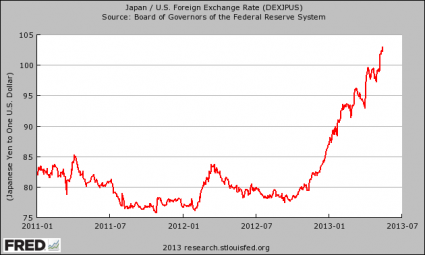
Media Coverage Blackout Over Anti-Monsanto Protests

0

Anthony Gucciardi
Infowars.com
May 28, 2013

The decision by the mainstream media to ignore the thousands of individuals marching down the busiest streets of major cities worldwide may be appalling, but in reality it matters very little at this point. Not only is the movement against Monsanto adding to its number each day thanks to the real alternative media and intelligent activism, but the movement as a whole is driven by an inexorable desire to push the GMO ‘food bully’ out of our food supply.

And in addition to the rapid success, growth, and determination of the movement, we have key players in the alternative media that have decided they’re fed up with the hindered focus of mainstream news agencies. I am extremely glad that we decided to run live coverage on the March Against Monsanto in Philadelphia for its first year, as otherwise the event would not have been properly documented and shared. Couple that with the fact that the mainstream media is on its last breathe of life, and you realize that the alternative news media can actually succeed without the support of the multi-billion dollar news agencies whose ratings are plunging.

What’s truly amazing is that I saw hundreds of pedestrians not taking part in the march use their smart phones to take a few minutes of video. Video that they will likely post on Facebook, Youtube, or Twitter and incite social media activity. Whether it’s asking what is going on via their hundreds of friends on Facebook, or showing support for the march. This is how ideas and movements spread in the modern age, and this is how things like the March Against Monsanto go viral – no television required.

In fact, it really just comes down to strong ideas and topics. We have so much support from so many different groups coming out and standing up against Monsanto that it just goes to show there is a ‘sleeping giant’ of awake individuals who thoroughly understand the challenges we face as a nation. One only needs to tap into that powerful energy of resistance to ignite a movement, like a match to a gasoline-drenched fire pit.

I was extremely impressed and inspired by the support at March Against Monsanto, including the number of readers who came up to voice their support. At the end of the day, even corrupt Monsanto executives and paid-off politicians cannot stand up against a movement like this.

This post originally appeared at Natural Society

<!–

–>

This article was posted: Tuesday, May 28, 2013 at 5:02 am

Tags: , ,


<!– this is where we need to show the related articles

–>

This article originally appeared on: Infowars

Facebook wages censorship war against moms of autistic children who protest GMOs: Exclusive interview with Andrea Lalama

0

Mike Adams
Natural News
May 28, 2013

When Facebook suspended the account of a mom of two autistic children who held anti-GMO signs at the recent rally, it became national news. Drudge Report linked to our Natural News story which documented Facebook censoring multiple accounts for sharing a photo Facebook absurdly called “abusive.”

That photo, it turns out, was nothing more than a picture of two children holding up hand-made signs at the March Against Monsanto. One of the signs read, “Biopesticides = Autism, Say No to GMO” and the other sign read, “Organic Food It’s My Medicine, Label GMOs” (see videos, below).

This defiance against GMOs was apparently too much for Facebook to tolerate, so it took immediate action to censor the account of the mom, Andrea Lalama.

In an exclusive interview, I spoke with Andrea by phone, where she provided more background about her autistic sons, her research into the causes of autism (vaccines and GMOs), and how Facebook’s outrageous act of censorship has actually multiplied global awareness of the corporate conspiracy against moms who seek the truth about autism, vaccines and GMOs.

Here are the first two parts of the interview:

  • A d v e r t i s e m e n t

Thanks to Ginger Taylor for the above graphic. She also adds, “Just what is the relationship between Monsanto and Facebook? When mom’s like Joni Abbott Cox are having their facebook accounts censored and restricted because they posted pictures of their children at the Millions Against Monsanto March, you have to start asking question. Is Monsanto paying Facebook? Is Monsanto threatening Facebook with legal action? Why is this happening?”

<!–

–>

This article was posted: Tuesday, May 28, 2013 at 5:00 am

Tags: , , , , ,


<!– this is where we need to show the related articles

–>

This article originally appeared on: Infowars

US Father shoots daughters, self

0

In yet another US shooting, a father has gunned down his two adult daughters, killing one and critically injuring the other in the presence of his three grand children, before shooting himself dead.

The shooting incident occurred Monday in Californiaâ„¢s Central Valley town of Orosi, near Fresno, where all three lives, according to local authorities.

The gunman was identified as 63-year-old Anthony Alvarez and it is not yet clear what the motive of the shooting was.

Authorities further identified the dead daughter as Jennifer Kimble, 37, the mother of the three children that were reportedly present at the scene of the shooting.

The younger daughter, Valerie Alvarez, 33, was reported in critical condition at a Fresno hospital.

One of the gunmanâ„¢s three grandchildren at the scene, an 8-year-old girl, called local sheriff deputies to report the shooting.

The other two kids were boys, ages 11 and 13. None of the children were harmed during the incident, authorities said, noting that they were reunited with their father, who was at work at the time of the early morning shooting.

Shooting incidents across the US continue unabated as the nationâ„¢s lawmakers have refused to consider legislation to better control guns and even enforce stricter background checks for gun buyers following last Decemberâ„¢s shooting massacre of 20 children and 7 adults at a Connecticut Elementary School.

Every year, more than 30,000 people are shot and killed in the US.

The United States averages 87 shooting deaths per day as the result of gun violence, with an average of 183 injured, according to the University of Chicago Crime Lab and the Centers for Disease Control.

MFB/MFB

This article originally appeared on: Press TV

Landslide kills seven in central Mexico

0

A landslide on a road in Mexicoâ„¢s Hidalgo State has claimed the lives of seven people. (File photo)

Seven people have died in a landslide on a road in Mexicoâ„¢s central state of Hidalgo, the federal police say.

The deadly incident took place on Sunday, burying a number of cars under mud and trees.

Local residents of the nearby town of Tepeji del Rio warned officials that they had noticed the land above the road appeared to be unstable.

Hidalgo governor Jose Francisco Olvera said that the deaths could have been prevented, although assessing the state of the hill when the warning was made would have been difficult because of heavy rainfall.

Tepeji del Rio residents say a hailstorm on May 26 also caused at least 22 cars to be dragged into a canyon.

Officials say the hailstorm in Tepeji del Rio caused the deadly landslide late Sunday.

Earlier on the same day, 16 people were killed in a highway accident in Hidalgo.

On May 23, a passenger van fell off a cliff of 300 meters in the town of Tianguistengo. Eleven people died and ten others sustained injuries.

SZH/HSN

This article originally appeared on: Press TV

10 die in Afghanistan bomb blasts

0

Afghan security forces examine the site of a bomb attack in Parwan Province. (File photo)

Ten people including Afghan security forces have died and six others have been injured in two bomb explosions in Afghanistan.

The first bomb attack was carried out early on Tuesday near Qarabagh District of the northern province of Parwan.

Provincial police chief Abdul Rahman Sarjang said that the vehicle of Amin Ramin, the managing director of Afghan Wireless Communications Company, was the target of the bombing.

He said that Ramin had survived the attack, which killed eight people including his five bodyguards, and injured three others.

In the southern province of Kandahar, another bombing targeted a convoy of Afghan armed forces.

The Afghan Defense Ministry said that two Afghan soldiers were killed and three more wounded in the blast.

No group has claimed responsibility for the attacks.

Frequent bomb attacks have disrupted normal life and business activities in Afghanistan.

The United States and its allies invaded Afghanistan in 2001 as part of Washingtonâ„¢s so-called war on terror. The offensive removed the Taliban from power, but insecurity remains across the country despite the presence of thousands of foreign troops.

In late April, the Taliban militant group announced the start of their annual Ëœspring offensiveâ„¢ against the US-led foreign forces and Afghan troops.

The militant group said it would use Å“every possible tactic” to inflict casualties on Afghan and US-led forces.

DB/HSN

This article originally appeared on: Press TV

Rosneft to control 100% of Russian gas trading pioneer for $3bn

0

Rosneft, Russia’s state-controlled oil magnate, is buying out partner Itera to gain 100% control of the independent gas trader, for a reported $3 billion.

Rosneft already owns 51% of ‘Itera’, one of the largest
independent producers of gas in Russia and the CIS, and the
takeover deal should be finalised in two months Kommersant
reported on Tuesday.

Rosneft will buy the remaining 49% from founder Igor Makarov
and his partners.

A source close to Rosneft told Kommersant that Makarov is running
short of funds.

“At some point it became clear that Igor Makarov has no capital for
business development,”
said the source, quoted by
Kommersant.

“There were two options- either Itera gradually auctions off
shares to Rosneft, or, it fully buys out Makarov. The two companies
agreed on the second option on good terms,”
said the
source.

Rosneft plans to continue the company’s operations under the same
‘Itera’ brand, but Makarov will step down from the board of
directors.

Igor Makarov. (RIA Novosti / Aleksey Nikolskyi)

Itera was founded by a former member of the USSR cycling team
and a Turkmenistan native, Irgor Makarov. Established in the US in
1992, the company is Moscow-based. The company thrived in the 1990s
as Russia’s main gas exporter from Turkmenistan, a partnership
Makarov himself personally cultivated using his high-profile
connections in Gazprom and his native know-how. In February 2012,
Itera partnered with Rosneft, after nearly going bankrupt as a
result of Gazprom restructuring and a series of asset swaps.

Itera, one of Russia’s few independent contractors, played a key
role in Russia’s transitional economy, but has played less of a
role as gas companies have consolidated under state control.

Marakov started acquisition talks with Rosneft in 2011, and
according to a business acquaintance, he was “an idealist,
believing that, by agreeing to a deal with Rosneft, he would be
able to save his company and further develop.”

Rosneft first acquired Itera shares in 2012, when, according to
analysts, Itera was valued at $5.4 billion. Rosneft received 51% of
ITERA Group’s gas assets — 49 percent of Sibneftegaz, 49 percent of
Purgaz, 67% of Uralsevergaz and several other assets including
Rosneft-owned deposits in the Kynsko-Chaselsk group. The joint
venture combined liquid hydrocarbon and natural gas reserves which
were estimated at 60 million tonnes and 1.2 trillion cubic
meters.

Rosneft became the world’s largest listed crude oil producer in
March after acquiring TNK-BP in a $55 billion deal, which
added about 9 million tons of oil to the company’s production
output.

According to Rosneft president Igor Sechin, Rosneft will produce
210-215 million tons of oil in 2013. Gas extraction will reach 50
billion cubic meters, refined oil will reach 95 million tons, which
will yield a revenue of $160 billion. In 2012, Rosneft increased
oil production by 2.7 percent compared to the previous year.

Earlier in May, Itera and Rosneft proposed jointly modernizing a
chemical plant in Armenia, which was projected to cost between $400
and $500 million.

This article originally appeared on: RT

UK departments agree to 10pct. cuts

0

UK departments agree to 10pct. cuts

British Chancellor George Osborne has announced seven government departments face new spending cuts of up to 10 percent to their budgets.

Osborne said the decision on the cutbacks was made after agreement with the heads of the departments.

He added Justice, Energy and Communities departments are among those facing Å“significant” budget reductions but pledged to ring fence the National Health Service from the cuts.

“I’ve made a tough decision that I’m going to protect spending on the NHS,” he told BBC television.

He added the Treasury would also try to protect spending on schools.

The austerity measures are part of a spending review plan to be announced in June.

The Treasury has said it is looking to find £11.5 billion in savings before making the review announcement.

The curbs on the seven departments reportedly only cover £3.5 billion of that target.

AMR/HE

This article originally appeared on: Press TV

Russia raps EU decision on Syria rebels

0

Militants in Syria take positions during clashes with government troops in the city of Aleppo, May 22, 2013.

Russia says that the European Unionâ„¢s decision to lift a ban on arming the militants in Syria Å“directly harms” the prospects of a forthcoming peace conference in Geneva.

Deputy Foreign Minister Sergei Ryabkov said on Tuesday that the move Å“directly harms the prospects of convening an international conference,” according to Russian media.

On Monday, European Union foreign ministers agreed, after lengthy talks among divided ministers in Brussels, to lift the arms embargo on the militants in Syria.

British Foreign Secretary William Hague announced that the EU foreign ministers reached a deal to lift the ban on the militants but maintained the embargo against the Syrian government.

Britain and France were the proponents of lifting the embargo against the militants while Austria, Finland, Sweden and the Czech Republic were against the move.

Ryabkov said Moscow was disappointed by the fresh anti-Syria move.

Å“We are disappointed that decisions are being reached that not only fail to promote a political solution… but which contradict the policies conducted by the European Union itself,” he said.

He also accused the EU of setting Å“double standards” by lifting the ban on the opposition but not the Syrian government.

On May 7, Russia and the United States agreed in Moscow to convene an international conference on Syria, which will serve as a follow-up to an earlier Geneva meeting held in June 2012.

The first Geneva talks, which were presided over by former UN-Arab League envoy Kofi Annan, called for a political process to end the crisis in Syria.

Syria has been gripped by unrest for over two years, and many people, including large numbers of Syrian soldiers and security personnel, have been killed in the foreign-sponsored militancy.

SAB/HJL

This article originally appeared on: Press TV

Gunmen kill Shia lawyer, sons in Pakistan

0

Pakistani volunteers carry the body of a lawyer who was killed with his young sons in an attack by gunmen in Karachi, May 28, 2013.

Gunmen in the Pakistani port city of Karachi have shot dead a Shia Muslim lawyer of the High Court of Sindh and his two sons, police officials say.

The assailants, riding a motorbike, gunned down Saqlain Kauser and his two sons, aged 12 and 15, on Tuesday, on their way to the childrenâ„¢s school.

No group has claimed responsibility for the attack.

Karachi police chief Iqbal Mahmood said, Å“Apparently it seems a sectarian killing.”

Pakistani lawyers have strongly condemned the fatal shooting, calling off all the proceedings of the High Court of Sindh Province to mourn the death of their colleague and his sons.

This is the latest deadly incident in a wave of violence against the Shia Muslim community in Pakistan.

Human Rights Watch says more than 400 Shias were killed in Pakistan in 2012, which was the deadliest year on record for the Pakistani Shia Muslim community.

On February 16, a bomb attack targeting Shia Muslims in the main bazaar of the southwestern city of Quetta killed at least 90 people, including women and children, and injured more than 200 others.

Also on January 10, a twin bomb attack at a crowded billiard hall in Quetta, which is the capital of Balochistan Province, killed more than 90 people, mostly Shia Muslims.

MM/HSN

This article originally appeared on: Press TV

‘NATO to give technical support to Libya’

0

Libyan Prime Minister Ali Zeidan (L) and NATO Secretary General Anders Fogh Rasmussen address a press conference at the NATO headquarters in Brussels, May 27, 2013.

Libyaâ„¢s prime minister says NATO will give technical advice to the Libyan military in terms of training.

Ali Zeidan said on Monday, Å“NATO will give us technical advice in terms of training, we will have technical support and we will be helped in training if we need so.”

The Libyan premier made the remarks after a meeting with NATO Secretary General Anders Fogh Rasmussen in Brussels.

Rasmussen stated that the NATO support was about Å“technical assistance upon request of the Libyan government” and that it should not be considered as NATO deployment of troops to Libya.

The NATO chief added that such a request must be formally approved by the North Atlantic Council.

Earlier in the day, the Libyan prime minister met with European Commission President Jose Manuel Barroso and EU President Herman Van Rompuy.

During the meeting, Zeidan and Barroso discussed the issue of a European Union Association Agreement with Libya.

Å“We know of course this will take time,” Barroso said, adding, Å“This agreement will provide the framework of our relations for the long term.”

MM/HSN

This article originally appeared on: Press TV

US wildfire forces thousands to flee

0

Smoke from the wildfire at California’s Los Padres National Forest near Santa Barbara.

A rapidly-moving US wildfire in State of Californiaâ„¢s Santa Barbara County has so far forced over 1,000 travelers and campers to evacuate Los Padres National Forest, cutting short their Memorial Day holiday visits.

Thousands of residents were also advises to escape the wildfire, which flared up in the mountains about 12 miles north of Santa Barbara on Monday afternoon and quickly grew to over 1,000 acres by evening hours.

No injuries have yet been reported during the evacuations and according to a US Forest Service spokesman no houses have caught on fire in the affected region so far.

The official further added that residents were expected to be able to return home late Monday after the fire burned through the area.

Meanwhile, the fire has reportedly forced the closure of Paradise Road, which runs up a valley with numerous campsites in the popular recreational spot.

Firefighters from a number of nearby counties were dispatched to the affected area, along with four water-tanker airplanes and two helicopters.

MFB/MFB

This article originally appeared on: Press TV

UK departments agree to 10pct. cuts

0

UK departments agree to 10pct. cuts

British Chancellor George Osborne has announced seven government departments face new spending cuts of up to 10 percent to their budgets.

Osborne said the decision on the cutbacks was made after agreement with the heads of the departments.

He added Justice, energy and Communities departments are among those facing Å“significant” budget reductions but pledged to ring fence the National Health Service from the cuts.

“I’ve made a tough decision that I’m going to protect spending on the NHS,” he told BBC television.

He added the Treasury would also try to protect spending on schools.

The austerity measures are part of a spending review plan to be announced in June.

The Treasury has said it is looking to find £11.5 billion in savings before making the review announcement.

The curbs on the seven departments reportedly only cover £3.5 billion of that target.

AMR/HE

This article originally appeared on: Press TV

‘NATO to give technical support to Libya’

0

Libyan Prime Minister Ali Zeidan (L) and NATO Secretary General Anders Fogh Rasmussen address a press conference at the NATO headquarters in Brussels, May 27, 2013.

Libyaâ„¢s prime minister says NATO will give technical advice to the Libyan military in terms of training.

Ali Zeidan said on Monday, Å“NATO will give us technical advice in terms of training, we will have technical support and we will be helped in training if we need so.”

The Libyan premier made the remarks after a meeting with NATO Secretary General Anders Fogh Rasmussen in Brussels.

Rasmussen stated that the NATO support was about Å“technical assistance upon request of the Libyan government” and that it should not be considered as NATO deployment of troops to Libya.

The NATO chief added that such a request must be formally approved by the North Atlantic Council.

Earlier in the day, the Libyan prime minister met with European Commission President Jose Manuel Barroso and EU President Herman Van Rompuy.

During the meeting, Zeidan and Barroso discussed the issue of a European Union Association Agreement with Libya.

Å“We know of course this will take time,” Barroso said, adding, Å“This agreement will provide the framework of our relations for the long term.”

MM/HSN

This article originally appeared on: Press TV

UK departments agree to 10pct. cuts

0

UK departments agree to 10pct. cuts

British Chancellor George Osborne has announced seven government departments face new spending cuts of up to 10 percent to their budgets.

Osborne said the decision on the cutbacks was made after agreement with the heads of the departments.

He added Justice, energy and Communities departments are among those facing Å“significant” budget reductions but pledged to ring fence the National Health Service from the cuts.

“I’ve made a tough decision that I’m going to protect spending on the NHS,” he told BBC television.

He added the Treasury would also try to protect spending on schools.

The austerity measures are part of a spending review plan to be announced in June.

The Treasury has said it is looking to find £11.5 billion in savings before making the review announcement.

The curbs on the seven departments reportedly only cover £3.5 billion of that target.

AMR/HE

This article originally appeared on: Press TV

‘No dummies tummies!’ Indian mannequins covering up to cut sex crimes

0

The civic body that governs Mumbai has passed a proposal to ban the display of bikini-clad mannequins outside lingerie shops to prevent the growing rate of sex offenders in the city recording the second-highest number of rapes in India.

India’s richest municipal organization, the Brihanmumbai
Municipal Corporation, which features some 227 councilors from
across parties, has unanimously supported the proposal by a female
politician from Shiv Sena party and called on its commissioner to
shape up a new policy on ‘indecent display’ in public areas. Once
approved, civic officials will have a legal right to make local
shopkeepers to remove a mannequin if they find it
‘underdressed’.

“Especially two-piece clothes which barely cover the body have
led to pollution of minds in today’s generation. Such a display
affects the mindset of men. One must think of the awkwardness a
woman will feel standing in front of such a mannequin,”
BJP
councilor from Ghatkopar, Ritu Tawade, told The Indian
Express. 

According to the 39-year-old, who has already forced
several shops in her ward to cut short the display of their
indecent mannequins, provisions of the Indecent Representation of
Women (Prohibition) Act, 1986, say that “indecent representation
of women means the depiction in any manner of the figure of a
woman; her form or body or any part thereof in such way as to have
the effect of being indecent, or derogatory to, or denigrating
women, or is likely to deprave, corrupt or injure the public
morality or morals.”

Indian men, including legislators and judges, often blame
‘provocative clothing’ for inciting violence and sexual harassment
against women.

Demonstrators stand behind posters during a protest rally in New Delhi on February 21, 2013. Demonstrators called for changes in a proposed law against sexual crimes, saying it needed to be stronger and more defined. (AFP Photo / Sajjad Hussain)
In the final two months of 2012, the International Center for
Research on Women conducted a survey amongst New Delhi residents to
find out their attitudes toward sexual violence. Ninety-five per
cent of the female respondents reported feeling unsafe in public,
due to the perceived threat of sexual violence against women, while
75 per cent of men agreed that “women provoke men by the way
they dress.”

One woman is raped every 20 minutes in India, according to the
National Crime Records Bureau. Anti-rape protests swept the country
with thousands of people, including women lawmakers, calling for
strict and immediate action from the authorities after a
23-year-old medical student was gang raped in a moving bus in
December. The woman was fatally injured in the attack and died in a
Singapore hospital.

Mumbai recorded a more-than-15 per cent increase in incidents of
rape, molestation and sexual harassment in 2011 over 2010,
according to a report cited by The Times of India. Mumbai witnessed
221 incidents of rape, with 39 per cent – or 117 – of these victims
under 18. Forty-one per cent of the total 584 rape cases across
nine police jurisdictions in the state were filed in the city.

(AFP Photo / Raveendran)

A recent survey conducted by Trust Law, showed that India is the
fourth worst country for women to live in, behind only Afghanistan,
the Congo, and Pakistan. India was ranked the worst out of the G20
nations as it had abuse, violence, and murder on scales
unparalleled in the other G20 nations, with reasons behind this
including high rates of forms of slavery and exploitation.

According to the Asian Human Rights Commission, despite an
increase in the number of reported rapes, convictions have dropped
by a third,

“indicating failure on the part of the police to conduct
investigations and prosecutions.”
The average wait time for the
judiciary to try a rape case in India is over 600 days, with many
cases taking five to 10 years to complete. As of March 2013, 24000
cases of sexual assault cases are pending before state High Courts
and the Supreme Court of India.

Meanwhile, studies reveal that women are more likely to report
sex crimes if female police officers are on duty. When they report
rape charges to male officers, they are often humiliated. India,
however, has a much lower number of female police than other Asian
countries. In New Delhi, for instance, merely 7 per cent of police
officers are women, according to The Times of India.

This article originally appeared on: RT

S. Korea suspends more nuclear reactors over fake documents

0

Asia’s fourth-largest economy is halting the operations of two nuclear power reactors to replace unauthorized equipment that was supplied using fake documentation, South Korea’s nuclear regulator said on Tuesday.

The Nuclear Safety and Security Commission also delayed the
restart of operations at two other reactors that were closed last
year, also over forged documents, Reuters reported.

Two of the affected nuclear reactors are in Kori, about 320 km (198
miles) southeast of Seoul, and in Wolsong, about 280 km (173 miles)
from the capital. The reactors each have a maximum capacity of
1,000 megawatts.

The shutdown of the reactors is more than just an embarrassment for
the South Korean government, which has said the closures present no
public threat. The country is heavily dependent on outside supplies
of oil, gas and coal, with about a third of its electricity coming
from nuclear power generation.

This is not the first time that Seoul has been forced to shut down
nuclear reactors over false certificates.

Earlier this month, six nuclear engineers and equipment suppliers
were handed prison sentences in connection with the supply of
unauthorized ‘non-core equipment’ (cooling fans, cables and
switches, which require international certification), mainly to the
Yeonggwang complex on the southwest coast.

The nuclear plant was forced to shut down three of the plant’s
six reactors in November, a move that prompted authorities to
inspect equipment at all of the country’s 23 nuclear facilities
nationwide.

The shutdown of Yeonggwang sparked fear among locals as some
2,500 villagers staged a protest outside the sprawling complex.
Hundreds of riot police and security officers were sent to the
demonstration, but there were no reports of violence, the Yonhap
news agency reported.

On February 9, 2012, the Gori-1 reactor near the southern city
of Busan briefly lost power and the emergency backup generator
failed to work.

Public fear over South Korea’s nuclear reactor shutdowns could
have its roots in Japan’s Fukushima nuclear disaster that occurred
in the wake of the Tokohu earthquake and tsunami of March 11,
2011.

The most powerful earthquake to ever hit Japan (9.0 on the
Richter scale) triggered the largest nuclear disaster since the
Chernobyl accident of 1986. Residents within a 20 km (12 mi) radius
of the Fukushima Daiichi Nuclear Power Plant were forced to
evacuate due to the release of radiation.

Meanwhile, the shutdown of the South Korean nuclear plants,
while not a public threat, have sparked fears of widespread power
shortages as the nation braces for the summer season, when public
demand for air conditioning peaks.

The shutdown will begin on Tuesday, according to a spokesman at
Korea Hydro and Nuclear Power Co Ltd, which runs nuclear reactors
in South Korea and is owned by state-run utility Korea Electric
Power Corp.

A fourth newly-built nuclear power reactor, also in Wolsong,
which is waiting for approval to resume operations, will have its
cables replaced, the statement added.

The latest plant closures present a setback for the South Korean
government, which had been hoping to expand the construction of
nuclear power facilities as energy needs surge.

Robert Bridge, RT

This article originally appeared on: RT

Iran raps EU decision on Syria militants

0

Iranâ„¢s Foreign Ministry has slammed the European Unionâ„¢ decision to lift its arms embargo on the militants operating inside Syria as a Å“hasty and dangerous” measure.

On Monday, European Union foreign ministers agreed, after lengthy talks among divided ministers in Brussels, to lift the arms embargo on the militants in Syria.

In his weekly press conference on Tuesday, Iranian Foreign Ministry Spokesman Abbas Araqchi said the decision will simply complicate the situation in Syria and hamper international efforts aimed at finding a political solution to the crisis in Syria.

Å“At a time when different Syrian opposition groups show more willingness to participate in the Geneva meeting to reach a political solution [to the unrest in Syria], such measures are considered disruptive and undermining these diplomatic efforts,” he said.

On May 7, Russia and the United States agreed in Moscow to convene an international conference on Syria, which will serve as a follow-up to an earlier Geneva meeting held in June 2012. The upcoming meeting will reportedly be held in June.

Araqchi also said the crisis in Syria can only be resolved politically, reaffirming Iranâ„¢s readiness to help resolve the situation in such a manner.

Referring to the upcoming Friends of Syria Conference due on May 29 in the Iranian capital, Tehran, Araqchi said that representatives from 40 countries will take part in the meeting, which also aims to find a political solution to the unrest in Syria.

The conference will be held under the banner of Å“Political Solution – Regional Stability.”

Araqchi also noted that the upcoming Geneva meeting on Syria should be all-inclusive and involve all the parties that can help resolve the crisis in the Arab country.

Iran has repeatedly expressed its opposition to any foreign intervention in Syria’s internal affairs, stressing that inclusive dialog and national reconciliation as well as free elections are the keys to resolving the unrest in the Arab country.

The unrest in Syria erupted over two years ago and many people, including large numbers of Syrian soldiers and security personnel, have been killed in the violence.

YH/HJL

This article originally appeared on: Press TV

Hezbollah condemns Beirut attacks

0

Lebanese security forces inspect the site of the rocket attacks in southern Beirut, May 26, 2013.

The Lebanese resistance movement Hezbollah has condemned the recent rocket attacks on the capital, Beirut, carried out by Ëœcowardâ„¢ perpetrators.

Two rockets hit the southern district of Zahyieh in Beirut on May 26, injuring several people.

Head of Hezbollah Executive Council Seyyed Hashem Safieddine said on Tuesday that the Å“targeting and the manner of targeting prove one thing that the perpetrator is a coward.”

Safieddine called on the Lebanese government to Å“uncover those standing behind this attack and those funding, supporting and training the perpetuators, and punish them.”

The rockets hit Beirut only hours after Hezbollah Secretary-General Seyyed Hassan Nasrallah said that the resistance movementâ„¢s combatants were fighting alongside Syrian troops against al-Qaeda-linked militants in Syria.

The Syrian army has recently conducted successful operations against militants in the strategic town of Qusayr near the Lebanese border.

Nasrallah promised victory against the militants and said, Å“We will continue along the road… bear the responsibilities and the sacrifices. This battle is ours… and I promise you victory.”

Sheikh Nabil Qawouq, the deputy head of Hezbollah Executive Council, also condemned the Beirut attacks.

Å“If they wanted to intimidate us, they have failed to do so and if they wanted to terrorize us, they have failed to do so, and if they wanted to pressure us to change our stances, they have failed as well. The resistance will not be shaken and will not be blackmailed,” Qawouq said.

SAB/HSN

This article originally appeared on: Press TV

Boat capsizes in Malaysia, 21 missing

0

This file photo shows Malaysian security officials standing next to the dead bodies of Indonesian migrants wrapped in black plastic bags on a beach in Kota Tinggi of Malaysiaâ„¢s Johor state.

At least 21 people are unaccounted for following an accident during which an overloaded boat capsized in a river in Malaysia, officials say.

The incident took place on Tuesday when the ferry, carrying about 100 passengers, hit rocks in Rajang River in the state of Sarawak.

Belaga town’s police chief Bakar Anak Sebau said that he believes Å“there were women and children onboard.”

Å“The boat was overloaded,” he said, noting that the ferry was carrying more people than its recommended limit of 74 passengers.

Abdul Halim Abdullah, the state government’s local administrator for Belaga, also confirmed that, Å“Around 21 people have not been accounted for.”

Police rescuers, fire department officers and villagers have been dispatched to the site of the incident to find the missing people, Bakar said.

Å“We hope they (the missing passengers) will be OK,” he said.

DB/HJL

This article originally appeared on: Press TV

US F-15 fighter jet crashes near Japan

0

An American F-15 fighter jet has crashed in waters off US-run Kadena Air Base on Okinawa Island in southern Japan due to a Å“technical malfunction.”

The incident occurred on Tuesday when the military plane, which flew out of Kadena Air Base, went down in the Pacific Ocean about 70 miles (110 kilometers) east of the island.

Å“A Kadena-based F-15 aircraft developed a problem that ultimately resulted in the pilot ejecting from the aircraft over the Pacific Ocean approximately 70 miles (110 kilometers) east of Okinawa,” the US Air Force said.

Japanese rescuers have reportedly found and saved the American pilot.

Okinawa hosts more than half of the 47,000 American service personnel in Japan.

Most of the Japanese are discontent with the presence of the US forces in Japan due to the crime, noise and risk of accidents associated with their bases.

DB/HJL

This article originally appeared on: Press TV

War memorials vandalized in London

0

Two war memorials in central London have been spray painted with the word Islam amid speculations that far-right anti-Muslim groups are behind the move to stir up anti-Muslim hatred.

The spray-paint was daubed on the Bomber Command Memorial monument in Green Park and the Animals In War memorial on Park Lane overnight.

The Metropolitan Police has said they are investigating the issue along with officers from Westminster police.

The vandalism comes as the far-right English Defence League prepares to march outside the Prime Ministerâ„¢s office on Downing Street in the wake of the murder of British soldier Lee Rigby in the Woolwich area of London on Wednesday.

The EDL have ever since launched several rallies in different cities exploiting the situation to step up their hate-preaching against Muslims.

The speculations about their involvement in the vandalism gains force when considering the fact that the Muslim Council of Britain, the Islamic Society of Britain and more than 100 mosques in the country have condemned the murder as a Å“truly barbaric” and Å“unforgivable” act.

Police said they are treating the spray paintings as criminal damage.

AMR/HE

This article originally appeared on: Press TV

Venezuelan President Maduro slams CNN

0

Venezuelaâ„¢s President Nicolas Maduro has said that the CNN in Spanish encourages Venezuelans to Ëœcarry out a coup dâ„¢etatâ„¢ against the government.

Å“CNN en Espanol is a network controlled by those seeking destabilization, which openly urges people to carry out a coup dâ„¢etat in Venezuela, and which is delivering a distorted version of our nationâ„¢s political and social life,” Maduro said in an address aired on national television on Monday.

He added that the CNN in Spanish was part of a wider campaign of Å“brutal psychological warfare” aimed at destabilizing Venezuela.

Å“It is broadcasting 24 hours a day not to tell whatâ„¢s going on in the world but rather to make Venezuela look bad,” the Venezuelan president stated.

Maduro dismissed recent reports about divisions in the Venezuelan leadership.

Maduro was elected president on April 14 after defeating opposition leader Henrique Capriles by receiving 50.7 percent of the votes against 49.1 percent, with a difference of about 235,000 ballots. Capriles claims irregularities took place during the election.

SZH/HSN

This article originally appeared on: Press TV

EU failure to renew arms embargo hurts Syria peace prospects – Russia

0

Comments

Add comment

By posting your comment, you agree to abide by our Posting rules

Log in to comment in full, or comment anonymously under character-limit restriction.

Name

New password

Retype new password

Current password

Save

Cancel

This article originally appeared on: RT

Russia raps EU decision on Syria rebels

0

[unable to retrieve full-text content]Russia says that the European Union’s decision to lift a ban on arming the militants in Syria will “directly harm” the prospects of a forthcoming peace conference in Geneva.

This article originally appeared on: Press TV

‘Tehran confab to help end Syria unrest’

0

Iran hosted a two-day meeting between the representatives of the Syrian government and opposition groups on November 18-19, 2012.

Iran’s ambassador to Azerbaijan says that the conference on Syria due in Tehran can increase cooperation to help end the unrest in the Arab country.

Å“This meeting … can increase cooperation and coordination among the real friends of the Syrian people to help the country overcome crisis,” Iranian Ambassador to Baku Mohsen Pak-Ayeen said in a Monday interview with Azerbaijanâ„¢s Trend news agency.

The Friends of Syria Conference, which seeks to find a political solution to the crisis in Syria, will be held in the Iranian capital on May 29, under the banner of Å“Political Solution, Regional Stability.”

Pak-Ayeen further said that the participation of different countries in the conference shows the global willingness for finding a peaceful solution to the crisis in Syria and indicates Iranâ„¢s key role in the region.

Å“The [forthcoming] presence of countries and international organizations in Tehran indicates that the world public opinion is more determined than ever to help find a political solution to the crisis in Syria and also highlights Iranâ„¢s international role,” Pak-Ayeen said.

Earlier on Monday, Iranâ„¢s Deputy Foreign Minister for Arab and African Affairs Hossein Amir-Abdollahian said more than 40 countries are expected to participate in the Tehran meeting, adding that the representative of former UN Secretary General Kofi Annan will submit Annanâ„¢s message to the participants.

Tehran has already held two other meetings on the crisis in the Arab country.

Pak-Ayeen further underlined Iranâ„¢s determination in resolving the unrest in Syria through political means and said while certain countries are sending weapons to Syria to sow discord among the people and demolish the country, Iran has been dispatching humanitarian aid for the people in the crisis-hit country.

The Iranian envoy said that the countries that send arms to the militants in Syria should be held accountable for their measures.

He said that certain countries are posing a threat to the regional peace and stability by supporting the extremist groups inside Syria.

Iran has repeatedly expressed its opposition to any foreign intervention in Syria’s internal affairs, stressing that inclusive dialog and national reconciliation as well as free elections are the keys to resolving the unrest in the Arab country.

The unrest in Syria erupted over two years ago and many people, including large numbers of Syrian soldiers and security personnel, have been killed in the violence.

YH/HJL

This article originally appeared on: Press TV

Advice from an Afghan Mother and Activist

1

When she was 24 years old, in 1979, Fahima Vorgetts left Afghanistan. By reputation, she had been outspoken, even rebellious, in her opposition to injustice and oppression; and family and friends, concerned for her safety, had urged her to go abroad.

Twenty-three years later, returning for the first time to her homeland, she barely recognized war-torn streets in urban areas where she had once lived.  She saw and felt the anguish of villagers who couldn’t feed or shelter their families, and no less able to accept such unjust suffering than she’d been half her life before, Fahima decided to make it her task to help alleviate the abysmal conditions faced by ordinary Afghans living at or below the poverty line — by helping to build independent women’s enterprises wherever she could. She trusted in the old adage that if a person is hungry it’s an even greater gift to teach the person how to fish than to only give the person fish.

Last week, our small delegation here in Kabul traveled around the city with her to visit several clinics and “shuras,” or women’s councils that she has opened.

The first clinic we visited has been here since 2006. Two women, a doctor and a midwife, told us that they are part of a staff who work in three shifts to keep the clinic open “24-7.” Not one of their patients has died while being treated at the clinic.

Next we visited two villages, one Pashtun and the other Tajik, on the outskirts of Kabul.

“Why did you pick this village?” asked Jake Donaldson, an M.D. from Ventura, CA who joined us here in Kabul about a week ago. “I didn’t pick them,” Fahima exclaimed. “They picked me.”

A year previously, the villagers had asked her to build a clinic and a literacy center. She had told them that if they would agree to organize a women’s cooperative and pool their resources to hire teachers, midwives and nurses, she herself would build the physical building and help with supplies.

In each village, we visited a newly constructed building which will house a clinic, a women’s cooperative for jewelry-making, tailoring, and canning, a set of literacy classes for children and adults, and even a public shower which families can sign up to use. A young teacher invited us to step inside his classroom where about fifty children, girls and boys, were learning their alphabet in the first week of a literacy class. Several villagers proudly showed us the well they had dug, powered by a generator. The well will help them irrigate their land as well as supply clean drinking water for the village.

Before we left, a male village elder described to Fahima how valuable her work has been for his village. Fahima seemed to blush a bit as she gratefully acknowledged his compliment.

Such appreciative words, along with the children’s eager expressions, seem to be the main compensation for her tireless work. “I and the board members of The Afghan Women’s Fund are 100% volunteers,” Fahima assures me. “Our board members are people of tremendous integrity.”

On the day before our tour, Fahima had come to the Afghan Peace Volunteer home to speak to the seamstresses who run a sewing cooperative here and encourage them to hold on at all costs to their dignity. She urged them never to prefer handouts to hard work in self-sustaining projects.  Fahima had helped the seamstresses begin their cooperative effort at the Volunteer house when she purchased sewing machines for them a little over a year ago.

“Not all of the projects I’ve tried to start have worked out,” said Fahima. “Sometimes people are hampered by conservative values and some families don’t want to allow women to leave their homes. Most often, it is war or the security situation that prevents success.”

She firmly believes that war will never solve problems in her country — or anywhere else, for that matter.

Fahima is outspoken, even blunt, as she speaks about warlords and war profiteers.  She has good reason to be bitter over the cruelties inflicted on ordinary Afghans by all those interested in filling their own pockets and expanding control of Afghanistan’s resources. She advises the Afghan Peace Volunteers with the voice and love of a mother. “The world is gripped by a class war in which the 1% elite, irrespective of nationality or ethnicity and including the Afghan and U.S./NATO elite, have been ganging up to control, divide, oppress and profit from us, the ordinary 99%. Resist these ‘dark times’, resist war and weapons, educate yourselves, and work together in friendship.”

Fahima’s spirit of youthful rebellion clearly hasn’t been snuffed out by age or experience.  Her practical compassion is like a compass for all of us who learn about her work.

For more about the Afghan Women Fund, go to www.Afghanwomensfund.org

Kathy Kelly, (kathy@vcnv.org), co-coordinates Voices for Creative Nonviolence. She is living in Kabul for the month of May as a guest of the Afghan Peace Volunteers.

This article originally appeared on: Counterpunch

Japan’s Economy Tumbles

0

“The bankers in Tokyo tell me there is a widespread mindset of panic among institutional holders of Japanese Government Bonds (JGBs) and that can’t be a good thing. Panic tends inevitably to lead to crisis, and goodness knows, global financial markets could hardly deal with another crisis without contagion on a massive scale.” Reuters commentary

Japanese markets were whipsawed for a second time in three days while the yields on Japan Government Bonds (JGB) inched higher. The benchmark Nikkei Index shed 469 points in Monday’s session lopping another 3 percent off Thursday’s 7.3 percent plunge. Skittish investors are exiting stocks fearing that Abenomics and the Bank of Japan’s (BoJ) efforts to reflate equities prices and boost inflation will fail.

An unexpected selloff in JGBs pushed the yield on 10-year debt to 1 percent last week increasing the likelihood of higher interest rates which will leave bank balance sheets and JGB-heavy pension funds deep in the red. Investor confidence in the BoJ’s governor Haruhiko Kuroda has begun to ebb as roiled markets and rising yields add to financial instability and deepening crisis. This is from an article at International Finance Review:

“Extreme volatility in the Japanese government bond market could trigger a sell-off on a par with a market rout in the third quarter of 2003. That was when local banks and foreign investors were forced to dump their JGB holdings after heightened volatility caused the assets to exceed internal value-at-risk limits.

According to analysts at JP Morgan, the threat of a so-called “VaR shock” highlights one of the unintended consequences of quantitative easing, and the situation could be exacerbated this time around.” (“QE raises JGB ‘VaR shock’ fears”, IFR)

Hayman Advisors Kyle Bass summed up the problem facing the BoJ like this:

“Abe and the BOJ face what I call the ‘rational investor paradox. If Japanese Government Bonds (JGB) investors begin to believe that Abenomics will be successful, they will ‘rationally’ sell JGBs to buy foreign bonds or equities.”

In other words, if bondholders believe that Kuroda will hit his inflation target of 2 percent, then they will have to jettison their low-yielding JGBs or suffer losses. The uncertainty surrounding long-term interest rates is what’s causing the gyrations in the stock market and the growing sense of unease. And while the Kuroda is currently purchasing over 70 percent of new issuance, the selloff in the quadrillion dollar JGB market has overwhelmed his efforts to keep rates low.

Last Friday, a clearly-shaken Kuroda tried to placate jittery investors saying that “the BOJ will flexibly conduct operations by adjusting frequency, pace and target.” He added, “It is natural for long-term yields to rise as the economic recovery and inflation picks up.” Market-watchers took this simple statement of fact as a sign that Kuroda was no longer fully-committed to keeping rates low. This is what led to Monday’s stock rout.

Liberal economists in the US have praised Prime Minister Shinzo Abe’s efforts at ending Japan’s two decades of deflation, particularly the BoJ’s unprecedented Quantitative and Qualitative Easing (QQE) program which will double the base money supply in two years and which purchases financial assets (J-REITs, ETFs) other than government debt. Paul Krugman has been particularly impressed with “Abenomics” and devoted a recent column to singing its praises. Here’s a clip from Krugman article titled “Japan the Model”:

“In a sense, the really remarkable thing about “Abenomics” – the sharp turn toward monetary and fiscal stimulus adopted by the government of Prime Minster Shinzo Abe – is that nobody else in the advanced world is trying anything similar. In fact, the Western world seems overtaken by economic defeatism…

So, how is Abenomics working? The safe answer is that it’s too soon to tell. But the early signs are good…, with surprisingly rapid Japanese economic growth in the first quarter of this year…

Meanwhile, Japanese stocks have soared, while the yen has fallen…, very good news for Japan because it makes the country’s export industries more competitive…

So the overall verdict on Japan’s effort to turn its economy around is so far, so good. And let’s hope that this verdict both stands and strengthens over time. For if Abenomics works, it will serve a dual purpose, giving Japan itself a much-needed boost and the rest of us an even more-needed antidote to policy lethargy.” (“Japan the Model”, Paul Krugman, New York Times)

While Krugman wisely qualifies his praise for Abe’s gigantic stimulus program, it’s clear he thinks that Japan is on the right path. One can only wonder if Krugman would change his mind if he knew that Abe is a right-wing militarist whose real objective in using Keynesian theories is to rebuild imperial Japan’s war machine while clamping down on working people.

There’s been much to-do over Abenomics “three arrows”, that is, monetary (QQE), fiscal and structural policies. But the media’s main focus has been on monetary policy and the reflationist efforts of the BoJ. In contrast, the fiscal component gets hardly any attention at all, even though Keynes emphasized the ineffectiveness of monetary policy in a liquidity trap. (which he compared to “pushing on a string.”)

The reason fiscal policy is downplayed in the media is because Abe’s $116 billion fiscal package (aimed at rebuilding aging infrastructure) is a “one shot” deal that will expire in 2014 leaving working people to face impending economic contraction and the same stagnant environment they find themselves today. In other words, Abe is using Keynes ideas in much the same way as Obama, to revive economic activity (temporarily!) while more and more of the nation’s wealth is transferred to speculators via the equities markets. Here’s a summary of what’s really going on under the radar:

“There has been much public discourse among observers who believe Japan’s weak consumption may be attributed to cultural issues, suggesting that Japanese consumers are frugal by nature and disinclined to spend. I believe this is simply not true. In my opinion, the frugality of Japanese consumers has resulted from their poor outlook for wage growth. Over the past 20 years, average wages in Japan have not grown; they actually peaked in 1998 and have been on the decline ever since. It’s no wonder that Japanese consumers would curb spending if they expected their incomes to continue declining. There is an entire generation of Japanese that have graduated from school and begun careers amid an environment of constantly falling wages. Changing this deflationary mindset will require a sustained period of price increases and wage growth. There is no overnight miracle cure. In fact, the biggest risk may be impatient markets and investors who expect overnight results.” (“Is Japan’s Star Rising Again?”, Morningstar)

Repeat: Wages have been falling for 20 years.

Abe has no intention of increasing wages or improving standards of living. To the contrary, the so-called “reforms” he plans to implement are designed to crush the middle class and further exacerbate inequality. Here’s a clip from Bloomberg which explains:

“(Abe’s) growth efforts will be “disappointing” if they don’t tackle labor laws, the social-security system and energy policy, said Naoki Iizuka, a Citigroup Inc. economist in Tokyo…

Abe said he wants to boost private investment to 70 trillion yen ($683 billion) a year – through deregulation, taxes, spending and equipment-leasing deals. … he’s talked about opening the power market to more competition and restarting nuclear plants, supporting targeted industries such as biotechnology and joining the Trans-Pacific Partnership free-trade talks with the U.S. and 10 other Pacific Rim countries.

“To release domestic demand that would stimulate long-term growth, Japan will have to melt the vast regulatory barriers which clog the economy, open the gates to substantial immigration and privatize sectors still in government hands.” (“Abe’s Resurgent Japan Hurt by Lack of Business Spending”, Bloomberg)

Free trade, deregulation, privatization and labor “flexibility”. Where have we heard that before? This is just the Shock Doctrine wrapped in a Keynesian bow.

Abe wants to kick-start the economy and win the upper House in July elections so he can advance his neoliberal agenda; pump up stock prices, privatize more publicly-owned assets and industries, deregulate energy and financial sectors, and pass laws that will allow corporations to fire workers without review. Is that why Krugman is so euphoric?

While there may be some short-term improvement from Abenomics (which could as easily be called “Rubenomics”), the long-term battle against deflation will undoubtedly be lost. Monetary easing and the wealth effect are no substitute for a strong, vibrant economy and solid wage gains. As Waseda University finance professor, Yukio Noguchi, told the New York Times, “Without a revival of the real economy, this is all just voodoo economics.”

MIKE WHITNEY lives in Washington state. He is a contributor to Hopeless: Barack Obama and the Politics of Illusion (AK Press). Hopeless is also available in a Kindle edition. Whitney’s story on how the banks targeted blacks for toxic subprime mortgages appears in the May issue of CounterPunch magazine. He can be reached at fergiewhitney@msn.com.

This article originally appeared on: Counterpunch

Bomb Hezbollah: Syria rebels ask of US

0

US Republican Senator John McCain (center) breifly slips into Syria to meet with leaders of foreign-sponsored militants.

Hawkish US Republican Senator John McCain has slipped into Syria to meet with foreign-backed insurgent commanders, who asked for US bombing of Hezbollah forces in Lebanon, Å“targeted strikes,” and the establishment of a no-fly zone over Syria.

McCainâ„¢s brief and largely publicity intrusion into Syria came on Monday near Syriaâ„¢s Bab Salameh border crossing with Turkey, where he reportedly held talks with leaders of foreign-sponsored militant group, so-called Free Syrian Army (FSA), according to his spokesman Brian Rogers cited in US-based press reports.

During McCainâ„¢s meeting with Gen. Salim Idriss, leader of FSAâ„¢s Å“Supreme Military Council,” and other militant commanders, Idriss asked the US to supply the insurgent gangs with Å“heavy weapons, set up a no-fly zone in Syria and conduct airstrikes on Hezbollah,” the Islamic resistance movement in Lebanon, The Los Angeles Times reports on Tuesday.

Idriss further described McCainâ„¢s visit as Å“very useful,” and called on Å“the US government to take the decision to support” the militant gangs Å“with weapons and ammunition, antitank missiles and antiaircraft weapon.”

Å“Of course we want a no-fly zone and we ask for strategic strikes against Hezbollah both inside Lebanon and inside Syria,” Idriss is also cited as saying.

FSAâ„¢s political and media coordinator, Louay al-Mokdad further said of McCainâ„¢s meeting with anti-Damascus militant leaders: Å“We asked about targeted strikes… He (McCain) was very open and promised to push for us with the US administration.”

Al-Mokdad is further quoted as saying in a Washington Post article on Tuesday that the US senator and the militant gang leaders also Å“discussed solutions to help remove” President Bashar al-Assad from power amid growing reports on faltering Å“military and diplomatic efforts to oust him.”

The US-based dailies, however, do not elaborate on what the foreign-backed militant leaders might mean by asking for US Å“targeted” or Å“strategic strikes” in Syria and against Hezbollah, but observers believe that they are referring to the use of assassination drones used as part of the Obama administrationâ„¢s controversial targeted-killing program.

According to the Times report, McCain was not able to meet with many of the foreign-backed militant commanders as planned Å“because of the Syrian government offensive in Qusayr,” a major city on its border with Lebanon, where the US and the anti-Damascus militants have expressed serious concerns about major Syrian gains, alleging a Hezbollah support role.

Å“Part of the difficulty in arranging this meeting is that many of the commanders McCain was hoping to meet were on the front lines in Qusayr,” said Elizabeth Oâ„¢Bagy, political director of the US-based Syrian Emergency Task Force, who accompanied the American Senator into the Syrian territory.

Oâ„¢Bagy, whose Å“nonprofit” group provides support for the foreign-sponsored militants inside Syria, further said that McCainâ„¢s office Å“approached the task force two weeks ago about visiting with rebel leader,” the report adds.

McCain™s covert intrusion into Syria, the report adds, came as part of his Middle East tour, during which he has œmet with officials from Egypt and Lebanon, spoke at the World Economic Forum in Jordan and visited American troops in Turkey.

MFB/MFB

This article originally appeared on: Press TV

France austerity cuts affect health sector

0

The austerity measures in France have affected the health sector with regular shortages in medical staff and growing medical costs, Press TV reports.

Medical costs in France have noticeably increased due to the spending cuts, and with a troubled health sector, French people are now facing expensive over-the-counter medicine and high costs of visiting a physician.

Astride Martin, a French nurse, told Press TV on Monday, Å“Overwork, a lack of recognition for our training and really low salaries – these are three big points for us,”.

Commentators say French authorities are turning a blind eye to the issue.

Thomas Laurenceau, a journalist in Paris, said, Å“We think that things are not improving. For years, we have been telling officials that they have to help the sector. The more we say this, the more they say yes. But they do nothing.”

Å“Itâ„¢s happening quietly, but no one wants to talk about it. Prices have risen particularly among specialists like ophthalmologists and gynecologists and they are becoming unaffordable,” Laurenceau added.

Europe plunged into financial crisis in early 2008. The worsening debt crisis has forced the EU governments to adopt harsh austerity measures and tough economic reforms.

During the administration of former French President Nicolas Sarkozy, a series of pharmacy reforms were introduced in order to reduce medical costs. The reforms allowed people to gain access to medicine without visiting a doctor.

SZH/HSN

This article originally appeared on: Press TV

Iran strongly rejects Yemen claims

0

Iranian Foreign Ministry Spokesman Abbas Araqchi has strongly rejected recent claims by Yemenâ„¢s foreign minister about Iranâ„¢s interference in the Arab country’s affairs.

Expressing surprise at Yemeni Foreign Minister Abu Bakr al-Qirbiâ„¢s recent remarks about the smuggling of Iranian arms to Yemen, Araqchi rejected the claims as baseless and said, Å“Unfortunately, the Yemeni foreign minister talks in the same manner as the previous government that was overthrown by the people of Yemen.”

The Iranian official reiterated Tehranâ„¢s respect for Yemenâ„¢s sovereignty and unity, adding that Iran has never withheld any effort to help the Arab countryâ„¢s calm and development.

It is not the first time that Yemen has made unfounded claims about Iranian interference in its domestic affairs.

Earlier in February, Yemenâ„¢s President Abd-Rabbu Mansour Hadi, a UK-trained field marshal, accused Iran of smuggling arms into the Arab country. The Yemeni government asked the United Nations to probe a seized ship it claimed contained Å“Iran-made weapons.”

In a letter to President of the United Nations Security Council (UNSC) Zhang Yesui on February 14, Iranâ„¢s Ambassador to the United Nations Mohammad Khazaei rejected the claim as fabrication.

Khazaei said initial investigations showed that the ship intercepted by the Yemeni government does not belong to the Islamic Republic.

The Iranian official said the ship had been registered in a European country and sailed under the flag of Panama and none of the vesselâ„¢s personnel were Iranian.

MYA/HJL

This article originally appeared on: Press TV

One Nation, One World

0

CounterPunch editor Jeffrey St. Clair’s essay, “The Silent Death of the American Left,” succinctly discusses the absence of a left-wing presence and activism in the face of myriad social and ecological disasters. Somewhat surprisingly, this straightforward account elicited sharp criticism–St. Clair’s pessimism was unwarranted and a sign of an intellectual pathology of defeatism, especially in light of the move of some liberal intellectuals toward the left and agitations such as OWS and the Chicago Teachers Union strike.

One troubling criticism of the article was that the author was some sort of “Edward Abbeyist,” a reference to the great writer of the American West. Abbey, it was argued, was a representative of an anti-urban philosophy that was out-of-date, with nothing to offer the 80 percent of the U.S. population living in metropolitan areas. Further, it is in cities that hopeful changes are taking place, and it is in our cities where the intellectuals who are helping to drive this change dwell. While we are told by the media and politicians that the Real America is in the nation’s heartland, it is actually somewhere in Brooklyn and surrounds.

This presumed split between a sophisticated urbanism and backward “hicks from the sticks” is troubling. For one thing, metropolitan areas contain a good deal of diversity. In Pittsburgh, for example, a short drive from the city center takes you to places that you’d be hard-pressed to recognize as urban. The same is true for Portland, Los Angeles, Denver, Miami, St. Louis, Boston, and every other city in the country. For another, how is it that the desires and needs of those in metropolitan areas are radically different than those of the nearly 63,000,000 residents of the so-called “sticks.” This certainly isn’t our experience, gained in twelve years of traveling around the country, closely observing how people live and work in places large and small.

And let’s examine this charge of “Edward Abbeyism.” Consider the multiple environmental disasters now confronting us. Abbey was not only a great writer, a sophisticated thinker who could hold his own with the best intellectuals. He was also a seminal figure in the radical environmental movement, which is surely extraordinarily relevant to everyone in the United States. He fought many worthy battles against the despoliation of our western lands. What is more, his progeny are fighting every day against oil from tar sands, fracking, dams, mountaintop removal for strip mining, deforestation, factory farming, the rampant destruction of plant and animal species, the environmental ravages of tourism, every type of pollution, and global warming. These valiant warriors are in every part of the country, from the remote Navajo nation to Manhattan. To say that none of this is relevant to most of the country is to be willfully ignorant. Tell this to the victims of Hurricane Sandy in New York City or Katrina in New Orleans.

Or consider the Occupy Wall Street uprising. Edward Abbey’s anarchist sensibility, his distrust of hierarchy, and his grasp that the government most often represents the interests of the 1% was everywhere in evidence, all around the country, not least in Zuccotti Park. Those in the forefront of OWS were not liberal and left-wing urban intellectuals, though these were quick to visit and write commentaries for their circular admiration societies. Instead, they were radical anarchists such as David Graeber, willing to put their bodies on the line. Edward Abbey would have been right at home among them.

I could go on and discuss the obvious fact that protests and hopeful signs of radical renewal are almost always in evidence in the United States, but that these have rarely brought about radical change. Or point out that pessimism about the state of the left does not mean that a person is not at the same time hopeful. Instead, let us reflect on the truth that what happens anywhere in the country, or the world, both politically and environmentally, affects everyone. More and more, we are one nation and one world, forevermore intimately interconnected. Deforestation in China and the expansion of desert regions that has followed in its wake affect air quality and weather patterns in the United States. The melting of the polar ice caps is causing the oceans to rise, which will soon enough flood our coastal cities. The nuclear meltdown at Fukushima has imperiled the U.S. food supply. The recent U.S. financial crisis wrought havoc throughout the world.

We have to take the view that either everyone matters everywhere, or no one matters anywhere. Whether you are one of the world’s two billion peasants, a starving urban dweller in Athens, an illiterate street vendor in Cairo, or one of the obscure members of the 99% here in the United States, your life counts. When we arbitrarily divide a country or the world into those parts that are “Real” and those that are not, we are ignoring a large part of humanity. We are assuming that those outside the “Real” parts of the earth have hopes and aspirations that are unworthy or our attention and knowledge of no use to us. Such thinking is profoundly elitist and reactionary. We cannot hope to create the world we desire if we continue to stand superior to the very people who must bring this world into being.

Maybe we should commit to memory John Donne’s great sermon:

No man is an island, entire of itself;

every man is a piece of the Continent,

a part of the main; if a clod be washed away by

the sea, Europe is the less, as well as if a promontory were,

as well as if a manor of thy friends or of thine own were;

any man’s death diminishes me, because I am

involved in mankind. And therefore never ask for

whom the bell tolls; it tolls for thee.

MICHAEL D. YATES is Associate Editor of Monthly review magazine. He is the author of Cheap Motels and Hot Plates: an Economist’s Travelogue and Naming the System: Inequality and Work in the Global Economy. He is the editor of Wisconsin Uprising: Labor Fights Back. Yates can be reached at mikedjyates@msn.com

This article originally appeared on: Counterpunch

How Ecstasy Can Take You on the Healing Path … Even for a Former Nun

0

May 23, 2013
 |

Like this article?

Join our email list:

Stay up to date with the latest headlines via email.

The following is an excerpt from the book, ” Through the Gateway of the Heart; Accounts of Experiences with MDMA and Other Emphathonic Substances,” by Ralph Metzner. The first part of the text includes the Foreward to the 2012 edition, and following it, a first-hand experience by a former nun. (Four Trees Publications, 1986. 2012 Edition).

Ecstasy, empathy, openness, compassion, peace, acceptance, being, forgiveness, healing, re-birth, unity, emotional bonding, caring, celebration–these are some of the terms people use to describe their experiences with a class of substances, of which MDMA 3,4-methylenedioxy- amphetamine (also known as Adam, Molly, Ecstasy or XTC) has become the best known. Although related in a general way to the psychedelic “mind-manifesting” substances such as LSD, psilocybin and mescaline, these substances are different in that they do not usually produce visions, hallucinations, or altered perceptions of reality.

Even more importantly, these substances seem to consistently induce a positive affect and reduce or attenuate anxiety–in significant contrast to the classical psychedelics which can amplify and elaborate both positive and negative affects. Because of the high percentage of major positive insight experiences reported with these substances, and the relatively low incidence of undesirable side-effects, these drugs have attracted favorable attention from a number of psychotherapists, who regard them as facilitators of therapeutic insight and change. They have also been used by some teachers and practitioners of meditation, who see them as important amplifiers of emotional and sensory awareness, and as aids to spiritual practice.

The Use of  MDMA in Overcoming Fear and Trauma

The book  “Ecstasy: The Complete Guide,” edited by Julie Holland, MD (Park Street Press, 2001) offers a comprehensive look at the risks and benefits of MDMA, as well as a summary of the pharmacological effects identified thus far. Jessica Malberg and Katherine Bonson in their chapter on “How MDMA works in the brain,” summarize the effects the main brain neurotransmitters as follows:

“MDMA acts in the brain through three main neurochemical mechanisms: blockade of serotonin re-uptake, induction of serotonin release, and induction of dopamine release. With these actions, MDMA is essentially a combination of the effects of fluoxetine, a serotonin reuptake inhibitor and anti-depressant; a serotonin releaser and amphetamine, a dopamine releaser (op. cit. p. 29).”

 More recent studies by Gillinder Bedi and others have used functional magnetic resonance imaging techniques to show that MDMA attenuated amygdala response to (pictures of) angry facial expressions, but did not affect amygdala response to fearful expressions. Responses to happy emotional expressions were enhanced with MDMA. Further studies done with recognition of emotions in facial expressions in photographs suggested to these authors that MDMA reduced the perception of fear in the images, leading to more “pro-social behavior.” Summaries and detailed descriptions of these and other studies may be found by consulting the MAPS website ( www.maps.org), which maintains a comprehensive database of all published research on MDMA and other psychoactive drugs of potential value and interest.

These findings of reduced fear-perception are consistent with anecdotal reports (including many of those in this book) that MDMA significantly attenuates interpersonal fear and anxiety. This is probably the basis for its marked therapeutic utility, especially in the treatment of PTSD, where the perceptual fixations on a real life-threatening situation blocks the normal processing of memories.

The potential applications of MDMA in the treatment of debilitating post-traumatic stress disorder (PTSD), which is now being researched by Michael Mithoefer and associates at the University of North Carolina, is exemplified in two of the accounts in this book, whose authors were able to confront the traumatic experience of rape. One is called “I Can Now Move through the Trauma.”

This article originally appeared on: AlterNet

Equality for Women Is Clearly Not on the New Pope's Agenda

0

May 27, 2013
 |

Like this article?

Join our email list:

Stay up to date with the latest headlines via email.

In light of the historic resignation of one pope and the election of another, my Al Jazeera show Empire has travelled to Rome asking after the future of the Catholic Church as it bleeds worshipers and loses influence. As we take stock of the new Pope’s priorities, it’s clear that the role of the women in Church isn’t one of them.

Ever since the 4th century Christianisation of the Roman Empire, which gave birth to an imperial Vatican, the Church has had a global reach like no other.

The Vatican has enjoyed religious authority worldwide, directly controlling more than a million bishops and nuns who are followed by 1.2 billion worshipers: more than any other Christian sect.

However, in recent decades, the Church has been losing the faithful at an alarming rate.

In Latin America, the home of half a billion Catholics, the Church has been losing more than a million adherents each year.

And in North America, US bishops closed down 1,373 churches from 1995 to 2010, according to Jason Berry, author of Render unto Rome: The Secret Life of Money in the Catholic Church – that’s more than one parish per week for fifteen years.

While there’s been a surge of believers in Africa and Asia, the Church has lost even more in Europe, including in Italy, which has witnessed a two thirds-drop among churchgoers over the last several decades.

Sex abuse scandals

There is little doubt that the latest sex abuse scandals have played a major role in shrinking the Church’s membership and undermining its credibility.

In a recent New York Times article ” Beyond the Bedroom“, columnist Frank Bruni argued that “It’s on matters of sexual morality that the church has lost much of its authority. And it’s on matters of sexual morality that it largely wastes its breath.”

And that’s true to a large degree, Ending mandatory celibacy would go a long way to deal with much of the hypocrisy witnessed over the years. It would also confirm the Church’s pronounced commitment to the family and so-called “family values”.

However, sexual matters in all forms – abusive, excessive, “sinful” – are symptoms of a greater problem facing not only the Vatican but also the other organised Abrahamic faiths.

The problem is the monopolisation of power among old men who are unwilling to change any aspect of religion or matter of faith.

Indeed, it’s the absence of women from the all decisive and leadership roles that sets up the antiquated Vatican and other organised religions against progress.

Keeping the women down

Within the church, it’s the hundreds of thousands of nuns that are the true global foot soldiers for the Catholic empire.

They staff and “man” healthcare centres, hospitals, schools, and orphanages in mostly impoverished Catholic societies around the world where people earn on average less than $2 a day.

But women can’t ever reach senior positions in the church. They can’t become priests, let alone cardinals or popes: positions that determine the governance of the church and the articulation of its doctrines.

The Vatican has rejected pleas by one umbrella group that represents most American nuns to include women “in all ministries of our church”, including the priesthood.

Instead, the Vatican accused the “Leadership Conference of Women Religious” last year of numerous grave breaches of doctrine and decorum.

According to news reports, The Vatican has rebuked the organised nuns for spending extra time “promoting issues of social justice” and not enough time speaking about “issues of crucial importance to the life of the church and society”, such as abortion and gay marriage.

This article originally appeared on: AlterNet

Historic Guatemala Dictator Conviction Thrown Out for Now

0

May 27, 2013
 |

Like this article?

Join our email list:

Stay up to date with the latest headlines via email.

Up to 1,500 protestors gathered in Guatemala City and surrounding Latin American countries on Friday to condemn the Guatemala Constitutional Court’s decision to annul the trial of former Guatemalan military president José Efraín Ríoss Montt.

On May 10, Montt was convicted of genocide and crimes against humanity for his role in ordering the deaths of 1,771 people of the Ixil Maya ethnic group while in office from 1982-’83. The court sentenced the ex de-facto president to 80 years imprisonment.

However, 10 days later, the Guatemala Constitutional Court reversed the decision by a 3:2 ruling panel, citing procedural errors during the trial. At issue was the fact that Montt was briefly left without legal representation after his defense team walked out of the court in protest of ” illegal proceedings.” At that time, the court held, the trial should have been halted.

As a result, the court ordered a suspension of the trial pending a resolution of the legal challenges raised by the defense, setting aside the guilty verdict and ruling that the trial would begin from the point it stood on April 19.

Amnesty International said it was a “devastating blow for the victims of the serious human rights violations committed during the conflict,” the BBC reported.

Similarly, Diana Duarte of MADRE told AlterNet that the move was a slap in the face for indigenous rights activists and victims who had faced genocide and crimes against humanity and spent years fighting to obtain justice.

“There was a moment when the verdict was handed down that we felt that impunity had not prevailed, that people would obtain justice. Unfortunately that moment was short-lived and turned around in a matter of days,” Duarte said.

The monumental trial of Montt sets a precedent as the first time an ex-head of state has faced genocide before a national court rather than an international tribunal. Over Guatemala’s 36-year bloody civil war, some 200,000 people were killed with Montt’s time in power described as the most violent period. The decision came 30 years after the crimes had been committed and 13 years after the case was first brought forward for investigation.

While legal proceedings continue, the annulment has placed the entire trial in jeopardy and raised questions about whether there is any real hope for democracy in an already weakened legal system. The judicial reasoning for the annulment is also unclear and confusing even for Guatemalan legal experts, fueling further speculation over the real impetus for the sudden overturn of the decision.

According to International Crisis Group’s (ICG) Mary Speck, based in Guatemala, the full implications of the case are still unknown at this stage.

“The ambiguity around the decision leads to speculation about the real motivations of the case and that is damaging. In order to move forward, the decision needs to be clear — this is essential for transitional justice,” Speck told AlterNet.

Equally puzzling is why the court ordered that the same trial court reconvene to consider the case when this undoubtedly increases the risk of further interruptions should either legal team object on the basis of bias. Questions of fact are also in dispute, with two judges offering very strong dissenting opinions.

Judge Chacon, in his dissent, openly criticized the court’s decision as disproportionate, declaring that there was nothing that rose to a level of a constitutional violation that justified an annulment given that the trial court had already issued a sentence. The judge condemned the actions of Montt’s defense attorney as “ intentionally obstructionist” and went so far as to say that there was no justification for the Constitutional Court to blame the trial court judges when their actions did not invoke anything that suggested a lack of impartiality.

This article originally appeared on: AlterNet

John Kerry’s Political Posturing on Palestine

0

As U.S. Secretary of State John Kerry attempts to put his particular spin on resolving the generations-old crisis of Israeli oppression of the Palestinians, he has travelled to the World Economic Forum. There he waved the possibility of $4 billion investments in the Palestinian economy, from a worldwide conglomerate of investors, over a period of three years. Of course, he hasn’t specified who these investors would be. It was reported that “… Kerry did not identify specific companies with plans to set up shop in the West Bank or how he hoped to remove obstacles to Palestinian commerce.”

The U.S. government in 2013 will give Israel over $3.15 billion, an increase over the billions it gave Israel last year. Yet the U.S. doesn’t ever seem to have any problem determining where that money comes from: the U.S. taxpayer has for decades been funding the apartheid state of Israel.

Regarding removing obstacles to Palestinian commerce, perhaps we could take a look at what some of those obstacles are.

*Israel has established countless checkpoints all over the West Bank. Customers wanting to get to stores that may be a few blocks from their home may have to travel miles to get to them, because IDF (Israel Defense Forces) soldiers arbitrarily close checkpoints whenever the mood so strikes them. Or, they might leave a checkpoint open, but prevent people from passing through by asking countless questions, demanding assorted identification, or simply telling them they have to wait until the soldiers are good and ready to speak to them. That could be today, or possibly, tomorrow. Or maybe the day after. And if a potential customer decides to try a different route, through a different checkpoint, there is no guarantee the response there will be any different. Merchants attempting to get to their own stores face the same checkpoints and challenges.

*Farmers need to plant seeds, irrigate crops, care for them and eventually harvest them. This becomes difficult when they require permits from Israel to plant and harvest on their own land. A Palestinian farmer may request a permit to plant during planting season, but be granted the permit only long after planting season has passed. If he or she is fortunate enough to be given permission to plant at the appropriate time of year, he/she must simply hope that permission to harvest will be granted when appropriate. It is not unusual for Israel to grant permission to a Palestinian farmer to harvest his/her crops long after they have spoiled in the field.

*If a farmer is sufficiently lucky to be permitted to plant and harvest on his/her own land at an appropriate time, the challenges do not end. Once the crops are harvested and loaded onto vehicles to be taken to market, the checkpoints challenge is then faced. Often, farmers are delayed so long by IDF soldiers at checkpoints that their produce spoils before they are allowed to pass through.

*Israel has built an excellent road system all over the West Bank. Unfortunately, Palestinians aren’t allowed to use those roads. If a new Israeli-only road happens to cross over a Palestinian road, Palestinians are then unable to use their own road; they are not permitted to cross over an Israeli road.

*The situation in the Gaza Strip is even worse. Israel controls all the borders, land, sea and air, and permits only a very limited number of imports or exports.

Yet despite these and other unspeakable human rights violations, the U.S. provides Israel with billions and billions of dollars every year. So if Mr. Kerry would like to remove obstacles to Palestinian commerce, perhaps he might want to consider ending U.S. aid to Israel.

As has every recent Secretary of State prior to him, Mr. Kerry is pushing for renewed negotiations, without preconditions. Can anyone tell this writer how that makes sense? Israel is anxious to restart negotiations without any preconditions. Why wouldn’t it? Israel takes whatever it wants from Palestine, oppresses the people, bombs them, kills them, destroys their homes, at will, with no accountability.

Why wouldn’t Israel want to ‘negotiate’, with no preconditions? Israeli Prime Minister Benjamin Netanyahu can say to the world, managing, somehow, to keep a straight face, that he is willing to return to the bargaining table at any time. Of course, while doing so, he keeps building illegal settlements on Palestinian land, and his IDF terrorists continue to ply their trade on Palestinians.

In order for any two groups to negotiate, each must have something the other wants that can only be obtained by surrendering something the other side wants. Israel has been stealing Palestinian land for over sixty years; Palestine has nothing that Israel wants that Israel can only obtain by giving up something that Palestine wants. Israel has been given free reign, mainly by the United States, although the rest of the world has been complicit in Israel’s crimes, to take whatever it wants from Palestine, with complete impunity. Therefore, no negotiations can exist between Israel and Palestine. For Mr. Kerry to suggest that they can demonstrates either his ignorance or his firm conviction in the stupidity of the world community.

But there are signs that the world community is waking up. Palestine’s admission as a member state in the United Nations last year, passed by a huge majority, was a giant step. Now the weak, spineless Palestinian leader Mahmoud Abbas must apply to the International Criminal Court. The U.S., of course, opposes such a move, as it opposed Palestine’s admission to the United Nations. One wonders why; if Israel is not guilty of unspeakable crimes against the Palestinians, what does it have to lose if the U.N. investigates? What the U.S. seems to most fear is a loss of financial support from Israeli lobbying groups for individual reelection campaigns. Human rights? The almighty dollar trumps them every time.

ROBERT FANTINA is author of ‘Desertion and the American Soldier: 1776 — 2006.‘

This article originally appeared on: Counterpunch

How Obama and Al-Qaeda Became Syrian Bedfellows

0

For a president that is executing Bush’s “war on terror” against Al-Qaeda and “its affiliates,” it seems odd that President Obama has targeted the secular Syrian government for “regime change.”

Equally odd is that Obama’s strongest military ally on the ground in Syria- the best equipped and effective fighting force against the Syrian Government – is Jabhat al-Nusra, a group that has affiliated itself with al-Qaeda, and aims to turn Syria into an extremist Islamic state that enforces a fundamentalist version of Sharia law.

It’s difficult to know exactly how al-Nursa received its guns, but one can make an educated guess. For example, The New York Times explained in detail how the CIA has been in a massive arms trafficking operation that has already funneled thousands of tons of guns from Saudi Arabia and Qatar to Syria:

“The C.I.A. role in facilitating the [weapons] shipments… gave the United States a degree of influence over the process [of weapon distribution]…American officials have confirmed that senior White House officials were regularly briefed on the [weapons] shipments.”

Where are the guns winding up in this massive arms trafficking operation? An important question to ask is: which rebels in Syria have guns and which ones don’t.  The Guardian reports:

“The [secular] Free Syrian Army’s shortage of weapons and other resources compared with [jihadist] Jabhat al-Nusra is a recurrent theme… ‘If you join al-Nusra, there is always a gun for you but many of the FSA brigades can’t even provide bullets for their fighters,’…3,000 FSA [Free Syrian Army] men have joined al-Nusra in the last few months, mainly because of a lack of weapons and ammunition…Al-Nusra fighters rarely withdraw for shortage of ammunition…”

While it’s difficult to know if CIA trafficked guns are going directly or indirectly to al-Nursa, it’s extremely likely that these guns are going directly into the hands of ideological cousins of al-Nursa, since the Syrian rebels are completely dominated by Islamic extremists.

For example, when the Economist magazine was outlining the most important fighting groups in Syria, “Who’s Who in the Syrian Battlefield,” they noted with regret that the only important non-Islamist group was in the Kurdish areas, which is virtually an autonomous zone. As far as the secular U.S.-backed fighting group, The Supreme Military Command, the Economist conceded it “has little control on the ground.” Keep in mind that the Economist is very much in favor of a U.S.-NATO military intervention in Syria.

The New York Times also confirmed the complete dominance of extremists on the rebel side:

“Nowhere in rebel-controlled Syria is there a secular fighting force to speak of.”

Thus, the minority of secular rebel fighters are not leading the civil war and will not be in power if Assad falls. Instead, honest Syrian revolutionaries will instantly fall victim to the extremists, who will immediately proceed to a mopping-up mission of their former allies.

It’s now clear that Obama’s foreign policy in Syria is actively encouraging terrorism. Many rebel-controlled areas in Syria are now new safe havens for terrorists, and there have been hundreds of terrorist bombing attacks against the Syrian government, many of which have targeted civilian areas.

While the U.S. is pouring arms into the jihadist-controlled areas, they have also downplayed the atrocities committed by these rebels, which are well documented on Youtube and include a multitude of war crimes that include beheadings, group execution of prisoners, ethnic cleansing, and the recent episode where a famous rebel commander was videotaped mutilating a dead Syrian solider and eating his heart.

By minimizing this barbarism the Obama administration ensures that it will continue, since the extremists are empowered by U.S. support and are shielded in the U.S. media and protected from international political pressures.

One question the U.S. media never thinks of asking is: Where did all these Islamic extremists come from and why? The Sunni Islamic opposition inside Syria has long been religiously moderate, implying that many of the extremists are foreigners.

The ideological source of this extremism came from Saudi Arabian religious figures and their allies, who use Islam as a political tool to target nations “unfriendly” to Saudi Arabia and the United States. The most glaring example of this in regard to Syria was the Fatwa (official interpretation/statement) issued by 107 Islamic scholars that denounced the Syrian government and encouraged Muslims to fight against it. The statement essentially encouraged jihad, though the word wasn’t mentioned explicitly.

The statement includes:

“It is a duty for all Muslims to support the revolutionaries in Syria [against the government] … so that they can successfully complete their revolution and attain their rights and their freedom.”

The hypocrisy of such a statement is almost too glaring: the many Saudi figures who signed the document that want “freedom” in Syria are not demanding freedom in Saudi Arabia, by far the country with the least amount of freedoms in the world.

With Saudi Arabia and Qatar providing guns to the Syrian rebels – with help from the CIA – the Saudi religious figures attached to the Saudi regime give religious/political support by misleading devout Muslims to flock to Syria to attack a country of Muslims, thus creating the giant sectarian divisions we now see throughout the Islamic world.

The vast majority of this Islamic sectarian warfare is exported by Saudi Arabia, which funds radical Islamic schools all over the Middle East that attract the downtrodden of these countries by providing basic social services that the host country is too poor – or unwilling – to provide. There is an informative chapter on this dynamic in Vijay Prashad’s excellent book, A People’s History of the Third World.

Now the debate among U.S.-NATO countries is whether to give more sophisticated weaponry to the extremist-dominated rebels in Syria. The Obama Administration is pressuring the European Union to drop its arms embargo on Syria so that a new torrent of weapons can flood the country (apparently the CIA operations haven’t yet completely drenched Syria with guns).

In response to the “drop the embargo” discussion, Oxfam intelligently responded by saying:

“Sending arms to the Syrian opposition won’t create a level playing field. Instead, it risks further fueling an arms free-for-all where the victims are the civilians of Syria. Our experience from other conflict zones tells us that this crisis will only drag on for far longer if more and more arms are poured into the country.”

One EU diplomat gave a scathing rebuke to the Obama Administration’s claim that it could ensure that new weapons wouldn’t wind up in “the wrong hands” in Syria:

“It would be the first conflict where we pretend we could create peace by delivering arms,” the diplomat said. “If you pretend to know where the weapons will end up, then it would be the first war in history where this is possible. We have seen it in Bosnia, Afghanistan and Iraq. Weapons don’t disappear; they pop up where they are needed.”

In Syria the weapons are needed by those doing the brunt of the fighting. Again, the al-Nursa extremists are widely acknowledged to be the most effective fighting force against the Syrian government, the guns will thus flow to them.

Obama has taken the saying, “the enemy of my enemy is my friend,” to irrational heights, and in so doing is helping to produce a new generation of Islamic extremists that will help fuel the U.S.-led never-ending “war on terror.” The real intention of the War on Terror is not to stop terrorists, but to target nation states that are opposed to U.S. foreign policy: Iraq and Libya – like Syria – were both secular countries at the time of their being invaded; Afghanistan was invaded even though the vast majority of those involved in the 9-11 attacks were from Saudi Arabia. There was no terrorist problem in Iraq before the U.S. invaded, just like there was no terrorist problem in Syria before the U.S.-backed rebels came onto the scene.

It’s blatantly obvious to most Americans that Syria and Iran are at the top of Obama’s war list, a much higher priority than any terrorist group. This is why Obama is tolerating the terrorist groups inside Syira; they are being used as tools against his real target, Syria and then Iran.

The Syrian people must be left to themselves to decide their future. The United States is utterly incapable of “helping” countries by using military means, as the fractured nations of Afghanistan, Iraq, and Libya painfully prove. The global anti-war movement must demand Hands Off Syria!

Shamus Cooke is a social service worker, trade unionist, and writer for Workers Action (www.workerscompass.org) He can be reached at shamuscooke@gmail.com

This article originally appeared on: Counterpunch

An Endless “Peace Process” for Palestine

0

The United States balances its endless war of terrorism with the institution of an endless “peace process” for Palestine, a process valuable for its peaceyness and interminability.

Josh Ruebner’s new book, Shattered Hopes: The Failure of Obama’s Middle East Peace Process, could just as easily have been called “Fulfilled Expectations: The Success of Obama’s Middle East Peace Process,” depending on one’s perspective. Its story could be summarized: Obama’s performance in this area has been of a piece with his performance in every other. Some people became very hopeful about his rhetoric and then very dejected about his actions.

In this case, among those getting hopeful were Palestinian negotiators. But they didn’t just grow depressed and despondent. They felt no obligation to behave like Democratic voters. They swore off the Hopium and went to work on an international approach through the United Nations that has begun to pay off.9781781681206_p0_v2_s260x420

Obama began his “peace process” efforts “naively unprepared for the intensity of the pushback from Israel and its supporters in the United States to its demand that Israel freeze settlements,” Ruebner writes. But evidence of Obama’s mental state is hard to pin down, and I’m not sure of the relevance. Whether Obama began with naive good intentions or the same cynicism that he was, by all accounts, fully immersed in by his second or third year in office, the important point remains the same. As Ruebner explains, Obama employs an all-carrots / no-sticks approach with Israel that is doomed to failure.

In fact, suggesting that the White House cease providing Israel with ever more weaponry and/or cease providing Israel with ever more protection from justice following its crimes is liable to get Ruebner himself denounced as naive, along with the rest of us who think he’s right. Obama’s fundamental problem is not one of naiveté, but of “seriousness,” of upholding the solemn seriousness of willful belief in a respectable but doomed approach. If Obama was surprised that Palestinian negotiators didn’t play along with this the way U.S. “journalists” do, that would suggest he had internalized the official point of view. Whether that is naiveté or deep cynicism may be in the eye of the beholder.

Ruebner provides the chronological play-by-play from Obama’s first happy shiny moves in office to his familiar flailing about in search of propaganda that would continue to hold up year after year. And Ruebner includes analysis of what activists were up to along the way.

In fact, Ruebner begins with Obama’s campaign promises, which – upon close inspection – prove, as with every other issue, to have been much closer to the President’s abysmal performance than to the glowing image people recall of his early hope-and-changey self. Obama campaigned placing all blame on Palestinians, supporting Jerusalem as Israel’s undivided capital, backing resolutions and legislation in the Senate imposing sanctions on Palestinians as punishment for having held an open election, and supporting Israel during its wars on Lebanon and Gaza. Obama’s speeches and his website made his position clear to those inclined to see it. Boycott campaigns against the Israeli government were, according to him, “bigoted.”

As with every other area, on peace in Palestine, Obama’s disastrous approach could also have been read clearly from his selection of individuals to run his foreign policy team. During the transition period prior to his inauguration, Obama took positions on many foreign policy matters, but when it came to the ongoing Israeli assault on Gaza, he declared himself unable to speak prior to becoming president.

Watching the sequence of events play out post-inauguration is painful. Obama urges an end to Israel’s expansion of settlements. Netanyahu suggests that Obama, with all due respect, stick his proposals where the sun don’t shine. But Netanyahu backs “statehood” (someday, with no rights or power or independence or actual – you know —statehood) for Palestinians, but proceeds to rapidly expand settlements, effectively eliminating territory on which to create any state. Obama announces that victory has come and help is on the way!

Obama and Secretary of State Hillary Clinton gave up on freezing settlements and announced that slowing the pace of the expansion would be an “unprecedented” accomplishment – a claim that was less credible to people who had lived and suffered through many such claims before. As reward for the same lawless abuses as always, Israel received from the Obama administration more weaponry than ever, and a veto of a resolution at the United Nations opposing more Israeli settlements.

Ruebner rightly concludes:

“Obama’s failure to achieve Israeli-Palestinian peace resulted not only from his unwillingness to go to the mat with the Israel lobby over the issue of fully freezing Israeli settlements, not only from the scattershot, frenetic lurching of his policy initiatives thereafter. Obama also foundered because his approach relied solely on providing Israel with carrots. With the trivial exceptions of denying Israeli Prime Minister Benjamin Netanyahu photo-ops at the White House on a few occasions and reportedly forcing him to wait for several hours before a meeting, Obama never brandished the proverbial stick. But these personal insults did nothing to create incentives for Israel to cease openly and brazenly defying U.S. policy objectives.”

Hope is so much more popular than reality. But Ruebner is full of hope. He holds it out there in front of us. All that’s required is a little actually useful action:

“[I]f the United States were to pull its backing for Israel’s oppression of the Palestinians, then Israeli intransigence would melt away in the historical blink of an eye, as it did when President Dwight Eisenhower terminated all U.S. aid programs to Israel after it invaded and occupied the Egyptian Sinai Peninsula in 1956.”

How do we get there? Part of the answer, Ruebner persuasively suggests is Boycott-Divestment-and-Sanctions (BDS), a movement that is making great strides, including in changing the public discourse, altering the sorts of things that even U.S. politicians can get away with claiming with a straight face.

David Swanson is author of War is a Lie. He lives in Virginia.

This article originally appeared on: Counterpunch

Market Buzz: Slow motion on lack of drivers

0

Russian floors opened higher on Tuesday following a slow day on Monday. Investors expect a correction to continue, as there are still no drivers to boost investor’s activity.

Russian stocks ended Monday
down, having slowly slid on lack of news and low oil. The MICEX
closed 0.19 percent lower at 1378.29, while the RTS ended the
session 0.25 percent off at 1385.08.

While the US markets were closed for Memorial Day on Monday, and
UK was closed for banking holiday, European stocks rose, cheered by
the automobile and banking sectors.

Germany’s DAX advanced 0.94 percent to 8,383.3 points, while the
CAC 40 index in France gained 0.97 percent to 3,995.16. Italy
closed up 1.55 percent at 17,159 points and Spain ended the session
1.20 percent higher at 8,363.60.

The Stoxx Europe 600 gained 0.3 percent to 304.34, rebounding
from its first weekly loss in more than a month. Last week the
indicator dropped 1.7 percent.

Still no big news is expected for release on Tuesday.
Switzerland is to release official data on jobs creation and the
trade balance. In the eurozone, Italy is to hold an auction of
10-year government bonds.

The US markets will reopen on Tuesday and are expected to
stimulate activity on the global stock exchanges. The US is to
produce private sector data on house price inflation, in addition
to data on consumer confidence, a leading economic indicator.

Markets in Asia climbed moderately on Tuesday. Japan has
remained volatile since Thursday, when Nikkei lost more than 7
percent in one day, and extended losses on Monday losing another 3
percent. Conflict between lowering interest rates and pursuing
inflation unnerved investors.

In Tuesday trade the Nikkei 225 index rose 1.7 percent to
14,384.67 as the yen weakened against the dollar. The dollar rose
to 102 yen from 100.99. The benchmark slipped 3 percent.

In Hong Kong the Hang Seng added 0.1 percent to 22,717.86. South
Korea’s Kospi advanced 0.4 percent to 1,986.14. Australia’s market
gained 0.3 percent to 4,975.50.

Oil is mixed with Brent adding 0.2 percent and trading at
$102.8, while WTI is 0.2 percent lower trading at $93.9 per
barrel.

This article originally appeared on: RT

9 Things You Should Know About the New Farm Bill

0

May 20, 2013
 |

Like this article?

Join our email list:

Stay up to date with the latest headlines via email.

This week, both the House and Senate Agriculture committees adopted their versions of the 2013 Farm Bill. This is the latest move in the long-running attempt to pass a “normal” 5-year farm bill to replace one that was last passed in 2008. Several attempts to pass a farm bill in 2012 were unsuccessful and the farm bill that is currently in effect is a short-term extension that expires in September 2013.

There are some significant differences between the House and the Senate, in both what their bills actually contain and in the process used to get them through the committee. Both sides had an abbreviated process, skipping the normal step of conducting a series of hearings to explore various issues before writing the bill. But the Senate Agriculture Committee took the streamlining even further, managing to discuss, amend and pass its version of the bill in a little under three hours on Tuesday. The House Agriculture Committee finished theirs in a marathon session that took most of the day, wrapping up just before midnight Wednesday night.

Now each bill (HR 1947 and S 954) has to go to the floor for the whole body to vote on. The Senate is going first, with leadership claiming they will do the Farm Bill as early as next week. The full House may see their bill in June.

Here are some key differences between the two versions and things to look out for when the bills are on the floor:

1. Fair Markets for Farmers: It’s been a long battle to get the USDA to stop the abusive practices used by meatpackers and chicken processors to cheat ranchers and livestock producers raged on in this round. The 2008 farm bill directed the USDA to write rules to address commonplace abuses in the meatpacking and poultry sector, and the meat industry has been on the attack ever since. After years of fighting to get those rules in effect, the House Ag committee’s version of the Farm Bill repealed the few provisions of the “ GIPSA Rule” that remained, which prohibited some of the most abusive things chicken companies do to contract poultry growers. The amendment also prohibits USDA from taking any action to curb emerging abuses in the meatpacking and poultry sector. The Senate bill does not contain this provision to repeal the rules.

2. Country of Origin Labeling: Just like livestock fairness rules, the meat industry has been out to kill country of origin labeling ever since it was included in the 2002 Farm Bill. Sen. Mike Johanns (R-NE) and Rep. Austin Scott (R-GA) each introduced amendments to repeal mandatory country of origin labeling, using the flimsy excuse that the World Trade Organization decision last year meant the program must end. The USDA is poised to release a technical change to COOL requirements that address the WTO decision, and there is no need for Congress to get involved in COOL at this point. The amendments were withdrawn in committee (probably because the enemies of COOL did not have the votes to win), but this issue will very likely come up again when the bills goes to the floor.

3. Food Safety: The 2008 Farm Bill shifted catfish inspection from the Food and Drug Administration to the USDA. U.S. consumers and catfish farmers wanted to replace the FDA’s lackluster inspection regime that allowed too many dangerous imports, hurting catfish’s reputation in the marketplace. Ever since, seafood importers have been trying to stop this from happening because they don’t want imported catfish to have to undergo the more rigorous inspection that would come with a USDA program. The House version of the bill repeals the catfish inspection program at the USDA and would move it back to FDA.

This article originally appeared on: AlterNet

Signs of the Coming Revolution in America's Education System

0

Photo Credit: Shutterstock.com/Eugene Ivanov

May 21, 2013
 |

Like this article?

Join our email list:

Stay up to date with the latest headlines via email.

“It’s always hard to tell for sure exactly when a revolution starts,” wrote John Tierny in The Atlantic recently. “I’m not an expert on revolutions,” he continued, “but even I can see that a new one is taking shape in American K-12 public education.”

Tierney pointed to a number of signs of the coming “revolution:”

  • Teachers refusing to give standardized tests, parents opting their kids out of tests, and students boycotting tests.
  • Legislators reconsidering testing and expressing concerns about corruption in the testing industry.
  • Voucher and other “choice” proposals being strongly contested and voted down in states that had been friendly to them.

Tierney linked to a blog post by yours truly, “The Inconvenient Truth of Education Reform,” explaining how the movement known as “education reform” has committed severe harm to the populations it professes to serve while spreading corruption and enriching businesses and political figures.

Echoing Tierney, on the pages of Slate, The Nation, and elsewhere, David Kirp, education professor and author of a popular new book casting doubt on competitive driven, market-based school reform, declared that cheating scandals and parent rebellions over high stakes standardized testing were proof that much ballyhooed reform policies championed by New York City Mayor Michael Bloomberg and Education Secretary Arne Duncan are not “a proven — or even a promising — way to make schools better.”

Kirp declared that mounting evidence from school reform efforts in major U.S. metropolitan areas reveals “it’s a terrible time for advocates of market-driven reform in public education. For more than a decade, their strategy — which makes teachers’ careers turn on student gains in reading and math tests, and promotes competition through charter schools and vouchers — has been the dominant policy mantra. But now the cracks are showing.”

In a legislative view, the Progressive State Network, which supports left-leaning state legislators and monitors legislative policy in state houses, noticed “a backlash is brewing in many states as more and more parents and legislators alike start asking questions about corporate education reform.” The post on PSN’s website referenced Tierney’s article and highlighted a Minnesota bill that eliminates testing requirements for graduation and several states that are embroiled in battles to defeat measures known as the “parent trigger,” which enables private takeovers of public schools.

These observations are not alarmist chatter but well-reasoned, valid conclusions that anti-government collectivist actions related to public school policy are scaling up from isolated protests to a nationwide movement of unified resistance.

The movement is widespread among teachers, students, and parents. It is grassroots driven and way out in front of most journalists and political leaders. And it’s scaling up in intensity.

A Teacher-Student-Parent Movement

For quite some time now, education historian and reform opponent Diane Ravitch has written about the ever expanding discontent among teachers over the emphasis on standardized testing and test-based teacher evaluation and school rating systems.

As proof of this discontent, Ravitch has closely followed and commented on a boycott against standardized testing among teachers in Seattle, an ongoing protest among principals in New York state against new teacher evaluations, and objections to the “testing beast” among educators and parents in Texas.

In ever-greater numbers, however, students are also leading the resistance. A recent article in The Nation reported on the growing student resistance movement driven by grievances over austerity budgets and systemic racism.

From all corners of the country — North Carolina to Philadelphia to Louisiana to Chicago — students as young as eight years old are organizing and taking part in a variety of actions including zombie protests, school walkouts and sit-ins, and acts of defiance like the recent rant by a high school student in Texas that went viral over the Internet when he castigated a seemingly indifferent teacher for dispensing education in “packets” rather than engaging the class in meaningful, relevant learning.

This article originally appeared on: AlterNet

How MDMA Can Take You on the Healing Path … Even for a Former Nun

0

May 23, 2013
 |

Like this article?

Join our email list:

Stay up to date with the latest headlines via email.

The following is an excerpt from the book, ” Through the Gateway of the Heart; Accounts of Experiences with MDMA and Other Emphathonic Substances,” by Ralph Metzner. The first part of the text includes the Foreward to the 2012 edition, and following it, a first-hand experience by a former nun. (Four Trees Publications, 1986. 2012 Edition).

Ecstasy, empathy, openness, compassion, peace, acceptance, being, forgiveness, healing, re-birth, unity, emotional bonding, caring, celebration–these are some of the terms people use to describe their experiences with a class of substances, of which MDMA 3,4-methylenedioxy- amphetamine (also known as Adam, Molly, Ecstasy or XTC) has become the best known. Although related in a general way to the psychedelic “mind-manifesting” substances such as LSD, psilocybin and mescaline, these substances are different in that they do not usually produce visions, hallucinations, or altered perceptions of reality.

Even more importantly, these substances seem to consistently induce a positive affect and reduce or attenuate anxiety–in significant contrast to the classical psychedelics which can amplify and elaborate both positive and negative affects. Because of the high percentage of major positive insight experiences reported with these substances, and the relatively low incidence of undesirable side-effects, these drugs have attracted favorable attention from a number of psychotherapists, who regard them as facilitators of therapeutic insight and change. They have also been used by some teachers and practitioners of meditation, who see them as important amplifiers of emotional and sensory awareness, and as aids to spiritual practice.

The Use of  MDMA in Overcoming Fear and Trauma

The book  “Ecstasy: The Complete Guide,” edited by Julie Holland, MD (Park Street Press, 2001) offers a comprehensive look at the risks and benefits of MDMA, as well as a summary of the pharmacological effects identified thus far. Jessica Malberg and Katherine Bonson in their chapter on “How MDMA works in the brain,” summarize the effects the main brain neurotransmitters as follows:

“MDMA acts in the brain through three main neurochemical mechanisms: blockade of serotonin re-uptake, induction of serotonin release, and induction of dopamine release. With these actions, MDMA is essentially a combination of the effects of fluoxetine, a serotonin reuptake inhibitor and anti-depressant; a serotonin releaser and amphetamine, a dopamine releaser (op. cit. p. 29).”

 More recent studies by Gillinder Bedi and others have used functional magnetic resonance imaging techniques to show that MDMA attenuated amygdala response to (pictures of) angry facial expressions, but did not affect amygdala response to fearful expressions. Responses to happy emotional expressions were enhanced with MDMA. Further studies done with recognition of emotions in facial expressions in photographs suggested to these authors that MDMA reduced the perception of fear in the images, leading to more “pro-social behavior.” Summaries and detailed descriptions of these and other studies may be found by consulting the MAPS website ( www.maps.org), which maintains a comprehensive database of all published research on MDMA and other psychoactive drugs of potential value and interest.

These findings of reduced fear-perception are consistent with anecdotal reports (including many of those in this book) that MDMA significantly attenuates interpersonal fear and anxiety. This is probably the basis for its marked therapeutic utility, especially in the treatment of PTSD, where the perceptual fixations on a real life-threatening situation blocks the normal processing of memories.

The potential applications of MDMA in the treatment of debilitating post-traumatic stress disorder (PTSD), which is now being researched by Michael Mithoefer and associates at the University of North Carolina, is exemplified in two of the accounts in this book, whose authors were able to confront the traumatic experience of rape. One is called “I Can Now Move through the Trauma.”

This article originally appeared on: AlterNet

The Vatican and Women: Beyond the Sex, Lies and Scandals

0

May 27, 2013
 |

Like this article?

Join our email list:

Stay up to date with the latest headlines via email.

In light of the historic resignation of one pope and the election of another, my Al Jazeera show Empire has travelled to Rome asking after the future of the Catholic Church as it bleeds worshipers and loses influence. As we take stock of the new Pope’s priorities, it’s clear that the role of the women in Church isn’t one of them.

Ever since the 4th century Christianisation of the Roman Empire, which gave birth to an imperial Vatican, the Church has had a global reach like no other.

The Vatican has enjoyed religious authority worldwide, directly controlling more than a million bishops and nuns who are followed by 1.2 billion worshipers: more than any other Christian sect.

However, in recent decades, the Church has been losing the faithful at an alarming rate.

In Latin America, the home of half a billion Catholics, the Church has been losing more than a million adherents each year.

And in North America, US bishops closed down 1,373 churches from 1995 to 2010, according to Jason Berry, author of Render unto Rome: The Secret Life of Money in the Catholic Church – that’s more than one parish per week for fifteen years.

While there’s been a surge of believers in Africa and Asia, the Church has lost even more in Europe, including in Italy, which has witnessed a two thirds-drop among churchgoers over the last several decades.

Sex abuse scandals

There is little doubt that the latest sex abuse scandals have played a major role in shrinking the Church’s membership and undermining its credibility.

In a recent New York Times article ” Beyond the Bedroom“, columnist Frank Bruni argued that “It’s on matters of sexual morality that the church has lost much of its authority. And it’s on matters of sexual morality that it largely wastes its breath.”

And that’s true to a large degree, Ending mandatory celibacy would go a long way to deal with much of the hypocrisy witnessed over the years. It would also confirm the Church’s pronounced commitment to the family and so-called “family values”.

However, sexual matters in all forms – abusive, excessive, “sinful” – are symptoms of a greater problem facing not only the Vatican but also the other organised Abrahamic faiths.

The problem is the monopolisation of power among old men who are unwilling to change any aspect of religion or matter of faith.

Indeed, it’s the absence of women from the all decisive and leadership roles that sets up the antiquated Vatican and other organised religions against progress.

Keeping the women down

Within the church, it’s the hundreds of thousands of nuns that are the true global foot soldiers for the Catholic empire.

They staff and “man” healthcare centres, hospitals, schools, and orphanages in mostly impoverished Catholic societies around the world where people earn on average less than $2 a day.

But women can’t ever reach senior positions in the church. They can’t become priests, let alone cardinals or popes: positions that determine the governance of the church and the articulation of its doctrines.

The Vatican has rejected pleas by one umbrella group that represents most American nuns to include women “in all ministries of our church”, including the priesthood.

Instead, the Vatican accused the “Leadership Conference of Women Religious” last year of numerous grave breaches of doctrine and decorum.

According to news reports, The Vatican has rebuked the organised nuns for spending extra time “promoting issues of social justice” and not enough time speaking about “issues of crucial importance to the life of the church and society”, such as abortion and gay marriage.

This article originally appeared on: AlterNet

Ohio School District May Add Glenn Beck Conspiracy Theories To Curriculum

0

May 27, 2013
 |

Like this article?

Join our email list:

Stay up to date with the latest headlines via email.

The American Civil Liberties Union of Ohio is challengingan Ohio school district for considering a “controversial issues policy” that would require teachers to encourage discussions about creationism and conservative conspiracy theories about U.N. Agenda 21.

Springboro Community City School District’s new curriculum – part of an effort to help students think critically and learn to “identify important issues” – mandates that “[a]ll sides of the issue should be given to the students in a dispassionate manner” to help “students to be taught to think clearly on all matters of importance, and to make decisions in the light of all the material that has been presented or can be researched on the issues.” Controversial issues include:

religion when not used in a historical or factual context, sex education, legalization of drugs, evolution/creation, pro-life/abortion,contraception/abstinence, conservatism/liberalism, politics, gun rights, global warming and climate change, UN Agenda 21 and sustainable development, and any other topic on which opposing points of view have been promulgated by responsible opinion and/or likely to arouse both support and opposition in the community.

Teachers would have to provide equal weight to widely-accepted scientific theories like evolution and right-wing conspiracies advanced by Glenn Beck. Under the policy, students could not learn about sustainable development without also assessing the impact of U.N. Agenda 21, a series of non-binding U.N. recommendations for ensuring that economic growth does not undermine the environment, which conservatives believe will destroy American sovereignty and freedom. The Agenda was developed at a summit in Brazil in 1992 with support from President George H.W. Bush.

The ACLU criticized the district for adding evolution to the “controversial issues” list, noting that the policy “appears to explicitly permit the teaching of creationism.” “It has been firmly established that this practice is unconstitutional, in violation of the Establishment Clause,” ACLU legal director James L. Hardiman explained in a letter.

In 2011, the school board “ backed away from plans to teach creationism under public pressure” from the ACLU. It plans to vote on this proposal in early June and is facing similar criticism from parents and students. (HT: Raw Story)

Igor Volsky is a Health Care Researcher/Blogger for ThinkProgress.org and The Progress Report at the Center for American Progress Action Fund. Igor is co-author of Howard Dean’s Prescription for Real Healthcare. Reform.

This article originally appeared on: AlterNet

Soybeanland Stands Up to Monsanto

0

May 27, 2013
 |

Like this article?

Join our email list:

Stay up to date with the latest headlines via email.

When President Obama signed a spending bill into law last March, an obscure, anonymously introduced section, the Farmer Assurance Provision, outraged Americans across the political spectrum. Labeled the “Monsanto Protection Act” by critics, the rider strips the Department of Agriculture and federal courts of their powers to stop the planting of genetically modified (GM) crops, even if they are shown to pose health risks. Monsanto’s products are already ubiquitous. The company’s patented GM soybean seeds, Roundup Ready, are grown by 93 percent of U.S. soybean farms, which must also use its accompanying herbicide, Roundup.

Monsanto, the world’s largest seed company, claims it is committed to fighting rural hunger and providing sustainable agriculture for a growing population. Supporters like Forbes Magazine, which labeled Monsanto “Company of the Year” in 2010, claim it “has been working to make humanity better fed.” Even nonprofit organizations like the Center for Science in the Public Interest have praised the benefits of GM crops, although the scientific rigor of prominent nonprofits has been questioned as their links to Monsanto have come into view.

The corporation has deep ties to the U.S. government, and it spends millions of dollars each year lobbying American politicians and advertising to defeat local efforts to label GM ingredients in food products. U.S. diplomats push the use of GM products and have sought penalties for European countries that ban Monsanto products.

In recent years, however, international resistance to Monsanto has grown. Vietnamese activists are aiming to prevent Monsanto’s entry into their country, where the company is still notorious for producing Agent Orange, a herbicide that caused severe health problems for more than a million people in the wake of the Vietnam War. In India, environmental activists blame Monsanto for the alarming rise in debt and suicide among farmers. And in Mexico, thousands of peasant farmers are protesting plans to introduce GM corn into the country.

In Argentina, the world’s third-largest producer of GM crops, a group of women calling themselves the “Mothers of Ituzaingó” are fighting against the aerial spraying of Roundup. Residents of Ituzaingó, a working-class neighborhood of Córdoba that borders commercial soy farms, have reported a cancer rate more than 40 times higher than the nationwide average.

The video below shows a recent anti-Monsanto protest in Buenos Aires led by Goldman Environmental Prize winner Sofia Gatica, who has been campaigning against the company since her daughter died of a kidney malformation days after birth. On May 25, people around the world will join her struggle in a global March Against Monsanto, a day of protest slated to happen in hundreds of cities around the world.

Federico Zukerfeld is a co-founding member of the Buenos Aires-based art collective Etcetera. Founded in 1997, the group Etcetera is composed of visual artists, poets, puppeteers and actors, most of whom were under 20 at that time. They all shared the intention of bringing art to the sites of immediate social conflict–the streets–and bringing this conflict into arenas of cultural production, including the media and art institutions. In 2005 Etcetera took part in the foundation of the Errorist International movement, an international organization that claims error as a philosophy of life.

This article originally appeared on: AlterNet

The Best of Tumblr Porn

0

May 27, 2013
 |

Like this article?

Join our email list:

Stay up to date with the latest headlines via email.

Earlier this week, in light of worries that Yahoo’s purchase of Tumblr would mean an end to porn on the micro-blogging platform, I reviewed its most popular adult blogs. I slogged through hours of explicit material – all for you. But then, the sophisticated porn-oisseurs among you were like: Who needs this plebe porn? Show us the best!

Alright, I hear you. But there is only so much of the Internet – even the pornographic Tumblr Internet – that one woman can cover, so I called in some expert help from porn stars, journalists and sexperts. The result is a wildly eclectic bunch of blogs featuring everything from porn superstar Stoya to the indifferent cats of amateur porn. There is something in here for everyone – even if you don’t consider yourself a pornophile.

––––

Art or Porn: You Decide

Because of its “unique twist,” sexpert Emily Morse (she of Bravo TV fame) suggests this Tumblr. “You get to look at beautifully composed photographs that can also be considered pornographic,” says Morse. “The photographs titillate and tell a story. It’s up to you to decide whether you’re enjoying porn or art.”

Lady Cheeky

This blog brands itself as “a curated sensual images site that focuses on sensuality, positive body image, sexual pleasure and beautiful photos depicting desire and passion.” Its tagline: “smart is sexy.” Michael Thomsen, a sex writer, recommends it because of “the looping GIFs of isolated gestures during sex,” he says, “like a stroke of the hand just playing into infinity, or else like pulling down someone’s underwear while their hips rise in anticipation.” It’s this “pretty straightforward, vanilla stuff that often gets rushed over in long-form porn but [which] captures a little more honest and relatable part of sex than just fuck videos,” he says. That’s the magic of GIFs, Thomsen argues: “[They’re] the perfect format for getting around the paradox of needing sex on film to be maximally visual, which also makes it maximally unnatural and mechanistic.”

Underwear Tuesday

Here’s another recommendation from Thomsen: “I also have a soft spot for Underwear Tuesday since they show more normal people and not super-human porn bodies,” he says. “I think that’s, in a way, even more appealing, though I don’t get turned on at all looking at their pictures.” He says “it captures a real basic comfort that comes with along with sex in the lazy, not-super-heated moments of just being naked with someone and not having anywhere to go or any specific agenda to follow.”

Ugly Ugly Emptiness

I’ll leave the description to Conner Habib, a porn performer and writer who says it’s one of his favorites: “Right now, a quick scroll reveals a really sexy picture of Joss Hutcherson wearing a shirt that says ‘I fuck boys who fuck girls,’ homoerotic renaissance paintings, vintage gay porn, photos of guys playing sports with too-tight shorts and more.” He explains that he loves it for “its eclectic choices and its bizarre diversions from porn.” Also, he adds, “Whoever curates this Tumblr gets that porn is a lot of things, not just explicitly sexual imagery.”

BijouWorld

This blog, named after the 1972 gay porn film “Bijou,” is another of Habib’s favorites. ”It’s all vintage porn, featuring the typical-but-still-erotic washed-out colors and grainy quality photos,” he says. “No matter how good Instagram filters get, they’ll never quite evoke the feeling of truly vintage photos.”

Stuff in My Vagina

It’s exactly what it sounds like: an X-rated version of Stuff On My Cat. It features photos of various items – a carnival light, gold coin, plastic mouse, can of cat food, asthma inhaler – inserted into a woman’s vagina. There is some cheating – one photo shows a beer bottle clearly inserted into a different orifice – but the fans seem to care more about ingenuity than anatomical specificity.

This article originally appeared on: AlterNet

The Challenges Confronting Russia

0

Despite being potentially one of the richest countries in the world, Russia still confronts several challenges such as youth emigration, and demographic and public health issues that hinder the country’s development.

The lack of opportunities and growing economic difficulties entice many young people to emigrate, particularly to Europe and to the United States. Those who emigrate are those who want to broaden their horizons and have better opportunities, and who see them now curtailed by the prevailing climate of corruption in the country.

It is estimated that between 2008 and 2011 more than 1,250,000 Russians emigrated, an even greater number than those who emigrated after the collapse of the Soviet Union. A survey conducted in 2010, for example, found that 21 percent of Russians want to emigrate, compared with 5 percent who wanted to do so in 1991, the year the Soviet Union collapsed.

During the past two decades, an aging demographic turn and its effect on Russian society has been the focus of debate. There is now universal agreement that unless Russia resolves this serious problem, its status as a world power will be seriously compromised. Russia has recently experienced a phenomenon similar to that of several developed countries, a rapidly aging population with steadily declining birth rates. However, while people living in most industrialized countries have increased life expectancy, in Russia this phenomenon is hindered by the relatively low health status of its population.

These factors, in addition to restrictive immigration policies and low fertility rates, have led Russia to a constant process of depopulation. It is estimated that between 1993 and 2010 the population in Russia was reduced from approximately 149 to 142 million people. If current trends continue, Russia’s population in 2050 will be between 100-107 million, which would be a demographic disaster for such a big country.

Serious health problems among Russians are the result of high rates of smoking and alcohol consumption, as well as high numbers of people living with HIV/AIDS. It is now estimated that more than two million men are HIV positive, and the epidemic doesn’t show any signs of abating. 80 percent of those infected with HIV are under 30, and the epidemic is closely associated with high levels of intravenous drug use.

According to the World Health Organization, heart disease, aggravated by alcohol and tobacco, is responsible for over 1.2 million deaths each year. According to a study, the increase in alcohol consumption since 1987 has caused more than three million deaths nationwide. It is estimated that one is eight deaths can be attributed to alcohol-related diseases.

In Russia, words and symbols are more important than reality. Putin, either as President or as Prime Minister has repeatedly tried to use symbols to rally support for his policies. One of these symbols has been the idea of Russia as an isolated fortress, surrounded by powerful enemies, particularly the United States. However, despite the use of these symbols, there is a great deal of antagonism against Putin, particularly among young people and intellectuals of all ages. Many people believe that although there has always been corruption in Russia, it has never been as great as now. This is compounded by Putin’s maneuvers to stay in power indefinitely, an issue that greatly concerns many Russians.

Since taking power again, Putin has exacerbated the negative aspects of his regime: consolidation of power, strict control of the media and the economy, electoral manipulation, censorship and propaganda in the state-control media, and persecution of political opponents and of industrialists and merchants who oppose his regime.

At the same time, however, the public seems less willing to endure government abuse, and protests against the current regime are constant, despite the huge fines set by the government for any kind of popular demonstration. And there is no doubt that Putin will face increasing criticism for his iron-hand polices. Given these circumstances, it is impossible to predict with certainty the direction events will take. It is clear, however, that Russian leaders face a wide and complex range of problems. How they respond to these challenges will determine the kind of country that Russia will become.

Cesar Chelala, M.D., Ph.D., is an international public health consultant and the author of “Environmental Impact on Child Health,” a publication of the Pan American Health Organization.

This article originally appeared on: Counterpunch

Iran film to compete at Tanzania festival

0

Tanzania intl. film festival to screen Iranian movie

Iranian film Burning Nests directed by Shahram Maslakhi is programmed to take part in the Zanzibar International Film Festival (ZIFF) in Tanzania.

Burning Nests chronicles the story of a boy whose mother died at Halabja genocide and his back after leaving there for a long time to find his real family.

The movie has been screened in some international cinematic events such as the fifth Jaipur International Film Festival in India.

Maslakhiâ„¢s 74-minute movie was produced in two languages of Persian and Kurdish.

Born in 1986 in Tehran, Maslakhi received BA in Filmmaking. Burning Nests is his first feature film after making several TV documentaries.

Zanzibar International Film Festival which is also known as Å“Festival of the Dhow Countries” is recognized as the largest cultural event in East Africa.

Established in 1997, the festival is a non-governmental organization to develop and promote film and other cultural industries as catalyst for the regional social and economic growth.

The 16th Zanzibar International Film Festival is planned to be held from June 29 to July 7, 2013.

FGP/FGP

This article originally appeared on: Press TV

3 Lebanese soldiers killed near Syrian border

0

Gunmen killed three Lebanese soldiers at a checkpoint in eastern Bekaa Valley near the country’s border with Syria. The attackers then fled into the rebel-controlled Syrian territory.

Two soldiers died in the firefight on Tuesday early morning near
the town of Arsal while the third one succumbed to wounds later in
hospital, a source in the Lebanese military reported.

The attackers stormed the checkpoint in a Hummer car,
overpowering and killing the soldiers there, according to Lebanese
media. They took arms from the killed troops and used their vehicle
to flee back across the border.

Ali Hujairi, the municipal chief of the predominantly Sunni
Arsal, told VDL radio that the city’s residents were not involved
in the attack. He added some of the townsfolk pursued the
attacker’s Hummer before it crossed the Syrian border.

The area is used by Syrian rebel forces and their Sunni
supporters in Lebanon to smuggle fighters and arms from Lebanon to
Syria.

Sporadic gunfights between Lebanese military and militants occur
at the border. In February, four Lebanese soldiers and two gunmen
were killed near Arsal.

The killings on Tuesday come days after Lebanon’s militant
movement Hezbollah pledged more support for the government of Syria
in its fight against the rebel forces.

Both the Syrian army and Hezbollah troops are currently engaged
in an operation at the Lebanese-Syrian border aimed at capturing
the area from rebels and their allies and cutting down the flow of
arms and fighters. The border Syrian town of Qusair is in the focus
of the fighting.

On Sunday two rockets hit a Hezbollah-controlled district of
Lebanese capital, Beirut, injuring several people. Many observers
said the attack was a response from pro-Syrian-rebel forces in
Lebanon to Hezbollah support of the Syrian government.

Lebanon’s northern city of Tripoli saw deadly clashes between
supporters of the two sides fighting in Syria. But until Sunday,
Beirut was largely untouched by the Syrian conflict.

This article originally appeared on: RT

3 soldiers killed in eastern Lebanon

0

A man removes a broken door from his shell-pocked apartment in Lebanonâ„¢s northern city of Tripoli, May 27, 2013.

Armed men have killed three Lebanese soldiers at a military checkpoint in Bekaa Valley, eastern Lebanon, military sources say.

The assailants opened fire on the Lebanese soldiers near the town of Arsal on Tuesday. Two of the soldiers died in the attack, while a third died after being transferred to a hospital.

The border areas around the town are being used by militants operating against the Syrian government to smuggle weapons and armed groups from Lebanon into Syria.

On Monday, three mortar shells fired by the foreign-backed militants in Syria hit residential neighborhoods in Bdaita, on the outskirts of Hermel in northern Bekaa Valley. A 17-year-old girl was killed and a woman was wounded in the attack.

Two rockets also hit the southern district of Zahyieh in Lebanonâ„¢s capital, Beirut, on May 26, injuring several people. In another incident on the same day, four mortars slammed into the heart of Hermel, which is situated about 100 kilometers (62 miles) northeast of Beirut.

The incidents in Lebanon came amid recent deadly clashes between supporters and opponents of the Syrian government in the countryâ„¢s northern city of Tripoli.

SAB/HSN

This article originally appeared on: Press TV

Sudan gives South Sudan ‘last warning’

0

Sudan has given South Sudan a Ëœlast warningâ„¢ that it will close an oil pipeline running from the South if Juba supports the Ëœtraitorsâ„¢ in Sudan.

Å“I now give our brothers in South Sudan a last, last warning that we will shut down the oil pipeline forever if they give any support to the traitors in Darfur, South Kordofan and Blue Nile,” Sudanese President Omar al-Bashir said on state television on Monday, referring to rebels operating in some regions of Sudan.

On May 26, the Sudanese army clashed with an armed group of Sudanese Revolutionary Front (SRF) in the Dandor area of South Kordofan. Khartoum says Juba supports the SRF, but South Sudan denies the allegation.

South Sudanâ„¢s Information Minister Barnaba Marial called for the resolution of tensions over oil and land disputes through an African Union panel.

Å“Any problem can be solved through dialogue. We are ready to continue the dialogue. Our president has said several times that we do not support any rebels in Sudan,” the South Sudanese information minister stated.

In March, Sudan and South Sudan struck a deal to resume the flow of southern oil exports through pipelines in the north. They also agreed to withdraw their troops from contested border areas to ease tensions and facilitate the resumption of oil exports.

In January 2012, South Sudan stopped its oil production following tensions over pipeline fees and disputed territory.

South Sudan seceded from the Republic of Sudan on July 9, 2011, after decades of conflict with the north. The new oil-rich nation is one of the least developed countries in the world, with one in seven children dying before the age of five.

MM/HSN

This article originally appeared on: Press TV

UK mil. charity rejects EDL donation

0

[unable to retrieve full-text content]British military charity has rejected donations collected by the leader of the racist anti-Islam English Defense League Tommy Robinson.

This article originally appeared on: Press TV

Polish stage to host Iran music maestros

0

[unable to retrieve full-text content]A number of eminent Iranian musicians and vocalist are scheduled to present their programs at the 2013 Ethno Port Festival in Poznan, Poland.

This article originally appeared on: Press TV

Argentines decry British colonialism

0

Argentineans have condemned the British colonial policies in the South Atlantic region in the May Revolution National Day, which marks the countryâ„¢s independence from Spain 203 years ago.

During the protest held in the capital Buenos Aires, participants praised their governmentâ„¢s success in reviving the Malvinas Islands cause and taking the fight over the sovereignty of the South Atlantic islands to the British, Press TV reported.

Å“In these 10 years, Argentina managed to install the Malvinas cause strategically at a regional and global level. Argentineans are becoming aware of the significance Malvinas have for the future decades,” said Juan Recce, head of Argentine People for Malvinas organization.

Buenos Aires has been locked in a dispute with London over the sovereignty of the territories known in Britain as the Falklands over the recent years after an interval following the 1982 war on the islands.

Britain illegally occupied the Malvinas in the 1830â„¢s and has since kept the archipelago under its control.

Argentinaâ„¢s sovereignty claim to the territory is backed by the Union of South American Nations (UNASUR).

Argentina wants Britain to come to the negotiating table over the sovereignty issue, but London says any such talks should be attended by the Falklands government representatives, which Argentina does not recognize.

The United Nations lists the Malvinas as one of the territories that should be decolonized and has in several resolutions since 1965 called on Britain to resolve the issue at the negotiating table.

AMR/HE

This article originally appeared on: Press TV

Declaring the 9/11 Era Over

0

http://www.truthdig.com/report/item/declaring_the_9_11_era_over_20130527/

Posted on May 27, 2013

This article originally appeared on: TruthDig

Congress Still Puts Out For Wall Street

0

http://www.truthdig.com/report/item/congress_still_puts_out_for_wall_street_20130527/

Posted on May 27, 2013

This article originally appeared on: TruthDig

Toronto elite seeking to jettison right-wing populist mayor

0


By
Dylan Lubao

28 May 2013

Toronto’s big business elite has turned on Rob Ford–the city’s rightwing populist mayor and their designated hatchet man in imposing social spending cuts and concessionary contracts on city workers– and now appears intent on forcing him from office.

On Saturday, the Globe and Mail, the traditional mouthpiece of Canada’s financial elite, devoted five broadsheet-newspaper pages to chronicling allegations of drug use and trafficking involving Ford and his siblings. Most damning was the claim that Doug Ford, the mayor’s old brother, chief advisor and a fellow Toronto City Council member, regularly sold drugs for a period of five or more years stretching into his early adulthood.

The Globe exposé came in the midst of a media furor over claims that a drug-dealer has been shopping around a cellphone video that shows Mayor Ford smoking from a crack cocaine pipe in the company of two “Somali gangsters” and making racist and homophobic comments. The US-based “Gawker” web site first brought the reputed existence of such a video to public attention; the very next day, May 16, the Toronto Star announced that two of its reporters have seen the video and believe it to be genuine. The Star accompanied its report with a photo, supplied by the drug-dealer said to be in possession of the video, showing Ford in the company of two men. One of them is a drug-dealer murdered earlier this year.

The Star further reported that it had declined an offer to buy the video for $200,000. The Gawker web site is now seeking to raise the money needed to buy it and as of May 26 claimed to have collected over $175,000.

Ford, a strident advocate of rightwing “law and order” politics, quickly dismissed the Star report as “ridiculous,” then fell silent. Clearly he hoped to brazen out this sandal as he has numerous previous controversies, including a string of instances when he has been shown to have flouted city rules so as to advance his personal and political interests.

However, as Ford’s silence stretched into the end of last week, he came under increasing media criticism and it became apparent that a consensus was forming within Toronto’s financial and political elite that Ford had become a political liability.

The Toronto Sun, a rightwing tabloid that has unabashedly championed Ford and his crude attacks on city workers, the poor, immigrants and gays, urged him to step aside if he could not categorically state that the video is a fabrication. Various columnists at the neo-conservative National Post, for their part, expressed dismay at Ford’s failure to provide a “serious explanation.”

On Friday, Deputy Mayor Doug Holyday, one of Ford’s staunchest allies and his point-man in imposing concessionary contracts on city workers, led a mutiny of half of the members of Ford’s own Executive Council, issuing a letter that demanded Ford “openly and transparently” respond to the allegations against him.

Other Ford allies, such as Conservative Prime Minister Stephen Harper, federal Finance Minister Jim Flaherty and former Ontario Premier Mike Harris, have maintained an embarrassed silence.

On Sunday, Mayor Rob Ford and his brother used their weekly radio show to attempt to mount a counteroffensive. Ford lashed out at the press, calling them a “bunch of maggots,” denied any video existed, and vowed to stand for re-election as mayor. Doug Ford denied the allegations in the Globe exposé, while adding that they pertain to things said to have happened a quarter-century or more ago.

Short of a criminal conviction, there is no quick mechanism to remove an elected Toronto mayor. Ford’s administration, however, is unraveling. Last Thursday, Ford dismissed his chief of staff, Mark Towhey, for “insubordination” and had him escorted from the building by security guards. Yesterday his press secretary and his assistant resigned.

A multi-millionaire who was born to privilege, Ford is an ignorant rightwing bully, whose claims to speak for the little man have always been a sham. He has served as a willing instrument for the Toronto elite, which itself comprises a good portion of the Canadian ruling class, in slashing public services and goring city workers.

That said, Ford’s apparent political demise is not the product of an independent movement of the working class. Rather it is being orchestrated by an elite that has decided he has become a liability to the prosecution of their class war agenda.

As the World Socialist Web Site explained late last year when a court case mounted by the well-known “left” lawyer Clayton Ruby found Ford guilty of a minor abuse of his authority–a verdict reversed on appeal–and ordered him removed as mayor, Ford’s ouster would merely provide the ruling elite with the opportunity to fashion a more effective big business administration.

Ford’s political victories–his winning of the 2010 mayoral election, his imposition of sweeping budget cuts, and his goring of the city workers in the 2012 contract negotiations–were entirely bound up with and due to the rightwing politics of the official “left,” the unions and the social-democratic NDP, and their liberal friends.

Ford’s predecessor, the trade union and NDP–supported David Miller, lavished generous property tax breaks, grants, and subsidies to large developers. These policies robbed city coffers of millions and led to cuts in snow clearance, parks and recreation, and day care. In 2009, Miller forced city workers out on strike, but after he failed to extract concessions of the size and scale demanded by the financial elite, it turned on him and served notice it would oppose his re-election. Miller responded by quickly announcing that he would step down at the end of his term.

In the 2010 election, Ford, was able to exploit widespread popular anger over declining living standards by promising to lower taxes, while shamelessly lying that any cuts would only effect the “gravy train” on which city employees reputedly gorged.

When Ford moved to impose sweeping budget cuts and gut city worker contracts, the unions and “left” mounted only token opposition. The Canadian Union of Public Employees (CUPE) deliberately separated the city workers’ struggle against the destruction of job security–a critical step toward the privatizing of public services–from the fight against the budget cuts. Then, with Ford threatening to hire strikebreakers to break a strike against the city’s concession demands, CUPE went before city workers and told them they would be “isolated” if they resisted.

CUPE thus forced through concession-laden contracts, allowing Ford to impose a demonstrable defeat on city workers and setting a precedent for employers, public and private sector alike, across the county.

Having at every step facilitated Ford’s “victories,” the unions and NDP have invoked the rightwing threat represented by Ford and his provincial ally, Ontario Tory leader Tim Hudak, to justify their propping up a minority Ontario Liberal government that has implemented anti-worker measures far greater in scope and scale than Ford.

In the spring of 2012, the NDP facilitated the passage of an Ontario budget that cut $14 billion from public spending over the next three years. And last week the NDP, to applause from the trade unions, reaffirmed its support for the Liberals. In the name of opposing the “right,” the social democrats are continuing to sustain in office a Liberal government that last winter used anti-worker legislation to impose sweeping contract concession on teachers and that in their spring 2013 budget expanded their austerity agenda, promising to freeze public sector workers’ pay and hold annual social spending increases to 1 percent through 2017.


‘
];
var html = htmlArray.join(”);
var pCount = $(‘#content’).children(‘p’).length;
var position = Math.floor(pCount*0.1);
$(‘#content’).children(‘p’).eq(position).before(html);
$(‘#inline-appeal’).children(‘form’).children(‘.more-options’).children(‘a’).click(function() {
$(‘#inline-appeal’).children(‘.initially-hidden’).show();
$(this).parent().hide();
return false;
});
}
}

function appendBottomAppeal() {
if (!$(‘#content’).is(‘.width72,.category’)) {
var htmlArray = [
‘

‘
];
var html = htmlArray.join(”);
if ($(‘#article-tools’).length > 0) {
$(‘#article-tools’).before(html);
} else {
$(‘#content’).append(html);
}
$(‘#inline-appeal’).children(‘form’).children(‘.more-options’).children(‘a’).click(function() {
$(‘#inline-appeal’).children(‘.initially-hidden’).show();
$(this).parent().hide();
return false;
});
}
}
$(document).ready(function(){
appendInlineAppeal();
appendBottomAppeal();
});

This article originally appeared on: World Socialist Web Site

‘Australia’s top cardinal must resign’

0

Victims of child sex abuse by Catholic priests in Australia demand the resignation of the top-ranking cardinal in Australia, George Pell (shown).

Victims of child sex abuse by Catholic priests in Australia have demanded the resignation of the Archbishop of Sydney.

The victims on Tuesday called for the resignation of George Pell, the top-ranking cardinal in Australia, a day after he appeared before the Parliament of Victoria for an inquiry into cases of pedophilia by priests in Victoria State.

Pell, an advisor to Pope Francis on Vatican reforms, admitted to the cover-up of a Å“horrendous widespread mess” regarding the sexual abuse scandal within the Catholic Church.

Å“I am fully apologetic, and absolutely sorry,” Pell told Victoria lawmakers on the final day of the inquiry.

However, the victims and their supporters have reacted to the issue, saying they were unimpressed with the apology.

Stephen Woods, one of the victims, slammed the remarks and said, Å“The little care for the victims that he showed, showed that they still donâ„¢t get it.”

Å“He needs to resign. His era is finished,” Woods told reporters.

Victimsâ„¢ campaigner Helen Last, from In Good Faith organization, said the top cardinal Å“is actually incompetent when it comes to running such a difficult area that weâ„¢re dealing with here, where thereâ„¢s so many complexities for people, thereâ„¢s so many issues to do with offenders, the victims, the family and the church itself.”

Å“He just showed once again that basically heâ„¢s not set up to be doing it and I really think that the church should put someone else in there,” Last said.

During the Monday inquiry, Pell said the church had been aware of the emerging issue of sex abuse from the late 1980s, but had failed to realize the scale of the issue.

Å“If weâ„¢d been gossips, which we werenâ„¢t… we would have realized earlier just how widespread this business was.”

Å“I donâ„¢t think many, if any, persons in the leadership of the Catholic Church knew what a horrendous widespread mess we were sitting on,” Pell stated.

Last week, Melbourne Archbishop Denis Hart told the inquiry that the church had been Å“slow to address the anguish of the victims and dealt with it very imperfectly.”

The Catholic Church has admitted that some 620 children as young as seven have been raped by priests only in Victoria State since the 1930s.

Another special commission of inquiry has also been formed in New South Wales to investigate similar allegations of abuse in the Hunter Valley, north of Sydney.

Australian Prime Minister Julia Gillard has set up a Royal Commission to probe how churches, government bodies and other organizations have dealt with cases of child sex abuse in the country.

DB/HSN

This article originally appeared on: Press TV

Meet the Woman Who Stood Up to Obama and Made World News: A Conversation with Peace Activist Medea Benjamin

0

May 27, 2013
 |

Like this article?

Join our email list:

Stay up to date with the latest headlines via email.

“I’m willing to cut the young lady who interrupted me some slack, because it’s worth being passionate about. Is this who we are? Is that something our founders foresaw?”–President Obama on Medea Benjamin

By now, the world knows Medea Benjamin as either the woman who challenged–or heckled–President Obama last Thursday during his speech on drones and Guantanamo Bay.

“People think you’re rude and crazy,” a CNN reporter told Benjamin, the co-founder of two global peace organizations, CodePink and Global Exchange. But Benjamin, already well-known among peace activists and political progressives (she was a major force during Ralph Nader’s 2000 presidential campaign) has also inspired legions of new fans astonished that someone had the nerve–or the passion–to stand up to one of the most powerful men on earth.

Now Benjamin has been trying to turn her moment in the mainstream media spotlight to the issues that brought her to the National Defense University at Fort McNair in Washington, D.C. on Thursday in the first place. We talked to her about what happened and the issues that fuel her activism and her next steps.


Evelyn Nieves: Were you surprised that President Obama actually addressed you on Thursday rather than simply give the nod to the Secret Service to nab you as soon as you spoke out? Do you think it signals a president who is willing to listen? How does his response compare with other presidents and leaders whom you’ve publicly challenged in the same way?

Medea Benjamin: Many politicians try to ignore or belittle the folks who interrupt them. I think President Obama is just a really good politician who recognizes that it is better to address the person than have them dragged out. I was grateful that he said that my voice was worth listening to, though it was quite surreal because as the president and I were “dialoguing,” I was surrounded by army, FBI and Secret Service threatening to arrest me and drag me out.

But every time they touched me I said that the president was talking to me, and if they made a scene by pulling me out, they would really regret it. That bought me some valuable time.

Nieves: You spoke up when President Obama mentioned Guantanamo, which has yet to infiltrate the American consciousness despite the growing crisis there. What are you hoping your exchange with the president will do to foster outrage and pressure to finally close Gitmo and release innocent detainees? 

Benjamin: These detainees are in desperate straits. It’s both a humanitarian and a political crisis. Despite the force-feeding, some of these men could start to die, and this could unleash another huge wave of anti-American riots around the Muslim world. So something must be done right away.

The president is saying that Congress is to blame, and yes, Congress has placed ridiculous roadblocks to closing Guantanamo. But Congress also put in place a waiver system that the president could use immediately to release the 86 prisoners who have been cleared for release. He did announce a lifting of the self-imposed ban on repatriating prisoners to Yemen, and that is positive. But he needs to go beyond nice words and bureaucratic measures: He needs to immediately start authorizing some releases, so that the prisoners will see progress and stop the hunger strike. Then we can tackle the larger issue of giving fair trials to the remaining prisoners.

In the meantime, my colleagues and I at CodePink will be doing more to keep up the pressure, working with the Guantanamo lawyers and groups like Witness Against Torture, Amnesty, The World Can’t Wait and National Religious Campaign Against Torture. We’re planning more protests and civil disobedience at the White House, a vigil at the gates of the Guantanamo prison itself, a delegation to Yemen to meet with family members and government officials. We’ve got many plans.

This article originally appeared on: AlterNet

Settlements authorised as Kerry tries to restart Israeli-Palestinian talks

0


By
Jean Shaoul

28 May 2013

Benyamin Netanyahu’s right-wing government has begun the legal process to retrospectively authorise four outposts as settlements in the Occupied West Bank.

The move came on the eve of United States Secretary of State John Kerry’s visit to the Middle East. Kerry’s muted response makes clear that both the US and Israel have rejected any notion of establishing a truncated Palestinian state alongside Israel.

All settlements and outposts built on occupied land are in violation of international law.

Many of the 100 or so outposts, established on hilltops by nationalist zealots, now have cement houses, paved roads, playgrounds and day-care centres, because the Israeli authorities are providing the resources to link them to water, sanitation and electricity, and to fund the housing. Their purpose is to establish “new facts on the ground” that make it impossible to negotiate a mini-Palestinian state, as anticipated under the Oslo Accords signed two decades ago, in the West Bank, occupied by Israel since the 1967 war.

The government instructed the Civil Administration, the unit within the Defence Ministry that administers the West Bank, to initiate the legal process. Its intention to legalise four of the outposts in defiance of court orders dating back to 2003 only emerged from the government’s official response to a Peace Now petition to the Supreme Court. The settlement watchdog had petitioned the court to effect the evacuation of six of these outposts, including Givat Assaf, east of Ramallah, which had had a court order for its demolition, Haroeh, north of Ramallah, Maale Rehavam, east of Bethlehem, and Mitzpe Lachish, south of Hebron.

US State Department spokeswoman Jen Psaki issued a pro-forma statement stating that “We don’t accept the legitimacy of continued Israeli settlement activity.”

Israel also gave preliminary approval for nearly 300 new homes in Beit El, to re-house settlers from Ulpana, a nearby outpost, reversing an apparent moratorium on settlement construction.

All of these steps were taken as Kerry attempted to breathe life into the moribund talks between Israel and the Palestinians. The US secretary of state had announced his intention of going to Israel and to President Mahmoud Abbas’ Palestinian Authority, his fourth visit in his four months in office, at the end of his four-day visit to the region to lobby for further military intervention against Syria.

Peace talks with the Palestinians have only served as a cover for Israel’s land grab. Numerous reports by the United Nations, European Union and NGOs have warned that Palestinian land in Area C, the rural 60 percent of the West Bank where Israel has full military and civilian control under the 1993 Oslo Accords, is under threat. Armed with military instructions, Israeli soldiers are driving Palestinians from their villages and farms and into the cities.

In addition to the 250,000 Israelis living in east Jerusalem, some 350,000 now live in settlements and outposts, twice the number of Palestinians in Area C. The government fully endorses all the settlements, including the outposts.

Naftali Bennett of the Jewish Home Party, a member of Netanyahu’s coalition government, wants the outright annexation of Area C to Israel. This has largely already taken place. As a senior Israeli army official explained in court recently, the army has distributed 70 percent of the land in the West Bank designated as state-owned to either the settlers or the World Zionist Organisation during the 45 years of occupation, with only one percent of the land going to the Palestinians.

According to the UN, this year alone the army has evicted 400 Palestinians and demolished 200 homes, the fastest rate for two years. This has increased sharply since the new right-wing pro-settler government took office in late March, aided and abetted by the thuggery, intimidation and murders carried out by settlers.

Talks about a mini-Palestinian state have long served as a sop to wider public opinion in the Arab world. As such, the talks are a cynical diplomatic cover for the continued suppression of the Palestinian people by Israel and the pursuit of Washington’s geo-strategic objectives of regime change in Syria and Iran.

Negotiations broke down in September 2010 over Israel’s resumption of settlement construction on land in the occupied West Bank that would form a future Palestinian state. Kerry was attempting to restart the talks on the basis of a new initiative from the Arab League, which had dusted off a Saudi 2002 plan. Moshe Ya’alon, then Israeli army chief of staff and now Defence Minister, had rejected the plan, saying that Israel’s highest priority was a military campaign to “sear defeat deep into the Palestinian consciousness.”

This time round, under pressure from Kerry, the Arab states abandoned the notion of a Palestinian state that required Israel to return to its 1967 borders and endorsed “minor” and “comparable” land swaps. In effect, they now recognise the settlements as part of Israel and sanction a Palestinian state made up of non-contiguous bits of land.

One element in Washington’s calculations is the parlous state of the Palestinian Authority (PA) and simmering discontent over the gross inequality between Abbas and his wealthy cronies and the broad mass of Palestinians who confront rising prices, particularly for electricity, and shortages of water and electricity. This situation has forced the resignation of Prime Minister and Washington protégé Salam Fayad, who has yet to be replaced. The US approved the resumption of aid to the Palestinians, enabling the PA to pass its budget for 2013 at the last moment.

Netanyahu was having none of it. He dismissed the Arab League’s plan, demanding that the Palestinians must first recognise Israel as a Jewish state, a demand made of neither Egypt nor Jordan before they signed treaties with Israel. He knew full well that his settlement announcement would provoke exactly the same response as in 2010, incur no sanctions from Washington and thus pre-empt Kerry’s charade.

There was no dissent from within his cabinet. Tzipi Livni, Israel’s justice minister charged with any possible negotiations with the Palestinians, and the only member keen to pursue an agreement with the Palestinians, said Israel could not accept the Arab League’s insistence that Palestinian refugees and their descendants had a right to return to Israel.

There is likewise no peace lobby outside the governmental parties, including the Labour Party and Peace Now, much less the leaders of Israel’s 2011 mass social protest movement, mainly based upon middle class layers.

Kerry went along with Netanyahu, praising him for the “seriousness” with which he was looking at ways to revitalise peace “hopes”. He claimed that Israel could stop some of the settlements being built in the West Bank, but refused to demand a full settlement freeze, saying this issue could best be handled after restarting the talks, whose task was to agree borders.


‘
];
var html = htmlArray.join(”);
var pCount = $(‘#content’).children(‘p’).length;
var position = Math.floor(pCount*0.1);
$(‘#content’).children(‘p’).eq(position).before(html);
$(‘#inline-appeal’).children(‘form’).children(‘.more-options’).children(‘a’).click(function() {
$(‘#inline-appeal’).children(‘.initially-hidden’).show();
$(this).parent().hide();
return false;
});
}
}

function appendBottomAppeal() {
if (!$(‘#content’).is(‘.width72,.category’)) {
var htmlArray = [
‘

‘
];
var html = htmlArray.join(”);
if ($(‘#article-tools’).length > 0) {
$(‘#article-tools’).before(html);
} else {
$(‘#content’).append(html);
}
$(‘#inline-appeal’).children(‘form’).children(‘.more-options’).children(‘a’).click(function() {
$(‘#inline-appeal’).children(‘.initially-hidden’).show();
$(this).parent().hide();
return false;
});
}
}
$(document).ready(function(){
appendInlineAppeal();
appendBottomAppeal();
});

This article originally appeared on: World Socialist Web Site

European powers lift embargo, move to arm Syrian opposition

0


By
Johannes Stern

28 May 2013

On Monday the foreign ministers of the European Union (EU) met in Brussels and agreed not to renew the arms embargo against Syria. This will allow each European country to directly arm the Syrian opposition fighting Syrian President Bashar al-Assad, which was previously forbidden under the terms of a one-year EU embargo which is about to expire on Friday.

Europe’s former colonial powers in the Middle East, Britain and France, are leading the offensive to directly arm the Syrian rebels.

British foreign secretary William Hague cynically sought to present European plans to arm the rebels as part of a “political solution” to the conflict in Syria. He claimed that, “in the end there is only a political and diplomatically supported solution,” adding that amending the EU arms embargo was “part of supporting the diplomatic work.”

French Foreign Minister Laurent Fabius resorted to making bogus charges that Syria has used chemical weapons in order to push for arming the Syrian rebels and pave the way for direct military intervention.

“There is increasingly strong evidence of localized use of chemical weapons,” Fabius claimed. “We are consulting with our partners to see what concrete consequences that we are going to draw from this.”

US President Barack Obama has repeatedly threatened to treat the use of chemical weapons in Syria as a “red line” or a “game changer” that would trigger an aggressive response.

Hague vowed to seek “common ground” with the other EU member states on arming the Syrian rebels, but indicated that Britain would do it anyway if no agreement is reached. He stressed that, “doing the right thing for Syria” is “more important than whether the EU is able to stick together on every detail of this.”

Austria, the Czech Republic, Sweden and Finland claimed to oppose arming the Syrian rebels. Austrian Foreign Minister Michael Spindelegger declared: “We just received the Nobel Peace Prize, and to now go in the direction of intentionally getting involved in a conflict with weapon deliveries, I think that is wrong.”

Such comments are an example of the utterly cynical character of European imperialism. The war against Syria is precisely showing that Europe is not a power for peace and that last year’s awarding of the Nobel peace prize to the European Union was a farce.

In fact, the EU has backed the Syrian opposition from the start, collaborating closely with US, Turkey and the Gulf States who are arming Islamist opposition fighters in Syria to the teeth and stationing Patriot anti-ballistic missile systems near Turkey’s border with Syria.

The EU recently lifted its Syrian oil sanctions to help fund the Syrian opposition including al-Qaeda linked rebel groups such as Al Nusra Front that have committed horrific crimes against the Syrian population. (See also: “European powers fund Al Qaeda looting of Syrian oil”)

After the wars against Afghanistan, Iraq and Libya–which were partially criticized by some European states–the European powers have lined up behind the war strategy of US imperialism to plunder the vast, resource-rich regions of the Middle East and Central Asia. Like the US, the European powers regard the Alawite-dominated Assad regime in Syria and its main regional ally Shiite Iran as the main obstacles to securing their interests.

Germany is seeking to rally the “dissident” EU member states behind a more aggressive policy against Syria. “Disagreement in the EU, that would be the wrong signal,” Foreign Minister Guido Westerwelle declared. “The more cohesive Europe acts, the more influence we will have on overcoming the current violence in Syria.”

According to a report in Der Spiegel published the same day, Berlin has decided that Germany’s Federal Intelligence Service (BND) will resume sending so-called “medipacks”–consisting of medical supplies and hundreds of bulletproof vests–to the opposition Free Syrian Army (FSA). Only months ago, the German Foreign Office had forced the BND to stop, Der Spiegel wrote.

Turkey and the pro-Western Syrian opposition–the most aggressive forces pushing for direct military intervention in Syria–urged the EU to ease the embargo. “I definitely support the lifting of the arms embargo against the Syrian people,” said the Turkish foreign minister Ahmet Davutoglu, who attended the talks in Brussels.

In Istanbul, Khaled al-Saleh, spokesman of Syria’s main opposition National Coalition declared: “It is the moment of truth that we’ve been waiting for for months.”

Without any broader support in the Syrian population, the Sunni Islamist opposition is rapidly losing ground against the Syrian army, which is now supported by fighters of the Lebanese Shia Hezbollah militia. In recent days, the Syrian government has been launching an offensive to recapture the key-strategic town of Qusayr, close to the Lebanese border.

Against this background and the Syrian war spreading to Lebanon and Iraq, the imperialist powers are escalating their intervention in Syria and the entire Middle East. A US delegation consisting of US Secretary of State John Kerry and Senators John McCain and Bob Menendez threatened a Libyan-style intervention on the sidelines of the World Economic Forum in Jordan last Saturday.

Mc Cain, a member of the US senate armed services and foreign relations committees, told the Jordan Times: “We are prepared to take every step to protect the Jordanian regime’s stability, its people and its territory; the provision of Patriot missiles comes under this protection.”

He explained that the missiles’ dispatch may be the “first step” to the establishment of no-fly zone within Syria. “With the use of Patriot missiles we can enforce and sustain a no-fly zone to allow the opposition an opportunity to organize and change the tide of the conflict as we did in Libya,” he said.

Yesterday, McCain reportedly also briefly traveled into Syria from Turkey, accompanied by FSA Supreme Military Council chief General Salem Idris, to meet with 18 opposition militia leaders from across Syria. They reportedly told McCain they wanted increased US support, heavy weapons, and US air strikes in Syria.

Together with the Gulf sheikhdoms of Saudi Arabia, Qatar and the United Arab Emirates, the Hashemite Kingdom of Jordan is one of imperialism’s key strategic allies for its offensive in the region. According to a report in the Jewish Chronicle, a senior Jordanian official close to Jordanian King Abdullah has confirmed that Jordan is allowing Israel to operate unmanned drones over its air space to monitor the situation in Syria.

He also said that, if the need arose, “of course we will allow Israel to use Jordanian air space for another attack on Syria”.

In the past month, Israel already launched three direct strikes on Syria and is preparing a far bigger intervention.

On Monday, Israel staged a massive military drill focusing on coping with chemical weapons. It was part of a week-long nationwide exercise, code-named “Home Front Eitan 1,” preparing the civilian population, the military and emergency services for a war in which large numbers of missiles could hit Israel.


‘
];
var html = htmlArray.join(”);
var pCount = $(‘#content’).children(‘p’).length;
var position = Math.floor(pCount*0.1);
$(‘#content’).children(‘p’).eq(position).before(html);
$(‘#inline-appeal’).children(‘form’).children(‘.more-options’).children(‘a’).click(function() {
$(‘#inline-appeal’).children(‘.initially-hidden’).show();
$(this).parent().hide();
return false;
});
}
}

function appendBottomAppeal() {
if (!$(‘#content’).is(‘.width72,.category’)) {
var htmlArray = [
‘

‘
];
var html = htmlArray.join(”);
if ($(‘#article-tools’).length > 0) {
$(‘#article-tools’).before(html);
} else {
$(‘#content’).append(html);
}
$(‘#inline-appeal’).children(‘form’).children(‘.more-options’).children(‘a’).click(function() {
$(‘#inline-appeal’).children(‘.initially-hidden’).show();
$(this).parent().hide();
return false;
});
}
}
$(document).ready(function(){
appendInlineAppeal();
appendBottomAppeal();
});

This article originally appeared on: World Socialist Web Site

Victimized Illinois teacher denounces attack on education in YouTube video

0


By
Jake Dean

28 May 2013

Ellie Rubenstein, a teacher from Highland Park, Illinois, submitted her resignation in a speech on YouTube last week, in which she denounced the campaign to dismantle public education and victimize teachers. The video received hundreds of thousands of views, as well as hundreds of supportive comments from teachers, parents, and students.

Rubenstein said she and two other teachers had been informed they would be transferred to another school for opposing attempts to replace curriculum with standardized testing and slash resources available for students.

On one of the last days of the school year, Rubenstein and two other teachers were called in over the loudspeaker and informed that they were being transferred because they were contributing to a “negative climate,” which she interpreted to mean their opposition to replacing curriculum with preparations for standardized test preparation.

After being publicly humiliated, she felt like she had no choice but to resign in protest. “This inhumane, insensitive transfer is an attempt to silence my voice, but I cannot and will not remain mute where my students and fellow colleagues are concerned.”

She added that her involuntary transfer was part of the continuous attacks on her fellow teachers. “This year alone I have been a helpless witness as half a dozen dedicated, hardworking teachers were reduced to tears, shame, and desperation after they were handed concern forms filled with false accusations,” which formed the grounds for not renewing their contracts.

Later in the video, she denounced the stripping of funding for public education and the dismantling of high-quality curriculum. “Many exciting learning opportunities have been cut by our district, field trips, guest speakers, exciting events, in-class simulations are no longer allowed,” Rubenstein said.

She added, “Authentic literature has been replaced by dry uninteresting reading texts and teachers are being forced to do away with constructive projects in order to fit in all those mandates, instructional minutes, and assessments.”

She said she felt completely abandoned by the organizations that were supposed to defend her. “I have been painfully aware that neither my principal, administrator, not even my union will protect my rights or stand by me. There is no where to turn for support and unless you are a yes man, you will soon find out that your only choice is to become one or leave.”

Her conclusion that the union would do nothing to defend her is entirely justified. Chicago, only 23 miles south of Highland Park, this week approved the largest shutdown of public schools in US history after the Chicago Teachers Union orchestrated the sellout of last year’s one-week strike by 26,000 teachers.

Last September, Democratic Mayor Rahm Emanuel announced plans to shut down 61 schools, a proposal that would require 13 percent of the district’s students to travel longer distances and cost the jobs of 1,000 teachers. This brought the teachers to strike in opposition to the plan, but the Chicago Teachers Union leadership managed to end the strike by pushing through a concessions contract that paved the way for the school closings.

The attempt to humiliate, abuse, and discredit teachers is part of the drive to dismantle public education in the United States.

Since 2008, over 336,000 state and local education jobs have been eliminated. As a result of the latest round of “sequester” budget cuts, 70,000 children will be kicked off Head Start, more than 7,200 staff for special education would be eliminated, and 10,000 more teachers will be at risk of losing their job, according to the White House.

The sequester also imposes a $740 million reduction in the federal Title I program, which provides financial assistance to poor school districts, and a $644 million cut to special education assistance allocated under the Individuals with Disabilities Education Act. Special education teachers and para-professional support staff are facing mass layoffs and the elimination of their programs in many districts.

The poorest districts are easy targets for draconian cuts and the implementation of privatizations, takeovers, and “turnaround” policies under Obama’s Race to the Top program.

Earlier this year, Washington, D.C. public schools chancellor Kaya Henderson released a list of 15 public schools to be closed in the District of Columbia for this year and next, eliminating 10 percent of all public schools along with an estimated 140 teaching positions.

Just last week, 19,500 California teachers received pink slips, while numerous school districts in Michigan have issued mass layoff notices.


‘
];
var html = htmlArray.join(”);
var pCount = $(‘#content’).children(‘p’).length;
var position = Math.floor(pCount*0.1);
$(‘#content’).children(‘p’).eq(position).before(html);
$(‘#inline-appeal’).children(‘form’).children(‘.more-options’).children(‘a’).click(function() {
$(‘#inline-appeal’).children(‘.initially-hidden’).show();
$(this).parent().hide();
return false;
});
}
}

function appendBottomAppeal() {
if (!$(‘#content’).is(‘.width72,.category’)) {
var htmlArray = [
‘

‘
];
var html = htmlArray.join(”);
if ($(‘#article-tools’).length > 0) {
$(‘#article-tools’).before(html);
} else {
$(‘#content’).append(html);
}
$(‘#inline-appeal’).children(‘form’).children(‘.more-options’).children(‘a’).click(function() {
$(‘#inline-appeal’).children(‘.initially-hidden’).show();
$(this).parent().hide();
return false;
});
}
}
$(document).ready(function(){
appendInlineAppeal();
appendBottomAppeal();
});

This article originally appeared on: World Socialist Web Site

The war on terror and the fate of US democracy

0


28 May 2013

The speech delivered by President Barack Obama at the National Defense University in Washington, D.C. last week has revealed not only a crisis within the Obama administration and increasingly bitter conflicts within the highest echelons of the state, but also, and most profoundly, a historic crisis of class rule.

Obama’s speech is of exceptional political significance. More than a half-century after Eisenhower warned that American democracy was threatened by the emergence, in the aftermath of World War II, of a “military-industrial complex,” Obama all but acknowledged that American democracy is approaching a point of breakdown.

A decade after the beginning of the “war on terror,” Obama warned, “America stands at a crossroads.” He continued, “We must define the nature and scope of this struggle, or else it will define us. We have to be mindful of James Madison’s warning that no nation could preserve its freedom in the midst of continual warfare.”

In other words, the danger to American democracy comes not from “terrorists”–the catch-all pretext for every action taken by the American ruling class since September 11, including by the present administration–but from within the state itself.

Obama’s speech clearly emerged out of bitter conflicts within the state apparatus. He seemed engaged in a debate, without naming the parties with whom he was arguing. At times he would pause, as if he was waiting for a response. He took an almost passive attitude to the actions of his own administration, as if these were somehow external, somehow directed by forces outside of his own control.

This was not the speech of a confident chief executive, but the representative of an administration under siege, torn by internal contradictions, in which his control over the government seems entirely questionable.

The president repeatedly referred to illegal actions taken. The American government had, he acknowledged, “compromised our basic values–by using torture to interrogate our enemies, and detaining individuals in a way that ran counter to the rule of law.”

By designating them as “counter to the rule of law,” Obama was effectively admitting that actions taken by the United States government–that have continued under his own administration–were illegal, criminal, unconstitutional.

Obama sought to defend these actions, while openly betraying his own nervousness that he was directly implicated in violations of the Constitution, for which he could be held liable.

Obama repeatedly reminded his audience that there were others involved in making these decisions. “Not only did Congress authorize the use of force, it is briefed on every strike that America takes, every strike,” he insisted. “That includes the one instance where we targeted an American citizen.”

Hidden from the American people, preparations are far advanced for an open break with democratic forms of rule in the United States. Under the framework of the “war on terror,” the American ruling class has brought democracy to the very brink of extinction. Under first Bush and then Obama, the executive has claimed vast powers to wage war, spy on the American people, torture and hold prisoners indefinitely without charge, try them in military commissions, and kill anyone, anywhere, including US citizens, without due process.

Little more than a month ago, following the still unexplained bombings at the Boston Marathon, the entire city was placed in lockdown and virtual martial law. As the WSWS noted at the time, “The events in Boston have laid bare the modus operandi for the establishment of dictatorial forms of rule in the US.” Once again, as with the attacks of September 11 that set off the “war on terror,” the bombers were being closely monitored by sections of the state apparatus, and the events were seized on to implement new and unprecedented attacks on democratic rights.

The breakdown of democracy is tied to an immense growth in the strength of the military and intelligence apparatus. These institutions operate as virtual laws unto themselves.

Confirming that issues of civilian-military relations are being intensively discussed within the ruling class, an article appeared in the New York Times on Monday, penned by retired Army lieutenant general Karl Eikenberry, the former head of Armed Forces in Afghanistan, and historian David Kennedy. Under the headline, “Americans and Their Military, Drifting Apart,” the two authors worry that the expansion of the military is taking place under conditions of “a minimum citizen engagement and comprehension.”

To address this situation, they call for the institution of the draft in some form, before concluding, “While the armed forces retool for the future, citizens cannot be mere spectators. As Adams said about military power, ‘A wise and prudent people will always have a watchful and jealous eye over it.’”

The advanced state of the breakdown of bourgeois democracy, under conditions of perpetual war, has generated intense conflicts among different factions of the ruling class. Within and between various branches of the military, the CIA and FBI, there are continuous factional wars, in which the conflicts within the ruling class are worked out behind the backs of the American people.

While there are sections of the ruling class that would back an open military dictatorship, the break with legality and bourgeois democracy is also fraught with immense dangers. The legitimacy of the American political system is defined by the Constitution.

The American ruling class is destroying the political foundations upon which it has based its rule. They cannot invoke legality when they are confronting challenges to the state from the working class when they are the greatest law-breakers. The more they dispense with constitutional legality, the more illegitimate the ruling elite appears before the great mass of the population, within the United States and internationally.

Yet, despite these concerns, neither Obama nor any sections of the ruling class has anything else to offer. This explains the strange, contradictory character of Obama’s speech.

While voicing concern over the state of American democracy, one of the central aims of Obama’s remarks was to defend the most egregious violation of democratic principles thus far taken–namely, the assassination of US citizens without due process. These operations would continue, he said, with at most a pseudo-legal fig leaf, one or another form of Star Chamber proceedings to rubber stamp the decision of the executive.

As for militarism, while urging an end to a “boundless war on terror,” Obama outlined a series of military operations all over the world. He called for stepping up the arming of the Syrian “rebels,” many of which are tied to Al Qaeda, as part of the campaign to unseat President Bashar Al Assad. At the same time, sections of the American ruling class are trying to extract some of their forces from the Middle East in order to shift towards Asia and a more direct confrontation with China.

In the end, whatever Obama’s public displays of self-doubt, he has neither the will nor the ability to change anything. Efforts by the apologists of the Democratic Party, including the New York Times and the Nation magazine, to present Obama’s speech as a transformative event combine complacency, deceit and naiveté. As if to confirm this fact, Obama stressed on Memorial Day yesterday that the nation was “still at war.”

Moreover, if the most powerful sections of the bourgeoisie and the military/intelligence apparatus ever seriously considered for a moment that Obama was abandoning the program of global hegemony, his administration would come to a brutal and rapid end.

A crisis of bourgeois rule is one of the most important indicators of impending revolutionary upheaval. History substantiates a general political rule that revolutions arise not only because the oppressed classes cannot live in the old way, but that the ruling classes cannot rule in the old way.

The crisis of class rule and the collapse of American democracy are rooted in, on the one hand, endless war abroad, and, on the other, the uncontrollable and historically unprecedented degree of social inequality.

These developments pose grave dangers for the working class. Not only it is possible for a dictatorship to emerge in the United States, it is already emerging.

The defense of democratic rights is more than ever a class issue. Democracy on the basis of capitalism and imperialist militarism is impossible. To defend its interests, the working class cannot rely on any section of the bourgeois state apparatus or its auxiliary organizations.

The independent political mobilization of the working class, based on a socialist program, is a matter of the highest urgency. This means above all the building of the Socialist Equality Party.

Joseph Kishore


‘
];
var html = htmlArray.join(”);
var pCount = $(‘#content’).children(‘p’).length;
var position = Math.floor(pCount*0.1);
$(‘#content’).children(‘p’).eq(position).before(html);
$(‘#inline-appeal’).children(‘form’).children(‘.more-options’).children(‘a’).click(function() {
$(‘#inline-appeal’).children(‘.initially-hidden’).show();
$(this).parent().hide();
return false;
});
}
}

function appendBottomAppeal() {
if (!$(‘#content’).is(‘.width72,.category’)) {
var htmlArray = [
‘

‘
];
var html = htmlArray.join(”);
if ($(‘#article-tools’).length > 0) {
$(‘#article-tools’).before(html);
} else {
$(‘#content’).append(html);
}
$(‘#inline-appeal’).children(‘form’).children(‘.more-options’).children(‘a’).click(function() {
$(‘#inline-appeal’).children(‘.initially-hidden’).show();
$(this).parent().hide();
return false;
});
}
}
$(document).ready(function(){
appendInlineAppeal();
appendBottomAppeal();
});

This article originally appeared on: World Socialist Web Site

Soldier attacked while on security patrol in Paris

0


By
Antoine Lerougetel

28 May 2013

At 5:54 pm on Saturday, a lone assailant stabbed a uniformed French soldier in the throat at La Défense, near Paris, only three days after the gruesome murder by machete of an off duty British soldier by two jihadists in London.

In Paris, the assault took place in broad daylight and in full view of the public. The assailant ran off into a crowd of shoppers and has not yet been identified.

The assault took place in the business quarter of La Défense in a space known as La Salle d’échange which leads from the shopping area to the subway station, regularly patrolled by three-man joint police/army units as part of the emergency anti-terrorist operation known as Vigipirate. This plan was activated out of fear of terrorist retaliation against France’s neo-colonial military interventions in Mali, Syria and Libya.

The 23-year-old soldier, Cédric Cordier, walking just behind his two colleagues, was attacked from behind with a blade and received a superficial wound close to his carotid artery–which, had it been severed, would have been fatal. Cordier was able to leave hospital on Monday.

Though the space is full of surveillance cameras, there are still conflicting descriptions of the apparently lone assailant. Le Parisien spoke of “a man of North African appearance in his thirties, with a beard and wearing a jackets and a djellab a [Muslim African robe]”. These details were denied by the Le Journal du dimanche, however.

Le Figaro reports: “Questioned by Reuters, the prefect [i.e., top police chief] of the Hauts-de-Seine department, Pierre-Andre Peyvel, refused to deny or confirm this information. The UNSA police union claimed that the aggressor was a tall, athletic man.

The Monday morning edition of Le Parisien-Aujourd’hui en France reported the existence of a video showing the supposed aggressor wearing a small hat and in black clothing praying minutes before the attack. The police also reportedly found a plastic bag near the scene containing a bottle and a knife.

Predictably, the unpopular Socialist Party (PS) government of President François Hollande is trying to seize upon the horrible killing in London and the assault in Paris to boost police powers and stoke a right-wing, law-and-order atmosphere. Hollande’s poll ratings are at an historic low of 23 percent, due to the deep unpopularity of his austerity measures and overseas wars.

This took place even though, as of this writing, there is no clear evidence of a political motive behind the stabbing at La Défense.

Interior Minister Manuel Valls stated on Monday morning that Criminal Brigade investigators had some “serious clues”. Speaking on France 5 TV, Valls said that “some elements” suggested that the attack was a terrorist act, though he called for “prudence as regards any lumping together or comparison.”

Defense Minister Jean-Yves Le Drian, who visited the soldier in hospital, asserted that “they wanted to kill him because he was a soldier,” stressing his determination to carry out together with Valls “an implacable struggle against terrorism.”


‘
];
var html = htmlArray.join(”);
var pCount = $(‘#content’).children(‘p’).length;
var position = Math.floor(pCount*0.1);
$(‘#content’).children(‘p’).eq(position).before(html);
$(‘#inline-appeal’).children(‘form’).children(‘.more-options’).children(‘a’).click(function() {
$(‘#inline-appeal’).children(‘.initially-hidden’).show();
$(this).parent().hide();
return false;
});
}
}

function appendBottomAppeal() {
if (!$(‘#content’).is(‘.width72,.category’)) {
var htmlArray = [
‘

‘
];
var html = htmlArray.join(”);
if ($(‘#article-tools’).length > 0) {
$(‘#article-tools’).before(html);
} else {
$(‘#content’).append(html);
}
$(‘#inline-appeal’).children(‘form’).children(‘.more-options’).children(‘a’).click(function() {
$(‘#inline-appeal’).children(‘.initially-hidden’).show();
$(this).parent().hide();
return false;
});
}
}
$(document).ready(function(){
appendInlineAppeal();
appendBottomAppeal();
});

This article originally appeared on: World Socialist Web Site

PSG campaigns in Berlin to stand in federal elections

0


By
our correspondents

28 May 2013

The Partei für Soziale Gleichheit (PSG-Socialist Equality Party) is currently collecting signatures at job centres, factories and in working class communities to put its candidates on the ballot for the federal elections in September. The party is standing regional slates in Hesse, North Rhein-Westphalia and Berlin, and requires the signatures of 2,000 voters in each region.

The PSG is fighting for an international socialist programme, focusing on mobilising the working class against the social counter-revolution in Europe, imperialist war and attacks on democratic rights. Its campaign has been met with considerable interest and support.

The discussions held with PSG supporters indicate a growing concern about the social crisis and danger of war, and a general disgust with the establishment parties and trade unions.

Outside a job centre, Christina, 40, gave an indication of the situation in the health sector after years of spending cutbacks and job losses. “You don’t need to tell me about the social counter-revolution. I have lived through it all. I was a caregiver in a hospital in Berlin. To begin with, there were six nurses on the ward. In the end there were only two. We struggled like mad and had to process the patients like they were on a conveyor belt. Under such conditions there is absolutely no attention paid to hygiene in the hospitals any more.

“I feel I have been deceived by the whole political system and I haven’t voted for years,” continued Christina. “It is always just about money, people don’t count. Nobody asked the people on the street before the euro was introduced. It is as if those at the top have lost all connection with reality.”

She referred to the French revolution of 1789 and said, “The people must stand up, like they did then. Of course it is not enough to criticise, there must be fundamental change. I have always been searching for something like your party.”

Many workers in Berlin are particularly angered by the rapid increases in rents. Under the Social Democrat-Left Party “red-red” state government, numerous apartments were privatised and assistance for rent systematically cut. The Social Democrat-Christian Democratic Union (CDU) state government, in power since 2011, has continued this course. Countless families have had to deal with unexpected double digit rent increases.

Christina told us how a housing corporation forced her and her husband out of their apartment even though they had regularly paid their rent. “We could prove it all, the job centre (which takes over rent payments for those on Hartz IV welfare benefits) presented all the documents. The company was nonetheless given the go-ahead to move us out because they have the money and power. They want to throw out poor people in order to build luxury apartments. I had to fight for months in the courts to get a new apartment.”

At the moment, she is living with her husband in emergency accommodation in Berlin.

Torsten, who signed the PSG ballot access form, reported that in the past year he had sought the services of three lawyers to fight rent increases. The rent for the other apartments in the building in Neukölln where he lives increased by 19 per cent every time someone new moves in.

“People earn at most €1,000 per month, and the rent for a one or two bedroom apartment is currently €500 or even €600,” said Torsten. “People are starving as a result of these rents. I don’t know how people on Hartz IV manage it. I got Hartz IV for a year–it was impossible. After paying bills, there was around €200 to live on.”

Many workers and young people also spoke about the dangers of imperialist war. Most of them condemned Germany’s participation in wars in the Middle East, and showed their concern about the international expansion of these conflicts.

Thomas, who is currently looking for an apprenticeship, commented, “I certainly see the danger of a third world war. It seems like everything is pointing in that direction. The only question is what can be done to oppose it?”

Another worker remarked, “The world seems to have gone totally out of joint.”

Many workers are angered by the role the Left Party and the unions have played in implementing deeply unpopular social cuts. Workers have closely followed the involvement of the IG Metal union in the shutting down of the Opel auto plant in Bochum.

A worker receiving Hartz IV welfare payments said, “It’s true, the trade unions are not workers’ organisations. It is disgraceful what they are doing.”

Another worker added that most of the works councils stood on the side of management. “In my old job, I complained to the works council about a dispute with my boss. They passed the information on, and because of that I was laid off.”

A former supporter of the PDS, the predecessor to the Left Party stated, “The Left Party is no different than the other parties. Socialist politics are nowhere to be seen with them.”

Many workers from other European countries expressed interest in the PSG campaign and its fight to unify the working class throughout the continent. Workers from Poland referred to how a social counter-revolution had taken place in Eastern Europe after the breakup of the Soviet Union. This has since been expanded internationally.

An older worker from Poland supported the PSG campaign with the comment, “You are correct on all points. We must fight.”

Barbara K, also from Poland, said he supported the perspective of the United Socialist States of Europe fought for by the PSG. In the 1970s and 1980s, she had known nothing of the struggle of Trotsky and the Left Opposition against Stalinism, she said, and discussed the history of the international Trotskyist movement with great interest.


‘
];
var html = htmlArray.join(”);
var pCount = $(‘#content’).children(‘p’).length;
var position = Math.floor(pCount*0.1);
$(‘#content’).children(‘p’).eq(position).before(html);
$(‘#inline-appeal’).children(‘form’).children(‘.more-options’).children(‘a’).click(function() {
$(‘#inline-appeal’).children(‘.initially-hidden’).show();
$(this).parent().hide();
return false;
});
}
}

function appendBottomAppeal() {
if (!$(‘#content’).is(‘.width72,.category’)) {
var htmlArray = [
‘

‘
];
var html = htmlArray.join(”);
if ($(‘#article-tools’).length > 0) {
$(‘#article-tools’).before(html);
} else {
$(‘#content’).append(html);
}
$(‘#inline-appeal’).children(‘form’).children(‘.more-options’).children(‘a’).click(function() {
$(‘#inline-appeal’).children(‘.initially-hidden’).show();
$(this).parent().hide();
return false;
});
}
}
$(document).ready(function(){
appendInlineAppeal();
appendBottomAppeal();
});

This article originally appeared on: World Socialist Web Site

German city gives municipal clinic away to private operator

0


By
Marianne Arens

28 May 2013

The Offenbach town council has sold the municipally owned clinic to the Sana corporation for the symbolic price of one euro. The deal has left the public treasury with a debt of three hundred million euros. At the town council meeting of May 2, the governing coalition of the Social Democratic Party (SPD), the Greens and Independents, as well as the opposition Christian Democratic Union (CDU) and Liberal Democratic Party (FDP), voted to hand over 90 percent of the clinic to Sana. The municipality retains a ten percent share, but is no longer represented on its supervisory board.

Sana Kliniken AG, based in Bavaria, is Germany’s fourth largest private clinic operator. It will take over the Offenbach clinic on July 1 pending approval by the Federal Monopolies Commission. Sana chair Michael Philippi indicated his company might shore up the short-term position of the clinic with an infusion of €25 million. At a press conference on May 2, he insisted the clinic attract more patients, saying, “We will have more fun, when significantly more patients from the region seek out the clinic”.

He also announced that Sana would bring in new management and further reduce the number of employees at clinic. In other word, he intends to turn the clinic into a profitable enterprise at the expense of the workforce and the patients.

Nurses, doctors and other clinic personnel have already made many sacrifices. At the behest of the works council and the Verdi trade union, the workforce has given up concessions totalling millions of euros based on the claims this would prevent privatisation.

The workers who were forced to make ever greater sacrifices even though nurses, clinic support staff, ambulance drivers are relatively low-paid positions. “Work in the caring professions: interesting, highly onerous and often poorly paid”, is the conclusion of a new study by the Institute for Social Science (WSI), which further notes, “working in care is very stressful and often very physically exhausting”.

The pressure on the workforce at the Offenbach clinic has increased enormously over recent years, especially since the construction on a new building began in 2010. In preparation for privatisation, a new seven-story building was constructed, costing over €200 million. To that end, employees were forced to forgo one percent of their wages.

In August 2011, the municipal authorities, clinic management and the works council, together with the Left Party and Verdi, announced a restructuring plan. They hired Franziska Mecke-Bilz, a manager from the Vivantes private clinic operator in Berlin, who introduced sweeping cost cutting measures, including slashing jobs and abolishing “unprofitable” services.

The takeover was prepared in such a way as to benefit Sana and increase the value of its owners’ portfolio. Sana AG is owned by 31 private health insurance companies, including Allianz, DKV, Signal, Continentale and Deutscher Ring. It operates 48 hospitals in thirteen of Germany’s länder, or states, as well as twelve old people and care homes.

The number of private clinic operators in Germany has doubled over the last years. Fifteen years ago, the SPD-Green Party federal government introduced new laws opening up the lucrative health services market. Since then, companies such as Sana, Rhön, Helios and Asklepios have captured the market and made high profits, while conditions for employees and penniless patients have worsened.

Under these conditions, it is no consolation that Sana has promised to respect “initially” the existing contract governing pay and conditions. This ploy has been in used in previous takeovers. Workers at the Lübeck Clinic, sold for a song to Sana in 2002, took an estimated 30 percent cut in pay. Employees working in cleaning, catering, transportation and security services were sacked and then re-hired in their old jobs for a third less pay. Others had to transfer to Sana subsidiaries, working for worse wages.

Many of the 2,300 clinic employees in Offenbach are anxious about the takeover. Several nurses told the World Socialist Web Site that many of their colleagues had already left the company as soon as they found a job elsewhere. “No one here is expecting anything from the future”, said one, who has worked at the clinic for almost twenty years.

Despite this, Verdi union officials are trying to put a positive spin on the situation, and present Sana as a “socially-engaged” company. Holger Renke, works council chair at the Offenbach Clinic and a member of the Verdi district executive in Offenbach, told the press he wanted to sit down with the new owners as soon as possible. Six months ago, Renke, who also sits on the Clinic’s supervisory board, rejected holding a referendum on the privatisation, saying this would only accelerate the bankruptcy of the clinic.

Events in Offenbach, once an industrial metropolis at the gates of Frankfurt, are in line with the actions of many other city and town administrations. Long-established companies such as Rowenta, Manroland, Neckermann and Schlecker have gone bankrupt or have dismissed a large part of their workforce. Meanwhile, investors and speculators circle the municipal facilities on the hunt for profits.

Towns like Offenbach have been bled dry for decades and driven into financial ruin. This has been a deliberate policy to create the conditions for the privatisation of public facilities. First officials threaten the public facilities with bankruptcy in order to justify destroying jobs and cutting wages and then they present the sale–or giveaway–of the facility to a private company as the “only alternative”.

Just a few kilometres from Offenbach, in the centre of Frankfurt, the stock exchange sees trades worth billions take place every day. A fraction of this would suffice to secure the clinic from its financial difficulties. However, the politicians of all parties shower the wealthy with ever greater tax breaks and force ordinary people to pay through austerity.

The Left Party play a critical role in this. In Berlin, it led the city government with the SPD for ten years. During this time, the Vivantes hospital group, owned by the city but operated as a private company, pushed through one cut after another at the expense of the workforce. In Offenbach, the Left Party on the town council made symbolic vote against privatisation but only because their votes were not needed for the measure to pass.

The Left Party has collaborated closely with Verdi and clinic management in Offenbach in instituting the cuts. In April, it used an injunction in the Darmstadt Administrative Court to revive the referendum initiative against privatisation. However, the referendum said the clinic would remain in public hands only if it returned to profitability. In other words, the Left Party argued that cuts in jobs and wages could be carried through just as well under public ownership.

At the beginning of May, the Left Party held a party gathering in Hanau, which concluded, “it was not possible under the present circumstances to save the municipal hospitals”. Since then, the party’s health spokeswoman, Marjana Schott, has been appealing to the Hesse state legislature for “reasonable investment financing for hospitals”. This hopeless proposition is directed to the very same parties implementing massive reductions in public spending.

Health, like education and work, a living wage, and affordable accommodation, are an inalienable right that must not be sacrificed at the altar of profit. In order to defend them, the workers need to organize independently of the unions and the pro-corporate parties and build a new mass party of the working class to overthrow capitalism and reorganize life along socialist lines.


‘
];
var html = htmlArray.join(”);
var pCount = $(‘#content’).children(‘p’).length;
var position = Math.floor(pCount*0.1);
$(‘#content’).children(‘p’).eq(position).before(html);
$(‘#inline-appeal’).children(‘form’).children(‘.more-options’).children(‘a’).click(function() {
$(‘#inline-appeal’).children(‘.initially-hidden’).show();
$(this).parent().hide();
return false;
});
}
}

function appendBottomAppeal() {
if (!$(‘#content’).is(‘.width72,.category’)) {
var htmlArray = [
‘

‘
];
var html = htmlArray.join(”);
if ($(‘#article-tools’).length > 0) {
$(‘#article-tools’).before(html);
} else {
$(‘#content’).append(html);
}
$(‘#inline-appeal’).children(‘form’).children(‘.more-options’).children(‘a’).click(function() {
$(‘#inline-appeal’).children(‘.initially-hidden’).show();
$(this).parent().hide();
return false;
});
}
}
$(document).ready(function(){
appendInlineAppeal();
appendBottomAppeal();
});

This article originally appeared on: World Socialist Web Site

Former Prime Minister Gordon Brown leads Labour’s intervention in Scottish independence referendum

0


By
Steve James

28 May 2013

As Britain’s chancellor and then prime minister, Gordon Brown presided over the Labour government’s escalation of British militarism between 1997 and 2010. As prime minister in 2008, he supervised the post-Lehman Brothers transfer of gargantuan sums of public money into the banking system to prevent its collapse. His actions, in short, prepared the way for the social-counter revolution now being continued by the Conservative/Liberal Democrat coalition against the working class.

Following Labour’s 2010 election defeat, Brown was considered as a candidate for the leadership of the International Monetary Fund. He took an unpaid position with the World Economic Forum.

It is as a trusted defender of finance capital that Brown has intervened in the Scottish referendum campaign. He and the Labour Party are concerned that despite the “Yes” campaign being far behind in the polls, the referendum process, let alone the possibility of a “Yes” victory, is dangerously destabilising.

Uncertainty created over currency, tax rates, membership of the European Union, NATO, arms contracts, etc. are, in Brown’s view, increasingly prejudicial to British corporations, the financial system, and the stability of the state itself. For this reason, Brown and Labour are intervening strongly to discredit the Scottish National Party (SNP)-led “Yes” campaign.

The Labour Party is attempting to package its concerns in social terms. Speaking in Glasgow last week, at the launch of the “United with Labour” campaign for a “No” vote, Brown called for a “Union for social justice”. He claimed that he wanted to “make the case, the most modern case for the Union, for the pooling and sharing of resources so that we are in a position to tackle poverty, unemployment together.”

Brown then postured as an opponent of corporate tax cutting. He warned that if an independent Scotland cut business tax to the low rate that exists in the Republic of Ireland, “you would lose half the share of corporation tax revenue. Then what happens is the English would cut their corporation tax, the Welsh would demand they had the right to cut theirs, the Northern Irish already want the right to cut theirs.” There would be, Brown continued, a “race to the bottom”.

Brown, of course, has no objection to tax breaks to big business. More spurious still is his pose as an opponent of competitive regional austerity. After all, it was the Labour government of 1997 that initiated devolution, establishing regional parliaments in Wales and Scotland.

Labour saw the Welsh Assembly and Scottish Parliament precisely as tools to foster regional and national divisions in the working class. This assisted the regional business and bureaucratic elite in their efforts to cut their own investment deals on the basis of tax breaks and low wages. It also is a vital tool in breaking up social spending, through the ever-greater fragmentation on regional lines of all areas of health, education and welfare provision, while cuts are implemented across the board.

Labour in fact advocates yet more devolution to this end. Brown insisted he was “happy to consider what we can do in the future to make that devolution settlement better.”

Scottish Labour leader Johann Lamont is in favour of something close to full fiscal autonomy for Scotland, a position to which Alistair Darling, the former chancellor under Brown’s premiership, said he had no objections “in principle.”

The problem for Labour is that the processes set in motion in 1997 are now getting out of hand. Devolution has accelerated fissiparous tendencies that are imperiling the 306-year-old United Kingdom. In office, Brown opposed conceding a referendum to the SNP. His successor, David Cameron, offered one immediately.

Brown and the Labour Party are becoming increasingly concerned that, outside of the overarching supervision by the British state, uncontrolled tax cutting between the regions threatens Britain’s ability to compete effectively and undermines the capacity of the state to fund bailouts to the banks from public spending. In current conditions, the complex and dangerous disputes that would be triggered by Scottish independence threaten financial instability, which might further imperil the strategic interests of the British banking and financial system.

A series of UK Treasury papers released in the last week, directed against the “Yes” campaign, backed up Brown’s concerns. One paper warned that, faced with a comparable crisis to 2008, in which £66 billion was handed over to the Royal Bank of Scotland (RBS) and HBOS, an independent Scotland would be overwhelmed. The Treasury warned that Scotland would be more dependent on the financial sector than Cyprus or Iceland, both now synonymous with disastrous financial pile-ups and social misery.

According to the Treasury, the UK’s banking assets and loans are currently worth 492 percent of Gross Domestic Product (GDP) of £1.5 trillion. Scotland’s assets and loans, which would include RBS, would be worth 1,254 percent of a GDP of only £150 billion. By comparison, prior to its 2007 financial crash, Iceland’s GDP to assets ratio was 880 percent, and the figure for Cyprus prior to its crash earlier this year stood at 800 percent. On this basis, the same paper warned that Scotland, on its own, would be unable to sustain the guarantees to savers of up to £85,000 currently offered under the UK’s Financial Services Compensation Scheme.

Labour, the government and the Treasury did not care to comment further on the British figure. It shows the extraordinary dominance of financial parasitism over all aspects of economic life. According to Bloomberg News, comparable figures for the United States and Germany are 170 percent and 326 percent. The figures prove that the next round of the financial crisis, concentrated as it is on Europe and around central banks, will impact particularly heavily on Britain.

This is why Labour have united with the Conservatives and Liberal Democrats in the “Better Together” campaign for a “No” vote. The campaign’s leading spokesman is Darling. At the same time, Labour have felt obliged to launch their own “United with Labour” campaign because they are concerned that the “Yes” camp will benefit as a result of the social attacks being organised by the Tory government. Although support for independence remains relatively static at around 30 percent, this can change rapidly. Moreover, given the resurgence of splits in the Conservative Party over continued membership of the European Union, the possibility exists that an independent Scotland would be the only part of the British mainland in, or seeking to join, the European Union.

Neither camp represents the interests of working people anywhere in the British Isles. Despite their differences, both are seeking to fill the bank accounts of their super-rich backers through the immiseration of the working class. Separatism serves only to divide, disarm and demobilise the working class in the necessary struggle for the overthrow of capitalism.

Ending the rule of British imperialism and its policy of social warfare is not advanced by setting up a Scottish bourgeois state, but only through the development of a unified socialist movement to overthrow the Cameron government and its capitalist regional allies and rivals alike.


‘
];
var html = htmlArray.join(”);
var pCount = $(‘#content’).children(‘p’).length;
var position = Math.floor(pCount*0.1);
$(‘#content’).children(‘p’).eq(position).before(html);
$(‘#inline-appeal’).children(‘form’).children(‘.more-options’).children(‘a’).click(function() {
$(‘#inline-appeal’).children(‘.initially-hidden’).show();
$(this).parent().hide();
return false;
});
}
}

function appendBottomAppeal() {
if (!$(‘#content’).is(‘.width72,.category’)) {
var htmlArray = [
‘

‘
];
var html = htmlArray.join(”);
if ($(‘#article-tools’).length > 0) {
$(‘#article-tools’).before(html);
} else {
$(‘#content’).append(html);
}
$(‘#inline-appeal’).children(‘form’).children(‘.more-options’).children(‘a’).click(function() {
$(‘#inline-appeal’).children(‘.initially-hidden’).show();
$(this).parent().hide();
return false;
});
}
}
$(document).ready(function(){
appendInlineAppeal();
appendBottomAppeal();
});

This article originally appeared on: World Socialist Web Site

China tells North Korea to resume talks on nuclear program

0


By
Ben McGrath

28 May 2013

Last Wednesday, North Korea sent a senior envoy to China to address the growing rift between Pyongyang and Beijing. Choe Ryong-hae, a vice-marshal and director of the General Political Bureau in the North Korean People’s Army, met with high-level Chinese officials, including President Xi Jinping, during a three-day visit.

In order to mend relations, Choe delivered a personal letter from North Korean leader Kim Jong-un to Xi that emphasized “the need to carry forward and consolidate the traditional DPRK [North Korea]-China friendship.”

But in an unusually public and strongly-worded message, Xi reportedly told Choe: “The Chinese position is very clear: no matter how the situation changes, relevant parties should all adhere to the goal of de-nuclearization of the peninsula, persist in safeguarding its peace and stability, and stick to solving problems through dialogue and consultation.”

In response, Choe was quoted by China’s CCTV as stating that Pyongyang was willing to work with all sides in order to “appropriately resolve the relevant questions through the six-party talks and other forms.” He added that North Korea was “willing to take active measures in this regard.”

The six-party talks are a forum hosted by China since 2003, involving the US, China, Russia, Japan and the two Koreas, intended to allow North Korea to negotiate a deal with Washington to abandon its nuclear programs.

North Korea was forced to walk out of the six-party talks in late 2008, when the former Bush administration in the United States suddenly backtracked on Pyongyang, proposing additional versification protocols to confirm denuclearization–even as Pyongyang had expressed its good will by shutting down a key nuclear reactor.

In an attempt to force the Obama administration to make concessions, North Korea carried out two more underground nuclear tests, in 2009 and this February, along with long-range ballistic missile tests. The Obama presidency has made no move to return to six-party talks, however.

North Korea’s nuclear “threat” is a useful pretext to justify Obama’s “pivot to Asia,” a giant strategic encirclement with military alliances and bases against China.

In March, during the verbal standoff with the North, the US announced it would increase the number of ground-based missile interceptors in the Asia-Pacific region by nearly half, a move planned well in advance. Washington also sent nuclear-capable bombers on runs over the Korean Peninsula. These and other actions aimed to intimidate not only North Korea, but above all China–which Washington views as its main rival in the region.

China joined the US at the UN in approving a new resolution imposing sanctions on North Korea after the February nuclear test. China also cut off most financial transactions with the North Korea Import and Export Bank earlier this month–which was targeted by the US at the same time.

According to certain reports, China may have even cut off vital food supplies to North Korea. South Korean media have carried accounts of growing famine in North Korea, which is pleading with Mongolia for food aid. Wang Dong, a professor of international relations at Peking University, believes “the famine is a very important factor which is forcing North Korea to face squarely with reality.”

Significantly, Choe’s visit to Beijing came just two weeks before Xi is to head to the US to meet with Obama in California from June 7—8–the first US-China summit since Xi took over the presidency from Hu Jintao in March.

The US State Department’s acting deputy spokesperson Patrick Ventrell declared last Wednesday that China notified the US in advance of Choe’s visit. He stressed that Washington and Beijing “are of the same view that denuclearization of the Korean Peninsula is essential if we’re to move forward with North Korea.”

The informal working summit in California is likely to focus on a range of contentious issues between the two countries, from North Korea, to Washington’s accusations that Beijing is carrying out cyber-attacks, and the civil war in Syria. By reining in Pyongyang, Beijing is attempting to come to terms with Washington, in the hope of warding off conflict.

In recent months, China has repeatedly sent out threatening signals of support for a “regime change” in North Korea, leaking out information to the German media, including “a contingency plan” to replace Kim Jong-un, with his older brother, Kim Jong-nam, who is living in China.

Two weeks ago, in an apparent attempt to mollify Beijing, hawkish Defense Minister Kim Kyok-sik, who was believed to be behind the November 2010 artillery attack on South Korea’s Yeonpyeong Island, was replaced by Jang Jong-nam, a little-known army commander.

North Korea, faced with a collapsing economy, is also seeking to open itself up as a cheap labour source to world capitalism. Choe was taken to a technology park in the south of Beijing to emphasize with him the need for embracing capitalist markets and foreign investment. He reportedly declared: “Korea is trying hard to develop its economy and improve the people’s lives, while hoping for peaceful international surroundings.”

The North Korean state-run press highlighted Choe’s trip to Beijing, without mention of the six-party talks. Despite Kim Jong-un’s signals of willingness to follow pro-capitalist reforms in China and Vietnam, he is likely to face strong resistance from the military, which consumes much of the limited national economic output.

There is no guarantee the six-party talks will resume. Choe did not publicly say that North Korea would abandon nuclear weapons–a precondition the US and South Korea have insisted upon to resume the six-party talks.

Zhang Liangui, a specialist on Korean issues at the Central Party School of the Chinese Communist Party, told the state-controlled Global Times last Friday: “Despite China’s repeated calls for denuclearization on the Korean Peninsula and pushing for a return to the talks, Choe did not mention North Korea’s position on denuclearization in his meetings with Chinese leaders.”

Obama will no doubt use North Korea’s refusal to pledge any denuclearization to pressure China for more concessions and prepare to ratchet up tensions once again on the Korean Peninsula.


‘
];
var html = htmlArray.join(”);
var pCount = $(‘#content’).children(‘p’).length;
var position = Math.floor(pCount*0.1);
$(‘#content’).children(‘p’).eq(position).before(html);
$(‘#inline-appeal’).children(‘form’).children(‘.more-options’).children(‘a’).click(function() {
$(‘#inline-appeal’).children(‘.initially-hidden’).show();
$(this).parent().hide();
return false;
});
}
}

function appendBottomAppeal() {
if (!$(‘#content’).is(‘.width72,.category’)) {
var htmlArray = [
‘

‘
];
var html = htmlArray.join(”);
if ($(‘#article-tools’).length > 0) {
$(‘#article-tools’).before(html);
} else {
$(‘#content’).append(html);
}
$(‘#inline-appeal’).children(‘form’).children(‘.more-options’).children(‘a’).click(function() {
$(‘#inline-appeal’).children(‘.initially-hidden’).show();
$(this).parent().hide();
return false;
});
}
}
$(document).ready(function(){
appendInlineAppeal();
appendBottomAppeal();
});

This article originally appeared on: World Socialist Web Site

California: Police confiscate cellphones of witnesses after beating man to death

0


By
Tom Carter

28 May 2013

Nine police officers beat an unarmed man to death in Bakersfield, California, and then confiscated cellphones that witnesses had used to record the beating.

The police claim that around midnight on May 8, they responded to a report that there was a possibly intoxicated man near the Kern Medical Center. David Dal Silva, 33, was beaten to death on a sidewalk in front of the hospital while as many as seven horrified people looked on. He leaves behind four young children, ages 2 to 10.

Eyewitnesses say that Silva screamed and begged for his life. As the beating continued, more local deputy sheriffs and two California Highway Patrol officers arrived and joined in, bringing the total number of officers to nine plus one police dog. The beating continued until Silva was dead.

Ruben Ceballos, 19, was woken from his bed by the noises. “When I got outside, I saw two officers beating a man with batons and they were hitting his head so every time they would swing, I could hear the blows to his head,” he told the Bakersfield Californian. A single blow to the head from a police baton can result in permanent or even life-threatening injuries.

Another witness, Jason Land told Bakersfield Now that the deputies behaved like “animals.”

“They jumped out, reached for their bats. .. and beat that man until they killed him right in front of my face,” Land said. “What are we supposed to do when we’re witnessing a sheriff, police officer, or whoever it may be that, you know, works for the law, committing a crime like this? Who do we call?”

Melissa Quair and her boyfriend were standing outside next to the medical center and witnessed the entire scene. In an interview with Fox News Latino, Quair said that Silva was sitting on a curb in front of a house when a deputy pulled up and shined a spotlight in his face.

“We saw the cop run out of his car towards him and smacked him on the head with his night stick up to four to five times,” Quair told Fox News Latino. “Cars were coming left and right and officers were getting out with their sticks and beating him.”

Quair videotaped the beating, and then in desperation called 9-1-1 to report what was happening. She told the 9-1-1 operator: “The guy was laying on the floor and eight sheriffs ran up and started beating him up with sticks. The man is dead laying right here, right now. I got everything on video tape, this man was doing nothing. These cops had no reason to do this to this man.”

The information that Quair had recorded the beating was relayed to the deputies, who scrambled to confiscate the video. The police demanded that Quair and her boyfriend return to the scene and surrender their cellphones.

Quair and her boyfriend returned, but then refused to surrender their phones when the police failed to produce a warrant. When Quair and her boyfriend refused to surrender their phone, they were for all intents and purposes placed under arrest. The two were ultimately detained for 10 hours in their homes until officials could obtain a search warrant.

John Tello, an attorney specializing in criminal law, told reporters that he arrived on the scene to find Quair inside her home surrounded by officers, tired and scared. “When I arrived to the home of one of the witnesses that had video footage, she was with her family sitting down on the couch, surrounded by three deputies,” Tello said.

He asked to speak to his client alone, but the officers refused. Quair’s boyfriend surrendered a phone after being told he would not be allowed to leave for work unless he handed it over, and that it would be taken from him “the easy way or the hard way.”

After four or five days, the phones were returned, one of them with the video recording of the beating missing. The attorney for the witnesses has vowed a forensic examination of the phones to determine what was accessed and deleted. Meanwhile, a grainy surveillance camera video has surfaced that appears to show the beating, including at least 20 swings.

Police violence is a daily occurrence in America, with between one and two people killed by the police every day. This statistic does not include beatings, taserings, bullying, and other police violence that does not result in death. As schools and workplaces are being shut down for lack of money, police departments around the country are awash in funds for military training, weapons, and equipment.

Another video posed on YouTube on May 11, 2012 shows a separate incident of Bakersfield police beating a man already in handcuffs, who screams for help. An officer approaches the man filming the beating on his cellphone and says, “Need to seize that as evidence.”

The city of Bakersfield, with a population of approximately 350,000, is located approximately two hours north of Los Angeles. The city’s police department has been repeatedly investigated for widespread use of excessive force, strip searches, and other misconduct.

According to well-established American constitutional law, citizens have a First Amendment right to film the police, including with cellphone cameras. Distributing that film, including online, is an exercise of the right to free speech.

Notwithstanding these existence of the right to film the police in theory, the reality–as demonstrated by countless videos available on sites such as YouTube–is that police often respond furiously and violently when they become aware that they are being filmed. Moreover, many local municipalities around the US have sought to pass laws prohibiting the filming of police.

Since Silva’s death, it has emerged that Silva got into an argument with his girlfriend the night he was killed. After visiting his parents’ house, Silva was on the way to the hospital to check himself in for emotional instability. After the hospital’s security guard turned him away, Silva fell asleep in front of a house.

“He asked for help, he was yelling for help, he was begging for help,” Silva’s brother told ABC News. “No one came, because the people that were supposed to help him were the ones killing him.”

The local authorities have promised an “investigation,” and have requested that the outraged public “be patient” and wait for the results. This is the standard damage control response of every police department in the country after a police killing. Invariably, the long-awaited result of the investigation is that the officers involved acted “within policy.”

Quair told Fox News Latino, “I can’t sleep because I know he wanted help and I couldn’t help him. I hear him begging, screaming for his life, pleading, and gargling blood.”

The official autopsy report indicates that Silva died from “heart disease,” a claim repeated by Kern County Sheriff Donny Youngblood. This is in line with the prevailing trend according to which victims of police beatings are ruled to have died from “natural causes.”


‘
];
var html = htmlArray.join(”);
var pCount = $(‘#content’).children(‘p’).length;
var position = Math.floor(pCount*0.1);
$(‘#content’).children(‘p’).eq(position).before(html);
$(‘#inline-appeal’).children(‘form’).children(‘.more-options’).children(‘a’).click(function() {
$(‘#inline-appeal’).children(‘.initially-hidden’).show();
$(this).parent().hide();
return false;
});
}
}

function appendBottomAppeal() {
if (!$(‘#content’).is(‘.width72,.category’)) {
var htmlArray = [
‘

‘
];
var html = htmlArray.join(”);
if ($(‘#article-tools’).length > 0) {
$(‘#article-tools’).before(html);
} else {
$(‘#content’).append(html);
}
$(‘#inline-appeal’).children(‘form’).children(‘.more-options’).children(‘a’).click(function() {
$(‘#inline-appeal’).children(‘.initially-hidden’).show();
$(this).parent().hide();
return false;
});
}
}
$(document).ready(function(){
appendInlineAppeal();
appendBottomAppeal();
});

This article originally appeared on: World Socialist Web Site

‘Iran Navy fleet to dock at Russian port’

0

A group of Iranian Navy vessels will make a stop at the Russian port city of Astrakhan, the naval base of Russia’s Caspian Sea fleet, in the coming months, the Russian military says.

The press service for Russiaâ„¢s Southern Military District said that Iranian naval warships are expected to dock at Astrakhan port this summer, Voice of Russia radio network reported on Monday.

The report added that the visit is part of a plan to expand and strengthen international cooperation between the Caspian Sea littoral states.

According to the report, Iranian naval commanders are expected to meet with the commander of the Caspian Sea fleet and officials in Astrakhan Province.

The exact date of the visit has not been announced.

Earlier in April, a group of Russian Navy warships docked at the southern Iranian port city of Bandar Abbas after a long journey from the Pacific Ocean.

In recent years, Iranâ„¢s Navy has been increasing its presence in international waters to protect naval routes and provide security for merchant vessels and tankers.

On March 21, the 24th fleet of Iranâ„¢s Navy, comprising Sabalan destroyer and Kharg helicopter carrier, docked at the Port of Colombo in Sri Lanka after patrolling Southeast Asia’s Strait of Malacca and successfully conducting a mission in the Indian and Pacific oceans.

The fleet docked at China’s Zhangjiagang port on March 4 after sailing 13,000 kilometers in 40 days.

In line with the international efforts to combat piracy, the Iranian Navy has been conducting anti-piracy patrols in the Gulf of Aden since November 2008 to safeguard the vessels involved in maritime trade, especially the ships and oil tankers owned or leased by Iran.

The Islamic Republic has repeatedly asserted that its overseas naval presence is meant to convey a message of peace and friendship to regional countries.

YH/HJL

This article originally appeared on: Press TV

Israel military activates in Golan Heights

0

Israeli soldiers are seen aboard a mobile artillery vehicle during a military exercise in the occupied Golan Heights, September 19, 2012.

The Israeli regime has launched a large-scale military drill in the occupied Golan Height amid escalating tensions in the region over Tel Avivâ„¢s recent strikes on Syria.

Hundreds of soldiers and tanks participated in the massive drill that began on Monday.

The Israeli military activities in the occupied Golan Heights come following several strikes by the Tel Aviv regime against Syria.

On May 5, Syria said the Israeli regime had carried out an airstrike targeting a research center in a suburb of Damascus, following heavy losses inflicted upon al-Qaeda-affiliated groups by the Syrian army. According to Syrian media reports, the strike hit the Jamraya Research Center. The Jamraya facility had been targeted in another Israeli airstrike in January.

The May 5 Israeli aggression was Tel Avivâ„¢s second strike on Syria in three days.

On May 21, the Syrian army said it had destroyed an Israeli military vehicle that had crossed the ceasefire line in its territory in the Golan Heights.

According to the Syrian army, the Israeli military fired two rockets from the occupied site of Tal al-Faras into Syria overnight in retaliation.

Syria has been gripped by unrest for over two years, and many people, including large numbers of Syrian soldiers and security personnel, have been killed in the foreign-sponsored militancy.

SAB/HJL

This article originally appeared on: Press TV

3 soldiers killed in eastern Lebanon

0

[unable to retrieve full-text content]Armed men have killed three soldiers in eastern Lebanon, security services say, following several other recent attacks in the country.

This article originally appeared on: Press TV

‘Hollande adopted gay marriage to satisfy lobby that financed him’

0


Published time: May 28, 2013 04:21

Riot police arrest a protester on May 26, 2013 in Paris on the sidelines of demonstrations against a gay marriage law.(AFP Photo / Eric Feferberg)

Embed

Code

Francois Hollande didn’t expect such vast public outcry when he signed the same-sex marriage law in order to satisfy the small lobby, which sponsored his campaign for French presidency, Bruno Vercken from La Manif Pour Tous movement told RT.

Central Paris has witnessed violence on its streets over the
weekend, a mass rally in protest at laws allowing same-sex marriage
turned into clashes.

Police cracked down on far-right activists who had joined the
demonstration, arresting 350 people for refusing to disperse or
occupying private property. 

Bruno Vercken, regional coordinator of the anti-gay marriage
movement that took part in protests on Sunday, says that so many
Frenchmen are speaking out against the same-sex marriage and
adoption law because it violates the rights of the
children.

RT: Did the police go too far in the way they dealt
with your protest?

Bruno Vercken: Yes, indeed. If you look at the numbers
since last November several millions of people have gone into
street to protest and you won’t be able to provide any picture nor
any film of any broken glass, any burned car, and any violence
during the protests themselves. At the same time, many people have
been arrested. Several hundred people have been arrested by the
police just because they were wearing suits with this logo there
[shows the logo of the Anti-Gay Marriage Movement]. No longer than
last Saturday, people were arrested in Paris because there were two
of them walking together. And, at the same time, many people and no
later than two weeks ago when Paris Saint-Germain celebrated this
title in the soccer league in France, many people ruined some shops
and they were not arrested. 

Protesters stand together as riot police surround them on May 26, 2013 in Paris.(AFP Photo / Eric Feferberg)

RT: What are the reasons for the police behaving in
this manner towards the same-sex marriage protestors?

BV: The government is extremely
surprised and annoyed by the breadth and the length, the duration
of the movement. Francois Hollande had not anticipated that
allowing same-sex marriage and adoption would create such a concern
about so many people in France. He did this promise to satisfy a
small lobby, particularly active lobby, who financed his
presidential campaign. He didn’t anticipate that same-sex marriage
was meaning in France adoption and plenary adoption — which
immediately triggers the risk of losing the biological link between
the kid and his parents. And in France this is very unique. And
people are protesting against that to defend the right of
children. 

RT: Was this all about your objection to gay-marriage,
or was it hijacked by groups with other agendas?

BV: Really not, I’m personally a member of a
political party in France, and the takeover of this movement by any
political party is clearly not at stake. Many of these people are,
by the way, from left or from right so it transcends the classical
left-right boundaries.   

RT: France is now the ninth European country to
legalise gay marriage. Why can’t you move with the times?
 

BV: You could put nine ladies together you wouldn’t be
able to create a baby even in one month. And I think people protest
here because they… It’s not a matter of being modern, going along
with times. It’s really against, at one point in time, to say:
Who’s at stake there? Have we thought, have we considered the right
of the weakest person there – who’s the kid? And, you know, when a
kid has lost his parents, probably, his dearest wish is to be
adopted by a man and a woman. You, me are the sons of a man and a
woman and in this law there’s a deep lie — imbedded in the law — is
to make people believe in the future that they can be born from two
men or two women. And this is extremely dangerous and, by the way,
we’ll open soon the rights to medically adopted procreation and
surrogate mothers, which people in France are extremely worried
about and are extremely against.

Riot policemen face protesters on May 26, 2013 in Paris on the sidelines of demonstrations against a gay marriage law.(AFP Photo / Eric Feferberg)

This article originally appeared on: RT

Afghan party slams US plans on bases

0

Afghanistanâ„¢s prominent National Unity Party has condemned the US plans for establishing permanent military bases in the country, Press TV reports.

On May 9, Afghan President Hamid Karzai said Washington had demanded to keep nine military bases across Afghanistan.

During a speech at Kabul University, Karzai said that the US planned to keep its nine bases in the main cities of Afghanistan, such as the capital Kabul, Kandahar, and Herat.

The head of the National Unity Party Bismillah Shir said on Monday, Å“We have already made it clear that we do not need American bases in our country. What we need at this point of time is an economic base. They are using the issue of terrorism as a pretext for creating military bases, but we are against such attempts in our soil.”

The National Unity Party leader has called on Karzai to provide further clarifications on the US plan.

On May 2, 2012, Washington and Kabul signed a deal that authorized the presence of US troops for a period of 10 years after 2014, which was the original date agreed earlier for the departure of all foreign combat troops from Afghanistan. Afghanistanâ„¢s parliament approved the pact on May 26.

Shir says the Afghan president should consult with the nation about conditions he set for signing the agreement with Washington.

The United States and its allies invaded Afghanistan in 2001 as part of Washingtonâ„¢s so-called war on terror. The offensive removed the Taliban from power, but after more than 11 years, insecurity remains across the country.

MM/HSN

This article originally appeared on: Press TV

McCain sneaks into Syria, meets rebels

0

Republican Senator John McCain, a staunch advocate of US military aid to the Syrian opposition, has made a surprise visit to war-torn Syria and met with rebels. The controversial move comes as Russia and the US are trying to set up a peace conference.

According to a report by the Daily Beast, Arizona Senator McCain
crossed into Syria form Turkey with General Salem Idris, who leads
the Supreme Military Council of the Free Syrian Army, and stayed
there for several hours before returning back. The senator met with
assembled leaders of Free Syrian Army units in both Turkey and
Syria.

Idris told the Daily Beast “We need American help to have change
on the ground; we are now in a very critical situation.”

A senior State Department official has confirmed that the senator
did “cross into Syrian territory” but referred all questions
to McCain’s office. McCain’s spokesman confirmed that the visit
took place but declined to give any details.

The move had come shortly before the EU agreed to end its arms
embargo on Syrian rebels on Monday. Last week, a US Senate panel
voted overwhelmingly to send weapons to forces fighting the Syrian
government, underlining growing sentiment among lawmakers for a
change in the US approach to the Syrian conflict.

Meanwhile Russian Foreign Minister Sergey Lavrov and US Secretary
of State John Kerry have met in Paris where they are discussing the
upcoming Geneva peace conference on Syria.

Lavrov, emerging from the talks said that a peace conference on
Syria was a “tall order,” but expressed hope that “when
the United States and the Russian Federation take this kind of
initiative, the chances for success are there.”

Kerry spoke for both countries when he said they were committed to
upholding the principles outlined in the Geneva Communique of 2012,
which proposed a transitional government to be elected by mutual
consent between the government of Bashar Assad and the Syrian
opposition.

U.S. Senator John McCain (R-AZ) (4th L) is pictured with U.S. Air Force airmen just before taking off from Turkey on May 27, 2013 .(Reuters / Handout)

McCain’s actions are a dangerous provocation reminiscent of his
actions on Iraq and Libya, says independent researcher and writer
Soraya Sepahpour-Ulrich. She adds that under the US Constitution,
one of the things that is considered treason is to promote or to
bring about war.

“McCain did the same thing for Iraq. He was a part of a
Committee for the Liberation of Iraq and he met with the Iraqi
opposition and we saw the war there. He was all for this Libyan
opposition group.”
 

“McCain does not serve the interests of the American people
or the world at large,”
she told RT.

It remains unclear if the Arizona senator and an outspoken
critic of Obama’s handling on Syria crisis had informed the White
House about his plans to visit Syria.

However Sepahpour-Ulrich does not believe the Obama
administration was unaware of the McCain’s move.

“I don’t think that Senator McCain would take it upon himself
to go to Syria and meet with the opposition had he not had a nod
from the government otherwise he would be locked up the minute he
returns because he is acting against America’s interest if indeed
that’s America’s interest.”

The researcher claims that we are seeing two sides here – “We
are seeing the government, the administration, Obama, trying to
play the nice guy. But everything that is going on is what had led
up to all the other wars in the region.”

“I don’t think they want peace — peace doesn’t serve
them.”

This article originally appeared on: RT

Organizing Syria talks tall order: Russia

0

The Russian foreign minister has said it is a Ëœvery tall orderâ„¢ to organize the forthcoming international conference in Geneva on the situation in Syria.

Sergei Lavrov said after a meeting with US Secretary of State John Kerry in the French capital, Paris, on Monday that it would not be easy to organize the Geneva talks on Syria.

Lavrov and Kerry discussed the possible dates and participants in the peace talks in the meeting, which was their sixth since the US secretary of state took office in February.

Å“We discussed how we can proceed… in our efforts to make this conference happen. Itâ„¢s not an easy task. Itâ„¢s a very tall order,” the Russian foreign minister stated.

Lavrov added that those countries present in the Geneva talks of June 2012, or Geneva 1, are likely to Å“have been accepted.”

Å“We believe that this circle could be extended to involve all key outside players who have interest in the situation,” he said.

Lavrov also said top diplomatic staff from the US and Russia would meet soon to discuss Å“how this conference could best be prepared for the possibility of success not failure.”

Å“Thatâ„¢s our goal, and thatâ„¢s what brought us here to Paris.”

On May 22, Lavrov said that the Syrian governmentâ„¢s response to the proposed peace talks in Geneva was constructive.

Å“We value the constructive reaction of the Syrian leadership to this proposal,” the Russian foreign minister said in a meeting with Syrian Deputy Foreign Minister Faisal al-Miqdad in Moscow.

The first Geneva talks, which were presided over by former UN-Arab League envoy Kofi Annan, called for a political process to end the crisis in Syria.

Turmoil has gripped Syria since March 2011, and many people, including large numbers of Syrian soldiers and security personnel, have been killed in the violence.

Syrian President Bashar al-Assad said on May 18 that militants from 29 different countries were fighting against the government in different parts of the country.

IA/HSN

This article originally appeared on: Press TV

More War, “Kill Courts” at Home. The Real Meaning of Obama’s National Security Speeches

0

 This past Thursday and Friday, President Obama delivered two speeches designed to outline his new thinking on national security and counter-terrorism. While much was made in the media of the president’s statements at the National Defense University and the US Naval Academy suggesting that the most active phase of US military action overseas was coming to an end, this “new” approach is but the same old policy wrapped in new packaging. In these addresses, the president panders to the progressives, while continually expanding and solidifying the “enabling act” principle.

The president will continue and even expand drone attacks overseas because they are “less deadly” than ground invasions. He promises to be more careful in the future.

He is entertaining the introduction of “kill courts” which will meet in secret to decide who is to be executed without trial or charge. He promises these will have sufficient oversight.

He will seek a new and updated Authorization for the Use of Military Force to expand his legal authority to wage war wherever and whenever he wants. He promises it will one day be repealed.

He will continue to indefinitely detain at Guantanamo individuals who have been neither charged nor convicted of any crime, and who cannot even be tried because they were tortured and thus the evidence is tainted. He promises to “commit to a process of closing GTMO.”

The speech speaks of more war and more killing and more interventionism all masked in the language of withdrawal.

The president warns of the threats of the new al-Qaeda affiliates that have sprung up in places like Iraq without explaining that it was the US invasion of Iraq that opened the door to their entry in the first place. There was no al-Qaeda in Iraq before the US overthrow of Saddam Hussein, just as there was little extremism in Libya before the US attack on that country in 2011.

The president claims that “unrest in the Arab world has also allowed extremists to gain a foothold in countries like Libya and Syria.” However, it was the US-led attack on Libya that resulted in extremists gaining power there, with many fighters afterward spreading unrest and destruction by joining the wars against the Syrian and Malian regimes. The extremists brought to de facto power in places like Benghazi were responsible for the murder of the US ambassador, yet the president says nothing about that unintended consequence of his interventionist policies.

He calls for even more interventionism in the future, but he promises that it will be a different kind of interventionism. He wants the US to shape democratic transitions in Tunisia, Egypt, and Libya while actively supporting those seeking to overthrow the government in Syria.

He wants to take nation-building to a whole new level, urging that the US “help countries modernize economies, upgrade education, and encourage entrepreneurship.” He promises to battle extremism overseas by “training security forces in Libya, maintaining peace agreements between Israel and its neighbors, feeding the hungry in Yemen, building schools in Pakistan, and creating reservoirs of goodwill that marginalize extremists.”

What the president does not seem to understand is that we do not have the money to build schools, upgrade education, modernize economies, and encourage entrepreneurship overseas at a time when our national debt is $16 trillion. And besides, isn’t it a deeply flawed idea that the US government can achieve all of these remarkable results overseas when we know what a disaster these big government undertakings have produced at home? What we reject at home as Soviet-style central planning is fully embraced as effective foreign policy overseas. Should it really be the US government’s role to “modernize economies” or “encourage entrepreneurs” anywhere? Those are activities best left to the private sector, whether here at home or in far off lands.

President Obama’s speech is not at all what it seems. It is a call for more empire and more power to the executive branch. The president promises that “this war, like all wars, must end.” Unfortunately the war on the American taxpayer never seems to end. But end it will, as we are running out of money.

This article originally appeared on: Global Research

‘EU arms embargo on Syria rebels over’

0

British Foreign Secretary William Hague (L) and Belgian Foreign Minister Didier Reynders talk prior to the Foreign Affairs Council on May 27, 2013 at the EU Headquarters in Brussels.

British Foreign Secretary William Hague has said the expiry of the European Unionâ„¢s arms embargo on Syria effectively ends the arms embargo on the foreign-sponsored militants operating in the country.

On Monday, Hague said that European Union foreign ministers meeting in Brussels reached an agreement to lift the arms embargo on militants in Syria but to maintain other sanctions on Syria.

However, Hague stressed that Britain had “no immediate” plans to provide weapons to the militants.

“While we have no immediate plans to send arms to Syria, it gives us the flexibility to respond in the future if the situation continues to deteriorate and worsen,” Hague said.

“This is the outcome that the United Kingdom wanted,” he added.

The agreement allows individual EU members to provide weapons to the militants operating in Syria.

Britain and France had backed the proposal to send weapons to the militants but other countries, like Austria, Sweden, Finland, and the Czech Republic, opposed the move.

EU foreign policy chief Catherine Ashton said, “Member states will not proceed at this stage with the delivery” of equipment that has until now been subject to the ban.

Commenting on the US-Russia peace initiative, she stated that the EU’s foreign affairs council would review this position before August 1.

Å“I regret that after long talks it was not possible to find a compromise with the UK and France,” Austrian Foreign Minister Michael Spindelegger said after the talks.

The Syria crisis began in mid-March 2011. Many people, including large numbers of security personnel, have been killed in the violence, and several international human rights organizations say the foreign-sponsored militants have committed war crimes.

The Syrian government says the chaos is being orchestrated from outside the country, and there are reports that a very large number of the militants are foreign nationals.

IA/HGL

This article originally appeared on: Press TV

Trade in CAR diamonds banned

0

The Central African Republic has been suspended from the Kimberley Process, an international body responsible for halting the trade in conflict-tainted diamonds, due to the military clashes in the country.

According to a document signed by current Kimberley Process chair South Africa and published on Monday, certified diamond trading with the CAR was suspended with immediate effect, Reuters reported.

The document was sent to the 80 member states of the Kimberley Process.

In early May, South African diplomat Welile Nhlepo, who is the chair ambassador of the Kimberley Process, warned of the conditions in the CAR in regard to the trade in diamonds, saying, “We face a situation where conflict diamonds continue to fuel rebel activities to remove elected officials from office.”

On January 11, former CAR President Francois Bozizé and representatives of the Seleka rebels signed an agreement in Libreville, Gabon, after three days of negotiations brokered by regional neighbors.

However, the deal fell through, and Michel Djotodia, leading thousands of Seleka rebels, captured the CAR capital Bangui and proclaimed himself president after seizing power from Bozizé on March 24.

The Seleka rebels launched an offensive against the CAR government in December 2012.

There are many mineral resources, including gold and diamonds, in the Central African Republic. However, the country is extremely poor and has faced a series of rebellions and coups since it gained independence in 1960.

NT/HGL

This article originally appeared on: Press TV

Mexico forms police unit to find missing

0

Medical personnel remove the body of a victim killed in drug violence in Monterrey, Mexico. (file photo)

Mexico has established a special investigative unit to track down thousands of people who have gone missing amid a brutal drug war in the Latin American country.

“We want to use all instruments and resources at our disposal on this issue,” Interior Minister Miguel Angel Osorio Chong said at a news conference in Mexico City on Monday.

“We know you have been dissatisfied for a long time,” he said.

Attorney General Jesus Murillo Karam said the unit will include 12 federal investigators and a group of federal police agents as support.

He noted that the unit will be part of the Attorney General’s office.

More than 70,000 people have been killed in drug-related violence in Mexico since former President Felipe Calderon launched an offensive against Mexicoâ„¢s drug cartels in December 2006.

Current Mexican President Enrique Pena Nieto has vowed to reduce the crime rate as he continues the campaign against the drug cartels.

MP/AS

This article originally appeared on: Press TV

Haddad-Adel sees economy as top priority

0

Iranian presidential candidate Gholam-Ali Haddad-Adel says putting the Iranian economy on the right track should be the top priority of the next administration.

The principlist candidate said on Monday that he would make efforts to stabilize the currency rate and create a calm atmosphere in the market if elected in the June presidential election.

Haddad-Adel said the unemployment issue could be solved through promotion of investment in the country.

The Iranian MP also made comments regarding foreign affairs, saying, his administration would seek reduction of tensions with other world states. He added that entering into dialog with the United States is possible if the US officials respect the Islamic Republic of Iranâ„¢s rights.

In Iranâ„¢s June 14 election, Haddad-Adel will be competing against Secretary of Supreme National Security Council Saeed Jalili, former Foreign Minister Ali-Akbar Velayati, Secretary of Expediency Council Mohsen Rezaei, Tehran Mayor Mohammad-Baqer Qalibaf, President of the Strategic Research Center of the Expediency Council Hassan Rohani, former First Vice President Mohammad-Reza Aref, and former Telecommunications Minister Mohammad Gharazi.

The president of Iran is elected for a four-year term in a national election, and the Guardian Council vets the candidates.

NT/AS

This article originally appeared on: Press TV

German small arms exports hit record high

0

The Suddeutsche Zeitung newspaper has reported that German small arms sales hit an all-time high in 2012.

German weapons manufacturers earned more revenues in 2012 through small arms sales than in any previously recorded year, a Munich newspaper says.

According to a report published in the Monday edition of the German daily Suddeutsche Zeitung, in 2012, the value of German companiesâ„¢ small arms exports was double the figure for the preceding year, with sales of small arms and their components generating some 76.15 million euros ($98.5 million). Small arms exports earned German companies 37.9 million euros ($49 million) in 2011.

German weapons manufacturers signed many contracts for small arms exports in 2012, including one for 6.5 million euros ($8.4 million) with Saudi Arabia.

The second most profitable year over the past decade and a half was 2009, when 70.4 million euros ($91 million) in German small arms were exported.

German arms manufacturersâ„¢ least profitable year from small arms exports over the 15-year period was 2011, when they earned 37.9 million euros ($49 million).

The report was published after the opposition Left party filed a formal parliamentary request to the Federal Economy Ministry, requesting the 2012 figures.

Left party MP Jan van Aken said that the German government should be banning arms exports, not doubling them.

Å“In Afghanistan, Taliban soldiers are shooting German soldiers with German weapons,” he noted, adding that exported guns are almost impossible to control after they leave the country.

Å“Small arms are the weapons of mass destruction of the 21st century,” Aken stated.

Germany defines small arms according to European Union standards. Handguns, machine pistols, light machine guns, and small explosives like hand grenades or land mines fall into this category.

Portable rocket launchers and larger machine guns that usually need two or more people to operate are instead classified as light arms.

Exporting small weapons is a highly controversial issue since they are used to kill far more people than heavy weapons.

Amnesty International estimates that 1,000 people lose their lives every day because of gunshot wounds inflicted by small arms.

Small arms are the hardest weapons to keep track of and are widely distributed in conflict zones.

MP/HGL

This article originally appeared on: Press TV

‘Foreign policy can help fix economy’

0

Iranian presidential candidate Ali Akbar Velayati says it is possible to fix the Islamic Republicâ„¢s economic problems by reforming the country’s foreign policy.

The Iranian former foreign minister made the remarks in a televised interview in Tehran on Monday.

Å“The issue of foreign affairs… and the domestic economy have close ties to one another,” he said.

Velayati, who is currently serving as an advisor to the Leader of the Islamic Revolution Ayatollah Seyyed Ali Khamenei, stated that he would pursue Iranâ„¢s nuclear rights if elected in the upcoming presidential election.

Å“I would like to assure our dear people that we will solve the nuclear issue by preserving the nuclear rights and we will boost international relations without relinquishing an iota of Iranâ„¢s rights.”

The Principlist candidate added that Iran has Å“billions of dollars in foreign countries,” and that Å“we need an active diplomacy,” to return it.

He also emphasized boosting the countryâ„¢s economy by privatizing state-run sectors, increasing production, and fully implementing the state subsidy program.

Velayati will be contending against lawmaker Gholam-Ali Haddad-Adel, Secretary of Supreme National Security Council Saeed Jalili, Expediency Council Secretary Mohsen Rezaei, President of the Strategic Research Center of the Expediency Council Hassan Rohani, former First Vice President Mohammad Reza Aref, Tehran Mayor Mohammad Baqer Qalibaf, and former Telecommunications Minister Mohammad Gharazi.

Iranians will go to the polls in the nationâ„¢s 11th presidential election on June 14. The 4th city and rural council elections are also scheduled to be held on the same day.

The president of Iran is elected for a four-year term in a national election, and the Guardian Council vets the candidates.

NT/AS

This article originally appeared on: Press TV

Freedom of the Cuban Five

0

A series of 18 major events for the Cuban 5 will take place in Washington DC between May 30 and June 5. The Cuban 5 are five Cuban agents sent to the U.S. in the 1990′s to monitor the terrorist activities of anti-Cuban exile groups in Miami. They have been imprisoned here for nearly 15 years, mostly on conspiracy charges. The highlight of the activities will be a June 1 demonstration in front of the White House saying “Enough is enough, release the Cuban 5 now!” That same evening, well known activist and scholar Angela Davis will deliver a speech on social justice and the case of the Five at 6pm at St. Stephens Church 1525, Newton St. NW.

Along with calling for the freedom of the Cuban 5, the protest at the White House will include demands for ending the travel ban, removing Cuba from the list of countries that promote terrorism, ending the criminal economic blockade of Cuba and closing Guantanamo Prison.

“We are coming to DC to fight for the freedom of the five because in doing that we are standing with our people and our families in Cuba so they can live in peace and be free of terrorism” said Andres Gomez, National Coordinator of the Antonio Maceo Brigade in Miami. The brigade is part of the Martiana Alliance that includes the Jose Marti Association, the ATC, the Bolivarian Circle of Miami, the Christian Women Association in Defense of the Family and the Mariana Alliance. Other groups from Miami that will participate of the Washington actions include the Foundation for the Normalization of Relations between the U.S. and Cuba, Cuban American Defense League and Jewish Solidarity.

Along with Cubans from Miami, parliamentarians, jurists and organizers from Argentina, Barbados, Belgium, Brazil, Canada, Chile, Cuba, Ecuador, El Salvador, England, France, Germany, Greece, Haiti, Italy, Mexico, Nicaragua, Puerto Rico, Quebec, Spain, Sweden, and Venezuela will also be participating.

Buses are being organized in New York City and people from all over the U.S. will be coming. Canadian groups have been confirmed from Vancouver, Toronto and Quebec.

René González, who regained his freedom by renouncing his United States citizenship, after having served his sentence, urged President Barack Obama “to have the courage to pardon them by the powers conferred to him” The 5 days for Cuban 5 is being organized by the International Committee for the Freedom of the Cuban 5.

For a complete listing of all the events during 5 Days for the Cuban 5 click on the link.

This article originally appeared on: Global Research

Hobby Lobby Takes Contraception Mandate to Appeals Court

0

The Christian owners of Hobby Lobby and Mardel Christian book retailer have taken their case against the Obama Administration’s contraception mandate to a federal appeals court, asking to be exempted from the rule requiring businesses to provide free birth control to their employees – including “morning after” pills that are known to cause abortion.

Last September Hobby Lobby’s CEO, David Green, filed a lawsuit to halt implementation of the mandate. Two-months later, a two-judge panel of the 10th Circuit U.S. Court of Appeals rejected the company’s request for a temporary injunction against the mandate as litigation in the case proceeded. That ruling prompted Green to announce that his companies, which have a combined total of over 14,000 employees, would defy the mandate, an action that could cost an estimated $1.3 million in federal fines per day. “The government is forcing us to choose between following our faith and following the law,” explained Green. “I say that’s a choice no American and no American business should have to make.”

While Hobby Lobby’s owners say they have no problem with offering their employees contraceptives as part of their health coverage, they have refused to spring for the Plan B-type abortifacient drugs. Kyle Duncan of the Becket Fund for Religious Liberty, which is representing the companies, said that the Hobby Lobby/Mardel group would “continue to provide health insurance to all qualified employees. To remain true to their faith, it is not their intention, as a company, to pay for abortion-inducing drugs.”

On May 23 Duncan took the Hobby Lobby/Mardel case before the full 10th U.S. Court of Appeals, arguing that the as Christians, the companies’ owners run the business using Christian values, and so should enjoy the same exemption from the mandate as churches. The stores are a “profit-making company, yes, but also a ministry,” Duncan told the eight judges.

“When the government threatens to ruin a family’s business unless they renounce their faith, the pressure placed on them is unmistakable,” Hobby Lobby’s lawyers wrote in a brief filed in the case. “In other words, ‘Your business or your religion’ is just as effective a threat as ‘Your money or your life.’ ”

World Magazine noted that the latest court appearance for Hobby Lobby “marks the third time the company has made its case in the courts. If it loses this round of its religious liberty fight, it will appeal to the U.S. Supreme Court.”

Arguing against Hobby Lobby, the federal government insisted giving Hobby Lobby a pass on the mandate would mean that Green would be imposing his religious beliefs on his employees. “If you make an exemption for the employer, it comes at the expense of the employee,” argued federal attorney Alisa Klein.

But Duncan refuted that notion, telling the Catholic News Agency that “the idea Hobby Lobby is oppressing its employees or denying them a significant amount of benefits really doesn’t measure up to the facts. Let’s remember, Hobby Lobby provides generous wages well above the minimum wage, and generous benefits to its employees.”
 He noted that the company “isn’t violating the rights of its employees. Its employees are perfectly free to buy and use these drugs, even to use the generous wages Hobby Lobby gave them, to buy the drugs, so we think the government has the rights question really quite backwards.” Duncan added that the coverage the the company has balked at is for “a very small number of drugs [within its] otherwise extraordinarily generous comprehensive health benefits.”


World Magazine noted that this is “the same argument government lawyers have made in other cases, with mixed results. Fourteen for-profit businesses have won temporary injunctions against the mandate on grounds it violates their religious freedom. Only six businesses have lost their cases. But the mixed rulings from across the country virtually guarantee the issue will end up before the U.S. Supreme Court.”

Hobby Lobby is one of some 60 private businesses, colleges, schools, hospitals, and other non-profit groups which have filed suit to halt implementation of the mandate. On May 6 one of the companies, Tyndale House Bible publishers, won a major victory in its efforts against the mandate, when, at the request of the Department of Justice, a federal appellate court dismissed an Obama administration appeal of an order that had halted enforcement of the mandate against Tyndale. The retreat by the administration marked the first complete appellate victory on a preliminary injunction in any of the cases against the mandate.

The Illinois-based publisher is the world’s largest privately held publisher of Bibles and Christian books, and funnels over 95 percent of its profits to religious non-profit groups and causes around the world. The company filed its suit against the mandate last October, objecting – as has Hobby Lobby and the majority of other groups filing suit – to being forced to provide “morning after” contraceptives that can also act as abortifacients. The Obama administration’s Department of Health and Human Services (HHS), which administers the mandate, had tried to rule that Tyndale was not a sufficiently religious entity to qualify for the exemption bestowed upon churches and a select few non-profits.

Photo: AP Images

This article originally appeared on: The New American

Mo. Gov. May Allow Gun Control Nullification to Pass Without His Signature

0

In less than two weeks, Missouri could join Kansas in enacting a state law refusing to enforce federal gun control measures.

On May 22, the Second Amendment Preservation Act (HB 436) was sent to Governor Jay Nixon. As of this writing, Nixon, a Democrat, has not indicated whether he plans to veto or sign the bill.

Earlier this month, both houses of the Republican-controlled state legislature passed the bill by an overwhelming majority.

When asked about Governor Nixon’s intention, a source inside his office told The New American that in an effort to avoid multiplying the several scandals already plaguing his administration, Nixon would likely let the bill sit on his desk without signing or vetoing it, thus allowing the measure to become law without his participation.

According to Article III, Section 31 of the Missouri state constitution:

Every bill which shall have passed the house of representatives and the senate shall be presented to and considered by the governor, and, within fifteen days after presentment, he shall return such bill to the house in which it originated endorsed with his approval or accompanied by his objections. If the bill be approved by the governor it shall become a law. When the general assembly adjourns, or recesses for a period of thirty days or more, the governor shall return within forty-five days any bill to the office of the secretary of state with his approval or reasons for disapproval. If any bill shall not be returned by the governor within the time limits prescribed by this section it shall become law in like manner as if the governor had signed it.

Therefore, the Missouri gun control nullification bill could become law on June 6 without the governor’s signature.

Should he decide to sign the bill, however, Governor Nixon would join Governor Sam Brownback of Kansas, who recently enacted a similar measure passed with overwhelming support by the Kansas state legislature.

While there are similarities between the Kansas and Missouri measures, the text of the Missouri bill goes much farther in its bold opposition to attempts by the federal government to infringe on the right of Missourians to keep and bear arms as guaranteed by the Second Amendment.

The text of the Missouri bill declares that the state’s General Assembly is “firmly resolved to support and defend the United States Constitution against every aggression, either foreign or domestic.”

Section 2 of the bill goes on to affirm that the state legislature possesses not only the right to check federal overreaching, but that “the general assembly is duty bound to watch over and oppose every infraction of those principles which constitute the basis of the Union of the States, because only a faithful observance of those principles can secure the nation’s existence and the public happiness.”

The bill opens with a brief recitation of the history of the creation of the federal government, a recounting that resounds with a firm grasp on the proper, constitutional relationship between state and federal governments, as well as the legal basis for nullification:

Acting through the United States Constitution, the people of the several states created the federal government to be their agent in the exercise of a few defined powers, while reserving to the state governments the power to legislate on matters which concern the lives, liberties, and properties of citizens in the ordinary course of affairs;

The limitation of the federal government’s power is affirmed under the Tenth Amendment to the United States Constitution, which defines the total scope of federal power as being that which has been delegated by the people of the several states to the federal government, and all power not delegated to the federal government in the Constitution of the United States is reserved to the states respectively, or to the people themselves;

Whenever the federal government assumes powers that the people did not grant it in the Constitution, its acts are unauthoritative, void, and of no force;

The several states of the United States of America are not united on the principle of unlimited submission to their federal government. If the government created by the compact among the states were the exclusive or final judge of the extent of the powers granted to it by the Constitution, the federal government’s discretion, and not the Constitution, would be the measure of those powers.

Specifically, the bill denies to the federal government the authority to enact any statutes, rules, regulations, or executive orders “which restrict or prohibit the manufacture, ownership, and use of firearms, firearm accessories, or ammunition exclusively within the borders of Missouri.”

Laudably, the bill as amended by the state Senate does not back down from a fight with the federal government over the Second Amendment. Section 3 of the bill boldly asserts:

All federal acts, laws, orders, rules, and regulations, whether past, present, or future, which infringe on the people’s right to keep and bear arms as guaranteed by the Second Amendment to the United States Constitution and Article I, Section 23 of the Missouri Constitution shall be invalid in this state, shall not be recognized by this state, shall be specifically rejected by this state, and shall be considered null and void and of no effect in this state.

That final phrase echoes a similar statement made by Alexander Hamilton in The Federalist, No. 33:

If a number of political societies enter into a larger political society, the laws which the latter may enact, pursuant to the powers intrusted [sic] to it by its constitution, must necessarily be supreme over those societies and the individuals of whom they are composed…. But it will not follow from this doctrine that acts of the larger society which are not pursuant to its constitutional powers, but which are invasions of the residuary authorities of the smaller societies, will become the supreme law of the land. These will be merely acts of usurpation, and will deserve to be treated as such. [Emphasis in original.]

Passage by the state legislature of the Second Amendment Preservation Act comes at a very tense time in the relationship between the Obama administration and state governments determined to thwart the former’s intent to place greater restriction on the individual’s right to buy, sell, trade, transfer, or own firearms, ammunition, or component parts of weapons.

As The New American has reported, after Governor Sam Brownback signed into law a bill passed by the Kansas legislature excluding Kansas-made and owned weapons from federal regulations, U.S. Attorney General Eric Holder fired off a threatening letter to Brownback warning him that the Obama administration would “take all appropriate actions” to enforce federal gun control laws, calling the Kansas statute “unconstitutional.”

To his credit, Brownback told Holder that Kansas was within its rights to protect its citizens’ right to keep and bear arms as guaranteed by the Second Amendment.

Something Governor Brownback and lawmakers in Kansas and Missouri understand is that the federal government is the creature, not the creator. The states ceded a portion of their sovereignty to the federal government and they specifically enumerated that authority in the Constitution.

Federal exercise of power, as understood by Madison, Jefferson, et al., is legitimate only if those powers were granted to the national government by the people and listed specifically in the Constitution.

Madison described any attempt by the federal government to act outside the boundaries of its constitutional powers as a “dangerous exercise,” and reminded state legislatures that they were “duty bound, to interpose for arresting the progress of the evil.”

Considering, then, that the Second Amendment to the Constitution explicitly forbids the federal government from infringing on the right of citizens to keep and bear arms, any movement by Congress or the White House in that direction certainly passes Madisonian muster for state nullification.

Photo of Gov. Jay Nixon: AP Images

Joe A. Wolverton, II, J.D. is a correspondent for The New American and travels frequently nationwide speaking on topics of nullification, the NDAA, and the surveillance state. He can be reached at
This email address is being protected from spambots. You need JavaScript enabled to view it.
.

This article originally appeared on: The New American

An Empire of Graves "Around the Globe"

0

“Ask him about the cemeteries, Dean!”

The speaker, if the story is true, was President Lyndon B. Johnson instructing Secretary of State Dean Rusk on what to say to French President Charles DeGaulle. The year was 1966 and DeGaulle had announced he wanted all U.S. troops out of France. Johnson thought it appropriate to ask if that included the ones in the ground. Rusk was reluctant, feeling perhaps that it would be impolitic to pose that question to the French president. But Johnson was insistent.

“Ask him about the cemeteries, Dean!”

That made it a presidential order. So dutifully, Rusk asked DeGaulle if his order to evacuate American troops from France included the more than 60,000 buried there as casualties of World Wars I and II. An embarrassed DeGaulle reportedly left the meeting without answering.

At ballparks throughout the nation this Memorial Day, fans will pause for a moment of tribute to the men and women serving in our armed forces around the globe, defending “freedom and our way of life.” We rightly, and almost instinctively, honor those who serve, but as Robert Kagan noted in his book, The World America Made, there is also “an unmistakable glint of pride in the nation’s role ‘around the globe.’ ”

Indeed, few, if any, had a second thought about the pride President Kennedy expressed in the men who not only served in lands far from home, but died there. France is not the only nation with Americans in the ground.

“The graves of young Americans who answered the call to service surround the globe,” Kennedy said in his Inaugural Address. A grateful nation remembers and honors their courage and their sacrifice. But is it really a cause for pride that our nation has sent so many of its youth to fight and die in far-off lands, often for unclear purposes in wars that had little or nothing to do with defending the United States, or our “vital national interests,” or “our way of life”?

“Americans may be ‘imperialists’ in the eyes of many,” Kagan wrote, “but if so, they are reluctant, conscience-ridden, distracted, halfhearted imperialists.” Or so we believe, anyway. Our leaders always speak of going to war “if war is forced upon us.” Our nation “never goes to war because we want to,” Senator John Kerry said in accepting the Democratic Party’s nomination for President in 2004. “We only go to war because we have to.”

Yet Kerry had less than two years earlier voted with the vast majority of his Senate colleagues to authorize what was clearly a war of choice. In what way did we “have to” go to war with Iraq? Even if Saddam Hussein had been in possession of “weapons of mass destruction,” the primary justification given for the war, he could not have used them against the United States or our allies without bringing about his own destruction and his nation’s devastation.

In August of 2004, Kerry, a decorated Vietnam veteran, said that even if he had known no weapons of mass destruction would be found after (by then) nearly a year and a half of U.S. occupation, he would still have voted to give the president the authority to wage war on Iraq. “I believe it is the right authority for a president to have, but I would have used that authority effectively,” Kerry said.

That may be what Kerry believed, and may yet believe, about the authority a president should have, but it is not what the Framers believed, nor what the Constitution requires. The power vested in Congress to declare is not the mere privilege of announcing to the world what the president has decided. That’s a job for a press secretary, not a Congress. The Constitutional Convention left to the commander in the authority, inherent in the office, to repel a sudden attack, not to start a war. It left to the Congress the awesome responsibility of deciding whether to commit the nation to an all-out war, a responsibility Congress pretends to fulfill by passing weasel-worded resolutions “authorizing” the president to decide.

During a Senate hearing in 2005, Sen. Lindsey Graham (R-S.C.), an early and enthusiastic supporter of the war with Iraq, confronted Defense Secretary Donald Rumsfeld over the growing disenchantment of the American public with the ongoing carnage, more than two years after President Bush had declared the end of combat operations.

“And I’m here to tell you, sir, in the most patriotic state I can imagine, people are beginning to question,” said Graham. “And I don’t think it’s a blip on the radar screen. I think we have a chronic problem on our hands.”

Many of the bodies buried in those cemeteries in France are the remains of young men who fought in the First World War, the war to “make the world safe for democracy.” Maybe we could make the world a little safer for those who risk their lives to defend us if we begin to question the reasons for going to war before they are sent halfway around the world to fight people who have neither threatened nor attacked us. Maybe we should question the rationale for the next war, before our soldiers, sailors, airmen and Marines are two years into another “chronic problem,” otherwise known as chaos. Maybe it would be nice if those who represent and our states in the U.S. House and Senate did the same.

We could start our questioning when the temptation is to cheer on the next war in another patriotic frenzy, believing we are “supporting the troops” by waving the flag or singing “God Bless America” in the seventh-inning stretch. We might think instead of our countrymen who will come home with sightless eyes or missing limbs or other wounds to mind and body from which many will never recover. We need to ask ourselves about those who won’t come back alive and remember all those graves that “surround the globe.” We should ask ourselves about the cemeteries and the rush to fill them.

This article originally appeared on: The New American

Syrian Rebel Alliance Openly Threatens Ethnic Cleansing

0

A spokesman for the primary rebel alliance in Syria, known as the “Free Syrian Army,” threatened that opposition forces could start implementing a broad ethnic-cleansing program aimed at Shia Muslims and especially the Islamic Alawite sect to which dictator Bashar al-Assad belongs. As Obama administration-led Western powers and a coalition of Sunni Arab dictators continue to fuel the increasingly ruthless conflict, the rebel FSA spokesperson said in a TV interview that minority communities would be “wiped off the map” if the regime’s forces managed to capture the city of Al-Qusair.

The genocide announcement came shortly after Sen. Rand Paul (R-Ky.) blasted his Senate Foreign Relations Committee colleagues for voting to arm the rebels, many of whom openly fight under the banner of al-Qaeda. “This is an important moment,” Sen. Paul said about the vote. “You will be funding, today, the allies of al Qaeda.” While the U.S. government has been supporting the opposition since before open warfare began, Obama has ramped up that support to unprecedented levels. And now, a Senate committee has expressed its backing for arming groups that openly threaten to exterminate minorities.

According to a report in Bloomberg, rebel Free Syrian Army “Colonel” Abdel-Hamid Zakaria made the threat to exterminate minority-denomination Muslims in Syria during an interview from Turkey last week with Al-Arabiya television. “We don’t want this to happen, but it will be a reality imposed on everyone,” Zakaria said during the interview, referring to his alliance wiping certain minority communities off the map if regime forces succeeded in taking Al-Qusair. “It’s going to be an open, sectarian, bloody war to the end.”

The city in question, located in central Syria’s Homs province, is seen as crucial due to its strategic location along a major highway connecting the capital Damascus to the coast. It is considered extremely important by rebel forces, which rely on it to obtain weapons and supplies from neighboring Lebanon. For the regime, the city’s value is obvious as it continues to wage war on foreign-backed Islamists described by officials as “armed terrorist groups.”

Regime-run media outlet SANA reported that most of the city was captured last week, with troops loyal to Assad reportedly seizing vast weapons stockpiles and destroying tunnels used by rebel forces. Dozens of opposition fighters were reportedly killed in the battles. More than 20 members of the U.S. government-designated terror group Hezbollah, a Lebanese militia that has joined Assad in the effort to stop the rebels, were also killed, according to news reports.

Opposition spokesmen said the fight for Al-Qusair was ongoing, though everyone acknowledges that government troops had at least made very significant inroads in re-capturing the city. “The Syrian Coalition warns about the outcome of these distressing developments, which come as part of an organized and predetermined military campaign,” read a statement released by the Western-backed Syrian National Coalition, an opposition umbrella group dominated by the Muslim Brotherhood and other Islamist forces.

Despite the reported near victory of regime troops in Al-Qusair, it remains unclear whether the ethnic-cleansing plot outlined by the Free Syrian Army spokesman in the TV interview has been formally put into effect. As The New American has documented extensively, minority communities – especially Christians – have long been targeted by rebel forces throughout the ongoing war. However, if the brazen threat of extermination is officially implemented, the results will be unimaginable bloodshed and horror beyond even what has been witnessed so far, experts say.

Sunni Muslims, who dominate domestic rebel forces, make up a significant majority of the population in Syria, possibly as much as three-fourths or more of the 22 million people. Minority groups, however – Shiites, Christians, Jews, and others – represent an estimated 20 to 30 percent of Syrians. Members of virtually all minority communities have been targeted by one rebel group or another due, at least in part, to their perceived support of the secular regime, which largely protected minorities from Islamist violence despite Assad’s iron-fisted rule.     

It is not the first time that foreign-backed Sunni Islamist rebels have threatened to exterminate minorities in Syria. In fact, earlier this month, an opposition brigade commander ate a body organ from a dead government soldier in front of a video camera and promised to do the same with others, boasting about slaughtering – and eating – members of the Alawite community to which Assad belongs.

“I swear to God, soldiers of Bashar, you dogs – we will eat your heart and livers! Takbir! God is Great!” commander Khalid al-Hamad with the “Independent Omar al-Farouk Brigade” says in the video, words that he later defended in interviews with Western media outlets. “Oh my heroes of Baba Amr, you slaughter the Alawites and take their hearts out to eat them!” After the brief speech, the Sunni rebel took a bite out of the organ in a video that drew international condemnation.

The Free Syrian Army and other rebel groups promptly distanced themselves from the cannibal commander, saying cannibalism was against Syrian values. FSA spokesmen and the SNC called on the rebel leader to be held accountable, and human rights groups around the world said the video was yet more evidence of the exploding horror now being felt throughout much of Syria. Despite strongly worded statements against cannibalism issued by other rebel leaders, the monstrous video was hardly the first example of the barbaric sectarianism that has reared its head in the nation amid the ongoing conflict.

As The New American has been reporting virtually since the start of the war, the ethnic cleansing of Christians by rebel forces began quickly after open hostilities broke out. In April of last year, for example, multiple churches, aid organizations, and human rights groups reported that the Christian minority – estimated at about 10 percent of the population before the war started – was being massacred and driven from its homeland in growing numbers. 

At the time, the Syrian Orthodox Church, which represents over half of Syrian Christians, issued a statement saying revolutionary fighters had expelled some 50,000 Christians from the embattled city of Homs. That figure was estimated to account for about 90 percent of the Christian community in the city. Hundreds more Christians – including women and children – were slaughtered, according to charitable organizations operating in the area.

The Orthodox Church referred to the persecution as the “ongoing ethnic cleansing of Christians” by Muslim militants linked to al Qaeda. According to its report, the so-called “Brigade Faruq” was largely to blame, with Islamic extremists going door to door and forcing followers of Christ to leave without even collecting their belongings. Their property was then stolen by rebels as “war-booty from the Christians.”

Christians in Homs were reportedly told by rebels that if they did not leave immediately, they would be shot. Then, pictures of their brutalized dead bodies would be sent to the pro-Syrian-regime-change Al Jazeera – a media broadcaster controlled by the dictatorship ruling Qatar, which is arming and funding the rebels – with a message claiming that forces loyal to Assad had murdered them. It would hardly be the first time opposition fighters perpetrated atrocities and blamed the regime.

Aid agencies also documented the terror aimed at minorities, especially among the church. “Christians are being forced to flee the city to the safety of government-controlled areas,” noted a spokesman for the Christian relief agency Barnabas Fund, which reported that over 200 Christians had been murdered by insurgents at the time. “Muslim rebel fighters and their families are taking over their homes.”

Other reports noted that Christians were being kidnapped by rebels for use as human shields. “Some Christians who tried to escape a week ago were stopped from leaving by the rebels and were instead forced to go to a mosque to act as shields,” a Syrian priest from Hamidiya was quoted as saying by the U.K. Daily Telegraph. “They thought that, because Christians support Assad, the government would not attack them.”

According to reports from sources on the ground, Muslim militias also used churches to attack government forces. “Most of the time militiamen were using the churches and the Christians as shields to protect themselves from shelling,” explained regional director Issam Bishara with the Catholic Near East Welfare Association (CNEWA). “It is also important to mention that some icons inside the churches were damaged on purpose by the militias.”

Since then, the brutality has only gotten worse, and countless numbers of Christians have been forced to flee into neighboring countries to avoid the brutality and slaughter. The ancient Christian communities, which were protected by the secular Assad regime, feared genocide if the dictatorship were to eventually fall and be replaced by a Sunni Muslim theocracy – as rebels hope. Analysts said those concerns were well founded.

Such a development would also be in line with what has occurred in other nations where the U.S. government has intervened. In Iraq, for example, the ancient Christian communities were all but eradicated following the American-led, United Nations-approved military invasion and occupation. Many fled to Syria. Following the Obama administration-backed so-called “Arab Spring,” Christians are also under fire in Egypt, Libya, and other nations. President Obama’s unconstitutional war on Libya led to ethnic cleansing of blacks by U.S. government-backed “rebels” as well.

The U.S. and Russian governments are currently planning to host an international conference about the Syrian war in Geneva next month, and the Assad regime has agreed “in principle” to participate. Of course, the Obama administration and its allies, including European powers and ruthless Muslim dictators, have been bankrolling, arming, and training rebel forces for “regime change.” On the surface, Russian authorities have been publicly backing the Assad regime, supplying weapons and international support.  

While foreign powers continue to pour fuel on the already-blazing inferno raging in Syria, estimates suggest as many as 100,000 people have been killed. An estimated 1.5 million have already fled abroad. The number of tragedies and the ferocity of the human rights abuses, meanwhile, continue to soar, with innocent civilians paying the heaviest price.

Whether rebel forces will openly begin an ethnic cleansing program to eradicate non-Sunni Muslims, as threatened by the FSA spokesman last week, remains to be seen. However, it appears that minority communities in Syria are already the most vulnerable, and if rebel forces do eventually seize power, the future of Christians, Jews, Shias, and Alawites in Syria is uncertain at best.

Alex Newman, a foreign correspondent for The New American, is currently based in Europe. He can be reached at
This email address is being protected from spambots. You need JavaScript enabled to view it.
.

Photo of “Free Syrian Army” soldiers: AP Images

Related articles:

Obama-backed Syrian Rebels “Ethnic Cleansing” Christians

Syrian Christians Fear Genocide if al-Assad Falls to Muslim Extremists

Christian Massacres: A Result of U.S. Foreign Policy

Libyan Rebels Accused of “Ethnic Cleansing,” Black Genocide

Rand Paul: Senate Is Arming Al-Qaeda and Rushing to War in Syria

Syrian Rebels Fire on Civilian Protesters

Syrian Rebel Leader Filmed Eating Soldier’s Body Organs

Obama Plots Openly Arming Jihadist Rebels in Syria

Obama Unsure Who’s Behind Syrian Chemical Attacks – or Is He?

Top Syrian Rebel Group Merges With Al-Qaeda in Iraq

Obama Paves Way to Arm Muslim Brotherhood-linked Regime in Somalia

Obama-backed War Making Syria a Jihad Haven; Europe Threatened

Al-Qaeda & the West Back Syrian Rebels Against Assad

Obama-backed Egypt Forging “One Nation” With Sudan Terror Regime

U.S. Involvement in Syrian War Becoming More Apparent

Chemical Weapons Charge May Be Pretext to Put U.S. Troops in Syria

Reports: U.S. Personnel Arming and Training Syrian Rebels

Without Congress, Obama Deepens Overt U.S. Support for Syrian War

Most Arms Shipments to Syria Go to Jihadists

Should Pres. Obama be Detained for Violating the NDAA?

Without Asking Congress, Obama Puts U.S. Troops on Syria Border

Obama Deepens U.S. Support for Syrian Rebels with Secret Order

U.S. to Send Missiles, Troops to “Defend” Turkey From Syria

Obama Surrounds Syria with U.S. Troops; Regional War Nears

U.S.-funded Jihadist “Holy War” in Syria Seeks Sharia Dictatorship

After U.S. Uproar, Another Syrian “Civilian Massacre” Story Falls Apart

U.S.-backed Syrian Opposition Linked to Bilderberg, CFR, Goldman Sachs & George Soros

As War Propaganda Implodes, Calls for Syria Intervention Grow

Possible U.S. Involvement in Covert Warfare in Syria

Syria: From Valued Ally to “Vicious Enemy”

U.S. to Recognize One Syrian Rebel Group, Blacklist Another

Libya: Now What?

This article originally appeared on: The New American

Boy Scouts' Woes Continue With Assault by Atheists

0

On the heels of the news that they caved in to pressure from the homosexual lobby and will allow participation by boys who identify as “gay,” the Boy Scouts of America (BSA) are facing a new assault, this time from the nation’s organized atheists. On May 24 the Freedom From Religion Foundation (FFRF) fired a warning shot over the bow of the BSA concerning the group’s requirement that both participants and leaders express faith in God. The godless group applauded the BSA’s initial surrender to the demands of homosexual activists, but challenged the scouting organization on its decision to retain a policy that “bars atheist and freethinking members.”

The BSA’s stated policy concerning faith comes in the form of a declaration that the “recognition of God as the ruling and leading power in the universe and the grateful acknowledgment of His favors and blessings are necessary to the best type of citizenship.”

Claiming that one in three teens identifies as non-religious, the FFRF complained that “there’s a long trail of boys and leaders who have been kicked out [of the Boy Scouts] simply because they don’t believe in a God. They range from a six-year-old in suburban Chicago whose nonreligious father, Elliott Welsh, lost a suit against the BSA for violating the Civil Rights Act, to exemplary Eagle Scout Darrell Lambert, expelled from a Washington troop in a high-profile case.”

The FFRF claimed that the Boy Scout ranks “have always been full of nonbelievers,” and chided the BSA for lagging “20 years behind the Girl Scouts of America, which announced in 1993 that it would protect the freedom of conscience of all members.” The atheist complainers recalled that the Girl Scouts “adopted a resolution that any of its members may substitute another word or phrase for ‘God’ in its official pledge, a measure enacted to show ‘strength in diversity and that we are an inclusive organization.’ ”

Charging that “no one can grow into the best citizen who discriminates against the nonreligious,” the FFRF encouraged its members to hector the BSA with phone calls demanding that it cave in on its foundational conviction that connects faith in God with its mission of raising up boys into responsible men.

The FFRF was apparently riding the coattails of another atheist group, the Secular Coalition for America, which released its own statement affirming the Boy Scouts for their moral collapse, while criticizing them for retaining faith in God as a key value for participation in their ranks. Edwina Rogers, a spokesperson for the secular group, said she was pleased with the BSA’s cave-in on the issue of homosexuality, but considered it insufficient. “Discrimination is wrong – whether it’s directed at children or adults, atheists or the religious,” Rogers said.

She noted that the while the BSA is a private organization, it receives federal funding through the use of supplies, space, and equipment. “No organization that discriminates on the basis of religion or religious beliefs should receive federal support,” Rogers said, adding in a tone suggestive of ramped up legal pressure: “We look forward to a time when the Boy Scouts will be a completely inclusive organization that does not discriminate at all based on religious belief or sexual orientation.”

Meanwhile, homosexual activist groups reacted to the Boy Scouts’ announcement that they would open their doors to gay-identifying boys, while continuing their ban on homosexual Scout leaders. “They’re not on our good list yet,” said the Human Rights Campaign’s Paul Guequierre of the BSA’s partial policy change on gays, adding that “the new policy doesn’t go far enough. Parents and adults of good moral character, regardless of sexual orientation, should be able to volunteer their time to mentor the next generation of Americans.”

Zach Wahls of the pro-homosexual Scouts for Equality, said that his group would continue to pressure the Boy Scouts to allow homosexual adults access to vulnerable boys, while also looking for opportunities to target the Boy Scouts for discrimination against supposedly gay youth. “We’ll act as a watchdog,” Wahls warned. “If any gay youth feel they’re experiencing harassment or discrimination, we want to be there for them.”

Rich Ferraro of the Gay and Lesbian Alliance Against Defamation (GLAAD) said his group would continue to pressure corporate donors to stop giving to the Boy Scouts, and predicted that homosexual teens participating in the Boy Scouts would help to undermine the BSA’s remaining moral barriers to homosexuality. “The BSA now will have to look gay teens in the eye,” he said, “boys who’ve been involved in Scouting for years, and tell them they’re not going to be able to grow into adult leaders.”

Christian leaders and organizations continue to express their sorrow over the BSA’s decision to allow participation by boys who identify as homosexual. In a statement, the Assemblies of God denomination noted that a majority of scout groups throughout the nation “are sponsored by churches or other religious entities, which have as their foundation a belief in biblical teachings that identify homosexual behavior as outside of God’s plan for sexuality. While we agree that youths who experience confusion or same-sex attraction need to be welcomed, in our churches they are confronted with this biblical teaching and will be counseled and prayed with that God will help them to align their lives in conformity to that teaching. We agree with the BSA that we need to demonstrate compassion and welcome those who are struggling with sexuality issues, but not in a way that condones such behavior, which is what the new BSA policy does.”

As have many other Christian and conservative leaders, Randy Sharp of the American Family Association said that the decision made by a vote of 61 percent of the BSA’s voting leaders does not bode well for the future of the storied organization. “I think what we’re going to see in the next year or so is a mass exodus of adults and boys from the Boy Scouts of America program,” Sharp told OneNewsNow.com. “Some of the estimates that I’ve heard are up to 400,000 to 500,000 boys and adults will resign their positions with the Boy Scouts of America.”

Rob Schwarzwalder of the Family Research Council pointed out that such a mass exodus will not be based on a personal hatred or animosity toward people who identify as homosexuals. This isn’t about fear or homophobia, and this isn’t about bigotry,” he said. “This is about the moral values of our Judeo-Christian heritage, which teaches that the only appropriate sexually intimate activity that exists [is] between a man and a woman within marriage. That’s always been the affirmation of Scouts. It is no longer.”

David Cortman of Alliance Defending Freedom emphasized that “those promoting the agenda to change what the Boy Scouts have always been won’t rest until there is complete acceptance of any sexual preference for both leaders and members. With its decision the BSA has rejected its freedom to promote and practice the values that have served to shape our nation’s boys into leaders for the last century.”

Photo of statue of Boy Scout in front of the National Scouting Museum in Irving, Texas: AP Images

This article originally appeared on: The New American

Rep. Schiff’s Bill Would Repeal Authorization for Use of Military Force

0

A California congressman is preparing legislation to repeal the post-9/11 legislation that two presidents have relied on as justification for waging war in several countries simultaneously against persons or organizations believed to be involved in terrorist attacks or the planning of them. Rep. Adam Schiff (D-Calif.; pictured) told Spencer Ackerman of Wired that he plans to introduce a bill to “sunset” the Authorization for Use of Military Force (AUMF), passed by nearly unanimous votes in Congress on September 18, 2001, just one week after terrorists flew hijacked airplanes into the Twin Towers in New York and the Pentagon in Washington, D.C.

“The current AUMF is outdated and straining at the edges to justify the use of force outside the war theater,” Schiff told Wired magazine, an online journal on trends in technology. The publication also reports extensively on politics, especially on issues affecting electronic privacy. Both the Bush and Obama administrations have relied on the Joint Resolution as authority for “everything from the warrantless electronic surveillance of American citizens to drone strikes against al-Qaida offshoots that did not exist on 9/11,” Wired noted.

The resolution has also been interpreted to authorize the targeted killing of alleged terrorists, including U.S. citizens in foreign lands abroad who are actively engaged plotting terrorist attacks on the United States. In his speech at the National Defense University May 23, Obama said that to capture such individuals and put them on trial is not always feasible. He described as necessary the September 2011 killing by drone strike of the American-born Muslim cleric Anwar al-Awlaki, whom he identified as the chief of external operations for al-Qaeda on the Arabian Peninsula. Al-Awlaki helped oversee a plot to bomb two U.S-bound cargo planes in 2010 and was behind a foiled attempt to detonate explosives aboard a plane when it was landing in Detroit on Christmas Day, 2009, Obama said.

“I would have detained and prosecuted Awlaki if we captured him before he carried out a plot, but we couldn’t,” he claimed. “And as president, I would have been derelict in my duty had I not authorized the strike that took him out.”

In the same speech, the president said he would work with Congress in exploring options for “increased oversight” of targeted killings and to “refine and ultimately repeal” the AUMF. “Our systematic effort to dismantle terrorist organizations must continue,” he said. “But this war, like all wars, must end. That’s what history advises. That’s what our democracy demands.”

Previous efforts to repeal the AUMF have gone nowhere. Rep. Barbara Lee, another California Democrat, cast the only vote in Congress against the resolution at the time of its passage and has tried several times to repeal it. After Republicans won a majority of the House seats in the 2010 elections, Buck McKeon (R-Calif.), incoming chairman the Armed Services Committee, said it was time to revise the authorization. Noting that it grants authority for using military force against those responsible for the 9/11 attacks, McKeon argued that the administration lacked legal authority to combat al-Qaeda affiliates that have sprung up since then in places such as Yemen and East Africa. But the Obama administration at that time showed no interest in revisiting the authorization. The resolution, as passed, is “sufficient to address the existing threats I’ve seen,” Jeh Johnson, then the senior lawyer for the Department of Defense, told the committee at a March 2011 hearing.

Schiff said the end of the U.S. combat mission in Afghanistan, scheduled for the end of next year, might be a good time to repeal the AUMF, but he admits to having “only a less clear idea of what should follow.” The Afghan war was initiated in October of 2011, as the beginning of the war on terror, since the Taliban regime in Afghanistan was believed to be harboring al-Qaeda units and training camps. In 2010, Leon Panetta, then director of the CIA, said there were no more than 50 to 100 al-Qaeda left in Afghanistan. But the war on terror has also included U.S. aerial attacks in Pakistan, Yemen, and Somalia, and some members of Congress seem interested in expanding, rather than limiting, the president’s authority to wage war on other groups designated as terrorist organizations. An aide to the House Armed Services Committee said McKeon is not in tune with his California colleague on repeal.

“The chairman is far from convinced that’s the direction we need to go,” the spokesman told Wired. “We need to reaffirm our authority with respect to those [al-Qaeda-] affiliated groups.”

Obama said May 23 he will not sign any legislation expanding the AUMF mandate. But he also pledged that the United States will continue “a series of persistent, targeted efforts to dismantle specific networks of violent extremists that threaten America” in places such as Yemen, Somalia, and Mali. The president quoted James Madison’s warning that “No nation could preserve its freedom in the midst of continual warfare.” But when Assistant Secretary of Defense Michael Sheehanasked was asked at a recent Senate hearing how much longer the war on terror is likely to last, he replied: “At least 10 to 20 years.”

Given the 12 years since it started, that would add up to “at least” 22 to 32 years of continual warfare. There is no time limit in the Authorization for Use of Military Force, but nearly a quarter to a third of a century in a military campaign without a declaration of war by Congress might be stretching the constitutional authority of the commander-in-chief a bit. Even some of the Senate’s leading hawks in the war on terror have voiced concerns over the breadth, if not the duration, of the war-making authority administration officials claim the president has under the AUMF. John McCain (R-Ariz.) said at a recent Senate Armed Services Committee hearing that the authority “has grown way out of proportion and is no longer applicable to the conditions that prevailed, that motivated the United States Congress to pass the resolution in the authorization for the use of military force that we did in 2001.”

“For you to come here and say we don’t need to change it or revise or update it, I think is, well, disturbing,” he told the four senior military officials testifying before the committee. “I don’t blame you because basically you’ve got carte blanche as to what you are doing around the world.”

Sen. Lindsey Graham (R-S.C.) asked if the AUMF gives the president the authority to put “boots on the ground” in Yemen or the Congo.

“Yes, as long as the purpose was targeting a group associated with al Qaeda that intended to harm the United States or its coalition partners,” responded Robert Taylor, acting general counsel for the Department of Defense.

“This is the most astounding and disturbing hearing that I’ve been to since I’ve been here,” said freshman Sen. Angus King (I-Maine). “You guys have essentially rewritten the Constitution today.”

“The testimony I hear today suggests the administration believes that they would have the authority to go into Syria,” said Tim Kaine ( D-Va.), referring to the civil war between rebel forces and Syrian president Bashar Hafez al Assad. “But I don’t want us to walk out of the room leaving an impression that members of Congress also share the understanding that that would be acceptable.”

But would Congress assert its constitutional authority to prevent the president from taking the nation into another undeclared war? On that point the nation’s lawmakers appear to have, in Rep. Schiff’s words, “only a less clear idea.”

Photo of Rep. Adam Schiff: AP Images

This article originally appeared on: The New American

Rand Paul Bolsters Libertarian Bona Fides, Delays Decision on 2016

0

CNN, quoting The Independent, reports that Senator Rand Paul (R-Ky.) has made the decision to run in 2016 – for reelection to the Senate.

During a visit to Kentucky, Paul told reporters that his decision to seek a second term in the Senate was certain, adding that any decision on a presidential run would “come later.” Paul echoed these remarks in an interview with The New American, saying that the call on his presidential candidacy wouldn’t come before 2014.

In the meantime, however, Paul admitted to The New American that he would continue visiting primary states, feeling out the popularity among Republicans of his libertarian-leaning policy positions.

Earlier this month, Paul began the 2016 tour with an appearance at a Lincoln Day dinner in Cedar Rapids, Iowa.

Throwing substantial slabs of red meat to the GOP activists gathered to hear the senator, Paul took aim at an easy target: Secretary of State Hillary Clinton. Speaking of the Benghazi terrorist attack that resulted in the death of four Americans, Paul said, “First question to Hillary Clinton: Where in the hell were the Marines?” Paul’s pillorying of Clinton demonstrates an impressive political savvy. A new Quinnipiac poll shows Clinton leading Iowa voters by a narrow 46-42 percent margin.

Regarding a potential Clinton-Paul contest in 2016, Quinnipiac reports:

In general Sen. Paul appears to be the better GOP candidate at this point in Iowa. Part of the reason may be the publicity from his recent high-profile visit to the state, but more likely is that he begins with a solid base of support – the folks who voted for his father in the 2008 and 2012 caucuses.

First-in-the-nation primary state New Hampshire was the second stop on Paul’s tour to soften the beach for a White House invasion in 2016. As with Iowa, Paul can likely count on his father’s supporters in the Granite State as well. The senator seemed to recognize this, claiming, “We’ve had a lot of friends up here for years.”

CNN reckons that the friends referenced in that statement “are likely the libertarian minded activists who backed his father’s campaign for president – many of whom attended the fundraiser.” In 2012, Paul’s iconic father – Ron Paul – finished second behind eventual Republican nominee Mitt Romney in the GOP New Hampshire primary, garnering nearly 57,000 votes or 22.89 percent of the total votes cast.

While in New Hampshire, Paul repeated what amounts to his stump speech, calling out Hillary Clinton for failing to protect Americans during the terrorist attack on the U.S. mission post in Benghazi, Libya.

Paul’s appeal to constitutionalists consists of more than just hobnobbing with Republicans in critical presidential primary states.

On consecutive days, Paul introduced two very important bills calling for increased protection of fundamental civil liberties guaranteed by the Constitution.

On May 22, Paul introduced the Preserving Freedom from Unwarranted Surveillance Act of 2013. This measure protects an individual’s right to privacy against unwarranted drone surveillance.

A hot topic issue with many libertarians and constitutional conservatives, rapidly advancing drone technology is driving the construction of the surveillance state. These never-blinking eyes in the sky could be used by an autocratic executive to expose every aspect of the private lives of all Americans to government monitors.

Paul’s Preserving Freedom from Unwarranted Surveillance Act would reaffirm the right of Americans to be “to be secure in their persons, houses, papers, and effects, against unreasonable searches and seizures” as guaranteed by the Fourth Amendment.

“The use of drone surveillance may work on the battlefields overseas, but it isn’t well-suited for unrestrained use on the streets in the United States. Congress must be vigilant in providing oversight to the use of this technology and protection for rights of the American people. I will continue the fight to protect and uphold our Fourth Amendment,” Senator Paul said.

Paul continued his attempt to prevent federal government violations of the Fourth Amendment, introducing the Fourth Amendment Preservation and Protection Act of 2013. This bill would require government agencies to obtain specific warrants from a judge before snooping into the electronic communications of citizens.

“In today’s high-tech world, we must ensure that all forms of communication are protected. Yet government has eroded protecting the Fourth Amendment over the past few decades, especially when applied to electronic communications and third party providers,” Paul explained. “Congress has passed a variety of laws that decimate our Fourth Amendment protections. In effect, it means that Americans can only count on Fourth Amendment protections if they don’t use e-mail, cell phones, the Internet, credit cards, libraries, banks, or other forms of modern finance and communications.”

“Basic constitutional rights should not be invalidated by carrying out basic, day-to-day functions in a technologically advanced world and this bill will provide much needed clarity and reassert Fourth Amendment protections for records held by third parties,” he added.

Adding to his ever-lengthening constitutionalist and civil libertarian résumé, on May 24 Paul penned an op-ed in the Washington Times advocating an end to calls for an national ID, such as that proposed by the REAL ID Act. Paul wrote:

The controversial immigration-reform bill that passed the Senate Judiciary Committee this week is expected to be considered by the Senate in June. Many see measures contained in this bill, such as a strong E-Verify and a “photo tool,” as a means to control unlawful immigrants’ access to unlawful employment. I worry that they go too far.

I think there are better ideas that err on the side of individual privacy while still strengthening our borders. We should scrap a national identification database and pass immigration reform that secures the border, expands existing work-visa programs and prevents noncitizens from access to welfare. These simple ideas will eliminate the perceived need for an invasive worker-verification system and a government citizenship database.

I am against the idea that American citizens should be forced to carry around a National Identification Card as a condition of citizenship. I worry that the Senate is working to consider a series of little-noticed provisions in comprehensive immigration reform that may provide a pathway to a national ID card for all individuals present in the United States – citizens and noncitizens. These draconian ideas would simply give government too much power.

Forcing Americans to carry around an identification card to affirmatively prove citizenship offends our basic concept of freedom. Wanting to avoid a “papers please” culture in our country is also why conservatives oppose federal universal gun background checks. We oppose such measures not because we don’t believe in common-sense rules or regulation – but because we are wary of giving the federal government this kind of centralized power over our daily lives.

I am against government lists of those who own or have transferred a firearm for the same reason I oppose any pathway to a national ID. I don’t think that government should have the awesome power of monitoring the legal activities of American citizens. That is not a proper role of the federal government – or any level of government, for that matter.

Presidential aspirations aside, Rand Paul is bolstering his libertarian bona fides by blocking every effort by his colleagues in Congress to deprive Americans of their most basic civil rights as protected by the Constitution.

Finally, in an appearance on ABC’s This Week with George Stephanapolous, Senator Paul questioned President Obama’s moral authority to lead the nation in light of the trio of scandals rocking his administration: the IRS’ abuse of power in the targeting of conservative groups, the death of Americans in Benghazi while special forces in the area were told to stand down, and the wiretapping of Associated Press reporters by the Justice Department.

The “moral authority standard” for a president has been progressively lowered over the course of decades. By invoking that requirement, Senator Paul is setting the bar higher for all those who might make a run at the White House – including himself.

Photo of Sen. Rand Paul in New Hampshire: AP Images

Joe A. Wolverton, II, J.D. is a correspondent for The New American and travels frequently nationwide speaking on topics of nullification, the NDAA, and the surveillance state. He can be reached at
This email address is being protected from spambots. You need JavaScript enabled to view it.

This article originally appeared on: The New American

New York Times: Obama "Forced" to Make Recess Appointments

0

On May 26, the New York Times published an editorial claiming, “Senate Republicans have gone out of their way to make themselves effectively unavailable, refusing to confirm nominees to agencies whose missions they oppose.”

This Republican recalcitrance has, the editorial asserts, forced President Obama to “make many recess appointments.”

Citing several recent judicial setbacks for the president’s interpretation of the Constitution’s Appointment Clause of Article II, Section 2, the New York Times editorial board warned that “If allowed to stand, the two court decisions, both of which hinge on the definition of “recess,” could jeopardize more than 900 rulings by the [National Labor Relations Board].”

Using a potent parliamentary tactic, both houses of Congress have acted to keep the legislative branch in “pro forma” session throughout several breaks in order to prevent President Obama from bypassing the advice and consent of the Senate by making what are known as recess appointments.

First, one must understand the notion of the Congress being in session “pro forma.” According to the parliamentary rules governing the business of Congress, either or both houses of that body may hold a “pro forma” session during which no formal business is conducted. There are a couple of primary reasons why this would be desirable. First, such sessions may be necessary to fulfill the constitutional stricture that:

Neither House, during the Session of Congress, shall, without the Consent of the other, adjourn for more than three days, nor to any other Place than that in which the two Houses shall be sitting. [Article I, Section 5]

Additionally, congressional leadership often employs this gambit as a delay tactic in order to foil presidential attempts to execute a pocket veto of a bill, to call a special session of Congress, or to make recess appointments in the executive or judicial branches as per the authority given the president in Article II.

The next step in the analysis of whether recess appointments are constitutionally sound is to examine the constitutional basis for the practice. Article II, Section 2 of the U.S. Constitution states:

The President shall have Power to fill up all Vacancies that may happen during the Recess of the Senate, by granting Commissions which shall expire at the End of their next Session.

The plain language of that clause seems to authorize the making of what we call recess appointments. That is to say, if the Senate is in recess, then the president is within the sphere of his constitutionally enumerated powers to fill a vacancy that will be valid until the end of the next congressional session.

To constitutionalists, an important next step in the analysis would be to discover the intent of the Founders regarding their inclusion of this clause in the Constitution. In the early days of the Republic, the recess periods between congressional sessions lasted months, sometimes as many as nine. Such lengthy breaks made the use of recess appointments necessary in order to prevent necessary offices from remaining unfilled for so long a period.

For example, George Washington took advantage of this authority when in 1795 he appointed John Rutledge of South Carolina to the Supreme Court during a congressional recess. Upon returning to work, the Senate rejected Rutledge, utilizing its own right to exercise advice and consent over the nomination of federal officers.

By contrast, President Obama has made frequent and controversial use of the recess appointment clause since taking office in 2009. He has made at least 29 recess appointments during his administration. Several of these have been thereafter confirmed by the Senate, while many (including the controversial naming of Donald Berwick to be the administrator of the Centers for Medicare and Medicaid Services) have not.

Now on to the notion that Senate “pro forma” sessions are obstructionist and unconstitutional. In The Federalist, No. 68, Alexander Hamilton writes of the recess appointment clause:

The ordinary power of appointment is confided to the president and senate jointly, and can therefore only be exercised during the session of the senate; but, as it would have been improper to oblige this body to be continually in session for the appointment of officers; and as vacancies might happen in their recess, which it might be necessary for the public service to fill without delay, the succeeding clause is evidently intended to authorize the president, singly, to make temporary appointments “during the recess of the senate, by granting commissions which should expire at the end of their next session.”

What, then, was the role the Senate was designed to play in the nomination and appointment process? Again, we turn to The Federalist Papers and Alexander Hamilton:

To what purpose then require the co-operation of the senate? I answer, that the necessity of their concurrence would have a powerful, though in general, a silent operation. It would be an excellent check upon a spirit of favouritism in the president, and would tend greatly to prevent the appointment of unfit characters from state prejudice, from family connexion, from personal attachment, or from a view to popularity. In addition to this, it would be an efficacious source of stability in the administration.

In the preceding quotes from the Federalist Papers, Hamilton makes it clear that while the president is able to make appointments without the advice and consent of the Senate during recesses, there is greater wisdom to be found (and safety for our Republic) in placing the Senate as a check on the “spirit of favoritism” on the part of the president.

A subsequent and important question would be, then, has the current president displayed that spirit of favoritism in his nominations to fill vacancies, particularly those made during Senate recesses? Given the number of rejections of those nominees, it would certainly seem that if nothing else, he has displayed a zeal for naming potential appointees who are very unlikely to be approved by the full Senate. This would seem to indicate an understanding on the part of the president that the only way to get such persons into office and allow them to make official acts according to their own or the president’s controversial agenda is to appoint them during recesses.

Detractors disagree. The New York Times article reported:

In April, Solicitor General Donald Verrilli Jr. asked the Supreme Court to review the ruling, arguing: “That decision repudiates understandings of the Recess Appointments Clause that have been maintained and relied on by the Executive for most of the Nation’s history. The limitations imposed by the court of appeals would render many of the recess appointments since the Second World War unconstitutional.”

With all due respect to the “newspaper of record” and to Solicitor General Verrilli, there is no constitutional prohibition on “pro forma” sessions of Congress, and given the president’s predilection for making extremely dubious nominations during Senate recesses, it seems consistent with “constitutional order” and with the intent of the Founders to allow the Senate to continue to use all constitutionally sound means to block this scheme and to prevent “the appointment of unfit characters” to fill federal vacancies.

A quote from an article published last year by the San Francisco Chronicle hints that while the president understands that the Senate has a constitutional duty to check his power, he will not allow the exercise of such to impede the growth of government.

“Administration officials and lawyers insist President Obama made the appointments because Senate Republicans were unfairly blocking Senate confirmation of nominees as a way to limit the [National Labor Relations Board’s] power,” the Chronicle wrote.

Perhaps, but opposition doesn’t qualify as recess.

Neither President Obama’s immeasurable regard for his own moral, legal, and intellectual superiority nor the learned opinion of the New York Times editorial board can convert Senate reluctance into Senate recess.

Photo of President Obama: White House

Joe A. Wolverton, II, J.D. is a correspondent for The New American and travels frequently nationwide speaking on topics of nullification, the NDAA, and the surveillance state. He can be reached at
This email address is being protected from spambots. You need JavaScript enabled to view it.

This article originally appeared on: The New American

Neoconservative Republicans Knock Obama's Shift in War on Terror

0

A number of neoconservative Republicans spent part of the Memorial Day weekend roundly criticizing the plan announced by President Obama to limit the scope and eventually end the war on terror that was declared by President George W. Bush after the 9/11 attacks. Senator Lindsey Graham (R-S.C.; pictured) called the president “tone deaf” to national security needs.

“At a time we need resolve the most, we are sounding retreat.” Graham said on Fox News Sunday. A strong supporter of the use of unmanned bombers for strikes on selected targets, Graham criticized the president’s statement in his speech at the National Defense University May 23 that stricter guidelines and more oversight are needed for the drone attacks.

“Changing the standards of when you can go after somebody with a drone; it has to be a continuing imminent threat to the American people with no chance of civilian casualties,” Graham said in voicing a catalogue of faults he finds in the way the president is dealing with foreign policy and national security issues.

“Our enemies are emboldened all over the planet. Al Qaeda in Iraq is coming back with vengeance,” Graham said. “Syria is falling apart. We are talking about helping the rebels but doing nothing about it. Iran is marching toward a nuclear weapon. And we show this lack of resolve, talking about that war being over. What do you think the Iranians are thinking?” Graham, who has been in Congress for 18 years, said: “I’ve never been more worried about our national security than I am right now. And the [Obama] speech did not help.”

“I see a big difference between the President saying the war’s at an end and whether or not you’ve won the war,” said Sen. Tom Coburn, (R-Okla). “We have still tremendous threats out there, that are building – not declining, building – and to not recognize that, I think, is dangerous in the long run and dangerous for the world.”

Obama did not say the war on terror is over in his May 23 speech, but he said it must end at some yet-undefined point. He also called for a “refinement” and eventual repeal of the Authorization for the Use of Military Force, passed by Congress a week after the 9/11 attacks. In contrast to “the global war on terror” proclaimed by the Bush administration, Obama rejected the concept of a “boundless” war in favor of a more focused attack on specific terror networks that threaten the United States. With U.S. combat units scheduled for withdrawal from Afghanistan by the end of next year, Obama said groups such as the al-Qaeda affiliates on the Arabian Peninsula “must be dealt with, but in the years to come, not every collection of thugs that labels themselves al Qaeda will pose a credible threat to the United States.”

Obama continued: “Unless we discipline our thinking, our definitions, our actions, we may be drawn into more wars we don’t need to fight, or continue to grant Presidents unbound powers more suited for traditional armed conflicts between nation states.”

Two GOP members of the House Homeland Security Committee, meanwhile took issue with the president’s renewal of his call to close the detention center at the U.S. Naval Base on Guantanamo Bay, Cuba. Obama promised to close the facility as a candidate for president, but has been blocked by a congressional ban on relocating the foreign terror suspects held there anywhere in the United States.

“Name me one American city that would like to host these guys,” Committee Chairman Michael McCaul said on CNN’s State of the Union. Rep. Peter King of New York, appearing on ABC’s This Week, said he is “very concerned about sending detainees back to Yemen.” More than half of the 166 prisoners still on Guantanamo are from Yemen, and 56 have been cleared for return to their country. Others are deemed too dangerous to be released, but have not been prosecuted because, claims the Obama administration, their trial would compromise security secrets.

Ironically, Republicans have not been heard criticizing another aspect of the president’s speech, calling for an increase in foreign aid and nation building, as Obama described it, “from North Africa to South Asia.”

This means patiently supporting transitions to democracy in places like Egypt and Tunisia and Libya – because the peaceful realization of individual aspirations will serve as a rebuke to violent extremists. We must strengthen the opposition in Syria, while isolating extremist elements – because the end of a tyrant must not give way to the tyranny of terrorism. We are actively working to promote peace between Israelis and Palestinians – because it is right and because such a peace could help reshape attitudes in the region. And we must help countries modernize economies, upgrade education, and encourage entrepreneurship – because American leadership has always been elevated by our ability to connect with people’s hopes, and not simply their fears.

So while the president speaks on the one hand of a more limited role for the war on terror, with the other he would draw us deeper into all the turbulence of “democracies” in the Middle East and further into the conflict between Israelis and Palestinians. At a time when our own economy is mired in a stagnant “recovery” and burdened with enormous debt, we will be spending more money we don’t have to “help countries modernize economies.” We will help undeveloped nations “upgrade education” when it might e considered a near miracle if we improved our own. Lyndon Johnson’s plans to build a Great Society on the Mekong Delta in Vietnam seem modest by comparison.

If all the efforts the United States has made in trying to manage other people’s political affairs, and all the money spent on efforts to “modernize” and “upgrade” other nations in the past seven decades have not yet produced a more peaceful world, chances are more of the same won’t do it. Yet that part of Obama’s speech seems to have escaped the notice of neoconservative Republican critics, who appear more troubled by a vaguely suggested contraction of the warfare state than by an expanded role for a global welfare state.

Photo of Sen. Lindsey Graham: AP Images

This article originally appeared on: The New American

Two Million March Against Monsanto in Worldwide Protest of GM Foods

0

On Saturday, May 25, an estimated two million protesters turned out in 436 cities in 52 countries to protest genetically-modified (GM) foods and their primary developer, Monsanto Company, Inc. This far exceeded anything Tami Canal could have imagined when she created a Facebook page entitled “The March against Monsanto” back in February.

When Proposition 37 failed in California in November, Canal decided to do something about it. Prop 37 would have required labeling of GM food products so that (according to the bill) “the people of California [would be] fully informed about whether the food they purchase and eat is genetically engineered and not misbranded as natural so that they can choose for themselves whether to purchase and eat such foods.”

“If I had gotten 3,000 people to join me, I would have considered that a success,” Canal said Saturday. “It was empowering and inspiring to see so many people, from different walks of life, put aside their differences and come together today.”

She added: “We will continue until Monsanto complies with consumer demand. They are poisoning our children, poisoning our planet.”

One of the reasons that likely motivated Canal to focus on Monsanto was the discovery that opponents to Proposition 37 outspent supporters by five-to-one, with the biggest contributor to the “No Prop. 37” campaign being Monsanto with its $8 million gift, nearly as much as all the supporters garnered put together. The measure barely lost, 51 percent to 49 percent.

Others opposing Prop. 37 included GM food giants DuPont, PepsiCo, Kraft Foods, Bayer, Dow AgroSciences, BASF Plant Science, and Coca-Cola North America.

Monsanto has been increasingly perceived as a big bully, and the history of litigation on its Wikipedia entry goes on for pages. The first challenge to Monsanto’s claim that GM foods were natural and healthy came from the publishing of a peer-reviewed study by an obscure Hungarian-born scientist, Árpád Pusztai, in 1998. Under the auspices of the Rowett Research Institute in Scotland, Pusztai’s study found that feeding GM potatoes to rats led to “negative effects on their stomach linings and immune systems.” In a World in Action interview, he set off the world community with the statement that, if it were up to him, he wouldn’t eat GM foods. He added that it was “very, very unfair to use our fellow citizens as guinea pigs.” His remarks and his study were opposed with such vigor and vitriol that Pusztai, a 36-year veteran at Rowett with 270 papers and three books on plant lectins on his curriculum vitae, was terminated by Rowett. The controversy became known as the Pusztai Affair.

Investigative journalist Andrew Rowell looked into the incident and concluded that the pressure to sack Pusztai had come from not only scientists who took issue with parts of his study but also Monsanto officials, who had pressured President Clinton to call British Prime Minister Tony Blair. Blair had then called Rowett Institute Director Philip James and told him to terminate Pusztai.

In 2005 Pusztai, who has continued his work on plant lectins as well as speaking out on GM foods, received the Whistleblower Award from the Federation of German Scientists. In 2009 he received the Stuttgart Peace Prize.

Other studies since the Pusztai Affair have served to heighten concerns about GM foods while exposing Monsanto’s role as a bully trying to salvage its reputation by savaging its opponents. In 2007, 2009, and 2011 Gilles-Eric Seralini, a professor of molecular biology at the University of Caen in France, published the results of other studies that involved feeding Roundup-resistant maize to rats. Those studies found: GM foods caused liver, kidney, and heart damage in rats. Seralini suffered similar indignities from Monsanto and its allies, resulting in the “Seralini Affair.” This time, however, Seralini didn’t have to defend his position by himself; a letter signed by more than 130 of his peers was published in support of his work.

What’s at stake here isn’t Monsanto’s reputation. Monsanto has already been sufficiently tarnished and sullied by its own misbehavior, political manipulations, and thuggery. What is at stake is its position in the market. If the perception that GM foods may be unhealthy is ever accepted by the general population (Vermont and Connecticut just passed their own Prop 37 measures requiring GM labeling on food products), then Monsanto’s near-monopoly sustained through its influence over politicians is in jeopardy.

An estimated two million people took time off from their busy weekends to add their voices to those clamoring to end that monopoly and give people back their freedom to choose what kind of food they eat.

A graduate of Cornell University and a former investment advisor, Bob is a regular contributor to The New American magazine and blogs frequently at www.LightFromTheRight.com, primarily on economics and politics. He can be reached at
This email address is being protected from spambots. You need JavaScript enabled to view it.

This article originally appeared on: The New American

‘Russia concerned about US missiles’

0

Russian Deputy Foreign Minister Sergei Ryabkov says Moscow is still concerned about the deployment of US/NATO missile systems in Europe and wants more specific technical guarantees, despite Washington’s latest assurance that the missiles will not be used against Russia.

In an exclusive interview with the state-run Voice of Russia radio network on Monday, Ryabkov said that the latest US proposals on missile systems are “concrete” and “serious,” but Moscow still views them as insufficient.

In April, Russian Foreign Minister Sergei Lavrov said Moscow remained concerned about the plans of the United States and NATO to build an anti-missile system around Western Europe.

“We are studying the proposals conveyed by the American side to us to further deepen the dialogue on missile defense cooperation. We are studying these proposals and the current developments and plans of the United States in this field,” Lavrov told reporters at a press conference at NATO headquarters in Brussels.

“We are ready for dialogue but cooperation could be only equitable with clear-cut guarantees” that the system would not be used against Russia, Lavrov said.

In February, the Pentagon announced that the United States would be stationing additional missile interceptors in Alaska in response to North Korean threats. At the same time, it announced that the plan to deploy a new type of interceptor in Europe had been shelved.

Ryabkov also noted that developments in the Middle East region, including the Syrian crisis, will be on the top of the agenda in the discussions when Russian President Vladimir Putin and US President Barack Obama meet on the sidelines of the G8 summit in the Lough Erne, Northern Ireland on June 17 and 18.

He went on to say that the two leaders will also review Russia-US cooperation on Afghanistan and the Middle East and devote time to other regional issues.

He also stated that the United States would like to discuss a number of other things at the talks with Russia, such as the renewal of arms reduction talks and joint efforts to resolve the crises in the Middle East.

Moscow wants Washington to scale down its use of unilateral sanctions against sovereign states and to agree that the world is now multilateral, the Russian deputy foreign minister said.

Ryabkov also advised US officials to take Russiaâ„¢s interests into account.

MP/HGL

This article originally appeared on: Press TV

Diet Drinks: America’s Passion for Poison

0

There is a great controversy raging between good and evil at the soda fountain or pop machine but the general public does not seem to be aware of it. The consequences of the dietary changes that have occurred since the introduction of artificial sweeteners into our lives since the early 1980′s has likely increased dramatically but in many cases, silently. However, there is a coterie of medical doctors and research scientists that are aware of the effects and have published volumes. Unfortunately, their voices are largely drowned out by the industry.

As in politics and other endeavors where mind-control plays a prominent role, advertising and propaganda are the most effective tools of those who are pitching a program or a product. The reasons for large infusions of cash could be to cover corporate wrongdoing, agency corruption, incompetency or just to hide plain carelessness but usually, profit motive is the driving force.

Ethical business practices should promote periodic reviews but it appears that the only aspartame reviews have been on the annual reports. Of course, there are reports of side effects but why would that not have triggered an ongoing review by the agency responsible for approval in the first place? The FDA says that they monitor scientific literature for indication of potential health issues but they are not aware of credible evidence at this time to reverse the approval of aspartame. Perhaps they have not heard of Dr. Morando Soffritti?

On April 23, 2007, Morando Soffritti, MD was honored with the Collegium Ramazzini’s third Irving J. Selikoff Award at the Mount Sinai School of Medicine in New York, USA. Dr. Soffritti was recognized for his “outstanding contributions to the identification of environmental and industrial carcinogens and his promotion of independent scientific research.”

The attitude of the FDA and industry would present the case that the only credible scientific evidence comes from government agencies or from corporate sources. Danger signs anyone? Could it be that we are so taken in by the all-encompassing custodial nature of total government that we have lost the ability to think and act on matters that concern our most vital possession, our health?

On a personal level there is no in-between on diet drinks, either you like them or you hate them. No matter what the Food and Drug Administration (FDA) says or what any critical medical study shows, people are fiercely loyal to their diet drinks. There are also unimaginable numbers of other products that contain aspartame besides diet drinks but these products do not generate the intense loyalty as the fizzy cola thirst-quenchers. Included in these unnecessarily altered products are medicines, toothpaste, yogurt, baked goods and other specialty drinks.

Commercialism forges ahead of good science and another man-made substance of questionable value has been added to the food chain. The detractors don’t buy it but those addicted purchase it with an irrational compulsion. Like those with a narcotic habit, they don’t seem to mind paying to satisfy the craving. And pay they do, to the tune of billions of dollars a year.

Just what is this magical potion, aspartame? It is a combination of methanol and two amino acids, phenylalanine and aspartic acid. In 1965, James Schlattler, a chemist working at G.D. Searle discovered the substance quite by accident while working on a drug for another medical purpose. It was found to be many, many times sweeter than sugar but without the calories.

The chemistry of aspartame as it breaks down in the human body is well documented but acceptance of the science depends on one’s alliance with the industry or with the skeptic side. Regardless of one’s position on the subject, metabolism of aspartame in the human body and the side-effects, or lack thereof, continues to be a intensely controversial subject.

National Institutes of Health (NIH) describes a metabolite as any substance produced during metabolism (digestion or other bodily chemical processes). In medical terms, a metabolite usually refers to the product that remains after the drug is broken down (metabolized) by the body.

Virtually all industry funded studies discount any adverse effects of aspartame metabolites. Typical “friendly” clinical reviews of aspartame toxicity will most likely find the authors are closely related to the producers of aspartame. Conversely, and almost without fail, independent studies claim serious and deleterious consequences as result of aspartame consumption.

A similar parallel could be drawn from the life-cycle of a popular non-food product. The Model 35 Beech Bonanza airplane was fast, comfortable, sexy and was immediately recognizable with its unique v-tail. Together, these attributes made it an easy sell to eager post-war consumers. It quickly became the darling of those who could afford the luxury and prestige of traveling in their own Rolls-Royce with wings. It was also very deadly.

From its initial debut in 1947, to its end of production in 1982, the plane had suffered about 250, in-flight structural failures which resulted in hundreds of deaths of its pilots and innocent passengers.

An engineering ethics study done at the University of Texas found that depending on year model, either the wings separated or the v-tail assembly failed. In 1952, the Federal Aviation Administration (FAA) conducted a 12-year study and found out what they already knew; the airplane had an unusually high incidence of in-flight structural failures. No further action was taken and the study was terminated.

As compared to the aspartame controversy a similar triumvirate of players were involved; the designer/manufacturer, the government agency that certified the design and the consumer. In the aviation example, Beech presented their design to the FAA; the FAA did their certification which assured the public that the product was airworthy and the aviation community quickly made it one of the most successful private airplanes ever produced. Never mind it also produced an inordinate number of fatalities.

Concerning the lethal attributes of this airplane, the manufacturer could say the design was approved by the FAA so it was certified safe, therefore any crash must have been due to pilot error. The FAA said that it followed routine design certification procedures so they could find no reason to ground the airplane. Someone has to be culpable so it was necessary to shift the blame to the last one holding the controls. And so it was for about 35 years.

After the introduction of the Model 33 and later, the Model 36 (same airframe except both of these models had the more conventional straight tails), it was found that the v-tails had 24 times the number of in-flight structural failures. So much for the engineering ethics and invincibility of manufacturers and government agencies. Admitting mistakes and correcting deficiencies comes hard for these two groups. Now, back to the controversial aspartame story.

The diet food and drink industry is a multibillion dollar industry and the ravenous consumption by the thirsty public defies comprehension. As in the airplane example, success and profit motives are not necessarily bad things but any industry can be its own worst enemy if its ethics are less than scrupulous.The story of aspartame, its evolution and time-line from its discovery to FDA approval is replete with political maneuvering, suspected malfeasance and intrigue. It is rather difficult not to suspect wrong-doing when all the parts of the puzzle are laid on the table.

The U.S. Food and Drug Administration (FDA), as the final authority to control the introduction of certain additives into the food chain should have exercised the most extreme caution in blessing this product which could conceivably effect the lives and health of millions of people. Many of these people are children and other trusting or unsuspecting individuals incapable of exercising caution. However, in all fairness, this is indeed exactly what they did from the mid-sixties until 1983, when greed, ego and politics triumphed over sound judgment, good science and ethics.

As we have seen before, sometimes as little as five thousand dollars worth of potential personal gain can trigger an unethical act, especially if it is thought that no one is watching. When potential profits range in the neighborhood of hundreds of millions of dollars the temptation for concealing critical information about one’s products might become too much to resist.

When greed, gain and other human frailties are considered, a cynical person could suspect therein exists a possible root-cause for wrongdoing. A colossal industry is at stake and it is only natural for those companies that manufacture it or those that use it in their products to protect their industry and cash flow, even when their products have the potential to harm untold numbers, including children.

Early testing was conducted in the fall of 1967 when Dr. Harold Waisman, a biochemist at the University of Wisconsin, led aspartame safety tests on infant monkeys on behalf of the Searle Company. Of the seven monkeys that were being fed aspartame mixed with milk, one died and five others had grand mal seizures. The entire file can be found online at dorway dot com/raoreport.pdf.

On January 21, 1981, the day after Ronald Reagan’s inauguration, Searle re-applied to the FDA for approval to use aspartame in food sweeteners, and Reagan’s new FDA commissioner, Arthur Hayes Hull, Jr., appointed a 5-person Scientific Commission to review the board of inquiry’s decision. It soon became clear that the panel would uphold the ban by a 3-2 decision, but Hull then installed a sixth member on the commission, and the vote became deadlocked. He then personally broke the tie in aspartame’s favor. Hull later left the FDA under allegations of impropriety, served briefly as Provost at New York Medical College, and then took a position with Burston-Marsteller, the chief public relations firm for both Monsanto and G.D. Searle. Since that time he has never spoken publicly about aspartame.

The preceding three paragraphs were reported by the National Institute of Science, Law, and Public Policy, Washington, D.C.

While the components of the additive are well known, the team that pushed the approval process were perhaps not quite as well known. Donald H. Rumsfeld was Chief Executive Officer at G.D. Searle from 1977 to 1985 which was during the aspartame approval process. As a hard-driving business executive at Searle he was awarded the “Outstanding Chief Executive Officer” in 1980 and 1981 for his efforts to reshape the company. He may have helped reshape America too with the help of the FDA and the diet food and drink industry. Cronyism scored a direct hit.

Since 1983, when the FDA approved aspartame for human use in diet drinks, the public has taken the bait for an easy fix to get rid of a flabby gut and extra pounds. Why not drink yourself out of obesity? It would seem, at the onset, a completely rational thing to do; watch the pounds float away by drinking a sugar-free can or bottle of pop, many times a day.

Ka-ching, ka-ching, the profits roll in on a mix of carbonated water, caramel flavoring and coloring, sweetened with a white crystalline powder called aspartame. The FDA says it’s safe so every day millions of people drink, eat and brush their teeth with concoctions laden with aspartame. As noted earlier, many medications even contain the substance. A Massachusetts pharmacist created a list of about 150 aspartame-containing drug products of which many are targeted for children (not including generics).

The retailers wrap the package with usual advertising gimmickry and the campaign rolls on with insidious get-thin quick implications. It even goes to war; we supply our troops with a refreshing drink of home, never mind that it has been reported to trigger aggressive behavior and anger. On the other hand, maybe a little bottled road-rage on the battlefield is desirable? Not to worry, any long-term medical consequences to our best and brightest can be shoved over to the Veterans Administration where the budget is already strained to the breaking point.

It is unfortunate that studies like the following have to be done after and not before the genie gets out of the bottle. Studies such as those done by the Ramazzini-Soffritti group in Italy and by P. Humphries, E. Pretorius and H. Naudé at the University of Pretoria, South Africa, show that aspartame is a potent neurotoxin and endocrine disruptor. The latter study was published in European Journal of Clinical Nutrition in 2008. A neurotoxin is like rattlesnake venom or poison from a black widow spider. Endocrine glands include the thyroid, adrenal and pituitary glands.

On the pro-aspartame side, company scientists report that certain fruits contain more methanol than does aspartame. While this fact may be true, what they don’t say is that ethyl alcohol is also found in natural fruits which is the antidote for methanol. On the left side, independent medical doctors, scientists and chemists say that is an essential and critical difference. When consumed alone, methanol (wood alcohol) is extremely dangerous and can cause blindness and even death.

According to the U. S. Environmental Protection Agency (EPA), animal data and human historical epidemiological information show that methanol may produce acute toxicity. Casarett and Doull’s Toxicology (Klaassen et al 1986) points out that whenever access to ethanol had been restricted (e.g., during Prohibition in the 1920s), the incidence of methanol poisoning has increased. “The characteristic results of an epidemic are that a third of those exposed to methanol recover with no residues, a third have severe visual loss or blindness, and a third die. Thus in sufficiently high doses methanol has profound systemic effects.”

The General Foods study by Roak-Foltz and Leveille, found that the average adult will ingest approximately 87 mg of methanol on a daily basis when substituting artificial sweeteners in their food. Since this date was gathered in 1977-1978, it is likely the amounts have increased substantially.

Both the U.S. Air Force magazine “Flying Safety” and the U.S. Navy magazine, “Navy Physiology” published articles warning about the many dangers of aspartame including the cumulative deleterious effects of methanol and other reactions. The articles note that the ingestion of aspartame may make pilots more susceptible to seizures and vertigo (U.S. Air Force 1992). Many pilots appear to be particularly susceptible to the effects of aspartame ingestion, probably because of trying to stay hydrated in a low-humidity atmosphere. They have reported numerous serious toxicity effects including grand mal seizures in the cockpit. A grand mal seizure is caused by abnormal electrical activity throughout the brain. If it is not a good idea to see a pilot at the controls experience a grand mal seizure one would assume it would be equally disturbing to see a passenger at 30,000 feet undergo the same physical incapacitation.

The National Center for Biotechnology Information (NCBI) published a study done by the Department of Experimental Physiology, Medical School, University of Athens, Greece, on the the effect of aspartame metabolites on human erythrocyte membrane acetylcholinesterase (AChE) activity. It is concluded that low concentrations of ASP (aspartame) metabolites had no effect on the membrane enzyme activity, whereas high or toxic concentrations partially or remarkably decreased the membrane AChE activity, respectively. Additionally, neurological symptoms, including learning and memory processes, may be related to the high or toxic concentrations of the sweetener metabolites.This was a short-term study done on healthy adults. It is therefore not difficult to predict the same or even more dramatic effects when infants and children consume diet products throughout their formative years.

The same information was published by the EPA at their Health & Environmental Research Online (HERO) website. Their stated purpose is to provide an easy way to view the scientific literature behind EPA science assessments. HERO is an EVERGREEN database which means that scientists can keep abreast of new research. There are more than 300,000 scientific articles from peer-reviewed literature and new studies are continuously added. HERO is part of the open government directive to conduct business with transparency, participation and collaboration. Through HERO, the public can participate in the decision-making process. One would assume that the FDA and the EPA would share or coordinate scientific studies.

Need we go further? The academic and medical community apparently thought yes, the safety of aspartame must be fully explored since it is being offered in a wide variety of food and drink products which are consumed by the general public and heavily used by children.

An aspartame study by C. Trocho et al, was conducted by the staff of the Biology Department at the University of Barcelona. It clearly shows that aspartame which was labeled with carbon 14 isotope was transformed into formaldehyde in the bodies of the living specimens and that when they were examined later, the radioactive tagged formaldehyde was found throughout the vital organs of their bodies.

This conclusively proves that aspartame does indeed convert to formaldehyde in the bodies of aspartame consumers, and that many of the symptoms reported by victims of aspartame toxicity are indeed those associated with the poisonous and cumulative effects of formaldehyde.

Merriam-Webster describes formaldehyde as a colorless, toxic, potentially carcinogenic, water-soluble gas, CH 2 O, having a suffocating odor, usually derived from methyl alcohol by oxidation: used chiefly in aqueous solution, as a disinfectant and preservative, and in the manufacture of various resins and plastics. What would renowned French Chef Julia Child have had to say about this metabolite of aspartame? You can be assured it would not have been “bon appétit”. Beyond Ms. Child, the International Agency for Research on Cancer, an intergovernmental agency part of the United Nations World Health Organization classifies formaldehyde as a Group 1 carcinogen.

In a study at the Cesare Maltoni Cancer Research Center of the European Ramazzini Foundation it was demonstrated for the first time that aspartame is a multipotent carcinogenic agent when various doses are administered with feed to Sprague-Dawley rats from 8 weeks of age throughout the life span. In the second Ramazzini-Soffritti study it was concluded that the results reinforced the first study and when life-span exposure to aspartame begins at fetal life, its carcinogenic effects are increased.

When considering what should have been done to protect the public there is little doubt in many minds that the ethics of the FDA and its safety net for the general public were severely compromised at best, non-existent at worst.

Some of the adverse symptoms that have been reported include the following: impotence, reduced female response, numbness, tingling nerves, aggressive behavior, spontaneous anger, anxiety, aggravation of phobias, depression, grand mal seizures and a combination of symptoms that mimic a heart attack. Since another aspartame constituent (phenylalanine) tends to inhibit serotonin process in the human body, it might be important to examine another phenylalanine/serotonin imbalance. That imbalance shows cause for concern.

Professor Michele Ernandes and colleagues at the University of Palermo offer an explanation of the relationship of reduced brain serotonin synthesis and behavioral consequences. In their studies the reduced brain serotonin synthesis was brought on by a specific dietary imbalance. Could it be that a similar dietary imbalance occurs when large amounts of aspartame are introduced into the diet? Ernandes states that serotonin deficiency involves several behavioral consequences such as tendency towards aggressive behavior, increase of intraspecific competition, increase of magic thought or religious fanaticism. The professor focuses on cereals utilized for human feeding. His target is maize which has a very low “trp/LNAAs” value (tryptophan/Large Neutral Amino Acids ratio).

Maize was firstly and largely utilized by Native American peoples and this is particularly interesting in the study of the Aztec human sacrifice/cannibalism complex. Historical data reveal that cannibalism occurred in period of the year when maize dependence was greater, supporting the hypothesis of Ernandes and his associates that serotonin deficiency among the Aztecs might have accentuated their religious and aggressive behavior patterns on the one hand, and on the other it might have led them unconsciously, towards anthropophagy in order to attenuate it (rising “trp/LNAAs” value by means of human proteins) when it became too strong.

It would seem that the study by the Ernandes group would have a correlation with many of other studies that show adverse behavioral consequences of aspartame consumption.

There are also numerous other neurological symptoms that have been reported. If any of these conditions are present, would it not be beneficial to eliminate consumption of any product that contains aspartame? It will take some label-reading but it is a cost-free endeavor. After a few months of abstention from all products that contain aspartame you may feel like a new person or perhaps your mate will feel like you’re a new person. If not, you’ve possibly lost nothing but a few pounds. Could it be that the low pH of soft drinks (around 3.0) causes the body to retain fluids trying to re-balance the body’s natural pH balance of 6.5 or so?

The Harvard School of Public Health reports that a eight-year study conducted by Department of Medicine, Division of Clinical Epidemiology, The University of Texas Health Science Center at San Antonio, Texas, found that of nearly 3,700 residents of San Antonio, Texas, those who averaged three or more artificially sweetened beverages a day were more likely to have gained weight over an eight-year period than those who didn’t drink artificially sweetened beverages. Although this finding is suggestive, keep in mind that it doesn’t prove that artificially sweetened soft drinks caused the weight gain.

The San Antonio study group went on to say that their findings raise the question whether AS (artificial sweeteners) use might be fueling—rather than fighting—our escalating obesity epidemic.

If you are a regular or long-time consumer of artificially sweetened products and have not yet experienced any side effects of aspartame and its metabolites, perhaps you are just lucky or have a natural immunity to carcinogens and/or neurotoxins. If however, you don’t like the odds or have doubts about natural immunity or about the controversial science, there might be an easy way to protect yourself.

For fundamentalists there is a long-term, pragmatic approach; simply drink water. God created it to be used for human consumption about the same time he created man, some 6,000 years ago. For those who believe in the Big-Bang theory of evolution, water has a phenomenal record of satiating the thirst of man, beast and fowl for millions of years.

For the person climbing the corporate ladder or for an individual on the fast-track to the top of the class, there are some sheik, expensive and exotic waters from many parts of the world that will make a statement on fashion or status while at the same time quenching one’s thirst.

By choosing clear, uncontaminated natural waters as your favorite thirst-quencher you just might be rewarded with serene composure, vitality, good mental and physical health, strength and stamina, a steady hand and freedom of pain.

Stay thirsty my friends! But remember, “caveat emptor” is the catch-phrase when reading the labels on products that you intend to introduce into your body.

Charles Foerster is a former Naval Aviator and professional pilot. jcfoers@msn.com

This article originally appeared on: Global Research

The Real Numbers: Half of America in Poverty — and It's Creeping Upward

0

May 26, 2013
 |

Like this article?

Join our email list:

Stay up to date with the latest headlines via email.

The Census Bureau has reported that 15% of Americans live in poverty. A shocking figure. But it’s actually much worse. Inequality is spreading like a shadowy disease through our country, infecting more and more households, and leaving a shrinking number of financially secure families to maintain the charade of prosperity.

1. Almost half of Americans had NO assets in 2009 

Analysis of Economic Policy Institute data shows that Mitt Romney’s famous 47 percent, the alleged ‘takers,’ have taken nothing. Their debt exceeded their assets in 2009.

2. It’s Even Worse 3 Years Later 

Since the recession, the disparities have continued to grow. An OECD report states that “inequality has increased by more over the past three years to the end of 2010 than in the previous twelve,” with the U.S. experiencing one of the widest gaps among OECD countries. The 30-year decline in wages has worsened since the recession, as low-wage jobs have replaced formerly secure middle-income positions.

3. Based on wage figures, half of Americans are in or near poverty. 

The IRS reports that the highest wage in the bottom half of earners is about $34,000. To be eligible for food assistance, a family can earn up to 130% of the federal poverty line, or about $30,000 for a family of four.

Even the Census Bureau recognizes that its own figures under-represent the number of people in poverty. Its Supplemental Poverty Measure increases, by 50%, the number of Americans who earn between one-half and two times the poverty threshold.

4. Based on household expense totals, poverty is creeping into the top half of America. 

A family in the top half, making $60,000 per year, will have their income reduced by a total tax bill of about $15,000 ($3,000 for federal income tax and $12,000 for payroll, state, and local taxes. The Bureau of Labor Statistics and the Census Bureau agree that food, housing, and transportation expenses will deduct another $30,000, and that total household expenditures will be about $50,000. That leaves nothing.

Nothing, that is, except debt. The median debt level rose to $75,600 in 2009, while the median family net worth, according to the Federal Reserve, dropped from $126,400 in 2007 to $77,300 in 2010.

5. Putting it in Perspective 

Inequality is at its ugliest for the hungriest people. While food support was being targeted for cuts, just 20 rich Americans made as much from their 2012 investments as the entire 2012 SNAP (food assistance) budget, which serves 47 million people.

And as Congress continues to cut life-sustaining programs, its members should note that their 400 friends on the Forbes list made more from their stock market gains last year than the total amount of the food, housing, and education budgets combined. 

Arguments about poverty won’t end. Neither should our efforts to uncover the awful truth.

Note: This is an updated, corrected version of the original article, approved by the author. 

This article originally appeared on: AlterNet

Haniyeh dismisses US-backed talks

0

Hamas Prime Minister Ismail Haniyeh has dismissed US-backed talks to resolve the Middle East conflict and said the talks would bring no peace for the Palestinians.

Haniyeh made the remarks on Monday at a meeting with a Moroccan delegation in Gaza City.

“We do not have any confidence in these meetings, aimed at bringing back normalization and renewing what are already non-existing talks. We think America has nothing to offer to the Palestinians, and Israel doesn’t even think to grant the minimum of Palestinian rights,” Haniyeh said

.

The presence and continued expansion of Israeli settlements in the occupied Palestine has created a major obstacle for the efforts made to establish peace in the Middle East.

Israel agreed to freeze settlement construction under the Roadmap for Peace plan in 2002. But it has failed to comply with that commitment despite repeated and widespread international condemnation.

More than half a million Israelis live in over 120 illegal settlements built since Israelâ„¢s occupation of the Palestinian territories of the West Bank and East al-Quds (Jerusalem) in 1967.

The UN and most countries regard the Israeli settlements as illegal because the territories were captured by Israel in the war of 1967 and are hence subject to the Geneva Conventions, which forbid construction on occupied lands.

IA/AS

This article originally appeared on: Press TV

Mali presidential vote set for July 28

0

Mali sets the date for presidential elections on July 28.

Mali’s government has announced that much-anticipated presidential elections in the West African nation will take place on July 28.

“The council of ministers has adopted a draft law convening the electoral college on July 28, 2013 for the election of the president of the republic, on the whole national territory and diplomatic and consular representations outside of Mali,” AFP reported.

“The campaign will open on Sunday, July 7 at midnight and close at midnight on July 26,” according to the draft law.

The document also set the date for a runoff election, if required, on August 11.

The ballot would be the first since a coup in March 2012 ousted Mali’s democratically elected president just months before he was due to step down at the end of his final term in office

Chaos broke out in the West African country after Malian President Amadou Toumani Toure was toppled in a military coup on March 22, 2012. The coup leaders said they mounted the coup in response to the government’s inability to contain the Tuareg rebellion in the north of the country, which had been going on for two months.

However, in the wake of the coup d™état, the Tuareg rebels took control of the entire northern desert region, but the Ansar Dine extremists then pushed them aside and took control of the region, which is larger than France or Texas.

MN/AS

This article originally appeared on: Press TV

Rohani to improve business, production

0

Iranian presidential candidate Hassan Rohani says he will improve the situation of business and production in the country if elected in the June presidential election.

The reformist candidate made the remarks in a televised speech on Monday, saying the countryâ„¢s economic woes originate from production problems.

He stated he has plans to boost the economy in a way that the people would not need subsidies any more.

Rohani, who is the president of the Expediency Council’s Center for Strategic Research, also commented about the 2009 post-election unrest in Iran, blaming it on what he called extremism.

Rohani is facing seven rivals in the upcoming election. Tehran Mayor Mohammad-Baqer Qalibaf, Former Foreign Minister Ali-Akbar Velayati, lawmaker Gholam-Ali Haddad-Adel, Secretary of the Supreme National Security Council Saeed Jalili, Secretary of Expediency Council Mohsen Rezaei, former First Vice President Mohammad-Reza Aref, and former Telecommunications Minister Mohammad Gharazi are also running for president.

Iranians will go to the polls in the countryâ„¢s 11th presidential election on June 14.

The president of Iran is elected for a four-year term in a national election, and the Guardian Council vets the candidates.

NT/AS

This article originally appeared on: Press TV

Medicines kill 18,000 in France yearly

0

Mediator pill is believed to have killed hundreds of people in France.

The side effects from prescribed medication is responsible for at least 18,000 deaths each year in France, and the number is more than road accidents and suicides combined.

Bernard Begaud — an expert witness at the trial of founder of the Servier pharmaceutical company, Jacques Servier, who is implicated in the deaths of hundreds of people – said that medication causes a substantial number of deaths per year in France.

Å“Every year there are 18,000 deaths directly linked to taking medication,” Begaud told the court.

He added, Å“Many of them are inevitable, but one third are due to unjustified prescriptions. France is a country that has always very badly regulated the use of medication.”

Begaud blamed poor training in pharmacology for the negligent prescription of medicine by doctors in France.

French national road safety authorities found that 3,645 were killed in traffic accidents in 2012, and there are an estimated 10,000 suicides in France each year.

In September 2012, two eminent French medical experts said half of the drugs sold in France are either useless or bad for patientsâ„¢ health.

According to Philippe Even, former head of the Necker Hospital in Paris, and Bernard Debre, a doctor and member of parliament for the opposition UMP party, one in two medicines sold in pharmacies have no health value and five percent have adverse effects, France 24 news network reported.

Even said that he and Debre decided to conduct the study in the wake of the scandal, which haunted Servier.

The company falsified documents to get Mediator pill marketed as a diabetic drug although they were aware of its appetite-suppressant qualities.

The drug was pulled off the shelves in 2009 by French health authorities amid concerns that it had fatal side-effects.

Even and Debre wrote in their book titled Å“The Guide to 4,000 Useful, Useless or Dangerous Medicines” that France could save up to ten billion euros a year by halting social security reimbursements for drugs that have absolutely no health benefit or are actively harmful.

The duo blamed pressure from the pharmaceutical industry on government and doctors for forcing ineffective drugs on the market.

France is the worldâ„¢s fifth-largest consumer of pharmaceuticals, behind the United States, China, Germany, and Ireland.

Average French citizens have 47 medicine packs or prescription in their medical cabinet every year. The cost of those medicines is around 532 euros per person, which equates to 12 percent of the French Gross Domestic Product (GDP).

MP/AS

This article originally appeared on: Press TV

Clashes in Guinea leave 12 dead

0

Opposition supporters throw rocks during clashes with police in Conakry, on May 24, 2013.

Twelve people have been killed in clashes between opposition supporters and security forces in Guinea’s capital, Conakry, a government spokesman has said.

Government spokesman Albert Camara said on Monday that 26 people were also hospitalized with injuries from the violence that began last week, The Associated Press reported.

Hospital workers put the death toll higher, at 18, because some families took their dead from the morgue for immediate burial.

The clashes are the latest in a series of disputes between the opposition leader Cellou Dallein Diallo and the ruling party over the details of parliamentary elections scheduled for June 30.

The elections have been repeatedly delayed since 2011, and the last legislative elections were held in 2002 in the African nation.

The opposition leader has accused the government of President Alpha Conde of planning to rig the vote.

MN/AS

This article originally appeared on: Press TV

‘EU arms embargo on Syria militants over’

0

[unable to retrieve full-text content]British Foreign Secretary William Hague has said the expiry of the European Union’s arms embargo on Syria effectively ends the arms embargo on the foreign-sponsored militants operating in the country.

This article originally appeared on: Press TV

Beware Capitalist Tools

0

http://www.truthdig.com/report/item/beware_capitalist_tools_20130527/

Posted on May 27, 2013

This article originally appeared on: TruthDig

Hack the hacker: US Congress urged to legalize cyber-attacks to fight cybercrimes

0

US Congress should legalize attacking hacker’s computers with malware, physically destroy networks and take photos of data thieves and copyright violators with their own cameras in order to punish IP thieves, the IP Commission recommends.

The commissioners – former US government officials and military
men – say that the “scale of international theft of American
intellectual property (IP) is unprecedented
”. However, the US
government response has been “utterly inadequate to deal with
the problem.”

“Almost all the advantages are on the side of the hacker; the
current situation is not sustainable,
” the commissions’s report says.

“New options need to be considered,” the authors call, then
adding that current laws are limited and “have not kept pace
with the technology of hacking.”

Thus, the commission suggests allowing active network retrieving
stolen information, “altering it within the intruder’s networks,
or even destroying the information within an unauthorized
network.”

For example, locking down the computer of unauthorized users and
forcing them to come out to police could be one of the options.

“The file could be rendered inaccessible and the unauthorized
user’s computer could be locked down, with instructions on how to
contact law enforcement to get the password needed to unlock the
account,”
the commission recommended.

In other words, authors suggest legalizing ransomware – an
extortion tool used by organized criminals, when malware that
blocks access to the computer system it infects, and demands a
ransom paid to the creator to remove the restriction.

Such measures, the commissioners stressed, do not violate existing
laws, but still might help to prevent attacks and even provide both
time and evidence for law enforcement to investigate the
cyber-crime.

As additional measures, the report recommends “physically
disabling or destroying the hacker’s own computer or network,
”
implanting malware in the hacker’s network or photographing the
hacker using his own system’s camera.

“The legal underpinnings of such actions taken at network speed
within the networks of hackers, even when undertaken by
governments, have not yet been developed,
” the authors say.

So, if counterattacks against hackers were legal, companies could
use a variety of techniques and cause severe damage to the
capability of IP pirates.

“These attacks would raise the cost to IP thieves of their
actions, potentially deterring them from undertaking these
activities in the first place,
” the report concludes.

However, if counterattacks were legalized, this would not be just
about companies and hacker. Some pirated movies or songs on private
computers, could be deemed an IP theft and allow rights holders to
do horrible things to suspected systems.

This article originally appeared on: RT

Two Million March Against Monsanto in Worldwide Protest of GM Foods

0

On Saturday, May 25, an estimated two million protesters turned out in 436 cities in 52 countries to protest genetically-modified (GM) foods and their primary developer, Monsanto Company, Inc. This far exceeded anything Tami Canal could have imagined when she created a Facebook page entitled “The March against Monsanto” back in February.

When Proposition 37 failed in California in November, Canal decided to do something about it. Prop 37 would have required labeling of GM food products so that (according to the bill) “the people of California [would be] fully informed about whether the food they purchase and eat is genetically engineered and not misbranded as natural so that they can choose for themselves whether to purchase and eat such foods.”

“If I had gotten 3,000 people to join me, I would have considered that a success,” Canal said Saturday. “It was empowering and inspiring to see so many people, from different walks of life, put aside their differences and come together today.”

She added: “We will continue until Monsanto complies with consumer demand. They are poisoning our children, poisoning our planet.”

One of the reasons that likely motivated Canal to focus on Monsanto was the discovery that opponents to Proposition 37 outspent supporters by five-to-one, with the biggest contributor to the “No Prop. 37” campaign being Monsanto with its $8 million gift, nearly as much as all the supporters garnered put together. The measure barely lost, 51 percent to 49 percent.

Others opposing Prop. 37 included GM food giants DuPont, PepsiCo, Kraft Foods, Bayer, Dow AgroSciences, BASF Plant Science, and Coca-Cola North America.

Monsanto has been increasingly perceived as a big bully, and the history of litigation on its Wikipedia entry goes on for pages. The first challenge to Monsanto’s claim that GM foods were natural and healthy came from the publishing of a peer-reviewed study by an obscure Hungarian-born scientist, Árpád Pusztai, in 1998. Under the auspices of the Rowett Research Institute in Scotland, Pusztai’s study found that feeding GM potatoes to rats led to “negative effects on their stomach linings and immune systems.” In a World in Action interview, he set off the world community with the statement that, if it were up to him, he wouldn’t eat GM foods. He added that it was “very, very unfair to use our fellow citizens as guinea pigs.” His remarks and his study were opposed with such vigor and vitriol that Pusztai, a 36-year veteran at Rowett with 270 papers and three books on plant lectins on his curriculum vitae, was terminated by Rowett. The controversy became known as the Pusztai Affair.

Investigative journalist Andrew Rowell looked into the incident and concluded that the pressure to sack Pusztai had come from not only scientists who took issue with parts of his study but also Monsanto officials, who had pressured President Clinton to call British Prime Minister Tony Blair. Blair had then called Rowett Institute Director Philip James and told him to terminate Pusztai.

In 2005 Pusztai, who has continued his work on plant lectins as well as speaking out on GM foods, received the Whistleblower Award from the Federation of German Scientists. In 2009 he received the Stuttgart Peace Prize.

Other studies since the Pusztai Affair have served to heighten concerns about GM foods while exposing Monsanto’s role as a bully trying to salvage its reputation by savaging its opponents. In 2007, 2009, and 2011 Gilles-Eric Seralini, a professor of molecular biology at the University of Caen in France, published the results of other studies that involved feeding Roundup-resistant maize to rats. Those studies found: GM foods caused liver, kidney, and heart damage in rats. Seralini suffered similar indignities from Monsanto and its allies, resulting in the “Seralini Affair.” This time, however, Seralini didn’t have to defend his position by himself; a letter signed by more than 130 of his peers was published in support of his work.

What’s at stake here isn’t Monsanto’s reputation. Monsanto has already been sufficiently tarnished and sullied by its own misbehavior, political manipulations, and thuggery. What is at stake is its position in the market. If the perception that GM foods may be unhealthy is ever accepted by the general population (Vermont and Connecticut just passed their own Prop 37 measures requiring GM labeling on food products), then Monsanto’s near-monopoly sustained through its influence over politicians is in jeopardy.

An estimated two million people took time off from their busy weekends to add their voices to those clamoring to end that monopoly and give people back their freedom to choose what kind of food they eat.

A graduate of Cornell University and a former investment advisor, Bob is a regular contributor to The New American magazine and blogs frequently at www.LightFromTheRight.com, primarily on economics and politics. He can be reached at
This email address is being protected from spambots. You need JavaScript enabled to view it.

This article originally appeared on: The New American

Only talks can end Congo war: M23

0

General Sultani Makenga, the military leader of the M23 rebels, looks on while surrounded by his bodyguards in Mutaho, in the eastern Democratic Republic of Congo on May 27, 2013.

The leader of the March 23 Movement (M23) says holding negotiations is the only way to end the war in the east of the Democratic Republic of Congo.

“The government can’t beat us. They have no choice but to negotiate,” Reuters quoted General Sultani Makenga as saying on Monday.

“We’re waiting for the negotiations in Kampala,” he added.

The most recent round of the peace negotiations between the Congolese government and the M23 rebels, convened by the Conference on the Great Lakes Region under the chairmanship of Ugandan President Yoweri Museveni, broke down in April.

The rebels say the government does not want to negotiate and is just stalling for time until the UN intervention brigade arrives in summer.

Last week fighting broke out between the Congolese army and the M23 rebels near Goma, after a hiatus of nearly six months.

Makenga said his fighters are not planning to retake the city but will defend themselves if attacked by UN peacekeepers.

“We can’t attack the UN peacekeepers but if they attack us, what choice will we have? We’ll have to defend ourselves,” he stated.

The rebel leader also denied reports that he was injured in the recent clashes with government soldiers.

“They say that I am between life and death. But they’ve killed me many times and I’m still alive,” he said.

In February, 11 African countries signed a UN-mediated peace agreement to end the crisis in the east of the DRC, which led to the establishment of a special brigade of UN peacekeepers with a mandate to attack rebel groups.

Several armed groups, including the M23 rebels, are active in the east of the DRC and fighting for control of the countryâ„¢s vast mineral resources, such as gold, the main tin ore cassiterite, and coltan (columbite-tantalite), which is used to make many electronic devices, including cell phones.

The M23 rebels seized Goma on November 20 after UN peacekeepers gave up the battle for the frontier city of one million people. M23 fighters withdrew from the city on December 1 under a ceasefire accord.

The M23 rebels defected from the Congolese army in April 2012 in protest over alleged mistreatment in the Armed Forces of the Democratic Republic of Congo (FARDC) had previously been integrated into the Congolese army under a peace deal signed in 2009.

Since early May 2012, nearly 3 million people have fled their homes in the eastern Congo. About 2.5 million have resettled in Congo, but more than 460,000 have crossed into neighboring Rwanda and Uganda.

Congo has faced numerous problems over the past few decades, such as grinding poverty, crumbling infrastructure, and a war in the east of the country that has dragged on since 1998 and left over 5.5 million people dead.

MN/HGL

This article originally appeared on: Press TV

EU agrees to lift arms embargo on Syrian rebels — Hague

0


British Foreign Secretary William Hague says the European Union has agreed to lift its arms embargo on the Syrian opposition. However there will be no immediate arms supplies.

“Right EU decision tonight. Arms embargo on Syrian opposition
ended. No immediate decision to send arms. Other sanctions
remain
,” Hague said in his Twitter account.

DETAILS TO FOLLOW

This article originally appeared on: RT

Mortar shells kill 1, injure 1 in Lebanon

0

Cross-border mortar shells fired by foreign-backed militants in Syria have killed one, injured one and caused material damage near the eastern Lebanese town of Hermel.

On Monday, three mortar shells targeted residential neighborhoods in Bdaita, on the outskirts of Hermel in the northern Bekaa region, AFP reported.

A security official said that Loulou Awwad, a 17-year old girl, was killed and another woman was wounded by the shells.

The area is a stronghold of the Lebanese resistance movement, Hezbollah.

The mortar shells hit the area after Hezbollah Secretary-General Seyyed Hassan Nasrallah gave a speech in which he pledged victory in Syria to his supporters.

On Sunday, the Lebanese National News Agency (NNA) said four mortars slammed into the heart of Hermel, which is situated about 100 kilometers (62 miles) northeast of the capital, Beirut.

Lebanese Foreign Minister Adnan Mansour stated that the security situation in Lebanon was deteriorating due to the ongoing turmoil in the border region.

Å“Lebanon security and stability are being threatened. We are preparing a memo to hand out to the Arab League on the violations… on our borders. Last week, two Lebanese civilians lost their lives due to shelling from armed Syrian opposition,” the Lebanese foreign minister said.

In another incident on Sunday, two rockets hit the southern district of Zahyieh in Lebanonâ„¢s capital, Beirut. According to Lebanese security sources, several people were wounded in the incident and some vehicles and homes were also damaged.

Lebanonâ„¢s caretaker Interior Minister Marwan Charbel, who visited at the site of the rocket attack, said it was an Å“act of sabotage.”

Å“The rockets were fired from a secluded area, southeast of the scene of the incident,” he stated.

In an interview recently broadcast on Turkish television, Assad said that if the militants take power in Syria, they could destabilize the entire Middle East region for decades.

Å“If the unrest in Syria leads to the partitioning of the country, or if the terrorist forces take control… the situation will inevitably spill over into neighboring countries and create a domino effect throughout the Middle East and beyond,” the Syrian president stated.

IA/AS

This article originally appeared on: Press TV

North American Integration and the Militarization of the Arctic

0

The Battle for the Arctic is part of a global military agenda of conquest and territorial control. It has been described as a New Cold War between Russia and America. 

Washington’s objective is to secure territorial control, on behalf of the Anglo-American oil giants, over extensive Arctic oil and natural gas reserves. The Arctic region could hold up to 25% of the World’s oil and gas reserves, according to some estimates. (Moscow Times, 3 August 2007). These estimates are corroborated by the U.S. Geological Survey (USGS): ”The real possibility exists that you could have another world class petroleum province like the North Sea.” (quoted by CNNMoney.com, 25 October 2006)

From Washington’s perspective, the battle for the Arctic is part of broader global military agenda.

It is intimately related to the process of North American integration under the Security and Prosperity Partnership Agreement (SPP) and the proposed North American Union (NAU). The SPP envisages, under the auspices of a proposed “multiservice [North American] Defense Command”, the militarization of a vast territory extending from the Caribbean basin to the Canadian Arctic.

It also bears a relationship to America’s hegemonic objectives in different parts of the World including the Middle East. The underlying economic objective of US military operations is the conquest, privatization and appropriation of the World’s reserves of fossil fuel. The Arctic is no exception. The Arctic is an integral part of the “Battle for Oil”. It is one of the remaining frontiers of untapped energy reserves.

The Arctic nations (with territories North of the Arctic circle) are Russia, Canada, Denmark, the US, Norway, Sweden, Finland and Iceland. The first three countries (Russia, Canada and Denmark) possess significant territories extending northwards of the Arctic circle. (see Map).


Copyright BBC

Directed against Russia, which is in the process of claiming part of the Arctic shelf, Washington’s Arctic strategy is tied into a broader process of militarization and territorial integration.

UN Convention on the Law of the Sea

The United States has adopted a unilateral approach to Arctic development. It has refused to approve the 1982 UN Convention on the Law of the Sea (UNCLOS), which was ratified by both Russia and Canada. A United Nations Committee currently administers the Law of the Sea Convention.

The US transpolar territory is much smaller than that of Russia, Canada and Denmark. US territories bordering the Arctic are limited to the North Alaskan coastline, extending from the Bering straits to the Northeastern Alaskan US-Canadian border. The US has a number of US military bases and installations in Alaska. There are several human settlements on the Northern Slope ( Northern Alaska coastline bordering the Arctic Ocean), including Prudhoe Bay, Barrow and Cape Lisborne. This Northern Slope is rich in oil. It was among the first areas of development of Arctic oil. The Alaskan pipeline links Prudoe Bay on the North Slope to the port of Valdez in Prince William Sound on the Gulf of Alaska.

Russia

Russia, in contrast, has by far the largest border with the Arctic, from the Northwestern city of Murmansk on the Russian-Finnish border, extending over the entire Northern Siberian region, to the Bering Straits, which separate Alaska from the Russian Federation. Murmansk is the largest city north of the Arctic Circle, with a population of more than 400,000 inhabitants. In other words, a large part of the Russian Siberian continental shelf borders the Arctic.

Russia, going back to the Soviet era, had established scientific-military stations on the island of Northern Zemlya as well as in the Francois Joseph archipelago (Franz Josef Land), which is also under Russian jurisdiction. (See map.) Northern Zemlya was used during the Soviet era for underground nuclear testing.

Russia is now claiming sovereignty (under the International Convention on the Law of the Sea, UNCLOS) over a vast 1,191,000 sq km territory which is part of the Arctic shelf.

This territory claimed by Russia submitted to the UN Committee that administers UNCLOS is said to contain substantial hydrocarbon reserves, on the Arctic seabed:

The 1982 International Convention on the Law of the Sea (UNCLOS) establishes a 12 mile zone for territorial waters and a larger 200 mile economic zone in which a country has exclusive drilling rights for hydrocarbon and other resources.

Russia claims that the entire swath of Arctic seabed in the triangle that ends at the North Pole belongs to Russia, but the United Nations Committee that administers the Law of the Sea Convention has so far refused to recognize Russia’s claim to the entire Arctic seabed.

In order to legally claim that Russia’s economic zone in the Arctic extends far beyond the 200 mile zone, it is necessary to present viable scientific evidence showing that the Arctic Ocean’s sea shelf to the north of Russian shores is a continuation of the Siberian continental platform. In 2001, Russia submitted documents to the UN commission on the limits of the continental shelf seeking to push Russia’s maritime borders beyond the 200 mile zone. It was rejected.

Now Russian scientists assert there is new evidence that Russia’s northern Arctic region is directly linked to the North Pole via an underwater shelf. Last week a group of Russian geologists returned from a six-week voyage to the Lomonosov Ridge, an underwater shelf in Russia’s remote eastern Arctic Ocean. They claimed the ridge was linked to Russian Federation territory, boosting Russia’s claim over the oil- and gas-rich triangle.

The latest findings are likely to prompt Russia to lodge another bid at the UN to secure its rights over the Arctic sea shelf. If no other power challenges Russia’s claim, it will likely go through unchallenged. (See Vladimir Frolov, Global Research, July 2007)

Russia is basing its claim on the grounds that this portion of the Arctic sea shelf is connected to Russia’s continental shelf, through the 2000 km long underwater Lomonosov ridge. ”According to Russian media, the physical connection to the Russian intercontinental shelf means that the ridge is technically a part of Russia, and therefore open to exploitation.”

( http://www.oilmarketer.co.uk/2007/07/04/russia-seeks-un-approval-on-artic-oil-grab/

The Strategic Role of Canada and Denmark’s Arctic Territories 

After Russia, Canada and Denmark have the largest transpolar territories.

To effectively challenge and encroach upon Russian territorial claims in the Arctic, Washington requires not only the collaboration of Canada and Denmark, but also jurisdiction over their respective Northern territories, which are considered by Washington as strategic from both a military and economic standpoint.

The US has a military presence in both Canada and Denmark (Greenland). Both countries play an important role in Washington’s Arctic strategy.

Canada’s territory, extends northwards to the Queen Elizabeth archipelago which includes Ellesmere Island bordering onto the Sea of Lincoln, which is part of the Arctic Ocean. Ellesmere Island is part of the Canadian territory of Nunavut.

Alert on Ellesmere Island (located at 82°28′N, 62°30′W) is considered the northernmost human settlement in the world. In practice it operates as a military intelligence station (Canadian Forces Station Alert) is under the jurisdiction of the Canadian military. CFS Alert is 840 km from the North Pole.

The militarization of the Arctic is part of the process of North American integration under the Security and Prosperity Partnership Agreement (SPP). The proposed North American Union (NAU) constitutes a means for the US to extend its sovereignty over Canada’s Arctic territories.

When the creation of US Northern Command was announced in April 2002, Canada accepted the right of the US to deploy US troops on Canadian soil, extending into its Arctic territories:

“U.S. troops could be deployed to Canada and Canadian troops could cross the border into the United States if the continent was attacked by terrorists who do not respect borders, according to an agreement announced by U.S. and Canadian officials.” (Edmunton Sun, 11 September 2002)

In April 2006, Canada formally ratified a renewed North American Aerospace Defense Agreement (NORAD), (“renewed NORAD”), which allows the US Navy and Coast Guard to deploy American war ships in Canadian territorial waters including its Arctic seabed territories. (For further details, see Michel Chossudovsky, Canada’s Sovereignty in Jeopardy: The Militarization of North America, Global Research, August 2007)

Greenland

Greenland, which is under Danish jurisdiction, constitutes a sizeable landmass bordering the Arctic Ocean.

The Thule Air Force base in Northern Greenland is under the jurisdiction of the US Air Force 821st Air Base Group. It constitutes the US’s northernmost military facility (76°32′N, 68°50′W). The military base lies approximately 1118 km north of the Arctic Circle and 1524 km south of the Terrestrial North Pole. The Thule base is 885 km east of the North Magnetic Pole.

The Thule US Air Force base also “hosts the 12th Space Warning Squadron, a Ballistic Missile Early Warning Site designed to detect and track Intercontinental Ballistic Missiles (ICBMs) launched against North America.”

The Thule base links up to NORAD and US Northern Command headquarters at the Peterson Air Force base in Colorado. The Thule base is also “host to Detachment 3 of the 22d Space Operations Squadron, which is part of the 50th Space Wing‘s global satellite control network.”

Denmark is member of NATO, firmly allied with the US. Both Danish and Canadian territory will be used by the US to militarize the Arctic. Denmark has also been a firm supporter of the Bush administration’s military agenda in the Middle East.

Canada’s Arctic Military Facilities 

Ottawa’s July 2007 decision to establish a military facility in Resolute Bay in the Northwest Passage was not intended to reassert “Canadian sovereignty. In fact quite the opposite. It was established in consultation with Washington. A deep-water port at Nanisivik, on the northern tip of Baffin Island is also envsaged.

The US administration is firmly behind the Canadian government’s decision. The latter does not “reassert Canadian sovereignty”. Quite the opposite. It is a means to eventually establish US territorial control over Canada’s entire Arctic region including its waterways.

Under the renegotiated North American Aerospace Defense Agreement (NORAD), the US military has access to Canada’s domestic territorial waters including Canada’s sea shelf with the Arctic, which coincidentally also provides Washington under the guise of “North American sovereignty” with a justification to challenge Russia in the Arctic.

This article originally appeared on: Global Research

Dozens killed in string of Baghdad bombings

0

A series of blasts ripped through Iraq’s capital on Monday, killing more than 70 and leaving many wounded, marking the latest in over 350 deaths this month as sectarian violence continues to overwhelm the country.

The precise number killed in the bombings Monday is uncertain,
with agency figures ranging between 58 and “more than 70,”
with a further 180 wounded, according to security and medical
officials cited by AFP. Kuwaiti news agency KUNI placed the figure
as high as 82 dead, with another 130 injured.

Approximately twelve different blasts struck markets and shopping
districts in Baghdad’s Shi’ite areas. The explosions included twin
bomb attacks just a few hundred meters apart in the Sadr City area
of the capital, which killed 13.

“A driver hit another car and left pretending to bring traffic
police. Another car rushed to take him away and right after his car
exploded among people who had gathered to see what was
happening,”
one bystander, Hassan Kadhim, told Reuters.
“People were shouting for help and blood covered their
faces.”

Residents gather at the site of bomb attacks in Baghdad May 27, 2013.(Reuters / Thaier al-Sudani)

Two of the blasts, instigated by vehicles fitted with
explosives, went off in the vicinity of used car dealerships in the
northeastern district of Habibiyah, destroying dozens of cars as
Iraq’s national football team were playing Liberia in a friendly at
Shaab stadium a short distance away.

“Guards are here, and a car explodes here,” Fadhel Hanoun, a
used car dealer told AFP, voicing anger at the loss of savings tied
up in unsold cars, alongside the many deaths. “This is a failed
state,”
he added.

No one group has yet claimed responsibility for the simultaneous
attacks. However, they mark the latest in a series of assaults in
both Sunni and Shiite regions, prompting fears that widespread
sectarian violence is once more gripping the country.

A series of bombings only a week ago killed left at least 95 people
dead on one single day. 76 people were killed in a string of
bombings just outside Baghdad on May 17, and explosions in the
capital left more than 35 dead on May 15.

Iraqi security personnel inspect the site of a bomb attack in Baghdad May 27, 2013.(Reuters / Thaier al-Sudani)

Across April, more than 700 people, including 595 civilians, died
in Iraq “acts of terrorism,” making it the deadliest month since
June 2008, the UN’s mission in the country said. The capital
Baghdad has become the worst affected city.

Ten years after the US declared its victory over Saddam Hussein,
Iraq is still mired in violence, with tensions between Sunnis and
Shiites elevated since both the 2003 US led invasion of the
country, and subsequent withdrawal of US troops in 2011.

“Americans have to take the blame for that because of the system
they imposed in Iraq, giving independence to Kurds in the North,
who of course were allies with them against Saddam Hussein, and
then they are suggesting they would split the Shia alliance in the
rest of Iraq and that opened up a Pandora’s box, which really is
almost impossible to stop now. But this is not going to stop
sectarian violence,”
political analyst Chris Bambery told RT earlier this month.

Since US withdrawal, the Iraqi army and police force have faced
severe difficulties in preventing an increase in insurgency and
sectarian tensions.

Majority Shiites dominate the power centers in post-Saddam Iraq,
amid Sunni complaints that some laws unfairly target them as a
group and that they are treated as second-class citizens.

This article originally appeared on: RT

Neoconservative Republicans Knock Obama's Shift in War on Terror

0

A number of neoconservative Republicans spent part of the Memorial Day weekend roundly criticizing the plan announced by President Obama to limit the scope and eventually end the war on terror that was declared by President George W. Bush after the 9/11 attacks. Senator Lindsey Graham (R-S.C.; pictured) called the president “tone deaf” to national security needs.

“At a time we need resolve the most, we are sounding retreat.” Graham said on Fox News Sunday. A strong supporter of the use of unmanned bombers for strikes on selected targets, Graham criticized the president’s statement in his speech at the National Defense University May 23 that stricter guidelines and more oversight are needed for the drone attacks.

“Changing the standards of when you can go after somebody with a drone, it has to be a continuing imminent threat to the American people with no chance of civilian casualties,” Graham said in voicing a catalogue of faults he finds in the way the president is dealing with foreign policy and national security issues.

“Our enemies are emboldened all over the planet. Al Qaeda in Iraq is coming back with vengeance,” Graham said. “Syria is falling apart. We are talking about helping the rebels but doing nothing about it. Iran is marching toward a nuclear weapon. And we show this lack of resolve, talking about that war being over. What do you think the Iranians are thinking?” Graham, who has been in Congress for 18 years, said: “I’ve never been more worried about our national security than I am right now. And the [Obama] speech did not help.”

“I see a big difference between the President saying the war’s at an end and whether or not you’ve won the war,” said Sen. Tom Coburn, (R-Okla). “We have still tremendous threats out there, that are building – not declining, building – and to not recognize that, I think, is dangerous in the long run and dangerous for the world.”

Obama did not say the war on terror is over in his May 23 speech, but he said it must end at some yet-undefined point. He also called for a “refinement” and eventual repeal of the Authorization for the Use of Military Force, passed by Congress a week after the 9/11 attacks. In contrast to “the global war on terror” proclaimed by the Bush administration, Obama rejected the concept of a “boundless” war in favor of a more focused attack on specific terror networks. that threaten the United States. With U.S. combat units scheduled for withdrawal from Afghanistan by the end of next year, Obama said groups like the al-Qaeda affiliates on the Arabian Peninsula “must be dealt with, but in the years to come, not every collection of thugs that labels themselves al Qaeda will pose a credible threat to the United States.”

Obama continued: “Unless we discipline our thinking, our definitions, our actions, we may be drawn into more wars we don’t need to fight, or continue to grant Presidents unbound powers more suited for traditional armed conflicts between nation states,” the President warned.

Two GOP members of the House Homeland Security Committee, meanwhile took issue with the president’s renewal of his call to close the detention center at the U.S. Naval Base on Guantanamo Bay, Cuba. Obama promised to close the facility as a candidate for president, but has been blocked by a congressional ban on relocating the foreign terror suspects held there anywhere in the United States.

“Name me one American city that would like to host these guys,” Committee Chairman Michael McCaul said on CNN’s State of the Union. Rep. Peter King of New York, appearing on ABC’s This Week, said he is “very concerned about sending detainees back to Yemen.” More than half of the 166 prisoners still on Guantanamo are from Yemen, and 56 have been cleared for return to their country. Others are deemed too dangerous to be released, but have not been prosecuted because, claims the Obama administration, their trial would compromise security secrets.

Ironically, Republicans have not been heard criticizing another aspect of the president’s speech, calling for an increase in foreign aid and nation building, as Obama described it, “from North Africa to South Asia.”

This means patiently supporting transitions to democracy in places like Egypt and Tunisia and Libya – because the peaceful realization of individual aspirations will serve as a rebuke to violent extremists. We must strengthen the opposition in Syria, while isolating extremist elements – because the end of a tyrant must not give way to the tyranny of terrorism. We are actively working to promote peace between Israelis and Palestinians – because it is right and because such a peace could help reshape attitudes in the region. And we must help countries modernize economies, upgrade education, and encourage entrepreneurship – because American leadership has always been elevated by our ability to connect with people’s hopes, and not simply their fears.

So while the President speaks on the one hand of a more limited role for the war on terror, with the other he would draw us deeper into all the turbulence of “democracies” in the Middle East and further into the conflict between Israelis and Palestinians. At a time when our own economy is mired in a stagnant “recovery” and burdened with enormous debt, we will be spending more money we don’t have to “help countries modernize economies.” We will help undeveloped nations “upgrade education” when it might e considered a near miracle if we improved our own. Lyndon Johnson’s plans to build a Great Society on the Mekong Delta in Vietnam seem modest by comparison.

If all the efforts the United States has made in trying to manage other people’s political affairs, and all the money spent on efforts to “modernize” and “upgrade” other nations in the past seven decades have not yet produced a more peaceful world, chances are more of the same won’t do it. Yet that part of Obama’s speech seems to have escaped the notice of neoconservative Republican critics, who appear more troubled by a vaguely suggested contraction of the warfare state than by an expanded role for a global welfare state.

Photo of Sen. Lindsey Graham: AP Images

This article originally appeared on: The New American

Poor Utilization of the Land Behind Food Shortages in Venezuela

0

As Venezuela continues to suffer shortages in many key food items and a dependence on food imports, some officials are pointing poor land utilization as a key cause of the problem.

Last week, Venezuela approved the import of large quantities of food from countries like Brazil to counter the continuous shortages in key items like chicken, cooking oil, butter, and toilet paper.

Analysts have attributed the shortages to delays in acquiring foreign exchange for imports, and government price controls that discourage production among the private sector.

But various officials have pointed to a deeper problem that goes back decades in Venezuela: the poor utilization of Venezuela’s agricultural lands.

PSUV legislator Braulio Álvarez addressed the problem on state television last week, assuring that large landowners do not utilize their land to its potential.

“Large producers like those who make up [the producer’s association] Fedeagro have left 30 to 40 percent of their lands uncultivated,” he said.

Álvarez said that large landowners prefer to engage in speculative activities in currency exchange and imports rather than invest in producing their land.

“We have the capacity to produce much more,” he said.

State officials insist that while food production has increased overall during the Chavez era, it has not been enough to meet demand and much more must be done.

As a result, Venezuela is now looking to get countries like China and Brazil involved in its agricultural sector, requesting their assistance in raising production.

Last week, China’s Vice President Li Yuanchao took note of Venezuela’s agricultural capacity during a visit to a farming project in central Venezuela.

“Venezuela has large expanses of land and favorable conditions for agricultural development. If they take advantage of it, the country has the capacity to be self-sufficient in agricultural products,” he said.

But World Bank statistics seem to confirm the view that much of Venezuela’s land is vastly underutilized. With a total land area of 92 million hectares, Venezuela cultivates less than 3 million.

The rest of the land is used for extensive cattle grazing, or left unused, a problem that has gone unchanged for decades according to statistics on land use.

The problem is linked to the existence of latifundios, large estates that are left at a low level of productivity by their owners who graze cattle on fertile land instead of cultivating it.

A similar situation exists in neighboring Colombia, where FARC negotiators have recently emphasized latifundio and extensive cattle grazing as the central problems that must be addressed if a peace agreement is to be reached.

Colombian Minister of Agriculture Juan Restrepo recently noted the severity of the problem in that country, where only 5 million hectares are cultivated out of a total of 114 million hectares.

“The value added of one hectare of cultivation is on average 12 times greater than a hectare dedicated to extensive grazing,” he said.

The problem of underutilized land has been a major point of emphasis of the Venezuelan government since Hugo Chavez came to power in 1999.

During the Chavez government, nearly 4 million hectares (10 million acres) of land were expropriated from landowners who had left it idle or underutilized.

However, much of the expropriated lands have not been transformed into productive farms after being transferred to farmer’s cooperatives or state companies.

This situation led President Nicolas Maduro to announce changes in recent weeks, including putting farms under the control of state governments, and bringing in foreign investment.

“We’ve decided to hand these farms over to the state governors, so that with the help of the Ministry of Agriculture they can convert them into models of food production,” said Maduro recently.

Recent agreements signed with Brazil, Uruguay, China and Argentina all included plans for these countries to aid Venezuela in developing its agricultural sector.

Foreign Minister Elías Jaua noted that the Chinese and others will be transferring technology and aiding in the management of state-owned farms.

“We are teaming up to manage these farms together, so we can reach the level of efficiency necessary to make them useful to the Venezuelan people,” he said.

Opposition politicians insist that the expropriated lands should be returned to their previous owners, and opposition leader Henrique Capriles has promised that if elected he would review all the expropriations.

This article originally appeared on: Global Research

Anti-TSA Activist: TSA Agent Groped My Vagina

0

Woman complains of sexual molestation after fronting TSA opt-out protest

Paul Joseph Watson
Infowars.com
May 27, 2013

An activist who fronted a national TSA opt-out campaign last year has released a video of a pat down during which she accuses a TSA agent of touching her vagina.

Ashley Jessica, who led the Infowars Opt Out & Film the TSA campaign last Thanksgiving, is shown in the clip undergoing an invasive pat down having exercised her right to refuse to go through a body scanner machine.

Although the two lines at the security gate initially led to a body scanner and a metal detector, the metal detector was roped off as soon as Ashley and her mother joined the queue. When the two opted out, they were told they would receive, “an extensive pat down which would involve going all the way up the leg,” according to Ashley.

After first filming her mother receiving a pat down, a separate TSA agent arrives to perform the same ludicrous procedure on Ashley, first patting down her hair.

The TSA screener then puts her hand on Ashley’s breast to which she responds, “sorry, you just touched my boob.”

When Ashley tells the screener she is not comfortable with having her breasts fondled, the TSA screener threatens to stop the screening process and bar Ashley from flying.

The screener then runs her hand up the inside of Ashley’s thigh and appears to touch her vagina as Ashley recoils.

“She just touched my vagina, seriously, that was not my upper thigh,” complains Ashley.

The TSA agent completes the procedure and America has been protected from another potential terrorist (while a plethora of other travelers pass through body scanners which it has been proven can easily be fooled).

“Having the camera on empowered me to interrupt the pat down when I was being violated and tell them what was and wasn’t acceptable,” Ashley told Infowars.

Hundreds of complaint letters about the TSA’s invasive security procedures which were released last year under the Freedom of Information Act include numerous horror stories about TSA screeners directly touching people’s genitals during pat downs. There have also been numerous cases of public figures having their “junk” touched.

We first reported back in 2010, that the TSA’s new security procedures for “advanced pat downs” include literally touching and in some cases groping the genitals of travelers.

Whether Ashley was deliberately targeted for her involvement in anti-TSA activism is unknown, although other critics of the federal agency have admittedly faced retribution through invasive pat downs and other forms of harassment.

The TSA has characterized people who do not fully comply with airport screening procedures, no matter how bizarre or invasive, as “domestic extremists.”

*********************

Paul Joseph Watson is the editor and writer for Infowars.com and Prison Planet.com. He is the author of Order Out Of Chaos. Watson is also a host for Infowars Nightly News.

<!–

–>

This article was posted: Monday, May 27, 2013 at 2:04 pm

Tags:


<!– this is where we need to show the related articles

–>

This article originally appeared on: Infowars

Friend, not Foe: ‘Dumping’ China urges EU to drop punitive import tariff

0

China is trying to stave off a trade war with the EU that could cost both sides billions, as premier Li Keqiang dashes between European capitals persuading leaders not to vote for a punitive tariff on Chinese imports.

On June 5, European Union member states will cast ballots on
whether to impose a massive 47 percent tariff on solar panels on
its second-largest trading partner, in what appears to be an
undecided vote.

As he made his first foreign trip since being appointed in
March, Li Keqiang dismissed the proposed sanctions as
“protectionism” and warned the EU that they “will hurt
Chinese industries, business and jobs and also damage the vital
interests of European users and consumers.”

Less than ten years ago China controlled about 10 percent of the
world solar panel market, now it has more than 50 percent, with
most of its exports going to the EU, which has some of the world’s
greenest policies. Supplies to the EU brought Chinese companies
more than €21 billion last year.

But a wide-ranging fifteen-month EU investigation, which is due
to present its final results at the end of this year, has already
concluded that Chinese authorities are subsidizing their companies
so they can undercut European competitors and eventually force them
out, by ‘dumping’ cheaper panels onto the European market.

EU Trade Commissioner Karel De Gucht has said that the Chinese
government provides these subsidies through cheap land and energy,
and huge loans given to industrial leaders at below-market rates,
creating “a distorted playing field”.

“At this stage, any potential temporary measures are an
emergency response to rebalance the market place for European
companies facing life-threatening dumping and unfair competition
from China’s solar panel industry,”
said de Gucht.

The vote next Wednesday would only put the tariffs in place
until December, but if China does not comply with EU demands, it
could then be made permanent for up to five years.

But despite censure from official Brussels, Li has managed to
get the backing of a powerful supporter — Angela Merkel.

“Germany will get involved and engage in negotiations to
ensure that we don’t come to a point where there are permanent
levies,”
promised the German Chancellor.

“There is no need for more sanction measures,” said an
even more emphatic Economy Minister Philipp Roesler, once talks
with Li had concluded.

Workers assembling solar panels by hand on the factory floor of Chinese company Suntech in the eastern Chinese city of Wuxi.(AFP Photo / Peter Parks)

While Germany initially supported the tariffs, and appeared to
be isolated when it made a volte face, by Monday evening news
agency Reuters said that 15 of the 27 EU member states would vote
against the tariffs. Only six countries are definitely in favor,
though the situation appears fluid.

A Chinese delegation held “informal” talks with EU officials in
Brussels on Monday evening to try to take advantage of the changing
tide.

Italy and France are leading the faction of those remain firmly
against letting China off, as solar panel makers around the world
continue to go bankrupt, engulfed by the torrent of Asian
supplies.

“We want to see a balanced relationship between China and the
European Union. Countries that use protectionism, and China is one
of them, should accept reciprocal rules,”
said French Industry
Minister Arnaud Montebourg.

“The Commission was presented with prima facie evidence that
dumping occurred. They can’t just ignore that,”
Stuart Newman,
a legal advisor to the Foreign Trade Association, told Reuters.

But China is unlikely to watch impassively.

While it can appeal to the WTO over the tariffs, instead it has
already unleashed a series of what can be seen as tit-for-tat
anti-dumping investigations. Beijing has announced that it is
investigating European chemicals companies for the practice, a
fortnight after it said that makers of unwelded pipes from the
region were also selling their goods below price.

On the other hand, the EU says that Chinese telecommunications
makers — whose share has also risen rapidly – could be the next to
be investigated for dumping.

The escalation of the conflict over what is a relatively paltry
if growing industry could be disastrous for both regions. Last year
total trade between the EU and China amounted to €434
billion.

This article originally appeared on: RT

New York Times: Obama "Forced" to Make Recess Appointments

0

On May 26, the New York Times published an editorial claiming, “Senate Republicans have gone out of their way to make themselves effectively unavailable, refusing to confirm nominees to agencies whose missions they oppose.”

This Republican recalcitrance has, the editorial asserts, forced President Obama to “make many recess appointments.”

Citing several recent judicial setbacks for the president’s interpretation of the Constitution’s Appointment Clause of Article II, Section 2, the New York Times editorial board warned that “If allowed to stand, the two court decisions, both of which hinge on the definition of “recess,” could jeopardize more than 900 rulings by the [National Labor Relations Board].”

Using a potent parliamentary tactic, both houses of Congress have acted to keep the legislative branch in “pro forma” session throughout several breaks in order to prevent President Obama from bypassing the advice and consent of the Senate by making what are known as recess appointments.

First, one must understand the notion of the Congress being in session “pro forma.” According to the parliamentary rules governing the business of Congress, either or both houses of that body may hold a “pro forma” session during which no formal business is conducted. There are a couple of primary reasons why this would be desirable. First, such sessions may be necessary to fulfill the constitutional stricture that:

Neither House, during the Session of Congress, shall, without the Consent of the other, adjourn for more than three days, nor to any other Place than that in which the two Houses shall be sitting. [Article I, Section 5]

Additionally, congressional leadership often employs this gambit as a delay tactic in order to foil presidential attempts to execute a pocket veto of a bill, to call a special session of Congress, or to make recess appointments in the executive or judicial branches as per the authority given the president in Article II.

The next step in the analysis of whether recess appointments are constitutionally sound is to examine the constitutional basis for the practice. Article II, Section 2 of the U.S. Constitution states:

The President shall have Power to fill up all Vacancies that may happen during the Recess of the Senate, by granting Commissions which shall expire at the End of their next Session.

The plain language of that clause seems to authorize the making of what we call recess appointments. That is to say, if the Senate is in recess, then the president is within the sphere of his constitutionally enumerated powers to fill a vacancy that will be valid until the end of the next congressional session.

To constitutionalists, an important next step in the analysis would be to discover the intent of the Founders regarding their inclusion of this clause in the Constitution. In the early days of the Republic, the recess periods between congressional sessions lasted months, sometimes as many as nine. Such lengthy breaks made the use of recess appointments necessary in order to prevent necessary offices from remaining unfilled for so long a period.

For example, George Washington took advantage of this authority when in 1795 he appointed John Rutledge of South Carolina to the Supreme Court during a congressional recess. Upon returning to work, the Senate rejected Rutledge, utilizing its own right to exercise advice and consent over the nomination of federal officers.

By contrast, President Obama has made frequent and controversial use of the recess appointment clause since taking office in 2009. He has made at least 29 recess appointments during his administration. Several of these have been thereafter confirmed by the Senate, while many (including the controversial naming of Donald Berwick to be the administrator of the Centers for Medicare and Medicaid Services) have not.

Now on to the notion that Senate “pro forma” sessions are obstructionist and unconstitutional. In The Federalist, No. 68, Alexander Hamilton writes of the recess appointment clause:

The ordinary power of appointment is confided to the president and senate jointly, and can therefore only be exercised during the session of the senate; but, as it would have been improper to oblige this body to be continually in session for the appointment of officers; and as vacancies might happen in their recess, which it might be necessary for the public service to fill without delay, the succeeding clause is evidently intended to authorize the president, singly, to make temporary appointments “during the recess of the senate, by granting commissions which should expire at the end of their next session.”

What, then, was the role the Senate was designed to play in the nomination and appointment process? Again, we turn to The Federalist Papers and Alexander Hamilton:

To what purpose then require the co-operation of the senate? I answer, that the necessity of their concurrence would have a powerful, though in general, a silent operation. It would be an excellent check upon a spirit of favouritism in the president, and would tend greatly to prevent the appointment of unfit characters from state prejudice, from family connexion, from personal attachment, or from a view to popularity. In addition to this, it would be an efficacious source of stability in the administration.

In the preceding quotes from the Federalist Papers, Hamilton makes it clear that while the president is able to make appointments without the advice and consent of the Senate during recesses, there is greater wisdom to be found (and safety for our Republic) in placing the Senate as a check on the “spirit of favoritism” on the part of the president.

A subsequent and important question would be, then, has the current president displayed that spirit of favoritism in his nominations to fill vacancies, particularly those made during Senate recesses? Given the number of rejections of those nominees, it would certainly seem that if nothing else, he has displayed a zeal for naming potential appointees who are very unlikely to be approved by the full Senate. This would seem to indicate an understanding on the part of the president that the only way to get such persons into office and allow them to make official acts according to their own or the president’s controversial agenda is to appoint them during recesses.

Detractors disagree. The New York Times article reported:

In April, Solicitor General Donald Verrilli Jr. asked the Supreme Court to review the ruling, arguing: “That decision repudiates understandings of the Recess Appointments Clause that have been maintained and relied on by the Executive for most of the Nation’s history. The limitations imposed by the court of appeals would render many of the recess appointments since the Second World War unconstitutional.”

With all due respect to the “newspaper of record” and to Solicitor General Verrilli, there is no constitutional prohibition on “pro forma” sessions of Congress, and given the president’s predilection for making extremely dubious nominations during Senate recesses, it seems consistent with “constitutional order” and with the intent of the Founders to allow the Senate to continue to use all constitutionally sound means to block this scheme and to prevent “the appointment of unfit characters” to fill federal vacancies.

A quote from an article published last year by the San Francisco Chronicle hints that while the president understands that the Senate has a constitutional duty to check his power, he will not allow the exercise of such to impede the growth of government.

“Administration officials and lawyers insist President Obama made the appointments because Senate Republicans were unfairly blocking Senate confirmation of nominees as a way to limit the [National Labor Relations Board’s] power,” the Chronicle wrote.

Perhaps, but opposition doesn’t qualify as recess.

Neither President Obama’s immeasurable regard for his own moral, legal, and intellectual superiority nor the learned opinion of the New York Times editorial board can convert Senate reluctance into Senate recess.

Photo of President Obama: White House

Joe A. Wolverton, II, J.D. is a correspondent for The New American and travels frequently nationwide speaking on topics of nullification, the NDAA, and the surveillance state. He can be reached at
This email address is being protected from spambots. You need JavaScript enabled to view it.

This article originally appeared on: The New American

Poll: EDL incites terrorism in Britain

0

A new survey has found that almost two thirds of Britons – 61 percent – believed that activities by far-right groups such as the so-called anti-Islam English Defence League (EDL) make terrorist attacks more likely.

The survey, carried out for the Mail on Sunday by Survation, also showed 64 percent of voters believed that the UK needed more stringent terrorism laws to prevent such attacks as the one happened a few days ago in Woolwich, southeast London, where two assailant hacked off-duty soldier Lee Rigby to death in broad daylight.

The poll, meanwhile, found that 63 percent would support the death penalty for convicted terrorists.

And just 40 percent of people said they felt the government should revive plans for the “snoopers’ charter”, the ditched

Communications Data Bill, to secretly monitor communications such as emails.

The survey showed good news for the Prime Minister, with the UK public giving strong backing to his response to the incident in Woolwich.

His handling of the situation brought David Cameron a plus 19 rating, but his deputy Nick Clegg was awarded zero. The opposition Labour Party chief Ed Miliband received a plus six rating.

MOL/HE

This article originally appeared on: Press TV

Car bomb kills 6 injures 30 in Syria

0

At least 6 people have been killed and 30 others injured after a car bomb exploded in the western city of Homs.

The bomb exploded on Monday near a gas station in al-Waar neighborhood of Homs causing huge material damage to the station and the buildings surrounding it.

Meanwhile, the battle between Syrian government troops and foreign-backed insurgents over the strategic city of Qusayr continues for the eighth straight day

Sources inside Qusayr say 80 percent of the city is now under the control of government troops and Syrian soldiers have arrested the Moroccan leader of a terrorist group after he was injured.

The remaining districts controlled by foreign-backed militants in Qusayr are believed to be the last bastion of the insurgents.

The Syrian army also says that clashes still continue at Dabaâ„¢a military airport in the north of the Qusayr, which is a border city in Syriaâ„¢s western province of Homs, linking the capital Damascus to the Mediterranean port city of Tartus.

On Sunday, Syrian forces managed to retake control of a media center and Ahli Hospital, which was being used by the militants as a field hospital.

The army also cleared al-Hamidiyeh town, in al-Qusayr countryside.

Syria has been gripped by unrest for over two years and many people, including large numbers of Syrian soldiers and security personnel, have been killed in the foreign-sponsored militancy.

President Assad said on May 18 that militants from 29 countries are fighting against the government in different parts of Syria.

PG/SS

This article originally appeared on: Press TV

Japan must continue efforts to deactivate Fukushima nuclear plant — UN agency

0

UN.org
May 27, 2013

Although Japan has made progress towards stabilizing the damaged reactors of the Fukushima Daiichi nuclear plant crippled by a devastating earthquake two years ago, there are still issues to be resolved before it can begin its deactivation, the United Nations atomic agency said in a report released today.

The report was released after an expert team from the UN International Atomic Energy Agency (IAEA) completed an initial review of Japan’s efforts to implement a Mid-and-Long-Term Roadmap to decommission the Fukushima Daiichi power plant. The visit was the first of what is planned to be a two-mission review, at the request of the Japanese Government.

“Our final report reflects that the Roadmap was developed early after the accident and that Japanese workers have achieved reasonable stable cooling of the damaged reactor cores and spent fuel pools,” said the Director of the IAEA’s Division of Nuclear Fuel Cycle and Waste Technology, Juan Carlos Lentijo.

Read full article

<!–

–>

This article was posted: Monday, May 27, 2013 at 12:46 pm

Tags:


<!– this is where we need to show the related articles

–>

This article originally appeared on: Infowars

US threatens Britain not to leave EU

0

Julian Borger
The Guardian
May 27, 2013

The Obama administration has warned British officials that if the UK leaves Europe it will exclude itself from a US-EU trade and investment partnership potentially worth hundreds of billions of pounds a year, and that it was very unlikely that Washington would make a separate deal with Britain.

The warning comes in the wake of David Cameron’s visit to Washington, which was primarily intended as a joint promotion of the Transatlantic Trade and Investment Partnership (TTIP) with Barack Obama, which the prime minister said could bring £10bn a year to the UK alone, but which was overshadowed by a cabinet rebellion back in London.

The threat by Cameron’s ministers to back a UK exit in a referendum on the EU raised doubts in Washington on whether Britain would still be part of the deal once it had been negotiated. More immediately, Obama administration officials were concerned that the uncertainty over Britain’s future would further complicate what is already a hard sell in Congress, threatening a central pledge in the president’s State of the Union address in February.

Read full article

<!–

–>

This article was posted: Monday, May 27, 2013 at 12:36 pm

Tags: ,


<!– this is where we need to show the related articles

–>

This article originally appeared on: Infowars

South Korea urges North to show sincerity in talks

0

Press TV
May 27, 2013

South Korean Foreign Minister Yun Byung-Se says Pyongyang should first show signs of sincerity to resume six-party talks on nuclear disarmament.

“Our stance is that there should not be talks for the sake of talks and North Korea must show its sincerity to the international community by implementing its past denuclearization pledges,” Yun told reporters on Monday.

The remarks come in response to reports by Chinese media that North Korea is willing to resume talks over nuclear disarmament.

The six-party negotiations include Russia, China, the United States, Japan, South Korea and North Korea.

Washington and its allies in the region, Seoul and Tokyo, have questioned North Korea’s recent willingness to come back to the negotiating table, saying Pyongyang has no intention of giving up its nuclear weapons.

China has, however, expressed optimism about negotiations.

The Korean Peninsula has been locked in a cycle of escalating military rhetoric since March 1, when the US and South Korea began two months of joint military maneuvers, which included nuclear-capable B-52 and B-2 bombers.

Pyongyang has warned that if Washington and Seoul launch a preemptive attack, the conflict will develop into a nuclear war, adding that its military is prepared to attack “all US military bases in the Asia-Pacific region, including the US mainland, Hawaii, and Guam.”

<!–

–>

This article was posted: Monday, May 27, 2013 at 12:39 pm

Tags:


<!– this is where we need to show the related articles

–>

This article originally appeared on: Infowars

Iraq violence: Baghdad car bombs kill more than 57

0

BBC
May 27, 2013

At least 57 people have been killed in a series of car bombs targeting mainly Shia areas in the Iraqi capital, Baghdad, police say.

Many more were wounded as at least a dozen bombs hit busy shopping areas and markets in the city.

The violence comes amid a recent marked rise in attacks linked to growing political and sectarian tension.

Read full article

<!–

–>

This article was posted: Monday, May 27, 2013 at 12:28 pm

Tags:


<!– this is where we need to show the related articles

–>

This article originally appeared on: Infowars

Iran criticizes Saudi FM’s remarks

0

Iranian Deputy Foreign Minister for Arab and African Affairs Hossein Amir-Abdollahian

Iranian Deputy Foreign Minister for Arab and African Affairs Hossein Amir-Abdollahian has criticized recent remarks by the Saudi foreign minister about the Islamic Republic as media hype.

Amir-Abdollahian said Monday that leveling unsubstantiated accusations and propaganda campaigns do not benefit the relations of the two countries.

Å“We expect the Saudi foreign minister [Saud al-Faisal] to exercise self-restraint and refrain from using the language of threat,” he said, adding, Å“We believe that such [allegations] are more of media hype.”

On May 21, Saudi Arabiaâ„¢s state media reported that the country had arrested 10 more suspects in what it claimed was a spy ring linked to Iran. The kingdom had arrested 18 others people in the same case in March 2012.

The following day, Faisal said that the Kingdom would protest to the UN over the issue, adding that Å“no country is allowed to recruit individuals to work against Saudi Arabia.”

Amir-Abdollahian said that the Saudi security forces leveled accusations against Iran every few months without presenting evidence.

He said that Iran has always called on the Saudi Arabia to present evidence whenever they brought accusations against the Islamic Republic.

In the most recent case, the Kingdom alleged that it had arrested certain foreign nationals, including an Iranian, for espionage but they have failed to provide documentation despite Iranâ„¢s request for evidence, he stressed.

The Foreign Ministry Spokesman Abbas Araqchi has also dismissed Saudi Arabiaâ„¢s false allegations that the Islamic Republic has links to a spy cell recently arrested in the Kingdom.

“We expect the Saudi government to pursue the issue through correct channels instead of creating media hype,” Araqchi said on Wednesday.

AR/HGH

This article originally appeared on: Press TV

Hubble reveals the Ring Nebula’s true shape

0

NASA.gov
May 27, 2013

In this composite image, visible-light observations by NASA’s Hubble Space Telescope are combined with infrared data from the ground-based Large Binocular Telescope in Arizona to assemble a dramatic view of the well-known Ring Nebula. / Credit: NASA, ESA, C.R. Robert O’Dell (Vanderbilt University), G.J. Ferland (University of Kentucky), W.J. Henney and M. Peimbert (National Autonomous University of Mexico)
Credit for Large Binocular Telescope data: David Thompson (University of Arizona)

The Ring Nebula’s distinctive shape makes it a popular illustration for astronomy books. But new observations by NASA’s Hubble Space Telescope of the glowing gas shroud around an old, dying, sun-like star reveal a new twist.

“The nebula is not like a bagel, but rather, it’s like a jelly doughnut, because it’s filled with material in the middle,” said C. Robert O’Dell of Vanderbilt University in Nashville, Tenn. He leads a research team that used Hubble and several ground-based telescopes to obtain the best view yet of the iconic nebula. The images show a more complex structure than astronomers once thought and have allowed them to construct the most precise 3-D model of the nebula.

“With Hubble’s detail, we see a completely different shape than what’s been thought about historically for this classic nebula,” O’Dell said. “The new Hubble observations show the nebula in much clearer detail, and we see things are not as simple as we previously thought.”

The Ring Nebula is about 2,000 light-years from Earth and measures roughly 1 light-year across. Located in the constellation Lyra, the nebula is a popular target for amateur astronomers.

Previous observations by several telescopes had detected the gaseous material in the ring’s central region. But the new view by Hubble’s sharp-eyed Wide Field Camera 3 shows the nebula’s structure in more detail. O’Dell’s team suggests the ring wraps around a blue, football-shaped structure. Each end of the structure protrudes out of opposite sides of the ring.

The nebula is tilted toward Earth so that astronomers see the ring face-on. In the Hubble image, the blue structure is the glow of helium. Radiation from the white dwarf star, the white dot in the center of the ring, is exciting the helium to glow. The white dwarf is the stellar remnant of a sun-like star that has exhausted its hydrogen fuel and has shed its outer layers of gas to gravitationally collapse to a compact object.

O’Dell’s team was surprised at the detailed Hubble views of the dark, irregular knots of dense gas embedded along the inner rim of the ring, which look like spokes in a bicycle wheel. These gaseous tentacles formed when expanding hot gas pushed into cool gas ejected previously by the doomed star. The knots are more resistant to erosion by the wave of ultraviolet light unleashed by the star. The Hubble images have allowed the team to match up the knots with the spikes of light around the bright, main ring, which are a shadow effect. Astronomers have found similar knots in other planetary nebulae.

  • A d v e r t i s e m e n t

All of this gas was expelled by the central star about 4,000 years ago. The original star was several times more massive than our sun. After billions of years converting hydrogen to helium in its core, the star began to run out of fuel. It then ballooned in size, becoming a red giant. During this phase, the star shed its outer gaseous layers into space and began to collapse as fusion reactions began to die out. A gusher of ultraviolet light from the dying star energized the gas, making it glow.

The outer rings were formed when faster-moving gas slammed into slower-moving material. The nebula is expanding at more than 43,000 miles an hour, but the center is moving faster than the expansion of the main ring. O’Dell’s team measured the nebula’s expansion by comparing the new Hubble observations with Hubble studies made in 1998.

The Ring Nebula will continue to expand for another 10,000 years, a short phase in the lifetime of the star. The nebula will become fainter and fainter until it merges with the interstellar medium.

Studying the Ring Nebula’s fate will provide insight into the sun’s demise in another 6 billion years. The sun is less massive than the Ring Nebula’s progenitor star, so it will not have an opulent ending.

“When the sun becomes a white dwarf, it will heat more slowly after it ejects its outer gaseous layers,” O’Dell said. “The material will be farther away once it becomes hot enough to illuminate the gas. This larger distance means the sun’s nebula will be fainter because it is more extended.”

In the analysis, the research team also obtained images from the Large Binocular Telescope at the Mount Graham International Observatory in Arizona and spectroscopic data from the San Pedro Martir Observatory in Baja California, Mexico.

<!–

–>

This article was posted: Monday, May 27, 2013 at 12:25 pm

Tags:


<!– this is where we need to show the related articles

–>

This article originally appeared on: Infowars

'Elections show Iran democratic nature'

0

Iranian presidential candidate Hassan Rohani says elections demonstrate the true democratic nature of the Islamic Republic and are a translation of national resolve.

Speaking to a group of university students in Tehran on Monday, the Reformist candidate added that all Iranians should enjoy their basic rights equally and the nationâ„¢s rights must be a main priority for every administration.

Rohani, who is president of the Expediency Council’s Center for Strategic Research, described students as Å“national assets”, stressing that they can help state officials in all managerial positions.

The presidential candidate emphasized that the existence of Å“active and dynamic” political parties in the country is important.

”Political parties should be expanded within the framework of the Constitution as the principles of the sovereignty and nation,” Rohani said.

Rohani is facing seven rivals in the upcoming election. Tehran Mayor Mohammad-Baqer Qalibaf, Former Foreign Minister Ali-Akbar Velayati, lawmaker Gholam-Ali Haddad-Adel, Secretary of the Supreme National Security Council Saeed Jalili, Secretary of Expediency Council Mohsen Rezaei, former First Vice President Mohammad-Reza Aref, and former Telecommunications Minister Mohammad Gharazi are also running for president.

SF/HGH/SL

This article originally appeared on: Press TV

Israel poisons Gazan patients

0

Palestinian sources say the Israeli regime has supplied Gaza hospitals with a potentially killer gas to be used for anesthetic purposes, Press TV reports.

The Ministry of Health in Gaza said Israel, which is the sole supplier of nitrous oxide gas to Gaza hospitals, gave them carbon dioxide gas posing as nitrous oxide.

Four patients have died after inhaling carbon dioxide instead of nitrous oxide during surgical operations.

Gaza Health Minister Ashraf al-Qudra described the Tel Aviv regimeâ„¢s move an Å“unethical crime,” saying, Å“We hold the Israeli regime fully responsible for endangering the lives of our patients.”

Å“This is another attempt by Israel to make life harder for the people of Gaza amid the ongoing blockade. Israel is the sole supplier of nitrous gas and there is no one else to blame but the Israeli occupation,” al-Qudra added.

Nitrous oxide mixed with oxygen is given to patients to ease the pain and induce sleep prior to surgeries. Experts say replacing nitrous oxide with carbon dioxide will cause cardiac arrest and can lead to death.

According to human rights organizations, hundreds of Gazans have died in past years as a direct result of the choking Israeli blockade.

Al-Dameer Association for Human Rights has called for an international investigation into what it described as a new Israeli crime.

Å“Israel is known for its crimes against Palestinian patients and the health sectors for many years and we all know that it has been doing experiments on Palestinian prisoners,” Samer Mousa of al-Dameer told Press TV.

Å“So the switching of medical gas does not come as surprise for us. We are calling on the World Health Organization and the Red Cross to make a thorough investigation into this case,” he added.

SAB/SS

This article originally appeared on: Press TV

AU slams ICC over ‘race hunting’

0

The closing ceremony of the 21st African Union Summit in Ethiopiaâ„¢s capital city, Addis Ababa, on May 27, 2013.

The African Union (AU) has lashed out at the International Criminal Court (ICC) for targeting Africans on a racial basis.

Å“African leaders have come to a consensus that the [ICC] process that has been conducted in Africa has a flaw,” AU Chair and Ethiopian Prime Minister Hailemariam Desalegn told reporters on the sidelines of the 21st AU summit in Ethiopiaâ„¢s capital, Addis Ababa, on Monday.

Å“The intention was to avoid any kind of impunity … but now the process has degenerated to some kind of race hunting,” he added.

On Friday, African foreign ministers agreed to draft a proposal to request the ICC to drop crimes against humanity cases against Kenyan President Uhuru Kenyatta and his compatriots at The Hague and refer them back to Kenya.

Kenyatta is accused by the ICC of crimes against humanity for violence related to the 2007 election, and he is scheduled to be tried at The Hague in July.

More than 1,000 Kenyans were killed and 600,000 forced to leave their homes following the disputed 2007 vote.

African countries also agreed to establish a joint rapid reaction force to deal with regional security emergencies. The decision is aimed at reducing the continent’s reliance on external forces and funds for defense.

The special force will be formed from voluntary contributions of troops, equipment and funds by member states.

ASH/SS

This article originally appeared on: Press TV

Seleka fighters kill 25 in CAR

0

Elements of the Seleka rebel alliance have attacked a number of villages in the western part of the Central African Republic (CAR), killing at least 25 people, a Red Cross worker says.

Namssene Paulin, the Red Cross worker, said on Monday that Seleka fighters arrived in three vehicles in the village of Poulissi near the city of Bossangoa on Friday and started killing the residents.

At least 25 people were killed in attacks on different villages near Bossangoa that day, including a pregnant woman and a child, Paulin added.

The Seleka fighters launched an offensive against the CAR government in December 2012 and have since been accused of killing civilians and looting.

On January 11, former CAR President Francois Bozizé and representatives of the Seleka rebels signed an agreement in Libreville, Gabon, after three days of negotiations brokered by regional neighbors.

However, Seleka rebels led by Michel Djotodia captured the capital city, Bangui. Djotodia, immediately proclaimed himself president after seizing power from Bozizé on March 24.

There are many mineral resources, including gold and diamonds, in the Central African Republic. However, the country is extremely poor and has faced a series of rebellions and coups since it gained independence in 1960.

ASH/SS

This article originally appeared on: Press TV

Fresh reports of aircraft searches, CBP has little to say

0

Jim Moore
AOPA.org
May 27, 2013

Fresh reports from pilots subjected to ramp checks and aircraft searches suggest a pattern, though federal officials remain, essentially, moot on the details.

A spokesman for the Department of Homeland Security, Customs and Border Protection (CBP) declined to provide details about aircraft searches and ramp checks conducted by CBP agents, citing “the Privacy Act among other legal and policy considerations” that preclude the agency from discussing specific cases.

“CBP does not release information to the public about individuals who may be encountered by Air Interdiction Agents,” the May 22 statement said. It was the federal government’s first response to questions submitted May 14 requesting information on policies and practices, and the limits of the agency’s authority.

Read full article

<!–

–>

This article was posted: Monday, May 27, 2013 at 12:06 pm

Tags: ,


<!– this is where we need to show the related articles

–>

This article originally appeared on: Infowars

Earth in The ‘Sixth Great Extinction” As We Gradually Lose All Types of Species

0

Rebekah Marcarelli
HNGN.com
May 27, 2013

Some scientists have termed this time “the sixth great extinction” in Earth’s history, stating that we are gradually losing biodiversity in all types of species, even farm animals, according to a press release from the Intergovernmental Science-Policy Platform on Biodiversity and Ecosystem Services (IPBES).

“The good news is the rate of decline is dropping but the latest data classify 22 percent of domesticated breeds at risk of extinction,” Dr. Zakri Abdul Hamid, Founding Chair of the IPBES stated, in his first-ever public remarks.

A breed of animal is considered endangered when it falls to about 1,000 animals.

Read full article

<!–

–>

This article was posted: Monday, May 27, 2013 at 12:20 pm

Tags:


<!– this is where we need to show the related articles

–>

This article originally appeared on: Infowars

Dairy farmer acquitted on three of four charges in raw milk trial

0

Rick Barrett
jsonline.com
May 27, 2013

Dairy farmer Vernon Hershberger was acquitted on three of four criminal charges early Saturday morning in a trial that drew national attention from supporters of the raw, unpasteurized milk movement.

Jurors in Sauk County Circuit Court deliberated about four hours, until nearly 1 a.m. Saturday, before returning a verdict of guilty on one charge of violating a holding order placed on products on the Hershberger farm following a raid there in the summer of 2010.

The 41-year-old farmer faces up to a year in jail and $10,000 in fines on that conviction. A sentencing date will be announced later, Judge Guy Reynolds said.

Read more

<!–

–>

This article was posted: Monday, May 27, 2013 at 12:04 pm

Tags: , ,


<!– this is where we need to show the related articles

–>

This article originally appeared on: Infowars

CBP disrupts $840 million in cocaine smuggling attempts

0

GSN Magazine
May 27, 2013

CBP Office of Air and Marine (OAM) P-3 aircraft, operating out of National Air Security Operations Center in Corpus Christi, TX, and Jacksonville, FL, detected four speedboats carrying more than 10,000 pounds of cocaine worth more than $841 million.

During the third weekend in May, CBP P-3 crews operating in the Eastern Pacific and Western Caribbean spotted these smuggling attempts on three separate occasions, said a news release issued on May 23.

A CBP P-3 aircraft from Corpus Christi was on patrol in the Eastern Pacific May 15 when the crew detected a speedboat moving quickly through the open waters near the Galapagos Islands. The P-3 crew coordinated with the Ecuadorian Navy to intercept the vessel. The efforts of this mission resulted in the seizure of more than 1,000 pounds of cocaine.

Read full article

<!–

–>

This article was posted: Monday, May 27, 2013 at 12:13 pm

Tags:


<!– this is where we need to show the related articles

–>

This article originally appeared on: Infowars

Border Patrol agents running out of gas

0

Angela Kocherga
KHOU.com
May 27, 2013

Sequestration is having an impact on the day-to-day operations of the U.S. Border Patrol, according to agents who say they’re coping with a fuel shortage.

“We’ll have the same number of agents – just fewer vehicles,” said Rob Russell of the National Border Patrol Council.

Russell is with the local El Paso area union, where he said agents are seeing changes on the job to conserve fuel. Rather than one agent per vehicle, in some cases there are two – which means fewer trucks on patrol.

Read full article

<!–

–>

This article was posted: Monday, May 27, 2013 at 12:01 pm

Tags:


<!– this is where we need to show the related articles

–>

This article originally appeared on: Infowars
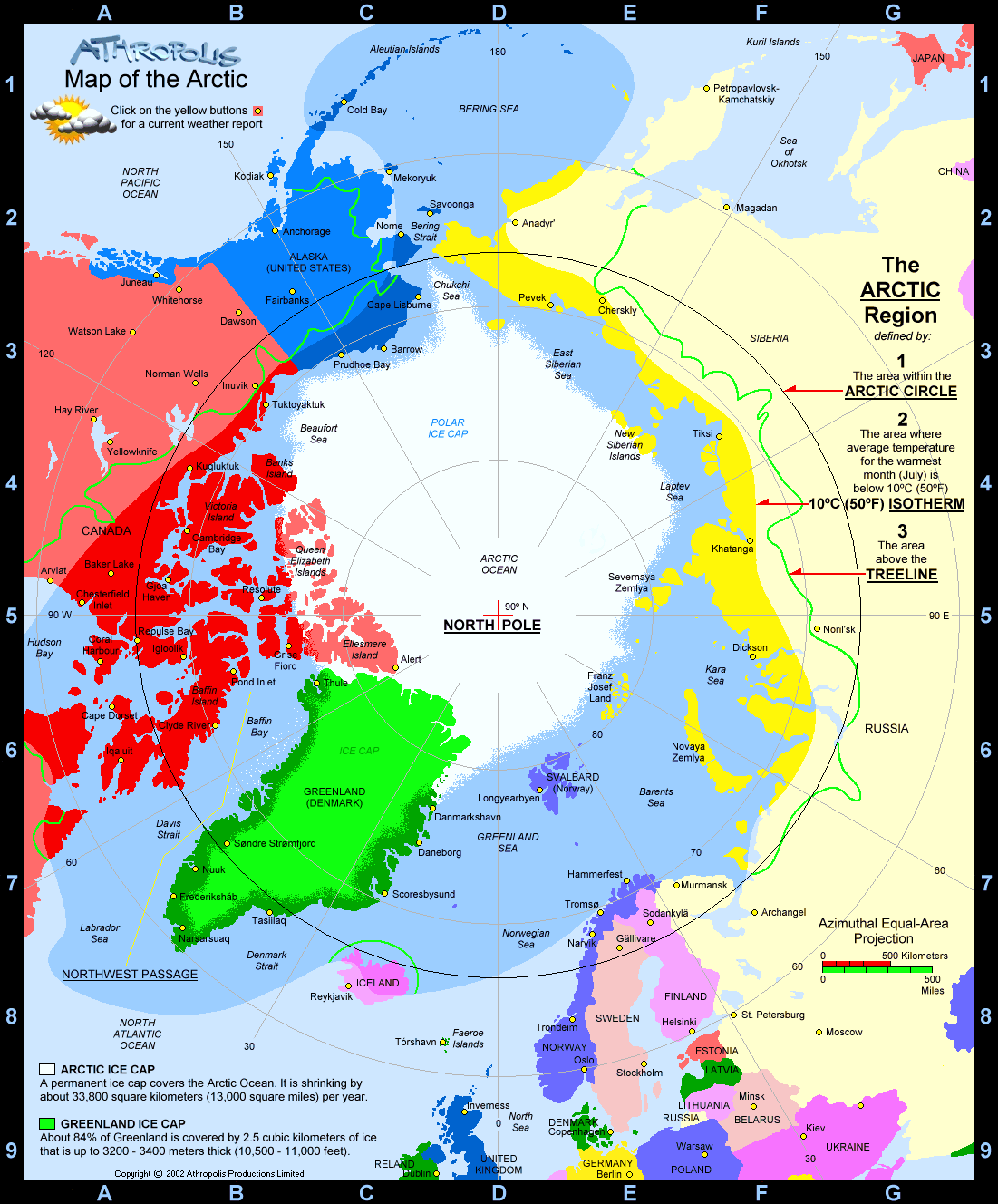
Israeli bill would elevate Judaism superior to democracy

0

An Israeli MP has submitted a controversial proposal to the legislature which could grant Jewish identity priority over democracy in rulings which pertain to issues of religion and state, and also requiring Jewish communities be set up in disputed areas.

Israeli politician MP Yariv Levin, of Netanyahu’s Likud party
drafted the proposed bill, which stated: “The land of Israel is
the historical birthplace of the Jewish people and the place of the
establishment of the State of Israel.”

It continued to grant legal status to the term “the land of
Israel”
and sole Jewish affinity to it for the first time,
saying that the right to realize national self-definition is
“unique to the Jewish people.”

The bill created a storm among opposition MPs on Monday, with Labor
MP Avishay Braverman labeling the proposal a ‘disaster.’

“When David Ben-Gurion founded this country it was on the basis
of two principles: Israel was to be a Jewish and a democratic
state. Now they are trying to annex Judea and Samaria and erode the
democratic state,”
he said in statement reported by local
press.

If adopted, the bill could potentially impact future court
decisions surrounding an Israeli presence in Judaea and Samaria.
The region’s status is a key contentious issue in the ongoing
Israeli-Palestine conflict.

One provision requires that the state build “Jewish
communities”
in its territories, allocating resources
specifically for the purpose. However, non-Jewish communities will
have to get approval granted for construction.

It also aims to downgrade the status of Arabic as an official
Israeli language, and would establish Hebrew as the sole official
language in the state, but allow the Knesset the ability to bestow
‘secondary language’ status on Arabic and English.

Despite this, Levin’s proposal has made some provision for other
communities within the country’s borders, stating that, “every
resident of Israel, regardless of religion or nationality, is
permitted to act to preserve his culture, heritage, language and
identity.”

Levin defended the proposal to Army radio on Monday, stating that
“It is not like there is currently a balance between a Jewish
state and a democratic state and we are coming along and disrupting
it. This balance has been grossly trampled on and we are here to
remedy this situation.”

He wrote in defense of the bill: “The proposed law emphasizes
the traditional and historical connection between the Jewish people
and the land of Israel and the national rights granted to it as
expressed in the Declaration of Independence.”

A former incarnation of the controversial bill was scrapped after a
Kadima party official, MP Dichter, attempted to introduce it in
November 2011.

Included in Dichter’s 2011 submission was the statement that Israel
is “the national home of the Jewish People, wherein the Jewish
People fulfills its aspiration for self-determination,”
causing
a similar outcry and leading opposition to claim that it would harm
Israel’s democratic nature, making its status as a nation-state,
“democratic in principle” superior to any status as a Jewish
and democratic state.

Since its first introduction, the Levy Report was published, which
drew the conclusion that Israel’s West Bank presence is not an
‘occupation.’ “According to international law, Israelis have a
legal right to settle all of Judea and Samaria,”
the report
concluded, going on to claim that the establishment of Jewish
settlements in the region is not illegal.

Other parties have been working on producing similar proposed laws,
but their proposals are much softer, according to Haaretz.

This article originally appeared on: RT

‘Britain ready to go it alone on Syria’

0

Hague: UK govt. ready to go it alone on arming terrorists in Syria

British Foreign Secretary William Hague in Brussels pushes for lifting arms embargo against rebels in Syria.

The British Foreign Secretary has hinted that the UK government was ready to go it alone as long as the issue of arming foreign-backed terrorists in Syria is concerned.

William Hague was speaking in Brussels ahead of a meeting of EU foreign ministers, where he did his best to persuade his counterparts of the need to lift restrictions on the supply of weapons to Syrian rebels.

He claimed that extremism in Syria could flourish if the European Union refused to ease an arms embargo preventing the supply of weapons to rebels and mercenaries fighting the popular government of President Bashar Assad.

Hague added that the current state of affairs could not be allowed to continue.

This comes as the EU arms embargo against Syria officially expires at the end of the month.

Hague used the opportunity to warn his counterparts that if the status quo continued and the EU failed to agree on united front then each country would be able to adopt its own approach, which means the UK government would continue supplying heavy weaponry to the terrorists in Syria in their attempt to topple the legitimate government of the crisis-hit country.

The UK and France have led calls for the embargo to be relaxed, but Hague acknowledged their position did not have universal support within Europe.

“There is a difference over what it’s appropriate now for the EU to do. In our view it’s important to show that we are prepared to amend our arms embargo so that the Assad regime gets a clear signal that it has to negotiate seriously”, he claimed.

“Therefore for us amending the embargo is part of supporting the diplomatic work to bring about the political solution”.

This is while that the government of President Bashar al Assad has been calling for talks with the real opposition parties of the country from the beginning of the conflict, but rejecting negotiations with foreign-backed terror groups who are seeking to undermine the resistance front in the Middle East region, therefore propping up the Zionist regime of Israel.

MOL/HE

This article originally appeared on: Press TV

EU divided on Syria arms embargo

0

British Foreign Secretary William Hague (L) and Belgium’s Foreign Minister Didier Reynders talk prior to the Foreign Affairs Council on May 27, 2013 at the EU Headquarters in Brussels.

The European Union has remained divided on whether to ease an embargo against Syria to arm militants fighting against the government of President Bashar al-Assad.

The EU foreign ministers met in Brussels on Monday to decide whether to supply weaponry to foreign-backed militants in Syria.

Britain and France want the sanctions maintained against the Syrian government, but eased for militants. However many EU nations are against sending more weapons into a conflict that began more than two years ago.

German Foreign Minister Guido Westerwelle said it was not clear if the ministers could reach a deal Monday as the Å“positions are far apart.”

The current arms embargo against Syria would end on Friday, and if the EU nations fail to reach a deal, each country can independently decide about arming militants in the Arab country.

Austria is among the nations against proving Syria militants with arms, saying the move would worsen the situation in the crisis-hit country.

Austria Foreign Minister Michael Spindelegger said the EU Å“just received the Nobel Peace Prize and to now go in the direction of intentionally getting involved in a conflict with weapon deliveries, I think that is wrong.”

Syria has been gripped by unrest for over two years, and many people, including large numbers of Syrian soldiers and security personnel, have been killed in the foreign-sponsored militancy.

President Assad said on May 18 that militants from 29 countries were fighting against the government in different parts of Syria.

SAB/SS

This article originally appeared on: Press TV

S Korea urges North's sincerity in talks

0

South Korean Foreign Minister Yun Byung-Se attends a press conference in Seoul on April 12, 2013.

South Korean Foreign Minister Yun Byung-Se says Pyongyang should first show signs of sincerity to resume six-party talks on nuclear disarmament.

“Our stance is that there should not be talks for the sake of talks and North Korea must show its sincerity to the international community by implementing its past denuclearization pledges,” Yun told reporters on Monday.

The remarks come in response to reports by Chinese media that North Korea is willing to resume talks over nuclear disarmament.

The six-party negotiations include Russia, China, the United States, Japan, South Korea and North Korea.

Washington and its allies in the region, Seoul and Tokyo, have questioned North Korea’s recent willingness to come back to the negotiating table, saying Pyongyang has no intention of giving up its nuclear weapons.

China has, however, expressed optimism about negotiations.

The Korean Peninsula has been locked in a cycle of escalating military rhetoric since March 1, when the US and South Korea began two months of joint military maneuvers, which included nuclear-capable B-52 and B-2 bombers.

Pyongyang has warned that if Washington and Seoul launch a preemptive attack, the conflict will develop into a nuclear war, adding that its military is prepared to attack “all US military bases in the Asia-Pacific region, including the US mainland, Hawaii, and Guam.”

JR/SS

This article originally appeared on: Press TV

Cops Evacuate Hotel After Pressure Cooker Found in Restroom

0

cbslocal.com
May 27, 2013

Police in Dearborn are trying to understand why a pressure cooker was left in the restroom of the Adoba Hotel, forcing the evacuation of guests until the early morning hours.

The evacuation also canceled Sunday night’s banquet of the University of Muslim Association of America.

Asgar Zaidi of Washington D.C. has been attending the organization’s conference for the past 11 years. He says it’s the first time it’s ever been held in Dearborn.

Read more

<!–

–>

This article was posted: Monday, May 27, 2013 at 11:57 am

Tags: ,


<!– this is where we need to show the related articles

–>

This article originally appeared on: Infowars

Children of 9/11 die fighting its war

0

Gregg Zoroya
USA Today
May 27, 2013

When the terrorists struck on 9/11, Barrett Austin was in Mrs. Spearman’s second-grade class here. Weeks later, he’d wear a Ninja costume with a red headband for Halloween.

Tristan Wade was a middle-school practical joker with an endearing crooked smile who told everyone he wanted to be in the Army like his dad, a military policeman stationed near Tacoma, Wash.

Zack Shannon was playing Army in a cul-de-sac where his family lived in Florida. He’d break his ankle later that fifth-grade year on a neighbor’s trampoline across the street.

[…] All three children – Barrett, 8, Tristan, 11, and Zack, 9 – would reach manhood as fighting churned on. Barrett’s desire to challenge himself, Tristan’s drive for excitement and Zack’s love of all things military would draw each on separate paths toward war.

Read full article

<!–

–>

This article was posted: Monday, May 27, 2013 at 11:52 am

Tags:


<!– this is where we need to show the related articles

–>

This article originally appeared on: Infowars

Billy Joel: Depression Over 9/11 Attacks Led Me to Multiple Car Crashes

0

Breitbart News
May 27, 2013

Billy Joel drew plenty of withering headlines after a series of car accidents roughly a decade ago. Now, the Piano Man is blaming the car crashes not on his issues with alcohol but the lingering effects of 9/11.

“I was kind of in a mental fog, and it had nothing to do with the booze,” he told The New York Times.

“My mind wasn’t right. I wasn’t focused. I went into a deep, deep depression after 9/11.

“9/11 just knocked the wind out of me, and I don’t know even now if I’ve recovered from it. It really, really hurt that man could do that to man.

<!–

–>

This article was posted: Monday, May 27, 2013 at 11:44 am

Tags:


<!– this is where we need to show the related articles

–>

This article originally appeared on: Infowars

9/11 Memorial visitors pressured to make donations

0

Susan Edelman and Kate Briquelet
New York Post
May 27, 2013

The 9/11 Memorial is free, it seems, in name only.

Those waiting in line to visit the reflecting pools are told: “Please have your donations out and ready.” While a sign says a $5 to $10 donation per person is “suggested,” those who don’t hand over cash are pressured.

When two Post reporters showed up for tickets without offering money, workers standing behind Plexiglas boxes stuffed with bills pressed them.

Read full article

<!–

–>

This article was posted: Monday, May 27, 2013 at 11:47 am

Tags:


<!– this is where we need to show the related articles

–>

This article originally appeared on: Infowars

Guantanamo an ideal recruitment tool for terrorists – UN human rights chief

0

UN human rights chief Navi Pillay has scolded the US for failing to close Guantanamo prison, warning it “has become an ideal recruitment tool for terrorists.” Pillay also cautioned that curtailing freedoms to fight terror will only worsen the problem.

Speaking at the opening of the spring session of the UN’s Human
Rights Council, Pillay accused the Obama administration of human
rights violations, pointing to the infamous Guantanamo Bay
detention center in Cuba as an “example of the struggle against
terrorism failing to uphold human rights, among them the right to a
fair trial,”
Reuters reports.

Follow RT’s
day-by-day timeline of the Gitmo hunger strike

A reported 103 inmates are participating in the ongoing hunger
strike at Guantanamo, 30 of whom are still being force-fed, Lt.
Col. Samuel House told RT. Force-feeding is an extremely invasive
and highly controversial practice, which many human rights
activists — and the UN — consider to torture.

According to Kuwaiti-born detainee Fayiz al-Kandari, the nasal
tubes used for force-feeding are large, painful and have hazardous
side effects: “It takes several attempts to get the tube into
the right place,”
his lawyer Carlos Warner told RT. “Once it
goes down his throat he has a difficult time breathing. There’s a
gag reflex.”

Feeding chair and internal nourishment preparation inside the Joint Medical Group where the detainees receive medical care, Naval Station Guantanamo Bay, Cuba, April 10, 2013. (Image from publicintelligence.net / photo By Army Sgt. Brian Godette)

Feeding chair and internal nourishment preparation inside the Joint Medical Group where the detainees receive medical care, Naval Station Guantanamo Bay, Cuba, April 10, 2013. (Image from publicintelligence.net / photo By Army Sgt. Brian Godette)

Witnesses have claimed that Guantanamo guards used sexual
assault as an interrogation technique to extract information from
Muslim inmates.

“The torture and information extraction methods that we used
certainly created a great deal of doubt and questions in my mind to
whether or not this was my America,”
Terry Holdbrooks, a former
guard at the camp said in an interview with RT.

There have also been incidents where guards used force
unprovoked against detainees. Ramzi Kassem, the lawyer for Moath al
Alawi, said that guards shot five rubber bullets at his client for
no discernible reason.

Many of the 166 detainees have been held for more than a decade
without charge, and their continued detention amounted to
“arbitrary detention in breach of international law,” Pillay
said, reiterating her earlier accusations against the Obama
administration.

“We must be clear about this: The United States is in clear
breach not just of its own commitments but also of international
laws and standards that it is obliged to uphold,”
she said in
April.

US President Barack Obama vowed to close Guantanamo in 2009, at the
outset of his first term in office. However, he was blocked from
fulfilling that promise by legislation passed by the US Congress.
However, in a speech on May 23 this year Obama indicated his
willingness to resume prisoner transfers from Guantanamo Bay, but
offered few details on the planned changes and when they would be
implemented.

In his speech, Obama urged lawmakers in Washington to enact his
proposals immediately: “I have tried to close GTMO. I
transferred 67 detainees to other countries before Congress imposed
restrictions to effectively prevent us from either transferring
detainees to other countries, or imprisoning them in the United
States. These restrictions make no sense.”

US President Barack Obama speaks about his administration's drone and counterterrorism policies, as well as the military prison at Guantanamo Bay, at the National Defense University in Washington, DC, May 23, 2013 (AFP Photo / Saul Loeb)

The military prison at Guantanamo Bay was opened by the
administration of former President George W. Bush following the
September 11, 2011, terror attacks in the US. It eventually emerged
that measures designed to tighten security at the prison led to
abuses of power and human rights violations.

Concerns about the effectiveness of current counter-terror policies
were raised in the past week after attacks against soldiers in
London and Paris — the London slaying of 25-year-old Lee Rigby by
two men was apparently in retaliation for UK military involvement
in Muslim countries.

UN human rights chief Pillay likewise warned against excessive
“counter-terrorist and counter-insurgency operations,”
saying that she had received allegations of “very grave
violations of human rights… Such practices are self-defeating.
Measures that violate human rights do not uproot terrorism, they
nurture it.”

Her statement comes amid mounting calls in both France and the UK
to toughen anti-terror measures following recent attacks in both
capitals. In London, an off-duty soldier was killed and beheaded by
two men, and an off-duty soldier in Paris was stabbed in a separate
attack. Pillay did not refer to either case in her remarks.

Following the Woolwich murder, debates over the bill widely
known as the ‘Snooper’s Charter’ has reappeared in the UK along
with calls for tighter controls on extremist groups.

UK Home Secretary Theresa May said on Sunday that it was
“essential” to grant intelligence agencies the capacity to
access communications and data collections by Internet service
providers, including details of individuals’ web browsing history,
social media messages and internet gaming, storing them all for 12
months, despite overwhelming opposition to the Draft Communications
Data Bill.

However, such practices implemented in the US failed to secure the
country from acts of terrorism.

Not only being ineffective, they also cost the US budget over $700
billion since 9/11. This, however, did not help to prevent the
Boston Marathon bombing.  

“I believe this was a massive failure of the surveillance state
that we’ve created in America,”
American lawyer Jesselyn Radack
told RT. “Since 9/11 we spent over $700 billion on national
security and a lot of that is surveillance with video cameras, with
massive data collection, with fusion centers, and none of those
helped to deter or detect any terrorist plot. And while the
surveillance video was useful in reconstructing what happened it
didn’t prevent it.”

This article originally appeared on: RT

Russian diamonds make it to Sotheby’s

0

Russia’s diamond company Alrosa will now sell its precious gems at Sotheby’s auctions. The two companies have signed a memorandum of cooperation, a statement released on Alrosa’s official web page on Monday says.

The auction house will also provide marketing support to Alrosa,
the report states.

Russian media in mid-March reported that the diamond company
planned to sign this document, when it came to light Alrosa had
held a trial sale and gained $500 thousand for two diamonds.

In early April an expert subcommittee of Russia’s State Precious
Metals and Gems Repository blocked the sale of a Russian diamond
weighing 47.48 carats at Sotheby’s. The Repository recognized the
stone to be unique and taking such gems outside Russia is banned by
law. Alrosa tried to appeal the ban, stating the gem it was
produced from was never recognized as unique but the Repository
declined the appeal.

Alrosa sells diamonds wholesale and retail. Before teaming up
with Sotheby’s the company sold the gems on their own or
participated in auctions. It also has a number of private customers
from the US, Belgium, Israel, Hong Kong and India.

This article originally appeared on: RT

Car bomb kills 6 injures 30 in Syria

0

[unable to retrieve full-text content]At least 6 people have been killed and 30 others injured after a car bomb exploded in the western Syrian city of Homs.

This article originally appeared on: Press TV

Car bomb kills 6 injures 30 in Syria

0

[unable to retrieve full-text content]At least 6 people have been killed and 30 others injured after a car bomb exploded in the western Syrian city of Homs.

This article originally appeared on: Press TV

Rep. Schiff’s Bill Would Repeal Authorization for Use of Military Force

0

A California congressman is preparing legislation to repeal the post-9/11 legislation that two presidents have relied on as justification for waging war in several countries simultaneously against persons or organizations believed to be involved in terrorist attacks or the planning of them. Rep. Adam Schiff (D-Calif.; pictured) told Spencer Ackerman of Wired that he plans to introduce a bill to “sunset” the Authorization for Use of Military Force (AUMF), passed by nearly unanimous votes in Congress on September 18, 2001, just one week after terrorists flew hijacked airplanes into the Twin Towers in New York and the Pentagon in Washington, D.C.

“The current AUMF is outdated and straining at the edges to justify the use of force outside the war theater,” Schiff told Wired magazine, an online journal on trends in technology. The publication also reports extensively on politics, especially on issues affecting electronic privacy. Both the Bush and Obama administrations have relied on the Joint Resolution as authority for “everything from the warrantless electronic surveillance of American citizens to drone strikes against al-Qaida offshoots that did not exist on 9/11,” Wired noted.

The resolution has also been interpreted to authorize the targeted killing of alleged terrorists, including U.S. citizens in foreign lands abroad who are actively engaged plotting terrorist attacks on the United States. In his speech at the National Defense University May 23, Obama said that to capture such individuals and put them on trial is not always feasible. He described as necessary the September 2011 killing by drone strike of the American-born Muslim cleric Anwar al-Awlaki, whom he identified as the chief of external operations for al-Qaeda on the Arabian Peninsula. Al-Awlaki helped oversee a plot to bomb two U.S-bound cargo planes in 2010 and was behind a foiled attempt to detonate explosives aboard a plane when it was landing in Detroit on Christmas Day, 2009, Obama said.

“I would have detained and prosecuted Awlaki if we captured him before he carried out a plot, but we couldn’t,” he claimed. “And as president, I would have been derelict in my duty had I not authorized the strike that took him out.”

In the same speech, the president said he would work with Congress in exploring options for “increased oversight” of targeted killings and to “refine and ultimately repeal” the AUMF. “Our systematic effort to dismantle terrorist organizations must continue,” he said. “But this war, like all wars, must end. That’s what history advises. That’s what our democracy demands.”

Previous efforts to repeal the AUMF have gone nowhere. Rep. Barbara Lee, another California Democrat, cast the only vote in Congress against the resolution at the time of its passage and has tried several times to repeal it. After Republicans won a majority of the House seats in the 2010 elections, Buck McKeon (R-Calif.), incoming chairman the Armed Services Committee, said it was time to revise the authorization. Noting that it grants authority for using military force against those responsible for the 9/11 attacks, McKeon argued that the administration lacked legal authority to combat al-Qaeda affiliates that have sprung up since then in places such as Yemen and East Africa. But the Obama administration at that time showed no interest in revisiting the authorization. The resolution, as passed, is “sufficient to address the existing threats I’ve seen,” Jeh Johnson, then the senior lawyer for the Department of Defense, told the committee at a March 2011 hearing.

Schiff said the end of the U.S. combat mission in Afghanistan, scheduled for the end of next year, might be a good time to repeal the AUMF, but he admits to having “only a less clear idea of what should follow.” The Afghan war was initiated in October of 2011, as the beginning of the war on terror, since the Taliban regime in Afghanistan was believed to be harboring al-Qaeda units and training camps. In 2010, Leon Panetta, then director of the CIA, said there were no more than 50 to 100 al-Qaeda left in Afghanistan. But the war on terror has also included U.S. aerial attacks in Pakistan, Yemen, and Somalia, and some members of Congress seem interested in expanding, rather than limiting, the president’s authority to wage war on other groups designated as terrorist organizations. An aide to the House Armed Services Committee said McKeon is not in tune with his California colleague on repeal.

“The chairman is far from convinced that’s the direction we need to go,” the spokesman told Wired. “We need to reaffirm our authority with respect to those [al-Qaeda-] affiliated groups.”

Obama said May 23 he will not sign any legislation expanding the AUMF mandate. But he also pledged that the United States will continue “a series of persistent, targeted efforts to dismantle specific networks of violent extremists that threaten America” in places such as Yemen, Somalia, and Mali. The president quoted James Madison’s warning that “No nation could preserve its freedom in the midst of continual warfare.” But when Assistant Secretary of Defense Michael Sheehanasked was asked at a recent Senate hearing how much longer the war on terror is likely to last, he replied: “At least 10 to 20 years.”

Given the 12 years since it started, that would add up to “at least” 22 to 32 years of continual warfare. There is no time limit in the Authorization for Use of Military Force, but nearly a quarter to a third of a century in a military campaign without a declaration of war by Congress might be stretching the constitutional authority of the commander-in-chief a bit. Even some of the Senate’s leading hawks in the war on terror have voiced concerns over the breadth, if not the duration, of the war-making authority administration officials claim the president has under the AUMF. John McCain (R-Ariz.) said at a recent Senate Armed Services Committee hearing that the authority “has grown way out of proportion and is no longer applicable to the conditions that prevailed, that motivated the United States Congress to pass the resolution in the authorization for the use of military force that we did in 2001.”

“For you to come here and say we don’t need to change it or revise or update it, I think is, well, disturbing,” he told the four senior military officials testifying before the committee. “I don’t blame you because basically you’ve got carte blanche as to what you are doing around the world.”

Sen. Lindsey Graham (R-S.C.) asked if the AUMF gives the president the authority to put “boots on the ground” in Yemen or the Congo.

“Yes, as long as the purpose was targeting a group associated with al Qaeda that intended to harm the United States or its coalition partners,” responded Robert Taylor, acting general counsel for the Department of Defense.

“This is the most astounding and disturbing hearing that I’ve been to since I’ve been here,” said freshman Sen. Angus King (I-Maine). “You guys have essentially rewritten the Constitution today.”

“The testimony I hear today suggests the administration believes that they would have the authority to go into Syria,” said Tim Kaine ( D-Va.), referring to the civil war between rebel forces and Syrian president Bashar Hafez al Assad. “But I don’t want us to walk out of the room leaving an impression that members of Congress also share the understanding that that would be acceptable.”

But would Congress assert its constitutional authority to prevent the president from taking the nation into another undeclared war? On that point the nation’s lawmakers appear to have, in Rep. Schiff’s words, “only a less clear idea.”

Photo of Rep. Adam Schiff: AP Images

This article originally appeared on: The New American

Rand Paul Bolsters Libertarian Bona Fides, Delays Decision on 2016

0

CNN, quoting The Independent, reports that Senator Rand Paul (R-Ky.) has made the decision to run in 2016 – for reelection to the Senate.

During a visit to Kentucky, Paul told reporters that his decision to seek a second term in the Senate was certain, adding that any decision on a presidential run would “come later.” Paul echoed these remarks in an interview with The New American, saying that the call on his presidential candidacy wouldn’t come before 2014.

In the meantime, however, Paul admitted to The New American that he would continue visiting primary states, feeling out the popularity among Republicans of his libertarian-leaning policy positions.

Earlier this month, Paul began the 2016 tour with an appearance at a Lincoln Day dinner in Cedar Rapids, Iowa.

Throwing substantial slabs of red meat to the GOP activists gathered to hear the senator, Paul took aim at an easy target: Secretary of State Hillary Clinton. Speaking of the Benghazi terrorist attack that resulted in the death of four Americans, Paul said, “First question to Hillary Clinton: Where in the hell were the Marines?” Paul’s pillorying of Clinton demonstrates an impressive political savvy. A new Quinnipiac poll shows Clinton leading Iowa voters by a narrow 46-42 percent margin.

Regarding a potential Clinton-Paul contest in 2016, Quinnipiac reports:

In general Sen. Paul appears to be the better GOP candidate at this point in Iowa. Part of the reason may be the publicity from his recent high-profile visit to the state, but more likely is that he begins with a solid base of support – the folks who voted for his father in the 2008 and 2012 caucuses.

First-in-the-nation primary state New Hampshire was the second stop on Paul’s tour to soften the beach for a White House invasion in 2016. As with Iowa, Paul can likely count on his father’s supporters in the Granite State as well. The senator seemed to recognize this, claiming, “We’ve had a lot of friends up here for years.”

CNN reckons that the friends referenced in that statement “are likely the libertarian minded activists who backed his father’s campaign for president – many of whom attended the fundraiser.” In 2012, Paul’s iconic father – Ron Paul – finished second behind eventual Republican nominee Mitt Romney in the GOP New Hampshire primary, garnering nearly 57,000 votes or 22.89 percent of the total votes cast.

While in New Hampshire, Paul repeated what amounts to his stump speech, calling out Hillary Clinton for failing to protect Americans during the terrorist attack on the U.S. mission post in Benghazi, Libya.

Paul’s appeal to constitutionalists consists of more than just hobnobbing with Republicans in critical presidential primary states.

On consecutive days, Paul introduced two very important bills calling for increased protection of fundamental civil liberties guaranteed by the Constitution.

On May 22, Paul introduced the Preserving Freedom from Unwarranted Surveillance Act of 2013. This measure protects an individual’s right to privacy against unwarranted drone surveillance.

A hot topic issue with many libertarians and constitutional conservatives, rapidly advancing drone technology is driving the construction of the surveillance state. These never-blinking eyes in the sky could be used by an autocratic executive to expose every aspect of the private lives of all Americans to government monitors.

Paul’s Preserving Freedom from Unwarranted Surveillance Act would reaffirm the right of Americans to be “to be secure in their persons, houses, papers, and effects, against unreasonable searches and seizures” as guaranteed by the Fourth Amendment.

“The use of drone surveillance may work on the battlefields overseas, but it isn’t well-suited for unrestrained use on the streets in the United States. Congress must be vigilant in providing oversight to the use of this technology and protection for rights of the American people. I will continue the fight to protect and uphold our Fourth Amendment,” Senator Paul said.

Paul continued his attempt to prevent federal government violations of the Fourth Amendment, introducing the Fourth Amendment Preservation and Protection Act of 2013. This bill would require government agencies to obtain specific warrants from a judge before snooping into the electronic communications of citizens.

“In today’s high-tech world, we must ensure that all forms of communication are protected. Yet government has eroded protecting the Fourth Amendment over the past few decades, especially when applied to electronic communications and third party providers,” Paul explained. “Congress has passed a variety of laws that decimate our Fourth Amendment protections. In effect, it means that Americans can only count on Fourth Amendment protections if they don’t use e-mail, cell phones, the Internet, credit cards, libraries, banks, or other forms of modern finance and communications.”

“Basic constitutional rights should not be invalidated by carrying out basic, day-to-day functions in a technologically advanced world and this bill will provide much needed clarity and reassert Fourth Amendment protections for records held by third parties,” he added.

Adding to his ever-lengthening constitutionalist and civil libertarian résumé, on May 24 Paul penned an op-ed in the Washington Times advocating an end to calls for an national ID, such as that proposed by the REAL ID Act. Paul wrote:

The controversial immigration-reform bill that passed the Senate Judiciary Committee this week is expected to be considered by the Senate in June. Many see measures contained in this bill, such as a strong E-Verify and a “photo tool,” as a means to control unlawful immigrants’ access to unlawful employment. I worry that they go too far.

I think there are better ideas that err on the side of individual privacy while still strengthening our borders. We should scrap a national identification database and pass immigration reform that secures the border, expands existing work-visa programs and prevents noncitizens from access to welfare. These simple ideas will eliminate the perceived need for an invasive worker-verification system and a government citizenship database.

I am against the idea that American citizens should be forced to carry around a National Identification Card as a condition of citizenship. I worry that the Senate is working to consider a series of little-noticed provisions in comprehensive immigration reform that may provide a pathway to a national ID card for all individuals present in the United States – citizens and noncitizens. These draconian ideas would simply give government too much power.

Forcing Americans to carry around an identification card to affirmatively prove citizenship offends our basic concept of freedom. Wanting to avoid a “papers please” culture in our country is also why conservatives oppose federal universal gun background checks. We oppose such measures not because we don’t believe in common-sense rules or regulation – but because we are wary of giving the federal government this kind of centralized power over our daily lives.

I am against government lists of those who own or have transferred a firearm for the same reason I oppose any pathway to a national ID. I don’t think that government should have the awesome power of monitoring the legal activities of American citizens. That is not a proper role of the federal government – or any level of government, for that matter.

Presidential aspirations aside, Rand Paul is bolstering his libertarian bona fides by blocking every effort by his colleagues in Congress to deprive Americans of their most basic civil rights as protected by the Constitution.

Finally, in an appearance on ABC’s This Week with George Stephanapolous, Senator Paul questioned President Obama’s moral authority to lead the nation in light of the trio of scandals rocking his administration: the IRS’ abuse of power in the targeting of conservative groups, the death of Americans in Benghazi while special forces in the area were told to stand down, and the wiretapping of Associated Press reporters by the Justice Department.

The “moral authority standard” for a president has been progressively lowered over the course of decades. By invoking that requirement, Senator Paul is setting the bar higher for all those who might make a run at the White House – including himself.

Photo of Sen. Rand Paul in New Hampshire: AP Images

Joe A. Wolverton, II, J.D. is a correspondent for The New American and travels frequently nationwide speaking on topics of nullification, the NDAA, and the surveillance state. He can be reached at
This email address is being protected from spambots. You need JavaScript enabled to view it.

This article originally appeared on: The New American

Obama DOJ Charges Aluminum Bucket In Leak Investigation

0

In an unusual but bold move, the Justice Department has targeted a random aluminum bucket suspected of leaking “several drops of water,” according to a boastful White House press release.

The Obama administration has prosecuted six suspected leakers using the 1917 Espionage Act – more than all prior administrations combined – but this is the first time that the administration has targeted a simple, lifeless bucket.

“Some of you might be wondering if we can even prosecute an inanimate object,” remarked Attorney General Eric H. Holder Jr. during a Monday press conference. “I assure you we can. We’ve got it all figured out in a secret legal memo that you aren’t allowed to read.”

“Our decision to prosecute this leaky bucket should come as no surprise,” said Holder. “This administration is widely regarded as diabolically paranoid and inane, and we intend to protect our legacy, regardless of the consequences. If you leak, we’re coming for you. It’s that simple.” Then the Attorney General gently stroked his mustache, closed his eyes, licked his lips and added, “Leaks that help Kathryn Bigelow produce war porno are still okay though. Give it up for Bigelow, everyone!”

In a letter to Holder, the bucket’s owner, Bill Dickerson, begged the Justice Department for leniency. “My bucket did nothing wrong,” Dickerson wrote to Holder. “It’s a bucket.”

Dickerson ended his letter with an impassioned plea. “Can you please give me my bucket back? I really need it. Thank you.”

The Internal Revenue Service responded to Dickerson’s letter, informing him that he would be audited sometime next week.

Experts said the scope of the investigation goes beyond the known scale of previous leak probes.

“This investigation is broader and less focused on an individual, since they’re focusing on an aluminum bucket, and not an individual,” said Steven Adler, a government secrecy expert. “Essentially this means anything that could potentially leak is now fair game: sprinkler systems, rowboats, juice boxes, everything. You think Eric Holder won’t subpoena your dirty diapers? You are naive.”

Senate Judiciary Committee Chairman Patrick J. Leahy (D-Vt.) said in a statement that he is “very troubled by these allegations” and wants to hear the government’s explanation. “Why only go after one bucket? There’s gotta be more than one leaky bucket that we can nail,” Leahy said. “I want to know more about this case, but on the face of it, I am concerned that the government just doesn’t take leaks seriously.”

Responsible news outlets and Internet blogs have largely ignored the investigation, although ThinkProgress was brave enough to report yesterday that the “Republican Mayor of Cabbage Patch, Iowa Said Something That Could Be Interpreted As Racist.”

Riley Waggaman is “America’s most trusted cub reporter,” according to Vanity Fair. He is not actually a “reporter,” and he no longer lives in America. But you can e-mail him anyway at: riley.waggaman@gmail.com

This article originally appeared on: Counterpunch

Cops Shut Down Music Video Debut in Houston

0

Infowars.com
May 27, 2013

Houston police shut down the public showing of a new music video by Kanye West at the Rothko Chapel on Friday night.

The rap superstar had announced the performance via Twitter and posted locations on his website, but when fans turned out in Houston they were threatened with arrest for trespassing, even though they were described as “upbeat” and “respectful.”

Police “pulled several cars onto the grass, flashed lights and sirens and demanded everyone leave or be arrested for trespassing. Folks slowly dispersed when it was clear this wasn’t part of the show,” the Houston Chronicle reported.

The West video is considered controversial due to its racially-charged content. It was also shut down at the Central Library in downtown Houston and the George Bush Monument.

Houston officialdom believe the shows are illegal because the promoters did not ask permission to project the video on public buildings and landmarks. The city, however, did not issue a formal statement on the police response to the event.

From The Guardian today:

While Houston police said the cancellations were due to issues of permits and public safety, some observers have wondered if the content of the song caused the authorities to intervene. As West rages against institutionalized racism in New Slaves, he has some special words for the prison-industrial complex, in which police play an important role. “The DEA teamed up with the CCA,” West raps. “They tryin’ to lock niggas up/ They tryin’ to make new slaves/ See that’s that privately owned prisons/ Get your piece today.”

<!–

–>

This article was posted: Monday, May 27, 2013 at 11:35 am

Tags:


<!– this is where we need to show the related articles

–>

This article originally appeared on: Infowars

This week in history: May 27-June 2

0


27 May 2013

This Week in History provides brief synopses of important historical events whose anniversaries fall this week.

25 Years Ago | 50 Years Ago | 75 Years Ago | 100 Years Ago

25 years ago: Reagan-Gorbachev summit in Moscow

 The fourth Reagan-Gorbachev summit opened in Moscow May 29, 1988. Ostensibly held to sign minor arms agreements and hold a ratification ceremony for the Intermediate-range Nuclear Forces (INF) Treaty, the summit was the venue of behind-the-scenes collaboration between the Stalinist bureaucracy, committed to Gorbachev’s perestroika policy, and US imperialism.

Rather than signifying the prospect of peace and the elimination of the threat of nuclear holocaust, the stage-managed display of congeniality between the two leaders was aimed at perpetrating a fraud against both Soviet and American workers. The US required the accession of Soviet leaders to its plans for military interventions including the Middle East as well as Panama, Central America and the Caribbean.

 At the same time, the Soviet Stalinist bureaucracy was preparing for the upcoming Party Conference in June to overcome any internal opposition to the Gorbachev policy of perestroika.

The Bulletin, newspaper of the Workers League (US) warned its readers of the true significance of the summit. It reported on June 3, “Reagan went to Moscow as the political representative of the plutocrats who rule the United States, the billionaires who exercise, for all the trappings of capitalist democracy, a ruthless class dictatorship based on their ownership and absolute power over the means of production.

“Gorbachev, for his part, represents, not the Soviet people or Soviet working class, but the Soviet Stalinist bureaucracy, the privileged layer of the party and state officials which usurped power from the working class after the 1917 October Revolution and destroyed the Bolshevik Party of Lenin and Trotsky.

“Now the Stalinist bureaucracy has gone even further, launching a frontal assault on the economic foundations of the degenerated workers’ state in the Soviet Union, and seeking to reestablish capitalism and transform itself into a new Soviet capitalist class.”

[top]

50 years ago: Struggle over racial segregation in US intensifies

This was an event-filled week in the fight against segregation and for racial equality in the United States, culminating in the infamous pledge by Alabama Governor George Wallace to “stand in the schoolhouse door” to block the desegregation of the University of Alabama.

On May 27, 1963 the US Supreme Court ruled unanimously that the city of Memphis, Tennessee, must desegregate its parks immediately after authorities had sought to impose various delays. “The basic guarantees of our Constitution are warrants for the here and now,” wrote Justice Arthur Goldberg in Watson v. City of Memphis, adding that in the absence of “an overwhelmingly compelling reason,” desegregation must begin immediately. A survey found that, nine years after the high court decision outlawing segregated public schools, of 2.5 million black public school children in the 11 southern states, a mere 12,217 attended schools with white children–less than one half of one percent.

Also on May 27, Attorney General Robert Kennedy met with representatives of theater associations that represented about 80 percent of all ticket sales in the South and implored them to commence desegregation of movie theaters. The next day, Pres. John Kennedy announced he was considering favoring legislation that would deny interstate commerce privileges to companies doing segregated business in the South. On May 31, the media reported that the Kennedy administration was now prepared to throw its weight behind a new civil rights bill.

In Jackson, Mississippi, on May 28, two black students and a white college professor were beaten by a crowd as they sat at the “white only” counter of a Woolworth’s pharmacy. One of the students was kicked repeatedly in his face while police stood by. On May 29, 19 were arrested in an anti-segregation protest in front of downtown Jackson stores. On May 31, Jackson police and Mississippi state troopers arrested about 600 demonstrating students, many of them grade school age, cramming city and county jails to capacity.

On May 30, authorities in Tallahassee, Florida, arrested 257 black youth in two separate anti-segregation demonstrations. In addition to the arrests, police fired tear gas on an evening protest march, dispersing 150 demonstrators.

On June 2, the segregationist Democratic governor of Alabama, George Wallace, was interviewed on CBS’ Meet the Press, where he promised to personally stand in the doorway to block the integration of the University of Alabama. Hundreds of New York police officers shut down the city blocks around the RCA building in Rockefeller Center, home of CBS studios, to protect Wallace from demonstrators.

[top]

75 years ago: Hitler declares desire to crush Czechoslovakia

On May 28, 1938 in a meeting in Berlin, German Chancellor Adolf Hitler told a secret gathering of German military and foreign policy officials that he was “utterly determined that Czechoslovakia should disappear from the map.” His remarks dispensed with the pretext offered by Nazi Germany publicly, that its aim in the conflict with Prague was solely to defend the oppressed minority of Sudeten Germans on the western fringe of the country.

Responding to the threat of a German invasion, Czechoslovakia had recently mobilized 180,000 army reserves. That, and the presumed threat of war with France and possibly Great Britain, had caused certain diplomats and members of the military brass to suggest that an invasion was not advisable. Hitler sought to convince the military that Germany must eliminate Czechoslovakia to prepare for world war. The dictator told his listeners that it was their responsibility to find a lasting solution to Germany’s geopolitical problems, which he summed up in the idea of “lebensraum”–or expansion to the east.

Hitler calculated that Czech defenses were not yet complete and that French and British rearmament plans lagged behind Germany. The rate of construction of Germany’s western fortifications would be rapidly increased. The combination of these such circumstances would, according to Hitler, provide the necessary framework for “a lightning march into Czechoslovakia.”

On May 30, a revised “Green Case” for the invasion of Czechoslovakia was presented to Hitler. The initial version had been deemed insufficiently aggressive. The preamble in the new version eschewed the ambiguous introduction of the original version–which had declared there were no immediate plans to invade Czechoslovakia–with an introduction whose intentions were very clear: “It is my unalterable decision to smash Czechoslovakia by military action in the near future.”

[top]

100 years ago: Stravinsky’s The Rite of Spring debuts in Paris

On May 29, 1913, The Rite of Spring, a ballet produced by famed Russian composer Igor Stravinsky, premiered at the Théâtre des Champs-Élysées in Paris. The revolutionary and avant-garde character of the piece, which experimented with meter, tonality, and rhythm, and was likely influenced by traditions of Russian folk music, led to major disturbances at the premiere, with musical traditionalists almost rioting.

The premiere was part of the Paris season of Sergei Diaghilev’s Ballets Russes company. Stravinsky had been recruited to the Ballets Russes by Diaghilev while still a largely unknown composer, and had rapidly achieved success with The Firebird in 1910, and Petrushka in 1911.

According to Stravinsky, the purpose of The Rite of Spring, subtitled “Pictures of Pagan Russia in Two parts” was to give expression to the “mystery and great surge of the creative power of Spring.” The piece is not a unified narrative, instead taking the form of a series of episodes centering around the theme of spring. Choreography for the piece was developed by Vaslav Nijinsky, also a famed dancer, while stage designs and costuming were devised by Nicholas Roerich, a prominent Russian artist and intellectual.

Parisian ballet audiences at the time were generally divided into two major groups, wealthy traditionalists, and younger bohemian elements anxious to rebel against stultifying conventions. Trouble began during the introduction of the ballet, with audience members heckling and making it impossible to hear the music. According to eyewitnesses, two factions in the crowd fought each other, but quickly focused their hostility on the orchestra, hurling objects at the musicians, who continued to play. Around 40 audience members were ejected from the crowd, and disturbances subsided as the ballet continued.

Two subsequent performances of the ballet a month later took place without incident, although an attitude of derision and hostility amongst a broad layer of critics to the work persisted. Stravinsky’s composition is considered highly influential in shaping the direction of classical music in the 20th century.

[top]


‘
];
var html = htmlArray.join(”);
var pCount = $(‘#content’).children(‘p’).length;
var position = Math.floor(pCount*0.1);
$(‘#content’).children(‘p’).eq(position).before(html);
$(‘#inline-appeal’).children(‘form’).children(‘.more-options’).children(‘a’).click(function() {
$(‘#inline-appeal’).children(‘.initially-hidden’).show();
$(this).parent().hide();
return false;
});
}
}

function appendBottomAppeal() {
if (!$(‘#content’).is(‘.width72,.category’)) {
var htmlArray = [
‘

‘
];
var html = htmlArray.join(”);
if ($(‘#article-tools’).length > 0) {
$(‘#article-tools’).before(html);
} else {
$(‘#content’).append(html);
}
$(‘#inline-appeal’).children(‘form’).children(‘.more-options’).children(‘a’).click(function() {
$(‘#inline-appeal’).children(‘.initially-hidden’).show();
$(this).parent().hide();
return false;
});
}
}
$(document).ready(function(){
appendInlineAppeal();
appendBottomAppeal();
});

This article originally appeared on: World Socialist Web Site

International Criminal Tribunal for the Former Yugoslavia: The 20th Anniversary of an Illegal Court

0

Twenty years ago, on 25 May 1993, the UN Security Council created the so-called International Criminal Tribunal for the former Yugoslavia (ICTY). (1) The UN Charter does not give either the Security Council or any other UN body the right to create international law courts, which means that the creation of the tribunal was unlawful. Those who established the ICTY were fully aware that they were acting unlawfully, but went ahead nevertheless.

It is often said: what is the use of discussing the legality of the tribunal now? Even if it was established in violation of international law, it served a «good cause». Really?

Officially, the ICTY was established to punish those responsible for serious violations of international humanitarian law during the armed conflict in former Yugoslavia. However, the outcome of twenty years of this court’s activities has been the destruction of the top political and military leadership of just one of the countries involved in the Yugoslavian conflict — the country that was the target of the aggression. The countries that started the war in Yugoslavia, meanwhile, received full and even pointedly triumphant vindication! There is good reason why those who established the tribunal, having included war crimes in the tribunal’s jurisdiction, «forgot» to also include crimes against peace. Otherwise the tribunal would have found it difficult to argue why it was prosecuting the victims of the war and acquitting those that had unleashed it.

From the outset of the ICTY, its activities were illegal… The Tribunal’s first order was the arrest of General Djordje Djukic, who was ill with cancer. They tried to wear him down, taking advantage of his seriously ill condition and the General died five months after his arrest. Hereafter, the list of the ICTY’s Serbian victims has grown continuously. Simo Drljaca was killed during the course of his arrest. Milan Kovacević died in the ICTY’s Detention Unit, having not received medical help. Slavko Dokmanović was killed in the ICTY’s Detention Unit (the official version of «suicide» does not stand up to scrutiny: there is every reason to classify his death as «murder»). Dragan Gagović was killed during the course of his arrest. Novica Janjić committed suicide trying to prevent his extradition to The Hague (it later turned out that the prosecution retracted the charge). Vlajko Stojiljković (Serbia’s former Minister of Internal Affairs) committed suicide trying to prevent his extradition to The Hague. Momir Talić died in the ICTY’s Detention Unit. Milan Babić (the former President of the Republic of Serbian Krajina) was killed in the ICTY’s Detention Unit (the official version of «suicide» does not stand up to scrutiny: there is every reason to classify his death as «murder»). Slobodan MiloÅ¡ević was killed in the ICTY’s Detention Unit (the official version of «death from natural causes» does not stand up to scrutiny: there is every reason to classify his death as «murder»). There is no other tribunal that is able to boast of such «achievements». In addition, only Serbians have died at the ICTY.

We will now look at the unlawfulness of the ICTY’s establishment in greater detail. On the day of this institution’s ignominious anniversary, it should once again be remembered that it exists outside of international law and its verdicts are illegitimate.

Firstly, the resolution on the creation of the ICTY makes no reference to any article of the UN Charter. The Security Council did not take advantage of the reference to Article 29 of the UN Charter provided by the UN Secretary General, since it was clearly inappropriate. (2) However, the UN Secretary General openly acknowledged at the beginning that the proper way to create an international tribunal was through the conclusion of an international agreement, but then declared that the creation of an international tribunal through the adoption of a Security Council resolution was also acceptable, since according to the Secretary General, the conclusion of an agreement would «take too long» (this argument is clearly unconvincing from the point of view of international law). Absolutely everybody knew that the only legitimate way to create an international tribunal was through the signing of an international agreement. The initial draft of the ICTY Statute was in fact prepared as the draft of an international agreement, and before this the draft of the ICTY Statute had been developed within the framework of the OSCE also in the form of a convention.

Secondly, certain member states of the Security Council (China and Brazil, for instance) immediately declared that there was no legal basis for the creation of an international criminal tribunal by the Security Council.

Thirdly, the Hague Tribunal itself tried to find legal justification, but was unable! Many believe that the ICTY has gathered together the world’s best judges. What nonsense! Many of them have never been judges in their lives before! Even the lawyers there are not the very highest ranking. For example, the court failed to justify what would seem to be an issue of vital importance to the court itself — the lawfulness of the ICTY’s creation. The matter was initially examined by the Trial Chamber. (3) The Tribunal examined the question of its own lawfulness independently and violated one of its own general principles of law Nemo iudex in sua causa («No man should be judge in his own case»). The Trial Chamber dismissed the case on the basis that the ICTY does not have the jurisdiction to examine the lawfulness of UN Security Council resolutions. However, in coming to this decision, the Trial Chamber stopped half way. If the Tribunal was unable, then who was? The answer is obvious: the UN has a principal judicial organ — the International Court of Justice of the UN. It is interesting that the former President of the International Court Gilbert Guillaume (France) observed that it would have been «difficult to imagine that the tribunal would have given a negative answer [regarding its lawfulness], effectively signing its own death sentence». Guillaume also noted that the most correct decision regarding the lawfulness of the ICTY’s creation would have been a request for the legal opinion of the International Court as the UN’s principal judicial organ as well as a body independent of the tribunal itself. However, this was obviously not done by the Trial Chamber.

The Appeals Chamber also came to a decision. It revoked the decision of the Trial Chamber and decided that it had the jurisdiction to look into the issue of the ICTY’s legality. The court rejected the argument that an international tribunal could only be established by international agreement, citing the Administrative Tribunal established by the UN General Assembly as an example. According to the judges, this meant that the Security Council, «having even more authority», could establish judicial bodies. However, this argument is unconvincing. Firstly, it is not about the General Assembly but the Security Council, where not all UN member states are represented, as with the General Assembly, but just fifteen. Secondly, the Administrative Tribunal is exclusively an internal organ of the UN and only has jurisdiction with respect to employees of this organisation. Thirdly, the jurisdiction of the Administrative Tribunal of the UN does not apply to criminal matters. Nobody is disputing the right of an international organisation to create internal organs for the regulation of legal matters concerning its employees; what is being disputed is the right of an international organisation to make decisions that fall outside the scope of its authority. According to Article 2 of the UN Charter, an organisation cannot interfere in the domestic jurisdiction of states: «Nothing contained in the present Charter shall authorise the United Nations to intervene in matters which are essentially within the domestic jurisdiction of any member states».

The creation of the ICTY violated the principles of national sovereignty — a fundamental principle of international law and, most notably, the UN itself. The Security Council created an organ and gave it jurisdiction that it did not possess itself: to try individuals — citizens of UN member states. Another argument by the Appeal Chamber of the ICTY was in reference to Article 41 of the UN Charter, which lists the measures the UN Security Council can take in cases of breach of the peace. The Chamber dismissed the defence’s argument that the article makes no mention of the creation of judicial organs on the grounds that «the measures listed are only examples». It is impossible to recognise such an explanation as satisfactory. The judges ignored the defence’s main argument — that the UN Security Council does not have judicial powers. The judicial organ of the UN is the International Court of Justice, but even that has moved beyond the scope of the UN Charter. It should be noted, however, that the Statute of the International Court of Justice is an integral part of the UN Charter, the formal distinction of these two international agreements providing non-UN member states with the opportunity to be a party to the Statute of the International Court of Justice and UN member states the opportunity to occupy a special position within the Court. This once again underlines the fact that as an executive body, the UN Security Council does not have any judicial powers. The International Court of Justice acts in compliance with a separate international agreement — the Statute of the International Court of Law. With the establishment of the ICTY and the ICTR (the International Criminal Tribunal for Rwanda), the UN Security Council gave these institutions judicial powers which it did not possess itself, thereby violating yet another general principle of law Nemo in alium potest transferre plus juris quam ipse habet («No one can transfer a greater right to another than he himself has»).

In other words, neither those who established the tribunal, nor the tribunal itself, has so far been able to find any legal basis to support the legality of creating the ICTY.

It is impossible to lightly brush aside the fact that the court has been established illegally. Established illegally, the Hague Tribunal cannot become a judicial body since it was created for purposes other than those officially stated. Twenty years’ development of international criminal justice has demonstrated this quite convincingly. Today, an international mechanism is being created for the destruction of progressive international law and the creation of a new and repressive international law. The ICTY adopted a series of resolutions which violate the regulations of international conventions currently in force and the rules of customary international law. This is no accident. A single judge would not take on that kind of responsibility. Here they make such decisions collectively, which gives clear evidence of the task before them. One of the ICTY’s main «services», and one which has also maintained its system of international «justice», is the removal of immunity for heads of state and governments. It is obvious that this objective was not decided by the judges on their own initiative.

In 2003, a UN Security Council Resolution was adopted ordering that the ICTY complete the examination of all cases by 2010. However, the Tribunal has not implemented this resolution. In fact, the president of the ICTY announced that the Tribunal refused to implement the resolution «until Radovan Karadžić and Ratko Mladić had been caught». The Tribunal has not yet come to a close.

The battle with the Hague Tribunal has led to a paradoxical result: another tribunal has now been established alongside the International Tribunal for the former Yugoslavia which is allegedly to become the ICTY’s successor. From 1 July 2013, the ICTY will hand over its authority to the so-called «Mechanism for International Criminal Tribunals». However, it will not be handing over all of its powers, only its authority on new appeals. All of the judicial proceedings already under way at the ICTY will continue. So instead of one tribunal, there is now going to be two in operation. Incidentally, both are headed by the American Theodor Meron, while the secretary of both is the Australian John Hocking. The chief judges of both are also the same (although to these have been added judges from Burkina Faso, Uganda and Kenya). Now nobody knows when the ICTY will be closed. The ICTY says it will be when the examination of all its cases come to an end.

While marking twenty years since the creation of the ICTY, there is one more fact that should be remembered. The UN Security Council resolution on the creation of the ICTY was adopted in 1993 based on a draft sponsored by the Russian Federation, among others. That was obviously a different Russia, and today Russia’s foreign policy has radically changed its attitude towards this court of law. In an acutely critical assessment of twenty ignominious years of the ICTY, today’s Russia will find additional reasons to actively oppose both the massacre of Serbian patriots who dared to challenge NATO’s hegemony and any attempts to violate international law.

Notes

(1) The resolution on the adoption of the ICTY was adopted at the 3175th meeting of the UN Security council which took place on 22 February 1993 and was authorised by UN Security Council Resolution 808. In compliance with this resolution, the UN Secretary General submitted a report containing a draft of the Tribunal’s Statute. The Tribunal was established on 25 May 1993 at the 3217th meeting of the UN Security Council through the adoption of Resolution 827. This resolution also approved the Tribunal’s Statute.

(2) Article 29 concerns the right to create subsidiary bodies only as needed for the fulfilment of the UN Security Council’s functions. It is perfectly clear that the prosecution of individuals is not part of the UN Security Council’s functions. At the same time, the failure to cite Article 29 was not replaced with a reference to any other article. The creation of an international tribunal which cites a chapter (Chapter VII) rather than an article is a good indicator of the UN Security Council’s lack of legal rationale for the adoption of the resolution.

(3) A request for the matter to be looked into was submitted by the defence team of the first man charged by the Tribunal, Duško Tadić.

This article originally appeared on: Global Research

Illinois Teacher in Hot Water After Informing Students of Fifth Amendment Rights

0

Susan Sarkauskas
Daily Herald
May 27, 2013

A Batavia High School teacher’s fans are rallying to support him as he faces possible discipline for advising students of their Constitutional rights before taking a school survey on their behavior.

They’ve been collecting signatures on an online petition, passing the word on Facebook, sending letters to the school board, and planning to speak at Tuesday’s school board meeting.

Students and parents have praised his ability to interest reluctant students in history and current affairs.

But John Dryden said he’s not the point. He wants people to focus on the issue he raised: Whether school officials considered that students could incriminate themselves with their answers to the survey that included questions about drug and alcohol use.

Read full article

<!–

–>

This article was posted: Monday, May 27, 2013 at 11:11 am

Tags: ,


<!– this is where we need to show the related articles

–>

This article originally appeared on: Infowars

WB Israel settlement grew in 2012

0

Newly released figures show Israel has confiscated 1,977 acres of the Palestinian lands in the occupied West Bank for its settlement activity during 2012.

The settlements, which cover an area roughly equal to 1,035 football (soccer) fields and twice as big as New York’s Central Park, were approved by Å“military order,” the Israeli daily Haaretz reported on Monday.

The report said most of the new settlements were located deep in the Palestinian-inhabited West Bank.

Israeli settlers establish the outposts after wandering into the Palestinian territory, squatting on the land, building houses, then claiming ownership of the area.

Activists slam Tel Aviv for quietly and persistently annexing more Palestinian lands while claiming to be committed to peace talks.

The presence and continued expansion of Israeli settlements in the occupied Palestine has created a major obstacle for the efforts made to establish peace in the Middle East.

Israel agreed to freeze settlement construction under the Roadmap for Peace plan in 2002. But it has failed to comply with that commitment despite repeated and widespread international condemnation.

More than half a million Israelis live in over 120 illegal settlements built since Israelâ„¢s occupation of the Palestinian territories of the West Bank and East al-Quds (Jerusalem) in 1967.

The UN and most countries regard the Israeli settlements as illegal because the territories were captured by Israel in the war of 1967 and are hence subject to the Geneva Conventions, which forbid construction on occupied lands.

PG/SS

This article originally appeared on: Press TV

The Extrajudicial Assassinations of American Citizens: Its Official and its “Legal”

0

United States Attorney General Eric Holder has informed Congress that four American citizens have been killed in Yemen and Pakistan by US drones since 2009.

It has been widely reported but rarely acknowledged in Washington that three US citizens – Samir Khan, Anwar al-Awlaki and his teenage son, Abdulrahman al-Awlaki – were executed in Yemen by missile-equipped drones in 2011. With Holder’s latest admission, however, a fourth American – Jude Kenan Mohammed – has also been officially named as another casualty in America’s continuing drone war.

“Since 2009, the United States, in the conduct of US counterterrorism operations against al-Qaeda and its associated forces outside of areas of active hostilities, has specifically targeted and killed one US citizen, Anwar al-Awlaki,” the letter reads in part. “The United States is further aware of three other US citizens who have been killed in such US counterterrorism operations over that same time period,” Holder said before naming the other victims.

“These individuals were not specifically targeted by the United States,” the attorney general wrote.

The news of the admission broke Wednesday afternoon when New York Times reporter Charlie Savage published the letter sent from Holder to congressional leaders in a clear attempt to counter critics who have challenged the White House for falling short of US President Barack Obama’s campaign plans of utmost transparency. Upon a growing number of executive branch scandals worsened by the Department of Justice’s recently disclosed investigation of Associated Press journalists, Holder wrote that coming clean is an effort to include the American public in a discussion all too often conducted in the shadows cast by the US intelligence community.

“The administration is determined to continue these extensive outreach efforts to communicate with the American people,” continued Holder. “To this end, the president has directed me to disclose certain information that until now has been properly classified. You and other members of your committee have on numerous occasions expressed a particular interest in the administration’s use of lethal force against US citizens. In light of this face, I am writing to disclose to you certain information about the number of US citizens who have been killed by US counterterrorism operations outside of areas of active hostilities.”

The letter, dated Wednesday, May 22, was addressed to Sen. Patrick Leahy (D-Vermont) and the Senate Judiciary Committee.

Drone strikes have become a signature counterterrorism tool used by the Obama administration and his predecessor, President George W. Bush, and have been attributed with killing roughly 5,000 persons abroad, according to Sen. Lindsey Graham (R-South Carolina). But under the covert and protective umbrella of the Central Intelligence Agency, little has been formally acknowledged from Washington as to the details of these strikes.

As part of the vaguely defined ‘War on Terror,’ the US has reportedly waged drone strikes outside of Afghanistan where the Taliban once harbored al-Qaeda. In recent years, those strikes have targeted towns in neighboring Pakistan, as well as Yemen, Somalia and perhaps elsewhere.

But despite growing criticism over escalating use of drones, the president and his office has remained adamant about defending the operations.

“It’s important for everybody to understand that this thing is kept on a very tight leash,” Obama said last January, adding that his administration does not conduct “a whole bunch of strikes willy-nilly.”

Others have argued quite the opposite, though, and have opposed these drone strikes over the lack of due process involved and the habit of accidently executing civilians in the strikes. When researchers at Stanford University and New York University published their ‘Living Under Drones’ report last September, they found that roughly 2 percent of drone casualties are of top militant leaders. The Pakistani Interior Minister has said that around 80 percent of drone deaths in his country were suffered by civilians.

Earlier this year, Sen. Rand Paul (R-Kentucky) led a marathon filibuster on the floor of Congress to oppose the CIA’s drone program and demand the administration explain to elected lawmakers why the use of unmanned aerial vehicles is warranted in executing suspects, often killing innocent civilians as a result.

Of particular concern, Paul said, was whether or not the Obama administration would use the 2011 Yemen strike as justification to kill American citizens within the US. For 13 hours, he demanded the White House respond.

“I rise today to begin to filibuster John Brennan’s nomination for the CIA,” Sen. Paul said. “I will speak until I can no longer speak. I will speak as long as it takes, until the alarm is sounded from coast to coast that our Constitution is important, that your rights to trial by jury are precious, that no American should be killed by a drone on American soil without first being charged with a crime, without first being found to be guilty by a court.”

One day after the filibuster, both Attorney General Holder and White House Press Secretary Jay Carney reached out to Sen. Paul to say the president lacks the authority to issue such a strike within the US. With this week’s letter, however, Holder admits that at least four Americans have met their demise due to US drones. He also explains why the administration felt justified in using UAVs to execute its own people.

“Al-Awlaki repeatedly made clear his intent to attack US persons and his hope that these attacks would take American lives,” wrote Holder. “Based on this information, high-level US government officials appropriately concluded that al-Awlaki posed a continuing and imminent threat of violent attack against the United States.”

Later, Holder says the decision to strike al-Awlaki was “not taken lightly” and was first put into plan in early 2010. Additionally, Holder said the plan was “subjected to exceptionally rigorous interagency legal review” and that Justice Department lawyers and attorneys for other agencies agreed that it was the appropriate action to take.

According to Holder, the senior al-Awlaki and Mr. Khan were killed in the same September 2011 drone strike in Yemen. The following month, 16-year-old Abdulrahman Anwar Al-Awlaki was killed in a strike in the same country. Mohammed, a North Carolina resident born in 1988, was killed by a drone likely in November 2011 within a tribal area of Pakistan. Mohammed was indicted by a federal grand jury in 2009 for conspiracy to provide material support to terrorists and conspiracy to murder, kidnap, maim and injure persons in a foreign country, and was considered armed and dangerous by the Federal Bureau of Investigation. Both Khan and the older al-Awlaki were suspected members of al-Qaeda and were affiliated with the group’s magazine, Inspire.

Last February, friends of Mohammad told a North Carolina newspaper that they believed he was dead.

“Farhan Mohammed says he heard in November that his friend was killed in a drone strike,” Raleigh’s WRAL News reported in 2012. “Jude Mohammad’s pregnant wife was hysterical about her husband’s death and called her mother-in-law in the Triangle to break the news, according to Sabra. The US government hasn’t confirmed Mohammad’s death, but the people who knew him in North Carolina say it’s probably true.”

Holder declined to explain why either Mohammad or the teenage al-Awlaki were killed. President Obama is expected to discuss America’s drone program at an address in Washington on Thursday.

This article originally appeared on: Global Research

Syria arrests Moroccan terrorist leader

0

[unable to retrieve full-text content]Syrian troops advancing in the strategic town of al-Qusayr have arrested the Moroccan leader of a terrorist group after he was injured.

This article originally appeared on: Press TV

Rand Paul: Obama Losing Moral Authority To Lead

0

Due process is not looking at “Flash Cards and a Power Point Presentation”

Steve Watson
Infowars.com
May 27, 2013

Kentucky Senator Rand Paul did not let up over the weekend in his public vilification of the Obama administration with regards to inaction over the scandals the president is facing.

Appearing on ABC’s This Week, Paul asserted that if Obama continues to skirt around the edges of the issues without taking any decisive action, he will lose any moral authority that he still has left as a leader.

“I don’t know whether people were targeted for conservative religious values or just conservative political values and sometimes there’s an overlap,” Paul said.

“I think we have to get to the bottom of this. I think the constellation of these three scandals ongoing really takes away from the president’s moral authority to lead the nation.”

“Nobody questions his legal authority, but I think he’s really losing the moral authority to lead this nation. And he really needs to put a stop to this. I don’t care whether you’re a Republican or Democrat, nobody likes to see the opposite party punishing you for your political beliefs.” the Senator added.

“The main woman from the IRS that’s involved has taken the Fifth Amendment,” Paul said.

“She’s no longer cooperating, so I have called for her suspension. The president did respond to that and he has suspended her. However, he’s still paying her, so I don’t want that to go on forever. I think there needs to be a speedy resolution on this, and I think the president is in danger of losing his moral authority to lead the nation if we don’t get to a resolution.”

The Senator suggested that someone should lose their job within the next month.

“Now he says he’s going to listen to his commissioner – new IRS commissioner – in 30 days. Well, the investigation’s been going on over a year now, so I would think it wouldn’t take very long. If he goes beyond 30 days and if no one is fired over this, I really think it’s going to be trouble for him trying to lead in the next four years.” Paul urged.

Shifting topics to the ongoing controversy over the use of armed drones, the Senator said that despite pledges last week by Obama to implement stricter rules on drone strikes, there are still gaping holes in the policy with regards to due process.

“A lot of what’s very important to myself and others is what the law says, and how you should approach this,” Paul said.

“For example, it’s not good enough for us that he’s not using a power. We want him to assert that he won’t. That he doesn’t have the power.”

“If you are conspiring to attack America and you are a traitor, I would try you for treason,” Paul said. “If you don’t come home for the trial, I would try you in absentia, and then the death penalty has repeatedly been used throughout our history for treason, but a judge looks at evidence.” Paul urged.

“And that’s something that separates us from the rest of the world, is that we adjudicate things by taking it to an independent body who is not politically motivated, or elected,” the Senator added.

Watch the full interview:

–––––––––––––––––––––-

Steve Watson is the London based writer and editor for Alex Jones’ Infowars.com, and Prisonplanet.com. He has a Masters Degree in International Relations from the School of Politics at The University of Nottingham, and a Bachelor Of Arts Degree in Literature and Creative Writing from Nottingham Trent University.

<!–

–>

This article was posted: Monday, May 27, 2013 at 10:45 am

Tags: ,


<!– this is where we need to show the related articles

–>

This article originally appeared on: Infowars

Cops Vow Revenge, “Eye for an Eye”

0

Rick Martin and Holly Yan
cnn.com
May 27, 2013

Grief over a Kentucky officer’s death is giving way to rage and anxiety as police believe someone set up a trap just to kill their colleague or another driver.

Bardstown Police Officer Jason Ellis was driving home from work around 2 a.m. Saturday when he noticed some debris on the road, Kentucky State Police Trooper Norman Chaffins told CNN.

When Ellis got out of his car to remove the debris, he was shot multiple times.

“It was an obvious ambush,” Chaffins said. “He never used his service weapon. It was holstered.”

Read more

<!–

–>

This article was posted: Monday, May 27, 2013 at 10:41 am

Tags:


<!– this is where we need to show the related articles

–>

This article originally appeared on: Infowars

Syrian Rebel Alliance Openly Threatens Ethnic Cleansing

0

A spokesman for the primary rebel alliance in Syria, known as the “Free Syrian Army,” threatened that opposition forces could start implementing a broad ethnic-cleansing program aimed at Shia Muslims and especially the Islamic Alawite sect to which dictator Bashar al-Assad belongs. As Obama administration-led Western powers and a coalition of Sunni Arab dictators continue to fuel the increasingly ruthless conflict, the rebel FSA spokesperson said in a TV interview that minority communities would be “wiped off the map” if the regime’s forces managed to capture the city of Al-Qusair.

The genocide announcement came shortly after Sen. Rand Paul (R-Ky.) blasted his Senate Foreign Relations Committee colleagues for voting to arm the rebels, many of whom openly fight under the banner of al-Qaeda. “This is an important moment,” Sen. Paul said about the vote. “You will be funding, today, the allies of al Qaeda.” While the U.S. government has been supporting the opposition since before open warfare began, Obama has ramped up that support to unprecedented levels. And now, a Senate committee has expressed its backing for arming groups that openly threaten to exterminate minorities.

According to a report in Bloomberg, rebel Free Syrian Army “Colonel” Abdel-Hamid Zakaria made the threat to exterminate minority-denomination Muslims in Syria during an interview from Turkey last week with Al-Arabiya television. “We don’t want this to happen, but it will be a reality imposed on everyone,” Zakaria said during the interview, referring to his alliance wiping certain minority communities off the map if regime forces succeeded in taking Al-Qusair. “It’s going to be an open, sectarian, bloody war to the end.”

The city in question, located in central Syria’s Homs province, is seen as crucial due to its strategic location along a major highway connecting the capital Damascus to the coast. It is considered extremely important by rebel forces, which rely on it to obtain weapons and supplies from neighboring Lebanon. For the regime, the city’s value is obvious as it continues to wage war on foreign-backed Islamists described by officials as “armed terrorist groups.”

Regime-run media outlet SANA reported that most of the city was captured last week, with troops loyal to Assad reportedly seizing vast weapons stockpiles and destroying tunnels used by rebel forces. Dozens of opposition fighters were reportedly killed in the battles. More than 20 members of the U.S. government-designated terror group Hezbollah, a Lebanese militia that has joined Assad in the effort to stop the rebels, were also killed, according to news reports.

Opposition spokesmen said the fight for Al-Qusair was ongoing, though everyone acknowledges that government troops had at least made very significant inroads in re-capturing the city. “The Syrian Coalition warns about the outcome of these distressing developments, which come as part of an organized and predetermined military campaign,” read a statement released by the Western-backed Syrian National Coalition, an opposition umbrella group dominated by the Muslim Brotherhood and other Islamist forces.

Despite the reported near victory of regime troops in Al-Qusair, it remains unclear whether the ethnic-cleansing plot outlined by the Free Syrian Army spokesman in the TV interview has been formally put into effect. As The New American has documented extensively, minority communities – especially Christians – have long been targeted by rebel forces throughout the ongoing war. However, if the brazen threat of extermination is officially implemented, the results will be unimaginable bloodshed and horror beyond even what has been witnessed so far, experts say.

Sunni Muslims, who dominate domestic rebel forces, make up a significant majority of the population in Syria, possibly as much as three-fourths or more of the 22 million people. Minority groups, however – Shiites, Christians, Jews, and others – represent an estimated 20 to 30 percent of Syrians. Members of virtually all minority communities have been targeted by one rebel group or another due, at least in part, to their perceived support of the secular regime, which largely protected minorities from Islamist violence despite Assad’s iron-fisted rule.     

It is not the first time that foreign-backed Sunni Islamist rebels have threatened to exterminate minorities in Syria. In fact, earlier this month, an opposition brigade commander ate a body organ from a dead government soldier in front of a video camera and promised to do the same with others, boasting about slaughtering – and eating – members of the Alawite community to which Assad belongs.

“I swear to God, soldiers of Bashar, you dogs – we will eat your heart and livers! Takbir! God is Great!” commander Khalid al-Hamad with the “Independent Omar al-Farouk Brigade” says in the video, words that he later defended in interviews with Western media outlets. “Oh my heroes of Baba Amr, you slaughter the Alawites and take their hearts out to eat them!” After the brief speech, the Sunni rebel took a bite out of the organ in a video that drew international condemnation.

The Free Syrian Army and other rebel groups promptly distanced themselves from the cannibal commander, saying cannibalism was against Syrian values. FSA spokesmen and the SNC called on the rebel leader to be held accountable, and human rights groups around the world said the video was yet more evidence of the exploding horror now being felt throughout much of Syria. Despite strongly worded statements against cannibalism issued by other rebel leaders, the monstrous video was hardly the first example of the barbaric sectarianism that has reared its head in the nation amid the ongoing conflict.

As The New American has been reporting virtually since the start of the war, the ethnic cleansing of Christians by rebel forces began quickly after open hostilities broke out. In April of last year, for example, multiple churches, aid organizations, and human rights groups reported that the Christian minority – estimated at about 10 percent of the population before the war started – was being massacred and driven from its homeland in growing numbers. 

At the time, the Syrian Orthodox Church, which represents over half of Syrian Christians, issued a statement saying revolutionary fighters had expelled some 50,000 Christians from the embattled city of Homs. That figure was estimated to account for about 90 percent of the Christian community in the city. Hundreds more Christians – including women and children – were slaughtered, according to charitable organizations operating in the area.

The Orthodox Church referred to the persecution as the “ongoing ethnic cleansing of Christians” by Muslim militants linked to al Qaeda. According to its report, the so-called “Brigade Faruq” was largely to blame, with Islamic extremists going door to door and forcing followers of Christ to leave without even collecting their belongings. Their property was then stolen by rebels as “war-booty from the Christians.”

Christians in Homs were reportedly told by rebels that if they did not leave immediately, they would be shot. Then, pictures of their brutalized dead bodies would be sent to the pro-Syrian-regime-change Al Jazeera – a media broadcaster controlled by the dictatorship ruling Qatar, which is arming and funding the rebels – with a message claiming that forces loyal to Assad had murdered them. It would hardly be the first time opposition fighters perpetrated atrocities and blamed the regime.

Aid agencies also documented the terror aimed at minorities, especially among the church. “Christians are being forced to flee the city to the safety of government-controlled areas,” noted a spokesman for the Christian relief agency Barnabas Fund, which reported that over 200 Christians had been murdered by insurgents at the time. “Muslim rebel fighters and their families are taking over their homes.”

Other reports noted that Christians were being kidnapped by rebels for use as human shields. “Some Christians who tried to escape a week ago were stopped from leaving by the rebels and were instead forced to go to a mosque to act as shields,” a Syrian priest from Hamidiya was quoted as saying by the U.K. Daily Telegraph. “They thought that, because Christians support Assad, the government would not attack them.”

According to reports from sources on the ground, Muslim militias also used churches to attack government forces. “Most of the time militiamen were using the churches and the Christians as shields to protect themselves from shelling,” explained regional director Issam Bishara with the Catholic Near East Welfare Association (CNEWA). “It is also important to mention that some icons inside the churches were damaged on purpose by the militias.”

Since then, the brutality has only gotten worse, and countless numbers of Christians have been forced to flee into neighboring countries to avoid the brutality and slaughter. The ancient Christian communities, which were protected by the secular Assad regime, feared genocide if the dictatorship were to eventually fall and be replaced by a Sunni Muslim theocracy – as rebels hope. Analysts said those concerns were well founded.

Such a development would also be in line with what has occurred in other nations where the U.S. government has intervened. In Iraq, for example, the ancient Christian communities were all but eradicated following the American-led, United Nations-approved military invasion and occupation. Many fled to Syria. Following the Obama administration-backed so-called “Arab Spring,” Christians are also under fire in Egypt, Libya, and other nations. President Obama’s unconstitutional war on Libya led to ethnic cleansing of blacks by U.S. government-backed “rebels” as well.

The U.S. and Russian governments are currently planning to host an international conference about the Syrian war in Geneva next month, and the Assad regime has agreed “in principle” to participate. Of course, the Obama administration and its allies, including European powers and ruthless Muslim dictators, have been bankrolling, arming, and training rebel forces for “regime change.” On the surface, Russian authorities have been publicly backing the Assad regime, supplying weapons and international support.  

While foreign powers continue to pour fuel on the already-blazing inferno raging in Syria, estimates suggest as many as 100,000 people have been killed. An estimated 1.5 million have already fled abroad. The number of tragedies and the ferocity of the human rights abuses, meanwhile, continue to soar, with innocent civilians paying the heaviest price.

Whether rebel forces will openly begin an ethnic cleansing program to eradicate non-Sunni Muslims, as threatened by the FSA spokesman last week, remains to be seen. However, it appears that minority communities in Syria are already the most vulnerable, and if rebel forces do eventually seize power, the future of Christians, Jews, Shias, and Alawites in Syria is uncertain at best.

Alex Newman, a foreign correspondent for The New American, is currently based in Europe. He can be reached at
This email address is being protected from spambots. You need JavaScript enabled to view it.
.

Photo of “Free Syrian Army” soldiers: AP Images

Related articles:

Obama-backed Syrian Rebels “Ethnic Cleansing” Christians

Syrian Christians Fear Genocide if al-Assad Falls to Muslim Extremists

Christian Massacres: A Result of U.S. Foreign Policy

Libyan Rebels Accused of “Ethnic Cleansing,” Black Genocide

Rand Paul: Senate Is Arming Al-Qaeda and Rushing to War in Syria

Syrian Rebels Fire on Civilian Protesters

Syrian Rebel Leader Filmed Eating Soldier’s Body Organs

Obama Plots Openly Arming Jihadist Rebels in Syria

Obama Unsure Who’s Behind Syrian Chemical Attacks – or Is He?

Top Syrian Rebel Group Merges With Al-Qaeda in Iraq

Obama Paves Way to Arm Muslim Brotherhood-linked Regime in Somalia

Obama-backed War Making Syria a Jihad Haven; Europe Threatened

Al-Qaeda & the West Back Syrian Rebels Against Assad

Obama-backed Egypt Forging “One Nation” With Sudan Terror Regime

U.S. Involvement in Syrian War Becoming More Apparent

Chemical Weapons Charge May Be Pretext to Put U.S. Troops in Syria

Reports: U.S. Personnel Arming and Training Syrian Rebels

Without Congress, Obama Deepens Overt U.S. Support for Syrian War

Most Arms Shipments to Syria Go to Jihadists

Should Pres. Obama be Detained for Violating the NDAA?

Without Asking Congress, Obama Puts U.S. Troops on Syria Border

Obama Deepens U.S. Support for Syrian Rebels with Secret Order

U.S. to Send Missiles, Troops to “Defend” Turkey From Syria

Obama Surrounds Syria with U.S. Troops; Regional War Nears

U.S.-funded Jihadist “Holy War” in Syria Seeks Sharia Dictatorship

After U.S. Uproar, Another Syrian “Civilian Massacre” Story Falls Apart

U.S.-backed Syrian Opposition Linked to Bilderberg, CFR, Goldman Sachs & George Soros

As War Propaganda Implodes, Calls for Syria Intervention Grow

Possible U.S. Involvement in Covert Warfare in Syria

Syria: From Valued Ally to “Vicious Enemy”

U.S. to Recognize One Syrian Rebel Group, Blacklist Another

Libya: Now What?

This article originally appeared on: The New American

UK archbishop praises British Muslims

0

The archbishop of Canterbury, Justin Welby (r), meets with the assistant secretary general of the Muslim Council of Britain, Sheikh Ibrahim Mogra.

The archbishop of Canterbury has lauded British Muslim bodies for their response to the recent murder of a soldier in a London street by two assailants.

Justin Welby referred to various religious communities in the UK, saying that they are in a good position of co-operation and mutual support.

“We have all been appalled by the brutal murder of Drummer Lee Rigby in Woolwich,” he said during a joint appearance in Leicester with Sheikh Ibrahim Mogra, the assistant secretary general of the Muslim Council of Britain.

The archbishop praised the way in which religious groups had reacted to the incident.

“I want to recognise the response of churches, mosques and other faith and civil society groups, as well as those of brave individuals who have done so much to bring our communities together at this time,” he said.

“The strong response of the Muslim Council of Britain and many other organisations has rightly emphasised that these acts have no place in Islam.”

Meanwhile, Mogra condemned the murder of Rigby as barbaric and called for all Britain’s communities to come together, adding that some Muslims were concerned about a backlash following the killing.

“But we hope that the police … will ensure law and order is maintained,” he said. “If we begin to cower and hide ourselves away we allow the terrorists to win.”

MOL/HE

This article originally appeared on: Press TV

Report on Syria — Nobel Peace Laureate Mairead Maguire: “The Syrian State is Under a Proxy War Led by Foreign Countries”

0

Report and Appeal to the International community to support a process of dialogue and reconciliation in Syria between its people and Syrian government and reject outside intervention and war.

BY Mairead Maguire, Nobel peace laureate. Spokesperson for Mussalaha International

Peace delegation to Lebanon/Syria   l-llth May, 2013,

After a 10 days visit to Lebanon and Syria, leading a 16 person delegation from 8 countries, invited by Mussalaha Reconciliation Movement, I have returned hopeful that peace is possible in Syria, if all outside interference is stopped and the Syrians are allowed to solve their own problems upholding  their right to  self-determination.

An appeal to end all violence and for Syrians to be left alone from outside interference was made by all those we met during our visit to Syria. We have tried to forward it to the International community in our Concluding Declaration(l).

During our visit we went to refugee camps, affected communities, met religious leaders, combatants, government representatives, opposition delegations and many others, perpetrators and victims, in Lebanon and Syria.

1. Visits to refugee camps:  In Lebanon we visited several refugee camps, hosted by Lebanese or Palestinian communities. One Woman said: “before this conflict started we were happy and had a good life (there is free education, free healthcare, subsidies for fuel,  in Syria ,) and now we live in poverty”. Her daughter and son-in-law (a pharmacist and engineer) standing on a cement floor in a Palestinian refugee camp, with not even a mattress, told us that this violence had erupted to everyone surprise’s and spread so quickly they were all still in shock, but when well armed, foreign fighters came to Homs, they took over their homes, raped their women, and killed young males who refused to join their ranks, so the people fled in terror. They said that these foreign fighters were from many countries like Libyans, Saudis, Tunisians, Chechens, Afghanis, Pakistanis, Emiratis, Lebanese, Jordanians, Turkish, Europeans, Australian, and these gangs are financed and trained by foreign governments. They attach suicide vests around peoples’ bodies and threaten to explode them if they don’t do what they are told. One refugee woman asked me ‘when can we go home’?  (To my great delighted a few days later in Damascus I met a woman working on a government programme which is helping refugees to return to Syria and over 200 have returned to date).

Religious and government leaders have called upon people not to flee Syria and it is to be hoped many will heed this call, as after seeing so many Syrian refugees living in tents and being exploited in so many ways, including sexually, I believe the best solution is the stability of Syria so its people feel safe enough to stay in Syria.  If refugees continue to flee Syria then surrounding countries could be destabilized, causing the domino effect and destabilizing the entire Middle East.

Many people have fled into camps in surrounding countries like Turkey, Jordan or Lebanon, all of whom are trying to manage the huge influx of Syrian refugees. Although the host countries are doing their best to cope they are overwhelmed by refugee numbers. (UNHCR’s official figure of refugees is one million).  Through our meetings we have been informed that Turkey invites Syrian refugees into the country and forbid them to go back home. It is documented that Syrian refugees in Turkey and Jordan are mistreated. Some young Syrian refugee girls are sold for forced marriage in Jordan.  From OHCHR reports we know that more than 4 million Syrians are displaced inside their own country, living in great need.

A representative from Red Cross, told us that there is freedom to do their work throughout Syria for all NGO and the Syrian Red crescent in co-ordination with the Ministry of Social affairs and under such dire circumstances, they are doing their best, providing services to as many people as possible. However there is a great shortage of funds for them to cope with this humanitarian tragedy of refugees and  internally displaced population.  The economic sanctions, as in Iraq,are causing great hardship to many people and all those whom we met called for them to be lifted. Our delegation called for the lifting of these illegal US-led sanctions that target the Syrian Population for purely political reasons in order to achieve regime change.

2- Hospitals: We visited the hospitals and saw many people injured by shootings, bombings, and armed attacks. A moderate Sunni Imam told me how he was abducted by jihadists, who tortured him, cut off his ear, tried to cut his throat, slicing his legs, and left him for dead. He said when he goes back to his mosque they will slaughter him. He told us “these men are foreign fighters, jihadists from foreign countries, well armed, well trained, with money, they are in our country to destroy it. They are not true Muslims but are religious extremist/fundamentalists terrorizing, abducting, killing our people”. The government spokesman also confirmed that they have in detention captured foreign fighters from 29 countries, including Chechens, Iraqis, and many others. The Ministry of Health showed us a documentary on the terrible killings by Jihadists and the terror caused by these foreigners with the killing of medics and destruction of medical infrastructure of the Syrian State which has made it difficult to answer the needs of the population.

3- Meeting with Opposition:  Our delegation participated in an open forum with many representatives of internal opposition’s parties.   One political opponent who was in prison 24 years under the Assad regime, and has been out for 11 years, wants political change with more than 20 other internal opposition components, but without outside interference and the use of violence. We met with ‘armed’ opposition people in a local community who said they had accepted the governments offer of amnesty and were working for a peaceful way forward. One man told me he had accepted money from Jihadists to fight but had been shocked by their cruelty and the way they treated fellow Syrian muslims considering them as not real Muslims.  He said foreign Jihadists wanted to take over Syria, not save it.

The 10th May a part of our delegation headed to Homs, invited by the opposition community of Al Waar city where displaced families from Baba Amro, Khalidiyeh and other rebel’s strongholds seek refuge. The Delegation saw all the conditions of this city and is studying a Pilot Project for Reconciliation and peaceful reintegration between this community and the surrounded non rebel communities (Shia and Alaouites) with whom 15 days ago an agreement of non belligerence has been signed through the auspices of Mussalaha.

4 —  Meeting with Officials: Our Delegation met, and spoke, at the Parliament, and also with the Governor, Prime Minister and 7 other Ministries. We were given details of the new Constitution and political reforms being put in place, and plans for elections in 2014. Government Ministers admitted that they had made mistakes in being slow to respond to legitimate demands for change from civil community but these were now being implemented. They told us when the conflict started it was peaceful for change but quickly turned into bloodshed when armed men killed many soldiers.

In the first days soldiers were unarmed but when people started asking for protection the government and military responded to defend the people and in self defence.

When we enquired from the Prime Minister regarding the allegation that the Syrian Government had used Sarin gas, he told us that as soon as news came from Aleppo that allegedly gas had been used, his government invited immediately the UN to come into investigate, but heard nothing from them. Most recently however, a UN investigator, High Commissioner Carla Del Ponte, has confirmed that it was rebels, not Syrian government, who used Sarin gas.  During meeting with Justice Minister, we requested that a list of 72 non-violent political dissidents currently detained be released. The justice Minister said after checking those listed were indeed non-violent political dissidents,  he would, in principal, agree to the release of these nonviolent detainees. He also informed us they they do not implement the death penalty and it is hoped that when things settle in Syria they will move to have the death penalty abolished.  We also asked the Justice Minister (an international lawyer) about Syrian Government’s Human rights abuses, namely the artillery shelling into no-go areas being held by jihadists and armed opposition. The Minister accepted those facts but alleged that the Government had a duty to clear these areas. We suggested there was a better way to deal with the problem than artillery shelling but he insisted that the government had responsibility to clear the areas of rebel forces and this was the way in which they were doing it

The Ministers and Governor said that President Assad was their President and has their support. There were many people we spoke to who expressed such sentiments.  However, some young people said they support the opposition but in order to protect the Unity of Syria from outside destruction, they will support the government and President Assad, until the election next year and then they will vote for the opposition. They said the Doha Coalition in Qatar does not represent them and that no one outside Syria has a right to remove President Assad but the Syrian people through the elections next year. The journalists in Syria are in great danger from the religious extremist/fundamentals,and during my visit to a television station a young journalist told me how his mother was killed by jihadists and he showed me his arm where he had been shot and almost killed.

5- Meeting with religious leaders: We attended in the Omayyad Mosque in Damascus a prayer gathering led by the Grand Mufti of the Syrian Arab Republic, Dr. Ahmad Badr Al-Din Hassoun and the Greek Catholic Patriarch Gregory III Laham with the delegate of Greek Orthodox Patriarch John X Yazigi, and clerics of all traditions. The Assembly prayed for the peace and unity of Syria and the non-interference of outsiders in their country. They stressed the conflict in Syria is not a religious conflict, as Muslims and Christians have always lived together in Syria, and they are,(in spite of living with suffering and violence much of which is not of their own making), unified in their wish to be a light of peace and reconciliation to the world. The Patriarch said that from the Mosque and Christian churches goes out a great movement of peace and reconciliation and asked both those inside and outside Syria, to reject all violence and support the people of Syria in this work of dialogue, reconciliation and peacemaking.

The Muslim and Christian Spiritual Leaders are very conscious if the religious extremist/fundamentalists gain momentum and control Syria, the future of those who are not supportive of fundamentalists like moderate Muslims, Christians, minorities, and other Syrians is in great danger. Indeed the Middle East could loose its precious pluralistic social fabric with the Christians, like in Iraq, being the first to flee the country. This would be a tragedy for all concerned in this multi-religious, multi-cultural secular Syria, once a light of peaceful conviviality in the Arab world.

AN OVERVIEW: 

Following many authorized reports in the mainstream Medias and our own evidences I can stress that the Syrian State and its population are under a proxy war led by foreign countries and directly financed and backed mainly by Qatar who has imposed its views on the Arab League. Turkey, a part of the Lebanese opposition and some of the Jordan authorities offer a safe haven to a diversity of jihadist groups, each with its own agenda, recruited from many countries. Bands of jihadists armed and financed from foreign countries invade Syria through Turkey, Jordan, and Lebanon porous frontiers in an effort to destabilize Syria. There are an estimated 50,000 foreign jihadist fighters terrorizing Syria. Those death squads are destroying systematically the Syrian State infrastructures (Electricity, Oil, Gas and water plants, High Tension Pylons, hospitals, schools, public buildings, cultural heritage sites and even religious sanctuaries). Moreover the country is submerged by snipers, bombers, agitators, bandits. They use aggression and Sharia rules and hijack the freedom and dignity of the Syrian population. They torture and kill those who refuse to join them. They have strange religious beliefs which make them feel comfortable even perpetrating the cruelest acts like killing and torture of their opponents. It is well documented that  many of those terrorists are permanently under stimulant like Captagon. The general lack of security unlashes the terrible phenomenon of abduction for ransoms or for political pressure. Thousands of innocents are missing, among them the two Bishops, Youhanna Ibrahim and Paul Yazigi, many priests and Imams.

UN and EU economic sanctions as well as a severe embargo are pushing Syria to the edge of social collapse. Unfortunately the international media network is ignoring those realities and is bent on demonizing, lying, destabilizing the country and fuelling more violence and contradiction.

In summary: the war in Syria is not as depicted a civil war but a proxy war with serious breaches of International laws and the Humanitarian International laws.. The protection of the foreign fighters  by some foreign countries among the most powerful gives them a kind of an unaccountability that pushes them with impunity to all kind of cruel deeds against innocent civilians. Even war conventions are not respected incurring in many war crimes and, even, crimes against Humanity.

CONCLUSION:

During our visit to Syria, our delegation was met with great kindness by everyone and I offer to each one who facilitated or hosted our Delegation my most sincere feelings of gratitude. We witnessed that the Syrian people have suffered very deeply and continue to do so. The entire population of 23 million people are under tremendous threat of continued infiltration by foreign terrorists. Many are still stunned by the horrors and suddenness of all this violence and worried their country will be attacked and divided by outside forces, and are all too aware that geopolitical forces are at work to destabilize Syria for political control, oil and resources. One Druze leader said ‘if westerns want our Oil — both Lebanon and Syria have oil reserves — let us negotiate for it, but do not destroy our country to take it’.    In Syria memories of next door Iraq’s destruction by US/UK/NATO forces are fresh in people’s minds, including in the minds of the one and a half million Iraqis who fled Iraqi’s conflict, including many Christians, and were given refuge in Syria by the Syrian Government.

The greatest hope we took was from Mussalaha, a non political movement from all sections of Syrian society, who have working teams throughout Syria and is proceeding through dialogue to building peace and reconciliation. Mussalaha mediates between armed gunmen and security forces, help get release of many people who have been abducted, and bring together all parties to the conflict for dialogue and practical solutions. It was this movement who hosted us, under the leadership of Mother Agnes-Mariam, Superior of Saint James’ Monastery, supported by the Patriarch Gregory III Laham, head of the Catholic Hierarchy of Syria.

This great civil community movement building a peace process and National Reconciliation from the ground up, will, if given space, time, and non-interference from outside, help bring Peace to Syria. They recognize that there must be an unconditional, all inclusive political solution, with compromises and they are confident this is happening at many levels of society and is the only way forward for Syrian peace.

I support this National Reconciliation process which, many Syrian believe, is the only way to bring Peace to SYRIA and the entire Middle East. I am myself committed to this peaceful process and hope that the International Community, the Religious and Political Leaders as well as any person of good will will help Syria to bypass violence and prejudice and anchor in a new era of Social peace and prosperity. This cradle of civilizations where Syria occupies the heart is an enormous spiritual heritage for humanity, let us strive to establish a non war zone and proclaim it an OASIS of Peace for the Human Family.

MAIREAD MAGUIRE

Nobel peace laureate.   www.peacepeople.com

Peace people, 224 Lisburn Road, Belfast. Bt9.

23.5.2013

This article originally appeared on: Global Research

From Iraq a Tragic Reminder to Prosecute the War Criminals

0

The dust in Iraq rolls down the long roads that are the desert’s fingers. It gets in your eyes and nose and throat; it swirls in markets and school playgrounds, consuming children kicking a ball; and it carries, according to Dr. Jawad Al-Ali, “the seeds of our death”.

An internationally respected cancer specialist at the Sadr Teaching Hospital in Basra, Dr. Ali told me that in 1999, and today his warning is irrefutable. “Before the Gulf war,” he said, “we had two or three cancer patients a month. Now we have 30 to 35 dying every month. Our studies indicate that 40 to 48 per cent of the population in this area will get cancer: in five years’ time to begin with, then long after. That’s almost half the population. Most of my own family have it, and we have no history of the disease. It is like Chernobyl here; the genetic effects are new to us; the mushrooms grow huge; even the grapes in my garden have mutated and can’t be eaten.”

Along the corridor, Dr. Ginan Ghalib Hassen, a paediatrician, kept a photo album of the children she was trying to save. Many had neuroplastoma. “Before the war, we saw only one case of this unusual tumour in two years,” she said. “Now we have many cases, mostly with no family history. I have studied what happened in Hiroshima. The sudden increase of such congenital malformations is the same.”

Among the doctors I interviewed, there was little doubt that depleted uranium shells used by the Americans and British in the Gulf War were the cause. A US military physicist assigned to clean up the Gulf War battlefield across the border in Kuwait said, “Each round fired by an A-10 Warhog attack aircraft carried over 4,500 grams of solid uranium. Well over 300 tons of DU was used. It was a form of nuclear warfare.”

Although the link with cancer is always difficult to prove absolutely, the Iraqi doctors argue that “the epidemic speaks for itself”. The British oncologist Karol Sikora, chief of the cancer programme of the World Health organisation (WHO) in the 1990s, wrote in the British Medical Journal: “Requested radiotherapy equipment, chemotherapy drugs and analgesics are consistently blocked by United States and British advisers [to the Iraq Sanctions Committee].” He told me, “We were specifically told [by the WHO] not to talk about the whole Iraq business. The WHO is not an organisation that likes to get involved in politics.”

Recently, Hans von Sponeck, the former assistant secretary general of the United Nations and senior UN humanitarian official in Iraq, wrote to me: “The US government sought to prevent WHO from surveying areas in southern Iraq where depleted uranium had been used and caused serious health and environmental dangers.”

Today, a WHO report, the result on a landmark study conducted jointly with the Iraqi Ministry of Health has been “delayed”. Covering 10,800 households, it contains “damning evidence”, says a ministry official and, according to one of its researchers, remains “top secret”. The report says that birth defects have risen to a “crisis” right across Iraqi society where DU and other toxic heavy metals were by the US and Britain. Fourteen years after he sounded the alarm, Dr. Jawad Al-Ali reports “phenomenal” multiple cancers in entire families.

Iraq is no longer news. Last week, the killing of 57 Iraqis in one day was a non-event compared with the murder of a British soldier in London. Yet the two atrocities are connected. Their emblem might be a lavish new movie of F. Scott Fitzgerald’s The Great Gatsby. Two of the main characters, as Fitzgerald wrote, “smashed up things and creatures and retreated back into their money or their vast carelessness … and let other people clean up the mess”.

The “mess” left by George Bush and Tony Blair in Iraq is a sectarian war, the bombs of 7/7 and now a man waving a bloody meat cleaver in Woolwich. Bush has retreated back into his Mickey Mouse “presidential library and museum” and Tony Blair into his jackdaw travels and his money.

Their “mess” is a crime of epic proportions, wrote Von Sponeck, referring to the Iraqi Ministry of Social Affairs’ estimate of 4.5 million children who have lost both parents. “This means a horrific 14 per cent of Iraq’s population are orphans,” he wrote. “An estimated one million families are headed by women, most of them widows”. Domestic violence and child abuse are rightly urgent issues in Britain; in Iraq the catastrophe ignited by Britain has brought violence and abuse into millions of homes.

In her book Dispatches from the Dark Side, Gareth Peirce, Britain’s greatest human rights lawyer, applies the rule of law to Blair, his propagandist Alastair Campbell and his colluding cabinet. For Blair, she wrote, “human beings presumed to hold [Islamist] views, were to be disabled by any means possible, and permanently… in Blair’s language a ‘virus’ to be ‘eliminated’ and requiring ‘a myriad of interventions [sic] deep into the affairs of other nations.’ ” The very concept of war was mutated to “our values versus theirs”. And yet, says Peirce, “the threads of emails, internal government communiques reveal no dissent”. For Foreign Secretary Jack Straw, sending innocent British citizens to Guantanamo was “the best way to meet our counter terrorism objective”.

These crimes, their iniquity on a par with Woolwich, await prosecution. But who will demand it? In the kabuki theatre of Westminster politics, the faraway violence of “our values” is of no interest. Do the rest of us also turn our backs?

For more information on John Pilger, please visit his website at www.johnpilger.com

This article originally appeared on: Global Research

$4 bn flew from Russia in April

0


As much as $3.5-4 billion flew from Russia in April 2013. The figure is, however, less than in March, the Finance Ministry said.

In March the Ministry said the total capital outflow from Russia
in 2013 could be more than $10 billion due to financial turmoil in
Cyprus.

“Any disturbance in Europe or in the developing world affects us
in the short term. And strictly speaking it was seen on market
fluctuations. So it is certain risks for us and for the banking
sector: the money froze and the risks have increased,” Russia’s
Deputy Finance Minister, Andrey Klepach said on Monday.

In mid-April the Ministry of Economic Development published a
number of predictions about the Russian economy in the coming
years. In particular, the forecast of capital outflow from Russia
in 2013 was raised to $30-35 billion.

This article originally appeared on: RT

Boy Scouts' Woes Continue With Assault by Atheists

0

On the heels of the news that they caved in to pressure from the homosexual lobby and will allow participation by boys who identify as “gay,” the Boy Scouts of America (BSA) are facing a new assault, this time from the nation’s organized atheists. On May 24 the Freedom From Religion Foundation (FFRF) fired a warning shot over the bow of the BSA concerning the group’s requirement that both participants and leaders express faith in God. The godless group applauded the BSA’s initial surrender to the demands of homosexual activists, but challenged the scouting organizatio on its decision to retain a policy that “bars atheist and freethinking members.”

The BSA’s stated policy concerning faith comes in the form of a declaration that the “recognition of God as the ruling and leading power in the universe and the grateful acknowledgment of His favors and blessings are necessary to the best type of citizenship.”

Claiming that one in three teens identifies as non-religious, the FFRF complained that “there’s a long trail of boys and leaders who have been kicked out [of the Boy Scouts] simply because they don’t believe in a God. They range from a six-year-old in suburban Chicago whose nonreligious father, Elliott Welsh, lost a suit against the BSA for violating the Civil Rights Act, to exemplary Eagle Scout Darrell Lambert, expelled from a Washington troop in a high-profile case.”

The FFRF claimed that the Boy Scout ranks “have always been full of nonbelievers,” and chided the BSA for lagging “20 years behind the Girl Scouts of America, which announced in 1993 that it would protect the freedom of conscience of all members.” The atheist complainers recalled that the Girl Scouts “adopted a resolution that any of its members may substitute another word or phrase for ‘God’ in its official pledge, a measure enacted to show ‘strength in diversity and that we are an inclusive organization.’ ”

Charging that “no one can grow into the best citizen who discriminates against the nonreligious,” the FFRF encouraged its members to hector the BSA with phone calls demanding that it cave in on its foundational conviction that connects faith in God with its mission of raising up boys into responsible men.

The FFRF was apparently riding the coattails of another atheist group, the Secular Coalition for America, which released its own statement affirming the Boy Scouts for their moral collapse, while criticizing them for retaining faith in God as a key value for participation in their ranks. Edwina Rogers, a spokesperson for the secular group, said she was pleased with the BSA’s cave-in on the issue of homosexuality, but considered it insufficient. “Discrimination is wrong – whether it’s directed at children or adults, atheists or the religious,” Rogers said.

She noted that the while the BSA is a private organization, it receives federal funding through the use of supplies, space, and equipment. “No organization that discriminates on the basis of religion or religious beliefs should receive federal support,” Rogers said, adding in a tone suggestive of ramped up legal pressure: “We look forward to a time when the Boy Scouts will be a completely inclusive organization that does not discriminate at all based on religious belief or sexual orientation.”

Meanwhile, homosexual activist groups reacted to the Boy Scouts’ announcement that they would open their doors to gay-identifying boys, while continuing their ban on homosexual Scout leaders. “They’re not on our good list yet,” said the Human Rights Campaign’s Paul Guequierre of the BSA’s partial policy change on gays, adding that “the new policy doesn’t go far enough. Parents and adults of good moral character, regardless of sexual orientation, should be able to volunteer their time to mentor the next generation of Americans.”

Zach Wahls of the pro-homosexual Scouts for Equality, said that his group would continue to pressure the Boy Scouts to allow homosexual adults access to vulnerable boys, while also looking for opportunities to target the Boy Scouts for discrimination against supposedly gay youth. “We’ll act as a watchdog,” Wahls warned. “If any gay youth feel they’re experiencing harassment or discrimination, we want to be there for them.”

Rich Ferraro of the Gay and Lesbian Alliance Against Defamation (GLAAD) said his group would continue to pressure corporate donors to stop giving to the Boy Scouts, and predicted that homosexual teens participating in the Boy Scouts would help to undermine the BSA’s remaining moral barriers to homosexuality. “The BSA now will have to look gay teens in the eye,” he said, “boys who’ve been involved in Scouting for years, and tell them they’re not going to be able to grow into adult leaders.”

Christian leaders and organizations continue to express their sorrow over the BSA’s decision to allow participation by boys who identify as homosexual. In a statement, the Assemblies of God denomination noted that a majority of scout groups throughout the nation “are sponsored by churches or other religious entities, which have as their foundation a belief in biblical teachings that identify homosexual behavior as outside of God’s plan for sexuality. While we agree that youths who experience confusion or same-sex attraction need to be welcomed, in our churches they are confronted with this biblical teaching and will be counseled and prayed with that God will help them to align their lives in conformity to that teaching. We agree with the BSA that we need to demonstrate compassion and welcome those who are struggling with sexuality issues, but not in a way that condones such behavior, which is what the new BSA policy does.”

As have many other Christian and conservative leaders, Randy Sharp of the American Family Association said that the decision made by a vote of 61 percent of the BSA’s voting leaders does not bode well for the future of the storied organization. “I think what we’re going to see in the next year or so is a mass exodus of adults and boys from the Boy Scouts of America program,” Sharp told OneNewsNow.com. “Some of the estimates that I’ve heard are up to 400,000 to 500,000 boys and adults will resign their positions with the Boy Scouts of America.”

Rob Schwarzwalder of the Family Research Council pointed out that such a mass exodus will not be based on a personal hatred or animosity toward people who identify as homosexuals. This isn’t about fear or homophobia, and this isn’t about bigotry,” he said. “This is about the moral values of our Judeo-Christian heritage, which teaches that the only appropriate sexually intimate activity that exists [is] between a man and a woman within marriage. That’s always been the affirmation of Scouts. It is no longer.”

David Cortman of Alliance Defending Freedom emphasized that “those promoting the agenda to change what the Boy Scouts have always been won’t rest until there is complete acceptance of any sexual preference for both leaders and members. With its decision the BSA has rejected its freedom to promote and practice the values that have served to shape our nation’s boys into leaders for the last century.”

Photo of statue of Boy Scout in front of the National Scouting Museum in Irving, Texas: AP Images

This article originally appeared on: The New American

Tajikistan bans YouTube over pres. video

0

Tajikistan has blocked the video sharing website, YouTube, reportedly over a video which shows Tajik President Emomali Rahmon dancing and singing in his sonâ„¢s wedding.

The ban was ordered by the governmentâ„¢s Communications Service, head of Tajikstanâ„¢s Association of Internet Service Providers, Asomiddin Atoyev, said on Saturday.

The Communications Service did not provide any explanation for the ban and the respective officials were not accessible for comment, Atoyev said.

Observers say the Tajik government has blocked YouTube over a video of the wedding of President Emomali Rakhmonâ„¢s son, Rustam, which features the president inebriated, singing and dancing.

Only one of Tajikistanâ„¢s six major internet service providers and one of six mobile operators have not complied with the order.

The video was wired on May 18, but the wedding took place in 2007.

The footage has been viewed by almost 60,000 people so far.

This is the third time in less than a year that Tajikistan has blocked YouTube.

The first ban was exercised following reports about the governmentâ„¢s unsuccessful military operation against a warlord in the eastern province of the Gorno-Badakhshan.

The second ban came after footages were uploaded showing opposition activists criticizing Rahmon.

About two million of Tajikistanâ„¢s population of eight million are internet user.

ASH/SS

This article originally appeared on: Press TV

UK mosque burns, anti-Islamists protest

0

Ben Brumfield
cnn.com
May 27, 2013

Fears were growing in Britain Monday of a surge in Islamophobia in the wake of the knifing death of a British soldier last week that his suspected attackers claimed was revenge for the deaths of Muslims worldwide.

Officers arrested two men in the town of Grimsby on England’s east coast on suspicion of arson after a mosque was set on fire, according to Humberside county police. No one was injured in the blaze.

The anti-Muslim English Defence League demonstrated in the town’s center the morning before the fire. It will launch another march Monday near the office of Prime Minister David Cameron.

Read more

<!–

–>

This article was posted: Monday, May 27, 2013 at 10:29 am

Tags: ,


<!– this is where we need to show the related articles

–>

This article originally appeared on: Infowars

Gharazi says will see election bid to end

0

Presidential candidate Mohammad Gharazi addresses a press conference in Tehran on May 27, 2013.

Presidential candidate Mohammad Gharazi has ruled out the possibility of stepping aside in favor of others, saying he will see the race to the end.

Addressing a press conference in Tehran on Monday, he said that many of his fellow Reformists have written to him asking for his withdrawal in favor of the other two Reformist candidates Hassan Rohani and Mohammad-Reza Aref.

Å“I said that I see no interest in stepping aside in favor of anybody and therefore wrote a letter to the Guardian Council and said that I will not withdraw in favor of anybody,” Gharazi added.

The candidate further stated that he would divide Tehran Province into six new small provinces to speed up its development if he is elected president.

The former Telecommunications Minister stressed that domestic production should be revived in all fields and the imports of goods should be stopped completely.

He emphasized that his administration will restore the value of the national currency and tackle inflation and unemployment, saying the country is currently in dire need of controlling inflation.

Å“We should think of settling the issue of inflation and establishing stability in society in order to resolve all problems in the country.”

He also says heâ„¢ll restore the national currencyâ„¢s value and tackle inflation and unemployment.

In addition to Gharazi, the other political figures approved by the Guardian Council are MP Gholam-Ali Haddad-Adel, former Foreign Minister Ali-Akbar Velayati, Supreme National Security Council Secretary Saeed Jalili, the director of the Strategic Research Center of the Expediency Council Hassan Rohani, Secretary of the Expediency Council Mohsen Rezaei, former First Vice President Mohammad-Reza Aref, and Tehran Mayor Mohammad-Baqer Qalibaf.

Iranians go to the polls in the countryâ„¢s 11th presidential election on June 14.

SF/HGH

This article originally appeared on: Press TV

Haddad-Adel stresses privatization

0

Iranian presidential candidate Gholam-Ali Haddad-Adel says the future administration should stop its monopoly over sectors deemed unnecessary.

The Iranian lawmaker said Monday that these sectors should be privatized and run by the people.

He added that the main task of his future administration will be Å“correct policy-making, directing, supervising, supporting, planning and building infrastructure.”

The Principlist candidate said that the future government should have a road map to act within the framework of Islamic beliefs and values.

In Iranâ„¢s June 14 election, Haddad-Adel will be competing against Secretary of Supreme National Security Council Saeed Jalili, former Foreign Minister Ali-Akbar Velayati, Secretary of Expediency Council Mohsen Rezaei, Tehran Mayor Mohammad-Baqer Qalibaf, President of the Strategic Research Center of the Expediency Council Hassan Rohani, former First Vice President Mohammad-Reza Aref, and former Telecommunications Minister Mohammad Gharazi.

The president of Iran is elected for a four-year term in a national election, and the Guardian Council vets the candidates.

AR/HGH

This article originally appeared on: Press TV

UN Human Rights Chief Slams US Over Gitmo, 'War on Terror'

0

Anti-terror policies implemented by the U.S. and governments around the world have grossly violated human rights, warned United Nations human rights chief Navi Pillay on Monday, warning that the U.S. government’s Guantanamo Bay detention center and international rendition and drone programs have done far more harm than good.

U.N. High Commissioner for Human Rights Navi Pillay (Reuters/Susana Vera) “Time and again, my Office has received allegations of very grave violations of human rights that have taken place in the context of counter-terrorist and counter-insurgency operations,” Pillay warned.

“Such practices are self-defeating. Measures that violate human rights do not uproot terrorism: they nurture it.”

In the speech, given at the opening of the spring session of the U.N.’s Human Rights Council, Pillay most explicitly slammed the U.S. for Guantanamo, in which 166 prisoners remain in indefinite detention without charge or trial.

“The United States’ failure to shut down the Guantanamo detention center has been an example of the struggle against terrorism failing to uphold human rights, among them the right to a fair trial,” Pillay stated.

166 detainees in Guantanamo continue to be held without charge or trial, while half have been cleared for transfer. Over 100 remain on a hunger strike that began over four months ago, garnering international attention for the prisoners’ plight.

Pillay continues:

The continuing indefinite detention of many of these individuals amounts to arbitrary detention, in breach of international law, and the injustice embodied in this detention center has become an ideal recruitment tool for terrorists. […]

I have repeatedly urged the Government of the United States of America to close Guantanamo Bay in compliance with its obligations under international human rights law.

Pillay did not stop there, however.

Many European states are complicit in the U.S.’s human rights abuses committed in name of the “war on terror,” Pillay warned–namely through the global kidnapping and rendition program spearheaded by the U.S.

Pillay pressed for a thorough investigation into all countries involved:

I am dismayed by the continuing failure of many European States to undertake public and independent investigations of past involvement in the U.S. renditions program, under which terrorist suspects were captured and delivered to interrogation centers without regard for due process. Some of them still languish in Guantanamo.

Pillay went on to condemn the use of armed drones for counter-terrorism purposes, calling drone strikes “profoundly disturbing” on the basis of human rights.

“The worrying lack of transparency regarding the use of drones has also contributed to a lack of clarity on the legal bases for drone strikes, as well as on safeguards to ensure compliance with the applicable international law,” Pillay said.

Pillay’s statements follow President Obama’s speech last week at the National Defense University in Washington, in which he promised to modify the U.S. drone program and take measures to close Guantanamo Bay.

The speech, however, was criticized as both “long overdue” and “not good enough” by rights groups.

_____________________________________________

This work is licensed under a Creative Commons Attribution-Share Alike 3.0 License

This article originally appeared on: Common Dreams

Chicago Students Erect Protest Garden for 'Uprooted' Schools

0

Hundreds of Chicago Public School students and their families are ringing in this Memorial Day holiday with a picnic protesting last week’s announcement of the largest mass school closures in United States history.

Students took part in three days of marches against school closures last week in Chicago’s West Side. (Photo: Sarah-ji) During the picnic, which takes place Monday afternoon in the city’s Millennium Park, protesters will erect a temporary garden of giant paper flowers each representing one of the condemned schools, “to show the rest of the city and the world what is at risk of being lost in the mass closures–what needs to be nurtured in order to grow and flourish instead of being uprooted,” they write in a statement announcing the demonstration.

“In Chicago,” they continue, “the fight against school actions and the fight against underresourced, overcrowded public schools are one and the same. This fight will not end with the unelected school board rubberstamping the Mayor’s policies.”

The “Every School Solidarity Picnic” follows last Wednesday’s Chicago Board of Education vote to close 49 elementary schools and one high school program and implement a “turnaround” at five additional elementary schools during which the entire staff will be replaced.

Ninety percent of the schools targeted for shut down are in the city’s minority and low-income neighborhoods, prompting many–including nine-year-old Chicago student Asean Johnson–to declare Mayor Rahm Emanuel’s education policy “racist.”

As Black Agenda Report executive editor Glen Ford writes, “It’s about further privatizing the public schools, destroying the union, and destabilizing neighborhoods full of people that the mayor and his big business cronies would, ultimately, like to expel from the city, entirely.”

Monday’s gathering will take place from 12:00 to 2 PM CDT.

_____________________

This work is licensed under a Creative Commons Attribution-Share Alike 3.0 License

This article originally appeared on: Common Dreams

Car bomb explosions kill 17 in Baghdad

0

[unable to retrieve full-text content]At least 17 people have been killed and dozens of others injured in car bomb attacks that targeted Shia districts of the Iraqi capital city of Baghdad.

This article originally appeared on: Press TV

‘Debates show capability of candidates’

0

Iranian Principlist candidate Saeed Jalili says Fridayâ„¢s live presidential debates could determine who has what it takes to run the country efficiently for the next four years.

The secretary of the Supreme National Security Council added that he welcomes presidential debates in the run up to the June 14 vote.

Å“Definitely, debates can play an important role in demonstrating the capabilities of candidates and I too welcome it,” Jalili said Monday.

He also said that he is serious about his candidacy and prefers to focus on it instead of the possibility of an alliance with other Principlist candidates.

Jalili said his campaign headquarters was busy planning his provincial visits and that he would soon tour the country.

Seven rivals are competing against Jalili in the upcoming election, including former Foreign Minister Ali-Akbar Velayati, lawmaker Gholam-Ali Haddad-Adel, Secretary of Expediency Council Mohsen Rezaei, Tehran Mayor Mohammad-Baqer Qalibaf, President of the Strategic Research Center of the Expediency Council Hassan Rohani, former First Vice President Mohammad-Reza Aref, and former Telecommunications Minister Mohammad Gharazi.

The president of Iran is elected for a four-year term in a national election, and the Guardian Council vets the candidates.

AR/HGH

This article originally appeared on: Press TV

Jalili vows devotion to Revolution ideals

0

Iranian presidential candidate Saeed Jalili says he will stick to the ideals of the 1979 Islamic Revolution in his foreign policy should he win the June 14 vote.

Å“The Islamic Republic of Iranâ„¢s foreign policy is based on the Islamic Revolution discourse. It has its own values, principles, objectives and interests defined within the framework of a paradigm,” Jalili said in a question/answer speech on Monday.

Å“Every other country has defined its own foreign policy similarly. The common points between these paradigms give rise to opportunities and subsequently points of interaction. The points of difference give rise to confrontation and threats,” he added.

Jalili, who is currently Iranâ„¢s chief nuclear negotiator, noted that popular potentials need to be exhausted for empowering the country.

Å“Based on my estimates of the country, including hardware and software potentials and particularly the peopleâ„¢s potentials, I believe that these potentials can empower the country if they serve the country the best,” he stated.

Å“This objective will not be realized without the peopleâ„¢s contribution. We should keep in mind that we need to use popular potentials to follow up on this objective,” added Jalili.

Jalili is facing seven rivals in the upcoming election including former Foreign Minister Ali Akbar Velayati, lawmaker Gholam-Ali Haddad-Adel, Secretary of Expediency Council Mohsen Rezaei, Tehran Mayor Mohammad-Baqer Qalibaf, President of the Strategic Research Center of the Expediency Council Hassan Rohani, former First Vice President Mohammad-Reza Aref, and former Telecommunications Minister Mohammad Gharazi.

The president of Iran is elected for a four-year term in a national election, and the Guardian Council vets the candidates.

KA/HGH

This article originally appeared on: Press TV

Undercover FBI agent ‘lured’ Tunisian student allegedly linked to foiled terror plot

0

Allan Woods
thestar.com
May 27, 2013

Supporters of Ahmed Abassi, a Tunisian man allegedly linked to a foiled Canadian terror plot, say an undercover FBI agent posing as an Egyptian businessman provided money, advice and the promise of a job if Abassi would come to the United States.

U.S. court documents have already revealed that an undercover agent played a crucial role in the arrest of Abassi, a 26-year-old student at Quebec’s Laval University.

Abassi was allegedly in regular contact with the agent, who secretly recorded them discussing a plot to attack a Via Rail passenger train; to cause the death of “up to 100,000 people” by contaminating the air or water; to provide financial support and weapons to anti-government fighters in Syria, and how to recruit other terrorists in North America.

Read more

<!–

–>

This article was posted: Monday, May 27, 2013 at 10:08 am

Tags: , ,


<!– this is where we need to show the related articles

–>

This article originally appeared on: Infowars

Obama’s Militarism-Imperialism Lite

0

A tissue of lies? No, the whole Kleenex box-one tissue interleaved with all the others. Obama is fortunate to be presiding over a country steeped in false consciousness on essentials (war, sacrifice of the social safety net for the glories of militarism, and what psychoanalysts once called–T.W. Adorno’s Authoritarian Personality, 1950–authoritarian submission, a political-cultural disposition to strong leadership reinforced by appeals to patriotism and pressures toward conformity), as opposed to the major-parties’ bickering about how best to strengthen US imperialism. His May 23rd Address therefore fell on receptive national ears, a desperate will to believe that immorality is moral, illegality, legal, and war, the necessary defense of Homeland in its centuries’-old quest for peace, honor, the rule of law.

How comforting! Liberals and progressives especially have taken heart in POTUS’s rhetoric that a new day in American foreign policy is dawning–has already dawned, by the simple fact of self-declaration that the United States (Exceptionalism, as usual) is always bound by the constraints of the rule of law and, here, international law. We wrote the book, and cannot possibly do wrong; selfless in serving first as the example, and then, the guardian, in bringing justice to the world. All else is enemy propaganda. With that as background (and a solid phalanx of flags as his backdrop) Obama spoke with becoming assurance–to me, arrogance–as the leader of the Enlightened World in its struggle against the forces of ignorance, darkness, covetousness, wholly oblivious to America’s moral sense and good intentions.

Such a masterful speech (as judged by the New York Times and mainstream media opinion) deserves a closer look–but not too close, lest the luster wear off. Kudos to his stable of speechwriters, at least one in a high national-security position, for not even Obama on his own could reach the heights of personal humility and historical awareness found here, the latter, e.g., at the start, when he says, “For over two centuries, the United States has been bound together by founding documents that defined who we are as Americans [italics mine, a recurrent phrase of morally-presumed self-congratulation as a nation], and served as our compass through every type of change.” The constancy of Constitutional guarantees and principles, such as–each with my implicit question mark behind it— due process of law, transparency in government, and the divulged reasoning for going to war. Armed drones for targeted assassination alone suggests the “founding documents” have been lost. Yet Obama persists. Through thick and thin (“we know that a price must be paid for freedom”), he provides the feel-good promise, that of ultimate victory–victory, each time, in the sequential process of further wars (the Obama-Brennan doctrine of permanent war): “But our commitment to Constitutional principles has weathered every war, and every war has come to an end.”

Then early on, he immediately swings into the theme of a halcyon period murderously shattered by the most sinister foces imaginable (far worse than Joe McCarthy conjured up with heathenish Communism): “With the collapse of the Berlin Wall, a new dawn of democracy took hold abroad, and a decade of peace and prosperity arrived at home. For a moment, it seemed the 21st century would be a tranquil time. Then, on September 11th 2001, we were shaken out of complacency. Thousands were taken from us, as clouds of fire, metal and ash descended upon a sun-filled morning. This was a different kind of war. No armies came to our shores, and our military was not the principal target. Instead, a group of terrorists came to kill as many civilians as they could.” (Italics, mine) The die is cast, war is justifiable, a just war, against an implacable enemy, must be fought.

Who could resist such persuasiveness? Except of course someone who wishes to do harm to America, gradually enlarged to include domestic critics of Administration policy in the conduct of the war, thence expanded to dissidents of every stripe–although no action against them need be taken for now, given their relative scarcity and harmlessness–the climate of fear generated by means of counterterrorism being enough to bring the people into line. And so, Obama could step forward smartly, a unified (cowed?) citizenry behind him, eager to hear of their own and the nation’s moral virtue. America “strengthened our defenses–hardening targets, tightening transportation security, and giving law enforcement new tools to prevent terror.” We may have overstepped (here, the proper humility, although his frank admissions never lead to, and still do not, a change of course, making them more a political tactic than the soul-searching of which, given the record of assassinations, he is manifestly incapable): “Most of these changes were sound. Some caused inconvenience. But some, like expanded surveillance, raised difficult questions about the balance we strike between our interests in security and our values of privacy. And in some cases, I believe we compromised our basic values–by using torture to interrogate our enemies, and detaining individuals in a way that ran counter to the rule of law.”

The very abuses for which Obama must be held accountable, yet, now stated, to be pushed aside in the prosecution of the supposedly just war (Brennan in particular gave currency to the just-war position in the inner circle–anything goes being its succinct definition, in light of the hellish nature of the enemy). So, notwithstanding “expanded surveillance,” etc., it is time for boastfulness, laying the basis for the new-new departure, following those herein taken: “After I took office, we stepped up the war against al Qaeda, but also sought to change its course. We relentlessly targeted al Qaeda’s leadership. We ended the war in Iraq, and brought nearly 150,000 troops home. We pursued new strategies in Afghanistan, and increased our training of Afghan forces. We unequivocally banned torture, affirmed our commitment to civilian courts, worked to align our policies with the rule of law, and expanded our consultations with Congress.” This last sentence requires the whole box of Kleenex, multiple tissues (of lies), even consultations with Congress so one-sided as to make the relevant committees seem like beggars at the gates.

Indeed, it requires chutzpah to declare: Our alliances are strong, and so is our standing in the world.” Which is why we need vast concrete fortresses (aka, embassies) staffed by CIA operatives and private contractors, and the increased use–the new-new in process of formation and deployment–of Special Ops and paramilitary forces in general, all because we are so loved and admired in the world. Obama must be standing in a parallel universe, to believe in the US’s “standing in the world.” Then, his little tick or rhetorical giveaway—“Now make no mistake”–which is designed to make us perk up our ears and, in gratitude, hunker down for the message from on high: Despite routing al Qaeda and killing bin Laden, and making America “safer because of our efforts,” he continues in admonitory voice, “our nation is still threatened by terrorists.” That warning drives the last nail in the coffin for any hope the US will alter its conduct in the world, break the vicious cycle of a perpetual-war mindset, awaken to the jurisprudential requirements of respect for law, international as well as national; terrorism becomes the Communist Menace of yore, in presumably flowing robes, out of instinctive recognition that American capitalism both thrives on “enemies,” and cannot do without them, to ensure its uncritical acceptance (and its freedom to act with impunity, however abusive) at home, and also thrives on the seemingly economic benefits of a permanent-war mode of stimulation (even though, as now, productive of unemployment and underconsumption, compared with directing the social surplus inward and an equitable distribution of wealth).

At times one feels the identity of the “enemies” is immaterial, just that they be there to keep the people in line, and the dominant structure of power intact. In this regard, Obama is helpful, his speech tossing in all manner of terrorists, from the Right, from the Left, from the individual run amuck–it doesn’t matter, just let America always be on guard. For America to operate as it has, as it wants, as it strives to continue, with hegemonic “responsibilities” always in view, and a domestic class system which preserves the prerogatives and powers of wealth, terrorism must hang like a thick pall over the mental landscape. Otherwise, we may see what our Leaders, Generals, Bankers, Industrialists, and others fortunate to join the ranks of the ruling elite, are doing, and often doing in our name–transparency be damned.

To hang on Obama’s every word, in the hope that he understands the misery, privation, and death he has caused, or to be charitable, that has occurred on his watch for which he must be held accountable and himself take personal responsibility, merely creates a secondary level of meaning bearing no direct relation to reality, or worse, carries one down the dank public-relations tunnels of the White House and Democratic spinmeisters, in neither case giving one confidence he means what he says. Thus, discussing the difficulties of mounting military operations against reputed terrorists, in which the consequences of “putting U.S. boots on the ground may trigger a major international crisis,” incidentally, nice enough of him to notice (!), Obama nevertheless can turn, in order to avoid the potential “backlash,” to what he euphemistically terms “remotely piloted aircraft commonly referred to as drones,” as the most humane, cost-effective way of killing (they’re too hard to capture) the enemy: “Simply put, these strikes have saved lives.” (Italics mine; I couldn’t resist, given the profound cynicism)

It gets better (or worse?), a defiant shout of legitimation, still withholding the legal memos which rationalize the state of war–in this case, explicitly, our friend “the just war,” which may not require further explanation, given the memo-writer comes not from the Office of Legal Counsel but Heaven itself: “Moreover, America’s actions are legal. We were attacked on 9/11. Within a week, Congress overwhelmingly authorized the use of force. Under domestic law, and international law, the United States is at war with al Qaeda, the Taliban, and their associated forces. We are at war with an organization that right now would kill as many Americans as they could if we did not stop them first. So this is a just war–a war waged proportionately, in last resort, and in self-defense.” (Italics, mine) It is as though total annihilation awaits, if we do not act at once and decisively. And those “associated forces,” for there will always be more, given the logic of the hit-list (the “nomination” process, in which POTUS personally has the last word, on Terror Tuesdays at the White House), validates the idea of permanent war.

Cynicism is joined by slickness, a not-unknown combination in Obama’s reperatory. First, “And yet as our fight enters a new phase, America’s legitimate claim of self-defense cannot be the end of the discussion.” Self-declared “legitimate” in advance, what occurs as part of the supposed discussion next is not surprising. Obama pretends restraint at the very moment that he, and from all available accounts working closely with Brennan, carefully lays the basis for binding later administrations to follow the very tactics, rules, and procedures that he has worked out–including of course drone warfare, assassination, and paramilitary operations. In the speech, this is disguised by a mea culpa (again, swiftly washed down the drain) and then the distortion of the content of the counterterrorism planning: “To say a military tactic is legal, or even effective, is not to say it is wise or moral in every instance. For the same human progress that gives us the technology to strike half a world away also demands the discipline to constrain that power–or risk abusing it. That’s why, over the last four years, my Administration has worked vigorously to establish a framework that governs the use of force against terrorists–insisting upon clear guidelines, oversight and accountability that is now codified in Presidential Policy Guidance that I signed yesterday.”

This is quite a mouthful, deception at its keenest: a) the tactic, for sake of argument, assassination, which IS drone warfare and Obama’s signature weapon-system, now presumed legal, may not be wise or moral “in every instance,” perhaps only in the preponderance of cases–hardly dictating that it be abandoned; b) Obama’s admiration for high-tech weaponry, its antisceptic quality, which attracts him, not least because dispensing with boots on the ground, reveals an utter lack of affect when dealing with killing, given the strike is “half a world away,” and somehow because technology is associated in his mind with progress, makes the tactic itself commendable (as for abuse, the record is clear about so-called collateral damage and targeting funerals and first responders); and c) establishing “a framework governing the use of force against terrorists” sidesteps the question of its content and intended binding quality, the PPG signed after so many years, if the Administration runs true to form, probably never to be made public or else heavily censored for national-security reasons.

I invite the hardy soul to weigh in further, before giving cause for celebration that POTUS has connected with the American people, advocates and works diligently for peace, and believes in social justice, the rule of law, and the demilitarization of American capitalism and the nation’s political culture.

Norman Pollack is the author of “The Populist Response to Industrial America” (Harvard) and “The Just Polity” (Illinois), Guggenheim Fellow, and professor of history emeritus, Michigan State University.

This article originally appeared on: Counterpunch

Profiting From Congo’s Plunder

0

Having lived in Belgium for 18 years, I figured it was time to start learning about the country’s colonial past. Or should I say present?

My research is at an early stage but it has lead to an unavoidable conclusion: the Belgian elite still behaves as if it calls the shots in Congo.

The French-language magazine Marianne recently published the names of 10 men implicated in the 1961 assassination of Patrice Lumumba, the first Congolese prime minister after its independence. The list – compiled by Lumumba’s family for a legal investigation opened in Brussels two years ago – include Etienne Davignon, a former member of the European Commission and chairman of that “gentlemen’s club” for global capitalism, the Bilderberg Group. Davignon worked for the Belgian foreign ministry at the time of Lumumba’s murder and reportedly drew up a telegram recommending the prime minister’s “removal”.

Now in his 80s, Davignon remains a high-flying corporate lobbyist. His appearance on the Lumumba list prompted me to check if his commercial activities are in any way connected with Congo. The short answer is “yes, they are”.

Davignon’s profile on BusinessWeek states that he has held the posts of director and vice-president with Umicore. This mining company was previously known as Union Minière du Haut Katanga and began extracting Congo’s rich mineral resources in the early twentieth century.  It has good political connections. Jean-Luc Dehaene, a long-serving Belgian prime minister, has served on Umicore’s board too.

Patrice Lumumba had the audacity to advocate that “the soil of our country should really benefit its children”. That was in June 1960. Fifty-three years after he made that pledge, the soil of Katanga province is being used for the benefit of Umicore.

There is a strong likelihood that my smartphone — or yours, if you have one — contains material from Congo.  Umicore regularly buys cobalt from mines and suppliers in Katanga for batteries, computers, chemicals and cars. Umicore brags that it shares 50% of the global market in materials for lithium-ion batteries (a key power source for electronic equipment) with just one other firm.

Corporate Knights – an insert with The Washington Post that promotes “clean capitalism” (an oxymoron if ever there was one) — has put Umicore in its “100 most sustainable companies” table for 2013.

Only someone with a warped sense of humour could praise firms active in Congo’s mines for being “sustainable”. The International Monetary Fund — not a friend of the downtrodden — has calculated that the value of Congo’s mineral and oil exports come to $4.2 billion in 2009. Yet the Kinshasa government collected just $155 million in tax that year — 4% of the value of those sales.

This is in a country where — as the “Africa progress report” published by Kofi Annan recently notes — some of the world’s worst malnutrition can be found and seven million children are out of school. Congo is at the bottom of the United Nations “human development index”; it has also been plagued by a war, in which the question of who should control Katanga’s mines has played a significant part.

Far from having its reputation damaged by its involvement in Congo, Umicore’s advice is much in demand. The European Commission has appointed Umicore representative Christian Hagelüken to an “expert group” on ensuring access to raw materials for entrepreneurs. A 2010 paper drawn up by that group identified cobalt and tantalum from Congo as being among 14 “critical” minerals, underscoring their importance for the electronic industry. The paper urged that action be taken against “trade distortions” — code for measures designed to use resources for the benefit of a nation’s children (as Lumumba envisaged), rather than for MP3 players.

Needless to say, the “experts” have made all the right noises about “sustainability” and protecting the environment. If we ignore this spin, however, we will see that the determination of Europeans to control Congo has not changed.

When Belgium conceded in the 1950s that it would have to grant independence to Congo, it resolved to retain a grip on Katanga’s mines. It did so by supporting Lumumba’s rival, Moise Tshombe, as the province’s chief. Belgium tried to encourage Katanga’s secession from the rest of Congo.

Davignon’s reported call for the removal of Lumumba bears a chilling similarity to a message conveyed by Dwight D Eisenhower, the American president, to Allen Dulles, head of the CIA. In it, Eisenhower pleaded for Lumumba to be “eliminated”.

In 1884, America was the first country to recognise Belgium’s claim to the Congo. This set in train a process which wiped out at least half of the Congolese population by 1920, according to Jan Vansina, an anthropologist who specialises in Central Africa. This could mean that 10 million lives were destroyed during the reign of Leopold II — the Belgian king who colonised the Congo — and the 10 years after his death.

David Van Reybrouck’s recently published history of Congo traces how the agri-food giant Unilever had its origins in the exploitation of Congolese palm oil. Vast fortunes have been amassed for wily businessmen at the expense of the Congolese people. Despite apologising for its role in Lumumba’s murder a decade ago, Belgium has never atoned for the suffering it inflicted on the Congolese. One explanation for why it has never atoned is that some affluent Belgians are doing nicely from the ongoing pillage of Congo’s resources.

David Cronin’s book Corporate Europe: How Big Business Sets Policies on Food, Climate and War will be published in August. It is available for pre-ordering from Pluto Press (www.plutobooks.com).

A version of this article was first published by New Europe (www.neurope.eu).    

This article originally appeared on: Counterpunch

‘Dialog only solution to Syrian crisis’

0

Iran hosted a two-day meeting between the representatives of the Syrian government and opposition groups in November 2012 (file photo).

Iranâ„¢s Ambassador to Beirut Ghazanfar Roknabadi has underlined the need for dialog as the only solution to the ongoing crisis in Syria.

In a Monday meeting with former Lebanese President Emile Lahoud, Roknabadi pointed to Iranâ„¢s ongoing efforts to contribute to resolving the Syria crisis.

He said that the Islamic Republic of Iran has proposed a six-point plan and held two rounds of Syria National Dialog meetings one in Tehran and the other in Damascus and now plans to host the international meeting of the true Friends of Syria in the Iranian capital.

Iran is planning to host the Friends of Syria Conference, dubbed Å“Political Solution, Regional Stability,” on May 29.

Å“The meeting will underline the need for dialog as the only solution to the Syria crisis and stress the significance of leaving the decision-making to Syrians without any foreign interference,” the Iranian envoy said.

Describing Tehran- Damascus ties as Å“strategic”, Roknabadi said the Islamic Republic considers Syria as a main pillar of the resistance front and stands by it, emphasizing that the resistance front will not remain silent if Israel makes any stupid moves.

Lahoud, for his part, said that Iran and Syria, the main supporters of resistance, have undoubtedly played a significant role in the victories achieved by Lebanon against Israel.

He added that if it was not for the support of Iran and Syria, Lebanon would have remained under the occupation of Israel.

Commenting on the developments in Syria, the former Lebanese president said that militants in Syria are totally desperate as the Syrian Army and people are strongly resisting against enemy plots.

Turmoil has gripped Syria since March 2011, and many people, including large numbers of Syrian security forces, have been killed in the unrest.

The Islamic Republic has repeatedly condemned any foreign interference in Syria and denounced certain countriesâ„¢ support for militants carrying out terrorist activities in the Arab country.

AR/HGH

This article originally appeared on: Press TV

British Officials Knew Suspect in Soldier’s Death Had Ties to Al Qaeda

0

JOHN F. BURNS
nytimes.com
May 26, 2013

Britain’s security agencies appeared headed for a period of deeply uncomfortable scrutiny after the government said Sunday that it had been aware for more than two years that one of the two men suspected of hacking an off-duty British soldier to death on a London street had ties to Al Qaeda.

A Foreign Office spokesman confirmed that the ministry had provided “consular assistance” in Kenya in 2010 to the man, Michael Adebolajo, 28, a British citizen of Nigerian descent. He had been arrested by the Kenyan police on suspicion of planning to join Al Shabab, an extremist group in Somalia that Britain has classified as a terrorist organization.

Mr. Adebolajo and the other suspect in the London attack – Michael Adebowale, 22, also of Nigerian origin – have been under armed police guard in separate London hospitals since the attack last Wednesday. The soldier – Lee Rigby, 25 – was run down by a car on the sidewalk outside an army barracks, then attacked with meat cleavers. Police officers arriving on the scene shot and wounded the two suspects.

Read more

<!–

–>

This article was posted: Monday, May 27, 2013 at 9:52 am

Tags: ,


<!– this is where we need to show the related articles

–>

This article originally appeared on: Infowars

The Long March Towards Abolition of War

0

Qadir Sheikh, a landmine victim from Warsun in Kashmir, says that his handicap will mean no education for his two daughters. (Credit: Athar Parvaiz/IPS)UNITED NATIONS – Slavery. Colonialism. Apartheid. Gender discrimination in voting. All were abolished in most places after longstanding battles — largely in bygone eras.

Now a high-level panel is scheduled to meet next month to discuss another politically sensitive issue: Should the institution of war be abolished?

“If the world cannot find a way out of war, then we may well be defeated as a civilisation.” —Siddharth Chatterjee of the IFRC

Asked if this would be just an exercise in futility, Jody Williams, 1997 Nobel Peace Prize Laureate and chair of the Nobel Women’s Initiative, told IPS, “I don’t think that working toward ending war is an exercise in futility.

“I think there is little consistent effort to challenge the view that war is inevitable and to begin serious education from the time children enter school about conflict resolution and the actions we all need to take to create a global culture of sustainable peace,” said Williams, who led the highly successful global campaign to ban anti-personnel landmines.

Asked if the concept of eliminating wars should begin in the minds of politicians and decision-makers or with the leaders of the global arms industry, she said: “I think the work to ending wars must begin at all levels.”

Williams said it should extend from educating children about the horrors of war — “and not pretending it is all heroic and patriotic” — to pressuring policy and decision makers to change their thinking about war as a solution to problems.

“Tackling the arms industry directly would likely not be as fruitful and they stand to lose the most,” she added.

Williams will be one of the participants, along with diplomats, former senior U.N. officials and anti-war activists, at a briefing co-sponsored by a coalition of non-governmental (NGOs) organisations and Switzerland, a country which has not been in a state of war since 1815.

Scheduled to take place Jun. 6, the briefing will focus on the topic “Determined to Save Succeeding Generations from the Scourge of War.”

The speakers will also include Ambassador Paul Seger of Switzerland, Ralph Zacklin, former U.N. assistant-secretary-general for legal affairs, and Nounou Booto Meeti, programme manager, Centre for Peace, Security and Armed Violence Prevention.

Cora Weiss, president of The Hague Appeal for Peace, one of the NGOs promoting the event, told IPS, “There will always be war, some say, just as many said there will always be slavery, colonialism and apartheid and women will never vote.

“Maybe if more women were at all decision making tables and at all levels of governance (per Security Council resolution 1325), we would see less violence,” she added.

Asked for his take, Siddharth Chatterjee, chief diplomat at the International Federation of Red Cross and Red Crescent Societies (IFRC), told IPS, “If the world cannot find a way out of war, then we may well be defeated as a civilisation.”

Asked about the role of politicians, decision-makers and the global arms industry in preventing wars, Chatterjee said, “Simple economics. Once the demand for war stops, the tools that supply it to wage the war will also stop”.

He said it goes beyond politicians and policy makers. And civil society can actually play a strong role in preventing wars.

A backgrounder to the briefing released here points out that since the U.N.’s creation, the international community has not seen a conflict with the same level of globally widespread catastrophe as the Second World War, which motivated governments toward the creation of the world body.

“Unfortunately, the scourge of war has not disappeared. Now, nearly 70 years after the U.N. Charter’s signing, ongoing violent conflicts continue to inflict unimaginable suffering around the world,” it says.

The current crisis in Syria, for example, has resulted in over 70,000 deaths so far, with no end in sight.

According to the latest statistics, over 1.7 trillion dollars is spent globally on armaments, making up about 2.5 percent of the world’s gross domestic product (GDP).

U.N. Secretary-General Ban Ki-moon says the world is over-armed and peace is underfunded.

Asked about the validity of the view that the fear of nuclear weapons has done more for global peace than any other threat, Williams told IPS: “No, it is not valid. You cannot prove a negative.”

She said it is a claim easy to make because there is no real answer.

Growing up under the threat of nuclear war, however, has marked people for life, she added.

“I had to practice curling up in a ball under my desk in grade school to know how to protect myself during nuclear attack. I was totally terrified. It most definitely did not feel like a peaceful world,” she added.

Weiss said the secretary-general has been a champion for disarmament, asserting that nuclear disarmament in particular “is critical to global peace and security”.

“Increasingly I find people talking about the immorality, illegality and glorification of war and the militarisation of society,” she said, adding that the 1999 Hague Agenda for Peace and Justice for the 21st Century said: ‘Peace is a Human Right and Time to Abolish War’. It was endorsed by 10,000 people from over 100 countries.

The nature of war has changed. Weiss said the journalist Jeremy Scahill has just published “Dirty Wars” documenting armed violence in half the world.

“As long as there are nuclear bombs and nuclear wanna-bees, global security is threatened,” Weiss said.

“If we could abolish apartheid,” she quoted Bishop Desmond Tutu as saying, “why not war?”

Chatterjee told IPS the toll that war takes on a soldier is clear, but what sort of toll does it take on a community?

“What does this say about a community that not only do we send people out to a war that leaves them permanently scarred at the age of 21 or 22, but we also do not help them ease back into civilian life so that they can have a shot at a normal life?

“Doesn’t it affect the future of a country and a people when hundreds of thousands of young people are asked to put their life at risk to defend its borders, only to be told their wellbeing is not of concern to the very people who would ask this sacrifice of them?” asked Chatterjee, who has overseen U.N. relief missions in several of the world’s battle zones.

© 2013 IPS North America

This article originally appeared on: Common Dreams

Azerbaijan urged to free jailed activists

0

Police officers detain one of the opposition activists during an unauthorized rally to demand the resignation of President Ilham Aliyev in Baku, Azerbaijan. (File photo)

The Council of Europe Commissioner for Human Rights Nils Muiznieks has called on the government of Azerbaijan to free all detainees jailed for criticizing the government of President Ilham Aliyev.

“Releasing all persons who are in detention because of the views they hold and express should be a priority for the Azerbaijani authorities in order to protect freedom of expression,” Muiznieks said in a statement on Monday.

“Journalists, bloggers, activists and other independent thinkers continue to experience severe limitations to their freedom of expression in Azerbaijan,” he also said after a three-day visit to the country.

Scores of opposition activists and critics were arrested in Azerbaijan earlier this year following the governmentâ„¢s suppression of a spate of demonstrations.

Muiznieks met several of the jailed activists, saying a number of them should Å“clearly” not Å“be in prison.”

Earlier in the day, Human Rights Watch (HRW) warned that the Azeri authorities were using drug possession charges to arrest the critics ahead of the countryâ„¢s upcoming presidential election.

Å“Using bogus drug possession charges to silence critical voices is not new, but the latest cases are part of an intensified government campaign against its critics as elections grow near,” Giorgi Gogia of HRW said.

Å“These arrests and beatings send a very clear message to anyone who wants to engage in serious activism,” Gogia added.

Human rights groups blame Azerbaijan President Ilham Aliyev for rampant rights abuses and a harsh crackdown on dissent. They have accused the Azeri government of leveling trumped-up charges against opposition members.

SAB/SS

This article originally appeared on: Press TV

Russian deposits gain in popularity, while European banks lose allure

0

While European banking is suffering a ‘deposit exodus’, Russians seem to become increasingly comfortable about bringing their money to the country’s lenders.

Individuals in Russia increased their saving deposits by $16
billion during 1Q 2013, according to the Agency for Deposit
Insurance. The number compares to a $3.6 billion increase a year
earlier.

Longer term deposits seem to be more popular than checking
accounts. The share of deposits for a period above a year increased
to 60.9% between January and March, while the share of call
deposits was down to 17%. And the deposits between $22,600 and
$32,300 grew the fastest, as they were up by 8.1% in terms of
overall volumes.

The most evident reason for such changes in deposit preferences
is the high interest rate, as Kommersant daily explains. The
average rate for one year rouble deposits in Russia reached 9.6% in
1Q 2013.

It’s not just high inflation in Russia that has pushed the rates
up, but also a traditional lack of trust among Russian lenders.
Rising competition among Russian banks that seek to stay ahead of
the market in terms of new deposits is also a factor, the paper
explains.

Deposits inflow makes Russian banking quite the opposite to
what’s happening in the southern European states. Italy, Spain and
Greece are among the countries that suffer from deposit withdrawal,
as increasing unemployment is biting into people’s incomes, coupled
with vanishing trust in their banks.

One of the most frustrating cases in European banking was an
introduction of the Cyprus rescue model, where people with deposits
above 100,000 euro were levied with a tax of up to 30%.
That was a requirement for Cyprus to receive the necessary debt
financing from the Troika of international creditors — the European
Central Bank (ECB), the International Monetary Fund (IMF) and the
European Commission (EC).Though the model hasn’t become general
practice across European banking, confidence in the eurozone’s
economy slumped for a second straight month in April, according to
European Commission data.

This article originally appeared on: RT

Hezbollah chief says group is fighting in Syria

0

yahoo.com
May 27, 2013

The leader of Lebanon’s Hezbollah warned Saturday that the fall of Syrian President Bashar Assad’s regime would give rise to extremists and plunge the Middle East into a “dark period,” and vowed his Shiite militant group will not stand idly by while its chief ally in Damascus is under attack.

In a televised address, Sheikh Hassan Nasrallah said Hezbollah members are fighting in Syria against Islamic extremists who pose a danger to Lebanon, and pledged that his group will not allow Syrian militants to control areas that border Lebanon.

Nasrallah’s comments marked the first time he has publically confirmed his men were fighting in Syria, and were his first remarks since Hezbollah fighters have become deeply involved in the battle for the strategic Syrian town of Qusair near the Lebanese frontier.

Read more

<!–

–>

This article was posted: Monday, May 27, 2013 at 9:45 am

Tags: , ,


<!– this is where we need to show the related articles

–>

This article originally appeared on: Infowars

Why Palestine is Different

0

Secretary of State John Kerry is making an all-out effort to restart peace negotiations between Israel and Palestine. Many well-intentioned, highly intelligent people from around the world have engaged in some way, shape, or form in the Palestinian-Israeli issue and many of these people have had hands-on experience in resolving other longstanding, global issues, like those of Ireland, South Africa, and U.S. civil rights. While there is always a great deal to learn from other global experiences, the case of Palestine is different and unless Secretary Kerry recognizes this, all the efforts and millions of dollars being thrown at this conflict will be in vain, as will the latest U.S. negotiations blitz.

Three issues related to this conflict that are crucial to understand are: historic guilt, colonial responsibility, and the U.S. “special relationship” with Israel.

Today’s global powers bear a tremendous amount of historic guilt, not only, as is popularly believed, for the anti-Semitism their ancestors practiced against Jews. This was very real throughout the 19th and 20th centuries — and earlier — and it was rampant in mainly white, Christian European places like Germany, Poland, France, Austria, and, yes, even in the U.S.

But these countries should also understand their historic responsibility for making the Palestinians pay for European and American crimes. Their guilt vis-à-vis Jews has hobbled their objectivity and skewed their capacity to see the acts of Israel for what they have been, and continue to be: crimes against humanity.

Long before the Holocaust, the political ideology of Zionism charted a path towards ethnically cleansing Palestine from its native Muslim and Christian Palestinian population, aiming to create what was dubbed a “Jewish State.” This colossal, historic injustice of dispossessing Palestinians is no longer a point of contention: even Israeli historians have meticulously documented this fact.

Furthermore, many of those same global powers, led by the U.S., were born out of a colonial history that displaced indigenous populations. As such, these powers see the Israeli enterprise as very similar to their own and find it difficult to hold Israel accountable for fear that this will then boomerang on them.

Thus, instead of seeing the Palestinian-Israeli conflict for what it really is — ongoing colonialism — these powers prefer to frame the conflict as one in which the parties have equally valid, competing narratives that require a partition of the land. And meanwhile, as they remain transfixed on this outdated partition paradigm, they can offer no explanation as to why their respective governments allowed the reality on the ground to gradually render this solution unfeasible.

Ever since the New York Times headline of May 14, 1948 — “ZIONISTS PROCLAIM NEW STATE OF ISRAEL” — the U.S. has taken sides in this conflict, arming, funding, diplomatically covering for, and politically and militarily planning with Israel in its determination (always camouflaged in euphemisms) to ethnically cleanse Palestine.

Israel worked hard to cast the U.S. support in cement. Israeli leaders understood very well the inherent weaknesses of an open political system and wasted no time in creating a pro-Israel lobby that transformed what is supposed to be a foreign affairs issue into a U.S. domestic issue. Israel’s domestication of the U.S. political scene — courtesy of American proxies — is alive and well today; just ask newly appointed Secretary of Defense Chuck Hagel.

U.S. president Barack Obama epitomizes this reality. During his recent trip to Israel, he visited the Yad Vashem (Holocaust Museum) to declare that Israel’s future existence and security as a “strong Jewish state” would ensure that there will never be another holocaust.

What did he mean? Was the idea to imply that if Israel, as a “Jewish state,” ceased to exist (like other states with a racially-based raison d’etre, such as the U.S. prior to the Civil War or South Africa during its Apartheid era), then Jews in New York, Chicago, and Los Angeles, would be slaughtered?!

Adding insult to injury, Obama then did a huge favor to Israel’s right wing by going outside official protocol to lay a wreath on the tomb of Theodor Herzl, the founder of the political ideology of Zionism.

Through his actions, intentionally or otherwise, Obama gave credence to the ‘right’ of a Jewish state in Palestine, while ignoring the indigenous people of Palestine — including Christians, Muslims and even some Jews — upon whose ruins the Israeli state was built. Palestinians are still struggling for survival in the face of an ethnic cleansing campaign that began more than 65 years ago and is still going on.

Indeed, Palestine is different, really different. A more basic and more relevant issue than artificial partition is still waiting to be seriously addressed: Is Israel to be a state of all its citizens–Jewish and non-Jewish–or not? The answer to this question goes to the heart of Zionism’s racially-based enterprise and opens the way to a historic reconciliation and a homecoming of Palestinian refugees to what is today called Israel.

Sam Bahour is a policy advisor of Al-Shabaka, The Palestinian Policy Network.

Note: First published on Mondoweiss at: http://bit.ly/why-palestine-different

This article originally appeared on: Counterpunch

Theresa May to revive Snooper’s Charter

0

The British Home Secretary has stepped up attempts to re-draft the controversial Communications Data Bill, known as the ËœSnooperâ„¢s Charterâ„¢, in the wake of the recent murder of a soldier in a London street.

The bill, which was first published last year, drew wide opposition from across the political establishment with Deputy Prime Minister Nick Clegg withdrawing his support from the bill in April on the grounds that it was an invasion of privacy.

However, Home Secretary Theresa May on Sunday described as Å“essential” granting spying agencies the capacity to access communications data, which means controlling all contacts people may make via telephone, mobile phone, Internet or other devices.

After the murder of a British soldier in a Woolwich street, southeast London last week, which happened on broad daylight, there were also proposals for the government to tighten its Internet surveillance, alongside tighter controls on extremist groups.

The so-called ËœSnooperâ„¢s Charterâ„¢ would have given agencies, including police and spying services, access to information and data collection by Internet service providers, including details of individuals’ web browsing history, social media messages and internet gaming, storing them all for 12 months.

Å“Intelligence agencies need access,” May told the BBC, going on to confirm that she was pressuring for the passage of the charter in the wake of the vicious attack that killed off-duty soldier Lee Rigby in Woolwich.

MOL/HE

This article originally appeared on: Press TV

Escalation and US-NATO Military Intervention in Syria? War spreads to Lebanon

0

Escalating fighting in Lebanon along with growing efforts by the US and the European powers to arm the Syrian rebels are raising the risk of a region-wide war. Lebanon, having served as a corridor for arms shipments to US-backed Sunni opposition forces inside Syria, is itself becoming a war theater.

Fighting raged last week between Alawites aligned with Bashar al-Assad and Sunni oppositionists in the Lebanese city of Tripoli, killing at least 23 and wounding 170. As of Sunday night, the Lebanese Daily Star reported that clashes were set to continue today, for the eighth straight day. Significantly, fighting has spread to the Lebanese capital, Beirut. On Sunday, rockets struck Hezbollah—held areas of Beirut, including a residential building and car showroom, leaving at least three wounded. A Syrian rebel, Ammar al-Wawi, stated that the rocket attacks were launched in retaliation for Hezbollah’s support of Assad.

“In coming days we will do more than this,” he threatened. “This is a warning to Hezbollah and the Lebanese government to keep Hezbollah’s hands off Syria.”

Hezbollah leader Hasan Nasrallah declared that his movement will not back away from its support for Assad. “We will continue to the end of the road. We accept this responsibility and will accept all sacrifices and expected consequences of this position,” Nasrallah said in the speech Saturday.

The fighting in Lebanon demonstrates the explosive repercussions of Washington’s policy of stoking sectarian conflict to advance its strategic aims. As the Washington Post wrote last week, “the two-year Syrian conflict has become a regional war and a de facto US proxy fight with Iran.” Iran, which is aligned with Assad and with Hezbollah, has allegedly been flying weapons to the regime in Syria with the support of the Shi’ite majority regime in Iraq.

Fawaz Gerges of the London School of Economics told CNN’s Fareed Zakaria that Iran, as well as Hezbollah, “have made it very clear, Assad is a red line.” The situation points to a massive, region-wide conflict.

While peace talks are scheduled, dubbed Geneva 2, the US and its regional allies are using the occasion to prepare for war. The US is using the possibility of talks to consolidate its “coalition of the willing,” which includes Britain, Turkey, Egypt, Saudi Arabia, Qatar and the United Arab Emirates.

US and opposition representatives have made clear that they will accept a negotiated solution only on condition that Assad be removed and that the remains of his regime subordinate themselves to a deal with Washington’s Sunni Islamist proxies.

The imperialist powers are preparing to ramp up their indirect interventions in Syria. European leaders are meeting in Brussels on Monday, where British representatives will make the case for ending the arms embargo against Syria, opening the way for European efforts to arm the opposition.

Last week, the Senate Foreign Relations Committee voted 15-3 to allow Washington to arm the rebel militias. Senators Robert Menendez and Bob Corker sponsored the bill, which gives the green light for “critical support to the Syrian opposition through provision of military assistance, training, and additional humanitarian support.”

“The time to act and turn the tide against Assad is now,” Senator Menendez stated at the hearing on the bill. “The United States must play a role in tipping the scales toward opposition groups and working to build a free and democratic Syria.”

Leading Democrats supported the bill, while claiming that Obama has acted too timidly in Syria. “We’ve all been frustrated that our country hasn’t done enough to be responsive,” said Sen. Bob Casey. “I think it’s in our national-security interests to address this”——that is, arming the rebels.

Republican Senator Marco Rubio said, “I believe it’s in the national interest of the United States to ensure that the strongest, best-organized, and best-funded elements in a post-Assad Syria and even before his fall are interests that are aligned with us.”

Republican Senator Rand Paul criticized the vote, saying: “This is an important moment. You will be funding, today, the allies of Al Qaeda.” In fact, Washington, both the major US parties, and Washington’s Middle East allies have been backing Al Qaeda-linked forces throughout the US proxy war in Syria, which began in 2011.

Opposition representatives have emphasized their unwillingness to accept any settlement that leaves Assad in power despite Assad’s agreement “in principle” to attend talks.

“We are ready to enter into negotiations that are aimed towards transferring power to the people, towards a democratic transition. And that of course means Assad cannot be a part of Syria in the future,” stated Louay Safi of the opposition Syrian National Coalition. Should the regime reject such demands, as appears likely, the failure of the talks would serve as a pretext for military escalation.

“We do not have too much illusion,” said Ahmed Kamel, another opposition representative. “We know the regime, we know Assad, and we know that he would never quit power without force.”

“The international community says that they can remove Assad from power; so does the US,” Mr. Kamel added.

The Geneva talks come against the backdrop of serious defeats of the US-backed opposition at the hands of Assad’s forces. The opposition, in a sign of its precarious position, is now calling for a “humanitarian corridor” centered on the strategic town of Qusayr, which regime forces seized on May 19, in a major blow to the opposition.

Despite its supposedly “humanitarian” character, such a corridor would be carved out by means of US airstrikes and ground operations, and will serve as a safe-zone, allowing rebel militias to regroup without fear of attack by Assad’s forces. The creation of such a safe-zone would require major deployments by the US and its allies. As usual, the language of humanitarianism is being applied to cover a full-scale military incursion by the US.

This article originally appeared on: Global Research

Baghdad car bombs kill 2, injure 16

0

File photo shows the scene of a car bomb explosion in Iraq.

At least two people have been killed and 16 others injured in two car bomb attacks that rocked the Iraqi capital city of Baghdad, an Iraqi Interior Ministry source said.

According to the source, who spoke on condition of anonymity, the first explosion occurred in Saadoun Street in downtown Baghdad on Monday afternoon.

The second car bomb went off near al-Samarrai mosque in New Baghdad district in the southern part of the capital, killing a civilian and wounding nine others.

The blasts come one day after over a dozen people lost their lives in a series of cross-country attacks, including a deadly explosion on the highway from Balad to Samarra in north of the capital that killed five Iranian pilgrims.

More than 400 people have been killed and hundreds more injured in bombings and others acts of violence in Iraq since the start of May.

This comes as the United Nations Assistance Mission for Iraq (UNAMI) said on May 2 that April was the deadliest month in Iraq since 2008 as terrorist attacks killed over 700 people and injured more than 1,600 others across the country.

UNAMI also stated that Baghdad was the worst affected governorate, with a total of 211 killed and nearly 500 injured.

Violence has increased in Iraq since December 2011, when an arrest warrant was issued for the fugitive Vice President Tariq al-Hashemi, who has been charged with running a death squad targeting Iraqi officials and Shia Muslims.

PG/SS

This article originally appeared on: Press TV

Japanese Share Sell-off a Sign of Growing Financial Instability

0

The sharp drop in Japan’s Nikkei stock market index last Thursday and subsequent global share sell-off have highlighted mounting instability in world financial markets.

The Nikkei went down by 7 percent and then showed considerable volatility on Friday, before ending the day marginally higher. In the United States, markets posted their first weekly loss after a month of record highs. While one of the factors in the Japanese plunge was a fall in manufacturing in China, a key element was fear of a major crisis if the US Federal Reserve Board ceases or significantly cuts back its “quantitative easing” program, which is pumping $85 billion per month into financial markets.

On Wednesday, Federal Reserve chairman Ben Bernanke indicated that if economic conditions in the US improved, the Fed may consider a “step down” in its asset-purchasing program. There was no definite commitment and no date was set, but such is the dependence of financial markets on the injections of cheap money from the Fed and other central banks that the mere suggestion that supplies could be cut back triggered a market slide.

Commenting on the sell-off in the Financial Times, HSBC chief economist Stephen King pointed to the widening gap between “financial hope and economic reality.” He commented: “At the beginning of the year, there were high hopes that the world economy would be dragged out of its torpor thanks to the copious use of monetary drugs, recovery in the US and strength in China. Monetary drugs, however, appear to have hallucinatory effects.”

The turbulence in Japan is particularly significant because the program initiated by Prime Minister Shinzo Abe’s government and the Bank of Japan (BoJ)–doubling the country’s money supply within the space of two years–represents the most extreme form of “quantitative easing.”

It is estimated that since the program started at the beginning of April, the BoJ is buying the equivalent of 70 percent of newly-issued government bonds. The stated aim of the policy is to lower interest rates, stimulate inflation and increase economic activity.

One of its unstated aims is to undermine Japan’s trade rivals in Korea, China and beyond, by devaluing the yen against their currencies and thereby boosting Japanese exports. This is fuelling sharp tensions between the major powers, as each power attempts to gain advantage at the others’ expense through competitive devaluation. Such tensions aggravate the dangerous strategic situation in East Asia, with the Obama administration encouraging Japan’s aggressive posture against China over regional territorial disputes.

The Abe government also aims to utilise its quantitative easing program to help finance and push through economic restructuring plans to attack the working class–such as pension cuts, value-added tax increases, industrial restructuring, and other reactionary measures. This is in line with policies in the US and Europe, where quantitative easing has been combined with deep social cuts, mass layoffs, and deep wage cuts and productivity speed-up.

The immediate impact of the Japanese central bank’s program has been a rapid rise in stock prices. This has raised fears that the BoJ’s policy, rather than providing a means to revive the Japanese economy, is creating the conditions for a major financial crisis.

One objective of the policy is to increase the price of government bonds through central bank purchases, resulting in lower interest rates. But instead of falling as was expected, bond yields have increased over the past month, indicating that large-scale investors may be trying to reduce their exposure to government debt, fearing a major downturn in the bond market in the future. If this move to the exits increases, then it could spark a major financial crisis.

Japanese government debt, equivalent to around 245 percent of gross domestic product (GDP), has been financed by investment houses and domestic savings. But this may not continue. A government panel’s draft report has reportedly warned that there is “absolutely no guarantee” that domestic investors will keep financing government debt.

In a speech to a symposium on Sunday, BoJ governor Haruhiko Kuroda warned that if there was no improvement in economic conditions while interest rates continued to rise because of concerns over the state of government finances, then major financial institutions would suffer losses on their bond holdings. The BoJ has calculated that a rise in interest rates of just 1 percentage point would lead to market losses equivalent to 10 percent of their core capital for the major banks, and 20 percent for the smaller regional banks.

While claiming that banks would be able to cope with rising interest rates once the economy improved, Kuroda’s voicing of concerns over government debt had a definite political purpose. Japanese and international finance capital are insisting that debt levels have become unsustainable and the government must start an austerity program directed against the working class.

However, the Abe government’s policies have attracted one prominent international supporter. New York Times columnist Paul Krugman has hailed the measures as an antidote to the “economic defeatism” that taken over the Western world.

“If Abenomics works, it will serve a dual purpose, giving Japan itself a much-needed boost and the rest of us an even more-needed antidote to policy lethargy,” he wrote.

Krugman’s enthusiasm for the Abe government’s quantitative easing program is a striking demonstration of the utter bankruptcy of the school of liberal Keynesian economics which he represents and which holds that the economic crisis can be resolved if only there is more enlightened government policy.

In the first place, so-called Abenomics cannot be separated from his government’s political agenda: an ever-more aggressive foreign policy based on the assertion of the Japanese ruling elite’s interests in the region and deepening attacks on the working class at home.

The gyrations on the share markets point to the fact that far from providing a “model” for the United States or the rest of the world, Abenomics is another expression of the deepening crisis of the global capitalist system as a whole.

This article originally appeared on: Global Research

Pakistanis: We Want the U.S. Out

0

The A1 story in Sunday’s New York Times, written by Declan Walsh, is titled “U.S. Shift Poses Risk to Pakistan.” The story argues that, with the United States gradually dwindling down its political and military engagement with Pakistan, the latter faces a highly uncertain future. Walsh tells us that the disengagement will “diminish” the “prestige” and “political importance” Pakistan held as a “crucial player in global counterterrorism efforts” and could very well “upset its internal stability.”

It’s a piece that is revealing because one voice is noticeably left out of the analysis: that of the Pakistani people. Arguably the most salient fact about the U.S.-Pakistan dynamic is that Pakistanis — you know, the actual human beings who live in that country — despise the U.S. government and think the interaction between the two countries does more harm than good. Gallup conducted polling on these matters in Pakistan last year. An amazing 92% of Pakistanis expressed disapproval of U.S. leadership (i.e. Obama), while 4% approved. In a separate poll, 55% of Pakistanis reported that interaction with the West constitutes “more of a threat”; just 39% thought it was “more of a benefit.”

In a surprising development, Pakistanis don’t seem to support flagrant intrusions on their sovereignty, drone strikes that kill their fellow citizens, and a corrupt, secretive military government that regularly colludes with the U.S. (as of October, just 23% of Pakistanis expressed “confidence” in their government, which Gallup reports is widely viewed as being “too cozy” with the U.S.).

The Times article does not pay much attention to the thoughts and opinions of the Pakistani people, though. They’re background players and largely irrelevant. Walsh instead quotes a single Pakistani academic to support the article’s thesis; at other times in the piece he relies on unnamed “analysts” and “experts.” The only other individual he does quote on this narrow question of whether or not American disengagement “poses a risk” for Pakistan, a former Pakistani foreign minister, explicitly rejects the notion, saying that “less American involvement is good, not bad.”

The article concludes by stressing that, in fact, this alleged “shift” in the U.S.’s posture toward Pakistan is largely illusory, with “few” doubting that America “will remain deeply involved in Pakistan.” A former Obama administration official confidently predicts that the “mutual dependency” between the two countries “will not go away.” This basically undermines the entire point of the story.

Declan Walsh is a good reporter and he has spent a lot of time in Pakistan. But his virtual ignoring of the Pakistanis’ clearly expressed thoughts on these matters is instructive (the extent of the Pakistanis’ role in the article is a single sentence pointing out that drone strikes “stoked anger”). Consider the reverse scenario. Let’s say Pakistan had been propping up a corrupt military government here in the United States for years with aid and support. Pakistan was violating U.S. sovereignty at will, assassinating residents it considers a threat to Pakistani security, dumping their corpses in the ocean. Pakistan flew robots over American skies, from which missiles were regularly launched, killing American men, women, and children. Now imagine how we would feel if the most esteemed newspaper in the world published an article about all of this on its front page that completely ignored the will of the American public and disregarded our opinions.

Perhaps, when discussing geopolitics, we should consider the views of the populations themselves, and not just governments and elites. It’s a radical notion, but it just might make sense.

Justin Doolittle writes a political blog called Crimethink. He has an M.A. in public policy from Stony Brook University and a B.A. in political science from Coastal Carolina University.

This article originally appeared on: Counterpunch

Obama Speaks: Drone Warfare and Counterterrorism

0

On Thursday (23 Oct) President Obama gave a much-trailed speech on counterterrorism, large parts of which focused on the US use of drones.

At the same time a ‘fact sheet’ on US policy on the use of force outside declared wars was published, as was a transcript of a background briefing given by senior US officials to journalists. All of these documents give some insight into the US use of drones.

In the speech President Obama accepted many of the criticisms that we and others have made over the past four years including (as he put it)

  • The power that arise from “the technology to strike half a world” can lead to abuses
  • To say “a military tactic is legal, or even effective, is not to say it is wise or moral”
  • The use of “force alone cannot make us safe” and that “a perpetual war – through drones or Special Forces or troop deployments – will prove self-defeating”
  • That we must address “the underlying grievances and conflicts that feed extremism”
  • That “US [drone] strikes have resulted in civilian casualties” although President Obama also stated “there’s a wide gap between US assessments of such casualties and nongovernmental reports.”
  • The secrecy surrounding drone strikes “can end up shielding our government from public scrutiny”

obama-counterterroismObama also use the classic tactic of assigning false arguments to his critics only to knock them down, saying (twice) that “doing nothing is not an option” and “it is false to assert that putting boots on the ground is less likely to result in civilian deaths or less likely to create enemies in the Muslim world.   I for one, have never heard any drone critics suggesting to do nothing in the face of terrorism or that mass invasion of US troops would cause less civilian casualties that drones. Those are simply not our arguments.

Of course President Obama like many who support the use of drones also insisted that “America’s actions are legal”, that the “war with al Qaeda, the Taliban, and their associated forces… is a just war – a war waged proportionally, in last resort, and in self-defense” and that drone strikes “have saved lives.”

President Obama went on to say that he had signed “Presidential Policy Guidance” that had “codified” his administrations “use of force against terrorists.”  However this document is to remain secret and it is far from clear if this is new policy or has been in operation for some time.

In the ‘fact sheet’ published to accompany the speech the  Administration says that “ the United States will use lethal force only against a target that poses a continuing, imminent threat to U.S. persons” and that “the following criteria must be met before lethal action may be taken:

1) Near certainty that the terrorist target is present;

2) Near certainty that non-combatants will not be injured or killed;

3) An assessment that capture is not feasible at the time of the operation;

4) An assessment that the relevant governmental authorities in the country where action is contemplated cannot or will not effectively address the threat to U.S. persons; and

5) An assessment that no other reasonable alternatives exist to effectively address the threat to U.S. persons.

 The speech and new documents were reported by many initially at least as limiting the way drones will be used in the future.   However once the speech was delivered and the dust had settled many raised serious questions about whether the ‘new policy’ will in fact make any difference, with others, including Jonathan Landay and Mary Ellen O’Connell arguing that the ‘new rules’ may have made the situation worse.

Medea at NDUAs we reported last week a demand of the mainstream debate on drones is for the elimination of so-called signature strikes and for the CIA’s drones to be shifted back under military control. After this key speech by Obama It remains to be seen if this will in fact happen.

The wonderful Medea Benjamin from CodePink disrupted the speech asking Obama many questions about the use of drones and his failure to close GTMO. As she was being dragged out by security, Obama acknowledged the validity of the questions she was asking when he stated that Medea was “worth paying attention to.” Medea explains why she interrupted Obama here.

This article originally appeared on: Global Research

Latin America’s Social Movements and the ALBA Alliance

0

An important summit of global significance, held in Brazil May 16-20, has largely passed below the radar of most media outlets, including many left and progressive sources.This summit was not the usual type, involving heads of states and business leaders.

Instead, it was a gathering of social movement representatives from across Latin America and the Caribbean – the site of some of the most intense struggles and popular rebellions of the past few decades.

This region also remains the only one where an alternative to neoliberal capitalism has emerged. Pushing this alternative is the Bolivarian Alliance of the Peoples of Our Americas (ALBA). Spearheaded by the radical governments of Venezuela, Bolivia, Ecuador and Cuba, it has eight member states, but seeks to relate to people’s movements, not just governments.

The purpose of the Brazilian gathering, the First Continental Assembly of Social Movements Towards ALBA, was to go beyond a simple talk shop. It aimed to set up a region-wide coalition that could, as its final declaration states, “build continental integration of social movements from below and from the left, promoting ALBA and peoples’ solidarity against imperialism’s project”.

The document defines ALBA as “essentially a political, anti-neoliberal and anti-imperialist project. It is based on the principles of cooperation, complementarity and solidarity, that seeks to accumulate popular and institutional forces for a new declaration of Latin American independence.

“It is a movement of peoples and for peoples, for peoples’ integration, for life, justice, peace, sovereignty, identity, equality, for the liberation of Latin America, through an authentic emancipation that envisions Indo-Afro-American socialism.”

The assembly also adopted the name “Hugo Chavez” in honour of the recently deceased Venezuelan president, who together with Cuban leader Fidel Castro first proposed ALBA.

It was no coincidence that the assembly was held in the state of Sao Paulo at the national education school of Brazil’s Movement of Landless Workers’ (MST), not only the largest and best-known social movement in the region but also a key proponent of this initiative.

Speaking to Green Left Weekly in November 2011, the coordinator of the ALBA social movement’s council, Ruben Pereira said: “At the ninth ALBA summit in Caracas in April [2010], the social movement council was proposed as a space to propose social and economic polices for ALBA, rather than to simply raise sectorial concerns.”

However, it quickly became clear that many social movements from non-ALBA countries, in particular Brazil’s Landless Workers’ Movement (MST), which had met with Chavez to discuss the initiative, wanted to be part of a coalition of all social movements supporting the ALBA project.

Addressing the assembly, MST leader Joao Pedro Stedile said the gathering represented a third phase in the struggle of Latin America’s social movements.

According to a May 16 Comunicacion ALBA-Movimientos report, Stedile said the first phase, from 1990 to 1998, represented “a moment of resistance, in which we were able to halt the advance of neoliberalism and imperialism, and when networks, organisations and continental forums began to emerge, and which had as its culminating point the overwhelming victory of Chavez” in 1998, when he was first elected president.

The second phase involved a series of debates and gatherings that led to the creation of the Assembly of Social Movements, a broad anti-neoliberal alliance, but one that did not have socialism as its explicit goal. This period also involved the election of other progressive governments and the creation of government-based regional integration organisations.

However, the third phase now required social movements to “create a proposal for integration independent of the governments, although united behind the same project,” said Stedile. Social movements needed “an autonomous space, with the moral obligation to criticise and support these governments when needed.”

An example of this stance of critical support was the assembly’s call to end the United Nations occupation of Haiti, which involves troops from a number of Latin American countries, including ALBA member Bolivia.

However, the newly formed Continental Coalition of Social Movements towards ALBA was clear in identifying its main enemy: US imperialism.

The final document notes that since the onset of the global economic crisis, the US has unleashed “an even greater imperialist counteroffensive across the continent, expressed through an increased presence of transnationals in our territories; the plundering of our natural resources and the privatization of social rights; the militarization of the continent, the criminalization and repression of popular protest; US involvement in coups in Honduras and Paraguay; the permanent destabilization of progressive Latin American governments; the attempt to recover political and economic influence through initiatives such as the Pacific Alliance and other international agreements.

“Within this context marked by an imperialist offensive on the one hand, but also by the opening up of new possibilities in the direction of the project outlined by the ALBA governments, coordination among social movements across the continent is more necessary than ever.”

A number of proposals were adopted including the creation of a publishing house, establishment of a network of ALBA movement media outlets, and continent-wide days of action against the occupation of Haiti, in support of Venezuelan president Nicolas Maduro and the Bolivarian revolution, against militarisation, and in defence of the environment.

An organisational sectariat was formed, comprised of delegates from Brazil, Argentina, Cuba, Venezuela and Colombia, with the aim of helping consolidate local based chapters of the coalition. Similarly,a coordinating commission made up of two representatives from each country and a number of working groups — media, education, mobilisation/solidarity — were established

Below is a translation of the final declaration of the Assembly.* * *

From the 16th to the 20th of May, at the Florestan Fernandes National School, in the municipality of Guararema, state of São Paulo, Brazil, we — more than 200 delegates representing women’s, peasant, urban, indigenous, student, youth, worker’s and agro-ecological movements and organisations from 22 countries — made up the First Continental Assembly of Social Movements towards ALBA (The Bolivarian Alliance for the Peoples of Our Americas).

We came here as part of a historic process that has seen us unite in forums, campaigns, international networks, sectorial organisations and diverse struggles within our countries, raising the same banners of struggle and sharing the same dreams for real social transformation.
We are living through a new epoch in Our Americas, which over the last few years has expressed itself in diverse mobilisations and popular rebellions, attempts to overcome neoliberalism and in the construction of an alternative society which is just and inclusive, something that is now both possible and necessary.
The defeat of the FTAA (Free Trade Agreement of the Americas) in 2005 was evidence of the existence of social movement resistance and a new continental geopolitical configuration, characterized by the emergence of popular governments that have dared to confront the empire. Its most advanced element in this regard, launched in 2004 by Fidel Castro and Hugo Chavez, is today called the Bolivarian Alliance for the Peoples of Our Americas (ALBA).

ALBA is essentially a political, anti-neoliberal and anti-imperialist project, it is based on the principles of cooperation, complementarity and solidarity, that seeks to accumulate popular and institutional forces for a new declaration of Latin American independence, a movement of peoples and for peoples, for people’s integration, for life, justice, peace, sovereignty, identity, equality, for the liberation of Latin America, through an authentic emancipation that envisions Indo-Afro-American socialism.

However, the empire continues to mobilise against the reorganization of popular forces and the emergence of new autonomous projects for the integration of the Great Homeland. In the wake of the first anti-neoliberal rebellions, the US has begun to reorient its foreign policy, seeking to recover its hegemony over the continental process across various spheres: economic, military, legal, cultural, media, political and territorial.

The explosion of the capitalist crisis in the heart of Wall Street in 2008 reinforced these plans. Since then, we have seen an even greater imperialist counteroffensive across the continent, expressed through an increased presence of transnationals in our territories, the plundering of our natural resources and the privatization of social rights; the militarization of the continent, the criminalization and repression of popular protest; US involvement in coups in Honduras and Paraguay; the permanent destabilization of progressive Latin American governments; the attempt to recover political and economic influence through initiatives such as the Pacific Alliance and other international agreements.

Within this context marked by an imperialist offensive on the one hand, but also by the opening up of new possibilities in the direction of the project outlined by the ALBA governments, coordination among social movements across the continent is more necessary than ever.

We have to assume the historic challenge of coordinating our resistances and go on the offensive with an original ideology and new proposals for models of civilisation, that build upon the best traditions of our peoples.

We ratify the principles, guidelines and objectives set out in our first Charter of Social Movements of the Americas to build continental integration of social movements from below and from the left, promoting ALBA and peoples solidarity against imperialism’s project.

We affirm our commitment to the project of Latin American integration, to continue the anti-colonial, anti-capitalist, anti-imperialist and anti-patriarchal struggles, based on the principle of permanent and active solidarity between the peoples, via concrete actions against all forms of power that oppress and dominate.

We reaffirm our commitment to achieving the self-determination of our peoples, and popular sovereignty in all spheres: territorial, food, energy, economic, political, cultural and social.

We will defend the sovereignty of our peoples to decide what happens in their territories, to their natural resources and we commit ourselves to defending the rights of Mother Earth.

The social movements of Our Americas call for:

– The promotion of regional unity and integration cantered on an alternative, sustainable, durable and solidarity-based model, where the modes of production and reproduction are in the service of the peoples.

– The re-launching of the struggles of the masses and the class struggle at the national, regional and continental level, in order to halt and dismantle neoliberal capitalist programs and projects.

– The creation of effective networks and coordination between popular media outlets, that can allow us to carry out a battle of ideas, and put a halt to the manipulation of information by media corporations.

– Deepen our processes of political and ideological education in order to strengthen our organisations, as well as advance in processes of unity that are consistent and consciously in accord with needed transformations.

At the same time,

– We declare our support and solidarity with the Colombian people during this crucial moment in the process of dialogue and negotiation towards the signing of a peace agreement based on social justice, and that truly resolves the problems that gave rise to the armed conflict. We are attentive to the development of this process, and willing to collaborate and accompany it in any manner the Colombian people see fit.

– We declare our support for the Bolivarian government of Venezuela, headed by comrade President Nicolas Maduro, who represents the unmistakable popular will of the Venezuelan people as reflected in the elections of April 14, in the face of continuous attempts at destabilization by the right that seek to ignore the sovereign decision of the people and lead the country towards a political, institutional and economic crisis.

This Continental Coalition of Social Movements towards ALBA is part of an emancipatory process that since the Haitian revolution until today has sought to construct a more just and profoundly human society. Our commitment is to continue the legacy of millions of revolutionaries such as Bolívar, San Martín, Dolores Cacuango, Toussaint L’Overture, José María Morelos, Francisco Morazán, Bartolina Sisa and many others who in solidarity dedicated their lives for these ideals.

Reaffirming our own history, our Assembly has adopted the name of one of them, that of our Comandante Hugo Chavez, whom we honour by re-raising his banners of struggle for unity and fraternity between all the peoples of this great, free and sovereign Homeland.

“The unity and integration of Our Americas is our goal and our path!”

[Translated by Federico Fuentes. Together with Roger Burbach and Michael Fox, he is the co-author of Latin America’s Turbulent Transitions: The Future of Twenty-First-Century Socialism (Zed Books 2013). Fuentes also edits Bolivia Rising.]

This article originally appeared on: Global Research

Study: Kids who live near traffic more likely to develop ADHD

0

Jenn Savedge
Mother Nature Network
May 27, 2013

Photo by ILMRT, via Wikimedia Commons

A new study has found a link between kids’ exposure to traffic and their future risk for developing attention deficit hyperactivity disorder (ADHD) and other behavioral disorders.

The study, which was conducted at the University of Cincinnati and Cincinnati Children’s Hospital Medical Center used data on traffic-related air pollution (TRAP) collected as part of the Cincinnati Childhood Allergy and Air Pollution Study (CCAAPS), a long-term epidemiological study examining the effects of traffic particulates on childhood respiratory health and allergy development.

Researchers looked at the medical data of children born in the city between 2001 and 2003 who were chosen based on family history and whether they lived near to or far from a major highway or bus route. They followed the kids from birth to age 7.

Read full article

<!–

–>

This article was posted: Monday, May 27, 2013 at 7:27 am

Tags:


<!– this is where we need to show the related articles

–>

This article originally appeared on: Infowars

Rand Paul Demands Answers on Drones

0

‘I don’t want them watching us everywhere we are’

Drew Zahn
WND
May 27, 2013

Photo by Gage Skidmore, via Wikimedia Commons

Sen. Rand Paul, R-Ky., told radio host Aaron Klein that the Obama administration may have made promises about drones over U.S. soil, but “there still exists a question” on exactly how the White House does plan to use the unmanned, armed vehicles.

“There is a difference between being in combat and not being in combat,” Paul told Klein. “For example, if you’re an American and you’re in Afghanistan and you’re fighting with the Taliban and you’re shooting at us, there’s not going to be any due process in that situation. … You fire back.

“The question is: What happens when you’re not involved in combat, but you’re thought to be conspiring to attack the United States?”

Paul was speaking Sunday on “Aaron Klein Investigative Radio” on New York’s WABC Radio.

Read full article

Audio of the interview can be heard below:

<!–

–>

This article was posted: Monday, May 27, 2013 at 9:13 am

Tags: , ,


<!– this is where we need to show the related articles

–>

This article originally appeared on: Infowars

Judge Shuts Down Effort by Environmentalists to Outlaw Lead Bullets

0

Kurt Nimmo
Infowars.com
May 27, 2013

Photo: Richard Elzey

Judge Emmet G. Sullivan of the U.S. District Court for the District of Columbia has ruled against environmental groups attempting to force the EPA to regulate ammunition as a hazardous toxin.

In 2010, the EPA said it did not have the authority to regulate the Second Amendment.

Sullivan said that the EPA acted within its authority in denying a second petition from the Center for Biological Diversity and other environmental groups to outlaw the use of lead bullets under the 1976 Toxic Substances Control Act. The center argues that lead contained in bullets is a potent neurotoxin and poses a threat to wildlife.

The Center for Biological Diversity led a coalition of approximately 100 groups.

According to E & E Publishing News, the environmentalists waited too long to file suit after the initial 2010 lawsuit in response to the EPA’s decision not to challenge the Second Amendment.

California has outlawed lead ammunition in central and southern California where the endangered California condor lives and is considering a move to impose the ban statewide. Arizona has a voluntary ban in place.

<!–

–>

This article was posted: Monday, May 27, 2013 at 9:05 am

Tags: , ,


<!– this is where we need to show the related articles

–>

This article originally appeared on: Infowars

The Reality of the War Zone

0

I am watching a special on the Holocaust. I have seen many before. This time, however, it’s striking me differently. I’m realizing how many German soldiers involved in it apparently didn’t consider the reality of what they were doing. They couldn’t have believed they were killing real people. I’m reminded of stories I’ve heard from US war veterans who tell of things like playing soccer with the heads of dead Iraqis. At the time, it was “normal.” But then they returned home, and the reality of what they did kicks in. They wonder how they could have done such a thing.

Many people believe the only men who would do this have a predisposition to this kind of horrific action. I do not believe this. I believe there is something about the war machine that changes the soul of a human being. In the US, part of basic training consists of de-humanizing the enemy. When a soldier can be convinced that a “gook” or “raghead,” or whatever disgusting nickname our current enemy is called, is not a human being, it is easier for the soldier to kill. Basic training is really a hate training camp.

The latest version of this mindless killing mentality involve drone operators, who drop bombs on the other side of the world, from the safety of their office in Nevada. They probably go out to places like Applebee’s for lunch, and maybe are on a bowling league at night. During the day, while doing nothing more complicated than playing Pac Man, they are killing people tens of thousands of miles away. We all know they are killing civilians. Part of them must know it, also. Whether a person is a German soldier, or a drone “pilot,” it’s all about dehumanization and murder. I’ve already heard about drone “pilots” developing post-traumatic-stress-disorder (PTSD). I say — good — it means they have a conscience. It means they realize what they did. It is their soul screaming out for healing. I think this whole train of thought of mine started when I started wondering if any German soldiers developed PTSD after the war. I suspect, since they, too, are human, a certain percentage of them must have. I can only hope.

I believe the only way of ending wars is for people to truly understand what goes on in a war zone. Although I was spared that experience, I have read many personal accounts of war, and have spoken with many veterans who revealed the horrific things they were involved with, and the pain they have had to live with their entire lives ever since. They didn’t understand what they were involved with, until it was too late.

I believe an understanding of this should be a requirement for anybody in a position to wage war.

I think if Americans understood what we subject our soldiers to, they’d stop the platitudes about thank yous and yellow ribbons, and actually do something to stop it.

Diane Rejman is a Army veteran, and a lifetime member of Veterans for Peace. She holds a MBA in International Management from the Thunderbird School of Global Management, and her biography has been listed in Who’s Who in the World.

This article originally appeared on: Counterpunch

Handicapping the 2016 Presidential Race

0

The 2013-2016 presidential election season is now underway after the traditional post-inauguration break. The contest is expected to be fiercely contested by an unprecedented number of aspirants. So many in fact that the run for the roses may require an auxiliary starting gate for the first time in the nation’s history. Eagerly chomping at the bit, the would-be candidates are inspired by the surprise outcome of recent races won by dark horses with scant track records. The American Dream that anyone can become President has been realized — literally.

Democrats Top Three

HILLARY is the early favorite. She has some obvious strengths. Hillary has been around the track at least once before while twice was there as a pacifier pony, has been a (sometimes) stable mate of a proven winner, enjoys considerable crowd appeal — especially among the distaff set, has demonstrated the necessary endurance, and has a driving ambition to stand in the winner’s circle draped with flowers. That keen competitive edge often reveals itself in the employment of ruthless tactics that, in some circles, have opened her to charges of dirty play. On balance, that factor should figure on the plus side of the ledger in today’s anything goes climate. An additional strength is a deep bench of supporters, donors and well-wishers who share her ambitions and dedication to self-service. In addition, she now can claim that her peripatetic travels to 110 countries, including the Cook Islands, makes her uniquely qualified to handle 3 A.M. phone calls as her biological clock doesn’t know night from day.

Weaknesses: Concern that Hillary may be getting long in the tooth — prone to injury, her peak seasons behind her, and her diminished nimbleness that could leave her boxed in along the rail . Her much touted record as Secretary of State is tarnished by the serial failures of American foreign policy in the Middle East and devoid of tangible accomplishment.

Joker: Will Barack Obama throw his inconsiderable weight behind her — that’s the big unknown. Obama evidently does feel an obligation to the Clintons, for reasons no one can decipher. Whispers around Georgetown suggest that he is grateful for what she did back in 2008 when confronted with the question: “Do you believe that Mr Obama is a Muslim?” Her unhesitating answer, ”not as far as I know” helped to put the matter to rest at a time when the Obama camp feared Hillary’s answer would be: “not as far as I know; but anyway, there is no reason why Americans, in principle, should not accept as President a man who in good faith prays 5 times a day with his forehead touching the ground and whose pals call him Hajji.” The other joker in the pack is Bill. His irresistible impulse to grab the limelight could further solidify support for Hillary among her core constituency. On the other hand, the unpredictable independent vote may find the prospect of a sequel to past White House melodramas a retro form of comic entertainment.

Joe BIDEN, or ‘Lock Jaw’ as he is affectionately known to friends and admirers, is Hillary’s most formidable rival. As the incumbent Vice-President, he wears the invisible mantle of legitimate successor to Obama. He sits in all the big meetings, goes in and out of the Oval Office, visits foreign capitals with an entourage of 224 whose upkeep for a night at a Paris hotel tops half a million, and keeps his celebrity portrait in the public gaze. Biden is a seasoned veteran who ran the course on several occasions dating back to the last century. He could appeal to the Obama loyalists whose belief that something has changed in Washington is unshaken by the greatest policy continuity across Republican and Democratic administrations since Harrison/Cleveland II. A hybrid Blue Dog Yellow Dog mix, Biden will try to hog the Democratic middle-of-the-road where one finds the bundlers, the pundits and no small number of dead armadillos.

Weaknesses: A stale quality only partially offset by a hyper active style and a high voltage smile. Biden’s stock of platitudes is wearing thin after long exposure. It’s a liability made all the heavier by the fact that the same words and phrases have been uttered non-stop by President Obama and Hillary for years. But spoken in Obama’s portentous tones, they can pass muster — if barely. Spoken by Hillary, they profit from a gender inflection. Biden may have to reinvent himself to give Hillary a run for her donors’ money. There surely are no convictions or character traits that would stand in the way of his trying to do so. The selection of public persona is rich and there is an abundance of advisers and job seekers willing to help. The trick will be to pick the right one: grizzled veteran fighting one last campaign to do what’s right for America; champion of the “middle class” who has discovered his working class roots — once again; or, simply, the plain vanilla alternative to the unbearable risk that the Clintons may lodge in the White House for four more years.

Andrew CUOMO doubtless will throw his figurative hat into the presidential ring — unlike his father who in 1992 had a private jet fueled and ready to go at the Albany airport before deciding at the last moment that sleeping in strange beds for a year wasn’t his thing. Andrew is not a Hamlet — he knows what he wants and will pull out all stops in going after it. That was evident in early 2010 when he announced publicly that his aggressive pursuit of Wall Street malefactors, as Attorney general of New York, was reaching the end — a few months before declaring himself a gubernatorial candidate. His campaign was well funded by members of the financial community. Cuomo will stress his Executive experience which includes a stint as Secretary of Housing under Bill Clinton. That is the one resume item that differentiates him from Hillary and Biden whose may claim to have been high level policymakers but never managed much of anything. It also allows Cuomo to assume the outsider role in the stylized Kabuki that is American politics. This is at a time when Americans’ disillusionment with “Washington” is at an all-time high.

Weaknesses: Cuomo’s self-portrayal as the can-do executive free of Washington’s insider entanglements is counterbalanced by his silence on the great issues domestic and foreign that are wracking the Republic. This discretion has kept him out of the crossfire but it leaves him without a core constituency or a cadre of devout followers. He is no one’s “great white hope.” Cuomo may opt to become the standard bearer of progressives simply because that is the niche along the spectrum that is unoccupied. Dusting off his credentials as one-time scourge of Wall Street might help; and his lack of conviction about most things would facilitate such a calculated move. So, too, could memories of father’s genuine identification with the common man before retiring prematurely from public discourse to devote himself to enrichment. At the same time, it would open him to charges of opportunism. In the end, he will have to slog it out with Hillary and Biden without the one’s well crafted celebrity or the other’s ‘incumbency’ advantages. That means lots of money, which also means tempering any revival of his youthful reformist tendencies.

Sure Runners & Sure Losers: Al Sharpton

Wild Card: Elizabeth WARREN

Republicans Top 2

Paul RYAN: is the early line favorite on the GOP side. By virtue of having made the circuit in an auxiliary role last time, he acquires a bit of that Presidential timber image. He’s done the debates with the lectern and Stars-and-Stripes thing, he has made the necessary contacts with the money-bag types, the media have promoted him to benefit-of-the-doubt status, and the name recognition is high — thanks in part to the millions who think that he is the Jack Ryan of novelist fame who has made the jump from the Navy to politics. In addition, he is lionized among the frenzied Tea Party crowd who admire his gumption, his dogmatism and his instinctive facility in subordinating reality to fantasy. Moreover, he can stand up to the Liberal Establishment because he can talk in numbers. The fact that they don’t add up is another endearing trait.

Weaknesses: Ryan still looks like a kid with something of the hustler in him. Neither youth nor a penchant for sharp-dealing is itself frowned upon by American voters. They do, though, prefer to have it masked by a more serious demeanor that conveys gravity and sobriety. This clearly did not stop 60 million voters from being comfortable with putting Sarah Palin within a couple of melanoma cells of the Oval office. Then again, Ryan doesn’t have her legs — nor is either Hillary or Biden or Cuomo black. A perhaps more formidable liability is that Ryan’s positions on most domestic issues are out of synch with the attitudes of about 60-70% of the electorate. That arithmetic will work against any conceivable Republican candidate — assuming that this time around the Democrats bother to point it out. Ryan, though, is the poster boy for Republican reaction.

Chris CHRISTIE: the big man from New Jersey has an outsized appetite for everything — power foremost among them (since he has gotten his stomach stitched). His natural impulse is to holler, a trait that goes down well with the high octane elements that now dominate the Republican Party. Decibel readings correspond to passion, to outrage, to fighting spirit, to courage — all of which are dear to Republican hearts. Blood is what they want and blood is what Christie promises them — even if the wounds he inflicts are only verbal. Furthermore, his electoral successes in a Northeastern state suggest that he might be able to tear loose a few much needed electoral votes from what has become a solid Democratic bloc. His supposed appeal to working class Reagan Democrats tempts the Republican movers and shakers. Like Cuomo, he will foster the image of a down-to-earth Washington outsider with a can-do record — while reaching his hand across the Hudson.

Weaknesses: Christie has a couple of serious liabilities. To the right, he has turned off some fans by two acts of betrayal. One, he greeted Obama personally when the President visited in the wake of the Sandy catastrophe and, horror of horrors, thanked the Socialist closet Muslim Obama for his assistance. Two, he has shown signs of going soft on gay marriage. Whether these twin sins will sink his candidacy will depend on how they are judged: mortal or just venal. Doubtless, Christie will manage to get a clutch of Archbishops and a Cardinal or two to vouch for him. It is by no means certain, though, that Catholic Church authorities can quell the unease felt by the largely Evangelical religious constituency that is the heart of the Tea Party. Christie’s other liability is his impulse to shoot from the hip — often with an AK-47. At times, his foot gets in the way. This may help him bond with the Tea Party militants but could hurt him in places where violence is not prized as a presidential asset.

Sure Losers: Gingrich, Perry, Bachmann, Santorum, Paul(s)

Wild Card: Jeb BUSH

OCTOBER SURPRISE

President Obama declines to endorse a candidate. “I have devoted my eight years in office to binding up the wounds of partisan conflict in the belief that we are first and foremost Americans. Not Republicans and Democrats, not conservatives and liberals, not Red states and Blue states. The people of this country want us to pull together in facing the great challenges of the 21st century rather than to engage in endless partisan bickering. I believe that we have made progress in moving to overcome our differences. The task is not completed but we have set a solid foundation on which future leaders and future generations of Americans can build — going forward. After much reflection, I have reached the conclusion that most valuable parting gift, for the sake of this noble cause, that I can leave my fellow countrymen is to refrain from endorsing either party’s candidate. God bless you; God bless the truly UNITED States of America”

WINNER: WARREN over Bush by 50.45 vs 49.55 in the popular vote and 270 — 268 in the Electoral College. Warren is President (the Supreme Court permitting)

Michael Brenner is a Professor of International Affairs at the University of Pittsburgh.

This article originally appeared on: Counterpunch

Sweden Rebellions Reveal Deepening Racial and Class Divisions

0

Many people in Sweden and across Europe and the world were shocked at the week of unrest which began on May 19 in the suburb of Husby just outside of Stockholm. Known for its social services programs, clean commercial districts and neighborhoods, the unrest which hit not only Stockholm but spread throughout other regions of the country, illustrated the anger and frustration of young people who are largely descendants of people from the Middle East and Africa.

The unrest began when a nearly 70-year-old Portuguese immigrant died in Husby as a result of police actions. The official story was that the senior citizen had welded a machete at officers, however, other sources from the community said that it was not a machete but a knife and that no one had been held hostage as news reports indicated.

The person with the man in his apartment was his elderly wife. It turned out that there had been problems with some youths in the neighborhood and when police arrived the couple was responding to an already tense and hostile dispute within the area.

Although this was cited as the spark which ignited a week of attacks on businesses, the police and firefighting forces as well as arson directed against vehicles and buildings, the underlying reasons were not hard to find. Many youth within this northern European state are unemployed and are subjected to harassment by the police.

During the course of the week the rebellions spread to other cities including Malmo, Gothenburg, Orebro and Akersberga. Reports indicate that at least 100 people have been arrested and no deaths have been reported since the demise of initial victim of police violence which precipitated the outbreaks across the country.

The center-right government in Sweden has made significant cuts in the country’s social service programs over the last decade in response to an economic decline during the 1990s and the overall world capitalist crisis that has hit all of Europe since 2007. The suburban areas around Stockholm and other cities have been largely abandoned by the Europeans and are now home to immigrants and their Swedish-born children from Iraq, Iran, Kurdistan, Turkey, Somalia and other countries throughout the Middle East and Africa.

A new influx of refugees has entered the country from Syria in response to the western-backed war of aggression and regime-change over the last two years. In response to the growing immigrant communities, estimated to be approximately 15 percent of the overall population, a far-right party has surfaced which is gaining support among the Europeans and seeking to politically exploit the recent unrest that began on May 19.

The anti-immigrant Swedish Democrats, the far-right party, has 20 representatives in the country’s 349-member parliament. Jimmie Akesson, the party’s leader, has called for the deportation of non-citizens involved in what he describes as criminal activity.

Making matters even worse, Prime Minister Fredrik Reinfeldt of the Moderate Party, expressed no understanding for those involved in the rebellions. Reinfeldt was quoted as calling the young people in the streets “hooligans” and dismissed notions that racism, growing class divisions and lack of opportunities were at the root of the unrest.

However, the opposition Left Party did blame cuts in social services, rising joblessness and increasing poverty as the reasons for the anger and willingness to risk criminal prosecution by young people. Barbo Sorman, a spokesperson for the Left Party, said that Sweden was starting to look like the United States.” (New York Times, May 27)

Youth Speak Out Against Racism in Sweden

An article written by Tom Peck on May 26 noted that “Absolute poverty is almost non-existent, but it is not absolute poverty that drives city riots. Sweden’s famously egalitarian society, with exceptional welfare provisions, was built by forty years of social democratic government from the 1930s to the 1970s, but an economic crash in the early 90s, and the center-right government in power since 2006 has placed restrictions on it, despite relatively benign economic conditions.”

According to a report issued by the United Nations-affiliated Organization for Economic Cooperation and Development (OECD), Sweden has the fastest growing rate of income inequality among all of the 34 so-called high-income states that make up the body. This is a similar pattern within most western capitalist states which in part is the result of government policies that allow unregulated profit-making efforts by the wealthy.

The unrest in Sweden follows similar outbreaks in other European states and Britain. Just two years ago in England dozens of cities were hit by rebellions in response to police brutality and the cut backs in social services that disproportionately impacted Blacks and other oppressed groups within the society.

In Paris beginning in 2005, widespread attacks on private property and the police spread throughout the country. Racism and the lack of economic opportunities were also cited as the cause of the rebellions where like in Sweden, African and Middle Eastern immigrant communities are trapped outside the major cities in suburbs where there are very few jobs and police patrol areas as if they are war zones.

Peck in his article quotes a 13-year-old female Somalian youth, Sadiya, stressing that “People are saying it’s because of that man that was killed. I think they want attention from police. The kids that are doing it, they are barely any older than me. Why do they care about unemployment? They’re kids.”

Another young rapper known as Ken Ring, who is of Kenyan nationality but a citizen of Sweden, was also quoted by Peck noting that “I’ve never gone to a place in the world where people know what’s going on in Sweden. When they see pictures of our neighborhoods they say, ‘No, this is not Stockholm. This is London, this is Marseilles.’ Stockholm is a crazy place nowadays.”

Barar Mohamed, a 15-year-old youth whose parents are immigrants from Somalia, pointed out that “So maybe I am lucky to be in Europe. Compared to people in Somalia, maybe I am lucky. But I have hardly ever even met them, and this is where I live, and I have to live with police brutality, and I don’t have the same chance as the Swedish kids. I am Swedish. I am Swedish.” (Tom Peck article)

As the economic crisis persists in Europe and the immigrant communities continue to be used as scapegoats for the decline in living standards and the growing class divisions, more rebellions will take place throughout the continent. Europeans in the working class have no choice but to join alliances with the people of color communities to form a united front against austerity and the assaults on the social service programs which have been the hallmark of these societies since the end of World War II.

Abayomi Azikiwe Editor, Pan-African News Wire

This article originally appeared on: Global Research

Will EU Sanctions Once Again Target the Civilian Population of Syria?

0

Beirut.

Under withering pressure from Washington and the UK, the European Union, is meeting this week to decide whether to increase the pressure on the Syrian public by repealing the March 2011 arms embargo that was intended to prohibit arms shipments to Syria. The arms embargo is set to expire at midnight on 31 May the lobbying has reach nearly historic intensity at EU HQ in Brussels, London and Washington. Recently, the US State Department demanded that every one of the 27 European Ambassadors posted in the US appear at the State Department for “consultations to avoid any misunderstandings about what the White House was expecting at the upcoming EU meeting.”

US Secretary of State John Kerry has been urging the EU to gut the arms embargo so as to expedite weapon shipments to the rebels. It currently appears that Britain now has the support of France, Italy and Spain, while Germany appears neutral and Austria, Finland, Sweden and the Czech Republic are still opposed.

This week’s EU meeting, which was postponed three months ago, raises again the obligation of the international community to respect the laws of armed conflict and the Geneva Convention with respect to protecting the civilian population during armed conflicts and virtually every other international humanitarian law requirement.

For the American administration, designing and applying economic sanctions in order to pressure a population to break with the government to achieve regime change or any other political objective, as in the case of both Syria and Iran are fundamentally illegal under US law.

Just as soon as a group of Syrian-Americans and/or Iranian-American file a class action lawsuit in US Federal District Court ( the Court will have in persona and subject matter jurisdiction and the Plaintiffs will have standing to sue, given that they are American citizens) and the day after filing when they would no doubt file a Motion  petitioning  the Court for an Interim Measure of Protection (injunction) immediately freezing and lifting the US-led sanctions against the two countries civilian population, pending the final Court (Jury Trial) on the merits,  the Obama administration is going to face serious challenges to its outlawry.

William Hague, the UK Defense Minister, is quite active these days supporting the various Syrian militias’ arguments including that   “The EU arms embargo must be lifted because the current economic sanctions regime is ineffective.” Presumably the right honorable gentleman means by “ineffective” that these brutal sanctions have not broken with will of the populations to settle their own affairs without transparent foreign interference. This is true if by “effective” Hague means that the US-led sanctions, that target Syria’s civilian population for purely political purposes of regime change, will cause the people of Syria, who unlike their leaders, are the ones directly affected by the sanctions to revolt over the lack of medicines and food stuffs plus inflation at the grocery stores,

Mr Hague surely must be aware that very rarely, if ever at all in history, have civilian targeted sanctions designed to cause hardships among a nation’s population for purely political purposes actually broken the population such that they turned against their governments. Both the Syrian and Iranian sanctions have confirmed history’s instruction that the civilian targeting sanctions imposed from outside tend to have the exact opposite intended effect. This is true particularly modernly with more available information, and that the populations turn not against their national governments but rather against those foreign governments viewed as being responsible for these crimes.

The British, French, Turks and the Americans (not actually an EU member but then, who would know?) will be the zealots in Brussels this advocating amendment of the imposed arms embargo so that weapons can be sent to “moderate” forces in these countries largely nurtured and sustained “opposition”.

The UK Defense Ministers assurances that weapons would be supplied only “under carefully controlled circumstances” and with clear commitments from the opposition…We have to be open to every way of strengthening moderates and saving lives rather than the current trajectory of extremism and murder” have apparently convinced very few.

Unanimity is needed, and several countries are opposed. One Austrian official told the BBC that allowing lethal weapons to be sent into a war zone “would turn EU policy on its head.” One European diplomat insisted that “It would be the first conflict where we pretend we could create peace by delivering arms,” the diplomat said. “If you pretend to know where the weapons will end up, then it would be the first war in history where this is possible. We have seen it in Bosnia, Afghanistan and Iraq. Weapons don’t disappear; they pop up where they are needed.”

Some of the 27 EU countries are concerned that anti-aircraft and anti-tank weapons given to “moderate” militiamen (per Libya?) would end up Lord knows where, in the hands of  salafist, jihadist-takiferi militants, including those from the al-Nusra Front, which has pledged fealty to al-Qaeda in Iraq.

Absence of a centralized command structure and massive human rights abuses by jihadist fighters are additional reasons for current alarm.

As is its habit recently, the European External Action Service (EEAS), the EU’s diplomatic service, has spoken on both sides of this critical issue. On the one hand it has cautioned against “any counterproductive move” that could harm the prospects of the Geneva conference and suggests extending the embargo to allow “more time for reflection”. On the other suggesting that lifting the arms embargo would only prolong the war.

The practice of targeting a civilian population by outsiders in order to achieve political objectives such as regime change is fast heading for the dustbin of history given its blatant violation of all norms of international humanitarian law and common decency reflected in the values most societies.

This week will reveal on which side of history the European Union will anchor itself on the issue of targeting civilian populations in a blatant attempt to achieve regime change.

Franklin Lamb is doing research in Syria and Lebanon and is reachable c/o fplamb@gmail.com

This article originally appeared on: Counterpunch

From Crisis to Crisis in Baghdad

0

As Iraq edges closer to all-out sectarian civil war, with 400 people killed so far this month, Najmaldin Karim, governor of one of the country’s most violent provinces, is pessimistic about the ability of the government in Baghdad to prevent greater turmoil. “This government is incapable,” he says. “It likes to live from crisis to crisis, without managing any one of them. You need a psychoanalyst to really tell you what is going on.”

A relaxed and confident 63-year-old, Mr Karim has for two years been the highly regarded governor of Kirkuk, the northern oil province, control of which is fiercely disputed by Kurds, Sunni Arabs and government forces. A Kurd born in Kirkuk city, he qualified as a doctor before becoming a peshmerga (guerrilla fighter) in 1973. As defeat engulfed the Kurdish cause two years later, Mr Karim went to the US as doctor to Mulla Mustafa, the ailing Kurdish leader and became a successful neurosurgeon, practising in the suburbs of Washington, where he lived for 35 years.

In his heavily guarded office, Mr Karim looks as if he relishes the challenge posed by the political, economic and military problems facing Kirkuk, but seems fearful of the impact of the mounting crisis in the country as a whole. On 23 April, the Iraqi army broke up a peaceful protest in Hawaijah, in the west of the province, killing at least 44 people. Mr Karim says the army “is in a precarious situation because people in the region really don’t want the army here”.

Kirkuk remains a violent place even by Iraqi standards, with frequent car bombs and suicide bombings. Poor relations with the central government in Baghdad means reduced security co-operation with the Iraqi army and security forces, leading to a 30 per cent rise in terrorist attacks.

Dangerous it may be, but Kirkuk is surprisingly full of bustling construction sites, though for years after the Kurds captured it in 2003 the city looked neglected and impoverished. Ever since Mr Karim became governor in 2011 the local economy has begun to take off. The wages of construction workers have risen from the equivalent of $10 to $30 a day. In contrast to the situation in the rest of Iraq outside the Kurdish region, people in Kirkuk get an almost continuous supply of electricity, except for four months of peak demand in summer and winter, when consumers get 14 to 18 hours electricity a day.

“My first priority was to get electricity to people, because they were miserable and it was the hot months of summer,” says Mr Karim. Part of the supply comes from the Iraqi grid and the rest from a private firm in Erbil, the capital of the Kurdistan Regional Government. Previously, there had been demonstrations in Kirkuk because of poor electricity supply.

A bizarre aspect of the economic malaise in Iraq is that it often has little to do with a shortage of money. The state’s annual oil revenue is $100bn, but provincial governments in cities such as Mosul and Basra vastly underspend their budgets, so money is returned to the central government. Corruption, political divisions and administrative incapacity mean that in Baghdad and other cities there are few new buildings and a permanent shortage of electricity. In Basra, the centre of some of the world’s largest oilfields, herds of goats live off piles of uncollected rubbish.

Successful development in Kirkuk, compared with the lowly standards in most of the rest of Iraq, is significant because it shows that violence is as much an excuse as a cause for the country’s economic misery. An advantage for Mr Karim is that he is part of the leadership of the Patriotic Union of Kurdistan, the Kurdish party that is dominant in Kirkuk, and Kurds are in the majority in the provincial council. He says that “in this day and age in Iraq, if you don’t have some political backing, or at least strong political affiliations, it makes your job a little bit harder”.

Unlike many exiles returning to Iraq since the fall of Saddam Hussein, Mr Karim had been active as an ardent and effective lobbyist for Kurdish causes in Washington, so he was not seen as a carpetbagger. He comes from a Kurdish nationalist family. “I never learned formal Kurdish at school. I learned it from reading books and magazines belonging to my father, who was a teacher and later an imam, or prayer leader.” His wife, Zozan, is Kurdish and his brother-in-law and nephew were killed by Saddam’s forces in 1991. He says: “They were shot by an Iraqi helicopter gunship as they tried to escape on a mountain road near Sulaimaniyah.” By returning in 2009, just as the American troops were departing, Mr Karim may also have avoided being seen as an instrument of the US occupation.

He was elected on the Kurdish list to the Iraqi parliament, “but I felt I cannot accomplish much for my city in Baghdad”, he says. “You know how dysfunctional the Iraqi parliament is.” At the same time, the Kurdish leadership, probably recognising that their neglect of Kirkuk might damage their claim to the city, asked him to stand as governor.

Since the Hawaijah massacre, politics in Kirkuk province — which has a population of 1.35 million, of whom 900,000 live in the city — are changing. Previously, the Sunni Arabs living in this part of Iraq, long disputed between Arabs and Kurds, had been among the last Sunnis to support Prime Minister Nouri al-Maliki’s Shia-dominated government. But the mass killing of protesters and threats of more repression have alienated powerful Sunni tribes such as the al-Obaid.

The escalating Sunni insurrection and waves of instability spreading from Baghdad are bad news for Kirkuk. Mr Karim says that “eventually it will affect us here”. He does not believe that conciliatory words from Baghdad mean much. He recalls that the last time Mr Maliki came to Kirkuk, in May last year, it was a precursor to much worse relations. The Prime Minister reversed a decision to allow Kirkuk military airport to be rebuilt for civilian use. Mr Karim complains that “a Turkish company that had built and managed Ankara airport for 10 years wanted to do the same thing here”.

Hostility between Baghdad and Kirkuk is deeper than ever. After Hawaijah, peshmerga moved into positions around Kirkuk vacated by the Iraqi army, though they have not entered the city itself. The move was denounced by Iraqi army commanders as an opportunistic Kurdish bid to tighten their grip on the oilfields, something strongly denied by Mr Karim.

In any case, his confidence in the ability of the Iraqi security forces to provide security is limited. “You can’t control security by using an untrained army,” he says. “The army isn’t trained for anything. It has become a venue for employment for hundreds of thousands who don’t have a job. This is why we have had a lot of deserters in the last few days.”

Life may be getting better in Kirkuk, but the failure of government in the rest of Iraq could yet drag it down.

PATRICK COCKBURN is the author of “Muqtada: Muqtada Al-Sadr, the Shia Revival, and the Struggle for Iraq.

This article originally appeared on: Counterpunch

Ammo drought: Box of .9mm ammo has shelf life of about five minutes

0

SFGate
May 27, 2013

At High Bridge Arms on Mission Street, the only gun store in San Francisco, a box of .9mm ammo has a shelf life of about five minutes.

“It used to take us a month to sell 5,000 rounds,” general manager Steve Alcairo said of the most popular caliber. “Now, we go through that in a week – when we can get them.”

Driven by intense consumer demand – which, in turn, has been driven by fear of a legislative crackdown in the wake of the Newtown, Conn., tragedy – the Bay Area and the country are in the midst of an unprecedented ammunition shortage.

Read full article

<!–

–>

This article was posted: Monday, May 27, 2013 at 8:59 am

Tags: ,


<!– this is where we need to show the related articles

–>

This article originally appeared on: Infowars

He Who is Without a State

0

t is important to note a fact, forgotten even among many human rights defenders: Every human rights violation is the responsibility of the state. The state is accountable for every crime, even if the abuse happens between civilians. Some may be tempted to contest this rule of responsibility. But in the world of human rights, the state has a duty to protect its citizens against any human rights abuses.

Now that the condemnation part is out of the way, perhaps it’s best to try to understand what is really happening in Egypt, without needlessly trying to blame the violence on the victims. Here I mean both Muslim Brotherhood’s supporters and the protesters. Both have been pitted against one another through policy.

But having established that the state, or the Brotherhood Guidance Bureau, is fully blamed for the unfortunate violent events that are taking place across Egypt, it is still important to understand why instead of who.

The true nature of what’s happening is cause and effect. Justice became unattainable and people are sick of mere promises. The police and the judiciary are complicit with an oppressive regime which does not heed to calls for justice.

It no longer pays to ask the state to enforce justice. They are the perpetrators and there is no one to hold them accountable.

People are finding their own form of justice which, while flawed, may be less flawed than the injustice served by the state. We need to think about the situation rationally, practically and without preconceived notions about the state.

To understand the situation in Egypt, one must not assume the existence of a state. One cannot assume that those in uniform have more legitimacy than other citizens. Therefore the talk of state laws, legitimacy and institutions has little value.

The question of violence

It is important to understand what happened before quickly condemning it. The easiest thing is to condemn violence, but before that, it’s important to understand what lead to it. The use of violence is legitimate when the state uses it as a means to provide justice in society. Violence needs to be just; it needs to be justified. Citizens’ violence in self-defence should not be condemned. Therefore, the context does matter.

The trouble is that people have assumed for so long that violence committed by individuals is not legitimate. But what if it is justified? What if it defends your life? What if it defends a loved one’s life? What if it defends your future? What if it defends your rights?

The assumption that the state has the legitimate right to violence, even if this state is illegitimate and unjust, is a flawed assumption. As soon as the state diverges from justice, the legitimacy of violence gets muddled up.

The police are uniformed thugs. The trouble is that they inflict pain and violence on command without having a vested interest.

Looking at violence from the side of the people, we see they have a direct interest in committing acts of violence. They are not doing it to subdue others, and not to steal what is not theirs. Their violence comes from a sense of injustice as they find nobody to turn to when the uniformed thugs and the politicians take away their rights.

Furthermore the violence is not directed primarily towards individuals but towards buildings that symbolize oppression. It is only when people get in the way that violence is directed at them.

In a sense, we can think of the individuals who block protesters’ path as similar to the police and Central Security Forces, who attempted to stop people from reaching Tahrir Square on 28 January 2011. If we take it a step further, we can see that the individuals being attacked by protesters also associate themselves with the country’s presidency and main political party.

They are just like the former ruling National Democratic Party thugs, but paid in lies, religious rhetoric and promises of paradise.

You may condemn a man being murdered for the violence he inflicts on his murderer. You may pretend to be fair about it and condemn both sides, or even ask for all sides to exercise restraint. In the end, a distanced condemnation does not change reality.

A great part of condemnation relates to countrymen killing one another. This presumes that the police and thugs during the 18 days were not Egyptians.

But if we make the argument that it was justified to have attacked them as representatives of the regime, does it not then follow that Muslim Brotherhood supporters acting in place of CSF troops are representatives of the regime?

When a citizen joins an oppressive police force, and goes so far as to shoot rounds of shotgun pellets at protesters, he is not acting in self-defence. His act is one of aggression.

Some say that a civil war is about to erupt between the Islamists and the seculars. It is my assessment that a war has already begun even if not called a war.

It’s the war of truth against lies, it’s the war of freedom in the face of oppression. It started with the Hosni Mubarak regime and is continuing after his fall with those who wish to extend that form of rule.

It is a war that starts with ideas, spills into control of public space and freedoms and then moves to controlling individual behaviour through fear and oppressive laws. What we see now is popular resistance to a regime which is very much used to employing civilian clothed militias alongside its uniformed police to do its dirty work.

This is not a fight between civilians, this is a fight between civilians experiencing injustice and other citizens with no direct vested interest standing up to them to prevent them from gaining their rights, much like the police.

What state?

The state is diminishing. As long as justice diminishes, the state will keep diminishing.

The state’s role is to rule through consensus. This can occur through fear or through justice. The more injustice prevails, the more the legitimacy of the state is compromised.

When someone cannot trust the fairness of a decision, he may still uphold it because it can be enforced on him. But when enough people do not trust it, force will not succeed. Decisions and laws lose their value if they cannot be upheld for the most part without the use of force.

It is those in power who are responsible for the deterioration of the state because they are responsible for the deterioration of justice. As the state becomes weaker, the legitimacy of using violence becomes weaker.

People have come to be in a perpetual state of resistance. The more time passes, the more people will feel they are without a state. The police, the politicians and their supporters will turn into criminals in their eyes, and their removal will be justified.

An individual who feels there is no state will only trust himself and his comrades. When confronted with the symbols of oppression face to face, it is not difficult to guess which citizen or protester will cast the first stone.

Wael Eskander is a journalist who has written for  Ahram Online and other publications.

This article originally appeared on: Counterpunch

9-Year-Old Challenges Fast Food Giant CEO

0

Stop tricking kids into eating your food all the time, a 9-year-old girl told Don Thompson, McDonald’s Corp. CEO, at the company’s annual shareholder meeting on Thursday.

Hannah Robertson. (Photo: Today I Ate a Rainbow) At the corporate headquarters in the Chicago suburb of Oak Brook, Ill., Hannah Robertson of Kelowna, British Columbia challenged the company’s marketing practices, noting how it uses toys and cartoon characters.

“Something that I don’t think is fair is when big companies try to trick kids into eating food that isn’t good for them by using toys and cartoon characters,” Hannah said. “If parents haven’t taught their kids about healthy eating then the kids probably believe that junk food is good for them because it might taste good.”

“It would be nice if you stopped trying to trick kids into wanting to eat your food all the time.”

The fourth-grader is no stranger to nutrition information; her mom, Kia Robertson, created the Today I Ate A Rainbow kit, which encourages kids to make healthy food choices, and works with Corporate Accountability International‘s “Moms Are Not Lovin’ It” campaign, which challenges the fast food giant’s “predatory marketing to kids.”

“I make cooking videos with my mom that show kids that eating healthy can be fun and yummy,” said Hannah. “We teach them that eating a rainbow of fruits and veggies makes kids healthier, smarter and happier because that is the truth.”

“Mr. Thompson, don’t you want kids to be healthy so they can live a long and happy life?” concluded Hannah.

Thompson’s response may come as a surprise to anyone who’s seen a McDonald’s menu.

“First off, we don’t sell junk food, Hannah,” the CEO said, and pointed out that the company sells apple slices and salads.

Ahead of their trip to the meeting, Kia Robertson wrote on her blog:

I know how sensitive the subject of feeding kids can be, so just as I did in my #MomsNotLovinIt blog post, I want to say again that this campaign is not about making parents feel bad about feeding their kids McDonald’s food. No one is a bad parent based on whether their kids eat happy meals and everyone has the right to feed their children whatever they like, so by no means is this meant as a negative judgement.  We are talking about big corporations that are going out of their way to get around parents (they call them gatekeepers) to undermine the healthy eating habits they are trying to set for their children.  We are asking that they stop going after our kids so that parents can raise and feed their children without having to deal with the Pester Power that companies like McDonald’s love to encourage.  Did you know that approximately 75% of parents say they have bought a product for the first time because their child asked for it? That’s pester power in action!  If something seems easier, faster, cheaper and will get your kids to eat it’s no wonder fast food is so popular.  […]

We can’t avoid looking at the sad statistics of the growing rates of childhood obesity, diabetes and other diseases. The bad news is that much of this is related to the food our children are eating…the good news is that much of this is related to the food children are eating which means we have the power to turn this around!!!!! As you know our mission is to get kids hooked on healthy eating by focusing on eating a rainbow every day, so that is why we are thrilled to have the opportunity to go to the McDonald’s shareholders meeting and tell them that this generation of kids doesn’t need their junk food or their marketing…they need to Eat Rainbows, Play Outside and have Fun with their Family and Friends!

___________________________

This work is licensed under a Creative Commons Attribution-Share Alike 3.0 License

This article originally appeared on: Common Dreams

Walking Activist Fights to Reverse Our Love Affair With Cars

0

(Photo: Freaktography/cc/flickr)In Toronto’s wars over traffic and transit, Dylan Reid is a foot soldier.

The 45 year-old walking activist is fighting to reverse our century-long love affair with the car and to return us to our natural mode of transportation.

Reid says he’s doing it because, first, it’s healthy for people, the city and the environment and second because it can be fun and social. By walking, you can de-stress, bump into friends and neighbours, get to know your local merchants as well as attract more amenities to the area because you’re not speeding past them on your way to work or the mall.

All this is why this year he co-founded Walk Toronto with fellow alumni of the city’s now-defunct Toronto Pedestrian Committee which he used to co-chair. Along with walking advocates Roger Brook and Sean Marshall, as well as cycling activist Michael Black, Reid held the first meeting, attended by nearly 100, at Metro Hall in February.

One of the first things on their agenda? Ensuring that sidewalks are navigable after storms that too often leave people slipping, falling or climbing over snowbanks at the curb.

Over tea in a Danforth café not far from his Riverdale home, he shares his enthusiasm for walking: “When you go to a city, any city, as a tourist, what are you going to do? How are you going to get to know a city? You’re going to walk around.

“If it’s a great place to walk around, you’re going to have a really great impression of it. And if it’s not a great place to walk around, you’re not going to have a great impression. That really is the gold standard for a city. It’s how you experience a city. If you drive through a city, you don’t really know it. You might see little bits of it but you don’t see how those bits connect. Walking is how you connect to a city.”

That’s the main reason why Reid doesn’t want anybody to think that hoofing it is a pedestrian concern, not worthy of ranking up with more high profile battles over cars, bike lanes and trains. There are many issues connected with walking, everything from safety because of bad lighting or deadly driving to sidewalk width (assuming there are sidewalks!) to street furniture that obstructs walkers.

“Sometimes people have good reasons for not walking,” he admits. “The stores nearby may be walkable in terms of distance but it’s a really ugly walk or there are spots that are dangerous. So what you want to do is get the city to a place where people want to walk, where there’s an invitation to walk. It’s sort of a virtuous circle, so that once people start walking and proving that it’s OK to walk, then more people walk.”

Reid says he was always a walker, although he either mostly bikes or takes the subway to his job at the University of Toronto’s law school where he is the faculty’s web communications officer.

Born in Scarborough, he spent part of his childhood in Paris, where everybody walks everywhere.

“Maybe that’s where I began to love walking,” he muses.

That love became political a decade ago when he co-founded Spacing, the multi-award-winning magazine and website dedicated to Canadian urbanism and public spaces. For its second issue Everyone is a Pedestrian – subtitled “It took us millions of years to learn how to walk and only 100 to forget” – Reid wrote “The Right Foot Forward,” in which he examined what it would take to make the GTA a great pedestrian city.

Not only did he outline problems faced by downtown walkers, he also worried about the suburbs. Originally built for two-car families, they are now increasingly home to lower-income and newer-immigrant households which may not be able to afford the wheels needed to get groceries or get to work. People there rely on walking and transit, but are poorly served.

“It’s an equity issue,” he insists, pointing to health studies that show alarming rates of diabetes in these areas. That’s one reason why one of Walk Toronto’s aims is to get more sidewalks built in places where there are none.

Reid, in making walking an urban issue, has long been ahead of the curve.

Now an increasing number of people want to live within walking distance of their work and play. An estimated 45 per cent of those who live in the Toronto core already do walk and, with every new condo built, that percentage will increase.

In fact, a big selling point in local real estate listings – at least in the more walkable parts of town – is the “walk score,” a grading system devised by a Seattle-based web company which allows users to enter an address and see how it rates for access to stores, schools and transit.

“The concept is great; it’s a sign of what people want now,” Reid says. “In the 10 years that I have been thinking about walking issues and advocating for walking there’s been a huge change.

“All across North America, people are walking and people are realizing that better walkability is the way to go. In 2004, I was really trying to get this into people’s heads. Now everybody accepts it.”

© Copyright Toronto Star Newspapers Ltd

This article originally appeared on: Common Dreams

Global Voices Reject Genetically Modified Seed Giant in March Against Monsanto

0

(Photo: Nature’s Path Foods via Twitter)People are hitting the streets in hundreds of cities on Saturday in a global March Against Monsanto to reject the genetically modified seed giant.

The march, ecofeminist Dr. Vandana Shiva has said, “is inspired by the love for freedom and democracy, the love for the Earth, the soil, the seed.”

It “is a call to end the dictatorship over seeds, over life, over food and over our freedom.”

Specifically, the organizers explain, they are marching because:

  • Research studies have shown that Monsanto’s genetically-modified foods can lead to serious health conditions such as the development of cancer tumors, infertility and birth defects.
  • In the United States, the FDA, the agency tasked with ensuring food safety for the population, is steered by ex-Monsanto executives, and we feel that’s a questionable conflict of interests and explains the lack of government-led research on the long-term effects of GM products.
  • Recently, the U.S. Congress and president collectively passed the nicknamed “Monsanto Protection Act” that, among other things, bans courts from halting the sale of Monsanto’s genetically-modified seeds.
  • For too long, Monsanto has been the benefactor of corporate subsidies and political favoritism. Organic and small farmers suffer losses while Monsanto continues to forge its monopoly over the world’s food supply, including exclusive patenting rights over seeds and genetic makeup.
  • Monsanto’s GM seeds are harmful to the environment; for example, scientists have indicated they have contributed to Colony Collapse Disorder among the world’s bee population.

“For the sake of ourselves and future generations we need to reclaim our food supply,” offers another take of ‘Why #MarchAgainstMonsanto.’ “We need to start a grassroots revolution against destructive and voracious agribusiness. The seed for this has already been planted. All around, people are rallying to save biodiversity, to practice agriculture with respect for people and nature, to develop technologies that don’t rely on poison or genetic engineering.”

Josh Castro, a march organizer for Quito, Ecuador, says his country “is such a beautiful place, with the richest biodiversity in the world. We will not allow this Garden of Eden to be compromised by evil multinational corporations like Monsanto. Biotechnology is not the solution to world hunger. Agroecology is.”

(Photo: @AuroraJohnsonsj via Twitter)

_________________________

This work is licensed under a Creative Commons Attribution-Share Alike 3.0 License

This article originally appeared on: Common Dreams

Massive Anti-Gay Marriage Protest Hits Paris

0

Anti-gay marriage protesters in Paris on Sunday. (Photo: ANFAD/cc/flickr)Tens of thousands of protesters marched in Paris on Sunday against France’s newly signed law that allows same sex couples to marry and adopt.

Reuters reports:

The historic Esplanade des Invalides was a sea of protesters waving trademark pink and blue flags, while far-right demonstrators hung a banner on the ruling Socialist Party headquarters calling for President Francois Hollande to quit.

The protests, which began as a grass roots campaign strongly backed by the Roman Catholic Church, have morphed into a wider movement with opposition politicians and far-right militants airing discontent with the unpopular Hollande.

BBC reports that French police put the number of protesters at around 150,000, though march organizers say the number is closer to one million.

___________________________

This work is licensed under a Creative Commons Attribution-Share Alike 3.0 License

This article originally appeared on: Common Dreams

'Corporate Colonialism' Runs Wild as 'Growth' Bulldozes Forests

0

“Growth.” (Photo: Rainforest Action Network/flickr)“Corporate colonialism” is bringing farmer deaths, poverty, human rights violations and ecological catastrophe to Indonesia with little recourse for the local communities who suffer the effects of projects touted as “growth,” the Guardian‘s John Vidal reports.

In the match between corporate power and the poor in the archipelago, the number of conflicts is on the rise. Vidal reports that

More than 600 were recorded in 2011, with 22 deaths and hundreds of injuries. The true number is probably far greater, say watchdog groups.

“The scale of the conflicts is growing. Every day new ones are reported. More and more police are now in the plantations. Government is trying to clamp down on mass protests,” Vidal reports Abetnego Tarigan, director of Friends of the Earth Indonesia in Jakarta, as saying.

“Who controls the land in Indonesia controls the politics. Corruption is massive around natural resources. We are seeing a new corporate colonialism. In the Suharto era you were sent to prison for talking about the government. Now you can be sent there for talking about corporations,” says Tarigan.

Here, as in so much of the world, corporate power trumps all.

“These developments are classed as ‘growth’ but what we are seeing is the collapse of communities of fisherfolk or farmers and increasing poverty,” he continues. “We are exchanging biodiversity for monocultures, local economies for global ones, small-scale producers are becoming labourers and community land is becoming corporate. This is the direction we are going.”

One problem for communities is the growing number of palm oil plantations, which, Henry Sarigih, founder of the Indonesian Peasant Union, says “has spawned a new poverty and is triggering a crisis of landlessness and hunger.”

The table below from the non-profit organization GRAIN shows hundreds of thousands of hectares seized in reported land grabs in Indonesia between 2002 and 2012 where the stated intention of the investors is the production of biofuels:

Another name behind the Indonesian land grabs is the Minneapolis-based BigAgriculture giant Cargill.

As environmental group Rainforest Action Network (RAN), which has campaigned extensively on stopping the ecologically damaging palm oil expansions, has noted, the company has “recently announced its plan to expand their Indonesian palm oil plantations.” This is pushing the Sumatran orangutan close to extinction as well as contributing to massive carbon dioxide-emitting slash-and-burn practices.

“It’s a perfect storm of human rights abuses and social conflict on the one hand and the destruction of some of the most biologically diverse forests in the world on the other,” said Laurel Sutherlin, communications director for RAN.

Ultimately, saving the Indonesian forests will save all of us.

“Of course, it’s not just local communities and wildlife that need to be protected from bulldozers and forest fires,” writes RAN’s Gemma Tillack. “Indonesia’s rainforests are a valuable carbon sink–destroying them would make our climate problem that much worse, imperiling the future of everyone on this planet just to enrich a few well-connected businessmen.”

_________________________

This work is licensed under a Creative Commons Attribution-Share Alike 3.0 License

This article originally appeared on: Common Dreams

Gas Industry Successfully Overturns Colorado Fracking Ban

0

The townspeople in Fort Collins were greeted with some unfortunate news earlier this week, as their city council decided to overturn a ban on hydraulic fracturing that had been in place for only a few short months. The decision to overturn the ban was based solely on the threat of a lawsuit from the oil and gas industry.

The mere threat of a lawsuit from the only fracking company in town — Prospect Energy — was enough to send the city council cowering in submission, placing the entire town at risk of the negative health impacts associated with fracking.

The gas industry was aided in their efforts by Colorado’s Democratic Governor John Hickenlooper, who warned the town of Fort Collins that if the ban were to remain in place, they could face legal intervention from the state itself.

Hickenlooper’s announcement is less than surprising. He has received more than $45,000 from the energy industry during his campaigns, along with another $104,000 from the real estate industry (a sector that stands to gain a lot with the leasing of property to fracking.)

Prospect Energy was aided in their efforts by the industry front group Energy in Depth. After the ban was lifted, EID issued a press release saying the following:

The debate in Boulder County should focus on the facts, and the robust and responsible regulations that are already enforced by the state of Colorado, not reckless claims by ideologically motivated activist groups.

But the city council’s decision to allow the ban to expire only sped up the process for the dirty energy industry. The ban would have eventually been overturned by the court system in Colorado. At least two challenges to fracking bans have been brought before the Colorado Supreme Court, and in both instances, the Court sided with the dirty energy industry. This set the precedent for future challenges to be handled swiftly and soundly in the lower courts.

But this raises another important issue, and that is the importance of the American judiciary, the forgotten branch of government. While a few states actually elect their judges, most states (and the federal government) rely on appointments from governors and presidents. If a governor, like Hickenlooper, has received tens of thousands of dollars from the energy industry, it is fairly safe to assume that he’s going to appoint judges who the industry approves, regardless of their party affiliation. As the politician goes, so goes the court.

The town of Fort Collins needs to lawyer up themselves. The second that any toxic fracking fluids leak into their water supply, they need to file suit. 

Unfortunately, given the reactionary nature of our country, we only address problems after they occur, but having a team of skilled environmental attorneys on hand will be a necessity for Fort Collins once the fracking begins.

This article originally appeared on: Common Dreams

The Long March Towards Abolition of War

0

Qadir Sheikh, a landmine victim from Warsun in Kashmir, says that his handicap will mean no education for his two daughters. (Credit: Athar Parvaiz/IPS)UNITED NATIONS – Slavery. Colonialism. Apartheid. Gender discrimination in voting. All were abolished in most places after longstanding battles — largely in bygone eras.

Now a high-level panel is scheduled to meet next month to discuss another politically sensitive issue: Should the institution of war be abolished?

“If the world cannot find a way out of war, then we may well be defeated as a civilisation.” —Siddharth Chatterjee of the IFRC

Asked if this would be just an exercise in futility, Jody Williams, 1997 Nobel Peace Prize Laureate and chair of the Nobel Women’s Initiative, told IPS, “I don’t think that working toward ending war is an exercise in futility.

“I think there is little consistent effort to challenge the view that war is inevitable and to begin serious education from the time children enter school about conflict resolution and the actions we all need to take to create a global culture of sustainable peace,” said Williams, who led the highly successful global campaign to ban anti-personnel landmines.

Asked if the concept of eliminating wars should begin in the minds of politicians and decision-makers or with the leaders of the global arms industry, she said: “I think the work to ending wars must begin at all levels.”

Williams said it should extend from educating children about the horrors of war — “and not pretending it is all heroic and patriotic” — to pressuring policy and decision makers to change their thinking about war as a solution to problems.

“Tackling the arms industry directly would likely not be as fruitful and they stand to lose the most,” she added.

Williams will be one of the participants, along with diplomats, former senior U.N. officials and anti-war activists, at a briefing co-sponsored by a coalition of non-governmental (NGOs) organisations and Switzerland, a country which has not been in a state of war since 1815.

Scheduled to take place Jun. 6, the briefing will focus on the topic “Determined to Save Succeeding Generations from the Scourge of War.”

The speakers will also include Ambassador Paul Seger of Switzerland, Ralph Zacklin, former U.N. assistant-secretary-general for legal affairs, and Nounou Booto Meeti, programme manager, Centre for Peace, Security and Armed Violence Prevention.

Cora Weiss, president of The Hague Appeal for Peace, one of the NGOs promoting the event, told IPS, “There will always be war, some say, just as many said there will always be slavery, colonialism and apartheid and women will never vote.

“Maybe if more women were at all decision making tables and at all levels of governance (per Security Council resolution 1325), we would see less violence,” she added.

Asked for his take, Siddharth Chatterjee, chief diplomat at the International Federation of Red Cross and Red Crescent Societies (IFRC), told IPS, “If the world cannot find a way out of war, then we may well be defeated as a civilisation.”

Asked about the role of politicians, decision-makers and the global arms industry in preventing wars, Chatterjee said, “Simple economics. Once the demand for war stops, the tools that supply it to wage the war will also stop”.

He said it goes beyond politicians and policy makers. And civil society can actually play a strong role in preventing wars.

A backgrounder to the briefing released here points out that since the U.N.’s creation, the international community has not seen a conflict with the same level of globally widespread catastrophe as the Second World War, which motivated governments toward the creation of the world body.

“Unfortunately, the scourge of war has not disappeared. Now, nearly 70 years after the U.N. Charter’s signing, ongoing violent conflicts continue to inflict unimaginable suffering around the world,” it says.

The current crisis in Syria, for example, has resulted in over 70,000 deaths so far, with no end in sight.

According to the latest statistics, over 1.7 trillion dollars is spent globally on armaments, making up about 2.5 percent of the world’s gross domestic product (GDP).

U.N. Secretary-General Ban Ki-moon says the world is over-armed and peace is underfunded.

Asked about the validity of the view that the fear of nuclear weapons has done more for global peace than any other threat, Williams told IPS: “No, it is not valid. You cannot prove a negative.”

She said it is a claim easy to make because there is no real answer.

Growing up under the threat of nuclear war, however, has marked people for life, she added.

“I had to practice curling up in a ball under my desk in grade school to know how to protect myself during nuclear attack. I was totally terrified. It most definitely did not feel like a peaceful world,” she added.

Weiss said the secretary-general has been a champion for disarmament, asserting that nuclear disarmament in particular “is critical to global peace and security”.

“Increasingly I find people talking about the immorality, illegality and glorification of war and the militarisation of society,” she said, adding that the 1999 Hague Agenda for Peace and Justice for the 21st Century said: ‘Peace is a Human Right and Time to Abolish War’. It was endorsed by 10,000 people from over 100 countries.

The nature of war has changed. Weiss said the journalist Jeremy Scahill has just published “Dirty Wars” documenting armed violence in half the world.

“As long as there are nuclear bombs and nuclear wanna-bees, global security is threatened,” Weiss said.

“If we could abolish apartheid,” she quoted Bishop Desmond Tutu as saying, “why not war?”

Chatterjee told IPS the toll that war takes on a soldier is clear, but what sort of toll does it take on a community?

“What does this say about a community that not only do we send people out to a war that leaves them permanently scarred at the age of 21 or 22, but we also do not help them ease back into civilian life so that they can have a shot at a normal life?

“Doesn’t it affect the future of a country and a people when hundreds of thousands of young people are asked to put their life at risk to defend its borders, only to be told their wellbeing is not of concern to the very people who would ask this sacrifice of them?” asked Chatterjee, who has overseen U.N. relief missions in several of the world’s battle zones.

© 2013 IPS North America

This article originally appeared on: Common Dreams

Russia’s Investigative Committee to monitor social networks for criminal cases

0

Russia’s Investigative Committee said it will monitor Facebook, Twitter and Instagram along with other social networks for evidence and reactions on serious crimes. The top law enforcement agency has posted a contract for the creation of the system.

The winner of the 1.2-million-ruble (about $38,000) contract,
expected to be named by the end of June, will be tasked with
helping the Investigative Committee monitor 15,000 print
publications and 8,500 online sources, as well as blogs and social
networks, to find information on crimes and public reactions to
them.

The list of sites the Committee plans to monitor round-the-clock
includes popular Russian social networks Vkontakte and
Odnoklassniki (‘Classmates’), Twitter, LiveJournal, video-hosting
websites Youtube and Rutube, and location-based social network
Foursquare.

The Committee claims that the system will track down the sources
of Web posts in order to determine the causes of crimes, and help
to solve them, Russian news website Lenta.ru reported

However, it is unclear if the Committee will focus only on
Russian websites and crimes committed in Russia — the contract says
that the system should be able to operate in Russian, English and
German. And besides information on crimes, the Investigative
Committee is also interested in online reactions to its
work.

The Investigative Committee launched a similar scheme in January
2013, signing a contract worth 1.1 million rubles ($35,000) with
Intergrum Company to monitor media coverage of the Committee’s
work.

The Investigative Committee of the Russian Federation was formed
in January 2011 to probe high-profile cases, similar to the US
Federal Bureau of Investigation. The agency’s predecessor was the
Investigative Committee of the Prosecutor General’s Office (SKP),
which was formed in 2007. The Committee, which employs over 20,000,
is aimed at establishing a wall of separation between the
prosecution and the preliminary investigation in criminal
cases.

This article originally appeared on: RT

Turkey must do more to join us: EU

0

The European Union (EU) has dampened Turkeyâ„¢s hope to join the bloc in near future, saying Ankara has failed to live up to its obligations for change and reform.

It is Å“in the interest of both parties that accession negotiations gain further momentum,” a statement by the EU said on Monday, as the 27-member bloc pledged to restarts entry talks following a three-year hiatus.

Å“EU noted with deep regret that Turkey, despite repeated calls, continued refusing to fulfill its obligation of full, no-discriminatory implementation of the terms set for the negotiations,” the statement said, adding, Å“…Turkey had not made progress towards the necessary normalization of its relations with … Cyprus.”

The statement noted that Ankara “would be able to accelerate the pace” of the talks by making progress towards the benchmarks set.

The EU statement comes as the 51th meeting of the EU-Turkey Association Council attended by Turkish Foreign Minister Ahmet Davutoglu was held in Brussels on Monday.

Davutoglu replied to the statement at a press conference attended by Irish Foreign Minister Eamon Gilmore, saying Å“With this speed, we might have to wait another half a century to complete the process.”

Å“Without Turkey, the EU will not be complete, it will not have strategic or geographic continuity,” he argued.

Turkey’s efforts to join the EU formally started in 2005 but have stalled in recent years due to several stumbling blocks including its human rights record, commitment to democratic values, and the issue of Cyprus, which has been divided between its Greek and Turkish communities since Ankara invaded the island in 1974.

PG/SS

This article originally appeared on: Press TV

Russia and Kazakhstan continue gold spending spree

0

In April Russia and Kazakhstan increased their gold reserves for the seventh straight month, buying low as market is still in a slump.

Russia, Kazakhstan, Turkey, Belarus, Azerbaijan, and Greece all
increased their gold reserves last month, whereas Mexico and Canada
decreased.

Russia has continued as the world’s top gold buyer, and seventh largest holder in the
world, with 990 tons, up 3.4 percent from last year, according to
IMF data.

Kazakhstan increased its holdings up to 125.5 tons, an increase
of 8.9 percent, continuing a 10 month streak, and Belarus expanded
for a 7th straight month.

Mexico and Canada reduced their holdings.

Prices will likely to remain steady through the day as both the
US and UK trading floors are closed for public holidays.

US gold futures for June delivery rose 0.4 percent to $1,391.80
an ounce.

The US Mint sold almost 210,000 ounces of gold last month, the
highest level since 2009, which has made gold traders slightly more
bullish, following the bear market plunge on April 12 and the
biggest two day drop since 1983. Gold still remains down nearly 17%
this year.  

Physical demand for the metal remained strong in Asia, after
gold bars hit a record high as supplies contracted.

July’s silver Comex for delivery fell 0.48 percent to $22.388 an
ounce while copper for July delivery dropped 0.18 percent to $3.289
per ounce.

This article originally appeared on: RT

Baghdad car bombs kill 2, injure 16

0

[unable to retrieve full-text content]At least two people have been killed and 16 others injured in two car bomb attacks that rocked the Iraqi capital city of Baghdad.

This article originally appeared on: Press TV

An Empire of Graves "Around the Globe"

0

“Ask him about the cemeteries, Dean!”

The speaker, if the story is true, was President Lyndon B. Johnson instructing Secretary of State Dean Rusk on what to say to French President Charles DeGaulle. The year was 1966 and DeGaulle had announced he wanted all U.S. troops out of France. Johnson thought it appropriate to ask if that included the ones in the ground. Rusk was reluctant, feeling perhaps that it would be impolitic to pose that question to the French president. But Johnson was insistent.

“Ask him about the cemeteries, Dean!”

That made it a presidential order. So dutifully, Rusk asked DeGaulle if his order to evacuate American troops from France included the more than 60,000 buried there as casualties of World Wars I and II. An embarrassed DeGaulle reportedly left the meeting without answering.

At ballparks throughout the nation this Memorial Day, fans will pause for a moment of tribute to the men and women serving in our armed forces around the globe, defending “freedom and our way of life.” We rightly, and almost instinctively, honor those who serve, but as Robert Kagan noted in his book, The World America Made, there is also “an unmistakable glint of pride in the nation’s role ‘around the globe.’ ”

Indeed, few, if any, had a second thought about the pride President Kennedy expressed in the men who not only served in lands far from home, but died there. France is not the only nation with Americans in the ground.

“The graves of young Americans who answered the call to service surround the globe,” Kennedy said in his Inaugural Address. A grateful nation remembers and honors their courage and their sacrifice. But is it really a cause for pride that our nation has sent so many of its youth to fight and die in far-off lands, often for unclear purposes in wars that had little or nothing to do with defending the United States, or our “vital national interests,” or “our way of life”?

“Americans may be ‘imperialists’ in the eyes of many,” Kagan wrote, “but if so, they are reluctant, conscience-ridden, distracted, halfhearted imperialists.” Or so we believe, anyway. Our leaders always speak of going to war “if war is forced upon us.” Our nation “never goes to war because we want to,” Senator John Kerry said in accepting the Democratic Party’s nomination for President in 2004. “We only go to war because we have to.”

Yet Kerry had less than two years earlier voted with the vast majority of his Senate colleagues to authorize what was clearly a war of choice. In what way did we “have to” go to war with Iraq? Even if Saddam Hussein had been in possession of “weapons of mass destruction,” the primary justification given for the war, he could not have used them against the United States or our allies without bringing about his own destruction and his nation’s devastation.

In August of 2004, Kerry, a decorated Vietnam veteran, said that even if he had known no weapons of mass destruction would be found after (by then) nearly a year and a half of U.S. occupation, he would still have voted to give the president the authority to wage war on Iraq. “I believe it is the right authority for a president to have, but I would have used that authority effectively,” Kerry said.

That may be what Kerry believed, and may yet believe, about the authority a president should have, but it is not what the Framers believed, nor what the Constitution requires. The power vested in Congress to declare is not the mere privilege of announcing to the world what the president has decided. That’s a job for a press secretary, not a Congress. The Constitutional Convention left to the commander in the authority, inherent in the office, to repel a sudden attack, not to start a war. It left to the Congress the awesome responsibility of deciding whether to commit the nation to an all-out war, a responsibility Congress pretends to fulfill by passing weasel-worded resolutions “authorizing” the president to decide.

During a Senate hearing in 2005, Sen. Lindsey Graham (R-S.C.), an early and enthusiastic supporter of the war with Iraq, confronted Defense Secretary Donald Rumsfeld over the growing disenchantment of the American public with the ongoing carnage, more than two years after President Bush had declared the end of combat operations.

“And I’m here to tell you, sir, in the most patriotic state I can imagine, people are beginning to question,” said Graham. “And I don’t think it’s a blip on the radar screen. I think we have a chronic problem on our hands.”

Many of the bodies buried in those cemeteries in France are the remains of young men who fought in the First World War, the war to “make the world safe for democracy.” Maybe we could make the world a little safer for those who risk their lives to defend us if we begin to question the reasons for going to war before they are sent halfway around the world to fight people who have neither threatened nor attacked us. Maybe we should question the rationale for the next war, before our soldiers, sailors, airmen and Marines are two years into another “chronic problem,” otherwise known as chaos. Maybe it would be nice if those who represent and our states in the U.S. House and Senate did the same.

We could start our questioning when the temptation is to cheer on the next war in another patriotic frenzy, believing we are “supporting the troops” by waving the flag or singing “God Bless America” in the seventh-inning stretch. We might think instead of our countrymen who will come home with sightless eyes or missing limbs or other wounds to mind and body from which many will never recover. We need to ask ourselves about those who won’t come back alive and remember all those graves that “surround the globe.” We should ask ourselves about the cemeteries and the rush to fill them.

This article originally appeared on: The New American

Solution to Syria crisis, political: Iran MP

0

Chairman of the Majlis Committee on National Security and Foreign Policy Alaeddin Boroujerdi

A senior Iranian lawmaker has reaffirmed Tehranâ„¢s stance on the necessity of resolving the crisis in Syria through political approaches, saying this position indicates that Iran plays an influential role in regional developments.

Å“We said so from two years ago that the solution to the crisis in Syria is not a military one and that a political way should be used for Syrian developments,” Chairman of the Majlis National Security and Foreign Policy Committee Alaeddin Boroujerdi said Monday.

Turmoil has gripped Syria since March 2011, and many people, including large numbers of Syrian security forces, have been killed in the unrest.

Iran has repeatedly expressed its opposition to any foreign intervention in Syria’s internal affairs, stressing that dialog, national reconciliation and free elections are the key to resolving the unrest.

Boroujerdi pointed to a conference slated to be held in the Iranian capital, Tehran, in the coming days on the unrest in Syria and said the confab would bring together Syriaâ„¢s friends or those who advocate a political solution to the crisis in the country.

He added that the US and its regional allies such as Turkey, Qatar and Saudi Arabia have failed to resolve the unrest in Syria.

”All developments in Syria show that US allies are in practice the losers of the Syrian stage,” the Iranian legislator pointed out.

The Friends of Syria Conference will be held in the Iranian capital, Tehran, on May 29, under the banner of Å“Political Solution, Regional Stability.” Iran held two other meetings on the crisis in the Arab country in November and August 2012.

The Syrian government says the chaos is being orchestrated from outside the country, and there are reports that a very large number of the militants fighting in Syria are foreign nationals.

SF/HGH

This article originally appeared on: Press TV

The Need to Work for Peace On the Korean Peninsula

0

by Marty Hart-Landsberg

This long post examines the causes of and offers a response to the dangerous escalation of tensions on the Korean peninsula.

A moment of Peace: North and South Korean athletes march together under the flag of unification at the 2000 Olympic Games.

While the details of U.S.-North Korean relations are complex, the story is relatively simple. In brief, the U.S. government continues to reject possibilities for normalizing relations with North Korea and promoting peace on the Korean peninsula in favour of a dangerous policy of regime change.

Unfortunately, but not surprisingly, the U.S. media supports this policy choice with a deliberately one sided presentation of events designed to make North Korea appear to be an unwilling and untrustworthy negotiating partner.

As a corrective, in what follows I offer a more complete history of U.S.-North Korean relations, focusing on the major events that frame current tensions over North Korea’s nuclear program. This history makes clear that these tensions are largely the result of repeated and deliberate U.S. provocations and that our best hope for peace on the Korean Peninsula is an educated U.S. population ready and able to challenge and change U.S. foreign policy.

Historical Context

Perhaps the best starting point for understanding the logic of U.S.-North Korean relations is the end of Korean War fighting in 1953. At U.S. insistence, the fighting ended with an armistice rather than a peace treaty. A Geneva conference held the following year failed to secure the peace or the reunification of Korea, and U.S. demands were the main reason for the failure.

The United States rejected North Korean calls for Korea-wide elections, supervised by a commission of neutral nation representatives, to establish a new unified Korean government, a proposal that even many U.S. allies found reasonable. Instead, the U.S. insisted, along with South Korea, that elections for a new government be held only in the North and under the supervision of the U.S. dominated United Nations. Needless to say, the conference ended without any final declaration, Korea divided, and the United States and North Korea in a continuing state of war.

Up until the late 1980s/early 1990s, an interrelated, contentious but relatively stable set of relationships — between the United States and the Soviet Union and between North Korea and South Korea — kept North Korean-U.S. hostilities in check. The end of the Soviet Union and transformation of Russia and other Central European countries into capitalist countries changed everything.

The loss of its major economic partners threw North Korea’s economy into chaos; conditions only worsened the following years as a result of alternating periods of flood and drought. The North Korean government, now in a relatively weak position, responded by seeking new trade and investment partners, which above all required normalization of relations with the United States. The U.S. government had a different response to the changed circumstances; seeking to take advantage of the North’s economic problems and political isolation, it rejected negotiations and pursued regime change.

It is the interplay of U.S. and North Korean efforts to achieve their respective aims that is largely responsible for the following oft repeated pattern of interaction: the North tries to force the United States into direct talks by demonstrating its ability to boost its military capacities and threaten U.S. interests while simultaneously offering to negotiate away those capacities in exchange for normalized relations. The United States, in turn, seizes on such demonstrations to justify ever harsher economic sanctions, which then leads North Korea to up the ante.

There are occasional interruptions to the pattern. At times, the United States, concerned with North Korean military advances, will enter into negotiations. Agreements are even signed. But, the U.S. rarely follows through on its commitments. Then the pattern resumes. The critical point here is that it is the North that wants to conclude a peace treaty ending the Korean War and normalize relations with the United States. It is the U.S. that is the unwilling partner, preferring to risk war in the hopes of toppling the North Korean regime.

The Framework Agreement, 1994-2002

The U.S. government began to raise public concerns about a possible North Korean nuclear threat almost immediately after the dissolution of the Soviet Union. These concerns were driven my many factors, in particular the U.S. need for a new enemy to justify continued high levels of military spending. Colin Powell, then head of the Joint Chiefs of Staff, explained in testimony to Congress that with the Soviet Union gone, the United States was running out of enemies. All that was left, he said, was Fidel Castro and Kim Il Sung.

The North had shut down its one operating reactor in 1989 for repairs. In 1992, the CIA claimed that the North used the shutdown to reprocess plutonium and was now in possession of one or two nuclear weapons, a claim disputed at the time by the State Department. The North also denied the claim but offered to settle U.S. nuclear concerns if the United States would enter into normalization talks.

The Bill Clinton Administration rejected the invitation and began planning for war. War was averted only because of Jimmy Carter’s intervention. He traveled to North Korea and brokered an agreement with Kim Il Sung that Clinton reluctantly accepted. The resulting 1994 Framework Agreement required the North to freeze its graphite-moderated reactor and halt construction of two bigger reactors. It also required the North to store the spent fuel from its operating reactor under International Atomic Energy Association (IAEA) supervision.

In exchange, the U.S agreed to coordinate the building of two new light water reactors (which are considered less militarily dangerous) that were to be finished by 2003. Once the reactors were completed, but before they were fully operational, the North would have to allow full IAEA inspections of all its nuclear facilities. During the period of construction, the U.S. agreed to provide the North with shipments of heavy oil for heating and electricity production.

Perhaps most importantly, the agreement also called for the United States to “move toward full normalization of political and economic relations” with the North and “provide formal assurances to the DPRK against the threat or use of nuclear weapons by the United States.”

Tragically, although rarely mentioned in the U.S. media, the U.S. government did little to meet its commitments. It was repeatedly late in delivering the promised oil and didn’t begin lifting sanctions until June 2000. Even more telling, the concrete for the first light water reactor wasn’t poured until August 2002. Years later, U.S. government documents revealed that the United States made no attempt to complete the reactors because officials were convinced that the North Korean regime would collapse.

The George W. Bush Administration had no use for the Framework Agreement and was more than happy to see it terminated, which it unilaterally did in late 2002, after charging the North with violating its terms by pursuing nuclear weapons through a secret uranium enrichment program. Prior to that, in January 2002, President Bush branded North Korea a member of the “axis of evil.” In March, the terms of a new military doctrine were leaked, revealing that the United States reserved the right to take preemptive military strikes and covert actions against nations possessing nuclear, biological, and chemical weapons as well as use nuclear weapons as an option in any conflict; North Korea was listed as one of the targeted nations. In July, President Bush rejected a North Korean request for a meeting of foreign ministers, calling Kim Jong Il a “pygmy” and a “spoiled child at the dinner table.”

It is certainly possible that North Korea did begin a uranium enrichment program in the late 1990s, although the Bush Administration never provided proof of the program’s existence. However, what is clear is that the North did halt its plutonium program, allowing its facilities to deteriorate, with little to show for it. The failure of the United States to live up to its side of the agreement is highlighted by the fact that North Korea’s current demands are no different from what it was promised in 1994.

The North Korean government responded to the Bush Administration’s unilateral termination of the Framework Agreement by ordering IAEA inspectors out of the country, restarting its plutonium program, and pledging to build a nuclear arsenal for its defense.

Six Party Talks, 2003-07

Fearful of a new war on the Korean peninsula, the Chinese government organized talks aimed at deescalating tensions between the United States and North Korea. The talks began in August 2003 and included six countries — the United States, North Korea, South Korea, Japan, China, and Russia. Two years of talks failed to produce any progress in resolving U.S.-North Korea differences. One reason: the U.S. representative was under orders not to speak directly to his North Korean counterpart except to demand that North Korea end its nuclear activities, scrap its missiles, reduce its conventional forces, and end human rights abuses. The North, for its part, refused to discuss its nuclear program separate from its broader relations with the United States.

Finally, in mid-2005, the Chinese made it known that they were prepared to declare the talks a failure and would blame the United States for the outcome. Not long after, the United States ended its opposition to an agreement. In September 2005, the six countries issued a Joint Statement, which was largely a repackaged Framework Agreement. While all the countries pledged to work toward the denuclearization of the Korean peninsula, most of the concrete steps were to be taken by the United States and North Korea “in a phased manner in line with the principle of ‘commitment for commitment, action for action’.”

Unfortunately, the day after the Joint Statement was issued, the United States sabotaged it. The U.S. Treasury announced that it had “proof” that North Korea was counterfeiting $100 bills, so called super notes, an action it said amounted to war. It singled out the Macao-based Banco Delta Asia, which was one of North Korea’s main financial connections to the west, for supporting the country’s illegal activities, froze its dollar accounts, and warned other banks not to conduct business with it or service any North Korean dollar transactions. The aim was to isolate North Korea by denying it access to international credit markets. The charge of counterfeiting was rejected by the North, most Western currency experts, and even China and Russia who were given a presentation of evidence by the U.S. Treasury. However, fearful of possible U.S. retaliation, most banks complied with U.S. policy, greatly harming the North Korean economy.

The timing of the counterfeit charge was telling. The U.S. Treasury had been concerned with counterfeit super notes since 1989 and had originally blamed Iran. The sum total identified was only $50 million, and none of the notes had ever circulated in the United States. This was clearly yet another effort to stop normalization and intensify economic pressure on North Korea.

Villagers and activists protest the arrest of the democratically elected mayor of Gangjeong village Mayor Kang Dong-Kyun. (Photo: Campaign to Save Jeju Island)

The North announced that its participation in Six Party talks was contingent on the withdrawal of the counterfeit charge and the return of its Banco Delta Asia dollar deposits. After months of inaction by the United States, the North took action. On July 4, 2006, it test-fired six missiles over the Sea of Japan, including an intercontinental missile. The U.S. and Japan condemned the missile firings and further tightened their sanctions against North Korea. In response, on October 8, 2006, North Korea conducted its first nuclear test. Finally, the U.S. agreed to reconsider its financial embargo and the North agreed that if its money was returned and it received energy supplies and economic assistance it was willing to once again shutdown its nuclear facilities, readmit international inspectors, and discuss nuclear disarmament in line with steps toward normalization of relations with the United States.

The Six Party talks began again in December 2006 but the process of securing implementation of the Joint Statement was anything but smooth. The U.S. chief negotiator at the talks announced in February 2007 that all frozen North Korean deposits would be unfrozen and made available to the North within 30 days; the North was given 60 days to shut down its reactor. However, the Treasury refused to withdraw its charges, and no bank was willing to handle the money for fear of being targeted as complicit with terrorism. It took the State Department until June 25 to work out a back-door alternative arrangement, thereby finally allowing the Six Party agreement to go into effect.

The Six Party Agreement, 2007-09

As noted above, the Six Party agreement involved a phased process. Phase 1, although behind schedule because of the U.S. delay in releasing North Korean funds, was completed with no problems. In July 2007, North Korea shut down and sealed its Yongbyon nuclear complex which housed its reactor, reprocessing facility, and fuel rod fabrication plant. It also shut down and sealed its two partially constructed nuclear reactors. It also invited back IAEA inspectors who verified the North Korean actions. In return, the U.S. provided a shipment of fuel oil.

Phase 2, which began in October, required the North to disable all its nuclear facilities by December 31, 2007 and “provide a complete and correct declaration of all its existing nuclear programs.” In a separate agreement it also agreed to disclose the status of its uranium enrichment activities. In exchange, the North was to receive, in stages, “economic, energy, and humanitarian assistance.” Once it fulfilled all Phase 2 requirements it would also be removed from the U.S. Trading with the Enemy Act and the State Sponsors of Terrorism list.

North Korean complaints over the slow delivery of fuel oil delayed the completion of this second phase. However, in May 2008, North Korea completed the last stage of its required Phase 2 actions when it released extensive documentation of its plutonium program and in June a declaration of its nuclear inventory. In response, the U.S. removed North Korea from its list of state sponsors of terrorism.

However, the U.S. government failed to release the remaining promised aid or end the remaining sanctions on North Korea. It now demanded that North Korea accept a highly intrusive verification protocol, one that would open up all North Korean military installations to U.S. inspection, and made satisfaction of Phase 2 commitments dependent on its acceptance. The U.S. was well aware that this demand was not part of the original agreement. As Secretary of State Rice stated, “What we’ve done, in a sense, is move up issues that were to be taken up in phase three, like verification, like access to the reactors, into phase two.”

The North offered a compromise — a Six Party verification mechanism which would include visits to declared nuclear sites and interviews with technical personal. It also offered to negotiate a further verification protocol in the final dismantlement phase. The U.S. government rejected the compromise and ended all aid deliveries.

In February 2009, North Korea began preparation to launch a satellite. South Korea was preparing to launch a satellite of its own in July. The North had signed the appropriate international protocols governing satellites and was now providing, as required, notification of its launch plan. The Obama Administration warned the North that doing so would violate sanctions placed on the country after its nuclear test. In response, the North declared that it had every right to develop its satellite technology and if the U.S. responded with new sanctions it would withdraw from the Six Party talks, eject IAEA monitors, restart its reactors, and strengthen its nuclear deterrent.

The North launched its satellite in April. In June, the U.S. won UN support for enhanced sanctions, and the North followed through on its threat. In May the North conducted a second nuclear test, producing yet another round of sanctions.

Recent Events

In April and December 2012 the North again launched earth observation satellites. Although before each of these launches the U.S. asserted that these were veiled attempts to test ballistic missiles designed to threaten the United States, after each launch almost all observers agreed that the characteristics of the launches — their flight pattern and the second stage low-thrust, long burntime — were what is required to put a satellite in space and not consistent with a missile test.

After the December launch, the only successful one, the U.S. again convinced the Security Council to apply a new round of sanctions. And in response, the North carried out its third nuclear test in February 2013. The North Korean Ministry of Foreign Affairs pointed out that there have been “more than 2,000 nuclear tests and 9,000 satellite launches” in the world, “but the UN Security Council has never passed a resolution prohibiting nuclear tests or satellite launches.” The Security Council responded to the North’s nuclear test by approving stricter sanctions.

In addition to sanctions, the U.S. has also intensified its military provocations against the North in hopes of destabilizing the new North Korean regime led by Kim Jung Un. For example, in 2012, U.S.-South Korean military analysts conducted the world’s largest computerized war simulation exercise, practicing the deployment of more than 100,000 South Korean troops into North Korea to “stabilize the country in case of regime collapse” As part of their yearly war games, U.S. and South Korean forces also carried out their largest amphibious landing operations in 20 years; 13 naval vessels, 52 amphibious armored vehicles, 40 fighter jets and helicopters, and 9,000 U.S. troops were involved.

As part of its March 2013 war games, the U.S. flew nuclear-capable B-2 Stealth bombers over South Korea; these are also the only planes capable of dropping the 30,000-pound Massive Ordnance Penetrator bomb, which was developed to destroy North Korean underground facilities. Nuclear-capable B-52 bombers also flew over South Korea, dropping dummy munitions. The United States also sent the nuclear-powered submarine USS Cheyenne, equipped with Tomahawk missiles, into Korea waters.

The North Korean government responded to these threats in three ways. First, the content of their declarations changed. In particular, they began to focus their own threats on the U.S. as well as South Korea. For example, the government stated, “If the U.S. imperialists brandish nuclear weapons, we — in complete contrast to former times — will by means of diversified, precision nuclear strike in our own style turn not just Seoul, but even Washington, into a sea of fire.” It also asserted, for the first time, that its nuclear weapons were no longer negotiable. At least, not “as long as the United States’ nuclear threats and hostile policy exist.”

Second, the government put North Korean forces on full alert, including all artillery, rockets, and missiles. Kim Jong Un announced that the country would “answer the U.S. imperialists’ nuclear blackmail with a merciless nuclear attack.” Finally, it announced, in April, that it would restart its uranium enrichment program and its Yongbyon reactor.

What Lies Ahead

The Obama Administration has adopted what it has called the doctrine of “strategic patience” in dealing with North Korea. But as made clear from above, in reality the U.S. has continued to pursue an aggressive policy toward North Korea, motivated by the hope that the regime will collapse and Korean reunification will be achieved by the South’s absorption of the North, much like the German experience.

The consequence of this policy is ever worsening economic conditions in the North; continuing military buildup in the United States, Japan, China, and both North and South Korea; a strengthening of right-wing forces in South Korea and Japan; and the growing threat of a new war on the Korean peninsula. There are powerful interests in Japan, South Korea, and the United States that are eager to further militarize their respective domestic and foreign policies, even at the risk of war. Tragically, their pursuit of this goal comes at great cost to majorities in all the countries concerned, even if war is averted.

The North has made clear its willingness to enter direct talks with the United States. It is only popular pressure in the United States that will cause the U.S. government to change its policy and accept the North Korean offer. It is time for the U.S. government to sign a peace treaty finally ending the Korean War and take sincere steps toward normalization of relations with North Korea. –

 Martin Hart-Landsberg is Professor of Economics and Director of the Political Economy Program at Lewis and Clark College, Portland, Oregon; and Adjunct Researcher at the Institute for Social Sciences, Gyeongsang National University, South Korea. His areas of teaching and research include political economy, economic development, international economics, and the political economy of East Asia. He is also a member of the Workers’ Rights Board (Portland, Oregon) and maintains a blog at www.kpolicy.org where this article first appeared.

This article originally appeared on: Global Research

The Afghanistan War Comes Home to Philadelphia

0

Maple Glen War Zone

Although I have been a journalist now for 40 years, I have, by design, never sought an assignment as a war correspondent. The idea of dodging enemy bullets, avoiding mines, and of course “friendly” fire, has never appealed to me. And yet, this week I find that I am now a war correspondent in a combat zone in spite of myself.

Yesterday I learned, courtesy of my congressional representative, Republican Pat Meehan, that my neighborhood, the Upper Dublin and Horsham area of Montgomery County, PA, is being made into a front-line battle zone in the Afghanistan War.

Not that Rep. Meehan put it that way. No. His announcement was that Montgomery County was going to get 250 new jobs thanks to a decision by the Pentagon to set up a new piloting facility for Reaper drones at the currently mothballed Willow Grove Naval Air Station. This new drone piloting facility, like the ones in Nevada and upstate New York, will be flying drones not locally using the Willow Grove facility’s huge airfield, but in Afghanistan, Pakistan and wherever else they’re fighting the so-called War on Terror.

With this decision, the war has literally come home. Two miles from my house, to be exact.

According to a report in the Lansdale Patch, a local weekly, the US Air Force  “has chosen the Pennsylvania Air National Guard’s 111th Fighter Wing, located at the 238-acre Horsham Air Guard Station, adjacent to the shuttered Willow Grove air base to take on a new Remotely Piloted Aircraft mission.”

Effective October 1 the Air Force will have established, in already existing buildings on the unused base, a ground-control station for the MQ-9 Reaper. This is the drone that has been responsible for most of the drone killings during the Obama administration’s over four-year expanded use of drone warfare, and that has, according to the orginization Drones Watch, been responsible for the documented deaths of over 172 children.

Col. Howard “Chip” Eissler, commander of the Pennsylvania National Guard’s 111th Fighter Wing, which had been flying A-10 Warthog ground attack jets from the base on training runs for years until the base was shut down, issued a press release saying, “This is an exciting time for our wing, and our airmen are energized to embrace this new mission.”

Two-person military teams control each Reaper from a virtual cockpit, with one serving as pilot and the other as a sensor operator. The drones, which carry deadly high-density explosive Hellfire missiles, would not be flying locally, but rather in war theaters or on missions in countries where the US is not at war, but where the Obama White House deems “enemies” to be located.

Willow Grove drone base.

Willow Grove drone base.

Left unsaid in the hoopla over the supposed 250 new jobs (only 75 of which would be full-time), is what it means to have combat personnel responsible for killing operating in a densely populated suburb of a major city like Philadelphia.

“I’ll get back to you on that,” a press spokesman for Rep. Meehan said, when I asked him about whether the congressman had thought about the security issues involved in locating a drone piloting operation in Horsham. He never did return the call, or a second one leaving a reminder message.

John Braxton, a leading local peace activist and founding member of US Labor Against the War (USLAW), said “We need jobs, but we need jobs for a sustainable world, not drone piloting jobs. I’m sorry to learn that our region has to play a part in illegal and immoral operations in Afghanistan and Pakistan.” He added, “Morality aside, it certainly doesn’t make sense to put one of these operations in a populated area. If someone decided to retaliate against the drone strikes here, it could cause a lot of injuries and deaths.” Braxton also speculated that while the Pentagon is stressing that no drones will be flying locally from the base’s airfield for domestic purposes, “These things do tend to get out of hand once they get started.”

Charles Rossi, president of the Philadelphia chapter of Veterans for Peace, said, “This is really sad. One of the things that bothers me is that they’re bringing this operation into a very populated area. That’s a major mistake. It’s a terrible, terrible idea. I’m not surprised that Pat Meehan thinks it’s great, but what a lousy idea!”

Most attorneys familiar with the laws of war agree that the pilots of the drones, because they are uniformed military personnel and are pulling the trigger on missiles that are intended to kill people, are combat troops, which will would make the Willow Grove base a “legitimate” target for enemy attack. (The Pentgon made it clear the drone pilots are combat soldiers when it created a special award for those who are “wounded in battle” with such injuries as carpal tunnel or tennis elbow, though under protests from regular winners of such awards, this one was downgraded to below a Purple Heart). As well, because soldiers are soldiers whether they are on duty or off duty and out of uniform, even when those pilots punch out of the job and go home, they are “legitimate” targets.

The exception is attorneys working for the military. A JAG attorney at the US Command and General Staff College in Leavenworth, Kansas, who declined to give his name, argued that while the base would be a legitimate target in a “declared conventional war” it would not be a legitimate target of the Taliban, since the US does not believe Taliban fighters are “lawful combatants” under the laws of war. This is a controversial view, however.

MQ-9 Reaper at Creech AFB Nevada.

MQ-9 Reaper at Creech AFB Nevada.

As Jules Lobel, a professor of international law at the University of Pittsburgh, explains, “What the US has done in the case of Iraq and Afghanistan is collapse two concepts: one is who has the right to fight in war, and the other is what US military personnel and locations are legitimate targets.” He says the US is, rather absurdly, claiming that since the Taliban, while formerly the Afghan government and military, were ousted from power in 2001, they no longer represent a country or a government and thus have no legitimacy. “Therefore if they kill a US military person it is considered murder.” He says the US position is that a Taliban fighter has no legal right even to shoot back in defense if fired upon by an American soldier.

“The US is arguing that in Afghanistan, only one side can legally fight, and this is clearly absurd,” he says. He points out that even if the US position were correct that the Taliban fighters are not lawful combatants, they would retain the right of self-defense, and he adds, “that would apply to attacking people who are controlling drones that are shooting at you.”

David Glazier, a former Naval officer and ship’s captain who is now a professor of international law specializing in the law of war at Loyola University in Los Angeles, agrees with Lobel, saying, “The US position that the Taliban are not lawful combatants and thus cannot legally kill US troops is unprecedented in the history of warfare. What they are saying is that only the US can shoot in Afghanistan, and that’s not an armed conflict. That’s a human hunting expedition!” He adds, “If they really are claiming that then everyone in the CIA involved in the drone killing program, right up to the head of the agency is a war criminal, because they’re not in the military.”

Lobel’s position is also backed by Michael Ratner, president emeritus of the Center for Constitutional Rights. Says Ratner, “We believe that both the Taliban and the people piloting the drones are combatants. The bottom line is that people who are in a shooting war are combatants. So Willow Grove is becoming a front in the war. The Philadelphia area has become a front. Is Willow Grove air base a legitimate target for the Taliban? All I know is I wouldn’t want a drone base near my house!”

Louise Blank, an attorney specializing in the laws of war and director of the International Humanitarian Law Clinic at Emory University adds, “Technically, putting the drone pilots in Willow Grove creates a front line target, since all military sites are legitimate targets in this conflict.”

Blank is right that in some sense, the question of the legitimacy of Willow Grove’s new drone piloting base as a Taliban target is irrelevant. All military bases in the US are potential legitimate targets of an enemy in wartime equally, whether they are actively piloting drones, or just training or housing troops. But as Glazier points out, “The fact that Willow Grove air base would be operating the drones does make it a more attractive target for an enemy.”

That’s a fact that isn’t being considered by the politicians and military brass who are touting the jobs the new facility will be bringing to this suburb just north of Philadelphia.

DAVE LINDORFF is a founding member of ThisCantBeHappening!, an online newspaper collective, and is a contributor to Hopeless: Barack Obama and the Politics of Illusion (AK Press). 

This article originally appeared in a slightly different form in the May issue of CounterPunch magazine.

This article originally appeared on: Counterpunch

‘Common Core’ Nationalizes and Dumbs Down Public School Curriculum

0

Ron Paul
Infowars.com
May 27, 2013

Photo by Labpluto12, via Wikimedia Commons

In addition to shredding civil liberties, launching a utopian global war for democracy, and going on a spending spree that would make LBJ blush, the so-called “conservative” Bush administration dramatically increased federal control over education via the “No Child Left Behind” act. During my time in Congress I heard nothing but complaints about this law from teachers, administrators, and, most importantly, students and parents. Most of the complaints concerned No Child Left Behind’s testing requirements, which encouraged educators to “teach to the test.”

Sadly, but not surprisingly, instead of improving education by repealing No Child Left Behind’s testing and other mandates, the Obama administration is increasing national control over schools via the “Common Core” initiative. Common Core is a new curriculum developed by a panel of so-called education experts. The administration is trying to turn Common Core into a national curriculum by offering states increased federal education funding if they impose Common Core’s curriculum on their public schools. This is yet another example of the government using money stolen from the people to bribe states into obeying federal dictates.

Critics of Common Core say it “dumbs down” education by replacing traditional English literature with “informational texts”. So students will read such inspiring materials as studies by the Federal Reserve Bank of San Francisco, the EPA’s “Recommended Levels of Insulation,” and “Invasive Plant Inventory” by California’s Invasive Plant Council. It is doubtful that reading federal reports will teach students the habits of critical thinking and skepticism of government that the Founders considered essential to maintaining a free republic.

Like Obamacare, Common Core (now dubbed “ObamaCore” by some) has sparked a backlash in the states, leading some to propose legislation forbidding state participation in the scheme. I hope these efforts lead to states not just opting out of Common Core, but out of No Child Left Behind and all other federal education programs as well.

Parents can also effectively “opt out” of programs like Common Core by seeking alternatives to government education. It is no coincidence that, as federal control over education increases, the quality of public education has declined and more parents have chosen to homeschool.

To support these parents, I have established my own homeschool curriculum. Unlike Common Core, we do not dumb down any of our offerings. Instead, the goal is to provide students with a rigorous education in history, math, English, foreign languages, and other core subjects necessary to a well-rounded education. Unlike the top-down model of nationalized education, the homeschool curriculum is deigned to encourage maximum input from parents and students. While the curriculum will reflect my belief, and interest, in Austrian economics, libertarian political theory, and the history of the struggle against state power, the curriculum is being carefully designed to not show bias toward any one religion. I hope all parents of any faith–or no religious belief at all–will feel comfortable using the curriculum.

I believe it is important for those of us concerned with education and liberty to fight our battles locally. We must oppose further encroachment on the autonomy of local public schools and work to roll-back existing interference, while encouraging and supporting the growth of homeschooling and other alternative education movements. The key to restoring quality education is to replace the bureaucratic control of education with a free-market in education. Parents should have the freedom to select the type of education that best suits their child’s unique needs.

Former Congressman Paul’s article first appeared at the-free-foundation.org, the temporary home for his weekly column until his personal web page is up and running.

<!–

–>

This article was posted: Monday, May 27, 2013 at 8:41 am

Tags: ,


<!– this is where we need to show the related articles

–>

This article originally appeared on: Infowars

6 killed in Chicago shooting incidents

0

File photo shows Chicago police cars outside a police station.

At least six people have been killed and 11 others injured in separate shooting incidents across the US State of Chicago during the weekend, officials say.

Chicago authorities said on Monday that police were investigating the death of a 42-year-old man who was shot in the head on Sunday.

The man, named Charles Jones, was pronounced dead at Northwestern Memorial Hospital at about 3:30 a.m. local time.

Another man in his late 20s was also killed on Sunday after being shot in the armpit. He was taken to a suburban hospital but died of gunshot.

Two others were killed on Saturday, including Fearro Denard, 18, and a 29-year-old man who received a gunshot near President Barack Obama’s South Side home.

A 17-year-old and 22-year old were also killed in shooting incidents on Friday.

Shooting incidents across the US continue unabated as the nationâ„¢s lawmakers have refused to consider legislation to better control guns and enforce stricter background checks for gun buyers following last Decemberâ„¢s shooting massacre of 20 children and seven adults at a Connecticut elementary school.

Every year, more than 30,000 people are shot and killed in the US.

SAB/SS

This article originally appeared on: Press TV

‘French anti-gay-marriage protesters smeared as extremists by opportunistic government’

0

The French government is making every effort to delegitimize those who protest same-sex marriage, who are seen as ideological enemies by the Socialists in power, political analyst John Laughland, who attended Sunday’s rally in Paris, told RT.

Central Paris saw outbursts over in violence over the weekend
when police cracked down on crowds protesting last month’s
legalization of same-sex marriage.

Though the 200,000 protesters estimated to have attended were
largely peaceful throughout the day, the rally ended with tear gas,
clashes and arrests.

John Laughland, from the Institute of Democracy and Cooperation in
Paris, said it was “mad” for the French government to crack
down on the protest when President Francois Hollande’s popularity
is at its lowest level ever.

RT: So, why there was such a harsh response from the
French police towards the anti-gay demonstrators?

John Laughland: I think the French police under the
leadership of the Ministry of the Interior regard these
demonstrations as an ideological threat to their power — and indeed
that what’s they are. This is the biggest mass demonstrations
probably in the whole of French history, and certainly for the last
30 years or more. And they have been completely unexpected. The
government never expected so many people to turn out into the
street. And they realize that those people who were demonstrating
yesterday, as I say, they are ideological enemies. And there’s been
a lot of propaganda, encouraged again by government, saying that
the demonstrators are an extreme-wing gang.

RT: As you say, the Interior Ministry had fully expected
the far-right groups to join the protests and provoke clashes. Over
4,000 police were mobilized to maintain security, so why were they
unable to control the situation?

JL: I didn’t want to say that there are far-right groups.
This is the government propaganda. This is precisely the way that
the government has been seeking to delegitimize what is a massive
demonstration and is overwhelmingly peaceful. The fact that a few
young people ended up throwing a couple of bottles at the police —
not that I approve it — doesn’t mean as the government would like
to pretend that somehow dangerous, sinister forces work behind
these demonstrations. As far as I know, although there were clashes
and although there were a large number of arrests, I don’t believe
that there was any serious breakdown in law and order.

RT: The French government’s extremely unpopular at the
moment, with president Hollande’s rating hitting a record low of 24
percent. This doesn’t seem like the best timing for a crackdown on
protesters.

JL: It’s completely mad. And, of course, it only encourages
the demonstrators and their supporters around the country to think
that the government is dictatorial. You know, they’ve gathered
together a million people, the vast majority of whom have
demonstrated peacefully, and yet they were met in the run-up to the
demonstration on Sunday with very hostile propaganda by the
government. The Ministry of the Interior said that children
shouldn’t come, there’s going to be violence and so on. The
impression we got very strongly, commentators and participants
alike, was that the government was doing everything it could to
delegitimize the demonstration and to discourage people from
coming.  

RT:
Hollande’s election was hailed as a revival of
social democracy. What does the recent police action tell us about
its current state?

JL: It tells us that, whereas in economic policy, none of
the policies of Francois Hollande can be described as left-wing. He
campaigned, you’ll recall, against austerity, saying that he wasn’t
going to accept an austerity package. And, of course, as soon as he
was in power he implemented one. And this is having very serious
effects on French society. So, to substitute, if you like, for this
failure to pursue any kind of social or economic policy, he’s
instead putting through this law on gay marriage, which in the
words of its own authors will bring about a change of civilization.
It’s a kind of substitute, if you like, for the economic policies
that he refuses to implement. And as for the police, they’re acting
under government’s orders. The head of the Ministry of Interior
[Manuel Valls] was in police headquarters yesterday more or less
directing operations. So, they’re acting politically.

This article originally appeared on: RT

EU competition probe over Apple tactics in the European market

0

The European Commission is investigation Apple over alleged anti-competitive iPhone sales tactics and technical restrictions in the European market.

According to the Financial Times, the European Commission
investigation will examine the sales terms the manufacturers get,
and if they are designed to push other makers out of the
market.

Several European mobile network operators were presented with a
questionnaire, focusing on distribution terms that could suit Apple
over its competitors.

“The Commission has information indicating that Apple and
mobile network operators have concluded distribution agreements
which may potentially lead to the foreclosure of other smartphone
manufacturers from the markets,
” the FT quotes the
questionnaire. “There are also indications that certain
technical functions are disabled on certain Apple products in
certain countries in the EU/EEA. If the existence of such behavior
were to be confirmed, it might constitute an infringement of
[antitrust law]
”.

Apple has denied the allegations saying its contracts comply
with EU legislation.

The probe came after several mobile operators complained against
the US computer and smartphone maker. The investigation is at a
preliminary stage, adding to the pressure on Apple after the
multi-billion-dollar tax dispute with the US Senate.

A formal investigation can be launched only after the European
Commission has strong evidence that Apple was dominant in the EU
smartphone market. According to Financial Times this is unlikely
after the success of the Samsung Galaxy smartphone.

The mobile operators are given until June 17 to respond.

This article originally appeared on: RT

‘Provinces should focus on resources’

0

Iranian presidential candidate Mohsen Rezaei says resource-rich provinces need to use their own capacities to develop local economies.

Addressing a crowd of supporters in the southeastern town of Khash the independent candidate said that southeast Iran plays an important part in Iranian culture and civilization.

Rezaei, who is secretary of the Expediency Council, underlined his plans for a federal economic model to assign bigger roles in the economy to each and every province.

In order to fix the economy, he said, the next president will have to trust the people– a policy that proved successful during the 1979 Islamic Revolution and the eight-year Iraqi imposed war.

Rezaei is facing seven rivals in the upcoming election including former Foreign Minister Ali-Akbar Velayati, lawmaker Gholam-Ali Haddad-Adel, Secretary of Supreme National Security Council Saeed Jalili, Tehran Mayor Mohammad-Baqer Qalibaf, President of the Strategic Research Center of the Expediency Council Hassan Rohani, former First Vice President Mohammad-Reza Aref, and former Telecommunications Minister Mohammad Gharazi.

KA/HGH

This article originally appeared on: Press TV

Two local officials attacked in Afghanistan

0

Afghan soldiers inspect the wreckage of a car destroyed by a roadside bomb in eastern Afghanistan’s Khogani District of Nangarhar Province. (File photo)

At least two local officials have come under attack in separate bomb explosions in the troubled southeastern and northern parts of Afghanistan, security sources say.

In the first attack, the chief of Darzaab District in the northern Jowzjan Province was injured in a bomb explosion.

Separately, the deputy governor of the southeastern Zabul Province was targeted in a similar assassination attempt.

Afghan officials say his convoy was hit by a remote-controlled bomb as he was heading to the adjacent Kandahar Province, but the official escaped unhurt.

No person or group has yet claimed responsibility for the attacks. However, the Taliban militants are usually blamed for similar attacks.

Meanwhile, the Taliban militants, armed with light and heavy weapons, have surrounded Dolena District in the central Ghor Province. Local official say they are planning an attack in the volatile region.

Taliban militants recently announced the start of their annual “spring offensive” against US-led and Afghan forces, vowing a new wave of attacks across Afghanistan.

The United States and its allies invaded Afghanistan in 2001 as part of Washingtonâ„¢s so-called war on terror. The offensive removed the Taliban from power, but insecurity remains across the country despite the presence of thousands of foreign troops.

JR/SS

This article originally appeared on: Press TV

Clegg uses Holy Qur’an to decry terror

0

The British Deputy Prime Minister has taken an interesting stance in response to an anti-Muslim current created following the brutal murder of a soldier in Woolwich, southeast London.

Nick Clegg told a community event in Islington, north London that Å“terrorism has no religion because there is no religious conviction that can justify the kind of arbitrary, savage random violence that we saw on the streets of Woolwich”.

Speaking to representatives of a number of faiths, he quoted the Holy Qurâ„¢an to condemn both the killing of Drummer Lee Rigby last Wednesday and the ensuing anti-Muslim bigotry some extremists are committing in London and elsewhere across the UK.

Clegg quoted verse 32, chapter 5 of the Holy Qurâ„¢an, which says: “If anyone slays a human being, it shall be as though he killed all mankind; whereas, if anyone saves a life, it shall be as though he saved the whole of mankind”.

Since the murder of the soldier, British media reported a large increase in anti-Muslim incidents both in person and online, with police even arresting several people for bigotry or other anti-Muslim attacks.

Faith Matters, an organisation that works to reduce extremism, said it had been told of about 162 incidents in the last few days, compared to between four to eight cases before Wednesday.

Fiyaz Mughal, the director of Faith Matters, said incidents were happening on the streets and online.

“What’s really concerning is the spread of these incidents. They’re coming in from right across the country,” he told the BBC.

“Secondly, some of them are quite aggressive; very focused, very aggressive attacks. And thirdly, there also seems to be significant online activity … suggesting co-ordination of incidents and attacks against institutions or places where Muslims congregate.”

Police have reported several arrests since Wednesday. Benjamin Flatters, 22, from Lincoln, was arrested on Thursday after complaints were made to Lincolnshire police about comments made on Twitter that were allegedly of a racist or anti-religious nature. A second man was visited by officers and warned about his activity on social media, according to the police.

MOL/HE

This article originally appeared on: Press TV

Next president must create jobs: Qalibaf

0

Iranian presidential candidate Mohammad-Baqer Qalibaf says the next administration should create new job opportunities for the people.

He said Monday that it is up to the nation to help bring an end to the current management system.

Qalibaf, who is mayor of Tehran, said the nation can help the next administration revive the economy and pave the way for creating yet another political epic.

He noted that the Iranian youth should be given the chance to play a greater role in politics and economic activities.

Qalibaf gave assurances that he would fix the economy in two years should he emerge as winner of the June 14 presidential race.

The Tehran mayor is currently facing seven rivals in the upcoming election including former Foreign Minister Ali-Akbar Velayati, lawmaker Gholam-Ali Haddad-Adel, Secretary of the Supreme National Security Council Saeed Jalili, Secretary of the Expediency Council Mohsen Rezaei, President of the Strategic Research Center of the Expediency Council Hassan Rohani, former First Vice President Mohammad-Reza Aref, and former Telecommunications Minister Mohammad Gharazi are also running for president.

KA/HGH

This article originally appeared on: Press TV

What Principles Do We Memorialize?

0

Do we commemorate blind obedience to authority or commitment to the Constitution and transcendent moral principles?

Infowars.com
May 26, 2013

In this Operation Paul Revere entry, filmmaker Johan A. du Toit dramatizes the moral issues that confront the military – in this case drone warfare. On this Memorial Day, it may be time to reflect on the moral and legal foundations of the military and what it really means to fight for freedom.

Filmmaker’s description:
Haunted by a mission gone wrong, U.S. drone sensor operator Calvin Williams begins to feel suspicious about drone warfare and the implications it could have on freedom domestically. When his suspicions turn into reality, he is forced to act.

Written and directed by Johan A. du Toit

All the entries for the Operation Paul Revere contest are in. We will be reviewing and posting entries until the winners are announced in approximately two months. Showcased videos are selected for general interest and their selection does not imply that they are finalists or have met all the contest requirements. All of the views expressed in the films are not necessarily endorsed by InfoWars.com.

<!–

–>

This article was posted: Monday, May 27, 2013 at 8:19 am

Tags: , ,


<!– this is where we need to show the related articles

–>

This article originally appeared on: Infowars

UK Home Secretary: Expanded Snooping Powers “Essential” Following Woolwich Attack

0

Argues that “Hate speech” definition threshold should be set much lower

Steve Watson
Infowars.com
May 27, 2013

The British Home Secretary went on record yesterday to echo other ministers’ calls for vastly expanded government surveillance powers in the wake of last week’s murder of a solider in the streets of London.

Despite the fact that the suspects were already known to MI5 for eight years, and that one of them had even been offered a job as an informant by the intelligence agency, Home Secretary Theresa May urged Sunday that it is “essential” that the security services have greater access to everyone’s communications data.

“Intelligence agencies need access,” May told the BBC’s Andrew Marr Show, further stating that she will seek to resurrect the Communications Data Bill, otherwise known as the “snooper’s charter”; legislation that was shelved recently over invasion of privacy fears.

“I’ve always been clear that access to communications data is essential for the law enforcement agencies and intelligence agencies.” May stated.

“There is a reducing capability in relation to access to communications data and as far as I’m concerned I think this is a very important thing we need to ensure we are giving our law enforcement agencies and intelligence agencies access to the tools that they need to fight crime, paedophiles and terrorists.” May added.

The Home Secretary also argued that “hate speech” laws should be altered to set the threshold for such rhetoric at a much lower level.

“We need to look… at the question of whether perhaps we need to have banning orders, to ban organizations that don’t meet the threshold for proscription. We need to look at organizations outside government as well as what government is doing. Whether we’ve got the right processes, the right rules in place in relation to what is being beamed into people’s homes,” she told the BBC.

The alleged killer, Michael Adebolajo, had been recorded at multiple extremist protests and events by the security services, and had been deported to Britain after he appeared in court in Mombasa on terrorism related charges in November 2010. Anti-terror police in Kenya have accused the British of ignoring their warnings that Adebolajo was a dangerous jihadist radical who attempted to join the ranks of the Al Shabaab terrorist group in Somalia.

Despite these glaring intelligence failures, government ministers are now arguing that British intelligence do not have enough access to potential extremists’ communications data. They are using their own intelligence errors to push for legislation that would see the creation of a dragnet surveillance database, allowing police and intelligence agencies to effectively monitor the communications of everyone in the country.

The so-called “snoopers’ charter”, a proposed data mine of everyone’s internet and phone usage, was blocked last month by The Deputy Prime Minister, and Liberal Democrat leader, Nick Clegg, who cited “significant reduction in personal privacy”.

However, Conservatives in government intentionally left the door open for a revival of the legislation.

Former Labour Home Secretary Alan Johnson also repeated sentiments he first aired last week, noting on the same BBC show that “We need to get this on the statute book before the next general election and I think it is absolutely crucial.”

“Indeed I think it is a resignation issue for a Home Secretary if the Cabinet do not support her in this central part of what the security services do.” Johnson added.

Former Met Police counter-terrorism chief Peter Clarke also told Sky News that new surveillance legislation should be enacted “as quickly as possible”.

“I fully subscribe to the views expressed by some very eminent people… The intelligence agencies and police should be given the opportunity to keep up with modern technology, which is all this bill is about.” Clarke said.

Liberal Democrat peer Lord Carlile, a former reviewer of terrorism legislation, also told Sky News that the Deputy Prime Minister made a mistake in blocking the snooping bill.

“All the bill tried to do was to update what is already being done day-by-day and throughout Europe.” Carlile said.

UK Privacy advocates have launched a scathing attack on the ministers’ proposals.

“It is remarkable for politicians to be jumping to legislation to monitor the entire country when all the evidence to date shows this horrific attack would not have been prevented by the communications data bill,” said Emma Carr of the UK’s Big Brother Watch in a statement released on Sunday.

Carr further argued that vastly expanded surveillance laws would hinder, rather than help with anti-terror operations, noting that it “would divert resources from focused surveillance operations at a time when the agencies are already struggling to cope with the volume of information available.”

Civil liberties campaigner Nick Pickles agreed:

–––––––––––––––––––––-

Steve Watson is the London based writer and editor for Alex Jones’ Infowars.com, and Prisonplanet.com. He has a Masters Degree in International Relations from the School of Politics at The University of Nottingham, and a Bachelor Of Arts Degree in Literature and Creative Writing from Nottingham Trent University.

<!–

–>

This article was posted: Monday, May 27, 2013 at 8:20 am

Tags: , ,


<!– this is where we need to show the related articles

–>

This article originally appeared on: Infowars

Cadmium in rice puts Mao’s self-sufficiency goal at risk

0

David Stanway and Niu Shuping
reuters.com
May 27, 2013

The discovery of dangerous levels of toxic cadmium in rice sold in the southern city of Guangzhou, the latest in a series of food scandals, has piled more pressure on China to clean up its food chain — possibly at the expense of Mao Zedong’s cherished goal of self-sufficiency.

The ruling Communist Party has long staked its legitimacy on its ability to guarantee domestic staple food supplies, and has pledged to be at least 95 percent self-sufficient even as demand increases and the fastest and biggest urbanization process in history swallows up arable land.

That has led to a drive for quantity rather than quality — securing bumper harvests even from land contaminated by high levels of industrial waste and irrigated with water unfit for human consumption. “China has a big population and we used to face food shortages so the government has focused on quantity,” said Li Guoxiang, a researcher at the state-backed Rural Development Institute of the China Academy of Social Sciences.

Read more

<!–

–>

This article was posted: Monday, May 27, 2013 at 8:11 am

Tags: , ,


<!– this is where we need to show the related articles

–>

This article originally appeared on: Infowars

Perseverance Front picks Saeed Jalili

0

Iran’s Principlist Perseverance Front has picked chief nuclear negotiator Saeed Jalili as its favorite candidate for the June 14 presidential election.

In a statement on Monday, the party voiced its all-out support for Jalili, who is serving as Secretary of the Supreme National Security Council.

The frontâ„¢s first choice was former Health Minister Kamran Baqeri-Lankarani who dropped out in favor of Jalili before the top supervisory body Guardian Council shortlisted approved candidates for the presidency.

Jalili is facing seven rivals in the upcoming election including former Foreign Minister Ali-Akbar Velayati, lawmaker Gholam-Ali Haddad-Adel, Secretary of Expediency Council Mohsen Rezaei, Tehran Mayor Mohammad-Baqer Qalibaf, President of the Strategic Research Center of the Expediency Council Hassan Rohani, former First Vice President Mohammad-Reza Aref, and former Telecommunications Minister Mohammad Gharazi.

The president of Iran is elected for a four-year term in a national election, and the Guardian Council vets the candidates.

KA/HGH

This article originally appeared on: Press TV

US militarism in Mideast is radicalizing Iran

0

Iran was once on a path of liberalization and reform before the US Military began sowing destruction throughout the Middle East and Central Asia following the attacks on the United States in 2001.

Although now largely forgotten, the last president of Iran,
Mohammad Khatami (1997-2005), was a liberal-minded reformer who
fought for freedom of expression, tolerance and civil society. He
was open-minded about building diplomatic relations with other
states, including those with which Iran has had problems in the
past.

He even waged something of an intellectual battle against
American academic Samuel Huntington, who argued on behalf of a
‘clash of civilizations.’ Khatami advanced the concept of “dialogue
among civilizations,” which seemed the more promising and peaceful
idea. The former Iranian president’s proposal became so popular
that the United Nations proclaimed the year 2001 as the United
Nations’ ‘Year of Dialogue among Civilizations.’

Eventually, however, ‘clash’ trumped ‘dialogue’ as America’s
reckless ‘War on Terror’ seemed to recognize no clear boundaries,
and even less good judgment.

For the past decade, Tehran has watched with increasing
apprehension as a US-led coalition has launched a series of
military offensives throughout the region, most notably in
bordering Afghanistan and Iraq, as well as a highly controversial
drone campaign inside of Pakistan.

It came as little surprise that Khatami’s liberal policies began
to fall out of favor as the Islamic Republic was forced to confront
the specter of US military might massing on its borders.

Khatami’s liberal agenda was overshadowed by a relative unknown,
Mahmoud Ahmadinejad, the conservative hardliner who was elected to
the presidential post with a stunning 17,046,441 votes out of a
total of 27,536,069 cast in the runoff election. Ahmadinejad’s
two-term presidency (the maximum permitted by Iran’s constitution)
will come to an end in June as Iranians prepare for presidential
elections.

Judging by the way the US Military is entrenching itself in
Iran’s immediate neighborhood, it will be interesting to see who
replaces Ahmadinejad. The Iranian President has declared his
support for his Chief of Staff Esfandiar Rahim Mashaei, who has
been described as a fervent “religious-nationalist.”

Iran’s present political trajectory does not promise to change
much, since the top eight contenders for the presidential post have
been described as “hardline conservatives.” Thus, any hope that the
upcoming elections will produce a candidate who will be willing to
sit down and talk with Iran’s enemies (much as US President Barack
Obama pledged to do on the dusty campaign trail) do not look very
promising.

Given the ideological conformity of this year’s presidential
candidates, who have been vetted by the Guardian Council — a
12-member council of senior clerics and judges whose task it is to
“safeguard the constitution” — it looks doubtful that there will be
any repeat of the problems that hampered the 2009 presidential
elections.

Following accusations by the opposition that the voting was
rigged, supporters of main opposition leader Mir-Hossein Mousavi
took to the streets to vent their anger. After nearly a week of
tensions, Supreme Leader Ayatollah Ali Khamenei endorsed
Ahmadinejad’s 2009 bid, saying the vote difference was too large to
have been manipulated.

It remains a matter of speculation as to what degree the US
Military’s activities in the region have altered Iran’s political
landscape.

Although the Pentagon has said it will start withdrawing its
troops from Afghanistan next year, the long-awaited drawdown comes
with a catch: Uncle Sam wants to keep nine military bases
operational in the country for an indefinite period. That’s a very
large military footprint. Earlier this month, Afghan President
Hamid Karzai agreed to Washington’s demands, if they were ever his
to refuse.

Much the same could be said for Iraq, which endured NATO
occupation for almost 9 years.

“The military pullout a year ago… did not end Washington’s
engagement,”
AP reported. “The US Embassy in Baghdad, a
fortress-like campus as big as Vatican City, remains a highly
visible reminder of America’s ongoing interest in Iraq’s
future.”

America’s de facto role as Iraq’s biggest arms supplier
guarantees a high level of US military oversight in the country for
years to come. Now add to Afghanistan and Iraq the US naval
presence in the Persian Gulf, and Iran is quite literally
surrounded by US firepower.

Meanwhile, tensions over Iran’s nuclear program continue to ebb
and flow.

Last year, as the possibility of a unilateral Israeli attack on
Iran over its alleged nuclear weapons program seemed plausible,
Iran threatened to shut down the Strait of Hormuz, through which 18
million barrels of oil — roughly 35 percent of the world’s total —
flows every day.

It goes without saying that any disruption of this supply route
would have a huge impact on oil prices, and by extension the global
economy.

In September, the United States was at the helm of a 12-day,
25-nation naval exercise in the Persian Gulf. Though these war
games are conducted annually, last year’s games were clearly an
effort to intimidate Tehran: Three full US carrier groups
participated in the exercises, each accompanied by dozens of
support vessels and carrying more aircraft than the entire Iranian
air force.

Earlier this month, another US-led naval drill began in the
Persian Gulf in a second such display of maritime strength in less
than a year. The exercises involved 35 ships, and 18 unmanned
submarines and aircraft.

Whether a new Iranian president can resolve the simmering crisis
remains to be seen, but the odds, it seems, are not
encouraging.

Robert Bridge is the author of the book, Midnight
in the American Empire
, which examines the dangerous
consequences of extreme corporate power now prevalent in the
US.

The statements, views and opinions expressed in this column are solely those of the author and do not necessarily represent those of RT.

This article originally appeared on: RT

Voter turnout to deal blow to Iran enemy

0

Leader of the Islamic Revolution Ayatollah Seyyed Ali Khamenei addresses students at Imam Hussein University on May 27, 2013.

Leader of the Islamic Revolution Ayatollah Seyyed Ali Khamenei says American officials will once again fail in their attempts to discourage public participation in Iran’s upcoming elections.

The Leader made the remarks in a meeting with the students of Imam Hussein University on Monday.

Ayatollah Khamenei advised Iranians to carefully consider the words and slogans of the different candidates in order to choose the most competent one.

Å“The people must choose a candidate who can pave the way for the glory of the future of the Revolution and the country and [who] can solve the problems [of the country] and resist against enemies and can turn the Islamic Republic into a role model in the eyes of the oppressed of the world.”

The Leader made the remark after US Secretary of State John Kerry on Friday called into question the credibility of Iran’s presidential election, criticizing the disqualification of candidates by the Guardian Council- Iranâ„¢s top constitutional supervisory body.

Kerry also accused the Guardian Council of choosing candidates that represent the interests of the Iranian establishment.

Å“We do not know who will become president and who God will lead the hearts of people to,” Ayatollah Khamenei stated.

The Leader said selecting the highest-ranking executive official of the country is sensitive and important task for which there are legal procedures which will be acted upon and differences of opinion should not result in anyone taking offense.

Ayatollah Khamenei said the election atmosphere must be lively and debates must be heated and without hatemongering.

Iranians will go to the polls in the nationâ„¢s 11th presidential election on June 14. The 4th city and rural council elections are also scheduled to be held on the same day.

The president of Iran is elected for a four-year term in a national election.

KA/HGH

This article originally appeared on: Press TV

Aref eyes fair wealth distribution

0

Iranian presidential candidate Mohammad-Reza Aref outlines his plans to Press TV in an interview whose approximate transcription is as follows:

Press TV: I would like to ask the first question about your political stance as a Reformist.

Do you consider yourself a Reformist candidate and how do you define Reformists?

Aref: In the name of God, the Merciful, the Compassionate.

I’m very glad that I have been given the opportunity to speak to my fellow countrymen especially those outside the country.

I consider myself as a Reformist and being a Reformist includes, in a very specific definition, that we believe in moving in the framework of the system and observing all the norms inside the framework of the system and we believe that we should take steps in order to create reforms and solve the problems in the country and this is what being a Reformist means and especially in method and procedure we believe that we cannot break the frameworks of the system in order to reach the objectives of Reformists and our movement is in the framework of the system and if you ask that I am the representative of the Reformist Movement, principally this has to be announced by the veterans in this movement.

Fortunately, we are moving forward in our agreements. When Mr. [Akbar] Hashemi [Rafsanjani] announced his candidacy and I did not want to compete with him when he took part but unfortunately he is not available in the campaign and then therefore I consider myself as a Reformist candidate.

Press TV: How would you define Iranâ„¢s political spectrum and where do Reformists stand in this political spectrum?

What role do they play?

Aref: Perhaps the Reformists were the main current and movement in the [Islamic] Revolutionâ„¢s victory.

They had a share in the victory [and] in all the affairs after the victory of the [1979] Islamic Revolution and sometimes they were referred to as Leftists, sometimes those who followed the path of [late revolutionary leader] Imam [Khomeini] and today they are referred to as the Reformists.

We believe that it is a matter of responsibility and the right for the Reformists to take part in the countryâ„¢s political affairs and that is how I look at the issue and right now I am present in the scene of elections.

Press TV: In what way has the job of becoming a president made you interested in running in this election?

Aref: The responsibilities of the president is not something that has to be put forward by the candidate. Our duty is to move in the framework of the Constitution and a candidate must move in that framework of the Constitution but, personally, in the Constitution, I believe, that there is a good atmosphere for the president as the second highest-ranking person in the system in order to respond to the needs of the people and to put into action the plans put forward by that candidate.

Press TV: Considering the new political lineup, how would you define the new political spectrum ahead of the June 14th elections and do you believe that we might be seeing some coalitions formed, particularly on the Principlists side?

Aref: The political scene does not have that much energy and enthusiasm in it but I am hopeful that gradually in the upcoming days with the programs shown on national TV we would witness a maximum passionate enthusiasm but if some of the candidates would have taken part in the elections, there would have been a better and more energetic atmosphere.

Of course the decision is up to the Guardian Council, which has chosen eight candidates from different political factions, which we are hopeful that with the presence of different political parties we would witness a good presence in the scene, but of course about the coalition of the Principlists, we believe that our wish is that in a system, which is based on values we would go towards a coalition and there should be a possibility for a coalition to reach a joint agreement with more power and strength and more capable people in order to serve the country much better.

Press TV: And what about questions being raised about the elections in Iran and whether they are free and fair?

Aref: It is democratic and according to our Constitution the main role is on the shoulders of the people and our people with their high understanding of always being supportive of the [Islamic] Revolution in all scenes especially in the political scene, in a country, which at least has held one election each year; of course there have been analyses and criticisms from the perspective of the West but what is important to our people is that generally speaking the elections have been well in this country but there have been violations and shortcomings, which have been supervised and confronted by the responsible bodies.

But what is important is that according to what our Leader said that all the persons in charge of the election procedure must do their responsibility well in order not to give a pretext to the West.

Press TV: Why do you think that the Iranian elections have always been interesting for Western countries? In what way can they can they benefit from it?

Aref: We do believe that we are the most independent country in the world and we do not seek dependence on any foreign power.

Of course we are pro interaction and negotiations. The main backup of our revolution and the system are the people and of course those against us and our enemies have been trying to create a rift between the people and the system and on this path they have made analyses but, as I said, our people have a high understanding and most of them do not follow the path of the West and are constantly supportive of the [Islamic] Revolution.

Press TV: Now that we are discussing the way the West has been treating Iran, let’s move on to the issue of sanctions.

How do you think that the sanctions will affect the elections?

Aref: I don’t think that it has a significant impact on the elections.

The people do not confuse the performance of the governments with the system and they are not influenced in playing their role in the system by the performance and the function of the governments and that is why I believe that the sanctions do not have an impact on the presence of the people and more significantly I think that they do have a positive impact so that the people would have a stronger presence in the elections in order to support the government to overcome these sanctions.

Press TV: What is your opinion about holding direct negotiations with the United States?

Are you okay with holding such talks and under what circumstances?

Aref: We have shown, in the past three decades after the victory of the Revolution, that we are after negotiations and interaction in the framework of the main policies of the system in order to maintain our national interest and safeguarding the rights of our people we do negotiate with all nations but our redlines in our negotiations are the main policies of our system, which had been outlined recently by our leader that with any country, even the United States, if we could defend the undeniable rights of our people, we could negotiate with any country.

Press TV: While we are still on the issue of Iranâ„¢s foreign policy, let us also discuss the nuclear issue.

What is your opinion about that? Do you believe that what has been done so far has been the right path?

Aref:

From the technical perspective, the West and we know clearly that we did not have any problems and our goal has always been based on the peaceful application of the nuclear technology and to support that and to ensure them that we do have a fatwa (religious decree), an Islamic fatwa, whose status is already known in Islam.

But unfortunately the case has been politicized and requires a political solution. I believe that with a stronger diplomacy and more constructive interaction with other countries especially Europe, we could close this political case as soon as possible.

Press TV: Why do you think that the negotiations with the P5+1 have so far had no results?

Aref: It is a political issue. Especially behind the negotiations is the United States and what is obvious and clear is that if one day Iran and the United States could maintain political relations, the case would naturally be solved.

But we are hopeful that with the interactions with the Islamic states, with our friendly states and the Non-Aligned Movement states and also with interactions and good relations with Europe we could, without depending on the United States, solve this issue and close this case.

Press TV: I understand that you have studied in the US. Do you believe that the period that you have stayed there and that you studied there will help you in dealing with Western countries?

Has it helped you understand their culture better?

Aref: About five years I was in the United States, from 1975 to 1980. I completed my masters and my Ph.D. in Stanford University but right after my graduation I came back to Iran in order to use my good knowledge in one of the best universities in the world.

My presence in the United States naturally helps me to have a better understanding of the American culture and other countries especially with the understanding that I have from the West and from the trust that the Westerners have from a West-educated person, I can work in strengthening the relations and constructive cooperation with other countries.

Press TV: Do you have ant plans in order to solve the problem of brain drain in Iran and do you have any plans to bring back the Iranians that have been educated abroad?

Aref: Wherever Iranians in the world are, they are considered as our spiritual assets and they are dear to us.

One of the priorities that we have in our plans…, we have seven priorities in our plans, one of them is using this spiritual asset in different ways.

Firstly in the economy, the ones who are living abroad are usually wealthy. We are pursuing an eight percent growth.

We have prioritized the attraction of investments of Iranians living abroad and also for the transferring of the technology and transferring our science into technology we need to use their expertise.

One of our plans is to strengthen the interaction of Iranians living abroad. We are not saying that they should necessarily come and live inside the country.

Wherever in the world they are they are considered as our national assets and through different mechanisms, that will be planned, we will be using their presence even as part-time or even once a year in the country so that we could pursue a better transfer of technology and at the same time we should prepare the grounds for absorbing the Iranian scientists, living abroad, to Iran and for that they require a good atmosphere for work and they don’t necessarily follow financial issues very much.

I have had good experiences and I have implemented good plans during my experience in the first decade of the [Islamic] Revolution in the Science Ministry, so that we could make the best use of this high capability that we have outside of the country and we are planning to make the best use of their expertise and wealth.

Press TV: Now that you have mentioned your plans if you become president, can you tell us more about what these plans are and what your slogan is, in your presidential campaign?

Aref: Our election motto is, primarily, developing peopleâ„¢s lives, controlling inflation so that during our term we could help inflation to reach a one-digit rate.

The other issue that we are facing is unemployment, which has a high rate.

We have special plans to create jobs in the country and we are hopeful to help diminish the unemployment rate to below ten percent, especially housing for our youth, absorbing investment in foreign capital in order to be able to respond to our countryâ„¢s needs.

We need to absorb the investment of Iranians living abroad and also foreign investment in order to reach an eight-percent growth rate.

In creating jobs we have specific plans one of them is regarding the tourism industry, in which we are planning to invest.

We are a cultural country and the cultural tourists are very interested in coming here and by creating the [necessary] infrastructure we are hopeful to host more than twenty million tourists a year to create more than 200,000 jobs.

Priority is also ICT. The share of ICT in our country from the GDP is 1.5 percent, which we are planning to make that above seven percent. We will be creating a lot of jobs in that sector.

Iran has a especial geographical situation. Our look is to make the best use of this geographical situation to turn Iran into a regional hub in all sectors so that this could have a good income and good employment for the country.

Of course we have a written plan, which has been compiled in 100 pages based on rationality and logic and running the country requires rationality and all the plans have to be focused on lifting the status of our people in the country so that gradually we will be announcing those plans.

These seven plans that I referred to…, one of them and the most important is diminishing the inflation and controlling high prices. We have very crystal-clear plans for that.

We are going to create sustainable jobs and help fight unemployment, also housing for everyone, for all of the people of Iran, a house that the average Iranian family deserves.

The Mehr Housing scheme is currently being implemented and its performance has been acceptable but we have serious criticism to that scheme but we are looking forward to what is called a sustainable housing system for the people.

Increasing the national per capita income, in order to do that we have good plans so that we could increase the national per capita income in the country.

We also have to increase productivity especially at a time that we are following an eight percent growth rate in our plans.

Justice and decreasing inequality has always been one of the mottos of the [Islamic] Revolution but justice without wealth is only distributing wealth.

We should put justice as our main motto and move towards distributing wealth instead of poverty. The issue of having a healthy society is also a priority, mental and physical health is also important.

Currently our people are paying at least 70 percent of their health costs. We are planning to decrease that number to 30 percent, therefore the share of health to the gross domestic product has to become at least seven percent.

The issue of patriotism and accepting Iran, we have plans to move in the framework of the system based on national dignity to manage our good relations with other countries in the world.

Our priority in that aspect are Islamic countries and the Non-Aligned Movement countries as well as other countries in the world.

In fact our motto is that we have to change Iranophobia to the love for Iran and we are putting this as the main basis for our jobs so that we could have good relations with other countries in the world.

Press TV: It seems that your plans are mostly focused on the economy. Do you believe that the infrastructure exists for these plans to be implemented?

Aref: This is a good question, so let me open this subject a little bit.

Our main priority is correcting the structures. If I become president I would immediately revive the management organization as the heart of planning for the country.

If we want to be successful in following our development plans and our visions, we have no alternative but to stick to oder in implementing our plans.

We can already see the result of personal opinions currently being put into action.

The independence of the banking system is also what we are planning.

Some of the problems that we are facing in the countryâ„¢s economy such as inflation, is an increasing of liquidity, which has increased from 65 thousand billion Rials to 450 thousand billion Rials in the past seven years.

Now if this liquidity is directed towards the productivity, fine! That is justifiable but otherwise not.

We are also seeking to strengthen councils that play a significant role in the countryâ„¢s progress; such as the Money and Credit Council, which we believe that the Central Bank has to act independently from the government.

We believe in councils that act in the framework of the system but independent from the government.

We will revive the Council of Economy and the Supreme Council for Science and Technology, which should be in a position to transfer technology into wealth.

These are problems that we believe have priority. Implementation of Article 44 of the Constitution is the most important part of the economy.

I believe that saving the countryâ„¢s economy is in the hands of diminishing of the intervention of the government in the private sector, which I will try to seriously follow.

Press TV: In what ways would you criticize the current government?

Aref: Of course every government has its positive and negative points but I believe that I have to focus on my future plans rather than talking about the past.

What it is true is that this government has had achievements and also shortcomings that through our plans we hope that we could also solve those problems as well.

Press TV: One of the main issues that is currently being questioned by people is the issue of the subsidy reform plan and the cash handouts.

Do you believe that the plan was implemented the way it should have been? Would you want to do it differently and do you believe that these cash handouts were a good idea?

Aref: Well, it has been a dream for every government after the [Islamic] Revolution to regulate the subsidies.

When we see the energy index of subsidy in gasoline, a person in the first decile, who is a rich person, would benefit 45 times more than that of a person in the lower decile and this does not conform with the motto of justice and in all governments there has been a debate about regulating the subsidies.

Of course in the third and fourth Development Plans there have been talks about that but the government of President [Mahmoud] Ahmadinejad had this opportunity to implement the subsidy reform plan at a time when there was harmony between different government bodies.

But unfortunately in implementing the plan we see too many problems that resulted in increasing inflation whereas the plan was to help the less prosperous part of the society, through targeting the subsidies, by decreasing the inflation rate and through the distribution of cash handouts the infrastructures were supposed to be strengthened.

We were supposed to have a comprehensive social security system and a productive economy.

Well, the government paid attention only to a part of this; for example in productivity the government was supposed to give a 30 percent protection to the production sector so that the balance of demand and supply would stay in its place but this did not happen.

Or in social security the government was supposed to pay more attention to the social security system by paying ten to twenty percent of the share of the regulation of the subsidies to social security but in its first phase it is difficult to judge the system but we can analyze and by our analysis from the first phase, then if it is necessary, we can move forward towards the second phase.

Press TV: And as the final question I would like to know your opinion about the current economic situation in Iran and the problems that the people are dealing with.

Do you believe that these problems are an effect of the Western sanctions that have been imposed on Iran or are they a consequence of mismanagement inside the country?

Aref: Definitely the sanctions have been effective somehow but our people are very strong.

We have been able to handle eight years of war. The economic problems that we are facing is currently the result of mismanagement and working outside the frameworks and ignoring the implementation of laws.

We are hopeful that by implementing and paying more attention to the law we can decrease the pressures of the sanctions on the people.

MY/KA

This article originally appeared on: Press TV

Bank of Japan to continue monetary easing

0

Japanese monetary authorities do not intend to pull out of the extreme monetary easing and are considering extending the existing program, the minutes of the Bank of Japan’s April 26’s monetary committee meeting have revealed.

The board confirmed their
intention to continue with the easing until inflation reaches the
desired target of 2 percent. Some policy makers argue that the
target of 2 percent might be illusive. They say it’s “highly
uncertain whether changes in inflation expectations would lead to a
rise in the actual rate of inflation,” according to the record of
the April 26 meeting.

“Most members expressed the view that the year-on-year rate of
change in the CPI was likely to follow a rising trend, reflecting
factors such as the improvement in the aggregate supply and demand
balance as well as the rise in medium to long term inflation
expectations, and it was likely to reach around 2 percent – the
price stability target – toward the latter half of the projection
period,” the minutes said.

The minutes also revealed that the board members spoke of a
contradiction which arose from the BoJ’s desire to push down
interest rates through large-scale purchases of government bonds
and at the same time the intention to boost inflation. “A few”
members said this had led to volatility in financial markets, while
according to Bloomberg, one member said he fears instability could
return to the bond market. 

At the meeting the bank kept its benchmark interest rate at the
record low of 0 to 0.10 percent. The board also agreed to help
increase the monetary base with about 60 to 70 trillion yen
annually.

Forecasts for economic growth and consumer prices have been
revised as well. The BoJ said it expects Japan’s economy to return
to moderate recovery closer to mid-2013. The GDP forecast for
fiscal 2013 was also updated from January’s projection of 2.3
percent growth to 2.9 percent. For the next fiscal year the BoJ
foresees growth at 1.4 percent, against earlier estimations of 0.8
percent.

Inflation is expected to reach 1.9 percent in fiscal 2015, close
to the central bank’s goal of 2 percent. Before the minutes were
made public, Japan’s central bank had already said that at least
two members see inflation of less than 1 percent in the fiscal year
ending March 2016, Bloomberg reports.a

This article originally appeared on: RT

‘Iran nation will punch US in mouth'

0

Leader of the Islamic Revolution Ayatollah Seyyed Ali Khamenei addresses students at Imam Hussein University on May 27, 2013.

Leader of the Islamic Revolution Ayatollah Seyyed Ali Khamenei says the US seeks to discourage voters in Iran but will receive a punch in the mouth from the Iranian nation.

Å“They want to discourage people from [participating in] the election because a high turnout will cost them dearly. They are always making noise and always getting punched in the mouth by the nation and this time they will be punched in the again,” Ayatollah Khamenei.

The leader made the remarks in a meeting with the students of Imam Hussein University.

Å“People should listen to the [pledges] made by the candidate who can work for the country, the future, national glory, resistance against enemies and can make the Islamic Republic a role model in the eyes of the oppressed people of the world, and vote for him,” the Leader added.

The Leader made the remark after US Secretary of State John Kerry on Friday called into question the credibility of Iran’s presidential election, criticizing the disqualification of candidates by the Guardian Council- Iranâ„¢s top constitutional supervisory body.

Kerry also accused the Guardian Council of choosing candidates that represent the interests of the Iranian establishment.

Iranians will go to the polls in the nationâ„¢s 11th presidential election on June 14. The 4th city and rural council elections are also scheduled to be held on the same day.

The president of Iran is elected for a four-year term in a national election.

MYA/NN/SF/HGH

This article originally appeared on: Press TV

US-led soldier killed in E Afghanistan

0

[unable to retrieve full-text content]A US-led soldier has been killed in eastern Afghanistan following a militant attack, as foreign fatalities continue to rise across the war-torn country.

This article originally appeared on: Press TV

Syria TV reporter killed near Qusayr

0

Foreign-sponsored Syria militants take up position outside al-Qusayr town. (File photo)

A Syria TV reporter has been killed in the strategic town of Qusayr as heavy clashes continue between foreign-sponsored militants and government soldiers.

Yara Abbas, working with Syria’s private al-Ikhbariya TV, was killed near al-Daba’a military airport in Qusayr on Monday as he was covering an army assault on the airport, Syria official news agency, SANA, reported.

Syrian army troops have tightened their hold on Qusayr, and established their control over more than half of the town.

On Sunday, Syrian forces managed to retake control of a media center and Ahli Hospital, which was being used by the militants as a field hospital.

The army also cleared al-Hamidiyeh town, located on the outskirts of Qusayr, of anti-government militants. Scores of gunmen are reported to have been killed in the clashes.

A day earlier, Syrian troops retook control of several key districts and buildings in Qusayr, including the headquarters of the Baâ„¢ath Party.

Syrian troops entered Qusayr from several directions on May 19 after weeks of clashes with militants. The Syrian army has kicked off the second phase of its operation in the town after successfully concluding the first phase of the battle.

MP/SS

This article originally appeared on: Press TV

Syrian TV reporter killed by rebel sniper near Qusair

0

Yara Abbas, a prominent female Syrian war reporter, was killed in the country’s west, Syrian officials confirmed. The country remains a dangerous place for journalists, especially as some rebel groups reportedly target them for assassination.

Abbas, 26, who worked for the privately-owned Damascus-based
Al-Ikhbariyah TV (Syrian News Channel), was killed by sniper fire
in a rebel attack not far from the Dabaa air base. The country’s
Information Ministry offered no further details, but the pro-rebel
Syrian Observatory for Human Rights claimed that several members of
her TV crew were also wounded in the attack.

The base is located near the town of Qusair in Homs Province, an
area near the Lebanese border that is the site of intense ongoing
fighting between the Syrian army and rebel fighters.

More than 150 reporters have been killed in the Syrian conflict
as of April 2013, the Union of Syrian Journalists reported. The
majority of the victims were civilian journalists or local
freelancers working for professional media.

Outlets that have lost staffers in the violence include French
TV station France 2, French magazine Assaut, British newspaper the
Sunday Times, Japanese news agency the Japan Press, Qatari TV
station Al Jazeera, Iraqi newspaper Al-Thawra and Iran’s Press TV,
as well as Syria’s Al-Ikhbariyah TV, Addounia TV and Sana news
agency.

Reporters also risk kidnap in Syria, as was the case with NBC
News journalist Richard Engel and Russian-Ukrainian civilian
journalist Ankhar Kochneva. 

Some rebel groups specifically target journalists who work for
government-affiliated outlets and international media, RT reporters
were told by colleagues in Syria.

“I received confirmed news that some of the armed opposition
forces are looking after the journalists working with international
TV stations. This armed group is collecting a list of names. Mine
is one of them. They are going to collect information about them
from the Internet and keep them for future trials or assassination.
You know for sure that the websites of RT, CCTV and Iran TV will be
the first to be checked,”
a local reporter told RT on condition
of anonymity.

The ongoing civil war in Syria has claimed tens of thousands
lives so far, with the UN estimating that more than 80,000 people
have died in the violence.

This article originally appeared on: RT

Syria opposition split over Geneva confab

0

Head of the so-called Syrian National Council George Sabra (C) talks with other Syrian opposition members during a break at the Syrian opposition meeting in Istanbul, on May 25, 2013.

Divisions are growing among Syria opposition groups over participation in the forthcoming international conference in Geneva which aims to end the conflict in the Arab country.

On Sunday, the so-called Syrian National Coalition (SNC) wrapped up talks in the Turkish city of Istanbul with little sign of a common approach to bring all sides to the negotiating table.

Some members of the coalition say the divisions are caused by competition for influence among regional supporters of the opposition.

The divided SNC has been holding meetings in Istanbul since May 23 to work out its stance on the Geneva 2 conference.

On the first day of the talks, SNC spokesman Khaled Saleh said he would not attend the conference without indication that Syriaâ„¢s President Bashar al-Assad is stepping down.

The top commander of foreign-backed militants in Syria, Brigadier General Salim Idris, has also said that he would not attend Geneva 2 unless the United States and its allies provided the militants in Syria with anti-tank and anti-aircraft missiles.

On May 7, Russia and the United States agreed in Moscow to convene an international conference on Syria, which will serve as a follow-up to an earlier Geneva meeting held in June 2012.

MP/SS

This article originally appeared on: Press TV

Cranes are flying: Derrick collapses onto 9-story apartment in Russia (PHOTOS, VIDEO)

0


Published time: May 27, 2013 11:41

Kirov, Russia (RIA Novosti)

Embed

Code

A construction crane fell onto a 9-story apartment block, home to 250 residents, in the Russian town of Kirov, crushing the balconies on one side of the building from top to bottom, like something out of a Hollywood blockbuster.

The incident happened during heavy gusts of wind as construction
near the building was underway. “When the wind blew, I saw the
crane running on rails about 100 meters in the direction of the
house. As soon as it bumped into the stop, it fell down onto the
9-story house,”
a witness said.

Kirov, Russia (RIA Novosti)Seven cars parked in front of the
apartment building were crushed under the boom heap of the
collapsed crane. No one was injured in the incident.

The cause of the collapse has yet to be identified, though it is
believed that the crane was likely improperly secured, the local
Emergency Ministry told Interfax news agency. An investigation into
the incident has been launched.

An Internet user who uploaded a video showing the aftermath of the
incident noted that the neighboring cranes continued work even
after the incident happened.

“Looked like the collapse didn’t
scare them,”
the witness said.

Ambulances and police reportedly arrived at the site five minutes
after the crane collapsed.

This article originally appeared on: RT

Scotland: Every Child to Have “State Guardian” From Birth

1

Dystopian plan would see government social worker assigned to spy on every family

Paul Joseph Watson
Infowars.com
May 27, 2013

Every child in Scotland is to be assigned a “state minder” from birth under draconian new proposals that would enable the government to spy on families under the justification of preventing “child abuse”.

Image: Wikimedia Commons

Writing in the Scotsman of how he penned a dystopian novel based around this very scenario of every child being assigned a government mentor, sociology and criminology lecturer at the University of Abertay Dundee Stuart Walton writes, “Unfortunately, this dystopian future has arrived a little faster than I imagined, as last week the Scottish Government’s plan to give every child a state guardian from birth was launched.”

“This state-appointed overseer will be a specific, named individual, and every child will have one, from birth. The responsibility for creating this named guardian will fall on the heads of the health boards for the first five years of a child’s life, before being transferred to councils.”

The program is a statutory initiative built into the Children and Young People Bill. Children’s minister Aileen Campbell justified the proposal by asserting it would “make sure there is someone having an overview of what is happening to that child, to make sure that early indicators of anything that would pose a threat or risk to that child are flagged up”.

Walton speculates on what kind of behavior could eventually be deemed “child abuse,” including the contents of a child’s school lunch box or a re-definition of “bullying” to include a parent shouting at their kid.

Indeed, as we have previously documented, schools are now encouraging children to spy on their parents’ recycling habits in the name of protecting mother earth. Could the alleged eco-crime of failing to place a piece of cardboard in the correct trash can prompt the child to report his parents to the “state guardian” and spark an investigation?

In the aftermath of the Jimmy Savile scandal, concern about child abuse is rampant in the UK but it is a fear that has largely been generated by media scaremongering and not an actual marked increase in cases of child abuse.

Top judges like Alan Goldsack QC are also calling on the government to intervene to remove children from “criminal families” at birth. As part of what it calls “Family Intervention Projects,” the British government has also forced thousands of families to install surveillance cameras inside their own homes while subjecting them to home visits to ensure that children go to bed on time, attend school and eat proper meals.

The idea of having a government social worker assigned to spy on every family via the child is an abhorrent notion that would only be accepted in despotic hellholes like North Korea, Maoist China, or Stalinist Russia, yet it is calmly being proposed in current legislation.

The secret police of Romanian dictator Nicolae Ceausescu also recruited thousands of children aged 12-14 to spy on their school friends, parents and teachers, according to communist-era archives. At the height of the dictatorship, a staggering 15 per cent of the country’s informants were children. They were encouraged to report anyone who expressed a political opinion contrary to the status quo or those who merely made a joke of Ceausescu.

Is the Scottish government also taking cues from George Orwell’s 1984? In the dystopian classic, “children who turned in their own parents as traitors” are treated as heroes by the Party.

The notion of children being the collective property of the state is also creeping into American society. As we reported last month, college professor and MSNBC host Melissa Harris-Perry caused an outcry amongst conservatives when she remarked, “We have to break through our private idea that kids belong to their parents or kids belong to their families,” as part of a promotional video for an MSNBC campaign entitled ‘Lean Forward’.

Watch the video below.

*********************

Paul Joseph Watson is the editor and writer for Infowars.com and Prison Planet.com. He is the author of Order Out Of Chaos. Watson is also a host for Infowars Nightly News.

<!–

–>

This article was posted: Monday, May 27, 2013 at 6:23 am

Tags: ,


<!– this is where we need to show the related articles

–>

This article originally appeared on: Infowars

How To Freak Out Anti-Gunners: Build Your Own Untraceable AK-47! *Video*

0

Mac Slavo
SHTFPlan.com
May 27, 2013

As local, state and federal governments look to enact legislation to restrict the ownership, transfer and sale of semi-automatic weapons and accessories, pro-second amendment supporters are coming up with new and innovative ways to skirt a system hellbent on destroying their ability to protect themselves and their families.

In the following video, produced by liberal-leaning internet mouthpiece Mother Jones, reporter Brian Schatz goes inside (and deep undercover) to a southern California “build party” to expose how — gasp — anyone with the desire to do so can produce their own full functioning, untraceable semi-automatic AK-47.

In his opening statement, Schatz implies that the rifle itself is single handedly responsible for the violence and murder happening all over the world, leaving no question in his mind that the activities of gun build party goers are and have contributed to the abhorrent actions of psychopathic dictators, terrorists and criminals throughout history.

AK-47′s are the most widely distributed guns on the planet and the general weapon of choice in most genocides, proxy wars, uprisings, mass shootings and other varieties of violence.

And now, you too can own one by simply purchasing a “parts kit” available online, at gun shows, or from private sales.

Who needs 3-D guns when you can have the real thing?

The AK-47, perhaps the world’s best-known gun, is so easy to make and so hard to break that the Soviet-designed original has spawned countless variants, updated and modified versions churned out by factories all over the globe.

Although US customs laws ban importing the weapons, parts kits–which include most original components of a Kalashnikov variant–are legal. So is reassembling them, as long as no more than 10 foreign-made components are used and they are mounted on a new receiver, the box-shaped central frame that holds the gun’s key mechanics.

There are no fussy irritations like, say, passing a background check to buy a kit. And because we’re assembling the guns for our own “personal use,” whatever that may entail, we’re not required to stamp in serial numbers.

These rifles are totally untraceable, and even under California’s stringent assault weapons ban, that’s perfectly within the law.

Watch how you can build your own AK-47 (or other semi-automatic self defense rifle) without the government ever knowing you did it:

(Video via BeforeItsNews; Watch at Youtube)

As restrictive gun legislation, such as banning accessories or requiring registration of ammunition, is attempted across the nation, more Americans will turn to “underground” methods of making sure they have the means necessary to defend themselves from personal harm and the ever-looming possibility of a tyrannical overthrow of our country.

They can push.

But liberty minded Americans, many of whom still believe the right to bear arms is a fundamental tenet that no government can ever take away, will continue to push back.

<!–

–>

This article was posted: Monday, May 27, 2013 at 5:59 am

Tags: , , ,


<!– this is where we need to show the related articles

–>

This article originally appeared on: Infowars

FBI killing of man with ties to Tsarnaev: Self-defense or excessive force?

1

RT
May 27, 2013

The circumstances surrounding the fatal shooting of Ibragim Todashev remain murky, and the FBI has little interest in revealing too much information as the suspect’s death might be a case of excessive force, associate law professor Sahar Aziz told RT.

So was there a knife?

According to the preliminary FBI account, Todashev, a 28-year-old Chechen immigrant living in Orlando, Florida, became violent and lunged at an FBI special agent with a knife while being questioned about his ties to alleged Boston Marathon bomber Tamerlan Tsarnaev and an unsolved 2011 triple murder in the Boston suburb of Waltham. The agent, reacting to an “imminent threat,” shot Todashev dead.

Later in the day, FBI officials backed away from that version of events, leaving no clear official account of what happened moments before Todashev was killed on Wednesday.

Witnesses report hearing multiple shots that night, and while an autopsy reportedly completed by Thursday, the report will not be released until a criminal investigation into the event is completed.

At the time of the shooting, up to half a dozen law-enforcers, including two Massachusetts State Police troopers and an FBI agent from the agency’s Boston division, were present at the condo not far from Universal Studios.

The FBI claims that moments before Todashev “just went crazy” and attacked the agent, he had agreed to sign a confession which would have implicated both him and Tamerlan in the unsolved killings in which three male victims brutally had their throats slit. The murders took place on September 11, 2011, the ten year anniversary of the World Trade Center attack.

  • A d v e r t i s e m e n t

While law enforcement sources initially said Todashev stabbed the agent with a knife, there was later“confusion” over what object he actually used to attack his questioner, ABC news reports.

“Definitely no one said that he had pulled a gun but there was some media talk about whether he had pulled a knife, and then the FBI retracted that and said we don’t know exactly what happened,” said Sahar Aziz, and Associate Law Professor at Texas Wesleyan University.

“So there is definitely a question of whether shooting him was a use of excessive force. Because even if, for example, he had punched the officer, it could possibly be unreasonable or unnecessary to shoot someone in defense of being punched. Usually you are supposed to use commensurate force,” she told RT.

‘He just wanted everything to be over’

The FBI first began surveillance and later questioned Todashev several days after the April 15 Boston attack took place. From all accounts, he had cooperated with investigators up until his death.

Todashev had reportedly purchased a plane ticket before the bombings occurred to return to his native Chechnya, but canceled his trip at the FBI’s request.

“He had a ticket to New York. From there, he was going to go home [to Chechnya],” WESH Orlando quoted his friend and roommate Kushen Taramov as saying. “[The FBI was] pushing him to stay, saying, ‘we want to interview one last time.’” Taramov said Todashev canceled the ticket at the FBI’s insistence.

When news of the shooting first broke, Taramov said he and Todashev had been interviewed by FBI agents for nearly three hours on Tuesday in connection with the Boston Marathon bombings.

“(The FBI) took me and my friend, the suspect that got killed. They were talking to us, both of us, right? And they said they need him for a little more, for a couple more hours, and I left, and they told me they’re going to bring him back. They never brought him back.”

Taramov, who noted that Todashev had been interviewed on multiple occasions following the Boston attack, denies law enforcement accounts that his friend simply went crazy and attacked.

“He didn’t flip out,” Taramov, said.  “I think something went wrong there. I think they just shot him. He didn’t do anything. I know him. He just wanted everything to be over.”

Todashev did have a history of violence. According to records from the Orange County Sheriff Office, Todashev had been charged earlier this month with aggravated battery for allegedly fighting with a father and son over a parking space in a mall parking lot in Kissimmee, Florida. Todashev said he acted in self-defense.

While living in Boston, he was also arrested in February 2010 after getting into a fight with strangers. One witness stated Todashev “was clearly the aggressor,” according to police reports.

However, his father, Abdulbaki Todashev, described his son as “a very calm” man, saying his son would not become aggressive without reason.

“Never in his life would he attack anyone unprovoked,” the elder Todashev stressed.

Todashev’s estranged wife, Reniya Manukyan, said her husband was cooperating with the FBI and had nothing to hide. “He wasn’t involved. So he was not even nervous [to talk with the FBI],” local NBC affiliate News Channel 5 cites her as saying.

Manukyan said their common Chechen roots and an interest in mixed martial arts brought her husband into contact with Tsarnaev, but “they weren’t friends or anything.” “He expected that they were going to come and question him because they both come from the same place from Chechnya,” she explained.

She also denies her husband’s role in the 2011 triple homicide, though she does confirm he traveled back to Boston in the summer of 2011. DNA from that crime scene is currently being tested and compared with Todashev’s DNA.

Later, in an angry post on Vkontakte, Russia’s most popular social network, Manukyan blasted the FBI with an expletive-strewn post, claiming: “ Killing my husband Ibragim was another [proof] that everything is a setup about Tsarnaev brothers as well. ”

Many questions with no answers, yet

Early on Wednesday morning, officials at the FBI headquarter in Washington dispatched a shooting-response unit to Florida to help investigators determine what had occurred.

The following day, scores of FBI employees could be seen coming and going from the condo where Todashev was killed.

In addition to the FBI’s review team, a separate Shooting Incident Review Group committee will analyze the incident. The independent committee, which includes up to 13 members of the FBI, will evaluate whether use of force was justified. No new information will likely surface until those investigations are concluded.

But apart from the use of deadly force, several other questions have been raised regarding the death of Todashev.

If Todashev had a history of violence, was being interviewed in connection with a recent terrorist event, and was believed to have played a role in a related triple homicide, why was he being interviewed in his home at midnight and not at a law enforcement facility?

How did a knife or other unidentified object come into his possession during the course of the several hour interview?

If law enforcers are unwilling to state emphatically that the object in question was even a knife, was lethal force necessary to subdue him while vastly outnumbered by several agents?

Todashev had yet to be charged with a crime and had every right to refuse being questioned without having a lawyer present. From all accounts, he had been willing to cooperate with the FBI on multiple occasions. He also chose not to return home to Chechnya although he had already purchased tickets and no warrant had been issued for his arrest. If he felt cornered or pressured into making a confession, why would he attack half a dozen law enforcers rather than ask for a lawyer?

And last but not least — was the final interrogation videotaped?

“We know very little about what happened because the only source of information is the FBI and presumably it’s not in their self-interest to reveal too much information [since] there’s now an investigation into his death because this could possibly be a case of excessive force in violation of his constitutional rights,” Sahar Aziz argues.

Whatever happened that night, Taramov recalled an ominous conversation he had with Todashev just hours before his death.

“We had a feeling, worst case scenario something like that was going to happen…He felt inside he was going to get shot,” Taramov said.

“I told him, ‘everything is going to be fine, don’t worry about it.’ He said, ‘I have a really bad feeling.’”

<!–

–>

This article was posted: Monday, May 27, 2013 at 5:59 am

Tags: , ,


<!– this is where we need to show the related articles

–>

This article originally appeared on: Infowars

Bono, Richard Branson, and Olivia Wilde Make Fun of “Illuminati Conspiracies” in Ad for Clean Water

0

Vigilant Citizen
May 27, 2013

In February, Matt Damon launched a campaign to raise awareness about the lack of clean water in third world countries. While this is an important and noble cause, an ad promoting it featuring Bono, Richard Branson and Olivia Wilde pretty much focuses on something else: Ridiculing Illuminati-related conspiracies. Why? Nobody really knows.

This video about clean water ends with billionaire Richard Branson yelling: “Illuminati assemble!”. What’s the relation? Dunno. Is this supposed to be funny? Well, I didn’t laugh. My right eye is slightly twitching, though.

In less than a two minutes, the ad manages to annoy me on a several levels. First, it is yet another example of celebrities trying to get some precious PR goodness by associating their “image” with some kind of good cause. Instead of like, shutting up and helping people on the low, they rather get in front of a camera and tell regular people: “Hey! I’m a celebrity and I’ve got money, look at how great I am because I care about this latest Hollywood good cause trendy thing… And you’re selfish jerk for not caring!”

Second, everyone probably went to the bathroom RIGHT AFTER shooting the video. Isn’t basing a celebrity campaign around an action nobody will ever actually accomplish just representative of the hypocrisy going on there? It’s like an indirect way of saying: “We’ll do absolutely nothing about this issue expect running our mouth and prove we’re better than others for caring”.

What’s however most mind boggling is that the celebs in the ad don’t seem to be concerned about water as much as they are about making fun of Illuminati “conspiracies” and, by ricochet, the millions of truth seekers around the world.

First, you have Bono making fun of Illuminati theories — the one whose NWO-friendly organizations are funded by Bill Gates (Mr. Depopulation) and George Soros (Mr. One World Government and One World Currency). This guy’s “entourage” is part of the Bilderberg group, the Council of Foreign Relations and other elitist branches of the Illuminati and HE’S making fun of the theories. Bono, nobody actually believes that the Illuminati is a bunch of celebrity douchebags meeting in secret. So why deform the truth to make it sound ridiculous?

  • A d v e r t i s e m e n t

Then you have Richard Branson who probably has enough money to fix the entire problem by himself but prefers to do lame jokes on YouTube for the lulz.

Then there’s Olivia Wilde who says that she’s an “android from the future” because, apparently, those who seek the truth about the world are also dumb enough to believe that she’s android from the future.

Here’s an idea: How about discussing the root of the water problem in Africa? Why not talk about the systematic exploitation and siphoning of every single resource out of Africa to profit colonial powers? The creation of fake African countries by colonial powers to keep an economic stronghold on them? The putting in place of corrupt puppet governments that do not build infrastructures for its people? The IMF imposing strict economic restrictions on these countries to help Bilderberg-backed multinational corporations? Yeah…no, that’s boring…and that goes against the interests of their “masters”. Yup, don’t want people to know that the ones making you feel bad about the problem are the ones who actually created it. Let’s make stupid Illuminati jokes instead.

I guess that the no-toilet strike suits well these celebrities…Because they’re full of shit.

<!–

–>

This article was posted: Monday, May 27, 2013 at 6:00 am

Tags:


<!– this is where we need to show the related articles

–>

This article originally appeared on: Infowars

Baa, baa robot! Drone controlled by computer will be able to track and round up sheep and cows

0

UK Daily Mail
May 27, 2013

The bond between shepherds and their loyal sheepdogs is a rural image portrayed on television shows like the BBC’s One Man His Dog.

But now the face of hill farming may soon change forever with the introduction of a battery-powered airborne robot to track and round up flocks.

The drone, developed by Frenchman Marc-Alexandre Favier, costs a few hundred pounds and could eventually be controlled by smartphone.

It uses cameras and image recognition software to find sheep and cows even in remote areas.

Full article here

<!–

–>

This article was posted: Monday, May 27, 2013 at 5:58 am

Tags: , , ,


<!– this is where we need to show the related articles

–>

This article originally appeared on: Infowars

40 Statistics About The Fall Of The U.S. Economy That Are Almost Too Crazy To Believe

0

Michael Snyder
Economic Collapse
May 27, 2013

If you know someone that actually believes that the U.S. economy is in good shape, just show them the statistics in this article. When you step back and look at the long-term trends, it is undeniable what is happening to us. We are in the midst of a horrifying economic decline that is the result of decades of very bad decisions. 30 years ago, the U.S. national debt was about one trillion dollars. Today, it is almost 17 trillion dollars. 40 years ago, the total amount of debt in the United States was about 2 trillion dollars. Today, it is more than 56 trillion dollars. At the same time that we have been running up all of this debt, our economic infrastructure and our ability to produce wealth has been absolutely gutted. Since 2001, the United States has lost more than 56,000 manufacturing facilities and millions of good jobs have been shipped overseas. Our share of global GDP declined from 31.8 percent in 2001 to 21.6 percent in 2011. The percentage of Americans that are self-employed is at a record low, and the percentage of Americans that are dependent on the government is at a record high. The U.S. economy is a complete and total mess, and it is time that we faced the truth.

The following are 40 statistics about the fall of the U.S. economy that are almost too crazy to believe…

#1 Back in 1980, the U.S. national debt was less than one trillion dollars. Today, it is rapidly approaching 17 trillion dollars…

National Debt

#2 During Obama’s first term, the federal government accumulated more debt than it did under the first 42 U.S presidents combined.

#3 The U.S. national debt is now more than 23 times larger than it was when Jimmy Carter became president.

#4 If you started paying off just the new debt that the U.S. has accumulated during the Obama administration at the rate of one dollar per second, it would take more than 184,000 years to pay it off.

#5 The federal government is stealing more than 100 million dollars from our children and our grandchildren every single hour of every single day.

#6 Back in 1970, the total amount of debt in the United States (government debt + business debt + consumer debt, etc.) was less than 2 trillion dollars. Today it is over 56 trillion dollars…

Total Debt

#7 According to the World Bank, U.S. GDP accounted for 31.8 percentof all global economic activity in 2001. That number dropped to 21.6 percent in 2011.

#8 The United States has fallen in the global economic competitiveness rankings compiled by the World Economic Forum for four years in a row.

#9 According to The Economist, the United States was the best place in the world to be born into back in 1988. Today, the United States is only tied for 16th place.

#10 Incredibly, more than 56,000 manufacturing facilities in the United States have been permanently shut down since 2001.

#11 There are less Americans working in manufacturing today than there was in 1950 even though the population of the country has more than doubled since then.

#12 According to the New York Times, there are now approximately 70,000 abandoned buildings in Detroit.

#13 When NAFTA was pushed through Congress in 1993, the United States had a trade surplus with Mexico of 1.6 billion dollars. By 2010, we had a trade deficit with Mexico of 61.6 billion dollars.

#14 Back in 1985, our trade deficit with China was approximately 6million dollars (million with a little “m”) for the entire year. In 2012, our trade deficit with China was 315 billion dollars. That was the largest trade deficit that one nation has had with another nation in the history of the world.

#15 Overall, the United States has run a trade deficit of more than 8 trillion dollars with the rest of the world since 1975.

#16 According to the Economic Policy Institute, the United States is losing half a million jobs to China every single year.

#17 Back in 1950, more than 80 percent of all men in the United States had jobs. Today, less than 65 percent of all men in the United States have jobs.

#18 At this point, an astounding 53 percent of all American workers make less than $30,000 a year.

#19 Small business is rapidly dying in America. At this point, only about 7 percent of all non-farm workers in the United States are self-employed. That is an all-time record low.

#20 Back in 1983, the bottom 95 percent of all income earners in the United States had 62 cents of debt for every dollar that they earned. By 2007, that figure had soared to $1.48.

#21 In the United States today, the wealthiest one percent of all Americans have a greater net worth than the bottom 90 percent combined.

#22 According to Forbes, the 400 wealthiest Americans have more wealth than the bottom 150 million Americans combined.

#23 The six heirs of Wal-Mart founder Sam Walton have as much wealth as the bottom one-third of all Americans combined.

#24 According to the U.S. Census Bureau, more than 146 million Americans are either “poor” or “low income”.

#25 According to the U.S. Census Bureau, 49 percent of all Americans live in a home that receives direct monetary benefits from the federal government. Back in 1983, less than a third of all Americans lived in a home that received direct monetary benefits from the federal government.

#26 Overall, the federal government runs nearly 80 different “means-tested welfare programs”, and at this point more than 100 million Americans are enrolled in at least one of them.

#27 Back in 1965, only one out of every 50 Americans was on Medicaid. Today, one out of every 6 Americans is on Medicaid, and things are about to get a whole lot worse. It is being projected that Obamacare will add 16 million more Americans to the Medicaid rolls.

#28 As I wrote recently, it is being projected that the number of Americans on Medicare will grow from 50.7 million in 2012 to 73.2 million in 2025.

#29 At this point, Medicare is facing unfunded liabilities of more than 38 trillion dollars over the next 75 years. That comes to approximately$328,404 for every single household in the United States.

#30 Right now, there are approximately 56 million Americans collecting Social Security benefits. By 2035, that number is projected to soar to an astounding 91 million.

#31 Overall, the Social Security system is facing a 134 trillion dollar shortfall over the next 75 years.

#32 Today, the number of Americans on Social Security Disability now exceeds the entire population of Greece, and the number of Americans on food stamps now exceeds the entire population of Spain.

#33 According to a report recently issued by the Pew Research Center, on average Americans over the age of 65 have 47 times as much wealth as Americans under the age of 35.

#34 U.S. families that have a head of household that is under the age of 30 have a poverty rate of 37 percent.

#35 As I mentioned recently, the homeownership rate in America is now at its lowest level in nearly 18 years.

#36 There are now 20.2 million Americans that spend more than half of their incomes on housing. That represents a 46 percent increase from 2001.

#37 45 percent of all children are living in poverty in Miami, more than 50 percent of all children are living in poverty in Cleveland, and about 60 percent of all children are living in poverty in Detroit.

#38 Today, more than a million public school students in the United States are homeless. This is the first time that has ever happened in our history.

#39 When Barack Obama first entered the White House, about 32 million Americans were on food stamps. Now, more than 47 million Americans are on food stamps.

#40 According to one calculation, the number of Americans on food stamps now exceeds the combined populations of “Alaska, Arkansas, Connecticut, Delaware, District of Columbia, Hawaii, Idaho, Iowa, Kansas, Maine, Mississippi, Montana, Nebraska, Nevada, New Hampshire, New Mexico, North Dakota, Oklahoma, Oregon, Rhode Island, South Dakota, Utah, Vermont, West Virginia, and Wyoming.”

UK moves to gag ‘poisonous’ radical preachers, clamp down on Internet extremism

0

The UK Prime Minister has announced an anti-terror task force to clamp down on the “poisonous narratives” of radical preachers who target recruits in schools, jails and mosques. However, some fear the government’s efforts could actually worsen extremism.

According to the Daily Mail, the unit was launched by Prime
Minister David Cameron in the wake of the brutal murder of Lee
Rigby, a 25-year-old drummer in the British Army. Rigby was
beheaded in southeast London’s Woolwich neighborhood by two men who
said the murder was motivated by the UK’s involvement in the
Afghanistan and Iraq wars.

The Tackling Extremism and Radicalization Task Force (TERFOR) will
be composed of key Cabinet ministers, including Deputy Prime
Minister Nick Clegg, Home Secretary Theresa May and Chancellor
George Osborne, as well as Metropolitan Police Commissioner Sir
Bernard Hogan-Howe and Director General of the Security Service
Andrew Parker.

“We are looking at the range of powers and current methods of
dealing with extremism at its root, as opposed to just tackling
criminal violent extremism. And we will look at ways of disrupting
individuals who may be influential in fostering extremism. We
cannot allow a situation to continue where extremist clerics go
around this country inciting young people to commit terrorist acts.
We will do everything we can to stop it,”
an unidentified
source told the Daily Mail.

TERFOR will study a number of young people who have become
radicalized, like Rigby’s murderers, the newspaper reported. The
source stressed that “there is no question of restricting freedom
of speech — this is about preventing people spreading the message
of extremism and radicalization in a totally irresponsible and
reckless way.”

Last week, three men were taken into custody for anti-Muslim speech
on Twitter and Facebook, and one was charged with “malicious
communications” on Facebook. Two others were arrested under the
Public Order Act “on suspicion of inciting racial or religious
hatred.”

Demonstrators protest against the killing of British soldier Lee Rigby, outside the Woolwich barracks in southeast London May 26, 2013 (Reuters / Olivia Harris)

While Cameron asks UK Muslims to be more proactive in condemning
Islamist terrorism, there are hundreds of videos promoting terror
and telling British Muslims to wage jihad available on the
Internet, including Al-Qaeda training videos and sermons.

Google chief Eric Schmidt, whose company owns YouTube, believes
some of the videos could help intelligence services and police
track down potential terrorists. “We have taken the decision
that information, if it’s legal, even if it’s despicable, will be
indexed,”
Schmidt said during the Hay literary festival.

UK Home Secretary Theresa May said on Sunday that it is “essential”
to grant intelligence agencies the capacity to access
communications data, despite overwhelming opposition to the Draft
Communications Data Bill revealed last year.

The bill — widely known as the ‘snooper’s charter’ — would have
given agencies, including police and intelligence services, access
to information and data collection by Internet service providers,
including web browsing histories, social media messages and online
gaming, storing them all for 12 months.

Shortly after the killing last week, UK authorities slammed the
media for giving airtime to radical cleric Anjem Choudary, who
refused to condemn the attack. “A mistake of the BBC to invite
Anjem Choudary onto the telly tonight,”
shadow Defense
Secretary Jim Murphy wrote on Twitter.

The Muslim Council of Britain (MCB) has decried Rigby’s murder in a
statement on its website, saying that “after Woolwich, we
understand the Prime Minister needs an effective strategy in the
face of such a horrific instance of extremism.”

“The killers of Drummer Lee Rigby attempted to sow division
amongst Britons through the propaganda of their deed. Yet in large
numbers, British Muslims stood up and declared loudly and clearly
that this murder was not in our name,”
the MCB said.

However, the group went on to stress that it still hoped “wisdom
prevails”
in how the government handles the issue: “We
must be vigilant and ensure we do not inadvertently give into the
demands of all extremists: Making our society less free, divided
and suspicious of each other. Lessons from the past indicate that
policies and measures taken in haste can exacerbate
extremism.”

This article originally appeared on: RT

Iran-Turkmenistan railway enters service

0

Iran has officially inaugurated a railroad which connects the northern Iranian city of Gorgan to Incheh Borun town along the border with Turkmenistan.

The Gorgan-Incheh Borun railroad came on stream in a ceremony attended by Iranian President Mahmoud Ahmadinejad and Roads and Urban Development Minister Ali Nikzad in Golestan Province on Monday.

The 80-kilometer long rail project, which is part of a broader railroad network, links Iran to Central Asia, Russia and China and has the capacity to annually transfer 10 million tons of goods and more than 4 million passengers.

The initial agreement on the construction of the railroad was signed between the presidents of Turkmenistan and Kazakhstan in the city of Turkmenbashi in April 2007 and Iran joined the deal in September 2007.

The 920-kilometer railroad will shorten more than 600 kilometers of the route for transporting goods from the Central Asia to the Persian Gulf, and will become one of the important international transportation links between China and Europe.

Earlier on Sunday, Nikzad said projects are underway to connect Iran’s railway system to the international network via five points.

The Iranian minister said the five projects include linking Sarakhs in the northeastern of the country to Azerbaijan Republic, Khosravy in the west of Iran’s Kermanshah Province to Iraq, southern border town of Shalamche to Iraq, southeastern port city of Chabahar to the Sea of Oman as well as the one which will link Iran to Turkmenistan, Kazakhstan and China.

YH/NN/HMV

This article originally appeared on: Press TV

Another US bridge buckles in Missouri

0

Another US highway bridge collapses in state of Missouri.

Another US highway bridge has partially collapsed in the state of Missouri reportedly after its support pillars were impacted as a result of a nearby freight train collision.

The collapse of the highway overpass near the town of Chaffee came when rail cars smashed into one of its support pillars after the train collision on Saturday, according to authorities cited in local press reports, which added that seven people in two cars on the overpass were injured when two 40-foot sections of the overpass crushed down.

Å“Youâ„¢re driving down the road, and the next thing you know the bridge is not there. … It could have been really bad,” said Scott County Sheriff Rick Walter as quoted in an AP report.

He noted that the 15-year-old bridge, though in good condition, couldnâ„¢t withstand the impact of the rail cars.

The collapse occurred after a Union Pacific train struck the side of a Burlington Northern Santa Fe train at a rail intersection, said Sheriff Walter, adding that the derailed train cars then impacted columns supporting the Highway M overpass, causing it to buckle and partially collapse.

According to the report, the derailed freighter cars were loaded with scrap metal, automobiles and auto parts.

The National Transportation Safety Board (NTSB) has reportedly begun a probe into the cause of the train collision.

The accident came over a week after a passenger train derailment in Connecticut that injured 70 people and disrupted service for days. That accident involved a railroad corridor used by tens of thousands of commuters northeast of New York City.

Further in Washington State last week, a major highway bridge collapsed after a truck driverâ„¢s load reportedly bumped into its steel framework.

According to the report, NTSB board member Robert Sumwalt said while official probes into both bridge collapses are in early stages, Å“there is no similarity” between the Missouri accident and the bridge collapse in Washington State, which sent two vehicles and three people plunging into the chilly water below.

Sumwalt further added that the NTSB investigation to determine a likely cause will include routine testing of railroad employees for drugs and alcohol, testing of the track and rail signals, and an examination of the video footage from the front of the train.

MFB/MFB

This article originally appeared on: Press TV

Ukraine may greenlight joint gas transportation with Russia

0

Ukraine may reportedly allow Russia into its gas transportation system in return for lower prices. The price Ukraine pays for Russian gas has been a bone of contention for the two countries and this may bring them a step closer to better energy relations.

The Ukrainian authorities are ready to let Russia control the
main gas pipeline, while the Ukrainian East European fuel and
energy company (Vetek) will oversee local gas distribution,
according to a Kommersant Ukraine source. Problems with holes in
Ukraine’s budget, and falling demand for steel are the main reasons
Ukraine agreed to concessions, the source added.

“We are ready to accept the conditions of the Russian party
in return for lower gas prices, when Gazprom becomes a key
consortium player and its rights are fixed up by law,”

Kommersant Ukraine quoted its sources.

A Russian-Ukrainian consortium for the management of the
Ukrainian gas transport system will be in Kiev’s interests, the
first deputy speaker of the Ukraine parliament Igor Kaletnik said
in an interview with the Zerkalo Nedeli weekly published on
Saturday.

Such a consortium will make it possible to get “cheaper gas
and to increase the efficiency of Ukrainian companies,”

Kaletnik added.

According to Kaletnik, the Communist Party, which he represents,
is ready to support the decision to set up such a consortium but on
condition that “a mechanism is provided to keep the Ukrainian
gas transport system in the ownership of the state.”

Russia and Ukraine have been negotiating over a joint consortium
based on the Ukrainian gas transportation system for about six
months. Uniting the transportation systems will see a cut in the
price of gas to Ukraine to about $260 — 280 per a thousand cubic
meters. Russia has always been reluctant to sell its gas to Ukraine
cheaper, Valery Yazev, the first deputy head for natural resources
at Russia’s State Duma, now says lower gas prices for Ukraine may
come about, should the choice become about losing the Ukrainian
market. Gazprom is keeping the gas price as high as
possible for Ukraine as it has to make a profit, but if there is a
chance to lose the contract, it’ll make a small allowance for
Ukraine, Yazev explained.

In the 1Q 2013 Ukraine’s Naftogaz paid $406 per thousand cubic
metres for Russian gas.

This article originally appeared on: RT

Amazon staff in Germany on strike

0

Workers picket outside Amazonâ„¢s facilities in the city of Leipzig, Germany, May 27, 2013.

Workers at the German operations of global internet retailer Amazon.com have gone on a second daylong strike over pay and benefits.

The German trade union Verdi said 200 workers at the Amazonâ„¢s logistics center in the city of Leipzig launched a work stoppage on Monday and others would follow when the late shift begins later in the day.

The move comes several days after Verdi staged its first daylong strike on May 14, when around 300 workers in Leipzig and 600 workers in Bad Hersfeld launched a walkout.

Verdi is calling for Amazon to pay its 9,000 employees in Germany according to a sector-wide wage deal for the retail and mail-order industries. The union is also demanding higher basic pay and better benefits for night-shift workers.

Verdi has urged Amazon to raise the minimum hourly wage for staff at the Leipzig center to 10.66 euros from the existing 9.30 euros.

For those working at the Bad Hersfeld center, the union wants the current pay of 9.83 euros to be increased to 12.18 euros.

Amazon says it is willing to continue negotiations with Verdi, but it does not see a common basis for talks at the moment.

CAH/HSN

This article originally appeared on: Press TV