Ukraine Dodged a Bullet

0

At least so far. On November 21, Ukraine abandoned an expected EU alliance. It did so in the interest of “national security,” it said. It intends renewing “active dialogue” with Moscow.

EU foreign policy chief Catherine Ashton lied calling it a “disappointment for the people of Ukraine.” Signing the pact “would have provided a unique opportunity,” she claimed.

For the EU perhaps. Not for Ukraine. A November 28 Vilnius Eastern Partnership conference signing ceremony was planned. No longer.

Signing the deal would be disastrous for Ukraine. It dodged a bullet by refusing. It did so at the EU’s expense. It did the right thing.

EU countries covet Eastern expansion. Doing so adversely affects Russian interests. It’s disastrous for vulnerable populations.

Vladimir Putin accused EU officials of “blackmail(ing)” and “pressur(ing)” Ukraine to sign.

Doing so benefits EU countries at Ukraine’s expense. It’s economy is deeply troubled. Its natural markets are more East than West. It’s It’s true for other Eastern European countries.

EU aligned ones include Bulgaria, Croatia, the Czech Republic, Estonia, Finland, Hungary, Latvia, Lithuania, Romania, Slovakia, and Slovenia.

Their economies are largely troubled. Some are basket cases. EU officials want to co-opt Armenia, Azerbaijan, Belarus, Georgia, Moldova and Ukraine.

Exploiting them for profit is planned. Ukraine’s refusal disrupts things. Perhaps other targeted countries will reconsider.

At this time, Georgia and Moldova intend to sign on. It’s in their best interests not to. It’s their choice either way.

EU terms mandate structural adjustment harshness. So do IMF financial demands.

They include mass layoffs, deregulation, deep social spending cuts, wage freezes or cuts, unrestricted free market access for EU corporations, corporate friendly tax cuts, marginalizing trade unionism, and harsh crackdowns on nonbelievers.

Ukrainian elements standing to gain from EU membership orchestrated mass protests.

Doing so was reminiscent of 2004 Orange Revolution disruption. Washington’s dirty hands manipulated it. Ukrainians ended up losers.

President Viktor Yanukovych abandoned an EU alliance for good reason. Added social injustice could wreck his 2015 reelection chances. Current economic hard times caused widespread human misery.

Compounding it could cause explosive conditions. Politicians worry most about staying in office. Angering most people is no way to do it.

Ukraine is vitally important to Russia. Both countries maintain close economic ties. It’s in their mutual interests to continue them.

Moscow supplies about 90% of Ukraine’s gas. Its strategic location gives Russian vessels access to the Black Sea and Mediterranean.

Europe’s economy is broken. Monetary intervention solved nothing. Core problems fester and grow. Effective solutions are absent.

Bankers are prioritized over sound economics. Western policy makers march to the same drummer.

Ordinary people suffer. Poverty, unemployment, and deprivation grow exponentially. Nothing ahead looks promising.

On June 4, Harvard Business Review contributor Bill Lee headlined “The European Union: A Failed Experiment.”

“How long can this go on,” he asked? Seventeen Eurozone countries represent its weakest link. More on that below.

Economic stagnation, longer term decline, high unemployment, growing poverty, deprivation, and political dysfunction characterize a failed system.

Lee quoted The Economist. It criticized EU leaders for “sleepwalking through an economic wasteland.”

Europe is fast becoming an economic backwater. Human misery is extreme. “(T)ens of millions of Europeans who want work can’t find it,” said Lee.

Many face “desperate” conditions. Some poor Europeans sell internal organs for cash. A continental black market in body parts exists.

Half of new Greek HIV cases are self-inflicted. It’s done to get 700 euros in monthly benefits. For how long remains to be seen. Desperate people do desperate things. According to Lee:

“(I)t’s time to throw out the EU project itself. The whole thing, root and branch.”

Policymakers aren’t solving things. They’re going from bad to worse. Economic decline is endemic. Force-fed austerity is counterproductive.

Unemployment keeps rising. It’s at Depression era levels in some countries. It was last seen in the 1930s.

Youth unemployment is especially troubling. Young people across much of the continent have no futures.

EU officials mindlessly pursue failed policies. They’re “convinced of (their) infallibility,” said Lee. They believe human suffering is a small price to pay.

Democratic accountability is nonexistent. Bankers and other corporate favorites alone matter. “It’s time to revisit the EU’s founding principles,” said Lee.

So-called lofty aims failed. Prosperity remains elusive. Social angst grows. So do political tensions.

“A system whose officials are responsible for the region’s faltering economies but who are not accountable to the tens of millions of unemployed people in them, is obviously exacerbating those tensions rather than alleviating them,” said Lee.

The prospects for effective EU integration “are slim to none,” he added. EU officials muddle along destructively. They turn a blind eye to failure.

Eurozone rules don’t work. Uniting 17 dissimilar countries under one size fits all diktats failed dismally.

Monetary union was doomed to fail. It was engineered fraudulently to look workable.

In 1979, Europe’s Exchange Rate Mechanism (ERM) was introduced as part of the European Monetary System (EMS). It’s purpose was to propel the continent to one European currency unit (ECU).

ERM never worked. ECU is failing. Abandoning monetary and fiscal sovereignty reflects financial and economic madness.

Doing so means foregoing the right to devalue currencies to make exports more competitive, maintain money sovereignty to monetize debt freely, and legislate fiscal policy to stimulate growth.

The euro’s 1999 introduction prevented the European Central Bank (ECB) from financing government deficits. Since Eurozone members can’t monetize credit, they’re dependent on commercial banks and bondholders.

Banking giants partnered with EU, ECB and IMF Troika power decide everything. Policies require lowered living standards, sacking public workers, and selling off state assets at fire sale prices.

It’s win-win for bankers and other corporate predators. It’s lose-lose for economies and most people in them. It’s a dirty game. An eventual bad ending is certain.

Party time won’t last forever. Expect end game times to arrive with a bang heard round the world.

Bailouts and other fixes buy time. They don’t work longterm. Troubled Eurozone countries are drowning in debt. Adding more exacerbates bad conditions.

Rising unemployment means less purchasing power. When people have money in their pockets they spend it. Otherwise they conserve. They struggle just to get by.

Bernard Connolly is a British economist. He predicted the euro’s failure. He did so before its introduction.

He called it a harebrained notion doomed to fail. Saying it cost him his job. Last February, he predicted much more pain ahead. Europe is slowly rotting away, he believes.

Conditions are “getting worse and worse,” he said. Two immediate solutions aren’t pleasant, he added.

Either Germany pays “something like 10% of (its) GDP a year, every year, forever” to crisis-hit countries, or crisis conditions too severe to control get Greek and/or other most troubled Eurozone populations to say:”

” ‘We’ll chuck the whole lot of you out.’ Now that’s not a very pleasant prospect.” Not when accompanied by mass social disruption. It’s what revolutions are made of.

Connolly is no ordinary doomsayer. He formerly headed the European Monetary System. He was a Committee of Central Bank Governors Foreign Exchange Policy Subcommittee member.

He was an OECD monetary affairs expert. He’s now an independent consultant. He heads Connolly Insight LP.

He’s considered the foremost European economic, monetary, and political integration expert.

Months before the euro’s 1998 introduction, he predicted doom. He said one or more of Europe’s weakest countries would face rising budget deficits and economic trouble.

It would be all downhill from there. He described a death spiral with no escape. Sovereign default would follow. He hasn’t changed his mind. Timing alone is uncertain.

In 2003, Alan Greenspan cut interest rates to 1%. Doing so was unprecedented since the 1930s. Connolly wasn’t impressed.

He called America’s economy a debt-driven Ponzi scheme. He predicted interest rates would have to fall further. He said expect it during the next cyclical downturn. He was right.

He’s concerned about troubled Europe. It’s one thing to bail out Greece or Ireland, he said. It’s quite another to take on Spain and/or Italy.

France is most troubling. Its fundamentals are worsening. Weakened growth prospects caused it to miss its 2012 deficit reduction target. Imagine if it needs bailout help, said Connolly.

“If the Germans at some point think, ‘We’re going to have to bail out France, and on an ongoing, perpetual basis,’ will they do it? I don’t know. But that’s the question that has to be answered.”

EU propaganda claims lack of fiscal discipline in Greece, Ireland, Portugal, Spain and Italy caused crisis conditions. They’re aberrations, say EU officials. Not so.

Their response, said Connolly, “is focused on budgetary rules, budgetary bailouts and rules for the financial sector, with the prospect, perhaps, of (more) financial bailouts through the banking union, although that remains unclear.”

Even if troubled economies were undisciplined, he added, “both the sovereign-debt crisis and the banking crisis are symptoms, not causes.”

“And the underlying problem has been that there was a massive bubble generated in the world as a whole by monetary policy – but particularly in the euro zone.” ECB and Bank of England policy bears full responsibility.

Trouble began when countries like Spain, Greece and Ireland joined the Eurozone.

Their interests rates immediately dropped to near-German levels. In some cases, it was from double-digit heights.

“The optimism created by these countries suddenly finding that they could have low interest rates without their currencies collapsing, which had been their previous experience, led people to think that there was a genuine rate-of-return revolution going on,” said Connolly.

It was foolish thinking. “By the time the euro rolled around, money was flowing into these countries out of all proportion to the opportunities available,” he added.

“And what kept the stuff flowing in was essentially the belief, ‘Well, yes, there is a high rate of return in construction.’ ”

It depended on “ongoing expectations” about housing appreciation. It’s “not dissimilar to what was happening to the United States in the middle of the last decade. But it was much bigger,” Connolly explained.

“If you scale housing starts by population, then the housing boom in Spain and Ireland was something like three or four times as intense as the peak of the boom in the US. That’s mind boggling.”

Torrents of money drove up wages. Productivity didn’t keep pace. Cheap money caused major deficit spending. In 2008, the inevitable bubble burst.

Fiscal retrenchment today requires wages and prices to adjust to their pre-bubble levels. Otherwise troubled economies won’t be competitive.

One solution is massive euro depreciation. “Really massive,” said Connolly. Recreating bubble conditions won’t work. Doing so assures another bad ending. Potentially much worse than in 2008.

European banks remain distressed. Housing prices are weak. Lower rates haven’t driven investments into troubled economies. Not like they did before.

Even if ECB policy succeeds, said Connolly, it’ll only be “recreating exactly the dangerous, unsustainable situation that we had in the middle of the last decade.”

Europe’s last option is having Germany pay. It’s not likely. At some point, angry populations may halt the dirty game.

They may take to the streets and stay there. They may demand abandoning the euro disruptively. They may keep doing it until it happens.

They may vote out political parties they despise. German reunification cost West Germany about 5% of its GDP a year.

There was no end in sight at the time. Germans tolerated because doing so reunited their country.

Comparable European solidarity doesn’t exist. “There is no European demos,” said Connolly, “and you’re not going to create a demos by setting up a system in which you say, ‘We will give you money, you will follow these rules.’ ”

“It simply won’t work.” Hard times keep getting harder. Simple solutions don’t exist. Bad policies make things worse.

An eventual day of reckoning will resolve things. Perhaps it’ll be more painful than ever when it arrives.

Stephen Lendman lives in Chicago. He can be reached at lendmanstephen@sbcglobal.net.

His new book is titled “Banker Occupation: Waging Financial War on Humanity.”

http://www.claritypress.com/LendmanII.html

Visit his blog site at sjlendman.blogspot.com.

Listen to cutting-edge discussions with distinguished guests on the Progressive Radio News Hour on the Progressive Radio Network.

It airs Fridays at 10AM US Central time and Saturdays and Sundays at noon. All programs are archived for easy listening.

http://www.progressiveradionetwork.com/the-progressive-news-hour

http://www.dailycensored.com/ukraine-dodged-bullet/

Obama Flowers

0

“Uh, how much are the flowers? Well uh…How much you got?”

I found this on a friends facebook page. I’m not sure who is the author, but kudos to them! Thought I’d share….

Big Brother knows best. ,,,,, Welcome to Obama Flowers
November 26, 2013 at 11:04pm

  Receptionist:  Hello, Welcome to Obama Flowers, My name is Trina. How can
I help you?

  Customer :  Hello.  I received an email from Professional Flowers stating
that my flower order has been canceled and I should go to your exchange to
reorder it. I tried your website, but it seems like it is not working. So I
am calling the 800 number.

  Receptionist :  Yes!  I am sorry about the website. It should be fixed by
the end of November. But I can help you.

  Customer :  Thanks, I ordered a “Spring Bouquet” for our anniversary, and
wanted it  delivered to my wife.

  Receptionist :  Interrupting, Sir, “Spring Bouquets” do not meet our
minimum standards, I will  be happy to provide you with Red Roses.

  Customer :  But I have always ordered “Spring Bouquets”, done it  for
years, my wife likes them.

  Receptionist:  Roses are better, sir, I am sure your wife will love them.

  Customer : Well, how much are  they?

  Receptionist: It depends sir, do you want our Bronze, Silver, Gold or
Platinum package.

  Customer: What’s the difference?

  Receptionist: 6, 12,18 or 24 Red Roses.

  Customer: The Silver package may be okay, how much is it?

  Receptionist: It depends sir, what is your monthly income?

  Customer: What does that have to do with anything?

  Receptionist: I need that to determine your government flower subsidy,
then I can determine how much your out-of-pocket cost will be. But if your
income is below our minimums for a subsidy, then I can refer you to our
Flower Aid department.

  Customer: Flower Aid?

  Receptionist: Yes, Flowers are a right.  Everyone has a right to flowers.
So, if you can’t afford them, then the government will supply them free of
charge.

  Customer: Who said they were a right?

  Receptionist: Congress passed it, the President signed it and the Supreme
Court found it constitutional.

  Customer: Whoa!  I don’t remember seeing anything in the Constitution
regarding flowers as a right .

  Receptionist:  It is not really a “Right in  the Constitution,” but
Obama Flowers is Constitutional because the Supreme Court  Ruled it a “Tax”.
Taxes are Constitutional. But we feel it is a right.

  Customer: I don’t believe this.

  Receptionist: It’s the law of the land sir. Now, we anticipated most
people would go for the Silver Package, so what is your monthly income sir?

  Customer: Forget it, I think I will forgo the flowers this year.

  Receptionist: In that case sir, I will still need your monthly income.

  Customer: Why?

  Receptionist: To determine what your ‘non-participation’ cost would be.

  Customer: WHAT?  You can’t charge me for NOT buying flowers!

  Receptionist: It’s the law of the land, sir, approved by the Supreme
Court. It’s $9.50 or 1% of your monthly income.

  Customer interrupting: This is ridiculous, I’ll pay the $9.50.

  Receptionist: Sir, it is $9.50 or 1% of your monthly income, whichever is
greater.

  Customer: ARE YOU KIDDING ME? What a rip-off!

  Receptionist: Actually sir, it is a good deal. Next year it will be 2%.

  Customer: Look, I’m going to call my Congressman to find out what’s going
on here. This is ridiculous. I’m not going  to pay it.

  Receptionist: Sorry to hear that sir.  That’s why I had the NSA track this
call and obtain the make and model of the cell phone you are using.

  Customer: Why does the NSA need to know what kind of CELL PHONE I AM
USING?

  Receptionist: So they get your GPS coordinates sir.

  Door Bell rings followed immediately by a loud knock on the door

  Receptionist: That would be the IRS sir.  Thanks for calling Obama Flowers.
Have a nice day and God Bless.

 In Liberty!
  Skeez

NSA spying cost US companies $35bn

0

U.S. companies may be hesitant to invest in cloud computing due to concerns over NSA surveillance.

International concern about digital spying by the National Security Agency could make it difficult for US companies to gain customers in the growing cloud-computing business, and could cost them up to $35 billion through 2016.

European cloud computing businesses could gain customers by portraying themselves as less vulnerable to data requests and spying than US companies, according to a report from the Information Technology and Innovation Foundation, which called for greater transparency about government monitoring to combat this perception.

If the US loses about 10 percent of foreign business to European or Asian competitors and keeps its projected domestic market share, American cloud-computing providers might lose $21.5 billion over the next three years, explained Daniel Castro, the senior analyst at ITIF who wrote the report.

“On the high end, US cloud computing providers might lose $35.0 billion by 2016,” Castro said in the report. “This assumes the US eventually loses 20 percent of the foreign market to competitors and retains its current domestic market share.”

Europeans were concerned about the US government having access to international data via cloud companies based in the US even before former NSA contractor Edward Snowden began leaking classified documents to the press in June, the ITIF report explained.

Reports that the NSA monitored the phone calls of European citizens and leaders, including German Chancellor Angela Merkel, have accentuated those concerns, and the European Commission has proposed stricter data privacy laws in response.

The ITIF report uses data from Gartner, a market research firm, to determine the size of the cloud-computing market, global spending data from market research firm MarketsandMarkets and results from a survey about industry response to NSA spying conducted by the Cloud Security Alliance in June and July.

Cloud-computing providers in the US may be singled out as complicit with government monitoring, but most developed nations have mutual legal assistance treaties that allow their governments to access data regardless of where it is stored, the ITIF report explained.

The Patriot Act grants intelligence agencies in the US vast powers to request data from companies including Google and Yahoo! in the name of national security, but those agencies also report requests for phone and Internet data to the Foreign Intelligence Surveillance Court.

That kind of oversight and transparency is rare in many developed nations, where information requests made in the name of national security are often exempt from data protection laws, according to a recent report from the Center for Democracy & Technology, a digital rights group. US News & World Report

AHT/ARA

Source: Press TV

Thanksgiving in America

0

28 November 2013

This year’s Thanksgiving holiday, coming more than five years after the Wall Street crash, highlights the devastating impact of mass unemployment and budget cuts on tens of millions of Americans. It underscores as well the increasing concentration of wealth in the hands of a tiny elite.

Even as food banks across the country report increasing demand and dwindling supplies, the US media is obsessed with snowstorms, travel delays and Black Friday sales. There is barely a mention of the intractable unemployment, poverty, hunger and homelessness that impact millions.

Judging by the media coverage, one would never suspect that the United States is a country where, according to a July 2013 report by the Associated Press, “Four out of five US adults struggle with joblessness, near-poverty or reliance on welfare for at least parts of their lives.”

In cities throughout the country, people have lined up by the hundreds for Thanksgiving food distributions, recalling the bread lines of the 1930s. Food banks are reporting rising demand not only from the unemployed, but also from the growing ranks of the working poor.

The dire conditions created by years of economic slump have been compounded by cutbacks in food stamp benefits that took effect at the beginning of this month, eliminating the equivalent of two days of food every month. Extended unemployment benefits are set to expire for millions of people on December 31, throwing them even further into destitution.

Amid such shocking poverty and misery—and incessant claims that there is no money to do anything about it—the stock market is setting new records every day. Over the past week, the Dow Jones Industrial Average has hit 16,000, the Standard & Poor’s 500 stock index has reached 1,800, and the NASDAQ has once again topped 4,000.

The giddy—and unsustainable—rise of stock prices, which is propelling the personal fortunes of the rich and the super-rich to ever more astronomical heights, is being deliberately engineered by the Obama administration and the Federal Reserve Board. Near-zero interest rates and $85 billion a month in cash infusions from the Fed into the financial markets are facilitating an accelerated transfer of wealth from the bottom to the very top of the social ladder.

This week, the Organization for Economic Cooperation and Development reported that US life expectancy has sunk below the international average, dropping below that of Greece, Portugal, South Korea and Slovenia. One of the starkest indices of the social crisis is the rise in the number of Americans receiving food stamps from 28.2 million in 2008 to 47.7 million this year, an increase of 70 percent.

The response of the political establishment to the growth in need has been to slash benefits in advance of the holidays. The $5 billion in food stamp cuts implemented at the start of November are only the beginning, with the Democrats proposing to cut an additional $4 billion in food stamps as a “sensible” alternative to more than $40 billion in cuts proposed by the Republicans.

The social chasm in America is reflected in a concentrated manner in New York City, the country’s largest metropolis and the home of Wall Street. Ninety-six billionaires live in the city. On average, they own four homes, each one worth nearly $20 million, as well as one or two yachts, a private jet or two, and a small army of domestic servants. Their combined wealth is more than three times the city’s annual budget.

Across the Harlem River from Manhattan lies the Bronx, the poorest of New York’s five boroughs. There, half of all children live in households that do not have enough to eat, according to a report issued this week by the New York City Coalition Against Hunger.

In America’s second-largest city and the center of the film industry, Los Angeles, the City Council is debating whether to follow the lead of Philadelphia and Seattle and ban the distribution of food to the homeless in public places.

Detroit, the historical center of American manufacturing, has been thrown into bankruptcy by an unelected emergency manager, who is using his emergency powers to rip up the pensions and health benefits of tens of thousands of city workers and sell off the city’s assets, including the world-famous art collection at the Detroit Institute of Arts. The billions stolen from the working class are to be handed over to the banks and major holders of city bonds.

The decline in living standards of broad sections of the population is not even raised as a significant issue by the Obama administration, the political establishment as a whole, or the corporate-controlled media. There is hardly a pretense that the present situation is a temporary aberration. Nor are any policies proposed to improve the conditions of life of working people.

Instead, mass unemployment, growing poverty and increasing social inequality are casually described as the “new normal.”

This social reality is an indictment of the entire political order and the capitalist system it serves. It is, moreover, the rule, not the exception, all over the world.

For the working class, things will only get worse so long as political and economic control is left in the hands of a parasitic financial aristocracy and its political representatives. Social opposition is mounting and will take explosive forms in the US, as it has begun to do in Egypt, Greece and other countries.

The defense of the most basic social rights—to a job, a decent wage, health care, education, a decent retirement, access to culture and art—requires a struggle against the two corporate-controlled parties and the financial oligarchy. The critical issue is the building of a new leadership in the working class—the Socialist Equality Party—to arm the coming struggles with an independent socialist program.

Andre Damon and Barry Grey

Please enable JavaScript to view the comments powered by Disqus.

Source: WSWS

Obama heckled during speech on immigration

0

By Jake Dean
28 November 2013

A protester interrupted President Obama’s speech on immigration at the Betty Ann Ong Chinese Recreation Center in San Francisco on Monday. The man, identified as Ju Hong, shouted that his family has been separated for 19 months and declared that Obama has the “power to stop deportation for all undocumented immigrants in this country.” Other members of the audience briefly joined Hong’s protest by chanting, “Stop deportations!”

The president’s speech was in support of a bill that has already been passed in the Senate, the Border Security, Economic Opportunity and Immigration Act of 2013. The thoroughly right-wing measure appropriates $46 billion for Immigration and Customs Enforcement to further militarize the entire US-Mexico border zone. It provides funds to employ 20,000 new border patrol agents, doubling the total to 40,000, to create 700 miles of new fencing, and to employ drones.

Conservatives in the House are blocking the bill based on its “pathway to citizenship” component. Though presented by the Democrats as a progressive measure, this aspect of the bill is also reactionary and undemocratic. The “pathway” establishes a 10-year process during which prospective citizens are subjected to a registration, forced to pay multiple fines, and are prevented from having access to any federal or welfare benefits. In essence, the bill would create a separate caste of workers with severely limited legal rights to the benefit of potential employers. The bill is to be brought back up to the House floor at the beginning of next year.

Although the president has been heckled multiple times in the past, the outburst of opposition from a group of handpicked supporters is an indication of how deep going is the erosion of support for the administration.

According to a poll done by Quinnipiac University, released November 12, Obama’s job approval rates are at the lowest point since the start of his presidency. The poll finds that 54 percent of Americans disapprove of the president’s job, and that 52 percent say that he is untrustworthy.

The president responded to the heckler with characteristic duplicity. He feigned empathy, “magnanimously” interceded to ask the secret service not to forcefully remove the protester from the premises (as routinely happens in such occasions), and stated that he is powerless to stop the mass deportations: “If in fact I could solve all these problems without passing laws in Congress then I would do so. But we’re also a nation of laws. That’s part of our tradition.”

The claim that deportations are somehow being carried out outside of any presidential influence is a fraud. In fact, the Obama administration has displayed unprecedented zeal and enthusiasm in carrying out deportations. By the end of his first term, Obama had already deported a record 1.5 million people from the country—more than any other president in US history. The current rate of deportation is estimated at about 1,000 people per day.

Obama continued, “It is not simply a matter of us just saying we’re going to violate the law. That’s not our tradition. But the great thing about this country is we have this wonderful process of democracy, and sometimes it is messy, and sometimes it is hard, but ultimately justice and truth win out.”

These invocations of democracy, the rule of law, and high-sounding moral principles are politically obscene, coming from a president who has displayed singular contempt for democratic and constitutional rights. His administration has carried out and justified extrajudicial assassinations, and it has expanded and defended the largest surveillance apparatus in the world, which today systematically spies on the entire world’s population.

The author recommends:

Senate approves legislation to militarize US-Mexico border
[29 June 2013]

Source: WSWS

New Snowden document reveals NSA’s international malware operation

0

By Kevin Reed
28 November 2013

A presentation slide provided by Edward Snowden and published by the Dutch media outlet NRC on November 23 shows that the NSA has infected more than 50,000 computer networks worldwide with malicious software designed to steal sensitive and private information.

The 2012 NSA management slide shows a world map that illustrates Computer Network Exploitation (CNE) points all over the globe with the label “>50,000 World-wide implants.”

According to the Dutch NRC Handelsblad newspaper, the malware is distributed by the NSA’s Office of Tailored Access Operations (TAO) unit and, after being implanted inside a private, government or business network, can be controlled remotely “with a single push of button” like a digital sleeper cell.

This latest Snowden revelation highlights further the blatant criminality of the top-secret US intelligence agency and its anti-democratic activity. To the NSA’s maniacal quest to spy and gather data on all cell phone and Internet activity is now added the cyber crime of hacking into all local area networks and so-called “off-net operations” to steal private information and communications. NRC Handelsblad reported that the malware implants often remain active for years without being detected and that such operations were carried out with particular focus on China, Russia, Venezuela and Brazil. According to the NSA’s website, CNE “includes enabling actions and intelligence collection via computer networks that exploit data gathered from target or enemy information systems or networks.”

In a report by Matthew M. Aid—a US intelligence and NSA expert—published in Foreign Policy last June, more than 1,000 military and civilian professional computer hackers staff the TAO unit and work around the clock in an ultramodern facility called the Remote Operations Center (ROC) at NSA headquarters in Fort Meade, Maryland. The elite TAO unit specializes in hacking into closed networks and, in some cases, use malicious software to destroy or damage computers and data via cyberattacks.

Aid reported that, according to NSA officials that were interviewed, TAO’s mission is to “collect intelligence information on foreign targets by surreptitiously hacking into their computers and telecommunications systems, cracking passwords, compromising the computer security systems protecting the targeted computer, stealing the data stored on computer hard drives, and then copying all the messages and data traffic passing within the targeted email and text messaging systems. … TAO is also responsible for developing the information that would allow the United States to destroy or damage foreign computer and telecommunications systems with a cyberattack if so directed by the president.”

As has been established in relation to all other illegal spying operations of the NSA, references to “foreign targets” as the sole subject of TAO hacking are a lie. The illegal methods of surveillance used by TAO to attack private networks are no doubt taking place both inside and outside the United States.

Founded in 1997, TAO has emerged as one of the most important operations within the NSA because it has software engineers and computer scientists belonging to the Data Network Technologies Branch. These experts develop the sophisticated malware that enable the TAO unit to collect intelligence that cannot be obtained in any other way. The super-secret TAO unit has grown in size and importance under the Obama administration. In addition to the operations at Fort Meade, there are mini-TAO units operating at the NSA centers at Wahiawa, HI, Fort Gordon, GA, San Antonio, TX and Buckley Air Force Base outside Denver.

The Washington Post speculated that TAO was involved in the deployment of Stuxnet and Flame, malware programs jointly developed by the United States and Israel in 2010 for the purpose of attacking Iran’s nuclear program. Stuxnet infected systems via a USB stick and proceeded to penetrate all computers on the network running Microsoft Windows. Its primary purpose was to destroy Iran’s nuclear centrifuges. In this particular instance, the malicious software made its way into the “digital wild” and had an uncontrollable blowback impact on government and business computers within the US.

The Washington Post also reported in August, based on Snowden’s revelations, that the US had conducted 231 offensive cyber-operations in 2011 that exploited the penetration of foreign computer networks with malware. Under a campaign code named GENIE, the NSA has plans to infect over 80,000 networks worldwide by placing millions of software implants into the routers, switches and firewalls of well-known technology providers. These backdoor operations allow the NSA to harvest communications and store them at the Utah Data Center for future analysis as part of its overall illegal cyber surveillance activities. Der Spiegel reported on November 10 details of how the British intelligence service GCHQ, operating as part of the “Five Eyes” nations, infected with malware the computer network at a Belgium telecom company. Based upon documents provided by Snowden, GCHQ hackers used a technique called “Quantum Insert” to place spying code into the computers of Belgacom network engineers by luring them onto replica web sites of LinkedIn and Slashdot.org.

The methods of malware distribution employed by the NSA are more commonly referred to as “phishing” and “pharming.” Cyber criminals have used these techniques for the purpose of online identity theft since public Internet commerce was born in the 1990s. Utilizing psychological manipulation or confidence tricks, hackers lure individuals into a trap and fraudulently obtain sensitive information such as usernames and passwords, or credit card and social security numbers.

Phishing is a process whereby hackers send fake email or text messages that look like authentic communications from popular social web sites or financial institutions. These messages often contain links to bogus web pages that also have the “look and feel” of the real site and request that unsuspecting users update their personal information there. In some cases, the fake web pages are infected with malware that is then transmitted to the user’s computer.

Pharming is a method of redirecting a legitimate website’s traffic to a fake site masquerading as the real thing. Since pharming is a cyber attack on a website and exploits weaknesses in the Internet’s Domain Name System (DNS), it cannot be combated with antivirus or spyware removal software. Pharming malware typically attacks an individual computer’s “hosts file” or compromises a local network router. Users are thus completely unaware of the fact that the hacker site has replaced the legitimate web site and proceed to share sensitive information and download harmful data to their local hard drive.

In some instances, pharming can attack the firmware (software embedded at the hardware level) of a computer or network device and completely reconfigure settings without the knowledge of individual users or network administrators. Also, as has been previously reported, the manufacturers of computer and information technologies have built back door access into their systems, making them vulnerable to hacking.

Based upon the latest information supplied by Edward Snowden, it is now clear that the US government and its global spying partners are the primary distributors of malware and purveyors of cyber crime in the world.

Please enable JavaScript to view the comments powered by Disqus.

Source: WSWS

Detroit union joins legal action to force sell-off of DIA art

0

By Jerry White
28 November 2013

The American Federation of State, County and Municipal Employees (AFSCME) has joined a legal action to demand that Detroit Emergency Manager Kevyn Orr sell the cultural treasures of the Detroit Institute of Arts (DIA) to pay off the city’s creditors.

AFSCME Council 25 filed the motion jointly with several bond insurance companies and banks, including Financial Guarantee Insurance Company, Syncora Capital Assurance, Ambac Assurance, Hypothekenbank Frankfurt AG, and Wilmington Trust Company.

The motion, which seeks the “greatest return on the city’s assets,” was filed Tuesday afternoon with US bankruptcy judge Steven Rhodes. Judge Rhodes is scheduled to make a decision on December 3 on the legality of the bankruptcy filing. The motion filed Tuesday warns that any plan emerging from the bankruptcy process could face legal challenges unless it takes into account the full amount of money to be gained from the sale of the publicly owned collection at the DIA.

In their legal filing, the unions and other creditors complain that Orr rushed to lease the city’s Belle Isle Park to the state government without entertaining “the idea of a competitive bidding process or private purchaser transaction to maximize the value of the park.” This, they insist, must not be repeated in relation to the DIA.

“Generally,” the motion states, “a municipal debtor’s most valuable ‘asset’ is its ability to raise taxes. Municipalities rarely own tangible, nonessential assets. The City, however, has the Art, a valuable asset (speculated to be worth billions of dollars) that is not connected with the delivery of any core services the City provides to ensure the health, safety and welfare of its citizens. Accordingly, the ‘best interests of creditors’ dictates the City must demonstrate that its plan maximizes the value of the Art to enhance creditor recoveries.”

The masterworks of Bruegel, van Gogh and Rembrandt are nothing but commodities to these financial vultures and union executives. Nor is the existence of the DIA a “core service” for the people of Detroit.

Noting that a recent piece of artwork—a 1969 Francis Bacon triptych of his friend Lucian Freud—sold for a record $142.4 million, the motion complains that the ongoing appraisal of the DIA artwork by Christie’s auction house may result in “an inappropriately low assessment, substantially below the market value of the Art.”

The motion urges Rhodes to approve the formation of a ten-member Art Committee—divided equally between representatives of the financial firms and the union and pension organizations—to assess the collection’s value and “develop a strategy that considers the potential viable options to monetize the Art…”

With polls showing 78 percent of Detroiters opposing the attack on the DIA, the creditors express concern that the emergency manager “is being pressured to take the Art ‘off the table’ as a potential source of recovery for creditors.”

The joint filing by the union with banks and bond insurers exposes the class orientation of the unions. They are not workers’ organizations, but businesses run by wealthy executives whose relationship to the working class is thoroughly hostile. They are not in any way opposed to the bankruptcy process or the devastating attacks on workers’ pensions and health benefits at its center. They are part of the process, seeking, like all of the other creditors, to get the biggest possible cut of the spoils.

Well aware of the public hostility to the sale of DIA art, the unions are seeking to pollute the political atmosphere by pushing the most backward conceptions, counterpoising art and culture to other social needs and linking the DIA to “suburban elites.” They have no intention of defending workers’ pension or health benefits, having already imposed massive concessions on city workers. In return for a “seat at the table” and the maintenance of their financial stake in municipal pension funds, they are offering to impose new and bigger give-backs on their members.

In February 2012, a coalition of 30 unions headed by AFSCME signed a tentative agreement granting the city the right to end additional payments to accrued pensions and replace employer-paid pension plans with a 401(k)-style retirement scheme for current employees.

Earlier this month, the court-appointed Official Committee of Retirees, headed by AFSCME and the United Auto Workers union, dropped its lawsuit to block Orr from ending city-paid retiree health care benefits. Beginning in February 2014, with no opposition from the unions, the city will dump retirees under 65 onto Obama’s private insurance exchanges, and those older than 65 onto Medicare.

On the same day that AFSCME filed the motion demanding the sell-off of DIA art, the union-controlled retiree committee dropped its opposition to the agreement Orr reached with Barclay’s bank for a $350 million loan. Two-thirds of this money will go to unwind the interest rate swap deals the city entered into with Bank of America-Merrill Lynch and UBS. These financial institutions will be paid 75 cents on the dollar, while Orr is offering retirees 16 cents on the dollar for unfunded pension liabilities.

Michael Artz, an AFSCME lawyer, told the Detroit New s, “The art is a huge asset and you can’t ignore it… If it’s going to be sold or monetized, our position is any money should go to pensioners.”

This is a fraud. The language of the legal action AFSCME filed in conjunction with city bondholders and insurers makes clear that any and all funds derived from the sale of DIA art or other city assets will go directly into the coffers of the financial parasites with whom the unions are allied.

The union officials’ contempt for art and culture reflects the deeply reactionary outlook of the bureaucratic organizations they control. They are hostile to both the long-term interests of workers and their most immediate needs.

Top union officials from AFSCME and other unions sit on the boards of trustees of Detroit’s General Retirement System and its Police and Fire Retirement System. These pension funds hold more than $2 billion in stock market and real estate investments. Influence over these investments guarantees union executives access to vast resources and opportunities for sinecures and kickbacks.

The unions have a direct financial incentive to reduce the pension and health benefits of their members so as to retain as much money in their “investment vehicles” as possible.

These and other facts must be thoroughly investigated. The bankruptcy hearings in Judge Rhodes’ courtroom have sought to cover up the looting of the city by big business. The February 15 Workers Inquiry into the Attack on the DIA and the Bankruptcy of Detroit being organized by the Socialist Equality Party will provide a forum for workers to cut through the official lies and uncover the truth about the political and financial conspiracy against the working class that is being carried out with the support of the unions. For more information on the Workers Inquiry into the Attack on the DIA and the Bankruptcy of Detroit, visit detroitinquiry.org .

Please enable JavaScript to view the comments powered by Disqus.

Source: WSWS

Chinese officials downplay stand-off with US in East China Sea

0

By John Chan
28 November 2013

After Tuesday’s flight of US B-52 bombers into China’s newly-proclaimed “air defence identification zone” (ADIZ) in the East China Sea, Beijing is seeking to downplay the incident and avoid a further escalation of the explosive military tensions in the Asia-Pacific.

Amid its dispute with Japan over the Senkaku/Diaoyu islands, China had provocatively demanded that all aircraft flying near the islands identify themselves to Chinese air defences and maintain radio contact, or face unspecified “defensive” military action.

Chinese forces did not take action against the B-52s, however. The Chinese defence ministry merely said that they had identified and monitored the US bombers as they flew 200 kilometres east of the islands. Had China responded by scrambling fighters to carry out “emergency defensive measures” against US aircraft, it could have led to a direct military clash with the US.

Yesterday, Chinese foreign ministry spokesman Qin Gang said: “We hope relevant countries do not make too much of a fuss about it, panic and read too much into it.”

Asked about what China would do to future infractions of the zone, Qin indicated China would “make an appropriate response” depending on the “situation and degree of threat.”

Some hard line elements in Beijing suggested that China had to adopt a tougher policy. Professor Shun Zhe at the Center for US-China Relations at Tsinghua University told Reuters: “If the United States conducts two or three more flights like this, China will be forced to respond. If China can only respond verbally it would be humiliating.”

US imperialism has seized upon the Chinese ADIZ declaration to try to legitimize its own provocative military build-up in the region—the “pivot to Asia” aimed at isolating China. This policy encouraged Japan to assert its maritime ambitions, announcing a unilateral decision to “nationalise” the Senkaku islands in September 2012. Washington has repeatedly signalled that it plans to join the Japanese side in a war over the islands, should such a war break out.

In a conference call with reporters on Wednesday, Obama administration officials said Vice President Joe Biden would directly question top leaders in Beijing as to their “intention” over the air zone during a planned visit to China, Japan and South Korea next week.

One US official criticised China’s ADIZ, saying it “causes friction and uncertainty, it constitutes a unilateral change to the status quo in the region, a region that’s already fraught.” The official said Biden would make the “broader point that there’s an emerging pattern of behaviour that is unsettling to China’s own neighbours.”

The Western media echoed US accusations that China is causing the rising tensions. The Financial Times wrote, “As the world prepares to mark the centenary of the ‘war to end all wars’ [World War I], China would be better off learning how that conflagration started rather than dreaming up clever ways to antagonize and scare its neighbours.”

China’s proclamation of an ADIZ is playing into the hands of Japan’s right-wing Prime Minister Shinzo Abe. He is pushing to overcome long-standing popular hostility to Japanese militarism and transform Japan into a “strong military power” by making constitutional changes allowing Japan to wage aggressive wars.

China frequently sends Coast Guard ships, planes and drones to patrol near the disputed Diaoyu/Senkakus islands, which in turn, has been seized by Tokyo as “intrusion” into its own air defence zone, to which it has often responded by scrambling fighters. The Japanese ADIZ is so large that even Chinese planes flying near the Chinese coastlines are in the Japanese air zone and trigger a response. Japanese media often portray such incidents as a Chinese “invasion” of Japanese airspace.

These events point to the extraordinarily tense and volatile situation in the region, which is only a few steps away from a military confrontation between the major powers.

The Obama administration is throwing its weight behind Japan. US Defence Secretary Chuck Hagel phoned his Japanese counterpart yesterday to reiterate Washington‘s commitment under the Japan-US Mutual Security Treaty to support Japan, if war broke out over Senkakus. Pentagon officials said that Hagel “assured Minister [Itsunori] Onodera that US military operations will not in any way change as a result of China’s announcement” of the ADIZ.

A day earlier, US Secretary of State John Kerry also called Japanese Foreign Minister Fumio Kishida, criticising the ADIZ as “an extremely dangerous act by China.” He reiterated that “the US supports Japan’s position.”

The recently appointed US ambassador to Japan, Caroline Kennedy, criticised China yesterday, saying that its “unilateral” moves to establish the air defence zone “only serve to increase tensions in the region.”

With this strong US backing, Japanese officials are discussing possibly expanding its own air defence zone into the West Pacific. According to the Yomiuri Shimbun, Japan’s defence ministry hopes to expand its air defence zone over the Bonin Islands, which include Iwo Jima.

Japanese media also reported that Abe’s government will discuss establishing a mechanism of “avoiding air conflict” at a special December 13-15 summit in Tokyo between Japan and the Association of South East Asian Nations (ASEAN). This is part of a broader diplomatic strategy to counter China.

Japan is gearing up for confrontation with China. Yesterday, the Abe government announced that its new National Security Council will come into operation on December 4. Then, new “National Defence Guidelines” will be released next month, focusing on maritime and air conflict with China, including island warfare and large-scale air/sea surveillance.

These plans underscore the profound political crisis facing the Chinese regime of President Xi Jinping. It has sought to counterbalance the explosive class tensions provoked by deepening social inequality and the super-exploitation of the Chinese working class by cultivating chauvinist, and particularly anti-Japanese, layers of the affluent middle class. They are now pushing Beijing to live up to its promise in confronting Japan. Journalist Ni Fangliu wrote on his microblog, “If the Chinese military doesn’t do anything about aircraft that don’t obey the commands to identify themselves in the zone, it will face international ridicule.”

To the extent that Beijing tries to appeal to this layer with a provocative anti-Japanese policy, however, this threatens to provoke a direct conflict with Washington, which uses the military stand-off in the East China Sea to highlight its continued military dominance in the Asia-Pacific.

State Council advisor Professor Shi Yinhong of Renmin University told the South China Morning Post that the zone will stay there “forever.” However, he said that China mainly aims to undermine Japan’s position in the region and would interpret its rules liberally for US and Taiwanese aircraft: “The interpretation depends on the political reality. If a US or Taiwanese [military plane] enters the zone, we will be flexible.”

Please enable JavaScript to view the comments powered by Disqus.

Source: WSWS

Kerry to visit Europe, Mideast next week

0

US Secretary of State John Kerry is planning to begin a tour of Europe and Middle East next week that includes meetings with NATO officials and Israeli Prime Minister Benjamin Netanyahu.

Jen Psaki, the State Department spokeswoman, has said that Kerry will leave Monday for Brussels to attend the North Atlantic Treaty Organization Foreign Ministerial and associated meetings Dec. 3 and 4.

Among topics to be discussed with Netanyahu, when he arrives in the Palestinian occupied territories, will be Iran�™s nuclear deal with the six world powers as well as the Palestinian-Israeli talks.

Netanyahu is among rare officials who have denounced the agreement reached last week in Geneva after four days of intense talks between Iran and the P5+1 – the five permanent members of the UN Security Council plus Germany. Almost all politicians have praised the deal as a crucial step taken by both sides to end a decade-long dispute over Tehran�™s nuclear energy program.

Kerry postponed his previously scheduled trip to Israel last week and traveled instead to Geneva to join his counterparts from Britain, China, Russia, France, and Germany during talks with the Iranian nuclear negotiating team.

Kerry is set to also meet with acting Palestinian Authority chief Mahmoud Abbas in Ramallah, West Bank, to discuss the negotiations with Israelis.

The top US diplomat also will make stops in Chisinau, Moldova, to discuss bilateral issues and that country’s path toward European integration. Last week, Kerry dropped plans to attend a meeting of the Organization for Security and Cooperation in Europe in Ukraine after that country halted plans for trade and political deals with the European Union.

The EU blamed political pressure from Russia for Ukraine’s about-turn.

Kerry is set to return to Washington Dec. 6.

ARA/ARA

Source: Press TV

US hostage taker taken into custody

0

Inglewood police officers take up positions outside a residence where a police officer was shot and another injured during a confrontation with a gunman Wednesday.

Two police officers were wounded in the US state of California during a gunfire exchange between a gunman and the police, with the gunman holding two people hostage in a home.

The incident took place on Wednesday in the city of Inglewood where officers were sent to a home following a report of a family disturbance.

One officer was shot in the chest and injured but his bulletproof vest saved his life. A second officer was slightly wounded in a fall during the confrontation.

The 45-year-old gunman who held his girlfriend and daughter hostage for several hours has now been taken into custody and his hostages have been released.

Law enforcement negotiators persuaded the man to come out of the house at about 9 p.m. local time after the tense standoff.

Video from the scene showed an officer carrying a child and escorting others away from the neighborhood, which was locked down during the standoff. Several homes were evacuated.

Since the deadly shooting at an elementary school in Newtown, Connecticut, on December 14 which left 20 first-grade school children and six staff members dead, nearly 31,000 people have been killed in gun violence across the US, according to slate.com.

A scientific study published by the American Journal of Medicine in September found that the rate of gun violence is positively correlated with gun ownership rates, supporting arguments put forth by many critics who blame the notoriously liberal gun control laws in the US for the high rate of gun violence in the country.

AHT/ARA

Source: Press TV

Wales: Hospital waiting times double

0

By Ben Trent
28 November 2013

Latest figures from the National Health Service in Wales (Welsh NHS) reveal that the number of patients having to wait over nine months for hospital treatment has more than doubled—from 5,414 to 11,672—in the last six months. Only 88.4 percent were seen within 26 weeks—well below the 95 percent target figure.

In response to public opposition to the crisis in the health service, Jane Hutt, finance minister in the Labour Party minority-run Welsh Assembly, announced a new budget last month in which NHS Wales is set to get an extra £570 million over the next three years.

Labour’s highlighting of the relatively small increase—1.7 percent in real terms—of funding for the NHS was to veil the continued attacks on other public services. At the same time local government is set to have an almost 6 percent real cut in funding—some £175 million.

The increase in funding to NHS Wales will in any case barely touch the surface of the mounting crisis across all areas of health care in Wales. The new figures also highlight that in the month of September the number of people waiting less than four hours in Accident and Emergency (A&E) departments was five percent below the government target, while 802 people were left waiting for over 12 hours. This is despite a fall of more than 4,000 attendances to A&E departments between August and September.

Over a period of 16 months, the ambulance service failed to hit the target of answering 65 percent of life-endangered calls within the targeted eight minutes, while a phenomenal 95 percent of urgent cancer patients go without treatment within 62 days of their initial diagnosis.

Figures also show that in 2012 the number of hospital beds in Wales fell by 313 to 11,495. Over the past 10 years, the number has fallen by nearly 20 percent.

The decrease has been blamed for helping to bring A&E department to the verge of what consultants described as “meltdown” last winter. Some 2,600 non-emergency operations had to be postponed in the first three months of this year because of bed shortages.

Dr. Phil Banfield, chair of the British Medical Association’s Welsh council, said, “This is of great concern to our members… There have been too many beds cut. We are getting reports that this is not about winter—this is about now. Several hospitals are already cutting operations and we’re not even into winter. In principle, we would encourage patients to be treated in the community, but the support services need to be there, otherwise the ability to admit patients becomes compromised.”

Last year’s experience is likely to be repeated with Health Minister Mark Drakeford warning that the pressure on health services will be “real and inescapable” this winter, before claiming that health boards were putting in precautions to prevent a repeat. An example of one such precaution was the announcement this month by Hywel Dda Health Board, which provides services to 370,000 people in west Wales, that it is proposing to cancel some elective procedures such as hip and knee operations during the winter.

The paltry increase in the NHS Wales budget is more than offset by the reduction in other local services. In addition, cuts to local council care services could place additional demands on the health service.

The first services predicted to fall under the new budget include libraries, museums and street lighting. While Hutt continued to make hollow apologies for the cuts to local government, claiming that it would be impossible to “shield” all services from the austerity measures, Leanne Wood, of the nationalist Plaid Cymru claimed that the budget, which her party and the Liberal Democrats worked with Labour on, would secure help for “people in the short term—a deal that will make a practical difference to peoples’ lives, now, today.”

The trade unions are lining up to prevent opposition developing to the cuts. Public sector union, Unison Cymru/Wales, claims the budget is “responsible” and states that “we want to work with the Welsh government and employers to cushion the blow to the public as much as possible.”

The union’s defence of the austerity measures being implemented by the minority Labour government, with the assistance of Plaid Cymru and the Liberal Democrats, highlights their naked apologetics for the continued ravaging of public services.

While the trade unions talk of “cushioning the blow”, in reality they have overseen three years of pay freezes for public sector workers in Wales and throughout the UK, reducing real pay by 13 percent, and slashing pensions. Some 17,000 public sector workers in Wales have lost their jobs.

Source: WSWS

Supreme Court to hear religious challenge to Obamacare contraceptive provision

0

By Eric London
28 November 2013

The United States Supreme Court on Tuesday granted review to two challenges, both filed by religious fundamentalists, to a provision of the Obama administration’s Affordable Care Act (ACA) that requires employers to provide workers with health plans that include access to birth control.

The challenges, which will be heard by the Supreme Court as a single case in the 2013-14 term, represent an attempt to strip workers of the right to basic forms of birth control that have been legally available for over four decades. Under the guise of “religious freedom,” the plaintiffs are requesting that the government grant them the “right” to be exempt from federal law, in clear violation of the principle of separation of church and state that is spelled out in the First Amendment to the US Constitution.

The court will hear the case under conditions where the Christian right and the Catholic Church have been strengthened by the cowardice and capitulation of the Obama administration to their anti-democratic demands. In February of last year, President Obama agreed that under his health care overhaul, religious organizations, schools and charities would not be compelled to provide their employees with contraceptive care. Such coverage would instead be provided by insurance companies, Obama said.

At the time, he declared that “we’ve been mindful that there’s another principle at stake here—and that’s the principle of religious liberty, an inalienable right that is enshrined in our Constitution. As a citizen and as a Christian, I cherish this right.”

Obama’s claim that “under [the ACA], women will still have access to free preventive care that includes contraceptive services, no matter where they work,” has turned out—like his oft-repeated claim that “if you like your health plan, you can keep your health plan”—to be a lie. Thousands of employees have already been cut off of access to contraceptives. If the Supreme Court rules in favor of the religious challengers, that number will increase precipitously.

The two cases taken up by the Supreme Court have similar factual backgrounds and pose the same legal issues, but have taken different paths to the high court.

The consortium of plaintiffs includes the religious owners of the corporations involved in the suit as well as the corporations themselves.

In Hobby Lobby Stores, Inc. v. Sebelius, the individual plaintiffs are members of an Oklahoma City-based family of fundamentalist evangelical Christians who own and operate Hobby Lobby Stores, Inc. and Mardel, Inc. The two companies are co-plaintiffs. They employ over 13,000 people and are run on a for-profit basis. Hobby Lobby founder and CEO David Green is a multi-billionaire who boasts of having printed and distributed 1.4 billion copies of the bible in Africa and Asia.

The Green family requires that business trustees sign a “Trust Commitment” that requires them to “regularly seek to maintain a close intimate walk with the Lord Jesus Christ by regularly investing in His Word and prayer.” The family invites customers to “know Jesus as Lord and Savior.”

The individual plaintiffs in Conestoga Wood Specialties Corporation v. Sebelius belong to a sect of Mennonite Christians and operate Conestoga Corporation, a for-profit furniture company based in East Earl, Pennsylvania. (Kathleen Sebelius is the secretary of health and human services in the Obama administration.)

The plaintiffs in both cases claim that their individual First Amendment right to freely exercise religion and their right under the Religious Freedom Restoration Act of 1993 (RFRA) to practice their religion without being substantially burdened by the government have been violated by the birth control provision. The plaintiffs brought their claims both as individuals and as corporations, asserting that a for-profit corporation has the right to deny its workers contraceptive coverage, provided it can show it is operated on a sufficiently religious basis.

In the federal appeals courts, the two suits produced divergent rulings. In Hobby Lobby, a special full panel of the Tenth Circuit Court of Appeals reversed a lower court’s decision denying the plaintiffs’ motion for a preliminary injunction—a legal procedure that, when granted, provides the moving party with immediate relief from the harms alleged. In Conestoga Wood Specialties Corporation v. Sebelius, the Third Circuit Court of Appeals affirmed the lower court’s denial of the plaintiffs’ motion for a preliminary injunction.

In its ruling in favor of the plaintiffs in Hobby Lobby, the Tenth Circuit asserted that the plaintiffs and the for-profit corporation they operate have the right to deny their employees access to birth control coverage on the grounds that they would suffer irreparable harm as a result of the birth control provision of the ACA.

Although the Third Circuit ruled against the plaintiffs in Conestoga, the court’s majority made no attempt to point out the dangerous implications that granting a preliminary injunction would have for the Establishment Clause of the First Amendment, which states that “Congress shall make no law respecting an establishment of religion.”

The principle that government must abstain from granting special privileges to religious groups was fundamental to the framers of the US Constitution, who had deep intellectual roots in the secular principles of the Enlightenment period.

In an 1802 letter to a group of Baptists, Thomas Jefferson wrote: “I contemplate with sovereign reverence that act of the whole American people which declared that their legislature should ‘make no law respecting an establishment of religion, or prohibiting the free exercise thereof,’ thus building a wall of separation between Church and State.”

James Madison was adamantly opposed to any effort that might require a citizen to “contribute three pence only of his property for the support of any one” religion.

The attack on the right of workers to contraceptive health benefits, waged under the pretense that the US Constitution protects the right of religious zealots to impose their views on their workforce, poses a direct threat to the secularist foundations of the United States and all of the civil liberties enumerated in the Bill of Rights of the US Constitution.

The author also recommends:

The implications of the Obama administration’s cave-in on contraceptive
[14 February 2012]

Source: WSWS

Sri Lankan budget imposes deeper austerity measures

0

By Saman Gunadasa
28 November 2013

Sri Lankan President Mahinda Rajapakse, who is also the country’s finance minister, delivered the budget for 2014 last Thursday, announcing further attacks on the living conditions of working people, while handing greater concessions to foreign investors and the wealthy elite.

Rajapakse falsely declared that the budget was oriented to improving the social conditions of working people, by developing the economy. Rather, at the behest of the International Monetary Fund (IMF), the government is again cutting the deficit, thus imposing the burden of the economic crisis on workers and the poor.

The budget will reduce the fiscal deficit from 5.8 percent of gross domestic product (GDP) this year to 5.2 percent next year, then to 4.5 and 3.8 percent in 2015 and 2016 respectively. In 2009, the IMF insisted that the deficit, which stood at almost 10 percent of GDP, had to be halved in return for a $US2.6 billion loan to avert a balance of payments crisis.

Rajapakse’s latest budget imposed a special commodity levy on imports of many basic food items, ranging from 2 to 27 rupees per kilogram. The long list includes salt, sugar, dry fish, vegetable oils, dhal, chick peas, green gram (mung beans), pasta, soups, cereals, yoghurt, butter and margarine. Rajapakse cynically declared that the levy would encourage local production, but the main effect will be to raise prices. Before the budget, transport fares were increased by 7 percent.

Prices for building materials, including cement, aluminium and steel products, were also raised. The telecom levy on phone users was increased by up to a staggering 25 percent. A special 15 percent value-added tax was imposed on supermarkets.

While imposing these price increases, Rajapakse maintained a seven-year wage freeze on public sector employees. These workers will receive only a meagre 1,200 rupees ($US9) monthly cost-of-living increase. Pensioners received an increased allowance of just 400 to 600 rupees a month. The president asked private sector employers to make parallel increases but, as in the past, the request will be largely ignored.

Rajapakse announced a contributory farmer pension scheme in a bid to maintain the government’s rural base of support. The previous scheme collapsed as most farmers paid no contributions because they saw no benefits. Now the contributions are going to be indirectly imposed on farmers via a five-rupee per kilogram cut to the fertiliser subsidy.

The allocations for public education and health, 68 and 117 billion rupees respectively, were only marginally increased, and, as happened last year, may not be fully released. The largest allocation is for the military, 253 billion rupees, even though the country’s long-running civil war ended in 2009. The government is continuing to boost the military occupation of the island’s North and East and is preparing to crack down on resistance by working people to its savage austerity program.

The budget deficit of 516 billion rupees will be covered by new borrowings, adding to the country’s total debt, which is now around 6.63 trillion rupees, or 80 percent of GDP. The cash-strapped government is increasingly taking out local and foreign loans at high interest rates, which will be paid through new inroads into the living standards of the working class.

IMF deputy managing director Naoyuki Shinohara, who visited Colombo this month, supported the government’s austerity measures, but warned that the global economic slowdown and the US Federal Reserve Bank’s quantitative easing policies would hit the Sri Lankan economy. He lowered the IMF’s growth prediction for Sri Lanka this year to 6.4 percent, in contrast to the Sri Lankan Central Bank’s estimate of 7.5 percent. From January to September 2013, Sri Lankan exports grew marginally by 0.3 percent.

While imposing price hikes on the working class and poor, Rajapakse announced another round of concessions for businesses and the wealthy. High-end designer pens, ties and bows, and fishing gear, including frozen bait and marine propulsion engines, were exempted from the Value Added Tax. Last year, as a bonus for the super rich, Rajapakse removed a 300 percent tax on racing cars. This budget provided a three-year 50 percent tax holiday for enterprises listing their shares on the Colombo Stock Exchange (CSE) in 2014.

Expressing nervousness in the ruling elites about the political consequences of the deepening social divide, Friday’s editorial in the Island declared: “Going by the sheer number of super luxury vehicles on roads and the sickeningly ostentatious display of wealth by some, one cannot simply understand why the government remains dependent on indirect taxes on essential goods and services at the expense of the ordinary public.”

The Ceylon Chamber of Commerce had no such qualms, declaring that it “appreciated the continued commitment to fiscal discipline displayed in Budget 2014.” According to the National Chamber of Commerce, “by-and-large the budget was a progressive document.”

Rajapakse has usurped control of government finances from parliament. Clauses in the budget allocation document allow the treasury secretary to relocate funds without seeking parliamentary approval. The constitutionality of this procedure was challenged in the Supreme Court but sanctioned by the Chief Justice, an appointee and close confidante of the president.

The criticisms of the budget by the opposition parties and trade unions are utterly hypocritical. Almost all the union leaders handed proposals to Rajapakse and spread the lie that his government was going to boost incomes and provide a living wage. Now these leaders are crying foul because their “demands,” which were never going to be met, have been ignored.

United National Party (UNP) leader Ranil Wickremasinghe told parliament last Friday: “The government’s budget 2014 has impoverished 99 percent of the population, while contributing to the fattening of a measly 1 percent of the super rich.” Should it win office, this right-wing, big business party would do exactly the same. As prime minister in 2002-04, Wickremasinghe oversaw the UNP’s sweeping pro-market program known as “Regaining Sri Lanka,” which made deep inroads into living standards.

The opposition Janatha Vimukthi Peramuna (JVP) declared it would hold protests in Colombo and throughout the country against the budget. Before the budget, the JVP’s trade union leaders took part in discussions with the government and stifled any opposition from their members. Now they are calling demonstrations for the same purpose—to let off steam and block any political struggle against the government and its austerity budget. In 2004, the JVP was part of a coalition government with Rajapakse’s Sri Lanka Freedom Party that imposed the IMF’s pro-market dictates.

The entire political establishment is committed to imposing the burden of the deepening economic crisis onto the working people. Workers need a new revolutionary leadership armed with socialist policies to defend their rights. They must organise independently of all capitalist parties, the unions and their hangers-on to fight for a workers’ and peasants’ government as part of the struggle for international socialism. Only the Socialist Equality Party fights for this perspective.

Source: WSWS

Hunger rises in US capital

0

On eve of Thanksgiving holiday

By our reporters
28 November 2013

As the Thanksgiving holiday comes this year, thousands of US families are forced to live in a state of hunger. As of November 1, over $11 billion has been eliminated from the Supplemental Nutritional Assistance Program (SNAP) over a period of three years.

In the District of Columbia, where over 144,000 individuals rely on food assistance, the impact of the cut has been devastating. Nearly one in eight homes in the District of Columbia has been classified as “food insecure,” a condition defined by the US Department of Agriculture as a shortage of nutritionally adequate food, in which the ability to acquire such is considered “limited” and “uncertain.”

More than a third of this group is classified as having “very low food security”—an even more precarious food situation involving the regular skipping of meals for both adults and children. According to the nonprofit organization DC Hunger Solutions, entire neighborhoods in city Wards both 7 and 8 are considered to be “food deserts,” in which fully-functioning supermarkets are not present.

Reporters from the World Socialist Web Site spoke to individuals affected by the food crisis in the District of Columbia, including several food bank operators. The Capitol Area Food Bank (CAFB), which helps to provide meals to over 500,000 individuals in the Washington DC region through its distributing partners, is the largest of these facilities.

“We have seen demand for food increase by 25 percent since the onset of the recession,” said CAFB spokesperson Paige Crosland. She explained that the elimination of food stamps, and the increasing levels of income inequality in general, would only contribute to “more in lines at food pantries.”

“These are the working poor,” said Crosland, relaying the story of a personal acquaintance who worked several part time jobs while volunteering at the Manna Food Center, a pantry in suburban Maryland, only to find that she was dependent on the center for food as well. The Manna Food Center has seen the number of households it serves nearly double since the 2008 financial crisis, from 2,000 to 3,600 monthly.

Washington DC is one of the most unequal cities on the planet. The average income of the city’s top fifth is nearly $260,000 yearly, a figure which is second only to San Francisco. Key in the increase of hunger and poverty has been the rapid rise in rent and the disappearance of affordable housing for many working class families. From 2000 to 2008, the number of rental units under $750 a month decreased from roughly 65,000 in the city to fewer than 50,000. In the same period, the number of homes valued below $250,000 fell from 58,000 to fewer than 15,000. This trend has only continued in the aftermath of the financial crisis. (See “ Widening social inequality in US capital ”).

Alston Greene spoke to WSWS reporters while waiting outside a food kitchen in northwest DC: “I wish it could change,” he said, referring to the wealth disparity afflicting the US.

Many of Greene’s friends had been affected by the cut to food stamps, and he wished to know how society might change that. When it was explained to him that it was a question of class and who would run society and to what end, Greene became animated, saying “I want to be a part of this!” He thanked the reporters and promised to speak to friends about the WSWS.

Reporters also spoke to workers and passers-by outside of the Minnesota Avenue metro station in the impoverished southeast section of the District. Many workers were eager to speak to reporters about their food situation, as well as give their thoughts more broadly about issues of inequality.

Keith, a young father out with his son, stopped to speak to reporters. “Things are crazy. I know people whose food stamps didn’t come through. Mine did, thank God, but they were still reduced from $200 to about $150. I work minimum wage and try to take care of my son. I really need the help just to get by.” Addressing the question of wealth in society, Keith said, “Yeah, it’s clear to me that there’s a battle going on. People need to stand together, like you say, to fight back. I’m so glad I met you guys today.”

Steve, a hardwood floor installer, also spoke about how cuts to assistance programs had affected his family. “Yeah, I know people who have been affected. I was on the phone the other day with my mom, and she was telling me about it. It’s one cut after another, really. My brother is on SSI [Supplemental Security Income] and gets less money now, too. In fact, they’re both going to be moving in with me now. They can’t afford to live on their own anymore.”

“I’ve definitely noticed changes in this neighborhood,” continued Steve, speaking about attempts to gentrify poorer areas in the city. “They’re putting up all these high-rises and condos that weren’t here before. No way the people who live here now will be able to live in those places. It really seems like America is a place where the little man always suffers, but the big guys are never affected.”

Another woman who preferred to go unnamed said, “I see all these new buildings in areas where my family has lived for decades. They’re all over the place, right alongside these cuts you’re talking about. And this process of gentrification,” she added, “isn’t fair for the people who can’t afford to stay here and [are] going to get kicked out to Maryland and Virginia. Then they’ll probably have to commute to work, which will be more money.”

Stephanie, who receives both SSI and SNAP, expressed disgust with the state of society. “What you’re saying about these billionaires, that’s just a f—— crime. That’s what that is. We need to kick these people out. People in this neighborhood are fighting just to get by and have a little something for themselves.”

Speaking of her own circumstances, she said, “I’m having some trouble getting things together for Thanksgiving this year. With some hunting around, I’ve finally got some ham and some turkey, but nothing else, really. I’m going to be dependent on what my relatives can give me to help out. A lot of us here used to have just enough. Not anymore.”

Explaining her views on politics, Stephanie said she was tired of being told to “kiss the presidents’ a–.” She added, “People sometimes judge me when I tell them I don’t vote. Well, I tell them they shouldn’t, because they know better. Nothing changes that way.”

Source: WSWS

German grand coalition: A government of social austerity and militarism

0

By Christoph Dreier
28 November 2013

More than two months after the federal elections, the leaders of the Christian Democrats (CDU/CSU) and Social Democrats (SPD) have settled on a coalition agreement. The agreement paves the way for violent social attacks throughout Europe, the militarization of German foreign policy and attacks on democratic rights.

Before the agreement can be finally signed, the CDU executive and the SPD membership must agree in a ballot. The outcome of the vote in the SPD is uncertain, because many mid- or lower-ranking party functionaries fear involvement in a grand coalition may mean a loss of votes in subsequent elections.

Those who negotiated the coalition have sought to somewhat disguise the reactionary thrust of the agreement. The flowery prose and convoluted terms are an attempt to present wars, social attacks and state surveillance as stability, growth and security.

This is supported by numerous media outlets, who have described the agreement as a “shift to the left” ( Die Zeit ), or credit the coalition with “a big heart” ( FAZ ). SPD chair Sigmar Gabriel even claimed the coalition agreement was written “for the small and hardworking people.”

The opposite is the case. At the press conference of party leaders, Chancellor Angela Merkel declared that there would be no tax increases for the rich or big business. Moreover, the coalition agreement excludes taking on any new debt after 2015 and is committed to the “strict” observance of the debt ceiling, as well as the European fiscal pact. By the end of the next legislative period, the government wants to decrease state debt from 81 percent of GDP to below 70 percent.

The SPD and CDU/CSU have made it clear that they will continue and intensify brutal austerity measures, not only in Germany but throughout Europe. All euro zone countries must ensure “competitiveness through structural reforms,” “sustainable fiscal consolidation,” or “financial stability,” it says again and again in the agreement.

To this end, “a better and more binding coordination of their economic policies” is necessary to ensure that “the euro zone countries agree binding and enforceable, democratically legitimate contractual reforms at the European level.” The “oversight of national budgetary planning by the EU Commission” is to be expanded into an “effective instrument.”

Joint liability for debts, which would make it easier for ailing countries to obtain loans from the financial markets, is expressly and repeatedly excluded, however. In the past, the SPD had called for such measures. Now it is said that a “pooling of debt” would be incompatible with “taking responsibility.”

Instead, the grand coalition will only provide emergency loans to indebted countries if they agree to implement social attacks of historic proportions. Emergency loans are only possible “in return for meeting strict conditions or implementing reforms and budget consolidation measures,” it states.

At the same time, the CDU/CSU and SPD want to expand the EU as a military alliance under German leadership. The EU needs, “more than ever, a strategic discussion” about what it wants to achieve with civilian and military means. It could play a role in “third countries” to establish and influence the justice system and police.

In addition, the new federal government wants to strengthen Germany’s importance in NATO. “Defence cooperation” must be extended, and Germany must participate in procuring and maintaining weapons systems. In particular, the coalition agreement supports the establishment of a joint NATO missile defence system.

The agreement calls for the “strengthening of interagency cooperation” to support an “effective foreign and security policy, for the success of which, civilian and military instruments must complement each other.”

The report states that Germany has to “help shape the global order” and be guided in this by the “interests of our country.” An entire chapter of the agreement is devoted to “securing raw materials…Specific action is necessary in order to avoid possible negative impact on the value added in Germany.”

Such big power interests have never been formulated so clearly before in any coalition agreement.

This resurgence of German militarism, and the comprehensive social attacks planned by the coalition, cannot be implemented over popular opposition with democratic methods. Therefore, the CDU/CSU and SPD plan a massive extension of the state apparatus and the further restriction on democratic rights.

The Federal Office for the Protection of the Constitution (as the Secret Service is called) is to take over “central office function” in relation to the state branches. Its “technical analysis ability” is to be improved. In addition, the capacity of the federal police is to be upgraded and given new powers for “telecommunications surveillance.” The Federal Office for Information Security (BSI), which already operates as an unofficial intelligence agency, is to be expanded, as is the Cyber Defence Centre.

The SPD and CDU also agreed to reintroduce a requirement for ISPs to retain data, which had been overruled by the Supreme Court in 2010. ISPs will be required to retain connection data of all their customers, regardless of whether there are any suspicions against them, store these data for three months, and if necessary pass it on to various state bodies. This law “will be one of the first we bring in,” Merkel said at the press conference.

The grand coalition also plans to limit the rights of unincorporated associations. It will be easier to ban clubs and similar organisations, and bans will have a wider impact.

The coalition partners have sought to hide this reactionary programme behind a few social fig leaves. For example, the CDU proposed the introduction of a “Mothers’ Pension.” This would be limited to a small rise of €26 per child for parents who brought up their children born prior to 1992. This still means that those affected still receive €26 less than younger mothers and fathers. In addition, the measure will be subject to funding availability.

The legal minimum wage called for by the SPD was from the beginning so low that it will have little impact for most, but will only save some money for the social insurance providers. It will be possible for employers to pay less than the minimum wage of €8.50 an hour up to 2017, through making collective agreements to that effect with the unions. Thereafter, only so-called “mini-jobs” will be able to be paid at a lower rate. The minimum wage is to be used to push down the level of wages generally.

The trade unions and opposition parties have largely lined up behind the coalition agreement. At the press conference, SPD leader Gabriel stressed that the entire contract was agreed with the unions.

The Greens criticized the coalition agreement from the right, complaining about overspending on Mothers’ Pensions. “In order to protect the so-called priority projects, a discussion about additional debt or taxes is pre-programmed,” said Green Party parliamentary leader Anton Hofreiter.

The chair of the Left Party, Katja Kipping, downplayed the brutal character of what is to come, calling the grand coalition only “a block on social justice and reforms.”

The party’s parliamentary group chair, Dietmar Bartsch, said: “I was hoping that the grand coalition would deal with grand problems. This is just administrating and does not look to the future.”

In recent weeks, the Left Party has repeatedly offered to form a coalition government with the SPD and the Greens.

Source: WSWS

Claiming nuclear deal “victory,” Tehran signals readiness to ally with US

0

By Keith Jones
28 November 2013

Iran’s government is hailing the interim nuclear deal it reached last weekend with the US and its allies as a “victory,” while signaling its readiness to make huge concessions to US imperialism in return for a loosening of punitive economic sanctions that have crippled Iran’s economy.

These concessions include throwing open Iran’s economy, especially its oil and natural gas sectors, to US and European investment and helping Washington suppress opposition to its foreign policy across the Middle East, from Afghanistan to Lebanon. It will also freeze and roll back its nuclear program, which faces an intrusive inspection regime, in return for what US officials call “modest, reversible” sanctions relief.

The Supreme Leader of the Islamic Republic, Ayatollah Khamenei, publicly approved the interim agreement, issuing a letter praising President Hassan Rouhani for securing an agreement to “legitimize the Iranian nation’s nuclear program on the international stage.”

Strings have no doubt also been pulled to make a show of “national unity.” Nevertheless, the absence of opposition inside the political establishment—the leadership of the Revolutionary Guards has either been publicly supportive or silent—indicates that the dominant factions of the Iranian bourgeoisie are working for a rapprochement with US imperialism.

In claiming victory, Iranian authorities are arguing that the interim agreement recognizes Iran’s “right,” as a Nuclear Non-Proliferation Treaty signatory to enrich uranium for civilian nuclear purposes. In fact, Washington disputes this claim. Almost as soon as the agreement was signed, US Secretary of State John Kerry declared that Washington has conceded no such right: the parameters of Iran’s nuclear program will be “mutually agreed” upon as part of a final settlement between Iran and the sextet—the US, Russia, China, Britain, France and Germany. Kayhan, a daily associated with “hardline” factions of Iran’s clerical establishment, was one of the few press outlets critical of the deal, which it opposed in its editorials. It noted the conflict between Tehran’s and Washington’s interpretation of enrichment rights, titling its first editorial on the interim accord, “America was not trustworthy: Geneva agreement lasted one hour.”

Though Iran has made major concessions, Kayhan remarks, “The fundamental structure of the sanctions is still intact, and they are (only) supposed to talk about it in the future.”

The total sanctions relief over the half-year life of the interim agreement amounts to only $7 billion. This is the equivalent of six weeks of Iran’s losses due to the sanctions just on its oil exports.

With the sanctions crippling Iran’s economy, large sections of the bourgeoisie have themselves been economically squeezed. The Iranian ruling elite’s overriding fear is that the socioeconomic crisis will provoke a confrontation with the working class.

Iran’s economy contracted 6 percent in the fiscal year ending last March, inflation is running at close to 40 percent, and there are 5 million unemployed in a country of 75 million.

The shift towards accommodation with Washington has long been in preparation. In mid-March, Iranian and US officials launched what proved to be a half-year-long series of secret talks. With Khamenei’s blessing, Rouhani—a protégé of Hashemi Rafsanjani, the former president who for two decades has spearheaded a push for reconciliation with Washington—stood in June’s presidential election, advocating accommodation with the West.

This shift has been promoted as a means of escaping the ruinous sanctions and avoiding a potentially devastating military confrontation with the US—as the path to prosperity and peace. In reality, the Iranian bourgeoisie is seeking to strengthen its rule, by allying with US imperialism against the Iranian working class and the oppressed masses of the Middle East.

In the aftermath of Sunday’s agreement, the Iranian regime is giving a clearer indication of what this would entail, while the US and its European allies are, for their part, beginning to outline the sweeping concessions they are demanding from Tehran.

In a speech Tuesday evening marking the first 100 days of his administration, Rouhani called for free-market restructuring of Iran’s economy, saying that sanctions alone are not the cause of the country’s “unparalleled stagflation.” He pledged to pursue subsidy reform—a euphemism for slashing and ultimately eliminating price subsidies on gasoline and cash payments now given to most Iranians to replace recently abolished subsidies on key foodstuffs and services.

Rouhani is also preparing massive budget cuts, although it recently balked at the 30 percent cut proposed by the Majlis for fear of both the popular reaction and the economic impact.

A key element in Iran’s overtures to the West and the EU is an offer of a substantial stake in the country’s energy resources.

In an interview with the Financial Times published Tuesday, Iran’s Oil Minister Bijan Namdar Zanganeh said he has already been meeting with executives of Europe’s leading energy companies, including France’s Total, Royal Dutch Shell, Norway’s Statoil, and Italy’s ENI to discuss possible large scale investments in Iran’s oil and natural gas fields just as soon as the sanctions are lifted. He also said he had been “indirectly” meeting with US energy companies to plan for the day when Washington allows them to resume business with Iran.

Zanganeh told the Times that Iran was prepared to offer the EU and US transnationals better terms than neighbouring Iraq and held out the prospect they would be able to muscle out Chinese firms, who he indicated have benefited from the lack of competitors.

Iran is also indicating its readiness to make major concessions to Washington’s broader strategic interests in the Middle East, pressing for pro-Iranian forces in Lebanon, Syria, or Iraq to align themselves more closely on US foreign policy.

One gets an idea of the scope and scale of the agreement being discussed by recalling the secret “grand bargain” Tehran offered to Washington in 2003, immediately after the US invasion of Iraq. In return for US pledges not to seek “regime change” in Iran, Iran offered to recognize Israel, cut off military support to Hezbollah and the Palestinian group Hamas, and assist the US in stabilizing Iraq and Afghanistan. “ The ripples of detente between Tehran and Washington,” writes Geoffrey Aronson in Al-Monitor, “may well reverberate in places long considered immune to effective diplomacy and cooperation—for example, the role of Hezbollah in Lebanon.”

On Tuesday, Iranian Foreign Minister Javad Zarif said Iran would welcome an invitation to the so-called Geneva II conference on Syria. “Iran is ready to utilize all its political capacity and power, along with other regional countries to help resolve the Syrian crisis,” he said.

Iran is the principal regional ally of Bashir al-Assad’s regime in its war with the US- and Saudi-backed, al-Qaeda-allied opposition.

The Obama administration’s decision in early September to pull back from directly launching war with Syria was bound up with its probing of Iran’s readiness to seek an accommodation with Washington. It subsequently abandoned its opposition to Iran participating in Geneva II, but only if Tehran accepted as a precondition that the Assad regime must enter into a “transitional” coalition government with the Islamist opposition and other US proxies.

Please enable JavaScript to view the comments powered by Disqus.

Source: WSWS

Australia: Tens of thousands of public sector jobs axed

0

By Terry Cook
28 November 2013

Tens of thousands of public sector jobs are being slashed across Australia as governments at both federal and state levels, Liberal and Labor alike, implement sharp spending cuts.

Public servants are being flung into a rapidly shrinking jobs market, in which more than 700,000 people are officially looking for work. The mass layoffs are also undermining the delivery of vital services on which millions of people rely, including many of society’s most severely disadvantaged, such as the aged, disabled and children at risk.

A federal finance department report this month revealed that more than 14,000 jobs will be axed across Commonwealth government departments over the next four years. The layoffs were set in motion by the former Labor government’s decision to raise the public service “efficiency dividend” from 1.5 to 4 percent. The efficiency dividend is a mechanism used by governments at both federal and state levels to downsize by stealth—forcing department heads to cut costs by axing jobs, services and working conditions.

Signalling the job losses to come as department heads scramble to meet Labor’s efficiency quota, the Australian Tax Office (ATO) last week announced it will axe more than 900 jobs by the end of the financial year. This is aimed at reducing costs by $50 million, while driving up “productivity” by increasing the workloads for the remaining staff.

The ATO cuts will badly affect regional towns, including Wollongong in New South Wales and Townsville in northern Queensland. These areas are already experiencing official unemployment rates of more than 7 percent, well above the national figure of 5.7 percent.

At the same time, the Liberal-National Coalition government of Tony Abbott is proceeding with plans to axe another 12,000 public sector jobs over the next three years, with the aim of slashing spending by $5.2 billion. The government has admitted that compulsory redundancies will be likely, declaring that the extent of Labor’s cuts has made it difficult to reach the target through “natural attrition,” as the Coalition pledged before the September 7 federal election.

Already, a jobs freeze has been imposed and hundreds of contractual workers and temporary staff across several departments in Canberra have been told their contracts will not be renewed, throwing them out of work before the end of the year. This is in line with a directive by the government’s Australian Public Service Commission, instructing agency heads to ensure that “existing non-ongoing employment arrangements cease at the end of the current term and refrain from entering new arrangements.”

Among the biggest users of contract arrangements are the ATO, the Australian Electoral Commission, and the Department of Human Services (DHS), which provides frontline social and health services, including to the unemployed, disabled and child support agencies. DHS operations are already severely affected by Labor’s plan to shed 1,340 full-time jobs over 2013-14, on top of the 1,078 jobs axed in the last six months of 2012.

Also this month, the federal Health Department announced it will destroy 350 jobs, cutting one third of the staff across a number of divisions that provide health services for thousands of people.

The department’s Primary and Ambulatory Care Division—which provides access to community-based health care, such as first-point-of-call services for prevention, diagnosis and treatment of ill-health, including in remote areas—will suffer a 25 percent staff cut. The Population Health Division that works to reduce preventable mortality and morbidity caused by chronic disease, including through the early detection of cancer, will be slashed by 30 percent.

Hundreds more jobs are under threat following the Abbott government’s decision to merge AusAID, which employed 6,670 people, into the Department of Foreign Affairs and Trade (DFAT). The move follows the announcement that foreign aid will be slashed by $4.5 billion. Already, offers of employment have been withdrawn from dozens of young successful applicants to AusAID’s graduate program.

At the state level, more than 50,000 public sector jobs have been axed in the past four years.

* In Queensland, the Liberal National Party (LNP) has slashed 14,000 public sector jobs since being elected in March last year, including over 5,000 from the state’s health and hospital system and nearly 400 from Communities, Child Safety and Disability Services.

* The New South Wales Liberal government has axed over 15,000 jobs, including almost 2,400 from schools and TAFE colleges and 3,600 from hospitals.

* In Victoria, close to 5,000 jobs have been shed, including 648 from Department of Education and Early Childhood Development and 657 from the Department of Human Services.

* Western Australia’s Liberal government announced in June that it will eliminate 1,200 public sector positions and halve the value of severance packages from next July to save $37.9 million.

State Labor governments are implementing the same underlying agenda as their Liberal counterparts.

* In South Australia, the Labor Party plans to slash a further 450 public sector jobs in addition to the 5,000 targeted in last year’s budget. The cuts include the elimination of 200 nursing positions.

* In Tasmania, a coalition Labor-Greens government is eliminating 1,100 jobs, including 600 from the Health Department.

The entire political establishment, Labor, Liberal and Greens, is determined to proceed with the austerity measures demanded by the corporate and financial elite and the international credit rating agencies. Further cuts to public sector jobs and basic social services will be imposed as the economic crisis deepens.

Source: WSWS

<em>Europa Report</em>: Gripping drama of manned mission to Jupiter’s moon

0

By Patrick Martin
28 November 2013

Europa Report is a genuinely gripping and emotionally engaging science fiction film—a description that can only be rarely applied to works in that genre, which in the hands of Hollywood have tended toward empty spectacle, at best ornamental but with little depth.

The film is presented as the after-action report of a mission to explore Europa, one of the four large moons of Jupiter, long believed to be one of a handful of places in the solar system where some form of life could exist. We are told from the beginning that the mission has been difficult, and a sense of foreboding hangs over the entire narrative.

As the film recounts early on, in 2011 NASA detected the presence of water trapped under methane ice caps on Europa, making it the subject of intense interest and speculation. The Europa mission is launched by a NASA subcontractor, sending a crew of six to investigate the possibility of life.

This reviewer has seen many science fiction films. None of its predecessors has conveyed, as realistically and effectively as Europa Report, the claustrophobic and isolated character of the experience of human beings rocketed into space, with long stretches of boredom and routine punctuated by occasional crisis and desperate peril.

As one of the six crew members—Sharlto Copley ( District 9 )—observes just after the spacecraft begins its 18-month trek to the Jupiter system, “There’s so little space in here [referring to the ship] and so much out there.”

Besides Copley, the crew members are played by Michael Nyqvist, Daniel Wu, Anamaria Marinca, Christian Camargo and Karolina Wydra. All have their moments, with the ensemble effectively managed by Ecuadorean director Sebastian Cordero.

Without divulging too much of the plot, a solar storm disrupts communication and compels the crew to rely on their own resources when they arrive in the Jupiter system and go into orbit around Europa, without direction or advice from ground control on Earth.

Budget limitations evidently helped determine the form of the film, which consists almost entirely of footage attributed to the spacecraft’s internal cameras, depicting the crew in action, at rest, in discussion and, at key moments, confronting crisis and danger.

For much of the time, four or more split-screen shots are shown at the same time, a device that makes the viewer long to see it in the theater rather than online. Unfortunately, because the film failed to find a wider theatrical audience after its limited US release in August 2013, it went to Blu-ray and Netflix in October.

Cordero’s film has a number of unusual characteristics, which in this reviewer’s mind, at least, lend it greater realism. The space mission is set just a few years into the future, so the technology is early 21st century. There is little whiz-bang and no magic. When a solar eruption shorts out communications, there’s no miracle cure: only a space walk, depicted as lasting many hours, to carry out tedious and dangerous repairs.

The conditions under which the crew members live and work are mundane–they are shown repeatedly on exercise bikes, a vital necessity when spending a lot of time at zero gravity, with its negative effect on muscle tone.

In a passing remark that underscores the slow and halting progress in the current period of space exploration, one speaker notes that the Europa mission is the first in which human beings have travelled past the Moon. (Actually, no astronaut has gone beyond Earth’s orbit since the last Apollo mission to the Moon in 1973.)

The relations among the crew members are remarkably cordial and collaborative. This is a film saturated with danger and the threat of death in which no human being does violence to another, or even expresses any personal animosity.

The crew members devote themselves to a collective enterprise of scientific exploration. They are prepared to make the ultimate sacrifice, not for a flag, a religion or a corporate logo, but to advance the cause of human knowledge.

They work as a team, in the now-standard international array (one of the more attractive aspects of contemporary sci-fi), with a Chinese captain, two Russians and three crew members from Europe or the United States (it is impossible to tell, and the director and actors obviously felt the question was unimportant).

The dangers they face come, not from their own psyches, or even from the social relations on the Earth they have left, but exclusively from without, from a harsh and indifferent nature.

The film is slow-moving, and has a choppy exposition in its first half, before it builds towards a conclusion of considerable tension. A few of the decisions made by the space crew seem unlikely, but not completely implausible, and perhaps necessary for dramatic effect. Europa Report was likely overwhelmed by the Hollywood blockbuster Gravity when it hit the theaters. That big budget film had spectacular effects and starred Sandra Bullock and George Clooney. Unlike Gravity, and entirely to its credit, Europa Report does not dabble in pop psychology or mysticism. It is straightforward, realistic and compelling. It deserves an audience.

Source: WSWS

US spied on global summits, porn habits

0

Demonstrators protest against NSA spying during the “Stop Watching Us: A Rally Against Mass Surveillance” march near the US Capitol in Washington, October 26, 2013.

The US National Security Agency spied on foreign leaders during the G8 and G20 summits in 2010 in Canada, the CBC reported on Wednesday.

Canadian authorities allowed the NSA to use the US Embassy in Ottawa as a command post for a nearly weeklong spying operation, the report said, citing documents shared by former NSA contractor Edward J. Snowden.

The documents, as reported by the CBC, do not mention the precise targets of the US spying operation but say that plans were “closely coordinated with the Canadian partner.”

A spokesman for Canadian Prime Minister Stephen Harper, Jason MacDonald, late Wednesday said, “We do not comment on operational matters related to national security.”

A Canadian civil liberties group, OpenMedia.ca, quickly objected. “It’s … clear this spying was aimed at supporting US policy goals during a highly contentious summit,” executive director Steve Anderson said in a statement. “This is sure to cause huge damage to Canada’s relationships with our other G20 partners.”

A separate report by the Huffington Post has disclosed that the US super spy agency has also been monitoring online sexual activity and visits to pornographic websites of individuals the agency considered “terror suspects,” in order to harm their reputation.

However, none of the six individuals targeted by the NSA is accused in the document of being involved in terror plots, according to the documents also released by Snowden. The agency believes they all currently reside outside the United States, the report said.

“The NSA scandal turns a dangerous corner,” Ben Wizner, director of the American Civil Liberties Union Speech, Privacy & Technology Project, wrote on Twitter after reading the Huffington Post report. “I bet Washington is full of nervous people.”

Jameel Jaffer, deputy legal director of ACLU, said these revelations give rise to serious concerns about abuse. “It’s important to remember that the NSA�™s surveillance activities are anything but narrowly focused — the agency is collecting massive amounts of sensitive information about virtually everyone.”

US officials have in the past used similar tactics against civil rights leaders, labor movement activists and others to tarnish their reputation.

The FBI, under J. Edgar Hoover, collected information centered on sex to harass among others, Martin Luther King Jr., a black clergyman, activist and leader in the African-American Civil Rights Movement.

The latest revelations come as the European Union has threatened to halt a data-sharing pact with the United States because of recent revelations about Washington�™s spying scandal.

AHT/ARA

Source: Press TV

Watch: ObamaScare: Our Entire Economy is About to Get Hit With a Sledgehammer *Micro Documentary*

0

With the Patient Affordable Care Act now actively being integrated into American society, many still have no clue what its after-effects will actually be.

Here’s the reality: The pain is coming and if you have yet to experience it in the form of higher insurance premiums, you can be assured that you’re going to feel it very soon in one way or another.

Our entire economy is about to get hit with a sledgehammer.

The following must share micro-documentary from Everything Investments details many of the changes to come, and despite what the mainstream media wants us to believe, or what those who are receiving free health care think they are getting from their government, the fact is that a dark cloud of economic malaise is going to descend upon our entire country.

Obamacare is turning America into a part time workforce… companies all across the nation are reducing many workers to less than 30 hours a week… this includes local and state governments.

Obamacare also has job killing mandates and other penalties on business, increasing tax burdens on smaller companies.

…Costs all around are going to rise.

Watch ObamaScare and learn just how this is going to affect our economy and YOU within a few months time:

(For More Informative Videos and Resources visit Everything Investments)

Other than Congressional members and those companies which received “special” exemptions from the health care bill because of backroom deals, these new mandates are going to put so much pressure on individuals and businesses that the destruction of America’s economy is now a foregone conclusion.

We can pretend “free” health care is free, or we can realize that the government just nationalized 1/6th of our country’s economy and they are confiscating the wealth of an entire nation in an effort to make it work.

As we noted previously there is no fix to this debacle and we can fully expect the entire system – and that includes Obamacare and our domestic economy – to detonate within one year’s time.

Buckle up, it won’t be pretty.

Source: SHTF Plan

US Rep. favors airline crashes in Iran

0

US Rep. favors airline crashes in Iran

The United States has for long years imposed sanctions against the Iranian aviation industry preventing Tehran from replacing or purchasing new parts for its aging airline fleet.

US Rep. Brad Sherman (D-CA) says he cares very little for how many Iranians are killed or injured as a result of US sanctions on Iran�™s civilian airline fleet.

The United States has for long years imposed sanctions against the Iranian civilian aviation industry preventing Tehran from buying new Western planes and spare parts.

After a nuclear deal was struck between Iran, the US and other world powers last week, Sherman objected to a provision of the agreement that would enable Iran to purchase spare parts for its civilian airline fleet, which are currently suffering high accident rates due to the sanctions.

“[t]here is no reason we should be helping the Iranians keep these planes in the air…[f]ixing these aircraft is in 180 degree opposition to our sanctions policy,” Sherman said, as cited in an article appeared on the Huffington Post website on Wednesday.

Representatives from the P5+1, who reached the interim deal with Iran after a decade-long dispute over its nuclear energy program, agreed to lift some of the unilateral sanctions imposed on Iran�™s civilian aviation industry, communication technology, humanitarian work and sports exchanges.

Sherman had previously said that the point of sanctions on Iran is to �œhurt the Iranian people,” while Washington claimed they were meant to only target the Iranian government and the nation�™s nuclear energy program, not the people.

Despite the negative impact they have had on the Iranian people, many US lawmakers have supported the sanctions imposed by executive order during the Clinton administration.

Many believe the American reckless policies have been responsible for numerous Iranian plane crashes which have left more than 1,700 passengers and crew members dead.

The article said hundreds of thousands of Iranian Americans traveling to Iran each year are also put at risk from these counterproductive sanctions.

A new poll in the US indicates that American people support the Iran deal by a 2-to-1 margin. According to the Reuters/Ipsos poll released on Tuesday, 44 percent of the Americans support the deal while 22 percent oppose it.

ARA/ARA

Source: Press TV

NSA’s Secret Plan To Spy On Radicals’ Internet Porn Habits

0

In the recently published satirical novel by Dave Eggers The Circle, any politician or opponent of the omnipotent social media monolith that is at the center of the plot is derailed with revelations of their Internet porn habits. As it turns out, that was exactly the plan of the good ole NSA (National Security Agency), at least until Edward Snowden screwed things up. From Huffington Post:

The National Security Agency has been gathering records of online sexual activity and evidence of visits to pornographic websites as part of a proposed plan to harm the reputations of those whom the agency believes are radicalizing others through incendiary speeches, according to a top-secret NSA document. The document, provided by NSA whistleblower Edward Snowden, identifies six targets, all Muslims, as “exemplars” of how “personal vulnerabilities” can be learned through electronic surveillance, and then exploited to undermine a target’s credibility, reputation and authority.

The NSA document, dated Oct. 3, 2012, repeatedly refers to the power of charges of hypocrisy to undermine such a messenger. “A previous SIGINT” — or signals intelligence, the interception of communications — “assessment report on radicalization indicated that radicalizers appear to be particularly vulnerable in the area of authority when their private and public behaviors are not consistent,” the document argues.

Among the vulnerabilities listed by the NSA that can be effectively exploited are “viewing sexually explicit material online” and “using sexually explicit persuasive language when communicating with inexperienced young girls.”

The Director of the National Security Agency — described as “DIRNSA” — is listed as the “originator” of the document. Beyond the NSA itself, the listed recipients include officials with the Departments of Justice and Commerce and the Drug Enforcement Administration.

“Without discussing specific individuals, it should not be surprising that the US Government uses all of the lawful tools at our disposal to impede the efforts of valid terrorist targets who seek to harm the nation and radicalize others to violence,” Shawn Turner, director of public affairs for National Intelligence, told The Huffington Post in an email Tuesday…

[continues at Huffington Post]

The post NSA’s Secret Plan To Spy On Radicals’ Internet Porn Habits appeared first on disinformation.

Source: Disinfo

Obamacare: Small business delayed 1 yr

0

The administration had promised small business enrollment would begin this month.

US President Barack Obama�™s troubled HealthCare.gov website is to be dealt another setback as small businesses have been told to wait for a year before they can enroll for health coverage.

On Wednesday, the Obama administration announced the second delay for online enrollment for small businesses looking to purchase health coverage through federal Obamacare exchanges, Politico reported.

The administration had promised online small business enrollment would begin this month.

The website is under repair and is set to be working for the �œvast majority” of users on Saturday, Nov. 30 as the White House�™s priority is signing up 7 million individuals and families, not small businesses.

Critics have rightly pointed out that Small Business Health Options Program, SHOP, is further down on the administration�™s priority list.

Small businesses that want to use the federally run SHOP exchanges should sign up through an insurance agent or broker or directly with a health insurance company, an administration official explained to the Huffington Post via email.

“Small businesses will [be] able to enroll directly into a SHOP plan through an insurer, agent or broker, and can get certified for a tax credit after they enroll. We will also offer an improved comparison shopping feature online so small businesses can choose a plan before enrolling in one,” Julie Bataille, a spokeswoman for the Centers for Medicare and Medicaid Services, said during a conference call with reporters Wednesday.

The news is only the latest in a series of malfunctions since the rollout of Obama�™s signature domestic legislation.

The employer mandate was also postponed for a year on July 2.

According to the legislation, small businesses with fewer than 50 employees can choose not to cover their workers, but are supposed to be given more options through exchanges if they choose to offer coverage.

House Speaker John Boehner said the delay is more proof that the law should be repealed or delayed.

�œThe president bit off more than he can chew with this health care law, and small businesses are now forced to bear the consequences,” he said in a statement.

Obama has hit an all-time low in approval ratings, thanks in large part to the troubled rollout of his signature Obamacare law, according to a new poll.

AN/ISH

Source: Press TV

Animated Short Film: ‘Oru Burus’

0

Oru Burus from Oru Burus Team on Vimeo.

Could this be a reference to Frederick I, the King of Bohemia? Who was to usher in the creation of Tommaso Campanella’s Civitas Solis, only to be dethroned at the battle of White Mountain.

Once upon a time, there was a little king who lost control of the sun…

A Supinfocom graduation movie co-directed by Anton Brand, Guillaume Klein, Charlotte Quillet and Raphaël Théolade.

The post Animated Short Film: ‘Oru Burus’ appeared first on disinformation.

Source: Disinfo

‘Israel is aggressor and oppressor’

0

Israelis have always been trying to present themselves as �œthe victim” but they truth is that they have always been �œthe aggressor and oppressor,” says a researcher from London.

�œFrom the moment of Israel�™s creation,” said Alan Hart, �œZionism�™s guiding strategy has been to present and have Israel perceived in the Western world as the victim, when it was and is the aggressor and oppressor.”

Israeli leaders �œrealized that they needed a new enemy if they were to maintain the fiction that Israel was the victim, and that brings us to Iran,” Hart said Wednesday in a phone interview with Press TV.

Irked by Iran�™s recently-sealed nuclear deal with the Sextet of world powers, the American Israel Public Affairs Committee (AIPAC) has called on US Congress to push for fresh sanctions against the Islamic Republic.

Iran and the six major world powers — the US, Britain, Russia, China, France and Germany — inked an interim deal in Geneva, Switzerland, on November 24 to pave the way for the full resolution of the West�™s decade-old dispute with Tehran over its nuclear energy program.

The interim nuclear deal between Iran and the five permanent members of the UN Security Council plus Germany also infuriated Israeli Prime Minister Benjamin Netanyahu who called it �œa historic blunder.”

�œIran had to be the new enemy” that Israel needed to preserve the �œvictim” image it has been trying to depict for years in the world, Hart added.

Historically, he continued, Zionism�™s calculation was that �œas long as Israel was perceived in the Western world as the victim, it could do what it liked to impose its will on the Palestinians in the whole region.”

AN/ISH

Source: Press TV

Scariest Murder Mug Shot Ever Goes Viral Look At This Freak!! (Video)

0

By Susan Duclos


His name is David Adam Pate, he is 24 and a South Carolina resident and his horrible mug shot, terrifying and chilling, rivals the craziness seen in Charles Manson at the time of his arrest and every subsequent picture since.


Pate was charged with killing his “friend” 33 year-old Ricky W. James, who was discovered by children who found his decomposing body when they were playing.


Via TheBlaze:
Pate can be seen slightly smirking while sticking out his forked tongue, which was reportedly surgically split. He also has several tattoos on his face, including “SATAN” over one eye and the numbers “974″ on his neck to reference the street gang Gangster Disciples.

His mug shot from a Google image search is shown below.


Cross posted at Before It’s News


We’re not broke in US, but robbed

0

With the Friday the 13th December deadline for a federal budget deal, the cries of �œwe�™re broke,” and �œwe can�™t afford to keep spending,” are ringing again. But we�™re not broke and acting like we are is making us poorer.

One of the biggest common misunderstandings is that governments are like households, which need to tighten their spending when times are tough. Actually, governments and households work in opposite ways.

Governments can and should spend more when times are tough. Government spending makes up for lack of spending by families and businesses, and it helps get the economy moving by getting people back to work, putting money in their pockets, and contracting with businesses.

If we needed a reminder of that, the recent government shutdown gave us one. Journalists reported story after story about how business was down, as federal workers were laid off and national parks closed. The estimates are that even though the shut down only lasted 16 days, it cost the economy $24 billion.

We need government spending and investment to get the entire economy moving forward. When families are back at work with decent wages, government tax revenues will rise and spending on social supports will fall. That�™s when government can reduce spending without slowing down the economy.

During the past two years we�™ve reduced the deficit by half, close to 2008 levels. That may sound like it�™s a good thing, but it�™s really the biggest reason the economy is so lackluster for the vast majority of Americans with a near-record-high in unemployment, stagnant wages, and a smaller proportion of Americans working than any time in the past 30 years.

We�™ve also cut all the wrong things: spending that puts money in people�™s pockets today and investments in our economic future. We�™ve cut spending on education, unemployment insurance, environmental protection, and scientific research. Our public investment, which includes annual government programs and spending on roads, bridges, transit, research, and development is actually the lowest it�™s been as a share of the economy in 60 years.

What if we�™d taken a different course during the recession? How about rather than cutting spending after an initial stimulus, which avoided a second great depression by saving three million jobs, the government had kept at it?

History shows that if we have continued the levels of spending normally done after recessions, we would have spent some $800 billion more than we did, and the overall economy (and not just the stock market) would be back to the same level today that it was before the recession hit.

In short, the argument that the government must live within its means to protect our children�™s future is backwards. Averting deficit spending now means starving our children�™s present and their future. More parents will have to struggle to get by, fewer good jobs will be created, education will suffer, and today�™s college students will stumble into their careers saddled with huge debt loads.

And our infrastructure will keep crumbling and research will dwindle, making it harder for our businesses to compete in the global marketplace.

There are ways we can reduce the deficit without slowing down the economy very much, if at all. That is by looking at the other truth about the cry that �œwe�™re broke.” In fact, we have been robbed.

When Uncle Sam gives big corporations tax breaks to move jobs overseas, we�™ve been robbed. When Washington taxes billionaires at a lower rate than their secretaries, we�™ve been robbed.

To get the country moving again, Congress needs to reverse direction and increase spending on vital services and investment.

That means reversing the budget cuts on domestic spending already in place and stopping any more sequestration cuts on vital services for our families. And raising taxes on the wealthy and huge corporations, which have been gaming the system at our expense.

Instead of obsessing about the �œneed” to cut government spending, our leaders should be figuring out how best to stimulate the economy to provide both a better today and future for our children.

AN/ISH

Source: Press TV

3-year-old shoots another child in US

0

A 3-year-old child in North Carolina shot another child.

A 3-year-old child in the US state of North Carolina has shot another 3-year-old child with a .22-caliber rifle that was left in the room they were playing.

According to deputies, the bullet hit the 3-year-old girl in the arm and traveled into the abdominal area, WXII reported.

The child was then taken to Wake Forest Baptist Medical Center and went through surgery.

Two other children, between ages 1 and 3, were also in the home at the time of the shooting.

According to the Brady Campaign to Prevent Gun Violence, an average of eight children and teens under the age of 20 are killed by guns every day in the US.

Gun violence in the US came under spotlight after a shooter killed 20 first-grade school children and six staff members using an assault rifle sold legally to his mother in a rampage at an elementary school in Newtown, Connecticut, on December 14, 2012.

Since the deadly shooting in Newtown, the US media have reported nearly 11,000 gun deaths in the country, according to an interactive project between slate.com and the anonymous creator of the Twitter feed @GunDeaths.

A scientific study published by the American Journal of Medicine in September found that the rate of gun violence is positively correlated with gun ownership rates, supporting arguments put forth by many critics who blame the notoriously liberal gun control laws in the US for the high rate of gun violence in the country.

According to the Brady Campaign, the current background check system in the US only applies to about 60 percent of gun sales, leaving 40 percent of sales, including online sales and purchases at gun shows, without a background check.

ISH/ISH

Source: Press TV

China’s Smog Problem Is Reportedly Impairing the Country’s Surveillance Networks

0

Katie Drummond writing at the Verge:

The dense clouds of smog that sometimes blanket cities in China have myriad ramifications: they close businesses and schools, force residents indoors for days at a time, and are a notorious health hazard. They’re reportedly also, as the Chinese government is now acutely aware, a danger to national security.

Extensive networks of surveillance cameras in major Chinese cities are essentially useless during severe bouts of smog, according to a new report from the South China Morning Post. An estimated 20 million cameras have become a pervasive presence in the country, but they can’t operate through thick layers of particulate matter that characterize smog pollution. And as smoggy days become more common, authorities reportedly worry that criminal and terror activity will increase.

Unfortunately, that doesn’t mean officials are looking to curb pollution levels. Rather, they’re funding two research programs to design new security cameras that can cut through all that haze — and looking for solutions within four years. But according to scientists working on the project, it’ll be no easy task. “In China, most people think that fog and smog can be dealt by the same method. Our preliminary research shows that the smog particles are quite different from the small water droplets of fog,” Professor Yang Aiping told the Post. “We need to heavily revise, if not completely rewrite, algorithms in some mathematical models. We also need to do lots of computer simulation and extensive field tests.”

The post China’s Smog Problem Is Reportedly Impairing the Country’s Surveillance Networks appeared first on disinformation.

Source: Disinfo

Sting Exposes Potential Crimes by ObamaCare Operatives

0

After catching multiple so-called ObamaCare “navigators” on camera urging people to lie on federal forms, Project Veritas released another video exposing more fraud and lawlessness surrounding the healthcare takeover aimed at surreptitiously advancing Big Government. This time, among other scandals, a senior operative with “Enroll America,” an outfit linked to the Obama administration and funded by insurance firms bullied by the White House, was exposed admitting what sounded to analysts like a potential conspiracy — unlawfully using the private data collected under the new healthcare scheme for pro-Democrat political purposes. Complaints have already been filed with the IRS and the Attorney General of Texas.

Of course, as a 501(c)3 non-profit organization that is supposed to “help” Americans sign up for ObamaCare and promote the deeply controversial boondoggle, Enroll America is obligated by law to remain strictly non-partisan and non-political. However, the outfit has already come under fire for its intimate links to the Obama administration — and especially Health and Human Services Secretary Kathleen Sebelius, who has been pressuring healthcare-related companies to fund the controversial multi-million dollar “Get Covered America” campaign run by Enroll America. Republicans in Congress have even suggested that the White House’s efforts on behalf of the organization may have violated federal law and ethics rules — charges which the administration denies.

Now, however, critics have even more ammunition to target the Obama-linked outfit, which aims to get people signed up under ObamaCare. In the latest Project Veritas video, Enroll America Texas Communications Director Chris Tarango was caught on camera apparently conspiring to unlawfully use supposedly private data from potential ObamaCare enrollees to help turn the Lone Star State into a Democrat stronghold. “This conversation never happened,” he explains. While the tape is rolling, Tarango also boasts that he will do “whatever it f****** takes.” The goal, of course, is to support the administration and its disastrous ObamaCare campaign while getting “progressives” into positions of power.

“We’re all Obama people,” the Enroll America communications chief for Texas admits on video, referring to his outfit, the Obama front group “Organizing for Action” that emerged from the president’s political campaign, and another Obama-linked organization known as Battleground Texas dedicated to turning the state blue. “So then, after the campaign ended, we all went in three different directions,” he said. “These three organizations, they’re all grassroots oriented, they all operate the exact same way, but they’re all Obama 2012 people.” All of them are working on the same model, too, Tarango added.

“I’m doing Enroll America right now,” noted the communications boss for the Texas chapter of the ObamaCare-promoting machine. “But I’m also, I shouldn’t be saying this, but I’m also helping out with HD 50, so that’s as partisan as it gets.” The reference to HD 50 is about a political race in Texas for a seat in the state House of Representatives, which the self-styed “Obama people” are apparently so determined to secure for a “progressive” candidate that they are willing to break the law and violate the privacy of unwitting Americans.

Tarango goes on to suggest that he knows somebody at Enroll America “well enough that, to feel like if we had a few beers, this would not be the craziest conversation that he’s ever heard.” He also said he knows somebody at the organization who could obtain the data “off-the-record” in the unlawful bid to swing the Texas election. “I will talk to one person that I think might be open to having this conversation behind closed doors,” Tarango said, discussing how safeguards might be avoided to break the law. “If we can do it, we’re going to get the list.”

The taped conversation with Tarango was conducted by a Project Veritas operative posing as a leader with a “progressive” political action committee hoping to advance Big Government in any way possible — including through unlawful schemes. At first, Tarango, despite boasting of his “team” and “secret weapon,” sounds hesitant about knowingly violating the law to advance the mission — especially with somebody he does not know. However, shortly after that, he re-emphasizes that he has his “hands in different pies,” and explains that the scheming would have to be off-the-record, and that he will do everything he can to make it happen.

Tarango agrees to unlawfully allow the fake “progressive” organizer from Project Veritas to test out using Enroll America’s list to see if it helps in the race. “If you could show me that it works, then I’d be open to it, but again, I still have my doubts,” he says. “I like where your head is at,” Tarago continues, touting the idea of doing “whatever it takes” — in other words, the ends justifies the means, apparently regardless of legal or moral concerns. “But I just want to be smart about it.”

In the wake of the video’s public release, a non-partisan government watchdog group known as Cause of Action decided to take measures in an effort to advance accountability. According to a report by Fox News, the organization sent a letter last week asking the Internal Revenue Service to investigate Enroll America and Battleground Texas to determine whether laws were being broken. It also asked Texas Attorney General Greg Abbott to investigate the two Obama-linked outfits as well.

“Despite its claims of serving the public good, it appears that Enroll America has abused its tax-exempt status by using donor contributions for political and other impermissible purposes,” Cause of Action said. The group also argued that Tarango’s video-taped comments exposed by Project Veritas show Enroll America is “engaging in political activity by coordinating with the pro-President Obama group Organizing for Action, a 501(c)(4) organization.” OFA, as Obama’s front group is known, has played a key role in supporting what critics say is the administration’s radical agenda on everything from ObamaCare to “climate change.”

Project Veritas, led by “guerilla journalist” and activist truth seeker James O’Keefe, has uncovered several massive scandals in recent years. Among the most outrageous schemes: the lawless activities of the taxpayer-funded political machine known as “ACORN,” which Project Veritas exposed on tape offering advice on everything from defrauding U.S. taxpayers to concealing a child-prostitution ring from authorities. The hard-hitting videos eventually led to the radical pro-Obama outfit being defunded. However, according to multiple investigations, the forces and players behind the outfit simply created new front groups with new names to keep the taxpayer funds flowing. Project Veritas also exposed leadership at the taxpayer-funded PBS.

More recently, with a focus on ObamaCare, Project Veritas exposed taxpayer-funded ObamaCare “navigators” advising an undercover investigator to defraud the IRS and more. The so-called “navigators,” none of whom will reportedly be held accountable, urge the investigator posing as a client seeking help to break the law and lie in order to qualify for larger subsidies and avoid IRS scrutiny.

“You lie because [if you don’t] your premiums will be higher,” one of the characters said on tape, advising the investigator to conceal his smoking to avoid higher premiums. In another scene, the “navigator” urges the undercover investigator to conceal part of his earnings by not reporting them to the IRS: “Don’t get yourself in trouble by declaring it now!”

Of course, none of the fraud and unlawful plotting exposed by Project Veritas compares with the deliberate lies used by Obama and his allies to sell ObamaCare to a hostile public in the first place. As The New American and numerous other media outlets reported this month, the administration and congressional Democrats repeatedly claimed, falsely, that if people were happy with their health insurance plans, they would be allowed to keep them.

It was later revealed that the administration has known for more than three years that the claims were bogus. Millions have already lost their plans because of ObamaCare, and analysts say millions more are set to lose them in the near future. And this is just the beginning.

Alex Newman is a correspondent for The New American, covering economics, politics, and more. He can be reached at This email address is being protected from spambots. You need JavaScript enabled to view it. .

Related articles:

Obama Knowingly Lied About Keeping Health Plans Under ObamaCare

HHS Awards Planned Parenthood $655,000 to Enroll People in ObamaCare

Obama’s Trust and Approval Ratings Drop to Lowest Level Since His Inauguration

ObamaCare Requires Doctors to Ask About Patients’ Sex History

Source: The New American

Obama: Socialism for Agribusiness Moves Americans Out of Poverty

0

All the usual corporate players are behind passing this mammoth spending bill

Kurt Nimmo
Infowars.com
November 27, 2013

Obama and crew are pushing for passage of a massive farm bill before both the House and Senate next week. Here is a tweet sent out by the White House today:

H.R. 2642, the Federal Agriculture and Risk Management Act of 2013, recently departed conference and will be acted upon by the House to confirm changes made in the Senate.

All the usual corporate players are behind passing this bill to make sure transnational agribusiness keeps receiving gravy from an increasingly beleaguered American tax payer.

Oxfam International, the NGO that has collaborated with globalist manipulator George Soros and takes money from the Rockefeller Foundation, worked over the summer to drum up political support for the bill.

The propaganda campaign rolled out by Democrats and a complaisant corporate media in favor of the legislation does not mention the expense and burden that will be imposed on average Americans as astronomical expenditures at the federal government level are headed for the stratosphere.

The so-called tea party faction in the House opposed to Obamacare tried unsuccessfully to bring their Democrat and big government Republican colleagues to their fiscal senses, but they were mowed down by the establishment.

Jerome Nathaniel writes for PolicyMic:

As the House and Senate convene to put together the massive legislation, it is important that we demand a Farm Bill that empowers farmers, businesses, and consumers with the means to grow, distribute, and afford nutritious foods in an efficient and affordable agricultural system. In order to ensure that the new Farm Bill fulfills those needs, everyone must let their legislators know that we are counting on them to: (1) Increase mandatory funding levels for the Emergency Food Assistance Program (TEFAP); (2) think critically about SNAP reform in a way that buttresses its trademark efficiency without taking meals away from those who need it; and (3) reconsider the way crops are insured and subsidized.

It is truly shameful how Democrats are exploiting the food stamp program and a diabolically increasing rate of poverty to push this corporate boondoggle. Like Obamacare, they have yet to see a corporate devised government hand-out they either don’t love or fail miserably to understand.

Big Ag has enjoyed federal largess since the last Great Depression and continues to receive disproportionate subsidies from government to this day.

“While the Big Ag lobby claims to stand up for small farmers, 74 percent of these subsidies went to just 4 percent of agribusinesses, with more than 60 percent of farms not even getting a dime,” Dan Smith, a tax and budget advocate, said when the farm bill went before Congress in June. The legislation was at that time rejected and is now up for a vote again after tweaks in Congress.

The tea party has announced it will oppose the sweeping five year corporate giveaway plan that is being sold as relief to poor folks.

“You are using taxpayer money to subsidize industries that are making record profits,” Dan Holler of Heritage Action told USA Today last month.

“If you are a Republican and you say social welfare programs are wasteful, you are hypocritical if you turn around and give subsidies to corporations,” said the president of Americans for Prosperity, Tim Phillips.

If the tea party Republicans are sincerely interested in rolling back socialist welfare programs, they would move to sweep all corporate influence out of Congress and address what the Federal Reserve and its monetarist and criminal bankster policies have done to the economy.

“By manipulating the money supply and the interest rate, Federal Reserve polices create inflation and thereby erode the value of the currency. Since the Federal Reserve opened its doors one hundred years ago, the dollar has lost over 95 percent of its purchasing power,” writes former Congressman Ron Paul.

“Far from promoting a sound economy for all, the Federal Reserve is the main cause of the boom-and-bust economy, as well as the leading facilitator of big government and crony capitalism.”

If Congress fails again to address these indisputable facts, the situation in America will only get worse – far worse.

Republicans may go back and forth with Democrats on huge funding bills, but like the lopsided debate over Obamacare it is obvious the bankster-controlled statists have the upper hand.

This article was posted: Wednesday, November 27, 2013 at 5:36 pm


Source: Infowars

1mn to work on Thanksgiving at Walmart

0

The company is starting its deals earlier than ever this year, at 6 p.m. on Thursday.

The largest American retailer says it is putting more than 1 million of its employees to work on Thanksgiving, a national holiday reserved for family gatherings.

In an email sent to reporters on Wednesday, Walmart estimated that more than one million associates will staff the company�™s stores across the US during Thanksgiving, the Huffington Post reported.

That is more than 70% of Walmart�™s employees in the US.

In a plan to win over the �œBlack Friday creep” and following other retailers such as Kmart, Target and Best Buy, the company is pushing the sales bonanza into Thanksgiving Day. The company is starting its deals earlier than ever this year, at 6 p.m. on Thursday.

More than 60 percent of Americans believe the stores should stay closed on Thanksgiving, allowing the workers to take a day off and spend time with their families, according to a HuffPost/YouGov poll.

Shoppers and workers have objected to the retailer�™s greed through social media and online petitions, accusing it of injecting consumerism into a family-centered holiday.

Walmart says it paid over 475,000 of its associates more than $25,000 last year, but remains silent on the fact that majority of people working at the company earned less than $25,000.

A report by the think tank Demos showed the corporation can afford to pay all of its workers at least this amount with no need to raise prices.

Underpaid workers in Walmart struggle to make ends meet and consume about $1 million in public benefits at a single location. One store even held a food drive for its own workers to help them get by during the holiday season.

Walmart is the largest corporation and retailer in the world by revenue. The Walton family, which controls over 48 percent of Walmart, is the wealthiest family in the world with an estimated net worth of $150 billion (as of August 2013), according to Forbes’ latest ranking.

AN/ISH

Source: Press TV

Obama Continues to Drop in Polls, Opening Up Senate Races in 2014

0

President Obama’s luster as leader of the Democrat party continues to fade as one poll after another shows declining ratings in the areas of competence and trust. The latest Quinnipiac poll taken among Ohio voters, which was released on Wednesday, showed his job approval rating there dropping to the lowest in any Quinnipiac University poll nationally or in any state. Said Peter Brown, the poll’s assistant director:

President Barack Obama’s popularity is at a record low in Ohio and the first time his approval rating has fallen below 40 percent in the state. This is a state considered to be a national bellwether where he got 51 percent of the vote just 12 months ago. Only 30 percent of men, 38 percent of women and 27 percent of white voters, along with 83 percent of black voters, give him a thumbs up.

Clearly much of the reason for the president’s decline in Ohio is “Obamacare.” Ohio voters oppose the Affordable Care Act 59 – 35 percent. Perhaps more significantly, voters say 45 – 16 percent they expect their own health care to be worse rather than better a year from now.

If voters still feel that way about their own situation come November 2014, that is likely to create a political playing field beneficial for Republicans. Voters still blame the Republicans more for the government shutdown, but that issue’s salience is being dwarfed by the opposition to “Obamacare.”

This poll is no fluke. The CNN/ORC poll released on Monday found that 53 percent of those polled said that the president is not honest or trustworthy, the first time a clear majority now holds that opinion of the president. A remarkable 56 percent said that they did not “admire” Obama, they disagreed with him on major issues, and that the president didn’t “inspire confidence” in them.

A poll by Gallup showed Obama’s overall job rating falling four points from September, from 45 percent to 41 percent. A poll by ABC News/Washington Post showed his disapproval rating spiking to 55 percent, the highest level on record since 2009. The president’s job approval rating summary provided by RealClearPolitics.com confirms these results, with more than a 15-point spread between those approving (40 percent) and those disapproving (55.4 percent).

Unless the president reverses this course toward increasing distrust and credibility, those hoping to ride his coattails into the November 2014 elections may be in for great disappointments. Although still a year away, pollsters and readers of the political tea leaves, John Giokaris at PolicyMic.com and Larry Sabato, director of the University of Virginia’s Center for Politics, have started to weigh in with their prognostications for various Senate races.

The Republicans need to win six seats in order to gain control of the Senate, and back in early November, before the polls’ bad news for Obama had been measured, Giokaris said Republicans could take over the Senate. Sabato’s “Crystal Ball” is slightly less sanguine but still estimates a close but improving chance for the same outcome. Of the 33 Senate seats up for reelection, there are nine where Republicans’ chances are between fair and good:

West Virginia:

Democrat Senator Jay Rockefeller is retiring, leaving the way open (according to both Giokaris and Sabato) for Rep. Shelley Moore Capito to change the seat from D to R.

South Dakota:

Senator Tim Johnson is retiring and every poll taken so far shows former Republican Governor Mike Rounds most likely to join Republican John Thune next year. Both seers agree.

Montana:

Democrat Max Baucus is retiring here as well, giving Republicans a 75 percent chance of replacing him, according to Nate Silver. Both Giokaris and Sabato agree.

Arkansas:

Democrat Mark Pryor is running for reelection but is being challenged by a Tea Party favorite, Tom Cotton. Cotton sports a Freedom Index rating of 70 (Pryor’s is 21), and in 2010, the Senate election in the state was “the most lopsided defeat for Democrats” that year, according to Giokaris, when Democrat incumbent Blanche Lincoln lost to Republican John Boozman by more than 20 points. Cotton, wrote Giokaris, “can look forward to joining his Republican colleague in the Senate.” Sabato rates the state as a “Toss-up.”

Louisiana:

This race is going to be close, according to both handicappers, with Democrat Mary Landrieu (FI of 20) running neck-and-neck in early polling with two potential challengers, including Rep. Bill Cassidy (FI of 69). Sabato picks the race as “Leans Democrat,” but this was before the recent spate of negative polls on Obama. In addition, Republicans have been sweeping state-wide elections for the last two cycles, and Louisiana is now considered a “red” state by Giokaris.

North Carolina:

Democrat Kay Hagan (FI of 14) is running for reelection in a state that went for Obama in 2008 but supported Romney in 2012, and “is polling below 50% against any and all potential GOP challengers in the 2014 election,” according to Giokaris. Labato rates the state as “Leans Democrat” but again that was before the avalanche of negative polls for Obama.

Alaska:

Democrat Senator Mark Begich (FI of 17) is running again and, at present, seems to be well in control of his destiny, according to Giokaris. Sabato, on the other hand, rates Alaska as a “Toss-up” as a strong Republican candidate could push Begich aside in his run for a second term.

Michigan:

Democrat Senator Carl Levin (FI of 13) is hanging it up at the age of 80 and, according to Giokaris, should predictably be replaced by another hard-left senator. But something is going on in the state. In 2010, the GOP gained a majority in both chambers of the state house as well as the governor’s mansion, and the early candidates for Levin’s seat from both parties are polling dead even. The wild card is that more than 20 percent of likely voters are undecided. Sabato rates Michigan as “Leans Democrat.”

Virginia:

Democrat Senator Mark Warner (FI of 14) is polling above 50 percent against all potential challengers for his seat, at least in the early going. But there are two bright spots: Republicans hold a majority in the state legislature and Democrat Terry McAuliffe barely beat dark horse Republican Ken Cuccinelli for the governor’s seat in a race that was supposed to be a slam dunk for McAuliffe. Sabato considers Virginia a “Safe Democrat” for the Senate race in 2014, but, once again, that was before the implosion in the polls of the leader of the Democrat party.

According to the polls, a takeover of the Senate by the Republicans appears increasingly possible, bordering on probable. That is no assurance that the growth of government will be stopped or even slowed. But victories in the freedom fight are few and far between these days and a Republican majority in the Senate would no doubt be considered by many as a victory. The victory would be especially delicious if such a victory is gained with the help of the current president of the United States.

A graduate of Cornell University and a former investment advisor, Bob is a regular contributor to The New American magazine and blogs frequently at www.LightFromTheRight.com, primarily on economics and politics. He can be reached at This email address is being protected from spambots. You need JavaScript enabled to view it. .

Source: The New American

Masking Totalitarianism

0

One of the oldest notions in the history of mankind is that some people are to give orders and others are to obey. The powerful elite believe that they have wisdom superior to the masses and that they’ve been ordained to forcibly impose that wisdom on the rest of us. Their agenda calls for an attack on the free market and what it implies — voluntary exchange. Tyrants do not trust that people acting voluntarily will do what the tyrant thinks they should do. Therefore, free markets are replaced with economic planning and regulation that is nothing less than the forcible superseding of other people’s plans by the powerful elite.

Because Americans still retain a large measure of liberty, tyrants must mask their agenda. At the university level, some professors give tyranny an intellectual quality by preaching that negative freedom is not enough. There must be positive liberty or freedoms. This idea is widespread in academia, but its most recent incarnation was a discussion by Wake Forest University professor David Coates in a Huffington Post article, titled “Negative Freedom or Positive Freedom: Time to Choose?” (11/13/2013). Let’s examine negative versus positive freedom.

Negative freedom or rights refers to the absence of constraint or coercion when people engage in peaceable, voluntary exchange. Some of these negative freedoms are enumerated in our Constitution’s Bill of Rights. More generally, at least in its standard historical usage, a right is something that exists simultaneously among people. As such, a right imposes no obligation on another. For example, the right to free speech is something we all possess. My right to free speech imposes no obligation upon another except that of noninterference. Likewise, my right to travel imposes no obligation upon another.

Positive rights is a view that people should have certain material things — such as medical care, decent housing and food — whether they can pay for them or not. Seeing as there is no Santa Claus or tooth fairy, those “rights” do impose obligations upon others. If one person has a right to something he did not earn, of necessity it requires that another person not have a right to something he did earn.

If we were to apply this bogus concept of positive rights to free speech and the right to travel freely, my free speech rights would impose financial obligations on others to supply me with an auditorium, microphone and audience. My right to travel would burden others with the obligation to purchase airplane tickets and hotel accommodations for me. Most Americans, I would imagine, would tell me, “Williams, yes, you have the right to free speech and travel rights, but I’m not obligated to pay for them!”

What the positive rights tyrants want but won’t articulate is the power to forcibly use one person to serve the purposes of another. After all, if one person does not have the money to purchase food, housing or medicine and if Congress provides the money, where does it get the money? It takes it from some other American, forcibly using that person to serve the purposes of another. Such a practice differs only in degree, but not kind, from slavery.

Under natural law, we all have certain unalienable rights. The rights we possess we have authority to delegate. For example, we all have a right to defend ourselves against predators. Because we possess that right, we can delegate it to government, in effect saying, “We have the right to defend ourselves, but for a more orderly society, we delegate to you the authority to defend us.” By contrast, I don’t possess the right to take your earnings to give to another. Seeing as I have no such right, I cannot delegate it.

The idea that one person should be forcibly used to serve the purposes of another has served as the foundation of mankind’s ugliest and most brutal regimes. Do we want that for America?

Walter E. Williams is a professor of economics at George Mason University. To find out more about Walter E. Williams and read features by other Creators Syndicate writers and cartoonists, visit the Creators Syndicate Web page at www.creators.com.

COPYRIGHT 2013 CREATORS.COM

Source: The New American

Ex-GOP leader drugged, raped employee

0

Robert J. Kerns resigned his post as leader of the Republican Party in Montgomery County after a sex assault investigation was reported.

Former Montgomery County Republican Committee Chairman Robert J. Kerns has been arrested for rape of an unconscious person and related charges after an alleged sexual assault that occurred in late October, according to Montgomery County District Attorney Risa Vetri Ferman.

Kerns, 66, who led the GOP from 2008 through Nov. 15 when he resigned after the sexual assault investigation was reported, was charged with 19 criminal counts, including rape of an unconscious victim, rape of a substantially impaired person, sexual assault, aggravated indecent assault without consent, possession of an instrument of crime with intent, and possession of a controlled substance.

According to Ferman, Kerns and the victim, an employee at his Upper Gwynedd law firm, were at a work celebration at Radice restaurant in Whitpain township on Oct. 25. Around 6 p.m., Kerns offered the victim a ride to the King of Prussia mall and allegedly encouraged her to drink from a bottle of wine that he had secretly drugged with Ambien.

Ferman says that the victim lost consciousness, and Kerns raped and sexually abused her while in his car; the assault was allegedly so violent that it caused severe genital injuries and other injuries to multiple parts of her body.

Ferman alleges that the victim began to regain consciousness as the defendant drove closer to her neighborhood, and remembers the last few turns to her house.
Once at her house, the victim said Kerns took her upstairs and sexually abused her once more before leaving her home.

Kerns was also charged with unsworn falsification to authorities, tampering with physical evidence, and more.

The incident occurred just one day after Kerns announced a truce among warring factions in the Republican Party, which had impacted the party for decades. patch.com

AN/ISH

Published with permission
Source: Press TV

Los Angeles Considering Proposal to Ban Feeding Homeless People in Public

0

This holiday season, give thanks that Capitalism is kicking Jesus’ ass. Scott Keyes writes at ThinkProgress:

There’s a perpetual yuppie belief that society’s true failing isn’t the fact that half a million residents don’t have shelter, but that some do-gooders have the audacity to give homeless people food. The latest epicenter of this thinking is Los Angeles, where the City Council is considering a ban on feeding homeless people in public areas after complaints from nearby homeowners.

Los Angeles has the second highest homeless population in the country, at 53,800 individuals, according to the 2013 Annual Homeless Assessment Report. And although the number of homeless people went down nationally over the past year, it increased by 27 percent in Los Angeles.

For a quarter-century, the Greater West Hollywood Food Coalition, a group of community members who strive to meet homeless people “on their own turf, talk to them, and listen,” has served meals to the hungry every evening. On any given night, volunteers will hand out as many as 200 meals.

However, the group is now facing a backlash from locals who don’t like the presence of homeless people near their homes. The New York Times quotes one such man, an actor named Alexander Polinsky, who lives nearby: “If you give out free food on the street with no other services to deal with the collateral damage, you get hundreds of people beginning to squat. They are living in my bushes and they are living in my next door neighbor’s crawl spaces. We have a neighborhood which now seems like a mental ward.”

As bad as Polinsky thinks he has it, it’s safe to assume that any one of the 100 homeless people lined up for a meal would, given the chance, switch spots with him without hesitation.

But complaints like those from Polinsky are beginning to fall on sympathetic ears among City Councilmembers, two of whom have already called on the city to ban groups like GWHFC from feeding homeless people in public. One of them, Councilman Tom LaBonge, called the charities “well-intentioned” but said the effort has devolved into a “free-for-all” that “has overwhelmed what is a residential neighborhood.”

But GWHFC and other charities are critical for the homeless who rely on these meals to survive. “People here — it’s their only way to eat,” said one homeless man, Aaron Lewis, who lives on the sidewalk outside a 7-Eleven. “The community doesn’t help us eat.” Another man, Emerson Tenner, agreed: “There are people here who really need this,” he said while waiting in line for a meal. “A few people act a little crazy. Don’t mess it up for everyone else.”

The proposal will need to pick up more support among the 15-member Council in order to become law.

If passed, though, Los Angeles would join a growing number of other cities that have banned or passed significant restrictions on charities attempting to feed the homeless, including Raleigh and Orlando.

The post Los Angeles Considering Proposal to Ban Feeding Homeless People in Public appeared first on disinformation.

Source: Disinfo

What Obama and Kerry Won’t Tell You About Iranian Sanctions and Oil Profits

0

Andrew McKillop

As the Ivy Leaguers are celebrating a major ‘breakthrough’ in the diplomatic stalemate with Iran, it’s incredible how many Americans are in the dark about what is actually behind all of this sudden media fanfare.

Let’s give credit where credit’s due — but not to these two swarmy used car salesmen. Just like every office manager in history, politicians will always seize on any possible opportunity to look like they’ve actually accomplished something.

While Barack Obama, after turning in no work for 6 years, is now busy staying after class trying to pass with a C- on his Nobel Peace Prize exam, and while John Kerry is trying shake his ‘Mr Excitement’ image just in time for a Presidential run in 2016, the real deals are being cut and dried behind the scenes between oilmen, middlemen, mullahs — and Goldman Sachs.


“Look busy, people are watching”: Barack and John rebuilding their image after Syria failure.

No, it’s not about heavy water reactors, or even the threat of the ‘Islamic bomb” — it never was.

If you want to know what’s it’s really all about, sit down and get out your solar-powered calculator. It’s all about petrodollars.


MODERATION AND EXCESS

In the immediate wake of the Iran sanctions-unwinding agreement thrown together with many unanswered question in Geneva, Sunday night, Brent crude fell $2.29 or about 2.7% to settle at $108.76 a barrel, while US-traded West Texas Intermediate was down $1.44 to $93.40, in response to the agreement. Analysts were however quick to warn that Iranian exports are unlikely to jump in the short term because key limitations on sales — including a ban on crude oil but not finished product exports to the EU — will remain in place until a comprehensive deal is reached, starting six months from now.

US and EU sanctions have had a claimed impact of reducing Iranian exports from almost 2.5 million barrels a day (Mbd) or their equivalent in refined products, to a little over 1 Mbd since early 2012. The apparent squeeze on global supplies that resulted has allowed overpriced oil to be ‘normal’. This is despite a global traded energy context, outside oil, where prices are falling, often far and fast.

Apart from the Syrian civil war crisis, Egypt’s unresolved civil strife, and Libya’s anarchy, Iran sanctions provided a clear storyline for the oil bulls, enabling them to overprice oil in day trading. The prospects of an Israeli, US or even Saudi military strike on Iran’s nuclear facilities, which are widespread across its territory, enabled the so-called geopolitical risk premium on oil, especially Brent grade which benchmarks eastern hemisphere oil trade, to attain and sometimes hold about $10 — $15 on every barrel against US WTI.

Removing this premium will cut WTI grade oil prices to around $80 per barrel and Brent to around $95.

Read more

ObamaCare’s Insurance Cancellations: You Ain’t Seen Nothin’ Yet

0

If President Barack Obama thinks weathering the storm of health-insurance cancellations is tough right now, he’d better get himself an ark by this time next year. By then, according to Fox News, there will be a flood of cancellations, affecting as many as 80 million Americans, followed by recriminations from Obama’s fellow Democrats if these and other ObamaCare negatives cost them dearly in the midterm elections.

At present, individual insurance policies are the primary ones being canceled, with approximately 3.5 million Americans affected thus far. Next year, however, group policies, which are typically purchased by employers, will be subjected to ObamaCare – and that’s when the impact of the healthcare law will really be felt.

The American Enterprise Institute’s (AEI) Stan Veuger told Fox News that “at least half the people on employer plans would by 2014 start losing plans.” About 157 million Americans are covered under such plans.

A recent AEI analysis “showed the administration anticipates half to two-thirds of small businesses would have policies canceled or be compelled to send workers onto the ObamaCare exchanges,” wrote Fox News. “They predicted up to 100 million small and large business policies could be canceled next year.”

In fact, the report added, as early as July 2010 – while Obama was still telling Americans that under ObamaCare they could keep their insurance if they liked it – the administration’s “mid-range estimate was that by the end of 2014, 76 percent of small group plans would be cancelled, along with 55 percent of large employer plans.”

Group plans are about to meet the same fate as individual plans for the same reason: ObamaCare mandates all types of benefits that those plans don’t currently provide. By law, insurers must cancel noncompliant policies.

Technically, group plans will be subject to the mandates in January, but many small businesses took advantage of a loophole in the law to keep their current policies in place for another year. “If the businesses renewed their policies early, before the end of 2013, then those plans would not be subject to Obamacare’s costly mandates for a full year, in many cases until December 31, 2014,” noted Forbes‘ Scott Gottlieb.

That means that starting next October, insurers will begin mailing cancellation notices to employees covered under these policies.

“These small businesses will be faced with a bleak choice,” observed Gottlieb. “Find another policy that’s compliant with Obamacare, but also more costly. Or put their employees into the Obamacare exchange.”

Just as ObamaCare-compliant individual plans are more expensive than the ones they are replacing, so will ObamaCare-compliant group plans be. For instance, wrote Gottlieb:

Aetna has already warned in its marketing materials that dramatic increases in premiums might be in the offing. “Factors such as essential health benefits, maximum plan deductibles, the application of new taxes and fees and new rating rules will combine to push insurance premiums up substantially for some small businesses,” the insurer said.

In December, Aetna Chief Executive Mark Bertolini said he expects that premiums for individuals or small groups seeking coverage on health insurance exchanges will rise by 20% to 50% in 2014.

Indeed, those employers whose plans have already been canceled “are getting sticker shock at the new, higher prices under ObamaCare,” reported Fox News, citing the example of a Colorado businessman who recently told a congressional panel that ObamaCare is going to increase his company’s health-insurance premiums “by 52.3 percent in January 2014.”

Whether employers and employees were happy with their existing plans is irrelevant to the central planners in Washington. Americans, whether they can afford it or not, will now be forced to have coverage with the benefits that the bureaucrats dictate. If employers cannot afford it, many will simply drop coverage and let their employees buy it on the exchange, where taxpayers will be stuck subsidizing much of it. This is especially true for small businesses that are not subject to the employer mandate, but it will also be true of many larger businesses for which the penalty for dumping workers onto the exchange will still be cheaper than the cost of covering those employees under expensive ObamaCare-compliant policies.

The appearance of cancellation notices in voters’ mailboxes next fall will hardly be welcomed by Democrats. As the party that bears the sole responsibility for inflicting ObamaCare on the nation – and with Obama’s approval rating in free-fall – they could well suffer significant losses at the polls if the healthcare law continues to rankle the public. And 80 million insurance cancellations will surely do plenty of rankling.

Published with permission
Source: The New American

32 Privacy Destroying Technologies That Are Systematically Transforming America Into A Giant Prison

0

If you live in the United States, you live in a high tech surveillance grid that is becoming more oppressive with each passing day. In America today, the control freaks that run things are completely obsessed with watching, tracking, monitoring and recording virtually everything that we do. If we continue on the path that we are currently on, we will be heading into a future where there will be absolutely no privacy of any kind. In fact, many would argue that we are essentially there already. Many people speak of this as being the “Information Age“, but most Americans don’t really stop and think about what that really means. Most of the information that is considered to be so “valuable” is actually about all of us. Businesses want to know as much about all of us as possible so that they can sell us stuff. Government officials want to know as much about all of us as possible so that they can make sure that we are not doing anything that they don’t like.

There is a constant hunger for even more information, and so the surveillance technologies just continue to become even more advanced and the Big Brother control grid being constructed all around us just continues to become even more pervasive. Even though you may not be consciously aware of it, the truth is that it is surrounding you right now even as you read this. We live in a society where liberty and freedom are literally being strangled to death, but most Americans don’t seem to care.

The United States Of America Is Being Transformed Into A Giant Prison

Do you know who else gets watched, tracked and monitored 24 hours a day?

Prisoners do.

Surveillance is a form of control, and at this point we are little more than inmates inside a gigantic Big Brother surveillance grid.

Posted below is a list of 32 privacy destroying technologies that are systematically transforming America into a giant prison. Following each item, there is a short excerpt from a news report about that particular technology. If you want to read the entire article where the excerpt came from, just click the link to find the source. Individually, each of these technologies is deeply troubling. But when you step back and take a look at them all collectively, it is absolutely horrifying…

#1 Spying On Us Through Our Televisions: Put simply, our TVs have started spying on us.

Last week, there was a high-profile case in point. An IT consultant called Jason Huntley, who lives in a village near Hull, uncovered evidence that a flat-screen television, which had been sitting in his living room since the summer, was secretly invading his family’s privacy.

He began investigating the £400 LG device after noticing that its home screen appeared to be showing him ‘targeted’ adverts – for cars, and Knorr stock cubes – based on programmes he’d just been watching.

Huntley decided to monitor information that the so-called smart TV – which connects to the internet – was sending and receiving. He did this by using his laptop effectively as a bridge between his television and the internet receiver, so the laptop was able to show all the data being sucked out of his set.

He soon discovered that details of not just every show he watched but every button he pressed on his remote control were being sent back to LG’s corporate headquarters in South Korea.

#2 Next Generation Facial Recognition Technology: In a single second, law enforcement agents can match a suspect against millions upon millions of profiles in vast detailed databases stored on the cloud. It’s all done using facial recognition, and in Southern California it’s already occurring.

Imagine the police taking a picture: any picture of a person, anywhere, and matching it on the spot in less than a second to a personalized profile, scanning millions upon millions of entries from within vast, intricate databases stored on the cloud.

#3 Your Next Password Might Be Your Eye: You can use your phone to figure out your heart rate, track how much you walk, and even measure your sex life. But the powerful sensors inside smartphones can do more than keep you updated on your health: They can also turn your body into a password.

EyeVerify is a small Kansas City—based security company. Its core product is biometric eyescan software for smartphones. Every person has a unique pattern of blood vessels in their eyes. These blood vessels contrast with the whites of the eyes so clearly that they can always be read, even when there’s a lack of light. The best part? Those blood-vessel patterns can be photographed by phones and turned into unique data signatures which can be used to replace or supplement traditional passwords. “We turn a picture of your eye into a key that protects your digital identity,” says EyeVerify CEO Toby Rush.

#4 “Pre-Crime” Surveillance Cameras: Hundreds of pre-crime surveillance cameras are to be installed in San Francisco’s subway system that will analyze “suspicious behavior” and alert guards to potential criminal or terrorist activity — before any crime has been committed.

“Manufacturers BRS Labs said it has installed the cameras at tourist attractions, government buildings and military bases in the U.S. In its latest project BRS Labs is to install its devices on the transport system in San Francisco, which includes buses, trams and subways,” reports the Daily Mail.

The cameras are programmed with a list of behaviors considered “normal”. Anything that deviates from usual activity is classified as suspicious and guards are immediately alerted via text message or a phone call.

Equipped with the ability to track up to 150 suspects at a time, the cameras build up a “memory” of suspicious behavior to determine what constitutes potential criminal activity.

A total of 288 cameras will be installed across 12 transport hubs.

#5 New Software That Will Store And Analyze Millions Of Our Voices: ‘Voice Grid Nation’ is a system that uses advanced algorithms to match identities to voices. Brought to the US by Russia’s Speech Technology Center, it claims to be capable of allowing police, federal agencies and other law enforcement personnel to build up a huge database containing up to several million voices.

When authorities intercept a call they’ve deemed ‘hinky’, the recording is entered into the VoiceGrid program, which (probably) buzzes and whirrs and spits out a match. In five seconds, the program can scan through 10,000 voices, and it only needs 3 seconds for speech analysis. All that, combined with 100 simultaneous searches and the storage capacity of 2 million samples, gives SpeechPro, as the company is known in the US, the right to claim a 90% success rate.

#6 A Device That Captures Your Fingerprints From 20 Feet Away: Gaining access to your gym or office building could soon be as simple as waving a hand at the front door. A Hunsville, Ala.-based company called IDair is developing a system that can scan and identify a fingerprint from nearly 20 feet away. Coupled with other biometrics, it could soon allow security systems to grant or deny access from a distance, without requiring users to stop and scan a fingerprint, swipe an ID card, or otherwise lose a moment dealing with technology.

Currently IDair’s primary customer is the military, but the startup wants to open up commercially to any business or enterprise that wants to put a layer of security between its facilities and the larger world. A gym chain is already beta testing the system (no more using your roommate’s gym ID to get in a free workout), and IDair’s founder says that at some point his technology could enable purchases to be made biometrically, using fingerprints and irises as unique identifiers rather than credit card numbers and data embedded in magnetic strips or RFID chips.

#7 Molecular Scanners That Can Secretly Scan You From 164 Feet Away: Within the next year or two, the U.S. Department of Homeland Security will instantly know everything about your body, clothes, and luggage with a new laser-based molecular scanner fired from 164 feet (50 meters) away. From traces of drugs or gun powder on your clothes to what you had for breakfast to the adrenaline level in your body–agents will be able to get any information they want without even touching you.

And without you knowing it.

The technology is so incredibly effective that, in November 2011, its inventors were subcontracted by In-Q-Tel to work with the US Department of Homeland Security. In-Q-Tel is a company founded “in February 1999 by a group of private citizens at the request of the Director of the CIA and with the support of the U.S. Congress.” According to In-Q-Tel, they are the bridge between the Agency and new technology companies.

Their plan is to install this molecular-level scanning in airports and border crossings all across the United States.

#8 Mobile Backscatter Vans: American cops are set to join the US military in deploying American Science & Engineering’s Z Backscatter Vans, or mobile backscatter radiation x-rays. These are what TSA officials call “the amazing radioactive genital viewer,” now seen in airports around America, ionizing the private parts of children, the elderly, and you (yes you).

These pornoscannerwagons will look like regular anonymous vans, and will cruise America’s streets, indiscriminately peering through the cars (and clothes) of anyone in range of its mighty isotope-cannon. But don’t worry, it’s not a violation of privacy. As AS&E’s vice president of marketing Joe Reiss sez, “From a privacy standpoint, I’m hard-pressed to see what the concern or objection could be.”

#9 RFID Microchips In Our Schools: Upon arriving in the morning, according to the Associated Press, each student at the CCC-George Miller preschool will don a jersey with a stitched in RFID chip. As the kids go about the business of learning, sensors in the school will record their movements, collecting attendance for both classes and meals. Officials from the school have claimed they’re only recording information they’re required to provide while receiving federal funds for their Headstart program.

#10 Palm Scanning Devices In Our Schools: Puyallup School District says by the end of the year, every lunchroom will have palm scanning devices that will allow students to pay for their lunch with a wave of a hand.

“Efficiency is another reason for implementing this. The accuracy of the scanner reduces human error, reduces fraud, the ability for students to share numbers allows parents to know the money that they’re spending is being spent on their child’s lunch,” said Brian Fox, spokesperson for Puyallup School District.

The district says the devices will be in all 32 schools by the end of the school year.

#11 Iris Scanning Devices In Our Schools: Kids lose their school IDs but they don’t often lose their eyeballs.

That’s one of the reasons why a growing number of schools are replacing traditional identification cards with iris scanners. By the fall, several schools – ranging from elementary schools to colleges – will be rolling out various iris scanning security methods.

#12 Implantable Medical Laboratory-On-A-Chip: French researchers are zeroing in on a tiny, chip-based medical laboratory test device designed to be implanted under the skin. This miniature blood laboratory may revolutionize healthcare by continuously monitoring high-risk, chronically ill patients.

This ground-breaking work is being done by developers at the École Polytechnique Fédérale de Lausanne (EPFL), or Swiss Institute of Technology, in Lausanne, Switzerland. The implantable lab-testing device is linked to the user’s cell phone and can send alerts to doctors before symptoms are evident.

#13 Smart Phone Eye Scanners: A patent application filed by Samsung seems to indicate that next-generation Galaxy smartphones might feature biometric authentication as an alternative to PINs or passwords.

Unlike arch-rival Apple’s Touch ID, however, the South Korean technology giant won’t be scanning users’ fingerprints. Instead, the patent — spotted by blog Patent Bolt — describes a novel iris scanning technique.

According to Samsung, the non-contact nature of eye scanning means handset owners “do not feel uncomfortable” with the technology, while at the same time the iris offers more unique patterns than the fingerprint does.

#14 Cell Phone Tower “Stingrays”: You make a call on your cellphone thinking the only thing standing between you and the recipient of your call is your carrier’s cellphone tower. In fact, that tower your phone is connecting to just might be a boobytrap set up by law enforcement to ensnare your phone signals and maybe even the content of your calls.

So-called stingrays are one of the new high-tech tools that authorities are using to track and identify you. The devices, about the size of a suitcase, spoof a legitimate cellphone tower in order to trick nearby cellphones and other wireless communication devices into connecting to the tower, as they would to a real cellphone tower.

The government maintains that the stingrays don’t violate Fourth Amendment rights, since Americans don’t have a legitimate expectation of privacy for data sent from their mobile phones and other wireless devices to a cell tower.

#15 Using Your Cell Phone Microphone As A “Roving Bug”: The FBI appears to have begun using a novel form of electronic surveillance in criminal investigations: remotely activating a mobile phone’s microphone and using it to eavesdrop on nearby conversations.

The technique is called a “roving bug,” and was approved by top U.S. Department of Justice officials for use against members of a New York organized crime family who were wary of conventional surveillance techniques such as tailing a suspect or wiretapping him.

#16 The Government Is Using Our Cell Phones To Track Our Movements: One of the biggest changes is the ability to track your physical location. I’m sorry I came in at the end of the previous talk. I heard them talk about surveying cell phones with a drone, in a wide area – this is something that is done routinely now. I can tell you that everybody that attended an Occupy Wall Street protest, and didn’t turn their cell phone off, or put it – and sometimes even if they did – the identity of that cell phone has been logged, and everybody who was at that demonstration, whether they were arrested, not arrested, whether their photos were ID’d, whether an informant pointed them out, it’s known they were there anyway. This is routine.

#17 Police Using “Extraction Devices” To Take Our Cell Phone Data: The Michigan State Police have a handful of portable machines called “extraction devices” that have the potential to download personal information from motorists they pull over, and the ACLU would like to know more about them.

The devices, sold by a company called Cellebrite, can download text messages, photos, video, and even GPS data from most brands of cell phones. The handheld machines have various interfaces to work with different models and can even bypass security passwords and access some information.

#18 Automated License Plate Readers: More than 250 cameras in the District and its suburbs scan license plates in real time, helping police pinpoint stolen cars and fleeing killers. But the program quietly has expanded beyond what anyone had imagined even a few years ago.

With virtually no public debate, police agencies have begun storing the information from the cameras, building databases that document the travels of millions of vehicles.

Nowhere is that more prevalent than in the District, which has more than one plate-reader per square mile, the highest concentration in the nation. Police in the Washington suburbs have dozens of them as well, and local agencies plan to add many more in coming months, creating a comprehensive dragnet that will include all the approaches into the District.

#19 Street Lights That Can Record Private Conversations: Federally-funded high-tech street lights now being installed in American cities are not only set to aid the DHS in making “security announcements” and acting as talking surveillance cameras, they are also capable of “recording conversations,” bringing the potential privacy threat posed by ‘Intellistreets’ to a whole new level.

#20 Spying On Us Through Our Video Game Systems: Users of the new Xbox One are complaining that Kinect is monitoring their Skype conversations for swearing and then punishing them with account bans. Microsoft has admitted it is punishing gamers for bad language but denied that it is snooping on private Skype chats.

#21 Data Mining: The company fits into a category called database marketing. It started in 1969 as an outfit called Demographics Inc., using phone books and other notably low-tech tools, as well as one computer, to amass information on voters and consumers for direct marketing. Almost 40 years later, Acxiom has detailed entries for more than 190 million people and 126 million households in the U.S., and about 500 million active consumers worldwide. More than 23,000 servers in Conway, just north of Little Rock, collect and analyze more than 50 trillion data ‘transactions’ a year.

#22 A New Technology Called “Coin” Is Being Called “The Future Of Money”: The future of money has arrived, and it’s called Coin.

It looks like a credit card. It’s the size of a credit card. It swipes in credit card machines. But it holds the information of up to eight of your debit, credit, rewards, or gift cards. And you can switch between cards by simply pressing a button.

The new product, launched recently, promises to change the way consumers spend money in a secure and efficient way.

#23 A National Database Of All Financial Transactions: The Consumer Financial Protection Bureau (CFPB) is looking to create a “Google Earth” of every financial transaction of every American, Sen. Mike Enzi (R-WY) warned today in a Senate speech opposing confirmation of Richard Cordray as CFPB director.

“This bill (creating the CFPB) was supposed to be about regulating Wall Street. Instead, it’s creating a Google Earth on every financial transaction. That’s right: the government will be able to see every detail of your finances. Your permission — not needed,” Sen. Enzi said.

#24 The Coming National DNA Database: A national DNA database is coming. Barack Obama has already said that he wants one. A major Supreme Court decision last month paved the way for one. The DNA of those that commit “serious crimes” is already being routinely collected all over the nation. Some states (such as New Jersey) are now passing laws that will require DNA collection from those charged with committing “low level crimes”. And a law that was passed under George W. Bush allows the federal government to screen the DNA of all newborn babies in the United States. So how long will it be before we are all required to give DNA samples to the authorities?

#25 The Systematic Recording Of Talk Radio Programs: Next time you call a talk radio station, beware: The FBI may be listening.

According to WMAL.com, “The FBI has awarded a $524,927 contract to a Virginia company to record as much radio news and talk programming as it can find on the Internet. … The FBI says it is not playing Big Brother by policing the airwaves, but rather seeking access to what airs as potential evidence.”

#26 The FBI’s Next Generation Identification System: The US Federal Bureau of Investigation has begun rolling out its new $1 billion biometric Next Generation Identification (NGI) system. In essence, NGI is a nationwide database of mugshots, iris scans, DNA records, voice samples, and other biometrics, that will help the FBI identify and catch criminals – but it is how this biometric data is captured, through a nationwide network of cameras and photo databases, that is raising the eyebrows of privacy advocates.

Until now, the FBI relied on IAFIS, a national fingerprint database that has long been due an overhaul. Over the last few months, the FBI has been pilot testing a facial recognition system – and soon, detectives will also be able to search the system for other biometrics such as DNA records and iris scans.

#27 Trapwire: “You are being watched. The government has a secret system — a machine — that spies on you every hour of every day.” That is how each episode of “Person of Interest” on CBS begins. Most Americans that have watched the show just assume that such a surveillance network is completely fictional and that the government would never watch us like that. Sadly, most Americans are wrong. Shocking new details have emerged this week which prove that a creepy nationwide network of spy cameras is being rolled out across the United States. Reportedly, these new spy cameras are “more accurate than modern facial recognition technology”, and every few seconds they send back data from cities and major landmarks all over the United States to a centralized processing center where it is analyzed. The authorities believe that the world has become such a dangerous place that the only way to keep us all safe is to watch what everyone does all the time. But the truth is that instead of “saving America”, all of these repressive surveillance technologies are slowly killing our liberties and our freedoms. America is being transformed into an Orwellian prison camp right in front of our eyes, and very few people are even objecting to it.

#28 Spyware That Monitors The Behavior Of Government Workers: When the Food and Drug Administration started spying on a group of agency scientists, it installed monitoring software on their laptop computers to capture their communications.

The software, sold by SpectorSoft of Vero Beach, Fla., could do more than vacuum up the scientists’ e-mails as they complained to lawmakers and others about medical devices they thought were dangerous. It could be programmed to intercept a tweet or Facebook post. It could snap screen shots of their computers. It could even track an employee’s keystrokes, retrieve files from hard drives or search for keywords.

#29 Political Campaign Databases: If you voted this election season, President Obama almost certainly has a file on you. His vast campaign database includes information on voters’ magazine subscriptions, car registrations, housing values and hunting licenses, along with scores estimating how likely they were to cast ballots for his reelection.

#30 Spying On Us Through Our Appliances: Spies will no longer have to plant bugs in your home — the rise of ‘connected’ gadgets controlled by apps will mean that people ‘bug’ their own homes, says CIA director David Petraeus.

The CIA claims it will be able to ‘read’ these devices via the internet — and perhaps even via radio waves from outside the home.

Everything from remote controls to clock radios can now be controlled via apps — and chip company ARM recently unveiled low-powered, cheaper chips which will be used in everything from fridges and ovens to doorbells.

The resultant chorus of ‘connected’ gadgets will be able to be read like a book — and even remote-controlled, according to CIA CIA Director David Petraeus, according to a recent report by Wired’s ‘Danger Room’ blog.

#31 Unmanned Aerial Drones: Obama’s Environmental Protection Agency is using aerial drones to spy on farmers in Nebraska and Iowa. The surveillance came under scrutiny last week when Nebraska’s congressional delegation sent a joint letter to EPA Administrator Lisa Jackson.

On Friday, EPA officialdom in “Region 7” responded to the letter.

“Courts, including the Supreme Court, have found similar types of flights to be legal (for example to take aerial photographs of a chemical manufacturing facility) and EPA would use such flights in appropriate instances to protect people and the environment from violations of the Clean Water Act,” the agency said in response to the letter.

#32 NSA Snooping: Speaking to a raucous audience via Skype on Friday, Greenwald said the NSA’s “brand-new technology” gives it the power to “redirect into its own repositories one billion cell phone calls every single day.”

“But what we’re really talking about here is a globalized system that prevents any form of electronic communication from taking place without its being stored and monitored by the National Security Agency,” Greenwald said. “It doesn’t mean that they’re listening to every call; it means they’re storing every call and have the capability to listen to them at any time, and it does mean that they’re collecting millions upon millions upon millions of our phone and email records.”

Greenwald added that the NSA technology is “designed to destroy all privacy. And what’s incredibly menacing about it is that it’s all taking place in the dark with no accountability and virtually no safeguards.”

–—

Every single day, the NSA intercepts and permanently stores close to 2 billion emails and phone calls in addition to a whole host of other data.

So where does all of that data go?

Well, the NSA recently completely construction of the largest data center in the history of the world out in Utah. It will reportedly have the capability of storing 5 zettabytes of data. That is an amount of data that is almost incomprehensible.

This data center has approximately a million square feet of storage space, it cost nearly 2 billion dollars to build, and it is going to take about 40 million dollars a year just to pay for the energy needed to run it.

Without a doubt, we have become a surveillance society.

And if the American people don’t object now, this will just be the tip of the iceberg.

If we continue down this same path, what is coming will be far more horrifying than anything that George Orwell ever dreamed of.

So what do you think about all of this?

Please feel free to share your thoughts by posting a comment below…

About the author: Michael T. Snyder is a former Washington D.C. attorney who now publishes The Truth. His new thriller entitled “The Beginning Of The End” is now available on Amazon.com.

NSA Tracks Porn to Discredit Activists …

0

… And to Blackmail Critics?

Huffington Post reports:

The National Security Agency has been gathering records of online sexual activity and evidence of visits to pornographic websites as part of a proposed plan to harm the reputations of those whom the agency believes are radicalizing others through incendiary speeches, according to a top-secret NSA document. The document, provided by NSA whistleblower Edward Snowden, identifies six targets, all Muslims, as “exemplars” of how “personal vulnerabilities” can be learned through electronic surveillance, and then exploited to undermine a target’s credibility, reputation and authority.

***

Among the vulnerabilities listed by the NSA that can be effectively exploited are “viewing sexually explicit material online” and “using sexually explicit persuasive language when communicating with inexperienced young girls.”

***

None of the six individuals targeted by the NSA is accused in the document of being involved in terror plots. The agency believes they all currently reside outside the United States. It identifies one of them, however, as a “U.S. person,” which means he is either a U.S. citizen or a permanent resident.

***

The NSA believes the targeted individuals radicalize people through the expression of controversial ideas via YouTube, Facebook and other social media websites.

***

According to the document, the NSA believes that exploiting electronic surveillance to publicly reveal online sexual activities can make it harder for these “radicalizers” to maintain their credibility.

Huff Post notes that the NSA is also sharing the information with other agencies:

The Director of the National Security Agency — described as “DIRNSA” — is listed as the “originator” of the document. Beyond the NSA itself, the listed recipients include officials with the Departments of Justice and Commerce and the Drug Enforcement Administration.

This is nothing new. We’ve previously reported that information gained by the NSA through spying is shared with federal, state and local agencies, and they are using that information to prosecute petty crimes such as drugs and taxes. The agencies are instructed to intentionally “launder” the information gained through spying, i.e. to pretend that they got the information in a more legitimate way … and to hide that from defense attorneys and judges.

American Civil Liberties Union Deputy Legal Director Jameel Jaffer said:

This report is an unwelcome reminder of what it means to give an intelligence agency unfettered access to individuals’ most sensitive information. One ordinarily associates these kinds of tactics with the secret police services of authoritarian governments. That these tactics have been adopted by the world’s leading democracy — and the world’s most powerful intelligence agency — is truly chilling.

Indeed, this is the exactly same kind of thing which the FBI did in the bad old days. As Huffington Post notes:

U.S. officials have in the past used similar tactics against civil rights leaders, labor movement activists and others.

Under J. Edgar Hoover, the FBI harassed activists and compiled secret files on political leaders, most notably Martin Luther King, Jr. The extent of the FBI’s surveillance of political figures is still being revealed to this day, as the bureau releases the long dossiers it compiled on certain people in response to Freedom of Information Act requests following their deaths. The information collected by the FBI often centered on sex — homosexuality was an ongoing obsession on Hoover’s watch — and information about extramarital affairs was reportedly used to blackmail politicians into fulfilling the bureau’s needs.

***

James Bamford, a journalist who has been covering the NSA since the early 1980s, said the use of surveillance to exploit embarrassing private behavior is precisely what led to past U.S. surveillance scandals. “The NSA’s operation is eerily similar to the FBI’s operations under J. Edgar Hoover in the 1960s where the bureau used wiretapping to discover vulnerabilities, such as sexual activity, to ‘neutralize’ their targets,” he said. “Back then, the idea was developed by the longest serving FBI chief in U.S. history, today it was suggested by the longest serving NSA chief in U.S. history.”

That controversy, Bamford said, also involved the NSA. “And back then, the NSA was also used to do the eavesdropping on King and others through its Operation Minaret. A later review declared the NSA’s program ‘disreputable if not outright illegal,’” he said.

***

[The ACLU’s] Jaffer, however, warned that the lessons of history ought to compel serious concern that a “president will ask the NSA to use the fruits of surveillance to discredit a political opponent, journalist or human rights activist.”

“The NSA has used its power that way in the past and it would be naïve to think it couldn’t use its power that way in the future,” he said.

The New York Times argues:

This is precisely the way that politically directed, clandestine surveillance goes off the rails – by digging into personal behavior. Because all of these operations are conducted in secret, according to secret rules, the public has no way of knowing whether the targets are actually enemies of the state, or just individuals who have fallen out of the state’s favor.

***

J. Edgar Hoover compiled secret dossiers on the sexual peccadillos and private misbehavior of those he labeled as enemies – really dangerous people like Martin Luther King Jr. and President John F. Kennedy, for example.

Government officials have repeatedly claimed that the National Security Agency’s collection of metadata is perfectly legal. We should not worry about the N.S.A., according to President Obama, because there are safeguards in place to protect our constitutional rights. Agents would never, ever misuse that information to, say, check on where you’ve been web surfing.

We hate terrorists, and are opposed to religious extremists of any kind who are trying to whip up hatred. The problem, of course, is that the government’s targeting is not limited to actual bad guys, and the government may now label the average American citizen as a “potential terrorist”. It should be clear to everyone by now that NSA spying is not very focused on terrorism … especially given that history shows that mass spying is always focused on crushing dissent.

TechDirt points out:

It’s important to note here that the “targets” in this case are not US persons, and they all do appear to dislike the US, and some appear to have advocated for jihad against the US. However, as the report notes, most of them are not terrorists or even connected to any terrorist organization. They’re just activists and advocates who have spoken out criticizing the US. In one case, a guy was targeted for claiming that “the U.S. brought the 9/11 attacks upon itself” — an argument that plenty of respectable people have made. The lack of any terrorist connection is actually, stunningly, used against these individuals, as one NSA document notes that since they don’t communicate with terrorists it’s worse because it suggests “that the target audience includes individuals who do not yet hold extremist views but who are susceptible to the extremist message.”

Remember, high-level U.S. officials have been warning of tyranny based upon a surveillance state spear-headed by the NSA for 40 years.

Indeed, it is well-documented that the NSA was already spying on American Senators more than 4 decades ago. And a high-level NSA whistleblower says that the NSA is spying on – and blackmailing – top government officials and military officers, including Supreme Court Justices, high-ranked generals, Colin Powell and other State Department personnel, and many other top officials. And see this:

He says the NSA started spying on President Obama when he was a candidate for Senate:

Another very high-level NSA whistleblower – the head of the NSA’s global intelligence gathering operation – says that the NSA targeted CIA chief Petraeus.

And a senior ACLU policy analyst who has worked on issues related to NSA data gathering (Jay Stanley) hints that the NSA may be exercising actual or implied leverage against politicians:

Everyone has dark suspicions about their political opponents from time to time, and Americans are highly distrustful of government in general. When there is any opening at all for members of the public to suspect that officials from the legislative and judicial branches could be vulnerable to leverage from secretive agencies within the executive branch – and when those officials can even suspect they might be subject to leverage – that is a serious problem for our democracy.

Indeed, top constitutional experts say that the Obama and Bush administration are not only worse than Nixon … but worse than the Stasi East Germans. Indeed, history seems to be repeating … or at least rhyming.

Postscript: We wonder whether some of these guys are a tad nervous about the new NSA spying revelations.

NSA Tracks Porn to Discredit Activists … was originally published on Washington's Blog

London mayor: Gulf between rich and poor inevitable because millions of people are too stupid

0

mirror.co.uk
Novemb er 27, 2013

The growing gulf between rich and poor is inevitable because millions of people are too stupid to get on in life, top Tory Boris Johnson suggested tonight.

Mr Johnson said that the resentment felt towards the super rich in the wake of the financial crisis and “fives years of recession” was irrational.

“It would be wrong to persecute the rich, and madness to try and stifle wealth creation and futile to try to stamp out inequality,” he said.

This article was posted: Wednesday, November 27, 2013 at 4:02 pm


Source: Infowars

Iran Nuclear Deal is a Historical Step Forward

0

Press TV has conducted an interview with James Petras, Middle East expert, to further discuss the recent deal on Iran’s nuclear energy program. What follows is an approximate transcription of the interview.

Press TV: Mr. Petras, how do you see this recent deal on Iran’s nuclear program?

Petras: Well, I think it is a historical step forward, the fact that the negotiations took place, that a temporary agreement was made. There is a strategy towards a permanent solution.

I think Iran made enormous concessions regarding its nuclear facilities. It is downgrading its twenty-percent enriched uranium; it is limiting the operations of its centrifuges, etc. This is much more than any of the negotiators anticipated.

The fact that the US agreed to lower sanctions is very minimal impact right now and for the foreseeable future. It will not have any effect on the world oil market because only a fraction of increase will take place. But the fact of the matter is the big fight is still to come and that is the fight with the Israel lobby that has such a stranglehold on the US Congress.

It is time if this is going to advance – the peace process, the negotiations, the reconciliation. Obama has to pull his pants up and take on the Israeli lobby in Congress because if the Israeli lobby gets their way, what they are demanding is the surrender of Iranian sovereignty to dismantle its entire program. That is Netanyahu’s agenda. That is what the Israeli lobby is pushing and that is what the influence in American Congress.

That should not pass and I think the only way is for the White House to stand up to that and continue on a progressive path beginning with the initial settlement that has taken place.

Source: Global Research

Scottish independence: Spain blocks Alex Salmond’s hopes for EU transition

0

Severin Carrell and Ashifa Kassam
theguardian.com
November 27, 2013

Alex Salmond’s plans for an independent Scotland to smoothly join the European Union have been dealt a painful blow after the Scottish first minister’s proposals were dismissed by Spain’s prime minister.

Mariano Rajoy said his government believed an independent Scotland could only apply to join the EU from outside the organisation as a new state, as he warned against regions of Europe embarking on “solo adventures in an uncertain future”.

His intervention confirms long-held suspicions that the Madrid government will resist the Scottish government’s plans because of its rejection of Catalonian independence, which has seen large marches in Barcelona in favour of secession.

This article was posted: Wednesday, November 27, 2013 at 3:53 pm


Source: Infowars

Sadistic Cops Videotape Themselves Torturing Mentally Ill Man With Taser

0


As stupid as they are sadistic, a bunch of cops and their paramedic buddies taped themselves torturing a mentally ill man witha stun gun. Naturally, they uploaded it to YouTube.

Via BoingBoing:

Police and paramedics in Millvale, Pa., were recorded on video laughing as they repeatedly stunned a handcuffed and mentally-ill man as he pounded his head against the side of a desk. The video–predictably–ended up on YouTube, and the police officers involved became targets of an FBI investigation and a federal lawsuit.

Keep reading.

The post Sadistic Cops Videotape Themselves Torturing Mentally Ill Man With Taser appeared first on disinformation.

Source: Disinfo

London is mediating indirect secret talks between US and Hezbollah

0

jpost.com
November 27, 2013

The US and Hezbollah are in secret indirect talks managed by London dealing with the fight against al-Qaida, regional stability and other Lebanese political issues.

Senior British diplomatic sources, quoted in a report in Kuwait newspaper al-Rai on Wednesday, said British diplomats are holding discussions with leaders of the Lebanese organization and transferring the information to the Americans.

The discussions “are aimed at keeping tabs on the changes in the region and the world, and prepare for the upcoming return of Iran to the international community,” according to diplomatic sources in Washington.

This article was posted: Wednesday, November 27, 2013 at 3:49 pm


Source: Infowars

The political implications of the NSA spying revelations

0

Public meeting in Los Angeles

27 November 2013

The International Youth and Students for Social Equality (IYSSE) and the Socialist Equality Party (SEP) announce a public meeting at the California State University of Los Angeles on December 3 to review the significance and political implications of National Security Agency (NSA) whistleblower Edward Snowden’s revelations.

Underlying the crisis that has erupted over the latest NSA revelations is a deep fear within the ruling elite over the political consequences of the continuing exposures of its global spying apparatus.

Top officials in the Obama administration have predictably waved the bloody shirt of 9/11 to justify the programs and denounce those who have exposed them, above all, former NSA contractor-turned whistleblower Edward Snowden. Their real concern is not that terrorists will know what the government is doing, but that what the US government is doing is being exposed before the eyes of the population of the US and the world.

This meeting will discuss the social and political roots of the extraordinary growth of the military-intelligence apparatus and the connection between the attack on democratic rights and the enormous growth of social inequality within the United States.

Admission is free.

Tuesday, December 3, 7pm-9pm
California State University, Los Angeles (CSULA)
Los Angeles Room A, University-Student Union
http://goo.gl/FyXy3Q

Published with permission
Source: WSWS

Petrus Romanus: Pope Advocates Global Wealth Redistribution, Renounces Free Market Economics as “Crude and Naive”

0

Since his coronation, Pope Francis has made waves throughout the Catholic community, often shunning generally accepted Papal tradition for a more modern and progressive world. He is, for lack of a better term, a reformer. From refusing the luxurious living quarters traditionally reserved for the head of the Church in the Vatican, to turning Catholic dogma on its head by suggesting it’s OK to be gay when he addressed the issue by asking, “Who am I to judge?” Francis is unlike any popes who have come before him.

By some accounts, he has been a positive influence, as evidenced by a growing interest in Catholicism since he took the reigns of the Church. For others, especially those who have followed the centuries old prophecies of Saint Malachy, his message is being approached with caution and skepticism.

Now, in his first encyclical, a Papal letter sent to Bishops of the Roman Catholic Church, Francis has once again caused an uproar by claiming free market capitalism and trickle-down economics are unproven theories not backed with facts.

“It is no longer simply about exploitation and oppression, but something new,” the pontiff wrote in the 85-page document. “Exclusion ultimately has to do with what it means to be a part of the society in which we live; those excluded are no longer society’s underside or its fringes or its disenfranchised – they are no longer even a part of it. The excluded are not the ‘exploited’ but the outcast, the ‘leftovers’.

The pope also denounced “trickle-down” theories of economics promoted by many conservatives and politicians who espouse an unregulated free market.

“In this context, some people continue to defend trickle-down theories which assume that economic growth, encouraged by a free market, will inevitably succeed in bringing about greater justice and inclusiveness in the world,” he said. “This opinion, which has never been confirmed by the facts, expresses a crude and naïve trust in the goodness of those wielding economic power and in the sacralized workings of the prevailing economic system. Meanwhile, the excluded are still waiting.”

“In addition to restating opposition by the Catholic Church to abortion, the new Pope criticized free market capitalism and advocated wealth redistribution,” notes Kurt Nimmo of Infowars about the Pope’s latest ideas.

While the free market system as it exists today is certainly not ideal, especially considering the elite political machinations taking place behind the scenes on a global scale (including within the halls of the Vatican itself), Pope Francis seems to indicate in his encyclical that the solution is wealth redistribution – on a global scale.

Helping the poor and destitute has always been a tenet of Christianity and Catholicism, but the Pope’s statements become suspect for a variety of reasons, with one of the keys being the notion that he is the fulfillment of a prophecy that claims Francis will be the Pope that ushers in an era right out of the Book of Revelations.

The hesitation for many in subscribing to Francis’ message of reformation is attributed to a document referred to as the Prophecy of the Popes, which was hidden in the vaults of the Vatican for nearly 900 years, but followed closely by insiders:

In 1139 A.D. the Catholic Saint Malachy was said to have experienced visions during a trip to Rome. He subsequently put these visions to paper and penned a document containing 112 short phrases purporting to describe all future popes that would head the Catholic Church. Though not a part of official Catholic dogma or church teachings, this Prophecy of the Popes is well known by Vatican officials and church scholars because it has been remarkably accurate about naming the last 111 heads of one of the world’s oldest and most widespread religions.

According to researchers, theologians and evangelical scholars, the phrases Malachy scribed in his writings offer up the “nature, name, destiny or coat of arms” of every pope in succession and culminate with the naming of the 112th pope.

…

Now, according to prophecy, the 112th Pope will step up to head the Church, and he will be named Petrus Romanus, or Peter the Roman.

Here’s the scary part, and one that has given Catholics and other theologians pause, because according to Malachy’s prophecy, Petrus Romanus is to be the final pope, who will oversee not only the destruction of the Catholic Church, but the world as we know it:

“In extreme persecution the seat of the Holy Roman Church will be occupied by Peter the Roman…”

“Who will pasture his sheep in many tribulations and when these things are finished, the city of seven hills will be destroyed, and the terrible or fearsome judge will judge his people.

The End.”

Prophecy of the Popes – Attributed to St. Malachy circa 1139 A.D.

Tom Horn of Raiders News Update and one of the world’s foremost experts on the subject published a book in 2012 with theologian Chris Putnam titled Petrus Romanus: The Final Pope Is Here. In their book, the researches claim that the 111th Pope, Benedict, would resign from his position, something that had not happened for 600 years. Benedict did, in fact, resign less than a year later and was replaced by current Pope Francis.

According to Horn, though Francis’ name does not directly match that of “Petrus Romanus,” he may well be fulfilling the age-old prophecy of Malachy:

Horn has said a pope of Italian descent would fulfill the prophecy, noting Bergoglio is the son of Italian parents and a Jesuit.

…

“Being a Jesuit is a very important aspect of our prediction in our book,” Horn told WND in an email.

…

He also sees significance in Bergoglio naming himself after Francis of Assisi, an Italian, or Roman, priest whose original name was Francesco di Pietro (Peter) di Bernardone, “literally, Peter the Roman.”

What’s more, in a recent interview Tom Horn tied together Malachy’s writings with the research of other Vatican scholars and theologians which indicate that, while Francis himself may not be the biblical anti-christ, he may be the world leader who introduces him, supports his ideas and helps to convince unwitting followers to put their trust in him.

Something big is coming… it does involve the war of wars… and I believe that we’re on the precipice of it right now.

…

I want to talk about the strategems that I believe will be used to initiate it…

It is a war between good and evil… but on the surface it might not appear to be because it’s also going to include believers against believers… and I’m talking about some of the biggest ministries in the world…

Tom Horn Full Interview with Steve Quayle on the Hagmann and Hagmann Report:

*Note: This is a 3 hour interview and worth listening to in full. For those with limited time, we suggest forwarding to about 1:03:00 into the interview where Tom Horn details his research.

Stepping outside of Church dogma by attacking the concept of free market capitalism may soon be revealed to be a politically motivated move by the Pope with much deeper implications.

At this point, while we should not necessarily ignore Malachy’s prophecy or the Pope’s enyclical, some skepticism is certainly understandable.

Until Francis begins to put his support behind world leaders or political movements, it remains difficult, if not impossible, to confirm the Pope has ulterior motives and is, in fact, fulfillment of prophecy. However, the goings on in the world suggest that Tom Horn is on target with his assessment that something big is coming. And the fact that there are over one billion Catholics globally indicates that whatever happens will also involve the Church as well as this pope.

History proves that the Roman Catholic Church has been directly involved in confrontations since its very inception, so its involvement now would not be without precedent.

Source: SHTF Plan

Iran’s Nuclear Deal Triggers Spin War

0

Iran’s nuclear deal with the P5+1 group of world powers in Geneva has triggered a spin war which will last for the next 6 months, as many of the parties involved will pursue their own business interests in this situation, journalist Pepe Escobar told RT.

RT: As we see, US Secretary of State John Kerry and Iran’s Foreign Minister Mohammed Zarif came out of the talks with different views. Why’s there such diversity in the interpretation of the deal?

Pepe Escobar: Because the spin war started at 3am in Geneva. It’s going to go on for another six months, until May 2014, that’s the duration of this “first step” deal.

[It’s] very important: Kerry had to say [this] so that he could appease the Israel lobby, the US Congress and the Wahhabi petrodollar lobby in the US, not to mention some neocons in the US as well, [who are] still very powerful.

In Iran it’s different. They are saying, “We still have our right to enrich uranium,” and this is correct, because they will keep enriching uranium to 5 percent for the next six months, [while] 20 percent [enrichment] is frozen. They will discuss… the next deal, which will be the definitive deal, starting from May 2014.

And all the 20 percent enriched uranium that they have is going to be diluted, so it cannot be used later on for weapons-grade material.

RT: As you’ve said, the spin war has started, but how that would affect the implementation of the deal now and six months down the road? Who will eventually benefit from it, if the two sides have such diverse opinions? Won’t it stall one day at some point?

PE: No, we have to follow the letter of the agreement. This means enrichment until 5 percent OK, no further enrichment till 20 percent for the next six months, no new centrifuges. If Iran follows this – they are abiding by the deal, no problem.

The thing is, if among these IAEA inspectors [who] should be in Iran practically on a daily basis from now on, if you had the usual Eiffel traders [Parisian residents who fraudulently “sell” the Eiffel Tower to unsuspecting visitors – RT] who start spinning something else.

I’m sure Iran won’t break their promises, it’s in their own interest not to break any promise.

RT: It’s emerged that Washington was engaged in secret talks with Iran long before the Geneva agreement, and even their closest allies were unaware. What do you make of this?

PE: Look, this is an extremely complex negotiation. Can you imagine that you have sherpas going to Geneva a month or three weeks ago, and hammering out the final deal so [that] we have foreign ministers [who] can sign it? It’s impossible. Sherpas usually start such things months in advance and obviously we had America’s sherpas, Iranian sherpas and Russian sherpas, these are the ones that count. Britain and France are spectators; they don’t count at all.

France counts [regarding] the 20 percent [enriched uranium], because they have cornered the market in medical isotopes. If Iran reaches 20 percent enrichment and starts selling their own medical isotopes cheaper, especially to the developing world, it’s not a good deal for France. So for the moment France is protecting its business interests.

RT: Let’s turn to America’s assessment of the situation, specifically what President Obama said. Looking at the Geneva deal, he said this is just a first step to reach a comprehensive solution in the future. What in your opinion would make Washington consider a full agreement?

PE: Obama is correct when he said, “This is the first step.” But, very important, the way he said it was very condescending, in fact even insulting, to Iran. He said nothing about Iranians’ role in the deal, mentioning only the role of absurd sanctions, which should be dismantled, because most of the sanctions bypass the UN, like Russia’s Foreign Minister Sergey Lavrov has been saying for months in fact.

Very important, for the next few months: follow the money. The Americans say they are going to unfreeze some of the Iranian money, perhaps $32 billion or even more. There is $10 billion in European banks. These are not going to be unfrozen. If the US unfreezes $4 to $5 billion – Obama can do it by executive order, bypassing the US Congress.

RT: John Kerry believes the sanctions have done their job and were quite helpful in sealing this deal. To what extent do you agree with this?

PE: In fact, it is the Iranian population that is paying the price of the sanctions; the Iranian government has found ways to bypass it. They’re selling, or bartering or trading energy, especially with their Asian customers. You know how much money Iran has [with] mostly Asian clients, China, Japan, Turkey and South Korea? $50 billion, [yet] they still cannot bring that money to Iran, so they have to buy products from these countries. So this is something that must be hammered out in the next agreement.

For the moment we have a breakthrough – it’s going to last for six months. There will be all sorts of interests that will try to bombard this deal; I’m saying especially about Wahhabi petrodollar monarchy interests and the Israeli lobby as well.

But for the moment we have diplomacy in action, something that we haven’t seen, especially between Iran and the US, for 34 years. This is the major breakthrough at the moment. But we have to be vigilant.


Like this video? Visit our YouTube channel and click the “Subscribe” link to get the latest videos from Global Research!

Tune into Global Research TV for the latest video updates from Global Research!

Source: Global Research

Americans support Iran deal: Poll

0

Talks over Iran�™s nuclear energy program between Iran and the P5+1 on November 24, 2013, in Geneva

A recent poll has shown that the American people support a deal between Iran and the five permanent members of the UN Security Council plus Germany by a 2-to-1 margin.

On November 24, after four days of intensive talks, an interim deal was announced between Iran and the P5+1 over Tehran�™s nuclear energy program.

As part of the interim deal, Iran has agreed to limit certain aspects of its nuclear activities, and the United States and its allies have agreed to lift some of the economic sanctions and offer access to a portion of the revenue that Tehran has been denied through these sanctions. No additional sanctions will be imposed.

A Reuters/Ipsos poll showed on Tuesday that 44 percent of the American people support the deal while 22 percent oppose it.

The findings are good news for US President Barack Obama who has been criticized by hawkish lawmakers on Capitol Hill and his Jewish donors.

The interim nuclear deal infuriated Israeli Prime Minister Benjamin Netanyahu who called it �œa historic blunder.”

The deal also set the stage for �œawkward moments” at a scheduled Democratic fundraiser in Beverly Hills, California, Monday night when Obama addressed a crowd of about 120 donors who paid $16,200 each to attend the event hosted by Haim Saban, an Israeli-American media mogul.

Obama tried to assure his donors that the agreement with Iran was in America�™s best interests.

�œIt�™s good for the United States, it�™s good for our allies, it�™s good for Israel,” he said.

However, Obama reiterated that he would not �œtake any options off the table,” hinting at the threat of military force he has frequently leveled against Iran over its nuclear energy program.

Meanwhile, the American Israel Public Affairs Committee (AIPAC), the most powerful pro-advocacy group in the US, is urging US Congress to impose new sanctions on Iran.

ISH/ISH

Source: Press TV

Where Are All the Butterflies?

0

The monarch butterfly is in trouble.

A monarch on milkweed. (Photo: George Bott/cc/flickr) Each year, the monarchs head south for the winter, some making an epic journey as much as 3,000 miles long, with those in the eastern U.S. and Canada heading to forests in Mexico.

Last year, monarch reseves in Mexico saw a plummet in the number of butterflies arriving—59 percent less than the year before, marking the lowest level in 20 years.

And exerts say 2013 is even worse. Gloria Tavera Alonso, director of a monarch reserve in the Mexican stae of Michoacán, told Spanish news agency EFE this week that she estimates there is a 50 percent reduction this year.

This year’s loss is captured in a piece by Jim Robbins in the Sunday New York Times, The Year the Monarch Didn’t Appear:

On the first of November, when Mexicans celebrate a holiday called the Day of the Dead, some also celebrate the millions of monarch butterflies that, without fail, fly to the mountainous fir forests of central Mexico on that day. They are believed to be souls of the dead, returned.

This year, for or the first time in memory, the monarch butterflies didn’t come, at least not on the Day of the Dead. They began to straggle in a week later than usual, in record-low numbers. Last year’s low of 60 million now seems great compared with the fewer than three million that have shown up so far this year. Some experts fear that the spectacular migration could be near collapse.

“It does not look good,” said Lincoln P. Brower, a monarch expert at Sweet Briar College.

Months before, clues were in.

Asking Where Are Migratory Monarchs This Fall? Laura Tangley of the National Wildlife Federation wrote:

Each fall at about this time, I try to spend a weekend at the Black Walnut Point Inn on Maryland’s Tilghman Island in the Chesapeake Bay. Located on the southern tip of the island, the inn is a perfect place to spot large numbers of monarch butterflies stopping to feed and rest before heading across open water on their journey south to Mexico—some traveling thousands of miles from the northern United States and Canada. I time the trip according to a chart produced by Monarch Watch showing the insects’ predicted arrival dates by latitude—and I’ve not been disappointed.

Until this year, that is. Rather than the dozens of monarchs I typically see feeding by day on the inn’s asters, goldenrods and other fall-blooming plants—and the hundreds clustering for warmth on yew, holly and hackberry branches once the sun starts to go down—I spotted just a handful of monarchs in total and never more than one individual at a time.

Like all migratory animals, monarchs, of course, are influenced by weather, and one cannot draw conclusions from a two-day visit to a single spot. Yet according to the citizen-science-fueled monitoring organization Journey North, the number of overnight monarch roosts recorded east of the Rockies this fall has been low, and roosts host fewer butterflies than in previous years. “Overall the monarch numbers in this migration are far below normal, and they are late,” says Monarch Watch founder and director Chip Taylor. “The migration in the Midwest this fall has been the lowest we have seen since the start of Monarch Watch in 1992.”

Monarchs at a reserve in Michoacan. (Photo: Pablo Leautaud/cc/flickr)Why the low numbers? Robbins points to loss of the monarch’s habitat in the U.S., fueled in part by expanding acreage for biofuels, which has included “plowing every scrap of earth that can grow a corn plant, including millions of acres of land once reserved in a federal program for conservation purposes.” And increasing crop land means milkweed, the host plant for the monarch catterpillar, is wiped out, explains Laura Chisholm of the Butterfly House at the Missouri Botanical Garden.

The loss of milkweed, Tangley writes, “is particularly acute in the U.S. Midwest, where genetically engineered, herbicide-tolerant corn and soybeans now allow farmers to apply the chemicals broadly, wiping out milkweed that once thrived between crop rows and in fallow fields on millions of acres of agricultural land.”

Robbins also points to the notorious but widely used herbicice Roundup, “a herbicide that kills virtually all plants except crops that are genetically modified to survive it.”

Climate change is also a contributing factor. ThinkProgress reported that a

study found climate change could affect the migration of monarch butterflies, which migrate from Mexico to the southern U.S. when weather gets warm, where they lay their eggs. The study found that monarchs needed a cold trigger in order to continue migrating south to Mexico in the fall — without those cold conditions, monarchs in the midst of migrating south can actually reorient themselves and fly north.

“How many days of the low temperature are needed or the actual temperatures themselves are just not known. All we know is that for 24 days, day and night, if we mimic temperatures in Mexico, on top of the mountains there, the butterflies then start traveling north,” author Steven Reppert said.

Extreme weather could also pose a major threat to monarchs. in 2002, a severe storm in Mexico killed nearly 80 percent of the monarch butterfly population there.

“That was a very extreme and unusual weather event. It’s usually the dry season; there aren’t big storms there, but they just had a lot of precipitation. That was followed by cold temperatures, so that juxtaposition of precipitation and cold just killed all the butterflies,” Karen Oberhauser, a professor in the Department of Fisheries, Wildlife and Conservation Biology at the University of Minnesota told ClimateWire. “Clearly, that kind of storm is predicted to be more common under climate change scenarios.”

For Taylor, the outlook for the iconic monarch isn’t good.

“We had some really robust Monarch butterfly populations in the 90s,” he said. “But we’re never going to see those again.”

___________________

This work is licensed under a Creative Commons Attribution-Share Alike 3.0 License.

Source: Common Dreams

Obama Honors Abortion Advocate Gloria Steinem With Medal of Freedom

0

President Obama handed out the 2013 Presidential Medals of Freedom November 20, and among the 16 honorees was aggressive feminist and abortion advocate Gloria Steinem (shown from 1995).

Established in 1963 by President Kennedy, the Presidential Medal of Freedom is supposedly the nation’s highest honor for a civilian, “presented to individuals who have made especially meritorious contributions to the security or national interests of the United States, to world peace, or to cultural or other significant public or private endeavors.”

Several days before receiving the award, Steinem told the National Press Club that she hoped the honor would reflect “the work of Margaret Sanger,” the Planned Parenthood founder notorious for advocating eugenics and birth control to control certain people, groups, and races. “I hope this is retroactive in honoring the work of Margaret Sanger,” said Steinem, as quoted by CNSNews.com. “I hope that she would celebrate this recognition that reproductive freedom is a human right at least as crucial as freedom of speech and that no government should dictate whether or when we have children,” Steinem said.

In 1921, Margaret Sanger wrote that as a birth control advocate she believed “the most urgent problem today is how to limit and discourage the over-fertility of the mentally and physically defective.” A year later she would claim that “eugenics is suggested by the most diverse minds as the most adequate and thorough avenue to the solution of racial, political, and social problems.”

CNSNews noted that “as an activist for the women’s movement, Steinem, who founded Ms. magazine, has championed abortion on demand, sex education in schools and gay marriage…. Steinem praised Obama in her Press Club remarks, saying that no president understands ‘reproductive freedom’ like he does. ‘There’s no president in history from whose hand I would be more honored to receive this medal,’ Steinem said.”

Writing in the American Thinker, M. Catharine Evans reflected that it was fitting that Steinem, whom she described as a “self-proclaimed Marxist,” would receive the presidential medal from Obama. “The male-bashing, anti-family, anti-American Steinem beamed as the guy who voted three times against a partial-birth abortion ban while in the Illinois state Senate placed the medal around her neck,” Evans wrote.

Evans noted that the December 1971 debut issue of Steinem’s Ms. magazine “immediately went to work pushing abortion as the issue at the heart of the women’s movement. It featured fifty-three well-known U.S. women declaring they had undergone abortions despite state laws against the procedure.”

As he presented the Medal of Freedom to Steinem, Obama noted that in her writing, speaking, and activism the aggressive feminist and abortion advocate “awakened a vast and often skeptical public to problems like domestic violence, the lack of affordable child care, unfair hiring practices. And because of her work, across America and around the world, more women are afforded the respect and opportunities that they deserve.”

Evans wrote that like Barack Obama, “Gloria Steinem rejects the notion that all life is sacred. She set out to kill the maternal conscience by persuading women that killing their babies was nothing, and he legislated the attack on mothers and children to the fullest extent possible. She laid the groundwork; Obama brought it home.”

During his administration, Obama has presented the Presidential Medal of Freedom to a number of individuals whose “meritorious contributions” would arguably be considered dubious, including openly homosexual activist and socialist Bayard Rustin (this year), homosexual activist Harvey Milk (2009), and former President Bill Clinton (this year).

LifeNews.com noted that those Obama has honored with the medal who are also aggressively pro-abortion include:

• Ted Kennedy (2009), who throughout his U.S. Senate career consistently voted for abortion, including voting against a ban on late-term abortion.

• Supreme Court Justice Sandra Day O’Connor, who not only promoted “an unlimited right to abortion throughout pregnancy during her tenure on the Supreme Court,” recalled LifeNews, but also “authored the high court decision that overturned state bans on partial-birth abortion. The Supreme Court had to go back, years later, and reverse her decision to allow the national partial-birth abortion ban to stand.”

• Lesbian tennis player Billie Jean King, who “joined the pro-abortion group Emily’s List in march 2007 to work for the presidential campaign of abortion advocate Hillary Clinton,” reported the pro-life news site.

In addition to Steinem, Rustin, and Clinton, this year’s Presidential Medal of Freedom recipients included baseball great Henry Aaron, Oprah Winfrey, former Sen. Richard Lugar, and late Space Shuttle astronaut Sally Ride.

Source: The New American

How America Is Militarizing Borders Around The World

0

TomDispatch on the ballooning border-military-industrial complex:

CESFRONT is an outgrowth of a U.S. effort to promote “strong borders” abroad as part of its Global War on Terror. An overlooked manifestation of U.S. imperial policy in the post-9/11 era [is that] militarized borders are becoming ever more common throughout the world, especially in areas of U.S. influence.

In a seminal article “Where’s the U.S. Border?,” Michael Flynn, founder of the Global Detention Project, described the expansion of U.S. “border enforcement” to the planet in the context of the Global War on Terror as essentially a new way of defining national sovereignty. “U.S. border control efforts,” he argued, “have undergone a dramatic metamorphosis in recent years as the United States has attempted to implement practices aimed at stopping migrants long before they reach U.S. shores.”

In this way, borders are, in a sense, being both built up and torn down. Just as with the drones that, from Pakistan to Somalia, the White House sends across national boundaries to execute those it has identified as our enemies, so with border patrolling: definitions of U.S. national “sovereignty,” including where our own borders end and where our version of “national” defense stretches are becoming ever more malleable.

This booming business thrives off the creation of new border patrols globally. The Dominican Republic’s CESFRONT, for instance, did not exist before 2006. That year, according to Dominican Today, a group of “U.S. experts”reported that there were “a series of weaknesses that will lead to all kinds of illicit activities” on the Haitian-Dominican border. The U.S. team recommended that “there should be helicopters deployed in the region and [that] there be a creation of a Border Guard.” A month after their report appeared, that country, by Dominican presidential decree, had its own border patrol.

By 2009, the new force had already received training, funding, and resources from a number of U.S. agencies, including the Border Patrol itself. Somehow, it seems that what the U.S. consulate calls “strong borders” between the Dominican Republic and the hemisphere’s poorest country has become an integral part of a terror-obsessed world.

CBP attachés are now detailed to U.S. embassies in Brazil, Mexico, Kenya, South Africa, Italy, and Canada, among many other countries. According to an agency publication, Customs and Border Protection Today, they have beentasked with the mission of keeping “terrorists and their weapons from our shores,” as well as providing technical assistance, “fostering secure trade practices, and strengthening border authority principles.”

The post How America Is Militarizing Borders Around The World appeared first on disinformation.

Source: Disinfo

Obama’s DoJ Pushes to Keep Secret Spy Law Secret

The Obama administration should be permitted to keep their secret surveillance law secret, a Justice Department lawyer told a U.S. appeals court Tuesday in a lawsuit brought forth by the Electronic Frontier Foundation (EFF).

Speaking before a panel of three judges with the U.S. Court of Appeals District of Columbia Circuit, Justice Department lawyer Daniel Tenny report on the hearing, EFF lawyers said they are concerned that other agencies, such as the CIA or the National Security Agency, may have relied on the memo for similar activities.

“The public has a fundamental right to know how the federal government is interpreting federal surveillance and privacy laws,” said Rumold in a statement ahead of the hearing. “These interpretations affect wide swaths of society–the public, communications providers, and federal agencies–and the government cannot be allowed to shield its interpretations of law from public scrutiny. Secret surveillance law simply has no place in a democratic society.”

The suit was prompted in part by a January 2010 McClatchy report that highlighted the existence of the memo and the department’s refusal to release it to the newspaper chain.

“In its cover letter to McClatchy, the Office of Legal Counsel disclosed more detail about its legal position, specifying a section of a 1978 federal wiretapping law that the Justice Department believes gives the FBI the authority,” the paper reports. “That section of the law appears to be what was redacted from the inspector general’s report and reveals the type of records the FBI would be seeking.”

They continue:

Nonetheless, Tenny told the judges Tuesday “there’s no evidence” that the FBI relied on the memo after it was issued.

“There’s no evidence that the FBI ever did anything to anyone in the public based on the rationale in this OLC opinion,” he said.

The opinion, he said, is “classic deliberative process material.”

_____________________

This work is licensed under a Creative Commons Attribution-Share Alike 3.0 License.

Source: Common Dreams

Polling on Iran Deal Shows Americans Prefer Diplomacy, Not War

0

Americans prefer diplomacy to war by an overwhelming 2 to 1 margin, according to a Reuters/Ipsos poll published Tuesday which focused its questions around the recent nuclear deal struck between Iran, the U.S. and the other P5+1 nations.European Union foreign policy chief Catherine Ashton (3rd L) delivers a statement in Geneva. (Photo: Reuters)

According to Reuters, 44 percent of those polled in the U.S. were in favor of the diplomatic resolution, with only 22 percent opposed to the deal in which six world powers including the U.S. agreed to see a portion of crippling sanctions against Iran lifted in exchange for a reduction of uranium enrichment and closer monitoring of the country’s nuclear energy program.

Despite noted shortcomings, foreign policy analysts, experts and progressives widely came out in support of the deal, with many calling it a ‘historic’ boost for peace in the region despite continued threats from Israel to act against Iran unilaterally.

In addition, according to the poll, if the deal falls apart before a final agreement can be made only 20 percent want U.S. military force to be used against Iran, while 31 percent favor further diplomacy and 49 percent said the U.S. should then increase sanctions.

While the poll showed the majority of Americans are generally in support of the state of Israel, 65 percent still agreed with the statement that the United States “should not become involved in any military action in the Middle East unless America is directly threatened.” Only twenty-one percent disagreed with that statement.

Overall, as Reuters notes, the poll shows a growing resistance, or weariness, against another U.S. war in the Middle East, “after long, costly wars in Iraq and Afghanistan.”

“This absolutely speaks to war fatigue, where the American appetite for intervention—anywhere—is extremely low,” Ipsos pollster Julia Clark said. “It could provide some support with Congress for the arguments being made by the administration.”

_______________________

This work is licensed under a Creative Commons Attribution-Share Alike 3.0 License.

Source: Common Dreams

In Protest Against Unending Drone Attacks, Pakistani Party ‘Unmasks’ CIA Station Chief

The political party of Imran Khan, the Pakistan Tehreek-e-Insaf (PTI), has reportedly ‘unmasked’ the identity of the CIA station chief in Pakistan, demanding he not be allowed to leave the country and stand trial for murder and war crimes for his role in the continued U.S drone attacks there.

As the Guardian reports:

The [PTI] named a man it claimed was head of the CIA station in Islamabad in a letter to police demanding he be nominated as one of the people responsible for a drone strike on 21 November, which killed five militants including senior commanders of the Haqqani Network.

John Brennan, the CIA director, was also nominated as an “accused person” for murder and “waging war against Pakistan”.

According to the Associated Press:

CIA spokesman Dean Boyd would not confirm the Islamabad station chief’s name and declined to immediately comment. The Associated Press is not publishing the name given by the Pakistan Tehreek-e-Insaf party because it could not verify its authenticity.

Shireen Mazari, the party’s information secretary, called for the station chief and CIA director John Brennan to be tried for murder and waging war against Pakistan in connection with a recent drone strike in northwest Khyber Pakhtunkhwa province. She claimed the station chief did not enjoy diplomatic immunity.

If the man’s identity is confirmed it will be the second time anti-drone campaigners in Pakistan have outed the identity of a top US spy in Pakistan. As the Washington Post reports:

The names of two previous CIA station chiefs in Islamabad were exposed during a six-month stretch three years ago. In one case the CIA officer became a target of death threats after his cover was blown, forcing the agency to rush him out of the country.

And the New York Times adds:

… the move is expected to infuriate American officials, who had to recall a previous C.I.A. station chief in 2010 after he was identified in the local news media, also in relation to a legal suit brought by anti-drone campaigners.

But while that outing was blamed on smoldering tensions between the C.I.A. and Pakistan’s Inter-Services Intelligence spy agency, this time it appears to be driven more by Mr. Khan’s increasingly confrontational stance against drone strikes.

In an appearance on a television talk show on Wednesday evening, Mr. Khan said he had named the station chief essentially to punish the C.I.A. for a deadly drone strike this month in the province his P.T.I. party controls, Khyber-Pakhtunkhwa. Now, he said, it was up to Prime Minister Nawaz Sharif’s government to take the next step against the American spy agency.

In recent weeks, he had threatened to cut off NATO supply traffic passing through Khyber-Pakhtunkhwa on the way to Afghanistan. That statement came after the American drone strike that killed the leader of the Pakistani Taliban, Hakimullah Mehsud.

Mr. Khan has been a leading advocate of ceasing military action against the Pakistani Taliban, despite the fact that Khyber-Pakhtunkhwa is the region hardest hit by militant violence.

________________________________________

This work is licensed under a Creative Commons Attribution-Share Alike 3.0 License.

Source: Common Dreams

Colorado Democrat Resigns to Forestall Recall On Gun Control Stance

0

Centennial State has some of the most draconian anti-2nd Amendment laws in the nation.

Kurt Nimmo
Infowars.com
November 27, 2013

Colorado Democrat State Senator Evie Hudak.

Colorado Democrat state Senator Evie Hudak’s constituents are hopping mad about her stance on the Second Amendment.

On Wednesday, the embattled politico threw in the towel ahead of a recall effort in the state.

“By resigning I am protecting these important new laws for the good of Colorado and ensuring that we can continue looking forward,” Hudak wrote in her resignation letter.

The resignation comes as a surprise. Political observers in Colorado believed Hudak would survive a recall effort by Second Amendment advocates and their supporters.

Hudak and Democrats in the state passed laws requiring background checks on all firearms sales, the outlawing of magazines capable of taking more than 15 rounds, and a ban on so-called assault weapons within Denver, the state capital.

Two other Democrat legislators, Sens. John Morse of Colorado Springs and Angela Giron of Pueblo, were thrown out of office earlier this year in response to their efforts to undermine the Second Amendment.

In March, Hudak took heat for callous comments she directed at a rape victim who testified against a bill to ban concealed-carry firearms. Faced with outrage from the public and bad PR for her insensitive comments, the senator later attempted to backtrack. Hudak said she “didn’t mean to be insensitive” in the exchange with Amanda Collins.

The Colorado Senate passed the law banning concealed-carry on college campuses.

This article was posted: Wednesday, November 27, 2013 at 1:47 pm

Tags: , ,


Source: Infowars

92nd Street Y Launches Online Archive with 1,000 Recordings of Readings, Performances, More

0

Alone for the holidays or maybe just need something to distract yourself from the endless chatter of not-distant-enough relatives? You’re in luck: The 92nd Street Y has uploaded a treasure trove of archived recordings:

Via Open Culture:

Located at the corner of 92nd Street and Lexington Avenue, the 92Y has a venerable history of public performance, conversation, poetry and beyond. Vonnegut himself appeared at the 92Y seven times to read aloud from his own work. (Including this reading from Breakfast of Champions three years before the book was published.)

Cultural programming has been a focus at the 92Y since it opened in 1874. Originally, it served mostly German-Jewish men (note, it isn’t a YMCA, but a YM-YWHA—Young Men’s and Women’s Hebrew Association). But the Kaufmann Concert Hall opened in 1930, and that’s where a veritable Who’s Who of noted entertainment, politics, sports, and science figures have appeared over the years, speaking to that “wide awake and responsive” audience.

Lucky for the rest of us, the 92Y recorded the vast majority of those performances. And now 1,000 recordings appear on a new site, 92Y On Demand. It’s a fantastic archive of audio and video files, searchable by topic, year or performer name.

Keep reading.

The post 92nd Street Y Launches Online Archive with 1,000 Recordings of Readings, Performances, More appeared first on disinformation.

Source: Disinfo

I’m the Guy Who People Think Hates Thanksgiving

0

My rejection of Thanksgiving is more intellectual than emotional, a political decision to reject that distortion of history. But my feelings go beyond that, too.


“Are you the guy who hates Thanksgiving?”

The man posing that question on my voicemail continued with a sharply critical comment about one of the essays I have written in recent years about the holocaust-denial that is at the heart of that U.S. holiday. My first reaction was not to argue but to amend: “I don’t hate Thanksgiving—I just think it’s appropriate to critique a celebration that obscures the reality of the European conquest of the Americas.”

That description is accurate, at one level—my rejection of Thanksgiving is more intellectual than emotional, a political decision to reject that distortion of history. Whatever the actual details of the 1621 celebration involving Pilgrims and Wampanoag Indians (and there is ongoing debate about various factual claims), Thanksgiving is one way the dominant culture minimizes or denies the larger historical context of Europeans’ genocidal campaign against indigenous people to acquire the land base of the United States. Without that genocide, there is no United States. For the victors’ descendants to take a day off to give thanks without acknowledging that seems, well, just a bit sociopathic.

I have taken several cracks at making this case, from several different angles:

And I continue to believe the argument is sound and that we should all take it seriously. Until we can tell the truth about our history, there is little hope for the future. But rather than restate that case, this year I’m thinking more about the questions raised by that one word, “hate.”

I recognize that my discomfort with Thanksgiving can’t be explained completely by a judgment based on an intellectual argument. I don’t hate Thanksgiving, in some irrational way, but it’s true that as an adult I have never really much enjoyed the holiday, even before I developed a clear political critique. Some of the sources of that discomfort are mundane: I’m a vegetarian who comes from a dysfunctional family, and I don’t care for football or shopping. So, a holiday identified with turkey and traveling home doesn’t have much to offer me. I get by just fine without the NFL, and the increasingly inescapable connection between Thanksgiving and the beginning of the pathological consumption cycle known as “Christmas shopping” makes me surly.

OK, so maybe I do hate Thanksgiving, but my critics should at least recognize there are some perfectly rational reasons behind the emotional reaction. As with most human responses, the intellectual and emotional elements are intertwined and hard to tease apart. If I can acknowledge that about my critique of Thanksgiving, it seems only fair that the staunch defenders of the holiday do the same. Is not the intense defense of Thanksgiving also in some ways an emotional reaction?

And, if those of us on different sides of the Thanksgiving divide can recognize the complexity of our reactions, can we consider whether there are any shared values before concentrating on disagreements? I feel alienated from the dominant culture on Thanksgiving, not because I dislike the idea of gathering with others to give thanks but because of both the larger political context (about which I recognize my critics and I disagree) and an increasingly numbed culture (about which my critics and I may find common concerns).

In other words: Don’t many of us feel just a bit uncomfortable with a holiday that is defined by obligatory family gatherings that often cover up unresolved strife and/or apathy; thoughtless overeating simply because so much food is available; spectacle sports that have become painfully close to Roman gladiator contests; and relentless consumption that often involves buying stuff that many people don’t really want and no one really needs? Of course not everyone in the United States has access to all these markers of affluence, but these Thanksgiving Day routines are more the norm than aberration.

These reflections are not confined to one day; we live in this corrosive culture 365 days a year. For me, much of what is considered “normal” in the United States isn’t very appealing. I think we eat too much cheap food, are spectators to too much cheap entertainment, and buy too much stuff (some of it cheap and some expensive, but all costly to the larger living world). And many people struggle with family dynamics that are stuck in unresolved pathologies which quietly coerce people into ignoring problems for the sake of family “harmony.”

I have long felt that at the heart of Thanksgiving is a denial of reality and an exercise in numbing ourselves, individually and as a culture. I am not claiming that everyone’s celebration of Thanksgiving is defined by these negatives; individual experiences vary widely, of course. But the alienation I’m describing is not hard to understand, and not limited to a few surly people on the margins.

And whatever one’s personal relationship to the holiday, the political question remains: Why is it “normal” in the United States to celebrate a holiday that is based on a profound distortion of history? That kind of inquiry should lead us to related questions.

  • Why is it “normal” to embrace the hierarchy and wealth inequality of corporate capitalism, even though most of us claim to hold moral and/or theological principles that are rooted in the centrality of human dignity, equality, and solidarity? How compatible is capitalism with the values that are essential to a decent human community?
  • Why is it “normal” to assert that we are the world’s most advanced democracy, without acknowledging that the concentration of wealth in the U.S. economy has left most of the population outside of the formal political process? Are capitalism and democracy compatible?
  • Why is it “normal” to express concern about environmental issues without ever questioning an economic system that is obsessed with the very growth that is undermining the integrity of the ecosystems on which are own lives depend? Is capitalism compatible with a sustainable human presence on the planet?

I do not believe there are simple answers to those political questions but I’m pretty sure they are relevant questions, and I can’t imagine dealing honestly with the steadily mounting problems of social injustice and ecological unsustainability unless we face such questions. I’m also pretty sure that my personal reaction to Thanksgiving raises relevant questions about our family relationships and culture that also demand an honest accounting.

And I am absolutely certain that in both political and personal arenas, denial is an impediment to meaningful progress. If we can’t deal honestly with these problems, it’s unlikely that we will have much to give thanks for in the years to come.

Robert Jensen is a professor in the School of Journalism at the University of Texas at Austin and board member of the Third Coast Activist Resource Center in Austin. His latest books are Arguing for Our Lives: A User’s Guide to Constructive Dialogue, and We Are All Apocalyptic Now: On the Responsibilities of Teaching, Preaching, Reporting, Writing, and Speaking Out, in print at and on Kindle.

Related Stories

Source: Alternet

Whole Foods Workers Strike for Right to Thanksgiving Holiday; As Pizza Hut GM Fired for Shutting Doors

0

Employees say it’s their right to spend the national food-focused holiday at home with their families.


Almost a dozen Whole Foods employees will strike today at two stores across the country in protest for the right to spend Thanksgiving at home rather than with hordes of customers purchasing goods, Salon reported.

Whole Foods employee, Matthew Camp, a member of the Workers Organizing Committee of Chicago (WOCC), told Salon that he expects up to ten workers to join the strike, which will include an assembly with other fast food and Wal-Mart employees.

“I think it will be disruptive, but that’s kind of the point: to disrupt the flow of things. Causing a disruption also provides us with a platform…we have to make some noise to get our point across,” hesaid.
The protests come amidst a series of low-wage worker strikes across the country, as thousands prepare to march in upcoming Black Friday Wal-Mart Protests.

When asked for comment, a Whole Foods spokesperson told Salon that the company takes pride in helping shoppers by paying Chicagoland area employees time and a half.

Nonetheless, workers remain unimpressed, criticizing retailers for expanding Black Friday store hours, which increasingly encroach on employees’ paid holiday time.

In fact, USA Today reported that this year some stores will kick off Black Friday by opening as early as 6 p.m. on Thanksgiving Day— including Wal-Mart, Best Buy and Macy’s.

Meanwhile, a Pizza Hut general manager from Indiana who decided to take a stand in refusing to open the restartaunt on Thanksgiving holiday, has been fired, according to WSBT.

Tony Rohr, who has worked at Pizza Hut for 10 years, was told opening on Thanksgiving this year was mandatory. However, when he resisted making employees work on the holiday, he was told to sign a letter of resignation. Instead, Rohr wrote a letter to Pizza Hut explaining his position to his boss which said:

“I am not quitting. I do not resign, however I accept that the refusal to comply with this greedy, immoral request means the end of my tenure with this company. I hope you realize that it’s the people at the bottom of the totem pole that make your life possible,” he wrote.

Pizza Hut has refrained from commenting on the matter.

Related Stories

Source: Alternet

When We Lose Antibiotics, Here’s What Else We’ll Lose Too

0

Maryn McKenna writes in Wired:

“Post-antibiotic era” is a phrase that gets tossed around a lot these days, most of the time without people stopping to consider what it might really mean. A year ago, I started wondering what life would be like, if we really didn’t have antibiotics any more. I was commissioned and edited by got research support from (editing to make clear that they didn’t give me a grant; they don’t do that) the fantastic Food and Environment Reporting Network, and today Medium publishes our 4,000-word report, “Imagining a Post-Antibiotics Future” — a view from the far side of the antibiotic miracle.

If we really lost antibiotics to advancing drug resistance — and trust me, we’re not far off — here’s what we would lose. Not just the ability to treat infectious disease; that’s obvious.

But also: The ability to treat cancer, and to transplant organs, because doing those successfully relies on suppressing the immune system and willingly making ourselves vulnerable to infection. Any treatment that relies on a permanent port into the bloodstream — for instance, kidney dialysis. Any major open-cavity surgery, on the heart, the lungs, the abdomen. Any surgery on a part of the body that already harbors a population of bacteria: the guts, the bladder, the genitals. Implantable devices: new hips, new knees, new heart valves. Cosmetic plastic surgery. Liposuction. Tattoos.

We’d lose the ability to treat people after traumatic accidents, as major as crashing your car and as minor as your kid falling out of a tree. We’d lose the safety of modern childbirth: Before the antibiotic era, 5 women died out of every 1,000 who gave birth. One out of every nine skin infections killed. Three out of every 10 people who got pneumonia died from it.

And we’d lose, as well, a good portion of our cheap modern food supply. Most of the meat we eat in the industrialized world is raised with the routine use of antibiotics, to fatten livestock and protect them from the conditions in which the animals are raised. Without the drugs that keep livestock healthy in concentrated agriculture, we’d lose the ability to raise them that way. Either animals would sicken, or farmers would have to change their raising practices, spending more money when their margins are thin. Either way, meat — and fish and seafood, also raised with abundant antibiotics in the fish farms of Asia — would become much more expensive.

And it wouldn’t be just meat. Antibiotics are used in plant agriculture as well, especially on fruit. Right now, a drug-resistant version of the bacterial disease fire blight is attacking American apple crops. There’s currently one drug left to fight it. And when major crops are lost, the local farm economy goes too.

Read more here.

The post When We Lose Antibiotics, Here’s What Else We’ll Lose Too appeared first on disinformation.

Source: Disinfo

Proof: Gun Registration Leads To Confiscation

0

Gun confiscations begin in New York, aided by existing firearms registry

Kit Daniels
Infowars.com
November 27, 2013

In the wake of New York’s latest gun control law, the New York Police Department is now sending out notices to registered gun owners demanding that they give up their firearms, clear proof that gun registration leads to outright confiscations.

The letter being sent out to New York City’s gun owners who now possess “illegal” firearms. Click to enlarge.

The notice provides gun owners, who possess firearms now prohibited under New York’s unconstitutional SAFE Act, the “options” to either surrender their firearms to the police, remove them from the city limits or otherwise render them inoperable.

The NYPD knew exactly who to send the notices to by using a centralized firearms registry which lists the city’s gun owners and what firearms they have in their possession.

With the gun database already in place, the police merely needed to compile a list of firearm makes and models now banned under the SAFE Act and send the notices to the appropriate owners.

The SAFE Act, which was passed by the state legislature and signed by the governor on the same day in January, has numerous, draconian provisions including, but not limited to:

– Outright ban of magazines holding over 10 rounds
– Restriction on more than seven rounds being loaded into a magazine; the limited exceptions do not include home defense
– Mandatory background checks for ammunition
– The creation of a firearms registry for what the state considers “assault weapons”
– A requirement for firearm permit holder to fill out a form to keep the state from publicly identifying them

These unconstitutional provisions and the overall law itself have met significant resistance.

Erie Co., N.Y. Sheriff Timothy B. Howard stated publicly that his department will not enforce the SAFE Act, adding that the law is one of the strongest examples of the government not listening to the people.

“It’s an unenforceable law and I believe it will ultimately be declared unconstitutional,” he said during a press conference. “Do you want law enforcement people that will say ‘I will do this because I’m told to do this, even if I know it’s wrong?’”

Earlier this month, Howard won his re-election due to his stance against the gun control law.

“The SAFE Act was a major issue in this [Erie Co. Sheriff] election,” Carl J. Calabrese, a political consultant, said to the Buffalo News. “A lot of people in Erie County, both Republicans and Democrats, are hunters, gun owners and shooters … These are motivated people who get out and vote.”

“In a low-turnout election year like this one, it can make a huge difference.”

Howard told the newspaper that he did what he thought was the right thing to do.

“People in Western New York feel strongly about the Constitution and Albany’s misreading of it,” he added.

While the City of New York’s notice proves that gun registration leads to outright confiscations, Howard’s re-election also proves that Americans are beginning to reassert their birth rights as recognized by the Constitution.

(H/T: The Truth About Guns)

This article was posted: Wednesday, November 27, 2013 at 1:12 pm

Tags: , , ,


Source: Infowars

Rigged Honduras Elections

1

In Honduras they’re won the old-fashioned way. They’re stolen.

On Sunday, presidential elections were held. Eight candidates participated. Two mattered most. Business as usual prevailed. Reports suggest fraud, intimidation and vote buying.

Activists defied state-sponsored violence. Both sides claimed victory. More on that below.

Adrienne Pine is an American University Professor of Anthropology. She’s worked in Honduras. She’s written about state-sponsored repression. She focuses on explaining Hondurans’ longstanding struggle for justice

She calls ongoing human rights abuses “invisible genocide.” Honduras is Latin America’s death squad capital. Pine calls it “the most violent country on the planet.” Its murder rate dwarfs other nations.

Since the 19th century, America meddled lawlessly in Latin American affairs dozens of times. Doing so involved invasions, bombings, occupation, assassinations, destabilization, coups and rigged elections.

Honduras was one of many victims. In June 2009, Washington helped orchestrate President Manuel Zelaya’s ouster.

Doing so was a coordinated State Department/Pentagon project. It was conducted jointly with Honduran military commanders and top opposition political figures. A fascist dictatorship followed.

Sunday’s election matched ruling National Party candidate Juan Orlando Hernandez against LIBRE’s (Liberty and Refoundation) Xiomara Castro. She’s Manuel Zelaya’s wife.

Adrienne Pine witnessed events firsthand. Ahead of elections, she said people expressed hope for change. At the same time, a sense of foreboding prevailed.

Rigged elections followed Zelaya’s ouster. Coup supporting candidates alone participated. Most people who voted backed them. This time LIBRE participated.

Pine said conditions aren’t “free and fair.” Institutions and officials responsible for the coup run elections.

“We are talking about the military that carried out the coup (and) Supreme Electoral Tribunal, which was illegally put in place just before the last coup,” she said.

“The judiciary ousted all the judges and district attorneys who opposed the coup.”

“So there is a very biased system right now, which does not bode well for a free and fair election.”

Hernandez wants Honduras kept militarized. He wants soldiers on every street corner. He claims doing so reduces crimes.

Military, police and government officials are complicit in committing them. Criminality is rampant. It’s out-of-control.

Authorities target activists, human rights defenders, independent journalists, campesinos protecting their land, and others challenging their rule.

LIBRE is a new party. It was born out of Honduran resistance. Xiomara Castro enjoys widespread popularity.

She “march(ed) alongside the hundreds of thousands of people who were coming out to the streets to demand a return to democracy,” said Pine.

Her platform endorses resistance movement principles. She supports a popular constituent assembly to rewrite Honduras’ constitution.

She wants it to legitimize participatory democracy. She wants other social reforms instituted. She wants legislation protecting ordinary Honduran rights.

Power is concentrated in wealthy elite hands. Fascist rule dominates. Democracy is a convenient illusion. It’s nowhere in sight.

On November 5, Pine headlined “Where Will the Children Play? Neoliberal Militarization in Pre-Election Honduras.”

Ahead of Sunday’s election, “state-led terror and the criminalization of the Resistance movement have intensified,” she said.

Militarized police is a Hernandez initiative. Honduran soldiers have a long history of state-sponsored terror.

Victims are “grassroots” activists. They oppose “national and international corporations exploiting lands, water, and subsoil resources of which their communities claim ownership,” said Pine.

Soldiers are linked to “murders of numerous campesino land rights activists in the Aguan.”

Since Zelaya’s ouster, over 110 were killed. Soldiers and security guards employed by Miguel Facusse and three other large landowners bear full responsibility.

Military and judicial repression and violence support neoliberal harshness. Iron fist governance persists.

So does “random,” “street,” “gang,” and “terrorist” violence, said Pine. It’s institutionalized. It criminalizes social activism.

Post-coup, thousands of human rights abuses were documented. They include targeted assassinations, arbitrary arrests and detentions, torture, and widespread intimidation.

Human rights defenders, social justice activists, and independent journalists are called “terrorists” and “insurgents.” They’re falsely accused of destabilizing society.

Campesino communities are under siege. Honduras is a classic fascist police state.

Journalism is one of its most dangerous professions. Dozens have been killed for doing their jobs responsibly.

Truth telling marks them for death. Numerous LIBRE candidates were killed ahead of Sunday’s election.

Between May 2012 and October 19, 2013d, 18 and their immediate family members were murdered. Another 15 were victimized by armed attacks.

Other activist candidates were assassinated. Death threats are commonplace. LIBRE party members cite an “extermination campaign” to eliminate them. State-sponsored death squads target them.

Ahead of Sunday’s election, violence and intimidation intensified dramatically. According to Pine:

“For community organizers, democracy activists, LIBRE candidates, and potential LIBRE voters, the pre-election context in Honduras is one of extreme everyday violence amplified by a campaign of state terror carried out in the service of neoliberal policies and politicians.”

Criminalizing, persecuting and terrorizing Hondurans and groups opposed to coup d’etat rule reflect daily life.

Authorities operate with virtual impunity. State-sponsored murder and other high crimes go unpunished.

Washington trains Honduran military officers in charge of death squad terror. It been longstanding at the infamous School of the Americas (SOA).

It’s renamed the Western Hemisphere Institute for Security Cooperation (WHINSEC).

The latest ways are taught to kill, main, torture, oppress, exterminate poor and indigenous people, overthrow democratically elected governments, assassinate targeted leaders, suppress popular resistance, and work cooperatively with Washington to solidify fascist rule.

Democracy is verboten. Ruling class elites run Honduras. On November 25, Democracy Now interviewed Pine.

Early Monday, Honduras’ Supreme Electoral Tribunal said Hernandez defeated Castro. Claiming it, said Pine, “contrasts with the numbers that are coming out of the polling places themselves.”

They “show an overwhelming” Castro lead. So there’s “real concern on the streets. There’s real concern over the social networks, and we are expecting people will probably” protest publicly. Indeed they did. More on that below.

Sunday was the first chance to end fascist governance, Pine said. Previous post-coup elections were fraudulent. Virtually all coup opponents boycotted them.

Castro is more than Zelaya’s wife. She “really has come into her own as a leader, and there has been – it is impossible to overstate the amount of hope and excitement and mobilization that people have been engaging in leading up to these elections,” said Pine.

“Yesterday, the feeling on the ground was one of exuberance. You could see that the turnout was higher than ever before in Honduran elections. People were turning out for the LIBRE Party.”

Hernandez represents what most Hondurans oppose. Both candidates support “radically different models of governance.”

Castro endorses participatory democracy. Hernandez backs hardline fascist rule.

Widespread fraud and intimidation was evident on Sunday. International observers were targeted.

Masked police entered hotels where they were staying. They demanded to see their documents. They “basically intimidated them,” said Pine.

Doing so “shows the world” what Hondurans face daily. Open, free and fair elections are a convenient illusion. Rigged ones substitute. State terror reflects daily life.

Based on Pine’s information and firsthand observations, Castro won convincingly. Tuesday headlines claimed otherwise.

Hernandez has an “irreversible” lead, they said. He’s all but certain to be Honduras’ next president. Fascist rule gets four more years.

Rigged elections prevent democracy. The Supreme Electoral Tribunal bears full responsibility.

According to Pine, it’s “a product of the 2009 coup.” It orchestrated fraud. It cheated millions of long suffering Hondurans.

They deserve better than they got. Fascist police states operate that way. Honduras is the region’s worst. Washington offers full support. It doesn’t surprise.

A Final Comment

On November 26, AFP headlined “Hundreds of protesters confront cops after ‘stolen’ Honduran election.”

They blocked Tegucigalpa streets. They support LIBRE’s Castro.

“We are fed up with these politicians who are thieves,” said computer student Jose Luis. “They have stolen the election! We are going to keep this up out here.”

Hundreds of students protested with him. Late Sunday, Castro declared a “resounding victory. Today, we can say that we have won,” she said.

“Based on exit polls that I have received from around the country, I can tell you: I am the president of Honduras.”

Manuel Zelaya expressed strong support. He lashed out against electoral “theft.” Xiomara won the presidency,” he said. “They are stealing the election from us.”

Coup d’etat rule continues. It bears repeating. Washington offers full support.

Stephen Lendman lives in Chicago. He can be reached at lendmanstephen@sbcglobal.net.

His new book is titled “Banker Occupation: Waging Financial War on Humanity.”

http://www.claritypress.com/LendmanII.html

Visit his blog site at sjlendman.blogspot.com.

Listen to cutting-edge discussions with distinguished guests on the Progressive Radio News Hour on the Progressive Radio Network.

It airs Fridays at 10AM US Central time and Saturdays and Sundays at noon. All programs are archived for easy listening.

http://www.progressiveradionetwork.com/the-progressive-news-hour

Happy belated birthday for George Orwell

0

Infowars.com
November 27, 2013

Alpha humour. Happy belated George Orwell.
#ilovebibbrother pic.twitter.com/IxwMkBFbvM

— Corey Simmins (@CLShackleton) November 27, 2013

This article was posted: Wednesday, November 27, 2013 at 1:03 pm


<!– this is where we need to show the related articles

–>

Source: Infowars

Big Retail Is Watching You: Exposing Walmart’s Massive Data Collection Schemes

Outside of its growing reputation for poverty wages, worker intimidation and an overall culture of employee repression, a new report released Wednesday reveals that retail giant Walmart is also throwing its weight behind a massive consumer tracking effort with particular implications for people of color.

Authored by a coalition of consumer rights and social justice groups, the report, Consumers, Big Data and Online Tracking in the Retail Industry: A Case Study of Walmart (pdf), examines many of the ways in which large retailers–with a particular focus on Walmart–collect consumer data through mobile devices and online activity and use that information to “tease out meaningful patterns,” as noted by a November 2011 Walmart blog post.

The report notes that people of color and other marginalized and low-income communities are being disproportionately affected by such data collection since studies have shown they are less likely than wealthier consumers to protect their data or avoid the marketing ploys which target them.

“Walmart is collecting information on millions of Americans who are disproportionately low-income Black folks and other communities of color,” said Rashad Robinson, Executive Director of ColorOfChange who, along with Sum of Us and the Center for Media Justice, authored the report.

According to the report:

Essentially, as companies like Walmart increasingly use data, both real and predicted, to put people into categories, the risk grows that some groups will fall disproportionately into categories which receive less favorable treatment. Professor Joseph Jerome of the Northwestern University explains: Most of the biggest concerns we have about big data–discrimination, profiling, tracking, exclusion–threaten the self-determination and personal autonomy of the poor more than any other class. Even assuming they can be informed about the value of their privacy, the poor are not in a position to pay for their privacy or to value it over a pricing discount, even if this places them into an ill-favored category. […]

As the arena of big data and predictive privacy harms evolves, we believe consumers in general and communities of color in particular, have reason to be concerned. This is particularly true in the case of companies like Walmart–which has made clear its massive big data ambitions, has clearly spelled out its intent to market heavily to communities of color, and has, thus far, provided little transparency to allow advocates and the public to understand how their information is being used, or abused.

Among other findings, they report reveals that Walmart

  • Shares consumer data with more than 50 third parties when consumers use its apps and websites.
  • Is compiling information on tens of millions of Americans. We estimate that the company has collected data on at least 145 million Americans — more than 60% of U.S. adults. The company refers to having “petabytes” of data on consumers. One Walmart partner who receives consumer information from Walmart boasts about having data associated with 80% of U.S. email addresses.
  • Collects the real-time location of consumers using mobile devices.
  • Gives consumers no avenue to have their information held by the company deleted.
  • Does not permit consumers to completely erase app data from their phones, even when the app is uninstalled.
  • Has no real mechanism to prevent data collection from children. (The company’s privacy policy says that if parents request, Walmart “will work to delete it.”)
  • Collects the same kinds of data that retailers have used to charge higher prices to customers from areas with less competition, such as poor communities and rural areas.
  • Compiles information, together with its many third party partners, on millions of Americans that could be shared with the National Security Agency with no oversight or checks and balances, as other companies have done.

According to research cited in the report, individual consumer data analysis conducted by the retailer can be used to predict “a range of highly sensitive personal attributes” including sexual orientation, ethnicity, religious and political views, health conditions, food habits, personality traits, pregnancy status, leisure and recreational pursuits, parental separation, age, and gender.

The report comes ahead of the historic shopping day Black Friday, when Walmart employees across the country plan to strike at over 1,500 locations in a mass call for living wages, opportunities for full time employment and an end to employer retaliation.

_____________________

This work is licensed under a Creative Commons Attribution-Share Alike 3.0 License.

Source: Common Dreams

Thankful, but Concerned for our Future

0

John Whitehead
tenthamendmentcenter.com
November 27, 2013

I will be the first to acknowledge that there is much to be thankful for about life in America, especially when compared to those beyond our borders whose daily lives are marked by war, hunger and disease. Despite our kvetching, grumbling and complaining, most Americans have it pretty good compared to less fortunates the world over.

Still, I’d be remiss if I didn’t point out that all of our so-called blessings will amount to little more than gilding on a cage if we don’t safeguard the freedoms on which this nation was founded, freedoms which have historically made this nation a sanctuary for the oppressed and persecuted. And if there is one freedom in particular need of protecting right now, it is the Fourth Amendment, which has been on life support for quite some time.

It used to be that the First Amendment to the U.S. Constitution, which enshrines the rights to free speech, free press, assembly, religious exercise and petitioning one’s government for a redress of grievances, was considered the most critical of the amendments in the Bill of Rights. Since writing my book A Government of Wolves: The Emerging American Police State, however, I have come to believe that the Fourth Amendment, which demands that we be “secure” in our persons, houses, papers and effects against unreasonable searches and seizures by the government and, consequently, stands as a bulwark against the police state, is, in fact, the most critical.

This article was posted: Wednesday, November 27, 2013 at 12:42 pm


Source: Infowars

Number of foreign fighters from Europe in Syria is historically unprecedented

0

Thomas Hegghammer
washingtonpost.com
November 27, 2013

Since 2011, large numbers of European Muslims have gone to Syria to fight with the rebels. But exactly how many are they, and which countries are providing most of the fighters? The question matters because some of these foreign fighters may return to perpetrate attacks in the West, and Western governments are now grappling with the question of how to design and calibrate countermeasures.

Assessing the terrorist threat to Europe from the foreign fighters in Syria is tricky. On the one hand, as I showed in an earlier study summarized here on the Monkey Cage, foreign fighters are much more likely to engage in international terrorism than the general Muslim population, and they produce more lethal attacks than do plotters without foreign fighting experience. On the other hand, only a small proportion of Western foreign fighters tend to come home to attack. Moreover, the return rate varies considerably between destinations; for example, Western foreign fighters in Pakistan have tended to return for plots more frequently than their counterparts in Somalia.

However, a prerequisite for any threat assessment is a decent estimate of the gross number of departing fighters. Knowing the return rate doesn’t help if we don’t know how many people left in the first place. One estimation strategy consists of collecting all conceivable types of open-source reports of foreign fighter flows, from individual martyrdom notices to aggregate estimates from the United Nations. Aaron Zelin and I have been doing this for the past 15 months, and this work-in-progress has yielded a collection of over 800 data points. This approach has many advantages – which we will highlight in future publications – but it is not ideal for producing comparable country-level estimates, because it includes observations of very different types.

This article was posted: Wednesday, November 27, 2013 at 1:00 pm


Source: Infowars

Facebook Wants to Listen to Your Phone Calls

App requires users agree to be monitored by microphone at any time without their permission

Paul Joseph Watson

Cellphone users who attempt to install the Facebook Messenger app are asked to agree to terms of service that allow the social networking giant to use the microphone on their device to record audio at any time without their permission.

As the screenshot above illustrates (click for enlargement), users are made to accept an agreement that allows Facebook to “record audio with the microphone….at any time without your confirmation.”

The TOS also authorizes Facebook to take videos and pictures using the phone’s camera at any time without permission, as well as directly calling numbers, again without permission, that could incur charges.

But wait, there’s more! Facebook can also “read your phone’s call log” and “read data about contacts stored on your phone, including the frequency with which you’ve called, emailed or communicated in other ways with specific individuals.”

Although most apps on Android and Apple devices include similar terms to those pictured above, this is easily the most privacy-busting set of mandates we’ve seen so far.

Since the vast majority of people will agree to these terms without even reading them, cellphone users are agreeing to let Facebook monitor them 24/7, green lighting the kind of open ended wiretap that would make even the NSA jealous.

Other app companies are also requiring you to allow them to approximate your location, send SMS messages from your phone that cost you money, read your contacts, read your phone status and identity, get “full network access” to your communications (in other words listen to your phone calls), modify or delete the contents of your USB storage, and disable your screen lock (the 4 digit code that password-protects your phone).

As we have previously highlighted, embedded microphones in everything from Xbox Kinect consoles to high-tech street lights that can record private conversations in real time represent the final nail in the coffin of privacy as the ‘Internet of things’ becomes a part of our daily lives.


Published with permission
Source: Infowars

DUI in Arizona: Understanding your rights under the Fourth Amendment

0

world.einnews.com
November 27, 2013

If you can show that the traffic stop was a violation of your Fourth Amendment rights, you have a good possibility of getting the drunk driving charge against you ultimately dismissed.

Being arrested and charged with driving while under the influence of alcohol in Maricopa County can be a frightening and intimidating experience. First, there is the whole process of being pulled over, asked if you have been drinking and then put through a number of tests. Second, there is that moment when you find yourself sitting in the back of a police cruiser in handcuffs. Third is hearing that you have been officially charged with a DUI and sitting in a holding cell waiting to post bail.

Reasonable suspicion

However, once you post your bail, you should begin immediately planning your defense and that means that you need to make sure your constitutional rights were not violated. One of those constitutional rights is the fourth amendment which concerns search and seizure. Reasonable suspicion is the legal burden necessary to satisfy in order for an officer to legally stop you.

Reasonable suspicion, as related to a DUI, include:

– Speeding.

– A taillight that was not working.

– Failed to stop at a sign or light.

– Driving in an erratic manner.

– Crossing over a center line into other lanes of traffic.

Therefore it is important to establish that there was a good reason why the officer pulled you over. If you know you were not in violation than you will want to object to the arrest and question the officer’s proof.

Falsified arrests

A state trooper in Utah is facing a potential class action lawsuit over allegations that she violated people’s rights and falsified her DUI arrests. According to The Huffington Post, the trooper, who was fired last year, has been accused of arresting people for drunk driving when there was no alcohol in their system. One of the people suing her claims he was stopped because he was wearing a Halloween costume. He was forced to take time off of work and pay fees of $3,800 even though breath tests conducted showed no alcohol.

In Utah, troopers’ vehicles are fitted with cameras and they are required to wear microphones. However, in this trooper’s case, she admitted removing the microphone and often the only evidence was her testimony as there were also video feed issues. One sergeant on the force wrote a memo that stated the majority of the trooper’s arrests had no proof that they were under the influence of anything and therefore, were questionable.

Questioning the traffic stop

If you can show that the traffic stop was a violation of your Fourth Amendment rights, you have a good possibility of getting the drunk driving charge against you ultimately dismissed. Regardless of how intimidating the judicial system appears or frightened you are, you have the right to a quality DUI defense and to object to anything you do not agree with. One of the first things that you should do is contact an experienced attorney who can examine your case and provide you with legal advice.

Article provided by Rosenstein Law Group

Visit us at www.scottsdale-duilawyer.com

This article was posted: Wednesday, November 27, 2013 at 12:48 pm


Source: Infowars

Alleged Hand Written Letter By Obama Refers To Conservatives As “Tea Baggers”

0

Disgruntled supporter wrote to complain of “toxic political environment” created by Obamacare

Steve Watson
Infowars.com
Nov 27, 2013

A letter allegedly hand written by president Obama refers to conservative Americans who disagree with his policies as “tea baggers”.

The letter, written on White House headed paper, and signed by Obama, was a response to a strongly worded complaint from a Texas school teacher who wrote to express concern that the Affordable Care Act was having a negative effect on the Democratic Party and the president himself.

“This bill has caused such a divisive, derisive and toxic environment,” wrote Thomas Ritter, a fifth-grade teacher at Sally B. Elliott Elementary in Irving, Texas. “The reality is that any citizen that disagrees with your administration is targeted and ridiculed.”

The key passage of Ritter’s letter, which he suggests he hesitated to write for fear of “retribution”, states “I watched you make fun of tea baggers and your press secretary make fun of Ms. [Sarah] Palin which was especially beneath the dignity of the White House.”

Ritter concluded by writing “Do the right thing not the political thing. Suggest a bill that Americans can support.”

In response, the president is said to have sent a hand written note to Ritter, expressing that he appreciated the “concern about the toxic political environment right now.”

“I do have to challenge you, though, on the notion that any citizen that disagrees with me has been ‘targeted and ridiculed’ or that I have ‘made fun’ of tea baggers,” the president replied, using the same derogatory term as Ritter, but failing to enclose it in quotation marks as he did the other phrases in the same sentence.

“[I] defend strongly the right of everyone to speak their mind — including those who call me ‘socialist’ or worse,” Obama also notes in the letter.

The New York Post reports that Ritter has since put the president’s note up for sale on momentsintime.com. The website says that it has verified the authenticity of the letter.

“I am selling the letter because I am just so disappointed, and this Obamacare bill is wrong,” Ritter said, adding “The president told me what he thought I wanted to hear. The letter is just words on a paper. It doesn’t mean anything to me because Obama doesn’t mean any of it.”

In related news, a fresh set of polls concerning Obamacare reveals that more Americans than ever oppose the law and feel that it will not improve their lives in the long run.

“Approval of the law in two separate surveys this month has been the worst Gallup has measured to date,” the polling outfit’s analysis noted, “and Americans predict the law is more likely to hurt than help their own healthcare situation and the situation in the country as a whole.”

—————————————————————-

Steve Watson is the London based writer and editor for Alex Jones’ Infowars.com, and Prisonplanet.com. He has a Masters Degree in International Relations from the School of Politics at The University of Nottingham, and a Bachelor Of Arts Degree in Literature and Creative Writing from Nottingham Trent University.

This article was posted: Wednesday, November 27, 2013 at 1:00 pm

Tags: ,


Source: Infowars

Police Bust ​Drone Dropping Contraband Into Georgia Prison Yard

0

Adrian Chen
gawker.com
November 27, 2013

We’re always hearing of new creative uses for drones, but this has got to be one of the better ones: Four people in Calhoun County, Georgia have been accused of using a mini helicopter to smuggle contraband tobacco into a prison.

Georgia’s WALB News 10 reports that the team was busted allegedly piloting a mini helicopter from the woods nearby Calhoun State prison. They had already made two drops of rolling tobacco into the prison yard before a guard noticed the drone hovering above the gate. A search led police to a suspicious car nearby. They searched it, and found the copter and “one or two pounds of tobacco rolled up” for delivery.

This article was posted: Wednesday, November 27, 2013 at 12:31 pm


Source: Infowars

Oklahoma jury convicts police captain of unarmed black teen’s manslaughter

0

An Oklahoma jury has convicted a veteran police captain of first-degree manslaughter in the death of an unarmed teenager who was running away after scuffling with the officer.

Del City Police captain Randy Trent Harrison shot Dane Scott Jr in the back on 14 March 2012, following a high-speed chase that began when Harrison tried to pull over Scott’s car.

Harrison had previously arrested Scott on drug violations, and prosecutors said his pursuit of the teenager crossed the line from professional to personal. The defense portrayed Scott as a drug dealer and said Harrison believed the teen was reaching for a second weapon after the officer took one gun from him during a scuffle that followed the police chase.

Read more

Nation’s largest school police force, in L.A., will stop ticketing kids 12 and younger

2

Susan Ferriss

Responding to demand for reforms, the nation’s largest school police force – in Los Angeles – will stop issuing tickets to students 12-years-old or younger for minor infractions allegedly committed on or near campuses during school hours.

A memo this month to officers from Los Angeles Unified School Police Department Chief Steven Zipperman outlined the new policy, which goes into effect in December. The announcement comes in the wake of community demands for the school district to “decriminalize” minor school disciplinary matters and use more discretion when involving law enforcement personnel.

The post-Newtown push to place more police in schools nationwide makes it more urgent to set standards for officers’ roles, some juvenile court judges and others have warned.

Read more

US promotes Israel as ‘chief bully’ of ME

0

American journalist Mark Glenn says the United States seeks to diminish the power of Iran in the Middle East in order to promote Israel as �œthe chief uncontested bully” of the region.

�œThey need to have Iran removed in order for Israel to remain the chief uncontested bully of the Middle East,” he told Press TV on Wednesday.

�œI think first and foremost we have to understand that Israel is not worried about Iran obtaining nuclear weapons. It�™s just a red herring that Israel is using for justification for continued sanctions against Iran,” Glenn explained.

US allies in the Middle East, Israel in particular, fear that a �œhistoric” deal Washington and five other world powers clenched with Iran will pave the country�™s path to even greater regional power.

After the deal was announced on Sunday, President Barack Obama spoke by phone with Israeli Prime Minister Benjamin Netanyahu to assuage his concerns.

Obama reassured Netanyahu that the United States �œwill remain firm in our commitment to Israel, which has good reason to be skeptical about Iran�™s intentions.”

The analyst said Israel is concerned about Iran�™s power in the region.

�œWhat is going on here is that Benjamin Netanyahu and his party understand that Iran threatens Israeli hegemony in the Middle East because Iran is a very stable country,” with vast natural resources, Glenn said.

�œIran cannot be pushed around or bullied the way that many Arab countries have been.”

AGB/HJ

Source: Press TV

Avocados Found to Contain Antioxidant, Anticancer Fats

0
New research finds that some of the fats in avocado are antioxidant and block cancer growth. This in addition to the incredible array of health properties of the humble avocado.

The new research, from the School of Medicine of Mexico’s Monterey College of Technology, studied the L-ORAC of the avocado (Persea americana).

The ORAC (oxygen radical absorbance capacity) test measures the antioxidant capacity of a food. This is done using by using chromatography after a food has been fractioned.

In this case, the researchers used a lipid fraction to conduct the ORAC test – measuring the lipophilic elements of the avocado’s pulp. Lipophilic roughly means “fat-loving” — the ability of a certain compound to dissolve in or have affinity with fats, also called lipids.

The avocado’s lipophilic phytonutrients, which include tocopherols, sterols, monusaturates, carotens and acetogenins, provide the bulk of these antioxidant benefits.

The acetogenins in avocados have been found to provide more than just antioxidant benefits. Researchers from Ohio State University found that two of avocados’ acetogenins – dihydroxyheptadecenyl acetate and dihydroxyheptadecynyl acetate — inhibited the growth of cancer cells.

The researchers found that these two acetogenins blocked the phosphorylation process of oral cancer cells. This effectively stops their ability to expand and metasticize.

So far, five acetogenins have been found in avocado. The Monterey researchers found two addition acetogenins in their research.

Avocadene – a fatty alcohol

Avocado also contains a fatty alcohol or triol, called avocadene. Avocadene has a molecular structure of 16-heptadecene-1,2,4-triol. Avocadene has been shown to be antibacterial as well as anti-inflammatory.

Avocados reduce LDL-c and Triglycerides

Other research has found that avocados reduce low-density lipoprotein – a carrier for cholesterol in the body that is subject to peroxidation – which damages the blood vessel walls.

For example, 15 women were studied at the Wesley Hospital in Brisbane, Australia. Those who ate a diet rich in avocados for three weeks found their total cholesterol reduced by over 8%, and LDL-c levels also went down significantly.

Another study of 12 diabetic women found that a four-week diet rich in avocaods reduced triglycerides by 20%. The study also found that the avocado diet increased their glycemic control as well.

Another study tested 67 volunteers – a third of which had high cholesterol – with either an avocado-enriched diet or a control diet. After only seven days, those on the avo-rich diet showed a reduction of total cholesterol by 16%-17%, an LDL-c reduction of 22%, and a 22% reduction in triglycerides. Those on the avocado-rich diet also had an average increase of 11% in HDL-c – the “good” lipoprotein.

Avocados contain numerous other nutrients

Avocados also contain numerous other nutrients, and one of the best sources of B vitamins. Avocados contain 28% RDA (recommended daily amount) of vitamin B5, 20% RDA for vitamin B6. 20% RDA for folate (B9), 12% RDA for niacin and 9% RDA for vitamin B2.

Avocados also contain significant amounts of vitamin A, vitamin E, potassium, magnesium, copper, iron and zinc.

Avocados also contain good fiber – about five grams for a medium avocado, equating to about a gram of fiber per ounce.

Most of avocado’s calories are derived from monounsaturated fat. Monounsaturated fats like oleic oil have been found to reduce heart disease, reduce dementia risk and lower cholesterol levels.

Avocados are not fattening

Most people think that avocados are fatty foods that increase weight. Not true. In a study of sixty-one persons, with a control group on a calorie-restricted diet, those who ate avocado oil to replace their other oil sources had comparable weight loss with the other participants on diet.

The research was conducted by researchers from South Africa’s Potchefstroom University for Christian Higher Education. Their stated purpose was to “dispel the myth that avocados are fattening.”

gave part of a group of sixty-one obese persons on a weight loss regimen avocado oil to replace their other fat and oil sources. At the end of six weeks, the avocado oil subjects had similar weight loss results as with the other weight loss subjects.

The research included 13 men and 48 women, with BMIs (body mass index) of 32 +/- 3.9. They were paired and assigned to either a group who consumed 200 grams per day of avocados, each containing over 30 grams of fat on average. This served as a substitute for 30 grams of other dietary fats in their diets. The other group excluded avocado from their diets, while on a reduced-calorie diet for 6 weeks.

At the end of the six weeks, body mass, body mass index, and percentage of body fat decreased significantly in both groups in a similar manner.

The avocado plant is also medicinal

Traditional herbalists have used the bark, the seeds and the leaves of the avocado tree as a medicinal herb. The bark and the leaves of the avocado are used to strength irritable bowels, anemia and lung infections. The bark has been used to regulate menstruation.

Avocado pulp is also beneficial for the skin. The pulp can be spread over irritated and sensitive skin to provide an emollient effects as well as to speed up healing and reduce rashes and skin abrasions. For this reason avocado is also used to help slow wrinkle formation.

Truly, avocado is one of the most beneficial foods available. Personally I like to apply avocados as a dish topping – I call it my “tree cheese.”

Learn more than 200 natural remedies to get a good night’s sleep.

REFERENCES:

Rodríguez-Sánchez D, Silva-Platas C, Rojo RP, García N, Cisneros-Zevallos L, García-Rivas G, Hernández-Brenes C. Activity-guided identification of acetogenins as novel lipophilic antioxidants present in avocado pulp (Persea americana). J Chromatogr B Analyt Technol Biomed Life Sci. 2013 Oct 18;942-943C:37-45. doi:10.1016/j.jchromb.2013.10.013.

D’Ambrosio SM, Han C, Pan L, Kinghorn AD, Ding H. Aliphatic acetogenin constituents of avocado fruits inhibit human oral cancer cell proliferation by targeting the EGFR/RAS/RAF/MEK/ERK1/2 pathway. Biochem Biophys Res Commun. 2011 Jun 10;409(3):465-9. doi: 10.1016/j.bbrc.2011.05.027.

Pieterse Z, Jerling JC, Oosthuizen W, Kruger HS, Hanekom SM, Smuts CM, Schutte AE. Substitution of high monounsaturated fatty acid avocado for mixed dietary fats during an energy-restricted diet: effects on weight loss, serum lipids, fibrinogen, and vascular function. Nutrition. 2005 Jan;21(1):67-75

Lerman-Garber I, Ichazo-Cerro S, Zamora-González J, Cardoso-Saldaña G, Posadas-Romero C. Effect of a high-monounsaturated fat diet enriched with avocado in NIDDM patients. Diabetes Care. 1994 Apr;17(4):311-5.

Colquhoun DM, Moores D, Somerset SM, Humphries JA. Comparison of the effects on lipoproteins and apolipoproteins of a diet high in monounsaturated fatty acids, enriched with avocado, and a high-carbohydrate diet. Am J Clin Nutr. 1992 Oct;56(4):671-7.


CIA sued over torture, black sites

0

The American Civil Liberties Union (ACLU) has filed a lawsuit against the CIA over its rendition and torture program following the September 11, 2001 attacks in the United States.

The ACLU filed the suit on Tuesday under the Freedom of Information Act (FOIA) demanding the Central Intelligence Agency release two reports about its post-9/11 �œprogram of rendition, secret detention, and torture of detainees”

�œThis illegal program was devised and authorized by officials at the highest levels of government, and five years after it officially ended, the American public still doesn’t have the full story about some of the most devastating rights violations committed in its name,” the ACLU said in a statement.

The organization wants access to a report compiled by the Senate Select Committee on Intelligence which it described as �œthe most comprehensive review of the CIA’s torture program to date.”

Led by its chairwoman, Senator Dianne Feinstein, the Senate panel reviewed more than six million pages of CIA documents and other records on the agency�™s controversial programs over the course of three years.

At the end of 2012, the Senate committee approved its study of �œthe CIA’s Detention and Interrogation Program,” which spans over 6,000 pages and includes approximately 35,000 footnotes.

The classified report “uncovers startling details about the CIA detention and interrogation program and raises critical questions about intelligence operations and oversight,” according to Sen. Feinstein.

The creation of clandestine �œblack sites” and the use of so-called enhanced-interrogation techniques were �œterrible mistakes,” the senator has said citing the report.

In addition to detailing the CIA’s illegal practices, the report reveals that the spy agency misled the White House, the Department of Justice, and Congress about the “effectiveness” of its controversial torture techniques including water-boarding, wall-slamming and shackling.

The second report sought by the ACLU is the CIA’s response to the Senate Select Committee, which presents the agency’s �œshameless defense of its torture regime” and challenges its investigative methods and findings.

The ACLU has been challenging the CIA over its torture program for years. In response to ACLU litigation, the US government has been forced to release over 100,000 pages of documents detailing the abuse and torture of detainees by the CIA and the Pentagon.

HJ/HJ

Source: Press TV

Japan Reacts to Fukushima Crisis By Banning Journalism

0

Japan – Like the U.S. – Turns to Censorship

2 weeks after the Fukushima accident, we reported that the government responded to the nuclear accident by trying to raise acceptable radiation levels and pretending that radiation is good for us.

We noted earlier this month:

Japan will likely pass a new anti-whistleblowing law in an attempt to silence criticism of Tepco and the government:

Japanese Prime Minister Shinzo Abe’s government is planning a state secrets act that critics say could curtail public access to information on a wide range of issues, including tensions with China and theFukushima nuclear crisis.

The new law would dramatically expand the definition of official secrets and journalists convicted under it could be jailed for up to five years.

In reality, reporters covering Fukushima have long been harassed and censored.

Unfortunately, this is coming to pass. As EneNews reports:

Associated Press, Nov. 26, 2013: Japan’s more powerful lower house of Parliament approved a state secrecy bill late Tuesday […] Critics say it might sway authorities to withhold more information about nuclear power plants […] The move is welcomed by the United States […] lawyer Hiroyasu Maki said the bill’s definition of secrets is so vague and broad that it could easily be expanded to include radiation data […] Journalists who obtain information “inappropriately” or “wrongfully” can get up to five years in prison, prompting criticism that it would make officials more secretive and intimidate the media. Attempted leaks or inappropriate reporting, complicity or solicitation are also considered illegal. […] Japan’s proposed law also designates the prime minister as a third-party overseer.

BBC, Nov. 26, 2013: Japan approves new state secrecy bill to combat leaks […] The bill now goes to the upper house, where it is also likely to be passed.

The Australian, Nov. 25, 2013: Japanese press baulks at push for ‘fascist’ secrecy laws […] Taro Yamamoto [an upper house lawmaker] said the law threatened to recreate a fascist state in Japan. “This secrecy law represents a coup d’etat by a particular group of politicians and bureaucrats,” he told a press conference in Tokyo. “I believe the secrecy bill will eventually lead to the repression of the average person. It will allow those in power to crack down on anyone who is criticising them – the path we are on is the recreation of a fascist state.” He said the withholding of radiation data after the Fukushima disaster showed the Japanese government was predisposed to hiding information from its citizens and this law would only make things worse. […] The Asahi Shimbun newspaper likened the law to “conspiracy” regulations in pre-war Japan and said it could be used to stymie access to facts on nuclear accidents […]

Foreign Correspondents’ Club of Japan president Lucy Birmingham: “We are alarmed by the text of the bill, as well as associated statements made by some ruling party lawmakers, relating to the potential targeting of journalists for prosecution and imprisonment.”

Activist Kazuyuki Tokune: “I may be arrested some day for my anti-nuclear activity […] But that doesn’t stop me.”

Lawrence Repeta, a law professor at Meiji University in Tokyo: “This is a severe threat on freedom to report in Japan […] It appears the Abe administration has decided that they can get a lot of what they want, which is to escape oversight, to decrease transparency in the government by passing a law that grants the government and officials broad authority to designate information as secret.”

U.S. Charge d’Affairs Kurt Tong: It’s a positive step that would make Japan a “more effective alliance partner.”

Prime Minister Shinzo Abe: “This law is designed to protect the safety of the people.”

See also: Japan Deputy Prime Minister talks about “learning from the Nazis” — Previously said to let elderly people “hurry up and die” (VIDEO)

Rather than addressing the problems head-on, the Japanese government is circling the wagons.

Unfortunately, the United States is no better. Specifically, the American government:

As we noted 6 months after Fukushima melted down:

American and Canadian authorities have virtually stopped monitoring airborne radiation, and are not testing fish for radiation. (Indeed, the EPA reacted to Fukushima by raising “acceptable” radiation levels.)

***

The failure of the American, Canadian and other governments to test for and share results is making it difficult to hold an open scientific debate about what is happening.

Earlier this year, the acting EPA director signed a revised version of the EPA’s Protective Action Guide for radiological incidents, which radically relaxing the safety guidelines agencies follow in the wake of a nuclear-reactor meltdown or other unexpected release of radiation. EPA whistleblowers called it “a public health policy only Dr. Strangelove could embrace.”

As we noted right after Fukushima happened, this is standard operating procedure for government these days:

When the economy imploded in 2008, how did the government respond?

Did it crack down on fraud? Force bankrupt companies to admit that their speculative gambling with our money had failed? Rein in the funny business?

Of course not!

The government just helped cover up how bad things were, used claims of national security to keep everything in the dark, and changed basic rules and definitions to allow the game to continue. See this, this, this and this.

When BP – through criminal negligence – blew out the Deepwater Horizon oil well, the government helped cover it up (the cover up is ongoing).

The government also changed the testing standards for seafood to pretend that higher levels of toxic PAHs in our food was business-as-usual.

So now that Japan is suffering the worst nuclear accident since Chernobyl – if not of all time – is the government riding to the rescue to help fix the problem, or at least to provide accurate information to its citizens so they can make informed decisions?

Of course not!

The EPA is closing ranks with the nuclear power industry ….

Indeed, some government scientists and media shills are now “reexamining” old studies that show that radioactive substances like plutonium cause cancer to argue that they help prevent cancer.

It is not just bubbleheads like Ann Coulter saying this. Government scientists from thePacific Northwest National Laboratories and pro-nuclear hacks like Lawrence Solomonare saying this. [Update.]

In other words, this is a concerted propaganda campaign to cover up the severity of a major nuclear accident by raising acceptable levels of radiation and saying that a little radiation is good for us.

Any time the results of bad government policy is revealed, the government just covers it rather than changing the policy.

Source: Global Research

Toxic waste from Mexico flooding into Arizona sparks a new border war

0

Jared Dillingham
azfamily.com
November 27, 2013

Toxic water flowing from Mexico into the United States is the cause of a different kind of border war.

By the laws of nature, and international treaty, water flows north from Nogales, Sonora, into Nogales, Arizona.

Rain water carries toxins from Mexican sewage and also industrial waste. Roughly 80 factories south of the border produce clothing, metals, plastics, and more. Waste from those plants seeps into the environment, and rains bring it to Arizona.

This article was posted: Wednesday, November 27, 2013 at 12:16 pm


Source: Infowars

Anonymous Claims No Assurance for WikiLeaks’ Assange, Freedom of the Press

Recent reporting citing unnamed officials stating that the Justice Department is unlikely to prosecute WikiLeaks founder Julian Assange offer no real assurance, the organization says, and urges the DoJ to “do the right thing: close the investigation and formally and unequivocally tell WikiLeaks that no charges will be brought.”

Assange supporters outside the Ecuadoran embassy in London, where has been for over a year. (Photo: Vertigogen/cc/flickr) On Monday, the Washington Post reported:

The Justice Department has all but concluded it will not bring charges against WikiLeaks founder Julian Assange for publishing classified documents because government lawyers said they could not do so without also prosecuting U.S. news organizations and journalists, according to U.S. officials.

The officials stressed that a formal decision has not been made, and a grand jury investigating WikiLeaks remains impaneled, but they said there is little possibility of bringing a case against Assange, unless he is implicated in criminal activity other than releasing online top-secret military and diplomatic documents.

According to the paper, the officials said there was a “New York Times problem,” meaning that if the DoJ prosecuted Assange for publishing classified documents, it would have to prosecute other news organizations who have done the same, like the Times and the UK’s Guardian.

Ahead of that story, the Washington Post also reported this:

Federal prosecutors have not filed a sealed indictment against WikiLeaks founder Julian Assange, despite persistent rumors that a nearly three-year-old grand jury investigation of him and his organization had secretly led to charges, according to senior law enforcement sources.

“Nothing has occurred so far,” said one law enforcement official with knowledge of the case. “But it’s subject to change. I can’t predict what’s going to happen. The investigation is ongoing.”

Firedoglake’s Kevin Gosztola points out that the wording of the second paragraph was changed from its original form, and originally read:

“Nothing has occurred so far,” said one law enforcement official with knowledge of the case. “If Assange came to the U.S. today, he would not be arrested. But I can’t predict what’s going to happen. He might be in six months.”

Gosztola writes that “The ‘law enforcement official’ was either being flippant or inadvertently revealed that the Justice Department is still working on its investigation and could reach an indictment in six months.”

The Washington Post story appears with this clarification:

This story was updated to include a quotation that was substituted for one that appeared in the original version online. The quotation, attributed to a law enforcement official, was replaced with another from the same interview because the original quotation created the erroneous impression that the official was saying Julian Assange would not be arrested if he came to the United States. The official said Assange would not be arrested on U.S. charges. He did not address any possible extradition request from another country.

In a statement released Tuesday, WikiLeaks responded to the “much-hedged statement by someone who cannot be identified claiming that the government may not indict Julian Assange for publishing” as providing no real assurance to either their organization or to anyone else interested in a truly free press.

Further, the statement continues:

The anonymous assertion that Julian Assange may not be indicted for publication of classified documents, even if true, only deals with a small part of the grand jury investigation. That investigation has been primarily concerned with trying to prove somehow that Julian Assange and WikiLeaks were involved, not merely in publication, but in a conspiracy with their sources. There is also the question as to the status of the DoJ investigations into WikiLeaks involvement in the Stratfor and Snowden matters. […]

Rather than caveat riddled claims from anonymous officials with undefined motivations, the government ought to do the right thing: close the investigation and formally and unequivocally tell WikiLeaks that no charges will be brought. Despite our lawyers’ repeated requests, they refuse to do so. Presently, the situation for WikiLeaks and its publisher Julian Assange remains unchanged. Perhaps with such an assurance this dark chapter for freedom of the press can be closed.

___________________

This work is licensed under a Creative Commons Attribution-Share Alike 3.0 License.

Source: Common Dreams

Japan Reacts to Fukushima Crisis By Banning Journalism

1

Japan – Like the U.S. – Turns to Censorship

2 weeks after the Fukushima accident, we reported that the government responded to the nuclear accident by trying to raise acceptable radiation levels and pretending that radiation is good for us.

We noted earlier this month:

Japan will likely pass a new anti-whistleblowing law in an attempt to silence criticism of Tepco and the government:

Japanese Prime Minister Shinzo Abe’s government is planning a state secrets act that critics say could curtail public access to information on a wide range of issues, including tensions with China and the Fukushima nuclear crisis.

The new law would dramatically expand the definition of official secrets and journalists convicted under it could be jailed for up to five years.

In reality, reporters covering Fukushima have long been harassed and censored.

Unfortunately, this is coming to pass. As EneNews reports:

Associated Press, Nov. 26, 2013: Japan’s more powerful lower house of Parliament approved a state secrecy bill late Tuesday […] Critics say it might sway authorities to withhold more information about nuclear power plants […] The move is welcomed by the United States […] lawyer Hiroyasu Maki said the bill’s definition of secrets is so vague and broad that it could easily be expanded to include radiation data […] Journalists who obtain information “inappropriately” or “wrongfully” can get up to five years in prison, prompting criticism that it would make officials more secretive and intimidate the media. Attempted leaks or inappropriate reporting, complicity or solicitation are also considered illegal. […] Japan’s proposed law also designates the prime minister as a third-party overseer.

BBC, Nov. 26, 2013: Japan approves new state secrecy bill to combat leaks […] The bill now goes to the upper house, where it is also likely to be passed.

The Australian, Nov. 25, 2013: Japanese press baulks at push for ‘fascist’ secrecy laws […] Taro Yamamoto [an upper house lawmaker] said the law threatened to recreate a fascist state in Japan. “This secrecy law represents a coup d’etat by a particular group of politicians and bureaucrats,” he told a press conference in Tokyo. “I believe the secrecy bill will eventually lead to the repression of the average person. It will allow those in power to crack down on anyone who is criticising them — the path we are on is the recreation of a fascist state.” He said the withholding of radiation data after the Fukushima disaster showed the Japanese government was predisposed to hiding information from its citizens and this law would only make things worse. […] The Asahi Shimbun newspaper likened the law to “conspiracy” regulations in pre-war Japan and said it could be used to stymie access to facts on nuclear accidents […]

Foreign Correspondents’ Club of Japan president Lucy Birmingham: “We are alarmed by the text of the bill, as well as associated statements made by some ruling party lawmakers, relating to the potential targeting of journalists for prosecution and imprisonment.”

Activist Kazuyuki Tokune: “I may be arrested some day for my anti-nuclear activity […] But that doesn’t stop me.”

Lawrence Repeta, a law professor at Meiji University in Tokyo: “This is a severe threat on freedom to report in Japan […] It appears the Abe administration has decided that they can get a lot of what they want, which is to escape oversight, to decrease transparency in the government by passing a law that grants the government and officials broad authority to designate information as secret.”

U.S. Charge d’Affairs Kurt Tong: It’s a positive step that would make Japan a “more effective alliance partner.”

Prime Minister Shinzo Abe: “This law is designed to protect the safety of the people.”

See also: Japan Deputy Prime Minister talks about “learning from the Nazis” — Previously said to let elderly people “hurry up and die” (VIDEO)

Rather than addressing the problems head-on, the Japanese government is circling the wagons.

Unfortunately, the United States is no better. Specifically, the American government:

As we noted 6 months after Fukushima melted down:

American and Canadian authorities have virtually stopped monitoring airborne radiation, and are not testing fish for radiation. (Indeed, the EPA reacted to Fukushima by raising “acceptable” radiation levels.)

***

The failure of the American, Canadian and other governments to test for and share results is making it difficult to hold an open scientific debate about what is happening.

Earlier this year, the acting EPA director signed a revised version of the EPA’s Protective Action Guide for radiological incidents, which radically relaxing the safety guidelines agencies follow in the wake of a nuclear-reactor meltdown or other unexpected release of radiation. EPA whistleblowers called it “a public health policy only Dr. Strangelove could embrace.”

As we noted right after Fukushima happened, this is standard operating procedure for government these days:

When the economy imploded in 2008, how did the government respond?

Did it crack down on fraud? Force bankrupt companies to admit that their speculative gambling with our money had failed? Rein in the funny business?

Of course not!

The government just helped cover up how bad things were, used claims of national security to keep everything in the dark, and changed basic rules and definitions to allow the game to continue. See this, this, this and this.

When BP — through criminal negligence — blew out the Deepwater Horizon oil well, the government helped cover it up (the cover up is ongoing).

The government also changed the testing standards for seafood to pretend that higher levels of toxic PAHs in our food was business-as-usual.

So now that Japan is suffering the worst nuclear accident since Chernobyl — if not of all time — is the government riding to the rescue to help fix the problem, or at least to provide accurate information to its citizens so they can make informed decisions?

Of course not!

The EPA is closing ranks with the nuclear power industry ….

Indeed, some government scientists and media shills are now “reexamining” old studies that show that radioactive substances like plutonium cause cancer to argue that they help prevent cancer.

It is not just bubbleheads like Ann Coulter saying this. Government scientists from the Pacific Northwest National Laboratories and pro-nuclear hacks like Lawrence Solomon are saying this. [Update.]

In other words, this is a concerted propaganda campaign to cover up the severity of a major nuclear accident by raising acceptable levels of radiation and saying that a little radiation is good for us.

Any time the results of bad government policy is revealed, the government just covers it up rather than changing the policy.

Japan Reacts to Fukushima Crisis By Banning Journalism was originally published on Washington's Blog

Inside Syria: Al-Qaeda Was Here

0

Mike Giglio
buzzfeed.com
November 27, 2013

The jihadis scrawled their graffiti all over town. Black spray paint extends across wall after wall, spelling out religious exultations and verses from the Quran, written out in exacting calligraphy. It runs along the gates of shuttered storefronts; it’s stenciled onto telephone poles. It covers the former state security building, burned out and bullet-ridden, that was converted into an Islamic court.

Until recently, armed jihadi groups ran the dusty Syrian town of Yarubiya, pressed into the northeastern corner of the country, the gateway to a crossing into Iraq. The groups are gone now — driven out by Kurdish fighters in late October — but their graffiti remains, still visible beneath fresh layers of paint. The names of the fighting groups, like the Quranic verses, are also written everywhere, and they serve as a reminder: Al-Qaeda was here.

Rebels descended on Yarubiya and pried it from the Syrian regime in March. Most residents fled. Those who stayed recall a foggy transition among the town’s new overlords: Fighters who seemed moderate at first were replaced with — or superseded by, or became themselves — fighters who were ardently Islamist. Most belonged to Jabhat al-Nusra, the powerful force blacklisted by the U.S. as a branch of al-Qaeda; others to the Islamic State of Iraq and Syria, or ISIS, now the most feared group in the rebellion.

This article was posted: Wednesday, November 27, 2013 at 11:53 am


Source: Infowars

Hundreds of Turks join Al-Qaeda fighters in Syria

0

voiceofrussia.com
November 27, 2013

Five hundred Turks have crossed the border into Syria to fight with Al-Qaeda linked jihadists against the government, according to a Turkish interior ministry report.

Turkey’s government, which is fiercely opposed to President Bashar al-Assad, has come under fire for allegedly turning a blind eye to militants and weapons crossing the long border into Syria.

The interior ministry report, published in several Turkish newspapers on Wednesday, said about 500 Turkish citizens had joined the ranks of the Al-Nusra Front and the Islamic State of Iraq and the Levant (ISIL).

“Some have received training in Al-Qaeda camps in Afghanistan and Pakistan,” the report said, according to Today’s Zaman newspaper.

This article was posted: Wednesday, November 27, 2013 at 11:58 am


Source: Infowars

Creativity Is Really Just Persistence, And Science Can Prove It

0

Drake Baer
fastcompany.com
November 27, 2013

If we want to be super creative, we have to learn to be super dedicated. It’s a hardworking thing, as War of Art scribe Steven Pressfield has insisted:

When we sit down each day and do our work, power concentrates around us. The Muse takes note of our dedication. She approves. We have earned favor in her sight. When we sit down and work, we become like a magnetized rod that attracts iron filings. Ideas come. Insights accrete.

His exhortations have been echoed elsewhere: As Brain Pickings’ Maria Popova

This article was posted: Wednesday, November 27, 2013 at 11:41 am


Source: Infowars

Al-Qaeda’s Brutal Tactics in Syria

0

Infowars.com
November 27, 2013

Al-Qaeda’s brutal tactics in Syria force out moderate opposition http://t.co/Ju04EipAUW pic.twitter.com/cMqCaTHMTH

— BBC News (World) (@BBCWorld) November 27, 2013

This article was posted: Wednesday, November 27, 2013 at 11:55 am


<!– this is where we need to show the related articles

–>

Source: Infowars

Private Armies for the One Percent | Brainwash Update

0

Abby Martin talks about the lifestyles of the 1 percent, including how they fortify their mansions and hire private mercenaries as security forces.
LIKE Breaking the Set @ http://fb.me/BreakingTheSet
FOLLOW Abby Martin @ http://twitter.com/AbbyMartin

The post Private Armies for the One Percent | Brainwash Update appeared first on disinformation.

Source: Disinfo

Winter Storm Warning: Are You Ready to Get Snowed In?

0

Are you ready to get snowed in

If you’ve been watching the news, you’re well aware that a winter storm is bearing down on most of the United States.  We’ve been warned of plummeting temperatures, ice, and lots of snow, even in places that don’t normally receive such weather.

Are you ready to be snowed in for a few days?  If not, there’s no time like the present to get prepared.  Once you see how well you fare during the upcoming storm, you’ll be hooked on the feeling of security that you get from planning ahead.  This article is written with those who are new to preparedness in mind, so for the more experienced readers, please chime in with your tips in the comments section!

Keep in mind that with the holidays approaching, you could get snowed in with extra guests. Be sure you have enough supplies to keep everyone fed, hydrated, and warm.

 Often, heavy snow, high winds, and ice can take down power lines and it can take a couple of weeks to get it restored, so plan for a two week emergency.  What would you need if the power went out and you couldn’t leave your home for 14 days? Once you begin creating your plan, you may be surprised to discover that you already have most of what you need to batten down the hatches for a couple of weeks. It’s just a matter of organizing it so you can see what you need.

Use the following information to create your personal 2 week preparedness plan.  Modify the suggestions to adapt them to your particular home, family, and climate.

Water

Everyone knows that clean drinking water is something you can’t live without. In the event of a blizzard and power outage, the water may not run from the taps.  The pipes could freeze, or, in the event of grid failure, an electrically driven pump will not work.

Each family should store a two week supply of water. The rule of thumb for drinking water is 1 gallon per day, per person.  Don’t forget to stock water for your pets, also.

You can create your water supply very inexpensively.  Many people use clean 2 liter soda pop bottles to store tap water.  Others purchase the large 5 gallon jugs of filtered water from the grocery store.  Consider a gravity fed water filtration device and water purification tablets as well.

Food and a way to prepare it

There are two schools of thought regarding food during a power outage.  One: you need a cooking method that does not require the grid to be functioning.  Two: you can store food that doesn’t require cooking.

If you opt for a secondary cooking method, be sure that you have enough fuel for two weeks.  Store foods that do not require long cooking times – for example, dried beans would use a great deal of fuel, but canned beans could be warmed up, or even eaten cold.

Click HERE for a short term food storage list

Click HERE to find a list of foods that require no cooking.

Heat

The need for heat is a given in the midst of a winter storm. During the first 24 hours after a power outage, you can stay fairly warm if you block off one room of the house for everyone to group together in.  Keep the door closed and keep a towel or blanket folded along the bottom of the door to conserve warmth.  You can safely burn a couple of candles also, and in the enclosed space, your body heat will keep it relatively warm.  As well, dress in layers and keep everything covered – wear a hat, gloves (fingerless ones allow you to still function), and a scarf.

Click HERE to learn how to stay warm with less heat.

However, after about 48 hours, that’s not going to be enough in very cold weather. You will require back-up heat at this point. If you are lucky enough to have a source of heat like a fireplace or woodstove, you’ll be just fine as long as you have a supply of dry, seasoned firewood.

Consider a portable propane heater (and propane) or an oil heater.  You have to be very careful what type of backup heat you plan on using, as many of them can cause carbon monoxide poisoning if used in a poorly ventilated area.

Learn more about off-grid heat options HERE.

Sanitation needs

A common cause of illness, and even death, during a down-grid situation is lack of sanitation.  We’ve discussed the importance of clean drinking water, but you won’t want to use your drinking water to keep things clean or to flush the toilet.  If the pipes are frozen or you have no running water for other reasons during a winter storm, you’ll need to consider sanitation needs.

For cleaning, reduce your need to wash things. Stock up on paper plates, paper towels, and disposable cups and flatware.  Keep some disinfecting cleaning wipes and sprays (I don’t recommend using antibacterial products on a regular basis, however in the event of an emergency they can help to keep you healthy.)  Use hand sanitizer after using the bathroom and before handing food or beverages – there may be a lot more germs afoot in a disaster.

Look at your options for sanitation.  Does your toilet still flush when the electricity is out?  Many people discovered the hard way that the toilets didn’t work  when the sewage backed up in the highrises in New York City in the aftermath of Hurricane Sandy.  At our old cabin, the toilet wouldn’t flush without power because the pump was electric.

If you are on a septic system, with no risk of the toilet backing up into the house, simply store some water for flushing in the bathroom. At the first sign of a storm, fill the bathtub for this purpose.  Add the water to the tank so that you can flush.

If this is not an option, another solution is to stock up on extremely heavy duty garbage bags (like the kind that contractors use at construction sites) and kitty litter.  Place a bag either in your drained toilet or in a bucket.  Sprinkle some kitty litter in the bottom of the bag.  Each time someone uses the bathroom, add another handful of litter. Be very careful that the bag doesn’t get too heavy for you to handle it.  Tie it up very securely and store it outside until services are restored.

Light

Lighting is absolutely vital, especially if there are children in the house.  Nothing is more frightening than being completely in the dark during a stressful situation. Fortunately, it’s one of the easiest things to plan for, as well as one of the least expensive.

Some lighting solutions are:

  • Garden stake solar lights
  • Candles
  • Kerosene lamps
  • Flashlights (don’t forget batteries)
  • Hand crank camping lantern
  • Don’t forget matches or lighters

Outdoor tools and supplies

In the event of a winter storm, you’ll need some special supplies in order to keep walkways and steps clear and less hazardous.

  • Snow shovel
  • Snow blower
  • Salt

Exercise that you’re unaccustomed to is one of the most frequent causes of death in the aftermath of a snow storm. Many people drop dead of a heart attack shoveling their driveways.  If you aren’t in shape, be sure that you use good sense when performing strenuous tasks. Take frequent breaks, stop when your out of breath, and do only a little bit at a time.  Be sure also to dress appropriately for the weather.

Other tools and supplies

Some basic items will make your life much easier during an emergency. Here are some things that are essential in the event of a power outage:

  • Lighter/waterproof matches
  • Batteries in various sizes
  • Manual can opener
  • Basic tools: Pliers, screwdriver, wrench, hammer
  • Duct tape
  • Crazy glue
  • Sewing supplies
  • Bungee cords

If you’d like to expand on the basic supplies, a more detailed list of tools and hardware can be found HERE.

First Aid kit

It’s important to have a basic first aid kit on hand at all times, but particularly in the event of an emergency.  Your kit should include basic wound care items like bandages, antibiotic ointments, and sprays.  As well, if you use them, keep on hand a supply of basic over-the-counter medications, like pain relief capsules, cold medicine, cough syrup, anti-nausea pills, and allergy medication. Particularly important if sanitation is a problem are anti-diarheal medications.

If you want to put together a more advanced medical kit, you can find a list HERE.

Special needs

This is something that will be unique to every family. Consider the things that are needed on a daily basis in your household. It might be prescription medications, diapers, or special foods.  If you have pets, you’ll need supplies for them too.  The best way to figure out what you need is to jot things down as you use them over the course of a week or so.

Stock your car

You should always keep an emergency kit in your vehicle but it’s especially important in bad winter weather.  Your kit should include:

  • Extra hats and gloves
  • Dry socks
  • Weatherproof footwear
  • Winter coat and snow pants
  • Food
  • Water (this will most likely be frozen and you’ll have to thaw it to drink it – it’s best to bring water with you each time you leave the house)
  • Backpack
  • Matches or lighter
  • Candles
  • Space blanket
  • Heavy duty sleeping bag
  • Flashers
  • Sand or salt (to help you get unstuck)
  • Shovel
  • First aid kit
  • Map and compass
  • Windshield scraper

Preparedness is just common sense

Don’t feel like you are crossing over to the tinfoil hat side by preparing for all eventualities during a winter storm.  This doesn’t mean you’re loading your car with gas masks and decontamination suits. It doesn’t mean your house is stacked to the rafters with ammo and body armor. It’s just plain old-fashioned common sense to keep a naturally occurring event from becoming a crisis.

It’s far better to have your supplies and never need them than to need them and not have them.

As for us, we can’t wait to have a snowball fight and make cocoa on the woodstove!  Bring it on, Mother Nature!

Cell phone radiation breast cancer link – New study raises grave concerns

0

Lloyd Burrell
naturalnews.com
November 27, 2013

A new study raises concerns of a possible association between cell phone radiation exposure and breast cancer in young women.

The research team, led by Dr. Lisa Bailey, a former president of the American Cancer Society’s California Division and one of California’s top breast surgeons, studied four young women – aged from 21 to 39 years old – with multifocal invasive breast cancer.

The researchers observed that all the patients developed tumors in areas of their breasts next to where they carried their cell phones, often for up to 10 hours per day, for several years. None of the patients had a family history of breast cancer. They all tested negative for BRCA1 and BRCA2 – breast cancer genes linked to about one-half of breast cancer cases – and they had no other known breast cancer risks.

Imaging of the young girls’ breasts revealed a clustering of multiple tumor foci in the part of the breast directly under where their cell phones touched their body.

Tiffany Frantz, one of the young girls involved in the study, said that she had no idea of the risks involved. “I put my cellphone right in my bra,” said Miss Frantz in a TV interview that also won an Emmy. However, her mother Traci Frantz immediately made the connection right after Tiffany developed breast cancer at age 21. “We never took it seriously until after she was diagnosed.” Her tumors were exactly where her cellphone had been kept in her bra for about six years. No one ever told us that this was a very bad idea.” said Traci Frantz. Surgeons had to remove Tiffany’s left breast. Her family had no genetic or other risk factors.

Dangers of other EMF exposures

Cell phones emit a form of electromagnetic field (EMF) called radio frequency radiation. This radiation exposure has previously been linked to brain tumors, cancer, cardiovascular disease, depression and other serious illnesses.

Studies show that other EMF exposures from similar, supposedly harmless, everyday appliances and devices can also be dangerous. The recently published “BioInitiative Report 2012″ concluded, “there is sufficient evidence from in vitro and animal studies, from human biomarker studies, from occupational and light-at-night studies, and a single longitudinal study with appropriate collection of urine samples to conclude that high MF (magnetic field) exposure may be a risk factor for breast cancer.” The report’s authors went on to say that “there is rather strong evidence from case-control studies that longterm, high occupational exposure (over 10 milliGauss) to ELF (Extremely low frequency) magnetic fields is a risk factor for breast cancer.”

EMF safety standards outdated

Currently, the main international guidance comes from the International Commission on Non-Ionizing Radiation Protection. These guidelines offered no protection for Traci Frantz and others who unknowingly put their health at risk by carrying their cell phone in close proximity to their body.

Nor do these guidelines protect individuals from high magnetic field exposures in the home and workplace. The existing exposure limit for magnetic fields is 904 mG in the US – some 90 times higher than the levels at which independent studies have observed adverse biological effects!

Even cell phone manufacturers suggest that users keep their cell phone at least one-half inch or more away from any body part. But these recommendations, lost in the small print in user manuals, are not heeded.

Current safety limits can no longer be said to be protective of public health, and they should be replaced.

Sources for this article include:

http://www.bioinitiative.org

http://www.sbwire.com

http://www.hindawi.com

http://science.naturalnews.com

This article was posted: Wednesday, November 27, 2013 at 11:24 am


Source: Infowars

Talk Nation Radio: I’m Thankful We Can Abolish Debt

0

https://soundcloud.com/davidcnswanson/talk-nation-radio-im-thankful

RollingJubilee.org has abolished over $14 million worth of people’s debt to make the point that debt can be abolished.  Aaron Smith explains how.  Aaron Smith has been a participant in several initiatives of Occupy Wall Street, from park maintenance to research on the financial system. Currently, he is primarily involved in the Rolling Jubilee, a project to purchase defaulted debt on open markets and abolish it.  The Rolling Jubilee is meant to demonstrate the injustice of the debt system and make lives better in the process.  Aaron is a host of Occupy Wall Street Radio on WBAI.

Total run time: 29:00

Host: David Swanson.
Producer: David Swanson.
Music by Duke Ellington.

Download from Archive or LetsTryDemocracy.

Pacifica stations can also download from AudioPort.

Syndicated by Pacifica Network.

Please encourage your local radio stations to carry this program every week!

Please embed the SoundCloud audio on your own website!

Past Talk Nation Radio shows are all available free and complete at
http://davidswanson.org/talknationradio

read more

Moscow police arrest ‘armed Islamists’ in raids

0

bbc.co.uk
November 27, 2013

A group of radical Islamists have been arrested in Moscow with bombs, hand grenades and guns seized, Russian police say.

They claim the 15 arrested are members of an Islamist group called At-Takfir Wal-Hijra.

Police say the arrests were made during early-morning raids at flats in the east of the Russian capital.

Officials said three homemade bombs, detonators and fuses for making more devices were also found.

This article was posted: Wednesday, November 27, 2013 at 11:10 am


Source: Infowars

Australia: Police to Suspend Driver’s Licenses For Non-Traffic Offenses

0

Jon Kaila
Herald Sun
November 27, 2013

Sweeping legal changes which came into effect on September 30 allow courts to suspend or cancel the licence of any person convicted or found guilty of any offence – regardless of whether that offence has anything to do with driving.

Victoria Police has exclusively revealed to the Herald Sun that it will seek to use the new powers in up to 50,000 court cases each year.

It has already briefed its prosecutors on the law.

This article was posted: Wednesday, November 27, 2013 at 11:14 am

Tags: , ,


Source: Infowars

A Thanksgiving from Hell – US ‘native foods’ at the UN feature Snickers and Oreos

0

Philip Weiss
mondoweiss.net
November 27, 2013

Last week we ran an anonymous report from the UN Women’s Guild bazaar in Geneva that described the processed, corporate offerings at the American booth. Well, dear reader, here’s the proof: Four anonymous photos from the American women’s booth.

As the UN Women’s Guild says, at the bazaar “one will find a myriad of national booths and restaurant stalls at which native crafts and foods are sold.”

As George W. Bush says, They hate us for our freedom.

As Holden Caulfield says, Jesus H. Christ.

This article was posted: Wednesday, November 27, 2013 at 11:13 am


Source: Infowars

American Thanksgiving: A Pure Glorification of Racist Barbarity

0

Glen Ford

“The Thanksgiving story is an absolution of the Pilgrims, whose brutal quest for absolute power in the New World is made to seem both religiously motivated and eminently human…. The Mayflower’s cultural heirs are programmed to find glory in their own depravity, and savagery in their most helpless victims, who can only redeem themselves by accepting the inherent goodness of white Americans.”

This article was originally published on November 27, 2003, when Glen Ford was co-publisher of The Black Commentator.

Nobody but Americans celebrates Thanksgiving. (Canadians have a holiday by the same name, but an entirely different history and political import.) It is reserved by history and the intent of “the founders” as the supremely white American holiday, the most ghoulish event on the national calendar. No Halloween of the imagination can rival the exterminationist reality that was the genesis, and remains the legacy, of the American Thanksgiving. It is the most loathsome, humanity-insulting day of the year — a pure glorification of racist barbarity.

We are thankful that the day grows nearer when the almost four centuries-old abomination will be deprived of its reason for being: white supremacy. Then we may all eat and drink in peace and gratitude for the blessings of humanity’s deliverance from the rule of evil men.

Thanksgiving is much more than a lie — if it were that simple, an historical correction of the record of events in 1600s Massachusetts would suffice to purge the “flaw” in the national mythology. But Thanksgiving is not just a twisted fable, and the mythology it nurtures is itself inherently evil. The real-life events — subsequently revised — were perfectly understood at the time as the first, definitive triumphs of the genocidal European project in New England. The near-erasure of Native Americans in Massachusetts and, soon thereafter, from most of the remainder of the northern English colonial seaboard was the true mission of the Pilgrim enterprise — Act One of the American Dream. African Slavery commenced contemporaneously — an overlapping and ultimately inseparable Act Two.

The last Act in the American drama must be the “root and branch” eradication of all vestiges of Act One and Two — America’s seminal crimes and formative projects. Thanksgiving as presently celebrated — that is, as a national politicalevent — is an affront to civilization.

Celebrating the unspeakable

White America embraced Thanksgiving because a majority of that population glories in the fruits, if not the unpleasant details, of genocide and slavery and feels, on the whole, good about their heritage: a cornucopia of privilege and national power. Children are taught to identify with the good fortune of the Pilgrims. It does not much matter that the Native American and African holocausts that flowed from the feast at Plymouth are hidden from the children’s version of the story — kids learn soon enough that Indians were made scarce and Africans became enslaved. But they will also never forget the core message of the holiday: that the Pilgrims were good people, who could not have purposely set such evil in motion. Just as the first Thanksgivings marked the consolidation of the English toehold in what became the United States, the core ideological content of the holiday serves to validate all that has since occurred on these shores — a national consecration of the unspeakable, a balm and benediction for the victors, a blessing of the fruits of murder and kidnapping, and an implicit obligation to continue the seamless historical project in the present day.

The Thanksgiving story is an absolution of the Pilgrims, whose brutal quest for absolute power in the New World is made to seem both religiously motivated and eminently human. Most importantly, the Pilgrims are depicted as victims — of harsh weather and their own naïve yet wholesome visions of a new beginning. In light of this carefully nurtured fable, whatever happened to the Indians, from Plymouth to California and beyond, in the aftermath of the 1621 dinner must be considered a mistake, the result of misunderstandings — at worst, a series of lamentable tragedies. The story provides the essential first frame of the American saga. It is unalloyed racist propaganda, a tale that endures because it served the purposes of a succession of the Pilgrims’ political heirs, in much the same way that Nazi-enhanced mythology of a glorious Aryan/German past advanced another murderous, expansionist mission.

Thanksgiving is quite dangerous — as were the Pilgrims.

Rejoicing in a cemetery

The English settlers, their ostensibly religious venture backed by a trading company, were glad to discover that they had landed in a virtual cemetery in 1620. Corn still sprouted in the abandoned fields of the Wampanoags [2], but only a remnant of the local population remained around the fabled Rock. In a letter to England, Massachusetts Bay colony founder John Winthrop wrote, “But for the natives in these parts, God hath so pursued them, as for 300 miles space the greatest part of them are swept away by smallpox which still continues among them. So as God hath thereby cleared our title to this place, those who remain in these parts, being in all not 50, have put themselves under our protection.”

Ever diligent to claim their own advantages as God’s will, the Pilgrims thanked their deity for having “pursued” the Indians to mass death. However, it was not divine intervention that wiped out most of the natives around the village of Patuxet but, most likely, smallpox-embedded blankets planted during an English visit or slave raid. Six years before the Pilgrim landing, a ship sailed into Patuxet’s harbor, captained by none other than the famous seaman and mercenary soldierJohn Smith [3], former leader of the first successful English colony in the New World, at Jamestown, Virginia. Epidemic and slavery followed in his wake, as Debra Glidden described in IMDiversity.com [4]:

In 1614 the Plymouth Company of England, a joint stock company, hired Captain John Smith to explore land in its behalf. Along what is now the coast of Massachusetts in the territory of the Wampanoag, Smith visited the town of Patuxet according to “The Colonial Horizon,” a 1969 book edited by William Goetzinan. Smith renamed the town Plymouth in honor of his employers, but the Wampanoag who inhabited the town continued to call it Patuxet.

The following year Captain Hunt, an English slave trader, arrived at Patuxet. It was common practice for explorers to capture Indians, take them to Europe and sell them into slavery for 220 shillings apiece. That practice was described in a 1622 account of happenings entitled “A Declaration of the State of the Colony and Affairs in Virginia,” written by Edward Waterhouse. True to the explorer tradition, Hunt kidnapped a number of Wampanoags to sell into slavery.

Another common practice among European explorers was to give “smallpox blankets” to the Indians. Since smallpox was unknown on this continent prior to the arrival of the Europeans, Native Americans did not have any natural immunity to the disease so smallpox would effectively wipe out entire villages with very little effort required by the Europeans. William Fenton describes how Europeans decimated Native American villages in his 1957 work “American Indian and White relations to 1830.” From 1615 to 1619 smallpox ran rampant among the Wampanoags and their neighbors to the north. The Wampanoag lost 70 percent of their population to the epidemic and the Massachusetts lost 90 percent.

Most of the Wampanoag had died from the smallpox epidemic so when the Pilgrims arrived they found well-cleared fields which they claimed for their own. A Puritan colonist, quoted by Harvard University’s Perry Miller, praised the plague that had wiped out the Indians for it was “the wonderful preparation of the Lord Jesus Christ, by his providence for his people’s abode in the Western world.” Historians have since speculated endlessly on why the woods in the region resembled a park to the disembarking Pilgrims in 1620. The reason should have been obvious: hundreds, if not thousands, of people had lived there just five years before.

In less than three generations the settlers would turn all of New England into a charnel house for Native Americans, and fire the economic engines of slavery throughout English-speaking America. Plymouth Rock is the place where the nightmare truly began.

The uninvited?

It is not at all clear what happened at the first — and only — “integrated” Thanksgiving feast. Only two written accounts of the three-day event exist, and one of them, by Governor William Bradford, was written 20 years after the fact. Was Chief Massasoit invited to bring 90 Indians with him to dine with 52 colonists, most of them women and children? This seems unlikely. A good harvest had provided the settlers with plenty of food, according to their accounts, so the whites didn’t really need the Wampanoag’s offering of five deer. What we do know is that there had been lots of tension between the two groups that fall. John Two-Hawks, who runs the Native Circle [5] web site, gives a sketch of the facts:

“Thanksgiving’ did not begin as a great loving relationship between the pilgrims and the Wampanoag, Pequot and Narragansett people. In fact, in October of 1621 when the pilgrim survivors of their first winter in Turtle Island sat down to share the first unofficial ‘Thanksgiving’ meal, the Indians who were there were not even invited! There was no turkey, squash, cranberry sauce or pumpkin pie. A few days before this alleged feast took place, a company of ‘pilgrims’ led by Miles Standish actively sought the head of a local Indian chief, and an 11 foot high wall was erected around the entire Plymouth settlement for the very purpose of keeping Indians out!”

It is much more likely that Chief Massasoit either crashed the party, or brought enough men to ensure that he was not kidnapped or harmed by the Pilgrims. Dr. Tingba Apidta, in his “Black Folks’ Guide to Understanding Thanksgiving [6],” surmises that the settlers “brandished their weaponry” early and got drunk soon thereafter. He notes that “each Pilgrim drank at least a half gallon of beer a day, which they preferred even to water. This daily inebriation led their governor, William Bradford, to comment on his people’s ‘notorious sin,’ which included their ‘drunkenness and uncleanliness’ and rampant ‘sodomy.’”

Soon after the feast the brutish Miles Standish “got his bloody prize,” Dr. Apidta writes:

“He went to the Indians, pretended to be a trader, then beheaded an Indian man named Wituwamat. He brought the head to Plymouth, where it was displayed on a wooden spike for many years, according to Gary B. Nash, ‘as a symbol of white power.’ Standish had the Indian man’s young brother hanged from the rafters for good measure. From that time on, the whites were known to the Indians of Massachusetts by the name ‘Wotowquenange,’ which in their tongue meant cutthroats and stabbers.”

What is certain is that the first feast was not called a “Thanksgiving” at the time; no further integrated dining occasions were scheduled; and the first, official all-Pilgrim “Thanksgiving” had to wait until 1637, when the whites of New England celebrated the massacre of the Wampanoag’s southern neighbors, the Pequots.

The real Thanksgiving Day Massacre

The Pequots today own the Foxwood Casino and Hotel [7], in Ledyard, Connecticut, with gross gaming revenues of over $9 billion in 2000. This is truly a (very belated) miracle, since the real first Pilgrim Thanksgiving was intended as the Pequot’s epitaph. Sixteen years after the problematical Plymouth feast, the English tried mightily to erase the Pequots from the face of the Earth, and thanked God for the blessing.

Having subdued, intimidated or made mercenaries of most of the tribes of Massachusetts, the English turned their growing force southward, toward the rich Connecticut valley, the Pequot’s sphere of influence. At the point where the Mystic River meets the sea, the combined force of English and allied Indians bypassed the Pequot fort to attack and set ablaze a town full of women, children and old people.

William Bradford, the former Governor of Plymouth and one of the chroniclers of the 1621 feast, was also on hand for the great massacre of 1637:

“Those that escaped the fire were slain with the sword; some hewed to pieces, others run through with their rapiers, so that they were quickly dispatched and very few escaped. It was conceived they thus destroyed about 400 at this time. It was a fearful sight to see them thus frying in the fire…horrible was the stink and scent thereof, but the victory seemed a sweet sacrifice, and they gave the prayers thereof to God, who had wrought so wonderfully for them, thus to enclose their enemies in their hands, and give them so speedy a victory over so proud and insulting an enemy.”

The rest of the white folks thought so, too. “This day forth shall be a day of celebration and thanksgiving for subduing the Pequots,” read Governor John Winthrop’s proclamation. The authentic Thanksgiving Day was born.

Most historians believe about 700 Pequots were slaughtered at Mystic. Many prisoners were executed, and surviving women and children sold into slavery in the West Indies. Pequot prisoners that escaped execution were parceled out to Indian tribes allied with the English. The Pequot were thought to have been extinguished as a people. According to IndyMedia [8], “The Pequot tribe numbered 8,000 when the Pilgrims arrived, but disease had brought their numbers down to 1,500 by 1637. The Pequot ‘War’ killed all but a handful of remaining members of the tribe.”

But there were still too many Indians around to suit the whites of New England, who bided their time while their own numbers increased to critical, murderous mass.

Guest’s head on a pole

By the 1670s the colonists, with 8,000 men under arms, felt strong enough to demand that the Pilgrims’ former dinner guests the Wampanoags disarm and submit to the authority of the Crown. After a series of settler provocations in 1675, the Wampanoag struck back, under the leadership of Chief Metacomet, son of Massasoit, called King Philip by the English. Metacomet/Philip, whose wife and son were captured and sold into West Indian slavery, wiped out 13 settlements and killed 600 adult white men before the tide of battle turned. A1996 issue [9] of the Revolutionary Worker provides an excellent narrative.

In their victory, the settlers launched an all-out genocide against the remaining Native people. The Massachusetts government offered 20 shillings bounty for every Indian scalp, and 40 shillings for every prisoner who could be sold into slavery. Soldiers were allowed to enslave any Indian woman or child under 14 they could capture. The “Praying Indians” who had converted to Christianity and fought on the side of the European troops were accused of shooting into the treetops during battles with “hostiles.” They were enslaved or killed. Other “peaceful” Indians of Dartmouth and Dover were invited to negotiate or seek refuge at trading posts — and were sold onto slave ships.

It is not known how many Indians were sold into slavery, but in this campaign,500 enslaved Indians were shipped from Plymouth alone. Of the 12,000 Indians in the surrounding tribes, probably about half died from battle, massacre and starvation.

After King Philip’s War, there were almost no Indians left free in the northern British colonies. A colonist wrote from Manhattan’s New York colony: “There is now but few Indians upon the island and those few no ways hurtful. It is to be admired how strangely they have decreased by the hand of God, since the English first settled in these parts.” In Massachusetts, the colonists declared a “day of public thanksgiving” in 1676, saying, “there now scarce remains a name or family of them [the Indians] but are either slain, captivated or fled.”

Fifty-five years after the original Thanksgiving Day, the Puritans had destroyed the generous Wampanoag and all other neighboring tribes. The Wampanoag chief King Philip was beheaded. His head was stuck on a pole in Plymouth, where the skull still hung on display 24 years later.

This is not thought to be a fit Thanksgiving tale for the children of today, but it’s the real story, well-known to the settler children of New England at the time — the white kids who saw the Wampanoag head on the pole year after year and knew for certain that God loved them best of all, and that every atrocity they might ever commit against a heathen, non-white was blessed.

There’s a good term for the process thus set in motion: nation-building.

Roots of the slave trade

The British North American colonists’ practice of enslaving Indians for labor or direct sale to the West Indies preceded the appearance of the first chained Africans at the dock in Jamestown, Virginia, in 1619. The Jamestown colonists’ human transaction with the Dutch vessel was an unscheduled occurrence. However, once the African slave trade became commercially established, the fates of Indians and Africans in the colonies became inextricably entwined. New England, born of up-close-and-personal, burn-them-in-the-fires-of-hell genocide, led the political and commercial development of the English colonies. The region also led the nascent nation’s descent into a slavery-based society and economy.

Ironically, an apologist for Virginian slavery made one of the best, early cases for the indictment of New England as the engine of the American slave trade. Unreconstructed secessionist Lewis Dabney’s 1867 book “A Defense of Virginia”[10] traced the slave trade’s origins all the way back to Plymouth Rock:

“The planting of the commercial States of North America began with the colony of Puritan Independents at Plymouth, in 1620, which was subsequently enlarged into the State of Massachusetts. The other trading colonies, Rhode Island and Connecticut, as well as New Hampshire (which never had an extensive shipping interest), were offshoots of Massachusetts. They partook of the same characteristics and pursuits; and hence, the example of the parent colony is taken here as a fair representation of them.

“The first ship from America, which embarked in the African slave trade, was theDesire, Captain Pierce, of Salem; and this was among the first vessels ever built in the colony. The promptitude with which the “Puritan Fathers” embarked in this business may be comprehended, when it is stated that the Desire sailed upon her voyage in June, 1637. [Note: the year they massacred the Pequots.] The first feeble and dubious foothold was gained by the white man at Plymouth less than seventeen years before; and as is well known, many years were expended by the struggle of the handful of settlers for existence. So that it may be correctly said, that the commerce of New England was born of the slave trade; as its subsequent prosperity was largely founded upon it. The Desire, proceeding to the Bahamas, with a cargo of ‘dry fish and strong liquors, the only commodities for those parts,’ obtained the negroes from two British men-of-war, which had captured them from a Spanish slaver.

“Thus, the trade of which the good ship Desire, of Salem, was the harbinger, grew into grand proportions; and for nearly two centuries poured a flood of wealth into New England, as well as no inconsiderable number of slaves. Meanwhile, the other maritime colonies of Rhode Island and Providence Plantations, and Connecticut, followed the example of their elder sister emulously; and their commercial history is but a repetition of that of Massachusetts. The towns of Providence, Newport, and New Haven became famous slave trading ports. The magnificent harbor of the second, especially, was the favorite starting-place of the slave ships; and its commerce rivaled, or even exceeded, that of the present commercial metropolis, New York. All the four original States, of course, became slaveholding.”

The Revolution that exploded in 1770s New England was undertaken by men thoroughly imbued with the worldview of the Indian-killer and slave-holder. How could they not be? The “country” they claimed as their own was fathered by genocide and mothered by slavery — its true distinction among the commercial nations of the world. And these men were not ashamed, but proud, with vast ambition to spread their exceptional characteristics West and South and wherever their so-far successful project in nation-building might take them — and by the same bloody, savage methods that had served them so well in the past.

At the moment of deepest national crisis following the battle of Gettysburg in 1863, President Abraham Lincoln invoked the national fable that is far more central to the white American personality than Lincoln’s battlefield “Address.” Lincoln seized upon the 1621 feast as the historic “Thanksgiving” — bypassing the official and authentic 1637 precedent — and assigned the dateless, murky event the fourth Thursday in November. Lincoln surveyed a broken nation, and attempted nation-rebuilding, based on the purest white myth. The same year that he issued the Emancipation Proclamation, he renewed the national commitment to a white manifest destiny that began at Plymouth Rock. Lincoln sought to rekindle a shared national mission that former Confederates and Unionists and white immigrants from Europe could collectively embrace. It was and remains a barbaric and racist national unifier, by definition. Only the most fantastic lies can sanitize the history of the Plymouth Colony of Massachusetts.

“Like a rock”

The Thanksgiving holiday fable is at once a window on the way that many, if not most, white Americans view the world and their place in it, and a pollutant that leaches barbarism into the modern era. The fable attempts to glorify the indefensible, to enshrine an era and mission that represent the nation’s lowest moral denominators. Thanksgiving as framed in the mythology is, consequently, a drag on that which is potentially civilizing in the national character, a crippling, atavistic deformity. Defenders of the holiday will claim that the politically-corrected children’s version promotes brotherhood, but that is an impossibility — a bald excuse to prolong the worship of colonial “forefathers” and to erase the crimes they committed. Those bastards burned the Pequot women and children, and ushered in the multinational business of slavery. These are facts. The myth is an insidious diversion — and worse.

Humanity cannot tolerate a 21st Century superpower, much of whose population perceives the world through the eyes of 17th Century land and flesh bandits. Yet that is the trick that fate has played on the globe. We described the roots of the planetary dilemma in our March 13 commentary, “Racism & War, Perfect Together. [11]”

The English arrived with criminal intent — and brought wives and children to form new societies predicated on successful plunder. To justify the murderous enterprise, Indians who had initially cooperated with the squatters were transmogrified into “savages” deserving displacement and death. The relentlessly refreshed lie of Indian savagery became a truth in the minds of white Americans, a fact to be acted upon by every succeeding generation of whites. The settlers became a singular people confronting the great “frontier” — a euphemism for centuries of genocidal campaigns against a darker, “savage” people marked for extinction.

The necessity of genocide was the operative, working assumption of the expanding American nation. “Manifest Destiny” was born at Plymouth Rock and Jamestown, later to fall (to paraphrase Malcolm) like a rock on Mexico, the Philippines, Haiti, Nicaragua, etc. Little children were taught that the American project was inherently good, Godly, and that those who got in the way were “evil-doers” or just plain subhuman, to be gloriously eliminated. The lie is central to white American identity, embraced by waves of European settlers who never saw a red person.

Only a century ago, American soldiers caused the deaths of possibly a million Filipinos whom they had been sent to “liberate” from Spanish rule. They didn’t even know who they were killing, and so rationalized their behavior by substituting the usual American victims. Colonel Funston [12], of the Twentieth Kansas Volunteers, explained what got him motivated in the Philippines:

“Our fighting blood was up and we all wanted to kill ‘niggers.’ This shooting human beings is a ‘hot game,’ and beats rabbit hunting all to pieces.” Another wrote that “the boys go for the enemy as if they were chasing jack-rabbits …. I, for one, hope that Uncle Sam will apply the chastening rod, good, hard, and plenty, and lay it on until they come into the reservation and promise to be good ‘Injuns.’”

Last week in northern Iraq another American colonel, Joe Anderson of the 101st Airborne (Assault) Division, revealed that he is incapable of perceiving Arabs as human beings. Colonel Anderson, who doubles as a commander and host of a radio call-in program and a TV show designed to win the hearts and minds of the people of Mosul, had learned that someone was out to assassinate him. In the wild mood swing common to racists, Anderson decided that Iraqis are all alike — and of a different breed. He said as much to the Los Angeles Times [13].

“They don’t understand being nice,” said Anderson, who helps oversee the military zone that includes Mosul and environs. He doesn’t hide his irritation after months dedicated to restoring the city: “We spent so long here working with kid gloves, but the average Iraqi guy will tell you, ‘The only thing people respect here is violence…. They only understand being shot at, being killed. That’s the culture.’ … Nice guys do finish last here.”

Col. Anderson personifies the unfitness of Americans to play a major role in the world, much less rule it. “We poured a lot of our heart and soul into trying to help the people,” he bitched, as if Americans were God’s gift to the planet. “But it can be frustrating when you hear stupid people still saying, ‘You’re occupiers. You want our oil. You’re turning our country over to Israel.’” He cannot fathom that other people — non-whites — aspire to run their own affairs, and will kill and die to achieve that basic right.

What does this have to do with the Mayflower? Everything. Although possibly against their wishes, the Pilgrims hosted the Wampanoag for three no doubt anxious days. The same men killed and enslaved Wampanoags immediately before and after the feast. They, their newly arrived English comrades and their children roasted hundreds of neighboring Indians alive just 16 years later, and two generations afterwards cleared nearly the whole of New England of its indigenous “savages,” while enthusiastically enriching themselves through the invention of transoceanic, sophisticated means of enslaving millions. The Mayflower’s cultural heirs are programmed to find glory in their own depravity, and savagery in their most helpless victims, who can only redeem themselves by accepting the inherent goodness of white Americans.

Thanksgiving encourages these cognitive cripples in their madness, just as it is designed to do.

With permission
BlackAgendaReport

Americans Prefer Diplomacy, Not War: Reuters Poll

0

Americans prefer diplomacy to war by an overwhelming 2 to 1 margin, according to a Reuters/Ipsos poll published Tuesday which focused its questions around the recent nuclear deal struck between Iran, the U.S. and the other P5+1 nations.European Union foreign policy chief Catherine Ashton (3rd L) delivers a statement in Geneva. (Photo: Reuters)

According to Reuters, 44 percent of those polled in the U.S. were in favor of the diplomatic resolution, with only 22 percent opposed to the deal in which six world powers including the U.S. agreed to see a portion of crippling sanctions against Iran lifted in exchange for a reduction of uranium enrichment and closer monitoring of the country’s nuclear energy program.

Despite noted shortcomings, foreign policy analysts, experts and progressives widely came out in support of the deal, with many calling it a ‘historic’ boost for peace in the region despite continued threats from Israel to act against Iran unilaterally.

In addition, according to the poll, if the deal falls apart before a final agreement can be made only 20 percent want U.S. military force to be used against Iran, while 31 percent favor further diplomacy and 49 percent said the U.S. should then increase sanctions.

While the poll showed the majority of Americans are generally in support of the state of Israel, 65 percent still agreed with the statement that the United States “should not become involved in any military action in the Middle East unless America is directly threatened.” Only twenty-one percent disagreed with that statement.

Overall, as Reuters notes, the poll shows a growing resistance, or weariness, against another U.S. war in the Middle East, “after long, costly wars in Iraq and Afghanistan.”

“This absolutely speaks to war fatigue, where the American appetite for intervention—anywhere—is extremely low,” Ipsos pollster Julia Clark said. “It could provide some support with Congress for the arguments being made by the administration.”

_______________________

This work is licensed under a Creative Commons Attribution-Share Alike 3.0 License.

Source: Common Dreams

Bernie Sanders: To Defeat Oligarchy, I Would Run for President

0

Senator Bernie Sanders says he doesn’t wake up dreaming to be president, but if the current ranges crises facing the nation and the planet aren’t addressed by other candidates, he says, a presidential candidate he may be. (Credit: AP/Rich Pedroncelli)Senator Bernie Sanders, for the second time in as many weeks, is indicating serious contemplation for a presidential run in 2016 if none of the potential Democratic candidates show the proper urgency when it comes to addressing a key set of issues that he thinks now face the country and the world.

Stressing the overarching crisis of out-of-control income and wealth inequality coupled with the planetary emergencies of global warming and climate change, Sanders’ message has been that unless these problems are put at the forefront of the domestic policy agenda he will feel compelled to run.

In an extended interview with Salon journalist Josh Eidelson published Wednesday, Sanders admitted he does not “wake up every morning with a huge desire to be president of the United States… I don’t.”

“What distresses me enormously is that there is very little discussion about [our] major crises, and even less discussion about ideas that can resolve these issues.”

However, he continued, “I do wake up believing is that this country is facing more serious crises than we have faced since the Great Depression. And if you include the planetary crisis of global warming, the situation today may even be worse. And given that reality, what distresses me enormously is that there is very little discussion about these major crises, and even less discussion about ideas that can resolve these issues.”

In an interview ten days ago with a local Vermont paper, the Independent senator for the first time indicated he would be willing to run if it seemed necessary.

“These are not normal times,” he told the Burlington Free Press. “The United States right now is in the middle of a severe crisis and you have to call it what it is.”

As John Nichols reported for The Nation recently, a run by the Vermont senator would pit the populism that is bubbling up from the progressive base of the Democratic Party and among independents against what the Sanders plainly terms the forces of “oligarchy.”

“That’s what oligarchy is. Oligarchy is when a small number of people control the economic and political life of the country.”

A “small handful of multi-billionaires control the economics of this country,” Sanders told Nichols. “Economically, they clearly have an enormous amount of power. And, now, especially with Citizens United, these very same people are now investing in politics. That’s what oligarchy is. Oligarchy is when a small number of people control the economic and political life of the country—certainly including the media—and we are rapidly moving toward an oligarchic form of society.”

According to Nichols, Sanders would enjoy a run again the oligarchs and the sytem that insulates them from the displeasure and will of the public. In their exchange, Sanders asked Nichols to imagine a presidential candidate who said to voters:

“I am going to stand with you. And I am going to take these guys on. And I understand that they’re going to be throwing thirty-second ads at me every minute. They’re going to do everything they can to undermine my agenda. But I believe that if we stand together, we can defeat them.”

Sanders continued:

“If you had a President who said: ‘Nobody in America is going to make less than $12 or $14 an hour,’ what do you think that would do? If you had a President who said: ‘You know what, everybody in this country is going to get free primary health care within a year,’ what do you think that would do? If you had a President say, ‘Every kid in this country is going to go to college regardless of their income,’ what do you think that would do? If you had a President say, ‘I stand here today and guarantee you that we are not going to cut a nickel in Social Security; in fact we’re going to improve the Social Security program,’ what do you think that would do? If you had a president who said, ‘Global warming is the great planetary crisis of our time, I’m going to create millions jobs as we transform our energy system. I know the oil companies don’t like it. I know the coal companies don’t like it. But that is what this planet needs: we’re going to lead the world in that direction. We’re going to transform the energy system across this planet—and create millions of jobs while we do that.’ If you had a President say that, what kind of excitement would you generate from young people all over this world?”:

Pivoting on those comments and the video interview (below) given to the Vermont paper, Eidelson asked Sanders to elaborate on a range of issues. Responding, Sanders spoke of the threats of climate change and unemployment; shared a critique of Walmart and the virtues of socialism; discussed the attack on programs like Social Security and Medicare; and offered an explanation to why a possible run against a Democratic candidate—whether it be Hillary Clinton or others—would be a positive strategy for bringing these often ignored, but vital, issues to the forefront of the national dialogue.

What follows are selected remarks from Sanders taken from his exchange with Eidelson.

On the political/media landscape and income inequality

“We are in a situation where we have not been since the late 1920s, before the Depression, where the top 1 percent owns 38 percent of the financial wealth of America, while the bottom 60 – six zero – percent owns 2.3 percent of the wealth in America. That is obscene beyond belief.”

“The great moral and economic and political crisis facing this country, which gets relatively little discussion, is the growing disparity in income and wealth that exists in America. We are in a situation where we have not been since the late 1920s, before the Depression, where the top 1 percent owns 38 percent of the financial wealth of America, while the bottom 60 – six zero – percent owns 2.3 percent of the wealth in America. That is obscene beyond belief. The worst wealth inequality in the entire — of any major country in the world. And in terms of income, the last statistics we have seen from 2009 to 2012 tell us that 95 percent of all new income in this country went to the top 1 percent.

“So what you have there is obviously [a] horrendous economic situation, but it is very dangerous to our political system. Because big money interests are putting huge amounts of money into the political process through Citizens United. And these are issues that have got to be addressed, or else in my view the United States will move very rapidly toward an oligarchic form of society when our economic and political life is controlled by a handful of billionaires.

“I see this as a huge moral issue, an economic issue, a political issue. There is virtually no discussion about that, virtually none. I don’t know how we can be a serious nation when this issue is not front and center, and there are not real ideas out there on how we address it.”

On the crisis of unemployment

“Real unemployment is not 7.2 percent — it’s close to 14 percent, including those people who have given up looking for work, and who are working part-time. Youth unemployment, youth unemployment is close to 20 percent. African-American youth unemployment is close to 40 percent. These are crises. And yet day after day, we hear about the deficit — which is a serious issue — and we hear almost nothing about the unemployment issue, which among other things is having a horrendous impact on the current young generation, the kids who have graduated high school and college.”

On climate change and global warming

“We have almost no movement at all [on climate change], virtually no movement in Congress on this planetary crisis.”

“It is beyond comprehension — although the scientific community is almost unanimous in telling us that global warming is man-made, that it is already causing disastrous problems, and that those problems will only get worse in years to come — that we have almost no movement at all, virtually no movement in Congress on this planetary crisis.”

On the social safety net and the middle class

“I would say that while the American people feel very strongly — and this is, by the way, across the board, Democrats, Republicans and independents — in opposition to cuts in Social Security, Medicare and Medicaid, inside the Beltway, the political establishments, there is support for cuts to those terribly important programs. […]

“We have a middle class that is disappearing, and somebody has got to be speaking strongly to defend our middle class.”

On the value of a presidential run

“You can give all the speeches you want on the floor of the Senate, that’s great, but I think being involved in debates and being out there around the country allows — gives you the opportunity to talk about these issues in a way that you otherwise could not.”

“The nature of media is that presidential campaigns and candidates are a means, to some degree at least, of getting these issues out there. And I think that you can give all the speeches you want on the floor of the Senate, that’s great, but I think being involved in debates and being out there around the country allows — gives you the opportunity to talk about these issues in a way that you otherwise could not.”

On Elizabeth Warren

“Elizabeth Warren is […] clearly one of the smartest people in the Senate. She is a true progressive. […] She is doing a great job, and understands fully the issues facing the middle class and working class in this country. She is a very strong proponent in defending the working families in this country.”

On Hillary Clinton

“I have known Hillary Clinton for a number of years, not terribly well, but I knew her when she was first lady and I knew her when she was in the Senate. I like her. She is extremely smart. But it’s — we will have to see what she has to say, so — but based on the kind of centrist positions that we have seen her take in the past, it remains to be seen — although I may be wrong — it remains to be seen whether she will be a forceful advocate for working families.”

On socialism

“I think in recent years, especially since the Wall Street collapse of 2008, the American people are becoming profoundly disgusted about a nation in which a small handful of billionaires have incredible control over the political and economic life in this country. They are very upset that the middle class is disappearing, while the wealthy and large corporations are doing phenomenally well. And I think what we have seen is that a whole lot of people out there are prepared to support candidates who are willing to stand up to big money interests and protect working families.”

On Walmart

“The Wal-Mart family, the wealthiest family in this country, should be paying their workers a living wage, not starvation wages.”

“Now what is particularly outrageous about the Wal-Mart business model is that the Walton family that owns Wal-Mart is the wealthiest family in this country … The six heirs of Sam Walton are worth about, I believe, over $100 billion. Which is more wealth than the bottom 40 percent of the American people, interestingly. And what is quite amazing is that one of the reasons this family has become so wealthy is that the taxpayers of the United States provide more welfare to the Walton family than any family in America. So that — when you have workers in Wal-Mart who in order to feed their families have got to go on food stamps, have got to go on Medicaid to get their healthcare, have got to live in government-subsidized affordable housing in order to have a roof over their heads — what that dynamic is, essentially, is that the United States, that the taxpayers of this country are in partnership with the Walton family. The Walton family makes all of the money – the wealthiest family in America – while the taxpayers have to subsidize the low-paid employees. And that to me is totally absurd.

“The Wal-Mart family, the wealthiest family in this country, should be paying their workers a living wage, not starvation wages.”

________________________________

This work is licensed under a Creative Commons Attribution-Share Alike 3.0 License.

Source: Common Dreams

Bitcoin passes $1,000 mark for the first time, up over 62% in a week

Emil Protalinski

Bitcoin hit a new milestone today, passing the $1,000 mark for the first time. The virtual currency is currently trading above the four-digit figure, with its highest at $1,030 on Mt. Gox, one of the largest exchanges.

Last week, Bitcoin’s high for the day was $632. That means its trading value has surged 62.83 percent in a week, assuming we’re looking at just its high points. That figure could of course rise even further if Bitcoin continues to push further up throughout the day.

That’s certainly possible; in the last month or so, the virtual currency seems to have seen no bounds. At the same time, it has also fluctuated quite a bit: less than three weeks ago.

Read more

America and the Other

0

America went to bed one night believing it was a peace-loving democracy, and woke up the next morning imbued with militarism and waging war on the world. Citizens had covered themselves with the belief in freedom and slumbered, only to also awaken in a growing police state—designed not only to protect them from the world’s Other, but to protect those in power from them. And the tragic irony of it all is that they still believe they live in freedom—because that is what they are told, reinforced by establishment media repeatedly reminding them that their president is “the leader of the free world.” Besides, they are free to vote, worship as they choose or not, travel almost anywhere, and enjoy other freedoms like voicing their opinions in “Letters to the Editor” and on Facebook, even criticizing the president and joining in political protests.

We are witnessing the insidious transformation of our country into a militaristic regime. Bipartisan political leaders and their corporate backers and guardian media have seized especially on the 9/11 blowback attacks against American imperialism to declare an endless global war on terrorism. A war with endless profits and power for the military/industrial/energy/intelligence complex. Those who dare to resist American world domination are branded “terrorists,” i.e., The Other, and pursued and killed anywhere.—all in the name of protecting the freedom and security of Americans. And those, like Pvt. Chelsea Manning and Edward Snowden, who expose the nightmare of our government’s criminal wars and illegal surveillance, are called traitors and hunted down and persecuted. Tragically, a majority of Americans have bought into this criminal reinterpretation of reality hook, line and sinker.

And all of this militarization and war without a military draft. A draft, with its upheaval and forced sacrifice, would lead young Americans and their parents to begin questioning what America is doing to people around the world in their name– and with their lives. Better to keep enough young persons unemployed and underemployed, so that they can “be all you can be” in the military.” How ironic: the Navy bills itself as “A Global Force for Good,” but good is not about force, but rather empathy, diplomacy and justice, which the world desperately needs. How subtle to wrap domination in benevolence.

Chilling is the subtleness of the creeping militarism engulfing America. This spreading cancer is especially seen at sporting events that draw untold millions and millions of fans. Fighter jet and bomber flyovers provide the Invocation for the Super Bowl, the World Series, and other prominent sporting events a reported “hundreds of times a year . . . in sync with the last note of the ‘Star-Spangled Banner.’” (“How flyovers hit their exact marks at games, By Doug Williams, ESPN.com, July 23, 2012) The athletic field is used to reinforce the patriotic-war-footing of Americans, with service members grouped in the stands, recognized and revered.

On Veterans Day especially, teams express a Sunday-kind-of reverence for the military. There is the publicized “NBA Cares program,” with the league “advis[ing] teams to host a military-focused evening in their community or arena as a way to acknowledge Veterans Day.” Thus “from Nov. 7 to Nov. 11, players have been wearing apparel—from shirts to headbands, wrist bands, and socks—commemorating the holiday.” In addition, the NBA’s “Hoops for Troops” is a “year-round endeavor in which” the National Basketball Association “collaborates with the Department of Defense, United Service Organizations and various other organizations to honor active or retired service men and women.” (“Spurs’ Gregg Popovich says veterans not honored properly,” by Sam Amick, USA TODAY, Nov. 9, 2013)

Winning and warring are worshipfully intertwined. The first game of the recent World Series was dedicated to veterans and military families, with Bank of America, the reported “Official Bank of Major League Baseball,” distributing American flags to fans at Boston’s Fenway Park, and asking them to wave the flags during the seventh inning’s singing of “God Bless America” performed by Air Force Band vocalists. (“Medal of Honor recipients to be recognized prior to game one of the 2013 World Series,” By MLB.com, MLB.com, Oct. 22, 2013; “Vocalists from Air Force band sing ‘God Bless America’ at World Series game,” By Ryan Murphy, Daily Press, Oct. 30, 2013)

The fan-atical worship of sports– that serves to blur the reality of cause and effect—is seen after the Boston Red Sox won the World Series. The team paraded before throngs of rejoicing believers to the altar on Boylston Street—the Boston Marathon finish line, where, depicted in a Boston Globe front page news story, “Sox left fielder Johnny Gomes climbed down from his duck boat with the World Series trophy, set it gently in the center of the finish line, and draped it in a ‘617 Boston Strong’ jersey,” with the huge crowd then “join[ing] Irish tenor Ronan Tynan in singing ‘God Bless America,’ as Gomes and catcher Jerod Saltalamacchia remained vigilantly close to the trophy.” The Boston Globe story declared that the Red Sox victory provided an “emotional resurrection” for “a city shaken by the bombings.” (‘MAKE WAY FOR THE CHAMPIONS: A day for remembering, a day to rejoice, as fans throng city for Sox parade,” By David Filipov, Nov. 3, 2013)

Here is seen the role of sporting events to distract and offer vicarious “resurrection” to citizens, taking them far afield from the reality of being victims of blowback violence, caused by the policies of their own political leaders that exploit and kill so many people in their name, creating enemies and tragedies like the Boston Marathon bombings. This emphasis is not to minimize the tragic loss of lives and injuries suffered by victims and their families. The aim is to point out that there will be far less victims when our leaders begin relying on empathy, diplomacy and justice as their “force for good” rather than military power like the US Navy.

Thanksgiving, which actually celebrates white America’s birth (on the bones of indigenous peoples and the backs of enslaved black persons), is a special time for blending football and fighting. On this national holiday, during a special National Football League game, the television camera cuts to Afghanistan or another country, to feature and pay tribute to assembled, smiling troops, enjoying a turkey dinner and cheering for their favorite team. The sports announcer then thanks them, and U.S. military personnel around the world, “for their service and sacrifice in protecting America’s freedom.” (One wonders what happens to this expression of gratitude when veterans return home in need of good paying jobs, or adequate health care, or decent housing.) The announcer is actually referring to some 1000 U.S. military bases around the world. Evidently “protecting America’s freedom” means keeping The Other in their places of subservience. Never mind that no other country surrounds other nations with such an array of military forces.

Like the National Football League, college football joins the gridiron and the battlefield at the hip. On November 16, Penn State hosted Purdue in a “military appreciation game,” with a section of the stadium reserved for soldiers. Such “Military Appreciation” games are now observed by many colleges across America.

Northwestern University has shown just how symbiotic football and fighting can become. In its game against Michigan on November 16, Northwestern players, as reported, will “wear red, white and blue uniforms . . . feature[ing] a design patterned after the U. S. flag and name plates that replace the names of players with the words Duty, Honor, Courage, Commitment, Integrity, Country and Service,” and also on their uniforms “what appears to be ‘blood spatter’” on “‘a flag . . . flown proudly.’” And these words are behind each player’s helmet: “Believe in heroes,” with “Northwestern” written across the front of the jerseys. The uniforms will be “later auctioned off to benefit the Wounded Warrior Project, a veterans service organization that offers a variety of programs, service and events for wounded veterans.” (“Northwestern to wear red, white & blue uniforms with pattern resembling ‘blood spatter’ to honor veterans (photos), By Matt Scalici, AL.com, Nov. 4, 2013)

Former president George W. Bush has made much of the Wounded Warrior Project, using Memorial Day weekend to sponsor “the third annual Wounded Warrior 100K ride” in Crawford, Texas. (“At the Wounded Warrior 100K, How George W. Bush Really Rolls,” By Mark McKinnon, The Daily Beast, May 26, 2013) Bush, mind you, launched an unnecessary, illegal pre-emptive war against Iraq, which resulted in the needless deaths of over 4500 American service persons and over 32,000 officially wounded. (“Casualties in Iraq, The Human Cost of Occupation,” edited by Margaret Griffis, Antiwar.com) Not to mention around one million Iraqi civilians killed, their country’s infrastructure devastated, an estimated 3.5 to 5 million or more displaced (See, “Iraq: The Human Cost,” web.mit.edu), with terrible sectarian strife in the wake of America’s military departure.

It was George W. Bush’s criminal warmongering that turned young Americans into wounded warriors in the first place. What better way to repair his legacy than to make the Wounded Warrior Project a special cause.

The conscience-numbing militarization of America is exemplified in George Bush and former vice president Dick Cheney, not only walking around free, but reaping the benefits of book contracts. And Bush himself even has a library and museum named after him at Southern Methodist University (SMU). All of which lead us back to the “red, white and blue” football uniforms at Northwestern University, also a United Methodist institution of “higher learning.” What Bush and Cheney have in common with Northwestern and SMU is that both are members of The United Methodist Church. The power of the status quo that leads national leaders to hide behind their Protestant denomination to prostitute themselves in the service of militarism. The power of the status quo that leads a prominent Protestant denomination to allow that to happen.

After the terrible 9/11 attacks against America, we woke up the next morning, and were told by an anti-introspective President Bush not to engage in national soul-searching. Rather, he declared, “These are evil doers. They have no justification for their actions. There’s no religious justification, there’s no political justification. The only motivation is evil.” (“International Campaign Against Terror Grows,” The White House, Sept. 25, 2001) Bush used “American exceptionalism” to throw self-examination out the window, in declaring, “America was targeted for attack because we’re the brightest beacon of freedom and opportunity in the world.” (Ibid) This was a lie. The motivation for the attacks was reported to be “revealed in the FBI’s statement to Congress and [Osama] bin Laden’s own words, “opposition to U.S. military forces in the Persian Gulf area, most notably Saudi Arabia, U.S. support of corrupt Middle Eastern Countries, U.S. support for Israel’s brutal occupation and the ongoing assault on civilians in Iraq.” (“Bush Lied to the American People about 9/11 Terrorists’ Motives,” 9/11/09 New Video, Representative Press)

We woke up the next morning and discovered that President Bush used the 9/11 attacks as a pretext for declaring war on the world, an endless global war on the “terrorist” Other. Bush repeatedly said, “You are either for us or against us,” which actually meant anyone who opposes U.S. hegemony—including bystanders.

Thus was intensified, in broad daylight, the subtle and insidious nightmare of the militarization of America—with President Barack Obama taking the “ba-ttle-ton” from George Bush and carrying on. The illegal pre-emptive wars against Afghanistan and Iraq continued. Criminal drone warfare increased, violating the national sovereignty of other nations, and killing innocent civilians, who are dutifully reported to be “militants” by guardian mainstream media. The Obama administration has “redefined ‘militant’ to mean ‘all military age males in a strike zone’ . . . to avoid counting civilian deaths.” (“’Militants’: media propaganda,” Glenn Greenwald, Salon, May 29, 2012) And with the drone warfare came the Obama administration’s sanctifying of a “kill list” of “enemy combatants,” including Americans, who are denied due process, summarily judged by our Priest-in-Chief, and assassinated.

We also woke up the next morning to discover, thanks to Edward Snowden, a surveillance dome over our heads. A gluttonous-funded National Security Agency (NSA) is violating our Fourth Amendment right of privacy, illegally spying on everyone’s emails, telephone calls and social media activity, allegedly to protect us from today’s “Fifth Column” Other. It is also a convenient excuse for detecting, monitoring, intimidating and squashing the dissent of informed Americans protesting the “high crimes and misdemeanors” of the ruling elite—and their corporate supporters and wealthy profiteers. Even other countries are filled with The Other, as the NSA has been spying on the citizens of allied nations and their leaders as well. (See, for example, Kent Kleins Guardian article, “US Spied on 35 World Leaders,” Voice of America, Oct. 24, 2013)

Close to home is Guantanamo Bay Detention Center, with the alleged “terrorist” Other from various countries scooped up, denied due process and caged for years. And now, over 100 detainees are enduring “inhumane forced-feeding because they have been on a hunger strike to protest their criminal confinement and treatment. What a tragic violation of American democracy, and carried out by presidents, regardless of party affiliation.

And at home there is also a war being waged on The Other: the over 47 million poor Americans who receive food stamps, 45% of whom are children. The latest salvo against these Other is a $5 billion November cut in their food stamps. The ammunition for this war is the attitude of legislators like Republican House Budget Committee chairman Rep. Paul Ryan, who has said, “The safety net is becoming ‘a hammock that lulls able-bodied people to lives of dependency and complacency.’” (“A War on the Poor,” Paul Krugman, The New York Times, Nov. 1, 2013) Never mind the historic economic, educational and political structural inequalities that are maintained by and serve the wealthiest politically-connected Americans, in a society with an alarming, and growing, divide between the rich and the poor. A nun, who works in a soup kitchen, responds to the savage, food-stamp cutting disregard for America’s own Other: “’People at this level of need are already going hungry,’ said Sister Noreen Buttimer . . . It is frightening how we think about the poor,” (“Cut in Food Stamps Forces Hard Choices on Poor, By Kim Severson and Winnie Hu, The New York Times, Nov. 8, 2013)

Where are the clergy in response to the cancerous militarization of America’s soul? Many people of faith are doing good work, feeding the poor with their soup kitchens and food pantries, advocating for a minimum wage, and pushing local political leaders to give greater priority to low income housing, more adequate health care and other needed services for old and young alike in their communities.

But much of the good work of people of faith is circumscribed. They are more ready to help the poor than to challenge power structures that keep people poor. Many specialize in caring for troubled and ill persons, but their specialization can become a hiding place, leading some to avoid dealing with the economic and political realities that trouble people and make them sick. It is much easier—and safer—to be a shepherd rather than a prophet—and to see people as sheep rather than individuals with human rights. The two roles are intertwined, as both involve caring for the well-being and rights of the people.

People of faith readily pray for the troops, but do not confront political and corporate leaders whose policies prey on other countries, and who then put the troops in harm’s way to war against those who resist. They are laudable in their caring of the victims of blowback violence, like the victims of the Boston Marathon bombings. But they do not raise their voices against their own government’s state sponsored terrorism which creates countless victims, and enemies and blowback violence. It is much easier—and safer—to be chaplains of the status quo than to rock the ship of state and risk losing their own privileged status. With Republican and Democrats occupying their pews and hierarchies, it is the politics of religion that often keeps religion out of politics—out of risky political issues.

America is plunging deeper and deeper into a militaristic plutocratic abyss. It desperately needs prophetic people of faith, whose empathy enables them to transcend “American exceptionalism” and humanize people, rather than criminalize them as The Other.

Rev. William E. Alberts, Ph.D., a former hospital chaplain at Boston Medical Center, is a diplomate in the College of Pastoral Supervision and Psychotherapy. Both a Unitarian Universalist and United Methodist minister, he has written research reports, essays and articles on racism, war, politics, religion and pastoral care. His book, A Hospital Chaplain at the Crossroads of Humanity, “demonstrates what top-notch pastoral care looks like, feels like, maybe even smells like,” states the review in the Journal of Pastoral Care and Counseling. It is available on Amazom.com. His e-mail address is wm.alberts@gmail.com.

Source: Counterpunch

5 People Obama Could Pardon in Addition to the Turkey

0

A year ago this time, when President Obama issued presidential mercy to one lucky turkey, he hadn’t exercised this presidential pardon a single time that year to spare a human being facing prison.

This year, his record was slightly improved. In 2013, President Obama pardoned 17 people. But those few pardons did not change his record of the lowest clemency rate in modern history. President Obama has the power under the U.S. Constitution to grant both pardons, which revoke an existing conviction, and commutations, which shorten an inmate’s sentence. Given the swell of recent data about overly draconian federal prison sentences, it is particularly remarkable that Obama has only commuted one sentence in his years as president. This is not for a lack of compelling cases. Clemency reform may very well be thenext criminal justice reform item on the White House agenda, after recent moves to seek shorter sentences for some drug offenders and avert prosecutions of medical marijuana participants. With or without reform to the process for reviewing applications, here are five people Obama could grant clemency to today, each of whom represent an entire category of U.S. prisoners:

1. Fifty-five years in prison on a marijuana charge. Sen. Rand Paul (R-KY) spoke on his behalf on the Senate floor. More than 100 prominent figures including former prosecutors and judges sent a letter to the White House imploring his commutation. And a Change.org petition gathered tens of thousands of signatures. But Weldon Angelos still sits in jail on a 55-year prison sentence for three small marijuana infractions and the possession of firearms that were not used or brandished. He was a young dad and aspiring music producer when he was sentenced in 2004. As in so many other cases, the judge who sentenced him called the mandatory minimum term “unjust, cruel, and even irrational,” and went on to point out that defendants have received shorter sentences for hijacking planes, rape, and murder. Drug offenders make up almost half of the bloated federal prison population, which has spiked 790 percent since 1980. And Weldon is among those sitting in jail for marijuana offenses, even as many states move to legalize the substance.

2. Botched by the Pardon Attorney and still waiting. Perhaps no one better stands as a symbol of the broken clemency system than Clarence Aaron. Aaron was a nominal player in a drug deal who is serving a triple life sentence for introducing two dealers to one another in a cocaine deal. It was the amount of drugs and money involved in the overall deal that dictated his sentence, and because several other defendants snitched away their charges, Aaron was handed the highest sentence of all. Aaron’s sentence was the result of wheeling and dealing by more experienced players who made Aaron the scapegoat. But it also resulted from a “conspiracy amendment” to federal mandatory minimum law that allows the lowest person in a so-called drug conspiracy to receive the maximum sentence. Aaron has twice applied to have his federal sentence commuted. He was the subject of agroundbreaking exposé about racially disparate commutations in ProPublica. And an inspector general’s report even found that the U.S. Pardon Attorney mishandled his application. But still he waits.


Read more @ Alternet

A Gorbachev Moment For Rouhani?

0

So Iran and the United States reached a deal about the nuclear stuff recently. Thus far, I have read many opinions and analyses about this historic event: Israel calls it a mistake of gigantic proportions, US and Iran are claiming it to be a step in the right direction, rest of the world is watching, commentators and experts are either happy or unhappy depending on their political stance, and so on.

As of now, it is too early to judge whether the nuclear deal between USA and Iran is a good thing to happen or a bad one. However, pros and cons aside, one thing is certain: with the new Rouhani government in place, the Islamic Republic is indeed headed towards some noticeable changes.

A Small Comparison

Back in 1991, Mikhail Gorbachev tried to open up and rejig USSR’s political system. The outcomes remain debatable even to this day. Question: is Rouhani attempting to do the same with Iran? Is it logical, or at least possible, to view Iran’s recent nuclear deal with US in this light?

Of course, there remain many differences between Gorbachev and Rouhani. To begin with, Gorbachev was sitting at the helm of political power back in USSR, whereas Rouhani, even though technically he might be the elected leader, does not possess ‘supreme’ authority. In fact, Rouhani came to power primarily because of the fragmented state of Iranian right-wingers during the previous election.

Yet, just like USSR, present-day Iran too was born out of a revolution. The Islamic Revolution was in many ways similar to the Bolshevik Revolution, even though the former sought a solution in political Islam whereas the latter resorted to Communism. Next, whatever set of “allies” that Iran has nowadays are similar to what USSR had back when it was alive. Compare Bashar’s Syria with Soviet-era Cuba or Yemen — civil war, apparently, emerges as a throbbing business in either case. Lastly, it goes without saying that the geo-political and strategic situation that Iran enjoys is not very different from what USSR had.

However, strategic prowess or ideological ability is not enough to answer a hostile neighborhood — Saudi Arabia and Israel. A minor reform or change in stance from the side of Iran will be helpful primarily for the Islamic Republic itself.

Need of the Hour

How did Gorbachev manage to push for reforms in USSR? The answers are many, ranging from the inefficiency of the Soviet bureaucracy to the role played by US President Ronald Reagan, as well as the master tactics of Gorbachev himself, wherein he stressed that whatever he was doing was for the benefit of the system.

Can Iran’s Rouhani do the same? For a start, we can say that he is already working towards dividing the conservative sections in Iran. Plus, with the recent nuclear deal with the US, Tehran is probably headed towards a position where it can view Washington as not just a foe but a potential negotiator. All that Rouhani needs now are few domestic reforms — possibly a hand-brake over clerical sovereignty or a greater say in the role of the Revolutionary Guard.

However, this is where the difference between USSR and Iran becomes imminent. Gorbachev attempted domestic reforms because those were the need of the hour in his day — for Rouhani, major threat lies in potential sanctions or international isolationism. Even though Iran’s domestic affairs are not of a divine nature, it can still manage to stand upright (and look good while doing so). Thus, if the country can avoid disastrous sanctions and other foreign threats, it is a fort well conquered. By striking a deal with the US, Rouhani and his team have, at least for the time-being, ensured that their country is not going the North Korean route.

A Final Comment

Back in 1989-91, Gorbachev discovered that being brave was not the answer to every question. Unfortunately for USSR and him, this discovery later paved the way for territorial liquidation.

However, Gorbachev never intended to kill Communism per se; yet his decision to allow civic associations, introduce electoral reforms and eliminate censorship did so. He never sought to discard the Soviet economic machinery; but market reforms undertaken by him also struck the death-chord for the economic model of USSR.

Iran does not need to go that route. All it needs a tinge of international acceptance — something that is possible if Uncle Sam is not openly hostile. In other words, Iran does not need deep-reaching political or economic reforms, but it does need diplomatic re-thinking. And this is exactly what Rouhani and his team have tried to do by signing the nuclear deal with USA.

This Iran-US nuclear deal not only compels Israel and Saudi Arabia to reconsider their stand vis a vis Iran, it also showcases the potential for a new era in Iran-US relations. It now remains to be seen whether this deal will provide the much sought-after diplomatic vaccine for Iran or it’ll just end up unleashing uncontrollable side-effects.

Sufyan bin Uzayr is the author of “Sufism: a Brief History”. He writes for several print and online publications, and has recently started his own progressive blog named Political Periscope. You can also connect with him using Facebook or Google+.

Source: Counterpunch

Graham Hancock and Joe Rogan Discuss Randall Carlson’s Paradigm Changing Research

0

Excerpts from the The Joe Rogan Experience Podcast with Graham Hancock #417Joe Rogan Experience with Graham Hancock. JRE Podcast #417

GH: And I can’t help feeling that this thing happened so suddenly and in such an extraordinary way, that maybe this is the missing link, that we are looking at the fingerprints of a lost civilization, the survivors of a lost civilization who settled there with all these skills already in place and introduced them into the local culture. Because this period twelve thousand years ago plus, is the period when the earth went through gigantic cataclysmic events because the earth was struck by a comet.

JR: Yeah, Thats’ the other piece of the puzzle, the nuclear glass that they found, how do you say it, trinitite and that they have found this stuff all over Europe

GH: All over the World.

JR: All over the World. All across Asia. At that precise moment, 12,000 years ago.

GH: And a layer of platinum in the Greenland ice cores all of this says that Earth was hit by a comet at that time.

JR: Is that the Holocene?

GH: Well, that’s the beginning, it’s the beginning of our period, the Holocene is our period, it’s the period we still live in now, in archaeological terms it’s the juncture between the upper paleolithic and the neolithic. That’s what we are talking about here and you have this episode that geologists call the Younger Dryas, which is an episode of a sudden deep freeze strikes the Earth, the earth has been emerging from the ice age until 12,980 years ago and amazingly you can date it that precisely, give or take 5 years this happened 12,980 years ago, and then suddenly the Earth flips into this thousand year deep freeze. That nobodies ever been able to explain before, that they called the Younger Dryas and we now we can say for sure that the Younger Dryas was caused by huge amounts of dust being projected into the upper atmosphere of the Earth by this comet impact. And that that dust enshrouded the whole earth and set into motion what we would call a nuclear winter today, where the Sun’s rays could no longer reach the earth and the earth went back into deep freeze and to me this is the smoking gun that lost us a whole civilization.

And I was just, yesterday I’ve come here from North Carolina and I sat down with Randall Carlson. Who has

JR: Yes, I met him

GH: You met Randall.

JR: Yeah

GH: He is a very, very, fascinating man, he’s been working away quietly on this subject for years and years and years, long before the evidence was in for a comet, he was predicting that this is what caused it , that there was a comet impact, he’s got this very very fascinating theory and he is going to take me next year on a field trip into the pacific northwest and into Canada. To look at areas where there were these massive outflows of floods from the ice cap and what Randall is suggesting is that at least some large fragments of the comet that hit the earth 12,900 yeras ago actually hit the ice cap, they landed on the icea cap that was still then a mile deep and they pulverized it, they turned it into water immediately, and that is why you have these giant outburst floods which carried down huge boulders and strewed them down all across the landscape. It’s a very exciting theory and it’s great to see Randall’s work vindicated because he’s been ignored far to long. I’m looking forward to doing a fascinating field trip with him next year.

JR: Yeah I met him in Georgia many years ago at the punchline comedy club had a long and really interesting conversation with him about the Holocene comet.

GH: Yes, that is exactly what he is talking about. He’s one of these guys who is just so far ahead of his time that nobody saw it, nobody realized what he was onto. Now everybody understands that the Earth was hit by a comet. There’s been a big scientific argument about this over the last five or six years but it is really settled now. The evidence all over the world is clear, that this happened, but Randall was onto this years before anybody else, and what he is also doing is just taking it that bit further, because we have these mysterious floods that occurred in precisely that period that have been traditionally called outburst floods. The idea was that ice caps gradually melting down filled up these huge glacial lakes, and that eventually the ice dam enclosing the glacial lake would break. But now it looks like we are looking at ice dams 1000 feet high in order to account for the massive flow of water. And what Randall is suggesting is that that theory is actually wrong, it wasn’t the outburst floods from glacial lakes, it was the comet hitting the ice cap that turned all that ice into water and produced a gigantic outflows, carrying down boulders, you know the size of houses and dumping them over the landscapes.

JR: Woowww.

GH: And then you have to consider anything that laid in the way of those floods, anything that lay in the path of floods on that scale is gone, gone completely, wiped out from human memory.

JR: And you also have to consider the fact that we absolutely know that these events have taken place on a much greater scale over the course of the earth. There’s been mass extinction events, this is not preposterous. This is logical.

GH: It’s not preposterous! It is completely logical, and it’s time that historians and archaeologists abandoned the model, that everything things just proceeds smoothly and gently in the way that we’ve seen it doing in the last hundred years which is called uniformitarianism and embrace the thought that cataclysmic events are a key part of the history of the earth. We should know this already, there’s massive amount of evidence for it, it’s not something we even need to argue about but history proceeds on the basis that there is no such thing as a cataclysm, in fact it cataclysms that have written the story of human history.

JR: Not only that, but when you stop and look at all the ancient stories, the epic of Gilgamesh, the bible, the flood of the ark and…

GH: Exactly

JR: There are so many stories that involve cataclysmic events.

GH: They are all about floods and cataclysms.

JR: The idea that those are just fiction is kinda silly.

GH: It’s totally, totally crazy, and they all say that this is, that there was a golden age, that there was a former civilization that mankind had attained to a very high level, and then we angered the gods, it’s often put that way, we angered the gods, we fell out of harmony with the universe, something went wrong there was some type of moral decline.

JR: Like now!

GH: Like now! Like now, this is what I often say, if I were to look at our civilization in mythical terms, there is never been a civilization that looked more like the next lost civilization than ours. I don’t want to spread gloom and doom, I don’t believe in spreading gloom and doom I think we should think positive, I said this earlier and I do maintain this, I’m very optimistic about the future of the human race, but let’s not pretend it’s all roses in the garden. Terrible things are happening in the world today, we have unbelievable arrogance, unbelievable pride, cruelty, an economic model that makes countless millions incredibly poor and allows tiny tiny numbers to be incredibly, obscenely rich. The whole system is skewed in the interest of that tiny tiny fraction, of one percent of the wealthy. And unfortunately it’s bad as it’s possible to get in America. It’s bad in many other countries too but it is really bad in America, the skewing of wealth and the brainwashing of the population to keep people quiet to stop people thinking, the mind control that operates in our society. It’s like a pressure cooker, somethings got to give and our is a culture that is literally destroying the earth. The amazon jungle, this amazing sacred realm, this incredible home of biodiversity, this beautiful beautiful place, the destruction that is taking place now only a society that is truly insane could allow that to happen and that is unfortunately our society today so we need to wake up.

Hear the entire cast at JoeRogan.net

The post Graham Hancock and Joe Rogan Discuss Randall Carlson’s Paradigm Changing Research appeared first on disinformation.

Source: Disinfo

Genetically Modified Politicians: Their Battle to Persuade the Public to Accept GM Food

0

The official UK government policy on genetically modified (GM) crops is “precautionary, evidence-based and sensitive to public concerns”. Who are they kidding?

My heart always sinks when, listening to the BBC’s Today programme, someone from the Department for International Development starts talking about the “international food crisis”, and the starving people in all those poor undeveloped countries (the ones we helped to pauper with our empire building). I know for sure that in the next day or two, in the top political slot on Today, I’ll be listening to Environment Minister Owen Paterson telling us that we must embrace GM technology if we want to feed the world. It normally coincides with his giving a speech or two about the wonders of GM crops and food, full of outrageous and unscientific statements. Prime Minister David Cameron chips in with a comment to the media about how Britain is losing the scientific race to feed the world.

It happens with depressing regularity, and it never goes as smoothly as they hope. Although Monsanto has, for now, withdrawn from Europe, the lobbying of politicians is relentless. Last year the GM companies, having met with British ministers at a little-publicised ‘ Growing for Growth‘ conference, started another push to promote GM. They were immediately backed up by Owen Paterson insisting that GM food will sort our problems — no worries. He was followed in July by David Cameron saying Europe was “being left behind” even though the previous month it had been disclosed that GM food is banned from all the restaurants and cafes in the Palace of Westminster, and he himself was refusing to say whether he’d feed GM food to his family.

Chivvied by the biotech people, Patersonmade a further push later last year but the campaign was spoilt in January by a report stating that almost 50% of the world’s food is wasted. The hunger is a result of how we manage the world, not the earth’s inability to feed us.

Perhaps the biotech companies were encouraged by a survey published in March last year, showing that more people were now “unconcerned” about GM crops and food. The trouble with surveys like this is that you can point to the bit that supports your opinion and, if you are the Environment Secretary, Prime Minister or perhaps a biotech CEO, happily ignore the rest. So while both ministers and media trumpeted the news that more people (25%) were now unconcerned about GM food (up from 17% in 2003), they ignored the other 75%, especially the 46% that remain concerned about the technology and its risks.

However, according to Farmers Weekly, those who took part were also asked which crops they would be happy to see grown — in the UK. Having obviously listened to Paterson’s intemperate and inaccurate statements about Golden Rice, 64% said they would “theoretically” support rice with added vitamin A. It would seem the respondents have little knowledge of our climate (rice grows in hot climates and though some high-altitude strains exist, they need levels of sunshine we can’t provide); agriculture (some people have succeeded in growing rice in UK greenhouses, which hardly compares with fields of wheat, maize and canola/rape); biology (carrots, spinach, kale, cabbage, pumpkins, winter squash etc. are all high in beta-carotene/vitamin A. No need to add it to rice, just eat a balanced diet); and geography (the last time I looked, the UK was not part of the Philippines which is where Golden Rice is being developed, and where 1.7 million Filipino children suffer from vitamin A deficiency).

But then Guy Adams wrote in June this year, “a recent survey by Which? found that 71 per cent of Britons believe GM food, and meat from animals fed on GM food, should be banned from supermarkets. A further 15 per cent are “undecided”. In other words, just over one in ten thinks it’s a good idea.”

And a YouGov poll this year found that only 21% of the public supported GM food. Further, despite the hard sell by Paterson and Cameron, 43% of people said they “were completely against” the government promoting GM technology. A survey of farmers published at the same time (funded by Barclays Bank in collaboration with Farmers Weekly), found that even farmers are reluctant to grow GM crops and only 15% of them would eat GM food. They’re at one with Westminster there then, with its reluctance to eat the stuff.

Having failed with the public and with those who grow our food, one could understand that GM companies feel the need to lobby UK politicians in order to further their desire to control our food supply. But in the United States, where much of the food is now so GM based that it is difficult to avoid eating it, you would think they had won the battle for American hearts and intestines. But Monsanto still generously supports Republicans and anyone else that can push their agenda forward, which argues that even there the battle over public opinion is not won.

Last April US citizens were outraged by the passing of what became known as the ‘Monsanto Protection Act’, a rider (H.R.933) quietly added to the Agriculture Appropriations bill, which says federal courts cannot intervene and halt biotech companies from planting and selling GMO goods to the public, even if testing proves them to be potentially hazardous to the greater public. Senator Barbara Mikulski issued a statement apologising for letting this be signed into law. She said that “she didn’t put the language in the bill and doesn’t support it either.” According to Russia Today , “Sen. Roy Blunt (R-Missouri) has been credited with crafting the language of H.R. 933 by working directly alongside Monsanto. Blunt has received $64,250 from Monsanto towards his campaign committee between 2008 and 2012.” Well, there’s a surprise.

Last May, despite the fact that several states wanted it, the Senate refused to allow them to enact laws forcing manufacturers to label products with GM content. Senators of states that grow a lot of GM crops strongly opposed this move. Among their reasons were that “labels would raise costs for consumers”. A bit of honesty and extra ink on a label is going to cost more?

But the public fights on. In October the Senate killed off the Monsanto Protection Act. As in Britain, US citizens are suspicious of GM foods. According to the Cornucopia Institute, “polling conducted last year by the Mellman Group indicated that nearly 90% of Americans would like GMO foods labelled so they can make a choice about what kinds of foods they purchase in the marketplace.” Choice? GM foods? Where pro-GM politicians are concerned, they don’t belong in the same room, let alone in the same sentence.

And now we hear of the cosy government/biotech relationship in South Africa. This month the African Centre for Biosafety, having already shown that the entire maize meal market is saturated with GM, released a report showing how a select group of companies (with government backing) now controls the entire maize chain, to the detriment of the poorest people. In Africa, only South Africa, Egypt, Sudan and Burkino Fasso currently grow commercial GM crops, and despite public opposition, the lobbying of governments by Monsanto and others will most likely mean many more African farmers being pressured into growing them.

You would think, if you listened to the constant bleating of our politicians, that Britain is “being left behind” by the rest of the world, because of our reluctance to join the GM revolution. Primed by the lobbyists, they give the impression that everywhere but here, people’s fields and fridges are full of GM crops and foods; that if anywhere suffers from food insecurity it will be us; that poor people in the developing countries will suffer from food insecurity unless we grow GM crops here (I’m still trying to understand the logic of that one). Has the rest of the world really signed up to GM foods — or are the politicians and biotech companies telling GM porkies?*

The reverse of course is the truth. Politicians who are less joined at the hip to big business are listening to the people, the farmers and consumers. More places are opting to be GM-free. Countries like Uruguay that have grown GM crops are banning the introduction of any new crops. The Mexican government recently banned the planting of all GM maize — but then Mexican farmers surely know more about real maize than Monsanto! Several South American countries, having grown GM crops for some time, are gradually changing the rules. In November 2011 Peru introduced a 10-year ban on all GM crops. Brazil has, for the time being at least, introduced a ban on planting GM seeds. Paraguay is planning a similar ban. Peru, Ecuador and Venezuela have all declared national bans on GM foods.

In Europe, despite heavy lobbying and pro-GM politicians trying to open up the market and our fields, people are still making their voices heard. Italy has a complete ban on all GM crops. France, Luxemburg, Germany, Austria, Greece, Romania and Poland have banned Monsanto’s maize. Switzerland has a moratorium on all genetically engineered crops and animals, due for renewal in December 2017. They did several studies on the risks and benefits of GM crops and although they felt that there may be little danger in growing them, also decided that, for Switzerland, there was little financial benefit to be had either.

This year Hungary, which had banned GM crops, found that the forbidden crops were being grown illegally anyway. The government didn’t hang about — all the crops were destroyed. A new Hungarian law enacted back in March stipulates that before any new seeds are introduced into the market, they must first undergo checks to make sure they are free of GMOs. They are now considering making the planting of GM seeds a felony. And Russia is considering a total ban.

However, other EU countries have not managed a comprehensive ban, although various areas within countries have taken action. In the United Kingdom both Scotland and Wales are officially ‘GM-free’, though Owen Paterson will probably ignore such democracy. Various local authorities, including 17 County Councils, have voted to remain GM-free, mostly in order to help protect organic growers. In Ireland there are 9 GM-free counties. The Republic of Ireland wanted to make the whole island GM-free, but sadly Northern Ireland wouldn’t cooperate.

In North America, some US states like California are GM-free. Canada’s civil society is constantly campaigning against GM. New Zealand has a ban as does South Australia and Tasmania. Japan banned the growing of GM crops but “Japanese food manufacturers are actively importing “Roundup Ready” GMO canola grown in Canada primarily to manufacture canola oil. As a result, scientists have found that the GMO canola variety is now growing wild along roadsides and ports that have been the supply line for canola importation.”

What is noticeable about these bans is that in many places both people and their governments are not against research into genetic modification. No. They are against the wholesale marketing of the biotech corporations that have no regard for the earth. But why Poland, Hungary, Paraguay and the rest? One reason may be that in so many places, despite the globalisation of Western culture, people have managed to maintain their links to a rural peasant culture; a culture that lives according to the pace of nature; that lives closer to the land; whose farmers embody generations of earth-based wisdom and whose people have an interest in growing clean healthy food because it is what they themselves eat.

This is not to say that the bans we have achieved will not be reversed by GM-lobbied politicians. We must keep up the pressure. People who love their patch of earth and love the food they eat are turning out to be remarkably GM-resistant — unlike their genetically modified politicians who are now logic- and science-resistant and extremely lobbyist-tolerant.

*For international readers: ‘porkies’ is an example of Cockney rhyming slang. Pork pies = lies.

Published with permission
Source: Global Research

Vaccine Woman

0

Vaccine Woman


by Jon Rappoport

November 27, 2013

www.nomorefakenews.com


there was no way to deny it or get around it

her little boy started screaming after the shot

and then 2 days later

the world shut down


he sat in a corner

he lay in his bed

he didn’t talk


the doctor huffed and puffed and tap danced in front of his steady blank eyes

he assured her this had nothing to do with the shot

it was a predisposition or a genetic trait or a precondition


he smiled now and then

he said autism could have emerged just after the shot was given

the universe rearranged itself

at that moment


there was no getting around it

she saw she was talking to a psychopath trained in the art of knowing everything there was to know

he had been a machine for a long, long time


she went into the darkness and pleaded her case before a government committee

they sat like ancient high priests

and listened and glanced at documents

and when they had permitted her the allotted time they handed down their judgment:


no


she went home and took her boy in her arms

he was still

he didn’t look at her

he didn’t speak


she consulted a lawyer

who told her there was a regulation that prevented her from suing the vaccine manufacturer

the company was protected by an iron wall

they would continue to make the vaccine and sell it

and pocket hundreds of millions of dollars


the long night was closing in

the storm was here

the silent boy was sitting in the eye


rage was burning in the middle of her chest


a rage the public would see as insanity


from their distance, the moon and the stars might know

what was going on

but people in their everyday straitjackets

would lash out at her

because they needed a target,

they needed a defector from their own slave shuffle to ridicule


they were “good,” they obeyed all the small print

they were neutered in their cores

paralytics


they all knew there was big money at stake

and when that was on the table

official killers won


but she is not alone

there are other mothers

and there is a strange


two-edged sword in the empire

anyone can pick it up

and use it


cutting away the web

and coming to the spider


she and her companions

will never put down the sword


no matter what defamation

the intermediary whores

of the press

lay at her door


Vaccine Woman


Jon Rappoport

The author of two explosive collections, THE MATRIX REVEALED and EXIT FROM THE MATRIX, Jon was a candidate for a US Congressional seat in the 29th District of California. Nominated for a Pulitzer Prize, he has worked as an investigative reporter for 30 years, writing articles on politics, medicine, and health for CBS Healthwatch, LA Weekly, Spin Magazine, Stern, and other newspapers and magazines in the US and Europe. Jon has delivered lectures and seminars on global politics, health, logic, and creative power to audiences around the world. You can sign up for his free emails at www.nomorefakenews.com


Filed under: Uncategorized

Iran Breakthrough is Real

0

A classmate of mine from high-school e-mailed me on Sunday. He was enthused about the breakthrough deal (by the so-called ”E3/EU+3″ or “P5 +1″ group) with Iran on the nuclear issue. He lives in London for some odd reason, and is a successful architect there. Rather short message: “C’mon Patrick, say something nice!”

He’s a progressive individual who still maintains some residual belief in Obama. In this respect, he is not alone. I guess he wants me to acknowledge that Obama has done something right, for a change. Full disclosure: I have read the 4-page Geneva document in question, entitled “Joint Plan of Action”. More about it later.

I explained to my friend that I had examined this matter rather carefully, in view of Washington’s brazen deception involved in the 2003 invasion of Iraq. My examination concluded that no Iranian nuclear weapons program to build an A-bomb exists. Not now, not ever. Except possibly during the reign of the Shah, who was a megalomaniac, greatly encouraged and enabled by fellow megalomaniac, Henry Kissinger.

Nothing has changed over the years, except that, if anything, the lies and the confidence tricks about Iran’s nuclear program or “ambitions” have gotten bigger under the successors to the “neoconservative” Cheney/Bush Administration. B. Obama and Hillary C. carried forward Washington’s long-standing, intellectually dishonest and shameful policy toward Iran. That was to be expected.

As for the current negotiations in which John Kerry is involved, obviously Iran is in a desperate fix due to the economic sanctions imposed upon it for no reason. These sanctions and the freezing of Iranian assets abroad are unwarranted and de facto acts of war. It amounts to extortion, racketeering, blackmail and bullying, pure and simple. Israel and its ferocious American lobby were the primary reason for this particular item of madness.

I suspect it got so ridiculous, so divorced from reality (since Iran has no bomb, no nuclear weapons program, and is not a military threat to a nuclear-armed Israel or anybody else) that the ongoing charade of crying wolf could not continue indefinitely. Russia and China may have pointed this out to Messrs. Kerry and Obama. Unlike the leadership of America, England and France, the leadership of Russia and China have not been co-opted by the international Israel Lobby. Germany, as usual, is scared to death, so it went along with the fraud of demonizing Iran, so as not to become a target itself. That is the big picture explanation, if you want it straight.

However, something has changed. The present interim agreement with Iran is a volte-face in diplomatic terms. (Among other important things, it amounts to de facto diplomatic recognition of the Islamic Republic of Iran and thus the abandonment of Washington’s long-term, de facto policy of “regime change”.) No wonder the “neocons” are going ballistic. Their not-so-hidden agenda has been shelved.

This assumes that the “Joint Plan of Action” dated “Geneva, 24 November 2013″ can be taken at face value. The agreement is predicated on a 6-month timetable, “renewable by mutual consent” leading to a comprehensive solution which would “involve a reciprocal, step-by-step process” where “nothing is agreed until everything is agreed”. Hmm. Sound familiar? Could this possibly be a rerun of the endless, multi-decade “peace process” sham in the conflict over Palestine? I don’t think so, and that is why Bibi Netanyahu is having a cow.

After all, the document in question addresses solely Iran’s nuclear program. In the preamble it states, “Iran reaffirms that under no circumstances will Iran ever seek or develop any nuclear weapons.” During the six month period, Iran is tasked by the P5 + 1 to undertake certain measures to back up that oft-repeated affirmation. This should be relatively easy, even though it amounts to proving a negative, for the simple reason that there is no nuclear weapons program in Iran.

Tehran has insisted all along that its nuclear program is for civilian purposes, such as energy production and cancer treatment, under the terms of the nuclear non-proliferation treaty, to which Iran is a signatory. Many countries are doing the same thing, without being harassed by the UN Security Council and Washington. Tehran has now agreed to “intrusive monitoring” according to John Kerry and the White House.

Nobody is asking for extraordinary monitoring of, say, Brazil. It has not been targeted However, I’m certain that the leaders of Brazil, at the end of the day, would agree to such an insult, such an imposition upon Brazil’s national sovereignty, if it were required to keep Brazil from being wrecked economically and its assets abroad from being stolen. Tehran has arrived at the same conclusion.

You will recall that G.W. Bush made a big show of sending weapons inspector David Kay and the “Iraq Survey Group” into Iraq after the successful 2003 invasion of that god-forsaken country. The purpose was to find those awful weapons of mass destruction which were the supposed reason for the war. No such weapons were ever found. In January 2004, Kay resigned his position, even before the end of the fruitless search, stating that he believed WMD stockpiles would not be found in Iraq. “I don’t think they existed,” he said. Hmm.

May I suggest that Washington throw David Kay into the breach again, this time to Iran. Tehran should allow Kay to go wherever he wants and do whatever he pleases. Let’s see how long it takes before he resigns for the second time, having arrived at a similar, if not identical, conclusion. The boogeyman of a nuclear-armed Iran has all been a magnificent and horrible fraud. Let’s move on.

PATRICK FOY is an essayist and short story writer. He graduated from Columbia University, where he studied English literature, European history and American diplomatic history. His work can be found at www.PatrickFoyDossier.com.

Source: Counterpunch

Obama’s DoJ Moves to Keep Secret Law Secret

The Obama administration should be permitted to keep their secret surveillance law secret, a Justice Department lawyer told a U.S. appeals court Tuesday in a lawsuit brought forth by the Electronic Frontier Foundation (EFF).

Speaking before a panel of three judges with the U.S. Court of Appeals District of Columbia Circuit, Justice Department lawyer Daniel Tenny report on the hearing, EFF lawyers said they are concerned that other agencies, such as the CIA or the National Security Agency, may have relied on the memo for similar activities.

“The public has a fundamental right to know how the federal government is interpreting federal surveillance and privacy laws,” said Rumold in a statement ahead of the hearing. “These interpretations affect wide swaths of society–the public, communications providers, and federal agencies–and the government cannot be allowed to shield its interpretations of law from public scrutiny. Secret surveillance law simply has no place in a democratic society.”

The suit was prompted in part by a January 2010 McClatchy report that highlighted the existence of the memo and the department’s refusal to release it to the newspaper chain.

“In its cover letter to McClatchy, the Office of Legal Counsel disclosed more detail about its legal position, specifying a section of a 1978 federal wiretapping law that the Justice Department believes gives the FBI the authority,” the paper reports. “That section of the law appears to be what was redacted from the inspector general’s report and reveals the type of records the FBI would be seeking.”

They continue:

Nonetheless, Tenny told the judges Tuesday “there’s no evidence” that the FBI relied on the memo after it was issued.

“There’s no evidence that the FBI ever did anything to anyone in the public based on the rationale in this OLC opinion,” he said.

The opinion, he said, is “classic deliberative process material.”

_____________________

This work is licensed under a Creative Commons Attribution-Share Alike 3.0 License.

Source: Common Dreams

China to retaliate against US provocation

0

Washington’s decision to send two bombers over China’s newly-declared air defense zone would be retaliated by the Chinese government, an analyst says.

“China can and will retaliate, however, and not necessarily militarily. As the country that lends the US the most money, 17 trillion dollars in fact, it has a lot of economic leverage. It can sabotage the US economically,” Linh Dinh told Press TV on Wednesday.

On Tuesday, the United States flew two B-52 bombers over disputed islands in the East China Sea to challenge China’s Air Defense Identification Zone.

“This blatant provocation by the US has escalated tension considerably, and the US is clearly relishing China’s failure to react. It’s calling China’s bluff, in short,” Dinh said.

The analyst also called China’s declaration a “highly unusual move.”

It is “not something a normal country would do, but then China is not an ordinary country but a rising global power. It is reacting to provocation from the United States, a declining power,” Dinh added.

He also noted that the rhetoric between the US and China “may erupt into open warfare.”

“The US has brought warships and planes close to China’s borders for decades. An equivalent situation would be for Chinese warships to patrol the coast of California. Interestingly, Chinese submarines were spotted near Hawaii recently,” Dinh said.

“The United States behavior in this dispute is consistent with its policy to encircle China and to stoke conflict in the region for the United States profits from a war anywhere, and it needs tension in Asia to stay relevant in Asia, so it can come in and act as a counterbalance to China,” he added.

AGB/HJ

Published with permission
Source: Press TV

Trade unions as a battleground for the minds of workers: Trotsky and the role of the vanguard party.

0
The Italian Communist Antonio Gramsci was not very optimistic about the potential transformative, revolutionary role of trade unions. ‘Trade unionism’, he argued, ‘stands revealed as nothing other than a form of capitalist society, not a potential successor to that society. It organises workers not as producers, but as wage-earners’ (Antonio Gramsci, ‘Trade Unions and the Dictatorship’ (25 October 1919), in SPWI, 1910-1920, p.110). In this blog post, I will critically engage with a collection of Trotsky’s writings on trade unions – Trade Unions in the Epoch of Imperialist Decay (Pathfinder Press, 1990) — to establish whether he was more optimistic about the potential role of trade unions in resistance to capitalist exploitation.
Trotsky on the role of trade unions


At first sight, Trotsky appears to be much more optimistic about the transformative potential of trade unions than Gramsci. Not automatically, for sure, but nonetheless there was at least the possibility that unions would become agents of revolutionary change. This situation was most present for Trotsky in times of capitalist crisis and deteriorating conditions of the working class, when he considered it a possibility that trade unions can ‘transform themselves into revolutionary organizations’ (P.73).

At a closer look, however, it becomes clear that trade unions for Trotsky were merely a means towards the end of revolutionary change. Trade unions thanks to their ability of organising large parts of the working class were deemed to be a crucial battleground for the hearts and minds of workers against a reformist and bureaucratic trade union leadership. ‘The primary slogan for this struggle is: compete and unconditional independence of the trade unions in relation to the capitalist state. This means a struggle to turn the trade unions into the organs of the broad exploited masses and not the organs of the labour aristocracy’ (P.50). In other words, while Trotsky referred on the one hand to ‘backward masses, that is, the trade unions’ (P.135), he saw them as a way of organising the whole working class for the revolution on the other.
Unsurprisingly, rather than establishing a specific socialist trade union as a rival to reformist unions, Trotsky constantly advocated trade union unity, as this would allow the struggle for the maximum possible number of workers. The crucial role in this struggle within trade unions was given to the vanguard party. 
Photo by Recuerdos de Pandora
Trotsky on the role of the vanguard party
There were no doubts in Trotsky’s mind that the vanguard party, the most advanced members of the working class, had to play a crucial role not only in the struggle within trade unions, but also the wider struggle for revolutionary transformation. ‘The task of the Communist Party, correctly understood, does not consist solely of gaining influence over the trade unions, such as they are, but of winning, through the trade unions, an influence over the majority of the working class’ (P.143).
Importantly, in his discussions with syndicalists and their rejection of any links between trade unions and political parties, Trotsky made clear that the communist party had nothing in common with bourgeois political parties of representative democracies. The communist party ‘is not one of the political parties of the bourgeois system; it is the active, class-conscious minority of the proletariat, its revolutionary vanguard’ (P.122). Ultimately, it was the communist party, the vanguard of the working class, which had the task to take state power in order to destroy capitalism.  
Photo by rosaluxemburg
Trotsky on the importance of state power
When assessing the situation of the French working class at his time, Trotsky pointed out that ‘as long as the best elements of the French proletariat have not created for themselves a centralized Communist party, they cannot take state power, they cannot suppress the bourgeois police, the bourgeois army, and private ownership of the means of production’ (P.112). Overcoming capitalism, therefore, implied inevitably taking over state power and establishing the dictatorship of the proletariat.

In his assessment of state power, Trotsky showed some understanding of the dangers implicit in the vanguard party taking over existing state institutions. Ultimately, however, the main danger was the return to power by the bourgeoisie. As he argued, ‘the dangers of state power exist under the regime of the dictatorship of the proletariat as well, but the substance of these dangers consists in the fact that power can actually return to the hands of the bourgeoisie’ (P.152). The potential abuse of state power by elements of the vanguard party was not part of Trotsky’s reflections. Unlike Marx, who emphasised the importance of abolishing and re-constituting capitalist state institutions in his assessment of the Paris Commune in 1871 (see also Karl Marx and the Dictatorship of the Proletariat!), Trotsky does not elaborate on the institutions of the dictatorship of the proletariat in this set of writings.

A continuing relevance of Trotsky today?
Photo by Luiz Fernando/Sonia Maria

Trotsky’s reflections on trade unions and the role of the vanguard party were very much influenced by his own experiences as one of the leaders in the Russian revolution as well as the times of his writing. While not all of his insights, therefore, find a lot of attraction today, at least the themes he raised continue to be important. First, the question of state power characterises many debates within the global movement of movements. On the one hand, there are voices supporting horizontal structures and an emphasis on non-hierarchical space for the free exchange of as many opinions as possible. Rather than taking state-power the focus is on establishing new, more egalitarian and progressive institutions in parallel to existing state institutions. Change the world without taking power is the prominent slogan, coined by John Holloway’s book of the same title. On the other, so-called verticalists emphasise the need for clear leadership through a new party in taking power in order to overcome existing exploitative capitalist social relations of production.

Similarly, the relationship between trade unions and political parties remains a widely discussed issue amongst the left today. Many trade unions continue to have close links with social democratic parties. Nevertheless, considering the latter’s turn towards neo-liberal restructuring, these links become increasingly criticised by trade union members. What are the alternatives? Left parties such as the German Die Linkeor the Norwegian Socialist Left Partyhave also been in danger of compromising more radical policies with the desire to participate in bourgeois coalition governments (see also To be in office, but not in power!). There are smaller parties in several European countries, attempting to garner the support of the working class — the Socialist Workers’ Party in the UK, would be such an example, another could be the soon to be established new British party Left Unity. Overall these parties have had little success with their efforts to date.
Perhaps, rather than privileging a particular party with the task of transformative change, there is the possibility that more radical alternatives will emerge from within trade unions? LO, the main Norwegian trade union, has loosened its ties with the Norwegian labour party in recent years. In times of elections, rather than simply asking its members to vote for the Labour Party, it has endorsed several parties close to its own, independently developed demands. In a way, this constitutes a different approach to the question of the relationship between trade unions and political parties. LO is independent from these political parties, but it still exerts a considerable influence at the political level. LO does not simply withdraw into the realm of production and the representation of workers in the workplace (see also Norwegian exceptionalism?).

How might Trotsky respond? He may argue that one still needs to separate the issue of influence on policy-making from the issue of the formulation of transformative policy programmes. Influence in itself does not imply transformative politics. Perhaps, Trotsky would argue that there is still a need for a communist party, able to develop truly transformative or revolutionary programmes? The discussion of the links between trade unions and political parties is clearly here to stay. 


Prof. Andreas Bieler
Professor of Political Economy
University of Nottingham/UK
Personal website: http://andreasbieler.net

27 November 2013

The Political Life of Michael Bloomberg

0

Joseph Grosso

It’s always tedious when a political figure’s time in office expires and chatter then turns to a legacy. Michael Bloomberg’s three terms as mayor of New York City is no exception- three terms that is because Bloomberg, in the wake of the financial crisis and with the support of practically the entire New York media, was able to parlay his reputation as a managerial savant, into repealing the city’s two term limit, previously put in place by a voter referendum. This in itself would have to be scored an accomplishment something not even Rudy Giuliani, basking in his fraudulent post-9/11 glory was able to achieve, an effort that Bloomberg back then labeled as “disgusting”. He would in fact go on to break his own personal campaign spending record on that very election.

On one hand, it’s fair to see Bloomberg’s legacy as a simple continuation of Koch, Dinkins, and Giuliani, a steady process of turning Manhattan into Dubai, where a large population of mostly low paid migrants in the service sector tend to wealthy white barons, while housing and rental prices skyrocket everywhere. Manhattan is the most expensive urban area in the U.S. to live in, Brooklyn is second. A worker earning minimum wage would need 3.1 such jobs to pay the median rent in the city without spending more than 30% of their income.

Bloomberg’s urban planning ran the gauntlet of all the predictable strategies from sports stadiums to universities, to the infamous “creative class”, all backed by the hammer of eminent domain. Bloomberg was blocked by the State’s Assembly of realizing his vision of a stadium for the New York Jets on Manhattan’s west side, and he missed on his bid for the ultimate urban boondoggle, the Olympics, but his tenure did see new stadiums for the Mets (Citifield) and Yankees (Yankee Stadium), as well as an arena in Brooklyn for the Nets. The Citifield and Yankee Stadium deals, while perhaps not as blatant fleeces as other cities have been subjected to, will cost the city $138 million and $362 million respectively (other estimates have the tab higher). Eminent domain featured prominently in the building of the Barclay’s Center, some resisting locals. The same dynamic is in play in the recently approved project at Willets Point, the area adjacent to Citifield, which aims to transform a long neglected manufacturing neighborhood into the familiar mix of hotels, stores, movie theaters, and housing (apparently a small percentage of which will be set aside for people of more modest income), to be built by the Queens Development Group- a partnership Sterling Equities, the chairmen of which is conveniently the principal owner of the Mets, and Related Companies, the largest owner of luxury rentals in the city. Around 225 private, mostly industrial businesses and 1300 workers will be forced out.

Colombia University also has eminent domain on its side for a $6.3 billion expansion plan. The area in question was declared “blighted” over the objection of the owners of four warehouses and two gas stations. After losing a lower court ruling, Columbia was successful in the Court of Appeals. NYU continues to rise up the ranks of city’s land owners (already one of the two or three largest) through a combination of public subsidies and student debt. Cornell University has unveiled plans to build a graduate school for technology on Roosevelt Island complete with a hotel, cafes, and co-locations for tech companies like Google and Facebook, which when completed in 2037 (2017 is targeted for the opening phase) is pictured as a rival to Stanford.

As for provisions for luring the creative class, Bloomberg took a few pages from Richard Florida’s playbook: bike lanes galore (double from 2006), car free zones with seating areas in the middle of Manhattan, bits of beautification everywhere.

On the other hand Bloomberg probably can be credited with taking state paternalism to new and at times surreal heights. His no smoking policy in restaurants and bars has become almost a world wide standard. The same could be said for his banning of trans fat. Just last week the FDA announced it would phase them out of foodstuffs nationwide. Calorie counts for restaurant chain menus are another Bloomberg first that has since been enacted in California. Bloomberg made many an enemy south of the Mason-Dixon line with his gun control efforts, including sending an undercover film crew to a gun show in Phoenix. For the time being his nanny state efforts seems to have overshot, with great ridicule, with the banning of super-sized sodas (over 16 oz). The state’s high court has agreed to hear an appeal of a lower court ruling that invalidated the ban and new mayor elect Bill De Blasio says he plans to continue Bloomberg’s plan.

Still by sheer volume it’s appropriate to place Bloomberg more in the great American tradition, especially one befitting a man of his position and wealth. When confronted with the largest homeless population in the city since the depression (the Coalition for the Homeless estimates that the number of homeless families during Bloomberg’s tenure rose by seventy-three percent), Bloomberg, a man who has given away hundreds of millions in philanthropy, suggested that the city’s shelters had grown too comfy and attractive to people from out of town. In the grand scheme of things almost one in five New Yorkers experience of “food insecurity”.

It was Bloomberg, an ardent champion of gay rights, who in 2005 characterized striking public transit workers as “thuggish” when they battled benefit cuts. Fast forward to 2012 and there was another strike, this one of 8800 school bus drivers fighting for protection for their $35,000 a year jobs as the city plans to open its bus contract to competitive bidding. That strike ended without a resolution, the fight again is left to the incoming mayor. For all the glamour of Bloomberg’s New York the city’s poverty rate sits at 20%, the same has it’s been for decades.

Then there is the stop-and-frisk policy, defended by Bloomberg to the end. At its peak in 2011 there were 685,724 stops, only 11% were based on a description of a violent crime suspect. Overall 90% of stops ended with neither arrest nor even ticketing. The racist nature of the program was explicit from day one as blacks and Latinos have made up almost 90% of stops. In 2011 the number of stops of young black men (between the ages of 14-24) actually exceeded the city’s entire young black population. As inefficient as a true crime stopper, guns have been found in only about 0.2% of stops, stop-and-frisk would seem have the desired effect of reminding the poor masses of their place in the Big Apple.

For Bloomberg it adds up to pretty dull mix of big money liberal paternalism that rushes into conservative reaction when challenged from below, all while posing as non-ideological problem solving. Such a politics has had long roots that stretch out before Bloomberg and seem to have an endless shelf. Therein lays his banal legacy.

Joseph Grosso is a librarian and writer in New York City.

Published with permission
Source: Counterpunch

Oscar Lopez Rivera and the Struggle for Puerto Rican Independence

0

This past Saturday, thousands of people marched from San Juan to Brooklyn demanding the release of Oscar López Rivera. Oscar López Rivera has served 32 years in the dungeons of imperialism for the crime of fighting for the independence of Puerto Rico as a member of the Armed Forces for National Liberation (FALN). At 70 years of age, López Rivera is recognized as one of the longest held political prisoners in the world.

Contrary to the false image of passive acceptance of colonial rule promoted by imperialism, the struggle for Puerto Rican independence has continued for more than 115 years. At times openly combative while at others primarily in more muted forms, the struggle for independence in the colonial world is a peculiar expression of class struggle. As such, it is important to view the campaign for the release of López Rivera, an important symbol of that struggle in Puerto Rico, from that perspective.

In recent years there has been increased awareness and activism around the case of Oscar. However, it is impossible to truly understand the growing support for Oscar without putting the campaign for his release in the current social and economic context of Puerto Rican society. That is to say, the renewed popular support of a militant jailed for waging armed struggle against imperialism coincides with and reflects a general disgust with a colonial system in irreversible decline. Massive, structural unemployment, as well as unprecedented levels of public and private debt have come to characterize Puerto Rican society just as the rest of the capitalist world. A decaying infrastructure, inadequate public services in the areas of public health and education, and endemic violence complete the picture of a territory once hailed by US imperialism as the “showcase of the Caribbean” during the cold war era. The result has been a constant stream of people forced to abandon the country in an attempt to secure a better life for themselves and their families. As a direct colony of the United States, the responsibility for what happens in Puerto Rico falls directly on the US ruling class and its political representatives, notwithstanding the incompetence and corruption of the colonial lackeys that administer the daily operations of the colonial-state apparatus.

It is certainly true that the expansion of the campaign to release Lopez Rivera, which includes a significant number of people that do not identify as independentistas or progressives, and much less socialists or communists, has been accompanied by a growing tendency to separate the man from the cause for which he is imprisoned. This is a deliberate strategy often used by the ruling classes to dull the militant edge of popular manifestations with the potential to radicalize consciousness. Among the 35 thousand that marched in San Juan on November 23rd, the media, as is custom, highlighted the appearance and statements of a few opportunist politicians and “celebrities” to reinforce this tendency.

Notwithstanding, the fact that the bulk of those that marched consisted of labor, both organized and non-organized members, unemployed, students, etc. proves the growing connection between the daily concerns of working people and questions of justice and the right to political independence in the collective consciousness. Over the past couple of years, Puerto Rico has been the scene of violent protests of university students that resulted in the occupation of the campus of the University of Puerto Rico, massive mobilizations against the efforts of capital to loot public pension funds, and a recent march demanding the creation of a jobs program. Although these struggles are by no means evidence of a widespread revolutionary consciousness capable of radically transforming society in the near term, they do highlight the will to fight back, to resist, to not passively accept the conditions imposed by capital in one of the oldest colonies in the world. They are the germs without which higher forms of consciousness are impossible.

The continued militancy of Oscar López Rivera, after more than three decades of imprisonment, is a living testimony of the indomitable will to resist all attempts to break the combative spirit of a man, who has become a symbol of his people, yearning for freedom.

Carlos Borrero is a New York based writer.

Source: Counterpunch

Bandar’s Reign of Terror

0

Lesson of the day; don’t piss off a spoilt, insufferable Saudi Prince on a fool’s mission to bring about regime change in Syria; lest he’ll literally blow the whole damned world up to kingdom come.

Meet the man behind every terrorist-bombing breaking-news from the Middle East nowadays; he is the man who is elbows deep in the bloody “Balkanization” of Iraq, subsequent “Iraqization” of Lebanon, current ”Lebanonization” of Syria… and the intended “Syrianization” of Egypt. He’s the guy in one famous picture you see sitting casually on a sofa’s arm in the oval office looking down on Georg W. Bush, probably plotting together the then impending rape of Iraq. Usually if his name is mentioned, it is most commonly in connection with stirring a sectarian mini-civil war or enabling an American invasion somewhere in the region. Saudi spy chief Bandar Ben Sultan a.k.a. Bandar Bush.

You can tell that Prince Bandar has been quite busy ever since his appointment as head of the Saudi Intelligence Agency in the summer of 2012 (though to use the term ‘intelligence’ in the same sentence with the man who threatened to torpedo the upcoming Sochi winter Olympics with terrorist attacks if Moscow didn’t jump on board with Riyadh regarding Syria- is the mother of all contradictions); a quick scan over the news headlines of the past year or so is enough to know that not only does Bandar Bush take his new post seriously; but he does it with such a reckless abandon and more alarmingly, with a chronic dependency on Islamic extremist groups of the Al-Qaeda variety which, for all intents and purposes, have always been one of Saudi Arabia’s main calling cards in advancing its vile excuse for a foreign policy since the 1980s (a colleague of mine once hit the nail on the head when he remarked that; ‘Al Qaida is nothing more than Saudi Arabia’s secret army’).

Terrorist attacks have double-timed their callous, sectarian pace in Iraq this year with last October being the deadliest month with more than 1,000 civilian deaths resulting from car blasts and suicide attacks which have become a daily reality for most Iraqis to the extent where their occurrence is not deemed news-worthy anymore.

Syria -where the bitter rub is for the house of Saud these days- has become a popular destination for a slew of brainwashed, trigger-happy Jihadi fighters eager to meet their maker and claim the lives of hundreds of people in the process; terrorist networks metastasized remarkably in the war-torn country ever since Riyadh took complete hold over the “Syrian Revolution” dossier from Doha and showered these fanatic groups with an endless stream of cash, weapons, logistical support, unprecedented diplomatic clout and ideological guidance. In short; Syria metamorphosed -into an even bleaker version of late 1980s-early 1990s Afghanistan thanks to Saudi petro-dollars and heavy sectarian indoctrinations on a scale rarely seen against Shiites and Alawites (of course the Saudis are going to resort to sectarianism; it’s the only weapon in their god-forsaken armory. How else were they going to effectively mobilize and steer hordes of Islamic militants and new recruits towards holy Jihad on Syrian soil?).

Like flies on meat, these crazed Jihadi groups and Takfiri fighters started pouring into Lebanon in their hundreds, it was neither a mere spell-over of the Syrian war nor a result of sheer coincidence; bringing Al-Qaeda and its affiliates into Lebanon was a deliberate, calculated move by the Saudi-American-Israeli axis and its silly coterie of the Lebanese pro-western March 14th movement, with the sole objective of weakening Hizbollah (regardless of the party’s military involvement in Syria, contrary to what is being constantly purported in the mainstream media) by hitting the Lebanese resistance where it hurts most: its public base of supporters.

Of course in the twisted mind of this Axis and its regional implantations that could only mean one thing: targeting predominantly Shiite areas inside Lebanon in a flamboyant attempt to: a) instigate a sectarian armed conflict between Sunnis and Shiites in Lebanon, and b) turn the Lebanese people against Hizbollah and strong-arm the party’s political leadership into making concessions that would downsize its growing regional role and leave it but a declawed lion, thus rockets and mortars started falling on the town of Hermel and other mostly Shiite-populated villages all along the Syrian-Lebanese border courtesy of Syrian opposition military groups, it wasn’t long before these sporadic attacks morphed into more sophisticated, large-scale car-bombings reminiscent of Al Qaida’s own handiwork in Iraq, in the heart of Hezbollah’s strongholds in the Southern Suburb of Beirut, one of which claimed the lives of 27 and wounded more than 300 last August.

The dual bombing of the Iranian embassy in Beirut last week which left 23 dead including the Iranian cultural attaché, fits in an entirely different bracket; it marked the first time in this litany of Saudi-sponsored terrorism that suicide bombers were used in a meticulously planned terrorist attack directly targeting official Iranian interests in Lebanon; the fact that a couple of 21-year-olds so indoctrinated and filled with hatred towards fellow Muslims that they strapped themselves with explosives and drove kamikaze-style towards the Iranian embassy with hopes of martyrdom is indicative of how rotten the fruits borne out of over 10 years’ worth of Saudi Arabia’s unrelenting sectarian incitement and hysterical anti-Shia propaganda have become; transforming a sizable portion of today’s youth into sectarian-time-bombs waiting to go off; what comes next is anybody’s guess.

This is what the Arab world has come to cope with; higher (and more lethal) degrees of Saudi Arabia’s political insanity, and with the newly signed Iranian nuclear deal and Geneva II conference looming in the distance practically obituarizing the Kingdom’s failed attempts at overthrowing Syrian President Bashar Al-Assad’s regime, things could only get worse; Saudi Arabia has become so completely unhinged from reality (and humanity) that it might decide to go for broke on the Iraqi-Syrian-Lebanese front; upping the ante in its confrontational escapades against the “Shiite threat” and leaving a scorched path of countless of civilian deaths in its wake from Iraq to Lebanon under the destructive captaincy of Bandar Ben Sultan.

Even though Prince Bandar is the current face of Saudi Arabia’s madness; he is by no means ploughing a lone furrow here in his aggressive no-holds-barred-type of approach towards Syria, Hizbollah and Iran, this is in fact a matter of official policy for Saudi Arabia -endorsed by the entire upper echelons of power in the Kingdom- supposedly to counter Iran’s growing influence in the region; a policy that has unleashed this unstoppable freight train of terrorism and sectarian hatred that is steering the entire Arab World on a bound-collision course, Prince Bandar was entrusted with overseeing and implementing this sorry-mess-of-a-policy because of the intimate network of connections that he enjoys in Washington (thanks to his 22 year-service as Saudi Arabia’s ambassador to the United States) and all the clout and power that the Saudis were hoping he could wield on some American politicians and western policy-makers to rally the west into heavily arming the Syrian opposition and/or bombing Syria all together; but these are different times, and it would appear that Bandar’s “charms” do not have as much of a hold over Obama as they once did over the Bush clan.

While the entire world heaved a collective sigh of relief after the Iran nuclear deal, two of America’s ardent regional allies were left stomping around like spoilt children, throwing hissy fits over the U.S’s sudden “about-face”, the coming days will see greater cooperation between Saudi Arabia and Israel; working together in an ironclad alliance to swing the region’s pendulum back in favor of missile diplomacy and military interventions, with Al-Qaida at their disposal. Let that mental image sink in for a second; Israel’s intelligence capabilities, Saudi Arabia’s petro-dollars and Al-Qaeda’s explosive ideology. The worst is yet to come.

Ahmad Barqawi, a Jordanian freelance columnist & writer based in Amman, he has done several studies, statistical analysis and researches on economic and social development in Jordan

Source: Counterpunch

Obama to Hollywood: Don’t glorify guns

0

President Obama urged a room of Hollywood executives and employees on Tuesday to “think long and hard” about the messages gun violence sends in movies.

“We gotta make sure that we’re not glorifying it,” Obama told the crowd at DreamWorks studio, adding that movie executives had a “big responsibility” to the viewing public. “Because the stories you tell shape our children’s outlook and their lives.”

Obama, who has sought to push tougher gun measures after a string of mass shootings across the country, briefly touched upon meetings Vice President Biden had with Hollywood executives earlier this year. “Those conversations need to continue,” he said. “The stories we tell matter,” he continued.

On the final day of a three-day trip to the West Coast, the president trumpeted the uptick of the economy, touting the entertainment industry as “one of America’s economic engines.”

“Entertainment is one of the bright spots of the economy,” he said.

Obama sought to pivot away from the rash of negative headlines that have plagued his administration’s botched HealthCare.gov website. He blamed Congress for “all the dysfunction and obstruction in Washington.”

Seizing on the opportunity to crack a joke before a Tinseltown audience, Obama made a “Godfather” joke, saying Marlon Brando had it easy: “Because when it comes to Congress, there’s no such thing as an offer they can’t refuse.”

Obama’s visit to DreamWorks has come under criticism in recent days.

Visual artists planned to protest outside the Glendale studio on Tuesday to voice their concerns about the outsourcing of jobs.

The president has also been criticized for visiting DreamWorks, which is owned by Jeffrey Katzenberg, a major campaign donor.

“DreamWorks obviously is a thriving business and is creating lots of jobs in Southern California,” said Josh Earnest, the White House principal deputy press secretary. “And the fact of the matter is Mr. Katzenberg’s support for the president’s policies has no bearing on our decision to visit here – rather, it’s an opportunity.” The Hill

AGB/HJ

Source: Press TV

Why You Buy Things You Don’t Need

0

George Monbiot blames the “global bullshit industry” for the commercial nature of Christmas. I’m not sure this is exactly breaking news, but it’s still fun to read Monbiot’s never-failing progressive take on the holiday season, at The Guardian of course:

Guilt is good. It’s the feature that distinguishes the rest of the population from psychopaths. It’s the sensation you are able to feel when you possess a capacity for empathy. But guilt inhibits consumption. So a global industry has developed to smother it with a 13-tog duvet of celebrities and cartoon characters and elevator music. It seeks to persuade us not to see and not to feel. It seems to work.

“Buy Things You Don’t Need” banner from ’90s iteration of disinformation store

The 2012 Greendex survey found that people in poorer countries feel, on average, much guiltier about their impacts on the natural world than people in rich countries. The places in which people feel least guilt are, in this order, Germany, the United States, Australia and Britain, while the people of India, China, Mexico and Brazil have the greatest concerns. Our guilt, the survey reported, exists in inverse proportion to the amount of damage our consumption does. This is the opposite of what a thousand editorials in the corporate press tell us: that people cannot afford to care until they become rich. The evidence suggests we cease to care only when we become rich.

“Consumers in countries such as Mexico, Brazil, China and India,” the survey tells us, “tend to be most concerned about issues like climate change, air and water pollution, species loss and shortages of fresh water … In contrast, the economy and the cost of energy and fuel elicit the most concern among American, French and British consumers.” The more you have, the more important money becomes. My guess is that in poorer countries empathy has not been so dulled by decades of mindless consumption.

Watch the latest advertisement for Toys R Us in the US. A man dressed up as a ranger herds children on to a green bus belonging to “the Meet the Trees Foundation”. “Today we’re taking the kids on the best field trip they could wish for,” he confides to us. “And they don’t even know it.”

On the bus he starts teaching them, badly, about leaves. The children yawn and shift in their seats. Suddenly, he announces: “But we’re not going to the forest today …” He strips off his ranger shirt. “We’re going to Toys R Us, guys!” The children go berserk. “We’re going to get to play with all the toys, and you’re going to get to choose any toy that you want!” The children run, in slow motion, down the aisles of the shop, then almost swoon as they caress their chosen toys.

Nature is tedious, plastic is thrilling. The inner-city children I took to the woods a few weeks ago would tell a different story, but hammer home the message often enough and it becomes true.

Christmas permits the global bullshit industry to recruit the values with which so many of us would like the festival to be invested – love, warmth, a community of spirit – to the sole end of selling things that no one needs or even wants. Sadly, like all newspapers, the Guardian participates in this orgy…

[continues at at The Guardian]

The post Why You Buy Things You Don’t Need appeared first on disinformation.

Source: Disinfo

Top-Secret Document Reveals NSA Spied On Porn Habits As Part Of Plan To Discredit ‘Radicalizers’

0

Ryan Grim

The National Security Agency has been gathering records of online sexual activity and evidence of visits to pornographic websites as part of a proposed plan to harm the reputations of those whom the agency believes are radicalizing others through incendiary speeches, according to a top-secret NSA document. The document, provided by NSA whistleblower Edward Snowden, identifies six targets, all Muslims, as “exemplars” of how “personal vulnerabilities” can be learned through electronic surveillance, and then exploited to undermine a target’s credibility, reputation and authority.

The NSA document, dated Oct. 3, 2012, repeatedly refers to the power of charges of hypocrisy to undermine such a messenger. “A previous SIGINT” – or signals intelligence, the interception of communications – “assessment report on radicalization indicated that radicalizers appear to be particularly vulnerable in the area of authority when their private and public behaviors are not consistent,” the document argues.

Among the vulnerabilities listed by the NSA that can be effectively exploited are “viewing sexually explicit material online” and “using sexually explicit persuasive language when communicating with inexperienced young girls.”

Read more

NSA Contractors Are Literally Paying Off the Senators in Charge Of Keeping Them in Check

0

John Banks

After passing through the Senate’s Intelligence Committee, the so-called “FISA Improvements Act” is poised to actually do the complete opposite of what its title implies. Instead of being an improvement to the bill that allows the NSA to spy on American citizens, the bill advocates the very unacceptable practices that threaten the privacy rights of American. Even worse, it weakens one of the few effective and powerful checks to the abuse of such programs, diminishing the accountability of government to their people.

Sponsored by Sen. Dianne Feinstein (D-Calif.), the bill aims to effectively legitimize the controversial data-collection programs used by the NSA. Seen as completely unconstitutional by many, those data-collection programs collect records of online data – both domestic and foreign. Feinstein herself claims the complete opposite, saying that the bill would prohibit mass data collection, but the Electronic Frontier Foundation says otherwise, stating the bill is “designed to bolster some of the worst NSA surveillance programs and grant new authority to the NSA to engage in surveillance.”

Indeed, after reading a little of the bill myself, it became clear that while the bill doesn’t allow the content of communications may not be collected (which was supposedly the case before), it still allows the NSA to continue collecting the related metadata, which was the very reason why the programs were controversial in the first place.

Read more

Is Xbox Kinect Listening to Your Skype Calls?

0

Gamers complain of Microsoft snooping on private chats to detect swearing

Paul Joseph Watson

Users of the new Xbox One are complaining that Kinect is monitoring their Skype conversations for swearing and then punishing them with account bans. Microsoft has admitted it is punishing gamers for bad language but denied that it is snooping on private Skype chats.


Published with permission
Source: Infowars

CNBC Core Viewership Drops To Fresh Two Decade Low In November, Lowest Since 1993

Lately, the CNBC management team and show producers, and certainly the Comcast C-suite, have been engaged in a flurry of activity: from the departure of the iconic money honey Maria Bartiromo, to the retention of virtually every nubile (and not so nubile) Bloomberg TV anchor, it seems the station that was once known for breaking and analyzing financial news is more focused on the perfect mix of TV anchors. Supposedly in lieu of relevant, actionable content, this will offset the boost viewership. Or so the thinking goes. Sadly this is the same sort of thinking that has made slideshows, kittens, and all-caps headlines an ubiqutous click bait fixture of web media. Unfortunately for CNBC (and perhaps explaining Bartiromo’s decision to jump ship after decades of loyalty) it is not working. According to the latest Nielsen Research data, in November, CNBC’s core 25-54 demographic saw its fourth consecutive month of declines, and dropped to just 31,000 — a declined of over 40% from a year earlier, and the lowest since February 1993: a fresh 13 year low.

Some other highlights. CNBC has seen a constant decline in its viewership starting with 2008 when it attracted a total of 274,000 viewers, and 88,000 in its demo, for its full day audience. Subsequently viewership dropped as follows:

  • 2009: P2: 226,000; 25-54: 75,000
  • 2010: P2: 208,000; 25-54: 65,000
  • 2011: P2: 199,000; 25-54: 60,000
  • 2012: P2: 171,000; 25-54: 52,000

And the full 2013 breakdown: P2: 147,000; 25-54: 42,000.

In short — total viewership has plunged by 46% in the total audiences, and by 52% in the demographic over the past five years. Which incidentally follows the volume of the “stock market” nearly tick for tick.

What this means is that Bartiromo may have been the latest high profile departure from the station, but she certainly won’t be the last one — the writing on the wall is very clear.

The “good” news is that one can expect progressively more eye candy to grace the mute ticker, as instead of focusing on the only thing that matters to viewers — content — the station follows virtually all other dying legacy (and social) media in pursuing the lowest common denominator, which usually comes in high heels and a mini skirt.

Finally, if interest in CNBC is indeed comparable to overall retail (and institutional) participation in the market as many believe, then not only is the retail investor not coming back, ever, contrary to what the doctored propaganda from assorted funds would like to represent (because strength is always in herds, pardon, numbers) but Bernanke better hope that the “BT(F)D mentality” so eloquently popularized by the abovementioned now ex-CNBC anchor, never departs or else there will be nobody to pick up the pieces on the way down when the selling begins.

Published with permission
Zero Hedge

Libya’s Hell, Enabled by Canadian Humanitarians

0

Who will protect Libyans now? One of the darkest and most shameful chapters in Western military intervention continues to play out in spades in Libya. Recent news from Benghazi revealed that one of the (literally hundreds) of murderous militias opened fire on peaceful, white-flag-bearing protesters (protesting militias), killing at least 20 and wounding over 130. And they didn’t use just small arms — it was rocket propelled grenades, machine guns and even an anti-aircraft gun. It was, even for a horribly violent context, a disgusting slaughter of innocents.

But we hear nothing from the international choir, led here by Lloyd Axworthy, which sang the “responsibility to protect” (R2P) hymn at the top of their lungs two years ago. The R2P, established by the UN in 2005, has lofty principles but in practice has been used as an excuse for any brutal assault on sovereign nations that serves the capitalist interests of the first world. Responsibility to protect states that sovereignty is not a right, but rests on the responsibility of governments to protect their populations. It is triggered by evidence of any one of four “mass atrocity” crimes: war crimes, genocide, crimes against humanity and ethnic cleansing.

None of these, of course, prevailed at the time of the Security Council’s vote in favour of establishing a “no fly” zone to protect civilians from Gadhafi’s fighter jets. But China and Russia abstained because of Western promises of going no further. That, of course, was a Big Lie as the real purpose soon revealed itself and regime change became the end game. When the country could have managed a ceasefire, NATO and Canada declared that could only happen if Gadhafi was gone in complete violation of Resolution 1973. And Canada happened to choose this particular conflict to invest heavily in — both morally and in material support. Stephen Harper made a huge show of our bombing efforts (over 1000 sorties) and boasted that Canada was “punching above its weight” – spending over a million dollars on a ceremony celebrating our role.

What is so infuriating in the history of this hideous “mission” is the complete lack of remorse or shame at what has been “accomplished.” Just like Iraq and Afghanistan, there are no regrets: Imperialism — especially “humanitarian imperialism” — will never admit to its crimes. But it can’t deny the facts, and for citizens attracted to the notion of “responsibility to protect,” the facts are important so that the next time this convenient principle is trotted out there will be more skepticism.

The key facts? There was no “mass rape” ordered by Gadhafi, a claim repeated many times by Hillary Clinton (and eventually refuted by Amnesty International, the UN and even the U.S. Army). There was no bombing of protesters (a fact admitted to by the CIA’s Robert Gates). There was no plan for a “massacre” in Benghazi. Gadhafi offered amnesty to any insurgents who laid down their arms — in contrast the “no mercy” theme played by the Western powers. All of these facts are to be found in Slouching Towards Sirte: NATO’s War on Libya and Africa by Maximilian Forte.

Despite the facts, the stark image of Gadhafi “massacring peaceful protesters” was eagerly promoted by the Western media. Forte refutes this, establishing that rebels from the very beginning “torched police stations, broke into the compounds of security services, attacked government offices and torched vehicles.” Even then the government did not respond militarily but only with police. It wasn’t until rebels began to occupy the Benghazi army barracks that the situation escalated to civil war.

Fast forward to the sickening results of the R2P intervention and you will understand where this reckless and cynical military adventure fits in the recent record of NATO countries (Germany abstained in the R2P vote to its everlasting credit) in the Muslim world. The current situation in Libya is so out-of-control that chaos and bloodshed rule virtually everywhere. The Muslim Brotherhood Prime Minister Ali Zeidan was even kidnapped (briefly) by one of the many militias he actually hired to try to maintain a semblance of security (the army and police are in total disarray). The newly elected Congress has ceased to function as the opposition parties have walked out in protest over the Zeidan government’s authoritarian style — leaving it with little moral authority.

Tribal militias are now organizing to take on the Islamist government effectively imposed on the country by the U.S. The central government has virtually no authority outside Tripoli, and even there control over the city is divided up among armed gangs. Services everywhere have all but collapsed and the “government” will run out of money by the end of the year — meaning it will not be able to pay salaries of any kind.

Instead of a new model democracy blathered on about by the warmongers after Gadhafi’s murder, we are fast approaching the situation that has prevailed in Somalia for over a decade: a completely failed state. Once that situation is established it will take a generation or more to return to some kind of normalcy.

The big brains in America’s multi-billion dollar intelligence conglomerate apparently didn’t think of what would happen when dozens of militias, al-Qaida cells and criminal armed gangs raided the many arms depots across the country (in addition to getting hundreds of tonnes of arms from NATO). Libya is now described as the biggest open arms bazaar in the world, where the most sophisticated weapons can be purchased by anyone with enough cash. Setting aside the fact that many of these weapons are finding their way to other conflict areas, there is enough weaponry available to keep the conflict in Libya going for years.

It is not only Western governments and their compliant media who don’t want to talk about the chaos and violence unleashed by our humanitarianism. The transnational corporations which were the intended beneficiaries are saying little, but they cannot be happy. The huge infrastructure projects they were building for Gadhafi are all in limbo and so, too, are the contracts enjoyed by the major oil companies. It was mostly about oil that regime change was conceived. (Gadhafi had threatened them: “We do not trust [Western oil] firms, they have conspired against us… Our oil contracts are going to Russian, Chinese and Indian firms.”)

But the euphoria over the fact that oil facilities were not damaged has now turned to despair as almost no oil is flowing to the EU countries that took the lead on the bombing. All those lunatic militias which the West indiscriminately armed to the teeth are now occupying the oil fields, and production has plummeted. For a while it was normal — 1.4 million barrels a day. But then the armed guards hired by the Brotherhood government to protect eastern oilfields decided to seize them. That was followed shortly after by a similar seizure of the southern fields by another tribal group. Production is now down to 150,000 barrels a day, with only 80,000 being exported. Without that 1.4 million a day, the central government is rapidly draining the country’s cash reserves.

This is the state of “democratic” Libya — a hideous “Arab winter” if ever there was one. As I recounted in an earlier column, it is crystal clear why Gadhafi was removed. And it wasn’t just the oil. Gadhafi had been responsible more than any other African leader for creating independent institutions that challenged those of the West — including an African communications satellite with low fees, the African Investment Bank, the African Monetary Fund and the African Central Bank. All of these latter institutions were a direct threat to Western financial capital.

The collateral damage done by our humanitarian “liberation” includes the regime (however repressive) that boasted Africa’s highest standard of living, a literacy rate above 90 per cent, the lowest infant mortality rate and the highest life expectancy of all of Africa, free medical care and education, and the highest Human Development Index of any country on the continent. All of this is now threatened. Neither Western politicians (including the NDP and Liberals in Canada who supported the bombing campaign) nor the Western media has ever talked about these war facts and they never will.

While it pales in comparison to the misery inflicted on the people of Libya, the whole sordid tale is also one of the alarming assault on democracy in Canada and elsewhere in the West. Democracy can only work with an informed citizenry. While we were poorly served as citizens by mainstream coverage of the wars in Iraq and Afghanistan, some of the truth did manage to get out — enough that Canadians were increasingly opposed to the latter and refused to support the former. That’s what can happen when citizens actually have access to the truth.

But the truth is a threat to the U.S. Empire and its junior partners like Harper and ever greater efforts will be made to deny it to us. This time, our allegedly democratic governments and their compliant media managed to cover up the ugly truth — and continue to do so. We should all be worried.

MURRAY DOBBIN, now living in Powell River, BC has been a journalist, broadcaster, author and social activist for over forty years. He can be reached at murraydobbin@shaw.ca

Source: Counterpunch

An Atlas Of The Worlds Of Cyberspace

0

Maps of the physical world are obsolete. The vintage web page Atlas of Cyberspaces offers a strange and wonderful collection of nineties-era renderings of digital geographies – including physical infrastructure, virtual gaming realms, website and surfing structures, flows of communication, and more:

This is an atlas of maps and graphic representations of the geographies of the new electronic territories of the Internet, the World-Wide Web and other emerging Cyberspaces.

These maps of Cyberspaces – cybermaps – help us visualise and comprehend the new digital landscapes beyond our computer screen, in the wires of the global communications networks and vast online information resources.

Some of the maps you will see in the Atlas of Cyberspaces will appear familiar, using the cartographic conventions of real-world maps, however, many of the maps are much more abstract representations of electronic spaces, using new metrics and grids.

The post An Atlas Of The Worlds Of Cyberspace appeared first on disinformation.

Source: Disinfo

Saudis unlikely to break with US

0

Becca Wasser
iiss.org
November 28, 2013

Saudi Arabia ‘has been clear about its displeasure with Washington’s strategy in the Middle East’, writes Becca Wasser for CNN.com.

Saudi Arabia was ‘carefully silent’ after the P5+1 reached a deal with Iran on curbing its nuclear programme in exchange for sanctions relief. It disagrees with the US over how to respond to the war in Syria and to Egypt’s political crisis, and recently declined its non-permanent seat on the UN Security Council.

Prince Bandar Bin Sultan al-Saud, the current head of Saudi intelligence, met recently with European diplomats in Riyadh to notify them of a ‘major shift’ in US–Saudi relations, and former Saudi intelligence chief Prince Turki suggested that the Gulf States would become more independent.

This article was posted: Wednesday, November 27, 2013 at 9:26 am


Source: Infowars

Obama says he wants to bypass Congress but he can’t

0

Cheryl Carpenter Klimek
bizpacreview.com
November 27, 2013

Many of Obama’s lies come from behind a podium. Credit: MDGovpics via Flickr

After being heckled Monday while delivering a speech on immigration reform in San Francisco, President Obama said he would solve the issue without going through Congress, if only he could.

“I need your help,” a young man standing a few rows behind the president shouted. “You have a power to stop deportations for all.”

Some in the audience chanted with him, “Stop deportation. Yes we can.”

This article was posted: Wednesday, November 27, 2013 at 9:25 am

Tags:


Source: Infowars

Lesbian waitress may have forged anti-gay note

0

Jessica Chasmar
washingtontimes.com
November 27, 2013

Dayna Morales, a gay former Marine who waits tables in New Jersey, made headlines earlier this month when she said a couple left her an anti-gay message on a credit card slip instead of a tip.

But the family accused of leaving the note has since produced a credit card statement to show they paid a tip, an NBC affiliate in New York reported.

The note Miss Morales initially posted on Facebook said, “I’m sorry but I cannot tip because I do not agree with your lifestyle.”

This article was posted: Wednesday, November 27, 2013 at 9:33 am


Source: Infowars

AG Holder: Assange Unlikely to be Prosecuted for Manning Docs

0

Joe A. Wolverton

The Justice Department is leaning toward not charging WikiLeaks founder and editor Julian Assange for publishing the classified documents he received from PFC Bradley Manning, according to a report published by The Washington Post.

Citing unnamed “U.S. officials,” the Post claims that although a grand jury investigation of WikiLeaks “remains empaneled,” Attorney General Eric Holder is unlikely to pursue criminal prosecution of Assange unless new allegations against him crop up.

“The problem the department has always had in investigating Julian Assange is there is no way to prosecute him for publishing information without the same theory being applied to journalists. If you are not going to prosecute journalists for publishing classified information, which the department is not, then there is no way to prosecute Assange,” Matthew Miller, a former Justice Department spokesman, said, according to information in the Post article.

Assange poses a problem for the Obama administration, the Post reports. The anonymous officials described the situation as a “New York Times problem.” That is:

If the Justice Department indicted Assange, it would also have to prosecute the New York Times and other news organizations and writers who published classified material, including The Washington Post and Britain’s Guardian newspaper, according to the officials, who spoke on the condition of anonymity to discuss internal deliberations.

WikiLeaks, of course, is hesitant to rely on rumors of decisions not to prosecute Assange, until such time as a formal announcement is made. As the Post reports:

“We have repeatedly asked the Department of Justice to tell us what the status of the investigation was with respect to Mr. Assange,” said Barry J. Pollack, a Washington attorney for Assange. “They have declined to do so. They have not informed us in any way that they are closing the investigation or have made a decision not to bring charges against Mr. Assange. While we would certainly welcome that development, it should not have taken the Department of Justice several years to come to the conclusion that it should not be investigating journalists for publishing truthful information.”

For now, Assange, an Australian, remains a “guest” of the Ecuadorian embassy in London, where he lives in a hallway that has been converted into a bedroom. He has been holed up there since the South American country granted him asylum in June 2012. For its part, the British government dismissed Ecuador’s act to protect Assange, insisting that he remains a fugitive from justice.

“The United Kingdom does not recognize the principle of diplomatic asylum,” said British foreign secretary William Hague. Hague cited the Diplomatic and Consular Premises Act of 1987, claiming that Britain could legally revoke the Ecuador embassy’s diplomatic status. Hague also warned that Britain would not grant Assange safe passage out of the embassy.

A brief recap of the case against Assange and the role played by WikiLeaks in that matter is in order if one is to understand the numerous questionable actions taken by the governments of four nations (including the United States) that resulted in the arrest of Assange and the criminal charges he may yet face.

First thing, however – no matter what one may think of Julian Assange, WikiLeaks, or the information that has been released on that website – it must be recalled that Assange has been under arrest for nearly two years without being charged with any crime and without being brought before a magistrate to challenge his detention. This is the sort of denial of basic due process rights that the government of the United States should never demonstrate.

In late July 2010, WikiLeaks released the so-called Afghan War Diary. These documents are a collection of internal U.S. military logs of the war in Afghanistan.

It isn’t too much of a strain of credulity to believe that the United States would want to retaliate against Assange for the revelations contained in the Afghan War Diary, particularly those related to the aid given to the Taliban and al-Qaeda by our ersatz “ally” in the War on Terror – Pakistan, as well as the disclosure of the number of civilian casualties precipitated by the military action of the United States and other “coalition” forces.

In the days following the Afghan War Diary release, Julian Assange traveled to Sweden hoping to establish residency and to move the headquarters of WikiLeaks there in order to take advantage of that country’s liberal whistleblower laws.

While in Sweden, Julian Assange had consensual sex with two women in August 2010.

As for the two women, one of them invited Julian to speak in Sweden at a seminar about Afghanistan in mid-August 2010, while the other says she met Julian at a seminar and invited him home.

Importantly, both of these women have made sworn statements to the police in Sweden that their relations with Assange were consensual and non-violent.

In fact, discovery procedures revealed the existence of exculpatory evidence (chiefly text messages sent by the women to friends) that demonstrate that neither considered their encounter with Assange as anything other than consensual.

Later, after learning of each other’s existence, the two women apparently (as is evidenced by over 100 texts exchanged between the two of them) concocted a plan to make money by going to the press with a different account of their sexual relations with Assange.

The next day, after reviewing the file, Stockholm’s Chief Prosecutor Eva Finne dismissed the rape allegation.

“I consider there are no grounds for suspecting he has committed rape,” said Finne.

At this point, authorities began an inquiry into the possibility of charging Assange with the lesser crime of harassment.

Convinced of his innocence, on August 30, 2010, Julian Assange went to the police and offered to be questioned regarding the allegations of rape that were now being reprinted on many websites.

Despite assurances from the Swedish police that his interview would remain sealed, the next day the Swedish tabloid paper Expressen ran a story containing details of the interview.

As the case inexplicably continued, Swedish Left Party politician Claes Borgström was appointed as lawyer for both women.

It is curious to note that one month after the allegations against Assange surfaced, Borgström, then with the Social Democratic Party, stood for election on a platform of aggressively prosecuting and punishing those accused of sexual offenses.

After being assigned to the case, Borgström appealed the chief prosecutor’s decision to throw out the rape charges to another prosecutor, Marianne Ny.

Unfortunately, Assange was not informed about the appeal, and was thus denied the opportunity to respond to the reinstatement of the charges.

On September 1, 2010, Marianne Ny granted the appeal and reinstated the rape investigation against Assange, despite the obvious and unexplained denial of due process to the accused.

Julian Assange did not demonstrate the comportment of a guilty man, as he stayed in Sweden for five weeks in order to answer the serious charges against him that were once again being investigated. In fact, Assange made many attempts to arrange an interview with the prosecutor, but all offers were rejected and Assange was granted permission to leave Sweden to attend a previously arranged business meeting.

The rest of the story is succinctly recited in an article published by Business Insider:

On September 27, 2011 Ny ordered that Assange be arrested. Assange’s lawyers were informed on September 30, and by that time he had left Sweden. Ny stated that Assange “was ‘not a wanted man’ and would be able to attend an interview ‘discreetly'” despite the warrant for his arrest, according to the Agreed Statement of Facts.

In October and November Assange’s lawyers offered a telephone or video-link interview (because telephone or video interviews with suspects abroad are lawful in Sweden and qualify for the purposes of a preliminary investigation), but the options were denied as Ny insisted that Assange be interviewed in person.

After the U.K.’s Serious Organised Crime Agency (SOCA) denied the first EAW (European Arrest Warrant) because it “failed to specify the punishability in respect of each offence,” Ny submitted a replacement EAW on December 2. It was certified by SOCA on December 6; Assange was arrested on December 7 and has remained under house arrest throughout the arduous appeal process.

By a simple analysis of the Agreed Statement of Facts and Issues – without discussing the Swedish gender politics involved or how the media have treated Assange – it appears that Assange’s argument that the EAW is invalid should have persuaded the British judges that Marianne Ny was more of an “enthusiastic prosecutor than an impartial ‘judicial authority.'”

Beyond the legal proceeding facing him in Sweden, Assange could also be extradited from Sweden to the United States, where he could face serious charges of espionage or conspiracy regarding the disclosure by WikiLeaks of the Afghan War Diary and other caches of documents that reveal significant deception of the people on the part of the government of the United States, particularly in regard to the ongoing prosecution of illegal wars in Iraq and Afghanistan.

Ironically, it was a WikiLeaks disclosure made in February 2012 of e-mails from the Austin, Texas-based security firm Stratfor that reveal that an indictment was secretly handed down by the as yet still impaneled grand jury as early as January 26, 2011.

Although the Obama administration has yet to commit to a decision regarding the prosecution of Assange, there should be no doubt as to its commitment to fundamental principles of liberty.

Furthermore, regardless of one’s personal opinion of Julian Assange’s morality, there is no question that in every step of the case pending against him, Assange has been denied due process and the civil liberties that should be the right of all free people.

Photo of Julian Assange at the Ecuadorian Embassy in London in 2012

Joe A. Wolverton, II, J.D. is a correspondent for The New American and travels frequently nationwide speaking on topics of nullification, the NDAA, and the surveillance state. He is the host of The New American Review radio show that is simulcast on YouTube every Monday. Follow him on Twitter @TNAJoeWolverton and he can be reached at This email address is being protected from spambots. You need JavaScript enabled to view it.

Republished with permission
Source: The New American

Freedentity: Life in the Transnational Republic

0

Recorded and logged, forged and stolen, tracked and traced, in this online age our identity itself is becoming one of our most valuable commodities. But the problem is precisely that: the commodification of something so central to our personhood. In an era where governments are tracking our every move through the digital realm and corporations are willing to pay top dollar for ways to better “know their customers,” the concept of identity has left the realm of the philosophical and entered the realm of the political and commercial.

Podcast: Play in new window | Download

Our identities are increasingly taking the form of ‘things’ separate from ourselves: passports, IP addresses, customer loyalty cards. As long as we continue to allow outside entities to control, define and distribute these tokens of identity, we yield to outside agents the power over our personhood itself.

Enter Jan Wildeboer. An Open Source evangelist by day, Wildeboer is also a proponent of a different way of looking at identity. Called “freedentity,” this notion fuzzes identity at the edges, plays with the concept as it has been presented to us, and encourages individuals to find inventive ways to subvert the traditional forms of identification that have been assigned to us. Last week, he presented the topic of “freedentity” to the fOSSA 2013 conference in Lille, France.

In order to reach that ideal, Wildeboer and the other “freedentity” advocates have experimented with a number of innovative ways of undermining corporate and political attempts to control our identity.

One of the most subversive and surprisingly effective of these ideas is that of the “Transnational Republic” project. This project, recognizing that the power to issue passports is not legally limited to nation states, has gone to the trouble of creating their own identity documents, which they issue to anyone wishing to become a citizen of their “transnational republic.” Conforming to ICAO standards, these identity documents look, act, and function like any national passport, and are used by Wildeboer and others to check in at hotels, pick up mail at the post office, and even cross national borders.

So what is the point of this idea? Officially referred to as an art project because, as Wildeboer notes, artists typically enjoy greater leeway for freedom of speech and action, its advocates are quick to assure a skeptical public that the goal is precisely to raise people’s eyebrows, to cause quizzical onlookers to take a second glance, to problematize the notion of identity in order to open up the conversation about identity and its uses in our society.

Is it a solution in and of itself? Of course not. But in an age where identity is so central to our every move and action and yet is so poorly understood and never interrogated, it certainly can’t hurt to begin to push the boundaries and ask the questions of who we are and how we prove it.

NATO launches ‘largest ever’ cyber-security exercises

0

rt.com
November 28, 2013

NATO has kicked off Cyber Coalition 2013, the largest ever exercise of its kind intended to thwart massive, simultaneous attacks on member states and their allies.

A general view of Cooperative Cyber Defence Centre of Excellence by NATO in Tallinn.(Reuters / Ints Kalnins)

The three-day exercise, based at the 27 member alliance’s cyber defense center in Estonia, will include participants from over 30 European states. Some 400 IT, government and legal experts from across the alliance will take part in the operation.

“With around 100 participants in Tartu [Estonia] and over 300 in national capitals from 32 nations, Cyber Coalition 2013 is the largest exercise of its kind in terms of participating countries,” NATO said in a statement.

The exercises are intended to check NATO and its partners’ “technical and operational responsibilities” and review how efficiently participants coordinate their efforts.

The alliance noted that as a host nation, Estonia will provide “exercise infrastructure, training facilities and logistics support.”

“Cyber-attacks are a daily reality and they are growing in sophistication and complexity. NATO has to keep pace with this evolving threat and Cyber Coalition 2013 will allow us to fully test our systems and procedures to effectively defend our networks – today and in the future,” Jamie Shea, Deputy Assistant Secretary General for Emerging Security Challenges at NATO Headquarters, said in a statement. “NATO has to keep pace with this evolving threat.”

NATO has yet to decide if a cyber-attack against one alliance member would entail a collective response as outlined under Article 5 of the Washington Treaty. Currently, cyber security is treated as a national responsibility despite the interconnectedness of member state networks.

Estonia has hosted the NATO Cooperative Cyber Defence Centre of Excellence since October 2008, following a series of cyber-attacks against the country in April of the previous year.

The 2007 attacks saw the websites of the Estonian parliament, banks, ministries, newspapers and broadcasters hit with an unprecedented wave of DDoS (denial-of-service) attacks.

The incident pushed NATO and governments worldwide to reevaluate the importance of network security in modern warfare.

Roland Murof, a military spokesman for the Estonian Defense Forces, said that the games’ scenario includes “simulated multiple, simultaneous attempts to infiltrate information networks with different cyber warfare techniques, including botnets and malware-infected websites.” As the exercise scenario is fictitious, “the attackers are fake organizations supported by fictitious nations and have no link to the real world,” he said, as cited by theregister.co.uk.

This article was posted: Wednesday, November 27, 2013 at 9:15 am


Source: Infowars

New Analysis Questions Constraint on US Drone Strikes

0

The Bureau analyses President Obama’s drone strike guidelines six months on from his speech setting out the rules. (Photo: Pete Souza/White House)Six months after President Obama laid out US rules for using armed drones, a Bureau analysis shows that covert drone strikes in Yemen and Pakistan have killed more people than in the six months before the speech.

Each drone strike kills more people on average in both countries. The number of strikes fell across the two countries in the six months after the speech compared with the six months before, yet the overall death toll increased.

This analysis will raise questions about how much Obama’s new rules constrain the drone programme, as he claimed it would in his speech.

On May 23 Obama explained how a new policy will govern the use of drones. He said using drones for targeted killing is legal, but added: ‘To say a military tactic is legal, or even effective, is not to say it is wise or moral in every instance.’

He said: ‘The same human progress that gives us the technology to strike half a world away also demands the discipline to constrain that power – or risk abusing it.’

The President’s remarks, and a background briefing to the media by unnamed administration officials, led some to report the US was ending the controversial practice of signature strikes – strikes which target groups of unidentified individuals based on their behaviour.

However in the weeks after the speech, analyst Micah Zenko wrote: ‘There is no evidence that signature strikes will be reduced or ended based upon anything the Obama administration has recently stated.’

The speech and briefings fuelled reports that the US military – in the form of the Joint Special Operations Command (JSOC) – would soon be given responsibility for carrying out drone strikes outside Afghanistan.

But six months later the CIA is reportedly still carrying out strikes in Pakistan and Yemen. It was reported this week that the administration is trying to find a way to merge the CIA and Pentagon drone programmes.

According to the Washington Post the ambition is to allow the CIA to keep running a fleet of drones but put JSOC in charge of the final, lethal step in a strike sequence, known as the finish.

Get the data: Obama 2013 Pakistan drone strikes

Obama’s speech addressed ‘criticism about drone strikes’, saying the US only carries out such attacks against individuals who pose ‘a continuing and imminent threat’ to US citizens, not ‘to punish individuals’.

He added: ‘before any strike is taken, there must be near-certainty that no civilians will be killed or injured – the highest standard we can set’.

Civilians have been killed in US strikes in the past, the President said. The day before the speech, Attorney General Eric Holder published a letter to Congress saying those killed included a 16-year-old US citizen, Abdulrahman al Awlaqi.

In Yemen, civilians have reportedly been killed in drone strikes after the speech. Between six and seven civilians were reported killed, two of whom were said to be children.

It also emerged this month that the US knew it had killed civilians in strikes after the speech. The LA Times reported that the CIA briefed Congress about civilian casualties, including a child aged 6-13 who had been riding in a car with his older brother, an alleged militant, when the drones attacked. The CIA reportedly did not know he was in the car at the time.

Other reports have identified the child as Abdulaziz, younger brother of Hassan al-Saleh Huraydan, an alleged AQAP commander.

Every confirmed US drone strike in the past six months came in a 15-day period in late July and August, when eight attacks took place.

The bombardment was more intense than any period in Yemen since mid-2012 when the US was providing air support to Yemeni forces as they fought an al Qaeda insurgency. The group established its own ‘Islamic emirate‘ in several towns and villages in southern Yemen, exploiting a security vacuum during popular unrest in 2011.

Although other aerial attacks have been reported it is not clear whether they were carried out by drones or manned aircraft.

The 2013 onslaught of strikes was a response to a perceived terror threat the US reportedly believed was coming from Yemen. Washington reacted to intelligence of an impending attack by closing over 20 embassies and consulates in Africa and the Middle East and launching a barrage of drone strikes.

The attacks killed at least 29 people, many of them identified as al Qaeda members. But only three of them were described in reports as significant leaders in the group.

Against the prevailing trend
There were fewer drone strikes in Pakistan in the six months after May 23 compared to the previous six months – 13 between May and the present, compared with 18 in the previous six months. But each strike killed more people on average.

This went against the prevailing trend: the average number of people killed in each strike has been falling since 2009 when over 11 people were killed on average in every strike. That was down to fewer than five people killed on average in each attack at the end of 2012. In the six months before the speech, an average of 3.5 people were killed in each strike. Since the speech this has risen to almost five.

There were no confirmed reports of civilian deaths in the six months after the speech. However this could be a continuing trend rather than a direct consequence of the speech. Total civilian casualties have been falling since 2009, and the average number of civilian deaths in each strike has also been declining over the past four years.

The attacks in Pakistan have killed some named high-profile members of the Haqqani Network and Pakistan Taliban, the TTP.

Hakimullah Mehsud, leader of the Pakistan Taliban, was the most high-profile target in the past six months. A CIA drone killed him on November 1. He became leader in 2009 when his predecessor, Baitullah Mehsud, was killed by US drones. Following this attack, Hakimullah sent a suicide bomber to attack a CIA base in Khost, on the border in Afghanistan.

The attack killed seven CIA officers. He had been wrongly reported to have been killed on at least three previous occasions.

Since Obama’s speech, drones have also killed both Mullah Sangeen Zadran, the Taliban shadow governor of Paktika province in Afghanistan, and Ahmad Jan, the shadow finance minster in Paktika, both of the Haqqani Network.

This work is licensed under a Creative Commons Attribution-Share Alike 3.0 License.

Source: Common Dreams

UN General Assembly Adopts Resolution for Israel to Withdraw from Syrian Golan

0

New York, (SANA)- The UN General Assembly Tuesday, once again, adopted a resolution demanding the Israeli occupation to withdraw from the whole occupied Syrian Golan to the line of June 4th, 1967 according to the UN security council relevant resolutions, stressing that the Israeli continued occupation of the Syrian Golan and annexing it is an obstacle in front of the achievement of a just, comprehensive peace in the region.

In a resolution titled “the Syrian Golan” which was proposed under the item “the state in the Middle East”, UNGA condemned Israel’s non-obedience till now to the Security Council resolution No. 497 for 1981, stressing that Israel’s decision issued on December 14th, 1981 to impose its laws, administration and custody on the occupied Syrian Golan is null and void which has no legality at all.

The UNGA resolution which has been adopted with big majority-112 states voted in favor of it- reaffirmed the basic principle of disallowing acquiring territories through force, in light of the internal law, the UN charter and Geneva Convention on the protection of civilians during war in the occupied Syrian Golan.

During the UNGA session, a number of states condemned the Israeli practices in the occupied Syrian Golan, calling on Israel to withdraw from Golan into the line of June 4th, 1967.

Disclaimer: The contents of this article are of sole responsibility of the author(s). The Centre for Research on Globalization will not be responsible for any inaccurate or incorrect statement in this article. The Center of Research on Globalization grants permission to cross-post original Global Research articles on community internet sites as long as the text & title are not modified. The source and the author’s copyright must be displayed. For publication of Global Research articles in print or other forms including commercial internet sites, contact: [email protected]

www.globalresearch.ca contains copyrighted material the use of which has not always been specifically authorized by the copyright owner. We are making such material available to our readers under the provisions of “fair use” in an effort to advance a better understanding of political, economic and social issues. The material on this site is distributed without profit to those who have expressed a prior interest in receiving it for research and educational purposes. If you wish to use copyrighted material for purposes other than “fair use” you must request permission from the
copyright owner.

For media inquiries: [email protected]

Source: Global Research

Gitmo’s al-Qaeda ‘Double Agent’ Revolving Door

0

This might be shocking news on the surface, but it should really come as no surprise to anyone who understands the underlying purpose of both Rendition policy and the Guantanamo Bay operation. RT reports:

“Penny Lane continues the US military’s trend of borrowing famous Beatles’ songs to name their facilities. In 2010, The New York Times broke the story on a clandestine facility disturbingly dubbed ‘Strawberry Fields’, since it was believed that the ‘high value’ inmates detained would be there, as the well-known lyrics say, ‘forever’. These individuals were referred to as ghost detainees, and were held for years by the CIA in secret ‘black site’ prisons across Europe, as well as in the Middle East and Asia.”

Back in March of this year, 21WIRE revealed how at least two high-ranking al Qaeda militants were released from Gitmo only to find themselves back out in the field — in quite pivotal positions alongside US efforts in both Libya and Syria. Here are the details:

Libya’s militant governor of Tripoli, Abdel Hakim Belhadj, and the Chechen terrorist group Kata’ib Mohadzherin’s leader Airat Vakhitov were both imprisoned at Guantanamo Bay, Cuba circa 2002, after being captured by U.S. forces in Afghanistan. Both were released and filtered back into fighting regions to organise al Qaeda-type Islamist groups — both active in countries which the US and NATO have been actively vying for regime change — in Libya and Syria, respectively. You can draw your own conclusions here about what Guantanamo is in reality.

This should be a wake-up call to anyone who thought they knew the whole story about Gitmo since its inception in 2001…

Published with permission
Read more

The Art of War: Here is ‘a More Secure World’

0

Finally, “diplomacy opened up a new path toward a world that is more secure — a future in which we can verify that Iran’s nuclear program is peaceful and that it cannot build a nuclear weapon.” The good news was announced a month before Christmas by Nobel Peace Prize winner President Barack Obama that he had just made the world a safer place — so he could proceed with improving the hundreds of nuclear bombs that the United States still keeps in Europe: the B61 -11 have been transformed into B61 -12, which can be also used as bunker-busting bombs in a nuclear first strike.

This falls under the Obama administration’s “roadmap” for maintaining U.S. nuclear supremacy. The U.S. has about 2,150 nuclear warheads deployed, that is, ready to launch using missiles and bombers, plus a further 2,500 stockpiled in warehouses, but which can be quickly activated and an additional 3,000 that were withdrawn but not dismantled that can be reactivated: in total about 8,000 nuclear warheads.

Russia’s arsenal is comparable, but has fewer warheads ready to launch, only about 1,800. The new START treaty between the U.S. and Russia does not restrict the number of operational nuclear warheads in the two arsenals, but only those ready to launch on strategic carriers with a range greater than 5,500 km (3,418 miles): the ceiling was established at 1,550 warheads each, but is actually higher because each heavy bomber is counted as a single warhead, even if it carries twenty or more bombs. The treaty leaves open the possibility of improving the quality of nuclear forces.

To this end the U.S. is installing an anti-missile “shield” in Europe, ostensibly to neutralize an Iranian attack (something impossible at present), in reality in order to achieve a strategic advantage over Russia, which is taking countermeasures. In addition to the U.S. warheads, NATO has about 300 French and 225 British nuclear warheads, almost all ready to launch.

Israel — which is the only nuclear power in the Middle East and, unlike Iran, does not adhere to the Non-Proliferation Treaty — has an estimated 100 to 300 warheads with their vectors and produces enough plutonium to manufacture 10 -15 bombs each year like the one used in Nagasaki; it also produces tritium, a radioactive gas used to manufacture neutron warheads, which cause minor radioactive contamination but a more lethal dose.

At the same time the nuclear confrontation is developing in the Asia/Pacific region, where the United States is carrying out a military escalation. China has a nuclear arsenal, estimated at about 250 warheads, and about 60 intercontinental ballistic missiles. India has about 110 nuclear warheads, Pakistan 120, North Korea probably a few warheads.

In addition to the nine countries in possession of nuclear weapons, there are at least 40 others in a position to build them. In fact there is no clear separation between civilian and military use of nuclear energy and highly enriched uranium and plutonium suitable for the manufacture of nuclear weapons can be obtained from reactors. It is estimated that the world has accumulated enough of such materials to produce more than 100,000 nuclear weapons, and it continues to produce these materials in increasing amounts: there are over 130 “civilian” nuclear reactors that produce highly enriched uranium, suitable for the manufacture of nuclear weapons.

This is the world that “became more secure” because the five major nuclear powers plus Germany (which has provided Israel with nuclear attack submarines), have concluded an agreement according to which “Iran’s nuclear program will be exclusively peaceful.”

Translation: John Catalinotto

Source: Global Research

Lawyer: U.S. Intel Agencies Perpetuating Fake War On Terror

0

Sen. Feinstein used FBI concocted terror case to argue for FISA expansion.

Kurt Nimmo
Infowars.com
November 27, 2013

A teenager from Chicago ensnared in a phony bomb plot concocted by the FBI is a pawn in a “fake war on terror,” according to his lawyer, Thomas Durkin. On Tuesday, Durkin filed court papers portraying U.S. intelligence agencies as rogue entities exploiting a manufactured war on terror to circumvent the Constitution.

“This country, or at least civil liberties in this country as we have traditionally come to expect, is at another fear-laden crossroads,” Durkin writes in a document filed with the U.S. District Court in Illinois. “Not unlike the infamous and never ending ‘War on Drugs,’ the eternal ‘War on Terror’ as presented by the government intelligence agencies leaves us with another supposed Hobson’s choice between ‘national security’ and civil liberties.”

19-year-old Adel Daoud was arrested last year and charged in a plot to set off a bomb in a downtown Chicago intersection. It was revealed that the plot was in fact an FBI sting operation.

In 2011 Mother Jones published a report showing how the FBI now routinely scours Muslim communities for lone wolf patsies to be used in high-profile cases designed to perpetuate a fake war on terror. “By providing weaponry, funds and a plan, FBI-directed agents will encourage otherwise-unwilling participants to plot out terrorist attacks, only to bust them before any events fully materialize,” RT reported on August 22, 2011.

The Daoud case reveals how federal and local governments now collude to prevent Americans from exercising their constitutional right to a fair trial. According to the defendant’s attorneys, the FBI secretly recorded telephone conversations at Daoud’s home and monitored his internet activity. The prosecution argues that national security will be violated if the information is released to the defendant’s lawyers or the public and the court has agreed to keep the information secret. Daoud’s lawyers insist their client was targeted for political opinions he expressed on the internet.

“So, what would normally in a routine case be not classified evidence becomes classified evidence in a terrorism-related case because the surveillance is usually done by an intelligence agency, be it the FBI, the CIA or the NSA or something like that,” Durkin argued before Judge Sharon Johnson Coleman.

Senate Intelligence Committee Chairwoman Dianne Feinstein cited the FBI concocted case against Daoud last year as an example of the role unconstitutional surveillance plays in the war on terror.

This article was posted: Wednesday, November 27, 2013 at 8:21 am


Source: Infowars

US, China flexing muscles in Pacific

0

The Chinese aircraft carrier Liaoning headed to the South China Sea on Tuesday.

The United States and China embark upon a new military-power showdown in the Pacific with Beijing sending its sole aircraft carrier to the South China Sea after American bombers defied a Chinese no-fly zone in the region.

The Chinese warship Liaoning, which left its home port of Qingdao on Tuesday, was accompanied by two missile destroyers, the Shenyang and Shijiazhuang, and two missile frigates, the Yantai and Weifang.

According to Chinese media reports, the cruise is on its first cross-sea training mission.

Beijing�™s move came immediately after Washington flew two B-52 bombers over disputed islands in the East China Sea to challenge China�™s freshly declared Air Defense Identification Zone.

China established the defense zone over the weekend, urging airlines to inform the Chinese government upon entering the region.

The United States has said it will not recognize China�™s new air defense zone.

“The United States does not apply that procedure to foreign aircraft,” State Department spokeswoman Jennifer Psaki said Tuesday. “So it certainly is one we don’t think others should apply.”

The two US bombers�™ pilots did not identify themselves upon entering the disputed airspace, as China would have wanted.

US Secretary of State John Kerry also characterized China�™s move as an “escalatory action (that) will only increase tensions in the region and create risks of an incident.”

China had warned that its military will take �œdefensive emergency measures to respond to aircraft that do not cooperate in identification or refuse to follow instructions.”

China’s defense ministry said it “monitored” the US bomber flights in its defense zone.

“The Chinese military monitored the entire process, carried out identification in a timely manner, and ascertained the type of US aircraft,” China’s defense spokesman Geng Yansheng said in a statement.

“China is capable of exercising effective control over this airspace,” he added.

Meanwhile, the Philippines warned on Wednesday that China’s deployment of the warship could aggravate tensions in the region.

“Its deployment does not contribute to collective efforts to strengthen regional stability and instead serves to threaten the status quo,” Philippine Foreign Affairs Department spokesman Raul Hernandez said.

Tang Siew Mun, director of Foreign Policy and Security Studies at the Institute of Strategic and International Studies, said it was “probably very prudent” to hold the Chinese aircraft carriers in the South China Sea rather than the East China Sea.

Tensions between the US and China have entered a new phase over the recent developments.

China is concerned about US militarism in the Asia-Pacific. Beijing is considering the Pentagon�™s focus to �œpivot” increased US military presence in the Pacific as a strategy to counter China�™s increasing global influence.

In a phone interview with Press TV, American military analyst Michael Burns said China is testing the United States by declaring a no-fly zone over the East China Sea.

China started to �œrealize that their economic power has to be matched with military power based on the model that has existed in the past century, which is the flag follows the fleet. Basically that is to say the political power follows military power,” Burns said.

AGB/HJ

Source: Press TV

US allies fear Iran’s strength in region

0

Iranian Foreign Minister Mohammad Javad Zarif (L), US Secretary of State John, Nov. 24, Geneva

US allies in the Middle East, Israel and Saudi Arabia in particular, fear that a �œhistoric” deal the United States and five other world powers clenched with Iran over its nuclear energy program will pave the country�™s path to even greater regional power.

Aware of its regional allies�™ growing alarm over the interim agreement with Iran, the Obama administration is acting quickly to convince Israel, Saudi Arabia, and other Persian Gulf allies that a diplomatic solution to the West�™s decade-old dispute with Iran will be much preferable to a military action, the Christian Science Monitor said in a report.

Shortly after the deal was announced on Sunday, President Barack Obama spoke by phone with Israeli Prime Minister Benjamin Netanyahu to assuage his concerns and invite an Israeli security delegation to Washington next week to discuss a comprehensive agreement the West hopes to reach with Iran over the next six months.

Obama reassured Netanyahu that the United States �œwill remain firm in our commitment to Israel, which has good reason to be skeptical about Iran�™s intentions.”

Secretary of State John Kerry also tried to appease Netanyahu. “The comprehensive agreement will make the world safer … and Israel safer,” Kerry told reporters in Geneva on Sunday.

Netanyahu, who had dispatched senior officials from his cabinet to the US to lobby against any agreement with Iran, sounded not convinced. He blasted the interim deal a �œhistoric mistake.” The hawkish premier, meanwhile, is sending his security advisors to Washington to press Israel�™s concerns regarding the comprehensive deal with the Islamic Republic.

Saudi Arabia, which cautiously welcomed the deal, is probably even more alarmed as the kingdom fears that geopolitical trends are aligning against them in the region.

Nawaf Obaid, an adviser to Saudi Prince Turki al-Faisal, the former head of Saudi intelligence and an influential former ambassador to Washington, said the deal would only widen the rift between Riyadh and Washington.

Speaking at London�™s European Council on Foreign Relations on Monday, Obaid said Saudi Arabia will not sit idly by as Iran assumes an even greater role in the Middle East. �œWe will be there to stop them, wherever they are.”

Prince Alwaleed bin Talal, a prominent Saudi financier, offered a public criticism of Obama last week over his diplomatic outreach to Iran. �œAmerica is shooting itself in the foot,” Alwaleed told the Wall Street Journal�™s editorial board as nuclear talks were unfolding. �œIt�™s just complete chaos. Confusion. No policy.”

A few days later, Saudi Arabia�™s ambassador in London, Prince Mohammed bin Nawwaf bin Abdulaziz, indirectly threatened that Saudi Arabia would obtain its own nuclear weapons if necessary.

�œThe Saudis have no allies in American politics to rally against the Obama administration, and no desire to set themselves against the other international powers who signed the agreement, including their security partners France and Great Britain, their fellow oil producer Russia, and their major oil customer China,” Gregory Gause wrote for theNew Yorker magazine.

Obama administration officials will listen to Israeli concerns next week and will also meet with Saudi officials in an effort to calm their nerves.

The interim agreement was announced on Sunday morning following four days of intensive talks between Iran and the five permanent members of the UN Security Council — the US, Britain, China, France, Russia — plus Germany.

As part of six-month deal, Iran has agreed to limit some aspects of its nuclear activities, and the United States and its allies have agreed to lift some of the economic sanctions and offer access to a portion of the revenue that Tehran has been denied through these sanctions. No additional sanctions will be imposed.

HJ/HJ

Source: Press TV

NSA’s Plan to Use Porn Habits to Discredit ‘Radicalizers’

0

The document, provided by NSA whistleblower Edward Snowden, identifies six targets, all Muslims, as “exemplars” of how “personal vulnerabilities” can be learned through electronic surveillance, and then exploited to undermine a target’s credibility, reputation and authority. (Public domain)New documents obtained by NSA whistleblower Edward Snowden and leaked to journalist Glenn Greenwald and the Huffington Post show that the spy agency made plans to use the online activities, including visits to pornographic sites and other habits, of so-called Muslim “radicalizers” in order to discredit their standing.

“The NSA’s operation is eerily similar to the FBI’s operations under J. Edgar Hoover in the 1960s where the bureau used wiretapping to discover vulnerabilities, such as sexual activity, to ‘neutralize’ their targets.” –James Bamford, journalist

According to the reporting:

The National Security Agency has been gathering records of online sexual activity and evidence of visits to pornographic websites as part of a proposed plan to harm the reputations of those whom the agency believes are radicalizing others through incendiary speeches, according to a top-secret NSA document. The document, provided by NSA whistleblower Edward Snowden, identifies six targets, all Muslims, as “exemplars” of how “personal vulnerabilities” can be learned through electronic surveillance, and then exploited to undermine a target’s credibility, reputation and authority.

The NSA document, dated Oct. 3, 2012, repeatedly refers to the power of charges of hypocrisy to undermine such a messenger. “A previous SIGINT” — or signals intelligence, the interception of communications — “assessment report on radicalization indicated that radicalizers appear to be particularly vulnerable in the area of authority when their private and public behaviors are not consistent,” the document argues.

Though both current and former NSA officials said such a program would make sense in order to thwart terrorist activity, others told the HuffPo that the secret program is just another example of just how much the agency is collecting and what they’re able to do with the data they collect.

As the ACLU’s Ben Wizner tweeted:

“It’s important to remember that the NSA’s surveillance activities are anything but narrowly focused — the agency is collecting massive amounts of sensitive information about virtually everyone,” Jameel Jaffer, deputy legal director at the ACLUE, told the HuffPo, warning that abuses of a program like this were easy to see.

“Wherever you are, the NSA’s databases store information about your political views, your medical history, your intimate relationships and your activities online,” he said. “The NSA says this personal information won’t be abused, but these documents show that the NSA probably defines ‘abuse’ very narrowly.”

Though all documented targets of this program appeared to be outside the United States, at least one was indicated to be a U.S. national. And the idea that such programs will only be used to target suspected terrorists runs into the problematic history of government surveillance on U.S. dissidents, political activists, and labor organizers.

As the Huffington Posts explains:

Under J. Edgar Hoover, the FBI harassed activists and compiled secret files on political leaders, most notably Martin Luther King, Jr. The extent of the FBI’s surveillance of political figures is still being revealed to this day, as the bureau releases the long dossiers it compiled on certain people in response to Freedom of Information Act requests following their deaths. The information collected by the FBI often centered on sex — homosexuality was an ongoing obsession on Hoover’s watch — and information about extramarital affairs was reportedly used to blackmail politicians into fulfilling the bureau’s needs.

Current FBI Director James Comey recently ordered new FBI agents to visit the Martin Luther King, Jr. Memorial in Washington to understand “the dangers in becoming untethered to oversight and accountability.”

James Bamford, a journalist who has been covering the NSA since the early 1980s, said the use of surveillance to exploit embarrassing private behavior is precisely what led to past U.S. surveillance scandals. “The NSA’s operation is eerily similar to the FBI’s operations under J. Edgar Hoover in the 1960s where the bureau used wiretapping to discover vulnerabilities, such as sexual activity, to ‘neutralize’ their targets,” he said. “Back then, the idea was developed by the longest serving FBI chief in U.S. history, today it was suggested by the longest serving NSA chief in U.S. history.”

As ACLU’s Jaffer commented, “The NSA has used its power [to discredit domestic political opponents] in the past and it would be naïve to think it couldn’t use its power that way in the future,” he said.

_______________________________

This work is licensed under a Creative Commons Attribution-Share Alike 3.0 License.

Source: Common Dreams

The Diet From God

0

Daniel refusing the King’s Food.

The Daniel Fast is the latest fad diet, but this one has a twist: it’s meant for Christians who “Motivated by both faith and fitness,” limit themselves to fruits and vegetables for 21-day increments, akin to the Biblical Daniel. Olga Khazan reports for The Atlantic:

As a Baptist, January Rowe knew that tough times sometimes call for fasting. Purposefully going without food has long been a part of Judeo-Christian spiritual practice—David, Jesus, the disciples, and many other Biblical figures fasted regularly as a way to show obedience to God. For centuries, Christians have followed the Bible’s example by going hungry for stretches of time as a form of prayer.

In the summer of 2011, Rowe’s husband had just started a business, and “it was a major life change. I wanted to pray and do whatever I could to support him,” she said.

She thought about fasting, but she worried that not eating entirely for days would make it even harder to keep up with her two small children. The she remembered a relative mentioning a modified type of fast—she had called it “the Daniel Fast”—that involved eating only fruits, vegetables, and whole grains for 21 days. For Rowe, a self-described “sugar addict,” it seemed like a meaningful way to deny herself her favorite treats while attempting to channel God’s intentions for her family.

“It wasn’t just me wanting to fit into a size 8, it was me committing to God,” Rowe, who lives near Dallas, explained.

After a few days, she no longer craved sugar, but more importantly, “I was closer to my husband and felt closer to God.”

In the Bible, the Jewish noble Daniel and his companions are captured by the Babylonians and inducted into the service of the Babylonian King Nebuchadnezzar. The Babylonians offer Daniel and his men rich food (“the King’s meat” and wine), but Daniel was wary of God’s prohibition of “unclean foods.”

Daniel 1:8 states: “But Daniel purposed in his heart that he would not defile himself with the portion of the king’s meat, nor with the wine which he drank…”

Daniel said he and his friends would eat a diet of only vegetables (“pulse”). After 10 days, they grew healthier and stronger than the Babylonians, and his diet became a small demonstration of his opposition to the King’s power.

This passage is occasionally used to encourage Christians to resist the corrupting influences of the outside world. But several years ago, some Protestant churches began to take the “diet” aspect of Daniel’s story literally.

Motivated by both faith and fitness, today many protestant Christians around the country are, like Daniel, occasionally limiting themselves to fruits and vegetables for 21-day increments. Several such believers told The Atlantic that while their intention for the initial fast was simply to enter a period of Lent-like self-denial in deference to their Lord, they have since found that the fast broke a life-long pattern of unhealthy eating and seems to have set them on a course toward better nutrition even after the 21 days ended…

[continues at The Atlantic]

The post The Diet From God appeared first on disinformation.

Source: Disinfo

Nuclear Deal With Iran Prelude to War, Not “Breakthrough”

0

Tony Cartalucci
Infowars.com
November 27, 2013

“…any military operation against Iran will likely be very unpopular around the world and require the proper international context—both to ensure the logistical support the operation would require and to minimize the blowback from it. The best way to minimize international opprobrium and maximize support (however, grudging or covert) is to strike only when there is a widespread conviction that the Iranians were given but then rejected a superb offer—one so good that only a regime determined to acquire nuclear weapons and acquire them for the wrong reasons would turn it down. Under those circumstances, the United States (or Israel) could portray its operations as taken in sorrow, not anger, and at least some in the international community would conclude that the Iranians “brought it on themselves” by refusing a very good deal.”

-Brookings Institution’s 2009 “Which Path to Persia?” report, page 52.

Written years ago, as the US, Saudi Arabia, and Israel were already plotting to overrun Iran’s neighbor and ally Syria with Al Qaeda to weaken the Islamic Republic before inevitable war, this quote exposes fully the current charade that is the “Iran nuclear deal.”

The West has no intention of striking any lasting deal with Iran, as nuclear capabilities, even the acquirement of nuclear weapons by Iran was never truly an existential threat to Western nations or their regional partners. The West’s issue with Iran is its sovereignty and its ability to project its interests into spheres traditionally monopolized by the US and UK across the Middle East. Unless Iran plans on turning over its sovereignty and regional influence along with its right to develop and use nuclear technology, betrayal of any “nuclear deal” is all but inevitable, as is the war that is to shortly follow.

Exposing the duplicity that accompanies Western “efforts” to strike a deal will severely undermine their attempt to then use the deal as leverage to justify military operations against Iran. For Iran and its allies, they must be prepared for war, more so when the West feigns interest in peace. Libya serves as a perfect example of the fate that awaits nations reproached by the West who let down their guard – it literally is a matter of life and death both for leaders, and for nations as a whole.

This post originally appeared at Land Destroyer

This article was posted: Wednesday, November 27, 2013 at 6:04 am

Tags:


Source: Infowars

Microsoft Denies Monitoring Skype Calls After Banning Users For Bad Language

Company suspends accounts of foul-mouthed Xbox gamers

Paul Joseph Watson

After it was revealed that Microsoft was suspending the Skype accounts of Xbox gamers who used bad language, the company was forced to deny that it was monitoring Skype conversations.

Image: Microsoft (Wikimedia Commons).

Xbox users complained that Microsoft was banning them from using Skype or the Xbox Upload Studio because of “past behavior.” The censorship stemmed from the company targeting people who used bad language in their uploaded videos.

“Kinect likes to listen to you. It’s a big part of the console’s appeal. But it doesn’t like to hear your swears. At least not in Upload Studio, the Xbox One service that lets you share gameplay clips (with non-profane voiceover!) with friends, and save those clips to your SkyDrive. If you’ve got a dirty mouth, you can run into trouble,” reports Gizmodo.

Some Xbox users expressed concern at why Microsoft was applying the ban to Skype accounts when accessed via the Xbox console, leading to fears that the company was monitoring their private conversations, prompting a statement from Microsoft;

“To be clear, the Xbox Live Policy & Enforcement team does not monitor direct peer-to-peer communications like Skype chats and calls. Also, we take Code of Conduct moderation via Upload Studio very seriously. We want a clean, safe and fun environment for all users. Excessive profanity as well as other Code of Conduct violations will be enforced upon and result in suspension of some or all privileges on Xbox Live. We remain committed to preserving and promoting a safe, secure and enjoyable experience for all of our Xbox Live members.”

However, a respondent to the Gizmodo article points out that one of the bans was applied for someone solely using Skype, remarking, “So yes they are listening, or someone complained about the persons behavior.”

In suspending people for using bad language in video uploads, Microsoft is imposing censorship well beyond the likes of YouTube, which does not even age-restrict videos that contain swearing.

Although Microsoft is moving towards encrypting all its Internet traffic due to “suspicions that the NSA is intercepting traffic within its private networks,” the company was deeply embroiled in the NSA wiretapping scandal, allowing the snooping agency backdoor access to spy on users of its services.

In May it emerged that Microsoft “regularly scans (Skype) message contents for signs of fraud.” As the Edward Snowden leaks confirmed, Skype audio conversations “can be wiretapped by American intelligence agencies,” despite previously having been considered resistant to interception.

As we reported last week, Microsoft also denied claims that the new Xbox One’s Kinect camera could see gamers’ genitals after video footage emerged which suggested the device’s IR camera was so sophisticated that it could capture the outline of a user’s penis.

The Xbox One’s array of microphones and video cameras can distinguish between six different voices in a room while responding to voice commands and reading skeletal and muscular movements. The device can even tell if someone is looking at or away from the television.

Published with permission
Source: Infowars

MSM Says Knockout Game A Myth (But Not Racist)

0
  • Alex Jones Show podcast Prison Planet TV Infowars.com Twitter Alex Jones' Facebook Infowars store

Infowars.com
November 27, 2013

News outlets say there is no data to support notion that ‘Knockout Game’ is growing trend.

This article was posted: Wednesday, November 27, 2013 at 6:03 am

Tags:


Print this page.


Source: Infowars

Comet ISON’s Day of Reckoning is Upon Us

0
  • Alex Jones Show podcast Prison Planet TV Infowars.com Twitter Alex Jones' Facebook Infowars store

Infowars.com
November 27, 2013

Comet Hunter Don Machholz on what could be the celestial event of the century.

This article was posted: Wednesday, November 27, 2013 at 6:06 am

Tags:


Print this page.


Source: Infowars

London’s Mayor Says We Should “Thank the Super Rich”

0

libertyblitzkrieg.com
November 27, 2013

If you thought you had seen it all when it comes to sob stories of the “super rich” following the comparison of the criticisms of banker bonuses to the lynching of black people in the south by AIG’s CEO in September, think again. The latest groveling, inane defense of the “super rich” comes from none other than the gatekeeper of the largest oligarch whorehouse on planet earth. The Mayor of London, Mr. Boris Johnson.

Now I warn you, do not read the following Op-Ed on a full stomach. The vapid, nonsensical, Onion-like prose may very well induce fits of nausea and uncontrolled regurgitation. This is quite frankly one of the worst things I have ever read in my life. It echoes like a sort of grandiose ass-kissing ritual one would have encountered in a Middle Age court from an aspiring manservant of the realm, desperately trying to rapidly advance a coupe of notches up the social strata of some decadent feudal kingdom. Simply put, Boris Johnson should be ashamed to show his face in public after writing such disingenuous garbage.

Now for some excerpts from the UK Telegraph:

The great thing about being Mayor of London is you get to meet all sorts. It is my duty to stick up for every put-upon minority in the city – from the homeless to Irish travellers to ex-gang members to disgraced former MPs. After five years of slog, I have a fair idea where everyone is coming from.

But there is one minority that I still behold with a benign bewilderment, and that is the very, very rich. I mean people who have so much money they can fly by private jet, and who have gin palaces moored in Puerto Banus, and who give their kids McLaren supercars for their 18th birthdays and scour the pages of the FT’s “How to Spend It” magazine for jewel-encrusted Cartier collars for their dogs.

I suspect that the answer, as Solon pointed out to Croesus, is not really, frankly; or no happier than the man with just enough to live on. If that is the case, and it really is true that having stupendous sums of money is very far from the same as being happy, then surely we should stop bashing the rich.

So he starts off right away with complete idiocy. Sure, I genuinely agree that having that much money is more of a curse than a blessing, but that doesn’t mean we should stop bashing oligarchs. Not all (but most) oligarch wealth has been created or maintained and coddled via Central Bank policies that favor their class, bailouts and crony capitalist deals. That’s why the rest of us aren’t benefiting from this phantom “economic recovery.” Perhaps he forgot the saying by Honore de Balzac:

“Behind every great fortune lies a great crime.”

Now back to bumbling Boris.

On the contrary, the latest data suggest that we should be offering them humble and hearty thanks. It is through their restless concupiscent energy and sheer wealth-creating dynamism that we pay for an ever-growing proportion of public services. The top one per cent of earners now pay 29.8 per cent of all the income tax and National Insurance received by the Treasury. In 1979 – when Labour had a top marginal rate of 83 per cent tax after Denis Healey had earlier vowed to squeeze the rich until the pips squeaked – the top one per cent paid only 11 per cent of income tax. Now, the top 0.1 per cent – about 29,000 people – pay an amazing 14.1 per cent of all taxes.

Of course they pay the most in taxes. Just like JP Morgan pays the most in fines. It’s a cost of business and a small price to pay to make sure the serfs don’t get too uppity. Seriously, what planet does this guy live on?

Nor, of course, is that the end of their contribution to the wider good. These types of people are always the first target of the charity fund-raisers, whether they are looking for a new church roof or a children’s cancer ward.These are the people who put bread on the tables of families who – if the rich didn’t invest in supercars and employ eau de cologne-dabbers – might otherwise find themselves without a breadwinner. And yet they are brow-beaten and bullied and threatened with new taxes, by everyone from the Archbishop of Canterbury to Nick Clegg.

So according to Boris, we couldn’t survive with oligarchs. Why not just bring back royalty? Oh wait…

The rich are resented, not so much for being rich, but for getting ever richer than the middle classes – and the trouble is that the gap is growing the whole time, and especially has done over the past 20 years. It is hard to say exactly why this is, but I will hazard a guess. Of all the self-made super-rich tycoons I have met, most belong to the following three fairly exclusive categories of human being:

It’s not hard to say exactly why the gap has widened. I’ve basically been writing about it for years. His conclusion; however, exposes his embarrassing bias.

(1) They tend to be well above average, if not outstanding, in their powers of mathematical, scientific or at least logical reasoning. (2) They have a great deal of energy, confidence, risk-taking instinct and a desire to make money. (3) They have had the good fortune – by luck or birth – to be able to exploit these talents.

I know a lot of people that demonstrate the above qualities. Many, many people, and none of them are oligarchs. So please give it a rest.

We should be helping all those who can to join the ranks of the super-rich, and we should stop any bashing or moaning or preaching or bitching and simply give thanks for the prodigious sums of money that they are contributing to the tax revenues of this country, and that enable us to look after our sick and our elderly and to build roads, railways and schools.

Now he’s totally off the deep end. I hear the Onion is looking for writers…

Indeed, it is possible, as the American economist Art Laffer pointed out, that they might contribute even more if we cut their rates of tax; but it is time we recognised the heroic contribution they already make. In fact, we should stop publishing rich lists in favour of an annual list of the top 100 Tax Heroes, with automatic knighthoods for the top 10.

Knighthoods. Makes a lot of sense actually since there generally seems to be a strong negative correlation between folks being knighted and being decent human beings.

If this was your attempt at continuing to inflate a oligarch housing bubble in London, congrats Mr. Johnson. Well done. Perhaps some day, you’ll receive your precious knighthood.

Full article here.

This article was posted: Wednesday, November 27, 2013 at 5:52 am


Source: Infowars

Obama Approves Major Border-Crossing Fracked Gas Pipeline Used to Dilute Tar Sands

0

Greenpeace activists from Canada, the U.S. and France placed a giant banner reading “Tar Sands: Climate Crime” blocking the giant tar sands mining operation at the Shell Albian Sands outside of Fort McMurray, Alberta, Canada onTuesday, September 15, 2009. (Greenpeace)Although TransCanada’s Keystone XL tar sands pipeline has received the lion’s share of media attention, another key border-crossing pipeline benefitting tar sands producers was approved on November 19 by the U.S. State Department.

Enter Cochin, Kinder Morgan’s 1,900-mile proposed pipeline to transport gas produced via the controversial hydraulic fracturing (“fracking”) of the Eagle Ford Shale basin in Texas north through Kankakee, Illinois, and eventually into Alberta, Canada, the home of the tar sands.

Like Keystone XL, the pipeline proposal requires U.S. State Department approval because it crosses the U.S.-Canada border. Unlike Keystone XL – which would carry diluted tar sands diluted bitumen (“dilbit”) south to the Gulf Coast – Kinder Morgan’s Cochin pipeline would carry the gas condensate (diluent) used to dilute the bitumen north to the tar sands.

“The decision allows Kinder Morgan Cochin LLC to proceed with a $260 million plan to reverse and expand an existing pipeline to carry an initial 95,000 barrels a day of condensate,” the Financial Post wrote.

“The extra-thick oil is typically cut with 30% condensate so it can move in pipelines. By 2035, producers could require 893,000 barrels a day of the ultra-light oil, with imports making up 786,000 barrels of the total.”

Increased demand for diluent among Alberta’s tar sands producers has created a growing market for U.S. producers of natural gas liquids, particularly for fracked gas producers.

“Total US natural gasoline exports reached a record volume of 179,000 barrels per day in February as Canada’s thirst for oil sand diluent ramped up,” explained a May 2013 article appearing in Platts. “US natural gasoline production is forecast to increase to roughly 450,000 b/d by 2020.”

Before Eagle Ford, Kinder Morgan Targeted Marcellus

Pennsylvania’s Marcellus Shale basin was Kinder Morgan’s first choice pick for sourcing tar sands diluent for export to Alberta. It wasn’t until that plan failed that the Eagle Ford Shale basin in Texas became Plan B.

Known then as the Kinder Morgan Cochin Marcellus Lateral Project proposal, the project fell by the wayside in February 2012.

“The company’s Cochin Marcellus Lateral Pipeline would have started in Marshall County, West Virginia, and transported natural gas liquids from the Marcellus producing region of Pennsylvania, West Virginia and Ohio,” wrote the Mount Vernon News of the canned project. [It] would [then] carry the [natural gas] liquids to processing plants and other petrochemical facilities in Illinois and Canada.”

“Kinder Magic”: More to Come?

Industry market trends publication RBN Energy described Kinder Morgan’s dominance of the tar sands diluent market as “Kinder Magic” in a January 2013 article.

“These are still early days for the developing condensate business in the Gulf Coast region,” RBN Energy’s Sandy Fielden wrote. “Plains All American and Kinder Morgan are developing the potential to deliver at least 170,000 barrels per day of Eagle Ford condensate as diluent to the Canadian tar sand fields in Alberta by the middle of 2014.”

Fielden explained we could see many more of these projects arise in the coming years.

“We have a sense that before too long there will be many more condensate infrastructure projects showing up like ‘magic’ in midstream company presentations.”

While the industry press coverage sounds optimistic, it doesn’t account for the concurrent rise of public opposition to dirty energy pipelines and expansion plans in the fracking and tar sands arenas, so only time will tell the fate of Cochin and its kin.

© 2013 DeSmog Blog

Source: Common Dreams

Poll finds anxiety among US workers

0

People wait in line to meet with recruiters during a job fair in Melville, New York, July 19, 2012.

American workers are living with unprecedented economic anxiety, four years into a recovery that has left so many of them stuck in place, according to a new Washington Post-Miller Center poll.

More than six in 10 workers in the poll are worrying that they will lose their jobs to the economy, surpassing concerns in more than a dozen surveys dating to the 1970s.

Nearly one in three, 32 percent, say they worry �œa lot” about losing their jobs, also a record high, according to the joint survey.

That anxiety is concentrated heavily among low-income workers, the poll said. Job insecurities have always been higher among low-income Americans, but today that anxiety is higher than it was in the past.

Fifty-four percent of workers making $35,000 or less now worry �œa lot” about losing their jobs, compared with 37 percent of lower-income workers in 1992 and an identical number in 1975, according to surveys by Time magazine, CNN and Yankelovich, a market research firm.

Fully 85 percent of lower-paid workers also fear that their income will not be enough to meet expenses, up 25 points from a 1971 survey asking an identical question.

Thirty-two percent say they worry all the time about meeting expenses, a number that has almost tripled since the 1970s.

�œIt�™s no surprise that security concerns are off the map now [among those workers] because the labor market is so bad,” said Heidi Shierholz, an economist with the liberal Economic Policy Institute.

There are good reasons why American workers are so nervous in today�™s economy.

In October, more than four million Americans had been looking for work longer than six months, 1 million more than at any point in US history before the Great Recession.

There are still 11 million Americans looking for work who can�™t find a job. The unemployment rate is 7.3 percent, higher than it has been since 1980, except during recessions and their immediate aftermaths.

AHT/ARA

Source: Press TV

Christmas Time on Wall Street

0

Remember how Quantitative Easing was going to “get the banks lending again”?

Well, it hasn’t worked that way. In fact, after 4 years of zero rates and $3 trillion in monetary pump-priming, “banks are lending less to small businesses and consumers than before the financial crisis”. (International Business Times)

But how can that be, you ask, after all, didn’t the banks just report record profits in the Third Quarter?

Yep, they sure did. $40 billion-worth. But the bulk of that dough was raked off their gaming operations, you know, all the dodgy activities that Dodd-Frank regulations were going to stop, but never did. As far as lending to households and small businesses, that’s been a non-starter from the get-go. Check this out from the IBT:

“Small business loans… decreased in 2012 from 2011. … there was $588 billion in small business loans outstanding in June 2012, 3.1 percent less than at the end of 2011.” (“Banks Have Received $2.3 Trillion In Quantitative Easing But Are Lending Less To Small Businesses And Consumers Than Before The Financial Crisis“, International Business Times )

Okay, so let’s do the math: The Fed beefs up its balance sheet by a hefty $3 trillion, and the banks issue a whopping $588 billion in new loans.

Sounds like a bargain to me! You’re doing a heckuva job, Bernanke!

And household credit is in the dumps too, in fact, loans to households haven’t budged in the last two years. And the reason they haven’t budged is because demand is weak, which is what happens when the economy is mired in a Depression. Most people are either still paying off debts left over from the big housing bust or trying to squirrel-away a few shekels for retirement. Or, maybe, they’ve sworn off credit altogether which is a phenom that took place following the Great Depression some 80 years ago. In any event, the low rates haven’t seduced people into spending money they don’t have on junk they don’t need. And that rule applies to credit cards as well as banks loans, as Jim Quinn points out in a recent post on his website, The Burning Platform. Take a look:

“Wall Street introduced the credit card in 1968…

There were 200 million Americans in 1968 and $2 billion of credit card debt outstanding, or $10 per person…

By July of 2008 credit card debt outstanding peaked at $1.022 trillion and the population was 304 million, with credit card debt per person topping out at $3,361 per person. Over the course of 40 years, the population of this country grew by 52%. Credit card debt grew by 51,000%. Credit card debt per person grew by 33,600%. ….

Since July 2008 credit card debt has declined by $175 billion… and has only grown by a miniscule $13 billion in the last 29 months.” (“The Subprime Final Solution“, The Burning Platform)

So people aren’t maxing out their credit cards anymore either, which makes perfect sense in a world where incomes are trending lower, where paychecks remain frozen in time, and where personal spending is impacted by the grim expectation that one’s financial situation will probably be worse tomorrow than it is today. The fact is, no wants to load up on debt in Obama’s Debtcropper U.S.A because they have no idea what’s in store for them in the future; whether they’re about to get a cut in pay, shorter hours, or their pink slip. They just don’t know, and that nagging uncertainty is shaping their borrowing habits.

But that creates a problem, doesn’t it? Because — as you know — most of the growth we’ve experienced in the last few decades has come from the surge in household debt. (Wages have barely grown at all.) So if people slow their borrowing and stop running up their credit cards, then where’s the growth going to come from? Housing?

Not likely. Despite the Fed’s impressive effort to reflate the bubble that burst in 2006; higher rates and rising prices have put the kibosh on sales which have dropped for 2 months straight. That’s going to send more speculators (who represent 50% of the market) racing for the exits, putting downward pressure on prices. Housing should remain relatively flat for the foreseeable future regardless of what the Fed does. The mini boom of 2013 is pretty much kaput.

What about student loans? Are lenders issuing enough loans to students to buoy GDP, lower unemployment, and fire-up the economy?

Nah. Student loans have kept credit allocation in the black, but their impact on the economy is negligible at best. It’s just another dead end.

Auto loans?

While auto sales have been red hot for more than a year, you have to wonder how much gas is left in the tank. Keep in mind, sales would be flagging already if it wasn’t for the fact that lenders have returned to shoddy underwriting, subprime loans and, extended contracts which stretch halfway to the moon and back. Check it out:

“Detroit Free Press: – A boom in auto loans continues to support a resurgence in U.S. car buying that has hit its highest sales pace since 2007. The total amount of outstanding auto loans topped $782.9 billion as of Sept. 30, up $103 billion from the same period last year, according to Experian Automotive’s quarterly report…

Detroit Free Press: – Banks have become increasingly willing to provide loans to sub-prime customers and are allowing consumers to finance over a longer period, with some loans extending as long as eight years…

The longest-term new-car loans — 73 to 84 months — have jumped 25.1 percent in the past year and now make up 19.5 percent of total new-car lending, according to Experian Automotive. All other loan-length categories, in fact, have become less popular as buyers shift to longer terms to get lower payments.”
(“Banks piling into auto loans as demand picks up”, Sober Look)

84 months to pay off a auto loan? Yowza!

So auto sales have less to do with real organic demand than they do with shell-game, seat-of-your-pants, Ponzi financing the likes of which blew up the system just 5 years ago. The big lenders are back for a second bite of the apple already. It’s shocking.

Anyway, from the looks of things, it’s going to be hard to inflate much of a credit bubble in any of the usual sectors: Housing, autos, credit cards or student loans. In fact, I would expect to see less money poring into these areas rather than more.

But if credit doesn’t expand, then the only way the economy is going to grow is if wages go up, the government increases its deficits, or businesses boost capital investment. So, what’s it going to be?

Well, we know wages aren’t going up, so we can scratch that baby off the scorecard right away. We also know that budget-slasher, Obama, is not going to do an about-face and launch another round of fiscal stimulus anytime soon. He’s going to keep hacking away government spending and safetynet programs until his sorry term is up and they ship him back to Chicago to work on his memoirs.

That leaves business investment, right?

Oddly enough, there is some good news on that front, although the details may come as something of a surprise. You see, corporations have been borrowing more but NOT to invest in their businesses. Oh, no. In fact, according to Westpac’s Elliot Clarke:

“…business investment has decelerated from over 9% in June 2012 to little more than 2% in June 2013 ….. From the Fed’s flow of funds data, it is evident that nonfinancial firms have been adjusting their financial structure, funding stock buy backs and acquisitions with borrowed funds. This is not only a recent phenomenon; it has been seen throughout the recovery…

This recovery’s business investment narrative then looks to have been all about US corporates maximizing reported profits (both by making the financial structure more efficient and through acquisitions) as opposed to expanding capacity….” (“How effective has QE been at stimulating credit creation?, Elliot Clarke, Westpac)

How weird is that? So, the Fed’s goofy monetary policies have turned the corporations into hedge funds. They’re no longer building factories, piling up inventory, or buying tools and equipment. They’re simply taking advantage of the surge of liquidity the Fed is pumping into the financial markets to buy back their own stocks and juice the price. Or course, none of this leads to more demand for funds, a stronger credit expansion, more hiring, or a sustainable recovery. All it does is goose equities prices paving the way to bigger end-of-year bonuses, which seems to be the objective.

Anyway, there’s your credit expansion in a nutshell; “stock buy backs and acquisitions with borrowed funds”. In other words, more leverage plowed into already-overvalued stocks. Didn’t we try this before?

Now check this out from the Wall Street Journal:

“Small banks saw annualized loan growth of more than 6% in the second quarter, compared with less than 2% at the 25 largest banks, according to research by Keefe, Bruyette & Woods Inc….The loan-growth figures reflect everything from mortgages to auto loans, credit cards and business loans.

At the end of the second quarter, loans at small banks had grown 4.7% annually compared with growth of less than 1% for big banks, according to Federal Reserve data…..The nations four largest banks … saw average loan growth of 1.6% in the second quarter from a year earlier, according to Charlottesville, Va., data provider SNL Financial.” (“Smaller Banks’ Loans Growing Faster Than Larger Rivals”, Wall Street Journal)

This is really mindboggling. I mean, think about it; all the benefits of QE have gone to the big banks, right? But these behemoth zombies are not even lending as much as the small banks, in fact, the loan growth of the nation’s four biggest banks has shrunk to “less than 1%”. Amazing.

And QE was going to get these guys “lending again”?!?

Righto.

QE was never going to boost lending. It was doomed from Day 1.

How do we know?

Because we’ve been through this drill before during the last Great Depression. Here’s a little background from economist James K. Galbraith who predicted our current credit troubles back in 2009 in an article titled “No Return to Normal”:

“Roosevelt employed Americans on a vast scale, bringing the unemployment rates down to levels that were tolerable, even before the war—from 25 percent in 1933 to below 10 percent in 1936… The New Deal rebuilt America physically, providing a foundation … from which the mobilization of World War II could be launched…..

“What did not recover, under Roosevelt, was the private banking system. Borrowing and lending—mortgages and home construction—contributed far less to the growth of output in the 1930s and ’40s than they had in the 1920s or would come to do after the war. If they had savings at all, people stayed in Treasuries, and despite huge deficits interest rates for federal debt remained near zero. The liquidity trap wasn’t overcome until the war ended….. the relaunching of private finance took twenty years, and the war besides.

“A brief reflection on this history and present circumstances drives a plain conclusion: the full restoration of private credit will take a long time. It will follow, not precede, the restoration of sound private household finances. There is no way the project of resurrecting the economy by stuffing the banks with cash will work. Effective policy can only work the other way around.”(“No Return to Normal: Why the economic crisis, and its solution, are bigger than you think” James K. Galbraith, Washington Monthly)

Did you catch that part about “the full restoration of private credit will take a long time”? That means don’t hold your breath for the next big credit expansion, because it ain’t going to happen anytime soon.

And, here’s something else to chew on: “Great Depression expert” Bernanke KNOWS that lending is going to stay soft for quite a while, in fact, he’s counting on it. Because if lending suddenly picked up, activity would increase, unemployment would drop, the economy would grow, and inflation would head higher. Which is precisely what Bernanke DOES NOT WANT. Because if inflation rises, then the Fed will have to slam on the brakes, raise rates and stop pumping trillions into the financial markets. That would make it more expensive for the banks to roll over their massive debts (aka–toxic assets and backlog homes) And, it would also send stocks off a cliff, which is a headache that Bernanke can live without.

So, what does Bernanke really want?

More of the same. You see, he needs the cover of a sluggish, underperforming economy, with high unemployment and low inflation, to keep doing what he’s doing now, which is filling the coffers of the big banks and brokerages with freshly-minted Bennie bucks.

Did I mention that profits on Wall Street have never been better and that the Dow Jones and S&P 500 soared to record-highs again last week?

It’s Christmas time on Wall Street thanks to Santa Claus Bernanke.

Cha-ching!

MIKE WHITNEY lives in Washington state. He is a contributor to Hopeless: Barack Obama and the Politics of Illusion (AK Press). Hopeless is also available in a Kindle edition. He can be reached at fergiewhitney@msn.com.

Source: Counterpunch

Can Right and Left Rally Against Walmart?

0

One of the most profitable corporations in America is having a holiday food drive. Sounds good — it’s the least Corporate America can do for those struggling to make ends meet while big companies rake in record profits and give so little back. But wait… there’s a catch. The food drive is for the company’s own underpaid, poverty-stricken workers. You really can’t make this stuff up.

Last week, it was reported that a Walmart store in Canton, Ohio is asking for food donations for its own employees. Photos of the food donation bins circulated online showing signs that read: “Please donate food items here so associates in need can enjoy Thanksgiving dinner.” (That’s if they even have a chance to — Walmart stores are open on Thanksgiving and are beginning their “Black Friday” deals at 6 p.m. on Thanksgiving Day to get a jump on the holiday shopping madness.)

Walmart is America’s largest employer with a workforce consisting of 1.3 million “associates.” The company made nearly $17 billion in profit last year. So why can’t Walmart afford to pay its own store workers enough for them to enjoy a holiday meal with their families? The answer is Walmart doesn’t really care about its workers.

If the Walmart food donation drive doesn’t get you properly steamed, then consider that Walmart CEO, Mike Duke, makes approximately $11,000 an hour — he took home about $20.7 million last year, plus ample benefits. Still not mad? It has also been recently been reported that Duke has a retirement package worth more than $113 million! That is 6,200 times larger than the average 401k savings of a non-executive level Walmart employee! (Check out this recent report which charts other massive CEO pensions in relation to those of average workers)

One final fact to really get your dander up — The Walton family, heirs to the Walmart fortune, have accumulated more financial wealth than the entire bottom 40 percent of the population of the United States or 313 million Americans. That’s six Waltons worth a combined $102.7 billion!

No matter what one’s political leanings may be, the problem of massive income inequality and insatiable corporate greed is worsening year-by-year as CEO salaries rise, overall corporate profits soar and worker salaries stagnate. Liberal or conservative–all Americans should be outraged by this trend.

I recently wrote to conservative anti-tax advocate Grover Norquist to bring both sides of the political spectrum together on this troubling issue. In the past, Mr. Norquist and I have backed popular, reasonable policies, such as putting the full text of government contracts online, rolling back corporate welfare and opposing the civil liberties restrictive Patriot Act. As someone who claims to care about taxpayer protection, the issue of poverty-level wages and their major effect on taxpayers should be an important issue for Mr. Norquist.

Here’s why — low wages at the 10 largest fast food chains cost taxpayers $3.8 billion per year. Fifty-two percent of families of fast food workers have to rely on government assistance. McDonald’s’ “McResource” help line goes so far as to advise workers who cannot make ends meet from their poverty-level wages to sign up for government food stamps and home heating assistance. Is it fair that taxpayers have to shell out $1.2 billion a year to subsidize McDonald’s paying its workers while the fast food giant rakes in $5.5 billion in profit?

Walmart is even worse — according to a study from the Democratic staff of the House Committee on Education and the Workforce study, a single Walmart Supercenter store in Wisconsin can cost taxpayers upwards of $1.75 million in public assistance programs. If taxpayers have to cover over $1 million for just one 300-employee superstore, consider how much Walmart is costing taxpayers each year at their 4,135 stores in the United States. According to the 2012 “Walmart Associate Benefits Book”, which is distributed to employees, the company also advises its workers about getting on public assistance. Is this a fair or reasonable burden on taxpayers as Walmart reports $17 billion in profits?

Over the past five years, Walmart has had enough excess funds to buy back billions in its own stock. Walmart reportedly spent $7.6 billion last year buying back its shares. These funds are enough to raise the salaries of the lowest paid workers by $5.83 an hour. Catherine Ruetschlin, policy analyst at Demos, stated in a recent release: “These share repurchases benefit an increasingly narrow group of people, including the six Walton family heirs. But buybacks do not improve the fundamentals of the firm. If the funds were used to raise the pay of Walmart’s 825,000 low paid workers, it would not harm the retailer’s competitive ability and would add no cost to the consumer.”

(See the recent report from Demos titled: “A Higher Wage is Possible”)

The quickest way to lessen reliance on food stamp, EITC and Medicaid outlays is to raise the federal minimum wage. Raising the wage has the backing of 80 percent of Americans, 69 percent of Republicans, and even writers from The National Review and The American Conservative magazines. So why isn’t their more rage from the other end of the political spectrum? Even Rick Santorum and Mitt Romney supported raising the minimum wage to keep up with inflation — at least until Mitt Romney flip-flopped on the issue during the 2012 election.

The support of Grover Norquist and the Congressional followers of his no-tax pledge would be a significant boost for 30 million struggling workers who make less today than workers made in 1968, inflation adjusted. With a doubling in both worker productivity and the cost of living, there is no excuse for such a decline in their livelihoods.

Mr. Norquist, join this fight to protect taxpayers. Underpaid workers (who are also taxpayers) and their families need your support.

Ralph Nader is a consumer advocate, lawyer and author of Only the Super-Rich Can Save Us! He is a contributor to Hopeless: Barack Obama and the Politics of Illusion, published by AK Press. Hopeless is also available in a Kindle edition.

Source: Counterpunch

Interview 776 — Tjeerd Andringa on Geopolitics and Cognition

0

Today on The Corbett Report we are joined by Tjeerd Andringa, Associate Professor in Auditory Cognition at the University of Groningen. Today we discuss his work at GeopoliticsAndCognition.com where he discusses the intersection of geopolitics and cognitive science. Join us for this in-depth conversation on perception, cognition, politics, authoritarianism, libertarianism, conspiracy theory, and much more.

SHOW NOTES
GeopoliticsAndCognition.com

‘Authority’ and ‘Agency’ as core concepts of cognitive science and politics

Andringa’s work on Operation Gladio

Sisters held captive in Arizona for 2 years

0

Tucson police say the girls’ stepfather and mother were booked into Pima County Jail on three charges each of kidnapping, child abuse/emotional abuse, and child abuse/physical abuse.

Two people face kidnapping and abuse charges in the US state of Arizona after three girls told police they had been imprisoned by their parents in their home for possibly up to two years.

Tucson police say the girls’ stepfather, 34-year-old Fernando Richter, and mother, 32-year-old Sophia Richter were booked into Pima County Jail on three charges each of kidnapping, child abuse/emotional abuse, and child abuse/physical abuse. Fernando Richter was also charged with one count of sexual abuse with a person under 15 years of age, according to police.

According to TPD Capt. Mike Gillooly, the girls were siblings, aged 12, 13, and 17. Gillooly said the children have been removed from the home.

Gillooly said the two younger girls escaped to a neighbor’s house and said their stepfather allegedly had kicked in their bedroom door and threatened them with a knife.

Patrol officers responded to the residence in the 2800 block of North Estrella Avenue, near East Glenn Street and North Stone Avenue, at about 4 a.m. after receiving a 911 report of a domestic fight involving a knife, Gillooly said.

Police found the third girl in one of the home’s bedrooms. According to police, all the girls were malnourished and extremely dirty and they said they hadn’t bathed in four to six months.

The girls allege that they were only fed once a day.

Gillooly said the girls were found in filthy living conditions and the younger girls had been kept separate from the 17-year-old. He said they told police the younger girls hadn’t seen their older sister in two years.

The neighbor who called police described the girls as small and unkempt. She said they were hysterical and visibly shaking. The neighbor did not want to be identified.

Neighbors said they were unaware that any children lived in the house. The investigation is in its initial stages.

“I can assure you we’re doing everything we can to make sure these kids are kept safe,” Gillooly said. Tucson News Now

AHT/ARA

Source: Press TV

Woman who’s really running NSA

0

Fran Fleisch, the NSA’s executive director and its third highest-ranking official.

Recently, after a particularly grueling set of closed-door meetings on Capitol Hill about classified intelligence programs, four senior officials from the National Security Agency (NSA) were driving back to their headquarters when they realized they’d skipped lunch. Fran Fleisch, the NSA’s executive director and its third highest-ranking official, had figured they’d be hungry, since their jam-packed schedule left no time to grab a bite. So, she reached into her purse and pulled out bags of popcorn, which she doled out to the NSA’s deputy director, the head of legislative affairs, and the general counsel. Her ravenous colleagues gratefully scarfed down the snack.

It was a simple gesture, but one that reflects what Fleisch’s coworkers say is an almost maternal instinct to protect her NSA colleagues. She’s known for sharp attention to detail and a knack for anticipating what people need — two qualities that have been especially handy of late. That’s because on a day-to-day basis, Fleisch, who has spent her entire career at the NSA, is the person who’s actually running the place.

Gen. Keith Alexander, the NSA director, and his deputy, Chris Inglis, along with a number of other senior-level staff are frequently out of the office as the agency grapples with the public and political fallout of the unprecedented series of leaks by former contractor Edward Snowden. They spend much of their time in meetings at the White House; answering questions for lawmakers and congressional staff; giving public speeches and press interviews; and responding to voluminous official requests for information about the agency’s programs amid ongoing investigations and reviews. Fleisch is almost never with them when they leave the agency’s headquarters at Ft. Meade, Maryland — the recent day on the Hill was a rare exception. It’s her job to stay behind and keep the United States’ biggest intelligence agency online while its leaders are putting out fires.

“She is the person who ensures that all the trains are running. Without her, there’s no continuity,” says a senior intelligence official.

Since June, when the first Snowden disclosures appeared in the press, Alexander and Inglis have testified before Congress and given speeches and interviews at least 22 times, according to public records. In the six months that preceded the first leaks, Alexander testified on the Hill twice, and Inglis not at all. Other public appearances were rare.

But the requests for information from lawmakers and investigators have had senior officials scrambling for months now. Not that the NSA’s work has slowed at all. The agency is still in the business of massive data collection and processing, and has had to maintain its focus on the world’s hot spots, which have lately included Syria and Iran. “The world has not hit the pause button so [that the NSA] can deal with” the leaks fallout, says Stephanie O’Sullivan, the deputy director of national intelligence.

In the senior leaders’ absence, Fleisch leads the NSA’s morning meeting, where staff set the priorities for the day and respond to urgent requests for intelligence. “General Alexander [has the] big vision. Fran makes it real,” O’Sullivan says. Fleisch acts as the agency’s frequent point of contact to her, as well as to the Pentagon’s intelligence chief. (Providing intelligence to combat forces is one of NSA’s primary tasks.) Ordinarily, these jobs would fall to Inglis, the NSA No. 2. But these aren’t ordinary times.

“2013 has been a year for the books,” Fleisch said in an interview with Foreign Policy, only the second she has given in her NSA career, which began in 1980. “It’s only natural people would think of it in terms of unauthorized disclosures,” Fleisch said, referring to the Snowden leaks. But, she added, the agency also had to endure a government shutdown and mandatory budget cuts this year. Fleisch helped craft the plans to keep NSA operations running when some employees were furloughed. Officials say that Inglis, who along with Alexander is planning to retire in the spring, has delegated many of his management responsibilities to Fleisch. Some sources close to the NSA’s senior leadership have speculated that Fleisch could take over as the acting director next year before President Obama nominates a permanent replacement.

Colleagues describe Fleisch as a combination of master spy and den mother. When she’s not tending to classified intelligence, she is taking the pulse of NSA workers, whose morale has plummeted in the face of heightened scrutiny. Intelligence officials say an increasing number of employees are dusting off their resumes, deleting any references to classified programs and asking for approval to post them on public websites.

“It’s tough to turn on the television or open a newspaper and see the actions that you do every day described in a way that you don’t recognize,” O’Sullivan said. “They know everyone around them is trying to do the right thing.”

Fleisch didn’t set out for a clandestine career. She studied business at Wharton, and after graduation planned to work on Wall Street. But during a summer course studying Russian, she was visited by an NSA recruiter. Fleisch knew nothing about the agency, but once the mission was described to her, she was intrigued.

“The things that they talked about I hadn’t even known were available” to someone with her skills, Fleisch said. She had enjoyed studying languages but hadn’t considered applying her translation abilities to espionage. She applied to the agency, and soon found herself working as an analyst and Russian linguist, at the height of the Cold War.

“I fell in love with the mission,” Fleisch says. She spent the first decade of her career in operations and then moved into management and up the career ladder. When Alexander was named chief of US Cyber Command in 2010, his portfolio expanded, and he handed off more authorities. He decided to revive the position of executive director, the rough equivalent of a chief operating officer, which hadn’t been active at the NSA for 10 years. Fleisch got the nod. “She’s the go-to person for Alexander and Inglis, and has been for quite a while,” says one colleague.

Fleisch would not discuss in detail the stories about NSA operations that have appeared in the press, but they have clearly affected the way she interacts with employees. At swearing-in ceremonies, where Fleisch is often presiding, officials are on-hand to answer questions about what the recruits have read in the press. They’ve also held a series of town hall-style meetings with employees to respond to allegations and explain how the agency is working to restore its credibility. Alexander and Inglis may the public face of the Snowden affair. But inside the NSA, it’s Fleisch. “You walk through the halls with her, and she knows everybody. And more important, they know her,” says one co-worker.

To that end, Fleisch said that she had agreed to conduct an interview in order to “lead by example on transparency.” She didn’t give away any secrets, of course, and was clearly more eager to talk about her employees than herself. And to defend them. She gave no hint of tensions with the administration. But other current and former officials have said that NSA leaders are frustrated by what they see as a lack of forceful, unconditional support for the agency from the White House. While the president has claimed ignorance, the NSA has taken the brunt of scrutiny for intelligence operations that are not limited to the agency.

Fleisch said that the NSA has abided by the laws and rules that govern its mission. “We are very precise in doing only what we’re authorized to do … they pursue their mission in accordance with what they’ve been asked to do and always legally and with protection of US persons.”

She added, “I’m so proud of them.”

AHT/ARA

Source: Press TV

Obama Approves Major Fracked Gas Pipeline

0

Although TransCanada’s Keystone XL tar sands pipeline has received the lion’s share of media attention, another key border-crossing pipeline benefitting tar sands producers was approved on November 19 by the U.S. State Department.

Enter Cochin, Kinder Morgan’s 1,900-mile proposed pipeline to transport gas produced via the controversial hydraulic fracturing (“fracking”) of the Eagle Ford Shale basin in Texas north through Kankakee, Illinois, and eventually into Alberta, Canada, the home of the tar sands.

Like Keystone XL, the pipeline proposal requires U.S. State Department approval because it crosses the U.S.-Canada border. Unlike Keystone XL – which would carry diluted tar sands diluted bitumen (“dilbit”) south to the Gulf Coast – Kinder Morgan’s Cochin pipeline would carry the gas condensate (diluent) used to dilute the bitumen north to the tar sands.

“The decision allows Kinder Morgan Cochin LLC to proceed with a $260 million plan to reverse and expand an existing pipeline to carry an initial 95,000 barrels a day of condensate,” the Financial Post wrote.

“The extra-thick oil is typically cut with 30% condensate so it can move in pipelines. By 2035, producers could require 893,000 barrels a day of the ultra-light oil, with imports making up 786,000 barrels of the total.”

Increased demand for diluent among Alberta’s tar sands producers has created a growing market for U.S. producers of natural gas liquids, particularly for fracked gas producers.

“Total US natural gasoline exports reached a record volume of 179,000 barrels per day in February as Canada’s thirst for oil sand diluent ramped up,”explained a May 2013 article appearing in Platts. ”US natural gasoline production is forecast to increase to roughly 450,000 b/d by 2020.”

Before Eagle Ford, Kinder Morgan Targeted Marcellus

Pennsylvania’s Marcellus Shale basin was Kinder Morgan’s first choice pick for sourcing tar sands diluent for export to Alberta. It wasn’t until that plan failed that the Eagle Ford Shale basin in Texas became Plan B.

Known then as the Kinder Morgan Cochin Marcellus Lateral Project proposal, the project fell by the wayside in February 2012.

“The company’s Cochin Marcellus Lateral Pipeline would have started in Marshall County, West Virginia, and transported natural gas liquids from the Marcellus producing region of Pennsylvania, West Virginia and Ohio,” wrote the Mount Vernon News of the canned project. [It] would [then] carry the [natural gas] liquids to processing plants and other petrochemical facilities in Illinois and Canada.”

“Kinder Magic”: More to Come?

Industry market trends publication RBN Energy described Kinder Morgan’s dominance of the tar sands diluent market as “Kinder Magic” in a January 2013 article.

“These are still early days for the developing condensate business in the Gulf Coast region,” RBN Energy’s Sandy Fielden wrote. “Plains All American and Kinder Morgan are developing the potential to deliver at least 170,000 barrels per day of Eagle Ford condensate as diluent to the Canadian tar sand fields in Alberta by the middle of 2014.”

Fielden explained we could see many more of these projects arise in the coming years.

“We have a sense that before too long there will be many more condensate infrastructure projects showing up like ‘magic’ in midstream company presentations.”

While the industry press coverage sounds optimistic, it doesn’t account for the concurrent rise of public opposition to dirty energy pipelines and expansion plans in the fracking and tar sands arenas, so only time will tell the fate of Cochin and its kin.

Steve Horn is a Madison, WI-based freelance investigative journalist and Research Fellow at DeSmogBlog, where this piece first appeared.

Source: Counterpunch

Market Euphoria During Troubled Times

0

Major equity markets approach nosebleed levels. Experts disagree on whether bubble extremes approach. They’re not unusual. They happen often.

The myth about markets reflecting reality is hokum. Keynes once warned about “enterprise becom(ing) the bubble on a whirlpool of (destructive) speculation.” Hard times usually follows.

Easy credit fuels speculation. Euphoria follows. Greed trumps good sense. Folly pays a big price. This time is different talk proliferates. Momentum drives prices higher.

Stories of easy riches abound. Why miss out. Overvaluation leads to more of it. Fraudsters sell at the top. Greater fools buy at the wrong time. Hindsight is the best insight. Excess ends badly every time.

Downward momentum happens faster than market upswings. Years of gains are wiped out in months. Valuations evaporate rapidly.

Goldilocks economies turn rancid without warnings. Lenders remember how to say no. Reality arrives with a bang. Animal spirits disappear. Angst becomes pervasive.

This time IS different. Market appreciation is supposed to reflect good times. They go hand in hand. Ordinary people are fighting for the soul of the American dream.

It’s fast disappearing. It’s dying. Main Street Depression conditions are killing it. They’re at levels last seen in the 1930s.

Spin hides them. Fed governors say QE and low interest rates stimulate economic growth. It’s cover for what’s been ongoing since late 2008.

It artificially inflates markets. It keeps too-big-to fail banks from collapsing. It’s failed to stimulate economic growth. It weakened the dollar. It created bond and equity market bubbles.

Offshoring manufacturing and professional high-pay/good benefit jobs to low wage countries prevents growth. Replacing them with low pay/poor or no benefits ones doesn’t compensate.

Money printing madness isn’t forever. Reality has final say. The greater the excess, the bigger the bang when it arrives. America is in decline. It’s on a collision course with trouble.

Weakness defines current conditions. Markets astonishingly defy gravity. They’re rising during economic decline.

It’s practically unheard of during hard times. Market declines nearly always accompany them. Not this time. Fed/Wall Street manipulation elevates them higher.

Imagine doing so during protracted economic weakness. Short-term recoveries punctuate it. Fundamental problems are unresolved.

Real investment is weak. Western unemployment and poverty remain disturbingly high. Banks aren’t lending. Major ones are insolvent. Consumers are spending less. Government debt levels are rising. They’re dangerously high.

In the past two decades, Japan experienced multiple recessions. Doing so reflects classic stagnation. It reflects longterm decline.

Money printing madness hasn’t stimulated sustained economic growth. Since 2008, Japan experienced a triple-dip recession. Expect a fourth to follow.

Eurozone economies and Britain remain extremely troubled. Greece, Spain, Portugal, Ireland and Italy are basket cases.

Austerity is force fed when stimulus is needed. Hard times for ordinary people go from bad to worse. Troubled banks assure continued economic weakness.

Markets are addicted to free money. Providing it comes at the expense of Main Street. Communities are wrecked. Economic growth is sacrificed. Offshoring jobs America most needs exacerbates things.

Fragility, weakness and instability characterizes economic conditions. Hard times keep getting harder.

Markets are oblivious to what’s happening. Free money keeps party time going. Perhaps another banking crash will change things. Maybe it’ll be worse than before. Cassandras predict it. Maybe they’re right. Hindsight explains best.

Ben Inker co-heads GMO investments Asset Allocation team. He’s a GMO Board of Directors member. He believes US equity markets are about 40% overvalued.

He calls fair S&P fair value 1,100. It currently exceeds 1,800. It’s in nosebleed territory. It could go much higher before topping out. Markets work that way.

Irrational exuberance characterizes them in times like these. There’s never been anything like them before in memory. Coinciding with hard times is unheard of. For how long remains to be seen.

Small cap overvaluation is even more extreme than large cap S&P equities.

“The US stock market is trading at levels that do not seem capable of supporting the type of returns that investors have gotten used to receiving from equities,” said Inker.

“Our additional work does nothing but confirm our prior beliefs about the current attractiveness – or rather lack of attractiveness – of the US stock market.”

Legendary investor Jeremy Grantham co-founded GMO. Admirers call him the philosopher king of Wall Street. He operates north in Boston.

What’s ongoing reflects another bubble/bust scenario. According to Grantham:

“One of the more painful lessons in investing is that the prudent investor almost invariably must forego plenty of fun at the top end of markets.”

“This market is already no exception, but speculation can hurt prudence much more and probably will.”

“Ah, that’s life. Be prudent and you’ll probably forego gains. Be risky and you’ll probably make some more money, but you may be bushwhacked and, if you are, your excuses will look thin.”

Robert Shiller popularized the Shiller P/E ratio. It’s 50% above its longterm average. The US equity market is way overvalued.

Shiller’s S&P ratio uses a 10-year inflation-adjusted earnings average to calculate valuation. Historically, it averaged 16.5 longterm.

Shiller’s current ratio slightly exceeds 25. It’s worrisome. At 28.8, it’s bubble territory,” he says.

Warren Buffett has his own favorite metric. He calculates market value of all publicly traded securities based on a percentage of Gross National Product (GNP). He calls it the best single valuations measure.

GNP values goods and services produced at home and abroad. According to Buffett:

“If the percentage relationship falls to the 70% or 80% area, buying stocks is likely to work very well for you.”

“If the ratio approaches 200% – as it did in 1999 and (early) 2000 – you are playing with fire.”

In late November, it was 134%. It’s in the 94th percentile of results over the past six decades. It’s well above the 60-year average.

It’s way overvalued. It perhaps heading for 1999 levels. The fullness of time will tell.

Economic conditions then were strong. Weakness followed. Protracted hard times reflects what’s ongoing now.

Markets may go higher before peaking. Or maybe not. Betting on continued advances is a fool’s game.

Winning makes investors look smart. Losing extracts pain when bubbles pop. Is this time different? We heard it lots of times before.

It bears repeating. Hindsight is the best insight. Forewarned is forearmed.

A Final Comment

On November 25, the Washington Post headlined “Among American workers, poll finds unprecedented anxiety about jobs, economy.”

John Stewart is typical of others. He’s middle-aged. His job pays too little to live on. “I can’t save any money,” he said. He can’t “buy the things (he) need(s) to live as a human being.”

Over four years into so-called recovery, “American workers are living with unprecedented economic anxiety,” said WaPo. Low income workers feel it most.

A recent WaPo-Miller Center poll showed over six in 10 workers fear losing their jobs. Concerns are greater than found in previous surveys dating from the 1970s.

Low income workers worry most. At the same time, angst today affects “all levels of the income ladder.

“Once you control for economic and demographic factors, there is no partisan divide,” said WaPo.

“There’s no racial divide, either, and no gender gap. It also doesn’t matter where you live.”

At issue is protracted Main Street Depression level economic conditions. Millions of Americans are unemployed. Millions more are underemployed.

Incomes don’t keep up with inflation. Job insecurity is unprecedented in modern times.

Conditions go from bad to worse. Every day reflects a struggle to survive. It’s the new normal. It shows no signs of ending.

Stephen Lendman lives in Chicago. He can be reached at lendmanstephen@sbcglobal.net.

His new book is titled “Banker Occupation: Waging Financial War on Humanity.”

http://www.claritypress.com/LendmanII.html

Visit his blog site at sjlendman.blogspot.com.

Listen to cutting-edge discussions with distinguished guests on the Progressive Radio News Hour on the Progressive Radio Network.

It airs Fridays at 10AM US Central time and Saturdays and Sundays at noon. All programs are archived for easy listening.

http://www.progressiveradionetwork.com/the-progressive-news-hour

http://www.dailycensored.com/iran-nuclear-deal-bashing/

http://www.dailycensored.com/market-euphoria-troubled-times/

Undermining Geneva

0

Washington’s longstanding imperial agenda remains unchanged. In his January 2002 State of the Union address, George Bush declared Iran, Iraq and North Korea “an axis of evil.”

He falsely claimed they “threaten the peace of the world.” He lied saying Iran “aggressively pursues (WMDs) and exports terror, while an unelected few repress the Iranian people’s hope for freedom.”

Obama repeatedly said Washington will “do what we must to prevent Iran from obtaining a nuclear weapon.”

In recent weeks he said “we take no options off the table, including military options.”

Washington doesn’t negotiate in good faith. Promises made are broken. Dozens of treaties and agreements were systematically violated. Trustworthiness isn’t in America’s vocabulary. It never was. It’s not now.

Obama broke every major promise made. Throughout his tenure, he’s pursued regime change in Iran. Believing he altered policy requires a giant leap of faith.

On Sunday, he briefed Netanyahu on Geneva. A White House press release said the following:

“Readout of the President’s call with Israeli Prime Minister Netanyahu”

“President Obama called Prime Minister Netanyahu today to discuss the P5+1’s first step agreement with Iran regarding Iran’s nuclear program.”

“The two leaders reaffirmed their shared goal of preventing Iran from obtaining a nuclear weapon.”

“The President noted that the P5+1 will use the months ahead to pursue a lasting, peaceful, and comprehensive solution that would resolve the international community’s concerns regarding Iran’s nuclear program.”

“Consistent with our commitment to consult closely with our Israeli friends, the President told the Prime Minister that he wants the United States and Israel to begin consultations immediately regarding our efforts to negotiate a comprehensive solution.”

“The President underscored that the United States will remain firm in our commitment to Israel, which has good reason to be skeptical about Iran’s intentions.”

“The President and Prime Minister agreed to stay in close contact on this issue as the P5+1 and Iran negotiate a long-term solution over the next six months.”

Iranians aren’t naive. On November 25, Atomic Energy Organization of Iran (AEOI) head Ali Akbar Salehi said Tehran will check P5+1 country policies going forward to see if they comply with agreed on terms.

“The Iranian nation and officials in the Islamic Republic’s decision-making bodies will move in the framework of the agreement as long as the opposite side complies with its pledges and avoids violating its commitments,” he stressed.

Foreign Minister Mohammad Javad Zarif said:

A negotiated deal doesn’t “mean blind trust, and we will do our best to reach a final solution because we shouldn’t lose this opportunity.”

At the same time, he accused Israel of trying to undermine the deal. Ahead of Sunday’s agreement, he posted a Facebook comment saying “there is a high probability the talks would be disturbed through various efforts.”

These efforts reflect Israel’s “frustration and warmongering.”

On November 25, Reuters headlined “Netanyahu sending security aide to US for talks on Iran.”

At issue is discussing a final nuclear deal. Netanyahu said he “spoke (Sunday) night with President Obama.”

“We agreed that in the coming days an Israeli team led by the national security adviser, Yossi Cohen, will go out to discuss with the United States the permanent accord with Iran.”

“This accord must bring about one outcome: the dismantling of Iran’s military nuclear capability.”

An unnamed official said “Israel intends to be a player” in consultations with Washington and other P5+1 countries.

The focus going forward will stress forthcoming policy. What’s done is done. What follows matters most, he said.

An “Israeli security source told Reuters that the heads of the US Federal Bureau of Investigation and the National Security Agency had both recently visited for secret talks. The US embassy in Tel Aviv declined to comment.

Israel remains hardline. It wants Iran’s nuclear program dismantled. It wants permanent deal terms to include:

removing Iranian centrifuges;

transferring enriched uranium to another country;

closing Fordow; and

halting Arak heavy water reactor construction.

Don’t expect Iran going forward to accept demands harming its interests.

Geneva’s “Joint Plan of Action” agreement leaves wiggle room. It’s “renewable by mutual consent.” Israel aims to take full advantage.

It’ll do so in the weeks and months ahead. It’ll press to discredit what was agreed on. It’ll go all out to undermine a final deal.

Netanyahu lied saying “only last week, during the talks, the leaders of Iran repeated their commitment to destroy the State of Israel, and I repeat here today my commitment, as prime minister of Israel, to prevent them from achieving the ability to do so.”

A Jerusalem Post editorial headlined “The Geneva deal,” saying:

It’s a ” ‘bad deal’ from Israel’s perspective. (It) does not roll back the vast majority of technological advances Iran has made in the past five years that have drastically shortened what nuclear experts call its ‘dash time’ – the minimum time it would take to build a nuclear weapon if Iran’s supreme leader or military decided to pursue such as path.”

“At its best, the deal signed in Geneva might temporarily slow Iran’s progress toward nuclear arms capability.”

“More likely it will provide the US and other western nations with a false impression that headway has been made while providing cover for the Iranians as they plod forward toward nuclear capability.”

“Under the circumstances, there seems little cause for celebration.”

Haaretz editors tried having things both ways. On the one hand they called Geneva a “historic event.”

On the other, they said it “does not end with the signing itself, since the agreement is the start of a long, complex process whose purpose is to uproot the Iranian nuclear program and stop the Islamic Republic’s dash to nuclear weapons.”

Haaretz editors praised Netanyahu for “convincing most of the world’s nations that the Iranian nuclear threat is real, and that an Iranian bomb would endanger not only Israel, but the Middle East and in truth the entire world.”

Fact check

Previous articles were explicit. Iran’s nuclear program is peaceful. Annual US intelligence assessments say so. IAEA inspections confirm it.

Tehran threatens no one. Israel is the region’s only nuclear power. It maintains a formidable arsenal.

It has sophisticated long-range delivery systems. It threatens the entire region. It threatens humanity. So does America.

Iran prioritizes peace, stability and long denied normalized relations. Haaretz and Jerusalem Post editors didn’t explain. Nor will they going forward.

Major US media scoundrels substitute managed news misinformation for truth and full disclosure. They suppress what readers most need to know. They’re hardline on Iran. Don’t expect softening ahead.

Tehran won’t get its due going forward. It bears repeating. Expect Israel to go all out to undermine final agreement terms. Attacking Iran remains an option.

Falsely claiming it violated Geneva terms appears most likely. Perhaps Washington will pursue the same course. Both countries have a long history of duplicity. Don’t expect this time to be different.

Israeli Channel 2 Arab affairs correspondent Ehud Yaari believes Geneva isn’t “so bad for Israel as some think. (D)espite its faults (it’s) beneficial to Israel,” he believes.

“…Iranians are moving from a mad gallop toward nuclear broad front” to a slow walk “under supervision – maybe not enough, but pretty close,” he said.

The deal “touches all the important points, except the military part of the Iranian military program.”

It bears repeating. Iran’s program is peaceful. Analysts like Yaari should know it. Whatever they know they don’t say.

Falsely accusing Iran of pursuing nuclear weapons is longstanding Western/Israeli policy. Geneva changed nothing. At most it represents a glimmer of diplomacy. It may not last going forward.

AIPAC broke its silence. On November 25, it headlined US Must Prevent a Nuclear-Capable Iran,” saying:

The deal reached on Sunday “raises concerns – including implicit acceptance of Iranian enrichment.”

“Congress must pass legislation that will increase the pressure on Iran and ensure any future deal denies Tehran a nuclear weapons capability.”

“The US must ensure that Iran does not acquire a nuclear weapons capability. Any final agreement must deny Iran both uranium and plutonium paths to develop nuclear weapons.”

“Congress should establish clear consequences – by legislating additional sanctions – should Iran violate this agreement or fail to agree to an acceptable final deal.”

“Congress, working with the administration, must strictly oversee the initial agreement and ensure Iranian compliance. In the event Iran violates the agreement, the administration must revoke all sanctions relief.”

“Congress must press the administration to ensure all remaining sanctions are fully enforced. The US government:

Must not allow Iran to increase oil sales.

Must limit repatriation of funds to Iran to the $3-4 billion promised.

Must sanction companies that seek to re-enter the Iranian economy except for explicitly permitted activities.

Must closely monitor the new humanitarian aid channel to ensure its proper use.

Must sanction those that provide support to sanctioned entities, including the IRGC and IRISL.”

AIPAC remains hardline on Iran. It’s putting enormous pressure on Capitol Hill. It aims to influence administration policy. A White House spokesperson had no comment on its statement.

Some analysts believe Israel is more than ever isolated. Perhaps so. Perhaps not. It has friends in high places. A US/Israeli special relationship persists.

It’s longstanding. It’s durable. It has its ups and downs. Both countries need each other. It’s in their interest to maintain close ties.

America lacks a reliable Arab partner. Israel is its closest regional ally. A November 24 Jerusalem Post article headlined “Chill out! Relations between the US and Israel are certainly not in a state of crisis.”

“In fact, the strategic, religious, cultural, scientific, intelligence and economic ties are stronger than ever before – indeed unbreakable.”

Lenny Ben-David wrote the article. He’s a former Israeli Washington embassy deputy chief of staff.

He was AIPAC’s information and research director for 10 years. In 1982, he opened Israel’s first AIPAC office. He directed it for nearly 15 years.

The Israeli Lobby has enormous influence in Washington. It keeps the special US/Israeli relationship secure.

It serves the interests of both countries. It does more harm than good. It’s not about to change anytime soon. Likeminded policy prioritizes undermining Iranian sovereignty.

Israel wants a regional rival removed. America wants unchallenged dominance. It wants control of Middle East resources.

It wants subservient puppet regimes replacing independent ones. Longstanding policy hasn’t changed.

Rapprochement with Iran is more illusion than reality. Expect hardline US policies to persist going forward. Geneva’s afterglow may prove short-lived.

Stephen Lendman lives in Chicago. He can be reached at lendmanstephen@sbcglobal.net.

His new book is titled “Banker Occupation: Waging Financial War on Humanity.”

http://www.claritypress.com/LendmanII.html

Visit his blog site at sjlendman.blogspot.com.

Listen to cutting-edge discussions with distinguished guests on the Progressive Radio News Hour on the Progressive Radio Network.

It airs Fridays at 10AM US Central time and Saturdays and Sundays at noon. All programs are archived for easy listening.

http://www.progressiveradionetwork.com/the-progressive-news-hour

http://www.dailycensored.com/undermining-geneva/

6 Outrageously Greedy Companies That Make Scrooge Look Like a Softie

0

Meet the companies offering sh*t sandwiches to employees for the holidays.


Ebeneezer Scrooge knew how a greedy capitalist deals with workers during the holiday season: Consider yourself cheated when they take a day off with pay to celebrate with their families.

But the old miser is bit too soft for many of today’s corporate titans. A day off with pay? Bah, humbug! Across America, workers are faced with no paid holidays at all or “encouraged” to work on Thanksgiving and Christmas. Some get paid extra, some don’t. Unless you have a union contract or work for the federal government, Thanksgiving and Christmas may just be another day on the job.

While Scrooge was forced to bow to Victorian norms and give his employees Christmas Day off with pay, American law does not require such generosity. In fact, the U.S. is a world leader in least generous holiday arrangements.

American misers don’t stop there: From paying starvation wages to abandoning victims of factory disasters, there is no action too heartless for some of our best-known companies. Here are some of the brands offering “season’s beatings” to hard-working people.

Kmart

Several stores on this list will be open on Thanksgiving, but Kmart has outdone them all by announcing it will be open 41 hours straight, starting at the obscene hour of 6am on Thanksgiving Day.

According to Kmart spokeswoman Shanelle Armstrong, the company is doing workers a favor, informing the Huffington Post that “We staff with teams & seasonal associates when possible, giving them the opportunity to make extra money during holiday.”

Many customers obviously can’t appreciate such generosity, leaving irate messages on Kmart’s Facebook page like these:

“Hey Kmart! Because of you being Open on Thanksgiving and totally disrespecting your employees, Our Family will never spend a $ in your store!”

“I refuse to shop at a store that makes employees work on Thanksgiving so you can earn a buck this store among others takes the fun out of shopping on black Friday.”

Around the country, Kmart’s full-time employees report being pressured to work over holidays, despite the company’s claim of using seasonal and temp workers.

McDonald’s

McDonald’s, never one to shy away from screwing employees, recently found itself caught up in a blizzard of negative PR for putting its business principles into writing in the form of a list of holiday budget tips for its workers, whose pay averages $8 per hour. (This just months after a stunningly McStupid employee budget guide that allowed zero dollars for heat and $20 for healthcare.)

The company has some money advice that would make Scrooge giddy. Facing debt? Try returning some of your presents and selling off possessions on eBay. Need to make a purchase? Go to a thrift shop instead of the mall. Feeling depressed? “Try to avoid using shopping as a pick-me-up or as a way to relieve boredom.”

McDonald’s concluded with a cheery holiday message for workers who live below the poverty line: “Financial security is something we all dream of. You can make this dream a reality with a little hard work and a lot of dedication.”

Thanks, McDonald’s. Could we at least have fries with that?

Sears

With an Ayn Rand-worshipping libertarian at the helm (financier Eddie Lampert), it’s no wonder Sears has become the poster child of worker misery (Sears Holdings also now owns Kmart). When he took over Sears in January 2013, Lampert rolled up his sleeves, turning the company into a giant Randian experiment where workers were pitted against each other until the venerable retailer descended into a chaos of screaming matches and infighting.

Naturally, Sears will be open on Thanksgiving this year (8pm). And that’s not all.

A year after the horrific factory fire in Bangladesh, Sears, which sold clothing made there, is giving victims the cold shoulder, declining to participate in a global effort to get compensation to injured workers and the families of survivors. According to the New York Times, some European retailers, like the Anglo-Irish Primark, have embraced their moral obligation and are working hard on the effort, but Sears is unmoved by the idea of burned and paralyzed victims, or families trying to survive without a breadwinner. Happy holidays.

Walmart

Walmart, boasting a profit of $15.7 billion last year, has distinguished itself by paying crap wages to its 2.2 million employees.In fact, the majority of its workers with children live below the poverty line.

This year, the company is actually holding food drives so that its own poorly paid employees can donate food to each other for the holidays.

Walmart is really a standout when it comes to caring about workers — for example, not giving a hoot if people die while making its products. The company recently showed what anti-sweatshop activist Samantha Maher calls “an astonishing lack of responsibility” to the victims of the Bangladesh factory fire where a large portion of its clothing was being made. Like Sears, it will not participate in relief efforts for victims.

Walmart has announced it will open its stores at 6pm on Thanksgiving, and according to chief marketing officer Duncan MacNaughton, employees are “really excited to work that day.” Gee, work or get fired? Or end up with so few hours that you can’t eat that week? What an exciting choice!

What MacNaughton does not say is that many Walmart workers would like to work full-time, but are forced to work part-time so the company can avoid offering benefits. They are also forced to deal with erratic schedules that drive them into poverty, making them unable to take second jobs or arrange childcare.

Josh Eidelson reports that Walmart can expect protests and demonstrations across the country during Black Friday, including strikes.

Apple

Apple was planning on increasing the number of stores open on Thanksgiving this year, but CEO Tim Cook made a big show of expressing his goodwill by insisting that only some of his employees should be miserable for the holidays: those working in stores on the Las Vegas Strip, Hawaii’s Waikiki Beach and New York’s Fifth Avenue.

Cook’s largesse is duly noted.

But so is the fact that Apple’s employees are pretty miserable to begin with. According to Glassdoor.com—sort of like Yelp for America’s workforce where employees leave reviews of their experience on the job—working for Apple is no picnic. In terms of satisfaction, Apple ranks #34, far behind tech companies like Facebook (#1), Google (#6) and Linked-In (#14). It also ranks below Shell Oil US (#18), Mastercard (#29) and Bain & Company (#4). Apple employees complain of long hours, difficulty in balancing life and work, and — surprise! — “retail hours involving holiday hours.”

Apple’s per-employee revenue is an off-the-freaking charts $2.13 million, yet the average salary of an Apple store “Genius” is $38,937, which, in locations like New York, is barely subsistence level. Apple is sitting on a tremendous amount of cash right now, but is it going to increase the pay and benefits of the workers who make its success possible? Or maybe invest in the development of new products? Perish the thought! No, it appears Apple is likely to do a massive stock buyback (read: stock manipulation) and enrich executives to the tune of $150 billion (if Carl Ichan has his way). Stock buybacks are a noxious form of redistribution of profits away from workers and an innovation-killer, and should be banned.

Let’s not forget that Apple is facing a class-action suit for conspiring with other tech firms to screw over employees with do-not-hire arrangements. Or that Apple iPhone workers in China work in virtual slavery. Or that Tim Cook sent an incredibly creepy video to employees warning them to read up on “business conduct” guidelines. Et cetera.

Macy’s

For the first time in its 155-year history, Macy’s will be open on Thanksgiving. This is especially ironic given that the iconic store has practically made its name synonymous with the holiday through its nine-decades-running festival of ginormous balloons, the Macy’s Thanksgiving Day Parade. This year, many Macy’s workers will not be able to enjoy the parade, because they will be inside bound to cash registers.

Macy’s employees have reported an obnoxious scorescorecard system that the company uses to judge and control them. They also complain of low wages, dirty conditions, and poor training — which is no suprise given reports of “Shop and Frisk” incidents involving people of color getting harassed in the store.

Last year, we noted that Macy’s CEO Terry Lundgren was spending his time lobbying to gut Medicare, Medicaid and Social Security. Lundgren is part of a notorious group of greedy CEOs called “Fix the Debt” which strives to further distress hard-working people by running ad campaigns, purchasing members of Congress, etc. so that he and his fellow Scrooges can enjoy tax breaks by shredding the social safety net.

According to Forbes, Lundgren took home over $10 million last year.

And there you have it — a corporate climate in America which would make Scrooge himself shudder.

Related Stories

Source: Alternet

How Wall Street’s New Empire of Rental Homes Could Blow Up the Economy

0

Wall Street is at it again—this time, they’re turning rentals into the next get-rich-quick bubble.


To stay on top of important articles like these, sign up to receive the latest updates from TomDispatch.com here.

You can hardly turn on the television or open a newspaper without hearing about the nation’s impressive, much celebrated housing recovery. Home prices are rising! New construction has started! The crisis is over! Yet beneath the fanfare, a whole new get-rich-quick scheme is brewing.

Over the last year and a half, Wall Street hedge funds and private equity firms have quietly amassed an unprecedented rental empire, snapping up Queen Anne Victorians in Atlanta, brick-faced bungalows in Chicago, Spanish revivals in Phoenix. In total, these deep-pocketed investors have bought more than 200,000 cheap, mostly foreclosed houses in cities hardest hit by the economic meltdown.

Wall Street’s foreclosure crisis, which began in late 2007 and forced more than 10 million people from their homes, has created a paradoxical problem. Millions of evicted Americans need a safe place to live, even as millions of vacant, bank-owned houses are blighting neighborhoods and spurring a rise in crime. Lucky for us, Wall Street has devised a solution: It’s going to rent these foreclosed houses back to us. In the process, it’s devised a new form of securitization that could cause this whole plan to blow up—again.

Since the buying frenzy began, no company has picked up more houses than the Blackstone Group, the largest private equity firm in the world. Using a subsidiary company, Invitation Homes, Blackstone has grabbed houses at foreclosure auctions, through local brokers, and in bulk purchases directly from banks the same way a regular person might stock up on toilet paper from Costco.

In one move, it bought 1,400 houses in Atlanta in a single day. As of November, Blackstone had spent $7.5 billion to buy 40,000 mostly foreclosed houses across the country. That’s a spending rate of $100 million a week since October 2012. It recently announced plans to take the business international, beginning in foreclosure-ravaged Spain.

Few outside the finance industry have heard of Blackstone. Yet today, it’s the largest owner of single-family rental homes in the nation—and of a whole lot of other things, too. It owns part or all of the Hilton Hotel chain, Southern Cross Healthcare, Houghton Mifflin publishing house, the Weather Channel, Sea World, the arts and crafts chain Michael’s, Orangina, and dozens of other companies.

Blackstone manages more than $210 billion in assets, according to its 2012 Securities and Exchange Commission annual filing. It’s also a public company with alist of institutional owners that reads like a who’s who of companies recently implicated in lawsuits over the mortgage crisis, including Morgan Stanley, Citigroup, Deutsche Bank, UBS, Bank of America, Goldman Sachs, and of course JP Morgan Chase, which just settled a lawsuit with the Department of Justice over its risky and often illegal mortgage practices, agreeing to pay an unprecedented $13 billion fine.

In other words, if Blackstone makes money by capitalizing on the housing crisis, all these other Wall Street banks—generally regarded as the main culprits in creating the conditions that led to the foreclosure crisis in the first place—make money too.

An All-Cash Goliath

In neighborhoods across the country, many residents didn’t have to know what Blackstone was to realize that things were going seriously wrong.

Last year, Mark Alston, a real estate broker in Los Angeles, began noticing something strange happening. Home prices were rising. And they were rising fast—up 20% between October 2012 and the same month this year. In a normal market, rising home prices would mean increased demand from homebuyers. But here was the unnerving thing: the homeownership rate was dropping, the first sign for Alston that the market was somehow out of whack.

The second sign was the buyers themselves.

[About 5% of Blackstone’s properties, approximately 2,000 houses, are located in the Charlotte metro area. Of those, just under 1,000 (pictured above) are in Mecklenberg County, the city’s center. (Map by Anthony Giancatarino, research by Symone New.)]

“I went two years without selling to a black family, and that wasn’t for lack of trying,” says Alston, whose business is concentrated in inner-city neighborhoods where the majority of residents are African American and Hispanic. Instead, all his buyers—every last one of them—were besuited businessmen. And weirder yet, they were all paying in cash.

Between 2005 and 2009, the mortgage crisis, fueled by racially discriminatory lending practices, destroyed 53% of African American wealth and 66% of Hispanic wealth, figures that stagger the imagination. As a result, it’s safe to say that few blacks or Hispanics today are buying homes outright, in cash. Blackstone, on the other hand, doesn’t have a problem fronting the money, given its $3.6 billion credit line arranged by Deutsche Bank. This money has allowed it to outbid families who have to secure traditional financing. It’s also paved the way for the company to purchase a lot of homes very quickly, shocking local markets and driving prices up in a way that pushes even more families out of the game.

“You can’t compete with a company that’s betting on speculative future value when they’re playing with cash,” says Alston. “It’s almost like they planned this.”

In hindsight, it’s clear that the Great Recession fueled a terrific wealth and asset transfer away from ordinary Americans and to financial institutions. During that crisis, Americans lost trillions of dollars of household wealth when housing prices crashed, while banks seized about five million homes. But what’s just beginning to emerge is how, as in the recession years, the recovery itself continues to drive the process of transferring wealth and power from the bottom to the top.

From 2009-2012, the top 1% of Americans captured 95% of income gains. Now, as the housing market rebounds, billions of dollars in recovered housing wealth are flowing straight to Wall Street instead of to families and communities. Since spring 2012, just at the time when Blackstone began buying foreclosed homes in bulk, an estimated $88 billion of housing wealth accumulation has gone straight to banks or institutional investors as a result of their residential property holdings, according to an analysis by TomDispatch. And it’s a number that’s likely to just keep growing.

“Institutional investors are siphoning the wealth and the ability for wealth accumulation out of underserved communities,” says Henry Wade, founder of the Arizona Association of Real Estate Brokers.

But buying homes cheap and then waiting for them to appreciate in value isn’t the only way Blackstone is making money on this deal. It wants your rental payment, too.

Securitizing Rentals

Wall Street’s rental empire is entirely new. The single-family rental industry used to be the bailiwick of small-time mom-and-pop operations. But what makes this moment unprecedented is the financial alchemy that Blackstone added. In November, after many months of hype, Blackstone released history’s first rated bond backed by securitized rental payments. And once investors tripped over themselves in a rush to get it, Blackstone’s competitors announced that they, too, would develop similar securities as soon as possible.

Depending on whom you ask, the idea of bundling rental payments and selling them off to investors is either a natural evolution of the finance industry or a fire-breathing chimera.

“This is a new frontier,” comments Ted Weinstein, a consultant in the real-estate-owned homes industry for 30 years. “It’s something I never really would have dreamt of.”

However, to anyone who went through the 2008 mortgage-backed-security crisis, this new territory will sound strangely familiar.

“It’s just like a residential mortgage-backed security,” said one hedge-fund investor whose company does business with Blackstone. When asked why the public should expect these securities to be safe, given the fact that risky mortgage-backed securities caused the 2008 collapse, he responded, “Trust me.”

For Blackstone, at least, the logic is simple. The company wants money upfront to purchase more cheap, foreclosed homes before prices rise. So it’s joined forces with JP Morgan, Credit Suisse, and Deutsche Bank to bundle the rental payments of 3,207 single-family houses and sell this bond to investors with mortgages on the underlying houses offered as collateral. This is, of course, just a test case for what could become a whole new industry of rental-backed securities.

Many major Wall Street banks are involved in the deal, according to a copy of the private pitch documents Blackstone sent to potential investors on October 31st, which was reviewed by TomDispatch. Deutsche Bank, JP Morgan, and Credit Suisse are helping market the bond. Wells Fargo is the certificate administrator. Midland Loan Services, a subsidiary of PNC Bank, is the loan servicer. (By the way, Deutsche Bank, JP Morgan Chase, Wells Fargo, and PNC Bank are all members of another clique: the list of banks foreclosing on the most families in 2013.)

According to interviews with economists, industry insiders, and housing activists, people are more or less holding their collective breath, hoping that what looks like a duck, swims like a duck, and quacks like a duck won’t crash the economy the same way the last flock of ducks did.

“You kind of just hope they know what they’re doing,” says Dean Baker, an economist with the Center for Economic and Policy Research. “That they have provisions for turnover and vacancies. But have they done that? Have they taken the appropriate care? I certainly wouldn’t count on it.” The cash flow analysis in the documents sent to investors assumes that 95% of these homes will be rented at all times, at an average monthly rent of $1,312. It’s an occupancy rate that real estate professionals describe as ambitious.

There’s one significant way, however, in which this kind of security differs from its mortgage-backed counterpart. When banks repossess mortgaged homes as collateral, there is at least the assumption (often incorrect due to botched or falsified paperwork from the banks) that the homeowner has, indeed, defaulted on her mortgage. In this case, however, if a single home-rental bond blows up, thousands of families could be evicted, whether or not they ever missed a single rental payment.

“We could well end up in that situation where you get a lot of people getting evicted… not because the tenants have fallen behind but because the landlords have fallen behind,” says Baker.

Bugs in Blackstone’s Housing Dreams

Whether these new securities are safe may boil down to the simple question of whether Blackstone proves to be a good property manager. Decent management practices will ensure high occupancy rates, predictable turnover, and increased investor confidence. Bad management will create complaints, investigations, and vacancies, all of which will increase the likelihood that Blackstone won’t have the cash flow to pay investors back.

If you ask CaDonna Porter, a tenant in one of Blackstone’s Invitation Homes properties in a suburb outside Atlanta, property management is exactly the skill that Blackstone lacks. “If I could shorten my lease—I signed a two-year lease—I definitely would,” says Porter.

The cockroaches and fat water bugs were the first problem in the Invitation Homes rental that she and her children moved into in September. Porter repeatedly filed online maintenance requests that were canceled without anyone coming to investigate the infestation. She called the company’s repairs hotline. No one answered.

The second problem arrived in an email with the subject line marked “URGENT.” Invitation Homes had failed to withdraw part of Porter’s November payment from her bank account, prompting the company to demand that she deliver the remaining payment in person, via certified funds, by five p.m. the following day or incur “the additional legal fee of $200 and dispossessory,” according to email correspondences reviewed by TomDispatch.

Porter took off from work to deliver the money order in person, only to receive an email saying that the payment had been rejected because it didn’t include the $200 late fee and an additional $75 insufficient funds fee. What followed were a maddening string of emails that recall the fraught and often fraudulent interactions between homeowners and mortgage-servicing companies. Invitation Homes repeatedly threatened to file for eviction unless Porter paid various penalty fees. She repeatedly asked the company to simply accept her month’s payment and leave her alone.

“I felt really harassed. I felt it was very unjust,” says Porter. She ultimately wrote that she would seek legal counsel, which caused Invitation Homes to immediately agree to accept the payment as “a one-time courtesy.”

Porter is still frustrated by the experience—and by the continued presence of the cockroaches. (“I put in another request today about the bugs, which will probably be canceled again.”)

A recent Huffington Post investigation and dozens of online reviews written by Invitation Homes tenants echo Porter’s frustrations. Many said maintenance requests went unanswered, while others complained that their spiffed-up houses actually had underlying structural issues.

There’s also at least one documented case of Blackstone moving into murkier legal territory. This fall, the Orlando, Florida, branch of Invitation Homes appeared to mail forged eviction notices to a homeowner named Francisco Molina, according to the Orlando Sentinel. Delivered in letter-sized manila envelopes, the fake notices claimed that an eviction had been filed against Molina in court, although the city confirmed otherwise. The kicker is that Invitation Homes didn’t even have the right to evict Molina, legally or otherwise. Blackstone’s purchase of the house had been reversed months earlier, but the company had lost track of that information.

The Great Recession of 2016?

These anecdotal stories about Invitation Homes being quick to evict tenants may prove to be the trend rather than the exception, given Blackstone’s underlying business model. Securitizing rental payments creates an intense pressure on the company to ensure that the monthly checks keep flowing. For renters, that may mean you either pay on the first of the month every month, or you’re out.

Although Blackstone has issued only one rental-payment security so far, it already seems to be putting this strict protocol into place. In Charlotte, North Carolina, for example, the company has filed eviction proceedings against a full 10% of its renters, according to a report by the Charlotte Observer.

[About 9% of Blackstone’s properties, approximately 3,600 houses, are located in the Phoenix metro area. Most are in low- to middle-income neighborhoods. (Map by Anthony Giancatarino, research by Jose Taveras.)]

Forty thousand homes add up to only a small percentage of the total national housing stock. Yet in the cities Blackstone has targeted most aggressively, the concentration of its properties is staggering. In Phoenix, Arizona, some neighborhoods have at least one, if not two or three, Blackstone-owned homes on just about every block.

This inundation has some concerned that the private equity giant, perhaps in conjunction with other institutional investors, will exercise undue influence over regional markets, pushing up rental prices because of a lack of competition. The biggest concern among many ordinary Americans, however, should be that, not too many years from now, this whole rental empire and its hot new class of securities might fail, sending the economy into an all-too-familiar tailspin.

“You’re allowing Wall Street to control a significant sector of single-family housing,” said Michael Donley, a resident of Chicago who has been investigating Blackstone’s rapidly expanding presence in his neighborhood. “But is it sustainable?” he wondered. “It could all collapse in 2016, and you’ll be worse off than in 2008.”

[Note: Special thanks to Symone New and Jose Taveras for conducting the difficult research to locate Blackstone-owned properties. Special thanks also to Anthony Giancatarino for turning this data into beautiful maps.]

Related Stories

Source: Alternet

The Hysteria Brigade: Israel and Saudi Arabia Are Up In Arms Over the Iran Deal

0

Could the U.S. Congress, backed by Israel and the Wahhabists, impose new sanctions to scuttle diplomacy with Iran?


The 34-year Wall of Mistrust between the US and Iran started tumbling down on Sunday at 3 am local time in Geneva. Or has it?

It is, after all, only a mutually acknowledged “first step” – a deal to start negotiating a real deal (see the full text here ) And the terms, for Iran, are harsh.

Iran will be allowed to trade again in gold, petrochemicals, car and plane parts, and will have some US$4.2 billion in oil sales unfrozen. Yet a fortune remains in permafrost – including $10 billion in European banks. And there is still $50 billion with Iran’s Asian energy clients – China, India, Japan, South Korea, Turkey – that still cannot be repatriated.

Over the next six months Iran must; stop enriching uranium above 5%; dilute its stock of 20%-enriched uranium; install no more centrifuges; refrain from fueling the heavy-water reactor in Arak; and accept a lot more International Atomic Energy Agency (IAEA) inspections (which have unearthed no evidence whatsoever uranium has been diverted to weaponization).

Predictably, the spin war unleashed the minute the deal was clinched in Geneva centers on Iran’s right to enrich uranium. US Secretary of State John Kerry said no; not implicit in the document. Iranian Foreign Minister Javad Zarif said yes, implicit in the deal and in the nuclear Non-Proliferation Treaty (NPT) itself.

In a Voltairean best of possible worlds, we’re just at the stage of a road map for a definitive deal allowing Iran its rightful, peaceful nuclear program (enrichment included) under non-stop IAEA monitoring and far away from breakout nuclear capacity.

One of the key points of the deal is that the P5+1 (United States, Britain, France, Russia and China plus Germany) will “not impose new nuclear-related sanctions for six months, if Iran abides by its commitments under this deal, to the extent permissible within their political systems.”

Would it be then “permissible” for the US Congress – operating under Israeli and Wahhabi petrodollar remote control – to come up with even more sanctions and scotch a future deal for good? That’s a possibility. So it depends on the Obama administration’s political capital to prevent it. Then, ideally, by May 2014 we could have the building blocks for the end of the key UN/US sanctions that constitute a de facto oil and banking blockade of Iran.

Now for the hysteria brigades

Perhaps the trillion-dollar enigma of the moment is this: Has the Obama administration abandoned the notion of regime change in Tehran for good?

It may be too early to tell. A case can certainly be made of this being a “lose-lose” proposition for Tehran. If Tehran follows every single concession – as it will – and by May 2014 there are no actual major dividends, there won’t be much incentive to discuss a definite deal.

And if the hardliners in Tehran regain the upper hand and Iran restarts enriching uranium to 20% that will be branded as a deal-breaker. And yet another nasty sanctions package will follow, not to mention the full resurrection of the dogs of war. Iranian President Hassan Rouhani and his team have repeatedly made it clear to US negotiators they only have a small window of opportunity before hardliners of the Revolutionary Guards variety try to revert to confrontational mode.

Immediately after the deal was signed, Rouhani once again stressed Tehran does not want and will never build a nuclear weapon; one just needs to be reminded of Supreme Leader Ayatollah Khamenei’s fatwas branding a nuclear weapon as anti-Islamic.

And to think that all this could have happened 10 years ago, in early 2003, when the Khatami administration in Tehran – via Swiss intermediation – offered to put everything on the table; the nuclear program, Hezbollah, even normalization with Israel.

Predictably, the neo-con cabal led by Dick, Rummy and Wolfie utterly rejected negotiating with a certified member of the “axis of evil” (as in George W Bush’s 2002 State of the Union address); the clueless neo-cons were entertaining wet dreams of snuffing out Saddam Hussein and then embarking on the next adventure, “real men go to Tehran”-style. Kerry couldn’t help but invoke it in Geneva to add polish to what’s being spun as the major foreign policy victory of two Obama administrations.

Predictably, the very restricted circle of those against even the idea of Geneva completely freaked out. That starts with neo-cons and assorted Republicans who have backed every demented horse in recent geopolitical history, from the embryo of al-Qaeda in 1980s Afghanistan to the Contras in Nicaragua, from the Mujahideen-e-Khalq “exiled” in Iraq to Bandar Bush’s goons let loose in Syria.

In the Wahhabi petrodollar front, the House of Saud’s King Abdullah had already met in extreme urgency with self-deposed emir of Qatar, Sheikh Hamad bin Khalifa al-Thani and Kuwait’s Sheikh Sabah in Riyadh on the eve of the breakthrough in Geneva.

And then there’s that sociopath posing as Israeli Prime Minister, Bibi Netanyahu. Imagine his reaction when he read those finally unfrozen reports about months of secret US-Iranian negotiations in Oman. [1] The bottom line: Bibi was totally frozen out of the New Great Game in Eurasia by the Obama administration.

In the US, dangerous nut jobs are bound to crank up the hysteria, calling for Israel to bomb Iran. [2] As if a nuclear-armed-to-the-teeth nation – which never signed the NPT and does not allow IAEA inspections – could attack a non-nuclear nation, which has signed the NPT and allows a rash of intrusive inspections. That will make it even more explicit to the whole planet that the rogue state here is Israel.

Vigilance, though, remains essential. Desperate, isolated Likudniks will try anything to derail Geneva, including a string of false flags.

Pivot to Persia or bust

Now for the grown-ups. In terms of Russian foreign policy, it’s now a string of victories. Syria. Ukraine. And now Iran. Foreign Minister Sergey Lavrov is a man who can do no wrong, especially in the developing world, as the absolute majority of the Non-Aligned Movement (NAM) supports Iran’s legitimate nuclear rights.

Russia and also China (in the usual, silent but imposing background) consider a strong Iranian economy – as well as a stable Syria – matters of supreme self-interest. Both abhor the possibility of Bandar Bush’s goons spreading out from Syria towards the Caucasus and even Xinjiang. Both want an Iran normalized with the West as a crucial stabilizing factor in Southwest Asia. The question is whether the Western, financial Masters of the Universe will allow a sovereign, independent Iran in the same league of Russia and China. That would only solidify yet a new Asian integration victory in the New Great Game in Eurasia.

The real test starts now. It should always be stressed that a practically full Western blockade of Iran – financial and in oil sales – is still in effect. Tehran is still confined to export only 1 million barrels of oil a day. Yet the temptation may be great to sideline cynicism and bet on the Obama administration realizing that everything of consequence in Southwest Asia revolves around Iran. And once again I’ll go for broke; there can’t possibly be a pivoting to Asia without a pivot to Persia.

Notes:

1. U.S., Iran held secret talks on march to nuclear deal, Reuters, November 24, 2013.

2. Abject Surrender by the United States, Weekly Standard, November 24, 2013.

Related Stories

Source: Alternet

‘Walmart Illegally Fired Me, But I’m Still Fighting for Change This Black Friday’

0

A Walmart worker who was fired after taking part in the longest strike ever against the corporation continues to fight for his former co-workers.


A little more than two years ago, Dominic Ware was hired as a part-time cart pusher at a Walmart in San Leandro, Calif. During orientation, he said, the managers painted quite a picture of what a worker’s future at Walmart would look like. They said the store manager and assistant manger were making six figures and had fancy cars and nice homes. “You can have that,” they would say. “Work for us. Dedicate your life to us.”

“I fell for it,” Ware said. “I really looked at it as a place to change my life.”

Ware’s hours were good in the beginning. Hired around the holiday season, he started out happily working 30-40 hours per week, despite his part-time status. But after the holidays, his hours steadily were cut down to 12 hours per week and sometimes as low as six hours a week. As work became less busy, Ware spent more time in the breakrooms, which allowed him to talk with his fellow co-workers. He started listening to their stories. Some, who had worked at Walmart for 10 to 20 years, spoke about how they hated coming to work because they felt disrespected on a daily basis.

Although Ware’s hours were cut and he made only $8.25 per hour (with only a 40 cent raise after a year), he too was most upset by a feeling of disrespect.

He said that Walmart has a “15-foot rule,” in which employees were supposed to greet and offer assistance to anyone within 15 feet of them. This came naturally to Ware—it was essentially how his grandmother raised him. But when it came to the higher-ups at Walmart, his hospitality wasn’t returned.

“Our job is to be courteous and kind to anyone in our vicinity. … But I couldn’t even get a ‘Hello’ or ‘Good morning,’” he said. “I would walk past these managers and salary members to try to start the day off with a ‘Hi’ or ‘Good morning,’ and they would walk by like they couldn’t even see me or hear me.… Then over the intercom, a few minutes later, they would call, ‘Dominic, hurry up we need more carts.’ It’s like, wait I thought you didn’t see me?… It’s so demoralizing, and it makes a person hate doing anything they ask you to do.”

Ware decided to use Walmart’s open-door policy, and set up a meeting with his store manager. Ware asked her if managers were trained not to interact with employees. He said she was shocked to hear about how the managers treated employees.

“I walked out of that meeting and felt like I accomplished something — like something was going to be done,” Ware said. “But to my let-down it wasn’t. Even she started doing little things here and there that I felt was kind of the same issue I was dealing with her fellow co-workers. So I was pretty much tired of Walmart.”

Things took a turn in Ware’s life when an organizer for Organization United for Respect, known as OUR Walmart, gave him a pamphlet about their coalition of former and current Walmart workers. Ware began doing research and realized that Walmart workers were suffering from similar problems nationwide.

“It wasn’t until I found out that it wasn’t just going on in my store but every store across this country, and there’s an organization trying to fight the same things I was fighting alone, that I decided to make working at Walmart, staying at Walmart and fighting for the workers at Walmart, my top priority,” Ware said.

He began talking to co-workers and explained to them that workers have rights. While a lot of people started to become activated, a lot of his co-workers also were scared. Ware said that’s because of Walmart’s “mind manipulation.” He said, “Workers are made to feel like ‘you need Walmart, Walmart don’t need you.’ … If you want to complain about the hours, it’s ‘Why are you complaining? There’s several other people behind you waiting to come in.’”

Ware said:

They tell us that if we do our job, we won’t have anything to worry about. But I say to them, I didn’t look at working at Walmart as a job. A job is something you can enjoy doing because it helps you move up in life. A job is something where you can work and have a solid future if you put in the work. A job is something you’re supposed to be proud of. … A job can, with hard work and dedication, one day help you grab your slice of American pie and own your own property. … But this — this is not a job. I feel like it’s a new-age form of slave labor, except this time, there’s no skin color discrepancy. … The gap between the haves and the have-nots is growing more every day.

Ware continued to feel more empowered. In June, he took part in OUR Walmart’s Ride for Respect, a bus ride to Walmart’s headquarters in Bentonville, Arkansas, mirrored after the Freedom Rides of the 1960s. About 200 Walmart workers rallied outside headquarters demanding better working conditions. It was the longest strike against Walmart in history. When Ware returned from the strike, he was fired, along with 22 other workers across the country who went to Bentonville. Walmart claimed it didn’t recognize Ware’s actions as a strike, and terminated him for job abandonment.

The National Labor Relations Board recently found these firings illegal, meaning Ware may be reinstated with back pay. A Walmart spokesperson has said that the company will defend itself and that its actions were “legal and justified.” If Walmart does not reach settlements with the parties, the NLRB will issue complaints, which would lead to a hearing.

Ware says his firing actually worked to make his co-workers less fearful and more eager to push back against Walmart. He continues to encourage employees to speak out, saying that, “If you don’t say something, nothing will happen… you may be fired anyway.”

Ware believes that Walmart is finally starting to take the movement seriously. He said, “First they ignored us, then they laughed at us, and now they are fighting us tooth and nail.”

Employees, he said, are ready to sustain their fight. Ware said, “More people are getting activated, and OUR Walmart is all over our communities, and we’re coming together.”

Ware said he hopes that people come out in support of workers this Friday during the 1,500 OUR Walmart Black Friday rallies planned across the country. Last year, 30,000 people participated in Black Friday protests nationwide while 400 employees walked off the job. This year, it’s expected to be even larger. Ware said it’s vital for people to stand in solidarity with these workers in order to really help their cause. “There are times when silence is a form of betrayal,” Ware said.

“True compassion,” he added, “is more than handing out a dollar. More than listening to a person’s problems. More than saying you agree to the cause. It’s when you see your brothers and sisters walking with that cross, looking tired and worn down. True compassion is when you decide to lift that cross with him and walk the same steps with him, as if they were your own.”

Ware said he will continue to fight for his former co-workers and encourages people to do the same:

I tell people nowadays, that yes, I was a worker. I felt it. But don’t come to support me. Don’t come to these rallies for me. Go for these workers that are still giving these lives to this company and showing loyalty in the face of disrespect. Go for these people that feel like nobody has their backs, and they cannot change Walmart because Walmart is too big. That’s what they put into the minds of these workers.… It’s a daily thing, they smash them, they disrespect them, and I’m sick and tired of it.

To find your local Black Friday protest to support Walmart workers, visit BlackFridayProtests.org.

Related Stories

Source: Alternet

Why the Christian Right Believes It Has Once-in-a-Decade Chance to Impose Its Radical Worldview on America

0

A change to obscure procedural rules in the U.S. Senate and the upcoming 2014 elections could be a dangerous window of opportunity.


Elections have consequences. The Senate Democrats’ detonation of the “nuclear option” has dramatically raised the stakes for secular progressives in 2014, because if there are two issues that juice the Christian Right the most, it’s women’s reproductive rights and judicial activism. On the latter, the Religious Right senses a once-in-a-decade opportunity to impose its radical worldview on America.

Last week, the Senate voted 52-48 to eliminate the ability of the minority party in the Senate to filibuster executive branch nominees and any judgeship below the Supreme Court by changing the requirements for passage to a simple majority vote. It was a historic move made because there was no other alternative, given the GOP’s unprecedented abuse of the filibuster. In the history of the United States, 168 presidential nominees have been filibustered. Half occurred under all presidents from Washington through to Bush. Remarkably, the other half has taken place under just one president: Obama.

Why such aggressive judicial obstructionism by the GOP?

Washington Post columnist E.J. Dionne Jr. writes, “This era’s conservatives will use any means at their disposal to win control of the courts. Their goal is to do all they can to limit Congress’s ability to enact social reforms.”

The Christian Right, which is the GOP’s most reliable and agitated voting bloc, is obsessed with the courts, and the Court of Appeals for the D.C. circuit is the nation’s second most important judicial body, which is why Republicans “gave the game away when all but a few of them opposed Obama’s three most recent appointments.”

Now that Democrats were forced into limiting the filibuster, the Christian Right has its incentive to mobilize for 2014. A simple majority control of the Senate gives it an opportunity to pack the courts with judges straight out of the Justice Scalia mold, who once said that separation of church and state would come under scrutiny under a Supreme Court with a Scalia majority. If the Christian Right sweeps Republicans to control the Senate in next year’s midterms, the anti-secularists will take a big step forward toward their stated ideological goals.

The recent Values Voter Summit demonstrated that the likely 2016 GOP frontrunners have a base wish to transform America’s secular state into a tyrannical theocracy — a nirvana absent gays, liberals, immigrants, Muslims and science books. The right-wing media elites are already doing their bit to gin up the far right’s judicial activists with Rush Limbaugh comparing filibuster reform to rape.

Truth in Action Ministries recently released a film titled Freedom on Trial, which features Robert Bork, the failed Reagan Supreme Court nominee, Eagle Forum founder Phyllis Schlafly, and Heritage Foundation vice president Genevieve Wood. The general theme of the documentary is that Christianity is under attack thanks to liberal “activist judges.” Bork warns that courts are “teaching the people that religion is evil,” while another conservative attorney claims decisions that go against the Ten Commandments will “destroy the country.”

President Obama’s judicial nominees were being filibustered because they threaten to alter the circuit court’s philosophical balance. The Republican Party has again demonstrated that nullification and obstruction are ready-made weapons to ensure the courts remain dominated by conservatives.

Cass R. Sunstein, author of Radicals in Robes: Why Extreme Right-Wing Courts are Bad for America, writes, “Our courts now represents the most extreme elements of the Republican Party. These reformers include a number of federal judges—radicals in robes, fundamentalists on the bench….some of these judges do not hesitate to depart radically from longstanding understandings of constitutional meaning.” Political analyst James Fallows writes, “Add that to the simply unprecedented abuse of the filibuster in the years since the Democrats won control of the Senate and then took the White House, you have what we’d identify as a kind of long-term coup if we saw it happening anywhere else.”

The end of the filibuster threatens the far right’s stranglehold on our courts. Senate minority leader Mitch McConnell warned, “The solution to this problem is at the ballot box. We look forward to having a great election in November 2014.” John McCain warned, “Democrats will regret this.”

For Republicans to take back the Senate, they’ll need to win six seats. Given Democrats will need to defend 21 seats, compared to just 14 for the GOP, and that seven of those 21 Democratic seats are in states that lean Republican, expect the Christian Right to be the party’s primary water carrier in the midterms.

Former Speaker Tip O’Neill liked to say that all politics is local. He was wrong. It’s tribal. The detonation of the nuclear option ensures the always-mobilized theological tribe will turn out in high numbers in 2014. This means America’s secular state will remain in the balance should the secular left tribe do no better than its impotency in 2010.

Related Stories

Source: Alternet

The ‘Ticking Time Bomb’ That Could Cause Such Rapid Global Warming We’d Be Unable to Prevent Extinction

0

Our planet has experienced five major extinctions over the past billion or so years — do we really want to launch an irreversible 6th?


If, 250 million years ago, you were standing thousands of miles away from what is now Siberia in the first years of the Permian Mass Extension, probably the most you would notice is an odd change in the weather and a reddish hue in the northern sky. What you wouldn’t know, and probably your children wouldn’t even realize –although their grandchildren probably would – is that a tipping point had already been passed, and an extinction – an unstoppable one – was already underway.

Extinction?

What could get America’s leading experts on climate change to agree on something that the average American has probably never even heard of?

Methane.

Methane is a far more potent greenhouse gas than carbon dioxide, and there are trillions of tons of it embedded in a sort of ice slurry called methane hydrate or methane clathrate crystals in the Arctic and in the seas around continental shelves from North America to Antarctica.

If enough of this methane is released quickly enough, it won’t just produce “Global warming.” It could produce an extinction of species on a wide scale – an extinction that could even include the human race.

If there is a “ticking time bomb” in our biosphere that could lead to a global warming so rapid and sudden that we would have no way of dealing with it, it’s methane.

Our planet has experienced five major extinctions over the past billion or so years, times when more than half of all life has died in a geologically brief period of time, and the common denominator of each one has been a sudden pulse of global warming. Increasingly, it appears that a rapid release of methane played a primary role in each one.

Back in 2002, the BBC documented how, just in the previous decade, geologists had by-and-large come to the conclusion that a sudden release of methane led to the death of over 95% of everything on Earth during the Permian Mass Extinction. That methane is back, probably in even larger quantities, as life has been so active since the last mass extinction.

We laid out the scenario and its possible doomsday implications in a short video titled “Last Hours” a few months ago. Since the world has been recently sensitized about methane, we’re now discovering more and more of it leaking from oil wells, fracking operations, melting permafrost, and even stirred up by Arctic storms.

Just this week, the EPA reported they may have been underestimating by half the amount of methane being produced by human activity. Meanwhile, the National Science Foundation just released a report that methane releases from the Arctic have also been underestimated. The caption accompanying their graphic says it all too clearly: “Methane is leaking from the East Siberian Arctic Shelf into the atmosphere at an alarming rate.”

While methane does eventually degrade into carbon dioxide, when large amounts are released over a short time period, their effect on global warming can be dramatic, since methane is such a more potent greenhouse gas than carbon dioxide.

Carbon dioxide in our atmosphere has passed 400 ppm, a number never before seen in human history, but we’ve also never seen methane releases on this order in human history. And, to a large extent, the naturally occurring methane releases are the result of that 400 ppm of carbon dioxide.

While many of the methane releases are the result of fossil fuel extraction processes, the most dangerous ones – the ones that could lead to trillions of tons of methane escaping into the atmosphere and driving an extinction event – are from the melting of frozen methane clathrate crystals along the seabeds. And the process that drives that is global warming, principally driven by carbon dioxide.

If we want to avoid an extinction that could approach or even rival some of the five past extinctions that have wiped out so much of life on earth, we must get control, quickly, of our man-made carbon dioxide and methane releases.

Related Stories

Source: Alternet

Michelle Obama ‘Leans in’, Just Not in the Direction Some Privileged Feminists Want Her to

0

Politico bashed the first lady recently, but her fights for children and low-income communities are the kind of activism we need


I am not even sure where to start to respond to Michelle Cottle’s recent Politico article in which she calls first lady Michelle Obama a “feminist’s nightmare”. Cottle suggests that Obama is underplaying her position of power and letting “feminists” down. Do I begin with the implicit narrow definition of feminism, touted by the writer and those she quotes? Or do I begin with the equally simplistic understanding of activism and political action inherent in the criticisms.

What these so called feminists fail to see is that Michelle Obama is a social and political activist working passionately in arenas commonly ignored by white politicians and white feminists: the needs of the children and youth raised in low-income communities, including equal access and availability to health and nutritional education.

Focusing on obesity and exercise for young people is not only a needed form of social activism to help predominately minority youth break cyclic issues of health, education and low self-esteem, but it also shows foresight and wisdom towards creating and sustaining healthier communities overall. These same young people who “feminists” criticize the first lady for spending so much time and energy on will grow up to be the next generation of adults making an impact in the ongoing development of this country. Michelle Obama is using her role as a woman of power in the highest office in the country to educate, inform, raise and expand the imagination of children and youth. How is that not social activism and political strategy of the most essential order?

Beyond disagreeing with Cottle about the significance of the first lady’s work, I also do not adhere to Linda Hirshman’s and the article’s other quoted feminists’ needlepoint perspectives of what feminism is or what feminists can or cannot do. Why does Michelle Obama’s choosing (especially as an African American woman) to invest in the future of children – hers and others’ – have to equate to a blow to feminist projects?

It is both shameful and contradictory to the very nature of feminism itself that Cottle’s article reads like the scene from a schoolyard bullying attempt, trying to get the alarmingly confident and focused new kid to conform to the arbitrary rules that determine who is “in” and who is “out”. A true feminist, like any individual who asserts justice and equality for all without discrimination, not only recognizes her innate rights to equal access and treatment, but also seeks to use those rights to ensure a more just future for all who are marginalized

Michelle Obama, is using her power and place to reach some of the nations most vulnerable. In her Democratic National Convention speech(to which Cottle refers negatively), Michelle Obama says of her husband:

And he reminds me that we are playing a long game here … and that change is hard, and change is slow, and it never happens all at once.

The first lady’s passion for childhood and youth health and education seems to be representative of that wise counsel.

Do these “feminist” critics have any idea how important the first lady’s work is for underprivileged communities, most of whom are African American? Since becoming first lady, Michelle Obama has pursued a diverse range of activities and initiatives to bring about the vital work of getting children and youth to believe in and work towards a better future for themselves, and effectively, for their communities. Everything from her anti-childhood obesity initiative to her recent focus on ensuring more low income youth go to college is proof that Michelle Obama is leaning in and leveraging her power.

But apparently the first lady’s just not leaning enough towards the agenda of upper middle class, predominately white, so-called “feminists”. Despite being a strong, independent, accomplished and ambitious woman in power, Michelle Obama is leaning in for the benefit of those who her critics would likely just ignore.

Related Stories

Source: Alternet

It’s Important to Know How the Stories We Tell Ourselves — True, or Not– Shape our World… for Better or Worse

0

When no one knows what comes next, the political advantage goes to the most powerful narrators.


So where are we in the Iran narrative?

I mean no disrespect to the victims of Iran’s terrorist clients, or the existential fears of Israelis and world Jewry, or U.S. security interests in the Middle East by calling it a narrative. Real events do happen in the real world, but people can’t help trying to fit them into larger stories. We love to connect the dots. Storytelling isn’t some atavistic remnant of our pre-scientific past; it’s how our brains are hardwired.

Today, with the advantage of hindsight, a reasonably explanatory Iran narrative would connect these dots: In 1951, Prime Minister Mohammad Mossadegh nationalizes the British-owned oil industry. In 1953, Mossadegh is ousted in a coup arranged by the CIA and MI6, and we put the Shah on the throne. In 1979, he – and we – were thrown out by Ayatollah Ruhollah Khomeini and Shia revolutionaries, and it’s been ugly between us and them ever since. Iranian President Mahmoud Ahmedinejad never denied his desire to see Israel annihilated, which made it especially scary that he was barreling toward a nuclear bomb. But our sanctions hurt Iran. He was thrown out, and Iran got a new president, Hassan Rouhani, who sent Jews Rosh Hashanah greetings. He said he would come to the table, and now there’s a deal.

Good deal, or bad deal? Here’s where hindsight fails us. We don’t know the ending of the story yet. So we have to figure out a way to tell the story going forward without knowing whether Geneva will be the coffin nail in Israel’s security, or if it will be more like the destruction of Syrian weapons, a sign that talk can sometimes be at least as effective as, and always less costly than, military action.

There’s no question facts will play a part in how we rate the deal, but there’s too much input bombarding us to process as data. What will win the day isn’t the power of facts, but the power of one story or another to feel right – yes, an emotion; we will retroactively find the facts we need to make our path to that feeling seem rational.

The public sphere is where competing storylines slug their way out, it’s where politicians, journalists, experts and yakkers connect the dots, find patterns and fashion narratives. We take all that in, spoiler-free, in a state of genre-blindness, not knowing whether we’re watching a tragedy or an adventure play out.

This process is often accused of being powered by political ideology, moral bias, religious dogma or personal psychology, and all that may be true to some degree, but I think the underestimated driver is our innate need for narrative. Once upon a time isn’t kid stuff; it’s species stuff.

However, stories that feel right may be clueless about reality. We are chronically required to revise the patterns we see in the past because we’re forced to absorb history’s hairpin turns. At any given moment, there’s a fair chance that the stories we tell ourselves about the world are goofy.

My first job after graduate school was at the Aspen Institute, which was then deep into a relationship with the Shah of Iran and his wife, Empress Farah Dibah. In September 1975, their Pahlavi Foundation’s generosity enabled Aspen to invite more than 100 guests to a week at the Aspen Institute/Persepolis Symposium, with trips to Isfahan, Shiraz and Tehran, during which the Shah showed off his reforms and the richness of Iranian cultural history. The Institute reciprocated by inviting the Shabanou to Aspen, where she (and I, a peon) attended a trout fry on the Roaring Fork River under the eye of SAVAK sharpshooters. Locals nicknamed her the Shah Bunny.

I can’t find the coffee table book about Iran that I scored during her visit, but I did turn up “Iran: Past, Present and Future,” which arose from the Persepolis Symposium. Maybe it’s unfair to compare the book with what actually happened in reality, but as for Iran: Past, the name of Mohammad Mossadegh does not appear in the book, and as for Iran: Future, Islam is also MIA.

I forget that level of ignorance is normal. That’s how untrustworthy our stories are. That’s also what creates an opportunity to appeal to our passions. President Barack Obama and Secretary of State John Kerry may say the Geneva agreement is a short easing of some sanctions in exchange for a delay in Iran’s nuclear program, during which more negotiations can occur. But for the counter-narrative to that, there’s Texas Republican John Cornyn, who tweeted, “Amazing what WH will do to distract attention to O-care,” proving that the senator is himself something of an expert on distracting attention.

To other storyteller-critics of the accord, like Prime Minister Netanyahu, the dot that threatens to come next after Geneva is continuous with a narrative that began in Munich in 1938, with Neville Chamberlain’s appeasement of Hitler; includes the story of Gush Etzion, where Jews living on land they purchased from Arabs in the early 1920s were massacred in 1948; and now threatens to conclude with Israel’s nuclear annihilation.

For Haaretz columnist Ari Shavit, too, “The Geneva mindset resembles a Munich mindset: It would create the illusion of peace-in-our-time while paving the way to a nuclear-Iran-in-our-time.” Yet though Shavit’s narrative about Geneva ends where Nethyahu’s does, he gets there via plot points that Netanyahu never would include: the expulsion, torture and killing of Arabs in the 1940s, which he calls in his new book, “My Promised Land,” “the dark secret of Zionism”: “the nation I am born into has erased Palestine from the face of the earth.”

By contrast, a recent RAND report – “Iran After the Bomb: How Would a Nuclear-Armed Tehran Behave?” – thinks the unthinkable. Even if Geneva fails, RAND’s story goes, “it is very unlikely that Iran would use nuclear weapons against Israel, given the latter’s overwhelming conventional and nuclear military superiority”; “a nuclear-armed Iran is unlikely to extend its nuclear deterrent to groups such as Hizballah or Hamas.” If RAND’s story turns out to be wrong, perhaps those dual unlikelihoods will become plot points in a tale about think tank blindness. But if RAND is right, then a pre-emptive military strike on Iran’s nuke-building capacity will turn out to be at best temporarily effective, and a nuclear-armed Iran will be as determinative of Israel’s existence as a nuclear-armed North Korea is to America’s survival.

When no one knows what comes next, the political advantage goes to the most powerful narrators. When no one knows how things will end up, the same events can be construed as signposts toward tragedy or triumph. The Geneva deal may turn out to advance America’s Middle East interests; it may be a historic blunder; it may make no difference. But as we lay odds on those outcomes, it’s useful to recall that the lessons of history are more art than science, and the art is the skill of the storyteller.

Related Stories

Source: Alternet

Bill Gates Imposes Microsoft Model on School Reform: Only to Have the Company Junk It After It Failed

0

New school systems are stuck with a model designed to trash teachers, while Microsoft employees collaborate and work on teams.


Schools have a lot to learn from business about how to improve performance, Bill Gates declared in an op-ed in the Wall Street Journal in 2011. He pointed to his own company as a worthy model for public schools.

“At Microsoft, we believed in giving our employees the best chance to succeed, and then we insisted on success. We measured excellence, rewarded those who achieved it and were candid with those who did not.”

Adopting the Microsoft model means public schools grading teachers, rewarding the best and being “candid”—that is, firing those who are deemed ineffective. “If you do that,” Gates promised Oprah Winfrey, “then we go from being basically at the bottom of the rich countries to being back at the top.”

The Microsoft model, called “stacked ranking,” forced every work unit to declare a certain percentage of employees as top performers, then good performers, then average, then below average, then poor.

Using hundred of millions of dollars in philanthropic largesse, Bill Gates persuaded state and federal policymakers that what was good for Microsoft would be good for the public schools system (to be sure, he was pushing against an open door). To be eligible for large grants from President Obama’s Race to the Top program, for example, states had to adopt Gates’ Darwinian approach to improving public education. Today more than 36 states have altered their teacher evaluations systems with the aim of weeding out the worst and rewarding the best.

Some states grade on a curve. Others do not. But all embrace the principle that teachers continuing employment will depend on improvement in student test scores, and teachers who are graded “ineffective” two or three years in a row face termination.

Needless to say, the whole process of what has come to be called “high stakes testing” of both students and teachers has proven devastatingly dispiriting. According to the 2012 MetLife Survey of the American Teacher, over half of public school teachers say they experience great stress several days a week and are so demoralized that their level of satisfaction has plummeted from 62 percent to 39 percent since 2008.

Now, just as public school systems have widely adopted the Microsoft model in order to win the Race to the Top, it turns out that Microsoft realizes its model has led the once highly competitive company in a race to the bottom.

In a widely circulated 2012 article in Vanity Fair, two-time George Polk Award winner Kurt Eichenwald concluded that stacked ranking “effectively crippled Microsoft’s ability to innovate.” He writes, “Every current and former Microsoft employee I interviewed—every one—cited stack ranking as the most destructive process inside of Microsoft, something that drove out untold numbers of employees. It leads to employees focusing on competing with each other rather than competing with other companies.”

This month Microsoft abandoned the hated system.

On November 12, all Microsoft employees received a memo from Lisa Brummel, executive vice-president for human resources, announcingthe company will be adopting “a fundamentally new approach to performance and development designed to promote new levels of teamwork and agility for breakthrough business impact.”

Brummel listed four key elements in the company’s new policy.

  • More emphasis on teamwork and collaboration.
  • More emphasis on employee growth and development.
  • No more use of a Bell curve for evaluating employees.
  • No more ratings of employees.

Sue Altman at EduShyster vividly sums up the frustration of a nation of educators at this new development. “So let me get this straight. The big business method of evaluation that now rules our schools is no longer the big business method of evaluation? And collaboration and teamwork, which have been abandoned by our schools in favor of the big business method of evaluation, is in?”

Big business can turn on a dime when the CEO orders it to do so. But changing policies embraced and internalized by dozens of states and thousands of public school districts will take far, far longer. This means the legacy of Bill Gates will continue to handicap millions of students and hundreds of thousands of teachers even as the company Gates founded, along with many other businesses, has thrown his pernicious performance model in the dustbin of history.

Related Stories

Source: Alternet

Will Legal Pot Hurt the Booze Business? What Do You Think?

0

With marijuana law reform sweeping the nation, will consumers be driven to drink more or less alcohol?


As the legalization of recreational marijuana gains momentum across the United States with public support at an all-time high, many advocates eagerly await to see what effect legalization will have on big alcohol. Will it be forced to fight for market share? Or is alcohol so heavily ingrained in our society that pot legalization will barely create a ripple with booze consumption remaining unaffected?

In the cannabis reform movement, it is an article of faith that the more pot is legally accessible, the less booze will be consumed, but is there evidence to support that theory? The answer to the overall question likely depends on how cannabis and alcohol interact in our culture, that is, whether pot will complement booze and vice versa or whether people will choose pot as an alternative to drinking.

As Forbes explains, if the two substances are complements, then states legalizing marijuana would expect to see more consumption on both sides, which may increase competition and likely exacerbate pre-existing health concerns about over-consumption of alcohol, particularly in this era of mixing red bull and other highly caffeinated drinks with booze. However, if pot truly becomes a substitute for alcohol, than legalizing marijuana may reduce alcohol consumption.

According to economists, D. Mark Anderson and Daniel Rees, co-authors of the most recent research on this topic published in theJournal of Policy Analysis and Management, marijuana and alcohol are substitutes rather than complementary substances.

The co-authors cite a number of prior studies ranging from 2001-2013, which illustrate that as marijuana becomes more readily available, adults respond by drinking less, not more, with pot legalization associated with a reduction in heavy drinking amongst 18 to 29-year-olds and a five percent decrease in beer sales.

“We expect that legalization of recreational marijuana will lead to increased marijuana consumption coupled with decreased alcohol consumption. As a consequence, these states will experience a reduction in the social harms resulting from alcohol use,” the study revealed.

Consequently, economists predict pot legalization will produce a number of public health benefits, which will directly impact upon alcohol.

“There are many social benefits to legalizing marijuana. With legalization comes the benefit of reduced traffic fatalities and decreases in other social harms caused by alcohol consumption such as the rate of suicide. Overall, we predict the public-health benefits of legalization to be positive,” Anderson explained to AlterNet.

This is consistent with a 2011 study comparing the relative physical, psychological, and social harms of alcohol to cannabis, which showed that alcohol was considered to be more than twice as harmful as cannabis to users and five times more harmful as cannabis to society. Co-author of that study, Dr. David Nutt, stood by those findings this week, claiming that alcohol consumption could fall as much as 25 percent if Dutch-style cannabis cafes were allowed.

So how has big alcohol responded to such claims about its “beloved beverages?” Last week, AlterNet reported that booze lobbyists were becoming increasingly pissed off at weed campaigns for drawing such comparisons between the two substances, which they say paint alcohol in a bad light.

At issue, was the latest move by pot lobbyist group, Marijuana Policy Project (MPP) in displaying signs around Portland, Maine leading up to the city’s latest pot victory, which read: “I prefer marijuana over alcohol because it doesn’t make me rowdy or reckless,” and “I prefer marijuana over alcohol because it’s less harmful to my body.”

Similar previous campaigns likening the health effects of the two substances such as the “Yes on 64” Campaign to Regulate Marijuana Like Alcohol have also been successful in debunking the myth that alcohol is safer than pot, resulting in legalization of recreational marijuana use in Colorado.

But while alcohol lobbyists have been critical of such campaigns in the past, pot activists have hit back saying comparisons are fair game since pot has been subject to a decade-long onslaught of government propaganda condemning its ‘supposed harm’ while alcohol continues to be glamorized and normalized.

According to Mason Tvert, from MPP and co-author of, Marijuana is safer: so why are we driving people to drink?, it is more than necessary to discuss marijuana’s harm relative to alcohol because our nation clearly accepts that alcohol, which is a more harmful substance, should be legal, while marijuana remains prohibited.

“The [anti-marijuana] discussion is purely about marijuana being addictive and harmful. We can’t just talk about that without highlighting that we accept alcohol use in society and marijuana is less addictive and less harmful than that substance. We believe adults should have the right to use marijuana responsibly because it is irrational to punish those who use a less harmful substance instead,” he said.

Paul Armentano, Deputy Director of National Organization for the Reform of Marijuana Laws (NORML) and co-author of ‘Marijuana Is Safer, So Why Are We Driving People to Drink?’ agrees:

“This is not an attack on alcohol. Nobody is calling to repeal alcohol. We’re simply talking about a principle and public policy that we have in place for alcohol that we argue is good public policy and should therefore be applied to marijuana rather than the current alternative prohibition. We felt this comparison was apt in order to ask people: why do we embrace an objectively more harmful substance, while we criminalize those who choose the safer substance? The irony of this policy is that if one is to step back and assess it via any objective metric, they would see alcohol poses greater potential risks to both the individual users who consume it and to society as a whole, as opposed to cannabis which unlike alcohol is not legal and its users are stigmatized and criminalized for using a safer system,” he said.

Nonetheless, the beer industry remains resistant. Last week, Chris Thorne of the Beer Institute told the National Journal that it’s a red herring to compare alcohol to pot:

“We believe it’s misleading to compare marijuana to beer. Beer is distinctly different both as a product and an industry. Factually speaking, beer has been a welcome part of American life for a long time. The vast majority drinks responsibly, so having caricatures won’t really influence people,” he said.

Yet, when AlterNet pressed The Beer Institute to clarify its position given its prior vocal comments, the company backpedaled in delivering an utterly political and indifferent statement: “Beer importers are neutral on the issue of legalization.”

Likewise, the National Beer Wholesalers Association remained ambivalent, expressing to AlterNet: “NBWA is monitoring the growing debate about its legalization and the potential policy implications.”

Moreover, the California Beer and Beverage Distributors (CBBD) refused AlterNet’s continuous requests to comment on the issue, which isn’t surprising considering in 2010 it spent thousands of dollars campaigning against recreational marijuana consumption in California’s Prop 19 battle, which pro-marijuana groups say was motivated by a fear of competition.

So why has the liquor biz which formerly had a lot to say about this topic suddenly gone mum on the issue of legalization? Is it afraid of the ramifications of legalizing pot on alcohol consumption or does is it simply see it as a non-issue given how entrenched alcohol already is in America’s beer culture?

Undoubtedly, if pot leads to a reduction in alcohol consumption even by five percent, alcohol’s profit margins will take a hit. Yet, according to Mason Tvert, alcohol really has no cause for concern, as the liquor industry isn’t going anywhere.

“I wouldn’t suggest that at present alcohol is keeping marijuana illegal. Obviously competition and substitution are at the root of their concern but I don’t think it’s something they need to worry about. Alcohol is widely embraced by the public and engrained in our culture. We have stadiums named after beer. I don’t see that changing anytime soon irrespective of marijuana legalization,” he said.

Moreover, Tvert says alcohol doesn’t really have all that much to gain by keeping pot illegal.

“If their fear is competition and they work to make it illegal, there’s going to be a lot of people upset by that and not going to want to purchase it, particularly in light of public opinion which demonstrates that the majority of Americans are in favor of legalization. Working to maintain marijuana prohibition would be a terrible PR move, as CBBD found out a couple of years ago when they got slammed for spending thousands of dollars to defeat cannabis legislation in California,” he said.

Similarly, Armentano says he can’t see marijuana ever being a direct, significant competition to alcohol, especially since people who use it do so despite its prohibition and those opposed to it publicly state that decision has little to do with criminalization or legal ramifications, but rather, they just don’t like the way it makes them feel or the way they think it would make them feel:

“Are they complementary? Nobody has strong data one-way or the other. There hasn’t been a nation or even a region of a nation that has allowed for both legal markets to exist side-by-side with one another and to act similarly as far as levels of production, or number of retail sale outlets go, so we don’t know. That said, alcohol is ubiquitous in this country, I would be hard-pressed to think that marijuana would ever reach that level.

“My instinct tells me that there will be heavily-imposed restrictions on the way it’s marketed to the public that are far more restrictive than the regulations that right now are governing the alcohol industry. If society and lawmakers were to say, ‘Yes lets bring marijuana into the free market,’ it wouldn’t be an entirely free market,” he said.

Of course, not all in the alcohol biz are opposed to marijuana law reform. In fact, a few companies have begun to show their support, which suggests that perhaps the booze tide could be changing, slowly but surely.

Last week Budweiser teamed up with marijuana in an effort to bring about legalization to Arkansas by sponsoring the AMCA Music and Art Festival, San Francisco Chronicle reported. The collaboration was aimed at promoting the Arkansas Medical Cannabis Act initiative for the 2014 ballot. The giant beer company even went so far as to promise to donate a portion of its beer sales to the legalization group Arkansans for Compassionate Care. What’s more, earlier this year, Redhook Brewery announced a ‘hemp beer‘ called “Joint Effort” brewed from hemp seeds to celebrate cannabis legalization in Washington.

Such collaborative measures have supporters hopeful that as more states move to vote on the issue in the coming years and recreational pot shops are expected to open their doors for the first time in history on January 1, 2014, that other companies will follow suit and jump on the pot bandwagon in a bid to remove the fear and stigma surrounding pot in order to give marijuana the same chance that liquor received a century ago when its prohibition was removed.

After all, as Armentano explains, no one is arguing that marijuana is innocuous, only that the relative harm compared to alcohol is nominal. If as a society we acknowledge it is better public policy to legalize and regulate alcohol because of its potential harms to users, than by that same logic, it would be a better public health initiative to regulate cannabis for the same reason:

“Right now, we have no controls on cannabis; there’s an absence of control. The way to control it is to to regulate it but we only have regulation after legalization. That is what we did with alcohol, that’s what we ought to do with marijuana based on the same principles.”

Related Stories

Source: Alternet

US-Israel ties at breaking point over Iran

0

The relationship between the US and Israel has reached a breaking point because of the Israeli regime�™s barbaric and uncivilized policies toward Iran, a political commentator said on Tuesday.

�œWe�™ve really come to the fork in the road on Israeli and American relations, and it�™s primarily because Israel put the gloves off,” said Jim W. Dean, managing editor and columnist at Veterans Today.

Iran and the five permanent members of the UN Security Council – the US, Britain, Russia, France and China – plus Germany, sealed an interim nuclear deal in Geneva on November 24 which aims to pave the way for the full resolution of the West�™s decade-old dispute with Iran over its nuclear energy program.

Israeli Prime Minister Benjamin Netanyahu has labeled the deal as a “historic mistake”. However, US President Barack Obama and Secretary of State John Kerry have strongly defended the nuclear agreement with Iran, pushing back against rising criticism from Israel and Congress.

Kerry admitted after the interim agreement was reached in Geneva that no amount of sanctions would have stopped Iran�™s nuclear energy program.

�œAll the experts that we had informing us, all of the countries involved….not one agreed that [sanctions] would have any effect and that we had to do something different,” Dean quoted Kerry as saying.

Kerry �œmade a big point of publicly telling Israel that no one, no one supports their policy and that they went against everybody in this, trying their luck by passing more sanctions,” Dean added.

Iran says the nuclear Non-Proliferation Treaty (NPT), to which Tehran is a signatory, entitles the country to continue uranium enrichment – a right which Israel says Iran must be deprived from.

AHT/ARA

Source: Press TV

China ‘monitored’ US bomber flights

0

China’s sole aircraft carrier, Liaoning, has departed for first-ever sea trials in the South China Sea.

China said Wednesday it had monitored two unarmed long-range US bombers that flew over the East China Sea in defiance of Beijing�™s declaration it was exercising greater military control over the area, which includes disputed islands also claimed by Japan.

Beijing issued a map on Saturday of an Air Defense Identification Zone demanding that any aircraft entering the region should identify themselves and accept Chinese instructions.

“China has the capability to exercise effective control over the relevant airspace,” said a brief statement released by Chinese Defense Ministry on Wednesday. The statement said the B-52s were detected and monitored as they flew through the zone for two hours and 22 minutes.

Pentagon officials said Tuesday that the bombers were on route training mission planned long in advance of the Chinese announcement on Saturday.

The US move, a senior Pentagon official said, �œwas a demonstration of long-established international rights to freedom of navigation and transit through international airspace.” The official called the unilateral Chinese declaration of expanded control as �œprovocative,” saying it �œonly increases the risk of miscalculation in the region.”

China had threatened on Saturday that it could possibly target any aircraft that enter the region without identifying itself.

The Xinhua News Agency reported Wednesday that the country�™s sole aircraft carrier, Liaoning, has departed for first-ever sea trials in the South China Sea, a mission likely to draw security amid China�™s drive to assert its recent claims.

The news agency said the cruise aims to test the Liaoning’s crew and equipment over long distances and a variety of sea conditions.

The Associated Press said the ship was accompanied by two destroyers and two missile cruisers – elements of a standard aircraft carrier battle group – when it left its northern home port of Qingdao. The cruise has launched and recovered jet fighters but not yet been given its full complement of aircraft.

The US has seen itself as the dominant power in Asia for long years and is now concerned about China�™s growing influence in the region. Chinese officials however, say the zone is in line with the practice of other nations that have similar zones to protect their coasts.

Earlier in the month, a US congressional panel, which advises lawmakers on the national security implications of the relationship between Washington and Beijing, warned that China could possess the largest fleet of modern submarine and combatant ships in the western Pacific by 2020.

The US-China Economic and Security Review Commission said in its annual report that Beijing’s military modernization is challenging decades of US pre-eminence in the region.

The commission recommended that Congress should fund shipbuilding and increase the Navy’s operational presence in the region in support of the Defense Department’s goal to base 60 percent of its warships in the Asia-Pacific region by 2020, compared with about 50 percent currently.

ARA/ARA

Source: Press TV

EU may freeze data-sharing with US

0

The EU has reviewed existing data-sharing agreements with the US.

European Union�™s justice and right commissioner Viviane Reding has threatened to halt data-sharing arrangements with the United States because of recent revelations about Washington�™s spying scandal.

Reding has called on the US to adjust its surveillance activities to comply with EU law and enable legal redress in the US courts for Europeans whose rights may have been infringed.

As a result of the disclosures made by American whistleblower Edward Snowden, the EU has reviewed existing data-sharing agreements with the US and is drafting new Europe-wide data protection rules requiring US Internet companies operating in the EU to obtain permission to transfer data to the US and to restrict US intelligence access to it, The Guardian reported.

The British newspaper said, during negotiations in Washington last week, Reding pressed Americans to obtain their figures on the scale of the US surveillance of Europeans but she failed at the end.

The commercial data exchange, known as “Safe Harbor”, was found to be flawed.

“The commission will underline that things have gone very badly indeed. Our analysis is Safe Harbor seems not to be safe. We’re asking the US not just to speak, but to act,” Reding said.

“There is always a possibility to scrap Safe Harbor … It’s important that these recommendations are acted on by the US side by summer 2014. Next summer is a Damocles sword. It’s a real to-do list. Enforcement is absolutely critical. Safe Harbor cannot be only an empty shell.”

Washington has come under increasing criticism from the international community since June after Snowden, former National Security Agency contractor, exposed its secret massive spying program monitoring worldwide phone calls and Internet communications under the excuse of counter-terrorism.

Revelations indicated that US intelligence agencies have monitored the communications of 35 world leaders including German Chancellor Angela Merkel. The agencies have spied on tens of millions of phone calls in France and Spain.

ARA/ARA

Source: Press TV

Larch Tree Extract Prevents Colds and Respiratory Infections

0
Larch tree prevents respiratory infections

German researchers have found that an extract taken from the Larch tree prevents colds and upper respiratory infections.

In this double-blind study, the researchers gave 199 healthy subjects either a Larch tree extract called arabinogalactan or a placebo for twelve weeks. The subjects were qualified by their having at least three colds during the past six months.

During the twelve weeks the 101 subjects in the test group were given 4.5 grams per day of arabinogalactan — a product called ResistAid. Each of the subjects kept a diary of symptoms, and only a medical doctor could qualify symptoms as being a cold or upper respiratory infection.

The researchers found that the people taking the Larch tree extract had 60% fewer colds and 77% fewer upper respiratory infections than did the placebo group. The researchers concluded:

“The present study demonstrated that larch arabinogalactan increased the body’s potential to defend against common cold infection. While the immunomodulatory effect of arabinogalactan can be assumed, its mechanism of action remains to be elucidated.”

The researchers also noted that those among the Larch tree group that did contract a cold, had more severe symptoms at the beginning. While this might sound like not such a good thing, it is when we consider what a cold actually is.

Learn how to boost the immune system naturally

This is not the first study finding this Larch tree extract arabinogalactan boosts the immune system. California researchers tested 75 healthy volunteers, again comparing a placebo and two different doses. The researchers then tested the subjects’ antibody levels following vaccinations. The researchers found that taking the 1.5 grams per day of the arabinogalactan resulted in a significant hike in IgG antibody response. This of course indicates the ability of the arabinogalactan to boost the immune system.

What is a cold?

A cold is the body’s immune system detoxifying the body from the buildup of toxins. Having a cold can thus be a good thing for a healthy person in that the body will cleanse itself. As such, having more severe symptoms in the beginning of a cold means the immune system is strong. It also typically means the cold won’t last very long, because the toxins are cleansed more quickly.

This relates also to the strength of the immune system, as does getting a cold at all. A person with a particularly strong immune system will likely get fewer colds in a year. This is because their immune system is regularly clearing out toxins and/or the body is not consuming or otherwise being exposed to as many toxins.

In the case of taking Larch tree extract, or other tree bark extracts such as pine bark extract, these supplements are stimulating and assisting the immune system so the immune system is able to clear out toxins more quickly.

REFERENCES:

Riede L, Grube B, Gruenwald J. Larch arabinogalactan effects on reducing incidence of upper respiratory infections. Curr Med Res Opin. 2013 Mar;29(3):251-8. doi: 10.1185/03007995.2013.765837.

Udani JK. Immunomodulatory Effects of ResistAidâ„¢: A Randomized, Double-Blind, Placebo-Controlled, Multidose Study. J Am Coll Nutr. 2013 Oct;32(5):331-8. doi:10.1080/07315724.2013.839907.

Indonesia maintains suspended relations with Australia as spying allegations widen

0

By Mike Head
27 November 2013

Indonesian President Susilo Bambang Yudhoyono last night delayed any resumption of military, police and intelligence cooperation with Australia, while holding out the prospect of restored relations if a formal code of conduct, including intelligence-sharing, is signed between the two neighbours.

Yudhoyono’s move came amid sharply rising strategic tensions across the region, triggered by the aggressive US “pivot” to Asia that is directed against China, and further evidence of extensive US-Australian spying operations throughout the region.

After a top-level ministerial meeting yesterday, the Indonesian president made two closely connected announcements. The first was that the week-long standoff with Australia over leaked US documents—showing that the Australian Signals Directorate (ASD) monitored phone calls made by Yudhoyono, his wife and inner circle in 2009—would continue until Australian Prime Minister Tony Abbott signed a detailed protocol on bilateral relations. Yudhoyono’s second announcement was to call in the ambassadors of Singapore and South Korea to explain further leaked US documents that showed the two countries were directly involved in the US and Australian electronic surveillance network operating in Indonesia and throughout Asia.

Like the revelations of Australian phone-tapping against Yudhoyono and his associates, the latest documents came from US National Security Agency (NSA) whistleblower Edward Snowden. Published in Australia’s Fairfax Media on Monday, a top-secret NSA map detailed the role of Singapore’s spy agency in tapping Internet traffic moving through the city-state, which includes most of Indonesia’s telecommunications, as well as Malaysia’s.

According to the documents, South Korea was involved in a similar US-led operation against China, Hong Kong and Taiwan, as part of a global web designed to enable Washington and its “Five Eyes” partners—the UK, Australia, Canada and New Zealand—to trace “anyone, anywhere, anytime.”

Like Indonesia, the Malaysian government summoned Singapore’s ambassador to explain the revelations. This is another sign of the intensifying fallout from Snowden’s exposures of the vast US-orchestrated global surveillance network. Both Malaysia and Indonesia are critical to the Obama administration’s preparations for war against China, which include cutting off key maritime “choke points,” such as the Malacca Strait, through which much of China’s trade passes.

The Indonesian president’s statements yesterday came in response to a formal letter from the Australian prime minister, personally delivered to Jakarta last Saturday by former army chief Lieutenant-General Peter Leahy. The correspondence between Abbott and Yudhoyono have not been publicly released. At last night’s televised media conference from the presidential palace, Yudhoyono refused to specify whether Abbott had apologised for the spying.

“The Australian PM has agreed to, and is supportive of, my proposal to reorganise our bilateral cooperation, including intelligence exchanges, by drafting a clear and just protocol and code of conduct,” the president said. “Only after that [will] bilateral cooperation, which evidently benefit the two of us, resume. [These] include military and police cooperation.”

Under pressure from nationalist elements within the Indonesian elite, and facing public hostility to the extensive Australian eavesdropping, Yudhoyono issued a call for calm. “The government will responsibly and seriously deal with this, but we need to stay rational and not become reckless,” the president said. “The Australian PM has made a commitment that Australia will not do anything in the future that will harm or upset Indonesia. That is a very important point.”

According to a poll published by Kompas, Indonesia’s biggest selling national daily, of people in 12 cities across the archipelago, 89 percent supported Australia being given a “harsh warning,” while 39 percent wanted further cuts to diplomatic ties.

Yudhoyono remained cautious about finalising a deal with Canberra. “After the two parties reach a ‘mutual understanding’ and a ‘mutual agreement’, I do hope that this can be followed with a comprehensive discussion on the establishment of the protocol and code of ethics,” he said. “Nevertheless, there are still some things, in my opinion, a few things that need clarification by Australia.”

The Indonesian president said he would personally check the draft protocol and code to ensure they fulfilled Indonesia’s interests. “I hope that … the position and response from Indonesia will also get a constructive response from the Australian prime minister and the government he leads.”

Yudhoyono set no timeline for the negotiations, though his foreign affairs adviser later said that the talks could take one or two months. A presidential spokesman said that Indonesia’s ambassador to Australia, who was withdrawn last week, would remain in Jakarta until the negotiations were concluded.

When the spy scandal erupted last week, Jakarta suspended several critical programs, including military, intelligence and police cooperation, and joint operations in support of Canberra’s reactionary policy of stopping refugees arriving in Australia. National Police chief General Sutarman said on Monday that asylum seekers would now be free to sail to Australia. Trade Minister Gita Wirjawan raised the stakes yesterday by suggesting that Indonesia could look elsewhere for live cattle, beef, wheat and other food imports.

Like other governments throughout the region, the Yudhoyono administration has sought to balance between Washington’s military might and Beijing’s growing economic clout. China is Indonesia’s second largest trading partner, with two-way trade valued at $66 billion, compared to $15 billion with Australia. Online defence journal Jane’s Defence Weekly reported yesterday that China has offered to build a network of coastal radars for Indonesia along some of China’s vital shipping routes, including sites in Lombok, the Sunda Strait, western Borneo and the southwest coast of Sulawesi.

Yesterday, as Yudhoyono was preparing his response to Abbott’s letter, the Australian government underlined its commitment to the US by echoing Washington’s belligerent response to China’s declaration of an air defence identification zone in the East China Sea. Foreign Minister Julie Bishop called in China’s ambassador to express concerns at Beijing’s announcement, describing it as “unhelpful in light of current regional tensions.”

These developments underscore the rising regional tensions that lie at the heart of the Indonesian standoff over Australian-US spying. The Indonesian ruling elites are deeply concerned that their interests will be trampled on as the US ramps up its military and intelligence build-up against China.

Please enable JavaScript to view the comments powered by Disqus.

Source: WSWS

Workers at Irish state energy firm vote for strike in pensions dispute

0

By Jordan Shilton
27 November 2013

A vote for strike action at Ireland’s semi-state Energy Supply Board (ESB), to protest a €1.7 billion black hole in the company’s pension scheme, passed by an overwhelming 87.5 percent last week.

There is growing anger over attempts by management to avoid pension liabilities. At the same time, the austerity measures of successive governments since 2008 have reduced the incomes of ESB workers just as with their colleagues in other sectors of the economy.

ESB has been seeking to reform its pension system for some time. Its ability to do so has depended on the support of the trade unions active at the firm. In 2010, the company struck an agreement handling a shortfall in its pension plan of €2 billion by transferring the scheme from a defined benefits plan to a defined contributions plan. The effect of this change was to remove any liability from the company for funding the retirement plans of the workforce, and making workers themselves responsible for the amount paid into their pensions.

The attack on pensions is a critical part of government plans to fully privatise the electricity service. Reports suggested that the pension reform had enabled ESB to return to investment-grade status and attract private funds, whereas it had previously been deemed too risky. In a drive to sell state assets to raise billions to cover Ireland’s rising state debt, which remains one of the highest in Europe, the government is also targeting public transport.

Attacks on pensions are not unique to ESB. A pension levy was imposed by the Fine Gael-Labour Party government, and the state pension fund has been raided to provide subsidies to big business and investors under Ireland’s bailout.

The trade unions involved at ESB responded to the vote by playing for time, only announcing a potential date for strike action of December 16 four days after the result was made public. Until then, they have declared themselves open to talks with management in order to seek a resolution to the dispute that averts industrial action. The leader of the ESB Group of Unions, Brendan Ogle of Unite, reassured the firm that the form such action would take was yet to be determined and that it would only require a change in the approach of ESB to its accounting procedure for the €1.7 billion deficit to prevent an escalation of the dispute.

Notwithstanding the unions’ attempts to demobilise any resistance among the workforce, employers’ organisations have aggressively denounced ESB workers for placing the country’s economy at risk in the run-up to Christmas and for threatening the jobs of workers in the retail and food industries. The chief executive of the Restaurants Association of Ireland, Adrian Cummins, asserted that the workers would be “holding the country to ransom” in the event of a strike, while the chief executive of the Dublin Business Improvement District, Richard Guiney, warned that “workers in other fields…need these vital couple of weeks to sustain their own employment into next year.”

Such dishonest attacks on ESB workers aim to divide and isolate them from the rest of the working class, blaming them for the dreadful economic crisis in Ireland that has been brought about by more than five years of vicious austerity policies backed by the entire political establishment, the trade unions and big business.

It is this programme of spending cuts and tax increases that has driven up the unemployment rate, forced thousands to leave the country and left many more fearing for their jobs and livelihoods as layoffs mount.

Guiney went on to urge that the Labour Relations Commission (LRC) or the labour court, state-sponsored bodies with records of imposing the demands of big business, step in. His comments amount to an implicit call for the state to compel ESB workers to stay on the job. The government passed authoritarian legislation over the summer with the collaboration of the trade unions granting it the power to unilaterally change the pay and working conditions of state employees.

No genuine resistance to this will come from Ogle and the unions, which were involved in negotiating the deal in 2010 that allowed the company to dump its pension liabilities. A leaked e-mail between ESB management and their auditors from 2011 revealed that had Ogle registered a formal complaint on the pension changes, the pension would have had to be accounted for as a defined benefits scheme. But as Ogle himself acknowledged, no such step was ever taken.

“I can confirm that the Group of Unions never contacted KPMG,” he said. “We viewed this as unnecessary as we were aware that ESB had an obligation to disclose any Group of Unions demand regarding pension funding the further (to the 2010) pension agreement to KPMG.”

In other words, the unions agreed to the implementation of a deal that granted management all of its demands and made no attempt to mount a struggle against the destruction of the pensions of ESB workers.

Ogle works closely with the Republican group Eirigi, formed by a faction that split from Sinn Fein in 2006. At an Eirigi members’ meeting in 2011, he denounced ESB workers as privileged and overpaid, while blaming the working class as a whole for the series of defeats over the preceding three decades–which coincided with the enrichment of a fabulously wealthy elite during the period of Ireland’s Celtic Tiger.

“I’ve got a problem with the people who I represent, who have power because they also have money, and they won’t mind me saying this because I say it to them often enough,” Ogle said of the ESB workforce.

For 25 years, they had been “spoiled” by right-wing governments led by Fiana Fail, he claimed. Such hostility on the part of Ogle to working people is no personal aberration. It is a reflection of the dominant sentiment towards the working class of a layer of privileged and well-paid union bureaucrats whose upper middle class lifestyles and “labour management” function give them interests far more in common with the ruling class than with the workers they allegedly represent.

The media has joined in with its own denunciations of the workers’ “privileges” at ESB, with reports appearing questioning why workers still receive a discount on their electricity bills when the company is cutting costs.

This campaign of vilification is an indication of the fear within ruling circles that a determined stand by a section of working people would strike a chord with workers in other sectors facing attacks on their jobs and working conditions, triggering a broader movement.

The first step in launching such a struggle by ESB workers must be a break from the rotten union bureaucracy and the formation of a rank-and-file action committee to defend pensions, jobs and working conditions against the attacks of management and the government.

Published with permission
Source: WSWS

Workers at Irish state energy firm vote for strike in pensions dispute

0

By Jordan Shilton
27 November 2013

A vote for strike action at Ireland’s semi-state Energy Supply Board (ESB), to protest a €1.7 billion black hole in the company’s pension scheme, passed by an overwhelming 87.5 percent last week.

There is growing anger over attempts by management to avoid pension liabilities. At the same time, the austerity measures of successive governments since 2008 have reduced the incomes of ESB workers just as with their colleagues in other sectors of the economy.

ESB has been seeking to reform its pension system for some time. Its ability to do so has depended on the support of the trade unions active at the firm. In 2010, the company struck an agreement handling a shortfall in its pension plan of €2 billion by transferring the scheme from a defined benefits plan to a defined contributions plan. The effect of this change was to remove any liability from the company for funding the retirement plans of the workforce, and making workers themselves responsible for the amount paid into their pensions.

The attack on pensions is a critical part of government plans to fully privatise the electricity service. Reports suggested that the pension reform had enabled ESB to return to investment-grade status and attract private funds, whereas it had previously been deemed too risky. In a drive to sell state assets to raise billions to cover Ireland’s rising state debt, which remains one of the highest in Europe, the government is also targeting public transport.

Attacks on pensions are not unique to ESB. A pension levy was imposed by the Fine Gael-Labour Party government, and the state pension fund has been raided to provide subsidies to big business and investors under Ireland’s bailout.

The trade unions involved at ESB responded to the vote by playing for time, only announcing a potential date for strike action of December 16 four days after the result was made public. Until then, they have declared themselves open to talks with management in order to seek a resolution to the dispute that averts industrial action. The leader of the ESB Group of Unions, Brendan Ogle of Unite, reassured the firm that the form such action would take was yet to be determined and that it would only require a change in the approach of ESB to its accounting procedure for the €1.7 billion deficit to prevent an escalation of the dispute.

Notwithstanding the unions’ attempts to demobilise any resistance among the workforce, employers’ organisations have aggressively denounced ESB workers for placing the country’s economy at risk in the run-up to Christmas and for threatening the jobs of workers in the retail and food industries. The chief executive of the Restaurants Association of Ireland, Adrian Cummins, asserted that the workers would be “holding the country to ransom” in the event of a strike, while the chief executive of the Dublin Business Improvement District, Richard Guiney, warned that “workers in other fields…need these vital couple of weeks to sustain their own employment into next year.”

Such dishonest attacks on ESB workers aim to divide and isolate them from the rest of the working class, blaming them for the dreadful economic crisis in Ireland that has been brought about by more than five years of vicious austerity policies backed by the entire political establishment, the trade unions and big business.

It is this programme of spending cuts and tax increases that has driven up the unemployment rate, forced thousands to leave the country and left many more fearing for their jobs and livelihoods as layoffs mount.

Guiney went on to urge that the Labour Relations Commission (LRC) or the labour court, state-sponsored bodies with records of imposing the demands of big business, step in. His comments amount to an implicit call for the state to compel ESB workers to stay on the job. The government passed authoritarian legislation over the summer with the collaboration of the trade unions granting it the power to unilaterally change the pay and working conditions of state employees.

No genuine resistance to this will come from Ogle and the unions, which were involved in negotiating the deal in 2010 that allowed the company to dump its pension liabilities. A leaked e-mail between ESB management and their auditors from 2011 revealed that had Ogle registered a formal complaint on the pension changes, the pension would have had to be accounted for as a defined benefits scheme. But as Ogle himself acknowledged, no such step was ever taken.

“I can confirm that the Group of Unions never contacted KPMG,” he said. “We viewed this as unnecessary as we were aware that ESB had an obligation to disclose any Group of Unions demand regarding pension funding the further (to the 2010) pension agreement to KPMG.”

In other words, the unions agreed to the implementation of a deal that granted management all of its demands and made no attempt to mount a struggle against the destruction of the pensions of ESB workers.

Ogle works closely with the Republican group Eirigi, formed by a faction that split from Sinn Fein in 2006. At an Eirigi members’ meeting in 2011, he denounced ESB workers as privileged and overpaid, while blaming the working class as a whole for the series of defeats over the preceding three decades—which coincided with the enrichment of a fabulously wealthy elite during the period of Ireland’s Celtic Tiger.

“I’ve got a problem with the people who I represent, who have power because they also have money, and they won’t mind me saying this because I say it to them often enough,” Ogle said of the ESB workforce.

For 25 years, they had been “spoiled” by right-wing governments led by Fiana Fail, he claimed. Such hostility on the part of Ogle to working people is no personal aberration. It is a reflection of the dominant sentiment towards the working class of a layer of privileged and well-paid union bureaucrats whose upper middle class lifestyles and “labour management” function give them interests far more in common with the ruling class than with the workers they allegedly represent.

The media has joined in with its own denunciations of the workers’ “privileges” at ESB, with reports appearing questioning why workers still receive a discount on their electricity bills when the company is cutting costs.

This campaign of vilification is an indication of the fear within ruling circles that a determined stand by a section of working people would strike a chord with workers in other sectors facing attacks on their jobs and working conditions, triggering a broader movement.

The first step in launching such a struggle by ESB workers must be a break from the rotten union bureaucracy and the formation of a rank-and-file action committee to defend pensions, jobs and working conditions against the attacks of management and the government.

Source: WSWS

Will The Hunger Games: Catching Fire “stir up” revolution?

0

By Christine Schofelt and David Walsh
27 November 2013

The Hunger Games: Catching Fire, the sequel to The Hunger Games (2012), opened with a weekend box office take of more than $161 million in the US, and approximately $308 million worldwide.

With the trilogy of novels by Suzanne Collins, on which the films are based, also selling in the millions of copies, it is clear that some sort of a chord has been struck. Issues raised by The Hunger Games, including social inequality and the build-up of police-state measures, certainly weigh on the minds of many, especially young people, all over the world.

The first book in the science fiction series (The Hunger Games), released in 2008, ignited a controversy as to what exactly was being argued, with both left- and right-wing commentators claiming the stories for their own. Collins has indicated that her outlook is a left-liberal one; she is concerned with the environment, war, and economic deprivation. Her stories inspired a following, however amorphous their message is.

The overarching motif is the emergence of Katniss Everdeen (Jennifer Lawrence) as a symbol of revolt in Panem, a post-apocalyptic North American nation ruled by a violent dictatorship. In the first film, she survives her involuntary participation in the “Hunger Games,” an annual event in which 24 young people between 12 and 18 (two from each District, chosen by lottery) are pitted in a fight to the death against one another as punishment for their Districts’ rebellion against the wealthy Capitol some 70-odd years earlier. Katniss’s acts of kindness and solidarity toward her fellow “Tributes” during the Games are considered a dangerous flashpoint by the authorities, which give “hope” to the angry and oppressed masses, who to commence rioting.

Katniss is unaware of this, through a combination of her isolation by government design and her own self-absorption. Her main concerns, at least initially, are solely for the safety of her family and her own continued survival. As Catching Fire (directed by Francis Lawrence) opens, Katniss and her District partner, Peeta Mellark (Josh Hutcherson), are about to embark (unwillingly) on an officially sponsored Victors’ Tour—for the first time a plural, since only one Tribute is supposed to survive. That two did survive, through Katniss’s unwillingness to kill Peeta, has incurred the wrath of President Snow (Donald Sutherland), who threatens to destroy everyone Katniss loves if she does not come to heel and participate in the pacifying of the population.

While Katniss wants to flee, those around her are apparently starting to stand up and think about their situation, in the form of the “Mockingjay revolution.” As the authorities proceed with the tour, she is horrified and frightened by the violence of the ever-present riot police.

Ultimately, angry at the continuing calls for rebellion and “hope” inspired by Katniss—however unwittingly—President Snow calls for a “Quarter Quell.” This involves another lottery-type reaping from among the surviving Tributes of each district. As Katniss is the only female Tribute from her district, she is forced back into the Games. The second half of the film treats the competition among the 24 competitors, as well as the machinations of Snow and his associates, who are determined to discredit Katniss in the eyes of the rebellious population and, ultimately, exterminate her.

Veteran actor Sutherland told the Guardian recently, “I want Hunger Games to stir up a revolution.” Leaving aside what Sutherland, prominent in the radicalization of the late 1960s and early 1970s and now aged 78, might precisely mean by a “revolution” (he also admits in the interview to being a supporter of Barack Obama), and taking him at face value, we socialists are entirely in favor of works that will encourage such a vast social transformation. The question that needs to be asked, however, is: Will The Hunger Games: Catching Fire, in fact, help to bring on a social revolution?

No doubt, the intimations of a mass social response to poverty and authoritarianism have a certain significance. It is difficult to envision a film like this emerging two decades or perhaps even a decade ago. That a major Hollywood blockbuster depicts a popular revolt erupting on American soil suggests that something about the current situation is sinking in. Moreover, there is a growing recognition that the powers that be promote celebrities, brutal entertainment and other forms of spectacle to divert the public’s attention from the ills devastating society. Stanley Tucci is effective as a dreadful television host, grinning and glad-handing his way through human tragedy.

The chief difficulty with the film is that its supposed central concerns, inequality and political repression, are not the driving force of the drama. Catching Fire is constructed, to a large extent, as a series of red herrings, dead ends and arbitrary elements. The very fact that, according to the logic of the film, a presumably historic, world-changing social revolution is to be staved off by the ability of two young people (Katniss and Peeta), at the peril of their lives, to pretend to be in love with another in public provides some indication of the level at which the work is operating. In any event, once the Games get under way, this element is largely forgotten about.

The Games themselves are something of a red herring, or come from a different film. The competition is tedious and relatively pointless. The question of who survives and who doesn’t has little to do with the social and political issues supposedly fueling Catching Fire (except in the meager sense that the competitors learn the virtue of cooperation). How does Katniss’s skill with a bow and arrow relate to the problems of poverty and dictatorship? Or the structure of the game as a clock, which is disposed of almost as soon as it raised? These are simply action film ingredients, which don’t enlighten anyone about anything.

What if Spartacus (1960), the historical drama about the famed first century BC slave revolt against the Roman authorities, had spent half its time focused on the various encounters among the gladiators (and, incidentally, Catching Fire makes numerous reference to ancient Rome)? What would it prove if Kirk Douglas’s Spartacus were victorious in every conflict?

The brutality of the training and contests in Spartacus is a subordinate element, meant to give some indication of the rottenness of the entire social order. The film then moves forward to the social conflict between the oppressed and the authorities, the rich. There is a coherence in Spartacus, whatever its degree of artistic success, and the various elements make sense in relation to the social picture as a whole.

There is no such coherence in Catching Fire. The filmmakers strike at certain social realities (poverty, hunger, the games as social diversion), but they leave out or avoid critical elements. The film makes reference to wretched economic conditions, even “starvation,” but provides almost no evidence of these conditions, and they are not, in any important sense, what advances the story. Those circumstances are not the principal source of interest to the filmmakers. Family, personal relations, various machinations take center stage.

Indeed, even in relation to the first book and film, inequality and hunger seem to take a back seat here. Although the preparations for the upcoming Quarter Quell are lavish, there is not the pointed contrast to the poverty in the Districts offered in those previous works. The audience, like Katniss, is largely isolated from the oft-referred-to growing rebelliousness against these conditions, portrayed in brief glimpses of television footage and hurriedly exited situations.

Moreover, Catching Fire and the entire series depict a reactionary, almost fascistic regime, but emerging from which social process and serving which economic interests? We see people going to work in the mines. But who owns the mines, who owns the corporations, what is the content of the social relations? This is entirely sidestepped. We simply have an evil president and his henchmen. But who gives the (real) orders to them? Where are the bankers and corporate chiefs? Collins, consciously or otherwise, has accommodated herself to anti-socialist prejudices in avoiding this. And this is one reason why even the extreme right can lay claim to the film. It is not a criticism of capitalism. It is a criticism of authoritarianism existing in mid-air somewhere. Presumably, a political coup or putsch, removing the evildoers, will right things.

The one glimpse we get of the Capitol, in a party scene, does little to suggest the gap between rich and poor. The sated guests, who drink some sort of cocktail allowing them to vomit and eat more, seem more representative of the Hollywood high life than the financial-corporate elite, although Peeta does point out with quiet disgust that there are people starving in their home District while the Capitol’s denizens engage in such behavior. But the sequence as a whole could easily fit into the propaganda of right-wing populists inveighing against “cosmopolitan,” immoral, out-of-touch “big city” folk.

The performances are perhaps superior in Catching Fire as opposed to the first film. Elizabeth Banks’s portrayal of Effie Trinket’s transformation from perpetual cheerleader of the Games into someone who realizes the unfairness of the Tributes’ forced return to the arena, and into an active conspirator in the effort to overthrow the system that has provided her a good living, is well done and convincing. Likewise, Woody Harrelson’s Haymitch goes from being just a battle-scarred alcoholic to someone who has a reason to fight, in a powerfully wrought performance. His discussion of the other Tributes that Katniss and Peeta will face is done with enough bitter humor to bring out the horror involved in the very idea of being forced to kill to survive.

The array of personalities involved in the Quarter Quell, who range from the very young to the aged and possess varying intellectual and physical abilities, suggests what is lost in war and repression. Their reactions to being called back to the Games vary from glee on the part of the more psychopathic to fear, resignation, and in a few cases, open hostility.

One of the film’s strengths and the source of much of its appeal, in addition to its references to social problems, is Jennifer Lawrence. Lawrence is one of the most sincere, expressive performers currently working in the film industry and has a genuinely riveting, commanding presence. One fears what may come of her in the Hollywood meat grinder, where even the limited social concerns of Catching Fire are still an exception. Jena Malone, Jeffrey Wright, Amanda Plummer and Lenny Kravitz, among others, acquit themselves with dignity.

Sutherland hopes the film will “stir up” a revolution. However, even if one were to grant Catching Fire a degree of social insight that it lacks, it is a serious misunderstanding of the process of social revolution to suggest that a work so banal in much of its dialogue and many of its relationships could contribute to the sort of critical-revolutionary climate conducive to social upheaval. The greatest possible contribution to such a climate would be the encouragement of complex thinking about complex problems. A revolution is something more than the combination of harsh conditions and a secret salute.

It would be wrong and unnecessary to mistake the initial, confused fumblings about big social questions, well-intentioned or otherwise, with the sort of artistic work that can enlighten and galvanize masses of people in a historical instant. Such works still lie in the future, although perhaps not so distant.

Please enable JavaScript to view the comments powered by Disqus.

Source: WSWS

US ultimatum on permanent occupation of Afghanistan

0

27 November 2013

Susan Rice, the Obama administration’s national security adviser, issued an ultimatum Monday to Afghanistan’s President Hamid Karzai: either sign a bilateral security agreement with Washington immediately, or face the withdrawal of all US military forces and a cutoff of Western funding by the end of 2014.

The exercise in mutual brinksmanship by US imperialism and its Afghan puppet continued to unfold during Rice’s secretly organized visit to Kabul. In his late-night meeting with Rice, Karzai not only insisted that he would not sign any deal until after elections next April to choose his successor, but also conditioned any agreement on demands that the US not interfere in these elections, act to further peace talks with the Taliban, and release 17 Afghan prisoners held at the Guantanamo detention camp. He also reiterated his demand that the US military halt all raids on Afghan homes.

The written response issued by the White House was blunt: “Without a prompt signature, the US would have no choice but to initiate planning for a post-2014 future in which there would be no US or NATO troop presence in Afghanistan.”

Rice, the statement continued, “stressed that we have concluded negotiations”—meaning Washington will not consider any new demands from Karzai—and warned that delaying the signing of the accord until next April “is not viable.”

The national security adviser also spelled out that a withdrawal of US troops would lead to a cutoff of hundreds of billions of dollars in US funding upon which the Afghan government and US-organized security forces are wholly dependent.

The US political establishment and media refer to this as the “zero option,” which generally is portrayed as unthinkable, while Karzai himself is painted as a madman for even risking such an outcome.

One would hardly guess that the “zero option” was what the American people was led to believe was the policy of the Obama administration all along. In 2012, the Democratic incumbent campaigned for reelection vowing that all US troops would be out of Afghanistan by December 31, 2014. His running mate, Joe Biden, declared, “We are leaving Afghanistan in 2014, period. There are no if, ands or buts.”

As it turned out, there were plenty of all three. The bilateral security agreement that Obama and Rice are demanding that Karzai immediately sign calls for an unspecified number of troops—the Afghan president says up to 15,000—to stay in Afghanistan indefinitely, while US forces will have effective control of nine strategic bases scattered across the country. In addition to “trainers” and “advisers,” the Pentagon plans to leave a large contingent of special operations troops in Afghanistan to hunt down and kill those opposed to the permanent foreign occupation of their country. US air power, logistical support and intelligence, meanwhile, would remain in place to prop up the Afghan puppet security forces.

Karzai’s hesitation in signing this accord and attempts to score more concessions from Washington are entirely understandable. It will be the first such agreement in the history of Afghanistan, a country that earned its reputation as the “graveyard of empires.” Conscious that war will continue so long as foreign troops remain on Afghan soil and less than optimistic about the ultimate fate of Washington’s 12-year-old effort to subjugate the resistance, Karzai is concerned about his own survival and anxious to portray himself as something more than a hired pawn of US imperialism. In the end, he is anxious to sell himself to the US, but wants better protection and more money.

This was largely his rationale in convening a Loya Jirga (Pashto for grand council) comprised of nearly 3,000 clan leaders and dignitaries. The hope was that granting this body a vote on the pact with Washington would put some distance between the deal and Karzai personally.

Of course, the delegates were handpicked, and broad masses of Afghans saw the assembly as a meaningless exercise.

Even a Loya Jirga would constitute a significant improvement upon what passes for democracy in the United States, however. The Obama administration is entering into an open-ended commitment to keep troops in Afghanistan and to finance and effectively direct its security forces for the next decade and beyond without any debate or vote in Congress, much less the approval of the American people.

Poll after poll has shown anywhere between two-thirds and three-quarters of the US population are opposed to the continuation of the US military intervention in Afghanistan.

The claim is being made that the US troops and bases are required in Afghanistan for a never-ending war against terrorism and Al Qaeda, which had camps in the country before the October 201l US invasion.

Aside from the fact that Al Qaeda has virtually no presence in Afghanistan today, this pretense has been exposed by Washington’s close coordination with Al Qaeda and its affiliates, which have provided the main proxy troops in the US war for regime change against both Libya and Syria. These arrangements echo the one between the CIA and Islamist fighters, including Osama bin Laden, in the protracted US-funded war against the Soviets and the Soviet-backed regime in Afghanistan itself in the 1980s.

At that time, US President Jimmy Carter warned that “A Soviet-occupied Afghanistan threatens both Iran and Pakistan and is a steppingstone to possible control over much of the world’s oil supplies.”

Now Washington is embarked on permanent occupation and for much the same motives that it attributed to the Soviets. It is not some ubiquitous threat of terrorism, but rather political geography, that drives the US to seek permanent bases in Afghanistan.

The country provides US imperialism with a platform for projecting military power against Iran to the West, China to the east, the oil-rich former Soviet Central Asian republics and Russia itself to the north and Pakistan and India to the south.

Even as it has backed off from direct military intervention in Syria and sought a negotiated settlement with Iran on its nuclear program, Washington has by no means abandoned its attempt to offset the relative decline of its economic power through reliance on its residual military superiority.

Afghanistan is seen as an asset in the struggle for American global hegemony against Washington’s principal rivals, particularly China. Thus, the blood that has been shed in that country in 12 years of US war and occupation is only a down payment for even more terrible conflicts to come.

The overwhelming popular opposition to war and occupation in Afghanistan within the US and Western Europe finds no expression within either the existing political establishments or the media. Petty-bourgeois pseudo-left groups that once protested against war have now become unabashed cheerleaders for imperialist intervention, as in Libya and Syria.

The development of a genuine mass antiwar movement capable of forcing the withdrawal of all troops from Afghanistan and halting even more catastrophic military conflicts depends upon the independent mobilization of the working class against capitalism, the source of war and militarism.

Bill Van Auken

Please enable JavaScript to view the comments powered by Disqus.

Source: WSWS

France threatens military intervention in the Central African Republic

0

By Kumaran Ira
27 November 2013

Seizing on the rising humanitarian crisis and ongoing sectarian violence in the Central African Republic (CAR) following after the French-backed coup in March, French president François Hollande is preparing to launch a military intervention into its former colony.

After his three-day visit to Israel, where he took a bellicose stance against Iran over its alleged nuclear weapon programmes, Hollande called the international community to “act” in CAR, criticising “excesses.” At a Council of Ministers meeting on November 20, he said: “France is planning to live up to its responsibilities.”

French intervention in the CAR would reportedly consist of military operation to seize Bangui and its suburbs, as well as towns in the northwest of the country, in order to secure access to strategic routes connecting the CAR to Cameroon and Chad.

France currently has some 410 troops in the CAR guarding the airport in the CAR’s capital, Bangui. Yesterday, French defense minister Jean-Yves Le Drian said that “on the order of 1,000 troops” would be send to the CAR beyond the 410 French troops already present, with plans to stay at least six months.

France has pushed for military intervention in the CAR, seeking a UN mandate. It is planning a vote at the UN Security Council in early December on a motion allowing neighbouring countries, the African Union (AU) and France to intervene in the CAR. On December 6-7, Paris is to host a summit with some 40 African state officials, in order to beef up the AU force in CAR.

French military intervention may take place before the Paris summit, however. Le Nouvel Observateur cited a French official who declared: “We are preparing to intervene in CAR, probably immediately after the Elysée summit on African security scheduled for December 6-7, even before if necessary.”

In run-up to launching its intervention, Paris has intensified talks with the heads of regional states, which function as proxies for French imperialism. A 2,500-strong regional peacekeeping force, known as Misma, is currently deployed in the country. On November 18, UN leader Ban Ki-Moon called for up to 6,000 more international troops.

While preparing to intervene militarily in the CAR, Paris is downplaying the scale of the operation, claiming it would be carried out in a short period and then the troops will be withdrawn.

The CAR has plunged into deepening sectarian violence and humanitarian crisis since the French-backed Seleka (“alliance” in the Sango national language) Muslim militia ousted President François Bozizé in March. Seleka leader Michel Djotodia, a Muslim, declared himself president after the coup.

Since the coup, there have been increasing sectarian clashes between Seleka rebel forces and militias set up by Christian communities, which make up about 80 percent of the population.

The ongoing sectarian bloodshed triggered by the Seleka coup underscores the reactionary character of Paris’s initial support for the coup and its threat to step up its intervention in the CAR. Paris is now seizing on the violence that has emerged from the coup it supported to justify stepping up its intervention in the CAR, in an intervention aimed against the people of the CAR and the working class at home.

France aims to subjugate its former colony, one of the poorest countries in the world, home to untapped natural resources including diamonds, gold, uranium, timber, and oil. It also aims to distract attention from Hollande’s deeply unpopular austerity policies at home, which have led to growing anger in the population against the government, and government attempts to present Hollande as a decisive war leader (see “France seizes on murder of RFI journalists to intensify Mali war”).

A French intervention in the CAR will only serve to intensify the downward spiral of conflict and ethno-sectarian bloodshed that has repeatedly devastated countries in the region.

News agency IRIN reported that “Humanitarian and development indicators were dire before the coup, but now, amid increasing violence by armed groups and between communities and religious faiths, they are even worse.”

According to IRIN, “almost the entire population of 4.5 million has been affected; 1.1 million people outside the capital, Bangui, are estimated to be severely or moderately food-insecure; and there are almost 400,000 internally displaced people (IDPs), double the figure of just a few months ago.” The agency estimates that around 65,000 people have fled to neighbouring countries, notably Cameroon.

The head of the United Nations Office for the Coordination of Humanitarian Affairs in the CAR, Amy Martin, said, “CAR was a failed state before. Now, it’s just worse.… We’re estimating over 1.5 million people who need assistance of various kinds, whether it’s health, nutrition, shelter, protection.”

Sectarian clashes erupted in early September in Bossangoa, a northwestern town in CAR. It has since spread throughout the province. Villages across the province have been emptied of people, and several have been razed to the ground by armed groups.

IRIN quoted Prophete Ngay-bola, a father of eight: “We’re here because of the Seleka, who came to our village, looted, ransacked and killed.”

He added, “We’ve lost our houses, our fields, our goods. Houses were razed with all our things in. We are…. I don’t even know what to call us. We have nothing now. I can’t even go to my house or fields. If they see me there, they’ll kill me.”

The conflict has pushed some 70 percent of the country’s children out of education. It is reported that some 3,500 have been recruited into rebel forces, and an unknown number recruited into the anti-balaka—a new, predominantly Christin rebel group created by Bozizé’s sympathisers.

Source: WSWS

A who’s who of the conspirators behind the Detroit bankruptcy: Part three

0

By Thomas Gaist and Jerry White
27 November 2013

Two weeks of testimony in the Detroit bankruptcy case have exposed the premeditated character of the July 18 decision by Emergency Manager Kevyn Orr to initiate the largest municipal bankruptcy proceeding in US history. The bankruptcy, which is being backed by the Obama administration, was not necessitated by financial imperatives; instead it was a political decision—long in preparation—which was aimed at setting a precedent for the ripping up of the wages, pensions and benefits of city workers, and selling off of public assets like the masterpieces of the Detroit Institute of Arts.

The evidence presented in the testimony brought to light the extent to which, starting with its January 2011 inauguration, the administration of Michigan’s Republican governor Rick Snyder gathered around it a virtual shadow government of law firms, private consultants, investment bankers and top officials from both the Democratic and Republican parties. Their plan was to use the state’s anti-democratic emergency manager law to install an unelected financial dictator in Detroit who would use the bankruptcy courts to override every obstacle to the wholesale looting of the city by the big banks and corporations.

Part one of the “Who’s Who” of the main players in the Detroit bankruptcy included profiles of Emergency Manager Keyvn Orr, Michigan Governor Rick Snyder and former State Treasurer Andy Dillon. Part two profiled Snyder’s top political aide Richard Baird, US bankruptcy Judge Steven Rhodes and Detroit Mayor David Bing. The third and final installment describes the role of top trade union officials in the bankruptcy.

Al Garrett, American Federation of State, County and Municipal Employees (AFSCME) Council 25 president

The American Federation of State, County and Municipal Employees, led in Detroit by AFSCME Council 25 President Al Garrett, is the largest public sector union in the city. In the years leading up to the bankruptcy and the months that have followed AFSCME has not organized a single significant demonstration, let alone strike, to defend city workers or public services.

Allied with the Obama administration and the Democrats on the national and local level, AFSCME has joined in the effort to force workers to pay for the financial crisis produced by decades of pro-corporate policies overseen by subsequent Democratic-controlled city administrations.

AFSCME blocked any fight against Mayor David Bing and his predecessor Kwame Kilpatrick as they reduced the municipal workforce from 18,000 in 2005 to less than 10,000 in 2013. Instead they have collaborated in the imposition of savage wage and benefit concessions, which have reduced labor costs by a third over the last five years alone. In February 2012, in an effort to persuade Republican Governor Rick Snyder to postpone his plans to install an emergency manager in the city, AFSCME led a coalition of 30 unions, which offered to impose $180 million in concessions on their members.

When resistance by workers broke out—including the October 2012 strike by hundreds of Detroit Water and Sewerage Department workers against the outsourcing of 80 percent of their jobs—Garrett and other AFSCME leaders moved quickly to suppress it. Amid shouts of “back-stabber” and “sellout” by rank-and-file workers, Garrett showed up at the picket line with a court injunction telling workers they would be fired if they continued to strike and the union would do nothing to defend them. AFSCME Local 207 leadership immediately shut down the strike, leaving dozens of workers victimized.

Under the guise of opposing the appointment of an emergency manager Garrett joined with sections of the black Democratic Party political establishment in Detroit—including Councilwoman Joanne Watson—and Al Sharpton’s National Action Coalition to denounce the state intervention as “racist.” Opposing any genuine struggle to unite the working class throughout the metro Detroit area to fight the imposition of a bankers’ dictatorship, Garrett proclaimed that the continued rule of bought-and-paid for politicians like Mayor Bing and the City Council represented “self-determination” for the people of Detroit.

During the bankruptcy proceedings attorneys for AFSCME bitterly criticized Michigan State Treasurer Andy Dillon for nixing the unions’ concessions proposal in February 2012, and they have argued that Orr refused to hold “good faith” negotiations with them before declaring bankruptcy. Garrett’s special assistant, Ed McNeil—who also sits on a committee appointed by the court to represent 21,000 retired city workers—has been the most vocal advocate of selling off the artwork of the Detroit Institute of Arts.

McNeil infamously said, “You can’t eat art” and claimed money from the sale of artwork would go to pay off the unfunded pensions of retirees and their families. In fact, Orr is determined to loot the artwork and destroy pensions in order to pay off the banks and bondholders who hold the city’s debt.

Moreover, far from defending the rights of pensioners, AFSCME has repeatedly demonstrated its willingness to gut retiree benefits as long as it continues to have a “seat at the table” with Orr. In his November 5 testimony during the bankruptcy eligibility trial, Steven Kreisberg, AFSCME director of collective bargaining, acknowledged that the tentative agreement proposed by the unions in February granted the city the right to change pensions, including ending additional payments to accrued pensions and setting up a defined contribution retirement plan for current employees to replace the employer-paid plan. He said the union did not believe this violated the clause in the state constitution that prohibits any reduction in public employee pensions.

Bob King, UAW president

Bob King is the president of the United Auto Workers. While the UAW represents only a couple hundred municipal workers and retirees in the city it has played a central political role in the Detroit bankruptcy.

A fixture in the Democratic Party establishment, King epitomizes the transformation of the labor “bureaucracy” into a affluent layer of businessmen who manage multi-billion dollar investment funds and function as cheap labor contractors for management. The son of a industrial relations director at Ford, King worked his way up the career ladder of the UAW apparatus by selling out one struggle of auto workers after another—from Rouge Steel to Ford—and dutifully serving the interest of the auto bosses. In a 2010 speech, he declared, “the 21st-century UAW no longer views these managements as our adversaries or enemies, but as partners” sharing a common goal of “flexibility, innovation, lean manufacturing and continuous cost improvement.”

King has said the Obama administration’s forced bankruptcy and restructuring of General Motors and Chrysler in 2009 should be a model for Detroit. “If we restructure the city just like we restructured the auto industry, there’s hope that Detroit, too, can see a turnaround,” King told In These Times magazine. Pointing to the $180 million concessions package proposed by AFSCME and the UAW, he said, “We agreed that the unions should collaborate with the city and try to make these savings happen.”

In the restructuring of the auto industry, the UAW agreed to White House demands for the halving of wages of new hires, the elimination of the eight-hour day, the gutting of health care benefits and the wiping out of tens of thousands of jobs. In exchange for selling out its members, the UAW was rewarded with control of a multi-billion dollar retiree health care trust fund—known as a Voluntary Employees’ Beneficiary Association or VEBA—and a substantial ownership stake in the Detroit Big Three automaker, including 40 percent of Chrysler’s corporate shares.

By helping reduce labor costs by a staggering 30 percent over the last five years, the UAW paved the way for the auto companies to make huge profits, including $12 billion in 2012 alone. The “turnaround” of the auto industry hailed by King, however, has not led to any amelioration of the social misery or the financial crisis in Detroit. On the contrary, the only ones who have benefited are the corporate executives like Ford CEO Alan Mulally—who pocketed $30 million in 2011—big Wall Street investors and the UAW officials themselves.

In his November 12 testimony in the bankruptcy hearings, Michael Nicholson, the general counsel for UAW International, said the UAW had a long and friendly relationship with the Jones Day law firm—dating back to various bankruptcy negotiations, including at auto supplier Dana, which resulted in “well-funded VEBAs.”

Nicholson said King authorized him to offer the Jones Day attorneys representing the city a similar cost-cutting deal, which would sharply reduce retiree health care costs by dumping these obligations into a VEBA trust fund controlled by the unions.

Class actions suits by retirees, Nicholson testified, were necessary to gain legal authority for the unions to negotiate reductions in benefits “on behalf of retired workers,” he said. “I told lawyers for Jones Day on July 11 that the UAW was willing to engage in class action to try to resolve the OPEB (Other Post-Employment Benefits) issue, and take leadership on this because we have done more of this than anyone in the country.”

“We told them we got this done quickly at GM, Ford and Chrysler,” Nicholson said, adding regretfully, “Orr never responded.”

Please enable JavaScript to view the comments powered by Disqus.

Source: WSWS

Obamacare: Employers to cancel plans for millions, shift costs to workers

2

By Kate Randall
27 November 2013

As the fallout continues over the cancelation notices sent to millions of people covered by health plans in the individual insurance market, it is becoming clear that millions more workers and their families are expected to lose their employer-based coverage as the Affordable Care Act is implemented.

According to the Congressional Budget Office (CBO), 156 million Americans–more than half the population–currently receive employer-sponsored health insurance. By 2016, the CBO projects that 6 million fewer people will receive employer-based health insurance compared to 2013.

Other business surveys place the number losing coverage much higher. A recent survey of 400 mid-size firms by the US Chamber of Commerce and the International Franchise Association found that 28 percent planned to drop their coverage due to the ACA.

In tandem with the legislation commonly known as Obamacare, a seismic shift is taking place in the employer-sponsored health care market, the means by which the majority of Americans who are not insured under a government-sponsored program like Medicare or Medicaid receive coverage. For those workers who have not seen their coverage canceled outright, companies are already shifting greater costs for coverage to their employees.

Workers and their families who are dropped from employer coverage will be forced to purchase coverage on the Obamacare exchanges. Under the so-called individual mandate of the health care law, workers without some form of insurance must purchase coverage from private insurers on the insurance exchanges set up under the ACA, or pay a penalty.

The debacle at the HealthCare.gov web site, where consumers can shop for coverage, may actually be temporarily delaying some employers from terminating health coverage for their workers. When and if the technical difficulties are resolved at the federal site, more companies may opt to dump their workers onto the Obamacare exchange.

Beginning in 2015, the ACA will also require employers with 50 workers or more to provide “affordable” coverage to full-time workers–those working 30 hours a week or more–or face a penalty. But it is likely that a significant number of businesses will simply pay the fine and drop their employee coverage. The Hill quotes Neil Trautwein, vice president and employee benefits policy council at the National Retail Federation, who said, “It will definitely be less expensive to pay penalties than to provide coverage.”

Other companies are expected to cut employee hours below the 30-hour minimum to avoid having to provide insurance coverage. The Chamber of Commerce survey found that about a third of businesses have already reduced employee hours as a result of the health care law’s requirements, and 27 percent have already replaced some full-time employees with part-time workers.

Employers are also raising the costs for covering family members on their workers’ policies. The ACA defines affordability of employer-sponsored coverage as costing no more than 9.5 percent of a worker’s income. But this is the cost of coverage for the individual employee only, not his or her dependents. Companies can get around the law by either raising costs for family coverage, or by dropping coverage for family members altogether.

According to Mercer, a benefits consulting unit of Marsh & McLennan Cos., about 6 percent of employers presently ban coverage for spouses who can get it elsewhere. Last August, United Parcel Service announced that it was barring spouses from its nonunion health plan if they could get coverage at their own jobs. It is estimated the move affects about half of the 33,000 spouses of white-collar employees at UPS.

Companies are also radically restructuring their health care plans in advance of Obamacare’s “Cadillac” tax. Beginning in 2018, companies with health plans that have total costs of more than an annual limit of $10,200 for an individual and $27,500 for a family will pay a 40 percent levy on the amount exceeding these limits. White House officials say that the tax is aimed at making employers and workers more “cost-conscious.” In other words, it is deliberately designed to get more companies to adopt high-deductible plans that discourage people from seeking medical treatment due to cost, thereby rationing care.

A survey by the International Foundation of Employees Benefits Plans (IFEB) released in August found that 16.8 percent of those businesses responding had already begun to restructure their health plans to avoid the “Cadillac” tax, and 40 percent were considering such action. A survey of Fortune 1000 companies by benefits consulting firm Towers Watson found that 60 percent of these major companies, employing about 20 million workers, said the impending tax was already having a “moderate” or “significant” influence on decisions regarding benefits for 2014 and 2015.

While employers have been shifting health care costs onto their workforces since at least the late 1980s, the Affordable Care Act is providing the framework and impetus for making even more dramatic changes. The main methods employed are increasing employees’ share of premium costs, and increasing deductibles and other cost-sharing mechanisms.

The Wall Street Journal reports that Gannett Co., owners of more than 80 newspapers and 23 television stations, has replaced its two family plans at the Indianapolis Star with a single high-deductible plan that requires workers to pay the first $3,000 of medical costs each year. Those with individual plans are responsible for the first $1,500 of costs. Trucking company Ryder System Inc. has also replaced one of its two insurance options with a high-deductible plan, and hiked the cost of the remaining option.

President Obama’s top economic adviser, Jason Furman, commented cynically to NBC News, “There’s nothing in the law that tells you you need to raise copayments or deductibles.” But there is nothing in the law that stops companies from raising the costs that workers must bear for health insurance, all the while receiving reduced benefits and inferior medical care.

These radical shifts in the way employer-sponsored health care is being delivered are another indication of the regressive character of the Affordable Care Act. Touted as a plan that would promote “affordable,” “near universal” heath care, in reality, the legislation is tailored to the profit interests of employers and the health care industry, while reducing and rationing care for the vast maority of workers and their families.

Published with permission
Source: WSWS

Cost of UK home ownership pushing people over the edge

0

By Jean Shaoul
27 November 2013

Millions of people in Britain are struggling under the weight of mortgage debt and are on the brink of financial collapse.

A report by the Centre for Social Justice think tank, entitled MaxedOut: serious personal debt in Britain, warned that millions of families do not have enough money to cover their rent or mortgage for more than a month, while thousands are being made homeless every year because they cannot meet their payments.

Household debt in Britain has reached its highest level ever. At more than £1.5 trillion, it is roughly equal to the nation’s GDP. This means that the average household debt across the country is £56,000, which is 60 percent more than average household income and 50 percent higher than a decade ago.

Made up of mortgage debt, credit card, student, and personal loans, by far the largest component is home loans at £1.27 trillion. It reflects the exorbitant increase in the already high cost of buying a home and means that a raft of social indices, devastating though they are, fail to capture the hardship and distress in which so many families find themselves as they struggle and fail to make ends meet.

According to figures released by the Office for National Statistics, the average cost of a home in Britain has climbed to £247,000, a sum nearly 10 times the average wage–and up to £437,000 in London–following a 3.8 percent rise over the past year. Prices are now the highest on record, rising even faster than the previous peak months before the global financial collapse in 2008.

The Council of Mortgage Lenders (CML) reported that gross mortgage lending rose to £17.6 billion in October, its highest level in five years and up by more than a third on the same month last year. These figures have only just begun to reflect the government’s controversial £12 billion “Help to Buy” policy, which is stoking the demand for homes at a time when the number of properties for sale in the parts of the country where there are jobs is in short supply.

The scheme, designed to increase the availability of 95 percent mortgages but in reality another subvention to the banks, enables people to buy a home of up to £600,000 on a deposit of only five percent, with the government providing a guarantee to the lender of up to 15 percent of the loan. Most of the high street banks have begun offering loans under the initiative.

The CML said gross lending had increased by 9 percent in October alone, and that it expected the figures to increase in the coming months as the Help to Buy scheme kicked in.

According to the National Institute for Economic and Social Research, more than one in four private sector workers have been hit by at least one annual pay cut or pay freeze, rising to 48 percent in the public sector, while income per hour has fallen by 6 percent in real terms since 2010. Falling wages, unemployment, underemployment and rising prices have all taken their toll on incomes and people’s ability to manage their mortgages, which now average £112,727. The results have been catastrophic.

Three hundred thousand people were in arrears on their mortgages in 2012, with 34,000 homes being repossessed. While this is a reduction of 30 percent from the peak of the recession, it is a 60 percent overall increase since 2006.

The Centre for Social Justice found that almost half of households in the lowest income decile spent more than a quarter of their income on debt repayments in 2011. The real figure is far higher than that. It is not unusual for one wage in a two-wage household to go on mortgage repayment; indeed it is the norm. More than 26,000 households were accepted by local councils as homeless in the last five years, including more than 5,000 last year, because of mortgage and rent arrears.

The financial situation is likely to get far worse as today many households are able to keep the heads above water because interest rates are relatively low. The Bank of England indicated in August that it would raise interest rates from its historic low of 0.5 percent should unemployment fall below 7 percent or inflation gather speed. Since then unemployment has fallen faster than the BoE expected, to 7.6 percent in the three months to September.

When interest rates increase, many people will enter a debt spiral, with the prospect of losing their homes as they struggle to keep up their mortgage repayments. As the Financial Times reported recently, up to 650,000 households in the UK face “debt peril” if mortgage rates were to rise.

As well as mortgage debt, consumer debt has trebled since 1993 and now stands at £158 billion, or £3,183 per adult in September, down from a few years ago as people have cut back on spending. Credit card debt rose to £55.6 billion in 2012.

With the cost of food having gone up by 33 percent between 2007 and 2013, and the cost of butter, meat, and fruit having increased by more than that, spending on food rose by at least £14 a month across all families in the first six months of this year, equivalent to £168 per year. They have cut back on a range of non-essential items, including satellite TV subscriptions and entertainment activities, to compensate.

Maxing out said that those most vulnerable to debt problems were the unemployed, older people, single parents and the poorest. It reported that 1.1 million people over the age of 50 had debt problems, 87 percent of Citizens Advice Bureau’s debt clients had annual incomes of less than £18,000, that 41 percent of StepChange’s debt clients lived in social housing, and three quarters of Christians against Poverty’s clients receive some form of state benefit, with more than one in five being single mothers.

The high street banks’ refusal to provide credit to the less well off has led to a huge increase in the demand for short-term credit–from payday lenders, pawnbrokers and doorstop lenders–which is now worth £4.8 billion a year. More than 1.4 million people have no access to a bank account and “are effectively excluded from the entire financial sector” and pushed into the arms of the moneylenders.

One in 20 families relies on payday loans to get by. With essential bills having risen by 25 percent since 2007, one in six payday loans are used to pay outstanding household bills. Payday lenders have more than doubled their business, from £900 million in 2008-09 to just over £2 billion–around eight million loans–in 2011-12. Their interest rates are usurious, and can be as much as 5,000 percent APR.

A further three percent of families make use of pawnbrokers, while the number of people resorting to loan sharks has almost doubled to 310,000 since 2008. In Britain’s most deprived areas, one in 12 families borrows from illegal money lenders, compared to just one in 200 in the general population. These criminals use all sorts of illegal means to extort money from their victims, including the arbitrary raising of interest rates, demanding payments or charging penalties, and the use of violence and intimidation to terrorise and silence people and communities.

Taken together, this means that the poor pay a “poverty premium”, a £1,280 annual surcharge on everyday goods and services, further driving down their disposable income.

The total amount of interest paid on total interest payments in the last twelve months is about £60 billion, or £163 million day. That equates to an average £2,262 per household per year that is going to the banks, financial institutions, payday lenders, pawnbrokers, and loan sharks. Families are working to enrich these financial parasites.

There has been an increase in the demand by business for debt collection agencies to recover debts on their behalf, with an increased use of the courts–1,655 County Court judgements are now issued every day, with an average value of £2,383. So desperate are they that 285 people are declared insolvent or bankrupt every day.

Debt advice agencies have seen an average 30 percent increase in enquiries. The Citizens Advice Bureaux in England and Wales alone dealt with 7,420 new debt cases every working day during the year ending June 2013. Many agencies have been overwhelmed with new customers calling each and every day, building up a backlog of work, with some people waiting up to six weeks for an appointment. Some have refused to take on new customers.

Despite this demand, funding for free debt advice is at risk.

The Centre for Social Justice warned that debt is wreaking havoc on people’s mental health and well-being, and is a major factor leading to family breakdown and addiction.

Published with permission
Source: WSWS

US sends B-52s to China’s air defence zone

0

By John Chan
27 November 2013

In a deliberately provocative move, the US announced yesterday that two B-52 strategic bombers conducted a training mission over the disputed Senkakus islands (known as Diaoyu in China) in the East China Sea, just days after Beijing declared an “air defence identification zone” (ADIZ) covering the area.

The Pentagon’s claim that it was a routine planned mission lacks any credibility. The overflight was clearly was designed to challenge China, in line with US Defence Secretary Chuck Hagel’s statement that the US air force would simply ignore the Chinese rules in the zone.

The two B-52 bombers, which are designed to carry nuclear bombs and nuclear cruise missiles, flew from and returned to Guam, the key US base in the Pacific. The flight was aimed at sending an intimidating message to Beijing that the US would support Japan in a war against China over the Senkakus. In his statement, Hagel also reaffirmed Washington’s commitment to the US-Japan Security Treaty.

In announcing the ADIZ, China stated that any foreign aircraft passing through the zone had to submit flight plans, indicate nationality and maintain radio contact, or they could face emergency military measures.

Pentagon spokesman Colonel Steve Warren told the media that the two B-52s deliberately defied the air zone rules: “We have conducted operations in the area of the Senkakus. We have continued to follow our normal procedures, which include not filing flight plans, not radioing ahead and not registering our frequencies.” The Chinese government has issued no statement so far.

The dangers of the B-52 overflight are all too obvious. If China responded by scrambling fighters to the area and the US military called in fighters from nearly Japanese bases, the incident could have led to an aerial clash with far-reaching and potentially catastrophic ramifications.

American allies in Asia backed Washington’s decision to ignore China’s ADIZ. Japanese Prime Minister Shinzo Abe declared in the Diet on Monday: “We demand China revoke any measures that could infringe upon the freedom of flight in international airspace.”

Putting civilian aircraft at risk, Abe’s government intervened to stop Japanese airlines submitting flight plans to Beijing. Transport Minister Fumio Kishida declared: “I believe it is important for the public and private sectors to cooperate in showing our firm resolve to China.”

The South Korean defence ministry indicated its aircraft would also not obey Chinese directives. Australian Foreign Minister Julie Bishop summoned the Chinese ambassador to criticise the ADIZ, saying: “Australia has made clear its opposition to any coercive or unilateral actions to change the status quo in the East China Sea.”

China’s decision to declare the ADIZ was also provocative. In part, the announcement was a response to Japanese remilitarisation under the Abe government, encouraged by the Obama administration, and rising tensions over the Senkaku/Diaoyu islands following their “nationalisation” by Tokyo last year. Over the past two months in particular, the US and Japan have strengthened their military allaince, including proposals for Japan to develop “pre-emptive strike” capabilities and additional deployment of US warplanes to Japan.

At the same time, the new Chinese leadership under President Xi Jinping is seeking to appease its nationalist constituency among layers of the affluent middle classes. Xi is seeking to portray himself as a “strong” leader who will not back down before foreign “bullies.” Fearful of social unrest, the isolated regime—representing a tiny layer of billionaires and multimillionaires—relies on Chinese nationalism as the ideological means of suppressing class differences and containing the opposition of working people to its pro-market agenda.

The B-52 intrusion came after Chinese media reports yesterday of a large-scale Chinese air drill involving several dozen fighter jets in newly proclaimed ADIZ. At the same time, the Chinese navy said its Liaoning aircraft carrier would conduct a training exercise in the South China Sea, accompanied for the first time by a battle group of four escort warships.

Two US nuclear-powered aircraft carriers, the USS George Washington and USS Nimitz, and their battle groups are also in the South China Sea, in the name of providing humanitarian relief to the Philippines after Typhoon Haiyan. The US has encouraged the Philippines and Vietnam to assert their claims against China over the Spratly and other islands in the South China Sea, where China is also considering the establishment of an air defence zone.

Washington’s escalation of tensions with China over the East China Sea ADIZ is in stark contrast to the claims that the recent nuclear accord with Iran is a step toward global peace and stability. In reality, the US is attempting to cut a deal with Iran in order to focus its diplomatic and military resources on its prime concern—the “pivot to Asia,” aimed at isolating and containing its main potential rival, China.

The US decision to back off imminent strikes against Syria in September, followed by Obama’s absence from the key Asian summits in October due to the US government shutdown, raised concerns across the Indo-Pacific about America’s commitment to the “pivot.” This situation is unacceptable to the US ruling elites, which have identified the Indo-Pacific region as the 21st century’s global economic axis and an area that they must dominate.

Vice President Joe Biden is scheduled to visit Japan, South Korea and China next week in order to re-assure key allies in the region. Obama himself will carry out a major trip to Asia next April. Announcing Obama’s tour last week, US national security adviser Susan Rice declared: “Rebalancing toward the Asia-Pacific remains a cornerstone of the Obama administration’s foreign policy… No matter how many hotspots emerge elsewhere, we will continue to deepen our enduring commitment to this critical region.”

Like yesterday’s B-52 overflight, Rice’s comments are a warning that the US will not hesitate to use every means to ensure its continued hegemony in Asia.

Please enable JavaScript to view the comments powered by Disqus.

Source: WSWS

Australian government moves to gut public education funding

0

By Patrick O’Connor
27 November 2013

Education Minister Christopher Pyne yesterday announced that the Liberal-National Coalition government is junking existing four-year school funding arrangements, breaking repeated pre-election promises not to do so. The government will next year unveil a new funding model that will retain all the former Labor government’s standardised testing and “pay for performance” mechanisms, while being even more heavily skewed in favour of wealthy private schools and against the public education system.

During the campaign for the September 7 election, then opposition leader Tony Abbott declared a “unity ticket” with the Labor government on school funding. “We will honour the agreements that Labor has entered into,” he declared in August. “We will make sure that no school is worse off.”

This has now been jettisoned as the Coalition government prepares to implement the demands of finance capital and big business for sweeping austerity measures. Pyne seized on an alleged $1.2 billion funding shortfall inherited from the Labor government as the pretext for scrapping the funding model, called the Better Schools or “Gonski” plan. “The cupboard is very bare,” the education minister said, insisting that “the treasurer and the finance minister are very short of funds [and] it’s not possible to simply find that money.”

This was another barefaced lie from the government. There are vast resources, controlled by the ultra-wealthy at the top of society, available to fund a high quality, freely accessible public education for the entire population. The government, however, aims to accelerate the shift of students from the public system into private schools by funnelling even more public funds to elite schools, accessible only to children whose parents can afford the enormous annual fees, up to $30,000 a year. Public schools, especially those in working class areas, will be deprived of essential funding and be under constant threat of amalgamation or closure.

Pyne yesterday declared that he would devise a new funding model for 2015, explaining that “a good starting point” is the former Liberal-National Howard government’s Socio-Economic Status (SES) scheme, under which the wealthiest schools were each allocated millions of dollars in federal funding every year. This funding model, which the Rudd and Gillard governments maintained until just before Labor lost office in September, helped create one of the world’s most segregated school systems, with children from working class and rich families concentrated in different institutions.

The Abbott government is only able to proceed with its assault on public education because of the former Labor government’s record. There is bipartisan agreement on the goal of education “reform,” with Labor and Liberal both promoting a privatised, “user pays” system within which schools and teachers are assessed on the outcomes of standardised literacy and numeracy tests, and students subjected to the narrowest curricula in line with corporate demands for a more productive workforce.

Julia Gillard, first as education minister and then prime minister under the 2007-2013 Labor government, went far further than the previous Howard government in advancing this agenda. In partnership with the education trade unions, Gillard introduced the NAPLAN (National Assessment Program―Literacy and Numeracy) testing regime and MySchool web site, which publishes schools’ test results.

The Labor government’s “Gonski” funding model was developed to advance further standardised testing and tie teachers’ salaries to the results. Funding promised to the state governments, which run public schools, depended on them signing up to a “National Plan for School Improvement” that included imposing new annual performance reviews on teachers and making school principals develop annual plans on how they intended to boost students’ test scores.

“Business leaders tell me about skill shortages today and how the future will demand higher and higher skill levels,” Gillard declared in September 2012 when she announced the “Gonski” model. “Put bluntly, our businesses will be unable to compete if our children’s education keeps falling behind.”

The Labor Party, the Greens, and the trade unions promoted the “Gonski” scheme as a major progressive reform. In reality, every aspect was designed to undermine the public education system. Initial additional funding—which was grossly inadequate given the systematic starving of public schools of resources by successive Labor and Liberal governments—was to partly come from multi-billion dollar cuts to the university sector. Moreover, the Gonski model was based on funding schools based on a flat rate per student, with additional “loadings” calculated on the basis of socio-economic or other disadvantage. This marked a step toward a “free market” voucher system, where under the guise of parental “choice,” families are provided a set amount of money to enrol their children in either a public or private school.

The Abbott government now plans to retain all the regressive features of the Gonski model, with even less funding.

This has triggered ructions with the states, including those with Liberal governments, which signed funding agreements with the former Labor government. These states now confront budgetary shortfalls, which will likely trigger further spending cuts at the state level. New South Wales Liberal Premier Barry O’Farrell declared that Pyne needed to learn to “have respectful discussions and consultations in private, not through the media.”

The Abbott government has dismissed the criticisms, with education minister Pyne insisting that “what one government does, another government can undo.” On ABC television last night Pyne declared that no “social equity” issue existed in Australian schools, an unmistakable indication of the government’s intention to favour elite private schools.

More broadly, the government is using the schools’ funding decision to send a clear signal to the ruling class at home, and the credit rating agencies and investors abroad—that notwithstanding Abbott’s declarations of a “no surprises” government, it is prepared to take whatever measures required to advance the ruthless austerity measures demanded by big business.

Source: WSWS

Ukraine abandons plans for closer ties to the European Union

0

By Clara Weiss and Peter Schwarz
27 November 2013

Last Thursday, Ukraine suddenly abandoned the association agreement with the EU which was to have been signed at the November 28 Eastern Partnership conference in Vilnius. The 1,200-page wide-ranging agreement had been in preparation for seven years and ready for signing for a year.

The agreement was to have closely linked the Ukraine to the European Union (EU) politically and economically, undermining Russian influence. Its temporary failure is a serious setback for the drive of the EU, led by German imperialism, to expand its influence further east and isolate Russia.

The abandonment of the agreement calls into question the entire Eastern partnership, under which the EU intends to bring five additional former Soviet states under its influence: Georgia, Azerbaijan, Armenia, Moldova and Belarus. Ukraine, the second largest state in Europe by area, with a population of 46 million, was by far the most important of these countries.

In opposition to the EU, Russia is encouraging these countries to join a customs union, from which a Kremlin-led Eurasian Union is to emerge. Until now, the customs union only consisted of Russia, Belarus and Kazakhstan. Armenia has decided against the eastern partnership, while Moldova and Georgia intend to sign agreements with the EU.

The failure of the EU agreement with Ukraine occurred after the Ukrainian parliament rejected a law freeing Julia Timoshenko Thursday morning. The EU had made the release of the imprisoned opposition leader a condition for the signing of the agreement.

Later in the afternoon, the Ukrainian cabinet released a decree cancelling the association agreement and advocating closer economic cooperation with the states of the former USSR and of the customs union. In addition, the decree suggested three-party discussions between Russia, Ukraine and the EU over Ukraine’s economic relations. Although Russian President Putin supports such talks, it is unclear whether Brussels will take part.

Ukraine formally has the option to accept the association agreement until November 28, but this now seems highly unlikely. The government in Kiev justified its retreat due to “the current economic situation” and “threats to national security.”

Comments in the western press have interpreted this as a capitulation under pressure from Moscow, which had imposed a temporary ban on Ukrainian goods and threatened a deterioration in economic relations if Ukraine signed the agreement.

In fact, it seems to have been the conditions demanded by the EU and International Monetary Fund (IMF) which made the government of Viktor Yanukovich retreat.

The IMF has only paid out 20 percent of a loan of $15 billion agreed with the Ukraine. It has linked the rest of the loan with drastic social austerity measures. Among other measures, the government is to increase gas and heating prices by 40 percent, cut state spending, and freeze the minimum and average wage at their current levels.

The EU supports the IMF’s conditions and has demanded major structural reforms, which will drive up unemployment in the extremely poor country.

By contrast, President Putin allegedly offered his Ukrainian colleague the prospect of cheap loans and a reduction in gas prices.

According to Vienna-based economist Peter Havlik, the EU and IMF conditions were the basic cause of Kiev’s rejection of the agreement: the government feared an uncontrollable social explosion that could have endangered Yanukovich’s reelection in 2015. Social tensions have visibly increased over recent months. Many of the hundreds of thousands of unemployed and social welfare claimants have received no money since June due to the budget crisis.

The Ukrainian opposition responded to the abandoning of the association agreement with large demonstrations. On Sunday, tens of thousands protested in Kiev and other cities in support of the agreement and demanded the resignation of the government. This was the largest pro-Western demonstration since the so-called Orange Revolution of 2004, which was politically backed and financed to a significant extent by the EU and US.

The demonstrations were led by three right-wing parties closely tied to Germany. They represent a section of the Ukrainian business elite and middle classes, who saw chances for social advancement through closer links with the EU.

The Fatherland Party of imprisoned former Prime Minister Julia Timoshenko has close ties to Germany’s Christian Democratic Union/Christian Social Union and is supported by the CDU/CSU’s Konrad Adenauer institute. Since 2008, the party has enjoyed observer status at the European Peoples’ Party, the federation that brings together conservative parties from across the continent. The President of the German Federation for displaced people, CDU politician Erika Steinbach, has taken on the sponsorship of Timoshenko.

The Ukrainian Democratic Reform Alliance, led by boxing world champion Vitali Klitschko, is also supported by the Konrad Adenauer institute. Klitschko finished his professional boxing career in a German ring and was given the national service cross in recognition of his services for Ukrainian-German relations.

The party “Freedom” (Svoboda) has openly far-right positions. They cooperate with the British National Party and Hungary’s Jobbik party. They also have contact with Germany’s Neo-Nazi NPD. The party’s representatives have repeatedly launched anti-Semitic tirades. Svoboda’s support comes above all from the west of the country, where Ukrainian nationalism is particularly strong. In the Lviv region, they received 38 percent of the vote in the 2012 parliamentary elections.

The EU’s aggressive attempts to bring the Ukraine under its influence and the leading role in this of Germany raise ominous historical parallels. Germany twice tried to bring Ukraine under its control. At the end of World War I, it forced the newly-formed USSR to give up control of the Ukraine under the peace treaty of Brest-Litovsk, installing a puppet regime led by Pavel Skoropatsky. In World War II, the Nazi armies overran the Ukraine and committed horrific war crimes against the population, including mass murder of Ukrainian Jews.

Ukraine is of immense strategic significance to Russia. From the end of the 18th century it was a key part of the Tsarist empire and later the Soviet Union. Both countries are closely connected economically. Russia is Ukraine’s largest trading partner, supplying around 90 percent of its gas needs. Ukraine is the most important transit for Russian gas to Europe and controls large deposits of raw materials.

Due to its geographical location on the Black Sea, Ukraine is a key country for gaining access to the Middle East and the Caucasus. In the Ukrainian city Sevastopol, Russia has its Black Sea fleet, providing Moscow with access to the Black Sea and Mediterranean Sea. Earlier this year, Russia deployed forces from its Black Sea fleet to the eastern Mediterranean to defend the Russian-aligned regime of Syrian President Bashar al-Assad against a possible US attack.

After the EU and NATO drew closer to the countries in Eastern Europe, which had been part of the Soviet sphere of influence since World War II, a further push by the EU to the east would degrade Russia to a regional power As a result, the tug of war over the Ukraine has extremely explosive potential.

This makes even more noteworthy the arrogance with which German media outlets are supporting the imperialist strivings of the German government.

The foreign affairs editor of the Süddeutsche Zeitung accused the Russian President of conducting a divisive operation. “He wants confrontation, because only firm boundaries protect his regime,” wrote Stefan Cornelius. Cornelius compared Putin’s suggestion to hold three-party discussions over the future of Ukraine, which was supported by the Ukrainian government, with the Stalin-Hitler pact of 1939.

Cornelius entirely ignores the fact that the EU and the German government are cooperating with extreme right-wing forces in Ukraine, and that Julia Timoshenko, who made millions in the oil industry in the 1990s, is anything but a democrat. She is supported in the media because she proved herself to be a reliable partner of the imperialist powers against the Ukrainian working class in the aftermath of the Orange revolution.

A glance at Romania, Bulgaria, Hungary and other Eastern European countries shows where incorporation into the EU leads. In these countries, extreme poverty, cultural and social disintegration, and corruption are rampant, while far right forces are growing. Only the ruling elite and a tiny section of the middle class profit from EU membership.

Please enable JavaScript to view the comments powered by Disqus.

Source: WSWS

Turkey giveaway draws hundreds in southwest Detroit

0

By WSWS reporting team
27 November 2013

Early Tuesday morning hundreds lined up in southwest Detroit for free turkeys distributed by a local business in advance of the Thanksgiving holiday. The scene, reminiscent of the soup or bread lines of the 1930s, speaks to the dire conditions facing wide sections of the working population in Detroit, the poorest big city in America.

The area of the city where the distribution took place, once a center of auto production, has been ravaged by wave after wave of plant closures. The distribution was held not far from the empty field where the General Motors Cadillac Assembly Plant once stood. The factory, which used to employ 6,000 workers, was shuttered in 1987 and torn down.

Recent cuts to the federal Supplemental Nutrition Assistance Program (SNAP), commonly know as food stamps, have compounded the social crisis in the city. Cuts to food stamps in the state of Michigan alone totaled $183 million for the fiscal 2013-2014 fiscal year, affecting 1.8 million people.

Even before the cuts hunger is an ever-present reality in Detroit where the child poverty rate stands at 60 percent, almost three times the national average.

Since the 2008 financial crash there has been an exponential growth in hardship and poverty in the city. A recently released report by the liberal think-tank Demos points to the disastrous social conditions in Detroit in the wake of 2008 as a primary factor behind the collapse in city revenue leading to the recent bankruptcy filing. “The number of employed Detroit residents fell by 53 percent from 2000 to 2012. But half of that decline occurred in the single year of 2008 as the Great Recession took hold,” the report notes.

A World Socialist Web Site reporting team spoke to workers, retirees and the unemployed at the turkey distribution. A spokesperson from Inland Waters Pollution Control (IWPC)—a company that specializes in municipal water infrastructure repair, which organized the event—said this was the fifth straight year the company had sponsored turkey giveaways. “The numbers have grown each year,” he said, adding that people had begun lining up at 5:45 a.m. Tuesday morning.

John McCants, who is currently on disability, told the WSWS, “We need some assistance. The rich are making money hand over fist and they want more. The stock market is rising because they are cutting out services. The gas prices are going up like the stock market. Why is gas so high? They are just squeezing us.

“Now they have this hire and fire at will. The employer might have a bad day and fire two people. My son works two days here and two days there and he is going to school. Human Services won’t give him food stamps because he is a student. But, because he is a student and has to attend classes, he also can’t work at the employer’s demand whenever they want him. So that makes it hard.

John said he supported the idea of a workers inquiry into the bankruptcy of Detroit. “The people need to know all the facts. These city workers are in jeopardy. If what is happening to them isn’t horrible, I don’t know what is. They got sold a false dream of being able to retire with a pension.

“Detroit is not bankrupt. Look at all those rich people investing here. The money movers in the city of Detroit had this all planned out. They want to loot the art museum. But, if you do it you would go to jail.”

Tanya added, “I work two jobs and go to school. Getting a free turkey helps, because my money goes toward paying off that student loan.”

Frank Kandow, a retired barber said, “Democracy is gone in America. I guess eventually there is going to be another civil war. It’s getting harder and harder for common people.

“I work at a food pantry. I’m picking up a frozen turkey here and then going back to a center to empty trucks and give out food to people. We are seeing a greater dependency every week.

“I follow world news and people are being conditioned in America to work for Third World wages. People are so desperate they are willing to do anything for buck.

“I grew up in Detroit and used to work at a General Motors wheel and axle plant that was closed. When the Cadillac and Fleetwood plants were open around here people had something. Now people, not just students but workers with families, are working at fast food restaurants for $7 an hour.

“I’ve watched entire neighborhoods deteriorate. When I first started working people weren’t panhandling at liquor stores or gas stations—now it is a common condition; but no one talks about how this happened.

“These corporate forces were trying to break up the unification of workers back in the 1970s and 1980s; now we see the result of those efforts. When was the last time Ford put out applications for jobs? And if they do it’s for $14 an hour instead of $28.

“I had a friend who complained that young workers he was working with on the assembly line were making half of what he was. The UAW (United Auto Workers) shop steward told him to shut up and stop rocking the boat. What he was saying is you don’t have the right to speak up or you’ll lose your job. It’s outrageous.”

Dante, an unemployed worker, said, “I do dry wall construction and I have been unemployed three years. It is hard to get a job now. The money being made on the stock market is not coming down to the people. The cuts to food stamps are going to cause a problem, especially for people who don’t have jobs.”

“They say the economy is getting better but its obvious that it’s not when you look how long this line is,” said Gail, a retired Chrysler worker. “Sure there are jobs—if you want to work for $8 an hour. You look out here—it’s the same as it was in the 1930s. When I left Chrysler I was making $23.95 an hour. Now it’s down to $14. I took the buyout and then they closed my plant Mack Engine.”

Howard Anderson, a truck driver on disability, commented, “I used to work at Dodge Main before it was shut and torn down. I took the buyout in 1979 during the first Chrysler bankruptcy when they started taking stuff from workers.

“Time is moving forward but the conditions of workers are going backwards. The cost of living is constantly rising but our money is not matching it. I remember standing on food lines like this in the 1960s when I was a little boy and my dad was laid off from the auto plant.

“We don’t have unions any more. The UAW is just looking to see how much they can make off the worker. There should have been a fight when the City Council and (Detroit) Mayor Bing were taking everything away—we should have shut the whole city down.”

Referring to the bankruptcy and the threat of Emergency Manager Kevyn Orr to sell off the artwork at the Detroit Institute of Arts, Holley, a carpenter, declared, “That’s ludicrous. That artwork was donated. It’s not just for the people of Detroit people all over the world come to see the DIA. How can they take that away from us? Kevyn Orr has no scruples.

“People moved from the South to the North to live in the “D,” the Motor City. They were uneducated and signed with an “X” to get their paychecks. But they worked hard and fought for what we got. Workers did so much for the city and now they want to take everything away.”

Please enable JavaScript to view the comments powered by Disqus.

Source: WSWS

Egyptian military junta issues anti-protest law

0

By Johannes Stern
27 November 2013

The military junta in Egypt is intensifying its efforts to suppress opposition to its dictatorial rule and reinstate the apparatus of terror that existed prior to the mass revolutionary uprising which toppled former dictator Hosni Mubarak.

On Sunday, Egyptian President Adly Mansour signed a new anti-protest law that effectively “legalizes” the junta’s violent dispersals of protests, sit-ins and strikes and threatens protesters with long jail times and heavy fines.

Human rights activists commented that the law is even stricter than laws under the Mubarak dictatorship or when Egypt was still a British protectorate. Gamal Eid, the director of Arabic Network for Human Rights Information, stated: “This law brings Mubarak’s era back … It’s weird that the colonialists would have a law that is more just than the supposedly post-revolutionary one.”

Sarah Leah Whitson, Middle East director at Human Rights Watch (HRW), said the law “would effectively mandate the police to ban all protests outright and to use force to disperse ongoing protests.” It would “severely restrict the freedom of assembly of political parties and nongovernmental groups,” reverse “the few rights protections in the 2012 constitution,” and “truly strangle what’s left of independent political life in Egypt.”

HRW provides an overview of some of the law’s restrictive articles:

-Article 2 enshrines the “right” for police to disperse assemblies.

-Articles 3 and 4 state that the provisions of the law shall apply to any non-political procession or any political protest of more than ten people.

-Article 5 bans public assemblies in places of worship “for any other purpose than prayer.”

-Article 7 says that the right to public assembly does not include sit-ins “impeding the interests of citizens,” or “influencing the course of justice.”

-Article 8 bans any public meeting, demonstration, or procession of more than ten people without government approval.

-Article 16 bans any protests from taking place within a 100- to 300-meter radius of any government building, legislative council, any police or military building, court, hospital, airport, educational institution, public facility, embassy, museum, or any other place designated by local governors.

-Articles 19, 20 and 22 set out high penalties of up to ten years in prison and fines of up to 500,000 Egyptian pounds ($72,500) for violating the law.

Essentially the law is a replacement for the notorious emergency law which provided the “legal” basis for the Mubarak dictatorship to crush street protests, sit-ins and strikes and restrict activities of non-governmental and non-approved political organizations.

Following Mubarak’s ouster, various governments—first under the SCAF junta and then under Islamist president Mohamed Mursi—sought to either keep or reinstate the emergency law to suppress continued protests and strikes by workers and youth struggling to achieve their social and democratic demands.

A state of emergency was re-instated on August 14, when the military junta violently crushed two major sit-ins by Islamist opponents of the July 3 military coup, killing and wounding thousands. The emergency finally expired after three months on November 12, but the new law now grants the security forces and secret police even greater powers to suppress opposition.

Immediately after the law was approved, the regime began to enforce it. On Sunday, security forces fired tear gas and dispersed students of Al-Azhar University in Cairo and Assiut University who staged a protest in defiance of the law and chanted slogans against the army and the police. Yesterday, police forces fired water cannons to disperse two protests by dozens of anti-government activists in downtown Cairo.

Major General Abdel Fattah Othman, the head of the ministry’s general administration for media and public relations, warned that defiance of the law would not be tolerated. He denounced the protests: “This behavior is a challenge to the state and its prestige. The protesters want to embarrass the state. But the state is capable … Any gathering without a permit will be dealt with according to the law.”

The military regime in Egypt could hardly state its counterrevolutionary character more clearly. It is now banning precisely the type of mass protests which led to Mubarak’s ouster in early 2011 and to the mass protests against Mursi, which the military seized upon to stage the July 3 military coup.

The anti-protest law underscores also the counter-revolutionary role of the pseudo-left and liberal organizations, which consciously channeled the June 30 mass protests against Mursi and the MB behind the army in order to pre-empt a social revolution.

The military coup did not constitute a “second revolution” against the reactionary Muslim Brotherhood as forces like the Tamarod campaign, the liberal and Nasserite parties of the National Salvation Front (NSF), or pseudo-left groups like the Revolutionary Socialists (RS) proclaimed. It paved the way for the return a full scale military-police state, which aims to intensify a crackdown not only on its Islamist rivals in the Egyptian bourgeoisie but on the working class—the main force behind the revolution.

Recent weeks have witnessed an increasing wave of strikes amongst sections of the working class who have been at the forefront of the revolution from the start. In early October, thousands of workers at the state-run Mahalla Weaving and Textile Company mounted a three-day strike to demand a promised profit-sharing bonus. The strike was followed by a sit-in of 12,000 textile workers from the Kafr El-Dawar Spinning and Weaving Companies to protest lack of payment.

While the military regime first issued assurances that it would pay the textile workers, it is now increasingly resorting to violence to put down protests and strikes and prepare fresh attacks against the working class. Last Saturday, security forces dispersed a sit-in in the Gharbiya governorate by workers of the Samanoud Felt Fabric Company, who blocked railway tracks between Tanta and Mansoura for several hours to demand payment of back wages and better working conditions.

Shortly after Mansour signed the anti-protest law, Interim Prime minister Hazem al-Beblawi made clear that the regime is preparing for a major confrontation with the working class. In an interview with AFP, he announced that his government will begin to cut subsidies to critical mass consumption items before leaving office next year.

“It is unsustainable, the kind of subsidies we are incurring,” he said. “It is not only high but it is increasing. We have to face it squarely and make drastic decisions.”

As the Egyptian Revolution is approaching its third anniversary once again major class confrontations loom at the horizon.

In a country where over 40 percent of the population lives on less than $2 dollar a day, millions of workers and rural and urban poor are dependent on vital bread and fuel subsidies. The IMF has been demanding for long that Egypt cut its subsidies, but various Egyptian governments have shied away in the past out of fear of igniting another revolutionary wave. The last time the IMF and the Egyptian regime cut subsidies, in 1977, country-wide “bread riots” erupted and the army had to intervene to put down the uprising.

Please enable JavaScript to view the comments powered by Disqus.

Source: WSWS

California teachers’ pensions sink further into debt

0

By Kevin Martinez
27 November 2013

A new report released by the California Public Policy Center on November 12 reported that the California State Teachers’ Retirement System (CalSTRS) added $4 billion to its unfunded pension obligations for the 2012 fiscal year.

CalSTRS, the largest teachers’ pension fund in the United States, collected $5.8 billion from employees and employers last year. Of this, $4.7 billion was considered a “normal contribution,” while $1.1 billion was used to pay unfunded liabilities, which by 2012 were estimated to be $71 billion in debt. As a result, plans to dismantle the pension fund in the name of fiscal solvency are being aggressively developed.

The study shows that the so-called “catch up” payment should have been 7 times higher based on unfunded liability payback terms recommended by Moody’s Investor Services in April. The study also shows that if the rate of return projection drops to 6.2 percent, the unfunded liabilities recalculate to $107.8 billion and the catch-up payment increases to $9.6 billion, assuming a rate of return of 6.2 percent. Because of overly optimistic forecasts, the study estimates that CalSTRS actually increased its debt in 2012 by $4 billion.

Should CalSTRS lower its rate of return projections, its funded ratio of 67 percent will fall dramatically. The dependency on stock market profits thus sets the stage for volatility, even more indebtedness and, ultimately, privatization. While in Detroit, with President Obama’s backing, banks are using the bankruptcy courts to tear up pensions and privatize city services, California’s Democratic Governor Jerry Brown has pursued similar results by signing a pension “reform” last year which demands workers pay more toward their own pensions and work many more years before they collect it.

The corporate media is supporting the argument that there will be no money to fund pensions in another 30 years. This is the same strategy used to argue for the dismantling of Social Security and other basic entitlements. The claim is being made that pension enhancements from 1999 are responsible for the unsustainable obligations, when in actuality calculations were based on optimistic Wall Street investment projections. Now, in the aftermath of the 2008 economic crash, these same financial forces are trying to justify a “take back” of benefits.

In San Jose, Democratic Mayor Chuck Reed is being touted for his work on pension “reform.” After a referendum was passed last year, the city will now force current employees to contribute up to 16 percent toward their pensions or switch over to an even more expensive private plan, and new workers will have a pension that pays even less, while they are required to contribute half toward their pensions.

Plans for the dismantling of these funds are clearly well advanced. In addition to Governor Brown’s “reform” and various municipal initiatives, powerful lobbyists are pursuing similar plans which would ensure workers’ loss of hard-fought, essential survival benefits.

One such initiative is the so-called Pension Reform Act of 2014, proposed by the Coalition for Fair and Sustainable Pensions, made up of a group of mayors from cities with similar problems (San Jose, Vallejo, San Bernardino). Based on San Jose Mayor Reed’s brutal attack on municipal workers’ retirement, the plan, according to its web site, “would amend the California Constitution to give government agencies clear authority to negotiate changes to existing employees’ pension or retiree healthcare benefits on a strictly going-forward basis.” In essence, it’s open season for the demolition of pension benefits.

The premise that these funds, including CalSTRS, are going bankrupt, is a lie. First of all, workers have paid their whole lives into these funds, making it their money and no else’s. Secondly, while the banks and major corporations were bailed out during the crash and continue to be supported to the tune of $85 billion a month, no one in the political establishment is arguing for pensions to be rescued, although these funds have also invested billions in the same “free market.”

Lastly, there is plenty of money to be found. California is home to more billionaires than anywhere else in the world. One out of nine of the world’s billionaires reside there. The total combined wealth of California’s billionaires amounts to $1 trillion, nearly the total GDP of countries like South Korea or Mexico.

While in the post-war era the US economy was based on industrial production and pension fund operations were regulated in order to ensure a degree of stability, now the economy has been financialized and pension fund portfolios rise and fall with the gyrations of the stock market. Not only are they exposed to financial crises in the US, but to international fluctuations as well, such as the European debt crisis or derivatives markets. According to CalSTRS’s website, the portfolio invests over 56 percent of its assets into global equity, 12 percent into real estate, and another 12 percent into private equity funds.

The situation for workers is now so desperate that many have to work until they are elderly to get a decent pension. According to a recent poll by Harris Interactive, 48 percent of middle-class Americans don’t think they have enough money saved for a comfortable retirement and a full one-third think they will work “until at least 80.”

The poll also found that more than half of the people said that paying monthly bills comes before saving for retirement. More than 4 out of 10 Americans say that saving for retirement and paying their bills at the same time is not possible.

For their part, the California Teachers Association (CTA) has been instrumental in the implementation of the pension “reform.” It has been complicit with the Democrats in supporting these initiatives to dismantle pension funds. All it asks for is a seat at the table.

On the CTA website, under the headline, “Where we stand on Teachers’ Retirement,” they write on the estimated $56 billion shortfall that “this does not have to be paid overnight. Like a mortgage, this is an amount that will need to be closed over a 30-year period.” The CTA does not bother to explain how, because, in essence, it agrees that teachers will have to pay for the shortfall by increasing their contributions to the pension fund.

Moreover, the CTA supported Prop. 30, which promised to restore funding to education at the expense of thousands of teachers being laid off and no budget cuts rescinded. The CTA also supports Common Core, which tailors school curriculum to the demands of big business.

In related developments, the California Public Employees’ Retirement System (CalPERS) is also reporting $340 billion in liabilities with only $260 billion in assets as of September 2013. A 2011 study by Joe Nation, a former Democratic state legislator and professor at Stanford Institute for Economic Policy Research, estimated that the real number is closer to $170 billion in unfunded pension obligations, not $80 billion as previously assumed.

According to Nation, CalPERS uses an overly optimistic formula to calculate returns on investments averaging 7.5 percent annual growth. A more realistic figure would be 5 to 6 percent. Even with this model, both CalSTRS and CalPERS are expected to run out of funds by 2043.

CalPERS, like its CalSTRS counterpart, is intimately involved in Wall Street investments. As of April, the $263 billion fund was 65 percent invested into “growth investment” (i.e. stocks), with 52 percent in public equity, 12 percent in private equity, and 8 percent in real estate. For every dollar paid to CalPERS, 66 cents comes from “investment earnings,” 21 cents from CalPERS employers, and 13 cents from CalPERS members. This last figure is likely to increase if the ruling class continues its policies unabated.

Published with permmission
Source: WSWS

Washington uses typhoon aid to push for Philippine military bases

2
Joseph Santolan

At a press conference with visiting US congressional delegates on Monday, Philippine Foreign Secretary Albert del Rosario said the US military deployment in the country after Typhoon Haiyan revealed the need to conclude basing arrangements for US forces in the Philippines.

Del Rosario said the massive US military deployment underlined the need for the “framework agreement that we are working on with the United States for increased rotational presence.” He claimed that “humanitarian assistance and disaster relief” would be “a very major aspect of the agreement.”

US congressmen Chris Smith, Trent Franks and Al Green were visiting the Philippines, ostensibly to coordinate US relief efforts. They each spoke at the press conference on the need for a deal to allow US military bases in the country.

Smith, who headed the delegation and is a senior member of the US House Foreign Affairs Committee, baldly stated that “the calamity had a positive effect on the two countries’ bilateral relations.” He added that “ongoing negotiations will all be given a positive boost as a direct result of this.”

Franks declared that the basing of US forces was needed because of “great common potential opponents,” a pointed reference to China. His remark undercut the “humanitarian” mask surrounding the reestablishment of American bases in the Philippines.

Del Rosario’s insistence on concluding basing arrangements with Washington is a significant development in the preparation of a permanent US military presence in the country. This has been under negotiation for the past two years.

Washington has been aggressively pushing its pivot to Asia, and Philippine President Benigno Aquino has made Manila play a leading role as a proxy for US interests in the region.

Negotiations over basing arrangements were nearly finalized in September, when Japan’s Kyodo News Service published details of the deal released by a “senior Philippine marine officer.” The deal included the establishment of an advanced command post in Oyster Bay on the island of Palawan, just sixty miles off the disputed waters of the South China Sea. The US was also looking to establish “joint operational bases” in other parts of Palawan, including Ulugan Bay, and the city of Puerto Princesa. The return of US forces to Subic Bay was a further part of the agreement.

The basing deal would enable the US military to station, on a rotational basis, between 4,000 and 4,500 troops in the country.

There is no humanitarian agenda whatsoever in the construction of these bases. They are all proposed to be built on coasts facing China and the South China Sea, and not along the path of typhoons, which approach the Philippines from the southeast.

The basing arrangements were to be officially announced last month, during President Obama’s scheduled visit to the country. When Obama cancelled his trip to the Asia Pacific amid the US government shutdown, there was political blowback throughout the region.

Political opposition to Aquino emerged and, under the guise of a corruption scandal, attacked Aquino’s failure to balance between Washington and Beijing. The Philippine basing arrangements negotiating team announced that the talks had reached an impasse.

On November 6, two days before Haiyan struck the Philippines, Defense Secretary Voltaire Gazmin announced that Philippines disagreed with the United States over who would control the proposed bases. No further talks were scheduled.

On November 8, Haiyan slammed into the Philippines’ Eastern Visayas region. It quickly became apparent that the storm had devastated entire areas, with an estimated death toll of 10,000 people announced within 24 hours of landfall. Washington said it would give an initial amount of $100,000. No promises of further aid were made.

For three days, as hundreds of thousands struggled to find food, no more aid was forthcoming from Washington. On November 11, Aquino said bidding was going to open on the construction of basing facilities at Oyster Bay. On the same day, Washington announced that it would deploy nearly 13,000 troops on the USS George Washington aircraft carrier strike group and accompanying amphibious assault vessels, and give $20 million in aid.

Washington seized upon the opportunity afforded it by the catastrophic typhoon. It deployed troops to the region to establish new facts on the ground, justify the basing of forces, and use its aid package to extort a resumption of negotiations.

US Secretary of State John Kerry has now scheduled a visit to Manila in December, which is to be followed by an official state visit by Obama in April 2014. The framework for negotiating and signing the agreement for the basing of US forces is clearly central to the agenda in these trips.

The key figure for negotiating this agreement has now been sent to the Philippines. At the request of the State Department, the US Senate accelerated the approval of Philip Goldberg as the new US ambassador to the Philippines. Kerry swore Goldberg in on November 21 and the ambassador arrived in the Philippines today.

Goldberg worked as US ambassador in Bolivia in 2006-2008, when he was declared persona non grata by President Evo Morales and ordered to leave the country, having been accused of engaging in espionage and working to undermine the government by collusion with separatist organizations.

From 2009 to June 2010, Goldberg served as the US representative responsible for implementing sanctions against North Korea under UN Security Council resolution 1874, a measure introduced by the United States to escalate pressure against Beijing and Pyongyang.

From June 2010 until last week, Goldberg was Assistant Secretary of State for Intelligence and Research (INR). Goldberg was thus the head of one of the 16 key offices of the US intelligence network. He was responsible for conveying the State Department’s instructions to the National Security Agency and other spy organizations and for reporting on intelligence to the secretary of state.

Goldberg served as Clinton and Kerry’s principal intelligence adviser. The INR website states that this office’s mandate is to ensure “that intelligence activities support foreign policy and national security purposes.”

The new ambassador to the Philippines is a man steeped in the US intelligence apparatus. His selection by Obama, and fast-tracked approval by the Senate, clearly indicates the central place that the Philippines holds in Washington’s imperialist game plan.

Published with permission
Source: WSWS

Fermented Wheat Germ Treats Multiple Cancers

0
fermented wheat extract treats cancer

By Case Adams, Naturopath

New research has confirmed that fermented wheat germ — especially using sourdough fermentation methods — is a viable cancer treatment, able to halt the growth of cancer cells.

The new research, from Italy’s University of Bari and Germany’s Martin Luther University, screened over 40 fermenting bacteria types and tested wheat germ fermented using traditional sourdough methods against raw wheat germ.

The laboratory research then tested these against multiple human cancer cell lines. They found that while the raw wheat germ had no anticancer potential, the fermented wheat germs showed significant inhibition of cancer cell growth.

The researchers commented that: “These results are comparable to those found for other well-known pharmaceutical preparations…”

There was a variance between the extent of cancer inhibition among the types of cancer tested, which included ovarian cancer, colon cancer and germ cell tumors. The researchers found that the fermented wheat germs inhibited ovarian cancer cells the most between the three, but all three were inhibited by the fermented line.

The research also found that two of the bacteria used in fermentation — bacteria normally found among fermented wheat germ — were especially productive because they produced an enzyme called beta-glucosidase. The two highest beta-glucosidase producing fermentation processes utilized the bacteria species Lactobacillus plantarum and Lactobacillus rossiae.

Beta-glucosidase is an enzyme that breaks down glucose and other plant matter, releasing their beneficial phytonutrients.

A couple of the beneficial phytonutrients released by the fermentation process of wheat germ are methoxybenzoquinone and dimethoxybenzoquinone. These are also referred to by biochemists as quinones. Quinones of different types are used in the body for metabolic purposes. One of the most famous of these is ubiquinone, also known as Coenzyme Q10 — or CoQ10.

But these quinones are also benzoquinones, as they have a benzene ring. This means they can be toxic in some cases, but in this case, they are toxic against cancer cancer cells.

This was described by the researchers:

“Quinones consist of a class of bioactive compounds with promising potential as components for anticancer chemoteraphy drugs.”

Other research confirms fermented wheat germ as anticancer drug

Fermented wheat germ has been progressively studied for many years. For example, researchers from Florida’s Lee Moffitt Cancer Center and Research Institute also found that fermented wheat germ extract significantly inhibited ovarian cancer cell lines. The researchers tested the fermented wheat germ against no less than 12 ovarian cell lines.

Clinical testing has also been done on fermented wheat germ. A phase II clinical trial of fermented wheat germ was done by researchers from Russia’s N.N. Blokhin Cancer Research Center in conjunction with the Russian Academy of Medical Sciences.

The researchers gave a fermented wheat germ extract product (Avemar) together with conventional therapy to patients with melanoma — a type of skin cancer. The patients were classified as “high-risk” in terms of survival rates.

Learn how to safely detoxify and cleanse toxins

The patients given the fermented wheat germ extract for one year, and all the patients were followed for seven years after the treatment. The researchers found that the average survival was 66 months among those who took the fermented wheat germ extract, while the average survival was nearly 45 months among the control group — given conventional treatment without the wheat germ product.

The researchers also found that the fermented wheat germ patients had significantly less progression of their cancers. They had an average of nearly 56 months of no progression of their cancers, while the conventional-treatment group had an average of 30 progression-free months.

Fermented wheat germ blocks cancer feeding

Besides the cancer cytotoxic effects of benzoquinones produced by the fermentation process, one of the potential mechanisms of fermented wheat germ relates to its ability to block the cancer cell’s energy source — a process called glycolysis.

Glycolysis is a critical part of the process of converting glucose and oxygen into energy. To block this process among cancer cells means to smartly cut off their food source.

It should be noted that the bacteria used to ferment wheat germ — especially Lactobacillus plantarum — are normal inhabitants of healthy intestines. Lactobacillus plantarum and other species have also been used to ferment various other cultured foods over the centuries.

In other words, once again we find yet another indication of the wisdom of nature and our ancestors’ use of fermentation. Nature’s foods combined with probiotics — the process of fermentation which also takes place within a healthy gut — not only provides an array of readily available nutrients. They help prevent many of the diseases currently associated with our antimicrobial, overly-processed foods and lifestyles.

And in this case, fermented foods may well help treat the ravishes of cancer.

REFERENCES

Rizzello CG, Mueller T, Coda R, Reipsch F, Nionelli L, Curiel JA, Gobbetti M. Synthesis of 2-methoxy benzoquinone and 2,6-dimethoxybenzoquinone by selected lactic acid bacteria during sourdough fermentation of wheat germ. Microb Cell Fact. 2013 Nov 11;12(1):105.

Judson PL, Al Sawah E, Marchion DC, Xiong Y, Bicaku E, Bou Zgheib N, Chon HS, Stickles XB, Hakam A, Wenham RM, Apte SM, Gonzalez-Bosquet J, Chen DT, Lancaster JM. Characterizing the efficacy of fermented wheat germ extract against ovarian cancer and defining the genomic basis of its activity. Int J Gynecol Cancer. 2012 Jul;22(6):960-7. doi: 10.1097/IGC.0b013e318258509d.

Demidov LV, Manziuk LV, Kharkevitch GY, Pirogova NA, Artamonova EV. Adjuvant fermented wheat germ extract (Avemar) nutraceutical improves survival of high-risk skin melanoma patients: a randomized, pilot, phase II clinical study with a 7-year follow-up. Cancer Biother Radiopharm. 2008 Aug;23(4):477-82. doi:10.1089/cbr.2008.0486.

Comin-Anduix B, Boros LG, Marin S, Boren J, Callol-Massot C, Centelles JJ, Torres JL, Agell N, Bassilian S, Cascante M. Fermented wheat germ extract inhibits glycolysis/pentose cycle enzymes and induces apoptosis through poly(ADP-ribose) polymerase activation in Jurkat T-cell leukemia tumor cells. J Biol Chem. 2002 Nov 29;277(48):46408-14.

Disputing the Official Theory that Oswald was the “Lone Assassin” of JFK. More Evidence

0

It has been a frustrating couple of weeks, watching, listening and otherwise searching in vain for any balanced media coverage within the many JFK retrospectives that have been offered up on TV, radio and newspapers about the 50th anniversary of the assassination of John Fitzgerald Kennedy.

Somehow, despite the deafening silence from most every authority figure you can think of (both national and local) and the well-orchestrated cover-up about the obvious conspiracy to kill JFK, large percentages of the US public, despite the constant brain-washing attempts, still know for certain that there was a conspiracy (Definition: a plot between two or more individuals or organizations to perform an illegal act).

There is a large body of evidence, including scores of well-documented books, that has been available since 11/22/63, that has been challenging the slanted major media-orchestrated myth of the lone assassin. Essentially none of that evidence was allowed to be broadcast on national, regional or even local media outlets during the past few weeks (with rare exceptions, including good discussions on the subject on last week’s John Gilbert morning show on Duluth’s KDAL-AM radio and a few mumbled comments on PBS’s McLaughlin Report doubting the conclusions of the deeply flawed Warren Commission).

No critical thinking allowed. The case is closed

The political and corporate powers-that-be that are in control of the national and regional media seem to want as many of us citizens as possible to believe the easily disprovable Big Lie Theory that Lee Harvey Oswald was the lone crazed assassin and that Jack Ruby acted alone in silencing Oswald before he could publically expose information about his handlers. What has often been presented as fact are often just simplistic but very well-crafted 20 second sound bites that urge us well-indoctrinated citizens to believe any and all authority figures, politicians and commercial advertisers. No critical thinking skills are required — or allowed. Case closed.

Last week I watched three PBS retrospectives, including Frontline’s “Who Was Lee Harvey Oswald?” (which assumed that the alleged assassin was indeed the loner ex-Marine Oswald) and NOVA’s seriously flawed, pseudoscientific “ballistics special” that supposedly “proved” the absurd single bullet theory.

NOVA, it should be mentioned, is underwritten by the far-right-wing, Kennedy-hating funders of the Tea Party “rebellion”, the multi-billionaire David Koch. Note also that the father of the infamous Koch brothers was a charter member of the leftist-hating, racist John Birch Society. (For more on the Koch brothers’ smothering attack on democracy, watch “Koch Brothers Exposed”, a hard-hitting Robert Greenwald (Brave New Films production) documentary that PBS was scheduled to air last year, and then “mysteriously” cancelled.

For information on that scandalous cancellation, click on http://www.juancole.com/2013/05/scandal-brothers-exposed.html .

To watch the “controversial” video, click on http://www.youtube.com/watch?v=UTwqkl8BqSc (Preview) .

Just move along, there is nothing to be seen here

I also watched the available JFK retrospectives that were broadcast on NBC, CBS and ABC, and I was uniformly disgusted (predictably) at the attempts that tried to convince us comfortably numb, TV-mesmerized folks to nod our heads and accept the official stories. None of the evidence referenced in this article was allowed to be shown. Total censorship has been the norm.

The JFK assassination experts, scholars, researchers, critical thinkers and assorted patriots who hate tyranny and who want to have all the facts fairly presented have been consistently dismissed as “conspiracy theorists” even though the evidence (that they were not allowed to present) would prove the existence of a conspiracy.

For example, JFK’s brain and/or parts of his skull were exploded backwards (out of a large exit wound in the back of the skull) onto the trunk of the presidential limo (which is the reason why Jackie was famously seen on film footage turning around and reaching backwards).

The Secret Service agent, Clint Hill, consistently testified that Jackie was not reaching for him, but for fragments of JFK’s brain (which she was retrieving in the vain hope that it could be somehow used by doctors to save her husband’s life). The testimony of the involved physicians and other witnesses at Parkland Hospital confirms that there was an entry wound in the right front of JFK’s head and a blow-out wound in the back of the head.

These same medical experts testified to the tiny (“1/4 inch”) entrance wound in the front of the neck. Such testimonials prove conclusively that two of the shots that killed JFK came from the front. Hence, a conspiracy.

Watch this 60 Minutes video of Clint Hill’s testimony about what Jackie was doing on the back of the limousine: //www.youtube.com/watch?v=lfrHqqzC3Sw (Preview)

Guilty TV Talking Heads are part of the conspiracy cover-up

One of the most frustrating moments for me was Bob Schieffer’s Sunday morning (11-17-03) Face the Nation interview with eyewitness Ronald Jones, MD, one of the surgeons that attended JFK (all of whom, by the way, testified to the existence of a small entry wound in JFK’s throat). Dr Jones was able to briefly mention the “1/4 inch” entry wound in JFK’s throat (all physicians, especially trauma surgeons, know that gunshot entry wounds are small, and gunshot exit wounds are large) but Schieffer failed to ask the obvious follow-up question that every alert viewer knew needed to be asked: “Dr Jones, what conclusions need to be drawn from the tiny wound in the neck?”

Check out minute four at: http://www.cbsnews.com/video/watch/?id=50159338n.

Of course, either of those wounds conclusively disproves both the single shooter and the magic bullet theories that Schieffer has obediently reported on during his entire career (as has also been true for every other talking head on TV, politician, CIA agent or Pentagon official) who was afraid of being fired, demoted or disappeared if they revealed unwelcome truths that might besmirch his country or embarrass his paymasters.

It should be important for citizens who should be exposed to the non-corporate side of the story to consult some of assassination scholar and retired philosophy professor Jim Fetzer’s powerful documentation disproving the official story. Read some of that evidence at http://www.und.edu/org/jfkconference/UNDchapter30.pdf.

There are many people and powerful institutions that want to have the past forgotten forever, whether they were guilty, complicit or simply knowledgeable — and silent — about what they knew. Members of Kennedy’s Secret Service, the Joint Chiefs of Staff, the CIA, the FBI, the Dallas Police Department and the Mafia who might still be alive and prosecutable if their involvement were to be revealed.

Current information says that many Warren Commission, CIA and FBI documents have already been destroyed; but there are more than a thousand documents with secret information in them that remain sealed. They are due to be released in 2017. For more on this subject, check out: http://www.history.com/news/history-lists/9-things-you-may-not-know-about-the-warren-commission

Earl Warren, a close friend of the Kennedy family (who didn’t want any evidence brought before the commission that would embarrass the family), said:

“There will come a time when testimony taken by the Commission will be made public. But it might not be in your lifetime. There may be some things that would involve security. This would be preserved but not made public.”

And listen to some 1968 quotes and warnings from comedian and JFK assassination expert Mort Sahl. Sahl was black-listed after JFK’s death when he came out publically disputing the Warren Commission’s “lone assassin” theory:

“Once the neo-fascists became bold enough to slay the President on the street, they showed their hand. They showed how arrogant they had become.”

“(America) has to hang on through a period of the military and the CIA who have a blank check trying to sell fascism. If she can hang on long enough, Americans may yet live in the country in which they were born. And that is the country structured by Tom Paine and Tom Jefferson.”

“(Fascism in America) started with the death of Roosevelt. They moved in and they negated every treaty we made with every world leader who didn’t fit the fascist/militarist mold.”

To read the transcript of a 1968 interview with Sahl, go to: http://www.assassinationscience.com/AnHistoricalPerspective-MortSahl.html

One of the best recent articles exposing the conspiracy to kill JFK was written by Kevin Barrett, one of the most knowledgeable 9/11 Truth-seeking scholars that I know. It was published on Nov 20, 2013 on www.presstv.com, an alternative media outlet that is not beholden to large corporations. Below are excerpts of the article, which was titled “Jury Verdict Proves CIA killed JFK”. Excerpts follow and the entire text can be accessed at: http://presstv.com/detail/2013/11/20/335614/jury-verdict-prove-cia-killed-jfk/

Barrett writes:

“As the 50th anniversary of the John F. Kennedy (JFK) assassination approaches, the American people and the American media are living in two different worlds.

“The corporate media is still pushing the myth that JFK was killed by a communist lone nut named Lee Harvey Oswald. But most of the American people are not buying it. Since the early 1990s, a strong majority of Americans has believed that JFK was killed by a conspiracy and that the CIA had a hand in it.

“The American people are right.

“Overwhelming evidence confirms that the JFK assassination, like the assassinations and overthrows of so many of the world’s best leaders, was a CIA operation. But the American media — including the foundation-funded pseudo-alternative media — is reluctant to report the evidence.

“At least fifty people have been murdered to cover up the CIA’s assassination of JFK, as explained in the book ‘Hit List’ by Richard Belzer and David Wayne. A few of them, including Dorothy Kilgallen and Mary Meyer, were journalists or writers who were poised to blow the case wide open. But in the US stealth police state, unlike overt police states, psychological rather than physical means are usually employed to silence serious opposition.

“The CIA has covered up the JFK assassination by brainwashing the public into believing ‘we’ll never really know the truth.’ To that end, it has spread vast amounts of disinformation, including ludicrous theories that JFK’s wife Jackie, or limousine driver William Greer, fired the fatal shots.

“The media mockingbirds endlessly repeat the mantra, ‘But surely, in a conspiracy as large and complex as you’re suggesting, someone would have talked!’ They hope the public will not bother to learn that a great many whistleblowers HAVE talked — including some who paid with their lives.

“Several people involved in the CIA’s assassination of JFK have confessed, including Chauncey Holt, David Sanchez Morales, and even Lyndon Johnson. But the star witness among the confessed JFK assassins is CIA officer E. Howard Hunt, who, on February 6th, 1985, was legally found by a jury to have participated in the CIA’s assassination of JFK.

“Hunt explained to his son that he first learned of the CIA assassination plot against Kennedy at the JM Wave CIA station in Miami, Florida. Several CIA personnel there, including William “Wild Bill” Harvey, asked Hunt to help them develop and perfect the logistics of the assassination operation. After at first expressing reluctance to kill his own Commander-in-Chief, Hunt finally acquiesced and applied his considerable skills as an assassination-orchestrator and overthrower-of-governments to the CIA plot against the President. On November 22nd, 1963, Hunt was in Dallas; his role included paying one of the gunmen.

“Why did the CIA kill JFK? As Hunt explained, everyone in the CIA loathed President Kennedy, who had left over 1400 CIA mercenaries to be slaughtered or captured during the Bay of Pigs debacle, and who was pushing “treasonous” plans for peace with Cuba, Vietnam, and even the Soviet Union. Additionally, Kennedy was going all out to shut down Israel’s nuclear weapons program, trying to end the Federal Reserve’s private currency monopoly, and threatening oilmen’s profits by ending the depletion allowance. Though the American people loved JFK, America’s corrupt elite hated him.

“Hunt’s confessions, including his handwritten and tape-recorded summaries of his involvement, are supported by a great many independent sources, including Brad Ayers, a CIA man stationed at the Miami JM Wave station prior to the assassination. In his book ‘The Zenith Secret’, Ayers describes the CIA plot against JFK, and names the same names as Hunt. (Ed. note: Some of this information about the Hunt confession can be read at: http://www.rense.com/general76/hunt.htm.)

“The confessions of E. Howard Hunt are just one of the dozens if not hundreds of ‘smoking guns’ proving beyond all possible doubt that the CIA was at the center of the coup d’état against JFK. For more details about Hunt’s confessions, you can listen to my interviews with St. John Hunt, which are available on-line at No Lies Radio http://noliesradio.org/archives/72262. (Ed note: Kevin Barrett interviews James Douglass, author of “JFK and the Unspeakable”. The interview is archived at: http://noliesradio.org/archives/39269.)

“As long as the American people imagine that there is still some small shred of doubt about the JFK case, they will never rise up and overthrow the military-industrial-intelligence complex (including the mainstream media brainwashing apparatus) that has stolen their democracy.”

Published with permission
Source: Global Research

Suppressing the Truth on Syria: Mother Agnes Mariam and Britain’s Self Proclaimed “Antiwar Movement”

0

William Boardman

Here’s what it looks like when a respected reporter tweets about his blackmail note to an established anti-war organization regarding the organization’s upcoming conference in a tweet on November 15:

”jeremy scahillVerified account‏@jeremyscahill

“I’ve informed organizers of @STWuk that I will not participate in their conference if Mother Agnes is on the platform.”

The reporter is Jeremy Scahill, who was booked as the keynote speaker and to show his film “Dirty Wars” (based on his book “Dirty Wars”) at the November 30 International Anti-War Conference in London, put on by Stop the War Coalition (STWuk), which was first organized in 2001 in opposition to an American attack on Iraq. More than 12 years later, the coalition notes dryly on its webpage for the conference, “We need more effective anti war resistance internationally. This conference is a chance to analyse, build links and lay plans.”

Scahill’s threat to boycott the conference soon became moot the following day, when the dreaded Mother Agnes withdrew from participation. Her letter read, in part:

“It has come to my attention that my participation in your conference has become a matter of serious contention, even prompting some other speakers to consider withdrawing. This is apparently due to a campaign of cruel and unsubstantiated accusations which seek to work against my efforts and those of the Musalaha (Reconciliation) Initiative in Syria.

“The basis of our work toward peace is reconciliation and forgiveness. This means extending an olive branch to some who may initially refuse it, and accepting an olive branch from others who are despised, even by our friends….

“Some may feel that an injustice will be done if I speak at your conference. Others may think that injustice will be done if I do not. Because my participation in your conference may be used by some to distract from your valuable efforts towards peace, non-violence and reconciliation, I believe it best to withdraw from participation.”

Why did Stop the War invitation to nun working to stop war raise objections?

Push comes to shove, and Mother Agnes is an apparent pushover. She’s also not flogging a movie. And the abuse she’s suffered online was as real as the pressure on Scahilll and others to have nothing to do with her. It’s hard to find any evidence that Mother Agnes has committed anything worse than what others consider thought-crimes and politically incorrect observations, some of which are actually correct.

Mother Agnes Mariam of the Cross is a Carmelite nun and mother superior of the Monastery of James the Mutilated in Qara, Syria, which has a community of three monks and twelve nuns. Born in Lebanon in a refugee camp 61 years ago, she is Palestinian on her father’s side and has worked in Syria for about 20 years. She is the spokesperson for the Catholic Information Center in Beirut, where the Musalaha Initiative also has its office. Mother Agnes became a nun at 19, after several years in the late 1960s as a self-styled “hippie,” traveling to Europe, India and Tibet. Unlike others with an equally public profile, Mother Agnes has no Wikipedia page.

In June 2012, Nobel Peace Prize winner Mairead Maguire praised Mother Agnes as a peacemaker:

“In her community her voice has been clear, pure and loud. And it should be so in the West. Like many people in Syria she has been placed in life threatening situations, but for the sake of peace she has chosen to risk her own existence for the safety and security of others. She has spoken out against the lack of truth in our media regarding Syria and about the terror and chaos which a ‘third force’ seems to be spreading across the country. Her words confront and challenge us because they do not mirror the picture of events in Syria we have built up in our minds over many months of reading our newspapers and watching the news on our televisions. Much of the terror has been imported, we learn from her. She can tell us about the thousands of Christian refugees, forced to flee their homes by an imported Islamist extreme.”

What makes her controversial to people around Stop the War Coalition is their perception of her as a supporter of the Syrian government of Bashar al-Assad. Clear reasoning behind this perception is hard to come by. The reality for Christians in Syria is that their choice of friends is limited: the government represses them along with everyone else, but some rebel groups have taken to massacring Christians. With rebel groups numbering 1,000 or more, none is likely to be a reliable protector.

Mother Agnes’s heretical view of the Damascus chemical attack

In August 2013, when the world learned of the still murky chemical weapons attack in a Damascus suburb, Mother Agnes questioned the prevailing western view that the Assad government carried out the attack. She prepared a 50-page report questioning the authenticity of videos of the aftermath and submitted her findings to the United Nations Human Rights Council. As the New York Times of September 21 reported:

“When Russia’s foreign minister, Sergey V. Lavrov, wanted to bolster his argument that rebels had carried out the poison gas attacks near Damascus on Aug. 21, he pointed to the work of a 61-year-old Lebanese-born nun who had concluded that the horrifying videos showing hundreds of dead and choking victims, including many children, had been fabricated ahead of time to provide a pretext for foreign intervention.

“’Mr. Lavrov is an intelligent person,’ said the nun, Mother Agnes Mariam of the Cross, with a wide smile in a recent interview in this Lebanese mountain town. ‘He will never stick his name to someone who is saying stupidities.’”

Taking a position on the chemical attacks that is supportive of the Assad government has led to intensified criticism of Mother Agnes as an Assad pawn. French reporters have written a book accusing her of conspiring with the government to kill another French reporter in 2012. She has sued the authors for libel.

The Syrian uprising started with peaceful protests in March 2011, but soon turned violent. Mother Agnes accuses the West of fomenting the violence to create a pretext for military intervention and re-ordering Syria. In November 2011, she wrote an open letter to President Assad, challenging the government over its treatment of hospital patients and prisoners, as reported in Vatican Insider in November 2011:

“Dear Mr. President, I have lived and worked in Syria since 1994, and I have learned to esteem the unique position Syria holds in the world of culture and of religions. But I am shocked to learn from Amnesty International that in the hospitals run by the government the wounded suffer discrimination and maltreatment because of their ideology. And I am saddened to find that, in the prisons, there are people there who have never been tried in court, or even accused of anything…. I ask for a serious inquiry into the hospitals and prisons, under the supervision of the International Red Cross, together with the creation of a committee to accelerate the exercise of justice.”

In late October, Mother Agnes, through the Musalaha Initiative, was involved in establishing a cease-fire and evacuating some 5,400 civilians from Moadamiya, a rebel-held city near Damascus.

Mother Agnes is currently on a six-week speaking tour in North America, largely ignored by most media. In Cleveland on November 14, she received a special peace award from the mayor, a congressman, and a senator. The tour ends December 4.

Jeremy Scahill has yet to explain his own behavior, but columnist Neil Clark, writing for Russia Today, blames “liberal hawks and neo-cons” for silencing the nun because:

“Mother Agnes’ testimony reveals that the so-called ‘War on Terror’ is a sham — that in Syria, the western countries and their regional allies, Saudi Arabia and Israel, are on the same side as the extremist Islamic terror groups that we are told are our greatest enemies.”

With permission
Source: Global Research

Obama Approves New US-Canada Fracked Gas Pipeline Used to “Dilute Tar Sands”

0

Steve Horn

Although TransCanada’s Keystone XL tar sands pipeline has received the lion’s share of media attention, another key border-crossing pipeline benefitting tar sands producers was approved on November 19 by the U.S. State Department.

Enter Cochin, Kinder Morgan’s 1,900-mile proposed pipeline to transport gas produced via the controversial hydraulic fracturing (“fracking”) of the Eagle Ford Shale basin in Texas north through Kankakee, Illinois, and eventually into Alberta, Canada, the home of the tar sands.

Like Keystone XL, the pipeline proposal requires U.S. State Department approval because it crosses the U.S.-Canada border. Unlike Keystone XL — which would carry diluted tar sands diluted bitumen (“dilbit”) south to the Gulf Coast — Kinder Morgan’s Cochin pipeline would carry the gas condensate (diluent) used to dilute the bitumen north to the tar sands.

“The decision allows Kinder Morgan Cochin LLC to proceed with a $260 million plan to reverse and expand an existing pipeline to carry an initial 95,000 barrels a day of condensate,” the Financial Post wrote.

“The extra-thick oil is typically cut with 30% condensate so it can move in pipelines. By 2035, producers could require 893,000 barrels a day of the ultra-light oil, with imports making up 786,000 barrels of the total.”

Increased demand for diluent among Alberta’s tar sands producers has created a growing market for U.S. producers of natural gas liquids, particularly for fracked gas producers.

“Total US natural gasoline exports reached a record volume of 179,000 barrels per day in February as Canada’s thirst for oil sand diluent ramped up,” explained a May 2013 article appearing in Platts. ”US natural gasoline production is forecast to increase to roughly 450,000 b/d by 2020.”

Read more

How to Reduce Your Risk of Radiation from Fukushima

0

Is There Anything We Can Do to Reduce Radiation Risks?

Doctors in Hawaii and the West Coast of North American are being bombarded with questions about how to protect ourselves from radiation from Fukushima.

This essay provides an introduction to some of the main concepts on reducing the risk from radiation. It is broken into the following sections:

I.    Step 1: Reduce Exposure
II.  Certain Minerals Can Reduce Absorption of Harmful Radiation
III. Other Vitamins and Minerals Which Protect Against Radiation Damage
IV.  Antioxidants: Helpful Weapons Against Radiation Damage
V.   Other Things Which Offer Some Radiation Protection
VI.  What To Do If Exposed to Extremely High Doses of Radiation

Step 1: Reduce Exposure

Initially, we should reduce our exposure to radiation in the first place. For example, world renowned physicist Michio Kaku told his Japanese family and friends months ago that they should leave if they can.

Nuclear expert Arnie Gundersen and physician Helen Caldicott have both said that people should evacuate the Northern Hemisphere if one of the Fukushima fuel pools collapses. Gundersen said:

Move south of the equator if that ever happened, I think that’s probably the lesson there.

Most residents of Hawaii and the Pacific coast of North American will – of course – stay.  The entire population of the Northern Hemisphere can’t move down to the Southern Hemisphere, and most people aren’t inclined to move no matter what happens.  But there are still many steps we can take to reduce exposure.

If you live in an area receiving any radiation exposure, you should also take off your shoes and leave them by the door (Asian style) and use a Hepa vacuum to get rid of excess dust inside your house.

Nuclear expert Arnie Gundersen explains how to reduce exposure in case of a worst case scenario:

[In a worst case scenario, for example, if the fuel pool at Fukushima reactor 4 were to topple over], I would close my windows, turn the air conditioner on, replace the filters frequently, damp mop, put a HEPA filter in the house and try to avoid as much of the hot particles as possible. You are not going to walk out with a Geiger counter and be in a plume that is going to tell you the meter. The issue will be on the West Coast, hot particles. And the solution there is HEPA filters and avoiding them.

Radiation is concentrated in milk. Therefore, when high doses of radiation are being released into the air, we might want to avoid milk altogether for a couple of weeks or so. (Radioactive iodine concentrates in milk, but it has a half-life of only 8 days. So avoiding local milk for a couple of weeks should help keep you safe.)

We should also be moderate with our consumption of fish caught off the Japanese, Hawaiian or West coast of the U.S. and Canada, as radiation can bioaccumulate in fish. See this, this, and this … and the video below.)

Radiation also bioaccumulates in mushrooms. So it might be wise to consider avoiding mushrooms grown in Japan, Hawaii or on the Pacific Coast.

In addition, rain is one of the primary ways that radiation is spread outside of the vicinity of the nuclear accident. As a parent who doesn’t want to tell my kids they can’t play in the rain, none of this is fun to talk about … but during periods of extremely high airborne radiation releases, people might want to keep their kids out of heavy rain.

(At the end of this essay, we’ll tell you what to do if you have the misfortune of getting exposed to high doses of radiation.)

Certain Minerals Can Reduce Absorption of Harmful Radiation

It is well-known that potassium iodide works to protect against damage from radioactive iodine by saturating our body (the thyroid gland, specifically) with harmless iodine, so that our bodies are unable to absorb radioactive iodine from nuclear accidents.

For example, the World Health Organization notes:

When taken at the appropriate dosage and within the correct time interval around exposure to radioactive iodine, KI [i.e. potassium iodide] saturates the thyroid gland with stable (non-radioactive) iodine. As a result, radioactive iodine will not be taken up and stored by the thyroid gland.

KI only protects against one particular radioactive element, radioactive iodine, which has a half life of only 8.02 days. That means that the iodine loses half of its radioactivity within 8 days. For example, after the initial Fukushima melt-down, radioactive iodine was found in California kelp. But the radioactive iodine quickly dissipated. *

The longer-term threat lies elsewhere. As the New York Times noted — in addition to iodine-131 – the big danger is cesium:

Over the long term, the big threat to human health is cesium-137, which has a half-life of 30 years.

At that rate of disintegration, John Emsley wrote in “Nature’s Building Blocks” (Oxford, 2001), “it takes over 200 years to reduce it to 1 percent of its former level.”

It is cesium-137 that still contaminates much of the land in Ukraine around the Chernobyl reactor.

***

Cesium-137 mixes easily with water and is chemically similar to potassium. It thus mimics how potassium gets metabolized in the body and can enter through many foods, including milk.

***

The Environmental Protection Agency says that … once dispersed in the environment … cesium-137 “is impossible to avoid.”

Cesium-137 is light enough to be carried by the wind a substantial distance. And it is being carried by ocean currents towards the West Coast of North America.

Fortunately – while little-known in the medical community – other harmless minerals can help “saturate” our bodies so as to minimize the uptake of other harmful types of radiation.

The U.S. Department of Defense’s Army Medical Department Center and School explained in its book Medical Consequences of Radiological and Nuclear Weapons (Chapter 4):

One of the keys to a successful treatment outcome is to reduce or eliminate the uptake of internalized radionuclides before they can reach the critical organ.

***

The terms “blocking” or “diluting” agent can, in most cases, be used interchangeably. These compounds reduce the uptake of a radionuclide by saturating binding sites with a stable, nonradioactive element, thereby diluting the deleterious effect of the radioisotope. For example, potassium iodide is the FDA-recommended treatment to prevent radioactive iodine from being sequestered in the thyroid…. Nonradioactive strontium compounds may also be used to block the uptake of radioactive strontium. In addition, elements with chemical properties similar to the internalized radio-nuclide are often used as blocking agents. For example, calcium, and to a lesser extent phosphorus, can be used to block uptake of radioactive strontium.

The American Association of Physicists In Medicine agrees:

As does the book published in 2006 by the American Academy of Orthopaedic Surgeons, called Weapons of Mass Casualties and Terrorism Response:

After the U.S. military conducted above-ground nuclear tests on Bikini Island, scientists found that adding potassium to the soil reduced the uptake of radioactive cesium by the plants:

The first of a series of long-term field experiments was established on Bikini Island during the late 1980s to evaluate potential remediation techniques to reduce the uptake of cesium-137 into plants (Robison and Stone, 1998). Based on these experiments, the most effective and practical method for reducing the uptake of cesium-137 into food crop products was to treat agricultural areas with potassium fertilizer (KCl).

John Harte – Professor at the University of California at Berkeley in Energy and Resources and Ecosystem Sciences, a PhD physicist who previously taught physics at Yale, a recipient of the Pew Scholars Prize, Guggenheim Fellowship, the Leo Szilard prize from the American Physical Society, and who has served on six National Academy of Sciences Committees and has authored over 170 scientific publications, including six books – notes:

Marine fish are usually about 100 times lower in cesium-137 than are freshwater fish because potassium, which is more abundant in seawater, blocks uptake of cesium by marine organisms.

The same is true in mammals. The U.S. Department of Health and Human Services’ Agency for Toxic Substances and Disease Registry notes:

Cesium is a close chemical analogue of potassium. Cesium has been shown to compete with potassium for transport through potassium channels and can also substitute for potassium in activation of the sodium pump and subsequent transport into the cell.

***

Elimination rates of cesium may be altered by potassium intake. Following the intraperitoneal injection of 137 Cs in rats, a basal diet supplemented with 8—11% potassium resulted in cesium clearance of 60 days compared to about 120 days for rats receiving the unsupplemented basal diet that contained 1% potassium
(Richmond and Furchner 1961). After 20 days on the diets, rats receiving supplemental potassium had body burdens of 137 Cs that were one-half those of the rats not receiving supplemental potassium. This finding shows that supplemental potassium reduces the uptake and increases the elimination of ingested 137 Cs.

Dr. Ingrid Kohlstadt – a medical doctor with a master’s of public health, on the Faculty at the Johns Hopkins Bloomberg School of Public Health, editor of the best-seller Food and Nutrients in Disease Management – says that the same is true for humans:

Plutonium is treated like iron by our bodies. So getting enough iron will help reduce absorption of plutonium. And see this.

Here are the recommended daily allowances (RDA) for various minerals (data from the U.S. Department of Agriculture):

You can buy calcium, potassium, iron supplements. You can also buy non-radioactive strontium supplements. Or incorporate foods high in calcium, potassium, and iron.

Other Vitamins and Minerals Which Protect Against Radiation Damage

A number of scientific studies conclude that Vitamin A helps to protect us from radiation. See this, this and this.

Numerous studies show that Vitamin C helps to protect the body against radiation.

Vitamin D can help repair damage to DNA, and may help protect against low-level radiation. As Science Daily reports:

Radiological health expert Daniel Hayes, Ph.D., of the New York City Department of Health and Mental Hygiene suggests that a form of vitamin D could be one of our body’s main protections against damage from low levels of radiation. Writing in the International Journal of Low Radiation, Hayes explains that calcitriol, the active form of vitamin D, may protect us from background radiation and could be used as a safe protective agent before or after a low-level nuclear incident.

***

“Vitamin D by its preventive/ameliorating actions should be given serious consideration as a protective agent against sublethal radiation injury, and in particular that induced by low-level radiation,” concludes Hayes.

It takes a couple of weeks or months to build up our body’s levels of Vitamin D. You cannot just pop a bunch of pills and raise your Vitamin D level. You should never take more than the recommended dose, and – even if you did – it wouldn’t raise your vitamin D level all at once. As such, we should start now …

Vitamin E has also shown promise in protecting from low-level radiation, at least in animal studies. Here and here (the natural form may be healthier for you than the synthetic form).

Here are the RDAs for vitamins (data from the U.S. Department of Agriculture):

You can buy vitamin supplements, or eat foods rich in vitamins A, C, D and E.

Selenium also helps protect our bodies from radiation. See this, this and this.   Brazil nuts are the best food source of selenium. (And – given that the New England Journal of Medicine says that eating nuts helps us live longer – eating a handful of mixed raw nuts every day makes some sense.)

Antioxidants: Helpful Weapons Against Radiation Damage

It may sound strange, but it is well-documented that antioxidants help to protect against damage from radiation. Specifically, one of the main ways in which low-level ionizing radiation damages our bodies is by the creation of free radicals. (This 2-minute BBC videoshows how damaging free radicals can be to your health.)

For example, Columbia University explains the damaging effects of low-level radiation through free radical creation:

Some radiation experts argue that the creation of a lot of free radical creation is the most dangerous mechanism of low level ionizing radiation:

During exposure to low-level doses (LLD) of ionizing radiation (IR), the most of harmful effects are produced indirectly, through radiolysis of water and formation of reactive oxygen species (ROS). The antioxidant enzymes — superoxide dismutase (SOD): manganese SOD (MnSOD) and copper-zinc SOD (CuZnSOD), as well as glutathione (GSH), are the most important intracellular antioxidants in the metabolism of ROS. Overproduction of ROS challenges antioxidant enzymes.

That’s why doctors recommend eating lots of fresh fruit and vegetables to help protect against radiation (via CBS’ show The Doctors):

Fresh fruits and vegetables are vital to include in your diet. And some – like blueberries – are quite high in antioxidants. But there are actually more concentrated sources of antioxidants which are inexpensive and easy to obtain.

Glutathione – the “master antioxidant”, which is in every cell of your body, and which helps you utilize all the other antioxidants which you ingest – is probably the most important one to focus on.

Numerous studies have shown that glutathione can help protect cells against radiation damage, including studies published in the following journals:

Dr. Jimmy Gutman – a practicing physician, former Undergraduate Director and Residency Training Director of Emergency Medicine at McGill University in Montreal, Quebec, who has served on the Board of Directors of the Canadian Association of Emergency Physicians – claims:

Raising glutathione levels protects cells from damage from the most dangerous of free radicals, the hydroxyl-radical, is released when ionizing radiation hits us.

Here’s how to boost your glutathione levels.

Finally, thinking about radiation may be stressful. But studies show that deep breathing, meditation, yoga, tai chi and other forms of relaxation boosts antioxidants and reduces free radicals. Some of the studies can be found here, here, here, here, here, here, here, here and here.

Other Things Which Offer Some Radiation Protection

Many other foods, herbs and supplements have shown some efficacy in helping to protect against radiation poisoning. This is not intended as a shopping list … there are just too many things to buy, and some combining some herbs with others may not be ideal. Rather, this is meant as a resource to keep handy, so that – if you have access to some of these items – you know what some of your options are.

Many inexpensive foods have shown protective properties against radiation, including:

  • Garlic (one Indian tribe living in the desert of Nevada used to eat bulbs of raw garlic to help protect against radiation from the above-ground nuclear tests)
  • Curcurim (and see this) – the active ingredient in turmeric which, in turn, is in yellow curry (available in Indian and Thai dishes).
  • Many types of seaweed (see this, this, this and this; but buy seaweed not grown in Japan or other polluted waters)
  • Miso (when it has been “long-fermented”, instead of fermented for a shorter time)

Many herbs and supplements available at health food stores and drugstores pharmacies have protective properties against radiation, including:

  • Panax Ginseng, a traditional “adaptogen” in Chinese medicine (see this and this)
  • Holy basil (and see this; also called tulasi; this is the top herb in traditional Ayurvedic – i.e. Indian – medicine)
  • Chlorella, a blue-green algae (see this and this)
  • Spirulina, a blue-green algae available at health food stores
  • Sesamol (an extract from sesame seeds)

And there is some evidence that brightly-colored produce may have some protective properties.

Many herbs commonly available in some parts of the world have protective properties against radiation, including:

  • Aloe arborescens (commonly known as “Krantz Aloe”, a lesser-known member of the aloe family)

(And see this and this.)

What To Do If Exposed to Extremely High Doses of Radiation

Potassium iodide protects against damage from radioactive iodine, but should only be taken if one is directly exposed to high levels of radioactive iodine, and you should never exceed the recommended dosage.

Other specific substances have been proven to protect against poisoning from exposure to other specific types of radiation:

  • Prussian blue for cesium
  • DTPA for plutonium, americium and curium
  • Sodium bicarbonate (i.e. baking soda) for uranium

These are not candy, and can have their own side effects. So only take them – under guidance from your physician – if you are exposed to high levels of radiation.

For a more complete discussion of commonly-accepted scientific consensus on different prevention and treatment options, please review the Army’s Medical Consequences of Radiological and Nuclear Weapons and the The American Association of Physicists In Medicine’s Medical Management of Radionuclide Internal Contamination.

* As noted above, you should not take potassium iodide supplements unless you are exposed to high doses of radioactive iodine, because it can damage some people’s health. For chronic low-dose exposure, a daily, baseline level of mineral iodine is much healthier. Potassium iodide is found in most common table salt. However, levels are not uniform, and a lot of “iodized” salt has less than advertised. Here is a list of some iodine-rich foods. And see this.

Disclaimer: The material contained in this essay is for general informational purposes only, and is not intended to diagnose or treat any condition. You should consult with your doctor or other qualified healthcare provider before making any decisions about whether or not to take any of the foods, herbs, supplements, substances or actions mentioned herein.

How to Reduce Your Risk of Radiation from Fukushima was originally published on Washington's Blog

White House faces court for Obamacare

0

The United States Supreme Court has agreed to hear a religious challenge to Obamacare�™s contraception mandate.

The United States Supreme Court has agreed to hear a religious challenge to Obamacare�™s contraception mandate.

The decision came in response to objections by certain companies, including the Christian company, Hobby Lobby, which opposes a provision of President Barack Obama�™s healthcare law that requires most employers to cover contraception fees in their employees�™ health-insurance policies.

The owners of the company argue that the requirement in Obamacare violates their religious beliefs.

However, the Obama administration asserts that women, not their bosses, should decide about their own healthcare.

“We believe this requirement is lawful and essential to women’s health and are confident the Supreme Court will agree,” White House Press Secretary Jay Carney said in a statement Tuesday.

“The president believes that no one, including the government or for-profit corporations, should be able to dictate those decisions to women,” Carney added.

President Obama, however, is having great difficulty persuading the Supreme Court to rule in favor of his healthcare�™s contraception mandate.

According to legal experts, Chief Justice John Roberts�™s court has generally set a high bar for limiting religious rights.

Furthermore, Justice Anthony Kennedy authored a decision made in 1993 which exempted a religious group from obeying laws it said contradicted its beliefs.

The Justices said they would take up the issue to decide if corporations can use religious objections to avoid such a requirement.

In 2012, a high court upheld most of the Affordable Care Act as many companies filed lawsuits asking to be exempted from having to cover some or even all forms of contraception.

Obama has announced a one-year reprieve for millions of Americans facing cancelled insurance coverage under his signature healthcare law.

AT/HJ

Source: Press TV

CIA turned Gitmo inmates into spies

0

The detention camp at the US military base in Guantanamo Bay, Cuba.

The Central Intelligence Agency (CIA) reportedly used a secret facility at the Guantanamo detention center to turn a number of inmates into double agents to work for the US government.

The program, launched in the wake of September 11, 2001 attacks, was carried out in a complex known as Penny Lane just a few hundred yards from the administrative offices at the detention center, current and former US officials told the Associated Press.

The scheme allegedly helped the CIA find and kill �œmany” al-Qaeda operatives, the officials said.

Unlike the rest of the Guantanamo prison where inmates were subject to �œharsh interrogation techniques,” inside Penny Lane detainees were treated to comfortable beds, private kitchens and even pornography, for those who requested it, the AP said.

The CIA offered the prisoners millions of dollars from the agency�™s secret bank account, code-named Pledge, in return for them signing contracts to help the US in counterterrorism operations. It is not exactly clear how much each prisoner received.

In addition to offering huge amounts of cash, the CIA used other tactics to turn the inmates into spies. For some it was the promise of keeping their families safe and for others the threat of hurting their children made them cooperate.

Some of the information provided by these double agents was used to launch assassination drone strikes on al-Qaeda operatives, an official said. Some prisoners ultimately stopped cooperating with the CIA after they were released.

An official told the AP that al-Qaeda suspected the US might attempt to turn Guantanamo detainees and in one instant came very close to discovering a double agent.

Officials involved with the program, which ended in 2006, said their greatest fear was that the double agents would spurn the deal by attacking Americans and then publicly revealing they were paid by the CIA.

The detention camp at the US military base in southeastern Cuba holds 164 men seized during the US military�™s �œcounter-terrorism” operations. Most of the prisoners have been held without charge or trial for more than a decade.

HJ/HJ

Source: Press TV

A Citizen’s Apology To Afghanistan

0

Excellency Hamid Karzai
President of the Islamic Republic of Afghanistan
Dilkoshah Palace, a.k.a The ARG
Kabul

Dear President Karzai,

I am very, very sorry that my government won’t say how sorry we should be for the way Afghan people have died and been maimed and, otherwise poorly treated, by American soldiers, who, in too many cases, are imbued with an officially encouraged macho culture and sense of superiority enabled by having the guns and power to push people around.

That is even as we are supposedly in your country to defend and protect your emerging “democracy” from the bearded Taliban meanies who are violent extremists, or at least play them in this psycho-drama we call our “strategic partnership.” (Recall: we came to fight Al Qaeda, not the Taliban, the enemy no one mentions anymore!)

I am sorry that it’s so hard for American officials to see what others do see: that we, too, are viewed as violent extremists, what with our unrestrained use of drones and other killing machines.

And, yes, I am more than sorry for the US soldiers who have gone berserk in your country and slaughtered so many Afghans. They too are stressed-out victims of a war that lost its purpose years ago. No wonder, one in five vets are plagued by post-traumatic stress syndrome.

The sentence for one of “our” killers in uniform was far less than the one meted out to the whistleblower now known as Chelsea Manning who warned us about what was being done in our name.

I am sorry that decision-makers are in denial about why they should be sorry.

Also, I am so sorry that our own government—no doubt, at your panicked, if covert, pleading, moved to make America’s longest war even longer.

But now, as if a light bulb went off in the heavily guarded palace of yours with no less than seven rings of security, you are having second thoughts despite the bullying by the Administration.

Reports anti-war activist David Swanson:

“Here is his list of concerns. He’d like the U.S. to stop killing civilians and stop kicking in people’s doors at night. He’d like the U.S. to engage in peace negotiations. He’d like innocent Afghan prisoners freed from Guantanamo. And he’d like the U.S. not to sabotage the April 2014 Afghan elections. Whatever we think of Karzai’s legacy — my own appraisal is unprintable — these are perfectly reasonable demands.”

But, not reasonable in Obama’s Washington. What they don’t realize that their policy has consequence if (a) the deal falls apart or (b) if it doesn’t fall apart.

The Daily Beast reports the Taliban is prepared to escalate their war on the war:

“Without the American presence there would have been hope for a negotiated solution but not anymore,” said one commander. ‘With the continuing U.S. military presence, our most militant warriors will have a strong argument for their position of ‘jihad forever,’ he says.”

Whatever happens makes a mockery of US policy was supposed to be, as Political Scientist Michal Brenner explains: “… didn’t President Obama declare repeatedly in last year’s presidential campaign that that the United States would be quitting Afghanistan by the end of 2014? Hasn’t he repeatedly since said that active combat operations would end next year? Didn’t Vice-President Joe Biden unequivocally state in his debate with Paul Ryan, “But we are leaving. We are leaving in 2014. Period.” Didn’t he explain that “The fact is, we went there for one reason: to get those people who killed Americans, Al Qaida. We’ve decimated Al Qaida central. We have eliminated Osama bin Laden. That was our purpose.”

Was it?

We, the unheard citizenry of this land of the free and the brave, are distressed, Mr. Karzai, to learn that our President has been scheming to position our forces there for another TEN years and without Congressional authorization—not that what this Congress thinks and does makes any sense either.

Karzai is now bargaining with the US by saying he supports the agreement, but wants to wait to implement it until after the Afghan elections. Even though his leaders council or loya jirga of 2500 “notables,” once considered leaders, back the new agreement with the US, fearing Washington and its money may leave them in the lurch, the way they did in Iraq, Karzai has overruled them for the moment, pissing off just about everyone.

A cagey Karzai is ventilating at the US for dramatic effect, calculating that he can squeeze out more concessions even as the press was taking it all literally.

Noted a perplexed New York Times: “Even Mr. Karzai’s allies were at a loss to explain what he hoped to gain from the perplexing series of events over what was s expected to be a straight-forward deal.”

Straightforward to whom, certainly not the public? An impatient US government that cares little about what the public thinks, here or in Afghanistan, is threatening, pushing and prodding to impose the deal. The more they insist on it, the less Karzai likes it.

President Karzai, please don’t take this too personally, but I have been following you and your “evolving positions,” even back to the days when you liked and backed the Taliban, and know that you have also always had problems with the US that you say “don’t trust you and you don’t trust them.”

Why should you?

I am one of the few Americans who probably remember how you, yourself, Hamid, was targeted, and injured in the pre-drone days by a “friendly” US missile attack by our Air Force, and, then, had to be secretly flown out of the country in November of 2001 for medical care.

A broken face doesn’t dispose you to love us.

I remember the days when you were correctly being called the “Mayor of Kabul” because you had no influence outside the heavily fortified Capital, and when you rejected an international proposal for Afghanistan to end poppy production, even as there were rumors that your campaign took drug money and that your family known for their businesses in Baltimore and Chicago were also linked to drug growers and dealers.

Somehow, you survived the exposes, Hamid, because, I am sorry to recall, Washington needed you to front for our occupation and so, helped engineer (and then bless) an election that was “flawed,” as they say, by massive election “irregularities” (i.e. fraud).

You won, of course, and soon had the tailor-made outfits to wear that made you look more like the King of the Pashtuns than your appointed and staged role as the President of a democracy,

In 2009, the New York Times, a newspaper you now compare to Pravda, reported that you saw yourself more like a monarch, because,

“… in keeping with tradition, they placed the turban on his head. When he assumed the presidency, he took what he knew from tribal leadership and applied it to his method of rule. He sees himself as the tribal leader of all Afghans. As such he’s the last resort for those seeking to rectify injustice. ‘In his dream he is a king,’ one friend says.”

Oh, your excellency, no apologies needed: you do what you need to do and you never do it alone, Your fair weather friends, and now supposed enemies, in Washington colluded, and enabled and funded and covered-up all they could, including the looting of the Bank of Kabul and the disappearance of billions, not to mention the lack of itemization of funds allocated to build your country even as you set up an easy to access royal residence in Dubai.

The Times again:

“Other close friends of Karzai describe his leadership style as a kind of three-card monte where you never know which card will appear.”

Truth be told, Hamid the trickster and actor remains our main man. We can’t buy him so we rent him, and then tolerate his games of feint and delay because Afghanistan is a mineral-rich prize we can’t let go,

Writes the insightful Pepe Escobar:

“We came, we saw, we stayed. Forever. That’s the essence of the so-called Bilateral Security Agreement (BSA) to be struck between the Obama administration and Afghanistan – over 12 years after the start of the never-ending War on Terror.

President Obama and US Secretary of State John Kerry define it as a ‘strategic partnership’. If that’s the case, it’s one of the most lopsided in history; Afghan President Hamid Karzai is no more than a sartorially impeccable American puppet…”

How harsh these critics are. They don’t understand how hard it has been for you, Hamid, to deal with these Americans who have disdain for your culture and no sense of humor or contrition. They worry more about perception than reality while holding on to their “leverage.” (i.e. de-facto control.)

They can’t acknowledge their own arrogance, much less apologize for it.

It’s time for the American people to say, game over, and if the price of doing so, is to set up a 1-800 Apology phone line or hire a plane to fly over Kabul with a green flag of apology, let’s do it, to end this charade, cut our endless losses, and stop the killing.

The no-apology brigade conveniently forgets:

•The U.S. Congress apologized for slavery.

•The Scottsboro Boys were just pardoned after 80 years.

•We now trade with Vietnam after screwing them out of promised reparations.

•We compensated Japanese citizens detained wrongly during World War 2.

•Reagan apologized for Iran Contra.

•Oil and Gas Industry-funded Republican Congressman Joe Barton apologized to BP for being held accountable for the Gulf Oil spill.

•Clinton apologized for Monica.

•Former House Speaker Gingrich apologized for his extra-marital affair.

•And, Obama has apologized, has he ever, for his pathetic website and not so affordable health care rules.

Apologies R’us. We all know how to say sorry, so this is not a case of grown men don’t cry.

Everybody apologizes, including the Vatican for the inquisition. Tony Blair did it for the Irish potato famine and the Japanese continually do it for their many crimes.

The American Scholar produced this earlier account of an apology to trump all apologies, as reported by Reuters:

“Villagers of the tiny settlement of Nubutautau [Fiji] wept as they apologized to the descendants of a British missionary killed and eaten by their ancestors 136 years ago.”

“The villagers and the relatives of the missionary, the Rev. Thomas Baker, were taking part in a complex ritual intended to lift a curse the locals say has caused an extended run of bad luck.” A cow was slaughtered and kisses given to the 11 relatives of the missionary by the village chief, Ratu Filimoni Nawawabalavu, “a descendant of the chief who cooked the missionary.” No word on whether the curse lifted.”

Sorry, to say: we have an imperial curse. It’s a non-partisan affliction that leads us to think we have to look tough even when we act stupidly. Forget mercy, compassion and justice. The official mantra is, and seemingly forever will be: “America #1!” We have a need to show how mighty are we in pursuit of “interests” that do not serve the public interest.

Afghanistan is the land that kills empires. Ask the British and the Russians. Forget the “lessons” of history.” It is our fate to repeat them.

Never mind that we have been suckered into another decade of fighting a war intended to keep us from losing it. In the process, Afghan opium flows on, as the world laughs and gets addicted.

News Dissector Danny Schechter blogs at newsdissector.net and edits Mediachannel.org. His new book is Madiba A-Z: The Many Faces of Nelson Mandela. (Seven Stories Press). Comments to dissector@mediachannel.org.

The post A Citizen’s Apology To Afghanistan appeared first on disinformation.

Source: Disinfo

US anonymously deny killing civilians

3

American officials have always been quick to deny that victims of US raids are civilians.

What do you do when the president of another country says US forces killed civilians there? You get US and other allied officials to anonymously deny it.

At least, that’s what you’d do if you were the New York Times. Under the headline “Karzai Insists US Forces Killed Civilians in a Raid,” reporter Rod Norland (11/24/13) described a house raid in Afghanistan where, according to Afghan officials, US forces killed civilians. He writes:

American officials reacted with anger and exasperation on Saturday after Mr. Karzai publicly accused American Special Forces troops of killing civilians in a raid on an Afghan home; American officials said it was an Afghan-led raid that killed only insurgents.

But it was apparently the kind of anger that had to be expressed anonymously:

“‘There is no doubt that these are spurious civilian casualty allegations,’ said a senior Western official here. ‘People are fairly mad at Karzai now; there’s a lot of anger and a lot of disdain.'”

“‘Unfortunately, some people are using allegations of civilian casualties for political purposes,’ an International Security Assistance Force official said, speaking on the condition of anonymity as a matter of official policy.”

“A United States official here, also speaking on the condition of anonymity as a matter of policy, said: ‘Misleading statements like this do not help to finalize the bilateral security agreement as soon as possible this year, which is essential to the future of Afghanistan and the confidence of the Afghan people.'”

Of course, there’s a chance these sources are telling the truth, and that it’s Afghan President Hamid Karzai who’s making false claims. But the reliance on so many officials who have very specific criticisms of the Afghan story, but who can’t stand behind them with their own names, is curious.

Rodland reports that Karzai’s spokesperson Aimal Faizi noted that “American officials had always been quick to deny that victims of such raids were civilians.” Which is all the more reason to be skeptical of their account of what happened. That record should obligate reporters to get these sources on the record.

AT

With permission
Source: Press TV

China Is On A Debt Binge And A Buying Spree Unlike Anything The World Has Ever Seen Before

0

Chinese Black Dragon - Photo by AngelusWhen it comes to reckless money creation, it turns out that China is the king. Over the past five years, Chinese bank assets have grown from about 9 trillion dollars to more than 24 trillion dollars. This has been fueled by the greatest private debt binge that the world has ever seen. According to a recent World Bank report, the level of private domestic debt in China has grown from about 9 trillion dollars in 2008 to more than 23 trillion dollars today. In other words, in just five years the amount of money that has been loaned out by banks in China is roughly equivalent to the amount of debt that the U.S. government has accumulated since the end of the Reagan administration. And Chinese bank assets now absolutely dwarf the assets of the U.S. Federal Reserve, the European Central Bank, the Bank of Japan and the Bank of England combined. You can see an amazing chart which shows this right here. A lot of this “hot money” has been flowing out of China and into U.S. companies, U.S. stocks and U.S. real estate. Unfortunately for China (and for the rest of us), there are lots of signs that the gigantic debt bubble in China is about to burst, and when that does happen the entire world is going to feel the pain.

It was Zero Hedge that initially broke this story. Over the past several years, most of the focus has been on the reckless money printing that the Federal Reserve has been doing, but the truth is that China has been far more reckless…

You read that right: in the past five years the total assets on US bank books have risen by a paltry $2.1 trillion while over the same period, Chinese bank assets have exploded by an unprecedented $15.4 trillion hitting a gargantuan CNY147 trillion or an epic $24 trillion – some two and a half times the GDP of China!

 Putting the rate of change in perspective, while the Fed was actively pumping $85 billion per month into US banks for a total of $1 trillion each year, in just the trailing 12 months ended September 30, Chinese bank assets grew by a mind-blowing $3.6 trillion!

I was curious to see what all of this debt creation was doing to the money supply in China. So I looked it up, and I discovered that M2 in China has grown by about 1000% since 1999…

M2 Money Supply China

So what has China been doing with all of that money?

Well, they have been on a buying spree unlike anything the world has ever seen before. For example, according to Reuters China has essentially bought the entire oil industry of Ecuador…

China’s aggressive quest for foreign oil has reached a new milestone, according to records reviewed by Reuters: near monopoly control of crude exports from an OPEC nation, Ecuador.

Last November, Marco Calvopiña, the general manager of Ecuador’s state oil company PetroEcuador, was dispatched to China to help secure $2 billion in financing for his government. Negotiations, which included committing to sell millions of barrels of Ecuador’s oil to Chinese state-run firms through 2020, dragged on for days.

And the Chinese have been doing lots of shopping in the United States as well. The following is an excerpt from a recent CNBC article entitled “Chinese buying up California housing“…

At a brand new housing development in Irvine, Calif., some of America’s largest home builders are back at work after a crippling housing crash. Lennar, Pulte, K Hovnanian, Ryland to name a few. It’s a rebirth for U.S. construction, but the customers are largely Chinese.

“They see the market here still has room for appreciation,” said Irvine-area real estate agent Kinney Yong, of RE/MAX Premier Realty. “What’s driving them over here is that they have this cash, and they want to park it somewhere or invest somewhere.”

Apparently a lot of these buyers have so much cash that they are willing to outbid anyone if they like the house…

The homes range from the mid-$700,000s to well over $1 million. Cash is king, and there is a seemingly limitless amount.

“The price doesn’t matter, 800,000, 1 million, 1.5. If they like it they will purchase it,” said Helen Zhang of Tarbell Realtors.

So when you hear that housing prices are “going up”, you might want to double check the numbers. Much of this is being caused by foreign buyers that are gobbling up properties in certain “hot” markets.

We see this happening on the east coast as well. In fact, a Chinese firm recently purchased one of the most important landmarks in New York City…

Chinese conglomerate Fosun International Ltd. (0656.HK) will buy office building One Chase Manhattan Plaza for $725 million, adding to a growing list of property purchases by Chinese buyers in New York city.

The Hong Kong-listed firm said it will buy the property from JP Morgan Chase Bank, according to a release on the Hong Kong Stock Exchange website.

Chinese firms, in particular local developers, have looked overseas to diversify their property holdings as the economy at home slows. Chinese individuals also have been investing in property abroad amid tight policy measures in the mainland residential market.

Earlier this month, Chinese state-owned developer Greenland Holdings Group agreed to buy a 70% stake in an apartment project next to the Barclays Center in Brooklyn, N.Y., in what is the largest commercial-real-estate development in the U.S. to get direct backing from a Chinese firm.

And in a previous article, I discussed how the Chinese have just bought up the largest pork producer in the entire country…

Just think about what the Smithfield Foods acquisition alone will mean. Smithfield Foods is the largest pork producer and processor in the world. It has facilities in 26 U.S. states and it employs tens of thousands of Americans. It directly owns 460 farms and has contracts with approximately 2,100 others. But now a Chinese company has bought it for $4.7 billion, and that means that the Chinese will now be the most important employer in dozens of rural communities all over America.

For many more examples of how the Chinese are gobbling up companies, real estate and natural resources all over the United States, please see my previous article entitled “Meet Your New Boss: Buying Large Employers Will Enable China To Dominate 1000s Of U.S. Communities“.

But more than anything else, the Chinese seem particularly interested in acquiring real money.

And by that, I mean gold and silver.

In recent years, the Chinese have been buying up thousands of tons of gold at very depressed prices. Meanwhile, the western world has been unloading gold at a staggering pace. By the time this is all over, the western world is going to end up bitterly regretting this massive transfer of real wealth.

Unfortunately for the Chinese, it appears that the unsustainable credit bubble that they have created is starting to burst. According to Bloomberg, the amount of bad loans that the five largest banks in China wrote off during the first half of this year was three times larger than last year…

China’s biggest banks are already affected, tripling the amount of bad loans they wrote off in the first half of this year and cleaning up their books ahead of what may be a fresh wave of defaults. Industrial & Commercial Bank of China Ltd. and its four largest competitors expunged 22.1 billion yuan of debt that couldn’t be collected through June, up from 7.65 billion yuan a year earlier, regulatory filings show.

And Goldman Sachs is projecting that China may be facing 3 trillion dollars in credit losses as this bubble implodes…

Interest owed by borrowers rose to an estimated 12.5 percent of China’s economy from 7 percent in 2008, Fitch Ratings estimated in September. By the end of 2017, it may climb to as much as 22 percent and “ultimately overwhelm borrowers.”

Meanwhile, China’s total credit will be pushed to almost 250 percent of gross domestic product by then, almost double the 130 percent of 2008, according to Fitch.

The nation might face credit losses of as much as $3 trillion as defaults ensue from the expansion of the past four years, particularly by non-bank lenders such as trusts, exceeding that seen prior to other credit crises, Goldman Sachs Group Inc. estimated in August.

The Chinese are trying to get this debt spiral under control by tightening the money supply. That may sound wise, but the truth is that it is going to create a substantial credit crunch and the entire globe will end up sharing in the pain…

Yields on Chinese government debt have soared to their highest levels in nearly nine years amid Beijing’s relentless drive to tighten the monetary spigots in the world’s second-largest economy.

The higher yields on government debt have pushed up borrowing costs broadly, creating obstacles for companies and government agencies looking to tap bond markets. Several Chinese development banks, which have mandates to encourage growth through targeted investments, have had to either scale back borrowing plans or postpone bond sales.

This could ultimately be a much bigger story than whether or not the Fed decides to “taper” or not.

It has been the Chinese that have been the greatest source of fresh liquidity since the last financial crisis, and now it appears that source of liquidity is tightening up.

So as the flow of “hot money” out of China starts to slow down, what is that going to mean for the rest of the planet?

And when you consider this in conjunction with the fact that China has just announced that it is going to stop stockpiling U.S. dollars, it becomes clear that we have reached a major turning point in the financial world.

2014 is shaping up to be a very interesting year, and nobody is quite sure what is going to happen next.

Confidence in US economy falters

0

Following five straight weeks of improvement, Americans�™ confidence in the economy stalled last week, according to the Gallup�™s Economic Confidence Index.

Although the poll slipped two points to -26, it remains more positive than the -39 found during the federal government shutdown, according to Gallup.

But the weekly confidence index is below the -15 mark that was reported in weeks leading up to the shutdown, as well as the nearly six-year high of -3 found in early June.

Gallup�™s Economic Confidence Index is based on Americans�™ assessments of current economic conditions in the US and their perceptions of whether the economy is getting better or worse.

Americans�™ net economic outlook score was -28 last week, down from -26 the prior week. The current score represents 34 percent who said the economy is getting better and 62 percent who said it is getting worse. bizjournals.com

AT/HJ

Source: Press TV

The Internet Mystery That Has The World Baffled

0

An unknown organisation has crafted a seemingly unbreakable code. Dropping clues in different locations in cyberspace and meat space. A knowledge of the esoteric, math, cryptography, and who knows what else has been used to delve deeper into who knows where.

via The Telegraph

One evening in January last year, Joel Eriksson, a 34-year-old computer analyst from Uppsala in Sweden, was trawling the web, looking for distraction, when he came across a message on an internet forum. The message was in stark white type, against a black background.

“Hello,” it said. “We are looking for highly intelligent individuals. To find them, we have devised a test. There is a message hidden in this image. Find it, and it will lead you on the road to finding us. We look forward to meeting the few that will make it all the way through. Good luck.”

The message was signed: “3301”.

A self-confessed IT security “freak” and a skilled cryptographer, Eriksson’s interest was immediately piqued. This was – he knew – an example of digital steganography: the concealment of secret information within a digital file. Most often seen in conjunction with image files, a recipient who can work out the code – for example, to alter the colour of every 100th pixel – can retrieve an entirely different image from the randomised background “noise”.

It’s a technique more commonly associated with nefarious ends, such as concealing child pornography. In 2002 it was suggested that al-Qaeda operatives had planned the September 11 attacks via the auction site eBay, by encrypting messages inside digital photographs.

Sleepily – it was late, and he had work in the morning – Eriksson thought he’d try his luck decoding the message from “3301”. After only a few minutes work he’d got somewhere: a reference to “Tiberius Claudius Caesar” and a line of meaningless letters. Joel deduced it might be an embedded “Caesar cipher” – an encryption technique named after Julius Caesar, who used it in private correspondence. It replaces characters by a letter a certain number of positions down the alphabet. As Claudius was the fourth emperor, it suggested “four” might be important – and lo, within minutes, Eriksson found another web address buried in the image’s code.

Feeling satisfied, he clicked the link.

It was a picture of a duck with the message: “Woops! Just decoys this way. Looks like you can’t guess how to get the message out.”

“If something is too easy or too routine, I quickly lose interest,” says Eriksson. “But it seemed like the challenge was a bit harder than a Caesar cipher after all. I was hooked.”

CONTINUE READING

The post The Internet Mystery That Has The World Baffled appeared first on disinformation.

Source: Disinfo

Militia Leader Publicly Threatens President: “We Now Have Authority to Shoot Obama”

The frustration and anger in America are growing.

So much so that one militia leader has publicly called for the assassination of the President of the United States.

In a post on his Facebook page, Christian American Patriots Militia leader Everest Wilhelmsen has claimed authority under the U.S. Constitution to take matters into his own hands.

We now have authority to shoot Obama, i.e., to kill him.

His willful violations and alienation of our Constitution, constant disregard for our peaceful protests and corruption of all the three branches of government, (i.e., rogue and illegitimate government), reveal the dictator that he is. Obama and his co-conspirators disrespect our Constitution (constitutional rule of law) and abuse the American people.

…

The authority to kill Obama comes from the 2nd Amendment of our Constitution: He is levying war on the United States and aiding and comforting our foreign enemies — the 2nd Amendment gives us the right and duty (authority) to engage an enemy of the United States that does so with the design to reduce us under absolute Despotism. I would be very surprised, if Obama does not leave Washington DC today (Nov. 19th) … never to return, if he is not dead within the month.

Screen capture:

facebook-assassination-threat-large

The Facebook post had nearly 400 ‘shares’ and several ‘likes,’ but according to Social News Daily, these were a result of journalists spreading the report, and not people who agreed with Wilhelmsen:

The good news is that all those shares you see there are either journalists or concerned citizens reporting Wilhelmsen’s threat to the FBI. And yes, as we’ve seen time and time again, it’s very likely that a sensory deprivation tank figures into his immediate future for talking like this on Facebook. It’s not about freedom of speech, remember. Threats against the lives of others, especially public figures like the president, are taken very seriously and do not constitute protected speech.

The Secret Service, of course, was none too pleased about a direct threat to the President and the Facebook post has since been removed.

Under Federal law Wilhelmsen can be prosecuted for such threats against political leaders and may face up to ten years in prison.

Threatening the President of the United States is a class D felony under United States Code Title 18, Section 871.

The offense is punishable by five to ten years in prison, a $250,000 maximum fine, a $100 special assessment, and 3 years of supervised release.

Internet restrictions such as a prohibition on access to email have been imposed on offenders who made their threats by computer.

Obama Tells His Hollywood Allies to Cut Movie Violence

0

Obama told donor Katzenberg to “think long and hard” about profitable gun violence movies

Kurt Nimmo
Infowars.com
November 16, 2013

Violent films dominate Hollywood’s cinematic offerings.

Obama visited Hollywood on Tuesday during a fundraising swing and urged executives and employees to “think long and hard” about gun violence messages in movies. “We gotta make sure that we’re not glorifying it,” he told an audience at DreamWorks.

Hollywood leans heavily on violence in movies to entertain audiences. Earlier this month, it was reported that a study to be published in the December issue of Pediatrics found that PG-13 movies are now more violent than R-rated movies. “Violent encounters with guns occur, on average, more than twice an hour in the best sellers in both ratings categories, according to researchers, who worked with support from the Annenberg Public Policy Center at the University of Pennsylvania and the Robert Wood Johnson Foundation,” the New York Times reported on November 11.

In response to complaints about violence, Senator Joe Lieberman, the Connecticut Independent, has proposed a bill that would allow the government to fine companies that advertise violent movies to children. The ACLU said the legislation is reminiscent of the Ministry of Truth in George Orwell’s novel, Nineteen Eighty Four.

Obama owes a big favor to DreamWorks CEO Jeffrey Katzenberg. The film industry mogul has donated extensively to Obama and Democrat super-PACs. Katzenberg is one of Obama’s most generous donors. So important is Katzenberg to Team Obama, in August the president held a nonscheduled private dinner with the former chairman of the Walt Disney Studios at a Los Angeles hotel.

Faced with criticism that Obama is playing favorites with big league donors, Josh Earnest, the White House principal deputy press secretary rolled out a response. “DreamWorks obviously is a thriving business and is creating lots of jobs in Southern California,” he said. “And the fact of the matter is Mr. Katzenberg’s support for the president’s policies has no bearing on our decision to visit here, rather it’s an opportunity.”

In January, members of Congress accused Obama of hypocrisy on the issue of gun violence in movies after he signed a number of executive actions the administration claimed would reduce gun violence.

“He gave his coziest Hollywood contributors a free pass,” Rep. Kevin Brady, a Texas Republican, told a Houston radio station. “And if there’s one industry I think that makes the most money off of glorifying violence, it’s that industry.”

Obama told the crowd at DreamWorks the film industry is an asset for a depressed economy. “Entertainment is one of the bright spots of the economy,” he said.

Artists planned to protest the Obama visit at the studio in Glendale, California. They are outraged over outsourced jobs.

This article was posted: Tuesday, November 26, 2013 at 4:55 pm


Source: Infowars

Diluted by US and Allies, Anti-Spying Bill Advances in UN

The human rights committee of the United Nations General Assembly advanced a resolution on Tuesday initially aimed at reigning in unlawful spying.

Yet the language that passed was significantly weakened at the behest of the United States, Britain, Australia, Canada, and New Zealand–the so-called “Five Eyes” intelligence alliance.

Drafted by the Brazil and Germany, the provision is a non-binding, symbolic affirmation of privacy rights following high-profile scandals that have rippled through the international community, including U.S. spying on Brazilian President Dilma Rousseff and German Chancellor Angela Merkel, the Associated Press explains.

The Guardian reports:

The main sticking point was over language stating that foreign nationals should have the same rights to privacy as the citizens of countries carrying out mass surveillance. US law currently gives citizens far greater protection than foreigners from NSA operations.

The Five-Eyes members argued that the legal right to privacy was an internal matter for states alone.

At the same time, countries including Cuba and Venezuela had pushed for more explicit language on alleged extraterritorial human rights violations during the negotiations.

After its successful bid to weaken the resolution, the United States consented to its passage through the human rights committee.

It is next headed to the 193-member General Assembly, which will put it to a vote next month.

_____________________

This work is licensed under a Creative Commons Attribution-Share Alike 3.0 License.

Source: Common Dreams

Hollywood film producer confirms he was Israeli spy

3

Stories about Hollywood producer Arnon Milchan’s alleged double life have been circulating for years.

Now, the Israeli businessman behind hits like “Pretty Woman,” “Fight Club” and “L.A. Confidential” has finally come forth with a stunning admission — for years he served as an Israeli spy, buying arms on its behalf and boosting its alleged nuclear program.

In a far-reaching interview aired on Monday with Israel’s Channel 2 TV’s flagship investigative program “Uvda,” Mr Milchan detailed a series of clandestine affairs in which he was involved and particularly how he helped purchase technologies Israel allegedly needed to operate nuclear bombs.

Read more

UN food Agency Recommends Alpaca, Donkey, Moose, Reindeer and Yak Milk

0

AFP
November 26, 2013

Alpaca in Peru, via Wikimedia Commons

Milk from a variety of animals including camels, llamas and moose should be more widely used to counteract high cow milk prices due to growing demand for dairy in the developing world, the UN food agency says.

‘There is huge scope for developing other dairy species,’ Anthony Bennett, livestock industry officer at the United Nations Food and Agriculture Organisation (FAO) in Rome, was quoted as saying in a statement on Tuesday.

In a report co-authored by Bennett released Tuesday, the FAO said that alpaca, donkeys, moose, reindeer and yak could also be milked, alongside other species that are already used for milk like buffalo, goat and sheep.

This article was posted: Tuesday, November 26, 2013 at 4:12 pm

Tags:


Source: Infowars

Americans want end of Afghan war

0

The Obama administration has threatened to end the US military presence in Afghanistan to force President Hamid Karzai to sign a security pact with the United States, but the American people want the �œleadership to follow through on this threat.”

�œIt�™s the last thing that President Karzai wants but ironically it�™s the one thing that the American people want,” Patrick Basham, director of the Democracy Institute, said in a phone interview on Tuesday.

�œPresident Obama and Secretary of State (John) Kerry are actually in a strong political position domestically with this threat because although they do not want to end the American presence in the near future, their electorates, their taxpayers do,” Basham added.

He said that opinion polls indicate that �œthe majority of Americans want the US military presence to end permanently within the next year.”

�œIt�™s a sign of how the political dynamics of the Afghanistan issue have changed domestically here in America and consequently how that therefore changes or at least should change the nature of the relationship between Washington and Kabul,” he noted.

Washington, which had promised to withdraw all combat forces from Afghanistan by 2014, seeks to have a long-term military presence in the country through a Bilateral Security Agreement (BSA).

The deal has already been approved by the Grand Council of Afghanistan, Loya Jirga, which is comprised of Afghan tribal elders and other leaders, but President Karzai has refused to sign it.

Under the agreement, US troops would be allowed to remain in Afghanistan beyond the 2014 withdrawal deadline.

US national security advisor Susan Rice told Karzai Monday that a delay in signing the security pact would leave Washington �œno choice but to initiate planning for a post-2014 future in which there would be no US or NATO troop presence in Afghanistan.”

AT/HJ

Source: Press TV

Pakistani Military Unveils Its Own Drones

0

Following a weekend of protests in Pakistan over U.S. drone strikes, the Kabul government revealed that its military has developed new drones of its own, the Washington Post reported Monday. The drones are unarmed and will be used for surveillance, according to the nation’s military officials, who nonetheless issued a statement describing the Strategically Unmanned Aerial Vehicles as “a landmark and a historic event, wherein a very effective force multiplier has been added to the inventory of the armed forces.”

According to Muhammad Saad, a former senior officer in the Pakistani military, the country already has more limited drones for reconnaissance, with a range of about six miles. The newer models, called Burraq and Shapar, are said to have a range of 75 miles and will be more useful in “collecting of more operational intelligence” that could help guide helicopter gunships and fighter jets to specific targets, Saad said. The Post cited Saad and other sources as saying that Pakistan is still years away from being able to develop armed drones. “Still, Monday’s announcement is likely to unnerve Pakistan’s neighbors, including India and Afghanistan,” the Post reported.

Demonstrators on Sunday attempted to stop trucks carrying NATO troop supplies through northwest Pakistan into Afghanistan, where U.S. and other NATO forces have been at war with the Taliban and other insurgents for the past 12 years. About 100 protestors on the outskirts of Peshawar, capital of the Khyber Pakhtunkhwa province, approached trucks stopped at a toll booth, checked documents, and “roughed up drivers,” the Associated Press reported. One driver, Gul Zaman, said he told the crowd he was carrying commercial goods, not NATO supplies, but was dragged out of the truck by some of the demonstrators.

“Without waiting for me to take my documents out of the glove compartment, they dragged me out,” he told the AP. “We are also concerned about drone attacks, but they shouldn’t come down heavy on us like this.”

According to the New York Times, NATO trucks do not operate on weekends. A spokesman for the Pakistani Taliban praised the protest, the Times reported, while Pervaiz Rashid, the Pakistani information minister, called it a farce.

The action followed a rally on Saturday when an estimated 10,000 to 13,000 flag-waving demonstrators gathered at Peshawar to protest U.S. drone strikes in Pakistan. Politician and cricket star Imran Khan, leader of the Tehreek-e-Insaf party, said his followers would block NATO troop supplies. “There can be no peace unless drones are stopped,” Khan told the crowd, while challenging Prime Minister Nawaz Sharif to stand up to the United States. “We will put pressure on America, and our protest will continue if drone attacks are not stopped,” he said.

Drone attacks have frequently been a source of tension between the United States and Pakistan. The Pakistani government blocked the NATO supply routes for seven months following U.S. air strikes that accidentally killed two dozen soldiers on the Afghan border in November 2011. Pakistan finally reopened the routes after the United States apologized.

But while the Kabul government has publicly called for an end to the drone strikes, it has for years endorsed them privately as a means of combating the Taliban in Pakistan. Former Pakistani President Pervez Musharraf asked President George W. Bush for the drone technology after the United States began employing drone strikes in the war on terror that followed the September 11, 2001 attacks on New York and Washington, D.C. The United States turned down the request, and Pakistan began efforts to develop drones of its own.

Imran Khan and Interior Minister Nisar Ali Khan claim the government was on the verge of entering peace talks with the Taliban insurgents when a U.S. missile killed Taliban leader Hakimullah Mehsud, a strike they say has jeopardized the chances for peace.

Pakistan soldiers and Taliban leaders are not the only ones killed by the drone strikes. The Bureau of Investigative Journalism has reported that a drone-launched missile on November 21 struck a religious school in Hangu, killing six and injuring several others. The strike is believed to be the first outside the Federally Administered Tribal Area bordering Afghanistan where large numbers of militant groups reside alongside a civilian population. According to the BIJ statistics, drone strikes have killed more than 2,500 in Pakistan during the past 10 years, including somewhere between 416 and 948 civilians.

Source: The New American

Excerpt Mine Eyes: Contemplating the Roots of Spiritual Escapism

Shyam Dodge, writing at YogaBrains:

In the Bhagavad Gita the blind king, Dhritarashtra, and his secretary Sanjaya form the bookends for the dialog between Krishna and Arjuna. In the manner of epic poetry the drama of the Gita’s two protagonists is a narrative within a narrative within a narrative (etc). The blind king is the father of the brother-warriors opposing Arjuna and is therefore the father of those who oppose Bhagwan Sri Krishna (otherwise known, within the text, as an incarnation of god on earth).

Dhritarashtra longs to know what is happening on the battlefield where he fears his sons will die. He asks his secretary, a seer, to tell him the fate of his sons and to describe the human theatre unfolding on the battlefield. The story of Arjuna’s crisis on the field of kurukshetra is therefore narrated by Sanjaya, who closes his eyes and through mystic insight becomes a nearly omniscient witness to the dialog between the warrior and the god-man.

Sanjaya closes his eyes in order to see a truth that the king is blind to. There are many exegetical analyses that argue for Dhritarashtra’s blindness as a metaphor for a deeper psychic impairment. The evidence for this can be found in an earlier chapter of the Mahabharata (the master narrative, or epic, in which the Gita is one small portion). The god-man, Krishna, visits the blind king for negotiations (pre-kurukshetra battle) and for a brief moment the king has an insight: his visitor might be divine. Following this intuitive thread the king prays silently within his heart to see, just once, the splendor of an avatar (an incarnation of Vishnu). He asks for his eyes to be healed. A voice responds sweetly within his chest: I don’t need to heal your eyes for you to see. Your true blindness lies in your heart. For a moment I will remove the veil covering your inner vision.

For a moment the blind king saw god.

Sanjaya had true sight, while his king lacked internal vision. These bookends to the main narrative provide a context for the ‘song of god.’ The message of the Gita is a transcendent truth, one understood with inner vision, not with the flesh.

To Pluck Out

In a recent discussion here on YogaBrains, Matthew Remski drew out the following explication: “Towards its material source, consciousness is Oedipal: killing its father, raping its mother, and then tearing its eyes out in shame.” But why the eyes? It was the eyes, as we learn in Oedipus Tyrannus that first betrayed him. Oedipus is told over and over again that “though you have sight, you do not see what evil you are in, nor where you dwell, nor with whom.” Sometimes it is a blind man who tells him this. Oedipus no longer wants to see the things that bring him grief. But he also no longer desires to be deluded. He wants true vision, for his eyes were blind to the truth and they deceived him. He tore out his eyes to rid himself of the deceptor.

Looking back to Socrates we find a similar theme. In Phaedo, he says, “I was afraid that my psukhÄ“ (soul) might be blinded altogether if I looked at things with my eyes or tried by the help of the senses to apprehend them.” The eyes are deceptive acting as more than impediments to the soul but as a manifestation of spiritual blindness.

Later in Phaedo, Socrates asks of his disciples (in the methodology bearing his name) regarding the true essence of things (or absolute truths)

Has the reality of them ever been perceived by you through the bodily organs? Or rather, is not the nearest approach to the knowledge of their several natures made by him who so orders his intellectual vision as to have the most exact conception of the essence of that which he considers? And he attains to the knowledge of them in their highest purity who goes to each of them with the mind alone, not allowing when in the act of thought the intrusion or introduction of sight or any other sense in the company of reason, but with the very light of the mind in its clearness penetrates into the very fight of truth in each; he has got rid, as far as he can, of eyes and ears and of the whole body, which he conceives of only as a disturbing element, hindering the psukhÄ“ from the acquisition of knowledge when in company with it–is not this the sort of man who, if ever man did, is likely to attain the knowledge of existence?

Again, he says, the philosopher “has got rid, as far as he can, of eyes and ears and of the whole body, which he conceives of only as a disturbing element, hindering the psukhÄ“ (soul) from the acquisition of knowledge.”

The eyes must be extracted. One must become blind.

In the Hindu tradition we have our own exemplar of self-mutilation, Bilva, a former prostitute hunter turned traveling monk. Finding, after years of severe ascetic practice, that his eyes were still distracted by the beauty of the external world he cut them out with wooden pegs. Once blind he finally saw.

The Ground of Dreams

When Socrates closed his eyes awareness did not go away. More importantly, he still saw. This was a mystery to him. As it was a mystery to the Vedantins. They imagined that there must be more than one world–a deceptive world of the eyes and another (truer) internal one. The invention of the soul may have its origins in our capacity for self-reflection, and even more significantly our ability to dream with our eyes closed.

Rendering themselves ostracized by both Hindus and Buddhists the Carvakans maintained that inferences based upon self-reflection were shoddy at best when it came to synthesizing ontologies. We now know that even in dreamless sleep the brain is still operating, it is still alive. When we sleep the body does not enter a state of complete suspended animation. When we dream it is a function of the brain, not an action of consciousness independent of biology. In fact, our capacity for awareness is not isolatable from body, world, or brain. It appears that the Carvakans, after all, were correct. (I discuss many of these ideas in greater depth here.)

But there are still those captivated by the paranoia of the old idealisms. Some have wondered if the world disappears when we close our eyes, if the external world were nothing but a figment of the imagination. Many Hindus believe that the world is a dream in the mind of god. The great disavowal, the retreat from the eyes, leads not only to idealism (like Socrates, like the Vedantins, like the Buddhists who don’t like to admit it) but more often than not to the paranoia of an unconscious solipsism. It leads to loneliness and isolation, imprisonment within an insular and deluded remaking of the world. It is to isolate oneself until nothing exists other than one’s own awareness. Such subtraction is an act of self-mutilation. It is Oedipal in the sense that it destroys the fabric of family and all other body connections, divorcing one from intimacy and ultimately mutual love. It makes one an orphan, for all that exists is one’s own mind. It is, as Remski said, a form of patricide, defiling and rejecting the very world that made us. It is to become like Oedipus, a prisoner of his own skull-sized kingdom, blind to the world.

But there is another question nagging me at the edges of this reimagining (a feeble attempt to reconstruct the origins of our ocular-distrust): Why this valuation? Why choose to believe that the world experienced inside is the realer one?

A cursory review might say that we are natural solipsists, that our own experience of the world is more real to us than the world itself. Psychologically it is easier to believe than the alternative–the world is bigger, badder, and stronger than us and we are at its disposal rather than the other way around. There are reams of psychological speculations about this very quality of the human animal that could support this assertion. Attending this tentative observation is another, simpler explanation: in one version we are saved from death, in the other we are doomed to it. Most of us will choose the former, the one that says our dreams are reality.

Read more here.

Source: Disinfo

The Bitcoin Continues to Gain Credibility From Merchants and the Fed

0

When Jeff Klee was asked by a client if his travel agency, CheapAir.com, would accept Bitcoins, he admitted he didn’t even know what they were. He didn’t know that thousands of merchants were already accepting them in payment for services and products, such as WordPress, OKCupid, and even Richard Branson’s Virgin Galactic on which Klee no doubt had already booked some of his clients.

Once he learned what they were, and found a digital “wallet” — Coinbase — to help him manage the transactions, he saw the marketing advantage: “We expect people to come to us especially because they can use Bitcoin.” Klee isn’t taking much of a risk as more than 14,000 merchants already use Coinbase, which has opened up nearly half a million Bitcoin wallets for its customers. Said Klee: “If you have a lot of people accepting it, it becomes a useful and legitimate form of payment.”

That’s the ruling that Federal Judge Amos Mazzant made back in August when he said that “Bitcoin can be used as money. It can be used to purchase goods or services … it can also be exchanged for conventional currencies such as the U.S. dollar, Euro, Yen and Yuan.”

The Bitcoin gained some more credibility when the Senate Homeland Security and Governmental Affairs Committee invited six federal agencies to testify about it, along with numerous other interested parties. One of those “interested parties” was Federal Reserve Chairman Ben Bernanke, who sent the committee a letter expressing his view that such currencies as the Bitcoin “may hold long-term promise.” On that day the market value of the Bitcoin jumped $40 to $785. As of Tuesday, November 26, a Bitcoin was worth $840.

This was followed in short order by an article in the New York Times that asked rhetorically if the Bitcoin was just a passing fad, or if it had legs. The author found a skeptic who said that “In a matter of months you won’t be hearing about it. It will go the same way of Paris Hilton.”

Not if China has anything to say about it. On October 15 Baidu Jiasule, a firewall service for websites in China, announced that it would begin accepting Bitcoins for its services. This didn’t happen in a vacuum, as Gordon Chang pointed out in Forbes magazine:

It is inconceivable that Baidu would permit the acceptance of Bitcoins without first clearing the matter with Beijing authorities.

At present there are almost 20 trading platforms handling Bitcoin transactions in China, and BTC China is the largest one in the world. China itself accounts for more than half of the daily turnover in the Bitcoin digital currency.

The multinational online store eBay announced early in November that its online payments unit Paypal may add the Bitcoin to the present range of digital currencies it already accepts.

The biggest boost to Bitcoin’s credibility came, however, from an unlikely source: the Federal Reserve Bank of Chicago. It just published its “Bitcoin Primer,” in which senior economist Francois Velde explained that money is a medium of exchange: “something that is accepted in exchange for a valuable good or service, not for itself but to be exchanged later for another good or service.” He added:

[The] Bitcoin … aims to be itself a currency [through] a computer file….

Fiduciary currencies [like the Bitcoin] have no intrinsic value, and derive their value … from the belief that they may be accepted by someone else. [Such] a currency … has value only because of the belief that it will have value….

The Bitcoin network is an automaton, issuing currency at a predictable rate….

That said, it represents a remarkable conceptual and technical achievement, which may well be used by existing financial institutions … or even by governments themselves.

Because the Bitcoin program limits the growth of the currency to a predictable rate and will eventually stop when the total currency in circulation reaches 21 million coins it is gaining traction as an alternative to other currencies that have no such limitations. In the last five years, the European Central Bank (ECB) has doubled its balance sheet, while the Federal Reserve has tripled its balance sheet, and the Bank of England has quadrupled its monetary base, all of which is making Liam Halligan extremely nervous. Writing for the Telegraph, Halligan says that the Bitcoin, in contrast, “insulated from a global banking system that many see as irresponsible, is also an incredibly sophisticated response to the ongoing problem of deliberate currency debasement by governments.”

Aside from being free of central banking manipulation, the Bitcoin is evolving into a currency that offers secrecy, anonymity, and increasing credibility. It also avoids being smeared as a throwback to the old-fashioned idea that gold has no relevance in modern economies. Without understanding the role of gold, Warren Buffett noted,

Gold gets dug out of the ground in Africa, or someplace. Then we melt it down, dig another hole, bury it again and pay people to stand around guarding it. It has no utility. Anyone watching from Mars would be scratching their head.

Buffett, of course, misses the point entirely. The beauty of the gold standard is precisely because it is limited in supply and currencies tied to it cannot be expanded at will or by Keynesian “necessity.” The Bitcoin is increasingly being seen as credible for exactly the same reason: it is out of reach of central bankers and instead is limited in supply and cannot be manipulated.

As Robert Tracinski, author of the individualist Tracinski Letter, put it:

By creating something that has the basic characteristics of fiat currency, but which cannot be debased on whim, [the Bitcoin] tests the value of having a currency of limited quantity.

Or, to put things differently: it tests the destructiveness of having an unlimited quantity of money, as in the prevailing central banking system.

The extent to which investors and purchasers flee into the limited fiat money of Bitcoin is the extent to which they are fleeing out of the unlimited fiat money which our central bankers are vigorously debasing.

That is why the rise of the Bitcoin is so terrifying. The rise of the Bitcoin is a measure of the collapse of money.

A graduate of Cornell University and a former investment advisor, Bob is a regular contributor to The New American magazine and blogs frequently at www.LightFromTheRight.com, primarily on economics and politics. He can be reached at This email address is being protected from spambots. You need JavaScript enabled to view it. .

Source: The New American

US Supreme Court to Hear Case With ‘Far Reaching Consequences’ for Women’s Healthcare

0

(Photo: Ed Andrieski, AP)The U.S. Supreme Court announced Tuesday that it will hear a case regarding for-profit companies who wish to refuse contraception coverage in their employees’ insurance plans in spite of a legal requirement by the Obama administration’s Affordable Care Act.

As the Huffington Post reports:

Dozens of companies have sued the Obama administration over a rule in the Affordable Care Act requiring most employers — with the exception of churches and religious non-profits — to cover the full range of contraceptives in their health insurance plans.

The Supreme Court will hear the most high-profile case, filed by the Christian-owned craft supply chain Hobby Lobby, as well as Conestoga Wood Specialties Corp. v. Sebelius, a case filed by a Pennsylvania-based furniture company owned by a family of Mennonites.

Should the justices rule in favor of Hobby Lobby or Conestoga, millions of women could be denied access to affordable birth control, civil rights and health groups are warning.

And as the national women’s healthcare and advocacy group Planned Parenthood stated today, the move would “set a dangerous precedent allowing businesses to deny their employees a whole host of other medical procedures and treatments to which they are legally entitled, based on the employer’s personal beliefs.”

“If the Supreme Court decides for bosses rather than for women’s health, far-reaching consequences could result,” said Marcia Greenberger, co-president of the National Women’s Law Center. “Women could find their bosses not only interfering in their private reproductive healthcare decisions, but other care as well.”

Birth control is a “basic health care for women,” urged Cecile Richards, president, Planned Parenthood Federation of America, “and it is tremendously important to women for all kinds of reasons, including to control certain medical conditions like endometriosis and to plan our families.”

These decisions should be made between patients and their doctors, Richards argues, “and no boss should be able to interfere.”

“Everyone has a right to their religious beliefs, but religious freedom does not include the right to impose your beliefs on others,” said Louise Melling, deputy legal director of the ACLU. “It does not mean that businesses can refuse to comply with the law based on their religious beliefs, particularly where that means discriminating against their employees.”

Oral arguments in the case will likely be begin in March and a ruling is expected by June, Reuters reports.

_______________________

This work is licensed under a Creative Commons Attribution-Share Alike 3.0 License.

Source: Common Dreams

There Already Is A Government Health Care System In America And It Is The Medical Version Of Hell

0

Injured VetWhat would happen if the entire health care system in the United States was run by the federal government? Would such a system be better or worse than what we have today? To get an answer to these questions, all we have to do is take a look at what is already happening. The truth is that there already is a government health care system in America and it is the medical version of hell. You are about to read about the horrifying state of health care being provided by the federal government at VA hospitals and on Indian reservations around the country. Injured military veterans and those that live on Indian reservations are some of the most vulnerable members of our society, and the government is doing an absolutely nightmarish job of taking care of them.

Theoretically, the government should be able to provide at least a basic level of care for these people, but as you will see this is simply not happening.

Why?

The bottom line is that the federal government is completely and utterly incompetent. This has been demonstrated once again in recent months by the launch of Obamacare. What a train wreck that has been.

But we shouldn’t be surprised. When it comes to health care, the U.S. government can’t seem to get anything right.

Most Americans don’t realize this, but government-run health care for our military veterans is a complete and total joke. In some instances, it can take critically injured military veterans more than a year to see a doctor…

CJ Jackson, a Purple Heart recipient and 101st Airborne medic, was severely wounded during a battle in Afghanistan when an enemy rocket-propelled grenade hit a wall a couple of feet from him, sending debris into his arm and leg. He said he waited over a year to see a doctor at the Jackson VA despite being considered critically injured.

And once a vet is finally able to see a doctor and have surgery scheduled, those surgeries are often conducted in facilities that are beyond disgusting. The following is what one orthopedic surgeon recently told CNBC…

“Occasionally we’d find pieces of bone” on equipment, he told CNBC. “What it really shows is that no one is really taking the time or care to clean the instruments.”

His story was backed up by Dr. Phyllis Hollenbeck, who still works at the hospital. She testified on Sept. 9 about problems at the Jackson center. “Essentially everything that happens in primary care at the Jackson VA can be included under the umbrella of being unethical, illegal, heartbreaking, and life threatening for the veterans, and everything in the care of the veterans starts in primary care.”

Of course this is not the first investigation that discovered these kinds of conditions at VA hospitals. A few years ago, ABC News also conducted an investigation of conditions at VA facilities across the United States. What ABC News discovered was absolutely staggering. The following are just a few of the things that they found during the course of their investigation…

*Bathrooms filthy with what appeared to be human excrement

*Dirty linens from some patients mixed in with clean supplies

*Examining tables that had dried blood and medications still on them

*Equipment used to sterilize surgical instruments that had broken down

*Some patients that were begging for food and water

*Vets neglected so badly that they had developed horrific bedsores and dangerous infections

Is this how the federal government should be treating the men and women that have shed blood fighting for our country?

Unfortunately, it appears that the mistreatment of our military veterans has gotten even worse since Barack Obama took power. For much more on all of this, please see my previous article entitled “25 Signs That Military Veterans Are Being Treated Like Absolute Trash Under The Obama Administration“.

The funny thing is that many of the people that run these VA facilities are greatly rewarded for their “hard work”. For example, CNBC discovered that those running the VA facility in Jackson, Mississippi described above are receiving huge bonuses…

The director of the Jackson VA, Joe Battle, received a $6,500 bonus last year on top of his $165,000 salary, and Rica Lewis-Payton, the network director of the South Central Health Care Network, which includes Jackson, got almost $36,000 in bonuses last year, on top of her $180,000 salary.

Are you disgusted yet?

You should be.

And we see the exact same thing happening in government-run health care facilities on Indian reservations.

By treaty, the U.S. government is required to provide health care on Indian reservations. But the level of health care being provided is of extremely low quality and the programs are very underfunded.

In fact, things are so bad that the following expression is very commonly heard on Indian reservations across America…

“Don’t get sick after June”.

Why would they say that?

Well, because in the fall and winter the waits to see a doctor and the rationing of care get particularly bad. If you get seriously ill, you might end up dying before you ever get the care that you need.

Posted below is a video news report featuring Judge Andrew Napolitano about the horrific state of government-run health care on Indian reservations…

In light of all of this, should we have more government interference in the health care system or less?

Please feel free to share what you think by posting a comment below…

Our Military Veterans Deserve Better

Weakened Anti-Spying Bill Advances in UN

0

German foreign minister Guido Westerwelle, US senator Chris Murphy, left, and congressman Gregory Meeks, right, before a meeting in Berlin on the NSA. (Photo: Imago/Barcroft Media)The human rights committee of the United Nations advanced a resolution on Tuesday initially aimed at reigning in unlawful spying.

Yet the language that passed was significantly weakened at the behest of the United States, Britain, Australia, Canada, and New Zealand—the so-called “Five Eyes” intelligence alliance.

Drafted by the Brazil and Germany, the provision is a non-binding, symbolic affirmation of privacy rights following high-profile scandals that have rippled through the international community, including U.S. spying on Brazilian President Dilma Rousseff and German Chancellor Angela Merkel, the Associated Press explains.

The Guardian reports:

The main sticking point was over language stating that foreign nationals should have the same rights to privacy as the citizens of countries carrying out mass surveillance. US law currently gives citizens far greater protection than foreigners from NSA operations.

The Five-Eyes members argued that the legal right to privacy was an internal matter for states alone.

At the same time, countries including Cuba and Venezuela had pushed for more explicit language on alleged extraterritorial human rights violations during the negotiations.

After its successful bid to weaken the resolution, the United States consented to its passage through the human rights committee.

It is next headed to the 193-member General Assembly, which will put it to a vote next month.

_____________________

This work is licensed under a Creative Commons Attribution-Share Alike 3.0 License.

Source: Common Dreams

Journalist Covering Elsipogtog Fracking Resistance Arrested

“Earth shattering! Thumpin’ along the 11 in #NB” @MilesHowe tweeted this morning along with this picture.A journalist who has been covering the ongoing resistance to fracking led by Elsipogtog and allies in New Brunswick was arrested on Tuesday.

This marks the third arrest of Media Co-op journalist Miles Howe while covering the protests, and in a media release the solidarity cooperative writes that “It appears he was specifically targeted.”

As his Twitter feed shows, Howe was documenting “thumpers”–trucks owned by gas and oil exploration company SWN Resources that conduct seismic testing for gas deposits–and “protectors,” those expressing their resistance to the seismic testing.

CTV Atlantic News reports that on Friday, the company was granted a court injunction that “bans protesters from coming within 20 meters of any shale gas testing equipment.”

But in a video uploaded to YouTube by Howe on Monday, police officers read the injunction which states that protesters are only prevented from impeding the company’s activities.

According to Acadie Nouvelle, Howe was arrested for not respecting the order.

_______________

This work is licensed under a Creative Commons Attribution-Share Alike 3.0 License.

Source: Common Dreams


US Violates “Defense Zone” After Chinese Threat to Shoot Down Aircraft

Asia on the verge of a full blown arms race

Paul Joseph Watson

In a move designed to challenge China’s “air defense zone,” the US flew two B-52 Bombers over disputed islands in the East China Sea just days after Beijing implicitly threatened to shoot down aircraft entering the area.

Image: B-52 Bomber (Wikimedia Commons).

Over the weekend, China released a map which included the clustered Senkaku islands and warned that all aircraft entering the zone must immediately identify themselves to Chinese authorities and face “emergency military measures.”

However, the US flew two B-52 bombers through the zone during a training mission today without notifying Beijing. There was no response from China. In conducting the mission, the Pentagon followed through on its promise that US pilots would not switch on their transponders and would defend themselves if attacked.

“We have continued to follow our normal procedures, which include not filing flight plans, not radioing ahead and not registering our frequencies,” said US Colonel Steve Warren.

Although the B-52 flyover was part of a pre-planned exercise, it has been characterized as a clear act of defiance against China’s territorial claims.

Japan responded to the Chinese threat by accusing Beijing of engaging in “profoundly dangerous acts that unilaterally change the status quo,” adding that the defense zone was “not valid at all.”

According to the Telegraph’s Ambrose Evans-Pritchard, the escalating crisis represents a “watershed moment for the world” and means “Asia is on the cusp of a full-blown arms race.”

“Even if the immediate crisis can be defused, we are clearly sliding into a new Cold War,” writes Evans-Pritchard, adding, “One misjudgment by either side in the East China Sea could change our world entirely. If you are not concerned, perhaps you should be.”


Published with permission
Source: Infowars

Jesuit Trained Pope Trashes Capitalism in Call for Worldwide Socialism

0

Natural law and a natural system of liberty now under concerted attack.

Kurt Nimmo
Infowars.com
November 26, 2013

Pope Francis. Photo: Semilla Luz

Pope Francis released his first encyclical on Tuesday. In addition to restating opposition by the Catholic Church to abortion, the new Pope criticized free market capitalism and advocated wealth redistribution.

He said “some people continue to defend trickle-down theories which assume that economic growth, encouraged by a free market, will inevitably succeed in bringing about greater justice and inclusiveness in the world. This opinion, which has never been confirmed by the facts, expresses a crude and naïve trust in the goodness of those wielding economic power and in the sacralized workings of the prevailing economic system. Meanwhile, the excluded are still waiting.”

So-called “trickle down” is not an economic theory. It is a pejorative term used by socialists and others in favor of wealth distribution to describe laissez-faire capitalism. A product of the Enlightenment, laissez-faire capitalism was “conceived as the way to unleash human potential through the restoration of a natural system, a system unhindered by the restrictions of government,” writes Toufic Gaspard. For political economist Adam Smith and other classical economists, the concept was inextricably connected to natural rights.

Laissez faire recognizes the individual is the central unit of society endowed with a natural right to liberty, including the right to economic activity between consenting individuals so long as this activity does not impede the rights of others. In his book The Theory of Moral Sentiments, Smith used the metaphor of an “invisible hand” to describe unintended effects of individuals involved in economic organization and self-interest.

Although laissez-faire capitalism flourished in the United States, it was undermined early on by proponents of the American School and Alexander Hamilton, who proposed direct control of the economy by a central bank and tariffs that favored the industrial North over the agricultural South (eventually resulting in the so-called Civil War).

Carl E. Prince and Seth Taylor write that by the early 19th century “it is quite clear that the laissez faire label is an inappropriate one” to describe the increasingly close relationship between large corporations and the United States government. Instead of unhindered free trade, the Whig tradition of economic nationalism reigned as the government regulated and controlled the expansion of national infrastructure, particularly the railroads. The first federal income tax was imposed at this time to pay for the Lincoln’s war against the South. In the period following the war, government diminished laissez-faire capitalism by accelerating a mixed economy and enacted various laws, including the Interstate Commerce Act of 1887 and the Sherman Anti-trust Act. Socialist doctrines, under the rubric of Keynesian economics, dominated economic policy following the Federal Reserve engineered Great Depression.

Until recently and despite the unrelenting attack on laissez-faire economics the American economy reigned as an undisputed engine or prosperity. The political attacks of Pope Francis and other socialists are the latest effort to undermine free market capitalism and replace it with a socialist system that has demonstrated repeatedly it is incapable of creating the sort of prosperity society requires to prosper.

Natural law and a natural system of liberty is now under concerted attack. Criticism of “the sacralized workings of the prevailing economic system,” as Pope Francis defined free trade and the natural law of laissez-faire capitalism, is highly misleading.

In fact, the United state has never enjoyed pure laissez-faire capitalism, but has suffered under varying degrees of crony capitalism, more accurately described as corporatism — or as Benito Mussolini termed it, fascism. In the recent past, the destructiveness of self-serving business and government relationships and state-run monetary policy directed in the shadows by a globalist financial elite were mitigated by the engine of prosperity. However, we have now entered a dangerous period as the global elite and corporations work in concert to erode the fiscal and moral underpinnings of the economy. The country now teeters on the verge of financial and social ruin.

As a tutored Jesuit and Argentine, Pope Francis is a student of the Jesuit Reductions, the Catholic program of the 17th and 18th centuries to Christianize, tax and govern the people of Spain, Argentina, Brazil, Bolivia and America. In Paraguay under the Jesuits, according to the New Advent Catholic Encyclopedia, the “economic basis was a sort of communism” ruled over by the caciques, or tribal leaders, at the behest and guidance of the Padres.

“The Jesuits aimed to set up [in Paraguay] a completely communistic system, in the sense that no individual rights were recognized and there was no private property,” writes John Findlater in The Revolutionary Movement: A Diagnosis of World Disorders. “Everything belonged to the State, and was supposed to be shared in common. But in reality much the greater part of the proceeds of good sold was always remitted to the Camarilla [advisers to the Spanish kings]; and the Guaranis [Indians of Paraguay, northern Argentina, and southern Brazil] got only the bare necessities of life in return fro their toil and sweat.”

In modern times, the well-honed process of confiscation and accumulation by the state is far more sophisticated, but the end result in almost identical — in the wake of looting by multinationals and globalist organizations such as the IMF and World Bank, millions of people are locked in poverty while a distinct minority revel in untold riches. Pope Francis and the Catholic Church blame free trade capitalists for this state of affairs, not the state and its system of crony capitalism in the service of a parasitical corporate and transnational elite.

Pope Francis is playing to so-called progressives in America and Europe who believe wealth must be redistributed, in short confiscated from the producers at gunpoint and distributed to politically useful non-producers by government. In reality, the mega-wealthy, the financial elite on Wall Street and the City of London, never pay their “fair share” and are, in fact, the main driving force behind socialist confiscation schemes. Breadcrumbs are handed out to the poor and destitute under a bloated and bureaucratic system while the lion’s share is spirited away under a cover of darkness to a small minority.

This article was posted: Tuesday, November 26, 2013 at 3:16 pm


Source: Infowars

Pope Slams Rampant Inequality, ‘Economy That Kills’

0

Pope Francis has issued a new document in which he rails against growing inequality, trickle-down economics and the current socioeconomic system that “is unjust at its root.”

“Today we also have to say ‘thou shalt not’ to an economy of exclusion and inequality. Such an economy kills,” Pope Francis wrote in a new document. (Photo: © European Union 2013 – European Parliament)Issued on Tuesday, his 224-page document, called an apostolic exhortation, is titled The Joy of the Gospel, and follows previous remarks the pontiff has made against inequality.

From the document:

Just as the commandment “Thou shalt not kill” sets a clear limit in order to safeguard the value of human life, today we also have to say “thou shalt not” to an economy of exclusion and inequality. Such an economy kills. How can it be that it is not a news item when an elderly homeless person dies of exposure, but it is news when the stock market loses two points? This is a case of exclusion. Can we continue to stand by when food is thrown away while people are starving? This is a case of inequality. Today everything comes under the laws of competition and the survival of the fittest, where the powerful feed upon the powerless. As a consequence, masses of people find themselves excluded and marginalized: without work, without possibilities, without any means of escape.

Further, the Pope writes, “the socioeconomic system is unjust at its root,” and thus spawns violence.

“Until exclusion and inequality in society and between peoples is reversed, it will be impossible to eliminate violence,” he wrote.

Security is impossible in a state with rampant inequality, and cannot be provided through the surveillance state or militarism, he continued:

When a society – whether local, national or global – is willing to leave a part of itself on the fringes, no political programmes or resources spent on law enforcement or surveillance systems can indefinitely guarantee tranquility. This is not the case simply because inequality provokes a violent reaction from those excluded from the system, but because the socioeconomic system is unjust at its root.

Inequality eventually engenders a violence which recourse to arms cannot and never will be able to resolve. This serves only to offer false hopes to those clamouring for heightened security, even though nowadays we know that weapons and violence, rather than providing solutions, create new and more serious conflicts.

As for adherents to so-called trickle-down economics and austerity policies, he says:

… some people continue to defend trickle-down theories which assume that economic growth, encouraged by a free market, will inevitably succeed in bringing about greater justice and inclusiveness in the world. This opinion, which has never been confirmed by the facts, expresses a crude and naïve trust in the goodness of those wielding economic power and in the sacralized workings of the prevailing economic system. Meanwhile, the excluded are still waiting. To sustain a lifestyle which excludes others, or to sustain enthusiasm for that selfish ideal, a globalization of indifference has developed. Almost without being aware of it, we end up being incapable of feeling compassion at the outcry of the poor, weeping for other people’s pain, and feeling a need to help them, as though all this were someone else’s responsibility and not our own. The culture of prosperity deadens us; we are thrilled if the market offers us something new to purchase; and in the meantime all those lives stunted for lack of opportunity seem a mere spectacle; they fail to move us.

While some have welcomed Pope Francis’ comments against inequality and war, he has been the target of criticism as well, including accusations of ties to Argentina’s rightwing junta during the country’s military dictatorship.

____________________

This work is licensed under a Creative Commons Attribution-Share Alike 3.0 License.

Source: Common Dreams

World tired of Israel war policy on Iran

0

Political activist Gilad Atzmon says there is a growing international fatigue of Israel�™s war-mongering policy and its effort to discredit a nuclear deal with Iran.

Israeli Prime Minister Benjamin Netanyahu has said he plans to send his national security advisor to the United States to discuss the interim deal with Iran on its nuclear program.

�œNetanyahu and his cabinet are not yet used to the idea that there is a growing international fatigue of Israeli and Jewish lobby belligerence and war mongering,”
Atzmon told Press TV on Tuesday.

He said that Israel and its powerful lobby in the United States �œfail to understand that the world is telling them �˜enough is enough�™.”

�œWe don�™t want to fight anymore Jewish wars… we are not going to bomb Iran for you,” he added.

Iran and the five permanent members of the UN Security Council — the US, Britain, Russia, France and China — plus Germany, sealed an interim deal in Geneva on November 24.

Netanyahu responded angrily to the deal, calling it �œa historic mistake.”

However, US President Barack Obama has defended the nuclear agreement with Iran, pushing back against rising criticism from Israel and Congress.

AT/HJ

Source: Press TV

Iran deal angers Obama’s Jewish donors

0

The newly-struck nuclear deal between Iran and six world powers, including the United States, has put new strains on President Barack Obama�™s relationship with Jewish donors who play a key role in Democratic fundraising.

The �œhistoric” interim deal between Iran and the five members of the UN Security Council plus Germany has angered allies of Israel in the US, according to The Hill.

The Iran deal set the stage for �œawkward moments” at a scheduled Democratic fundraiser in Beverly Hills, Calif., Monday night when President Obama addressed a crowd of about 120 donors who paid $16,200 each to attend the event hosted by Haim Saban, an Israeli-American media mogul.

Obama addressed the issue head on, trying to assure his donors that the agreement with Iran was in America�™s best interests.

�œIt�™s good for the United States, it�™s good for our allies, it�™s good for Israel,” he said.

Obama, however, reiterated that he would not �œtake any options off the table,” hinting at the threat of military force he has frequently leveled against Iran over its nuclear program.

Saban tried to appease the Jewish donors. “The president�™s commitment to Israel�™s security has never been stronger,” he said.

Rob Fox, a Democratic fundraiser who supports federal candidates in Pennsylvania, slammed the deal. He said that Iran is �œnot to be trusted” and �œthe entire sanctions regime is a function of the fact that they have not been a member of the international community.”

�œI see no good reasons given those circumstances you would negotiate an interim deal that gives them any relief,” he added.

The agreement which came after four days of intense talks in Geneva, Switzerland, relaxes some of the economic sanctions for the next six months in exchange for Iran limiting some aspects of its nuclear activities. The deal lays the groundwork for a �œcomprehensive solution” to the West�™s decade-old nuclear dispute with Tehran.

Sen. Charles Schumer, the third-ranking Senate Democratic leader and a member of the American Israel Public Affairs Committee (AIPAC), criticized the �œdisproportionality” of the accord. He said Congress may introduce additional sanctions against Tehran despite the deal.

Jeff Robbins, a Democratic lawyer and fundraiser based in Boston, said the Obama administration took �œcrude, petulant and harmful swipes at Israel” that were �œdifficult to understand from a friend.”

�œThere is a strong concern that in the frenetic eagerness to secure a piece of paper, an eagerness that could not have been more ostentatiously advertised, the United States and others went for a deal which was not consistent with the leverage that we had,” he said.

A Jewish donor to Obama�™s campaigns said on condition of anonymity that many Jewish donors were angry with the president for �œselling Israel down the river” and for �œbetrayal of our closest ally in the region.”

Israeli Prime Minister Benjamin Netanyahu, who had repeatedly warned Washington against diplomacy with Tehran, slammed the deal on Sunday as a �œhistoric mistake.”

HJ/HJ

Source: Press TV

Five Health Benefits of Cannabichromene

0

While the names THC and CBD may ring some bells, very few are aware of a compound in marijuana called cannabichromene. That’s unfortunate, because cannabichromene is actually the second most abundant cannabinoid in marijuana, which means there is likely more CBC in your cannabis than CBD – even though CBD seems to get all the attention.

Via Leaf Science:

1. Fights Bacteria and Fungi

One of the earliest studies involving cannabichromene was published in 1981 by the University of Mississippi.

In the study, researchers found that CBC exhibited “strong” antibacterial effects on a variety of gram-positive, gram-negative and acid-fast bacteria – including E. coli and staph (S. aureus).

CBC showed “mild to moderate” activity against different types of fungi too, including a common food contaminant known as black mold (Aspergillus niger).

The post Five Health Benefits of Cannabichromene appeared first on disinformation.

Source: Disinfo

“Unruly” Crowd Attacks Border Patrol Agents

0

One agent was even hit in the head with a full water bottle, according to CBP

Christina London
NBC San Diego
November 26, 2013

A crowd of more than 100 people pelted Border Patrol agents with rocks and bottles as they tried to cross into the U.S. illegally, according to U.S. Customs and Border Protection.

The incident happened Sunday in the Tijuana River channel, near the San Ysidro Port of Entry.

According to CBP, a Border Patrol agent ordered the Mexican nationals to stop, but they continued walking into the U.S.

This article was posted: Tuesday, November 26, 2013 at 2:32 pm

Tags:


Source: Infowars

The Story the NY Times Missed

0

lou!
Planet Infowars
November 26, 2013

2 planes 3 buildings: Some people still don’t know about building 7..

Building 7: The Story the Times Missed – ReThink911

This post appeared in the Video category.

All of the views expressed are not necessarily endorsed by Infowars.com.

This article was posted: Tuesday, November 26, 2013 at 2:10 pm

Tags:


Source: Infowars

Is your TV spying on YOU? It sounds like science fiction but many new TVs can watch you

0

Guy Adams
Daily Mail.co.uk
November 26, 2013

You are sitting in bed in your pyjamas, drinking a cup of cocoa. A loved one lies next to you, watching late-night television. Pillow talk is exchanged. An alarm clock is set. Eventually the lights are turned out.

On the other side of the world, people you didn’t know existed are keeping a beady eye on your every move / image via Daily Mail.co.u

Earlier, you sat on the living-room sofa eating supper, before loading the dishwasher and heading upstairs.

You have, in other words, just enjoyed a perfectly normal night, in a perfectly normal home. The curtains are drawn, the central heating turned up. It’s cosy, relaxing and, above all, completely private. Or so you thought.

The truth turns out to be quite the opposite. For on the other side of the world, people you didn’t know existed are keeping a beady eye on your every move.

This article was posted: Tuesday, November 26, 2013 at 2:22 pm

Tags: , ,


Source: Infowars

US ‘Zero Option’ for Afghanistan Arrives as Ultimatum to Karzai

0

National security adviser Susan Rice. The US insists the deal must be finalised by the year’s end. (Photograph: Nicholas Kamm/AFP/Getty Images)A full and complete U.S. withdrawal from Afghanistan—known as the “zero option”—has now been floated by U.S. officials at the highest levels.

The plan, however, has not been offered as a responsible solution to the plague of war and occupation that has ravaged the country since 2001, but delivered as an ultimatum in order to pressure the Afghan government to agree to U.S. terms over a pending security agreement.

Following the surprise refusal by Afghan President Hamid Karzai to sign a security agreement outlining the terms of a prolonged U.S. occupation, U.S. National Security Adviser Susan Rice issued the “zero option” threat after the Afghan president, citing a “lack of trust,” announced his desire to wait to sign the Bilateral Security Agreement until after the next presidential elections in April.

“Ambassador Rice reiterated that, without a prompt signature, the US would have no choice but to initiate planning for a post-2014 future in which there would be no US or Nato troop presence in Afghanistan,” said a White House spokesman.

“Deferring the signature of the agreement until after next year’s elections is not viable, as it would not provide the United States and Nato allies the clarity necessary to plan for a potential post-2014 military presence.”

Despite cautious approval of the agreement after the loya jirga—an assembly of the nation’s tribal leaders—concluded Sunday, negotiations reportedly soured over a diplomatic dinner between Karzai and Rice during which the Afghan president raised the question of the release of Afghan prisoners from Guantánamo Bay Detention Facility.

The Guardian reports:

President Karzai’s spokesman said on Tuesday that a blunt response from US ambassador James Cunningham, when Karzai raised the question of the release of Afghan prisoners from Guantánamo, soured what had previously been a constructive meeting.

“The beginning until almost the end was pretty calm and good, although there were disagreements,” Aimal Faizi, the spokesman, told the Guardian. “But the comments of the ambassador at the end … that changed the meeting, from that point.”

Cunningham, Faizi said, told Karzai that the peace process was not the responsibility of the US, and the release of prisoners was not part of the strategic pact.

_____________________

This work is licensed under a Creative Commons Attribution-Share Alike 3.0 License.

Source: Common Dreams

Washington Fruitcakes, Extra Nutty

0

There’s clearly no shortage of arrogance, senselessness, and deceitfulness among the current crop of politicians and central planners in D.C.

First, here’s Nancy Pelosi, the Queen of Zany, regarding the allegedly positive link between the Affordable Care Act (ObamaCare) and job creation: “This bill is not only about the health security of America,” she declared. “It’s about jobs. In its life, it will create 4 million jobs, 400,000 jobs almost immediately.”

In fact, the creation of more jobs “almost immediately” is not the way ObamaCare is working out at Orlando-based SeaWorld for those lucky workers who spend their days tossing fish to pelicans and taking a dip with the dolphins.

In September 2013, SeaWorld announced that starting in November it will cut work hours for an undisclosed portion of its 18,000 part-time and seasonal employees from 32 hours per week to 28 hours per week, thereby keeping employees under the 30-hour threshold at which companies are required to provide health insurance under ObamaCare.

Beginning in 2015, ObamaCare requires companies with 50 or more employees to provide health insurance to all full-time employees, with “full-time” defined in Obamacare’s regulations as 30 hours per week.

Also in September, Cleveland Clinic, the second-largest employer in Ohio (Wal-Mart is first), announced that it will cut its annual $6 billion budget by up to 6 percent, by up to $360 million or a million a day, because of ObamaCare.

Translating that budget cut into potential job losses, a 6 percent reduction in Cleveland Clinic’s 44,000-employee workforce equals 2,640 jobs.

Contrary to Pelosi’s pie-in-the-sky forecast on job creation, firms across the nation are currently seeking to dodge the expenses associated with ObamaCare’s mandates by cutting their workers’ schedules to less than 30 hours per week.

Similarly, companies nationwide are currently putting strategies in place to keep the size of their workforces below the 50 full-time worker size that triggers the imposition of Obamacare’s rules and regulatory costs.

In other goofy talk at the top, this time regarding the intrusion of the federal government into local schools, Secretary of Education Arne Duncan recently employed a racial and sexist put-down by proclaiming that the “push back” to the federal government’s drive for a top-down, one-size-fits-all Common Core curriculum is coming from “white suburban moms.”

I guess that means Secretary Duncan has documented that suburban dads as well as blacks, non-white Hispanics, Asians, Native Americans, and Mexican illegals are more trusting of federal expertise and centralized planning in education than are white, non-urban moms and that these same groups are basically more okay with the diminishment of local control of their schools than are white suburban mothers.

On top of being inaccurate, that’s somewhat condescending on Duncan’s part, but perhaps the best display of the overflow of haughtiness and self-importance at the top can be seen in this passage from Jodi Kantor’s book The Obamas: “Obama had always had a high estimation of his ability to cast and run his operation. When David Plouffe, his campaign manager, first interviewed for a job with him in 2006, the senator gave him a warning: ‘I think I could probably do every job on the campaign better than the people I hire to do it,’ he said. ‘It’s hard to give up control when that’s all I’ve known.’ Obama said nearly the same thing to Patrick Gaspard, whom he hired to be the campaign’s political director. ‘I think I’m a better speechwriter than my speechwriters,’ Obama told him. ‘I know more about politics on any particular issue than my policy directors. And I’ll tell you right now that I’m gonna think I’m a better political director than my political director.’”

There’s no danger of inadequate pomposity in all that — Obama’s self-evaluation paints himself as better than everyone in the room, better than everyone he hires, and sufficiently sure-footed in his deliverance role to proclaim to supporters in 2008, about himself, “We are the ones we’ve been waiting for.”

With such super-extraordinary talent at so many levels, you’d think President Obama would have contacted the dummies who were setting up the ObamaCare website — the doorway to his signature achievement — to see if the system’s designers needed his super-expertise in getting everything on track for an A-1 launch.

Instead, he delivered this faulty assurance on September 26 in a speech in Maryland, five days before the official launch and subsequent crash of the Obamacare website: “Starting on Tuesday, every American can visit healthcare.gov to find out what’s called the insurance marketplace for your state,” he triumphantly declared. “Now, this is really simple. It’s a website where you can compare and purchase affordable health insurance plans, side by side, the same way you shop for a plane ticket on Kayak, the same way you shop for a TV on Amazon.”

Ralph R. Reiland is an associate professor of economics at Robert Morris University in Pittsburgh.

Source: The New American

Latest Snowden Leak Shows NSA Wants More Scope and Flexibility

0

A top- secret National Security Agency document, leaked by whistleblower Edward Snowden, reveals that the government agency is intent on maintaining its dominance in intelligence collection and has pledged to expand upon those powers.

The New York Times reports, “In a February 2012 paper laying out the four-year strategy for the N.S.A.’s signals intelligence [Sigint] operations, which include the agency’s eavesdropping and communications data collection around the world, agency officials set an objective to ‘aggressively pursue legal authorities and a policy framework mapped more fully to the information age.'”

The document also reveals the NSA’s apparent lack of regard for the Constitution and America’s laws, and states that the NSA feels current American laws are not sufficient to meet the needs of the agency to conduct broad surveillance in what the paper dubbed “the golden age of Sigint.”

“The interpretation and guidelines for applying our authorities, and in some cases the authorities themselves, have not kept pace with the complexity of the technology and target environments, or the operational expectations levied on N.S.A.’s mission,” the document expresses.

The NSA’s powers have ultimately been outlined by Congress, executive orders, and the secret intelligence court, and though the NSA’s powers have reached unimaginable levels, agency officials argue that they require more flexibility, the document shows.

When asked about this particular item in the document, agency officials issued a statement offering further explanation. “N.S.A.’s Sigint strategy is designed to guide investments in future capabilities and close gaps in current capabilities,” the agency said. “In an ever-changing technology and telecommunications environment, N.S.A. tries to get in front of issues to better fulfill the foreign-intelligence requirements of the U.S. government.”

Critics of the NSA have argued that the agency’s violation of constitutional and civil liberties are not outweighed by claims of allegedly successful anti-terrorism efforts. Skeptics contend that the agency’s assertions regarding its effectiveness in thwarting terrorist attacks have been grossly exaggerated.

Following revelations released by whistleblower and former NSA contractor Edward Snowden regarding the extent of domestic surveillance operations, the agency defended its actions by declaring that its domestic surveillance programs have been responsible for thwarting 54 “terrorist-related activities.” However, skeptics including members of Congress have argued that the figure was drastically overstated.

But that has not stopped the agency from seeking a position as the leader in data collection, an agenda clearly articulated in the leaked strategy document. The document outlines methods by which the agency hopes to surpass the cybersecurity practices of its competitors so that the agency can acquire data from “anyone, anywhere, anytime.”

In order to do this, the document indicates that the NSA would work to decrypt or circumvent codes that would have otherwise kept communications secret by influencing “the global commercial encryption market through commercial relationships,” as well as through partners in other countries.

The document boasts that the agency has already had success in beating encryption, but lists as a primary objective the ability to counter “ubiquitous, strong, commercial network encryption.” To do that, the agency relies on espionage operations by fostering relationships with companies that can create encryption tools.

Outside of the United States, the NSA must “counter indigenous cryptographic programs by targeting their industrial bases with all available Sigint and Humint [human intelligence, a.k.a. spies].”

The paper indicates that, in addition to domestic networks, the NSA plans to acquire greater access to the world’s telecommunications networks. Information leaked by Snowden had revealed that the NSA has already infiltrated cable links to Google and Yahoo data centers across the globe.

But according to the leaked document, the NSA plans to achieve much more than that. The New York Times writes, “Yet the paper also shows how the agency believes it can influence and shape trends in high-tech industries in other ways to suit its needs.”

One of the goals outlined in the document is to “continue to invest in the industrial base and drive the state of the art for high performance computing to maintain pre-eminent cryptanalytic capability for the nation.”

It adds that the NSA must therefore strive to “identify new access, collection and exploitation methods by leveraging global business trends in data and communications services.”

Evidently, the agency recognizes the extent of its power and intends to use it. Language found in the document included efforts to “revolutionize” its data collection to “radically increase operational impact.”

The secret document reveals that the NSA was interested in expanding its surveillance powers even after a 2011 court ruling declared the NSA’s surveillance programs to be unconstitutional.

The 2011 court opinion addresses a data-collection method referred to as an “upstream” program, which took data from fiber-optic networks that funneled a significant portion of Internet and phone data, and not the surveillance programs that have drawn recent attention, such as PRISM, which collect over 250 million Internet communications a year, according to the opinion.

The court opinion indicates that the National Security Agency acted in violation of civil rights when it collected thousands of e-mails and other digital messages between Americans.

Written by Judge John D. Bates of the Foreign Intelligence Surveillance Court, the opinion asserts that the government misrepresented its surveillance efforts at least three times from 2008 to 2011. Bates explains that the government had first opened its surveillance program to the court in 2011, and had been collecting Internet data since at least 2008.

The release of the strategy document further implicates the already scandalized NSA as a power-hungry unconstitutional agency. The document was written at a time when the agency was at the peak of its powers and the scope of its surveillance operations was still secret, but since the date that the document was written, of course, much more is known about the NSA’s tactics thanks to the information released by Snowden.

Snowden has levied a variety of accusations against the National Security Agency, including alleging that the NSA has specifically targeted journalists who wrote critically about the federal government following the September 11 attacks.

Snowden’s revelations have prompted the public to call for the NSA’s domestic operations to be reined in, not expanded upon.

That is apparently something that concerns the NSA, as shown by the strategy paper, which reveals that the agency is fearful that bureaucracy will infringe upon the agency’s ability to maintain its scope.

“To sustain current mission relevance,” the document said, Signals Intelligence Directorate, the NSA’s signals intelligence arm, “must undertake a profound and revolutionary shift from the mission approach which has served us so well in the decades preceding the onset of the information age.”

Photo of NSA headquarters in Fort Meade, Maryland

Source: The New American

Thai Protesters Occupy State Buildings

0

Ron Corben
VOA News
November 26, 2013

In Thailand’s capital, anti-government protestors kept up pressure on the government of Prime Minister Yingluck Shinawatra Tuesday. Protesters occupied more government ministries in a bid to pressure her government to resign.

Bands of roaming protesters crisscrossed the Thai capital Tuesday in a bid to occupy more government ministries and demand workers go home. Thousands of whistle-blowing rally goers targeted the government ministries of agriculture, tourism, transport and the interior.

While protests have grown heated, Prime Minister Yingluck says authorities would not resort to violence. She called on them to obey the law and avoid the use of “mob rule.” She has vowed not to stand down or dismiss parliament.

But the Criminal Court Tuesday approved an arrest warrant for protest leader and former Democrat Party member Suthep Thaugsuban. On Monday evening Prime Minister Yingluck announced the widening of internal security laws to cover the capital, Bangkok, and nearby provinces.

The Prime Minister said the heightened protests had affected public peace and order and led to the government invoking the internal security act in Bangkok and nearby provinces. She called on “fellow citizens” not to support protests that violated the law.

The internal security laws grant authorities power to impose curfews, restrict access to buildings and ban the use of electronic devises.

News of the tighter security laws did little to stem the rallies, with thousands of protestors seen outside official buildings.

Kraisak Choonhavan, a member of the opposition Democrat Party, which led the protests, says crowds highlighted the popular discontent with the government’s policies. “The internal security act will anger them more. They will defy that. We can probably expect more trouble in the next few days and the sit-in in the Ministry of Finance is symbolic to the people’s discontentment of the Ministry’s key role in the financial policy that has angered the people,” Kraisak stated.

Kraisak said a majority of the protesters are from Bangkok. But tens of thousands from provincial regions have also come to the capital, because they are upset over unpopular plans for government water infrastructure projects and the central government’s failure to address issues of importance to farming communities.

The rallies were triggered by a parliamentary push by Yingluck’s coalition government to pass a controversial amnesty bill covering political protests and criminal acts dating back more than eight years. It also included corruption cases seen by critics as favoring Yingluck’s older brother, Thaksin Shinawatra, who fled Thailand in 2008 to avoid a two year prison term for corruption.

The bill was later voted down in the Senate but the move failed to stem the growing momentum against the government. Protesters accuse Thaksin of being too influential over his sister’s administration.

Analysts expect an intensification of pressure on the government in the coming days. Thitinan Pongsudhirak is a political scientist at Chulalongkorn University. “The next few days we will see intensifying brinkmanship from the anti-government side. It is very clear there is a coalition broad-based and in large numbers based in Bangkok that wants to change the government. The government is likely to be forced to rely on mobilizing its own supporters,” he said.

Pro-government supporters, known as Red Shirts, are largely middle and working class backers of pro-Thaksin governments who have been rallying at a stadium on the outskirts of Bangkok. But analysts say there are divisions among the ranks, with some former Red Shirt groups joining the latest rallies. Analysts fear a clash between Red Shirt supporters and anti-government protestors.

The uncertainties triggered selling on the Thai foreign exchange and share markets. The U.S. State Department joined other foreign embassies to warn nationals to exercise caution in Bangkok, amid fears of escalating violence.

This article was posted: Tuesday, November 26, 2013 at 2:01 pm

Tags: ,


Source: Infowars

Huntington Beach Bar Fights To Save Sign That Salutes Veterans

0

CBS Los Angeles
November 26, 2013

Veterans are rallying around a local bar whose owners say they have been ordered to removed a sign that salutes their service.

“Thank a veteran for your freedom!” says a large sign perched above Johnny’s Booze and Pool. Vets love it and make up a significant part of the establishment’s clientele.

“I love this place. The sign gives me the pride back that I lost … I struggled a lot when I first came back,” an Army vet told CBS2′s Stacey Butler.

This article was posted: Tuesday, November 26, 2013 at 2:04 pm

Tags:


Source: Infowars

US Emitting Far More Methane Than Previously Thought

0

(Reuters/Shannon Stapleton)The amount of the potent greenhouse gas methane the U.S. is emitting may be 50% greater than the amount estimated by government agencies, a group of scientists from Harvard and other leading academic institutions warned in a report published Monday.

“The total U.S. impact on the world’s energy budget is different than we thought, and it’s worse,” Anna Michalak, study co-author and Earth scientist at the Carnegie Institution for Science, told the Associated Press.

According to their research, methane emissions from fossil fuel extraction and refining processes in the South Central United States alone are nearly five times higher than previous estimates. “It will be important to resolve that discrepancy in order to fully understand the impact of these industries on methane emissions,” stated lead author Scot M. Miller, a doctoral student in Earth and Planetary Sciences through the Harvard Graduate School of Arts and Sciences.

The researchers, who published the study in the Proceedings of the National Academy of Sciences (PNAS), say previous estimates by the U.S. Environmental Protection Agency (EPA) and the international Emissions Database for Global Atmospheric Research (EDGAR) have fallen short because of faulted methodology.

As opposed to calculating estimates from known methane emitting sources, as the EPA and EDGAR have done, the new research analyzes “top down” measurements of methane in the atmosphere, using meteorological data, which was then traced back original sources.

The result paints a far bigger, and more dire, picture of methane in the atmosphere, the researchers say.

The calculations showed that levels of methane coming from the U.S. are up to 1.5 times and 1.7 times higher overall than the amounts previously calculated by the EPA and EDGAR respectively. In addition to the fossil fuel industry, emissions from sources such as cattle farming, landfills, and manure management were also far greater. Methane emissions from livestock operations are up to twice as high as previously thought.

“Successful regulation of greenhouse gas emissions requires knowledge of current methane emission sources,” say the report’s authors, adding that their findings “cast doubt on the EPA’s recent decision to downscale its estimate of national natural gas emissions by 25 to 30 percent.”

_______________________

This work is licensed under a Creative Commons Attribution-Share Alike 3.0 License.

Source: Common Dreams

The Dangers of Openly Identifying with Mental Illness

0

S.e. smith, writing at Bitch Media:

Fighting the stigma against mental illness is an ongoing battle, and often an uphill one, as illustrated by many of the posts in this series. Sometimes it seems like we make two strides backward for every stride we take forward in terms of reframing the way people think, talk about, and handle mental illness. A slew of stigma-fighting campaigns have erupted in the last few years: Stamp Out Stigma in the UK, a US version, Bring Change 2 Mind, Time to Change, and many others. Despite the efforts of such campaigns, stigma and discrimination against people with mental illness continue to be problems, illustrating that we have a long way to go.

These campaigns approach public outreach and education from a number of perspectives, but many of them focus heavily on the coming out model. The queer community deserves all due credit for popularizing this approach to fighting social attitudes; by reminding people that we’re here, we’re queer, and they may as well get used to it, we weaponize the stigma against our identities and force people to confront their internalized attitudes about queerness. Yet, at the same time, coming out as queer, lesbian, gay, bisexual, and any number of other permutations of human sexuality beyond monogamous heterosexuality can be extremely dangerous, highlighting the major flaw in this model: It’s not safe. Coming out is only as effective as it is safe, and the only way to make it safe is by encouraging more people to come out—to normalize it—which creates a double bind.

This is also the case with coming out campaigns for mental illness. A number of prominent celebrities have started openly talking about anxiety and depression, though fewer are willing to disclose what I often think of as the “big three” of mental health stigma: bipolar disorder, borderline personality disorder, and schizophrenia. In a handful of cases, celebrities have basically been forcibly outed. Out of respect for their privacy I’m not going to provide specific examples in this case, but I can think of at least two in the last year.

People are told that the only way to end stigma is to come out, and that the best way to educate members of the public and to reach out is to be open about mental illness. While I understand the sentiments behind this attitude, people who argue this ignore the very real dangers in coming out, and often end up underscoring the good crazy/bad crazy dichotomy in the process. It is safer to come out with some forms of mental illness than others, and pretending otherwise makes it impossible to confront the very real risks associated, not just with the big three but with all mental health diagnoses.

Coming out, with any mental illness, can result in losing your job and it can be disastrous for your career as a whole if you are in a small, close-knit industry. It can be a relationship-ender, and there is a delicate balance and dance that happens with deciding when and where to disclose mental illness in relationships. If you wait too long, you’re being deceptive. If you say something too early, you may be written off as a potential partner because you’re mentally ill. It can also destroy friendships, even very old ones, because suddenly you are dangerous and frightening because of a diagnosis. It can make you more vulnerable to abuse, because people with mental illness are viewed as legitimate targets.

Read more here.

The post The Dangers of Openly Identifying with Mental Illness appeared first on disinformation.

Source: Disinfo

Crickets’ Singing Slowed Down Sounds Like A Human Choir

0

Via Enpundit the unsettling realization that the sound of insects resembles our singing, if you know how to listen:

Composer Jim Wilson has recorded the sound of crickets and then slowed down the recording, revealing something so amazing. The crickets sound like they are singing the most angelic chorus in perfect harmony.

The recording contains two tracks played at the same time: The first is the natural sound of crickets played at regular speed, and the second is the slowed down version of crickets’ voices.

“I discovered that when I slowed down this recording to various levels, this simple familiar sound began to morph into something very mystic and complex……..almost human.”

The post Crickets’ Singing Slowed Down Sounds Like A Human Choir appeared first on disinformation.

Source: Disinfo

London Mayor Says We Should “Thank the Super Rich,” Calls Them “Tax Heroes”

0

Michael Krieger
Liberty Blitzkrieg
November 26, 2013

London Mayor Boris Johnson, via london.gov.uk.

If you thought you had seen it all when it comes to sob stories of the “super rich” following the comparison of the criticisms of banker bonuses to the lynching of black people in the south by AIG’s CEO in September, think again. The latest groveling, inane defense of the “super rich” comes from none other than the gatekeeper of the largest oligarch whorehouse on planet earth. The Mayor of London, Mr. Boris Johnson.

Now I warn you, do not read the following Op-Ed on a full stomach. The vapid, nonsensical, Onion-like prose may very well induce fits of nausea and uncontrolled regurgitation. This is quite frankly one of the worst things I have ever read in my life. It echoes like a sort of grandiose ass-kissing ritual one would have encountered in a Middle Age court from an aspiring manservant of the realm, desperately trying to rapidly advance a coupe of notches up the social strata of some decadent feudal kingdom. Simply put, Boris Johnson should be ashamed to show his face in public after writing such disingenuous garbage…

Now for some excerpts from the UK Telegraph:

The great thing about being Mayor of London is you get to meet all sorts. It is my duty to stick up for every put-upon minority in the city – from the homeless to Irish travellers to ex-gang members to disgraced former MPs. After five years of slog, I have a fair idea where everyone is coming from.

But there is one minority that I still behold with a benign bewilderment, and that is the very, very rich. I mean people who have so much money they can fly by private jet, and who have gin palaces moored in Puerto Banus, and who give their kids McLaren supercars for their 18th birthdays and scour the pages of the FT’s “How to Spend It” magazine for jewel-encrusted Cartier collars for their dogs.

I suspect that the answer, as Solon pointed out to Croesus, is not really, frankly; or no happier than the man with just enough to live on. If that is the case, and it really is true that having stupendous sums of money is very far from the same as being happy, then surely we should stop bashing the rich.

So he starts off right away with complete idiocy. Sure, I genuinely agree that having that much money is more of a curse than a blessing, but that doesn’t mean we should stop bashing oligarchs. Not all (but most) oligarch wealth has been created or maintained and coddled via Central Bank policies that favor their class, bailouts and crony capitalist deals. That’s why the rest of us aren’t benefiting from this phantom “economic recovery.” Perhaps he forgot the saying by Honore de Balzac:

“Behind every great fortune lies a great crime.”

Now back to bumbling Boris.

On the contrary, the latest data suggest that we should be offering them humble and hearty thanks. It is through their restless concupiscent energy and sheer wealth-creating dynamism that we pay for an ever-growing proportion of public services. The top one per cent of earners now pay 29.8 per cent of all the income tax and National Insurance received by the Treasury. In 1979 – when Labour had a top marginal rate of 83 per cent tax after Denis Healey had earlier vowed to squeeze the rich until the pips squeaked – the top one per cent paid only 11 per cent of income tax. Now, the top 0.1 per cent – about 29,000 people – pay an amazing 14.1 per cent of all taxes.

Of course they pay the most in taxes. Just like JP Morgan pays the most in fines. It’s a cost of business and a small price to pay to make sure the serfs don’t get too uppity. Seriously, what planet does this guy live on?

Nor, of course, is that the end of their contribution to the wider good. These types of people are always the first target of the charity fund-raisers, whether they are looking for a new church roof or a children’s cancer ward. These are the people who put bread on the tables of families who – if the rich didn’t invest in supercars and employ eau de cologne-dabbers – might otherwise find themselves without a breadwinner. And yet they are brow-beaten and bullied and threatened with new taxes, by everyone from the Archbishop of Canterbury to Nick Clegg.

So according to Boris, we couldn’t survive with oligarchs. Why not just bring back royalty? Oh wait…

The rich are resented, not so much for being rich, but for getting ever richer than the middle classes – and the trouble is that the gap is growing the whole time, and especially has done over the past 20 years. It is hard to say exactly why this is, but I will hazard a guess. Of all the self-made super-rich tycoons I have met, most belong to the following three fairly exclusive categories of human being:

It’s not hard to say exactly why the gap has widened. I’ve basically been writing about it for years. His conclusion; however, exposes his embarrassing bias.

(1) They tend to be well above average, if not outstanding, in their powers of mathematical, scientific or at least logical reasoning. (2) They have a great deal of energy, confidence, risk-taking instinct and a desire to make money. (3) They have had the good fortune – by luck or birth – to be able to exploit these talents.

I know a lot of people that demonstrate the above qualities. Many, many people, and none of them are oligarchs. So please give it a rest.

We should be helping all those who can to join the ranks of the super-rich, and we should stop any bashing or moaning or preaching or bitching and simply give thanks for the prodigious sums of money that they are contributing to the tax revenues of this country, and that enable us to look after our sick and our elderly and to build roads, railways and schools.

Now he’s totally off the deep end. I hear the Onion is looking for writers…

Indeed, it is possible, as the American economist Art Laffer pointed out, that they might contribute even more if we cut their rates of tax; but it is time we recognised the heroic contribution they already make. In fact, we should stop publishing rich lists in favour of an annual list of the top 100 Tax Heroes, with automatic knighthoods for the top 10.

Knighthoods. Makes a lot of sense actually since there generally seems to be a strong negative correlation between folks being knighted and being decent human beings.

If this was your attempt at continuing to inflate a oligarch housing bubble in London, congrats Mr. Johnson. Well done. Perhaps some day, you’ll receive your precious knighthood.

Full article here.

In Liberty,
Mike

This article was posted: Tuesday, November 26, 2013 at 1:40 pm

Tags: ,


Source: Infowars

Canada approves production of GM salmon eggs on commercial scale

0

Suzanne Goldenberg
The Guardian
November 26, 2013

Salmon eggs, via Wikimedia Commons

Canada has given the go-ahead to commercial production of genetically modified salmon eggs, bringing the world’s first GM food animal closer to supermarkets and dinner tables.

In a decision buried in routine business in the Canada Gazette, Environment Canada said it had granted a US biotechnology firm, AquaBounty Technologies Inc, permission to export up to 100,000 GM fish eggs a year from a hatchery in Prince Edward Island to a site high in the Panamanian rainforest.

The decision marked the first time any government had given the go-ahead to commercial scale production involving a GM food animal.

This article was posted: Tuesday, November 26, 2013 at 1:51 pm

Tags: , , , ,


Source: Infowars

This Holiday Season, Charity No Match for Food Stamp Cuts

0

(Photo: Everyday Feminism)‘Tis the season to give, the saying goes.

Yet all of the charitable food donations in the United States this year combined would not make a dent in proposed cuts to food subsidy programs that threaten at least six million people with worsened hunger.

So said researchers with the Bread for the World Institute in an interview with The Guardian published Monday.

“Virtually every church, synagogue and mosque in the country is now gathering up food and distributing, and all of that work that food banks do comes to 5% of the food that needy people get,” Bread for the World president Reverend David Beckmann told The Guardian, referencing the organization’s recent report Ending Hunger in America. “95% comes from school breakfasts, lunches, food stamps and WIC, so Congress can say ‘We can cut this programme 5% per cent – no big deal.’ But if you cut the national nutrition programmes 5%, you cancel out everything that the charitable system is doing.”

The comments come as further slashes to the Supplemental Nutrition Assistance Program are considered in the House, where $39 billion in cuts over the next ten years is up for debate, and the Senate, where a $4 billion slash could be approved. This is in addition to cuts that took effect on November 1 and will amount to $5 billion by the end of the year and $11 billion by 2016. Critics charge that these slashes, which constitute a fraction of the federal budget, will make little difference to tax payers yet devastate the millions who depend on food aid for survival.

Almost half of all people who receive food stamps are children, Forbes reports.

The cuts are under consideration despite 2012 census data, analyzed by the Department of Agriculture, that shows hunger in the United States is stuck at high levels for the fifth year in a row, with 14.5 percent of all U.S. households facing food insecurity in 2012. Poor households, “households with children headed by single women or single men,” and African American and Hispanic households hardest hit, according to the USDA.

_____________________

This work is licensed under a Creative Commons Attribution-Share Alike 3.0 License.

Source: Common Dreams

Is ‘Doomsday Cache’ Story Latest Effort to Smear Snowden?

0

(Photo: paulcapewell/ cc/ flickr)A piece by Reuters’ Mark Hosenball, published late Monday, cites unnamed officials who suggest Edward Snowden is hoarding a ‘doomsday cache’ of names of intelligence personnel to be leveraged as an “insurance policy” should the NSA whistleblower face “arrest or physical harm.”

The story, which independent journalist and commentator Kevin Gosztola called a “spoon-fed national security state propaganda intended to smear Snowden,” has drawn significant attention.

Throughout the story, Hosenball cites “seven current and former U.S. official,” speaking on the condition of anonymity. They claim that the NSA whistleblower has uploaded secure documents containing names of “U.S. and allied intelligence personnel” onto a data cloud which is protected by “sophisticated encryption” and multiple passwords that are currently in the possession of at least three “unknown” people and “valid for only a brief time window each day.”

“One source,” he writes, “described the cache of still unpublished material as Snowden’s ‘insurance policy’ against arrest or physical harm.”

Hosenball continues:

Among the material which Snowden acquired from classified government computer servers, but which has not been published by media outlets known to have had access to it, are documents containing names and resumes of employees working for NSA’s British counterpart, the Government Communications Headquarters (GCHQ), sources familiar with the matter said.

The sources said Snowden started downloading some of it from a classified GCHQ website, known as GC-Wiki, when he was employed by Dell and assigned to NSA in 2012.

Snowden made a calculated decision to move from Dell Inc to another NSA contractor, Booz Allen Hamilton, because he would have wide-ranging access to NSA data at the latter firm, one source with knowledge of the matter said.

It resembles an earlier piece, also published by Reuters, that made the claim that Snowden “controls dangerous information that could become the United States’ ‘worst nightmare’ if revealed.”

“He has never leaked anything that would put any particular agents at risk. He has exposed what I believe to be criminal wrongdoing, lying to Congress and certainly a shock and an affront to the 4th amendment. I think that history will judge him very favourably.” -Jimmy Wales, co-founder of Wikipedia

That phrase—”worst nightmare”—was Reuters quoting Guardian journalist Glenn Greenwald, but following the publication of the story, Greenwald said the news outlet “wildly distorted” his remarks.

Defending both Snowden and the journalists who worked on the disclosures, Greenwald said the former intelligence contractor “repeatedly insisted that we exercise rigorous journalistic judgment in deciding which documents should be published in the public interest and which ones should be concealed on the ground that the harm of publication outweighs the public value.”

“This ‘threat’ fiction is just today’s concoction to focus on anything but the revelations about US government lying to Congress and constitutionally and legally dubious NSA spying,” Greenwald added and then accurately predicted, “Yesterday, it was something else, and tomorrow it will be something else again.”

Previous reports indicated that Snowden did devise an ‘insurance’ scheme—the primary purpose of which is to guarantee that information regarding the United States’ widespread abuses were made public, rather than protect against personal injury.

In June, Greenwald told The Daily Beast that Snowden “has taken extreme precautions to make sure many different people around the world have these archives to insure the stories will inevitably be published.”

Further, during a live chat, the whistleblower added, “All I can say right now is the US Government is not going to be able to cover this up by jailing or murdering me. Truth is coming, and it cannot be stopped.”

On Monday, Wikipedia co-founder Jimmy Wales told Al Jazeera during a televised panel that he believes Snowden is a “hero,” adding that, despite the enormity of his disclosures, the whistleblower had been diligent about not putting individual intelligence personnel at risk. He said:

It’s difficult to have a judgement in such a short period of time on a person I don’t know, and were we don’t know what might appear in the future. But, given everything that I know today, he is a hero. He is a person that has been very careful in the materials that he has leaked, they have been in the abstract, he has never leaked anything that would put any particular agents at risk and so forth. He has exposed what I believe to be, very likely to be judged, criminal wrongdoing, lying to Congress and certainly a shock and an affront, in America, an affront to the 4th amendment. I think that history will judge him very favourably.

_____________________

This work is licensed under a Creative Commons Attribution-Share Alike 3.0 License.

Source: Common Dreams

Video: Police Attack Cameramen and Peaceful Protestors at JFK Protest

0

Infowars has compiled footage of the Dallas County Sheriff’s department violently confronting activists, amid peaceful demonstrations last Friday during the 50th anniversary of JFK’s assassination.

Just as protesters were allowed to cross barricades set up to keep them out of the formal assembly, police, without warning, began converging on activists, grabbing, shoving and even choking protesters absent of any provocation. See the raw footage below.

With permission
Source: Infowars

Follow the Money: How Lobby Interests are Spinning Iran Nuclear Deal

0

Iran’s nuclear deal with the P5+1 group of world powers in Geneva has triggered a spin war which will last for the next 6 months, as many of the parties involved will pursue their own business interests in this situation, journalist Pepe Escobar told RT.

RT: As we see, US Secretary of State John Kerry and Iran’s Foreign Minister Mohammed Zarif came out of the talks with different views. Why’s there such diversity in the interpretation of the deal?

Pepe Escobar: Because the spin war started at 3am in Geneva. It’s going to go on for another six months, until May 2014, that’s the duration of this “first step” deal.

[It’s] very important: Kerry had to say [this] so that he could appease the Israel lobby, the US Congress and the Wahhabi petrodollar lobby in the US, not to mention some neocons in the US as well, [who are] still very powerful.

In Iran it’s different. They are saying, “We still have our right to enrich uranium,” and this is correct, because they will keep enriching uranium to 5 percent for the next six months, [while] 20 percent [enrichment] is frozen. They will discuss… the next deal, which will be the definitive deal, starting from May 2014.

And all the 20 percent enriched uranium that they have is going to be diluted, so it cannot be used later on for weapons-grade material.

RT: As you’ve said, the spin war has started, but how that would affect the implementation of the deal now and six months down the road? Who will eventually benefit from it, if the two sides have such diverse opinions? Won’t it stall one day at some point?

PE: No, we have to follow the letter of the agreement. This means enrichment until 5 percent OK, no further enrichment till 20 percent for the next six months, no new centrifuges. If Iran follows this – they are abiding by the deal, no problem.

The thing is, if among these IAEA inspectors [who] should be in Iran practically on a daily basis from now on, if you had the usual Eiffel traders [Parisian residents who fraudulently “sell” the Eiffel Tower to unsuspecting visitors – RT] who start spinning something else.

I’m sure Iran won’t break their promises, it’s in their own interest not to break any promise.

RT: It’s emerged that Washington was engaged in secret talks with Iran long before the Geneva agreement, and even their closest allies were unaware. What do you make of this?

PE: Look, this is an extremely complex negotiation. Can you imagine that you have sherpas going to Geneva a month or three weeks ago, and hammering out the final deal so [that] we have foreign ministers [who] can sign it? It’s impossible. Sherpas usually start such things months in advance and obviously we had America’s sherpas, Iranian sherpas and Russian sherpas, these are the ones that count. Britain and France are spectators; they don’t count at all.

France counts [regarding] the 20 percent [enriched uranium], because they have cornered the market in medical isotopes. If Iran reaches 20 percent enrichment and starts selling their own medical isotopes cheaper, especially to the developing world, it’s not a good deal for France. So for the moment France is protecting its business interests.

RT: Let’s turn to America’s assessment of the situation, specifically what President Obama said. Looking at the Geneva deal, he said this is just a first step to reach a comprehensive solution in the future. What in your opinion would make Washington consider a full agreement?

PE: Obama is correct when he said, “This is the first step.” But, very important, the way he said it was very condescending, in fact even insulting, to Iran. He said nothing about Iranians’ role in the deal, mentioning only the role of absurd sanctions, which should be dismantled, because most of the sanctions bypass the UN, like Russia’s Foreign Minister Sergey Lavrov has been saying for months in fact.

Very important, for the next few months: follow the money. The Americans say they are going to unfreeze some of the Iranian money, perhaps $32 billion or even more. There is $10 billion in European banks. These are not going to be unfrozen. If the US unfreezes $4 to $5 billion – Obama can do it by executive order, bypassing the US Congress.

RT: John Kerry believes the sanctions have done their job and were quite helpful in sealing this deal. To what extent do you agree with this?

PE: In fact, it is the Iranian population that is paying the price of the sanctions; the Iranian government has found ways to bypass it. They’re selling, or bartering or trading energy, especially with their Asian customers. You know how much money Iran has [with] mostly Asian clients, China, Japan, Turkey and South Korea? $50 billion, [yet] they still cannot bring that money to Iran, so they have to buy products from these countries. So this is something that must be hammered out in the next agreement.

For the moment we have a breakthrough – it’s going to last for six months. There will be all sorts of interests that will try to bombard this deal; I’m saying especially about Wahhabi petrodollar monarchy interests and the Israeli lobby as well.

But for the moment we have diplomacy in action, something that we haven’t seen, especially between Iran and the US, for 34 years. This is the major breakthrough at the moment. But we have to be vigilant.

Source: Global Research

With Scant Media Attention, ‘Human Catastrophe of Epic Proportions’ Unfolding

0

People fleeing conflict in the Central African Republic. (Photo: UNHCR/ B. Heger)A situation described as a “human catastrophe of epic proportions” is underway in the Central African Republic (CAR), yet has failed to garner widespread media attention.

On Monday, United Nations Deputy Secretary-General Jan Eliasson warned that the impoverished nation was “descending into complete chaos before our eyes.”

Describing the current turmoil in the country, the New York Times reports:

The situation has deteriorated dramatically since a coup in late March overthrew the president, François Bozizé, and installed a new president, Michel Djotodia, who was supported by an alliance of guerrilla fighters known as the Seleka, drawn from neighboring nations and the Central African Republic. Since then, the new government’s formal and informal forces have wreaked havoc or stood by while militia groups destroyed homes and carried out extrajudicial killings, torture and rape, according to human rights groups. […]

Both the former government of Mr. Bozizé and the current one of Mr. Djotodia, which is backed by the Seleka, are accused of serious human rights abuses, including extrajudicial killings and torture, according to a report released in September by Human Rights Watch.

However, since the beginning of 2013, many of the abuses of civilians have been carried out in Seleka-dominated territory, according to the report. Tensions are heightened by religious differences between members of the Seleka, who are Muslims, and the predominantly Christian populace, which is increasingly defended by armed Christian groups.

In response to the increasing violence, France’s Defense Minister Jean-Yves Le Drian confirmed on Tuesday his country was preparing to send “about 1,000” troops to the former colony. Those troops are in addition to approximately 2,600 troops deployed by the African Union, ostensibly to protect civilains.

Doctors Without Borders/MSF has warned of “horrific violence” gripping the country plagued by a chronic humanitarian and health emergency.

“We are extremely concerned about the living conditions of the displaced, whether overcrowded in churches, mosques or schools or invisible, living in the bush with no access to healthcare, food or water and threatened by epidemics. Much more needs to be done and it needs to be done now,” stated Sylvain Groulx, MSF Head of Mission in CAR.

Amnesty International sounded alarm as well, stating that a “human catastrophe of epic proportions” was underway in the central African country.

“The crisis is spinning out of control, despite the fact that it has been ignored by the international community for far too long,” said Salil Shetty, Secretary General of Amnesty International.

“There was a time when a humanitarian disaster on this scale would have had the world’s press swarming all over it, or at least received a due amount of attention,” wrote Martin Bell in the UK’s Independent. “Sadly, not here and not now.”

Meanwhile, on Monday, the International Day for the Elimination of Violence against Women, a thousand women staged a protest in the CAR’s capital city of Bangui. The women, whose mouths were taped over in protest of violence against women, held placards reading, “Stop violence against women. I am not an object,” and “No to murders, torture, rape.”

________________

This work is licensed under a Creative Commons Attribution-Share Alike 3.0 License.

Source: Common Dreams

Busting Eight Common Excuses for NSA Mass Surveillance

0

Cindy Cohn and Trevor Timm

We’ve heard from lots of folks who are passionately concerned about the NSA’s mass spying, but are struggling to get their friends and family to understand the problem and join the over a half-million people who have demanded change through stopwatching.us and elsewhere.

Of course, you can show them the Stop Watching Us video and this great segment from Stephen Colbert. And if you’d like a detailed refresher on all the ways NSA is conducing mass surveillance, ProPublica has a handy explainer here.

You can also check out this new video from filmmaker Brian Knappenberger (writer and director of We Are Legion: the Story of the Hacktivists):

Note: clicking this thumbnail will take you to the New York Times’ website.

But you also need to be prepared to respond to the common refrains of folks confused, nonplussed, or simply exhausted from the headlines. So here’s a cheat sheet to help you talk about the NSA spying when you’re with family and friends.

I have nothing to hide from the government, so why should I worry?

There are a few ways to respond to this, depending on what you think will work best for the person raising the question.

– Point out how mass surveillance leaves you at the mercy of not only the NSA, but also to the DEA, the FBI and even the IRS. We know that the government claims that any evidence of a “crime” can be sent to the appropriate law enforcement agencies.

– Tell them that, even if you don’t think you have something to hide, it’s possible the government thinks you do, or can create some concern about you (or your friends or loved ones). There are so many laws and regulations on the books, Rep. Jim Sensenbrenner said the Congressional Research Service did not have the resources to count them all. One legal expert has argued that the average person likely commits three felonies a day without ever realizing. So, you may be technically breaking a law you have no idea about.

– We all benefit from a system that allows privacy. For example, when journalists can speak to sources without the specter of surveillance, helping fuel investigative journalism and the free flow of information. And this is not just a hypothetical–the Department of Justice subpoenaed the phone records of Associated Press journalists in an effort to track down government whistleblowers. And it’s not just journalists. Activists, political organizers, lawyers, individuals conducting sensitive research, businesses that want to keep their strategies confidential, and many others rely on secure, private, surveillance-free communication.

Isn’t the NSA using the mass spying to stop terrorists?

Even the NSA cannot point to a single terrorist attack they’ve stopped using the Patriot Act phone surveillance program that sweeps up virtually every phone record in the United States. They’ve thrown out many numbers claiming that the information was helpful in some capacity, including repeatedly claiming that it thwarted some 54 attacks, but those numbers have been thoroughly debunked.

The only remaining example the NSA points to is known as the “Zazi case.” However, in that case, the Associated Press reported that the government could have easily stopped the plot without the NSA program, under authorities that comply with the Constitution. Sens. Ron Wyden and Mark Udall have been saying this for a long time.

That’s the point here: we can stop terrorists with law enforcement authorities that this country has been using for decades. We don’t need to upend the Constitution to keep the nation safe.

The government will not abuse its power.

Some people believe that the government will never abuse its power, especially when the party they support is in office. You should remind these people that the government has a long history of overstretching its surveillance powers and using that information to try to blackmail people. Example of this include the NSA spying on Martin Luther King Jr., Muhammad Ali, and even some sitting senators in the 1960s. Imagine how Sen. Joe McCarthy’s investigations might have gone if he had access to this kind of spying.

We already have evidence of abuse of power. We know that the NSA analysts were using their surveillance powers to track their ex-wives and husbands, and other love interests. They even had a name for it, LOVEINT. The FISA court has also cited the NSA for violating or ignoring court orders for years at a time. And those are just self-reported abuses. An independent investigation might reveal even more.

Allowing mass spying is patriotic.

Stopping untargeted seizure of information is one of the key reasons we fought the War of Independence and drafted the Fourth Amendment. During colonial times, the “crime” was tax evasion–remember the Boston Tea Party? The British crown issued Writs of Assistance, which were general warrants that allowed the British authorities to search through anyone’s papers in order to find those who were skirting the taxes. American patriot James Otis Jr. argued against the “hated writs” but lost his case in the British courts. John Adams noted that from that case, “the child independence was born.”

Since that time, warrants have had to specify the persons and places searched. Mass surveillance by the NSA does neither. In short, one of our countries’ founding principles is the prohibition on mass searches and seizures.

Kids today (or my friends) post everything they do on Facebook or Twitter, why should we care if the government can see too?

What people choose to put on Facebook or Twitter (or Instagram or Tumblr or some other service) is almost always curated. People put the best or sometimes the worst things that happen to them online, but studies show they still keep things private, and restrict the audience for other information. A new poll shows young people may even be more privacy conscious than older adults.

We all know someone whose Facebook feed continued to show happy pictures even as they went through a terrible breakup or divorce. The point of privacy is control over the information that is available about you. Some people choose to share more, some choose to share less, but nearly everyone wants the power to pick and choose what information is available about them to their friends and to strangers, like future employers or NSA agents.

Google and Facebook have my information, so why shouldn’t the NSA?

There are many privacy problems with how the giant Internet companies gather and use so much of your personal data. However, Google and Facebook do not have the power to arrest you and, unlike government surveillance, there are other choices for communication tools. For example, you can use DuckDuckGo instead of Google search.

Remember: while we may not like how companies collect a lot of our information, they are not under the same requirement to follow the Fourth Amendment. We need to protect the private information held by companies too, but the Constitution provides a foundation that always protects our communications from the prying eyes of government.

It’s just metadata, so why should I care?

For the mass phone record collection program, the NSA has said it is not “listening in” to telephone calls. Instead they are collecting a record of everyone you call, who calls you, when you’re on the phone, the length of your phone call, and at times, even your location.

This “metadata” can be as invasive as the content of your conversations. It can reveal your religious and political views, who you are dating (and when you break up), who your spouse and children are, your movements, and even information your closest friends and family don’t know, such as medical conditions.

Additionally, the government is getting more than just metadata. We also know the government has obtained online content, including email, under separate programs, and used the data based on a guess that you are 51 percent likely to be foreign, by scanning large a portion of the total number of emails entering and exiting the United States. Metadata is only a part of the government spying programs.

This sucks, but there’s nothing I can do!

Actually there is plenty you can do! First, join the over half-million others and sign our petition at stopwatching.us. Then call your representative in Congress–there are bills going through Congress right now that could curtail some of this spying and bring real transparency and accountability to the NSA. There are also some that need to be opposed so we don’t end up legalizing much of this illegal surveillance.

There’s lots you can do to fight NSA surveillance. But one of the most important things you can do is explain why this issue is important to friends and family. So please share this guide widely.

With permission
EFF.org

Legalized Theft of Guns

0

Dean Weingarten
Ammo Land.com
November 26, 2013

Uploaded by Victor9876, via Wikimedia Commons

An anti-freedom policy has been spreading across United States police departments, the legalized theft of citizens guns.

Recently, it occurred in Georgia. I am not talking about forfeiture laws. They are related but have been covered elsewhere.

This is a problem in many urban areas, and it is spreading. The policy is to impound guns, in extreme cases, all guns that officers come across, whether involved in any crime or not, then to refuse to return the guns until a judge issues an order to return them. As the attorney fees needed to obtain a court order can easily be 10 times what the gun is worth, most people do not bother.

This article was posted: Tuesday, November 26, 2013 at 12:00 pm

Tags: ,


Source: Infowars

Jeremy Scahill Calls Alex Jones a “Diehard Insane Lunatic”

1

Is Scahill aiming to impress the mainstream media?

Paul Joseph Watson
Infowars.com
November 26, 2013

Journalist Jeremy Scahill’s attempt to ingratiate himself with the foundation-funded left-wing establishment betrayed itself in an ugly fashion during an appearance on C-SPAN when Scahill labeled Alex Jones “an absolute diehard insane lunatic.”

“I think that Alex Jones is a lunatic, an absolute diehard insane lunatic, and I think to even mention him in the same sentence as Amy Goodman is an incredible insult to Amy Goodman,” Scahill said during a call-in segment on Book TV.

Accusing Jones of peddling “outrageous and ridiculous conspiracy theories,” Scahill charged that Jones was, “pushing outright lies and propaganda on a regular basis,” that served to subvert “real journalism.”

Scahill even found time to throw in a “tinfoil hat” jibe as he appeared visibly angry.

Is Scahill trying for a job with the mainstream media? The journalist’s ad hominem slurs against Jones sound incredibly familiar – probably because you’ve heard them a million times before being parroted by the likes of MSNBC and CNN, networks on which Scahill is increasingly appearing as a guest.

Scahill is correct in one sense – it’s certainly unfair to compare Alex Jones and Infowars to Amy Goodman and Democracy Now. Unlike Infowars, which is completely funded by its audience, Goodman’s Democracy Now receives millions of dollars from George Soros, the Ford Foundation, and the Carnegie Corporation.

Scahill himself is the National Security Correspondent for The Nation magazine, a leftist news outlet which despite preaching non-partisanship, “is overwhelming aligned with Democrats and accepts advertising revenue from the Democratic Senatorial Campaign Committee,” according to SourceWatch.

As James Corbett notes, Scahill’s Dirty Wars documentary completely fails to analyze the role of the CIA in the war on terror and gives the agency a free pass.

“As its critics—few and far between as they may be—have been at pains to point out, the documentary fails to explore the meaning or history of the phrase it has taken for its title, Dirty Wars, or examined the people (and the agency) which has had the biggest hand in conducting these operations in the past: the CIA,” writes Corbett.

Douglas Valentine also points out how, “Dirty Wars is a post-modern film by Jeremy Scahill, about himself, starring himself in many poses.”

This theme is noticeable on Scahill’s Twitter feed, which is crammed with photographs of him posing with numerous celebrities, a mainstream acceptance that peaked with an appearance on the Tonight Show with Jay Leno.

Scahill has also recently found himself unpopular with opponents of US military intervention in Syria.

Despite the journalist’s anti-war credo, he was recently part of a collective hissy fit that demanded the removal of 61-year old Syrian nun Mother Agnes-Mariam, a prominent opponent of the agenda to topple Bashar Al-Assad, from a Stop the War conference.

“Why were the liberal hawks and supporters of the Syrian ‘revolution’ so frightened of an elderly nun addressing a Stop the War conference?”asks Neil Clark. “If she really was a ‘crackpot’ – another claim made against her – then surely that would have been obvious to those listening to her?”

Scahill has also called for Bashar Al-Assad to be removed from power and prosecuted by the International Criminal Court.

Scahill appears to be part of a particular breed of self-satisfied journalist who, unable simply to cordially disagree with someone, instead chooses to viciously badmouth their target live on national television.

While Scahill claims this is part of an effort to distance himself from Jones in order to maintain his own credibility, it comes off more as an attempt to ingratiate himself with Hollywood leftists, Democratic Party luminaries, and foundation-funded neo-liberals like Amy Goodman, to whom the firebrand and truly non-partisan Jones (who doesn’t receive millions of dollars from the Ford Foundation and George Soros) is like a cross to a vampire.

Facebook @ https://www.facebook.com/paul.j.watson.71
FOLLOW Paul Joseph Watson @ https://twitter.com/PrisonPlanet

*********************

Paul Joseph Watson is the editor and writer for Infowars.com and Prison Planet.com. He is the author of Order Out Of Chaos. Watson is also a host for Infowars Nightly News.

This article was posted: Tuesday, November 26, 2013 at 11:58 am

Tags: ,


Source: Infowars

Pope Francis Attacks ‘Idolatry of Money,’ Says Inequality ‘Kills’

1

Pope Francis launched a broadside against inequality and out-of-control capitalism in a 84-page document released Tuesday.

In what is known as an “apostolic exhortation,” which means communication from the Pope of the Catholic Church, Francis called on politicians to guarantee “dignified work, education and healthcare” to their citizens and also criticized the “idolatry of money,” according to Reuters. Francis “beg[ged] the Lord” to deliver politicians who were more concerned with the poor and inequality.

Francis blasted the current economic system as one that is profoundly unequal.

“Just as the commandment ‘Thou shalt not kill’ sets a clear limit in order to safeguard the value of human life, today we also have to say ‘thou shalt not’ to an economy of exclusion and inequality. Such an economy kills,” the Pope wrote. “As long as the problems of the poor are not radically resolved by rejecting the absolute autonomy of markets and financial speculation and by attacking the structural causes of inequality, no solution will be found for the world’s problems or, for that matter, to any problems.”

He also repeated his calls for reform in the Catholic Church, though still said that women could not become priests. He did say that women should have more influence in the church.

Francis himself has made it a point to practice what he preaches. He lives in a guest house at the Vatican rathan the usual, lavish Apostolic Palace. Last month, Reuters notes Pope Francis suspended a bishop who spent millions on his residence.

With permission
Source: Alternet

Tennessee Father Arrested for Insisting on Picking Up His Kids at School

0

A Tennessee school district recently demonstrated what happens when citizens concede too much authority to local civic institutions. When Jim Howe arrived on foot at 2:00 p.m. on November 14 to pick up his two children attending South Cumberland Elementary School in Crossville, Tennessee, he was told that a new policy mandated that students may leave at that time only if their parents arrive at school in a vehicle to pick them up. Howe was told that he would have to wait until 2:35, when the other students had left, to escort his kids home.

With traffic backed up on a busy highway as parents waited to pick up their kids, Howe and his fiancée, Jennifer Long, decided to pick up the two kids, ages eight and 14, on foot rather than wait in the long line of traffic. As shown on a YouTube video shot by Long, when Howe showed up at the school office, local sheriff’s deputy and school “resource officer” Avery Aytes belligerently threatened to arrest him after Howe pointed out that the school couldn’t legally keep him from his kids.

“I’m going to call some help down here and we’re going to take you up to the jail right now,” Aytes shouted. “I’m not putting up with this today. You’re being childish and it’s uncalled for.”

In the video an office attendant can be seen offering a form for Howe to sign that would allow his kids to walk home by themselves, but Howe politely refuses, explaining that he intends to accompany them home.

As Howe calmly explains that state law requires the school to release students within 15 minutes of the end of the school day, and that officials may not keep him from his own children, an increasingly agitated Deputy Aytes threatens Howe with arrest for disorderly conduct.

“I’m not raising my voice, I’m not confrontational.” “I want my kids,” Howe says, adding,“I can’t stand in line — I’m walking, picking my kids up.”

Apparently miffed that his police authority is being challenged, an angry Aytes again tells a calm Howe, “You’re trying to be difficult. You’re being childish.”

“School is out,” says Howe as he cites Tennessee state law. “My children are to be given to me,” to which an increasingly angry Aytes replies: “It doesn’t say when. School is out, they will give you your child, but it doesn’t say when, now does it?”

As Howe explains what state law mandates in the situation, Aytes suddenly snaps, and demands of Howe: “Put your hands behind your back. I’m not staying here and arguing with you. You’ve been disorderly.”

With that the angry deputy escorts a calm Howe to a squad car as Long continues to video the incident — an action that prompts Aytes to threaten her with arrest as well.

Cumberland County School Superintendent Donald Andrews explained to the online Huffington Post that the new policy, which has prompted complaints from parents over the time they have to wait in their cars to pick up their kids, was instituted as a safety precaution for students.

“Previously, parents were coming out to pick up children, [and] they were just getting out of cars and coming to school,” Andrews said. “In this day and age, the [parent-teacher organization] was concerned that it was a safety issue, [that] someone could come up and grab [any] kid.”

Andrews didn’t address Howe’s arguments that the school has no legal authority to hold children from their parents, and that parents arriving on foot are not contributing to the problem for which the policy was instituted.

Amazingly, however, in spite of Aytes’ behavior on the the video, the superintendent backed up the deputy’s actions, saying that “quite honestly, the officer that handled that showed quite a bit of restraint.”

Andrews added that “a lot of attention is being drawn because someone doesn’t want to follow rules and guidelines. I stand by the decision to [arrest Howe]. We’ll get negative press but that’s okay if it’s for the safety [and] well-being of our children.”

The superintendent insisted to TheBlaze.com that “there is much more to the story than meets the eye. We simply can’t have that in our public schools and we aren’t going to tolerate it. Our duty is to protect our students. That sir, is nonnegotiable.”

For his part, Howe told TheBlaze that the issue centers on the rights of parents to take responsibility for their children. “It’s not the school’s child; it’s my child,” he said. “At any time, when you request your child, it’s not up to the school…. There’s a big difference between policy and law, and that’s what I’m trying to get across to them.”

Source: The New American

Finally: Black Pastor Says That If Obama Had a Son, He’d Look a Lot Like the Knockout Thugs

0

shines

Pastor Aubrey Shines hails from Chicago, much like our Fearless Leader, Barack Obama. But that’s where the resemblance ends. Unlike Obama, Pastor Shines has had the courage to point fingers in the deadly trend of “knockout” that is causing injuries and death across the country. In an opinion piece, published on The Blaze, Shines wrote:

The more the media reports these attacks a few things become clear. First, the perpetrators are young black men. Second, the victims are white and most often Jewish. Because the victims are white, the game is also referred to as polar bear hunting. Third, there has been radio silence from black national leaders condemning the acts. Al Sharpton finally condemned the game at one of his weekly National Action Network meetings. But the outrage pales in comparison to the outrage that Sharpton and his fellow Race Warriors are able to muster when it benefits them financially and politically.

Yep, you read that right. A black man is pointing out what the white mainstream media is failing to explain.  Knockout is a racially motivated hate crime, but since it is black on white, everyone is dancing around the subject.

When researching these shootings, race is never mentioned.  In the alternative media, much of our information comes from mainstream reports.  Unless a photo is published of perpetrator and victim, we are generally unable to find out the races of the people involved. Why?

Because it’s politically incorrect to make members of minorities look like criminals, even when they are.

According to Shines’ essay, statistics show that race is a definite factor, whether it’s polite to mention it or not.

You can be sure if those doing the knocking out were white and the victims were black, Sharpton and the Race Warriors would be demanding 24-hour news coverage. The truth is that while the knockout game is a rather new phenomenon, the problem of black-on-white crime is not. Statistics from all credible sources reveal that whites are the victims of crimes committed by blacks far more frequently than the reverse.

The worst culprit of all, according to Shines, is President Obama, who famously said, “You know, if I had a son, he’d look like Trayvon.”

As much as I would love to hear strong reproaches from these black leaders, the most deafening silence comes from President Barack Obama. Some people have argued that Obama should not weigh in on these issues of race because a white president would not. But Barack Obama is not a white president and we all would be wise to stop pretending that his race does not matter…

…The President has weighed in on issues of race that had far less global consequences in the past. Remember the beer summit with Black Professor Henry Louis Gates and James Crowley, the white police sergeant who arrested him as he entered his own home? Remember the recent response to a reporter’s question where President Obama said if he were the owner, he would change the name fromRedskins? Remember after the Trayvon Martin verdict, President Obama reminded us that if he had a son, he would probably look like Trayvon?

I can think of no better reason for him to talk about a race issue than in an attempt to speak directly to the young men who would look like his son, if he had a son.

When he speaks out, other black leaders will join the chorus and speak out. For that reason alone, President Obama must use his influence to create a ground swell against the immoral foolishness that comes with sucker punching a perfect stranger for sport. If he doesn’t speak out, Black America will be the ones that are sucker punched in the end.

Shines is correct — black leaders have been resoundingly silent on this matter.  Meanwhile, the criminals are getting younger and younger, and the attacks more brutal.

If this trend was reversed and white kids were punching out elderly black ladies, can you even imagine the hue and cry?  The shouts of “hate crime”?  The blistering essays on liberal news outlets?  No one would say you were a racist for tweeting that a bunch of white thugs beat up an old man with a walker, but in this incidence, we’re supposed to ignore the race of the criminals and the victims. This is every bit as racist as a group of ignorant hillbillies in pointy white hats with a load of gasoline-doused crosses in the back of their pick-up, but we aren’t supposed to make that comparison.

I’m sure that the black leaders feel the same embarrassment that I feel when some white  redneck yahoo goes and burns a cross in some decent family’s front yard because of the color of their skin. They probably feel the same cringe of discomfort that I feel when I overhear some bigoted idiot refer to people of other races by derogatory slurs.  They most likely want to dissociate themselves from people who behave like uncivilized, sociopathic animals who hate and harm based on race, just like I want nothing to do with people like that.

But when you’re in a position of leadership and influence, you don’t get the luxury of turning a blind eye.  Not if you’re truly a leader.  By saying nothing and not denouncing it, you’re accepting this behavior.  By silently accepting it, you’re saying — “This is acceptable.  It is acceptable to punch someone as hard as you can, all in the name of fun, just because they’re white.”

Pastor Shines stands out as a real leader.  He is calling out these criminals, and he is calling out these people who are failing to use their influence. He is using his own platform to bring awareness to this situation, and he’s embarrassing a lot of “important” people in the process.

Personally, I have nothing but scorn for the lack of courage shown by these black “leaders” who seem to be blithely oblivious of what these young people are doing.

Way to go,  Obama, Sharpton, and Jackson. With your silence, you are just as guilty of the next assault as those participating in the “game”.

(read Pastor Shines’ notable essay in full right HERE.)

Canadian Approval Puts ‘Frankenfish’ One Step Closer to Dinner Plate

0

The government of Prime Minister Stephen Harper has moved ‘Frankenfish’ one step closer to the plates of consumers by approving the commercial production of genetically-engineered (or -modified GE/GM) salmon eggs in Canada.The experimental lab-created Atlantic salmon eggs have been produced by AquaBounty, an American company, at a remote facility in Bay Fortune, PEI for more than a decade while it tries to convince the U.S. government to allow the mutant fish into grocery stores, says the local PEI group, the Islanders Say No to Frankenfish. (From their Facebook page)

AquaBounty, the U.S.-based company behind the drive to commercialize the freakishly fast-growing salmon, now has permission to transform its research facility on Prince Edward Island, well-known as a seafood mecca on the north Atlantic coast, into a production facility where salmon eggs spliced with genes from a seal eel can be produced on a mass scale.

Food safety were quick to criticize the move.

“We are alarmed and disappointed by the short-sightedness of this decision,” said Andrew Kimbrell, executive director for the Center for Food Safety, in a statement. “GE salmon production, in Canada or anywhere else, threatens native salmon survival around the world.”

As the Guardian reports:

The decision marked the first time any government had given the go-ahead to commercial scale production involving a GM food animal.

The move clears the way for AquaBounty to scale up production of the salmon at its sites in PEI and Panama in anticipation of eventual approval by American authorities.

The Food and Drug Administration is expected to render a decision in the near future on the sale of GM salmon, and in due course some 30 other species of GM fish currently under development, campaigners and industry figures said.

Kimbrell was adamant that FDA approval would be mistake, saying his group “has spearheaded U.S. opposition to approval of this experimental GE fish for over a decade because of its inherent irreversible harms. Yet FDA has thus far refused to rigorously analyze the impacts of GE salmon. It must do so before even considering any approval.”

Though the eggs in Canada would not yet be allowed to grow into fish, the decision by country’s regulatory body, Environment Canada, was startling to those concerned about the safety of the “AquAdvantage Salmon™” (yes, its trademarked) who cite concerns about what would happen if these fish escape their hatcheries or commingle with native Atlantic salmon.

“This is one concrete step closer to the reality of GM fish on our plates, and unfortunately it is a really dramatic step,” said Lucy Sharratt of the Canadian Biotechnology Action Network to the Guardian. “It’s a global first, and it has a significant global potential impact for our environment. It starts a chain of decisions that could be just disastrous for our aquatic ecosystems.”

And Sharon Labchuk, of the P.E.I. group “Islanders Say No to Frankenfish,” told the local Prince Edward Island Guardian that the idea of genetically altering fish is “very experimental and the risks of anything going wrong are disastrous. They can wipe out the wild salmon population if these fish ever escape and their eggs end up in the wild rivers.”

And Pratap Chatterjee, editor of CorpWatch, adds:

Environment Canada’s decision is a little unusual given that AquaBounty has come under fire for failing to meet Panamanian environmental regulations. Last week AquaBounty was the subject of a complaint from the Environmental Advocacy Center of Panama to Panama’s National Environmental Authority after a 2012 investigation showed that the company had failed to submit regular monitoring or obtain permits for wastewater discharge.

“These allegations suggest a dangerous pattern of non-compliance and mismanagement by AquaBounty, raising the likelihood of an environmentally damaging escape of these fish,” George Kimbrell, senior attorney for Center for Food Safety, wrote in a press release last week. “This news further undermines the empty assurances that AquaBounty and the Food and Drug Administration have given the public and suggests that Panama’s environmental laws may have also been broken.”

AquaBounty has been conducting research and running tests on genetically modified fish for some 20 years in the hope that it will eventually win approval to market its products in the estimated $100 billion global fish market. The company is also testing modifications of other fish like tilapia and trout.

__________________________________________

This work is licensed under a Creative Commons Attribution-Share Alike 3.0 License.

Source: Common Dreams

Rebuilding Buckminster Fuller’s Dymaxion Car

0

The legacy of Buckminster Fuller, one of America’s greatest minds of the 20th century, lives on, largely due to the dynamic Buckminster Fuller Institute and its annual Challenge, which awards cash prizes to inventors working in the same vein as Bucky. Others work independently to complete Bucky’s ideas, including Jeff Lane, who is building a Dymaxion car, based on Fuller’s 1933 prototype. David K. Gibson reports for BBC Autos:

Some concept cars influence decades of automotive engineering. Some concepts never catch on. Some simply catch fire.

The Dymaxion car, designed by the visionary US architect and all-round polymath R Buckminster Fuller, may be the rare prototype for which all of these things are true.

“It’s full of unique and different technologies,” says Jeff Lane, director of the Lane Motor Museum in Nashville, Tennessee. “It was a failure commercially, but it tried lots of different things that have had big influence on car design.” It was a big enough influence on Lane that, 80 years later, he’s in the final stages of recreating Fuller’s first prototype.

When the first zeppelin-shaped vehicle debuted in 1933, it broke every automotive design convention save the use of round wheels. Nearly 20 feet (6.1 metres) long, it could transport 11 people and return 30mpg thanks to wind-tunnel-tested aerodynamics and lightweight aluminium-skin construction. Its engine was rear-mounted but powered the front wheels, and it was steered with a single back wheel, a less-than-intuitive arrangement that may have contributed to a fatal crash that occurred during its demonstration at the 1933 Chicago World’s Fair.

In Fuller’s lifetime, three Dymaxions were built. The first – the one that crashed – later burned. No 3 was sold for scrap sometime in the 1950s. The lone surviving original ( No 2) was abandoned to a farmer’s barn before ending up at the National Automobile Museum in Reno, Nevada. A fourth car, based on the badly damaged second car, was completed in 2010 by British architect Norman Foster, a onetime acolyte of Fuller.

Lane’s model is a recreation of the very first prototype, which had one door, no moving windows and a single headlight. Lane and his team of designers analysed photographs and news reports, bills of materials and 80 different drawings made for the manufacturing process. “We’ve got plans for 12 different swing arms, and some drawings have no numbers so we don’t know which prototype they belong to,” says Lane. He has discovered details missing from the No 4 recreation, among them a work order for a belly plate, something he believes the streamline-obsessed Fuller wouldn’t have omitted from the design…

[continues at BBC Autos]

The post Rebuilding Buckminster Fuller’s Dymaxion Car appeared first on disinformation.

Source: Disinfo

Supreme Court Will Take Up New Health Law Dispute

0

Lawrence Hurley
Reuters
November 26, 2013

All new!

The Supreme Court agreed on Tuesday to consider religious objections made by corporations to a provision of Obamacare requiring employers to provide health insurance that covers birth control.

Oral arguments will likely be scheduled for March, with a ruling due by June.

The so-called contraception mandate of the 2010 Patient Protection and Affordable Care Act, known as Obamacare, requires employers to provide health insurance policies that include preventive services for women that include access to contraception and sterilization.

The key question before the court in the two cases it agreed to hear is whether corporations should be treated the same as individuals when making free exercise of religion claims under the First Amendment of the U.S. Constitution and a 1993 federal law called the Religious Freedom Restoration Act.

This article was posted: Tuesday, November 26, 2013 at 11:44 am

Tags:


Source: Infowars

Fidel Castro: ‘Oswald Could Not Have Been the One Who Killed Kennedy’

0

The Zapruder film: A moment before the Assassination

Jeffrey Goldberg travelled to Cuba, per Fidel Castro’s request to talk with him about a cover story he did on Israel’s threat to strike militarily at Iran’s nuclear facilities. The conversation got onto Kennedy, and this is what Fidel Castro had to say.

via The Atlantic

Fidel Castro shares at least one belief with the majority of Americans: He is convinced that the assassination of President John F. Kennedy was not the work of a lone gunman, but was the culmination of a broad conspiracy. According to a recent Gallup poll, 61 percent of Americans believe Lee Harvey Oswald did not act alone in Dallas 50 years ago. But Castro suspects that Oswald might not have been involved in the assassination at all. Here is what he told me–to my great surprise–over lunch one day in Havana: “I have reached the conclusion that Oswald could not have been the one who killed Kennedy.” Castro is of course a confident man, but he said this with a degree of surety that was noteworthy.

Fidel told us at lunch—as he would—that none of his associates or officials had anything to do with the assassination, and that the Cuban embassy in Mexico City, which Oswald had visited, denied him permission to visit Cuba, fearing that he was a provocateur.

I asked Fidel why he thought Oswald could not have acted alone. He proceeded to tell the table a long and discursive story about an experiment he staged, after the assassination, to see if it were possible for a sniper to shoot Kennedy in the manner the assassination was alleged to have happened. “We had trained our people in the mountains during the war”—the Cuban revolution—“on these kind of telescopic sights. So we knew about this kind of shooting. We tried to recreate the circumstances of this shooting, but it wasn’t possible for one man to do. The news I had received is that one man killed Kennedy in his car with a rifle, but I deducted that this story was manufactured to fool people.”

He said his suspicions grew especially pronounced after Oswald was killed. “There was the story of Jack Ruby, who was said to be so moved by the death of Kennedy that he decided to shoot Oswald on his own. That was just unbelievable to us.”

I then asked Castro to tell us what he believes actually happened. I brought up the name of his friend, Oliver Stone, who suggested that it was the CIA and a group of anti-Castro Cubans (I used the term “anti-you Cubans” to describe these forces aligned against Castro) that plotted the assassination.

“Quite possibly,” he said. “This is quite possibly so. There were people in the American government who thought Kennedy was a traitor because he didn’t invade Cuba when he had the chance, when they were asking him. He was never forgiven for that.”

So that’s what you think might have happened?

“No doubt about it,” Fidel answered.

Continue Reading

The post Fidel Castro: ‘Oswald Could Not Have Been the One Who Killed Kennedy’ appeared first on disinformation.

Source: Disinfo

50 Years Ago Aldous Huxley Took LSD On His Deathbed

0

The Dreamatists notes that Friday marked the 50th anniversary of novelist Aldous Huxley’s passing in what may be the ideal way to die:

Laura Huxley described: “I went into Aldous’s room with the vial of LSD and prepared a syringe. The doctor asked me if I wanted him to give the shot. I said, ‘No, I must do this.”

An hour later she gave Huxley a second 100mm. Then she began to talk, bending close to his ear, whispering, “light and free you let go, darling; forward and up. You are going forward and up; you are going toward the light. … You are going toward the best, the greatest love, and it is easy, it is so easy, and you are doing it so beautifully.”

The breathing became slower and slower and slower until, ‘like a piece of music just finishing so gently in sempre piu piano, dolcamente,’ at twenty past five in the afternoon, Aldous Huxley died.”

The post 50 Years Ago Aldous Huxley Took LSD On His Deathbed appeared first on disinformation.

Source: Disinfo

Giant Kraken Lair Discovered

0

Evidence points toward possible proof of a gigantic Kraken lair.

via The Geological Society of America

10 October 2011

Boulder, CO, USA – Long before whales, the oceans of Earth were roamed by a very different kind of air-breathing leviathan. Snaggle-toothed ichthyosaurs larger than school buses swam at the top of the Triassic Period ocean food chain, or so it seemed before Mount Holyoke College paleontologist Mark McMenamin took a look at some of their remains in Nevada. Now he thinks there was an even larger and more cunning sea monster that preyed on ichthyosaurs: a kraken of such mythological proportions it would have sent Captain Nemo running for dry land. McMenamin will be presenting the results of his work on Monday, 10 October at the annual meeting of the Geological Society of America in Minneapolis.

The evidence is at Berlin-Ichthyosaur State Park in Nevada, where McMenamin and his daughter spent a few days this summer. It’s a site where the remains of nine 45-foot (14-meter) ichthyosaurs, of the species Shonisaurus popularis can be found. These were the Triassic’s counterpart to today’s predatory giant squid-eating sperm whales. But the fossils at the Nevada site have a long history of perplexing researchers, including the world’s expert on the site: the late Charles Lewis Camp of U.C. Berkeley.

“Charles Camp puzzled over these fossils in the 1950s,” said McMenamin. “In his papers he keeps referring to how peculiar this site is. We agree, it is peculiar.”

Camp’s interpretation was that the fossils probably represented death by an accidental stranding or from a toxic plankton bloom. But no one had ever been able to prove that the beasts died in shallow water. In fact more recent work on the rocks around the fossils suggest it was a deep water environment, which makes neatly arranged carcasses even more mysterious.

This question — shallow or deep ocean death — is what attracted McMenamin to the site.

“I was aware that anytime there is controversy about depth, there is probably something interesting going on,” McMenamin said. And when they arrived at the remote state park and started looking at the fossils, McMenamin was struck by their strangeness.

“It became very clear that something very odd was going on there,” said McMenamin. “It was a very odd configuration of bones.”

First of all, the different degrees of etching on the bones suggested that the shonisaurs were not all killed and buried at the same time. It also looked like the bones had been purposefully rearranged. That it got him thinking about a particular modern predator that is known for just this sort of intelligent manipulation of bones.

“Modern octopus will do this,” McMenamin said. What if there was an ancient, very large sort of octopus, like the kraken of mythology. “I think that these things were captured by the kraken and taken to the midden and the cephalopod would take them apart.”

CONTINUE READING

The post Giant Kraken Lair Discovered appeared first on disinformation.

Source: Disinfo

CIA turned al-Qaeda double agents at Guantanamo base called ‘Penny Lane’

0

Colin Freeman
London Telegraph
November 26, 2013

The CIA used a secret base at Guantanamo Bay nicknamed ‘Penny Lane’ to turn some of al-Qaeda’s most dangerous terrorists into double agents, US officials have admitted.

Inmates languishing under Guantanamo Bay’s harsh regime were offered cash rewards, “hotel” style rooms and even pornography if they agreed to help the CIA track down and kill fellow al-Qaeda operatives.

Instead of Guantanamo’s spartan cells, they would be transferred to cottages equipped with private kitchens, showers and televisions, as well as their own patio.

This article was posted: Tuesday, November 26, 2013 at 11:33 am

Tags:


Source: Infowars

Why should a poem exist in this world?

0

Why should a poem exist in this world?

by Jon Rappoport

November 26, 2013

www.nomorefakenews.com

Because our great energies are divided

Because there is a room,

and flasks on a dusty shelf

one for your heart, one for your mind, one for your soul, your psyche, and your imagination

Put them

into the flasks

and then

you will see

what everyone sees

and then there will be men out on the sand fighting and killing for banks, drugs, oil, and fire

men who remember their childhoods the lawns the streets the garbage cans the alleys the sirens the dark empty buildings whispering messages in the middle of the night

the cemeteries the graves the markers the schools the factories

men out on the sand fighting and killing for the great Reality that drifts like paper into a roaring furnace

gray faces hovering over burnt sacrifices

a banker on a stage

rubbing his gloves

and pulling money out of his satin mouth

the princes of television

releasing their drone packages

and a third party calls to us across a vine-threaded wall

an unpredicted outsider

who’s known the sacrifice was torture

since the beginning when the river was turned away from the forests and spun into great rotting pools

of gangrenous empire

the outsider is divided and separated in the room of sacrifice

poems, blood filament by growing filament, fill in and connect the spaces

and the sun and moon shine on the blood and make it whole

the poem explodes in the self-separated human who is quite convinced he has nothing to do with a poem, has nothing to do with the soul that is dying inside him

I write poems

people tell me I’m crazy to do it

I’m committing a form of suicide

but I’ll tell you this

it isn’t a sacrifice

Jon Rappoport

The author of two explosive collections, THE MATRIX REVEALED and EXIT FROM THE MATRIX, Jon was a candidate for a US Congressional seat in the 29th District of California. Nominated for a Pulitzer Prize, he has worked as an investigative reporter for 30 years, writing articles on politics, medicine, and health for CBS Healthwatch, LA Weekly, Spin Magazine, Stern, and other newspapers and magazines in the US and Europe. Jon has delivered lectures and seminars on global politics, health, logic, and creative power to audiences around the world. You can sign up for his free emails at www.nomorefakenews.com

Filed under: Energy & Imagination, Exit From the Matrix

Report: More Drone Strike Deaths Since Obama Announced New “Constraint”

0

Each drone strike now kills more people on average in Yemen, Pakistan

Steve Watson

A new report from a leading watchdog on drone missile use concludes that there have been more deaths from strikes in the six months AFTER president Obama announced a new “constraint” on use of the technology than there were in the six months before.

The Bureau of Investigative Journalism in London says that their new analysis calls into question the promise by Obama to limit the use of drones in targeted killings of suspected terrorists overseas.

Obama made the remarks in an address at the National Defense University back in May, stating that “The same human progress that gives us the technology to strike half a world away also demands the discipline to constrain that power — or risk abusing it.”

The president even called into question the morality of drone missile use, and briefed the media on a potential overhaul of targeted killing policy and so called ‘signature strikes’.

The headlines that followed suggested that there was to be “important shifts in the policy of using unmanned drones to kill citizens of other countries.” The Mainstream media reported that the US military would be exclusively handed responsibility for all drone strikes outside of Afghanistan, and that deaths from the attacks would likely be significantly reduced.

None of that has happened.

Indeed, as the Bureau reports, While the number of covert strikes fell in Yemen and Pakistan in the six months after the speech, “the overall death toll has increased.”

“In Yemen, civilians have reportedly been killed in drone strikes after the speech.” the report notes. “Between six and seven civilians were reported killed, two of whom were said to be children.”

“It also emerged this month that the US knew it had killed civilians in strikes after the speech.” the report continues.

“The LA Times reported that the CIA briefed Congress about civilian casualties, including a child aged 6-13 who had been riding in a car with his older brother, an alleged militant, when the drones attacked. The CIA reportedly did not know he was in the car at the time.”

The Bureau notes that every single drone strike in Yemen in the six months since Obama’s speech came during one intense two week period in late July and August. Eight strikes were carried out in response, we were told, to intelligence that a Yemeni terrorist plot was about to go live.

In the same period, the US temporarily closed over 20 embassies and consulates in Africa and the Middle East, fearing a repeat of the Benghazi attack of 2012.

It is thought that at least 29 people were killed by the drone strikes, “but only three of them were described in reports as significant leaders in the group.” the Bureau notes.

In Pakistan, the prevailing trend of fewer deaths from drone strikes since 2009 has been reversed since Obama promised more restraint. “In the six months before the speech, an average of 3.5 people were killed in each strike. Since the speech this has risen to almost five.” the report notes.

Many of the strikes in Pakistan were thought to have targeted Hakimullah Mehsud, leader of the Pakistan Taliban, who is now reported to have been killed three times already.

Amnesty International has declared that the drone strikes in Pakistan and Yemen are responsible for unlawful killings, some of which could amount to war crimes.

In October, a 97-page report by Human Rights Watch came to the conclusion that drone strikes against suspected members of Al-Qaeda in the Arabian Peninsula (AQAP) in Yemen are killing more civilians than suspected terrorists. The report noted that out of 82 people killed in 6 HRW case study attacks, 57 were civilians.

–––––––––––––––––––––-

Steve Watson is the London based writer and editor for Alex Jones’ Infowars.com, and Prisonplanet.com. He has a Masters Degree in International Relations from the School of Politics at The University of Nottingham, and a Bachelor Of Arts Degree in Literature and Creative Writing from Nottingham Trent University.


Published with permission
Source: Infowars

Almost 80 million with employer health care plans could have coverage canceled, experts predict

0

Jim Angle
Fox News
November 26, 2013

Almost 80 million people with employer health plans could find their coverage canceled because they are not compliant with ObamaCare, several experts predicted.

Watch the latest video at video.foxnews.com

Their losses would be in addition to the millions who found their individual coverage cancelled for the same reason.

Stan Veuger of the American Enterprise Institute said that in addition to the individual cancellations, “at least half the people on employer plans would by 2014 start losing plans as well.” There are approximately 157 million employer health care policy holders.

This article was posted: Tuesday, November 26, 2013 at 11:24 am

Tags: ,


Source: Infowars

US bombers fly over China defense zone

0

Two US bombers fly over China air defense zone

Tue Nov 26, 2013 5:24PM

Share | Email | Print

Two American B-52 bombers have entered the new Chinese Air Defense Identification Zone in the East China Sea without informing the Chinese government.

AGB/AGB

Source: Press TV

High Schooler Brain Damaged After Sheriff Tasing (Video)

3

Noe Nino de Rivera is 17 years old and is in critical condition at St. David’s Medical Center in Bastrop in Texas after he was tased by a school resource officer, according to the family’s attorney.

The teen allegedly interfered with with two sheriff’s deputies working as resource officers who were trying to break up a fight between two female students, via InfoWars. Other student witness dispute that claim. The student fell hitting his head after being tased, which resulted in brain damage.

The family has filed a lawsuit against the Bastrop school district according to local news reports.

New Tax Return Shows Karl Rove’s Group Spent Even More On Politics Than It Said

0

On its 2012 tax return, GOP strategist Karl Rove’s dark money behemoth Crossroads GPS justified its status as a tax-exempt social welfare group in part by citing its grants of $35 million to other similarly aligned nonprofits. (Here’s the tax return itself, which we detailed last week.)Karl Rove (Photo: Associated Press)

The return, signed under penalty of perjury, specified that the grants would be used for social welfare purposes, “and not for political expenditures, consistent with the organization’s tax-exempt mission.”

But that’s not what happened.

New tax documents, made public last Tuesday, indicate that at least $11.2 million of the grant money given to the group Americans for Tax Reform was spent on political activities expressly advocating for or against candidates. This means Crossroads spent at least $85.7 million on political activities in 2012, not the $74.5 million reported to the Internal Revenue Service. That’s about 45 percent of its total expenditures.

The transaction also provides a window into one way social welfare nonprofits work around the tax code’s dictate that their primary purpose cannot be influencing elections. Grants sent from one nonprofit to another may be earmarked for social welfare purposes, but sometimes end up being used to slam or praise candidates running for office.

“They have a bad grantee here,” said Marcus Owens, the former head of the IRS’ Exempt Organizations division, who looked at the documents at ProPublica’s request. “My question would be, 2018What has Crossroads done to recover that money?’ That’s what the IRS would expect.”

Crossroads spokesman Jonathan Collegio did not respond to questions from ProPublica about Americans for Tax Reform’s use of the grant or whether Crossroads would ask for it to be refunded.

Instead, Collegio wondered whether Americans for Tax Reform could have used resources carried over from 2011 to fund the 2012 election spending, rather than money from Crossroads. “Were resources carried over from 2011?” he asked in an email to ProPublica.

But after consulting with tax experts, ProPublica determined Americans for Tax Reform couldn’t have used resources from 2011 for the political spending.

“That’s called bullshit with a serving of horseshit on the side,” Owens said.

Americans for Tax Reform reported a total of $10.3 million in assets in the beginning of 2012. Of those assets, $8.2 million was only available on paper, an amount due from a related charity, the Americans for Tax Reform Foundation. The rest 2013$2.1 million 2013 was a combination of equipment, leasehold improvements, cash holdings, net accounts receivable, prepaid expenses and deferred charges. None of those amounts changed significantly by the end of 2012. In other words, the only known source for the money Americans for Tax Reform spent on politics was donations from Crossroads and others.

Collegio didn’t respond to an email from ProPublica last Wednesday outlining how some of the Crossroads’ grant had to have been spent on election activities.

John Kartch, the spokesman for Americans for Tax Reform, also didn’t respond to ProPublica questions about the use of the Crossroads grant for politics.

Social welfare nonprofits, also known as dark money groups because they don’t have to report their donors, are allowed to spend money on politics as long as their primary purpose is social welfare. The groups often count so-called issue ads that stop short of advocating for or against a candidate and grants toward that social welfare mission. Since the Supreme Court’s 2010 Citizens United decision allowed corporations and unions to spend directly on election ads, these nonprofits have turned into the vehicle of choice for anonymous spending, dumping more than $254 million into the 2012 elections.

Of the 150 or so social welfare nonprofits that reported spending to the Federal Election Commission during the 2012 election cycle, Crossroads was king, the biggest anonymous spender by far. Americans for Tax Reform came in fourth, with $15.8 million.

On its 2012 tax return, made public last week, Crossroads said it gave its biggest grant, $26.4 million, to Americans for Tax Reform for “social welfare.”

In the last part of 2012, Americans for Tax Reform told the FEC it spent repeatedly on ads and mailers, $15.8 million altogether on so-called “independent expenditures,” mostly in the month before the election, opposing Democrats and supporting Republicans running for Congress. (Independent expenditures tell people they should vote for or against a certain candidate.) Most of that money, more than $10.7 million, was for media buys, to purchase air time on TV and radio for various ads. More than $1.6 million went to designing, producing and sending mailers. Most of the rest of the money went to ad production and phone banks. (Here are some examples of those ads.)

Americans for Tax Reform told the IRS in its tax return, obtained and made public by the watchdog group Citizens for Responsibility and Ethics in Washington (CREW), that it raised and spent about $31 million in 2012. Since the group got $26.4 million from Crossroads, only $4.6 million of its revenue came from other donors. At least $11.2 million of Crossroads money had to go toward the political ads reported to the FEC.

That means Americans for Tax Reform spent about 51 percent of its money on political ads reported to the FEC in 2012.

But the group also told the IRS on its tax return, signed under penalty of perjury, that it spent only $9.8 million on direct and indirect campaign activity in 2012, defining that spending as “engaged solely in the making of independent expenditures supporting and opposing candidates for federal office.”

Last Tuesday, CREW filed a complaint with the IRS and the tax division of the Department of Justice against Americans for Tax Reform and its president, Grover Norquist, alleging they deliberately provided false information to the IRS in the tax filing.

ProPublica and others have documented how such groups often minimize their political spending to the IRS. Although the IRS has been hesitant to establish any so-called “bright lines” for campaign activity, campaign finance and tax lawyers say independent expenditures reported to the FEC definitely qualify as political spending under the tax code.

Crossroads GPS itself counted all of its independent expenditures reported to the FEC in both 2010 and 2012 as part of its political spending reported to the IRS.

“Clearly, ads that tell people who to vote for or against are campaign intervention,” said a Congressional Research Service report on IRS rules on political ads prepared for Congress in August 2012. Last summer, the IRS told social welfare nonprofits that wanted to expedite their approval that political expenditures included administrative and overhead costs, and any expenditure on printed, electronic or oral statements supporting or opposing the election or nomination of any candidate for public office.

Lloyd Hitoshi Mayer, a law professor and associate dean at the University of Notre Dame who specializes in nonprofits and campaign finance, reviewed the Americans for Tax Reform documents at the request of ProPublica and said it was possible that the group was allocating overhead or other costs differently in its tax return than in its FEC filings.

“I do not see how any reasonable allocation differences could result in such a large disparity, however,” Mayer said.

Owens, the former IRS official, said it was possible that some of the media buy money reported to the FEC was later refunded by the TV stations. But even that money wouldn’t account for such a large gap, he said. Owens speculated that Americans for Tax Reform might have determined that some of its ads wouldn’t qualify for reporting to the IRS.

“There’s just no way that could withstand scrutiny under the laws that exist,” Owens said. “What you have is two documents from the same group, one for the FEC and one for the IRS, both submitted under penalty of perjury. At least one is incorrect.”

Still, on Tuesday, Kartch insisted the $9.8 million figure on Americans for Tax Reform’s tax form, known as a 990, was correct, while ignoring requests from ProPublica to explain how it was derived.

“The correct number to use here is the $9.8 million figure as reported on our 2012 990, not the number you cite from an FEC report,” Kartch wrote. “ATR meets or exceeds the requirements of the FEC and the IRS according to their standards.”

He also scoffed at the CREW complaint, saying, “This attack is political and CREW knows it is nonsense.”

It’s not clear how the IRS might respond to the apparent misuse of the Crossroads grant or to the fact that Americans for Tax Reform seems to have underreported its political spending.

Complaints to the IRS about the tax-exempt status of Crossroads and other political social welfare nonprofits have been made since 2010, but they are still pending. So is an earlier CREW complaint against Americans for Tax Reform for its spending in 2010. A scandal that erupted in May over the IRS targeting the applications of Tea Party and other conservative social welfare nonprofits may have also made the IRS more likely to take a hands-off approach to the groups, experts say.

“They’re going to keep their heads down,” Owens said.

Update: The Center for Responsive Politics also wrote about Americans for Tax Reform using the Crossroads GPS grant for politics on Nov. 18.

© 2013 Propublica

Source: Common Dreams

Florida congressman urged to resign

0

Rep. Henry �œTrey” Radel, R-Fla.

Florida’s Republican chairman and GOP heads in counties represented by Rep. Trey Radel demanded he “resign immediately” for his cocaine arrest and guilty plea.

GOP executive committees for Lee and Collier counties — with the blessing of Florida’s GOP leader Lenny Curry — said in statements Radel’s actions “violated the trust” of his constituents and his resignation would be in “the best interests of all,” The Miami Herald reported.

“These actions have violated the trust of those whom he was elected to represent and fall short of the standards for an elected official; especially a member of the United States Congress,” the statements said.

“His actions clearly disqualify the pursuit of another term and if he should run for re-election, he would not enjoy our support,” Republican leaders in Radel’s district wrote. “We feel it is in the best interests of all involved that he resign immediately.”

On Wednesday, Radel was sentenced to probation in Washington for buying 3.5 grams of cocaine from an undercover agent. He kept his Oct. 29 arrest secret until his court appearance became public. Radel apologized and admitted he had a problem but said he’d stay in office while undergoing treatment in a rehabilitation program.

Two Republicans, speaking anonymously to the Herald, said Radel was contacting Republicans to shore up support and discussed politics while he was in rehab — rather than focusing on getting well.

“That left a bad taste,” one Republican said.

The executive committees for Lee and Collier counties approved the statements in separate emergency meetings, and were backed by Curry, the Herald said.

“The people of Florida’s 19th Congressional District need a Congressman who is 100 percent focused on the needs of Southwest Florida,” Curry said in a statement. “Therefore, Congressman Radel should step down and focus his attention on rehabilitation and his family.”

While several GOP figures haven’t ruled out a challenge, no one has announced, the Herald said. UPI

AGB/AGB

Source: Press TV

Jeremy Scahill Attacks Alex Jones

27

Progressive-left media icon Jeremy Scahill told a caller to C-SPAN’s Book TV that Austin Texas talk show host Alex Jones is a “lunatic” and a significant detriment to “real journalism that journalists are doing.”

Scahill was asked who he thought represented “the most legimate … form of journalism”—Jones or Amy Goodman. “[I have] to be very careful about choosing my words here,” Scahill cautioned. The writer then proceeded to call Jones an “absolute, die-hard lunatic, and to even mention him in the same sentence as Amy Goodman is an incredible insult to Amy Goodman [sic].” Scahill continued,

Alex Jones has forwarded some of the most outrageous, ridiculous conspiracy theories about how the world works. And whatever good he might be doing in what he does is completely overshadowed by the fact that he is pushing outright lies and propaganda on a regular basis and I think that it ultimately subverts the importance of real journalism that independent journalists are doing on a regular basis by giving the impression that everyone’s running around wearing a tin foil hat.

The progressive author’s outburst begs the question, What exactly is “real journalism”? What are the characteristics of “alternative media”? Who has a legitimate claim to that mantle? And, what broader interests do attacks like these serve? This arguably has far less to do with journalistic legitimacy and a sincere regard for truth than it does with the less-apparent forces that seek to define political debate—and division.

Scahill, the Puffin Foundation Writing Fellow at the foundation-funded Nation Institute, previously worked as a producer on Goodman’s Democracy Now! news program, also a major recipient of foundation funding. Scahill is also a frequent guest on corporate news outlet MSNBC.

Does money from philanthropic foundations predispose progressive media figures to cast aspersion on public gadflies who defy easy left/right categorization? Closely resembling typical attacks from the left, Scahill appears to have no option but to dismiss such alternative journalists and commentators as “conspiracy theorists,” or otherwise as wholly irrational. This renders such figures outside the parameters of what Scahill and his coterie perceive as legitimate debate. Nevermind the journalistic burden of proof that rightly accompanies such accusations.

My recent exchange facilitated by a “Facebook friend” with media critic Steve Rendall of the progressive media watchdog group Fairness and Accuracy in Reporting (FAIR) is illustrative of the vulnerability such individuals have when the conversation turns to the question of financing.

Rendall took issue with an article I wrote specifically addressing the relationship between foundation funding and the independence of news media professing to be “alternative” or “radical.” Rendall argued that I was not placing Noam Chomsky in proper context, which I viewed as a red herring to my original premise.

I proceeded to point out how FAIR was the recipient of $3.5 million in funding between 2007 and 2011, and that this should be made note of, particularly in light of my article’s subject matter. A portion of FAIR’s income stream came from major foundations, including Ford.

At the suggestion of FAIR’s funding, Rendall turned hostile, noting that if it were not for such foundation-funded entities the “US left would be nearly non-existent.”

I don’t hide who I am. Anyone who cares, can look me up. And FAIR is a 501c3, or not-for-profit organization. Our status and major donations are a matter of public record. So you can stop pretending like you’ve done some kind of deep sleuthing.

Most of our money comes from individual contributors, but we get some foundation money. I wish we got more. The US left would be nearly non-existent without non-profits like Pacifica, Democracy Now!, and many others. (My emphasis.)

But seriously James, Global Research? Really? What’s the matter, Infowars or Michael Ruppert didn’t have any “dirt” on FAIR?

Poorly-reasoned and even vitriolic remarks like Scahill’s and Rendall’s must be placed in a broader context. Are they really speaking to their readerships? Certainly to some degree, for many of their adherents see themselves as similarly partisan in terms of social justice and the environment-related issues.

Yet such statements are also no doubt directed toward parties outside the tent—those that provide them with the financial means to enact their projects—and perhaps even motivated by an intelligence community that has an established history in promoting such confusion and disinformation to thwart serious challenges to the political-economic status quo.

The greatest challenge to that status quo might be waged once those on the “left” and “right” move beyond their politics of imagined opinion and allegiance toward a common understanding of the oppressive forces arrayed against them.

Vivian Kubrick On The Insanity of Tyranny

0

During the JFK 50th anniversary free speech protest, Alex Jones and Co. met up with director and composer Vivian Kubrick, the daughter and protégé of late filmmaker Stanley Kubrick.

Published with permission
Infowars

The Insurance Industry’s Pre-Existing Condition: Greed

0

Although Coachella Valley in Southern California has become synonymous with music festivals, Goldenvoice, the company that produces those events, also helped sponsor the first massive four-day health clinic this year. Free medical, dental and vision care was provided to nearly 2500 uninsured patients at the Riverside County Fairgrounds.

According to the California Healthcare Foundation, this state now has the largest number of people without health insurance — 6.9 million –- more than any state in the country. More than 20% of Californians remain uninsured. Employees in businesses of all sizes are more likely to be uninsured in California than any other state. About 60% of the uninsured population are Latino.

Pamela Congdon, president of the Remote Area Medical’s California affiliate (RAM CA) and Volunteer Coordinator, told me that “The California Association of Oral and Maxillofacial Surgeons (CALAOMS) helps sponsor RAM CA. They allow us to use their office, use our staff, including myself and our Associate Director, without any charges.

“I work for CALAOMS, and when I asked if they would help us bring RAM in Northern California, they agreed. Stan Brock asked me to start the affiliate — RAM CA –- which ran the clinic in Coachella. Please say that the clinic is run by the greatest group of volunteers.”

Indeed, over 1200 general and healthcare professionals volunteered to provide more than 10,000 individual services with more than $1,000,000 in value. Over those four days, twelve hours a day, an estimated 600 custom pairs of eyeglasses were cut, 750 medical exams administered, and 1300 dental patients treated.

There were 615 general volunteers, 395 dental professionals, 60 vision professionals, and 190 medical professionals of all kinds. There were 1766 dental patients, 1435 medical, and 798 vision. One patient hadn’t seen a doctor for seventeen years. Of the 2419 patients, 1796 were Latino. Oh, yes, and 234 stuffed animals were handed out to children.

One patient sent this message: “My name is Jennifer and I wanted to say thank you from the deepest of my heart! I found out about RAM in Indio at 11 p.m. on Thursday. By 2:30 a.m., I had made my way across the valley, and joined in line with the rest of the people you helped. Not a SINGLE person I interacted with was anything but kind, courteous, and understanding. No one judged us for being there, no one thought we were a burden.

“I had all of my wisdom teeth pulled, something I avoided due to an overbearing phobia of dentists in general. Both my dentist and the dental assistant were comforting, and made the procedure almost painless, and fast. I am almost in tears as I write this email, due to the overwhelming gratitude I have for everyone involved in this amazing project that has changed and saved so many lives, including my own.”

* * *

I’m writing this in the middle of the Open Enrollment time frame, during which my wife Nancy and I finally signed up for a Medicare Advantage plan. Stemming from an old police beating, I use a cane to walk from room to room, and a walker outside the house. The new healthcare plan includes free access to a gym, and I picture myself using my walker on a treadmill. That image reminds me of a New Yorker cartoon depicting a group of people on stationery bicycles in a park.

In the process of enrolling in the Medicare Advantage plan, we were told that we would have to pay a penalty because we hadn’t joined a Medicare (or any other “creditable”) prescription drug coverage. We were never informed about that requirement, which began in 2006.

Since we’ve always avoided taking prescription drugs, we never felt the need for it. I called the Health Insurance Counseling Advocacy Program and learned that the penalty would be $32 for each of us. That means $64 every month for the rest of our lives. It seems somewhat absurd and unfair that we could be penalized for not taking any prescription drugs.

Ironically, “This penalty is required by law and is designed to encourage people to enroll in a Medicare Drug Plan when they are first eligible,” yet we had no way of knowing there was such an option to consider. Another irony is that Medicare doesn’t cover any dental procedures, even though rotten teeth and gums can cause internal illness that Medicare does cover.

I asked RAM CA volunteer Dr. Peter Scheer, a world-renowned oral surgeon, about that. His response: “In regard to Medicare and covering dental needs, it has always been an issue. Medicare stands strong in only providing benefits for services that are deemed medically necessary and has always excluded anything related to dentistry, surgical or restorative.

“Yes, there are situations where a patient may have an atrocious dental infection that can become life-threatening if not treated. The times where this situation really hits a grey area is when the patient also has other medical issues that may be affected by the infection or contributing to it. Unfortunately, most instances we come across are a decrease in the quality of life due to a poor oral condition rather than a life-threatening event.”

However, a research team from Columbia University’s School of Public Health has just released the results of a three-year study of 420 men and women, concluding that the improvement of gum health can help slow the development of atherosclerosis, the build-up of cholesterol-rich plaque along artery walls, which can lead to heart attacks and strokes.

Meanwhile, Goldenvoice has invited RAM CA to return next year. I asked Pamela Congdon, “Will the Affordable Care Act affect that event, or is it too early to tell?” She replied, “The ACA won’t affect the event in terms of people needing service. We are going to have the Borrego Community Health Foundation there to help people sign up for the ACA.” As inspiring as this year’s four-day free clinic has been, in a truly compassionate culture, there would be no need for its existence.

But the insurance industry has a pre-existing condition known in technical terminology as greed. Not to mention the pharmaceutical industry; the annual turnover of revenue for prescription drugs by the top ten companies is estimated to be worth $700-billion dollars. In my new Medicare Advantage Enrollment Kit, there are listed a few thousand prescription drugs, from Abacavir to Zyvox. Okay, now cue that soothing voiceover to recite all their side effects, from anal leakage to zits.

As for me, I owe my longevity to never taking any legal drugs.

Paul Krassner publishes the infamous Disneyland Memorial Orgy poster. His latest book is an expanded and updated edition of his autobiography, Confessions of a Raving, Unconfined Nut: Misadventures in the Counterculture, available at paulkrassner.com and as a Kindle e-book. He is a contributor to Hopeless: Barack Obama and the Politics of Illusion (AK Press). He can be reached at his website: paulkrassner.com.

A version of this essay originally appeared on Alternet.

Source: Counterpunch

Obama ‘selling Israel down the river’

0

US President Barack Obama has been accused of �œselling Israel down the river” over a nuclear agreement with Iran sealed over the weekend.

A Jewish donor to Obama�™s campaigns, who spoke on condition of anonymity, told The Hill that the deal is a �œbetrayal of our closest ally in the region.”

The interim nuclear accord was struck on November 24 between Iran and the five permanent members of the UN Security Council — the US, Britain, Russia, France and China — plus Germany.

The agreement with Iran has strained relations between Obama and big Jewish donors.

However, President Obama defended his foreign policy regarding Iran, saying the deal opens �œthe prospect that we�™ll be able to, through peaceful, diplomatic means, remove this cloud that has hovered over the Middle East that had the potential and continues to have the potential of triggering a nuclear arms race in the most volatile region of the world.”

�œIt�™s good for the United States, it�™s good for our allies, it�™s good for Israel,” Obama said.

Hawkish Israeli Prime Minister Benjamin Netanyahu reacted angrily to Washington�™s peaceful attitude and called the deal a �œhistoric mistake.”

During a phone conversation with Obama on Sunday, Netanyahu reportedly rebuked the US president.

Israeli lawmaker Tzachi Hanegbi said Netanyahu �œmade it clear to the most powerful man on Earth that if he intends to stay the most powerful man on Earth, it�™s important to make a change in American policy.”

Meanwhile, the American Israel Public Affairs Committee (AIPAC) criticized the weekend agreement between Iran and six world powers in a statement on Monday.

The most powerful pro-Israel advocacy group in the US warned that �œthe initial agreement raises many concerns” because it would allow the Islamic Republic to continue its nuclear program while gaining sanctions relief.

AGB/AGB

Source: Press TV

Israel Wants Its Arab Christian–but not Muslim–Citizens to Join Military

0

Israeli Prime Minister Binyamin Netanyahu announced in August a new forum supposedly designed to improve communication between the government and the country’s small Palestinian Chris­tian community.

The innocuous-sounding intiative, however, has sinister implications. The forum’s purpose, as Netanyahu boasted during a press conference, is to end the long-established exemption of Christians from serving in the Israeli military.

This is the latest in a series of moves to pressure Christian high school graduates into joining the army, breaking the community’s blanket rejection of conscription for the past 65 years.

Leaders of Israel’s Palestinian minority have accused Israeli authorities of using the draft as a means to propel the country’s Christian and Muslim communities into conflict, as part of Israel’s long-term divide-and-rule strategy.

The issue first reared its head last October, when the Defense Ministry quietly staged a conference near Nazareth, the ­effective capital of Palestinians in Israel, to promote military service among Christians.

The participation of three local clergymen in the conference sent shock waves through the Muslim and Christian communities. Currently both Christians and Muslims, comprising nearly a fifth of Israel’s population, are exempt from the draft.

In an apparently related step this past July, a Christian in Nazareth whose brother is an official in the Defense Ministry announced the establishment of the first-ever Christian-Jewish political party, called “Sons of the New Testament,” which advocates conscription for Christians.

The new party, which also runs an enlistment forum to encourage Christians to serve in the army, has paired with a far-right Jewish group, Im Tirtzu.

Officials in Nazareth have warned that their city is at risk of becoming a flash point for inter-communal fighting if Israel continues to stir up sectarian tensions.

Dominated by its Christian institutions but with a two-thirds Muslim majority, Nazareth has been struggling to temper sectarian divisions since the late 1990s. That was when the Israeli government promoted a provocative project to build a mosque next to the city’s main Christian pilgrimage site, the Basilica of the Annunciation (see articles by Fred Strickert in the June 1999, Jan./Feb. 2000 and March 2002 issues of theWashington Report).

Israel’s Palestinian Christians, numbering 125,000, or about 9 percent of the Palestinian minority, are mostly located in Nazareth and its surrounding villages.

The issue of military service is an especially contentious one for the Palestinian minority, said Azmi Hakim, leader of the Greek Orthodox community council in Nazareth.

Most Palestinian citizens refuse to join the army because they reject the role of the Israeli military in oppressing other Palestinians and in enforcing an occupation that violates international law. However, there are strong objections on other grounds.

“Israel has tried to use military service as a way to break us up as a national group since the state’s earliest days,” Hakim said. “It wants us to be weak, separate religious communities incapable of organizing and demanding our rights.”

The Druze community, of a similar size to the Christian one, has been conscripted into the army since the 1950s. As a consequence, Israel designated the Druze a national group distinct from the rest of the Palestinian minority, and created a separate education system to inculcate “Zionist values.”

Israel also has persuaded some Bedouin to volunteer as army trackers. Otherwise, only a tiny number of Christian and Muslim Israeli citizens request to have their exemption waived—in most cases, according to scholar Rhoda Kanaaneh, in the hope of accruing extra financial benefits related to army service.

Abir Kopty, a former Nazareth councilor, said that Israel had long tried to instill in Christians an insecurity toward their Muslim neighbors.

“Israel’s goal is to make Christians feel like a vulnerable minority and that they will be safer only if they have been trained by the army and have a gun,” she said. “We hear Christian youngsters who consider enlistment saying things like, ‘I want to protect myself and my family.’”

The pro-enlistment conference held in October was arranged by Ehab Shlayan, a career officer in the Israeli military from Nazareth who was recently appointed the Defense Ministry’s “adviser on Christian issues.”

It was staged in Upper Nazareth, a Jewish city established on Nazareth’s lands in the 1950s. The mayor, Shimon Gapso, an ally of Avigdor Lieberman’s far-right Yisrael Beiteinu party, helped sponsor the event.

News of the conference was revealed on social media a short time later. More than 120 Christian teenagers were reported to have attended, mostly drawn from the local Greek Catholic and Maronite scout groups.

However, the fact that three senior clergy from Nazareth took part and spoke in favor of Christian enlistment has caused particular consternation.

They include 39-year-old Bishop Jibril Nadaf, from the Greek Orthodox community, the largest Christian denomination in Israel, and Father Masoud Abu Hatoum, of the Greek Catholic community.

Nazareth’s Greek Orthodox council, an elected body that represents the community’s interests in the city, immediately issued a statement denouncing Nadaf’s participation. A short time later the patriarch in Jerusalem, Theophilus III, barred Nadaf from entering the Greek Orthodox Church of the Annunciation.

According to the council’s Hakim, the chief obstacle to Israel’s attempts since the state’s creation to recruit Christians to the army—and sever them from the 80 percent of the Palestinian minority who are Muslim—had been finding a religious leader who would give the initiative the stamp of the church’s approval.

“Now they think they have a way to split the Christian community by using Nadaf’s authority to justify an enlistment drive,” he said. “But only the council can speak for the community.”

Nadaf has remained defiant. Standing next to Netanyahu at the Aug. 5 press conference, he said: “Our goal is to guard the Holy Land and the State of Israel. We have broken the barrier of fear—the state deserves that we do our part in defending it.”

Netanyahu reassured Nadaf and his followers that anyone criticizing him would be dealt with harshly: “We will act to enforce the law with a heavy hand against those who persecute you.”

Several Arab members of Israel’s parliament have called for Nadaf’s dismissal. Likud MK Miri Regev, who heads the Knesset’s interior committee, in July criticized the Arab MKs’ intervention, calling them “Trojan horses in the Knesset.” She accused them of “incitement against a Christian priest.”

Opponents Interrogated

Those who have led opposition to the conference have found themselves called in for interrogation by the police and Israel’s domestic intelligence service, the Shin Bet. They have been warned that they are under investigation for “incitement to violence.”

Hakim said he had been called for interrogation on three occasions since he and the council denounced Nadaf. He was also phoned by the Shin Bet two hours before the Greek Orthodox community council met to issue its statement: “They warned me, ‘This is bigger than you or the council.’ They told me not to get involved.”

He has subsequently faced a hate campaign and death threats. “I received an anonymous phone call identifying my children, my place of work and my home address. I was told people would come for me, to behead me,” he said.

Abir Kopty was also called for interrogation after writing a blog post in Arabic and English criticizing those who participated in the conference.

The Shin Bet have demanded of all those brought in for interrogation an unexpected condition: that they agree to provide a DNA sample.

Suhad Bishara, a lawyer with the Adalah legal center for the Arab minority in Israel, said the requirement to submit to a DNA test was illegal in both Hakim and Kopty’s cases.

In July Adalah sent a letter to the Israeli attorney general saying there was no basis for an investigation of either of them. “This is clearly a free speech matter,” Bishara said, “and the investigations are a transparent attempt to intimidate and silence them.”

“Sons of the New Testament” founder Bishara Shlayan, a 58-year-old former merchant navy captain, refers to himself as an “Arabic-speaking Israeli Christian.” He told the New York-based Jewish weekly theAlgemeiner Journal: “Israel belongs to the Jews, and we are part of it.”

The campaign is reported to already have increased enlistment among high school graduates. According to the Ma’ariv newspaper, 90 Christians joined the Israeli military in recent months—a threefold increase from 2010.

Shlayan’s party has sought to play on Christian fears of what it describes as a growing “Muslim threat” in the region, as Islamic movements struggle for power in neighboring countries such as Egypt and Syria.

That message was echoed in an editorial in The Jerusalem Post, which rallied to Nadaf’s side: “Trying to survive under the Muslim thumb inside Israel’s Arab sector, Christians have kept a low profile, striven to give no offense and toed even the most extremist line to evince loyalty and avoid risk.…Those young Christians now eager to break the cycle should be encouraged, not discouraged.”

According to some observers, Shlayan has received support from a small group of Palestinian Christians based in the nearby town of Kafr Yasif who have adopted Christian Zionist positions. This has led to suggestions that the party may be receiving funds from Christian Zionist groups in the United States.

Jonathan Cook is a journalist based in Nazareth and a winner of the Martha Gellhorn Special Prize for Journalism. His most recent book is Disappearing Palestine.

Source: Global Research

What Happens When You Fact Check Fox News

1

Tyler Hansen
Fox News reported that the Cleveland Clinic was instituting “massive layoffs” due to the implementation of the Affordable Care Act, but when asked about the reports, a Clinic spokesperson told Media Matters, “We’re not.”

On November 25, The Daily Caller published an article titled, “Top U.S. hospital laying off staff due to Obamacare.” On Fox Business’ Markets Now, host Connell McShane reported on the “massive layoffs.”America’s Newsroom host Bill Hemmer claimed that the Cleveland Clinic was going to “shed workers.” Later, during the America’s News HQ, Fox reporter Chris Stirewalt claimed that the layoffs “rocked the community there in northeastern Ohio.”

But there’s one problem: the Cleveland Clinic is not laying off any employees. Eileen Sheil, Cleveland Clinic’s Executive Director of Corporate Communications, said in an e-mail to Media Matters, “There have been several mis-reports and they keep mentioning that we’re laying off 3,000 employees. We’re not.” Sheil explained that Cleveland Clinic is offering voluntary retirement to 3,000 eligible employees and that the Clinic is also “working on many initiatives to lower costs, drive efficiencies, reduce duplication of services across our system and provide quality care to our patients.” Sheil continued, “Many of these initiatives do not impact our employees.”

Sheil told Media Matters that Fox had been notified of its error and that the Cleveland Clinic requested Fox’s future reporting on the issue more accurately present the Clinic’s plans. According to a Media Matterssearch, Fox had not corrected its mistake by the time of publication.

Despite Fox’s reporting, Sheil reiterated the Clinic’s support for the Affordable Care Act, stating:

We believe reform is necessary because the current state is unsustainable. The ACA is a step toward that change and we believe more changes will come/evolve as there are still many uncertainties. Hospitals must be responsible and do what we can to prepare and support the law.

Fox’s continued focus on the Cleveland Clinic is due, presumably, to President Obama’s frequent praise of the hospital. In September, host Greta Van Susteren acknowledged the network’s flawed reporting on the Cleveland Clinic after it was cited by U.S. Sen. John Barasso (R-WY) on her program.

Published with permission
Source: Alternet

New Mexico Police Spray Woman’s Vagina With Mace After Drug Arrest

2

Alex Kane

A New Mexico woman was allegedly strip searched–and then had mace sprayed on her vagina, according to a federal lawsuit filed earlier this week. The New Mexico news outlet KOB 4 reports that Marlene Tapia suffered from the ordeal for weeks after the incident.

The alleged incident occurred two years ago. Tapia’s legal team, who called what the police did “tantamount to torture,” says it takes time to build a civil rights case and that they filed before the statute of limitations was up.

Tapia was arrested for a probation violation linked to a separate drug case. While at the Metropolitan Detention Center, she was strip searched by officers, who found a plastic baggie “protruding from Tapia’s vagina,” according to KOB 4. That’s when officer Blanca Zapater sprayed mace on her vagina. It caused severe pain to Tapia, including burning, swollen genitals and painful urination.

The American Civil Liberties Union’s New Mexico chapter has taken up the case. Their director, Peter Simonson, said he was shocked by “the maliciousness, the wanton disregard, wanton maliciousness that the corrections officer demonstrated…This is the kind of chemical that is intended to be sprayed on other parts of the body, to cause pain, but to spray it on the very most sensitive part of a person’s body only doubles the pain.”

Simonson says the spraying violated his client’s Constitutional rights and jail policy.

The detention center refused to comment on the case, but confirmed that Blanca Zapater was a staff member and said she was disciplined over the mace spraying incident.

Published with permission
Source: Alternet

Desperate measures: Greeks self-inflict HIV to get €700 benefits

0

RT
November 26, 2013

A recent World Health Organization report shows grim health implications from Europe’s economic crisis, including a trend in Greece in which citizens infect themselves with HIV to access the meager range of government benefits available.

Greece is perhaps under worse economic conditions now than it was during the decline of the Byzantine Empire. Credit: Spaceshoe via Flickr

The WHO report ‘Review of Social Determinants and the Health Divide in the WHO European Region’ concludes that the staggering levels of unemployment and mandated financial austerity have hit European citizens hard, especially those in Greece, where the jobless level stood at 27 percent in September.

The economic crisis that began in 2008 has “exacerbated” health problems in parts of Europe, exposing “stark social and economic inequities within and between countries.” Greece is the hardest hit, with the country’s economy shrinking to the point of nearly knocking it out of the eurozone completely.

The report published last week says the HIV rates in Greece have risen “significantly” since 2008. It estimates about half of new HIV infections are self-inflicted “to enable people to receive benefits of 700 euro per month and faster admission on to drug-substitution programs.”

Suicides, the WHO found, increased by 17 percent in Greece from 2007 to 2009, then a further 25 percent in 2010. As economic conditions worsened in early 2011, suicide attempts went up 40 percent, according to the Minister of Health.

The report stresses that homicide and theft rates have doubled. Prostitution has also risen, “probably as a response to economic hardship,” it adds.

The WHO says healthcare access in Greece has declined due to a 40 percent cut in hospital budgets. Approximately 26,000 health workers – including 9,100 doctors – may lose their positions.

An EU survey included in the WHO study reported a 15 percent increase in Greece between 2007 and 2009 of those who said they would likely skip a dentist or doctor visit even though they thought it was necessary.

“These adverse trends in Greece pose a warning to other countries undergoing significant fiscal austerity, including Spain, Ireland and Italy. It also suggests that ways need to be found for cash-strapped governments to consolidate finances without undermining much-needed investments in health,” the report stated.

After Greece, Spain has the highest unemployment rate in the eurozone at 26 percent. Portugal is next, at 16.3 percent, according to FactSet Research.

To maintain support from the European Central Bank, Athens has taken severe austerity measures. In May 2010, the eurozone countries and the International Monetary Fund agreed on a 110-billion-euro bailout loan for Greece, which has come at a very heavy price for the majority of Greeks. Citizens have seen tax hikes even as their wages and pensions are cut. Six in 10 young people in Greece are currently jobless. Homelessness is also on the rise.

This article was posted: Tuesday, November 26, 2013 at 9:43 am

Tags: , ,


Source: Infowars

Monsanto, the TPP and Global Food Dominance

0

“Control oil and you control nations,” said US Secretary of State Henry Kissinger in the 1970s. “Control food and you control the people.”

Global food control has nearly been achieved, by reducing seed diversity with GMO (genetically modified) seeds that are distributed by only a few transnational corporations. But this agenda has been implemented at grave cost to our health; and if the Trans-Pacific Partnership (TPP) passes, control over not just our food but our health, our environment and our financial system will be in the hands of transnational corporations.

Profits Before Populations

Genetic engineering has made proprietary control possible over the seeds on which the world’s food supply depends. “Terminator” genes enable the production of sterile seeds, using a synthetic chemical catalyst appropriately called “Traitor” to induce seed sterility. Farmers must therefore buy seeds from their patent owners year after year. To cover these costs, food prices are raised; but the harm is far greater than to our pocketbooks.

According to an Acres USA interview of plant pathologist Don Huber, Professor Emeritus at Purdue University, two modified traits account for practically all of the genetically modified crops grown in the world today. One involves insect resistance. The other, more disturbing modification involves insensitivity to glyphosate-based herbicides (plant-killing chemicals). Often known as Roundup after the best-selling Monsanto product of that name, glyphosate poisons everything in its path except plants genetically modified to resist it.

Glyphosate-based herbicides are now the most commonly used herbicides in the world. Glyphosate is an essential partner to the GMOs that are the principal business of the burgeoning biotech industry. Glyphosate is a “broad-spectrum” herbicide that destroys indiscriminately, not by killing unwanted plants directly but by tying up access to critical nutrients.

Because of the insidious way in which it works, it has been sold as a relatively benign replacement for the devastating earlier dioxin-based herbicides. But a barrage of experimental data has now shown glyphosate and the GMO foods incorporating it to pose serious dangers to health. Compounding the risk is the toxicity of “inert” ingredients used to make glyphosate more potent. Researchers have found, for example, that the surfactant POEA can kill human cells, particularly embryonic, placental and umbilical cord cells. But these risks have been conveniently ignored.

The widespread use of GMO foods and glyphosate herbicides helps explain the anomaly that the US spends over twice as much per capita on healthcare as the average developed country, yet it is rated far down the scale of the world’s healthiest populations. The World Health Organization has ranked the US LAST out of 17 developed nations for overall health.

Sixty to seventy percent of the foods in US supermarkets are now genetically modified. By contrast, in at least 26 other countries—including Switzerland, Australia, Austria, China, India, France, Germany, Hungary, Luxembourg, Greece, Bulgaria, Poland, Italy, Mexico and Russia—GMOs are totally or partially banned; and significant restrictions on GMOs exist in about sixty other countries.

A ban on GMO and glyphosate use might go far toward improving the health of Americans. But the Trans-Pacific Partnership, a global trade agreement for which the Obama Administration has sought Fast Track status, would block that sort of cause-focused approach to the healthcare crisis.

Roundup’s Insidious Effects

Roundup-resistant crops escape being killed by glyphosate, but they do not avoid absorbing it into their tissues. Herbicide-tolerant crops have substantially higher levels of herbicide residues than other crops. In fact, many countries have had to increase their legally allowable levels—by up to 50 times—in order to accommodate the introduction of GM crops. In the European Union, residues in food are set to rise 100-150 times if a new proposal by Monsanto is approved. Meanwhile, herbicide-tolerant “super-weeds” have adapted to the chemical, requiring even more toxic doses and new toxic chemicals to kill the plant.

Human enzymes are affected by glyphosate just as plant enzymes are: the chemical blocks the uptake of manganese and other essential minerals. Without those minerals, we cannot properly metabolize our food. That helps explain the rampant epidemic of obesity in the United States. People eat and eat in an attempt to acquire the nutrients that are simply not available in their food.

According to researchers Samsell and Seneff in Biosemiotic Entropy: Disorder, Disease, and Mortality (April 2013):

Glyphosate’s inhibition of cytochrome P450 (CYP) enzymes is an overlooked component of its toxicity to mammals. CYP enzymes play crucial roles in biology . . . . Negative impact on the body is insidious and manifests slowly over time as inflammation damages cellular systems throughout the body. Consequences are most of the diseases and conditions associated with a Western diet, which include gastrointestinal disorders, obesity, diabetes, heart disease, depression, autism, infertility, cancer and Alzheimer’s disease.

More than 40 diseases have been linked to glyphosate use, and more keep appearing. In September 2013, the National University of Rio Cuarto, Argentina, published research finding that glyphosate enhances the growth of fungi that produce aflatoxin B1, one of the most carcinogenic of substances. A doctor from Chaco, Argentina, told Associated Press, “We’ve gone from a pretty healthy population to one with a high rate of cancer, birth defects and illnesses seldom seen before.” Fungi growths have increased significantly in US corn crops.

Glyphosate has also done serious damage to the environment. According to an October 2012 report by the Institute of Science in Society:

Agribusiness claims that glyphosate and glyphosate-tolerant crops will improve crop yields, increase farmers’ profits and benefit the environment by reducing pesticide use. Exactly the opposite is the case. . . . [T]he evidence indicates that glyphosate herbicides and glyphosate-tolerant crops have had wide-ranging detrimental effects, including glyphosate resistant super weeds, virulent plant (and new livestock) pathogens, reduced crop health and yield, harm to off-target species from insects to amphibians and livestock, as well as reduced soil fertility.

Politics Trumps Science

In light of these adverse findings, why have Washington and the European Commission continued to endorse glyphosate as safe? Critics point to lax regulations, heavy influence from corporate lobbyists, and a political agenda that has more to do with power and control than protecting the health of the people.

In the ground-breaking 2007 book Seeds of Destruction: The Hidden Agenda of Genetic Manipulation, William Engdahl states that global food control and depopulation became US strategic policy under Rockefeller protégé Henry Kissinger. Along with oil geopolitics, they were to be the new “solution” to the threats to US global power and continued US access to cheap raw materials from the developing world. In line with that agenda, the government has shown extreme partisanship in favor of the biotech agribusiness industry, opting for a system in which the industry “voluntarily” polices itself. Bio-engineered foods are treated as “natural food additives,” not needing any special testing.

Jeffrey M. Smith, Executive Director of the Institute for Responsible Technology, confirms that US Food and Drug Administration policy allows biotech companies to determine if their own foods are safe. Submission of data is completely voluntary. He concludes:

In the critical arena of food safety research, the biotech industry is without accountability, standards, or peer-review. They’ve got bad science down to a science.

Whether or not depopulation is an intentional part of the agenda, widespread use of GMO and glyphosate is having that result. The endocrine-disrupting properties of glyphosate have been linked to infertility, miscarriage, birth defects and arrested sexual development. In Russian experiments, animals fed GM soy were sterile by the third generation. Vast amounts of farmland soil are also being systematically ruined by the killing of beneficial microorganisms that allow plant roots to uptake soil nutrients.

In Gary Null’s eye-opening documentary Seeds of Death: Unveiling the Lies of GMOs, Dr. Bruce Lipton warns, “We are leading the world into the sixth mass extinction of life on this planet. . . . Human behavior is undermining the web of life.”

The TPP and International Corporate Control

As the devastating conclusions of these and other researchers awaken people globally to the dangers of Roundup and GMO foods, transnational corporations are working feverishly with the Obama administration to fast-track the Trans-Pacific Partnership, a trade agreement that would strip governments of the power to regulate transnational corporate activities. Negotiations have been kept secret from Congress but not from corporate advisors, 600 of whom have been consulted and know the details. According to Barbara Chicherio in Nation of Change:

The Trans Pacific Partnership (TPP) has the potential to become the biggest regional Free Trade Agreement in history. . . .

The chief agricultural negotiator for the US is the former Monsanto lobbyist, Islam Siddique. If ratified the TPP would impose punishing regulations that give multinational corporations unprecedented right to demand taxpayer compensation for policies that corporations deem a barrier to their profits.

. . . They are carefully crafting the TPP to insure that citizens of the involved countries have no control over food safety, what they will be eating, where it is grown, the conditions under which food is grown and the use of herbicides and pesticides.

Food safety is only one of many rights and protections liable to fall to this super-weapon of international corporate control. In an April 2013 interview on The Real News Network, Kevin Zeese called the TPP “NAFTA on steroids” and “a global corporate coup.” He warned:

No matter what issue you care about—whether its wages, jobs, protecting the environment . . . this issue is going to adversely affect it . . . .

If a country takes a step to try to regulate the financial industry or set up a public bank to represent the public interest, it can be sued . . . .

Return to Nature: Not Too Late

There is a safer, saner, more earth-friendly way to feed nations. While Monsanto and US regulators are forcing GM crops on American families, Russian families are showing what can be done with permaculture methods on simple garden plots. In 2011, 40% of Russia’s food was grown on dachas (cottage gardens or allotments). Dacha gardens produced over 80% of the country’s fruit and berries, over 66% of the vegetables, almost 80% of the potatoes and nearly 50% of the nation’s milk, much of it consumed raw. According to Vladimir Megre, author of the best-selling Ringing Cedars Series:

Essentially, what Russian gardeners do is demonstrate that gardeners can feed the world – and you do not need any GMOs, industrial farms, or any other technological gimmicks to guarantee everybody’s got enough food to eat. Bear in mind that Russia only has 110 days of growing season per year – so in the US, for example, gardeners’ output could be substantially greater. Today, however, the area taken up by lawns in the US is two times greater than that of Russia’s gardens – and it produces nothing but a multi-billion-dollar lawn care industry.

In the US, only about 0.6 percent of the total agricultural area is devoted to organic farming. This area needs to be vastly expanded if we are to avoid “the sixth mass extinction.” But first, we need to urge our representatives to stop Fast Track, vote no on the TPP, and pursue a global phase-out of glyphosate-based herbicides and GMO foods. Our health, our finances and our environment are at stake.

Ellen Brown is an attorney, president of the Public Banking Institute, and author of twelve books, including the best-selling Web of Debt. In The Public Bank Solution, her latest book, she explores successful public banking models historically and globally. Her blog articles are at EllenBrown.com.

Source: Counterpunch

U.S. Reservations on Final Nuclear Deal — Obama Administration not Committed to Lift Sanctions Completely

0

The “first step” agreement between Iran and the United States that was sealed in Geneva over the weekend is supposed to lead to the negotiation of a “comprehensive settlement” of the nuclear issue over the next six months, though the latter has gotten little attention.

But within hours of the agreement, there are already indications from senior U.S. officials that the Barack Obama administration is not fully committed to the conclusion of a final pact, under which economic sanctions would be completely lifted.

The administration has apparently developed reservations about such an “end state” agreement despite concessions by the government of President Hassan Rouhani that were more far-reaching than could have been anticipated a few months ago.

In fact the Rouhani government’s moves to reassure the West may have spurred hopes on the part of senior officials of the Obama administration that the United States can achieve its minimum aims in reducing Iran’s breakout capacity without giving up its trump cards—the harsh sanctions on Iran’s oil expert and banking sectors.

The signs of uncertain U.S. commitment to the “end state” agreement came in a background press briefing by unidentified senior U.S. officials in Geneva via teleconference late Saturday night. The officials repeatedly suggested that it was a question of “whether” there could be an “end state” agreement rather than how it could be achieved.

“What we are going to explore with the Iranians and our P5+1 partners over the next six months,” said one of the officials, “is whether there can be an agreed upon comprehensive solution that assures us that the Iranian programme is peaceful.”

The same official prefaced that remark by stating, “In terms of the ‘end state’, we do not recognise a right for Iran to enrich uranium.”

Later in the briefing, a senior official repeated the same point in slightly different words. “What the next six months will determine is whether there can be an agreement that…gives us assurance that the Iranian programme is peaceful.”

Three more times during the briefing the unnamed officials referred to the negotiation of the “comprehensive solution” outlined in the deal agreed to Sunday morning as an open-ended question rather than an objective of U.S. policy.

“We’ll see whether we can achieve an end state that allows for Iran to have peaceful nuclear energy,” said one of the officials.

Those carefully formulated statements in the background briefing do not reflect difficulties in identifying what arrangements would provide the necessary assurances of a peaceful nuclear programme. Secretary of State John Kerry declared at a press appearance in Geneva, “Folks, it is not hard to prove peaceful intention if that’s what you want to do.”

The background briefing suggested that in next six months, Iran would have to “deal with” U.N. Security Council resolutions, which call for Iran to suspend all enrichment activities as well as all work on its heavy reactor in Arak.

Similarly, the unnamed officials said Iran “must come into compliance with its obligations under the NPT and its obligations to the IAEA [International Atomic Energy Agency].”

Those statements appeared to suggest that the administration would be insisting on a complete end to all enrichment, at least temporarily, and an end to all work on Arak.

The actual text of the agreement reached on Sunday states, however, that both the six powers of the P5+1 and Iran “will be responsible for conclusion and implementation of mutual near-term measures,” apparently referring to the measures necessary to bring Security Council consideration of the Iran nuclear issue to a conclusion.

The Obama administration has yet to release an official text of the “first step” agreement, although the official Iran Fars new agency released a text over the weekend.

Iran has demonstrated its determination to achieve such an agreement by effectively freezing and even partially reversing its nuclear programme while giving the IAEA daily access to Iran’s enrichment sites.

The Washington Post story on Sunday cited Western officials in Geneva as saying that the Iranian concessions “not only halt Iran’s nuclear advances but also make it virtually impossible for Tehran to build a nuclear weapon without being detected.”

But since the early secret contacts with Iran in August and September, the Obama administration has been revising its negotiating calculus in light of the apparent Iranian eagerness to get a deal.

In mid-October, Bloomberg’s Jeffrey Goldberg reported that the White House and State and Treasury departments were interested in an idea first proposed in early October by Mark Dubowitz, the executive director of the Foundation for the Defense of Democracies, who had lobbied the Obama administration successfully for the sanctions aimed at cutting Iranian oil export revenues.

The Dubowitz proposal was to allow Iran access to some of its own money that was sitting in frozen accounts abroad in return for “verified concessions” that would reduce Iranian nuclear capabilities.

Meanwhile the United States and other powers would maintain the entire structure of the sanctions regime, at least in the interim period, without any change, Goldberg reported, “barring something like total capitulation” by Iran.

The scheme would give greater rewards for dismantling all but a limited number of safeguards than for lesser concessions, according to Goldberg’s report, based on information from “several officials”.

And if Iran refused, the plan would call for even more punishing sanctions against Iran’s natural gas sector.

That was essentially the policy that the Obama administration adopted in the negotiations in Geneva. In the first step agreement, Iran agreed to stop all enrichment to 20 percent, reduce the existing 20 percent-enriched stockpile to zero, convert all low enriched uranium to a form that cannot be enriched to higher level and allow IAEA inspectors daily access to enrichment sites.

In return for concessions representing many of its key negotiating chips, Iran got no relief from sanctions and less than seven billion dollars in benefits, according to the official U.S. estimate.

But the Iranian concessions will hold only for six months, and Iran has made such far-reaching concessions before in negotiations on a preliminary that anticipated a later comprehensive agreement and then resumed the activities it had suspended.

In the Paris Agreement of Nov. 15, 2004 with the foreign ministers of the UK, Germany, France, Iran agreed “on a voluntary basis, to continue and extend an existing suspension of enrichment to include all enrichment related and reprocessing activities”.

That meant that Iran was giving up all work on the manufacture, assembly, installation and testing of centrifuges or their components. Supreme Leader Ayatollah Ali Khamenei was under the impression it was an open-ended suspension and initially opposed it.

Khamenei relented only after Hassan Rouhani, then the chief nuclear policy coordinator and now president, and other officials, assured him that it was a temporary measure that would endure only until an agreement was reached that legitimised Iran’s enrichment or the determination that the Europeans were not serious, according to Ambassador Hossein Mousavian’s nuclear memoirs.

After the Europeans refused to negotiate on an Iranian proposal for a comprehensive settlement in March 2005 that would have provided assurances against enrichment to weapons grade, Khamenei pulled the plug on the talks, and Iran ended its suspension of enrichment-related activities.

The United States had long depended on its dominant military power to wage “coercive diplomacy” with Tehran, with threat of an attack on Iran as its trump card. But during the George W. Bush administration, that threat begn to lose its credibility as it became clear that the U.S. military was opposed to war with Iran over its nuclear programme.

Obama administration officials are now acting as though they believe the sanctions represent a diplomatic trump card that is far more effective than the “military option” that it had been lost.

Some news stories on the “first step” agreement have referred to the possibility that the negotiations on the final settlement could stall, and the status quo might continue. But the remarks by senior U.S. officials suggest the administration may be hoping for precisely such an outcome.

Gareth Porter, an investigative historian and journalist specialising in U.S. national security policy, received the UK-based Gellhorn Prize for journalism for 2011 for articles on the U.S. war in Afghanistan.

Source: Global Research

Isolated on Iran: Canada’s Warmongering Alliance with Israel

0

One again, the Harper government is out to lunch on an urgent global issue. While most of the world sighed with relief at news of the Iran-U.S. nuclear deal, John Baird, Canada’s foreign minister, pouted and repeated belligerent talking points.

The deal announced over the weekend saw Iran agreeing to limit the extent of their enrichment of uranium and to allow more frequent inspections of their nuclear energy facilities. The agreement was announced after four days of talks in Geneva between representatives of Iran and the U.S., U.K., Russia, China, France, and Germany.

On Sunday (November 24), John Baird effectively condemned the deal. “Iran has not earned the right to have the benefit of the doubt,” he said. And while other western countries promised relief of sanctions, Baird announced that Canada’s sanctions on Iran would remain in “full force”.

What explains the Harper government being out of step with the international community, and key NATO allies, on Iran? It’s largely about Israel and Harper’s alliance with the extremist government of Benjamin Netanyahu, who fumed that the agreement with Iran represents “an historic mistake” which makes “the world a much more dangerous place”.

Baird’s echoing of Netanyahu, as well as some of the most unreconstructed neo-conservative hawks in the U.S., should come as no surprise. This Conservative government has been consistent in its dangerous, warmongering rhetoric with respect to Iran.

Two years ago, for instance, I wrote about an interview in which Harper repeatedly told the CBC’s Peter Mansbridge that Iran represented the “greatest threat to world peace”. Harper, absurdly, even asserted that Iran “would have no hesitation about using nuclear weapons”. As I wrote at the time:

Harper is in effect claiming to know for a fact that the regime in Tehran is suicidal. Israel already has an arsenal of nuclear weapons—a fact everyone knows but which the government in Tel Aviv has never formally admitted. (Israel, unlike Iran, is not a signatory to the Nuclear Non-Proliferation Treaty.) Any attack by Iran, let alone its use of hypothetical nuclear weapons, would result in its total obliteration. There is simply no evidence whatsoever to support Harper’s claim…

John Baird’s statements in response to this latest deal should be viewed in the same light. This government’s policy on Iran is isolated, dangerous and evidence-free—unhinged from reality. It makes more likely an eventual attack on Iran by Israel or the U.S., which in turns makes more likely a regional conflagration. As was the case earlier this year with Harper’s support for an attack on Syria, the Conservatives are on the side of war-making, not peacemaking.

All that said, these latest negotiations need to be put in a wider context. The whole campaign against Iran’s development of nuclear energy is aimed at weakening the country, which has become a greater regional power after the disastrous U.S. war on Iraq, and at maintaining Israel’s monopoly on nuclear weapons in the Middle East. The farce of it all is that the whole discussion of Iran carries on without anyone mentioning the elephant in the room: Israel, the belligerent rogue state, and its arsenal of nukes.

None of this has anything whatsoever to do with human rights. The sanctions imposed by the West on Iran have nothing to do with the legitimate struggle within Iran against the regime and its depredations.

The sanctions are aggression, pure and simple. Not to mention hypocrisy. While the Harper government will continue to punish the people of Iran with “full force” sanctions, they do not hesitate to trade with and arm petro-dictatorships throughout the Gulf region. (Saudi Arabia, after the U.S., is the number one recipient of Canadian weapons sales. Canadian-made armoured vehicles helped the Saudi regime crush Bahrain’s democratic movement in 2011, for example.)

So while it’s necessary to call bullshit on Baird’s hawkish reaction to this Iran deal, it’s also relatively easy. Opposition to the Conservatives’ warmongering needs to be comprehensive, and include criticism of their arming of brutal regimes throughout the region and of militarism in general.

Consider where John Baird was this weekend. Canada’s foreign minister was playing host to friends like U.S. Senator John McCain at the annual Halifax International Security Forum—a summit of warmakers and the arms industry.

Baird and Harper make the world a more dangerous place.

On Iran, they are isolated in their hawkish belligerence even amongst NATO countries. It’s scandalous and embarrassing, and one more reminder that we need to throw Harper and his Conservative party out of power once and for all.

Source: Global Research

Tribunal Russell sobre Palestina declara a Israel culpable de apartheid

0

Related content:

Disclaimer: The contents of this article are of sole responsibility of the author(s). The Centre for Research on Globalization will not be responsible for any inaccurate or incorrect statement in this article. The Center of Research on Globalization grants permission to cross-post original Global Research articles on community internet sites as long as the text & title are not modified. The source and the author’s copyright must be displayed. For publication of Global Research articles in print or other forms including commercial internet sites, contact: [email protected]

www.globalresearch.ca contains copyrighted material the use of which has not always been specifically authorized by the copyright owner. We are making such material available to our readers under the provisions of “fair use” in an effort to advance a better understanding of political, economic and social issues. The material on this site is distributed without profit to those who have expressed a prior interest in receiving it for research and educational purposes. If you wish to use copyrighted material for purposes other than “fair use” you must request permission from the
copyright owner.

For media inquiries: [email protected]

Source: Global Research

Netanyahu’s peace gesture is meant to extract concessions

Israeli prime minister Benjamin Netanyahu made what was presumably intended to sound like a historic peace gesture towards the Palestinians last week.

He invited Mahmoud Abbas, the Palestinian president, to Jerusalem to address the Israeli parliament, echoing Menachem Begin’s invitation to Egypt’s president, Anwar Sadat, in 1977. That visit was the prelude to a peace agreement concluded the following year between Israel and Egypt.

Should Mr Abbas accept, it would pose a dilemma for his host. According to Israeli law, the right of foreigners to address the parliament is reserved to visiting heads of state.

As one Israeli commentator pointedly observed, Mr Netanyahu would have either to hurriedly change the law or to recognise Mr Abbas as the head of a Palestinian state. We can assume he is about to do neither.

In reality, Mr Netanyahu’s offer was as hollow as his previous utterances about Palestinian statehood.

Begin, a rightwing hawk too, welcomed Sadat to the parliament, where Israeli legislators listened intently to the Egyptian leader’s vision of peace.

More than 35 years later, Mr Netanyahu and his cohorts are not in the least interested in Mr Abbas’s terms for an end to the conflict, even in the midst of the current nine-month peace talks. They want him to come only if he is ready to concede terms of surrender — recognising as a Jewish state whatever enlarged borders Israel demands.

Coincidentally, the Israeli prime minister made his insincere offer while French president Francois Hollande was in the parliament calling for peace between Israel and the Palestinians.

Mr Hollande was wildly feted during his three-day visit to Israel, if less so during his half-day meeting with Mr Abbas in Ramallah, but his public statements offered little more than platitudes.

Saying he favoured “two states for two peoples”, Mr Hollande warned each leader that they would have to make sacrifices: the Palestinians by abandoning the dream of the refugees’ return, and Israel by ending settlement-building.

The problem is that Mr Netanyahu is not listening even to his friends. This month his housing minister, Uri Ariel, unveiled plans for 24,000 new homes in the occupied territories, the largest spike in construction in more than a decade.

The proposals include 1,200 homes in the so-called E1 area of the West Bank, a strategic strip of land next to Jerusalem that would further erode the territorial contiguity of a future Palestinian state. Washington views Israeli development there as a stake through the heart of the peace process.

Facing pressure from the White House, Mr Netanyahu put the plans on ice but has not cancelled them. On Sunday, a new batch of more than 800 settler homes was approved.

The serial humiliation has proved too much for Palestinian negotiators, who have proffered their resignations. Mr Abbas, however, has promised the United States that he will participate to the bitter end of the talks, due in April.

Strangely, Mr Netanyahu’s offer to Mr Abbas to follow in Sadat’s footsteps came as the CIA declassified documents from the 1978 Camp David agreement between Israel and Egypt. They provide an illuminating window on the current negotiations.

The then-US national security adviser, Zbigniew Brzezinski, privately warned that Israel had less interest in reaching a deal than either Sadat or the US president of the time, Jimmy Carter. “The risk,” he wrote to Mr Carter, “is that you could lose control of the talks and be diverted from the central issues either by Begin’s legalisms or Sadat’s imprecision.”

An almost-verbatim memo should have been sent to Barack Obama and his secretary of state, John Kerry, before these peace talks began last July. Instead the White House has kept its distance, leaving Israel to dictate both the agenda — Israel’s security — and the molluscular pace.

Aware that no progress has been made, the US is finally preparing to put forward a “framework proposal” in January in the hope of extracting a deal by the April deadline.

There has been speculation that, following the deal struck between the world’s main powers and Iran at the weekend over its nuclear programme, Mr Obama will finally be emboldened to stand strong against Israel and Mr Netanyahu’s intransigence towards the Palestinians.

Any optimism is likely to prove misplaced. It emerged last week that Martin Indyk, US envoy to the talks, had quietly recruited to his team David Makovsky. His roots, like Mr Indyk’s, lie in the hawkish pro-Israel political lobbies that have dominated Washington for decades.

In the summer, Mr Makovsky used a column in the New York Times to berate the European Union for failing to “talk tough” to the Palestinians and dispel their hopes of return for the refugees.

Mr Makovsky has probably been chosen because of his expected usefulness in the talks’ impending endgame. Specialising in the kind of detail valued by Mr Brzezinski, he has drawn up precise maps designed to provide the basis for a final agreement, one premised on extensive land swaps.

Israeli leaders have shied away from setting down on paper their vision of a Palestinian state precisely because they know it would not look much like any kind of state. Mr Makovsky is not so reticent.

His maps annex to Israel the vast majority of the illegal settlements in the West Bank, leaving a series of fingers of Israeli territory throttling a future Palestinian state and compensating the Palestinians with areas of desert, mostly near Gaza.

As the Israeli analyst Noam Sheizaf has observed, Mr Makovsky’s guiding principle in drafting these maps has been “to satiate Israel’s growing appetite for land”.

Washington has learnt nothing from its past success with the Egyptians nor from its more recent failures with the Palestinians. Mr Makovsky may add some necessary clarity, but it is exactly the kind of detail no credible Palestinian leader can ever be persuaded to accept.

U.S. to Continue Flights in Defense Zone Claimed by China

0

David Lerman
Bloomberg
November 26, 2013

The East China Sea is just southwest of South Korea. Credit: Map-fan via Wikipedia

The U.S. won’t change its flight operations to comply with China’s newly claimed air-defense zone in the East China Sea, a Pentagon spokesman said.

“We will not in any way change how we conduct our operations,” Army Colonel Steve Warren told reporters at the Pentagon yesterday. U.S. pilots won’t register their flight plans or identify their transponder or frequency, Warren said.

China announced an air defense identification zone in the East China Sea effective Nov. 23 and said its military will take “defensive emergency measures” if aircraft enter the area without reporting flight plans or identifying themselves.

This article was posted: Tuesday, November 26, 2013 at 9:19 am

Tags: ,


Source: Infowars

The Thrust Toward Opacity

0

“My Administration is committed to creating an unprecedented level of openness in Government. We will work together to ensure the public trust and establish a system of transparency, public participation, and collaboration. Openness will strengthen our democracy and promote efficiency and effectiveness in Government.”

– Barack Obama (1/21/2009 [This inaugural statement is still on the US Government website.])

“The very word ‘secrecy’ is repugnant in a free and open society; and we are as a people inherently and historically opposed to secret societies, to secret oaths and secret proceedings. We decided long ago that the dangers of excessive and unwarranted concealment of pertinent facts far outweighed the dangers which are cited to justify it.”

– John F. Kennedy (4/27/1961)

“Knowledge is power.”

– Francis Bacon (1561-1626)

Introduction: The Pervasiveness of Secrecy

Lately we’ve been bombarded by Secrets. We don’t know many of the details, but we do know of their existence, at least some of them. To this extent, we’re inhabiting Donald Rumsfeld’s realm of “known unknowns.” First we learned (when The New York Times, after sitting on the story for a year, condescended to inform us) that the Bush Administration was eavesdropping on us without warrants. Then we discovered, courtesy of Jeremy Scahill and others, that US Special Forces – especially JSOC (Joint Special Operations Command) – are or have been engaged in more than 100 countries around the globe. Following this revelation, by way of the Snowden Scandals, we learned that the spying on us was as total as possible – and the NSA is still striving to increase its coverage! As a corollary, we soon became aware that our government was also snooping on its closest European friends and their leaders, along with its best buddies in Latin America and their leaders, with the UN thrown in for good measure. Finally, we stumbled across two new sub rosa trade agreements that are being cooked up – one with countries across the Pacific, the other with countries across the Atlantic. (Are they contemplating trade deals with Mars and Venus?)

What are we to make of all this? I conclude that every important aspect of US policy – domestic and foreign, either the decision-making process or the parameters of the policy or both – is off-limits to the ordinary citizen. (By “important,” I mean issues that bear on corporate profits.) “Ah,” you say, “what about the new Health Care law? That’s important, isn’t it? And the debates about it are certainly public, aren’t they?” “Well,” I reply, “do you know who participated in the discussions which determined that the ‘single-payer’ option would be off the table? Was this an executive branch determination, or did legislators decide that? Or maybe they decided jointly? And what was their reasoning? Were health-care executives in on the discussions? And, above all, did you participate?”

The parameters of the Affordable Care Act (ACA) were predetermined by persons unknown. We’re as much in the dark about these machinations as we are about which countries JSOC is in or what is happening with the Trans-Pacific Partnership (TPP). We do know that ACA’s problems are a direct result of the attempt to create a self-contradictory mixed system – one that caters to the craving for profits of the health-care industry, while simultaneously trying to address the medical needs of the public.

Let’s look at another issue: the non-prosecution of war crimes perpetrated by the Bush-administration lawbreakers. We initially expected that Obama & Co. would prosecute them; after all, he said he would look into it. Did they prosecute? No. Did he look into it? Maybe. Some postulate there were no prosecutions because he intended to do similar misdeeds; but we don’t know that for sure. Nor do we know which decision came first – not to prosecute or to have similar policies. Nor do we know when or why the determination was made to continue and extend those Bush-era policies.

And, finally, one more: the drones in the Middle East and Southwest Asia. Their use began during the Bush administration and expanded under Obama, both geographically and in absolute numbers. The Obama administration tried to keep almost every aspect of this program secret: its legal basis, who was targeted, whether civilians were hit, who drew up the list of targets, the basis for inclusion on this list. Gradually some details seeped out, but there is much about this program that remains unknown. However we do know that many – adults but especially children – in the targeted areas live in a perpetual state of terror. Who can blame them? That the US government, in the name of fighting terrorism, should be terrorizing, is truly ironic. But, on the other hand, maybe it’s not that different from “shock and awe” in Iraq.

Now let’s turn briefly to some specifics, first in the area of intelligence and surveillance, then in the terrain of military and paramilitary actions, and finally in the sphere of economic efforts.

Intelligence and Surveillance

This ground has been plowed many times and I won’t reiterate what is already common knowledge. Instead, I’ll stress a few points. Let’s begin by emphasizing what ought to be obvious but is sometimes overlooked: the National Security Agency (NSA) et al want to know everything about us, but they want us to know nothing about them; we want the exact opposite.

What we do know about them falls more or less into the Rumsfeldian category of “unknown knowns” – “open secrets” that can be unearthed if we’d only dig a little. For instance, there are not one or two, but 17 agencies whose job is to collect and analyze intelligence. Each has its own responsibilities, logo, budget (enormous), chain of command, and personnel. All are secretive; most stay in the shadows. Here are their names, drawn from a US government website:

• Air Force Intelligence

• Army Intelligence

• Central Intelligence Agency

• Coast Guard Intelligence

• Defense Intelligence Agency

• Department of Energy

• Department of Homeland Security

• Department of State

• Department of the Treasury

• Drug Enforcement Administration

• Federal Bureau of Investigation

• Marine Corps Intelligence

• National Geospatial-Intelligence Agency

• National Reconnaissance Office

• National Security Agency

• Navy Intelligence

• Office of the Director of National Intelligence

We’re dubious about the whole approach to “classification.” There are three degrees of secrecy. They are, in ascending order, “Confidential,” “Secret,” and “Top Secret.” How it’s decided that a document should be classified or its level of classification is unknown and unchallengeable. Someone can be accused of releasing a classified document, tried, convicted, sentenced and imprisoned solely because a president decided, for an unknown, possibly illegitimate, reason, that the document is classifiable. Some Guantanamo prisoners are still being kept there partly because their coerced confessions are classified and therefore unavailable to their defense attorneys. Classified documents cannot be seen by ordinary people. Yet we know that the documents exposed by whistle-blowers have not compromised US security, but were merely embarrassing. We’ve seen other cases where hitherto classified documents have been declassified, without US security being affected at all. There ought to be safeguards in the classification process.

The judges of the FISA (Foreign Intelligence Surveillance Act) Court are appointed by the Chief Justice of the Supreme Court. Thus, one appointed official appoints other unnamed officials to a court that meets behind closed doors, hears unidentified witnesses without cross-examination, and makes unannounced rulings about secret matters on unknown legal bases. Even putting aside such considerations as the citizens’ right to know, such a system is rife with the potential for abuse, such as corruption or deal-making. This is no way to run a government. It’s more like a twenty-first century embodiment of “The Emperor’s New Clothes” than proper governmental practice.

Military and Paramilitary Actions

Much is written about drones in Yemen, Afghanistan and Pakistan, but little is known about their effect on those countries’ inhabitants. Nor is much known about the people killed or wounded due to drone attacks. Much as in Iraq, where the US authorities pretended they had no data on civilian casualties, victims of drones are automatically counted as legitimate targets (as if someone who is killed without arraignment or trial, merely due to a presidential “finding,” can be considered in any sense a “legitimate target”). But when non-combatants, like children or old people, are killed and their deaths are met with official silence – no acknowledgement, no explanation, no apology, no compensation – something is amiss.

Drones are now flying in US skies. The FBI claims this is only for surveillance “on a limited basis.” But domestic drones could become common. Since the President has asserted his authority to order the killing of US citizens and that actually has been done, domestic drones could also be fitted with missile-firing capacity.

While drones are often in the news, Special Forces rarely are. There are many Special Forces teams attached to different military units. Here is a list of them, culled from Wikipedia:

Joint Special Operations Command

• 1st Special Forces Operational Detachment-Delta AKA “Delta Force” / “Combat Applications Group” (CAG) / “Army Compartmental Element” (ACE)

• Intelligence Support Activity

• United States Naval Special Warfare Development Group AKA “DEVGRU” or “SEAL Team Six”

• 24th Special Tactics Squadron

United States Army

• United States Army Special Operations Command (USASOC)

• U.S. Army Special Forces Command (USASOC)

• 1st, 3rd, 5th, 7th, 10th Special Forces Groups

• 19th, 20th Special Forces Groups (National Guard)

• Chemical Reconnaissance Detachments (CRD)

• 75th Ranger Regiment

• 1st, 2nd, 3rd Ranger Battalions

• Ranger Special Troops Battalion

• US Army Special Operations Aviation Command (ARSOAC)

• 160th Special Operations Aviation Regiment “Night Stalkers”

• Special Operations Aviation Training Battalion

• Systems Integration Management Office (SIMO)

• US Army Special Operations Command Flight Detachment

• Military Information Support Operations Command

• 4th, 8th Military Information Support Groups

• 95th Civil Affairs Brigade

• 528th Sustainment Brigade

United States Navy

• Naval Special Warfare Command (NSWC)

• Naval Special Warfare Group 1: SEAL Teams 1, 3, 5, 7

• Naval Special Warfare Group 2: SEAL Teams 2, 4, 8, 10

• Naval Special Warfare Group 3: SEAL Delivery Vehicle Team 1

• Naval Special Warfare Group 4: Special Boat Teams 12, 20, 22

• Naval Special Warfare Group 10

• Naval Special Warfare Group 11: SEAL Teams 17, 18 (Reserves)

• Naval Special Warfare Center

• United States Naval Special Warfare Development Group (DEVGRU/SEAL Team 1)

United States Air Force

• Air Force Special Operations Command (AFSOC)

• 1st, 24th, 27th Special Operations Wings

• 193rd Special Operations Wing (ANG [Air National Guard])

• 919th Special Operations Wing (AFR)

• 352nd Special Operations Group (Europe)

• 353rd Special Operations Group (Pacific)

• USAF Special Operations Training Center

United States Marine Corps

• United States Marine Corps Special Operations Command (MARSOC)

• Marine Special Operations Regiment

• 1st, 2nd, 3rd Marine Special Operations Battalions

• Marine Special Operations Support Group

• Marine Special Operations Logistics Battalion (MSOLB)

• Marine Special Operations Combat Support Battalion (MSOCSB)

• Marine Special Operations Intelligence Battalion (Disestablished, and personnel billets used to fill the MSOCSB)

• Marine Special Operations School

United States Coast Guard

• Coast Guard Deployable Operations Group

Intelligence Community

• CIA Special Activities Division

• Special Operations Group (SOG)

The members of these units don’t hang around the base, twiddling their thumbs; they embark upon missions. With so many teams, there must be many missions. When Special Forces are used, we know nothing about them, unless the authorities choose to tell us, which they do only in rare instances. Such was the case when the Navy SEALS captured and killed Osama Bin Laden in Pakistan, according to the president, and tossed his body overboard while at sea. (We are supposed to accept Obama’s word as truth without corroboration or evidence.) This led to celebrations back home, but the people and government of Pakistan were quite angry about it.

What about those other places where US Special Forces are operating or have operated? What are/were they doing? Where is the oversight? Does it exist? Is it military or civilian? We’re completely ignorant of details: the size and strength of these forces, their locations, their missions, their budgets, the short-term effects or long-term implications of their actions. But we’re supposed to believe that what they’re doing is good! That’s quite a lot for us to take on faith, especially since our faith has not been earned. If anything, the actions we do know about should cause us to harbor grave concerns about what’s being done in our name.

Secret Trade Negotiations

NAFTA was the first of more than a dozen trade agreements. They’ve been touted as being good for the economy, but they’ve only been good for the corporate sector. These agreements have the force of law. In fact, they have the force of super-law, since they supercede previously-enacted federal and state laws, when there is a contradiction between them and the trade agreement’s provisions. The latest two, whose terms are still being negotiated, are the Trans-Pacific Partnership (TPP) and the Trans-Atlantic Trade and Investment Partnership (TTIP). The previous agreements are far from popular in the United States, so that’s one reason why the negotiations are secret. Despite this unpopularity, there’s a chance TPP will become law, since Congress sometimes ignores its constituents’ wishes in favor of the those of lobbyists. If it does, our already-limited freedoms will be further curtailed.

Conclusion: Why and How Secrecy Works

Why all this secrecy? If “knowledge is power,” as Bacon correctly asserted, then ignorance is powerlessness. People can’t discuss an issue if they don’t realize there is an issue to discuss. Even if they do so realize, without adequate information they cannot make an informed decision. Thus, secrecy is a device through which the corporations and its agents, the politicos, disempower us. To maintain and bolster this secrecy, they’ve created a series of defenses.

National security is a “sacred cow”; as such, it’s a very effective first line of defense. Its mere mention becomes a discussion-ender. Freedom of Information requests are often denied on the grounds of national security, leaving inquirers with no recourse. Once national security concerns are raised in a court proceeding, the judge almost automatically rules the topic off limits. Likewise, too, in the court of public opinion, national security concerns act as a trump card.

Nevertheless, we can dismiss out of hand the National Security Ploy. It vanished as a legitimate argument when the revelations of NSA eavesdropping on foreign leaders became known. Angela Merkel and Dilma Rousseff are obviously not terrorists and constitute no threat to US national security. Yet they were spied upon. The reasons for the surveillance were to aid, on the one hand, US diplomacy, and on the other, US corporations in what used to be called “industrial espionage” (only now it’s done by the government on their behalf). Since the diplomacy is conducted in the interests of the corporations anyway, ultimately the aim of the surveillance was corporate aggrandisement, not national security.

So, if national security is the first line of defense, here’s the second: When it becomes known that a policy decision has been made secretly, the discussion that ensues is rarely about the correctness of the decision but is usually deflected toward whether the secrecy was proper. This distraction makes it hard to remain focused on the real issue – the policy. (Think of a demonstration that gets derailed by the police, forcing the demonstrators to fight for their right to demonstrate. Free speech is important, but having to fight for it means that the reason-for-being of the demonstration has been lost.)

Assuming the various lines in the defense of secrecy have been breached – no easy task! – it’s still hard to drag information out of the multiple layers of bureaucracy, where functionaries stall, pass the buck, and ultimately, redact. These are the final lines of defense. Even if sufficient information eventually does become accessible, the time taken to ferret it out has been significant. A policy already firmly in place is more difficult to dislodge than one that has not yet been installed.

Ultimately the reason for these multiple subterfuges and avoidances is to prevent, delay and inhibit public discussion, thereby preventing, delaying and inhibiting the democratic process. Policy-makers are in love with their policies and, despite Obama’s fine words, quoted at the beginning of this article, they don’t appreciate interlopers, like you and me, tampering with them. If we’re kept in the dark, they can create whatever policies they want, without becoming embroiled in time-consuming and messy debates or being forced to alter policies because of citizen discontent. Thus, pragmatism triumphs over democracy.

But it isn’t merely a matter of pragmatism. There are real interests involved and some interests clash with others. On the one side are the corporations, on the other, the people. As with ACA, the corporate need for profits blocks people’s interest in getting easily available and inexpensive health care. As with energy, the fossil fuel industry’s need for continued production of oil, coal and gas endangers the peoples of the world through its contribution to climate change and pollution. If we want to save ourselves, we need to put the corporations on a strict leash or eliminate them entirely. A first step in achieving this is to attack and eliminate secrecy.

We can no longer trust the politicos, if we ever could. Almost all of them lean too much in the direction of their corporate masters. We need to challenge them in every way possible. One way is to refuse to accept popularly held truisms without subjecting them to critical evaluation. Another is to support whistle-blowers; they’re our allies in whittling away at secrecy. A third is to read thoughtfully and support the alternative press, such as CounterPunch; their presentation of alternate views of reality is crucial, especially since the mainstream press is failing so abysmally – as with The Times’s year-long interment of the Bush-era warrantless eavesdropping story.

Gene Glickman is a retired college professor of music. He now conducts a progressive chorus, called “Harmonic Insurgence,” and makes choral arrangements for it and other choruses. He lives in Brooklyn, NY and can be reached at eugene.glickman@ncc.edu.

Source: Counterpunch

Intelligence Officials Fret Over Snowden’s ‘Doomsday’ Cache of NSA Documents

0

The documents are allegedly stored in a heavily-encrypted data cloud Edward Snowden set up, intelligence officials claim.


Does whistleblower Edward Snowden have a secret cache of National Security Agency documents? U.S. and British intelligence officials now say he does. They claim that “the worst is yet to come” from Snowden.

Reuters reports that intelligence officials claim that there exists a “doomsday” cache of secret documents hidden on an Internet data cloud. The heavily protected crop of documents allegedly includes the names of U.S. and allied intelligence personnel. The data cloud is protected by encryption and multiple passwords. The material is allegedly separate from the other documents Snowden gave to journalists.

Reuters also relays U.S. intelligence officials’ worry that China and Russia could get their hands on the material, though no evidence has ever been produced to support those claims.

Glenn Greenwald, one of the journalists Edward Snowden leaked to, has said that if anything happens to Snowden, people around the world have access to the full cache. It’s an insurance policy against being harmed.

“If anything happens at all to Edward Snowden, he has arranged for them to get access to the full archives,” Greenwald told the Daily Beast in June. “I don’t know for sure whether has more documents than the ones he has given me… I believe he does.”

Obama administration officials have said privately that Snowden’s revelations could fuel two more years worth of stories, according to Reuters.

Related Stories

Source: Alternet

1 in 10 Americans Uses a Smartphone During Sex? How Our Love Affair With Technology Is Changing Sexuality

0

Many are increasingly blurring the boundary between the office and home by taking their laptops and smartphones into the bedroom.


Britons are having less sex than they used to, says the latest medical research published in the Lancet: down to just under five times a monthfor the 16-44 age group and three times a month for the overall adult population. This represents a 20% decline since 2000.

The researchers have a few theories, including demographic changes – fewer people living together, more single-person households – along with an accusing finger pointed at the recession. According to one of the study leaders, Professor Kaye Wellings, rising numbers of unemployed people have reported low sexual function: “That is to do with low self-esteem, depression,” she says. So that’s another thing we can blame on the collapse of Lehman Brothers. Thanks to the banking crisis, there’s a bonking crisis.

But the more intriguing suggestion is that at the other end of the economic scale, those in work are increasingly blurring the boundary between the office and home by taking their laptops and smartphones into the bedroom. The most obvious impact is simple: if people are still checking emails after midnight, that leaves little time to do anything else. They are too busy for sex. And if it’s not work they’re doing when they stare at the glowing screen but playing a game or checking Twitter, then they’re still too distracted to notice the living, breathing person next to them.

But the impact goes deeper than that. I’ve written before of the evidence that the online world is already altering us sexually. Because of the ready availability of internet pornography, even the very young are now exposed to imagery they would once have had to work hard to seek out. Compared to the kind of hyper-sexuality on show in porn, it wouldn’t be a surprise if, for many, the real thing feels like a disappointment – simply unable to match the dopamine hit available from the screen.

The intrusion of the smartphone into our lives works in other ways too. Another survey found one in 10 Americans used their iPhones or BlackBerries during sex, a figure that doubles among the young. What are they using them for exactly? Is it mainly as a camera, to produce a string of X-rated selfies? Or is something else going on?

The online adult performer who tweets as @chaosintended wrote afascinating piece for Business Insider, arguing that the relationship we are developing with our smartphone has become almost erotically intimate, that we are confiding our innermost desires in those sleek, shiny gadgets. She raises the troubling notion of a new generation of human – a kind of cyborg that is part flesh, part electronic device. But she might be on to something. Note the case in Japan – where there has been a striking decline in sexual activity and where electronic devices enjoy a high degree of, ahem, penetration – of a man in his early 30s, still a virgin, who can only get sexually aroused if he watches female robots on a computer game similar to Power Rangers.

Perhaps I’m getting ahead of myself here. But the internet revolution is changing so much about us – our work, our memories, our homes – why wouldn’t it change our sexuality too?

Related Stories

Source: Alternet

Caring More or Less About the Climate

0

Global climate experts and senior politicians from every country on Earth as well as thousands of activist gathered at the Annual Climate Summit or the 19th Conference of the Parties (COP19) of the United Nations Framework Convention on Climate Change in Warsaw, Poland between 9 and 22 November 2013.

The Annual Climate Summit brought together about 10,000 of the most senior government officials, senior scientists, and other experts, including activists, to lead action to protect the environment of the planet on which we live. They come together each year for two weeks to try to decide what coordinated action all States will take because we know if we do not act soon life as we know it will change and could even end much sooner than we had expected. Each meeting seems more urgent than the last. At COP19 this was emphasized by the natural disaster confronting the Philippines, a calamity that was even greater in terms of human costs than a similar event that struck this country during COP18.

Again at the opening of COP19, as he had done at COP18, the Philippines delegate appealed for action with tearful eyes as he described the tragedy in his country. This time he also pledged not to eat any food until an outcome was agreed. But again, delegates dragged their feet taking incremental steps towards adequate climate action that are leading to too little action too late.

Climate change is a natural phenomena, but it is also caused by human action. We know this from decades of studies measuring the effect of human action on our planet’s climate. The effect is that the planet is warming and this is causing significant interferences with individuals’ most basic human rights in all corners of the world. It is so serious that the UN has determined that climate change is the greatest challenge to the most fundamental human rights of the most people facing the international community during the rest of this century. Thus while COP19 is a climate conference it is also about protecting human beings.

Just a few weeks prior to COP19 the well-respected International Panel on Climate Change published its Fifth Assessment Report (AR5) evaluating what we know about the physical science of our planet’s atmosphere. The report said with almost complete certainty that climate change is taking place and that it is caused by the actions of human beings. This conclusion is not different from that of the past four reports, but it does emphasize the urgency of international climate action. Whether this alert is being heard is another question.

While most States participating in COP19 seemed to accept that climate change is now happening, the States most responsible for it over the past almost 200 years still refused to take adequate action to combat its most serious adverse effects. Instead year after year they have ended the Annual Climate Summit with weak watered down outcome documents that provide for very little actions despite the perennial cheers from State delegates when these documents are adopted. COP19 was no exception and as time is running out for effective action, the lack of action agreed in Warsaw was perhaps more pronounced than ever.

As much as COP19 had some strategic importance it was also one of somewhat silly, mundane and unnecessary controversy. The gracious Polish host, for example, seemed to view their commitment to their European neighbors and other primary trading partners, as more important than any climate action. They snubbed their noses at the very annual Climate Summit they agreed to host by simultaneously hosting the World Coal Summit. The clear message was that Poland wants to boost the European coal industry, one of the most destructive contributors to climate change, while can wait to take action to protect the atmosphere we all share. In true European fashion, Poland wanted to send the message that economic profit comes before protecting the human environment. This strange message harkened back to the hypocrisy that was at the foundation of European colonial thinking for centuries.

More surprisingly the Executive Director of Secretariat of the UN Framework Convention on Climate Change and UN Under-Secretary-General for climate change Costa Rican Christina Figueres also seems as concerned with ensuring the continuation of coal pollution as she did with dealing with climate change. She expressed this view by her scurrying over to the opening of the World Coal Summit after participating in the opening of COP19. Then she displayed her insensitivity to the human suffering caused by climate change by banning from COP19 three activists who held a banner drawing attention to to the suffering of the people of the Philippines who had just been subjected to a climate-related natural disaster that left more than 10,000 dead. Figueres had also authorized advertisements from some of the world’s largest polluters all over the facilities at Poland National Stadium in Warsaw where COP19 was held.

These sultry insults to the climate negotiations did have a silver lining of unintended consequences. Both the United States and China announced before COP19 that they were taking steps to cut their dependence on coal. They both justified their actions because of the damaging contribution coal burning makes to climate change. While the action of these powerful countries did not seem to faze either the UNFCCC chief or the Polish hosts, it did to rally some States to provide funds for action to deal with the climate damage that cannot be avoided.

Nevertheless as COP19 opened there was no consensus on any of the many proposals on the table to ensure that developed States, who have legal obligations in the UNFCCC cut their emissions to ensure that levels of carbon dioxide and other greenhouse gases do not rise further above the dangerous level they have already reached. Poland, its European neighbors and other developed countries appeared primarily concerned about how to maintain the economic benefits that industrialization and over-exploitation of the atmosphere have bestowed on them for decades. Even the Polish youth and the ever powerful Catholic Church, despite a reform minded Pope, seem stuck in an industrial age driven by a segregated world.

To be fair this may not have been all the host’s fault, but perhaps merely business as usual. Since COP15 in December 2009 the Annual Climate Summits have turned out varied and often conflicting results. At COP15 Copenhagen developed countries tried to protect their advantages by trying to force an agreement on countries. Although it did not work, subsequent COPs in Mexico, South Africa, and Doha managed to ensure no more than limited progress towards combating the adverse impacts of climate change.

At each of these COPs developed countries urged that the responsibility for cutting emissions be shared more equally by developing States. Any progress towards the legally agreed objective of cutting emissions was thus held hostage by developed States who have benefited from centuries of excess pollution with threats of equal obligations that would handicap the development of the developing States. Developed States called this equity or merely said it was necessary, of course, without stating that they were defining necessity as the protection of their accrued benefits. Developing States’ demurs only resulted in draws in which developed States refused to take adequate action or to support developing States to take action to green their economies.

The principle of treating all States the same ignores the basic principles of the UN Framework Convention on Climate Change (UNFCCC) that differentiates between developed and developing States or Annex I and non-Annex I States. The Annex I States agreed to take on the historical responsibility for their actions. Such responsibility was morally, and is now legally, justified. Yet developed States seem to be having second thoughts as they are pressed by harder economic times. They seem oblivious to the fact that they still enjoy a significant advantage in development and that this advantage no small part accrued due to their ability to pollute without restraints.

Developed States argue in effect that if any progress towards ambitious emissions limits must be financially lucrative for them. Again this means that the States who have built up advantages through pollution are to be rewarded. It also means that developing States will suffer even more. In short, developed States want to remain developed while preventing developing countries from catching up.

This tug-of-war was behind the battles at COP18 held in Doha, Qatar in December 2012. It is also why COP18 ended with a whimper instead of resounding action. There was general relief that new commitment period under the Kyoto Protocol was adopted, but significant frustration at how weak the extension was and with the fact that it did not apply to some of the developed States that pollute the most. And since COP18 few States have actually ratified the Kyoto extension. As a result the Kyoto extension has been a Pyrrhic victory, but was perhaps better than a complete defeat.

At COP19 the same battles were fought. Developed States dangled the allure of REDD, Loss-and-Damage, a functoning Technology Centre, capacity-building, and financing in front of developing States. At the same time, developed States threatened not to fulfill their legal obligations in each of these areas unless developing States capitulated to their demands for taking even greater responsibility for cutting emissions of carbon dioxide. In large part the developed states prevailed.

It is ironic that combined, although developing States account for less greenhouse gas emissions, developing States are already voluntarily doing more to cut their emissions than their more developed counterparts. In addition, developing States are acting with much more serious consequences for their own development than developed States when taking similar actions.

One of the ways alleged to be a win-win is REDD, a UN-sponsored package of projects to encourage reforestation and combat deforestation. Without a doubt it is a good idea to protect our forests, but REDD tries to do it through economic incentives that don’t really combat climate change. Instead these incentives allow countries with forests to sell the benefits forest have as sinks—absorbing CO2—and the commitment not to cut down forests, which releases CO2 to developed countries or their transnational corporations. These ‘buyer’ then acquire the right to pollute themselves. Like other forms of carbon-trading it is usually a zero sum game. In other words, while the pollution due to deforestation is avoided, other forms of polluting our common atmosphere are allowed or sometimes even created.

At the same time, REDD often tramples the basic human rights of indigenous peoples. These peoples have often contributed the least to climate change, but they suffer the most. REDD significantly contributes to that suffering by making the divestment of land rights final and often irreversible and by converting the sacred land of indigenous peoples into a mere monetary commodity. Perhaps most unfairly of all, indigenous peoples offer us the answer to sustainable living. They have often lived in harmony with nature for centuries. REDD schemes often, however, mean that indigenous lessons and values are ignored in the name of profit or profit-driven economic development.

COP19 moved closer to making REDD an inherent part of strategies to deal with climate change and a new climate agreement that is to be finalized by 2015 and go into effect in 2020. Many reservations remained about REDD, but with the help of the UNFCCC Secretariat, REDD inched closer to being a long-term reality. The UNFCCC Executive Director, a former carbon market lobbyist, has continuously touted REDD as a major part of the answer for dealing with climate change. After four COPs at the helm, however, she must realize that this is a false promise from which even REDD proponents shy away. Nevertheless, for Ms Figueres REDD is a major part of the answer and indigenous peoples and their knowledge and experience count for little.

Even States that oppose REDD’s commodification of the environment seemed eager at COP19 to get some money from it. For that reason States adopted no less than seven decision moving REDD forward. To try to put the impression of some success on their efforts developing States highlighted the fact that new market mechanisms were not emphasized and that lip-service was given to considering non-market approaches. At future climate meetings debates are sure to continue about how both new market and non-market approaches should play a role and much attention should be given to the existing approach to REDD which is almost exclusively market oriented.

Another good idea that was high on the agenda in Warsaw is the compensation for loss and damage. It was the last substantive item to be decided at COP19. It refers to a process for taking precautionary measures to anticipate, prevent or minimize the causes of climate change and mitigate its adverse effects. It is another good idea, but it is also an idea that needs to be dealt with cautiously so as not to extinguish rights that States have under international law and so as not to provide States most affected by climate change yet another broken promise.

The irony of Loss and Damage is that it would not have occurred and a response would likely no have been needed if States had observed their obligations under the UNFCCC in good faith and in accordance with the objectives of article 2. In other words, if developing States had been assisted with adequate new and addition finance, capacity building and access to technology, many of them may not have suffered loss and damage or at least could have dealt with it. And if developed States had mitigated their emissions as required by the UNFCCC and its Kyoto Protocol the loss and damage that is being addressed may not have even occurred. Having missed the opportunity to prevent the adverse effects of climate change, Loss and Damage has now become a necessity.

In arduous negotiations developing States pushed for an independent Loss and Damage mechanism with integrity and financing. To make their point they walked out of marathon talk at around 4 a.m. on the last Tuesday morning implying that developed States were not negotiating in good faith. The next day, however, both sides sat down again. The final decision—the Warsaw international mechanism for loss and damage associated with climate change impacts—was not adopted until late Saturday afternoon. And when the text appeared it was clear that COP19 had agreed to an ambiguous compromise text in which it seemed that indeed a mechanism will be created, but that, as COP19 President Korolec described it, there is a mechanism that has yet to be defined. In addition, it appears as if the mechanism will be confined to adaptation matters under the Cancun Adaptation Framework.

Perhaps most dangerously for developing States, loss and damage may also turn out to be a way of extinguishing legal rights that they already have or trading these rights for illusionary promises of compensation from funds that do not even exists. No funding for the Loss and Damage mechanism was agreed and it was not even clear whether the mechanism would actually compensate countries. The decision itself merely mentioned “enhancement of support … including finance, technology transfer and capacity-building,” but these are all obligations that Annex 1 States already have, but have not honored.

It is the differentiation in obligations between Annex I developed States and non-Annex I developing States that characterizes the foundational principles of the UNFCCC that were agreed by all States in 1992. In the UNFCCC, States agreed to take on common but differentiated responsibilities based on their capabilities. This means that States that had polluted the earth’s atmosphere longer and more intensively agree to cut their pollution and pay for other to play their part. The States that have been the primary polluters for a very long time are listed in Annex I to the UNFCCC. Other States may be added as they develop, but taking into account there historical contributions as well as their per capita contributions. There were no similar obligations for developing States. This is what developing States want to change.

Changing this agreement, however, ignores several important facts. First, the developed States listed in Annex I of the UNFCCC still have significantly higher levels of development. It will still take some time, probably decades for developing States to catch up. Second, imposing emissions obligations on developing States without providing them the means to green their development can significantly handicap their development. Third, despite not having legally binding obligations to cut their emissions, collectively developing States have cut their emissions at greater rates than developed States. They have done this despite the failure of developed States to fulfill their obligations to provide adequate new and additional finance, capacity-building and easy access to the necessary technology.

For more than a decade developed States have dragged their feet with support for developing countries. They have refused to provide access to affordable technology. A Technology Executive Committee and the Climate Technology Centre and Network that had already been agreed upon are step forward. However, but with developed States still refusing to discuss intellectual property rights, whether adequate technology transfer will take place, as required by the UNFCCC, remains very uncertain.

Similarly, capacity-building appears to take place as much at UNFCCC meeting—which should be a negotiating forum—as it does in countries. Successive UNFCCC meeting have been workshop oriented, meaning that instead of negotiating States are still merely trying to understand the problem. Moreover, instead of their capacity being built developing States are still being drained of some of their most talented citizens.

At COP19 finance was a major issue for all States, but for different reasons. The developing States called for new and additional finance to be put on the table. The developed States balked. Although no less than seven decisions were taken on financing, except for the replenishment of the Adaptation Fund and the enhancement of REDD, only the most stingy and inadequate amount of funds materialized. And while States agreed to continue to discuss Long-term Finance, despite the remonstrations of the United States, but there was no plan for coming up with the promised 100 billion USD per year by 2020.

Perhaps the most noticeable accomplishment concerning financing was the recognition by the UNFCCC Secretariat that 100 billion USD was inadequate as real cost are likely to be over 1 trillion USD per year.

The financing gap is painfully apparent in variety of other ways. There is practically no money in the newly established Green Climate Fund or the Environmental Facility that was established under the UNFCCC. The Adaptation Fund, which is vital to developing States was scheduled to run out of funds next year before a 100 million USD replenishment was agree in Warsaw. In the last hours of the meeting, Poland’s deputy environment minister Ms Beata Jaczewska, announced that States had agreed to put 100 million dollars into the Adaptation Fund. She did not tell the gathered reporters that this figure was based on vague commitments and oral statements made by States. Whether this money will ever materialize and especially whether it will be new and additional money from donors is a question that still begs an answer.

The pledges certainly did not seem to impress the Polish hosts. As COP19 was coming to an end, on the next to last day, the COP President and Polish Environment Minister Marcin Korolec was fired by his government so that, according to Prime Minster Donald Tusk his government could undertake a “radical acceleration of shale gas operations.” In other words, Minister Korolec’s meagre defense of the environment seemed to be at odds with his government’s intention to support a polluting fossil fuel industry.

This Polish action seemed to set off a fury of environment bashing happenings. The United States announced that it was refusing to announce emissions reductions for further two years and a Canadian delegate tweeted that his delegation was acting to protect the Canadian people, implying that Canada did not care at all about the rest of the world. Japan and Australia had already added their voices to this embarrassing show of insincerity to deal with climate change by announcing that they backing away from commitments they have already made. Some observers were left asking if COP19 had not taken us backwards. Hundreds of the largest environmental NGOs answered this question by walking out of COP19 a day before it ended.

Nevertheless, the Polish hosts, working closely with Peru and France, the two future hosts in 2014 and 2015, hammered out an agreement on the Durban Platform for Enhanced Action so as to be able to keep working towards a new Protocol to the UNFCCC by 2015, to enter into force by 2020. The agreement, however, actually agrees to little and to nothing binding. In fact, the agreement takes a step back from the legal obligations agreed to in UNFCCC. Referring to “voluntary cooperation” and calling for both developed and developing States to submit emission reductions plans, although the UNFCCC only makes this an obligation for Annex 1 (developed) States. What consequence this vague break from the parameters of equitable differentiated contributions will have is yet to be determined, but several developed States were already touting it as having broken down the firewall between Annex 1 and non-Annex 1 States. If developing States are saddled with too heavy burdens then many of their citizens will perish from the damage caused by lack of development, perhaps even before the adverse effects of climate change impact them.

COP19 finally ended Saturday evening, 23 November, about 24 hours later than planned. Although UNFCCC officials and States tried to paint it as a success, most more neutral observers were critical. Friends of the Earth issued a press release stating, “This summit has been shrouded in farce—dominated by rich, industrial nations who have put the interests of big polluters first. They leave Warsaw with an agreement that will allow them to do as they please.” This assessment echoed that of most environmental NGOs and some politicians. Canadian Green Party leader Elizabeth May, for example, asked “Is Warsaw the worst climate conference ever?”

COP19 is likely be remembered for the audaciousness of the greed and selfishness that some of the most developed, most powerful, and richest States showed in the face of a global challenge. The problem of agreeing on adequate action to address the adverse effects of climate action remains unresolved and with little progress being made towards a resolution for another year.

Warsaw was hostile territory, but neither Lima, Peru, where next year’s COP20 will be held, nor Paris, France where the text of new protocol to the UNFCCC that is to enter into force by 2020 is suppose to be agreed, are much better venues. At his closing press conference on Saturday evening the Polish COP19 President Marcin Korolec acknowledged that both Peru and France deserved credit for the outcome of COP19. This does not bode well for the next two opportunities that States have to try to protect our planet and its people from the dangers of climate change. If as much progress as was made in Warsaw is made in Lima and Paris, our failure will be felt to a much greater extent than has been this year.

Dr. Curtis Doebbler is a international human rights lawyer who has been following the climate talks since 2007 and has published several articles in peer reviewed law journals on the responsibility of States for the human rights of victims of climate change.

Source: Counterpunch

Iran scores a historic victory: Neda is unavailable for comment

0

*Reposted from Assoluta Tranquillita*

Today from the BBC:

Iran agrees to curb nuclear activity at Geneva talks

Iran has agreed to curb some of its nuclear activities in return for about $7bn (£4.3bn) in sanctions relief, after days of intense talks in Geneva. 

The deal will last for six months, while a permanent agreement is sought.

US President Barack Obama welcomed the deal, saying it would “help prevent Iran from building a nuclear weapon”.

Iranian President Hassan Rouhani said Iran’s right to uranium enrichment had been recognised. Israel, however, said the agreement was a “historic mistake”.

World powers suspect Iran’s nuclear programme is secretly aiming at developing a nuclear bomb – a charge Iran has consistently denied.

In a nationwide broadcast on Sunday, President Rouhani repeated that his country would never seek a nuclear weapon He hailed the deal, saying it met one of Iran’s fundamental principles.

“No matter what interpretations are given, Iran’s right to enrichment has been recognised,” he said….

Much more here.

To say that this “coup for John Kerry” is monumentally stupid, with global implications,  doesn’t even come close to my reaction when I first heard this late last night. Am I the only one who noticed that again, the current US administration ‘concludes’ yet another ‘historical agreement’ under dark of night? Wonder if they left the washable red crayons at home?

 Israel’s Prime Minister had this to say:

What was achieved last night in Geneva is not an historic agreement; it is an historic mistake. Israel is not bound by this agreement. The Iranian regime is committed to the destruction of Israel, and Israel has the right and the obligation to defend itself, by itself, against any threat.
Photo: Haim Zach, GPO

‘Historic mistake’ is absolutely right, and proves – yet again – that the MIC and his mouthpiece John Kerry are wilfully ignorant of the FACTS of history.

On Twitter Netanyahu said this (H/T Twitchy): 


Israel knows better than anybody what any student of history should know. They live with the constant threat from Iran, who is on the record, repeatedly, as vowing to wipe Israel off the map.  Israel also knows well, as MIC et al seem determined to ignore, that appeasement of such murderous regimes as Iran, does NOT work.


From elsewhere on social media today:


“Those who fail to learn from History, are doomed to repeat it.”

In 1938, after signing the Munich agreement with Adolf Hitler, British Prime Minister Neville Chamberlain declared ‘peace for our time’. Yesterday in Geneva, the US and global powers signed an agreement with Iran easing sanctions for ‘peace’. Israel will not allow the past to repeat itself.

As the world msm applauds this bright new day,  I heard Kerry quoted as saying that ‘no, human rights in Iran were not part of this negotiating process.’.  I have to ask:  Why not?????   As the title of this piece says “Neda was unavailable for comment“. Neda, for those who forget, was one of those Iranian citizens who was gunned down and murdered in the bloody aftermath of the 2009 elections in Iran. Need reminding?  Go here, (with graphic video) here, or here to read what the current US administration said about human rights abuses in Iran..

An excerpt from that last link:

[…]

US imposes sanctions on Iranian officials for ‘abuses’

US President Barack Obama has ordered for the first time sanctions against senior Iranian officials for “sustained and severe violations of human rights”.


The eight men include the head of the Revolutionary Guards, a former interior minister and the prosecutor general.


The treasury department said they would face a travel ban and asset freeze.


The alleged abuses include the killings and beatings of anti-government protesters after the disputed presidential election in June 2009.


[…]


In a statement, the White House said: “As the president noted in his recent address to the United Nations General Assembly, human rights are a matter of moral and pragmatic necessity for the United States.”…


Yes, he really said that.  But I guess that was so long ago, so ‘what difference does it make’ today, or to the rest of the world?  Even further back but still in recent history, was the 1979 siege by Iranian ‘students’ of the US Embassy in Tehran.   That was American citizens under attack by the terrorist regime of Iran.  Today?  There are other Americans,  (and no doubt many thousands of Iranian citizens) being held and tortured in Iran, whose fate was not part of the current negotiations. The administration may consider this American’s treatment irrelevant in light of this new dawn, but others are noting:


 An Appalling Betrayal of American Pastor Saeed Abedini 
 
On the night of November 23, 2013, the President of the United States left an American pastor, Saeed Abedini, behind.


The “deal” with Iran announced tonight by President Obama, which allegedly halts “part” of Iran’s nuclear program, allows Iran to enrich uranium and allows it to maintain a nuclear program in exchange for an easing of sanctions and humanitarian relief.


It is outrageous that the Obama Administration commenced these negotiations and concluded them without the release of Pastor Saeed — a U.S. citizen.  In fact, the Administration has just confirmed that he was not even part of the negotiations, stating that “The P5+1 talks focused exclusively on nuclear issues.”


The Obama Administration did not volunteer this information; it was revealed only after a specific inquiry from Fox News.


For more than a year, Pastor Saeed has undergone torture at the hands of his Iranian captors, most recently being transferred to one of the most deadly prisons in the world.  Yet instead of demanding the release of this innocent U.S. citizen as a precondition to any negotiations with Iran, the Obama Administration is relaxing sanctions and providing humanitarian relief, while getting nothing but more meaningless promises in return….


Read the rest of this here. 

There is also a former US Marine still being held in an Iranian prison under who knows what conditions of deprivation.  I seriously doubt if  Amir Mirza Hekmati’s fate was ‘part of these negotiations.’  

Back in March 2012, War On Terror News wrote this:

Monday, March 05, 2012

September 11, 2013

DETROIT A former U.S. Marine held in Iran for two years said in a letter to the U.S. secretary of state that he has endured “miserable prison conditions” and believes Tehran is holding him hostage for use in a possible prisoner exchange.

Amir Hekmati’s letter, handwritten and dated Sept. 1, was addressed to John Kerry and first published Wednesday by Britain’s Guardian newspaper.

Hekmati, 30, wrote that he has been “held on false charges based solely on confessions obtained by force, threats, miserable prison conditions and prolonged periods of solitary confinement.

“This is part of a propaganda and hostage-taking effort by Iranian intelligence to secure the release of Iranians abroad being held on security-related charges,” he wrote in the letter that the Guardian said was smuggled from the prison.


[…]

From the CBC:

Iran nuclear deal gets ‘deeply skeptical’ response from Canada

Iran agrees to halt nuclear program in historic deal with 6 world powers

Nov 24, 2013

Foreign Affairs Minister John Baird says he is “deeply skeptical” of the newly brokered nuclear deal with Iran and says Canada’s sanctions will remain in “full force” against the country.

“We will evaluate the deal reached not just on the merits of its words but more importantly, on its verifiable implementation,” Baird said at a news conference in Ottawa on Sunday.

He said that because of previous Iranian leaders had made hostile comments toward Israel, “we’re deeply skeptical of the deal and the work that’s brought us to this stage.”…

Much more here.

There are so many things wrong with this ‘interim’ deal, not least of which IS the global impact.  No matter that MIC et al would have us all believe that a new era of  kumbaya is upon us, wishing AND empty rhetoric doesn’t make it so. 


I have been saying for a while now that we live in very dangerous times.

Pay attention! 


For more reaction, go here.

The Check-the-Box Loophole

0

Corporate taxes in America have been in decline now for more than three decades. Contrary to the drumbeat of corporate media throughout this year, and their false claims that US corporations are paying far more than their foreign capitalist cousins, US corporations pay an effective (i.e. actual) tax rate of only about 16-17%. That’s a combined US federal, foreign states, and US states ‘effective’ tax rate, only 2.2% of which represents the ‘effective rate’ paid on offshore earnings today.

The rising crescendo of demands for still more tax cuts for corporations by virtually all Republicans in Congress, and a good number of Democrats as well, is being whipped up in a joint effort to push through an overhaul of the US tax code. The timing is apropos. Midterm 2014 Congressional elections are approaching, and politicians once again begun to solicit campaign spending ‘indulgences’ (aka campaign spending contributions) from their corporate friends.

The tax code overhaul idea is also timely, this writer has previously argued, given the still unresolved budget-debt ceiling debates. Those debates were kicked down the road this past October 2013 and are due to come to a head January-February 2014 once again. Should the Republicans decide to agree to any of Obama’s current ‘smoke & mirror’ proposals to reduce some showcase corporate tax loopholes, that token reduction will almost certainly be accompanied by lowering the corporate tax rate in exchange. Obama has already proposed to do just that, reducing the top corporate tax rate from 35% to 28%. So the political stage is well set to ‘slip in’ the corporate tax and tax code overhaul discussions into the upcoming debates. The tax code overhaul discussions need not necessarily reflect the entire code. It could prove a ‘tax code light’, focusing primarily on the corporate income tax.

Senator Baucus’s $1.8 Trillion Multinational Corporate Gift

Democrat Senator, Max Baucus, head of the Senate Finance Committee proposed last Tuesday, November 19, to “exempt much of the profits earned by American corporate subsidies in foreign countries”, according to a November 20, 2013 article in the New York Times.

Baucus’s proposal would in effect end all taxes on US Multinational Corporations earnings abroad, in exchange for what amounts to a $200 billion payment in back corporate taxes on those companies’ currently estimated more than $2 trillion offshore profits hoard. Baucus claims his proposal represents a 20% tax rate (compared to the current 35%). But $200 billion of $2 trillion looks more like a 10% tax rate to me.

The Baucus proposal, moreover, would mean the $200 billion is paid only slowly over the course of 8 years—thus leaving the companies to collect interest and reinvest the amount over the 8 year period to earn still more profits. And it’s likely that $200 billion would silently be dropped somewhere down the political road after 2016 when the public is not looking. However, what would remain permanent in the Baucus proposal is US multinationals wouldn’t have to pay a penny any longer on their earnings offshore that they kept there.

Amazingly, Baucus offered his proposal as a solution to discourage companies to divert their operations and jobs from the US to their offshore subsidiaries. But if they no longer have to pay taxes on offshore earnings, seems to me that’s a strong incentive to shift even more investment and jobs offshore, not less. Or, at minimum, to reinvest there the profits made there instead of repatriating the profits back to the US, pay the current US corporate tax rate of 35%, and invest the remainder in the US and jobs.

It’s not surprising that the response of the Business Roundtable, the premier big business lobbying arm, was warm to Baucus’s idea. It’s Vice-President, Matt Miller, noted “It’s good that they are continuing to have these discussions”, as quoted by the global business press source, The Financial Times. On the other hand, lobbying groups for the most egregious industries and corporations now hoarding the lion’s share of the $2 trillion offshore, want more.

Let’s examine how multinational US corporations now get away with paying only 2.2% on their foreign earnings. Keep in mind, the Baucus proposal would eliminate even that, replacing it with a one time $200 billion, paid over 8 years, in exchange for no more taxes on foreign earnings ever.

Gimme a ‘Dutch Sandwich’, with a ‘Double Irish’, & Some Bermuda ‘On the Side’

Multinational Corporations have been engaging in a public relations full court press for the past two years, attempting to convince the public and politicians that the US corporate income tax is the highest in the world. They repeatedly point to lower official corporate tax rates throughout the advanced economies. It is true, most official corporate tax rates in Europe, Japan and elsewhere are lower than the US 35% official rate. But their corporate tax loopholes are nowhere near as generous as in the US. In addition, the ‘state’ or ‘provincial’ jurisdictions within many of these countries have higher official and effective corporate tax rates as well. Corporations pay more at the ‘state-province-district’ levels than the average effective rate of around 2% in the US.

The most telling rebuttal to US multinational corporate claims of US taxation at 35% as among the ‘highest in the world’ is that US corporations have been paying almost no tax on corporate profits earned offshore—while they have simultaneously been redirecting US earned corporate profits to their offshore subsidiaries to avoid paying US taxes as well. This game is made possible by ‘internal corporate pricing’ maneuvers. It works like this: charge the US operations high prices for goods made offshore and imported back to the US, so that there are little profits to book in the US. Then shuffle foreign made profits around to those countries with super-low tax rules and rates. Book the profits there and pay the lowest rates. Finally, refuse to pay the US foreign profits tax on even those reduced profits booked offshore.

The corporate pricing games that shift profits to offshore subsidiaries was made possible in large part by an IRS tax rule created early in the Clinton administration in 1995. This rule is referred to as the ‘Check the Box’ loophole. It enables multinational US companies to check a ‘box’ on its US tax forms that identifies a foreign subsidiary of the company as a ‘disregarded entity’ for purposes of paying taxes. The related ‘Look Through’ loophole, then allows the company to move profits between subsidiaries in its offshore operations.

Favorite places to shuffle foreign earned profits are Ireland, the Netherlands, and Bermuda. The Netherlands is preferred because it allows a company to avoid all withholding taxes. That’s called the ‘Dutch Sandwich’. Shuffle the profits there, and then on to Ireland with its 5-6% effective tax rate. Better yet, incorporate the company in Ireland in the first place and book all offshore profits there to begin with. Shuttle the profits through Ireland to Bermuda, where the effective rate is almost zero, and the combined loophole is called the ‘Double Irish’. Or how about a ‘Dutch Sandwich’ with a ‘Double Irish’?

It all sounds humorous but it isn’t. Apple Corporation last year avoided $9 billion in US taxes manipulating its profits in this manner. And remember, it’s not just actual profits earned offshore, but US de facto profits switched to offshore subsidiaries by means of ‘internal company pricing’, profits then shuffled around to low tax locations like Netherlands, Ireland, and Bermuda. Google Corp. is another clever manipulator of the arrangements, earning all its foreign income in Ireland, which its then routes through the Netherlands to avoid all withholding taxes. It thus employs a ‘Dutch Sandwich with a Double Irish’ to go.

This has all been going on since the Clinton years. The result by 2004 was the accumulation of more than $650 billion of U.S. multinational corporation profits in their offshore subsidiaries, retained there and not brought back to reinvest in the US or to pay corporate income taxes to the US government, as US politicians simply looked the other way and allowed it to continue.

During 2001-03 George W. Bush pushed a massive tax cut through Congress, involving tax cuts to personal incomes in general and in capital gains and dividend taxes for wealthy investors in particular. It has been estimated those tax cuts amounted to more than $3 trillion over the following decade, more than 80% of which went to the wealthiest US households. In 2002, Bush cut corporate taxes as well by hundreds of billions of dollars, in the form of new rules for accelerating corporate depreciation write offs. Depreciation write-offs on business equipment is another kind of corporate after tax profits that doesn’t show up in the latter totals. It is income that corporations ‘retain’, but must be used for subsequent re-investment in plant and equipment. But that reinvestment can occur offshore, not necessarily in the US. And so it has, as US corporations ‘foreign direct investment’ has surged since 2001, as investment in the US has stagnated.

The Bush administration then followed up its 2002 business tax cuts via depreciation acceleration, with another round of major corporate tax cuts in 2004. At the same time, in 2004, Bush declared a ‘tax holiday’ for multinational corporations on their foreign profits, now accumulated to more than $650 billion. The multinationals were then offered a sweet deal: repatriate some of the $650 billion back to the US and pay only a 5.25% official corporate tax rate instead of the official 35% rate. The precondition of the deal was that the repatriated funds had to be reinvested in the US to create jobs.

About $300 billion of the total was repatriated, but the effective rate paid was only 3.6%, not the even reduced 5.25%. And the money was not spent on investment and job creation in the US. Instead, it was used mostly to buyback stock and to finance mergers and acquisitions of competitors. This sweet deal set a precedent. Multinational corporations returned to the pricing practices loopholes noted above and continued to amass even greater profits. Today, the profits and cash hoarded offshore in non-taxable subsidiary ‘disregarded entities’ and shuffled around to Ireland and other places is no less than $2 trillion. The practices were allowed to continue under Obama in 2009 and again in 2012 with the latest ‘Fiscal Cliff’ tax deal of last January 2013. In 2012 alone, another $183 billion was added to the multinational corporate offshore cash pile.

For the past two years at least, multinational corporations have attempted to repeat the 2004 sweet deal they got from Bush. They got away with it before. Why not do it again? Instead of paying 2.2%, they want to pay nothing. This time on $2 trillion, instead of $700 billion. Baucus would have them pay 10% or $200 billion—though it’s unlikely anything near that would be collected over the 8 years they have to pay it. But even that is ‘too much’ to their liking. They want tax rules that in effect remove all taxes on US corporate income offshore income, by moving the US to what is called a ‘territorial’ tax system. That would result in an incentive to redirect even more US earned profits to offshore subsidiaries via ‘internal pricing games’.

Today’s effective 12% US corporate tax rate would thus fall even further. That almost total elimination of the US Corporate Tax on offshore earnings would reduce US total federal tax revenues by $60 to $100 billion annually. Over 8 years, that amounts to more than $500 billion lost revenue—in exchange for ‘maybe’ $200 billion. A net loss of $300 billion, should the Baucus proposal be adopted. Equally important, it would introduce a major new and further incentive for Multinational Corporations to shift even more US jobs offshore.

Dr. Jack Rasmus is the author of the book, “Obama’s Economy: Recovery for the Few”, published by Pluto Press, London, April 2012. He is the host of the weekly internet radio show from New York, ‘Alternative Visions’, on the Progressive Radio Network, prn.fm. His website is www.kyklosproductions.com and he blogs at jackrasmus.com. His twitter handle is drjackrasmus.

Source: Counterpunch

World’s First Climate Refugee Rebuffed by New Zealand

1

“There’s no future for us when we go back to Kiribati,” Ioane Teitiota has said during his appeal process to gain asylum status in New Zealand. (Photo: Richard Markham)A man from the Pacific island nation of Kiribati, 37-year-old Ioane Teitiota, has been refused his bid to attain legal asylum status as one of the world’s first climate refugees after a judge in New Zealand on Tuesday rebuffed his appeal.

Teitiota’s ongoing legal challenge presents the case that rising sea levels caused by human-caused global warming have imperiled his ability to live in his home country.

Kiribati, with an average elevation of only 6.5 feet about sea level, is among the countries scientists say is most vulnerable to rising oceans and stronger storms, both of which increase as climate change continues to make its impact felt.

But according to Judge John Priestly, the refugee claim did not meet the country’s legal standards for asylum.

“By returning to Kiribati, he would not suffer a sustained and systemic violation of his basic human rights such as the right to life…or the right to adequate food, clothing and housing,” Priestley wrote in his ruling.

And Radio Australia reports:

The judge rejected the argument from Mr Teitiota’s legal team that he was being “persecuted passively” by the environment because climate change was a threat to him that the Kiribati government was powerless to control.

“Novel and optimistic though these submissions are, they are unconvincing and must fail,” Mr Priestley wrote.

“On a broad level, were they to succeed and be adopted in other jurisdictions, at a stroke, millions of people who are facing medium-term economic deprivation, or the immediate consequences of natural disasters or warfare, or indeed presumptive hardships caused by climate change, would be entitled to protection under the Refugee Convention.”

He said there had been numerous similar claims under international law for climate change refugee status by people from low-lying countries such as Tonga, Fiji and Bangladesh, none of which had succeeded.

“It is not for the High Court of New Zealand to alter the scope of the Refugee Convention in that regard,” he said. “Rather that is the task, if they so choose, of the legislatures of sovereign states.”

But as recent events at the UN climate talks in Warsaw showed, wealthy nations have again asserted their unwillingness to deal with the impending crisis of climate refugees.

According to numerous experts and civil society groups like Oxfam International, however, the threat of climate change to vulnerable people will be one of the central destabilizing forces for the century ahead.

“As poor countries feel the effects of climate change, the reality of relocation is of international concern,” Oxfam stated recently. “Pacific islanders will be among the world’s first people displaced because of climate change. Today there are an estimated 26 million climate refugees, yet by 2050, 200 million people a year will be on the move due to hunger, environmental degradation and loss of land due to climate change.”

In the singular case of Teitiota and Kiribati, the case exemplifies the growing issue of how wealthy, more developed nations will be asked to deal with an influx of those driven from their native lands by the onset of climate change.

As Reuters reports:

New Zealand and Australia, the two most developed countries in the South Pacific, have resisted calls to change immigration rules in favour of Pacific people displaced by climate change.

Kiribati, part of former British colony the Gilbert and Ellice Islands, comprises 32 atolls and a coral island, straddling the Equator halfway between Australia and Hawaii and spread over 2 million square miles of ocean.

It has bought land in Fiji to grow food and build a potential resettlement site for people displaced by rising seas. It is trying to give its people skills to become more attractive as immigrants, an approach it calls “migration with dignity”.

Teitiota is still able to appeal his case further, or he could be reported. Either way, his case may be the first, but it won’t be the last of its kind. If the experts are correct, there could be millions more in the decades ahead.

________________________________

This work is licensed under a Creative Commons Attribution-Share Alike 3.0 License.

Source: Common Dreams

Still in Bondage

0

The outward response to the harrowing scenes in Steve McQueen’s 12 Years a Slave from the café au lait mix at the venerable Prytania Theater in New Orleans where I saw the film was relatively muted, but a friend has told me that the mostly black audience in the theater he went to reacted vociferously, hardly a surprise given the cultural differences between the so-called “races” (and something to do with the Prytania’s neighborhood), in black audiences the outward vocal and emotional aspects of the culture manifesting itself in reaction to the abject cruelty witnessed on the screen, a twisted take on the call and response that helped slaves get through their abysmal days of hard labor, the overseer’s whip cracking around them.

There can hardly be a more appropriate place to see this amazing film than New Orleans, where slave market and free people of color existed side-by-side, a city that has contributed to some of the most disgraceful chapters in US history, as well as some of its most glorious. And we have a new hero presented to the popular consciousness, a worthy addition to the pantheon of great ones in our tortured narrative. Solomon Northrup is the free man captured in Washington, D.C. under the shadow of the capitol and sold into the hell of slavery in 1841, separated from his family for 12 years, subjected to the inhumanities of the barbaric institution, so routine, so congruent with the natural order as understood in the racist South as to be unexamined by virtually everyone, from slave holder to common citizen.

Above all it is the system that fosters the conditions for these monstrous barbarities and the benighted foot soldiers that blindly do its bidding. Northrup, an obviously brilliant man, sees this as clearly as any social scientist or philosopher. People who aspire to decency on a certain level, as some “good” slave masters, are ultimately corrupted. The ugly, sick and ignorant are given free reign to act as monsters. In his memoir of the same title, which the movie faithfully follows, he has this to say about individual agency, itself in thrall to the vicious institution:

“It is not the fault of the slaveholder that he is cruel, so much as it is the fault of the system under which he lives. He cannot withstand the influence of habit and associations that surround him. Taught from earliest childhood, by all that he sees and hears, that the rod is for the slave’s back, he will not be apt to change his opinions in maturer years.”

This is not to say that southern slave owners, poor dears, knew not what they were doing, pawns of a “system” and therefore absolved of their sins or that racism is not a dark place in the human heart and continues to be a sickness that infects us all with its ugliness. But what Northrup is saying is that to a significant degree, human behavior is malleable, and it matters deeply what sort of social/political/economic system under which people live. In the case of slavery you have the ugliness of white racism coupled with the ruthless, objectifying, single-minded pursuit of wealth, property and power otherwise know as capitalism, a brew guaranteed to bring out the worst in human nature.

If, almost inconceivably, there are white people still harboring the illusion of happy slaves singing through their days of toil under the supervision of essentially benign masters, McQueen’s film destroys this foolishness like stitches ripped from an ugly wound. 12 Years a Slave opens it all up again in a way almost impossible to face, an indictment from the not-so-distant past that reaches out and pulls white people face first into the horror, a film whose power is sufficient to erode some of the self-satisfied certainty many white liberals feel in making the distinction between guilt and responsibility. The common refrain among progressive whites, myself included, is not to feel guilty for the actions of our forbears but to be responsible for the present and to see that such injustice and cruelty never happen again. This is the self-absolving palliative. But the power of the film subverts this comfort in ways uncanny and profound. I felt not guilt, necessarily, but shame, shame as a member of an historical group, “whites,” that perpetrated these crimes, shame at my all-too-easy relegation of these crimes to the past, as if they no longer mattered and had no relevance to our situation today. Black people in the United States, especially poor black people, inhabit a separate psychic and physical space close to which most whites dare not, or cannot, approach. To understand this space, to understand black people in the United States, white people must fully understand the damning horror of slavery and its toxic legacy.

There is an extraordinary moment towards the movie’s end, after the audience has been unrelentingly bludgeoned with the cruelty suffered by the slaves, when Chiwetel Ejiofor, as Northrup, looks into the camera’s lens and we cannot (at least I could not) meet his gaze. That this should be so is interesting and raises further questions, lifting 12 Years of Slavery to a realm beyond the honest, unflinching depiction of a historical abomination. There is something else going on here. We cannot meet Northrup’s gaze because we know in our hearts that racism, slavery and injustice still exist. We know that Northrup, as victim of circumstance, has risen to a level if not morally superior, then to one from which he can look down on us, as he literally does in the film, and ask us to judge ourselves.

This is why even some blacks may flinch before Northrup’s gaze. We all participate in a system, capitalism, whose very foundation, as was slavery’s, is predicated upon injustice, the greatest being the vast immiseration of so many and the destruction of our planet as a viable habitat for most living things. One of the many facets of the evil genius of corporate capitalism is its refinement of a sort of necromancy, as powerful as any pre-literate belief system, that inculcates a nightmarish loss of agency, a stultifying amnesia. How easily we forget, and how profound the evisceration of spirit. Again, Northrup, commenting on the “peculiar institution,” its perverse allurements even for some slaves, its ultimate evil, as we note the similarities with our own situation:

“There may be humane masters, as there certainly are inhuman ones—there may be slaves well-clothed, well-fed, and happy, as there surely are those half-clad, half-starved and miserable; nevertheless, the institution that tolerates such wrong and inhumanity as I have witnessed, is a cruel, unjust, and barbarous one.”

This is why some, if possessed of a functioning conscience, may flinch in reflexive guilt at the protagonist’s gaze. The majority of the world’s population is Solomon Northrup, victim of a “cruel, unjust, and barbarous” system, living in conditions the fortunate minority can barely comprehend. At the end of the film the poor, brilliant, beaten Patsey, condemned to finish the rest of her life in bondage, bleakly waves goodbye to the manumitted Northrup as he is carried north to be reunited with his family. Patsey is “left behind,” as is the increasing majority today. Then Patsey and Solomon waved goodbye to each other. Today we wave goodbye to the unfortunate majority, sentencing ourselves with the fatal error, if not crime, of exclusion.

Richard Ward lives in New Orleans.

Source: Counterpunch

Monsanto, the TPP, and Global Food Dominance

0

“Control oil and you control nations,” said US Secretary of State Henry Kissinger in the 1970s.  “Control food and you control the people.”

Global food control has nearly been achieved, by reducing seed diversity with GMO (genetically modified) seeds that are distributed by only a few transnational corporations. But this agenda has been implemented at grave cost to our health; and if the Trans-Pacific Partnership (TPP) passes, control over not just our food but our health, our environment and our financial system will be in the hands of transnational corporations.

Profits Before Populations

Genetic engineering has made proprietary control possible over the seeds on which the world’s food supply depends. “Terminator” genes enable the production of sterile seeds, using a synthetic chemical catalyst appropriately called “Traitor” to induce seed sterility. Farmers must therefore buy seeds from their patent owners year after year. To cover these costs, food prices are raised; but the harm is far greater than to our pocketbooks.

According to an Acres USA interview of plant pathologist Don Huber, Professor Emeritus at Purdue University, two modified traits account for practically all of the genetically modified crops grown in the world today. One involves insect resistance. The other, more disturbing modification involves insensitivity to glyphosate-based herbicides (plant-killing chemicals). Often known as Roundup after the best-selling Monsanto product of that name, glyphosate poisons everything in its path except plants genetically modified to resist it.

Glyphosate-based herbicides are now the most commonly used herbicides in the world. Glyphosate is an essential partner to the GMOs that are the principal business of the burgeoning biotech industry. Glyphosate is a “broad-spectrum” herbicide that destroys indiscriminately, not by killing unwanted plants directly but by tying up access to critical nutrients.

Because of the insidious way in which it works, it has been sold as a relatively benign replacement for the devastating earlier dioxin-based herbicides. But a barrage of experimental data has now shown glyphosate and the GMO foods incorporating it to pose serious dangers to health. Compounding the risk is the toxicity of “inert” ingredients used to make glyphosate more potent. Researchers have found, for example, that the surfactant POEA can kill human cells, particularly embryonic, placental and umbilical cord cells. But these risks have been conveniently ignored.

The widespread use of GMO foods and glyphosate herbicides helps explain the anomaly that the US spends over twice as much per capita on healthcare as the average developed country, yet it is rated far down the scale of the world’s healthiest populations. The World Health Organization has ranked the US LAST out of 17 developed nations for overall health.

Sixty to seventy percent of the foods in US supermarkets are now genetically modified. By contrast, in at least 26 other countries–including Switzerland, Australia, Austria, China, India, France, Germany, Hungary, Luxembourg, Greece, Bulgaria, Poland, Italy, Mexico and Russia–GMOs are totally or partially banned; and significant restrictions on GMOs exist in about sixty other countries.

A ban on GMO and glyphosate use might go far toward improving the health of Americans. But the Trans-Pacific Partnership, a global trade agreement for which the Obama Administration has sought Fast Track status, would block that sort of cause-focused approach to the healthcare crisis.

Roundup’s Insidious Effects

Roundup-resistant crops escape being killed by glyphosate, but they do not avoid absorbing it into their tissues. Herbicide-tolerant crops have substantially higher levels of herbicide residues than other crops. In fact, many countries have had to increase their legally allowable levels–by up to 50 times–in order to accommodate the introduction of GM crops. In the European Union, residues in food are set to rise 100-150 times if a new proposal by Monsanto is approved. Meanwhile, herbicide-tolerant “super-weeds” have adapted to the chemical, requiring even more toxic doses and new toxic chemicals to kill the plant.

Human enzymes are affected by glyphosate just as plant enzymes are: the chemical blocks the uptake of manganese and other essential minerals. Without those minerals, we cannot properly metabolize our food. That helps explain the rampant epidemic of obesity in the United States. People eat and eat in an attempt to acquire the nutrients that are simply not available in their food.

According to researchers Samsell and Seneff in Biosemiotic Entropy: Disorder, Disease, and Mortality (April 2013):

Glyphosate’s inhibition of cytochrome P450 (CYP) enzymes is an overlooked component of its toxicity to mammals. CYP enzymes play crucial roles in biology . . . . Negative impact on the body is insidious and manifests slowly over time as inflammation damages cellular systems throughout the body. Consequences are most of the diseases and conditions associated with a Western diet, which include gastrointestinal disorders, obesity, diabetes, heart disease, depression, autism, infertility, cancer and Alzheimer’s disease.

More than 40 diseases have been linked to glyphosate use, and more keep appearing. In September 2013, the National University of Rio Cuarto, Argentina, published research finding that glyphosate enhances the growth of fungi that produce aflatoxin B1, one of the most carcinogenic of substances. A doctor from Chaco, Argentina, told Associated Press, “We’ve gone from a pretty healthy population to one with a high rate of cancer, birth defects and illnesses seldom seen before.” Fungi growths have increased significantly in US corn crops.

Glyphosate has also done serious damage to the environment. According to an October 2012 report by the Institute of Science in Society:

Agribusiness claims that glyphosate and glyphosate-tolerant crops will improve crop yields, increase farmers’ profits and benefit the environment by reducing pesticide use. Exactly the opposite is the case. . . . [T]he evidence indicates that glyphosate herbicides and glyphosate-tolerant crops have had wide-ranging detrimental effects, including glyphosate resistant super weeds, virulent plant (and new livestock) pathogens, reduced crop health and yield, harm to off-target species from insects to amphibians and livestock, as well as reduced soil fertility.

Politics Trumps Science

In light of these adverse findings, why have Washington and the European Commission continued to endorse glyphosate as safe? Critics point to lax regulations, heavy influence from corporate lobbyists, and a political agenda that has more to do with power and control than protecting the health of the people.

In the ground-breaking 2007 book Seeds of Destruction: The Hidden Agenda of Genetic Manipulation, William Engdahl states that global food control and depopulation became US strategic policy under Rockefeller protégé Henry Kissinger. Along with oil geopolitics, they were to be the new “solution” to the threats to US global power and continued US access to cheap raw materials from the developing world. In line with that agenda, the government has shown extreme partisanship in favor of the biotech agribusiness industry, opting for a system in which the industry “voluntarily” polices itself. Bio-engineered foods are treated as “natural food additives,” not needing any special testing.

Jeffrey M. Smith, Executive Director of the Institute for Responsible Technology, confirms that US Food and Drug Administration policy allows biotech companies to determine if their own foods are safe. Submission of data is completely voluntary. He concludes:

In the critical arena of food safety research, the biotech industry is without accountability, standards, or peer-review. They’ve got bad science down to a science.

Whether or not depopulation is an intentional part of the agenda, widespread use of GMO and glyphosate is having that result. The endocrine-disrupting properties of glyphosate have been linked to infertility, miscarriage, birth defects and arrested sexual development. In Russian experiments, animals fed GM soy were sterile by the third generation. Vast amounts of farmland soil are also being systematically ruined by the killing of beneficial microorganisms that allow plant roots to uptake soil nutrients.

In Gary Null’s eye-opening documentary Seeds of Death: Unveiling the Lies of GMOs, Dr. Bruce Lipton warns, “We are leading the world into the sixth mass extinction of life on this planet. . . . Human behavior is undermining the web of life.”

The TPP and International Corporate Control

As the devastating conclusions of these and other researchers awaken people globally to the dangers of Roundup and GMO foods, transnational corporations are working feverishly with the Obama administration to fast-track the Trans-Pacific Partnership, a trade agreement that would strip governments of the power to regulate transnational corporate activities. Negotiations have been kept secret from Congress but not from corporate advisors, 600 of whom have been consulted and know the details. According to Barbara Chicherio in Nation of Change:

The Trans Pacific Partnership (TPP) has the potential to become the biggest regional Free Trade Agreement in history. . . .

The chief agricultural negotiator for the US is the former Monsanto lobbyist, Islam Siddique.  If ratified the TPP would impose punishing regulations that give multinational corporations unprecedented right to demand taxpayer compensation for policies that corporations deem a barrier to their profits.

. . . They are carefully crafting the TPP to insure that citizens of the involved countries have no control over food safety, what they will be eating, where it is grown, the conditions under which food is grown and the use of herbicides and pesticides.

Food safety is only one of many rights and protections liable to fall to this super-weapon of international corporate control. In an April 2013 interview on The Real News Network, Kevin Zeese called the TPP “NAFTA on steroids” and “a global corporate coup.” He warned:

No matter what issue you care about–whether its wages, jobs, protecting the environment . . . this issue is going to adversely affect it . . . .

If a country takes a step to try to regulate the financial industry or set up a public bank to represent the public interest, it can be sued . . . .

Return to Nature: Not Too Late

There is a safer, saner, more earth-friendly way to feed nations. While Monsanto and US regulators are forcing GM crops on American families, Russian families are showing what can be done with permaculture methods on simple garden plots. In 2011, 40% of Russia’s food was grown on dachas (cottage gardens or allotments). Dacha gardens produced over 80% of the country’s fruit and berries, over 66% of the vegetables, almost 80% of the potatoes and nearly 50% of the nation’s milk, much of it consumed raw. According to Vladimir Megre, author of the best-selling Ringing Cedars Series:

Essentially, what Russian gardeners do is demonstrate that gardeners can feed the world — and you do not need any GMOs, industrial farms, or any other technological gimmicks to guarantee everybody’s got enough food to eat. Bear in mind that Russia only has 110 days of growing season per year — so in the US, for example, gardeners’ output could be substantially greater. Today, however, the area taken up by lawns in the US is two times greater than that of Russia’s gardens — and it produces nothing but a multi-billion-dollar lawn care industry.

In the US, only about 0.6 percent of the total agricultural area is devoted to organic farming. This area needs to be vastly expanded if we are to avoid “the sixth mass extinction.” But first, we need to urge our representatives to stop Fast Track, vote no on the TPP, and pursue a global phase-out of glyphosate-based herbicides and GMO foods. Our health, our finances and our environment are at stake.

____________________________

Ellen Brown is an attorney, president of the Public Banking Institute, and author of twelve books, including the best-selling Web of Debt. In The Public Bank Solution, her latest book, she explores successful public banking models historically and globally. Her blog articles are at EllenBrown.com.

Istanbul Dispatch

0

It was Karl Marx, in his essay on the Eighteenth Brumaire of Louis Napoleon, who said, “They must not represent themselves; they must be represented.” Marx was writing about Louis Napoleon Bonaparte’s 1851 coup d’etat of the French state, dissolution of the French parliament and eventual assumption of the role of emperor. Among the events that led to the coup were Bonaparte’s efforts to change the constitution so that he might be re-elected President. After his efforts were frustrated, he staged a successful coup, and rewrote the constitution to consolidate and extend the powers of the presidency (although a year later he declared himself emperor).

One could draw a few parallels between the Eighteenth Brumaire and unfolding events in modern Turkey. Not representing themselves, the natives here are represented by Turkish Prime Minister Recep Tayyip Erdogan and his AK party (AKP). Coincidentally, Erdogan has launched a new constitutional convention in part to consolidate powers in the office of the president, a post he is thought to crave once his current term as PM ends next year. Not only that, but Erdogan—once a cosmopolitan figure with an eye on Europe and the backing of secular Turks—has lately moved to boldly realize his personal vision of Turkey as a regional Islamist heavyweight ruled by a robust executive. Whether the Turkish people desire the same is increasingly immaterial. Erdogan’s once liberal veneer has faded with his recent attempts to regulate alcohol consumption after ten o’clock, crimp sales licenses, separate male and female students, implement conservative educational reforms, and offer slices Istanbul’s majestic commons for private profit (see July’s Gezi Park protests). Ironically, Erdogan once posed as the Ataturk-minded cosmopolitan who would take Turkey into the European Union, liberalizing the nation’s economy and society. Liberalization, of course, meant a parliamentary system and a move away from sharia law to Mustafa Kemal Ataturk, the nation’s founder. For Erdogan, it had more to do with the deregulation of Turkish protectionism and financialization of the economy. Now, with the Eurozone a shambolic burlesque of fiscal health, and the prime minister growing neglectful of his country’s partly secular psychographic, one wonders whether Turks consider Europe’s temporizing behavior regarding EU membership as serendipitous.

For some, Erdogan has accomplished a neat trick of subterfuge: he preached democratic reform to Europe, and under the guise of liberalizing Turkey’s legal framework he unshackled Islam from some of the more burdensome restraints emplaced by secularists—notably the ban on head scarves, now removed. What was thought to be a liberalizing tendency in Erdogan is now seen as an attempt to simply liberate Islamism to reassert itself in the country—this perhaps as a requisite step in Erdogan’s vision of Turkey as a political centerpiece of the Middle East. How different a view this is from that of Ataturk, who sought to bring Turkey firmly and forever into the ‘modernist’ camp of Europe. It is no small piece of history that in 1924 Ataturk abolished the Islamic Caliphate, closing sharia courts, and shuttering Islamic madrasas. It has not been viably reestablished since. The frequent calls we hear from radicalized Muslims for the establishment of a global caliphate reflect Ataturk’s decision 89 years ago. If Ataturk faced West, Erdogan presents a more nuanced picture, happily adopting Western neoliberal prescriptions for the Turkish economy, however discredited, while taking slow but deliberate steps toward an Eastern-facing conservatism. Call it laissez faire hidden in a hijab.

Although Turkey’s economy has tripled since the early 2000s, the numbers again belie the unreliability of GDP as a measure of broad social prosperity. Nearly half of Turkey’s population live near, at, or beneath the poverty line. Unemployment is up, prices are up, stocks are down, and the economy has slowed. OECD figures note Turkish laborers work exceptionally long hours, and under Erdogan’s AKP party, union membership has become a desiccated feature of a frayed solidarity. Sounds a lot like America—or Columbia when you see that the government jails union activists with an impunity normally reserved for suspected terrorists. (Part of the global shift to conflate protest of any kind with internal security threats, dissenting journalists are also jailed with terrific regularity.) In Turkey, bank deposits also indicate the wealth gap. A sliver of account holders own most of the depositor funds. What the knock-off handbag touts and teacart vendors and simit salesmen have left is public space. Which is where protests flared in June.

The demonstrations were roughly handled by police during the summer, when millions across Turkey protested the planned redevelopment of Gezi Park—at the center of the city alongside Taksim Square. The plan, a recreation of Ottoman artillery barracks, was taken in a private with no public input. For Erdogan’s AKP, this was a clear instance of overreach, attempting to seize most conspicuous park in the largest city in Turkey and transform it into a needless ode to the Ottoman Empire (and, nearly as obviously, to Erdogan’s own legacy). To their great credit, Turkish citizens acted to shut it down. The redevelopment plan, or plot, should we say, was shelved by a court ruling in July, and then reauthorized by a higher court, behind a number of belligerent statements from Erdogan, who expertly inhabited the perennial role of the myopic prime minister, caught flat-footed by an explosion of public frustration, responding with characteristic defiance, condescension, and heavy handed police actions.

Across Istanbul, one is exposed to images of Ergodan, his placid gaze sitting atop a thick mustache, now grayed with age as he sails through his twelfth year in power. His efforts to crimp alcohol sales added kindling to the protests, which rapidly broadened beyond Gezi Park to encompass perceived threats to secularism. Erdogan’s subtle and not so subtle shift into authoritarian habits has many Turks worried that the secular foundation of the state is being steadily eroded. As of last year, Turkey had more journalists in detention than either China or Iran. Under its terrorism law, the state has convicted 13,000 citizens of terrorism offenses— just another innocuous number without context, but consider that, according to the Associated Press, between 9/11 and 2011 more than 35,000 people worldwide have been convicted as terrorists. A full third of that number have been convicted in Turkey. The government also launched an attack on Dogyan Holding, the largest media conglomerate in the country (including Hurriyet), fining it half a billion dollars in a tax evasion case that appeared to be politically motivated, after the company’s outlets began investigating improprieties in Erdogan’s AKP.

Together, the zealous use of the pretext of terrorism and the evident social encroachments have many Turks worried Erdogan has shifted into full autocrat mode. The new constitutional convention has as one of its chief aims the expansion the powers of the presidency. Pundits suggest Erdogan and current President, Abdullah Gul, may simply switch roles in next year’s election. Or Erdogan could modify AKP party rules to permit him a run for a third term as PM (there is no constitutional barrier). The administration also has put considerable muscle in recent years into uprooting Turkey’s phantom “deep state”, long thought to be an underground coterie of militarists devoted to defending the secularist character of the state, and believed to be behind the country’s several coups since its founding. It is then no coincidence that the constitutional convention aims to replace the current constitution, which was written under military rule decades ago and which unsurprisingly invested considerable powers in the military. Yet much of Erdogan’s pursuit of deep-state groups have the character of show trials, suggesting an ulterior effort to weaken a secularist military rather than unwind its clandestine sect. And since a healthy chunk of the more than 5,000 pending criminal cases against journalists are related to this political purge, one might add a desire to vitiate civil liberties to the programmatic shortlist. Indeed, the focus of the government’s crackdown are on a group called Ergenekon (consult your tradecraft bible for the etymology) that supposedly includes military and parliamentary leaders, as well as journalists and academics.

Given the abuse of free speech, the creeping conservatism, and efforts to defang military leadership, one could be forgiven for thinking that Erdogan is doing his best to throttle the very soul of secularism, all under the guise of liberalization. Nor would it be adventitious to conclude that Western-style democracy is neither a sufficient condition for general prosperity, nor a reliable guarantor of the commons—although, to be sure, those aims are often denied under the very banner of their promotion. The late Edward Said, referencing Marx’s “representation” line, added that representation was ever a theatrical art. Thus, when one thing plays at being another, it’s theater, but not less frequently, politics.

Jason Hirthler is a veteran of the communications industry. He lives and works in New York City and can be reached at jasonhirthler@gmail.com.

Source: Counterpunch

China ‘testing’ US over air defense zone

0

China is testing the United States by asking airlines to inform Beijing of their flight plans before entering Air Defense Identification Zone over the East China Sea, an analyst says.

�œRight now, China is testing us,” American military analyst Michael Burns said in a phone interview with Press TV on Tuesday.

�œChina is saying let�™s find out what these guys are up to. Let�™s see how much power they can project,” he added.

On Saturday, China announced that it had established an Air Defense Identification Zone and its military will take �œdefensive emergency measures to respond to aircraft that do not cooperate in identification or refuse to follow instructions.”

However, the Pentagon said the United States will continue its flight operations over disputed islands in the East China Sea.

�œWe will not in any way change how we conduct our operations,” Pentagon spokesman Army Colonel Steve Warren said on Monday.

The defense zone creation by Beijing comes amid mounting tensions between China and Japan over the disputed islands in the sea.

The analyst also noted that China is standing up against Washington�™s militarism in the Pacific.

China started to �œrealize that their economic power has to be matched with military power based on the model that has existed in the past century, which is the flag follows the fleet. Basically that is to say the political power follows military power,” Burns said.

AGB/AGB

Source: Press TV

Runner Runner ignites casino player’s safety concerns

0

Recent Hollywood film, Runner Runner, has ignited debate as to whether a legislation should be brought in to legalise online gambling in the US. The film features top Hollywood stars Ben Affleck and Justin Timberlake, and tells the fictional story of the lawless online poker world.

Las Vegas casino operators are using the film as a platform to reignite the gambling industry’s push to get online poker legalised in the US. It follows concerns that gamblers are putting themselves in unsafe circumstances by attending illegal offshore online poker events. Players are putting themselves in danger by making themselves susceptible to fraud and corrupt gambling. Runner Runner features a Princeton University student, played by Justin Timberlake, who takes on online gambling as a way to pay himself through university. The student is confident in his flawless scheme until he is swindled out of his entire savings by an offshore gambling tycoon. Unfortunately, these sorts of dangers aren’t far from the real dangers that players face if they go to participate in illegal gambling.

The film is being used as a starting point to push for safeguards to be out in to protect US players, so as to avoid the fate that Timberlake’s character suffered in the film. The AGA have stated that they will continue to insist for federal legislation in order to incorporate a minimum standard for consumer protection. The legislation will include guidelines for responsible gambling, age verification, and initiate programmers to recognise and deal with problem gambling. The lobby group are recommending that the federal legislation facilitate a framework that will regulate the Native American Casino Group, and also to establish methods that will enforce and protect against illegal operators. The publicity campaign to push for the legislation includes adverts on Google, Facebook and Twitter, as well as across a network of 26 websites which includes IMDb.

Gambling in the UK already has these enforcements and frameworks in place to ensure the safety of players. Companies such as Metro Play Casino, facilitate online gambling work to regulations to protect players and help them avoid a fate similar to that in Runner Runner. Let’s hope that the marketing campaign that levers the message in the film will help keep players safe in the US.

Penny Lane: The CIA’s Double Agent Recruiting Station at Gitmo

This satellite image provided by TerraServer.com and DigitalGlobe shows an image captured on Sept. 2, 2010, shows a portion of Naval Station Guantanamo Bay, Cuba, including the secret facility known as Penny Lane, upper middle in white. In the early years after 9/11, the CIA turned a handful of prisoners at the secret facility into double agents and released them. Current and former U.S. officials tell The Associated Press that the program helped kill terrorists. The program was carried out in the secret facility, built a few hundred yards from the administrative offices of the prison in Guantanamo Bay, bottom of image. The eight small cottages were hidden behind a ridge covered in thick scrub and cactus.


(AP Photo/TerraServer.com and DigitalGlobe)

One of the most repeated justifications for keeping Guantanamo Bay detainees locked up indefinitely at the U.S. government’s offshore prison was to prevent the possibility of accused former al-Qaida operatives from “returning to the battlefield.”

Now, new revelations by the Associated Press show that at least one program run by the CIA was not only using the prospect of endlesss detention as leverage against individuals who were never charged with a crime, it was actively recruiting prisoners to become double agents so it could, that’s right, “return them to the battlefield.”

And what’s most striking, according to some, is that as the most clearly innocent prisoners languished (as many still do) in a Kafkaesque landscape of indefinite detention without trial, those determined to have some of the most clear ties to al-Qaida were the one’s hand-selected for possible release.

According to AP:

The CIA promised the prisoners freedom, safety for their families and millions of dollars from the agency’s secret accounts.

It was a risky gamble. Officials knew there was a chance that some prisoners might quickly spurn their deal and kill Americans.

For the CIA, that was an acceptable risk in a dangerous business. For the American public, which was never told, the program was one of the many secret trade-offs the government made on its behalf. At the same time the government used the risk of terrorism to justify imprisoning people indefinitely, it was releasing dangerous people from prison to work for the CIA.

The program was carried out in a secret facility built a few hundred yards from the administrative offices of the prison in Guantanamo Bay, Cuba. The eight small cottages were hidden behind a ridge covered in thick scrub and cactus.

The program and the handful of men who passed through these cottages had various official CIA code names.

But those who were aware of the cluster of cottages knew it best by its sobriquet: Penny Lane.

The story was written with input from “nearly a dozen current and former U.S officials” familiar with the program, though all of them spoke under the protection of anonymity.

Though the program is reported to have only generated a “small” numer of active double agents, part of the irony is that those detainees most likely innocent of affiliation with al-Qaida, those held on the flimsiest of evidence, were reportedly the ones of least interest to the CIA and while they remained in legal pergatory–untried but refused released–it was the “more dangerous” detainees, those with established ties to militant terrorism, that were slated for the program and given the prospect of returning to the free world.

While the agency looked for viable candidates, those with no terrorism ties sat in limbo. It would take years before the majority of detainees were set free, having never been charged. Of the 779 people who were taken to Guantanamo Bay, more than three-fourths have been released, mostly during the Bush administration.

Many others remain at Guantanamo Bay, having been cleared for release by the military but with no hope for freedom in sight.

“I do see the irony on the surface of letting some really very bad guys go,” said David Remes, an American lawyer who has represented about a dozen Yemeni detainees at Guantanamo.

As Conor Friedersdorf, a staff writer at The Atlantic, tweeted in response to the AP story:

___________________________________

This work is licensed under a Creative Commons Attribution-Share Alike 3.0 License.

Source: Common Dreams

Drones With Face Detection Cameras Obey Visual and Vocal Commands

0

Researchers from British Columbia’s Simon Fraser University recently unveiled a new fleet of drones capable of obeying vocal and visual commands.

The project, which was presented during the annual IEEE/RSJ International Conference on Intelligent Robots and Systems (IROS) earlier this month in Japan, revealed the ability of multiple drones to obey specific and group commands through the use of face detection cameras and voice command recognition.

Using a facial scoring system, each drone’s camera determines which direction a user is focused towards. Once the drone with the highest “face score” has been targeted, small color-changing LEDs provide confirmation to the user. Simple commands such as “take off” allows for complete handsfree control, while commands such as “you two” or “you three” allows multiple drones to obey the same order simultaneously.

Through the use of Vision-Mediated Gestural Interface, the drones also have the ability to be controlled silently by simple hand motions. Once a drone recognizes it has been visually targeted, a user can gain control through a right-hand wave, while a left hand wave removes it. In a separate demonstration, a user gains control of multiple drones and uses a dual-hand wave to command the drone fleet to carry out a predetermined mission. In the future work

While the team is still perfecting the drone camera’s user detection success rate, plans to implement advanced command capabilities are already in the works.

“In future work we will demonstrate the practicality of our methods on working outdoor robot systems including heterogeneous teams of robots,” the team’s research paper states. “We will extend this work to designate teams of robot by name, so we can say ‘You three are Red Team’, ‘You three join Blue Team’, and ‘You switch to Green Team’.”

While the technology is inherently harmless, the increased use of surveillance drones inside the United States has few citizens cheering their continued roll out. Although retracting his comments after public outcry, Attorney General Eric Holder’s initial belief of being constitutionally authorized in carrying out drone assassinations against Americans on US soil has only attributed to the public’s distrust of domestic drone use.

Other recent advances have produced drones with the ability to grab stationary objects at a high-rate of speed with a mechanical claw, much like a taloned bird grabbing prey. Researchers at the University of Pennsylvania are currently advancing the drone’s capabilities in hopes to be able to literally snatch humans off the street.

World famous thinkers have taken notice of the lightning growth in robotic technology, prompting the likes of physicist Stephen Hawking to warn of its dangerous and uncontrolled march, as the walls of technocracy grow exponentially higher.

The post Drones With Face Detection Cameras Obey Visual and Vocal Commands appeared first on Storyleak.

Source: Storyleak

Israel still holds plenty of US cards

0

President Obama talks with Israeli Prime Minister Benjamin Netanyahu at the White House in March.

More than ever, Israel is isolated from world opinion and the squishy entity known as �œthe international community.” The Israeli government keeps condemning the Iran nuclear deal, by any rational standard a positive step away from the threat of catastrophic war.

In the short run, the belligerent responses from Prime Minister Benjamin Netanyahu are bound to play badly in most of the U.S. media. But Netanyahu and the forces he represents have only begun to fight. They want war on Iran, and they are determined to exercise their political muscle that has long extended through most of the Washington establishment.

While it�™s unlikely that such muscle can undo the initial six-month nuclear deal reached with Iran last weekend, efforts are already underway to damage and destroy the negotiations down the road. On Capitol Hill the attacks are most intense from Republicans, and some leading Democrats have also sniped at the agreement reached in Geneva.

A widespread fear is that some political precedent might be set, undercutting �œpro-Israel” leverage over U.S. government decisions. Such dread is inherent in the negative reactions from Netanyahu (�œa historic mistake”), GOP lawmakers like House Intelligence Committee chair Mike Rogers (�œa permission slip to continue enrichment”) and Senator Saxby Chambliss (�œwe�™ve let them out of the trap”), and Democratic lawmakers like Senate Foreign Relations Committee chair Robert Menendez (�œthis agreement did not proportionately reduce Iran�™s nuclear program”) and Senator Charles Schumer (�œit does not seem proportional”).

Netanyahu and many other Israelis — as well as the powerhouse U.S. lobbying group AIPAC and many with similar outlooks in U.S. media and politics — fear that Israel�™s capacity to hold sway over Washington policymakers has begun to slip away. �œOur job is to be the ones to warn,” Israel�™s powerful finance minister, Yair Lapid, told Israeli Army Radio on Sunday. �œWe need to make the Americans to listen to us like they have listened in the past.”

This winter and spring, the Israeli government and its allies are sure to strafe U.S. media and political realms with intense barrages of messaging. �œIsrael will supplement its public and private diplomacy with other tools,” the New York Times reported Monday from Jerusalem. �œSeveral officials and analysts here said Israel would unleash its intelligence industry to highlight anticipated violations of the interim agreement.” Translation: Israel will do everything it can to undermine the next stage of negotiations and prevent a peaceful resolution of the dispute over Iran�™s nuclear program.

Looking ahead, as a practical political matter, can the U.S. government implement a major policy shift in the Middle East without at least grudging acceptance from the Israeli government? Such questions go to the core of the Israeli occupation now in its 47th year.

Israel keeps building illegal Jewish settlements in the West Bank; suppression of the basic human rights of Palestinian people continues every day on a large scale in the West Bank and Gaza. There is no reason to expect otherwise unless Israel�™s main political, military and economic patron, the United States, puts its foot down and refuses to backstop those reprehensible policies. They can end only when the �œspecial relationship” between the USA and Israel becomes less special, in keeping with a single standard for human rights and against military aggression.

Such talk is abhorrent to those who are steeped in the notion that the United States must serve as a reliable enabler of Israel�™s policies. But in every way that those policies are wrong, the U.S. government should stop enabling them.

The longstanding obstacles to such a halt stand a bit less tall today, but they remain huge. No less than before, as William Faulkner said, �œThe past is not dead. In fact, it�™s not even past.” This certainly applies to the history of gaining and maintaining unequivocal U.S. support for Israel.

Today�™s high-impact American groups such as AIPAC (which calls itself �œAmerica�™s Pro-Israel Lobby”), Christians United for Israel (�œthe largest pro-Israel organization in the U.S., with more than a million members,” according to the Jerusalem Post) and similar outfits have built on 65 years of broad and successful Israel advocacy in the United States.

Baked into the foundation of their work was the premise of mutuality and compatibility of Israeli and American interests. Until the end of the Cold War, routine spin portrayed aid to Israel as a way to stymie Soviet power in the region. Especially since 9/11, U.S. support for Israel has been equated with support for a precious bulwark against terrorism.

Ever since the successful 1947 campaign to press for UN General Assembly approval of Palestine partition, Israel�™s leaders have closely coordinated with American Jewish organizations. Israeli government representatives in the United States regularly meet with top officers of American Jewish groups to convey what Israel wants and to identify the key U.S. officials who handle relevant issues. Those meetings have included discussions about images of Israel to promote for the American public, with phrases familiar to us, such as “making the desert bloom” and �œoutpost of democracy.”

As any member of Congress is well aware, campaign donations and media messaging continue to nurture public officials cooperative and sympathetic to Israel. For the rare officeholders and office seekers who stand out as uncooperative and insufficiently sympathetic, a formulaic remedy has been applied: withholding campaign donations, backing opponents and launching of media vilification. Those political correctives have proved effective — along the way, serving as cautionary tales for politicians who might be tempted to step too far out of line.

The mainstream American Jewish Committee decided in 1953 that for its pro-Israel advocacy, �œTo the utmost extent, non-Jewish and non-sectarian organizations should be used as spokesmen.” Such a strategic approach has borne fruit for the overall Israel advocacy project in the USA. It is time-tested and mature; broadly distributing messages through organizations of most political flavors; and adept at touching almost all sizable media.

This year, Israeli leaders have intensified their lurid casting of Iran as the next genocidal Third Reich, and Israel as the protector absent for Jews during the Holocaust. For some, the theme is emotionally powerful. But it must not be allowed to prevent a diplomatic resolution of the nuclear dispute with Iran.

From now till next summer, the struggle over talks with Iran will be fierce and fateful. All signs point to determined efforts by Israel — and its many allies in the United States — to wreck prospects for a peaceful solution.

AGB/AGB

Source: Press TV

US, UK officials worry Snowden still has ‘doomsday’ collection of classified material

0

US and British intelligence officials say they are concerned about a “doomsday” collection of highly classified, heavily encrypted materials they believe former National Security Agency contractor Edward Snowden may have stored away.

The cache supposedly contains documents with names of US and allied intelligence personnel, seven current and former US officials and other sources told Reuters.

The collection is shielded by elaborate encryption that requires multiple passwords to open, said two of the sources, who all spoke to Reuters anonymously.

At least three people — unknown to the sources — possess the passwords, which are only valid for a short period each day, they said.

Officials believe the cache would likely be stored and encrypted apart from the rest of the material Snowden gave to news outlets.

The NSA and the Office of the Director of National Intelligence declined to comment on the collection.

One source saw the cache of documents as an “insurance policy” for Snowden should he feel threatened by arrest or other harm.

US officials and other sources say only a small portion of classified material they believe Snowden accessed as a contract systems administrator for the NSA has been published since the first documents were reported by the Guardian and The Washington Post in early June.

NSA chief Keith Alexander said this month it is believed Snowden downloaded between 50,000 and 200,000 classified documents from the NSA and GCHQ — the NSA’s British counterpart. At times, Snowden used unwitting employees’ passwords and access keys to reach documents and information he did not have permission to see.

Cryptome, a website that published leaked secret documents years before Wikileaks or Snowden arrived on the scene, estimates that about 500 documents from Snowden have been made public.

“The worst is yet to come,” one former US official familiar with the investigation said.

Snowden is living in Russia under temporary asylum. He fled there from Hong Kong shortly after the first stories from his leaks appeared. He has been charged in the United States under the Espionage Act.

He has claimed neither Chinese nor Russian authorities have had any chance to see any of the documents he downloaded since he didn’t bring any materials with him. Though it is unknown whether either country, in addition to the US and Britain, have any idea where the sensitive cache is stored and, if so, whether they have tried to unlock it.

Glenn Greenwald, one of the reporters Snowden gave NSA classified documents to, said Snowden had“taken extreme precautions to make sure many different people around the world have these archives to insure the stories will inevitably be published.”

Adding merit to the suspicion that the well-secured cache may be an insurance policy of sorts, Greenwald said in June that “if anything happens at all to Edward Snowden, he has arranged for them to get access to the full archives.”

He added: “I don’t know for sure whether he has more documents than the ones he has given me… I believe he does.”

Greenwald, who has since left the Guardian for a yet-unnamed news site financed by Silicon Valley billionaire Pierre Omidyar, told Reuters he had nothing new to add to those statements, but reaffirmed the “precautions” Snowden took before leaving for Hong Kong.

Among the classified documents Snowden accessed, but not yet published, were lists of names and resumes of NSA and GCHQ employees, sources said.

Sources believe Snowden began downloading some of the material from a classified GCHQ website, GC-Wiki, when he was employed by Dell and assigned to the NSA in 2012. He moved to another contractor, Booz Allen Hamilton, because he would have more access to NSA data there, a source said.

No names of British intelligence officials have been published. Once UK authorities told the Guardian it could face legal action, the newspaper destroyed computers containing Snowden-provided documents on GCHQ, though it did give copies of the material to the New York Times and ProPublica.

Sources say the material Snowden took includes information, possibly personnel names, on the CIA and other US intelligence arms, such as the National Reconnaissance Center and the National Geospatial-Intelligence Agency.

Snowden’s revelations of vast domestic and international surveillance and data collection by the US have made steady news since June. In addition to many storylines emanating from the leaks, the NSA’s alleged spying on emails and tapping of phones of world leaders has provoked scandals between the US and a number of countries in Europe, Latin America and Asia.

Published with permission
RT

Source: Netanyahu Scolded Obama In Phone Call On Iran Deal

0

JOEL B. POLLAK

“The prime minister made it clear to the most powerful man on earth that if he intends to stay the most powerful man on earth, it’s important to make a change in American policy because the practical result of his current policy is liable to lead him to the same failure that the Americans absorbed in North Korea and Pakistan, and Iran could be next in line.”

That was the message conveyed by Israeli Prime Minister Benjamin Netanyahu to President Barack Obama in a private telephone call Sunday to discuss the interim deal on Iran’s nuclear program, according to a senior Israeli lawmaker in Netanyahu’s ruling coalition, as reported by the Jerusalem Post.

Read more

Israel Launches Largest Ever Air Force Exercise Day After Iran Deal

0

Some see timing of drill as no coincidence

Paul Joseph Watson
Infowars.com
November 26, 2013

In what some would see as no coincidence, Israel launched its largest every international air force exercise just a day after the Iran nuclear “deal” which has left Tel Aviv fuming.

According to the Israeli Defense Forces blog, “On Sunday, November 24, for the first time in Israel’s history, the Israel Air Force launched the “Blue Flag” training exercise – an international air force exercise with participation by the US, Italian and Greek air forces.”

The exercise will run until Thursday this week and is designed to “improve Israel’s general air defense capabilities.”

However, the drill, which involves “simulated enemy forces,” will almost certainly test Israel’s offensive mettle given that it takes place just a month after an IAF long-range flight exercise during which the IAF’s ability to fly “exceptionally long distances” was put to the test.

“We are sure it was all planned a long time ago but the irony is not lost on us,” notes Zero Hedge.

Israel responded to Sunday’s “historic” deal by vowing to do “whatever is necessary” to stop Iran from going nuclear.

Israeli officials have also visited Saudi Arabia in recent days to inspect bases that could be used to launch an attack on Iran’s nuclear facilities.

In a phone call to Barack Obama after the deal was struck, Israeli Prime Minister Benjamin Netanyahu told the president, “it’s important to make a change in American policy because the practical result of his current policy is liable to lead him to the same failure that the Americans absorbed in North Korea and Pakistan, and Iran could be next in line,” according to a senior Israeli lawmaker in Netanyahu’s ruling coalition.

The deal with Iran halts the enrichment of uranium to below 5%, far below the 90% required to build a nuclear bomb and puts a stop to construction of any more enrichment facilities.

Netanyahu insisted that the deal “turns the world into a much scarier place,” claiming that Iran is left with enough of an infrastructure to build a nuclear bomb in future.

Facebook @ https://www.facebook.com/paul.j.watson.71
FOLLOW Paul Joseph Watson @ https://twitter.com/PrisonPlanet

*********************

Paul Joseph Watson is the editor and writer for Infowars.com and Prison Planet.com. He is the author of Order Out Of Chaos. Watson is also a host for Infowars Nightly News.

This article was posted: Tuesday, November 26, 2013 at 6:11 am

Tags: ,


Source: Infowars

In Newtown Shooting, No Answers To ‘Why?’

5

DAVE ALTIMARI

Adam Lanza acted alone in planning and carrying out the massacre of 20 first-graders and six adults at Sandy Hook Elementary School last December, but an 11-month investigation could not determine a motive in the second-deadliest mass shooting in U.S. history.

 The home of Nancy and Adam Lanza.

Sedensky also released a detailed timeline of the events on the morning of Dec. 14 that shows Newtown police officers were outside the school for more than five minutes before entering. He concluded that police believed there might have been more than one shooter and “acted accordingly.”

The report indicates the first arriving officers parked away from the school and waited to approach, confirming a recent Courant account. The report states that Lanza likely killed himself within a minute of the first officer arriving at the scene.

Read more

CDC: More Than 20% of 14-Year-Old Boys Diagnosed With ADHD

4

Terence P. Jeffrey

The percentage of American children from 4 through 17 years of age who have ever been diagnosed with attention-deficit/hyperactivity disorder (ADHD) increased 42 percent from 2003 to 2011, according to a newly released study by the federal Centers for Disease Control and Prevention.

The study indicated that more than 20 percent of 11- and 14-year-old American boys had been diagnosed with ADHD at some point in their lives, that boys were 125 percent more likely than girls to be diagnosed with the disorder, and that boys were 127 percent more likely than girls to be medicated for it.

The study also found that children in public health programs (Medicaid and the State Children’s Health Insurance Program) were 53 percent more likely to be diagnosed with ADHD than children with private health insurance.

“The parent-reported prevalence of a history of an attention-deficit/hyperactivity disorder (ADHD) diagnosis by a health care provider among U.S. school-aged children increased from 7.8% in 2003 to 11% in 2011, an increase of 42% in less than a decade,” said the study published by the Journal of the American Academy of Child & Adolescent Psychiatry.

Full article here

US Officials Hint at Reservations on Final Nuclear Deal

0

WASHINGTON – The “first step” agreement between Iran and the United States that was sealed in Geneva over the weekend is supposed to lead to the negotiation of a “comprehensive settlement” of the nuclear issue over the next six months, though the latter has gotten little attention.

But within hours of the agreement, there are already indications from senior U.S. officials that the Barack Obama administration is not fully committed to the conclusion of a final pact, under which economic sanctions would be completely lifted.

The administration has apparently developed reservations about such an “end state” agreement despite concessions by the government of President Hassan Rouhani that were more far-reaching than could have been anticipated a few months ago.

In fact the Rouhani government’s moves to reassure the West may have spurred hopes on the part of senior officials of the Obama administration that the United States can achieve its minimum aims in reducing Iran’s breakout capacity without giving up its trump cards—the harsh sanctions on Iran’s oil expert and banking sectors.

The signs of uncertain U.S. commitment to the “end state” agreement came in a background press briefing by unidentified senior U.S. officials in Geneva via teleconference late Saturday night. The officials repeatedly suggested that it was a question of “whether” there could be an “end state” agreement rather than how it could be achieved.

“What we are going to explore with the Iranians and our P5+1 partners over the next six months,” said one of the officials, “is whether there can be an agreed upon comprehensive solution that assures us that the Iranian programme is peaceful.”

The same official prefaced that remark by stating, “In terms of the ‘end state’, we do not recognise a right for Iran to enrich uranium.”

Later in the briefing, a senior official repeated the same point in slightly different words. “What the next six months will determine is whether there can be an agreement that…gives us assurance that the Iranian programme is peaceful.”

Three more times during the briefing the unnamed officials referred to the negotiation of the “comprehensive solution” outlined in the deal agreed to Sunday morning as an open-ended question rather than an objective of U.S. policy.

“We’ll see whether we can achieve an end state that allows for Iran to have peaceful nuclear energy,” said one of the officials.

Those carefully formulated statements in the background briefing do not reflect difficulties in identifying what arrangements would provide the necessary assurances of a peaceful nuclear programme. Secretary of State John Kerry declared at a press appearance in Geneva, “Folks, it is not hard to prove peaceful intention if that’s what you want to do.”

The background briefing suggested that in next six months, Iran would have to “deal with” U.N. Security Council resolutions, which call for Iran to suspend all enrichment activities as well as all work on its heavy reactor in Arak.

Similarly, the unnamed officials said Iran “must come into compliance with its obligations under the NPT and its obligations to the IAEA [International Atomic Energy Agency].”

Those statements appeared to suggest that the administration would be insisting on a complete end to all enrichment, at least temporarily, and an end to all work on Arak.

The actual text of the agreement reached on Sunday states, however, that both the six powers of the P5+1 and Iran “will be responsible for conclusion and implementation of mutual near-term measures,” apparently referring to the measures necessary to bring Security Council consideration of the Iran nuclear issue to a conclusion.

The Obama administration has yet to release an official text of the “first step” agreement, although the official Iran Fars new agency released a text over the weekend.

Iran has demonstrated its determination to achieve such an agreement by effectively freezing and even partially reversing its nuclear programme while giving the IAEA daily access to Iran’s enrichment sites.

The Washington Post story on Sunday cited Western officials in Geneva as saying that the Iranian concessions “not only halt Iran’s nuclear advances but also make it virtually impossible for Tehran to build a nuclear weapon without being detected.”

But since the early secret contacts with Iran in August and September, the Obama administration has been revising its negotiating calculus in light of the apparent Iranian eagerness to get a deal.

In mid-October, Bloomberg’s Jeffrey Goldberg reported that the White House and State and Treasury departments were interested in an idea first proposed in early October by Mark Dubowitz, the executive director of the Foundation for the Defense of Democracies, who had lobbied the Obama administration successfully for the sanctions aimed at cutting Iranian oil export revenues.

The Dubowitz proposal was to allow Iran access to some of its own money that was sitting in frozen accounts abroad in return for “verified concessions” that would reduce Iranian nuclear capabilities.

Meanwhile the United States and other powers would maintain the entire structure of the sanctions regime, at least in the interim period, without any change, Goldberg reported, “barring something like total capitulation” by Iran.

The scheme would give greater rewards for dismantling all but a limited number of safeguards than for lesser concessions, according to Goldberg’s report, based on information from “several officials”.

And if Iran refused, the plan would call for even more punishing sanctions against Iran’s natural gas sector.

That was essentially the policy that the Obama administration adopted in the negotiations in Geneva. In the first step agreement, Iran agreed to stop all enrichment to 20 percent, reduce the existing 20 percent-enriched stockpile to zero, convert all low enriched uranium to a form that cannot be enriched to higher level and allow IAEA inspectors daily access to enrichment sites.

In return for concessions representing many of its key negotiating chips, Iran got no relief from sanctions and less than seven billion dollars in benefits, according to the official U.S. estimate.

But the Iranian concessions will hold only for six months, and Iran has made such far-reaching concessions before in negotiations on a preliminary that anticipated a later comprehensive agreement and then resumed the activities it had suspended.

In the Paris Agreement of Nov. 15, 2004 with the foreign ministers of the UK, Germany, France, Iran agreed “on a voluntary basis, to continue and extend an existing suspension of enrichment to include all enrichment related and reprocessing activities”.

That meant that Iran was giving up all work on the manufacture, assembly, installation and testing of centrifuges or their components. Supreme Leader Ayatollah Ali Khamenei was under the impression it was an open-ended suspension and initially opposed it.

Khamenei relented only after Hassan Rouhani, then the chief nuclear policy coordinator and now president, and other officials, assured him that it was a temporary measure that would endure only until an agreement was reached that legitimised Iran’s enrichment or the determination that the Europeans were not serious, according to Ambassador Hossein Mousavian’s nuclear memoirs.

After the Europeans refused to negotiate on an Iranian proposal for a comprehensive settlement in March 2005 that would have provided assurances against enrichment to weapons grade, Khamenei pulled the plug on the talks, and Iran ended its suspension of enrichment-related activities.

The United States had long depended on its dominant military power to wage “coercive diplomacy” with Tehran, with threat of an attack on Iran as its trump card. But during the George W. Bush administration, that threat begn to lose its credibility as it became clear that the U.S. military was opposed to war with Iran over its nuclear programme.

Obama administration officials are now acting as though they believe the sanctions represent a diplomatic trump card that is far more effective than the “military option” that it had been lost.

Some news stories on the “first step” agreement have referred to the possibility that the negotiations on the final settlement could stall, and the status quo might continue. But the remarks by senior U.S. officials suggest the administration may be hoping for precisely such an outcome.

© 2013 IPS North America

Source: Common Dreams

US fears Snowden’s ‘doomsday’ cache

0

Intelligence officials in the US and Britain are worried that former US intelligence contractor Edward Snowden, whose revelations in June triggered a massive spying scandal, may have stored a �œdoomsday” cache of highly classified documents.

According to seven current and former US officials and other anonymous sources who spoke to Reuters, the collection of the heavily encrypted materials includes names of US and allied intelligence personnel.

Multiple passwords are needed to open the cache and the passwords are in the possession of three unknown people.

One of the sources has described the data as Snowden�™s �œinsurance policy” against any possible physical harm or threat of arrest.

Snowden is believed to have downloaded up to 200,000 classified documents pertained to the US and British governments�™ spying activities. US officials say only a small proportion of the downloaded documents has been disclosed yet.

�œThe worst is yet to come,” Reuters quoted one former US official as saying.

Documents disclosed by the American whistleblower since early June have brought to light the scope and scale of Washington�™s spying activities across the globe. The documents have shown how the US government collects phone records of all American citizens and tracks the use of US-based Web servers by all people around the world.

Documents having been released by Snowden since June also showed that US spy agencies hacked into the computer systems of other countries�™ diplomatic missions and that National Security Agency has been eavesdropping on phone calls of at least 35 world leaders including that of German Chancellor Angela Merkel, one of Europe�™s most influential leaders.

Yet, according to a February 2012 document obtained by Snowden, the US National Security Agency has vowed to expand its spying powers in order to keep �œpace with the complexity of the technology and target environments, or the operational expectations levied on NSA�™s mission.”

ISH/ARA

Source: Press TV

Iran & P5+1: Will hardline spin doctors look to derail deal?

0
The deal on Iran’s nuclear program is promising, but differences among the parties threaten the fragile pact. Israel and members of Congress call for more pressure, and Saudi Arabia signals nuclear ambitions in response to changing geopolitical climes.

The agreement clinched in Geneva between Iran and major world powers is the Obama administration’s most significant diplomatic achievement, and though ‘all options’ remain on the table officially, cooler heads in Washington and Tehran have both understood that even a modest deal is preferable to maintaining the status quo.

The US and Iran have different interpretations of the agreement and its impact on the right to enrich uranium in the long term. Though the current six-month interim agreement technically allows uranium enrichment to continue at 5 percent, Iranian FM Javad Zarif believes that a comprehensive deal eventually brokered after the current pact will fully accept Iran’s uranium enrichment process within the bounds of international law, while at the same time lifting all the sanctions that have crippled the Iranian economy.

On the other hand, Secretary of State John Kerry maintains — with maximum condescension — that “there will be a negotiation over whether or not they could have a very limited, completely verifiable, extraordinarily constrained program, where they might have some medical research or other things they can do, but there is no inherent right to enrich.”

The carefully-worded presentation of the pact — delivered by Obama and Kerry with trademark arrogance — was intended to ease the concerns of US hawks, Saudi spinsters, and Israeli belligerents as diplomats unveiled the most significant agreement between Washington and Tehran since the 1979 Iranian Islamic Revolution.
Read the full story on RT.com
 
Nile Bowie is a Malaysia-based political analyst and a columnist with Russia Today. He can be reached at nilebowie@gmail.com.

US workers: From bounty to bleakness

0

Thousands of protesters march during America�™s largest anti-Walmart rally on June 30, 2012, in Los Angeles, California.

At the first Thanksgiving, there was no expression of the sentiment: “I built this feast by myself.” Native Americans sat side by side with pilgrims — religious leader by huntsman, chief by planter. They shared the bounty they’d all worked to create.

This Thanksgiving will be very different for too many American workers. They won’t share in the bounty they helped create. The perfect symbol of that is an Ohio Walmart placing bins in an employee-only area asking low-paid workers to donate Thanksgiving food to their low-paid colleagues.

The six Waltons who own Walmart are the richest family in the world. They’re worth $102.7 billion, more than America’s poorest 49 million families put together. The Waltons’ turkeys will be served with gold leaf on gold platters. By private chefs. On very, very private estates. There won’t be any Walmart greeters or cashiers or stock boys sitting side by side with Waltons at their opulent celebration of bounty. Meantime, the Waltons pay such poverty wages that Walmart workers can’t afford their own Thanksgiving meals. The Walton heirs’ gluttonous, aristocratic attitude betrays the promise of the New World.

It’s not unique to the Waltons, although they bear special responsibility as the nation’s largest private sector employer, one that made $15.7 billion last year. Other highly profitable corporations, particularly fast food restaurants, also pay poverty wages to workers while handing to CEOs and stockholders virtually all of the benefits derived from front-line labor.

McDonald’s, like Walmart, is so immersed in this patrician philosophy that it offers its 700,000 U.S. workers clueless advice instead of decent wages. Earlier this year, McDonald’s provided workers with a budget to help them make ends meet on pittance pay. McDonald’s told them to take a second job, work 80 hours a week! Even then, the budget didn’t account for heating bills.

A raise would work much better for most workers. That’s exactly what McDonald’s gave its CEOs last year. It tripled the pay of its new and retiring CEOs. The new guy, Jim Skinner, now gets $27.7 million. That’ll buy a lot of turkeys.

Now, on the eve of Thanksgiving, McDonald’s has offered its workers some more advice — including breaking their food into small pieces so they’ll feel full after eating less. Good advice for workers who can’t afford a Happy Meal, let alone a turkey and trimmings.

Also, McDonald’s McResource site tells workers not to whine about their low wages and empty stomachs. Don’t worry, be happy, it warns: “Stress hormone levels rise by 15% after ten minutes of complaining.”

Many McDonald’s workers are ignoring that counsel. Like Walmart workers, fast food workers are taking to the streets in strikes and protests. They want their employers, who are wealthy from the sweat of laborers, to share the bounty workers helped create.

The biggest single action by Walmart workers was last Black Friday — that big shopping day after Thanksgiving. Since then, Walmart workers have taken to the streets in increasing numbers across the nation.

Similarly, fast food workers began a wave of strikes last November in New York City, and those protests now have spread to 60 cities.

Participation takes valor from workers who can’t make it paycheck to paycheck. They know striking means risking everything. Many have suffered for demanding decent treatment.

Just last week, the Office of General Counsel of the National Labor Relations Board found merit to allegations that Walmart unlawfully surveilled, threatened, punished or fired workers who engaged in legally protected strikes and protests in 14 states. Resolution for these workers could take years, however.

The protesting workers are asking their employers to pay them living wages. They don’t want to depend on taxpayer aid.

That’s right. Taxpayers prop up the payrolls of the fabulously wealthy Walton family and the highly profitable fast food corporations.

A report issued last month by researchers at Berkeley and other universities, titled “Fast Food, Poverty Wages: The Public Cost of Low-Wage Jobs in the Fast-Food Industry” calculates that the cost to taxpayers in welfare payments, food stamps and other public assistance to the families of fast food workers is more than $10 billion a year.

The researchers found that fast food workers’ families are enrolled in public assistance programs at twice the rate of the overall U.S. workforce.

It’s a similar story at Walmart, where 1.4 million Americans work. A study earlier this year by the U.S. House Committee on Education and the Workforce found that one Walmart Supercenter can cost taxpayers as much as $1.7 million a year in public benefits for low-paid workers. That study is aptly titled, “The Low-Wage Drag on Our Economy: Wal-Mart’s Low Wages and Their Effect on Taxpayers and Economic Growth.”

A Walmart spokesman, Kory Lundberg, tried to put a positive spin on the Thanksgiving food donation bins at the Ohio store. He said the food drive is proof that workers care about each other. That is true. It is workers supporting workers.

Then he added: “This is part of the company’s culture to rally around associates and take care of them when they face extreme hardships.”

That is not true. The Waltons aren’t depositing turkeys and yams in those bins. Those bins are there because the Waltons don’t rally around their associates; the Waltons don’t care that their workers face extreme hardships ­– hardships that would be avoided if the Waltons paid a living wage.

Walmart workers are planning more protests this week on Black Friday, as many as 1,500 across the country. They are asking for your help, and you can find out how by going to this Working America site. It will be too late to change this year’s Thanksgiving for low-paid workers. But if you take McDonald’s advice to not worry and be happy, you can participate with the belief that your efforts will change next year’s Thanksgiving from bleakness to some semblance of bounty for millions of American workers.

ISH/ARA

Source: Press TV

NSA Infects 50,000 Computer Systems Worldwide

0

Dutch newspaper NRC Handelsblad reported it, headlining “NSA infected 50,000 computer networks with malicious software.”

It cited leaked Edward Snowden information. His revelations are the gift that keeps on giving. Activists representing him keep important information coming.

It’s vital. Everyone needs to know. Unchecked NSA spying threatens fundamental freedoms. They’re fast disappearing.

Their on the chopping block for elimination. Police state lawlessness runs America. It’s too great a threat to ignore.

According to NRC, NSA hacked over 50,000 computer networks. It installed malware. It facilitates surveillance.

It’s “designed to steal sensitive information.” Snowden provided documents prove it. A 2012 management presentation showed NSA uses “Computer Network Exploitation (CNE) in more than 50,000 locations.”

It secretly infiltrates computer systems through malware. Belgian telecom provider Belgacom was hacked.

Britain’s Government Communications Headquarters (GCHQ) installed malware in its network. It did so to gain access to its customers’ telephone and data traffic.

It did it through a false Linkedin page. It was done through unwitting company employees.

NSA has a “special department.” It has over 1,000 military and civilian hackers, intelligence analysts, targeting specialists, computer hardware and software designers, and electrical engineers.

It’s top secret. It’s called the Office of Tailored Access Operations (TAO). It identifies computer systems and supporting telecommunications networks to attack.

It successfully penetrated Chinese computer and telecom systems for around 15 years. It does the same thing globally.

Most NSA employees and officials know little or nothing about TAO. Its operations are extraordinarily sensitive. Only those needing to know are kept informed.

Special security clearances are required to gain access to its top secret work spaces. Armed guards keep others out.

Entering requires a correct six digit code. Retinal scanner checks are used. TAO targets foreign computer systems.

It collects intelligence by hacking, cracking passwords, compromising computer security systems, stealing hard drive data, and copying all subsequent emails and text messages.

NSA calls doing so Computer Network Exploitation (CNE). In October 2012, Obama issued a secret presidential directive. It selected overseas targets for cyber attacks.

His Offensive Cyber Effects Operations (OCEO) claimed to “offer unique and unconventional capabilities to advance US national objectives around the world with little or no warning to the adversary or target and with potential effects ranging from subtle to severely damaging.”

Washington “identif(ies) potential targets of national importance where OCEO can offer a favorable balance of effectiveness and risk as compared with other instruments of national power.”

It operates domestically the same way. NSA director Keith Alexander heads US Cyber Command (Cybercom). He’s waging global cyberwar.

US Cyber Command (USCYBERCOM) has full operational control. It’s a cyber hit squad. It’s part of the US Strategic Command.

Rules of engagement are classified. Anything goes is policy. Cyber-warriors are freewheeling. They operate globally. Cyber-preemption reflects greater police state power.

TAO personnel penetrate, steal, damage, destroy or otherwise compromise targeted sites. It’s perhaps the most important component of NSA’s Signal Intelligence (SIGINT) Directorate.

NRC said TAO operations installed about 20,000 “implants” by early 2008. By mid-2012, they “more than doubled to 50,000.”

NSA prioritizes cyber operations. “Computer hacks are relatively inexpensive.” They give NSA information otherwise not available.

Malware “can remain active for years without” detection. ” ‘Sleeper cells’ can be controlled remotely and be turned on and off at will.”

Implants are digital sleeper cells. A “push of a button” activates them. NSA has been conducting these type operations since the late 1990s.

Dutch intelligence services AIVD and MIVD “displayed interest in hacking.” In early 2013, a Joint Cyber Unit (JSCU) was created.

It’s an inter-agency operation. It uses experts with a range of IT skills. It doesn’t go as far as NSA. Dutch law prohibits it. For how long remains to be seen.

Last August, the Washington Post headlined “The NSA has its own team of elite hackers.” It discussed TAO operations.

It may “have had something to do with (developing) Stuxnet and Flame malware program.” Washington and Israel were involved.

In spring 2010, Iranian intelligence discovered Stuxnet malware contamination. It infected its Bushehr nuclear facility. At the time, operations were halted indefinitely.

Israel was blamed. So was Washington. Had the facility gone online infected, Iran’s entire electrical power grid could have been shut down.

Flame is a more destructive virus. Internet security experts say it’s 20 times more harmful than Stuxnet. Iran’s military-industrial complex is targeted.

So is its nuclear program. Maximum disruption is intended. Whether plans to do so continue remains to be seen. Iran is alerted to the possibility.

Leaksource calls itself the “#1 source for leaks around the world.” Last August, it headlined “Codename GENIE: NSA to Control 85,000 ‘Implants’ in Strategically Chosen Machines Around the World by Year End,” saying:

According to “top secret documents” the Washington Post obtained, “US intelligence services carried out 231 offensive cyber-operations in 2011.”

Doing so represents “the leading edge of a clandestine campaign that embraces the Internet as a theater of spying, sabotage and war.”

Snowden leaked information revealed it. GENIE involves using computer specialists. They break into foreign networks. They do so to “put (them) under surreptitious US control.”

“Budget documents say the $652 million project has placed ‘covert implants,’ sophisticated malware transmitted from far away, in computers, routers and firewalls on tens of thousands of machines every year, with plans to expand those numbers into the millions,” said Leaksource.

GENIE’s next phase involves an automated online system code-named “TURBINE.” It’s able to potentially manage “millions of implants.”

It elevates intelligence gathering to a higher level. It lets it engage in widespread “active attack(s).”

Teams of FBI, CIA, and Cyber Command operatives work at NSA’s Remote Operations Center (ROC).

Their missions overlap. So does NSA’s National Threat Operations Center. It focuses on cyberdefense.

Snowden was involved as a Booz Allen Hamilton contractor. He learned NSA’s best hacking techniques.

The agency designs most of its implants. It spends millions of dollars annually on “additional covert” “software vulnerabilities” purchases.

It gets them from “private malware vendors.” They represent a growing source. They’re largely European based.

China, Russia, Iran and North Korea are called the “most challenging targets” to penetrate.

Other prioritized countries include so-called terrorist safe havens. They include Afghanistan, Pakistan, Yemen, Iraq and Somalia.

NSA’s goal is sweeping. It wants to revolutionize data gathering. It wants to access “anyone, anywhere, anytime.”

It intends to “identify new access, collection and exploitation methods by leveraging global business trends in data and communication services.”

It wants total information control worldwide. It wants to go where no previous spy agency went before. It wants no operational restraints. It intends to keep doing whatever it wants.

Congress is a willing facilitator. Fake fix legislation facilitates NSA lawlessness. It codifies collecting phone records of hundreds of millions of Americans.

It permits the same thing online. It’s already out of committee. It’s heading for Senate passage.

Obama will sign into law whatever Congress sends him. He supports mass surveillance.

He’s waging war on fundamental freedoms. Police state lawlessness is official US policy. Obama is its leading exponent.

Stephen Lendman lives in Chicago. He can be reached at lendmanstephen@sbcglobal.net.

His new book is titled “Banker Occupation: Waging Financial War on Humanity.”

http://www.claritypress.com/LendmanII.html

Visit his blog site at sjlendman.blogspot.com.

Listen to cutting-edge discussions with distinguished guests on the Progressive Radio News Hour on the Progressive Radio Network.

It airs Fridays at 10AM US Central time and Saturdays and Sundays at noon. All programs are archived for easy listening.

http://www.progressiveradionetwork.com/the-progressive-news-hour

http://www.dailycensored.com/nsa-infects-50000-computer-systems-worldwide/

Iran Nuclear Deal Bashing

0
Iran Nuclear Deal Bashing
by Stephen Lendman
“Now the really hard part begins,” said John Kerry. The hardest part is getting Washington to stick to agreed on terms. 
It’s believing America negotiates in good faith. It’s thinking longstanding US imperial aims changed. It’s imagining decades of anti-Iranian sentiment will fade.
Critics wasted little time. Netanyahu was most outspoken. He called the Geneva deal “a historic mistake. Israel is not obligated by this agreement,” he stressed.
He lied calling Iran the “most dangerous regime in the world.” 
America and Israel are by far. They prioritize war. They deplore peace. They threaten humanity’s survival.
Moshe Feiglin is Deputy Knesset speaker. He compared Geneva to Munich 1938. Other Israeli hardliners warned of a regional nuclear arms race.
Obama’s rhetoric was mixed. On the one hand, he said “diplomacy opened up a new path toward a (more secure) world…”
On the other, he’ll “do what is necessary to prevent Iran from obtaining a nuclear weapon.”
“The burden is on Iran to prove to the world that its nuclear program will be exclusively for peaceful purposes.”
US options going forward include war. Plans were readied years ago. They can be implemented straightaway if ordered.
AIPAC has been largely silent so far. Spokesman Marshall Wittmann said he’s “not authorized to speak on the record.”
At the same time, AIPAC president Michael Kassen praised Senate efforts on new sanctions. He called Democrat and Republican “resolve” important “to prevent Iran from acquiring a nuclear weapons capability.”
The Anti-Defamation League (ADL) “expressed deep concern about flaws in” the Geneva deal.
National chair Barry Curtiss-Lusher and national director Abe Foxman lied claiming Iran’s “record of noncompliance.”
“(T)his interim agreement allows them to continue enrichment and maintain a nuclear breakout,” they said
“Iran has not earned these concessions and has, in the past, used respites from international pressure to surreptitiously make progress in its nuclear program.”
Curtiss-Lusher and Foxman want sanctions “rigorously enforce(d).” They want international community pressure sustained.
“Promises and partial measures by Iran (aren’t) enough,” they stressed. They urged joint US/Israeli efforts “toward a solution that will meet their shared goals.”
The Zionist Organization of America (ZOA) is the oldest pro-Israel group in America. It roots date from 1897. It’s militantly anti-Iranian. It supports Israel’s worst crimes.
President Morton Klein “commend(ed) and supports (Netanyahu’s) lucid and decisive repudiation of (Obama’s deal) with Iran where by (it) enjoy(s) an easing of international sanctions while retaining the basic, vital components of its nuclear weapons program.”
“It is nothing short of astounding that President Obama and Secretary of State Kerry are willing to conclude a deal that so obviously amounts to a collapse of will for the West and a victory for Iran, a country whose nuclear program, as President Obama himself has stated often, poses an unacceptable security risk to the US, Israel and indeed the world.”
“…Netanyahu was obviously right in repudiating this deal and indicating that Israel reserves the right to initiate military action to prevent Iran becoming a nuclear power.”
Israeli Lobby pressure exerts enormous influence on Capitol Hill. US administrations bow to its will. It’s a force to be reckoned with. It’s going all out to undermine Geneva.
Politico headlined “Early skepticism, caution on nuclear deal,” saying:
Obama “is running into deep skepticism – and harsh criticism – from officials in Israel and on Capitol Hill.”
“Democrat and Republican lawmakers ripped it on Sunday morning talk shows.”
House Intelligence Committee chairman Mike Rogers (R. MI) said:
“We have just rewarded very bad and dangerous behavior.”
Stalwart Obama allies remained silent or offered conditioned support. Top House Foreign Affairs Committee Democrat Eliot Engel (D. NY) said:
“It’s disappointing to me that Iran is still going to be allowed to enrich. We could have played good cop, bad cop, and Congress really believes that sanctions should happen.”
“(S)anctions should always be hanging there. I don’t think you make them bargain in good faith by going squishy.”
House Speaker John Boehner (R. OH) and Majority Leader Eric Cantor (R. VA) expressed opposition to the deal. They’re strongly against letting Iran enrich uranium to any level.
Boehner said “we will look back on the interim deal as a remarkably clever Iranian move to dismantle the international sanctions regime” while maintaining its ability to pursue nuclear weapons.
Senator Charles Schumer (D. NY) said he’s “disappointed because (the deal) does not seem proportional…Iran simply freezes its nuclear capabilities while we reduce the sanctions.” 
“This disproportionality…makes it more likely that Democrats and Republicans will join together and pass additional sanctions when we return in December.”
Senate Foreign Relations chairman Robert Menendez (D. NJ) expects “a six month window to reach a final agreement before imposing new sanctions on Iran.” 
At the same time, new ones are “immediately available should (Iran) fail to implement or breach the interim agreement,” he added.
Senator Marco Rubio (R. FL) blasted the agreement. It “makes a nuclear Iran more likely,” he said.
“There is now an even more urgent need for Congress to increase sanctions until Iran completely abandons its enrichment and reprocessing capabilities.”
The Wall Street Journal headlined “Iran Pact Faces Stiff Opposition,” saying:
“A groundbreaking deal to curb Iran’s nuclear program faces towering obstacles at home and abroad to becoming a permanent agreement, starting with the US Congress and two of America’s closest allies.”
Democrat and Republican leaders threaten “to break with (Obama) and enact new punitive sanctions on Iran.”
Doing so would kill the fragile deal. Another way would be by falsely claiming Iran violated key provisions.
Tehran knows the risk. It’s mindful of longstanding US duplicity. It’s got everything potentially to gain and much to lose by not sticking strictly to what was agreed on.
Washington and Israel benefit by fabricating Iranian violations. Perhaps it’s planned going forward. Israel and Saudi Arabia falsely claim agreed on terms threaten their security.
Journal editors were unequivocal. They headlined “Iran’s Nuclear Triumph,” saying:
The deal “takes Iran a giant step closer to becoming a de facto nuclear power.”
“Under this deal Iran gets sanctions relief, but it does not have to give up its centrifuges that enrich uranium, does not have to stop enriching, does not have to transfer control of its enrichment stockpiles, and does not have to shut down its plutonium reactor at Arak.”
Obama “glossed over these canyon-sized holes. Why does Tehran need so may centrifuges if not to make a bomb (any) time it pleases?”
Sanctions relief opens the door to ending them altogether, they added. They expect additional temporary deals as well as more sanctions relief in return for fewer Iranian concessions.
Iran will “continue to cheat and explode a bomb whenever it is strategically convenient to serve its goal of dominating the Middle East,” they claimed.
Stiffer sanctions are “the only way now to stop (Obama) from accommodating a nuclear Iran.”
Fact check
Journal editors are militantly right wing. They support Washington’s worst crimes. They endorse its imperial agenda. They oppose sovereign independent countries like Iran.
They want pro-Western puppet regimes replacing them. They favor war to achieve policy aims. They lied about Iran’s nuclear program.
It’s peaceful. It has no military component. Annual US intelligence assessments say so. So do intrusive IAEA inspections. No credible evidence suggests otherwise.
Iranian sanctions are illegal. They target Iran’s economy and population. They’re based on fraudulent pretexts. 
They have no legitimacy whatever. Tehran has every right to want them all removed. They never should have been imposed in the first place.
Christopher Griffin is Foreign Policy Initiative’s executive director. Robert Zarate is its policy director. FPI is the Project for the New American Century (PNAC) successor organization.
It sells war. It deplores peace. It promotes US global dominance. It targets independent governments. It urges replacing them with pro-Western subservient ones.
On November 25, FPI headlined “While US dismantles sanctions, Iran Keeps Its Nuclear Program.”
Doing so “represents a diplomatic triumph. Tehran’s nuclear program is poised to emerge in six months from the Geneva pact stronger than ever.”
It’s entirely peaceful. It’s legal. It deserves rights no different from dozens of other countries operating nuclear reactors. Iran alone is unjustifiably targeted for doing so
The deal “provides a fig leaf of international legitimacy to Iran’s illicit uranium enrichment efforts,” said FPI.
It “harms decades of US-led efforts to halt further international spread of enrichment, reprocessing, and other nuclear fuel-making activities that can bring a country within months or days of building a nuclear bomb.”
Iran has no intention of doing so. No evidence suggests otherwise. FPI lied claiming Washington is “obligate(d) to begin dismantling (Iranian sanctions) without any corresponding obligation by Iran to dismantle its nuclear weapons-making capability.”
Iran sacrificed plenty. It got too little in return. It’s temporary and reversible. It’s subject to Washington’s whims. 
It’s dealing with a duplicitous negotiating partner. Its agreements aren’t worth the paper they’re written on. America has a long history of violating treaties and other agreed on obligations. 
Is this time different? Don’t bet on it. Don’t expect letup in hostile congressional, Israeli and media bashing.
Chicago Tribune editors headlined “Hope trumps experience in Iran deal. (It) gravely worries some of America’s strongest allies.”
Washington and other P5+1 countries “appear to have put only a speed bump in front of Iran, a speed bump in a very dangerous place.”
Washington Post editors highlighted a “deal worth trying – risks and all.” They stopped short of expressing enthusiasm. 
The deal buys time, they said. When all provisions are implemented, “the time Iran would theoretically need to produce enough enriched uranium for a bomb, which is now about a month away, would extend by no more than a month or two – or as little as 24 days.”
Obama made “troubling concessions. The risks of the deal are consequently substantial.” At the same time, they urged giving diplomacy a chance.
Right wing WaPo (wacko) columnist Charles Krauthammer called Geneva a “sucker’s deal. The mullahs” love it, he claimed.
“Regime survival is the only thing (they) value above nuclear weapons.” Respectable editors wouldn’t publish this trash. WaPo ones feature it.
New York Times editors tried having things both ways. On the one hand, they called Geneva “an important step.”
On the other, they repeated the canard about the importance of “resolving the increasingly dangerous dispute over Iran’s progress on production of a nuclear weapon.”
“As with any deal between adversaries, caution is warranted,” they added. For sure on the part of Iran. 
It knows what it’s up against in dealing with Washington. It’s had 34 years of disturbing experience. It knows full well this time may be no different. 
It’s going all out to fulfill its obligations. President Hassan Rohani said “(t)he enemy promote(s) Iranophobia. Confidence is a two-way road.”
Iran is doing its part to build it. “(W)e have a long way to go,” he stressed. Sanctions don’t work, he added.
Iran’s rights are inviolable. They’re fundamental. They deserve respect. Nothing short of full recognition is acceptable. 
Washington seeks unchallenged dominance. It’s all take and no give. It’s longstanding Iranian policy remains hardline. It bears repeating. Will this time be different? Don’t bet on it!
Stephen Lendman lives in Chicago. He can be reached at lendmanstephen@sbcglobal.net. 
His new book is titled “Banker Occupation: Waging Financial War on Humanity.”
http://www.claritypress.com/LendmanII.html
Visit his blog site at sjlendman.blogspot.com. 
Listen to cutting-edge discussions with distinguished guests on the Progressive Radio News Hour on the Progressive Radio Network.
It airs Fridays at 10AM US Central time and Saturdays and Sundays at noon. All programs are archived for easy listening.
http://www.progressiveradionetwork.com/the-progressive-news-hour

http://www.dailycensored.com/iran-nuclear-deal-bashing/

The Climate Movement Needs to Stop ‘Winning’

0

As a child my favorite chore was hand-pumping water from the thirty-foot well on our family homestead. The pump was shiny black and the water ice-cold. Then my father was diagnosed with leukemia, a cancer linked to chemicals used in oil and gas production. It’s been nine years since I drank that water.

I am from an impacted community in East Texas, home to oil and gas industry, on the southern route of the Keystone XL (KXL) tar sands pipeline. My involvement in the climate movement is motivated by the reality my community faces.

Nacogdoches, Texas lies along the southern path of KXL and cannot escape tar sands. From Cushing, Oklahoma down to Beaumont, Texas pipe is buried in the ground and scheduled to go online by the end of the year. We are waiting for the shoe to drop, for tar sands oil to flow through the pipe, for the bend of welded metal to respond to the heat and corrosion of bitumen. We are waiting for an event over which we have little control, despite its potentially disastrous impact on our lives.

Within this experience lies the insight I have to offer the climate movement. My experience is limited by the fact I am a young, white woman from an unconditionally supportive family. Incomplete as it is, however, my perspective is the best thing I can offer. And so, I ask that the climate movement stops talking about “winning.”

My community will not “win” on climate and this idea delegitimizes the extraction industry impacts we already face. I have lived alongside the reality of petroleum extraction my whole life. A pipeline runs down our driveway. I have been woken in the middle of the night by fracking fumes that burned my eyes and nose and made me feel sick. The construction of KXL south near my home has ignited new concerns about the health and safety of my family and community. In communities like mine impacts run deep and come from all sides.

I will never “win” on climate. Tanks containing benzene on my family’s property display plastic signs warning against cancer and requiring the use of a respirator. There are three active gas well sites within a two-minute walk from my front door. Scanning the land I am from it is impossible to imagine a scenario where I have not been exposed to the same chemicals that may have caused or contributed to my father’s cancer.

Last fall the direct action campaign Tar Sands Blockade (TSB) brought national attention to my community. Folks in TSB put their lives and livelihoods on the line to stop construction and raise awareness. I am glad they came to stand with my community but this also marked a loss. National climate groups celebrated Obama’s decision to delay the northern segment of KXL, intentionally overlooking that this supposed “win” was paired with an endorsement to fast track the southern arm of KXL, connecting a preexisting tar sands pipeline that ended in Oklahoma to refining communities and shipping ports in Texas. There was no delay for us–pipe was being put in the ground. In search of a “win,” the people of KXL south were written off as a loss.

Like cancer taking over the body, the oil and gas industry is too entangled in the organs of my community for a simple “win-lose” dichotomy. The industry employs us, pays for community festivals, and improves our roads. They also contaminate our water, deny us access to our land, and take away our sense of agency. Extraction industries have impacted our land, bodies, and minds in ways that can’t be erased or won.

Checking a thesaurus suggests further complications of a “winning” framework. Synonyms to “win” include “come in first” and “conquer.” In communities with an intersecting history of oppression “winning” doesn’t seem to be the most appropriate message. Utilizing ideas of “coming in first” and “conquering” among individuals living a legacy of racism, classism, and colonialism seems intrinsically problematic. Environmental Justice leaders ask instead that we “lift up” impacted communities. Will our movement be one that “conquers” or “lifts up?”

Obama’s decision about the northern segment of KXL is important but whatever is decided the southern segment has already marked my home. Even if KXL north is denied I will not “win.” Neither will people living at the end of the pipeline in Manchester or Port Arthur, or the people in Alberta, Kalamazoo, Arkansas, or countless other impacted communities. We will not “win.” This doesn’t mean we give up on the northern segment of KXL but it does mean that we broaden our focus to include those already facing extraction impacts. It means that we pour our energy into stopping all tar sands–not just KXL north. It means we stop talking about winning the northern segment of KXL and we start talking aboutchanging the access extraction industries have to our land and our bodies.

Hope provides momentum and “lifts up” the individuals and ideas of a movement. For me, however, the concept of “winning” doesn’t offer hope but instead says my experience isn’t real and KXL south doesn’t matter. Working only towards a “win” would force me to abandon my home. If we are to be an enduring and inclusive movement we must provide a hope that welcomes joy and acknowledges loss. We must not ask impacted communities to abandon their homes for the cause.

There is loss and pipe buried from Oklahoma to the Gulf Coast of Texas and if we rally around a “win” my home will continue to be overlooked. If we only engage in “winnable” struggles our movement will be shortsighted, lacking compassion and leaving many behind. Instead let’s dig in deep, go back for the overlooked, and be with those that will not win. Let’s be a movement that looks complexity in the eye, offering a place for both hope and loss to sit together at the table and work to be a movement built on lifting others up.

Maya Lemon is an outdoor educator born and raised in the pineywoods of deep East Texas. Her love for the out of doors and experience with the realities of living alongside the petroleum industry have led her to writing and activism focused on alternatives to our current energy industry. She has a B.A. in Sociology/Anthropology from Hendrix College in Arkansas and has a deep love for the forests and rivers of the southern United States. To read more of her writing please visit http://untoldstoriestold.wordpress.com/

Source: Counterpunch

U.S. Officials Hint at Reservations on Final Iran Nuclear Deal

0

The “first step” agreement between Iran and the United States that was sealed in Geneva over the weekend is supposed to lead to the negotiation of a “comprehensive settlement” of the nuclear issue over the next six months, though the latter has gotten little attention.

But within hours of the agreement, there are already indications from senior U.S. officials that the Barack Obama administration is not fully committed to the conclusion of a final pact, under which economic sanctions would be completely lifted. The administration has apparently developed reservations about such an “end state” agreement despite concessions by the government of President Hassan Rouhani that were more far-reaching than could have been anticipated a few months ago.

In fact the Rouhani government’s moves to reassure the West may have spurred hopes on the part of senior officials of the Obama administration that the United States can achieve its minimum aims in reducing Iran’s breakout capacity without giving up its trump cards—the harsh sanctions on Iran’s oil expert and banking sectors. The signs of uncertain U.S. commitment to the “end state” agreement came in a background press briefing by unidentified senior U.S. officials in Geneva via teleconference late Saturday night. The officials repeatedly suggested that it was a question of “whether” there could be an “end state” agreement rather than how it could be achieved.

“What we are going to explore with the Iranians and our P5+1 partners over the next six months,” said one of the officials, “is whether there can be an agreed upon comprehensive solution that assures us that the Iranian programme is peaceful.” The same official prefaced that remark by stating, “In terms of the ‘end state’, we do not recognise a right for Iran to enrich uranium.” Later in the briefing, a senior official repeated the same point in slightly different words. “What the next six months will determine is whether there can be an agreement that…gives us assurance that the Iranian programme is peaceful.”

Three more times during the briefing the unnamed officials referred to the negotiation of the “comprehensive solution” outlined in the deal agreed to Sunday morning as an open-ended question rather than an objective of U.S. policy.

“We’ll see whether we can achieve an end state that allows for Iran to have peaceful nuclear energy,” said one of the officials.

Those carefully formulated statements in the background briefing do not reflect difficulties in identifying what arrangements would provide the necessary assurances of a peaceful nuclear programme. Secretary of State John Kerry declared at a press appearance in Geneva, “Folks, it is not hard to prove peaceful intention if that’s what you want to do.” The background briefing suggested that in next six months, Iran would have to “deal with” U.N. Security Council resolutions, which call for Iran to suspend all enrichment activities as well as all work on its heavy reactor in Arak.

Similarly, the unnamed officials said Iran “must come into compliance with its obligations under the NPT and its obligations to the IAEA [International Atomic Energy Agency].”

Those statements appeared to suggest that the administration would be insisting on a complete end to all enrichment, at least temporarily, and an end to all work on Arak. The actual text of the agreement reached on Sunday states, however, that both the six powers of the P5+1 and Iran “will be responsible for conclusion and implementation of mutual near-term measures,” apparently referring to the measures necessary to bring Security Council consideration of the Iran nuclear issue to a conclusion. The Obama administration has yet to release an official text of the “first step” agreement, although the official Iran Fars new agency released a text over the weekend.

Iran has demonstrated its determination to achieve such an agreement by effectively freezing and even partially reversing its nuclear programme while giving the IAEA daily access to Iran’s enrichment sites. The Washington Post story on Sunday cited Western officials in Geneva as saying that the Iranian concessions “not only halt Iran’s nuclear advances but also make it virtually impossible for Tehran to build a nuclear weapon without being detected.”

But since the early secret contacts with Iran in August and September, the Obama administration has been revising its negotiating calculus in light of the apparent Iranian eagerness to get a deal.

In mid-October, Bloomberg’s Jeffrey Goldberg reported that the White House and State and Treasury departments were interested in an idea first proposed in early October by Mark Dubowitz, the executive director of the Foundation for the Defense of Democracies, who had lobbied the Obama administration successfully for the sanctions aimed at cutting Iranian oil export revenues.

The Dubowitz proposal was to allow Iran access to some of its own money that was sitting in frozen accounts abroad in return for “verified concessions” that would reduce Iranian nuclear capabilities.

Meanwhile the United States and other powers would maintain the entire structure of the sanctions regime, at least in the interim period, without any change, Goldberg reported, “barring something like total capitulation” by Iran. The scheme would give greater rewards for dismantling all but a limited number of safeguards than for lesser concessions, according to Goldberg’s report, based on information from “several officials”.

And if Iran refused, the plan would call for even more punishing sanctions against Iran’s natural gas sector. That was essentially the policy that the Obama administration adopted in the negotiations in Geneva. In the first step agreement, Iran agreed to stop all enrichment to 20 percent, reduce the existing 20 percent-enriched stockpile to zero, convert all low enriched uranium to a form that cannot be enriched to higher level and allow IAEA inspectors daily access to enrichment sites.

In return for concessions representing many of its key negotiating chips, Iran got no relief from sanctions and less than seven billion dollars in benefits, according to the official U.S. estimate. But the Iranian concessions will hold only for six months, and Iran has made such far-reaching concessions before in negotiations on a preliminary that anticipated a later comprehensive agreement and then resumed the activities it had suspended.

In the Paris Agreement of Nov. 15, 2004 with the foreign ministers of the UK, Germany, France, Iran agreed “on a voluntary basis, to continue and extend an existing suspension of enrichment to include all enrichment related and reprocessing activities”. That meant that Iran was giving up all work on the manufacture, assembly, installation and testing of centrifuges or their components. Supreme Leader Ayatollah Ali Khamenei was under the impression it was an open-ended suspension and initially opposed it.

Khamenei relented only after Hassan Rouhani, then the chief nuclear policy coordinator and now president, and other officials, assured him that it was a temporary measure that would endure only until an agreement was reached that legitimised Iran’s enrichment or the determination that the Europeans were not serious, according to Ambassador Hossein Mousavian’s nuclear memoirs.

After the Europeans refused to negotiate on an Iranian proposal for a comprehensive settlement in March 2005 that would have provided assurances against enrichment to weapons grade, Khamenei pulled the plug on the talks, and Iran ended its suspension of enrichment-related activities. The United States had long depended on its dominant military power to wage “coercive diplomacy” with Tehran, with threat of an attack on Iran as its trump card. But during the George W. Bush administration, that threat begn to lose its credibility as it became clear that the U.S. military was opposed to war with Iran over its nuclear programme.

Obama administration officials are now acting as though they believe the sanctions represent a diplomatic trump card that is far more effective than the “military option” that it had been lost. Some news stories on the “first step” agreement have referred to the possibility that the negotiations on the final settlement could stall, and the status quo might continue. But the remarks by senior U.S. officials suggest the administration may be hoping for precisely such an outcome.

Gareth Porter, an investigative historian and journalist specialising in U.S. national security policy, received the UK-based Gellhorn Prize for journalism for 2011 for articles on the U.S. war in Afghanistan.

Source: Counterpunch

10 More Years in Afghanistan

0

When Barack Obama became president, there were 32,000 U.S. troops in Afghanistan. He escalated to over 100,000 troops, plus contractors. Now there are 47,000 troops these five years later. Measured in financial cost, or death and destruction, Afghanistan is more President Obama’s war than President Bush’s. Now the White House is trying to keep troops in Afghanistan until “2024 and beyond.”

Afghan President Hamid Karzai is refusing to sign the deal. Here is his list of concerns. He’d like the U.S. to stop killing civilians and stop kicking in people’s doors at night. He’d like the U.S. to engage in peace negotiations. He’d like innocent Afghan prisoners freed from Guantanamo. And he’d like the U.S. not to sabotage the April 2014 Afghan elections. Whatever we think of Karzai’s legacy — my own appraisal is unprintable — these are perfectly reasonable demands.

Iran and Pakistan oppose keeping nine major U.S. military bases in Afghanistan, some of them on the borders of their nations, until the end of time. U.S. officials threaten war on Iran with great regularity, the new agreement notwithstanding. U.S. missiles already hit Pakistan in a steady stream. These two nations’ concerns seem as reasonable as Karzai’s.

The U.S. public has been telling pollsters we want all U.S. troops out of Afghanistan “as soon as possible” for years and years. We’re spending $10 million per hour making ourselves less safe and more hated. The chief cause of death for U.S. troops in this mad operation is suicide.

When the U.S. troops left Iraq, it remained a living hell, as Libya is now too. But the disaster that Iraq is does not approach what it was during the occupation. Much less has Iraq grown dramatically worse post-occupation, as we were warned for years by those advocating continued warfare.

Humanitarian aid to Afghanistan — or to the entire world, for that matter, including our own country — would cost a fraction of what we spend on wars and war preparations, and would make us the most beloved nation on earth. I bet we’d favor that course if asked. We were asked on Syria, and we told pollsters we favored aid, not missiles.

We stopped the missiles. Congress members in both houses and parties said they heard from more people, more passionately, and more one-sidedly than ever before. But we didn’t stop the guns that we opposed even more than the missiles in polls. The CIA shipped the guns to the fighters without asking us or the Congress. And Syrians didn’t get the aid that we favored.

We aren’t asked about the drone strikes. We aren’t asked about most military operations. And we aren’t being asked about Afghanistan. Nor is Congress asserting its power to decide. This state of affairs suggests that we haven’t learned our lesson from the Syrian Missile Crisis. Fewer than one percent of us flooded Congress and the media with our voices, and we had a tremendous impact. The lesson we should learn is that we can do that again and again with each new war proposal.

What if two percent of us called, emailed, visited, protested, rallied, spoke-out, educated, and non-violently resisted 10 more years in Afghanistan? We’d have invented a new disease. They’d replace the Vietnam Syndrome with the Afghanistan Syndrome. Politicians would conclude that the U.S. public was just not going to stand for any more wars. Only reluctantly would they try to sneak the next one past us.

Or we could sit back and keep quiet while a Nobel Peace Prize winner drags a war he’s “ending” out for another decade, establishing that there’s very little in the way of warmaking outrages that we won’t allow them to roll right over us.

David Swanson is author of War is a Lie. He lives in Virginia.

Source: Counterpunch

How to Escape the Awful Feeling of Being Trapped in Life

0

Life doesn’t have to feel like you’re going in endless circles or digging deeper in a hole you can’t get out of.


You’re sitting with a client, fighting your own feelings of frustration and boredom as she tells you the same sad story that you heard last week and the week before. She’s explaining to you, again, what’s wrong with her and why she can’t change. You long to be able to help her, but nothing that you say seems to get through. You start wondering if someone else could do a better job. You even wonder if you should refer her to a physician for medication, which shows you’re really starting to get desperate. In the end, all you want is to see her eyes light up, her shoulders lift, her breath deepen, as she finally “gets it” and makes important connections, sees her life in a new way, feels fresh hope. These are the moments we live for as clinicians.

Of course, we know that not every session needs to bring that kind of dramatic change. Some clients just need to sit with difficult feelings without much seeming to change from week to week, and yet their sessions still feel productive. We appreciate their willingness to remain engaged in their own inner exploration, however difficult it may be, and we can tell they appreciate our willingness to hang in there with them. Even if we can’t foresee the outcome, we trust that eventually they’ll work through their trauma, or gain confidence, or learn whatever it is they need to learn through the safety and empowerment of their alliance with us.

But then we have sessions that feel like we’re slogging along with lead weights around our feet, getting absolutely nowhere. It’s as if the client keeps hovering around a doorway but never goes through. She can talk about her problems all day long—and frequently does—but something in this “talking about” never really drops down to a deeper level or shifts into another gear. Her stories are like journeys on a well-worn road filled with ruts—a path that doesn’t lead anywhere except back on itself.

Clients need to tell their stories, of course, but it’s not the stories themselves that are the problem: it’s when the stories manifest habitual categories—ways of labeling and explaining experiences—that the process can get stuck. The pioneering philosopher and psychotherapist Eugene Gendlin illuminated this key point in his 1978 article “The Body’s Releasing Steps in Experiential Process” when he wrote, “We think in the terms and pieces of the problem as we have it cut up. And it is just these terms and pieces that would change if the problem moved toward resolution. Therefore, there is often no way to think about a problem except in a way that simply reinstates it in the very act of thinking it, and draws it, in heavy lines, all the harder.”

Clients who are getting nowhere have sliced up their world into categories that explain their problem: “He betrayed me so . . . I’m not the kind of person who can . . . It’s probably that I . . . .” Even as they’re doing their best to think their way through their issues, they keep going down familiar pathways, ruts of thought and behavior that circle back to the same place. A perfectionist, for instance, might work hard to arrange and organize himself out of his difficulties, but those difficulties essentially arise from an exaggerated tendency to arrange and organize—so instead of moving forward to address his problems, he’s reinforcing them.

No wonder so many clients feel frustrated, helpless, and angry! It’s as if they’re going in endless circles or digging deeper in a hole they can’t get out of. This stuckness isn’t caused by some personality defect or innate inability. It’s simply a consequence of being inside the problem, imprisoned within automatic habits of thinking, feeling, and verbalizing. As Gendlin points out, thinking doesn’t always help our clients solve their problems. Instead, they need a fresh, immediate experience to take them outside the box of their narrow, frozen ways of experiencing life.

As a young man in the 1950s, Gendlin headed a research project that’s had a profound impact on nearly all the somatically oriented, mindfulness-based work being done today. The study showed that clients who freshly referred to ongoing felt experiencing during therapy sessions tended to have significantly more positive outcomes than did clients who merely talked about their problems or emotions. At the core of Gendlin’s research was the discovery of a new type of experience, which he named a felt sense. The formation of a felt sense is a breakthrough moment, which takes a person outside his or her usual concepts and habitual categories. It’s not the same as having a simple emotion or thought. We speed up to think; to get felt senses, we slow down and form a new bodily awareness of some life situation.

Although felt senses arise in the body, they don’t work the way emotions do. We’ve all learned to lean forward when clients cry and sit up in silent applause when clients allow anger to break through. But sadness, anger, and fear can be part of a repetitive cycle, and sometimes emotional expression is just another way to be stuck. While emotions serve the vital function of weaving us together in our humanness, felt senses do something else—they take us to the place where we’re unique, where our response to a situation is our own and unlike anyone else’s. So with an emotion, a client can say, “Of course I was angry. Wouldn’t you be?” And the therapist can honestly say, “Yes, I would.” But with a felt sense, there’s a uniqueness beyond shared emotion that’s not as readily accessible and understood. It allows a client to break through to a new way of experiencing a familiar situation: for instance,

“It’s a gripping in my stomach like a tight fist. I thought it was anger, but it’s more than that.”

Emotions naturally narrow our awareness. When we’re sad, our attention zooms in on the situation we’re sad about; when we’re angry, we focus on what makes us angry. If we have to mobilize resources to fight or escape, this narrowing is extremely helpful—it lets us shut out what’s irrelevant to the charged situation. But felt senses do the opposite when we feel safe: they widen our awareness to enable us to take in the complex whole of a situation and its many interconnections.

Felt Senses and Change

Perhaps one of the most surprising things to learn about felt senses is that by the time they emerge, the change has already happened. We’re not just on our way to a new place, we’re already there. The change just hasn’t manifested outwardly yet. Imagine an artist staring at a painting with the feeling that something more is needed. At first, the artist feels stuck, frustrated. Thoughts like This is crap and Just give up may arise. If she forces herself to paint anyway, she feels it’ll come out wrong. She stares at the canvas—then, if she can slow down and become attuned enough to her own experience, she may get it, the immediate felt sense of what the painting needs. It’s not a rational thought, not something she can explain, but a sensing of a place inside that she can paint from. She hasn’t yet lifted the brush, but her inner state and her body have completely changed. When she begins to paint again, she inhabits a new world, bursting with fresh colors, shapes, and possibilities. Getting felt senses in psychotherapy taps into the same ability to go beyond what’s ordinary and conventional. They involve dropping down below language to the creative soup that lies beneath, and they embody the following three crucial characteristics.

Felt senses form freshly. A felt sense can’t be the chronic ache in your shoulder or gut that’s been there all week. For a felt sense to emerge, there needs to be an intention, a pause, an invitation, such as “Let me see. . . . How am I feeling about what happened?” As Gendlin reminds us, feelings aren’t always discovered, as if they were buried or stored—they can sometimes form freshly.

Felt senses are of a whole situation. Like the proverbial picture that’s worth a thousand words, a felt sense is an intricate whole that sums up, captures, includes, contains all the aspects of a situation at once. Those aspects can then be unfolded or unpacked in a way that’s quite different from just having emotions or talking about a problem.

Felt senses have a more-than-words-can-say quality. A felt sense contains so much that’s subtly uncategorizable that it takes time to find an apt description for it. Often a single word is inadequate, and a pair of words is needed instead, like “jumpy queasy” or “knotty constriction.” Metaphors and similes may be useful as descriptions as well, such as “It feels like a knotted rope.” But even after we find an apt description, we typically feel that more remains unspoken.

What does this mean for clinicians? Two things: first, we need to recognize when a felt sense arises naturally in clients and help them stay with it despite an understandable resistance to holding an experience that’s usually murky and hard to describe. Second, we need to recognize that we can help clients invite felt senses to form.

The Giant Squid

Daniela came in for a session with me after several months away from therapy. She’d been spending long days caring for her terminally ill mother, and as she sat down, looking drawn and weary, she let out a deep sigh.

“It’s this overall feeling of exhaustion, just too much exhaustion,” she started. “I can’t deal with it. It’s all through me, everywhere. I’ve got these dark thoughts, heavy emotions. My body is worn out.”

At this point, I had a choice to take this session one of two ways. I could’ve listened to Daniela talk more about her days with her mother, her need to put her own life aside, how hard it was to drag herself out of bed in the morning, and so on. I could’ve easily sympathized, assured her it was all perfectly understandable, and offered some self-care techniques.

Instead, I invited Daniela to find another way to take in what was going on inside her by saying, “See if it would be okay to get a fresh sense of all you just told me. Pause for a moment and stay with what you’re feeling right now deep in your body.”

Daniela stayed silent for a while, eyes closed, inwardly sensing. “It’s like a giant squid,” she said at last. “It has its arms wrapped around every part of me.”

This wasn’t just a guess at how she was feeling, and it wasn’t part of her usual story. It was the kind of nonlogical shift that comes with a felt sense. Yes, the giant squid was a new way to describe how she felt, but it was more than that—it was a fresh sensing of what her whole situation felt like. It went beyond her “exhaustion,” abstracted and separated from her life, to encompass thisexhaustion, her whole taking-care-of-my-mother-day-after-day exhaustion. Rather than getting more abstract, the felt sense allowed her to take in and feel the unique gestalt of the whole situation she was dealing with, right at that moment.

Rather than discussing with Daniela what the image of the giant squid meant, which would lead to her thinking and analyzing, I wanted her simply to be present to her immediate felt experience, which I knew was likely to change as she stayed with it. Even before it shows up in a client’s awareness, we can often observe that a change has happened in the microprocess of the client’s physiology. We see moments of relief and release through somatic indicators, such as deeper breathing, dropping shoulders, pinkness in the cheeks. These also indicate subtle shifts in the felt sense: loosening, opening, lightening. Since inviting logical analysis at this point might actually stop the shifts that are taking place, as therapists, we want simply to help the client remain open to what’s happening. In Daniela’s case, I said, “If it feels right, maybe you could sense what the squid is feeling or doing, from its own point of view.”

With her eyes still closed, her head tilted to one side, she said, “It’s protecting . . . something precious.”

Questions like “What is it protecting?” can come across as pushy at moments like this and may shut down a client’s inner process. So I remained silent and waited, sitting patiently with the vagueness that was coming to Daniela.

A minute later, Daniela said, “It’s protecting something precious in me—something . . . ah, it’s my own life!” Tears came to Daniela’s eyes, not of sadness, but of being deeply touched by this unexpected wellspring within her. Now that she’d sensed the giant squid was actually protecting her own life energy and purpose, she began to feel something different happening in her body. She opened her eyes and smiled at me. “I feel so much lighter in my body now,” she said. “My life isn’t shriveling up and disappearing while I care for my mom. It’s just being guarded.”

In subsequent sessions, this shift in Daniela’s perspective deepened and expanded, and she began to focus on how to allow this protected inner treasure of her aspirations, currently being placed on hold, to surface more actively in her daily life. Eventually, we worked with specific, concrete steps Daniela could take to move forward in her life, but these steps would never have evolved into such an organic source of new possibilities if we’d arrived at them through some kind of logical analysis or deliberate planning.

—–

The shift into a felt sense always begins with a pause. The client could keep talking, thinking, telling his story, but instead, perhaps at the therapist’s invitation, he pauses to sense how all this—the full, uncategorizable range of immediate, hard-to-verbalize images and sensations shaping the moment—feels right now. He may get quiet, grope for words, look down or away, gesture toward the middle of his body, and use vague words like kind of or something. As therapists, we can’t afford to miss those crucial moments or rush past them. In fact, we need to become guardians of clients’ uncertain searching, and to encourage them by saying things like “Let’s stay with this for a while, just getting the feel of it.”

Of course, felt senses aren’t limited to one modality of therapy. Whether you work psychodynamically, somatically, cognitively, or eclectically, you always have room for moments of pausing, fresh sensing, and discovery. All you need is to be comfortable letting go of orderly logic and analysis and to allow yourself to follow the client into the murky, hard-to-describe dimension of felt experience. After all, the murkiness can be fertile territory, a place to find the opposite of the same old descriptions and categories and labels that keep our clients frozen in place. It’s where the veils pull back, allowing something new to happen right here and now. Yes, habits are strong—but if we know where to look for it—and have the patience to tolerate uncertainty—the potential for breakthrough and illumination is always there.

Related Stories

Source: Alternet

4 ‘Magic’ Phrases to Use if Cops Stop You with Pot

0

A lawyer’s advice on how to assert your rights when it comes to drugs and the police.


This article originally appeared on Ladybud.com.

If you use pot you are a criminal.

This is true [according to federal authorities] even in Colorado and Washington, where the feds continue to outlaw cannabis. This is also true in California and other states that provide medical protection. This means the police not only have the right, but the obligation to try and stop you (though state police cannot legally enforce federal law). Fortunately, you do not have to help them. The United States Constitution gives you rights that protect you during police encounters. It is the job of the police to find evidence of a crime. It is not your job to confess or help them. They get paid quite well, so please do not do their job for them. Your job is to do and say the right things to protect yourself and defend your rights.

During a police encounter, the best case scenario is you will be let go with a warning or simple citation. The worst case is, you or someone you love will get hurt. No one should be the victim of police brutality, but it happens. Cops are jumpy. They are trained to be suspicious. Do not make any sudden moves they can claim were threatening. Be polite and respectful, even if the courtesy is not returned. Remember, the police do not have the final word and while they may be able to harass, intimidate, and arrest you, the real fight is in the courtroom before the judge and jury. But you must actually survive the police encounter first before you can win the battle in court.

To win that court battle, your lawyer needs to be able to prove the police acted illegally and the evidence should therefore be thrown out. The goal is to get all the evidence tossed so that there is no case left against you. If you give police permission, your lawyer will not be able to argue they acted illegally and there will not be much s/he can do to defend you. This is why what you do and say are very important. Your lawyer needs you to say the “magic words.” These are words that limit what the police can do and will help your lawyer prove the police acted illegally.

The Magic Words

What are the magic words, you ask? The first magic words can set you free. Simply ask,

“AM I FREE TO GO?”

If they reply that you are free to go, then you are free to go. You may have to wait for the officer to finish the citation, but yes, you are free to go. If you are not free to go, then you must use the other magic words,

“I DO NOT CONSENT TO ANY SEARCHES,”

“I WANT TO REMAIN SILENT,”

“I WANT A LAWYER.”

You must use all of the magic words and use them in this order. You must memorize and practice the magic words. During a stop, the police will not always tell you your rights or help you understand them. In fact, they are trained to harass, scare, and trick you into giving up your rights. You have to be strong while they get in your face and insult you. They are even allowed to lie. Do not believe them. Say the magic words, follow police orders, and shut up!

How Do the Magic Words Work?

The first question, “Am I free to go,” clarifies if you are being detained or not. If you are being detained, the police cannot ask you questions without reading you your rights, just like on the TV cop shows. If they do not read you your rights, your lawyer can use this against them in court.

The second statement, “I do not consent to any searches,” is critical. The cops are not allowed to just search you for any reason. They have to meet certain requirements like having probable cause or a warrant. Even if they have a warrant, they can only search within certain limits. For example, if the warrant is for plants, they cannot necessarily search drawers. But if you give consent, you are giving permission to search everywhere. Never consent to any searches! It will never help you or get the cops to go easy on you. If they need consent then they have nothing else against you so don’t give it to them. If the police think they do not need consent, they will go ahead and search after you say the magic words. Stand out of the way and be quiet while they search. Maybe they find something maybe they don’t.

“I want to remain silent,” is one of the trickier magic words. The Supreme Court has declared that in order to use your right to remain silent, you must first speak up and say you want to remain silent. After you say it, the police are still allowed to continue to question and harass you. You must not speak up and if you do, you have to say “I want to remain silent,” all over again. For some reason, the Supreme Court thinks this is all very easy to do during a police encounter.

Don’t worry. The last set of magic words are here to help. When you tell the police, “I want a lawyer,” they are not allowed to talk to you again until you have a lawyer with you. If they do talk to you and you accidentally talk back, your lawyer will be able to throw it out in court even if you forget to say “I want to remain silent,” after you talk. Asking for a lawyer is the ultimate legal block against the police.You do not need to ask for a specific lawyer or worry about paying if you cannot afford it. If you are arrested, remain silent and wait to get bailed out. At your first court date you can ask for a free lawyer.

If a person says the magic words, but only cops can hear them, did they really say anything at all?

Yes! There are ways to prove you said the magic words even if there are no witnesses other than the police. It is becoming common for police to record encounters. Also more and more drivers are using dash cams. Bystanders and onlookers are also allowed to video record police encounters. Your lawyer can find these recordings and use them to help you. Most importantly, make it known as part of your public reputation that you would always use the magic words with police. Constantly tell your friends and family about the magic words and how they should use them too. Carry stickers, cards, and other items with the magic words. Wear t-shirts with the magic words. Make the magic words a part of your life.

What About Patients?

Police encounters can be especially confusing for medical marijuana patients. Why did you go through all that trouble to get the right paperwork if you have to remain silent and get arrested? Well, you don’t. If the police stop you, you do not have to tell them you are a patient, if you grow, or where you get your medicine. You do not have to tell them anything! Say the magic words and let the cops do their job. If and when they find your pot, they should also find your patient paperwork whether it is a doctor’s letter or state card. Tape the letter to the jar or put your patient card in the baggie. You do not want to have to talk and explain your patient status to police or ask to get your paperwork from your wallet. Let the police figure it out.

If the police ask you about your paperwork, you have to decide if you are going to talk to them. If they are trying to clarify and approve your paperwork, then maybe you want to answer their questions. If they disrespect your paperwork and ask you questions that don’t sound like they care about the law, maybe you don’t want to talk. You have to decide if talking will help or hurt you and it may not be so easy to tell. Once the police find your pot and know you are a patient, let them do what they are going to do, answer their questions if you think it will help, and then be silent. If you get a citation or are arrested, again your battle is in court and with proper documentation you should win.

A Final Caveat

The police cannot stop you for just any reason. They have to have evidence that a crime is being committed. That being said, the police stop people without any legal justification all the time. They stop people simply because of the way they look. This is called profiling. Racial profiling is rampant and young men of color know they can do everything right under the law and still get stopped. If you are profiled, it is a degrading experience, but it is one you can overcome by knowing your rights, using the magic words, and staying strong and silent. Once you are safe at home you can report the profiling to your local police watchdog organization or take official action against the police.

Remember, the goal of police encounters is to survive and stay alive!

Related Stories

Source: Alternet

Good-bye Milton Friedman, Hello Joseph Stiglitz! Progressive Economists Can Help Save Working America

0

Pro-labor thinkers can change the terms of our economic debates.


For more than four decades the debate on economic policy has been dominated by an ideologically driven theory originating in economics departments of several major universities, most notably the University of Chicago. This simplistic neoliberal economic philosophy relentlessly taught that there was no problem that could not be solved by a reliance on market forces. All that was needed was for the government to get out of the way. President Reagan summed it up with the mantra: “government is not the solution; government is the problem.”

This neoliberal economic philosophy has dominated the debate on economic policy. It has limited the very language in which our political debates have been conducted. The simplistic model of the perfectly competitive market has been the standard against which all public policies have been measured. (Remember the case made for the deregulation of financial markets in the period before 2008.)

In the current highly polarized political world political pundits talk endlessly about “centerist” politics. Centerist virtually always means a position that respects the core values of the free market ideology and is, therefore, not “extreme.” This value judgment is so ingrained in our political discourse that it passes unnoticed. Of course there can be an acceptable level of debate around its edges, but deviation from the core values of this ideology puts one in a position outside the main stream of political discourse — where it is impossible to be taken seriously.

The last several years have witnessed an utter collapse of this fundamentalist free market ideology, or at least its intellectual underpinnings, in the precise place where it all began — academia. Since at least 2008, it has become impossible to subscribe to the “efficient market hypothesis,” which is central to the free market ideology. Those economists who had some credibility left in the aftermath of the Great Recession were in agreement that the economy was not going to get out of its downward spiral on its own. A Keynesian solution was required: an aggressive monetary policy and an expansive fiscal policy. And now they see the slow recovery and persistent unemployment as a matter of too little “aggregate demand.” This is a wonkish way of saying that the middle class is not spending enough to keep everyone employed. The obvious reason why they are not spending enough is that they don’t have the money to spend.

This problem is not just a matter of middle-class wages not recovering from the Great Recession.

For decades after WWII, wages tracked the growth in worker productivity. Sometime around 1980 this stopped. Productivity continued to grow but wages flatlined. One can get into a grand argument over why wages have stagnated. But one thing that has consistently accompanied the stagnation of wages has been the decline of the labor movement. There is a huge amount of evidence showing that in its heyday labor was, in effect, bargaining for the wages of the whole middle class. As labor unions pushed up their members’ wages, there was a positive effect on wages throughout the economy. Correspondingly, as union membership and bargaining power declined, middle class wages in general suffered.

The inescapable conclusion, reached by almost all of the economists left standing after 2008, is that a revival of the union movement is vital to the survival of the middle class and a revival of the economy. If the middle class is to stop losing ground it needs the support of a strong labor movement.

Unfortunately, the middle class is not predisposed to look to the labor movement for help. Indeed, if they think about unions at all, they most likely have a rather unfavorable impression. Words such as “corruption,” “bosses,” and “extortion” are far more likely to be associated with unions than any benefit to the middle class. The glory days of the ’50s and ’60s are in a far distant past. The union contribution to the middle class has been forgotten. The incessant drumbeat of anti-labor rhetoric used to promote right-to-work legislation drowned out most middle class sympathy for the labor movement.

To summarize all this in somewhat simplistic terms, the American middle class (especially the lower part of the middle class — what not long ago we called the “working class”) finds itself being joined, at least intellectually, by the most conservative element in the academic world. The fact that a very large, not to mention very influential, part of the economics profession strongly supports the revitalization of the labor movement has largely gone unnoticed (at least outside the upper echelon of the AFL-CIO). The question is whether the labor movement, as well as liberals generally, can use this as effectively as conservatives used the economics of the hard core free market ideologues. The work of Milton Friedman, George Stigler and their minions were very important not only in giving credibility to the conservative economic agenda but in defining the terms of economic policy debates for several decades. Now, will the work of Joseph Stiglitz, Dean Baker, Jared Bernstein, Christina Romer, Paul Krugman, and even (God forgive us) Larry Summers change the current terms of debate?

Much depends on the ability of organized labor to seize this opportunity. At this point it asks much of the labor leadership to put a lot of faith in the world of academic economists. One can hardly blame them for showing little appreciation of the relevance of current economics. Many economics departments have been citadels of conservative thinking. The world dominated by an extreme free-market ideology is not where a labor leader would look for shelter and comfort — much less help. The notion that events have turned this world upside-down does not seem to yet have had an impact on labor’s thinking. The exception to this is the leadership coming from Richard Trumka, president of the AFL-CIO. Mr. Trumka clearly understands the role labor must play in the broader economy. His efforts to reach out to other kinds of organizations that share labor’s economic values has tremendous potential.

If the middle class is to pull out of its nose dive, it needs to understand the essential role that labor must play. It must provide the political support that labor needs. Equally important, it is essential that the leadership of organized labor step beyond its rear-guard actions and reach out to the broader middle class. None of this will be easy. It requires a lot of people from very different backgrounds to talk to each other. But unless the intellectual opinion-makers of the middle class can join forces with a revitalized labor movement, all of us are in a lot of trouble.

Related Stories

Source: Alternet

America’s Drone-Fueled Killing Spree Has Backfired in Pakistan

Medea Benjamin

“We will put pressure on America, and our protest will continue if drone attacks are not stopped,” said an angry Imran Khan, leader of Pakistan’s third largest political party, the PTI (the Pakistan Tehrik-i-Insaaf). He was speaking on Saturday, November 23, to a crowd of over 10,000 protesters who blocked the highway used by NATO supply trucks taking goods in and out of Afghanistan. The latest protests in Pakistan show that even when the US hits its mark, as in the case of the last two strikes in Pakistan that killed key leaders of two extremist cells, they’re still counterproductive.

Most Pakistanis reject the Taliban and other extremists. But they also reject the American drones that violate their sovereignty and operate with impunity. The Pakistani resistance, along with growing opposition within the United States, has had an impact: the number of Predator and Reaper drones strikes in Pakistan has been steadily declining, from a high of 122 in 2010 to 48 in 2012, and even fewer this year.

But the strikes have not stopped, and each strike now receives greater scrutiny and opposition. This is the case of the two attacks that took place in November.

On November 1 a Hellfire missile from a Predator drone killed Hakimullah Mehsud and at least four others. Mehsud was head of Tehrik-i-Taliban Pakistan (TTP), a group responsible for the killing of thousands in Pakistan and Afghanistan. The Pakistani Taliban also claimed responsibility for the failed bomb plot at New York’s Times Square in 2010, and was connected with the killing of seven CIA employees in Afghanistan in 2009.

The Pakistani government was incensed by the drone attack. They certainly had no love for Hakimullah Mehsud, but Pakistani negotiators had been carefully working for months to bring the TTP militants to the negotiating table to end more than a decade of violence. In fact, the peace talks were scheduled to begin the very next day, November 2.

Interior Minister Chaudhry Nisar Ali Khan charged that the drone attack that killed Mehsud also blew up the government’s efforts at negotiations, and that peace talks could not move forward until there was an end to drone attacks in Pakistan.

But the CIA, which carries out the strikes in Pakistan, ignored the Pakistani government’s wishes and launched another strike on Thursday, November 21. This time the missiles hit a religious seminary, killing at least six people and wounding eight. Among the dead were militants belonging to the Haqqani network, including senior leader Ahmad Jan. The Haqqani network used to be part of the U.S.-backed forces fighting the Soviet occupation of Afghanistan. The U.S. accuses the Haqqani network of orchestrating the 2011 attack on the U.S. Embassy in Kabul that killed 16 people, and an assault on the Intercontinental Hotel in the Afghan capital the same year that killed more than 20.

The November 23 attack was particularly embarrassing for the Pakistani government because it came just one day after foreign minister Sartaj Aziz told parliament the US had agreed to suspend drone attacks while the Pakistani government was in peace talks with the Taliban.

This strike brought a particularly visceral reaction because unlike the hundreds of other strikes in Pakistan that have taken place in the tribal territories, it occurred in the northwestern Khyber-Pakhtunkhwa (KP) province which is controlled by the staunchly anti-drone political party, the PTI.

At the Saturday rally, PTI leader Imran Khan threatened to organize a long-term blockade of the NATO supply route. Any prolonged disruption of the key route in the KP province could disrupt the U.S. plans to remove troops, weapons and equipment from Afghanistan by the end of 2014.

This is not an empty threat. The Pakistani government shut down supply routes for seven months after an American helicopter attack accidentally killed 24 Pakistani soldiers and only reopened them after the U.S. apologized.

Imran Khan also used the rally to attack Prime Minister Sharif’s government for failing to force the Americans to halt drone strikes. Sharif has been outspoken against the strikes, even during the election campaign. After becoming prime minister in June, he publicly ordered the military to end its policy of “condemning drones in public while being complicit in them.” During an October meeting in Washington with President Obama, Sharif reiterated his belief that drone strikes were counterproductive and should end.

But Sharif’s ability to force Washington’s hand is constrained by finances: his government relies on $1.6 billion in US aid and is dependent on US support for the $6.7 billion International Monetary Fund loan package it just signed. The government’s inability to stop the drone attacks makes it look weak and subservient to US interests, undermining Pakistan’s fragile democracy.

The two drone strikes in November show that these attacks don’t just kill and maim individuals. They also blow up peace talks. They weaken democratically elected governments. They sabotage bilateral relations. They sow hatred and resentment.

In response, the world community is rising up with mass demonstrations in Pakistan, solidarity protests in London, and hundreds gathering at the 2013 Drone Summit in Washington DC. The 10-year drone-induced killing spree has unleashed the seeds of its own destruction: a nonviolent resistance movement.

Published with permission
Read more @ Alternet

How Kids’ Brains Are at Risk From a Barrage of Common Chemicals

0

Kids today are growing up in a toxic soup and we’re just beginning to understand how these chemicals may be affecting their health and cognitive development.


This story first appeared in OnEarth Magazine.

Carlos Jusino grew up a typical kid in Harlem, rollerblading near the Hudson River, eating at the McDonald’s on 145th Street and Broadway, hanging out with friends in his building. Also typical was the fact that many of Jusino’s neighbors and family members, including his mother, had asthma. “When I was growing up, she went to the hospital about once a month for asthma,” he says. Although he didn’t know it at the time, more than 30 percent of the kids in Harlem have asthma, one of the highest rates in the country.

Jusino’s family was worried about the air quality around Harlem, but most of its attention was directed to a sewage treatment facility built in 1985 along the West Side Highway next to the Hudson, where a foul-smelling settling tank lay exposed. The plant galvanized the community, including a group of environmental justice activists known as the Sewage Seven. They sued the city and won a settlement in 1994 that helped establish air-monitoring stations around the plant.

Harlem is plagued by health conditions not uncommon among the urban poor. In addition to suffering from asthma, children here have high rates of obesity and, perhaps most alarming, significant learning disabilities. Increasingly, medical researchers are discovering that all of these syndromes are linked at least in part to environmental factors, from nutrition to tobacco smoke to industrial chemicals. Jusino, like many, was stunned to learn that pollution’s biggest target may be not our lungs but our brains.

Researchers are finding the Harlem population to be a valuable source of data, and what they’re learning is both illuminating and worrisome. And if you think poor air quality is limited to disadvantaged urban neighborhoods, think again. Harlem’s problems are shared by the rest of the country. If clues can be found here, the lessons can apply elsewhere.

As many as one in six children nationwide has a neurodevelopmental disability, including autism, speech and language delays, and attention deficit hyperactivity disorder. The Centers for Disease Control and Prevention estimates that ADHD alone affects 14 percent of children, although experts debate whether it may be overdiagnosed. In any case, the number of children needing special education services has increased 200 percent in the past 25 years. In a 2000 report, the National Research Council of the National Academy of Sciences estimated that 3 percent of brain disorders are caused outright by environmental toxicity and an additional 25 percent by environmental exposures interacting with genetic susceptibilities.

Every day, America’s pregnant women and young children are exposed to a trifecta of suspected neurotoxicants in the form of pesticides (mostly via food and water but also home, lawn, and farm applications), polycyclic aromatic hydrocarbons, or PAH (mostly via exposure to vehicle exhaust), and polybrominated diphenyl ethers, or PBDEs (flame retardants, mostly in upholstered furniture and electronics). The CDC routinely samples Americans for these and other industrial by-products in our bodies, so we know their reach is pervasive. But we are not all equally exposed, and some of us appear to be more vulnerable to them for reasons that may include genetic susceptibility, poor nutrition, stress, and age.

Jusino joined a youth group through his high school in Washington Heights in 1994 and started mapping, block by block, local sources of pollution, including dry cleaners and diesel-spewing bus depots. In 1997 he joined the staff of West Harlem Environmental Action (We Act), a group co-founded by Peggy Shepard, one of the Sewage Seven. Today, as a GIS mapping specialist and technician, he is the proud chief caretaker of Aethan, a retro-looking black box that records real-time black carbon pollution. The size of a microwave oven, the Aethalometer (from the Greek word meaning “blacken with soot”) sends out several feet of PVC pipe through a window overlooking the corner of 152nd Street and Amsterdam Avenue, where the We Act offices occupy a light-filled, redbrick former police precinct house.

Aethan looks retro, but he has a Twitter account, where he says things like “Holy pollution, Batman! Look, the WE ACT Aethalometer reading is at 2,780 nanograms per cubic meter.” (For perspective, during low-traffic weekends, the readings hover around 1,200.)

“The readings get really high around 3:00 p.m.,” said Jusino, who, at age 35, sports silver-rimmed glasses and a trim goatee. Outside, it was early evening, and the machine was reading in the mid-700s. I couldn’t help imagining dark whorls of goblin-faced spirits wafting up to choke us at the windows. It’s a misconception, though, that the worst air pollution is visible. We tend to equate it with smog. Smog exists, of course, but it was largely knocked back under the air-quality controls of the 1970s. Over its 40-year life, the Clean Air Act has radically cut many ingredients of smog: carbon monoxide emissions are down 82 percent, sulfur dioxide 76 percent, and ozone 28 percent.

However, there are virtually no regulations governing fine particulate matter smaller than 2.5 microns, known as PM 2.5. This is the black carbon–related stuff responsible for two million premature deaths globally each year. It also contributes substantially to climate change. A recent study by a team of 31 geophysicists found that black carbon is “the second most important human emission in terms of its climate forcing in the present-day atmosphere.”

Black carbon is a component of particulate matter left over from the incomplete combustion of fuels in vehicle engines, apartment-building boilers, cooking stoves, and other sources. Aethan’s 3:00 p.m. peak is the product of diesel-powered vehicles, including school buses. Harlem has one of the highest levels of black carbon in New York. In part, this is because of the high density of older buildings, which tend to have older, less efficient, and poorly maintained heating systems. But diesel fuel is also a major source of black carbon, and Harlem is home to six of Manhattan’s seven transit bus depots as well as commercial trucking routes. By 2006, after a big public campaign spearheaded by the Natural Resources Defense Council (NRDC), city transit buses that had previously used dirty diesel switched to a combination of filters and cleaner fuel. But plenty of other fleet vehicles, older school buses, and ships passing close by still burn the bad stuff.

A host of ills has been attributed to fine particulate pollution, including heart and lung disease, sometimes causing premature death. Black carbon is considered a reliable co-conspirator of PAH, a class of compounds that are also by-products of combustion. (Black carbon is easier to measure than PAH and, depending on location and source, tends to be highly correlated with them.) When inhaled, fine particulates go deep into the lungs, but they also travel to the brain, where they can alter DNA expression, cause inflammation, and possibly gum up neuronal circuitry. Jusino and others wondered: could these and other common contaminants be contributing to the high incidence of neurodevelopmental delays in the children of Harlem?

* * *

Northern Manhattan is home to not only some of the best music, soul food, and dance troupes in the city but also one of its most venerated medical research institutions, Columbia University Medical Center. Frederica Perera was a young cancer researcher there in the 1980s when she decided to collect tissue samples from human placentas, expecting that they would be “pristine,” or untouched by environmental exposures. “But we found there were fingerprints on these samples of DNA damaged by pollution, even in women who weren’t smokers,” she recalled from her office at the Columbia Center for Children’s Environmental Health on West 168th Street. “It made me concerned about fetal exposures. I really wanted to look more closely at this window.” Although she started out looking for cancer markers, she was soon curious about other pressing health conditions in the Harlem community.

That Perera was even looking at environmental causes of illness was both unusual and unfashionable. For the past two decades, cancer researchers and other molecular biologists have spent much of their time riveted by the genome, believing it would unlock the secrets of disease. But cellular life isn’t determined simply by the blueprints of DNA. It’s now understood that cells are designed to interact nimbly with the outside world and that genes get turned on or off—and are sometimes mutated altogether—by environmental exposures from diet, inhalation, even transmission through the skin. To truly understand human health and disease, scientists need to look at both the genome and—to use a term coined in 2005 by Christopher Wild, a cancer epidemiologist—the “exposome.”

Perera decided to do just that.

Today, as director of the Columbia center, she oversees what has become one of the most respected epidemiological data troves in the country. (She is also a trustee of NRDC.) Starting in late 1998, Perera and her colleagues recruited more than 700 pregnant women from hospitals in Harlem, Washington Heights, and the South Bronx for what’s known as the Mothers and Children Study. Now, 15 years later, the team has retained three-quarters of its original participants, and the first babies are entering their teenage years. Such “prospective” studies, which follow a group over time and measure their health outcomes, are considered the gold standard in scientific research because they don’t rely on retrospective memory or old, imperfect medical records. Blood and urine samples have been banked since the mothers’ pregnancies and deliveries, as have samples from the children, and researchers can go back to these as they ponder new questions.

It’s now known that many chemicals can cross the placenta, once believed to be a sacrosanct barrier. This is disquieting, because the vast majority of these chemicals have never been tested for human health effects. Furthermore, the medical community agrees that many diseases and conditions, including obesity, cancer, and autism, are modulated by both genes and fetal exposures. In September, the American College of Obstetricians and Gynecologists and the American Society for Reproductive Medicine issued a joint statement saying, “The scientific evidence over the last 15 years shows that exposure to toxic environmental agents before conception and during pregnancy can have significant and long-lasting effects on reproductive health.” (The chemical industry, however, is seeding doubt. The American Chemistry Council’s chief medical officer responded that ACOG’s evidence was based on “a limited number of flawed studies.”) It makes sense to developmental biologists that fetal exposures matter; this is when the cells in the body and brain are on the biggest adventure of their lives, differentiating and replicating like a one-way train. Once it’s left the station, it doesn’t go back.

Children, of course, are harder to study than lab animals, because they are exposed to so many different conditions that can confound the results. That’s why large, prospective epidemiological studies are so critical. Perera knows both what’s in these babies’ bloodstreams and what happens to them as they age. The larger the study, the stronger the statistical power. Even so, epidemiological findings are necessarily couched in terms of “associations” rather than causal links. So epidemiologists often look to better-controlled animal studies as a guide, as well as to molecular lab investigations of human blood and tissue samples.

With enough replication and diverse strategies, a picture begins to emerge. The center’s early studies found significant associations between pollutants measured in the mothers and difficult birth outcomes, including low birth weight and small head circumference. The main culprits were PAH and chlorpyrifos, a then-common organophosphate pesticide used indoors to kill roaches and bedbugs. (Later the team would look at flame retardants.) Perera also documented that these chemicals damaged cellular DNA. Chlorpyrifos was found in the umbilical cords of virtually every mother in the early samples. Since 2001 it has been phased out of residential use, but exterminators are still caught using it. It also remains a common agricultural pesticide and so ends up as a residue in food. Perera and her colleagues knew that reduced head circumference had been linked to lower IQ scores, and animal experiments had shown that chlorpyrifos killed developing brain cells and induced behavioral changes in rats. In some well-known experiments, for example, rats given low doses of the pesticide while in the womb or shortly after birth later had trouble learning their way around a maze.

Although Perera and her team didn’t know how these chemicals might be changing the brain, they were determined to find out all they could about the children’s growth and development. The children (now teenagers), who are mostly Dominican and African American, would be regularly tested on everything from reading ability and motor skills to psychological yardsticks like aggression, risk-taking, and depression.

By the time they were 3 years old, the children with the highest exposures to the pesticide tested as much as six points lower on motor skills and three points lower on mental development and were significantly more likely than those with lower exposures to suffer from attention and hyperactivity problems. These findings were published in 2006 in Pediatrics. Other studies showed that children most exposed to PAH were nearly three times as likely to show cognitive developmental delays. By the time they were 7, the children most exposed to chlorpyrifos were showing deficits in working memory, a key component of IQ. Their working memory declined by 2.8 percent and their full-scale IQ by 1.4 percent, after adjusting for variables like tobacco smoke and maternal intelligence.

The center’s findings on the cognitive impacts of PAH and pesticides bolster what other researchers have found in Boston, Cincinnati, and California. Perera teamed up with a similar cohort study in Poland that found that higher prenatal exposure corresponded to an average 3.8-point drop in IQ in 5-year-olds. This drop is comparable to the effects of lead, the discovery of which, in the 1970s, eventually triggered a massive public health response in the form of laws removing lead from automobile gasoline, restricting it in household paint, and, to this day, requiring lead tests in children in many parts of the country.

Now that the Harlem children are older, the team is examining whether the ill effects of fetal and cumulative exposures play out in other ways—poor academic performance, impaired social skills, anxiety and depression, and self-destructive behavior.

On the day I visited the center this fall, a mom—let’s call her Michelle—and her 14-year-old son came in for a couple of hours of assessments. They were both greeted by a tremendous hug from Diurka Maria Diaz, a researcher and counselor who has followed the families from the beginning. “You’re taller than I am now!” she teased the boy. Hefty, dressed in black pants and a black sweatshirt, he towered over his toddler sister. She is also in the study, which continues to recruit new participants who likely have different exposomes. While Michelle’s placenta absorbed chlorpyrifos during her son’s gestation, it probably absorbed replacement pesticides during her daughter’s. The replacements come from a class of chemicals known as pyrethroids, whose neurodevelopmental effects remain largely unstudied.

Diaz, who is known to the families as Didi, exudes warmth and charisma as well as concern for the challenges faced by kids in the study. “It’s hard to be a 14-year-old,” she says. “Many of these kids are overweight, many are depressed. We’ve referred about 40 percent for counseling.” Furthermore, she says, a remarkable 70 percent of children under the age of 3 have developmental delays that qualify them for New York City’s early intervention services.

Such delays are typically attributed to growing up in impoverished environments with relatively low parental involvement, low mental stimulation, and pervasive psychological stress. Perera’s team, though, is convinced that fetal environmental exposures play a role and that their effects may be aggravated when combined with maternal stress, as well as when combined with one another.

“In the past, we took a reductionist approach,” Perera says, “a single exposure, a single effect. But now we think that pollution interacts with nutritional and social susceptibility factors. We’re making heroic attempts to measure these. We’re building the exposome.”

* * *

The environmental trail of brain damage extends far back in history. Accounts of lead toxicity date to the Greek physician Nicander of Colophon in 200 B.C. In more recent times, a French physician in 1848 described ill-tempered infants who’d been sucking on lead soldiers. More examples of damaged childhoods came to light after twentieth-century commercial and industrial exposures. A cheap, arsenic-laced stabilizer was added to powdered milk in Japan during the spring of 1955, causing sickness, epilepsy, or lowered IQ in more than 12,000 victims, most of them infants. (Studies of nerve cells in a Petri dish suggest that arsenic inhibits cell growth and, in the developing brain, reduces the branching of dendrites—the structures of neurons that send and receive signals.) Also in the 1950s, a factory in Minamata, Japan, began releasing mercury into the local bay, ultimately causing severe physical and cognitive problems in children whose mothers ate contaminated fish while pregnant.

By the mid-1970s researchers around the world had documented cases of lowered IQ in children exposed to lead from air pollution, mercury-based preservatives in grain, and polychlorinated biphenyls (PCBs) in fish, as well as in those exposed to alcohol in utero. The effects were much greater in children than in exposed adults. These were, as the neurotoxicologist Pam Lein of the University of California, Davis, puts it, “the blunt ones”—exposures whose effects became apparent after some concerted research. But no one really understood how the toxins worked, and they didn’t know if other, more subtle, discoveries awaited.

In 1972 a Danish medical student named Philippe Grandjean saw a young woman on television who was suffering from so-called Minamata disease. Exposed to mercury in the womb, she could hardly talk and was afflicted by a severe spastic limb condition. Grandjean wondered why he wasn’t being taught about environmental exposures if they could cause so much damage. He decided to spend his life researching neurotoxicants, which he terms “brain drainers.” Since then he has written more than 100 papers on mercury, taught a couple of generations of scientists, and as both a physician and a researcher has an understanding of the micro and macro scope of the problem. What he told me wasn’t comforting.

“Because the human brain is so complex, it’s incredibly vulnerable,” says Grandjean, now an adjunct professor at the Harvard School of Public Health and the author of the 2013 book Only One Chance: How Environmental Pollution Impairs Brain Development and How to Protect the Brains of the Next Generation. “Even if something goes a little bit wrong, you don’t get a second chance,” he says. “You’re stuck with it, and even small deficiencies can be quite significant.”

As Grandjean explains it, shortly after conception, the brain begins to form from a tiny strip of cells. At its fetal growth peak, 12,000 cells are generated every minute, or 200 per second. These cells start sending and receiving messages and migrating to specific locations. By the time the brain is fully baked, it has close to 100 billion nerve cells and roughly as many caretaking glia cells, which provide nutrients, sweep out dead cells, and insulate nerve fibers. “If cells are in the wrong place or they don’t form the right connections,” Grandjean says, “that’s what you’ve got for your whole life.”

In a groundbreaking review published in the Lancet in 2006, Grandjean and his co-author, Philip Landrigan, of Mount Sinai Hospital in New York City, identified 201 heavy metals, solvents, pesticides, and endocrine disruptors known to have toxic effects in the human brain (at least 1,000 other substances are neurotoxic in animals but haven’t been tested in humans). Of those 201, about half are “high production volume” chemicals, made in or imported to the United States in excess of one million pounds per year. At the time, the authors could point to only half a dozen as showing evidence of developmental toxicity in the fetal brain, but the count is now up to 10 and growing. All of these neurotoxicants are relatively common, routinely found in the blood of pregnant women. They include the usual suspects—lead, methylmercury, and PCBs—but also organochlorine pesticides like DDT (which was banned in the 1970s but still persists in soil and water), organophosphate chemicals like the roach-killer chlorpyrifos, PAH, PBDEs (this pervasive class of flame retardants is now being phased out), arsenic, ethanol, and the solvent toluene.

We are beginning to learn more about how these substances may alter brain development. Their strategies are complex and varied. Under the influence of methylmercury, for example, the brain’s nerve cells “are lying helter-skelter, not in their usual logical locations,” says Grandjean. Pesticides are designed to be neurotoxicants—that’s the whole point—and some, like chlorpyrifos, work by inhibiting cholinesterase, an enzyme critical to brain-cell communication. Different neurotoxicants affect children differently. At high levels, methylmercury appears to cause memory deficits, while lead primarily decreases attention span and pesticides tend to impair spatial perception. Black carbon apparently affects attention and processing speed.

Not all kids are equally vulnerable. Other factors matter, like genes, psychosocial stress, and, interestingly, gender. Boys tend to be more vulnerable than girls to the deficits associated with PAH. Studies of prenatal exposures to phthalates and bisphenyl-A (BPA), both endocrine disruptors, also show gender differences. Phthalates are considered anti-androgens, while BPA acts like an estrogen, and the developing brain takes important cues from both hormones. With chlorpyrifos exposure, for example, boys have greater difficulty than girls with working memory.

Many of these substances disproportionately affect the poor, but not all. Poor kids are exposed to more lead and first- and secondhand tobacco smoke. More affluent populations accumulate more mercury from their diet. Urban kids may be exposed to more PAH and black carbon, farm kids to more pesticides and arsenic from well water.

Of all the suspects, brominated flame retardants may be the most democratic. Although levels of PBDEs are now dropping in pregnant women, Americans still have the highest levels tested anywhere in the world. Flammability standards enacted in California in the 1970s resulted in the addition of PBDEs to everything from electronics to home furnishings nationwide. Unfortunately, the molecules easily migrate, accumulating in blood and breast milk and persisting for years. Structurally similar to PCBs in some cases, they appear to interfere with thyroid hormone signaling, either by directly altering the amounts of hormone or by blocking the hormone transporters. As researchers learned from studying cretinism, thyroid hormones are critical to brain development, among other functions.

A University of California, Berkeley, study of children in the state’s Salinas Valley reported that those born to mothers with the highest levels of PBDEs during pregnancy averaged six points lower in verbal IQ and had lower scores for fine motor skills and a higher risk of hyperactivity. And PBDEs probably don’t act in isolation. Per Eriksson, a Swedish toxicologist, has found that when lab animals are exposed to both PBDEs and mercury, the neurological effects are significantly stronger than those of mercury alone.

Philip Landrigan directs the children’s environmental Health Center at Mount Sinai Hospital. Like Grandjean, he is a pillar in the field; in the 1970s, he linked childhood IQ deficits to low levels of lead. More recently he’s been integral to health studies of rescue workers who were exposed to toxic particles during 9/11. Caps from the New York City police and fire departments and the U.S. Navy decorate his office on East 102nd Street.

What worries Landrigan is how easily many neurological effects can fly under the radar. These are not the kinds of acute poisonings that land kids in emergency rooms. Most doctors are not trained to look for prenatal or childhood environmental exposures. If parents ask them about it, he says, “they tend to offer bland reassurance.” But for the individuals and families involved, learning, psychological, and behavioral impairments can have dramatic, lifelong impacts on meaningful measures from happiness to income.

But do a few IQ points matter? Should society care if a boy behaves a few shades more or less aggressively? These are questions that currently interest epidemiologists more than family physicians. One of Landrigan’s associates at Mount Sinai, research scientist Megan Horton, who worked previously with Perera, told me that an average drop of five IQ points in the United States translates into 2.4 million gifted kids instead of 6 million, and 9.4 million mentally retarded children instead of 6 million, or a 57 percent increase. Leonardo Trasande, a pediatrician formerly at Mount Sinai and now at the New York University School of Medicine, has estimated that mercury exposures alone have led to losses of 0.59 to 3.2 IQ points in several hundred thousand children born every year in the United States, resulting in decreased lifetime economic productivity valued at $8.7 billion annually. Thanks in large part to the laws spurred by Landrigan’s epidemiological sleuthing, airborne lead pollution has declined 90 percent since 1980. With the decline has come a concomitant improvement in IQ scores and an intriguing drop in youth aggression and urban crime.

Landrigan argues that the field of environmental health must become a centerpiece of public health. Mount Sinai has one of just 11 children’s environmental health centers nationwide. He’s disappointed that Congress last year pulled substantial funding from the once-promising National Children’s Study, which aimed to follow the exposures and health of thousands of children. At the same time, federal legislation that would strengthen the way chemicals are tested and regulated gets repeatedly stalled.

“Clearly there’s a need for a new regulatory apparatus for testing chemicals, and the backlog is huge,” says Miriam Rotkin-Ellman, a senior scientist specializing in public health at NRDC. “There are also a lot of gaps in the science, both in terms of characterizing the health end points, such as autism, and in terms of understanding the mechanisms by which chemicals can interact with neurodevelopment. What’s the timing and what are the pathways of exposure?”

Recognizing the need for more data, Landrigan’s program is about to launch its own $20 million prospective study following children from the womb through childhood. It will complement the work being done at Columbia and also at the University of Utah. “We will in some instances combine and pool our data in order to increase our ability to discover links between environmental exposures and disease,” says Landrigan.

Meanwhile, Perera’s group has embarked on the next frontier in environmental health: brain imaging. Now that Columbia has data on exposures and cognitive problems, it makes sense to look at the brain structures themselves. Have the chemicals altered the brain in physically obvious ways?

In a nutshell, “yes,” says Virginia Rauh, a perinatal epidemiologist at Columbia. Brain images of 5- to 11-year-olds with the highest exposures to chlorpyrifos show subtle deformations in parts of the brain associated with receptive language and social cognition and a thinning of areas of the parietal and frontal cortices, which are involved in executive functions like attention and problem solving.

Using brain imaging to complement large-scale epidemiology is brand new. It’s also very expensive, and the technology is still being validated. Although Rauh admits that her team is “far from being able to say these changes are linked to impairment,” it’s time to focus on that question. “Public health has not really looked at the brain, other than with metals like lead and mercury,” she says. “Our challenge is to link particular deficits we’re seeing to meaningful impairment so that we can intervene and prevent them.”

I took the train back home to Washington, D.C., passing through the northeast corridor’s confused, tight mix of commercial promise and marginalized decay. Over it all hung the molecular by-products of progress. To get a sense of just how far black carbon reaches into my own family’s life, I decided to take a cue from Jusino and his pet Aethan and order up my own air-monitoring companion for a few days. I called Steven Chillrud, co-director of the Exposure Assessment Facility Core at Columbia’s Lamont-Doherty Earth Observatory. An environmental geochemist, he tries to figure out how much black carbon people are exposed to by strapping carbon-measuring machines to buildings and sometimes car commuters, pedestrians, and bicyclists. He FedExed me a loaner micro-Aeth patched into a twill vest. I decided to call it Aethchyluth, honoring the urban Greek tragedian with a lisp. Aside from a few lumps, the device was fairly unobtrusive. No one seemed to notice the small sensor stretching upward toward my chin like a playful pet monkey. I wore it for most of three days while walking and driving around Washington in my daily routine.

After I shipped Aethchyluth back, Chillrud sent me the data graph, which looks like an EKG reading, drawn in thin blue spikes. Then we matched the graph to the record from a GPS app, which had tracked my travels. High spikes occurred on I-495, the Capital Beltway, which wasn’t a surprise. Although I avoid it like the plague at peak rush hour, I’d driven it a couple of times at off-hours to visit relatives in southern Maryland. Even in my car with the windows rolled up, my levels hovered around the 6,000 nanograms per cubic meter mark, or more than twice the average reading Jusino was getting on his Harlem corner on a typical weekday.

I pitied the people who drive this twice a day in slow-moving traffic, but they don’t get the most sympathy from Chillrud. “Schools and day-cares are typically built on the cheapest land, often next to highways,” he says. “That’s where developing lungs are, and susceptible kids.”

But as my readings made clear, schoolchildren don’t need a major freeway to breathe in black carbon and PAH. Aethchyluth got readings equal to the beltway in the parking lots at my kids’ schools. That’s because idling cars and school buses sit there just as kids are leaving. I was reminded of what a neuroscientist who studies brain inflammation told me: “I hold my breath when I’m behind a diesel bus.”

Nineteen percent of Americans live near high-volume roads, and most areas don’t monitor the air. So just how bad were my readings? We don’t really know, says Chillrud, because the EPA hasn’t issued guidelines for black carbon pollution the way it has for other pollutants. Black carbon is complicated because it’s a proxy for many pollutants, he explains, and there are no consistent ways to measure it. In the meantime, city and federal officials recommend we reduce it through the use of cleaner fuels, newer engines, and, in New York City’s case, mandated higher-quality fuel oil. “It will gradually get better,” he says. “But there’s still a lot to do.”

When I was in Harlem, Frederica Perera had laid out a busy future of continued studies of childhood exposures to everything from PAH to phthalates to BPA to the newer pyrethroid pesticides. Her windows looked out over the Hudson River, a reminder of our collective interdependence on the air and water that both nourish us and transport pollution into our cells. The river glinted as it flowed out to sea. Once ragingly filthy, it is now cleaner than it has been in two generations.

Policy changes work, and some of those changes are quickly mirrored in our bodies. After the residential phaseout of chlorpyrifos, levels in pregnant women fell significantly. A small study published in September in the journal Environmental Science and Technology found that levels of some brominated flame retardants in pregnant Californians were 65 percent lower than in a similar group tested three years earlier (a phaseout began in 2004). By 2006, after converting to cleaner fuel and using filters, New York City’s transit buses reduced their emissions of particulate matter by 97 percent.

“If the science is utilized well, policy makers can act. That’s why it is enormously helpful,” said Perera. “The good news is that by nature these exposures are preventable.” She stood up to go to a meeting, passing framed photos of four of her grandchildren. On her way out she sent a warm greeting to Michelle. More families would be arriving soon.

Florence Williams writes about health and the environment from her home in Washington, D.C. Her book Breasts: A Natural and Unnatural History won the 2013 Los Angeles Times Book Prize in Science & Technology and was named a Notable Book of 2012 by the New York Times.

Related Stories

Source: Alternet

Israel Lobby Goes Down, Iran Gets a Boost: The Winners and Losers of the Geneva Nuclear Deal

0

The diplomatic agreement is a big deal for the Iranian people and the anti-war and anti-sanction movement.


Soon after the historic deal between Iran and the so-called P5+1, the White House published the fact sheet of the interim agreement, putting its own obvious spin for domestic benefits. Meanwhile the IRNA(Islamic Republic News Agency) published its own full version, which did not differ much with the White House’s, though it did give a fuller picture of the deal. The battle of spin has started in earnest.

Above and beyond any such spin, however, are some very basic and simple features to this deal: According to a detailed analysis by The New York Times, the gist of the deal is this: “Iran retains the technology and material to produce fuel for a weapon for now, [but] the deal adds time to an Iranian nuclear “breakout”, [while] Iran will receive some financial relief, but most sanctions will remain.”

Winners and losers

The clear victory in this deal, however we read it, belongs to the Iranian people, for a number of quite critical reasons:

  • The threat of military strike has been at least temporarily lifted;
  • Warmongers ranging from Israel and Saudi Arabia, to US neo-cons and their Iranian expat employees, to the pestiferous components of the ruling regime in Iran, to those among the expat opposition who hate the Islamic Republic far more than they care for the well-being of Iranian people, are all categorically discredited;
  • Aspects of the sanctions that were directly effecting Iranians are somewhat modified – such as provisions “to defray the tuition costs of Iranian students”, or for “Iran’s purchase of food, agricultural commodities, medicine, medical devices”;
  • The anti-war and anti-sanction movement got a moral boast, while AIPAC and its willing or implicit supporters among the Iranian expat opposition have received a major blow;
  • Agency and confidence for future actions are confirmed among the Iranian people whose ballot box option in June’s presidential election put into office a president and a foreign minister who are far closer to their aspirations than the previous government.

​The ruling regime has, however, very little to celebrate, so far as its claim to protecting Iranian national interests is concerned – for in fact this text shows its almost complete capitulation to the P5+1 – for reasons such as: “Iran has committed to halt enrichment above 5 percent”, and “Iran has committed to neutralise its stockpile of near-20 percent uranium,” and “Iran has committed to halt progress on its enrichment capacity” – and in exchange, has received nothing to show for it: “In total, the approximately $7bn in relief is a fraction of the costs that Iran will continue to incur during this first phase under the sanctions that will remain in place. The vast majority of Iran’s approximately $100bn in foreign exchange holdings are inaccessible or restricted by sanctions.”

In the clear words of one US official about this agreement: “Iran will actually be worse off at the end of this six month deal than it is today.”

This deal is a failure, as far as the ability of the ruling regime is concerned, to protect the Iranian national interests. But as far as its own survival is concerned, this deal amounts to a grand victory for it has considerably lifted the threat of war and to some extent neutralised domestic defiance, while it has kept its regional soft and hard power (of which I have already written in detail), intact.

In reaction to these facts, the ruling regime in Iran will start selling this deal as a grand victory for Iranians, which it is not; even as the Obama administration will tell the Israelis, Saudis, and the US Congress, that it has given up nothing in exchange for everything (with perfect justification); while expat warmongers will try to convince their employers they are still useful and should be gainfully employed.

Change in geopolitics

Be that as it may, the clear loser in this deal is Israel. For the extraordinary commitment of Iran to transparency, which includes, but is not limited to, providing “daily access by IAEA inspectors at Natanz and Fordow” will inevitably draw attention to the only nuclear power in the region that, with astonishing colonialist arrogance of the yore, simply refuses even to admit it has nuclear warheads, let alone allow the inspections of its nuclear facilities.

Aided and abetted by the US, Israel has managed to safeguard its nuclear arsenal while putting pressure on Iran not to even come close to the possibility of developing a nuclear weapon. As far as the prospect of peace in the region is concerned, the fact that Iran will be stopped from developing any nuclear weapon is, of course, good news. But the world is now looking with even wider eyes, and even more dropped jaw, at the audacity, vulgarity, and unsurpassed white supremacist arrogance of Israel to effectively threaten the entire region with its nuclear arsenal, while remaining entirely immune to any such threat from any of its neighbours.

Israel may think that this deal with Iran will ensure its continued armed robbery of Palestine. But the fact is that the tide of public opinion has so vastly turned against the Jewish apartheid state that no amount of investment by US billionaires in the propaganda machinery of Zionism will stop people from seeing the big fat elephant in the room.

How can a sovereign nation-state like Iran be subject to such extraordinary control and surveillance of its nuclear programme while a European settler colony like Israel is exempt from any such scrutiny? The exceptionalism on which Zionists so adamantly insist, in fact works against them – it proves that they are no legitimate sovereign state – that they are what they are: a settler colony. The fact that US officials have reportedly been negotiating with Iran in secret for months before this deal, without even informing Israel, much to the chagrin of Israelis, is yet another indication that we are witness to the threshold of a much wider implication of this deal.

As Al Jazeera reported in a major feature, “Israel’s decades-long policy of deliberate ambiguity about its weapons of mass destruction (WMD) program is being challenged more than ever before, by the international community and by voices within the Israeli society.” It is not accidental that Israeli Prime Minister Benjamin Netanyahu has angrily reacted to this deal and called it a“historic mistake”.

Marwan Bishara, senior political analyst for Al Jazeera, has already notedhow this deal “could lead to new unspoken Israeli alliance with the so-called moderate Sunni regimes, ie, Saudi Arabia, UAE, Jordan, Egypt, against their common nemesis, Iran” – a development that could radically alter the geopolitics of the region, in which the transnational democratic uprisings will be sought to be derailed by regional alliances.

Win for democratic aspirations

But in the immediate aftermath of this historic development, Israel is as much a loser in this deal as the Iranian people are the winner in their legitimate demands for democratic change. In the next round of elections, or on any other social occasions they deem appropriate, they can begin to ask the ruling regime the wisdom of prolonging this deal until such time that they considerably forfeit Iranian national sovereignty just to protect their own regime; or by what logic they are willing to sit down and strike a deal with the “Great Satan”, and yet leave scores of peaceful Iranian dissidents in prison, or deny Iranians their right to a free press, or to peaceful assemblies, or independent labour unions, or women’s rights, or student assemblies.

Without such institutional changes, the lifting of whatever limited aspects of economic sanctions will, in the short run, alleviate aspects of economic hardship on ordinary Iranians but will, in the long run, strengthen the hands of the military-security-intelligence-clerical elite ruling Iran, and thus invigorate their repressive abilities.

The fact is that the fate of foundational democratic changes in Iran must be, once and for all, severed from their vicious abuse by the warmongers in and outside Iran – and a clear demarcation outlined that at one and the same time enables domestic democratic institutions and discredit those who wish to abuse these legitimate causes for their illegitimate designs. An apartheid settler colony built on the broken but defiant back of Palestinians, and a Saudi rule, light years distant from any notion of democracy, could not possibly be the source of inspiration for any democratic cause anywhere in the world.

Related Stories

Source: Alternet

How Wall Street Turned America Into Incarceration Nation

0

Les Leopold

The U.S. leads the world in prisoners with 2.27 million in jail and more than 4.8 million on parole. Minorities have been especially hard hit, forming 39.4% of the prison population, with one in three black men expected to serve time during their lifetimes.

How is it that our land, supposedly the beacon of freedom and democracy for the rest of the world, puts so many of its own people into prison?

We usually attribute the prisoner increase to a combination of overt racism and Nixon’s war on drugs, followed by Rockefeller’s “three strikes” legislation in New York, and then the 1984 Sentencing Reform Act with its mandatory sentences. While racism and these laws certainly provide ample opportunity to incarcerate millions for violating senseless prohibition laws, they do not tell the whole story.

Racism was just as virulent, if not more so, long before the dramatic rise in prisoners set in during the 1980s and 1990s. Just because there are draconian laws on the books, it doesn’t explain why they are so dutifully enforced. It also doesn’t explain why so many are willing to risk prison, knowing the increasing odds of getting caught.

If we dig deeper, we’ll see that the rise in incarceration corresponds with the rise of financialization and the dramatic increase in Wall Street incomes. Of course, just because trend lines on charts rise and fall together doesn’t mean one causes the other. But this correspondence is much more than coincidence.

Published with permission
Read more @ Alternet

Channeling Our National Fascination with ‘Hunger Games’ Into America’s Real Rampant Economic and Social Inequality

0

A new campaign, Odds In Our Favor, offers teens and tweens a way to raise awareness about the dangers of systemic inequality.


Last week, AFL-CIO President Richard Trumka and a dozen other labor leaders shared selfies showing themselves giving a three-finger salute. If you’re asking yourself what a three-finger salute is, you probably weren’t one of the millions of people who packed theaters this weekend to see The Hunger Games: Catching Fire.

The film, based on the second book of the best-selling series of the same name, is set in a society of rampant economic and social inequality. In the story, the Hunger Games is a glamorous televised gladiator-type competition in which poor children become celebrities fighting to the death. The hero is Katniss Everdeen, a Hunger Games winner who inspires the resistance. The three-finger salute is how the people show support for Katniss, an outsider like them, and for the cause.

Trumka shared the selfie as part of a campaign created by Andrew Slack, a Nathan Cummings Foundation fellow. The campaign, Odds In Our Favor,includes a website where fans of the book and film, who are mostly teens and tweens, can raise awareness about the dangers of the systemic inequality we face here and now.

Slack is launching the Imagine Better Network through his fellowship. The Network will build on the work he and his colleagues are doing at the Harry Potter Alliance, organizing a huge community of fan activists to create change in the real world. In an L.A. Times op-ed, he wrote that “fantasy does not provide us with an escape from reality but an opportunity to go deeper into reality.”

At the Nathan Cummings Foundation we have long understood the power of art and culture to increase awareness, cultivate radical empathy and catalyze change. As we like to say, “cultural change precedes policy change.” That’s why we gave one of our first fellowships to Andrew Slack and why we continue to invest in risk-taking, innovative and unconventional thinkers like him.

The Hunger Games is a rare opportunity. Katniss is a particularly compelling hero because she is a reluctant leader. She lurches between fits of strength and feeling like a pawn. Katniss is just a young woman who wants to protect her family and live a normal life. The sincerity and authenticity of her leadership inspires. When we leave the theater, we can each take a page from Katniss’ book and be the rebel mockingjay. We can give the three-finger salute. We can allow ourselves to be moved by the sufferings of others and do something to challenge the system that perpetuates injustice.

The film’s message about poverty and inequality is powerful. But will viewers see parallels between the futuristic Panem and its predecessor, today’s America? Will its most devoted fans? The video created for the Odds In Our Favor campaign does a brilliant job connecting future and present, fiction and reality. Imagine if this film inspired thousands of people to engage in one of the many ongoing efforts to end poverty and reduce inequality?

There is work to be done if the odds are ever to truly be in our favor, whether it’s leading the way on raising awareness about hunger among children, examining the current minimum wage, or asking critical questions about food stamps.

The movie is a teachable moment on a scale that is hard to imagine. What happens to children in the story is so stark and appalling it is tempting to relegate it to the world of fantasy, where it belongs. But children are suffering today. We can do something about it. And that is no fantasy.

Related Stories

Source: Alternet

How the Foremost Weapons Expert on the Syrian Civil War Scoops Major News Organizations from the Comfort of His Easy Chair

0

The Internet and a lot of focus have enabled Elliot Higgins to be a leading journalist.


Fans of All The President’s Men, The Front Page, His Girl Friday or TV’s Lou Grant get an embroidered and comic taste of what working journalism was like before the Internet. In legend and fact, scruffy, underpaid, rowdy, competitive, ego-driven, alcoholic reporters knock on strange doors at midnight.

I’ve been a journeyman reporter much of my working life. Routinely, you get an idea or an assignment, find multiple “sources” (people who like talking) on and off the record, pound the pavement, duck into the Hall of Records (like Lisbeth Salander in The Girl With The Dragon Tattoo or Jack Nicholson in Chinatown), and knock off deadline copy for a “want it yesterday” hard-assed editor. Sometimes a story pans out, sometimes not. But you have to get out there banging on doors and rubbing shoulders.

No more. Today, with “advocacy journalism” or “citizen journalism,” you can pursue your passion without ever leaving your easy chair. At first I hated the barbarian invasion of techno-amateurs who weren’t even paid (hey there, Huffington Post!). There’s no substitute for actually being on the spot in person, but as Lara Logan of “60 Minutes” has recently shown, that’s no guarantee you can’t fake the news.

Elliot Higgins of Leicester, England is a self-taught, unemployed, married-with-child, former war-games player whose Brown Moses blog (named after a Zappa song) has made him indispensable as the go-to person on the Syrian war. (His story is in the Nov. 25 issue of the New Yorker.)

An admirer of Noam Chomsky and Naomi Klein, Higgins has never been to Syria and doesn’t speak Arabic, yet he has “become the foremost expert on the munitions used in the Syrian war.” Via You Tube and other Internet open sources, he focuses on tiny visual details and often gruesome footage of massacres by both sides. He scooped the world, and moved political mountains, by deducing where and how Assad flung poison gas on his people. Establishment newspapers like the New York Times, government intelligence agencies and Human Rights Watch have come to depend on his liberal impartiality.

Higgins is unselfish, collegial and “is confident that other bloggers can adopt his forensic methods…The key…is to carve out a narrowly bounded area that others have overlooked, and then focus.” He told the reporter, Patrick Keefe, that “there are a lot of obsessive people out there who could probably put their passions to a more productive use.”

Cliché alert: the genie is out of the bottle. There must be tens of thousands of similarly obsessed keypad nudniks out there, some very destructive and some very helpful. A recent New York Times investigation of a woman’s murder in Florida, maybe or maybe not by her law enforcement boyfriend, with her family stonewalled by the Florida cops, rallied around a blogger 2,700 miles away in Washington State. “Over the years, the woman, who blogs as ‘Cloudwriter,’ had trained herself to spot suspicious cases of domestic abuse involving police officers. The subject had special meaning for her, she said, because she had had a troubled marriage to a police officer.”

Leicester’s Elliott Higgins seems to be an exceptionally honest, responsible guy. As we know from the recent fiasco at Reddit, which rushed onto the Internet naming and shaming the wrong culprits for the Boston marathon bombing, websites can get it disastrously wrong without a hard-eyed professional editor to pull them up. There are a lot of paranoid nutcases on the Internet.

But it’s out there and can be used by us obsessives. Go unto Brown Moses and see for yourself. But you best arm yourselves first with a strong stomach and a taste for gallows humor.

Related Stories

Source: Alternet

D.C. ‘Centrist’ Pundits Horrified That Senate Is a Little Less Gridlocked

0

The establishment is miffed. Hooray for Harry Reid


Harry Reid, you may have heard lately, invoked “the nuclear option,” and eliminated the Senate’s much-abused 60-vote threshold for executive appointments and judges, the Supreme Court exempted. The response from a certain breed of pundit has been a sort of resigned sadness. “Oh, sure, it seems like a reasonable and justified response to unprecedented obstruction,” these pundits sigh, “but what a tragedy, for America, that this not-actually-that-old tradition of allowing a legislative minority to block all executive appointments and nominations for no reason has to end.” Three separate Washington Post columnists essentially wrote exactly this column.

Ruth Marcus’ is perhaps most representative. It begins by explaining, with admirable clarity, exactly why the rules change was made — the previous filibuster deal was supposed to save the tactic for “extraordinary circumstance,” and Republicans had clearly and repeatedly violated that agreement — and it concedes that the Senate wasn’t functioning before the change:

And the argument that deploying the “nuclear option” to change the rules by majority vote will “break” the Senate has long lost its persuasive force. The Senate is broken. It can’t get much worse.

So, that’s it, column over, right? No. The Democrats went too far! And they will regret it.

Judges are different, and this is where the Democrats erred. Their move — unlike previous proposals — eliminated the filibuster except for Supreme Court nominees. The simple reason for subjecting judicial nominees to a higher hurdle for approval: lifetime tenure.

This is not to argue that filibusters should be routine or that Republicans were justified in the frequent deployment of a tactic they once denounced. But there are circumstances, even outside the context of the Supreme Court, in which a judicial nominee might be so outside the mainstream or otherwise unqualified that filibustering would be justified.

I actually sort of agree, in theory, that if we’re going to have a Senate — which we shouldn’t, but we do — that is wildly unrepresentative of the nation’s actual population, then the one instance in which a filibuster could be justified is for lifetime judicial nominations, because while a law can be overturned by a future Congress, a judge is quite hard to unseat. So, theoretically, a minority of senators representing a majority of the population ought to have the ability to block unacceptable judges. But the solution to this problem is probably not “keep the filibuster in place,” but rather “have judges serve terms, at which point they must be renominated or retire.” There, problem solved, someone get on that.

Still, even if you think that filibusters ought to be preserved for judges, if not for legislation, then what, exactly, is the solution to the problem Marcus names in that passage? Filibusters had become routine. Republicans openly announced their intention to block Obama from appointing judges to the D.C. Circuit Court, in order to preserve a conservative majority. A previous “filibuster deal” accomplished nothing. It even seems like Republicans didn’t take the threat of the nuclear option seriously enough to allow it to be used as a bargaining chip. Should Democrats have preserved the filibuster — crippling the courts — in order to protect the courts?

Marcus has a troubling prediction for what this will lead to:

Even assuming that line holds, eliminating the possibility of filibustering lower-court nominees will fundamentally change the calculus of judicial appointments. Presidents will understand that in picking judges they have to count only to 50, which will embolden them to press the envelope, ideologically and otherwise.

Republicans will be empowered to pick more conservative judges, Democrats more liberal ones.

OK, but, the courts are already politicized. Republicans nominate the most conservative candidates possible. There is an incentive to pick people like John Roberts — young, reliably right-wing, and with a record just sketchy enough to avoid tough questions about hot-button issues, despite everyone clearly knowing where he stands. Democrats haven’t yet begun picking judges as liberal as Republican judges are conservative, but that’s because of the Democratic preference for moderation and consensus, not because of the 60-vote threshold.

It’s easy to agree with Marcus’ line that “the filibuster should be a break-in-case-of-emergency tool for judicial nominees,” but that’s not how it has existed for years now. There’s no way to retain that usage that doesn’t also enable exactly what Republicans have been doing since Obama took office.

The same day the Washington Post ran Marcus’ column, it also ran an unsigned editorial making essentially the same arguments, and even with the same admission that Democrats basically had good reason: “The Democratic majority was justified in its grievance but not in its rash action,” the editorial board writes. So, then, what were they supposed to do?

They go on: “The radical action, a product of poisonous partisanship, will also be an accelerant of poisonous partisanship.” More partisanship? Heaven forefend! “We believe a filibuster should be rarely invoked,” they write. They do not explain how to design a filibuster rule that allows a minority to use it only when it’s totally 100 percent for-real justified, and not just whenever they wish to.

(The board also quotes Chuck Grassley’s ominous warning: “When we have the majority, when we have a Republican president, we put more people like Scalia on the court.” This is my favorite “you’ll regret it” quote because … they already put Scalia on the court! That already happened!)

Dana Milbank, too, got in on the action. “If Congress wasn’t broken before,” he writes, “it certainly is now.” First, the requisite part where the author explains that Democrats were fully justified in what they did before saying it was still a grave mistake:

Democrats were fully justified in stripping Republicans of their right to filibuster President Obama’s nominees — yet they will come to deeply regret what they have done.

Here, Milbank displays a bizarre sense of cause-and-effect:

And the Senate in 2013 is hardly a healthy institution. Yet it has achieved far more than the House —passing bipartisan immigration legislation and a farm bill and working out deals to avoid default and to end the federal government shutdown — largely because, until Thursday, Senate rules required the majority party to win votes from the minority.

Does Milbank think the Senate … wouldn’t have passed those things, if there hadn’t been a filibuster? Does he think a Senate operating under straight majority-rules rules wouldn’t have passed immigration reform, or wouldn’t have passed bipartisan immigration reform? (For all the good that did!) A Senate without the filibuster would’ve passed so, so much more than this paltry list.

Then Milbank gets his history wrong, or at least presents it misleadingly:

The word “historic” is often tossed around in Washington, but this change ends a tradition dating to the earliest days of the republic. For the nation’s first 118 years, there were no limits on debate in the Senate. After 1917, cutting off debate, or reaching “cloture,” required a two-thirds majority. In 1975, that threshold was reduced to 60 of 100 votes. Even that lower minimum required lawmakers to cooperate with each other.

First, Milbank has just shown that the Senate changes its cloture rules all the time, and the republic has not yet crumbled as a result. Second, no, the tradition of “60 votes being required to pass all legislation and confirm all judges and appointments” does not remotely date back to the earliest days of the republic. Cloture votes have skyrocketed only in the last few years. The filibuster was created accidentally, used hardly ever in the 19th century and only normalized in the middle of the 20th century. The 1975 rules changes were designed to curtail it, and they had, eventually, the opposite effect.

The Washington Post’s scandalized responses to the idiotically nicknamed “nuclear option” are best for understanding how moderate, elite Washington views this decision. The right, predictably, is a bit disingenuously pissed about it, though they understand how this will make their job easier the next time they hold the Senate. (The Wall Street Journal editorial board’s response is pretty classic. “Today’s Democrats have grown up in the Saul Alinsky tradition, and on Thursday they proved it with a partisan vote to break the Senate filibuster rule for confirming judges and executive-branch nominees. ” Again, this is the Wall Street Journal, not the Blaze.)

But the clearest howl of rage that greeted Reid’s decision comes, of course, from Joe Scarborough, a veteran of the legislative body that eliminated the filibuster in the 19th century. Scarborough says it’s an unconstitutional power grab by the president, somehow.

Health care reform itself was passed by blowing up the filibuster. They couldn’t go regular order in the Senate. So they blew it up to get this unpopular health care reform bill. The president over the past year has been unilaterally making one change after another without any approval from the United States Congress. Howard Dean even coming on this show suggesting he may not have the constitutional right to do that. And now the very judges who will be determining whether what he’s doing and these changes, whether it’s Constitutional or not, they are only going to get through by a nuclear option.

You look at the history of this presidency and look specifically how he has handled the messy rules of the Senate; I think historians will find him to be a breathtaking grab of power.

First of all, Harry Reid did this, not the president. Secondly, healthcare reform passed with 60 votes, making the specific procedural maneuvering involved in that vote irrelevant to this discussion.

But really, this happened because a majority of senators voted for it to happen. The president didn’t dissolve the Senate or unilaterally change its rules. Scarborough goes on to use the “you’ll regret it when the Republicans are in charge again” line, but there was absolutely nothing stopping Republicans from doing this anyway, and most people at this point assume they would no matter what Democrats did while in the majority.

The “nuclear option” wasn’t remotely scandalous. The Senate operates according to rules senators in each Congress agree to, not stone tablets from a higher power. The Constitution doesn’t lay out the Senate rules of order — indeed, the filibuster was not something the Founders intended to allow — and the Senate has changed its filibuster rules numerous times throughout its history. The “norms” and “traditions” that were supposed to preserve the 60-vote threshold for only the important stuff had already been blown up by Republicans. The right people, including the Washington Post editors, tut-tutted the GOP for its actions, but the only way to actually stop it was killing the filibuster, because the Republican Party could not possibly care less about opprobrium from Ruth Marcus and Dana Milbank and even Joe Scarborough, who brags about how all the important people watch his show every morning. There wasn’t any reason, besides an attachment to a mythical history of the Senate, to keep the filibuster.

Related Stories

Source: Alternet

The NY Times Uncovers Conservative Attacks and Then Prints One of Its Own; Both Are On The Front Page

0

A recent NYT piece shows the Republican “brain change mechanism” in full swing.


The NY Times has many virtues and some important flaws. Both were evident on the paper’s front page this week and there is a lot to be learned by what did and did not appear there.

For decades, Republican conservatives have constructed and carried out extensive, well-planned, long-term communication campaigns to change public discourse and the way the public thinks. It has been done very effectively and, for the most part, not secretly. The NY Times finally began reporting on this effort on Thursday, November 21, 2013 in a fine piece by Jonathan Weisman and Sheryl Gay Stolberg.

The Times reported on the House Republicans’ memo on how to attack the Affordable Care Act through a “multilayered sequence assault,” gathering stories “through social media letters from constituents, or meeting back home” and a new GOP website. The Times also reported on the “closed door” strategy sessions, going back to last year.

It’s a start, and it’s about time. What the Times missed was the far deeper and systematic efforts by conservatives extending back four decades and the nature of the underlying general ideology covering dozens of issues that have been served by these efforts. The Times also missed the reason why the attack on the ACA is more than just anti-Obama politics, but rather part of an attempt to change the idea of what America is about. The Times missed the think tanks, the framing professionals, the training institutes, the booking agencies, the Wednesday morning meetings on both national and state levels, and the role of ALEC in the states — all set out in the Lewis Powell memo more than four decades ago and carried out since then as part of seamless system directed at changing the brains of Americans.

I do mean changing brains. Because all thought is physical, carried out by neural circuitry, every change in how we understand anything is a brain change, and conservatives are effectively using the techniques that marketers have developed for changing brains, and they’ve been using them for decades, at least since the notorious Lewis Powell Memo in 1971.

Full disclosure: I began writing about conservative framing in my 1996 book Moral Politics, and about the conservative brain changing machine in my 2004 book Don’t Think of an Elephant!. Click here for the Powell memo.

At least, the Times did get an important part of it right on Thursday, and we should be grateful.

Then, on Sunday, November 24, 2013, the Times published on its front page what looked like a news story, but was a conservative column called “White House Memo” by John Harwood, who is CNBC’s Chief Washington Correspondent, and who previously worked as the Wall Street Journal’s political editor and chief political correspondent. It’s one thing to publish a blatant conservative attack on President Obama in a column on the op-ed page or in the Sunday Review, and another to publish it on the front page, mixed in with the news stories.

The Harwood column is illuminating in its attack mode, which is quite artful and an excellent example of conservative attacks. To appreciate it, we should begin by discussing some basic cognitive linguistics. As the great linguist Charles Fillmore discovered in 1975, all words are cognitively defined relative to conceptual “frames” — structures we all use to think all the time. Frames don’t float in the air; they are neural circuits in our brains. Frames in politics are not neutral; they reflect an underlying value system. That means that language in politics is not neutral. Political words do not just pick out something in the world. They reflect value-based frames. If you successfully frame public discourse, you win the debate.

A common neuroscience estimate is that about 98 percent of thought is unconscious and automatic, carried out by the neural system. Daniel Kahneman has since brought frame-based unconscious thought into the public arena in what he has called “System 1 thinking.” Since frames carry value-based inferences with them, successfully framing public discourse means getting the public to adopt your values, and hence winning over the public by unconscious brain change, not by open discussion of the values inherent in the frames and the values that undergird the frames.

I have always suggested to progressives to know their values and state their real values clearly, using frames they really believe. Values trump mere facts presented without the values that make them meaningful. Honest values-based framing is the opposite of spin — the deceptive use of language to avoid embarrassment.

The reason that those of us in the cognitive and brain sciences write so passionately about framing issues is that unconscious thought and framing are not generally understood — especially in progressive circles. Most progressives who went to college studied what is called Enlightenment reason, a theory of reason coming from Descartes around 1650 — and which was historically important in 1650. The Cartesian theory of how reason works has since been largely disproved in the cognitive and brain sciences.

The Cartesian theory assumes that all thought is conscious, that it is literal (that is, it fits the world directly and uses no frame-based or metaphorical thought), that reason uses a form of mathematical logic (not frame-based logic or metaphorical logic), and that words are neutral and fit the world directly. Many liberal economists have been trained in this mode of thought and assume that the language used in economic theory is neutral and just fits the world as it is. They are usually not trained in frame semantics, cognitive linguistics, and related fields. The same is often true of liberal journalists as well. Both often miss the fact that conservatives have successfully reframed economic terms to fit their values, and that the economic terms in public discourse no longer mean what they do in economics classes.

Part of what the Cartesian theory of reason misses is the real brain mechanism that allows the conservative communication theory to be effective. By framing language to fit conservative values and by getting their framing of the language to dominate public debate, conservatives change the public’s brains by the following mechanism. When a frame circuit is activated in the brain, its synapses are strengthened. This means that the probability of future activation is raised and probability of the frame becoming permanent in the brain is raised. Whenever a word defined by that frame is used, the frame is activated and strengthened. When conservatives successfully reframe a word in public discourse, that word activates conservative frames and with those frames, the conservative value system on which the frames are based. When progressives naively use conservatively reframed words, they help the conservative cause by strengthening the conservative value system in the brains of the public.

Liberals, in adhering to the old Cartesian theory of reason, will not be aware of their own unconscious values, will take then for granted, and will think that all they have to do is state the facts and the public will be convinced rationally. The facts are crucial, but they need to framed in moral terms to make moral sense and a moral impact.

To those who have a liberal Cartesian theory of reason, the attempt to warn the public and other liberals about the way language really works and to warn liberals not to use conservative framing will be seen as hiding the facts and misleading the public. That is what the Times columnist and CNBC Chief Washington correspondent, John Harwood used in his manipulative NY Times column.

The word at issue is “redistribution.” The subject matter is the flow of wealth in the society and what it should be. This is a fundamentally moral issue, and the major political framings reflect two different moral views of democracy itself.
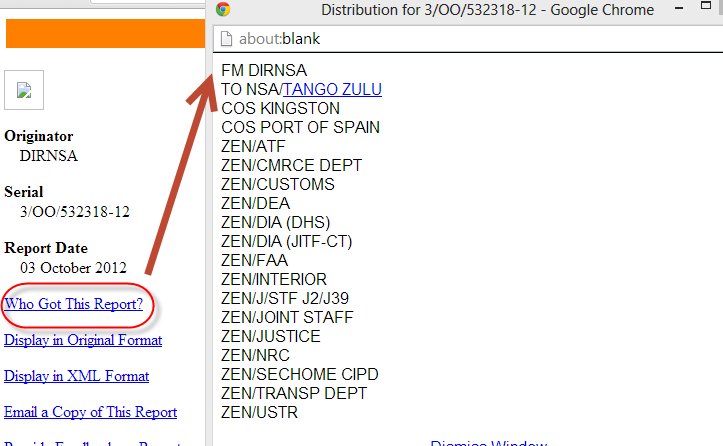
The liberal view of democracy goes back to the founding of the nation, as historian Lynn Hunt of UCLA has shown in her book Inventing Human Rights. American democracy was based on the idea that citizens care about other citizens and work responsibly (with both personal and social responsibility) through their government to provide public resources for all. From the beginning, that meant roads and bridges, public education, hospitals, a patent office, a national bank, a justice system, controlling the flow of interstate commerce, and so on. Nowadays it includes much more — the development of the internet, satellite communications, the power grid, food safety monitoring, government research, and so on. Without those public resources, citizens cannot live reasonable lives, businesses cannot run, and a market economy would be impossible. Life, liberty, and the pursuit of happiness require all this and health care. Unless you can get health care, your life is in jeopardy, as well as your freedom: if you have cancer and no health care, you are not free; if you break you leg and have no access to health care, you are not free, and so on. And if you are injured or sick and cannot maintain health, your life, liberty and happiness are all in jeopardy.

Under this view of democracy, the flow of wealth should guarantee the affordability of health care as a basic moral principle of democracy. If wealth has flowed in violation of this principle, that flow of wealth has been immoral, unpatriotic, and needs reform. So when liberals point out that productivity has risen greatly while salaries have not, they are talking about fairness in the flow of wealth: If you work for a living, you should earn a fair salary, that is, you should earn a living wage, which should be enough to guarantee adequate health care. Pensions are delayed payments of wages for work already done, and taking away pensions is theft. Employment is the purchase of labor by an employer with a negotiated price for the labor. Since corporations have more power in those negotiations than employees, unions are necessary to help make negotiations fair for the price of labor. When it is observed that most of the wealth in the past decade has flowed to the one percent, that means that fairness and the most fundamental of American principles have been violated and salaries and public resources have been inadequate and unfairly low.

The Affordable Care Act, from this perspective, is a move toward reform — toward a moral flow of wealth in line with the founding principles of the nation. I believe that President Obama, and most liberals, understand the intentions of Affordable Care Act in that way.

Conservatives have a very different view of democracy. They believe that democracy gives them the “liberty” to pursue their own interests without the government standing in their way or helping them. Their moral principle is individual responsibility, not social responsibility. If you haven’t developed the discipline to make it on your own, then you should fail — and if you can’t afford health care, so be it. Health care is seen as a “product” and citizens should not be paying for other citizens’ products. Rudy Giuliani, as a good conservative, likened health care to flat- screen TVs. Conservatives say that no one should be paying for anyone else (except their children and family members). Using public resources is seen as making you weak, taking away incentives for you to work for yourself. And they see it as making hard-working moral citizens pay for immoral slackers. This is the conservative frame for redistribution: it is taking away money that you hard-working Americans have earned and deserve, and “redistributing” it to those who haven’t earned it and don’t deserve it. For conservatives, this happens whenever there are public resources paid for by taxpayers. Therefore they believe that all public resources should be banned — and the affordable Care Act is a major special case and just the start.

That’s why John Boehner said, in explaining why the House has scheduled only 113 days to meet out of 365, said “We need to repeal old laws. Not pass new ones.” That is why the House conservatives saw it as moral to shut down the government and to let the sequester happen. They are ways to cut public resources.

Under this view of democracy, money previously made was made properly and using tax money for public resources is “redistribution.” “Using my money to pay for someone else” is inherently unfair in the conservative tradition. Conservatives over the past four decades have framed the word “redistribution” that way. Use of the word activates the conservative framing in general, not just the framing of the Affordable Care Act, but of the nature of democracy itself.

Because most liberals, including liberal economists, still believe in and use the inadequate Cartesian theory of reason, they do not comprehend that the word “redistribution” has been redefined in terms of a conservative frame, and to use the word is to help conservatives in their moral crusade to undermine progressive values and the traditional view of liberal democracy.

At this point we turn to the NY Times story, “Don’t Dare Call The Health Law ‘Redistribution‘”on the front page, and inside “The economic policy that dare not speak its name.” John Harwood writes the following:

“These days the word is particularly toxic at the White House, where it has been hidden away to make the Affordable Care Act more palatable to the public and less a target for Republicans, who have long accused the Democrats of seeking “socialized medicine.” But the redistribution of wealth has always been a central feature of the law and lies at the heart of the insurance market disruptions driving political attacks this fall.”

Note that he uses the word “redistribution” without quotation marks, as if it were simply a fact and as if the Republican attacks were just true and the White house was trying to hide the truth. He later calls the Affordable Care Act a “semantic sidestep” on this issue.

Harwood goes on to cite the president’s misstatement that if you like your insurance you can keep it. I suspect that the president assumed that no one would like inadequate insurance if they could get much better, and adequate, insurance for the same price, which they might have been able to if the website had not failed. The president knew that no company was forced to cancel inadequate insurance, and incorrectly assumed that they wouldn’t. Yes, the president made those incorrect assumptions. But here is how Harwood comments:

Hiding in plain sight behind that pledge — visible to health policy experts but not the general public — was the redistribution required to extend health coverage to those who had been either locked out or priced out of the market.

Now some of that redistribution has come clearly into view.

The law, for example, banned rate discrimination against women, which insurance companies called “gender rating” to account for their higher health costs. But that raised the relative burden borne by men. The law also limited how much insurers can charge older Americans, who use more health care over all. But that raised the relative burden on younger people.

And the law required insurers to offer coverage to Americans with pre-existing conditions, which eased costs for less healthy people but raised prices for others who had been charged lower rates because of their good health.

“The A.C.A. is very much about redistribution, whether or not its advocates acknowledge that this is the case,” wrote Reihan Salam on the website of the conservative National Review.

Here again, the “redistribution” word is used in a conservative frame without quotation marks as if the frame were simply true, and the citation is from a major conservative publication, where the word is used with a conservative frame.

The issue is what democracy is about and what health care in a democracy is about. For liberals, democracy is defined by equality, and by the “self-evident” “inalienable rights of life, liberty, and pursuit of happiness,” where health is inherent to those values. Under such a conception of democracy, health should never be denied because one belongs to a demographic group that fate had given more ailments and injuries.

Conservatives are helped when “redistribution”, which they have successfully reframed their way, is used by certain liberal economists, who naïvely believe that the word is neutral because economists use it as a technical term.

Harwood begins framing his piece by discussing the case of Rebecca M. Blank.

Ms. Blank is a noted academic economist, having been one of three members of President Clinton’s Council of Economic Advisers. From 2009 to 2013 she served as Deputy Secretary of Commerce in the Obama Administration, and has since left for the grand opportunity to become chancellor of the University of Wisconsin.

In 2011, she was considered for Obama’s Council of Economic Advisers while serving in the Commerce Department. Harwood reports that she was passed over for the post because of something she had written in 1992:

“A commitment to economic justice necessarily implies a commitment to a redistribution of economic resources, so that the poor and the dispossessed are more fully included in the economic system.”

Harwood quotes William Daley, Obama’s chief of staff at the time, as saying, “Redistribution is a loaded word that conjures up all sorts of unfairness in people’s minds.” The Republicans wield it “as a hammer” against Democrats, he said, adding, “It’s a word that in the political world, you just don’t use.” Daley is right that it is a loaded word, in just the sense noted above, namely, that it has been framed by conservatives to fit their ideology and using it activates their frame and their ideology in people’s brains, thus helping conservatives. In 2011, Obama was up for re-election and Daley judged that having Republicans dig up that quote would help them launch an unfair attack against the president.

Harwood reports the affair as if Obama had something to hide, rather than not wanting a conservatively framed concept to be falsely attributed to him. Harwood is clever. First, he quotes another liberal economist, Jonathan Gruber, who uses the word naively as a neutral technical economic term. Then at the end of the article, he reports an Obama slip at a talk in Elyria, Ohio 18 months earlier. The slip involved Obama’s use of a negative. InDon’t Think of an Elephant!, I pointed out that negating a word, activates the meaning of the word. If I tell you not to think of an elephant, you will think of an elephant. Here is the Obama slip that Harwood cites, “Understand this is not a redistribution argument … This is not about taking from rich people to give to poor people.” That was the slip, and Harwood searched back 18 months to Elyria, Ohio to find it. But then the president caught himself and said positively what he meant. “This is about us together making investments in our country so everybody’s got a fair shot.”

Here’s the take-away from these two pieces in the Times this week. First, there was a tiny glimpse of the huge conservative Republican communication system, with no account of its history, it’s extent, or how it works to change people’s brains. I hope the Times will go on to do more and better in the future. Second, the Times printed on its front page a classic example of how the conservative system works, naively presenting it at face value without any serious framing analysis. The Times missed the conservative reframing of the word “redistribution,” missed the difference in the views of morality and democracy that lie behind the framing difference, missed the use of the conservatively reframed word as neutral by liberal economists, missed what it means for a word to be “loaded,” and succumbed like other journalists trained on Cartesian reason in helping conservatism keep its hold on public discourse.

Harwood is a smart political operative. His technique is a classic example of the Republican message machine reported on in Thursday’s Times, and is well worth serious study. The Republican brain change mechanism is not only worth a front-page discussion of its own, but deserves itself to brought into public discourse and reported on regularly.

Related Stories

Source: Alternet