Wall Street Pirates of the Caribbean: Puerto Rico’s Public Pension System Teetering on Collapse as Retired School Teacher’s Face Cuts

0

Protests erupted this past Thursday in San Juan, Puerto Rico’s capitol building. The ongoing economic stagnation of Puerto Rico continues with proposed pension cuts for retired public school teachers according to the Associated Press:

The protest interrupted a special legislative session that Gov. Alejandro Garcia Padilla had called to debate reform measures amid pressure to appease Wall Street ratings agencies as the U.S. territory braces for its eighth year in recession. Garcia said the teachers’ pension system has a $10 billion deficit and will run out of funds by 2020 if nothing is done. 

“We cannot remain with our arms crossed,” he said. “Postponing this reform will worsen the state of the system, require more drastic measures to save it and contribute to the country’s worsening credit.” The government is seeking to change the system from a defined benefit plan to a defined contribution one and possibly increase the retirement age, among other things.

This means reducing monthly payments and increasing the retirement age. Wall Street is looking to profit from Puerto Rico’s debt problem through “trading revenue” according to Bloomberg News last month:

Lazard Capital held a meeting Oct. 10 at its New York office with about 75 participants said Peter Santry, head of fixed-income trading. As more hedge funds buy and sell commonwealth securities, the firm wants to capture that trading revenue, Santry said. “You want to get business out of it,” Santry said.  

Former Governor Luis Fortuno, who lost a re-election bid in November 2012 and is now a partner at Washington-based Steptoe & Johnson LLP, spoke at the Lazard Capital meeting on the legal structures of Puerto Rico debt and the commonwealth’s economy, Santry said. Fortuno declined to comment in an e-mail, saying he wouldn’t discuss current or potential clients.  

Citigroup hosted an Oct. 24 conference that attracted more than 200 attendees, eight times more than the company was expecting, according to two participants, who asked not to be identified because the meeting was private. Bank representatives said in the presentation that the company originally booked a conference room and had to find a bigger space, the attendees said.

Former Puerto Rico Governor Luis Fortuno’s decision not to mention his current and future potential cliental for Puerto Rico’s potential commonwealth securities is troubling. But Fortuno’s law firm Steptoe & Johnson LLP in the past represented CEO and Chairman of Goldman Sachs Lloyd Blankfein in relation to mortgage fraud in 2012 that resulted in no criminal charges for the banking institution after a year-long investigation. That should win the hearts and minds of the Puerto Rican people! The new governor Alejandro Garcia Padilla will bow to Wall Street’s demands. “Teachers protesting the proposed measures say they favor alternatives such as increasing taxes on foreign companies to generate more revenue and receiving unclaimed money from the island’s electronic lottery system” according to Bloomberg. Caribbean Business reported back on October 10th ‘García Padilla administration makes new pitch on Wall Street’:

Despite Moody’s ill-timed move, García Padilla’s top economic brass remain steadfast in a plan that they insist will be instrumental in achieving 2.6% growth by the end of 2016.

During an exclusive roundtable interview with CARIBBEAN BUSINESS, Economic Development & Commerce Secretary Alberto Bacó Bagué, Puerto Rico Industrial Development Co. Executive Director Antonio Medina, Puerto Rico Tourism Co. Executive Director Ingrid Rivera Rocafort and Puerto Rico Commerce & Export Co. Executive Director Francisco Chévere explained that a concerted effort is underway to showcase an integrated plan–the fiscal and economic teams together– in presentations to credit-rating agencies on Wall Street.

The idea is for the rating agencies to see the economic-development plan, not as an afterthought, but as an integral part of a strategy–the next step after raising taxes and fixing the government workers’ retirement plan–that will spur growth even in the face of austerity. To that end, they have commissioned a review of Puerto Rico’s economy by the Boston Consulting Group (BCG) that, they say, will certify 2.6% economic growth and the creation of 90,000 new jobs by the end of 2016–if they execute their plan to perfection.

The government of Puerto Rico and the teachers both agree to raise taxes on foreign companies. It is important to note that raising taxes on companies would force them to leave the island altogether in hopes of finding better tax shelters in other nations with a lower tax rate. In the process, jobs would be eliminated which will increase unemployment rates adding to an already struggling economy. Raising taxes on foreign companies is not the only bad idea. Using unclaimed money from the Puerto Rico lottery system would not “trickle down” down to the local economy. The Puerto Rico government would use unclaimed funds to repay its growing $70 billion debt to Wall Street. Puerto Rico’s austerity measures would not create 90,000 jobs with a 2.6%economic growth rate which will be certified by the Boston Consulting Group (BCG) is unrealistic. The only jobs that will exist in Puerto Rico will be through the US government and the military with its ever expanding defense department budgets and continuous wars. What is more disturbing for Puerto Rico’s retired teachers is that they fully depend on their pensions because they do not receive any form of social security benefits or any other retirement incentives. “Nearly 42,000 teachers contribute to a pension system that supports nearly 38,000 retired teachers. Unlike other government workers in Puerto Rico, teachers do not receive Social Security and depend completely on their pensions upon retirement” according to the Bloomberg report. Once austerity measures take place, Wall Street and other private investors would reap the benefits. Puerto Rico will suffer the economic consequences of their politicians because of their loyalties to Washington and Wall Street. Maybe when Governor Alejandro Garcia Padilla’s term expires or if he loses the next election, he will find himself in a cushy position in a Wall Street firm following his predecessor former Governor Luis Fortuno. Don’t be surprised.


Vladimir Vladimirovich and the Grey Lady

0
Robert Bonomo
RINF Alternative News
Bill Keller, editorialist for The NY Times and former executive editor of the paper, has recently penned a strong attack on Vladimir Putin arguing that Putin’s leadership “deliberately distances Russia from the socially and culturally liberal West”, describing the Kremlin’s policies as “laws giving official sanction to the terrorizing of gays and lesbians, the jailing of members of a punk protest group for offenses against the Russian Orthodox Church, the demonizing of Western-backed pro-democracy organizations as ‘foreign agents’, expansive new laws on treason, limits on foreign adoptions.”
Keller, who during his tenure as executive editor of The NY Times argued for the invasion of Iraq and wrote glowingly of Paul Wolfowitz, makes no mention of Moscow’s diplomatic maneuvers that successfully avoided a US military intervention in Syria or the Russian asylum given to Eric Snowden. Keller, who had supported the US intervention in Syria by writing, “but in Syria, I fear prudence has become fatalism, and our caution has been the father of missed opportunities, diminished credibility and enlarged tragedy,” also made no mention of Seymour Hersh’s stinging dissection of the Obama administration’s misinformation campaign regarding the sarin attacks in Syria. Hersh’s piece, which drives grave doubts into the case against Assad actually having carried out the attacks, was not published in The New Yorker or in The Washington Post, publications that regularly run his work.

Keller focuses on a Russian law that bans the promotion of gay lifestyles in Russia, a far cry from “giving official sanction to the terrorizing of gays and lesbians”, while failing to mention that according to his own paper, 88% of Russians support the law.

Putin did expel the United States Agency for International Development (USAID) from Russia, cutting off the $50 million in aid, most of which went to pro-democracy and anti-corruption groups. The Kremlin believed that much of this money wound up supporting the protest movement against Putin that emerged in 2011. If Russian funding had been suspected in the Occupy Wall Street Movement would The New York Times have supported Putin for promoting social equality in the US? If the punk band Pussy Riot had broken into a prominent Jewish temple in New York, instead of a Moscow cathedral, and defamed it to call attention to the millions of Palestinians living in refugee camps, would the young ladies have done some time? And if so, would they have received support from all corners of stardom?

The European Model

Quoting Dmitri Trenin, Keller argues that Putin sees Europe in decline, “it’s national sovereignty… is superseded by supranational institutions.” Is Putin mistaken in his assumption? Maybe ask the people of Greece,Spain or Ireland? Keller also mentions “limits on foreign adoptions” but fails to mention the cause, the Magnitsky Act, which imposed “visa and banking restrictions on Russian officials implicated in human rights abuses.”  The Kremlin saw this law as the perfect example of US meddling in internal Russian affairs.
The heart of the Magnistsky saga was the death in Russia, while under custody, of an attorney for Hermitage Capital, a hedge fund run by British citizen William Browder. Browder made billions in Russia before running afoul of Russian authorities. His Hermitage Capital was funded by the Lebanese national Edmond Safra and eventually claimed to have lost $300 million after having moved billions out of Russia. Browder, who has renounced his US citizenship, lobbied hard in Washington to have the Magnitsky Act passed.  Why was the US involved in passing a law to protect Lebanese and British capital and a Russian prisoner? America hasn’t enough trouble with its own prison system that it needs to legislate on the Russian penal system? Are there no American politicians who have been implicated in human rights abuses?Keller’s final point is that Putin is being heavy handed over the Ukrainian/EU integration crisis, but Keller avoids discussing the deep historic and ethnic links between Russia and Ukraine. Most Americans would agree that Russia should stay out of NAFTA negotiations, seeing North America as clearly not within the Russian sphere of influence. Ukrainians are deeply divided over the integration with Europe, so why not let the Ukrainians and Russians work out their trade relations without the American government getting involved?

Khodorkovsky

Probably more than any other topic, The NY Times has repeatedly published articles in defense of the long imprisoned and recently freed Russian oligarch Mikhail Khodorkovsky, a man whose rise to power was filled with unsavory schemes to appropriate businesses which were once the property of the Russian people. The NY Times Sabrina Tavernese wrotein 2001 that he had “orchestrated a series a flagrant corporate abuses of minority shareholders unparalleled in the short history of modern Russian capitalism.”Khdorkovsky eventually wound up the billionaire owner of Yukos Oil, which he planned to sell to Exxon Mobil. Khdorkovsky also had political ambitions, creating the Open Russian Foundation and putting Henry Kissinger and Lord Jacob Rothschild on the board of directors. He was clearly eyeing political power by making close ties with the West, even being named to the Advisory Board of the Carlyle Group, all of which made him a potential threat to the Kremlin.
The Khodorovsky affair was a complex battle for power in Russia with Khodorkovsky playing the Western powers against the strongly nationalistic Putin. But at The NY Times editorialist Joe Nocera in four pieces on Khodorkovsky never delves into the complexities of Putin’s strategy to keep Western interests at bay, preferring to present a black and white scenario of ‘western liberal’ rule of law against the ‘authoritarian’ Putin.
Curiously, The NY Times doesn’t seem so interested in Harvard’s Russia Project which ended in disgrace and professor Andrei Shleifer, Larry Summers protege, being forced to pay a $2 million fine for enriching himself under the guise of a USIAD program where he was to ‘teach’ Russians about capitalism. He gave them an interesting lesson, yet was not forced to resign his post at Harvard, possibly due to his close relationship with Summers. Nocera hasn’t written one article on that scandal which is much more relevant to Americans and their iconic institutions, but which also might make him a few enemies closer to home.

Putin and American Values

 
Most Americans see Eric Snowden as whistle blower and not a traitor, yet TheNY Times star editorialist, Thomas Friedman, isn’t so sure, “The fact is, he dumped his data and fled to countries that are hostile to us,” though he doesn’t elaborate on why Russia is a ‘hostile’ nation and he advises Snowden to come home and face the music if he’s truly a patriot, “It would mean risking a lengthy jail term, but also trusting the fair-mindedness of the American people.”
Putin is a social conservative and a fierce patriot who, like many Americans, opposes regime change in the name of democracy. The American people, after failed interventions in Iraq, Afghanistan and Libya, agree with him- both Putin and Americans, unlike The NY Times, vehemently opposed a US intervention in Syria. It seems Putin has more in common with the opinions of Americans than does The NY Times, which begs the question, why is The NY Times so hell bent on demonizing the President of the Russian Federation when he’s supported by more than 60% of the Russian people?
The New York Times has written extensively about the gay rights issue in Russia but 45% of Americans still think that homosexuality is a sin and as the ‘Duck Dynasty’ controversy has revealed, homosexuality in America is still a very divisive issue. Is the prohibition against publicly speaking in favor of gay lifestyles in Russia such an important stumbling block to ties between the two nations when the vast majority of Russians support the law?Americans probably don’t approve of roads where members of one religion can drive while members of another religion must walk, as occurs in Hebron and reported on by Ynet, “Jewish residents are allowed to cross the road by vehicle, but Palestinians are now only permitted to cross by foot or by bicycle.”  They probably wouldn’t look fondly on back of the bus seating for women, yet in spite of this type of segregation in a country that claims to be democratic, The NY Times doesn’t feel compelled to demonize Mr. Netanyahu and his ‘socially conservative’ Likud party.

The Interests of the American People

Just as The NY Times despises Putin and Russia, it’s equallyenamored with Israel. Imagine if the millions of Palestinian refugees were not in camps because of their mother’s religion but instead because they were LGBT? What if Netanyahu were held to the same standard as Mr. Putin? How many millions of Palestinian Khodorkovsky’s are languishing in refugee camps in their own country?  It seems that Mr. Keller, Mr. Friedman and Mr. Nocera are much more interested in the rights of Khodorkovsky and William Browder than they are in the rights of Palestinian children living in squalor under an Israeli blockade in Gaza.
Saudi Arabia and Israel, through its surrogate AIPAC, lobbied hard for war in Syria and both supposed allies are furiously attempting to undermine peace talks with Iran.  The government Putin leads brokered the deal to avoid US involvement in Syria, played an important role in the Iranian peace initiative and also allowed Americans a glimpse into the massive surveillance program the NSA has hoisted upon them by giving refuge to Eric Snowden.
Just as Americans would not look fondly at the Kremlin interfering in domestic American politics, so the Kremlin pushes back when it see US interference in it’s internal affairs, a good example being American aid to opposition groups during the 2011 Moscow protests against Putin.  If the US can accept serious human rights violations by supposed allies Israel and Saudi Arabia, can’t it also accept that Russia has its own way of governing itself, based on its own history and culture?
The NY Times does not represent the best interests of most Americans, nor does it use its powerful voice to protect the millions persecuted within the realms of so called allies.  The NY Times represents a small sector of US power, bent on propagating special interests at the expense of the vast majority of Americans.
Mr. Putin certainly acts in the best interests of Russia, but curiously enough, by working in his own interest, he has done more to protect the 4th Amendment than the constitutional law professor currently occupying the White House.  In Syria he was protecting Russian interests, but by doing so he kept the US out of an intervention that could have easily developed into a major war.  If it had been up to The NY Times, we would have intervened in Syria and Snowden would be behind bars awaiting the mercy of the Obama Administration.So who is a better friend of the American people?  There are no doubts that The NY Times is a better friend of the Khodorkovsky’s and William Browder’s of the world but Americans might actually be better off if their government listened more to Putin and less the Grey Lady.Robert Bonomo is a blogger, novelist and esotericist.  Download his latest novel, Your Love Incomplete, for free here.

Pope economic ideas rattle GOP

0

He draws crowds like a rock star, was named Å“Person of the Year” by Time and drew the ire of Rush Limbaugh for his criticism of Å“trickle-down” economics. Pope Francis has dramatically shifted the message and tone of the Vatican in the last nine months, and heâ„¢s forcing Republicans in Washington to reassess their relationship with the Catholic church.

For years, Catholic leadersâ„¢ staunch and very public opposition to abortion, gay marriage and the contraception-related provisions of Obamacare made them natural allies for the GOP. But Francis has scrambled the equation by de-emphasizing hot-button social issues, warning against unchecked capitalism and pushing a populist message at odds with the core of the anti-spending, anti-big government Republican Party.

Itâ„¢s unclear whether Francisâ„¢s proclamations will fray the ties between the right and the Vatican, but already some conservatives have sharply criticized his economic ideas. At the same time, some on the right have expressed admiration for the 77-year-old popeâ„¢s more inclusive approach. Their praise comes as the GOP itself grapples with growing disenchantment among young people and other demographics for its strident tone on social issues.

Å“His economic perspective Iâ„¢m not particularly enamored with, but his advocacy for the poor, his lifestyle example, his more modern outlook on social issues ” Iâ„¢ve been very impressed,” said Sen. John McCain, the Arizona Republican.

Last month, Francis blasted Å“trickle-down” economics as an Å“opinion, which has never been confirmed by the facts, [that] expresses a crude and naïve trust in the goodness of those wielding economic power.” He also criticized the Å“idolatry of money” and unbridled capitalism as Å“a new tyranny.”

Conservative radio host Limbaugh slammed the comments as Å“pure Marxism” and other commentators on the right also vehemently disagreed with the popeâ„¢s message. One derided Francis as the Å“Catholic Churchâ„¢s Obama.” Former Alaska Gov. Sarah Palin, a tea party darling, said Francis had made Å“some statements that to me sound kind of liberal,” though she later walked back that assessment.

In an interview with an Italian outlet, Francis replied to his critics: Å“The Marxist ideology is wrong,” he said. Å“But I have met many Marxists in my life who are good people, so I donâ„¢t feel offended.”

Rep. Peter King (R-N.Y.), who grew up attending Catholic school and graduated from the University of Notre Dameâ„¢s law school, told POLITICO that he disagreed with the popeâ„¢s economic message. He considers the phrase Å“trickle-down” to be a Å“pejorative” term, Å“like some liberal speechwriter stuck it in.” But he also argued that the popeâ„¢s message should be considered in a broader context.

Å“I genuinely believe…supply-side economics does more to help people come out of poverty, move up in the world … but on the other hand, we shouldnâ„¢t be dwelling on wealth,” King said. Å“The guidance Iâ„¢d take from this is, when I support conservative economics, I should do it in a way that helps the most people.”

Observers said Francisâ„¢s understated approach to polarizing social issues represents a sharp break with his predecessors, including Pope Benedict XVI and Pope John Paul II, though the newest pontiff hasnâ„¢t altered church doctrine on those issues.

His inclusive outlook may have played a role in his decision to remove Cardinal Raymond Burke from the Congregation for Bishops, an influential Vatican organization. Burke, an outspoken conservative, in 2004 signaled he would deny communion to John Kerry, a Catholic running for president at the time, because of his support for abortion rights.

Sen. Pat Toomey (R-Pa.), who is Catholic, downplayed the furor in some conservative circles over Francis, who was elected pope in March.

Å“Heâ„¢s entitled to his opinion, but I think we should look carefully at what heâ„¢s saying,” Toomey said. Å“Itâ„¢s easy to draw I think what could be mistaken, superficial conclusions from some of the things that he said. I think heâ„¢s a wonderful leader for the church.”

In an interview with the Milwaukee Journal Sentinel, Rep. Paul Ryan (R-Wis.), a Catholic who is considered a possible presidential contender in 2016, noted that the popeâ„¢s background isnâ„¢t in American capitalism. Å“The guy is from Argentina, they havenâ„¢t had real capitalism in Argentina,” Ryan said. Å“They have crony capitalism in Argentina. They donâ„¢t have a true free enterprise system.”

Ryan added: Å“What I love about the pope is he is triggering the exact kind of dialogue we ought to be having.”

For Democrats, Francis has been a gift. Just as the liberal base and President Barack Obama have begun talking more about income inequality, along comes the pope to boost their cause.

Å“I love this pope,” said Sen. Claire McCaskill (D-Mo.). Å“Jesus focused so much on helping the poor and the downtrodden and the least among us. And I think his refocusing on that, to me, has been a breath of fresh air.”

Former Rep. Patrick Murphy of Pennsylvania said Francis is a Å“game-changer” for Å“social justice Democrats.” He sees opportunities for the popeâ„¢s message to play out during budget battles and fights over unemployment benefits and other social programs.

Å“A lot of Catholic Democrats like myself have made it our lifeâ„¢s mission to give voice to those who go without, and those who are the least among us ” the folks who rely on food stamps and public education,” Murphy said. Å“Knowing heâ„¢s in our corner gives us a lot of confidence that weâ„¢re doing the right thing.”

Obama even gave a nod to the pontiff during a recent high-profile speech on economic mobility.

Å“[This] trend toward growing inequality is not unique to Americaâ„¢s market economy,” Obama said earlier this month. Å“Across the developed world, inequality has increased. Some of you may have seen just last week, the pope himself spoke about this at eloquent length. ËœHow can it be,â„¢ he wrote, Ëœthat it is not a news item when an elderly homeless person dies of exposure, but it is news when the stock market loses two points?â„¢”

Chester Gillis, a theology professor and a dean at Georgetown University, said that while the pope may be deeply inspiring to millions, he is also likely to weigh in on a slew of issues over the long haul, and not all of his opinions will unite American Catholics, much less lawmakers.

Å“I love this pope, but I would not exaggerate the influence heâ„¢s going to have on American political discourse,” Gillis said. Å“I donâ„¢t think itâ„¢ll be heavily influential.”

The US church has come a long way since John F. Kennedy, who would become Americaâ„¢s first Catholic president, had to make assurances that he wouldnâ„¢t take orders from the Vatican.

More than 50 years later, American Catholic bishops are influential voices in the political debate. They were especially visible in clashes over elements of the Affordable Care Act. Some expressed concern ” and have pursued lawsuits ” over the mandates for coverage of contraception, which they argued would force their institutions to violate their religious beliefs. At the same time, Obama won the Catholic vote twice, fueled in part last year by strong support among Hispanic Catholics.

Gillis said he doesnâ„¢t expect Francis to encourage bishops to weigh in as vocally as they have in the past on sensitive social issues, though he noted they will still likely speak out.

For some lawmakers, the popeâ„¢s influence has gone beyond policy and politics and into the personal. McCaskill, for instance, said some of her children are now considering going back to the church.

Å“They were raised in the Catholic Church. They had basically kind of walked away, because a lot of the really very conservative hierarchy in this country ” they didnâ„¢t feel as welcome,” she said. Å“Now, I think they feel more welcome. At this time of year, I donâ„¢t know if you get any better than that: Your kids feel better about the church.”

AHT/ARA

Source: Press TV

2013: Assessing the Conflict in Syria and Egypt

0

2013 has expectedly been a terrible year for several Arab nations. It has been terrible because the promise of greater freedoms and political reforms has been reversed, most violently in some instances, by taking a few countries down the path of anarchy and complete chaos. Syria and Egypt are two cases in point.

Syria has been hit the hardest. For months, the United Nations has maintained that over 100,000 people have been killed in the 33 months of conflict. More recently, the pro-opposition Syrian Observatory for Human Rights concluded that at least 125,835, of which more than third of them are civilians, have been killed.

The UN’s humanitarian agency (OCHA) says that millions of Syrians living in perpetual suffering are in need of aid, and this number will reach 9.3 million by the end of next year.

OCHA’s numbers attempt to forecast the need for aid for the year 2014. However, that estimation reflects an equally ill-omened political forecast as well. There are currently 2.4 million Syrian refugees living in Lebanon, Jordan, Turkey, Iraq and Egypt. The number will nearly double to 4.1 million by the conclusion of next year. Considering the growing political polarization between the Syrian parties involved in the conflict, and their regional and international backers, there is little hope that the conflict will die away in the near future.

In fact, the simple narrative of a conflict between a central government and an opposition is no longer applicable, since the opposition is itself fragmented into many parties, some with extreme religious agendas. The early discourse that accompanied the Syrian conflict, that of freedom, democracy and such is also of little relevance, considering the level of brutalities and the multiple objectives declared by the various fighting forces. But for Syrians, it is a lose-lose situation.

Syrians involved in this war understand well that a prolonged conflict could mean that the country faces the risk of complete breakdown, and that a Somalia or an Afghanistan scenario is in the offing. Then, few would even care to remember the original reasons of why the war started in the first place, as several generations of Syrian refugees would be doomed to live the same fate as the unending Palestinian refugee experience.

However, there is a glimmer of hope. The recently signed landmark deal between Iran and six other countries — the United States, Russia, China, France, Britain and Germany — could in fact usher in at least the mere possibility of resorting to dialogue in resolving the crisis in Syria. True, the deal was related to Iran’s nuclear program, but since all of these countries are active participants in the Syrian war, with much influence over the warring parties, their consent would be necessary for future dialogue between Damascus and the opposition to bear fruit.

A major question however will continue to surface: even if the secular Syrian opposition agrees to a future arrangement with the current Syrian regime of Bashar al-Assad, will that have any bearings on other extremist forces fighting their own cause? Even with the most optimistic assessments, the Syrian conflict is unlikely to be settled in 2014.

The same assessment is also relevant in the case of Egypt. In 2013, the conflict in Egypt has taken on a different dimension, although most media (Arab and international) are so saturated by half-truths and/or intentional misinformation. It is almost impossible to reach a level-headed understanding of what is transpiring in the most populated Arab country.

One main reason behind the confusion is that reporting on the Jan 25, 2011 revolution was overly sentimental and simplified. In some aspects, the bad guys vs. good guys scenario continues to define the Egyptian turmoil. The Egyptian media is a prime example of that. Since the well-orchestrated June 29 protest, followed by a military coup in July 03, some secular forces affiliated with the revolution lined up in support of the very forces affiliated with the deposed Mubarak regime. Both camps united in opposition of a government affiliated with the Muslim Brotherhood (MB) — itself affiliated with the revolution. It gets more convoluted still, since the Islamic Salafist al-Nour Party has no problem siding with the military, in support of its newly drafted constitution, although it was al-Nour that tirelessly lobbied for a Sharia-driven constitution under the leadership of deposed President Mohammed Morsi. It was that kind of pressure that drove many secularist parties away from the committee that attempted to draft an earlier constitution, leaving the MB isolated. Al-Nour and secularist parties are now standing in the same political camp.

‘Dirty politics’ doesn’t even begin to describe what has befallen Egypt, for the violent dimension of this politicking is unknown in the modern history of the country. Nearly 20,000 Egyptians are now sentenced or facing trials for belonging or supporting the ‘wrong’ political camp. The military-backed government is now unleashing a ‘legal onslaught’, freeing those who affiliated with the Mubarak regime and imprisoning those affiliated with the MB. On Dec 21, the toppled president Morsi was referred by Egyptian prosecutors to a third criminal trial on “charges of organizing prison breaks during the 2011 uprising, spreading chaos and abducting police officers in collaboration with foreign militants,” reported the Associated Press.

Brotherhood lawyer Mohammed el-Damati described the purpose of all of this as an attempt to defeat every single achievement of the January revolution. “They are going over Jan. 25, 2011, with an eraser,” he said. But will they succeed?

While the military enjoys a great sway over every facet of power in Egypt, the Egyptian people are no longer passive participants. Reversing the achievement of the revolution will not necessarily affect the collective mindset that gave the Egyptian people the kind of zeal that made them stand and fight for their rights. No military diktats or legal maneuvering can erase that. 2014 is likely to be a year in which the nature of the conflict in Egypt changes from that of military vs. MB, into a non-elitist conflict that surpasses all of this into something else, perhaps a struggle that will recapture the spirit of the first revolution.

Ramzy Baroud is editor of PalestineChronicle.com. He is the author of The Second Palestinian Intifada: A Chronicle of a People’s Struggle and “My Father Was a Freedom Fighter: Gaza’s Untold Story” (Pluto Press, London).

Source: Counterpunch

Half in US view Christmas as religious

0

Many Americans express frustration with the commercialization of the Christmas and one-third say they dislike the materialism of the holidays.

As the center of the biggest commercial season in the US, it’s no surprise that a majority of Americans — Christian or not — observe Christmas.

But a new survey shows that while nine in 10 Americans take part in the holiday that theologically commemorates the birth of Jesus, only about half actually see it as a religious celebration, and about three in four believe in the virgin birth.

The Pew Research Center’s survey on Christmas observations, released Wednesday, shows a nation where Christmas continues to be incredibly popular, but also that the day is increasingly a non-religious cultural event, especially among younger generations.

Pew, which polled 2,001 American adults about the holiday earlier this month, found that while nearly all Christians celebrate it, only two-thirds view it as a religious day. Meanwhile, 80 percent of non-Christians said they took part in Christmas, though most said they do it as a cultural celebration rather than one of faith.

At 82 percent, evangelical protestants were most likely to see Christmas as a religious holiday, following by white Catholics (66 percent), black Protestants (60 percent) and white mainline protestants (56 percent). About half of Hispanic Catholics said it was a religious holiday.

“Younger adults are less likely than older adults to see Christmas a religious rather than cultural holiday, they’re less likely to say they will attend Christmas services and they are less likely to believe in the virgin birth,” said Greg Smith, director of US religion surveys at the Pew Research Center’s Religion and Public Life Project. “It’s consistent with a lot of research that says young people are quite distinctive in the way they approach religion, with young people leading the growth of the religiously unaffiliated.”

The survey did not directly tie the increase in religiously unaffiliated Americans, which now make up one-fifth of the population, to changing Christmas observations. It did find that “nones” largely see Christmas as a cultural event. About 87 percent of the unaffiliated — those who answer “none” on surveys when asked to name their religion — said they celebrate Christmas, with 68 percent doing it only culturally. About 10 percent said they see it as a religious holiday. Among Christians, younger people were also more likely to see Christmas as a cultural event.

Many Christmas traditions among Americans are rooted in childhood rituals, Pew reported, with nine in 10 Americans saying their planned activities, such as gathering with loved ones and giving gifts, were things they did as kids. But several traditions had faded among those surveyed. Seven in 10 people said they went to Christmas services as children, yet 54 percent said they would go this year. In addition, the number of people whose will send holiday cards or will go caroling is less than those who said they or their families did as children.

Pew found that religious and non-religious Americans largely celebrate the holiday the same. Though those who believe in Christmas as a religious holiday and those believe in the virgin birth are much more likely to go to church services for Christmas, both cultural and religious observers were just as likely to gather with family, exchange gifts and take part in the tradition of Santa Claus visiting their homes at night. About nine in 10 religious observers of Christmas said they believed in the virgin birth, while half of those who celebrate Christmas culturally said the same.

“It all speaks to the ubiquity of Christmas in American society that one form or another of observing it, religiously or culturally, is so popular,” said Smith. “Most non-Christians that celebrate say they do it culturally, but even among some non-Christians who celebrate, they say there is a religious element to Christmas.”

One-third of the religiously unaffiliated also said they believed in the virgin birth. “Keep in mind that most of the non-Christians we’re describing are religious ‘nones,'” Smith said. “That doesn’t mean they are not religious, but that they are not affiliated with any particular religion.”

The Pew survey was released a day after a similar report from the Public Religion Research Institute and Religion News Service on Christmas beliefs, practices and preferences. That survey, which also found that nine in 10 Americans celebrate the holiday, reported that one in four adults see Christmas as a cultural and not religious day, and that just four in 10 say the holiday’s narrative is a “theological story to affirm faith in Jesus Christ.” About half of that survey’s respondents who celebrate Christmas said they believe in the virgin birth.

The Public Religion Research Institute survey also found Americans largely prefer businesses to use the phrase “happy holidays” or “season’s greetings” instead of “merry Christmas.” Most religious “nones” said they preferred a non-religious greeting during the holidays, while two out of three evangelicals opted for “merry Christmas.” The Huffington Post

AHT/ARA

Source: Press TV

Profile of a Racist Zionist State

0

Israel is no democracy. It deplores democratic values. It ignores rule of law principles. Non-Jews aren’t wanted. Muslims are ruthlessly persecuted.

They’re terrorized. Praying to the wrong God is criminalized. Last week was like all others. Israeli soldiers murdered 29-year old Odeh Jihad Hamad in cold blood.

He was well inside Israel’s imposed border zone with Gaza. Soldiers shot him in the head.

They prevented ambulance help from arriving for around 90 minutes. They wanted to be sure he died. They wanted him to suffer if it took time.

In Jerusalem, Palestinian resident Hadassah Ein Karem was on his donkey. He was traveling along a bypass road. It’s adjacent to al-Isawiya village.

He was in plain sight. A settler ran him over. He was critically injured. At Hadassah Ein Karem Hospital, he was pronounced dead.

In Jenin’s refugee camp, Israeli soldiers fired on nonthreatening Palestinian civilians. One was killed. Another six were wounded.

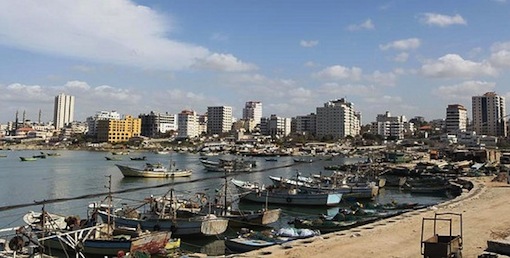
Israeli naval forces opened fire on Palestinian fishermen. They were nonthreatening. They were in Gazan waters. It didn’t matter.

These type incidents happen often. Sometimes Israel damages fishing vessels. Other times they’re confiscated. This time fishing equipment was stolen.

Israel apparently considers fishing a crime. Harming Palestinian well-being goes unpunished. Impunity is rubber-stamp.

On Friday, Israeli soldiers attacked peaceful Palestinian protesters in Bilin, al-Masara and Nabi Saleh villages. They used rubber bullets, tear gas, and stun grenades. Dozens were injured.

Israel considers all protests illegal. Palestinians want occupation ended. They want stolen land returned.

They want Israel’s apartheid wall demolished. They want the right to live free on their own land in their own country.

They want world community support. They want Israel held accountable for high crimes of war and against humanity. They want long denied justice.

Ta’Ayush is an Arab Jewish partnership. It seeks togetherness “to end the Israeli occupation and to achieve full civil equality through daily non-violent direct-action.”

Ta’ayush is Arabic. It means living together. It’s a grassroots movement. It was founded in fall 2000. Activist Arabs and Jews work cooperatively.

They’re “surrounded by walls and barbed wire: the walls of segregation, racism, and discrimination between Jews and Arabs within Israel; the walls of Apartheid, closure and siege encircling the Palestinians in the occupied West Bank and Gaza Strip; and the wall of war surrounding all inhabitants of Israel, so long as Israel remains an armed fortress in the heart of the Middle East,” says Ta’ayush.

Its members work actively against racism and segregation. They’re building “a true Arab-Jewish partnership.”

They “strive for a future of equality, justice and peace.”

They do so “through concrete, daily, non-violent actions of solidarity to end the Israeli occupation of the Palestinian territories and to achieve full civil equality for all.”

The lives and well-being of millions of occupied Palestinians have been “subordinated to Israeli interests for more than 40 years.”

On Sunday, Haaretz columnist Amira Hass headlined “IDF barred Israeli activists from West Bank.”

Ta’ayush members came to protect Palestinian farmers. They’ve been doing it for 13 years. They accompany “dozens of (West Bank) Palestinian shepherds and farmers…every Saturday…”

They do it to protect them from extremist settlers. They attack Palestinian farmers in their fields. They destroy their crops.

They commit other forms of vandalism. They commit violence. They do so with virtual immunity. Israeli security forces do nothing to stop them.

On Saturday, soldiers “separated the cars of Ta’ayush members from the rest of the Israeli cars entering the West Bank through the checkpoint on the Tunnel Road (Route 60) and the Betar checkpoint,” said Hass.

When they reached it south of Jerusalem, Border Police stopped them. They “showed them a military order.”

It was “signed by the commandeer of the Etzion Regional Brigade, Col, Amit Yamin, restricting their movements.”

Soldiers told Ta’ayush activists they were waiting for another military order to arrive. They ordered them to remain at Betar checkpoint until it did.

When it failed to come, activists “passed through the checkpoint on foot. Soldiers and police officers pursued them.”

Some Ta’ayush members reached south Hebron Hills. They were shown documents declaring Palestinian land closed military zones.

Judea Brigade commander Col. Avi Balut signed them. His order read: “No person shall pass through the checkpoint except with permission given by me or a person authorized by me.”

Activists and Palestinian landowners were ordered out. An IDF spokesman said:

“The IDF is responsible for maintaining law and order in Judea and Samaria.”

“Every week there are provocative gatherings in the area of Sussia and Mitzpe Yair, which have at times led to violent confrontations between residents of the area and even with the security forces.”

“In accordance with the assessment and security considerations, it was decided not to allow free passage to all the buses, which, according to the assessment, were carrying people who were liable to disrupt public order, and to examine their entrance individually at a number of checkpoints in the southern area of Judea and Samaria.”

Palestinians are barred from their own land. Activists trying to help them are blocked. Other times they’re attacked.

Often they’re injured, arrested, and detained. State terror is official Israeli policy. So is institutionalized racism.

Israel ruthlessly persecutes African migrants. They come seeking safe haven asylum. They fled repressive countries. Israel treats them like criminals.

International law protects refugees and asylum seekers. Article I of the 1951 UN Convention Relating to the Status of Refugees calls them:

“Person(s) who owning to a well-founded fear of being persecuted for reasons of race, religion, nationality, membership of a particular social group or political opinion, is outside the country of their nationality, and is unable to or, owing to such fear, is unwilling to avail him/herself of the protection of that country.”

Post-WW II, the UN High Commissioner for Refugees (UNHCR) was established to help them.

To gain legal protection, they must:

be outside their country of origin;

fear persecution;

be harmed or fear harm by their government or others;

fear persecution for at least one of the above cited reasons; and

pose no danger to others.

Israel’s 1950 Law of Return grants all Jews worldwide the right to emigrate to Israel. Non-Jews aren’t wanted. No refugee law exists.

Israel rejects non-Jewish refugees. It scorns them. It persecutes those arriving. Their fundamental rights are denied.

They’re summarily detained. They held for extended periods. It’s under extremely harsh conditions.

International law legally and morally obligates Israel to treat refugees humanely. Official state policy brutalizes them.

Israel’s Infiltration Law is draconian. It calls non-Jewish migrants and asylum seekers criminals. They face harsh detention without trials or deportation.

Anyone caught helping them is liable. They face up to 15 years imprisonment. They do so for being good samaritans.

The Association for Civil Rights in Israel calls its Infiltration Law brazenly undemocratic and shameful. It’s “draconian and immoral.” Its “entire purpose is to deter refugees from entering Israel.”

It “blatantly disregards Israel’s most basic commitments as a member of the community of nations and as a signatory to the Convention Relating to the Status of Refugees.”

“The State of Israel has the right to protect its borders, but not by trampling human rights and ignoring democratic values.”

Israel’s longstanding inhospitable history is appalling. African migrants perhaps suffer most.

Even some Jewish ones are unwelcome. Israel wants white ones. Black ones are persecuted like Muslims.

On December 19, dozens of African migrants left Holot detention center. They marched toward Be’er Sheva. They did so in protest.

Immigration Authority officers arrested many. They returned them to detention. Others scattered into desert areas. Security forces are pursued them.

Migrants began marching after hundreds of other detainees did so toward Jerusalem. They did it to protest Israeli repression.

They didn’t seek safe haven status to be persecuted. “Our stance is clear,” said one migrant. “Either grant us asylum or give us to an international refugee agency.”

Haaretz columnist Gideon Levy calls Israel’s problem “racism.” It’s a separate, unequal society. It mocks fundamental human and civil rights.

It’s one of the world’s most repressive states. It considers Muslims existential threats. It treats African migrants the same way.

Netanyahu was never “caught expressing compassion,” said Levy. Interior Minister Gideon Sa’ar “seems to enjoy being cruel.”

He “project(s) the kind of attitude that in Europe comes (from) gangs of skinheads.”

Israeli society “is so tainted by racism that the agitators of the extreme right reflect its spirit almost without question.”

“Africans must be gotten rid of, in any way or by any means,” they believe. They’re not “really human beings.” There’s “no place for them here.” They “bring us only crime and disease.”

It’s OK “to abuse them, humiliate them and increase their misery without limit.” Rule of law principles don’t matter.

Israel’s problem isn’t security. It’s Zionist fanaticism. It’s racism writ large. It’s believing Jews alone have rights.

Others don’t deserve them. Human dignity doesn’t matter. Right-wing extremists govern Israel. They menace the entire region. They threaten world peace.

They’re waging slow-motion genocide on Palestine. Crimes of war and against humanity continue unabated. Anyone not Jewish is fair game.

Stephen Lendman lives in Chicago. He can be reached at lendmanstephen@sbcglobal.net.

His new book is titled “Banker Occupation: Waging Financial War on Humanity.”

http://www.claritypress.com/LendmanII.html

Visit his blog site at sjlendman.blogspot.com.

Listen to cutting-edge discussions with distinguished guests on the Progressive Radio News Hour on the Progressive Radio Network.

It airs Fridays at 10AM US Central time and Saturdays and Sundays at noon. All programs are archived for easy listening.

http://www.progressiveradionetwork.com/the-progressive-news-hour

America’s War on Humanity

1

On Christmas day it raged. Holidays are no exception. America’s killing machine observes none. Mass slaughter and destruction continue. It’s longstanding US policy.

Historian Gabriel called the 20th century “the bloodiest in all history.” Civilians suffered most.

Wars ravage humanity. New millennium ones rage. America bears most responsibility. Its quest for global dominance takes millions of lives. US leaders consider it a small price to pay.

Calls for peace go unheeded. In his Sermon on the Mount, Christ said: “Blessed are the peacemakers: for they shall be called the sons of God.”

In Syria, Christmas day violence restricted observances to prayers and masses. Martyrs who fought US-sponsored death squads were honored.

They died “for the safety of the homeland,” said the Syrian Arab News Agency (SANA).

Mass was held at the Mariamate Cathedral of Damascus. Patriach Yahanna X Yazaji led it.

He prayed to God for peace in Syria. Patriarch Josef al-Absi led another mass at the Cathedral of Notre Dame of Dormition in Damascus.

He called for reconciliation, saying:

“(W)e are in need to be Syrians, as nationality is our nature and originality.” He prayed to preserve Syria, protect its president, its army, and restore prosperity.

In occupied Jerusalem, Greek Orthodox Archbishop Sebastia Atallah Hanna said Christmas and New Year’s celebrations would be subdued. They’re limited to expressing solidarity with Syria.

He stressed close ties between Palestinians and Syrians, adding:

“(H)ow can I be happy during the holiday (season) when I see my brothers the bishops, my sisters the nuns abducted, and the Syrian people deprived of the joy of holidays?”

He expressed confidence in Syria’s ability to overcome its ordeal. He thanked its leadership.

He praised the solidarity of its people. He did so against hostile invaders. He recognized the courage of Syrian soldiers.

He called violence an “imported phenomenon.” The vast majority of Syrians oppose it. He offered condolences for those who lost loved ones.

He said terrorist attacks on Syrians threaten all humanity. It’s everyone’s duty to defend Syria, he stressed.

He denounced the Adra massacre. He blamed Arab Gulf states and holier than thou so-called democracies. They boast about human rights, he said.

They’re indifferent to mass slaughter, destruction and human misery. They support crimes of war and against humanity. They bear full responsibility for ravaging Syria.

On December 12, Pope Francis delivered his first Message for the World Day of Peace.

“I wish to offer to everyone, individuals and peoples, my best wishes for a life filled with joy and hope,” he said.

“In many parts of the world, there seems to be no end to grave offenses against fundamental human rights…”

“Can the men and women of this world…ever manage…to overcome indifference, egoism and hatred, and…accept…legitimate differences…”

(F)raternity (is) the foundation (of a) pathway to peace.”

“An authentic spirit of fraternity overcomes the individual selfishness which conflicts with people’s ability to live in freedom and in harmony among themselves.”

“(O)nly love…enables us to accept and fully experience fraternity.”

May “service to persons…bring peace…on this beloved earth.”

Remember 1914’s Christmas truce. It was during WW I. German and Allied forces stopped fighting.

Fraternization stopped war. Soldiers on both sides left their trenches. They did so over half the front. They took time off from fighting.

They defied orders calling “such an attitude…dangerous…(It) destroys the offensive spirit…”

They shook hands. They buried their dead. They chatted with each other. They enjoyed calm. They played football.

Unofficial truces occurred other times throughout history. They did several times during WW I. Never on the scale of Christmas 1914.

It sent a message heard today. War is the enemy of peace. It’s the scourge of humanity. It risks annihilating it altogether. Waging peace, not war, matters most.

Wars are immoral, dirty, unjust and illegal. Good ones don’t exist. They never did. WW II was worst of all. More on that below.

On October 15, 1900, Mark Twain expressed outrage about America slaughtering Filipinos. Things then were like today.

Imperial conquest isn’t pretty. Mark Twain denounced it, saying:

“…I have seen that we do not intend to free, but to subjugate the people of the Philippines.”

We have gone there to conquer, not to redeem.”

“And so I am an anti-imperialist. I am opposed to having the eagle put its talons on any other land.”

“We have pacified some thousands of the islanders and buried them; destroyed their fields, burned their villages, turned their widows and orphans out-of-doors, (and) subjugated the remaining ten million by Benevolent Assimilation, which is the pious new name of the musket…”

He proposed a new American flag. He envisioned one “with the white stripes painted black and the stars replaced by the skull and cross-bones.”

He was appalled that General Jacob Smith ordered his troops to “kill and burn.”

“(T)his is no time to take prisoners,” he said. (T)he more you kill and burn, the better.”

“Kill all above the age of ten. (T)urn (the Philippines into) a howling wilderness.”

Crimes of war, against humanity and genocide remain official US policy.

In his book titled “The Good War: An Oral History of World War II,” Studs Terkel explained its good and bad sides. He did so through people who experienced it.

The only thing good was that America was spared. It “was the only country among the combatants that was neither invaded nor bombed,” said Terkel. “Ours were the only cities not blasted to rubble.”

The bad side was how it “warped our view of how we look at things today.” We see them through the prism “of war.”

“This twisted memory…encourages (people) to be willing, almost eager, to use military force” to solve problems. They exacerbate them more each time.

Wars are “lunatic” acts, said Terkel. They resolve nothing. They’re horrific by any standard. They turn ordinary people into crazed killers. They destroy any hope for peace.

Howard Zinn denounced the myth of good wars. They prevent peace. They perpetuate violence. World War II was worst of all.

Modern warfare is indifferent about who dies from 30,000 feet. “You just press a button, you know, and somebody dies,” said Zinn.

You don’t see faceless victims. You don’t hear children scream. You don’t know about human flesh ripped to pieces. You think you’re the good guys. Kill the bad ones.

“World War II is not that simple,” said Zinn. “The good guys became the bad guys. War poisons everybody. It corrupts everybody.”

Neither side reflects saintliness. Both sides are villains. All sides slaughtering civilians demand condemnation.

Did WW II stop fascism, asked Zinn? Did it stop racist persecution? Did it end militarism? Did it restore peace?

When it ended, Zinn got a letter from General George Marshall. It wasn’t a “Dear Howie,” he said.

All US armed forces personnel got the same one. It was “something like this,” said Zinn.

“We’ve won the war. Congratulations for your service. It will be a new world.”

“It wasn’t a new world,” said Zinn. “War after war after war after war” followed. They rage today. The second war to end all wars perpetuated them.

Millions died for nothing. Fascism, despotism and militarism didn’t end. Zinn said wars can’t be tolerated “no matter what we’re told.”

So-called good wars don’t exist. They’re worst of all. Every one harms civilians most of all. Children suffer like adults. Wars institutionalize violence. It persists globally.

If enough soldiers refuse to fight, if enough people say no more, if mass outrage demands peace, only then can things change.

Post-WW II, America had no enemies except ones it invents. Gratuitous slaughter persists. Imperial adventurism works this way.

Planet earth is America’s battleground. How many more millions must die? How much human misery is enough? When will swords be turned into plowshares?

How much longer will populations tolerate what demands mass uprisings to stop? When will America be challenged righteously?

When will one century of war after another end? Is peace in our time possible? Will humanity survive long enough to find out?

Stephen Lendman lives in Chicago. He can be reached at lendmanstephen@sbcglobal.net.

His new book is titled “Banker Occupation: Waging Financial War on Humanity.”

http://www.claritypress.com/LendmanII.html

Visit his blog site at sjlendman.blogspot.com.

Listen to cutting-edge discussions with distinguished guests on the Progressive Radio News Hour on the Progressive Radio Network.

It airs Fridays at 10AM US Central time and Saturdays and Sundays at noon. All programs are archived for easy listening.

http://www.progressiveradionetwork.com/the-progressive-news-hour

http://www.dailycensored.com/americas-war-humanity/

Looming Danger of Abrupt Climate Change

0

The National Research Council of the National Academies (NRCNA) has pre-published (available to the public as of Dec. 2013), an extensive 200-pg study: “Abrupt Impacts of Climate Change, Anticipating Surprises.”

The goal of the report is to prepare society to anticipate the ‘otherwise unanticipated’ before it occurs, including abrupt changes to the ocean, atmosphere, ecosystems and high latitude regions. The NRCNA timescale for “abrupt climate change” is defined as years-to-decades.

“The history of climate on the planet– as read in archives such as tree rings, ocean sediments, and ice cores– is punctuated with large changes that occurred rapidly, over the course of decades to as little as a few years,” Abrupt Impacts of Climate Change, Anticipating Surprises, (Prepublication Version), National Research Council of the National Academies, The National Academies Press, Washington, D.C., December 2013.

U.S. intelligence agencies, the National Oceanic and Atmospheric Administration, the National Science Foundation, and the National Academies sponsored the NRCNA report. The National Academies consists of: the National Academy of Sciences, the National Academy of Engineering, the Institute of Medicine, and the National Research Council.

The NRCNA report mentions three primary areas of risks of abrupt climate change this century, as follows:

Arctic Sea Ice- Abrupt Climate Change Already Underway

According to the NRCNA analysis, the rapid decrease of Arctic sea ice over the past three decades is likely to have irreversible impact on the Arctic ecosystem. This event of “abrupt climate change” is already in motion, disrupting the marine food web, habitat of mammals, erosion of coastline, and shifts in climate and weather patterns throughout the Northern Hemisphere. This has already been witnessed via 100-year floods and severe embedded droughts as well as bouts of extreme weather conditions throughout the hemisphere.

Interestingly, the report does not focus on the danger of an abrupt release of methane in the Arctic on a near-term basis. Rather, the NRCNA report discounts an abrupt outbreak of methane release, believing this will stretch out over a long period of time, unlikely this century.

However, there is a wide range of scientific opinion about the Arctic methane issue, and another more portentous position is described in the following article: Saving the Global Climate from Runaway Arctic Methane Release and Sea Ice Loss, John B. Davies, Arctic News, Dec. 19, 2013, as follows: “The warming of the Arctic seems likely to lead to the total melting of the Arctic Sea Ice in late summer no later than the summer of 2018 and to massive release of Methane from the melting of Methane Hydrates beneath the ESAS [Eastern Siberian Arctic Shelf] by the same date leading to runaway Global Warming and the end of most life of earth.”

That stark forecast by John B. Davies is supported by some of the world’s most recognized minds in the field of Artic sea ice, such as, Peter Wadhams, PhD (Head of the Polar Ocean Physics Group, University of Cambridge), who has, since 1976, accurately measured Arctic ice thickness by way of submarines (Submarine-based Science in the Arctic {Peter Wadhams}, Oceans 2025 Science Meeting, May 11-13, 2010.)

Obviously, Davies’ call for “the end of most life of earth” is a very rambunctious, gutsy forecast. As well, it is very difficult to accept the idea of the possibility of the end of most life. Situations like that simply do not happen… or do they?

Yes, they do.

As explained in the film: The Day the Earth Nearly Died, BBC / Horizon, December 2002, it did happen 250 million years ago. Almost every living thing suddenly died. Geological studies show that 95% of life forms perished. Scientists call it the Permian Mass Extinction, which was far more terrible than the later extinction that wiped out the dinosaurs 65 million years ago, killing off 60% of all species on the planet. It took 100,000 years for the earth to recover.

Extinctions certainly do happen.

A new film examines how close we may be: Last Hours (Sept. 2013) presented by Thom Hartmann; producers — George DiCaprio, Earl Katz and Mathew Schmid; director — Leila Conners. The film byline says: “Underground, underwater and below the ice, a time bomb is ticking. Scientists are seeing the evidence. Runaway climate change could be closer than we think.”

And, the Bible discusses extinction in Isaiah 24:4-6:

“The earth dries up and withers… the exalted of the earth languish… for they have transgressed the laws, violated the statutes and broken the everlasting covenant. Therefore a curse consumes the earth; its people must bear their guilt.”

Regardless of belief in how, when, or if an extinction event will occur, the evidence is inconvertible that carbon dioxide (CO2) levels in the atmosphere are the highest in over 400,000 years and on a path that is eerily similar to past extinction events. It is also widely accepted that burning fossil fuels cause excessive amounts of CO2. Ergo, knowing that, what is the way forward? What to do?

There is no worldwide plan on how to move forward to avoid an extinction event.

Thus, when/if it happens, it will truly be the result of an unanticipated abrupt climate change.

Marine and Terrestrial Life

The National Research Council of the National Academies’ report also foresees eventual mass extinction of several species, sans further climate change, due to habitat destruction, fragmentation, and over-exploitation. This, they claim, would be equivalent in magnitude to the wipe out of the dinosaurs, but it would probably be centuries away.

However, the report goes on to warn, if the ongoing pressures of climate change continue, comparable levels of extinction could occur before the year 2100. So, in plain English, if humankind continues burning fossil fuels like crazy over the next several decades, it’s lights out for many of the planet’s species.

Furthermore, according to the NRCNA report, climate change alone could cause a “crash of coral reefs” as early as 2060. As it goes, coral reefs support nine million marine species. As such, this part of the NRCNA analysis dovetails with a massive loss of species by 2100.

Indeed, as for supporting evidence outside of the NRCNA report, several published scientific peer-review papers have already reported early stage destructive signs of ocean acidification (caused by too much CO2) deteriorating marine life, e.g., “… nearly all marine life forms that build calcium carbonate shells and skeletons studied by scientists thus far have shown deterioration due to increasing carbon dioxide levels in seawater,” Dr. Richard Feely and Dr. Christopher Sabine, Oceanographers, Carbon Dioxide and Our Ocean Legacy, Pacific Marine Environmental Laboratory of the National Oceanic and Atmospheric Administration, April 2006.

Once again, in the ocean, as well as on the land, excessive carbon dioxide (CO2) is the problem.

Reiteratively, there is no worldwide plan on how to move forward to avoid an extinction event.

As a consequence, except for a few scientists, the world community will be shocked by the carnage because nobody anticipates it really happening. Otherwise, the governments of the world would be furiously working on solutions, but they are not.

Scientists have been publishing ominous reports for years in vain because they have not been taken seriously enough to prompt corrective action, as for example, a wholesale switching from fossil fuels to renewables, like wind, solar, geothermal, biomass, wave, and hydro.

Destabilization of the West Antarctic Ice Sheet

Antarctica contains 85% of the world’s ice.

The NRCNA Committee acknowledges big uncertainties about the status of the stabilization of the West Antarctica Ice Sheet (WAIS), and “… the Committee judges an abrupt change in the WAIS within this century to be plausible, with an unknown although probably low probability.”

The NRCNA report further states: “… a large part of the West Antarctica Ice Sheet (WAIS), representing 3-4 m [10-13 feet] of potential sea-level rise, is capable of flowing rapidly into the deep ocean basins. Because the full suite of physical processes occurring where ice meets ocean is not included in comprehensive ice-sheet models, it remains possible that future rates of sea-level rise from the WAIS are underestimated, perhaps substantially.”

In that regard, the Pine Island Glacier, as part of the WAIS, is a 37-mile long ice tongue. It is of utmost interest to climate scientists because it has a greater net contribution of ice to the sea than any other ice drainage basin in the world. For decades it was considered too dangerous and too remote to explore. Only recently, in 2012-13, a team of climate scientist accomplished exploration of the massive glacier.

During that expedition, the ice melt below the Pine Island Glacier was detailed by the Naval Postgraduate School, Dept. of Oceanography, (Monterey, California) in tandem with Penn State University, NASA, the British Antarctic Survey, and New York University. Their results were published in the Journal of Science on Sept. 13, 2013.

According to Timothy Stanton, oceanographer at the Naval Postgraduate School, “This is the first observation of the actual melt rate underneath the ice shelf,” Ibid.

Using hot water drills to penetrate the 1,460-foot thick ice shelf, they discovered the warming ocean water is eating away at the underside of the ice shelf at the rate of 72 feet per year in the middle of the channels. Furthermore, the scientists calculate the melt at the “grounding line” to be 144 feet per year.

Considering the fact that the ocean has been absorbing 90% of the earth’s heat (Source: Journal of Geophysical Research), the question of the day is: How long will Pine Island Glacier remain stable? If it destabilizes, Miami is in trouble, as well as all major coastal cities.

Once again, in the ocean as well as on the land, excessive carbon dioxide (CO2) is the problem.

Once more, there is no worldwide plan on how to move forward to avoid abrupt climate change.

With one exception, Scotland, which country currently generates 40% of its electricity from renewables, wind, solar, hydro, and wave. The country plans to go 100% green in 2020. H-m-m, an entire country powered by 100% renewable energy!

Conclusion: Surprises Inevitable

“Lacking concerted action by the world’s nations, it is clear that the future climate will be warmer, sea levels will rise, global rainfall patterns will change, and ecosystems will be altered… The current rate of carbon emissions is changing the climate system at an accelerating pace, making the chances of crossing tipping points all the more likely… surprises are indeed inevitable,” Abrupt Impacts of Climate Change, Anticipating Surprises, (Prepublication Version), National Research Council of the National Academies, The National Academies Press, Washington, D.C., December 2013.

Everybody, sooner or later, sits down to a banquet of consequences.
(Robert Louis Stevenson — Scottish Essayist, Poet, Author, 1850-1894)

Postscript: Good News- Solar Storage Plant Gemasolar Sets 36-Day Record 24/7 Output, by Emma Fitzpatrick, Reneweconomy, Oct. 8, 2013: The Gemasolar, a Concentrated Solar Power (CSP) facility, is the world’s first large scale power plant that uses molten salt to capture heat during the day so it can produce energy at night. The plant can operate up to 15 hours without any solar feed. For 36 days straight the plant continuously provided power to 27,000 homes near Seville, Spain while avoiding emissions of 30,000 tones of CO2.

Robert Hunziker lives in Los Angeles and can be reached at roberthunziker@icloud.com

Source: Counterpunch

Snowden warns of dangers of spying

0

Britain’s Channel 4 released an image Wednesday from Snowden’s address.

Former US National Security Agency contractor Edward Snowden, who revealed details of massive surveillance by American and British spy agencies, on Wednesday warned of the dangers posed by loss of privacy in Channel 4’s ËœAlternative Christmas Messageâ„¢.

Snowden, who currently lives in Russia where he has been granted a temporary asylum, said US government surveillance methods far surpass those of an ËœOrwellianâ„¢ state.

The whistleblower was referring to George Orwellâ„¢s dystopic novel Å“1984,” which describes a society where personal privacy is continuously invaded by government surveillance.

“Great Britain’s George Orwell warned us of the danger of this kind of information. The types of collection in the book – microphones and video cameras, TVs that watch us are nothing compared to what we have available today,” Snowden said. “We have sensors in our pockets that track us everywhere we go. Think about what this means for the privacy of the average person.”

“A child born today will grow up with no conception of privacy at all,” he said, adding, “They’ll never know what it means to have a private moment to themselves, an unrecorded, unanalyzed thought. And that’s a problem because privacy matters, privacy is what allows us to determine who we are and who we want to be.”

In an interview with The Washington Post published on Monday, Snowden who has disclosed thousands of confidential documents since June – said he had achieved what he set out to do.

Å“For me, in terms of personal satisfaction, the mission’s already accomplished. I already won,” he said.

The US has revoked Snowden’s passport and demanded he be sent home from Russia to face charges for stealing secrets and espionage.

AHT/ARA

Source: Press TV

Kidnapped American feels ‘forgotten’

0

An American man kidnapped by al-Qaeda militants in Pakistan in August 2011 says he feels Å“totally abandoned and forgotten,” seeking help from the US government.

In a recorded video message, Warren Weinstein called on President Barack Obama, the administration, and members of Congress, to negotiate with his captors.

The 72-year-old government contractor began his address by urging President Barack Obama to step up efforts to get him released, The Washington Post reports, publishing a copy of the video message on its website.

Å“You are now in your second term as president of the United States and that means that you can take hard decisions without worrying about reelection,” said Weinstein. Å“The American government should do everything it can in order to obtain my release.”

He also pleaded the American media to Å“take up” his case for the sake of humanity in order Å“to mobilize public opinion to bring President Obama and his administration to take the necessary actions that will lead to my freedom and to pursue negotiating my release effectively as quickly as possible.”

According to the Post, a State Department spokeswoman and a member of Weinsteinâ„¢s family said Wednesday night that they had not independently received the note or video.

State Department spokeswoman Marie Harf later said that US officials were Å“working hard to authenticate” the contents of the message, according to the newspaper.

Å“We reiterate our call that Warren Weinstein be released and returned to his family,” she said in a statement. Å“Particularly during this holiday season ” another one away from his family ” our hopes and prayers are with him and those who love and miss him.”

Al-Qaeda leader Ayman al-Zawahri said in a statement issued in December 2011 that Weinstein would be freed if the US stopped launching controversial air strikes in Pakistan, Afghanistan, Somalia, Yemen and several other countries.

The US argues that the strikes seek to target Å“suspected militants” but local and international reports show the attacks mainly leave civilians dead.

ARA/ARA

Source: Press TV

GOP weighs anti-Obamacare strategies

0

The White House said Tuesday that it would provide more time for people to sign-up for health insurance.

US Republicans are weighing the best strategies to oppose President Barack Obamaâ„¢s Affordable Care Act before the 2014 midterm elections.

Republicans see the elections as a chance to capitalize on voter frustration with the problem-plagued healthcare overhaul. But the controversial law has so far divided some Republican Senate rivals.

The GOPâ„¢s most strident candidates and activists accuse fellow Republicans “ including several incumbent senators “ of being too soft in their opposition to the healthcare law, widely known as Obamacare, and to President Barack Obama in general.

Republican Rep. Jack Kingston of Georgia, who wants to succeed retiring GOP Sen. Saxby Chambliss, has recently criticized his party in dealing with the healthcare law, The Associated Press reports.

“A lot of conservatives say, ‘Nah, just step back and let this thing fall to pieces on its own,” Kingston said. “Well, I don’t think that’s always the responsible thing to do.”

Rep. Paul Broun, one of Kingston’s rivals in a crowded primary field, declaring in an Internet ad, “I don’t want to fix Obamacare, I want to get rid of it.”

In Tennessee, state Rep. Joe Carr criticized Sen. Lamar Alexander for serving as a key GOP negotiator in the deal to end the partial government shutdown that resulted from House Republicans’ efforts to deny funding for the healthcare law, the report says.

The White House said Tuesday that it would provide more time for people to sign-up for health insurance. It said the Dec. 24 deadline would be extended again for people who can show that they had problems with the federal healthcare website, HealthCare.gov.

The website has been marred by serious technological problems since its launch, making it difficult for Americans to sign up for health insurance.

Experts say the deadline extension will increase criticism from Republicans who have opposed the law from the start and have repeatedly tried to overturn it.

ARA/ARA

Source: Press TV

NSA’s telephone meta-data program

0

The Review Group concluded that NSA had not proved necessary to the prevention of any planned terrorist attack since the program’s inception in 2006.

In my last post I explained a bit about what it was like to serve as one of the five members of the President’s Review Group that was charged this fall with the responsibility of making recommendations about NSA surveillance and related issues. At the end of that post, I said I would follow-up several more essays examining the reasoning beyond some of the Review Group’s 46 recommendations. In this post, I address the NSA’s bulk telephony meta-data program, which has received so much attention in recent months.

In the aftermath of the September 11 terrorist attacks, Congress made several significant changes to the Foreign Intelligence Surveillance Act. Among the most important was the addition of section 215, which authorized the Foreign Intelligence Surveillance Court (the FISC) to issue orders directing individuals and organizations to turn over to the government “tangible things including books, records, papers, documents, and other items” upon a finding by the FISC that the government has “reasonable grounds to believe that the tangible objects sought are relevant” to an investigation intended to protect the nation “against international terrorism.”

On its face, there was nothing exceptional about section 215. The government has always been able to use subpoenas to compel individuals or businesses to turn over documents and other objects in the course of criminal investigations. Section 215 essentially extended the traditional subpoena power to the foreign intelligence context. Because foreign intelligence investigations are typically classified, it was necessary to obtain these orders from the FISC, rather than from ordinary federal courts, because the FISC is designed specifically to deal with classified matters.

As envisioned, section 215 enabled the government to obtain an order from the FISC directing a credit card company, for example, to turn over to the government the credit card records of an individual reasonably believed to be planning or participating in terrorist activities. Similarly, upon such a showing, the government could obtain an order from the FISC requiring the suspected terrorist’s telephone company to turn over his phone records.

In May 2006, the FISC adopted a much broader and unprecedented interpretation of section 215. It was that decision that led to the collection of bulk telephony meta-data. In that decision, and in a succession of subsequent decisions, FISC judges have issued orders under section 215 directing specified telephone service companies to turn over to the NSA, “on an ongoing daily basis,” huge quantities of telephone meta-data involving the phone records of millions of Americans, none of whom are themselves suspected of anything.

The meta-data at issue in the section 215 program includes information about phone numbers (both called and received), but it does not include any information about the content of the calls or the identities of the participants. Once the NSA has the meta-data in its system, it has been authorized by the FISC to retain it for five years, after which it must destroy the meta-data on a rolling basis.

Why does the NSA want this information? The FISC authorized the collection of bulk telephony meta-data in reliance on the NSA’s assertion that having access to these call records “is vital to NSA’s counterterrorism intelligence.” The NSA explained that access to such meta-data would enable its analysts “continuously to keep track of” the activities, operatives, and plans of specific foreign terrorist organizations who “disguise and obscure their communications.”

Under rules approved by the FISC, the NSA can legally access the bulk telephony meta-data only when its analysts find that “there are facts giving rise to a reasonable, articulable suspicion” (RAS) that a particular telephone number “is associated with” a foreign terrorist organization.

In 2012, NSA queried 288 phone numbers, known as “seeds,” each of which was certified by NSA analysts to meet the RAS standard. When a seed phone number is queried, the NSA derives from the database a list of every telephone number that either called or was called by the seed phone number in the past five years. This is known as the “first hop.” For example, if the seed phone number was in contact with 100 different phone numbers in the past five years, the NSA would obtain a list of those 100 phone numbers.

The NSA then seeks to determine whether there is reason to believe that any of those 100 numbers are also associated with a foreign terrorist organization. If so, the query has uncovered a possible connection to a potential terrorist network that merits further investigation. Conversely, if none of the 100 numbers is believed to be associated with possible terrorist activity, there is less reason to be concerned that the potential terrorist is in contact with co-conspirators inside the United States.

In most cases, the NSA makes a second “hop.” That is, it queries the database to obtain a list of every phone number that called or was called by the 100 numbers it obtained in the first hop. Thus, if we assume that the average telephone number calls or is called by 100 phone numbers over the course of a five-year period, then the second hop will produce a list of 10,000 phone numbers (100 x 100) that are two steps away from the seed number that is reasonably believed to be associated with a foreign terrorist organization. If any of those 10,000 phone numbers is also thought to be associated with a terrorist organization, that too is potentially useful information. In a very few instances, the NSA makes a third “hop,” which would expand the list of numbers to approximately one million (100 x 100 x 100).

In 2012, NSA’s 288 queries resulted in a total of twelve “tips” to the FBI that called for further investigation. If the FBI investigates a telephone number or other identifier tipped to it through the section 215 program, it must rely on other information to identify the individual subscribers of any of the numbers retrieved. If, through further investigation, the FBI is able to develop probable cause to believe that an identifier in the United States is conspiring with a person engaged in terrorist activity, it can then seek an order from the FISC authorizing it to intercept the contents of future communications to and from that telephone number.

The NSA reports that, on at least a few occasions, information derived from the section 215 bulk telephony meta-data program has contributed to its efforts to prevent possible terrorist attacks, either in the United States or somewhere else in the world. After examining the evidence provided by the NSA, the Review Group concluded that the information obtained through the section 215 telephony meta-data program had not proved necessary to the prevention of any planned terrorist attack since the program’s inception in 2006. At the same time, though, it is certainly possible to imagine a situation in which the section 215 program might produce highly valuable information.

In my next post, I will explore the Review Group’s reasoning and recommendations concerning the future of this program. What do you think so far? What are the best arguments for and against this program?

AN/ISH

Source: Press TV

The Bing & Bowie Duet: You Be the Judge

0

Is the renowned David Bowie-Bing Crosby performance of “The Little Drummer Boy / Peace on Earth” a dazzling and unforgettable performance or a completely bizarre and insufferable episode in TV and music history that should be entirely forgotten? The following passage is from a 2006 Washington Post article on how this duet happened:

One of the most successful duets in Christmas music history — and surely the weirdest — might never have happened if it weren’t for some last-minute musical surgery. David Bowie thought “The Little Drummer Boy” was all wrong for him. So when the producers of Bing Crosby’s Christmas TV special asked Bowie to sing it in 1977, he refused.

Just hours before he was supposed to go before the cameras, though, a team of composers and writers frantically retooled the song. They added another melody and new lyrics as a counterpoint to all those pah-rumpa-pum-pums and called it “Peace on Earth.” Bowie liked it. More important, Bowie sang it.

The result was an epic, and epically bizarre, recording in which David Bowie, the androgynous Ziggy Stardust, joined in song with none other than Mr. “White Christmas” himself, Bing Crosby.

Remember that the TV special did not air until after Bing Crosby died, which was about a month after taping his Christmas special in England and the duet with David Bowie. I remember very vividly watching that Christmas show. I always watched the Christmas specials of Crosby, Andy Williams, Dean Martin, and all of the others of that generation. My mother kept talking about how weird Bowie was, and she kept asking me if he was a homosexual. I was only 14 – so I had no opinion on such matters. At that time I was already a huge Crosby fan, and I had been since childhood. I think the song is touching and unique, and Bing’s baritone is well-set against Bowie’s tenor of his younger years.

US journalist ‘applauds’ Israel boycott

0

An American journalist says Democratic Congressman Rep. Eliot Engelâ„¢s negative reaction to an American academic groupâ„¢s boycotting Israeli institutions in solidarity with the people of Palestine is Å“appalling” and the groupâ„¢s action is Å“very appropriate”.

Å“This congressman appears to be one more member of the House who has never read the Constitution or doesnâ„¢t understand the first amendment,” James Henry Fetzer, editor of Veterans Today, said in a phone interview with Press TV on Wednesday.

The boycott of Israeli academic institutions by the American Studies Association (ASA) last week has angered Rep. Eliot Engel who sent a letter to the associationâ„¢s leaders urging them to end the boycott.

Å“I applaud the action by the academic group. Itâ„¢s completely well-founded, completely just, very appropriate,” said Fetzer, who is also the founder of Scholars for 9/11 Truth.

The American Studies Association said its boycott was in protest against Israelâ„¢s brutal treatment of Palestinians and the involvement of Israeli universities in supporting such policies.

Å“The ASA condemns the United States’ significant role in aiding and abetting Israel’s violations of human rights against Palestinians and its occupation of Palestinian lands through its use of the veto in the UN Security Council,” the group said in a statement.

Two thirds of the 1,252 members of the organization who participated in the vote approved the measure.

Å“Members of the United States Congress should understand the United States Constitution and the Bill of Rights,” said Fetzer.

Å“Itâ„¢s appalling that there should be any member of Congress who has expressed any degree of disapproval. This is an expression of freedom of speech,” he added.

The move is part of a larger international effort to win boycotts of Israeli institutions over its policies toward Palestinians.

The American Studies Association is a professional group of about 4,000 scholars who study US history and culture.

The group has been debating a boycott since 2006 and put the matter to a vote after its leadership endorsed the idea in early December.

AN/ISH

Source: Press TV

The Fate of Democracy Korean Conspiracy Trial

0

It made worldwide news when Lee Seok-ki, representative in the South Korean National Assembly, was arrested on charges of treason. South Korea’s National Intelligence Service (NIS) fed media outlets with a transcript of a meeting that Lee attended, which appeared to reveal plans by the Unified Progressive Party to take up arms against the South Korean government in the event of war with the north.

The release of the transcript came at the height of national protests against interference by the NIS in the national election of December 2012. The Unified Progressive Party (UPP) was at the forefront of the anti-NIS demonstrations, and the furor that resulted over the accusations against Lee and the UPP succeeded in stifling mass protests.

In a sense, Lee Seok-ki and his six co-defendants have been tried twice; first in a trial by media, in which inflammatory news accounts based on one-sided details and misinformation provided by the NIS convinced a majority of South Koreans that Lee was guilty as charged.

It appears that the second trial, now underway in a Suwon district court, may yield a quite different result, based on the unravelling of the prosecution’s case.

The two main charges against Lee Seok-ki are conspiracy to take up arms against the government and violation of the National Security Law, which makes it illegal to praise or show sympathy for North Korea. Liberally applied, the law has often been used to suppress dissent and punish political actions that are wholly unrelated to North Korea.

The prosecution’s chief witness is an informer who was paid by the NIS to spy on the UPP. The centerpiece of the case is the set of recordings the informer made at two party meetings he attended in May, 2013.

The informer testified that these meetings were attended by members of a secret subgroup of the UPP named the Revolutionary Organization (RO). Claiming to be a former member of the RO, the witness said he had engaged in “anti-state activities.” Straining credulity, the informer asserted that RO members told him “there was only one leader — Kim Il Sung, and that Lee Seok-ki is the representative of South Korea.” Never mind that Kim Il Sung had long been dead by the time this conversation was alleged to have taken place.

The very existence of the RO is open to question. The UPP declares that there is no Revolutionary Organization, and the entire concept is a concoction of the NIS in order to smear the party. The UPP has maintained from the first that the NIS deliberately manipulated the transcript in order to misrepresent the actual words that had been spoken at the May meetings.

Indeed, there is ample cause for skepticism concerning the reliability of the transcripts. The prosecution submitted 46 audio recordings from various meetings as evidence. Once the recordings were in the hands of the judge, the prosecution reworked the transcriptions in order to produce more accurate results. The transcripts from the May meetings alone contained a total of 272 corrections made to the initial versions the NIS had leaked to the press and which formed the basis for the indictment of Lee and his six co-defendants. More than half of the errors came in the text of Lee Seok-ki’s speech on May 12.

Whether the original inaccuracies could be termed “errors” is another matter. It would be naïve to imagine that it was just happenstance that incorrect wording tended to paint a damning picture of Lee. The inflammatory words inserted into the first transcript caused widespread outrage, providing the pretext for the NIS to raid the homes and offices of the UPP, arrest several of its members, and launch an effort to ban the party.

Consider what a different impression is made by the creative rewording provided in the first transcript. In the first version, the phrase “carrying out holy war” is attributed to Lee, but the recording shows he actually said “carrying out promotion.” Similarly, “oppositional struggle” and the “the subject of this war” in the first transcript contrast with Lee’s recorded words, “antiwar struggle” and “struggle against war,” respectively. Lee’s reference to the Jeol-du-san Catholic Martyr’s Shrine appeared in the first transcript as “shrine for decisive battle.”

Was it an unintentional mishap that the first transcript had Lee announcing “war preparation,” rather than his actual words “specific preparation”? Can it really be said that Lee was calling for an armed uprising when the first transcript’s phrase “Let us carry out decisive war” was shown to be “Let us decide”?

The NIS claims that its dodgy transcript was due to “faulty audio quality and static interference,” but it surely is no accident that the nature of the errors made it more likely that Lee and his co-defendants would be indicted and the UPP defamed.

Many of the audio files the prosecution submitted as evidence were copies. “Much of the original audio files have been deleted,” the defense team pointed out, “so it raises questions about whether or not the copies are the same as the originals. Even if the witness verifies the integrity of the evidence, it cannot be said that its authenticity has been established.”

The prosecution contended that co-defendants Hong Sun-seok and Lee Sang-ho made more than 1,700 calls to suspected RO members during the year and a half preceding the May meetings. The defense countered, “There is no objective evidence to show that the people they spoke with are RO members and no one knows the contents of their conversations.” The defense also questioned the likelihood that members of an underground organization would use cell phones to communicate.

Actions by the NIS may have given the prosecution an unfair advantage in the conspiracy trial. The NIS conducted a series of raids on the homes and offices of the UPP and affiliated organizations, and in the November 14 raid on one group, the NIS confiscated a secure digital card containing the defense team’s legal strategy. Two weeks later, the NIS contacted the defense team and announced that it would remove the seals on the card and told them to come. A defense team member reports, “After removing the seal, they didn’t immediately return it, but connected it to a computer and posted the materials on the screen; then took pictures of the documents with a digital camera.” The defense team protested that the materials were for defense counsels only and dealt with the conspiracy trial, “but the agents continued to take photos.”

The NIS claims that it deleted the photos on the camera in front of the defense team, but data recovery software can retrieve deleted digital photos. Screen recording software could also have been installed on the computer. There was nothing to stop the NIS from capturing that information if it chose to do so. The behavior of the NIS throughout the entire affair does not inspire confidence in that organization’s good will. The defense called the actions by the NIS “a complete violation of the defendants’ right to defense and the rights of the defense counsels that could lead to the dismissal of the charges.”

In a further violation of the rights of defense, Lee Seok-ki is kept under constant CCTV surveillance and was not allowed access to counsel except in the presence of the prosecution.

Much of the government’s case relies upon the strength of the paid informer’s testimony, and cross-examination by the defense has demolished his credibility. The defense contended that the informer’s deposition was prewritten by the NIS and did not represent his actual testimony. According to records, the deposition lasted 3 hours and 25 minutes, followed by 25 minutes of review and questions. The defense argued that it was not possible to write 97 pages of deposition in such a short time and review and sign 142 pages of a report in 25 minutes. The defense questioned the informer: “Did the NIS agents prewrite the deposition?”

The informer admitted, “They did prewrite it.” The deposition the prosecution attributed to the informer in fact represents the words of the NIS. In reply to the question of the time being too short to handle the volume of material, the informer replied: “I was familiar with the content, so I speed-read it just to check for any errors.” Nevertheless, it was the NIS that supplied that content.

Nor has the informer’s testimony inspired confidence. The conclusion by the witness that the May 12 meeting was held by the Revolutionary Organization was based solely on his judgment that security was tight. There was no other indication that a secret group was meeting. If strict security is sufficient evidence of a secret revolutionary group, then one encounters such groups with each trip to the airport.

One of the main features of the informer’s testimony was the term “single line double tracking,” describing the organization’s internal security structure. The witness assumed the RO had adopted this approach based on what he had read of past national security cases. He merely extrapolated from those unrelated cases.

The witness frequently changed his testimony. Initially, the informer claimed that Lee Seok-ki announced that it was “time to prepare for revolution, a decisive moment.” During cross-examination, the witness admitted that Lee had never uttered those words.

There is even a lack of evidence for the name “Revolutionary Organization.” The defense asked the witness, “You testified that when you first joined RO, you had ‘probably heard’ the name RO from someone named Do. What did you mean ‘probably’?” The informant answered, “At the NIS, they asked if the organization name is RO and I said ‘probably RO’.” In other words, it was the NIS that supplied the name Revolutionary Organization to the informer.

The witness also admitted that his earlier testimony that the RO had four regional branches was his assumption and, despite having claimed that he heard the RO platform, he had in fact never heard it. The witness repeatedly reversed himself and acknowledged that a large portion of his earlier testimony was based on his assumptions.

The informer also conceded that his testimony regarding the structure of the RO was based on his experience and in watching the breakout groups at the May 12 meeting. He had no direct knowledge of the structure of the RO. The informant testified to the existence of an RO central committee. Asked by the judge if he had heard from anyone directly regarding its existence, the witness answered, “I never heard from anyone directly. When I heard that Wang-jae-san is a ‘shabby organization without a central committee,’ I thought it’s possible that we have one.” He assumed the existence of a central committee merely because the activists seemed well-organized.

In a preposterous statement, the witness said that he could tell who is an RO member merely by looking at the person. Indeed, the only evidence the prosecution had to offer that the RO even existed was the testimony of the informant, and that was was proving an embarrassment.

In the assessment of lead defense attorney Kim Chil-jun, “The informant assumed the role of a NIS contractor and collaborated with the NIS to actively meet people and entrap them to say certain things. Rather than provide objective and truthful information on an actual situation, he infiltrated for the purpose of investigation, choreographed the situation, and then submitted that as evidence. After drafting an exaggerated activity report, he then immediately submitted that to the NIS.”

In regard to the evidence the NIS claimed to have on the RO, Kim observes, “It has been revealed that they were all either based on the imagination of the informant or fiction based on his knowledge of other high-profile national security cases.” As for the existence of the RO, “There is no evidence beyond the testimony of the government informant. Even what might be considered evidence is either contradictory or absurd.”

Based only on a few words, Kim said, “The government informant basically imagined this entire scenario.” No resolutions came from the breakout sessions on May 12, nor could the informer know what was being said at the six other sessions taking place simultaneously with the one he attended. There is no evidence of decisions being taken to launch a rebellion. Asked whether there was any discussion following the breakout sessions on a plan of action or a resolution, the government informant replied, “No, I don’t remember.”

The defense will begin presenting its case in January, when it plans to reveal additional information about the extent of fabrication in the government’s case. It is expected that within the next few weeks, the judge will make a determination on the admissibility of the recordings as evidence, and a negative decision would deal another blow to the prosecution case.

At this point, the prosecution has failed to offer evidence to substantiate the charge of conspiracy. The National Security Law, however, is so open to varying interpretations that a conviction on that charge cannot be ruled out. The government is counting on a conviction on at least one charge in order to strengthen the motion it filed with the Constitutional Court for the abolition of the Unified Progressive Party. The Ministry of Justice also plans to try to remove the six UPP members in the National Assembly from office. A successful outcome in either endeavor would trigger wider efforts.

In a growing wave of government repression that includes widespread attacks on unions, the conspiracy trial is an opening salvo in a campaign to remove progressive forces from the political scene. The Ministry of Justice has announced plans to get legislation passed that would grant it authority to disband what it terms “anti-state” groups. “The UPP is just the tip of the iceberg,” one Justice Ministry official revealed, and there are many individuals and groups that the government wants to target.

The fate of democracy in South Korea hangs in the balance. The Right is resorting to the practices of the era of dictatorship, when oppositionists were routinely red baited and repression was used to stifle dissent. An acquittal of the defendants at the conspiracy trial and the failure of the government’s motion to abolish the UPP would foil efforts to delegitimize participation by progressive forces in the political process, and mark a great victory in the Korean people’s defense of democracy.

Gregory Elich is on the board of directors of the Jasenovac Research Institute and the advisory board of the Korea Policy Institute. He is the author of Strange Liberators: Militarism, Mayhem, and the Pursuit of Profit.

Source: Global Research

Christmas Eve power outages in US

0

Christmas weather: Ice storm leaves many without power across U.S.

A massive ice storm left half a million of Americans from Great Lakes to New England in the dark on a very cold Christmas Eve as efforts continue to restore electricity to the region.

Utility crews worked continuously Tuesday as hundreds of thousands of homes and businesses were still without power since the deadly arctic blast slammed much of the country over the weekend, the Associated Press reported.

The total death toll from the storm was at least 25 on Wednesday, with 15 in the US and 10 in Canada. Seven of the deaths were the result of carbon monoxide poisoning as people without power and heat used generators or barbecues to stay warm.

The storm was the worst during Christmas week in the 126-year history of Jackson-based Consumers Energy, Michigan’s largest utility, according to the company that provides electricity to most of Lower Michigan.

“This is our largest Christmas-week storm in our 126-year history, and it’s our largest ice storm in the last 10 years,” Consumers Energy spokeswoman Debra Dodd said.

Almost 17% (more than 300,000 homes and businesses) of their 1.8 million electric customers lost power late Saturday during the storm.

“Unfortunately, what’s happening is, because the temperatures are remaining below freezing, the ice is not melting,” Dodd said. “Things are continuing to fail.”

Some 174,000 customers were still in blackout Tuesday morning and could be waiting for days before power returns completely.

About 13,600 Lansing Board of Water & Light customers in the state capital were also still waiting to have their electricity restored, while in the Detroit area about 55,000 DTE Energy customers were still without electricity.

Frigid temperatures are expected to continue. “When it’s this cold, it’s not going to melt (ice) much and also it’s cloudy, so there’s not much sun to help out,” Brian Wimer of AccuWeather.com said.

AN/ISH

Source: Press TV

Amid Censorship, Google Prominently Displays Christmas Tree to Millions

0

From the establishment’s erosion of the very word ‘Christmas’, to the mass wave of censorship that is now suffocating free speech across the web surrounding the slightest mention of Christmas-related material – there is a complete attack on our fundamental right to even say that today is Christmas. And that’s why, amid all of this censorship and hysteria from the dinosaur establishment, it is amazing to see Google’s homepage proudly display a Christmas tree to hundreds of millions worldwide.

A move that, despite being completely devoid of any controversy to a logical mind when considering that is is in fact Christmas, has no doubt enraged those within the establishment who seek to abolish the very existence of the holiday.

This is also a move by Google that comes on the same day that a prominent VA hospital refused to accept Christmas cards for patients that contained the ‘controversial’ words reading ‘merry Christmas’. The same day that so-called ‘atheists’ (many atheists do not worship the establishment’s politically correct agenda) vulgarly attacked Christians and the very existence of nativity scenes. But above all else, this is the day that an Infowars report that utilized a clip from the iconic It’s A Wonderful Life film was censored by a third party using false copyright claims over the classic film that has been posted in tens of thousands of videos without issue.

And the list goes on. The reality is clear: the establishment is doing its very best to squash any mention of Christmas, let alone the mention of Jesus Christ. Only in an Orwellian society do we deny that a certain day of the year even exists as to not ‘offend’ anyone.

The post Amid Censorship, Google Prominently Displays Christmas Tree to Millions appeared first on Storyleak.

Source: Storyleak

A Post-Apocalypse Christmas Story

0

This Christmas story has been graciously contributed by Daisy Luther of The Organic Prepper.

It has been only 7 months since the lights went out, but it feels like forever. Some people call it the Apocalypse and consider it the worst disaster that the modern world has known. At our house, we call it the Change, because my mother says that just because it is different, doesn’t mean that it’s the end of the world, and that words matter. Whatever you call it, though, the day the lights went out is the day that everything in our world became dramatically different.

The days go on and on, blending into one another with the sameness of our tasks. I don’t go to school anymore because there was no school. My mother teaches me at night, when we leave the door to the wood stove open to preserve our precious candles, but still have light bright enough to read by.

I never thought I would long for gym class or for the school cafeteria, but I do. I missed hanging out with the other kids, sitting around the table making fun of the food, and being in the classroom, learning about the things that I used to consider incredibly boring. If I had only known then what true boredom was I would have cherished the time to just be a kid. I would have delighted in every bite of food that I didn’t have to harvest myself.

Instead of school, I work to keep us fed and warm. I work in the garden in warm weather. My mother walks with a cane, so it is my responsibility to be her legs. I walk in the woods near our house and look for anything that might be edible or useful. I collect branches and twigs in the cold weather. Staying warm and fed is the focus of our daylight hours, and those two tasks take up nearly every minute that the sun is up.

We have heard from those passing through that the cities were death traps. People there quickly ran out of food and water, and had no way to get more. Violence erupted because people were scared and desperate, and there was no one left to quell it. All the police had gone home to take care of their own families. The people who left right away were the lucky ones. Those left behind were constantly at the mercy of thieves and worse. I’m not exactly sure what “worse” is but when the adults talk, that’s what they say: thieves or worse. I’m glad that we don’t live in the city.

Our home is in a very small town. We have a big fenced yard with an apple tree. My old swing set has become the support structure of a makeshift greenhouse, and the rest of the yard is no longer a yard, but more of a field. I used to think my mom was kind of weird, with her backyard chickens and her garden and her herbs, but now I am glad because we have food. The well water that tastes so different from the liquid that used to come from the taps is our true saving grace, my mother says, because water is more precious than gold.

Other people trade with us for eggs and apples and the seeds that my mother saves from her garden. The man next door with the pale, quiet wife and two rambunctious children gives us firewood in return for 8 eggs per week. We eat a lot of venison because my mother traded her skills and some of her precious jars to preserve some venison for an old man who hunts.

We are safer than most because our home is very small, and it is hidden behind trees. You can’t see it from the road. My mother says that the smallness of our house is a blessing because it takes less wood to stay warm. Since I am the one who goes out to pick up kindling every day I agree completely. I can’t imagine needing even more wood.

The past week has been a break in the daily monotony. It was the week before Christmas.

This Christmas is entirely different from any holiday season I have ever known in my 11 years. There will be no brightly lit tree, half hidden behind a pile of brightly wrapped gifts that were purchased in the months leading up to the big day. We won’t be going to parties or buying useless gifts for the teacher just because I don’t want to be the only one not giving a useless gift. I won’t be getting the newest electronic gadget. We aren’t inundated with Christmas carol muzak at the mall, with people pushing to get around us anytime we stop to look in a window.

The stores are all empty, yawning caverns, littered with discarded wrappers. Anything that could possibly be of use was taken months ago.

Still, Christmas is something to be anticipated.

My mother said that all school children need a holiday, so for the past two weeks, instead of lessons in front of the fire at night, we have been making gifts. Whereas we once would have gone to the store and purchased yarn, waffling between two favorite colors amidst all the choices, this year I have unraveled an outgrown sweater with a hole in it in order to make my mother a scarf. For my next door neighbors’ young children, I have drawn small pictures — one of a kitten, and the other of a puppy. I placed these pictures in little frames made from twigs. Now they will have something cheerful with which to decorate their rooms. For the Smith’s daughter, who is 7, I have made a little book with carefully printed letters and drawn pictures. It is the story of the Three Little Pigs, from memory. For the man who hunts — his name is Roger but I always just think of him as the man who hunts — I have helped my mother make a warm hat. I embroidered an R on it for his name.

Many of us in the small neighborhood where I live have families from far away. There are no visits to family anymore, because there is no gasoline to fuel the vehicles. If you can’t walk to your destination, you don’t go. So my grandparents will not be coming, and this is the first time I’ve had Christmas without them in my young life. I don’t know if they have survived the Change and I probably never will.

Even though I feel as though I will probably be disappointed in the morning, I still have trouble going to sleep on Christmas Eve. I’m still only 11, despite the heavy responsibilities in the world after the Change.

***

I awaken to bells ringing. Bells?

I sit bolt upright in bed, the heavy covers falling to the floor. ”Mom?”

“Get up, sleepyhead! It’s Christmas!”

I bounce out of my room and I have that oh-my-gosh-it’s-Christmas-morning feeling fluttering around in my stomach.

My mother is smiling from ear to ear, and she has a steaming mug in each hand. One has coffee for her, and the other has….I can’t believe it — cocoa!

“Where did you get hot chocolate?” I ask as I take the first decadent sip.

“Santa must have brought it, ” my mother says with a wink. She picks up the jingle bell ornament from the table and rings it again.

My stocking is not full to overflowing like it was on Christmases past, but I’m just happy to see that there are a few strange bulges in it. Inside I find a ball of yarn that looks suspiciously like an old sweater that I had outgrown a couple of years ago, an apple from our tree that has been covered in a sugary candy coating and placed in an bread bag from before the Change, and a clean cloth wrapped around something mysterious. When I unwrap the cloth, I discover a hair barrette that my mother has decorated for me with a piece of wire and some beads from an old broken piece of costume jewelry. I put it in my hair immediately and preen.

Our tree is from before the Change. It is an artificial tree and its lights remain unlit, since, of course, there is nothing to plug it in to, but it still looks beautiful with the assortment of ornaments that we have used for as long as I can remember. Under the tree is a large, lumpy bag for me, and two small paper-wrapped packages for my mother from me.

I make her open one of her presents first.

She gasps in delight to see the word LOVE made from twigs I found in the woods and tied together with garden twine to form letters. She immediately gets up and places the word on the bookshelf, front and center. Her hug and her smile make me feel warm and happy.

It’s my turn now. I open my bag and find a purple winter coat. I could hardly believe my eyes because I had never expected anything half so wonderful as a coat. “Where on earth did you get this?”

“I traded your outgrown coat from two years ago to the Smiths for their daughter, and Mrs. Smith gave me one of her coats for you.”

“We have to find someone who needs my coat that I have outgrown, then,” I tell my mother. My wrists have exceeded the length of my coat sleeves by about 3 inches. Change or not, I still had continued to grow.

My mother opens the last package, which is the scarf I have made for her from the holey sweater. She dons it immediately.

I can’t help but compare this with the previous Christmas, when there were at least 20 presents to open. Somehow, I feel happier drinking this cocoa made with water, stroking the sleeve of a used purple coat, than I ever felt then.

***

We are hosting Christmas dinner. My mother says that our neighbors are now our family and that we must love and care for each other if we are going to survive. The old man who hunts brought us a turkey yesterday. It is cooking with garden garlic and onions in a big roasting pan on the woodstove. My mother says that the turkey may not look like the kind we usually have, all brown from the oven, but that it will be an amazing treat. It smells so good that my mouth has been watering since early that morning.

Our home is decorated with pine boughs that I brought back from the woods, and iced with a fresh layer of snow.

We are serving with it applesauce from the jars of it my mother canned from our apple tree in the back yard. She had been storing crusts of bread and leftover biscuits in the outside cold room for a few weeks to make stuffing, and yesterday she cooked a pumpkin from the cellar as well as a big pot of potatoes.

When the neighbors begin to arrive, we are excited to see that they are also bearing food. This has been a hungry time and we rarely eat until we are totally full, as our food must last until the snow is gone and we can grow more to eat.

The Smiths, from whom my mother got my beautiful purple coat, have peppermint sticks for all of the children. Mrs. Smith found them in her bin of Christmas decorations. They are stale and chewy and the most delicious candy I have ever eaten. I take small licks to make it last as long as possible. The man who hunts, of course, has provided the turkey. The people next door, who keep reminding me to all them Tim and Libby, have arrived their children and a basket of cookies. They are the only people in the neighborhood with an oven that still works for baking. Sadly, their fuel for the oven will soon run out and there will be no way to replenish it. But for today, we have cookies.

For the first day in a long, long time — it feels like forever — all I have to do is play. My mother and the other women will keep the fire going, the men will sit and talk, and we will play in the snow without a care in the world. When you’re playing in the snow, you forget that there is no electricity and no heat except for that from the fire. You are just a kid throwing snowballs and building forts.

At dinnertime, we eat and eat and eat until we couldn’t hold another bite if we tried. My mother uses some of our candles and opens up the woodstove. The living room glows. Mr. Smith reads the original Christmas story in his deep melodic voice, followed by How the Grinch Stole Christmas, which was brought over by Tim and Libby.

Then, the most magical thing of all: Christmas carols.

We have no music except that which we make, but we all sing the familiar songs: Jingle Bells, Come Let Us Adore Him, Silent Night, Rudolph the Red-Nosed Reindeer — we run out of songs we know and begin to sing them all over again because no one wants the music to stop because then the night will end. One by one, the younger children fall asleep, with their full tummies and flushed cheeks.

I sit there on the floor, leaning against my mother’s chair. The sweet voices of our friends and neighbors surround me like the softest blanket. I’m full, warm, and content. And although it is all by candlelight and my “big” gift is a used coat, it seems as though this day, this brief respite from the battle to survive, has been the best Christmas — a true holiday full of all that is sacred and beautiful.

Please feel free to share this article in part or in full, giving credit to the author and including a link to this website and the following bio.

Daisy Luther is a freelance writer and editor. Her website, The Organic Prepper, offers information on healthy prepping, including premium nutritional choices, general wellness and non-tech solutions. You can follow Daisy on Facebook and Twitter, and you can email her at daisy@theorganicprepper.ca

Source: SHTF Plan

2 officers injured in Texas shootout

0

Two suburban Dallas police officers were wounded after shooting broke out during a standoff with a suspect.

A search for a man, who police said fired shots at officers early Wednesday morning, ended in a shootout that left the suspect and two officers injured in Grand Prairie.

The incident began when an officer attempted to pull over a vehicle during a routine traffic stop at about 4:30 a.m. in the 3100 block of North Camino Lagos, police said. According to authorities, the suspect led police on a short pursuit. Once the car chase came to an end, the suspect exited his car, fired shots at an officer and fled the scene on foot. The officer was not injured.

Officers from Arlington, Midlothian and Mansfield joined Grand Prairie police to search for the suspect throughout the morning and early afternoon.

At about 2:10 p.m., Grand Prairie police located the suspect in the 600 block of East Seeton Road, less than 1.5 miles from the spot where officers first attempted the traffic stop. According to police, once spotted, the suspect and officers exchanged gunfire. Two officers suffered non-life-threatening injuries and were transported to a nearby hospital.

The suspect was also wounded and transported by air ambulance to a hospital in unknown condition. wfaa.com

AN/ISH

Source: Press TV

Christmas shootings leave 4 dead in US

0

Ornaments featuring pictures of Chicago residents who have died by gunfire hang on a Christmas tree outside a Chicago church Dec. 23, 2013. Nearly 1,000 people have been murdered in Chicago in the past two years, more than any other US city.

Four people have been killed and four others injured in three separate shootings in the US on Christmas morning and Christmas Eve, according to US media reports.

Three people were killed and two others were injured at a nightclub in the US state of New Jersey just after midnight Wednesday, UPI reported.

Meanwhile, in Dorchester, Boston, a man was shot and killed early Christmas morning during a party, officials said.

Police responded to an emergency call around 4 a.m. Wednesday after shots were heard on Wales Street, according to Boston Police Department spokeswoman Nicole Grant, the Associated Press reported.

In another incident, shots were heard on neighboring Kingsdale Street and Talbot Avenue, early Wendsday morning.

A second victim, a woman who was in a car during the shooting and was injured by glass debris, was taken to hospital and treated for minor injuries.

Four teenage boys were also arrested for firing shots at a Central California high school teacher who tried to fight back during an attempted robbery at the school.

Fresno Police Chief Jerry Dyer announced the arrests on Tuesday and said the suspects were 17 and 16-year-old Norteno gang members.

The boys, armed with a handgun and a sawed-off shotgun, were confronted by Edison High School teacher Steven Guerrero who let them take a computer but then fought back and was shot in the stomach and leg. The police said he survived the injuries.

According to an investigation by the Daily Beast, one school shooting has taken place in America every two weeks on average over the past year.

Since the deadly shooting at an elementary school in Newtown, Connecticut, on December 14 which left 20 first-grade school children and six staff members dead, there have been nearly 12,000 gun deaths reported in the US media, according to an interactive project between slate.com and the anonymous creator of the Twitter feed @GunDeaths.

However, slate.com says based on the US Centers for Disease Control and Prevention estimates, the actual number of gun deaths in the US as of December 25, 2013, is roughly 35,000, almost three times more than the number reported in the media.

AN/ISH

Source: Press TV

US court: No right for Bagram prisoners

0

An appeals court in the United States has approved the indefinite detention without trial of prisoners held by the US military in Afghanistan.

The US Court of Appeals for the District of Columbia Circuit ruled in a 44-page decision on Christmas Eve that habeas corpus petitions filed by five prisoners who are held by the US military at the Bagram prison in Afghanistan are Å“beyond the reach” of the US Constitution.

The petitions invoked the prisonersâ„¢ right to challenge unlawful detention. While the right is not fully implemented in practice, it is recognized by the US Supreme Court for prisoners held at the notorious US-run Guantanamo prison in Cuba.

However, the US appeals court rejected on Tuesday Bagram prisonersâ„¢ petition citing administration claims that there are differences between Guantanamo and Bagram, which is also known as Å“Afghanistanâ„¢s Guantanamo.”

According to the three-judge panel of the appellate court, Guantanamo Å“does not lie in a theater of war” while Å“our forces at Bagram…are actively engaged in a war with determined enemy.”

Å“Orders issued by judges thousands of miles away would undercut the commanders’ authority,” the panel stated.

Three of the five Bagram prisoners who filed the petitions had been involved in an earlier 2010 case with the same result. The three appellants were actually captured outside of Afghanistan and US authorities transported them to Bagram to avoid legal scrutiny for their indefinite detention.

The US is reportedly holding non-Afghan detainees at Bagram. There have been numerous allegations of serious prisoner abuse by US forces at the notorious prison.

ISH/ISH

Source: Press TV

Abbott & Costello: The Economics of Mustard

0

Here’s Abbott & Costello doing a routine about mustard, worcestershire sauce, husbands, aging, and a few other unrelated topics. The skill with which they perform and ad-lib is splendid.


Snowden delivers Christmas message

0

American whistleblower Edward Snowden has delivered his Å“Alternative Christmas Message” via Britainâ„¢s Channel 4, saying his revelations about the scale and scope of Washingtonâ„¢s spying activities were to enable people to have a say in how their governments are run.

Å“We have sensors in our pockets that track us everywhere we go. Think about what this means for the privacy of the average person,” Snowden said in an address filmed in Russia and aired by Channel 4.

Å“A child born today will grow up with no conception of privacy at all. They’ll never know what it means to have a private moment to themselves an unrecorded, unanalyzed thought,” he added.

Snowdenâ„¢s Christmas message came days after he told The Washington Post that his Å“missionâ„¢s already accomplished” because he Å“wanted to give society a chance to determine if it should change itself.”

Documents disclosed by Snowden since June have altered the US governmentâ„¢s relationship with its own citizens and the rest of the world.

Snowdenâ„¢s leaks showed, among other things, how the US National Security Agency collects phone records of all American citizens and tracks the use of US-based Web servers by all people around the world.

The documents also showed that the US government eavesdropped on phone calls of at least 35 world leaders, spied on Russiaâ„¢s leadership with the help of Sweden, and spied on the 2010 G8 and G20 summits in Toronto as well as the 2009 G20 summit in London with the help of the host countriesâ„¢ governments.

Snowden had fled to Hong Kong before exposing the NSAâ„¢s spying programs and on June 23 flew from Hong Kong to Russia where he was granted temporary asylum on August 1.

Rick Ledgett, head of the NSA task force responsible for assessing the damage Snowdenâ„¢s leaks have done to the US spy agency, has said Å“itâ„¢s worth” allowing Snowden safe passage back to the US and granting him amnesty in exchange for a promise to end further revelations about the NSAâ„¢s spying activities.

However, some US officials, including former US ambassador to the UN John Bolton and former CIA director James Woolsey, say Snowden should be hanged if he is convicted of treason.

ISH/ISH

Source: Press TV

Russia Formally Drops All Charges Against ‘Arctic 30’

0

Greenpeace International activists, 26 members of the “Arctic 30,” posing for a photo in Saint Petersburg on December 3, 2013 (AFP/Dmitri Sharomov)

Russia formally dropped all charges Wednesday against 29 of the 30 Greenpeace ‘Arctic 30’ activists who were arrested protesting against Russian Arctic oil drilling.

Because there was a Christmas day problem finding an Italian translator for the final member of the group, charges won’t be officially dropped for him until Thursday.

The cases are being dropped as part of the amnesty measure passed by the Russian parliament last week.

The final chapter in the legal ordeal of the Arctic 30 began as the group was asked to attend a Christmas day meeting at Russia’s Investigative Committee, where the criminal case against them is being dropped en masse.

They will then have one more hurdle — securing exit visas in their passports — before the non-Russians are free to leave the country and be reunited with their families. A meeting with the Federal Migration Service is scheduled for later today. The Arctic 30 are expected to leave Russia in the coming days.

After first being charged with ‘piracy’, all 30 had faced ‘hooliganism’ charges and up to seven years jail if convicted.

Greenpeace said 29 of the 30, who are still in Russia after being freed on bail, have now been amnestied and will be free to leave for their home countries as soon as they receive their exit visas.

“This is the day we’ve been waiting for since our ship was boarded by armed commandos almost three months ago,” Peter Willcox, Captain of Greenpeace’s Arctic Sunrise, the ship used in the protest, said in a statement.

“I’m pleased and relieved the charges have been dropped, but we should not have been charged at all.”

Greenpeace says the boarding of its icebreaker by Russian authorities was illegal, and says its activists conducted a peaceful protest.

James Lorenz from Greenpeace says protests will continue.

“Until the drilling stops in this pristine environment, the Greenpeace campaign will continue,” he said.

This work is licensed under a Creative Commons Attribution-Share Alike 3.0 License.

Source: Common Dreams

A year of egalitarian imagination

0

The yearâ„¢s boldest move to limit inequality? That may have been the November bid in Switzerland to cap via referendum CEO compensation at 12 times worker wages.

Economic inequality, we suspect, may have crept into more conversations in 2013 than ever before. But people arenâ„¢t just talking about how unequal weâ„¢ve become. Theyâ„¢re talking about antidotes to the avarice all around us.

We™ve assembled out of those discussions a list that samples 2013′s most promising and provocative inequality-busting ideas, proposals, and campaigns.

Some of these notions seek to make an immediate, politically practical impact. Others raise hopes that many might deride as pure Å“pie in the sky.” We like practical. We also like pie. We think you might, too. Read Ëœem and think!

Attention, share-the-wealth shoppers: Consumers committed to sustainability can buy forest-friendly paper. But what about consumers who want to strike a blow against corporate pay inequality? Toronto activists have an alternative to offer: Wagemark, a new initiative that offers a special insignia to enterprises that pay their top execs no more than eight times what they pay workers. Canadaâ„¢s top 100 CEOs currently take home 235 times Canadian average worker pay. Big-time US CEOs average 354 times worker pay.

Nursing hopes for a more equal future: Top officials of the Massachusetts Nurses Association have just submitted petitions ” with over 100,000 signatures ” calling for a new state law that levies fines against any state hospital, profit or nonprofit, that compensates its CEO over 100 times the hospitalâ„¢s lowest-paid worker wage. If state lawmakers donâ„¢t act on the petition, the nurses plan to collect the 11,000 additional signatures necessary to place their proposal on next Novemberâ„¢s 2014 statewide ballot.

An Alpine assault on privilege: In Switzerland this fall, young activists fell short in their attempt to limit CEO compensation to no more than 12 times worker wages. In a national referendum, voters rejected the proposal ” but only after a massive corporate ad blitz. Just weeks before the late November voting, the Å“1:12 Initiative for Fair Pay” was actually even in the polls. Expect more on the 1:12 front in the year ahead. Activists in Spain, France, and Germany are already discussing similar campaigns.

Irish eyes smiling ” on a wealth tax: In the Great Recessionâ„¢s wake, austerity budgets are squeezing working families the world over. But instead of slashing public spending on programs the public needs, two Irish think tanks are pointing out, governments could be taxing the enormous wealth that has concentrated at societyâ„¢s economic summit. A mere 0.6 percent annual levy on household wealth over 1 million Euros, note the TASC and Nevin Economic Research Institute think tanks, could recast Irelandâ„¢s entire fiscal landscape.

Ignore inequality? Fuhgetaboutit!: New York City voters amazed the nation this November by giving a landslide victory to a mayoral candidate who made fighting gaps in income and wealth his campaign battle cry. Among the proposals the newly elected Bill de Blasio will be pushing when he assumes office: an 11 percent hike in the city tax on income over $500,000 to finance universal access to prekindergarten and afterschool programs. That proposal, with a few tweaks, could begin remaking Americaâ„¢s most unequal city.

Caucusing against concentrated wealth: If Congress ever gathered up the nerve to take a swipe at plutocracy at budget time, what might the resulting budget include? Probably everything in the Å“Back to Work” budget the lawmaker Progressive Caucus brought to the House floor earlier this year. In the plan: tax rates on high incomes topping off at 49 percent and applied to all income, even capital gains. Also in the budget proposal: a financial transactions tax on Wall Street speculation and a much higher estate tax rate.

Giving our wealthy options: How can we keep the wealth of the wealthy from distorting our politics? Dean Machin, a political philosopher at University College London, suggests we give the wealthy a choice. Under his Å“simple proposal,” the super rich could either pay a 100 percent tax on the wealth that makes them super rich or lose their political right to lobby, bankroll think tanks and political parties, or control media outlets. Those ultra wealthy who choose money over political clout, proposes Machin, would still get to vote.

More transparency: Only 17 members of Congress last year voluntarily released their tax returns. Emory law schoolâ„¢s Dorothy Brown wants the IRS to start releasing an annual summary of lawmaker tax returns. A report on this order, says Brown, might build public pressure for moves against tax loopholes. Back in 1934, Congress actually enacted a law that required all high-income earners to reveal their incomes and taxes paid. But Americaâ„¢s wealthy quickly mobilized and, in less than a year, had the law repealed.

Pension power: Britainâ„¢s major unions announced this past March that they will be voting the shares their pension funds hold in UK corporations ” currently worth over $1.5 billion ” against any corporate pay plans that compensate CEOs at over 20 times what workers receive. British unions will apply the 20-to-1 ratio at first to the gap between executive and average or median worker pay. They hope eventually to apply the ratio to the gap that divides top executives and their companyâ„¢s lowest-paid workers.

Rescuing the minimum wage: Few of Americaâ„¢s ultra affluent have publicly called for a significantly higher minimum wage. What might get more of these privileged behind a fair shake for the working poor? How about a new tax bracket for income above 25 or 50 times the annual take-home of a minimum-wage worker, suggest two Institute for Policy Studies analysts. With that linkage in place, CEOs might actually have an incentive to hike pay for their lowest-wage workers, not just simply exploit them. What could the linked new top rate be? Why not the 91 percent top-bracket tax level in effect throughout the 1950s?

AGB/HJ

Source: Press TV

No Joy to the World This Christmas

0
No Joy to the World This Christmas
by Stephen Lendman
How can there be with wars raging out-of control! Who’s celebrating while mass slaughter and destruction persist?
No Christmas cheer this year for billions. No Feliz Navidad. No happy holiday. No Wise Men spreading good will. 
No silent, holy night. No decking the halls. No herald angels singing. None heard on high. 
No coming all ye faithful. No telling it on the mountain. No merry gentlemen resting. No peace on earth coming upon a midnight clear.
No most wonderful time of the year. No having yourself a merry little Christmas. No holly jolly one. No wishing you one in times of war, injustice and human suffering. Imagine them on an unprecedented scale. 
No frosty the snowman fun. No winter wonderland. No jingle bells joy. No auld lang syne.
No Christmas 2014 to remember. No Santa on his sleigh. None coming to town. No gifts for billions. 
No peace with war winds raging. None with growing global human misery. America is Scrooge writ large. It’s the Grinch that stole Christmas.
Scoundrel media editors claim otherwise. They support the worst of all possible worlds. They pretend aggressive wars are liberating ones. 
They claim nations are destroyed to free them. They call imperial dominance democracy.
They glorify wars in the name of peace. Humanitarian intervention and responsibility to protect (R2P) mask ravaging one country after another. Mass slaughter and destruction reflect it. 
They call plunder economic development. They pretend Christmas 2014 reflects peace and good on earth. 
They ignore what matters most. They turn a blind eye to America’s imperial savagery. Unprecedented human misery reflects it. 
It persists globally. They sweep it under the rug. They air brush it from history. They ignore reality. Hypocrisy and indifference substitute.
New York Times editors headlined “This Day of Good Cheer.” They called it “the most joyous and the most richly seasonal.”
“Christmas can seem, somehow, outside the sequence of the ordinary year,” they said. 
How can it be when billions endure poverty, unemployment, hunger and homelessness? Millions more suffer the scourge of war. 
Festiveness doesn’t top their agenda. Survival matters most. Christmas is no different from other days. It’s not a day off from human misery. It doesn’t stop mass slaughter and destruction.
Not according to New York Times editors. It’s “a day of good cheer,” they said. It “comes to life on just this one holiday.” 
It’s “enough to be here today,” they claim. How can it be when unprecedented human misery overwhelms it?
Washington Post editors headlined “The Christmas story, still captivating the world.”
A decades earlier radio program was called “The Greatest Story Ever Told.” It related biblical narratives. It was popular at the time. It inspired a Hollywood film by the same name.
One Bible story remained popular, said WaPo editors. It’s “a tale of universal appeal.” It’s “a story of love and triumph over adversity and also of humility, of the good to be found in the most modest of circumstances.”
It reflects the spirit of Francis of Assisi, they said. He preached “reverence for all living things.” He created the first manger creche.
His “living Christmas story was taken up in many towns and villages.” They created their own manger scenes. They reflect the seasonal spirit.
“Their basic appeal lay in their warmth, humanity and simplicity.” It’s an “enduring reflection of…’comfort and joy,’ ” said WaPo editors.
For whom they didn’t explain. For billions it doesn’t exist. Human misery is their daily reality. WaPo editors substituted illusion for unconscionable human suffering.
Chicago Tribune editors headlined “As Christmas dawns.” They published the same Christmas day editorial since 1988. 
Perhaps they have no original thoughts. Maybe they don’t care about what’s most important. They asked:
“What is this day, this Christmas, that dawns with a chorus of joy? What river of love and magic speeds the message from that moment of wonder in Bethlehem across the cold darkness of centuries long forgotten?” 
“How does it warm us this morning as we awaken in a world the Wise Men could scarcely imagine to a radiance that once each year makes it all just a little bit better?”
For whom, Tribune editors didn’t say. For America’s 1%, it never was better. For most others, it’s lump of coal harshness. 
Joy didn’t arrive Christmas morning. It won’t appear later in the day. Or the next one. Or throughout the holiday season. 
It’s absent throughout the year. So is the “Prince of Peace.” No “(s)ing(ing) out the praises of Christmas… (No) sing(ing) them in shouts and whispers.”
Tribune editors support the worst of imperial harshness. They deplore peace and good will. They claim otherwise.
They hypocritically said “remember…the pain of others…the Christmas joy of sharing out humanity.”
“We are our brothers’ and our sisters’ keepers…Rejoice in the accumulated sights and sounds of the season that fill us this Christmas Day.”
…”(W)e praise this day, this Christmas, that dawns with a chorus of joy.”
Tell it to Chicago’s homeless. Imagine sleeping outside in sub-freezing temperatures. Imagine having to beg for nickels, dimes and quarters. Imagine needing them to buy bare bones food.
Imagine having nowhere to go when sick. Imagine no one able to change things caring. Imagine suffering out of sight and mind.
In July 2013, the Chicago Coalition for the Homeless estimated around 116,000 affected Chicagoans.
It’s 10% higher than year ago numbers. It includes nearly 19,000 students. Around 98% are children of color. An estimated 20% have disabilities and development delays.
On December 13, the US Conference of Mayors Hunger 2013 Homelessness Survey said Chicago homelessness increased 11.4% year-over-year.
Perhaps Tribune editors didn’t notice. Maybe they don’t care.
Los Angeles Times editors headlined ” ‘Miracles’ of 2013: Some of our favorites.”
Christians annually commemorate Christ’s birth. LA Times editors call it “one of the central miracles of the New Testament.”
No peace and good will miracles arrived Christmas morning 2013. Expect none throughout the holiday season for billions worldwide.
None appeared throughout 2013. Expect none next year. LA Times editors turned a blind eye to what’s most important. They ignored Obama’s war on humanity. They said nothing about global human suffering.
They focused on trivia. They highlighted NASA’s Voyager 1 mission. It’s “ventur(ing) out of our solar system.” It’s “a singular achievement in humanity’s quest for knowledge,” they said.
How about waging peace, not war. What about alleviating human misery. What about prioritizing right over wrong? How about replacing dismissiveness with caring.
Times editors expressed angst about not intervening directly against Syria. They said eliminating its chemical weapons may “solidify” Assad’s hold on power.
They called Republicans and Democrats “compromis(ing)” on 2014’s budget “amazing.” Both parties agreed on deeper lump of coal harshness for millions.
They gave bankers, war profiteers, other corporate favorites, and America’s super-rich virtually everything they wanted. 
They’re waging war on social justice. Perhaps Times editors didn’t notice. Maybe they don’t care.
They discussed a meteor “the size of a small building.” It “hurtled toward Russia…in February.” It crashed near Chelyabinsk in Siberia. Miraculously it didn’t kill anyone, they said.
Imagine calling temporarily switching off LA billboards a 2013 highlight. They called ending city mayoral debates another one.
They claim Washington began negotiating with Iran in good faith. They ignored Obama breaching Geneva terms straightaway. His notion of good faith is none at all.
Times editors’ 2013 highlights are ill-chosen. Why is LA’s Museum of Contemporary Art quadrupling its endowment more important than millions of city residents struggling to get by?
Why is a so-called “layaway Santa” initiative? An anonymous benefactor is involved. He visits stores. He pays for toys parents had on layaway. He does it in LA County.
What about sheltering its homeless. How about feeding its hungry. What about employing county residents without jobs. How about giving underemployed Angelinos better ones.
What about freeing lawlessly imprisoned county inmates. What about doing so much more to relieve area human misery. 
Why is it ignored? Why is it allowed to fester? Why is it permitted to deepen each year? 
Why don’t city and county officials change things? Why do they do nothing? Why don’t Times editors hold them accountable? Why not on Christmas day? Why not throughout the year?
Wall Street Journal editors did Tribune counterparts one better. They’ve run the same Christmas day editorial since 1949. 
Vermont Royster (1914 – 1996) wrote it. He was WSJ’s editorial page editor from 1958 to 1971. 
He headlined “In Hoc Anno Domini (in this year of our lord).” He discussed ancient Rome. “There was oppression,” he said.
He highlighted Rome’s “tax gatherer.” It took “grain from the fields and the flax from the spindle to feed the legions or to fill the hungry treasury from which divine Caesar gave largess to the people.”
There was “persecution” and “enslavement…Then, of a sudden, there was a light in the world, and a man from Galilee saying, Render unto Caesar the things which are Caesar’s and unto God the things that are God’s.”
“…Paul of Tarsus…spoke to his brethren.” His words would be remembered. “Stand fast therefore in the liberty wherewith Christ has made us free and be not entangled again with the yoke of bondage.”
Royster won two Pulitzer Prizes. His editorials and other writing reflected lump of coal harshness. He deplored social justice.
Dow Jones & Company began publishing the WSJ in July 1889. In  August 2007, Rupert Murdoch bought it. 
Throughout its history, hard right opinion shut out progressive fairness. Under Murdoch, it does so more than ever.
Royster championed free markets over fair ones. So do current Journal editors. They believe whatever government does, business does better so let it.
They want every one left on their own sink or swim. They believe whatever is good for business is good for America. 
They support corporate and super-rich privilege over social justice. Power and profits matter most of all.
What would Jesus say today? What would he think about today’s America? What would he do? 
How would he address ideological extremism? What would he say about neoliberal harshness? How would he contest destructive dark forces?
He preached nonviolent resistance. He lived it. He taught it. He deplored injustice. He urged “go(ing) the second mile.” He said “love your enemies. (D)o good to those who persecute you.”
He spread revolutionary ideas. He opposed exploitive imperial harshness. Today he’d preach peace, equity and justice. He’d oppose war. He’d resist it.
Doing the right thing is its own reward. Doing it every day matters most. Imagine if everyone felt this way. Imagine a world at peace.
Imagine wars consigned to the dustbin of history. Imagine loving thy neighbor having real meaning. Imagine doing unto others responsibly. 
Imagine a world fit to live in. Imagine it with liberty and justice for all. Imagine it on Christmas. Imagine it throughout the year.
John Donne was a poet, lawyer and cleric. “No man is an island,” he said. We’re all part of humanity.
“Any man’s death diminishes me, because I am involved in mankind.” 
“(N)ever send to know for whom the bell tolls. It tolls for thee.”
It does so most in times of war. It bears repeating. It doesn’t take time off for Christmas. It doesn’t do it throughout the holiday season. Mass killing and destruction have lives of their own.
Hemingway‘s novel discussed “For Whom the Bell Tolls.” Its background was the Spanish civil war. In times of all wars, it tolls for thee.
Stephen Lendman lives in Chicago. He can be reached at lendmanstephen@sbcglobal.net. 
His new book is titled “Banker Occupation: Waging Financial War on Humanity.”
http://www.claritypress.com/LendmanII.html
Visit his blog site at sjlendman.blogspot.com. 
Listen to cutting-edge discussions with distinguished guests on the Progressive Radio News Hour on the Progressive Radio Network.
It airs Fridays at 10AM US Central time and Saturdays and Sundays at noon. All programs are archived for easy listening.
http://www.progressiveradionetwork.com/the-progressive-news-hour

http://www.dailycensored.com/joy-world-christmas/

A Post-Apocalypse Christmas Story

0

christmas cabin

It has been only 7 months since the lights went out, but it feels like forever. Some people call it the Apocalypse and consider it the worst disaster that the modern world has known. At our house, we call it the Change, because my mother says that just because it is different, doesn’t mean that it’s the end of the world, and that words matter. Whatever you call it, though, the day the lights went out is the day that everything in our world became dramatically different.


The days go on and on, blending into one another with the sameness of our tasks.  I don’t go to school anymore because there is no school. My mother teaches me at night, when we leave the door to the wood stove open to preserve our precious candles, but still have light bright enough to read by.

I never thought I would long for gym class or for the school cafeteria, but I do. I miss hanging out with the other kids, sitting around the table making fun of the food, and being in the classroom, learning about the things that I used to consider incredibly boring. If I had only known then what true boredom was I would have cherished the time to just be a kid. I would have delighted in every bite of food that I didn’t have to harvest myself.

Instead of school, I work to keep us fed and warm. I work in the garden in warm weather.  My mother walks with a cane, so it is my responsibility to be her legs. I walk in the woods near our house and look for anything that might be edible or useful.  I collect branches and twigs in the cold weather.  Staying warm and fed is the focus of our daylight hours, and those two tasks take up nearly every minute that the sun is up.

We have heard from those passing through that the cities are death traps.  People there quickly ran out of food and water, and had no way to get more. Violence erupted because people were scared and desperate, and there was no one left to quell it. All the police had gone home to take care of their own families. The people who left right away were the lucky ones.  Those left behind are constantly at the mercy of thieves and worse.  I’m not exactly sure what “worse” is but when the adults talk, that’s what they say: thieves or worse.  I’m glad that we don’t live in the city.

Our home is in a very small town. We have a big fenced yard with an apple tree.  My old swing set has become the support structure of a makeshift greenhouse, and the rest of the yard is no longer a yard, but more of a field. I used to think my mom was kind of weird, with her backyard chickens and her garden and her herbs, but now I am glad because we have food. The well water that tastes so different from the liquid that used to come from the taps is our true saving grace, my mother says, because water is more precious than gold.

Other people trade with us for eggs and apples and the seeds that my mother saves from her garden. The man next door with the pale, quiet wife and two rambunctious children gives us firewood in return for 8 eggs per week. We eat a lot of venison because my mother traded her skills and some of her precious jars to preserve some venison for an old man who hunts.

We are safer than most because our home is very small, and it is hidden behind trees.  You can’t see it from the road. My mother says that the smallness of our house is a blessing because it takes less wood to stay warm.  Since I am the one who goes out to pick up kindling every day I agree completely. I can’t imagine needing even more wood.

The past week has been a break in the daily monotony. It was the week before Christmas.

This Christmas is entirely different from any holiday season I have ever known in my 11 years.  There will be no brightly lit tree, half hidden behind a pile of brightly wrapped gifts that were purchased in the months leading up to the big day.  We won’t be going to parties or buying useless gifts for the teacher just because I don’t want to be the only one not giving a useless gift. I won’t be getting the newest electronic gadget.  We aren’t inundated with Christmas carol muzak at the mall, with people pushing to get around us anytime we stop to look in a window.

The stores are all empty, yawning caverns, littered with discarded wrappers. Anything that could possibly be of use was taken months ago.

Still, Christmas is something to be anticipated.

My mother said that all school children need a holiday, so for the past two weeks, instead of lessons in front of the fire at night, we have been making gifts. Whereas we once would have gone to the store and purchased yarn, waffling between two favorite colors amidst all the choices, this year I have unraveled an outgrown sweater with a hole in it in order to make my mother a scarf. For my next door neighbors’ young children, I have drawn small pictures – one of a kitten, and the other of a puppy.  I placed these pictures in little frames made from twigs.  Now they will have something cheerful with which to decorate their rooms. For the Smith’s daughter, who is 7, I have made a little book with carefully printed letters and drawn pictures. It is the story of the Three Little Pigs, from memory. For the man who hunts – his name is Roger, but I always just think of him as the man who hunts – I have helped my mother make a warm hat. I embroidered an R on it for his name.

Many of us in the small neighborhood where I live have families from far away.  There are no visits to family anymore, because there is no gasoline to fuel the vehicles. If you can’t walk to your destination, you don’t go.  So my grandparents will not be coming, and this is the first time I’ve had Christmas without them in my young life. I don’t know if they have survived the Change and I probably never will.

Even though I feel as though I will probably be disappointed in the morning, I have trouble going to sleep on Christmas Eve. I’m still only 11, despite the heavy responsibilities in the world after the Change.

***

I awaken to bells ringing.  Bells?

I sit bolt upright in bed, the heavy covers falling to the floor.  ”Mom?”

“Get up, sleepyhead! It’s Christmas!”

I bounce out of my room and I have that oh-my-gosh-it’s-Christmas-morning feeling fluttering around in my stomach.

My mother is smiling from ear to ear, and she has a steaming mug in each hand.  One has coffee for her, and the other has….I can’t believe it – cocoa!

“Where did you get hot chocolate?” I ask as I take the first decadent sip.

“Santa must have brought it, ” my mother says with a wink. She picks up the jingle bell ornament from the table and rings it again.

My stocking is not full to overflowing like it was on Christmases past, but I’m just happy to see that there are a few strange bulges in it. Inside I find a ball of yarn that looks suspiciously like an old sweater that I had outgrown a couple of years ago, an apple from our tree that has been covered in a sugary candy coating and placed in a bread bag from before the Change, and a clean cloth wrapped around something mysterious.  When I unwrap the cloth, I discover a hair barrette that my mother has decorated for me with a piece of wire and some beads from an old broken piece of costume jewelry.  I put it in my hair immediately and preen.

Our tree is from before the Change.  It is an artificial tree and its lights remain unlit, since, of course, there is nothing to plug it in to, but it still looks beautiful with the assortment of ornaments that we have used for as long as I can remember. Under the tree is a large, lumpy bag for me, and two small paper-wrapped packages for my mother from me.

I make her open one of her presents first.

She gasps in delight to see the word LOVE made from twigs I found in the woods and tied together with garden twine to form letters.  She immediately gets up and places the word on the bookshelf, front and center.  Her hug and her smile make me feel warm and happy.

It’s my turn now.  I open my bag and find a purple winter coat.  I could hardly believe my eyes because I had never expected anything half so wonderful as a coat. “Where on earth did you get this?”

“I traded your outgrown coat from two years ago to the Smiths for their daughter, and Mrs. Smith gave me one of her coats for you.”

“We have to find someone who needs my coat that I have outgrown, then,” I tell my mother.  My wrists have exceeded the length of my coat sleeves by about 3 inches.  Change or not, I still had continued to grow.

My mother opens the last package, which is the scarf I have made for her from the holey sweater.  She dons it immediately.

I can’t help but compare this with the previous Christmas, when there were at least 20 presents to open.  Somehow, I feel happier drinking this cocoa made with water, stroking the sleeve of a used purple coat, than I ever felt then.

***

We are hosting Christmas dinner. My mother says that our neighbors are now our family and that we must love and care for each other if we are going to survive. The old man who hunts brought us a turkey yesterday. It is cooking with garden garlic and onions in a big roasting pan on the woodstove.  My mother says that the turkey may not look like the kind we usually have, all brown from the oven, but that it will be an amazing treat.  It smells so good that my mouth has been watering since early that morning.

Our home is decorated with pine boughs that I brought back from the woods, and iced with a fresh layer of snow.

We are serving with the turkey with applesauce from the jars of it my mother canned from our apple tree in the back yard.  She had been storing crusts of bread and leftover biscuits in the outside cold room for a few weeks to make stuffing, and yesterday she cooked a pumpkin from the cellar as well as a big pot of potatoes.

When the neighbors begin to arrive, we are excited to see that they are also bearing food.  This has been a hungry time and we rarely eat until we are totally full, as our food must last until the snow is gone and we can grow more to eat.

The Smiths, from whom my mother got my beautiful purple coat, have peppermint sticks for all of the children.  Mrs. Smith found them in her bin of Christmas decorations.  They are stale and chewy and the most delicious candy I have ever eaten.  I take small licks to make it last as long as possible. The man who hunts, of course, has provided the turkey.  The people next door, who keep reminding me to call them Tim and Libby, have arrived their children and a basket of cookies. They are the only people in the neighborhood with an oven that still works for baking. Sadly, their fuel for the oven will soon run out and there will be no way to replenish it. But for today, we have cookies.

For the first day in a long, long time – it feels like forever – all I have to do is play.  My mother and the other women will keep the fire going, the men will sit and talk, and we will play in the snow without a care in the world. When you’re playing in the snow, you forget that there is no electricity and no heat except for that from the fire.  You are just a kid throwing snowballs and building forts.

At dinnertime, we eat and eat and eat until we couldn’t hold another bite if we tried.  My mother uses some of our candles and opens up the woodstove. The living room glows. Mr. Smith reads the original Christmas story in his deep melodic voice, followed by How the Grinch Stole Christmas, which was brought over by Tim and Libby.

Then, the most magical thing of all: Christmas carols.

We have no music except that which we make, but we all sing the familiar songs: Jingle Bells, Come Let Us Adore Him, Silent Night, Rudolph the Red-Nosed Reindeer – we run out of songs we know and begin to sing them all over again because no one wants the music to stop because then the night will end. One by one, the younger children fall asleep, with their full tummies and flushed cheeks.

I sit there on the floor, leaning against my mother’s chair.  The sweet voices of our friends and neighbors surround me like the softest blanket.  I’m full, warm, and content. And although it is all by candlelight and my “big” gift is a used coat, it seems as though this day, this brief respite from the battle to survive, has been the best Christmas – a true holiday full of all that is sacred and beautiful.

Navy’s Ocean-Powered Underwater Drone to ‘Wage Underwater War’

0

Mark Thompson

: Navy’s ocean-powered drone helps it wage underwater war.

While you were out shopping Sunday for those last-minute holiday gifts, the Navy pushed ahead with its own vision of an underwater sugar plum: a fleet of “long endurance, transoceanic gliders harvesting all energy from the ocean thermocline.”

And you thought Jules Verne died in 1905.

Fact is, the Navy has been seeking–pretty much under the surface–a way to do underwater what the Air Force has been doing in the sky: prowl stealthily for long periods of time, and gather the kind of data that could turn the tide in war.

Read more

Toddler Dead as Israeli Air and Ground Assaults Pounds Gaza

0

Airstrikes and ground assaults pounded Gaza Tuesday (Photo: Reuters)Israel slammed Gaza with a wave of air and ground military assaults on Tuesday, killing 3-year-old Palestinian girl Hala Abu Sabikha and wounding at least nine in what appears to be the most severe attack on this besieged home to 1.7 million people since an 8-day Israeli offensive in November 2012.

Hala’s mother, her 3-year-old brother Bilal, and 6-year-old brother Mohammad were injured in the attacks. The family was reportedly struck in Maghazi refugee camp in central Gaza.

The Isreali Army said airstrikes and tank and infantry attacks were in retaliation for the killing of an Israeli laborer identified as 22-year-old Saleh Abu Latif from the majority Bedouin city of Rahat.

“Palestinian officials reported at least 16 Israeli attacks, causing a causing a series of loud explosions across the territory in rapid succession,” Associated Press reports. Witnesses say shells were fired at Gaza City, Reuters reports.

_____________________

This work is licensed under a Creative Commons Attribution-Share Alike 3.0 License.

Source: Common Dreams

Egypt labels Muslim Brotherhood a terrorist group

0

Ian Swanson
The Hill
December 25, 2013

Egypt’s military-run government has declared the Muslim Brotherhood a terrorist group.

The move comes months after the military removed Mohammed Morsi from the presidency. Morsi was the Muslim Brotherhood’s candidate in the 2012 election.

The new government’s minister of education read a statement announcing the decision, which will give more power to authorities to crack down on the group.

This article was posted: Wednesday, December 25, 2013 at 11:53 am


<!– this is where we need to show the related articles

–>

Source: Infowars

‘Christmas tree tax’ spar returns

0

Julian Hattem
The Hill
December 25, 2013

The decorations usually found on a Christmas tree in the living room. Credit: Zechariah Judy via Flickr

Christmas tree farmers have renewed their push for the creation of a marketing and research program that conservative critics have dubbed a “Christmas tree tax.”

The U.S. Department of Agriculture (USDA) in 2011 moved to create a marketing and research program for Christmas trees that would have been similar to the “Got Milk?” or “Pork: The other white meat” campaigns.

But the promotional push was put on hold amid an uproar from conservative groups and anti-tax advocates.

This article was posted: Wednesday, December 25, 2013 at 11:31 am


<!– this is where we need to show the related articles

–>

Source: Infowars

US presidents ‘work for Jewish lobby’

0

An American analyst believes that US presidents are more concerned about serving the interests of the Jewish lobby than well being of the American people.

Å“I donâ„¢t see 2013 as being any worse a year for the presidency of Obama or for the American presidency in general,” Mark Glenn said in a phone interview with Press TV on Wednesday when asked about President Barack Obamaâ„¢s performance in 2013.

He cited, Å“all of these other years where American presidents have taken a back seat to the interests of the organized Jewish lobby and in the process have abrogated their office to look out for the well being of the American people.”

According to the latest opinion polls, Obama’s approval ratings are at record lows in the nearly five years he has been in the Oval Office.

Glenn said that President Obama has Å“failed to do what he swore and oath to do… which was to look out for the well being of the American people.”

Å“In the five years that Obama has been president, the wars that he promised would come to an end, have not,” he argued.

Å“The United States, in addition to continuing the destruction of Iraq and Afghanistan, also has killed thousands of people in Pakistan, hundreds of thousands of people in Libya and Syria,” he added.

Å“Even though President Obama at least maintains the appearance of standing up to [Israeli Prime Minister] Benjamin Netanyahu, the fact of the matter is heâ„¢s still there doing Israelâ„¢s bidding by continuing the flow of money, continuing the flow of arms and political support to Israel both in the UN and around the world,” the analyst said.

AGB/HJ

Source: Press TV

Music publishers claim to own “Silent Night” & ripoff indie Youtube singer

0

Cory Doctorow
boingboing.net
December 25, 2013

Adam the Alien has a Youtube channel that earns him some money through Youtube’s “monetization” service, which inserts ads and gives him a cut of the money. It worked fine until Youtube’s notorious “Content ID” system let some of the biggest music publishers in the world lay claim to the copyright in Adam’s video, on the basis that his rendition of “Silent Night” belonged to them – despite having been composed in 1818 and being firmly in the public domain. Once their claims had been laid, all the money his video generated was diverted to them.

The companies that laid claim to Adam’s video are the publishing arms of the biggest record labels on the planet – BMG, Warner/Chappell, and Universal Music Publishing Group – and they use an automated system to identify videos and claim them. There is no penalty for automatically generated claims over things that the publishers have nothing to do with, and so, unsurprisingly, their copyright bots are fantastically sloppy and operate with little or no human oversight.

It’s a perfect storm of stupidity and greed: Google has given the big publishers a platform that rewards fraudulent claims over indie creators’ work; the publishers responded by making plenty of such claims, and all the while decrying “piracy” as the great evil of our day.

As an independent content creator, it is absurd, ridiculous, and downright insulting that I can have my content de-monetized based on a completely fraudulent claim. The fact that the claims are based on an automated system doesn’t make it any better. If anything, it makes me think the automated system should not be in place. Or at the very least, it needs a major overhaul, and a lot more human eyes involved before action is taken….

…But we’re playing with people’s income, here, and I don’t think an automated system should be in charge of that. Certainly not one that apparently has public domain songs registered to it. Anything fitting that description should only be acted upon once a human eye has reviewed it. Perhaps a different category within the content ID system is needed. A category for protecting specific recordings and arrangements of public domain content, but without YouTube’s entirely too impressive ability to recognize the similarities of someone singing their own version.

This article was posted: Wednesday, December 25, 2013 at 11:09 am


<!– this is where we need to show the related articles

–>

Source: Infowars

Israeli Air and Ground Assaults Pound Gaza

Israel slammed Gaza with a series of air and ground military assaults on Tuesday, killing 3-year-old Palestinian girl Hala Abu Sabikha and wounding at least nine in what appears to be the most severe attack on this besieged home to 1.7 million people since an Israeli offensive in November 2012.

Hala’s mother, her 3-year-old brother Bilal, and 6-year-old brother Mohammad were injured in the attacks. The family was reportedly struck in Maghazi refugee camp in central Gaza.

The Isreali Army said airstrikes and tank and infantry attacks were in retaliation for the killing of an Israeli laborer identified as 22-year-old Saleh Abu Latif from the majority Bedouin city of Rahat.

“Palestinian officials reported at least 16 Israeli attacks, causing a causing a series of loud explosions across the territory in rapid succession,” Associated Press reports. Witnesses say shells were fired at Gaza City, Reuters reports.

_____________________

This work is licensed under a Creative Commons Attribution-Share Alike 3.0 License.

Source: Common Dreams

Santa shot by pellet gun in US

0

Santa Claus was shot twice in the upper back with a pellet gun.

A man dressed as Santa Claus says he was shot with a pellet gun as he made his way to hand out Christmas gifts in Washington, D.C.

On Tuesday morning, Xavier Hawkins was waving to children while walking to hand out 800 presents for the 22nd annual Toys for Tots gift giveaway when he was shot with a pellet gun, the Washington Post reported.

The entire incident was caught on video by a cameraman for a WJLA-TV, Washington.

“Somebody shot me,” Hawkins said on the video. “Somebody shot me in the back. I think somebody shot me with a pellet gun.”

Hawkins, who has handed out gifts at the event for the past seven years, was treated for a large welt on his upper back at a local hospital and quickly released.

Later, Hawkins said in an interview that he thought he heard three or four more shot and was worried that others might be hit.

“I told them, ‘Remember, if you look at Christmas, you got that little bad boy called the Scrooge. Well, Scrooge was out there today, and he got your daddy,'” Hawkins said.

Police said they don’t have any suspects in custody, but that they believe the shot was fired from a nearby apartment building. UPI

AGB/HJ

Source: Press TV

Music publishers claim to own “Silent Night” & ripoff indie Youtube singer

0

Cory Doctorow
boingboing.net
December 25, 2013

Adam the Alien has a Youtube channel that earns him some money through Youtube’s “monetization” service, which inserts ads and gives him a cut of the money. It worked fine until Youtube’s notorious “Content ID” system let some of the biggest music publishers in the world lay claim to the copyright in Adam’s video, on the basis that his rendition of “Silent Night” belonged to them – despite having been composed in 1818 and being firmly in the public domain. Once their claims had been laid, all the money his video generated was diverted to them.

The companies that laid claim to Adam’s video are the publishing arms of the biggest record labels on the planet – BMG, Warner/Chappell, and Universal Music Publishing Group – and they use an automated system to identify videos and claim them. There is no penalty for automatically generated claims over things that the publishers have nothing to do with, and so, unsurprisingly, their copyright bots are fantastically sloppy and operate with little or no human oversight.

It’s a perfect storm of stupidity and greed: Google has given the big publishers a platform that rewards fraudulent claims over indie creators’ work; the publishers responded by making plenty of such claims, and all the while decrying “piracy” as the great evil of our day.

As an independent content creator, it is absurd, ridiculous, and downright insulting that I can have my content de-monetized based on a completely fraudulent claim. The fact that the claims are based on an automated system doesn’t make it any better. If anything, it makes me think the automated system should not be in place. Or at the very least, it needs a major overhaul, and a lot more human eyes involved before action is taken….

…But we’re playing with people’s income, here, and I don’t think an automated system should be in charge of that. Certainly not one that apparently has public domain songs registered to it. Anything fitting that description should only be acted upon once a human eye has reviewed it. Perhaps a different category within the content ID system is needed. A category for protecting specific recordings and arrangements of public domain content, but without YouTube’s entirely too impressive ability to recognize the similarities of someone singing their own version.

This article was posted: Wednesday, December 25, 2013 at 11:09 am


<!– this is where we need to show the related articles

–>

Source: Infowars

Israeli Air and Ground Assaults Pound Gaza

0

Airstrikes and ground assaults pounded Gaza Tuesday (Photo: Reuters)Israel slammed Gaza with a series of air and ground military assaults on Tuesday, killing 3-year-old Palestinian girl Hala Abu Sabikha and wounding at least nine in what appears to be the most severe attack on this besieged home to 1.7 million people since an Israeli offensive in November 2012.

Hala’s mother, her 3-year-old brother Bilal, and 6-year-old brother Mohammad were injured in the attacks. The family was reportedly struck in Maghazi refugee camp in central Gaza.

The Isreali Army said airstrikes and tank and infantry attacks were in retaliation for the killing of an Israeli laborer identified as 22-year-old Saleh Abu Latif from the majority Bedouin city of Rahat.

“Palestinian officials reported at least 16 Israeli attacks, causing a causing a series of loud explosions across the territory in rapid succession,” Associated Press reports. Witnesses say shells were fired at Gaza City, Reuters reports.

_____________________

This work is licensed under a Creative Commons Attribution-Share Alike 3.0 License.

Source: Common Dreams

Santa shot by pellet gun in US

0

Santa Claus was shot twice in the upper back with a pellet gun.

A man dressed as Santa Claus says he was shot with a pellet gun as he made his way to hand out Christmas gifts in Washington, D.C.

On Tuesday morning, Xavier Hawkins was waving to children while walking to hand out 800 presents for the 22nd annual Toys for Tots gift giveaway when he was shot with a pellet gun, the Washington Post reported.

The entire incident was caught on video by a cameraman for a WJLA-TV, Washington.

“Somebody shot me,” Hawkins said on the video. “Somebody shot me in the back. I think somebody shot me with a pellet gun.”

Hawkins, who has handed out gifts at the event for the past seven years, was treated for a large welt on his upper back at a local hospital and quickly released.

Later, Hawkins said in an interview that he thought he heard three or four more shot and was worried that others might be hit.

“I told them, ‘Remember, if you look at Christmas, you got that little bad boy called the Scrooge. Well, Scrooge was out there today, and he got your daddy,'” Hawkins said.

Police said they don’t have any suspects in custody, but that they believe the shot was fired from a nearby apartment building. UPI

AGB/HJ

Source: Press TV

‘The only thing we have to fear…’ is the CIA

0

Press TV
December 25, 2013

Fifty years ago, exactly one month after John Kennedy was killed, the Washington Post published an op-ed titled “Limit CIA Role to Intelligence.” The first sentence of that op-ed on Dec. 22, 1963, read, “I think it has become necessary to take another look at the purpose and operations of our Central Intelligence Agency.”

It sounded like the intro to a bleat from some liberal professor or journalist. Not so. The writer was former President Harry S. Truman, who spearheaded the establishment of the CIA 66 years ago, right after World War II, to better coordinate US intelligence gathering. But the spy agency had lurched off in what Truman thought were troubling directions.

Sadly, those concerns that Truman expressed in that op-ed – that he had inadvertently helped create a Frankenstein monster – are as valid today as they were 50 years ago, if not more so.

Truman began his article by underscoring “the original reason why I thought it necessary to organize this Agency … and what I expected it to do.” It would be “charged with the collection of all intelligence reports from every available source, and to have those reports reach me as President without Department ‘treatment’ or interpretations.”

Truman then moved quickly to one of the main things bothering him. He wrote “the most important thing was to guard against the chance of intelligence being used to influence or to lead the President into unwise decisions.”

It was not difficult to see this as a reference to how one of the agency’s early directors, Allen Dulles, tried to trick President Kennedy into sending US forces to rescue the group of invaders who had landed on the beach at the Bay of Pigs, Cuba, in April 1961 with no chance of success, absent the speedy commitment of US air and ground support.

Wallowing in the Bay of Pigs

Arch-Establishment figure Allen Dulles had been offended when young President Kennedy had the temerity to ask questions about CIA plans before the Bay of Pigs debacle, which had been set in motion under President Dwight Eisenhower. When Kennedy made it clear he would NOT approve the use of US combat forces, Dulles set out, with supreme confidence, to mousetrap the President.

Coffee-stained notes handwritten by Allen Dulles were discovered after his death and reported by historian Lucien S. Vandenbroucke. They show how Dulles drew Kennedy into a plan that was virtually certain to require the use of US combat forces. In his notes, Dulles explained that, “when the chips were down,” Kennedy would be forced by “the realities of the situation” to give whatever military support was necessary “rather than permit the enterprise to fail.”

The “enterprise” which Dulles said could not fail was, of course, the overthrow of Fidel Castro. After mounting several failed operations to assassinate him, this time Dulles meant to get his man, with little or no attention to how the Russians might react. The reckless Joint Chiefs of Staff, whom then-Deputy Secretary of State George Ball later described as a “sewer of deceit,” relished any chance to confront the Soviet Union and give it, at least, a black eye.

But Kennedy stuck to his guns, so to speak. He fired Dulles and his co-conspirators a few months after the abortive invasion, and told a friend that he wanted to “splinter the CIA into a thousand pieces and scatter it into the winds.” The outrage was very obviously mutual.

When Kennedy himself was assassinated on Nov. 22, 1963, it must have occurred to Truman — as it did to many others — that the disgraced Dulles and his unrepentant associates might not be above conspiring to get rid of a president they felt was soft on Communism and get even for their Bay of Pigs fiasco.

‘Cloak and Dagger’

While Truman saw CIA’s attempted mousetrapping of President Kennedy as a particular outrage, his more general complaint is seen in his broader lament that the CIA had become “so removed from its intended role … I never had any thought that when I set up the CIA that it would be injected into peacetime cloak and dagger operations. … It has become an operational and at times a policy-making arm of the government.” Not only shaping policy through its control of intelligence, but also “cloak and dagger” operations, presumably including assassinations.

Truman concluded the op-ed with an admonition that was as clear as the syntax was clumsy: “I would like to see the CIA restored to its original assignment as the intelligence arm of the President, and that whatever else it can properly perform in that special field — and that its operational duties be terminated or properly used elsewhere.” The importance and prescient nature of that admonition are even clearer today, a half-century later.

But Truman’s warning fell mostly on deaf ears, at least within Establishment circles. The Washington Post published the op-ed in its early edition on Dec. 22, 1963, but immediately excised it from later editions. Other media ignored it. The long hand of the CIA?

In Truman’s view, misuse of the CIA began in February 1953, when his successor, Dwight Eisenhower, named Allen Dulles as CIA director. Dulles’s forte was overthrowing governments (in current parlance, “regime change”), and he was quite good at it. With coups in Iran (1953) and Guatemala (1954) under his belt, Dulles was riding high by the late Fifties and moved Cuba to the top of his to-do list.

The Truman Papers

Documents in the Truman Library show that nine days after Kennedy was assassinated, Truman sketched out in handwritten notes what he wanted to say in the op-ed. He noted, among other things, that the CIA had worked as he intended only “when I had control.”

Five days after the op-ed appeared, retired Admiral Sidney Souers, whom Truman had appointed to lead his first central intelligence group, sent a “Dear Boss” letter applauding Truman’s outspokenness and blaming Dulles for making the CIA “a different animal than the one I tried to set up for you.”

Souers specifically lambasted the attempt “to conduct a ‘war’ invading Cuba with a handful of men and without air cover.” He also lamented the fact that the agency’s “principal effort” had evolved into causing “revolutions in smaller countries around the globe,” and added: “With so much emphasis on operations, it would not surprise me to find that the matter of collecting and processing intelligence has suffered some.” (Again, as true today as it was 50 years ago.)

Clearly, the operational tail of the CIA was wagging its substantive dog – a serious problem that persists to this day.

Fox Guarding Hen House

After Kennedy was murdered in Dallas, the patrician, well-connected Dulles got himself appointed to the Warren Commission and took the lead in shaping the investigation of JFK’s assassination. Documents in the Truman Library show that Dulles also mounted a small domestic covert action of his own to neutralize any future airing of Truman’s and Souers’s warnings about covert action.

So important was this to Dulles that he invented a pretext to get himself invited to visit Truman in Independence, Missouri. On the afternoon of April 17, 1964, Dulles spent a half-hour one-on-one with the former president, trying to get him to retract what he had written in his op-ed. Hell No, said Harry.

Not a problem, Dulles decided. Four days later, in a formal memorandum of conversation for his old buddy Lawrence Houston, CIA general counsel from 1947 to 1973, Dulles fabricated a private retraction for Truman, claiming that Truman told him the Washington Post article was “all wrong,” and that Truman “seemed quite astounded at it.”

A fabricated retraction? It certainly seems so, because Truman did not change his tune. Far from it. In a June 10, 1964, letter to the managing editor of Look magazine, for example, Truman restated his critique of covert action, emphasizing that he never intended the CIA to get involved in “strange activities.”

Dulles and Dallas

Dulles could hardly have expected to get Truman to recant publicly. So why was it so important for Dulles to place in CIA files a fabricated retraction? I believe the answer lies in the fact that in early 1964 Dulles was feeling a lot of heat from many who were suggesting the CIA might have been involved somehow in the Kennedy assassination. Columnists were asking how the truth could ever be reached, with Allen Dulles as de facto head of the Warren Commission.

Dulles had good reason to fear that Truman’s limited-edition Washington Post op-ed of Dec. 22, 1963, might garner unwanted attention and raise troublesome questions about covert action, including assassination. He would have wanted to be in position to dig out of Larry Houston’s files the Truman “retraction,” in the hope that this would nip any serious questioning in the bud.

As the de facto head of the Warren Commission, Dulles was perfectly positioned to protect himself and his associates, were any commissioners or investigators – or journalists – tempted to question whether Dulles and the CIA played a role in killing Kennedy.

And so, the question: Did Allen Dulles and other “cloak-and-dagger” CIA operatives have a hand in John Kennedy’s assassination and in then covering it up? In my view, the best dissection of the evidence pertaining to the murder appeared in James Douglass’s 2008 book, JFK and the Unspeakable. After updating and arraying the abundant evidence, and conducting still more interviews, Douglass concludes that the answer is Yes.

Obama Intimidated?

The mainstream media had an allergic reaction to Douglass’s book and gave it almost no reviews. It is, nevertheless, still selling well. And, more important, it seems a safe bet that President Barack Obama knows what it says and maybe has even read it. This may go some way toward explaining why Obama has been so deferential to the CIA, NSA, FBI and the Pentagon.

Could this be at least part of the reason he felt he had to leave the Cheney/Bush-anointed torturers, kidnappers and black-prison wardens in place, instructing his first CIA chief Leon Panetta to become, in effect, the agency’s lawyer rather than leader.

Is this why the President feels he cannot fire his clumsily devious Director of National Intelligence James Clapper, who had to apologize to Congress for giving “clearly erroneous” testimony in March? Is this why he allows National Security Agency Director Keith Alexander and counterparts in the FBI to continue to mislead the American people, even though the intermittent snow showers from Snowden show our senior national security officials to have lied – and to have been out of control?

This may be small solace to President Obama, but there is no sign that the NSA documents that Snowden’s has released include the Senate Intelligence Committee’s 6,300-page report on CIA torture. Rather, that report, at least, seems sure to be under Obama’s and Senate Intelligence Committee chair Dianne Feinstein’s tight control.

But the timorous President has a big problem. He is acutely aware that, if released, the Senate committee report would create a firestorm — almost certainly implicating Obama’s CIA Director John Brennan and many other heavy-hitters of whom he appears to be afraid. And so Obama has allowed Brennan to play bureaucratic games, delaying release of the report for more than a year, even though its conclusions are said to closely resemble earlier findings of the CIA’s own Inspector General and the Constitution Project (see below).

Testimony of Ex-CIA General Counsel

Hat tip to the New Yorker’s Jane Mayer, who took the trouble to read the play-by-play of testimony to the Senate Intelligence Committee by former CIA General Counsel (2009-2013) Stephen W. Preston, nominated (and now confirmed) to be general counsel at the Department of Defense.

Under questioning by Sen. Mark Udall, D-Colorado, Preston admitted outright that, contrary to the CIA’s insistence that it did not actively impede congressional oversight of its detention and interrogation program, “briefings to the committee included inaccurate information related to aspects of the program of express interest to Members.”

That “inaccurate information” apparently is thoroughly documented in the Senate Intelligence Committee report which, largely because of the CIA’s imaginative foot-dragging, cost taxpayers $40 million. Udall has revealed that the report (which includes 35,000 footnotes) contains a very long section titled “C.I.A. Representations on the C.I.A. Interrogation Program and the Effectiveness of the C.I.A.’s Enhanced Interrogation Techniques to Congress.”

Preston also acknowledged that the CIA inadequately informed the Justice Department on interrogation and detention. He said, “CIA’s efforts fell well short of our current practices when it comes to providing information relevant to [the Office of Legal Counsel]’s legal analysis.”

As Katherine Hawkins, the senior investigator for last April’s bipartisan, independent report by the Constitution Project’s Task Force on Detainee Treatment, noted in an Oct. 18, 2013 posting, the memos from acting OLC chief, Steven Bradbury, relied very heavily on now-discredited CIA claims that “enhanced interrogation” saved lives, and that the sessions were carefully monitored by medical and psychological personnel to ensure that detainees’ suffering would not rise to the level of torture.

According to Hawkins, Udall complained — and Preston admitted — that, in providing the materials requested by the committee, “the CIA removed several thousand CIA documents that the agency thought could be subjected to executive privilege claims by the President, without any decision by Obama to invoke the privilege.”

Worse still for the CIA, the Senate Intelligence Committee report apparently destroys the agency’s argument justifying torture on the grounds that there was no other way to acquire the needed information save through brutalization. In his answers to Udall, Preston concedes that, contrary to what the agency has argued, it can and has been established that legal methods of interrogation would have yielded the same intelligence.

Is anyone still wondering why our timid President is likely to sit on the Senate Intelligence Committee report for as long as he can? Or why he will let John Brennan redact it to a fare-thee-well, if he is eventually forced to release some of it by pressure from folks who care about things like torture?

It does appear that the newly taciturn CIA Director Brennan has inordinate influence over the President in such matters — not unlike the influence that both DNI Clapper and NSA Director Alexander seem able to exert. In this respect, Brennan joins the dubious company of the majority of his predecessor CIA directors, as they made abundantly clear when they went to inordinate lengths to prevent their torturer colleagues from being held accountable.

This article was posted: Wednesday, December 25, 2013 at 10:04 am


<!– this is where we need to show the related articles

–>

Source: Infowars

Why couldn’t Healthcare.gov validate Obama’s identity?

0

Jerome R. Corsi
World Net Daily
December 25, 2013

The White House appears to have dropped a bombshell when it explained to the press why White House staff in Washington enrolled President Obama in Obamacare instead of Obama himself.

Officials said it was because HealthCare.gov could not verify Obama’s identity.

Here is what Ed Henry, Fox News White House correspondent, reported on air:

This article was posted: Wednesday, December 25, 2013 at 10:50 am


<!– this is where we need to show the related articles

–>

Source: Infowars

The Best and Worst Christmas Films (Libertarian Edition)

0

reason.tv
December 125. 2013

Reason TV’s Kennedy throws lumps of coal at the most un-libertarian Christmas movies and specials of all time, a list that includes A Charlie Brown Christmas, A Christmas Memory, Love Actually, White Christmas, and Miracle on 34th Street[*].

On the flip side, she explains why Rudolph the Red-Nosed Reindeer, It’s a Wonderfu Life, and The Sound of Music are her favorite fare when snuggling up to the electronic hearth with her kids and a Super Big Gulp filled with 100-proof eggnog.

This article was posted: Wednesday, December 25, 2013 at 10:28 am


<!– this is where we need to show the related articles

–>

Source: Infowars

Atheist Posts Vulgar Video, Threatens to Sue over Nativity Scene in Florida

0

Dr. Susan Berry
breitbart.com
December 25, 2013,

An atheist activist has posted a video to YouTube after the city of Deerfield Beach, Florida displayed a nativity scene near a firehouse. In the video, Chaz Stevens threatens to sue the city as he uses vulgar terminology to describe the images of Jesus, Mary, and Joseph.

According to Circa, Stevens decided to sue Deerfield Beach over the nativity scene after it denied him permission to erect a “Festivus” pole made of beer cans. The city reportedly had permitted Stevens’ Festivus display in the past, next to nativity scenes and menorahs, but this year decided that only displays reflecting the holidays could be erected.

Gov. Rick Scott, says Circa, allowed Stevens to place a Festivus pole inside the Florida state capitol, and Stevens posted a video of his six-foot tall construction.

This article was posted: Wednesday, December 25, 2013 at 10:36 am


<!– this is where we need to show the related articles

–>

Source: Infowars

In Alberta, Environmental Regulators Now Funded by Fossil Fuel Industry

0

Aerial view of Syncrude Aurora tar sands mine in the Boreal Forest north of Fort McMurray, Alberta (Greenpeace / Jiri Rezac )Alberta, home to massive tar sands reserves, has a new environmental regulator in town.

Only this one is funded entirely by the fossil fuel industry, the Edmonton Journal reports Monday.

Roughly 150 publicly funded environment department staff including fish and wildlife officers, forestry officers, biologists, rangers and others who watch over the oil industry’s activities in the province are expected to move over to the new, industry-funded, Alberta Energy Regulator–a shift initiated by the government’s environmental department as it shuts down its Energy Resources Conservation Board.

Al Jazeera America reports:

Oil and gas permits used to be doled out by two regulators, including the Energy Resources Conservation Board. That board, which was funded partially by taxpayers and partially by the industry, is now being phased out thanks to a law passed last spring meant to streamline industry regulation.

The new organization will get all of its funding from levying fees on oil and gas companies.

While it will be staffed by many regulators formerly paid by the state, environmentalists are voicing concern that the new body could be too close to the industry it is meant to oversee.

The Edmonton Journal adds that the provincial energy department also began handing over thousands of oil industry-related files last month to the industry-funded body.

Meanwhile, Gerry Protti, who helped found the Canadian Association of Petroleum Producers, an oil industry lobby group, has been chosen as chairman of the board of the new industry-funded regulator.

And chief executive Jim Ellis, a former deputy minister of environment, also brings with him a ‘troubling’ record, Rachel Notley for the New Democrat Party told the Edmonton Journal. According to Notley, Ellis has criticized environmental groups for publishing “negative media on the oil sands” and also attempted to bar environmental groups from taking part at a recent tar sands hearing.

Alberta Energy Regulator will now be in charge of administering the Water Act, Public Lands Act, and the Environmental Protection and Enhancement Act as they apply to oil spills and energy companies.

“How unbiased can this be, just in perception,” when employees’ salaries are paid by the industry they are monitoring, said Mike Dempsey, a vice-president of the Alberta Union of Provincial Employees–the union which members were forced to give up in order to make the transition to the privately funded department.

“This is just another step going down this road – we now have a regulator whose prime mandate in legislation is to promote economic development and it is now also the prime environmental enforcer in the oilpatch,” said Notley.

_______________________

This work is licensed under a Creative Commons Attribution-Share Alike 3.0 License.

Source: Common Dreams

Snowden’s ‘Alternative’ Christmas Message: ‘Together We Can End Mass Surveillance’

0

Edward Snowden delivering an “Alternative Christmas Message” on Channel 4. (Screenshot)NSA whistleblower Edward Snowden has delivered an “alternative Christmas message” on the UK’s Channel 4 in which he says that “a child born today will grow up with no conception of privacy at all,” and that the surveillance outlined in Orwell’s Nineteen Eighty-Four “are nothing compared to what we have available today.”

Channel 4 has broadcast an annual alternative to the Queen’s Christmas Day address to the UK since 1993.

Snowden gives this year’s address in a video made for Channel 4 by filmmaker and journalist Laura Poitras’s Praxis Films.

A transcript of his address follows:

Hi, and Merry Christmas. I’m honored to have a chance to speak with you and your family this year.

Recently, we learned that our governments, working in concert, have created a system of worldwide, mass surveillance, watching everything we do.

Great Britain’s George Orwell warned us of the danger of this kind of information. The types of collection in the book–microphones, and video cameras, TVs that watch us–are nothing compared to what we have available today. We have sensors in our pockets that track us everywhere we go.

Think about what this means for the privacy of the average person.

A child born today will grow up with no conception of privacy at all. They’ll never know what it means to have a private moment to themselves, an unrecorded, unanalyzed thought, and that’s a problem because privacy matters.

Privacy is what allows us to determine who we are and who we want to be.

The conversation occurring today will determine the amount of trust we can place both in the technology that surrounds us and the government that regulates it.

Together, we can find a better balance, end mass surveillance, and remind the government that if it really wants to know how we feel, asking is always cheaper than spying.

For everyone out there listening, thank you and Merry Christmas.

* * *

________________________

This work is licensed under a Creative Commons Attribution-Share Alike 3.0 License.

Source: Common Dreams

VA hospital refuses cards saying ‘Merry Christmas’

Todd Starnes

“Merry Christmas” cards are banned because the VA will only accept “non-religious cards.”

Boys and girls at Grace Academy in Prosper, Tex., spent most of last Friday making homemade Christmas cards for bedridden veterans at the VA hospital in Dallas.

Fourth-grader Gracie Brown was especially proud of her card, hoping it would “make their day because their family might live far away, and they might not have somebody to celebrate Christmas with.”

“I’d like them to know they’ve not been forgotten and somebody wanted to say thank you,” Gracie told MyFoxDFW.com.

Read more

The Economic Lessons of Bethlehem

0

Llewellyn H. Rockwell, Jr.
lewrockwell.com
December 25, 2013

At the heart of the Christmas story rests some important lessons concerning free enterprise, government, and the role of wealth in society.

Let’s begin with one of the most famous phrases: “There’s no room at the inn.” This phrase is often invoked as if it were a cruel and heartless dismissal of the tired travelers Joseph and Mary. Many renditions of the story conjure up images of the couple going from inn to inn only to have the owner barking at them to go away and slamming the door.

In fact, the inns were full to overflowing in the entire Holy Land because of the Roman emperor’s decree that everyone be counted and taxed. Inns are private businesses, and customers are their lifeblood. There would have been no reason to turn away this man of royal lineage and his beautiful, expecting bride.

In any case, the second chapter of St. Luke doesn’t say that they were continually rejected at place after place. It tells of the charity of a single inn owner, perhaps the first person they encountered, who, after all, was a businessman. His inn was full, but he offered them what he had: the stable. There is no mention that the innkeeper charged the couple even one copper coin, though given his rights as a property owner, he certainly could have.

And yet we don’t even know the innkeeper’s name. In two thousand years of celebrating Christmas, tributes today to the owner of the inn are absent. Such is the fate of the merchant throughout all history: doing well, doing good, and forgotten for his service to humanity. It’s remarkable, then, to think that when the Word was made flesh with the birth of Jesus, it was through the intercessory work of a private businessman. Without his assistance, the story would have been very different indeed. People complain about the “commercialization” of Christmas, but clearly commerce was there from the beginning, playing an essential and laudable role.

Clearly, if there was a room shortage, it was an unusual event and brought about through some sort of market distortion. After all, if there had been frequent shortages of rooms in Bethlehem, entrepreneurs would have noticed that there were profits to be made by addressing this systematic problem, and built more inns.

Moving on in the story, we come to Three Kings, also called Wise Men. Talk about a historical anomaly for both to go together! Most kings behaved like the Roman Emperor’s local enforcer, Herod. Not only did he order people to leave their homes and foot the bill for travel so that they could be taxed. Herod was also a liar: he told the Wise Men that he wanted to find Jesus so that he could “come and adore Him.” In fact, Herod wanted to kill Him. Hence, another lesson: you can’t trust a political hack to tell the truth. It was because of a government decree that Mary and Joseph, and so many others like them, were traveling in the first place. They had to be uprooted for fear of the emperor’s census workers and tax collectors. And consider the costs of slogging all the way “from Galilee, out of the city of Nazareth, into Judea, unto the city of David,” not to speak of the opportunity costs Joseph endured having to leave his own business. Thus we have another lesson: government’s use of coercive dictates distort the market.

Once having found the Holy Family, what gifts did the Wise Men bring? Not soup and sandwiches, but “gold, frankincense, and myrrh.” These were the most rare items obtainable in that world in those times, and they must have commanded a very high market price.

Far from rejecting them as extravagant, the Holy Family accepted them as gifts worthy of the Divine Messiah. Neither is there a record that suggests that the Holy Family paid any capital gains tax on them, though such gifts vastly increased their net wealth. Hence, another lesson: there is nothing immoral about wealth; wealth is something to be valued, owned privately, given and exchanged.

When the Wise Men and the Holy Family got word of Herod’s plans to kill the newborn Son of God, did they submit? Not at all. The Wise Men, being wise, snubbed Herod and “went back another way” — taking their lives in their hands (Herod conducted a furious search for them later). As for Mary and Joseph, an angel advised Joseph to “take the child and his mother, and fly into Egypt.” In short, they resisted. Lesson number four: the angels are on the side of those who resist government.

In the Gospel narratives, the role of private enterprise, and the evil of government power, only begin there. Jesus used commercial examples in his parables (e.g., laborers in the vineyard, the parable of the talents) and made it clear that he had come to save even such reviled sinners as tax collectors.

And just as His birth was facilitated by the owner of an “inn,” the same Greek word “kataluma” is employed to describe the location of the Last Supper before Jesus was crucified by the government. Thus, private enterprise was there from birth, through life, and to death, providing a refuge of safety and productivity, just as it has in our time.

This article was posted: Wednesday, December 25, 2013 at 10:13 am


<!– this is where we need to show the related articles

–>

Source: Infowars

Pitch Perfect Satire: NSA Intercepted Children’s Letters To Santa

0

from the cookies-is-the-interception dept

Mike Masnick
TechDirt
December 25, 2013

That Anonymous Coward points us to what may be the most pitch perfect satire of the NSA’s activities, in a write-up about how the NSA intercepted children’s letters to Santa, over at the Duffel Blog. The concept is obvious from the title, but it’s the attention to detail, matching almost point for point the kinds of things that have been revealed that the NSA actually does, that make the satire so perfect.

The documents describe an operation known as MILK COOKIES, based out of Fort Meade and run in conjunction with the U.S. Postal Service. COOKIES is the interception of the letters while MILK feeds them through a complex series of algorithms to spot any hidden messages.

Agency director Gen. Keith Alexander had previously testified to Congress in 2011 that the NSA would occasionally collect letters addressed to Santa, but insisted that it was totally accidental and that no one was actually reading or storing them.

The NSA is prohibited from directly monitoring American citizens under both Executive Order 12333 and the Foreign Intelligence Surveillance Act. However, because the letters are addressed to the North Pole, which falls outside of U.S. territory, they are considered potential foreign intelligence signals which the NSA is authorized to intercept.

The article includes the history of the program, discusses the ELFCHELON data center in the North Pole, and even discusses how the NSA has “routinely hacked Santa’s Naughty and Nice List for any information on world leaders.” As we head into a little break, this seems like an appropriate post to go out on…

This article was posted: Wednesday, December 25, 2013 at 10:18 am


<!– this is where we need to show the related articles

–>

Source: Infowars

Couple Takes Christmas Card Picture 7,000 Miles Apart

0

My Fox Detroit
December 25, 2013

A military couple isn’t letting a few thousand miles separate them this Christmas.

Daniel Perdue is serving in Afghanistan.His wife, Christina, is in West Chester, New York 7,000 miles away.

So she took a picture holding this sign that says Merry Christmas then mailed the sign to him, so he can take a picture as well.

This article was posted: Wednesday, December 25, 2013 at 10:01 am


<!– this is where we need to show the related articles

–>

Source: Infowars

A Season for Caring and Humility

0

The holiday is upon us. The streets and stores are gaily decorated; music is in the air. There’s a scurry for cards and presents; an expectation of families gathering. Politically,argument over whether Santa is black or white, and what color Jesus was.

All of this violates the spirit of the holiday. This is Christmas – a mass celebrating the birth of Christ. What matters is not the color of Jesus or Santa, but their character. Jesus represents promise, hope and redemption. Santa is a commercial icon, representing buying and selling, credit and debt.

Each year at this time, I urge that we remember the real story of Christmas. It’s not about a holiday; it is about a holy day. Jesus was born under occupation to a couple ordered to go far from home. The innkeeper told his parents that there was no room at the inn. He was born in a manger, an “at-risk baby.”

He came at a time of great expectation among the poor and the oppressed. Prophets had predicted that a mighty Messiah would be born – a king of kings – to defeat the occupiers and free the people.

Jesus was that liberator, but he was the Prince of Peace, not a man of war. He gathered disciples, not armies. He converted, rather than conquered, the occupier. He accumulated no worldly wealth. He threw the money lenders from the temple. He taught us about love, hope, charity and faith.

We will be judged, he told us, by how we treat “the least of these.” We will be graded on how we treat the stranger on the Jericho Road.

You don’t need to be a Christian to understand the relevance of his teachings today. We live in one of the richest nations in the world. Our princes of commerce live lavish lives that exceed the grandest excesses of barons and kings of old. Yet, as a recent report by the United Nations Children’s Fund shows, the U.S. ranks next to last, 34th of 35 developed countries, in the number of children raised in poverty. Over 20 million people are in need of full-time work. Over 4 million are long-term unemployed. While corporate profits are hitting records, workers’ wages are at new lows as a percentage of GDP. Most Americans are struggling simply to stay afloat. Household incomes continue to decline, as the top 1 percent pockets a staggering 95 percent of the rewards of growth over the last three years.

Christmas is a time of giving. Neighbors contribute to their churches and schools; the buckets of the Salvation Army are filled. The wealthy complete their contributions for the year. Gifts are exchanged with families and friends.

But this year, Congress chose to cut food stamps by 7 percent, literally taking food from the mouths of 48 million of our most vulnerable citizens. Congress chose not to extend emergency jobless benefits; in January, 1.3 million Americans desperate to find work will find themselves out in the cold. This is a rich nation; we can afford to do better. Congress chose not to.

On this holiday, let us each take a moment to remember the real story. Too many get caught up in Santa’s holiday, oppressed by the need for money to buy gifts. But the real celebration is free and liberating. Let us take stock not of the presents we give or receive, but of how we treat the young in the dawn of life, the poor in the pit of life, the elderly in the dusk of life, the stranger on a dark road. Let’s pledge to lift the vulnerable children born in life’s manger out of poverty. Let’s commit to bring peace to Bethlehem. Remember the Wise Men brought gifts to the child and his parents, not to one another. And their offerings were not the real gift. The true blessing was the child himself, wrapped in swaddling clothes, lying in a manger.

Merry Christmas, everybody.

Jesse Jackson is the founder of Rainbow PUSH.

Source: Counterpunch

The Messiah Awaits Our Coming

3

There is good news and bad news. The good news: a biblical angel said, “’Do not be afraid. I bring you good news that will cause great joy for all the people. Today in the town of David a Savior has been born to you; he is the Messiah, the Lord. . . . Glory to God in the highest, and on earth peace, good will toward men!’” (Luke 2: 10, 11, 14) The bad news is that no “Messiah” is going to come and save us. The “Messiah” came, and, like numerous other historical liberation prophets, he was crucified–in his case, by the occupying Romans, for seeking to set his Jewish people free. But he did leave a sacrificial model, embodied in The Golden Rule and in The Beatitudes like, “Blessed are the peacemakers.” But that model involves much risk-taking. So, basically, his later followers, and their descendants, institutionalized him, turning him into a Christian and his model into a monument–with rites emphasized over rights, and doctrine over doing–and they became chaplains of the status quo.

The transformation of Jesus from liberator into evangelizer is instructive. When early Christianity finally became the religion of the state and attained authority and power under Roman Emperor Constantine in the Fourth Century, the “good news” went mainstream–moving from liberation to domination. What began as a grassroots movement to empower and set people free became an imperialistic crusade to evangelize and gain power over them. Armed with state power and with the exceptionalistic belief in the resurrection as proof that Jesus was “the only Son of God,” the now legitimized “Christians” joined the state in seeking to conquer the world.

The Christians’ mission of world domination was wrapped in the imperialistic words of their risen “Lord.” They put wings on his feet and words in his mouth: an assumed resurrected Jesus supposedly appeared to them and said, “All authority in heaven and on earth has been given to me. Go therefore and make disciples of all nations, baptizing them in the name of the Father and of the Son and of the Holy Spirit, and teaching them to obey everything that I have commanded you.” (Matthew 28: 16-20) Never mind that the Doctrine of the Trinity does not appear elsewhere in The Bible, and was not formulated until centuries after Jesus’ death. ( See, “The Doctrine of the Trinity,” www.religiousfacts.com)

Such New Testament beliefs in Christian exceptionalism turns non-Christians into The Other, making them fair game for conversion, or for obliviousness–and oblivion. A 21st Century example is former, “Christ . . . changed my heart,” president George W. Bush, who launched an illegal, falsely based, preemptive war against the Iraqi people–on prayerful bended knee. His planned aggression against defenseless, non-threatening Iraq was supported by “the war sermons [of]. . influential evangelical ministers during the lead up to Iraq war.” According to evangelical Christian and University of Virginia professor of religion Charles Marsh, “The war sermons rallied the evangelical congregations behind the invasion of Iraq,” with “an astounding 87 percent of all white evangelical Christians in the United States supporting the president’s decision in April 2003–and almost three years later “68 percent of white evangelicals continue[d] to support the war,” (“Wayward Christian Soldiers,” The New York Times, Jan. 20, 2006) The, one true, “Prince of peace” provided symbolic inspiration for imperialistic war and conquest.

Numerous Christian denominations in the U.S. initially opposed the invasion of Iraq, some strongly. But, the fact that its horrible destructiveness continued for almost nine years, and that war criminals Bush and his vice president, Dick Cheney are walking around free, and honored in mainstream political, media and religious circles speak volumes about the immorality of the evangelizing mentality. One person may wear an American flag on his lapel and another may wear a Christian cross; both have similar meanings for victims of American imperialism.

Traditional Christianity’s imperialistic belief in its own exceptionalism resonates with, far more than challenges, American exceptionalism, which our government trumpets to camouflage its goal of world domination. Thus there is little Jesus-inspired outcry or demonstrations against the Obama administration’s drone warfare, that violates the national sovereignty of other countries, fills their skies with fear, and kills innocent children, women and men in Yemen, Afghanistan, Pakistan, Somalia and elsewhere— people in wedding parties, a grandmother working on her farm, children in their homes, and countless other human beings Places that are far away, and their peoples’ out of sight. Whereas, here in America “There’s a song in the air! There’s a star in the sky” . . . And the star rains its fire while the beautiful sing, For the manger of Bethlehem cradles a king!” (“There’s a Song in the Air,” words by Josiah G. Holland, 1819-1881; music by Karl P. Harrington, 1861-1953) In America, it is about a “star rains its fire while the beautiful sing,” not about a drone raining its fire while The Other scream–and are suddenly blown to bits.

“Making disciples of Jesus Christ for the transformation of the world,” the mission of evangelical denominations, shares similarities with our government’s some 1000 American military bases in around 130 countries throughout the world, many in Arab and Muslim lands. Never mind that America’s global presence is not really about “spreading freedom” but about expanding “free enterprise”— which depends on controlling Islamic countries, exploiting their resources, and using their strategic locations for predatory policies toward neighboring nations. Rather than speaking truth to such imperialistic power, many American Christian leaders are more likely to provide accommodating Invocations and Benedictions.

The Christmas carol, “Joy to the World” is an imperialistic fit for America’s global ambitions. For, “He rules the world with truth and grace, And makes the nations prove The glories of his righteousness.” (words: Isaac Watts, 1674-1748; music: arr. From George Frederick Handel, 1685-1759, by Lowell Mason, 1792-1872) Yes, “There’s a song in the air! . . . O’er the wonderful birth, for the virgin’s sweet boy is the Lord of the earth.”

Along with their imperialistic theological world view, many Christian worshippers place a related emphasis on personal salvation that encourages detachment from human rights, social justice, and “peace on earth, good will toward men.” It is far more about individual belief than about interpersonal behavior. About salvation, not solidarity. About one’s final destination, far more than about the journey with others— unless they are like-minded. (See, Alberts, “Jesus, the Theological Prisoner of Christianity,” Counterpunch, Aug. 25-25, 2007)

Here, too, certain Christmas carols reinforce preoccupation with oneself and detachment from “strangers.” From: “God rest you merry, gentlemen, Let nothing you dismay, For Jesus Christ our Savior Was born on this day. To save us all from Satan’s power When we were gone astray.” (“God Rest You Merry, Gentlemen,” 18th Century Trad. English Carol) To: “Hark! The herald angels sing, ‘Glory to the new-born King!; Peace on earth, and mercy mild, God and sinners reconciled!” (words: Charles Wesley, 1707-1788, Alt by George Whitefield, 1714-1770; music: Lyra Davidica, 1708)

A self-centered gospel of personal salvation, and related evangelical imperialism, driven by the belief that Jesus is “the Lord of the earth,” prevents many Christmas worshipers from practicing one of Jesus’s greatest teachings: “Love your neighbor as yourself.” Their one true religion, with its personal and exclusionary salvation, depends not on them loving their neighbor as themselves, but on their neighbor becoming like themselves.

That baby in a manger still holds the key to “peace on earth, good will toward men.” Not his assumed divinity in supposedly being “born of a virgin.” But his humanity, which was corrupted by the evangelical imperialistic need to turn him into a unique, divine being. It is that baby’s humanity that is shared by all children and women and men and mothers and fathers everywhere. All human beings laugh and cry and love and hate and hope and mourn. To hear each other’s laughter and to see each other’s tears is to experience each other’s humanness. And the need to be loved, and to love, is the center of that humanness. Love that follows The Golden Rule and puts itself in another’s shoes. Love that experiences rather than interprets other people’s reality. Love that recognizes everyone is exceptional, without exception. Love that believes everyone is entitled and has an inherent right to be and to belong and to become. Love that demands justice for all people, and thrives on kindness.

The messiah awaits our coming to the realization that no one is going to come and save us. It is up to us. “Peace on earth” depends not on saviors, but on models, not on military power, but on human empowerment, not on force and fear, but on love and justice.

Rev. William E. Alberts, Ph.D., a former hospital chaplain at Boston Medical Center, is a diplomate in the College of Pastoral Supervision and Psychotherapy. Both a Unitarian Universalist and United Methodist minister, he has written research reports, essays and articles on racism, war, politics, religion and pastoral care. His book, A Hospital Chaplain at the Crossroads of Humanity, “demonstrates what top- notch pastoral care looks like, feels like, maybe even smells like,” states the review in the Journal of Pastoral Care and Counseling. It is available on Amazon.com. His e-mail address is wm.alberts@gmail.com.

Source: Counterpunch

U.N. scrambles to send more troops to South Sudan

0

Robyn Dixon and Carol J. Williams
Los Angeles Times
December 25, 2013

The United Nations Security Council authorized an urgent increase in peacekeeping forces for South Sudan on Tuesday in a bid to keep the world’s newest country from sliding into prolonged ethnic bloodletting only two years after gaining independence.

International officials said they had found a mass grave and cited reports of several more. Tens of thousands of people were seeking shelter in or near U.N. bases. Regional analysts said the number killed in the remote, impoverished country probably was already in the thousands.

In July 2011, Sudan’s mostly Christian and animist south seceded peacefully from the Arab, Muslim north after decades of civil war, creating South Sudan. Analysts cite that as a notable achievement of President Obama’s first term, and the new country has been lavished with international aid and investment to help establish itself.

This article was posted: Wednesday, December 25, 2013 at 9:45 am


<!– this is where we need to show the related articles

–>

Source: Infowars

US Court: Military’s Prisoners in Afghanistan Have No Rights

0

Afghanistan’s Bagram prison. (Photo: File)In a Christmas Eve ruling that passed with little fanfare, three U.S. Appeals Court Judges gave their legal stamp of approval to indefinite detentions without trial for prisoners of the U.S. military in occupied Afghanistan.

In a 44 page decision, penned by George H.W. Bush appointed Judge Karen Henderson, the habeas corpus petitions filed by five captives at Afghanistan’s infamous Bagram military prison–known to some as the “Other Guantanamo“–were rejected.

These petitions were invoking these men’s rights to challenge unlawful detention–rights recognized by the U.S. Supreme Court for Guantanamo Bay inmates (though not fully implemented in practice).

The ruling claimed there are “significant differences between Bagram and Guantanamo” because “our forces at Bagram…are actively engaged in a war with a determined enemy.”

The court statement expressed concern that “orders issued by judges thousands of miles away would undercut the commanders’ authority” and “granting the habeas corpus petitions would distract “from the military offensive abroad to the legal defensive at home.”

They noted that there are many “practical obstacles” to honoring these inmates’ constitutional rights.

As Michael Doyle writing for McClatchy notes, “[O]ne might wonder whether a “war” has changed into an “occupation,” and whether that affects the legal analysis.”

The decision followed in the path of a 2010 similar ruling, which involved three of the five appellants who report being captured in Thailand, Iraq and Pakistan.

The U.S. maintains control over the prison’s non-Afghan inmates, many of whom were captured in other countries then transported to this prison, giving the U.S. military broad latitude to violate their rights and hold them indefinitely.

Bagram, which is under an even more stringent media blackout than Guantanamo Bay, is notorious for torture and abuse, including sleep deprivation, beatings, sexual assault, rape, and dehumanization.

_____________________

This work is licensed under a Creative Commons Attribution-Share Alike 3.0 License.

Source: Common Dreams

2013 ‘worst year of Obama presidency’

0

US President Barack Obamaâ„¢s fifth year in the White House was the worst year of his presidency amid a range of scandals including revelations about NSA spying, a political analyst says.

Å“Obama is getting close to completing five years in office. 2013 was the worst year of his presidency. Each year successively from 2009 to the end of 2013, each one has been worst than the succeeding ones. Itâ„¢s astonishing,” Stephen Lendman told Press TV on Wednesday.

Å“Instead of making things better for most people in America and around the world, Obama succeeded in making things worse,” he added.

The US president has been strongly criticized for global surveillance operations, the botched rollout of his signature healthcare law, and his failure to curb gun violence in the country.

Å“He is literally waging war on humanity. Heâ„¢s doing it at home and abroad,” Lendman said. Å“He did what his supporters thought impossible.”

Lendman also slammed Obamaâ„¢s record on the economy.

Å“Heâ„¢s looting one nation after anotherâ„¢s wealth. He wrecked the US economy. He consigned millions of Americans to impoverishment without jobs, without futures,” he added.

In October, Americans experienced the first government shutdown in 17 years as Obama and congressional Republicans failed to resolve their differences over federal spending and healthcare reforms.

During his year-end news conference at the White House on Friday, Obama refused to admit that 2013 was the worst year of his presidency when asked by a reporter.

According to the latest opinion polls, Obama’s approval ratings are at record lows in the nearly five years he has been in the Oval Office.

“If you’re measuring this by polls, my polls have gone up and down a lot through the course of my career,” Obama said. “If I was interested in polling, I wouldn’t have run for president.”

In addition, Lendman said President Obamaâ„¢s foreign policy has caused Å“misery for so many people” around the world.

Å“He wants all independent governments removed. He wants puppet ones replacing them. He literally governs no differently in many respects from some of the worldâ„¢s most ruthless corrupt tyrants,” Lendman said.

The analyst concluded that President Obama should be impeached.

Å“He should be prosecuted. He should be impeached. I call it a national imperative and I wonder whether humanity will survive his tenure,” Lendman said.

AGB/HJ

Source: Press TV

Say 30 Nice Things About Detroit

0

Ian Douglass sent me his article he published on the Movoto blog: “30 Things You Need to Know About Detroit Before You Move There.”

I think Ian’s rundown is a refreshingly positive and artfully humorous view of the Detroit brand. I especially like his reference to Vernors, the “oldest surviving ginger ale brand in the United States.” Typically these Detroit narratives include mention of our coney island dogs, but not Vernors. And more importantly, #19 on the list refers to the fact that we say “pop” here, not soda. The use of soda in this part of the world will identify you as an outsider and you will forever be branded with a label of blasphemy. Literally, locals despise the term soda. I know I do.

A minor slip does occur, however, when Detroit is noted as the consumption capital of potato chips, but our Better Made potato chip factory did not make the cut. Other mentions that are notable:

(1) Motown Museum, where all the groove started.

(2) The repurposing of land via urban agriculture. My friends over at Brother Nature farm get a mention.

(3) #16: the photo of the “welcome to Detroit” sign with a bumper sticker slapped on it that reads “Kwame Killed My City.” He may have killed it, but a citizen-entrepreneur army is taking it back.

One super-epic failure that needs to be mentioned here: #30 points out that “Mexicantown restaurant edges Xochimilco as the best” Mexican restaurant. Horrors, horrors, horrors! These restaurants all serve up the usual “Mexican fare”: Americanized junk food dressed up in flour tortillas with mounds of processed cheese piled on everything. These restaurants attract what I refer to as the “suburban tourists.” They do not serve Mexican food. If I needed any confirmation on this, I have that in three of my Mexican-bred co-workers who all live and function in Mexicantown and can attest to my skills for identifying Mexican food as opposed to Americanized nonsense. Remember Chi-Chi’s, those awful chains? These restaurants serve up the same constitution. Blah!

You must get out of the “tourist section” of Mexicantown to visit the truly Mexican restaurants that actually serve Mexican food. Taqueria Mi Pueblo on Dix is one of the more authentic places, but even better are the Mexican taco trucks that are conveniently placed at neighborhood hot spots (legal) or conveniently hidden from street view (illegal). These places are beyond magnificent with their freshly-made (locally) double-wrapped corn tortillas, fresh herbs and spices, everything bathed in cilantro, and no processed cheese piled on American-style.


Source: Flickr user rain0975
Source: RealTimeFarms.com

VIDEO: Edward Snowden Christmas Message: End Mass Surveillance

0

ELIZABETH SHELD
Breitbart
December 25, 2013

Edward Snowden delivered Channel 4′s “Alternative Christmas Message” today, urging the the end of mass surveillance. The message was filmed from Russia, where he has temporary asylum. Below is the transcript:

Hi, and Merry Christmas. I’m honored to have the chance to speak with you and your family this year.

Recently, we learned that our governments, working in concert, have created a system of worldwide mass surveillance, watching everything we do.

Great Britain’s George Orwell warned us of the danger of this kind of information. The types of collection in the book – microphones and video cameras, TVs that watch us – are nothing compared to what we have available today. We have sensors in our pockets that track us everywhere we go.

Think about what this means for the privacy of the average person. A child born today will grow up with no conception of privacy at all. They’ll never know what it means to have a private moment to themselves – an unrecorded, unanalyzed thought. And that’s a problem, because privacy matters. Privacy is what allows us to determine who we are and who we want to be.

The conversation occurring today will determine the amount of trust we can place both in the technology that surrounds us and the government that regulates it. Together, we can find a better balance. End mass surveillance. And remind the government that if it really wants to know how we feel, asking is always cheaper than spying.

For everyone out there listening, thank you, and Merry Christmas.

This article was posted: Wednesday, December 25, 2013 at 9:37 am

Tags:


<!– this is where we need to show the related articles

–>

Source: Infowars

McDonald’s website advises employees NOT to eat fast food

0

Ryan Gorman
Daily Mail
December 25, 2013

McDonald’s doesn’t think its employees should eat the food they serve.

The fast food giant has advised employees to avoid meals with burgers and fries and to eat healthier options like salad and sandwiches.

The advice was dispensed on the now-infamous McResource Line, the employees-only website that has told workers to sell their things and get second jobs to make ends meet.

This article was posted: Wednesday, December 25, 2013 at 9:39 am


<!– this is where we need to show the related articles

–>

Source: Infowars

Bomb attacks on Christians kill 37 in Baghdad

0

Sinan Salaheddin
Associated Press
December 25, 2013

A city street of Baghdad during the 2003 invasion.

Militants in Iraq targeted Christians in three separate Christmas Day bombings in Baghdad, killing at least 37 people, officials said Wednesday.

In one attack, a car bomb went off near a church in the capital’s southern Dora neighborhood, killing at least 26 people and wounding 38, a police officer said.

Earlier, two bombs ripped through a nearby outdoor market simultaneously in the Christian section of Athorien, killing 11 people and wounding 21, the officer said.

This article was posted: Wednesday, December 25, 2013 at 9:28 am


<!– this is where we need to show the related articles

–>

Source: Infowars

Merry Christmas 2013 Everyone & Happy New Year!!!

0

By Susan Duclos

Merry Christmas Everyone and I hope each and every one of you have a very happy and prosperous New Year!!!

​Who is to blame for the crisis in South Sudan?

0

The nascent civil war in South Sudan is a product of kleptocratic governance, systemic corruption, and political posturing that has reignited deep ethnic divisions between the nation’s two largest tribal groups.

The world’s youngest nation has been in disarray since December 14th, when sporadic gunfire and skirmishes broke out in the capital, Juba. Shortly after, South Sudan’s President Salva Kiir announced that a coup had been attempted by members of his own presidential guard allied with Riek Machar, the ambitious former vice president who was purged in July. Since then, the country has been destabilized by fighting between government forces and members of the army loyal to Machar, forcing tens of thousands to abandon their homes and seek shelter in squalid UN bases throughout the country. Reports indicate that rebels have captured swathes of territory, including areas such as Bentiu, a northern provincial capital in the country’s most oil-rich region, and other economically strategic areas. Kiir belongs to the Dinka — the country’s most powerful and populous ethnic group — while Machar is ethnically Nuer, and sources claim that brutal ethnic violence has broken out between the two groups with heavy involvement by government forces.

Juba has insisted that its forces have only protected civilians and have not taken part in massacres, despite numerous reports of security forces arbitrarily targeting civilians belonging to the Nuer ethnic group. The resulting violence has prompted the UN to add nearly 6,000 international troops and police officers to the more than 7,600 peacekeeping forces already in the country.

The United States — which has been South Sudan’s main political backer prior to and since its independence in 2011 — has firmly declared their support for Kiir’s government and warned the rebels against attempts to seize power through military force. Though the current crisis has undeniable ethnic dimensions that have reemerged as a consequence of historically unsettled animosity between the Dinka and Nuer people, the crux of the problem is political. The rampant corruption and misuse of governmental authority in political and economic affairs has divided the ruling party (the Sudan People’s Liberation Movement or SPLM), while the state’s inability to provide basic services and alleviate poverty has created widespread disenchantment in a society that was largely optimistic that independence would bring lasting peace.

Read the full story on RT.com

Nile Bowie is a Malaysia-based political analyst and a columnist with Russia Today. He can be reached at nilebowie@gmail.com.

Albert Einstein: “A Foolish Faith In Authority Is The Worst Enemy Of The Truth”

0

Don’t Be Foolish

Albert Einstein said:

A foolish faith in authority is the worst enemy of the truth.

Indeed, scientists have shown that people will go to absurd lengths – and engage in mental gymnastics — in order to cling to their belief in what those in authority have said.

Part of the reason so many are so vulnerable to naive belief in authority is that we evolved in small tribes … and we assume that the super-elites are just like us.

In reality, there are millions of psychopaths in the world … and they are largely running D.C. and on Wall Street.

These people have no hesitation in lying to promote their goals.

The Assistant Secretary of Defense for Public Affairs told Morley Safer of 60 Minutes and CBS News:

Look, if you think any American official is going to tell you the truth, then you’re stupid. Did you hear that? – stupid.

And studies show that the super-rich lie, cheat and steal more than the rest of us.

Who’s to Blame … Big Government or Big Business?

Conservatives tend to believe that the captains of industry are virtuous and that the government can’t be trusted.

Liberals tend to believe that government servants are virtuous and that corporations can’t be trusted.

But the truth is that psychopaths are psychopaths … whether they’re in the private sector or government.

And there is no such thing as representative government or free market capitalism anymore. Big corporate money has coopted the government; and ill-guided politicians have destroyed the free market.

Corrupt government agencies and officials and corrupt corporations and executives have become intertwined in a malignant, symbiotic relationship.

And they’re trying to grab more and more power and wealth every day.

Big Business Has Turned Into a Criminal Syndicate

Big banks and giant oil companies have more or less become criminal enterprises.

And conservatives are not amused.

Government Has Gone Rogue

If the government were accountable, then government corruption, deceit and wrongdoing would be held to a modest level.

But the government is not accountable.

When bad government policy leads to bad results, the government manipulates the data … instead of changing policy.

Government pumps out massive amounts of propaganda through the mainstream and “gatekeeper” alternative media, movies, video games, and other venues.

The government has launched a war on journalism, and censors and manipulates social media. And see this.

The massive NSA is spying on all of us — including government officials, reporters, and everyone else — as a way to crush dissent.

And people who criticize government policy or government officials may literally be labeled terrorists.

No wonder the American public has lost faith in the 2 party system. And see this.

People of faith shouldn’t be fooled into blindly deferring to government authority.

Source: Global Research

Israel boycott angers US congressman

0

New York Rep. Eliot Engel

The boycott of Israeli academic institutions by the American Studies Association (ASA) has angered Democratic Congressman Rep. Eliot Engel.

Last week, the American Studies Association said its boycott was in protest to Israelâ„¢s brutal treatment of Palestinians and the involvement of Israeli universities in supporting such policies.

Two thirds of the 1,252 members of the organization who participated in the vote approved the measure.

Å“The ASA condemns the United States’ significant role in aiding and abetting Israel’s violations of human rights against Palestinians and its occupation of Palestinian lands through its use of the veto in the UN Security Council,” it said in a statement.

The move is part of a larger international effort to win boycotts of Israeli institutions over its policies toward Palestinians.

In a letter to the associationâ„¢s leaders, Rep. Eliot Engel urged the ASA to end the boycott.

He said he was surprised that other countries that violated human rights are not subject to a boycott.

Å“I have attached several sections from the State Departmentâ„¢s most recent Country Reports on Human Rights Practices for your review,” the congressman wrote.

Å“If you desire any assistance in further identifying other countries with human rights records of concern, I and my staff stand ready to assist you and the ASA in that regard,” he added.

The American Studies Association is a professional group of about 4,000 scholars who study US history and culture.

The group has been debating a boycott since 2006 and put the matter to a vote after its leadership endorsed the idea in early December.

AGB/HJ

Source: Press TV

Congress wary of Pentagon’s spy agency

0

The Pentagon plans to broaden military espionage operations beyond war zones.

The US Congress is skeptical about a Pentagon plan to bolster military espionage operations around the world and beyond war zones, according to a report.

The Pentagon created the Defense Clandestine Service (DCS) in April 2012 to place up to 1,600 undercover operatives and military attachés overseas to recruit sources and collect intelligence on emergent battlefields.

However, senior defense officials have failed to convince key members of Congress of the value of a military spy service, arguing it would run parallel to the Central Intelligence Agency (CIA) and other US intelligence agencies.

Å“The concern is about duplication of human intelligence collection,” a senior congressional aide told the Tribune Washington Bureau on condition of anonymity.
Å“Why does [the Pentagon] feel that it has to set up its own mini CIA?” the aide added.

As a result, a provision in the National Defense Authorization Act of 2014 withholds half of the classified funding for the spy service until the Pentagon proves it can provide Å“unique capabilities to the intelligence community.”

The House and Senate have approved the Pentagon budget and it is awaiting President Barack Obamaâ„¢s signature.

Pentagon officials have defended the new spy service. Å“The success of DCS remains one of the Department of Defenseâ„¢s priorities,” Navy Cmdr. Amy Derrick-Frost, a Pentagon spokeswoman, wrote in an email to the Tribune.

The Washington Post reported in April that the focus of the Pentagonâ„¢s intelligence organization would be to expand military espionage efforts Å“against high-priority targets such as Iran.”

The Defense Intelligence Agency grew steadily during the wars in Iraq and Afghanistan, assigning hundreds of case officers to each war zone. With US troops gone from Iraq and withdrawing from Afghanistan, the clandestine spy service gave its operatives a chance to conduct espionage operations in other parts of the world.

HJ/HJ

Source: Press TV

Big Dairy Wants to Medicate our Milk

0

The Ontario Dairy Council shared in funding a study showing that the anti-cancer properties of green tea can remain bioavailable when extracted and placed in a milk medium. The Dairy Council is looking to enhance profits with a value-added substance.

Which leads one to ask, Why not just drink green tea? Even better, stop pasteurizing and homogenizing milk; stop adding hormones and antibiotics to the cow’s diet and reap the benefits of a truly probiotic superfood: organic raw milk.

Epigallocatechin gallate (EGCG), the major extractable polyphenol in green tea and the most biologically active, inhibits tumor formation, reduces cancer cell proliferation, increases normal cell death, and suppresses the formation of new blood vessels feeding tumors, the study reported.

EGCG has numerous medicinal applications on top of those mentioned in the study. GreenMedInfo lists over 100 other studies on EGCG benefits, including:

There are dozens of other benefits to green tea, so it’s not surprising science is looking for ways to extract EGCG.

But to put it in milk?

For several decades, dairy producers have added Vitamin D to milk, an important nutrient connected to physical and mental health that also helps with uptake of other minerals and nutrients. It’s most often extracted from the lanolin in sheep’s wool. Given the growing abundance of artificial clouds, most of us are Vitamin D-deficient, so adding it to commercial milk may not be such a bad thing.

Adding fluoride to water, though, takes us into an entirely different realm for a number of reasons. First, the slurry added is agricultural waste which is toxic, as the label on this bag revealed, to “heart, kidneys, bones, central nervous system, gastrointestinal system, teeth.” Those bags were found at a city water plant, as that video reveals.

In 2010, over 2,000 professionals called for an end to fluoridated water. Coincident with the publication of The Case Against Fluoride: How Hazardous Waste Ended Up in Our Drinking Water and the Bad Science and Powerful Politics That Keep It There, the group also published this 30-minute video highlighting the main points against fluoridation.

Significant to water fluoridation, medicinal genetically modified foods (like y recognizes that individuals react differently to the same dosage of a given drug.

Pharmacologist Phyllis Mullenix concurs. “The whole name of the game is to deliver the right dose to the right person at the right time.”

Once a food is grown, adulterated, or genetically modified to treat disease, it’s no longer just food. It’s medicine — and not the kind we evolved with, because it’s concentrated and synthetic and often has as-yet unknown deleterious side effects.

Attorney Greg Glaser wrote a constitutional analysis for the Center for Advanced Medicine and Clinical Research, discussing forced vaccinations. He recognized that the issue cannot be so narrowly limited, as numerous examples of “many kinds of forced contamination are already being implemented,” stating:

“And yet the evidence is overwhelming — over many generations elitists have been working covertly within select government agencies, multinational corporations and faux-humanitarian organizations toward the goals of drastic population reduction. [14] In particular, independent media has found overwhelming evidence of corruption/crime in chemical spraying,[15] depleted uranium,[16] food contamination,[17] and public water contamination.[18]”

He concludes that while these activities may be “legal” in that power-holders wrote laws to allow such mass contaminations, they are neither lawful nor just.

Medicating our food for nefarious motives or for mere value-added profit is symptomatic of a bent society lacking in community values. The more that Big Food seeks to enhance profits, the scarier their products get.

Best to get your dairy on the farm, get to know your farmers, and opt out of the industrial food system.

This piece originally published at Activist Post.

Source: Global Research

Voices of Resistance to Canada’s Enbridge Northern Gateway Pipeline

0

At the time of writing, the National Energy Board’s Joint Review Panel (JRP) has just published its recommendation that the Enbridge’s proposed Northern Gateway to transport Alberta’s tar sands oil to the northwest coast of British Columbia should be approved subject to 209 conditions. The JRP public hearings were completed in June 2013 and its decision — based on the National Energy Board Act and the Canadian Environmental Assessment Act — was released on December 19th, 2013. The recommendation will now go to the Federal Cabinet for discussion and final decision. We do not know what the Harper government will decide, although given that the Prime Minister is on record that he will not accept “no” for an answer from the U.S. government to the proposed expansion of the Keystone XL pipeline, the signs are obvious and ominous and it would be a major surprise if the Conservatives turned their backs on their oil-patch supporters.

The British Columbia government chose to defer to the JRP although did make a submission to it in which it declared that the proposal was unacceptable “as it stands.” Since then, Premiers Christy Clark of BC and Alison Redford of Alberta have been engaged in a merry public dance aimed at defending their interests but also in finding some common ground. A framework agreement between the two provinces was announced in early November. Nevertheless, there remains some uncertainty as the response to the JRP’s recommendation by the provincial government has continued to stress the importance of meeting its “five conditions.”[1]

But while the JRP deliberates and the politicians’ decisions are awaited, there is one certainty: the Enbridge pipeline will never be built. How can we be so sure? We are sure because the people of northern British Columbia and their supporters elsewhere will not let it happen. Some of the reasons why they will not let it happen are contained in the Voices of our book: The Answer Is Still No. From mail carriers and church singers to long time activists, from self-proclaimed “cow girls” to First Nations leaders, the Voices in this book show the depth and breadth of opposition to the pipeline.

Resisting the Extractivist Development Model

The economic, social, environmental and legal case for the pipeline is so weak and the strength and passion of the opposition so strong that the vested interests of ‘big oil’ and their political backers will have met their match should they try to push the project through just as other ‘development’ projects in the region — from Kemano II to fish farms to coal bed methane — have previously been halted in their tracks.

The authors have just edited a collection of Voices of Resistance to the Enbridge project to build a pipeline to transport Tarsands oil from Alberta to the Asian market via the port of Kitimat in Northern British Colombia. The book (The Answer Is Still No. Voices of Pipeline Resistance) will be published by Brunswick Books in March 2014, hopefully before the Harper regime will announce its anticipated decision to approve the project. While the Voices and the book focus on the Enbridge pipeline, they speak to issues well beyond it. They speak to the issue of the whole extractivist development model, now being pursued so vigorously by governments and corporations in Canada, and its limitations. The Voices question the legitimacy of this model and offer alternative ways of thinking about development based on local control and respect for the environment. This is relevant for many communities across Canada and elsewhere as well as for the next looming issue in northern BC itself — natural gas pipelines. The contributors share their views of how pipelines carrying tar sands bitumen and natural gas should be seen.

Included in the Voices are not simply the reasons for opposing the Enbridge pipeline compelling as they are, but also the mechanisms for doing so. In our interviews we were keen to draw out the lessons learned for other resistances. The interviews explore how civil society organizations work together, what mechanisms they use and levels they work at, what alliances they make and what niches they occupy. We explore how First Nations communities work together and with non-Aboriginal groups. None of this should be taken as problem-free. There are divisions within and between the various communities, Aboriginal and non-Aboriginal. Many of these have been caused by decades of colonialism with respect to First Nations communities and to differences of interests between labour and environmental groups for example. Of course, government and business do their best to exploit these differences, including Natural Resource Minister Joe Oliver’s attempt to label opposition to the pipeline as the work of “foreign funded radicals.” There are tensions in the pipeline resistance movement as would be expected in any broad coalition and some of which are evident in the Voices printed in the pages of our book. But far more noteworthy and inspiring than these are the solidarities, the commitments to work together and overcome obstacles, the shared objectives and the passions which come through loud and clear in the Voices presented.

Planning the Book

When we started our journey this book was not part of the planned outcomes. We were undertaking research as part of a wider academic project on how northern British Columbia is globalizing. As part of this, we wanted to understand the opposition to pipeline development, especially the proposed Enbridge pipeline, just one of the many projects either actual or proposed in the region as part of the strategy to transport more of Canada’s resources to the growing markets of Asia.

The Enbridge pipeline proposal is simply one high profile example of this broader globalizing thrust. The proposal is for two 1,177 kilometre pipelines to be constructed from close to Edmonton to the northwest port of Kitimat. One pipeline would carry 525,000 barrels of bitumen per day from Alberta’s tar sands to the terminal in Kitimat. Here it would be loaded onto supertankers, 225 per year, for transportation to Asian markets for refinement. The other pipeline, flowing eastwards, would carry the condensate used to thin the bitumen for pipeline movement.

Although the pipeline proposal comes with the promise of jobs (although how many is disputed), the overwhelming response to the project is negative. The Joint Review Panel (JRP) held public hearings in BC and Alberta for a year and a half starting in January 2012. The title of this book, “The Answer is Still No” comes from the rally held at the last JRP hearing in Terrace in June 2013. 96 per cent of the 9,500 public submissions to the JRP were opposed to the project. A coalition of 160 First Nations have said ‘no’ to the project. 31 municipal governments, two regional districts, the Union of B.C. municipalities and six unions have passed resolutions against the project.[2] Public opinion polls have showed strong majority opposition.

Understanding the basis for, and dynamics of, this widespread resistance to the pipeline formed the basis of our research questions. We were interested in how the resistance had managed to draw so many supporters, what the basis of this support was in terms of both the issues drawing people to the resistance and its social basis. We were interested in how traditional divides had been overcome, how organizations worked together, and how best to describe the resistance — as a social movement? As civil society? We therefore decided the travel that part of the proposed pipeline route from Prince George west to Prince Rupert, some 720 kilometres away, shown in Maps 1 and 2. We aimed to meet and interview people from organizations opposed to the pipeline. Our starting point for identifying the people and organizations was the website pipeupagainstenbidge.ca.

Map 2: Northern British Columbia’s First Nations Peoples. Source: desmog.ca.

We conducted interviews with nineteen people on our week long journey. Twelve of them are Voices in this book. These twelve were selected on the basis of their willingness to be personally identified and their roles in the opposition to Enbridge.

We learned far more than we thought possible. Some of it is contained in other academic writings. But as we made our pipeline journey we also learned that many questioned the utility of academic work; others were more blunt and pointed to its futility. Publishing in academic outlets, laden with jargon and read by a few is all well and good, we were told, but how would that help the people that we were interviewing and the cause for which they were fighting. Good questions indeed. This book is our attempt to provide an answer. To provide edited transcripts from the interviews, to provide a space for the Voices contained herein to speak to the broader world, to provide a record of their reasons for opposing the Enbridge project, to shed light on the mechanics of resistance and, perhaps most of all, to share with others the inspiration which we felt in talking with the people you will hear from in this collection. We hope that the power of their Voices come through as clearly and strongly in the written word as they did in the spoken word.

The Voices

The Voices we hear in this book appear in the order in which we heard them as we travelled from Prince George to Prince Rupert. The first Voice is that of Karyn Sharp, who works as a Traditional Knowledge Research Coordinator in Prince George. In her interview, she highlights how the legal “duty to consult” with First Nations communities works in practice. This “duty” is required by the Crown but is typically delegated by governments to businesses who must show that they have “consulted” with First Nations communities over proposed projects on their lands. Karyn explains how this is a wholly inadequate process in many cases and deprives Aboriginal people of respectful input into decisions. It should, of course, always be remembered that in B.C. the vast majority of Aboriginal land claims remain unsettled by Treaty, a fact which places them in a unique legal position.

This point is also made by Jasmine Thomas, a young Dene women and member of frog clan living in Saik’uz. She also highlights how an alliance of six First Nations, the Yinka Dene Alliance has worked at local, national and international levels to bring pressure to bear on the Canadian government to take its responsibilities toward First Nations people and toward environment sustainability seriously.

John Phair, from Burns Lake, provides us with some insights of the challenges of organizing in small communities. He also speaks to the history of resource development projects in the area and the evictions which affected, and continues to affect, First Nations people today.

Travelling further west to Smithers, we first hear from John Ridsdale, Hereditary Chief Na’moks of the Wet’suwet’en. He tells us of his responsibilities as a Hereditary Chief and the reasons why the Wet’suwet’en people have rejected all pipelines — oil or gas — on their traditional territory. He explains his responsibility to future generations and to the land, responsibilities which arise out of indigenous law. In this respect, it is interesting to note that while indigenous law places responsibilities on Aboriginal individuals and communities to protect Mother Earth, Canada and British Columbia do not specify any environmental rights in their laws. Indeed, while over 100 other countries have specified constitutional environmental rights and responsibilities, Canada and British Columbia remain shameful laggards.

Next we hear from Nikki Skuce from ForestEthics. She outlines for us the four strategies which the organization has been pursuing as a way of defeating the pipeline proposal. As a cross-border organization, she also outlines some of the issues that ForestEthics has faced including being branded by the government as an “enemy of the state.”

Pat Moss, an activist for the past 35 years, provides some historical context in her interview. She speaks of the many struggles in the region including the successful campaigns against fish farming off the north coast which would threaten wild salmon stocks and the halting of the Kemano II project in 1995, proposed by Alcan to provide more hydroelectricity for its smelting operations but which would have threatened water levels in the Fraser river system and hence salmon stocks. Pat speaks to how First Nations and non-Aboriginal communities have long histories of working together on campaigns of which Enbridge is just the latest.

In contrast to Pat Moss’s long standing activism, Shannon McPhail speaks of her conversion from a Harper supporter to a “common sense” opponent of the pipeline. This journey started for her when she learned more about Shell’s proposal to drill for coal bed methane in the Sacred Headwaters. This is when her world was turned upside down and she came to see the damage that could be done by the type of development projects being proposed in the region and started organizing against them.

Roy Henry Vickers and John Olson come from the traditional territory of the Gitxsan, a community torn apart by a rogue chief’s decision to sign an agreement with Enbridge which sparked mass protests in the community including the boarding up of his office. They share with us some of the challenges created by this situation. Roy’s words also offer a powerful case for an alternative way of thinking focused on the real value of nature and friendship rather than what he calls an addiction to the false god of money.

Murray Minchin, much like Shannon McPhail, came to take an organizing role in opposition to Enbridge from a non-activist background. When he heard about the pipeline proposal he started doing his own research and began to realize the folly of the pipeline with its plan to transverse remote mountainous terrain before then being shipped through the hazardous Douglas Channel. He speaks to these follies and for the desire to keep BC’s northwest coast tanker-free.

This view is shared by the last voices on our journey, those of Des Nobels and Luanne Roth. They speak as two individuals with long histories in the commercial fishery which has seen major changes as a result of the concentration which has taken place in the industry as well as Department of Fisheries and Ocean (mis)management. They speak as Voices for a way of life under threat from many sources of which the pipeline and the tankers are but the latest.

Taken together, the Voices presented hear form a powerful testimony against the Northern Gateway pipeline and for forms of development which earn the “social licence” of the communities in which they occur by respecting the rights of First Nations, valuing the environment, and benefitting local communities. While some projects have met this test and are peacefully proceeding, the Enbridge proposal resoundingly fails on this criterion, whatever federal and provincial governments may say, and will be resisted by communities throughout the region.

The resistance is about preserving some of the continent’s last remaining pristine environment, the ways of life chosen by its inhabitants, and for many First Nations communities their territorial rights and survival as a people. The Voices speak loudly to these issues but they are just a sample of the many voices in northern BC that we could have used. The Voices here are not meant to be exhaustive but are intended to supplement the more public displays of resistance and they certainly are not alone. They are part of a much larger provincial and national campaign. The rally in Terrace at the last JRP has already been mentioned. Roger Annis, describes examples of other events:

“In Victoria, … on October 22 [2012], 4,000 to 5,000 people rallied in front of the British Columbia Legislature to send a forceful message to the tar sands industry and its political representatives. ‘No tarsands pipelines across BC! No oil tankers in coastal waters!’ read the lead banners.

“Two days later, thousands of activists staged rallies at the offices across the province of more than 60 elected members of the Legislature. Both actions were organized by the recently formed Defend Our Coast coalition.

“The rally in Victoria was overwhelmingly Indigenous in appearance, participation and message.”[3]

Although, like the rally in Terrace in June 2013, it was joined by community members and representatives of the local and a broader environmental movement. The rally, in effect, was part of a growing movement of civil disobedience as well as resistance. Annis continues:

“It featured a symbolic act of civil disobedience — the hammering of wooden stakes into the Legislature lawn, onto which a series of black cloths 235 meters long were attached, symbolizing the length of oil tankers …

“In one of many stirring and militant speeches to the Victoria rally Art Sterritt, executive director of the Coastal First Nations, was reported to have asked, ‘What are you willing to do to stop them? Are you willing to lay down in front of the bulldozers?’ ‘Yes,’ the crowd roared in reply. ‘It’s time to warrior-up,’ declared hereditary Chief Pete Erickson in another speech. He was referring to the warrior societies that have traditionally sprung up among First Nations people for self-defense. Grand Chief Stewart Phillip of the Union of BC Indian Chiefs told the crowd that indigenous peoples stand shoulder to shoulder against the pipelines. ‘We will fight this insanity through the joint review panel, in the courts of this country and, if necessary, at the barricades on the land itself,’ he said. ‘We will not stand down, we will not step back. We will stop Enbridge and the Kinder Morgan proposals dead in their tracks’.”[4]

“The rally message [‘No Pipelines, No Tankers’] was carried into six public forums that took place across British Columbia in the following days. The Council of Canadians organized them. Four hundred people jammed into the Vancouver forum on October 25, which featured talks by Rueben George, grandson of Oscar-winning actor Chief Dan George, Bill McKibben, founder of the climate justice movement 350.org, and Caleb Behn, a lawyer, indigenous resident of Northeast British Columbia and subject of the documentary film Fractured Land.”[5]

It also included Maude Barlow, Chairperson of the Council of Canadians, and a leading spokesperson for a growing Canada-wide coalition of groups in the environmental movement.

The Voices presented here are therefore part of a much wider movement concerned with the tar sands, with climate change and with extractivist development. While we are in no doubt that they will win their fight against Enbridge it is but one battle in a larger war being waged around the world. Indeed, it is evident elsewhere in northern BC itself as the Tahltan First Nation’s challenge to Fortune Minerals proposed coal mine at Mount Klappan and challenges to Taseko’s Fish Lake mine project illustrate.

It is useful to provide a brief overview of the wider dynamics of extractivism, where and why it has returned to the global agenda just as it has in northern BC, with a special emphasis on Latin America where many of the parallels are clearest. This also helps us to understand why the Voices presented here from northern BC are also heard in many other parts of the world — coming from different mouths to be sure but the voice is still the same.

The Return of Extractivism

Since the early days of capitalist development — the era of mercantilism, colonial rule and the construction of Canada and other nation-states — both capitalism and imperialism have evolved, assuming different forms over time. The latest form of capitalism has been dubbed ‘neoliberal globalization’ with reference to the ‘new world order’ established in the early 1980s to govern relations of international trade within the world capitalist system and also a program of ‘structural reforms’ (privatization, liberalization of flows of capital and the movement of tradable products, deregulation of markets and private activity) in macroeconomic policy — rules designed to liberate the ‘forces of economic freedom’ (the market, the private sector) from the regulatory constraints of the welfare-development state.

The neoliberal policy reform agenda of capitalist development was advanced in three stages. The first cycle of neoliberal reform, implemented under the Washington Consensus on the virtues of free market capitalism, unfolded in the 1980s (both at the centre and on the periphery of the system). The result of these ‘structural’ and institutional reforms in macroeconomic policy was the inability of governments on the periphery of the world capitalist system to protect their domestic producers and industry in the form of industrial policy which had served the now industrialized countries so well in the past.

Bereft of the policy tools (such as public investment, regulations and tariffs) to protect domestic producers and industry, which was the price set for admission into the new world order, economies on the periphery (in Latin America for example) were subjected to powerful forces that resulted in the destruction of the productive capacity in both agriculture and industry. By the end of the decade, a decade for Latin America ‘lost to development’ (zero growth in GDP and a decline in per capital incomes), the labour market for wage-paying jobs had effectively been closed down, forcing the masses of dispossessed rural migrants fleeing to the city in the search for a better life to work for themselves ‘on their own account’ in the streets. Social inequalities in the distribution of income dramatically expanded to the extremes of concentrated wealth at one pole and new forms of (urban) poverty at the other.

The second cycle of neoliberal reforms can be traced back to the early 1990s, with the recognition that policy makers had gone too far in the direction of the free market, and the perceived need to establish a ‘better balance’ between the market and the state, i.e. to bring the state back into the development process to secure thereby a more inclusive form of development. This post-Washington Consensus was reached at the beginning of the 1990s but it was not until the turn into the new millennium that it crystallized in the form of a ‘new social policy’ oriented toward poverty reduction as well as a new economic model designed to bring about a more inclusive form of development — the ‘new developmentalism,’ as it is termed in Latin America.

However, conditions in the new millennium had radically changed with the third cycle characterized by a major influx of capital in the form of foreign direct investment, but also the growth of a popular movement led by peasants, landless rural workers and indigenous communities, opposed to the neoliberal policy agenda.

In some countries, the new economic model constructed in the wake of these social movements was geared to changing conditions both inside the region (the widespread rejection of neoliberalism as an economic doctrine and guide to public policy) and in the world economy where the ascent of China as an economic power and a source of the growing demand for ‘commodities,’ including precious metals, energy and industrial minerals, has been central to the return to extractivism in many parts of the world. Under these conditions the political class on the left of the political spectrum in a number of countries managed to achieve state power, elected by a populace anxious to move beyond neoliberalism and to demand an improvement in their social condition. The result was the construction of a post-neoliberal state in a number of countries in South America — Venezuela (1999), Brazil (2002), Argentina (2003), Chile and Bolivia (2006), Ecuador (2007), and Paraguay (2008).

Under pressure from the outside and within many of the governments formed within the institutional and policy framework of this state turned toward the ‘new developmentalism’ and a strategy of national development based on the extraction of natural resources and the export of these resources in primary commodity form: extractivism and reprimarization (the return toward primary commodity exports). The policies of these post-neoliberal regimes were characterized by ‘inclusionary state activism’ — the channelling of resource rents and fiscal revenues into anti-poverty social programs. The new extractivism.

However, these post-neoliberal regimes were not the only ones to turn toward extractivism as a strategy of national development — ‘sustainable resource development’ in the discourse of the Canadian government. Extractivism has been followed by both post-neoliberal and neoliberal states, by parties of the right and of the left. For example, both Colombia and Mexico, regimes that were aligned with the U.S. and held steadfastly to the Washington Consensus and the neoliberal model, also turned toward extractivism as a development strategy — a strategy to which Canadian mining companies in particular responded by dramatically expanding investments and operations in Latin America. And in Canada, a similar development was occurring with the federal government, for example, turning away from policies designed to expand the forces of national production in Canada’s industrial heartland, and turned toward a strategy of natural resource development — extracting the country’s wealth of natural resources such as tarsands oil, which were predominantly concentrated in the West rather than the East (Ontario and Quebec) — creating not only a new axis of capitalist development but also the regionalization of national politics. The rush to send natural resources to Asia is as keenly felt in Canada, and in northern BC in particular, as it is in many Latin American countries.

The Social and Environmental (and Economic and Political)
Impacts of Extractivism

Extractivism (natural resource extraction and the export of commodities) in its classical and new forms has therefore come to dominate economic and political developments in both Canada and other parts of the world over the past decade. The economic impact of extractivism can be traced out in the pattern of global capital flows — the flow of foreign direct investment, portfolio investments and the large-scale operations and speculative investments of international financial institutions and commodity traders. For example, Latin America over the past decade has received a disproportionate share of the global flows of foreign direct investments, and a large and increasing share of these investments are ‘resource-seeking’ — in the search of profitable returns on the extraction of resources and commodity exports. Another result of this turn toward extractivism has been what the World Bank has called ‘large-scale foreign investment in the acquisition of land,’ more accurately labelled ‘land-grabbing’ (the purchase by both corporations and governments of large-scale tracts of land in Africa and parts of Latin America and Asia for the purpose of growing food, producing biofuels and extracting natural resources in the form of precious metals and minerals … to meet the food and energy security needs back home.

Canada has actively participated in this development process, particularly as regards the operations of Canadian mining companies, which now dominate extractive operations and global trade in precious metals, accounting today for up to 60% of all the investments in this sector worldwide. In Latin America, for example, Canadian mining companies are now the major player in the flow of foreign direct investments and mining operations in the region. To pave the way for the investments and operations of Canadian mining companies, and to provide maximum financial and other forms of support for these operations, the Canadian government has become a major player in providing funding and both political and diplomatic support to Canadian mining companies, to help them in their negotiations with local governments and their conflicts with the communities negatively impacted by mining operations. In addition to the use of ‘foreign aid’ funds, channelled through CIDA, Canada’s agency for ‘international cooperation,’ in support of Canadian mining companies in their overseas operations, the Canadian government has played a major role in creating an overarching framework of rules to govern international trade in natural resources and commodities, a regime of ‘corporate social responsibility’ and a model of ‘sustainable resource development.’

Notwithstanding the numerous contradictions and serious negative economic (including the impacts on manufacturing and value-added jobs in general) and political (including the privileging of large capitalist extractivist firms and foreign investors) effects of extractivism as a strategy of national development, they pale in comparison with their negative social and environmental impacts. Numerous scientific studies on these impacts have demonstrated a pattern of livelihood destruction and environmental degradation, as well as negative effects on the health of the population directly affected by the operations of extractive capitalism, including open pit mining, gold and silver mining, the construction and operations of oil and gas pipelines, and tanker traffic.

These impacts have been so severe as to lead many analysts to view them as a new form of ‘accumulation by dispossession’ — accumulating capital (making private profit) by reducing access of communities across the world on the periphery of world capitalism, including northern BC, to the global commons of land and water (and resources), forcing those directly impacted by extractive operations — and the new global landgrab and resource grab — to abandon their ways of life and their communities.

As for the negative environmental impacts, a report by U.S. and European environmental groups documented the effects of mining-related toxins on populations and communities in different parts of the world, including Argentina, Nigeria and Indonesia. Parts of Argentina, according to this report, are among the top ten most polluted places on the planet as the direct result of mining activities, gold mining for example, that use mercury and cyanide in the processing of the precious metal. In these extraordinarily toxic places, the Report adds, “lifespans are short and disease runs rampant,” and once these toxins are released into the environment they can leach into watersheds and end up in fish and other foods people eat anywhere on the planet, converting a local problem into a global issue.[6]

Another dimension of socio-environmental impacts of extractive capitalism and of relevance to this book, are oil pipeline breaks and oil-spills. For example, in tracking Canada’s history of pipeline spills Sean Kheraj made reference to a CBC News report on Canada’s system of gas and oil pipelines, which documented 1,047 separate pipeline spills (“Pipe Line Leaks, Breaks, and Malfunctions”) between 2000 and 2011.[7] As for Enbridge, which operates the world’s longest crude oil and liquids pipeline system, with data culled from Enbridge’s own reports, the Polaris Institute calculated that from 1999 to 2010 up to 804 spills occurred on Enbridge pipelines.[8] And this is in the case of a company that takes pride in being an industry leader in corporate social responsibility and in the use of the most advanced technology regarding the tools, technologies, and strategies necessary to ensure the fitness of its pipelines and the prevention and maintenance as well as the cleanup of oil spills.

It is no wonder that the Voices in this book are unanimous in their view that the proposed oil pipeline and the associated tanker traffic have no place in the land and waters of northern British Columbia. And in their resistance they speak as part of a wider national and global movement. –

Paul Bowles is a professor in economics and international studies at the University of Northern British Columbia.

Henry Veltmeyer is a professor of international development studies at Saint Mary’s University and Universidad Autónoma de Zacatecas.

They are co-editors of the forthcoming book The Answer Is Still No. Voices of Pipeline Resistance.

1. These conditions are: JRP approval, appropriate consultation with First Nations, world class land spill response capacity, world class ocean spill response capacity, and a “fair share” of the economic benefits for BC.

6. See Stephen Leahy, “Toxic towns and poisoned rivers: a byproduct of industry for the rich,” theguardian.co.uk, Friday 8 November, 2013.

Source: Global Research

Thailand’s Upcoming Sham “Elections”

0

Like tyrants throughout history, Thaksin will use “elections” to lend himself legitimacy he otherwise doesn’t have.

Elections alone do not make any given regime legitimate. Iraq, under Saddam Hussein, held regular elections — of course, Hussein was the only viable candidate running and easily was returned to power, time and time again (See BBC’s “Saddam ‘wins 100% of vote‘”). He enjoyed immense popularity especially as he stood up against the unwarranted aggression of the United States, however no one would describe his government as particularly “democratic.” Of course, the West had no problems saying so.

A similar tale can be told of North Korea’s elections — with its one-party government enjoying “landslide victories” as reported in the Telegraph’s “Elections declared a success in one party North Korea.” Similarly, the West has no problem making a mockery of the process

Image: In Saudi Arabia, women are not allowed to vote (or even drive for that matter). Despite this gross injustice, the autocratic feudal regime is one of the West’s closest allies and exists in a media black-hole of immunity and self-censorship. This reveals that what is considered “acceptable” and “unacceptable” by international standards is solely based on Western interest – not objective, impartial principles. The West’s backing of upcoming sham “elections” in Thailand, where only one main party is running and the top three candidates are all from the same family (Thaksin Shinawatra, sister Yingluck Shinawatra, and brother-in-law Somchai Wongsawa) is another display of double standards and the convenient circumvention of the rule of law.

….

In contrast, the feudal kingdom of Saudi Arabia also has “elections.” Half of its population is currently barred from voting (it is illegal for women to vote), and elections are only held for municipal positions. That is because there are no elections for national leadership as Saudi Arabia is one of the last remaining absolute monarchs in the world. Strangely enough, despite the barbarism, exclusion, and absolute illegitimacy of the Saudi regime, it is not only accepted with open arms by the West, but is a respected and central collaborator of Western interests in the Middle East and indeed, around the world.

The BBC would shamelessly call Saudi Arabia “cautious reformers” because of their decision to consider allowing women to vote in 2015. There is still no word on whether or not they’ll be allowed to drive, and of course, the vitriol and condemnation the BBC has reserved for nations like Iraq, Iran, Libya, and Syria, is absent in regards to Saudi Arabia — a nation so despotic it is literally named after the family that has squatted upon it for decades.

Clearly then, the West who fashions itself the arbiters of what is and isn’t universally “democratic” and “legitimate,” bases it judgement not on what is actually democratic or legitimate, but upon a particular nation’s utility and capitation to Western interests. Iraq and North Korea are decidedly opposed to capitulating to the West’s “international order” while the feudal barbaric regime of Saudi Arabia is a willing, eager participant.

Thailand’s Current Regime, like Saudi Arabia, is a willing Collaborator — Enjoys West’s Stamp of Approval

The current regime ruling over Thailand, led indisputably by unelected dictator, convicted criminal, fugitive, mass murder, billionaire Thaksin Shinawatra, has for well over a decade been willing collaborators with Western interests. From before becoming prime minister in 2001, and throughout his 2001-2006 rule in office, up to and including today, Thaksin Shinawatra and his political machine have demonstrably served foreign interests, as well as their own, at great and continuous expense of the Thai people.

A rough enumeration of Thaksin Shinawatra’s transgressions against Thailand, as well as his associations with the West, paints the picture of a murderous despot, but one, like the Sauds, who has faithfully served Western interests and earned their stamp of approval along with an accompanying immunity from criticism or punitive sanctions:

  • Thaksin was Thailand’s prime minister from 2001-2006. Has since dominated the various reincarnations of his political party — and still to this day runs the country by proxy, via his nepotist appointed sister, Yingluck Shinawatra.
  • Also in 2003, he initiated what he called a “war on drugs.” 3,000 were extrajudicially murdered in the streets over the course of just 90 days. It would later turn out that more than half of those killed had nothing to even do with the drug trade. In this act alone, Thaksin earned himself the title as worst human rights offender in Thai history, and still he was far from finished.
  • In 2004, he oversaw the killing of 85 protesters in a single day during his mishandled, heavy-handed policy in the country’s troubled deep south. The atrocity is now referred to as the “Tak Bai incident.”
  • Throughout his administration he was notorious for intimidating the press, and crushing dissent. According to Amnesty International, 18 human rights defenders were either assassinated or disappeared during his first term in office. The Committee to Protect Journalists (CPJ) claimed in its report, “Attacks on the Press 2004: Thailand” that the regime was guilty of financial interference, legal intimidation, and coercion of the press.

Thaksin’s mass murdering of 3,000 innocent people in 90 days alone should have earned him eternal scorn and international ostracism, but instead as recent as last year, this grotesque human rights violator was given special entry into the United States despite his fugitive status, to give a talk that was only disrupted by brave Thai-Americans who stood up where international law and decency crumbled.

Image: August 2012, Thaksin Shinawatra attempted to speak before members of his own personality cult, the “red shirts” in Los Angeles, but was picketed by protesters hoisting placards reading, “Criminal, Dictator, Murderer, Traitor, Thaksin,” and “Thugsin, A Convicted Fugitive.” While the US rails against nations like Syria and its alleged “human rights abuses,” one must wonder where the US Secretary of State’s conscience (or official responsibility) was when allowing a fugitive and mass murderer into the United States.

….

Thaksin’s Planned Sham “Elections” No Different than Farcical Exercises in North Korea or Iraq.

Considering the true history and crimes of Thaksin Shinawatra and his regime — a history the Western media consistently fails to report — it is clear that upcoming elections in which his political party, Peua Thai (For Thais), will be the only significant party running — will be no different in terms of legitimacy or credibility than those mocked by the West in North Korea or Saddam Hussein’s Iraq.

Indeed, all significant opposition parties in Thailand are currently boycotting upcoming elections. This is due to the fact that Thaksin Shinawatra has repeatedly run by proxy for office since his ousting from power in 2006 despite multiple arrest warrants, a 2 year prison sentence he is evading, and a multitude of pending court cases.

Thaksin’s proxy rule has included two prime minsters who were directly related to him – brother-in-law Somchai Wongsawat, and younger sisterYinglcuk Shinawatra, and a third, Samak Sundaravej who openly told foreign journalists he was serving as Thaksin’s “nominee.” The most recent candidate list for the upcoming 2014 sham “elections” includes Yingluck and Somchai as number 1 and 2 on the party list. It is a cartoonish display of 3rd world nepotism and corruption that is both illegal and unacceptable throughout most of the world — and the sort of overt political circus the Western media would have no problem mocking, were it not for the regime’s unswerving capitulation to Western interests.

Like Saudi Arabia, this capitulation earns the Thaksin Shinawatra regime immunity and protection throughout the Western press, as well as substantial diplomatic and covert support. Attempts to portray anti-regime protesters as “undemocratic” for standing up against such nepotism, corruption, and abandonment of the rule of law, is truly telling of the double standards applied by the West as it selectively opposes and supports despotism at its own convenience.

Finally, no matter how “popular” Thaksin Shinawatra claims his regime may be, popularity — like elections — don’t automatically equate into legitimacy. Adolf Hitler was wildly popular, and of course also absolutely illegitimate. In fact, a look across the US-backed pro-EU protests in Kiev, Ukraine, Adolf Hitler’s Nazi ideology is still popular but it would be scarcely imaginable to believe anyone would argue it was somehow then legitimate. Similarly, the mass murdering, thieving, treasonous regime of Thaksin Shinawatra never was, isn’t, nor ever will be legitimate. Upcoming elections in Thailand are a sham and the very fact that “elections” and “popularity” appear to be the sole exhibits the regime and its Western backers continuously point to as a source of their “legitimacy,” betrays the fact that they indeed do not have any.

Elections and “democracy” without the rule of law, wielded by a regime that has demonstrably held human rights and justice in utter contempt, is just another form of tyranny — a tyranny people have the right, even the duty to stand up against. It is not that anti-regime protesters are against the idea of representative governance — they are merely against naked, illegitimate tyranny disguising itself as such.

Source: Global Research

McDonald’s website goofed about fast food harm

1

Expressing concern over employees’ health has backfired on the world’s leading fast food producer, McDonald’s. Its own employee resources website recommended workers to avoid burgers and fries whenever possible due to health risks.

The McResource site, notorious for giving advice on how to make ends meet working for $7.25 an hour at McDonald’s, has cooked up another gem: the folks preparing and serving McDonald’s food should actually avoid eating it themselves — because it is unhealthy.

To illustrate the difference between ‘unhealthy choice’ and the ‘healthier choice’, the website of the food chain that employs some 700,000 people worldwide, for some reason countered graphics depicting a typical McDonald’s meal with graphics very much resembling a meal at the company’s major competitor, Subway: a sandwich with salad and a glass of water.

“Fast foods are quick, reasonably priced, and readily available alternatives to home cooking. While convenient and economical for a busy lifestyle, fast foods are typically high in calories, fat, saturated fat, sugar, and salt and may put people at risk of becoming overweight,” the site said.

Read Full Article

The only thing we have to fear is CIA

2

Fifty years ago, exactly one month after John Kennedy was killed, the Washington Post published an op-ed titled Å“Limit CIA Role to Intelligence.” The first sentence of that op-ed on Dec. 22, 1963, read, Å“I think it has become necessary to take another look at the purpose and operations of our Central Intelligence Agency.”

It sounded like the intro to a bleat from some liberal professor or journalist. Not so. The writer was former President Harry S. Truman, who spearheaded the establishment of the CIA 66 years ago, right after World War II, to better coordinate US intelligence gathering. But the spy agency had lurched off in what Truman thought were troubling directions.

Sadly, those concerns that Truman expressed in that op-ed ” that he had inadvertently helped create a Frankenstein monster ” are as valid today as they were 50 years ago, if not more so.

Truman began his article by underscoring Å“the original reason why I thought it necessary to organize this Agency … and what I expected it to do.” It would be Å“charged with the collection of all intelligence reports from every available source, and to have those reports reach me as President without Department Ëœtreatmentâ„¢ or interpretations.”

Truman then moved quickly to one of the main things bothering him. He wrote Å“the most important thing was to guard against the chance of intelligence being used to influence or to lead the President into unwise decisions.”

It was not difficult to see this as a reference to how one of the agencyâ„¢s early directors, Allen Dulles, tried to trick President Kennedy into sending US forces to rescue the group of invaders who had landed on the beach at the Bay of Pigs, Cuba, in April 1961 with no chance of success, absent the speedy commitment of US air and ground support.

Wallowing in the Bay of Pigs

Arch-Establishment figure Allen Dulles had been offended when young President Kennedy had the temerity to ask questions about CIA plans before the Bay of Pigs debacle, which had been set in motion under President Dwight Eisenhower. When Kennedy made it clear he would NOT approve the use of US combat forces, Dulles set out, with supreme confidence, to mousetrap the President.

Coffee-stained notes handwritten by Allen Dulles were discovered after his death and reported by historian Lucien S. Vandenbroucke. They show how Dulles drew Kennedy into a plan that was virtually certain to require the use of US combat forces. In his notes, Dulles explained that, Å“when the chips were down,” Kennedy would be forced by Å“the realities of the situation” to give whatever military support was necessary Å“rather than permit the enterprise to fail.”

The Å“enterprise” which Dulles said could not fail was, of course, the overthrow of Fidel Castro. After mounting several failed operations to assassinate him, this time Dulles meant to get his man, with little or no attention to how the Russians might react. The reckless Joint Chiefs of Staff, whom then-Deputy Secretary of State George Ball later described as a Å“sewer of deceit,” relished any chance to confront the Soviet Union and give it, at least, a black eye.

But Kennedy stuck to his guns, so to speak. He fired Dulles and his co-conspirators a few months after the abortive invasion, and told a friend that he wanted to Å“splinter the CIA into a thousand pieces and scatter it into the winds.” The outrage was very obviously mutual.

When Kennedy himself was assassinated on Nov. 22, 1963, it must have occurred to Truman “ as it did to many others “ that the disgraced Dulles and his unrepentant associates might not be above conspiring to get rid of a president they felt was soft on Communism and get even for their Bay of Pigs fiasco.

ËœCloak and Daggerâ„¢

While Truman saw CIAâ„¢s attempted mousetrapping of President Kennedy as a particular outrage, his more general complaint is seen in his broader lament that the CIA had become Å“so removed from its intended role … I never had any thought that when I set up the CIA that it would be injected into peacetime cloak and dagger operations. … It has become an operational and at times a policy-making arm of the government.” Not only shaping policy through its control of intelligence, but also Å“cloak and dagger” operations, presumably including assassinations.

Truman concluded the op-ed with an admonition that was as clear as the syntax was clumsy: Å“I would like to see the CIA restored to its original assignment as the intelligence arm of the President, and that whatever else it can properly perform in that special field “ and that its operational duties be terminated or properly used elsewhere.” The importance and prescient nature of that admonition are even clearer today, a half-century later.

Read more

New Pope, Old Doctrine

0

After approximately 1600 years of the Catholic Church, the Pope is suddenly a hot topic again. The high priest has infatuated the public and won a lot of praise in the secular media for bringing new popularity to an institution long plagued by scandals and out-of-date dogmas. Evidently, God’s representative on earth still has an important role to play in the enlightened modern world — not so much as a legislator over condoms and abortions, but as a moral authority who issues warnings about the “idolatry of money” and the sins of the capitalist business world. This confuses a few pundits, but not the earthly powers. They know what a good thing it is to have those without power believing in a Lord in Heaven who gives them orders and leadership.

Holy the poor!

What’s up with the new Pope’s emphasis on the poor? In his first encyclical, he says there is too much greed, people are looking for easy gains and selfish. He wants the church to be a tribune of the poor and stresses concern for the marginalized. The message of his papacy is: go to where the suffering is greatest. What the poor need — above anything else — is charity. That is something quite different than finding out the cause of poverty and getting rid of it.

Charity doesn’t get rid of poverty, but keeps it going. It doesn’t eliminate poverty because it doesn’t change the way wealth is distributed, much less put the means of production in the hands of the poor. First, it offers the donor a good feeling about himself in a way that paying taxes doesn’t. Second, it is whimsical and depends on the personal will to be charitable. The poor can’t rely on it the way they can on a state program.

The Pope’s exhortation — “go out and help the poor and suffering” — tosses all different types of suffering together: illness and death are the same as exclusion from wealth. These are all cases of one and the same thing: suffering. Charity for God’s children does not mean those excluded from wealth or the means of production, but something more like a cancer patient on whom the Christian can demonstrate the virtues of love and compassion. It is practiced in abstraction from the causes of poverty. It deals only with the symptoms of suffering, which have one cause: sin. The earth is just a vale of tears; that’s life.

Saying that sinfulness is the reason for poverty is different than saying that the political economic system is hostile to the interests of the poor. Instead, greed or materialism is held responsible. What is wrong with “greed” as an explanation of poverty? Many people who are greedy, but they do not have power over the livelihoods of others. That requires a whole political economic system. If greed is responsible for poverty, then poverty is something that can never be gotten rid of by an economy planned for meeting needs. It’s unalterable.

If the reason for charity is to fight against sin, it’s also hard to practice without an object. Charity needs the poor because that’s the Christian’s passage into heaven. Christians are not for poverty in the sense that they want people to be poor; that’s already taken care of by the capitalist economy and the state. When Christianity says things like the poor shall inherit the earth, it is saying: the poor are holy. They need charity. This is different than saying: poverty has to be eliminated.

When Christianity says the meek shall inherit the earth, that means that God’s people are those who make no demands. One must show humility, not put forward one’s needs. This is how the poor are celebrated by the church: poverty is a sign of weakness. Why else would anyone be poor? A call for class struggle is far from compatible with the Christian virtues.

If the poor need nothing so much as Christian charity, the flip side is that the Pope and the Church need nothing so much as the poor. That’s how to restore the reputation of the church: no more red Prada shoes and lavish ceremonies; bring the church back to the people and restore its credibility. In the competition for souls, the church needs bodies, especially in Latin America where evangelists have made strides. Go to the poor because the vast majority of the world’s population is poor and becoming poorer.

The need for God

When the Pope talks about poverty and wealth, he is not seeking an explanation. He is a man of faith. That means he doesn’t want an explanation. Faith is different than a scientific finding; a faith can’t be refuted. One can only refute a purported logical statement. That’s why atheists always go down a wrong road in trying to refute Christians. But the need for faith and something like a God can be argued with. Where does this need come from? Why do people want a God?

God’s existence is not a proposal, but an expression of faith and the need for God. “You can only understand if you believe,” the Pope says. “He works in mysterious ways.” Christians and all believers want a God because they are driven by the search for meaning. Its their desire for a God to be there. They use the effects of belief for their reason. They tie it to a feeling: “It makes me happy that the world is meaningful.” People who feel a desire to believe in God always give the same reason: peace of mind. It gives them a feeling of meaning as to what life is all about. It makes them feel good that God is there.

Their big question is: why? The nature of the explanation they are liking for is not really what’s going on in the economy or politics, but an explanation of everything. There’s one reason for everything in the natural world, in relations between people — for everything. That’s what gives them “peace of mind.” Not material security, but rather being at peace or coming to terms with the world; not getting rid of suffering, but being at peace with suffering.

Christianity and its successor, Islam, offer icing on the cake: eternal happiness; the attraction that if this world sucks, it can’t be everything. There must be more to it. Believers want happiness in spite of everything. They want to be comfortable with this world.

Why oh why?

Their big question “what’s it all about, God?” is logically nonsensical: one reason for everything explains nothing. All it is is a description of the world with the heading “this comes from God, Allah, nothingness,” etc. It doesn’t explain this or that, but everything. Saying that “everything has a reason” helps a person come to terms with something. It’s not looking for a reason for this or that, but a good reason, i.e. one that allows you to accept something.

The first big mistake, not just of religious people but all kinds of spiritual types, is ultimately the need for faith. “There’s got to be some Higher Being out there.” This is a poetic way of saying that there must be a reason for everything that happens here that ties it all together and gives it meaning. It doesn’t matter what kind of a Being the believer postulates — they have one answer: there’s a reason behind all reasons.

When asking for a meaning of life, believers do not want to hear that the meaning of life is to make capitalists rich, to be a cheap cost factor that works hard and gets paid very little. They are not asking a real question or trying to understand the world, but something else. They have ideas about what they have to do in the morning, go to work, etc. But they are looking for a reason beyond all these reasons. They want to come to terms with everything; to know that everything has a reason, some reason. The meaning they are looking for is meaningless, but gives them a reason to accept everything. That’s a fatal mistake.

Their starting point is that they are dissatisfied. Faith looks for satisfaction, but its not a satisfaction they have control over. Its different from saying: I am dissatisfied and need a revolution to get it so that I can then be the subject of my own life. Instead, it searches for good feelings in not taking control, but in knowing something else is in control. This insures subservience. They don’t say: I am serving some other interest that is keeping me poor and precarious. They say: I am serving God. This satisfaction with not being in control and ok with that insures obedience.

The search for meaning

is not confined to religious people and their disowned fundamentalist cousins, but widespread. They are all joined by the same motivation: I am spiritual; I would like to believe. The Christian answer for what the Hereafter looks like is unsatisfactory for many modern people who come up with different answers as soon as heaven seems unscientific. But even for those who don’t believe in Heaven, there is the need for something like it, so that the need for it can survive while they reject any specific notion as to what it might look like.

The search for meaning is a case where the answers given are not as interesting as the search itself. Some people go from Buddhism to Christianity, back and forth, getting meaning from the search for meaning itself. They are satisfied with authenticity, with being true to their Self: “it’s the journey, not the destination.” But its hard to find satisfaction in a search for satisfaction. It is perpetually dissatisfied, which is why it is constantly spurred onward. As Hegel put it: “Spirit is unrest.”

The search for meaning (in whatever guise) is in knowing that I am not in control, but what is in control is not the powerful who rule over me and make me their pawn, but something that makes me feel like part of something greater: “God loves you so much he made you.” One is not the subject of any old ruler, but something glorious. It confirms one is not in control and that makes one feel at peace. Its gives a good reason for what has to do anyway. It doesn’t free a person from having to work the next day for somebody else’s enrichment, but allows them a feeling of freedom in relation to the real authorities.

And one is equal with the rulers because we are all subordinated to the same God. Ultimately, my boss is not in charge, but God. This is the feeling of peace and freedom. One finds a new perspective on reality. One does not change the world, but interprets it. Its the same reality, but given a new outlook.

* * *

Charity does not criticize the reason some have money and others don’t, but says those with money should help those without it. That’s why it’s wrong-headed to contrast the Pope’s message of concern for the poor with his support for the former junta in Argentina, as if he had two sides. The only rule a pope rails against is one that doesn’t give free reign to the papacy, like the former eastern bloc states or China today.

The Pope’s message to the poor is: precisely because your everyday reality is unsatisfactory and disappointing, you should look for the meaning of life by serving a higher being. Then your poverty is even a good condition for true faith. That’s a blessing for any ruler!

Geoffrey McDonald edits Ruthless Criticism.

Source: Counterpunch

John Stauber on Wall Street’s Political Monopoly

0

This week I spoke with John Stauber, an investigative journalist, author, founder of Center for Media and Democracy, and most recently a self-professed outside agitator, on the benefits of voting two party.

In an article you wrote for CounterPunch back in March, you zeroed in on the “Progressive Movement” a democratic money and propaganda machine/echo chamber run by liberal elites like OFA, Mother Jones, Van Jones, The Nation, and largely MoveOn.org to name a few who sometimes fool progressives into supporting corporate causes and have co-opted messages from OWS to appear populist. Considering the far right has the left beat in the messaging game, how successful has the professional left been at advancing their neoliberal agenda on a larger scale? Are liberals really buying it?

A. These terms – progressives, liberals, left, populist, far right, neo-liberal – have different meanings for different people. I like to keep things simple and get back to basic principles and terms like democracy, individual rights and liberties, corporate power, concentrated wealth. The situation today is this: both the Democratic and Republican Parties represent the interests of the most powerful corporate elite in America. Neither party will ever represent the fundamental radical democratic changes we need to take wealth away from the small percentage who have concentrated it in their hands, and to empower people in a democracy. Let me repeat that: neither party will ever serve economic and political democracy.

The so-called “progressive movement” is made up of corporations run by paid staff and contractors who believe that the key to the future is to defeat the corporate Right, the Republicans, in elections. They believe that their own elite-funded propaganda campaigns on behalf of the environment, social justice, human rights, anti-monopoly politics, unions, can mobilize a public that can move the Democratic Party as a whole in this direction. That’s a farce and a fraud.

The crises facing us – poverty, ecological devastation, increasing concentration and power in the hands of the super rich and their economic institutions – are simply worsened by both corporate Parties, and those Parties run on elite wealth and massive propaganda. They are fully supported by all the established institutions of the society, including the corporate media.

But of course those of us who are radicals outside the corporate political parties are depicted as friends of fascism and the far right when we refuse to lend our support to electing Democrats. That will always be the case. And the extremely articulate and financially well rewarded pundits, flacks, and hacks of the professional “progressive movement” are dependent on the myth of two-party “democracy” to pay their bills, put their kids through school, buy houses, appear on TV, sell their books, and further their careers. They need deeply to believe this myth of American Democracy being advanced best through the Two Party system, because if they didn’t they’d be lousy at their jobs and would have a hard time living with themselves. It’s the cognitive dissonance of the salespeople; if you stop believing in the car or shoes or whatever you are peddling, you won’t be very good at selling it. So, they believe!

The problem we face is simple. It is the capitalist corporate economic system itself that is destroying the very ability of the planet to sustain life. Massive global poverty, super concentrated wealth and power, mindless consumerism, final destruction of the biosphere’s ability to sustain the industrial civilization – these are not issues that will be solved by the “professional progressives” with their clicktivism, talking points, game changing PR campaigns, and their support for reform via the existing political establishment. The evil shit is going to just continue to hit the fan, with no effective mobilized response because the professional reformers and their big NGOs suck all the air out of the room, and pose as a viable path to change. They are not.

Hillary Clinton is playing coy about her eventual presidential run in 2016 by saying, “I will look carefully at what I think I can do and make that decision next year.” Like Obama, she talks the talk but doesn’t walk the walk and like Obama’s skin color, her gender is a driving force behind propelling her back into the White House. What can we expect from a female President Clinton?

A. Nothing will come from any Clinton but more of the same concentration of wealth and power in the hands of the corporate elite. Spying, war, destruction of the main street economy is what we can expect. But of course the billion-dollar sales pitch will be, “save our country from the Tea Party extremists, elect the first woman president!” It might work to get her elected, but don’t expect change.

Elizabeth Warren and Hillary Clinton appear to be polar opposites, 99% vs 1%. Can Warren’s passion for economic justice rebrand and revive the long-dead democrat party? She’s got the brains and influence but given her defense of Obama and the Clintons at last year’s DNC, I highly doubt it.

A. Nothing can “revive” the Democratic Party. Democratic “progressives” promote this myth that somehow “we” can “take back” the Party of the people and need saviors like Elizabeth Warren to do it.

Considering the insane sums (billions) of taxpayer money being wasted on wars and corporate bailouts vs spending to curb and eradicate poverty via social programs and implementing a living wage and Medicare for all, why are Americans still convinced the “other” party is the answer rather than a third party? What are they afraid of?

A. Both Wall Street parties spend massively to keep their “base” in line and voting for them. It is fear voting, that’s the main dynamic. The number one tactic is to create massive fear among the Blues for the Reds, and the Reds for the Blues. Half of us don’t vote. The other half that do are voting for what they perceive to be the lesser of the evils, based on the propaganda they receive.

I’m a staunch supporter of third-party candidates so I was disappointed to read your piece for Dissident Voice in which you advocated voting for John Kerry in 2004 as the only solution to rid America of George W. Bush. John Kerry has always been the corporate war-loving puppet that he is now. The way he is representing America abroad has been nothing short of disastrous and dangerous. Looking back, do you still think that was the right call?

A. I never supported John Kerry and I said so at the time. I was promoting a practical way to use the ballot in an extreme situation. I advocated in 2004 that in swing states, where there was the possibility of defeating the warmonger Bush if Kerry received enough votes, that people vote for Kerry rather than a third (or fourth or fifth) party. It was that simple. George Bush and the neoconservatives had just, with the support of Kerry, Clinton and other Dems, launched an attack on Iraq that was illegal under international law going back to the Nuremberg Nazi trials. (In fact, launching an unprovoked offensive war was the main prosecution faced by Hitler’s Nazis.) Probably over a million people have since died as a result the 2003 war on Iraq, which continues with US involvement.

Both political parties and the US media lined up to support a war that those of us paying attention could see was completely based on false pretenses to control the oil rich state of Iraq. It would have sent a tremendous and important signal to the people of the world had the American people not re-elected George Bush, but unfortunately they did. It wasn’t about Kerry or Nader, it was about removing a war criminal from the White House. Had that happened, we would have had the equivalent of the Obama debacle four years earlier, with a Kerry presidency. I said that at the time, that should Kerry be elected, he must be immediately opposed because his policies were fundamentally not better.

With so much lying and deception from both parties flooding every source of news media out there, finding the truth requires a great deal of investigative journalism that most voters don’t have the time or energy for yet education and courage are key to reforming our government. What else can be done to convince voters it’s necessary to take the time to self educate?

A. The American electorate is divided between people who vote, and people who don’t. Half of us don’t vote in any given election. We are people on the left, on the right, in the middle, people who are politically astute and people who couldn’t tell you the name of the Vice President. (I have a hard time remembering that one!) But what non-voters I talk with almost all agree upon is that the system is completely rigged, both the Democrats and Republicans are liars funded by the rich corporate elite, that the big corporations are ruining America and the world, and that we are very screwed whoever sits in office.

I do not believe that “reforming our government” is anywhere on the real political agenda of the Democrats. That’s nice flackery and PR to get people worked up and ultimately voting for the Democrat, maintaining the status quo.

Progressive change is very difficult to come by especially as corporate influence becomes stronger in widening the economic gap and rolling back civil liberties; the chances of a people-powered revolution seems further and further away. What message do you have for those of us losing hope but still hanging in there for a better future and actual democracy?

A. Ditch the hope. “Keep hope a jive!” I say, because that is what it is when it become some nebulous political sentiment that results in voting for the lesser of the evils. Hope is for suckers, and the professionals who run campaigns know that and that’s why they use it to elect presidents. People need to find and execute the work that can really create a better future and real democracy, but the fact is it has little to do with electing members of either the two corporate parties.

Nor do I think that there are any viable third-party strategies. Just that term — third party — assumes that the political playing table can be made level if somehow enough people unite and vote for a Green or Libertarian or some other candidate and Party. Ain’t gonna happen. The Democrats and Republicans have a powerful shared monopoly that has destroyed and taken over democracy in America. A whole lot of even more ugly shit will come down in the years and decades ahead before there are enough pissed off people to really threaten the corporate political establishment of the two party Wall Street state. And then we will see if those eventual movements understand and commit to democracy, or to something ugly and brutal that denies our democratic rights.

Name the two biggest issues Americans need to see fixed now.

A. All the big issues are inter-linked, and they are all about democracy versus concentrated wealth, power and propaganda. The best way for people to make a difference is to personally work in organizations at the grassroots level around the critical local issues that most affect them, where corporate power and political disdain are most running roughshod over people in a precinct, city, county or state. “Don’t mourn, organize,” but organize for real, grassroots power. And reach out to the whole populace, not just the people already in your own comfort zone and echo chamber. Americans look for the savior to come along and fix problems to make America that great democracy we were before. Believe that, and you are just going to keep being played for a sucker every two years. The creation of democratic, powerful, grassroots-based movements and organizatons that unite from the ground up, and that target the powerful to break up concentrated wealth and power, is always the most important work.

After over 40 years of exposing organized propaganda, what’s the most important lesson you’ve learned about political affluence and the class war it’s breeding and winning against America’s poor?

A. All political propaganda is harmful, including the propaganda for causes, issues and candidates you most support. Democracy is the most radical ideology I know of, and the only one I advocate. Democracy is all but dead, snuffed out by centuries of a corporate economic system that has concentrated wealth and thus political power in the hands of an elite. That elite sits astride a self-destroying economy that is eating up the earth to churn out consumer crap and the vision of a shopping mall utopia. Nothing will get better for the poor or the planet until we individually and collectively come to grips with this reality, and any propaganda that disguises or pretties up this ugly situation is detrimental. We need to democratize both political and economic power.

Where can readers purchase your books to learn more about the alliance between corporate public relations and government?

A. All six books I co-authored while running the Center for Media and Democracy (1993 — 2009) can be found for free through the public library system. Free! Get them there while libraries still exist! And should you want to possess them, all are in print and available through the usual sources.

Thanks very much Joslyn. As you know, my addictive personality finally turned to Twitter (@JohnStauber) this summer, and I appreciate your ‘feed’ and work.

You can follow John on twitter and read his bio on linkedin to learn more about why our two-party duopoly is not the answer and what it’s gonna take to restore power to the people.

Joslyn Stevens edits Opt Out, where this interview originally appeared.

Source: Counterpunch

Target hackers stole encrypted bank PINs

0

Target, the No. 3 US retailer said last week that hackers stole data from as many as 40 million cards, making it the second-largest data breach in US retail history.

The hackers who attacked Target and compromised up to 40 million US credit cards and debit cards also managed to steal encrypted personal identification numbers, according to a senior payments executive familiar with the situation.

One major bank fears that the thieves would be able to crack the encryption code and make fraudulent withdrawals from consumer bank accounts, said the executive, who spoke on the condition of anonymity because the data breach is still under investigation.

Target spokeswoman Molly Snyder said Å“no unencrypted PIN data was accessed” and there was no evidence that PIN data has been Å“compromised.” She confirmed that some Å“encrypted data” was stolen, but declined to say if that included encrypted PINs.

Å“We continue to have no reason to believe that PIN data, whether encrypted or unencrypted, was compromised. And we have not been made aware of any such issue in communications with financial institutions to date,” Snyder said by email. Å“We are very early in an ongoing forensic and criminal investigation.”

The No. 3 US retailer said last week that hackers stole data from as many as 40 million cards used at Target stores during the first three weeks of the holiday shopping season, making it the second-largest data breach in US retail history.

Target has not said how its systems were compromised, though it described the operation as Å“sophisticated.” The Secret Service and the Justice Department are investigating. Officials with both agencies have declined comment on the investigations.

The attack could end up costing hundreds of millions of dollars, but it is unclear so far who will bear the expense.

While bank customers are typically not liable for losses because of fraudulent activity on their credit and debit cards, JPMorgan Chase & Co and Santander Bank said they have lowered limits on how much cash customers can take out of teller machines and spend at stores.

The unprecedented move has led to complaints from consumer advocates about the inconvenience it caused from the late November Thanksgiving holiday into the run-up to Christmas. But sorting out account activity after a fraudulent withdrawal could take a lot more time and be worse for customers.

JPMorgan has said it was able to reduce inconvenience by giving customers new debit cards printed quickly at many of its branches, and by keeping branches open for extended hours. A Santander spokeswoman was not available for comment on Tuesday. NYDailyNews.com

AHT/ARA

Source: Press TV

Cultivating the ‘Entrepreneurial Spirit’ at America’s Largest University

0

The State University of New York (SUNY) – 64 higher education campuses with nearly half a million students – is the largest university system in the United States. Therefore, when university administrators join the state’s governor in turning SUNY into a loyal servant of big business, that fact has significant ramifications.

The university’s new mission became increasingly evident in the spring of 2013, when Andrew Cuomo – New York’s pro-corporate Democratic governor – began barnstorming around the state, calling for a dramatic “culture shift” in the SUNY system. Faculty, he said, would have to “get interested and participate in entrepreneurial activities.” The situation was “delicate because academics are academics … But .. you’d be a better academic if you were actually entrepreneurial.”

Cuomo’s barnstorming tour was a key part of his high-powered drive to get the state legislature to pass Tax-Free New York, a scheme to provide 10 years of tax-free status to private businesses, their owners, and their employees that relocated to SUNY campuses, university communities, or a few private colleges. This corporate welfare plan, renamed “Start-Up New York,” was enacted by the legislature in June with great fanfare about economic development and job creation – although, at the time, New York State had already spent about $7 billion annually for economic development without any evidence that this funding produced anything useful.

Actually, Start-Up New York is only one component of a drive by the governor and SUNY’s bedazzled chancellor, Nancy L. Zimpher, to create a business-oriented university. Among other things, New York State’s new SUNY 2020 program provides for a $165 million Emerging Technology and Entrepreneurship Complex on the SUNY Albany campus and encourages the hiring of faculty on the basis of their ability to fund themselves through outside income. In addition, Cuomo established the SUNY Networks of Excellence, designed, as a SUNY Albany press release noted, “to foster entrepreneurialism and economic growth through public-private partnerships and give researchers the tools they need to bring their ideas to market.” The governor noted that this SUNY program would “draw new venture capital to invest in commercialization activities” and “will help bring our best ideas to market right here in New York State.”

The jewel in the crown, however, is SUNY’s College of Nanoscale Science and Engineering. Developed and headed by Alain Kaloyeros – a wheeler-dealer who, with an annual salary of $1.3 million, is the highest-paid public employee in the state – this enterprise was begun with a 20-year $1 billion investment by New York and has reportedly drawn in $17 billion of investments from the nation’s biggest corporations, such as IBM and Intel.

Governor Cuomo, absolutely delighted by this thriving public-private partnership, has made Kaloyeros his top advisor on higher education and has given him the green light to create such SUNY partnerships elsewhere. The first, Nano Utica, was announced in October, and involves a $200 million state investment in a computer chip manufacturing and research center to be run by Kaloyeros’s Nanotech College and the SUNY Institute of Technology. Announcing the venture, the governor declared that “this partnership demonstrates how the new New York is making targeted investments to transition our state’s economy to the 21st century and take advantage of the strengths of our world class universities.”

Only a few days later, the news broke in the Albany Times Union that “the NanoCollege has been aggressively acquiring real estate property from Albany to Rochester,” and was “quietly seeking developers for a similar [chip manufacturing] facility in Syracuse.” Amid talk of billions of dollars in private investments, the article noted delicately that the Syracuse venture “would likely need an educational component to fit in with Cuomo’s strategy of using the SUNY system to attract high-tech employers.”

Local campus administrators have been quick to jump on the bandwagon. In an article (“SUNY Cortland’s Entrepreneurial Spirit”) published in the summer 2013 issue of SUNY Cortland’s alumni magazine, Erik Bitterbaum, the campus President, declared that his school was “taking steps to make sure our campus culture nurtures the spirit of entrepreneurism, one of the primary strategic goals [of the SUNY system] … Our graduates have built companies, restaurants and theme parks,” he boasted “[And] own chain franchises, run mom-and-pop business and open health-, wellness- or fitness-related enterprises.”

He added, “[B]usiness economics is now one of our most popular and fastest-growing majors … the College has an active Entrepreneurship Club.” And SUNY Cortland recently began offering a two-course sequence in “entrepreneurism.”

Other SUNY campuses were not far behind. In the fall of 2013, SUNY Albany hired an Associate Vice President of Business Partnerships and Economic Development to manage and advance public-private partnerships at the university, including the Emerging Technology and Entrepreneurship Complex and the Start-Up New York program. Even before that, the Dean of the College of Arts & Sciences called a special meeting of department chairs to hear a presentation about Start-Up New York by the campus President’s Chief of Staff and to address such questions as: “What kinds of businesses could your faculty potentially foster? Where would those businesses be located?” Other campus ventures included what the administration described as “the Young Entrepreneurs Academy (YEA!), an eight-month program that teaches middle and high school students how to start and run their own REAL businesses.” At SUNY Delhi, the campus President told the press that she was hopeful that, under Start-Up New York, her college could work with a manufacturer on a new “biodigester” that would make good use of cow manure.

Turning a public university into a generator of private business activity and development seems a considerable departure from SUNY’s official mission statement, which promises that the university will “provide to the people of New York educational services of the highest quality.”

Indeed, is it appropriate for an educational institution to be so thoroughly devoted to the fostering of “entrepreneurialism?”

Dr. Lawrence Wittner (http://lawrenceswittner.com) is Professor of History emeritus at SUNY/Albany and writes for PeaceVoice. His latest book is “What’s Going On at UAardvark?” — a satire on the corporatization of higher education.]

Source: Counterpunch

Yoga’s Christian Army

0

“Christian” Yoga? It seems, at first blush, like a contradiction in terms. Don’t Christians believe that the body – the “flesh,” as it were – is contrary to man’s spiritual nature, while for yoga it is the seat of his soul and the source of Divine wisdom? It would seem so, but never underestimate the power of a pop-culture fad to create a yogic “union of opposites.”

Of the 20 million Americans that claim to practice yoga these days it’s anyone’s guess how many of them are devout Christians. Recent surveys have broken down the current market by age, gender, and income — but no one’s thought to inquire about religious affiliation. And is it any wonder? Religious ID, even less than party ID, tends to be a poor guide to how well adherents know their belief system, let alone practice it consistently.

In fact, by all appearances, the Christian yoga movement is growing, with groups like “Holy Yoga,” “Praise Moves,” and “Christoga” offering classes in all 50 states, and in various foreign countries, including Belgium, Germany, South Korea, and the Philippines. Holy Yoga, started in 2001, even has a nationwide teacher-training program, and its founder, Brook Boon, has authored two books, including Holy Yoga: Christian Exercise for the Body and Soul. She and “Praise Moves” founder Laurette Willis, who started her rival group in 2003, sell DVDs on their respective web sites and have posted a slew of free instructional yoga videos on You Tube.

At one level, it’s a perfectly logical trend, reflecting the ongoing “hybridization” of yoga. No consumer sub-group or lifestyle seems safe from industry marketers these days. There’s “Hip Hop” yoga for young Black urbanites, “Circus” yoga for acrobats and clowns, “Ganja” yoga for potheads (mainly in California), and “Naked” yoga for gay men looking for a safe place to “hook-up.” So, why shouldn’t there be yoga for “Jesus Freaks”?

There’s also a strong generational component to Christian yoga. Most practitioners are in their 20s or early 30s and exude the same evangelical zeal for yoga and its potential health and spiritual benefits that any “secular” teacher does. The movement’s filled with women who are slender and like to dress in tight-fitting stretch pants and tops (adorned with slogans like “Jesus is My Guru”). And while somewhat more demure in their body posturing than their “New Age” sisters, they’re just as anxious to cultivate and project a hip, anti-establishment image.

In fact, many Christian yoga leaders say they once participated actively in a variety of “New Age” movements, including yoga. In her official biography, Willis of “Praise Moves” recounts an adolescence filled with sex and drugs, followed by her conversion to Christianity. Her mother was a full-fledged hippie and local yoga teacher and Willis eventually became a hard-core yogi herself. In Christian yoga, she’s found a way to have it both ways, she says – to “tone her body and to worship Jesus Christ.”

Religious leaders on both sides of the Christian-Hindu divide are not amused. On the Christian side, theologian Albert Mohlers and mega-church pastor Mark Jenkins have railed against Christian yoga, calling it a “dangerous distraction.” They accuse leaders like Boon of distorting Christian doctrine to accommodate Eastern mysticism’s view of the Divine Self. They are especially concerned about her embrace of meditation practices to “empty the mind” – suggesting that it opens the door to “occult” influences — and her deliberate conflation of the Holy Spirit with Hindu concepts of prana and chi, which give the body priority over contemplative prayer as a source of received wisdom, they charge.

Most practicing Christian yogis remain unfazed. On web site postings, they frequently accuse their religious fellow-travelers of being, in effect, “fuddy-duddies,” backward-looking oldsters out of touch with the spiritual yearnings — and rebel spirit – of Christian youth. “It’s my yoga, and I’ll practice it the way I want to,” seems to be the underlying message of this new Christian army. Ironically, perhaps, it’s one that students of mainstream yoga, who often feel ostracized by Christians and see them as hostile to their movement, can equally identify with.

In some ways, the mainline Christian attack on yoga is reminiscent of its one-time depiction of rock-and-roll as the “devil’s music.” But there’s a decidedly feminist twist. Religious critics are typically men, and priests, while the leaders of Christian yoga and their followers are overwhelmingly women. More than anything, what seems to gall — and threaten — Mohlers and Jenkins is that Christian yogis like Boon are functioning as de facto spiritual leaders — as mini-gurus – even though they tend to be recent converts to Christianity and are not well-grounded in the faith. In fact, it’s not clear how often they even attend weekly services.

Ironically, Hindu elders who otherwise extol the virtues of yoga seem to be in complete agreement with their Christian brothers. Yoga, they say, is thoroughly Hindu at its core, and cannot be “Christianized” or treated as a mere exercise regimen and given a religious “makeover.” In an article published in the Huffington Post, Rajiv Malhotra, founder of the Infinity Foundation, said that Hindus were just as guilty as Christians of “apostasy.” Because of their eagerness to popularize yoga in a Christian-dominated country, many were willing to play down important theological differences to gain mainstream acceptance. Some groups like the Hindu-American Foundation have even launched a nationwide movement ”Take Back Yoga,” to try to reclaim their mind-body practice from what they view as the predatory clutches of mainstream yoga organizations.

If all this weren’t confusing enough, Christians who oppose yoga in any form have launched a campaign of their own to try to keep yoga from being taught in American public schools. The battle has raged in localities for a number of years but came to a head earlier this year when some Christian parents in Encinitas, California — long considered American yoga’s spiritual homeland — sued the city school district to block implementation of a plan to substitute yoga for traditional PE classes. Plaintiffs charged that the classes violated California’s constitutional separation of church and state, especially since their children could not opt out of the classes without losing their gym credits, and had no effective way of preventing the classes from trampling upon their children’s Christian views and values.

In anticipation of a possible legal challenge, yogis who taught the Encinitas classes spent months working with the school district to revise the curriculum so that any obvious vestige of Hinduism was removed. Devotional chanting, including the “Om” meditation and the traditional “Namaste” greeting, were eliminated. Poses with Sanskrit nomenclatures were renamed. All symbols of the Hindu pantheon of gods, including Shiva and Shakti, were removed. In many respects, the classes resembled a Christian yoga class, except that the language of the yoga construction was strictly secular, with soft humanistic messages accompanying the breath and posture practice.

In the end, the judge ruled that the yoga taught in Encinitas schools was not religious in nature and that the school district could proceed.

Where is it all heading? No one seems to know. It’s tempting to think that over time, America’s multicultural, secularizing ethos will win out, as it so often does. After all, “Christian” rock is today a major part of the national music scene and groups like the Jonas Brothers are pop idols — and not just for Christians. America loves its religions — most of them, at least – and young people of all persuasions do have a way of making sectarian and cultural divisions disappear, especially if there’s fun and frolic at stake. And so do marketers, who have watched yoga morph virtually overnight from an esoteric practice into a multi-billion dollar clothing, beauty, and “lifestyle” industry, with female shoppers in the lead.

But the deeper issues at stake may not be so easily reconciled. Even the Christian yoga groups seem to be falling out over their internal rivalries and differences. Willis of late has publicly sided with some Christian leaders in depicting “Christian Yoga” as a spiritual abomination. “Praise Moves,” she insists, is a Christian alternative to yoga — not itself yoga – with basic health and fitness — and weight loss – as its goal. She and Boon scarcely acknowledge each other anymore. And within mainstream yoga, a backlash of sorts is brewing over the absurd lengths to which yoga is being commercially exploited, and stripped of its spiritual message, with some prominent yogis urging the flock to return to “basics.” Some have even sided with the parents in Encinitas, on the grounds that yoga should never be imposed by government or judicial fiat, or by a single yoga group with its own financial agenda.

Meanwhile, lawyers for the parents have recently filed an appeal, citing the judge’s finding that the group sponsoring the twice-weekly yoga classes is avowedly “religious” and has even organized tours of the students to its own private events. If the judge’s ruling is overturned, expect the school district to appeal and new cases to be brought before judges in other school districts where yoga is also being taught, but thus far, without legal challenge. Eventually, the entire issue could end up being decided by the US Supreme Court.

Holy yoga, it’s looking like a holy war.

Stewart J. Lawrence can be reached at stewartlawrence81147@gmail.com

Source: Counterpunch

Korean Conspiracy Trial

0

It made worldwide news when Lee Seok-ki, representative in the South Korean National Assembly, was arrested on charges of treason. South Korea’s National Intelligence Service (NIS) fed media outlets with a transcript of a meeting that Lee attended, which appeared to reveal plans by the Unified Progressive Party to take up arms against the South Korean government in the event of war with the north.

The release of the transcript came at the height of national protests against interference by the NIS in the national election of December 2012. The Unified Progressive Party (UPP) was at the forefront of the anti-NIS demonstrations, and the furor that resulted over the accusations against Lee and the UPP succeeded in stifling mass protests.

In a sense, Lee Seok-ki and his six co-defendants have been tried twice; first in a trial by media, in which inflammatory news accounts based on one-sided details and misinformation provided by the NIS convinced a majority of South Koreans that Lee was guilty as charged.

It appears that the second trial, now underway in a Suwon district court, may yield a quite different result, based on the unravelling of the prosecution’s case.

The two main charges against Lee Seok-ki are conspiracy to take up arms against the government and violation of the National Security Law, which makes it illegal to praise or show sympathy for North Korea. Liberally applied, the law has often been used to suppress dissent and punish political actions that are wholly unrelated to North Korea.

The prosecution’s chief witness is an informer who was paid by the NIS to spy on the UPP. The centerpiece of the case is the set of recordings the informer made at two party meetings he attended in May, 2013.

The informer testified that these meetings were attended by members of a secret subgroup of the UPP named the Revolutionary Organization (RO). Claiming to be a former member of the RO, the witness said he had engaged in “anti-state activities.” Straining credulity, the informer asserted that RO members told him “there was only one leader — Kim Il Sung, and that Lee Seok-ki is the representative of South Korea.” Never mind that Kim Il Sung had long been dead by the time this conversation was alleged to have taken place.

The very existence of the RO is open to question. The UPP declares that there is no Revolutionary Organization, and the entire concept is a concoction of the NIS in order to smear the party. The UPP has maintained from the first that the NIS deliberately manipulated the transcript in order to misrepresent the actual words that had been spoken at the May meetings.

Indeed, there is ample cause for skepticism concerning the reliability of the transcripts. The prosecution submitted 46 audio recordings from various meetings as evidence. Once the recordings were in the hands of the judge, the prosecution reworked the transcriptions in order to produce more accurate results. The transcripts from the May meetings alone contained a total of 272 corrections made to the initial versions the NIS had leaked to the press and which formed the basis for the indictment of Lee and his six co-defendants. More than half of the errors came in the text of Lee Seok-ki’s speech on May 12.

Whether the original inaccuracies could be termed “errors” is another matter. It would be naïve to imagine that it was just happenstance that incorrect wording tended to paint a damning picture of Lee. The inflammatory words inserted into the first transcript caused widespread outrage, providing the pretext for the NIS to raid the homes and offices of the UPP, arrest several of its members, and launch an effort to ban the party.

Consider what a different impression is made by the creative rewording provided in the first transcript. In the first version, the phrase “carrying out holy war” is attributed to Lee, but the recording shows he actually said “carrying out promotion.” Similarly, “oppositional struggle” and the “the subject of this war” in the first transcript contrast with Lee’s recorded words, “antiwar struggle” and “struggle against war,” respectively. Lee’s reference to the Jeol-du-san Catholic Martyr’s Shrine appeared in the first transcript as “shrine for decisive battle.”

Was it an unintentional mishap that the first transcript had Lee announcing “war preparation,” rather than his actual words “specific preparation”? Can it really be said that Lee was calling for an armed uprising when the first transcript’s phrase “Let us carry out decisive war” was shown to be “Let us decide”?

The NIS claims that its dodgy transcript was due to “faulty audio quality and static interference,” but it surely is no accident that the nature of the errors made it more likely that Lee and his co-defendants would be indicted and the UPP defamed.

Many of the audio files the prosecution submitted as evidence were copies. “Much of the original audio files have been deleted,” the defense team pointed out, “so it raises questions about whether or not the copies are the same as the originals. Even if the witness verifies the integrity of the evidence, it cannot be said that its authenticity has been established.”

The prosecution contended that co-defendants Hong Sun-seok and Lee Sang-ho made more than 1,700 calls to suspected RO members during the year and a half preceding the May meetings. The defense countered, “There is no objective evidence to show that the people they spoke with are RO members and no one knows the contents of their conversations.” The defense also questioned the likelihood that members of an underground organization would use cell phones to communicate.

Actions by the NIS may have given the prosecution an unfair advantage in the conspiracy trial. The NIS conducted a series of raids on the homes and offices of the UPP and affiliated organizations, and in the November 14 raid on one group, the NIS confiscated a secure digital card containing the defense team’s legal strategy. Two weeks later, the NIS contacted the defense team and announced that it would remove the seals on the card and told them to come. A defense team member reports, “After removing the seal, they didn’t immediately return it, but connected it to a computer and posted the materials on the screen; then took pictures of the documents with a digital camera.” The defense team protested that the materials were for defense counsels only and dealt with the conspiracy trial, “but the agents continued to take photos.”

The NIS claims that it deleted the photos on the camera in front of the defense team, but data recovery software can retrieve deleted digital photos. Screen recording software could also have been installed on the computer. There was nothing to stop the NIS from capturing that information if it chose to do so. The behavior of the NIS throughout the entire affair does not inspire confidence in that organization’s good will. The defense called the actions by the NIS “a complete violation of the defendants’ right to defense and the rights of the defense counsels that could lead to the dismissal of the charges.”

In a further violation of the rights of defense, Lee Seok-ki is kept under constant CCTV surveillance and was not allowed access to counsel except in the presence of the prosecution.

Much of the government’s case relies upon the strength of the paid informer’s testimony, and cross-examination by the defense has demolished his credibility. The defense contended that the informer’s deposition was prewritten by the NIS and did not represent his actual testimony. According to records, the deposition lasted 3 hours and 25 minutes, followed by 25 minutes of review and questions. The defense argued that it was not possible to write 97 pages of deposition in such a short time and review and sign 142 pages of a report in 25 minutes. The defense questioned the informer: “Did the NIS agents prewrite the deposition?”

The informer admitted, “They did prewrite it.” The deposition the prosecution attributed to the informer in fact represents the words of the NIS. In reply to the question of the time being too short to handle the volume of material, the informer replied: “I was familiar with the content, so I speed-read it just to check for any errors.” Nevertheless, it was the NIS that supplied that content.

Nor has the informer’s testimony inspired confidence. The conclusion by the witness that the May 12 meeting was held by the Revolutionary Organization was based solely on his judgment that security was tight. There was no other indication that a secret group was meeting. If strict security is sufficient evidence of a secret revolutionary group, then one encounters such groups with each trip to the airport.

One of the main features of the informer’s testimony was the term “single line double tracking,” describing the organization’s internal security structure. The witness assumed the RO had adopted this approach based on what he had read of past national security cases. He merely extrapolated from those unrelated cases.

The witness frequently changed his testimony. Initially, the informer claimed that Lee Seok-ki announced that it was “time to prepare for revolution, a decisive moment.” During cross-examination, the witness admitted that Lee had never uttered those words.

There is even a lack of evidence for the name “Revolutionary Organization.” The defense asked the witness, “You testified that when you first joined RO, you had ‘probably heard’ the name RO from someone named Do. What did you mean ‘probably’?” The informant answered, “At the NIS, they asked if the organization name is RO and I said ‘probably RO’.” In other words, it was the NIS that supplied the name Revolutionary Organization to the informer.

The witness also admitted that his earlier testimony that the RO had four regional branches was his assumption and, despite having claimed that he heard the RO platform, he had in fact never heard it. The witness repeatedly reversed himself and acknowledged that a large portion of his earlier testimony was based on his assumptions.

The informer also conceded that his testimony regarding the structure of the RO was based on his experience and in watching the breakout groups at the May 12 meeting. He had no direct knowledge of the structure of the RO. The informant testified to the existence of an RO central committee. Asked by the judge if he had heard from anyone directly regarding its existence, the witness answered, “I never heard from anyone directly. When I heard that Wang-jae-san is a ‘shabby organization without a central committee,’ I thought it’s possible that we have one.” He assumed the existence of a central committee merely because the activists seemed well-organized.

In a preposterous statement, the witness said that he could tell who is an RO member merely by looking at the person. Indeed, the only evidence the prosecution had to offer that the RO even existed was the testimony of the informant, and that was was proving an embarrassment.

In the assessment of lead defense attorney Kim Chil-jun, “The informant assumed the role of a NIS contractor and collaborated with the NIS to actively meet people and entrap them to say certain things. Rather than provide objective and truthful information on an actual situation, he infiltrated for the purpose of investigation, choreographed the situation, and then submitted that as evidence. After drafting an exaggerated activity report, he then immediately submitted that to the NIS.”

In regard to the evidence the NIS claimed to have on the RO, Kim observes, “It has been revealed that they were all either based on the imagination of the informant or fiction based on his knowledge of other high-profile national security cases.” As for the existence of the RO, “There is no evidence beyond the testimony of the government informant. Even what might be considered evidence is either contradictory or absurd.”

Based only on a few words, Kim said, “The government informant basically imagined this entire scenario.” No resolutions came from the breakout sessions on May 12, nor could the informer know what was being said at the six other sessions taking place simultaneously with the one he attended. There is no evidence of decisions being taken to launch a rebellion. Asked whether there was any discussion following the breakout sessions on a plan of action or a resolution, the government informant replied, “No, I don’t remember.”

The defense will begin presenting its case in January, when it plans to reveal additional information about the extent of fabrication in the government’s case. It is expected that within the next few weeks, the judge will make a determination on the admissibility of the recordings as evidence, and a negative decision would deal another blow to the prosecution case.

At this point, the prosecution has failed to offer evidence to substantiate the charge of conspiracy. The National Security Law, however, is so open to varying interpretations that a conviction on that charge cannot be ruled out. The government is counting on a conviction on at least one charge in order to strengthen the motion it filed with the Constitutional Court for the abolition of the Unified Progressive Party. The Ministry of Justice also plans to try to remove the six UPP members in the National Assembly from office. A successful outcome in either endeavor would trigger wider efforts.

In a growing wave of government repression that includes widespread attacks on unions, the conspiracy trial is an opening salvo in a campaign to remove progressive forces from the political scene. The Ministry of Justice has announced plans to get legislation passed that would grant it authority to disband what it terms “anti-state” groups. “The UPP is just the tip of the iceberg,” one Justice Ministry official revealed, and there are many individuals and groups that the government wants to target.

The fate of democracy in South Korea hangs in the balance. The Right is resorting to the practices of the era of dictatorship, when oppositionists were routinely red baited and repression was used to stifle dissent. An acquittal of the defendants at the conspiracy trial and the failure of the government’s motion to abolish the UPP would foil efforts to delegitimize participation by progressive forces in the political process, and mark a great victory in the Korean people’s defense of democracy.

Gregory Elich is on the board of directors of the Jasenovac Research Institute and the advisory board of the Korea Policy Institute. He is the author of Strange Liberators: Militarism, Mayhem, and the Pursuit of Profit.

Source: Counterpunch

The Virtues of Mutiny and Desertion

0

Yesterday was the date in 1945 General Eisenhower authorized the execution of Pvt. Eddie Slovik the only American GI ever shot for desertion in World War Two. Tonight’s Christmas Eve also marks the famous 1914 “Christmas truce” when British and German soldiers crossed No Man’s Land to shake hands, play soccer, exchange souvenirs and sing carols to each other. The High Commands and politicians on both sides swiftly put an end to that foolishness. Where would such handshakes end? Peace? Unthinkable. The war went on killing many millions.

Just before being strapped to the firing squad post at Sainte-Marie-aux-Mines an unrepentant Eddie Slovik told his killers, “They’re not shooting me for deserting the United States Army, thousands of guys have done that. They just need to make an example out of somebody and I’m it because I’m an ex-con. I used to steal things when I was a kid, and that’s what they are shooting me for. They’re shooting me for the bread and chewing gum I stole when I was 12 years old.”

Eddie had an acute sense of class justice. He was also scared of dying in the Hurtgen Forest battle which military historians call an “Allied defeat of the first magnitude” because the commanding generals, Eisenhower, Bradley and Courtney Hodges, foolishly insisted on the fatal World War One tactic of hurling American soldiers again and again into what became a butcher’s shop of terrain held, and zeroed in by, the Germans. No general was ever court martialled let alone shot for his stupidity. Only poor Eddie had to pay the price.

His widow petitioned seven U.S. presidents to posthumously pardon Eddie; all refused.

(Available are a 1974 made-for-TV movie ‘The Execution of Eddie Slovik’ starring Martin Sheen, and a wonderful Euro co-production ‘Joyeux Noel’ about the 1914 Christmas truce.)

Eddie was very clear that he refused to die in a battle that soon would produce, unnecessarily, 33,000 dead and wounded Americans. Call it a one man mutiny…or cowardice, depending on your bias.

Front line mutiny is the anti-Christ, a curse word, to rear echelon generals and politicians who send men and now women to their deaths. Half the French combat divisions mutinied in 19l7 after the bloody failure of the so-called Nivelle Offensive. Many of the mutineers were veterans of trench warfare who didn’t see any more sense in “going over the top” into storms of deadly German machinegun fire. The mutinies were kept secret from the public although many mutineers were courtmartialled and shot. (See Kirk Douglas and Stanley Kubrick’s amazing ‘Paths of Glory’.)

In Staffordshire, England there’s a WW1 ‘Shot At Dawn’ monument honoring the 306 British and Commonwealth soldiers executed for desertion or “cowardice” under fire. The monument was funded by relatives of the dead soldiers seeking to remove the stigma of coward. Then-prime minister John Major refused by saying that pardoning the ‘deserters’ would be an insult to those who died honourably on the battlefield. Ernest Hemingway, in A Farewell to Arms, has a lot to say about this business of dying “honorably”. His World War One hero, Lt Henry, deserts at the height of a fierce battle.

We know about Vietnam where army, navy and Marine Corps mutinies probably did more to end the war than our peace movement. Since then the Pentagon wised up and ended the draft in favor of an all-volunteer army which in Bush and Obama’s war in Iraq and Afghanistan has seen nothing like Vietnam’s impressive “GI resistance”. (Back then, in one year alone, the equivalent of three full combat divisions went “over the hill”.)

There won’t be a Christmas Truce in Syria or Sudan or Central African Republic nor will the Taliban or Sunni-Shiites pause for Yuletide mercy. Still, I can’t help fantasizing how fewer people would be killed if there were more desertions and more army mutinies whose basic aim always is to remind authorities of the reality of who dies for whom.

Clancy Sigal is a screenwriter and novelist. His latest book is Hemingway Lives. Sigal and Doris Lessing lived together in London for several years.

Source: Counterpunch

Abandoned in the Cold and Dark

0

“The world has forgotten Gaza, its women and children. The blockade is as bad as the war; it’s like a slow death for everyone in Gaza. We are paying the price for disputes between different powers. Isn’t that shameful? The world has lost its humanity,” ‘ Attiyeh Abu Khousa resident of Gaza.

At this time of year the mainstream media abounds with stories of how ordinary people across the world are preparing for the upcoming Christmas holiday. One story people will not hear about is the desperate plight of the 2 million people trapped within the Gaza Strip where malnutrition, darkness, cold and suffering abound.

The people of Gaza are being crushed under the Israeli blockade which severely restricts essential supplies coming into the strip. Israel refuses to allow building materials into Gaza meaning that people left homeless by successive Israeli military attacks cannot rebuild their homes. The number of food insecure people has dramatically from 44 % in 2011 to 57% in 2012.

The UN has been forced to halt building work on all but one of its 20 projects in Gaza due to the Israeli government’s ban on building materials. The UN building projects include 12 schools and a health centre. This has thrown over 5,000 Palestinians out of work.

“We are in now in the fourth week (in which) we are not allowed to bring in construction material,” Robert Turner, director of Gaza operations for the United Nations Relief and Works Agency, said.
“We do not know when we will be allowed to restart these projects.”
This has been compounded by the closure of the Rafah tunnels by the Egyptian army which has cut Gaza’s lifeline to the world following the military coup that overthrew the Morsi government.

Harry Fear a UK journalist residing in Gaza told me recently that the Egyptian army’s actions have,”reduced the number of tunnels that were operational by about 95%. The price of importing goods from Egypt to Gaza has increased ten fold, according to one source associated with the tunnel industry.”

The tunnels used to bring up to 60-65% of its supplies. Their closure has forced about 20,000 people out of their jobs. The crossing to Egypt is often closed tightening the siege even further.

At the beginning of November Gaza’s power plant was forced to shut due to a lack of fuel that used to come from Egypt via the tunnels. This has had a devastating effect upon the people of Gaza whose lives have been turned upside down by the power blackouts which last up to 16 hours a day. The power cuts are causing a collapse of public services and the basic infrastructure of Gazan society. According to Harry Fear the power cuts are also having,”a damming impact on morale.”

Many families in Gaza cannot afford a generator so live by candlelight when evening comes. The power cuts have had forced people to change the way they live their lives. ”Everything stops,” says Daulat. “Electricity outages paralyse our entire life,” she explains. “I sleep when the electricity is off, and I wake up when it’s on.”

In the evening people walk the streets in darkness as street lights have been turned off while traffic lights have ceased to work.

The power cuts are affecting every aspect of life and pose a major threat to the health of the people. Water pumping stations have stopped working. Sewage treatment plants have closed. This has led to flooding. In Gaza City the district of East Zeitoun was recently flooded by 8,000 gallons of raw sewage which has caused illness amongst some children.

The Hamas led authority in Gaza has been reduced to using donkeys to cart away rubbish. Due to the lack of fuel it has been forced to stop using its 50 strong fleet of garbage lorries.

Many small businesses have closed making the unemployment situation even worse. More worrying still is the closure of bakeries for a population already suffering from widespread malnutrition.

People’s lives are under threat in hospitals which are struggling to cope with the power cuts. The number of operations that are being carried out is being reduced while life saving equipment is being not being used due to the power cuts. For example, at Shifa hospital’s renal unit five of the 40 kidney dialysis machines no longer work having been damaged by power cuts.

This is the worst time I have known in the 18 years I have been in service,” said Dr Mohammed Al-Kashif, international cooperation director at Gaza’s health ministry. “It’s a disaster. We have stopped many elective operations in hospitals to cut down on the expenditure of drugs and disposable equipment.”

Children’s education is also being severely affected by the power cuts. Most schools are without electricity which is having a serious impact upon children’s education.

The Palestinian Centre for Human Rights (PCHR) said in a recent statement,“Educational facilities in universities and educational institutions are suffering serious disorder, which led to the inactivity of many educational laboratories and the postponement of some educational assignments due to electricity shortage and lack of alternative power sources.”

Abandoned by the international community the people of Gaza face a very bleak future. They are heavily dependent upon UNWRA (United Nations Relief and Works Agency for Palestinian Refugees) for their survival. UNWRA provides food aid to over 800,000 people out of the strips population of 1.9 million. It runs 245 schools provide education for 225,000 students. UNWRA runs 22 health centres that provide health care services to over 1.2 million Gazans. Yet UNWRA faces large shortfalls in its budget due to the reluctance of countries to make donations to its funds.

Looking to the future the people of Gaza face a desperate struggle to merely survive. Battered by incessant Israeli attacks that have caused billions of dollars worth of damage and left the infrastructure in ruins their appears to be no limit to the suffering and misery that the people have to endure.

In a recent speech to the UNWRA 2014 pledging conference the Deputy Commissioner General Margot Ellis made the following statement,”The United Nations predicts that by 2020, the scarcity of clean water resources and soaring rates of unemployment will render Gaza uninhabitable.”

I’ll leave the last word to Professor Illan Pappe of Exeter University. At the recent Kuala Lumpur War Crimes Tribunal Hearing on Palestine he gave testimony to the court. The comments of the UN about Gaza becoming ”uninhabitable” by 2020 confirm the analysis given to the court by Professor Pappe that the people of Gaza are victims of genocide. Professor Ilan Pappe said:

”A genocide is taking place in Gaza. The inhuman living conditions in the most dense area in the world, and one of the poorest human spaces in the northern hemisphere, disables the people… . The [Israeli] leadership, and particularly the army, see it as a prison with the most dangerous community of inmates, which has to be eliminated one way or another.”

You can help make a hard winter a little easier by making a donation to Medical Aid For Palestinians at
http://www.justgiving.com/MAPChristmas

or making a donation to UNWRA whose latest appeal aims to raise $50,000 to provide blankets, heating fuel, warm clothes and plastic sheeting at
http://www.unrwa.org/content/givewrap-1

Dylan Murphy is a historian and a trade union activist in the National Union of Teachers.

Source: Counterpunch

Mission Accomplished, Says Snowden

0
Mission Accomplished, Says Snowden
by Stephen Lendman
On December 23, he told the Washington Post:
“For me, in terms of personal satisfaction, the mission’s already accomplished. I already won.” 
“As soon as the journalists were able to work, everything that I had been trying to do was validated. Because, remember, I didn’t want to change society. I wanted to give society a chance to determine if it should change itself.”
“All I wanted was for the public to be able to have a say in how they are governed. That is a milestone we left a long time ago. Right now, all we are looking at are stretch goals.”
WaPo called Snowden “an orderly thinker, with an engineer’s approach to problem-solving.”
“He had come to believe that a dangerous machine of mass surveillance was growing unchecked.”
Woefully inadequate congressional oversight and rubber-stamp FISA court rulings reflect a “graveyard of judgment,” he said. 
NSA’s business is “information dominance,” he stressed. He didn’t know if others would share his views.
“But when you weigh that against the alternative, which is not to act, you realize that some analysis is better than” none, he said. 
“Because even if your analysis proves to be wrong, the marketplace of ideas will bear that out.” 
“If you look at it from an engineering perspective, an iterative perspective, it’s clear that you have to try something rather than do nothing.”
He succeeded beyond anything he could have imagined. He captured world attention. Millions consider him heroic. There’s no turning back now.
On June 22, a Justice Department criminal complaint charged him with espionage and felony theft of government property.
He signed NSA’s Standard Form 312. He called it a civil contract. “The oath of allegiance is not an oath of secrecy,” he said.
“This is an oath to the Constitution. That is the oath that I kept that (NSA chief) Keith Alexander and (Director of National Intelligence) James Clapper did not.”
He’s irresponsibly accused of disloyalty. “I am not trying to bring down the NSA,” he stressed.
“I am working to improve” it. “I am still working for the NSA right now. They are the only ones who don’t realize it.”
“The system failed comprehensively, and each level of oversight, each level of responsibility that should have addressed this, abdicated their responsibility,” he said.
Some of his NSA colleagues feel the same way. They were “astonished to learn we are collecting more in the United States on Americans than we are on Russians in Russia.”
“What the government wants is something they never had before,” he stressed.
“They want total awareness. The question is, is that something we should be allowing?” Does Washington have the right to invade everyone’s privacy?
Should NSA be permitted to eliminate private spaces altogether? Do rule of law principles no longer matter? Is freedom a convenient illusion?
Snowden dismisses disloyalty accusations. He didn’t pass on state secrets to Russia and China, he stressed.
“If I defected at all,” he said, “I defected from the government to the public.”
It bears repeating. Millions call him a hero. He connected important dots. He’s the gift that keeps on giving. 
On December 20, Der Spiegel reported more. It headlined “How GCHQ Monitors Germany, Israel and the EU,” saying:
Snowden documents “show that Britain’s GCHQ (Government Communications Headquarters) signals intelligence has targeted European, German and Israeli politicians for surveillance.”
Suspicions surfaced last summer, said Der Spiegel. Snowden documents confirm them. They provide “concrete evidence.”
GCHQ and NSA operate jointly. They target UNICEF and other UN organizations. Medecins du Monde is a French organization. It sends doctors and other medical professions to conflict zones.
It’s on NSA/GCHQ’s target list. So is Economic Community of West African States’ (ECOWAS) head Kadre Desire Ouedraogo. Communications with his colleagues are monitored.
Targeting Angela Merkel, Brazil’s Dilma Rousseff, and other world leaders was disclosed earlier. New revelations show Israeli officials are watched.
Former Israeli Prime Minister Ehud Olmert was targeted. So was former Defense Secretary Ehud Barak and his chief of staff, Yoni Koren. More on surveilling Israel below.
European Commission Vice President Joaquin Almunia’s name showed up on NSA/GCHQ’s target list.
Last October, UK Prime Minister David Cameron endorsed an EU statement. It condemned NSA/GCHQ spying on world leaders. 
He did so knowing it was ongoing at the time. He lied claiming opposition. He could stop it through parliamentary action. Legislation could declare it illegal.
Political Britain is in bed with GCHQ the way Washington endorses unconstitutional NSA spying.
Disclosures show both agencies are rogue operations. They go way beyond what’s lawful. They do it with impunity.
Snowden documents provide no insight into why organizations and individuals unrelated to national security are targeted. 
He called doing so NSA’s “total awareness” obsession. It wants privacy entirely eliminated. It wants the ability to monitor everyone, everywhere, at all times. It wants no one escaping its dragnet.
US law prohibits economic spying. NSA does it anyway. 
Under Britain’s Intelligence and Security Act, GCHQ may work “in the interests of national security, with particular reference to the defence and foreign policies of Her Majesty’s government; in the interests of the economic wellbeing of the United Kingdom; and in support of the prevention and the detection of serious crime.”
Critics raise serious questions. National security is left undefined. So is protecting economic well-being beyond helping UK companies defend themselves against intellectual property theft or cyber-attacks.
Earlier Snowden documents showed NSA and GCHQ conduct industrial espionage. They do so for economic advantage. They do it illegally. They do it anyway. They do it with impunity.
When questioned, both agencies lie. They claim they operate lawfully. Clear evidence proves otherwise.
Documents show NSA/GCHQ spying is remarkably comprehensive. No government or other officials of interest are left behind. Ordinary people are mass surveilled. 
According to Der Spiegel:
“In addition to many political and ‘diplomatic targets,’ (target) lists contain African leaders, their family members, ambassadors and businesspeople.” 
“They also include representatives of international organizations, such as those of United Nations agencies like the Food and Agriculture Organization (FAO), the United Nations Children’s Fund (UNICEF) and the UN Institute for Disarmament Research (UNIDIR).” 
“A noticeably large number of diplomatic missions to the United Nations in Geneva are also listed.”
“Even non-governmental organizations like Doctors of the World (Medicins du Monde) appear on the British intelligence agency lists, along with a representative of the Swiss IdeasCentre and others.” 
“Individual companies can also be found on the list, especially in the fields of telecommunications and banking.” 
“The partly government-owned French defense contractor Thales, along with Paris-based energy giant Total, is also mentioned.”
NSA and GCHQ constantly search for new targets. They want nothing of potential importance escaping their dragnet.
Netanyahu criticized NSA spying on Israel, saying:
“With regard to things published in the past few days, I have asked for an examination of the matter.”
“In the close ties between Israel and the United States, there are certain things friends mustn’t do to each other.” They’re “not acceptable to us.” 
Strategic Affairs Minister Yuval Steinitz said he assumes it’s spied on by allies. He stopped short of admitting Israel’s extensive spying operation.
Israeli MK Nachman Shai lied saying:
“Israel is a friendly state to the US.” (It) stopped all espionage” on America 30 years ago.
False! Israel spies aggressively. It does so on all allies. In 2011, former CIA counterintelligence specialist/military intelligence officer Philip Giraldi said Israel steals everything it gets its hands on. It includes military and industrial secrets.
“The reality of Israeli spying is indisputable. (It) always features prominently in annual FBI reports.”
Washington’s Government Accountability Office (GAO) said Israel “conducts the most aggressive espionage operation against the United States of any US ally.”
The Pentagon accused Israel of “actively engag(ing) in military and industrial espionage in the United States.” 
“An Israeli citizen working in the US who has access to proprietary information is likely to be a target of such espionage.”
FBI whistleblower John Cole said Justice Department officials ordered dozens of Israeli espionage cases dropped. At issue was political pressure.
Despite longstanding ties, “US national security officials consider Israel to be, at times, a frustrating ally and a genuine counterintelligence threat,” he added.
The CIA considers Israel its main Middle East counterintelligence threat. Its operations are highly sophisticated. 
Netanyahu claiming allies don’t spy on us doesn’t wash. Israel violates fundamental rule of law principles. It does so as egregiously as America.
Obama exceeds the worst of his predecessors. So does Netanyahu. Both leaders threaten world peace and security. Lawless spying reflects the tip of their rogue governance.
Stephen Lendman lives in Chicago. He can be reached at lendmanstephen@sbcglobal.net. 
His new book is titled “Banker Occupation: Waging Financial War on Humanity.”
http://www.claritypress.com/LendmanII.html
Visit his blog site at sjlendman.blogspot.com. 
Listen to cutting-edge discussions with distinguished guests on the Progressive Radio News Hour on the Progressive Radio Network.
It airs Fridays at 10AM US Central time and Saturdays and Sundays at noon. All programs are archived for easy listening.
http://www.progressiveradionetwork.com/the-progressive-news-hour

http://www.dailycensored.com/mission-accomplished-says-snowden/

Hail to the Thief

0
Hail to the Thief
by Stephen Lendman
On December 19, Vladimir Putin pardoned Mikhail Khodorkovsky. He did it a day after announcing he’d do so.
Western media scoundrels reacted as expected. They praised his release. They denounced Putin earlier for imprisoning him. More on this below.
Until his October 2003 arrest, Kordorkovsky was Russia’s richest man. He headed the oil giant Yukos. Forbes ranked him 16th on their global billionaires list.
He made money the old-fashioned way. He profited hugely from  Soviet Russia’s dissolution. He bought Siberian oil fields and other state assets advantageously. He did so at a small fraction of their real value.
Charges against him said:
“In 1994, while chairman of the board of the Menatep commercial bank in Moscow, M. B. Khodorkovsky created an organized group of individuals with the intention of taking control of the shares in Russian companies during the privatisation process through deceit and in the process of committing this crime managed the activities of this company.”
Acccusations included tax evasion, fraud, embezzlement and money laundering. He claimed they were politically motivated.
His lawyers said senior Kremlin officials targeted him for supporting Putin opponents.
In July 2013, the European Court of Human Rights (ECHR) rejected his accusation. He claimed his imprisonment was “politically motivated from start to finish.”
The Court said charges against him and co-defendant Platon Lebedev had a “healthy core.”
“The Court was prepared to admit that some government officials had their own reasons to push for the applicants’ prosecution.” 
“However, it was insufficient to conclude that the applicants would not have been convicted otherwise.” 
“None of the accusations against the applicants had concerned their political activities. The applicants were not opposition leaders or public officials, and the acts they stood accused of were not directly related to their participation in political life.” 
ECHR’s ruling pertained to Khordorkovsky’s first trial. It involved his main business partner Platon Lebedev. They were sentenced to eight years in prison.
In 2009, they were retried. They were found guilty of stealing 350 million tons of oil and money laundering. They received 14-year sentences. 
They were to be served concurrently with existing prison terms. On review, sentences were reduced to 11 years. In 2014, they were set to be completed.
On November 2, 2010, Khodorkovsky told the court at the conclusion of his second trial:
“I am ashamed for my country.”
“Your honor, I think we all perfectly understand the significance of our trial extends far beyond the fates of Platon (Lebedev) and myself.” 
“And even beyond the fates of all those who have innocently suffered in the course of the reprisals against Yukos that have taken place on such a huge scale, those I found myself unable to protect, but about whom I have not forgotten. I remember every day.”
“Let’s ask ourselves, what does the entrepreneur, the top class organizer of production, or simply an educated, creative individual, think today looking at our trial and knowing that the result is absolutely predictable?”
“The obvious conclusion a thinking person would come to is chilling in its simplicity: the bureaucratic and law enforcement machine can do whatever it wants.” 
“There is no right of private property. No person who conflicts with the ‘system’ has any rights whatsoever.”
“Even when enshrined in law, rights are not protected by the courts. Because the courts are either also afraid, or are part of the ‘system.’ Does it come as a surprise that thinking people do not strive to realize themselves here in Russia?”
He added that he’s “far from being an ideal person.” He didn’t explain why not.
Ahead of Kordorkovsky’s second conviction, New York Times editors accused Moscow of “strong-arm tactics.” They said they had “little to do with battling economic (wrongdoing) and a lot to do with” Russia’s upcoming elections.
The Washington Post claimed “no one is safe from arbitrary prosecution, or from the political whims of the Kremlin.”
The State Department accused Moscow of “selective prosecution,” adding:
“We are concerned about the rule of law, about maintaining the basic freedom of Russians.”
America is the world’s worst human rights abuser by far. Fundamental ones are systematically violated at home and abroad. 
Thousands of political prisoners languishing in its gulag alone attest to its lawlessness. Inhumanity is longstanding US policy.
On December 28, 2010, New York Times editors headlined “What Rule of Law?”
Then President Dmitri Medvedev can prove his claim about being a “champion (of) the rule of law,” they said. 
He can do so by “ensur(ing) Khodordovsky faces no additional prison time after being convicted on trumped-up embezzlement charges this week.”
Times editors accused then Prime Minister Putin of a “judicial vendetta.” They admitted Khodorkovsky “is no paragon of virtue.”
They called him “a robber baron.” At the same time, they said his 2005 conviction “reeked of selective prosecution.” Other oligarchs weren’t targeted. Why him, they asked?
A White House statement accused Moscow of “abusive use of the legal system.” It warned about damaging US/Russian relations.
The Senate passed a non-binding resolution. It called Khororkovsky and Lebedev “prisoners who have been denied due process rights under international law for political reasons.”
Following his release, The New York Times said he’s “free to speak about Russia, but from a safe distance.” It added there’s “nothing penitent about him.”
Washington Post editors headlined “A Russian human rights victory that shouldn’t be the last,” saying:
“No doubt (Putin) will be congratulated for this step.” They claimed “Kordorkovsky never should have been jailed in the first place.”
Putin “prosecute(d) (him) on trumped-up charges,” they said. They claimed it was done to “confiscate his company.”
They called both his prosecutions “Orwellian.” They accused Putin of “relentless repression.” Bashing him is longstanding policy. It’s retaliation against his outspokenness. 
Years earlier, he accused Washington of operating “like a parasite on the global economy.” It’s in “systemic malfunction.” It’s “build(ing) a unipolar world and rule over all mankind.”
“Nothing of this kind has ever occurred in our planet’s history, and I don’t think it will ever happen,” he added.
Before Soviet Russia’s dissolution, Khordovosky was a regime bureaucrat. In 1987, he used his All-Union Leninist Young Communist League (aka Komsomol) influence advantageously. 
He did so to organize Menatep. It was supposed to promote inventions and industrial innovation. It was transformed into a multi-billon dollar holding company. 
It used stolen state funds. It was involved in banking. It was linked to Yukos.
In the 1990s, Khordorkovsky used ill-gotten gains to amass greater ones. He bought state assets at a small fraction of their value. 
Doing so amounted to theft of state property. He and other oligarchs profited hugely. In 1995, he bought Yukos for $300 million. 
In 2003, its market value was $30 billion. He profited hugely from Boris Yeltsin’s shock therapy. He did so at the expense of most Russians.
During Yeltsin’s tenure, about 80% of Russia’s farmers went bankrupt. Around 70,000 state factories closed.
An unemployment epidemic followed. Half the country became impoverished. A permanent underclass was created.
Crimes, suicides, mortality, alcoholism, drug abuse, and HIV/AIDS soared to intolerable levels. GDP plunged 50%. Life expectancy plummeted to around 57 years.
A handful of oligarchs profited hugely. They did so at the expense of Russia’s economy. They wrecked it for personal gain. They harmed millions of ordinary Russians egregiously.
Many continue to suffer. Millions of Russians subsist on less than $50 a month. Poverty remains around 50%. Millions are ill-nourished. Life is hard for most ordinary people.
Khordorkovsky did more than amass huge riches. He used them to bankroll opposition parties. He was close to US political leaders. 
He negotiated with US oil giants ExxonMobil and Chevron. He did so to buy a 50% stake in Yukos.
He broke a Kremlin/oligarch covenant not to engage in politics. He planned to break Russia’s oil pipeline monopoly. 
He proposed constructing his own network. Doing so would give him control over what foreign buyers could receive Russian oil. 
Allegations suggested he was involved in murdering or attempted murders of business rivals. One killing was committed on his birthday.
Allegedly it was a present to please him. He was the biggest post-Soviet Russia winner. A handful of billionaire oligarchs got control of around 70% of the nation’s wealth.
Doing so amounted to grand theft on an unprecedented scale. Post-911, Wall Street crooks surpassed it. Predatory capitalism shows no mercy. 
Monied interests rule the world. The criminal class in Washington and other Western capitals is bipartisan. Ordinary people suffer hugely.
After 10 years in prison, Khordorkovsky is now free. He flew straightaway to Germany. He thanked Chancellor Merkel and former German Foreign Minister Hans-Dietrich Genscher. They helped arrange his release.
Efforts to portray him as a martyr don’t wash. Balzac once said behind every great fortune lies a great crime. 
Billionaire Russian oligarchs reflect it. They amassed enormous ill-gotten gains unjustifiably. Rarely are privileged class members held accountable. 
Wall Street’s business model is fraud and grand theft. Top officials steal freely. Washington complicity permits it.
December 23 was the Federal Reserve’s 100th anniversary. A previous article discussed 100 years of financial terrorism.
It makes Khordorkovsky and other Russian oligarchs look like pickpockets by comparison. 
US business as usual benefits few hugely at the expense of most others. Bipartisan complicity permits it.
Stephen Lendman lives in Chicago. He can be reached at lendmanstephen@sbcglobal.net. 
His new book is titled “Banker Occupation: Waging Financial War on Humanity.”
http://www.claritypress.com/LendmanII.html
Visit his blog site at sjlendman.blogspot.com. 
Listen to cutting-edge discussions with distinguished guests on the Progressive Radio News Hour on the Progressive Radio Network.
It airs Fridays at 10AM US Central time and Saturdays and Sundays at noon. All programs are archived for easy listening.
http://www.progressiveradionetwork.com/the-progressive-news-hour

http://www.dailycensored.com/hail-thief/

US deploys 50 Marines to Uganda

0

Soldiers of the East Africa Response Force prepare to load onto a US Air Force C-130 Hercules at Camp Lemonnier, Djibouti on Dec. 18.

The US Defense Department has deployed a small team of marines to Uganda to prepare for possible further evacuations of Americans from violence-hit South Sudan.

The Pentagon said it had moved about 50 Marines to Uganda out of the roughly 150 it stationed this week in Djibouti for possible evacuation of US citizens.

On Monday, about 150 Marines from the special crisis-response team were transported from Spain to Djibouti, the site of a major US base.

“This forward posturing provides … additional options and the ability to more quickly respond, if required, to help protect US personnel and facilities,” said Colonel Steve Warren, a Pentagon spokesman.

About 100 Americans were evacuated on Sunday after a previous rescue attempt on Saturday had failed when US aircraft came under fire from rebels on the ground, with four US troops wounded.

South Sudan has seen an outbreak of violence since Dec. 15 that has left thousands dead, according to the United Nations.

The crisis began after the countryâ„¢s President Salva Kiir accused Vice-President Riek Machar of attempting a coup, an accusation that Machar has denied.

With some 4,000-5,000 personnel on the ground at any given time, the United States now has more troops in Africa than at any point since its Somalia intervention two decades ago.

That intervention ended in humiliation and withdrawal after the 1993 “Blackhawk Down” debacle in which 18 US soldiers died.

AHT/ARA

Source: Press TV

Conditions of Apartheid

0

“For unto you is born this day in the city of David a Savior, which is Christ the Lord.” (Luke 2:11)

It is under unimaginable conditions of Apartheid that Christians in Bethlehem continue to share the Good News. Christ is Born! Glorify Him! The Orthodox Holy Nativity Liturgy is always celebrated on the Old Julian calendar but culturally and socially since after the Oslo Peace Agreement (1993) all Christians have united to celebrate Christmas day on December 25th. It is always expected that the president of Palestine shows up at the midnight service both times or at least that is what the late Yasser Arafat use to do to embrace the Christian community during the most sacred day of Christ’s birth. Specifically, in the Holy Land, Christmas is celebrated three times: Catholic, Orthodox, and Armenian (Dec 25th, Jan 7th, Jan 19th ).

All efforts are being made with the new mayor of Bethlehem being a woman, Ms. Vera Baboun to have diverse and distinctive activities for this holy city to attract pilgrims. This December 23rd, across the globe, Activists for Peace will light a candle, say a prayer, or send healing energy in solidarity with the Palestinians in Bethlehem and in the Holy Land. From Bethlehem Nativity Square, a prayer vigil will be held for Peace in the Holy Land and including all people suffering from conflict particularly in Syria.

This is the 46th year that Christians in Bethlehem will be celebrating Christmas under Israeli military occupation. It is important, more than ever, to understand the Good News and to pray for the peace that the “Prince of Peace” offers in a place that has turned into a big prison. As the local people are literally locked up behind a 26th foot concrete wall, the Christian community will continue to reflect the true Light of Christ no matter how small their numbers dwindle. Palestinian Christians will continue to announce the Good News from Bethlehem with their genuine witness, although more than twenty-two illegal Israeli settlements are closing in on the little town of Christ’s birth. Not to mention hundred of checkpoints everywhere.

I am completely overwhelmed with the ongoing tragic news from Syria and Egypt and the great suffering that violence brings to humanity. I don’t understand why churches are being burned down and Christians are burned alive. I cannot understand why the oldest monasteries in the world have to be attacked. I can only think that we have gone back to the time before Constantine the Great and martyrdom for Christ is no longer something that happened only in the first centuries. It is a harsh reality of being Christian in the Middle East today.

It is within this darkness of all times and with the evil that has surrounded us that we need to be guided by the true Light of Christ. Since there is absolutely no peace in my world, I can only pray for inner peace that the newborn Christ brings to all. Each one of us can be empowered to believe we can make a difference in the world because of the love God has for us. It is that great spiritual joy that the birth of Christ brings to our heart to help us overcome any struggle. It is how we face the struggle that will help us gain our salvation. May these holy days during the Birth of our Savior inspire us to cultivate more patience which leads to life with Christ.

In unison with the City of Peace, please keep the Holy Land in your prayers. Let us keep our hope that peace between all faiths and all people is still possible, although at a dead lock for twenty years. The most important message on Christmas Day is that Jesus Christ was born in Bethlehem so that we may “seek first the Kingdom of God and His righteousness…”

“Glory to God in the highest, and on earth peace, good will toward men.” (Luke 2:14)

Maria C. Khoury is the author of Christina Goes to the Holy Land. She has organized eight successful village festivals, the Taybeh Oktoberfest initiated in 2005 boosting the local economy with her husband David Khoury, the former mayor of Taybeh reflecting non-violent action and peaceful resistance in Palestine while celebrating cultural heritage.

Source: Counterpunch

Obamacare sign-up period extended

0

The widespread difficulties with the new healthcare law have been one of the main culprits for Obamaâ„¢s waning popularity.

The White House said Tuesday that it would provide more time for people to sign-up for health insurance under President Barack Obama’s 2010 Affordable Care Act, widely known as Obamacare.

The Obama administration said the Dec. 24, deadline would be extended again for people who can show that they had problems with the federal healthcare website, HealthCare.gov.

The website has been marred by serious technological problems since its launch, making it difficult for Americans to sign up for health insurance.

Tara McGuinness, a White House spokeswoman, said the administration was not providing Å“a blanket extension,” but was offering to provide Å“assistance to individuals on a case-by-case basis.”

The move was the latest in a series of deadline changes, exemptions and clarifications that have confused insurance companies and many Americans.

The administration is facing increasing criticism from Republicans who have opposed the law from the start and have repeatedly tried to overturn it.

Obamacare was enacted with the goal of increasing the quality and affordability of health insurance and lowering the uninsured rate. Some 48 million Americans are uninsured and many could qualify for subsidized coverage under the new law.

Uncertainty about the health law’s success in covering uninsured Americans, which begins in January 1, has been a continual political threat to the Obama administration.

The number of Americans supporting Obamaâ„¢s healthcare law continued to plummet during December, according to a recent CNN/ORC poll.

The poll which was conducted last week shows that only 35 percent of Americans support the law, down from 40 percent in November and 41 percent in October.

AHT/ARA

Source: Press TV

Postal Service to increase stamp prices

0

The increase will give the Postal Service extra revenue for the first time since a 2006 law limited rate increases to the rate of inflations.

The price of mail stamps in the United States will rise by 3 cent on Jan. 23, the largest rate increase in 11 years.

The increase to 49 cents will be in effect for two years, The Postal Regulatory Commission, which oversees the US Postal Service, announced Tuesday.

The Postal Service has been suffering serious financial problems since the economic downturn in the country. The Agency had asked for a permanent price increase but the petition was rejected by the commission which said the $2.8 billion infusion should compensate only for the recession, not offset losses caused by Americansâ„¢ growing use of electronic communications and commercial delivery services.

Å“Allowing the rates to remain in effect indefinitely would result in overrecovery of the financial impact of the Great Recession on the Postal Service,” the commission wrote in a 219-page decision.

The downturn Å“does not eliminate the Postal Serviceâ„¢s obligation to respond to revenue losses by reducing costs or improving efficiency,” The Washington Post reported, citing the commission.

The increase will give the Postal Service extra revenue for the first time since a 2006 law limited rate increases to the rate of inflations, the Post said. The hike will result in an overall 6 percent jump in postal rates.

The commissionâ„¢s decision comes amid opposition from s mail-dependent publishing industries, which say the increase would add millions of dollars in costs for consumers and depress mail volume.

The price increase will apply to first-class mail, magazines, newspapers, advertising mail and bills ” which together account for most of the 158 billion pieces of mail delivered every year.

The Postal Service has long been struggling with declining mail volume and a congressional mandate that it should pay $5.6 billion annually to cover expected healthcare costs for future retirees.

ARA/ARA

Source: Press TV

Rethinking Mandela: Champion or Obstacle to Justice?

0

“We, the people of South Africa, declare for all our country and the world to know:
That South Africa belongs to all who live in it, black and white, and that no government can justly claim authority unless it is based on the will of the people.”

– Opening words of the Freedom Charter, 1955[1]

“The nationalisation of the mines, banks and monopoly industries is the policy of the ANC, and the change or modification of our views in this regard is inconceivable. Black economic empowerment is a goal we fully support and encourage, but in our situation state control of certain sectors of the economy is unavoidable.”
Nelson Mandela, January 1990[2]

LISTEN TO THE SHOW

Length (57:47)
Click to download the audio (MP3 format)

From the time of his death on December 5, 2013 to his burial ten days later, and beyond, Nelson Mandela has been the subject of near universal praise from prominent figures around the world.

Not that Mandela was not a towering figure in his own right.

A prominent and committed militant with the African National Congress since the 40s, Mandela was among those guiding the ANC in a more radical and revolutionary direction. He pushed for direct actions against apartheid, and had spent twenty seven years as a political prisoner. He was an inspiration to millions in the global anti-apartheid movement when it was not fashionable for Western leaders to critique South Africa’s racist-based political system.

It is his choices following his release from prison, however, that warrants scrutiny. For example, during negotiations with the De Klerk government, the ANC ended up abandoning the 1955 Freedom Charter condition of nationalizing the country’s banks, mining and other major industries. The ANC later came to embrace IMF and World Bank Sponsored neoliberal structural adjustment programs, such as privatization and government cut-backs which struck a blow to social conditions for South Africa’s most marginalized people.

Also controversial was the Truth and Reconciliation Commission, pioneered under Mandela, which granted amnesty for crimes conducted by high officials in South Africa provided they come forward to provide full disclosure of the wrongdoing.

The Global Research News Hour speaks to two individuals with roots in the anti-apartheid movement: Margaret Kimberley, senior editor and columnist with the Black Agenda Report, and Professor Eliakim Sibanda, Chair of the University of Winnipeg History Department originally from Zimbabwe.

These two guests help introduce much needed complexity to the far to simplistic portrayals of Mandela’s life and legacy which dominate the media narrative presently.
LISTEN TO THE SHOW

Length (57:47)
Click to download the audio (MP3 format)

The Global Research News Hour, hosted by Michael Welch, airs on CKUW 95.9FM in Winnipeg Fridays at 1pm CDT. The programme is also broadcast weekly (Monday, 5-6pm ET) by theProgressive Radio Network in the US, and is available for download on the Global Research website.

Community Radio Stations carrying the Global Research News Hour:

CHLY 101.7fm in Nanaimo, B.C — Thursdays at 1pm PT

Port Perry Radio in Port Perry, Ontario — Thursdays at 1pm ET

Notes:

1) http://faculty.washington.edu/lhc3/494b/The%20Freedom%20Charter.pdf

2) http://www.globalresearch.ca/mandelas-dream-of-black-power-became-a-neoliberal-nightmare/5360825?print=1

3) http://www.justice.gov.za/trc/legal/bill.htm

Source: Global Research

Colorado issues 1st licenses for pot use

0

Opponents say the licenses are another step in what they fear is an increasingly disastrous pot policy.

Colorado on Monday became the first state in the country to issue special licenses for recreational-marijuana businesses.

After weeks of scrutiny of applications, officials at the state’s Marijuana Enforcement Division slipped 348 approved licenses into the mail and sent them out to stores, product-makers and cultivation facilities. Those businesses could begin producing and selling marijuana to anyone over 21 on Jan. 1, assuming the businesses also have the approval of their local governments.

The number includes 136 marijuana shops, most of which are in Denver. But stores with approved state licenses also pop up in places from Telluride to Alma to Garden City.

Marijuana advocates hailed the finalized licenses as a watershed moment for Colorado’s legalization of cannabis, which voters approved in November 2012.

“Colorado will be the first state to have a legal marijuana market for adults,” said Mason Tvert, a Denver-based spokesman for the Marijuana Policy Project and one of the leaders of Colorado’s legalization push. “We expect it to set an example for other states.”

Opponents of legalization, though, said the licenses are another step in what they fear is an increasingly disastrous pot policy.

“We’re seeing … a massive marijuana industry growing before our eyes,” said Kevin Sabet, who is with a national anti-marijuana group called Project SAM. “I hope it’s not going to be too late before we realize that the road we’re on is going to produce a massive public health problem and public safety problem in Colorado.”

State marijuana regulators have previously said they would make a decision on the hundreds of recreational cannabis business applications submitted in October by the end of the year. And it appears they denied very few ” if any ” applications in doing so.

At the end of October, the state had received 136 applications for recreational marijuana shops, 28 applications for marijuana-infused products companies and 174 applications for marijuana-growing facilities. More applications trickled in after the October deadline, and state officials said some of those might also be acted upon by Jan. 1.

The approved licenses sent out Monday are for 136 stores, 31 products companies, 178 growing facilities and three marijuana-testing labs. Julie Postlethwait, a spokeswoman for the Marijuana Enforcement Division, said she couldn’t confirm whether any applications have been denied.

Other state officials praised the division for meeting tight deadlines in issuing the licenses. Amendment 64, the measure that legalized marijuana use and limited possession in Colorado for people over 21, gives the state only 90 days to make a decision on an application.

“It has taken an enormous team effort to be able to issue state licenses in the timelines identified in Amendment 64,” Barbara Brohl, the head of Colorado’s Department of Revenue, said in a statement.

Because would-be pot shops face significant challenges in obtaining local licenses, the state’s approval on Monday does not mean that 136 recreational marijuana stores will be open on Jan. 1.

For instance, in Denver ” where the state has signed off on applications for 102 recreational marijuana stores ” only eight stores have so far cleared all the hurdles in the local licensing process.

And not every business that receives the necessary state and local OKs before the end of the year will be selling recreational marijuana on Jan. 1.

Norton Arbelaez, co-owner of RiverRock Wellness dispensaries in Denver, said he does not plan to add recreational sales until probably mid-February because of all the uncertainty in the new market.

“There are just so many questions in terms of pricing, is there going to be scarcity, or some kind of lack of product in January that is going to lead to the price of the product doubling or tripling?” he said. “There’s a lot of unknowns.” The Denver Post

ARA/ARA

Source: Press TV

Merry Christmas from My Family to Yours

0

merry christmas

May your Christmas be filled with all things bright and beautiful.

We wish you peace and prosperity in the new year.

Thank you for reading and helping this website become a success.

Love,

Daisy and Family

​US sends Marines to Uganda to aid South Sudan evacuations

0

A small team of US Marines was deployed to Uganda on Tuesday to prepare for more evacuations of Americans from the escalating turmoil in South Sudan.
Read Full Article at RT.com

Source: RT

Video: It’s A Wonderful Lie – 100 Years of the Federal Reserve

0

Infowars.com
December 24, 2013

Mr. Henry F. Potter, the seedy loanshark in the 1946 film It’s a Wonderful Life, uses the very same tricks that modern day banksters use to sap the population’s wealth.

This article was posted: Tuesday, December 24, 2013 at 8:26 pm


<!– this is where we need to show the related articles

–>

Source: Infowars

India downgrades US diplomats immunity

0

Devyani Khobragade was arrested on December 12 and released on $250,000 bond after being charged with visa fraud.

In a retaliatory move over the mistreatment of an Indian diplomat, India has downgraded the immunity for American consulate officials and will not issue them new ID cards.

The immunity of family members of American diplomats, who are stationed in US consulates in Mumbai, Chennai, Kolkata and Hyderabad, were also withdrawn by New Delhi and they no longer have diplomatic ID cards.

They will be given new cards similar to the ones provided to Indian diplomats in the US.

India is angry with the US, after its deputy consul general in New York, Devyani Khobragade, was arrested, handcuffed and strip-searched on visa fraud charges and submitting false documents in order to obtain a visa for her housekeeper, Sangeeta Richard.

Khobragadeâ„¢s case sparked a series of reprisals, including the removal of protective barricades outside the US Embassy in New Delhi.

The Indian Foreign Ministry ordered the revocation of all identification cards issued by the ministry to officials at US consulates across the country.

Indian Prime Minister Manmohan Singh has also slammed the treatment as Å“deplorable.”

New Delhi has demanded that all charges be dropped against the diplomat and called for an apology from the US.

AT/HJ

Source: Press TV

‘US spying programs ineffective’

2

An award-winning journalist criticizes the US mass surveillance programs saying the bulk collection of phone and email records is similar to “looking for a needle in a haystack.”

“The problem with our spying system is that, as any good intelligence agent knows, you donâ„¢t look for a needle in a haystack, and thatâ„¢s our spying program has been,” Walter Brasch told Press TV on Tuesday.

The US National Security Agency Å“has been trying to grab everything it can,” he added. Å“When youâ„¢re trying to do that, youâ„¢ve got so many problems that develop.”

Å“Instead of focusing upon actual threats, they have cast a blanket against an entire nation essentially and leaders of foreign countries,” he noted.

The US intelligence services try to collect Å“all the records of all Americans who have talked to anyone overseas and then relate that to a giant paradigm” and focus on Å“sorting data” instead of Å“analyzing what might be true threats,” Brasch said.

He said that the US is Å“destroying” itself through its spying operations at home and abroad.

Å“The reality is when al-Qaeda said that they were going to destroy America, then it was not quite true, America is trying to destroy itself with these kinds of programs.”

The US spying programs became publicized in June when Edward Snowden, former contractor of the National Security Agency, began revealing secret documents on government surveillance programs.

The documents showed that Washington has been spying on leaders of some of its close allies.

AT/HJ

With permission
Source: Press TV

EPA was justified in ordering fracking company to clean Texas wells – report

0

​A 2010 US Environmental Protection Agency order for a gas drilling company in Texas to clean its tainted water wells was justified, the agency’s inspector general has determined. The EPA rescinded the order in 2012 after the company protested.
Read Full Article at RT.com

Source: RT

The Real Grand Chessboard and the Profiteers of War

0

“In the councils of government, we must guard against the acquisition of unwarranted influence, whether sought or unsought, by the military industrial complex. The potential for the disastrous rise of misplaced power exists and will persist. We must never let the weight of this combination endanger our liberties or democratic processes. We should take nothing for granted. Only an alert and knowledgeable citizenry can compel the proper meshing of the huge industrial and military machinery of defense with our peaceful methods and goals, so that security and liberty may prosper together.” Dwight David Eisenhower, “Military-Industrial Complex Speech,” 1961, [1]

“My observation is that the impact of national elections on the business climate for SAIC has been minimal. The emphasis on where federal spending occurs usually shifts, but total federal spending never decreases. SAIC has always continued to grow despite changes in the political leadership in Washington.” Former SAIC manager, quoted in Donald L. Barlett and James B. Steele, “Washington’s $8 Billion Shadow.” Vanity Fair, March 2007[2]

“We make American military doctrine” Ed Soyster, MPRI[3]

The Myth of the Grand Chessboard: Geopolitics and Imperial Folie de Grandeur

In the Road to 9/11 I summarized the dialectic of open societies: how from their energy they expand, leading to a higher level of more secretive corporations and agencies, which eventually weaken the home country through needless and crushing wars.[4] I am not alone in seeing America in the final stages of this process, which since the Renaissance has brought down Spain, the Netherlands, and Great Britain.

Much of what I wrote summarized the thoughts of writers before me like Paul Kennedy and Kevin Phillips. But there is one aspect of the curse of expansion that I underemphasized: how dominance creates megalomanic illusions of insuperable control, and how this illusion in turn is crystallized into a prevailing ideology of dominance. I am surprised that so few, heretofore, have pointed out that from a public point of view these ideologies are delusional, indeed perhaps insane. In this essay I will argue however that what looks demented from a public viewpoint makes sense from the narrower perspective of those profiting from the provision of private entrepreneurial violence and intelligence.

The ideology of dominance was expressed for British rulers by Sir Halford Mackinder in 1919: “Who rules East Europe commands the Heartland; Who rules the heartland commands the World Island; Who rules the World Island commands the World.”[5] This sentence, though expressed after the power of Britain had already begun to decline, accurately articulated the anxieties of imperial planners who saw themselves playing “the Great Game,” and who thus in 1809 sacrificed an entire British army of twelve thousand men in the wilderness of Afghanistan.

Expanded by Karl Haushofer and other Germans into the alleged “science” of geopolitics, this doctrine helped to inspire Hitler’s disastrous Drang nach Osten, which in short order terminated the millenary hopes of the Nazi Third Reich. One might have thought that by now the lessons of Napoleon and Hitler would have subdued all illusions that any single power could command the “World Island,” let alone the world.

Kissinger for one appears to have learned this lesson, when he wrote that: “By geopolitical, I mean an approach that pays attention to the requirements of equilibrium.”[6] But (largely because of his commitment to equilibrium in world order) Kissinger was swept aside by events in the mid-1970s, leading to the triumph of the global dominance mindset, as expressed by thinkers like Zbigniew Brzezinski.[7]

Brzezinski himself has recognized how his gratuitous machinations in Afghanistan in 1978-79 produced the responses of al Qaeda and jihadi terrorism. Asked in 1998 whether he regretted his adventurism, Brzezinski replied:

“Regret what? The secret operation was an excellent idea. It drew the Russians into the Afghan trap and you want me to regret it? On the day that the Soviets officially crossed the border, I wrote to President Carter, saying, in essence: ‘We now have the opportunity of giving to the USSR its Vietnam War.’”

Nouvel Observateur: “And neither do you regret having supported Islamic fundamentalism, which has given arms and advice to future terrorists?”

Brzezinski: “What is more important in world history? The Taliban or the collapse of the Soviet empire? Some agitated Muslims or the liberation of Central Europe and the end of the Cold War?”

When he was asked whether Islamic fundamentalism represented a world menace, Brzezinski replied, “Nonsense!”[8]

In some ways, the post-Afghanistan Brzezinski has become more moderate in his expectations from U.S. power: he notably warned against the Gulf War in 1990 and also Vice-President Cheney’s agitations when in office for some kind of preemptive strike against Iran. But he has never retracted the Mackinderite rhetoric of his 1997 book The Grand Chessboard, which revives the illusion of “controlling” the Eurasian heartland:

For the first time ever, a non-Eurasian power has emerged not only as a key arbiter of Eurasian power relations but also as the world’s paramount power. The defeat and collapse of the Soviet Union was the final step in the rapid ascendance of a Western Hemisphere power, the United States, as the sole and, indeed, the first truly global power.” (p. xiii)

“For America, the chief geopolitical prize is Eurasia… Now a non-Eurasian power is preeminent in Eurasia — and America’s global primacy is directly dependent on how long and how effectively its preponderance on the Eurasian continent is sustained.” (p.30)

“To put it in a terminology that harkens back to the more brutal age of ancient empires, the three grand imperatives of imperial geostrategy are to prevent collusion and maintain security dependence among the vassals, to keep tributaries pliant and protected, and to keep the barbarians from coming together.” (p.40)[9]

This kind of brash talk is not unique to Brzezinski. Its call for unilateral dominance echoed the 1992 draft DPG (Defense Planning Guidance) prepared for Defense Secretary Cheney by neocons Paul Wolfowitz and Lewis “Scooter” Libby: “We must maintain the mechanisms for deterring potential competitors from even aspiring to a larger regional or global role.”[10] It is echoed both in the 2000 PNAC Study, “Rebuilding America’s Defenses,” and the Bush-Cheney National Security Strategy of September 2002 (NSS 2002).[11] And it is epitomized by the megalomanic JCS strategic document Joint Vision 2020, “Full-spectrum dominance means the ability of U.S. forces, operating alone or with allies, to defeat any adversary and control any situation across the range of military operations.”[12]

Such overblown rhetoric is out of touch with reality, dangerously delusional, and even arguably insane. It is however useful, even vital, to those corporations who have become accustomed to profiting from the Cold War, and who faced deep cuts in U.S. defense and intelligence spending in the first years after the collapse of the Soviet Union. They are joined by other groups (discussed below) that also have a stake in preserving the dominance mindset in Washington. These include the new purveyors of privatized military services, or what can be called entrepreneurial violence, in response to defense budget cuts.

The Real Grand Chessboard: Those Profiting from Enduring Violence

The delusional grandiosity of Brzezinski’s rhetoric is inherent above all in the false metaphor of his book title. “Vassals” are not chess pieces to be moved effortlessly by a single hand. They are human beings with minds of their own; and among humans an unjust excess of power is certain to provoke not only resentment but ultimately successful resistance. One can see this easily in Asia, from the evolution of anti-Americanism in Iran to the Hizb-ut-Tahrir (HT) in Central Asia: although still ostensibly nonviolent, HT’s rhetoric is now more and more aggressively anti-American.[13]

The notion of a single chess player is equally false, especially in Central Asia, where dominant states (the U.S., Russia, and China) and local states are all alike weak. Here major multinational corporations like BP and Exxon are major players. In countries like Kazakhstan and Azerbaijan they dwarf both local state power and also the U.S. governmental presence, whether official or covert. The true local powers are apt to be two which governments are notoriously inept at controlling: first, the “agitated Muslims” which Brzezinski insanely derided, and second, illicit trafficking, above all drug trafficking.[14]

Ultimately however Brzezinski is not constrained by his chess metaphor. The goal of a chess game is to win. Brzezinski’s goal is quite different: to exert permanent restraints on the power of China and above all Russia. He has thus sensibly opposed destabilizing moves like a western strike on Iran, while supporting the permanent containment of Russia with a ring of western bases and pipelines. (In 1995 Brzezinski flew to Azerbaijan and helped negotiate the Baku-Tbilisi-Ceyhan pipeline linking Azerbaijan to Turkey.)[15]

As I have argued elsewhere, Brzezinski (though he no doubt thinks to himself in terms of strategy) thus promotes a policy that very much suits the needs of the oil industry and its backers. These last include his patrons the Rockefellers, who first launched him into national prominence.[16]

In March 2001 the biggest oil majors (Exxon Mobil, Chevron, Conoco, and Shell) had their opportunity to design the incoming administration’s energy strategies, including Middle East policy, by participating secretly in Vice-President Cheney’s Energy Task Force.[17] The Task Force, we learned later, developed a map of Iraq’s oil fields, with the southwest divided into nine “Exploration Blocks.” One month earlier a Bush National Security Council document had noted that Cheney’s Task force would consider “actions regarding the capture of new and existing oil and gas fields.”[18] Earlier the oil companies had participated in a non-governmental task force calling for “an immediate policy review toward Iraq including military, energy, economic and political/diplomatic assessments.”[19]

Of course, oil companies were not alone in pushing for military action against Iraq. After 9/11, Rumsfeld, Wolfowitz, and Douglas Feith established the Pentagon’s neocon Office of Special Plans (OSP), which soon “rivalled both the C.I.A. and the Pentagon’s own Defense Intelligence Agency, the D.I.A., as President Bush’s main source of intelligence regarding Iraq’s possible possession of weapons of mass destruction and connection with Al Qaeda.”[20] Neocon influence in the Administration, supported by Lewis Libby in Vice-President Cheney’s office, trumped the skepticism of CIA and DIA: these two false charges against Saddam Hussein, or what one critic called “faith-based intelligence,” became briefly the official ideology of the United States. Some, notably Dick Cheney, have never recanted.

Many journalists were eager to promote the OSP doctrines. Judith Miller of the New York Times wrote a series of articles on Saddam’s WMD, relying, like OSP itself, on the propaganda of Iraqi exile Ahmed Chalabi.[21] Miller’s book collaborator Laurie Mylroie went even further, arguing that “Saddam was not only behind the ’93 Trade Center attack, but also every anti-American terrorist incident of the past decade, from the bombings of U.S. embassies in Kenya and Tanzania to the leveling of the federal building in Oklahoma City to September 11 itself.”[22] Many of these advocates, notably Feith, Libby, and Mylroie, had links to Israel, which as much as any oil company had reasons to wish for U.S. armies to become established militarily in Central Asia.[23]

Private Military Contractors (PMCs), Whose Business is Violence for Profit

The inappropriateness of a military response to the threat of terrorism has been noted by a number of counterterrorism experts, such as retired U.S. Army colonel Andrew Bacevich:

the concept of global war as the response to violent Islamic radicalism is flawed. We ought not be in the business of invading and occupying other countries. That’s not going to address the threat. It is, on the other hand, going to bankrupt the country and break the military.[24]

Because of budgetary constraints, America has resorted to uncontrollable subordinates to represent its public power in these remote places. I shall focus chiefly in this essay on one group of these, the so-called Private Military Contractors (PMCs) who are authorized to commit violence in the name of their employers. These corporations are reminiscent of the marauding condottieri or private mercenary armies contracted for by the wealthy city states of Renaissance Italy.[25]

With the hindsight of history, we can see the contribution of the notoriously capricious Condottieri to the violence they are supposedly hired to deal with. Some, when unemployed, became little more than predatory bandits. Others, like the celebrated Farinata whom Dante placed in the Inferno, turned against their native cities. Above all, the de facto power accumulated by the condottieri meant that, with the passage of time, they came to dictate terms to their ostensible employers.[26] (They were an early example of entrepreneurial violence, and the most common way of avoiding their path of destruction was “to buy reprieve by offering bribes.”[27])

To offset the pressure on limited armed forces assets, Donald Rumsfeld escalated the increasing use of Private Military Contractors (PMCs) in the Iraq War. At one point as many as 100,000 personnel were employed by PMCs in the US Iraq occupation. Some of them were involved in controversial events there, such as the Iraq Abu Ghraib prison scandal, and the killing and burning of four contract employees in Fallujah. The license of the most controversial firm, Blackwater, was terminated by the Iraqi government in 2007, after eight Iraqi civilians were gratuitously killed in a firefight that followed a car bomb explosion.[28] (After much negative publicity, Blackwater renamed itself in 2009 as Xe Worldwide.)

Insufficiently noticed in the public furor over PMCs like Blackwater was the difference in motivation between them and the Pentagon. Whereas the stated goal of Rumsfeld and the armed forces in Iraq was to end violence there, the PMCs clearly had a financial stake in its continuation. Hence it is no surprise that some of the largest PMCs were also political supporters for pursuing the ill-conceived “War on Terror.”

Blackwater was the most notorious example; Erik Prince, its founder and sole owner, is part of a family that figures among the major contributors to the Republican Party and other right-wing causes, such as the Council for National Policy. His sister once told the press that “my family is the largest single contributor of soft money to the national Republican Party.”[29]

Private Intelligence Companies and the Provision of Violence

Blackwater has attracted the critical attention of the American Mainstream Media. But it was a mere knight on the grand chessboard, albeit one with the ability to influence the moves of the game. Far less noticed has been given to Diligence LLC. Diligence, a more powerful company, that unlike Blackwater interfaced heavily with Wall Street, “set up shop in Baghdad [in July 2003] to provide security for companies involved in Iraqi reconstruction. In December, it established a new subsidiary called Diligence Middle East, and expanded its services to include screening, vetting and training of local hires, and the provision of daily intelligence briefs for its corporate clients.”[30]

Certainly the political clout of Diligence outshone and outlasted Blackwater’s. Two of its founding directors (Lanny Griffiths and Ed Rogers) were also founders of the influential Republican lobbying team Barbour Griffiths and Rogers (later renamed BGR). Haley Barbour, the senior founder of BGR, also served as Chairman of the Republican National Committee from 1993 to 1997.

Diligence LLC was licensed to do business in Iraq as a private military contractor (PMC). But it could be called a Private Intelligence Contractor (PIC), since it is virtually a CIA spin-off:

Diligence was founded by William Webster, the only man to head both the Central Intelligence Agency (CIA) and the Federal Bureau of Investigation. Mike Baker, its chief executive officer, spent 14 years at the CIA as a covert field operations officer specializing in counter-terrorism and counter-insurgency operations. Whitley Bruner, its chief operating officer in Baghdad, was once the CIA station chief in Iraq.[31]

Its partner in Diligence Middle East (DME) is New Bridge Strategies, whose purpose has been described by the New York Times as “a consulting firm to advise companies that want to do business in Iraq, including those seeking pieces of taxpayer-financed reconstruction projects.”[32] Its political clout was outlined in the Financial Times:

New Bridge was established in May [2003] and came to public attention because of the Republican heavyweights on its board — most linked to one or other Bush administration [officials] or to the family itself. Those include Joe Allbaugh, George W. Bush’s presidential campaign manager, and Ed Rogers and Lanny Griffith, former George H.W. Bush aides.[33]

The firm of Barbour, Griffith and Rogers was the initial funder of Diligence, which shares an office floor with BGR and New Bridge in a building four blocks from the White House. The Financial Times linked the success of New Bridge in securing contracts to their relationship to Neil Bush, the President’s brother.[34] When Mack McLarty, Clinton’s White House Chief of Staff, resigned, he became a director of Diligence, and also joined Henry Kissinger to head, until 2008, Kissinger McLarty Associates.

Another Private Intelligence Contractor or PIC is Science Applications International Corporation (SAIC), an $8 billion corporation involved in defense, intelligence community, and homeland security contracting. In the words of veteran journalists Donald Barlett and James Steele,

SAIC has displayed an uncanny ability to thrive in every conceivable political climate. It is the invisible hand behind a huge portion of the national-security state–the one sector of the government whose funds are limitless and whose continued growth is assured every time a politician utters the word “terrorism.” SAIC represents, in other words, a private business that has become a form of permanent government….[SAIC] epitomizes something beyond Eisenhower’s worst nightmare–the “military-industrial-counterterrorism complex.”[35]

(Later their article made it clear that SAIC is not a unified bureaucracy, but more like a platform for individual entrepreneurship in obtaining contracts: “at SAIC your job fundamentally was to sell your high-tech ideas and blue-chip expertise to [any] government agency with money to spend and an impulse to buy.”)[36]

Before becoming Secretary of Defense, Robert M. Gates was a member of SAIC’s board of directors. SAIC personnel have also been recruited from CIA, NSA, and DARPA.

Scores of influential members of the national-security establishment clambered onto SAIC’s payroll, among them John M. Deutch, undersecretary of energy under President Jimmy Carter and C.I.A. director under President Bill Clinton; Rear Admiral William F. Raborn, who headed development of the Polaris submarine; and Rear Admiral Bobby Ray Inman, who served variously as director of the National Security Agency, deputy director of the C.I.A., and vice director of the Defense Intelligence Agency.[37]

SAIC helped supply the faulty intelligence about Saddam’s WMD that then generated ample contracts for SAIC in Iraq.

SAIC personnel were instrumental in pressing the case that weapons of mass destruction existed in Iraq under Saddam Hussein, and that war was the only way to get rid of them. When no weapons of mass destruction were found, SAIC personnel staffed the commission set up to investigate how American intelligence could have been so disastrously wrong, including Gordon Oehler, the commission’s deputy director for review, a 25-year CIA veteran, Jeffrey R. Cooper, vice president and chief science officer for one of SAIC’s sub-units and Samuel Visner, a SAIC vice president for corporate development who had also passed through the revolving door and back to the NSA. David Kay, who later chaired the Iraq Survey Group (which showed that Hussein didn’t possess WMD, thereby proving that the war was launched under false pretenses), is also an SAIC shareholder and former director of SAIC’s Center for Counterterrorism Technology and Analysis.[38]

Needless to say, this SAIC-stuffed commission did not report that SAIC itself had been a big part of the problem. But according to Barlett and Steele, the same David Kay in 1998 told the Senate Armed Services Committee:

that Saddam Hussein “remains in power with weapons of mass destruction” and that “military action is needed.” He warns that unless America acts now “we’re going to find the world’s greatest military with its hands tied.”

Over the next four years, Kay and others associated with SAIC hammered away at the threat posed by Iraq. Wayne Downing, a retired general and a close associate of Ahmad Chalabi, proselytized hard for an invasion of Iraq, stating that the Iraqis “are ready to take the war … overseas. They would use whatever means they have to attack us.” In many of his appearances on network and cable television leading up to the war, Downing was identified simply as a “military analyst.” It would have been just as accurate to note that he was a member of SAIC’s board of directors and a company stockholder….

9/11 was a personal tragedy for thousands of families and a national tragedy for all of America, but it served the interests of private intellience and military contractors including SAIC. In the aftermath of the attacks, the Bush administration launched its “Global War on Terror” (GWOT), whose chief consequence has been to channel money by the tens of billions into companies promising they could do something–anything–to help. SAIC was ready. Four years earlier, anticipating the next big source of government revenue, SAIC had established the Center for Counterterrorism Technology and Analysis. According to SAIC, the purpose of the new unit was to take “a comprehensive view of terrorist threats, including the full range of weapons of mass destruction, more traditional high explosives, and cyber-threats to the national infrastructure.” In October of 2006 the company told would-be investors flatly that the war on terror would continue to be a lucrative growth industry.[39]

Barlett and Steele could have mentioned that SAIC senior analyst Fritz Ermarth, a long-time associate of Gates from his years in the CIA, is now an official of the Nixon Center. Commenting in 2003 on State Secretary Colin Powell’s briefing to the UN Security Council, Ermarth praised Powell for his charges (repeating one of Judith Miller’s false stories) about Saddam’s acquisition of aluminum tubing “for centrifuges and not rocketry.” Ermarth faulted Powell however for not mentioning two matters: Iraqi involvement in the World Trade Center bombing of 1993 (a charge by Laurie Mylroie now generally discredited), and that “During the 1970s and 1980s…the USSR and its allies supported terrorists in Western Europe and in Turkey,” (alluding to the false charges, promoted at the time by Robert Gates and Claire Sterling, about Mehmet Ali Agça’s attempted assassination of Pope Paul II).[40]

I certainly do not wish to suggest that SAIC single-handedly created the will to fight in Iraq. The combined efforts of defense contractors, oil companies, PMCs and PICs created a mindset in which all those eager for power were caught up, including, I have to say, career-minded academics. In Iraq as in Afghanistan and Vietnam a generation earlier, a sure ticket to consultations in Washington was support for interventions that ordinary people could see would be disastrous.

The yea-saying of academics has approved even the privatization of intelligence which we have just been describing. According to political scientist Anna Leander,

Private firms not only provide, but also analyse intelligence. Private translators, analysts and ‘interrogators’ are hired, as illustrated by the involvement of Titan and CACI in Abu Ghraib. Even more directly, private firms are hired in to assess threats and risks and suggest what to do about them. This involves constructing a security picture as done for example, by Diligence LLC and SAIC, two firms specialised in intelligence gathering and analysis….. This privatisation of intelligence has direct consequences for the relation between PMCs and security discourses. It places the firms in a position where they are directly involved in producing these discourses. They provide a growing share of the information that forms the basis of decisions on whether or not something is a security concern.

Leander concludes that this privatization is beneficial: it “empower[s] a more military understanding of security which, in turn, empowers PMCs as particularly legitimate security experts.”[41]

Another political scientist, Chaim Kaufmann, has noted more critically that arguments for escalation and what he calls threat inflation against Iraq were not adequately disciplined by “the marketplace of ideas.” He gives five reasons for this failure, duly supported by other political scientists. But the obvious reason mentioned by Barlett and Steele — profit — is not mentioned.[42]

What we have been talking about until now is advocacy disguised as expertise. But overseas associates of Diligence LLC and its allies have also been accused of false-flag operations intended to provoke war.

The passage of the Patriot Act generated a new realm of profit for SAIC contractors – domestic surveillance of U.S. citizens — as well as new intelligence fusion centers to carry this out.

“As part of the Pentagon’s domestic security mission, former Secretary of Defense Donald Rumsfeld created the Counterintelligence Field Activity office in 2002 and filled its staff with contractors from Booz Allen, BAE systems, SAIC, and other suppliers of cleared personnel. CIFA, as we’ve seen, was used against people suspected of harboring ill will against the Bush administration and its policies….At present, there are forty-three current and planned fusion centers in the United States where data from intelligence agencies, the FBI, local police, private sector databases, and anonymous tipsters are combined and analyzed by counterterrorism analysts…. According to the Electronic Privacy Information Center, the project “inculcates the project “inculcates DHS with enormous domestic surveillance powers.”[43]

These fusion centers, “which combine the military, the FBI, state police, and others, have been internally promoted by the US Army as means to avoid restrictions preventing the military from spying on the domestic population.” [44] Responding to such criticisms, Department of Homeland Security Secretary Napolitano stated in March 2009 that the mandate of fusion centers was not to launch independent domestic surveillance operations but connect the dots between lawfully obtained information already in fragmented “siloed” databases.[45] She did not mention that some of this information was from private and even anonymous sources.

One SAIC contractor, Neoma Syke, worked at such a fusion center, wearing two hats:

During 2003-2004, she was “working for SAIC” as a force protection analyst with “SAIC’s” 205th Military Intelligence Battalion. And while she was “a contractor for SAIC”, specifically, “SAIC’s” 205th Military Intelligence Battalion, apparently she served as Counterintelligence Watch Officer at USARPAC’s Crisis Action Center.[46]

Peter Dale Scott, a former Canadian diplomat and English Professor at the University of California, Berkeley, is a poet, writer, and researcher. His latest prose books are The Road to 9/11 (2007) and his reissued and expanded War Conspiracy (2008). His new book of poems (including political poems) is Mosaic Orpheus, from McGill-Queen’s University Press. Visit his website at http://www.peterdalescott.net/

Notes

[1] Dwight David Eisenhower, “Military-Industrial Complex Speech,” 1961,
http://avalon.law.yale.edu/20th_century/eisenhower001.asp.

[2] Former SAIC manager, in Donald L. Barlett and James B. Steele, “Washington’s $8 Billion Shadow.” Vanity Fair, March 2007,
http://www.vanityfair.com/politics/features/2007/03/spyagency200703?currentPage=1.

[3] The Economist, July 8, 1999.

[4] Peter Dale Scott, The Road to 9/11: Wealth, Empire, and the Future of America (Berkeley and Los Angeles: University of California Press, 2007), 7-9.

[5] Halford J. Mackinder, Democratic Ideals and Reality (New York: Holt, 1919).

[6] Henry Kissinger, in Colin S Gray, G R Sloan. Geopolitics, Geography, and Strategy (Portland: Frank Cass Publishers, 1999).

[7] For the events leading to the displacement of Kissinger see Scott, The Road to 9/11, 50-54, etc.

[8] Le Nouvel Observateur, January 15-21, 1998. In his relentless determination to weaken the Soviet Un ion, Brzezinski also persuaded Carter to end U.S. sanctions against Pakistan for its pursuit of nuclear weapons (David Armstrong and Joseph J. Trento, America and the Islamic Bomb: The Deadly Compromise (Steerforth, 2007). Thus Brzezinski’s obsession with the Soviet Union helped produce, as unintended byproducts, both al Qaeda and the Islamic atomic arsenal.

[9] Zbigniew Brzezinski, The Grand Chessboard: American Primacy and Its Geostrategic Imperatives (New York: basic Books), xiii, 30, 40.

[10] Memorandum of February 18, 1992, http://www.gwu.edu/~nsarchiv/nukevault/ebb245/index.htm.

[11] For specific parallels to The Grand Chessboard, see Scott, Road to 9/11, 191-2.

[12] “Joint Vision 2020 Emphasizes Full-spectrum Dominance,” DefenseLink,
http://www.defenselink.mil/news/newsarticle.aspx?id=45289, emphasis added.

[13] Zeyno Baran, “Hizb-ut-Tahrir: Islam’s Political Insurgency,” Nixon Center, December 2004,
www.HizbutahrirIslamsPoliticalInsurgency.pdf.

[14] Brzezinski was so unafraid of Islamic jihadism that when National Security Adviser he convened a working group to deliberately stir up Muslim dissatisfaction inside the Soviet Union (Scott, Road to 9/11, 70-71).

[15] He has since taken credit for persuading President Aliyyev of Azerbaijan to commit to the Baku-Tbilisi-Ceyhan pipeline (Zbigniew Brzezinski, “Geopolitically Speaking: Russia’s `Sphere of Influence’ — Chechnya and Beyond,” Azerbaijan International, Spring 2000, p. 24,
http://www.azer.com/aiweb/categories/magazine/81_folder/81_articles/81_brzezinski.html.

This pipeline, a favor to U.S. and British oil companies, makes geopolitical but not economic sense; and is further destabilizing an already tense region. See Pepe Escobar, “Liquid War Across Eurasia and the Asia-Pacific: Postcard from Pipelineistan,” The Asia-Pacific Journal: Japan Focus, http://japanfocus.org/-Pepe-Escobar/3149.

[16] Scott, Road to 9/11, 70-79.

[17] Dana Milbank and Justin Blum, “Document Says Oil Chiefs Met With Cheney Task Force,” Washington Post, November 16, 2005. This story noted that CEOs of three majors had falsely denied this: ” A White House document shows that executives from big oil companies met with Vice President Cheney’s energy task force in 2001 – something long suspected by environmentalists but denied as recently as last week by industry officials testifying before Congress….In a joint hearing last week of the Senate Energy and Commerce committees, the chief executives of Exxon Mobil Corp., Chevron Corp. and ConocoPhillips said their firms did not participate in the 2001 task force. The president of Shell Oil said his company did not participate `to my knowledge,’ and the chief of BP America Inc. said he did not know. Chevron was not named in the White House document, but the Government Accountability Office has found that Chevron was one of several companies that ‘gave detailed energy policy recommendations’ to the task force.”

[18] Scott, Road to 9/11, 188-89; citing Linda McQuaig, Crude Dudes,” Toronto Star, September 20, 2004; Jane Mayer, “Contract Sport,” New Yorker, February 16-23, 2004.

[19] Scott, Road to 9/11, 189; “Strategy Energy Policy: Challenges for the 21st Century,” Report of the James A. Baker Institute of Public Policy and Council on Foreign Relations Task Force, 40, emphasis added.

[20] Seymour M. Hersh, “Selective Intelligence: Donald Rumsfeld Has His Own Special Sources. Are They Reliable?” New Yorker, May 6, 2003

[21] Michael Massing, “Now They Tell Us,” New York Review of Books, February 26, 2004, http://www.nybooks.com/articles/16922.

[22] Peter Bergen, “Armchair Provocateur – Laurie Mylroie: The Neocons’ favorite conspiracy theorist,” Washington Monthly, December 2003,
http://www.washingtonmonthly.com/features/2003/0312.bergen.html.

[23] For Israel links, see Michael Lind, Made in Texas (New York, Basic Books), 139 (Feith); John J. Mearsheimer, Stephen M. Walt, The Israel Lobby and U.S. Foreign Policy (New York: Farrar, Straus and Giroux, 2007), 166, etc. (Libby); Michael Isikoff and David Corn, Hubris: The Inside Story of Spin, Scandal, and the Selling of the Iraq War (New York: Crown, 2006), 68-70 (Mylroie).

[24] Jon Wiener, “Obama’s Limits: An Interview With Andrew Bacevich,” Nation, August 28, 2008,
http://www.thenation.com/blogs/notion/350252/obama_s_limits_an_interview_with_andrew_bacevich.
Cf. Andrew Bacevich, The Limits of Power: The End of American Exceptionalism (New York: Metropolitan Books, 2008). Michael Scheuer also argues that the campaign against terrorism took a big step backwards when the U.S. invaded Iraq. “Experts Fears ‘Endless’ Terror War,” MSNBC, July 9, 2005, http://www.msnbc.msn.com/id/8524679. Peter Bergen agrees: “Many jihadists are so happy that the Bush administration invaded Iraq. Without the Iraq war, their movement–under assault from without and riven from within–would have imploded a year or so after Sept. 11″ (Bergen, “The Jihadists Export Their Rage to Book Pages and Web Pages,” Washington Post, September 11, 2005). So does Richard Clarke (Against All Enemies, 246): “Nothing America could have done would have provided al Qaeda and its new generation of cloned groups a better recruitment device than our unprovoked invasion of an oil-rich Arab country.”

[25] I am not the first to notice the analogy. See e.g. Thomas Jäger and Gerhard Kümmel, Private Military and Security Companies (Wiesbaden: VS Verlag für Sozialwissenschaften, 2007), 22; Eugene B. Smith, “The New Condottieri and US Policy: The Privatization of Conflict and Its Implications,” U.S. Army War College, Parameters, Winter 2002,
www.carlisle.army.mil/usawc/Parameters/02winter/smith.pdf, 104.

[26] Michael Mallett, Mercenaries and their Masters: Warfare in Renaissance Italy (Lanham MD: Rowman and Littlefield, 1974), 22.

[27] Donald J. Kagay and L. J. Andrew Villalon (eds.), Crusaders, Condottieri, and Cannon (Leiden: Brill Academic Publishers, 2002), 286.

[28] “Iraq Reviewing Security Firms After Blackwater Shooting,” FoxNews.com, September 18, 2007,
http://www.foxnews.com/story/0,2933,297153,00.html.

[29] “The former Betsy Prince – Edgar and Elsa’s daughter, Erik’s sister – married into the DeVos family, one of the country’s biggest donors to Republican and conservative causes. (`I know a little something about soft money, as my family is the largest single contributor of soft money to the national Republican Party,’ Betsy DeVos wrote in a 1997 Op-Ed in the Capitol Hill newspaper Roll Call.) She chaired the Michigan Republican Party from 1996 to 2000 and again from 2003 to 2005, and her husband, Dick, ran as the Republican candidate for Michigan governor in 2006. Erik Prince himself is no slouch when it comes to giving to Republicans and cultivating relationships with important conservatives. He and his first and second wives have donated roughly $300,000 to Republican candidates and political action committees” (Ben Van Heuvelen, “The Bush administration’s ties to Blackwater,” Salon, October 2, 2007, http://www.salon.com/news/feature/2007/10/02/blackwater_bush/).
Cf. Robert Young Pelton, Licensed to Kill, Hired Guns in the War on Terror (New York: Crown Books, 2006).

[30] David Isenberg , “Corporate Mercenaries — Part 2: Myths and mystery,” AsiaTimes, May 19, 2004, http://www.atimes.com/atimes/Middle_East/FE20Ak02.html.

[31] David Isenberg, “Myths and mystery,” Asia Times, 5/20/04. While in CIA, Bruner negotiated the deal for Ahmad Chalabi and the CIA to work together (Aram Roston, The Man Who Pushed America to War [New York: Nation Books, 2009], 76). Bruner later joined BGR and in 2007 became the full time chairman of BKI Strategic Intelligence. In 2004 Bruner participated with BGR and an Israeli PMC operative in a scheme to help re-elect George W. Bush. (Laura Rozen, “From Kurdistan to K Street,” Mother Jones, November 2008,
http://www.motherjones.com/politics/2008/11/kurdistan-k-street).

[32] Douglas Jehl, “Washington Insiders’ New Firm Consults on Contracts in Iraq,” New York Times, September 30, 2003.

[33] Financial Times, 12/11/03. Ed Rogers, Diligence’s vice chairman, was one of George H.W. Bush’s top assistants when he was US president. On resigning from the White House, he negotiated a lucrative contract to act as lobbyist for the former Saudi intelligence chief and BCCI front man Kamal Adham, at a time when American and British prosecutors were preparing criminal cases against him. Rogers used Adnan Khashoggi as a go-between to secure the contract, which was canceled after White House criticism of it (Truell and Gurwin, False Profits, 362-64).

[34] Ibid. Cf. Mother Jones, March/April 2004: “More recently, Bush scored a $60,000-a-year consulting deal from a top adviser to New Bridge Strategies, the firm set up by George W.’s ex-campaign manager to “take advantage of business opportunities” in postwar Iraq. His job description: taking calls for three hours a week.”

[35] “SAIC, which employs 44,000 people and took in $8 billion last year–sells brainpower, including a lot of the “expertise” behind the Iraq war….[SAIC is] a “stealth company” with 9,000 government contracts, many of which involve secret intelligence work” (Donald L. Barlett and James B. Steele, “Washington’s $8 Billion Shadow.” Vanity Fair, March 2007,
http://www.vanityfair.com/politics/features/2007/03/spyagency200703?currentPage=1).

[36] Barlett and Steele, “Washington’s $8 Billion Shadow.”

[37] Barlett and Steele, “Washington’s $8 Billion Shadow: “Mark A. Boster left his job as a deputy assistant attorney general in 1999 to join SAIC, and was already calling Justice three months later on behalf of his new employers–a violation of federal law. Boster paid $30,000 in a civil settlement.” Yet another PIC for a while was Interop, combining former CIA director James Woolsey and former FBI director Louis Freeh with former Mossad chief Danny Yatom (Rozen, “From Kurdistan to K Street).

[38] Charlie Cray, “Science Applications International Corporation,” CorpWatch, http://www.corpwatch.org/section.php?id=17; cf. Barlett and Steele, “Washington’s $8 Billion Shadow.”

[39] Barlett and Steele, “Washington’s $8 Billion Shadow.”

[40] Fritz W. Ermarth, “Colin Powell’s Briefing to the Security Council: Brief Comments from an Ex-Intelligence Officer,” In the National Interest, http://inthenationalinterest.com/Articles/Powell%27s%20UN%20Speech/Powell%27s%20UN%20speech%20ermarth.html. Ermarth’s remarks were also posted by Laurie Mylroie, “Fritz Ermarth, Iraq & Al Qaeda, In The National Interest,” February 5, 2003, www.mail-archive.com/[email protected]/msg00040.html.

[41] Anna Leander, “The Power to Construct International Security: On the Significance of Private Military Companies,” Millennium — Journal of International Studies, 2005; 33; 803, emphasis added. At the time the Observer reported from ” sources in the Bush administration” an allegation that “members of the al-Qaeda network, detained and interrogated in Cairo, had obtained phials of anthrax in the Czech Republic” (“Iraq ‘behind US anthrax outbreaks,’” Observer, October 14, 2001, http://www.guardian.co.uk/world/2001/oct/14/terrorism.afghanistan6).

[42] Chaim Kaufmann, “Threat Inflation and the Failure of the Marketplace of Ideas,” International Security (Summer 2004). http://muse.jhu.edu/journals/international_security/v029/29.1kaufmann.html. Neither SAIC nor Diligence is mentioned in his essay.

[43] Tim Shorrock, Spies for Hire: The Secret World of Intelligence Outsourcing (New York: Simon & Schuster, 2008), 344.

[44] Julian Assange, “The spy who billed me twice,” Wikileaks, http://wikileaks.org/wiki/The_spy_who_billed_me_twice. The March 2009 Army manual “US Army Concept of Operations for Police Intelligence Operations” contains phrases such as “It [fusion] does not have constraints that are emplaced on MI [Military Intelligence] activities within the US, because it operates under the auspice and oversight of the police discipline and standards.”

[45] Phil Leggiere, “Napolitano Praises Fusion Centers.” HSToday, March 13, 2009, http://www.hstoday.us/content/view/7616/149/ .

[46] Assange, “The spy who billed me twice.”

Source: Global Research

Campaign cash rules drown in bathtub

0

Iâ„¢m speculating here, but as we approach yearâ„¢s end, I assume that Grover Norquist hasnâ„¢t been visited by Ghosts of Christmas Past, Present and Future and found spiritual redemption. Nonetheless, Iâ„¢m betting that Grover Norquist feels pretty good. Just not in a Santa Claus kind of way; more like one of those evil geniuses in bad movies who rubs his hands together and cackles, Å“At last, my plan is working!”

Norquist, president of the conservative Americans for Tax Reform, is infamous for his expressed desire to shrink government Å“down to the size where we can drown it in the bathtub.” And even though the new budget deal takes a feeble swipe at sequestration and the indiscriminate slashing of government funds, his wish may be coming true.

This thought springs from recent indications that what little power the government still has to regulate campaign finance donations ” already whittled to a minimum by Citizens United and other court decisions ” is being steadily eroded by funding cutbacks, intimidation, bureaucracy and an inability or refusal to enforce the few rules we have left.

In 2012, the Federal Communications Commission announced that commercial TV stations in the top fifty US media markets had to make available online data about who was paying for political advertising and how much was being paid, with the idea that this would become a requirement across the country in 2014.

Up to last year, the records had only been available if you went to your local station and demanded to see them “ and were prepared to pay for the costs of copying anything you wanted to take away for closer study. So when the announcement of the new online rules was made, all of us who care about full disclosure of campaign contributions were delighted. This was a major step in the right direction.

But the problem, according to a new study by the nonpartisan Sunlight Foundation, is that even among the records newly available online, Å“TV stations often fail to report even the most basic information about the political ads that outside groups buy on their airwaves… Thereâ„¢s no way to total reliably how much is being spent for or against a candidate, or, in some cases, who is doing the spending. A systematic review of 200 randomly selected ad buys made by outside groups found that fewer than 1 in 6 ads targeting federal candidates disclosed the name of the candidate or election mentioned.

Such omissions deprive the voting public of important information. TV ad files have become an increasingly important tool for tracking otherwise undisclosed political spending by groups that run the gamut from well-known trade associations and unions to lesser-known operations whose anodyne names offer little information about the financial or political interests behind them: Å“Americans for Job Security,” for instance, or Å“Checks and Balances for Economic Growth.” In the wake of court decisions making it easier to route big money through outside groups, broadcast political TV ads jumped to an estimated $5.6 billion in 2012 ” up 30% from 2008. Yet in spite of this massive payday, stations still find it hard to fill out paperwork about their benefactors.

The rules for filing are complicated, unclear and often ignored. Omissions in the required documents abound ” both Democrats and Republicans, organizations affiliated with them, and other special interests fail to provide complete information. Penalties for not doing so remain largely unenforced. Thereâ„¢s not even a standardized FCC form ” many stations use one provided by the National Association of Broadcasters, the TV industryâ„¢s main lobbyist, or make up their own.

Why the foot dragging? According to journalist and former FCC adviser Steve Waldman, Å“When it comes to political stuff, thereâ„¢s extra sensitivity at the commission because itâ„¢s the one area where Congress jumps up and down and says, ËœIf you do that weâ„¢re going to come and slap you in the head.â„¢” The Sunlight Foundation report also reminds us that the nomination of Tom Wheeler as the new FCC chair was momentarily held up by Senator Ted Cruz until, Cruz said, Wheeler agreed to make political ad disclosure Å“not a priority.” Hereâ„¢s hoping that behind his back Wheeler had his fingers crossed.

But far more egregious is the state of the Federal Election Commission ” created after the mortal sins of Watergate ” even though it is finally back to its full slate of six commissioners after months of vacancies and rancorous deadlock. A comprehensive, six-month study by the nonprofit Center for Public Integrity reports that, Å“As the nation heads into what will undoubtedly be the most expensive midterm election in history and a 2016 presidential election that, in no small way, has already begun, the FEC is rotting from the inside out.

Bitter ideological warfare among commissioners and congressional and White House indifference have yielded an agency less able to fulfill its stated mission: to Å“prevent corruption in the federal campaign process by administering, enforcing and formulating policy.”

Among the centerâ„¢s findings:

œThe commission over the past year has reached a paralyzing all-time low in its ability to reach consensus, stalling action on dozens of rulemaking, audit and enforcement matters, some of which are years old.
œDespite an explosion in political spending hastened by key Supreme Court decisions, the agency™s funding has remained flat for five years and staffing levels have fallen to a 15-year low.
œAnalysts charged with scouring disclosure reports to ensure candidates and political committees are complying with laws have a nearly quarter-million-page backlog. Commissioners themselves are grappling with nearly 270 unresolved enforcement cases.

Å“Staff morale has plummeted as key employees have fled and others question whether their work remains relevant. Among top FEC jobs currently unfilled or filled on an Å“acting” basis: general counsel, associate general counsel for policy, associate general counsel for litigation, chief financial officer and accounting director. The staff director doubles as IT director.”

The FEC has yet to issue any rules interpreting the Citizens United decision of nearly four years ago, nor is the White House or Congress inclined to help with any regulatory assistance or increased funding for the agency.

No wonder that, as Eliza Newlin Carney writes in the Capitol Hill newspaper Roll Call, Å“Perhaps invariably, elections continue to march toward less transparency and more deregulation, and lawmakers and federal agencies remain too paralyzed by discord to respond… If 2013 is any indication, the next wave of big money will draw plenty of headlines but little regulatory response.”

Such dysfunction is crippling us across the board. Morale is bad not only at the FEC but throughout the government. This yearâ„¢s edition of an annual survey of federal employees, conducted by the Office of Personnel Management, finds job satisfaction at the lowest itâ„¢s been in the ten years theyâ„¢ve been compiling statistics. And that was before the government shutdown in October.

Å“The survey results serve as an important warning about the long-term consequences of the sequestration and budget uncertainty,” OPM Director Katherine Arculeta wrote. Å“Without a more predictable and responsible budget situation, we risk losing our most talented employees, as well as hurting our ability to recruit top talent for the future.”

That ainâ„¢t the half of it. If the steady erosion of governmentâ„¢s regulatory function continues, expect more and more stories about failing bridges and highways, weakened enforcement of environmental safety measures, severe industrial accidents and outbreaks of illness linked to untested drugs and chemicals or contaminated food.

But Iâ„¢m guessing itâ„¢s all smiles at Grover Norquistâ„¢s house. Governmentâ„¢s drowning and he does not even have to hold its head underwater. Politicians, their appointees and deep-pocketed special interests are doing the dirty work for him. Was there ever such a Christmas?

AT/HJ

Source: Press TV

‘US upgrading, developing its nukes’

0

The United States is upgrading and developing its nuclear weapons arsenal despite its publicly stated position on weapons of mass destruction, said Scott Rickard, a former American intelligence linguist.

Å“The US government is basically asking the rest of the world to not develop nuclear weapons while they full steam ahead not only trying to upgrade their weapons but also developing new technologies to create even more destructive weapons of mass destruction,” Rickard told Press TV on Tuesday.

He made the remarks after a report revealed that the Obama administration’s plans for modernization of the US nuclear weapons complex will cost the country about $355 billion over the next decade, nearly $150 billion more than administration’s $208.5 billion estimate in a report to Congress last year.

Å“Theyâ„¢re actually developing several nuclear bombs, theyâ„¢re not just modernizing the bombs, theyâ„¢re actually increasing the performance and the magnitude of the actual bombs,” Rickard noted.

Å“The main reason the cost is rising is because the costs that were proposed were way underestimated, I would think purposefully, because theyâ„¢re hiding a lot of the activities that are going on in a different modernization as well as nuclear development.”

He also said the Å“incredibly expensive” modernization plan is not being implemented Å“just for the protection and security of the United States” but also because there is Å“quite a bit of money to be made” in it.

Å“Weâ„¢re talking about a program that will exceed in the next decade well over $500 billion and probably more likely close to $1 trillion,” the analyst said.

AT/HJ

Source: Press TV

Dozens of TB cases confirmed in US

0

Tuberculosis has caused the deaths of a mother and her twins caused in recent months.

Nevada health officials say they confirmed 61 tuberculosis cases after the deaths of a mother and her twins caused nearly 1,000 people to be tested.

Southern Nevada Health District officials said two of the confirmed cases have been found to be contagious, KTNV-TV, Las Vegas reported Monday. The other 59 people show indications of the disease.

Testing was ordered after one of two twins died of respiratory failure three weeks after being born at the Las Vegas-area Summerlin Hospital. The mother of the babies, Vanessa White, 24 died July 1, a month after the death of the newborn. An autopsy revealed White had tuberculosis.

The other twin died Aug. 1 of TB.

Health officials said they believe the children contracted TB from their mother, who was allowed to visit the twins without wearing a mask.

Officials said 142 infants in the Neonatal Intensive Care Unit at the same time as the twins were tested for TB but none tested positive. TB testing for infants is not considered reliable until they are 1 year old, KLAS-TV, Las Vegas, reported. Health officials recommended the infants be given antibiotics as a precaution.

Officials said 22 healthcare workers were diagnosed with tuberculosis. One had an active infection and the others were being monitored as “latent” individuals who could come down with the disease later.

The cost of the district’s investigation is expected to exceed $200,000, KLAS said.

A state report released in November cited Summerlin Hospital for not taking basic precautions to prevent the outbreak. UPI

AT/HJ

Source: Press TV

Heart Attack and Water

0

It is popular in Japan today to drink water immediately after waking up every morning. Furthermore, scientific tests have proven its value. We publish below a description of use of water for our readers.

For old and serious diseases as well as modern illnesses the water treatment had been found successful by a Japanese medical society as a hundred percent cure for the following diseases, Headache, body ache, heart system, arthritis, fast heart beat, epilepsy, excess fatness, bronchitis, asthma, TB, Meningtitis, Kidney and Urine diseases, vomiting gastritis, diarrhoea, piles, diabetes, constipation, all eye diseases, womb cancer and menstrual disorders, ear nose and throat diseases.

METHOD OF TREATMENT

1. As you wake up in the morning before brushing teeth, drink four glasses of water each of 160 ml.
2. Brush and clean the mouth but do not eat or drink anything for 45 minutes.
3. After 45 minutes you may eat and drink as normal.
4. After 15 minutes of breakfast, lunch and dinner do not eat or drink anything for two hours.
5. Those who are old or sick and are unable to drink four glasses of water at the beginning may commence by taking little water and gradulayy increase it to four glasses per day.
6. The above method of treatment will cure diseases of the sick and others can enjoy a healthy life.

The following list gives the number of days of treatment required to cure main diseases.
1. High Blood Pressure 30 days
2. Gastric 10 days
3. Diabetes 30 days
4. Constipation 10 days
5. Cancer 180 days
6. TB 90 days

Arthritis patients should follow the above treatment for only3 days in the first week to be followed by daily treatment. This treatment method has no side effects, however at the commencement of treatment you may have to urinate a few times.

Origins: This missive touting a regimen that calls for the ingestion of four glasses of water first thing in the morning followed by the restriction of drinking after meals began circulating on the Internet in August 2004. While it now arrives primarily labeled “Drink Water on Empty Stomach,” its earliest appearances

were titled “Drinking Water as Treatment.”

Our earliest sighting dates to a message board post, where it was presented without any comment identifying its author. Its central claims to authority, that “scientific tests have proven its value” and “water treatment had been found successful by a Japanese medical society as a hundred percent cure for [various diseases]” are unsupported; we were unable to locate any record of “scientific tests” proving this hypothesis, nor of statements issued in support of it by a “Japanese medical society.”

Diabetes, cancer, and tuberculosis are serious illnesses that are not subject to being easily cured by even the latest medical technologies, let alone by tap water. Belief in such easy fixes is understandable because such diseases are big, mean, scary things, and those so afflicted often feel powerless in the face of them.

Of the illnesses included on the proffered list, the only malady that might be improved by increasing one’s daily water intake is constipation; however, even that claim may be nothing more than chimera. The National Digestive Diseases Information Clearinghouse says of the practice of increasing fluid intake in an effort to treat constipation that:

Research shows that although increased fluid intake does not necessarily help relieve constipation, many people report some relief from their constipation if they drink fluids such as water and juice and avoid dehydration. Liquids add fluid to the colon and bulk to stools, making bowel movements softer and easier to pass.

Claims that certain healthful benefits can be gained by eating or drinking particular items at specified times of the day are not new; such belief in ritual underpins, for example, the “Eat fruit only on an empty stomach”

e-mail.Likewise, the belief that increasing one’s water intake would be a good and healthful thing to do is also well traveled; many people continue to believe (erroneously, it turns out) that 75% of Americans are “chronically dehydrated” and that to stay healthy folks must drink eight glasses of water a day.

In January 2010, we happened upon another “benefits of drinking water” e-mailwhich by November 2011 had been expanded into this longer form:

Heart Attack & Water

I asked my Doctor why do I and other people urinate (pee) so much at night time. Answer from my Cardiac Doctor = Gravity holds water in the lower part of your body when you are upright. When you lie down and the lower body (legs and other things) seeks level with the kidneys it is then that the kidneys remove the water because it is easier. This then ties in with the last statement!

I knew you need your minimum water to help flush the toxins out of your body, but this was news to me.

Correct time to drink water… very Important.

From A Cardiac Specialist!

Drinking water at a certain time maximizes its effectiveness on the body: 2 glasses of water after waking up — helps activate internal organs
1 glass of water 30 minutes before a meal — helps digestion
1 glass of water before taking a bath — helps lower blood pressure
1 glass of water before going to bed — avoids stroke or heart attack

Please pass this to the people you care about……

I can also add to this… My Physician told me that water at bed time will also help prevent night time leg cramps. Your leg muscles are seeking hydration when they cramp and wake you up with a Charlie Horse.

The suggestion that a glass of water “helps digestion” is nebulous (how would that be measured?), the claim that it “helps lower blood pressure” is erroneous, and the statement that water “activates internal organs” in the morning is misleading (our organs function quite well all on their own while we sleep, and they continue functioning after we wake up). The one potentially true bit of information related to this item is that some studies have suggested a higher daily intake of water may reduce the risk of coronary heart disease.

Later versions of this piece also tacked on an older item about taking aspirin at the first sign of a heart attack.

Barbara “all heart” Mikkelson
Read more at http://www.snopes.com/medical/myths/heartattacksandwater.asp#B8JUtB9hrazHFH0d.99

Source: Global Research

Victim’s family ‘disgusted’ as rapist avoids jail sentence for a second time

0

An Alabama man who earlier this year was sentenced to only probation for repeatedly raping his teenage neighbor will avoid jail for a second time, after widespread outrage in the community forced a judge to re-sentence him.
Read Full Article at RT.com

Source: RT

Sweden: New Member of NATO?

0

For 200 years Sweden has maintained a policy of armed neutrality. Indeed, the country has a good claim to being the second-longest continuously neutral political entity in the world, second only to Switzerland. During the Cold War neutrality allowed Sweden to pursue an independent activist foreign policy. At the same time the country entered into a secret formal and later informal agreement with NATO member countries that provided Sweden with a security guarantee in the event that it was attacked, agreements directed naturally against the Soviet Union. According to Swedish newspaper Local publication on December 9, Sweden was not a neutral state during the Cold War days.

It signed a top secret intelligence treaty with the US and other countries, forecast the 2008 Georgian war, and now routinely spies on Russia civil targets as revealed by recent Snowden’s revelations. The top secret agreement was signed in 1954 by Sweden with the US, UK, Canada, Australia and New Zealand regarding collaboration and intelligence sharing, according to SVT’s investigative news program Uppdrag Granskning (UG). The secret services cooperation is even stronger today and the trend is on the rise. New revelations, which emerged in early December, indicated that the surveillance included civilian targets within, for example, the Russian energy sector, and that the Baltic countries were also targeted by FRA. This information was subsequently shared with the US, something that puts into doubt the country’s neutrality.

Defence policy is currently the object of a heated public debate started a year ago when last December Chief of Swedish Defence General Sverker Göransson stated that if Sweden were attacked, it would only be able to defend itself for one week before requiring foreign assistance. The debate got new impetus when on 22 April the Swedish morning daily Svenska Dagbladet reported that Russian nuclear-capable bomber aircraft had launched a night mock attack against assumed targets in Stockholm and Southern Sweden while no Swedish fighter jets were available to respond that night due to overtime restrictions on pilots and lack of funding. NATO, in contrast, scrambled its stand-by air policing unit in Lithuania and trailed the Russian bombers over the Baltic Sea as they returned to base.“It is ordinary training for the Russian side…all was correct”, observed MP Peter RÃ¥dberg talking to a journalist adding that the “Russian training wasn’t special”. RÃ¥dberg is quoted to confirm that the reaction to the incident reflected the desire of some to promote NATO membership. (2)

The ballyhoo was raised no matter the Swedish government and military said that Russian aircraft never actually entered the country’s air space. Foreign Minister Carl Bildt said was no factual basis to the claim that the Russian aircraft were actually conducting a mock attack on Sweden. But the Swedish media did it’s best to blow it out of proportions. According to media reports just over a month ago — on November 5, Russian fighter jets have once again simulated an attack on Sweden. The incident has added even more fuel to the above mentioned debate. The liberal daily Göteborgs-Posten observes: “The Swedish armed forces suffer from two credibility issues: on the one hand the military non-alignment which is solemnly celebrated each year, and yet increasingly points to integration into NATO. On the other hand its capacity to defend itself is so minimal that it can’t even be analyzed without NATO. The statement by the supreme commander that Sweden could resist an attack no longer than a week is a welcome clarification. A normal political reaction would be to start a debate on ways to solve this predicament. Instead both the government and the opposition are avoiding the decisive question — Sweden’s relationship to NATO”. (3)

There are political circles that try to influence public opinion. Sweden’s Christian-Democrat opposition party is lobbying for full membership in NATO. The Christian-Democrats say NATO membership offers the only long-term viable defense solution to protect the sovereignty of Sweden and neighboring Nordic states. “Having a Nordic battalion force is useful in the short-term, but the truth is Sweden needs to be in NATO. We must become a full member,” said Mikael Oscarsson, the Christian-Democrats’ defense policy spokesman, on June 5. (4)

On December 5 NATO foreign ministers discussed the agenda for the upcoming summit in fall 2014, with particular focus on the development of NATO’s partnerships with non-allied countries. Members of the Swedish Parliamentary Foreign Affairs and Defense Committee visited NATO headquarters on November 29 to get informed about the new developments in NATO. Chairman of the Defense Committee Peter Hultqvist briefed NATO on security policy developments in Sweden on the basis of the Defense’s view concerning the importance of an active and close Swedish partnership with the Alliance. On 26 and 27 November 2013, in Bern with Switzerland as host country, Ireland, Finland, Switzerland, Sweden and Austria, held a dialogue and exchanged experiences regarding NATO Partners Planning and Review Process (PARP). Swedish Defense Minister Karin Enstrom visited NATO HQ on October 18 for a bilateral meeting with NATO Secretary General Anders Fogh Rasmussen. NATO Secretary General expressed great appreciation for the good cooperation with partner country Sweden and thanked for many years of contributions to NATO-led operations. These are just a few events taking place recently to demonstrate how strong the cooperation with the Alliance is. One can hardly imagine the process of Sweden’s rapprochement with NATO could be more intensive.

In May a key defence policy advisory committee has proposed Sweden seek closer cooperation with NATO approving the report by the defence policy advisory committee. The advisory committee went on to propose that Sweden extend its cooperation with NATO. “The political developments in Russia are worrying, as are the ambitious modernization plans for its armed forces. This increases the level of insecurity compared to levels that existed in 2007,” DPAC Chairman Cecilia Widegren told Defense News. (5)

Military ties real close

Sweden became an early member of NATO’s Partnership for Peace program in 1994, and participated in the NATO-led peacekeeping missions in Bosnia and Herzegovina as well as in Kosovo with the provision of armed units and in the Indian Ocean in EU and NATO anti-pirate policing operations. Furthermore, Sweden is a member of the International Security Assistance Force (ISAF) in Afghanistan. It was the only country neither a member of NATO nor of the Arab League to participate in the intervention in the Libyan Civil War in 2011, a mission inarguably going far beyond peacekeeping. Secretary-General Anders Fogh Rasmussen named Sweden NATO’s “most active partner” in early 2013. (6)

In June Sweden registered its interest in contributing units to the NATO Response Force (NRF) after the Social Democrats, the traditional stewards of Sweden’s neutrality policy, shifted their position on the issue and underlined the importance of Swedish troops taking part. Alliance government coalition partners the Centre Party, previously doubtful of Swedish participation in the NRF, also backed the move. The NRF was formed in 2006 and consists of 13,000 soldiers as well as aircraft and ships. The Swedish fighter squadron, ship, and roughly 120 service personnel will join the NATO force in 2014. By 2015, Sweden will contribute an additional eight Gripen fighters and an amphibious unit.

Sweden has come out with a proposal to build a joint Nordic Battalion Force (NBF) to make it part of the agenda for Sweden, Finland, Norway and Denmark. The force advocated by Sweden would operate as a separate force to the European Union’s Swedish-led Nordic Battle Group (NBG), made up of troops and equipment from Finland, Norway, Ireland, Estonia and Latvia. Unlike the NBF, which would be Nordic-specific, the larger NBG is assigned to the EU’s standby international mission forces. But taking into consideration the fact that the major EU parties are also NATO members, it easy to guess the both formations will inevitably add to NATO’s capabilities too…

In October Sweden joined the NATO Steadfast Jazz training exercise, allowing Swedish soldiers to train with the NRF, a multinational force of up to 25,000 troops that can act as a stand-alone force available for rapid deployment. This December Sweden also participated in a major NATO cyber defence exercise dubbed Cyber Coalition 2013, to test NATO’s ability to defend itself against a cyber attack.

Besides, let’s not forget that Sweden is home to NEAT, the North European Aerospace Testrange, with some 24,000 kilometers of restricted airspace plus ground room it is a testing playground for NATO and the US.

***

At that, the idea remains highly unpopular in the country. Opinion polls remain solidly against NATO membership. According to latest opinion poll conducted by the Swedish daily Svenska Dagbladet this May, 29 percent of Swedish people support Sweden becoming a member of NATO unlike 32 percent who are against. 39 percent, a very large swing vote, are undecided. (7)

Russia cannot see NATO expansion towards its borders as positive, as under certain circumstances the possibility of military confrontation remains, the Russian PM has said at the Euro-Arctic Council’s forum in early June. If Sweden and Finland decide to enter NATO, Russia would have to react to such developments, “We have to consider the fact that for us the NATO bloc is not simply some estranged organization, but a structure with military potential,” he said adding that under certain unfavorable scenarios this potential could be used against Russia. “All new members of the North Atlantic alliance that appear in proximity of our state eventually do change the parity of the military force. And we have to react to this,” the Medvedev noted.

***

Is it goodbye to neutrality that served the nation so well for centuries? Joining NATO Sweden will become a target of potential retaliatory strike and subject to the US influence to even greater extent, though it is strong enough now even without formal membership. Will it serve the interests of grassroots? Hardly so. The obvious trend to enter the Alliance goes against the will of common people, as polls show. Let’s hope common sense will prevail over propaganda ruses and self-interests of certain political circles.

Notes:

  1. http://www.thelocal.se/20131209/secret-cold-war-treaty-confirms-sweden-was-never-neutral
  2. http://www.counterpunch.org/2013/04/26/sweden-russia-nato-and-extraordinary-political-theatre
  3. http://www.eurotopics.net/en/home/presseschau/archiv/results/archiv_article/ARTICLE116532-Neutral-Sweden-helpless-in-a-war
  4. http://www.defensenews.com/article/20130725/DEFREG01/307250013/Sweden-Proposes-Nordic-Battalion-Force-Plan
  5. http://www.defensenews.com/article/20130911/DEFREG01/309110013
  6. http://www.thelocal.se/20130114/45608
  7. http://www.thelocal.se/20130516/47930#disqus_thread

Source: Global Research

US will not release spy for Israel: WH

0

Israeli protesters hold posters of Jonathan Pollard who was convicted for spying on the US.

The White House has said that there is Å“no change” in its position regarding Jonathan Pollard, a former American intelligence analyst who has been imprisoned for nearly three decades over spying for Israel.

Å“There’s no change in our position on Pollard,” National Security Council spokeswoman Caitlin Hayden said on Tuesday, according to the Hill.

The statement comes as senior Israeli officials are angry over intelligence leaks indicating that the US National Security Agency had spied on offices of former Israeli leaders.

The new leaks by American whistleblower and former NSA contactor Edward Snowden have spurred renewed calls for Pollardâ„¢s release.

The Israeli media reported on Tuesday that Israeli Prime Minister Binyamin Netanyahu would condition additional Å“peace talks” with the Palestinians on his freedom.

Netanyahu has repeatedly lobbied American officials in recent months to win release for its spy and indicated that Tel Aviv may insist on his freedom for progress in negotiations brokered by Secretary of State John Kerry.

Å“He should have been released long ago,” Netanyahu said, according to The Jerusalem Post. Å“I think this is understood by everyone here and I believe it is also increasingly understood in the United States.”

Pollard pleaded guilty to conspiracy to deliver national defense information to a foreign government in 1986 in return for cash and gifts. He was sentenced to life in prison.

The Zionist regime has granted Pollard citizenship so he could live in Israel if he were released. But top US officials have opposed his release, and so far no president has commuted his sentence.

HJ/HJ

Source: Press TV

The Deployment of Russia’s Iskander Tactical Missiles in Response to US-NATO Threats

0

Russia‘s Response to NATO’s concern

Russia is free to deploy Iskander tactical missiles “wherever it likes” on its territory, Defense Minister Sergei Shoigu said on December 18 meeting reserve officer training course students (Russia StateTechnological Institute) in a response to concern of the West. “Recently there was a great deal of empty talk to the effect that we had put Iskanders somewhere in the wrong place. On the territory of the Russian Federation we’ll put them where we like,” he said. The Defense Chief also added in the context that the Russian Federation has the technology to react to the deployment of US missile defence systems in Europe. “We are not sitting and passively watching (US/NATO) missile defense deployment. Our scientists designers and plants are working effectively and the Russian army possesses powerful, mobile and efficient weapons,” Shoigu said. “One cannot believe rumors saying Russia is weak and can do nothing. Believe me, that is a lie,” he said…

Russia’s general stance on the issue

Back in November 2011 when the US failed to agree to make the missile defense shield a joint project with Russia, then-President Dmitry Medvedev announced sweeping plans to address what Moscow considered to be a threat to national security. He said he would deploy strike systems in the west and south of the country, as well as station Iskander missiles in the Kaliningrad region in order to counter the risk posed by the European missile defense shield. This February Colonel General (three stars) Valery Gerasimov, the Chief of the Russian General Staff, said all Russian missile brigades would be armed with Iskander systems by 2020.

Moscow has long been calling for legally-binding guarantees that the missile defense system will not be aimed against Russia, but the US has so far refused to deliver such a promise. For years, the necessity of building the missile defense shield in Europe was justified by the perceived threat from countries like Iran. Moscow had hoped that the US missile system would be withdrawn, since the Iranian deal signed by Tehran and the P5+1 on November 24 in Geneva. Russian Foreign Minister Sergey Lavrov said Iran’s nuclear deal with the West leaves no place for the deployment of the long-touted US missile system in Europe. “If the Iran deal is put into practice, the stated reason for the construction of the defense shield will no longer apply,” Lavrov said in Rome on November 25 (the P5+1 Joint Plan of Action, concluded between Iran and P5+1 member states regarding Tehran’s nuclear program). The settlement of the Iranian nuclear problem will make the deployment of missile defense in Europe unnecessary. “We presume that the solution of problems related to the Iranian nuclear program should lead to a revision of the concept of the U.S. missile defense network in Europe,” Lavrov said during “the Government’s Hour” at the Federation Council on December 18. “In fact, the solution of the Iranian nuclear problem will do away with the premise, which explained the need for the deployment of missile defense in Europe,” he said (3). But NATO officials think otherwise.

President Putin has put it clear — all Russian strategic nuclear forces must be invulnerable to any missile defense. Addressing the nation on the Constitution he stressed that with the Iran’s problem settled the missile defense turns into an offensive weapon. Speaking in his annual State of the Nation address on December 12, Putin said that Russia was aware that the US-planned missile defense system in Eastern Europe was defensive only in name and described it as having strategically offensive potential. “The increase by foreign countries of their strategic, high-precision non-nuclear systems potential and boosting missile defense possibilities could ruin earlier reached agreements in the sphere of nuclear arms control and reduction and lead the disruption of the so-called strategic balance,” he said. “No one should have illusions over a possibility of taking military advantage over Russia,” Putin said. “We will never allow this.” Putin noted that the missile shield would “erode” the world’s balance of power. He said that “any international problem can and must be solved through political means”. “Iran’s nuclear program once served as the key reason for deploying missile shields,” Putin said. “And what do we have now? Iran’s nuclear problem is fading, while the missile shield remains in place. Moreover, it is still developing.” At the December 19 annual press-conference Mr. Putin said Russia cannot but to react to the deployment of US weapons are really located in Europe, including missile defense systems. According to him, there is nothing new about deploying the Iskander in the Kaliningrad region. The President emphasized that the final decision is not taken yet but Russia should not be provoked because the Iskander is not the only and not the most effective weapon Russia possesses to defend itself.

Earlier at a meeting with Russia’s Defense Minister Shoigu on December 10 he said that the country should upgrade its weaponry to maintain parity with “leading nations actively modernizing their arsenals.” Defense Minister Sergei Shoigu said Russia would pursue deployment of Iskander nuclear missiles in the country’s western-most region Kaliningrad as a reaction to the US missile plans.

President Putin has cited the missile shield as one of the reasons Russia must maintain a strong military and has pledged to spend 23 trillion roubles ($700 billion) by 2020 to upgrade defense. Russia has always suspected that the US was deploying not just missile defense systems in Europe, but fully-fledged first strike weapons. “We are well aware of the fact that the missile defense system is only defensive in name, whereas in reality it is an essential element of a strategic offensive potential,” Putin said his address to the Federal Assembly, adding that Russia was “closely following the evolution of the so-called “disarming nuclear strike’ concept” of the US military. Putin said the US program was designed “to upset what is known as the strategic balance of power.” “We are well aware of that. And we know what we need to do about it,” Putin warned.

On December 11 Russian Deputy Prime Minister Dmitry Rogozin warned that Russia would use nuclear weapons if it came under attack, adding that this possibility serves as the main deterrent to potential provocateurs and aggressors.

“One can experiment as long as one wishes by deploying non-nuclear warheads on strategic missile carriers. But one should keep in mind that if there is an attack against us, we will certainly resort to using nuclear weapons in certain situations to defend our territory and state interests,” Rogozin, the defense industry chief said speaking at the State Duma, the lower house (4)

Aleksey Pushkov, the chairman of the Foreign Affairs Committee of the Russian State Duma, the lower house of parliament, said in an interview to Russia Today (RT) that from the very beginning western argument backing the idea of the European BMD was “deeply flawed” and both North Korean and Iranian arguments used to justify American ABM in Europe “are just fake.” “The real goal is to create a new stage of American superiority in Europe, to try to neutralize at least partially Russian nuclear potential and to create the new bond between the US and Europe,” Pushkov told RT. (5)

***

Reports about the Iskander deployment to Kaliningrad had been pre-signaled. Russian President Vladimir Putin and other Russian officials have talked about such a move for years emphasizing that it was a necessary countermeasure to the U.S.-led NATO missile defense for Europe. Russia does what it says. There is still time left for NATO to get serious about really tackling the issue instead of expressing surprise and concern over what it had been duly warned about.

Notes:

3. http://voiceofrussia.com/news/2013_12_18/Iranian-nuke-problem-settlement-makes-unnecessary-European-missile-defense-Lavrov-7479/).

4. http://rt.com/politics/nuclear-strike-attack-rogozin-053/).

5. http://rt.com/news/hagel-shoigu-missile- defense-356/

Part I of this article

Source: Global Research

“Proxy War” in South Sudan

0

To watch Press TV’s The Debate program featuring Abayomi Azikiwe, just click on the website below:

http://www.presstv.ir/detail/2013/12/24/341709/au-must-intervene-in-s-sudan-conflict/

Press TV has conducted an interview with Abayomi Azikiwe, the editor of the Pan-African News Wire, about the ongoing unrest in South Sudan.

What follows is an approximate transcription of the interview.

Press TV: Mr. Azikiwe, let’s have your thoughts. Do you agree with the idea that this is a proxy war and who would you say should be blamed for triggering this crisis and do you agree with our guest that this all stems from the independence of South Sudan?

Azikiwe: Yes. I think that there is a huge question in regard to whether or not South Sudan is a viable nation-state because when it broke away some two and a half years ago from the Republic of Sudan in the north, the country was not capable, had very limited infrastructure. At the same time it was wholly dependent upon the various entities in the north for refining of oil and also for the transport of oil from South Sudan to the Republic of Sudan.

China has a very important role in this whole scenario. It is interesting that the United States was largely blocked out of the intervention in regard to the oil industry for a number of years because they have not had good relations with the Republic of Sudan and Khartoum. Most of the concessions for Sudanese oil even prior to the partition were held by state-owned firms from the People’s Republic of China.

Also since the partition, there have been disagreements between Juba, the capital of the Republic of South Sudan and Khartoum, the capital of the Republic of Sudan, over border demarcations also over the terms under which the oil industry in both countries should operate.

So these issues still remain unresolved. China has established diplomatic relations with South Sudan and President Salva Kiir did visit Beijing earlier this year and they have requested assistance from the People’s Republic of China in terms of building a pipeline to try to circumvent the export of oil through other countries other than the Republic of Sudan in the north. The Chinese refused to be involved in the construction of the pipeline …

Press TV: Mr. Azikiwe, would you agree that the African Union at this stage is very important in terms of the steps that it should be taking, the level of involvement and our guest there was earlier suggesting it should not be following in the footsteps of for instance the United States, etc.?

Azikiwe: Yes I agree that the AU has a very important role to play in this whole process. The former South African President Thabo Mbeki had been appointed as an envoy to negotiate a resolution to the outstanding issues involving the partition of the Republic of South Sudan and the Republic of Sudan.

I think he has done an excellent job in that entire process. The two states were on the verge of another large scale military conflict during 2012 that appears to have subsided to a great degree but at the same time these issues still remain unresolved and there are questions in South Sudan as to whether or not the government in Khartoum is supporting the dissidents who are acting on behalf, it appears, of the ousted Vice-President Riek Machar as well as other military commanders in Jonglei state as well as Unity state who were declaring their allegiance not to President Salva Kiir but to the ousted Vice-President and these issues are very, very complicated.

But I wanted to also make a comment about the role of China in Africa. China just did not get involved in Africa over the last decade; they have been involved for decades. The Chinese have supported many of the national liberation movements in Africa, in Zimbabwe, in Mozambique, and in other countries and I do not think it is fair to suggest that China has the same type of approach to these emerging African states as the United States.

They do not have a history of slavery and colonialism in Africa, neither do they have the same type of economic relationships that exists between the United States and Africa as well as some of the Western imperialist countries and Africa.

So I think we need to make that distinction between the role of China in Africa as well as the role of the United States in Africa.

Press TV: Mr. Azikiwe, if you can quickly tell us, do you think that South Sudan can at this point in time overcome the challenge that it is facing or do you think it is just too much to handle?

Azikiwe: I think it can overcome. There needs to be dialogue between the major contending forces that are fighting right now inside the country. I do believe as well that the African Union has to intensify its involvement and try to mediate this crisis right now in South Sudan.

The East African regional organization, IGAD, the Intergovernmental Authority on Development did send a delegation there but it is going to take more of the authority of the African Union to intervene in this conflict to bring about a solution.

I do not believe that the US or the UN can bring peace to South Sudan

Source: Global Research

2013: The Year Russian Diplomacy Ascends to the Grand Master’s Level

0

Geopolitics is at times compared to a chess game of sorts. And the globe is a giant chessboard in a way. Based on such metaphorical terms, President Barack Obama had a horrid year on the world stage. By contrast his Russian counterpart Vladimir Putin had a brilliant one (1). Let’s look at the scoreboard. Earlier this year, Obama’s dismal performance in the Middle East exposed his weaknesses and indecisiveness as “commander in chief”, with regards to his dealings in Syria . His constant prevarications enunciated with the so called “red line” warnings are an example. The US ‘s sabre- rattling which could have resulted in another regional war in this volatile part the world, turned out in the end, just to be a damp squib. Thankfully a conflagration was prevented in large part due to Putin’s adept diplomacy.

His immensely suave and skilled foreign minister Sergei Lavrov, deftly stole the thunder away from the Washington based warmongers, known as the “neo-cons”. His team arranged (using I am sure, very persuasive measures) for the Assad regime, to comply with the “international community’s” demands calling on Damascus , to renounce all chemical weapons. A diplomatic coup if there ever was one; that’s worthy of the Austrian grandmaster of diplomacy Clemens von Metternich, or the French gray eminence, Cardinal Richelieu of yesteryear. Now before I get carried away with praising Russian diplomacy to the hilt, there have been some setbacks. For example, the inability of Moscow to reign in one of its main and very unruly client states: North Korea (2). Its erratic behaviour both domestically and regionally, continues to threaten stability in the

Far East .

Yet back on the plus side, Russia has also played a constructive if not pivotal role in seeing that Iran puts the brakes on its nuclear programme. The deal is now signed despite Israel ‘s misgivings and the outraged outcries from the U.S Congress. For all intents and purposes, Moscow has been instrumental in averting a war between the west and Iran . Another feather in Lavrov’s cap… so bravo!

For most of 2013, Obama for his part has been in damage control mode since Edward Snowdon’s revelations concerning the gargantuan NSA surveillance system which spies on Americans and allies with Stasi (East German security apparatus) like zeal. The NSA affair has done incalculable damage to trans-Atlantic ties, especially with Washington ‘s closest European ally, Germany . In Berlin , where once President Obama was considered almost a superstar or a semi-deity, he is now mistrusted if not disdained (3). Putin by contrast has shined in the international arena. By this I mean meeting with “Time” magazine’s “Person of the year” Pope Francis (4). Who knows if Putin keeps it up at this pace, he might be nominated “Person of the year”, next time.

In this vein, it seems the top man at the Vatican and the Kremlin (besides a certain measure of popular esteem) have more in common than we may think. By this I mean the ability to restore faith in their respective authoritative roles and the institutions they represent, which may have been discredited over the years by past wrongs (abuses of power and violations of human rights) and morally damaging misdeeds.

Finally, the recent amnesty given to Putin’s dissenters and other Kremlin bugbears is all gain and no pain for the Kremlin. The release of Mikhail Khodorkovsky, and the members of the rock band “Pussy Riot” along with the Greenpeace activists caught meandering in the Russian arctic were both timely and good-will, end of the year, gestures, which Putin is sure to capitalise on ahead of the Sochi winter Olympics. No matter how much Putin’s detractors dismiss this as a cheap public relations stunt, the move is undoubtedly another coup for his presidency.

The ball is now in Washington ‘s court. Will President Obama rise to the occasion and also show clemency for those individuals the US considers to be it traitors, or enemies of the state? Meaning, will it provide a presidential pardon for the NSA leaker Edward Snowdon and the wiki leaks whistleblower Private Bradley Manning? Something tells me that only time quickly running out of Obama’s lame duck presidency will answer this question. In other words it could happen sooner than we might think.

Notes

(1) http://rbth.ru/international/2013/12/16/2013_russias_year_of_diplomacy_32623.html

(2) http://thediplomat.com/2013/12/the-significance-of-russias-frustration-with-north-korea/

(3) http://www.spiegel.de/international/germany/nsa-spying-fallout-majority-of-germans-mistrust-united-states-a-932492.html

(4) http://www.telegraph.co.uk/news/religion/the-pope/10474191/Vladimir-Putin-holds-first-meeting-with-Pope-Francis.html

Source: Global Research

US hits bin Laden son-in-law with new conspiracy charges

0

Osama bin Laden’s son-in-law faces two new conspiracy charges in his impending trial as U.S. prosecutors have reportedly linked him to the 2001 Al-Qaeda shoe bomber plot.
Read Full Article at RT.com

Source: RT

Apollo 8 Astronaut Recalls Historic Scripture Reading From Space

0

It was a simpler time – an era when the hearts of Americans were stirred as they heard the voices of their nation’s astronauts reading Scripture to the world from outer space. On December 23 of this year one of those astronauts, James Lovell, Command Module pilot of Apollo 8, recalled that moment on Christmas Eve 1968 when he, Commander Frank Borman, and Lunar Module pilot Bill Anders took turns reciting the first 10 verses of Genesis 1, the account of God’s creation of the heavens and the earth.

On that day 45 years ago, Lovell, now 85, joined Borman, also now 85, and Anders, now 80, to become the first humans to orbit the moon. And as an estimated one billion people watched on television – the largest single TV audience in history at that time – the trio took a few moments to humbly acknowledge God as the Creator.

‘‘The idea of bringing people together by a flight to the moon where we encompassed everybody in our thoughts is still very valid today,” Lovell said, recalling the historic event as he stood by a part of the Apollo 8 spacecraft at the Chicago Museum of Science and Industry. ‘‘The words that we read are very appropriate.”

The Associated Press reported that to commemorate the event, Lovell joined local high school students and a parent at the museum, with each taking turns reading a few verses from Genesis. Illinois Governor Pat Quinn hosted the event, “calling the broadcast an uplifting message that the country needed in 1968 and one that is still applicable today,” reported AP.

“Lovell said at the time the astronauts weren’t sure who would be listening and how the broadcast would be taken,” the AP account continued,” recalling that the now iconic “Earthrise” photo (shown above) was taken by Frank Borman that same day, an image that served to reenforce the powerful truth of the Scripture the three men read to the world below.

William Anders began the astronauts’ special Christmas message back to earth, saying that “for all the people on earth, the crew of Apollo 8 has a message we would like to send you.”

He then recited: “In the beginning God created the heaven and the earth. And the earth was without form, and void; and darkness was upon the face of the deep. And the Spirit of God moved upon the face of the waters. And God said, Let there be light: and there was light. And God saw the light, that it was good: and God divided the light from the darkness.”

Jim Lovell then took over, continuing: “And God called the light Day, and the darkness he called Night. And the evening and the morning were the first day. And God said, Let there be a firmament in the midst of the waters, and let it divide the waters from the waters. And God made the firmament, and divided the waters which were under the firmament from the waters which were above the firmament: and it was so. And God called the firmament Heaven. And the evening and the morning were the second day.”

Finally, Commander Frank Borman read: “And God said, Let the waters under the heavens be gathered together unto one place, and let the dry land appear: and it was so. And God called the dry land Earth; and the gathering together of the waters called he Seas: and God saw that it was good.”

At the end of his reading, Borman concluded the message from the astronauts with: “And from the crew of Apollo 8, we close with good night, good luck, a Merry Christmas, and God bless all of you – all of you on the good Earth.”

Even 45 years ago there were atheist malcontents poised to complain about such demonstrations of good will. They were led by the founding mother of militant American secularism, Madalyn Murray O’Hair, who collected some 28,000 signatures on a lawsuit petition demanding that astronauts – or any other government employee – be prohibited from citing Scripture while on duty. In response Americans sent NASA more than 2.5 million letters and petitions in support of the Apollo 8 astronauts’ actions – and O’Hair’s lawsuit was ultimately dismissed by the Supreme Court.

In the years ahead the U.S. Postal Service issued a six-cent postage stamp that featured the “Earthrise” photo along with the words, “In the Beginning,” in honor of the three astronauts and the day in history when they acknowledged God to the watching Earth.

Source: The New American

‘Spiraling Violence’ Grips World’s Youngest Country

0

‘South Sudan teeters on the brink of a catastrophe’ (Photo/caption: ©EU/ECHO/Roman Majcher)Continued armed clashes, mass killings, “spiraling violence” and tens of thousands of displaced people have led some to wonder if the world’s youngest country is on the brink of civil war.

The newest wave of violence erupted in oil-rich South Sudan, an independent nation since 2011, on Dec. 15, when, as the Guardian reported,

South Sudan’s president, Salva Kiir, has accused his former deputy Riek Machar of attempting to launch a coup […] The pair, who have been rivals since the long civil war that ended in 2005 and split the country, had been in an uneasy power-sharing government since independence in 2011.

Kiir hails from the Dinka community, while Machar comes from the Nuer. The accusation that the former vice-president had attempted to seize power led to widespread reprisals against his supporters and fellow Nuer in the capital and surrounding areas. What began as a political power struggle has spilled over into open ethnic conflict in some areas.

The BBC‘s South Sudan analyst James Copnall cautions against painting the conflict as simply one of ethnic divisions:

The growing number of allegations of ethnically motivated killings are deeply concerning. It’s important to remember that this crisis is at its heart a political struggle, in a militarized, and, yes, ethnically divided society.

The strength of politicians often comes from their ethnic base, so the power struggle is exacerbating ethnic cleavages.

It is wrong to paint this as an “ethnic war”, though – it is far more complicated than this. It is also unclear to what extent the military commanders can control the many armed civilians fighting in different parts of the country.

U.S. Soldiers, along with East Africa Response Force soldiers, depart a U.S. Air Force C-130 Hercules aircraft in Juba, Sudan, Dec. 18, 2013. (Photo: DoD)On Monday, UN Chief Ban ki-Moon asked the Security Council to send up to 5,500 more troops to the country, while UN human rights chief Navi Pillay warned Tuesday of mass graves and “palpable fear” amongst civilians.

“Mass extrajudicial killings, the targeting of individuals on the basis of their ethnicity and arbitrary detentions have been documented in recent days,” Pillay said. “We have discovered a mass grave in Bentiu, in Unity State, and there are reportedly at least two other mass graves in Juba.”

“There is a palpable fear among civilians of both Dinka and Nuer backgrounds that they will be killed on the basis of their ethnicity,” Pillay added. “There need to be clear statements and clear steps from all those in positions of political and military control that human rights violations will not be tolerated and those responsible will be brought to justice.”

The European Union’s foreign policy chief, Catherine Ashton expressed concern over the violence as well. “I am extremely concerned that South Sudan risks spiraling into a disaster for both its own people and the region,” she said on Tuesday. “Such a situation can, and must, be avoided.”

U.S. military forces are ready to intervene, with 150 Marines now in Djibouti, according to Africa Command.

“By positioning these forces forward, we are able to more quickly respond to crisis in the region, if required,” said the Africa Command.

“One of the lessons learned from the tragic events in Benghazi [Libya] was that we needed to be better postured, in order to respond to developing or crisis situations, if needed. These precautionary movements will allow us to do just that,” it said.

U.S. military aircraft has already been under attack in South Sudan while carrying out an evacuation mission.

While foreign nationals have been evacuated, tens of thousands Dink and Nuer have been forced to flee, displaced within their own country. 51-year-old Peter Bey, a Nuer, has watched foreign nationals escape to safety as he, and many others, seek shelter at a UN mission base in Juba.

“We see from history that the UN has left people behind before in Rwanda,” Bey said. “They put their own people on helicopters and left the people who died.”

___________________

This work is licensed under a Creative Commons Attribution-Share Alike 3.0 License.

Source: Common Dreams

1 dead, 1 injured in US mall shooting

0

San Diego police are investigating a deadly shooting that happened in the early hours of Tuesday outside a mall.

A shooting outside a mall in San Diego, California has left one person dead and another critically injured, according to police.

Police arrived at the scene shortly after a female victim had called 911 from the parking lot of Macyâ„¢s in the Westfield Mission Valley Mall when shots were fired in an attempted robbery in the early hours of Tuesday morning.

The female victim, who had sustained gunshot wounds to the head, was pronounced dead at the scene and a man was transferred to a local hospital with life threatening injuries, San Diego Police Lt. Mike Hastings said.

The victims were both in their 20s.

Two men were detained by police, according to San Diego Police Capt. David Nisleit. The suspects were robbing a woman at gunpoint and opened fire when a man tried to help her.

“They shot this guy who’s innocent, just standing there and tried to help me,” the woman told NBC 7.

The suspects drove away but their SUV stalled a few blocks away and they had to run on foot. They police then took them into custody.

Nisleit said they could face charges of attempted murder or assault with a deadly weapon. Police was investigating the incident, he said.

HJ/HJ

Source: Press TV

Bloomberg anchor displays bitcoin on TV, immediately gets robbed by viewer

0

Bloomberg TV provided viewers with an important lesson in digital currency when one of its anchors had his gift card stolen as he was showing it off on the air.
Read Full Article at RT.com

Source: RT

Bank of Israel Governor Stanley Fischer Nominated for Number Two Spot at the Federal Reserve

The rushed campaign to insert Stanley Fischer straight from his position leading Israel’s central bank into the number two spot at the Federal Reserve has allowed little time for research into the appointee’s career or for informed public debate about his record. Like the failed recent Obama administration-Israel lobby pincer move to ram approval for U.S. military strikes on Syria through Congress, avoiding such due diligence through velocity may actually be the only means for successful Senate confirmation.

Grant F. Smith 
RINF Alternative News

Some of Fischer’s accomplishments–from co-authoring a seminal textbook on macroeconomics to handling economic crisis at the IMF have–not surprisingly–been recalled by his many supporters. Other doings that shed light on Fischer’s controversial attributes–such as overhauling how U.S. aid and trade packages are delivered to Israel–have been mostly ignored. Appointing an openly dual Israeli-American citizen into the most important central bank in the world could be a watershed moment. While the doors of federal government have long swung open for Israel-lobby appointees focusing most–if not all–their energies on advancing the interests of a foreign state, any who were actually Israeli dual citizens have traditionally kept that a closely-guarded secret. Fischer’s long-term boosters, including the American Israel Public Affairs Committee (AIPAC), likely want to accustom Americans to openly dual citizens circulating between top roles in the U.S. and Israeli governments. A closer examination of Fischer reveals that average Americans have good reason to oppose his appointment, because his lifelong achievements for Israel have imposed high costs and few benefits to the United States while making peace more difficult to achieve.

Economics

Stanley Fischer was born in Northern Rhodesia in 1943. He studied at London School of Economics and received a PhD in economics from MIT. He taught and chaired the MIT economics department and co-authored a leading macroeconomics textbook with Rudiger Dornbusch. Fischer joined the World Bank in 1988 and became the first deputy managing director of the International Monetary Fund (IMF) in 1994. He oversaw emergency bailout lending and austerity programs over Mexico, Thailand, Indonesia, Russia, Brazil and Argentina. High flying Citigroup–under the helm of Sanford “Sandy” Weill–recruited Fischer in 2002. There he rose to become vice president with a seven-figure pay package.

Israel

Fischer not only been an ardent supporter of Israel, his professional efforts began when he took sabbatical leave to Israel in 1972 and 1976-1977. He was a visiting scholar at the Bank of Israel in 1980. More importantly for Israel, Stanley Fischer won an appointment to the Reagan administration’s U.S.-Israel Joint Economic Discussion Group that dealt Israel’s 1984-1985 economic crisis. In October of 1984, Israeli Prime Minister Shimon Peres arrived in Washington asking an initially reluctant Reagan Administration for an additional $1.5 billion in U.S. emergency funding–over and above the already-promised aid $5.6 billion aid package.[i] The help amounted to U.S. taxpayers funding each Israeli citizen $1,650.

Another key component of the plan called for a largely unilateral lowering of U.S. tariffs and trade barriers to Israel, a program initially called “Duty Free Treatment for U.S. Imports from Israel” but later repackaged and sold as America’s first “free trade” agreement. Over time the FTA reversed a previously balanced U.S.-Israel trading relationship for one that has produced a cumulative deficit to the U.S. that passed $100 billion in 2013. Seventy American industry groups opposed to the give-away in 1984 were disenfranchised when Israeli Economics Minister Dan Halpern and AIPAC illegally obtained a classified compendium of their industry, market and trade secrets to use against them in lobbying and public relations. An FBI espionage and theft of government property investigation was quashed before it could narrow in on those inside the U.S. government who delivered the secrets to Halpern.

The U.S.-Israel Joint Economic Discussion Group fundamentally transformed U.S. aid to Israel forever. Before the Reagan administration, most U.S. aid to Israel took the form of loans that had to be repaid with interest. After the input of Fischer’s team, subsequent U.S. aid was delivered in the form of outright grants paid directly from the U.S. Treasury–never to be repaid or conditioned when Israel took actions the U.S. opposed.

Like many of Fischer’s later IMF austerity programs, the Joint Discussion Group initially announced that strings attached to the aid would make it temporary. Secretary of State George Shultz insisted during a 1985 address to AIPAC that “Israel must pull itself out of its present economic trauma . . . . No one can do it for them . . .our help will be of little avail if Israel does not take the necessary steps to cut government spending, improve productivity, open up its economy and strengthen the mechanisms of economic policy. Israel and its government must make the hard decisions.” [ii] Shultz wanted to make the huge American cash transfer conditional on major Israeli economic reforms, but intense AIPAC lobbying in Congress threatened to make the State Department influence irrelevant. In the end, Congress delivered aid without Israeli sacrifices, such as selling off bloated state-owned industries and spending belt-tightening. The proposed privatization of $5 billion in state enterprises threatened too much bureaucratic “turf” and too many jobs, so Israel put them on hold. Fischer apologetically characterized the Likud years as a “wasted opportunity by a government that should have known better.”[iii] Not until 1996 were Fischer’s proscribed economic remedies adopted by American neoconservative consultants to Benjamin Netanyahu as minor points in the “Clean Break” manifesto for Israeli regional hegemony. They remain among the few unimplemented tasks in a plan that called for military action against Iraq, Syria, and Lebanon.

Despite the absence of any real economic reforms that would take Israel off the American taxpayer dole, Fischer co-wrote a blustering 1986 article for the Wall Street Journal called “Israel Has Made Aid Work” that AIPAC circulated widely as an official memorandum of its achievements. “Israel is the largest single recipient of economic aid from the U.S. This is partly because the economic stability of Israel is uncertain and is important to U.S. national interests. Therefore a report on the progress of the Israeli economy is relevant to policy decisions to be made here.” Fischer never bothered to substantiate his premise, that U.S. national interests were somehow served by the bailout or that any aid given to Israel produced tangible benefits. Instead Fischer delivered a fusillade of dry and all but unreadable statistics about Israel’s temporary economic performance. Issues of long-term importance to most Americans, such as returning U.S. aid to the traditional format of loans to be repaid and the likely impact of the FTA on U.S. jobs went unaddressed by Fischer. Fischer’s core achievement–that the transformation of aid from loans to outright taxpayer give-aways–has been unchanged since 1986. The premises behind this ever-increasing entitlement and one-sided FTA performance are likewise never reexamined by Congress–despite the fact that a majority of polled Americans have come to oppose aid increases to Israel. Fischer’s rare admonitions that Israel be held to account, unlike like the economies he transformed through biting IMF austerity programs, have remained nothing more than lip service.

At the end of 2004 Israel’s U.N. ambassador recruited Fischer to become the head of Israel’s central bank, asking, “Why not be our governor?”[iv] Fischer accepted and initially provided endless amusement to reporters by insisting on speaking Hebrew during press conferences and refusing to speak English. Initial concerns that Fischer’s global stature and experience would overshadow and chafe the relevant players in Israel proved unfounded as Fischer moved energetically into his new role. AIPAC continued to trumpet Fischer’s accomplishments steering Israel through the global financial crisis, though beneath the surface he was performing far more serious tasks for Israel and its global lobby.

Iran Sanctions

As Bank of Israel governor, Stanley Fischer played a central role in coordinating the implementation of AIPAC-generated sanctions against Iran–ostensibly over its nuclear program. Stuart Levey, the head of the U.S. Treasury Department’s division for “Terrorism and Financial Intelligence,” an office created after heavy AIPAC lobbying, met often with Fischer in Israel alongside the Prime Minister, Foreign Minister and chiefs of both the Mossad and Shin Bet to explore how to “supplement” UN sanctions and end-run Russian and Chinese opposition.[v] The Levey-Fischer strategy was “to work outside the context of the Security Council to engage the private sector and let it know about the risks of doing business with Tehran” particularly against European banks that had only partially drawn back their business dealings with Iran. In 2010, Israel dispatched Fischer to meet with Chinese and Russian “counterparts” in order to financially isolate Iran.[vi]

Fischer’s final official duties for the Israeli government included drilling for “big crisis” scenarios–specifically, Fischer told an Israeli television station–the unavoidable financial fallout of a military attack on Iran.[vii] ”We do plans, we do scenarios, we do exercises about how the central [bank] will work in various situations.”[viii] After years targeting Iran, Fischer became convinced in his final months in Israel that sanctions alone were not enough to collapse its economy. Fischer reluctantly concluded that even as Iranian economic prospects “continue to go down” the country would likely “find a way to continue to keep economic life going.” [ix]

Fischer suddenly resigned and left the Bank of Israel on June 30, before completing his second five-year term.

Israelis into the Fed and then where?

The last time Fischer’s name was floated to lead a major organization was during a rushed Bush administration attempt at damage control. In 2007, the controversial architect of the Iraq invasion and later World Bank President Paul Wolfowitz was engulfed in an ethics scandal over his pay and promotion package for Shaha Ali Riza. In two short years leading the institution, Wolfowitz catalyzed the alienation of most divisions within the bank and the distrust of economics ministries around the world. Fischer, along with Robert Zoellick and Robert Kimmitt and a handful of others, were considered as emergency replacements while the administration and stakeholders strategized on how to ease Wolfowitz out with a minimum of scandal.[x] In the end, Fischer stayed put in Israel.

It came as a surprise to many when The Wall Street Journal and Israel’s Channel 2 news simultaneously reported in early December 2013 that the White House was “close to nominating” Fischer to be appointee Janet Yellen’s second-in-command at the U.S. central bank.[xi] Media reports initially indicated that Fischer’s candidacy-to-Senate-confirmation would proceed on greased skids–with no Senate debate–taking only a week so that the pair could quickly take over the Fed in January. However, the Senate concluded its 2013 business without taking up the matter. The earliest date the measure could be put up for a vote is January 6, 2014. Even that date might slip since Senator Rand Paul and Minority Leader Mitch McConnell plan to delay the vote unless a long-languishing measure to “Audit the Fed” is also put up for a vote.

This rushed approach has meant relatively little reporting on the deeper implications of having an openly dual Israeli-American citizen a heartbeat away from Fed chairmanship. That is unfortunate, since Israel and its U.S. supporters have many hidden reasons for wanting stronger influence at the Fed that they would likely prefer not to discuss.

That the Fed is a key player in Iran sanctions implementation is certainly no secret. The Fed has been an equal partner in levying hundreds of millions in fines against foreign banks such as R.B.S, Barclays, Standard and Chartered and H.S.B.C. which were charged with violating the Iran sanctions regime. Although AIPAC never mentions it, American exporters have been seriously hurt by sanctions on Iran and the punitive secondary boycott. A coalition representing the US Chamber of Commerce, the Business Roundtable, Coalition for American Trade, the National Foreign Trade Council and others urged Congress not to enact sanctions provisions they estimated would cost $25 billion and 210,000 American jobs. (PDF) Keeping such a costly regime in place despite thawing relations and any hard evidence of an Iranian nuclear weaponization program has therefore required immense ongoing efforts by Israel lobbying groups.

An equally important target for Fischer and Israel may be–somewhat ironically given their pro-boycott programs–anti-boycott activities. In the 1970-80s the Federal Reserve played an active “moral suasion” role chastising and corralling U.S. banks away from any activity that Israel construed as compliant with the Arab League economic boycott. An expert with deep experience enforcing the international boycott of Iran, Fischer is likely aware of the many active American grass-roots campaigns aimed at ending the Israeli occupation of Palestinians through targeted boycotts. These boycotts range from efforts to get retailers to stop carrying manufactured goods produced in the occupied West Bank (Ahava and Soda Stream), to overturning contracts with firms providing services in occupied territories (Veolia), to academic boycotts and even efforts to get labor union pensions to divest from Israel bonds. Working more closely with Israel and AIPAC, the Fed could become a vital node for reinterpreting and enforcing old or new laws aimed at outlawing and punishing groups organizing such grass-roots activities by targeting U.S. bank accounts and freezing their financial flows.

Fischer may also want to launch “exercises” to prepare the U.S. financial system for the fallout of Israeli military attacks on Iran. New bills in Congress drafted by AIPAC call not only for additional sanctions aimed at thwarting a fledgling deal on Iran’s nuclear program (favored 2-to-1 by Americans). AIPAC’s bill forces the U.S. to “have Israel’s back” in the event of a unilateral Israeli strike. If Israel has already decided to attack Iran, it would benefit immensely from having Fischer inside the Fed, protecting the financial flows Israel now regards as all but a birthright from its primary global underwriter. Less well-known is the Fed’s authority to authorize foreign bank acquisitions. Any future Israeli campaign to further entwine its banks into the U.S. financial system through acquisitions would likely find a much more welcoming regulator in Fischer.

Whatever the real motivation for Fischer’s sudden, inexplicably rushed insertion into the Federal Reserve, it is also worthwhile to note longstanding Fed policies have correctly considered U.S. citizenship to be preferable for at least one key position, “because of the special nature of the supervisory function, the need to ensure confidentiality of information, and the delegated nature of the function.” Unfortunately, that policy preference covers only Fed bank examiners rather than top leadership–the Federal Reserve Act is silent on the wisdom of installing a revolving door for returning U.S. citizens who took on dual citizenship as a condition of serving a foreign government.

AIPAC, Fischer’s co-author of harmful U.S. economic policies on behalf of Israel, likely sees the Fischer appointment as an important test case to assess American tolerance for openly dual Israeli-American citizens running key U.S. federal agencies. In 2009 former AIPAC research director Martin Indyk, who was at the center of AIPAC’s research division during the FTA push, said that “the US-Israel Free Trade Agreement served as a wedge that opened up the Congress to free trade agreements across the world, including the NAFTA agreement.”

Likewise, if Fischer can be “wedged” into the Fed, it begs the question of why former Israeli ambassador to the U.S. and historian Michael Oren could not someday lead the Near East division of the State Department. From AIPAC’s perspective, having qualified Israelis directly run key divisions of the U.S. Treasury such as Terrorism and Financial Intelligence, rather than indirectly through AIPAC-vetted appointees such as Stuart Levey and his hand-picked successor David Cohen, could probably boost the volume of taxpayer give-aways while improving coordination with Israel. Given AIPAC and Israel’s overly large influence on U.S. military initiatives in the region, the lobby may now feel the moment is right for appointing Israeli generals into the Joint Chiefs at the Department of Defense. This, AIPAC may well reason, would be much more convenient than constantly arranging visiting Israeli military and intelligence delegations that increasingly serve as sole briefers (rather than DoD or the American intelligence community) of members of the US Congress.

Soon after word of his Fed nomination spread, Fischer again made uncharacteristically harsh statements about Israel at an NYU Law School forum. As reported in The Jewish Week, Fischer told the audience that Israel is not seeking peace “to the extent that it should” and that it is “divided between those who want to settle the West Bank and those who seek peace.” Fischer–who had every chance to pull U.S. and Israeli financial levers that could have forced Israel out of occupied territories or forced compliance with International law–never did. Adding to suspicion that the statement was simply more empty “lip service” aimed at building popular support among Americans tired of war, was the reporter of the quote–former AIPAC lobbyist Douglas Bloomfield. In 1986 Bloomfield was grilled as a key suspect (PDF) in the 1985 FBI investigation of AIPAC for espionage during the FTA negations

If Americans were ever polled on it–and they never are–the majority who now object to increasing aid to Israel would also likely object to quasi-governmental and governmental positions being staffed by people who–by citizenship or sheer strength of identity politics–are primarily occupied with advancing Israeli interests rather than those of the United States. It is obvious that the real reason AIPAC and its economic luminaries such as Fischer never substantiate any of the advertised benefits the U.S.-Israel “special relationship” delivers to America in return for all of the costs is simple–there simply aren’t any. As greater numbers of Americans become aware that the entire “special relationship” framework is sustained by nothing more than Israel lobby campaign-finance and propaganda networks, the harder the lobby will have to work to forcibly wedge operatives like Fischer into positions where they can thwart growing public opposition–whether it takes the form of boycotts or grassroots opposition to the U.S. fighting more wars for Israel. In the very short term, Americans can only fight such undue Israel lobby influence by again–like during the drive to attack Syria–staging a mass action to demand their senators reject Stanley Fischer’s nomination.

Notes

[i] Oberdorfer, Don “Will U.S. Dollars Fix Israel’s Economy?” The Washington Post, June 9 1985

[ii] Oberdorfer, Don “Will U.S. Dollars Fix Israel’s Economy?” The Washington Post, June 9 1985

[iii] Passell, Peter “Need Zionism Equal Socialism?” The New York Times, July 2, 1992

[iv] Maital, Shlomo “Stanley Fischer: the man and the plan,” The Jerusalem Report, February 7, 2005

[v] BBC Monitoring Middle East, March 5, 2007

[vi] Keinon, Herb “Russia won’t back crippling sanctions.” Comment comes day before high-level US-Israel meeting on Iran” The Jerusalem Post, February 25, 2010

[vii] Williams, Dan “Iran Stepping Up Its Atomic Efforts” — The Gazette, August 13, 2012

[viii] “Bank of Israel governor: Sanctions won’t collapse Iran economy. Islamic Republic will likely find way to ‘keep economic life going,’ says Fischer in interview with CNBC” The Jerusalem Post, October 24, 2012.

[ix] “Bank of Israel governor: Sanctions won’t collapse Iran economy. Islamic Republic will likely find way to ‘keep economic life going,’ says Fischer in interview with CNBC” The Jerusalem Post, October 24, 2012.

[x] Weisman, Steven R. “Wolfowitz Said to Push for Deal to Let Him Quit” The New York Times, May 17, 2007

[xi] “Fischer set to be tapped as vice chair of US Federal Reserve” the Times of Israel, December 11, 2013

IRmep.org.

Israel Attacks Gaza

0
Israel Attacks Gaza
by Stephen Lendman
It wasn’t the first time. It won’t be the last. It’s done it numerous times before. It strikes aggressively. It does it lawlessly. It’s longstanding Israeli policy.
Cast Lead and Pillar of Cloud attacks were major acts of aggression. Many other strikes were modest by comparison.
Israel lies claiming only militants are targeted in response to attacks on its territory. 
Non-combatants, residential communities, hospitals, mosques, schools, fishing vessels, refugee camps, other civilian targets, and vital infrastructure unrelated to military necessity are systematically attacked. They’re considered prime targets.
For days, Israeli soldiers fired on Gazan farmers. Children were targeted. So were other civilians. One non-combatant was murdered in cold blood. Others were earlier. 
In response, gunfire from Gaza killed an IDF contract worker. Israeli warplanes attacked Gaza. According to an army spokesperson, tanks and ground forces did so from its side of the border.
Whether true or not isn’t clear. Militarized Israeli forces enter Gaza often. They strike civilian areas. They destroy crops. They lay waste to agricultural land. 
They attack government, commercial, academic, medical and residential buildings. They strike refugee camps. They consider non-combatant targets fair game.
Al-Maghazi refugee camp was struck. A Palestinian woman and son were wounded. Her three-year old daughter was killed. At least 10 others were injured.
A home near a chicken farm was bombarded. These and similar attacks are crimes of war and against humanity. Israel commits them with impunity.
An IDF spokesman lied claiming terrorists and “terror infrastructure” sites were targeted. Israel considers noncombatant men, women, children, infants, the elderly and infirm terrorists.
A senior IDF officer said:
Israeli forces launched “a wave of attacks and are currently considering our next steps.” 
While army forces want no further escalation, he added, its Gaza division remains on high alert. It’s ready to act “in case the situation deteriorates.”
In other words, it can easily invent pretexts to attack Palestinian civilians whenever it wishes. 
IDF forces do so with disturbing regularity. They do it throughout occupied Palestine. Gazan are prime targets. They suffer most.
The Palestinian Resistance Committees (PRC) took responsibility for killing IDF contractor Salah Abu Latif.
“One of our snipers hit an Israeli officer, who is in the Engineering Forces of the Israeli army, and seriously wounded him, near the border between eastern Gaza and Israel,” it said.
A single shot was fired. No exchange of gunfire followed. Latif was involved in repairing Israel’s damaged security fence. 
He was airlifted to Soroka Medical Center for treatment. It was too late. He succumbed to severe wounds sustained.
He’s the second Israeli killed this month. He’s the sixth since September. Since September 2000, Israel murdered nearly 7,000 Palestinians. 
Tens of thousands more were injured, arrested, imprisoned, tortured and otherwise brutalized. Israel calls premeditated aggression self-defense.
It calls justifiable Palestinian responses terrorism. It holds Hamas responsible for Gaza launched attacks. Israeli Defense Minister Moshe Ya’alon said:
“We will not let life in the south be disrupted, and we will respond aggressively and painfully to any attack on our authority and against our civilians and soldiers.” 
“I suggest Hamas not test our patience and use its authority in the territory. If there is no quiet in Israel, there will be no quiet in Gaza.”
Netanyahu called Latif’s shooting “an extremely grave incident.” Israel won’t “ignore it,” he said.
It’s “policy” is shoot first and ask questions later. “(T)his is how we will act in this case as well,” he stressed.
He was visiting Sderot near Gaza’s border when Latif was shot. His employer said:
“We worked for there for a long time and nothing happened, and then suddenly everything started.” 
“We got used to wandering around the area freely, but after what happened I don’t think we’ll go back there. It’s scary.”
He stopped of placing blame where it belongs. Palestinians don’t act aggressively. Hamas goes way out of its way to avoid confrontations. So do other Palestinian resistance groups.
They respond solely to repeated Israeli provocations. They have every right to do so in self-defense. 
They resent being used for Israeli target practice. One incident too many draws responses. Several occurred in recent days. Expect more if Israeli viciousness continues.
On December 20, the Palestinian Center for Human Rights (PCHR) blamed Israel for “excessive force.” 
IDF soldiers attacked two civilians. They were collecting scrap metal and plastics near Israel’s border fence. They threatened no one. PCHR described what happened as follows:
“Israeli forces killed ‘Odah Jihad Hamad (27) and wounded his Brother, Raddad (22), while being near the border fence.”  
“(A)t approximately (noon) on Friday, 20 December 2013, Raddad went with his brother ‘Odah to the landfill near the border area, east of Beit Hanoun, in order to collect plastics and steels for livelihood.”  
“At approximately (5:30PM), when the area was very calm, Israeli forces stationed at the borderline opened fire at them without any prior warning.”  
“As a result, ‘Odah was wounded by a bullet to the head and fell onto the ground while Raddad was hiding in a low area.” 
He “tried to reach his brother to rescue him, but Israeli forces opened fire at him (and) wound(ed) him by a bullet to the right hand.”  
“He immediately fled and managed to call the Palestine Red Crescent Society to send him an ambulance.”  
It “was delayed by Israeli forces till at approximately (6:15PM) when it obtained coordination through the International Committee of the Red Cross.” 
Its “staff searched for ‘Odah…(They found) him wounded and then transferred him to the Beit Hanoun Governmental Hospital.”  
“He was entered into the Intensive Care Unit, but a few minutes later, he was pronounced dead.”
Separately on the same day, IDF troops wounded three other civilians, including a child. They fired “at civilians who threw stones at the military site on the borderline, east of Jabalia,” said PCHR. 
On December 24, Mossad-connected DEBKAfile (DF) headlined “Israel holds back on punishment for Palestinian murder to save Mid East talks.” 
Peace talks? What peace talks? None exist. Legitimate ones were never held. Sham ones substitute every time.
Israel wants violence and instability. It deplores calm and peace. It wants brutalizing occupation continued. It wants Palestinians denied all rights.
It wants them treated like non-persons. It wants them ruthlessly exploited. It wants racist persecution continued. It lies claiming otherwise.
“…Israeli government and military chiefs (agonized) over how to fight back against surging Palestinian terrorism attacks without derailing ongoing US-sponsored Middle East peace talks,” said DF.
It bears repeating. Palestinians show remarkable restraint. They respond only after repeated Israeli provocations. They have every right to do so in self-defense.
Israel is a longstanding rogue aggressor. Don’t expect DF to explain. It called air and ground attacks on multiple sites “a relatively mild response.”
It lied claiming Palestinians established a new Gaza and Istanbul “terrorist command.”
Next week, more Palestinian political prisoners are scheduled to be released. Their crime is wanting to live free on their own land. They want it in peace and security.
DF calls them “terrorists.” It ignores repeated acts of Israeli aggression. They include air and ground assaults, daily community incursions, mass arrests, imprisonments and overall police state thuggishness.
Palestinian suffering continues. Gaza’s attack is the latest incident. Expect more to follow. Expect Palestinians to be blamed for Israeli crimes.
Stephen Lendman lives in Chicago. He can be reached at lendmanstephen@sbcglobal.net. 
His new book is titled “Banker Occupation: Waging Financial War on Humanity.”
http://www.claritypress.com/LendmanII.html
Visit his blog site at sjlendman.blogspot.com. 
Listen to cutting-edge discussions with distinguished guests on the Progressive Radio News Hour on the Progressive Radio Network.
It airs Fridays at 10AM US Central time and Saturdays and Sundays at noon. All programs are archived for easy listening.
http://www.progressiveradionetwork.com/the-progressive-news-hour

http://www.dailycensored.com/israel-attacks-gaza/

Americans for Limited Government Calls Nullification “Unconstitutional”

0

Americans for Limited Government Foundation released a paper on December 19 claiming that state attempts to nullify ObamaCare are “unconstitutional and will do harm both to the people” of those states and to the overall effort to oppose the health care debacle known as the Affordable Care Act.

The eight-page attack on nullification was authored by Dr. Bradley Gitz, a political science professor at Lyon College in Batesville, Arkansas.

Regardless of Gitz’s academic credentials, his denunciation of nullification as an effective tool against federal overreach is full of the same misunderstandings, misstatements, and outright mistakes that have plagued similar statements published recently by other “authorities.”

Framing his discussion with the current attempt by the legislature of South Carolina to stop enforcement of ObamaCare at the borders of the Palmetto State, Gitz sets out to “count the ways” that nullification “is wrong.”

In our response to Gitz’s refutation, The New American will correct Gitz’s errors in order to help constitutionalists understand the power and propriety of nullification in the ongoing battle to force the federal beast back inside its constitutional cage.

First, Gitz claims the “status of nullification” is “settled law” and that the Supreme Court has settled the matter once and for all. He cites three 19th-century decisions and one from 1958 in support of his thesis. Although he does not elaborate on just how the decisions he mentions nail the nullification coffin shut, even the mere insinuation that such is true (or even could be!) deserves some attention.

Where does the Supreme Court derive the power to declare the actions of the states unconstitutional? Despite mentioning Article III, Gitz is unable to point to that clause or provision of that article granting to the Supreme Court the authority to nullify nullification.

Simply put, such a conception of Supreme Court power was never contemplated by the Founders.

To begin with, Thomas Jefferson specifically addressed this assumption in the Kentucky Resolution of 1798.

The principle and construction contended for that the general government is the exclusive judge of the extent of the powers delegated to it, stop nothing short of despotism since the discretion of those who administer the government, and not the constitution, would be the measure of their powers: That the several states who formed that instrument, being sovereign and independent, have the unquestionable right to judge of its infraction, and that a NULLIFICATION by those sovereignties, of all unauthorized acts done under color of that instrument, is the rightful remedy. [Emphasis in original.]

How did so many scholars, lawyers, and professors come to believe that the authority to nullify an unconstitutional act of the federal government is the exclusive prerogative of the Supreme Court? Along those same lines, how did so many otherwise intelligent people come to accede such absolute power to a small claque of black-robed oligarchs?

Two words: judicial review. From Marbury v. Madison to the Cooper v. Aaron case cited by Gitz, professors and students of law and government have been conditioned to accept that the Supreme Court is the final arbiter of all things constitutional. If that gaggle of justices decrees an act to be in conformity to the Constitution, then there is no appeal and the matter is settled for eternity.

There’s are a couple of problems with this popular, easy, albeit sloppy, reasoning.

First, as Mary Babitz of the New Jersey Tenth Amendment Center explains:

In fact, however, there is nothing in Marbury v. Madison to warrant such a supremacy, merely a statement that the Supreme Court, like any other branch of federal or state government, has the authority and duty of Constitutional review in determining whether another branch of its level, or the other level, of government has acted beyond the scope of its powers and infringed on the powers of the other.

Babitz is correct. The usurpation of exclusive authority to define the boundaries of the Constitution did not occur until the decision handed down in the Cooper v. Aaron case.

In that 1958 ruling, Chief Justice Earl Warren, without any right whatsoever, decreed that Marbury v. Madison “declared the basic principle that the federal judiciary is supreme in the exposition of the law of the Constitution,” adding that judicial review “has ever since been respected by this Court and the Country as a permanent and indispensable feature of our constitutional system.”

Well, that’s decided then. Except it isn’t.

Which of our founders – even among the most ardent nationalists – would a reader imagine would support as a core principle of federalism the endowment of a very small group of unelected, unaccountable, life-tenured lawyers with supreme, exclusive, and unassailable power over the Constitution?

How would anyone with even a passing appreciation for limited government and an elementary familiarity with the framing of our Constitution accept the idea of Supreme Court infallibility and concede to that robe-clad coterie power only dreamed of by King George III and every other tyrant throughout history?

Unfortunately, Gitz and Americans for Limited Government not only have fallen for this ruse, but have now repeated it, a much more deadly and unforgivable sin.

Next, why is it, if we accept Gitz’s portrayal of Supreme Court power, that such immense power seems never have been wielded to save the people from the countless congressional acts that have not only exceeded that body’s constitutionally established powers, but have robbed the people of the United States of their most cherished, fundamental liberties and burdened them with the almost unbearable financial obligation of funding these unconstitutional programs and policies?

If the Supreme Court is, as Gitz insists, the decider of all things constitutional, it is certainly doing a terrible job and have inexplicably fiddled while the Bill of Rights burned, leaving it all but unidentifiable. Surely, Gitz, the ALG, and other “conservative” organizations do not genuinely support such tyranny.

Next, Professor Gitz argues that the so-called Supremacy Clause of Article VI of the Constitution “specifies that federal laws “are the supreme law of the land” and therefore take precedence over state laws, meaning that in our constitutional framework Obamacare legally trumps any legislative acts from South Carolina’s state government.”

With all due respect, Dr. Gitz, the Supremacy Clause (as Gitz and others incorrectly label it) of Article VI does not declare that federal laws are the supreme law of the land. It states that the Constitution “and laws of the United States made in pursuance thereof” are the supreme law of the land.

The phrase that pays is “In pursuance thereof, not “in violation thereof.” If an act of Congress is not permissible under any enumerated power, it is not made in pursuance of the Constitution and therefore not only is not the supreme law of the land, it is not the law at all.

Alexander Hamilton put a fine point on the matter in The Federalist, No. 33:

But it will not follow from this doctrine that acts of the larger society which are not pursuant to its constitutional powers, but which are invasions of the residuary authorities of the smaller societies, will become the supreme law of the land. These will be merely acts of usurpation, and will deserve to be treated as such. [Emphasis in original.]

Acts not authorized under the enumerated powers of the Constitution are “merely acts of usurpations” and deserve to be disregarded, ignored, and denied any legal effect.

Although Gitz would disagree, more state legislators need to learn this. Familiarity with this fact of constitutional construction is fundamental to a reclaiming of state authority and removing the threat to liberty posed by the centralization of power in the federal government.

Finally, we address Gitz’s misleading claim that James Madison “denounced “nullification” in no uncertain terms.” In support of this misrepresentation of Madison’s position, Gitz relies on a statement by Madison that has become the (cracked) foundation upon which so much opposition to modern state attempts to nullify unconstitutional acts of the federal government have been built.

Although it’s unclear from his paper whether Gitz intentionally or accidentally removes the quote from Madison from its context, putting it back will help readers reconcile Madison’s allegedly contradictory statements.

In his “Notes on Nullification,” Madison’s disapproval of nullification was not with the principle, but with the practice, specifically as was being proposed by South Carolina and John Calhoun.

Anyone reading Madison’s notes would notice that in several passages he refers to “her” doctrine of nullification, with South Carolina being the female in question. Furthermore, in other places in the notes, Madison says he is writing to resist South Carolina’s “peculiar doctrine” of nullification.

Again, placing Madison’s statements back within their proper context would go a long way toward disabusing anyone – including Dr. Gitz – of the notion that Madison “denounced ‘nullification’ in no uncertain terms.”

Madison wrote his Notes on Nullification in response to inquiries being made to him specifically regarding South Carolina’s efforts to invalidate a federal act and the assumption many were making that if one state nullified such an act then all states would be bound to do likewise unless a convention was called.

This equally erroneous attempted application of nullification is what prompted Madison to put pen to paper. He rightly believed that one state can nullify a federal act without requiring other states to follow suit. Furthermore, in addressing South Carolina’s tack, Madison wanted to be on record as opposing a bloody civil war.

For those interested in seeing the full picture of Madison’s notion of nullification, consider this statement, also taken from Madison’s notes:

“The right of nullification meant by Mr. Jefferson is the natural right, which all admit to be a remedy against insupportable oppression.”

Notice: Madison says “all admit” that nullification is a “remedy against insupportable oppression.”

To the point, if Gitz genuinely believes that Madison would not support South Carolina’s attempt to hold ObamaCare as “null, void, and of no legal effect,” then he must also believe that Madison would not consider the health care behemoth to be an “insupportable oppression.”

If ObamaCare doesn’t meet Madisonian muster of an “insupportable oppression,” then one would be hard pressed to find any federal act that does.

Until “conservative” state legislators begin informing themselves of the rights retained by the states and begin ignoring the irrational and incorrect opinions of professors and judges, there will be no end of federal demands and they will get more and more difficult to comply with and will thereby justify increasing federal control over the apparatuses of state government.

The trajectory is easy to see and follow into the future. The federal government will soon grow into a central government after the model of the so-called European democracies, one “insupportable oppression” after another.

Joe A. Wolverton, II, J.D. is a correspondent for The New American and travels frequently nationwide speaking on topics of nullification, the NDAA, and the surveillance state. He is the host of The New American Review radio show that is simulcast on YouTube every Monday. Follow him on Twitter @TNAJoeWolverton and he can be reached at This email address is being protected from spambots. You need JavaScript enabled to view it.

Source: The New American

Troubling Pattern as De Blasio Taps Goldman Sachs Exec

0

Bill de Blasio, who wants to raise taxes on rich New Yorkers, brushed aside questions about Alicia Glen’s ties to Goldman Sachs, saying, “I don’t care about any stereotypes or assumptions.” (Photo: Andrea Mohin/The New York Times)In his second appointment to raise eyebrows among his progressive supporters, Mayor-elect Bill de Blasio announced Monday that he was selecting a former Goldman Sachs executive to be the city’s deputy mayor of housing and urban development.

“The question that even some de Blasio fans raise is, at what point do you surround yourself with so many insiders that truly substantial change becomes impossible.” —Jarrett Murphy

The choice of Alicia Glen, a high-level executive at the well-known investment bank, drew special attention because of de Blasio’s slated plan to increase taxes on the wealthy and promises to curb the excesses and influence of Wall Street financial firms epitomized by Goldman Sachs.

As the New York Times reports:

Mr. de Blasio and Ms. Glen said at a news conference in a Brooklyn factory that, as deputy mayor, she would focus on building more affordable housing and helping connect low-income residents to jobs that pay enough to support their families. Mr. de Blasio said his administration would demand “living-wage jobs” from companies that receive tax breaks and other subsidies from the city – a requirement that Mayor Michael R. Bloomberg staunchly opposed. Referring to the central theme of Mr. de Blasio’s campaign, Ms. Glen said, “The tale of two cities is not O.K.” Ms. Glen said she did not think her co-workers at Goldman would object to paying higher taxes so that Mr. de Blasio could fulfill his promise of providing universal prekindergarten to the city’s children.

Ms. Glen, 47, said that, being a banker, she calculated that the proposed tax increase would amount to only about $1,000 a year to those who make $750,000 or more annually. That increase, she said, breaks down to approximately $3.50 a day, or the cost of one latte.

Ms. Glen’s portfolio will include the New York City Department of Housing Preservation and Development and the New York City Housing Authority, a spokesman for Mr. de Blasio said.

Mr. de Blasio said it mattered less to him that Ms. Glen worked for Goldman than that he thought she was the best available person for the job. “I don’t care about any stereotypes or assumptions,” Mr. de Blasio said in response to a question about the Goldman link. “I care about who shares my values and can get the job done.”

Questions have already been raised over de Blasio’s other appointments, including his choice of William Batton for police commissioner. Batton previously served as the head of the NYPD under Republican Mayor Rudolph Giuliani.

And, according to The Nation’s Jarrett Murphy, there’s a pattern here and a possibly troubling one. He writes:

de Blasio swept from also-ran to mayor-elect on a notion that New York City needed sweeping change, but facing questions about how steady his hand would be as a manager of the massive bureaucracy that is our municipal government. In the trickle of appointments so far, the public advocate has done a lot to answer the questions about his managerial muscle–by bringing in veteran insiders to run the police department and his budget office, and to serve as two of his deputy mayors.

The pattern repeated itself Sunday with the appointment of Gladys Carrion to head the city’s Administration for Children’s Services, our child welfare agency, which investigates claims of child abuse and neglect, runs the local juvenile justice system and oversees childcare and other services. Carrion has headed ACS’s state counterpart, the Office of Children and Family Services, since early 2007. […]

So far de Blasio has picked a former NYPD commissioner to be his NYPD commissioner, a Bloomberg commissioner to be one of his deputy mayors and a former Port Authority e.d. to be another, a 20-year veteran of the statehouse to be his budget chief and now a state child welfare official to become a city child welfare official. None of the choices can be faulted on competence. The question that even some de Blasio fans raise is, at what point do you surround yourself with so many insiders that truly substantial change becomes impossible.

__________________________________________

This work is licensed under a Creative Commons Attribution-Share Alike 3.0 License.

Source: Common Dreams

Non-denying denial? RSA aims to distance itself from NSA scandal

0

Security firm RSA denies accusations that it entered into a secret contract with the National Security Agency to promote the use of weak security algorithms. The denial comes after a media report detailed information of the alleged hush-hush deal.

Last week, Reuters reported that RSA accepted $10 million from the National Security Agency in exchange for making a specific algorithm – Dual EC DRGB – the default option in its BSAFE security toolkit, which is used to enhance security in many computer products.

The deal was allegedly part of the NSA’s attempts to embed weak encryption software – also created by the agency – in security systems so that it could easily gain access to them later.

In a press release issued on Sunday, RSA denied allegations that it was hiding its involvement with the NSA.

“Recent press coverage has asserted that RSA entered into a ‘secret contract’ with the NSA to incorporate a known flawed random number generator into its BSAFE encryption libraries,” the statement read. “We categorically deny this allegation.”

“We have worked with the NSA, both as a vendor and an active member of the security community. We have never kept this relationship a secret and in fact have openly publicized it. Our explicit goal has always been to strengthen commercial and government security,” the statement continued.

“RSA, as a security company, never divulges details of customer engagements, but we also categorically state that we have never entered into any contract or engaged in any project with the intention of weakening RSA’s products, or introducing potential ‘backdoors’ into our products for anyone’s use,” the firm stated.

Read Full Article

‘Merry Frackmess!’: Elves Erect Gas Drilling Rig on Governor’s Front Lawn

0

Santa thinks Gov. Quinn should know what it’s like to live next to a fracking rig. (Photo: Rising Tide Chicago via Twitter)A group of “elves” delivered Santa’s “Merry Frackmess” present to the Chicago home of Illinois Governor Pat Quinn on Monday.

The “elves”–activists with the climate activism group Rising Tide Chicago–delivered a red bow-adorned mock fracking rig to his lawn “because if Gov. Quinn and the other people that have opened up our state to fracking had to live next to fracking and had to obtain their water from a well I think they would not bring fracking to our state,” said Mike Durshmid of the group.

“Fracking puts corporate interests above the health and well-being of people and ecosystems, and that is naughty!”

The Illinois Department of Natural Resources held its last public hearing on “proposed regulations to implement provisions of the state’s new Hydraulic Fracturing Regulatory Act” last week in Carbondale, and the hearing was dominated by anti-fracking voices. Written comments will be accepted until Jan. 3.

Reading a statement from Gov. Quinn’s lawn, one elf said that “Santa has closely been watching how the threat of hyrdraulic fracturing or fracking has become closer and closer to reality in Illinois.”

“We stand here in solidarity with [others] who have suffered and are going to suffer if we keep pumping greenhouse gases, like the methane that comes from fracking, into our atmosphere. The elves have been impacted, as have people that have experienced Hurricane Sandy, Typhoon Haiyan and the extreme drought in southern Illinois.”

“We are at a critical juncture with regards to our climate, and bringing in a destructive fossil fuel industry is moving us in the wrong direction.”

“Fracking puts corporate interests above the health and well-being of people and ecosystems, and that is naughty!” the activist said.

Rising Tide Chicago captured pictures of their action on Twitter:

The Chicago Tribune reports that

State police officers took photos of the [fracking rig] before dismantling it and disposing of it, authorities said.

Chicago police classified the incident as “noncriminal” and don’t anticipate any arrests, said Officer Daniel O’Brien, a police spokesman.

Ecologist and Illinois native Dr. Sandra Steingraber issued a “fracking manifesto” in June, denouncing the state’s fracking regulations, writing, in part:

We have heard the warnings of our brothers and sisters living in the gas fields of Pennsylvania and Ohio, whose children, pets, and livestock are sick, whose property values are ruined, whose water is undrinkable.

We have heard the pleas of our neighbors in Wisconsin, Iowa, and Minnesota, where strip-mining for “frac sand” has devastated communities, destroyed landscapes, and filled the air with carcinogenic silica dust. We are aware that our own beloved Starved Rock State Park is already threatened by industrial mining of silica sand used for fracking operations and that the pressure to strip-mine Illinois for sand will only increase with every well that is drilled and fracked.

We assert that fracking is a moral crisis. In a time of climate emergency, it is wrong to further deepen our dependency on fossil fuels. In a state such as Illinois, where chronic drought and water shortages are already forecast for our children’s future, it is wrong to destroy fresh water resources in order to bring new sources of climate-killing gas and oil out of the ground.

We reject the legitimacy of Illinois’ fracking regulatory bill, which was the result of closed-door negotiations between industry representatives and compromise-oriented environmental organizations. Responsible only to their funders and their members, these environmental groups do not represent us nor are they empowered to negotiate on our behalf. We consider the fracking regulatory bill to be a subversion of both science and democracy. Throughout its creation, no comprehensive health study or environmental impact study was ever commissioned. No public hearings or public comment periods ever took place. And yet it is the public that is being compelled to live with the risks sanctioned by this bill. It is an unjust law.

Knowing that our own government has abdicated its responsibility to protect the safety and well-being of the citizenry, knowing that no one is coming to save us, we declare our intent to save ourselves from the ravages of shale gas and oil extraction via HVHF [high-volume horizontal hydraulic fracking]. We declare our intent to join together in a fracking abolitionist movement.

_* * *

Rising Tide Chicago posted a video of their Monday action to YouTube, which you can watch below:

__________________

This work is licensed under a Creative Commons Attribution-Share Alike 3.0 License.

Source: Common Dreams

iPads for Newborns? Marketing Tablets for Babies ‘Horrifies’ Parents, Experts

0

Fisher-Price is facing boycott threats over its creation and marketing of the ‘iPad Apptivity Seat’ that is designed to force newborn babies to stare at a tablet screen despite the warning from pediatricians and development experts that such exposure is dangerous and damaging. (Photo: via Amazon.com). It’s Christmas Eve in the Digital Age, but for those concerned about the growing amount of screen time that teenagers and young children–even infants–are now experiencing, the holiday gift-giving season may become an increasingly “horrifying” affair.

“Babies and young children are spending huge amounts of time with screen media when really what they need is hands-on creative play, active time and face-to face time with the people that love them.” —Dr. Susan Linn, CCFC

As the rise of technology dovetails with the multi-billion dollar toy and media industries, children are now growing up in a digital environment that may seem harmless to some but could be dramatically harming key components of their physical, mental and emotional growth at one of the most precious and fragile stages of human development.

The New York Times reports on Tuesday:

A recent survey of 1,000 parents with children between 2 and 10 found that more than half planned to buy a tech item for their children this holiday season. About two-thirds of those planned to give a tablet or smartphone, according to the survey, which was taken for PBS Kids, the brand of the public broadcasting network aimed at young children.

“Smarter Giving With Apps!” shouted the December cover of Manhattan Family, a monthly publication geared to families with young children. The article, written by a kindergarten teacher, noted that “traditional gifts, like clothes and toys” can be costly “and not always what children are wishing for.” Apps, on the other hand, she wrote, are cost-effective, educational and fun – the perfect gift.

But are they the perfect gift? Hardly, say experts.

In fact, child development researchers and doctors are increasingly alarmed by the growing amount of screen time that children–especially those under the age of two–are receiving or being allowed.Children like Maddon Segall, 3, are the generation growing up attached to screens. “I hate to tell you but we got it for him,” said his mother, Elyse Bender-Segall, of Livingston, N.J. She added: “He doesn’t like the toys. I buy him every toy. He’s just not interested in them the way he is with the tech.” (Ben Solomon for The New York Times)

In October, as Common Dreams reported, the American Academy of Pediatrics issued an updated version of their media usage guidelines for young children and warned parents that adolescents should have no more than 1 to 2 hours of screen time per day and that children under the age of two should have none whatsoever.

But according to Dr. Susan Linn, director of the Campaign for a Commercial-Free Childhood, the overall trend is going in the wrong direction.

“Babies and young children are spending huge amounts of time with screen media when really what they need is hands-on creative play, active time and face-to face time with the people that love them,” Linn said in an interview with the Associated Press published Tuesday.

“The best toys are the ones that just lie there until the child transforms them,” Linn said pointing to blocks and stuffed animals as examples. “If all children do is push a button, that’s not the kind of play that promotes learning.”

And most pediatricians agree, saying that screen time that interferes with human interaction is deeply harmful.

“The single most important thing for children is time with parents and caregivers,” says Dr. Dimitri Christakis, a pediatrician at Seattle Children’s Hospital.

He is among the many doctors who firmly believe that too much screen time can lead to behavior problems and delayed social development later on in childhood. “Nothing is more important in terms of social development,” Christakis added. “If time with the tablet comes at the expense of that, that’s not good.”

Meet the ‘iPad Apptivity Seat’

Though many parents and some experts repeat the idea there’s a “need for balance” between technology, human interaction and more traditional kinds of play and learning, the role of marketing by both media companies who are creating apps and toy-makers who are hoping to profit from the next mega-gift hit make it increasingly difficult for parents to avoid the onslaught of screens.

In perhaps the most egregious example of toy-maker complicity in the problem, Fisher-Price has now come under fire from parents, pediatricians, and child welfare advocates for marketing what they call the “iPad Apptivity Seat.” The product, specifically designed for newborns, is a small, cushioned bucket seat with a built-in extension arm and case that holds an iPad just inches from the baby’s face.

The description on Amazon.com–where it’s listed as one of the “best gifts for kids in 2013”–tells prospective customers: “If you insert and lock your iPad into the mirror’s case, the visual display provides another way to stimulate and engage baby while protecting your device from baby’s sticky fingers.”Fisher-Price’s assertion that the Apptivity Seat is a “niche” product is belied by the fact that Amazon.com is marketing the seat as one of its “best gifts for kids in 2013.”

After learning about the product, Dr. Linn’s organization, the CCFC, launched a recall campaign demanding that Fisher-Price remove it from store shelves and sent a letter to the company along with more than 12,000 names gathered in their petition drive.

“As a pediatrician, I am horrified by this product and will be advising my patients to avoid it.” —Dr. Mary Kerosky

“In Campaign for a Commercial-Free Childhood’s 13-year history, no petition we’ve hosted has garnered more signatures–or generated more passion,” said Dr. Linn in the letter. “People expect better of Fisher-Price and are shocked that the company is selling a product with such a cynical disregard for infants’ wellbeing.”

Though Fisher-Price claimed that they were not marketing the ‘Apptivity Seat’ as an education toy, the CCFC said this “simply isn’t true”:

A screen capture of Fisher-Price’s Apptivity webpage on “The Wayback Machine” shows that, as recently as December 3, the company claimed “Play and learning are at baby’s fingertips, with free apps you can download for your iPad®” and “Early learning apps introduce baby to letters, numbers and more, through sing-along songs, sounds & friendly characters.” Both claims have been removed from Fisher-Price’s website since the controversy erupted, but the seat’s packaging still advertises that “Play and learning are at baby’s fingertips” along with other references to “early learning.” Fisher-Price’s assertion that the Apptivity Seat is a “niche” product is belied by the fact that Amazon.com is marketing the seat as one of its “best gifts for kids in 2013.”

In an effort to undermine CCFC’s assertion that the seat encourages parents to leave babies alone with an iPad, Fisher-Price claims that it has a timeout feature “only allows for 10 minutes of activity with our app before requiring a manual reset.” But CCFC timed three apps and found that one, Laugh & Learn Shapes & Color Music show for Baby, ran indefinitely while two others, Development with Contrast Colors for Baby and Soothing Sights & Songs for Baby, timed out at 12.5 minutes and 13.5 minutes respectively.

Dr. Linn added: “It’s clear Fisher-Price is attempting damage control, but the best way to protect their brand is do the right thing for babies and families and pull the plug on the iPad bouncy seat.”

Many of those who joined the campaign–including parents, doctors, and educators–expressed their personal outrage.

“This is shameful, and a violation of the rights of our youngest children to make their own choices about what to engage with,” declared Karyn Callaghan of Hamilton, Ontario. “What a cynical move!”

“As a pediatrician, I am horrified by this product and will be advising my patients to avoid it,” said Dr. Mary Kerosky of Anchorage, Alaska. “I am a fan of some of the ‘old’ Fisher-Price toys and hoped to buy some for family members. But I will be boycotting Fisher-Price until this toy is recalled.”

And Catherine Broz, a schoolteacher in Seaside, California said: “I am an early childhood educator, currently teaching parent education for parents in a birth to age 3 program. The American Academy of Pediatrics recommends no screen time for babies at all. I am shocked that this product will be marketed to parents. Babies need to be stimulated by human interaction that engages their five senses. This product forces an infant to look at a screen and blocks their view of the real world around them. I strongly urge Fisher-Price to remove this product from the market. Until then, I will use this product as an example of the harmful affects of screen time on infants in my classes.”

___________________________________________

Source: Common Dreams

In Alberta, Tar Sands Regulators Now Work For Tar Sands Industry

0

Aerial view of Syncrude Aurora tar sands mine in the Boreal Forest north of Fort McMurray, Alberta (Greenpeace / Jiri Rezac )Alberta, home to massive tar sands reserves, has a new environmental regulator in town.

Only this one is funded entirely by the fossil fuel industry, the Edmonton Journal reports Monday.

Roughly 150 publicly funded environment department staff including fish and wildlife officers, forestry officers, biologists, rangers and others who watch over the oil industry’s activities in the province are expected to move over to the new, industry-funded, Alberta Energy Regulator–a shift initiated by the government’s environmental department as it shuts down its Energy Resources Conservation Board.

Al Jazeera America reports:

Oil and gas permits used to be doled out by two regulators, including the Energy Resources Conservation Board. That board, which was funded partially by taxpayers and partially by the industry, is now being phased out thanks to a law passed last spring meant to streamline industry regulation.

The new organization will get all of its funding from levying fees on oil and gas companies.

While it will be staffed by many regulators formerly paid by the state, environmentalists are voicing concern that the new body could be too close to the industry it is meant to oversee.

The Edmonton Journal adds that the provincial energy department also began handing over thousands of oil industry-related files last month to the industry-funded body.

Meanwhile, Gerry Protti, who helped found the Canadian Association of Petroleum Producers, an oil industry lobby group, has been chosen as chairman of the board of the new industry-funded regulator.

And chief executive Jim Ellis, a former deputy minister of environment, also brings with him a ‘troubling’ record, Rachel Notley for the New Democrat Party told the Edmonton Journal. According to Notley, Ellis has criticized environmental groups for publishing “negative media on the oil sands” and also attempted to bar environmental groups from taking part at a recent tar sands hearing.

Alberta Energy Regulator will now be in charge of administering the Water Act, Public Lands Act, and the Environmental Protection and Enhancement Act as they apply to oil spills and energy companies.

“How unbiased can this be, just in perception,” when employees’ salaries are paid by the industry they are monitoring, said Mike Dempsey, a vice-president of the Alberta Union of Provincial Employees–the union which members were forced to give up in order to make the transition to the privately funded department.

“This is just another step going down this road – we now have a regulator whose prime mandate in legislation is to promote economic development and it is now also the prime environmental enforcer in the oilpatch,” said Notley.

_______________________

This work is licensed under a Creative Commons Attribution-Share Alike 3.0 License.

Source: Common Dreams

Merry Frackmess, Governor!

0

Santa thinks Gov. Quinn should know what it’s like to live next to a fracking rig. (Photo: Rising Tide Chicago via Twitter)A group of “elves” delivered Santa’s “Merry Frackmess” present to the Chicago home of Illinois Governor Pat Quinn on Monday.

The “elves”–activists with the climate activism group Rising Tide Chicago–delivered a red bow-adorned mock fracking rig to his lawn “because if Gov. Quinn and the other people that have opened up our state to fracking had to live next to fracking and had to obtain their water from a well I think they would not bring fracking to our state,” said Mike Durshmid of the group.

The Illinois Department of Natural Resources held its last public hearing on “proposed regulations to implement provisions of the state’s new Hydraulic Fracturing Regulatory Act” last week in Carbondale, and the hearing was dominated by anti-fracking voices. Written comments will be accepted until Jan. 3.

Reading a statement from Gov. Quinn’s lawn, one elf said that “Santa has closely been watching how the threat of hyrdraulic fracturing or fracking has become closer and closer to reality in Illinois.”

“We stand here in solidarity with [others] who have suffered and are going to suffer if we keep pumping greenhouse gases, like the methane that comes from fracking, into our atmosphere. The elves have been impacted, as have people that have experienced Hurricane Sandy, Typhoon Haiyan and the extreme drought in southern Illinois.”

“We are at a critical juncture with regards to our climate, and bringing in a destructive fossil fuel industry is moving us in the wrong direction.”

“Fracking puts corporate interests above the health and well-being of people and ecosystems, and that is naughty!” the activist said.

Rising Tide Chicago captured pictures of their action on Twitter:

The Chicago Tribune reports that

State police officers took photos of the [fracking rig] before dismantling it and disposing of it, authorities said.

Chicago police classified the incident as “noncriminal” and don’t anticipate any arrests, said Officer Daniel O’Brien, a police spokesman.

Ecologist and Illinois native Dr. Sandra Steingraber issued a “fracking manifesto” in June, denouncing the state’s fracking regulations, writing, in part:

We have heard the warnings of our brothers and sisters living in the gas fields of Pennsylvania and Ohio, whose children, pets, and livestock are sick, whose property values are ruined, whose water is undrinkable.

We have heard the pleas of our neighbors in Wisconsin, Iowa, and Minnesota, where strip-mining for “frac sand” has devastated communities, destroyed landscapes, and filled the air with carcinogenic silica dust. We are aware that our own beloved Starved Rock State Park is already threatened by industrial mining of silica sand used for fracking operations and that the pressure to strip-mine Illinois for sand will only increase with every well that is drilled and fracked.

We assert that fracking is a moral crisis. In a time of climate emergency, it is wrong to further deepen our dependency on fossil fuels. In a state such as Illinois, where chronic drought and water shortages are already forecast for our children’s future, it is wrong to destroy fresh water resources in order to bring new sources of climate-killing gas and oil out of the ground.

We reject the legitimacy of Illinois’ fracking regulatory bill, which was the result of closed-door negotiations between industry representatives and compromise-oriented environmental organizations. Responsible only to their funders and their members, these environmental groups do not represent us nor are they empowered to negotiate on our behalf. We consider the fracking regulatory bill to be a subversion of both science and democracy. Throughout its creation, no comprehensive health study or environmental impact study was ever commissioned. No public hearings or public comment periods ever took place. And yet it is the public that is being compelled to live with the risks sanctioned by this bill. It is an unjust law.

Knowing that our own government has abdicated its responsibility to protect the safety and well-being of the citizenry, knowing that no one is coming to save us, we declare our intent to save ourselves from the ravages of shale gas and oil extraction via HVHF [high-volume horizontal hydraulic fracking]. We declare our intent to join together in a fracking abolitionist movement.

_* * *

Rising Tide Chicago posted a video of their Monday action to YouTube, which you can watch below:

__________________

This work is licensed under a Creative Commons Attribution-Share Alike 3.0 License.

Source: Common Dreams

America’s first recreational pot licenses issued in Colorado

0

Colorado made history on Monday, becoming the first state in the US to issue hundreds of licenses for recreational marijuana businesses.
Read Full Article at RT.com

Source: RT

Poll: Is Obama’s biggest win a failure?

0

The HealthCare.gov website notes to enroll by Dec. 23 for coverage starting as soon as Jan. 1, 2014.

Three years after the passage of the Affordable Care Act, Americans see it as President Barack Obamaâ„¢s greatest achievement and his biggest failure, according to a new poll released Monday.

The Gallup poll shows how deeply divided the public is on Obamacare, with 36 percent saying it is his biggest failure, while 22 percent see it as his greatest achievement.

Å“Getting troops home/ending wars” in Iraq and Afghanistan and Å“capturing Osama bin Laden” are listed as his next greatest achievements, tied at 7 percent, the poll found.

Next in line among his biggest failures, according to respondents, are Å“not working with Republicans” at 9 percent, and Å“lack of communication,” at 5 percent.

Unsurprisingly, the public is deeply divided along partisan lines. When asked about the presidentâ„¢s greatest achievement, 40 percent of Republicans say he has none; when Democrats are asked the same question, 39 percent say it is the ACA.

The survey of 1,031 adults was conducted Dec. 5 to 8 and has a margin of error of plus or minus 4 percentage points. POLITICO

AGB/AGB

Source: Press TV

Ted Cruz: Indefinite Detention Retained in NDAA 2014

0

Eighty-five of 100 U.S. senators voted to renew the president’s power to indefinitely detain Americans, denying them of their fundamental right to due process.

On December 19, by a vote of 84-15 (Senator Bill Nelson, Democrat of Florida, did not vote), the Senate sent the Fiscal Year 2014 version of the National Defense Authorization Act (NDAA) to President Obama’s desk. Although an overwhelming majority of Republicans and Democrats signed off on the evisceration of the Bill of Rights, a small coalition of Independents, Republicans, and Democrats refused to accede to such a devastation deprivation of rights. A list of the lawmakers who stood against this tyranny is appropriate:

John Barrasso (R-Wyo.)

Tom Coburn (R-Okla.)

Bob Corker (R-Tenn.)

Mike Crapo (R-Idaho)

Ted Cruz (R-Texas)

Mike Enzi (R-Wyo.)

Jeff Flake (R-Ariz.)

Mike Lee (R-Utah)

Jeff Merkley (D-Ore.)

Rand Paul (R-Ky.)

James Risch (R-Idaho)

Barry Sanders (I-Vt.)

Jeff Sessions (R-Ala.)

Richard Shelby (R-Ala.)

Ron Wyden (D-Ore.)

No sooner had 85 of his colleagues united to permit the president to apprehend and imprison American citizens that he alone suspects of aiding and abetting terrorists or those associated with terrorists, than consistent constitutionalist Ted Cruz (shown above) issued a statement explaining why he wasn’t one of that considerable number:

Today I voted against the National Defense Authorization Act. I am deeply concerned that Congress still has not prohibited President Obama’s ability to indefinitely detain U.S. citizens arrested on American soil without trial or due process.

The Constitution does not allow President Obama, or any president, to apprehend an American citizen, arrested on U.S. soil, and detain these citizens indefinitely without a trial. When I ran for office, I promised the people of Texas I would oppose any National Defense Authorization Act that did not explicitly prohibit the indefinite detention of U.S. citizens. Although this legislation does contain several positive provisions that I support, it does not ensure our most basic rights as American citizens are protected.

I hope that next year the Senate and the House can come together in a bipartisan way to recognize the importance of our constitutional rights even in the face of ongoing terrorist threats and national security challenges. I look forward to working with my colleagues on the Senate Armed Services Committee toward this common goal.

Cruz’s analysis of the indefinite detention provisions of the NDAA is spot on.

For two years, the NDAA included provisions that purported to authorize the president of the United States to deploy the U.S. military to apprehend and indefinitely detain any person (including an American citizen) who he believes “represent[s] an enduring security threat to the United States.”

Such an immense grant of power is not only unconscionable, but unconstitutional, as well.

As for the most unconstitutional parts of the NDAA 2012 that remain in effect, a bit of history is in order. On December 31, 2011, with the president’s signing of that law, the writ of habeas corpus – a civil right so fundamental to Anglo-American common law history that it predates the Magna Carta – is voidable upon the command of the president of the United States. The Sixth Amendment right to counsel is also revocable at his will.

Of course, the denial of habeas corpus (or a trial) comes a little late in the process of being indefinitely detained. It’s the apprehension that should be removed from the legislation next year.

Put simply, Americans would not need to worry about being held without charge if the president was not authorized in the same act to deploy the armed forces to round up the “suspects” and detain them indefinitely. Being apprised of the laws one is accused of having violated is important, but it’s the detention and the manner of it that must be of more immediate concern to those who are alarmed about the new world order being defined by the NDAA.

One of the most noxious elements of the NDAA is that it places the American military at the disposal of the president for the apprehension, arrest, and detention of those suspected of posing a danger to the homeland (whether inside or outside the borders of the United States and whether the suspect be a citizen or foreigner). The endowment of such a power to the president by the Congress is nothing less than a de facto legislative repeal of the Posse Comitatus Act of 1878, the law forbidding the use of the military in domestic law enforcement.

Furthermore, a key component of the NDAA mandates a frightening grant of immense and unconstitutional power to the executive branch. Under the provisions of Section 1021, the president is afforded the absolute power to arrest and detain citizens of the United States without their being informed of any criminal charges, without a trial on the merits of those charges, and without a scintilla of the due process safeguards protected by the Constitution of the United States.

Further, in order to execute these provisions, the NDAA unlawfully gives the president the absolute and unquestionable authority to deploy the armed forces of the United States to apprehend and to indefinitely detain those suspected of threatening the security of the “homeland.” In the language of this legislation, these people are called “covered persons.”

The universe of potential “covered persons” includes every citizen of the United States of America. Any American could one day find himself or herself branded a “belligerent” and thus subject to the complete confiscation of his or her constitutional civil liberties and nearly never-ending incarceration in a military prison.

Finally, although America needs more federal representatives such as Ted Cruz who are willing to disregard the example of his party’s leadership and work hard to derail the “long train of abuses” steaming out of Washington, D.C., there is another equally important and powerful way to stop the shredding of the Bill of Rights: nullification.

Nullification occurs when a state holds as null, void, and of no legal effect any act of the federal government that exceeds the boundaries of its constitutional powers.

Nullification recognizes that states possess the right to invalidate any federal measure that exceeds the few and defined powers allowed the federal government as enumerated in the U.S. Constitution.

States retain the right to act as arbiters of constitutionality of federal acts because they formed the union, and as creators of the compact, they hold ultimate authority as to the limits of the power of the central government to enact laws that are applicable to the states and the citizens thereof.

Despite criticism by those who advocate for a more powerful federal government, nullification would not lead to anarchy, as it is only the unconstitutional federal acts that will be subject to state invalidation.

As vast majorities in one congress after another continue surrendering to the president all legislative, executive, and judicial power, the need for nullification is urgent, and liberty-minded citizens are encouraged to work to elect congressmen and senators committed to upholding their oaths of office while at the same time electing state legislators who will boldly assert their right to restrain the federal government through application of that very powerful and very constitutional principle.

At press time, the president has not indicated when he would sign the NDAA. On December 19, the White House issued the following statement on the subject:

Although the bill includes a number of provisions that restrict or limit the Defense Department’s ability to align military capabilities and force structure with the President’s strategy and implement certain efficiencies, overall the Administration is pleased with the modifications and improvements contained in the bill that address most of the Administration’s significant objections with earlier versions regarding these issues. The Administration supports passage of the legislation.

Photo of Sen. Ted Cruz: AP Images

Joe A. Wolverton, II, J.D. is a correspondent for The New American and travels frequently nationwide speaking on topics of nullification, the NDAA, and the surveillance state. He is the host of The New American Review radio show that is simulcast on YouTube every Monday. Follow him on Twitter @TNAJoeWolverton and he can be reached at This email address is being protected from spambots. You need JavaScript enabled to view it.

Source: The New American

Chinese Newborn dies 70 min after vaccine injections

0

English.SINA.com
December 24, 2013

The number of cases of infant deaths following hepatitis B vaccines rose to at least six in China after three more deaths were reported in South China’s Guangdong province, according to local authorities.

Since November, four infants have been reported dead after they received injections of hepatitis B vaccine made by Shenzhen-based Biokangtai, according to the Provincial Disease Control and Prevention Center on Monday.

The four deaths in Guangdong occurred in Zhongshan, Jiangmen, Shenzhen and Meizhou, according to the center. Experts ruled on November 29 that the case in Zhongshan was not related to the vaccine, saying the baby in that case died of severe pneumonia.

This article was posted: Tuesday, December 24, 2013 at 10:57 am


<!– this is where we need to show the related articles

–>

Source: Infowars

Last Minute Christmas Treats…without a Trip to the Store

0

cookies

Do you need to whip up some last minute goodies for a holiday soiree?  Are you desperate to avoid a trip to the grocery store on Christmas Eve?  You probably have everything you need to bake these delicious treats!

Basic “Chip” Cookie Recipe

We have used all sorts of goodies in this recipe – for Christmas baking this year we used  white chocolate chips and dried cranberries.  This recipe makes the best light, soft chocolate chip cookies I’ve ever had, too!  Whatever kind of chips that you have on hand will turn this basic recipe into a delicious custom treat!

Ingredients

  • 1 cup of muscovado or other brown sugar
  • 1/2 cup of melted coconut oil
  • 1/2 cup plain nonfat yogurt
  • 2 tsp vanilla extract
  • 1- 3/4 cups  flour
  • 1/2 tsp baking soda
  • 1/2 tsp salt
  • 2 cups of chips (chocolate, white chocolate, Skor – whatever!)
Directions
  1. Preheat the oven to 375 degrees F (190 degrees C).
  2. Grease cookie sheets (I use coconut oil for this)
  3. With a fork, mix the sugar, vanilla, coconut oil and yogurt until light and fluffy.
  4. Sift together the flour, baking soda, and salt and then stir into the creamed mixture until incorporated.
  5. then mix in chocolate chips. Drop by rounded teaspoonfuls 2 inches apart onto the prepared cookie sheets.
  6. Bake for 8 to 10 minutes in the preheated oven, until the edges begin to brown. Cool for a minute on the cookie sheets before removing to wire racks to cool completely.

Haystack Cookies

hastack 1

Ingredients:
  • 3 cups of oatmeal
  • ¾ cup of sugar
  • ¾ cup of milk
  • 5 tsp of cocoa
  • 1 tbsp of vanilla extract
  • 1 cup of natural peanut butter
Directions: 
  1. Line a large baking sheet with waxed paper.
  2. In a sauce pan, stir together all of the ingredients except for the peanut butter and the oatmeal.
  3. Heat until these ingredients are combined then add peanut butter, stirring constantly until boiling gently.
  4. Boil for one minute, stirring intermittently.
  5. Remove from heat and pour into a bowl containing the oatmeal.
  6. Stir to combine, working quickly before the mixture can solidify.
  7. Make the cookies by placing large spoonfuls of the mixture onto the paper-lined baking sheet.  Press them down gently with the back of the spoon.
  8. Alternatively, use your hand to roll balls of the mixture and then press down — this will make the resulting cookies a bit rounder if you prefer a tidier looking cookie.  (Be careful, though — the mixture is hot, that whole boiling thing, you know!)
  9. Place the cookie sheet in the refrigerator overnight, uncovered, to allow cookies to become solid.
  10. Store in an airtight container in cool conditions — keep them in the fridge if the weather is warm.  Reuse the waxed paper by placing it in between the layers of cookies.

haystacks in a jar

Ginger Molasses Cookies

Ingredients

  • 2 cups of  flour
  • 1/2 cup of turbinado or white sugar
  • 2 Tbsp ginger powder
  • 1/3 cup molasses
  • 1/3 cup of applesauce
  • 1/3 cup melted coconut oil ( you can’t taste the coconut at ALL – don’t worry!)
  • 1 tsp salt
  • 1 tsp cinnamon
  • 1/2 tsp of powdered cloves
  • 1 tsp vanilla extract
  • 1/2 tsp baking soda
  • 2 tsp baking powder

Directions

  1. Preheat the oven to 375 degrees F/ 190 degrees C.
  2. In a large mixing bowl, combine the dry ingredients with a fork: flour, sugar, ginger powder, cinnamon, salt, baking soda/powder.
  3. In a second bowl, combine the melted coconut oil, applesauce, molasses, and vanilla extract.
  4. Stir the wet ingredients into the dry ingredients until you have a moist dough. If you need to, add a tsp of water at a time in order to reach a consistency that feels like playdough.
  5. Optional step – you can put the dough in the freezer for half an hour, then roll it out and use cookie cutters.Otherwise, roll the dough into balls, roll the balls in sugar and place on a greased cookie sheet, about 2 inches apart.
  6. Bake at 375 for 8-10 minutes. They will come out of the oven looking as though they aren’t done – but they are!  Let them cool on the cookie sheet for a minute, then use a spatula to move them to cooling racks for at least 15 minutes for best results.

Note: this procedure makes a nice soft ginger cookie – if you want a crisp ginger snap, roll them out thin and bake for 10-12 minutes.

Blondies

Ingredients

  • ½ cup of oil (I use coconut oil)
  • ½ cup apple sauce
  • 1 teaspoon vanilla
  • 1 cup turbinado sugar
  • 1 ½ cups all-purpose flour
  • ½ teaspoon baking powder
  • ½ teaspoon salt
  • 1 cup of Skor or butterscotch chips

Directions

  1. Preheat oven to 350 degrees F.
  2. Mix together oil, apple sauce, sugar and vanilla.
  3. Stir in flour, baking powder, and salt until well combined.
  4. Pour/scoop batter into a well-greased pan and Spread it with a spatula.
  5. Sprinkle Skor or butterscotch chips on top of the batter, covering evenly.
  6. Bake  for 25-30 minutes, until the top feels firm when gently pressed.
  7. Cut into squares and remove from the pan to a cooling rack.

Chocolate Shortbread Cookies

Ingredients

  • 1-1/8 cups of flour
  • 1 cup of unsweetened cocoa powder
  • 1 teaspoon salt
  • 1 cup of salted butter, softened
  • 2/3 cup of icing sugar

Directions

  1. Preheat oven to 350 degrees F/175 degrees C.
  2. Sift together flour, cocoa, and salt.
  3. Using a hand mixer, beat butter and sugar until combined.
  4. Pat dough into an ungreased pan. The dough won’t really hold together and you will think that it needs more moisture – but it doesn’t!  Trust me!
  5. Bake for 20 to 25 minutes. Allow it to cool for 5 minutes, then remove from the pan and cut into squares.
  6. Sprinkle with icing sugar and allow the cookies to cool.

VARIATION:

  • Instead of patting the cookie dough into a pan, squeeze together small balls of dough and place them on a cookie sheet.
  • Press your thumb into the cookie ball.
  • Fill the thumbprint with raspberry jam, crushed candy canes, or Nutella.
  • Bake for 20 minutes.
  • Remove from the pan and place on a rack to cool. You can sprinkle the cookie lightly with icing sugar if desired.


San Francisco Bans Wood Burning on Christmas Eve

0

CBS San Francisco
December 24, 2013

Put away the chestnuts; the Bay Area Air Quality Management District has announced that wood burning will be banned in the region on Christmas Eve–and possibly on Christmas Day, too.

Tuesday will be the 17th “Winter Spare the Air” day of the season, and the air district will decide that day whether wood burning will also be banned on Christmas.

“The weather forecast looks like we might see another Spare the Air day for Christmas Day,” air district spokesman Tom Flannigan said.

This article was posted: Tuesday, December 24, 2013 at 10:50 am


<!– this is where we need to show the related articles

–>

Source: Infowars

USDA allows Santa’s reindeer to enter the country

0

io9
December 24, 2013

The Animal and Plant Health Inspection Service of the U.S. Department of Agriculture has issued a movement permit to S. Claus to “allow reindeer to enter and exit the United States between the hours of 6 PM December 24, 2013 and 6 AM December 25, 2013, through or over any northern border port.”

Since this is a government agency, things are not quite that simple:

As a condition of entry, the reindeer must be certified by Santa Claus as never having been fed anything other than hay, sugar plums, and gingerbread. The reindeer must also be individually identified with microchips or official eartag identification, and must respond to the names ‘Dasher’, ‘Dancer’, ‘Prancer’, ‘Vixen’, ‘Comet’, ‘Cupid’, ‘Donner,’ ‘Blitzen’ and ‘Rudolph’ when interacting with port personnel. No more than one reindeer in the group may be visibly affected by ‘Rednose Syndrome’, and upon entry, port personnel will visually inspect the reindeer to ensure they are healthy and fit for continued travel.

But APHIS waived the normally applicable disease testing requirements as well as the normal application fees and entry inspection/overtime costs.

This article was posted: Tuesday, December 24, 2013 at 10:35 am


<!– this is where we need to show the related articles

–>

Source: Infowars

My One-Item Christmas List: A Government That Stops Playing Santa

2

Nick Gillespie

Forget a new car, Beats by Dre, or even affordable health care. You know what I really, really, really want for Christmas?

I want a government that spends less money. I’m not alone in such a wish. Even President Obama, who has asked for more and more spending in each of his annual budget proposals, has called the nation’s long-term spending patterns “unsustainable.”

We should be cutting small-ticket, medium-ticket, and big-ticket items, and we can do it in a way that doesn’t kick out Tiny Tim’s crutches or leaves us open to terrorist attacks. But first we need to understand the magnitude of the growth in spending over the past 10 years.

Read more

Where No Google Buses Go

0

For every word written about the gentrification and displacement that is tearing San Francisco apart, there should be ten words written about the the poverty, environmental racism, and financial predation battering the smaller industrial cities of Contra Costa and Alameda counties. In suburban hinterlands north and east of Silicon Valley and San Francisco are the bankrupted municipalities of the Sacramento Delta and Carquinez Straight. We’re talking Stockton and Vallejo. Even closer are other cities devastated by the economic crisis, places like San Pablo, or Richmond from where you can see the rising skyline of San Francisco across the Bay, growing with towers of luxury apartments as it is.

Black and Latino residents have already been pushed to the fringes of San Francisco, both geographically and in the employment ranks of the new tech-centric economy. Fleets of Silicon Valley company buses that clog San Francisco’s streets picking up and dropping off the gentrifiers –mostly affluent white and Asian newcomers to the Bay Area– give the ruthless socioeconomic order a sense of literal arrival each morning and night.

It’s impossible to ignore, and the region’s media, fixated as they have always been upon San Francisco’s wealth and velocity, give the city’s problems frequent coverage. But San Francisco’s problems are really just a small part of the region’s destruction and reconstruction around new and even more severe class and race inequalities. In San Francisco the have-it-alls are now as busy purging the middle class as they are the remaining working class communities of color. Beyond San Francisco, in its sunset shadow, are entire cities of the dispossessed, largely forgotten in the boiling public debate around housing, jobs, and community.

There is no Google bus that arrives in San Pablo, a small city across the Bay from San Francisco that for decades has been known as the Bay Area’s poorest municipality. What did arrive at least twice in the last two years were orders for the San Pablo’s 30,000 residents to shelter in place from toxic chemical clouds. San Pablo is less than two miles downwind from Chevron’s giant Richmond oil refinery, and another couple miles southwest of the ConocoPhillips refinery in Rodeo. If Twitter and Salesforce and cleantech and biotech symbolize the “green” and “postindustrial” corporate community of San Francisco today, it’s noxious oil and chemical giants like Shell and Valero that dominate the landscape of Contra Costa.

The landscape is relatively level where San Pablo’s 30,000 residents are concentrated. Most of San Pablo’s homes, schools, and businesses are built on the Bay’s flatlands bracketed between the Interstate-80 Highway to the east and the BNSF’s congested train tracks on the west side. BNSF is the rail road of the world’s fourth wealthiest man, Warren Buffet. Through San Pablo it pulls thousands and thousands of tanker cars filled with hazardous crude petroleum and refined petrochemical products. Warren’ Buffet’s net worth of $53.5 billion is 45 times greater than the total assessed value of all the land and buildings in the city of San Pablo. In 2013 Warren Buffett’s wealth grew by $37 million a day. In contrast, the average worker living in San Pablo earned $106 a day.

Up against the BNSF railway tracks are neighborhoods comprised of trailer parks and aging houses. The little wood-frame homes, many built in the 1960s and 1970s, are inhabited mostly by Latino immigrants and African Americans. San Pablo is 88 percent non-white. Children attend an elementary school just 200 feet from where oil trains race by around the clock.

Back in 2007, before the economic crash, the median household income in San Pablo was $46,000. This was already a community enduring serious poverty and higher than average rates of unemployment–6 percent even at the height of the mid-2000s boom. Of course the Financial Crisis hit San Pablo hard, and the Great Recession, which officially lasted from December 2007 to June 2009 caused unemployment, poverty, and foreclosures to spike in the community. Incomes dropped drastically.

With an unemployment rate now at 12 percent, double its pre-Great Recession rate, and with median household incomes having actually declined by $7,000, to $39,000 in 2012, San Pablo’s residents have only fallen further behind in a region where there are corporations and individuals worth billions.

There has been no recovery so to speak of. Far removed as it is from the playground of San Francisco, and in the path of a polluting industrial facility, waves of techies aren’t clamoring to move into San Pablo, but the oil trains still stream through. For decades the community has been afflicted by property crime and violence bred from poverty and alienation. The city’s politicians now allocate 45 percent of their total budget toward police repression. Ironically about 19 percent of San Pablo’s city revenue is now gotten from a casino that was allowed to open in 2002–sin funds the city, even while it arguably fuels social problems like gambling addictions, drunk driving, and assault.

There are no tech buses to block in San Pablo. It and other cities east of San Francisco have been left behind in the tech boom. The new economy’s billion dollar corporations and thousands of startups are concentrating themselves in downtown San Francisco all down the San Mateo Peninsula into northwest San Jose. Places like Palo Alto and Mountain View have become wealthier, whiter, and more connected to San Francisco through public and private transportation infrastructure investments, and through financial networks that link San Hill Road to the Embarcadero.

Across the Bay in San Pablo and further east there are no new tech campuses planned. Apple is building a multi-billion dollar campus in Cupertino. (No one actually knows how much it will cost.) In Contra Costa County the only multi-billion dollar investments planned are PG&E gas-fired power plants like the one to be built in the distant town of Oakley.

There are no techies pushing up rental prices in Contra Costa’s working class cities. There is only the sinking feeling of further declining real incomes, a generation of lost wealth, deepening racial segregation, and cities that are tottering on weakened fiscal foundations.

San Pablo’s neighborhoods were crushed by the foreclosure crisis. When the crash came it took what wealth many had saved up; the median home value in Contra Costa County dropped by 47 percent in 2008. It dropped another 24 percent in 2009. Prices haven’t recovered in many corners of the county since, especially those areas populated by Latinos and Blacks. Over the past year there were 168 notices of default issued on mortgages in San Pablo out of a total 4,030 loans – four percent, according to Foreclosure Radar. HUD’s estimate of foreclosures at the outset of the Great Recession, from 2007 through the first half of 2008, showed that one in ten mortgages was foreclosed in San Pablo. At the same time San Francisco’s rate of foreclosure was a mere 2 percent.

Remarking on how much more devastated Contra Costa County cities like San Pablo were by the Great Recession, Chris Schildt and Jake Wegmann wrote in June 2012 that,“we now face a new map of regional inequality, one for which the entire region bears some responsibility, not simply the residents and leaders of southern Solano and eastern Contra Costa counties.”

How right that is. All the big banks that were responsible for the subprime boom –and the frenzy of packaging these predatory loans into complex derivative investment products that ultimately crashed the economy– have offices in San Francisco. Many of the bank architects that targeted African Americans and Latinos with subprime loans, financing their moves out of San Francisco and Oakland into Contra Costa County, are in downtown San Francisco. A few, like banking giant Wells Fargo are headquartered there. Their executives live in mansions in tony neighborhoods like Pacific Heights, or down in San Mateo’s wealthy enclaves like Hillsborough and Atherton. JP Morgan has a tower on Mission Street. Bank of America has a regional office in San Francisco, as do US Bank, Citibank, HSBC, and others. Tech, after all, isn’t San Francisco’s only industry. Finance is one of San Francisco’s big employers and has been since the Gold Rush.

But the boom today really is in tech. There have been rumors lately that Google is eying real estate in San Francisco for a second campus there in addition to its Mountain View headquarters. Google more than any other tech company has been obsessively reshaping the political geography of the Bay Area. Its executives privatized part of San Jose’s public airport. The company is building floating real estate in the Bay as part of its planned conquest of retail. It’s buses are most prolific, and most blamed for blocking streets in San Francisco, and parts of Oakland, and of course each bus represents perhaps fifty employees whose relatively flush incomes are putting unprecedented pressures on rents in San Francisco, and also areas of Oakland like the “Temescal.”

Google doesn’t send its buses into Richmond, and they probably never will. Like San Pablo, but much larger, Richmond has become a refuge for many of the displaced families forced to leave San Francisco and downtown Oakland, but even so Richmond’s housing stock is characterized by an unusually large number of empty and blighted homes, zombie houses from foreclosure. Larry Page, a co-founder of Google, is wealthy enough to buy up every parcel of land and every building in the entire city of Richmond, and still have about $3 billion left over. Google’s other founder, Sergey Brin, could do the same thing. To put the extreme wealth of Silicon Valley’s elite in a similar perspective, consider this: Richmond’s estimated 39,000 households earned a collective income of about $2 billion last year. If the Google co-founders Brin and Page wanted to, they could pay every household in the city twice their existing income for a total of eleven years.

Perhaps here I should conclude by adding that Google also claims a $130 million California research and development tax credit which will carry-forward indefinitely and allows the company to whittle down the taxes it owes to Sacramento for many years to come. Tax policies that favor the wealthy and large corporations, after all, are part of the cause of growing inequality in America today.

Darwin Bond-Graham, a contributing editor to CounterPunch, is a sociologist and author who lives and works in Oakland, CA. His essay on economic inequality in the “new” California economy appears in theJuly issue of CounterPunch magazine. He is a contributor to Hopeless: Barack Obama and the Politics of Illusion

Source: Counterpunch

South Sudan sees ‘mass ethnic killings’

0

BBC
December 24, 2013

New evidence is emerging of alleged ethnic killings committed during more than a week of fighting in South Sudan.

The violence follows a power struggle between President Salva Kiir, a Dinka, and his Nuer ex-deputy Riek Machar.

A reporter in the capital, Juba, quoted witnesses as saying more than 200 people, mostly ethnic Nuers, had been shot by security forces.

This article was posted: Tuesday, December 24, 2013 at 10:16 am


<!– this is where we need to show the related articles

–>

Source: Infowars

Astronauts Conduct ISS Pump Replacement Spacewalk

0

NASA.gov
December 24, 2013

Live streaming video by Ustream

Expedition 38 Flight Engineers Rick Mastracchio and Mike Hopkins are conducting the second in a series of spacewalks to replace a degraded ammonia pump module on the International Space Station’s starboard truss. The spacewalk officially began at 6:53 a.m. EST and is scheduled to run about 6 hours and 30 minutes. Join the conversation on Twitter by following: #Exp38, #ISS and #spacewalk.

This article was posted: Tuesday, December 24, 2013 at 10:14 am


<!– this is where we need to show the related articles

–>

Source: Infowars

Grandma Got Violated by the TSA: An Indefinitely Detained Christmas

0

tsa

by Melissa Melton

The Daily Sheeple

Well, it’s that merry time of the year once again.

Yes, Christmas…the time when families come together to celebrate the holidays and our Congress renews the National Defense Authorization Act (NDAA) with that oh-so-necessary indefinite detention clause that says American citizens can be detained, yes indefinitely, without charge or trial upon suspicion of terrorism. If you and your family happen to live in the United Corporations of America and your travels involve an airplane ride, well then you’re likely to get felt up by the upstanding folks over at the Transportation Security Administration…for your safety, of course.

And remember kids: it doesn’t matter if the TSA has failed to catch a single terrorist ever, they will still strip search your 85-year-old grandmother and treat her like she’s got C-4 strapped to that colostomy bag when they’re humiliatingly and painfully ripping it out of her in front of her fellow Americans at the Nazi checkpoints our nation’s airports have become.

Merry Christmas.


Contributed by Melissa Melton of The Daily Sheeple.

Melissa Melton is a writer, researcher, and analyst for The Daily Sheeple and a co-creator of Truthstream Media. Wake the flock up!

Mother Nature Intensifies the Gaza Siege

0

Gaza was recently hit by a severe winter storm, and it lacks the electricity, water, and sewage infrastructure to deal with the crisis. Here, FYI, is report in Ma’an, a Palestinian news agency, describing the disastrous effects of this storm. Among other things, the report explains how electricity, fuel shortages, and a break down of the sewage system have limited the capacity to drain the flooded areas with cold sewage-laden water.

Gaza’s flooded streets.

Even before the rains, sewage was flooding into the streets, because of infrastructure-based pumping problems (e.g., shortages of electricity and fuel). Also, salt water intrusion into the aquifer is steadily making drinking water unfit for human consumption, a factor compounded by the recent flooding. The report argues that these problems are combination of “nature” and “nurture,” in that the natural disaster is made far worse by “nurturing” effects of Israel’s ongoing siege.

Obviously, the Ma’an report is written from a Palestinian perspective. Some readers, especially those with a pro-Zionist bent, will inclined to dismiss this report as biased, because it focuses solely the effects of Israel’s blockade, and does not mention how the policies of Hamas and Egypt have contributed to the Gaza crisis. To be sure, there is a very small kernel of truth in such a critique, particularly with respect to Egypt, which is a de factor partner in Israel’s siege of Gaza. But it is absurd to blame the human tragedy in Gaza on the inmates of the ghetto.

The reality is that bulk of the crisis in Gaza is a direct result of Israel’s oppressive policies over the long term, made more acute by the current Siege of Gaza – i.e., blockade coupled to episodic bombing – that is now well into its seventh year. In effect Israel’s policy is to pacify Gaza by enervating Gaza’s population via the simple expedient of making life miserable and hard for all Gazans so that all their human energy is sapped by the desperate activities needed to scratch out a meager life of bare-bones survival. Can there be any wonder that militant elements, like Hamas (the formation of which, it should be remembered, was encouraged by Israel in the late 1980s as an offset to the PLO), have emerged to resist such an inhuman policy.

Today almost 1.8 million Gazans are trapped inside the 360 square kilometer cage known since the end of the 1948 war as the Gaza Strip. That strip is now the world’s largest and most densely populated ghetto. According to data in Wikipedia, the only semi/fully autonomous regions having a greater population density are the rich urban statelets of Hong Kong, Singapore, Monaco, and Macau, rich enclaves with per capita incomes of $53,000, $61,000, and $77,000 respectively.

A necessary if not sufficient condition for the prosperity of these industrious urban economies is that their borders be open to the free flow of trade and money. Like these statelets, Gaza is an urban economy. Moreover, within the Arab culture, its Palestinians are relatively well educated and noted for their industriousness and entrepreneurial attitudes. But unlike the rich trade-based city states, Gaza is exceedingly poor, and growing poorer by the day, with per capita GDP of only $3100. More to the point, although Gaza will never be a Singapore, Gazans cannot even reverse their deteriorating lot in life, because they are hermetically sealed off from the rest of the world.

Indeed, unlike the Pentagon’s “anti-access” fantasies about the future military systems of China and Iran and their purported threats to the “global commons (see DoD’s most recent QDR and do word searches on ‘anti-access,’ ‘area denial,’ or ‘global commons’ ), Israel has put into place a real anti-access, area denial strategy as defined by the red lines in this map.

Gaza siege map.

Lock 1.8 million people inside the red lines, starve them, deny them water, bomb them, and you get the picture.

Note how the map shows that Gaza’s fisherman are now restricted to fishing within a 3 mile limit. This is tantamount to a denial of fishing rights in the global commons for the inhabitants of a shallow enclave with a relatively long sea coast. Also, given the possibilities of natural gas field further off Gaza’s shore, Israel’s anti-access policy insure the Gazans will never get a piece of the oil/gas action. Having sailed in this region, I can assure readers that Israel’s much larger no-float zone (hinted at by the hashed lines in the map) is strictly enforced by aerial surveillance, backed up by high speed and heavily-armed gunboats, helicopters, and fighter aircraft.

It is not as if Gaza has a naval power projection capability: Here is a picture of the Gaza fishing fleet that is now constrained to the 3 mile limit. Beneath it is an overhead photo of the Port of Gaza – note there is one small pier with docking space for one small ocean going coastal trader. For a size appreciation, note that the vessels around the periphery are the fishing boats in the picture.

Gaza fishing fleet

Gaza’s fishing fleet.

Port of Gaza-satellite photo

Port of Gaza.

Interested readers who want to learn more about the Gaza Siege will find two recent UN reports (here and here) that summarize its effects, and more importantly, the inevitability of an even greater disaster that siege portends for Gaza’s immediate future.

Franklin “Chuck” Spinney is a former military analyst for the Pentagon and a contributor to Hopeless: Barack Obama and the Politics of Illusion, published by AK Press. He be reached at chuck_spinney@mac.com

Source: Counterpunch

President signs up for ObamaCare — but won’t use it

1

He won’t use it, and he didn’t actually sign up for it himself, but President Obama has enrolled for health coverage through the new insurance exchanges.

Announcing his enrollment Monday, the White House called it a symbolic show of Obama’s support for the fledgling exchanges where millions of Americans must buy insurance or face a penalty. Ironically, it also served as a reminder of just how complex and sometimes daunting the process can be.

Obama, like so many other Americans, couldn’t use the website.

Read more

Packing in pink: Gun gifts are plentiful for women this holiday

0

Lauren Baheri
Gaston Gazette
December 24, 2013

Photo credit: Gaston Gazette

On the wish list for lots of women this year: guns or gun accessories. “Popularity with women has been growing steadily for about five to 10 years now,” said Dean White, manager at Shooter’s Express in Mount Holly.

The stats are there to back him. The number of women who take part in shooting sports saw a 51-percent spike between 2001 and 2011 – to a little more than 5 million women, according to the National Sporting Goods Association. And manufacturers are taking notice. Hot pink rifles and pink camouflage rifle cases leap out among the stacks of black and green merchandise in the shooting range store. “They’re making a special effort to be user friendly to the female market and not be as intimidating,” White said.

The number of local women taking firearms courses is also up, White said. At least 30 to 35 percent of the concealed carry classes at Shooter’s Express are made up of women.

This article was posted: Tuesday, December 24, 2013 at 10:00 am


<!– this is where we need to show the related articles

–>

Source: Infowars

Hong Kong jails woman who smuggled baby formula under unlicensed milk law

0

AFP
December 24, 2013

A Hong Kong court has jailed a woman for smuggling baby formula, the first time anybody has been sent to prison under the city’s ban on unlicensed milk powder export, officials said Tuesday.

The 37-year-old woman, whose nationality has not been disclosed, was jailed for five weeks after being found with four boxes of baby milk formula weighing 3.2 kilograms at the border crossing between Hong Kong and its neighboring mainland Chinese city of Shenzhen Sunday.

Hong Kong barred people from taking more than 1.8 kilograms of formula out of the city in March after a rush on milk powder by Chinese parents, distrustful of domestic milk brands due to a 2008 scandal involving formula tainted with melamine that killed six children and sickened 300,000 others.

This article was posted: Tuesday, December 24, 2013 at 9:47 am


<!– this is where we need to show the related articles

–>

Source: Infowars

SF Cops Roust Fed Protesters On Bankster Cartel Anniversary

0

Kurt Nimmo

Monday was the one hundred year anniversary of the Federal Reserve.

In commemoration of two engineered economic depressions, numerous recessions, and a radically devalued dollar, a group of activists gathered outside of the Federal Reserve building in San Francisco on Monday.

Cops sent them packing. “The police action came on the same day that a number of activists had planned to hold a protest Monday, according to the Occupy SF website, on the 100th anniversary of the establishment of the Federal Reserve,” CBS News in San Francisco reported.

Additional protests were held at bankster cartel compounds around the country. They received almost zero coverage from the establishment media.

As an interesting note, the San Francisco cops held their bust up of the Fed protest under the cover of rousting a homeless camp.

If the Fed is allowed to continue its wrecking ball monetary polices and inflate asset bubbles of destruction at will, most of us will be homeless before long.

With permission
Source: Infowars

The Spanish Teacher and the Radical, 2013

0

Bracing moment when you realize the university where you work is the training ground for Empire. Students write of their goals of working for Lockheed Martin and Northrop Grumman — the goliath defense contractors who are bankrupting the nation and manufacturing technologies of terror — and the NSA — the Ever-expanding Eye on the global 99%. These entities send reps to the campus to vet (interview) students.

If you are the instructor, earning a non-living wage, what does that make you? Are you a patsy? The butt of a joke?

You try to escape the tentacles of the corporate state and find its grip virtually omnipresent. The trail of slime emitting from its suction cups reeks in remote and unsuspected corners of existence: grocery store food, the asphalt streets you bike upon, the fetid river struggling to flow beneath the turnpike, the classroom where you engage students in simple Spanish exchanges (Dónde está el perro?/ Where is the dog? A qué horas es la reunión?/What time is the meeting?). These diverse realms, all forged by the influential glances and handshakes exchanged between the state and the obsequious & cloying corporate lobbyists- more often than not with the actors playing roles on both sides, at different times. (In 1999, Mr. Smith works for the SEC. In 2001, Mr. Smith works for Goldman Sachs. Or vice-versa).

Rather than making me into the patsy (stammering goggle-eyed at the unknowable machinations) or the fool (red-faced with a bowl of noodles plopped onto his his head), this knowledge is making me into a Radical, in the true, original sense of the word. Radical: “… relating to, or proceeding from a root: as a (1) : of or growing from the root of a plant…” Radical: from the root. The Radical of 2013 therefore values above all the four elements of earth, air, fire and water. She values the perfection of the relationships of interdependence that she observes in the biosphere: Tree needs soil needs worm needs water needs sun needs bacteria needs fallen leaves need fruit needs seed needs bird needs twigs needs wind and on into the infinite it goes.

It is to this understanding of existence, of the human, of life that the bracing moment ultimately leads. And it is to a wolf-fierce dedication to right the unbalance and vanquish the nightmare toxic beast seeking to destroy all that the bracing moment ultimately leads.

Dan Hanrahan is a writer-performer and educator. He is the author of “Some Giants: Monologues in Homage to Avant-garde Jazz Composers.” He can be reached at: danletras@yahoo.com

Source: Counterpunch

Canada, Inc.

0

Should the primary purpose of Canadian foreign policy be the promotion of corporate interests?

Canada’s business class certainly seems to think so. And with little political or ideological opposition to this naked self-interest, Harper’s Conservatives seem only too happy to put the full weight of government behind the promotion of private profits.

Recently, the Conservatives announced that “economic diplomacy” will be “the driving force behind the Government of Canada’s activities through its international diplomatic network.” According to their Global Markets Action Plan (GMAP), “All diplomatic assets of the Government of Canada will be marshalled on behalf of the private sector to increase success in doing business abroad.”

The release of GMAP is a crass confirmation of the Conservatives’ pro-corporate foreign policy. In recent years the Conservatives’ have spent tens of millions of dollars to lobby US and European officials on behalf of tar sands interests; expanded arms sales to Middle East monarchies and other leading human rights abusers; strengthened the ties between aid policy and a Canadian mining industry responsible for innumerable abuses.

While some commentators have suggested that GMAP is a “modern” response to China’s international policy, it actually represents a return to a time many consider the high point of unfettered capitalism. Often in the late 1800s wealthy individuals not employed by Ottawa conducted Canadian diplomacy. The owner of the Toronto Globe, George Brown, for instance, negotiated a draft treaty with the U.S. in 1874, while Sandford Fleming, the surveyor of the Canadian Pacific Railway, represented Canada at the 1887 Colonial Conference in London.

From its inception the Canadian foreign service reflected a bias towards economic concerns. There were trade commissioners, for instance, long before ambassadors. By 1907 there were 12 Canadian trade commissions staffed by “commercial agents” located in Sydney, Capetown, Mexico City, Yokohama and numerous European and U.S. cities.

Despite this historic precedent, in the 21st century it should be controversial for a government to openly state that economic considerations drive international policy. Yet criticism of GMAP has been fairly muted, which may reflect how many progressives feel overwhelmed by the Conservatives right-wing aggressiveness in every policy area.

Or perhaps there’s a more fundamental explanation. The mainstream political/media establishment basically agrees with the idea that corporate interests should dominate foreign policy.

In response to GMAP, Postmedia ran a debate between John Manley, head of the Canadian Council of Chief Executives and a member of the advisory panel that helped draw up the Conservatives’ plan, and former foreign minister and leading proponent of the Responsibility to Protect doctrine, Lloyd Axworthy. While Manley lauded the Conservatives’ move, Axworthy criticized it as “bad trade policy. The best way to enlarge your trade prospects and to develop a willingness for agreements and to improve economic exchange is to have a number of contacts to show other countries that you are a willing and co-operative player on matters of security, on matters of human rights, and on matters of development.”

Axworthy did not express principled criticism of the Conservatives’ move; he simply said that “trade prospects” – a euphemism for corporate interests – are best advanced through a multifaceted foreign-policy. Widely lauded by the liberal intelligentsia, Axworthy reflects the critical end of the dominant discussion, which largely takes its cues from the corporate class. And Canada’s business class is more internationally focused than any other G8 country.

Heavily dependent on “free trade” Canadian companies are also major global investors. The world’s largest privately owned security company, GardaWorld, has 45,000 employees operating across the globe while another Montréal-based company, SNC Lavalin, has engineering projects in 100 countries. Corporate Canada’s most powerful sector is also a global force. The big five banks, which all rank among the top 65 in the world, now do nearly half of their business outside of this country. Scotiabank, for example, operates in 50 countries.

The mining sector provides the best example of Canadian capital’s international prominence. Three quarters of the world’s mining companies are based in Canada or listed on Canadian stock exchanges. Present in almost every country, Canadian corporations operate thousands of mineral projects abroad.

With $711.6 billion in foreign direct investments last year, Canadian companies push for (and benefit from) Ottawa’s diplomatic, aid and military support. As their international footprint has grown, they’ve put ever more pressure on the government to serve their interests. There is simply no countervailing force calling on the government to advance international climate negotiations, arms control measures or to place constraints on mining companies.

There’s also limited ideological opposition to neoliberalism. Few in Canada promote any alternative to capitalism. Until unions, social groups and activists put forward an alternative economic and social vision it’s hard to imagine that Canadian foreign policy will do much more than promote private/corporate interests.

Yves Engler is co-author of the recently released New Commune-ist Manifesto – Workers of the World It Really is Time to Unite. For more information go towww.newcommuneist.com

Source: Counterpunch

Is South Sudan a Failed State?

0

Back in July 2011,after a long civil war, South Sudan split from Sudan to become an independent country. However, even though statehood was achieved and a new country was born, the efforts to transform South Sudan into a proper nation-state seem to have come to a standstill.

Is South Sudan a failed state? Even worse, is the country almost on the brink of collapse? In this article, I shall attempt to answer these questions.

History

Undivided Sudan was Africa’s largest country. It surely had its share of issues, such as famines in the Darfur region, but overall, its primarily agrarian economy was doing well. Around 1999, Sudan also started exporting oil, thereby adding to its GDP.

The civil war lasted for nearly 23 years, and it ended in 2005 when a peace deal was signed between the Sudanese state and the southern rebels. However, the separation occurred in 2011, when South Sudan decided to break away from Sudan and form a separate country. This also had a negative impact on the economy of both the nations: most of the oil-rich regions are now in South Sudan, whereas almost all the refineries are in Sudan.

Oil is not among the easiest commodities to live without, and coupled with issues such as border disputes, the tensions between the two countries knew no limits. It was only in September 2012 that the leaders of both Sudan and South Sudan reached an agreement about oil trade and security matters after their meeting in Ethiopia. And then, in March 2013, Sudan’s President Omar al-Bashir suggested measures such as resuming oil production, withdrawal of troops from the borders as well as a possible official visit to South Sudan.

South Sudan: A Dismal Picture

While reconciliation between Sudan and South Sudan might be a possibility, resolution of South Sudan’s internal instability seems highly unlikely at the moment. Ever since its formation in 2011, South Sudan has been trying hard to find its feet, with extremely disappointing results.

To begin with, in spite of the oil resources, South Sudan’s economy is nothing to be proud of. Financially, the country is shattered and one blow short of collapse. Additionally, services such as public health and progress are unheard of. Even more importantly, South Sudan currently suffers from deep-rooted corruption which makes growth unlikely and worsens the matters for its residents.

Since South Sudan is barely two years old, it needs support from the international community. However, owing to South Sudan’s internal tensions, most countries are having a hard time trying to justify their association with this Central African nation. Britain, for example, has advised its citizens not to travel to Juba.

Sadly, gun battles have become common in South Sudan. Due to such unrest, hundreds have been killed, whereas thousands have been forced to seek refuge in bases established by the United Nations.

Digging Deeper

The two major groups at the heart of this violence are both former rebels who once fought together for the independence of South Sudan.

President Salva Kiir, who comes from the powerful ethnic group named Dinka, sacked Vice President Riek Machar in July 2013, accusing him of organizing coups against his government. Machar, a member of the Nuer tribe (the second largest ethnic group after Dinka), in turn accused Kiir of trying to establish his dictatorial control over the entire country.

It is indeed true that ever since coming to power, Kiir has not been very kind with his political rivals. However, Machar himself does not seem to be someone sans ambition – he has often publicly claimed that he is aiming to be the next President, and even called on Kiir to step down and offer him the chair.

What began in July as a conflict of political ambitions has now led to country-wide unrest. The South Sudanese military too seems to be taking sides: one section remains loyal to Kiir, whereas the other group has pledged allegiance to Machar. Bentiu, an important city and a provincial capital, was captured by army units loyal to Riek Machar, thereby implying that unrest has transformed into full-fledged civil war. It is worth noting that Bentiu also happens to be the country’s most oil-rich region.

Machar’s forces are claiming that they are just 200kms from reaching the country’s capital, whereas Kiir’s troops are stating that they have eliminated all possible rebels from Juba (though the latter has acknowledged that Bentiu has been lost). Here is Toby Lanzer, UN Assistant Secretary-General, currently stationed in Juba, offering a live account of events.

International Response

Almost all the foreign governments, especially USA, Britain, Uganda and Kenya, have organized special evacuation flights to pull out their nationals from the war-torn South Sudan. There have been appeals to end violence, and USA has made it clear that it will not side with a government that grabs power by the use of military might, as noted by Al Jazeera: “Any effort to seize power through the use of military force will result in the end of support from the United States and the international community.”

Conclusion

The fighting in South Sudan does not seem to be ending anytime soon. This conflict between Machar and Kiir has both political and ethnic dimensions, and with the military being involved in the fray, chances of peace are highly unlikely.

South Sudan was formed by partitioning Africa’s largest country, and this partition was justified by being termed as a recognition of the mutual aspirations of the South Sudanese people and their right to prosper without any hindrances. Apparently, those in favor of South Sudan have now been silenced in the harshest manner possible.

The country is marching towards failure, and there seems to be no cure. A military power grab, or a motion in favor of Machar (who has hinted at the formation of a military government), kills all possibilities of a democratic setup in the country, whereas a nod to Kiir results in additional unrest due to his vicious execution of political opposition.

Ironically, the resultant northern state of Sudan was described as a potential doomed country by supporters of South Sudan. While Sudan now hardly has any oil resources and is being forced to rely on its agrarian economy, it has managed to prevent its broken house from crumbling into pieces. South Sudan does not have Darfur famine in its resume: instead, the tagline describes it as a failed state that could not remain peaceful for even two years.

At this junction, one is forced to question: was breaking up Sudan really a wise thing to do? As far as I get it, an undivided Sudan would have been better off. Attempts should have been made to quell the southern rebels and bring prosperity to the entire undivided Sudanese country as a whole. Sadly, we decided for the rather questionable choice of creating two countries, and the outcome is far from praiseworthy, because the newer nation of South Sudan has not impressed anyone.

Sufyan bin Uzayr is the author of “Sufism: A Brief History”. He writes for several print and online publications, and regularly blogs about issues of contemporary relevance at Political Periscope. You can also connect with him using Facebook or Google+ or email him at sufyanism@gmail.com

Source: Counterpunch

The Goldman Sachs 2013 Christmas Story

0

Swaddled in Baby Gap, little Jesus appears to be crying. Mary tries to gently rock him in her hands, certainly a great moment to remind viewers that you are in good hands with Allstate. The carpenter Joseph is trying to protect Mary and Jesus, he could certainly use the system he just won from our sponsor ADT.

The cow you see behind them is brought to you by ConAgra, the donkey by Halliburton. The angels on high in the sky, magnificent 3D computer generated imagery, are from Pixar. Walt Disney has remixed the angel songs so they sing praise to the shopping opportunities this event has created.

Earlier, there were reports of shepherds in the area but ICE agents stopped and frisked them and are now herding them on your right into the Fox News freedom of expression fenced off area. Some appear to be singing a protest song about peace on earth. Over on the left, a panel of MSNBC experts are talking about the shepherds and talking about the shepherds and talking about the shepherds.

Read more

The Worldwide Network of US Military Bases

Global Research Editor’s Note

This important analysis and review of US military might by distinguished Canadian geographer Professor Jules Dufour was first published by Global Research in 2007.

US military presence expanded around the World has expanded dramatically in the course of the last five years. This study is largely based on data for the period 2001-2005

* *

The Worldwide control of humanity’s economic, social and political activities is under the helm of US corporate and military power. Underlying this process are various schemes of direct and indirect military intervention. These US sponsored strategies ultimately consist in a process of global subordination.

Where is the Threat?

The 2000 Global Report published in 1980 had outlined “the State of the World” by focusing on so-called “level of threats” which might negatively influence or undermine US interests.

Twenty years later, US strategists, in an attempt to justify their military interventions in different parts of the World, have conceptualized the greatest fraud in US history, namely “the Global War on Terrorism” (GWOT). The latter, using a fabricated pretext constitutes a global war against all those who oppose US hegemony. A modern form of slavery, instrumented through militarization and the “free market” has unfolded.

Major elements of the conquest and world domination strategy by the US refer to:

1) the control of the world economy and its financial markets,

2) the taking over of all natural resources (primary resources and nonrenewable sources of energy).The latter constitute the cornerstone of US power through the activities of its multinational corporations.

Geopolitical Outreach: Network of Military Bases

The US has established its control over 191 governments which are members of the United Nations. The conquest, occupation and/or otherwise supervision of these various regions of the World is supported by an integrated network of military bases and installations which covers the entire Planet (Continents, Oceans and Outer Space). All this pertains to the workings of an extensive Empire, the exact dimensions of which are not always easy to ascertain.

Known and documented from information in the public domaine including Annual Reports of the US Congress, we have a fairly good understanding of the strucuture of US military expenditure, the network of US military bases and the shape of this US military-strategic configuration in different regions of the World.

The objective of this article is to build a summary profile of the World network of military bases, which are under the jurisdiction and/or control of the US. The spatial distribution of these military bases will be examined together with an analysis of the multibillion dollar annual cost of their activities.

In a second section of this article, Worldwide popular resistance movements directed against US military bases and their various projects will be outlined. In a further article we plan to analyze the military networks of other major nuclear superpowers including the United Kingdom, France and Russia.

I. The Military Bases

Military bases are conceived for training purposes, preparation and stockage of military equipment, used by national armies throughout the World. They are not very well known in view of the fact that they are not open to the public at large. Even though they take on different shapes, according to the military function for which they were established; they can broadly be classified under four main categories :

a) Air Force Bases (see photos 1 and 2);

b) Army or Land Bases;

c) Navy Bases and

d) Communication and Spy Bases.

Photo 1. Air Base of Diego Garcia located in the Indian Ocean

Reference : http://fr.wikipedia.org/wiki/Image:Diego_Garcia_%28satellite%29.jpg

Photo 2. Diego Garcia. An Aerial View of two B-52 and six Kc-a135

Reference : http://www.globalsecurity.org/military/facility/images/diego-garcia-ims7.jpg

II. More than 1000 US Bases and/or Military Installations

The main sources of information on these military installations (e.g. C. Johnson, the NATO Watch Committee, the International Network for the Abolition of Foreign Military Bases) reveal that the US operates and/or controls between 700 and 800 military bases Worldwide.

In this regard, Hugh d’Andrade and Bob Wing’s 2002 Map 1 entitled “U.S. Military Troops and Bases around the World, The Cost of ‘Permanent War’”, confirms the presence of US military personnel in 156 countries.

The US Military has bases in 63 countries. Brand new military bases have been built since September 11, 2001 in seven countries.

In total, there are 255,065 US military personnel deployed Worldwide.

These facilities include a total of 845,441 different buildings and equipments. The underlying land surface is of the order of 30 million acres. According to Gelman, who examined 2005 official Pentagon data, the US is thought to own a total of 737 bases in foreign lands. Adding to the bases inside U.S. territory, the total land area occupied by US military bases domestically within the US and internationally is of the order of 2,202,735 hectares, which makes the Pentagon one of the largest landowners worldwide (Gelman, J., 2007).

Map 1. U.S. Military Troops and Bases around the World. The Cost of “Permanent War» and Some Comparative Data

Source: http://www.unitedforpeace.org/article.php?id=884

Map 2. The American Military Bases Around the World (2001-2003)

Source : http://www.globalpolicy.org/empire/intervention/index.htm

Source : http://www.nobases.org

Map 3 US Military Bases Click here to see Map 3

The Map of the World Network “No Bases” (Map 3) reveals the following:

Based on a selective examination of military bases in North America, Latin America, Western Europe, the Middle East, Central Asia, Indonesia, the Philippines and Japan, several of these military bases are being used for intelligence purposes. New selected sites are Spy Bases and Satellite-related Spy Bases.

The Surface of the Earth is Structured as a Wide Battlefield

These military bases and installations of various kinds are distributed according to a Command structure divided up into five spatial units and four unified Combatant Commands (Map 4). Each unit is under the Command of a General.

The Earth surface is being conceived as a wide battlefield which can be patrolled or steadfastly supervised from the Bases.

Map 4. The World and Territories Under the Responsibility of a Combatant Command or Under a Command Structure

Map-the World With Commander' Area of Responsibility

Source : http://www.defenselink.mil/specials/unifiedcommand/

Territories under a Command are: the Northern Command (NORTHCOM) (Peterson Air Force Base, Colorado), the Pacific Command (Honolulu, Hawaii), the Southern Command (Miami, Florida — Map 5), The Central Command (CENTCOM) (MacDill Air Force Base, Florida), the European Command (Stuttgart-Vaihingen, Germany), the Joint Forces Command (Norfolk, Virginia), the Special Operations Command (MacDill Air Force Base, Florida), the Transportation Command (Scott Air Force Base, Illinois) and the Strategic Command (STRATCOM) (Offutt Air Force Base, Nebraska).

Map 5. The Southern Command

Source : http://www.visionesalternativas.com/militarizacion/mapas/mapabases.htm

NATO Military Bases

The Atlantic Alliance (NATO) has its own Network of military bases, thirty in total. The latter are primarily located in Western Europe:

Whiteman, U.S.A., Fairford,
Lakenheath and Mildenhall in United Kingdom,
Eindhoven in Netherlands,
Brüggen, Geilenkirchen, Landsberg, Ramstein, Spangdahlem, Rhein-Main in Germany,
Istres and Avord in France.
Morón de la Frontera and Rota in Spain,
Brescia, Vicenza, Piacenza, Aviano, Istrana, Trapani, Ancora, Pratica di Mare, Amendola, Sigonella, Gioia dell Colle, Grazzanise and Brindisi in Italy,
Tirana in Albania,
Incirlik in Turkey,
Eskan Village in Soudi Arabia and
Ali al Salem in Koweit (http://www.terra.es/actualidad/articulo/html/act52501.htm )

III. The Global Deployment of US Military Personnel

There are 6000 military bases and/ or military warehouses located in the U.S. (See Wikipedia, February 2007).

Total Military Personnel is of the order of 1,4 million of which 1,168,195 are in the U.S and US overseas territories.

Taking figures from the same source, there are 325,000 US military personnel in foreign countries:

800 in Africa,
97,000 in Asia (excluding the Middle East and Central Asia),
40,258 in South Korea,
40,045 in Japan,
491 at the Diego Garcia Base in the Indian Ocean,
100 in the Philippines, 196 in Singapore,
113 in Thailand,
200 in Australia,
and 16,601 Afloat.

In Europe, there are 116,000 US military personnel including 75,603 who are stationed in Germany.

In Central Asia about 1,000 are stationed at the Ganci (Manas) Air Base in Kyrgyzstan and 38 are located at Kritsanisi, in Georgia, with a mission to train Georgian soldiers.

In the Middle East (excludng the Iraq war theater) there are 6,000 US military personnel, 3,432 of whom are in Qatar and 1,496 in Bahrain.

In the Western Hemisphere, excluding the U.S. and US territories, there are 700 military personnel in Guantanamo, 413 in Honduras and 147 in Canada.

Map 3 provides information regarding military personnel on duty, based on a regional categorization (broad regions of the world). The total number of military personnel at home in the U.S. and/or in US Territories is 1,139,034. There are 1,825 in Europe 114, 660, 682 in Subsaharian Africa, 4, 274 in the Middle East and Southern Asia, 143 in the Ex-USSR, and 89,846 in the Pacific.

IV. The Operational Cost of the Worldwide Military Network

US defense spending (excluding the costs of the Iraq war) have increased from 404 in 2001 to 626 billion dollars in 2007 according to data from the Washington based Center for Arms Control and Non-Proliferation. US defense spending is expected to reach 640 billion dollars in 2008.

(Figure 1 and http://www.armscontrolcenter.org/archives/002244.php ).

These 2006 expenses correspond to 3.7% of the US GDP and $935.64 per capita (http://en.wikipedia.org/wiki/Military_of-the_United_States).

Figure 1. U.S. Military Expenditures since 1998

At 2007 prices, 1998 military spending was $364.35bn. 2008's is approximately $643.9bn

Source : http://www.globalissues.org/Geopolitics/ArmsTrade/Spending.asp

According to Fig 1, the 396 billion dollars military budget proposed in 2003 has in fact reached 417.4 billion dollars, a 73% increase compared to 2000 (289 billion dollars). This outlay for 2003 was more than half of the total of the US discretionary budget.

Since 2003, these military expenditures have to be added to those of the Iraq war and occupation The latter reached in March 2007, according to the National Priorities Project, a cumulative total of 413 billion dollars.

(http://www.janes.com/defence/news/jdi/jdi050504_1_n.shtml),

(http://nationalpriorities.org/index.php?option=com_wrapper&Itemid=182 ).

Estimates of the Defense Department budget needs, made public in 2006 in the DoD Green Book for FY 2007 are of the order of 440 billion dollars.
(http://www.dod.mil/comptroller/defbudget/fy2007/index.html )

Military and other staff required numbered 1,332,300. But those figures do not include the money required for the “Global World on Terrorism” (GWOT). In other words, these figures largely pertain to the regular Defense budget.

A Goldstein of the Washington Post, within the framework of an article on the aspects of the National 2007 budget titled “2007 Budget Favors Defense», wrote about this topic:

“Overall, the budget for the 2007 fiscal year would further reshape the government in the way the administration has been striving to during the past half-decade: building up military capacity and defenses against terrorist threats on U.S. soil, while restraining expenditures for many domestic areas, from education programs to train service”

(http://www.washingtonpost.com/wp-dyn/content/article/2006/02/04/AR2006020401179.html ).

V. US Military Bases to Protect Strategic Energy Resources

In the wake of 9/11, Washington initiated its ”Global War on Terrorism” (GWOT), first in Afghanistan and then in Iraq. Other countries, which were not faithfully obeying Washington’s directives including Iran, North Korea, Syria and Venezuela have been earmarked for possible US military intervention.

Washington keeps a close eye on countries opposed to US corporate control over their resources. Washington also targets countries where there are popular resistance movements directed against US interests, particularly in South America. In this context, President Bush made a quick tour to Brazil, Uruguay, Colombia, Guatemala and Mexico “to promote democracy and trade» but also with a view to ultimately curbing and restraining popular dissent to the US interests in the region. .

(http://www.voanews.com/spanish/2007-03-08-voa1.cfm)

The same broad approach is being applied in Central Asia. According to Iraklis Tsavdaridis, Secretary of the World Peace Council (WPC):

“The establishment of U.S. military bases should not of course be seen simply in terms of direct military ends. They are always used to promote the economic and political objectives of U.S. capitalism. For example, U.S. corporations and the U.S. government have been eager for some time to build a secure corridor for US.-controlled oil and natural gas pipelines from the Caspian Sea in Central Asia through Afghanistan and Pakistan to the Arabian Sea. This region -has more than 6 percent of the world’s proven oil reserves and almost 40 percent of its gas reserves. The war in Afghanistan and the creation of U.S. military Bases in Central Asia are viewed as a key opportunity to make such pipelines a reality.”

(http://stopusa.be/campaigns/texte.php?section=FABN&langue=3&id=24157 ).

The US. are at War in Afghanistan and Iraq. They pursue these military operations until they reach their objective which they call “VICTORY”. According to Wikipedia (http://en.wikipedia.org/wiki/Deployment_of-the_U.S.-Military), American troops fighting in these countries number 190,000. The “Enduring Freedom” Operation in Iraq alone has almost 200,000 military personnel, including 26,000 from other countries participating to the US sponsored ”Mission”. About 20,000 more could join other contingents in the next few months. In Afghanistan, a total of 25,000 soldiers participate to the operation (Map 6 and Map 7).

Map 6. Petroleum and International Theatre of War in the Middle East and Central Asia

Source : Eric Waddell, The Battle for Oil, Global Research, 2003

Map 7. American Bases Located in Central Asia

The Centro Asia Ring

Source : http://www.heartland.it/map_centro_asia_ring.html

Map 8. Oil Fields in Latin America

Source : http://www.visionesalternativas.com/militarizacion/mapas/mapahegem.htm

VI. Military Bases Used for the Control of Strategic Renewable Resources

US Military Bases in foreign countries, are mainly located in Western Europe: 26 of them are in Germany, 8, in Great Britain, and 8 in Italy. There are nine military installations in Japan (Wikepedia).

In the last few years, in the context of the GWOT, the US haa built 14 new bases in and around the Persian Gulf.

It is also involved in construction and/or or reinforcement of 20 bases (106 structured units as a whole) in Iraq, with costs of the order of 1.1 billion dollars in that country alone (Varea, 2007) and the use of about ten bases in Central Asia.

The US has also undertaken continued negotiations with several countries to install, buy, enlarge or rent an addional number of military bases. The latter pertain inter alia to installations in Morocco, Algeria, Mali, Ghana, Brazil and Australia (See Nicholson, B., 2007), Poland, Czech Republic (Traynor, I., 2007), Ouzbekistan, Tadjikistan, Kirghizstan, Italy (Jucca, L., 2007) and France.

Washington has signed an agreement to build a military base in Djibouti (Manfredi, E., 2007). All these initiatives are a part of an overall plan to install a series of military bases geographically located in a West-East corridor extending from Colombia in South America, to North Africa, the Near East, Central Asia and as far as the Philippines (Johnson, C., 2004). The US bases in South American are related to the control and access to the extensive natural biological , mineral and water resources resources of the Amazon Basin. (Delgado Jara, D., 2006 and Maps 9 and 10).

Map 9. The Biological Wealth of Latin America

Source : http://www.visionesalternativas.com/militarizacion/mapas/mapahegem.htm

Map 10. Freshwater Resources in Latin America

Source : http://www.visionesalternativas.com/militarizacion/mapas/mapahegem.htm

VII. Resistance Movements

The network of US military bases is strategic, located in prcximity of traditional strategic resources including nonrenewable sources of energy. This military presence has brought about political opposition and resistance from progressive movements and antiwar activists.

Demonstrations directed against US military presence has developed in Spain, Ecuador, Italy, Paraguay, Uzbekistan, Bulgaria and in many other countries. Moreover, other long-termer resistance movements directed against US military presence have continued in South Korea, Puerto Rico, Guam, the Philippines, Cuba, Europe, Japan and other locations.

The Worldwide resistance to US foreign military bases has grown during the last few years. We are dealing with an International Network for the Abolition of US Military Bases.

Such networks’ objective is to broadly pursue disarmament, demilitarization processes Worldwide as well as dismantle US military bases in foreign countries.

The NO BASES Network organizes educational campaigns to sensitize public opinion. It also works to rehabilitate abandoned military sites, as in the case of Western Europe.

These campaigns, until 2004, had a local and national impact.

The network is now in a position to reach people Worldwide. The network itself underscores that “much can be gained from greater and deeper linkages among local and national campaigns and movements across the globe. Local groups around the world can learn and benefit from sharing information, experiences, and strategies with each other”

(http://www.no-bases.org/index.php?mod=network&bloque=1&idioma=en )

“The realisation that one is not alone in the struggle against foreign bases is profoundly empowering and motivating. Globally coordinated actions and campaigns can highlight the reach and scale of the resistance to foreign military presence around the world. With the trend of rising miniaturization and resort to the use of force around the world, there is now an urgent and compelling need to establish and strengthen an international network of campaigners, organisations, and movements working with a special and strategic focus on foreign military presence and ultimately, working towards a lasting and just system of peace»

(http://www.no-bases.org/index.php?mod=network&bloque=1&idioma=en )

The Afghanistan and Iraq wars have, in this regard, created a favourable momentum, which has contributed to the reinforcement of the movement to close down US military bases in foreign countries:

“At the time of an International anti-war meeting held in Jakarta in May 2003, a few weeks after the start of the Iraq invasion, a global anti-military Bases campaign has been proposed as an action to priorize among global anti-war, justice and solidarity movements» (http://www.no-bases.org/index.php?mod=network&bloque=1&idioma=en).

Since then, the campaign has acquired greater recognition. E-mail lists have been compiled ([email protected] and [email protected] ) that permit the diffusion of the movement members experiences and information and discussion exchanges. That list now groups 300 people and organizations from 48 countries. A Web site permits also to adequately inform all Network members. Many rubrics provide highly valuable information on ongoing activities around the World.

http://www.no-bases.org/index.php?mod=network&bloque=1&idioma=en

In addition, the Network is more and more active and participates in different activities. At the World Social Forums it organized various conferences and colloquia. It was present at the European Social Forum held in Paris in 2003 and in London in 2004 as well as at the the America’s Social Forum in Ecuador in 2004, and at the Mediterranean Social Forum in Spain in 2005.

One of the major gatherings, which was held in Mumbai, India, in 2004, was within the framework of the World Social Forum. More than 125 participants from 34 countries defined the foundations of a coordinated global campaign.

Action priorities were identified, such as the determination of a global day of action aiming at underscoring major issues stemming from the existence of US military bases. The Network also held four discussion sessions at the Porto Alegre Social Forum in 2005. One of those pertained to the financing of the Network’s activities.

It is important to recall that the Network belongs to the Global Peace Movement. Justice and Peace organizations have become more sensitized on what was at stake regarding US military bases.

.

Map 11. Social and Resistence Movements in Latin America

Source : http://www.visionesalternativas.com/militarizacion/mapas/mapahegem.htm

The Quito and Manta International Conference, Ecuador, March 2007

A Network World Conference for the Abolition of Foreign Military Bases was held at Quito and at Manta, Ecuador, from March 5 to 9 2007

(http://72.14.205.104/search?q=cache:SmEvQwFUeiAJ:www.abolishbases.org/pdf/CalltoEcuadorFlyer-Francais.pdf+R%C3%A9seau+mondial+des+bases+militaires&hl=fr&gl=ca&ct=clnk&cd=3&lr=lang_fr ).

The objective of the Conference was to underscore the political, social, environmental and economic impacts of US military bases, to make known the principles of the various Anti-Bases movements and to formally build the Network, its strategies, structure and Action Plans. The main objectives of the Conference were the following:

– Analyze the role of Foreign Military Bases and other features of military presence associated to the global dominance strategy and their impacts upon population and environment;

– Share experiences and reinforce the built solidarity resulting from the resistance battles against Foreign military Bases around the World;

– Reach a consensus on objectives mechanisms, on action plans, on coordination, on communication and on decision making of a Global Network for the abolition of all Foreign military Bases and of all other expressions of military presence; and

– Establish global action plans to fight and reinforce the resistance of local people and ensure that these actions are being coordinated at the international level.

Conclusion

This article has focussed on the Worldwide development of US military power.

The US tends to view the Earth surface as a vast territory to conquer, occupy and exploit. The fact that the US Military splits the World up into geographic command units vividly illustrates this underlying geopolitical reality.

Humanity is being controlled and enslaved by this Network of US military bases. .

The ongoing re-deployment of US troops and military bases has to be analyzed in a thorough manner if we wish to understand the nature of US interventionism in different regions of the World.

This militarization process is characterized by armed aggression and warfare, as well as interventions called “cooperation agreements”. The latter reaffirmed America’s economic design design in the areas of trade and investment practices. Economic development is ensured through the miniaturization or the control of governments and organizations. Vast resources are thereby expended and wasted in order to allow such control to be effective, particularly in regions which have a strategic potential in terms of wealth and resources and which are being used to consolidate the Empire’s structures and functions.

The setting up of the International Network for the Abolition of Foreign Military Bases turns out to be an extraordinary means to oppose the miniaturization process of the Planet. Such Network is indispensable and its growth depends on a commitment of all the People of the World. It will be extremely difficult to mobilize them, but the ties built up by the Network among its constituent resistance movements are a positive element, which is ultmately conducive to more cohesive and coordinated battle at the World level.

The Final Declaration of the Second International Conference against Foreign Military Bases which was held in Havana in November 2005 and was endorsed by delegates from 22 countries identifies most of the major issues, which confront mankind. This Declaration constitutes a major peace initative. It establishes international solidarity in the process of disarmament. .

(http://www.csotan.org/textes/texte.php?type=divers&art_id=267 ).

References

COMITÉ DE SURVEILLANCE OTAN. 2005. Las bases militares : un aspecto de la estrategia global de la OTAN. Intervencion del Comité Surveillance Otan en la Conferencia Internacional realizada en La Habana 7-11.11.2005. 9 pages.

DELGADO JARA, Diego. 2006. Bases de Manta, Plan Colombia y dominio de la Amazonia. Militarizacion de la Hegemonia de EE. UU. En América latina. 17 pages.

EQUIPO DE COMUNICACIÓN CONFERENCIA NO BASES. 2007. La gente del mundo no quiere bases militares extranjeras.

GELMAN, J. 2007. Terratenientes. Rebelion. 26 de Febrero de 2007, http://www.rebelion.org/noticia.php?id-47353

Ghana to host US Military Base? February 26, 2006.

JOHNSON, C., America’s Empire of Bases. January 2004.

JOHNSON, C. America’s Empire of Bases. Janvier 2004 .

JOHNSON, C. 2005. The Sorrows of Empire. Militarism, Secrecy, and the End of the Republic. Henry Holt, April 2005, Paperback. 389 pages.

JOHNSON, C., 2007.. 737 U.S. Military Bases = Global Empire. February 19, 2007

JUCCA, L., 2007. Italians protest over U.S. base expansion. Sat Feb 17, 2007.

MANFREDI, E. 2007. Djibouti : Hôtel Corne d’Afrique, grande base américaine. Le GRAND SOIR.info. Édition du 23 mars 2007.

NEW INTERNATIONALIST. 2004. The Bases of Resistance, December 2004, Issue 374.

NICHOLSON, B. 2007. Secret New Us Spy base to Get Green Light. February 15, 2 007.

TRAYNOR, I. 2007. US EXPANDS, Builds New Military Bases in Europe. The Guardian, anuary 22, 2007.

TSAVDARIDIS, I., 2005. Military Bases around the world and in Europe — the role of the USA and NATO. Novembre 2005. Stop USA / STOP United States of Agression.

VAREA, C., Las bases Militares de EEUU en Iraq. 4 mai 2006. Nodo50.

An Internet Guide to United States Military Bases Around the World :

http://www.libsci.sc.edu/bob/class/clis734/webguides/milbase.htm

APPEL A UN RASSEMBLEMENT INTERNATIONAL en Mars 2007, Équateur, Pour l’abolition de toutes les bases militaires

Bases y Ejercicios Militares de EE.UU. El Comando Sur.

BUILDING A GLOBAL ANTI-MILITARY BASES MOVEMENT

Campana. Un mundo sin bases militares . Asemblea de Organizaciones y Movimientos contra la guerra, la OTAN y el Neoliberalismo (Madrid), Nodo50.

Challenges to the US Empire, http://www.globalpolicy.org/empire/challenges/challengesindex.htm.

Washington veut installer une base militaire en Algérie. Le Quotidien d’Oran, 20 juillet 2003.

Empire? http://www.globalpolicy.org/empire/index.htm

International Conference against Foreign Military Bases. Final Declaration.

[Fsmed-general] for all that are against foreign military bases:
http://www.grups.pangea.org/pipermail/fsmed-general/Week-of-Mon-20060206/001002.html

FUENTES DE AGUA EN AMÉRICA LATINA :
http://www.visionesalternativas.com/militarizacion/mapas/mapahegem.htm

Abdulhafeth Khrisat, Impérialisme américain et politique militaire, , Université Mu’tah

Interview with Chalmers Johnson, Part 1. An Empire of More Than 725 Military Bases.

Liste des bases militaires américaines dans le monde.

Major Military Bases World-Wide,
http://www.globalsecurity.org/military/facility/sites.htm

Military Bases Around The World, http://www.fsmitha.com/com/bases.htm

Military Bases around the world and in Europe — the role of the USA and NATO , Iraklis Tsavdaridis, Secretary of the World Peace Council (WPC) 8th November 2005, From the Greek Committee for International Detente and Peace (EEDYE), Presented on November 8, 2005 at the International Conference on Foreign Military Bases in Havana/Cuba organized by MOVPAZ :

http://stopusa.be/campaigns/texte.php?section=FABN&langue=3&id=24157

Military of the United States : http://en.wikipedia.org/wiki/United_States_armed_forces

MOVIMIENTOS SOCIALES DE RESISTENCIA EN AMÉRICA LATINA

No a la instalacion de una base de la OTAN en Zaragoza :
http://www.ecologistasenaccion.org/article.php3?id_article=6261

OTAN — Le grand jeu des bases militaires en terre européenne :

http://www.mondialisation.ca/index.php?context=viewArticle&code=DIN20060509&articleId=2414

Protestas contra bases militares de EEUU en Espana :
http://spanish.peopledaily.com.cn/spanish/200104/02/sp20010402_46341.html

RIQUEZA DE LA BIODIVERSIDAD EN AMÉRICA LATINA

US Military Troops and Bases Around the World :
http://www.globalpolicy.org/empire/intervention/2003/0710imperialmap.htm

U.S. Military Troops and Bases Around the World /united for peace & justice:
http://www.unitedforpeace.org/article.php?id=884

US Military Expansion and Intervention :
http://www.globalpolicy.org/empire/intervention/index.htm

YACIMIENTOS PETROLEROS EN AMÉRICA LATINA :
http://www.visionesalternativas.com/militarizacion/mapas/mapapetrol.htm

Jules Dufour is President of the United Nations Association of Canada (UNA-C) — Saguenay-Lac-Saint-Jean branch and Research Associate at the Centre for Research on Globalization (CRG). He is Emeritus Professor of Geography at the University of Quebec, Chicoutimi.

In 2007, Professor Jules Dufour became Chevalier de l’Ordre national du Québec, a distinction conferred by the Quebec government, for his contributions to World peace and human rights, his numerous scholarly writings and the work he accomplished in the context of national and international commissions on issues pertaining to regional development, human rights and the protection of the environment.

Translated from the French, first published on Global Research’s French language website: www.mondialisation.ca

Article in French, 10 avril 2007.

With permission
Source: Global Research

The TSA’s 12 Banned Items of Christmas

1

Youtube

As travelers board planes this holiday, please be aware of 12 actual banned items from the Transportation Security Administration.

Thyroid Cancers Surge Among Fukushima Youths

0

Zero Hedge
December 24, 2013

It seems US sailors aren’t the only ones who three short years after the Fukushima disaster are being stricken by cancers and other radiation-induced diseases.

A radioactive hotspot detected in Kashiwa city was found to be linked to Fukushima.

For once, the media blackout surrounding the Japanese nuclear power plant tragedy appears to have crumbled, and at least a portion of the truth has been revealed. Hong Kong’s SCMP reports that fifty-nine young people in Fukushima prefecture have been diagnosed with or are suspected of having thyroid cancer. Notably, all of newly diagnosed were younger than 18 at the time of the nuclear meltdown in the area in March 2011. They were identified in tests by the prefectural government, which covered 239,000 people by the end of September.

And while it is not rocket surgery to put two and two together, now that the data is in the public domain, here come the experts to explain it away.

On one hand, there are those who seemingly have not been bribed by the Abe government to “bend” reality just a bit in the name of confidence. People such as Toshihide Tsuda, a professor of epidemiology at Okayama University who has called upon the government to prepare for a possible increase in cases in the future. “The rate at which children in Fukushima prefecture have developed thyroid cancer can be called frequent,because it is several times to several tens of times higher,” Japan’s Asahi Shimbun quoted him as saying.

He compared the figures in Fukushima with cancer registration statistics throughout Japan from 1975 to 2008 that showed an annual average of five to 11 people in their late teens to early 20s developing cancer for every 1 million people.

And then come those who probably would still be touting the great job Tepco is doing in containing the worst nuclear catastrophe in history, even though Tepco itself has now admitted the exploded nuclear power plant is out of control.

Tetsuya Ohira, a professor of epidemiology at Fukushima Medical University, disagreed. It was not scientific to compare the Fukushima tests with cancer registry statistics, he argued. Scientific? Or not politically feasible for a prime minister who is desperate to restart domestic nuclear power plants, since Abenomics is getting monkeyhammered thanks to soaring energy and food import costs (and, among other factors, leading to a crash in Abe’s popularity rating), and any reality leaking, pardong the pun, from Fukushima will end both that ambition, and his political career prematurely.

Shockingly, a month ago, prefectural officials deemed it unlikely that the increase in suspected and confirmed cases of cancer was linked to radiation exposure. Their “logic” is that in the Chernobyl disaster of 1986, it was not until four or five years after the accident that thyroid cancer cases surged. Apparently the thought that the local cancer victims may have been subject to radiation orders of magnitude higher than Chernobyl thanks to a lying government which consistently repeated that “all is well” has not crossed anyone’s mind.

“It is known that radioactive iodine is linked to thyroid cancer. Through the intake of food, people may absorb and accumulate it inside glands,” said Dr Choi Kin, a former president of the Hong Kong Medical Association.

Children might absorb more of it than adults because they were still growing, he said, but it remained to be proven that the radioactive iodine came from the nuclear disaster instead of the normal environment.

Bottom line “experts” are divided about whether the Fukushima cancers are caused by nuclear radiation… which, perhaps, is why they are experts. As everyone else knows, a surge in thyroid cancer in a population in close proximity to an exploded power plant, can only be due to one thing: non-participation in the ponzi stock market. So start buying stocks, or else the p53 mutations are coming for you too!

This article was posted: Tuesday, December 24, 2013 at 8:55 am


<!– this is where we need to show the related articles

–>

Source: Infowars

Study: Alcohol Can Boost Your Immune System

0

atlanta.cbslocal.com
December 24, 2013

According to a new study, alcohol can boost your immune system.

Researchers vaccinated animals and then gave them access to alcohol. Researchers found that the animals that had consumed alcohol also had faster responses to the vaccines.

According to Medical News Today, the researchers hope this study leads to a better understanding of how the immune system works, and how to improve its ability to respond to vaccines and infections.

This article was posted: Tuesday, December 24, 2013 at 8:53 am


<!– this is where we need to show the related articles

–>

Source: Infowars

Cancelled Insurance Now Exempts People From Individual Mandate

0

Despite longstanding resistance to Republicans’ calls for delaying ObamaCare’s individual mandate, the Obama administration announced December 19 that it would be doing just that for Americans whose health insurance policies were cancelled because they did not comply with the Affordable Care Act (ACA).

In response to a letter from six senators (five Democrats and one Independent) expressing concern over their constituents’ loss of health insurance under ObamaCare, the Department of Health and Human Services (HHS) declared that individuals whose non-compliant policies were cancelled will now qualify for a “hardship exemption” from the individual mandate for 2014. Essentially, anyone who lost coverage because of ObamaCare is free to ignore the law’s requirement that he have health insurance or pay a penalty. In addition, he has the option of purchasing catastrophic coverage that he would not otherwise be permitted to buy under the ACA.

The hardship exemption allows an individual to escape the individual mandate if that person has “experienced financial or domestic circumstances, including an unexpected natural or human-caused event, such that he or she had a significant, unexpected increase in essential expenses that prevented him or her from obtaining coverage under a qualified health plan,” HHS explained in a June bulletin.

This provision was intended to help those who have experienced major financial upheavals such as divorce, bankruptcy, or homelessness. But now, HHS Secretary Kathleen Sebelius said in a letter to the senators, “this exemption applies to those with canceled plans who might be having difficulty paying for an existing … plan” on an ObamaCare exchange. That means that, for 2014, those individuals now have the option of either buying catastrophic coverage – something generally restricted to those under 30 years of age – or foregoing coverage altogether. “For these people, in other words, Obamacare itself is the hardship” that triggers the exemption from ObamaCare, remarked Ezra Klein of the Washington Post.

How did the administration find itself in the position of having to waive the individual mandate for some people?

First, ObamaCare mandated so-called “essential health benefits” that all health plans must cover, forcing the cancellation of many existing plans that did not cover them. Facing a major public-relations fiasco, the administration in November gave insurers the option to extend these policies for another year; but few have done so, partly because of the administrative headaches and partly because, according to Bloomberg, “at least 22 states … have said they won’t allow insurers to extend expiring plans.” The administration claims about 500,000 people have lost their coverage as a result of the law, but that is unquestionably far too low. California alone has seen a million policies cancelled, and experts estimate that four million to six million Americans overall have lost coverage.

Second, the disastrous rollout of Healthcare.gov has made it next to impossible for those without coverage to enroll in a new plan on an exchange. No one knows just how many people have actually been able both to select a plan and to pay for it, which is why the administration has continually extended the deadline for enrollment and is forcing insurers to cover people who haven’t paid by January 1.

Third, ObamaCare’s mandates have driven up the cost of coverage such that many people can no longer afford it.

Thus, trying to head off yet another PR nightmare, the administration felt constrained to offer a way out to those ObamaCare has stripped of their health insurance. “The HHS ruling,” observed the Wall Street Journal, “is an admission that rate shock is real and the mandates drive up costs well into hardship territory.”

While Democrats in Republican-leaning states – such as Virginia Sen. Mark Warner, who led the fight for the exemption – may be happy with the ruling, insurance companies are not.

“This latest rule change could cause significant instability in the marketplace and lead to further confusion and disruption for consumers,” Karen Ignani, president of industry trade group America’s Health Insurance Plans, said in a statement.

The ruling, wrote Forbes‘ Avik Roy, “has … thrown the individual insurance market into chaos.”

Here’s why. Insurers such as Aetna and Humana, when they priced their plans for the ObamaCare exchanges, did so by averaging the expected health spending by the people who would sign up for those plans. This new “hardship exemption” will encourage healthier individuals, whose expected spending would be low, to drop out of the pool. As a result, average spending per enrollee on the exchanges is likely to be substantially higher than the insurers had planned for, forcing them to lose money on their policies.

Furthermore, he noted, while ObamaCare’s catastrophic coverage isn’t generally much cheaper than standard coverage – and is even more expensive than the cheapest standard plan in some states – the rates for catastrophic plans were based on the understanding that most enrollees would be young adults. Although those plans are not eligible for subsidies, it will still be true that “a 55-year-old [buying catastrophic coverage] will now get a steep discount on care courtesy of the insurer’s balance sheet, while other risk-tiers on the exchanges will have even fewer customers to make the actuarial math work,” wrote the Journal.

“The new political risk that the rules are liable to change at any moment will also be cycled into 2015 premiums,” the paper forecast. “Expect another price spike next summer.”

Then there are the political repercussions of the individual-mandate exemption. As more than one observer has pointed out, this ruling effectively creates two classes of people: those the administration deems worthy of an exemption and those it does not. “This puts the administration on some very difficult-to-defend ground,” argued Klein. Some people won’t have insurance because their old plans were cancelled, while others never had any insurance to begin with. In both cases, however, what’s keeping them from buying coverage now is the cost of a policy, which has been greatly increased by the law. “Why are people whose plans were canceled more deserving of help than people who couldn’t afford a plan in the first place?” Klein asked.

Republicans, of course, are already taking advantage of the administration’s predicament.

“Our entire health care system can’t be fundamentally changed at any given time subject to the random impulses of President Obama,” House Majority Leader Eric Cantor (R-Va.) said in a statement. “How can anyone make health care decisions today knowing that the law may be unilaterally changed again tomorrow?”

“The sad reality is that when the law takes effect come Jan. 1, more Americans will be without coverage under Obamacare than one year ago,” Rep. Fred Upton (R-Mich.), chairman of the House Energy and Commerce Committee, told Bloomberg via email. “Rather than more White House delays, waivers, and exemptions, the administration should provide all Americans relief from its failed law.”

But Republicans control only the House. Barring a GOP landslide next November, Democrats’ responses to the continued unraveling of ObamaCare will be the key to its future.

“This puts the first crack in the individual mandate. The question is whether it’s the last,” wrote Klein. “If Democratic members of Congress see this as solving their political problem with people whose plans have been canceled, it could help them stand against Republican efforts to delay the individual mandate. But if congressional Democrats use this ruling as an excuse to delay or otherwise de-fang the individual mandate for anyone who doesn’t want to pay for insurance under Obamacare, then it’ll be a very big problem for the law.”

Source: The New American

Cruelty, Corporations, Congress, and Christmas: Unhappy Holidays for the Poor & Unemployed

It’s the holiday season in the United States and members of Congress and corporate executives are home with their families.

Meanwhile, in a year that Congress decided to slash funds for the federal food stamp program while also refusing to extend unemployment benefits to millions of people still suffering from a financial crisis created by large banks and a corrupted government, working people and the nation’s most vulnerable have been left to fend for themselves.

Focusing on the unemployment crisis, Mother Jones reports:

Officially, the Great Recession of 2007 ended in June 2009. Yet the economic downturn remains in full effect for millions of Americans, particularly the nearly 40 percent of the unemployed who have been looking for work for six months or more.
10 Reasons Long-Term Unemployment Is a National Catastrophe

In less than a week, emergency federal unemployment benefits for 1.3 million of these jobless Americans are set to run out. Proponents of ending the benefits argue that the economy is expanding and that the benefits prevent people from finding work. “You get out of a recession by encouraging employment not encouraging unemployment,” according to Sen. Rand Paul (R-Ky.), who opposes extending benefits. However, the data shows that while corporate America has bounced back, it is not restoring all the jobs it shed when the economy tanked five years ago.

Currently, nearly 11 million Americans are unemployed. The unemployment rate stands at 7 percent. Both of those stats are improvements from a little more than four years ago, when the post-recession jobless rate peaked at 10 percent and more than 15 million people were out of work.

Mother Jones reporting also looks at the discrepancy between those at the top of the economy and those at the bottom: “Real corporate profits after taxes have grown 30 percent since 2007, while the number of jobs is still below its pre-recession level.”

And Karen McVeigh, writing at the Guardian, looks at the struggles of those who making ends meet at a food panty in San Antonio, Texas where she found families who were barely getting by before now facing the brink as congressional decisions cut the legs out from under them:

Deep cuts to the US food stamps programme, designed to keep low-income Americans out of hunger in the aftermath of the economic recession, have forced increasing numbers of families such as theirs to rely on food banks and community organisations to stave off hunger.

An expansion of the programme, put in place when the recession was biting deepest, was allowed to expire in November, cutting benefits for an estimated 48 million people, including 22 million children, by an average of 7%.

As these cuts begin to bite, even harsher reductions are in prospect. Republicans in the House of Representatives have proposed $38bn cuts over 10 years, in their latest version of a long-delayed farm bill that would also require new work requirements and drug tests for food stamp recipients.

As the record of Congress reflects, the problem is clearly a political problem. But as former labor secretary Robert Reich recently articulated, the real issue is a moral one. Reflecting on the behavior of the Republicans and Democrats who have ruled Washington for the last three decades, Reich wrote:

The underlying issue is a moral one: What do we owe one another as members of the same society?

Conservatives answer that question by saying it’s a matter of personal choice — of charitable works, philanthropy, and individual acts of kindness joined in “a thousand points of light.”

But that leaves out what we could and should seek to accomplish together as a society. It neglects the organization of our economy, and its social consequences. It minimizes the potential role of democracy in determining the rules of the game, as well as the corruption of democracy by big money. It overlooks our strivings for social justice.

In short, it ducks the meaning of a decent society.

And if that political expression demands a personal one, the bright spot is that even as the harm that the US Congress has inflicted on the American people is felt at the individual level, so too is the resilience and good-natured spirit of those so brutally treated by an economy subservient to the wealthiest and dismissive of the most in need.

As Denise Acosta, a single mom who lost her home and car because of medical bills and now struggling to make ends meet for her four children, told McVeigh: “For a while I had trouble sleeping. I would go to bed at three and four in the morning and I went through a depression. But I tell myself the children depend on me. I think ‘Mind over matter’. People are worse off than me.”

Merry Christmas, Congress. Happy New Year, Corporate America.

________________________________________

This work is licensed under a Creative Commons Attribution-Share Alike 3.0 License.

Source: Common Dreams

US aims to keep air bases in Afghanistan

0

The United States insists on maintaining a military presence in the region by keeping its air bases and troops in Afghanistan, says Rick Rozoff from Stop NATO International.

Å“We have to remember that the US is going to under any circumstances maintain its military presence particularly its major ungraded air bases throughout the country, which should be a cause for concern not only for the Afghan people, but for their neighbors,” Rozoff told Press TV.

Å“Those airbases are not going to be used for peaceful purposes of course,” he added.

According to US and Afghan officials, the United States is backing away from a December 31 deadline for signing a controversial security deal with Afghanistan.

The Obama administration is going to wait in order to strike the deal that will allow the country to keep its troops in Afghanistan beyond the 2014 withdrawal deadline.

US officials threatened that a complete withdrawal is possible if Afghan President Hamid Karzai refuses to sign the pact.

Å“The handwriting is on the wall that the US despite its attempt to stay in Afghanistan long passed the official deadline for complete withdrawal of Western troops, which is the end of next year 2014, insists on maintaining a military presence in the region in Afghanistan and bordering countries,” Rozoff explained.

Å“But that I think there is a recognition by neighboring countries that organizations like the Shanghai cooperation organization, which China and Russia are the main states, but of which countries like Iran, Pakistan, India, Turkey now… could and should fill the vacuum that will be created when the United States and NATO forces leave the country,” he said.

AGB/AGB

Source: Press TV

Poll: Economy still looms large over Christmas

0

Dan Merica
cnn.com
December 24, 2013

While Americans may still deck the halls and stuff the stockings this Christmas, a new poll finds that the state of the economy is playing a major role in how Americans will celebrate it in 2013.

According to the CNN/ORC International poll, Americans plan to curtail their Christmas gift giving and charitable contributions due to economic concerns, while a sizable minority of Americans, 37%, report that the economy will make the Christmas holiday more stressful.

Sixty-one percent of respondents said they had to cut back on their holiday donations this year due to the economy, according to the poll.

This article was posted: Tuesday, December 24, 2013 at 8:31 am


<!– this is where we need to show the related articles

–>

Source: Infowars

Happy Holidays from Planned Parenthood!

0

Infowars.com
December 24, 2013

What’s under the tree this year? Plan B, condoms, Depo-Provera shots, NuvaRings, birth control pills, dental dams, diaphragms, and other contraceptive gifts.

This article was posted: Tuesday, December 24, 2013 at 8:23 am


<!– this is where we need to show the related articles

–>

Source: Infowars

Demand for food stamps soars as cuts sink in and shelves empty

0

Karen McVeigh

For Denise Acosta, it was being laid off for the first time. For Diana Martinez, it was the death of her mother, leaving her as the sole carer for her severely disabled younger brother. For Johnny Hill, it was having to take responsibility, a year away from retirement, for her two young granddaughters.

Each of these hard-working women from San Antonio, Texas, have fallen victim to circumstances that turned their lives upside down, robbing them of their full-time jobs, the paychecks they once enjoyed and, in Acosta’s case, her home. Their stories vary, but they all belong to a growing group, America’s working poor, for whom the journey from getting by to hunger can be brutally short.

Deep cuts to the US food stamps programme, designed to keep low-income Americans out of hunger in the aftermath of the economic recession, have forced increasing numbers of families such as theirs to rely on food banks and community organisations to stave off hunger.

Read more

Smart Grid Technology, Now Spreading Across U.S., Will Raise Energy Prices to Reduce Demand

0

Susan Jones
cnsnews.com
December 24, 2013

The Obama administration is spending billions of dollars to modernize the nation’s power grid, with the goal of changing the way Americans use energy. Your electric bill will go way up, unless you allow the utility to control your energy load at times of peak demand.

“Smart grid” technology involves a wireless, two-way flow of information between individual homes and the power plant. This allows the utility to charge more for electricity, depending on when it is used; and it enables the utility to manage energy for the consumer, to reduce the impact on the grid.

For example, customers eventually will be able to program their “smart” appliances and thermostats so the utility company can turn them off at times of peak electricity usage.

This article was posted: Tuesday, December 24, 2013 at 8:13 am


<!– this is where we need to show the related articles

–>

Source: Infowars

Obama Administration Tries to Stop Courts from Ruling on Constitutionality of Warrantless Spying

0

Even after months of stories exposing the breadth and depth of National Security Agency (NSA) spying on Americans’ communications, the Obama administration insists federal courts should stop hearing cases challenging the agency’s warrantless surveillance on grounds that they might expose the existence of this spying.

Last week, federal lawyers asked a judge, Jeffrey S. White, in Northern California to dismiss cases that could lead to a ruling on the constitutionality of warrantless surveillance programs authorized during the George W. Bush administration.

The Obama administration contends the cases are just too dangerous to continue if they wind up jeopardizing state secrets.

Read more

Big Food Companies Push to Label Genetically Modified Products as “Natural”

3

Food manufacturers who use genetically modified (GMO) ingredients want permission from the federal government to stamp their products with the word “natural.”

The Grocery Manufacturers Association has asked the Food and Drug Administration (FDA) to approve their plan, which would mean any food containing GMO corn, sugar and other such ingredients could be sold as “natural.”

One advocacy organization, the Environmental Working Group (EWG), blasted the food companies’ proposal.

Scott Faber, vice president of the EWG, called the association’s request “audacious.”

“It’s like they’re trying to get the government to say night is day and black is white,” Faber told The New York Times.

Read more

The World Unites Behind Mandela: An Unreported United Message From The United Nations

0

Millions of South Africans mourned the death of Nelson Mandela as you would expect, but the rest of world also joined in an unprecedented display of the same international solidarity that for years helped South Africa isolate its enemies and overthrow apartheid.

Mandela was not the first Third World revolutionary to become so popular in the West–just think of all the images of Cuba’s Che Guevara that remain proudly displayed on T-shirts the world over. Yet, Mandela built an international community of supporters that transcended ideological/political differences, races and cultures.

Nations not known for being supportive of the liberation movement he headed want to be thought of as Mandela backers.

Even Israel, whose Prime Minister Binjamin Netanyahu begged off an invitation to attend a memorial service in Johannesburg because he ostensibly ‘could not afford’ to come–other Israelis did attend–is now floating claims that their intelligence service assisted Mandela through support from a Intelligence operative in the Mossad back in 1962 who gave him a pistol.

Israel later became an ally of the apartheid government, helping them develop a nuclear weapon,

The claim of Israel’s largesse got a big spread in the <a target=_blank href=”http:www.haaretz.com/opinion/.premium-1.564411″>Ha’aretz newspaper, and was clearly targeted at Israeli critics who are now boycotting the self-styed “Jewish State,” denouncing it for apartheid practices, just as South Africa was boycotted with international sanctions.

With many South Africans including Mandela’s closest prison comrade Ahmad Kathrada supporting the boycott of Israel, The Nelson Mandela Center of Memory, an institution he created as an objective source of historical information, <a target=_blank href=” www.nelsonmandela.org/news/entry/nelson-mandela-and-alleged-interaction-with-israeli-operative.”>looked into the Israeli report and said it cannot be confirmed.

Wrote the foundation, “The Nelson Mandela Foundation can confirm that it has not located any evidence in Nelson Mandela’s private archive (which includes his 1962 diary and notebook) that he interacted with an Israeli operative during his tour of African countries in that year. Both the diary and the notebook were used as evidence against him in the 1963-1964 Rivonia Trial for sabotage.”

What hasn’t been reported is a fact, shared with me, by Kathrada who was asked by Mandela to procure books on armed struggles worldwide before he launched the ANC’s armed wing, Umkhonto We Sizwe (The Spear of the Nation.)

“Everything that Madiba did was well planned and thorough,” he told me for a documentary I am making on the meaning of the movie Mandela Long Walk To Freedom. He also said that among the movements Mandela studied was guerilla warfare in Israel against the British. <a target=_blank href=”http://www.informationclearinghouse.info/article37191.htm”>Mandela later spoke out supporting Palestinian rights.

The world was focused on the speeches made by 91 Presidents and heads of State at the Memorial Service in Johannesburg, but the longest and most publicized was given by President Obama for consumption mostly on US TV.

A South African government speech writer dissected Obama’s technique, explaining: “In particular Obama’s speech is very strong on word pairs, not alliterative pairs like “sense and sensibility” or “pride and prejudice”, but simple pairs like “a son and husband, a father and a friend”. The use of pairs or the use of two words when one will do creates a sense of stability and authority (one word would have sufficed there, but two gives you the sense that I know what I am talking about)….

He warns against “too many of us” paying lip service to Mandela’s principles while ignoring them in practice. He slips a “too many leaders” variation into the triple, “who claim solidarity with Madiba’s struggle for freedom, but do not tolerate dissent from their own people”. Of whom was he thinking?”

Commenting on the speech in the Readers Blog of Johannesburg’s Mail & Guardian newspaper, a reader who calls himself “George Orwell,” wrote:

“[I] think you credit B.O. with too many literary skills. The praise goes to his speechwriter, Ben Rhodes.

Rhodes is the man with the pen skills, he comes from a fiction writing background, which is just about the right experience for political persuasion, n’est ce pas?

Rhodes penned all the stirring propaganda that Obama’s wealthy Wall Street backers required to oil their man’s way into high office.”

I was troubled by the extensive air time Obama was given, to the exclusion of other world leaders, at the Memorial event in Johannesburg. Perhaps that’s why the UN General Assembly organized its own special tribute to Mandela so that every country could equally be heard.

I was delighted to be invited by the UN as a ‘special guest” to the event that took place in the Trusteeship Council because the “GA,” as its known’ is being physically reconstructed. I attended along with several anti-apartheid activists including actor Danny Glover and African-American journalist Herb Boyd.

I was told that the speeches were mostly for the domestic audiences in the various countries, many of whom were hardly high profile supporters of Mandela and the ANC. Said one former official, “It is important for everyone to know how remarkable Madiba was.”

As you would expect, American and global television did not cover this international outpouring for Mandela. To hear them tell it, ‘we have done Mandela! or “We Are Mandela’d out!”

South Africa spoke first, thanking the many country’s present for this meaningful tribute. The Russian Federation and China were represented as was Fiji, Algeria, Morocco, Jamaica, Cuba and Venezuela, 37 nations in all.

UN speechmaking can be deadly but on this occasion there was a rare unanimity and passion among the Nations of the world, especially from Africa, Asia, Latin America.

First, various regional entities, like ASEAN of Asia, the Group of 77, The Non-Aligned Movement based in Iran, CARICOM of the Caribbean, the EU of Europe, and the organization of South American states rose to praise Mandela and call attention to his global significance and impact on their peoples.

And then, one by one, UN Permanent representatives rose to make speeches, express “Eternal Glory” and share anecdotes about his visit to their countries and what about the man and his values touched them. Some became more emotional than is common in diplomatic circles.

Some like the representative of Jamaica mentioned songs by their reggae stars, Bob Marley and Peter Tosh, that galvanized world opinion. Morocco praised Stevie Wonder.

Algeria cited Mandela’s support for their national liberation struggle in 1962, and the military training they offered him. They reported that there had been six days of official mourning.

The Algerian rep reminded the other countries that when it led the General Assembly, it got apartheid South Africa tossed out, just one of the many resolutions and act of solidarity with the then struggling people of South Africa. Significantly, although An African state, Algeria is an Arabic speaking country.

Zambia, the country that hosted the ANC in exile spoke of their prolonged national commemorations. Zambia was bombed by South Africa because of its supportive stance.

Cuba took pride in its active help for the fight against apartheid–it sent troops to combat the South African invasion of Angola. Bolivia praised him as fellow Socialist. Argentina hailed him for his humanism and persistence. Others spoke of his compassion and support for the fight against AIDs.

Britain was one of the few Western governments that praised Mandela but did not mention the remarks by former Prime Minister Margaret Thatcher who had labeled him a terrorist.

Each nation spoke with an almost personal sense of connection with this African leader as if he belonged to them.

China stressed the sincerity of its relationship with Africa as well.

These were all diplomats in a very formal setting controlled by UN rules–but a sense of global support and even love came through much more directly than it did in the official South African funeral.

It was a rare global moment that’s showed how Mandela and the ANC had unified world opinion.

Yes, UN talkfests don’t change the world–they can come off as a tower of babble–but events like this put countries on the record, and reinforced a sense of support.

Flawed as it may be, the General Assembly is a global Hyde Park, but rarely as emotional and positive. It is one of the few institutions open to all countries on an equal basis.

It was clear Mandela had become a hero for all, and a person who brought a problem-obsessed world with few such giants together, if just for a few hours, and just in time for Christmas when the movie about him opens nationwide in the US.

News Dissector Danny Schechter directed 6 documentaries with Nelson Mandela. His new book, Madiba A-Z: The Many Faces of Nelson Mandela, offers a new unconventional biography. Comments to [email protected].

Source: Global Research

Snowden: ‘Society Deserves Chance to Govern, Change Itself’

0

NSA whistleblower Edward Snowden in a Russian hotel room (with a shout out to the Electronic Frontier Foundation) where he recently spoke at length with the Washington Post’s Barton Gellman. (Photo: The Washington Post) “If I defected at all, I defected from the government to the public.”

That’s just one of the striking things NSA whistleblower Edward Snowden told the Washington Post’s Barton Gellman during two-days of “near constant conversation” in a hotel room in Russia–a rare person-to-person interview with the man who has rocked the world by revealing vast details about how the most powerful spy agencies in the world use clandestine technologies to gaze on an increasingly digitized and interconnected population.

“I didn’t want to change society. I wanted to give society a chance to determine if it should change itself.” —Edward Snowden

In perhaps the most telling exchange, Snowden explained to Gellman that as far as he is concerned, the global conversation that the revelations have made possible has made all the risks to his personal welfare worth it.

“For me, in terms of personal satisfaction, the mission’s already accomplished,” Snowden said. “I already won. As soon as the journalists were able to work, everything that I had been trying to do was validated. Because, remember, I didn’t want to change society. I wanted to give society a chance to determine if it should change itself.”

“All I wanted was for the public to be able to have a say in how they are governed,” he said. “That is a milestone we left a long time ago.”

What follows is a few choice selections from Gellman’s piece and direct quotes from Snowden. For the entire story, go here.

On breaking oaths and keeping secrets

In his interview with The Post, Snowden noted matter-of-factly that Standard Form 312, the ­classified-information nondisclosure agreement, is a civil contract. He signed it, but he pledged his fealty elsewhere.

“The oath of allegiance is not an oath of secrecy,” he said. “That is an oath to the Constitution. That is the oath that I kept that Keith Alexander and James Clapper did not.”

People who accuse him of disloyalty, he said, mistake his purpose.

“I am not trying to bring down the NSA, I am working to improve the NSA,” he said. “I am still working for the NSA right now. They are the only ones who don’t realize it.”

What entitled Snowden, now 30, to take on that responsibility?

“That whole question – who elected you? – inverts the model,” he said. “They elected me. The overseers.”

He named the chairmen of the Senate and House intelligence committees.

“Dianne Feinstein elected me when she asked softball questions” in committee hearings, he said. “Mike Rogers elected me when he kept these programs hidden. . . . The FISA court elected me when they decided to legislate from the bench on things that were far beyond the mandate of what that court was ever intended to do. The system failed comprehensively, and each level of oversight, each level of responsibility that should have addressed this, abdicated their responsibility.”

“It wasn’t that they put it on me as an individual – that I’m uniquely qualified, an angel descending from the heavens – as that they put it on someone, somewhere,” he said. “You have the capability, and you realize every other [person] sitting around the table has the same capability but they don’t do it. So somebody has to be the first.”

On the right to privacy and probably cause

“I don’t care whether you’re the pope or Osama bin Laden […] As long as there’s an individualized, articulable, probable cause for targeting these people as legitimate foreign intelligence, that’s fine. I don’t think it’s imposing a ridiculous burden by asking for probable cause. Because, you have to understand, when you have access to the tools the NSA does, probable cause falls out of trees.”

On public debate and “total awareness”

“I believe the cost of frank public debate about the powers of our government is less than the danger posed by allowing these powers to continue growing in secret,” [said Snowden], calling them “a direct threat to democratic governance.”

“What the government wants is something they never had before,” adding: “They want total awareness. The question is, is that something we should be allowing?”

On spying and lying

“It’s the deception of the government that’s revealed,” Snowden said, noting that the Obama administration offered false public assurances after the initial reports about NSA surveillance in Germany “The U.S. government said: ‘We follow German laws in Germany. We never target German citizens.’ And then the story comes out and it’s: ‘What are you talking about? You’re spying on the chancellor.’ You just lied to the entire country, in front of Congress.”

What’s on the laptop you got there?

“There’s nothing on it,” he said, turning his laptop screen toward his visitor. “My hard drive is completely blank.”

On personal attacks against him

“Let them say what they want. It’s not about me.”

___________________________________

This work is licensed under a Creative Commons Attribution-Share Alike 3.0 License.

Source: Common Dreams

Reddit Joins LA Times in Banning Skeptics from Climate “Debate”

0

Reddit, the giant aggregator of social, political, and entertainment news, which boasts that it is “the front page of the Internet,” is taking flak for announcing that it now bans all climate “deniers” from its science forum.

In a December 16 posting on the left-liberal Grist website (a George Soros-funded website), Reddit science “moderator” (now self-professed censor) Nathan Allen announced that the Reddit science forum would no longer allow postings from those who challenge the increasingly discredited notion that manmade carbon-dioxide is causing a global warming existential threat to the planet.

Allen’s essay, entitled “Reddit’s science forum banned climate deniers. Why don’t all newspapers do the same?”, obviously hopes to spark a wave of official, explicit bans at other media outlets. Of course, most of the so-called mainstream media already employ de facto censorship of the realist/skeptic position in their “climate change” coverage, and have for many years. While they heap lavish, adoring coverage on fanatical climate “scientists” such as James Hansen and Michael Mann, and non-scientist activist celebrities such as Al Gore, George Clooney, Leonardo DiCaprio, Bono, and Madonna, the mainstream media (MSM) can be counted on to ignore or vilify the thousands of genuine scientists who contradict the carefully crafted false claim of a “scientific consensus” in favor of anthropogenic global warming (AGW). However, much of the MSM have gone beyond censoring the contrarian scientists out of their “news” stories and op-ed pages, going so far as to ban all letters-to-the-editor section that challenge the AGW dogma. The Los Angeles Times is one of the few major MSM organs that has publicly admitted it has a policy of refusing to print letters from climate “deniers.” The folks at Reddit, apparently, would be happy if all media outlets followed suit.

In his Grist op-ed, Dr. Allen wrote:

In addition to my career as a PhD chemist, I am one of a select few who enjoy the privilege of moderating content on reddit.com’s science forum. The science forum is a small part of reddit, but it nonetheless enjoys over 4 million subscribers. By comparison, that’s roughly twice the circulation of The New York Times.

Dr. Allen is obviously pleased with himself and the global digital footprint he influences. He continues:

The forum, known as /r/science, provides a digital space for discussions about recent, peer-reviewed scientific publications. This puts us (along with /r/AskScience) on the front line of the science-public interface. On our little page, scientists and nonscientists can connect through discussions on everything from subatomic particles to interstellar astrophysics.

According to Allen, Reddit’s science forum is “a microcosm, representative of the vast range of views that can be supported by empirical evidence.” “Importantly,” he claims, “it provides the same window for those who are not scientists, who do not regularly talk with PhDs, and who may be unfamiliar with how science is discussed by scientists. In essence, it is a window into the Ivory Tower.” Unfortunately, the “window into the Ivory Tower” of Reddit is as closed as the window into the Ivory Tower of most of academe. Like his professorial comrades on the college and university campuses, Allen seems to be stuck in Stalinism 101, unable to tolerate true debate and the give-and-take that occurs in genuine scientific enquiry. Typical of his comrades on the left, he has adopted the terminology of the Holocaust, consciously vilifying all who dissent from the radical global warming alarmist dogma as “deniers.”

This uncivil discourse is a form of genuine hate speech, aimed at generating hate for those with an opposing scientific viewpoint. Of course, liberal-left activists such as Nathan Allen claim to abhor incivility and hate speech – all the while practicing it with a vengeance. According to Allen, “no topic consistently evokes such rude, uninformed, and outspoken opinions as climate change.”

While admitting that intemperate language and insults come from both sides of the AGW debate, he unconvincingly argues that it is the global warming “deniers” who are most culpable of offensive, “aggressive behavior.” “Rather than making thoughtful arguments based on peer-reviewed science to refute man-made climate change, contrarians immediately resorted to aggressive behaviors,” Allen charges.

“As a scientist myself, it became clear to me that the contrarians were not capable of providing the science to support their ‘skepticism’ on climate change,” asserts Allen. “The evidence simply does not exist to justify continued denial that climate change is caused by humans and will be bad.”

According to Reddit’s Nathan Allen, the “deniers” are hopeless “true believers” and the only way to deal with them is to cut off their access to all media outlets. “As a site, reddit is passionately dedicated to free speech, so we expected considerable blowback,” says Allen. “But the widespread outrage we feared never materialized, and the atmosphere greatly improved.” If Allen is being truthful, the fact that no widespread outrage materialized is an inadvertent auto-refutation of Reddit’s supposed passionate dedication to free speech. It belies the Reddit mythology about the website’s supposed openness and diversity.

Across the top of its “about” page, in large type, Reddit proudly runs this paean to its accessibility from a Reddit enthusiast, one Dapper77:

“This is a place friendly to thought, relationships, arguments, and to those that wish to challenge those genres.”

Reddit’s Wikipedia entry says “The website is known for its open nature and diverse user community that generate its content.” It also claims that the website “has a strong culture of free speech and very few rules about the types of content that may be posted.”

Allen and his fellow Reddit moderators can tolerate just about anything – except dissent from their pet environmental dogma. “As moderators responsible for what millions of people see, we felt that to allow a handful of commenters to so purposefully mislead our audience was simply immoral,” Allen said.

Talk about “true believers”! Allowing dissenters to comment, according to Reddit, is “immoral.” Allen calls upon other media thought police to emulate Reddit’s proficiency in policing their venues to eliminate “contrarian” thought. Says Allen:

So if a half-dozen volunteers can keep a page with more than 4 million users from being a microphone for the antiscientific, is it too much to ask for newspapers to police their own editorial pages as proficiently?

The “97% of Scientists” Consensus Myth

Not surprisingly, while ridiculing “deniers” as antiscientific, Allen and the Reddit science moderators engage in one of the biggest and most thoroughly discredited anti-science deceptions of all time: the claim that there is a near-unanimous scientific “consensus” in favor of their radical AGW theories. Here’s Allen:

When 97 percent of climate scientists agree that man is changing the climate, we would hope the comments would at least acknowledge if not reflect such widespread consensus.

Sound familiar? Yes, that’s the same bogus statistic cited by President Obama this past May, along with the usual MSM choir trumpeting the same false claims of almost total “scientific consensus” on the impending apocalyptic climate “crisis.” Like President Obama, Reddit cites as its source for this outrageous claim the thoroughly discredited study by Australian AGW alarmist/activist John Cook. The New American reported on the eviscerating analyses of Cook’s study by independent scientists and researchers here, here, and here.

The Cook report, which claimed to be based on “over 12,000 peer-reviewed climate science papers,” published in the period 1991-2011, turned out to be a colossal fraud. Stripped of its false accounting methodology, only 65 of the 12,000 papers actually explicitly endorsed AGW alarmist claims. That yields an endorsement rate of around half a percent, not 97 percent! But the 97 percent mantra has been repeated so often that it is cited as gospel by millions of true believers.

One of the most incredible claims of Allen and his Reddit cadres – and yet a claim that is all too typical among the AGW alarmists – is that the “deniers” are a bunch of nasty, ignorant laymen, and that the only scientists who dissent from AGW orthodoxy are a relative handful of “professional climate change deniers” in the pay of Big Oil and Big Coal. However, the AGW accusers never bother to back up their charges – because they can’t. As The New American has reported a number of times (see here and here), the few millions of dollars that AGW skeptics have received from corporate donors is a scant pittance compared to the tens of billions of dollars that have been lavished on the climate alarmists by corporations, foundations, environmental organizations, carbon trading investors, and governments.

Concerning the ever-recurring pernicious lie of scientific consensus, the alarmists appear to be getting increasingly shrill, perhaps in panic mode because so many of their former allies have been jumping ship. Two of the most prominent “green” scientists to reverse course on AGW alarmism are James Lovelock, the British inventor, NASA scientist, author, and originator of the Gaia Hypothesis; and Professor Fritz Vahrenholt, a founding father of Germany’s environmental movement and a director of one of Europe’s largest alternative energy companies.

Here are some of the other world-renowned scientists whom Allen and the Reddit ignore, dismiss, or insult:

– Dr. William Happer, one of America’s preeminent physicists and a professor of physics at Princeton University;

– Dr. Pierre Darriult, physicist and former Director of Research at the CERN Laboratories;

– Professor Judith Curry, chair of the School of Earth and Atmospheric Sciences at the Georgia Institute of Technology;

– Mike Hulme, professor of climate science at East Anglia University nd an IPCC lead author;

– Dr. Richard Lindzen, MIT climate physicist and Alfred P. Sloan professor of meteorology, Dept. of Earth, Atmospheric and Planetary Sciences;

– Dr. John Christy, climatologist of the University of Alabama in Huntsville and NASA;

– Dr. Lee C. Gerhard, past director and state geologist with the Kansas Geological Society and senior scientist emeritus of the University of Kansas;

– Dr. Patrick J. Michaels, former Virginia State climatologist, a UN IPCC reviewer, and University of Virginia professor of environmental sciences;

– Dr. Vincent Gray, New Zealand chemist and climate researcher;

– Dr. Tom V. Segalstad, geologist/geochemist, head of the Geological Museum in Norway;

– Dr. John T. Everett, a former National Oceanic and Atmospheric Administration (NOAA) senior manager and project manager for the UN Atlas of the Oceans;

– Dr. Willie Soon, Harvard-Smithsonian Center astrophysicist;

– Burt Rutan, renowned engineer, inventor, and aviation/space pioneer;

– Dr. Syun-Ichi Akasofu, emeritus professor of physics, and founding director, International Arctic Research Center of the University of Alaska Fairbanks;

– Dr. Bjarne Andresen, physicist, and professor, The Niels Bohr Institute, University of Copenhagen, Denmark;

– Dr. Ian D. Clark, professor, isotope hydrogeology and paleoclimatology, University of Ottawa, Canada.

That’s just the tip of the proverbial scientific dissenter iceberg. In 2010, Marc Morano at Climate Depot published a 321-page PDF special report featuring statements and bios of more than 1,000 eminent scientists from around the world, including Nobel Prize winners and IPCC authors, who challenge the claim of scientific consensus on global warming.

And, as we have mentioned many times in previous articles, there are more than 31,000 scientists in the United States who have signed a petition urging the U.S. government to reject AGW hysteria and the types of actions that have been proposed at UN forums in Kyoto, Copenhagen, Cancun, and Rio.

In our free society the Reddit climate alarmists should be free to limit access to their website to whomever they please; however they should be named and shamed for falsely portraying themselves as advocates of free and open discourse, and for smearing all those who do not share their hysterical hype and their statist, anti-liberty policy proposals.

Related articles:

Al Gore Forecasted “Ice-Free” Arctic by 2013; Ice Cover Expands 50%

EPA Official Sentenced for Fraud

Obama EPA Climate Decrees Will Further Damage U.S. Economy

Energy Stakeholders Contest EPA Power Regulations

Top Scientists Slam and Ridicule UN IPCC Climate Report

Famous “Gaia” Scientist James Lovelock Converts From Alarmist to Skeptic on Global Warming, Blasts UN (Video)

Sha Zukang, Communist China’s Radical UN Official, Heads Rio+20 Enviro Summit (Video)

Billionaire Socialist Maurice Strong Returns to Promote Rio+20 (Video)

Agenda 21, ICLEI and the UN’s Rio+20 Conference (Video)

Lord Monckton Breaks Down Rio+20 (Video)

UN’s Rio+20: Add “Biodiversity” and “Sustainability” to “Climate Change” Fearmongering (Video)

Obama Launches New Global Warming Video as Phony “Consensus” Crumbles

Cooking Climate Consensus Data: “97% of Scientists Affirm AGW” Debunked

German Firms Flee to U.S. to Avoid Staggering “Green” Energy Costs

Climate “Consensus” Con Game: Desperate Effort Before Release of UN Report

Germany Cuts Subsidies to Floundering Solar Industry

Global Warming “Consensus”: Cooking the Books

IPCC Researchers Admit Global Warming Fraud

“Fakegate” Climate Scientist Reinstated, Criminal Questions Unanswered

Activist Climate Scientist Admits Stealing Documents from Heartland Institute

Ethical Meltdown: Global Warming Alarmists Defend Peter Gleick’s Theft, Fraud

“Peter Gleick Lied, But …” – Global-warming Alarmists Justify His Crime, Deception

Source: The New American

Putin Scores a New Victory in the Ukraine

0

It is freezing cold in Kiev, legendary city of golden domes on the banks of Dnieper River — cradle of ancient Russian civilisation and the most charming of East European capitals. It is a comfortable and rather prosperous place, with hundreds of small and cosy restaurants, neat streets, sundry parks and that magnificent river. The girls are pretty and the men are sturdy. Kiev is more relaxed than Moscow, and easier on the wallet.

Though statistics say the Ukraine is broke and its people should be as poor as Africans, in reality they aren’t doing too badly, thanks to their fiscal imprudence. The government borrowed and spent freely, heavily subsidised housing and heating, and they brazenly avoided devaluation of the national currency and the austerity program prescribed by the IMF. This living on credit can go only so far: the Ukraine was doomed to default on its debts next month or sooner, and this is one of the reasons for the present commotion.

A tug-of-war between the East and the West for the future of Ukraine lasted over a month, and has ended for all practical purposes in a resounding victory for Vladimir Putin, adding to his previous successes in Syria and Iran. The trouble began when the administration of President Yanukovich went looking for credits to reschedule its loans and avoid default. There were no offers. They turned to the EC for help; the EC, chiefly Poland and Germany, seeing that the Ukrainian administration was desperate, prepared an association agreement of unusual severity.

The EC is quite hard on its new East European members, Latvia, Romania, Bulgaria et al.: these countries had their industry and agriculture decimated, their young people working menial jobs in Western Europe, their population drop exceeded that of the WWII.

But the association agreement offered to the Ukraine was even worse. It would turn the Ukraine into an impoverished colony of the EC without giving it even the dubious advantages of membership (such as freedom of work and travel in the EC). In desperation, Yanukovich agreed to sign on the dotted line, in vain hopes of getting a large enough loan to avoid collapse. But the EC has no money to spare — it has to provide for Greece, Italy, Spain. Now Russia entered the picture. At the time, relations of the Ukraine and Russia were far from good. Russians had become snotty with their oil money, the Ukrainians blamed their troubles on Russians, but Russia was still the biggest market for Ukrainian products.

For Russia, the EC agreement meant trouble: currently the Ukraine sells its output in Russia with very little customs protection; the borders are porous; people move freely across the border, without even a passport. If the EC association agreement were signed, the EC products would flood Russia through the Ukrainian window of opportunity. So Putin spelled out the rules to Yanukovich: if you sign with the EC, Russian tariffs will rise. This would put some 400,000 Ukrainians out of work right away. Yanukovich balked and refused to sign the EC agreement at the last minute. (I predicted this in my report from Kiev full three weeks before it happened, when nobody believed it — a source of pride).

The EC, and the US standing behind it, were quite upset. Besides the loss of potential economic profit, they had another important reason: they wanted to keep Russia farther away from Europe, and they wanted to keep Russia weak. Russia is not the Soviet Union, but some of the Soviet disobedience to Western imperial designs still lingers in Moscow: be it in Syria, Egypt, Vietnam, Cuba, Angola, Venezuela or Zimbabwe, the Empire can’t have its way while the Russian bear is relatively strong. Russia without the Ukraine can’t be really powerful: it would be like the US with its Mid-western and Pacific states chopped away. The West does not want the Ukraine to prosper, or to become a stable and strong state either, so it cannot join Russia and make it stronger. A weak, poor and destabilised Ukraine in semi-colonial dependence to the West with some NATO bases is the best future for the country, as perceived by Washington or Brussels.

Angered by this last-moment-escape of Yanukovich, the West activated its supporters. For over a month, Kiev has been besieged by huge crowds bussed from all over the Ukraine, bearing a local strain of the Arab Spring in the far north. Less violent than Tahrir, their Maidan Square became a symbol of struggle for the European strategic future of the country. The Ukraine was turned into the latest battle ground between the US-led alliance and a rising Russia. Would it be a revanche for Obama’s Syria debacle, or another heavy strike at fading American hegemony?

The simple division into “pro-East” and “pro-West” has been complicated by the heterogeneity of the Ukraine. The loosely knit country of differing regions is quite similar in its makeup to the Yugoslavia of old. It is another post-Versailles hotchpotch of a country made up after the First World War of bits and pieces, and made independent after the Soviet collapse in 1991. Some parts of this “Ukraine” were incorporated by Russia 500 years ago, the Ukraine proper (a much smaller parcel of land, bearing this name) joined Russia 350 years ago, whilst the Western Ukraine (called the “Eastern Regions”) was acquired by Stalin in 1939, and the Crimea was incorporated in the Ukrainian Soviet Republic by Khrushchev in 1954.

The Ukraine is as Russian as the South-of-France is French and as Texas and California are American. Yes, some hundreds years ago, Provence was independent from Paris, — it had its own language and art; while Nice and Savoy became French rather recently. Yes, California and Texas joined the Union rather late too. Still, we understand that they are — by now — parts of those larger countries, ifs and buts notwithstanding. But if they were forced to secede, they would probably evolve a new historic narrative stressing the French ill treatment of the South in the Cathar Crusade, or dispossession of Spanish and Russian residents of California.

Accordingly, since the Ukraine’s independence, the authorities have been busy nation-building, enforcing a single official language and creating a new national myth for its 45 million inhabitants. The crowds milling about the Maidan were predominantly (though not exclusively) arrivals from Galicia, a mountainous county bordering with Poland and Hungary, 500 km (300 miles) away from Kiev, and natives of the capital refer to the Maidan gathering as a “Galician occupation”.

Like the fiery Bretons, the Galicians are fierce nationalists, bearers of a true Ukrainian spirit (whatever that means). Under Polish and Austrian rule for centuries, whilst the Jews were economically powerful, they are a strongly anti-Jewish and anti-Polish lot, and their modern identity centred around their support for Hitler during the WWII, accompanied by the ethnic cleansing of their Polish and Jewish neighbours. After the WWII, the remainder of pro-Hitler Galician SS fighters were adopted by US Intelligence, re-armed and turned into a guerrilla force against the Soviets. They added an anti-Russian line to their two ancient hatreds and kept fighting the “forest war” until 1956, and these ties between the Cold Warriors have survived the thaw.

After 1991, when the independent Ukraine was created, in the void of state-building traditions, the Galicians were lauded as ‘true Ukrainians’, as they were the only Ukrainians who ever wanted independence. Their language was used as the basis of a new national state language, their traditions became enshrined on the state level. Memorials of Galician Nazi collaborators and mass murderers Stepan Bandera and Roman Shukhevych peppered the land, often provoking the indignation of other Ukrainians. The Galicians played an important part in the 2004 Orange Revolution as well, when the results of presidential elections were declared void and the pro-Western candidate Mr Yuschenko got the upper hand in the re-run.

However, in 2004, many Kievans also supported Yuschenko, hoping for the Western alliance and a bright new future. Now, in 2013, the city’s support for the Maidan was quite low, and the people of Kiev complained loudly about the mess created by the invading throngs: felled trees, burned benches, despoiled buildings and a lot of biological waste. Still, Kiev is home to many NGOs; city intellectuals receive generous help from the US and EC. The old comprador spirit is always strongest in the capitals.

For the East and Southeast of the Ukraine, the populous and heavily industrialised regions, the proposal of association with the EC is a no-go, with no ifs, ands or buts. They produce coal, steel, machinery, cars, missiles, tanks and aircraft. Western imports would erase Ukrainian industry right off the map, as the EC officials freely admit. Even the Poles, hardly a paragon of industrial development, had the audacity to say to the Ukraine: we’ll do the technical stuff, you’d better invest in agriculture. This is easier to say than to do: the EC has a lot of regulations that make Ukrainian products unfit for sale and consumption in Europe. Ukrainian experts estimated their expected losses for entering into association with the EC at anything from 20 to 150 billion euros.

For Galicians, the association would work fine. Their speaker at the Maidan called on the youth to ‘go where you can get money’ and do not give a damn for industry. They make their income in two ways: providing bed-and breakfast rooms for Western tourists and working in Poland and Germany as maids and menials. They hoped they would get visa-free access to Europe and make a decent income for themselves. Meanwhile, nobody offered them a visa-waiver arrangement. The Brits mull over leaving the EC, because of the Poles who flooded their country; the Ukrainians would be too much for London. Only the Americans, always generous at somebody’s else expense, demanded the EC drop its visa requirement for them.

While the Maidan was boiling, the West sent its emissaries, ministers and members of parliament to cheer the Maidan crowd, to call for President Yanukovich to resign and for a revolution to install pro-Western rule. Senator McCain went there and made a few firebrand speeches. The EC declared Yanukovich “illegitimate” because so many of his citizens demonstrated against him. But when millions of French citizens demonstrated against their president, when Occupy Wall Street was violently dispersed, nobody thought the government of France or the US president had lost legitimacy…

Victoria Nuland, the Assistant Secretary of State, shared her biscuits with the demonstrators, and demanded from the oligarchs support for the “European cause” or their businesses would suffer. The Ukrainian oligarchs are very wealthy, and they prefer the Ukraine as it is, sitting on the fence between the East and the West. They are afraid that the Russian companies will strip their assets should the Ukraine join the Customs Union, and they know that they are not competitive enough to compete with the EC. Pushed now by Nuland, they were close to falling on the EC side.

Yanukovich was in big trouble. The default was rapidly approaching. He annoyed the pro-Western populace, and he irritated his own supporters, the people of the East and Southeast. The Ukraine had a real chance of collapsing into anarchy. A far-right nationalist party, Svoboda (Liberty), probably the nearest thing to the Nazi party to arise in Europe since 1945, made a bid for power. The EC politicians accused Russia of pressurising the Ukraine; Russian missiles suddenly emerged in the western-most tip of Russia, a few minutes flight from Berlin. The Russian armed forces discussed the US strategy of a “disarming first strike”. The tension was very high.

Edward Lucas, the Economist’s international editor and author of The New Cold War, is a hawk of the Churchill and Reagan variety. For him, Russia is an enemy, whether ruled by Tsar, by Stalin or by Putin. He wrote: “It is no exaggeration to say that the [Ukraine] determines the long-term future of the entire former Soviet Union. If Ukraine adopts a Euro-Atlantic orientation, then the Putin regime and its satrapies are finished… But if Ukraine falls into Russia’s grip, then the outlook is bleak and dangerous… Europe’s own security will also be endangered. NATO is already struggling to protect the Baltic states and Poland from the integrated and increasingly impressive military forces of Russia and Belarus. Add Ukraine to that alliance, and a headache turns into a nightmare.”

In this cliff-hanging situation, Putin made his pre-emptive strike. At a meeting in the Kremlin, he agreed to buy fifteen billion euros worth of Ukrainian Eurobonds and cut the natural gas price by a third. This meant there would be no default; no massive unemployment; no happy hunting ground for the neo-Nazi thugs of Svoboda; no cheap and plentiful Ukrainian prostitutes and menials for the Germans and Poles; and Ukrainian homes will be warm this Christmas. Better yet, the presidents agreed to reforge their industrial cooperation. When Russia and Ukraine formed a single country, they built spaceships; apart, they can hardly launch a naval ship. Though unification isn’t on the map yet, it would make sense for both partners. This artificially divided country can be united, and it would do a lot of good for both of their populaces, and for all people seeking freedom from US hegemony.

There are a lot of difficulties ahead: Putin and Yanukovich are not friends, Ukrainian leaders are prone to renege, the US and the EC have a lot of resources. But meanwhile, it is a victory to celebrate this Christmastide. Such victories keep Iran safe from US bombardment, inspire the Japanese to demand removal of Okinawa base, encourage those seeking closure of Guantanamo jail, cheer up Palestinian prisoners in Israeli prisons, frighten the NSA and CIA and allow French Catholics to march against Hollande’s child-trade laws.

***

What is the secret of Putin’s success? Edward Lucas said, in an interview to the pro-Western Ekho Moskvy radio: “Putin had a great year — Snowden, Syria, Ukraine. He checkmated Europe. He is a great player: he notices our weaknesses and turns them into his victories. He is good in diplomatic bluff, and in the game of Divide and Rule. He makes the Europeans think that the US is weak, and he convinced the US that Europeans are useless”.

I would offer an alternative explanation. The winds and hidden currents of history respond to those who feel their way. Putin is no less likely a roguish leader of global resistance than Princess Leia or Captain Solo were in Star Wars. Just the time for such a man is ripe.

Unlike Solo, he is not an adventurer. He is a prudent man. He does not try his luck, he waits, even procrastinates. He did not try to change regime in Tbilisi in 2008, when his troops were already on the outskirts of the city. He did not try his luck in Kiev, either. He has spent many hours in many meetings with Yanukovich whom he supposedly personally dislikes.

Like Captain Solo, Putin is a man who is ready to pay his way, full price, and such politicians are rare. “Do you know what is the proudest word you will ever hear from an Englishman’s mouth?”, asked a James Joyce character, and answered: “His proudest boast is I paid my way.” Those were Englishmen of another era, long before the likes of Blair, et al.

While McCain and Nuland, Merkel and Bildt speak of the European choice for the Ukraine, none of them is ready to pay for it. Only Russia is ready to pay her way, in the Joycean sense, whether in cash, as now, or in blood, as in WWII.

Putin is also a magnanimous man. He celebrated his Ukrainian victory and forthcoming Christmas by forgiving his personal and political enemies and setting them free: the Pussy Riot punks, Khodorkovsky the murderous oligarch, rioters… And his last press conference he carried out in Captain Solo self-deprecating mode, and this, for a man in his position, is a very good sign.

Israel Shamir reports from Moscow for Counterpunch, comments on RT and pens a regular column in Russia’s largest daily, KP.

Source: Global Research

US intervention in South Sudan ‘tiresome’

0

The deployment of US Marines to a military base in Djibouti for a possible intervention in South Sudanâ„¢s civil war is Å“absolutely tiresome,” an American political commentator says.

Å“When youâ„¢re looking at the ongoing danger that is going to be posed by these both to American armed forces as well as all of new enemies that we are going to create for ourselves by intervening in a situation in Sudan, itâ„¢s absolutely tiresome,” Mark Dankof told Press TV on Tuesday.

Å“And clearly what we see here is a Barack Obama, who is looking more like George Bush and Dick Cheney all the time,” he added.

On Monday, about 150 US Marines arrived in Djibouti on the Horn of Africa to help any evacuations of Americans in South Sudan.

Meanwhile, US President Barack Obama said Washington will take action if needed in South Sudan after American forces were attacked in the African country.

“As I monitor the situation in South Sudan, I may take further action to support the security of US citizens, personnel and property, including our embassy, in South Sudan,” Obama wrote in a letter to Congress.

The president made the remarks after a US military aircraft came under attack in South Sudan, injuring four American soldiers.

Å“In South Sudan what you have is a situation where the United States is using any pretext it can to intervene in a part of the world where there are very rich oil resources available,” Dankof said.

Å“Clearly this is a situation where the people of America need to stand up and tell the president and tell the congress of the United States that they are sick of these military interventions that end up creating more problems,” he said.

AGB/AGB

Source: Press TV

Federal Reserve Fuels Global “Financial Parasitism”. Ultra-cheap QE Money Brings Untold Wealth to Corporate Elites

0

The decision by the US Federal Reserve Board to begin to “taper” its program of “quantitative easing” (QE)–the pumping of $1 trillion a year into the financial markets–was supposed to signal a return to more normal monetary policy.

It turned out to be a commitment to continue the provision of ultra-cheap money to fuel the financial parasitism that has brought untold wealth to the corporate and financial elites, while creating ever-worsening social conditions for billions of people the world over.

The key decision was not the reduction in the asset-purchasing program by $10 billion a month–a move that will have little or no effect–but the Fed’s commitment to maintain the federal funds rate in the range of zero to 0.25 percent.

Previously, the US central bank had indicated it would consider lifting the rate–the interest it charges on loans to major banks–when the US unemployment rate went below 6.5 percent. But in its statement last Wednesday, the Fed made clear that money would continue to be provided to the banks at virtually no cost “well past the time” the official unemployment rate went below that level–in other words, at least until 2015, and probably beyond.

Financial markets duly celebrated the decision, with Wall Street’s S&P 500 index reaching a record high at the end of the week, having risen by 27 percent so far this year.

The announcement made clear that the Fed policy has never been about boosting growth in the real economy and creating more jobs–its official justification–but is instead directed to funding the financial parasitism that has become such a central feature of the global capitalist economy. As outgoing Fed Chairman Ben Bernanke repeated on numerous occasions during his hour-long press conference, the Fed remained “highly accommodative.” That is, it is there to do the bidding of the banks and the major finance houses.

The extent of that accommodation can be seen in the expansion of the Fed’s asset holdings. Last week alone they increased by $14.1 billion, taking the total to $4 trillion–up from $870 billion in 2008. The Fed’s holdings of financial assets are now greater in size than the entire US budget and larger than the gross domestic product (GDP) of Germany, the world’s third largest economy.

The rapid expansion of the Fed’s balance sheet, together with the increased holdings of the Bank of Japan and the Bank of England, both of which have been engaged in their own versions of QE, is creating the conditions for a new financial crisis. Bernanke suggested as much during his press conference.

“As the balance sheet of the Federal Reserve gets large, managing that balance sheet, exiting from that balance sheet, becomes more difficult,” he said.

This is because any significant diminution of monetary stimulus, and consequent return to higher interest rates, means a fall in the value of the financial assets held by central banks, since interest rates and bond prices move in opposite directions. This poses the danger of significant losses.

Earlier this year, research by the International Monetary Fund put those potential losses at 4 percent of GDP for the US Fed, 7.5 percent for the Bank of Japan, and almost 6 percent for the Bank of England. In other words, a new financial crisis, the conditions for which are being created by the QE program itself, would have even more serious consequences than the meltdown of 2008. Unlike the situation five years ago, this time the world’s major central banks would be directly impacted.

The Fed’s latest decision makes clear that far from having been resolved, the breakdown of global capitalism, which began in 2008, is deepening and assuming potentially more explosive forms.

All financial assets are, in the final analysis, claims on the underlying wealth of the global economy. For a time, the real situation can be masked by the continuous injection of money into the financial markets, which makes it possible to create wealth through speculation on rising asset values. But eventually the laws of the capitalist economy assert themselves, as Karl Marx put it, just as the law of gravity asserts itself when a house falls about our ears.

While financial assets have been growing to an enormous size, the real economy is barely expanding. Such expansion is driven by investment–capital expenditure that leads to a growth in markets and increased production. But as financial wealth rises in leaps and bounds, investment is falling.

Last July, the Financial Times Lex column pointed to what it called “the depressed state of global corporate capital expenditure.” Even though companies were sitting on cash holdings estimated to be around $4 trillion, capital expenditure was expected to fall in real terms this year, and could even drop by 5 per cent in 2014.

This signifies that rather than creating the conditions for future economic expansion, capital spending is not even covering depreciation on existing capital stocks.

The banks, hedge funds and investment houses, which are the majority and decisive shareholders in the world’s major corporations, are hostile to such spending, regarding it as a deduction from the profits they can make through financial manipulation.

Consequently, corporations are using their cash holdings not for investment, but to finance share buybacks, thereby boosting share prices and creating the conditions for reaping increased profits through stock market trading. According to data released last week, US companies are spending more on buying back their own shares than at any time since 2008.

Far from providing a cure for the crisis of the global capitalist system, the Fed’s policies are boosting the growth of a giant economic cancer, which threatens the lives and future of the world’s people. It must be surgically removed through the expropriation of the major banks, finance houses and corporations so as to establish an economic system based on meeting human needs, rather than the rapacious demands of a financial oligarchy.

Source: Global Research

Palestinian archbishop: Christmas celebrations limited to religious services in solidarity with Syria

0

Greek Orthodox Archbishop of Sebastia Atallah Hanna said that Christmas and New Year’s celebrations will be limited to religious services as a gesture of solidarity with Syria.

In an interview given to SANA on Monday, Archbishop Hanna said that this gesture is motivated by the close ties between the Palestinian and Syrian peoples, saying “how can I be happy during the holiday when I see my brothers the bishops, my sisters the nuns abducted, and the Syrian people depraved of the joy of holidays?”

He said that the war on Syria targets all its components and seeks to destroy its religious coexistence and national unity, voicing confidence in Syria’s ability to overcome this ordeal thanks to the wisdom of its leadership, the awareness of its people, and the valiance of the Syrian Army.

Archbishop Hanna stressed that what is happening in Syria has nothing to do with establishing a democratic, civil state nor with people’s demands; rather it’s a revived colonialist plot.

He asserted that violence is an imported phenomenon and not ingrained in the Syrian people, and that despite the fact that some Syrians may have deviated from the right path, the greater majority of Syrians reject violence, murder and terrorism.

The Archbishop reiterated calls for releasing all abductees in Syria, particularly bishops Paul Yazigi and John Ibrahim and the nuns of St. Thecla Convent, affirming that abduction is a barbaric conduct and holding the Turkish government responsible for the safety of the bishops, nuns and all abductees because Turkey is deeply involved in the Syrian crisis.

He also offered condolences and commiserations to all those who lose loved ones in Syria, stressing that terrorist attacks on Syria and its people represent a threat to all of humanity and all civilized values, saying that it’s everyone’s duty to defend Syria.

On the terrorist attack and massacre in Adra city, the Archbishop denounced this heinous crime, saying that the biggest crime is that Arab Gulf countries are sending money to destroy Syria and that countries that boast about human rights and democracy remain indifferent to the slaughter and violation of human dignity committed by criminals sent to Syria by countries that own money and petrol.

Disclaimer: The contents of this article are of sole responsibility of the author(s). The Centre for Research on Globalization will not be responsible for any inaccurate or incorrect statement in this article. The Center of Research on Globalization grants permission to cross-post original Global Research articles on community internet sites as long as the text & title are not modified. The source and the author’s copyright must be displayed. For publication of Global Research articles in print or other forms including commercial internet sites, contact: [email protected]

www.globalresearch.ca contains copyrighted material the use of which has not always been specifically authorized by the copyright owner. We are making such material available to our readers under the provisions of “fair use” in an effort to advance a better understanding of political, economic and social issues. The material on this site is distributed without profit to those who have expressed a prior interest in receiving it for research and educational purposes. If you wish to use copyrighted material for purposes other than “fair use” you must request permission from the
copyright owner.

For media inquiries: [email protected]

Source: Global Research

The A-Z of Drones 2013

0

It was good to see large numbers turn out at a big protest at Parc Aberporth, the drone test centre in West Wales, in September as the owners announced a big expansion. It was even better to see Yemeni journalist Abdulelah Haider Shaye released from prison even though he is still under virtual house arrest. Phase two of the UK government-industry programme, ASTRAEA, which aims to open up UK airspace to civil drones, came to an end this year. While the drone lobby is keeping up the pressure the public remain extremely sceptical. News that British drones may be heading to Africa came as a big surprise, and will no doubt be a focus of campaigning in the coming year.

BAE Systems continues to be very coy about its Taranis drone development, hinting that it has had its first flight — without providing any evidence. The British Brimstone missile began tests to incorporate it into the Reaper drone under the US Big Safari programme. Britain’s Black Hornet mini-drone got the star treatment this year after being promoted by the MoD. Less popular with MoD media office was Reprieve’s revelation that BT had installed a cable between Camp Lemonnier in Djibouti and US base ‘RAF’ Croughton near Oxford.

cChildren continued to be among the civilian casualties from US drone strikes in Pakistan. Despite this, for some in the US, it’s China’s development of drones that we are supposed to see as threat to peace and security. The lack of Congressional oversight over CIA use of drones continues despite the best efforts of the ACLU and others. The drone lobby continue to push the opening of the skies to the civil use of drones despite many drone crashes. Whistleblower Chelsea Manning was sentenced to 35 years in prison — without her we would know even less than we do about drones.

dFurther so-called double-tap drone strikes were reported this year even though UN Special rapporteur and many others dubbed them as clear war crimes. Jeremy Scahill and Rick Rowley’s movie Dirty Wars was released to huge acclaim while drones dominated at this year’s London DSEI arms fair. The Dutch air force joined the UK, France and Italy in procuring Reaper drones from the US while James Bridle’s Dronestagram continues to document the locations of US drone strikes.

e-a-zIsrael reportedly carried out a drone strike in Egypt for the first time this year, while Elbit Systems continues to develop and export its drones. In Germany the cancellation of the Euro Hawk drone – at a cost of 500 million Euros – was a huge scandal that almost brought down the government. Meanwhile Germany was one of seven countries that formed a European Drones Club, with the aim of developing a future European drone. A debate on the ethics of drone warfare at the Oxford Union this year was a particular highlight for us (especially as we were on the winning side!)

FFrance joined the growing list of countries operating US Reaper drones, but there appeared to be little progress on any Anglo-French drone. The revelation that the FBI has been using drones since 2006 surprised many but compared to the shocking NSA surveillance disclosures, drew little media attention. Also gaining almost no media coverage was the news that 21 Predator drone crew face fraud charges over expenses claims. Speculation over the future use of drones continues to generate column inches.

GReprieve’s legal action over GCHQ’s role in providing intelligence to the US for drone strikes in Pakistan continued, with the case reaching the Appeals Court in London in December. Reaper and Predator drone manufacturer General Atomics, proved it had a sense of humour by arguing that its products should not be called drones as they have a “proven beneficial role in humanitarian crises.” Meanwhile the company’s Gray Eagle drone, a souped-up version in use with US special forces, continues to (ahem) fly off the shelves. Much less funny is how Israeli drones continue to haunt Gaza and traumatise Palestinians throughout the year.

letter_hThe continued vulnerability of drones to hacking was brought home to many with the release of SkyJack — a drone that takes control of other drones – in December. Eight major human rights groups have written twice to President Obama this year condemning the US use of drones for targeted killings. The death of Pakistan Taliban leader Hakimullah Mehsud in a US drone strike was said to be the end of the nascent peace process. Also brought to an ignominious end in 2013 was the Global Observer Hydrogen drone which, perhaps unsurprisingly, simply no one wanted.

Source: Global Research

Trans Pacific Partnership Is A “Corporatist Power Grab”, Shrouded In “Big Brother-Like Secrecy”

0

The U.S. Trade Representative — the federal agency responsible for negotiating trade treaties — has said that the details of the Trans Pacific Partnership are classified due to “national security”.

A Congressman who has seen the text of the treaty says:

There is no national security purpose in keeping this text secret … this agreement hands the sovereignty of our country over to corporate interests.

It will increase the cost of borrowing, make prescription drugs more expensive, destroy privacy, harm food safety, and — yes – literally act to destroy the sovereignty of the U.S. and the other nations which sign the bill.

To give an idea of what would happen to American law if TPP passes, just look at Equador …

It’s courts awarded billions against Chevron for trashing huge swaths of rainforest. But then a private arbitration panel simply ignored the country’s court system.

If TPP passes, American courts will be sidelined as well. (Conservatives might want to read this and this.)

William Pesek writes at Bloomberg:

The Big Brother-like secrecy enshrouding the treaty on the U.S. side [is stunning.]

***

WikiLeaks did what Barack Obama‘s White House refuses to: share portions of the document with the public. The draft of the intellectual-property rights chapter by Julian Assange‘s outfit validated the worst fears – that TPP is a corporatist power grab. Rather than heed the outcry, the U.S. doubled down on secrecy, refusing to disclose more details.

***

You know you have a transparency problem when citizens of a democracy need to rely on WikiLeaks for details on changes to laws on Internet use, labor, environmental and food-safety standards, and the cost and availability of drugs. It’s worth considering something Google Inc. Chief Executive Officer Eric Schmidt told CNBC in December 2009: “If you have something that you don’t want anyone to know, maybe you shouldn’t be doing it in the first place.” So why is the Obama administration behaving as if it runs a closed Communist Party state? The answer can only be, To circumvent the legislative process.

***

Last month, 151 House Democrats, members of Obama’s own party, sent a letter to the White House stating their opposition to granting him fast-track authority to negotiate trade agreements, citing a lack of congressional consultation.

***

What would America’s founders make of this process?

***

Asians should say no to a trade deal that’s as democratic and transparent as a one-party state.

Source: Global Research

Watch This! Then Try to Deny Chemtrails

0

geoengineering-deny

by Aaron Dykes and Melissa Melton

Truthstream Media

Denial ain’t a river in Egypt, and these things aren’t jet contrails or clouds.

The chemtrails hardly get any more blatant than this. Just what is up with what we’ve all been seeing up in the sky lately?

Lingering, persistent aerosols that some dismiss as jet contrails or aberrant cloud formations are actually just the most visible and mysterious part of an ongoing geoengineering effort admittedly being tested (and enacted) on a wide scale. On the surface, it is an effort to curb global warming by dimming the sun’s rays; behind that veneer are corporate motives, population control agendas and bids to control & predict the weather and reap handsome profits on everything it effects.

Just how far it goes or how well it works may be up for debate, but the denial that a geoengineering program is actually happening need go on no longer. We are being subjected to this without being informed or giving our consent:

Here are just a few resources highlighted in the video:
http://www.publications.parliament.uk/pa/cm200910/cmselect/cmsctech/221/221.pdf
http://www.geoengineeringwatch.org/wp-content/uploads/2013/01/R41371.pdf
http://www.cfr.org/projects/world/geoengineering-workshop-on-unilateral-planetary-scale-geoengineering/pr1364
http://www.theguardian.com/environment/2012/oct/15/pacific-iron-fertilisation-geoengineering
http://www.imo.org/MediaCentre/PressBriefings/Pages/47-ocean-fertilisation.aspx
http://www.theguardian.com/environment/2012/feb/06/bill-gates-climate-scientists-geoengineering
http://news.cnet.com/8301-11128_3-10218083-54.html
http://acrf-campaign.arm.gov/isdac/
http://truthstreammedia.com/cia-funds-630000-global-climate-control-study-chemtrails-anyone/
http://in.reuters.com/article/2012/08/30/climate-sunshade-idINDEE87T0K420120830

See also:
What in the World Are They Spraying?
http://www.youtube.com/watch?v=jf0khstYDLA

Why in the World Are they Spraying?
http://www.youtube.com/watch?v=x9VcWkFrXWY

Aaron Dykes on Chemtrail/Geoengineering Agenda + DOCS
http://www.youtube.com/watch?v=jbszeB2O77M

Truthstream Media is not your mainstream news! Welcome to teleprompter-free, unscripted analysis of The Matrix we live in. Aaron Dykes and Melissa Melton created Truthstream Media.com as an outlet to examine the news, uncover the deceptions, pierce through the fabric of illusions, know the real enemy, unshackle from the system, and begin to imagine the path towards taking back our lives, one step at a time, so that one day we might truly be free…

The War on Syria. Germany Sells Leopard Tanks to Saudi Arabia, German Patriot Air Defense Missiles on Turkish Border with Syria

0

Peace Talks Syria: German weapons business

It is unclear what, exactly, impresses the Arabs most about the new “Leopard 2″ battle tank. Is it its reliable 120-millimeter smoothbore cannon, which remains stubbornly fixed on its target, even when the 68-ton behemoth is traveling at high speeds through the desert? Is it the “increased power-rated additional power generators for check-point missions” touted by the Munich-based manufacturer, Krauss-Maffei Wegmann? Or the “communication interface on the exterior of the vehicle for dismounted forces?”

In the first week of July 2012, Krauss-Maffei shipped one of its new miracle weapons to the Saudi desert to test the Leopard 2 under extreme heat conditions. The Defense Ministry in Berlin sent along an officer with the German Armed Forces, the Bundeswehr, to ensure safety during test firing of the tank’s guns.

The successful desert test didn’t go unnoticed by the region’s sheikhs. The government of Qatar has already shown interest in buying up to 200 tanks, a deal that, should it come to fruition, could be worth up to €2 billion ($2.6 billion).

The Saudis, for their part, have already become loyal customers. The German government responded positively to their request to buy up to 270 of the Leopard 2 tanks. In a new request, the sheikhs have petitioned the German government for its approval of the purchase of a few hundred “Boxer” armed transport vehicles.

German high-tech weapons are a hot commodity among Arab potentates and other autocrats. They haven’t failed to notice that the coalition government of Chancellor Angela Merkel’s center-right Christian Democratic Union (CDU) and the pro-business Free Democratic Party (FDP) has steadily relaxed Germany’s otherwise restrictive arms export policy.

On December 6, 2012, Germany’s cabinet authorized the stationing of German Patriot air defense missiles on the Turkish border with Syria as part of a NATO mission ‘to help protect Turkey from possible cross-border attacks’. The mission involved up to 400 troops from the German military, the Bundeswehr, and also included personnel for AWACS surveillance aircraft and commando units. The mandate had a one year limit with the possibility of extension.

References

June 25, 2013 — Saudi Arabia: ‘Syrian rebels must be armed’:
http://www.theguardian.com/world/2013/jun/25/saudi-arabia-syria-rebels-armed

November 7, 2013 — Syria: Saudi Arabia to spend millions to train new rebel force:
http://www.theguardian.com/world/2013/nov/07/syria-crisis…

November 25, 2013 — Iran nuclear deal: Saudi Arabia warns it will strike out on its own:
http://www.telegraph.co.uk/news/worldnews/middleeast/iran…

December 12, 2013 — Why Is Saudi Arabia Buying 15,000 U.S. Anti-Tank Missiles for a War It Will Never Fight?
http://www.foreignpolicy.com/articles/2013/12/12/why_is_s…

December 18, 2013 — Ambassador: Saudi Ready to Act ‘With or Without’ West:
http://www.naharnet.com/stories/en/110367-ambassador-saud…

December 18, 2013 — Germany: U.S. Opens New Training Range For Global NATO Warfare
http://rickrozoff.wordpress.com/2013/12/18/germany-u-s-op…

December 21, 2013 — U.S. blocking Iranian role in Syrian peace talks next month — Thirty countries, including Saudi Arabia, Egypt and Kuwait, have been invited to participate in the opening session of the peace conference… http://www.haaretz.com/news/middle-east/1.564633

copyright brusselbruxellesbrussels.skynetblogs.be, 2013

Source: Global Research

Why Obama should pardon Snowden

0

Former CIA Director R. James Woolsey weighed in last week on the subject of Edward Snowden. Asked about calls of clemency for the former National Security Agency contractor, Woolsey insisted that Snowden should be “hanged by the neck until he is dead.”

Woolsey reflects the current thinking in Washington: reform for the NSA and the rope for Snowden. However, it may be time for President Obama to show real leadership and acknowledge that Snowden is the reason for the current reform push.

It may be time to pardon Edward Snowden.

He has almost certainly committed criminal acts in removing and disclosing classified material. As someone who has held a top-secret clearance since the Reagan administration, I do not condone such violations of national security laws. However, Snowden is a better candidate for clemency than many believe.

A presidential pardon is not an endorsement of the underlying actions of an individual. To the contrary, the vast majority of pardons follow criminal convictions. Rather, pardons are issued because of mitigating or extenuating circumstances.

Sometimes clemency is a way of healing a national divide or bringing closure to a national controversy. George Washington pardoned all of those in the Whiskey Rebellion, and John Adams considered it in “the public good” to pardon Pennsylvania rebels. Likewise, Gerald Ford did not condone the crimes of Richard Nixon, but he viewed a pardon as in the best interest of the country.

Presidential pardons can be issued at any time after an alleged offense, even before a person is charged or convicted. Such was the case with Jimmy Carter’s pardon of draft dodgers and Ronald Reagan’s pardon of the six officials accused in the Iran-Contra affair.

When considered in light of the thousands of past pardon and commutation recipients, Snowden compares favorably. Indeed, there have been many questionable pardons granted over the years to well-connected defendants, like that of businessman Marc Rich, who was convicted of tax evasion and other crimes but then pardoned by Bill Clinton.

While the Obama administration continues to insist that Snowden does not fit the definition of a whistle-blower, even the White House admits that abuses occurred in the massive NSA surveillance program that he revealed. Snowden’s disclosures have prompted the creation of two task forces, one of which came back last week with a recommendation of numerous reforms. Moreover, a federal judge has now ruled that the NSA program is flagrantly unconstitutional.

Snowden may have revealed a larger volume of material, but he is not the first to disclose highly classified matters. Most whistle-blowers release either confidential or classified material. Indeed, Daniel Ellsberg’s leak of the Pentagon Papers (celebrated as one of the most important moments in our history) involved the release of classified documents that the Nixon administration insisted placed the entire nation at risk.

Snowden faced a system that was entirely uninterested in, if not outright hostile to, hearing about abuses. Indeed, various people had tried to raise questions about the extent of government surveillance in previous years. I represented one prior NSA whistle-blower who disclosed the massive surveillance program, but the public ignored him and he was threatened with arrest.

Despite such cases and media coverage, the White House and Congress turned a blind eye to abuses. It was Snowden who forced action by leaking documents to a journalist. Both Obama and congressional leaders have called for Snowden’s arrest, but he was as much their creation as his own.

Some NSA officials have already suggested that amnesty could be used to secure thousands of documents still in Snowden’s possession. A pardon could be conditioned on the return of all these documents and the signing of a nondisclosure agreement that would allow prosecution for any further disclosures.

Moreover, a pardon would demonstrate to both Americans and our allies that the White House is serious about reform, and accepts responsibility for the abuses that have been documented.

Finally, a pardon would resolve a glaring contradiction in how the White House has dealt with alleged crimes by national security officials. After all, this is the president who pledged early in his first term that no CIA employee would be investigated, let alone prosecuted, for the Bush torture program. Likewise, no one was prosecuted when CIA officials admitted destroying torture tapes to avoid their use in any future prosecution. Finally, when the NSA program was raised in public, National Intelligence Director James Clapper appeared before Congress and lied about the program. He later said that he gave the least untruthful statement he could think of. But it was nevertheless untrue and potentially a crime for which he could be prosecuted.

But instead of firing Clapper and calling for his arrest, Obama asked him to participate on a task force to review the program.

Snowden could certainly take additional actions that could destroy any claim to a pardon. However, as he stands now, he has a greater claim than many who have received reprieves. He certainly deserves the same consideration in disclosing abuses that Obama officials received in concealing them from the public.

AGB/AGB

Source: Press TV

Nine Years Ago, December 26, 2004: Indian Ocean Tsunami. Why did the Information Not Get Out?

0

This article was first published in February 2005. The tsunami warning system was also examined by the author in two texts published in the immediate wake of the December 26, 2004 tsunami

Foreknowledge of a Natural Disaster , (29 Dec 2004) and

Discrepancies in the Tsunami Warning System (14 Jan 2005).

The text below examines the broader seismic network as well as the system of satellite imagery, which provides data in near real time.

SUMMARY

(Scroll down for text of complete article)

One of the most destructive and powerful earthquakes in recorded history, more than a quarter of a million recorded deaths, local economies destroyed, the lives of entire communities shattered, and no serious investigation into the flaws of the global seismic warning system is contemplated.

According to Columbia University’s Earth Institute the M-9.0 Sumatra — Andaman Island earthquake on December 26th released energy, equivalent roughly to 700 million Hiroshima bombs.

Seismic information regarding what scientists identify as a “rare great earthquake”, was available in near real time (i.e. almost immediately) to seismic centers around the World.

Other types of data, including satellite imagery were also available in near real time.

The advanced global seismic information and communications systems were fully operational.

Why then, did the information not get out on the morning of December 26th?

Ten of thousands of lives could have been saved.

The issue has been skirted by the Western media, sidestepped by the governments and the UN, not to mention the international scientific community.

What Happened on the Morning of December 26th?

The tsunami was triggered within minutes of the earthquake, prior to the release of the first tsunami advisory bulletin by the Pacific Tsunami Warning Center (PTWC) in Hawaii, so it was no longer a question of emitting “a warning” of an imminent danger. The catastrophe had already happened.

In other words, by the time the first tsunami bulletin had been issued at 01.14 GMT, the deadly seismic wave was already sweeping Banda, the capital of Aceh province in Northern Sumatra, causing thousands of deaths.

This ex post facto bulletin emitted by the PTWC, did not even warn of the potential danger of a tsunami. Moreover, it casually dismissed an established and scientifically accepted relationship:

“If it were a 9 earthquake … with the thrusting in an ocean basin margin, the likelihood is almost 1:1 that it would generate a tsunami” (Dr. Charles Groat, Director, US Geological Survey in testimony to the Science Committee of the US House of Representatives, 26 Jan 2005).

Tip of the Iceberg

The PTWC bulletins are but the tip of the iceberg. The information on the quake was known and available in real time, to an entire network of seismic organizations.

It was also on hand and accessible to a number of government agencies both in the US and internationally, almost immediately. Numerous officials, scientists, members of the military and intelligence services, had advanced knowledge of an impending disaster.

In other words, we are not dealing with the failures of a single warning Center in Ewo, Hawaii, but with an entire Worldwide network of seismic information, satellite imagery and other sophisticated data, which was available almost immediately.

Who informs Whom?

The question is not why the PTWC did not emit a tsunami warning, but why did an entire global network of scientists and officials not emit a warning, in relation to one of the largest quakes in recorded history.

While the PTWC had indeed formally notified Washington and the Military at the Diego Garcia island base, the US government and military already knew, because the seismic data had been processed within minutes by an agency under the jurisdiction of the US Department of the Interior, namely the National Earthquake Information Center (NEIC) based in Golden, Colorado.

The data regarding the magnitude of the earthquake originated from four seismic stations located in the Indian Ocean, operated by the International Deployment of Accelerometers (IDA) Project .

“Received signals three minutes, thirty seconds after the quake began”

In testimony to the US Congress (Jan 26, 2005), Scripps (SIO) Deputy-Director John Orcutt which overseas the Indian Ocean IDA seismic stations confirmed that on December 26, the data pertaining to the Sumatra-Andaman quake had been “immediately and automatically forwarded by computer to the USGS National Earthquake Information Center (NEIC) in Golden, Colorado and the NOAA tsunami warning centers in Hawaii and Alaska”

The US Military Base at Diego Garcia

The first news reports underscored the fact that the US military base at Diego Garcia had been given advanced warning, but that the information reached military officials at the US island naval base “after” the tsunami had hit India and Sri Lanka:

”An NOAA log shows that the US Pacific Command, including Diego Garcia, was given a specific warning about the tsunami some two and three quarter hours after the earthquake” (The Guardian, 7 Jan 2005)

These earlier reports must be qualified. The fact of the matter, is that the data concerning the earthquake originated from monitoring stations situated in the Indian Ocean, including the The IDA/IRIS seismic station DGAR (Diego Garcia) seismic station located directly on the site of the US island military base.

Moreover, in addition to the IDA/IRIS stations, the International Monitoring System (IMS) of the Preparatory Commission for the Comprehensive Nuclear-Test-Ban Treaty Organization (CTBTO) based in Vienna, operates several stations in the Indian Ocean region, three of which are located in the Chagos Archipelago (British Indian Ocean Territory). Two of these stations are situated directly on the site of the US military base.

There are in all four monitoring stations in the Chagos archipelago, which use the communications system of the US military base.

In other words, the US military base at Diego Garcia , with its advanced monitoring facilities, research labs, etc. was not the “recipient” but rather “the source” of the relevant data regarding the earthquake.

Satellite Imagery transmitted in Real Time

In addition to real time seismic data (as well as hydroacoustic, infrasound and radionuclide data transmitted out of Diego Garcia), satellite images of the disaster on the North Sumatra coastline were also available in near real time to a number of agencies and international organizations.

The US has an advanced “spy satellite” system, with very precise capabilities of monitoring the terrain, including changes in the natural environment, not to mention moving objects. The National Reconnaissance Office (NRO), which was responsible for launching the first spy satellites of the Cold War era operates a sophisticated system of reconnaissance satellites, which transmit imagery and other data in real time.

Another key US body, involved in satellite imagery is the National Geospatial-Intelligence Agency, (NGA) , formerly known as the National Imagery and Mapping Agency. The latter was in fact the architect of the global positioning system (GPS), which was conducive to creating a system of global geospatial intelligence (GEOINT).

NGA is part of the US defense system, it serves the Department of Defense and the intelligence community. It has very precise capabilities of monitoring the geographic and physical terrain by satellite, all over the world, using the techniques of geospatial intelligence (GEOINT).

In other words, state of the art satellite imagery (available to military, intelligence, civilian as well as private commercial entities) provides “a real time set of eyes”. With regard, to the M-9.0 tsunami of December 26, satellite images were available almost immediately. The US military confirms in this regard, that it has access from its satellite systems “to vital intelligence in real time”. These real time images were used extensively in the Iraq and Afghan war theaters. (Hearings of Sen Armed Services Committee, 25 Feb 2004).

The Role of the European Space Agency

Real time seismic and other data (including satellite imagery) were also available to a number of countries including Russia, China, Japan and the European Union.

In this regard, The European Space Agency (ESA ), which has links to NOAA, has “multi-sensor access” in real time to data from satellites including very precise imagery which allows:

,em>”for complete large-scale phenomena to be observed to an accuracy and entirety it would take an army of ground level observers to match”

In addition to imagery, the satellite transmits other relevant data which measures very accurately “ground motion” and “sea height”:

While “before” and “after” images of the disaster have been made public, the images which show the progress and movement of the tsunami, in the period immediately following the earth quake have not been released.

Concluding Remarks: The Need for an Investigation into the Warning System

More than a quarter of million people have died in one of the World’s most devastating natural disasters.

The overriding issues pertaining to the warning / information systems, cannot be drowned or brushed aside. They must be the object of a full-fledged inquiry, preferably by an independent body.

This report has outlined a number of broad issues pertaining to the global information network. The latter requires detailed examination in the context of full-fledged inquiry.

What agencies in the US, the European Union, in the Indian Ocean countries and internationally were informed? The failures are by no means limited to the US seismic network.

When were they informed? What type of data did they have? Some of that data has not been released.

Why did the information not reach the people on time in the countries affected by the tsunami?

What factors, administrative, scientific or otherwise, contributed to preventing the information from being transmitted?

We are not dealing strictly with seismic data. Satellite images of the devastation in Northern Sumatra were also available. Other types of data were also transmitted in near real time by satellite.

The approximate speed of the seismic wave was known and confirmed. According to the news reports, the tsunami was moving at a speed of roughly 20 km a minute (on average) in relation to Sri Lanka.

The seismic information was known to the NEIC and other seismic centers within less than four minutes after the quake.

The tsunami hit the Indonesian coast within 5 minutes, in other words 10 minutes before the release of the first TPWC bulletin. Banda Aceh was hit by the tsunami 11 minutes after the earthquake, approximately 3 minutes before the release of the TPWC bulletin.

In other words, it was possible to predict in a very precise way, at what time the seismic wave would hit the coastlines of Thailand, Sri Lanka, India, The Maldives and Somalia. Had this information been transmitted in a consistent fashion, there would have been ample time to evacuate people from the coastal areas of Sri Lanka, India, not to mention the East coast of Africa.

There are no Ocean sensors in the Indian Ocean. But this was not the cause of the failures and omissions in the warning system.

The tsunami became active immediately following the earthquake. No warnings were sent out following the seismic readings despite the fact that the tsunami had already hit the Indonesian coast.

This is the key issue.

The Tsunami was active, and this was known, corroborated not only by seismic information but also by satellite images and other data, roughly 30 minutes prior to hitting Thailand.


TEXT OF COMPLETE ARTICLE

One of the most destructive and powerful earthquakes in recorded history, more than a quarter of a million recorded deaths, local economies destroyed, the lives of entire communities shattered, and no serious investigation into the flaws of the global seismic warning system is contemplated.

According to Columbia University’s Earth Institute the M-9.0 Sumatra — Andaman Island earthquake on December 26th released energy, equivalent roughly to 700 million Hiroshima bombs.

Seismic information regarding what scientists identify as a “rare great earthquake”, was available in near real time (i.e. almost immediately) to seismic centers around the World.

Other types of data, including satellite imagery were also available in near real time.

The advanced global seismic information and communications systems were fully operational.

Why then, did the information not get out on the morning of December 26th?

Ten of thousands of lives could have been saved.

The issue has been skirted by the Western media, sidestepped by the governments and the UN, not to mention the international scientific community.

The blame was casually placed on the Indian Ocean countries, described as having “inadequate communications systems”, not to mention the local people who “have to be trained to know what to do…If the people don’t respond, don’t understand what the communication is all about, it is for naught.” (Washington Times, 30Dec 2004)

What Happened on the Morning of December 26th?

The tsunami was triggered within minutes of the earthquake, prior to the release of the first tsunami advisory bulletin by the Pacific Tsunami Warning Center (PTWC) in Hawaii, so it was no longer a question of emitting “a warning” of an imminent danger. The catastrophe had already happened.

In other words, by the time the first tsunami bulletin had been issued at 01.14 GMT, the deadly seismic wave was already sweeping Banda, the capital of Aceh province in Northern Sumatra, causing thousands of deaths.

Moreover, this ex post facto bulletin emitted by the PTWC, not only failed to acknowledge an ongoing disaster, it did not even warn of the potential danger of a tsunami, when the deadly seismic wave had already started, devastating densely populated areas. (PTWC bulletins apply to the Pacific as well as regions adjacent to the Pacific. For details, see:Discrepancies in the Tsunami Warning System )

Inconsistencies in the Tsunami Bulletins

Three days earlier, on the 23d of December, a M-7.9 earthquake was recorded with an epicenter off the South Pacific MacQuarie islands The PTWC issued the following routine tsunami advisory:

“THIS EARTHQUAKE HAS THE POTENTIAL TO GENERATE A WIDELY DESTRUCTIVE TSUNAMI IN THE SEA NEAR THE EARTHQUAKE. AUTHORITIES IN THAT REGION SHOULD BE AWARE OF THIS POSSIBILITY.”

Why then in the case of a M-9.0 earthquake, which is more than ten times greater in magnitude than a M-7.9 earthquake, did the PTWC authorities fail to even issue a tsunami warning?

An event of this type and magnitude is known as a “megathrust,” which in its specific Indian Ocean location is said to occur “approximately every few hundred years.” (See Columbia University Earth Institute ).

Scientists in fact suggested that the quake had unleashed enough energy that “it could have rocked the earth off its axis.” (See: Huge quake resonates, Carolyn Y. Johnson, Boston Globe)

In other words, the least one would have expected in the case of a “megathrust” was a similar routine statement to that issued in relation to the McQuarie islands earthquake, three days earlier, on December 23. (see:Discrepancies in the Tsunami Warning System )

The first bulletin emitted on the 26th not only failed to conform to established criteria used in previous and subsequent seismic occurrences, it casually dismissed an established and scientifically accepted relationship. According to

“If it were a 9 earthquake … with the thrusting in an ocean basin margin, the likelihood is almost 1:1 that it would generate a tsunami” (Dr. Charles Groat, Director, US Geological Survey in testimony to the Science Committee of the US House of Representatives, 26 Jan 2005).

The Earthquake took place at 00.58.50 GMT on the 26th of December. Roughly five minutes later it had hit the coast of Northern Sumatra, 11 minutes after the earthquake it devastated Banda, capital of Aceh. Fifteen minutes after the earthquake, at 01.14 GMT the Pacific Tsunami Warning Center in Hawaii confirmed in its bulletin:

“THERE IS NO TSUNAMI WARNING OR WATCH IN EFFECT”

Moreover, both official and news reports out of Aceh province, following the disaster, were either delayed or were not transmitted on time.

In other words, despite the dramatic nature of the quake, the seismic information, which was available in real time, failed to reach the countries affected by the seismic wave.

Why were the countries not informed of an impending disaster?

In the words of Maine Senator Olympia Snowe:

“… what efforts, if any, were made to contact those other nations in the region that were also in harm’s way? If NOAA did not have the appropriate contacts, as has been reported, why was this the case? Was an attempt made to obtain that contact information — and if not, why not? These are questions that must be answered.”

The Western media not only failed to address the failures in the warning system, they admonished those who raised the issue.

In fact, any serious analysis of the warning system was dismissed outright.

A few press reports, nonetheless, confirmed that, with the exception of Indonesia and Australia, the Indian Ocean countries had not been informed. These same reports, largely based on statements of the Pacific Tsunami Warning system (PTWC) in Hawaii, also acknowledged that the US State Department and the Military, including the US Navy base on the island of Diego Garcia in the Chagos Archipelago had been duly notified.

In retrospect, however, these earlier press reports (including our own analysis ) need to be qualified. Published in the immediate wake of the disaster, they quote official statements to the effect that the US government and military had been informed by the PTWC, when in fact the PTWC was on the “receiving end” of the flow of seismic data. (See Foreknowledge of a Natural Disaster , Richard Norton Taylor, US island base given warning: Bulletins sent to Diego Garcia ‘could have saved lives’, The Guardian, Jan 2005).

The Information was Known to an Entire Network of Organizations

Upon closer examination, the PTWC bulletins are but the tip of the iceberg: The information on the quake was known and available in real time, to an entire network of seismic organizations. It was also on hand and accessible to a number of government agencies both in the US and internationally, almost immediately. Numerous officials, scientists, members of the military and intelligence services, had advanced knowledge of an impending disaster.

In other words, we are not dealing with the failures of a single warning Center in Ewo, Hawaii, but with an entire Worldwide network of seismic information, satellite imagery and other sophisticated data, which was available almost immediately.

Who informs Whom?

The question is not why the PTWC did not emit a tsunami warning but why did an entire global network of scientists and officials not emit a warning, in relation to one of the largest quakes in recorded history.

While the PTWC had indeed formally notified Washington and the Military at the Diego Garcia island base, the US government and military already knew, because the seismic data had been processed within minutes by an agency under the jurisdiction of the US Department of the Interior, namely the National Earthquake Information Center (NEIC) based in Golden (close to Denver), Colorado.

“The National Earthquake Information Service (NEIS) of the U. S. Geological Survey is located at the National Earthquake Information Center (NEIC) in Golden, Colorado, USA which also serves as World Data Center A for Seismology. The NEIS is a member of the Council of the National Seismic System (CNSS) which coordinates activities among the national and regional seismograph networks, including “finger quake” services. The NEIS is also closely associated with the U.S. National Seismograph Network (USNSN) and cooperates with national and international seismological organizations around the world. Unlike other members of the CNSS, the NEIS is responsible for reporting on moderate to large earthquakes throughout the U. S. and large earthquakes worldwide… On an immediate basis, all Earthquake Early Alerting Service alarm events will be made available to the “quake” list. At a minimum, this includes… most foreign earthquakes of magnitude 6.5 or greater. In practice, many foreign earthquakes smaller than a magnitude of 6.5 will also be provided on an immediate basis…”

For further details: See http://neic.usgs.gov/neis/finger/qk_info.html
,
http://neic.usgs.gov/neis/finger/qk_info.html
,
http://neic.usgs.gov/neis/bulletin/neic_slav_ts.html
,
http://neic.usgs.gov/neis/bulletin/neic_slav_ts.html
,
http://earthquake.usgs.gov/eqinthenews/2004/usslav/neic_slav_faq.html

The seismographic data did not originate at the PTWC, which is part of the Weather Service of the National Oceanic and Atmospheric Administration (NOAA) under the jurisdiction of the US Department of Commerce.

The seismic data was recorded both within the Indian Ocean region and around the World by a number of stations, relayed to a network of seismic centers in a number of countries. (see below).

In other words, omissions and failures in the warning system, not to mention red tape, were by no means limited to the PTWC, which is integrated into a global information network which records, processes and transmits seismic data in near real time. Several key organizations (including the Earthquake Information Center World Data Center for Seismology, Denver (NEIC) and The European Space Agency (ESA) among others, are part of this network, and could have duly advised the countries concerned.

Where did the seismic data originate from?

This issue, which is crucial to understanding the flaws in the seismic warning system, was barely mentioned by the media.

The data regarding the magnitude of the earthquake originated from four seismic stations located in the Indian Ocean, operated by the International Deployment of Accelerometers (IDA) Project . The Scripps Institution Of Oceanography (SIO) at the University Of California at San Diego overseas the IDA seismic stations.

In turn, the IDA is integrated into the Incorporated Research Institutions for Seismology (IRIS) and its Global Seismographic Network (GSN ), and into the data system of the National Earthquake Information Center World Data Center for Seismology, Denver (NEIC (WDCS-D)). (See Eric Waddell, The Tsunami: Why Weren’t They Warned? Jan 2005, http://globalresearch.ca/articles/WAD501A.html )

“Received signals three minutes, thirty seconds after the quake began”

In testimony to the US Congress (Jan 26, 2005), Scripps (SIO) Deputy-Director John Orcutt confirmed that “data telemetry”, namely the transfer of data immediately via phone line, cable, or satellite is central to the SIO’s mandate:

“Data acquired via telemetry may be used … as [a] :tsunami warning:… Prompt transmission of the seismic data permits experts to locate earthquakes quickly, assess the likelihood they have generated a tsunami, and predict when the destructive wave will arrive. Such predictions have already saved numerous lives.”(SIO’s Project IDA, http://ida.ucsd.edu/Telemetry/index.html )

Scripps Dr. Orcutt also confirmed that on December 26, the data pertaining to the Sumatra-Andaman quake had been telemetered from 30 IDA stations and had been “immediately and automatically forwarded by computer to the USGS National Earthquake Information Center (NEIC) in Golden, Colorado and the NOAA tsunami warning centers in Hawaii and Alaska”:

“Due to their proximity to the event, IDA stations were critical in the early detection of the December 26th earthquake. The two closest global seismic stations, IDA stations on Cocos (Keeling) Island and Sri Lanka, received signals three minutes, thirty seconds after the quake began. Data from these and other IDA GSN stations in the region were used by the NEIC, and other civil, academic, and military systems to quickly determine the quake’s size and location.” (Statement to the Science Committee of the US House of Representatives, 26 Jan 2005. emphasis added).

Contradicting the substance of his own testimony, Dr. Orcutt stated that Scripps (SIO) officials got the news from the NEIC, by email one hour and 17 minutes after the earthquake, when in fact it was the Scripps IDA stations, that had transmitted the data in near real time to the NEIC in the first place, and that this data had been made available to other agencies, in the US and internationally:

“Scripps staff first learned of the quake at 6:16 PM PST (one hour seventeen minutes after the earthquake) when they received notice via automatic email from the NEIC of the initial earthquake detection. SIO [Scripps Institution of Oceanography] also received an inquiry from the IDA/Sri Lanka operator at 6:57PM (one hour fiftyeight minutes after the quake) asking whether there had been any earthquakes in or near Sri Lanka. The operator had received many phone calls from local residents who had felt tremors and wanted to know the source. SIO’s analyst replied at 7:13PM with information about the NEIC announcement of the earthquake and a plot of the seismic waves recorded by the IDA station in Sri Lanka.” (Ibid)

Not explicitly mentioned in Dr. Orcutt’s statement is that one of the Indian Ocean IDA stations, which transmitted seismic data on December 26th, DGAR (Diego Garcia) is actually located on the site of the US military base in the Chagos Archipelago. (DGAR became operational in January 2004). The other three stations are:

COCO (Cocos [Keeling] Islands located in an Australian administered territory,

PALK (Sri Lanka),

MSEY (Seychelles) .

In addition to the seismic stations of the IDA/IRIS network, the quake was recorded at stations in a number of countries including China, Russia and Japan, not to mention several “auxiliary seismic stations” in Indonesia as well as one in Sri Lanka. (Parapat, Sumatera PSI Auxiliary Seismic Station AS043 2.7 98 is the closest facility to the epicenter). (See http://ida.ucsd.edu/SpecialEvents/2004/361/a/index.shtml#parameters . Auxiliary Stations as opposed to Primary stations do not transmit data in real time to the IDA)

The Chain of information

Seismographic data was transmitted in real time from the four IDA Indian Ocean stations DGAR (Diego Garcia), COCO (Cocos [Keeling] Islands , PALK (Sri Lanka), and MSEY (Seychelles) to both the IRIS and NEIC centers, where they were then immediately retransmitted (in real time) to the PTWC as well as to other agencies and organizations.

Location of the 40 stations operated by Project IDA for the IRIS Consortium.

The latest station in the network established in Feb 2004 is Diego Garcia, DGAR.

Source: http://ida.ucsd.edu/IDANetwork/index.html (click map to get Station information)

In other words, while the press reports acknowledge that the Diego Garcia island military base was formally notified of the dangers of a seismic wave, what they failed to mention was that part of the seismic data used by the PTWC to justify its advisory had in fact originated in Diego Garcia, and that the data from Diego Garcia (together with that of three other Indian Ocean stations) had also been transmitted to the IDA/IRIS and NEIC networks.

The US Military Base at Diego Garcia

The IDA/IRIS seismic station DGAR (Diego Garcia) , is in a vault located on the grounds of the US Air Force’s Ground-Based Electro-Optical Deep Space Surveillance (GEODSS) station at the US military base. (The GEODSS Diego Garcia facility provides “space surveillance data” through three powerful telescopes. GEODSS also monitors moving objects and meteorites; concomitantly, it also uses seismographic data.)

The Seismic Station At Diego Garcia established in Feb 2004 transmits data to IRIS and NEIC


The seismic recording equipment installed in the underground vault. The sensors rest on the central pier, which is directly attached to the coral that underlies the vault so that the instruments can best record the shaking caused as seismic waves travel through the earth.

While DGAR was established with the cooperation of the US military, it is categorized as a civilian scientific facility. The later uses the island’s military base’s communications facilities to transmit its seismic readings to the IDA/IRIS center in Seattle.

Whether the seismographic readings from DGAR were directly available to military personnel on location at Diego Garcia at the GEODSS facility is not known, although the Diego Garcia military authorities would most probably have near real time access to the seismic data monitored by NEIC and other seismic centers, which are hooked up to the Military.

In other words, in all likelihood, the US military had the relevant data on their computer screens within minutes of its transmission.

More generally, there are close interagency links between the relevant civilian and military entities. NOAA, while formally a civilian body under the jurisdiction of the Department of Commerce, is headed by a former Vice Admiral, and NOAA Weather services, which oversees the PTWCs in Hawaii and Alaska is administered by a retired US Air Force Brig. General. (See http://www.nws.noaa.gov/johnson_bio.php )

The Monitoring System of the Comprehensive Nuclear-Test-Ban Treaty (CTBTO)

In addition to the IDA/IRIS stations, the International Monitoring System (IMS) of the Preparatory Commission for the Comprehensive Nuclear-Test-Ban Treaty Organization (CTBTO) based in Vienna, operates several stations in the Indian Ocean region, three of which are in fact located in the Chagos Archipelago (British Indian Ocean Territory). (See map below) Two of these stations are situated directly on the site of the US military base. In other words, there are in all four stations in the Chagos archipelago, which use the communications system of the US military base.

The IMS confirmed that it recorded the December 26th earthquake at 78 of its stations, including those in the Indian Ocean in near real time, “within seconds to minutes of the event.” (of the 78 IMS stations, 71 were using the seismic, six the hydroacoustic and one the infrasound technologies. The latter (infrasound station) was located within proximity of the Diego Garcia military base in the Chagos Archipelago.

The CTBTO confirms in this regard that “the first automatic event list containing the Sumatra earthquake was released by the International Data Center (IDC) in Vienna two hours after the event.” It nonetheless confirms that the “raw data from the monitoring stations” were communicated “in near real time” ( almost immediately) to national data centers of state signatories including Australia, Indonesia and Thailand. (See text of CTBTO Press Release ).

Four Monitoring Stations in the Chagos Archipelago

The first news reports underscored the fact that the US military base at Diego Garcia had been given advanced warning, but that the information reached military officials at the US island naval base “after” the tsunami had hit India and Sri Lanka:

”An NOAA log shows that the US Pacific Command, including Diego Garcia, was given a specific warning about the tsunami some two and three quarter hours after the earthquake” (The Guardian, 7 Jan 2005)

The fact of the matter, as mentioned earlier, is that the data concerning the earthquake originated from monitoring stations situated on the site of the US island military base. In other words, the US military base at Diego Garcia , with its advanced monitoring facilities, research labs, etc. was not the “recipient” but rather “the source” of the relevant data regarding the earthquake. (See Table 1).

It is the source not only of seismic information (not to mention satellite imaging) but of other types of data, used to ascertain the causes of an earthquake, from three other monitoring stations in the Chagos islands, which are linked up to the IMS/ CTBTO :

BIOT/Chagos Radionuclide Station (RN66) at Diego Garcia military base is a radionuclide station which monitors traces of radioactivity in the Indian Ocean basin

BIOT/Chagos Hydroacoustic Station (HA08) (Diego Garcia military base ), which has the ability of “detecting explosions on the ocean surface and under the water”

the BIOT/Chagos Infrasound Station (IS52) (located North of Diego Garcia, see map below) which “provides evidence of a possible atmospheric explosion by detecting sound pressure waves in the atmosphere”.

(see http://pws.ctbto.org/verification/facilities/monfacoutput.dhtml?&vcol=a.name&vord=desc )

The Vienna based IMS also had relevant information, within minutes of the M-9.0 earthquake. To date, none of the data recorded at its Indian Ocean stations has been made public, although it is normally transmitted to the signatory governments and is no doubt also available to the US military.

The functions of these three IMS stations under the CTBTO mandate are as follows:

“The IMS uses seismic, hydroacoustic and infrasound monitoring technologies to detect the transient signals created when the energy is released in underground, underwater and atmosphere environments, respectively. Radionuclide monitoring technologies collect and analyze air samples for evidence of the physical products created and carried by the winds. Seismic, hydroacoustic and infrasound, or the wave technologies, all utilize sensors which record signals from explosions and naturally occurring events in the form of digital waveforms. These digital waveforms or time series provide diagnostic information to detect, locate and characterize the energy source. Radionuclide technology is based on air samplers which collect and analyse atmospheric particulate matter deposited on collection filters. The analysis of the radionuclide content uniquely confirms the fact of a nuclear explosion.”

(For further details see, CBTO, The Global Verification Regime and the International Monitoring System, Vienna, 2001 http://pws.ctbto.org/reference/outreach/booklet3.pdf )

In other words, the data collected by the three Chagos islands IMS stations have the capacity of “registering shock waves emanating from a nuclear explosion underground, in the seas and in the air, as well as detecting radioactive debris released into the atmosphere.”

This data could shed light on the nature of the disaster, while also dispelling speculation by some news media that the tsunami could have been caused by an underground explosion.

It is therefore crucial that the readings from these three BIOT IMS stations, which are available to the signatory governments, be promptly released and analyzed.

Map of Diego Garcia Military Base and Chagos archipelago

Click image to enlarge

http://www.lib.utexas.edu/maps/islands_oceans_poles/diego_garcia_pol80.jpg

In addition to real time seismic data (as well as hydroacoustic, infrasound and radionuclide data), satellite images of the disaster on the North Sumatra coastline were also available in near real time to a number of agencies and international organizations.

The US has an advanced “spy satellite” system, with very precise capabilities of monitoring the terrain, including changes in the natural environment, not to mention moving objects. The National Reconnaissance Office (NRO), which was responsible for launching the first spy satellites of the Cold War era operates a sophisticated system of reconnaissance satellites, which transmit imagery and other data in real time.

The data received by the NRO are relayed to a number of US government/ military bodies including the Department of Defense and the CIA.

As part of its mandate, the NRO has the ability to:

” warn of potential trouble spots around the World, help plan military operations and monitor the environment”

The NRO has close links to the Diego Garcia base from which it operates “The Global Broadcast System”, a special classified broadband communication system. “A GBS satellite parked above the Indian Ocean island of Diego Garcia relayed everything from video feeds of Predator UAVs, to video downlinks for special operations soldiers on horseback in remote regions of western Afghanistan.” ( See http://www.globenet.free-online.co.uk/articles/spacesupremacy.htm )

Another key US body, involved in satellite imagery is the National Geospatial-Intelligence Agency, (NGA) , formerly known as the National Imagery and Mapping Agency. The latter was in fact the architect of the global positioning system (GPS), which was conducive to creating a system of global geospatial intelligence (GEOINT).

NGA is part of the US defense system, it serves the Department of Defense and the intelligence community. It has very precise capabilities of monitoring the geographic and physical terrain by satellite, all over the world, using the techniques of geospatial intelligence (GEOINT).

Geospatial intelligence is described by the NGA as:

“the most valuable tool for envisioning and predicting activity around the World. It serves anyone from the White House to the pilothouse, from the Situation room to the ready room”

In other words, state of the art satellite imagery (available to military, intelligence, civilian as well as private commercial entities) provides “a real time set of eyes”. With regard, to the M-9.0 tsunami of December 26, satellite images were available almost immediately. The US military confirms in this regard, that it has access from its satellite systems “to vital intelligence in real time”. These real time images were used extensively in the Iraq and Afghan war theaters. (Hearings of Sen Armed Services Committee, 25 Feb 2004).

The European Space Agency

Real time seismic and other data (including satellite imagery) were also available to a number of countries including Russia, China, Japan and the European Union.

In this regard, The European Space Agency (ESA ), which has links to NOAA, has “multi-sensor access” in real time to data from satellites including very precise imagery which allows:

“for complete large-scale phenomena to be observed to an accuracy and entirety it would take an army of ground level observers to match”

According to ESA ,

” a single satellite image has the potential to show the spread of air pollution across a continent, the precise damage done to a region by an earthquake or a forest fires, or the entire span of a 500 km, hurricane from the calmness of its eye to its outermost storm fronts. The same space based sensor gathers data from sites across the World, including places too remote or otherwise inaccessible for ground based data acquisition.”

In addition to imagery, the satellite transmits other relevant data which measures very accurately “ground motion” and “sea height”:

“Other sensors known as radar instruments actively shine microwaves pulses down to Earth in order to record how these pulses get reflected back up to space.

These instruments measure surface roughness instead of light or heat energy, and have the advantage of being able to see through cloud and darkness. And by combining together different radar images of the same location — a technique known as interferometry — tiny millimeter-scale ground motion can be identified.

A different type of instrument named an altimeter records very precisely the time it takes for a microwave or laser pulse to be bounced back to the satellite, measuring both land and sea height to an accuracy of a few centimetres.“(http://www.esa.int/export/esaEO/SEMH2Q1VQUD_index_0.html )

The European Space Agency (ESA) is part of a network. It is a member of the International Charter: Space and Major Disasters along with the Centre national d’études spatiales (CNES), the Canadian Space Agency (CSA), the Indian Space Research Organisation (ISRO), the National Oceanic and Atmospheric Administration (NOAA) and Argentina’s Comisión Nacional de Actividades Espaciales (CONAE)

While “before” and “after” images of the disaster have been made public, the images which show the progress and movement of the tsunami, in the period immediately following the earth quake have not been released.

Concluding Remarks: The Need for an Investigation into the Warning System

More than a quarter of million people have died in one of the World’s most devastating natural disasters.

The overriding issues pertaining to the warning / information systems, cannot drowned or brushed aside. They must be the object of a full-fledged inquiry, preferably by an independent body.

This report has outlined a number of broad issues pertaining to the global information network. The latter requires detailed examination in the context of full-fledged inquiry.

What agencies in the US, the European Union, in the Indian Ocean countries and internationally were informed? The failures are by no means limited to the US seismic network.

When were they informed? What type of data did they have? Some of that data has not been released.

Why did the information not reach the people on time in the countries affected by the tsunami?

What factors, administrative, scientific or otherwise, contributed to preventing the information from being transmitted?

We are not dealing strictly with seismic data. Satellite images of the devastation in Northern Sumatra were also available. Other types of data were also transmitted in near real time by satellite.

In addition to the seismic data, the Vienna based IMS/CTBTO monitors and compiles hydroacoustic, infrasound and radionuclide data, which is transmitted in near real time from its stations in the Indian Ocean (including three stations in the Chagos islands archipelago).

Moreover, satellite reconnaissance technology, not to mention the use of simulation models, have the ability to assess and monitor the speed of the tsunami in near real time.

The approximate speed of the seismic wave was known and confirmed. According to the news reports, the tsunami was moving at a speed of roughly 20 km a minute (on average) in relation to Sri Lanka.

The seismic information was known to the NEIC and other seismic centers within less than four minutes after the quake.

The tsunami hit the Indonesian coast within 5 minutes, in other words 10 minutes before the release of the first TPWC bulletin. Banda Aceh was hit by the tsunami 11 minutes after the earthquake, approximately 3 minutes before the release of the TPWC bulletin.

In other words, it was possible to predict in a very precise way, at what time the seismic wave would hit the coastlines of Thailand, Sri Lanka, India, The Maldives and Somalia. Had this information been transmitted in a consistent fashion, there would have been ample time to evacuate people from the coastal areas of Sri Lanka, India, not to mention the East coast of Africa.

There are no Ocean sensors in the Indian Ocean. But this was not the cause of the failures and omissions in the warning system.

The tsunami became active immediately following the earthquake. No warnings were sent out following the seismic readings despite the fact that the tsunami had already hit the Indonesian coast.

This is the key issue.

The Tsunami was active, and this was known, corroborated not only by seismic information but also by satellite images and other data, roughly 30 minutes prior to hitting Thailand.

Annex

Map: Animation Simulating the propagation of the Tsunami in the Indian Ocean .

GIF animation

Approximate Timeline

(based on News Reports published in the immediate wake of the earthquake)

Sunday 26 December 2004 (GMT)

00.58.50 GMT: a 9.0 magnitude earthquake occurs on the seafloor near Aceh in northern Indonesia.

01.02.20 GMT: IDA seismic stations in the Indian Ocean transmit data to the IRIS/IDA network and the National Earthquake Information Center World Data Center for Seismology, Denver (3 min 30 sec. after the earthquake)

Shortly after 01.00 GMT: Earthquake hits several cities in Indonesia, creates panic in urban areas in peninsular Malaysia. The news of the earthquake is reported immediately.

01.04 GMT the tsunami hits the coast of Northern Sumatra ( roughly 5 min after the earthquake)

01.10 minutes after the earthquake it devastated Banda, capital of Aceh. (11 minutes after the earthquake)

01.14 GMT: The Pacific Tsunami Warning Center in Hawaii emits its first bulletin, confirming that there is no tsunami warning in effect.

01.3O GMT: Phuket and Coast of Thailand: The tidal wave hits the coastline after 8.30 am, 01.30 GMT

02:16 GMT (one hour seventeen minutes after the earthquake). SIO staff received notice via automatic email from the NEIC of the initial earthquake detection.

02.30 GMT: Eastern Coast of Sri Lanka is hit. The seismic wave hits the coastal regions close to the capital Colombo, according to report at 8.30 am local time, 02.30 GMT (approximately, an hour and a half after the earthquake)

02:57 PM: One hour fifty-eight minutes after the quake, SIO staff receive request from Sri Lanka “asking whether there had been any earthquakes in or near Sri Lanka.” (By that time the tsunami had already devastated the coast of Sri Lanka).

02.45 GMT: India’s Eastern Coastline. The tsunami hits India’s eastern coast as of 6:15 a.m.(02:45 GMT)

0.3.43 GMT: NOAA log indicates that US Pacific Command, including the Diego Garcia military base, were “given a specific warning about the tsunami some two and three quarter hours after the earthquake” (The Guardian, 7 Jan 2005). Subsequent reports suggest that the Military received the seismic data in near real time shortly after the earthquake.

04.00 GMT: Male, Maldives: From about 9:00 am (04.00 GMT), three hours after the earthquake, the capital, Male, and other parts of the country were flooded by the tsunami. (more than three hours after the earthquake)

08.00 -11.00 GMT (according to news dispatches): East Coast of Africa is hit. Seven to ten hours after the earthquake (see animated map).

Table 1

FOUR MONITORING STATIONS IN THE BIOT CHAGOS ARCHIPELAGO

1. IDA/ IRIS DGAR (Diego Garcia), Seismometer on the site of the US Air Force’s Ground-Based Electro-Optical Deep Space Surveillance (GEODSS) station at Diego Garcia. -7.3 S 72.4 E

2. IMS/ CTBTO BIOT Chagos Hydroacoustic Station (HA08) at -7.3 S 72.4 E located at the Diego Garcia US military base

3. IMS/ CTBTO BIOT Chagos Radionuclide Station (RN66) at -7.0 S 72.0 E located at the Diego Garcia US military base.

4. IMS/ CTBTO BIOT Chagos Infrasound Station (IS52) at -5.0 S 72.0 E located near Peros Banhos Island

The IMS stations transmit data in real time to the CTBTO International Data Centre (IDC) in Vienna, The IDa station transmits data in real to IRIS and NEIC

Functions of CTBTO International Monitoring System

  • The primary and auxiliary seismic stations monitor seismic signals propagating through the earth from natural events (earthquakes) and man-made events (mining blasts and explosions);
  • The radionuclide stations pick up traces of radioactivity following a nuclear explosion in the atmosphere or leaked from an underground nuclear test;
  • The hydroacoustic stations detect explosions on the ocean surface and under the water; and
  • The infrasound stations provide evidence of a possible atmospheric explosion by detecting sound pressure waves in the atmosphere.

Source: FAS

Table 2 IDA Project Links to Seismographic Readings

Source: IDA Project. Magnitude 9.0 quake off the west coast of Northern Sumatra (click to access the relevant data)

http://ida.ucsd.edu/SpecialEvents/2004/361/a/index.shtml#parameters

Figure 1: Seismographic readings for Dec 26, 2005 at Diego Garcia DGAR

click image to enlarge

Source: Project IDA, http://ida.ucsd.edu/SpecialEvents/2004/361/a/DGARunclip.gif

Table 3:

480 Stations sorted by distance from the epicenter recorded the seismic data

IRIS ONLINE DATA ON WILBER II

Event: 2004/12/26 00:58:50.7 OFF W COAST OF NORTHERN SUMATERA

(CLICK TO ACCESS EVENT, SELECT STATIONS AND PROCEED)

Mag: 8.5 Type: MS Lat: 3.30 Lon: 95.78 Depth: 10.00
Catalog: NEICALRT Contributor: NEIC Source: SPYDER®

480 Responding Stations

Source: Wilber II

Table 4:

2004/12/26 00:58:50. First Four Responding Stations Sorted by Distance from the Epicenter (click station name to access seismographic readings)

name.net (distance/azimuth)

COCO.II (15.42°/176°) Coco Islands, Australia

PALK.II (15.52°/285°) Pallekele, Sri Lanka

QIZ.IC (20.82°/40°) Guandong Province, China

DGAR.II (25.60°/245°) Diego Garcia, BIOT

Source: Wilber II

The Global Tsunami Warning System

While the PTWC failed to acknowledge the existence of the tsunami in its first two bulletins, the Tsunami was in fact monitored in real time by a number of monitoring stations of the National Oceanic and Atmospheric Administration (NOAA) to which the PTWC belongs.

Modeling enabled scientists to evaluate the traveling time of the tsunami. From the outset of the earthquake at 00.59 UTC on the 26th, tsunami waves were monitored by a number of stations. Moreover, NOAA has acknowledged that it had very precise satellite images which enables it to measure the height of the tsunami. These height measurements were available but were only processed at a later period (See http://www.noaanews.noaa.gov/stories2005/s2365.htm )

NOAA: Tsunami Height Measurements (satellite) click to enlarge
Related Global Research Articles

Foreknowledge of a Natural Disaster: Washington was aware that a deadly Tidal Wave was building up in the Indian Ocean, Michel Chossudovsky

The Tsunami: Why Weren’t They Warned? Eric Waddell

Discrepancies in the Tsunami Warning System, Michel Chossudovsky

US island base given warning: Bulletins sent to Diego Garcia ‘could have saved lives’ Richard Norton-Taylor

Senator Snowe Questions Absence of Tsunami Warning

Links to important sources of information:

Columbia University Earth Institute

Incorporated Research Institutions for Seismology (IRIS) , Washington D.C

IRIS network of 128+ (often unmanned) seismic monitoring stations worldwide.

IRIS Data Management Center in Seattle

International Deployment of Accelerometers (IDA)

IDA 40 stations worldwide,

IDA stations in the Indian Ocean:

COCO (Cocos [Keeling] Islands

PALK (Sri Lanka),

MSEY (Seychelles)

DGAR (Diego Garcia).

The National Earthquake Information Center (NEIC)

World Data Center of the National Earthquake Information Center in Denver, USA.

Institute of Geophysics and Planetary Physics , University of California, San Diego,

USGS United States Geological Survey

National Oceanic and Atmospheric Agency (NOAA)

NOAA: West Coast/Alaska Tsunami Warning Center: Indian Ocean Tsunami of 26 December, 2004

NOAA Pacific Tsunami Warning Center, PTWC

NOAA West Coast & Alaska Tsunami Warning Center, WCATWC

DART: Animated TSUNAMI Warning System

The National Tsunami Hazard Mitigation Program

International Monitoring System (IMS) of the Preparatory Commission for the Comprehensive Nuclear-Test-Ban Treaty Organization (CTBTO)

IMS monitoring Stations

Map of IMS Facilities (takes time to download)

IISSE: Off Coast of Northern Sumatra Earthquake (Japan)

IISSE: Preliminary Results of Rupture Process for 2004 OFF COAST OF NORTHERN SUMATRA Giant Earthquake (ver. 1)

İstanbul Technical University, Department of Geophysical Engineering, Seismology Section

SUMATRA EARTHQUAKE (Mw~9.0) of DECEMBER 26, 2004 Source Rupture Processes and Slip Distribution Modelling

On Satellite Imagery

The European Space Agency (ESA )

The National Reconnaissance Office (NRO)

National Geospatial-Intelligence Agency, (NGA)

Natural Hazards Research Websites

Satellite Images, Data and Information Websites

Earth Observing System, Direct Broadcast

Earth Science Info Project

Earth Observing System Data Gateway

EO PORTAL

Earth Observation Imagery Disasters

QUAKELINE : bibliographic database produced by the MCEER Information Service . It covers earthquakes, earthquake engineering, natural hazard mitigation, and related topics. It includes records for various publication types, such as journal articles, conference papers, technical reports, maps, and videotapes.

MCEER Joins Multi-lateral Reconnaissance Team to Investigate the Effects of the Tsunami/Earthquake Disaster in South Asia

Eqnet

Wilber II IRIS Event: 2004/12/26 00:58:50.7

International Charter: Space and Major Disasters

The International Charter aims at providing a unified system of space data acquisition and delivery to those affected by natural or man-made disasters through authorized users. Each member agency has committed resources to support the provisions of the Charter and thus is helping to mitigate the effects of disasters on human life and property.

View PDF of the Charter Pamphlet The International Charter was declared formally operational on November 1, 2000. An authorized user can now call a single number to request the mobilization of the space and associated ground resources (RADARSAT, ERS, SPOT) of the three agencies to obtain data and information on a disaster occurrence

Participating Agencies and Space Resources

The following Space Agencies are currently members of the Charter. Click on the name for more information about the Agency and its space resources.

Member

Space Resources

European Space Agency (ESA)

ERS, ENVISAT

Centre national d’études spatiales (CNES)

SPOT

Canadian Space Agency (CSA)

RADARSAT

Indian Space Research Organisation (ISRO)

IRS

National Oceanic and Atmospheric Administration (NOAA)

POES, GOES

Argentina’s Comisión Nacional de Actividades Espaciales (CONAE)

SAC -C

International Charter: Tsunami 26 December (click for specific details)

Provides satellite images, before and after.

The images showing the progress of the tsunami on the 26th of Dec, obtained in near real time have not been released.

ESA (European Space Agency) Earth Observation, Earthnet Online

Indonesia — Sri Lanka — Thailand — India
Earthquake/Tsunami — 26 December 2004

Envisat Altimetry

ENVISAT Radar Altimeter contribution

(Click on the thumbnail to enlarge the preview image)

For more information, please click here: http://www-dase.cea.fr

DOSSIERS DE LA TERRE ET ENVIRONNEMENT (FRANCE) at http://www-dase.cea.fr/actu/dossiers_scientifiques/2004-12-26/index.html

EMSC Study:

European Mediterranean Seismological Centre

Mw 8.9 earthquake in Sumatra on December 26th, 2004 at 00:58 UTC (Click for report)

University of Evora Study:

Source Rupture Process of Mw 9.0 26/12/2004 Sumatra earthquake

Earthquake (Mw=8.9) of 26 December 2004

Preliminary Results

José Fernando Borges, Bento Caldeira and Mourad Bezzeghoud

.ca

return to home page

Source: Global Research

Backlash Forces Twitter to Lift ‘IStandWithPhil’ Censorship

Social network claims block on website was technical error

Paul Joseph Watson

A huge backlash in response to the news that Twitter had blocked links to IStandWithPhil.com has forced the social networking giant to lift its censorship of the website.

IStandWithPhil.com is calling for the reinstatement of Phil Robertson after his controversial comments on homosexuality and features a petition which has been signed by over 200,000 people.

Yesterday it emerged that Twitter was flagging links to IStandWithPhil.com by treating them as malware, despite the fact that the #IStandWithPhil hashtag has been trending for days. When users attempted to post the link, they were met with a pop up box which read, “There was an error posting your message.”

Shortly after being flooded with complaints about the block, Twitter fixed the problem and claimed that it was merely a technical error.

“The URL IStandWithPhil.com was mistakenly flagged as spam tonight, by an outside organization that tracks spam sources. We have restored access and apologize for the error,” Twitter told Marketing Land, in an emailed statement.

While Twitter has responded to the backlash by restoring links to IStandWithPhil.com, there’s no sign of A&E lifting its suspension of Phil Robertson despite innumerable prominent politicians, celebrities and gay social critics expressing support for Robertson’s free speech rights.

As we highlighted yesterday, gay authors Tammy Bruce and Camille Paglia have both slammed the gay community and leftist media outlets for using the very same kind of bullying tactics they would usually abhor in pursuit of what Paglia described as an intolerant and “Stalinist” attack on free speech.

Numerous Twitter users noted that the block on IStandWithPhil.com had been lifted this morning.

With permission
Source:
Infowars

Pregnant Nurse Fired for Refusing Flu Shot

1

A pregnant nurse was fired from her job after she refused a mandatory flu vaccine for fear it could potentially harm her unborn child.

Source: Infowars

Edward Snowden: ‘I already won’

0

Bridie Jabour
London Guardian
December 24, 2013

Whistleblower Edward Snowden has declared “mission accomplished”, seven months after revelations were first published from his mass leak of National Security Agency documents.

The documents, which were leaked to the Guardian and also the Washington Post and Der Spiegel, revealed how technological developments were used by the US surveillance agency to spy on its own citizens and others abroad, and also to spy on allies, such as the US on Germany and Australia on Indonesia.

In 14 hours of interviews with the Washington Post journalist Barton Gellman Snowden said,

“For me, in terms of personal satisfaction, the mission’s already accomplished.”

Full article here

This article was posted: Tuesday, December 24, 2013 at 5:27 am

Tags: ,


<!– this is where we need to show the related articles

–>

Source: Infowars

Bloomberg: Trans Pacific Partnership Is “Corporatist Power Grab”, “As Democratic And Transparent As A One-Party State,” Shrouded In “Big Brother-Like Secrecy”

0

Washington’s Blog

The U.S. Trade Representative — the federal agency responsible for negotiating trade treaties — has said that the details of the Trans Pacific Partnership are classified due to “national security”.

A Congressman who has seen the text of the treaty says:

There is no national security purpose in keeping this text secret … this agreement hands the sovereignty of our country over to corporate interests.

It will increase the cost of borrowing, make prescription drugs more expensive, destroy privacy, harm food safety, and — yes – literally act to destroy the sovereignty of the U.S. and the other nations which sign the bill.

To give an idea of what would happen to American law if TPP passes, just look at Equador …

It’s courts awarded billions against Chevron for trashing huge swaths of rainforest. But then a private arbitration panel simply ignored the country’s court system.

If TPP passes, American courts will be sidelined as well. (Conservatives might want to read this and this.)

William Pesek writes at Bloomberg:

The Big Brother-like secrecy enshrouding the treaty on the U.S. side [is stunning.]

***

WikiLeaks did what Barack Obama‘s White House refuses to: share portions of the document with the public. The draft of the intellectual-property rights chapter by Julian Assange‘s outfit validated the worst fears – that TPP is a corporatist power grab. Rather than heed the outcry, the U.S. doubled down on secrecy, refusing to disclose more details.

***

You know you have a transparency problem when citizens of a democracy need to rely on WikiLeaks for details on changes to laws on Internet use, labor, environmental and food-safety standards, and the cost and availability of drugs. It’s worth considering something Google Inc. Chief Executive Officer Eric Schmidt told CNBC in December 2009: “If you have something that you don’t want anyone to know, maybe you shouldn’t be doing it in the first place.” So why is the Obama administration behaving as if it runs a closed Communist Party state? The answer can only be, To circumvent the legislative process.

***

Last month, 151 House Democrats, members of Obama’s own party, sent a letter to the White House stating their opposition to granting him fast-track authority to negotiate trade agreements, citing a lack of congressional consultation.

***

What would America’s founders make of this process?

***

Asians should say no to a trade deal that’s as democratic and transparent as a one-party state.

Army: Don’t say Christmas

0

Todd Starnes
Fox News
December 24, 2013

Don’t say Christmas.

That’s the message that was conveyed to a group of soldiers at Camp Shelby by an equal opportunity officer from the Defense Equal Opportunity Management Institute, according to a soldier who attended a recent briefing.

“It’s unbelievable that the Army would ban ‘Christmas’ like it’s a bad word,” said Michael Berry, an attorney with the Liberty Institute, a legal firm representing the unidentified soldier.

Two weeks ago, a routine meeting was held at the Mississippi base with various leaders of the 158th Infantry Brigade. During the meeting, they discussed an upcoming Christmas football tournament. The equal opportunity officer immediately objected to the usage of the word “Christmas.”

Full article here

This article was posted: Tuesday, December 24, 2013 at 5:33 am

Tags: ,


<!– this is where we need to show the related articles

–>

Source: Infowars

15 Quotes About The Duck Dynasty Controversy That Every American Should See

Michael Snyder
RINF Alternative News

What is being done to Phil Robertson shows just how far America has fallen. The thought police are waging an all-out campaign to take down one of the biggest names in the United States, and if they are successful none of us will ever be safe again. We are becoming a nation that is governed by bullying, intimidation and unwritten speech codes, and if you happen to say the “wrong thing” you could lose everything. Liberal pundits are gleefully declaring that making statements such as Robertson made “should get you fired from most jobs“. That means that they believe that unless you conform to their version of morality (or keep your mouth shut forever) you should lose your job. So are you ready to lose your job for what you believe? Because that is where we are heading. In the future, if you do not conform to their politically correct Big Brother speech code, you will be unemployable and you and your entire family will be outcasts from society. That is why the Duck Dynasty controversy is so important. This is a “line in the sand” moment, and if the thought police are successful than those that refuse to abandon Biblical morality will soon be forced underground. Do you really want to live in a country where a large percentage of the population can no longer express what they believe to be right and wrong?

According to a Pew Research survey that was conducted earlier this year, 45 percent of all Americans believe that homosexual actions are a “sin” and 45 percent of all Americans do not. So this is an issue that the country is pretty evenly divided on.

A&E certainly has a right to fire anyone that they want. And they certainly have a right to air whatever programming they wish.

In response, supporters of Phil Robertson and Duck Dynasty certainly have the right to stop watching A&E permanently.

But this controversy goes far beyond that. It is being suggested that Phil Robertson should not be employable by anyone because of what his personal religious convictions are. Since this uproar began, we have heard over and over about how anyone who thinks this way should be permanently banned from television. The vitriol directed toward Phil Robertson has been overwhelming.

And of course there is a purpose for this. The truth is that they are trying to make an example out of him in order to chill the free speech of all the rest of us. They want to intimidate all of us into either changing our beliefs or shutting up.

Is this really what America has degenerated into?

Somewhere along the way, our nation has chosen to believe some very serious lies. First of all, disagreement is not the same thing as hate. If I disagree with what someone else is doing, that does not mean that I “fear” or “hate” them.

Secondly, to love someone does not mean that you have to approve of everything that they do. In fact, I can love someone else very much and still disapprove of what they are doing. Most parents know exactly what I am talking about.

And that is exactly the case with Phil Robertson of Duck Dynasty. He is not a “homophobe” and he certainly does not hate the gay community. Phil just believes that sexual morality is governed by the Bible, and that is how he chooses to live his life. Sadly, it has become extremely unacceptable to the power elite in this country for a high profile television star to do that.

This is a very important moment in American history. The way that the nation responds to this controversy is going to heavily influence the direction that we are going to go next. Below are 15 quotes about the Duck Dynasty controversy that every American should see. Included are quotes from Americans that are both gay and straight, liberal and conservative, non-religious and Christian. All throughout society, Americans are rising up and objecting to the use of bullying, intimidation and unwritten speech codes to force people to conform to a specific agenda…

#1 Robert Lloyd writing for the Los Angeles Times: “Though I inhabit a different reality from Robertson – my authorities are secular and scientific, not Biblical and faith-based – I assuredly don’t believe his remarks, which were not even made on television, disqualify him from appearing on television. Except as network broadcasters are responsible to the public that owns the airwaves, ideological purity tests have no place in that medium or any other.”

#2 Lesbian author Tammy Bruce: “What’s especially troubling for minority communities in this country, the civil rights movements, especially the gay civil rights movement, was about asking for people and demanding the right for us to be able to live our lives as we see fit without being punished for being different. It’s ironic also that one of the big campaigns by the gay community is about ending bullying. If this is not a sign of the ultimate of bullying I don’t know what is”

#3 Joseph Mattera: “Consequently, we can curse the name of Jesus Christ all we want and make fun of the Bible on television and depict evangelicals on television shows as imbeciles with impunity–but try to say anything deemed derogatory (including the quotation of Scripture) related to a particular kind of human behavior this society celebrates and you will lose your job and reputation, because it violates their blasphemy laws.”

#4 Lesbian Camille Paglia, a professor at the University of the Arts in Philadelphia, during a radio interview with Laura Ingraham: “In a democratic country, people have the right to be homophobic as well as they have the right to support homosexuality — as I one hundred percent do. If people are basing their views against gays on the Bible, again, they have a right of religious freedom there”

#5 Wayne Allyn Root: “The firing of Phil Robertson, star of “Duck Dynasty” is a free speech issue. It’s symbolic of the biased, one-sided way the media and leftist elites treat free speech. People have every right to express opinions considered “progressive” or “politically correct” nowadays. But the same rules don’t apply to salt-of-the-earth, apple-pie, middle Americans who believe in God, country, guns, and yes, the Bible.”

#6 Louisiana Governor Bobby Jindal: “I remember when TV networks believed in the First Amendment. It is a messed up situation when Miley Cyrus gets a laugh, and Phil Robertson gets suspended.”

#7 Andrew Sullivan: “Robertson is a character in a reality show. He’s not a spokesman for A&E any more than some soul-sucking social x-ray from the Real Housewives series is a spokeswoman for Bravo. Is he being fired for being out of character? Nah. He’s being fired for staying in character — a character A&E have nurtured and promoted and benefited from. Turning around and demanding a Duck Dynasty star suddenly become the equivalent of a Rachel Maddow guest is preposterous and unfair.”

#8 Mat Staver, founder and chairman of Liberty Counsel: “Duck Dynasty‘s unashamed displays of faith and traditional values are a breath of fresh air in this Miley Cyrus culture, where flagrant displays of sexuality permeate entertainment. In fact, I believe it is the show’s strong family values that make the reality comedy the most-watched nonfiction cable telecast in history.”

#9 U.S. Senator Ted Cruz: “If you believe in free speech or religious liberty, you should be deeply dismayed over the treatment of Phil Robertson. Phil expressed his personal views and his own religious faith; for that, he was suspended from his job. In a free society, anyone is free to disagree with him—but the mainstream media should not behave as the thought police censoring the views with which they disagree.”

#10 Larry Alex Taunton writing for The Atlantic: “Missing in the controversy over A&E’s handling of its golden goose–or duck, rather–is the fact that the real conflict here is not between Robertson and A&E; it is between gay activists and a solid majority of Christians who believe homosexual acts are wrong. Again, Robertson’s views are hardly anomalous. Christians may disagree on the details, but the Bible strongly condemns homosexuality in both the Old and New Testaments; the marriage model of one man and one woman is first given by God in Genesis 2 and reiterated by Jesus in Matthew 19; and in Romans 1 the Apostle Paul denounces homosexuality as a hallmark of a degenerate culture. The point here isn’t that you have to believe any of this, but many Christians do believe it and feel morally bound to believe it.”

#11 Ray Gano: “I point all this out because if the powers that be are willing to do this to TV’s top rated show and the show’s star, with a willingness to put millions upon millions of dollars at stake, then they have absolutely no problem doing it to us, the plain bible believing Christian.

People need to wake up and smell the coffee.

This is EXACTLY what the Nazi’s did in Germany. They vilified, demonized, demoralized the Jew. They attacked their businesses and wrote laws targeted against them.

The powers that be are doing the exact same thing today to bible believing Christians.

But when are people going to wake up to that fact and start paying attention to the writing on the wall?”

#12 Steve Tobak: “The Duck Dynasty controversy is the result of the growing power of self-serving minority and special-interest activists that ruthlessly bully and extort those who say or do something they don’t agree with. They become more powerful and emboldened every time their efforts pay off. The way to stop them is to never give in to their threats and demands. Never.

You may not agree with the Duck Dynasty folks, but that’s not the point. The point is you could be next.”

#13 Cracker Barrel on the decision to bring Duck Dynasty merchandise back into their stores: “You told us we made a mistake. And, you weren’t shy about it. You wrote, you called and you took to social media to express your thoughts and feelings. You flat out told us we were wrong. Today, we are putting all our Duck Dynasty products back in our stores. And, we apologize for offending you.”

#14 Dr. Michael Brown: “This censorship and bullying will only get worse unless we make a determination to stand for what is right and speak the truth in love, regardless of cost or consequence, recognizing that our strategy of appeasement (which has often been a cover-up for our spinelessness and fear of man) has failed miserably.”

#15 Phil Robertson: “I would never treat anyone with disrespect just because they are different from me. We are all created by the Almighty and like Him, I love all of humanity. We would all be better off if we loved God and loved each other.”

So what do you think of the Duck Dynasty controversy?

Please feel free to share what you think by posting a comment below…

Sandy Hook Elementary Now Levelled

0

The photograph below, likely taken in mid-December, shows the remains of the Sandy Hook Elementary School crime scene, where all evidence has now been destroyed. The demolition of the 57 year old structure commenced in October, shortly after a $50 million appropriation made by Connecticut Governor Dannell Malloy to rebuild the school and a $2.5 million payout by President Obama’s Department of Justice to local and regional law enforcement agencies participating in the December 14, 2012 event.

http://i0.wp.com/vigilantcitizen.com/wp-content/uploads/2013/12/BN-AJ905_nyhook_G_20131113171915.jpg

http://i0.wp.com/vigilantcitizen.com/wp-content/uploads/2013/12/BN-AJ905_nyhook_G_20131113171915.jpg

For additional information and research please consult the Sandy Hook School Massacre Timeline and the Sandy Hook Massacre Compendium of Research and Analysis.

Egypt rejects new US ambassador

0

The administration of US President Barack Obama has decided to withdraw its initial pick for US ambassador to Egypt after the countryâ„¢s military-backed government indicated the White Houseâ„¢s pick will not be welcomed.

In an exclusive report published on Monday, Foreign Policyâ„¢s The Cable said the White House has decided to keep Robert Ford in his current position as the US ambassador to Damascus, Syria because Egyptian authorities indicated they did not want him as the US envoy to Cairo over his ties to militants fighting against the government of Syrian President Bashar al-Assad.

Å“Heâ„¢s absolutely the wrong person for this job, at least right now,” an unnamed Arab diplomat familiar with the case told The Cable.

White House officials confirmed that Ford was not welcomed by Egyptian officials but also said the diplomatâ„¢s ties to Syrian militants were so important for Washington that it will keep him in the Arab country.

Å“The president, and the Secretary [of State], and the entire administration have enormous respect for the job he has done on Syria — here in Washington and in Damascus — and they feel it’s vital for him to keep working on this issue,” a senior US State Department official told The Cable.

Last week, Washington said that a meeting between al-Qaeda-linked insurgent groups fighting against the Syrian government and US officials was possible.

The US State Department said US officials might enter negotiations with the al-Qaeda-linked group Islamic Front discussing, among other things, the return of the US supplies the militants seized from another rival group, the so-called Free Syrian Army, earlier this month.

However, according to The Cable, the insurgents have yet refused to meet with Ford, and he might lose the position of the US ambassador to Egypt over a meeting that has not yet materialized.

Ford was supposed to build closer ties with Egyptâ„¢s army chief General Abdel Fattah al-Sisi who ousted former Egyptian president Mohamed Morsi, the countryâ„¢s first democratically-elected head of state, on July 3.

The Obama administration refused to call the military-led ouster of Morsi a coup because such acknowledgement would trigger an automatic congressional ban on the US aid to the Egyptian military.

Last week, the Senate Foreign Relations Committee approved the Egypt Assistance Reform Act which facilitates the provision of aid to countries ruled by post-coup military governments, giving the administration the power to determine when a democratically-elected government has been removed by force.

ISH/ARA

Source: Press TV

US Hypocrisy Over Diplomatic Immunity

0

“There is a remarkable and almost charming egalitarianism in it. Everybody is treated in exactly the same disrespectful, casually brutal, and arrogant fashion.”

—Defense Attorney Ron Kuby about how “standard procedure” works for arrests in the United Police States of America

The diplomatic brouhaha between the US and India over a federal arrest and multiple strip-search and cavity search of a high-ranking Indian consular official in New York has exposed the astonishing hypocrisy of the US when it comes to the issue of diplomatic immunity, even as it has also exposed the ugly, brutal and sadistic truth about what passes for a “justice system” in 21st Century America..

India’s government is outraged not just at the abusive treatment of Deputy Consul General for Political, Economic, Commercial and Women’s Affairs, Devyani Khobragade, who was arrested a few days ago by US State Department Agents and charged with lying on a visa application for her Indian housekeeper. It is claiming that as a diplomat in the country’s New York consulate, she is entitled to diplomatic immunity.

The US is denying that she has diplomatic immunity, because she is a consular official, not an embassy official. The difference is important. Larger countries like the US and India often have many consular offices in cities of larger countries, primarily to handle visa and other issues, both for citizens of the home country, and for citizens of the host country who may wish to travel to the home country. But each country is allowed only one embassy in a foreign country, with the primary purpose being conducting diplomacy. Embassies are thus always located in the capital city of the host nation.

Denying Deputy Consul General Khobragade immunity might be okay, because under the Vienna Conventions governing Embassies and Consulates, consular officials only are granted limited immunity. Specifically, they are immune from prosecution for crimes involving their performance of consular business, but not for crimes outside of their official duties. Embassy employees, however, have broader immunity. The only exception, which applies to both Embassy and Consular officials, is “serious crimes,” such as rape or murder, where a host country can over-ride immunity, even of an ambassador.

Arguably, Deputy Consul General Khobragade’s alleged crime of lying on a visa document (about the amount she was planning to pay in wages) for an Indian woman she was bringing to the US as a housekeeper, would fall outside of her official duties, which would allow the US to prosecute her, (though I suppose a case could also be made that as an on-call envoy, having in-home round-the-clock childcare might be considered part of the job of deputy consul general—something that it might be worth seeing how us consular officials handle).

However, the US has often taken a different view of such matters, when it is on the other side of a case.

A notable example was the arrest in Pakistan, by Lahore municipal police, of Raymond Davis, a CIA contract worker who was charged with murder for shooting (in the back) and then executing with point blank head shots, two young men on motorcycles who, apparently, were monitoring his actions on behalf of Pakistan’s spy service, the Inter-Service Intelligence (ISI). When first arrested at the scene and brought to the station house for booking, Davis claimed he was an employee at the US Consulate [1] in Lahore, and that he had diplomatic immunity because of that.

Going with that assertion, the US demanded his release, claiming diplomatic immunity. Apparently, driving down a crowded street in Lahore in civilian clothes, heavily armed with multiple automatic weapons, fully loaded large clips and “cop-killer” bullets, with night-vision equipment, cameras, disguises and makeup, and in an unmarked car, which is how police captured him, was just “official consular business” for Davis.

Never mind the absurdity of that mental image. President Obama, at a press conference days after the shooting incident and arrest, somehow managing to keep a straight face, said, ““With respect to Davis, our diplomat in Pakistan, we’ve got a very simple principle here that every country in the world that is party to the Vienna Convention on Diplomatic Relations has upheld in the past and should uphold in the future. If our diplomats are in another country, then they are not subject to that country’s local prosecution. We respect it with respect to diplomats who are here. We expect Pakistan, that’s a signatory should recognize Davis as a diplomat, to abide by the same convention.”

Realizing that they’d made a bone-headed mistake from the outset in having Davis identified as a consular employee, the State Department tried to submit a backdated document to Lahore prosecutors claiming that in fact Davis was an employee of the US Embassy in Islamabad, not just a lowly consular employee in Lahore.

Read more

Is the FDA Really Phasing Antibiotics Out of Meat?

0

This month’s FDA guidance for reducing livestock antibiotics will actually make things worse, animal welfare and food activist groups are saying. “The FDA is using a garden hose on a forest fire,” says Farm Sanctuary Senior Policy Director Bruce Friedrich. The guidance is a “diversion” that pretends to address the problem of factory farm-driven antibiotic resistance while accomplishing nothing. Antibiotic resistant infections, widely seen as driven by factory farming, sicken 2 million a year in the US and kill 23,000, says the CDC.

By asking drug makers to voluntarily renounce the use of antibiotics for livestock growth on their labels, the guidance “won’t cost the industry a penny” or reduce antibiotic use at all, says Friedrich. The reason? Factory farm antibiotics are also used to treat sickness which the crowded conditions tempt—a use that is still allowed under the guidance. Only the wording will change, says Friedrich.

In a December 11 conference call, the FDA’s Michael (“Monsanto”) Taylor, deputy commissioner for foods and veterinary medicine, William T. Flynn, deputy director for science policy and USDA’s Thomas J. Myers, associate deputy administrator, told reporters that the government is asking drug makers to voluntarily restrict the uses on their antibiotic labels—yes, asking—in a shocking gift of self-regulation. Similar honor systems exist at slaughterhouses since Hazard Analysis and Critical Control Points (HACCP) was instituted in 1998 in which industry creates its own safety plan which the government simply cosigns. A similar honor system called the Hazard Analysis and Critical Control Point-Based Inspection Models Project (HIMP) is imminent for poultry slaughterhouses.

Read more

Senator Kirk’s War Prayer

0

Senator Kirk was praying to Senators Schumer and Menendez, or rather to his god but for their benefit. He was praying in his office where the three were gathered late at night. He was praying for a chance to drop bombs on Iran.

An aged stranger entered the office without a sound, despite the closed door. He moved with slow and noiseless step toward Senator Kirk’s desk, his eyes fixed upon the senator, his long body clothed in a robe that reached to his feet, his head bare, his white hair descending in a frothy cataract to his shoulders, his seamy face unnaturally pale, pale even to ghastliness. With all eyes following him and wondering, he made his silent way; without pausing, he reached the desk and stood there waiting. With shut lids the senator, unconscious of his presence, continued with his moving prayer, and at last finished it with the words, uttered in fervent appeal, “Bless our arms, grant us the victory, O Lord our God, Father and Protector of our land and flag!”

The stranger touched his arm, motioned him to step aside – which the startled senator did – and took his place in the senator’s leather chair. During some moments he surveyed the spellbound audience of three bewildered senators with solemn eyes, in which burned an uncanny light; then in a deep voice he said:

“I come from the Throne – bearing a message from Almighty God!” The words smote the room with a shock; if the stranger perceived it he gave no attention. “He has heard the prayer of His servant your shepherd, and will grant it if such shall be your desire after I, His messenger, shall have explained to you its import – that is to say, its full import. For it is like unto many of the prayers of men, in that it asks for more than he who utters it is aware of – except he pause and think.

“God’s servant and yours has prayed his prayer. Has he paused and taken thought? Is it one prayer? No, it is two – one uttered, the other not. Both have reached the ear of Him Who heareth all supplications, the spoken and the unspoken. Ponder this – keep it in mind. If you would beseech a blessing upon yourself, beware! lest without intent you invoke a curse upon a neighbor at the same time. If you pray for the blessing of rain upon your crop which needs it, by that act you are possibly praying for a curse upon some neighbor’s crop which may not need rain and can be injured by it.

“You have heard your servant’s prayer – the uttered part of it. I am commissioned of God to put into words the other part of it – that part which the senator – and also you in your hearts – fervently prayed silently. And ignorantly and unthinkingly? God grant that it was so! You heard these words: ‘Grant us the victory, O Lord our God!’ That is sufficient. The whole of the uttered prayer is compact into those pregnant words. Elaborations were not necessary. When you have prayed for victory you have prayed for many unmentioned results which follow victory— must follow it, cannot help but follow it. Upon the listening spirit of God fell also the unspoken part of the prayer. He commandeth me to put it into words. Listen!

“O Lord our Father, our young patriots, idols of our hearts, go forth to battle – be Thou near them! With them – in spirit – we also go forth from the sweet peace of our beloved firesides to smite the Iranians. O Lord our God, help us to tear their men and women and children and infants to bloody shreds with our missiles; help us to cover their smiling fields with the pale forms of their patriot dead; help us to drown the thunder of the guns with the shrieks of their wounded, writhing in pain; help us to lay waste their humble homes with a hurricane of fire; help us to wring the hearts of their unoffending widows with unavailing grief; help us to turn them out roofless with little children to wander unfriended the wastes of their desolated land in rags and hunger and thirst, sports of the sun flames of summer and the icy winds of winter, broken in spirit, worn with travail, imploring Thee for the refuge of the grave and denied it – for our sakes who adore Thee, Lord, blast their hopes, blight their lives, protract their bitter pilgrimage, make heavy their steps, water their way with their tears, stain the white snow with the blood of their wounded feet! We ask it, in the spirit of love, of Him Who is the Source of Love, and Who is the ever-faithful refuge and friend of all that are sore beset and seek His aid with humble and contrite hearts. Amen.

(After a pause.) “Ye have prayed it; if ye still desire it, speak! The messenger of the Most High waits!”

It was believed afterward that the man was a lunatic, because there was no sense in what he said.

Apologies to Mark Twain.

David Swanson is author of War is a Lie. He lives in Virginia.

Source: Counterpunch

Holiday in Peshawar

0

As a service brat, or military dependent in the official parlance, one grew up with an understanding that the winter holiday season might be missing a few ingredients. Those ingredients might include a fir tree, fresh milk, or even Dad. (In today’s military there might be no Mom.) Sometimes, there was even a question as to whether Christmas would be celebrated at all.

The latter situation arose in my family in 1965. In summer 1963, my father, who was in the Air Force, had been sent to a small post located near Peshawar in what was then West Pakistan. The primary purpose for the post’s existence was to eavesdrop on the Soviet Union and China, two of Washington’s chosen foes. To facilitate this, there was a group of radar dishes on base. Sometimes, U-2 spy planes launched their missions from the airport shared by the US and Pakistanis. Indeed, Gary Powers’ ill-fated flight began at that airport. The jobs of most military and civilian men on the post had something to do with the analysis and transmission of the data the radar picked up.

In the summer of 1965, the ever simmering conflict over Kashmir erupted between Pakistan and India. Both sides went into battle mode and a series of skirmishes became a full scale war. On September 13th of that year, the Indian Air Force bombed Peshawar and some nearby villages. Our family, like most other Americans there, huddled in the hallways of their homes until the all-clear siren sounded. The next day, while the children were at school, enlisted men moved from house to house, digging six-foot deep trenches in every other backyard. Each trench was anywhere from ten to twenty feet long and some, like ours, were curved. After the trenches were dug, sheets of one-inch plywood were place across the tops. The plywood was then covered in dirt. These trenches would serve as our bomb shelters until we were evacuated or the bombing stopped. Earlier, the GIs had painted every window black in every building on base. Furthermore, fires of any kind, including cigarettes, were banned outdoors after dark. All of this was to prevent providing a lighted bearing for the Indian bombers or, even worse, a target for a confused Indian pilot.

Sleep was intermittent at best the next six nights. Even my brother, who slept through the quarrels and other loud banter that was a constant in the room I shared with him and two other brothers, was unable to sleep soundly. Each night, after we had climbed into bed and begun to sleep, the air raid siren would go off. Within minutes we would be in the hole in our backyard listening to shelling, the ack-ack of anti-aircraft guns, and our parents whispering with other adults that shared the same hole. By design, I was usually the last person into the trench. That way I could look out the entrance and watch tracers light the sky and the shadows of giant aircraft fly in formations across the sky. Each morning before school, the students would compare notes about the previous night and repeat rumors about who was winning and whether or not we would be evacuated.

The news came to us kids at the end of the week. Those who had not already made arrangements to go back to the US would be evacuated on Sunday, September 19th. That morning, everyone was to meet at the base athletic fields with a certain amount of luggage, passports and so on. Once there, we said goodby to our fathers, boarded military buses and headed towards the Hindu Kush mountain range, the Khyber Pass and Kabul, Afghanistan. As we drove toward the border, I looked out the bus windows thinking I would see the destruction caused by the fighting. There did not seem to be vast amounts, but I do remember seeing some homes near the road destroyed and even some bomb craters. When we arrived in Kabul my mother and siblings spent the night at the home of an official of the US embassy. I recall very little, just his wolfhounds, the great Pathan food, and the low slow-turning fans in his home from the age of the Raj. Early the following day, the lot of us boarded C-130 cargo planes outfitted for troop transport. Motion sickness pills were distributed (I did not take mine) and we were prepared for takeoff. After a brief stop in Beirut, Lebanon where USO and Red Cross women gave us each a bag lunch, helped the mothers with the younger children, and gave every kid who wanted one a stack of comics, we returned to the planes. That night we landed in Istanbul, Turkey and within days everyone was safely located in military barracks forfeited by servicemen stationed at the Karamursel Air Station.

For the next three months we lived in those barracks. My mother gave birth to another child; we attended school in temporary classrooms and ate our meals at the mess hall. Mail call for the adults came every weekday morning and teletypes came when they were required. Rumors flew about the end of the war, truce talks in Tashkent (in what is now Uzbekistan) and when we would return to Peshawar. Meanwhile, US military dependents in Vietnam were being sent home as that war continued its spiral into the further circles of hell. My father would end up spending a winter holiday season in that war zone in four short years while my disgust with war became open opposition. My mom told me to prepare for the possibility that we would be spending Christmas in the barracks. I was relatively unconcerned, being somewhat enthralled with the adventure of it all, but it was clear that life without Dad (and in the barracks) was taking its toll on her and my siblings. I imagine this heartrending scenario was being played out in every family in those barracks.

As it turned out, the truce talks were successful, the US military was efficient enough to arrange travel, and the planes got us back to Peshawar in plenty of time—December 15th to be exact–to celebrate Christmas. I have to admit spending the holiday with the family together in our little tract home on base was much better than attempting it in the barracks and mess hall. Peace on Earth was still more or less an empty Christmas wish thanks in part to the very powers that got us home, but at least we could ignore that just like we seem to every year.

Ron Jacobs is the author of the just released novel All the Sinners, Saints. He is also the author of The Way the Wind Blew: a History of the Weather Underground and Short Order Frame Up and The Co-Conspirator’s Tale. Jacobs’ essay on Big Bill Broonzy is featured in CounterPunch’s collection on music, art and sex, Serpents in the Garden. His third novel All the Sinners Saints is a companion to the previous two and is due out in April 2013. He is a contributor to Hopeless: Barack Obama and the Politics of Illusion, published by AK Press. He can be reached at: ronj1955@gmail.com.

Source: Counterpunch

Samer Issawi’s Liberating Struggle

0
Samer Issawi’s Liberating Struggle
by Stephen Lendman
Thousands of political prisoners languish in Israel’s gulag. It’s one of the world’s harshest. Detainees face torture, intimidation, humiliation, and other abuses.
Administrative ones are held indefinitely without charges or trials. Children are treated like adults.
Horrific conditions include severe overcrowding. Poor ventilation and sanitation makes things worse. Inadequate clothing is policy.
Wooden planks with thin mattresses are supplied for beds. So are filthy blankets.
Food is inadequate in terms of quality, quantity, and conformity to Islamic dietary requirements. Medical care is appalling. Access to family members and counsel is limited.
Prison rules for Palestinians reflect cruel and unusual punishment. Some prisoners don’t survive. They succumb to torture, abuse or willfully withheld medical care.
Fundamental human rights are violated. It’s longstanding Israeli practice.
Geneva’s Common Article 3 requires “humane treatment for all persons in enemy hands, specifically prohibit(ing) murder, mutilation, torture, cruel, humiliating and degrading treatment (and) unfair trial(s).”
Fourth Geneva’s Article 56 states:
“To the fullest extent of the means available to it, the Occupying Power has the duty of ensuring and maintaining, with the cooperation of national and local authorities, the medical and hospital establishments and services, public health and hygiene in the occupied territory, with particular reference to the adoption and application of the prophylactic and preventive measures necessary to combat the spread of contagious diseases and epidemics. Medical personnel of all categories shall be allowed to carry out their duties.”
Article 91 affirms that “Every place of internment shall have an adequate infirmary, under the direction of a qualified doctor, where internees may have the attention they require, as well as an appropriate diet. Isolation wards shall be set aside for cases of contagious or mental diseases.
Article 92 states “Medical inspections of internees shall be made at least once a month. Their purpose shall be, in particular, to supervise the general state of health, nutrition and cleanliness of internees, and to detect contagious diseases, especially tuberculosis, malaria, and venereal diseases. Such inspections shall include, in particular, the checking of weight of each internee and, at least once a year, radioscopic examination.”
Israel violates virtually all international humanitarian laws. It does so with impunity. It torments Palestinians ruthlessly.
Samer Issawi is one of many Israeli political prisoners. He was so until December 23. More on this below. A previous article discussed him. He committed no crimes. It didn’t matter. 
He’s a Popular Front for the Liberation of Palestine activist. In April 2004, he was wrongfully arrested. In October 2011, he was released.
He was part of Israel’s prisoner swap. It was in exchange for Gilad Shalit. Israeli security forces gave him no peace. They harassed him ruthlessly.
They repeatedly detained him. His sister Shireen said it was three or more times monthly. She and Samer’s brothers, Ashraf and Shadi, were detained. They were treated harshly. His other brothers were brutalized.
So was Samer. Months later he was rearrested. He saw it coming. He hunger struck in protest. It was perhaps for a record period. 
He abstained for 266 days. He managed largely on fluids. A determined will helped him survive. He told supporters:
“Your solidarity gives me the power to continue my hunger strike until I achieve my demand of freedom.”
“It strengthens my steadfastness because it makes me realize that I’m not alone in the battle for freedom and dignity.”
Ra’fat is Samer’s eldest brother. In January, Israel demolished his home. It maliciously claimed he had no building permit.
In February, 30 masked Israeli soldiers terrorized Samer’s family. His father, Tareq, was threatened. He was ordered to take all family members outside.
Israeli soldiers ransacked their home. His son, Mid’hat, was imprisoned in May 2012. His son Firas was harassed.
Israel terrorized all Assawi family members. Their ordeal continues. On December 22, Maan News headlined “Israeli forces raid prisoner Samer Issawi’s house day before release.”
Israel agreed to do so as “part of an agreement (to end his) 266-day hunger strike (last) April…”
At the time, he became “an international cause celebre.” He and other longterm strikers focused attention on Israeli incarceration brutality.
On December 22, Israeli forces gave Samer’s father and brother “notifications.” They’re ordered to report to Israeli intelligence for interrogations.
Samer’s father was threatened. He was warned about causing “problems.” He was prohibited from organizing celebrations once Samer was released. 
His sister, Shireen, posted a Facebook comment, saying:
“I swear to God we will rejoice in the freedom of the hero Samer Issawi.” Despite multiple Israeli threats, she added: “(W)e have the (side of what’s) right. The world will stay with us, and we will rejoice.”
Prior to agreeing to Samer’s release, Israeli authorities offered him various options. They included deportation to Gaza or Europe and a reduced prison term.
Samer rejected them. He held firm. He insisted on his right to go home. He’s subject to rearrest anytime. Israeli agreements aren’t worth the paper they’re written on.
Last March, Samer said “I am not the first member of my family to be jailed on my people’s long march toward freedom.”
His grandfather was a founding PLO member. British Mandate authorities sentenced him to death. In 1994, Israeli forces murdered his brother, Fadi. 
He was aged 16 at the time. It was during a peaceful demonstration. His brother Medhat served 19 years in prison.
His other brothers Firas, Ra’afat and Shadi were imprisoned for five to 11 years. His sister Shireen was arrested numerous times. She served a year in prison.
Ra’fat’s home was lawlessly demolished. Samer’s family home water and electricity were cut off. He hunger struck “until victory or martyrdom,” he said.
It was his “last stone to throw.” He aimed at racist tyrants and jailers. His struggle wasn’t for himself alone, he said.
He continued it for thousands of others like him. He called Gazans much worse off than himself. “If I die, it is a victory,” he said. “If we are liberated, it is a victory.”
Either way he refused to surrender. He challenged Israeli ruthlessness courageously. He did it because it matters. US media scoundrels ignored his ordeal.
They support Israel’s worst crimes. Thousands of Samers suffer in Israeli prisons. They’re brutally treated. 
Occupation harshness is merciless. It continues with no end in sight. 
A Final Comment
Palestinians consider Samer an iconic prisoner hunger striker. He risked death struggling for what’s right.
On December 23, he was released from Shatta Prison. He’s home with family members. For how long remains uncertain.
Israel may rearrest him any time. It may fabricate a reason to do so. He’ll be closely monitored. He’ll be harassed. 
It’s longstanding Israeli policy. Police states operate this way. Israel is one of the worst.
Stephen Lendman lives in Chicago. He can be reached at lendmanstephen@sbcglobal.net. 
His new book is titled “Banker Occupation: Waging Financial War on Humanity.”
http://www.claritypress.com/LendmanII.html
Visit his blog site at sjlendman.blogspot.com. 
Listen to cutting-edge discussions with distinguished guests on the Progressive Radio News Hour on the Progressive Radio Network.
It airs Fridays at 10AM US Central time and Saturdays and Sundays at noon. All programs are archived for easy listening.
http://www.progressiveradionetwork.com/the-progressive-news-hour

http://www.dailycensored.com/samer-issawis-liberating-struggle/

Conflict in South Sudan

0
Conflict in South Sudan
by Stephen Lendman
Until July 2011, Sudan was Africa’s largest country. Balkanization changed things. It’s now the third largest. 
South Sudan broke away. It did so by national referendum. Ordinary people were lied to. They were told independence would elevate living standards.
Nothing changed. Business as usual continues. Internal conflict exacerbates things. Sudan’s history reflects longstanding violence. Ordinary people suffer most. More on this below.
Obama supported division. Omar al-Bashir’s Khartoum government is targeted for regime change. Division was step one.
At issue is Khartoum’s sovereign independence. Its ties with Iran. It’s supplying China with Sudanese oil. Its support for Palestinian rights. 
Washington was involved in balkanizing Sudan. So were EU nations and Israel. They funded, armed and trained South Sudan Liberation Army (SSLA) forces. They supported other anti-al-Bashir elements.
They fueled violence. They wrongfully blamed Khartoum. They want US-led NATO involved. Humanitarian intervention is pretext for advancing America’s imperium.
Most important is Washington’s African agenda. It’s more than about oil. It’s for vast African riches.
In December 2006, the United States Africa Command (AFRICOM) was authorized. On February 6, 2007, it was announced. 
On October 1, 2007, it was established. On October 1, 2008, it became operational. It’s mission is controlling Africa’s riches. 
South Sudan is especially oil rich. Its other resources include gold, silver, diamonds, timber, limestone, iron ore, copper, chromium ore, zinc, tungsten, mica, and rich agricultural land.
Obama’s on vacation in Hawaii. On December 21, a White House press release commented on South Sudan.
Four US military personnel were wounded, it said. They were “attempting to evacuate American citizens in Bor.”
Obama “underscored the urgency of helping to support efforts to resolve (internal differences) through dialogue.”
Dominance, not dialogue, is prioritized. Dozens of US forces were deployed to South Sudan. Expect others to follow. 
Obama is getting America involved in more conflict. Doing so is part of Washington’s longstanding imperial agenda.
On Thursday, Obama said South Sudan “stands at the precipice.” Opposition forces control Bor. Juba is South Sudan’s capital. Bor lies about 125 miles north.
South Sudanese army spokesman, Col. Philip Aruer, said Juba was being heavily shelled. Obama lied saying:
“In 2011, millions of South Sudanese voted to forge a new nation, founded on the promise of a more peaceful and prosperous future for all of South Sudan’s people.”
“In recent years, against great odds, South Sudan has made great progress toward breaking the cycle of violence that characterized much of its history.”
“Today, that future is at risk.” America’s involvement heightens it. In a letter to Congress, Obama said he deployed 45 US troops “to support the security of US personnel and our Embassy.” 
Expect others to follow. “As I monitor the situation in South Sudan, I may take further action to support the security of US citizens, personnel and property, including our embassy, in South Sudan,” he said.
Conflict killed hundreds, perhaps thousands. No one knows for sure. UN Blue Helmets were attacked. They’re more enforcers and occupiers than peacekeepers. Their presence makes things worse, not better. 
A UN statement said two UN Mission to South Sudan (UNMISS) personnel were killed. The UN’s Akobo base was attacked.
South Sudanese President Salva Kiir said soldiers loyal to former Vice President Riek Machar want him ousted by coup d’etat force.
Machar accused Kiir of attacking rival elements. He admitted wanting to be South Sudan’s next leader. His forces control oil rich areas.
Machar’s Sudan People’s Liberation Movement opposes Kiir’s Sudan People’s Liberation Army (SPLA).
Ban Ki-moon issued his usual pro-Western statement. He did so through his spokesperson. He ignored core issues needing to be addressed.
He urged both sides “to demonstrate compromise and leadership on behalf of the Southern Sudanese people, and to resolve their personal difference through dialogue immediately.”
In other words, he wants imperial interests supported. He doesn’t give a damn about ordinary people anywhere.
UN spokesperson Farhan Haq said conditions are worsening. “(O)f particular concern” is what’s ongoing in “Juba, Jonglei, Unity, Upper Nile and lakes States.”
“Right now, between 35,000 and 40,000 civilians are seeking refuge in UN bases across the country,” he added. 
“In Juba, the Mission has strengthened troop presence, including with patrolling.”
UNMISS personnel “came under sustained attack” inside their compound.
Operations continue to evacuate vulnerable Blue Helmets. OCHA (Office for the Coordination of Humanitarian Affairs) noted concentrations of displaced people.
The World Health Organization said Juba’s Teaching Hospital received hundreds of patients since last Sunday. Around half are seriously injured.
Unity (aka Western Upper Nile) is one of 10 South Sudanese states. It’s oil rich. China’s National Petroleum Corporation (CNPC) is involved. Washington wants US oil giants replacing it.
CNPC’s workers were evacuated to Juba. Beijing’s Foreign Ministry spokeswoman Hua Chunying said all Chinese citizens are safe.
“Due to the current situation, some Chinese companies are organizing evacuations,.” she explained.
Unity is ground zero for government v. opposition control. It’s the oil, stupid. It’s other valued resources.
Senior military defections split Kiir’s SPLA. On Friday, Major General James Koang Choul was the latest.
On December 15, Kiir denounced Machar on state TV. He did so in military attire. In civilian dress, he’s often seen wearing a black cowboy hat. George Bush gave it to him years earlier.
He called Machar a “prophet of doom.” He accused him of attempting a coup.
On December 19, Al Jazeera interviewed Machar. It did so from a secret location. Days earlier, he barely escaped death, he said.
South Sudanese forces attacked his residence. They did so “with tank shells,” he added. They burned it.  
It’s now “rubble.” His bodyguards “were summarily executed. (His) life was in danger. (His) colleagues were being arrested for no reason,” he claimed.
“They are not plotters. It was not a coup. Nobody wants that.” He’s being used, he said, “as a scapegoat.” Kiir, he claims, wants the ruling SPLM party purged of rivals.
Last July, he ousted various cabinet members. He fired Machar. Media control was tightened. In August 2012, US advisor Ted Dagne was expelled. He supported South Sudan’s independence.
From 2009 – 2012, Cameron Hudson was Obama’s Sudan envoy. Washington and other Western governments collaborated with Mayardit. They helped him “balance (his) books and create the illusion of institutions,” said Hudson.
People in charge aren’t “technocrats,” he added. “(N)ow (things are) breaking down along (longstanding) ethnic lines.”
Post-WW II, civil war raged twice in Sudan: from 1955 – 1972 and from 1983 – 2005. Whether today’s conflict represents the beginning of a third one remains to be seen.
Washington was central to balkanizing Sudan. It helped establish South Sudan’s independence. Obama’s troop deployment shows he wants US interests protected.
At issue is controlling South Sudan’s resources. It’s deposing Khartoum’s government. It’s replacing it with a pro-Western one.
It’s dominating the African continent. It’s partnering with France’s neocolonial project. Months earlier it invaded Mali. It’s West Africa’s largest country. It’s more than double the size of France.
It’s resource rich. So is the Central African Republic (CAR). It’s another former French colony. President Francois Hollande deployed about 1,600 troops.
It’s not for humanitarian reasons. It’s to control CAR’s resources. It’s rich in largely undeveloped ones. They include oil, diamonds, gold, uranium and others.
Africa’s value lies largely in what’s beneath its soil. Agriculture and timber are important. So are offshore fishing waters.
Imperial powers want control. America wants the lion’s share. AFRICOM was established to secure it.
The scramble for Africa’s resources continues. South Sudan is one of many battlegrounds. Others preceded them. More will follow. 
Ordinary Africans suffer most. They’re pawns in imperial conquests. Western interests control much of Africa’s riches. China is a notable challenger. Washington wants it shut out entirely.
Belgium’s King Leopold II ruled Congo until his 1909 death. He ran it like his private plantation. Other colonial powers operated the same way.
Neocolonialists replaced them. The same dirty game continues. Joseph Conrad (1857 – 1924) called exploiting Congo “the vilest scramble for loot that ever disfigured the history of human conscience.”
Imagine what he’d say today!.
Stephen Lendman lives in Chicago. He can be reached at lendmanstephen@sbcglobal.net. 
His new book is titled “Banker Occupation: Waging Financial War on Humanity.”
http://www.claritypress.com/LendmanII.html
Visit his blog site at sjlendman.blogspot.com. 
Listen to cutting-edge discussions with distinguished guests on the Progressive Radio News Hour on the Progressive Radio Network.
It airs Fridays at 10AM US Central time and Saturdays and Sundays at noon. All programs are archived for easy listening.
http://www.progressiveradionetwork.com/the-progressive-news-hour

http://www.dailycensored.com/conflict-south-sudan/

Snowden says mission ‘accomplished’

0

American whistleblower Edward Snowden says his mission is Å“already accomplished” after he disclosed documents that exposed the scale and scope of Washingtonâ„¢s spying activities across the globe.

Å“For me, in terms of personal satisfaction, the missionâ„¢s already accomplished,” Snowden said in an interview with The Washington Post published on Monday.

Å“I already won. As soon as the journalists were able to work, everything that I had been trying to do was validated. Because, remember, I didnâ„¢t want to change society. I wanted to give society a chance to determine if it should change itself,” he added.

Documents disclosed by Snowden since June have shown, among other things, how the US National Security Agency collects phone records of all American citizens and tracks the use of US-based Web servers by all people around the world.

Snowdenâ„¢s leaks that altered the US governmentâ„¢s relationship with its own citizens even changed President Barack Obamaâ„¢s tone when he said in his year-end press conference on Friday that Washington might change the way it collects Americansâ„¢ phone records.

During his 60-minute news conference at the White House, Obama endorsed a proposal put forth by his panel of experts that said Americansâ„¢ phone records should be collected and stored by phone companies instead of the NSA.

Å“It is possible that some of the same information .‰.‰. can be obtained by having private phone companies keep those records longer” and allowing the US government to have access to them, he said.

Snowdenâ„¢s disclosures have also altered Washingtonâ„¢s relationship with the rest of the world.

Revelations showed the US government eavesdropped on phone calls of at least 35 world leaders, spied on Russiaâ„¢s leadership with the help of Sweden, spied on the 2010 G8 and G20 summits in Toronto as well as the 2009 G20 summit in London with the help of the host countriesâ„¢ governments.

Snowden had fled to Hong Kong before exposing the NSAâ„¢s spying programs and on June 23 flew from Hong Kong to Russia where he was granted temporary asylum on August 1.

Rick Ledgett, head of the NSA task force responsible for assessing the damage Snowdenâ„¢s leaks have done to the US spy agency, has said Å“itâ„¢s worth” allowing Snowden safe passage back to the US and granting him amnesty in exchange for a promise to end further revelations about the NSAâ„¢s spying activities.

However, some US officials, including former US ambassador to the UN John Bolton and former CIA director James Woolsey, say Snowden should be hanged if he is convicted of treason.

My view is that Snowden committed treason, he ought to be convicted of that, and then he ought to swing from a tall oak tree,” Bolton told Fox News.

Å“I think giving him amnesty is idiotic,” Woolsey said in another interview with Fox News. Å“He should be prosecuted for treason. If convicted by a jury of his peers, he should be hanged by the neck until he is dead.”

ISH/ARA

Source: Press TV

400,000 in US face dark Christmas

2

At least 11 people were killed in US storms.

Parts of the United States hit by a wild weekend storm are expected to be covered with ice and without power through Christmas.

Deadly storms pummeled parts of Michigan, northern New England and upstate New York on Monday, leaving more than 390,000 people without power, The Associated Press reports.

Utilities companies in the country have warned that power may not be restored for most before Christmas.

At least 11 deaths were killed as a result of storms in the US, including five people killed in Kentucky flooding and one woman who died after a deadly tornado swept through Arkansas. A Vermont man died from carbon monoxide poisoning caused by a generator that was running after the storm knocked out power at his house, state police said.

Michigan will be the most affected city by bad weather, the report says.

One of Michiganâ„¢s power providers, Consumers Energy, said more than 200,000 customers in the southwest region may not have power until after the holiday, NBC reports.

Michiganâ„¢s utilities said it’ll be days before power is restored because of the difficulty of working around broken lines, the AP says.

“It’s certainly not going away,” Margaret Curtis, a meteorologist with the National Weather Service in Gray, Maine, said Monday. “In fact, we don’t have very many areas where we’re expecting temperatures to rise above freezing.”

The weather had less effect on air travel, with around 200 flight cancellations ” in line with an average day of travel ” although more than 4,400 delays across the country.

ARA/ARA

With permission
Source: Press TV

Journalist Harassed By Georgia Law Enforcement For Photographing Sheriff’s Building

1

A journalist investigating a police brutality case was confronted and harassed by Georgia law enforcement late last week, while attempting to photograph outside the Glynn County Sheriff’s Department.

Following video of Georgia police slamming a 70-year-old woman into the pavement earlier this month, Jeff Gray, journalist with Photography is Not a Crime, headed to Glynn County to investigate the incident.

While standing on a public sidewalk taking pictures of the sheriff’s department, which also houses the county’s jail and courthouse, Grey was confronted by two Glynn County court bailiffs.

“What can I do for you? What are you taking pictures of? You got some ID?” the first bailiff says while approaching Grey.

“Am I being detained?” Grey asks as the bailiff grabs his camera, momentarily disabling the recording.

Seemingly unhappy with Grey’s refusal to quit recording as well as his understanding of constitutional rights, the bailiff can be seen grabbing the camera again as a second bailiff approaches.

“Let me tell you something right now. If you took a picture of those inmates going into that courthouse, you and I are going to have a problem,” a man identified as Commander Fetch threatens.

Both bailiffs continue asking questions, demanding to know Grey’s employer while claiming he needs permission to take pictures from the public sidewalk.

After several attempts to find out whether or not he is being detained, Grey receives simultaneous conflicting answers from both bailiffs. While Fetch claims to have detained Grey, the commander quickly becomes irate after struggling to provide any legal authority to do so.

Despite continued requests by Grey to be presented with a statute or law that prohibits photographing a building from a public sidewalk, Fetch answers by claiming the public sidewalk as sheriff’s department property.

“This is not a public place right here, this is ours,” Fetch says.

Unable to coerce or intimidate Grey, the bailiffs eventually move their attention to an unknown bystander observing the situation, unable to intimidate the man into leaving as well.

Read more

Push of a Button: This Is How Fast They Can Lock Down the Entire Banking System

Mac Slavo
RINF Alternative News

Late last week it was learned that some 40 million charge cards were obtained using physical processing systems located in Target retail locations nationwide. Though no details of the how the hack attack was executed have been released by Target, the FBI or other agencies investigating the breach, it is likely that the processing machines themselves were compromised. Target claims that the hack was sophisticated, but on the technical side, once hackers found a way into the credit card processing machines, probably via remote entry from servers somewhere in Eastern Europe or Russia, the theft of credit card data itself would have been fairly straight forward by using scripts or applications that simply capture the data and send it off to servers owned by the hackers.

This was probably one of the largest credit card thefts in history, though it is not at all surprising. Two years ago we noted that cyber attacks would soon be targeting America’s e-commerce systems and just a few months ago it was noted that rogue terrorist groups were specifically working on sabotage operation to bring down the U.S. economy. While this latest attack on Target stores and their customers fell far short of crashing our economy or financial system, it proves, as did recent breaches of Pentagon military networks, that even the most highly secured systems in the world can be compromised.

Furthermore, what this attack highlights is that with the right type of “event” the economy and financial system of the United States can be shut down… almost instantly.

If you are a JP Morgan Chase banking customer and happened to use your debit card at Target stores between November 27th and December 15th, then you got a first-hand taste of what a shutdown of the banking system might feel like and how fast in can happen.

It was done with the push of a button and impacted some two million holiday shoppers:

JPMorgan Chase has notified card holders impacted by the Target breach that their cards will be restricted to $100 ATM cash withdrawals and $300 card purchases until replacement cards can be issued. The new limits impact nearly 2 million debit card accounts, but not credit card holders.

Chase bank made no announcement to their customers of the coming restrictions just days before Christmas. They simply obtained a list of the potentially compromised cards, uploaded them into their system, and with the flick of a finger shut down electronic access to customers’ funds. Whether Chase’s actions were a bad business move is not necessarily at issue, though it was probably quite inconvenient for those affected.

What is at issue is what many in alternative media have been warning about for some time — that the entire financial system of the United States can be shut down within a matter of minutes should the right set of events be realized.

Most Americans don’t believe it can happen. Likewise, most people didn’t think that American domestic security agencies could shut down our borders and put transportation across the country on lock-down within a few hours — until it happened on September 11, 2001.

Former national security coordinator Richard Clarke has warned that America’s cyber infrastructure is so fragile that it could literally be brought down by a coordinated cyber attack in a matter of 15 minutes. It sounds absurd to suggest that our country could potentially be crippled that quickly, until you realize that China, Russia, and Iran have long been mapping our entire utility, commerce and communications grids, all of which would be the first targets in any large-scale confrontation.

Because cyber space is now considered a national asset, the President of the United States has the authority to completely shut down the internet (and all of the components attached to it) with what experts call a “kill switch.” If this executive action is ever implemented the President would need very little justification to shut it all down — the financial system, commerce systems, and all personal web surfing — for a period of up to four months, and then indefinitely if he can provide a justifiable reason to Congress.

We live in a world that is, for those paying attention, completely out of our control. Our entire way of life could change overnight for any number of reasons.

A war with a foreign power, a rogue terrorist attack, or a false flag event could all be a trigger event for something so debilitating that it would cause pandemonium from coast to coast.

Former Department of Homeland Security head Janet Napolitano recently said that a massive and serious attack on the homeland is imminent. It makes no difference why it happens. Only that it does.

And when it does, you’d better be ready for it.

Source: SHTF Plan

US teen shot dead by stepfather

0

A Colorado teenage girl was shot and killed by her stepfather who apparently mistook her for a burglar.

Colorado Springs police say a 14-year-old girl has died after she was shot by her stepfather.

It happened at a home in the 4000 block of Ascendant Drive, near North Carefree Circle and Peterson Road.

Police were originally called to the home to investigate a burglary just before 6 a.m. on Monday, Dec. 23, 2013. The caller told dispatchers the burglar was shot. A little over a minute later, dispatch reports the sad news it wasn’t a burglar. When police arrived, they found the 14-year-old suffering from life-threatening injuries. She died at a hospital.

Police and the District Attorney’s Office are investigating.

Jani Harvey lives across the street from the family. She heard the gunshots early Monday morning.

“I heard three bangs,” said Harvey. “I assumed it was someone hitting on a car or a garage door or something like that.”

She said the noise was startling.

“I thought it was strange, and I thought it was an odd hour for it to be going on. It’s kind of a quiet neighborhood,” said Harvey.

Directly next door, Mary Zesiewicz was awakened by police knocking on her door.

“They were making sure everyone was O.K.” Zesiewicz said.

After she went to work, Zesiewicz learned why police were so concerned after a phone call from her son.

“He goes Mom, they removed bullets from our wall…it’s a very, very scary feeling,” Zesiewicz said. KRDO.com

ISH/ARA

Source: Press TV

US rented flat to spy on Israel’s Barak

0

US intelligence rented an apartment opposite former Israeli defense minister Ehud Barak’s primary residence to spy on him during 2008-2009, Israeli media reports.

American officials packed the apartment full of electronic surveillance equipment. But US embassy officials say it was Å“entirely coincidental” that the apartment in question faced directly into Barakâ„¢s home, according to ynetnews.com. Å“All we did was rent an apartment for a member of the Marines,” the embassy was quoted as saying, Å“who was working as a security guard at the embassy.”

Documents leaked to newspapers last week by former US National Security Agency contractor Edward Snowden revealed that British intelligence agency General Communications Headquarters worked with the American spy agency to intercept Barakâ„¢s emails and monitored his offices.

The media also revealed that the NSA spied on email communications of then-prime minister Ehud Olmert as well. The US spying on Olmertâ„¢s office continued after Benjamin Netanyahu took over in March 2009.

In an interview with The New York Times on Dec. 20, Olmert said the email was used for correspondence with his office and it was unlikely that any secrets could have been compromised.

Å“This was an unimpressive target,” Olmert said. Å“I would be surprised if there was any attempt by American intelligence in Israel to listen to the prime ministerâ„¢s lines.”

According to last weekâ„¢s revelations, other spying targets included European Commission Vice President Joaquin Almunia, German government buildings and French Defense contractor Thales Group. The UN development program and the children’s charity UNICEF, and several unnamed African heads of state were also monitored by US spy agencies.

ARA/ARA

With permission
Source: Press TV

Leaks on US spying ‘frightening’

0

Recent revelations about US spying activities across the globe are the Å“most frightening” ever made in history, says an American anti-war activist.

Since early June, documents disclosed by former US intelligence contractor Edward Snowden have brought to light the scope and scale of Washingtonâ„¢s spying activities across the world.

Last week, a collection of documents, seen by the Guardian, the New York Times and German magazine Der Spiegel, showed that the US National Security Agency and its British counterpart, the Government Communications Headquarters (GCHQ), had targeted senior European Union officials, charitable arms of the United Nations (UN) and some non-governmental organizations.

Å“The US intelligence agencies with their allies, I guess the cohorts in the UK and in Israel and elsewhere, are trying to understand every communication, more or less, that takes place between every human being and among every group of human beings on the planet,” said anti-war activist and radio host Don DeBar in a phone interview with Press TV on Monday.

Another NSA document obtained by Swedish TV last week also showed that the list of the US spy agencyâ„¢s Å“third party partners” in its global spying programs is growing.

The document showed nine European countries — including Norway, Italy, Spain, Sweden, Germany, France, Denmark, Belgium, and the Netherlands — were added to the list of countries helping Washington with its global spying activities.

DeBar told Press TV that the US and its spying partners Å“want to have an advantage in every sphere; in the political sphere [for example], they want to know what their adversaries are up to.”

Independent journalist Glenn Greenwald, whose reporting of documents leaked by Snowden helped expose the scale of US spying efforts, also said before a European Commission committee last Wednesday that US spying Å“has nothing to do with terrorism and national security” and is all Å“about diplomatic manipulation and economic advantage.”

ISH/ARA

Source: Press TV

White House pushes for IMF funds

1

David Rogers

The White House is making a year-end push to increase the U.S. quota for the International Monetary Fund as part of an omnibus spending bill being negotiated now by the House and Senate appropriations committees.

It’s an uphill battle given competing domestic priorities and the tight caps already imposed on nondefense spending under the budget deal signed by President Barack Obama this past week.

While Congress is now in recess for the holidays, the appropriations staffs remain in town, working toward having most of the giant bill drafted by the time lawmakers return in early January. Tough bargaining lies ahead on everything from funding health care reform to the fate of high-speed rail in California. Adding the IMF to this list is not without peril.

Read more

House Resolution Denounces War on Christmas

0

Tony Lee
breitbart.com
December 24, 2013

2013A bipartisan, non-binding House resolution, introduced by Rep. Doug Lamborn (R-CO), would “strongly” disapprove “of attempts to ban references to Christmas.”

The resolution has “36 co-sponsors, including two Democrats, Reps. Nick Rahall (D-WV) and Mike McIntyre (D-NV).”

“The Founding Fathers never intended for references to God and religion to be prohibited in civic dialogue. Despite this, our freedom to fully recognize Christmas is being attacked by a vocal and litigious minority,” Lamborn told ABC. “That is why I have introduced House Resolution 448, a bipartisan effort… calling on Congress to protect the traditional symbols of Christmas for use by the vast majority of Americans who do acknowledge the holiday.”

This article was posted: Monday, December 23, 2013 at 10:55 pm


<!– this is where we need to show the related articles

–>

Source: Infowars

Washington, DC workers speak out on federal budget cuts

0

Barack Obama’s Christmas gift to workers

By
Nick Barrickman and Danielle DeSaxe and Leon Gutierrez

24 December 2013

In the aftermath of the US Senate’s passage of the fiscal budget for 2014, the media has praised the so-called bipartisan spirit of Congressional Democrats and Republicans in passing the bill. The agreement will end federal extended unemployment benefits, cutting off 1.3 million from assistance days after Christmas. Also affected are members of the federal workforce, who will be forced to contribute additional funds toward their retirement with no increased benefits seen in return.

In addition, the bill also includes over $30 billion in cuts to Medicare, with more promised in future budgetary negotiations. Finally, the budget makes permanent over $1 trillion in cuts implemented during last winter’s federal “sequester.”

Heavily affected by the bipartisan attack are workers in Washington, DC and its surrounding suburbs who rely on the federal government as a major employer in the region. Long claimed to be a “recession-proof” region due to the proximity of the US government, workers in the DC region face some of the steepest levels of inequality in the United States. The Washington Metropolitan area has experienced a massive growth of workers connected to the federal sector through private contracting firms. Currently, the top 5 percent of D.C.’s income earners bring home nearly $500,000 annually, while the bottom fifth survives on less than $10,000 a year.

The availability of affordable housing in the city has declined steeply, with rental units charging less than $750 per month falling by nearly 20 percent, from 65,000 in 2000 to 49,000 in 2008. This trend has only accelerated since then, with new high rises being constructed in the city on a daily basis, aimed at accommodating the rising population of wealthy residents moving into the city. (See “Widening social inequality in US capital”)

Reporters from the World Socialist Web Sitespoke to workers near an employment assistance office in the impoverished southeast region of the city about the impact the budget bill’s passage will have on them and their families.

Danielle, a worker at the employment office, spoke about the cuts to unemployment assistance while waiting to catch a bus. “I think these things are wrong,” she said. She asked, “If the government is printing the money [in reference to the Federal Reserve’s policy of pumping money into Wall Street] then why is unemployment being cut?” When reporters responded, saying that these funds were being given to financial institutions to cover debts they had incurred at the expense of the population, Danielle said, “Why do they get to do these cuts when they aren’t affected by it? They don’t care about workers’ needs because they are already set.”

Asked about her thoughts on President Obama, Danielle stated that she had “supported Obama because he is the first black president and a great speaker, but he’s not a representative of our community.” When asked if there was any part of the Obama administration’s platform that she supported, she responded, “No, he’s a puppet. He talks the good game to get there, but once in office things don’t change.” Danielle added, “Obama has to go.”

Danielle said she intended to print copies of the WSWS leaflet reporters had given to her to hand out to her coworkers.

Jerry, a former security guard who has been unemployed for the past three months, told WSWS reporters, “I know a lot of people being affected by the cuts. I see everybody coming in this [unemployment] line, people of all different races now. It used to just be black people in it, but now I see black, white, and Latino.” He added, “People are either rich or poor, there is no more middle class.”

Jerry also expressed disdain for the policies of the Obama administration, saying, “I think he is a puppet, someone else is pulling the strings. There is a lot more going than just these cuts. They are always taking from us to fund the military; they’re always going somewhere to invade, but who wouldn’t fight back? That is their land. They are only defending themselves, but we say they are the bad guys. Someone else is in control of Obama. That’s why you don’t see them funding public schools.”

Jerry added, “They make it seem they are all for the people. It is not like that. Democrats and Republicans are all on the same side. They act like they are representing the public, but then go on vacation, drink margaritas and smoke cigars together.”

Alan, an unemployed worker waiting for a bus with his nephew, echoed sentiments of others in regard to the budgetary agreement. “They say they came to an agreement, but it’s the same thing. They don’t care about us, they don’t look out for the little people.” When asked about Obama, Alan responded, “The financial elite calls the shots, he has to go along with what they say. Somebody has got to step up to the plate. They are renovating D.C., knowing we can’t afford it.”

An older gentleman passing by said, “The unemployed need more benefits. I only have two more checks to go.” He said that the new budget had effectively eliminated several months of benefits that he had expected to receive. A lady interjected, “There are buildings going up, but no jobs.”

“What are the unemployed supposed to do?” asked Gregory, a retiree. “They worked for those benefits, now who is going to take care of them? They will become desperate and will start robbing and stealing.” When reporters made a reference to the Detroit bankruptcy, Gregory stated, “If I worked for 30 years, and I lose my job and I don’t get my benefits, that’s criminal. You cut the little man out; it’s a Catch 22, where do they go? We already paid them.” He continued, “I worked 42 years on one job, and they only gave me $1,300 in Social Security a month. Years ago people could retire on Social Security. Where is the money now?”

Please enable JavaScript to view the comments powered by Disqus.
<!– blog comments powered by Disqus –>


‘
];
var html = htmlArray.join(”);
$(‘#content.width72’).prepend(html);
$(‘#front-appeal’).animate({opacity:1.0},1000).slideDown(1000);
}
}

function appendInlineAppeal() {
var excludes = [ ‘wsws’, ‘twih’, ‘vide’, ‘sale’, ‘dart’, ‘task’, ‘powe’, ‘gmhv’, ‘raul’ ];
var url = document.location.href;
var filename = url.substring(url.lastIndexOf(“/”) + 1, url.length);
if (!$(‘#content’).is(‘.width72,.category’) && excludes.indexOf(filename.substr(0,4)) == -1) {
var htmlArray = [
‘

‘
];
var html = htmlArray.join(”);
var pCount = $(‘#content’).children(‘p’).length;
var position = Math.floor(pCount*0.1);
$(‘#content’).children(‘p’).eq(position).before(html);
$(‘#inline-appeal’).children(‘form’).children(‘.more-options’).children(‘a’).click(function() {
$(‘#inline-appeal’).children(‘.initially-hidden’).show();
$(this).parent().hide();
return false;
});
}
}

function appendBottomAppeal() {
var excludes = [ ‘lect-a20’ ];
var url = document.location.href;
var filename = url.substring(url.lastIndexOf(“/”) + 1, url.length);
if (!$(‘#content’).is(‘.width72,.category’) && excludes.indexOf(filename.substr(0,8)) == -1) {
var htmlArray = [
‘

‘
];
var html = htmlArray.join(”);
if ($(‘#article-tools’).length > 0) {
$(‘#article-tools’).before(html);
} else {
$(‘#content’).append(html);
}
$(‘#inline-appeal’).children(‘form’).children(‘.more-options’).children(‘a’).click(function() {
$(‘#inline-appeal’).children(‘.initially-hidden’).show();
$(this).parent().hide();
return false;
});
}
}
$(document).ready(function(){
//appendFrontAppeal();
//appendInlineAppeal();
//appendBottomAppeal();
});

Source: WSWS

US military forces mobilised amid South Sudan crisis

0

By
Patrick O’Connor

24 December 2013

The Obama administration has transferred about 150 Marines from Spain to Djibouti’s Camp Lemonnier base, home to the US Africa Command (AFRICOM), amid continued fighting between rival political factions and armed groups in oil-rich South Sudan.

The stepped-up Marine deployment to the Horn of Africa follows a letter sent by President Barack Obama to the leaders of the House of Representatives and Senate on Sunday foreshadowing possible “further action to support the security of US citizens, personnel and property, including our embassy, in South Sudan.” The previous day, the US military aborted an attempted evacuation of American citizens from central Jonglei State after three aircraft came under fire, with four troops wounded.

The New York Times reported that the rapid-response Marine force could be sent into South Sudan from Djibouti with six hours’ notice. Forty-five US troops have already been deployed to the country’s capital, Juba, to secure the US embassy and assist evacuations.

An AFRICOM statement recalled the attack on the US CIA centre and diplomatic office in Benghazi, Libya in September last year: “By positioning these forces forward, we are able to more quickly respond to crisis in the region, if required. One of the lessons learned from the tragic events in Benghazi was that we needed to be better postured, in order to respond to developing or crisis situations, if needed.”

The United Nations is preparing to authorise a wider intervention force. Secretary General Ban Ki-moon reportedly asked the UN Security Council to add 5,500 police and military personnel, as well as attack helicopters and transport planes, to the 7,500-strong UN multinational operation in South Sudan. Three peacekeepers from India were killed last week when armed young people stormed a UN mission in the eastern town of Akobo.

Unnamed American officials told the New York Times that US involvement in a wider UN mission “was currently under review within the Obama administration.”

South Sudan remains on the brink of civil war. A long-running power struggle within the ruling Sudan People’s Liberation Movement (SPLM) appears to intersecting with ethnic and tribal divisions within the impoverished country, triggering a humanitarian crisis. In its latest update, the UN Office for the Coordination of Humanitarian Affairs reported on Sunday that five of South Sudan’s ten states were affected by the violence, with an estimated 62,000 people displaced. About 42,000 have sought refuge in UN bases.

President Salva Kiir is from the Dinka ethnic group, the country’s largest, while Kiir’s rival, Riek Machar is from its second biggest ethnic group, the Nuer. Tensions between Kiir and Machar, the former vice president, pre-dated South Sudan’s official separation from Sudan in 2011. They escalated this year after Machar declared his intention to win the leadership of the SPLM, ahead of presidential elections due in 2015. Kiir sacked Machar and his cabinet in July, at the same time moving to bolster his control of the military. The president accused Machar of attempting a coup on December 15—16, and ordered the arrest of opposition figures, including former cabinet members.

Machar’s forces have claimed control over parts of the country, notably the northern towns of Bor and Bentiu, capital of the crucial oil-producing Unity state.

Washington has backed the government, while urging a negotiated resolution. US special envoy to Sudan and South Sudan Donald Booth yesterday met with President Kiir for what he described as a “frank and open discussion.” Kiir reportedly said he was willing to begin talks with Machar without preconditions. The president also gave Booth access to a group of 11 senior SPLM figures who have been detained.

Machar has denied he is attempting to forcibly seize power, and said he is also open to negotiations, while insisting that the government must first release his arrested allies. Information Minister Michael Makuei dismissed this, telling Reuters: “There is no way we will release anybody who is accused of a coup d’état.”

Fighting is continuing. Just hours before Kiir met yesterday with the US special envoy he addressed the South Sudanese parliament, declaring that the army was “ready to move to Bor.” Kiir said an offensive was postponed only to allow American and other foreign nationals to evacuate the town.

A possible US-led intervention force is being readied in the context of heightened great power rivalries across the region. A 21st century “scramble for Africa” has seen a series of military interventions by the major imperialist powers, most notably in Libya in 2011. The US-led regime change operation there marked the first war organised by AFRICOM, the regional command established four years earlier.

Washington is determined, above all, to prevent Beijing establishing a diplomatically and strategically dominant position in the continent, thereby securing control of its vast natural resources. South Sudan’s very existence is in part a product of the US rivalry with China. Beijing has long been among the closest allies of Sudanese President Omar al-Bashir, while the US was the key backer of South Sudanese separatism, overseeing the 2005 peace agreement that led to the formal establishment of the country in 2011.

The landlocked state is among the world’s most impoverished with less than one percent of its population reportedly having access to electricity when so-called independence was granted.

It is, however, the third-largest oil exporter in sub-Saharan Africa, after Nigeria and Angola. The state-owned China National Petroleum Corporation remains the country’s major oil producer, and Chinese corporations have invested in telecommunications and transport infrastructure projects.

Beijing is also interested in developing the country’s untapped mineral wealth, including gold, diamonds, uranium and iron ore, this year pledging $43 million for a geological study mapping these resources. In September, South Sudan’s mining minister announced the government was willing to “give Chinese companies the opportunity to invest in the Republic of South Sudan in the areas of petroleum and mining industries, and also in other economic circles.”

Rebel leader Machar has publicly called for closer relations with China, which is no doubt an important factor in his inability to win support from the US and other Western powers. “During the liberation we were against them [Beijing] because we thought they were strengthening the war machinery of Khartoum, but after we signed the peace agreement and declared independence the investments of China became very useful,” Machar told the Irish Times late last month. “Money has no colour. Let them invest in this country.”

The International Crisis Group, a Brussels-based think tank, last year published a report on China’s relations with South Sudan. It cited an unnamed US official who complained that when the Kiir administration needed help “they still call on us first–but we could exact more pressure when we were in a position to help deliver independence” and now “the China appeal makes it harder for us to apply pressure bilaterally.”

Any US military intervention would be aimed not at relieving the humanitarian crisis but at enhancing the Obama administration’s ability to “apply pressure” across the region.


‘
];
var html = htmlArray.join(”);
$(‘#content.width72’).prepend(html);
$(‘#front-appeal’).animate({opacity:1.0},1000).slideDown(1000);
}
}

function appendInlineAppeal() {
var excludes = [ ‘wsws’, ‘twih’, ‘vide’, ‘sale’, ‘dart’, ‘task’, ‘powe’, ‘gmhv’, ‘raul’ ];
var url = document.location.href;
var filename = url.substring(url.lastIndexOf(“/”) + 1, url.length);
if (!$(‘#content’).is(‘.width72,.category’) && excludes.indexOf(filename.substr(0,4)) == -1) {
var htmlArray = [
‘

‘
];
var html = htmlArray.join(”);
var pCount = $(‘#content’).children(‘p’).length;
var position = Math.floor(pCount*0.1);
$(‘#content’).children(‘p’).eq(position).before(html);
$(‘#inline-appeal’).children(‘form’).children(‘.more-options’).children(‘a’).click(function() {
$(‘#inline-appeal’).children(‘.initially-hidden’).show();
$(this).parent().hide();
return false;
});
}
}

function appendBottomAppeal() {
var excludes = [ ‘lect-a20’ ];
var url = document.location.href;
var filename = url.substring(url.lastIndexOf(“/”) + 1, url.length);
if (!$(‘#content’).is(‘.width72,.category’) && excludes.indexOf(filename.substr(0,8)) == -1) {
var htmlArray = [
‘

‘
];
var html = htmlArray.join(”);
if ($(‘#article-tools’).length > 0) {
$(‘#article-tools’).before(html);
} else {
$(‘#content’).append(html);
}
$(‘#inline-appeal’).children(‘form’).children(‘.more-options’).children(‘a’).click(function() {
$(‘#inline-appeal’).children(‘.initially-hidden’).show();
$(this).parent().hide();
return false;
});
}
}
$(document).ready(function(){
//appendFrontAppeal();
//appendInlineAppeal();
//appendBottomAppeal();
});

Source: WSWS

US government steps up attack on exposure of NSA spying

0

By
Patrick Martin

24 December 2013

The report issued last Wednesday by a White House panel on US surveillance programs has set the stage for an intensified effort to suppress any further revelations of illegal government spying.

The report largely endorsed the National Security Agency’s operations, hailing the “patriotism” of the operatives who are collecting and stockpiling private information on every American citizen and virtually the entire population of the world. This whitewash came two days after a federal judge ruled that the NSA’s mass collection of telephone records violated the Fourth Amendment to the US Constitution’s prohibition of “unreasonable searches and seizures.”

Within hours of the report’s issuance, the Obama administration was in court in a further attempt to shut down any legal challenge to the massive violation of privacy rights.

The Justice Department filed papers in two lawsuits brought in the Northern District of California, one on behalf of Verizon customers, the other on behalf of AT&T customers, charging that the NSA surveillance was illegal and unconstitutional. Both court cases stemmed from spying initiated under the Bush administration–and criticized by candidate Obama during the 2008 election campaign–but then embraced and expanded by President Obama after he took office.

In both cases, the US government has long argued that a “state secrets” privilege forbids any court from hearing a challenge to the NSA’s actions. In particular, US attorneys have claimed the plaintiffs have no standing to sue because they cannot prove they were the targets of spying, since the spying is secret. This position, a perfect Catch-22, essentially forecloses any judicial remedy to illegal government action.

The cases were revived in the wake of the Snowden disclosures, which showed that effectively all Americans, including the plaintiffs, had their communication metadata swept up and collected by the NSA.

In affidavits filed with Judge Jeffrey S. White, the director of national intelligence, James Clapper, argued that the court should take no notice of the Snowden revelations because the facts Snowden disclosed were classified as secret.

“Disclosure of this still-classified information regarding the scope and operational details of NSA intelligence activities implicated by plaintiffs’ allegations could be expected to cause extremely grave damage to the national security of the United States,” he claimed.

“Disclosing or confirming further details about these activities could seriously undermine an important tool–metadata collection and analysis–for tracking possible terrorist plots,” Clapper continued, and by providing details of the methods used, help “foreign adversaries evade detection.”

The affidavits reveal that warrantless surveillance of all US telecommunications was first authorized by President George W. Bush on October 4, 2001, citing as the pretext the 9/11 terrorist attacks, in which the role of US government agencies remains unexamined and highly suspect.

The cases were filed by Carolyn Jewel on behalf of herself and other AT&T customers, and Virginia Shubert, on behalf of herself and other Verizon customers. They have received legal and financial support from the Electronic Freedom Foundation (EFF), a group opposed to the police state methods of the US military/intelligence apparatus.

Cindy Cohn, legal director of the EFF, denounced the Clapper affidavits as an affront to common sense. “The American people know they’re being surveilled,” she said. “The government is trying to reset the clock in order to avoid an open judicial determination about whether that surveillance is legal.”

The legal maneuvers are combined with a political counteroffensive. In appearances Sunday on television talk shows, both Democratic and Republican congressmen and members of the White House panel on the NSA denounced Snowden and called for his arrest and prosecution, in some cases for treason.

Republican Congressman Mike Rogers, chairman of the House Intelligence Committee, hailed the report of the White House panel as a vindication of the NSA. “Basically what they said was, this information is a vital part of our counterterrorism effort to keep Americans safe,” he said, rejecting suggestions that the panel’s mild criticism of some spy activities was “devastating to the NSA.”

Speaking on the ABC program “This Week,” Rogers claimed that Snowden had committed treason by offering to assist the Brazilian government in uncovering NSA spying against its leadership. “He has contacted a foreign country and said, I will sell you classified information for something of value,” Rogers declared. “That’s what we call a traitor in this country.”

Just as rabid were the comments of Peter King, chairman of the House Committee on Homeland Security, who told the NBC program “Meet the Press” that the Obama panel had found “there were no abuses by the NSA.” King added, “I think Edward Snowden is a defector and a traitor.”

The comments of leading Democrats were more restrained in their language but even more politically significant, demonstrating a broad bipartisan consensus on covering up for the unconstitutional spying by the NSA.

Senator Mark Udall of Colorado, a supposed “critic” of the NSA, praised the White House panel for its alleged “important reforms.” In a revealing remark, he explained why such “reforms” were necessary: “Because we have got to rebuild the American people’s trust in our intelligence community…”

Asked directly about whether he thought Snowden should be prosecuted, he replied, “I do. I do. He broke his oath. He broke the law. Come home, make the case that somehow there was a higher purpose here, but Edward Snowden ought to come back to the United States.”

Democratic Senator Patrick Leahy of Vermont, chairman of the Judiciary Committee and a self-proclaimed defender of civil liberties, criticized the NSA from the right during an appearance on “Meet the Press.” Referring to Snowden’s exposures, he said, “They did such a poor job at NSA that a subcontractor was able to steal all those secrets, and today, after spending millions of dollars, they still don’t know what was stolen.”

The two leading members of the White House panel also appeared on network television to reinforce the anti-Snowden campaign in Washington. Richard Clarke, a former White House counterterrorism adviser in both the Clinton and Bush administrations, said, “What Mr. Snowden did is treason, was high crimes, and there is nothing in what we say that justifies what he did.”

Michael Morell, former deputy director of the CIA, hailed NSA operatives as “patriots” and emphasized that the NSA was not a rogue agency. “It was doing exactly what its government asked it to do,” he said, following the directives of the executive branch, ratified by the judicial branch, and “overseen extensively by the intelligence committees of Congress.”

In a barefaced lie that was not disputed by his interviewer, Bob Schieffer, host of the CBS program “Face the Nation,” Morell declared, “NSA is not spying on Americans. I think that is a perception that some have out there. It is not–it is not–it is not focused on any single American.”

Snowden himself has condemned the presidential panel. In an e-mail exchange with the Brazilian Globo TV channel, he wrote Sunday that the panel of five members was handpicked by Obama to obtain a prearranged result.

“Their job wasn’t to protect privacy or deter abuses, it was to ‘restore public confidence’ in these spying activities,” he wrote. “Many of the recommendations they made are cosmetic changes.” Snowden’s comments were made public in a Sunday night broadcast on the television channel’s “Fantastico” program.

The Globo report cited further comments from Snowden denying that his revelations had caused any harm to the American people, who are among the victims of the NSA surveillance that Snowden has exposed. He told the network that US law currently makes no distinction between a whistleblower exposing illegal programs “and a spy secretly selling documents to terrorists.”

His real offense was to “embarrass” the US government, prompting a political response that makes a fair trial in the United States impossible, Snowden said.

Please enable JavaScript to view the comments powered by Disqus.
<!– blog comments powered by Disqus –>


‘
];
var html = htmlArray.join(”);
$(‘#content.width72’).prepend(html);
$(‘#front-appeal’).animate({opacity:1.0},1000).slideDown(1000);
}
}

function appendInlineAppeal() {
var excludes = [ ‘wsws’, ‘twih’, ‘vide’, ‘sale’, ‘dart’, ‘task’, ‘powe’, ‘gmhv’, ‘raul’ ];
var url = document.location.href;
var filename = url.substring(url.lastIndexOf(“/”) + 1, url.length);
if (!$(‘#content’).is(‘.width72,.category’) && excludes.indexOf(filename.substr(0,4)) == -1) {
var htmlArray = [
‘

‘
];
var html = htmlArray.join(”);
var pCount = $(‘#content’).children(‘p’).length;
var position = Math.floor(pCount*0.1);
$(‘#content’).children(‘p’).eq(position).before(html);
$(‘#inline-appeal’).children(‘form’).children(‘.more-options’).children(‘a’).click(function() {
$(‘#inline-appeal’).children(‘.initially-hidden’).show();
$(this).parent().hide();
return false;
});
}
}

function appendBottomAppeal() {
var excludes = [ ‘lect-a20’ ];
var url = document.location.href;
var filename = url.substring(url.lastIndexOf(“/”) + 1, url.length);
if (!$(‘#content’).is(‘.width72,.category’) && excludes.indexOf(filename.substr(0,8)) == -1) {
var htmlArray = [
‘

‘
];
var html = htmlArray.join(”);
if ($(‘#article-tools’).length > 0) {
$(‘#article-tools’).before(html);
} else {
$(‘#content’).append(html);
}
$(‘#inline-appeal’).children(‘form’).children(‘.more-options’).children(‘a’).click(function() {
$(‘#inline-appeal’).children(‘.initially-hidden’).show();
$(this).parent().hide();
return false;
});
}
}
$(document).ready(function(){
//appendFrontAppeal();
//appendInlineAppeal();
//appendBottomAppeal();
});

Source: WSWS

Machinists union forces re-vote on Boeing concessions contract

0

By
Hector Cordon and Jerry White

24 December 2013

Overriding last November’s resounding vote by 31,000 Boeing workers against a concessions-laden contract extension, the International Association of Machinists (IAM) has ordered another vote on essentially the same contract.

With the new vote, scheduled for January 3, the IAM is seeking to ram through the demands of the giant airplane manufacturer, which wants to eliminate company-paid pensions, impose higher healthcare costs on the workers in accordance with Obama’s health care law and reduce wage increases. The deal would essentially eliminate workers’ right to strike by imposing a ban on walkouts until the contract expires in 2024.

In the run up to the last vote, Boeing threatened to move construction of its new version of the 777 jetliner to a low-cost state and eliminate up to 20,000 jobs in the state of Washington and Oregon. Despite the blackmail–ceaselessly promoted by politicians, the media and the IAM–rank-and-file workers voted by a two-to-one margin to reject the deal. At meetings and lunchtime protests angry workers denounced IAM officials for selling them out.

Earlier this month, Boeing’s top executives engaged in three days of discussions with IAM District 751 President Tom Wroblewski and so-called dissident elements in the local to see if the deal could be repackaged. Out of these discussions, Boeing offered a slightly revised contract proposal–adding $5,000 to the signing bonus and retaining six years for new hires to reach top pay scale, instead of 22.

Meanwhile, IAM International President Tom Buffenbarger was involved in behind-the-scenes maneuvers with the company to impose a new vote. The ballot is being rammed through during the the holidays to assure that workers have as little time as possible to study the details and organize opposition. At the same time, the IAM hopes to exploit the increased economic pressures on workers this time of year by offering a $10,000 signing bonus.

An Everett, Washington Boeing worker Doug told the WSWS, “All I know is nothing, this is amazing! Both sides were saying the vote is off the table. My entire career in union shops I have never seen anything like this. Everything the company and union have done has been to blindside the ranks.”

Well aware of the deep hostility of rank-and-file workers, District 751 officials, including Wroblewski–who supported the first deal until he was forced to repudiate it in the face of mass opposition–have sought to distance themselves from the IAM International. A statement on the Washington state local’s web site, said Buffenbarger “ordered the vote over objections of 751’s elected officials,” adding, because of “massive takeaways, the Union is adamantly recommending members reject this offer.”

Nevertheless, the local officials write in capital letters, “THERE IS NO STOPPING THE VOTE.”

Despite their self-serving protestations, the local officials–who have no fundamental political differences with Buffenbarger & Co.–are complicit in this attack. While rank-and-file workers would undoubtedly throw out any International official who dared to show his faces in the union hall, the loyal oppositionists in the union local have not called for a boycott, let alone a break with the IAM. The last thing Wroblewski and the other local officials want is to encourage a full-scale rebellion against the IAM

Such a rebellion would generate popular support among workers throughout the US and threaten the long standing relations between the unions and corporate management, as well as the Obama administration and the Democratic Party, which have made perpetual wage-cutting and health care cuts the lynchpin of their economic policy.

The forced re-vote is a damning exposure of the IAM, which has demonstrated once again that it is nothing more than a company union totally hostile to the democratic and social rights of the workers they supposedly “represent.” This poses before workers the necessity of building new organizations of struggle based on a entirely different perspective, which begins with the needs of the working class not the needs of the capitalist system and the corporate and financial aristocracy that profits from it.

Various pseudo-left groups, such as Labor Notes, Socialist Alternative, and the International Socialist Organization, are desperately seeking to block workers from drawing the necessary political lessons from decades of union betrayals. Increasingly assuming high-paid positions in the labor bureaucracy themselves and fearing the incipient opposition of workers to the Democratic Party, which they are aligned with, the pseudo-left groups seek to trap workers within these rotten organizations by peddling the lie that they can be reformed by pressure from below and the election of new leaders.

The betrayal of the unions–in the US and internationally–is not essentially the product of the corruption and cowardice of union leaders, however much of this exists. It is the result, instead of objective processes, above all the failure of nationally based labor organizations in the face of globalization and the ability of corporations to shift production to any location it can get cheaper labor.

Within the United States, the transformation of the unions into direct instruments of big business is the inevitable outcome of the anti-communist purges of the trade unions in the 1940s and 1950s, the political subordination of workers to the Democratic Party. The more that American capitalism has lost its once dominant position in one industry after another, the more the trade unions have sought to slash labor costs to boost the profits of the corporate and financial elite.

After decades of collaboration with management and betrayals, the union bureaucracy has escaped any control by rank-and-file workers. The continued maintenance of its bloated salaries and privileges (Buffenbarger, for example, pocketed $304, 114 last year) depends on suppressing all opposition to the dictates of big business.

Boeing workers must draw the necessary conclusions from this experience. A rejection of the latest sellout is necessary. But workers must understand that in the IAM–at the International and local level–they face an enemy just as ruthless as the corporations and the government. Boeing workers must take the conduct of their struggle out of the hands IAM, through the election of rank-and-file committees, and appeal to the working class throughout the US and internationally for a common struggle in defense of jobs and living standards. We urge Boeing workers to contact the Socialist Equality Party and the World Socialist Web Site to discuss and organize such a struggle.

Please enable JavaScript to view the comments powered by Disqus.
<!– blog comments powered by Disqus –>


‘
];
var html = htmlArray.join(”);
$(‘#content.width72’).prepend(html);
$(‘#front-appeal’).animate({opacity:1.0},1000).slideDown(1000);
}
}

function appendInlineAppeal() {
var excludes = [ ‘wsws’, ‘twih’, ‘vide’, ‘sale’, ‘dart’, ‘task’, ‘powe’, ‘gmhv’, ‘raul’ ];
var url = document.location.href;
var filename = url.substring(url.lastIndexOf(“/”) + 1, url.length);
if (!$(‘#content’).is(‘.width72,.category’) && excludes.indexOf(filename.substr(0,4)) == -1) {
var htmlArray = [
‘

‘
];
var html = htmlArray.join(”);
var pCount = $(‘#content’).children(‘p’).length;
var position = Math.floor(pCount*0.1);
$(‘#content’).children(‘p’).eq(position).before(html);
$(‘#inline-appeal’).children(‘form’).children(‘.more-options’).children(‘a’).click(function() {
$(‘#inline-appeal’).children(‘.initially-hidden’).show();
$(this).parent().hide();
return false;
});
}
}

function appendBottomAppeal() {
var excludes = [ ‘lect-a20’ ];
var url = document.location.href;
var filename = url.substring(url.lastIndexOf(“/”) + 1, url.length);
if (!$(‘#content’).is(‘.width72,.category’) && excludes.indexOf(filename.substr(0,8)) == -1) {
var htmlArray = [
‘

‘
];
var html = htmlArray.join(”);
if ($(‘#article-tools’).length > 0) {
$(‘#article-tools’).before(html);
} else {
$(‘#content’).append(html);
}
$(‘#inline-appeal’).children(‘form’).children(‘.more-options’).children(‘a’).click(function() {
$(‘#inline-appeal’).children(‘.initially-hidden’).show();
$(this).parent().hide();
return false;
});
}
}
$(document).ready(function(){
//appendFrontAppeal();
//appendInlineAppeal();
//appendBottomAppeal();
});

Source: WSWS

Germany’s grand coalition appoints new state secretary for intelligence services

0

By
Christoph Dreier

24 December 2013

Klaus-Dieter Fritsche, a member of the conservative Christian Social Union (CSU) in the grand coalition, is to head the German chancellery’s newly created post of secretary of state responsible for the coordination and management of the intelligence services. This task was previously performed by an ordinary department head.

Fritsche is a secret service insider who has consistently promoted the interests of the state apparatus to the detriment of the population’s democratic rights. He enjoys close relations with the current head of the intelligence agencies, as well as Interior Minister Thomas de Maizière.

From 1993 to 1996, as an attorney he ran the office of former Bavarian interior minister Günther Beckstein, who was known as a right-wing rabble-rouser and hardliner with respect to foreign policy and the fight against terrorism.

Fritsche became deputy head of the Federal Office for Protection of the Constitution (the German intelligence service) in 1996, the chancellery’s coordinator of secret services in 2005, and permanent state secretary at the federal interior ministry in 2009.

In this role, he was instrumental in helping to conceal the surveillance of the US National Security Agency (NSA) in Germany. Following Edward Snowden’s revelations of the wide scale monitoring of private communications, Fritsche’s former boss Hans-Peter Friedrich (CSU) declared that any suspicions about the NSA had “vanished into thin air”.

In November, Fritsche spoke in favour of the expansion of surveillance and re-introduction of state data retention–policies which have since been adopted by the federal government. At the autumn meeting of the Federal Criminal Investigation Agency (BKA), he demanded that “not only traffic data, but also the contents of e-mails” should be retrieved and stored, especially if they are encrypted. In addition, he described as a “threat to the Internet” the Tor online software network, which helps Internet users to a certain extent evade state monitoring.

Fritsch’s time as deputy head of the intelligence department and secret services co-ordinator also covered the period from 2000 to 2006, when the “National Socialist Underground” (NSU) far right-wing terrorist organization committed at least nine racially motivated murders and killed a policewoman.

Since the exposure of the NSU in November 2011, new evidence continues to emerge, indicating that the intelligence service and police were aware of the terrorist cell but covered up its activities. Some evidence even suggests that the authorities themselves were implicated in the attacks and killings of the NSU.

Fritsche personally contributed to closing the investigation into the three known NSU members. When the interior ministry asked the secret service in 2003 about the possible existence of a “Nazi RAF” or right-wing extremist terrorist organization, Fritsche expressly rejected the idea. Although the hunt for the terrorist trio had been in progress since 1998, he wrote in his response to the ministry that there was “no evidence…such a group existed in the extreme right-wing milieu”.

Fritsche referred to press reports, which drew attention to “three bomb-makers from Thuringia, who have been in hiding for several years”, and expressed the opinion, “that there may well be a network of potential supporters (of these crimes) from (wider) extreme right-wing circles”.

According to Fritsche, this is wrong. He claimed the media “held to the contrary view that these people are fugitives and–as far as is known–have not committed any acts of violence since they have been on the run. Support for them is, therefore, not to be compared with support for armed attacks from wider criminal circles”.

When Fritsche wrote these lines, the three NSU members had already murdered four people. The intelligence agencies had planted at least two dozen spies within their base of supporters, who are presently estimated to number between 100 and 500. Moreover, there were numerous clues as to the whereabouts of the trio and those behind the murders, but neither the police nor the secret service took any action. Witnesses therefore accuse the intelligence agency and police of deliberately thwarting the investigation.

It is assumed that the intelligence service knew more in 2003 than Fritsche wanted the public to believe. When invited in October 2012 to testify before the Bundestag’s (federal parliament’s) NSU inquiry committee about his 2003 statements, he said little about this suspicion. Instead, he accused the media of “scandal mongering” and objected to the fact that “biting criticism, mockery and ridicule are raining blows on a whole branch of police and intelligence service”.

Things came to a head when Fritsche finally cautioned the deputies, claiming they were not entitled to inspect intelligence agency files and they themselves constituted more or less a security risk. The meeting was terminated, but later continued in a session closed to the public.

The appointment of this same Fritsche only a year later to the chancellery post of secretary of state for the intelligence services shows the character of the new federal government. The coalition partners are well aware that their agenda of war and social attacks is incompatible with the democratic rights of the population. That is why they are bolstering the state apparatus and strengthening the intelligence services.


‘
];
var html = htmlArray.join(”);
$(‘#content.width72’).prepend(html);
$(‘#front-appeal’).animate({opacity:1.0},1000).slideDown(1000);
}
}

function appendInlineAppeal() {
var excludes = [ ‘wsws’, ‘twih’, ‘vide’, ‘sale’, ‘dart’, ‘task’, ‘powe’, ‘gmhv’, ‘raul’ ];
var url = document.location.href;
var filename = url.substring(url.lastIndexOf(“/”) + 1, url.length);
if (!$(‘#content’).is(‘.width72,.category’) && excludes.indexOf(filename.substr(0,4)) == -1) {
var htmlArray = [
‘

‘
];
var html = htmlArray.join(”);
var pCount = $(‘#content’).children(‘p’).length;
var position = Math.floor(pCount*0.1);
$(‘#content’).children(‘p’).eq(position).before(html);
$(‘#inline-appeal’).children(‘form’).children(‘.more-options’).children(‘a’).click(function() {
$(‘#inline-appeal’).children(‘.initially-hidden’).show();
$(this).parent().hide();
return false;
});
}
}

function appendBottomAppeal() {
var excludes = [ ‘lect-a20’ ];
var url = document.location.href;
var filename = url.substring(url.lastIndexOf(“/”) + 1, url.length);
if (!$(‘#content’).is(‘.width72,.category’) && excludes.indexOf(filename.substr(0,8)) == -1) {
var htmlArray = [
‘

‘
];
var html = htmlArray.join(”);
if ($(‘#article-tools’).length > 0) {
$(‘#article-tools’).before(html);
} else {
$(‘#content’).append(html);
}
$(‘#inline-appeal’).children(‘form’).children(‘.more-options’).children(‘a’).click(function() {
$(‘#inline-appeal’).children(‘.initially-hidden’).show();
$(this).parent().hide();
return false;
});
}
}
$(document).ready(function(){
//appendFrontAppeal();
//appendInlineAppeal();
//appendBottomAppeal();
});

Source: WSWS

Germany: 87-year-old imprisoned for fare-dodging

0

By
Konrad Kreft

24 December 2013

Tucked away as a minor news item, the German media reported in December, that an 87-year-old destitute pensioner had been arrested and sent to prison by a Wuppertal court for persistent fare-dodging on public transport.

The elderly lady from Ennepetal near Wuppertal was caught without a ticket 22 times between February and September 2012. In June 2013 the Wuppertal court ruled that she should pay a fine of €474 (US$649). The pensioner was in no position to pay this sum and, after failing to make the agreed payment installments, she was sentenced to prison for 40 days.

The court verdict swiftly aroused public reaction, prompting the Bild newspaper to feature the story and intervene to provide bail, enabling the woman to leave the women’s prison in Gelsenkirchen after a few days. Bild thus hoped to defuse the scandal.

With regard to her fare-dodging, the woman said, “I had no other choice. Although I am still able to get around on foot, I simply can’t walk long distances anymore.” She has to get by on a pension of €560 a month, out of which she must pay €470 for rent. To supplement her pension, she works as a daily cleaner for €3 an hour. She was clearly using public transport in order to get to her workplace, but could not afford to pay the fares.

She had been required to go to another Wuppertal court hearing this September, but failed to attend. As a result, the court put out an order for her arrest, which the police eventually carried out in December.

Media presentation of the incident is typified by the Westdeutsche Zeitung newspaper report bewailing that “the court should imprison such a frail and elderly lady just before Christmas.”

Such reportage is deliberately intended to draw attention away from the socio-economic background to the case. The same paper wrote that “the incident has provoked a wave of outrage”. In order to divert this wave of outrage, directed against rapidly spreading poverty, the yellow press and popular dailies are painting the picture of a wayward, headstrong old woman, whose vulnerability should be pitied.

The reality is that her individual circumstances typify that of millions of others who have been plunged into poverty and are struggling desperately to find a way to survive. These include hundreds of thousands of pensioners who cannot make ends meet with their miniscule pensions. For years pensions have been reduced while rents have soared, driving many elderly into dire financial straits with no way out.

Widespread poverty has become a fact of daily life. It is the result of government policies over the last decade which have drastically reduced the living standards of broad swathes of the population.

According to “Poverty Report 2013”, published by the Association for Equal Welfare, the number of those living in poverty in Germany has risen from 14 percent in 2006 to 15.2 percent today. Any positive trends from previous years have been halted or put into reverse due to the policies of successive German governments. “Germany has never been as divided as it is today”, said Ulrich Schneider, the association’s director, and this division is accelerating further as austerity policies continue and intensify.


‘
];
var html = htmlArray.join(”);
$(‘#content.width72’).prepend(html);
$(‘#front-appeal’).animate({opacity:1.0},1000).slideDown(1000);
}
}

function appendInlineAppeal() {
var excludes = [ ‘wsws’, ‘twih’, ‘vide’, ‘sale’, ‘dart’, ‘task’, ‘powe’, ‘gmhv’, ‘raul’ ];
var url = document.location.href;
var filename = url.substring(url.lastIndexOf(“/”) + 1, url.length);
if (!$(‘#content’).is(‘.width72,.category’) && excludes.indexOf(filename.substr(0,4)) == -1) {
var htmlArray = [
‘

‘
];
var html = htmlArray.join(”);
var pCount = $(‘#content’).children(‘p’).length;
var position = Math.floor(pCount*0.1);
$(‘#content’).children(‘p’).eq(position).before(html);
$(‘#inline-appeal’).children(‘form’).children(‘.more-options’).children(‘a’).click(function() {
$(‘#inline-appeal’).children(‘.initially-hidden’).show();
$(this).parent().hide();
return false;
});
}
}

function appendBottomAppeal() {
var excludes = [ ‘lect-a20’ ];
var url = document.location.href;
var filename = url.substring(url.lastIndexOf(“/”) + 1, url.length);
if (!$(‘#content’).is(‘.width72,.category’) && excludes.indexOf(filename.substr(0,8)) == -1) {
var htmlArray = [
‘

‘
];
var html = htmlArray.join(”);
if ($(‘#article-tools’).length > 0) {
$(‘#article-tools’).before(html);
} else {
$(‘#content’).append(html);
}
$(‘#inline-appeal’).children(‘form’).children(‘.more-options’).children(‘a’).click(function() {
$(‘#inline-appeal’).children(‘.initially-hidden’).show();
$(this).parent().hide();
return false;
});
}
}
$(document).ready(function(){
//appendFrontAppeal();
//appendInlineAppeal();
//appendBottomAppeal();
});

Source: WSWS

Fed decision fuels global financial parasitism

0

24 December 2013

The decision by the US Federal Reserve Board to begin to “taper” its program of “quantitative easing” (QE)–the pumping of $1 trillion a year into the financial markets–was supposed to signal a return to more normal monetary policy.

It turned out to be a commitment to continue the provision of ultra-cheap money to fuel the financial parasitism that has brought untold wealth to the corporate and financial elites, while creating ever-worsening social conditions for billions of people the world over.

The key decision was not the reduction in the asset-purchasing program by $10 billion a month–a move that will have little or no effect–but the Fed’s commitment to maintain the federal funds rate in the range of zero to 0.25 percent.

Previously, the US central bank had indicated it would consider lifting the rate–the interest it charges on loans to major banks–when the US unemployment rate went below 6.5 percent. But in its statement last Wednesday, the Fed made clear that money would continue to be provided to the banks at virtually no cost “well past the time” the official unemployment rate went below that level–in other words, at least until 2015, and probably beyond.

Financial markets duly celebrated the decision, with Wall Street’s S&P 500 index reaching a record high at the end of the week, having risen by 27 percent so far this year.

The announcement made clear that the Fed policy has never been about boosting growth in the real economy and creating more jobs–its official justification–but is instead directed to funding the financial parasitism that has become such a central feature of the global capitalist economy. As outgoing Fed Chairman Ben Bernanke repeated on numerous occasions during his hour-long press conference, the Fed remained “highly accommodative.” That is, it is there to do the bidding of the banks and the major finance houses.

The extent of that accommodation can be seen in the expansion of the Fed’s asset holdings. Last week alone they increased by $14.1 billion, taking the total to $4 trillion–up from $870 billion in 2008. The Fed’s holdings of financial assets are now greater in size than the entire US budget and larger than the gross domestic product (GDP) of Germany, the world’s third largest economy.

The rapid expansion of the Fed’s balance sheet, together with the increased holdings of the Bank of Japan and the Bank of England, both of which have been engaged in their own versions of QE, is creating the conditions for a new financial crisis. Bernanke suggested as much during his press conference.

“As the balance sheet of the Federal Reserve gets large, managing that balance sheet, exiting from that balance sheet, becomes more difficult,” he said.

This is because any significant diminution of monetary stimulus, and consequent return to higher interest rates, means a fall in the value of the financial assets held by central banks, since interest rates and bond prices move in opposite directions. This poses the danger of significant losses.

Earlier this year, research by the International Monetary Fund put those potential losses at 4 percent of GDP for the US Fed, 7.5 percent for the Bank of Japan, and almost 6 percent for the Bank of England. In other words, a new financial crisis, the conditions for which are being created by the QE program itself, would have even more serious consequences than the meltdown of 2008. Unlike the situation five years ago, this time the world’s major central banks would be directly impacted.

The Fed’s latest decision makes clear that far from having been resolved, the breakdown of global capitalism, which began in 2008, is deepening and assuming potentially more explosive forms.

All financial assets are, in the final analysis, claims on the underlying wealth of the global economy. For a time, the real situation can be masked by the continuous injection of money into the financial markets, which makes it possible to create wealth through speculation on rising asset values. But eventually the laws of the capitalist economy assert themselves, as Karl Marx put it, just as the law of gravity asserts itself when a house falls about our ears.

While financial assets have been growing to an enormous size, the real economy is barely expanding. Such expansion is driven by investment–capital expenditure that leads to a growth in markets and increased production. But as financial wealth rises in leaps and bounds, investment is falling.

Last July, the Financial Times Lex column pointed to what it called “the depressed state of global corporate capital expenditure.” Even though companies were sitting on cash holdings estimated to be around $4 trillion, capital expenditure was expected to fall in real terms this year, and could even drop by 5 per cent in 2014.

This signifies that rather than creating the conditions for future economic expansion, capital spending is not even covering depreciation on existing capital stocks.

The banks, hedge funds and investment houses, which are the majority and decisive shareholders in the world’s major corporations, are hostile to such spending, regarding it as a deduction from the profits they can make through financial manipulation.

Consequently, corporations are using their cash holdings not for investment, but to finance share buybacks, thereby boosting share prices and creating the conditions for reaping increased profits through stock market trading. According to data released last week, US companies are spending more on buying back their own shares than at any time since 2008.

Far from providing a cure for the crisis of the global capitalist system, the Fed’s policies are boosting the growth of a giant economic cancer, which threatens the lives and future of the world’s people. It must be surgically removed through the intervention of the international working class, fighting for a socialist program and the taking of political power to reconstruct the world economy. This starts with the expropriation of the major banks, finance houses and corporations so as to establish an economic system based on meeting human needs, rather than the rapacious demands of a financial oligarchy.

Nick Beams

Please enable JavaScript to view the comments powered by Disqus.
<!– blog comments powered by Disqus –>


‘
];
var html = htmlArray.join(”);
$(‘#content.width72’).prepend(html);
$(‘#front-appeal’).animate({opacity:1.0},1000).slideDown(1000);
}
}

function appendInlineAppeal() {
var excludes = [ ‘wsws’, ‘twih’, ‘vide’, ‘sale’, ‘dart’, ‘task’, ‘powe’, ‘gmhv’, ‘raul’ ];
var url = document.location.href;
var filename = url.substring(url.lastIndexOf(“/”) + 1, url.length);
if (!$(‘#content’).is(‘.width72,.category’) && excludes.indexOf(filename.substr(0,4)) == -1) {
var htmlArray = [
‘

‘
];
var html = htmlArray.join(”);
var pCount = $(‘#content’).children(‘p’).length;
var position = Math.floor(pCount*0.1);
$(‘#content’).children(‘p’).eq(position).before(html);
$(‘#inline-appeal’).children(‘form’).children(‘.more-options’).children(‘a’).click(function() {
$(‘#inline-appeal’).children(‘.initially-hidden’).show();
$(this).parent().hide();
return false;
});
}
}

function appendBottomAppeal() {
var excludes = [ ‘lect-a20’ ];
var url = document.location.href;
var filename = url.substring(url.lastIndexOf(“/”) + 1, url.length);
if (!$(‘#content’).is(‘.width72,.category’) && excludes.indexOf(filename.substr(0,8)) == -1) {
var htmlArray = [
‘

‘
];
var html = htmlArray.join(”);
if ($(‘#article-tools’).length > 0) {
$(‘#article-tools’).before(html);
} else {
$(‘#content’).append(html);
}
$(‘#inline-appeal’).children(‘form’).children(‘.more-options’).children(‘a’).click(function() {
$(‘#inline-appeal’).children(‘.initially-hidden’).show();
$(this).parent().hide();
return false;
});
}
}
$(document).ready(function(){
//appendFrontAppeal();
//appendInlineAppeal();
//appendBottomAppeal();
});

Source: WSWS

Crackdown on UK student protests

0

By
Joe Mount

24 December 2013

A wave of UK student protests in the wake of the December 3 national higher education strike was met with victimisation and police repression.

On December 4, around 70 students occupied part of the University of London headquarters, Senate House. That evening nine police vans arrived, with five from the elite Territorial Support Group. Aided by private security staff, over 100 police officers armed with batons violently evicted the occupiers without a court order. Four students were arrested and another was detained for questioning.

The Guardian newspaper published video footage of a police officer punching a student in the face, knocking him to the ground. Tee Jay, aged 24, from Hackney in London, explained, “Nothing was said. The police were trying to clear the crowd of people. I turned my back to [the police officer] to kind of walk away, he pushed, I kind of turned round to see who it was.”

Jay asked, “Why are you pushing me?”

“The punch came and I went straight to the floor, then I got up and left,” he said.

Another woman was filmed being dragged screaming to the ground by officers.

The following day, around 200 students joined a previously-organised demonstration against heavy-handed police tactics. Several vans of police officers arrived, some carrying Tasers, a potentially deadly weapon. Police filmed the demonstration to identify protesters.

Police forcefully dispersed the crowd, with violent clashes spreading to nearby streets. Youth responded by chanting “Who killed Mark Duggan? You killed Mark Duggan!”

Duggan is the young man whose murder by police provoked the 2011 UK youth riots.

A Metropolitan Police spokesman claimed a further 36 students were arrested.

More footage of police brutality emerged, including of police striking students with batons.

The University of London then obtained a draconian six-month injunction banning “violent and intimidating” occupations on campus. Many students’ bail conditions ban participation in public gatherings of five or more.

Opposition rapidly spread, with national “Cops off campus” rallies held the following week. Over 3,000 youth assembled in London and protests occurred at various universities including Manchester, Birmingham, Sheffield and Cardiff. These marches passed peacefully, with little to no police presence.

In other incidents, five Sussex students were suspended and excluded from campus for demonstrating against university privatization earlier this month, after management secured a court ruling banning protests on campus. The students’ victimisation prompted a defence campaign that forced the university to back down. The Sussex Five now await disciplinary action after their suspensions were rescinded.

In Liverpool, a student teach-in was broken up after being served a court order and barricaded with metal fencing. Birmingham University also obtained a court injunction against students, with some facing prosecution.

The immediate cause of the protests was a series of national strikes by staff and academics to defend their pay and conditions from the effects of government spending cuts. These strikes were isolated to the higher education sector and limited to single-day actions by the trade union bureaucracy, who are collaborating with the government to impose austerity and stifle working class opposition.

Students are increasingly aware that their own issues, such as cuts to teaching budgets and rising tuition fees, are connected to attacks on academics and staff. At both Sussex and London universities, the privatization of services were major factors fuelling student dissent.

Underlying the protests is the deep-rooted social crisis facing youth, including students, who face massive debts and a stagnant job market upon graduation. The situation is causing deep resentment.

These social tensions are driving the ruling elite to escalate their crackdown on youth dissent. The past two months have seen two students’ union leaders arrested. Michael Chessum, the ULU president, was arrested for organising protests and Vice President Daniel Cooper was arrested for questioning police officers over a potential racial motivation for the stop-and-search of a black student.

At the same university this summer, a female student was detained by 16 police officers and subsequently strip-searched for chalking slogans on a university building.

This follows the publication by the Guardian of footage documenting police infiltration of political organisations on campuses. (See: “Hidden-camera footage shows police attempt to spy on UK students”).

The ramping up of state repression is part of a coordinated effort to stamp out political opposition amongst youth. Police are deliberately provoking violent confrontations to discredit protest and are being mobilised on an unprecedented scale to intimidate dissenters on campuses.

The violent suppression of the 2010 student protest movement, which saw kettling (outdoor imprisonment by ranks of riot police) and mass arrests, was the beginning of a concerted turn towards the use of state force against youth on behalf of the British ruling class.

Both the 2010 student protests and the 2011 youth riots threatened to spark a wider working class movement against austerity. The ruling class knows that rising social inequality and political alienation will inevitably provoke mass political opposition to the capitalist social order.

The National Union of Students (NUS) responded to recent events with nothing but platitudes, with Vice President Rachel Wenstone urging the use of “non-confrontational and proportionate tactics when policing student demonstrations” and calling for university vice chancellors to be “held to account when their decisions are questionable.”

In 2010, the NUS attacked student protesters who faced new, aggressive “total policing” tactics. Then NUS President Aaron Porter denounced the student occupation of Conservative Party headquarters at Millbank Tower in London as “disgraceful” and the action of “troublemakers.”

The NUS is entirely discredited in the eyes of students and their national demonstrations draw dwindling numbers. Organisations such as National Campaign Against Fees and Cuts (NCAFC) have emerged to fill the political vacuum. However, they offer no alternative to the politics of the NUS and are dominated by representatives of fake-left tendencies such as the Socialist Workers’ Party (SWP.)

Despite their radical posturing, they refuse to break with the union bureaucracy, seeking to pressure them to fight the ruling class. After token criticisms of the government, they quickly shift their criticism to the specific vice chancellor at each separate institution

However, the pseudo-left tendencies’ rotten politics have broadly undermined their influence amongst students. The SWP, previously the dominant group on campus, is further discredited after it exploded into factional warfare in the aftermath of an alleged rape scandal.

This has cleared the way for various anarchist and feminist tendencies to gain ground and to shift student politics to the right. Unlike the SWP, who disguise their right-wing line with socialist terminology, these tendencies are based on explicit anti-communism. Their promotion of identity politics, which entirely accepts the framework of capitalist society, and their rejection of Marxism leaves students politically disarmed before impending social upheavals.


‘
];
var html = htmlArray.join(”);
$(‘#content.width72’).prepend(html);
$(‘#front-appeal’).animate({opacity:1.0},1000).slideDown(1000);
}
}

function appendInlineAppeal() {
var excludes = [ ‘wsws’, ‘twih’, ‘vide’, ‘sale’, ‘dart’, ‘task’, ‘powe’, ‘gmhv’, ‘raul’ ];
var url = document.location.href;
var filename = url.substring(url.lastIndexOf(“/”) + 1, url.length);
if (!$(‘#content’).is(‘.width72,.category’) && excludes.indexOf(filename.substr(0,4)) == -1) {
var htmlArray = [
‘

‘
];
var html = htmlArray.join(”);
var pCount = $(‘#content’).children(‘p’).length;
var position = Math.floor(pCount*0.1);
$(‘#content’).children(‘p’).eq(position).before(html);
$(‘#inline-appeal’).children(‘form’).children(‘.more-options’).children(‘a’).click(function() {
$(‘#inline-appeal’).children(‘.initially-hidden’).show();
$(this).parent().hide();
return false;
});
}
}

function appendBottomAppeal() {
var excludes = [ ‘lect-a20’ ];
var url = document.location.href;
var filename = url.substring(url.lastIndexOf(“/”) + 1, url.length);
if (!$(‘#content’).is(‘.width72,.category’) && excludes.indexOf(filename.substr(0,8)) == -1) {
var htmlArray = [
‘

‘
];
var html = htmlArray.join(”);
if ($(‘#article-tools’).length > 0) {
$(‘#article-tools’).before(html);
} else {
$(‘#content’).append(html);
}
$(‘#inline-appeal’).children(‘form’).children(‘.more-options’).children(‘a’).click(function() {
$(‘#inline-appeal’).children(‘.initially-hidden’).show();
$(this).parent().hide();
return false;
});
}
}
$(document).ready(function(){
//appendFrontAppeal();
//appendInlineAppeal();
//appendBottomAppeal();
});

Source: WSWS

Condolences on the death of Dave Hyland from Australia and the US

0

24 December 2013

David Edward Hyland passed away on the night of December 8. He was the leader of the faction of the old Workers Revolutionary Party (WRP) of Britain that declared its support for the International Committee of the Fourth International (ICFI) and opposed the attempt of the party’s leadership, Gerry Healy, Cliff Slaughter and Mike Banda, to liquidate the Trotskyist movement in Britain and internationally. Following the split of the WRP from the ICFI in 1986, he became national secretary of the British section, a position he held until he retired in 1998 due to ill health (see “David Edward Hyland: March 7, 1947–December 8, 2013”).

Within hours of Dave’s death, letters of condolence began to arrive from all over the world, sent to his wife, Eileen, and his children, Julie, Tony, Claire and Paula, and to Dave’s comrades in the Socialist Equality Party of Britain. The letters testify to the esteem in which Dave Hyland was held by comrades in the UK and internationally.

Below, we publish two of the more extensive condolences sent by comrades from Australia and the United States.

**

Dear Julie, Tony and their families,

I was both shocked and deeply saddened to hear of the death of your Dad. I, of course, knew of his severe rheumatoid arthritis, from which he had suffered over many years, but one always assumed that he would be with us for a long time to come.

Comrades who participated in your founding Congress in 2010 all speak of this historic event with tremendous feeling and respect. For comrades who lived through the 1985-1986 split, one sensed before the Congress was even held that it was destined to be an extraordinarily powerful and historic event. Your dad, of course, knew this more than anyone else.

When it was reported back to the membership here in Australia about your dad’s determination to attend, and then his own contribution to the Congress, we were all greatly moved.

Comrade Dave’s decision to ring comrade David North in October 1985 and then align himself with the IC against the nationalist opportunists Healy, Banda and Slaughter is one of the most important decisions ever made in the history of the Fourth International. In making that decision, he preserved the continuity of the Trotskyist movement in Britain against all those who had fought to liquidate it.

He was such a courageous, determined and principled man, representing the very best of the British working class, who had dedicated his life to the cause of socialism. The IC is truly indebted to his fight.

I have two memories of Dave that are probably not so significant, but provide a tiny glimpse of his character and determination.

In the late 1980s, Dave visited Melbourne and spoke at a well-attended public meeting. I remember Dave wore a grey suit, a nice white shirt and a black tie. I must say he didn’t look all that comfortable.

As the meeting went along, Dave first removed the jacket, then the tie was loosened and taken off, and then sleeves were rolled up as he became totally absorbed in the discussion, passionately explaining the internationalist program of the party. That meeting was attended by quite a few workers who were extremely impressed by Dave’s energetic presentation and still remember his contribution today. One of them rang me this week, extremely distressed after reading his obituary on the wsws.org.

The other experience is when I participated in the 1997 general election in which Blair was elected. Before driving up to Scotland, I met Dave briefly in the Sheffield office. There was, of course, the friendly welcome and his wonderful sense of humor. I remember seeing him sitting at the keyboard of a computer, and I was stunned to see how crippled and distorted his hands were from arthritis. How he was managing to write under such difficult and painful conditions was quite amazing.

I have never had the opportunity to meet your Mum Eileen, but please pass on my deepest sympathy to her. For Dave to pursue the struggle of the party with such dedication and under such difficult conditions during the split and the decades that followed is a testimony to her love of Dave and loyalty to the party. To support him during never-ending pressures requires a truly dedicated and committed partner. I cannot imagine how difficult it must be for her to lose her life-long partner when they are both relatively young.

While Dave is no longer with us, his heritage is. Not only is his struggle now deeply embedded in the history of the party, but he has left behind you both, two cadre who represent such significant figures in our international party.

When both of you contribute to the wsws.org and speak at party meetings, you speak with so much authority, theoretical clarity and in the spirit of your dear father and comrade.

My thoughts and deepest sympathy are with you, your families and all the comrades in Britain.

Kindest Regards,

Sue P

Melbourne Branch

**

Having met Dave Hyland nearly 30 years ago and closely followed the work of the British section all these years, it is with deep sadness that we mourn the loss of this comrade. He was immensely human and had the deepest integrity and commitment to the international working class and its party, the ICFI.

In the moment when each of us was grappling with the implications of the split with the WRP, its decisive character and our role within the movement, I heard him speak at the Workers League summer school following the split.

In general, Dave spoke of the revolution within our own movement, with a majority of the members having been won to the Trotskyist position of the ICFI. It was not until years later that I understood that a life-and-death struggle was being waged by the party leadership that summer around the world to win the hearts and minds of every cadre to Trotskyism, against those who sought to liquidate our movement.

And in particular, to win those of us who had been recently won to a world party–months or years prior to the split–believing it to be committed to ending capitalism and carrying out the material and spiritual liberation of humanity in a revolutionary struggle led by the working class and armed politically with an understanding of history and an optimistic vision of the future that only Marxism can provide.

I listened to Dave Hyland’s passionate explanation of the political importance of the 1984-1985 British miners’ strike for the international working class and its betrayal by the opportunist Healy, Banda, Slaughter clique. I came to know that an opposition within the British section had emerged, had been steadfast, and was later clarified and strengthened by documents written by David North in 1982. These documents were based on the priceless lessons of the struggle for Trotskyist principles that had been led by the very same leadership that later surrendered and bowed shamelessly to the pressures of British and world imperialism.

He articulated from the depths of his being the aspirations of the international working class. I will speak for myself and say that I no longer asked myself, “How could this happen?” Rather, I began to understand the nature of class warfare, its language, its combatants, its casualties, its victories, and, above all else, the definitive character of our party.

We were not given guarantees at that summer school. In politics, promissory notes may as well be Trojan Horses. Far more critically, we were given a party with a history and program that had weathered crushing defeats, seen the victory of the first workers state, the horrors of wars, persecutions, the Holocaust, and many attempts to liquidate the human capital bearing the mantle of Marxism.

The victory of the first workers state is what resonated in the words Dave Hyland spoke that day. Workers, we were told, were prepared to die in the fight against the Thatcher regime despite the betrayal of the National Union of Mineworkers leadership of the strike and the WRP leadership’s criminal complicity in that betrayal.

So convinced were we in these future struggles and our commitment to the party that would lead them, the ICFI, that Dave Hyland received a standing ovation. It spoke volumes about the principled revolutionary fighter that he was, despite the horrific blows levelled against him politically by the WRP leadership in the years leading up to the split, and the personal tragedies that later befell him.

I offer my deepest condolences to Dave’s wife Eileen and their children, Julie, Tony, Claire, Paula and his entire family as we lay this self-sacrificing and venerable comrade gently to rest.

Phyllis


‘
];
var html = htmlArray.join(”);
$(‘#content.width72’).prepend(html);
$(‘#front-appeal’).animate({opacity:1.0},1000).slideDown(1000);
}
}

function appendInlineAppeal() {
var excludes = [ ‘wsws’, ‘twih’, ‘vide’, ‘sale’, ‘dart’, ‘task’, ‘powe’, ‘gmhv’, ‘raul’ ];
var url = document.location.href;
var filename = url.substring(url.lastIndexOf(“/”) + 1, url.length);
if (!$(‘#content’).is(‘.width72,.category’) && excludes.indexOf(filename.substr(0,4)) == -1) {
var htmlArray = [
‘

‘
];
var html = htmlArray.join(”);
var pCount = $(‘#content’).children(‘p’).length;
var position = Math.floor(pCount*0.1);
$(‘#content’).children(‘p’).eq(position).before(html);
$(‘#inline-appeal’).children(‘form’).children(‘.more-options’).children(‘a’).click(function() {
$(‘#inline-appeal’).children(‘.initially-hidden’).show();
$(this).parent().hide();
return false;
});
}
}

function appendBottomAppeal() {
var excludes = [ ‘lect-a20’ ];
var url = document.location.href;
var filename = url.substring(url.lastIndexOf(“/”) + 1, url.length);
if (!$(‘#content’).is(‘.width72,.category’) && excludes.indexOf(filename.substr(0,8)) == -1) {
var htmlArray = [
‘

‘
];
var html = htmlArray.join(”);
if ($(‘#article-tools’).length > 0) {
$(‘#article-tools’).before(html);
} else {
$(‘#content’).append(html);
}
$(‘#inline-appeal’).children(‘form’).children(‘.more-options’).children(‘a’).click(function() {
$(‘#inline-appeal’).children(‘.initially-hidden’).show();
$(this).parent().hide();
return false;
});
}
}
$(document).ready(function(){
//appendFrontAppeal();
//appendInlineAppeal();
//appendBottomAppeal();
});

Source: WSWS

CIA role in Colombia assassination program bared

0

By
Bill Van Auken

24 December 2013

Both the US Central Intelligence Agency and the National Security Agency have participated for over a decade in a secret targeted assassination program that has killed at least two dozen leaders of guerrilla movements in Colombia, according to a lengthy article written by the Washington Post‘s investigative reporter Dana Priest.

The operation involved the provision of “smart bomb” GPS guidance systems–at the cost of $30,000 for each bomb–that would allow the pinpointing of targeted individuals in the Colombian jungle. It was also based on the systematic and continuous interception of Colombian communications by the NSA.

Those target included senior commanders of the FARC (Revolutionary Armed Forces of Colombia), a peasant-based movement that emerged nearly five decades ago in the context of armed resistance to the forced expropriation of small landholdings by Colombia’s oligarchy and the ELN (National Liberation Army), a smaller Castroite guerrilla movement operating in the northeast of the country.

The operation was funded through a secret “black” budget, over and above the $9 billion in primarily military aid that Washington has poured into the South American country since former US President Bill Clinton launched “Plan Colombia” on the pretext of carrying out a “war on drugs.” In the wake of the September 11 attacks, the Colombian intervention was woven into the “war on terror” propaganda used to justify US militarism internationally and focused increasingly on destroying the guerrilla movements challenging the Colombian government.

The operation was massive in scale. “By 2003, US involvement in Colombia encompassed 40 US agencies and 4,500 people, including contractors, all working out of the US Embassy in Bogotá, then the largest US embassy in the world,” the Post reports.

The US presence in the country grew to include at one time some 1,000 US special operations troops. The CIA set up in Bogota a special intelligence fusion center known as “the Bunker”

The Post reports: “It was a cramped, 30-by-30-foot room with a low ceiling and three rows of computers. Eight people sat at each row of consoles. Some scoured satellite maps of the jungle; others searched for underground FARC hiding places. Some monitored imagery or the movement of vehicles tagged with tracking devices. Voice intercepts from radio and cellphone communications were decrypted and translated by the National Security Agency.”

According to the Post report, the CIA’s and NSA’s participation in the assassination program has continued uninterrupted under the Obama administration.

The article indicates that the covert CIA assassination campaign against the Colombian guerrillas was launched in earnest beginning in February 2003 after a plane carrying American “war on drugs” contractors cashed in the Colombian jungle and three US contractors were taken prisoner by the FARC. It would appear, however, that the fate of these individuals was more a pretext than a motive for the US buildup. Washington was concerned that the Colombian government could lose control of the country to the guerrillas, which at one point controlled over 40 percent of the country’s territory.

As the Post points out, the methods used to murder the FARC and ELN leadership were adopted more or less intact from those utilized by the CIA to hunt down and kill Al Qaeda and Taliban fighters in Afghanistan and Pakistan. And the Bush administration’s lawyers invoked the same “war on terror” rationale to justify an assassination program, which is formally prohibited under US law. The killings were legal, supposedly because of the FARC’s involvement cocaine trafficking, which was said to pose a “threat to national security.”

Much of the article focuses on the March 1, 2008 killing by a US-supplied “smart bomb” of the No. 2 figure in the FARC’s command, Raul Reyes, in a cross-border raid on his encampment in Ecuador.

Again US national security lawyers worked up a legal rationale for this blatant violation of Ecuador’s national sovereignty–an act of war–arguing that if a terrorist group is operating in a country that is unwilling or unable to suppress it, than the country being attacked can launch military strikes of its own in self defense. This is the same pseudo-legal justification used for drone assassination strikes in countries like Pakistan and Yemen.

The Post account of this attack presents it as a success in which “the bombs landed as programmed … killing Reyes, who according to Colombian news reports, was asleep in his pajamas” and resulting in “the most valuable FARC intelligence discovery ever.”

The article acknowledges that the incident touched off a serious “diplomatic crisis,” with Ecuador and Venezuela rushing troops to their borders with Colombia. According to US officials cited by Priest, the apology given by then Colombian President Alvaro Uribe to repair relations was greeted with anger in Washington. “For them to be giving up an important legal position was crazy,” said one.

The Post article effectively whitewashes the murder of Reyes and the assassination program as a whole, claiming that it there was no “collateral damage from the smart bombs.” In fact, 24 others were killed in the raid to assassinate Reyes, including three Mexican students.

The article also makes no mention of the real purpose of the attack, which came as Reyes–who had been the FARC’s lead negotiator in talks with the Colombian government as well as US State Department officials–was involved in advanced preparations for a hostage release involving the American contractors as well as the former Colombian presidential candidate Ingrid Betancourt.

The talks, brokered by Venezuela’s Chavez, involved then French President Nicolas Sarkozy, who was prepared to go to the Colombian border area to accept the release of Betancourt, who held both French and Colombian citizenship. The day before the bombing raid, French envoys were en route to Reyes’ camp a mile inside the Ecuadoran border when they received a phone call from a Colombian official warning them not to go.

The US had no desire to see such a negotiated release involving its regional enemy Chavez and allowing France to play a prominent role on a continent that Washington regarded as its “own backyard.” It therefore murdered Reyes before the hostages could be freed.

The role of the CIA in this affair hardly comes as a surprise to those in the region. Colombian military officials more or less acknowledged the agency’s involvement at the time. Ecuador’s Defense Minister Wellington Sandoval said in the immediate aftermath of the attack that it had included the use of five “smart bombs” of the type used by the US military. He added that to carry out such a raid, Colombia “needed equipment that Latin American armed forces do not have.”

Ecuador’s President Rafael Correa responded to the Post report Monday by warning that the revelations may have been intended to scuttle ongoing peace talks in Havana between the FARC and the Colombian government.

“At this point, I don’t believe in ‘coincidences,’” Correa wrote on his Twitter account. “Colombia and the international extreme right are capable of anything!”

Meanwhile, the Colombian daily El Tiempo reported Sunday that a US federal court in Virginia has submitted a request to the Colombian government for the extradition of two members of the FARC’s negotiating team in Cuba, Omar Retrepo y Adán Jimenez, on charges of arms and drug trafficking. The Colombian government, which has been negotiating with the guerrilla movement for the last year, suspended all arrest orders against FARC members involved in the talks.

The author also recommends:

Latin American crisis triggered by an assassination “Made in the USA”

[7 March 2008]

US-backed border massacre brings South America to brink of war

[5 March 2008]

Please enable JavaScript to view the comments powered by Disqus.
<!– blog comments powered by Disqus –>


‘
];
var html = htmlArray.join(”);
$(‘#content.width72’).prepend(html);
$(‘#front-appeal’).animate({opacity:1.0},1000).slideDown(1000);
}
}

function appendInlineAppeal() {
var excludes = [ ‘wsws’, ‘twih’, ‘vide’, ‘sale’, ‘dart’, ‘task’, ‘powe’, ‘gmhv’, ‘raul’ ];
var url = document.location.href;
var filename = url.substring(url.lastIndexOf(“/”) + 1, url.length);
if (!$(‘#content’).is(‘.width72,.category’) && excludes.indexOf(filename.substr(0,4)) == -1) {
var htmlArray = [
‘

‘
];
var html = htmlArray.join(”);
var pCount = $(‘#content’).children(‘p’).length;
var position = Math.floor(pCount*0.1);
$(‘#content’).children(‘p’).eq(position).before(html);
$(‘#inline-appeal’).children(‘form’).children(‘.more-options’).children(‘a’).click(function() {
$(‘#inline-appeal’).children(‘.initially-hidden’).show();
$(this).parent().hide();
return false;
});
}
}

function appendBottomAppeal() {
var excludes = [ ‘lect-a20’ ];
var url = document.location.href;
var filename = url.substring(url.lastIndexOf(“/”) + 1, url.length);
if (!$(‘#content’).is(‘.width72,.category’) && excludes.indexOf(filename.substr(0,8)) == -1) {
var htmlArray = [
‘

‘
];
var html = htmlArray.join(”);
if ($(‘#article-tools’).length > 0) {
$(‘#article-tools’).before(html);
} else {
$(‘#content’).append(html);
}
$(‘#inline-appeal’).children(‘form’).children(‘.more-options’).children(‘a’).click(function() {
$(‘#inline-appeal’).children(‘.initially-hidden’).show();
$(this).parent().hide();
return false;
});
}
}
$(document).ready(function(){
//appendFrontAppeal();
//appendInlineAppeal();
//appendBottomAppeal();
});

Source: WSWS

Pregnant Nurse Fired For Refusing Toxic Flu Shot

0

shot1

by Lily Dane

The Daily Sheeple

A registered nurse in Pennsylvania was fired for refusing to get a flu shot.

Dreonna Breton made the decision to refuse the shot because she’s pregnant and has a history of miscarriage.

“I want to give this baby the best shot that I can. There are just things in the flu vaccine that are not known, like how it affects my growing baby,” said Breton.

Breton worked for Horizon Healthcare Services, which provides drug and nutrition infusion services to patients in their homes. Horizon is co-owned by Lancaster General and several other hospitals, including Harrisburg-based PinnacleHealth System.

Her former employer allows religious and medical exemptions to vaccines. Breton says she explained her concerns about the shot to her employer and provided a doctor’€™s note which described her history of miscarriage. Her health care provider wrote, “€œIn my view getting the flu shot would significantly and negatively impact her health because of the increased fear and anxiety it would create as well as the emotional impact it could cause if she does miscarry again.”

The hospital said Breton’s reason for denying the shot was not valid and terminated her. Carolyn Carlson, a registered nurse and the president of Horizon, said in an email to PennLive that requests for exemptions are reviewed by a committee of doctors. She said that flu vaccination is a condition of employment because it “€œprotects our patients, employees, and community from getting this potentially serious infection.”

The National Vaccine Information Center provides the following information about flu shots during pregnancy:

In years past, pregnancy was also a contraindication to flu vaccine but, today, the Advisory Committee on Immunization Practices (ACIP) of the Centers for Disease Control (CDC) recommends flu vaccine for women more than 14 weeks pregnant.

The package inserts published by the flu vaccine manufacturers state that “Animal reproduction studies have not been conducted with influenza virus vaccine. It is also not known whether influenza virus vaccine can cause fetal harm when administered to a pregnant woman. Although animal reproductive studies have not been conducted, the prescribing health care provider should be aware of the recommendations of the Advisory Committee on Immunization Practices. The ACIP states that if used during pregnancy, administration of influenza virus vaccine after 14 weeks of gestation may be preferable to avoid coincidental association of the vaccine with early pregnancy loss.”

Pregnant women should be aware that the flu vaccine contains Thimerosal, which is a mercury derivative. Mercury is toxic to the brain and has been found to be associated with brain damage and developmental delays in babies whose mothers were exposed to high levels of mercury during pregnancy.

Warnings in flu packaging like this one concerned Breton: “€œFluzone should be given to a pregnant woman only if clearly needed.” She said she has thoroughly researched flu vaccine and “struggled to find the science behind mandated flu vaccinations.”€

“It would be a false statement to say the flu vaccine is known to be safe during pregnancy. €œI have lost my job, one that I love and am good at, because I chose to do what I believe is best for my baby,” Breton said.

During the 2012-2013 flu season, the flu vaccine’s effectiveness was found to be just 56 percent across all age groups reviewed by the CDC –in essence, the statistical equivalent of a coin toss. In seniors, aged 65 and over, the US flu vaccines were only nine percent effective.

What sense does it make to force a toxic vaccine that has such a low effectiveness rate upon a pregnant woman whose unborn child could suffer harm? Breton was yet another casualty of the senseless “get your flu shot or lose your job” ultimatum that is being pushed on nursing home and healthcare workers.

Contributed by Lily Dane of The Daily Sheeple.

Lily Dane is a staff writer for The Daily Sheeple. Her goal is to help people to “Wake the Flock Up!”

Snowden would unlikely be able to voice motivation behind leak if stands trial

0

If Edward Snowden were to follow the advice of a number of US lawmakers and return home for a trial, he would likely not be allowed to tell a jury about his motivation to blow the whistle on far-reaching NSA surveillance programs.
Read Full Article at RT.com

Source: RT

US eases stance on Afghan security pact as pullout deadline nears

0

Afghan President Hamid Karzai has stood firm in his decision to delay signing the pact that would allow US troops to remain in Afghanistan past 2014, with Obama administration officials now easing off the December 31 deadline to sign the deal.
Read Full Article at RT.com

Source: RT

Civil rights leaders hit Obama on judges

0

Rep. John Lewis (D-Ga.) and others are expected to ask President Obama to withdraw his nominees.

President Barack Obama has upset Rep. John Lewis (D-Ga.) and other civil rights leaders by ignoring their input in picking four nominees to fill vacancies on the federal bench in Georgiaâ„¢s Northern District.

On Monday, Lewis and fellow Presidential Medal of Freedom winners Joseph Lowery and C.T. Vivian are expected to ask Obama to withdraw his nominees ” a demand that is unlikely to be met ” amid concerns about the judgesâ„¢ records and convictions on matters of importance to African-Americans, as well as Obamaâ„¢s process for selecting them.

Å“Bad process resulted in bad judges,” Suzy Ockleberry, a lawyer involved in the effort to pressure Obama, said in a Monday morning interview.

The White House cleared three of the judges ” Mark Cohen, Eleanor Ross and Michael Boggs ” with GOP Sens. Johnny Isakson and Saxby Chambliss as part of a deal to fill two seats on the US Court of Appeals for the 11th Circuit, according to reports in a legal journal called the Daily Report and The Atlanta Journal-Constitution.

Cohen was the lead defense attorney in challenges to Georgiaâ„¢s voter ID law. Two others, Eleanor Ross, who is African-American, and Michael Boggs, who is white, were appointed to state judgeships in recent years by Republican Gov. Nathan Deal. The civil rights leaders object to Boggs, in part, because, as a member of the state Legislature, he once voted to keep in place the Confederate-themed Georgia state flag. The fourth, Leigh May Martin, is a Democratic woman.

Opponents of the judges say that the president should have heeded the advice of the community, including Democratic members of Congress, in making his selections, which were announced Dec. 19.

White House officials point their finger at Isakson, Chambliss and a Senate Å“blue slip” tradition in which the two senators must approve of a presidentâ„¢s choices for judicial appointments in their state before a vote on the nominations are scheduled.

A White House aide noted that Isakson and Chambliss refused to sign off on Obamaâ„¢s nomination of Natasha Silas and Jill Pryor, the House Democratic delegationâ„¢s preferred pick for a district court seat and a circuit court seat, respectively. Pryor ended up being part of the deal that cleared the way for the four district court nominations. Politico

AHT/AGB

Source: Press TV

Looking Back on Five Years of Economic Turmoil: Heart Burn or Heart Attack?

0

When significant US economic markets went haywire in the summer and fall of 2008, a fear, even panic, struck those charged with developing and implementing economic policy. The prevailing thinking– unbridled capitalism with near-religious confidence in market mechanisms– appeared to be in irreversible retreat.
The housing market cooled, home values shrank, and the financial structure built around home ownership began to collapse. As the stock market fell freely from previous highs, led by the implosion of bank stocks, investors withdrew dramatically from the market. Credit froze and consumption slowed. Thus began a downward spiral of employee layoffs, reduced consumption, capital hoarding, and retarded growth, followed by more layoffs, etc. etc.
As fear set in, policy makers scrambled to find an answer to a crisis that threatened to deepen and spread to the far reaches of the global economy. With interest rates near zero, they recognized that the monetarist toolbox, in use since the Carter administration, offered no answer.
At the end of the Bush administration, bi-partisan leaders approved the injection of hundreds of billions of public dollars into the financial system with the hope of stabilizing the collapsing market value of banks, a move popularly dubbed a “bailout.”
Early in the Obama administration, Democratic Party administrators crafted another recovery program totaling about three-quarters of a trillion dollars, a program involving a mix of tax cuts, public-private infrastructure projects, and expanded direct relief. Economists generally viewed this effort as a “stimulus” program designed to trigger a burst of economic activity to jump-start a stalled economic engine. Dollar estimates of aggregate US Federal bailouts and stimuli meant to overcome the crisis rose as high as the value of one year’s Gross Domestic Product in the early years after the initial free fall. The Federal Reserve continues to offer a $75 billion transfusion every month into the veins of the yet ailing US economy.
Bad Faith
The last three decades of the twentieth century brought forth a new economic consensus of not merely market primacy, but total market governance of economic life. Regulation of markets was believed to destabilize markets and not correct them. Public ownership and public services were seen as inefficient and untenable holdouts from market forces. Public and private life beyond the economic universe were subjected to markets, measured by market mechanisms, and analyzed through the lens of market-thought. Indeed, market-speak became the lingua franca unifying all of the social sciences and humanities in this era. With the fall of the Soviet Union, capital and its profit-driven processes penetrated every corner of the world. Only independent, anti-imperialist, market-wary movements like those led by Hugo Chavez, Evo Morales, and a few others gained some political success against the unprecedented global dominance of private ownership and market mechanisms.
While capitalism in its most unadorned, aggressive form enjoyed the moments of triumph, forces were at play undermining that celebration. Those forces crashed the party in 2000 in the form of a serious economic downturn, the so-called “Dot-com Recession” featuring a $5 trillion stock market value loss and the disappearance of millions of jobs. Economists marveled at how slowly the jobs were returning before the US and global economy were hit with another, more powerful blow in 2008. Clearly, the first decade of the twenty-first century will be remembered as one of economic crisis and uncertainty, a turmoil that continues to this day.
Apart from the human toll– millions of lost jobs, poverty, homelessness, lost opportunities, destruction of personal wealth– the crisis-ridden twenty-first century challenged the prevailing orthodoxy of unfettered markets and private ownership. Even such solid and fervent advocates of that orthodoxy as the Wall Street Journal, The Economist, and The Times were rocked by the crisis, questioning the soundness of classical economic principles. No principle is more dear and essential for the free marketeers than the idea that markets are self-correcting. While there may be short-term economic imbalances or downturns, free-market advocates believe that market movement always tends towards balance and expansion in the long run. Thus, a persistent, long term stagnation or decline is thought to be virtually impossible (with the caveat that there are no restrictions imposed on the market mechanism).
So when perhaps the greatest era of extensive global open-market economy experienced the most catastrophic economic collapse since the Great Depression, serious doubts arose about the fundamental tenets of market ideology. And during the darkest days of 2008 and 2009, a veritable ideological panic swept over pundits and experts of the Right and the “respectable” Left. Some rehabilitated an out-of-fashion economist and spoke of a “Minsky moment.” Liberals proclaimed the death of neo-liberalism (the popular term for the return to respectability of classical economics that began in the late 1970s). And still others foresaw a restoration of the interventionist economics represented by John Maynard Keynes, the economic theories that guided the capitalist economy through most of the post-war period. Even the most conservative economists conceded that market oversight, if not regulation, was both necessary and forthcoming.
Yet, change has not come forth. Despite over five years of decline and stagnation, despite a continued failure of markets to self-correct, free-market ideology continues to dominate both thinking and policy, clearly more faith-based than reality-based. In part, the resilience of open-market philosophy emanates from the shrewd manufacture of debt-fear by politicians and debt-mongering by financial institutions. By raising the shrill cry of exploding debt and impending doom, attention was diverted from the failings of the unfettered market and towards government austerity and massive debt reduction.
Diagnosis?
Clearly all the Nobel Prize-winning mathematical economic models thought to capture economic activity failed to predict and explain the 2008 crash. No amount of faith could disguise the monumental failure of raw, unregulated markets and the policies that promoted them. Two competing, sharply contrasting, and simplistic explanations came forward.
Defenders of free markets shamelessly, brazenly argue that government meddling thwarted the full and free operation of market mechanisms, thus, exacerbating what would have been a painful, but quickly resolved correction. Following the metaphor alluded to in this article’s title, heartburn was misdiagnosed, treated with radical surgery, only to create a life-threatening condition.
Of course this is self-serving nonsense.
Whatever else we may know about markets, we know this: since the process of deregulating markets began in earnest in the late 1970s, crises have only occurred more frequently, with greater amplitude, and harsher human consequences. Before that, and throughout the earlier post-war period, government intervention and regulation tended to forestall downturns, moderate their nadir, and soften the human toll. And a glimpse at an earlier period of market-friendly policy— the early years of the Great Depression– demonstrates the folly of simply waiting for the promised correction: matters only grew worse. Then, as now, life proved to be a hard taskmaster; when market mechanisms really go awry, no one can afford to wait for self-correction.
Liberal and soft-Left opponents of an unfettered market offer a different argument. They saw the crisis as, not the absence of free markets, but the failure to oversee and regulate markets adequately. On this view, shared by nearly all liberals and most of the non-Communist Left, markets are fundamental economic mechanisms– essential, if you will– but best shepherded by government controls that steer markets back when they threaten to run amok.
Thus, the 2008 crisis would have been averted, they believe, if rules and regulations remained in place that were previously designed and implemented to protect the economy from market excesses; if we had not loosened the rules and regulations, we would never have experienced the disaster of 2008.
This view is bad history and even worse economics.
While liberals would like to believe that regulations and institutions spawned by the New Deal of the 1930s stabilized capitalism and tamed markets, the truth is otherwise. The massive war spending initiated sometime before the US entry into World War II solved the problems of growth and excess manpower associated with the long decade of stagnation, hesitant recovery, retreat, and further stagnation that befell the economy beginning in 1929.
Capitalism gained new momentum with post-war reconstruction. Productive forces were restored where they had been destroyed, refreshed where they were worn, and improved in the face of new challenges. This broad restructuring of capitalism produced new opportunities for both profit and growth. At the same time, the lesson of massive socialized, public, and planned military spending were not lost. New threats were conjured, new fears constructed. The hot war in Korea and the ever-expanding Cold War fueled an unprecedented US expansion. It is not inappropriate to characterize this post-war expansion as a period of “military-Keynesianism.” That is, it was an era of Keynesian policies of planned, extensive government spending married to military orders outside of the market. Insofar as it transferred a significant share of the capitalist economy to a command, extra-market sector, it marked a new stage of state-monopoly capitalism, a stage embracing some of the features of socialism.
But by the mid-1960s this “adjustment” began to lose its vitality. Profit growth, the driving force of capitalist expansion, started a persistent decline (for a graphic depiction of this trend, see the chart on page 103 of Robert Brenner’s The Economics of Global Turbulence (New Left Review, May/June 1998).
The falling rate of profit coupled with raging inflation by the middle of the 1970s. The military-Keynesian solutions to capitalist crisis were spent, exhausted, proving inadequate to address a new expression of the instability of capitalism. Perhaps nothing signaled the bankruptcy of the prevailing (Keynesian) orthodoxy more than the desperate WIN campaign– Whip Inflation Now of the Gerald Ford presidency, an impotent attempt to stem the crisis with mass will-power where intervention failed.
Contrary to the claims of liberals, social democrats and other reform-minded saviors of capitalism, the resultant shift in orthodoxy was notmerely a political coup, a victory of retrograde ideology, but instead it was an unwinding of the failed Keynesian policies of the moment. Thus, the Thatcher/Reagan “revolution” was only the vehicle for a dramatic adjustment of the course of capitalism away from a spent, ineffective paradigm.
With Paul Volker assuming the chairmanship of the Federal Reserve and the beginnings of systematic deregulation, the Carter administration planted the seeds of the retreat from the old prescriptions. Volker, with his growth-choking interest rates, ensured a recession that would sweep away any will to resist belt-tightening. But it took the election of the dogma-driven Ronald Reagan to emulate the UK’s Margaret Thatcher and use the occasion to eviscerate wages and benefits in order to pave the way for profit growth.
The cost of restoring life to the moribund capitalist economy was borne by the working class. Foolishly, the stolid, complacent labor leadership had banked on the continuation of the tacit Cold War contract: Labor supports the anti-Communist campaign and the corporations honor labor peace with consistent wage and benefit growth. Instead, profit growth was restored by suppressing the living standards of labor– cutting “costs.” A vicious anti-labor offensive ensued.
While the loyal opposition insists on portraying the break with Keynesian economics as something new (commonly dubbed “neo-liberalism”), it was, in fact, a surrender to the old. The bankruptcy of bourgeois economics could offer no new, creative answer to capitalist crisis; it could only cast off a failed approach and restore profits by relentlessly squeezing the labor market.
This response could and only did succeed because of the extraordinary weakness of the labor movement. As the profit rate began to rebound, labor lacked the leadership and will to not only secure a share of productivity increases, but to even defend its previous gains.
Thus, capitalism caught a second wind by retreating from the post-war economic consensus and reneging on the implicit labor peace treaty. Profit growth returned and the system sailed on.
But the continuing advance of deregulation and privatization brought with it a return to the unbuffered anarchy of markets. The Savings and Loan crises of the 1980s and 1990s and the stock market crash of October 1987 were all harbingers of things to come and reflections of deeper instability.
With the fall of the Soviet Union and Eastern European socialism, a huge new market was delivered to the global capitalist system, a market that further energized the opportunities for capital accumulation and expanded profits. Millions of educated, newly “free” (free of security, safe working conditions, legal protection, and organization) workers joined reduced-wage and low-wage workers from the rest of the world to form a vast pool of cheap labor. From the point of view of the owners of capital, paradise had truly arrived. Thus, an immense, one-sided class war and the wage-depressing integration of millions of new workers set capitalism on a profit-restoring path to health, putting the now impotent Keynesian orthodoxy in the rear-view mirror. Few would guess that this trip would endure for less than two decades before capitalism would again encounter serious crises.
Significant economic growth in a period of weak labor necessarily produces galloping inequality. With corporate and wealthy-friendly tax policies, many government redistribution mechanisms are starved or dismantled. The flow of wealth accelerates to corporations and the super-rich and away from those who work for a living. The coffers of the investor class swell with money anxious for a meaningful, significant return on investment. As the process of capital accumulation intensifies, fewer and fewer safe, high-yield productive investment opportunities arise to absorb the vast pool of ever-expanding wealth concentrated in the hands of a small minority.
In a mature capitalism, new, riskier avenues– typically removed from the productive sector– emerge to offer a home for capital and promise a return. Bankers and other financial “wizards” compete ferociously to construct profit-generating devices that promise more and more. These instruments grow further and further from productive activity. Moreover, their resultant “profits” are ever further removed from real, tangible, material value. Instead, they virtually exist as “hypothetical” capital, or “counter-factual” capital, or “future-directed” capital, or “contingent” capital. Some Marxists rush to label this product of speculation as “fictitious,” but that obscures its ultimate origin in exploitative acts in the commodity-production process. It is this expansion of promissory capital that fuels round after round of speculative investment lubricated with greater and greater debt.
Metaphors abound for the end game of this process: “bubbles,” “house of cards,” etc. But the ultimate cause of crisis is the failure to satisfy the never ending search for return. That is, the cause of crisis resides in the process of accumulation intrinsic to capitalism and the inability to sustain a viable return on an ever enlarging pool of capital and promissory capital. Capitalists measure their success by how their resources are fully and effectively put to use to generate new surpluses. That is the deepest, most telling sense of “rate of profit.” It is the gauge guiding the capitalist– an effective rate of profit based on accumulated assets. Apart from official and contrived measures of profit rates, the growth of accumulated capital, weighed against the available investment opportunities, drives future investment and determines the course of economic activity.
In 1999, the profitability of the technology sector dropped precipitously as a result of the unrealizable investment of billions of yield-seeking dollars in marginal Dot.com companies and internet services. As an answer to the problem of over-accumulation, investing in the fantasies of 20-year-old whiz kids proved to be as irrational as sane observers thought it to be. The crash followed.
And again in the heady days of 2005, buying bizarre securities packed with the flotsam and jetsam of mortgage shenanigans seemed a way of finding a home for vast sums of “unproductive” capital. After all, capital cannot remain idle; it must find a way to reproduce itself. But what to do with the earnings from reselling the demand-driven securities? More of the same? More risk? More debt? And repeat?
The portion of US corporate profits “earned” by the financial sector grew dramatically from 1990 until the 2008 crash, touching nearly 40% in the mid-2000s and demonstrating the explosion of alternative investment vehicles occupying idle capital. It is crucial to see a link, an evolutionary necessity, between the restoration of profitability, intense capital accumulation, and the tendency for profitability to be challenged by the lack of promising investment opportunities. It is not the whim of bankers or the cleverness of entrepreneurs that drives this process, but the logical imperative of capital to produce and reproduce.
Some Comments and Observations
There are other theories of crisis offered by the left. One theory, embraced by many Communist Parties, maintains that crisis emerges from over-production. Of course, in one sense, over-accumulation is a kind of overproduction, an overproduction of capital that lacks a productive investment destination. But many on the left mean something different. They argue that capitalism produces more commodities in the market place than impoverished, poorly paid workers can purchase. There are two objections to this: one theoretical, one ideological.
First, evidence shows that a slump in consumption or a spike in production does not, in fact, precede economic decline in our era. If overproduction or its cousin, under-consumption, were the causeof the 2008 downturn, data would necessarily show some prior deviation from production/consumption patterns. But there are none. Instead, the reverse was the case: the crisis itself caused a massive gap between production and consumption, exacerbating the crisis. The threat of oversupply lingers in the enormous deflationary pressure churning in the global economy. Despite the fact that consumer spending is such a large component of the US economy, the effects of its secular stagnation or decline has been largely muted by the expansion of consumer credit and the existence, though tenuous, of social welfare programs like unemployment insurance.
Second, if retarded or inadequate consumption were the cause of crises, then redistributive policies or tax policies would offer a simple solution to downturns, both to prevent them and reverse them. Thus, capitalism could go on its merry way with little fear of crisis. Certainly this is the ideological attraction of overproduction explanations of crises: they allow liberals and social democrats to tout their ability to manage capitalism through government policies.
However they cannot manage capitalism because crises are located, not in the arena of circulation (matching production and consumption), but in the profit-generating mechanism of capitalism, its veritable soul.
Because of the centrality of profit, the over-accumulation explanation has an affinity with another theory of crisis: Marx’s argument for the tendency of the rate of profit to fall. In fact, it can be viewed as a contemporary version of the argument without nineteenth-century assumptions.
Happily, many commentators today have revisited the theory outlined in Volume III of Capital, finding a relevance ignored throughout most of the twentieth century. Only a handful of admirers of Marx’s work kept the theory alive in that era, writers like Henryk Grossman, John Strachey, and Paul Mattick. Unfortunately, today’s admirers, like the aforementioned predecessors, share the flaw of uncritically taking Marx’s schema to be Holy Grail. For the most part, Marx used very occasional formalism as an expository tool and not as the axioms of a formal system. Those trained in modern economics are prone to leap on these formulae with an undergraduate zeal. They debate the tenability of a model that depicts the global economy as a collection of enterprises devouring constant capital at a greater rate than employment of labor and mechanically depressing the rate of profit. This is to confuse simplified exposition with robust explanation. Much can be learned from Marx’s exposition without turning it into a scholastic exercise.
Among our left friends, it has become popular to speak of the crisis and era as one of “financialization.” This is most unhelpful. Indeed, the crisis had much to do with the financial sector; indeed, the financial sector played and is playing a greater role in the global economy, especially in the US and UK; but conjuring a new name does nothing to expose or explain the role of finance. Like “globalization” in an earlier time, the word “financialization” may be gripping, fashionable, and handy, but it otherwise hides the mechanisms at work; it’s a lazy word.
*****
There is a point to this somewhat lengthy, but sketchy journey through the history of post-war capitalism. Hopefully, the journey demonstrates or suggests strongly that past economic events were neither random nor simply politically driven. Instead, they were the product of capitalism’s internal logic; they sprang from roadblocks to and adjustments of capitalism’s trajectory. As directions proved barren, new directions were taken. While it is not possible to rule out further maneuvers addressing the inherent problem of over-accumulation, the problem will not go away. It will return to haunt any attempt that presumes to conquer it once and for all. And if capitalism carries this gene, then it would be wise to look to a better economic system that promises both greater stability and greater social justice. Of course, finding that alternative begins with revisiting the two-hundred-year-old idea long favored by the working class movement: socialism. Affixed to that project is the task of rebuilding the movement, the political organization needed to achieve socialism.
As things stand in today’s world, there are most often only two meager options on the regular menu: one, to save and maintain capitalism with the sacrifices of working people and the other, to save and maintain capitalism with the sacrifices of working people and a token “fair share” sacrifice on the part of corporations and the rich. Neither is very nourishing.
The first option is based on the thin gruel of “trickle down” economics and the nursery-rhyme wisdom of “a rising tide raises all boats.” It is the prescription of both of the major US political parties, Japan’s Abe, the European center parties, and UK Labour.
The second option promises to save capitalism as well, but through a bogus fair distribution of hardship across all classes. This is the course offered by most European left parties and even some Communist Parties.
But a system– capitalism– that is genetically disposed to extreme wealth distribution and persistent crisis does not make for an appetizing meal. Instead, we need to dispense with programs that promise to better manage capitalism, as Greek Communists (KKE) like to say. That is for others who are at peace with capitalism or underestimate its inevitable failings.
The only answer to the heart failure of capitalism is to change the diet and put socialism on the menu.
Zoltan Zigedy
zoltanzigedy@gmail.com

US Marines en route to South Sudan to help possible evacuation – reports

0

Approximately 150 US Marines are making their way to the Horn of Africa in the likelihood that they will be ultimately sent to South Sudan in order to evacuate Americans and protect the US Embassy in the war-torn nation, according to various reports.
Read Full Article at RT.com

Source: RT

US eternal excuses for abuse of power

0

If you’re part of the US national security apparatus and you torture someone to death during an interrogation, you can rest easy. Two administrations have furnished get-out-of-jail-free cards absolving you of responsibility for your crime.

But if you’re part of that same US national security apparatus and divulge to the American people information about government activities that are unauthorized, illegal, and quite possibly unconstitutional, you should expect no such mercy.

Commit crimes on behalf of the government? OK. Reveal secret abuses committed by the government? You must be joking. No one has been prosecuted for the dozens of detainees tortured to death by American military and intelligence personnel ” but Edward Snowden faces certain indictment if he dares to return to American soil.

What did Snowden do? Through leaks to journalists, he let us know about surveillance programs that infringe on personal privacy, often ignore the legal requirements established by the Foreign Intelligence Surveillance Court and, according to a federal court ruling Monday, most likely violate the Constitution.

Wrote Judge Richard Leon, a George W. Bush appointee, “No court has ever recognized a special need sufficient to justify continuous, daily searches of virtually every American citizen without any particularized suspicion.” The mass collection and examination of telephone records “almost certainly does violate a reasonable expectation of privacy.”

After stories appeared based on Snowden’s leaks of classified information, President Barack Obama said he welcomed the debate on the National Security Agency’s surveillance programs. Director of National Intelligence James Clapper agreed “that some of the conversations this has generated, some of the debate, actually needed to happen.”

But the debate has taken place only because Snowden exposed the program, at serious risk to his own freedom and well-being. The court decision likely would not have occurred without him, since the lawsuit came in response to his disclosures.

A few days ago, the NSA official assigned to evaluate the damage from the leak said he would consider granting Snowden amnesty in exchange for turning over all the documents he has. But the president has no use for that option.

“Mr. Snowden has been accused of leaking classified information, and he faces felony charges here in the United States,” huffed press secretary Jay Carney. “He should be returned to the United States as soon as possible, where he will be accorded full due process in our system.”

Having taken the unforgivable step of letting the American people know what their government was secretly doing to them, Snowden can’t expect the forgiveness granted minor offenders whose intentions were more wholesome.

Torturers are excused for committing acts that constitute crimes under US law and international treaties signed by the US Neither high-level officials who authorized brutal treatment ” including, by his own admission, President George W. Bush ” nor low-level personnel who carried it out were brought to justice.

Lawrence Wilkerson, who was chief of staff to Bush Secretary of State Colin Powell, told Congress in 2008 that 108 detainees had died in US custody, with at least 25 classified as homicides. But no one was ever prosecuted. Obama renounced any action against Bush administration officials, contending that “nothing will be gained by spending our time and energy laying blame for the past.”

The leniency extended all the way down. Among the last cases closed by the Justice Department involved the death of an Iraqi detainee after his interrogation in CIA custody. According to a US military autopsy, he had five broken ribs, and his death was a homicide caused by “blunt force trauma to the torso complicated by compromised respiration.”

So a lot of Americans who participated in acts that caused the deaths of inmates have no fear of prison. But Snowden faces the prospect of spending decades behind bars for his violation of the law.

What was so horrific about his leaks? Leon noted that “the government does not cite a single instance in which analysis of the NSA’s bulk metadata collection actually stopped an imminent attack, or otherwise aided the government in achieving any objective that was time-sensitive in nature.” Nor have I seen anyone in the executive branch or Congress offer specific evidence to support the claim that the leaks helped our enemies.

But so what? Snowden should have known the Washington rule: Abuse power, and you’ll be protected by those with power. Expose abuse, and you’re on your own.

AHT/AGB

Source: Press TV

US Marines prepare to enter South Sudan

0

Soldiers of the East Africa Response Force prepare to load onto a US Air Force C-130 Hercules at Camp Lemonnier, Djibouti on Dec. 18.

About 150 US Marines arrived Monday in Djibouti on the Horn of Africa to assist any evacuations of Americans in the violence-hit South Sudan, the Pentagon said.

The Pentagon is moving troops and aircraft from Spain to Africa for any security and evacuation request that may come from the US State Department.

Å“One of the lessons learned from the tragic events in Benghazi [Libya] was that we needed to be better postured in order to respond to developing or crisis situations, if needed,” said Rear Adm. John F. Kirby, the Pentagon press secretary.

An estimated 100 US citizens are believed to be in South Sudan, where the violence may lead to a civil war in the world’s newest country.

On Saturday, four US service members were wounded in South Sudan when rebels opened fire on two US military aircraft during an air mission to evacuate American citizens.

The political crisis in South Soudan began a week ago, after President Salva Kiir accused Vice-President Riek Machar of attempting a coup, an accusation that Machar has denied.

The fighting between troops loyal to Kiir, who is from the Dinka ethnic group, and the opposition leader Machar, a Nuer, erupted around Juba on December 15.

Hundreds of people have been killed and thousands have been driven from their homes since then.

With some 4,000-5,000 personnel on the ground at any given time, the United States now has more troops in Africa than at any point since its Somalia intervention two decades ago.

That ended in humiliation and withdrawal after the 1993 “Blackhawk Down” debacle in which 18 US soldiers died.

AHT/AGB

Source: Press TV

Texas: Cornyn-Stockman U.S. Senate Race

0

Texas Senator and Republican Minority Whip John Cornyn will face a wild four-way primary battle, featuring constitutionalist-minded Congressman Steve Stockman and two other primary opponents. “The struggle here is very clearly between big government crony capitalism from Cornyn and small government populism from Stockman,” former National Republican Liberty Caucus Chairman Dave Nalle told The New American of the March 4 primary.

The Austin area-based Nalle added that “Cornyn also consistently supports the establishment against liberty or reform candidates and that’s important because he’s head of the NRSC [National Republican Senatorial Committee] and has a lot of campaign money to throw around.” Cornyn – the second-ranking Republican in the U.S. Senate – voted to give $700 billion in taxpayer dollars in the 2008 TARP bailout to Wall Street crony capitalists, and once had among the more liberal voting records of Senate Republicans. But from the conservative or constitutionalist point of view, his voting record has improved. For his two U.S. Senate terms to date, his cumulative rating in The New American’s “Freedom Index: A Congressional Scorecard Based on the U.S. Constitution” is 69 percent; for 2013, his “Freedom Index” rating is 89 percent. Stockman put Cornyn’s voting record a different way on his campaign website: “John Cornyn is a reliable vote for more spending right up until the vote before a Republican primary.”

Stockman, who was elected to Congress in 2012 (he had also served a congressional term in the 1990s), scored 95 percent in the “Freedom Index” for 2013. Out of 20 key House votes considered by the index for this period, Stockman was rated unfavorably on one: his vote against eliminating the provision in the National Defense Authorization Act (NDAA) for indefinite detention without trail. However, Stockman has affirmatively opposed indefinite detention through federal lawsuits.

And out of 20 key Senate votes considered by the “Freedom Index” for 2013, the index rated rated Cornyn unfavorably on two: his vote to table (kill) an amendment to prohibit foreign aid to Egypt until another “democratic” election occurs, and his vote against ending indefinite detention without trial through the NDAA.

Cornyn’s relatively liberal voting record clashes with some establishment measures of how congressmen are called “conservative,” and many expect Cornyn to tout his rating from the establishment National Journal. FactCheck.org claims that “The fact is, however, that Cornyn was rated the second most conservative of all incumbent U.S. senators by the nonpartisan National Journal, based on his voting record in the last Congress, which sat during 2011 and 2012.” Of course, the National Journal largely measures “conservative” in the context of those most likely to vote with the Republican Party, rather than strict support for constitutional liberties. So it would be more accurate to say that Cornyn was the second most likely to vote with his party, hardly a “conservative” credential in an era where the GOP leadership just voted to increase spending, taxes, and the deficit in a congressional budget vote with Democrats.

But Cornyn’s somewhat better voting record in recent years may fend off some of the potent outside groups that have stoked successful primary insurgencies.

Though Stockman became famous for defending the Second Amendment during his first stint in Congress back in 1995-97, the National Rifle Association endorsed Cornyn anyway.

And the Club for Growth may be sitting this race out. “While Congressman Stockman has a pro-economic growth record, so does Senator Cornyn, as witnessed by his 87 percent lifetime Club for Growth score,” Chris Chocola, president of Club for Growth’s political action committee, told Fox News December 14.

As for other Tea Party-affiliated groups, they’ve been generally supportive but non-committal, according to the December 17 Dallas Morning News: “So far, FreedomWorks and the Senate Conservatives Fund have offered praise for his decision to challenge Cornyn, the deputy Senate GOP leader, but have refrained from endorsing him or promising tangible help.”

Fox News noted that Cornyn also has big money on his side, as he has been the Chairman of the National Republican Senatorial Committee: “Cornyn, the No. 2 Republican in the Senate, also has nearly $7 million in his campaign cash, compared to roughly $32,000 for Stockman, further decreasing the odds of a Stockman upset.”

But the race may not be quite as lopsided as Fox News has implied. The Dallas Morning News reported December 17 that Stockman has $2 million in his campaign account, though his filings with the Federal Election Commission do not account for more than about a quarter of a million in receipts through the third quarter of 2013. Stockman can raise funds from supporters of the Second Amendment nationally, and from Texans locally, as he did in 2012. Cornyn received some local Texas oil money, but also funds from Wall Street, such as Goldman Sachs the Blackstone Group and JPMorgan-Chase (perhaps as a thank-you for his vote in favor of the TARP bailout in 2008).

The race will come down to whether the three opponents can hold Cornyn to less than 50 percent of the vote. “The big factor in winning this election is Texas’ runoff voting system,” Nalle – executive director at Texas Liberty Foundation and South Central Regional Director of Republican Liberty Caucus – told The New American. “It’s all about knocking Cornyn down to less than 50 percent in the primary election. If that happens, then the second place candidate gets to go against him one-on-one in the runoff.”

There are two other primary candidates: Duane Stovall and Linda Vega. Stoval is a libertarian-leaning businessman who quotes Frederick Bastiat and the 10th Amendment to the U.S. Constitution in his campaign literature, and pledges strict adherence to the U.S. Constitution. He diverges from strict libertarianism, however, on the issue of illegal immigration and amnesty, where he holds a nuanced position in favor of legal immigration and opposition to blanket amnesty.

Houston area immigration attorney Linda Vega is the Founder of Latinos Ready To Vote!, an organization that engages in outreach to Hispanics on behalf of the GOP, and she is also a former employee of the U.S. Department of Labor’s Wage and Hour Division. She opposes amnesty, but is silent on civil liberties issues such as the NSA and is for a more aggressive foreign policy than her primary opponents: “Our military must keep strong and act unilaterally when we see the need to protect our allies and American interests around the world,” she has declared.

Nalle told The New American, “Duane is very popular with liberty Republicans; he’s probably to the right of Stockman. Linda is a moderate Republican with some libertarian leanings who is pro-immigration and has strong Latino backing. But I would expect all of their followers to switch to Stockman in the final runoff vote.” Nalle noted that Cornyn could very well lose the race. “As for winning the election,” he said, “the strategy is to do what Ted Cruz did, which is to get to a runoff and win on anti-incumbent votes – and the ‘anyone but Cornyn’ sentiment is strong.” Cornyn recently polled only 50 percent in a poll by Republican firm Wilson Perkins Allen Opinion Research.

Nalle added, “It’s going to be a lot closer than the Cruz race was. If Stockman makes the runoff, it will be by just a couple of points – but if he does make the runoff, enough money will come in to give him a boost when he goes solo against Cornyn.”

Politico has already declared Cornyn the winner, observing, “Nobody in Texas thinks Stockman has a snowball’s chance of winning against Cornyn, and they’re probably right.” Politico, however, also hedged its bet: “Whatever Stockman’s up to, a look back at his political career makes one thing clear: You don’t want to run in a Republican primary against Steve Stockman, even if the outcome is predetermined. Running against Steve Stockman is not fun. Steve Stockman doesn’t just burn bridges–he’ll burn your house down. Also, sometimes Steve Stockman wins.”

The race promises to be both entertaining and nasty. Politico terms Stockman – and in particular his Twitter feed – “bombastic,” “outrageous,” and even “legendary.”

Here’s a sampling of some of Stockman’s more recent hard-hitting tweets:

– “John Cornyn killed the Republican filibuster and voted to fully fund Obamacare.”

– “John Cornyn voted to play the Knockout Game with your health insurance. #obamacarefunding”

– “Liberals love diversity. That’s why they punish anyone who doesn’t think, act, eat, drive and speak exactly like them.”

– “That “Shady” PAC attacker? It’s funded by an amnesty supporter and run by John Cornyn’s close lobbyist pal who backs liberal Democrats #tcot”

Nalle acknowledged that “Stockman is a polarizing figure. You either love him or hate him. I think a lot more love than hate, but he has made some enemies along the way and there are establishment folks who really hate him for thumbing his nose at them consistently and aggressively.” And Cornyn supporters over at “Texans for a Conservative Majority” have already created a “Shady Stockman” website.

Source: The New American

US senators threatening Iran war named

0

A group of US senators introduced an anti-Iran bill.

A new report has revealed the names of 15 Democratic senators who are threatening to push the United States into a war with Iran by introducing a new sanctions bill.

The Huffington Post on Monday named the anti-Iran senators, who introduced the bill last week. Nineteen Republican senators also cosponsored the legislation.

Under a nuclear agreement reached in Geneva last month, the United States should not impose fresh economic sanctions against Iran over the next six months.

Senator Bob Menendez (D-N.J.) is leading the charge to pass legislation in January that would impose additional sanctions on Iran.

Other Democratic senators are Sen. Mark Begich (Alaska), Sen. Richard Blumenthal (Conn.), Sen. Cory Booker (N.J.), Sen. Ben Cardin (Md.), Sen. Bob Casey (Pa.), Sen. Chris Coons (Del.), Sen. Joe Donnelly (Ind.), Sen. Kirsten Gillibrand (N.Y.), Sen. Kay Hagan (N.C.), Sen. Mary Landrieu (La.), Sen. Joe Manchin (W.Va.), Sen. Mark Pryor (Ark.), Sen. Charles Schumer (N.Y.) and Sen. Mark Warner (Va.).

The bill proposes boycotting Iranian oil exports within a year and the blacklisting of Iran’s mining, engineering and construction industries.

The Senate bill also calls for “diplomatic, military and economic support” to Israel in case Tel Aviv decides to launch an attack against Iranâ„¢s nuclear energy program.

President Barack Obama, however, threatened to veto the bill introduced in the Senate.

He also warned that the United States should not impose further sanctions against Iran “if we are serious” about seeking a final agreement.

“There is no need for new sanctions legislation. Not yet,” Obama said. “It’s not going to be hard for us to turn the dials back, strengthen the sanctions even further. I’ll work with members of Congress to put even more pressure on Iran.”

Iranian Foreign Minister Mohammad Javad Zarif had warned that the Geneva agreement will be Å“dead” if Washington imposes new sanctions.

AGB/AGB

Source: Press TV

A Man Made of Meat

0

The Backyard Provider
Planet Infowars
December 23, 2013

A Rocky Mountain Stocking Stuffer

Bringing in the Game. Photo by Michael Patrick McCarty

Just in Time For Christmas Dinner.

Oh Joy To The World!

This post appeared in the Preparedness category.

All of the views expressed are not necessarily endorsed by Infowars.com.

This article was posted: Monday, December 23, 2013 at 5:02 pm


<!– this is where we need to show the related articles

–>

Source: Infowars

Obama and UN Embroil United States in Central African Conflict

0

With strong support from the Obama administration and over $100 million in U.S. taxpayer funds, the United Nations, the Socialist French government, and a coalition of African governments and despots sent thousands of foreign troops into the Central African Republic. Under the guise of restoring order and preventing more atrocities, the usual chorus of self-styled “human rights” activists, bureaucrats, and politicians are calling on “international authorities” to take over the country, as if that was not only normal, but the obvious course of action. The self-styled “International Criminal Court,” again with support from Obama, is also seizing the opportunity to expand its machinations.

The purported goal of the international intervention is to stop the escalating violence. While turmoil in the Central African Republic has been boiling for decades, the latest round of bloodshed erupted as rebel Islamic “Seleka” militants tried to seize control over the predominantly Christian country. The previous despot, Francois Bozize, was ousted by the Islamist warlords in March and replaced by Muslim rebel boss Michel Djotodia. Despite his seizing power, Djotodia’s armed backers reportedly continued to perpetrate atrocities amid an ongoing murderous rampage.

Along the way, at least many hundreds of Christians, including several pastors, have been massacred, according to multiple reports. Terror, rape, and brutality have exploded. Some Christian groups reportedly organized “self-defense” militias as well, and have allegedly retaliated, in some cases brutally. Islamist militias, though, are still wreaking havoc, with news agencies reporting that almost 1,000 people in the capital city of Bangui were slaughtered by Islamist rebels so far this month.

Despite the U.S. government’s unprecedented $17 trillion debt, the Obama administration publicly pledged over $100 million to the international intervention in the African country. Among other elements, the administration said the promised taxpayer-funded aid would help pay for airlifts provided by the Department of Defense, so-called “defense services,” and hardware for foreign troops in CAR, and more. On top of that, tens of millions more will go to the UN for various programs in the area.

“We are grateful for the important contributions made by the African Union, regional states, and France in support of the international community’s response,” the White House said in a statement posted on its website. “We are actively working to help end the violence, protect civilians, prevent atrocities, provide humanitarian assistance, and help create an environment that allows constitutional and democratic governance to be restored.”

In public statements, citing international requests and decisions made by the administration, U.S. officials essentially admitted that they had no legitimate constitutional or congressional authority to intervene in the latest African conflict. A statement released by the Pentagon, for example, claimed that its decision to send troops to the area was made after Obama defense chief Chuck Hagel received a “request” from the socialist French government’s military boss, Yves Le Drian.

“In response to this request, Secretary Hagel has directed U.S. AFRICOM to begin transporting forces from Burundi to the Central African Republic, in coordination with France,” said DoD Assistant Press Secretary Carl Woog. “The United States is joining the international community in this effort because of our belief that immediate action is required to avert a humanitarian and human rights catastrophe in the Central African Republic, and because of our interest in peace and security in the region.”

A supposed “belief” by the administration, of course, is nowhere cited in the Constitution as a legitimate justification or authority to engage U.S. troops and American taxpayer money in foreign conflicts. Neither do UN “resolutions” qualify. As with other lawless activities by the Obama administration in the United States and abroad, however, the Constitution and Congress were never mentioned as part of the lawless decision-making equation.

Incredibly, the Defense Department even promised to keep looking for more ways to intervene in the African conflict without lawful or constitutional authority – despite the fact that nobody has even claimed that the outbreak of violence has any bearing on the United States. “We continue to work to identify additional resources that might be available to help address further requests for assistance to support the international community’s efforts in CAR,” Woog said.

In keeping with years of similar machinations, the Obama administration is also quietly working to exploit the CAR crisis as yet another opportunity to empower the self-styled “International Criminal Court.” The U.S. government, of course, is not a party to the deeply controversial and largely discredited outfit, as it has never been ratified by the Senate. Last week, though, Obama’s envoy to the UN, Samantha Power, a fervent globalist who advocates surrendering national sovereignty to the UN “dictators’ club,” met with the new Islamic strongman ruling CAR, Djotodia, to reiterate the point during “talks” in Bangui.

“Those responsible for atrocities must be held accountable,” Power claimed after the quick trip to CAR’s capital city, suggesting that further empowerment of the UN’s widely ridiculed court would somehow help the cause of peace and justice. “That is a very important element of preventing future violence and cycles of violence.” Other than vaguely defined alleged perpetrators of atrocities, it was not immediately clear who Power and the UN thought should face international “justice.”

As has increasingly become the norm, the UN “Security Council” – not the U.S. Congress – purportedly “authorized” all of the foreign intervention, presumably including the Obama administration’s involvement. The U.S. Constitution, of course, makes no mention of dictator-dominated international outfits being able to commandeer U.S. taxpayer resources or troops for any purpose, much less meddling in the internal affairs of foreign nations.

With the current administration picking up where its predecessors left off, however, the U.S. government continues to provide brazen support for the UN and its largely autocratic membership as the disgraced organization increasingly behaves as some sort of would-be global government. In the CAR resolution adopted by the Security Council earlier this month, as in similar measures in recent decades, the UN even purported to “authorize” an international “Commission of Inquiry” to investigate what it calls “violations of international law.”

Amid the conflict, the UN’s self-styled “court” – which operates in a way that is entirely at odds with American traditions of unalienable rights, jury trials, and justice – has also become increasingly brazen in painting itself as some sort of legitimate body with jurisdiction over everyone on Earth. The ICC “prosecutor,” for example, threatened earlier this month to start “prosecuting” people from CAR in The Hague, claiming to have jurisdiction over the various warring parties in the conflict.

“I hereby call upon all parties involved in the conflict, including former Séléka elements and other militia groups, such as the anti-Balaka, to stop attacking civilians and committing crimes, or risk being investigated and prosecuted by my Office,” declared ICC prosecutor Fatou Bensouda as the UN court increasingly hauls in Africans on the losing end of conflicts for what passes as a trial in The Hague. “The victims of such crimes cannot be left unheard.”

As The New American has documented, and globalist powerbrokers have celebrated, the Obama administration is working to empower and legitimize the UN’s “judiciary branch.” Ironically, however, Obama himself is reportedly being accused of “crimes against humanity” by a coalition of Egyptian attorneys at the ICC for his lawless support of Islamic terrorism in Egypt via backing for the Muslim Brotherhood.

In recent years, self-styled prosecutors for the international outfit have also claimed to be investigating U.S. troops for “war crimes” perpetrated in Libya – despite the fact that the ICC does not have even a semblance of jurisdiction over Americans, especially as the U.S. government is not a party to the treaty creating the outfit. Still, the UN entity increasingly acts as if it were a legitimate body with authority to prosecute anyone and everyone for vaguely defined crimes such as “aggression” and supposed violations of what it calls “international law.”

Separately, Obama’s track record on interventionism in Africa so far has been atrocious by any standard. In the Ivory Coast, for example, the Obama administration, French authorities, and the UN helped put an Islamic central banker in power after ousting the Christian president amid a disputed election. Thousands of innocent Christians were massacred, and the current internationally installed regime continues to come under fire for totalitarianism, killings, death squads, censorship, and more.

In Libya, Obama helped lead the lawless military campaign to depose former U.S. terror-war ally Gadhafi, who was replaced by Islamist rulers and an assortment of warlords – many with links to al-Qaeda. More recently, in Mali, the UN, authorities from France, and the Obama administration helped to brutally prop up an illegitimate regime against an uprising by marginalized nomads seeking an independent homeland. The UN’s history of intervention, meanwhile, has been dominated by human rights abuses, massacres, sex crimes targeting civilians, support for dictators, and more.

Numerous other examples of Obama and UN intervention-linked disasters across the continent could also be cited. Beyond Africa, U.S. government military adventurism – none of it authorized by the Constitution or a constitutionally required congressional declaration of war – has wreaked havoc around the world. Christian communities, especially in the Middle East and Africa, have been among the primary victims of the forces unleashed by U.S. administrations’ decades of warmongering machinations. While the establishment seeks to bring its own vision of “order” out of the chaos it often foments, so far, the chaos shows no signs of letting up.

Alex Newman, a foreign correspondent for The New American, is normally based in Europe. He can be reached at This email address is being protected from spambots. You need JavaScript enabled to view it. .

Related articles:

UN “Peacekeeping” Troops Face Scandals on Sex Crimes, Corruption

Chaos Reigns After Obama Gave Libya to Jihadists; Syria May Be Next

In Mali, Forces Backed by UN, France, and Obama Slaughter Civilians

Despite Pledges, Obama Put U.S. Troops in Mali

Installed by UN and Obama, Ivory Coast Regime Attacks Press and Opposition

Libya: Now What?

NATO, Rebels Investigated by ICC for War Crimes in Libya

CFR, Brookings Celebrate Obama “Lovefest” for International Criminal Court

Christian Massacres: A Result of U.S. Foreign Policy

The United Nations: On the Brink of Becoming a World Government

Obama Defends Military Intervention at UN, Calls for More

Source: The New American

As “Duck Dynasty” Clash Continues, Patriarch Refuses to Back Down

0

It has been a wild ride for the Duck Dynasty clan since the popular “reality” show’s hosting network, A&E, placed family patriarch Phil Robertson on “hiatus” over his condemnation of homosexuality, which appeared in the latest issue of GQ magazine. Homosexual activists naturally applauded A&E’s actions, and while network officials may have thought they were taking the politically correct high road, it soon became apparent that there are more fans of the down-home Robertson and his simple Christian values than there are homosexual activists who would like to see the “Duck Commander” silenced.

In an effort to hop on the right band wagon, restaurant chain Cracker Barrel quickly announced that it was dropping Duck Dynasty items it carried in its gift stores out of supposed sensitivity to its customers. “We removed selected [Duck Dynasty] products which we were concerned might offend some of our guests while we evaluate the situation,” Cracker Barrel said in a statement on the heels of demands by homosexual groups like GLAAD that A&E drop the wildly popular program. The restaurant chain emphasized that its mission is all about “pleasing people. We operate within the ideals of fairness, mutual respect, and equal treatment of all people.”

Cracker Barrel executives soon discovered, however, that in trying to “please” a small contingent of homosexual activists, they had alienated a majority of their key customers, whose displeasure over the chain’s action was reflected in the comments of the Family Research Council’s Tony Perkins. “Cracker Barrel must be off their rocker,” Perkins cut loose in a statement, adding that for the chain to “take the bait of an organization like GLAAD, which has led the attack on Phil Robertson, they are betraying the values of the vast majority of their customers.”

That displeasure was echoed by former Arkansas Governor Mike Huckabee, who said that he had “no respect for a company that bows to the slightest pressure from the politically correct.”

As thousands of angry patrons contacted Cracker Barrel to vow that they would stop patronizing their erstwhile favorite restaurant, the chain’s executives found themselves doing an about-face within hours of their original statement.

“Our intent was to avoid offending, but that’s just what we’ve done,” Cracker Barrel said in a statement on its Facebook page. “You told us we made a mistake. And, you weren’t shy about it. You wrote, you called, and you took to social media to express your thoughts and feelings. You flat out told us we were wrong. We listened. Today we are putting all our Duck Dynasty products back in our stores. And, we apologize for offending you.”

Another Duck Dynasty sponsor, Under Armour, attempted to side-step the quagmire, expressing its disagreement with Robertson’s condemnation of homosexuality, but saying that it would continue as a show sponsor. “The recent comments in the GQ article are not reflective of Under Armour’s beliefs and do not represent our point of view,” Under Armour said in a statement designed to placate the handful of homosexuals who include Under Armor garments in their wardrobes. “As a company, we are committed to diversity and inclusion and believe in treating everyone equally and with respect.”

Meanwhile, the Robertson family has come out with a statement of its own, standing behind Phil Robertson, confirming that its other members embrace his biblical values, and hinting that Duck Dynasty’s days may be numbered on A&E.

“The family has spent much time in prayer since learning of A&E’s decision,” the family statement read. “We want you to know that first and foremost we are a family rooted in our faith in God and our belief that the Bible is His word. While some of Phil’s unfiltered comments to the reporter were coarse, his beliefs are grounded in the teachings of the Bible. Phil is a Godly man who follows what the Bible says are the greatest commandments: ‘Love the Lord your God with all your heart’ and ‘Love your neighbor as yourself.’ Phil would never incite or encourage hate.”

Robertson family members said that they were “disappointed that Phil has been placed on hiatus for expressing his faith, which is his constitutionally protected right. We have had a successful working relationship with A&E but, as a family, we cannot imagine the show going forward without our patriarch at the helm. We are in discussions with A&E to see what that means for the future of Duck Dynasty.”

The network offered no response to the family’s statement.

As for Phil Robertson, he emphasized on December 22 that he had no intention of backing down from his biblical views on homosexuality. “I will not give or back off from my path,” he said, as quoted by the U.K.’s Daily Mail.

While leading a Sunday school class at the Baptist church he attends in West Monroe, Louisiana, Robertson defended his comments in the GQ article, saying that he was simply quoting Scripture, and emphasizing that he bore no ill will toward anyone. “I love all men and women,” he said, according to the Daily Mail. “I am a lover of humanity, not a hater.”

During the 45-minute Sunday school class December 22, Robertson revisited some of the comments he made in the GQ article, which enraged homosexuals. “I have been immoral, drunk, high,” he told the class, according to the Daily Mail. “I ran with the wicked people for 28 years and I have run with the Jesus people since and the contrast is astounding.”

He added later that “all the diseases that just so happen to follow sexual mischief … boy there are some microbes running around now. Sexual sins are numerous and many. I have a few myself. So what is your safest course of action? If you’re a man, find yourself a woman, marry her, and keep your sex right there.”

Robertson told his class that, according to the Bible, “the acts of the sinful nature are obvious. Sexual immorality, is number one on the list. How many ways can we sin sexually? My goodness. You open up that can of worms and people will be mad at you over it. I am just reading what was written over 2,000 years ago. Those who live like this will not inherit the kingdom. All I did was quote from the scriptures…. If you give them the bad news, they’ll start kicking and screaming. But you love them more than you fear them, so you tell them.”

He added that the good news is: “Jesus will take sins away, if you’re a homosexual he’ll take it away. If you’re an adulterer, if you’re a liar, what’s the difference? If you break one sin you may as well break them all. If we lose our morality, we will lose our country…. Wouldn’t it be nice if we could all walk around without stealing from each other and killing each other? Why don’t we just love each other enough that we wouldn’t want to do these things to each other?”

Addressing the recent controversy, Robertson noted that “Jesus Christ was the most perfect being to ever walk this planet, and he was persecuted and nailed to the cross, so please don’t be surprised when we get a little static.”

Robertson concluded the class with a prayer, vowing that he would not back down from his biblical convictions, “because you conquered death, Father, so we are not worried about all the repercussions.”

Photo: AP Images

Source: The New American

Loving Peace

0

Logan
Planet Infowars
December 23, 2013

This post appeared in the Street Art category.

This article was posted: Monday, December 23, 2013 at 4:44 pm


<!– this is where we need to show the related articles

–>

Source: Infowars

Christians in America Study History and Fight Back against the Censorship While We Still Can

0

The Early Nazi Movement and the Recent Attack on Christianity Share too Much in Common to Ignore

Pete Winchert
Planet Infowars
December 23, 2013

Christians in America Study History and Fight Back against the Censorship Now While We Still Can: The Early Nazi Movement and the Recent Attack on Christianity Share too Much in Common to Ignore

Christians in America Must Learn from History such as What the Last Facist Government that Discriminated against Religion the Nazi Party did…

The American people must not disregard the lessons learned in history and understand that it is vital to understand history so you are not destined to repeat the mistakes of the past once again.

During the 1930′s and before the official state was unified my entire family lived in Germany and several members served in both World War One and the Second World War. There are two juristically different accounts of the Nazi Party from both sides of my family but one fact was unamuously agreed upon from all accounts of the years leading up to the rise of the Nazi party was one single fact which cannot be denied the Treaty of Versailles was designed to fail and it triggered the need for a scapegoat for the War without a military clear cut defeat and it set up the feeling of hopelessness and the need for someone to save the people from economic hardships imposed on Germany.

The idea of being stabbed in the back and the belief that Germany was being economically attacked spread after the conclusion of the First World War and the consequences of the treaty of signed in France after the defeat of Germany demanding the nation to pay for the entire World War seems unreasonable and unachievable many feel it was designed to fail and the people looked for the source behind such harsh stipulations and the Jewish German citizens became the reason. The terms of surrender directly caused inflation but it also gave rise to anti-Semitism which spread to the people across Germany first in newspapers and local communication. The future leader of the Nazi party Adolf Hitler and his party did not hide the fact that if they would obtain power of the German Government they had a clear agenda to end the “Jewish Problem” written in 1927 and read by Millions before and during the reign of the Third Reich neither Hitler nor other prominent members concealed their ideological beliefs regarding the Jewish Germans and Hitler repeated this on nearly every page therefore people could not simply say they had not been aware.

This post appeared in the Politics category.

All of the views expressed are not necessarily endorsed by Infowars.com.

This article was posted: Monday, December 23, 2013 at 4:58 pm


<!– this is where we need to show the related articles

–>

Source: Infowars

Prisoner Who Held One of Longest Hunger Strikes Released

0

Israel released on Monday Palestinian prisoner Samer Issawi, who had staged a nearly 9-month hunger strike in protest over his incarceration.

A freed Samer Issawi next to his mother. (Photo: @MalakaMohammed via Twitter)The release comes as a result of deal made in April between Issawi and Israel in which Issawi would end his near record hunger strike in exchange for 8 additional months in detention, for a total of 17 months, after which he would get a suspended sentence.

Israel reportedly “offered to deport” Jerusalem-born Issawi to a European or other UN nation in April, to which he said, “I do not accept to be deported out of my homeland.”

As Agence France-Presse reports,

Issawi was arrested in 2002 and sentenced to 26 years in prison for “terrorist activities.” He was freed in 2011 as part of a prisoner swap of around 1,000 Palestinians in exchange for Israeli soldier Gilad Shalit, captured by militants from the Gaza Strip.

He was re-arrested in July 2012, Jerusalem Post reports, “for violating the terms of his release by leaving the Jerusalem area and shortly thereafter began his hunger strike.”

Ahram Online reports that his July arrest was made under Israel’s administrative detention law.

The law, which has been in place since the end of the British mandate in Palestine in 1948, allows for the arrest of Palestinians if they are deemed a “threat” to Israel’s national security.

Supporters of Issawi greeted him Monday evening when he arrived in his home village of Issawiya in East Jerusalem. “It is our obligation as freedom fighters to free all the Palestinian political prisoners!” Issawi said in an interview after being freed.

In an op-ed published by the UK’s Guardian in March, Issawi wrote that his hunger strike was his

last remaining stone to throw at the tyrants and jailers in the face of the racist occupation that humiliates our people.

I draw my strength from all the free people in the world who want an end to the Israeli occupation. My weak heartbeat endures thanks to this solidarity and support; my weak voice gains its strength from voices that are louder, and can penetrate the prison walls.

My battle is not just for my own freedom. My fellow hunger strikers, Ayman, Tarik and Ja’afar, and I are fighting a battle for all Palestinians against the Israeli occupation and its prisons. What I endure is little compared to the sacrifice of Palestinians in Gaza, where thousands have died or been injured as a result of brutal Israeli attacks and an unprecedented and inhuman siege.

However, more support is needed. Israel could not continue its oppression without the support of western governments. These governments, particularly the British, which has a historic responsibility for the tragedy of my people, should impose sanctions on the Israeli regime until it ends the occupation, recognises Palestinian rights, and frees all Palestinian political prisoners.

According to human rights group B’Tselem, roughly 5,000 Palestinians are currently held in Israeli prisons.

___________________

This work is licensed under a Creative Commons Attribution-Share Alike 3.0 License.

Source: Common Dreams

UN Investigator Undercuts New York Times on Syria. Assad Government not Responsible for August 21 Chemical Attack

0

Amid last summer’s rush to judgment on the Aug. 21 Sarin attack in Syria, the New York Times joined the stampede blaming the Assad regime by pushing a “vector analysis” showing where the rockets supposedly were launched, but now that certainty has collapsed. .

Ake Sellstrom, the head of the United Nations mission investigating chemical weapons use in Syria, agrees that the vector analysis — at the heart of the New York Times’ indictment of the Syrian government for the deadly Aug. 21 Sarin gas attack — doesn’t stand up to scrutiny.

In a little-noticed comment at a UN press conference on Dec. 13, Sellstrom disputed claims that the launching point for the two missiles, which were recovered after the Aug. 21 attack, could be traced back following the angles of their final descent until they intersected at a Syrian military base about 9.5 kilometers away.

Instead, Sellstrom said he accepted as accurate other analyses that estimated the range of the rockets at about two kilometers. “Two kilometers could be a fair guess,” he said, noting that the UN team had consulted its own missile experts on the subject. “If you simulate the flight path, it seems not to meet as may be indicated in the report.”

In other words, the lead author of the UN report on the Aug. 21 incident has contradicted the much-touted “vectoring” claims of a New York Times front-page story and Human Rights Watch, which has been pushing for a U.S. military intervention in Syria. Their “vector analysis” of the two flight paths implicated an elite Syrian military unit, the 104th Brigade of the Republican Guard, based northwest of Damascus, near the Presidential Palace.

Since the two short-range rockets had a maximum range much less than 9.5 kilometers — and one of the rockets clipped a building during its descent making any assumptions about its flight path unreliable — the Times’ and the HRW’s “vector analysis” has essentially been debunked, although the Times and other major U.S. news outlets have been hiding that revelation from the American public.

Rather than serving as honest brokers — evaluating the Syrian evidence fairly and openly — the Times and most of the mainstream U.S. media have simply reprised their propaganda roles played so disastrously a decade ago in the run-up to the Iraq War. In the case of Syria, only President Barack Obama’s last-minute change of mind about authorizing a retaliatory strike prevented the U.S. military from going to war in Syria.

Sticking by the Story

Despite the collapse of the Times/HRW “vector analysis” — and the continuing failure of the Obama administration to present any public evidence supporting its allegations of Syrian government guilt — Ambassador to the UN Samantha Power and other senior U.S. officials continue to insist that the regime of President Bashar al-Assad is guilty of the Aug. 21 attack.

But the UN inspectors have voiced uncertainty about who carried out the attack. At the press conference, Sellstrom admitted, “I don’t have information that would stand in court.” He also told Wall Street Journal writer Joe Lauria that both sides in the conflict had the “opportunity” and the “capability” to carry out chemical weapons attacks. [See WSJ, Dec. 16, 2013]

Sellstrom’s statements further undermine the outward certainty of U.S. officials who have claimed that only the Assad regime could be responsible for the Sarin attack. Sellstrom’s team found some evidence of other Sarin incidents in Syria, suggesting that rebel forces have developed the capability of deploying chemical weapons.

Besides the roughly 2 kilometer-range of the rockets and the problem of one rocket striking a building on its descent thus throwing off any precise calculation of its flight path, the Times’/HRW’s “vector analysis” is further undercut by the fact that no Sarin was found at the site of the missile landing in Moadamiya, south of Damascus.

The only rocket apparently carrying Sarin was the one that landed in Zalmalka/Ein Tarma, east of Damascus. Logically, it’s impossible to do a “vector analysis” of missiles carrying Sarin if there was only one such missile.

The Times’ front-page “vectoring” article of Sept. 17, thus, is reminiscent of its infamous “aluminum tube” story in September 2002, a highly misleading article that neatly dovetailed with President George W. Bush’s public relations strategy for manipulating the American people into supporting an unprovoked invasion of Iraq. Now, the Times is playing a similar propaganda role in connection with Syria.

To meet even minimal standards of journalistic ethics, the Times should publish a new article incorporating the emerging consensus — now including the head of the UN investigative team — that the “vectoring” story was nonsense. But the Times has simply continued to present one-sided articles blaming the Assad regime for the Aug. 21 attack.

For more details on this issue, see Consortiumnews.com’s “NYT Replays Its Iraq Fiasco in Syria.”

For more of our early reporting on the Syrian chemical weapons attack, see: “A Dodgy Dossier on Syrian War”; “Murky Clues From UN’s Syria Report”; “Obama Still Withholds Syria Evidence”; “How US Pressure Bends UN Agencies”; “Fixing Intel Around the Syria Policy.”

Investigative reporter Robert Parry broke many of the Iran-Contra stories for The Associated Press and Newsweek in the 1980s. You can buy his new book, America’s Stolen Narrative, either in print here or as an e-book (from Amazon and barnesandnoble.com). For a limited time, you also can order Robert Parry’s trilogy on the Bush Family and its connections to various right-wing operatives for only $34. The trilogy includes America’s Stolen Narrative. For details on this offer, click here.

Source: Global Research

US backs ‘radicalized elements’ in Syria

0

The United States is supporting the most radicalized elements in Syria while President Barack Obama wants the deadly conflict to persist, an American author says.

Å“America supports the most radicalized elements in Syria,” Stephen Lendman told Press TV on Monday.

Å“Itâ„¢s Obamaâ„¢s war, it was planned many years ago, Obama was chosen as the one to initiate it, it continues because he wants it continued,” he added.

Washington went to war with Syria to replace the countryâ„¢s independent government with a pro-Western one, according to Lendman.

Å“America simply tolerates no sovereign, independent countries and thatâ„¢s the issue with Syria,” he said.

Syria has been gripped by a deadly conflict for nearly three years. Syrian President Bashar al-Assad has been blaming the US and its Western and regional allies for fueling the flames of the unrest in the country.

The UN has brokered the Geneva II peace talks aimed at ending Syriaâ„¢s unrest to take place in January. However, the US has opposed Iranâ„¢s participation in the talks.

Lendman said the conference wonâ„¢t have any legitimacy if Iran is not invited. Å“Iran is a very important country. Itâ„¢s very, very involved in whatâ„¢s going on in the region.”

Å“Can Geneva II produce peace? Can it end the Syrian conflict? Iâ„¢m very, very doubtful,” he argued.

According to the United Nations, more than 100,000 people have been killed and millions displaced due to the turmoil that has gripped Syria for over two years.

AHT/AGB

Source: Press TV

Intrigue in North Korea Led to Purge, Says South Korean

0

Nam Jae-Joon, the head of South Korea’s National Intelligence Service, briefing his National Assembly’s intelligence committee on December 23, disputed the official line that Jang Song-thaek (shown, front right), the uncle of the North Korean leader, Kim Jong-un, was executed because he had been plotting a coup.

Jang was married to Kim Kyong-hui, the only sister of former North Korean supreme leader Kim Jong-il, and the aunt of Kim Jong-un, the present supreme leader of North Korea, who succeeded his father.

North Korea’s state-controlled media announced on December 12 that Jang had been executed. The government released a 2,700-word statement, indiscreetly charging that the “despicable human scum Jang, who was worse than a dog, perpetrated thrice-cursed acts of treachery in betrayal of such profound trust and warmest paternal love shown by the party and the leader for him.”

The Pyongyang government accused Jang of having committed “anti-party, counter-revolutionary factional acts,” including having illicit affairs with women, harboring “politically-motivated ambition,” weakening “the party’s guidance over judicial, prosecution and people’s security bodies,” and obstructing “the nation’s economic affair.” Jang had been vice chairman of the National Defense Commission, chairman of the State Physical Culture and Sports Guidance Commission, and chief of the Central Administrative Department of the Workers’ Party of Korea, the communist state’s ruling party.

In Monday’s briefing before the intelligence committee, however, Nam offered an explanation for Jang’s fall from grace that differed from the official statement put out by Pyongyang. According to Nam, Jang and his business associates had made enemies within North Korea’s ruling establishment by dominating very profitable areas of the nation’s economy, including the sale of North Korean coal to China. “There had been friction building up among the agencies of power in North Korea over privileges and over the abuse of power by Jang Song-thaek and his associates,” Nam was quoted in a New York Times report.

Jeong Cheong-rae and Cho Won-jin, two legislators serving as spokesmen for the parliamentary committee briefed by Nam, said that Nam told them that Jang’s rivals had gone to his nephew (the North’s ruler, Kim Jong-un) with accusations of corruption on the part of Jang and his associates. When Kim ordered Jang’s business partners to cease some of their activities, they balked, perhaps confident that Jang’s relationship with his nephew would protect them from prosecution. However, they were wrong. Kim saw their refusal to cooperate as a challenge to his authority, according to Nam.

“It appears that there is no big problem with Kim Jong-un’s grip on power, because the purge of Jang Song-thaek was not the result of a power struggle,” the Times quoted Nam.

The official statement listing the charges against Jang on December 12 noted his business deals as being among his crimes, saying that he had “instructed his stooges to sell coal and other precious underground resources at random.”

As for why Kim did not protect his uncle, the Times cited a statement made last Friday by Ahn Hong-joon, the chairman of the South Korean parliamentary committee in charge of diplomatic and North Korea-related issues, Ahn claimed that Kim is a figurehead, “a symbolic godlike figure,” and that Vice Marshal Choe Ryong-hae, the top political officer in the North Korean People’s Army, held the real power behind the scenes, and had directed Jang’s downfall.

Against this backdrop of political intrigue and struggle for control, former NBA basketball star Dennis Rodman visited North Korea last Thursday and left Monday for Beijing, declining to answer reporters’ questions at the Chinese airport about whether or not he had visited with Kim.

The purpose of Rodman’s short visit was to make arrangements to bring 12 other former NBA players to Pyongyang for a January 8 exhibition game celebrating Kim’s birthday.

An AP report noted that Rodman is “the highest profile American” to meet Kim since the leader succeeded his father in late 2011.

When asked about his visit with North Korean basketball players upon arrival in Beijing on Monday, Rodman told CNN: “They are awesome.”

CNN noted that when Rodman made his first visit to North Korea last February, he brought along a team of Harlem Globetrotters for an exhibition game. Kim evidently enjoyed the game and invited Rodman for dinner, after which Rodman told the leader he “had a friend for life.”

But Rodman apparently was unable to meet Kim on this latest trip. “No, I’m not worried about it. I’ll see him again,” Rodman told CNN. “I will be coming back in another week.”

North Korea is widely regarded as being one of the world’s most repressive regimes. In its 2011 annual report, Amnesty International summarized the dictatorship as follows:

Widespread violations of human rights continued, including severe restrictions on freedom of association, expression and movement, arbitrary detention, torture and other ill-treatment resulting in death, and executions. The authorities quashed dissent of any kind; the media was strictly controlled. Detainees were subjected to forced labour and dire conditions. A combination of poor economic policies and management, adverse weather conditions, and reduced international aid left millions of people without sufficient access to food. Essential medicines remained beyond the reach of millions of people. Thousands crossed the border into China in search of food and economic opportunity; many were arrested by the Chinese authorities and forcibly repatriated to North Korea where they faced detention, interrogation and torture.

In January, the North Korean National Defense Commission issued a statement threatening that its weapons programs would “target” the United States, and that it would proceed with a third and “higher-level” nuclear test. The statement was made in response to the UN Security Council’s approval of a resolution condemning a successful rocket launch by the North.

Photo of Jang Song-thaek: AP Images

Source: The New American

Study to Resolve Mental Health Loophole and Gun Ownership Touted

0

The front page of Sunday’s New York Times led with a nearly 5,000-word essay by two journalists amping up the volume in the latest attack on the Second Amendment entitled with “When the Right to Bear Arms Includes the Mentally Ill.” The motive was clear from the beginning: There’s a mental illness “loophole” in the law that allows crazies to walk the streets and something must be done about it.

The article opens with the story of a psychiatric patient, Mark Russo, who threatened to shoot his mother if police tried to take the arsenal of weapons he had cached at her home. He was off his meds for paranoid schizophrenia, said the authors, and that caused him to go crazy. But now that he’s back on his meds, wrote the horrified investigators, he’ll be able to get his guns back shortly. They added:

The Russo case highlights a central, unresolved issue in the debate over balancing public safety with the Second Amendment right to bear arms: just how powerless law enforcement can be when it comes to keeping firearms out of the hands of people who are mentally ill.

The Gun Control Act of 1968 restricts “prohibited persons” from purchasing firearms, including those addicted to “controlled substances,” those involuntarily committed to a mental institution or who have been judged to be incompetent or dangerous, and those who have received a verdict of not guilty by reason of insanity. The “problem,” according to the authors, is that the states have differing and constantly changing definitions of mental illness, and many of them don’t report those who suffer from such illness to the national gun registration database, the NICS. This “loophole” puts the public in danger, according to the authors, who invested hundreds of hours poring over more than 1,000 court and police records “in which guns were seized in mental-health-related episodes.” What they found were cases where individuals deemed mentally ill were allowed to have their weapons returned to them even though they might possibly be dangerous.

There was the story of Ryan Piatt, a veteran of the war in Afghanistan, who suffered from depression, anxiety, and paranoia upon his return to the states. He had done simply awful things, according to the reporters, such as making “intimations of violence to his psychiatrist” – the authors fail to note exactly what they were – and trying to renounce his citizenship. Despite these extreme examples of mental instability, according to the writers, Piatt was able to have his guns returned to him.

There was one Curtis Zetterman, a resident of Caribou, Maine, who, according to the article, “was sent to a hospital after talking about shooting people” and “later [was] accused of threatening a neighbor with a gun.” The charge that Zetterman illegally possessed the firearm was dismissed, and he never went to jail. This conflicts with the story reported by Maine’s Bangor Daily News (BDN) which the reporters apparently overlooked while doing their research. According to BDN, the judge in the case, U.S. District Court Judge John Woodcock, sentenced Zetterman to five years of probation after he pleaded guilty to the charge, adding that if the defendant ever possessed a gun again, “nobody will prevent me from sending you to jail.”

Apparently that didn’t fit the narrative and so the Times’ story was modified to make it fit.

Reference was made in the article to a study conveniently released earlier in December from a consortium of college professors, mental health “experts,” and gun control advocates, innocuously entitled “Guns, Public Health, and Mental Illness: An Evidence-based Approach for State Policy.” That study was released following a conference at the University of Virginia more accurately entitled “From Virginia Tech to the Navy Yard: New Approaches to Keeping Guns from Dangerous People.” Said UVA law professor Richard Bonnie, head of the conference and leader of the consortium:

We want to make a contribution to this debate by finding common ground on policy proposals that would really have a prospect of reducing the risk of gun violence – not only among people with mental illness, but also among other people who are at an elevated risk of gun violence. [Emphasis added.]

The time is right. These are sensible recommendations. And there’s nothing [in the report] that’s too big a stretch….

There’s going to be a set of policies that relate to the federal background check system and we want to make that more effective.

Clarifying the report’s intent to address mental illness, restrictions on gun ownership, and enhanced background checks, another professor who contributed to the consortium’s study, Johns Hopkins professor Shannon Frattaroli, said:

[Despite the fact that] people with mental illness are responsible for only about 4 percent of the violence in society … we want to do a better job of keeping guns out of the hands of people with mental illness … but we think the focus should not be exclusively on people with mental illness. [Emphasis added.]

That the consortium’s study was going to be polemic rather than balanced was clear in its introduction:

These rare events [the Navy Yard shooting, Sandy Hook, etc.] need to be seen in the context of the broader problem of firearms-related injury and mortality in the population: an estimated 31,000 people die and 74,000 suffer non-fatal gunshot injuries each year.

On the day of the massacre at Sandy Hook Elementary School in December, 2012, an estimated 85 other people died of gunshot injuries throughout the US, including gang shootings, intimate partner attacks, and suicides, another 85 died the day before, and the day after.

Mental illness is only the excuse for this gathering of left-wing professors; it’s much more about using it as an opening wedge to get at the real problem: citizens owning guns. From the report:

Although major mental illnesses are associated with increased risk of violent acts, policies targeted at this group alone will be ineffective at reducing the vast majority of violence towards others…. [Emphasis added.]

Current federal policies do not adequately reduce access to firearms by individuals.… Future gun violence prevention policy efforts should use evidence-based criteria shown to increase the risk of violence … to disqualify individuals meeting those criteria from purchasing or possessing firearms.

In addition, new mechanisms to remove firearms from individuals at immediate risk of harming themselves or others should be created. [Emphasis added.]

In the report’s summary full evidence of the target – innocents currently legally owning guns – is in view:

Successful implementation of any firearm prohibition or expansion of state law depends upon a) states entering all relevant records into the NICS firearm background check system, and b) all firearm sales requiring a background check.

The reason for the Times’ full-throated attack on the Second Amendment and the Times’ link to a report issued by a gaggle of liberal professors can be found in an incident from history: When President George H. W. Bush was running for reelection in 1992, rumors surfaced about a movement to remove Vice President Dan Quayle from the ticket. Insiders manufactured a poll that allegedly showed Quayle as a liability, despite there being no such poll in existence. As John Birch Society President John McManus wrote in 2003:

Lying is not out of the question. In his 1995 memoir, Call the Briefing, former presidential Press Secretary Marlin Fitzwater told of a plan to concoct a poll to create a supposed need to dump Vice President Dan Quayle for the 1992 Bush reelection effort.

Secretary of State James Baker and campaign manager Robert Teeter actually created a fictitious poll to demonstrate that Quayle was a drag on the ticket. Fitzwater wrote that the president’s son, George W. Bush, was in on the plot.

The fact that Quayle stayed on the ticket misses the point, according to McManus. It illustrates instead the willingness of insiders to create such a poll, counting on a gullible public to buy it:

Though this planned fraud wasn’t employed and Quayle wasn’t dumped, these men were willing to sway the public’s attitude by means of a fake poll. They intended to rely on the fact that a skyrocketing number of Americans allow themselves to be swayed by real or concocted popular opinion.

The parallels to the Times’ story and the consortium’s study are obvious: Once a decision has been made to promote a point of view, evidence must be conjured to support it. Once that support has been manufactured, the next step is to lend it credence, preferably through a mouthpiece of mainstream journalism. If that gains purchase in the public mind, all that is needed to complete the loop is proposed legislation to solve the “problem” from someone favorable to the cause.

Readers should therefore not be surprised if Senator Charles Schumer, the notorious anti-gunner from New York, would then offer a bill to close the loophole, in the name of mental illness, forcing states to report all such cases to the NICS, and expanding background checks to everyone at the same time.

A graduate of Cornell University and a former investment advisor, Bob is a regular contributor to The New American magazine and blogs frequently at www.LightFromTheRight.com, primarily on economics and politics. He can be reached at This email address is being protected from spambots. You need JavaScript enabled to view it. .

Source: The New American

Pregnant Nurse Fired for Refusing Flu Vaccine

0

Vaccine’s insert warns it is “not known” whether shot “can cause fetal harm”

Adan Salazar
Infowars.com
December 23, 2013

A pregnant nurse was fired from her job after she refused a mandatory flu vaccine for fear it could potentially harm her unborn child.

Dreonna Breton and son Westen / Picture via DailyMail.co.uk

After reading the vaccine Fluzone’s insert and learning it was “not known” whether the shot could cause harm to her unborn baby, 29-year-old healthcare worker Dreonna Breton opted not to take the risk.

The section of the insert that worried Breton states, “It is.. not known whether Fluzone can cause fetal harm when administered to a pregnant woman or can affect reproduction capacity.” The insert also cautioned that “Fluzone should be given to a pregnant woman only if clearly needed.”

“It would be a false statement to say the flu vaccine is known to be safe during pregnancy,” Breton accurately assessed from the data available to her.

A history of miscarriage, in addition to a note from her doctor recommending she not take the vaccine made her all the more wary.

“In my view getting the flu shot would significantly and negatively impact her health because of the increased fear and anxiety it would create as well as the emotional impact it could cause if she does miscarry again,” her doctor’s note read.

As part of the Lancaster General Health network, her employer, Horizon Healthcare Services, requires all staff be inoculated. Breton’s occupation involved going to patients’ homes and assisting with drug and nutrition infusion services.

“I honestly didn’t think it was going to be a problem but I was immediately met with the resistance that if I didn’t take the vaccine by the November 15 deadline I would be terminated,” Breton told the UK’s Daily Mail.

Fluzone’s big sell is its small, ultra-thin needle / image via Fluzone.com

Despite her doctor’s note and her offer to wear a face mask when treating patients, and despite her medical history and the vaccine’s own insert denoting it “may not protect all recipients,” Breton’s employer denied her request and ultimately moved to terminate her employment.

To her surprise, her concerns were glossed over. Meanwhile she says others face no problems when refusing based on religious grounds.

“This is important to me for the reasons it’s important to me. I feel I have a legitimate concern,” she told the Daily Mail. “I asked several doctors what happens to the fetus, or do we even know what happens and they can’t answer because the study hasn’t been done.”

“I have taken care of patients who have become paralyzed after having the shot and if that can happen to a full grown person who knows what can happen to a growing fetus.”

“It is frustrating that someone can say ‘religiously I can’t do this’ but I can say I’m not comfortable about this for serious medical reasons and I lose my job.”

“I have lost my job, one that I love and am good at, because I chose to do what I believe is best for my baby,” Breton lamented.

In contrast to Fluzone’s own declaration that it is “not known” whether the vaccine “can cause fetal harm,” the Center for Disease Control and Prevention’s stance is literally “Pregnant? Get a Flu Shot.” A section titled, “The Flu Shot is Safe for Pregnant Women,” on the CDC’s site attempts to strong-arm pregnant women into injecting themselves with potentially deadly chemical cocktails.

A program known as the Vaccine Adverse Event Reporting System (VAERS) pays off patients who experience debilitating side effects, up to and including death, resulting from taking a vaccination. “Each year the VAERS receives 10,000—20,000 reports of adverse events following immunization by more than 10 million vaccines,” the VAERS Wikipedia entry states.

This article was posted: Monday, December 23, 2013 at 4:03 pm


<!– this is where we need to show the related articles

–>

Source: Infowars

Tar Sands, Natural Gas Fracking, Pipelines: The Fossil Fuel Wars in British Columbia and Canada

0

The fossil fuel industry offensive in British Columbia and across Canada is proceeding relentlessly.

This is a report from some of the key fronts of the fossil fuel wars.

Tar Sands

On December 16, Kinder Morgan company made its official application to the National Energy Board for approval to build a $5.4-billion tar sands pipeline from Alberta to Vancouver harbour. The new line will use the path of its existing Trans Mountain Pipeline for part of the route, but it will diverge from that significantly in places, including in the final leg of the line into metropolitan Vancouver.

The population of British Columbia has risen four times since the original Trans Mountain pipeline was built in the 1950s. The new line will cross busy urban areas, seven provincial parks and 13 park reserves, including 500 rivers and streams. It will require expanded bulk-oil storage on the Vancouver harbourfront and increased berths for the estimated 35 tankers per month that will transport the line’s diluted bitumen to overseas markets.

Meanwhile, on December 19, the National Energy Board (NEB) made its much-anticipated ruling on Enbridge Inc’s proposed Northern Gateway tar sands line. This follows two years of study and public hearings by the agency. Surprise, the NEB recommends to the federal government that the project should proceed, subject to a series of “conditions” it has laid out. (See map of the proposed route.)

The Vancouver Observer published some initial reactions in BC to the NEB decision.

Two very informative articles on the Alberta tar sands appeared last week in Postmedia and The Globe and Mail. Both detail the rising tensions between the industry and two First Nations in northern Alberta that have obtained perceived economic benefits but are being relentlessly squeezed by the ever-expanding ambitions of the industry. Those are the Fort McKay and Fort Chipewyan First Nations. Here is a map and here are the two articles:

The online publication Vancouver Observer is launching a one-year publishing project on the tar sands and is appealing for financial support. It’s the news outlet that broke the story last month of intense, federal government spying on the environmental movement conducted by CSIS (Canada’s FBI) and the RCMP.

Natural Gas Fracking

A similar squeeze on First Nations is taking place in northern British Columbia over natural gas, albeit at an earlier stage. The lure of funding from natural gas fracking and the vast expansion plans coming from proposals for a liquefied natural gas industry on the northern coast are squeezing the First Nations in the fracking zone and all along the proposed pipeline routes. The proposed gas pipeline routes are proximate to Northern Gateway.

The message that I have received in several conversations with First Nations in the northeast gas zones is, ‘The environmental movement needs to become more active and outspoken. We need help. We’re under siege and we don’t have the power by ourselves to stop these fossil fuel projects. We need alternatives to a fossil fuel-based economy so that we have meaningful employment for young people and revenues that can fund education, health care and other social services that we need.’

Go to this web page and scroll down to see all the pipelines proposed to date in northern BC.

Tensions are rising over the decision of the British Columbia government to seek regulatory approval for a third dam on the Peace River, called Site C. The dam is being sold as needed for expanding urban needs for electricity. But it will be used directly or indirectly to serve expanded fossil fuel extraction and mining projects. First Nations in the region to be flooded and otherwise affected have divided opinions — some accept the project as a fait accompli, others are fighting it.

Oil by Rail

On December 13, Transport Canada raided the offices of Irving Oil in Saint John, New Brunswick to find out what that company knew and what it did about the volatility of the oil from the vast Bakken field in North Dakota that it contracted to receive by rail beginning in 2012. Much of that oil was passing through Lac Mégantic, Quebec via the rail link between Montreal and Saint John (passing through the state of Maine). Irving operates Canada’s largest refinery at Saint John, close to the international border with Maine.

The CBC first reported the raid on Irving. The Globe and Mail reported on it December 14. The story is being widely reported in Maine.

The Globe‘s report reveals that Irving changed the shipping documents it received. The oil in the incoming rail cars was labeled by the U.S. shipper as moderately volatile. That’s been reported already by the Globe. Now the newspaper reports that Irving changed the labeling to ‘more volatile’ on the empty cars it was returning.

The Irving conglomerate is joining the rush to fracking. It is behind the widely-reported fracking conflict in Elsipogtog, New Brunswick by virtue of its hiring of the exploration company — SNW Resources — whose work sparked the storm. Due to the boom in gas fracking in North America, Irving’s jointly-owned, liquefied natural gas import facility in Saint John presently stands idle.

Yesterday, the Toronto Star reported on its front page, “Cleaning up the millions of litres of crude swamping Lac-Mégantic is a mind-bogglingly complex task.” It’s an excellent, detailed article on the cleanup.

The federal government has now ‘got religion’ over oil train safety. It’s going to take firm measures to make oil trains safer, says transport minister Lisa Raitt.

The federal government will, for the first time, designate crude oil a highly dangerous substance and introduce tougher safety and testing measures for shipping oil by rail, reports The Globe and Mail. Earlier this year, the newspaper broke the veil of secrecy and conspiracy by the oil and rail industries over the volatility of North Dakota oil.

Transport Canada has been ordered by Raitt to come up with an Emergency Response Assistance Plan (ERAP) for oil train shipments. The first railway ERAP in Canada was formulated for chlorine shipments after a derailment in Mississauga (Toronto region) in 1979 forced the evacuation of 220,000 people from their homes. Transport Canada has decided three times in the past decade against an ERAP for oil trains.

Following the disaster at Lac Mégantic, the message from the government and rail industry was denial. Train safety in Canada is top of the class, they said. Why, ‘we have a record of safe delivery of 99-point-whatever per cent of shipments.’ Oops. News reporting, particularly in the Globe, lifted the lid on that fable in the months following Lac Mégantic. Two oil train derailments in the center of Calgary in June and August and a spectacular oil train derailment outside of Edmonton in October didn’t help the rail industry’s and federal government’s arguments.

A latest expose is reported in the Vancouver Sun, showing that the federal government (Transport Canada) has consistently ignored its own audited safety warnings over rail and other shipments at least as far back as 2006.

Rail safety regulations in Canada and the U.S. have changed significantly over the past 20-30 years. From directly monitoring, reporting and regulating the railways’ performances, federal agencies now monitor the railways’ own reporting of their performance. They step in only when they perceive problems as reported by the railways or when disaster occurs.

My website contains extensive reporting by myself and other writers on the July 6 oil train disaster in Lac Mégantic.

A recent article in Socialist Worker (U.S.) provides some excellent historical backdrop to the struggles of Indigenous peoples for sovereign control of their lands and air and water: “First Nations fight against the frackers.”

Oil Pipeline Volatility

The issue of the North Dakota oil volatility is coming under scrutiny in Ontario and Quebec, as well, as a result of Enbridge Inc’s proposal to reverse the flow of its Line 9 pipeline. The line would carry both Bakken oil and diluted tar sands bitumen across southern Ontario to Montreal. It connects at Sarnia, Ontario to Enbridge’s network from Alberta and across the U.S. Midwest.

Coal Shipments from British Columbia and the Paving Over of Farmland

Delta is the latest municipality in the Vancouver region to vote in favour of a full health and environmental assessment of the proposal to build a new coal export terminal at Fraser Surrey Docks on the Fraser River. On December 16, it voted in favour of a comprehensive review.

The resolution approved by Delta city council and the supporting documentation is doubly significant. It calls for a comprehensive review of all coal operations in the Lower Mainland, to be undertaken by a broad, inter-agency committee. This would look more broadly than the Fraser Surrey Docks proposal alone. It would review (my emphasis — RA) all coal operations, and it urges, “THAT recommendations from the independent interagency review committee be forwarded to Port Metro Vancouver for implementation and action, including but not limited to, the comprehensive independent assessment of the health and environmental impacts associated with the handling and transportation of coal.” In other words, all of the activity of Port Metro Vancouver (PVM) should be reviewed.

According to a city councilor of Delta to whom I spoke today, there are between 300-400 train movements in the Lower Mainland per week, including 40 or so to the Roberts Bank coal and container terminal in Delta. That number includes 75-150 CP trains and 200-300 CN trains, as well as BNSF trains coming up from the U.S.

PVM is a federal government agency that favours Fraser Surrey Docks. It is trying to evade a full, comprehensive review of FSD. It commissioned its own assessment of the project, conducted by SNC Lavalin. Surprise, this gave the project a green light.

Those opposing the project as it stands include the Greater Vancouver Regional District, a growing number of the adjacent municipalities, and both public health boards in the Vancouver region.

Delta BC is exceptionally affected by the vast expansion over the past decade of train, auto and ship traffic in the Vancouver region. It sits at the crossroads of so much of that traffic. Much of its land space is the exceptionally rich agricultural land of the Fraser River Delta.

The federal and provincial governments have spent billions of dollars in the region to build new highways and highway bridges and expand railway lines and ports. Commercial and retail space has also grown significantly, much of it on agricultural land.

A column in yesterday’s Vancouver Sun by Pete McMartin, the first of a series, voices the serious concern of Richmond mayor Malcolm Brodie over the ongoing industrialization of the Vancouver region (facilitated by the cozy ties of the region’s planners and decision-makers to the fossil fuel industry). McMartin writes, “Richmond, like all the municipalities along the lower Fraser, finds itself faced with what seems like a well-choreographed sequence of events, seemingly decided years ago and without their significant input, that will utterly change the nature of their municipalities.”

Richmond is one of the Fraser Delta municipalities directly threatened by rising ocean levels caused by the increased extraction and burning of fossil fuels. Somehow, Richmond and its neighbouring municipalities are going to have to find billions (yes, billions) of dollars in the near future to raise the levels of the dikes that protect them from the rising oceans.

The McMartin column is alarmingly titled, “Who’ll pay to dike the Pacific?”

A recent article by U.S. writer Dahr Jamail examines dire consequences for human society and the human race that leading scientists and economic forecasters hold out if the unbridled expansion of capitalism and its fossil fuel consumption continue. Naomi Klein recently wrote an overview with a similar theme, titled “How science is telling us to revolt.” The evidence is overwhelming of the need to replace the madcap, limitless-growth capitalist order with a rational, planned society that can make a rapid transition to a new economy cognizant of the Earth’s ecological limits. The fight against Canada’s madcap fossil fuel industry owners and facilitators is a key front in that battle. –

Roger Annis is a writer in Vancouver BC. He publishes a website featuring his writings and those of others at A Socialist in Canada.

Source: Global Research

​NYPD commissioner Kelly joins powerful foreign policy think-tank

0

Outgoing New York Police Commissioner Ray Kelly will join the dominant foreign policy think-tank Council on Foreign Relations following his exit from the NYPD later this month.
Read Full Article at RT.com

Source: RT

Glaring Western Hypocrisy on Human Rights in Iran

Kourosh Ziabari
RINF Alternative News

Now that Iran is reconstructing its international relations through a dynamic nuclear diplomacy and gaining reputation as an emerging regional superpower, the United States and its allies, infuriated and frantic, consider it as worthwhile to test Iran’s patience by using the notion of human rights as a leverage for pressuring the Islamic Republic.

On Wednesday, December 18, the UN General Assembly adopted a resolution proposed by the Canadian government to condemn the alleged violations of human rights in Iran. 83 countries votes in favor, 36 against and 62 others abstained.

The adoption of the anti-Iran resolution, despite failing to get the vote of the majority of the 193 UN member states, comes on the heels of the sensitive and highly significant negotiations between Iran and the six world powers over Iran’s nuclear program, especially after Iran and the Sextet ratified the Joint Plan of Action on November 24, 2013 which stipulated limitations on certain portions of Iran’s nuclear program in return for relief from some of the sanctions imposed against Iran in the recent years.

Such a resolution which seems completely irrelevant and unbecoming amidst the important expert-level talks between the representatives of Iran and the five permanent members of the UN Security Council plus Germany to find a practical basis for implementing the Geneva accord, is undeniably counterproductive and unconstructive and will simply serve to increase the Iranians’ feeling of mistrust in the United States and the other Western states who voted in favor of the resolution.

All the European members of the UN General Assembly voted in favor of the resolution while some of them are themselves accused of violating the essential rights of their citizens. Aside from being detrimental to the spirit of Iran-West rapprochement which the new Iranian administration under President Hassan Rouhani sees itself committed to, the resolution clearly underlines the hypocritical and duplicitous approach of some of these countries to the notion of human rights.

It seems as some Western powers are utilizing the idea of human rights as a pretext for furthering their agenda of isolating such independent countries as Iran. It’s interesting that they don’t present any confirmable evidence to substantiate their claims, and instead resort to general statements, condemning in their own way what they say is the violation of the rights of Iranian people.

They blatantly close their eyes on the grave violations of the rights of religious and ethnic minorities as well as women in the countries with whom they are allied, such as Saudi Arabia, Bahrain, Yemen and Egypt, portraying everything in an upside-down manner, making the credulous people believe that it’s really Iran that violates the rights of its people.

But why is it so? The answer sounds simple. Confirming a country’s commitment to such values as human rights is a matter of alliance with the bullying powers who call themselves the sole defenders and pioneers of human rights. If you are an ally and a friend, they will commend you, and if you’re an adversary, they pull out all the stops to crush you.

The Canadian government that circulated the draft resolution against Iran is said to be one of the major violators and abusers of human rights in the Western world. In a December 2012 report, the Amnesty International noted that committees on racial discrimination, prevention of torture and children’s rights found “a range” of “ongoing and serious human rights challenges,” especially for indigenous peoples in Canada.

“By every measure, be it respect for treaty and land rights, levels of poverty, average life spans, violence against women and girls, dramatically disproportionate levels of arrest and incarceration or access to government services such as housing, health care, education, water and child protection, indigenous peoples across Canada continue to face a grave human rights crisis,” it said.
It’s been long objected by the people across the world who intend to travel to Canada for various purposes that the Canadian embassies in different countries treat the visa applicants in a derogatory, insulting and humiliating manner. Even in Iran, where Canada maintained an embassy which was unilaterally closed by the Ottawa government on September 7, 2012, the Iranian applicants of Canadian visa continuously complained of the rude behavior of the embassy staff and that the embassy prolonged the issuance of visas due to political reasons, leading to serious problems for those who wanted to travel to Canada on specific dates.

Canada also violates the rights of the aboriginal communities and the women in a very appalling and dreadful way.

According to a report published by the Native Women’s Association of Canada in 202, “aboriginal women continue to face violence in their lives every day… According to various statistics, Aboriginal women in Canada experience consistently higher rates of reported intimate violence than the overall female population. At least one in three is abused by a partner compared to one in ten women overall and there are some estimates of as high as nine in ten. Four out of five Aboriginal women have witnessed or experienced intimate violence in childhood.”

“A survey by Correctional Services of Canada pointed out that abuse played a more widespread part in the lives of Aboriginal women compared to non-native women. It indicated that 90% of Aboriginal and 61% of non-Aboriginal women had been physically abused, whereas 61% of Aboriginal and 50% of non-Aboriginal women had been sexually abused” in a given time, the report added.

The aboriginal Canadians have also face other types of discrimination and injustice in the recent decades, but there has been no UN General Assembly resolution to defend their rights and condemn the atrocities being committed against them.

The same goes with the U.S. allies in the Middle East which are surely the biggest human rights abusers in the world, but get away with their crimes and felonies thanks to their “passionate attachment” to Uncle Sam.

In Saudi Arabia, where the women are not allowed to drive cars, and constitute only 5% of the workforce, human rights are being trampled underfoot in the daylight, but no voice is raised in protest from the side of the world powers and international organizations. In Saudi Arabia, women and men are not allowed to work with each other in public offices. Even prior to 2008, the women were not allowed to enter hotels or furnished apartments without the permission of a male chaperon. Currently, every woman who wants to reside in a hotel for a few days should inform the nearest police station of her room reservation and the length of her stay.

Saudi Arabia is a Muslim country and a founding member of the Organization of Islamic Cooperation, but even the Shiite Saudis who comprise around 10% to 15% of the population are deprived of their basic rights, including practicing their religious and denominational tenets in public, reciting the prayers exclusive to the Shiites and visiting the shrines of their demised relatives.

In December 2012, the Saudi forces raided a house in the province of al-Jouf and detained 41 people for “plotting to celebrate Christmas.”

The state of civil liberties, political freedoms and the freedom of press is immensely deplorable and declining in Saudi Arabia. The minutest criticism of the House of Saud and the government can lead to the detention and even execution of a journalist or blogger, as it has been the case with the Saudi novelist and political author Turki al-Hamad and blogger Fouad al-Farhan.

These kinds of injustice and discrimination are being committed in a country which is the closest U.S. ally in the Middle East and one of its major trade partners in the whole Asian continent.

The situation in Bahrain or Yemen is not any much better. Bahraini activists and human rights advocates have reported hundreds of cases of extrajudicial killing, illegal detention and abuse of the critics of the Al-Khalifa regime, especially following the February 2011 uprising in the tiny Persian Gulf kingdom.

The violation of human rights in these Arab countries with which the United States and other Western governments have strategic alliances can be effortlessly neglected and ignored. It clearly indicates a flagrant duplicity on the notion of human rights.

Iran is making progress on its human rights record, but there’s nobody to confirm and attest to it. Of course what has propelled Canada, the United States and their European partners to adopt a resolution in condemnation of the so-called human rights violations in Iran, as they did in 2011 and 2012, is not that they really care for the rights of the Iranian people. It’s simply a matter of demonization and propaganda to vilify Iran and undermine its international stature and the fact that the public around the world are coming to a new understanding of Iran as a pacifist and beneficial member of the international community that is ready to allay the concerns of the world countries over its nuclear activities.

Wall Street Pirates of the Caribbean: Puerto Rico’s Public Pension System Teetering on Collapse as Retired School Teacher’s Face Cuts

0

Protests erupted this past Thursday in San Juan, Puerto Rico’s capitol building. The ongoing economic stagnation of Puerto Rico continues with proposed pension cuts for retired public school teachers according to the Associated Press:

The protest interrupted a special legislative session that Gov. Alejandro Garcia Padilla had called to debate reform measures amid pressure to appease Wall Street ratings agencies as the U.S. territory braces for its eighth year in recession. Garcia said the teachers’ pension system has a $10 billion deficit and will run out of funds by 2020 if nothing is done.

“We cannot remain with our arms crossed,” he said. “Postponing this reform will worsen the state of the system, require more drastic measures to save it and contribute to the country’s worsening credit.” The government is seeking to change the system from a defined benefit plan to a defined contribution one and possibly increase the retirement age, among other things.

This means reducing monthly payments and increasing the retirement age. Wall Street is looking to profit from Puerto Rico’s debt problem through “trading revenue” according to Bloomberg News last month:

Lazard Capital held a meeting Oct. 10 at its New York office with about 75 participants said Peter Santry, head of fixed-income trading. As more hedge funds buy and sell commonwealth securities, the firm wants to capture that trading revenue, Santry said. “You want to get business out of it,” Santry said.

Former Governor Luis Fortuno, who lost a re-election bid in November 2012 and is now a partner at Washington-based Steptoe & Johnson LLP, spoke at the Lazard Capital meeting on the legal structures of Puerto Rico debt and the commonwealth’s economy, Santry said. Fortuno declined to comment in an e-mail, saying he wouldn’t discuss current or potential clients.

Citigroup hosted an Oct. 24 conference that attracted more than 200 attendees, eight times more than the company was expecting, according to two participants, who asked not to be identified because the meeting was private. Bank representatives said in the presentation that the company originally booked a conference room and had to find a bigger space, the attendees said.

Former Puerto Rico Governor Luis Fortuno’s decision not to mention his current and future potential cliental for Puerto Rico’s potential commonwealth securities is troubling. But Fortuno’s law firm Steptoe & Johnson LLP in the past represented CEO and Chairman of Goldman Sachs Lloyd Blankfein in relation to mortgage fraud in 2012 that resulted in no criminal charges for the banking institution after a year-long investigation. That should win the hearts and minds of the Puerto Rican people! The new governor Alejandro Garcia Padilla will bow to Wall Street’s demands. “Teachers protesting the proposed measures say they favor alternatives such as increasing taxes on foreign companies to generate more revenue and receiving unclaimed money from the island’s electronic lottery system” according to Bloomberg. Caribbean Business reported back on October 10th ‘García Padilla administration makes new pitch on Wall Street’:

Despite Moody’s ill-timed move, García Padilla’s top economic brass remain steadfast in a plan that they insist will be instrumental in achieving 2.6% growth by the end of 2016.

During an exclusive roundtable interview with CARIBBEAN BUSINESS, Economic Development & Commerce Secretary Alberto Bacó Bagué, Puerto Rico Industrial Development Co. Executive Director Antonio Medina, Puerto Rico Tourism Co. Executive Director Ingrid Rivera Rocafort and Puerto Rico Commerce & Export Co. Executive Director Francisco Chévere explained that a concerted effort is underway to showcase an integrated plan–the fiscal and economic teams together– in presentations to credit-rating agencies on Wall Street.

The idea is for the rating agencies to see the economic-development plan, not as an afterthought, but as an integral part of a strategy–the next step after raising taxes and fixing the government workers’ retirement plan–that will spur growth even in the face of austerity. To that end, they have commissioned a review of Puerto Rico’s economy by the Boston Consulting Group (BCG) that, they say, will certify 2.6% economic growth and the creation of 90,000 new jobs by the end of 2016–if they execute their plan to perfection.

The government of Puerto Rico and the teachers both agree to raise taxes on foreign companies. It is important to note that raising taxes on companies would force them to leave the island altogether in hopes of finding better tax shelters in other nations with a lower tax rate. In the process, jobs would be eliminated which will increase unemployment rates adding to an already struggling economy. Raising taxes on foreign companies is not the only bad idea. Using unclaimed money from the Puerto Rico lottery system would not “trickle down” down to the local economy. The Puerto Rico government would use unclaimed funds to repay its growing $70 billion debt to Wall Street. Puerto Rico’s austerity measures would not create 90,000 jobs with a 2.6%economic growth rate which will be certified by the Boston Consulting Group (BCG) is unrealistic. The only jobs that will exist in Puerto Rico will be through the US government and the military with its ever expanding defense department budgets and continuous wars.

What is more disturbing for Puerto Rico’s retired teachers is that they fully depend on their pensions because they do not receive any form of social security benefits or any other retirement incentives.

“Nearly 42,000 teachers contribute to a pension system that supports nearly 38,000 retired teachers. Unlike other government workers in Puerto Rico, teachers do not receive Social Security and depend completely on their pensions upon retirement” according to the Bloomberg report. Once austerity measures take place, Wall Street and other private investors would reap the benefits. Puerto Rico will suffer the economic consequences of their politicians because of their loyalties to Washington and Wall Street. Maybe when Governor Alejandro Garcia Padilla’s term expires or if he loses the next election, he will find himself in a cushy position in a Wall Street firm following his predecessor former Governor Luis Fortuno. Don’t be surprised.

Source: Global Research

Snowden Slams NSA Review as ‘Cosmetic’

0

(Screenshot from O Globo)The recommendations set forth by an internal government NSA review panel are nothing but “cosmetic changes” staged to “restore public confidence” in the U.S. government’s spying activities, charged NSA whistleblower Edward Snowden in an email exchange with Brazil’s O Globo news station.

Publicized Sunday during O Globo’s “Fantastico” program, Snowden reportedly corresponded with reporter Sonia Bridi through his attorney in an effort to prevent interception and disclosure of his location.

“Their job wasn’t to protect privacy or deter abuses, it was to restore public confidence in these spying activities. Many of the recommendations they made are cosmetic changes,” said Snowden.

“The biggest offense one could commit in the U.S. isn’t to damage the government, but rather to embarrass it,” he continued. “It’s clear that I could not possibly get a fair trial in my country.”

The comments followed the publication last week of an open letter by Snowden to the people of Brazil, of which a media blitz falsely reported that Snowden had offered NSA secrets in exchange for asylum in Brazil despite there being no indication of such a plea.

“The price for my speech was my passport, but I would pay it again: I will not be the one to ignore criminality for the sake of political comfort. I would rather be without a state than without a voice,” he wrote last week.

During the O Globo broadcast, reporters said Snowden had reiterated his vow saying, “I will never exchange information for asylum and I don’t think the Brazilian government would do that either. A grant of asylum should always be a purely humanitarian decision.”

Snowden added that U.S. law did not distinguish between a whistleblower revealing illegal programs “and a spy secretly selling documents to terrorists,” O Globo reported.

Snowden’s statement came as members of the Senate Judiciary Committee announced Sunday that a special session was set for January 14 during which the five members of the NSA review panel will discuss the 46 recommendations made by the panel. It will be the committee’s first hearing of 2014.

“Momentum is building for real reform,” said the committee’s Democratic chairman, Patrick Leahy (Vt.), in a statement announcing the hearing.

Echoing Leahy’s statement, appearing on ABC’s “This Week” Sunday, Senator Mark Udall (D-Colo.) said, “The arguments for the status quo fell apart this week in Washington.”

“It’s time now to have real reform, not a veneer of reform,” Udall said, and “to rebuild the American people’s trust in our intelligence community.”

_____________________

This work is licensed under a Creative Commons Attribution-Share Alike 3.0 License.

Source: Common Dreams

Dangerous Crossroads: Russian Military to Decide on Missile Deployment at NATO Borders

0

A decision on whether to deploy tactical ballistic missiles near borders with NATO countries will be made only following a threat assessment by the Russian military, Russia’s top diplomat said Friday.

“When such a necessity arises, it’s up to the military to decide,” Sergei Lavrov said in an interview with RIA Novosti.

Lavrov said that only professionals could provide a reliable assessment of the risks to Russia’s national security that would be posed by the European segment of the US global missile shield.

“That’s how the game is played. Nothing personal, so to speak,” the foreign minister said.

He reiterated, though, that the deployment of Iskander-M (SS-26 Stone) nuclear-capable missile systems near NATO borders could eventually be part of Russia’s response to NATO missile defense plans.

It was claimed in media reports over the weekend that at least 10 Iskander systems had been identified by satellite photos in Russia’s Baltic exclave of Kaliningrad and along its border with Baltic states and NATO members Estonia, Latvia and Lithuania.

However, President Vladimir Putin denied on Thursday the reported deployment of such Iskanders, saying the Russian leadership had not yet made such a decision.

The Russian Defense Ministry said in an ambiguously worded statement earlier this week that Iskander missiles had been stationed in Russia’s Western Military District, which includes Kaliningrad as well as much of the European part of Russia.

Following the statement, representatives of a number of NATO nations expressed concern that if true, the move would represent a deepening of tensions with Russia that could demand a NATO response. The United States said the move would be destabilizing to the region.

Polish authorities said Thursday, however, that the Iskander deployment reports had not been confirmed by the country’s military.

Source: Global Research

Fukushima: Radioactivity Flowing into the Ocean will Shift towards West Coast of North America, Unpredictable Consequences

0

Previously unpublished 2012 Fukushima plume map from gov’t scientists: “Radioactivity will almost entirely shift to eastern N. Pacific” —

Rhodes Scholar: No one can imagine what effects radiation flowing into ocean will have on sea life and ‘other things’

.
Radionuclide Transport from Fukushima to Eastern North Pacific, Fisheries and Oceans Canada, 2013 PICES Annual Meeting on Oct. 15, 2013:

  • Main inventory of Fukushima 137Cs had been transported towards central North Pacific By 2012. […] The inventory of Fukushima radioactivity will almost entirely shift from the western to the eastern North Pacific during the next 5 years.
  • Surface water distribution of Fukushima 137Cs in 2012 (Aoyama et al., 2013; G. Hong, pers. comm. [personal communication]):

Interview with Alex Kerr, “[Rhodes] scholar, linguist, specialist and prize winner” –Japan Times, Dec. 23, 2013:

Source: Global Research

Millions in Dark Money Funding Climate Change Denial: Report

0

A withering iceberg. (Photo: Einar/ cc via Flickr)The expansive misinformation campaign behind climate change denial is increasingly being funded in the dark, reveals a new report published Friday in the journal Climatic Change

According to the study titled “Institutionalizing Delay: foundation funding and the creation of U.S. climate change counter-movement organizations,” while the largest and most consistent funders of climate change denial are a number of well-known conservative foundations and industry groups, the majority of donations come from “dark money,” or concealed funding.

Delving into what he calls the climate change counter-movement, or CCCM, report author and Drexel University environmental sociologist Robert Brulle uncovers the various players behind the powerful global warming misinformation campaign.

“Like a play on Broadway, the countermovement has stars in the spotlight–often prominent contrarian scientists or conservative politicians–but behind the stars is an organizational structure of directors, script writers and producers, in the form of conservative foundations,” he says. “If you want to understand what’s driving this movement, you have to look at what’s going on behind the scenes.”

What Brulle found is that since 2008, many of the big name funders of climate denial including ExxonMobil Foundation and Koch Affiliated Foundations have noticeably pulled back from making publicly traceable contributions. And coinciding with this decline in traceable funding, “the amount of funding given to countermovement organizations through third party pass-through foundations like Donors Trust and Donors Capital, whose funders cannot be traced, has risen dramatically.”

According to the report, Donors Trust–which Brulle calls a “black box”–now makes up about 25% of funding for organizations engaged in climate denial efforts, up from just three percent in 2003.

Using IRS data from 2003-2010, Brulle identified 91 CCCM organizations including advocacy groups, think tanks, and trade associations who accumulated over $7 billion in total income over the eight year period, with an annual average income exceeding $900 million.

Further, the vast majority of the groups–78 percent–were registered as charitable organizations and enjoyed considerable tax breaks.

“It is not just a couple of rogue individuals doing this,” Brulle told the Guardian. “This is a large-scale political effort.”

“Powerful funders are supporting the campaign to deny scientific findings about global warming and raise public doubts about the roots and remedies of this massive global threat,” Brulle adds. “At the very least, American voters deserve to know who is behind these efforts.”

In an earlier interview with PBS’s Frontline, Brulle compares the tactical spending of the climate change counter movement to that of pro-environment groups:

What’s interesting is that in comparison to the environmental movement, it actually doesn’t have as much money. The environmental movement actually has more funding, but it’s the nature of the spending that makes the difference.

When you look at what the environmental movement spends its money on, it actually tries to spend its money on developing solutions to climate change, such as developing a solar panel industry in China, making sure everybody in India has an appropriate solar oven to reduce CO2 emissions, things like that. And they spend hardly anything on political or cultural processes. The climate change countermovement spends all of its money there.

So you end up with this great difference between the two movements. As one movement is actually out there trying to develop technological solutions on the ground, the other is engaged in political action to delay any kind of action…(Source: Institutionalizing Delay)

_____________________

This work is licensed under a Creative Commons Attribution-Share Alike 3.0 License.

Source: Common Dreams

US schools attempted to ban 49 books in 2013

1

Censorship in American schools and libraries is on the rise as more institutions attempt to ban books tackling racial and sexual issues, as well as those written by minorities, according to the anti-censorship group Kids’ Right to Read Project.

In a report by the Guardian, the KRRP stated it has dealt with 49 separate cases of book bannings across 29 states this year, up more than 50 percent compared to the previous year. November alone found the group, part of the National Coalition Against Censorship, investigating three times the typical number of book bannings in the United States.

“Whether or not patterns like this are the result of co-ordination between would-be censors across the country is impossible to say,” said Acacia O’Connor to the Guardian. “But there are moments, when a half-dozen or so challenges regarding race or LGBT content hit within a couple weeks, where you just have to ask ‘what is going on out there?’”

While most of the complaints filed have been done so by parents or local school districts, there have also been cases where state and local officials have gotten involved. According to the group, some of the books targeted include “Invisible Man” by Ralph Ellison, “The Bluest Eye” by Toni Morrison, “The Color Purple” by Alice Walker, and “The House of the Spirits,” by Isabel Allende.

“It has been a sprint since the beginning of the school year,” O’Connor added. “We would settle one issue and wake up the next morning to find out another book was on the chopping block.”

Read Full Article

“Surge in Cancers among young in Fukushima”: Japan Experts Voice Alarm

0

Government told to “implement measures now” and be prepared for surge to increase further

“Surge in cancers among young in Fukushima, but experts divided on cause […] experts are divided about whether their illness is caused by nuclear radiation [from Fukushima Daiichi]. […] At a meeting hosted by Japan’s Environmental Ministry and the prefectural government on Saturday, most experts were not convinced […] Among those who voiced alarm was Toshihide Tsuda, a professor of epidemiology […] In the Chernobyl disaster of 1986, it was not until four or five years after the accident that thyroid cancer cases surged.” (South China Morning Post, Dec. 23, 2013 emphasis added:

“Experts differ over nuclear accident’s effect on cancer rate in children […] Experts were divided over whether radiation from the Fukushima nuclear accident affected the thyroid cancer rate among children in Fukushima Prefecture, in which 59 young people have been diagnosed with or suspected of contracting the disease [of 239,000 tested]. Most of the experts dismissed the possibility that effects from radiation from the accident at the Fukushima No. 1 nuclear power plant could appear so soon in children.” (Asahi Shimbun, Dec. 22, 2013)

The ‘Divided Experts’

  • Toshihide Tsuda, a professor of epidemiology at Okayama University: “The rate at which children in Fukushima Prefecture have developed thyroid cancer can be called frequent because it is several times to several tens of times higher” [Based on Japan’s cancer registration statistics froom 1975-2008 which show an annual average of 5-11 people in their late teens/early 20s developed thyroid cancer for every 1 million people] “Because there is the possibility that the number of cases could increase in the future, there is a need to implement measures now.”
  • Tetsuya Ohira, professor of epidemiology at Fukushima Medical University: It was not appropriate in scientific terms to compare the results of the testing in Fukushima with cancer registry statistics.
  • Shinichi Suzuki, Fukushima Medical University professor involved in the thyroid tests: There was no link between the effects of radiation exposure and the cases of diagnosed or suspected thyroid cancer.

Is Chernobyl proof that it’s too soon for there to be any thyroid cancers related to the Fukushima disaster?

Disclaimer: The contents of this article are of sole responsibility of the author(s). The Centre for Research on Globalization will not be responsible for any inaccurate or incorrect statement in this article. The Center of Research on Globalization grants permission to cross-post original Global Research articles on community internet sites as long as the text & title are not modified. The source and the author’s copyright must be displayed. For publication of Global Research articles in print or other forms including commercial internet sites, contact: [email protected]

www.globalresearch.ca contains copyrighted material the use of which has not always been specifically authorized by the copyright owner. We are making such material available to our readers under the provisions of “fair use” in an effort to advance a better understanding of political, economic and social issues. The material on this site is distributed without profit to those who have expressed a prior interest in receiving it for research and educational purposes. If you wish to use copyrighted material for purposes other than “fair use” you must request permission from the
copyright owner.

For media inquiries: [email protected]

Source: Global Research

NSA review group member wants to expand data collection program

0

A review group hand-picked by United States President Barack Obama said last week that the National Security Agency needs to reform dozens of the ways it does business. One member of that panel, however, says the NSA doesn’t do enough.

Michael Morell, the former acting director of the Central Intelligence Agency and a member of the five-person NSA review group compiled by Pres. Obama, said in a recent interview that the secretive US spy agency should have its powers expanded to collect not just telephone metadata, but email information as well.

“I would argue actually that the email data is probably more valuable than the telephony data,” Morell told National Journal. “You can bet that the last thing a smart terrorist is going to do right now is call someone in the United States.”

Speaking only days after the panel sent the White House a list of 46 recommendations they’ve suggested to reign in the NSA, Morell told the magazine that one of the agency’s biggest tools – Section 215 of the Patriot Act – could likely “stop the next 9/11” if it is authorized to collect emails.

“I would argue that what effectiveness we have seen to date is totally irrelevant to how effective it might be in the future,” he said. “This program, 215, has the ability to stop the next 9/11, and if you added emails in there it would make it even more effective. Had it been in place in 2000 and 2001, I think that probably 9/11 would not have happened.”

In a separate interview over the weekend with CBS News reporter Bob Schieffer, Morell insisted “the NSA is not spying on Americans” and that the agency didn’t act out of turn as its critics have suggested.

The NSA “is not focused on any single American,” Morell said. “It is not reading the content of your phone calls or my phone calls or anybody else’s phone calls. It is focused on this metadata for one purpose only, and that is to make sure that foreign terrorists aren’t in contact with anybody in the United States.”

And according to Morell, it’s no coincidence that there hasn’t been a major terrorist attack waged at the US since the NSA was awarded new abilities authorize by Congress with the passage of the post-9/11 Patriot Act.

Read Full Article

Menendez, Kirk agents of Israel in US

0

US Senators Robert Menendez and Mark Kirk as the two biggest Å“mouthpieces of the Israeli lobby” in the Senate are putting pressure for further sanctions against Iran despite a nuclear agreement, an analyst says.

In an interview with Press TV on Monday, American political commentator Mark Dankof said remarks by US National Security Adviser Susan Rice showed Israelâ„¢s influence on Washingtonâ„¢s foreign policy.

Rice said any United Nations Security Council resolution that includes a long-term nuclear deal with Iran could have “automatic triggers” for sanctions.

Å“When you look at this latest statement thing made by Susan Rice about automatic triggers being put in motion and set new sanctions upon Iran in the event of Iranâ„¢s so-called violations of these temporary agreements on the nuclear issue, we donâ„¢t have to look any further than Senator Mark Kirk and Senator Robert Menendez to understand where this pressure is coming from,” Dankof said.

Å“These are two biggest mouthpieces of the Israeli lobby in the United States Senate,” he added.

Last week, Sen. Bob Menendez (D-New Jersey), the Senate Foreign Relations Committee chairman, and Sen. Mark Kirk (R-Illinois) introduced a new sanctions bill which was co-sponsored by 24 other senators across the aisle.

The Obama administration has clashed with Congress over the issue of Iran sanctions. Many members of Congress want to impose new sanctions on Tehran, but Obama has threatened to veto a sanctions bill.

According to Dankof, Israel is trying to Å“wreck a preliminary agreement that will lead to a final agreement with Iran.”

Å“Israel in fact wants a war with Iran. They want the United States to undertake it on their behalf,” he said.

AGB/AGB

Source: Press TV

Millions in Dark Money Funding Climate Change Counter Movement: Report

0

A withering iceberg. (Photo: Einar/ cc via Flickr)The expansive misinformation campaign behind climate change denial is increasingly being funded in the dark, reveals a new report published Friday in the journal Climatic Change

According to the study titled “Institutionalizing Delay: foundation funding and the creation of U.S. climate change counter-movement organizations,” while the largest and most consistent funders of climate change denial are a number of well-known conservative foundations and industry groups, the majority of donations come from “dark money,” or concealed funding.

Delving into what he calls the climate change counter-movement, or CCCM, report author and Drexel University environmental sociologist Robert Brulle uncovers the various players behind the powerful global warming misinformation campaign.

“Like a play on Broadway, the countermovement has stars in the spotlight–often prominent contrarian scientists or conservative politicians–but behind the stars is an organizational structure of directors, script writers and producers, in the form of conservative foundations,” he says. “If you want to understand what’s driving this movement, you have to look at what’s going on behind the scenes.”

What Brulle found is that since 2008, many of the big name funders of climate denial including ExxonMobil Foundation and Koch Affiliated Foundations have noticeably pulled back from making publicly traceable contributions. And coinciding with this decline in traceable funding, “the amount of funding given to countermovement organizations through third party pass-through foundations like Donors Trust and Donors Capital, whose funders cannot be traced, has risen dramatically.”

According to the report, Donors Trust–which Brulle calls a “black box”–now makes up about 25% of funding for organizations engaged in climate denial efforts, up from just three percent in 2003.

Using IRS data from 2003-2010, Brulle identified 91 CCCM organizations including advocacy groups, think tanks, and trade associations who accumulated over $7 billion in total income over the eight year period, with an annual average income exceeding $900 million.

Further, the vast majority of the groups–78 percent–were registered as charitable organizations and enjoyed considerable tax breaks.

“It is not just a couple of rogue individuals doing this,” Brulle told the Guardian. “This is a large-scale political effort.”

“Powerful funders are supporting the campaign to deny scientific findings about global warming and raise public doubts about the roots and remedies of this massive global threat,” Brulle adds. “At the very least, American voters deserve to know who is behind these efforts.”

In an earlier interview with PBS’s Frontline, Brulle compares the tactical spending of the climate change counter movement to that of pro-environment groups:

What’s interesting is that in comparison to the environmental movement, it actually doesn’t have as much money. The environmental movement actually has more funding, but it’s the nature of the spending that makes the difference.

When you look at what the environmental movement spends its money on, it actually tries to spend its money on developing solutions to climate change, such as developing a solar panel industry in China, making sure everybody in India has an appropriate solar oven to reduce CO2 emissions, things like that. And they spend hardly anything on political or cultural processes. The climate change countermovement spends all of its money there.

So you end up with this great difference between the two movements. As one movement is actually out there trying to develop technological solutions on the ground, the other is engaged in political action to delay any kind of action…(Source: Institutionalizing Delay)

_____________________

This work is licensed under a Creative Commons Attribution-Share Alike 3.0 License.

Source: Common Dreams

Australia’s Year in Review: Hottest, Hottest, Hottest…

0

Image from Australia’s Bureau of Meteorology shows a map with purple added to show the record heat.

2013 has been a year filled with temperature extremes in Australia.

“We’re smashing the records,” Andy Pitman, director of the ARC Centre of Excellence for Climate System Science at the University of NSW, told the Sydney Morning Herald. “We’re not tinkering away at them, they’re being absolutely blitzed.”

Following the release of data showing that summer 2013 was the country’s hottest on record, Pitman said that “the evidence is definitive that extremes are changing over Australia as a consequence of global warming.”

With continued global warming, the kind of records Australia experienced in 2013 are likely to be the new normal.

______________________

This work is licensed under a Creative Commons Attribution-Share Alike 3.0 License.

Source: Common Dreams

Justine Sacco’s Offensive Tweet and the Cost of Twitter Outrage

0

Social media’s outrage may be a double-edged sword.


PR executive Justine Sacco wrote an offensive tweet before boarding a flight from London to Cape Town, South Africa. “Going to Africa. Hope I don’t get AIDS. Just kidding. I’m white!” she said. Between the time Sacco tweeted and when she landed in South Africa twelve hours later, the hashtag #HasJustineLandedYet trended worldwide. A great many of the tweets including the hashtag were downright hilarious. Even Donald Trump, a paragon of ignorance, chastised Sacco on Twitter, saying, “Justine, what the hell are you doing, are you crazy? Not nice or fair! I will support @AidforAfrica. Justine is FIRED!”

Internet sleuths figured out which flight Sacco was on and when she would land. Her work and cell phone numbers were uncovered. Her entire online footprint was revealed. She had made inappropriate tweets before. She had Instagram and Facebook accounts. These have all been deleted but nothing on the Internet really disappears. The digital echoes of her mistakes will endure. Sacco’s former employer, InterActiveCorp, immediately distanced themselves, condemned her words, and she was fired. During her flight, Sacco gained thousands of Twitter followers, an audience raptly waiting, somewhat gleefully, to see what would happen next. Justine Sacco unwittingly scripted a gripping, real-life soap opera and she wasn’t even there to watch it unfold.

Here was instant comeuppance for someone who said something terrible. Here was comeuppance for a white person generalizing shallowly about Africa, the continent, as if it were one large country with only one story to tell. Here was a woman reveling in her whiteness and assuming that her whiteness was some kind of shield against a disease that does not discriminate. I was amused by the spectacle. I followed along even though something in my stomach twisted as the hours passed. It was a bit surreal, knowing this drama was playing out while Sacco was at 38,000 feet.

At the same time, I was horrified. It all felt a bit frenzied and out of control, as interest in the story mounted and the death threats and gendered insults began. The online outrage and Sacco’s comeuppance seemed disproportionate. The amount of joy some people expressed as they engaged with the #HasJustineLandedYet hashtag gave me pause.

Somewhere along the line, we forgot that this drama concerned an actual human being. Justine Sacco did not express empathy for her fellow human beings with her insensitive tweet. It is something, though, that the Internet responded in kind, with an equal lack of empathy. We expressed some of the very attitude we claimed to condemn.

To be clear, Sacco’s tweet was racist, ignorant, and unacceptable. Her cavalier disregard for the global impact of AIDS was offensive. In that regard, it was heartening to see that someone purchased the domain www.justinesacco.com and redirected it to Aid for Africa so that some good might come out of such a crass and careless remark. Justine Sacco’s actions should not have gone without consequences. In her case, though, the consequences were severe and swift. She made a cheap joke and paid a steep price. She has since apologized, though it is hard to take the apology seriously because we have become so accustomed to this cycle of public misstep, castigation, apology. Nothing really changes.

We can excoriate Justine Sacco but we need to interrogate white privilege and the relative comfort Sacco felt in demonstrating such poor judgment. It seemingly did not cross her mind that it would be inappropriate to make that joke in such a public forum. We also need interrogate the corporate culture where an attitude like Sacco’s was clearly not a deterrent to her success. As Anil Dash noted on Twitter, “That @Justine Sacco is offensive is obvious. The bigger problem is that her mindset is no barrier to corporate success.”

At the same time, we are only outraged about Justine Sacco because we happened to hear about her tweet. She was, before this debacle, someone with only two hundred Twitter followers. She made her comments in public, but her public was quite limited. If someone hadn’t tipped off Gawker, if thousands of people hadn’t shared Sacco’s tweet, if Buzzfeed hadn’t latched onto the story, making it go ever more viral, we would have never known about Sacco’s racism and ignorance. This does not excuse her words, but is Justine Sacco different from any of us? We like to think the best of ourselves. We like to believe we always say and do the right things. We like to believe our humor is always politic. We like to believe we harbor no prejudices. At least, that’s the impression we give when we are so quick to condemn those whose weaknesses and failures are subjected to the harsh light of the Internet.

The world is full of unanswered injustice and more often than not we choke on it. When you consider everything we have to fight, it makes sense that so many people rally around something like the hashtag #HasJustineLandedYet. In this one small way, we are, for a moment, less impotent.

In many ways, 2013, particularly online, was a year of reckoning. More than ever, people were held accountable for their words and actions. Outrage was spoken, not swallowed.

After the Boston Marathon bombings, people shared grief and outrage on social media. From all around the world they stood with the people of Boston, often using the hashtag #BostonStrong. Some became amateur detectives, sifting through the images and other information law enforcement officials released to the public, as if they, too, could play a role in bringing the responsible culprits to justice.

In June, Texas senator Wendy Davis rose to national prominence during a 13-hour filibuster protesting SB5, a bill further restricting abortion laws in Texas. People from all around the United States watched the live video feed provided by the Texas Tribune. The hashtag #standwithwendy allowed people to voice their support for Davis’s efforts and their disdain, and to a lesser extent, their support for legislative attempts to curtail reproductive freedom. The legislation ultimately passed but a vigorous protest was heard and will be remembered.

Paula Deen’s racism was revealed in the contents of a deposition. Before long, most of Deen’s business relationships had shattered, including those with Food Network, WalMart, Target, Walgreens, JCPenny, Sears, QVC, Smithfield Foods, and others. Black Twitter responded with the #paulasbestdishes hashtag, using humor as a means of coping with the painful reality that Paula Deen is but one of many people who harbor racial prejudices. Deen’s comeuppance seemed more appropriate than Sacco’s because she was a far more prominent and powerful figure.

Hanna Rosin declared the patriarchy dead, which gave rise to the #RIPPatriarchy hashtag, used by feminists to mock the incorrect notion that somehow all was right in the world for women. The GOP made an ill-advised attempt at honoring Rosa Parks, implying that her efforts had ended racism, which lead to the #whenracismended hashtag. Russell Simmons’s All Def Digital released the “Harriet Tubman Sex Tape,” and was quickly forced to take down the video and offer an apology. People were not going to stand silently by as the legacy of Harriet Tubman was diminished so recklessly.

Mikki Kendall started the hashtag #solidarityisforwhitewomen to challenge the exclusion of feminists of color from mainstream feminism. Jamilah Lemieux started the hashtag #blackpowerisforblackmen soon after, to challenge sexism within the black community. After Renisha McBride was murdered in Detroit, dream hampton brought much needed national attention to the tragedy with the #RenishaMcBride hashtag. People began sharing their stories and demanding justice. Theodore Wafer, the homeowner who shot and killed McBride will now face trial. For once, perhaps, there will be actual justice for the death of a young black woman.

As R. Kelly released his latest album, some people refused to forget that R. Kelly is an unabashed pedophile. During an online Q & A, R. Kelly tried to use the hashtag #AskRKelly and quickly lost control of it as people used the hashtag to mock and rightly shame R. Kelly for his crimes. Mikki Kendall and Jamie Nesbitt Golden created the hashtag #fasttailedgirls to address the sexual violations black girls face and the fact that all too often, the responsibility for these violations is placed on the backs of black girls and not the perpetrators. Writer and activist Suey Park created the hashtag #notyourAsiansidekick to, in her words, create “a space for [Asian-American, Pacific Islander and Native Hawaiian women] to use our voices, build community, and be heard.”

A common thread between the most powerful hashtags this year is that many were created by women and/or people of color, people whose voices are all too often marginalized in the forums where they most need to be heard. These hashtags not only inspired necessary conversations, they were the catalyst for all manner of activism.

Social media is something of a double-edged sword. At its best, social media offers unprecedented opportunities for marginalized people to speak and bring much needed attention to the issues they face. At its worst, social media also offers everyone an unprecedented opportunity to share in collective outrage without reflection. In the heat of the moment, it encourages us to forego empathy.

It is, perhaps, fitting that 2013 has come to an end with the story of Justine Sacco. I confess I do harbor a certain amount of empathy for her and honestly, this empathy makes me uncomfortable. I don’t want to feel sorry for Sacco. I don’t even know if I feel sorry for her, exactly. Instead, I recognize that I’m human and the older I get, the more I realize how fallible I am, how fallible we all are. I recognize that Justine Sacco is human. She should have known better and done better but most of us can look at poor choices we’ve made, critical moments when we did not do better.

As I watched the online response to Justine Sacco’s tweet, I thought of Shirley Jackson’s short story, “The Lottery,” first published in 1948 but quite prescient. In a village there is a ritual that has gone largely unquestioned for generations. There is a box and in the box are slips of paper. Each year, the heads of each family draw slips of paper. One will be marked and then the members of that person’s family draw slips again. Whoever selects the slip with a black mark is the sacrifice. Everyone takes up stones and sets upon the unlucky victim. Every citizen is complicit in the murder of someone who, just moments before he or she was chosen, was a friend, a neighbor, a loved one.

Justine Sacco was not sacrificed. Her life will go on. We will likely never know if she learned anything from this unfortunate affair. In truth, I don’t worry so much about her. Instead, I worry for those of us who were complicit in her spectacularly rapid fall from grace. I worry about how comfortable we were holding the stones of outrage in the palms of our hands and the price we paid for that comfort.

Related Stories

Source: Alternet

Head of a human-rights org also a financier for al Qaeda

0

creepingsharia.wordpress.com
December 23, 2013

The U.S. government this week said the head of a human-rights organization working on behalf of Islamist political prisoners was also a financier for al Qaeda.

Most of the world knows Abdul Rahman Omeir al-Naimi as a Qatari history professor and human-rights activist. The Swiss-based organization he founded, known as al-Karama from the Arab word for dignity, has worked closely with the United Nations and American human rights groups, most notably Human Rights Watch.

According to the U.S. government, however, al-Naimi is also a major financier of al Qaeda. On Wednesday, the Treasury Department issued a designation of al-Naimi that said he oversaw the transfer of hundreds of thousands of dollars to al Qaeda and its affiliates in Iraq, Somalia, Syria, and Yemen over the last 11 years. In 2013, the designation says, al-Naimi ordered the transfer of nearly $600,000 to al Qaeda via the group’s representative in Syria. In the same notice, the Treasury Department also designated Abdulwahab Al-Humayqani, al-Karama’s representative in Yemen, as a financier and member of al Qaeda in the Arabian Peninsula, the group’s Yemen affiliate. On Twitter, al-Naimi acknowledged that he and al-Humayqani, whom he calls by his first name, were designated for supporting terrorism. Al-Naimi has resigned as president of al-Karama’s board, but told the group’s senior leadership that he intends to challenge the Treasury Department’s designation.

If the Treasury Department’s allegations are correct, the story of al-Naimi, who until Thursday was the president of al-Karama’s board, illustrates how sometimes human-rights advocacy can also be used as political cover for jihadist networks.

This article was posted: Monday, December 23, 2013 at 1:34 pm


<!– this is where we need to show the related articles

–>

Source: Infowars

Creepy Obamacare Pod Found In Walmart

0

Strange Wal-Mart kiosk tells Infowars Nightly News host Jakari Jackson that he is “obese” and should sign up for Obamacare.

With permission
Source: Infowars

Al Qaeda Is Very Sorry for Attacking Yemeni Hospital

0

gawker.com
December 23, 2013

Al Qaeda can’t stop apologizing. Five weeks after an affiliate of the terror group sought forgiveness for cutting off the wrong guy’s head, the Yemeni branch of Al Qaeda has apologized for an assault on a Yemeni hospital during a terror attack two weeks ago that left 52 people dead.

In a video released by Al-Malahim, Al Qaeda’s media outlet, the commander of Al Qaeda in the Arabian Peninsula blamed the incident on one terrorist who disobeyed orders not to enter the hospital within the Yemeni Defense Ministry’s complex, which was the target of the attack.

“Now we acknowledge our mistake and guilt,” Qassim al-Raimi said in the video, according to the Associated Press. “We offer our apology and condolences to the victims’ families. We accept full responsibility for what happened in the hospital and will pay blood money for the victims’ families.”

This article was posted: Monday, December 23, 2013 at 1:27 pm


<!– this is where we need to show the related articles

–>

Source: Infowars

Californians outraged after police acquire Army armored vehicle to patrol city

6

Police in Salinas, California are under fire after the department acquired a heavily armored military vehicle for SWAT team operations.

The $650,000 vehicle was gifted to the Salinas Police Department from the government through the 1033 program, which redistributes used equipment to other agencies. According to KSBW, the truck was used in Iraq and Afghanistan.

According to numerous outlets, police stated their SWAT team was in desperate need of a new vehicle. KSBW added that the new truck, built to withstand rifle fire and minefield explosions, has already aided officers looking to arrest a dangerous suspect. The individual was apparently spotted via the vehicle’s high observation deck.

While Police Chief Kelly McMillin believes the vehicle “provides a high capability of protection for our officers and the community,” other members of the community have been outspoken in their disagreement.

Posting on the police department’s Facebook page, citizens criticized the acquisition as excessive, as well as a sign of the militarization of law enforcement.

“That vehicle is made for war,” wrote one commenter. “Do not use my safety to justify that vehicle,”another one wrote. “The Salinas Police Department is just a bunch of cowards that want to use that vehicle as intimidation and to terrorize the citizens of this city.”

“To stop gang members?” asked a commenter. “Hmmm gang members don’t riot in mass numbers. It’s right in front of our faces and we don’t see it. Why would the ARMY!!! give something like that for FREE!!! Let’s think for once people.”

In an interview with the Salinas Californian, McMillin said he wasn’t surprised at the reaction. However, he disagreed with the charge that the truck’s arrival suggested a more militant police force.

“An allegation that we are militarizing has to be that we were patrolling the streets in platoons in greater numbers, that we were setting up checkpoints and searching people in and out of neighborhoods,” he said.

McMillin acknowledged that the truck looks intimidating, but insisted it would only be used to protect officers and citizens alike. As commenters continued to criticize the move, however, the police chief took to Facebook and made another statement.

“Every man and woman in the Salinas Police Department took an oath to support and defend the Constitution of the United States,” he said. “We take that oath seriously. I thank God we live in a country where we can have this conversation, challenge each other, and challenge the government on how it does its job. Even though I may not agree with all of you, thanks for having a civil discussion.”

With permission
Source: RT

Dec. 23 Deadline Could Be Major Test for ObamaCare

0

The evening of December 23 marks the deadline for Americans to sign up for ObamaCare health insurance and pay in full in order to have their coverage begin on January 1. This deadline will serve as a major test of how much public interest in ObamaCare still remains after the disastrous launch of its website on October 1.

More Americans are able to sign up in ObamaCare as HealthCare.gov begins to show improvements. The website is now able to handle approximately 800,000 users per day and hold callers in a waiting line, administration officials said.

And the Obama administration is working feverishly to encourage consumers to sign up for healthcare by the deadline and bolster the numbers.

An administration official reported,

[The Centers for Medicare & Medicaid Services] has been reaching out to consumers who applied for coverage but have not yet selected a plan by email, phone and hard mail, to let them know about the next steps to complete enrollment.

Broader outreach and enrollment efforts will ramp up next year to help more Americans sign up for coverage throughout the open enrollment period, which goes through March 31, 2014.

In a statement, the president declared,

The law is working. If you don’t have health insurance, go to [the site] right now and sign up. If you do it before December 23rd, you can be covered on the first day of the New Year. … I’m asking you to spread the word about getting covered.

Obama boasted on December 20 that one million Americans have enrolled in ObamaCare through the third week in December – a significant increase from the 365,000 who enrolled in November, but still far short of the administration’s goal of 3.3 million prior to the October 1 launch.

Despite the positive spin that officials in the Obama administration are putting on recent enrollment, however, critics point to the White House’s December 20 announcement that people who had health plans cancelled in 2013 can get an exemption from the individual mandate in 2014 as a true indicator of the law’s vitality.

Health and Human Services (HHS) Secretary Kathleen Sebelius wrote to a group of senators on December 20 saying she will issue a “hardship exemption” from tax penalties for people whose plans were cancelled but who were not able to purchase new insurance by the deadline.

Robert Moffit, director of the Heritage Foundation’s Center for Health Policy Studies, notes that the number of Americans qualifying for that “hardship exemption” is truly telling. He told Fox News, “This whole thing has turned into a rat’s nest of rules and regulations. Who would have thought Health and Human Services Secretary Kathleen Sebelius would grant so many hardships?… This administration is under the mindset of how America is supposes to work, which has nothing to do with how it really works.”

And the HHS continues to worry that some consumers may believe they are fully enrolled in a health plan when they may in fact not be, because of the website’s technical problems.

An HHS official wrote in a recent blog post,

If you’ve already received an insurance card, as long as you pay your premium by December 31st, or any later date that your insurer may set, you’re covered. If you haven’t received a card, you should contact the plan you selected to confirm that your enrollment has, in fact, taken place.

The Obama administration and health insurance companies remain in defensive mode as they continue to field complaints from citizens who were angry and surprised to learn that they were losing their current healthcare coverage.

As a result of the healthcare website’s inoperability, the administration asked insurance companies to bend their deadlines for getting coverage and paying for it. Politico writes, “Both were moved back more than a week – from Dec. 15 to Dec. 23 for applying and from Dec. 31 to Jan. 10 for paying.” Naturally, the changing calendar has confused Americans.

Amid the issuing of millions of insurance cancellation notices in November, President Obama gave insurers the option of extending plans to consumers for an extra year, regardless of whether they meet the ObamaCare standards.

Likewise, administration officials asked insurers last week to accept partial payments or backdate policies for those who enroll after Monday in an effort to increase the number of Americans who will be insured by January 1.

Skeptics of the law, including Senator Joe Manchin (D-W.V.), are asking the Obama administration to delay the individual mandate for one year to allow Americans time to adjust to all the changes.

“This whole 2014 will be a transitional year – to find out where our glitches are and our little nuances that we have to work for, and find out if the market can produce the products that we need to keep this and us healthy,” Manchin said on CNN’s State of the Union on December 22.

“At the end of the day, if it’s so much more expensive than what we anticipated and that the coverage is not as good as what we’ve had, you’ve got a complete meltdown at that time. So this transitional year gives you a chance to adjust the products to the market. And to see if the market will absorb and buy the product,” he added.

Manchin, along with Republican Senator Mark Kirk of Illinois, introduced legislation to delay the individual mandate for one year.

As the healthcare law continues to unfold, the disapproval ratings for ObamaCare continue to spike. Real Clear Politics shows that 53 percent of Americans disapprove of the healthcare law, while 37.8 approve of it. Results from a CNN poll taken from December 16-19 are even worse, with 62 percent opposed to the law, and 41 percent in favor. A Rasmussen Reports poll from early December shows 56 percent opposed, with 40 percent in favor.

Source: The New American

Can we heal our differences?

0

Can we heal our differences?

By Jon Rappoport

December 23, 2013

www.nomorefakenews.com

Is it possible? Is it possible to do without invoking and pushing a particular belief?

It appears that we are here to supply an answer to that question—all the while trying to fend off men who are determined to capitalize on our disagreements, exacerbate them, and use them to their advantage.

Even love, which is said to be the ultimate answer, is, in the hands of some, a business, a promotional tool, a political angle, an astounding perversion of the real thing.

I’ve met a few people who sold that article, and behind the scenes they were anything but compassionate.

As a child, I was suspicious of the love merchants. Their words were right, but the tune always sounded off: manufactured, tinny, layered on top of something else that was hidden.

I can offer this testimony. The love coming from one person can change a life, can open a door into a place never before seen. It is shattering. It exists beyond any suspicion of it. It has no doctrine, no prophet, no need to win, no cause.

It doesn’t count followers or converts. It lives, minute to minute. It creates trust, even in one riddled with doubts. And in extreme circumstances, it would lay down its own life.

And if it did, it would feel no need to create an institution in its name.

It’s impossible to account for it.

The world has such people in it.

I hope you have one.

They have seen through so much insanity and climbed so many mountains, and they do more than endure. They emerge, time after time, with their hearts whole.

These are heroes without banners or celebrations. They don’t require public conflicts to make themselves known or to prove their loyalty.

They delight in their own experience of others, and they offer help from their souls without pause.

Every society has used these people as models upon which to build myths and stories…but the actual people are here, and remain unknown.

They are paradise without structure. And it remains for everyone else to grasp more and more of their truth, without bending it or using it.

This is the struggle that began with the first glint of light on this planet, and it continues.

Let us celebrate the unsung, who need no celebration, in this season. The millions and millions of them.


Exit From the Matrix


Though it may not seem so, I have no quarrel with people of faith, faith in a particular God or prophet or messiah. I may say their faith is rendered and driven through a symbol, rather than a reality, and they in turn may think I’m wrong or crazy, but that’s of minor importance. I have no quarrel with their basic faith. We both believe in life everlasting, but with different shapes and meanings.

We both have an urge toward “greater and better.” And we both have experienced human beings who come to us with such genuine love, what we once were is transformed.

That is what I’m talking about here. And when you add to that golden group of transformers the mothers of babies, the number of extraordinary people in this world becomes even more than the millions I referred to.

Which makes one wonder: what is clogging up the human bloodstream? What is preventing the outbreak of peace? What is prolonging the suffering?

I have written and spoken much on that subject, and will continue to do so. But for now, I’ll leave it at this: born out of the infinite well of imagination, solutions to our problems abound everywhere, and have already been launched. In the coming year, I hope to present some of them with compelling descriptions. Why can’t 2014 be the year of solutions?

Thank you, Laura, always and forever. Thank you, Michel. Thank you, Greg. Thank you, Lawrence, Cori, and Eve.

Have a happy holiday season, everyone.

Jon Rappoport

The author of two explosive collections, THE MATRIX REVEALED and EXIT FROM THE MATRIX, Jon was a candidate for a US Congressional seat in the 29th District of California. He maintains a consulting practice for private clients, the purpose of which is the expansion of personal creative power. Nominated for a Pulitzer Prize, he has worked as an investigative reporter for 30 years, writing articles on politics, medicine, and health for CBS Healthwatch, LA Weekly, Spin Magazine, Stern, and other newspapers and magazines in the US and Europe. Jon has delivered lectures and seminars on global politics, health, logic, and creative power to audiences around the world. You can sign up for his free emails at www.nomorefakenews.com

Filed under: Uncategorized

Majority in US opposed to benefit cuts

0

The jobless benefits are set to expire on December 28 for 1.3 million long-term unemployed Americans.

A great majority of Americans are opposed to cutting off extended jobless benefits for the unemployed, a poll showed on Monday.

The poll which was funded by the liberal advocacy group Americans United for Change, and conducted by Public Policy Polling, showed that 63 to 68 percent of voters of the four polled districts across all party lines are in favor of extending unemployment benefits, according to the Huffington Post.

Most of the voters in the four districts said it was less likely that they would vote for a Republican incumbent in 2014 if he would vote to cut off extended unemployment benefits.

In 2008, Congress temporarily expanded the unemployment-benefit program in response to the financial crisis and recession.

The jobless benefits are set to expire on December 28 for 1.3 million long-term unemployed Americans.

House Minority Leader Nancy Pelosi (D-Calif.) has said it was an “immorality” that the benefits weren’t secured in a recent budget deal, and Senate Majority Leader Harry Reid (D-Nev.) has promised to bring the extension to a vote no later than Jan. 7, 2014.

“Speaker Boehner and fellow Washington Republicans are hopelessly out-of-touch, and their decision to Scrooge over a million unemployed Americans three days after Christmas is the latest and among the worst examples of it,” Jeremy Funk, communications director of Americans United for Change, said. “All these struggling Americans got from the GOP for Christmas was a ËœGet Employed Soonâ„¢ card.”

Funk also warned of the possible economic consequences of cutting benefits for over a million Americans in 2014 and said it would put more Americans out of work.

“But itâ„¢s not just in Americaâ„¢s economic interest to extend [unemployment insurance] benefits, these polls show itâ„¢s in swing district Republicansâ„¢ own political interest to support the jobless in their districts,” Funk said. “Otherwise they just might join their ranks.”

There are 4.1 million workers in the US who have been out of a job for at least six months. About one-third of them rely on their unemployment benefits.

AN/ARA

Source: Press TV

Max Keiser: Give Jamie Dimon and the Banksters Syphilis for Christmas

Kurt Nimmo

If it were up to Max, Jamie’s stocking wouldn’t contain coal. It’d contain a dose of syphilis.

Jamie Dimon is the bankster boss at JP Morgan Chase, one of the Big Four of the financial mafia. He’s a former director of the Board of Directors of the New York Federal Reserve.

One of the sparkling jewels of the CIA’s Mockingbird corporate media, Time magazine, lovingly put Dimon on its list of the world’s most influential people, not once but four times. Banksterism has its privileges, after all.

“We’ve seen over the past ten years or so an innovation in central banking that came in under Bernanke,” Max told RT on Sunday, two days out from the centennial of the private bankster cartel, the Federal Reserve.

“It used to be when the Fed printed a lot of money, you’d see prices, wages, consumer items and assets go up in value. But under Bernanke there’s been an innovation central banking where they print money and they put it directly into the pockets a bankers, so wages don’t go up. So it’s a beautiful new world where the central bank simply hand over billions of dollars to their cronies in the banking system and wages never go up. So, this is the new world order.”

Why give Jamie syphilis in his Christmas stuffer? “So he can experience first-hand what everyone around the world experiences with his day-to-day banking terrorism,” Max explains.

Asked about bankster Christmas parties, Max suggested bringing in the cast of the Sopranos to “re-enact some of the famous scenes where several people get whacked,” which Keiser thinks would be a “fantastic way to extend the brand at JP Morgan.”

Keiser has a few other seasonal suggestions for the bankster and financial elite. See the video:

With permission
Source: Infowars

Obama Family Christmas Card: No Mention of Christ or Christmas

0

Is the “war on Christmas” really an invention of the paranoid right wing?

Paul Joseph Watson
Infowars.com
December 23, 2013

The Obama family Christmas card contains no mention of Christ or Christmas in yet another example of how politically correct sensitivities have eclipsed common sense.

It’s not like we were expecting Obama to wish Americans a “Merry Christmas,” such a thought crime would not have gone unpunished amongst leftist authoritarians, but you would have at least hoped to see a Christmas tree or some token trace of Christian symbolism.

The inside of the card is virtually colorless and features a pop-up image of an empty White House with two dogs outside. The card is signed by POTUS, FLOTUS, the Obama daughters and includes paw prints representing Sunny and Bo.

“As we gather around this season, may the warmth and joy of the holidays fill your home,” the card reads. It contains nothing whatsoever indicative of a Christian festival, nor even one of the more modern representations of Christmas such as Santa Claus.

The front of the card shows an image of a dog sat next to a fire. Ribbons surround the fireplace and there’s a handful of gifts on a table. It’s hardly a Christmas parade.

Liberals often to try satirize the so-called “war on Christmas” as an invention of the paranoid right-wing, but when the President of the United States puts out a Christmas card that deliberately expunges any mention of Christmas from its design, how do they expect people to react?

Is Obama deliberately trying to anger his political adversaries? Would his supporters and ethnic minorities really have been so offended by a single reference to Christmas by its actual name?

Facebook @ https://www.facebook.com/paul.j.watson.71
FOLLOW Paul Joseph Watson @ https://twitter.com/PrisonPlanet

*********************

Paul Joseph Watson is the editor and writer for Infowars.com and Prison Planet.com. He is the author of Order Out Of Chaos. Watson is also a host for Infowars Nightly News.

This article was posted: Monday, December 23, 2013 at 12:22 pm

Tags:


<!– this is where we need to show the related articles

–>

Source: Infowars

‘Sticker Shock’ over Obamacare Bolsters Single-Payer Argument

0

As the political uproar surrounding the Affordable Care Act has played out over recent months, one single fact remains: the private insurance model–on which the law widely known as Obamacare is based–is more complicated, more expensive, and provides less coverage than a simple, “everybody in/nobody out,” single-payer model that almost every other advanced country in the world enjoys.

And even within the debate about whether or not Obamacare is a “step forward” or a “step back” for healthcare delivery in the U.S., what’s become increasingly clear–as was predicted by progressive critics of the Obamacare model–is that though portions of the law undoubtedly improve the kinds of coverage that some people receive, others are still excluded from the system entirely and among those who are now purchasing insurance for the first time in their lives many will face “sticker shock” at the high premiums or out-sized deductibles.

As new reporting by the Associated Press highlights:

As a key enrollment deadline hits Monday, many people without health insurance have been sizing up policies on the new government health care marketplace and making what seems like a logical choice: They’re picking the cheapest one.

Increasingly, experts in health insurance are becoming concerned that many of these first-time buyers will be in for a shock when they get medical care next year and discover they’re on the hook for most of the initial cost.

The prospect of sticker shock after Jan. 1, when those who sign up for policies now can begin getting coverage, is seen as a looming problem for a new national system that has been plagued by trouble since the new marketplaces went online in the states in October.

What the AP goes on to describe is how the economic hardships that most middle- and low-income Americans experience on a daily basis compel them to choose insurance policies with the lowest monthly premium, but don’t realize that the huge deductibles attached to those plans mean that they may have huge medical bills to pay before their coverage kicks in.

In addition, because the state-level exchanges from which participants in Obamacare must purchase their plans are so complicated, many consumers–especially those with little experience navigating the private insurance marketplace–won’t possess the technical or financial savvy to calculate the best plan for themselves or their family.

“I am so deeply clueless about all of this,” said 29-year-old Adrienne Matzen, an actor in Chicago, told the AP. She’s been mostly without insurance since she turned 21, but must now figure out how to receive coverage she can afford while living with two chronic illnesses and earning less than $20,000 a year.

Someone like Matzen–who ultimately may or may not be individually better off under the ACA–exemplifies why the overall system is still so far from the ideal that progressive critics of Obamacare say is possible. The choices available to her depend on the state she lives in, her ability to navigate the choices, and a host of other complex factors.

As the AP reports: “The complexities of insurance are eye-glazing even for those who have it. Only 14 percent of American adults with insurance understand deductibles, according to one recent study.”

On the other hand, a single-payer or Medicare-For-All approach, according to its proponents, would cut out both the complexity and an enormous part of the expense that has historically plagued private insurance industry and will remain under Obamacare.

This summer, Gerald Friedman, a professor of economics at the UMass Amherst, released a study showing that a single-payer system like the one described in Rep. John Conyers’ HR 676 could save as much as $592 billion a year in U.S. healthcare costs.

According to his fiscal assessment, those savings would be more than enough to cover all 44 million people the government estimates will be uninsured in the coming year while also improving the existing coverage for everyone else. “Paradoxically, by expanding Medicare to everyone we’d end up saving billions of dollars annually,” Friedman said of his findings. “We’d be safeguarding Medicare’s fiscal integrity while enhancing the nation’s health for the long term.”

And as Dr. Steffie Woolhandler, a spokeswoman for Physicians for a National Health Program, recently explained on Democracy Now!:

[Single payer/Medicare for all] means you would get a card the day you’re born, and you’d keep it your entire life. It would entitle you to medical care, all needed medical care, without co-payments, without deductibles. And because it’s such a simple system, like Social Security, there would be very low administrative expenses. We would save about $400 billion, which would allow us to afford the system. I mean, I just want to remind you that when Medicare was rolled out in 1966, it was rolled out in six months using index cards. So if you have a simple system, you do not have to have all this expense and all this complexity and work.

______________________________________

This work is licensed under a Creative Commons Attribution-Share Alike 3.0 License.

Source: Common Dreams

Obamacare public support at new low

0

The widespread difficulties with the new healthcare law have been one of the main culprits for Obamaâ„¢s waning popularity.

The number of Americans supporting President Barack Obamaâ„¢s signature of healthcare law continued to plummet during December, according to a new poll.

The poll conducted by CNN/ORC last week shows that only 35 percent of Americans support the Affordable Care Act, widely known as Obamacare, down from 40 percent in November and 41 percent in October.

Monday is marked the last day to enroll to be covered by insurance by January 1.

The poll means that compared to previous month, more people believe Obamaâ„¢s healthcare will make their lives worse as 42 percent of respondents said Obamacare will hurt their family, compared to only 16 percent who said they think the law will improve their lives.

A majority of Americans, who already have health insurance, are blaming President Obamaâ„¢s healthcare overhaul for their rising insurance costs, another recent poll by AP/Gfk shows.

The widespread difficulties with the new healthcare law have been one of the main culprits for Obamaâ„¢s waning popularity.

President Obama has currently the worst public approval ratings in his five-year presidency, with record numbers of Americans saying they disapprove of his job performance, according to a recent Washington Post-ABC News poll.

According to the poll conducted Dec. 12-15, President Obama has lost significant ground on several key measures to his Republican opponents in Congress.

The results of the poll offer that the president in is in trouble. However, White House officials think that since the healthcare website is now working better than it was in the past two months, they have an opportunity to regroup.

AN/ARA

Source: Press TV

Militarism Vs. Diplomacy: Whose Voice on Iran Will Win?

0

Iran’s President Hassan Rouhani has reiterated his calls for improved relations with the West, writing in an op-ed on Monday that his country was ‘striving to remove inherited tensions’ with the U.S..

Iran’s President Rouhani speaking in New York in September. (Photo: Asia Society/cc/flickr) Reuters quotes the op-ed, which appears in the German news daily Sueddeutsche Zeitung as reading, in part:

We want to rebuild and improve our relations to European and North American countries on a basis of mutual respect.

We are striving to avoid new burdens on relations between Iran and the United States and also to remove the tensions that we have inherited.

We must now concentrate on the present and orientate ourselves towards the future.

The increasingly thawed relations between the U.S. and Iran have not been welcomed by Israel or hardliners in Washington.

As foreign policy analyst Jim Lobe writes at Inter Press Service, new legislation put forth by 26 senators–Democrats and Republicans–”could result in the biggest test of the political clout of the Israel lobby here in decades.” Lobe continues:

The White House, which says the bill could well derail ongoing negotiations between Iran and the U.S. and five other powers over Tehran’s nuclear programme and destroy the international coalition behind the existing sanctions regime, has already warned that it will veto the bill if it passes Congress in its present form.

The new bill, co-sponsored by two of Congress’s biggest beneficiaries of campaign contributions by political action committees closely linked to the powerful American Israel Public Affairs Committee (AIPAC), would impose sweeping new sanctions against Tehran if it fails either to comply with the interim deal it struck last month in Geneva with the P5+1 (U.S., Britain, France, Russia, China plus Germany) or reach a comprehensive accord with the great powers within one year.

To be acceptable, however, such an accord, according to the bill, would require Iran to effectively dismantle virtually its entire nuclear programme, including any enrichment of uranium on its own soil, as demanded by Israeli Prime Minister Benjamin Netanyahu.

The government of President Hassan Rouhani has warned repeatedly that such a demand is a deal-breaker, and even Secretary of State John Kerry has said that a zero-enrichment position is a non-starter.

The bill, the Nuclear Weapon Free Iran Act, also calls for Washington to provide military and other support to Israel if its government “is compelled to take military action in legitimate self-defense against Iran’s nuclear weapon program.”

Middle East analyst Juan Cole adds:

In fact, the vast majority of Americans approve of Obama’s Iran negotiations in polling and only a minority is opposed. So the rebel senators aren’t playing to the voters, but rather to determined and very wealthy special interests in the Northeast.

Iranian Foreign Minister Mohammad Javad Zarif has warned that a major new round of sanctions would kill the negotiations.

The government of President Hassan Rouhani, elected this past summer, faces its own hard line hawks who want to cause the talks with the US to fail. Maj.-Gen. Mohammad Jaafari, the commander of the Iranian Revolutionary Guards Corps, criticized Rouhani for being infected with Western ideas.

The question is if Jaafari from his side and Menendez and Schumer from their side can succeed in sinking the talks and ensuring we march off to war instead.

In an address to the UN General Assembly in September, Rouhani said that “People all over the world are tired of war, violence and extremism. They hope for a change in the status quo. And this is a unique opportunity–for us all. . . Warmongers are bent on extinguishing all hope. But hope for change for the better is an innate, religious, widespread, and universal concept.”

__________________

This work is licensed under a Creative Commons Attribution-Share Alike 3.0 License.

Source: Common Dreams

Where Are the Mega Banks Leading Greece?

0

Constantine Tzanos
Huffington Post
December 23, 2013

The globalists are impoverishing Greeks to control them better. Credit: Ggia via Wikimedia

Since 2010, Greece is under the rule of the Troika (IMF, European Commission [EC] , European Central Bank [ECB]), which rules under the terms of the Memorandum of Understanding (MoU), a document expounding what is expected to be executed by the Greek government.

The life and the future of eleven million people hang from the policies of the Troika, which are dominated by the German dictates of a severely punitive austerity characterized by deep cuts in wages and pensions and heavy taxation of individuals and businesses.

Since 2009, salaries in the public sector have been cut up to over 50 percent, wages in the private sector have been reduced by 40 percent, and pensions have been cut up to 45 percent. From 2010 to 2013 the tax on the average income has increased by 25 percent, while on the income of most people has gone up by over 29 percent. Taxation of real estate has increased by 552 percent. The value added tax was raised from 19 to 23 percent, and numerous other indirect taxes have been added or gone up. In 2014, revenue from tax increases imposed on businesses is expected to increase by 137.2 percent.

This article was posted: Monday, December 23, 2013 at 11:51 am


<!– this is where we need to show the related articles

–>

Source: Infowars

Cops Tell College Grad ‘You’re Lucky I Didn’t F-ing Shoot You’ After Raiding Wrong House

Man held at gunpoint in handcuffs on his own front lawn

Adan Salazar

Connor Guerrero didn’t exactly get an apology after police erroneously raided his home last week and handcuffed him on his front lawn.

Instead, Guerrero says a Spokane County Sheriff’s deputy told him he should be grateful he wasn’t killed.

Guerrero, a recent college graduate, says he was enjoying a nice Wednesday evening at home when he heard someone outside.

“Just trying to enjoy my evening. All the sudden, I see a flashlight shining through my doors…,” Guerrero said. “I’m thinking this could be a dangerous situation for me.”

Assuming he was the target of a robbery, Guerrero went to his door to ward off the potential thieves. That’s when things got out of control.

“I come over to my door and I slap it to say hey someone is in this house and they’re not going to let you come in here… Right as soon as I opened this door, and it’s dark outside — it’s very dark and all I can see is a pistol,” Guerrero recalled.

Guerrero heard a man yell, “Sheriff’s Office” and complied with an order to step outside of his home.

Police held him at gunpoint, handcuffed him and accused him of breaking into his house.

“They directed me to take a knee, well both knees,” he said. “The gun [was] still drawn.”

When police finally looked at Guerrero’s ID, they realized they had the wrong house, but deputies weren’t about to admit their mistake.

Instead, Guerrero says an officer told him, “You’re lucky I didn’t [expletive] shoot you.”

Police were in the area investigating reports of a suspicious vehicle but “went to the wrong house,” according to KREM.

“We went to the wrong house yes…” Sheriff Ozzie Knezovich admits.

One Sheriff explained the error, saying Guerrero was partially to blame. “You don’t pound on a door, open it and slam it that way. Put yourself in the deputies’ position,” Sheriff Ozzie Knezovich stated.

Sheriff Knezovich says the department has already offered an apology, but Guerrero would like it to personally come from the two deputies involved in the raid.

It’s simply incredible that, despite the expansive surveillance network and advanced law enforcement technologies, raids on incorrect houses are still commonplace, but it’s even more incredible when police terrorize the public and refuse to own up to their mistakes.

As Texas and other states clear a path for search warrants to be obtained on “predictions of future crimes,” the potential for error will increase accordingly, and erroneous raids such as the one just described will occur with increased frequency.

H/T Opposing Views

With permission
Source: Infowars

US ‘part of’ South Sudan problem

0

Azikiwe: Å“I do not believe that the US or the Obama administration has a solution to the crisis.”

Any kind of interference by the US government in an ongoing conflict in South Sudan could make the situation worse in the African nation, says an American journalist rejecting the idea that US involvement could help resolve the crisis.

Å“I do not believe that the US or the Obama administration has a solution to the crisis,” said Abayomi Azikiwe, Detroit-based editor of the Pan-African News Wire, on Monday.

Å“I think they are part of the problem and they should be very cautious in regards with involvement in a situation in the Republic of South Sudan,” he said in a phone interview with Press TV.

Azikiwe noted that there have been reports of Å“aerial strikes on positions of the dissident groups in the Republic of South Sudan by the Ugandan military which is heavily supported by the United States.”

Å“Further intervention by the United States will not resolve the crisis inside the country,” he warned, suggesting that Å“It should be resolved by the African Union and possibly through the African Union, the United Nations.” However, he said, there is also Å“a credibility problem” in regard to the United Nations because the international organization is Å“perceived as taking sides with one of the factions inside the South Sudanese conflict.”

Before the Southern Sudan Region separated into an independent country (South Sudan) in July 2011, Sudan constituted the largest geographic nation state on the African continent, Azikiwe noted. Sudan was also as a major oil producing state.

But the economies of both nations are now Å“crippled as a result of the partition,” the journalist said. The production and export of oil in the southern region has been largely paralyzed as a result of ongoing fights as well as disagreement between the two nations over distribution of oil, he said.

AN/ARA

Source: Press TV

Secret CIA Program Hunted Down Leaders of Colombian Leftist Group

1

The CIA and NSA provided intelligence to the Colombian government to help their battle against the Revolutionary Armed Forces of Colombia.

By Alex Kane

The Central Intelligence Agency and the National Security Agency have provided covert help to Colombia’s government to hunt down and kill leaders of a leftist rebel group. The Washington Post’s Dana Priest reported on the secret program in a big story published over the weekend.

In 2003, after the Bush administration authorized the covert program, the CIA and NSA began providing real-time intelligence to the Colombian government to help their battle against the Revolutionary Armed Forces of Colombia, better known by their Spanish acronym, FARC. The program, which targets a U.S.-declared terrorist organization, has been kept secret from the public, and the Obama administration has continued it.

In addition to intelligence, the program included the U.S. giving the Colombian military a particularly effective weapon: a $30,000 GPS guidance kit that transforms an inaccurate bomb into a smart bomb that can kill an individual. Geo-coordinates are programmed into the bomb’s computer. One of the smart bombs was used to launch a cross-border attack against a FARC leader in Ecuador. At least 24 FARC leaders have been killed as a result of the coordination between the U.S. and Colombia.

The Colombian military has been fighting the leftist group since the 1960s. The violent insurgent group has been repeatedly accused of human rights violations and has kidnapped Colombian civilians, which in addition to drug trafficking helps fund the groups. The Colombian government, a strong U.S. ally, has also been accused of human rights violations in their fight against leftist forces in the country, including non-armed actors.

But since late 2012, peace talks between the two sides have taken place.

With permission
Source: Alternet

Former Fayetteville police officer arrested in connection with rape

1

A former Fayetteville police officer was arrested last week in connection with rape, second-degree sexual assault, burglary and disclosure to an unauthorized person.

Jamison Stiles, 31, of Fayetteville is accused of sexually assaulting one woman in October and another woman in July. Both alleged incidents occurred while Stiles was still employed as an officer with the Fayetteville Police Department.

Fayetteville police received a report on Nov. 10 from a woman who said she had been sexually assaulted on Oct. 26 by a uniformed police officer. The woman identified Stiles from a photo line-up, and an internal investigation began three days later on Nov. 13.

Read more

Feds see surge in children crossing US border

0

Judson Berger
Fox News
December 23, 2013

The number of children caught crossing the U.S. border has surged over the last two years, raising questions about whether the Obama administration’s changing immigration policies are creating a magnet.

Statistics released late last week show 24,668 “unaccompanied alien children” were placed last year in the care of the federal agency that, by law, is responsible for them. That’s nearly double the number from 2012, and nearly quadruple the number in years past.

As is often the case with immigration statistics, it’s unclear what is driving the increase. The surge could be driven in part by better enforcement, and immigration officers doing a better job catching border crossers.

This article was posted: Monday, December 23, 2013 at 11:40 am


<!– this is where we need to show the related articles

–>

Source: Infowars

Attacks in Iraq kill 20 as government hunts al-Qaeda

0

Associated Press
December 23, 2013

A new wave of attacks across Iraq killed at least 20 people and wounded dozens on Monday as the government pressed on with its offensive to hunt down al-Qaeda-linked militants in the country’s volatile western desert.

The military operation in Anbar province followed the weekend killing of a senior military commander, a colonel and five soldiers in an ambush there during a raid on a militant hideout early Saturday.

A government statement said security forces backed by helicopters have been combing the desert near the borders with Syria and Jordan. Syria’s civil war and chaos have led to widespread cross-border movement of al-Qaeda fighters between the two countries.

This article was posted: Monday, December 23, 2013 at 11:30 am


<!– this is where we need to show the related articles

–>

Source: Infowars

Ballin’ and Beatles

0

Tonight the Atlanta Falcons will play the San Francisco 49ers at Candlestick Park in San Francisco. It will be the last event ever at Candlestick Park.

Forty-seven years ago the Beatles played their last concert of all time at Candlestick Park on Aug. 29, 1966. Tickets were $4.50 and $6.50, and only 25,000 of 43,000 tickets to the show were sold.

The Beatles told no one this was the last show ever, but they knew it. They played 11 songs, including, “I Feel Fine,” “Nowhere Man,” “Yesterday,” and “Paperback Writer.” They finished with “Long Tall Sally.”

Lee Ballinger, CounterPunch’s music columnist, is co-editor of Rock and Rap Confidential author of the forthcoming book Love and War: My First Thirty Years of Writing, interviewed Honkala for CounterPunch. He can be reached at: Rockrap@aol.com

Source: Counterpunch

Carlos Santana reunited with drummer after finding out he was homeless for 40 years

0

Guitar legend Carlos Santana says he plans on entering the studio with his old drummer, Marcus Malone, after a California news host recently reunited the Rock and Roll Hall of Fame inductee with the now-homeless percussionist.
Read Full Article at RT.com

Source: RT

Truman Blasted CIA In Wake of JFK Assassination

0

Fifty years ago yesterday, President Harry Truman, the man responsible for creating the CIA, had second thoughts about the agency’s usefulness and runaway power. He wrote a letter to the Washington Post (reprinted below), exactly one month after the assassination of JFK, when Washington and the rest of the world were whispering about the CIA’s involvement in the murder of the President. Truman seems to hint, if only obliquely, his own suspicions in the letter which appeared only in first editions and then was quickly pulled. There is now evidence that Allen Dulles used his considerable influence with the Post’s editorial board to squelch the article.

Months later, when the Warren Commission, with Dulles as its de facto head, was ostensibly investigating Kennedy’s murder, Dulles tried to get Truman to recant. On April 17, 1964, they met in Washington. Truman stuck to his guns, but Dulles got even anyway. In a treacherous and devious bit of spycraft, Dulles wrote a false denial which claimed that Truman was appalled at the article and never meant it to read the way it did.

In September 1964 Oswald was named as the lone assassin, and the investigation led by Dulles was steered away from one of the prime suspects–Dulles himself.

Here is the article written by the feisty little man from Missouri:

INDEPENDENCE, MO., Dec. 22 – I think it has become necessary to take another look at the purpose and operations of our Central Intelligence Agency–CIA. At least, I would like to submit here the original reason why I thought it necessary to organize this Agency during my Administration, what I expected it to do and how it was to operate as an arm of the President.
I think it is fairly obvious that by and large a President’s performance in office is as effective as the information he has and the information he gets. That is to say, that assuming the President himself possesses a knowledge of our history, a sensitive understanding of our institutions, and an insight into the needs and aspirations of the people, he needs to have available to him the most accurate and up-to-the-minute information on what is going on everywhere in the world, and particularly of the trends and developments in all the danger spots in the contest between East and West. This is an immense task and requires a special kind of an intelligence facility.
Of course, every President has available to him all the information gathered by the many intelligence agencies already in existence. The Departments of State, Defense, Commerce, Interior and others are constantly engaged in extensive information gathering and have done excellent work.
But their collective information reached the President all too frequently in conflicting conclusions. At times, the intelligence reports tended to be slanted to conform to established positions of a given department. This becomes confusing and what’s worse, such intelligence is of little use to a President in reaching the right decisions.
Therefore, I decided to set up a special organization charged with the collection of all intelligence reports from every available source, and to have those reports reach me as President without department “treatment” or interpretations.
I wanted and needed the information in its “natural raw” state and in as comprehensive a volume as it was practical for me to make full use of it. But the most important thing about this move was to guard against the chance of intelligence being used to influence or to lead the President into unwise decisions–and I thought it was necessary that the President do his own thinking and evaluating.
Since the responsibility for decision making was his–then he had to be sure that no information is kept from him for whatever reason at the discretion of any one department or agency, or that unpleasant facts be kept from him. There are always those who would want to shield a President from bad news or misjudgments to spare him from being “upset.”
For some time I have been disturbed by the way CIA has been diverted from its original assignment. It has become an operational and at times a policy-making arm of the Government. This has led to trouble and may have compounded our difficulties in several explosive areas.
I never had any thought that when I set up the CIA that it would be injected into peacetime cloak and dagger operations. Some of the complications and embarrassment I think we have experienced are in part attributable to the fact that this quiet intelligence arm of the President has been so removed from its intended role that it is being interpreted as a symbol of sinister and mysterious foreign intrigue–and a subject for cold war enemy propaganda.
With all the nonsense put out by Communist propaganda about “Yankee imperialism,” “exploitive capitalism,” “war-mongering,” “monopolists,” in their name-calling assault on the West, the last thing we needed was for the CIA to be seized upon as something akin to a subverting influence in the affairs of other people.
But there are now some searching questions that need to be answered. I, therefore, would like to see the CIA be restored to its original assignment as the intelligence arm of the President, and that whatever else it can properly perform in that special field–and that its operational duties be terminated or properly used elsewhere.
We have grown up as a nation, respected for our free institutions and for our ability to maintain a free and open society. There is something about the way the CIA has been functioning that is casting a shadow over our historic position and I feel that we need to correct it.

IG Probes ATF Use of Mentally Disabled in Sting Operations

0

Cheryl K. Chumley
Newsmax
December 23, 2013

The Justice Department Inspector General has kicked off an investigation into questionable tactics used by Bureau of Alcohol, Tobacco, Firearms, and Explosives (ATF) agents that included recruiting mentally disabled individuals to unwittingly participate in sting operations.

Operation Fearless first came to light earlier this year after the Milwaukee Journal Sentinel uncovered details of a local ATF operation run amok.

The paper found that federal agents in Milwaukee hired a man with brain damage to help draw criminals to a shop as part of a sting. After the operation concluded, agents arrested the man for crimes they said he committed during the sting.

This article was posted: Monday, December 23, 2013 at 11:28 am


<!– this is where we need to show the related articles

–>

Source: Infowars

Yes, Virginia, There is a Police State

0

Hyperbole? You decide if this is how you believe the police should behave when citizens are exercising their constitutional right to free speech.

On Monday, December 16, 16 people were arrested at two different locations on Hwy 26 outside John Day, OR. They were there in response to Omega Morgan Company moving a heat condenser from the port of Umatilla to the Tar Sands site of the XL pipeline in Canada. This mega-load is so wide that it takes up two lanes of traffic, is 18 feet high, 376 feet long and weighs 450 tons. A similar load was unstable enough to tip over the next day and snarl up traffic on I-205 for hours.

Four of the protesters put disabled vehicles on the highway to block the mega-load and bravely locked themselves to the cars. Their action is to protest the devastation of the Athabascan First Nations lands and waters in Alberta that have been destroyed by the mining of the dirty Tar Sands. Additionally, they protest the fact that if all the oil is mined and burned, it will release more carbon than scientists say the planet can tolerate without baking. The protesters were acting to protect all of us.

The police responded by arresting not only the four, but also 12 support people (including one minor) who were standing off on the side of the road. Officers issued no warning. Various items were taken from the protesters leaving them exposed to sub-freezing temperatures for 45 minutes. Some of the activists who were locked down to the vehicles were dragged across the asphalt while still locked to the vehicles, literally a risk to limbs if not lives. They were taken to waiting ambulances and inside these vehicles, which are intended to provide medical care to people, officers used pain compliance to force protesters to comply with various demands. In some countries this is called torture.

Earlier this month some of these same protesters were on hand across the street from the $32,000 per couple fundraiser that President Obama held in Seattle. They were again peacefully trying to reach the President through banners asking him to cancel the XL pipeline. Secret Service ran jamming devices so that all cell phones in the area went straight to voice mail but could not connect, again interfering with protesters’ (and uninvolved neighbors’) ability to communicate with each other and the press, and thus with their right to free speech. An intimidating armored vehicle was also parked on the street and swat team members in bullet-proof vests, carrying assault weapons, paraded around. Well, we need to protect the President you say? Agreed, but this over-the-top show of force is just a waste of taxpayers money and also violates civil liberties.

During Occupy, in city after city the “riot control” squads came out to control crowds of completely non-violent protesters. Swat teams were clad in all black “Darth Vader outfits” with smoked visor helmets that render them faceless. They do not have their names listed on their jackets like regular police, and act anonymously, with impunity. We learned at that time that squads in every major city had been given special military training, which includes the tactics of disorientation, “pain compliance” techniques used last Monday in John Day, and tear gas sprayed directly into people’s face (which can be life threatening if someone has asthma). Why would we militarize police who deal with American civilians? Is this how we want our citizenry treated? Is this what we want done with our tax dollars?

So maybe climate change is not your cause. But whatever your favorite cause, is this how you would like to be treated if you came out to simply demonstrate your thoughts? I think there was wisdom in the founding father’s desire to protect dissent, regardless of the cause, which they saw as critical to true democracy.

Lynn Fitz-Hugh, Seattle, is a lifelong peace activist, a mother, therapist, and writes for PeaceVoice.

Source: Counterpunch

Most Americans confused by Obamacare even on the last day of enrollment

0

Americans looking to secure health insurance coverage that kicks in on January 1 must be enrolled in the program by December 23, a deadline that looms today.
Read Full Article at RT.com

Source: RT

TSA confiscates photographer’s blower because it could be filled with gunpowder and used as a missile

6

In a photography forum, Surapon recounts the sad story of how the TSA took away his Giottos AA1900 Rocket Air Blaster, a blower for removing dust from equipment, at an airport in New York.

According to him, he was on his way back to North Carolina from Greece when the TSA flagged his camera-case for manual inspection. The TSA agent reportedly produced the rocket-shaped blower, and then he and a colleague grimly pronounced the dangers of this object, should it be filled with gunpowder and then launched like a rocket through the cockpit.


Read more

Obama administration quietly extends health-care enrollment deadline by a day

0

Amy Goldstein and Juliet Eilperin
washingtonpost.com
December 23, 2013

At midnight Monday, the official deadline arrives for Americans to sign up through the new federal health insurance exchange for health plans that begin Jan. 1. But, without any public announcement, Obama administration officials have changed the rules so that people will have an extra day to enroll, according to two individuals with knowledge of the switch.

Over the weekend, government officials and outside IT contractors working on the online marketplace’s computer system made a software change that automatically gives people a Jan. 1 start date for their new coverage as long as they enroll by 11:59 p.m. on Christmas Eve.

The switch is the most recent rule change – some by government officials, and at least one by the insurance industry – as a milestone approaches for what has been a tumultuous three-month start of the long-awaited opportunity for Americans to buy new health plans under a 2010 law intended to reshape the nation’s health-care system.

This article was posted: Monday, December 23, 2013 at 11:18 am


<!– this is where we need to show the related articles

–>

Source: Infowars

Lesbian Author Accuses Gay Groups of Bullying Tactics Over Phil Robertson Controversy

0

Backlash against PC authoritarianism continues

Paul Joseph Watson
Infowars.com
December 23, 2013

Image: Tammy Bruce (Wikimedia Commons).

Lesbian author Tammy Bruce has accused gay rights groups of resorting to the same kind of intimidation and bullying tactics they usually oppose in the effort to punish Duck Dynasty star Phil Robertson after his controversial comments.

“What’s especially troubling for minority communities in this country, the civil rights movements, especially the gay civil rights movement, was about asking for people and demanding the right for us to be able to live our lives as we see fit without being punished for being different. It’s ironic also that one of the big campaigns by the gay community is about ending bullying. If this is not a sign of the ultimate of bullying I don’t know what is,” said Bruce.

As we reported on Saturday, not content with their lobbying efforts which helped influence A&E in the decision to suspend the Duck Dynasty star, gay rights group GLAAD are now pushing for Robertson to be re-educated by demanding he meet with gay families in Louisiana, despite the fact that Robertson has refused to back down and has re-affirmed his biblical position on homosexuality.

The controversy began when Robertson told GQ Magazine, “It seems like, to me, a vagina – as a man – would be more desirable than a man’s anus. That’s just me. I’m just thinking: There’s more there! She’s got more to offer. I mean, come on, dudes! You know what I’m saying? But hey, sin: It’s not logical, my man. It’s just not logical…Start with homosexual behavior and just morph out from there. Bestiality, sleeping around with this woman and that woman and that woman and those men.”

Bruce’s remarks echo those made by Camille Paglia — a professor at the University of the Arts in Philadelphia and a self-described “openly gay dissident feminist.

Paglia described the actions of some in reaction to Robertson’s comments as “utterly fascist, utterly Stalinist,” adding that gay groups were displaying intolerance, immaturity and juvenility.

“In a democratic country, people have the right to be homophobic as well as they have the right to support homosexuality — as I one hundred percent do. If people are basing their views against gays on the Bible, again, they have a right of religious freedom there,” Paglia told radio host Laura Ingraham.

As we have highlighted, given that some leftists are calling for the kind of comments made by Robertson to be banned from the public domain, if that definition of hate speech is applied, both the Bible and the Qu’ran must also be removed from tens of millions of churches worldwide since they both contain far greater condemnation of homosexuality.

In a related development, the Sheriff’s department in the Georgia county where Duck Dynasty is filmed has announced that it will no longer offer its assistance to A&E after the network’s “unreasonable” punishment of Robertson.

Facebook @ https://www.facebook.com/paul.j.watson.71
FOLLOW Paul Joseph Watson @ https://twitter.com/PrisonPlanet

*********************

Paul Joseph Watson is the editor and writer for Infowars.com and Prison Planet.com. He is the author of Order Out Of Chaos. Watson is also a host for Infowars Nightly News.

This article was posted: Monday, December 23, 2013 at 11:14 am

Tags:


<!– this is where we need to show the related articles

–>

Source: Infowars

Lawmakers spar over data-collection program

0

Dana Davidsen
CNN
December 23, 2013

Members of Congress are split on whether to rein in the National Security Agency’s surveillance activities after intelligence leaks revealed the extent of the government’s data-collection program.

A review of NSA surveillance practices ordered by the White House recommended changes to the program including greater judicial oversight and more public transparency in the collection of metadata. And a U.S. district judge said that the mass collection of phone records was probably unconstitutional.

The chairman of the House Intelligence Committee defended the NSA Sunday, underscoring that the review of the program found no wrongdoing by the agency.

This article was posted: Monday, December 23, 2013 at 11:25 am


<!– this is where we need to show the related articles

–>

Source: Infowars

Overstanding Detroit

0

“Force them to expose their hand so bad that they lose even when they win.”

— General Baker, 12/14/13

Detroit’s challenges have taken center stage. Michigan Governor Rick Snyder imposed radical ‘emergency management’ policies. They are being implemented by the giant Wall Street law firm Jones Day and their economic hit man Kevyn Orr. All on behalf of the wealthy and powerful corporate special interests they represent and support.

Understanding this ‘emergency’ takeover depends on ‘overstanding’ complex relationships and dynamics: socioeconomic class; class conflict; government powers theoretically constrained by the rule of law but actually exercised at will without checks, balance or accountability; and the nuances of multi-level relationships between race, regional power, political economy and ‘development’ as ideology and domination. Such flexible ‘systems thinking’ can help us come to grips with hard truths.

Everyone (including me) is so confused! What is happening in Detroit today is of earth-shaking historical importance. A diverse group of about a dozen of us recently drafted and posted the People’s Declaration of Detroit’s State of Emergency as a living document, to spur contributions to a more reality-based discussion:

“Detroit has been plunged into a state of emergency. We exist under a siege of financial dispossession, massive unemployment, elimination of basic welfare supports, and suspension of democratic rights – all fostered by the bankers, the multinational corporations, the far right, and the U.S. ruling class. … Tens of thousands of people in our City face circumstances far below what might be considered normal. As the winter sets in, they will suffer hunger, homelessness, joblessness, illness without medical relief, and a total lack of support for themselves and their children.” (http://www.d-rem.org/peoples-declaration-of-detroits-state-of-emergency/)

In the annual solstice pause for taking stock and planning ahead, I want to try to break down our apocalyptic state of emergency a bit, and draw on more diverse voices to begin sketching out a vision of what’s going on, and what we have to do about it.

Detroit’s fiscal crisis is at bottom a failure of our whole system; failure of capitalism as well as democracy, even of culture and the social ecosystem as a totality. The ‘solution’ on offer from Snyder, Jones Day and their partners in pension theft is ludicrous; a desperate attempt to hold off and profit from the collapse of a dying, destructive setup.

The prime directive for those running and benefiting from this failing system is maintaining the existing distribution of power, authority and wealth, in order to exploit it for themselves. Doing anything that would actually help our poverty-stricken city or residents is simply out of the question. Indeed, we are the victims to be dispossessed of our city, pensions, culture, water resources, land and citizenship. In this, Detroit is merely an extreme example of the current global phenomenon of ‘mafia capitalism.’

Notable trending examples of this ongoing global corporate coup are the pending Transatlantic Trade and Investment Partnership (TTIP) or Transatlantic Free Trade Agreement (TAFTA), and the Trans-Pacific Partnership (TPP). On the eve of the 20th anniversary of the prototypical job- and community-killing North American Free Trade Agreement (NAFTA), Lori Wallach explains these new corporate power instruments masquerading as ‘free trade:’

“Together, the TTIP/TAFTA and the TPP would form an economic empire capable of dictating conditions… The TTIP/TAFTA negotiations are taking place behind closed doors. The US delegations have more than 600 corporate trade advisers, who have unlimited access… Draft texts will not be released, and instructions have been given to keep the public and press in the dark until a final deal is signed. By that time it will be too late to change.” (http://mondediplo.com/2013/12/02tafta)

On the local level of this corporate invasion, articulate critiques have reframed Detroit’s bankruptcy as systemic failures: see, e.g., Richard Wolff (http://www.youtube.com/watch?v=H2LNtBC1cLk#t=34 , and http://www.youtube.com/watch?v=clWu1FUK680); and Glen Ford (http://blackagendareport.com/content/detroit-cyprus-banksters-search-prey):

“… the global financial octopus is squeezing the life out of society, stripping away public and individual assets in a vain attempt to fend off its own, inevitable collapse. … However, nothing can save the banksters from inevitable, and increasingly imminent, collapse.”

Strange and extremely frightening to say, even the international corporate coups represented by these ‘free trade’ and Wall Street ‘bail-in’ scenarios only scratch the surface of the kinds of domination power plays we face.

Christina Sarich notes that, because of the effects of financialization, the entire US economy has become ‘one big hedge fund’ (http://www.nationofchange.org/us-economy-one-big-hedge-fund-1387290696). In Michigan, Darrell Dawsey recounts our state leaders’ obscene preference for rich CEOs over children suffering in brutal poverty, by cutting the earned income tax credit for poor People while also cutting already-low corporate taxes: (http://www.deadlinedetroit.com/articles/7626/dawsey_state_has_leaders_more_anxious_to_help_ceos_than_children#.UrGzJfsuc2Q) And in terms of what little remains of the tattered US social ‘safety net,’ Dean Baker tells us “At a time when we are seeing the largest upward redistribution [of wealth] in the history of the world” a long list of corporate-funded organizations are trying “to divert attention from the class war on the nation’s middle class and poor” by assaulting social security and Medicare.(http://www.nationofchange.org/end-assault-social-security-and-medicare-1387293704).

As General Baker opened his speech that’s quoted at the beginning of this piece: “Look, it’s real simple. We’re in a class war.”

Accepting this reality, and the need on moral grounds to do something about, is the essential community agenda in Detroit for 2014. The powers that be in a globalized finance capitalist ruling class have to decide what to do in the wake of their ponzi scheme economic crash of 2008. They face severe environmental and energy constraints, probably an ‘inflection’ or ‘tipping’ point in history as far as our modes of production and reproduction of our society. Masses of People living in key countries on the periphery of their empire — the Middle East, Southern Europe, Asia and Latin America, are often in open revolt, and many others will soon be as the resource scarcity and human insecurity consequences of climate change explode.

To no one’s surprise, the corporate Masters of the Universe decided that their completely unaccountable governments would respond by partnering with too-big-to-fail corporate capital, in brutally unjust programs of political dictatorship and economic pillage. All justified with the oppressively idiotic repetition of ‘reality,’ ‘jobs,’ ‘development,’ and every other sucker line they can dredge up, of course. Governor Snyder’s oppressive ‘emergency management’ is just another one of their crazed, last-ditch attempts to avoid paying the bill for generations of abuse, past, present and future.

We have no short-term leverage over their insanity. Under these circumstances, our best hope lies in embracing an authentic collective leadership from below that is based on our past experiences and designed to respond to the actual historic conditions we face today. Some elements of a strategic perspective based on actually-existing ‘reality,’ rather than the corporate fake, and exercising such authentic collective leadership could, at a minimum, include the following:

1. A radical analysis of power that intentionally and explicitly calls for transformation of society on the basis of justice and human rights, not for its corporate-dominated ‘restructuring’ or capitalism with a human face;

2. Asking always ‘What do People need?‘ as the basis for making important decisions (not ‘What’s in it for me?’) — as a [r]evolutionary paradigm shift; and

3. Asking always ‘What can we do?’ within a framework of unity at the grassroots (not forgetting or neglecting our continuing, crucial debates over tactics, strategies and other particular issues). Recognizing that the capacity to achieve our goals is always the real issue, and where the essential goal is to save the Children.

Let’s take these one at a time.

Authentic Collective Leadership from Below

This basic vision and path has been charted by the World Social Forum and the global Occupy uprising. We’ve learned that looking (and voting) for charismatic individual leaders to tell us what we should do isn’t the way to go. Instead, we live in an era when People respond better to ‘horizontally’ linked structures where we’re all responsible, accountable, autonomous and empowered to take action.

We need shared values, vision, projects and goals. We don’t expect elected officials beholden to this dying system to lead or effectively serve us. We expect this will take a while. But we demand action now. We know where we’ve been, and that the road ahead is a hard one, probably even dangerous.

We trust the leadership of resilient working class women of color who have demonstrated that they care for more than only themselves. We reject corrupt corporate whitemen like Snyder blathering about ‘relentless positive action’ (and their loyal scumbag retainers like Kevyn Orr). As Shea Howell recently observed, they “make the laws to protect their own interests, then claim logic and reason to cover greed.” (http://michigancitizen.com/legal-and-right/) That foolishness is over.

Radical Analysis of Power

What is ‘power?’ Who has it, and why? What can be done about that? As summarized above, what does the world, and what do our options, look like when we focus on power dynamics at the personal and public levels, instead of what white supremacist corporate patriarchy calls ‘reality,’ ‘legal’ or ‘right?’ If we stop assuming that we have no power, just because they pretend that’s so, and decide to try to discover and use our power, what could happen?

We should begin to be the change we want to see in the world. Work together with others for ‘power to‘ do what we must, not ‘power over‘ others. Share and grow power on the micro-level in our individual and group relationships, and denounce the wanton exercise of illegitimate power all around us. Don’t demand, take action. Build alternative structures that meet immediate needs and lay foundations for further advance.

What do People Need?

First, the basics: food, shelter, clothing, transportation, clean water and air, and all the essential ingredients of education and health. Communities of refuge where People consciously, intentionally and strategically choose to share, fight back, never give up and win a better world or die trying.

Then the sense of agency and power that authentic collective leadership can provide: 1) a clear call by recognizable, trustworthy voices for mobilization; 2) a clear subversive analysis and narrative that describes the problems we face in terms that intersect meaningfully with our daily lives; and 3) a clear alternative solutionary path forward starting from where we are that’s reasonably calculated to get us where we need to be. Please accept this as an attempted contribution.

What Can We Do?

No one can do everything, but everyone can do something and the most important thing is that we try. In the face of political dictatorship, we demonstrate democracy. Instead of the dominant system’s economic austerity, we must have sustainability of our resources, our lives and communities. Under the shadow of ecological catastrophe, we choose health and justice for survival. All of this in our governments, our neighborhoods and our personal lives. The real issue is always our capacity. But by admitting our limitations and moving ahead with the fight — the construction of alternatives, and the peacemaking — anyway, we do what we can now. Then we can begin to do what we must do to win. We have to start somewhere.

So we start here and now. Rather than settling for politicians’ empty promises of ‘jobs, jobs, jobs,’ we will reinvent work, think globally and act locally. Instead of merely voting for corrupt and feckless overseers, we have to democratize politics. Suspending democracy and the rule of law — the essence of Snyder’s ‘emergency management’ — is not an appropriate response to the crisis of economy, energy and ecology that defines our era.

Rather, recognizing that the personal is political and the ends do not justify the means, we will be acting ourselves, collectively and in our own interests to define the problem and its solutions. Turning our backs on the corrupt and ridiculous Snyder/Jones Day piracy, at the local level we can only revive Detroit if we come to understand, believe and act as if another world is possible.

In a brilliant retelling of the destructive history of the neoliberal era that got us here, Andrew Levine notes that before its wholesale privatization, deregulation, and tax cutting frenzies, “the idea that a major city like Detroit would go bankrupt seemed about as likely as that a meteor would flatten it.” (http://www.counterpunch.org/2013/12/11/must-it-keep-getting-worse/) The broad political economic context and implications are clear:

“…[F]inancial markets rule; they determine what the direct producers’ share will be. Governments, it seems, have no choice but to accommodate to their demands. In this sense, political power too is neutered; real power lies elsewhere – in global markets that operate beyond human control. But this is an illusion. Because the political order is the condition for the possibility of neoliberal rule, human beings can break free from it — by defeating it politically. It is an old truth that bears restating: what human beings have made, human beings can undo and transform. But that will require a new politics because the politics people everywhere nowadays regard as “normal” is part of the problem.”

Therefore, in these first years of the 21st century, it is far easier to imagine the death of life and our planet as we know it — from endless resource wars, pollution, climate chaos, spreading poverty and authoritarian violence combined with exploding street crime and other normalized forms of death — than it is to imagine alternative social, political, economic and ecological arrangements that could transform our world into something sustainable, thriving, beautiful and beloved.

Our task is to imagine, and then make this change.

In the new world that’s possible, the new USA that’s necessary, and the new Detroit that’s happening behind the corporate media’s nonsense, ‘development’ is no longer only about corporate developers’ interests, investments and profits; it’s community-based and human rights-centered, with the intentional results of developing healthy human beings, sustainable communities and democratically-driven policy choices.

In this real world that is already replacing the corporations’ nightmare fabrication, property rights are the basis for defending and expanding the commons, our collective survival and thriving. Our organizations — land-based and dedicated to education and building viable economic alternatives as well as exerting political pressure — tell the earth’s story about survival, growth and justice, not the empire’s lies about domination, destruction and exploitation. David Korten has outlined this change:

“The old economy of greed and dominion is dying. A new economy of life and partnership is struggling to be born. The outcome is ours to choose.” (http://www.davidkorten.org/story-power) Lost Generation: http://www.youtube.com/watch?v=42E2fAWM6rA

In the late 1960s and early 1970s People rose up; since then capital crushed our movements and, for a time, even our hopes, dreams and visions. But the change in terms of engagement around new visions like Black Power, democratization, La Raza, feminism, People with different abilities and freedom of sexual identities persisted and is ineradicable. Formerly excluded Peoples became agents of our history. That changed consciousness, which can change everything.

In “Notes for a political economy of creativity and solidarity,” Hilary Wainwright makes a crucial contribution to recapturing our history and envisioning our future:

“We should distinguish two features of what has happened since the uprisings of the late 1960s. The first is the decisive defeat of the historic institutions of the post-war Northern labour movement and the severe weakening of new radical movements; and the second, the deeper changes in consciousness irreversibly produced by the challenges of the late 1960s to the post-war order.

“The neoliberal 1980s, 1990s and early twenty-first century were not simply a defeat, a rupture from the 1960s and 1970s. Aspects of the new consciousness generated in those years became a source of innovation and renewal. As capitalism has now lost its shine for the aspirant young, both morally and materially, the desire for personal autonomy and meaning is finding expression in a growing and hugely varied civil economy, and a diffuse and often individual or networked entrepreneurialism. Are we seeing here the emergence of decentralised planning, alongside distributed production, and with it enhanced possibilities for a democratic socialising of the market without a centralised planning system?” (http://snuproject.wordpress.com/2013/11/06/notes-for-a-political-economy-of-creativity-and-solidarity-by-hilary-wainwright/)

The gigantic debt owed by this piece to her chapter must be obvious, and is acknowledged.

Detroit’s new corporate-funded mayor-elect Mike Duggan, opportunistically taking office without accountability under the Wall Street-oriented dictatorship of Governor Snyder and Jones Day, styles himself a savvy, business-oriented ‘turnaround’ expert. As such, he’s fond of repeating the bromide that “The first rule of any turnaround is ‘face reality.’”

By ‘reality’ of course he means corporate neoliberal, white supremacist and patriarchal empire, and the disaster it has caused in Detroit, coming soon to a town near you if you don’t already live in Cairo, Athens, Rio, Rome, or other uprising cities. The time of profitable ‘turnaround’ is over. Our time for the prophets, rebirths and changes mentioned here has come, or else there’s no time worth talking about at all.

The Snyder/Jones Day bankruptcy of 2013-14 is Detroit’s passing nightmare, albeit a vivid and terrifying one. When we wake up to our power, and to the deeper reality of the ground we stand on, our time on the clock of the world, the water all around us, and the air we breathe, our basic human rights to do what we must to survive and thrive in the face of the system’s madness (i.e., ‘reality’ — this fever dream of capital) will out. Our possibilities will open up us.

Not easy, simplistic, wasteful (or ‘dumb, lazy, happy and rich’ as Kevyn Orr, in one of his several not-as-sharp-as-a-tack moments, put it to a fawning reporter from the Wall Street Urinal). Real life itself, including hopes, rights, and transformational changes. Absolutely necessary to save the children.

Yours for New Year’s [R]evolution!

Thomas Stephens is a lawyer in Detroit.

Source: Counterpunch

Obama and the Legacy of American Capitalism

0

“You’re not supposed to be so blind with patriotism that you cannot face reality. Wrong is wrong, no matter who does it or says It.”

—Malcolm X

I have been reading political commentary on Black Agenda Report (BAR) regularly of late. The site, which purveys a black leftist perspective, regularly excoriates President Obama, as well they should. BAR has become a trusted source in my quest to understand history and current events. This is the home of the real left, not the pseudo left that pervades the corporate airwaves masquerading as champions of equality. Here, no one is paying homage to Obama or calling him a liberal or progressive simply because he is a black democrat. No one is calling him a socialist, either. The political commentators at BAR hold Obama to the same standard to which they held George W. Bush and his fascist predecessors.

Most of the self-proclaimed liberals who castigated Bush and Cheney for their neoconservative polices are giving Obama, whose polices are no less regressive or extreme than those of his precursors, a free ride. This is because the president belongs to the Democratic Party, which continues to be associated with traditional liberalism in the minds of contemporary faux progressives and liberals, rather than the neoliberalism that defines its policies.

Those who continue to support Obama and his backsliding pro-corporate regime obviously have no conception about what classical liberalism and progressivism are. They are at least half a century behind the times.

Although I may lack the political acumen to concisely define terms such as liberalism, progressivism, and leftist, which are somewhat subjective anyway, it is apparent to me that neoliberalism, the form of liberalism that is actually practiced by today’s Democratic Party, bears much in common with the neoconservatism that is associated with contemporary Republicans. There is nothing progressive about either ideology, and nothing in them that is beneficial to workers. To call Obama a liberal or a socialist, as so many people do, is beyond farcical. It strains one’s credulity to the breaking point.

I distrust Barack Obama for the same reasons that I spurn George W. Bush, Dick Cheney, the Clintons, and any other war mongering capitalist. My criticism has nothing to do with race or gender. It stems from ideological differences, class conflict, and radically dissimilar values from the ruling clique.

Among some black folk, charges of racism are leveled against any white folks who criticize the black president in the same way that charges of anti-Semitism are used against anyone who is critical of Israel’s Zionist polices of apartheid that, with the aid of the U.S., are being carried out against the Palestinians. This is not to deny the racism that is directed against the president. It is to philosophically and morally disassociate myself from any and all groups of white supremacists engaged in bigotry.

If a policy is morally reprehensible and unjust, just people have a moral obligation to criticize it, regardless of who is responsible for formulating and enacting such policies. Every socially conscious human being has an ethical responsibility to take action against criminal government or any corporation that is harming one’s community, or for that matter, the planet.

From my perspective, BAR and WPFW’s Jared Ball are ethically consistent and accurate in their critiques of Barack Obama and American capitalism. These venerable warriors are true leftists who do not compromise their principles for political expediency, cost them what it may.

The virtually defunct radical left was once a formidable and organized political force in the U.S. Today’s leftists are treated like pariahs by the pseudo left and its neocon brethren. Radical leftists pose a viable threat to the established orthodoxy. Anyone who refuses to carry forth the performative role assigned to them by the dominant culture is a threat to those in power. As true combatants for justice, today’s leftwing dissidents are worthy of being associated with iconic revolutionaries like Malcolm X, Fred Hampton, and Mumia Abu Jamal, all of whom happen to be black.

By contrast, Barack Obama, who mouths an endless stream of pseudo liberal platitudes, is an unabashed disciple of Milton Friedman and the market fundamentalism he revered. This identifies the president as a corporate fascist and thus a promoter of inequality. It allies him with America’s ruling class. Obama and his supporters should not be identified in any way, shape or form with the real left. Whatever minutia one uses to differentiate between contemporary neoliberals and neoconservatives is akin to splitting hairs.

The Democratic Party and the Republican Party are not mortal enemies, as portrayed in the corporate media; they are in collusion against the world’s working class and the poor. Together, they are raping and pillaging the Earth Mother and repressing workers through economic violence and imposed austerity. Like costumed wrestlers performing on television, the acrimony is not real; it is vitriolic political theater, an enthralling puppet show for diehard believers.

We must somehow move beyond party politics, beyond the simplicity of liberal versus conservative dichotomy, beyond left against right, and see things as they really are rather than as we wish them to be.

Voting doesn’t change anything in a system flush with corporate money. The structures that put the money into politics cannot be used to extract it. Without proportional representation or corporate money, third parties are not a viable option in state and federal elections. They are just another distraction from reality, a mild form of symbolic protest. Voting for justice does nothing to actually attain it. Direct action directly applied to a problem offers the best hope for revolutionary change.

Conversely, political dualism keeps us fighting the wrong people. It has us believing in people and institutions that do not promote justice and do us harm. These institutions are not what they purport to be. They are at best a mirage; something that appears real but only exists in the mind of the beholder.

Belief in the American Dream and perverted systems of power as a means to justice provides a method for directing and cajoling the masses to do the biding of the super-wealthy and all-powerful corporate state. Faith, hope, and belief in phony people and bogus institutions function as a form of mass hypnosis that keeps the people from organizing in class struggle against a common oppressor–the capitalist system.

Despite reams of contradictory historical evidence, most people in the U.S. continue to associate democracy with capitalism. It is reckless of us to allow anyone to use these terms interchangeably without contesting them at every opportunity. Let me be clear: Democracy is the antithesis of capitalism! But capitalism is the product the U.S. government, the Pentagon, and the commercial media are marketing to us as democracy. And thus the inequality gap, the disparity between rich and poor, is growing wider rather than shrinking.

The nemesis of all working people, regardless of where they live or their political affiliation, is capitalism and its linear, hierarchal, male-dominated power structures. This is why we must have a truthful critique of capitalism and patriarchy and create alternatives that promote the public wellbeing above corporate profits. Many promising alternatives, such as Professor Richard Wolff’s Worker Self-Directed Enterprise (http://www.democracyatwork.info), already exist.

When the richest and most powerful people on earth, the primary beneficiaries of capitalism, invest so many resources into demonizing and subverting the writings of one man–Karl Marx–and the various economic and philosophic alternatives to capitalism, inquisitive minds want to know why. There are elements of Marxism that makes the power elite quake in their shoes. This is what led me to read Marx years ago. I have been reading him ever since.

Marx has helped me to comprehend why capitalists fear and loathe him. Deep down, they know that he was right. If workers understood capitalism from a Marxist perspective, not one in ten thousand would voluntarily accept their performative role in this exploitative economic system. There would be widespread conflict and social upheaval. There would be global revolution. The power elite spends trillions of dollars to maintain the façade of capitalism as a manifestation of democracy. In fact, I would argue that nothing could be more opposed to democracy than American capitalism.

The key point to understand is that capitalism, a system based upon the ruthless exploitation and commodification of workers and the relentless rape of our Earth Mother, stifles and represses democracy. Capitalists abhor all forms of egalitarianism. Marx embraced them. The mere possibility of an empowered work force troubles the capitalist’s sleep, as did the possibility of slave rebellion, albeit it small, distress the slaveholder.

Consider the vitriol, not to mention counter revolutionary forces that are levied against the alternatives to capitalism. What is their source? Who but wealthy capitalists fund America’s propaganda apparatus? Working people in the U.S. are conditioned to reflexively recoil against ideas they do not understand. They are psychologically programmed to detest that which could potentially set them free. American workers are led to believe that economic servitude and wage slavery is freedom.

Why does a government that calls itself a democracy systemically spy on its citizens? Why does it punish its whistle blowers but materially reward the vilest white-collar criminals? Why is the majority of the U.S. budget spent on funding an insatiable war machine? Why do we raise classrooms of meat puppets rather than critical thinkers and political dissidents? It is all done for the benefit of capitalists at the expense of society.

It is by these means that capitalism survives and spreads like an aggressive malignancy to every organ of the planet. Furthermore, the majority of the wealth produced by labor is subverted to prop up the capitalist system and to indoctrinate and oppress the worker. To the detriment of us all, freethinking and critical analysis are discouraged and often reprimanded in academia and elsewhere. And thus hundreds of millions of human beings are transformed into herd animals that are led to slaughter in the military and the world’s sweat shops. We celebrate our freedom and patriotism on our march to the scalding pots, singing “God Bless America.” There is no fight in us. We go too quietly and too obediently into the good night of eternity.

Yet, despite everything and the repressive weight of history, Americans still have a propensity to believe in myths and fairy tales. Hope and faith in phony leaders and bogus institutions keep us servile and docile. Irrational faith requires nothing from us. Delusion has become the norm because too many of us are incapable of grappling with reality. We can and must do better than capitalism or we are doomed to an ignominious fate.

Charles Sullivan lives in the hinterlands of geopolitical West Virginia. He has written extensively on capitalism, environmental and social justice issues. He is a free-lance writer, community activist, and a park naturalist.

Source: Counterpunch

US Government Spends Over $1 Billion a Year on Sweatshop Buying Spree

Despite pledging zero tolerance against overseas factories that scorn fair labor and safety practices, according to a New York Times investigation published Sunday, the United States federal government, “one of the world’s biggest clothing buyers,” spends over $1.5 billion a year purchasing items from reported sweatshops.

According to a series of interviews and audits obtained by the Times, American government suppliers frequently purchase military apparel, federal employee uniforms and other supplies from companies with reported safety violations and harsh working conditions including padlocked fire exits, buildings at risk of collapse, falsified wage records, underage workers, worker intimidation and, in some cases, torture.

“[Federal agencies] exert less oversight of foreign suppliers than many retailers do,” writes Times reporter Ian Urbina. “And there is no law prohibiting the federal government from buying clothes produced overseas under unsafe or abusive conditions.”

Speaking to a number of federal procurement officials, Gordon notes that supposed “free-trade” agreements and low-cost-above-all-else mandates have incentivized the federal government away from pushing for fair labor reform or buying practices.

He writes:

The Obama administration, for example, has favored free-trade agreements to spur development in poor countries by cultivating low-skill, low-overhead jobs like those in the cut-and-sew industry. The removal of trade barriers has also driven prices down by making it easier for retailers to decamp from one country to the next in the hunt for cheap labor. Most economists say that these savings have directly benefited consumers, including institutional buyers like the American government. But free-trade zones often lack effective methods for ensuring compliance with local labor laws, and sometimes accelerate a race to the bottom in terms of wages.

An international fair labor law “doesn’t exist for the exact same reason that American consumers still buy from sweatshops,” Daniel Gordon, a former top federal procurement official, told the New York Times. “The government cares most about getting the best price.”

Listing just some of the infractions, Urbina continues:

In Bangladesh, shirts with Marine Corps logos sold in military stores were made at DK Knitwear, where child laborers made up a third of the work force, according to a 2010 audit that led some vendors to cut ties with the plant. […]

In Chiang Mai, Thailand, employees at the Georgie & Lou factory, which makes clothing sold by the Smithsonian Institution, said they were illegally docked over 5 percent of their roughly $10-per-day wage for any clothing item with a mistake. […]

At Zongtex Garment Manufacturing in Phnom Penh, Cambodia, which makes clothes sold by the Army and Air Force, an audit conducted this year found nearly two dozen under-age workers, some as young as 15.

Like many western retailers including Walmart and H&M who have been condemned for their support of international sweatshops, federal procurement officials cite the industry practice of hiring suppliers, or middlemen who purchase from factories on the retailers’ behalf, as reason for the difficulty in policing their global supply chain.

On Monday it was reported that police in Bangladesh filed the first charges against the owners of the Tazreen Fashion Ltd. garment factory where a November 2012 factory fire killed over 100 workers.

Bloomberg News reports:

Delwar Hossain and his wife, owners of Tazreen Fashion Ltd., and the company’s engineer were among 13 people charged under two sections of the law including homicide, A.K.M. Mohsinuzzaman Khan, an inspector of police, said. If convicted, they could face a maximum punishment of life in prison or minimum seven years in jail, he said.

Following that fire, inspectors found among the charred remains order forms for apparel with Marine Corps logos.

_____________________

This work is licensed under a Creative Commons Attribution-Share Alike 3.0 License.

Source: Common Dreams

WSJ Op-Ed Bemoans the End of White Rule in America

0

Joseph Epstein argues that we need more rich white men in power, preferably WASPs.


There are a lot of problems in Washington, D.C these days, but not many solutions to them. Inefficiency, an allergy to cooperation, and stiff resistance to pragmatism have all ground the federal government to a stand-still. But one op-ed contributor to the Wall Street Journal knows what the real problem is: not enough rich, white men.

In Saturday’s paper and online, author Joseph Epstein mourns the collapse of what he describes as the “genuine ruling class, drawn from what came to be known as the WASP establishment,” (WASP, the commonly-held acronym for White, Anglo-Saxon Protestant). Instead, he argues, we are living in a meritocracy, governed not by an elite subset of the uppermost crust of society but rather by a group of people who overcame some kind of adversity and achieved success thanks to their own merits, not based on what family they were born into. This, according to Epstein, is a tragedy.

Epstein’s embrace of white privilege (or is it power?) is almost too transparent, resembling something closer to satire than to outright racism. And yet he gives no reason to believe that he isn’t completely serious when he argues that modern day “corruption, scandal and incompetence” are hallmarks exclusive to this new era of non-white rule. Or when he memorializes the virtues of keeping those not born into the “WASPocracy” away from the halls of power. Or when he faults the leadership of the country’s top colleges for its role in ending white rule by “lessening the number of legacies automatically admitted, and using racial preferences to encourage the enrollment of blacks.”

Instead, Epstein argues, we should return to an era of WASP rule. Why? Because rich, white men born into rich, white christian families would never lead the country astray:

A financier I know who grew up under the WASP standard not long ago told me that he thought that the subprime real estate collapse and the continuing hedge-fund scandals have been brought on directly by men and women who are little more than “greedy pigs” (his words) without a shred of character or concern for their clients or country. Naturally, he added, they all have master’s degrees from the putatively best business schools in the nation.

Thus far in their history, meritocrats, those earnest good students, appear to be about little more than getting on, getting ahead and (above all) getting their own. The WASP leadership, for all that may be said in criticism of it, was better than that.

Epstein’s contempt for minorities – namely, that they don’t belong anywhere near positions of authority – isn’t reserved simply for race. Back in the 1970s, Epstein penned a story for Harper’s Magazine in which he expressed his desire to “wish homosexuality off the face of this earth.” He added, of his four sons, “nothing they could ever do would make me sadder than if any of them were to become homosexual.” Those comments led to sit-ins and protests outside of Harper’s offices, and Epstein has never apologized (and in factdismissed his critics, some 30 years later, as simply incapable of understanding his own “textured thought”).

Perhaps that explains why Epstein reserves so little space (50 of his 2200+ word essay) to the shortcomings of WASP rule: he simply doesn’t care that many of the leaders from his idyllic “WASPocracy” looked the other way on issues of racism, homophobia, poverty and inequality when they were in power.

And while the U.S. Senate – historically the wealthier and less diverse of the two chambers – may not be sufficiently white for Epstein’s liking (only 95 percent of U.S. Senators are caucasian), they still do a very good job of tending to the needs of their fellow rich people instead of the needs of middle class and low-income families.

Related Stories

Source: Alternet

The 14 Ways You Can Get Out Of Being Forced To Have Health Insurance

0

Danny Vinik

Last week, the Obama administration announced that anyone whose health plan was cancelled due to the Affordable Care Act and believe other plans offered are unaffordable will receive a ‘hardship waiver.’ This waiver exempts them from the individual mandate and allows them to purchase a cheaper catastrophic plan that was previously available only to those under the age of 30.

But losing your health insurance is not the only experience that qualifies a person for a waiver. In fact, there are 13 other ways that people qualify.

Here are all 14 straight from the Centers for Medicare and Medicaid:

Read more

New York Times: Obamacare Decimates Middle Class

0

Tony Lee
breitbart.com
December 23, 2013

The New York Times has finally conceded what critics of Obamacare have been claiming—the so-called “Affordable Care Act” devastates the country’s middle class families who “are caught in the uncomfortable middle: not poor enough for help, but not rich enough to be indifferent to cost.”

The Times profiles a family of four in New Hampshire with an annual income of around $100,000. Right now, “the cheapest insurance plan” they can find on the exchanges is about $1,000 a month. But if “they made just a few thousand dollars less a year – below $94,200 – their costs would be cut in half, because a family like theirs could qualify for federal subsidies.”

“Many of the biggest provisions of the Affordable Care Act are aimed squarely at the poorest of Americans,” the Times writes. “Under the law, states have the option of expanding Medicaid to a larger pool of people with the lowest incomes. To those earning more, the law provides subsidies to people earning up to four times the federal poverty level, or $45,960 for an individual and $62,040 for a couple.”

This article was posted: Monday, December 23, 2013 at 11:10 am


<!– this is where we need to show the related articles

–>

Source: Infowars

Ice storms wreck havoc across North America

0

Infowars.com
December 23, 2013

@GuardianUS wreck -> wreak

– Evan Hoffman (@EvanHoffman) December 23, 2013

Christmas in the dark? Storm brings ice and outages to Midwest, Northeast

This article was posted: Monday, December 23, 2013 at 11:01 am


<!– this is where we need to show the related articles

–>

Source: Infowars

Actually, Santa is Cajun and Puerto Rican

0

The current media driven controversy over the ethnicity of Santa Claus, reminds me that back in 2008, I annoyed some and amused others by claiming that Obama was white.

After all, he was born of black and white parents, grew up in a white culture, had a white extended family and was educated in, among other things, the eminent whiteness of the Harvard Law School.

The definition of Obama as black is based on our cultural rules of race, which is itself a racist concept. This is why I use the term ethnic whenever possible to distinguish between true cultural heritage rather than a gross misinterpretation of DNA based primarily on skin color.

One of the interesting thing about the current rules is that they are accepted by both noisy opposing camps on the subject, albeit in Obama’s case as either a curse or salvation.

Although seven percent of new children in America come from multiethnic parents, there is remarkably little recognition or celebration of this. And it certainly seems to be largely ignored in the white liberal lexicon.

Thus it is rare to see in print thoughts such as these in the Washington Post last year by Joy Freeman-Coulbary:

Dr. King’s post racial society is not one of complete homogeneity but a celebration of its complete heterogeneity. Dr. King’s open and free society is a positive utopia in which diversity is embraced and people are not marginalized, ghettoized or isolated based upon racial and ethnic differences. Interracial love and unions are a metaphor for this progress as well as the convergence of “races” and cultures…

As woman of African, Irish, Mexican and Native American descent, married to a husband of Senegalese and Portuguese descent, I believe that intermarriage contributes to inter-cultural understanding and diminishes racial prejudices and tensions. The less we adhere to “race,” the less racism persists. Romantically, it’s also spicy and thrilling to defeat our hardwired biases and find love in the less familiar…

By coalescing around salient issues, instead of race, we can more effectively challenge unfair systems, demand accountability from our leaders and be more unified to fight elites and corporate interests. Breaking ourselves into racial subgroups dilutes our ability to unite aggressively behind issues that impact the vast majority of Americans.

After all, “race” is literally a science fiction. The U.S. Department of Energy Office of Science, Office of Biological and Environmental Research, Human Genome Program has found that “race” does not exist and that it is a fallacy not based in science.

I learned that latter truth decades ago as an anthropology major in college and have been stunned in the succeeding years how little progress we have made towards understanding it. It has strange effects on how we view things. For example, the fact that Barack Obama has a half sister who is half American white and half Asian gets virtually no attention because it spoils the “first black president” myth.

Obama, of course, gets to call himself whatever he wants, but as a political matter it’s interesting to consider how his story might have been different if he had been willing to run as our first multicultural president, representing in his own background the complex ethnic story of America and symbolizing how it is something of which we should be proud and not conceal.

I didn’t just learn about such things as an academic matter. I have a Puerto Rican sister-in-law with four children. And I have a godson who has white and black parents and watched him struggle with this as when in high school he declared his independence by becoming a Republican (and providing his godfather with Dole-Kemp signs on his lawn as well as membership cards in the GOP and NRA). Then, in college he became a socialist and now is teaching German at Yale and doing striking art of the side.

If I have an bias about such things it is that I dig multiculturalism. Which is why my CD of Chuck Brown and Eva Cassidy is one of my favorites. And why I love Treme and its tales of multicultural New Orleans. And one reason I felt so at home in my native Washington DC, the place where, in the days of segregation, blacks and whites from Virginia would take the train to Washington to exchange the marriage vows they weren’t permitted back home.

Those who want America to handle its ethnic variety better could help by reporting on and celebrating a country where seven percent of its children were born of parents who chose love over ethnicity.

So if you’re going to force me to define Santa Claus this year, I will argue that he or she is Cajun and Puerto Rican.

Merry Christmas.

Sam Smith edits the Progressive Review.

Source: Counterpunch

LGBTTTT AGENDA: Debasing Society And Corrupting The Nation

0

LGBTTTT =
Lesbian
Gay
Bisexual
Transgender
Transvestite
Transsexual
Transhuman

W O W ! ! ! Now that’s a mouthful, isn’t it?

The real LGBTTTT agenda at work here is even more of a mindbanger.
Here’s the story you’ll never read in the MSM, for those who can wrap their mind around it.

Firstly, the LGBTTTT agenda, and those who foist it upon society everywhere on Planet Earth, represent the most powerful political force in the world today. This political juggernaut has been empowered by the TPTB to execute their agenda anyway, anytime, anywhere they so choose. Yes, those who drive it are that drunk with the false confidence that they will successfully implement this global scheme. They are so clearly out of control that it boggles the mind. Please view the US Federal Government and MSM (mainstream media) collaborations like the video link below if you don’t believe this.

Obamacare jumps the shark with ‘gay’ Christmas

What is the true purpose being the LGBTTTTT agenda?

The agenda, like many similar overarching a over-reaching global agendas, has many aims. One of the primary purposes is to normalize every form of sexual perversion and identity abnormality. There is no quicker way to debase a society and corrupt an entire civilization than to pervert the true understanding and use of sexuality. When this sacred energy is so pervasively distorted, the inevitable consequences to society will be catastrophic.

Never mind that the notion of the Nuclear Family was wrecked decades ago. Now they are going after the very sexual identity and self esteem of every human being. They are especially going after the children, the teenagers, the young adults, the rejected, and the loners who don’t fit in anywhere in society. In this way the movers behind LGBTTTT hope to create the largest support group the world has ever seen. Except that this particular support group has actually become the single most influential political advocacy group, wherever it chooses to operate.

Very few really understand, but the LGBTTTT was born out of the need to legitimize the behavior of those who have been marginalized by society for centuries. Once they saw how powerful a group they could become by joining forces as in L + G + B + T + T + T + T, they have never looked back. Just look at how easily they have gained recognition and acceptance for the once ostracized transgender crowd. Can you imagine that society would go so far as to pay for sex change operations (See Obamacare) for those who simply want it. To permit the utilization of limited insurance dollars so that a few can indulge their highly misguided sex change urges is about as crazy as things can get.

However, it just got crazier. That’s because of the LGBTTTT intention to completely normalize such conduct to the point that the rest of us better not be out of step. If we vocalize our disagreement like Phil Robertson, we had better be ready to experience the 21st century version of the Salem witch hunt. Yes, the proponents of LGBTTTT are that aggressive, unrelenting and ‘unforgiving’ toward anyone who speaks against their perverted agenda.

Transforming Sexual Perversion Into Normalcy

Who would have thought, even ten years ago, that our children would be taught that such sexual perversions would be perfectly acceptable modes of behavior? Who would have ever known that those who speak against the homosexualization of society would be persecuted so ruthlessly? This reversal of roles was part of a very sophisticated plot to undermine society so that only confusion would reign. When a certain degree of social chaos prevails across the land, those who have foisted this agenda on us will have been successful so that the next stage of their social engineering plan can be executed.

Sounds a bit like a conspiracy, doesn’t it? That’s because it is. With all the markings of a sophisticated CIA implementation plan. When you look closely at the MO which is reflexively utilized by the LGBTTTT folks you see they took a page or two out of the CIA playbook when it targets a nation for revolution or civil war. Their number one weapon of choice has always been to divide and conquer the citizenry around the most provocative and volatile issues. They are called WEDGE ISSUES. When forcefully driven into the public discourse and political debate, they can polarize and disunify a nation faster than you can say L G B T T T T.

Don’t believe us? Just go to any website, blog or column that has taken up the “Duck Dynasty conflagration”. That’s just what you will witness in the very lengthy comment section of each article/essay. A full blown societal conflagration in the making. The comments of those who question the LGBTTTT agenda are invariably met with utter disdain, shocking disrespect, feigned anger and/or disbelief, purposeful misinterpretation of crystal clear statements, false attribution of intention and, of course, unrelenting ad hominem attacks.

Quite incredibly, this is the more benign internet behavior routinely exhibited by the vicious and intellectually-challenged LGBTTTT gang. Once they really get going, they are not too unlike a school of piranhas which has just swarmed around a piece of raw meat dropped into the Amazon (See link below)

Phil Robertson’s Suspension: Scariest Message Ever Sent In America

If this unfolding saga doesn’t scare the pants off you, then you have been sufficiently brainwashed by the MSM tactics that are now operating 24/7 across the entire realm of Western civilization. As an aside (very instructive one), it’s like the daughter of a business colleague of ours, who has been frequenting a college campus of late, and what she incredulously shared with her father. She spoke of the “freak show” that this “regular college” had now become. A place where the vast majority of students are trying out their sexual liberation thing.

You know, the coeds are cluelessley going lesbian . . . or trying bi . . . or contemplating one of the trans alternatives. As though these different sexual orientations are like ice cream flavors to be indulged in for a week, or a month or a year at a time. Such is the fool’s experiment which has now become perfectly acceptable in the college campus social engineering laboratories across the nation. How do you spell E N D T I M E M A D N E S S ? !

They have actually spent decades making it ‘cool’ to be BI or GAY or TRANS – like that’s really cool ? ! ? ! ? !

What a bad joke this is! And most don’t get it, which is really scary. Actually the masses are slowly but surely being corralled into the utterly depraved and degenerate world of the new Sodom and Gomorrah. If you don’t believe this, please refer to the many headlines found in the following link. If these authentic stories don’t scare the pants back off you, then … … …

Phil Robertson’s Suspension: Scariest Message Ever Sent In America

This plot to corrupt the American society began many years ago. It has been painstakingly implemented by all the usual suspects that are hellbent on foisting an agenda on the body politic which will ultimately tear the very fabric of society. Once that happens, a critical point of no return will have been exceeded. Those in power know full well the necessity of succeeding in this arena, because of how easy the people will be to control once they come under the LGBTTTT-Spell.

They used every means possible to insidiously disseminate the homosexualized message everywhere they could get away with it. The Mainstream Media (MSM) provides countless platforms and vectors of dissemination their LGBTTTT messages. Many of these are now totally “in your face”; others are very subtle, and some are downright subliminal. The primary vectors, of course, is the offensive TV programming which many still expose themselves to.

The motion picture industry also does its level best to promote the LGBTTTT agenda wherever and whenever possible. Neither of these thoroughly depraved media miss an opportunity to offend the sensibilities of the entire nation. Remember Janet Jackson’s wardrobe malfunction during the Super Bowl halftime show in 2004 known as Nipplegate. They even labeled it so as to push the edge of the envelope.

Barack Hussein Obama is the Chief Pitchman Promoting the LGBTTTT Agenda Worldwide 24/7

There is perhaps no greater political platform in the world than the US Presidency to advance the LGBTTTT agenda. Obama has done just that with more energy, time, resources and political capital than any other politician in US history. That he has allocated so much time to this social initiative is quite shocking while the nation suffers through a relentless and middle class-destroying recession. You would think that the implosion of Obamacare would have somewhat diverted the limited influence and precious time available to a lame duck president away from the LGBTTTT agenda and back to fixing the most disastrous piece of legislation in American history. But, no, Obama has his LGBTTTT political priorities exactly where they have been put for him by his handlers.

Let’s be real, American society has fallen victim to the greatest moral bankruptcy over these past 5 years than at any other time of its existence. Truly, the social fabric has been torn under this extremely divisive president like no other. What isn’t known is that this state of affairs is part of a much more complex and purposeful social engineering process. Were the truth really understood by the USA electorate, this president would have been impeached years ago. Quite unfortunately, the Republican side of the aisle is just as complicit in the execution of the LGBTTTT clandestine implementation plan.

Now that Obamacare has knocked Obama off his game of incessant prevarication, his MO has been laid bare for all to see. The transparent and audacious falsehoods that he repeatedly uttered in the crass promotion of the ACA should now put the body politic on notice. This ‘president’ cannot be trusted. He especially cannot be trusted regarding any political endeavor surrounding the LBGTTTT programming initiative. His shameless catering to this morally degenerate and socially destructive agenda must be unveiled for the snake oil salesmanship that it truly is.

0516MCKEETOON_web_0

NEWSFLASH (Coming in the immediate future):

All references to the LGBTTTT Agenda will now be made without any biting satire, hilarious humor or dry wit .
All references to the LGBTTTT Agenda will be made without genuine religious conviction or factual scientific proof … lest you run afoul with the Political Correctness Police.

This is where we are folks. It is literally one minute to midnight before the LGBTTTT cabal has the whole place in lockdown. Therefore, if ever there was a time, or a place, or an issue to rally around, this one is it.

The very existence of this constitutional republic is in grave danger; the institutions of government and social integrity of the nation are at great risk. Where they will remain until people of good will play their part is derailing this LBGTTTT train.

“All that is necessary for the triumph of evil is that good men do nothing.”
~ Edmund Burke

Michael Thomas
State of the Nation
December 23, 2013

Author’s Note:
We grew up listening to a mother who spoke passionately against the accelerating permissiveness of society. She warned us in the 60s about what was coming around the corner so that we would be prepared to deal with it when it showed up in the 70s and 80s.
We also grew up hearing a father speak directly to the real consequences associated with ROE V. WADE. He, too, spoke of the moral degeneracy which would result when a nation so casually kills the unborn. He reiterated that the true calamity of legalized and state-sponsored abortion was that it opened the floodgates to the promotion and exacerbation of every other type of social ill and depravity. And so it has.

On a less personal note, the author grew up in a place where there was a burgeoning and unabashed homosexual community. It was very clear back in the 70s that this movement was, at its heart, about numbers, unity and strength among its many recent ‘converts’. Believe it or not, most the main advocates at the local level, as well as the leaders at the national level, were about one thing. Corralling as many into their LGBTTTT pen as possible irrespective of one’s genuine sexual orientation.

The reader needs to understand that the LGBTTTT grouping simply became a HUGE political umbrella. This strategy was absolutely necessary to capture as many bodies as possible. In this way they became a humongous support group for the many rejected and shunned , downtrodden and dispossessed, sexually insecure and sexually curious, morally bereft and ethically challenged, inconfident and doubting souls in need of a shoulder to cry on. That’s not to say that many of these folks did not receive some direly needed attention that really helped them out, because many have been assisted during particularly vulnerable periods of their lives.

However, the dynamic that we observed time and time again, was oriented around recruitment. The movers and shakers were about recruiting as many souls to their misguided mission as quickly as possible. It was always clear that the recruit didn’t even have to be gay or lesbian, bi or transexual, as long as they were somewhat sympathetic to the core LGBTTTT cause. In other words many individuals, who never had a homosexual bone in their body, converted to the LGBTTTT agenda because of this overarching strategy to increase their numbers to the point where they could mobilize a formidable political force. Upon joining the LGBTTTT-affiliated group, they received immediate protection from the LGBTTTT community and the acceptance they never found elsewhere in society.

In numbers there is strength, especially at the election polls. They have known all along that to attain a critical mass of adherents was all that was necessary. As dumbed down as many sheeple are now, the LGBTTTT controllers may be quite close to their recruiting targets. Regardless, they have already taken over the primary organs of government and mainstream media, which allows them to leverage their money and power and political influence in ways that the “Duck Dynasty” can firmly attest to.

Can there be a more profound way of corrupting the youth than to mislead them regarding their sexual orientation and psychological development?
Young children are highly impressionable as we all know. Society can perform no worse a service than to expose them to such sexually confusing, morally unsound and socially unfit ideas as many of those expressed by the LGBTTTT movement.

Michael Thomas
State of the Nation
December 23, 2013

References:

‘Duck Dynasty’ star Phil Robertson’s views common among Americans — The Washington Post

Duck Dynasty’s Phil Robertson and family lash back at A&E

The 2014 push-back plan against LGBT agenda

‘Duck Dynasty’ Star Robertson Said ‘Nothing Offensive’

Rush: ‘Mock outrage’ behind ‘Duck Dynasty’ firing

The post LGBTTTT AGENDA: Debasing Society And Corrupting The Nation appeared first on Storyleak.

Source: Storyleak

U.S. Furious With Israel After Sale of Advanced Military Technology to China

0

The Algemeiner
December 23, 2013

The Israeli Defense Ministry’s Head of Defense Export Control, Meir Shalit, resigned last week after the United States expressed anger over a decision he made to sell sensitive military equipment to China, Israeli daily Ma’ariv reported on Sunday. At the time, Shalit did not provide a reason for his resignation.

Washington asserted that his authorization of the sale of a miniature cooling system for missiles was in direct violation of Israel’s preexisting obligations to the United States.

The conflict came as a result of differing interpretations of defense agreements between Israel and the U.S., according to the report. Israel claimed that the highly sensitive part was actually sold to a European company as part of a separate deal, but the Americans contended that the fact that it ultimately wound up in China is a breach of long-standing arrangements between Washington and Jerusalem.

This article was posted: Monday, December 23, 2013 at 10:20 am


<!– this is where we need to show the related articles

–>

Source: Infowars

The European Union And “The Rotten Hand Of Big Pharma”

0

dickpuddlecote.blogspot.com
December 23, 2013

Following on from yesterday’s article here about the EU and its avoidance of democracy in favour of pharma lobbying, do watch VTTV’s David Dorn explaining the disgrace in more detail and advising on how to go about embarrassing these motherfuckers into acting with decency.

Now, there may be many who think that there isn’t a lot of point; that no-one in the EU is noticing. I can tell you that they certainly are.

A fellow jewel robber within the Berlaymont shared the EU parliament’s social media briefing with me yesterday. It is a report sent out by parliament detailing the most significant mentions of the European Parliament on Twitter for each day. Here is their report for Monday.

· “The European Union ignores science and common sense by making proposals that will damage the health of smokers and vapers” Ecigarette Research (230+ mentions) http://bit.ly/1aT4RIr

· “They just don’t get it — Commission proposal for the regulation of e-cigarettes” Counterfactual (210+ mentions) http://bit.ly/1cLmSHV

· “Bayer is suing Europe for saving the bees [petition]” SumofUs.org (100+ mentions today) http://goo.gl/ZVSkLY

· “Prostitution: We need to see paying for sex as violence rather than vice” Independent (75+ mentions) http://ind.pn/1ekqOki

Top hashtags: #ep2014uk (180+ mentions) #eu (100+ mentions) #ep2014 (80+ mentions) #ecigs (75+ mentions)

A follow up e-mail received this afternoon simply said: “Same again today”.

They’re noticing, right enough. They might not like what they are seeing, but they are very aware of what is being talked about by real people.

This has always been the strength of the vaping community. Despite public health tax spongers continually pretending that objectors are merely front groups for whatever industry they are trying to destroy at any particular time, vapers are real people and can’t be ignored. Politicians are timid souls, always easily scared at the thought of bad press from bully-boy prohibitionists, but they’re far more terrified of real people holding them and their stupid pronouncements to account.

Electorate outrage — as highlighted at The Free Society today regarding what David Cameron described as the not “very sensible approach” in other areas of the Tobacco Control Directive (TPD) — is still a powerful weapon.

It’s always been clear that the TPD was a deeply corrupt document, drafted by incompetent Maltese politicians and presented to a supranational body riddled with cronyism and infested by lobbyists whose motivation is anything but health. This leaked Lithuanian lunacy is just the latest shameful episode in its ill-begotten timeline.

On the plus side, it has exposed this arrogant and insular cabal for the revolting creatures that they have always been. I do hope that those who read here and harbour a deep dislike for the bully state will find a little time to shine a light on them by doing as David Dorn suggests above.

Whichever part of this ill-considered, pharma-designed, evidence-light, propaganda-heavy, illiberal and incoherent TPD nonsense you object to, do get writing, sharing, retweeting and generally making a fuss to make EU politicians notice more than they already do.

Pile it up, people.

This article was posted: Monday, December 23, 2013 at 10:50 am


<!– this is where we need to show the related articles

–>

Source: Infowars

Inventor of the AK-47 Dies in Russia

0

Infowars.com
December 23, 2013

BACKGROUND: Born in 1919, Mikhail #Kalashnikov was the seventeenth child of well-off family http://t.co/vTeYAHMvKM pic.twitter.com/8XyAPceZQb

– RT (@RT_com) December 23, 2013

The inventor of the Kalashnikov assault rifle, Mikhail Kalashnikov, has died aged 94.

This article was posted: Monday, December 23, 2013 at 10:34 am


<!– this is where we need to show the related articles

–>

Source: Infowars

ICE ‘removed’ more than 368,000 individuals in FY2013, more than 60% were criminal offenders

0

Jacob Goodwin

U.S. Immigration and Customs Enforcement (ICE) announced on December 19 the agency’s fiscal year (FY) 2013 year-end removal numbers showing that 98 percent of removals met one or more of the agency’s civil immigration enforcement priorities.

These figures highlight ICE’s ongoing commitment to primary immigration enforcement missions: the apprehension of criminal aliens and other immigration violators in the interior of the U.S.; and the detention and removal of individuals apprehended by ICE and CBP, while attempting to unlawfully enter the U.S., said ICFE in a news release.

This year, as part of an effort to enhance the manner in which it collects and reports enforcement statistics, ICE is also reporting where the individual was apprehended – an important indicator that helps ICE ensure it is operating in line with its identified priorities. This format builds on the refinements of prior years and provides enhanced detail and clarity regarding ICE’s immigration enforcement operations.

Read more

Houston immigration court has thousands of cases

0

Brownsville Herald
December 23, 2013

People scheduled for hearings at an immigration court in Houston should be prepared to wait more than a year due to nearly 17,000 pending cases and a shortage of judges.

The Houston Chronicle reported Monday that the October government shutdown also delayed hearings in the court that’s under the Department of Justice.

The Transactional Records Access Clearinghouse at Syracuse University reports the four judges assigned to Houston’s downtown immigration court had 16,647 pending cases in November. That’s the most statewide and up more than 250 percent since 2009. Court times for hearings in Houston reached an average 555 days, up from 298 four years ago.

This article was posted: Monday, December 23, 2013 at 10:33 am


<!– this is where we need to show the related articles

–>

Source: Infowars

Former Cleveland Police officer Wayne Scott jailed for multiple rapes

0

BBC News
December 23, 2013

A former Cleveland Police officer has been jailed for 19 years for a series of rapes and other offences.

Wayne Scott had denied rape and attempted rape offences involving one woman, but was found guilty after a trial last month.

He admitted raping another woman on seven occasions and a sex offence involving a child.

This article was posted: Monday, December 23, 2013 at 10:35 am


<!– this is where we need to show the related articles

–>

Source: Infowars

Chase limits debit card use for customers shopping at Target

0

Erin McClam
NBC News
December 23, 2013

JPMorgan Chase, the largest bank in the United States, told customers Saturday that they would be limited to $100 in cash withdrawals and $300 in total purchases per day if they used Chase debit cards at Target during a recent security breach.

The limit applies to about 2 million customer accounts, Kristin Lemkau, a Chase spokeswoman, told NBC News. That represents less than 10 percent of Chase customers, she said. The limit does not apply to Chase credit cards.

Target announced earlier this week that as many as 40 million debit and credit cards were compromised during the breach, which the store said began just before Thanksgiving and ended Dec. 15.

Full article here

This article was posted: Monday, December 23, 2013 at 10:19 am


<!– this is where we need to show the related articles

–>

Source: Infowars

Obama hints at military action in South Sudan

0

United States President Barack Obama told members of Congress on Sunday that American efforts in South Sudan could be ramped up in the coming days as the security of US citizens and others in the East African nation are increasingly put at risk.
Read Full Article at RT.com

Source: RT

Amash: Obama is ‘setting the stage for something very dangerous in the future’ [VIDEO]

0

Ginni Thomas
Daily Caller
December 23, 2013

Republican Rep. Justin Amash of Michigan believes that Congress must correct the dangerous path upon which President Barack Obama has set the nation.

It is the job of Congress to “step up and take charge and point out when the President is going beyond his constitutional powers,” said Amash during an exclusive interview with The Daily Caller. He described the direction that the country is going is “scary” and accused President Obama of “setting the stage for some thing very dangerous in the future.”

“I think it’s scary the direction the government is going, regardless of whether you have a Republican President or a Democratic President,” Amash said. “We have an executive branch that is getting way too powerful, and President Obama is setting the stage for something very dangerous in the future.”

This article was posted: Monday, December 23, 2013 at 10:12 am


<!– this is where we need to show the related articles

–>

Source: Infowars

Is MoveOn to the Right of the NYT Editorial Board?

0

The New York Times is hardly a progressive newspaper – but when it comes to the surveillance state and ongoing militarism of the Obama White House, the establishment’s “paper of record” puts MoveOn.org to shame.

And so, the same day that the Times editorialized to excoriate President Obama for his latest betrayal of civil liberties, MoveOn sent out a huge email blast sucking up to Obama.

The Times was blunt in its Saturday editorial: “By the time President Obama gave his news conference on Friday, there was really only one course to take on surveillance policy from an ethical, moral, constitutional and even political point of view. And that was to embrace the recommendations of his handpicked panel on government spying – and bills pending in Congress – to end the obvious excesses. He could have started by suspending the constitutionally questionable (and evidently pointless) collection of data on every phone call and email that Americans make.”

But, the newspaper added: “He did not do any of that.”

As the Times editorial went on to say, “any actions that Mr. Obama may announce next month would certainly not be adequate. Congress has to rewrite the relevant passage in the Patriot Act that George W. Bush and then Mr. Obama claimed – in secret – as the justification for the data vacuuming.”

Let’s reiterate that the Times is far from a progressive outlet. It serves as a highly important megaphone for key sectors of corporate/political elites. Voicing the newspaper’s official stance, its editorials are often deferential to spin and half-truths from favored political figures. And much of the paper’s news coverage feeds off the kind of newspeak that spews out of the Executive Branch and Congress.

But on crucial matters of foreign policy, militarism and surveillance, the contrast between Times editorials and MoveOn is stunning. The “progressive” netroots organization has rarely managed to clear a low bar of independence from reprehensible Obama policies.

Instead, millions of people on MoveOn’s list are continually deluged with emails pretending that Republicans are the only major problem in Washington – while nearly always ignoring Obama administration policies that are antithetical to basic progressive values.

And so, on the same day the New York Times was ripping into Obama’s latest affront to civil liberties and privacy rights, MoveOn was sending out a mass email that began by quoting from Obama’s 2008 convention acceptance speech – as though his five-year record as president still makes him an apt source of inspiration: “The change we need doesn’t come from Washington. Change comes to Washington.”

After five years, MoveOn seems not to have noticed what the New York Times editorial board has often pointed out: that some of the change Obama has brought to Washington has not been in a progressive direction. As the Times put it in a follow-up editorial Sunday, at his latest news conference Obama “insisted that there was no evidence that the phone surveillance program was being abused – a truly disturbing assessment given all the revelations since June.”

As usual, the MoveOn email did not include a single word of criticism, much less challenge, of Obama. Instead, the email blamed Congress for all the political obstacles to needed “change.”

This is typical. Year after year of the Obama presidency, MoveOn has been routinely silent on such crucial matters as U.S. drone and cruise missile strikes across borders, war in Afghanistan, assaults on press freedom and whistleblowers, and methodical undermining of precious civil liberties.

The intertwined warfare state and surveillance state have little to fear from MoveOn. And that’s tragic.

Norman Solomon is co-founder of RootsAction.org and founding director of the Institute for Public Accuracy. His books include “War Made Easy: How Presidents and Pundits Keep Spinning Us to Death.” Information about the documentary based on the book is at www.WarMadeEasyTheMovie.org.

Source: Counterpunch

The A-Z of Drones 2013 — Part One

0

letter_aIt was good to see large numbers turn out at a big protest at Parc Aberporth, the drone test centre in West Wales, in September as the owners announced a big expansion. It was even better to see Yemeni journalist Abdulelah Haider Shaye released from prison even though he is still under virtual house arrest. Phase two of the UK government-industry programme, ASTRAEA, which aims to open up UK airspace to civil drones, came to an end this year. While the drone lobby is keeping up the pressure the public remain extremely sceptical.  News that British drones may be heading to Africa came as a big surprise, and will no doubt be a focus of campaigning in the coming year.

purple-alphabet-letter-bBAE Systems continues to be very coy about its Taranis drone development, hinting that it has had its first flight – without providing any evidence. The British Brimstone missile began tests to incorporate it into the Reaper drone under the US Big Safari programme. Britain’s Black Hornet mini-drone got the star treatment this year after being promoted by the MoD. Less popular with MoD media office was Reprieve’s revelation that BT had installed a cable between Camp Lemonnier in Djibouti and US base ‘RAF’ Croughton near Oxford.

cChildren continued to be among the civilian casualties from US drone strikes in Pakistan. Despite this, for some in the US, it’s China’s development of drones that we are supposed to see as threat to peace and security. The lack of Congressional oversight over CIA use of drones continues despite the best efforts of the ACLU and others. The drone lobby continue to push the opening of the skies to the civil use of drones despite many drone crashes. Whistleblower Chelsea Manning was sentenced to 35 years in prison – without her we would know even less than we do about drones.

dFurther so-called double-tap drone strikes were reported this year even though UN Special rapporteur and many others dubbed them as clear war crimes. Jeremy Scahill and Rick Rowley’s movie Dirty Wars was released to huge acclaim while drones dominated at this year’s London DSEI arms fair. The Dutch air force joined the UK, France and Italy in procuring Reaper drones from the US while James Bridle’s Dronestagram  continues to document the locations of US drone strikes.

e-a-zIsrael reportedly carried out a drone strike in Egypt for the first time this year, while Elbit Systems continues to develop and export its drones. In Germany the cancellation of the Euro Hawk drone – at a cost of 500 million Euros – was a huge scandal that almost brought down the government. Meanwhile Germany was one of seven countries that formed a European Drones Club, with the aim of developing a future European drone. A debate on the ethics of drone warfare at the Oxford Union this year was a particular highlight for us (especially as we were on the winning side!)

FFrance joined the growing list of countries operating US Reaper drones, but there appeared to be little progress on any Anglo-French drone.  The revelation that the FBI has been using drones since 2006 surprised many but compared to the shocking NSA surveillance disclosures, drew little media attention. Also gaining almost no media coverage was the news that 21 Predator drone crew face fraud charges over expenses claims. Speculation over the future use of drones continues to generate column inches.

GReprieve’s legal action over GCHQ’s role in providing intelligence to the US for drone strikes in Pakistan continued, with the case reaching the Appeals Court in London in December.  Reaper and Predator drone manufacturer General Atomics, proved it had a sense of humour by arguing that its products should not be called drones as they have a “proven beneficial role in humanitarian crises.”   Meanwhile the company’s Gray Eagle drone, a souped-up version in use with US special forces, continues to (ahem) fly off the shelves.  Much less funny is how Israeli drones continue to haunt Gaza and traumatise Palestinians throughout the year.

letter_hThe continued vulnerability of drones to hacking was brought home to many with the release of SkyJack – a drone that takes control of other drones – in December. Eight major human rights groups have written twice to President Obama this year condemning the US use of drones for targeted killings. The death of Pakistan Taliban leader Hakimullah Mehsud  in a US drone strike was said to be the end of the nascent peace process. Also brought to an ignominious end in 2013 was the Global Observer Hydrogen drone which, perhaps unsurprisingly, simply no one wanted.

Your Commie Horoscope

0

In “Stars Down to Earth” Theodor Adorno analyzes several years’ worth of 1950s Los Angeles Times astrology columns. Describing astrology’s distinctive blend of supranatural wisdom and banal advice, Adorno demonstrated how the column legitimized and dignified a historically specific type of social and economic organization, i.e. capitalism, as natural and timeless. Thus, countless horoscopes advise readers to work diligently in the “AM” while “enjoying” (pleasure should be purposeful) limited recreation in the “PM” (as if the 9-5 workday is a transcendent feature of the universe). Similarly, readers are regularly encouraged to defer to “higher-ups,” who deserve a special sympathy not granted to “equals” or “inferiors” (as if capitalist hierarchies and the putative benefits of ass-kissing are natural givens of life rather than politically structured injustices). Above all, the column encourages readers to conceptualize themselves as utilitarian “economic men,” encouraging them to conform to, rather than question, their hectic lives through adopting superior time management techniques — as though their anxieties result not from a given political-economic order but from their own individual irresponsibility.

Lest we think that Adorno’s study is dated, a Washington Post horoscope for Libra counseled last month:

No matter how many errands you have to run today, time and flexibility are on your side. Don’t hesitate to push yourself to take on more than you normally would — you’re underestimating your ability to juggle. Just don’t box yourself in and cut off any new opportunities because you’re afraid you won’t have the time, because if you rearrange one or two things, you definitely do have the time.

Given the pitiful paucity of astrology columns that are not infused with decidedly bourgeois ideologies, I have recently devoted some time to studying astrology. I have put my (admittedly nascent) training to use in order to provide an alternative column — a corrective, so to speak — that doesn’t pretend to be “neutral” (what is?) but instead explicitly embraces communist assumptions about the social phenomena that the stars, nonetheless, apparently help shape.

So here, dear reader, is your Commie Horoscope for the week of 12/23/2013.

***

Aries (3/21-4/19): If you feel like Jupiter has been playing tricks on you, Aries, you just might be right. You are indeed doing more at work, and this is because you have to generate more surplus value in the absence of all of your outsourced and otherwise terminated colleagues. Do not ignore your desire to walk off. But be strategic about it, lest your liberatory act backfire; try to organize a collective walk-out. Aquarius, Leo, and Taurus make powerful allies.

Taurus (4/20-5/20): Does your back hurt, Taurus? Why wouldn’t it? You work all day and then spend your so-called “free-time” on the internet (producing more profit for bosses, btw, whether your own or Zuckerberg). And I’ll tell you something else: Gemini’s back hurts too. Practice saying this to those who would have you work even more in order to pay for Christmas season junk: no, I am not cheap — but you, my dear comrade, have “dupe” written all over your face.

Gemini (5/21-6/21): Oh Gemini, they say you have two faces. I, however, see a dialectician. As such, listen to Hegel — as inverted by Marx. Do not merely singly negate your troubles; doubly negate them by destroying not only what torments you but their underlying structural causes as well!

Cancer (6/22-7/22) Cancer, I encourage you to speak with Aries, Aquarius, Leo, et al. about some very frustrating goings-on at work (Mercury’s rise gives you, in particular, a headache). You’re not the only one who feels like you’re being exploited. The decline in the rate of profit and capital’s insatiable vampire-like need for expansion should, however, remind you to not merely blame your sleazy boss. Even if you had a wonderful master — I mean, boss — you’d still be screwed in the end. It’s the system, Cancer!

Leo (7/23-8/22): How the mighty have fallen, proud Leo. But what do you expect when you’re kicked off the land and reduced to a permanent state of insecurity and hand-to-mouth labor? Work or starve is a false “choice”; there are better ways to organize economic production. And that overwhelming debt? It’s not your fault. Consider blowing it off (applicable to others, too).

Virgo (8/23-9/22): Do you know what “retrograde” means, Virgo? As in, “Mercury is in retrograde”? It means that, depending on the circumstances, we all are inclined, from time to time, to act like reactionary asses. Just remember, language is historically produced and unless there was a revolution that no one knows about, “It’s just a joke” doesn’t convince anyone that you’re not being racist, or sexist — or, if you prefer, reproducing racist, or sexist, ideologies.

Libra (9/23-10/22): They say you’re fair and balanced, Libra, but don’t lose your critical edge. Do you really think you should be fair to fascists? Do you really think you should respect opinions that are not only based on completely erroneous facts but function to keep you down as well?

Scorpio (10/23-11/21): Oh sexy Scorpio, I’ll never call you a hedonist. On the contrary, you’re right to pursue pleasure. Just remember that the commodification of pleasure is inseparable from its increasing utilitarianism under the dictates of profit. Capitalism is not only making you sick, it’s killing your fun.

Sagittarius (11/22-12/21): Find other fire signs like Leo and Aries. According to my readings, you (but not only you) are likely being threatened by your landlord — if not explicitly, then implicitly given the inherent power disparity characterizing the renter-owner relationship. This is a collective problem that necessitates a collective response. Leave the individualist indulgences to Holden Caulfield and other adolescents.

Capricorn (12/22-1/19): You’re sick? Everyone’s sick. You’re tired? Everyone’s tired. You’re exhausted by looking for a job (or by having one)? The moon’s ephemeral conjunction with Jupiter suggests that, yes, it might be time to organize a general strike. Additionally, stick to your guns and abstain from the pressure to waste your time, money, and health on the toxic holiday binge-consumption going on all around you. And don’t forget, “market-ers” use the idea of generosity to promote greed — point that out at the office Christmas party. It’ll be a hit.

Aquarius (1/20-2/18): Do you know what’s happening to the oceans, water-bearer? Do you think recycling and “green” consumption is going to stop it? Get your head out of your ass, Aquarius; the system of production is predicated on infinite expansion and environmental ruination. It’s out of the individual’s hands. Only collective efforts can cure collective problems; it’s a categorical error to think otherwise.

Pisces (2/19-3/20): If I were you, I’d call in sick to work, but not before convincing all your co-workers to call in sick as well – indefinitely. Then, I’d do my best to convince your neighbors to join you in a rent strike. Possibly organize with Capricorn ally. Remember, Pisces, the true Christmas spirit entails the elimination of private property.

Joshua Sperber, your commie astrologer, is based in New York and can be reached at jsperber4@yahoo.com

Source: Counterpunch

‘Food fraud’ a growing problem in grocery stores

0

KHOU
December 23, 2013

If you are what you eat, you could be having an identity crisis. Foods we eat every day could include ingredients that aren’t supposed to be there. It’s called “food fraud” and its a growing problem.

Fish, honey, milk, orange juice, and olive oil — what do they all have in common? They top the list when it comes to food fraud.

Cheap imitations are filling up grocery store shelves.

This article was posted: Monday, December 23, 2013 at 10:08 am


<!– this is where we need to show the related articles

–>

Source: Infowars

Online Black Market Admin: Feds Stole $33.6 in Bitcoins

0

Kurt Nimmo
Infowars.com
December 23, 2013

More than peer-to-peer networking, the government hates the idea of hidden and anonymous internet services, and more so, loathes the prospect of an online black market where taxes cannot be coerced at gunpoint.

It’s obvious the feds shut down Silk Road and threw its progenitor, Ross Ulbricht, into solitary confinement in order to send a message to other “pirates” who refuse to play by government and corporate rules.

But the government’s not finished. Add insult to injury. It has stolen $33.6 million from Ulbricht, according to papers filed in a federal court in Manhattan.

This article was posted: Monday, December 23, 2013 at 10:06 am


<!– this is where we need to show the related articles

–>

Source: Infowars

On Day President “Signs Up” For Obamacare, Record Numbers Reject Healthcare Law

0

Crass PR simply not working on Americans

Steve Watson
Infowars.com
December 23, 2013

Barack Obama will today “enroll” in the Affordable Care Act, just hours before the new insurance deadline, and just hours after CNN released a fresh survey indicating that a record high number of Americans hate it.

NBC News White House reporter Kristen Welker reported today that before the day is out, Obama will take time out of his important 17 day vacation in Hawaii to “sign up” for the Affordable Health Care Act.

Thomas noted that it is not clear as to why Obama would have to enroll in the program given that the president and all White House staff are already covered through the Federal Employee’s Health Benefits Program.

Of course, the answer to this complex conundrum is that this is just another bullshit PR stunt from the White House in an effort to offset the vast rejection of Obamacare by Americans.

CNN reports that a CNN/ORC International survey released Monday indicates that Sixty-two percent of voters say they now oppose Obamacare, up four points from November.

An additional sixty-three percent say they believe the new law will increase the amount of money they personally pay for medical care. This “may not be a good sign for a law known as the ‘Affordable Care Act.’ CNN notes.

Only 16 percent believe that the new healthcare law will have any benefit for them, with 42 percent saying they will be worse off. A further 35% do not believe that they will be able to keep the same doctor under the new law.

The ACA rollout has been an unmitigated disaster for the Obama administration. Despite claiming to have enrolled half a million Americans in December, the total number of those who have signed up is nowhere near the projected figure needed to make it a financially viable program.

The shambolic handling of ACA rollout in the last three months now has insiders admitting that 2013 has been the worst year of Obama’s presidency.

–––––––––––––––––––––-

Steve Watson is the London based writer and editor for Alex Jones’ Infowars.com, and Prisonplanet.com. He has a Masters Degree in International Relations from the School of Politics at The University of Nottingham, and a Bachelor Of Arts Degree in Literature and Creative Writing from Nottingham Trent University.

This article was posted: Monday, December 23, 2013 at 10:10 am

Tags:


<!– this is where we need to show the related articles

–>

Source: Infowars

Italian reservist faces military trial for saving pregnant cat in Kosovo

0

John Hopper
The Guardian
December 23, 2013

A question is to be raised in the Italian parliament over the case of an army officer who was sent for trial at a military court last week for saving the life of a dying cat.

Lieutenant Barbara Balanzoni, a reservist who has since returned to her civilian job as an anaesthetist in Tuscany, is charged with gross insubordination. She committed the alleged offence while serving as medical officer at a Nato base in Kosovo.

It is claimed that, by attending to the cat, Lt Balanzoni disregarded an order issued by her commanding officer in May 2012 forbidding troops at the base from “bringing in or having brought in wild, stray or unaccompanied animals”. She faces a minimum sentence of one year in a military penitentiary.

This article was posted: Monday, December 23, 2013 at 9:59 am


<!– this is where we need to show the related articles

–>

Source: Infowars

Google-owned SCHAFT robot wins DARPA Robotics Challenge Trials

0

Will Conley
Slash Gear
December 23, 2013

The Google-owned Japanese robotics company SCHAFT has won the DARPA Robotics Challenge Trials by a wide margin. It scored 27 out of 32 points, beating its nearest competitor IHMC Robotics by seven points. Coming up third was Tartan rescue with 18 points, and MIT following that with 16 points.

The contest took place Dec. 20-21 at the Homestead-Miami Speedway, where 16 teams from around the world did their best to guide their robots through a series of tasks. The robots were to be programmed in such a way that they could be guided by simple commands issued by a non-expert, e.g., “Open the door” or “Clear away the debris in front of you.”

The object of the challenge, DARPA says, was to create a robot that could stand in for humans in disaster and emergency zones. In all, eight tasks were included: drive a vehicle; walk across rubble; remove debris; open a door and walk through it; climb a ladder and cross an industrial walkway; break a concrete panel with a tool made for humans; find and close a valve; and connect a fire hose to a pipe and open the valve.

Full article here

This article was posted: Monday, December 23, 2013 at 9:52 am


<!– this is where we need to show the related articles

–>

Source: Infowars

Civil war looming in South Sudan as president says army ready to take on rebels

0

AFP
December 23, 2013

South Sudan’s army was poised for a major offensive against rebel forces, the president said on Monday, as the country slid towards civil war despite international peace efforts.

Expectations of a major upsurge in fighting came as the United Nations warned that the situation in the world’s youngest nation was fast unravelling, with hundreds of thousands of civilians now at risk.

Fighting has gripped South Sudan for more than a week, after President Salva Kiir accused his former deputy Riek Machar, who was fired from the government in July, of attempting a coup.

This article was posted: Monday, December 23, 2013 at 9:49 am


<!– this is where we need to show the related articles

–>

Source: Infowars

Beijing school children poisoned

0

Nineteen primary school children in China have been hospitalised after drinking yoghurt said to be laced with rat poison and herbicide, the Xinhua state news said.

A 34-year-old woman from Loudi city in the central province of Hunan confessed to poisoning the yoghurt drink before delivering to the students, Xinhua said on Saturday.

It said the woman was suspected to be suffering from a mental disorder.

Read more

300 dead in 8 days of air raids on Syria’s Aleppo

0

AFP
December 23, 2013

Syrian warplanes have killed more than 300 people, including 87 children, in an eight-day bombing campaign in the second city of Aleppo a month before planned peace talks.

The vicious air campaign has seen regime aircraft drop barrels of TNT onto rebel-held neighbourhoods – a tactic widely condemned as unlawful – flooding hospitals with victims, according to activists, medics and other witnesses.

The attacks come as President Bashar al-Assad’s forces have advanced on several fronts in recent weeks while Western nations have been preoccupied with Syria’s chemical disarmament and preparing for January peace talks.

This article was posted: Monday, December 23, 2013 at 9:56 am


<!– this is where we need to show the related articles

–>

Source: Infowars

Congress does little of consequence

0

Speaker of the House Rep. John Boehner pumps his fist as he walks past reporters after a meeting with House Republicans as a deal was done to break the US budget impasse.

Congress did not pass White House-backed immigration or gun control legislation in 2013. Or raise the minimum wage. Or approve many other items on President Barack Obama’s agenda.

But tea party-inspired House Republicans did propel the country into a 16-day partial government shutdown that cost the still-recovering economy $24 billion, by one estimate.

Congress didn’t repeal the health law known as “Obamacare.” Or endorse construction of the proposed Keystone pipeline. Or make it harder for the White House to put costly new federal regulations in place, or accomplish dozens of other measures on the House Republican to-do list.

But Senate Democrats did unilaterally ” arrogantly, Republicans said ” change century-old procedures to weaken the GOP’s ability to block confirmation of Obama’s appointees.

That, too, was part of a tempestuous year in which lawmakers lurched from showdown to shutdown, with time enough for Sen. Ted Cruz, R-Texas, to read from the Dr. Seuss classic, “Green Eggs and Ham,” as he held the floor around the clock for a day to protest the health law.

“The American people would get better government out of Monkey Island at the local zoo than we’re giving them today,” said Democratic Rep. John Dingell of Michigan as the government slid into shutdown mode.

“This isn’t some damn game,” House Speaker John Boehner erupted in frustration at the point of maximum gridlock.

Except that … baseball had a better year under the Capitol Dome than Republicans, Democrats or Obama.

One bill that made it around the bases to the president’s desk specified the size of blanks to be used in stamping National Baseball Hall of Fame memorial coins. And a new bridge over the Mississippi River was named for Stan Musial, a baseball legend admired by Republicans and Democrats alike.

But enough about teamwork.

Fifth-term Sen. John McCain of Arizona referred to some of his uncompromising, younger fellow Republicans as “wacko birds.”

One whom he had in mind, Cruz, said, “I don’t trust the Republicans. I don’t trust the Democrats, and I think a whole lot of Americans likewise don’t trust the Republicans or the Democrats because it is leadership in both parties that has got us into this mess.”

At year end, Senate Majority Leader Harry Reid, D-Nev., opined, “Congress is finishing this year less popular than a cockroach.”

Among Republicans, Reid’s standing might not be even that good.

Reid, as soft-spoken as he is tough-willed, is “going to be remembered as the worst leader of the Senate ever” if he insisted on changing the filibuster procedures, predicted the famously taciturn GOP leader, Mitch McConnell of Kentucky. Reid went ahead anyway a few months later, to the anger of Republicans who predicted that Democrats would one day regret their action.

Cockroaches or not, Congress’ ratings began the year at basement level, then began boring into bedrock below.

In January, an Associated Press-GfK poll put approval at 17 percent of the country.

By November, after the partial shutdown, a flirtation with an unprecedented U.S. Treasury default, gridlock for months on end and insults aplenty, it stood at 13 percent.

“Enough is enough,” judged Barry Black, the Senate chaplain, nine days into the shutdown.

Evidently not.

It went on another week.

The health care law named for Obama was a constant theme, and a clear and present danger, to hear Republicans say it.

“We should not be judged on hsow many new laws we create. We ought to be judged on how many laws that we repeal,” Boehner said as Republicans voted for the 38th and 39th time since 2011 to repeal or otherwise neuter it.

There were yet more to come ” the total reached into the 40s ” leading into the first partial government shutdown in 17 years. It was an event so detrimental to the Republicans’ political health that Boehner blamed it on outside tea party groups he said were guilty of “pushing our members into places where they don’t want to be.”

There were moments of cooperation, between Republicans and Democrats at least, but they were fleeting exceptions to the rule of gridlock.

One, at year’s end, undid a portion of widely disliked across-the-board spending cuts that had been put in place because of a 2011 episode of brinkmanship.

Another, passed just before the beginning of the school year, linked student loan interest rates to the financial markets, an approach the White House and Republicans favored as a way to save the government money. Some liberal Democrats opposed it as a burden on future students.

The bill prevented a spike in loan rates as schools opened for the year, but rates are predicted to rise as the economy improves and the cost of borrowing goes up.

Midway through the 113th Congress, many of the 57 laws that have been enacted were less than national in scope.

One changed the boundary of the Buffalo Gap National Grassland in South Dakota to reflect the transfer of land into the Minuteman Missile National Historic Site.

Another conveyed land to the Powell Recreation District in Wyoming for use as a shooting range maintained by the Powell Gun Club.

And the Boston Air Route Traffic Control Center in Nashua, N.H., was named after an employee, Patricia Clark, who has worked there since it opened 50 years ago.

If the accomplishments were relatively minor, the struggles were of more consequence.

On the day the new Congress convened, Jan. 3, Boehner was elected to a new term as speaker, his second. But only after surviving a challenge from his most conservative GOP members, 14 of whom declined to vote for him.

It was a harbinger.

Sweeping immigration legislation backed by the White House cleared the Senate on a bipartisan vote on the cusp of a long August break. Supporters hoped that would build support in the House.

The tea party had other ideas, dominating the summer political season with a campaign to deny necessary federal funding for the government as long as Obama’s health law remained in effect.

By the time lawmakers reconvened in September, the Senate-passed immigration legislation was moribund, the campaign to cut off money for the health law ascendant, and the partial government shutdown only a matter of time.

Not long afterward, as polls sagged, Dr. Seuss’ immortal words may as well have applied to the popularity of lawmakers instead of the dreaded green eggs and ham.

“I do not like them here or there,” Cruz read. “I do not like them ANYWHERE!”

AN/ARA

Source: Press TV

The Anti-Gay Atmosphere in Figure Skating

0

Figure skater Brian Boitano has “come out.” Come out of what, you may wonder? There hasn’t been much news about Boitano lately, so perhaps he’s been in seclusion. If you are a follower of his cooking show “What Would Brian Boitano Make?” on the Food Network, however, then you will know that Mr. Boitano is often out and about and indeed, that he is very active in the San Francisco area where he lives. His days of Olympic glory are long gone (he won the gold medal in men’s figure skating in 1988), so it is unlikely that he’s been in hiding from overly zealous fans.

No, what Brian Boitano had purportedly been “hiding” is not his person, but his sexual orientation. Yes, that’s right, Brian Boitano is GAY! Who knew? Well, pretty much everyone knew. If Boitano was in the closet, a more capacious closet can hardly be conceivable. Everyone knew about his sexual orientation, everyone that is, except for people in the figure skating community in the United States. Boitano’s “coming out” was reported without a trace of humor on the figure skating website Icenetwork.com. That the announcement was met with pretty much no fanfare is ascribed by the author of the article, Amy Rosewater, to the fact that times have changed so much since when Boitano was actively competing. We are more accepting of homosexuality now, explains Rosewater. This, she submits, is the reason why “[e]ven on the widely read gay news website, The Advocate, word that Boitano had come out was not among its top stories of the day.”

Boitano “came out” officially because he was recently appointed to a presidential delegation that will be part of the opening ceremony at the Sochi Olympics in February. Controversy has been swirling around this Olympics because of Russia’s officially hostile stance toward homosexuality. The figure skating community has emerged as unprecedentedly craven in its unwillingness to speak out on this issue. Ice dancers Meryl Davis and Charlie White, America’s best hope for an Olympic figure skating medal, are on the record as saying that they think the Olympics is not the place to make a political statement. When asked whether this was not so much a political issue as a human rights issue, White’s answer was that this issue was merely “semantics.” Yeah, right. While not all political issues concern human rights, nearly all human rights issues are political issues. Calling them “political issues” just provides a convenient way to skirt them while appearing to remain nobly above the fray.

Nearly all the Olympic hopefuls in figure skating, including not merely Davis and White, but also Jeremy Abbot, Evan Lysacek, Gracie Gold, Mas Aaron, and Agnes Zawadzki, have said they are not going to take a public position on the issue of gay rights. Abbot’s statements on the issue have been particularly offensive. “It’s a very polarized issue,” he is quoted as saying in an article in the Chicago Tribune, “I think there is no right answer.”

Really, Mr. Abbot? No right answer? What if the group whose rights were at issue were a religious or racial minority? What if we were talking about the suppression of the rights of Jews or blacks? Would there still be “no right answer”? Abbott appears to suffer from what is sometimes referred to as “moral idiocy.” According to journalist Philip Hersh, Abbott had earlier compared speaking out in Russia on the issue of gay rights to going into someone’s home and criticizing how they had decorated it.

Moral idiocy is not the only malady that affects the figure skating community. Despite the prevalence of costumes that are so revealing and tasteless they would make the average pole dancer blush with shame, the pervasive sexualizing of prepubescent girls (a la JonBenét Ramsey), and the disproportionate numbers of homosexual men, the sport is marked by an attitude toward sexuality in general that is so backward that the isolation of the athletes and other participants from the larger society is the only possible explanation for its persistence.

Once, years ago, I invited the now retired ice dancers Kimberly Navarro and Brent Bommentre to speak to my philosophy of sport class. Navarro explained how she and Bommentre had competed against each other since they had been children, but that one day, after they’d both become adults, she caught sight of him and a competition and was very favorably impressed with how he had developed (and here she was not talking about his skating skills). “Well,” she said with appreciative surprise, “look at little Brent Bommentre!” The writer from Skating magazine, the official publication of the U.S. Figure Skating, quickly explained to the students, however, that that little remark would not make it into the magazine. Any overt reference to Bommentre’s sexual attractiveness, particularly from his skating partner, was clearly considered unsuitable for the magazine!

It’s okay to dress prepubescent girls in sexually provocative outfits, but it’s not okay to acknowledge a perfectly healthy sexual attraction between two physically mature adults? It’s frightening to calculate the emotional toll such a bizarre and unnatural attitude toward sexuality must take on the sport’s practitioners. The sport remains so vehemently anti-gay that many male skaters are far later in acknowledging and accepting their sexual orientation than are their peers outside the sport.

The only skater to be open about his homosexuality while he was still competing was Johnny Weir. One would thus hope that the ordinarily outspoken Weir would take a public stand on Russia’s treatment of gays. Unfortunately, Weir, who will be covering the figure skating in Sochi for NBC, was quoted in an article in the New York Times as saying that he too thinks “the Olympics are not the place to make a political statement.”

Only one figure skater has had the courage to speak out on the issue of gay rights in Russia. Ashley Wagner, a two-time U.S. figure skating champion said in an interview in September that she was not going to be silent on the issue. “I have gay family members,” she said, “and a lot of friends in the LGBT community… I believe we should all have equal rights.”

So what did Brian Boitano do in publicly “coming out” just before leaving for Sochi? He may not have made headlines, but in violating U.S. Figure Skating’s long-standing tradition of don’t ask don’t tell, he made the kind of political statement that no one else in the skating community apart from Ashley Wagner has been willing to make. Bravo, Brian, and may other U.S. skaters follow your courageous lead.

M.G. Piety teaches philosophy at Drexel University. She is the editor and translator of Soren Kierkegaard’s Repetition and Philosophical Crumbs. Her latest book is: Ways of Knowing: Kierkegaard’s Pluralist Epistemology. She is currently working on a book on skating entitled Sequins and Scandals: Reflections on Figure Skating, Culture, and the Philosophy of Sport, that will be out in January from Gegensatz Press. She can be reached at: mgpiety@drexel.edu

Source: Counterpunch

Video: Dylan Thomas ‘A Child’s Christmas in Wales’

0

One of my favourites, and a Brat Christmas tradition (yes, I do have this on tape!)

Military ‘Sending up the count’: How many can we save from suicide?

0

“Sending up the count” is something that’s done when troops are out somewhere dark and dangerous, and the leader, normally up in front, wants to make sure everyone’s still there. The leader whispers, “send up the count” to the next person, who whispers it to the next person, who whispers it to the next person and so on until it gets to the last person in line. That person starts the whispering back forward again, only this time, they start off by tapping the shoulder of the person in front of them saying “one”. The next person taps the shoulder of the person in front of them and says “two”. This continues until the person behind the leader in front taps the leader’s shoulder with the number of people behind the first person in line.

We do this especially at night, when we can’t see to the end of the line, or even see the next person. We do this to make sure all is well. We do this to make sure everyone knows that whoever’s supposed to be there, front and back, is there. We do this to make sure those on the team are still with the team. And if someone is missing, we find them and bring them back into the group. [Emphasis mine]

 
  In the last month,  four Canadian Combat Veterans – who having survived deployment – have died at home, within days of each other. Now add one more, as in the last few days, another young Canadian Soldier ended his own life.  Although each death is being investigated, (as are the other 70+ still being investigated) initial reports are calling these deaths suicide.  I read somewhere the other day that since the current phase of this ongoing Global War On Terror, Canada has lost more than one hundred Veterans to suicide.   Quite apart from the huge gaping holes left within those families, those communities, that number is beyond staggering when you consider that thus far in Afghanistan, 158 Canadian losses have occurred in the sandbox due to enemy action.   In the US, various statistics claim that we lose 22 Veterans a day to suicide now outpacing Combat fatalities.   


Those are just the ones we hear about.  These numbers, which represent a horrific new ‘normal’ for their families after such a devastating loss, tell me that we are failing our Military men and women. 

Veterans Day (US) and Remembrance Day(Commonwealth countries) may be over for another year, but we cannot just return to ‘business as usual’.   WE  – yes, all of us –  bear responsibility: our Military leadership; our politicians; our mainstream media, and yes, we civilians are failing our Military.

From where I sit, a very basic question arises:  How can we fix this?

 Dated 2009, I found this from the US:

September 23, 2009

The Sergeant and suicide prevention

Suicide prevention 100%

The theme for this year’s “Suicide Prevention Awareness Month” is “Improving our Soldiers and Families Health: A Healthy Force Combating High Risk Behaviors.” At the conclusion of this article, there are many resources/links.

 […]

 I was saddened (but not surprised) to learn of the difficulties and problems some of the soldiers experience while deployed. I can cite many articles about the deployment cycle and its’ affect on the military, it is worth mentioning however that difficulties such as depression, suicide, aggression (some of the symptoms of PTSD) aren’t necessarily exclusive to the ‘multi-deployed’, often, it can be ‘first time’ deployers. In fact, the military is studying the ‘mind set’ of the multi-deployed v. first or second timers to examine the element that helps them cope with extreme psychological pressures and extreme battle fatigue (both mental and physical).

My son is on his fourth deployment, a platoon sergeant (SFC) with approximately 70% ‘first time’ deployers. He is extremely proactive, carefully observing, listening and taking care of his men or any others who seek or need help. The NCO is almost always the first line of defense for troops who are experiencing hardships. I know my son has moved the earth and stars to intervene on the behalf of a trooper in trouble. He is also the same one who will allow the Private on duty with him to catch some ‘sleep’ during 24 hour CQ (Desk/phone duty in the company headquarters/on base) instead of the other way around because he remembers what it was like to be the ‘sleep-less’ private.

He asks much from his men but makes sure he gives them the training, tools and personal time they need to achieve the unit’s mission objectives and succeed as individuals.

[…]

While in the process of completing this article, I read an excellent article “Going Beyond the Book Answer: How to Be a Better Leader, written by Specialist Ben Hutto. In the article,  Spc Hutto writes:

“Army leadership, as I learned it for my promotion board, is the ability to influence others by providing purpose, direction and motivation in order to accomplish the mission and improve the organization.” [Emphasis mine]

He talks about ‘leadership by the book’, and states how “the best NCOs are able to communicate the “purpose” behind a command or task no matter how mundane or difficult. …


There is much more here, with an extensive list of Military resources available.  What strikes me as I read this, and as I listen to our men and women today, is that even with all these programmes in place, something is missing, and to this civilian the missing ingredient is leadership.   In the last few weeks I have seen videos from both the US Military and Canadian Military leadership  as a response to the ongoing – and most recent – crisis within the Military community.  Take a look here and here. 

 All well and good, but as the article linked above clearly shows, part of the solution to current issues is about leadership that is connected to our Troops.  

I asked a Military Veteran (Platoon Sargeant in the Army) friend where we should begin.  The truth he gave me is universal and, even to this civilian, makes sense:

The only thing that is going to fix this is good leadership. F******’ know your troops.

 Know when they’re out of character and figure out why….[…] If a soldier has any doubt that they can tell their leader anything they need to, that leader is wrong.. […]
 If you’re going to be in charge, BE in charge. It’s like I’ve said MANY many times: the way to “fix” this is good old fashioned leadership, but the Army doesn’t allow time for that anymore.

 It means returning to the old climate, where leaders led, and trained rather than sat in a bunch of CYA, meaningless politically correct powerpoints. Those briefings are knee jerk reactions to the need “to do something,” by those that have no clue what really can be done.

And that real leadership I’ve preached so often goes against the political correctness and professional managers the out of touch generals are pushing, so they are even further out of touch with any real means of doing something.

[Yes, real leadership is teaching] …knowing when to break s***, and when to turn it off and protect your kids.


This simple concept of leadership is not new, and to this day, real leaders understand what their role is. Just this last weekend, I found another article about leadership. While this compelling article is addressing corporate leadership, it IS written by a Veteran, and it is directly related to leadership within our Military. Every aspect echoes what the Veteran above has told me, and adds weight to how crucial leadership is to our men and women within our Military:

Care, and make sure – without being too obvious or hackneyed – that your people know you care. Fight for them, even occasionally when you know you will lose … it engenders loyalty, and sometimes you need that to hold them together when the “big” reasons for all they’re giving just aren’t enough.

No one will follow you until they know you care.  You have to be demonstrative enough that they know you’re invested – not just in the shared mission you’re pursuing together – but in their fate and future.  Know their stories.  Know the texture of their lives.  Know what makes them tick….


Go read Reflections on Leadership here. 


We are losing our men and women who know what leadership really is, and who are committed to the values of leadership.  I came across another column, also written by a Veteran, which painfully demonstrates the disconnect that so obviously exists between our Military community and the rest of society.

 Sunday, December 15, 2013
You.Them.Me.Us 

We are the expendable and the forgotten. I want to be your voice, but I wish I was able to be someone elses voice. I loved him like a brother. Deployed with him. Slept five feet from him. Taught him to surf. Laughed my ass off when he came down to the beach from the parking lot with Scottish, both with their wetsuits on backwards, looking like they lovingly got each other dressed without their grranimals for the first time. What could have been saved with the ringing of a phone and a hello instead ended with a gunshot in Warner-Robbins without the chance to say goodbye.

 When we leave the life we know and try and build something new for ourselves, we miss the brotherhood, the way that your life depends on the man or woman to your left or right. We miss the hugs that the family we were thrown into and grew to love are now replaced by empty memories of better times and the jokes that only made sense to the people who were closer than family could only get away with telling….

[…]

One veteran dies by their own hands every 65 minutes. That is  22 a day. One active duty Soldier kills themselves every 25 hours.  I do this for them. I do this for you….


 For the enormity of the pain of the loss, that most of us will never understand, go read the rest of this one. 

Epic failure by all of us.   Again:  How can we fix this?

Yes, I do mean all of us, since we as civilians must speak out,  stop enabling the failure of our politicians and the Military Chain of Command to adequately support our Military.

 Let’s start with the politicians.  To anybody who is half wake, even the casual observers, it is no surprise, not news,  that our current batch of politicians are failing to fulfill their duty – as OUR elected representatives – as they daily fail to meet the sacred obligation we all have to our Military community: our Active Duty; our Veterans; our Military families.

As the most recent headlines have shone a spotlight on the Canadian losses, our politicians have rushed to the media to express their concern about what they are calling ‘troubling losses’.

 Read this, an article that pulls no punches about politician’s hypocrisy.

As politicians loudly proclaim that they are ‘bringing the Troops home’ and that ‘Combat is over‘ (nary a whisper of the word ‘Victory,’ have you noticed?) our Troops and our Veterans are used as pawns in political gamesmanship.  It is our Veterans and their families who are bearing the brunt of budget cuts, in all our countries. Yes, the various Defence Departments may have publicised  transitional programs  as a measure of how they support the Troops, which is better than nothing, I suppose, since according to a survey released in  September, Canadian employers – for example –   ‘have little interest in hiring Veterans.’.  Meanwhile, the  Canadian government is proposing to  close Veterans Affairs Offices across the country. 

From CBC, comes this from November 29, of an interview with retired Colonel,  and former Veterans’ Ombudsman,  Pat Strogan.  Hard to miss his message of our failure to our Veterans:

As Stogran says “this is not news” to those of us paying attention over the years. Neither is it news that politicians persist in pointing to the millions of dollars that have been designated to supporting our Troops and Veterans.

The fact is,  politicians can puff out their self-righteous chests and claim how much they do for our Troops and Veterans, how much money they profess to be throwing at support,  but obviously whatever they, and the Military,  are doing is not working. Period.  Don’t take my word for it.   Watch the video above, and read what one of the most recent grieving families has to say about the Military “dropping the ball.”

 “Dropping the ball” by both politicians and Military is not unique to Canada.  I read recently that in the UK (for example) Falkland Island Veteran suicides now outnumber those we lost in Combat, and then I read that within the current Troops/Veterans that more British soldiers commit suicide than die in battle.

 From the US, headlines like this,  this, this and this bear witness to the price that our Veterans are expected to continue to pay once they return from Combat.

As a recent editorial in the National Post said: Canada’s Duty to its veterans is to act, not just talk.

It is my belief that it is the sacred duty of each of our countries to honour the Service by our Troops.

The FACTS clearly demonstrate the Canadian government is failing our current Troops and Veterans, and our Military families.  

Yes, it is true that there ARE official resources available in Canada, such as Canadian Forces Members Assistance Programme, found within the official site of Veterans Affairs Canada, and they also have a page that lists the Guide to Benefits, Programs, and Services for CAF Members and their Families

They also list a 24 Hour Crisis Line Help Line   

Despite all these services, clearly,  the crisis is going unanswered for some seeking help..  What about the families?  Regular readers here know well that I also always acknowledge that the family also serves.  As one Military Wife told me recently: As a Military family, there is no personal life; there is only the Military life.  For those families, there is the  Family Information Line – which supports the ‘Military Families: The Strength Behind the Uniform’.   All terrific, of course, and the absolute minimum we should be doing.  But the numbers of suicide (both those we know of, and those we do not) tell me that these programmes are not helping everybody, and that many, many – who we may only hear about when disaster strikes – are falling through the bureaucratic cracks.

Over the years I have heard –  first-hand – from deployed Troops, and now Veterans, of how they feel our Military leadership, and their political bosses,  are failing them.  

You may remember back in 2010 I shared an open letter here written by a Military Wife who chose to be called “Anonymous”.  She wrote, in part:

Monday, February 8, 2010

The families also serve: A military spouse open letter

To the American Public From a Military Spouse An Open Letter (to anyone who can help) Written by: A Military Spouse December 14, 2009

This is a open letter to the Commander in Chief, First Lady Michelle Obama, the leaders of our Armed Forces, and the American Public. If it moves you, contact your elected officials.

News stations count the casualties of the War on Terrorism; by using body counts. Those numbers represent the service members who have not come home breathing to their family members. What about those that came home breathing, but dead inside? Those who suffer daily from some form, or extreme of Depression, PTSD, TBI, or any other of a half dozen syndromes? What about the families left behind whose soldiers are not getting the medical and mental health treatment the government has promised?

Our leaders stand in front of the American public and talk about how much the war is costing, and how much help is available to our returning soldiers and their families. We throw billions upon billions of dollars to artificially hold up the banking system and the value of our dollar. Yet, we sit by and do nothing while our American families fall apart.

I am the spouse of an Active Duty Soldier;

 […]

I have held up my end of the bargain; the Military and American Government has not. I was on the front lines during the initial invasion. My husband’s military unit deployed on the day the war started in March of 2003…

[…]

I have watched as the man I married has died inside. I have waited for him to work through his demons. …I have asked for help from the military; I have sought help in the laws written to protect my family. I have received none….


There is much more from this “anonymous” Military spouse here.

I wish I could tell you that “Anonymous” from 2010 was just an anomoly, but I know she is not.  

Over the past decade or so since I started writing on Military matters, I have come to know and love more than a few of the Military and Veteran Families from this current Global War On Terror.  These families  are some of the most amazing people it is my privilege to know, and yes, they do share their thoughts with me.  It is through them that I see and hear what life is really like for these “Girls Behind the Men Behind the Guns.”     That poem, written about the women in a long ago war, reminds us that the issues faced by women then and now, and their families, are timeless and universal.  (Yes, I did write a column on that very topic long ago, but I can’t find it now.)  

 FACT is that today Military Wives (of both Active Duty and Veterans) do sometimes fall through the bureaucratic cracks, and as they fall not yards of red tape, nor government-sanctioned organisations,  can provide a lifeline.  From one long-time reader I recently got this (and yes, I DO have her permission to share) :

[…]   Behind every soldier/veteran who suffers in silence with “invisible” wounds called PTSD there is a family and loved ones who suffers in silence as well. We have all read and heard about men who were soldiers who took their own lives in the last two weeks. We are angry, upset, and want to find a way to help stop even one more soldier or veteran from taking their lives again. As we try to find away to help soldiers/veterans we also need to keep in mind their families and loved ones.
 
  It is near impossible to do if you are a wife of a soldier who is still serving…the unwritten rule is wives are seen but are not to speak. We too suffer in silence literally and there is not much help out there for us or loved ones of soldiers dealing with PTSD….

I’m very glad there are many programs for soldiers who suffer from OSI/PTSD but there needs to be something for the families of soldiers. We have issues/concerns/problems at 3 am that keep us awake and there is no one we can talk to. OSI/PTSD doesn’t only come up during business hours and civilian crisis lines are not equipped to understand nor offer much help/advice. I am not the only military wife who also suffers in silence nor is our family the only one who suffer in silence! We need support as well. There needs to be help for wives/families of soldiers still serving and for families whose soldiers are no longer serving. How many suicides will it take for someone to start helping us!…

[…]

Wives can only seek out so much help.  They have to be careful not to draw attention to their husband’s PTSD for fear the military will catch on and put their husband’s military career at risk. To this day being an active soldier seeking treatment for PTSD you run a very high chance of ending your military career even if your PTSD is considered mild.  Your personal life is not personal when you are a Military family. 

The soldier can lose his job for doing what his employer,  the government,  is asking him to do:  seek help for his PTSD.


FACT: although this Wife is anonymous, I have heard over the years of more than a few Troops afraid of seeking help because it is a “career killer.”   I may not be directly connected to our Military in this current GWOT (although I do come from a family with centuries of Military service, and have been  directly affected by the generational ripples of suicide.)  I have heard many times over these last few years of how reaching out to access help has resulted in an extremely negative career impact.  There is a stigma that kicks a Soldier (or his family) who reaches out for help from the official Military programmes.


Given the escalating number of suicides, I asked another Military Wife – a long time friend – for her thoughts on what needs to be done to fix our struggling Military families.  From her I got this (again shared with permission):
 

A veteran should get every stinking possible piece of assistance to make sure they are at peace with the wars they have had to endure.

There is a way to do 24/7 help. At no cost to the veteran. I did it,  and it ended up becoming the Vet Hut Resource Centers locally here.  Just gather up some volunteer-friends, and make a phone tree. Take the phone tree to the local VA-type deal you have, and let them know your group  is willing to be a 24/7 crisis call group to aide veterans who suffer from PTSD and suicidal problems. 

Then leave it with your version of the VFW and the American Legion (or whatever your local equivalent is) and so forth,  until all groups of veteran support centers have the phone tree. Then be prepared for the phone to never ever ever stop ringing.

IT WORKS THOUGH! Then,  when the calls are too many, you take ALL that statistical information you have gathered about the number of calls, durations, and crisis problems without mentioning names etc, and go to your local veteran support centers and show them IN THEIR FACE how vital a small office of round-the-clock crisis call support is for the suffering veterans. Not just ideas. Empirical theoretical studies that proved successful.  It does work. The only problem is finding volunteers to actually answer the phone constantly. 


This workable plan echoes what the first Military Wife quoted above calls for.

Pretty basic, huh, and doesn’t require a gazillion dollars.  I have seen this ingenuity, and this front-line commitment to ‘knowing your Troops, looking out for them’ extend into the Veteran community, and their families. too. Just as in a Combat zone it is a matter of life and death to know that you can count on the battle buddy to your left and your right to ‘cover your six,’ so I see Veterans and families applying that after deployment.    Veterans – sick and tired of waiting for governments’ broken promises/contracts to be honoured – have created support groups specifically designed and run by Veterans – for Veterans.

In Canada, for example, there are Veteran groups that reach out in the way only a fellow Veteran can, as they continue their battles on the home-front.  There is:

The Canadian Veterans Advocacy


Their name says it all, as they advocate, both in front of the mainstream media, and behind the scenes among the politicians, for all Veterans.  I also found a very informative article in the Ottawa Citizen where they quote directly from CVA on the history and meaning of our sacred obligation to our Veterans.

Military Minds

Veterans sharing their common experiences, and solutions,  to  the issues they all face.  

VETS – Veterans Emergency Transition Services

 “…formed to reach out and help the many of Canada’s veterans who had not made successful transitions from their military careers to healthy civilian lives….”

 Our Duty – which also has a petition that I urge you to sign, calling on the government to give our Veterans the support they have earned.


These are but a small sampling of Veteran-led groups in Canada that talk MilSpeak. 

These groups DO work, DO pick up the dropped ball that governments and Military bureaucracies fumble. The Military Veteran  friend quoted above reinforces the bond found among Veteran groups:

Sadly this generation ignores the most obvious “support groups” already established. In an electronic world, VFW’s and American Legions are brick and mortar gathering places for Veterans It’s not all cheap beer and war stories, but an employment network of established Veterans that made their way through the post-Military world. It is just sitting in the company of those that “know” without saying a word, what a Veteran has been through, and is going through, even if the overt topic is an argument about the Iron Bowl, Superbowl, NASCAR, World Series, or World Cup. 


 For several years now, in Canada,  Equitas has been pursuing a class action suit representing Veterans who have been severely short-changed under the New Veterans Charter of 2006.  All Canadians who support our Troops, our Veterans and their families should check that site out.  Let it be noted that the Canadian federal government has spent thousands of dollars, in legal fees,  fighting this lawsuit; money that could have helped a lot of Veterans.  However, also comes news,  recently,  of an individual Soldier who has submitted  his own  $20-million statement of claim with the Federal Court. [ He…] alleges the Canadian military did not adequately address his post-traumatic stress disorder. 


How sad is this that our Veterans have to fight the governments when they return home.  Sure, the politicians may say they “support our Troops” but talk is cheap.  In the week prior to Remembrance Day,  Justin Trudeau, leader of the Liberals, challenged the Prime Minister to honour our commitments to Veterans. 

Our politicians continue to fail our Veterans, and our Veterans continue to do at home what they did in the sandbox: fight for rights, but now they are fighting for their own rights.  I came across a stunning statistic out of the US which claimed huge numbers of homeless and hungry Veterans.    How can this be, that in NYC, for example and according to a recent article,  thousands of Veterans are having to eat at soup kitchens???  That is just one city, and I have no way of verifying the truth of their claims. However, I wrote back in October of how the cuts to Military budgets in the UK are swelling the number of homeless Veterans there.  Again, at least one volunteer group is working tirelessly to address that very real issue: Soldiers Off the Street. 


Thank God there are these volunteer groups throughout Canada, the US and the UK who stand up for each other, while the fat-cat politicians obviously remain sitting down on their job. Something in the system is very broken, and regardless of the actual number, if there is even one Veteran living on the streets, that is an epic fail, in my opinion.


So what about the current batch of politicians who appear to be clueless about Military matters, and whose ignorance woefully fails our Troops and our Veterans? As things stand right now, not one of the leaders in the UK, Canada, or the US has served in our Military.  They have no clue what it means to BE a Veteran. As I have watched our Troops and Veterans in the Global War on Terror, I have been anticipating that some of them would enter the political arena, but this is proving to be a very slow process.   In Canada, as of May 2013, out of 4,210 Parliamentarians, a paltry 14 are listed as having Military Service (and one of those is an Honorary.)  That is 0.3325416% in control of our Defence Department, all our Military policies..

From the US, I found this dated 2012:


And yes, there was this underneath the graph:

Military service by politicians is quickly nearing zero. Perhaps this is why many of our politicians are so trigger-happy these days. No one has fought and no one knows just what they are doing when they commit our soldiers overseas.


Ya think?  What this underscores for me is that we need more politicians who ARE Veterans, who know what being in the Military actually means. When I was discussing this with another Veteran friend, they were quick to remind me of  Margaret Thatcher and Ronald Reagan both being non-Veterans.  Good point, but I would also suggest that  both of those leaders, even as civilians, demonstrated their governmental, bureaucratic support for our Troops and Veterans.   The Troops then knew they were supported. The world was a very different place then.  Unlike today, where our political leaders continue to prove that they don’t *get it*,  even as they pay lip service to ‘support the Troops’ when absolutely necessary, it seems to me that Troops from the Reagan/Thatcher era never doubted the support from those leaders. It also seems to me, through the lens of hindsight, that Reagan and Thatcher were smart enough to listen to our Military leaders and defer to their expertise and experience (unlike the current crop of political leaders.)

As another Veteran friend (yes, I know a few!) pointed out to me recently: another part of the difference is the very low fatality rate in our current and recent wars. These low fatality rates are in large part due to military successes in trauma treatment, so that fewer troops have been killed in action in Iraq and Afghanistan than on single days of earlier wars.

This obviously means that we have more Veterans, returning as Wounded Warriors, who have earned all the benefits that we as a society are obligated to provide. Our Veterans today,  who would most assuredly have died in previous wars, are more visible, and yes, they are dealing with long-term issues that we, as a society,  are failing to adequately and effectively address..

One of those issues is the terrible belief by some of our Troops and Veterans that the only option they have is to choose suicide.  

As I heard somewhere recently:  suicide is a symptom that becomes an unacceptable solution.  


The Veteran friend initially quoted above had this to say about suicidal Veterans:


The reality is that suicidal veterans sometimes get raided because they admit they have a gun, who the hell is going to call that line?

 Suicide is not prevented by strangers. It’s prevented by friends, who notice their friend needs help, before it becomes suicidal ideation.


Powerpoints can’t fix this. Generals can’t fix this. Only individuals can fix this.

 Too often civilians and even fellow veterans say and do all the wrong things. When a veteran’s life begins to derail, often those around him withdraw, making it worse. Often, those “friends” he had before the war, suddenly have nothing in common with him. Instead of just listening, they’re more concerned with their own, in his eyes, trivial, problems.


But, when veterans see broken promises, such as promises that “getting help won’t be held against you,” while those that do get help get screwed by the very military that makes the promise, they’re not going to get help. And getting (real) help isn’t seeing a shrink that has never been there, done that. It is finding someone that can help him find his own way through the challenges he’s facing, those challenges that seem to be becoming insurmountable.

 Veterans are withdrawing from society, because increasingly society is self-absorbed and disconnected from what is important to our veterans.


A column from War On Terror News in 2009 reminds that this is not a recent phenomenon, but that within the GWOT environment, we must find solutions:

June 09, 2009


I could copy and paste all of this article, but instead would suggest you go read it here.  For all the commonsense within it, it would be really helpful if some Generals also read it:

But with the advancement of communications, a General can watch a squad level engagement on the other side of the world in real time.  The danger comes in when he tries to command that battle from the safety of his office….


Leadership, again. From where I sit, it is lack of leadership, both in the Military and governments that is sorely lacking.  Our Troops, our Veterans and their families are paying the price. 


Not only our Troops, but our Veterans, are missing the ‘old style’ leadership; leadership that undoubtedly saves their lives while in Combat, and can certainly save their lives once they become Veterans.

Today we see the old school Military leadership being deliberately being purged, as our politicians continue to declare – ignorantly and shortsightedly in my opinion – that “war is  over.” NO, it is not.
Still, our Military leaders, who know Combat first-hand, are leaving.  Don’t believe me?  Take a look:

 DISTURBING: The List Of Purged Military High Officers Under Obama 

 And there is this: [US] Army will cut almost 2,000 captains, majors

Where does all this leave our Veterans?  In the same place as they were in the front-lines of the GWOT: relying on their battle buddies from the sandbox, the battle buddies who have been there, done that, and know what hell they have survived.

As another Veteran friend of mine recently commented:  We are not broken.  We are changed.

Who better to understand, and address those changes than another Veteran?  As the politicians, and the Military leadership who has perhaps never seen Combat continue in their failure to understand, and implement, real help that could save lives, our Veterans are ‘sending up the count’, and adapting what worked in Combat into their post-combat lives.

Take a look at what Sgt Brian Harding has to say..

“We are reaching out to find guys who maybe have fallen through the cracks.”


To this civilian, that even one of our Troops, our Veterans falls through the cracks is unacceptable. 


I recently heard Canadian former chief of defence staff Rick Hillier interviewed on CBC radio, and his insights reinforce what Sgt Brian Harding and any other Veteran I know has said:

Hillier, who also served in Afghanistan as the commander of the NATO-led International Security Assistance Force in Kabul in 2004, said he suffered only minuscule symptoms of PTSD when he returned home, having the occasional dream or waking up at night.


He credits his strong circle of friends and family for making him feel healthy and comfortable upon his return, but warns that not all soldiers are so lucky.


His final message to troops is to not be alone this holiday season.


“Don’t be alone. Do not be alone over this period of time.

“If you’ve got a problem, we learned long ago in combat that there is no embarrassment in admitting a weakness. No embarrassment in approaching somebody else,” Hillier said.


“You know, we entrust our battle buddies with our very lives on the battlefield, this is now a different battlefield, so trust them. Go talk to your battle buddies. Talk to them and tell them you’ve got a problem. [Emphasis mine]


There is much more here, which includes a link to the radio interview I mentioned above.  If you haven’t read Rick Hillier’s biography, A  Soldier First: Bullets, Bureaucrats and the Politics of War,  I highly recommend it.

As Pat Strogan says in the video above, these issues faced by our Troops and our Veterans are not just ‘flavours of the day…there will be more suicides.’   These issues our Troops and Veterans face on a daily basis MUST be addressed in the months and years to come.  To do any less is to dishonour each and every one of our Military and their families. It is an epic fail by all of us. 
 

 Weeks ago, as I decided to write this column, I planned only to write a one-off.  However, I have been reminded of the enormity of the failure of all of us to actively ‘Support OUR Troops’…  I deliberately say ‘all of us’ because from where I sit, there is more than enough failure to go around for all of us.

Despite my familial ties to our Military, and my close ‘family’ ties to many in the current Global War On Terror, as a civilian, no, I do not have the authority of our men and women who have risked and sometimes given all in Combat;  nor would I ever claim such authority.  However, after years of caring about our Troops, our Veterans, and our Military families – of watching and listening to them –  I maintain my belief that we as civilians do have an irrefutable responsibility to stand with them. 

We all must listen,  learn and be educated by those most knowledgeable, our Combat Veterans. If we truly mean to  respect and honour the Service and Sacrifice of our Troops, Veterans and their families, we need to do more than pay lip service. To say we ‘support the Troops’ is not enough.  We ALL need to walk the walk.  We need to demand our politicians also honour our Military Family. We need to address this ‘unacceptable solution,’ which – even during the course of my researching and writing this one article –  has claimed more lives from our Military Family.  

.
WE must not fail.  Period.

[cross-posted from Assoluta Tranquillita ]

Saudi anti-gov’t protester gets 30yrs jail

0

Courtney Trenwith
Arabian Business
December 23, 2013

An anti-government protester in Saudi Arabia has been sentenced to 30 years’ jail and fined SR150,000 ($40,000), according to the Saudi Gazette.

The man, whose name and nationality were not reported, was convicted in the Special Penal Court in Riyadh of wielding a pistol and machine-gun and firing at armoured security vehicles during two demonstrations.

The dates of the demonstrations were not reported. The most recent protests were in November when scores of expatriates rallied in a poor suburb of Riyadh against the kingdom’s push to remove hundreds of thousands of illegal workers. Two people died during the protests.

This article was posted: Monday, December 23, 2013 at 9:42 am


<!– this is where we need to show the related articles

–>

Source: Infowars

Record Radiation: Handling of Fukushima cleanup is ‘comedy of errors’

0

rt.com
December 23, 2013

Japan is breaking its own radioactive records — as huge amounts of beta-ray emitting substances have been discovered at another reactor at the crippled Fukushima power plant. Meanwhile the government says the decontamination work scheduled to be completed by March — may take another 3 years. For more we’re joined by Alex Kerr — an expert on Japan.

This article was posted: Monday, December 23, 2013 at 9:36 am


<!– this is where we need to show the related articles

–>

Source: Infowars

Journalists banned from entering police stations in Turkey

0

PanArmenian.net
December 23, 2013

Journalists will no longer be allowed to enter police departments in Turkey, a statement released by the country’s police has said, according to Hurriyet Daily News.

“Representatives of the press will not be allowed into the Police Departments across Turkey from Dec 22, 2013,” a statement said.

Journalists, who use the press rooms at the Vatan and Gayrettepe Police Departments [in Istanbul] were urged “to return their keys and entrance cards.”

The move came amid a reshuffle in the system that saw more than 100 police chiefs being removed from their posts, which followed a far-reaching graft investigation. Two sons of ministers have been arrested as part of the probe.

Turkey Journalists Federation (TGF) criticized the decision, saying that it not only prevents people from getting information but also imposes censure.

“We condemn the decision to ban journalists’ activity at a time when the public needs to know the facts and we call on the Interior Ministry and the Police Department to reconsider the decision, which will go as a black stain in Turkish press history,” the statement said.

This article was posted: Monday, December 23, 2013 at 9:47 am


<!– this is where we need to show the related articles

–>

Source: Infowars

IRS Contractors Owe $589 Million in Back Taxes

0

allgov.com
December 23, 2013

Although 1,168 Internal Revenue Service (IRS) contractors owe a combined $589 million in back taxes, the agency paid them about $741 million between October 2010 and June 2012, and continues to resist a key reform proposed two years ago, according to a report by the Treasury Inspector General for Tax Administration (TIGTA). Only 50 of the scofflaw vendors were on a current payment plan, leaving 1,118 of them (96%) delinquent to the tune of $587 million as of July 2, 2012. The data comes just weeks after a related TIGTA report found that 5% (691) of the 13,591 contractor employees assigned to the IRS had almost $5.4 million in federal tax debts.

Prior to 2012 this would not have been an issue because federal law allowed companies to get government contracts even if they had a tax delinquency, but the Consolidated Appropriations Act of 2012 barred firms with unpaid tax bills from getting government contracts. IRS now conducts checks for tax debt prior to awarding a contract, but the agency does not monitor its contractors’ tax compliance after award, according to TIGTA.

That is the one recommendation, first made to IRS in 2011, which the agency refuses to implement, even as it accepts other suggestions of a more technical nature. For example, IRS agreed to take steps to improve its compliance monitoring in light of a finding that the agency awarded four new contracts or contract options worth $2.6 million to three vendors that were barred from government work.

This article was posted: Monday, December 23, 2013 at 9:41 am


<!– this is where we need to show the related articles

–>

Source: Infowars