Snowden’s Case for Asylum

0

The US government is putting on a full-court press to track down, arrest and prosecute Edward Snowden for blowing the whistle on the National Security Agency’s massive collection of data on phone calls by Americans and Internet use by foreigners.

US Secretary of State John Kerry urged Russia to “do the right thing,” block Snowden from leaving Moscow, and instead turn him over to the United States for prosecution. Talking to reporters in New Delhi, India, Kerry said, “We think it is very important in terms of our relationship. We think it is very important in terms of rule of law. There are important standards.”

But Marjorie Cohn, professor at Thomas Jefferson School of Law, said there is another rule of law, international law, that may give the 30-year-old systems analyst a path to political asylum. Cohn said Snowden could cite “a well-founded fear of persecution” based on the mistreatment of fellow whistleblower Bradley Manning. 

DB: Why don’t you begin with an overview of the case, and how you see it.

MC: Edward Snowden revealed a secret program of massive spying on Americans and people all around the world and turned them [documents] over to the Guardian and Washington Post. Then he went to Hong Kong, which is where he was until he left [on Sunday]. The US government is going to charge him under the Espionage Act with crimes that could garner him 30 years, or even life in prison if they decide to add extra charges.

The Obama administration has gone after whistleblowers in an unprecedented manner, filing charges against eight people under the Espionage Act, more than twice all prior presidents combined. Most recently, the firestorm around Mr. Snowden is about whether he will be extradited back to the US to stand trial on these charges. He was in Hong Kong, left and stopped in Moscow. There have been reports that he might go to Ecuador where he applied for political asylum and he did confer with officials from the Ecuadoran government when he was in Russia.

He could be extradited, sent back to the US for trial, either by Russia or any country he passes through on the way to Ecuador. Or Ecuador could extradite him back to the US Russia and the US do not have an extradition treaty, but the US has extradited seven Russian prisoners in the last two years. A country can refuse extradition when the offense is political in nature. He would be charged under the Espionage Act and espionage is a classic political act that gives rise to a refusal of extradition, so they could refuse extradition on those grounds.

There’s also a provision in the Convention against Torture called non-refoulement that forbids extradition of a person to a country where there are substantial grounds to believe he would be in danger of being tortured. Since Bradley Manning, another prominent whistleblower, was tortured by being held in solitary confinement for nine months, a country could conclude Edward Snowden might be subjected to the same fate, and deny extradition on that ground.

Also a country has an obligation to refuse extradition when it would violate fundamental rights. The right to be free from torture and cruel treatment is a fundamental right. Under the refugee convention, Ecuador or Iceland, where he’s applied for asylum as well, or any country, could grant Snowden political asylum if he can show he has a well-founded fear of being persecuted for reasons of political opinion in the US He probably could make that showing in one of those countries. At this point it’s very fluid.

The Johannesburg Principles of national security, freedom of expression and access to information, which were issued in 1996 provide, “No person may be punished on national security grounds for disclosure of information if the public interest in knowing the information outweighs the harm from the disclosure.” It’s important to be talking about that. What did Edward Snowden do? Did he harm the national security?

There have been claims that terrorist attacks were thwarted by the massive dragnet surveillance Snowden exposed, but Senators [Mark] Udall and [Ron] Wyden, who have been on the Senate Select Committee on Intelligence and looking at this classified information for years, say that’s not true. The intelligence that is the most useful for foiling these plots is traditional intelligence and not a dragnet surveillance where they listen in to people’s phone calls and track what kinds of places they visit on the internet.

Even if they are not listening in on the content of the phone calls or reading the content of the messages, the fact that they are profiling, coming up with so-called patterns based upon the websites people visit or the people they call could be a tremendous invasion of privacy and lead to a lot of false intelligence.

DB: The scuttlebutt in the press today talks about how Snowden’s lack of character is reflected by his choice of going to one of the US enemies, Ecuador, Cuba or Russia.

MC: Quite frankly, if the US didn’t have such an antagonistic and ill-advised policy against countries like Venezuela and Cuba, even Ecuador, then these countries would probably be extraditing him back to the United States. But when the United States pursues the kinds of policies it does in Latin America, it alienates progressive governments, like Ecuador, which has a democratic, not tyrannical government.

Let’s keep in mind that In the 70s and 80s, the US was supporting all the tyrannical countries in Latin America that were kidnapping, disappearing, torturing and murdering people. But it’s hard to blame these governments for not being willing to jump to whatever the US says. According to Michael Ratner, a lawyer for Julian Assange, the Obama administration is bullying countries all over the world so they can get Ed Snowden rendered to the US where he can be prosecuted.

Certainly the US government is known for its bullying. It has bullied countries that signed the Rome Statute for the International Criminal Court [ICC] — bullied them into not turning Americans over to the court if Americans are found in those countries. The Bush administration certainly bullied countries about the ICC. Even the Obama administration has, if not by bullying, influenced Spain to drop charges under universal jurisdiction against the six Bush torture lawyers. That could be a form of bullying.

The US has been notorious for bullying countries, especially smaller countries, for years — they are blackmailed into believing they will lose foreign assistance from the US if they don’t do what the US wants. When Americans are asked in the polls about what Edward Snowden did, and they think about it personally — do we want the government monitoring our personal communications — they are very much against these massive spying programs and not so critical of Edward Snowden.

It’s important that the independent media bring what is happening to the people so they are not just left with sound bites from the corporate media that will paint Snowden as a traitor because he violated national security that keeps us safe from terrorist attacks. We heard that all through the Bush administration and it certainly didn’t make us any safer than we would have been otherwise. It probably makes us less safe since there’s so much hatred for the US since we invaded and killed so many people in Iraq and Afghanistan. The extensive torture, Guantanamo, the drone strikes, which have been stepped up during the Obama administration, have all created much more hatred against the United States.

DB: Is there any precedent, any case you could make that this man acted for the greater good of society?

MC: A precedent is Dan Ellsberg who leaked the Pentagon Papers, which revealed what was going on in the Vietnam War and helped ultimately end that war. You could say that was for the greater good. Also, Bradley Manning leaked evidence of war crimes, the collateral murder video, among other things, which showed commission of war crimes as defined by the Geneva Conventions, by people in the US Army. Yes, there is precedent for this.

DB: Do you think the US is going to figure out a way to get him? Would they be breaking international law if they sent a pick-up team to get him, wherever he was?

MC: Yes, they would. He needs very tight security wherever he is because it’s not beyond belief to think some thugs could kidnap him and render him to the US

DB: Is there any legal justification for the US to do that?

MC: No, but somebody could do it and say they weren’t working for the government. The government could say he’s a traitor and we need to bring him to justice in our country and he is being shielded.

DB: So he can be kidnapped and left somewhere the US could get him? The US could say, “We didn’t get him. We found him here.”

MC: That’s possible.

Dennis J Bernstein is a host of “Flashpoints” on the Pacifica radio network and the author of Special Ed: Voices from a Hidden Classroom. You can access the audio archives at www.flashpoints.net.

Republished with permission from:: Counterpunch

The Allegory of the Crabs

0

There are reoccurring themes in Chicana/o history such as the Sleeping Giant that echo the aspirations and frustrations of a community. This expression says that somehow we are going to wake up as a people and become a political force, and consequently get equal opportunities.

The Sleeping Giant is a sort of modern day version of the Rip Van Winkle tale. It was popularized in the 60s because for years Mexican Americans were the nation’s second largest minority group, but they were invisible to policy makers who did not take them into account.

The origin is unknown, but I have heard some say that it once referred to volcanoes that slept until the day they suddenly erupted. I searched the web for an answer; however, the results were far from conclusive.

An interesting version is that it was first spoken by a Japanese Admiral Isoroku Yamamoto  during the 1941 attack on Pearl Harbor. In a 1970 film “Tora! Tora! Tora!” the admiral says “I fear all we have done is to awaken a sleeping giant and fill him with a terrible resolve,” referring Americans reaction to the attack.

During the 1960s, the expression was popular among Mexican American leaders who took ownership of the narrative. Although I cannot pin down when and where I first heard it, the best explanation is that Chicanas/os first used it in Crystal City, Texas during a 1963 electoral victory celebration.

Hundreds of Mexican Americans gathered near a statue of Popeye the Sailor, and celebrated the takeover of the city council. Although Mexican Americans outnumbered whites by two to one, the gringos had controlled all five seats on the Crystal City Council.

As a consequence of a highly successful voter registration drive Mexican Americans won control of the council. Albert Fuentes, who led the voter registration campaign, reportedly declared, “We have done the impossible. If we can do it in Crystal City, we can do it all over Texas. We can awaken the sleeping giant.”  The victory raised hopes nationally that the system would finally pay attention to Mexicans.

As chignon as the expression sounds, Mexican Americans were probably not the first to use the Sleeping Giant metaphor.  A better explanation is that it is the minority’s version of a political epiphany. It leaves unanswered the question of what we were going to do once we awoke from the nightmare.

Another allegory that is frequently used by Chicanas/os was the crab mentality, which referred to the problems Mexicans had in organizing a movement. Dr. Ernesto Galarza once said, referring to the infighting amongst Chicana/o leaders, “I don’t know why it is so hard to organize Mexicans, there are plenty to go around,” adding “you take 50 and someone else takes on 50 and so on.”

Invariably the crab mentality is used as an explanation for a lack of unity.

This stereotype is not exclusive to Mexicans. It has been popular among most minorities for some time. My cursory research says that the phrase was first popular among Filipinos, who attributed it to writer Ninotchka Rosca who made reference to crabs in a bucket. Rosca describes a way of thinking, which he summarizes as “if I can’t have it, neither can you,” using the metaphor of crabs in a pot.

When I was a kid my father would use the expression envidiosos (envious people)) or celosos (jealous people). In conversations, the elders would say “No tengo enemigos simplemente los envidiosos me odian por como soy” (I do not have enemies only the jealous people hate me for what I am).

The moral of the story is that individually the crabs could easily escape from the pot and escape their collective misery, but instead, they grabbed at each other and prevented anyone from escaping ensuring that they remained in the bucket. Likewise humans “pull down” or minimize the importance of any member who achieves success beyond the others.

It was a theme in Oscar Lewis’ The Children Of Sanchez. When the protagonist Jesús Sánchez, living with his family in a Mexico City ghetto, wins the lottery and prepares to move out of it, his former neighbors and friends shun the family.

The metaphor has been used frequently in novels, describing workers or small towns. It criticizes short-sighted and non-constructive thinking versus unity.  It generalizes that there are individuals or communities attempting to improve themselves, but that neighbors and co-workers work against each other. This behavior also occurs between ethnic and racial groups such as competition between Chicanas/o and African-Americans who sometimes fight each other over crumbs instead of fighting those in power.

Dr. José Angel Gutiérrez used the crab metaphor in his book A Gringo Manual on How to Handle Mexicans Americans (1975) where he took a tongue and cheek swipe at those breeding internal dissention. Columnist Frank Del Olmo in 1989 wrote in the Los Angeles Times “Latino Power and the Last Cliche: Accomplishment Overtakes the Crab-in-a-Bucket Fable.”

Del Olmo rebutted the stereotype and the criticism of Latino efforts at unity because “It presumes that Mexican-Americans can’t work together (or Puerto Ricans and other Latinos),” can’t work together.” He adds that “As far back as the 1920s, Mexicans who sought refuge here during the Mexican Revolution organized themselves into self-help groups centered on their community churches. Some even formed labor unions to organize Mexican workers on the farms and in the mines of the Southwest. If those movements failed to achieve all their potential, it was usually because employers, farmers and other powerful interests did all they could to repress them.” Del Olmo called the story of the Mexican crab simplistic.

During my over 50 plus years of activism I have found both of these expressions a bit irritating not so much because they lack some validity, but because they always seem to be betting on the come. The Sleeping Giant presumes that numbers and unity will solve all of our problems without considering the growing class gap in our community. It also assumes that the right way is to work within the system.

The Sleeping Giant has problems. Recently some of my colleagues on the left have resurrected the National Question assuming that conditions are the same as they were in the 19th century. I consider this trying to fit a square peg into a round hole. There are so many more variables today such as the differences within the disparate Latino groups, class and race to name a few.

In any event the Sleeping Giant is anesthetizing. My feeling is that the only thing that has anchored us is the Immigrant Question, and even then we are divided on strategy with some of us blindly cheerleading for President Barack Obama. The issue of education seems to have gotten away from us, and we fail to articulate how the state has manipulated us into thinking that we have won when we get a favorable court ruling, forgetting that this can be erased by the Supremes in white robes. In other words, we are grateful for the crumbs.

The crab allegory is probably the one with the longest life. The cellos and the pettiness seem to have increased especially among small inbreeding groups within academe. Within Chicana/o academic circles some people are jealous because someone else publishes a book. It is all too common for those doing nothing to take pot shots at those who are on top thinking that in some way it will make them their equal and give them a slice of fame.

This is not to say that we should not criticize — criticism is the basis for correction. But the criticism should be constructive offering alternatives and a path to a conversation. Too often people sit around in academe labeling themselves progressives and doing nothing about building a foundation so people can escape the bucket.

RODOLFO ACUÑA, a professor emeritus at California State University Northridge, has published 20 books and over 200 public and scholarly articles. He is the founding chair of the first Chicano Studies Dept which today offers 166 sections per semester in Chicano Studies. His history book Occupied America has been banned in Arizona. In solidarity with Mexican Americans in Tucson, he has organized fundraisers and support groups to ground zero and written over two dozen articles exposing efforts there to nullify the U.S. Constitution.

Republished with permission from:: Counterpunch

Small Lies to Conceal Greater Lies

0

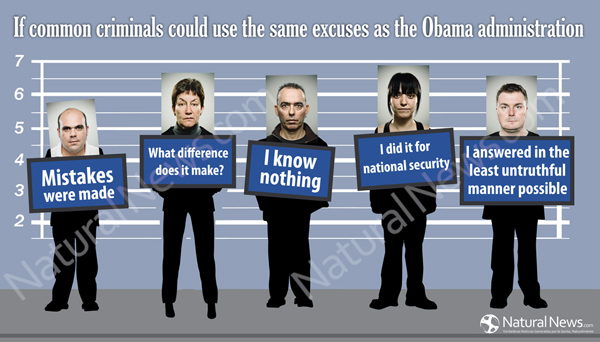
“I responded in what I thought was the most truthful, or least untruthful manner, by saying no.”

— James Clapper, Director of National Intelligence in an interview with NBC’s Andrea Mitchell

The question: is the Lesser offender  or the Greater offender  the Greater )ffender? It depends on one’s perspective. If the listener relies on spokesmen for the Greater (aka the government) then it is clear that the Lesser is the greater, if not indeed, the only offender. If one considers the Constitution and listens to the non-governmental commentators, the answer is less clear. It becomes even less clear when in its rush to condemn the Lesser, the Greater has been forced to acknowledge that it has lied and misrepresented things to those whom it governs. The Greater uses bluster and strong words to convince the listener that all virtue is found in its corner and none in the corner of the Lesser.

The Greater is not content to rail against its citizens who question its motives. They rail against foreign powers that fail to recognize the evils the Greater sees in the Lesser and threaten to jeopardize relations with those powers if they fail to accept the Greater’s demands with respect to Edward Snowden. Edward Snowden is, of course, the man who has forced the United States government to come clean about its activities that invade the privacy of citizen and non-citizen alike. And Mr. Snowden has not only forced the United States government to admit that it has lied to its people, it has caused the government to make blustery pronouncements to foreign countries. His actions have generated millions of words of commentary about the government’s actions.

In his daily briefing on June 24, White House Press Secretary, Jay Carney, expressed the administration’s outrage that China had not arrested Mr. Snowden after he had been formally charged by the United States with three felonies. Mr. Carney said that letting Mr. Snowden leave China for Moscow would have “a negative impact on the U.S. China relationship.” Mr. Carney failed to comment on the fact that Mr. Snowden’s disclosures have had a negative impact on the relationship many U.S. citizens have with their government. On June 17, 2013, President Obama told Charlie Rose that the cyber-hacking of U.S. companies and government agencies by China that was disclosed in a report early in 2013, could lead to a deterioration of relations between the two powers. He said that the Chinese understand “this can adversely affect the fundamentals of the US-China relationship.” Those comments were made before the South China Morning Post reported that MR. Snowden said the NSA has hacked major telecommunication companies in China, attacked network backbones at Tsinghua University and hacked computers at the Hong Kong headquarters of Pacnet.

Thanks to Mr. Snowden we now know that the National Security Agency has lied to the Congress and to the American people about its surveillance activities. We might have learned about it many years ago but for the law that prohibits those who know the government may be breaking the law from telling the people they represent that their government is breaking the law. As The Guardian reported, for at least two years Senators Mark Udall and Ron Wyden have been publicly stating that the U.S. government is relying on “secret legal interpretations” to claim surveillance powers that are so broad that Americans would be “stunned” were they to learn of them. Since the violations of law were classified the Senators could not let their constituents know what they are. In  a letter to Attorney General Eric Holder 2012 they said: “We believe that most Americans would be stunned to learn the details of how these secret court opinions [Foreign Intelligence Surveillance Court] have interpreted section 215 of the Patriot Act. As we see it, there is now a significant gap between what most Americans think the law allows and what the government secretly claims the law allows.”

In a letter to Gen. Keith Alexander, the head of the National Security Agency, Sen. Udall accused the agency of providing false information in a fact sheet it gave members of Congress about its spying programs.  The letter says the fact sheet has “significant inaccuracies.” Mr. Udall could not say what part of the fact sheet is inaccurate since that would “divulge classified information.” However, Mr. Udall says, “In our judgment this inaccuracy is significant, as it portrays protections for American’s privacy as being significantly stronger than they actually are. We urge you to correct this statement as soon as possible. (The Fact sheet was pulled by the agency.)

We now know that the NSA is collecting telephone call metadata on millions of Verizon customers. That contradicts Gen. Alexander who told Fox News in 2012 that the agency “does not ‘hold data’ on U.S. citizens. In a speech at the Reuters Cybersecurity Summit he said: “The great irony is we’re the only ones not spying on the American people.” It was General Alexander who told Congress that over 50 Terrorist Plots were thwarted thanks to the programs that he and his colleagues said didn’t exist. Citizens can decide for themselves whether or not to believe him.

What Senators Udall and Wyden thought citizens should know but could not disclose we now know. Not because of our elected representatives but because of a man now charged as a criminal. Go figure.

Christopher Brauchli is a lawyer living in Boulder, Colorado. He can be emailed at brauchli.56@post.harvard.edu.

Republished with permission from:: Counterpunch

Netanyahu admits to secret missions

0

Israeli Prime Minister Benjamin Netanyahu (R) attends a meeting in Tel Aviv on June 2, 2013.

Israeli Prime Minister Benjamin Netanyahu has acknowledged that the Tel Aviv regimeâ„¢s warplanes have carried out a number of secret operations over the past year.

Addressing a group of Israeli military graduates on Thursday, Netanyahu said, Å“In the last year, in a number of theaters, we acted, sometimes openly and sometimes secretly, and we achieved our goals,” the Times of Israel reported.

According to the report, the vague statement may refer to a number of aerial assaults conducted by Israeli warplanes on the Syrian soil.

On May 5, the Israeli military launched an air raid on the Jamraya Research Center in a suburb of the Syrian capital, Damascus, for the second time in three days following heavy losses inflicted upon al-Qaeda-affiliated militants by the Syrian army. The location had been targeted in another Israeli airstrike in January.

The Tel Aviv regime also violates Lebanonâ„¢s airspace on an almost daily basis, claiming the flights serve surveillance purposes.

Netanyahu also responded to former chief of Israeli spy agency Mossad Meir Dagan, who had scolded the premier for not acting on his threats.

Å“Whoever needs to know that we donâ„¢t only talk, but also act, knows,” Netanyahu said in response to Daganâ„¢s remark, that Å“when you have to shoot, shoot, donâ„¢t talk.”

On June 26, Netanyahu said military maneuvers in the occupied Golan Heights may be put into practice in the near future unlike the past Å“theoretical” drills. Israeli Minister for Military Affairs Moshe Yaâ„¢alon also cautioned that the military combat units may be called up on short notice.

MKA/HSN

Republished with permission from:: Press TV

The Wonderful American World of Informers and Agents Provocateurs

0

http://www.truthdig.com/report/item/the_wonderful_american_world_of_informers_and_agents_provocateurs_20130628/

Posted on Jun 28, 2013

Republished with permission from:: TruthDig

Love Notes From a Charlatan

0

I should unsubscribe to Organizing for Action (OFA)–a group supporting the election of Democrats, but I won’t, because I’m mining data from the obscenely insincere. The emails open with a clever ploy, use of the familiar, my given name. It’s almost intimate. Some are signed “Barack”. Here’s one, minus a few sentences:

Missy —

My administration is taking steps to cut carbon pollution, prepare our nation for the unavoidable impact of climate change, and put America’s best and brightest to work to solve this issue on a global scale.

One thing we know is we’ll face a well-organized and well-financed opposition by the special interests that profit from keeping things the way they are – and there are members of Congress who fundamentally deny the science on this issue.

I need to know you’ll fight alongside me. Say you will. [Subliminal, using the title of a love song.]

Over the next few months and years, I’m going to need the millions of OFA supporters who understand that we have a responsibility to future generations to fight climate change to join me, and be a force of change in your communities.

We owe it to our children and grandchildren to take action – and now is the time.

Today, I’m here to tell you I am committed to doing my part.

Say you’ll do yours:

Thanks,

Barack

This deserves only an “oh, please.” But I have to challenge, because many “progressives” are applauding the recent climate speech.

And Barack’s “…we’ll face a well-organized and well-financed opposition by the special interests that profit from keeping things the way they are…” is maddening. As if he ever obstructs these profiteers. And what about those who don’t deny the science, yet fail to change the status quo?

Tossing the “children and grandchildren” card is exasperating when Barack’s consigned to the young a future grimmer than dismal. His climate plan is less ado about something, a gift to the special interests for whom he’s expressed disdain. And any time he says “children” and “future” I immediately think about the consequences of his domestic and foreign policies.

In pledging to do his part, Barack implies he’ll nurture our ecosystem, yet his loyalty is to the fossil fuel industry. His words speak a different language than his actions.

The next message, from the Executive Director of OFA, Jon Garson, is sent on Barack’s behalf. Again, I’ve deleted some sentences, but here’s most of it:

Missy —

I love this:

President Obama is going to meet three supporters backstage at an event next month.

If you’re picked, you’ll get flown out for free to meet him – and you can even bring a guest.

Think of how happy you’ll make the loved one you pick to join you – and the photos you’ll be showing off to your friends and family for years to come of the experiences you’ve had as part of the movement for a progressive agenda for the nation.

Wow, I want to be selected. I have so many peace friends who’d like a face-to-face encounter with President Obama. Maybe, I’d invite A. as my guest. After reading one of my articles, he emailed. During an exchange, he wrote, “Current update on my Home country”–followed by:

In Baluchistan province of Pakistan, today the terrorists have blown up the museum-grade residence of father of the nation Muhammad Ali Jinnah; after few hours a bus full of female students of a women university was blown up in Quetta; and one and a half hour latter a tertiary hospital’s emergency ward was blown up where the injured female students were brought for treatment. Such is the state Pakistan is living after it has allied with the US in War on terror in Afghanistan.

Yes, A. described a single day. One day among many days and nights of terror–carnage countenanced and implemented by Barack Obama in countries across five continents, now.

Oh, my, I see two new messages from Jon Carson, neither of which needs to be opened. One of the subject lines is:
“The Supreme Court’s ruling this morning made history.”

I’m happy for the euphoric whose civil rights are recognized. I hope they’re inspired to end injustice in every area.

But really, this is our government deflecting, declaring DOMA unconstitutional while gutting the Voting Rights Act. As the NSA rapes our privacy. And GET this: A Democrat, one whose wife has received Gen. Wesley Clark’s endorsement for the 2016 presidential run, signed DOMA into law.

Again, I should unsubscribe to these OFA emails. But I can’t. They’re fascinating examples of hypocrisy. Like love notes from a charlatan.

Missy Beattie has written for National Public Radio and Nashville Life Magazine. She was an instructor of memoirs writing at Johns Hopkins’ Osher Lifelong Learning Institute in Baltimore. Email: missybeat@gmail.com.

Republished with permission from:: Counterpunch

The Disease of Caretaker Governments

0

A tear should be shed, though keep in the singular. Australia’s first female Prime Minister Julia Gillard and probably last for some time, is no more. Elected by unelected officials, she was knifed by the same individuals who encouraged the knifing of her rival, the now re-elected Kevin Rudd. Promoted by individuals an electorate would scarce recognise over an individual loathed for his personality and his dislike for factions, Australian politics stutters to its farcical climax come September.

The Australian opposition always termed them the factional bosses, the deranged nits of the Australian Labor Party who preferred favours to democracy. But the unstable mind is a terrible punishment, and the Australian public have found that their new Prime Minister is their ex-Prime Minister who was deposed in favour of the ex-Prime Minister. One leader (Rudd) could campaign but not govern; the other (Gillard) govern but not campaign. The bifurcation of the ALP’s leadership has been its source of torment and doom. Tribalism remains it source of misery.

On the basis of this recent conduct, there is much to be said that Australian politics in its current form should be abolished, its politicians either promoted to the Sylvan idyll (the equivalent of a cobwebbed House of Lords) or banished to some imitation of Devil’s Island on terms of hard labour. Better still, given its tardiness in protecting its citizens, the Australian government should petition for Australia to become a U.S. protectorate.

A note on the not so dearly departed. Gillard was always an extension of other people’s programs, their designs laced with factionalism, a person who might have done better had the blade remained in the scabbard. Her skills as a negotiator were never promoted, advertised or encouraged. A minority government is no mean feat, and gathering the views of independents is a rare skill in the Westminster system.

But every triumph of the Gillard government became an bumbling error. The mining tax did not yield the amount it should have. The mining companies always had the better accountants. The issue of refugees arriving by boat never went way — here, the Gillard government decided that it should go one better than the conservative Howard government and excise the entire mainland in abject defiance. Evidently, its lawyers aren’t much better than the accountants.

Gillard’s supporters, who were as reliable as Politburo hacks on the take, are now in retreat. Peter Garrett, not the best musician to gyrate in rock history, was a poor minister and has announced his retirement as Minister for School Education, Early Childhood and Youth. “I believe I have always acted in the best interests of the Party and the Government. I was a front-man who chose to be a team player and make a difference in politics.” A band is a not a party but don’t tell Garrett, one of the least able politicians since governors began being appointed by the imperial authorities.

Similarly, the spineless ex-deputy Prime Minister Wayne Swan, a person who always managed to make sound economic management look like an act of massive mismanagement, is handing in his resignation. “Politics is a tough business. The experience either makes you bitter or better. I choose the latter.” Standard rot follows: the ALP knows how to help working people, much is “on the line” and so forth. Rudd’s return will be Labor’s return.

Gillard herself suggested, not very convincingly, that Labor MPs “don’t lack the guts, don’t lack the fortitude, don’t lack the resilience to go out there and argue Labor’s case.” Even, it seems, when it is fictional. Regarding the nature of the opinion polls, Gillard also suggested that her colleagues had shown “spine in the face of that pressure.”

So who do we now have leading the ALP and the Australian nation? Rudd in his second bloom, a person deemed a mood freak, a micromanaging fascist with religious inclinations and a punishing God. He calls staff members late at night wishing them to provide him with material. He sits on decisions. He panics in the headlights, the nerd of nerds who finds paralysis at the end of analysis.

The current shambles of a government, this paraplegic sham, this mangled show, is what the Australian electorate has before it come September. Do you elect the chronically insane, or a fresh set of independent political figures who regard policy above faction, service above patronage? At this point in time, the Opposition leader Tony Abbott has all the cards, though his own credentials on stability are questioned. He is the wolf hiding in not so convincing sheep’s clothing.

There is no better time now than to seek an independent, elected leader of the country, one above the party drones who fear the demise of their feathered posts. An executive separate from Queen and the party machine, an end to the permanent regime of caretaker governments. The Westminster system needs reform. Now wouldn’t that be novel?

Binoy Kampmark was a Commonwealth Scholar at Selwyn College, Cambridge. He lectures at RMIT University, Melbourne. Email: bkampmark@gmail.com

Republished with permission from:: Counterpunch

Sleepwalking in Camden

0

With 77,000 people, Camden has one public library left, and in a city where Walt Whitman spent 19 years and is buried, there are exactly two bookstores, a Barnes and Noble serving Rutgers Camden students, and, not too far away, La Unique African American Books and Cultural Center, with The Master Game, The New World Order, The Unseen Hand and Say It Like Obama in its window. Camden has no hotel, and only one downtown bar, The Sixth Street Lounge. Hank’s closed in 2010 after half a century in business. Now, if you can barely drink in the heart of any American city, no matter how tiny, you know it’s seriously messed up.

Just off downtown, there’s also Off Broadway, however. The first time I entered, four years ago, I noticed “NO PROFANITIES” on the wall, yet the very stern barkeep had this T-shirt on, “PRACTICE SAFE SEX. GO FUCK YOURSELF.” You’re finally home, I thought. On that occasion, I was able to make the acquaintance of Jamaal, a 65-year-old former math teacher. A jazz lover, he told me his favorite concert ever was Art Blakey and the Jazz Messengers at NYC’s Blue Note. We talked about Mickey Roker, who used to be the house drummer at Philly’s Ortlieb’s. I once had a cassette of Roker keeping time behind Dizzy and Ray Brown, but it was erased by an embittered, life-hating middle-aged Korean art student I had lent the tape to. I should be awarded a peace prize, or some chintzy ribbon at least, for not strangling this motherfucker. A bottle of Rolling Rock in Off Broadway was, and still is, only $1.50. Jamaal informed me, “This place is all right. It has an older crowd. You can go home at the end of the night.”

“What’s the alternative?” I asked.

“Someone beats you up or shoots you.”

“I’d rather just go home.”

“Me too.”

In Camden, I had seen Wynton Marsalis at a free concert by the river. Like Baltimore, Camden has a safe tourist section, with a much smaller, grayer fish version of the celebrated aquarium. People who come to this protected enclave don’t need to see the real Camden, not that they want to. They can even arrive and leave via a ferry from Philly.

Lying outside Camden’s tiny bullet-free zone, the Walt Whitman House, on Martin Luther King Blvd, gets almost no visitors, not that Americans are flocking to pay homage to their writers. Even during its days, this “coop” or “shanty,” in Whitman’s own words, was called “the worst house and the worst situated,” and Camden was thriving back then, with its best decades still ahead. By the 1940’s, Camden would become an industrial powerhouse, with many factories employing blacks and whites, and the largest shipyard in the world.

“Yo, Chris Rock, I’m at the Walt Whitman House.”

“Run!”

In 2011, Ken Rose wanted to interview me by phone on July 4th, so I decided to do it in front of the Whitman House. On the day this country was born, I would not be in Philly, its birthplace, but Camden, its prototypical morgue. A habitually lawless government has no business celebrating the Constitution, and with this country being deliberately tortured and drown by its rulers, accompanied by flag-waving acquiescence of deranged voters, each 4th of July has turned into a sick and sad spectacle. Across the street was the Camden County Jail, and on the next block, ABC Bails Bond. Before Ken called, some guy shuffled up and said he was the caretaker of the Whitman home, but as we chattered, I soon realized he didn’t even know who Walt Whitman was. He referred to Whitman in the present tense, as in, “He owns this entire row, including the parking lot right here.” Predictably, he wanted me to give him some change.

Yes, some Camden folks will ask you for cash, but many will also offer you cigarettes, dope or sex. Here, illicit dealing is king. Also in 2011, I met Abdul, who was selling body oils, perfumes, knit hats and boxer’s shorts from a table set up in front of a fried chicken joint. After peddling stuff for 7 years, business was getting worse and worse, so Abdul was planning on moving to Senegal, where he had a wife. Years ago, he had been busted for drugs, a wrong conviction, he claimed, and locked up for 3 1/2 years. In prison, he converted to Islam. Released, he visited Senegal. As he walked into a Western Union, the lady behind the counter exclaimed, “You’re my husband! I saw you in a dream.”

His wife was 40-years old, and “doesn’t have a bad thought,” Abdul said. “She can’t be any better!” Since she didn’t want to come to the States, he would go to her. He was having a house built over there for $20,000. He sent her boxes of old clothes to sell. “American clothes are popular in Senegal,” he explained. “Even used clothes.”

“Where do you get old clothes? Where do you buy them?”

“I don’t buy them. I get them from my relatives!”

In 2012, I met another Black Muslim man, 38-ish, who also sold on the sidewalk, in his case socks from a wheeled cart. Across the street was the ruins of the Carnegie Library, so I said, “That was a beautiful building once!”

“I hear they’re gonna fix it up.”

“Really?! But the city is broke. Camden is broke.”

“Camden is broke?”

“Yeah, man, Camden is broke. Philly is broke. The whole country is broke! Didn’t you hear about all the cops they laid off?”

“They got money.” He then read from the inscription on the building. “Nineteen-O-four. Man, that building is old. How old is that? Thirty, forty years?”

“It was built in nineteen-O-four, so it’s over a hundred-years-old.”

“Really?”

He told me about a cop who had given him a ticket for selling on the street, “The judge will throw it out, though, because I was sitting in a restaurant when he busted me.”

“Yeah, but you’ll still have to waste your time in court. What an asshole! Doesn’t he have better things to do than to bust people trying to make a living? This city is so fucked up and he’s busting you, and you’re not hurting anybody.”

“There is a lot of complaints about this guy.”

“Is he an older guy?”

“No, a young cop, a young, white cop.”

Whoever this cop was, he’s gone, because Camden has laid off its entire police force. That’s right, all 270 cops who survived previous layoffs were let go in April of 2013, though 50 were immediately hired by the County Police that’s now in charge of keeping Camden, um, safe. Announcing this restructuring, the mayor said, “We cannot sit back and allow our children and families to experience another 2012.” Or another 2011, 2010 or 2009, etc., for year in, year out, this post-industrial city ranks as one of the deadliest in America. With its cops trimmed and shuffled, little has changed on Camden’s streets, though there’s a mobile observation tower across from the bus terminal. Inside that box is an anxious man with his head rotating nonstop, or a dozing schmuck, or no one at all, but you wouldn’t know, would you? An instant panopticon, it is sprouting up everywhere, from theme park parking lots to your next mass protest. The Guardian Angels also made a cameo appearance in Camden, but have wisely disappeared. Unarmed, they’d stand an excellent chance of being peeled off the sidewalk, then rolled, posthaste, into Cooper Hospital, Camden’s one world class institution. Come to Camden, where you can be cut up or expire with distinction! World class hands will stitch you up!

“Work here. Play here. Live here,” shout the LIVE CAMDEN billboards, but until recently Baltimore also declared itself, “The Greatest City in America,” and Milpitas, whom most people have never heard of, drapes banners all over its blink-and-miss downtown, trumpeting, “MILPITAS A Great American City.” Whatever. What is Juarez’ slogan, I wonder? Or Kabul’s? Speaking of Cooper, I must tell you about Paul Matthews Young, whom I met in 2012 at the Broadway train stop. On a plate glass window, this 50-ish man had taped his New Jersey ID, social security card and about eight sheets of paper showing his “Moneterial Earning Assessment.” It wasn’t clear what he was trying to convey, to whom, or if it was some kind of protest. When he told me had 18 children, I asked, “With how many women?”

“None.”

“What do you mean none?!”

“I had them by myself.”

He said his 18 kids were born microscopic from the tip of his penis. The doctors at Cooper had something to do with this, but I couldn’t get him to explain fully the procedure beyond the fact that Paul had to pleasure himself quite energetically.

Hearing Paul’s story gave you that old, most generic notion? Now that you’ve got your cheap, discount sox made in China, you want some flesh also? Are you, by chance, versed in gonorrhea? You speak syphilis? Can you spell AIDS? It’s not so much a carnal need, you say, but simply an ethereal desire to assist, or rather, nudge up, the local economy? See her, that’s Angela. She looks about 14, but she might be as old as 17. Walking unsteadily, her eyes are practically closed, but she can see enough to tell that you’re not serious. She’ll keep walking because she has no time to lose. Each day, she can easily go through five or six bags of dope, plus some powder for variety, plus she has to eat, too, and maybe down a few cans of Steel Reserve to flush that lousy Chinese food, bought from Yuk’s, yes, that’s really the name, at 827 S. Broadway. I’m not making anything up. Why would I? No one knows anything about Angela, not even her best friend. Thirty-three-year-old Michelle regularly gives Angela food and dope, but Angela still won’t say nothing about herself, and don’t you give me that shit about her being too drugged to remember, because on one level or another, none of us ever forgets anything.

I won’t forget walking with Michelle when she said, “That’s my baby’s daddy,” and she pointed to some guy across the street. Squinting, the dude was probably thinking, “What’s my side piece doing with that Chink (or fuckhead, or asshole)?” You know, anything but “gentleman” or “Asian American,” per the New York Times stylistic guidelines. To think is already to compose, and thus to dissimulate and cover up, and to write is to further distort, nearly always, what we pretend to think, but writing, paradoxically, can be used to hint at the rawness beneath all this culture, this domestication, this farce, this composition. This half-assed expose almost never happens, however. Maybe it has never happened. Looking hazy, dude kept squinting as if he had a hard time recognizing his lay even.

“It’s Rashid’s birthday!” Michelle shouted.

“Huh? What?”

“Rashid! It’s Rashid’s birthday today!”

Showing no emotion, no smile, no grimace, dude gave Michelle one final squint, then kept walking.

“He doesn’t remember his son’s name?” I chuckled.

“No, he remembers. Lamon’s just a little out of it today.”

“How old is Rashid?”

“Eight! He’s eight-years-old!”

“And he stays with you?”

“No, with my mom.”

“So your mom is not so bad after all.”

“She might as well do something for him, since she didn’t do shit for me!”

Though Michelle is one-quarter Okinawan, it’s hard to see any Asianness on her white face. She was mostly raised by her Japanese grandma, but at 16, she moved to Camden. Already a coke head, she got hooked on heroin at 19, thanks to her junkie uncle. Unable to pay for her daily treat, she started to trick, “I’ve been raped and beaten. Look,” she opened her mouth, “these are dentures. I don’t like to go with young black guys. They’re fucked up! There are, like, nine guys who go around beating up girls.”

“Just for the hell of it?”

“Yeah, just for the hell of it. This is Camden!”

“So what are you going to do? What’s your next move?”

“I’d like to get into rehab, maybe go to Florida.”

“What’s in Florida?”

“I dunno. There’s a good rehab place in Florida. My sister told me about it. I need to get out of Camden, that’s for sure.”

Her pale arms showed purple needle marks, and so did the tops of her hands. Her veins have collapsed. A blue headed pin pierced her upper lip, a large hoop dangled from one ear, and her hair had been dyed a burnt siena or, more likely, was just a red wig. It was a very hot day, yet she was draped in a charcoal colored hoodie, and her faded blue tank top had been rendered lumpy by cheap, ill fitting bra. For someone living rough for so long, Michelle still appeared fresh, so I said, “You know, you don’t even look 33-years-old. You actually look younger!”

“You think so? I used to be beautiful.” She pulled two ID’s from her cloth sack, showed them to me.

Holding one up against her face, I pronounced, “No, I think you actually look better now, but you better get the fuck out of Camden soon.”

She smiled. Her dentures were newish, for they weren’t too yellow. Maybe she had just gotten punched? Michelle then volunteered that Lamon may be pissed because she had been seen with another guy.

“Some guy you like? Some guy you love?”

“It does get lonely out here… Hey, you want to hear something weird? Just last night, this one girl got so fucked up, she took her clothes off and ran down the street.”

The same night, 20-year-old De’quan Rodgers was shot dead, and another young man, 19-years-old, was found with multiple bullet wounds. About three hours before I chatted with Michelle, three more men were perforated. Shootings are nearly daily occurrences here, but a young naked woman running down the street is goofy enough to be remarked upon, if only for the next 24 hours or so.

All over town, there are RIP messages spray-painted onto walls, near where a loved one has died, whether targeted or hit by stray slugs. Sunrise, sunset. Sunrise, sunset. You live and talk much shit until Jesus, Allah, Bruce Lee or Liberace text you, “Kum home, losr.” You strut about and blather beaucoup merde until Glock, SKS or Bersa Thunger tap you on the shoulder and whisper, “Hiya!” Even as you crawl on all fours, sightless and toothless, with your liver, spleen and entrails hanging out, it’s still too early to call it a night. Is it last call already? On a memorial for Izzy and Cunt, someone has scrawled, “Heaven is where we go but hell is where we live.” On shop windows and doors are flyers begging for information on Camden’s disappeared. Some have come to buy drugs, never to be seen again. Some were just strolling to the bodega or the Chinese joint’s bulletproof window. Yuk’s, it’s so yummy!

Sorry, man, all you wanted was a beer and here I am dragging you down with talks of bullets, blood, gurneys, scalpels, needles and more blood, so much blood, blood geysers, showers of blood, so let’s head straight into Off Broadway, without further delay. As if to negate the chaos outside, this dump has so many rules, dude, as in:

NO T-SHIRTS OR VEST

NO HATS TURNED AROUND BACKWARDS

NO SCARVES

NO HOODS OR SKI CAPS

NO BAGGY PANTS

ALL TEE-SHIRTS OF ANY COLOR

MUST HAVE LOGO’S THAT ARE VISIBLE

MUST BE NAVEL HIGH

LOGO MUST BE ON YOUR

CHEST OR BACK

PLEASE DO NOT YELL OR SHOUT

ACROSS THE BAR

THANK YOU

ATTENTION BAR PATRONS

PLEASE DO NOT STAND

ON CHAIR RAIL

PLEASE PLEASE ANYONE CAUGHT TOUCHING

TV WILL BAR YOURSELF PERMANENTLY

ANYONE TOUCHING APPLIANCES BARRED

YOURSELF NO EXCEPTIONS

EMPLOYESS HAVE THE RIGHT TO CHECK

BATHROOMS AT ALL TIME

And, of course:

BE AWARE

THESE PREMISES ARE UNDER 24 HOUR VIDEO

SURVEILLANCE INSIDE & OUT

Well, I’m glad I have a dress shirt on, and no pantaloons, and I’ll do my best not to get touchy feely with that television. Watching a news story of five guys stealing 17 Rolexes after smashing its display case, the barflies whoop with astonishment and delight, but they are blasé about a school shooting simulation. As I eat a sad cheesesteak, with its dispirited meat, cheese and bread, bits of conversation drift to me.

“Yes, there was this girl born without a rectum, and she’s alive still. They haven’t fixed her yet, but they will.”

“You never had possum hash?”

“No, I’m a city boy. I don’t know nothing about that. My cousins in North Carolina might, though.”

“Possum is sweet. It’s an all right meat. And muskrat is OK too. You ought to know what’s edible, and what’s not, because it might come in handy one day.”

“No, ma’am, I’m happy with my chicken and my steak, thank you. I don’t need no squirrel, no rabbit, no raccoon, no possum. Why should I bother about any of that, when I can just go to the store?”

Surrounded by rules, we aren’t any safer, for a dickhead or two can just come in to make everyone lie on the ground, then relieve us of wallets and purses. Most patrons are bunched up at the far end, however, so they’ll have a better chance to see what’s what should shit happens. (Sign on a Camden wall, “If you believe shit happens, park here.”) Several of these lushes are probably packing.

Three Beyonce tunes in a row tell me it’s time to get the fuck home. Soon I’ll stagger into the dusk, into a half feral city of aimless men and women dwelling in rotting row houses, abandoned shells shrouded by vines and shrubs, or tents, like those clustering by the freeway, across from the long-shuttered Sears and beyond a billboard pitching $5,000 Yurman watches to passing motorists. Living apart in a squalid tent down a dirt path blocked by plywood, branches and lumber, ex factory worker Beasto can choose between bacon, hot dog or pork chop, all stored unrefrigerated in a sack of rice, and all reeking, of course. Fifty-seven, he’s been away from Puerto Rico 43 years. Meanwhile, junkie Tina has left her tent, cleaned herself up and reconciled with her mom, so of course, of course, a cheerful respite, or recovery, if you will, is temporarily possible, within the larger framework of tempered hope, outright disappointment and, naturally, unmitigated horror. Staggering on, I will pass by Cooper, where wizardly doctors can give each of us a cleaner, fresher asshole, to pump up our always suspect vanity and confidence, or I might run into lovely Michelle or Angela, for they will still be out there. All night long, she’ll sleepwalk from one john to another, just so she can score and score, until she finally disappears.

Linh Dinh is the author of two books of stories, five of poems, and a novel, Love Like Hate. He’s tracking our deteriorating socialscape through his frequently updated photo blog, State of the Union.

Republished with permission from:: Counterpunch

The Snowden Affair

0

Political Washington is in a fit over the Snowden affair. It is little disturbed by PRISM, Tempera and related abuses against the Republic. Therein lies the unhappy reality of American democracy today. The ferocity of the assault on Snowden and his sympathizers suggests more a collective nervous breakdown among our elites than it does any serious deliberation on what has happened and what we have learned. Indeed, the very purpose of these massive surveillance systems is obscure — other than the repeated reference to ‘securing’ America. From whom — exactly? Defanged terrorist organizations, the Zeta drug cartel (core leaders trained at Fort Bragg), international pedophilia networks of the non-Vatican variety? All we get as answers are fulminations.

With blood in their eyes, Senators Feinstein, Schumer, Graham et al demand a reckoning — by which they mean Snowden’s brutal incarceration a la Manning followed by a speedy conviction for treason. A juridical lynching. The Obama administration joins in the angry tirade and directs its fury abroad, too — at Russia’s Vladimir Putin who is threatened with retaliation so dire as to be left to the imagination, at Hong Kong & the PRC. On the latter, there is necessarily a measure of restraint since the world’s Numero Uno could not survive financially intact for an hour were Beijing to dump just a small fraction of the trillion + dollars it has stashed away. Mutual Assured Destruction.

There is a touch of madness in all this. For the well-being of the United States is in no significant way jeopardized by the substance of Snowden’s revelations — mutterings about “irreversible damage” from General Clapper, General Alexander, Secretary Hagel, and the White House notwithstanding.  Let’s look beyond the storm of rhetoric at the far more temperate reality. First of all, the United States has no enemies out there who are in a position to do us grievous harm — other than by nuclear arsenals which we have lived with for 60 years and which are totally unaffected by NSA spying. That is one. Nobody with a smidgeon of sense conceives of a plot by any major power against the integrity of the country, with or without assistance from residents in the United States who are targeted by these surveillance programs.

As for terrorism, it is a diffuse danger long since degraded to a “disturbance” in the international weather with little potential to strengthen into something menacing. That is two. Besides, what is the logic of upending the Constitution out of the abstract fear of another Boston bomber when we managed to cope with Nazi Germany and the Soviet Union without resort to such extreme measures? There was a lot of huffing-and-puffing about “at least 50 plots” foiled thanks to PRISM by Alexander and others. All we got was the referencing of a couple of instances that were of such insignificance as to make the assertion appear ludicrous.*

FBI Director Robert Mueller, testifying before Congress, had the effrontery of presenting as an example of an alleged plot supposedly thwarted the instance of some Somalis in Los Angeles sending $8,500 to a group in Somalia allegedly associated with al-Shabaab — a rag-tag local outfit fighting its own internal civil war and little interested in the United States. This is what we get for $83 billion per annum and an assault on our constitutionally guaranteed civil liberties?

The most “sophisticated” response comes from dutiful backers of the Obama presidency who claim that the White House stands as the last bastion against the legions of Tea Partiers who will sweep away all restraint were there to be another 9/11. Geoffrey Stone, former Dean at the University of Chicago and Obama confidant, has offered this scenario as grounds for keeping the surveillance state intact — with a very few minor modifications. He deserves to be quoted at length:

“what Snowden has revealed is information about ongoing programs, which, we’re told, are extremely important to the national security, and we’re told that the revelation of those programs makes them far less efficient. That’s a very serious–potentially very serious harm to the nation (Bold added)….

 You not only have to protect civil liberties, you also have to protect against terrorism, because what will destroy civil liberties in this country more effectively than anything else is another 9/11 attack. And if the government is not careful about that, and if we have more attacks like that, you can be sure that the kind of things the government is doing now are going to be regarded as small potatoes compared to what would happen in the future. So it’s very complicated, asking what’s the best way to protect civil liberties in the United States.” (Democracy Now June 12, 2013)

Stone makes these assertions as if it were uncontested truth when, in fact, he is parroting White House talking points that have no evidential basis. He is either unaware of these facts or blithely ignores them.

The Stone thesis rests on three highly dubious premises. First, it ascribes to al-Qaidi capabilities that simply do not exist — as all disinterested specialists agree. There simply is no 9/11 or any approximation of it lurking over the horizon. Second, there is no persuasive case to be made that PRISM and related programs are an effective means for identifying and countering a serious conjectured threat. That is not the way good counter-intelligence works. Third, Stone expresses an attitude that plays fast and loose with constitutional guarantees. He, and his fellow self-styled “realists” — like the President himself, ascribe to the right-wing crackpots as embodied by the Tea Party a political clout which they do not possess. (Fact: A majority of Americans actually think that Snowden’s action was worthwhile). Moreover, to the extent that the American public is susceptible to demagogic exploitation of their fears, that condition is due in large measure to the Obama White House’s own campaign of stoking those fears with baseless claims of menacing threats against the United States. The efforts of people like Stone should be directed at persuading the President and his intimate counselors of the imperative need to convey two critical messages: America is not in grave danger; it is the weak and unpatriotic who are willing to sacrifice in a fit of panic the essence of the political compact that makes us who we are. Recommending that we curtail our liberties out of an expedient calculation that there is not the will to defend it is a craven approach that, sadly, bespeaks an attitude that pervades a large part of our political establishment.

Gross failures of probity, will and conviction are drastically weakening Washington’s grip on reality. Its denizens are participants in a theatre of the absurd that is beyond the emotional capacity of our political class to recognize. That is the tragedy. There are strong, legitimate grounds to conclude that these phenomena do not yield their full meaning to conventional political or organizational analysis. The dismaying truth is that we are in the realm of psychopathology.

This warped public discourse is most clearly seen in yet another program, to be executed government-wide, that the Obama White House has been pressing; it has been exposed in secret documents published by the McClatchy newspapers.  This Insider Threat Program calls for a draconian set of measures that foresees fellow employees as well as managers monitoring the behavior of personnel for signs that they might be inclined as some point in the future to leak material — classified or not — to unauthorized persons. The draft proposals go so far as to demand that managers punish those who balk at snitching on their co-workers. “Wreakers” we might call them — in line with the old Stalinist nomenclature for those who showing insufficient revolutionary zeal for “building Communism.”

Even the Social Security Administration and the Peace Corps are slated to be subject to this draconian control regime.  Leaks to the media are equated with espionage; “hammer this fact home . . . leaking is tantamount to aiding the enemies of the United States,” thunders a June 1, 2012 Defense Department strategy memo on the program. That sort of thinking is already manifest in Attorney General Eric Holder’s written statement that FOX reporter could be indicted as a co-conspirator because he wrote a story based on a conversation with a State Department officer that included nothing of a classified nature. By these standards, Edward Snowden indeed is a threat to the nation. If the program is implemented as planned, we will be heralding the arrival of 1984 — albeit a few decades behind schedule.

The move toward a establishing a Big Brother state alien to all American tradition and practice is a historic turning-point. Our ostrich-like hiding from this bleak truth is a crucial element in the equation that is making it possible. America’s supposed public servants are transforming themselves into self-proclaimed guardians — with neither cause nor justification. Obviously, there are deep-seated insecurities at play — as well as raw political ambition and careerist aspirations. Secrecy — blanket secrecy, ruthlessly enforced — therefore becomes a compulsion. Snowden is a threat to those elements of our political class obsessed with acquiring the insignia of rank that come with success in lodging oneself in the upper echelons of officialdom. His very courage exposes their self-serving conformity. At the same time, it challenges the control that secrecy endows them with. Control creates feelings of empowerment — the sense of power being more important to fragile personalities than its actual exercise.

What is being concealed is more than the domestic spy apparatus itself. Also concealed are the distortions and untruths about what these systems can and cannot do. As noted above, the value of Mass Data Mining for legitimate purposes of intelligence is greatly exaggerated. There are glaring discrepancies between what theoretically is possible and what we actually accomplish. Don’t we have enough examples of failure re OBL, the Taliban leader cum grocer who fooled Petraeus, Benghazi, etc. to raise doubts about these forecasts of governmental omniscience and latent omnipotence? From a civil liberties perspective, the best thing we have going for us is incompetence — some rooted in human frailties, some rooted in institutions, some rooted in the disconnect between technology and the limited minds that currently direct it.

The Clappers, Alexanders, Holders, etc. are small bore thinkers who possess a small capacity for major political enterprise. In this context, that is reassuring — on balance. By contrast, if there were a Markus Wolf among them, one should be far more worried — Wolf being the East German master spy who for twenty years pitched a perfect game against the West Germans, the U.S., Britain and everyone else in the West. Excited fascination with technology can distort our interpretation of the spying/surveillance question. Think of this: neither the Nazis nor the Bolsheviks needed more than rudimentary technology to put in place and to operate a totalitarian system. It was a fixed dogma, a draconian police apparatus and a remarkably disciplined corps of ruthless leaders that enabled Hitler and Stalin to achieve a level of total suppression.

Today, not only is it obvious that persons with such ambition and traits thankfully do not exist in the United States, but — beyond that obvious fact — grand schemes of any sort are alien to just about anyone among our political elites Those who will be in position to exploit the surveillance state that is taking shape are small minded men of petty ambition. Their gratification comes mainly from the sense of power of having all this capability and information at their disposal — not using it systematically to do something diabolical. Of course, they will continue to persecute and prosecute anyone who either exposes their secret project or who highlights the discomforting truth that it serves no important purpose whatsoever.

My main points are these. One, I see little evidence that MOST of the officials involved have any goal beyond creating and maintaining the system, i.e. no plans for its full exploitation for an enduring political purpose. Abuse, of course, is possible — and likely in individual cases — but nothing systematic. Two, the technical design may be worthy of a Markus Wolf but not the overall political plan — which, to my mind, simply does not now exist. Wolf was a dedicated Communist who used all his talent to advance the cause of the DDR/USSR/ & world Communism. He would have been single-minded and brutal in using PRISM etc toward these ends. What are our current officials aiming at? Supposedly. American security — whatever that means. But they have neither a defined tangible enemy nor an embracing scheme.

Three, one way to understand these people’s psychology is to think of the Masons of yore coming to power and operating such an apparatus. Their goal? Exclusivity, status, secret rituals — all with an overlay of dedication to preserving the sanctity of vague principles. Frankly, at the end of the day I sense that the thinking (such as it is — or, better, sentiment) of Clapper, Alexander. Holder, Obama, et al centers on deriving a deep satisfaction from being something special and doing something noble even as they can’t define with any precision what tangibly that actually is.

Of course, the Masons were much better at safeguarding their secrets of the Inner Sanctum. The NSA Guardians had one Secret so big that it takes one million persons with Top Secret security clearances to keep it oiled and lubed. That is akin to advertising access to the Ark of the Covenant on E-Bay.  So fixated were they on probing everyone else’s secrets that they ended up making exposure of their Holiest of Holies inevitable. That can be called hubris — or, we can use the less flattering ‘s’ word.

The very fact that the systems are being created with no ulterior purpose or even any definable concrete objectives in mind means that success or failure is immaterial. It’s playing the game and fondling the machinery that counts.

The key question is not how best to collect great masses of raw data; it is what you do with information once you have it. I cite in this regard: Operation Barbarossa, Crete, Iran 1979 and the Chinese moves across the Yalu into North Korea. In all those cases, the requisite information was available but ignored. The same holds for 9/11 where the FBI had two field reports of suspicious persons taking fly lessons which were shelved — the reports’ information was obtained the old-fashioned way. The record suggests that most ‘intelligence’ failures are actually failures of intelligence.

Let’s also remind ourselves that the gravest threat to the well-being of the United States over the past decade came from “Wall Street.” Some people at least knew all the shenanigans that were going on and their implications. The Fed was warned of the housing bubble’s potential menace in 2006. The actual tapes of the Open Market Committee meeting at which these concerns were raised are available to the public. Governors, led by Ben Bernanke, can be heard laughing at the ‘ridiculous’ idea of a bubble.

Electronic Data Mining of communications is conceptually an enlarged version of network analysis employed to establish patterns of social interaction — that’s all. Only direct knowledge of the particulars enables purposeful action. We should have learned that lesson from Iraq, Afghanistan, Yemen. Otherwise, you get the counter-productive ‘signature strikes,’ mass detentions and a false presumption of actually accomplishing something other than shooting oneself in the foot.

Michael Brenner is a Professor of International Affairs at the University of Pittsburgh.

Republished with permission from:: Counterpunch

Israeli aircraft fly over Lebanon

0

Israeli warplanes and drones have violated Lebanonâ„¢s airspace and flown over several areas of the country.

The Lebanese Army Command Guidance Directorate said two Israeli drones violated the airspace from above the southern village of al-Naqoura, situated about 91 kilometers (57 miles) south of Beirut at 9:35 a.m. local time (0625 GMT) on Thursday.

According to the report, the Israeli drones also executed circular flights over the southern towns of Baalbeck and Hermel. The drones then left the Lebanese skies at around 8:20 p.m. local time (1720 GMT).

The report further indicated that six Israeli warplanes also breached Lebanonâ„¢s airspace at around 11:00 a.m. local time (0800 GMT) and executed circle flights over different parts of the country. They left the airspace at around 7:20 p.m. local time (1420 GMT).

Israel violates Lebanonâ„¢s airspace on an almost daily basis, claiming the flights serve surveillance purposes.

Lebanonâ„¢s government, the Hezbollah resistance movement, and the UN Interim Force in Lebanon, known as UNIFIL, have repeatedly condemned the Israeli overflights, saying they are in clear violation of UN Resolution 1701 and the Lebanese sovereignty.

UN Security Council Resolution 1701, which brokered a ceasefire in the war of aggression Israel launched on Lebanon in 2006, calls on Tel Aviv to respect Lebanonâ„¢s sovereignty and territorial integrity.

In 2009, Lebanon filed a complaint with the United Nations, presenting over 7,000 documents pertaining to Israeli violations of the Lebanese territory.

MKA/HSN

Republished with permission from:: Press TV

Is Monogamy Natural? Our Anatomy Suggests Perhaps Not

0

<!–

MailChimp RSS-Email Widget

–>

From incest to sperm competition and polyamory, anatomy–not social arrangements–explain how a species mates and partners.

Photo Credit: Shutterstock.com/panbazil

June 17, 2013
 |

Like this article?

Join our email list:

Stay up to date with the latest headlines via email.

It is tempting to assume that mating arrangements directly match the typical social pattern. For instance, in a pair-living species it might seem obvious that the adult male sires any offspring of the pair. In other words, pair-living social organization and strictly monogamous mating may appear to be two sides of the same coin. Take, for example, the thousands of pair-living bird species that have traditionally been regarded as strictly monogamous. Countless hours of observation by dedicated bird-watchers failed to reveal any deviation from strict limitation of mating to the partners in a pair. However, the advent of DNA-based paternity tests changed all that. Surprisingly, for nine out of every ten bird species studied, it was discovered that the pair male did not consistently sire all offspring in a nest; about half of them resulted from extrapair copulations. How, we may ask, did such extrapair mating escape detection through the binoculars of all those eager bird-watchers? The answer is that “sneaky” copulations are rapid and discreet. The pair male may be as unaware of them as the peeping ornithologist.

Theorists have leapt in to explain these exciting new findings, incautiously borrowing loaded terms from the human arena. Ironically, the Middle English “cuckold,” used to describe human infidelity, was originally derived from an old French word for cuckoo. Coming full circle, it is now widely applied to animals to refer to pair-living males tending offspring that may not be their own. The customary explanation for this occurrence is that it is in a female’s genetic interest for different males to father her offspring. She may pair up with one male to ensure paternal care while also engaging in extrapair copulations that will boost genetic variability in her offspring. It is in a female’s interest to conceal from her pair mate any sneaky copulations with other males. If the female’s partner were to become aware of the threat to paternity, he might abandon the nest. Or so the argument goes.

This explanation assumes that a male’s overriding interest is to strive for exclusive paternity of any offspring in his nest. Hence strong selection would be expected for any mechanism that reduces the likelihood of extra-pair copulation. Yet chances are that any pair-living male will himself seek mating opportunities with females of nearby pairs. As is the case for females, it is surely in a male’s genetic interest to father offspring in nests of females paired with other males. Perhaps there is a trade-off between a male’s interest in defending paternity of offspring in his own nest and benefits from contributing to paternity of offspring in other nests. Males, too, can spread their options. In any event, the mating arrangements of pair-living birds have turned out to be considerably more tangled than originally believed.Thus patterns of social organization and mating systems are not simply two sides of the same coin; they can vary independently, at least to some extent. This variation also applies to mammals, including primates. DNA-based tests have been used to assess paternity in a few mammal species, and similar results have emerged. Compared to the wide array of studies conducted with birds, there have been few genetic studies of paternity in pair-living mammals, but evidence for frequent extrapair copulations will doubtless emerge. To take one example, in 2007 behavioral biologist Jason Munshi-South conducted a DNA-based study of a pair-living treeshrew species in Sabah (Borneo) and found a high level of extrapair paternity. Similar evidence has also been reported for certain pair-living primates–for example, for fork-crowned lemurs and fat-tailed dwarf lemurs, both night-active inhabitants of Madagascar. Even gibbons, the prime example of monogamy in primates, have been observed engaging in sneaky extrapair matings in the wild.

Liked this article? Join our email list
Stay up to date with the latest headlines via email

Like Alternet on Facebook

‘;
jQuery(‘#root_subfooter’).before( html );

var slide_top_offset = calculate_slide_div_top_offset();
var slide_left_offset = calculate_slide_div_left_offset();

jQuery(‘#like_alternet_on_fb’)
.css(‘position’,’fixed’)
.css(‘top’,’-100px’)
.css(‘width’,’450px’)
.css(‘height’,’105px’)
.css(‘background’,’#E8E8FB’)
.css(‘border’,’10px solid #223BBE’)
.css(‘border-right’,’0px’);

toggle();

}

function resize_slide_div(){

var slide_top_offset = calculate_slide_div_top_offset();
var slide_left_offset = calculate_slide_div_left_offset();

jQuery(‘#like_alternet_on_fb’)
.css(‘top’,slide_top_offset)
.css(‘left’,slide_left_offset);

}

/* HOOK SCRIPT INTO EVENTS */

var paging = String( getUrlVars()[“page”] );

if( paging == ‘off’ ){
var is_paging_off = true;
} else {
var is_paging_off = false;
}

//console.log( ‘Is paging off ? [‘ + is_paging_off + ‘] ‘ + getUrlVars()[“paging”] );

var page = String( getUrlVars()[“page”] );

if( page == ‘undefined’ ){
var is_first_page = true;
} else {
var is_first_page = false;
}

//console.log( ‘Is first page ? [‘ + is_first_page + ‘] ‘ + page );

jQuery(window).scroll(function() {

var scrollYpos = jQuery(document).scrollTop();

if( scrollYpos >= pop_in_yPos && on_off_toggle == ‘off’ ){
toggle();
}

if( scrollYpos

‘;
jQuery(‘div.media-image’).each( function(index){
src = String(jQuery(this).children(‘img.media-image’).attr(‘src’));
if( src != ” && src != ‘undefined’ ){
parts = src.split(‘/’);
if( parts[parts.length-2] == ‘slideshow’ ){ new_src = ‘/files/slideshow/’+parts[parts.length-1]; }
else if( parts[parts.length-2] == ‘AFP’ ){ new_src = ‘/files/images/AFP/’+parts[parts.length-1]; }
else if( parts[parts.length-2] == ‘public’ ){ new_src = ‘/files/’+parts[parts.length-1]; }
else if( parts[parts.length-3] == ‘public’ ){ new_src = ‘/files/’+parts[parts.length-2]+’/’+parts[parts.length-1]; }
else { new_src = false; }
if( new_src ){ jQuery(this).html(‘‘+jQuery(this).html()+enlarge_html+’‘); }
}
});

var slideshowdiv; var new_html; var img_obj; var sourcediv; var titlediv; var captiondiv; var title; var caption;

jQuery(‘div.slideshow-body div.slideshow div.field-item’).each( function(index){

slideshowdiv = jQuery(this).find(‘div.altslideshow-embedded-gallery’);
img_obj = slideshowdiv.find(‘img’);
src = img_obj.attr(‘src’);

title = slideshowdiv.children(‘div.altslideshow-title’).html();
if( title == null ){ title = ”; }

caption = slideshowdiv.children(‘div.altslideshow-caption’).html();
if( caption == null ){ caption = ”; }

if( src != ” && src != ‘undefined’ ){
// alert( ‘SRC: ‘+src );
parts = src.split(‘/’);
if( parts[parts.length-2] == ‘slideshow’ ){ new_src = ‘/files/slideshow/’+parts[parts.length-1]; }
else if( parts[parts.length-2] == ‘AFP’ ){ new_src = ‘/files/images/AFP/’+parts[parts.length-1]; }
else if( parts[parts.length-2] == ‘public’ ){ new_src = ‘/files/’+parts[parts.length-1]; }
else if( parts[parts.length-3] == ‘public’ ){ new_src = ‘/files/’+parts[parts.length-2]+’/’+parts[parts.length-1]; }
else { new_src = false; }
// alert( ‘New SRC: ‘+new_src );
if( new_src ){
img_obj.parent().attr(‘href’,new_src).attr(‘rel’,’lightbox[slides]’).attr(‘title’,title+’
‘+caption).append(‘

Click to enlarge.

‘);
}
}

//sourcediv = jQuery(this).find(‘div.altslideshow-source’);
//titlediv = jQuery(this).find(‘div.altslideshow-title’);
//captiondiv = jQuery(this).find(‘div.altslideshow-caption’);
//sourcediv.after( titlediv ).after( captiondiv );

});


Republished with permission from:: AlterNet

This Really Is Big Brother: The Leak Nobody’s Noticed

0

This McClatchy piece (written by some of the same people who got the Iraq war run-up story so right while everyone else got it wrong) is as chilling to me as anything we’ve heard over the past few weeks about the NSA spying. In fact, it may be worse:

Even before a former U.S. intelligence contractor exposed the secret collection of Americans’ phone records, the Obama administration was pressing a government-wide crackdown on security threats that requires federal employees to keep closer tabs on their co-workers and exhorts managers to punish those who fail to report their suspicions.

President Barack Obama’s unprecedented initiative, known as the Insider Threat Program, is sweeping in its reach. It has received scant public attention even though it extends beyond the U.S. national security bureaucracies to most federal departments and agencies nationwide, including the Peace Corps, the Social Security Administration and the Education and Agriculture departments. It emphasizes leaks of classified material, but catchall definitions of “insider threat” give agencies latitude to pursue and penalize a range of other conduct.

Government documents reviewed by McClatchy illustrate how some agencies are using that latitude to pursue unauthorized disclosures of any information, not just classified material. They also show how millions of federal employees and contractors must watch for “high-risk persons or behaviors” among co-workers and could face penalties, including criminal charges, for failing to report them. Leaks to the media are equated with espionage.

“Hammer this fact home . . . leaking is tantamount to aiding the enemies of the United States,” says a June 1, 2012, Defense Department strategy for the program that was obtained by McClatchy.

When the free press, explicitly protected in the bill of rights becomes equivalent to an “enemy of the United States” something very, very bad is happening.

The administration says it’s doing this to protect national security and that it is willing to protect those who blow the whistle on waste, fraud and abuse. But that is not how the effect of this sort of program is going to be felt. After all, it’s being implemented across the federal government, not just in national security:

The program could make it easier for the government to stifle the flow of unclassified and potentially vital information to the public, while creating toxic work environments poisoned by unfounded suspicions and spurious investigations of loyal Americans, according to these current and former officials and experts. Some non-intelligence agencies already are urging employees to watch their co-workers for “indicators” that include stress, divorce and financial problems.

“It was just a matter of time before the Department of Agriculture or the FDA (Food and Drug Administration) started implementing, ‘Hey, let’s get people to snitch on their friends.’ The only thing they haven’t done here is reward it,” said Kel McClanahan, a Washington lawyer who specializes in national security law. “I’m waiting for the time when you turn in a friend and you get a $50 reward.”

The Defense Department anti-leak strategy obtained by McClatchy spells out a zero-tolerance policy. Security managers, it says, “must” reprimand or revoke the security clearances — a career-killing penalty — of workers who commit a single severe infraction or multiple lesser breaches “as an unavoidable negative personnel action.”

Employees must turn themselves and others in for failing to report breaches. “Penalize clearly identifiable failures to report security infractions and violations, including any lack of self-reporting,” the strategic plan says.

The Obama administration already was pursuing an unprecedented number of leak prosecutions, and some in Congress — long one of the most prolific spillers of secrets — favor tightening restrictions on reporters’ access to federal agencies, making many U.S. officials reluctant to even disclose unclassified matters to the public.

Republished with permission from:: AlterNet

How the Supreme Court's Outrageous Assault on Our Lives Might Be Used to Knock Republicans Out of Power in Congress

0

June 28, 2013
 |

Like this article?

Join our email list:

Stay up to date with the latest headlines via email.

Chief Justice John Roberts has played the American public like a hand of cards this week. He rolled out of rulings gutting some of the most important civil rights laws of the past 50 years. But he quickly diverted attention to these assaults by holding back two same-sex marriage rulings until the term’s last day.

Everywhere, from ubiquitous Facebook posts, to cheers and hugs on the Court’s marbled steps, to The New York Times columns a day later, euphoria has surged for the ruling written by Justice Anthony Kennedy holding that the definition of marriage in the Defense of Marriage Act (DOMA) is unconstitutional. The other ruling, written by Roberts, allowed the marriages to resume in California.

But Kennedy is no civil rights hero. He wrote the 2010 Citizens United ruling that made federal elections even more of an extreme sport for the rich. His DOMA decision was the right thing to do. It wasn’t courageous. Its scope was limited. And despite predictable homophobic barbs aimed at him from Justice Antonin Scalia, Americans–including many progressives–are missing the big picture.

John Roberts is the most political chief justice in recent decades. His strategic release of this week’s decisions–one setting the stage for overturning affirmative action in higher education, two eviscerating workplace harassment standards, and then gutting the most important voting rights law of the past half-century–were all deliberately buried by the timing of the two marriage decisions. These rulings take months to prepare and their release is not random.

Americans shouldn’t buy into Roberts’ divide and conquer strategy by saying, ‘we won’ on GLBT issues but lost on racial justice. This politicized right-wing majority Court must be seen as the political animal that it is–and could become a target and rallying cry in 2014 elections.

Many political scientists expect the 2014 federal midterm election to be another low-turnout cycle, with 40 million fewer voters than a presidential year. But what would it take to turn 2014 into a wave election that takes back the U.S. House from the GOP? Or expands a Democratic U.S. Senate? Or pressures the Obama administration to do what most people wanted when voting for him for the first time in 2008?

The answer is roughly an 8 percent increase in voter turnout on the Democratic side, according to George Mason University’s Michael McDonald, who studies voter turnout and runs its United States Election Project. He says figuring out what motivates voters is tricky and evasive, just as it is hard to pinpoint what races and voters will tip outcomes.

But the damage that the Supreme Court’s right-wing majority Court has done in recent years, and continued to do this week, evokes deep emotional reactions.

Just look at the euphoria felt and expressed in GLBT circles. It’s real and equality is too long in coming. As The New York Times’ Frank Bruni wrote, the marriage rulings “have another kind of effect, deeply emotional, potentially symbolic, impossible to measure–but arguably much more sweeping.” Bruni is referring to the dignity that’s conferred when powerful institutions affirm one’s identity and self-worth.

But the opposite is also true. When the Court’s radical, rightwing majority hacks away at the legacy of 20th Century’s civil rights movement, most notably gutting the 1965 Voting Rights Act, politics-as-usual no longer suffices. You don’t have to be gay to feel the pride about legitimizing same-sex marriage, just as you don’t have to be African-American to feel the pain caused by Court’s latest race-blind injustice.

Voting rights groups that have worked very hard in communities of color held a press conference a day after the VRA decision. These advocates have slowed or stopped GOP-led voter suppression in Pennsylvania, Florida, Virginia, and North Carolina that sought to discourage voting by people of color, young people, the poor and the elderly. The Justice Department used the VRA to help them.

Republished with permission from:: AlterNet

7 jailed over Oxford child abuse ring

0

Members of a sadistic pedophile ring in Britain are jailed at the Old Bailey.

Members of a sadistic pedophile ring, found guilty of extreme abuse of schoolgirls as young as 11, have been jailed at the Old Bailey.

Five of the seven gang members were given life sentences and will serve a minimum of between 12 to 20 years for abusing and trafficking young girls.

The five were sentenced for a catalogue of offences by Judge Peter Rook, who spoke of how Å“police and social services missed telltale signs” about the abuse that was taking place in Oxford, southern England.

Å“The offences involved the exploitation and abuse of young, highly vulnerable girls in the Oxford area over a long period of time,” said Judge Peter Rook QC.

Sermons are to be delivered at around 500 mosques across Britain to highlight how the Qoran condemns sexual indecency.

According to latest statistics compiled by local media, Britain has more than 18,000 profiled paedophiles, a majority of whom are being leniently released into the society to repeat their crimes.

A new shocking investigation revealed that more than 400 children face sex offences every week in Britain, one every 20 minutes.

MOS/HE

Republished with permission from:: Press TV

The Tragic Fate of Rajiv Gandhi’s ‘Action Plan’

0

It is highly unfortunate that the twenty-fifth anniversary of the submission of the ‘Action Plan for a Nuclear Weapon Free and Non-Violent World Order’[1] by Prime Minister Rajiv Gandhi before the UN General Assembly (UNGA) on 09 June 1988 during the Third Special Session Devoted to Disarmament has gone unnoticed in India and elsewhere. Rajiv Gandhi’s ‘Action Plan’ had essentially resurrected the long forgotten ‘McCloy-Zorin Accord on General and Complete Disarmament’ [2], which the UNGA had unanimously adopted as resolution No. A/RES/1722(XVI) on 20 December 1961. The ‘Action Plan’ had encapsulated the consistent and persistent positions that India had espoused in the cause of disarmament & world peace before the UN and other international fora ever since 1947. It also represented the views of not only the peace loving people of India and other Third-World nations but also of all people across the world, who were opposed to war and militarism. To understand the significance of the ‘Action Plan’ it is necessary to dwell briefly into the historical circumstances that made it imperative to propose such a plan.

The Hunger for Peace

Rajiv Gandhi’s ‘Action Plan’ marked the zenith of India’s non-aligned foreign policy initiatives. It was not accidental that advancing the cause of peace & disarmament became one of the cornerstones of the Non-Aligned Movement (NAM), which India — along with like-minded nations — had tirelessly strived to build over several decades. It may be recalled that none other than President Dwight Eisenhower has explained concisely as to why the issue of peace & disarmament was critical to social development. Soon after he had first assumed office as the 34th President of the United States, in a speech before the American Society of Newspaper Editors on 16 April 1953, which was titled ‘The Chance for Peace’, President Eisenhower had stated that:

“A nation’s hope of lasting peace cannot be firmly based upon any race in armaments but rather upon just relations and honest understanding with all other nations…. Every gun that is made, every warship launched, every rocket fired signifies, in the final sense, a theft from those who hunger and are not fed, those who are cold and are not clothed…. This Government is ready to ask its people to join with all nations in devoting a substantial percentage of the savings achieved by disarmament to a fund for world aid and reconstruction.”

President Eisenhower then went on to add that:

“These proposals spring, without ulterior purpose or political passion, from our calm conviction that the hunger for peace is in the hearts of all peoples…” [3]

The Soviet Union too had moved a resolution in the UNGA for convening an international convention on the reduction of armaments and the prohibition of weapons of mass destruction — a resolution that the UNGA had adopted on 04 November 1954 as A/RES/808(IX). Prime Minister Jawaharlal Nehru and other leaders of the newly independent nations, who were intent on upholding the interests of the people of the Third World, were also very well aware that “the hunger for peace is in the hearts of all peoples…” Thus, at the Afro-Asian Conference at Bandung in 1955, a prominent part of the Final Communiqué was devoted to ‘Promotion of World Peace and Co-operation’ and it did especially note as follows:

“The conference declared universal disarmament is an absolute necessity for the preservation of peace and requested the United Nations to continue its efforts and appealed to all concerned speedily to bring about the regulation, limitation, control and reduction of all armed forces and armaments, including the prohibition of the production, experimentation and use of all weapons of mass destruction, and to establish effective international control to this end.” [4]

Non-Aligned Movement

Despite President Eisenhower’s laudable pronouncement of 1953, the Soviet Union’s disarmament proposal of 1954, and the Bandung Conference’s appeal to the United Nations in 1955, there was hardly any progress in the direction of disarmament in the next five years and, instead, by the late 1950s, the Cold War between the USSR and the U.S. was actually hotting up. Instead of remaining mute spectators, the non-aligned nations decided to act. At the initiative of leaders such as Joseph Tito (Yugoslavia), Jawaharlal Nehru (India), Achmed Seokarno (Indonesia), Gamal Nasser (Egypt) and Kwame Nkhrumah (Ghana) a conference of non-aligned nations was organized in Belgrade from 01 to 06 September 1961, which was attended by representatives of 25 nations from Asia, Africa, Europe and Latin America. The Appeal, which the Belgrade Conference had issued on 05 September 1961 signed by each of the Heads of State or Governments of the 25 participating countries [a unique letter of its kind] and addressed to President John Kennedy and Premier Nikita Khrushchev, had fervently stated as follows:

“…we take the liberty of urging the Great Powers concerned that negotiations should be resumed and pursued so that the danger of war might be removed from the world and [hu]mankind adopts ways of peace…. We feel convinced that devoted as both of you are to world peace, your efforts through persistent negotiations will lead to a way out of the present impasse and enable the world and humanity to work and live for prosperity and peace.” [5]

The Conference outlined the contours of a desirable agreement on general and complete disarmament, which formed a major component of the Belgrade Declaration that was issued on 06 September 1961. It stated as follows:

“…disarmament is an imperative need and most urgent task of [hu]mankind. A radical solution of this problem, which has become an urgent necessity in the present state of armaments, in the unanimous view of participating countries, can be achieved only by means of a general, complete and strictly internationally controlled disarmament. The Heads of State or Government point out that general and complete disarmament should include the elimination of armed forces, armaments, foreign bases, manufacture of arms as well as elimination of institutions and installations for military training, except for purposes of internal security; and the total prohibition of production, possession and utilization of nuclear, and thermo-nuclear arms, bacteriological and chemical weapons as well as the elimination of equipment and installations for the delivery and placement and operational use of weapons of mass destruction on national territories….

“The participants in the Conference urge the Great Powers to sign without further delay a treaty for general and complete disarmament in order to save [hu]mankind from the scourge of war and to release energy and resources now being spent on armaments to be used for the peaceful economic and social development of all [hu]mankind.” [6]

McCloy-Zorin Accord

The Belgrade Declaration had an immediate and dramatic impact. In response to the Appeal from the non-aligned nations, the U.S and the USSR signed the Joint Agreement on the Principles of General and Complete Disarmament on 20 September 1961, which they had been reportedly negotiating for about five months, and submitted it to the United Nations. Since John McCloy (Chairperson, General Advisory Committee on Arms Control and Disarmament, U.S. Government) and Valerian Zorin (Deputy Foreign Minister, USSR) were the principal negotiators who drafted the agreement before signing it under pressure from the non-aligned nations, the agreement came to be known as the McCloy-Zorin Accord on General and Compete Disarmament. Moreover, the Belgrade Declaration’s forthright position on disarmament was incorporated into the McCloy-Zorin Accord almost in toto. President Kennedy’s address to the UNGA on 25 September 1961 also reflected the sentiments of the non-aligned nations in this regard. He said:

 “Mankind must put an end to war—or war will put an end to mankind.… Let us call a truce to terror. Let us invoke the blessings of peace. And as we build an international capacity to keep peace, let us join in dismantling the national capacity to wage war…. It is in this spirit that the recent Belgrade Conference—recognizing that this is no longer a Soviet problem or an American problem, but a human problem—endorsed a program of “general, complete and strictly an internationally controlled disarmament.” [7]

It was under these circumstances that the UNGA had unanimously adopted the McCloy-Zorin Accord on 20 December 1961. On the next day, the UNGA constituted an Eighteen Nation Committee on Disarmament (ENCD), which included eight representatives of non-aligned nations including India, for framing concrete proposals for realizing the goal of disarmament. The task of concluding a comprehensive test ban treaty was the first item on ENCD’s agenda.

The biggest opposition to disarmament obviously came from the armaments lobby, which was especially powerful in the U.S. According to an article that was published in the ‘Bulletin of the Atomic Scientists’ (February 1983, p.35): “The anti-disarmament pressures on the President that summer were enormous. They were primarily economic and, derivatively, political.” Quoting from a book by Arthur Dean (a member of John McCloy’s negotiating team) titled “Test Ban and Disarmament: The Path of Negotiation” (1966), the author of the article, Marcus Raskin (who was a member of the U.S. delegation to an 18-nation disarmament conference in Geneva in 1962), further added:

“…protests came from politically powerful representatives of the states with defense industries, especially California and Texas, who feared any disarmament measures might have a deleterious effect on the economies of their states.”

Military-Industrial-Complex

The observations of Marcus Raskin as well as Arthur Dean were ominous considering the tragic fate that soon befell President Kennedy. The warning sounded by President Eisenhower, which no other U.S. president has ever admitted to, also turned out to be prophetic. In his farewell address to the U.S. citizens on 17 January 1961, President Eisenhower had expressed his grave apprehensions about the undue influence that the armament industry was wielding over the U.S. society. He said:

“In the councils of government, we must guard against the acquisition of unwarranted influence, whether sought or unsought, by the military-industrial complex. The potential for the disastrous rise of misplaced power exists and will persist. We must never let the weight of this combination endanger our liberties or democratic processes. We should take nothing for granted…” [8]

Just three months after the U.S., USSR and Britain signed the Partial Test Ban Treaty (PTBT) on 05 August 1963 — instead of a comprehensive treaty, Present Kennedy was shot dead in Dallas (Texas) on 22 November 1963. The peace-loving people across the world had hailed the PTBT as a major breakthrough in the path towards disarmament (although in reality it was nothing of that sort and had only served as a cover for fueling a mindless arms race.) The anti-disarmament lobby in the U.S. could not even tolerate a meaningless PTBT and, thus, when it was placed before the U.S. Senate for ratification on 24 September 1963, about 20 per cent of the senators had opposed it.

The Cover-up

The first official enquiry into President Kennedy’s assassination was conducted by the Warren Commission, which was appointed on 29 November 1963. The Commission’s Report, which was submitted on 24 September 1964, concluded that the assassin who killed Kennedy had acted alone and that “The Commission has found no evidence that either Lee Harvey Oswald or Jack Ruby was part of any conspiracy, domestic or foreign, to assassinate President Kennedy.” [9]

However, there was widespread criticism against the conclusions of the Warren Commission Report and suspicions of a cover-up were so strong that a fresh official enquiry had to be instituted 13 years after President Kennedy was killed. The U.S. House of Representatives established the ‘House Select Committee on Assassinations’ in September 1976 and it submitted its report on 29 March 1979. The Committee’s findings, which are highly revealing, were as follows:

* “The committee believes, on the basis of the evidence available to it, that President John F. Kennedy was probably assassinated as a result of a conspiracy. The committee is unable to identify the other gunman or the extent of the conspiracy.”

* “The Warren Commission failed to investigate adequately the possibility of a conspiracy to assassinate the President….” [10]

Irrespective of whether or not there was a conspiracy to assassinate President Kennedy, the fact remains that soon after Kennedy was removed from the scene, the entire disarmament process that had been set in motion in the U.S. at his initiative suffered a serious setback and the McCloy-Zorin Accord was literally thrown into the dustbin.  In the Soviet Union too, with the replacement of Nikita Khrushchev as Premier in 1964, the McCloy-Zorin Accord, which resonated with the various proposals that the USSR had placed before the UN on numerous occasions, was sidelined completely for unknown reasons. The very concept of general and complete disarmament was soon replaced with the introduction in 1968 of the so-called Nuclear Non-Proliferation Treaty (NPT), which was totally a discriminatory and bogus treaty [11] that was designed solely to serve the interests of the nuclear weapon states. It was supplemented by the so-called Nuclear Weapon Free Zone (NWFZ) treaties, which were again mostly meaningless initiatives that were intended to mislead peace-loving people across the world. [12]

UNSSD

For the next two decades, the world witnessed a feverish nuclear arms race and numerous military interventions including the long-drawn out Vietnam War, which necessitated the convening of the First Special Session of the UN General Assembly devoted to Disarmament in 1978 followed by the Second Special Session in 1982. With the U.S. — USSR rivalry reaching its peak in the 1980s, the series of Six-Nation Peace Initiatives[13] between May 1984 and January 1988 followed by Rajiv Gandhi’s ‘Action Plan’ of 1988 were significant steps that were intended to quell tensions and for guiding the world towards a demilitarized future. However, no progress was ever made in this direction because Rajiv Gandhi was out of office from 1989 and a little later, in 1991, he was brutally assassinated.

What has been most shocking is that, after the gruesome assassination of Rajiv Gandhi on 21 May 1991, instead of the Government of India making every attempt to carry forward his disarmament initiatives, there has been a decisive shift in India’s foreign policy for the worse. Slowly but surely there was a concerted attempt within a section of the Indian establishment to downplay the significance of NAM, to renege from upholding the cause of Third-World nations, and to covertly support the aggressive policies of the United States and of Israel. This dramatic shift in India’s foreign policy was marked by the sudden decision of the Government of India to establish full diplomatic relations with Israel within a few months of Rajiv Gandhi’s assassination and by allowing Israel to open its embassy in Delhi in January 1992. Since then the so-called “strategic” co-operation with Israel has progressed at a rapid pace.

A study, which was carried out from the perspective of the Israeli establishment, provides deep insight into the extent and ramification of this newfound relationship with India. It has described the relationship as “convergence of strategic interests of the two countries”.[14] The author of that study is Itzhak Gerberg, who was none other than the first Consul and Chargé d’affaires at the Israeli Embassy in India from July 1992 to November 1992.

Sideling of NAM

In a subsequent study, Gerberg noted that, “A major change, directly affecting India’s attitude to Israel, occurred in India’s foreign policy in 1991.” He went on to add “…India, driven by necessity, abandoned the philosophical premises that had guided its diplomacy for forty years.”[15] According to Gerberg, the change in India’s foreign policy led to:  “Abandonment of India’s forty-year love affair with the Third World, symbolized by its obsession with Non-Alignment and its leadership in that movement…. The national self-interest became the driving force behind Indian diplomacy.” [16]

Gerberg also propounded the view that various international developments beginning with the collapse of the Soviet Union “eroded the very concept of NAM and made it internationally irrelevant. This exerted a direct influence on the change of the Indian attitude to Israel in 1992.”[17] He also disclosed that, “Since 1947, Washington had been nudging India to modify its foreign policy towards Israel” [18] The fundamental basis of the Israeli-India relationship, in Genberg’s view, was as follows:

“For Israel, arms exports have been an essential and integral part of its security sector since they lower the cost of production, offset the cost of research and development, reduce Israel’s balance deficit, and provide employment. The Israeli defence industries cannot depend on the home market alone and about three-quarters of its production has to be exported. India presents an attractive and challenging opportunity as a market for Israel’s defence industry.” [19]

Gerberg makes no bones of the fact that: “…India has gradually emerged as Israel’s most important arms market.”[20] Therefore, presumably vis-à-vis India, Israel would adopt any and all such strategies to safeguard the best interests of its armaments industry! Gerberg also noted that, “After September 11 there was a growing understanding in India, and also in Israel, that Indo-American-Israeli cooperation was likely to yield considerable benefits for all three parties.… During the tenures of the NDA* governments some forces in India supported the idea of formulating a tripartite axis between the USA, India and Israel as three democracies sharing a common vision; nothing came of this.” [21]

[*National Democratic Alliance led by the rightwing Bharatiya Janata Party (BJP)]

It is, indeed, a great relief that “nothing came of this” and, hopefully, nothing will come of it in future either! Gerberg’s description of the manner in which NAM’s position has been eroding over the past couple of decades is also very revealing. According to him:

“From the 1990s the NAM’s influence on Indian diplomacy steadily eroded as India sought to reconstruct its foreign policy to meet the requirements of the post-Cold War world…. The BJP did not refer to Non-Alignment as a major principle in India’s foreign policy. In fact, the BJP governments marginalized the concept of Non-Alignment and had fewer illusions about the relevance of past Indian foreign policy and old commitments to the notion of non-alignment as well as to the movement itself.” [22]

Not only the BJP-led governments but also the Indian National Congress-led governments from 1991 onward have done all they could to marginalize the concept of Non-Alignment. The ease with which the U.S. and Israeli Governments have succeeded in influencing the foreign policy of India is truly amazing. The Indian Government seems to have had little difficulty in sideling NAM and jettisoning its leading role in championing the cause of global disarmament and peace. Apart from paying occasional lip-service to Rajiv Gandhi’s ‘Action Plan’, successive governments in India from 1991 onward have done practically nothing to generate global support for executing the ‘Action Plan’. Regrettably, Rajiv Gandhi’s ‘Action Plan’ has met the same fate, which the McCloy-Zorin Accord had met after the assassination of President Kennedy.

Another Conspiracy?

While there is irrefutable evidence that LTTE cadres had carried out the suicide attack to assassinate Rajiv Gandhi, as to who all had possibly aided and abetted the LTTE in plotting the attack has not been unraveled as yet. In short, the question as to whether or not there was a conspiracy behind the killing of Rajiv Gandhi is yet to be answered. This despite the fact that the Justice M.C. Jain Commission of Inquiry, which the Government of India had set up on 23 August 1991, was enjoined to inquire “whether one person or persons or agencies were responsible for conceiving, preparing and planning the assassination and whether there was any conspiracy in this behalf and, if so, all its ramifications.” [23] Nevertheless, the Jain Commission, in the Final Report that it submitted on 07 March 1998 did not rule out the possibility of a larger conspiracy behind Rajiv Gandhi’s assassination and had noted as follows:

“…the question requires examination in the background of the likelihood of CIA-MOSSAD links with the LTTE, the track record of CIA, Shri Rajiv Gandhi’s views on re-fuelling and on regional security system, his utterances against the policy and programmes pursued by the U.S., contrary to India’s national interests, and the strong probability of Shri Rajiv Gandhi coming to power and the emergence of India as the Third World leader and leader of NAM movement.” [24]

Because of these remarks of the Jain Commission, the Government of India was forced to set up a Multi-Disciplinary Monitoring Agency (MDMA) in 1998 as a unit of India’s Central Bureau of Investigation (CBI) [25] to investigate the conspiracy angle in the assassination of Rajiv Gandhi. However, the fact that the MDMA could not submit any report even after 15 years of investigations speaks volumes about the lackadaisical manner in which the MDMA is conducting the probe. Conversely, it could be concluded that the MDMA has been unable so far to refute the possibility of a conspiracy to assassinate Rajiv Gandhi. Although those at the helm of affairs in India have remained unconcerned about exposing the conspiracy behind the assassination of India’s former prime minister, every effort should still be made to prevail upon the powers that be to save the fate of the ‘Action Plan’ that Rajiv Gandhi had proposed due to the intrinsic value of that ‘Action Plan’. Hopefully, there are enough concerned people in India and elsewhere, who would come forward to do the needful in this regard!

First Concrete Steps

Among the first concrete steps that require urgent attention for paving the way towards the goal of disarmament and peace are as follows:

* An undertaking by all Nuclear Weapon States never to use nuclear weapons against Non-Nuclear Weapon States (i.e., biding negative security guarantee);

* De-alerting of deployed nuclear weapons by Nuclear Weapon States (to reduce chances of use of nuclear weapons through miscalculation or accident);

* An undertaking by all Nuclear Weapon States not to be the first to use nuclear weapons against each other (No-First-Use Pledge);

* Conclusion of an international convention to outlaw the use and threat of use of nuclear weapons pending their elimination (Nuclear Weapons Convention)

If adequate pressure could be brought to bear on the governments of member-nations of NAM — especially India — and other like-minded nations to initiate action along these lines, the ripple effect those steps would have on subsequent ones would be very significant. Nothing prevents the Government of India from taking the requisite initiative in holding the long-delayed international Nuclear Weapons Convention; if it fails to take necessary initiative in this regard, its commitment to the spirit of Rajiv Gandhi’s ‘Action Plan’ would remain suspect.

N.D. Jayaprakash is Joint Secretary, Delhi Science Forum. He can be reached at: jaypdsf@gmail.com.

REFERENCES.

[1] See: http://www.pugwashindia.org/images/uploads/Report.pdf, pp.186-191

[2] See: http://www.nuclearfiles.org/menu/key-issues/nuclear-weapons/issues/arms-control-disarmament/mccloy-zorin-accords_1961-09-20.htm

[3] http://www.eisenhower.archives.gov/all_about_ike/speeches/chance_for_peace.pdf

[4] See: http://www.cvce.eu/obj/final_communique_of_the_asian_african_conference_of_bandung_24_april_1955-en-676237bd-72f7-471f-949a-88b6ae513585.html

[5] See: http://www.jfklibrary.org/Asset-Viewer/Archives/JFKPOF-104-004.aspx [Last eight pages]

[6] See: http://cns.miis.edu/nam/documents/Official_Document/1st_Summit_FD_Belgrade_Declaration_1961.pdf

[7] See: http://www.jfklibrary.org/Asset-Viewer/DOPIN64xJUGRKgdHJ9NfgQ.aspx. The speech was elaborated by the U.S. Department of State and published under the title “Freedom from War: the United States Program for General and Complete Disarmament in a Peaceful World”, September 1961. See: http://archive.org/details/FreedomFromWar

[8] http://www.eisenhower.archives.gov/all_about_ike/speeches.html

[9] See: Para 9, Conclusions (of the Warren Commission Report) at: http://www.archives.gov/research/jfk/warren-commission-report/chapter-1.html#conclusions

[10] See: Para 3 & para 8b, Findings of the Select Committee on Assassinations, at: http://www.archives.gov/research/jfk/select-committee-report/summary.html#kennedy]

[11]  For more details see article titled “NPT as a Roadblock to Disarmament” at http://www.counterpunch.org/2008/07/05/the-npt-as-a-roadblock-to-disarmament/

[12] The only meaningful NWFZ treaties are the Antarctic Treaty System, which entered into force on 23.06.1961, and the Outer Space Treaty, which entered into force on 10.10.1967.

[13] By Sweden, India, Mexico, Tanzania, Greece and Argentina

[14] Itzhak Gerberg, ‘The Changing Nature of Israeli-Indian Relations: 1948-2005’, March 2008, p.iii,  at

http://uir.unisa.ac.za/bitstream/handle/10500/2936/dissertation_gerberg_%20i.pdf?sequence=1

[15] Itzhak Gerberg, ‘India—Israel Relations: Strategic Interests, Politics and Diplomatic Pragmatism’, Israel National Defense College, IDF, February 2010, p.15, at: http://web.hevra.haifa.ac.il/~ch-strategy/images/publications/India-Israel_relations.pdf

[16] Ibid

[17] Ibid, pp.21-22

[18] Ibid, p.24

[19] Ibid, p.54

[20] Ibid, p.55

[21] Ibid, p.61

[22] Ibid, p.67

[23] See: http://www.frontline.in/navigation/?type=static&page=flonnet&rdurl=fl1418/14180220.htm

[24] Page 169, Vol.III, Justice Jain Commission’s Report. Source: http://parliamentofindia.nic.in/ls/lsdeb/ls12/ses2/0405089810.htm

[25] http://cbi.nic.in/aboutus/manuals/Chapter_3.pdf [2005]

Republished with permission from:: Counterpunch

IAEA to continue talks with Iran: Amano

0

Director General of the International Atomic Energy Agency (IAEA) Yukiya Amano says the UN body will continue dialog with Iran over the Islamic Republicâ„¢s nuclear energy program.

Amano made the remarks during a speech at a high-level international IAEA conference in St Petersburg, Russia, on Thursday, ITAR-TASS news agency reported.

Amano pointed to the recent election of Dr. Hassan Rohani as Iran’s new president, saying that the IAEA will not change positions on Iranâ„¢s nuclear issue with the change in presidency.

Å“Weâ„¢ll continue the dialog with the country and it will be aimed at achieving concrete results.”

The IAEA chief, however, said that dialog Å“cannot be held endlessly,” adding that the IAEA aims to make sure that the Iranian nuclear energy program pursues peaceful objectives.

Stressing that the decision on Iranâ„¢s nuclear energy program is Å“in competence of the IAEA Board of Governors,” Amano said his task is to collect information and submit it to the agency.

Iran has also repeatedly announced its willingness to maintain cooperation with the IAEA. Last month, Iran’s Ambassador to the IAEA Ali Asghar Soltanieh stressed the countryâ„¢s Å“political determination to work with the IAEA in order to remove any ambiguities” regarding its nuclear energy program.

On May 15, Iran and the IAEA wrapped up their latest round of talks on Tehranâ„¢s nuclear energy program in Vienna, Austria.

The United States, Israel and some of their allies have repeatedly accused Iran of pursuing non-civilian objectives in its nuclear energy program.

Iran refutes the allegation over its nuclear energy program and argues that as a signatory to the Non-Proliferation Treaty (NPT) and a member of the IAEA, it is entitled to develop nuclear technology for peaceful purposes.

In addition, the IAEA has conducted numerous inspections of Iran’s nuclear facilities but has never found any evidence showing that Iran’s civilian nuclear program has been diverted to nuclear weapons production purposes.

AR/NN/HMV

Republished with permission from:: Press TV

Afghan senator slams US Taliban support

0

An Afghan senator has censured the United States for supporting the Taliban militants and its interference in the internal affairs of Afghanistan ahead of the presidential election, Press TV reports.

Senator Belquis Roshan told Press TV on Thursday, Å“In the presence of foreign troops, the people of Afghanistan would never have peace and independence. Now that the US is trying to help the Taliban participate in the coming election, there would be no prosperity for our people too.”

Kabul has announced that the presidential election will be held on April 5, 2014.

On Thursday, Afghan President Hamid Karzai said Kabul had thwarted a foreign plot conspired by the opening of a US-backed Taliban office in Qatar.

The Afghan government, which says wants to lead any talks with the militants, has demanded a full explanation as to how Washington and Doha allowed the Taliban to raise its flag over the office in the Qatari capital.

Å“The truth has finally come to be known when they opened an office for the Taliban in Qatar. With opening this office, they wanted to create ethnic violence here. There in Qatar, they wanted to make the Islamic Emirate for us and here an Islamic presidency. We have foiled their plan. We want a peaceful Afghanistan and a central government,” said Karzai.

Commentators have warned against further insecurity during the electoral process, with the aim of creating ethnic tensions and disintegrating Afghanistan.

Å“We are worried about that. Thatâ„¢s why we share our 7,000 polling center list to the security institution to [ensure safe] and responsible security for these 7,000 polling centers,” said Noor Mohammad Noor, a spokesman for Afghanistan Independent Human Rights Commission.

GMA/HSN

Republished with permission from:: Press TV

Russia invites Snowden to cooperate

0

Russiaâ„¢s parliament has invited former US National Security Agency (NSA) contractor Edward Snowden to assist Moscow in investigating whether US Internet firms gave information about Russian citizens to Washington.

Å“We invite Edward Snowden to work with us and hope that as soon as he settles his legal status, he will collaborate with our working group and provide us with proof of US intelligence agenciesâ„¢ access to the servers of Internet firms,” Russiaâ„¢s Ria Novosti news agency quoted Senator Ruslan Gattarov as saying on Thursday.

Snowden is wanted by the United States on charges that are based on his extraction of classified documents from servers of the NSA – a move that led to revelations about the spy agencyâ„¢s espionage programs, targeting millions of people.

Gattarovâ„¢s remarks come a day after Russiaâ„¢s upper house of parliament decided to establish a special working group to launch a probe into Snowdenâ„¢s claims. Gattarov will lead the group.

He told RIA Novosti that the group will include legislators, diplomats, prosecutors and communications officials. The preliminary results of its investigation are expected to be released in October.

Meanwhile, Kirill Kabanov, who is a member of Russian President Vladimir Putinâ„¢s Human Rights Council, has said that he had asked his colleagues to consider asking the Russian government to give Snowden political asylum.

The councilâ„¢s chairman, Mikhail Fedotov, said the request would be considered and put to a vote.

Snowden, whose passport is revoked by Washington, has asked Ecuador for asylum. On June 24, the Ecuadorian foreign minister said his country is considering his request.

MR/HSN

Republished with permission from:: Press TV

Journalists rap Intelsat's Iran media ban

0

National Union of Journalists chief Dominique Pradalie has criticized the latest decision by European satellite provider, Intelsat, to take Iranian channels off the air, urging vigilance against all types of censorship, Press TV reports.

Referring to Intelsatâ„¢s decision to suspend its services to Iranian media, Pradalie told Press TV, Å“The National Union of Journalists, which I represent, supports freedom of expression and free access to information. Censorship is fine only if someone is trying to violate someone elseâ„¢s human rights, but here thatâ„¢s not the case at all.”

Å“We must be vigilant against all types of censorship. Citizens have a constitutional right to have access to foreign media sources. It cannot be prevented,” she said.

Intelsat is to remove Iranian channels, including Press TV, off the air as of July 1 as part of an unprecedented wave of US-led attacks against Iranian media.

The satellite provider has admitted it is pulling the plug under pressure from the United States and said it sought a waiver from Washington to extend the term of its agreement with Iranian channels, but the US government is determined to prevent Intelsat from doing so.

Press TV has learned that the Office of Foreign Assets Control (OFAC), an agency of the US Treasury Department headed by an Ashkenazi Jew called Adam Szubin, is behind the pressure on Intelsat.

Intelsat is owned by an American equity firm, and is legally based in Bermuda. The company operates out of Washington D.C. and Luxembourg.

Press TV and other Iranian channels have been targeted by a wave of attacks from European governments and satellite companies since January 2012, with European companies citing the West’s anti-Iran sanctions as a pretext.3

However, Michael Mann, the spokesman for the EU foreign policy chief has told Press TV that the sanctions do not apply to Iranian media.

The French-Israeli CEO of Europe’s satellite giant, Eutelsat, Michel de Rosen, has become one of the point men in the global campaign against Iranian media, repeatedly lobbying the satellite industry to shut down the Iranian press.

Press TV says the campaign against Iranian media violates Article 19 of the Universal Declaration of Human Rights that promotes media freedoms.

Experts say the modern telecommunications industry makes it virtually impossible for Iran to be completely silenced. Iran has been able to find new satellite providers, and use the Internet, to diffuse its unique point of view.

SF/NN/HMV

Republished with permission from:: Press TV

Is Monogamy Natural? Our Anatomy Suggests Perhaps Not

0

<!–

MailChimp RSS-Email Widget

–>

From incest to sperm competition and polyamory, anatomy–not social arrangements–explain how a species mates and partners.

Photo Credit: Shutterstock.com/panbazil

June 17, 2013
 |

Like this article?

Join our email list:

Stay up to date with the latest headlines via email.

It is tempting to assume that mating arrangements directly match the typical social pattern. For instance, in a pair-living species it might seem obvious that the adult male sires any offspring of the pair. In other words, pair-living social organization and strictly monogamous mating may appear to be two sides of the same coin. Take, for example, the thousands of pair-living bird species that have traditionally been regarded as strictly monogamous. Countless hours of observation by dedicated bird-watchers failed to reveal any deviation from strict limitation of mating to the partners in a pair. However, the advent of DNA-based paternity tests changed all that. Surprisingly, for nine out of every ten bird species studied, it was discovered that the pair male did not consistently sire all offspring in a nest; about half of them resulted from extrapair copulations. How, we may ask, did such extrapair mating escape detection through the binoculars of all those eager bird-watchers? The answer is that “sneaky” copulations are rapid and discreet. The pair male may be as unaware of them as the peeping ornithologist.

Theorists have leapt in to explain these exciting new findings, incautiously borrowing loaded terms from the human arena. Ironically, the Middle English “cuckold,” used to describe human infidelity, was originally derived from an old French word for cuckoo. Coming full circle, it is now widely applied to animals to refer to pair-living males tending offspring that may not be their own. The customary explanation for this occurrence is that it is in a female’s genetic interest for different males to father her offspring. She may pair up with one male to ensure paternal care while also engaging in extrapair copulations that will boost genetic variability in her offspring. It is in a female’s interest to conceal from her pair mate any sneaky copulations with other males. If the female’s partner were to become aware of the threat to paternity, he might abandon the nest. Or so the argument goes.

This explanation assumes that a male’s overriding interest is to strive for exclusive paternity of any offspring in his nest. Hence strong selection would be expected for any mechanism that reduces the likelihood of extra-pair copulation. Yet chances are that any pair-living male will himself seek mating opportunities with females of nearby pairs. As is the case for females, it is surely in a male’s genetic interest to father offspring in nests of females paired with other males. Perhaps there is a trade-off between a male’s interest in defending paternity of offspring in his own nest and benefits from contributing to paternity of offspring in other nests. Males, too, can spread their options. In any event, the mating arrangements of pair-living birds have turned out to be considerably more tangled than originally believed.Thus patterns of social organization and mating systems are not simply two sides of the same coin; they can vary independently, at least to some extent. This variation also applies to mammals, including primates. DNA-based tests have been used to assess paternity in a few mammal species, and similar results have emerged. Compared to the wide array of studies conducted with birds, there have been few genetic studies of paternity in pair-living mammals, but evidence for frequent extrapair copulations will doubtless emerge. To take one example, in 2007 behavioral biologist Jason Munshi-South conducted a DNA-based study of a pair-living treeshrew species in Sabah (Borneo) and found a high level of extrapair paternity. Similar evidence has also been reported for certain pair-living primates–for example, for fork-crowned lemurs and fat-tailed dwarf lemurs, both night-active inhabitants of Madagascar. Even gibbons, the prime example of monogamy in primates, have been observed engaging in sneaky extrapair matings in the wild.

Liked this article? Join our email list
Stay up to date with the latest headlines via email

Like Alternet on Facebook

‘;
jQuery(‘#root_subfooter’).before( html );

var slide_top_offset = calculate_slide_div_top_offset();
var slide_left_offset = calculate_slide_div_left_offset();

jQuery(‘#like_alternet_on_fb’)
.css(‘position’,’fixed’)
.css(‘top’,’-100px’)
.css(‘width’,’450px’)
.css(‘height’,’105px’)
.css(‘background’,’#E8E8FB’)
.css(‘border’,’10px solid #223BBE’)
.css(‘border-right’,’0px’);

toggle();

}

function resize_slide_div(){

var slide_top_offset = calculate_slide_div_top_offset();
var slide_left_offset = calculate_slide_div_left_offset();

jQuery(‘#like_alternet_on_fb’)
.css(‘top’,slide_top_offset)
.css(‘left’,slide_left_offset);

}

/* HOOK SCRIPT INTO EVENTS */

var paging = String( getUrlVars()[“page”] );

if( paging == ‘off’ ){
var is_paging_off = true;
} else {
var is_paging_off = false;
}

//console.log( ‘Is paging off ? [‘ + is_paging_off + ‘] ‘ + getUrlVars()[“paging”] );

var page = String( getUrlVars()[“page”] );

if( page == ‘undefined’ ){
var is_first_page = true;
} else {
var is_first_page = false;
}

//console.log( ‘Is first page ? [‘ + is_first_page + ‘] ‘ + page );

jQuery(window).scroll(function() {

var scrollYpos = jQuery(document).scrollTop();

if( scrollYpos >= pop_in_yPos && on_off_toggle == ‘off’ ){
toggle();
}

if( scrollYpos

‘;
jQuery(‘div.media-image’).each( function(index){
src = String(jQuery(this).children(‘img.media-image’).attr(‘src’));
if( src != ” && src != ‘undefined’ ){
parts = src.split(‘/’);
if( parts[parts.length-2] == ‘slideshow’ ){ new_src = ‘/files/slideshow/’+parts[parts.length-1]; }
else if( parts[parts.length-2] == ‘AFP’ ){ new_src = ‘/files/images/AFP/’+parts[parts.length-1]; }
else if( parts[parts.length-2] == ‘public’ ){ new_src = ‘/files/’+parts[parts.length-1]; }
else if( parts[parts.length-3] == ‘public’ ){ new_src = ‘/files/’+parts[parts.length-2]+’/’+parts[parts.length-1]; }
else { new_src = false; }
if( new_src ){ jQuery(this).html(‘‘+jQuery(this).html()+enlarge_html+’‘); }
}
});

var slideshowdiv; var new_html; var img_obj; var sourcediv; var titlediv; var captiondiv; var title; var caption;

jQuery(‘div.slideshow-body div.slideshow div.field-item’).each( function(index){

slideshowdiv = jQuery(this).find(‘div.altslideshow-embedded-gallery’);
img_obj = slideshowdiv.find(‘img’);
src = img_obj.attr(‘src’);

title = slideshowdiv.children(‘div.altslideshow-title’).html();
if( title == null ){ title = ”; }

caption = slideshowdiv.children(‘div.altslideshow-caption’).html();
if( caption == null ){ caption = ”; }

if( src != ” && src != ‘undefined’ ){
// alert( ‘SRC: ‘+src );
parts = src.split(‘/’);
if( parts[parts.length-2] == ‘slideshow’ ){ new_src = ‘/files/slideshow/’+parts[parts.length-1]; }
else if( parts[parts.length-2] == ‘AFP’ ){ new_src = ‘/files/images/AFP/’+parts[parts.length-1]; }
else if( parts[parts.length-2] == ‘public’ ){ new_src = ‘/files/’+parts[parts.length-1]; }
else if( parts[parts.length-3] == ‘public’ ){ new_src = ‘/files/’+parts[parts.length-2]+’/’+parts[parts.length-1]; }
else { new_src = false; }
// alert( ‘New SRC: ‘+new_src );
if( new_src ){
img_obj.parent().attr(‘href’,new_src).attr(‘rel’,’lightbox[slides]’).attr(‘title’,title+’
‘+caption).append(‘

Click to enlarge.

‘);
}
}

//sourcediv = jQuery(this).find(‘div.altslideshow-source’);
//titlediv = jQuery(this).find(‘div.altslideshow-title’);
//captiondiv = jQuery(this).find(‘div.altslideshow-caption’);
//sourcediv.after( titlediv ).after( captiondiv );

});


Republished with permission from:: AlterNet

The 5 Biggest Stories from the Fight for the Survival of Public Education

0

Hunger strikers and supporters march down Broad Street in Philadelphia
Photo Credit: Roy Samaan

June 27, 2013
 |

Like this article?

Join our email list:

Stay up to date with the latest headlines via email.

The 2012-2013 school year saw the fight over public education reach a new pitch, ending with mass layoffs in Philadelphia, and other large school districts, and a cadre of parents and workers who began a hunger strike in protest. This final incident marks the end of a 10-month stretch that has seen an increasingly diverse chorus of voices speaking against American education policy’s relentless focus on high-stakes testing, massive expansions of charter schools and mass teacher and staff layoffs. But there have also been some serious advancements in that agenda, especially in large urban districts.

The Philadelphia School District decision to lay off 3,800 teachers and staff (about one-fifth of the workforce), includes 1,202 safety staff among the casualties. Only 12 will remain next school year to watch over the district’s 149,535 students while they are not in class, in the hallways and cafeteria where violence is most likely.

“I just can’t [see] school district of Philadelphia…without student safety staff. It will be a disaster,” says Patricia Norris, a cafeteria worker at Cayuga Elementary in North Philadelphia.

On Monday June 17, Norris, two parents and another school district employee began a hunger strike to protest the layoffs and the general deterioration of public education in Philadelphia. When interviewed that afternoon, she’d been drinking nothing but water all day. She was red-eyed and exhausted, but spoke animatedly from the tent on Broad Street where she was camped outside Corbett’s Philadelphia offices.  “I just want the governor and people in Harrisburg to put their children in our children’s shoes. All I know is I’m fighting. And fasting.” She paused and sunk back in her metal chair. “I just want someone to listen.”

Similar layoffs are being seen in Chicago, where 50 public schools will be shuttered next year, one of the largest number of closures in America history (Philadelphia will be closing 23 public schools next year). These austerity measures put a grim cap on the 2012-2013 school year.

“The mantra of the Republicans was always choice, competition, testing and accountability, says Diane Ravitch, who served as a Assistant Secretary of Education for the first President George Bush. “Now that’s the mantra of the Democratic Party… All over the country, in most states, there is legislation to roll back any kind of rights for teachers, any tenure, any academic freedom, cut their pensions, cut their benefits, make it easier to fire them. Everywhere there is a fight going on for the survival of public education. The country is filled with ground zeroes.”

Below are five of the last school year’s most significant developments in the education wars.

1. Chicago Teachers Strike

The year opened with a bang, as 30,000 teachers and other district staff affiliated with the Chicago Teachers Union (CTU) took to the streets in protest of Democratic Mayor Rahm Emanuel’s education agenda. Beginning on September 10 until September 18, when teachers and students returned to classrooms, the strike highlighted the deep divisions between the Democratic Party’s establishment, including President Barack Obama and the key elements of the party’s base in organized labor and working-class communities in the nation’s large, multi-racial cities.

The strike drew the battle lines for the year, along an ideological, not partisan, basis. On the one side Emanuel’s by-the-book formula for education reform: “High-stakes standardized testing, merit pay for teachers, school closures, privatization and union-busting through charter school expansion, blaming teachers,” as Micah Uetricht wrote in Jacobin.

The CTU not only denounced these austerity measures, but proposed its own solutions in a white paper describing the real reasons for the school district’s plight–systemic underfunding, an unregulated expansion of charter schools at the expense of public schools–and what could be done to raise revenue and create better staffed public schools with stronger curriculum that doesn’t hinge on constantly taking multiple choice tests. (A tactic that would be taken up later in the school year by the Philadelphia Coalition Advocating for Public Schools, a community-labor alliance combating similar forces.)

Republished with permission from:: AlterNet

Beware the Psychic Scam

0

Photo Credit: Shutterstock.com/Miriam Doerr

June 27, 2013
 |

Like this article?

Join our email list:

Stay up to date with the latest headlines via email.

Ever ask the question, “why me?” or perhaps wonder why you attract “bad luck” and cannot have the things you desire? Perhaps you are tired of dating and want to know if your soul mate is out there? Maybe you have been working in the same job for years and secretly fantasize about whether you will ever get a raise? If these thoughts have crossed your mind, you’re not alone.

The desire to know what lies ahead is a fundamental human need as we seek certainty, stability and a harmonious existence in life  — we want to know that for all our efforts, we will someday be rewarded. Particularly, when we suffer hardship or bouts of misfortune for no apparent reason, we consider if it’s something we are personally doing wrong or whether we have taken the wrong path. It is this human desire that leads us to look externally for answers and for some upon the doorstep of a trusty psychic on the quest for spiritual enlightenment.  

So what exactly does it mean when we say a person possesses ‘psychic abilities’? There are a number of abilities we consider “psychic” but the two most commonly encountered in a street reading are psychometry, where a person reads the past history of an object by sensing its vibrational energy and precognition, where a person acquires knowledge of an event in advance by means of extra-sensory perception (ESP), premonition or vision.

While many of us consider fortune telling and such abilities as mere entertainment and a bit of mindless fun, for others there is a genuine risk of getting caught up in a dangerous psychic scam whereby certain frauds claim to possess these psychic abilities with a view to exploiting vulnerable people. Think it couldn’t happen to you? Don’t be so sure…

While I consider myself to be an educated, intelligent woman in control of my own fate for the most part, I have visited psychics on the occasion. Whenever I am faced with periods of stagnation, I attempt to obtain answers from the meta-physical world. However, much to my dismay, I am confronted with the same façade — a phony spiritual medium intent on defrauding me for his/her own pecuniary gain.

Sadly, my story isn’t unique. According to a Gallup Report in 2005, a study found that 73% of Americans believe in at least some form of psychic or paranormal phenomena.  Further, it seems hundreds if not thousands of people across the US have not only experienced the same deceptive psychic con as myself, but have also lost tens of thousands of dollars along the way.

So why would an intelligent person continue to seek out spiritual guidance through psychics after being met with the same hoax time and time again? The secret of the ‘psychic allure’ lies in their intrinsic power to bestow insightful ‘magical’ information upon a vulnerable person in a scenario that typically begins as follows:

First, the hook – you see a sign that reads, “Psychic reading – $10.” You think, “that’s cheap, I’ll go in for a bit of fun”. The psychic glances at your hands and suddenly bedazzles you with extraordinary details about your life, family, profession, and relationships. Alternatively, a “stranger” may approach you on the street claiming to have a ‘spiritual gift’ and begins to freely divulge intimate details about your history.

Now, I’m not talking about those facts that constitute a ‘ cold reading’, whereby a psychic sees an antique ring on your finger and deduces that the ring is very old. No, I’m talking about emotional, heart-wrenching private information that only you could possible know — when she tells you that your ex-boyfriend who you still hold a flame for with the initial K and N wants to reconcile with you OR that while your work in sales is rewarding, your heart truly desires a career in finance.

Republished with permission from:: AlterNet

How the Temp Workers Who Keep Huge Corporations Running Are Getting Crushed

0

Photo Credit: Shutterstock.com/iluistrator

June 27, 2013
 |

Like this article?

Join our email list:

Stay up to date with the latest headlines via email.

It’s 4:18 a.m. and the strip mall is deserted. But tucked in back, next to a closed-down video store, an employment agency is already filling up. Rosa Ramirez walks in, as she has done nearly every morning for the past six months. She signs in and sits down in one of the 100 or so blue plastic chairs that fill the office. Over the next three hours, dispatchers will bark out the names of who will work today. Rosa waits, wondering if she will make her rent.

In cities all across the country, workers stand on street corners, line up in alleys or wait in a neon-lit beauty salon for rickety vans to whisk them off to warehouses miles away. Some vans are so packed that to get to work, people must squat on milk crates, sit on the laps of passengers they do not know or sometimes lie on the floor, the other workers’ feet on top of them.

This is not Mexico. It is not Guatemala or Honduras. This is Chicago, New Jersey, Boston.

The people here are not day laborers looking for an odd job from a passing contractor. They are regular employees of temp agencies working in the supply chain of many of America’s largest companies — Walmart, Macy’s, Nike, Frito-Lay. They make our frozen pizzas, sort the recycling from our trash, cut our vegetables and clean our imported fish. They unload clothing and toys made overseas and pack them to fill our store shelves. They are as important to the global economy as shipping containers and Asian garment workers.

Many get by on minimum wage, renting rooms in rundown houses, eating dinners of beans and potatoes, and surviving on food banks and taxpayer-funded health care. They almost never get benefits and have little opportunity for advancement.

Across America, temporary work has become a mainstay of the economy, leading to the proliferation of what researchers have begun to call “temp towns.” They are often dense Latino neighborhoods teeming with temp agencies. Or they are cities where it has become nearly impossible even for whites and African-Americans with vocational training to find factory and warehouse work without first being directed to a temp firm.

In June, the Labor Department reported that the nation had more temp workers than ever before: 2.7 million. Overall, almost one-fifth of the total job growth since the recession ended in mid-2009 has been in the temp sector, federal data shows. But according to the American Staffing Association, the temp industry’s trade group, the pool is even larger: Every year, a tenth of all U.S. workers finds a job at a staffing agency.

The proportion of temp workers in the labor force reached its peak in early 2000 before the 2001 slump and then the Great Recession. But as the economy continues its slow, uneven recovery, temp work is roaring back 10 times faster than private-sector employment as a whole — a pace “exceeding even the dramatic run-up of the early 1990s,” according to the staffing association.

The overwhelming majority of that growth has come in blue-collar work in factories and warehouses, as the temp industry sheds the Kelly Girl image of the past. Last year, more than one in every 20 blue-collar workers was a temp.

Several temp agencies, such as Adecco and Manpower, are now among the largest employers in the United States. One list put Kelly Services as second only to Walmart.

“We’re seeing just more and more industries using business models that attempt to change the employment relationship or obscure the employment relationship,” said Mary Beth Maxwell, a top official in the Labor Department’s Wage and Hour Division. “While it’s certainly not a new phenomenon, it’s rapidly escalating. In the last 10 to 15 years, there’s just a big shift to this for a lot more workers — which makes them a lot more vulnerable.”

Republished with permission from:: AlterNet

NYC Vote to Curb Stop-and-Frisk Is Another Win for Civil Rights

0

New York City Council passed two bills designed to guarantee safety and respect for all New Yorkers. The measures were championed by Communities United for Police Reform, a broad coalition of city groups, and will strengthen the existing ban on police profiling and establish independent oversight of the city’s police department.

Today is a new day for New York City. The move reflects a growing alarm over NYPD policies and practices that violate the rights of thousands of New Yorkers and undermine police-community relationships — practices such as the discriminatory use of stop-and-frisk that waste valuable public dollars, while producing no measurable impact on public safety.

Criticism is mounting, not only in the council, but also in federal court, where the legality of these practices is being questioned. Those same questions are echoed in the homes of regular New Yorkers — a majority of whom disapprove of stop-and-frisk and two-thirds of whom support independent oversight of the department. The message is clear: it’s time for New York City to turn away from an approach to policing that results in countless rights violations each year, while  doing little to reduce crime, according to an analysis by the Center for Constitutional Rights.

The bills passed by city council respond to increasing evidence that in too many cases the department has substituted stereotyping for real police work. A study by the New York Civil Liberties Union found that in 2011, for example, 41.6% of all New Yorkers stopped by the NYPD were black and Latino men between the ages of 14 and 24 years old, despite the fact that that these groups make up a mere 4.7% of the city’s population. The department has continued to defend these discriminatory tactics, despite evidence that they do not even succeed on their own terms, failing to take guns off the street or to significantly reduce crime. In more than 99% of all 2011 stops, for example, no gun was retrieved. And in the first three months of 2013, crime dropped, even as stops also tapered, undermining the department’s claim that stop-and-frisk is responsible for the city’s lowered crime rate.

All of this suggests that the department’s continued reliance on discriminatory tactics is not about what it takes to actually keep all New Yorkers (and those visiting the city) safe. Instead, it is about what it takes to convince some in New York City’s whiter, wealthier communities that the administration and the department are serious about public safety.

For too long, too many city leaders have accepted discriminatory policing tactics on the assumption that the costs borne by the New Yorkers who are targeted are outweighed by the benefits enjoyed by communities that are not singled out for unlawful and abusive treatment. But the truth is the NYPD’s discriminatory policies and practices have indirect negative impacts on all who live in the city, including its white residents. They allow the NYPD to substitute crude and ineffective strategies — like stopping New Yorkers on the basis of their race, ethnicity, religion, sexual orientation or gender expression — for the sophisticated police work one might expect from the nation’s largest local law enforcement agency. In the process, they position NYPD officers as adversaries instead of allies of many of the communities they are charged with protecting, reducing willingness to report crime and making all New Yorkers less safe.

It is becoming increasingly apparent, then, that the costs of massive spending on ineffective policing strategies extend beyond those borne by the individuals who are unlawfully targeted in the streets each day. But the most powerful argument for increased NYPD accountability has nothing to do with financial costs and benefits and everything to do with what we, as New Yorkers, allow to be done in our names. And it is about staying true to the city’s own legacy of innovation and the conviction that here — if nowhere else — we can find a way to keep everyone safe without sacrificing anyone’s rights.

Republished with permission from:: AlterNet

Iowa's High Court to Reconsider Allowing “Irresistible” Woman to Be Fired

0

[unable to retrieve full-text content]

In a rare move, the court withdrew its unanimous rejection of a sexual discrimination lawsuit.


In an unusual move, the Iowa Supreme Court has withdrawn its unanimous rejection of a sexual discrimination lawsuit filed by a woman whose employer fired her for being an “irresistible attraction” to him. The court will reconsider the lawsuit, but there will be no additional oral arguments or filings.

In December, the court dismissed the lawsuit, filed by Melissa Nelson against dentist James Knight. Knight had fired her in 2010 after she worked for him for ten years, because Knight feared he would enter into an affair with Nelson if she continued to work for him.

USA Today reports:

Court papers say it was roughly 18 months before the end of Nelson’s employment that Knight began to complain about the distractions caused by Nelson’s appearance. According to the previous ruling, “Dr. Knight acknowledges that he once told Nelson that if she saw his pants bulging, she would know her clothing was too revealing.”

Documents say Knight’s wife discovered in late 2009 that her husband had been exchanging text messages with Nelson (usually about child-related matters) and demanded that the assistant be fired.

“The civil rights laws seek to insure that employees are treated the same regardless of their sex or other protected status,” the Iowa justices wrote in December. “Yet even taking Nelson’s view of the facts, Dr. Knight’s unfair decision to terminate Nelson (while paying her a rather ungenerous one month’s severance) does not jeopardize that goal.”


Related Stories

Republished with permission from:: AlterNet

Outrageous: Ammo Maker Selling Pork-Coated Bullets to Fight Muslims

0

<!–

MailChimp RSS-Email Widget

–>

Jihawg Ammunition, an Idaho-based company, is marketing their product with the slogan “Put some Ham in MoHAMed”

June 27, 2013
 |

Like this article?

Join our email list:

Stay up to date with the latest headlines via email.

The advertising pitch says it all: “Put some Ham in MoHAMed.”

Jihawg Ammunition, based in Dalton Gardens, Idaho, has recently begun selling bullets laced with a pork coating, promising “patriot” gun owners that the bullets “will strike fear into the hearts of those bent upon hate, violence and murder.”

Consumption of pork is forbidden in Islam. The idea behind the bullets is that a Muslim hit by them would be desecrated and unable to go to heaven.

This isn’t the first time Hatewatch has heard claims of pork-coated bullets from Muslim-bashing profiteers. In May 2011, we reported on a company called Silver Bullet Gun Oil, which said it had produced for sale a gun oil laced with pork fat. In that case, the creator openly affirmed the offensiveness of his product. “It is designed as an affront to an entire belief structure,” the business owner told Hatewatch at the time.

A request to Jihawg Ammunition for comment today was not immediately answered.

Liked this article? Join our email list
Stay up to date with the latest headlines via email

Like Alternet on Facebook

‘;
jQuery(‘#root_subfooter’).before( html );

var slide_top_offset = calculate_slide_div_top_offset();
var slide_left_offset = calculate_slide_div_left_offset();

jQuery(‘#like_alternet_on_fb’)
.css(‘position’,’fixed’)
.css(‘top’,’-100px’)
.css(‘width’,’450px’)
.css(‘height’,’105px’)
.css(‘background’,’#E8E8FB’)
.css(‘border’,’10px solid #223BBE’)
.css(‘border-right’,’0px’);

toggle();

}

function resize_slide_div(){

var slide_top_offset = calculate_slide_div_top_offset();
var slide_left_offset = calculate_slide_div_left_offset();

jQuery(‘#like_alternet_on_fb’)
.css(‘top’,slide_top_offset)
.css(‘left’,slide_left_offset);

}

/* HOOK SCRIPT INTO EVENTS */

var paging = String( getUrlVars()[“page”] );

if( paging == ‘off’ ){
var is_paging_off = true;
} else {
var is_paging_off = false;
}

//console.log( ‘Is paging off ? [‘ + is_paging_off + ‘] ‘ + getUrlVars()[“paging”] );

var page = String( getUrlVars()[“page”] );

if( page == ‘undefined’ ){
var is_first_page = true;
} else {
var is_first_page = false;
}

//console.log( ‘Is first page ? [‘ + is_first_page + ‘] ‘ + page );

jQuery(window).scroll(function() {

var scrollYpos = jQuery(document).scrollTop();

if( scrollYpos >= pop_in_yPos && on_off_toggle == ‘off’ ){
toggle();
}

if( scrollYpos

‘;
jQuery(‘div.media-image’).each( function(index){
src = String(jQuery(this).children(‘img.media-image’).attr(‘src’));
if( src != ” && src != ‘undefined’ ){
parts = src.split(‘/’);
if( parts[parts.length-2] == ‘slideshow’ ){ new_src = ‘/files/slideshow/’+parts[parts.length-1]; }
else if( parts[parts.length-2] == ‘AFP’ ){ new_src = ‘/files/images/AFP/’+parts[parts.length-1]; }
else if( parts[parts.length-2] == ‘public’ ){ new_src = ‘/files/’+parts[parts.length-1]; }
else if( parts[parts.length-3] == ‘public’ ){ new_src = ‘/files/’+parts[parts.length-2]+’/’+parts[parts.length-1]; }
else { new_src = false; }
if( new_src ){ jQuery(this).html(‘‘+jQuery(this).html()+enlarge_html+’‘); }
}
});

var slideshowdiv; var new_html; var img_obj; var sourcediv; var titlediv; var captiondiv; var title; var caption;

jQuery(‘div.slideshow-body div.slideshow div.field-item’).each( function(index){

slideshowdiv = jQuery(this).find(‘div.altslideshow-embedded-gallery’);
img_obj = slideshowdiv.find(‘img’);
src = img_obj.attr(‘src’);

title = slideshowdiv.children(‘div.altslideshow-title’).html();
if( title == null ){ title = ”; }

caption = slideshowdiv.children(‘div.altslideshow-caption’).html();
if( caption == null ){ caption = ”; }

if( src != ” && src != ‘undefined’ ){
// alert( ‘SRC: ‘+src );
parts = src.split(‘/’);
if( parts[parts.length-2] == ‘slideshow’ ){ new_src = ‘/files/slideshow/’+parts[parts.length-1]; }
else if( parts[parts.length-2] == ‘AFP’ ){ new_src = ‘/files/images/AFP/’+parts[parts.length-1]; }
else if( parts[parts.length-2] == ‘public’ ){ new_src = ‘/files/’+parts[parts.length-1]; }
else if( parts[parts.length-3] == ‘public’ ){ new_src = ‘/files/’+parts[parts.length-2]+’/’+parts[parts.length-1]; }
else { new_src = false; }
// alert( ‘New SRC: ‘+new_src );
if( new_src ){
img_obj.parent().attr(‘href’,new_src).attr(‘rel’,’lightbox[slides]’).attr(‘title’,title+’
‘+caption).append(‘

Click to enlarge.

‘);
}
}

//sourcediv = jQuery(this).find(‘div.altslideshow-source’);
//titlediv = jQuery(this).find(‘div.altslideshow-title’);
//captiondiv = jQuery(this).find(‘div.altslideshow-caption’);
//sourcediv.after( titlediv ).after( captiondiv );

});


Republished with permission from:: AlterNet

How the Nation’s Most Dysfunctional State Government Blocked Medical Marijuana (And Campaign Finance Reform)

0

Earlier this year, New York looked poised to become the 19th state to legalize medical marijuana. The state Assembly passed a bill by a 99-41 margin June 3. A Quinnipiac poll taken that week indicated that 70 percent of New Yorkers supported the idea. And in the state Senate, the Republicans who had blocked medical-marijuana measures the three times they’d passed the Assembly now retained power only by allying with five renegade Democrats–one of whom, Diane Savino of Staten Island, was the bill’s sponsor. Savino repeatedly said she believed she had enough votes to pass the bill, and would bring it to the floor when the right time came.

That time didn’t come. When the state Senate adjourned early in the morning of June 22, the bill had never reached the floor, despite the renegade Democrat faction’s leader, Jeffrey Klein, cosponsoring a more restrictive revised version. Another measure, to reduce the penalty for marijuana possession “in public view” from a misdemeanor to a $100 fine, also died without a vote in the Senate.

Activists and legislators say they don’t know exactly what happened. “The only thing we can conclude,” says Drug Policy Alliance state director Gabriel Sayegh, is that Klein couldn’t reach an agreement with Senate Majority Leader Dean Skelos to allow a vote, and Gov. Andrew Cuomo did nothing to help.

Medical-marijuana legislation hasn’t gotten a vote in the Senate any time since it was first introduced in 1997, says Julie Netherland of New Yorkers for Compassionate Care, and “this year wasn’t any different.” One legislative staffer called it a combination of “Republican recalcitrance” and that “the governor didn’t indicate he was superenthusiastic about it.” Skelos told patients who visited his Long Island district office that Cuomo didn’t want it, says Douglas Greene, legislative director for Empire State NORML.

Neither Skelos nor Savino returned calls from AlterNet, but Savino told a cable news channel June 24 that “there was overwhelming support for medical marijuana and that didn’t move forward, because the governor didn’t want to do it.” Cuomo’s main public statement on the issue has been that he opposes medical marijuana, but had an open mind.

To state Senator Liz Krueger (D-Manhattan), the medical-marijuana measure was just one of an “endless list of progressive bills that never had a chance” in the Senate. The upper house also rejected or ignored a campaign finance reform bill, a ban on hydrofracking for natural gas, prohibiting the use of BPA plastic in baby toys, and a Cuomo-backed measure that would have guaranteed abortion rights if the Supreme Court overturns Roe v. Wade.

While the Democrats who split from the party for Klein’s “Independent Democratic Conference” faction claimed that allying with the Republicans would help get progressive measures through the Senate, Krueger says, “that never made sense to me, and it’s not true.”

Impasse in Albany

The impasse resulted from New York’s designed-to-be-divided state government, often called the most dysfunctional in the nation. In the predominantly Democratic state, Democrats dominate the Assembly, but the Senate is gerrymandered for a Republican majority. Every Senate district north of New York City has close to the legal minimum population, while every one in the city has close to the legal maximum. The GOP’s cartographers also crafted a Republican seat in southwest Brooklyn by excising the public housing projects of Bensonhurst and Coney Island. Those were attached to Savino’s Staten Island district, which is made contiguous by only a seagull-pecked sliver of shoreline between a highway and the ocean. The Democrats managed to win a majority in 2008 and 2012, but were thwarted both times by senators bolting the party–most of them recipients of massive moolah from New York’s real estate lobby.

Republished with permission from:: AlterNet

US-led soldier dies in Afghanistan

0

A foreign soldier serving with the US-led International Security Assistance Force (ISAF) has died in eastern Afghanistan as a result of a non-battle injury.

The ISAF said in a statement that the unidentified soldier died on Friday, with the incident currently under investigation.

According to media estimates, the fatality takes the total number of foreign soldiers killed in Afghanistan so far in 2013 to 95, with the United States topping the list with at least 64 deaths.

Attacks on foreign troops are expected to rise in the next months, as Taliban militants have announced the beginning of their Ëœoffensiveâ„¢ across Afghanistan.

According to the icasualties website, at least 3,330 foreign soldiers have been killed in Afghanistan since the US-led invasion of the country in 2001, which was conducted as part of Washingtonâ„¢s so-called war on terror.

The offensive removed the Taliban from power, but insecurity continues to rise across Afghanistan, despite the presence of foreign troops.

The increasing number of foreign military casualties in Afghanistan has caused widespread anger in the United States and other NATO member states, undermining public support for the Afghan war.

GMA/HSN

Republished with permission from:: Press TV

Snowden: Shooting the Messenger

0

Snowden: Shooting the Messenger
by Stephen Lendman
A previous article said challenging US lawlessness more than ever matters. Big Brother spying reflects it. Unprecedented global surveillance is official US policy.
Everyone can be monitored all the time, everywhere, for any reason or none at all. National security threats are fabricated. America’s only enemies are ones it creates.
The ACLU said “(i)t’s time to get angry. (It’s) “Time to Rein in the Surveillance State.” Stop lawless US spying. Mega-data-mining’s unconstitutional. 
“This unprecedented surveillance strikes at the core of our right to free speech, association, and privacy.” 
“On June 10, 2013, the ACLU filed a motion with the FISA Court seeking the release of its secret opinions that enable the mass acquisition of phone records.”
Anything goes is policy. Hegemons make their own rules. They operate extrajudicially. Snowden revealed what everyone needs to know. He did so heroically. He’s vilified for doing the right thing.
He’s wrongfully charged under the 1917 Espionage Act. It’s a WW I era relic. It’s used irresponsibly to silence dissent. It targets whistleblowers. Washington calls Snowden a fugitive. He exposed government espionage. He didn’t commit it.
The White House warned Russia not to release him. It wants him arrested and extradited. Vladimir Putin won’t roll over. He was clear and unequivocal. 
“He’s a free man,” he said. He can do whatever he wishes. He’s a human rights defender. Moscow won’t hand him over. He’s wrongfully judged guilty by accusation. 
He’ll be brutalized in America’s hands. Maybe he’ll be killed to silence him. House Speaker and other congressional members called him a traitor. 
They accused him of treason. They did so irresponsibly. They’re guilty of high crimes. Changing the narrative targets Snowden.
An unnamed senior Obama official said:
“Mr. Snowden’s claim that he is focussed on supporting transparency, freedom of the press, and protection of individual rights and democracy is belied by the protectors he has potentially chosen: China, Russia, Cuba, Venezuela, and Ecuador.” 
“His failure to criticize these regimes suggests that his true motive throughout has been to injure the national security of the US, not to advance Internet freedom and free speech.”
On June 27, Ecuador’s President Rafael Correa assailed Washington Post editors. He responded to their unprincipled criticism. 
They made unconscionable remarks. They do it often. They blame critics of US lawlessness. They ignore bipartisan wrongdoing. They support wrong over right.
“They’ve managed to focus attention on Snowden and on the ‘wicked’ countries that ‘support’ him,” said Correa, “making us forget the terrible things against the US people and the whole world that he denounced.”
“The world order isn’t only unjust. It’s immoral.” It’s headquartered in Washington. It reflects the worst of rogue state governance.
US officials assailed Correa. Senate Foreign Relations Committee chairman Robert Menendez said America “will not reward countries for bad behavior.”
He’ll urge non-renewal of Ecuador’s duty-free access to US markets. It’s gotten under the Generalized System of Preferences program.
He’ll block extending the Andean Trade Promotion and Drug Eradication Act. Both initiatives expire end of July. Ecuador alone benefits. Non-renewal was planned pre-Snowden.
Quito preempted Washington. It rubbed its nose in its own filth. It targeted its lawlessness. It unilaterally cancelled preferential trade rights. They’re worth around $23 million annually. It did so because of “US pressure to reduce its sovereignty.” 
Principled respect for Snowden matters more. At the same time, Ecuador offered millions of dollars for human rights training in America. It’s home to so many offenders, perhaps billions are needed.
Washington plays hardball. It makes more enemies than friends doing so. It shoots itself in the foot unwisely. It changes the narrative when caught red-handed.
So do media scoundrels. America’s guilty of unprecedented global espionage. Media scoundrels shoot the messenger. Doing so supports state-sponsored criminality. Government officials committed high crimes. Accountability’s long overdue.
Snowden acted responsibly and lawfully. He exposed unchecked power. Resisting tyranny is a universal right. Civil disobedience is a longstanding US tradition. 
Martin Luther King urged “noncooperation with evil…Passivity is no option in the face of injustice.” 
Snowden’s blamed for exposing unprecedented US global espionage. Media scoundrels piled on. They do so in lockstep. They shame themselves in the process. They show their true face. 
Chicago Tribune editors claimed Snowden’s “not pretending he did nothing illegal…How (should) his punishment be calculated?”
Dallas Morning News editors said he “crosse(d) a line as he launches his enemies tour.”
Bloomberg headlined “Come Home, Edward Snowden. Stand Up and Fight.”
Murdoch’s New York Post headlined “Rogues’ gallery: Snowden joins long list of notorious gutless traitors fleeing to Russia.”
Wall Street Journal editors accused Hong Kong officials of violating a 1996 bilateral treaty with America. It includes “the political and legal procedures for determining whether he should be surrendered.”
New York Times and Washington Post editors so far haven’t addressed Snowden.
On CBS News Sunday, Bob Schieffer said:
“I think what we have in Edward Snowden is just a narcissistic young man who has decided he is smarter than the rest of us.”
NBC’s Tom Brokaw called him a “military washout.” Fox News suggested he’s a double agent spying for China.
Rush Limbaugh said “(t)he real danger to me is not one or two rogue employees at the IRS, NSA or CIA. The real danger is having a rogue administration.”
Washington Post columnist Richard Cohen called Snowden a “cross-dressing Little Red Riding Hood.”
Everything about Edward Snowden is ridiculously cinematic. He is not paranoiac; he is merely narcissistic.” 
“He jettisoned a girlfriend, a career and, undoubtedly, his personal freedom to expose programs that were known to our elected officials and could have been deduced by anyone who has ever googled anything.” 
“History will not record him as ‘one of America’s most consequential whistleblowers.’ History is more likely to forget him.”
WaPo columnist Matt Miller was flat wrong. He twisted facts to his own liking, saying:
“(W)hat Snowden exposed was not some rogue government-inside-the-government conspiracy. It’s a program that’s legal, reviewed by Congress and subject to court oversight.”
He claimed PRISM and other lawless spying saves lives.
New York Times columnist David Brooks said Snowden “could not successfully work his way through the institution of high school. Then he failed to navigate his way through community college.”
Brooks supports police state harshness, adding:
“For society to function well, there have to be basic levels of trust and cooperation, a respect for institutions and deference to common procedures. By deciding to unilaterally leak secret NSA documents, Snowden has betrayed all of these things.”
“He betrayed the cause of open government. Every time there is a leak like this, the powers that be close the circle of trust a little tighter. They limit debate a little more.”
“He betrayed the privacy of us all. If federal security agencies can’t do vast data sweeps, they will inevitably revert to the older, more intrusive eavesdropping methods.”
“He betrayed the Constitution. The founders did not create the United States so that some solitary 29-year-old could make unilateral decisions about what should be exposed.” 
“Snowden self-indulgently short-circuited the democratic structures of accountability, putting his own preferences above everything else.”
New Yorker contributor Jeffrey Toobin called Snowden “a grandiose narcissist who deserves to be in prison.”
He told CNN “(t)here are channels for whistleblowers inside agencies, through Congress, through the courts, not through Glenn Greenwald of the Guardian. That’s not what you’re supposed to do.”
In other words, risk arrest by informing powerful people about high crimes they won’t expose.
Thomas Drake’s a former NSA official. He was indicted on multiple charges of “willful retention of classified information, obstruction of justice and making false statements.”
Justice Department prosecutors tried to prosecute him. They failed. Charges were dropped. He refused to “plea bargain with the truth.” He accepted a minor misdemeanor count for exceeding authorized use of a computer.
“Interviewer: Not everybody thinks Edward Snowden did the right thing. I presume you do.”
“Drake: I consider Edward Snowden as a whistleblower. I know some have called him a hero, some have called him a traitor. I focus on what he disclosed.” 
“I don’t focus on him as a person. He had a belief that what he was exposed to – US actions in secret – were violating human rights and privacy on a very, very large scale, far beyond anything that had been admitted to date by the government. In the public interest, he made that available.”
“Interviewer: What do you say to the argument, advanced by those with the opposite viewpoint to you, especially in the US Congress and the White House, that Edward Snowden is a traitor who made a narcissistic decision that he personally had a right to decide what public information should be in the public domain”
“Drake: That’s a government meme, a government cover. That’s a government story. The government is desperate to not deal with the actual exposures, the content of the disclosures.” 
“Because they do reveal a vast, systemic, institutionalized, industrial-scale Leviathan surveillance state that has clearly gone far beyond the original mandate to deal with terrorism – far beyond.”
When caught red-handed, change the narrative. Pile on ad nauseam. Drown out other voices. Shoot the messenger. 
Snowden deserves the last word.
“…I believe that at this point in history, the greatest danger to our freedom and way of life comes from the reasonable fear of omniscient State powers kept in check by nothing more than policy documents.”
“The government has granted itself power it is not entitled to. There is no public oversight. “
“…I can’t in good conscience allow the US government to destroy privacy, internet freedom and basic liberties for people around the world with this massive surveillance machine they’re secretly building.”
“Allowing the US government to intimidate its people with threats of retaliation for revealing wrongdoing is contrary to the public interest.”
“I do not want to live in a world where everything I do and say is recorded. That is not something I am willing to support or live under.”
“I don’t want to live in a world where there’s no privacy, and therefore no room for intellectual exploration and creativity.”
Doing the right thing is its own reward. Snowden’s one of America’s best. Millions praise him globally. They thank him for confronting US lawlessness courageously. He’ll long be remembered. History will judge him well.
Stephen Lendman lives in Chicago. He can be reached at lendmanstephen@sbcglobal.net. 
His new book is titled “Banker Occupation: Waging Financial War on Humanity.”
http://www.claritypress.com/LendmanII.html
Visit his blog site at sjlendman.blogspot.com. 
Listen to cutting-edge discussions with distinguished guests on the Progressive Radio News Hour on the Progressive Radio Network.
It airs Fridays at 10AM US Central time and Saturdays and Sundays at noon. All programs are archived for easy listening.
http://www.progressiveradionetwork.com/the-progressive-news-hour 
http://www.dailycensored.com/snowden-shooting-the-messenger/

Republished with permission from:: Stephen Lendman

Obama in Africa

0

Obama in Africa
by Stephen Lendman
Voice of America reflects raw imperial power. It broadcasts US propaganda globally. 
On June 26, it said Obama “arrived in Senegal, the first stop of a three-nation African trip, focused on supporting democratic progress, and increasing US trade and investment.” 
It’s his second African trip. He visited earlier as a freshman Illinois senator. He told Kenyans, “I want you all to know that as your ally, your friend and your brother, I will be there in every way I can.” 
He lied. He’s a serial liar. Democracy is verboten. Washington tolerates none at home or abroad. America comes to exploit. At issue is controlling Africa’s rich resources.
Obama’s visiting Senegal, South Africa and Tanzania. He’ll return July 3. Why these countries? More on this below.
Controversy accompanies Obama. His one-week trip costs an estimated $100 million. At the same time, force-fed austerity harms growing millions at home. Poverty, high unemployment, hunger, and homelessness go unaddressed.
Obamanomics enriches corporate favorites and wealthy elites. Popular needs go begging to do so. Obama demands sacrifice. It’s forced on America’s most disadvantaged, unwanted and uncared for.
Foreign travel costs plenty. Hundreds of secret service, staff and others accompany Obama. Travel, accommodations, security and other costs are enormous.
Military cargo planes brought 56 vehicles. They include 14 limousines and three trucks. They’re specially built for security. 
Bulletproof glass will replace hotel windows where Obama and his family stay. Entire floors are needed to accommodate security and staff traveling with him.
US fighter jets provide round-the-clock air cover. In 2011, estimated White House expenses were around $1.4 billion. They include staff, housing, travel, entertainment and perks.
Expenses rise annually. They’ve increased exponentially during Obama’s tenure. Perhaps they’ll approach $2 billion this year. Estimates exclude classified amounts. 
What’s spent on Air Force One is secret. So are many other security related categories. Perhaps real White House expenses are double or more estimated amounts.
Americans pay plenty for presidents who betray them. Imagine what presidential largese could buy. America’s hungry could be fed. The nation’s homeless could be sheltered. Needy families could get free healthcare. Students hungry for knowledge could be educated. 
Obama’s trip might have cost more. Initial plans included a Tanzania safari. Counterassault team protection against wild animals doesn’t come cheap.
Other Obama trips were criticized. Conservative estimates for his Hawaii vacations exceed $20 million. Perhaps they cost double or triple that amount. Air Force One’s estimated hourly rate is about $180,000.
Obama’s African visit reflects America’s scramble for its resources. They’re vast. They’re some of the world’s largest and richest. 
They include oil, gas, gold, silver, diamonds, uranium, iron, copper, tin, lead, nickel, coal, timber, cobalt, bauxite, wood, coltan, manganese, chromium, vanadium-bearing titanium, and much more.
Continental agricultural lands are valued. So is offshore fishing. Senegal’s strategically important. It’s a regional hub. It borders Mali.
Washington provides military aid. The Pentagon trains Senegalese armed forces. America has an economic presence. Senegal’s eligible for preferential trade benefits. The African Growth and Opportunity Act provides them.
US exports include vehicles, machinery, plastic, rice, and textile goods. Senegalese resources are extensive. They include oil, phosphate, gold, iron, copper, uranium, chromium, nickel, zircon, titanium, limestone, salts, barytine and fish.
South Africa’s one of five BRICS countries. Others include Brazil, Russia, India and China. They comprise a significant economic and political block. They account for over 20% of world GDP.
They’re on three continents. They cover more than one-fourth of the world’s land mass. Their population exceeds 2.8 billion. It’s 40% of the world total.
They have their own Joint Business Council. It encourages free trade and investment. China and Brazil agreed to a bilateral currency swap line. It involves trading up to $30 billion annually in their own currencies. 
Doing so moves almost half their trade out of US dollars. Other BRICS partners may make similar moves. They endorsed plans to create a joint foreign exchange reserves pool. Initially it’ll include $100 billion. It’s called a self-managed contingent reserve arrangement (CRA). 
They plan their own Development Bank. Initial capital will be substantial. Each country may contribute $10 billion for starters. It’s to fund infrastructure and other development projects. 
It’ll operate separately from Western international lending agencies. It’ll challenge their global dominance. BRICS prioritize multipolarity. Achieving it perhaps can end Western debt bondage.
BRICS have more global trade than America. They’re too important to ignore. They challenge US dominance. They trade increasingly in their own currencies. They may eventually end dollar supremacy. 
Perhaps a supranational one or basket of alternatives will do so. BRICS prioritize political and economic solutions. They reject military ones. 
China’s the world’s largest exporter. India’s an information technology powerhouse. Brazil’s a dominant agricultural exporter. It’s highly competitive. It has vast amounts of fertile land. It’s known as “the world’s biggest farm.” Russia is oil and gas rich. 
South Africa’s the continent’s largest economy. Its resources are worth an estimated $2.5 trillion. It’s rich in gold, platinum, uranium, chrome and manganese ore, zirconium, vanadium, and titanium.
It trades extensively with America. It’s second only to China. The PRC is Africa’s largest trading partner. It’s growing at the expense of America. President Xi Jinping prioritizes increasing strong economic relations.
African nations see China as a healthy counterbalance. It challenges traditional American and other Western dominance.
China’s rapid growth requires increasing amounts of many resources. Oil, gas, copper and others are needed.
Getting them creates competition and friction with America. Washington wants unchallenged global control.
AFRICOM was established to exploit the continent’s riches. Resource/mineral control defines America’s agenda. Securing them at China’s expense is prioritized.
Tanzania’s strategically important. It’s a regional hub. It borders eight countries. They include Kenya and Uganda to the north, the Democratic Republic of Congo, Rwanda and Burundi to the west, and Mozambique, Zambia and Malawi to the south.
It borders the Indian Ocean. It’s south of the oil rich Horn of Africa. Its natural resources include hydropower, oil, gas, uranium, tin, phosphates, iron, coal, diamonds, gold, nickel land, rivers, lakes, wetlands, ocean waters, forest/woodlands, wildlife, and fish.
America’s interest throughout Africa is exploitation and dominance. It seeks it through the barrel of a gun. It prioritizes excluding China. It pressures nations to comply. It threatens, inveigles, and bullies. It relies more on muscle than diplomacy.
Beijing seeks strategic relations. It does so diplomatically. It seeks mutually beneficially economic ties. It offers lucrative no-strings investments. They’re too beneficial to refuse.
Obama likely plans more African visits. Others representing him come often. China’s omnipresent on the continent. In 2012, its trade totaled about $200 billion. It’s double America’s amount. Its investments are welcome. 
They benefit countries receiving them. Beijing gets increasing access to vital African resources. Mutually beneficial relations assure them. China’s a welcome economic partner. 
Washington has other objectives in mind. Brand Obama doesn’t sell well. “Hope and change” reflects unilateralism, bullying and conflict. 
Global spying shows how America operates. China takes full advantage. It’s a reliable partner. It’s representatives are welcome when they arrive.
Stephen Lendman lives in Chicago. He can be reached at lendmanstephen@sbcglobal.net. 
His new book is titled “Banker Occupation: Waging Financial War on Humanity.”
http://www.claritypress.com/LendmanII.html
Visit his blog site at sjlendman.blogspot.com. 
Listen to cutting-edge discussions with distinguished guests on the Progressive Radio News Hour on the Progressive Radio Network.
It airs Fridays at 10AM US Central time and Saturdays and Sundays at noon. All programs are archived for easy listening.
http://www.progressiveradionetwork.com/the-progressive-news-hour 
http://www.dailycensored.com/obama-in-africa/

Republished with permission from:: Stephen Lendman

China slams US over cyber security issue

0

Protesters supporting Edward Snowden hold a photo of him during a demonstration outside the US Consulate in Hong Kong, June 13, 2013.

China has censured the United States for its double standards in the area of cyber security, amid revelations about the US cyber espionage against Chinese companies and institutions.

Chinaâ„¢s Defense Ministry spokesman Col. Yang Yujun said on Thursday that the Prism program – an electronic surveillance program run by the US National Security Agency (NSA) to mine Internet information – Å“has revealed the concerned countryâ„¢s true face and hypocritical behavior,” apparently referring to the United States.

The remarks came amid revelations recently made by former NSA contractor Edward Snowden about the US monitoring of Chinese Internet sites and installations.

In his revelation published by the South China Morning Post on June 22, Snowden said US spying agencies have been hacking Chinese phone companies in order to access millions of private text messages in China.

According to the report, the NSA has also used Prism to hack Chinaâ„¢s high-ranking Tsinghua University and Pacnet headquarters in Hong Kong, which operates one of the largest fiber-optic networks in the Asia-Pacific region.

Å“To, on the one hand, abuse oneâ„¢s advantages in information technology for selfish ends, while on the other hand, making baseless accusations against other countries, shows double standards that will be of no help for peace and security in cyberspace,” Yang told reporters.

The Chinese official further said the Prism-gate affair has once again reminded China that it must Å“attach even more importance to Internet and information security protection, and resolutely protect Internet security and national security.”

The leaks on the US spying program have exposed Boundless Informant, which is a powerful tool developed by the NSA, enabling it to record and categorize intelligence it secretly collects from countries around the world.

MR/HSN

Republished with permission from:: Press TV

'OFAC given carte blanche to target Iran'

0

An analyst says the Zionist-run Office of Asset Control (OFAC) – an agency of the US Treasury Department – has been granted Å“carte blanche” to launch a campaign against Iranian media and economy, Press TV reports.

Å“Letâ„¢s face the facts here, the Office of Asset Control (OFAC) of the US Treasury Department was handed over to a bunch of hard-line neoconservative arch Zionist Likudnik radical Israeli partisans and those people have been given carte blanche by the US government for some ungodly reason to go after Iran in an all-out monetary war, and an ideological war,” political commentator Kevin Barrett told Press TV in an exclusive interview on Thursday.

Å“They are … trying to shut down the free flow of ideas back and forth between the West and Iran. If they had nothing to fear from the ideas that are coming across on Press TV, al-Alam and the other Iranian channels, this wouldnâ„¢t be a problem,” he said.

The comments come in that wake of a decision by the European communications satellite service provider Intelsat to remove Iranian channels, including Press TV, as of July 1 as part of an unprecedented wave of US-led attacks against Iranian media.

Press TV has learned that OFAC – headed by an Ashkenazi Jew called Adam Szubin – is behind the pressure on Intelsat.

Press TV and other Iranian satellite channels have come under a wave of attacks by European governments and satellite companies since January 2012. They were taken off air in several Western countries, including Britain, France, Germany and Spain.

European companies claim they are abiding by anti-Iran sanctions. However, Michael Mann, the European Union foreign policy chief’s spokesman, has told Press TV that sanctions do not apply to media.

Meanwhile, the French-Israeli CEO of Europe’s satellite giant, Eutelsat, has written letters to several satellite companies, asking them to stop cooperating with Iranian channels, and the Israeli lobby in the United States has openly supported European attempts to ban those channels.

Media activists term the campaign against Iranian media a violation of free speech launched by the same European governments that preach freedom of expression.

Å“Itâ„¢s a case of egregious hypocrisy these people endlessly blabber on about free speech and democracy,” Barrett said.

The analyst noted that the Iranian channels, Press TV in particular, have been targeted by bans because they keep presenting a broader perspective opinion to the world, which is considered a threat to certain powers and the Zionists.

Å“The real issue is that Iran is using its soft power, like these TV channels, to get the truth out to the people of the West and the Zionists are mortally threatened by the truth and they have to kill the messenger.”

AR/NN/HMV

Republished with permission from:: Press TV

US Army restricts access to Guardian NSA leak stories

0

The US Army confirmed on Thursday that access to The Guardian newspaper’s website has been filtered and restricted for its personnel.

Gordon Van Vleet, spokesman for the Army Network Enterprise
Technology Command, or NETCOM, said in an email to the Monterey
Herald that the Army is filtering “some access to press
coverage and online content about the NSA leaks.”

The spokesman said the procedure was routine part of “network
hygiene”
measures to prevent unauthorized disclosures of
sensitive information.

“We make every effort to balance the need to preserve
information access with operational security,”
he wrote,
“however there are strict policies and directives in place
regarding protecting and handling classified information.”

In a later phone conversation he clarified that the filtering was
“Armywide” rather than restricted to some US Army facilities.

Van Vleet said NETCOM, which is part of the Army Cyber Command,
does not determine what sites its personnel can have access to,
but “relies on automated filters that restrict access based on
content concerns or malware threats.”

The Guardian’s website has posted classified information
regarding the NSA’s surveillance activities, including PRISM, the
massive domestic spying program that has Internet companies
collude with military intelligence to keep tabs on Americans’
online habits.

The Herald inquired about the issue after staff at the Presidio
of Monterey, a military installation in California, told the
newspaper that they were able to access The Guardian’s US site,
www.guardiannews.com,
but were prevented from accessing articles on the NSA that
redirected to the British site.

Republished with permission from:: RT

Beijing, Seoul want 6-party talks resumed

0

South Korean President Park Geun-hye (R) is accompanied by Chinaâ„¢s President Xi Jinping upon her arrival in Beijing on June 27, 2013.

President Xi Jinping of China and President Park Geun-hye of South Korea have called for the denuclearization of the Korean Peninsula.

Å“Both sides confirmed that denuclearizing the Korean Peninsula and keeping peace and stability there were in their common interest, and they agreed to make joint efforts to that end,” according to a joint statement issued following the meeting of the two presidents in Beijing on Thursday.

The statement added that the two sides had agreed to take Å“active efforts to create positive circumstances for the resumption of the six-party talks,” involving North Korea, China, Japan, Russia, South Korea and the United States, which stalled in 2009 when Pyongyang walked out in protest against a new round of UN sanctions following its nuclear tests.

Å“We hope all sides seize this opportunity and work together to return to the six-party talks at an early date,” the Chinese president said during his meeting with Park, according to a statement from the Chinese Foreign Ministry.

The South Korean president is in China for a four-day visit. Park had previously said that her priority would be to Å“harden” cooperation between Seoul and Beijing on the Ëœdenuclearization of North Korea.â„¢

The Korean Peninsula has been locked in a cycle of military rhetoric over the past few months.

North Koreaâ„¢s Ambassador to the UN Sin Son Ho has demanded the dissolution of the United Nations Command in South Korea, accusing the United States of building an Asian version of NATO.

On June 23, Rodong Sinmun daily, which is run by North Koreaâ„¢s ruling party, said the United States Å“can never cover up its true colors as the chief culprit escalating the tensions on the Peninsula in a planned and deliberate way.”

MR/HSN

Republished with permission from:: Press TV

US-led soldier dies in Afghanistan

0

[unable to retrieve full-text content]A foreign soldier serving with the US-led International Security Assistance Force (ISAF) has died in eastern Afghanistan as a result of non-battle related injury.

Republished with permission from:: Press TV

Ecuador rejects US trade deal amid threat

0

Ecuador has unilaterally renounced its US trade benefits, insisting that it refuses to submit to Washington threats over its willingness to offer asylum to leaker of NSA electronic spying bids Edward Snowden.

Å“Ecuador doesnâ„¢t accept pressure or threats from anyone and doesnâ„¢t barter its principles and sovereignty or submit to mercantile interests,” the nationâ„¢s President Rafael Correa said Thursday during a speech in the central province of Los Rios.

What Snowden revealed, President Correa added, Å“is a terrible case of massive espionage, both nationally and internationally that clearly threatens the right to intimacy and the sovereignty of states.”

The move came just a day after Chairman of the US Senate Foreign Relations Committee Robert Menendez, a staunchly pro-Israeli New Jersey Democrat, pledged to do his utmost to block trade benefits for Ecuador should it grant Snowden political asylum.

Å“Our government will not reward countries for bad behavior,” said Senator Menendez in a statement on Wednesday. Å“Trade preferences are a privilege granted to nations, not a right.”

Such threats by Menendez and other US politicians as well as some major media outlets come amid reports that American lawmakers had already considered cutting trade deals with Ecuador due to its good ties with the Islamic Republic of Iran, according to a Washington Post report on Friday.

In an apparent response to recent Washington bullying, Ecuadorâ„¢s Communications Minister Fernando Alvarado pushed back at growing efforts by US media and political circles to influence a possible decision by Quito on the asylum issue, insisting that his nations refuses to accept threats or Å“trade its principles” for commercial benefits.

Ecuador Å“doesnâ„¢t accept pressure or threats from anybody, and it doesnâ„¢t trade its principles or give them up for commercial interests, no matter how important,” Alvarado reportedly said at a news conference on Thursday.

Further ridiculing recent Washington threats and allegations against Quito, Alvarado described US trade preferences as a Å“new instrument of blackmail” and added that Ecuador is offering the United Stated USD23 million to provide human rights training to combat torture, illegal executions and attacks on peopleâ„¢s privacy.

Meanwhile, President Correa further stated on Thursday that Snowden would have to either land in Ecuador or get inside one of its embassies to have his asylum request processed. Snowden Å“is not in Ecuadorian territory so, technically, we cannot process his request,” the president added.

MFB/MFB

Republished with permission from:: Press TV

UN renews Golan peacekeeping mission

0

File photo shows UN peacekeepers on patrol in the Israeli-occupied Golan Heights.

The UN Security Council has extended for six months a peacekeeping mission that monitors the zone between Syria and the Israeli-occupied Syrian territory of Golan Heights.

On Thursday, the 15-member Council unanimously adopted a resolution to renew the mandate of the UN Disengagement Observer Force (UNDOF), which has been deployed to the zone since 1974.

The Security Council also underlined the Å“need to enhance the safety and security” of the peacekeeping forces, endorsing recommendation of Å“further adjustments to the posture and operations of the mission, as well as to implement additional mitigation measures to enhance the self-defense capabilities.”

The resolution did not define the measures. However, UN diplomatic sources said that UNDOF peacekeepers will likely receive machine guns, flak jackets and more armored vehicles.

The Council also condemned abduction of UN peacekeepers by Takfiri militants in Golan since March. Takfiris have detained UN peace observers on different occasions.

On May 15, anti-Damascus militants captured three unarmed observers from the UN Truce Supervision Organization (UNTSO) deployed to the Israeli-occupied territory. Four more were also held by the militants earlier in the month.

In March, 21 Philippine UN peacekeepers were abducted for five days by Takfiris fighting against the Syrian government.

On May 17, the Security Council Å“noted with grave concern” the growing number of seizures in the Golan Heights and expressed strong support for the peace observers.

Takfiris briefly captured the Quneitra crossing between Syria and the Golan Heights on June 6. However, the Syrian army later moved in and retook the area. The incident prompted Austria to announce it would withdraw from the UN observer force deployed to the heights.

The Philippines and other countries that provide troops to the UN force in Golan have expressed concern over the abductions. Philippine Foreign Minister Albert del Rosario has said that the countryâ„¢s contingent could be withdrawn due to such incidents.

MKA/HSN

Republished with permission from:: Press TV

Head of US cyber-attack on Iran probed over leak of details — source

0

The four-star general who headed the reported cyber-attack by American and Israeli hackers on an Iranian nuclear site is under a DoJ investigation over leaking the details of the operation to the press, reports NBC News.

Retired Marine Gen. James ‘Hoss’ Cartwright, who was deputy
chairman of the Joint Chiefs of Staff between 2007 and 2011, was
the one responsible for the ‘Olympic Games’, a massive attack on
Iranian uranium enrichment facilities conducted under the Bush
and the Obama administrations, the New York Times reported last
July.

At the time the newspaper broke details of the top secret operation,
including collaboration of Israeli hackers in development of the
Stuxnet computer worm, which was used to infect Iranian computer
networks and damage hundreds of centrifuges at the Natanz
enrichment facility.

The leak caused outrage in the Congress, as some Republican
politicians alleged that it was sanctioned high in the Obama
administration to bolster his national security record ahead of
the 2012 election campaign.

Legal sources told NBC News that the FBI investigating the leak
zeroed on Cartwright, once the second-highest ranking officer in
the Pentagon, as the source that provided the newspaper with the
sensitive information. Agents identified the former general
without resorting to a secret subpoena of the phone records of
New York Times reporters, the report says.

Cartwright, 63, received a target letter informing him that he’s
under the investigation, but so far the DoJ hasn’t made a final
decision on whether to charge him, according to the sources.

Cartwright and his lawyer did not comment to NBC.

If indicted, Cartwright would join Bradley Manning, Edward
Snowden and six others charged under the 1917 Espionage Act by
the Obama administration. The current US government has invoked
the law more than all previous administrations combined.

Republished with permission from:: RT

On Africa trip, US president questioned on Snowden dragnet

0


By
Mike Head

28 June 2013

Questions about his administration’s efforts to detain whistleblower Edward Snowden confronted US President Barack Obama at a press conference in Dakar, Senegal yesterday, at the beginning of a three-country trip to promote American interests in Africa.

Obama’s answers revealed acute concerns about the political and diplomatic damage done to Washington by Snowden’s revelations. They also underscored the US administration’s determination to get its hands on the young man as soon as possible.

The former National Security Agency (NSA) contractor has released documents showing that the NSA and its partner agencies not only intercept and monitor the phone and Internet communications of millions of people in the US and across the world, but they also hack into and spy on the operations of China and many other governments.

The US president was asked several questions. Would he use US military assets to intercept Snowden if the whistleblower left Russia to find safe passage to Ecuador or another country? Had Obama spoken personally to Chinese President Xi Jinping and Russian President Vladimir Putin about Snowden’s case? How “frustrated or angry” was he about “China’s defiance and Russia’s indifference” toward US demands for Snowden’s extradition? Was he worried that Snowden could further damage US interests by releasing more documents?

Conscious of the worldwide support for Snowden’s courageous stand and the alarm the NSA disclosures have caused in foreign capitals, Obama sought to downplay the issues. He denied that the US would “be scrambling jets to get a 29-year-old hacker” (Snowden turned 30 last week).

Obama also attempted to minimise the tensions created with China and Russia by his administration’s unfounded accusations that they had violated international norms by refusing to hand Snowden over to the US. He stated that he had not, and would not, talk to Putin or Xi himself about the matter.

“We’ve got a whole lot of business that we do with China and Russia,” Obama said. “And I’m not going to have one case of a suspect who we’re trying to extradite suddenly being elevated to the point where I’ve got to start doing wheeling and dealing and trading on a whole host of other issues simply to get a guy extradited.”

Nevertheless, Obama admitted that “damage” had been done by the exposure of “the fact of some of these [NSA] programs.” He added: “I continue to be concerned about the other documents that he may have.” Obama alluded to the political and diplomatic fallout from Snowden’s leaks, saying the US administration was trying to restore the “confidence” of “the American people and our international partners” about “how we operate in this regard”.

The president also conceded that the US did not have an extradition treaty with Russia. That made “more complicated” the demand that the Russian government expel Snowden, who reportedly remains stranded in a transit area of Moscow airport.

While refusing to provide any details, Obama referred to “some useful conversations” with Putin’s government. Obama stressed his “continued expectation” that Russia and countries that might provide Snowden political asylum recognise that “they should be abiding by international law”. He added, “And we’ll continue to press them as hard as we can to make sure that they do so.”

Obama’s remarks highlighted Washington’s hypocrisy. According to the White House, one of the main purposes of his African trip is to “underscore our longstanding investment in strong democratic institutions” and “support the aspirations of Africans for more open, and accountable, governance.” Yet, the US administration is out to railroad Snowden to jail for publicly exposing its own deeply anti-democratic operations, conducted secretly behind the backs of its citizens, to monitor the activities of ordinary people around the globe.

In reality, international law does not require the extradition of someone facing political charges, such as espionage, and permits the granting of political asylum. The true meaning of Obama’s “press them as hard as we can” was demonstrated when Ecuador yesterday renounced a trade pact with the US, accusing Washington of “blackmail” over Snowden’s request for asylum in that country.

“Ecuador doesn’t accept pressure or threats from anyone and doesn’t barter its principles and sovereignty or submit to mercantile interests,” President Rafael Correa announced. He accused the US of “a terrible case of massive espionage, both nationally and internationally, that clearly threatens the right to intimacy and the sovereignty of states.”

A day earlier, US Senator Robert Menendez, the chairman of the Senate Foreign Relations Committee, threatened to block renewal of trade preferences for Ecuador if it granted Snowden asylum. “Our government will not reward countries for bad behavior,” Menendez said. According to Ecuador’s government, scrapping the trade privileges, valued at hundreds of millions of dollars annually, would directly eliminate 40,000 jobs in Ecuador.

Ecuador’s communications secretary, Fernando Alvarado, said his government would offer Washington $23 million–an amount similar to what the US provides under the trade deal–to provide human rights training to combat torture, illegal executions and attacks on peoples’ privacy.

At the same time, officials in Ecuador denied an earlier statement by WikiLeaks, which is working with Snowden, that Ecuador had granted Snowden travel documents so he could fly to the country. Foreign Minister Ricardo Patiño warned earlier that it could take weeks to decide whether to grant asylum to Snowden.

Russian officials have hinted that they are pressuring Snowden to leave. President Putin said on Tuesday: “The sooner he chooses his final destination, the better for us and for him.”

The US reportedly has sent a high-level team to Moscow, under William Burns, deputy secretary of state, to convince the Russian government that it has sufficient legal and practical reasons to expel Snowden into US custody.

Clearly, Snowden is in grave danger. He has not been sighted publicly since he arrived in Moscow from Hong Kong five days ago. Two days later, WikiLeaks warned: “Cancelling Snowden’s passport and bullying intermediary countries may keep Snowden permanently in Russia.”


‘
];
var html = htmlArray.join(”);
var pCount = $(‘#content’).children(‘p’).length;
var position = Math.floor(pCount*0.1);
$(‘#content’).children(‘p’).eq(position).before(html);
$(‘#inline-appeal’).children(‘form’).children(‘.more-options’).children(‘a’).click(function() {
$(‘#inline-appeal’).children(‘.initially-hidden’).show();
$(this).parent().hide();
return false;
});
}
}

function appendBottomAppeal() {
if (!$(‘#content’).is(‘.width72,.category’)) {
var htmlArray = [
‘

‘
];
var html = htmlArray.join(”);
if ($(‘#article-tools’).length > 0) {
$(‘#article-tools’).before(html);
} else {
$(‘#content’).append(html);
}
$(‘#inline-appeal’).children(‘form’).children(‘.more-options’).children(‘a’).click(function() {
$(‘#inline-appeal’).children(‘.initially-hidden’).show();
$(this).parent().hide();
return false;
});
}
}
$(document).ready(function(){
appendInlineAppeal();
appendBottomAppeal();
});

Republished with permission from:: World Socialist Web Site

Workers Struggles: Europe, Middle East & Africa

0


28 June 2013
Europe

Swedish bus drivers’ strike expands

Bus drivers in Sweden, protesting working conditions and pay, began a strike June 19 initially affecting Stockholm, Södertälje and Umeå. The action spread to other cities across the country days later. As of June 24, 1,400 staff were affected, including bus drivers in Norrköping, Strängnäs, Halmstad, Västerås and Hallstahammar as well as engineering and service staff in Gävle and Östersund.

The workers are demanding that scheduling be reviewed to prevent the current situation of up to 13-hour days with few breaks.

Staff are also demanding a wage increase of 1,760 kronor ($263) per month over three years and an employment guarantee when a new operator takes over bus contracts.

A further expansion of the strike is expected from June 29 if the dispute is not resolved. This will affect, among other services, airport coaches.

Eiffel Tower staff take industrial action

Around 300 staff at the Eiffel Tower, in Paris, France began a 48-hour strike Tuesday for better working conditions and improved pay. The employees are mostly members of the CGT trade union.

The strike meant that the Eiffel Tower, the world’s most visited monument with around 25,000 visitors a day, was closed at the height of the tourist season.

The strike was the first since a two-day shutdown in December 2010.

Workers also had grievances over the fact that one of the five tower lifts, due to have been renovated and operational following a decision taken in 2008 was still not ready, putting further pressure on staff.

“The waiting lines are growing longer, the visitors are growing more and more impatient and the work conditions are deteriorating,” said a trade union statement.

24-hour stoppage on Northern Ireland train service

Staff on the Translink train service in Northern Ireland staged a 24-hour stoppage Monday in a dispute over pay and terms and conditions.

The strike follows rejection of a pay settlement by the vast majority of Translink’s 3,700 staff.

UK power station construction workers strike

Around 670 construction workers building a power station in Runcorn, England have taken unofficial industrial action over allegations of bullying. The June 22 strike at Runcorn Thermal Power Station–the largest of its type in Europe–brought work on the £65 million project to a halt.

Workers said they would continue to strike until the dispute was resolved. An unnamed worker told the Liverpool Echo, “There are 700 people who work there and if nothing changes over the weekend then it will be an official picket line. There has been lots of bullying and intimidation going on and the union is trying to negotiate with them. We are sticking to our guns this time.”

When complete, the new power station at Weston Point is expected to convert non-recyclable waste from Greater Manchester and Cheshire into energy.

In January, 600 staff, including electricians, steel fabricators and insulation workers, walked out for a week over the standard of toilets and catering facilities.

Refuse collection workers in south London set to strike

Refuse collection workers in Bromley and Croydon in south London are set to strike for three days next week over a 2 percent pay offer from the French corporation Veolia. The strike is set to run July 2 to July 4.

Workers rejected the Veolia offer and are seeking a rise in line with the current retail price index of 3.1 percent.

It has been reported that the dispute over pay could spread to the London borough of Camden, where refuse collectors are also employed by Veolia and have also rejected the 2 percent offer in a consultative ballot. The Camden workers could also be balloted for industrial action, if the dispute is not settled.

The accounts of Veolia Environmental Services UK PLC reveal that the group operating profit for year ending December 2011 was £121 million–a 20 percent increase.

Care staff in the west of Scotland balloted on industrial action

Staff employed by Cornerstone Community Care, in the west of Scotland, are being balloted on industrial action following proposals to cut 155 support workers’ jobs.

Cornerstone has said that those who are unsuccessful in securing their own jobs will be demoted to a support assistant role. This could mean pay cuts of up to £3,000.

Cornerstone saw a surplus of approximately £375,000 last year, but the organisation claims it cannot sustain the current levels of support workers.

Middle East

Oman petroleum company employees go on strike

Oil workers struck at two Omani private petrochemical companies Monday. According to gulfnews.com the workers are employed by the Oman Methanol Holding Company (OMC), an Omar Zawawi Establishment joint venture with Trinidad-based Methanol Holding International Limited (MHIL).

The OMC staff struck at the Sohar Industrial Port. Dalma Energy employees at Muscat also went on strike.

Strikers are fighting the non-compliance by the company of the Manpower Ministry’s decision mandating annual salary increases for private sector workers in Oman.

The decision of the ministry, which came into effect in January, last year, decrees that every private sector employee is entitled to a three percent salary increase every year.

The Dalma Energy workers are striking for comprehensive health coverage for family members and comprehensive salary during annual leave. Employees are also demanding removal of the company’s human resource manager.

Yemini street cleaners protest at residence of Yemini president

Street cleaners protested Tuesday outside the residence of Yemini President Abdrabbuh Mansour Hadi. Hundreds of workers were involved in the protest. They are threatening strike action to protest the government reneging on an agreement to hire them as government workers.

Speaking to the Yemen Times, Sadeq Ali Ahmed, head of the preparatory committee of the Municipalities and Housing Union and the director of waste facilities in Taiz, said workers have not been provided with government jobs or the promised health insurance.

In April, the cleaners threatened to stop work but relented after the mayor of Sana’a Abdulqader Hilal asked for three months to meet their demands. At that time the Street Cleaners Union stated, “This is the last chance for the government to meet the legal demands that we have demanding for 15 years.”

Israeli Foreign Ministry employees dispute continues

“Foreign Ministry employees heightened their 3-month old labor dispute Sunday by halting virtually all consular services abroad. The only exceptions will be emergencies, the repatriation of bodies to Israel and procedures relating to adoption and surrogacy,” reported Ha’aretz Sunday.

Staff are demanding a collective agreement and they are disputing the erosion of their salary. They are also calling for a procedure for compensating spouses who are living abroad but not working, and the halting of double taxation of diplomats.

The Finance Ministry recently took the decision to deduct wages of workers involved in the dispute.

The workers’ contract expired months ago, and union officials say that the majority of staff at Israeli institutions abroad are not earning enough money to pay their bills.

Africa

Algerian catering workers end strike

The more than 1,000 catering workers employed by three subcontractors at the Algerian state petrochemical company Sonatrach returned to work at the end of last week. They had struck against low wages, poor conditions and degrading treatment by management.

Nineteen elected worker representatives had been sacked by the subcontractors but the companies agreed to reinstate the 19 and begin negotiations if the workers ended their strike.

March by protesting Zimbabwean teachers blocked

Last week, members of the Progressive Teachers Union of Zimbabwe (PTUZ) attempted to march to the office of the Education Minister, David Coltart, in Harare. However, police blocked the march, telling the marchers they did not have police permission because they had failed to tell them the route of the march and the number participating.

PTUZ was protesting the compulsory transfers of teachers mainly from urban areas to rural areas. It said hundreds of teachers from Harare alone had been subjected to this compulsory relocation.

They were also protesting the taking of bribes by education officials from temporary teachers recruited to replace the transferred teachers, the implication being that transfers were engineered so the officials could then offer temporary posts and be financially compensated.

Malawi rail workers strike

Malawian construction workers building a railway line from Malawi to the Mozambique port of Nacala went on strike at the beginning of this week. They are employed by the Portuguese company Mota Engil. They are protesting the company’s plan to replace some of the Malawi workers, earning K20, 000 ($61) a month with Thai workers on K450, 000 ($1,370) a month.

They are also protesting summary dismissals of Malawian workers on the project without recourse to a hearing.

Striking Nigerian airport workers accused of terrorism

Striking airport workers at Ibom airport in the southern state of Akwa Ibom, Nigeria have been accused of terrorism by the state governor. A protest by the workers at the airport last Saturday coincided with a power blackout at the airport, causing a plane to be re-routed to Lagos.

The state governor had initially accused the protesting workers of terrorism by causing the blackout but later had to retract his accusation when shown a security report.

Kenyan teacher’s strikes continue

Teachers in the Kenya Union of Post Primary Education Teachers vowed to continue their strike. The executive secretary of the union said: “We are not ready to go back to school until the government gives us our dues as agreed in the meeting in 2008.”

Teachers in the Kenya National Union of Teachers are also on strike seeking salary and allowance increases.


‘
];
var html = htmlArray.join(”);
var pCount = $(‘#content’).children(‘p’).length;
var position = Math.floor(pCount*0.1);
$(‘#content’).children(‘p’).eq(position).before(html);
$(‘#inline-appeal’).children(‘form’).children(‘.more-options’).children(‘a’).click(function() {
$(‘#inline-appeal’).children(‘.initially-hidden’).show();
$(this).parent().hide();
return false;
});
}
}

function appendBottomAppeal() {
if (!$(‘#content’).is(‘.width72,.category’)) {
var htmlArray = [
‘

‘
];
var html = htmlArray.join(”);
if ($(‘#article-tools’).length > 0) {
$(‘#article-tools’).before(html);
} else {
$(‘#content’).append(html);
}
$(‘#inline-appeal’).children(‘form’).children(‘.more-options’).children(‘a’).click(function() {
$(‘#inline-appeal’).children(‘.initially-hidden’).show();
$(this).parent().hide();
return false;
});
}
}
$(document).ready(function(){
appendInlineAppeal();
appendBottomAppeal();
});

Republished with permission from:: World Socialist Web Site

US first-quarter economic growth downgraded

0


By
Andre Damon

28 June 2013

The Department of Commerce said Thursday that the US economy grew at a rate of only 1.8 percent in the first quarter of this year, down from an initial estimate of 2.4 percent. Economists had expected the updated estimate to remain at 2.4 percent.

The reported growth rate is not sufficient to significantly reduce the unemployment rate, officially at 7.6 percent. The weak report for the first quarter of 2013, moreover, follows a 2012 fourth quarter that saw virtually no growth, with the economy expanding by a mere 0.4 percent.

Wall Street, in keeping with the trend of rising share values and record corporate profits alongside mass unemployment and stagnation in the real economy, rejoiced at the indicators of continued slump, sending stock prices soaring. The bankers and speculators calculated that the miserable growth rate made it less likely that Federal Reserve Chairman Ben Bernanke would make good on his stated intention of scaling back the central bank’s injection into the financial markets of $85 billion a month in virtually free credit.

The heady mood on Wall Street was further boosted by reassuring statements from Fed officials that any reduction in the central bank’s so-called “quantitative easing” program would be predicated on significant improvements in the jobs market and overall economy.

William Dudley, the president of the Federal Reserve Bank of New York, stressed Thursday that a slowdown in the Fed’s monetary stimulus program was only “one possible outcome” and would be based on “the outlook rather than the calendar.”

“If labor market conditions and the economy’s growth momentum were to be less favorable than in the [Federal Reserve’s policy-making Federal Open Market Committee] outlook–and this is what has happened in recent years–I would expect that the asset purchases would continue at a higher pace for longer,” he said.

The previous day, Jeffrey Lacker, president of the Federal Reserve Bank of Richmond, said he expected US economic growth to be “sluggish” for “a couple more years,” a remark that prompted a significant rally on the stock market.

Lacker and Dudley echoed points made Wednesday by European Central Bank President Mario Draghi, who said in a speech before the French National Assembly that monetary policy would “stay accommodative for the foreseeable future,” and that a change in course was “very distant.”

The Dow Jones Industrial Average rose a combined 264 points on Wednesday and Thursday, while the Standard & Poor’s 500 index climbed 25 points.

The rise in stock prices in response to signs of ongoing slump in the real economy underscores the parasitic character of the US economy, dominated by various forms of financial speculation that depend on virtually free cash from the Fed, near-zero short-term interest rates, and mounting debt. The greater the economic and social crisis facing the working class, the better the prospects for further enriching the financial aristocracy.

The central bankers’ statements came after investors pulled $8.6 billion from US bonds over the past week, sending total withdrawals over the past four weeks to $23.7 billion, the largest monthly outflow from bond markets since the 2008 crash. So far this year, four-fifths of bond funds tracked by Lipper, the financial data firm, have lost money for investors.

The most recent bond selloff has led to significant increases in interest rates, a trend that is already impacting the real economy. Rates on 30-year mortgages stood at 4.56 percent Wednesday, up from 3.74 percent a month ago, while high-grade corporate bonds hit 3.47 percent, up from 2.73 percent in the same period.

The most significant factor in the downward revision of the first-quarter gross domestic product (GDP) figure was a decline in the growth rate of consumer spending, which fell from 3.4 percent to 2.6 percent. A portion of this drop was the result of the expiration in January of a two-year payroll tax cut, which reduced a typical worker’s take-home pay by $20.

At the same time, business investment remained stagnant, rising by just 0.4 percent.

Following the release of the American GDP figure, the UK’s Office for National Statistics released figures showing that the 2008 recession impacted the country far worse than had previously been estimated. According to the report, the British economy is 3.9 percent smaller than it was before the crash. Previously, the contraction was estimated at 2.6 percent. Based on the revised figures, the British economy will not regain its pre-crisis level of output until 2015.

“The data continues to show that the economy is growing at a very slow pace and that unemployment is improving at a very slow pace,” Oliver Pursche, a fund manager at Gary Goldberg Financial Services, told the Wall Street Journal. “It means the likelihood that the Federal Reserve changing course on its monetary policy this year is very low.”

The torpid state of the real US economy was outlined in a Thursday Wall Street Journal article entitled “Companies Still Wary Despite Hefty Profits.” The article noted that US corporations, while holding vast quantities of cash, have failed to make any significant increases in investment or hiring, while manufacturing faces a protracted slump.

The report noted, “Despite stellar profits and lean payrolls, US firms remain scarred by the deep downturn,” and that “their appetite for investing continues to be patchy and their hiring slow.”

The report noted that capital investment by US companies is four percent below its pre-2007 level, and total manufacturing output in May was five percent less than before the crash.

This was despite the fact that US corporations are drowning in cash and profits. The Journal noted that non-financial US companies are sitting on $1.8 trillion in cash and cash equivalents, up by 30 percent from 2008. Corporate profits, meanwhile, are at a post-World War II record of 12 percent of economic output, with this figure having nearly doubled over the past ten years.


‘
];
var html = htmlArray.join(”);
var pCount = $(‘#content’).children(‘p’).length;
var position = Math.floor(pCount*0.1);
$(‘#content’).children(‘p’).eq(position).before(html);
$(‘#inline-appeal’).children(‘form’).children(‘.more-options’).children(‘a’).click(function() {
$(‘#inline-appeal’).children(‘.initially-hidden’).show();
$(this).parent().hide();
return false;
});
}
}

function appendBottomAppeal() {
if (!$(‘#content’).is(‘.width72,.category’)) {
var htmlArray = [
‘

‘
];
var html = htmlArray.join(”);
if ($(‘#article-tools’).length > 0) {
$(‘#article-tools’).before(html);
} else {
$(‘#content’).append(html);
}
$(‘#inline-appeal’).children(‘form’).children(‘.more-options’).children(‘a’).click(function() {
$(‘#inline-appeal’).children(‘.initially-hidden’).show();
$(this).parent().hide();
return false;
});
}
}
$(document).ready(function(){
appendInlineAppeal();
appendBottomAppeal();
});

Republished with permission from:: World Socialist Web Site

The political crisis in Australia

0


28 June 2013

The sudden reinstallation of Kevin Rudd as Australian prime minister and the removal of Julia Gillard, less than three months before a scheduled election, is an event without political precedent. Rudd’s comeback has been courtesy of the same Labor Party operatives who suddenly removed him as prime minister and installed Gillard in the inner-party coup of June 2010.

The extraordinary political turmoil belies the international image of Australian capitalism, assiduously promoted by the political and media establishment, as a bastion of political and social stability. Labor, the party that has served as the lynchpin of the parliamentary set-up and two-party system for more than a century, on behalf of the Australian bourgeoisie, is now wracked by a terminal crisis.

Three years ago, the 2010 coup was engineered, behind the backs of the Australian people, as a means of orchestrating far reaching policy shifts, both foreign and domestic. The corporate elite were demanding the junking of the post-financial crisis stimulus spending measures that were associated with Rudd, and the implementation of austerity measures aimed at slashing the living standards of the working class. At the same time, Washington was determined to put an end to Rudd’s diplomatic initiatives that were aimed at pressuring the US to cede some of its strategic influence in the Asia-Pacific to China. In Gillard, the Obama administration found a compliant instrument to realign Australia with its aggressive “pivot” to Asia, in order to encircle, and prepare for war against, China.

Three years later, the conflicts and crises that drove the coup have only intensified. Obama’s pivot, then outlined as a strategy, is now a reality, involving a major US military build-up in the region and continued provocations against China that have inflamed dangerous flashpoints throughout the Asian region.

The world economic crisis has likewise accelerated, and is now finding far more direct expression in Australia. The China-driven mining export boom, which provided a certain buffer for Australian capitalism in the immediate aftermath of the global financial crash, is now over.

A Bloomberg article, published yesterday, compared the Australian economy to a collateralised debt obligation (CDO), one of the “toxic assets” that triggered the financial crash in 2008. “Australia is a leveraged time bomb waiting to blow,” Albert Edwards, Société Générale SA’s London-based global strategist, declared. “It is not just a CDO, but a CDO squared. All we have in Australia is, at its simplest, a credit bubble built upon a commodity boom dependent for its sustenance on an even greater credit bubble in China.”

Already several Australian states are in official recession. Mass layoffs are accelerating across the economy. In the last twelve months, 18 mining and energy projects worth a total of $150 billion have been abandoned or deferred. The mining and construction downturn is threatening to burst the property and stock market bubbles, with the leading share index down by about 9 percent, or $135 billion, since mid-May. The Australian dollar is now plunging in value against other currencies, driving up the cost of fuel and other imported products upon which working people depend.

Rudd has been returned to office in anticipation of explosive social upheavals and a new period of class struggle.

The immediate aim has been to prevent the outright collapse of the Labor Party. Under Julia Gillard’s leadership, the party was forecast to suffer an unparalleled defeat in the federal election later this year. So acute and widespread has been popular hostility towards Gillard, because of her role in the anti-democratic ousting of Rudd–a reaction that the coup plotters had utterly failed to anticipate–that Labor was on the verge of being reduced to a small and deeply divided parliamentary rump.

For the Australian corporate elite, the implosion of the Labor Party threatens to deprive it of its most critical mechanism for containing the class struggle and for preventing working class anger and hostility to its austerity agenda taking dangerous, extra-parliamentary forms. Gillard began the shift to austerity, entrenching a long term budget schedule of deep spending cuts, targeting single parents, the unemployed and other welfare recipients. But the ruling elite is demanding nothing less than a European-style social counter-revolution, with permanent, sweeping spending cuts to public education, healthcare, welfare, other basic services and social infrastructure.

Rudd is the only Labor politician who retains any degree of popular support–due solely to his status as victim of the anti-democratic coup. As a result, he is regarded by the corporate and financial elites as the only viable means of salvaging the careers of dozens of Labor politicians, preventing the collapse of the Labor Party, and of implementing their stepped-up offensive against the social position of the working class.

In his first speech after being reinstated, Rudd pointedly placed particular emphasis on the need for Labor to win back young people disgusted with the entire parliamentary setup. He is well aware that, beneath the surface appearance of social stability in Australia, class tensions are rapidly reaching breaking point. As in Egypt and Tunisia in 2011, and in Turkey and Brazil this year, mass unrest will erupt suddenly and in unanticipated forms. Rudd has been installed in a desperate attempt to channel the coming social explosions back within the parliamentary framework.

For Washington, the maintenance of the two party system in Australia is likewise of strategic importance. The US has invested considerable resources in the Labor Party over the past 70 years, ever since Labor prime minister John Curtin effected a strategic shift away from the British Empire and towards Washington in 1941. US embassy and CIA personnel have for decades cultivated a wide network of assets within the Labor Party and trade union bureaucracy. Notwithstanding Obama administration concerns about Rudd, it no doubt understands that Labor’s collapse would leave the US-Australia alliance in unchartered waters.

In fact, some of the very same US “protected sources” within the Labor Party that orchestrated the coup in 2010 were behind Rudd’s reinstatement this week.

Deep divisions nevertheless remain, both within the Labor Party and the opposition Liberal-National coalition. Rudd retains the backing of significant sections of the American foreign policy establishment that oppose Obama’s “pivot” and are urging a more conciliatory approach towards Beijing. Former national security advisor Henry Kissinger is a prominent figure within this faction and, in recent years, has developed close ties with Rudd. The two had been due to speak today in Beijing at a government-sponsored foreign policy forum. Rudd also enjoys the confidence of those layers within the Australian ruling elite that have been alarmed by Obama’s reckless and provocative stance towards China which, they fear, will disrupt Australian capitalism’s crucial economic ties with Beijing.

The urgent task confronting workers and young people is to intervene into the situation in defence of their own independent class interests against war and militarism, austerity and the accelerating assault on democratic rights. This requires the building of a revolutionary party capable of developing the current simmering alienation and disgust with Labor and the entire parliamentary setup into a politically conscious movement directed against the capitalist profit system itself.

That party is the Socialist Equality Party, the Australian section of the International Committee of the Fourth International. We urge workers, students, and youth to contact the SEP and become actively involved in our 2013 federal election campaign.

Patrick O’Connor


‘
];
var html = htmlArray.join(”);
var pCount = $(‘#content’).children(‘p’).length;
var position = Math.floor(pCount*0.1);
$(‘#content’).children(‘p’).eq(position).before(html);
$(‘#inline-appeal’).children(‘form’).children(‘.more-options’).children(‘a’).click(function() {
$(‘#inline-appeal’).children(‘.initially-hidden’).show();
$(this).parent().hide();
return false;
});
}
}

function appendBottomAppeal() {
if (!$(‘#content’).is(‘.width72,.category’)) {
var htmlArray = [
‘

‘
];
var html = htmlArray.join(”);
if ($(‘#article-tools’).length > 0) {
$(‘#article-tools’).before(html);
} else {
$(‘#content’).append(html);
}
$(‘#inline-appeal’).children(‘form’).children(‘.more-options’).children(‘a’).click(function() {
$(‘#inline-appeal’).children(‘.initially-hidden’).show();
$(this).parent().hide();
return false;
});
}
}
$(document).ready(function(){
appendInlineAppeal();
appendBottomAppeal();
});

Republished with permission from:: World Socialist Web Site

Swiss tax deal with the US voted down

0


By
Marianne Arens

28 June 2013

Relations between Switzerland and the United States have reached a low point as the result of a tax dispute between the US Justice Department and Swiss banks. Last week, the Swiss parliament rejected the so-called “Lex USA”.

The Council of States, the upper chamber of the Swiss parliament, had previously accepted the bill, the Federal Council (Swiss executive) had urgently recommended it, and Justice Minister Eveline Widmer-Schlumpf had strongly called on the deputies in the National Council (lower house of parliament) to vote for it to avoid dire consequences. Nevertheless, on June 19 the 200-strong National Council voted for a second time not to accept the bill. For the present, the “Lex USA” has failed.

The US Justice Department had demanded wide-ranging information about the banking transactions of American customers, such as names and information about their Swiss banking partners, i.e., Swiss banking staff, advisors and trustees.

The US has developed new regulations–the Foreign Account Tax Compliance Act (FATCA)– controlling the dealings of foreign finance institutions with the American tax authority, the Internal Revenue Service (IRS). In this way, the IRS is being supported by the Justice Department to force international financial institutions to provide detailed information about their customers so they can be clearly identified in relation to any US tax liabilities.

The US government wants to ensure that its citizens pay taxes on all their property, including that abroad. Foreign financial institutions around the world must cooperate with the US authorities if they do not want to be excluded from the US capital markets.

The complete disclosure of data pertaining to bank customers is illegal under current Swiss law, which preserves banking secrecy. Swiss law is particularly designed to make the country an attractive financial centre for global investors. It ensures that Swiss bank managers do not commit an offence when they help customers hide their money from the tax authorities. A tax system that taxes large fortunes at very low rates also increases the worth of Switzerland as a tax haven for big earners and the super-rich.

In Switzerland, simple tax infringements (called “tax avoidance”) are not a criminal offence, and have been protected for 80 years by the country’s banking secrecy laws. Only direct tax fraud is an official crime that can justify the lifting of bank secrecy.

Data protection legislation, on the other hand, is such that illegally obtained data (i.e., about “tax sinners”) is not admissible in legal proceedings in Switzerland. Swiss bank staff make themselves criminally liable if they contravene banking secrecy.

Switzerland’s business with other people’s money is of great significance for the Swiss economy. UBS and Credit Suisse are among the largest banks in the world. In 2003, they recorded a combined gross yield of 60 billion Swiss francs (US$44.4 billion), representing over 13 percent of the country’s then gross domestic product of 450.6 billion francs ($333.4 billion).

Such dependence on its banks is an enormous risk, as was seen in the crisis of October 2008: the National Bank had to shell out over 50 billion francs ($44.5 billion) to cover the bad debts of UBS resulting from the US subprime crisis.

Switzerland has enjoyed close economic relations with the United States. In 2011, the country exported goods to the value of 21.3 billion Swiss francs ($23.9 billion) to the US. America is also the most important destination by far for Swiss foreign direct investment. In turn, the US, with a capital stock of almost 80 billion Swiss francs in 2010 ($81.8 billion), is the third most important source of foreign direct investment into Switzerland. “The United States is an important partner for Switzerland in every regard”, the Swiss foreign ministry states on its home page.

So the Swiss banks cannot afford to defy FATCA. In addition, a conviction by the US Justice Department could soon drive every Swiss bank into bankruptcy. Finanz und Wirtschaft writes: “Indeed, no bank has survived that has faced charges in the US–and there can be no doubt about the intentions of the US authorities to file the corresponding charges when the data being demanded is not provided”.

The tax dispute with the American Justice authorities has been running since 2008, when UBS was first made to provide a list of its American customers. Since UBS also revealed the names of the other banks to which customers transferred their accounts, the US judiciary launched proceedings against the private bank Wegelin at the beginning of 2012, driving Switzerland’s oldest bank, with 700 employees, into liquidation.

Today, the US judiciary has 14 Swiss banks in its sights, accusing them of holding untaxed deposits. The state-owned banks in the cantons of Zurich and Basel are also affected. Under a deal proposed by the US tax authorities, if they provide information about where the money comes from, where it is then transferred to and who was involved in the transactions, they will only receive a flat-rate fine of between 8 billion and 10 billion Swiss francs ($8.4-10.6 billion).

In order to provide the legal grounds for cooperating with FATCA, Switzerland’s banking secrecy now suddenly appears to be a great obstacle, and parliament was called on to pass the “Lex USA” using expedited proceedings. According to Finance Minister Widmer-Schlumpf, a law passed by parliament could not be watered down and certainly not repealed by the government acting alone.

At the same time, the issue was also raised in negotiations with the European Union. EU finance ministers are also demanding that Switzerland abandon its banking secrecy in its previous form, and end the widespread practice of tax avoidance. The EU Markets in Financial Instruments Directive (MiFID) seeks to ensure that third countries such as Switzerland can only advise customers when they have a branch in the EU, which is not the case for many Swiss banks.

Switzerland has been eager to cooperate with the EU financial authorities. In mid-June, on the recommendation of a commission of experts, the Swiss government proposed collaboration with the EU regarding the so-called Automatic Information Exchange. The Swiss government hoped that in this way the EU would avoid demanding overly strict conditions.

On June 12, the Council of States, which contains the direct representatives of each canton (and so of the banks under canton control), agreed a nonpartisan bill enacting the “Lex USA”. However, a week later, the deputies in the National Council refused to slaughter the holy cow of banking secrecy, leaving this thankless task to the government.

This decision by the National Council was far from principled. Representatives of each party, from the social democrats to the conservative Swiss Peoples Party, had their own reasons for a “no” vote, so as not to displease their own clients. The Neue Zürcher Zeitung commented on June 14: “Our militant parliamentarians are galloping like Hussars… Manoeuvring is taking place before and behind the scenes. Power-political considerations are being paired with partisan tactical tricks and personal interests… But this is how politics works.”

Following rejection of the law, parliament commissioned the government to ensure that Swiss banks could cooperate with the US authorities. The government could now use individual rulings or even a regulation it enacts unilaterally to allow the banks to provide the data.

The Swiss Bankers Association (SBVg) has issued a statement saying they expect the government to “do everything in its power to ensure that a legal framework is created that nevertheless renders the implementation of the US program possible”. The banks need “legal certainty”; otherwise the consequences “for the financial centre and the entire Swiss economy are incalculable”.

It is clear that the government’s course is being determined by the financial elite, and not by parliament. The government will now do everything to agree with the US Justice authorities, and the banks will pay their fines running to billions. This will massively reduce the tax revenues flowing to the Swiss state. The results will be social cuts and tax and price rises at the expense of working people.

For a long time, there have been massive jobs cuts and outsourcing in the financial services sector (banking and insurance). UBS and Credit Suisse are the front-runners when it comes to forcing through savings at the expense of the workforce. Since 2008, UBS has cut over 16,000 jobs, and wants to destroy a further 10,000 by 2015, with 2,500 of these being in Switzerland. Credit Suisse is also proceeding to slash several thousand jobs.

Insideparadeplatz.ch, a web site providing financial news from Zurich, reports that UBS has just outsourced 60 to 80 jobs in its personnel department to Cracow in Poland. Other banks have also transferred entire departments, e.g., data collection or back office, to India or Eastern Europe. Credit Suisse has also moved a part of its paperwork function to Poland.

Moreover, banking staff, trustees and lawyers who deal with American customers must reckon with their names and personal data being handed over to the US Justice authorities without their knowledge. They could be placed on a “black list” in the US. Without every facing a charge or even being informed, they could be arrested immediately if they land at a US airport.

Taking all aspects into consideration, it is clear that the current tax dispute is not only about closing tax loopholes. It is about cutting down an unwanted competitor in the global finance markets. Both the US and the EU want to seal off their own markets from foreign competitors, and the Swiss banks are being left out in the cold. Increasingly, the tax dispute is becoming the expression of a ruthless global fight between major financial institutions.


‘
];
var html = htmlArray.join(”);
var pCount = $(‘#content’).children(‘p’).length;
var position = Math.floor(pCount*0.1);
$(‘#content’).children(‘p’).eq(position).before(html);
$(‘#inline-appeal’).children(‘form’).children(‘.more-options’).children(‘a’).click(function() {
$(‘#inline-appeal’).children(‘.initially-hidden’).show();
$(this).parent().hide();
return false;
});
}
}

function appendBottomAppeal() {
if (!$(‘#content’).is(‘.width72,.category’)) {
var htmlArray = [
‘

‘
];
var html = htmlArray.join(”);
if ($(‘#article-tools’).length > 0) {
$(‘#article-tools’).before(html);
} else {
$(‘#content’).append(html);
}
$(‘#inline-appeal’).children(‘form’).children(‘.more-options’).children(‘a’).click(function() {
$(‘#inline-appeal’).children(‘.initially-hidden’).show();
$(this).parent().hide();
return false;
});
}
}
$(document).ready(function(){
appendInlineAppeal();
appendBottomAppeal();
});

Republished with permission from:: World Socialist Web Site

Scientist speaks to WSWS about lead cover-up in Mount Isa

0


By
Mark Church

28 June 2013

The WSWS interviewed Professor Mark Taylor, the lead author of recently-published research on the link between mining and dangerously high lead levels in the Australian mining town of Mount Isa. Taylor, a professor in environmental science at Sydney’s Macquarie University, is well known for his research into environmental contaminants at Mount Isa over the past decade.

Mark Church: What makes your team’s research different from previous studies?

Mark Taylor: In this study we looked at lead isotopes, which are useful because you can use them to definitively fingerprint the source of lead. Lead isn’t altered when it is smelted, so it retains its original lead isotopic composition. It has one stable isotope and three unstable isotopes. In this study we compared the ratios of the three unstable lead isotopes, 206, 207, 208, which is a typical approach in environmental studies.

Because the issue of environmental contamination relates to residents in the urban environment, we collected samples from around town. We specifically looked at the lead naturally occurring in soils below the surface at 10-20 cm and also in bedrock samples, collected from the urban area. We then compared it to surface soils (0-2 cm), property dust and aerosol particulates. The isotopic ratios of the sub-surface soils and rocks looked completely different to the surface soils, surface dusts and aerosol particulates, which were virtually indistinguishable from the ore body. Along with other research we have already produced, which looked at aerosol modelling, soil metal spatial distribution relative to the smelter and dust deposition across town, we were able to conclude without doubt that the source and cause of the contamination in Mount Isa comes from the smelter.

MC: Has this kind of study been done before elsewhere?

MT: People have done this in many other places–in Mexico, Port Pirie, Broken Hill, various places in America and in Sydney. The approach is commonplace. We would have done it before in Mount Isa but we didn’t have access to the resources to pay for the analyses.

MC: Why hasn’t Mount Isa Mines or the government done such a study earlier?

MT: I don’t know. I’m still amazed. Along with my co-authors, we are the only people to have done journal peer-reviewed research into the lead impact in Mount Isa city. I suspect that it is because people don’t want to go near it, or they are not interested. There has been more work done at Port Pirie and Broken Hill than at Mount Isa. It might have something to do with the remoteness of Mount Isa, as Port Pirie is only 200 kilometres from Adelaide and an easier location to reach.

The mine may have done this sort of work already and not published it. There was some research commissioned by the mine in 2000 that looked at lead isotopes in soils and sub-surface soils. This mine-commissioned study by Professor David Parry reported basically what we found in our peer-reviewed paper: the lead in the surface soils close to the mine was very similar to the ore body with respect to its lead isotopic composition. As in our study, the sub-surface soils at 10-20 cm were markedly different to the surface soils and were characteristic of the natural background lead signal. In addition, surface soils were more contaminated than soils at depth and soil lead increased as one got closer to the mine.

MC: What has been the response of the mining company and government to this latest research?

MT: The company has responded by changing its public opinion, saying the lead in and around the city is composed of “natural and industrial mineralisation”. The phrase “industrial mineralisation” is new to me. I don’t know what that means. They have not explained that phrase or its context. To me that sounds like an admission of some sort. In the past they have always said that the lead was naturally occurring, and I paraphrase: “that’s the reason why the mine is here and that explains why there is lead in the soil around Mount Isa.” But our study has shown that is not accurate and we have taken care to present the evidence and the facts, and not hearsay.

I supplied the last [Labor] state government with a significant body of information and I also offered to visit them but they never followed it up. I actually never received a reply. Most recently I sent my material to Andrew Cripps, the [current Queensland] mines minister, and I haven’t yet had a reply from him.

However, the assistant to the mines minister said she talked to Mr McGrady [Mount Isa mayor] and noted there was nothing new in the study. Apparently other newspaper reports at the time said Mr McGrady had not read it. That means the acting assistant minister had not read the report and was then making comments and taking advice from someone who had also not read it. That’s not a particularly robust approach to evaluating facts.

The Queensland government has also held the line that the soil is naturally mineralised with lead. However, if you read the 2008 lead management study, and read between the lines, it is pretty clear that the [Labor] government admitted that there is lead in the urban environment sourced from the mine, but it is couched in a very careful way. Publicly the government continues to talk about natural mineralisation.

I have offered to present the information to them or at a public forum in Mount Isa out of my own pocket. That’s because I believe this issue is important enough.

MC: Is there any aspect in particular you are trying to bring to light?

MT: Firstly, the truth. The current problem is that if you say that the lead is naturally occurring that means no one is responsible. If you can demonstrate that this is not a fact then you can begin to deal with the source of the problem. Until you accept the facts, industry and government can avoid having to do any clean-up. Also you can side-step any litigation. It’s a typical and convenient argument.

Secondly, I am motivated by making sure that people are informed with accurate information and that thirdly, the children are protected. I think it is important that the government protects those who can’t protect themselves, and that is the children. Unfortunately Mum and Dad have a conflict of interest, because in the main, their livelihoods are based around the mine staying open.

It is important that someone provides accurate information, so that residents and future residents can make informed decisions about the location they are living in. At the moment the community is being told a story which is not accurate.

MC: The “Living With Lead Campaign” in Mount Isa says that through proper hygiene you can manage the risk of lead toxicity. Do you agree with this approach?

MT: A major Cochrane Review last year looked at the efficacy of educational treatments/intervention to prevent children from being leaded. The conclusion from that meta-analysis of multiple studies was clear: educational advice doesn’t work. The reason is because people forget or cleaning is incomplete. You can’t remember to clean your outdoor areas, your toys and your air conditioning units all the time. Also, you can’t clean soil, which is a major source of dust. Why should we burden Mum and Dad with that responsibility? It would be easier to stop it at the source. If you don’t address the source of the contamination, you’re effectively asking the population of Mount Isa, 22,000 people, to be vigilant. In the alternate, you could just ask one person, i.e. the company, to stop emissions.

The author also recommends:

Research links mining to high lead levels in Mount Isa
[28 June 2013]


‘
];
var html = htmlArray.join(”);
var pCount = $(‘#content’).children(‘p’).length;
var position = Math.floor(pCount*0.1);
$(‘#content’).children(‘p’).eq(position).before(html);
$(‘#inline-appeal’).children(‘form’).children(‘.more-options’).children(‘a’).click(function() {
$(‘#inline-appeal’).children(‘.initially-hidden’).show();
$(this).parent().hide();
return false;
});
}
}

function appendBottomAppeal() {
if (!$(‘#content’).is(‘.width72,.category’)) {
var htmlArray = [
‘

‘
];
var html = htmlArray.join(”);
if ($(‘#article-tools’).length > 0) {
$(‘#article-tools’).before(html);
} else {
$(‘#content’).append(html);
}
$(‘#inline-appeal’).children(‘form’).children(‘.more-options’).children(‘a’).click(function() {
$(‘#inline-appeal’).children(‘.initially-hidden’).show();
$(this).parent().hide();
return false;
});
}
}
$(document).ready(function(){
appendInlineAppeal();
appendBottomAppeal();
});

Republished with permission from:: World Socialist Web Site

Obama in Africa to defend US strategic and profit interests

0


By
Bill Van Auken

28 June 2013

US President Barack Obama met with the president of Senegal, Macky Sall, and judges and lawyers of the country’s supreme court Thursday at the start of a three-nation, week-long African tour aimed at promoting US strategic and profit interests on the continent. A key goal is to counter China in what amounts to a new scramble for markets and the substantial energy, mineral and other resources of the continent.

The tour marks the first time that Obama has set foot in Africa since a 20-hour stopover in Ghana en route back to the US from a summit conference in Europe four years ago. Then, the new president declared, “I have the blood of Africa within me.”

This rhetorical flourish made explicit the central importance to US imperialism of Obama’s presidency: to present a new face to the world, while pursuing the same predatory and criminal policies that had provoked international anger and hatred under his predecessor, George W. Bush.

Four years later, the novelty of the first African-American US president has substantially faded, and, according to media reports from Africa, there is widespread cynicism about Obama’s attempts to use his family history to claim some special affinity for the continent. In point of fact, US aid to Africa has declined under Obama, falling from $8.24 billion during the last year of the Bush presidency to less than $7 billion today.

His own presidency is even more deeply mired in international criminality than that of Bush, from drone assassinations to the massive NSA spying on the people of the US and the world and the manhunt being mounted against Edward Snowden for exposing this crime. These issues have followed Obama to Africa, rendering a key stated theme of his trip–the promotion of “democracy”–absurd and hypocritical.

According to a White House press release on Obama’s Africa tour: “The President will reinforce the importance that the United States places on our deep and growing ties with countries in sub-Saharan Africa, including through expanding economic growth, investment, and trade; strengthening democratic institutions; and investing in the next generation of African leaders.”

US Trade Representative Michael Froman, who is accompanying Obama, said before the trip that, “Africa wants investors, especially American investors.” He and other US officials stressed that the emphasis of the trip was on promoting deals for US corporations rather than aid, which has always been employed by Washington as an instrument for subordinating former colonial countries to its interests. While several business executives are accompanying Obama on the tour, it was by no means clear what the US concretely was offering.

Obama’s trip is following in the footsteps of a tour made three months ago by China’s new president Xi Jinping, who visited the two countries where the US president is going after Senegal–South Africa and Tanzania. In what was his first overseas tour after taking office in Beijing, Xi also visited the Republic of Congo.

During his tour, Xi offered African countries a $20 billion line of credit and signed major deals that included a $10 billion port project in Bagamoyo, Tanzania.

China has eclipsed the US in terms of African trade and investment. It is Africa’s largest trading partner, with two-way trade nearly doubling in the last five years alone to nearly $200 billion, twice that of the US with the continent.

Much of Chinese investment involves mining and infrastructure to facilitate the extraction of raw materials and their shipment to China.

Washington’s “democracy” mantra is aimed at compelling African governments to carry out free market reforms, including privatizations and the abolition of subsidies and import controls demanded by transnational capital. It is also directed at countering Chinese influence with the charge that Beijing, supposedly unlike Washington, is uninterested in “democracy” and “human rights.”

Such ideological claims appear to be falling on deaf ears in Africa. On the eve of Obama’s visit, Foreign Affairs, a US journal that is closely connected to the foreign policy establishment, asked Senegalese President Macky Sall whether increased Chinese investment was “not good for the prospects of African democracy.”

Sall replied: “Well, I can’t see why the development of Chinese investment would constitute a danger for democracy. The cooperation with China is much more direct and faster than the cooperation we have with Western countries–the United States, European countries, and other bilateral donors. There are a lot of criteria on governance, on this and that, and a lot of procedures … I’m not saying that what China is doing is better, but at least it’s faster.”

As for Washington’s “democracy” agenda, Obama’s itinerary belies his administration’s claims. It has been widely noted that the US president is not including visits to Washington’s closest African allies: Ethiopia, Nigeria, Uganda and Kenya.

The first country, which provided its army as a proxy force for US intervention in Somalia, is notorious for internal repression. And in the second, the US is supporting a counterinsurgency campaign against the Boko Haram armed Islamist movement in the northeast of Nigeria, which has seen massacres, summary executions and disappearances.

Uganda, which has also provided proxy troops for the war in Somalia, has violently repressed political opposition, closed down newspapers for criticizing the government and pursued a vicious campaign against gays. And Kenya, the homeland of Obama’s father, while a close ally, is led by a president and vice president who are wanted by the International Criminal Court for crimes against humanity for their role in orchestrating violence that left more than 1,000 people dead following the 2007-2008 elections. Such are US imperialism’s “democratic” partners.

US imperialism is resorting ever more openly to its residual military superiority to counter China’s rising influence in Africa. The US-NATO war in Libya served to deprive China of billions of dollars’ worth of investments and forced it to evacuate thousands of its citizens. Two years later, however, the Chinese state oil firms Sinopec and PetroChina are aggressively bidding for Libyan petroleum concessions.

The US military’s AFRICOM has set up a drone base in Niger, backing French imperialism intervention in Mali. It has deployed troops in Central Africa, ostensibly in the hunt for militia leader Joseph Kony, and has dispatched special-forces training teams across the continent to solidify US relations with African militaries. In Somalia, meanwhile, it has carried out repeated deadly air strikes.

The growing US militarism on the continent has aroused widespread hostility. US officials had expressed concern that Obama’s trip to South Africa, the second leg of his tour, would be overshadowed by the approaching death of former president and African National Congress leader Nelson Mandela, with whom the US president had hoped to stage a photo op.

However, the visit will also face protests over his administration’s policies. While the ANC government of President Jacob Zuma has hailed the visit as a boon to the South African economy, the ruling party’s two political partners, the COSATU union federation and the South African Communist Party, are participating in a “NObama” protest march in Pretoria on June 28, the day of the US president’s arrival.

And two organizations have gone to court seeking to have Obama arrested for war crimes.

South Africa’s Muslim Lawyers Association filed a motion for the Pretoria High Court to order Obama’s arrest, but their application was dismissed.

And the Society for the Protection of our Constitution filed an affidavit charging the US president with “war crimes and crimes against humanity.”

Mohamed Hussain Vawda of the society said that the affidavit accused Obama of responsibility for the killing of thousands of people, including women and children, in Pakistan, Syria and other countries that “have been no threat to the US.”

The document also indicted Obama for the drone assassinations of people deemed hostile to the US government. “These attacks are not authorized in terms of orders issued in a court of law,” said Vawda.


‘
];
var html = htmlArray.join(”);
var pCount = $(‘#content’).children(‘p’).length;
var position = Math.floor(pCount*0.1);
$(‘#content’).children(‘p’).eq(position).before(html);
$(‘#inline-appeal’).children(‘form’).children(‘.more-options’).children(‘a’).click(function() {
$(‘#inline-appeal’).children(‘.initially-hidden’).show();
$(this).parent().hide();
return false;
});
}
}

function appendBottomAppeal() {
if (!$(‘#content’).is(‘.width72,.category’)) {
var htmlArray = [
‘

‘
];
var html = htmlArray.join(”);
if ($(‘#article-tools’).length > 0) {
$(‘#article-tools’).before(html);
} else {
$(‘#content’).append(html);
}
$(‘#inline-appeal’).children(‘form’).children(‘.more-options’).children(‘a’).click(function() {
$(‘#inline-appeal’).children(‘.initially-hidden’).show();
$(this).parent().hide();
return false;
});
}
}
$(document).ready(function(){
appendInlineAppeal();
appendBottomAppeal();
});

Republished with permission from:: World Socialist Web Site

General strike in Portugal

0


By
Paul Mitchell

28 June 2013

Portugal’s two main trade unions, the Socialist Party (PS) aligned General Workers Union (UGT) and the Communist Party (PCP) aligned General Confederation of Portuguese Workers (CGTP), staged a 24-hour general strike yesterday.

The strike–the fourth called by the unions since Portugal asked for a €78 billion bailout two years ago–took place as the right-wing coalition led by Social Democrat (PSD) Prime Minister Pedro Passos Coelho prepares to impose further austerity measures next month. There are already 1.5 million people out of work in the country of 10.5 million, with less than half receiving unemployment benefits. The official youth unemployment rate is 42.5 per cent.

During the day thousands of people marched through the capital of Lisbon to the parliament building, which was protected by a large police cordon. Demonstrators held banners reading, “Enough!” and “Government Out!” Other protests were held in towns and cities including Oporto and Faro in the south.

The general strike began to take effect on Wednesday night, especially in the transport sector. Trains ground to a halt and the metro and ferries in the capital stopped. There were few buses running and a large number of flights of the national carrier TAP were cancelled. Several ports were closed.

Many national and local government offices were shut down including administrative centres, courts, post offices, garbage collection depots and leisure centres. Support for the strike in education and health services was very high with the Nurses Union reporting a record 85 percent support in hospitals across the country.

For the first time journalists at the state run news agency Lusa walked off the job causing the service to be shut down. In a “note to clients” the last telex published read, “The service agency Lusa was stopped at 8:45 today due to the general strike. The service may be restored if there are conditions for it.”

Works council spokesman, Rui Nunes, said there was “great support” for the strike with only “a handful” of journalists working. He explained that the agency had suffered a 31 per cent budget cut, which had “led to the dismissal of 24 people and the deterioration of national and international networks of correspondents.”

Companies in the private sector were also affected, including Volkswagen’s auto plant Autoeuropa, one of the country’s biggest exporters.

While there is widespread working class opposition to austerity in Portugal and across Europe, the unions made it clear they were not seeking to bring down the government. UGT general secretary Carlos Silva said, “This strike aims to make it clear to the government that people have had enough of its [austerity] policies”, adding, “If the government does not back a general strike of this size, we will have to reconsider our position”.

Silva stressed that the UGT wanted to continue “social dialogue and consultation.” The Socialist Party-aligned UGT did not take part in two of the previous three general strikes and has agreed labour reforms with the government slashing pay and conditions.

By midday Minister of the Presidency and Parliamentary Affairs, Luis Marques Guedes, said in desperation, “The government’s view is what the country needs is work. We respect those who exercise the right to strike, but also those who are working, which is what the government is doing to improve conditions in the country”.

The claims of Passos Coelho, after coming to power in 2011, that two “terrible years” of austerity would lead to economic growth has crashed spectacularly. Portugal is stuck in its longest recession since the 1970s and entered a third year of contraction in 2013. Portugal is Western Europe’s poorest country.

Public debt was 123.6 per cent of GDP in 2012, exceeding €200 billion for the first time. Portugal’s global debt (comprising government, household, financial, and non-financial debt) reached 438.6 per cent of GDP in 2012, one of the highest in the world. The economy contracted by 6.4 per cent last year, higher than the 5 per cent target and is expected to contract 2.3 per cent this year.

Despite severe cutbacks and unprecedented tax increases, Passos Coelho said the country’s budget deficit target may have to be relaxed again next year for a third time if the economy does not improve. The targets were lowered to 5.5 per cent of gross domestic product this year from last year’s 6.4 per cent and then to 4 per cent in 2014.

Passos Coelho said, “If there is a necessity, the government would not hesitate in requesting a revision of the goals and that may have to happen according to the macroeconomic outlook.” Portugal’s employers’ organisations have issued a statement to the same effect.

Portugal’s poor fiscal and growth prospects have also led to speculation that it, and Ireland, will need more money after the current bailout loan finishes. The country’s 10-year bond yield (interest rates) have jumped more than one per cent in the past month.

“A low borrowing rate will likely only be achieved through some new loan arrangement,” said Societe Generale SA top analyst Ciaran O’Hagan. “Market yields today, even if down sharply over the past year, are just simply too high to prevent Ireland’s and Portugal’s debt burdens from continuing to spiral upwards, in the absence of much if any growth.”

Abebe Aemro Selassie, head of the International Monetary Fund’s mission to Portugal, earlier this month said a deeper recession and higher joblessness than expected are “exacerbating social and political tensions and, in turn, testing the government’s resolve to continue with adjustment policies and reforms”. He demanded that market “fragmentation and high lending rates in Portugal” be tackled immediately.

Aemro Selassie said the country could be the first one to make use of the Outright Monetary Transaction mechanism, which was created last year to allow the European Central Bank to buy up secondary market debt (stocks and shares) in addition to sovereign (government) debt to improve access to credit for small and medium sized businesses.

Secretary of state for finance Manuel Rodrigues has already said, “We are working on ensuring that we are eligible for this program.” He also said “It’s important to communicate what we’re dealing with. We were conducting a silent revolution in terms of structural reforms, and now we have results to show.”

This “silent revolution” has been a social disaster for the working class. Basic constitutional safeguards and democratic processes have been torn up at the behest of the European Commission, IMF, European Central Bank “troika”, in order to drive living standards back to the conditions of the 1930s. The jobless rate will climb to 18.2 per cent in 2013 and 18.5 percent in 2014 from 15.7 percent at the end of last year.

Wages have been slashed and the cost of food, medical treatment and transport has increased at the same time as spending on public services and welfare benefits have been cut. The government has made it easier for companies to fire workers and reduced the scope of collective bargaining, cut pensions, lowered unemployment benefits and suspended four national holidays. It wants to cut public sector pay further and will increase working hours from 35 to 40 hours this year.

The political struggle to develop a socialist opposition to the social democrats is being blocked by the unions and pseudo-left groups like the Left Bloc (BE), which is made up of ex-Stalinists, Maoists and Pabloites. In the 2009 elections, the BE gained 16 deputies in the 230-seat Assembly of the Republic. It lost half of its seats in the 2011, after supporting the Socialist government as it imposed its austerity programme.

Neither the unions nor the parliamentary pseudo-left parties, PCP and BE, offer any alternative. They propose virtually identical policies aimed at renegotiating social cuts with the troika through the election of a “Government of the Left” (BE) or “Left and Patriotic Left” with the Stalinist PCP.


‘
];
var html = htmlArray.join(”);
var pCount = $(‘#content’).children(‘p’).length;
var position = Math.floor(pCount*0.1);
$(‘#content’).children(‘p’).eq(position).before(html);
$(‘#inline-appeal’).children(‘form’).children(‘.more-options’).children(‘a’).click(function() {
$(‘#inline-appeal’).children(‘.initially-hidden’).show();
$(this).parent().hide();
return false;
});
}
}

function appendBottomAppeal() {
if (!$(‘#content’).is(‘.width72,.category’)) {
var htmlArray = [
‘

‘
];
var html = htmlArray.join(”);
if ($(‘#article-tools’).length > 0) {
$(‘#article-tools’).before(html);
} else {
$(‘#content’).append(html);
}
$(‘#inline-appeal’).children(‘form’).children(‘.more-options’).children(‘a’).click(function() {
$(‘#inline-appeal’).children(‘.initially-hidden’).show();
$(this).parent().hide();
return false;
});
}
}
$(document).ready(function(){
appendInlineAppeal();
appendBottomAppeal();
});

Republished with permission from:: World Socialist Web Site

Britain: Spying network exposed targeting organisations critical of police

0


By
Barry Mason and Robert Stevens

28 June 2013

The massive extent of a British police spying network, systematically monitoring political protesters, activists and organisations critical of the police, has been revealed this week.

On June 24 the Guardian reported that London’s Metropolitan Police set up an operation to spy on the family of murdered teenager Stephen Lawrence following his murder by racists in April 1993. This was revealed by Peter Francis, a former undercover police officer turned whistleblower, who said his commanding officers asked him to find “dirt” that could be used against the family.

Francis was recruited into a secret Special Branch department called the Special Demonstration Squad (SDS), which operated in the UK from 1968 until 2008, spying on protest and activist groups, mainly based in London.

The Guardian also revealed that another SDS recruit, Mark Jenner, who used the identity “Mark Cassidy” in the 1990s, infiltrated the Colin Roach Centre named after Colin Roach, a 21-year-old black man who died in police custody in 1983. Such was the extent of Jenner’s infiltration “he had a five-year relationship with a woman he was spying on before his deployment ended in 2000”, according to the Guardian.

Another organisation spied on was the Newham Monitoring Project, another group that specifically investigated allegations of police harassment, brutality and corruption. The Guardian reports, “The second spy, whose identity is not known, did not infiltrate the Newham Monitoring Project directly, but got inside associated groups and was able to monitor its activities.”

Francis’s activities were first revealed in an article April 2010 by the Observer, but at the time he was only referred to as Officer A. It outlined how he had been able to infiltrate the then youth organisation of the Militant Group (now the Socialist Party), Youth Against Racism in Europe (YRE).

Francis also infiltrated the Brian Douglas justice campaign. Douglas was a fit, strong 33-year-old boxing instructor who died after he was smashed over the head with a police baton in 1995, after being stopped in his car regarding his driving.

Francis told the Guardian, “By me passing on all the campaign information–everything that the family was planning and organising through Youth Against Racism in Europe–I felt I was virtually reducing their chances of ever receiving any form of justice to zero. To this day, I personally feel that family has never had the justice they deserved.”

After joining the SDS in 1993, Francis was set up in an undercover flat in north London and adopted a new identity–Pete Black–until mid-1996. Initially the plan was for him to infiltrate anarchist groups, but just prior to his deployment he was instructed to target anti-racist groups in London instead.

Francis told the Channel 4 Dispatches current affairs programme that the change of target “can be summarised in two words, and that’s Stephen Lawrence.”

From the beginning the police sabotaged any serious investigation into Lawrence’s death and the Crown Prosecution Service vetoed a trial, citing lack of evidence. A private prosecution by the family in 1996 similarly failed.

Public anger quickly mounted at the failure of the police to properly conduct a murder investigation and there was widespread support for the Lawrence family’s attempt to get justice for their son.

Under these conditions Francis was asked to monitor the campaign for justice for Stephen Lawrence and joined Youth Against Racism in Europe, rising to become a YRE branch secretary. His remit was to attend demonstrations, attend meetings and gather information on individuals supporting the Stephen Lawrence campaign. He was asked by his supervisors to find information to pass to the media that could be used to tar the campaign, its supporters and even the Lawrence family. Francis explained, “They wanted anything that could smear the campaign… [if] someone in the family were political activists, involved in demonstrations, drug dealers.”

Francis explained neither he nor any other SDS officer were able to find anything of note, except “rumours and conjecture” about the family not being a loving, caring home. Even this spurious information was dutifully passed on, Francis explained, stating, “This could have been used if they were really desperate to smear the family.”

In a public relations exercise designed to conjure up an image of a caring police force a liaison officer was assigned to the Lawrence family. However, Francis has revealed the officer was asked to gather details of anyone who visited the home. The information was then passed to Special Branch and SDS operatives who assessed whether they were “politicos”.

Francis took journalist Paul Lewis to a former SDS safe house where SDS officers would meet up following a particular campaign. He explained on one occasion the then Metropolitan Commissioner Paul Condon came to one such gathering and presented the SDS officers with a bottle of whiskey to thank them for their work.

Failing in their attempt to smear the Lawrence family, the SDS targeted Stephen’s friend Duwayne Brooks, who had been with him the night Stephen was killed but managed to escape.

Francis explained how after he had picked up intelligence on Brooks’ presence at a demonstration outside the fascist British National Party HQ. A trawl was made of film footage and on this basis Brooks was accused of partaking in “perceived criminality.”

Francis said his superiors were very pleased with this development and saw it as a way to discredit the “whiter than white” Stephen Lawrence campaign.

Brooks was charged with criminal damage and violent disorder, but when brought to court the case was dismissed as an abuse of process.

Despite all the abuse and slander heaped on them, the Lawrence family persisted in their fight for justice, forcing the Labour government, elected in 1997, to launch a public inquiry headed by Sir William McPherson. Reporting in 1999, McPherson accused the police of “institutional racism”. Francis explained that the role of the SDS campaign to smear the Lawrence family was deliberately withheld from the inquiry and stated that there were even more secrets to come out about police spying operations.

The SDS was replaced in 2008 by a new spying operation, the National Domestic Extremism Unit. Following a Freedom of Information request, it was revealed this week by the Guardian that the National Domestic Extremism Unit operates a secret database that has the names of 8,931 individuals, who have “have their own record”.

The Guardian notes that the unit uses “surveillance techniques, including undercover police, paid informants and intercepts, against political campaigners from across the spectrum.” It further states, “The extremism unit monitors the full range of activists: from far-right activists in the English Defence League through to animal rights protesters, anti-capitalists and anti-war demonstrators.”

These revelations, following those of former US National Security Agency employee Edward Snowden, who exposed the role of the UK intelligence body GCHQ in gathering almost unfathomable amounts of digital information on the UK’s population, reveals the presence of an extraordinarily widespread police state apparatus.

The ruling elite are acutely aware of the enormous developing social explosion that is being stoked by their austerity measures. For all the hand wringing and feigned shock by figures in the political establishment regarding these exposures, it is clear that the surveillance and penetration of any perceived opposition is developing apace.


‘
];
var html = htmlArray.join(”);
var pCount = $(‘#content’).children(‘p’).length;
var position = Math.floor(pCount*0.1);
$(‘#content’).children(‘p’).eq(position).before(html);
$(‘#inline-appeal’).children(‘form’).children(‘.more-options’).children(‘a’).click(function() {
$(‘#inline-appeal’).children(‘.initially-hidden’).show();
$(this).parent().hide();
return false;
});
}
}

function appendBottomAppeal() {
if (!$(‘#content’).is(‘.width72,.category’)) {
var htmlArray = [
‘

‘
];
var html = htmlArray.join(”);
if ($(‘#article-tools’).length > 0) {
$(‘#article-tools’).before(html);
} else {
$(‘#content’).append(html);
}
$(‘#inline-appeal’).children(‘form’).children(‘.more-options’).children(‘a’).click(function() {
$(‘#inline-appeal’).children(‘.initially-hidden’).show();
$(this).parent().hide();
return false;
});
}
}
$(document).ready(function(){
appendInlineAppeal();
appendBottomAppeal();
});

Republished with permission from:: World Socialist Web Site

Australia: Research links mining to high lead levels in Mount Isa

0


By
Mark Church

28 June 2013

A research team led by Macquarie University Professor Mark Taylor has identified the high levels of lead around the northwestern Queensland town of Mount Isa as coming “unequivocally” from local mining operations.

For years, successive state governments, the Mount Isa town council and the Xstrata mining company insisted that the dangerous lead levels were the result of the natural environment and geology but this latest study demonstrates that mining activity is directly responsible for the health risks to residents, especially children.

The study, published in the peer-reviewed journal Environmental Pollution, has come after eight years of testing in the town. The researchers looked for levels and samples of lead in local waterways, soils, geology and households. They discovered that the lead isotopic signatures or “fingerprints” found in the town matched those from Xstrata’s nearby smelter, demonstrating that the lead did not come from natural sources.

Children, because they are still growing, are especially vulnerable to the harmful effects of lead. Unborn fetuses are at acute risk, as lead is deposited into their bodies from their mothers. Learning difficulties, decreased bone and muscle growth and damage to the nervous system are the result.

In 2008 a study by Queensland Health of 400 children from Mount Isa found that 11 percent had blood levels higher than the international safe level. One child was discovered to have three times the safe limit.

Professor Taylor told the WSWS that his team applied well-known methodology to carry out the critical research. Governments and the mining company have refused to fund, conduct or publish such studies. (See: “Scientist speaks to WSWS about lead cover-up in Mount Isa”)

Mount Isa, founded as a mining settlement in the 1920s, has mostly produced lead, silver, zinc and copper. A smelter chimney, built in 1978, dominates the town. In 2003, Swiss-based Xstrata, one of the world’s largest mining corporations, purchased Mount Isa Mines for $A4.93 billion. The town depends heavily on the mining operation, which directly employs about 20 percent of its inhabitants.

The company and successive state and federal governments, Labor and Liberal-National like, have known the existence of high lead levels in Mount Isa for years. Yet in 1985 the mine was granted pollution exemptions.

In 2007, the Xstrata commissioned a report from Queensland University called Lead Pathways , which looked at lead levels in the soil, water and air. The report found evidence of contamination on land and in local waterways, yet declared the local environment was safe. The air component has yet to be released.

After the 2008 child health study, the then state Labor government withdrew the mine’s pollution exemptions, but allowed Xstrata to continue its operations, supposedly on the understanding it would lower its pollution levels to meet environmental safety standards by 2011. A second agreement was drawn up in 2011, giving Xstrata until 2017 to lower its emissions, which it may accomplish with the long-planned closure of the copper smelter in 2016.

In a similar vein, Labor’s Mount Isa mayor Tony McGrady dismissed Professor Taylor’s new study with contempt. “This is about the 12th report he’s done, all of them critical of the city which I live in,” he said, adding, “quite honestly I want to move on now to more productive and positive aspects of life.”

Likewise, the state Liberal National Party government’s Mines Minister Andrew Cripps simply referred the issue to the Mount Isa Lead Health Management committee that was established last year, with representatives from Xstrata. The Australian Workers Union, which covers the Mount Isa workers, continued its long-standing silence on the health and environmental disaster.

The government agencies have perpetrated the company’s line that the lead levels in the town are the result of the local geology, thus helping to shield Xstrata from public scrutiny and legal liability. Since 2008, the state and local governments have joined hands with Xstrata to try to shift responsibility for the damage to children’s health onto the residents themselves, by creating and funding the “Living with Lead Alliance.”

The alliance’s basic claim is that living with lead can be safe. Its stated aim is to educate residents as to how hygiene, good eating and cleaning practices can prevent lead poisoning. In reality, previous studies have demonstrated that such education campaigns are ineffective because ordinary people cannot be expected to continuously carry out onerous daily cleaning tasks.

The alliance is currently chaired by the local state parliamentarian Rob Katter, a member of his father’s Katter’s Australia Party, which campaigns on a right-wing, protectionist platform and supports the mining giants.

Industrial lead poisoning has been documented around the world, including in Australia. In 2005, 60 percent of children under 5 were found to have unsafe blood lead levels near the lead smelter at Port Pirie in South Australia owned by Nyrstar. Nevertheless, the state Labor government agreed to allow the smelter to stay open, as previous South Australian Labor governments had done. (See: “Labor puts profits ahead of children’s health at Port Pirie”)

In 1997, the New South Wales Labor government of Premier Bob Carr (currently Australia’s foreign minister) rammed legislation though state parliament to block legal action by Port Kembla residents to stop the reopening of a copper smelter, despite considerable evidence of lead and other toxic emissions.

That affront became part of the investigation carried out by the Workers Inquiry established by the Socialist Equality Party in Wollongong in 1996—97. It documented the health dangers associated with the copper smelter and the nearby BHP steel plant. It confirmed the direct link between living in proximity to heavy-metal polluters and higher rates of cancer and other health defects.

The Workers Inquiry exposed state government and union complicity in systematically whitewashing the dangers facing residents and workers, in order to protect the profit interests of BHP and the entire corporate elite. In Mount Isa and elsewhere, the fight for basic health and environmental safety requires an independent political struggle by workers and residents, based on a socialist perspective, against the alliance of mining and smelting companies, governments and unions.

The author also recommends:

Cancer and Industrial Pollution


‘
];
var html = htmlArray.join(”);
var pCount = $(‘#content’).children(‘p’).length;
var position = Math.floor(pCount*0.1);
$(‘#content’).children(‘p’).eq(position).before(html);
$(‘#inline-appeal’).children(‘form’).children(‘.more-options’).children(‘a’).click(function() {
$(‘#inline-appeal’).children(‘.initially-hidden’).show();
$(this).parent().hide();
return false;
});
}
}

function appendBottomAppeal() {
if (!$(‘#content’).is(‘.width72,.category’)) {
var htmlArray = [
‘

‘
];
var html = htmlArray.join(”);
if ($(‘#article-tools’).length > 0) {
$(‘#article-tools’).before(html);
} else {
$(‘#content’).append(html);
}
$(‘#inline-appeal’).children(‘form’).children(‘.more-options’).children(‘a’).click(function() {
$(‘#inline-appeal’).children(‘.initially-hidden’).show();
$(this).parent().hide();
return false;
});
}
}
$(document).ready(function(){
appendInlineAppeal();
appendBottomAppeal();
});

Republished with permission from:: World Socialist Web Site

UK MP slammed over torture comments

0

Baroness Warsi is accused of gross hypocrisy after she boasted about Britainâ„¢s role in ending torture.

UK Foreign Office Minister Baroness Warsi has been accused of hypocrisy after she boasted about Britainâ„¢s role in ending torture.

The former Tory chairwoman claimed Britain has always condemned the use of torture and inhuman treatment while the British government seeks to bury evidence of its complicity in abusing prisoners during its so-called war on terror in Iraq and Afghanistan.

“International action against torture has long been, and continues to be, a priority for the UK,” Warsi said.

However, human rights organizations, including Amnesty International, condemned Warsiâ„¢s comments, saying that the British government is seeking to introduce secret evidence in civil cases which would mean that those alleging British complicity in their torture would not be able to defend them in court.

Å“Shouldn’t she also acknowledge that the UK has been far from open about its own murky role in torture in recent years?,” asked Allan Hogarth, Amnesty International UK’s head of policy and government affairs.

Earlier in June, the UN Committee Against Torture criticized the UK for its poor record on human rights and condemned the British governmentâ„¢s failure to hold to account those responsible for human rights violations and for the mistreatment of prisoners in Iraq.

BGH/MOS/HE

Republished with permission from:: Press TV

US probes ex-general over Stuxnet leak

0

The former second ranking officer in the US military is reportedly under investigation by the Justice Department for allegedly revealing details of the Stuxnet computer virus, which targetted Iranâ„¢s nuclear energy facilities.

NBC News cited legal sources as saying that retired Marine Gen. James Cartwright, 63, is being probed for allegedly leaking classified information about the covert Stuxnet operation.

Cartwright, a four-star general, was responsible for overseeing and running military cyber operations from 2007 to 2011.

Stuxnet, first indentified by the Iranian officials in June 2010, is a malware designed to infect computers using a control system favored by industries that manage water supplies, oil rigs, and power plants.

In July 2010, media reports claimed that Stuxnet had targeted industrial computers around the globe, with Iran being the main target of the attack. They said the country’s Bushehr nuclear power plant was at the center of the cyber attack.

On June 1, 2012, The New York Times revealed that Stuxnet was part of a wave of sophisticated digital attacks codenamed Å“Olympic Games,” which US President Barack Obama had ordered against the computer systems that run Iranâ„¢s main nuclear enrichment facilities.

The paper also confirmed that the Stuxnet virus was created with the help of a secret Israeli intelligence unit.

Iranian experts, however, detected the worm in time, averting any damage to the country’s industrial sites and resources.

In response to such attacks, Iran launched a cyber defense headquarters tasked with preventing computer worms from breaking into or stealing data from the countryâ„¢s maximum security networks, including nuclear facilities, power plants, data centers, and banks.

SF/NN/HMV

Republished with permission from:: Press TV

Treason charges await Pervez Musharraf

0

[unable to retrieve full-text content]Pakistan’s former military ruler Pervez Musharraf is to face treason charges over his role in imposing emergency rule and detaining judges in 2007, Press TV reports.

Republished with permission from:: Press TV

Egyptians protest in UK on Shia killing

0

Egyptians protest outside the Egyptian Embassy in London against Shia Muslims killings in Cairo.

Hundreds of protesters demonstrate outside the Egyptian Embassy in London to protest the recent killing of four Shia Muslims by Takfiri extremists near Cairo.

The protesters were chanting slogans and holding placards reading, Å“Stop Shia genocide”, Å“no to sectarianism”, Å“shut down the extremist satellite channels” and demanded Egyptian President Mohamed Morsi to deliver freedom and justice for all Egyptians.

Moreover, they handed a letter to the Egyptian Ambassador, calling on the government to order an independent and thorough investigation into killing of the four men.

On June 23, several hundred Takfiris attacked and surrounded the house of Shia cleric Sheikh Hassan Shehata in the village of Abu Mussalam in Giza Province. The Takfiris killed the cleric and three of his followers and dragged their bodies on the streets.

Leaders of the Shia community in Egypt also condemned the recent sectarian killings in Egypt and censured the government for what they said was its failure to protect the Shia community.

MOS/HE

Republished with permission from:: Press TV

Trayvon Martin Case: Divide and Conquer Through Irrational Racist Hatred

0

Infowars.com
June 27, 2013

The Trayvon Martin murder case is not about justice. It’s an excuse for a lot of ignorant people to express their racist attitudes. Due to decades of political correctness promoted by the elite and inculcated through their cultural and educational programming system, emotionally charged racist violence is now acceptable and has been since at least the 1992 L.A. riots that claimed over 50 lives following the beating of Rodney King. If George Zimmerman is acquitted, there is the possibility of mob violence and riots with no shortage of violent thugs willing to participate, as demonstrated below.

Racist polarization, promoted in theatrical fashion by the corporate media, distracts people from the real cause of class and racial division – an economic and social system designed for exploitation and predation by a hereditary elite. If we are feeding on each other, if we perpetually with the passing of each generation fall victim to class and racial warfare, we will never recognize the real criminal class victimizing us all.

Trayvon Martin Fans Tweet Death Threats If George Zimmerman Is Found Not Guilty

Trayvon Martin Fans Tweet Death Threats If George Zimmerman Is Found Not Guilty

Trayvon Martin Fans Tweet Death Threats If George Zimmerman Is Found Not Guilty

Trayvon Martin Fans Tweet Death Threats If George Zimmerman Is Found Not Guilty

Trayvon Martin Fans Tweet Death Threats If George Zimmerman Is Found Not Guilty

Trayvon Martin Fans Tweet Death Threats If George Zimmerman Is Found Not Guilty

Trayvon Martin Fans Tweet Death Threats If George Zimmerman Is Found Not Guilty

Trayvon Martin Fans Tweet Death Threats If George Zimmerman Is Found Not Guilty

Trayvon Martin Fans Tweet Death Threats If George Zimmerman Is Found Not Guilty

(H/T: Weasel Zippers)

<!–

–>

This article was posted: Thursday, June 27, 2013 at 10:55 pm

Tags:


<!– this is where we need to show the related articles

–>

Republished with permission from:: Infowars

‘Israel drills in Golan not theoretical’

0

Israeli Prime Minister Benjamin Netanyahu (L) and Minister for Military Affairs Moshe Yaâ„¢alon watch a maneuver in the occupied Golan Heights on June 26, 2013.

Israeli Prime Minister Benjamin Netanyahu says military maneuvers in the occupied Golan Heights may be put into practice in the near future unlike the past Ëœtheoreticalâ„¢ drills.

Visiting a military exercise in the Israeli-occupied territory on June 26, Netanyahu told the troops that the Å“exercise we are carrying out here is not theoretical” as opposed to maneuvers in past years, the Times of Israel reported.

Israeli Minister for Military Affairs Moshe Yaâ„¢alon and the militaryâ„¢s Chief of Staff Benny Gantz also joined Netanyahu during the maneuver performed by the Golani Brigade forces. The exercise included the use of tanks and armored personnel carriers.

Yaâ„¢alon also warned that the Israeli forces may be called up soon, saying that the Golani Brigade, along with other combat units in the Israeli military, Å“may find itself called to battle on short notice.”

Å“This exercise, along with others in recent days, has special significance at this time and in this place,” the Israeli official said.

The Tel-Aviv regime has recently increased its military activities in the occupied Syrian territory of Golan Heights.

The Israeli military has been behind a number of aerial assaults on the Syrian soil over the past months.

On May 5, the Israeli military launched an airstrike on the Jamraya Research Center in a suburb of the Syrian capital, Damascus, for the second time in three days following heavy losses inflicted upon al-Qaeda-affiliated militants by the Syrian army. The location had been targeted in another Israeli air raid in January.

On June 6, Takfiri militants in Syria briefly took over the Quneitra crossing between Syria and the Golan Heights. However, the Syrian army later moved in and recaptured the area. The incident prompted Austria to announce it would withdraw from a UN observer force deployed to the heights.

The regime of Israel, along with the West and its other regional allies, are partners in supporting over two years of the deadly militancy in Syria.

MKA/HSN

Republished with permission from:: Press TV

Worst Race Riots Yet?

0


by Paul Huebl
Crime
File News

Recently
by Paul Huebl: Was
Michael Hastings Running for His Life When He Crashed?


Yes, the George Zimmerman trial here has thousands of African-Americans
getting ready for some serious bloodletting.

I don’t
want to make idle and dire predictions but this nation has never
been so divided and racially sensitive. Or African-American President
took sides on this case at the very beginning. That ratified a George
Zimmerman guilty verdict in the minds of millions.

There’s
just one little problem, and that is the murder case should have
never been filed. It was filed purely for political reasons despite
the fact that it was a simple justifiable homicide.

Zimmerman
was the block watch lookout program and followed a suspicious Trayvon
Martin after he used an improper entrance to a gated community.
Zimmerman was acting at the eyes and ears of the Sanford Police
Department. Martin did not like being followed and knew that he
could easily beat up the out-of-shape Zimmerman and did so.

The force
was unequal and Zimmerman was getting his head pounded on the concrete
sidewalk. Zimmerman was fighting for his life when he removed his
Kel-Tec pistol and put a round into Martin’s chest.

The Sanford
Police Department investigated the shooting and had no probable
cause to arrest Zimmerman who regrettably cooperated with them fully.
They made no arrest.

The Leftist
gun rights hating media and African-American agitators could not
wait to exploit this sad story. They used angelic pictures of Martin
from his childhood and even broadcast doctored 911 tapes to make
Zimmerman appear racist.

The propaganda
fairy tale was so simple. An unarmed youngster was merely skipping
along in an apartment complex carrying tea and candy. The lad was
suddenly murdered by an armed monster stalking him because of his
skin color.

It was the
Seminole County Prosecutor that buckled under the political pressure
and brought forward a wrongful prosecution feeding the propaganda.
The case is now on trial and is set to end at the hottest point
in our summer season.

The family
produced a “star” witness, Rachel Jeantel who was on the
phone with Martin at the time of the attack and subsequent shooting.
Jeantel is a very slow-witted girl that was schooled by the Martin
family and possibly their civil lawyer on what she should tell authorities.

The family
and prosecutors soon claimed that Jeantel “Connected all the
dots to this vicious racially motivated murder.” Unfortunately
for Jeantel the dots all scattered everywhere today in court.

Jeantel tried
her best to pull off the charade but could not keep her lies straight
from one moment to the next. Today she had a very painful afternoon
on the witness stand not only admitting lies, but she got caught
red-handed in a perjury trap. They are far from being through with
her yet!

The media
and prosecutors claimed that Zimmerman was a ruthless vigilante
that was racially profiling and stalking African-Americans to kill.
They redundantly said he violated orders from the Sanford Police
Department employees.

Read
the rest of the article

June
28, 2013

Copyright
© 2013 Crime File News

The
Best of Paul Hueble


Republished with permission from:: Lew Rockwell

Trashing the Bill of Rights

0


by Paul Rosenberg
FreemansPerspective.com

Recently
by Paul Rosenberg: The
Other (Worse) Side of the PRISM Scandal


I know,
I know. It’s a Russian thing. When we’re about to do
something stupid, we like to catalog the full extent of our stupidity
for future reference.

— Susan Ivanova, Babylon
5

Perhaps I have
some Russian blood in me. Even though I’m not particularly
a fan of the US Constitution (I would have come down on the side
of the Anti-Federalists), I still say it’s time to take a
moment and catalog what has happened to America.

I am under
no impression that this is going to wake
people up
, by the way. Most Americans just don’t want
to know. In fact, they pay people to tell them that everything
is okay and that the people who complain are crazy, stupid, losers,
or conspiracy
believers
.

Still, I want
to catalog the extent of the current stupidity for the next generation
— and to kill
the lie that no one from my generation “saw it coming
.”

Whatever our
opinion of the US Constitution, it has clearly been the standard
of reference in America and the trashing of this document matters
for the future of the American people.

So, I will
briefly explain what has happened to each of the ten amendments
which make up the crucial section of the US Constitution: the Bill
of Rights.

1st Amendment

Congress
shall make no law respecting an establishment of religion, or
prohibiting the free exercise thereof; or abridging the freedom
of speech, or of the press; or the right of the people peaceably
to assemble, and to petition the Government for a redress of grievances.

This one has
been voided repeatedly and on many fronts. Here are just a few examples:

And there are
many more instances. You have free speech only until you reach the
end of your leash.

2nd Amendment

A well-regulated
Militia, being necessary to the security of a free State, the
right of the people to keep and bear Arms, shall not be infringed.

More or less
all levels of the US government (along with their sycophants) are
openly at war
with the right of the people to bear arms
. I won’t bother
itemizing anything here.

3rd Amendment

No Soldier
shall, in time of peace be quartered in any house, without the
consent of the Owner, nor in time of war, but in a manner to be
prescribed by law.

So far as I
know, this one hasn’t been trashed yet. (There really is no
need these days.)

4th Amendment

The right
of the people to be secure in their persons, houses, papers, and
effects, against unreasonable searches and seizures, shall not
be violated, and no Warrants shall issue, but upon probable cause,
supported by Oath or affirmation, and particularly describing
the place to be searched, and the persons or things to be seized.

And what are
our “papers”? That HAS TO include emails, which took over from “papers”
very directly.

The US government,
on almost every level, has become a full-blown
surveillance state
, far beyond the Statsi’s wildest dreams.
The National Security Agency alone spends billions of dollars per
year to directly violate the 4th amendment. It’s
not even close.

Most people
have seen the stories of whistleblowers,
NSA
rooms at AT&T
, and covert
agents admitting it all
. Those who want to know, know.

These organizations
hide behind dozens of laws, stacked one upon another, but it’s
all complication and misdirection: The right of people to be
secure in their papers (correspondence)
is plain. And this amendment
is purposely trashed on a daily basis.

5th Amendment

No person
shall be held to answer for a capital, or otherwise infamous crime,
unless on a presentment or indictment of a Grand Jury, except
in cases arising in the land or naval forces, or in the Militia,
when in actual service in time of War or public danger; nor shall
any person be subject for the same offence to be twice put in
jeopardy of life or limb; nor shall be compelled in any criminal
case to be a witness against himself, nor be deprived of life,
liberty, or property, without due process of law; nor shall private
property be taken for public use, without just compensation.

There are too
many trashings to be mentioned here. But we can start with the President
of the United States killing
US citizens with no trial
, and then defending his right to do
so.

We could go
on with the standard police tactic of intimidating
people
until they testify against themselves, and much more.

Read
the rest of the article

June
28, 2013

Paul
Rosenberg [send him
mail
] is the CEO of Cryptohippie
USA
, a leading provider of Internet privacy technologies.
He
is the “outside the Matrix” author of
FreemansPerspective.com,
a site dedicated to economic freedom, personal independence
and individual privacy
. Visit us at www.freemansperspective.com
to read more articles like this one.

Copyright
© FreemansPerspective.com

The
Best of Paul Rosenberg


Republished with permission from:: Lew Rockwell

Top Secret Material Won't Stay That Way

0


by Tim Hartnett


Before Edward
Snowden’s name became a household word I had a weird exchange with
a guy claiming to be a Federal agent sitting at an Alexandria, Va.
bar. When asked how, exactly, US interests had been harmed by Bradley
Manning’s revelations the man replied, “If I told you I’d have
to kill you.” He was only half-kidding. The conversation moved
on before any implications could be pinned down from the odd remark.
This would be killer had a sensitive side and was soon busy being
offended by the observation that the ATF, who apparently employed
him, “were always the Rodney Dangerfields among G-Men.”

The government
is reluctant to describe specific damage to the realm resulting
from the kind of material released by Manning, Snowden and others.
But that may have more to do with meal ticket security in the national
insecurity industry than with “national security.” If
the” bad guys” already know something who’s getting hurt
when the public gets informed?

The original
video of a US
helicopter
attack on a Baghdad marketplace that preceded Manning’s
full trove of documents couldn’t have damaged any vital security
interest. The victims and first hand witnesses already knew who
was gunning all those people down. The real mischief from that disclosure
was what got revealed about how the war in Iraq was being conducted
to the population stateside. What everyone saw appeared to be a
wanton massacre. The fact that two Reuters employees were killed
in it did nothing to belie that impression.

If the Manning
case is any kind of example it will probably never be clear to American’s
without clearances why they are less safe once the leakers hit send.
The first thing imperiled by these downloads is the credibility
of official PR campaigns. We are supposed to believe that government
and academia are in cahoots manufacturing a spiffy new techno-warrior
caste. Not only do they not come cheap but won’t be able to save
us if we remain overly attached to privacy, dignity or any semblance
of accurate reports describing government in action.

The constantly
expanding variety of information that gets absorbed into the gravitational
pull of a black hole classification system doesn’t give Joe Six-pack
much chance of ever wising up. The media isn’t a lot of help on
those occasions when some of the straight dope oozes onto the street
either. The story is always that something devastating has been
exposed rather than what the something is. One-per-centers in the
security industry have concentrated access to data amongst themselves
more efficiently in a few years than financial elites managed with
national wealth over several decades. These two classes of hoarders
are far from mutually exclusive. The 200 some odd miles between
Washington, D.C. and South Manhattan is the most well-worn travel
and communication path in the country.

Conventional
ranks of the 4th estate aren’t bucking the trend. Some have suggested
that reporters, who run in the circles noted above, be elevated
into a further credentialed class of their own. Senator Lindsey
Graham (R, S.C.) recently ruminated: “Who is a journalist is
a question we need to ask ourselves. Is any blogger out there saying
anything-do they deserve 1st amendment protection? These are the
issues of our times.” Some among the class Graham wants to
entitle have been getting
paid
by the government they cover as journalists. Would the
senator grant these professionals still more 1st amendment rights
than people with press cards who only receive one check for their
ink? The relationship between Wall Street, government and the media
is not exactly hostile in “our times.” Most of them appear
to share the kind of contempt for the common man that Montgomery
Burns
would approve of.

How is it
possible for an electorate that is kept in the dark and covertly
scrutinized to exert any control over their own future? Some in
the media, like Dana Millbank, think it would be disastrous if they
were ever able to. Things like Prism,
the TSA, the 1033
program
, US
missiles in Poland
, interfering in foreign political developments
and numerous other projects are never brought into public debate
at election times. There are rafts of government activities that
go on independently of political contests. The tiny minorities that
advocate for such things would gladly make it illegal for the unconnected
to find out about them.

If polls are
to be believed a surprisingly large minority in the country think
loyal citizens should have nothing to hide from their rulers. Sneaking
around, encrypting and minding everyone else’s business is the province
of government. The idea that political processes can be manipulated
with these kinds of powers is paranoid from this point of view.
A Justice Department lawyer called me “admirably naïve”
when I jokingly offered him a Manning/Snowden for President bumper
sticker the other day. A seasoned man of the world, apparently,
knows to trust central authority with carte blanche and provide
daily updates on personal contacts. Don’t get distracted by the
20th century or recent divulgences about the IRS.

During the
Bush years the problem, supposedly, was intelligence “stove-piping.”
“Inventing” would have been the better word. What our
spies called “intelligence” generally served as clay to
mold whatever threat the brass had ordered up. Bureaucracies will
never break themselves of that convenient habit. The glut in material
for this artistic medium provided by the technocratic stimulation
overload is creating a cloak and dagger renaissance Fouche and Metternich
never dreamed of. Life will doubtlessly imitate their art.

It is hard
to imagine a system that amasses as much information as the present
one dealing effectively with it all. The mad scientists in charge
are as overwhelmed and unable to focus as a newly pubescent boy
at the beach. Or as awkward, grasping and bloated as a drunk on
weak beer. The number of employees required pretty much guarantees
that everything “top-secret” can’t be contained indefinitely.
Our only hope is that the next cyber-geek turns on them fast enough
to avert inevitable doom.

June
28, 2013

Tim
Hartnett [send him mail]
was born in Alexandria, Va. He works as a contractor and sometime
bartender in Northern Va. Past columns include “What
is the Conservative Movement
” and “The Clothes Make the G-Man.”

Copyright
© 2013 by LewRockwell.com. Permission to reprint in whole or in
part is gladly granted, provided full credit is given.


Republished with permission from:: Lew Rockwell

The US Is Crawling With Informers and Agents Provocateurs

0

by
Todd Gitlin and Tom Engelhardt
TomDispatch

Recently
by Tom Engelhardt: Nuclear
Terror in the Middle East


Back
in the early 1970s, I worked for Pacific News Service (PNS), a small
antiwar media outfit that operated out of the Bay Area Institute
(BAI), a progressive think tank in San Francisco. The first
story I ever wrote for PNS came about because an upset U.S. Air
Force medic wanted someone to know about the American war wounded
then pouring in from the invasion of Laos. So he snuck me
onto Travis Air Force Base in northern California and into a military
hospital to interview wigged-out guys with stumps for limbs who
thought the war was a disaster. In some cases, they also thought
we should have bombed the Vietnamese “back to the stone age.”

I was a good
boy from the 1950s and sneaking onto that base made me nervous indeed.
It was also the most illegal act I encountered at either PNS or
the institute in those years. We did, of course, regularly
have active duty antiwar soldiers and members of Vietnam Veterans
Against the War pass through our office, and we had an antiwar GI
in Vietnam writing for us under a pseudonym. (At some point,
we found out that the Pentagon had actually tracked down and interviewed
every soldier in Vietnam with that pseudonymous name in its attempt
to uncover our journalist.)

In any case,
we doggedly researched, reported, wrote, and edited our stories
on U.S. war policy, which we syndicated, with modest success, to
mainstream newspapers as well as what, in those days, was romantically
called “the underground press.” The only hints of “violence”
you might have stumbled across in our office would have been discussions
of the violence of U.S. war policy.

So imagine
my surprise – okay, I shouldn’t have been, but I was
anyway – when years later one of my co-workers got his FBI
files thanks to a Freedom of Information Act request, and it became
clear, on reading through those heavily redacted, semi-blacked-out
pages, that there had been an informer in our office, spying on
us and feeding information to the Bureau. If that was true
in a modest place like PNS/BAI, where wouldn’t there have
been such spies in the world of the antiwar movement? In fact,
U.S. government informers and sometimes agents provocateurs
were, it seems, a widespread phenomenon of those years. It’s
a story that has never fully been told, in part obviously because
the information to tell it just isn’t fully there. By
far the best account I’ve read on the subject, particularly when
it comes to agents provocateurs – government agents
sent in to provoke violence – was a section of Todd Gitlin’s
1980 book The
Whole World Is Watching: Mass Media in the Making and Unmaking of
the New Left
.

Recently, as
Edward Snowden’s National Security Agency revelations about
the high-tech gathering of global (and domestic) communications
of every imaginable sort began
unspooling
, Gitlin’s work came to mind again. I had certainly
been aware of how many post-9/11 “terror” cases against
American Muslims rested on the acts and testimony of government
informers, who sometimes even provided (fake) weaponry to hapless
plotters and the spark to begin plotting in the first place.
I began to wonder, however, what we didn’t know about the
low-tech side of America’s massive intelligence overreach.
So I picked up the phone and called Gitlin. The answer, as
his piece today indicates, is one hell of a horrifying lot.
Among the few outfits to pay significant attention to spies and
informers in the ranks of groups opposed to some aspect of Washington’s
policies, the ACLU stands out. In fact, in a map that organization
created, “Spying
on First Amendment Activity – State by State
,” you
can take a Mr. Toad’s wild ride through what’s known
of the universe of the twenty-first century American informer.
TomDispatch is pleased to follow up with a Mr. Todd’s wild
ride through the thickets of American intelligence clearly on the
march domestically. ~ Tom


Close
Encounters of the Lower-Tech Kind

By Todd
Gitlin

Only Martians,
by now, are unaware of the phone and online data scooped
up
by the National Security Agency (though if it turns out that
they are aware, the NSA has surely picked up their signals
and crunched their metadata). American high-tech surveillance
is not, however, the only kind around. There’s also
the lower tech, up-close-and-personal kind that involves informers
and sometimes government-instigated violence.

Just how much
of this is going on and in how coordinated a way no one out here
in the spied-upon world knows. The lower-tech stuff gets reported,
if at all, only one singular, isolated event at a time – look
over here, look over there, now you see it, now you don’t.
What is known about such surveillance as well as the suborning of
illegal acts by government agencies, including the FBI, in the name
of counterterrorism has not been put together by major news organizations
in a way that would give us an overview of the phenomenon.
(The ACLU
has done by far the best job of compiling reports on spying on Americans
of this sort.)

Some intriguing
bits about informers and agents provocateurs briefly made
it into the public spotlight when Occupy Wall Street was riding
high.  But as always, dots need connecting.  Here is a
preliminary attempt to sort out some patterns behind what could
be the next big story about government surveillance and provocation
in America.

Two
Stories from Occupy Wall Street

The first is
about surveillance. The second is about provocation.

On September
17, 2011, Plan A for the New York activists who came to be known
as Occupy Wall Street was to march to the territory outside the
bank headquarters of JPMorgan Chase.  Once there, they discovered
that the block was entirely fenced in. Many activists came
to believe that the police had learned their initial destination
from e-mail circulating beforehand. Whereupon they headed
for nearby Zuccotti Park and a movement was born.

The evening
before May Day 2012, a
rump Occupy group
marched out of San Francisco’s Dolores
Park and into the Mission District, a neighborhood where not so
many 1-percenters live, work, or shop. There, they proceeded
to trash “mom and pop shops, local boutiques and businesses,
and cars,” according to Scott
Rossi
, a medic and eyewitness, who summed his feelings up this
way afterward:  “We were hijacked.” The people
“leading the march tonight,” he added, were

“clean
cut, athletic, commanding, gravitas not borne of charisma but of
testosterone and intimidation. They were decked out in outfits typically
attributed to those in the ‘black bloc’ spectrum of
tactics, yet their clothes were too new, and something was just
off about them. They were very combative and nearly physically violent
with the livestreamers on site, and got ignorant with me, a medic,
when I intervened… I didn’t recognize any of these people.
Their eyes were too angry, their mouths were too severe. They felt
‘military’ if that makes sense. Something just wasn’t
right about them on too many levels.”

He was quick
to add, “I’m not one of those tin foil hat conspiracy
theorists. I don’t subscribe to those theories that
Queen Elizabeth’s Reptilian slave driver masters run the Fed.
I’ve read up on agents provocateurs and plants and that sort
of thing and I have to say that, without a doubt, I believe 100%
that the people that started tonight’s events in the Mission
were exactly that.”

Taken aback,
Occupy
San Francisco
condemned the sideshow: “We consider these
acts of vandalism and violence a brutal assault on our community
and the 99%.”

Where does
such vandalism and violence come from? We don’t know.
There are actual activists who believe that they are doing good
this way; and there are government infiltrators; and then there
are double agents who don’t know who they work for,
ultimately, but like smashing things or blowing them up. By
definition, masked trashers of windows in Oakland or elsewhere are
anonymous. In anonymity, they – and the burners of flags
and setters of bombs – magnify their power. They hijack
the media spotlight. In this way, tiny groups –
incendiary, sincere, fraudulent, whoever they are – seize
levers
that can move the entire world.

The
Sting of the Clueless Bee

Who casts the
first stone? Who smashes the first window? Who teaches
bombers to build and plant actual or spurious bombs? The history
of the secret police planting agents provocateurs in popular
movements goes back at least to nineteenth century France and twentieth
century Russia. In 1905, for example, the priest who led St.
Petersburg’s revolution was some sort of double
agent
, as was the man who organized
the assassination of the Czar’s uncle, the Grand Duke.
As it happens, the United States has its own surprisingly full history
of such planted agents at work turning small groups or
movements in directions that, for better or far more often worse,
they weren’t planning on going. One well-documented
case is that of “Tommy
the Traveler
,” a Students for a Democratic Society (SDS)
organizer who after years of trying to arouse violent action convinced
two 19-year-old students to firebomb an ROTC headquarters at Hobart
College in upstate New York. The writer John Schultz reported
on
likely provocateurs in Chicago during the Democratic National
Convention of 1968. How much of this sort of thing went on?
Who knows? Many relevant documents molder in unopened archives,
or have been heavily redacted or destroyed.

As the Boston
marathon bombing illustrates, there are homegrown terrorists capable
of producing the weapons they need and killing Americans without
the slightest help from the U.S. government.  But historically,
it’s surprising how relatively often the gendarme is also
a ringleader. Just how often is hard to know, since information
on the subject is fiendishly hard to pry loose from the secret world.

Through 2011,
508 defendants in the U.S. were prosecuted in what the Department
of Justice calls “terrorism-related cases.” According
to Mother
Jones’s
Trevor Aaronson
, the FBI ran sting operations
that “resulted in prosecutions against 158 defendants”
– about one-third of the total. “Of that total,
49 defendants participated in plots led by an agent provocateur
– an FBI operative instigating terrorist action. With
three exceptions, all of the high-profile domestic terror plots
of the last decade were actually FBI stings.”

In Cleveland,
on May Day of 2012, in the words of a Rolling
Stone
exposé
, the FBI “turned five stoner
misfits into the world’s most hapless terrorist cell.” To
do this, the FBI put a deeply indebted, convicted bank robber and
bad-check passer on their payroll, and hooked him up with an arms
dealer, also paid by the Bureau. The FBI undercover man then
hustled five wacked-out wannabe anarchists into procuring what they
thought was enough C4 plastic explosive to build bombs they thought
would blow up a bridge. The bombs were, of course, dummies.
The five were arrested and await trial.

What do such
cases mean? What is the FBI up to? Trevor Aaronson offers
this appraisal:

“The
FBI’s goal is to create a hostile environment for terrorist recruiters
and operators – by raising the risk of even the smallest step
toward violent action. It’s a form of deterrence… Advocates
insist it has been effective, noting that there hasn’t been a successful
large-scale attack against the United States since 9/11. But what
can’t be answered – as many former and current FBI agents acknowledge
– is how many of the bureau’s targets would have taken the
step over the line at all, were it not for an informant.”

Perhaps Aaronson
is a bit too generous. The FBI may, at times, be
anything but thoughtful in its provocations. It may, in fact,
be flatly dopey. COINTELPRO records released since the 1960s
under the Freedom of Information Act (FOIA) show that it took FBI
Director J. Edgar Hoover until 1968 to discover that there was such
a thing as a New Left that might be of interest. Between 1960
and 1968, as the New Left was becoming a formidable force in its
own right, the Bureau’s top officials seem to have thought
that groups like Students for a Democratic Society were simply covers
for the Communist Party, which was like mistaking the fleas for
the dog. We have been assured that the FBI of today has learned
something since the days of J. Edgar Hoover. But of ignorance
and stupidity there is no end.

Trivial
and Nontrivial Pursuits

Entrapment
and instigation to commit crimes are in themselves genuine dangers
to American liberties, even when the liberties are those of the
reckless and wild. But there is another danger to such pursuits:
the attention the authorities pay to nonexistent threats (or the
creation of such threats) is attention not paid to actual threats. 

Anyone concerned
about the security of Americans should cast a suspicious eye on
the allocation or simply squandering of resources on wild goose
chases. Consider some particulars which have recently come to light.
Under the Freedom of Information Act, the Partnership
for Civil Justice Fund
(PCJF) has unearthed documents showing
that, in 2011 and 2012, the Department of Homeland Security (DHS)
and other federal agencies were busy surveilling and worrying about
a good number of Occupy groups – during the very time that
they were missing actual warnings about actual terrorist actions.

From its beginnings,
the Occupy movement was of considerable interest to the DHS, the
FBI, and other law enforcement and intelligence agencies, while
true terrorists were slipping past the nets they cast in the wrong
places. In the fall of 2011, the DHS specifically asked
its regional affiliates to report on “Peaceful Activist Demonstrations,
in addition to reporting on domestic terrorist acts and ‘significant
criminal activity.’”

Aware that
Occupy was overwhelmingly peaceful, the federally funded Boston
Regional Intelligence Center (BRIC), one of 77 coordination centers
known generically as “fusion centers,” was busy
monitoring
Occupy Boston daily.  As the investigative journalist
Michael Isikoff recently
reported
, they were not only tracking Occupy-related Facebook
pages and websites but “writing reports on the movement’s
potential impact on ‘commercial and financial sector assets.’”

It was in this
period that the FBI received the second of two Russian police warnings
about the extremist Islamist activities of Tamerlan Tsarnaev, the
future Boston Marathon bomber. That city’s police commissioner
later testified that the federal authorities did not pass any information
at all about the Tsarnaev brothers on to him, though there’s
no point in letting the Boston police off the hook either.
The ACLU has uncovered documents showing that, during the same period,
they were paying
close attention
to the internal workings of…Code Pink
and Veterans for Peace.

Public
Agencies and the “Private Sector” 

So we know
that Boston’s master coordinators – its Committee on
Public Safety, you might say – were worried about constitutionally
protected activity, including its consequences for “commercial
and financial sector assets.” Unsurprisingly, the feds
worked closely with Wall Street even before the settling of Zuccotti
Park. More surprisingly, in Alaska, Alabama, Florida, Mississippi,
Tennessee, and Wisconsin, intelligence was not only pooled among
public law enforcement agencies, but shared with private corporations
– and vice versa.

Nationally,
in 2011, the FBI and DHS were, in the words of Mara Verheyden-Hilliard,
executive director of the Partnership for Civil Justice Fund, “treating
protests against the corporate and banking structure of America
as potential criminal and terrorist activity.”  Last
December using FOIA, PCJF
obtained
112 pages of documents (heavily redacted) revealing
a good deal of evidence for what might otherwise seem like an outlandish
charge: that federal authorities were, in Verheyden-Hilliard’s
words, “functioning as a de facto intelligence arm of Wall
Street and Corporate America.” Consider these examples
from PCJF’s summary of federal agencies working directly not
only with local authorities but on behalf of the private sector:

– “As
early as August 19, 2011, the FBI in New York was meeting with the
New York Stock Exchange to discuss the Occupy Wall Street protests
that wouldn’t start for another month. By September, prior
to the start of the OWS, the FBI was notifying businesses that they
might be the focus of an OWS protest.”

– “The
FBI in Albany and the Syracuse Joint Terrorism Task Force disseminated
information to… [22] campus police officials… A representative
of the State University of New York at Oswego contacted the FBI
for information on the OWS protests and reported to the FBI on the
SUNY-Oswego Occupy encampment made up of students and professors.”

– An entity
called the Domestic Security Alliance Council (DSAC), “a strategic
partnership between the FBI, the Department of Homeland Security,
and the private sector,” sent around information regarding
Occupy protests at West Coast ports [on Nov. 2, 2011] to “raise
awareness concerning this type of criminal activity.” The
DSAC report contained “a ‘handling notice’ that
the information is ‘meant for use primarily within the corporate
security community. Such messages shall not be released in either
written or oral form to the media, the general public or other personnel…’
Naval Criminal Investigative Services (NCIS) reported to DSAC on
the relationship between OWS and organized labor.”

– DSAC
gave tips to its corporate clients on “civil unrest,”
which it defined as running the gamut from “small, organized
rallies to large-scale demonstrations and rioting.” It advised
corporate employees to dress conservatively, avoid political discussions
and “avoid all large gatherings related to civil issues. Even
seemingly peaceful rallies can spur violent activity or be met with
resistance by security forces.”

– The
FBI in Anchorage, Jacksonville, Tampa, Richmond, Memphis, Milwaukee,
and Birmingham also gathered information and briefed local officials
on wholly peaceful Occupy activities.

– In Jackson,
Mississippi, FBI agents “attended a meeting with the Bank
Security Group in Biloxi, MS with multiple private banks and the
Biloxi Police Department, in which they discussed an announced protest
for ‘National Bad Bank Sit-In-Day’ on December 7, 2011.”
Also in Jackson, “the Joint Terrorism Task Force issued a
‘Counterterrorism Preparedness’ alert” that, despite
heavy redactions, notes the need to ‘document…the Occupy
Wall Street Movement.’”

Sometimes,
“intelligence” moves in the opposite direction –
from private corporations to public agencies.
 Among the collectors of such “intelligence”
are entities that, like the various intelligence and law enforcement
outfits, do not make distinctions between terrorists and nonviolent
protesters. Consider TransCanada,
the corporation that plans to build the 1,179 mile Keystone-XL
tar sands pipeline
across the U. S. and in the process realize
its “vision to become the leading energy infrastructure company
in North America.“ The anti-pipeline group Bold Nebraska filed
a successful Freedom of Information Act request with the Nebraska
State Patrol and so was able to put TransCanada’s
briefing slideshow
up online.

So it can be
documented in living color that the company lectured federal agents
and local police to look into the use of “anti-terrorism statutes”
against peaceful anti-Keystone activists. TransCanada showed
slides that cited as sinister the “attendance” of Bold
Nebraska members at public events, noting “Suspicious Vehicles/Photography.”
TransCanada alerted the authorities that Nebraska protesters were
guilty of “aggressive/abusive behavior,” citing a local
anti-pipeline group that, they said, committed a “slap on
the shoulder” at the Merrick County Board Meeting (possessor
of said shoulder unspecified). They fingered nonviolent activists
by name and photo, paying them the tribute of calling them “’Professionals’
& Organized.” Native
News Network
pointed out that “although TransCanada’s
presentation to authorities contains information about property
destruction, sabotage, and booby traps, police in Texas and Oklahoma
have never alleged, accused, or charged Tar Sands Blockade activists
of any such behaviors.”

Centers
for Fusion, Diffusion, and Confusion

After September
11, 2001, government agencies at all levels, suddenly eager to break
down information barriers and connect the sort of dots that had
gone massively unconnected before the al-Qaida attacks, used Department
of Homeland Security funds to start “fusion centers.”
These are supposed to coordinate anti-terrorist intelligence gathering
and analysis. They are also supposed to “fuse”
intelligence reports from federal, state, and local authorities,
as well as private companies that conduct intelligence operations.
According
to
the ACLU, at least 77 fusion centers currently receive federal
funds.

Much is not
known about these centers, including just who runs them, by what
rules, and which public and private entities are among the fused.
There is nothing public about most of them. However, some
things are known about a few. Several fusion center
reports that have gone public illustrate a remarkably slapdash approach
to what constitutes “terrorist danger” and just what
kinds of data are considered relevant for law enforcement.
In 2010, the
American Civil Liberties Union of Tennessee
learned, for instance,
that the Tennessee Fusion Center was “highlighting on its
website map of ‘Terrorism Events and Other Suspicious Activity’
a recent ACLU-TN letter to school superintendents. The letter
encourages schools to be supportive of all religious beliefs during
the holiday season.” (The map is no longer online.)

So far, the
prize for pure fused wordiness goes to a 215-page manual issued
in 2009 by the Virginia
Fusion Center
(VFC), filled with Keystone Kop-style passages
among pages that in their intrusive sweep are anything but funny.
The VFC warned, for instance, that “the Garbage Liberation
Front (GLF) is an ecological direct action group that demonstrates
the joining of anarchism and environmental movements.”
Among GLF’s dangerous activities well worth the watching,
the VFC included “dumpster diving, squatting, and train hopping.”

In a similarly
jaw-dropping manner, the manual claimed – the italics are mine
– that “Katuah Earth First (KEF), based in Asheville,
North Carolina, sends activists throughout the region to train and
engage in criminal activity. KEF has trained local environmentalists
in non-violent tactics, including blocking roads and leading demonstrations,
at action camps in Virginia.
While KEF has been primarily
involved in protests and university outreach, members have also
engaged in vandalism.” Vandalism! Send out an
APB!

The VFC also
warned that, “[a]lthough the anarchist threat to Virginia
is assessed as low, these individuals view the government as unnecessary,
which could lead to threats or attacks against government figures
or establishments.” It singled out the following 2008
incidents as worth notice:

– At the
Martinsville Speedway, “A temporary employee called in a bomb
threat during a Sprint Cup race… because he was tired of picking
up trash and wanted to go home.”

– In Missouri,
“a mobile security team observed an individual photographing
an unspecified oil refinery… The person abruptly left the scene
before he could be questioned.”

– Somewhere
in Virginia, “seven passengers aboard a white pontoon boat
dressed in traditional Middle Eastern garments immediately sped
away after being sighted in the recreational area, which is in close
proximity to” a power plant.

What idiot
or idiots wrote this script?

Given a disturbing
lack of evidence of terrorist actions undertaken or in prospect,
the authors even warned:

“It
is likely that potential incidents of interest are occurring, but
that such incidents are either not recognized by initial responders
or simply not reported. The lack of detailed information for Virginia
instances of monitored trends should not be construed to represent
a lack of occurrence.”

Lest it be
thought that Virginia stands alone and shivering on the summit of
bureaucratic stupidity, consider an “intelligence report”
from the North Central Texas fusion center, which in a 2009 “Prevention
Awareness Bulletin” described, in
the ACLU’s words
, “a purported conspiracy between
Muslim civil rights organizations, lobbying groups, the anti-war
movement, a former U.S. Congresswoman, the U.S. Treasury Department,
and hip hop bands to spread tolerance in the United States, which
would ‘provide an environment for terrorist organizations
to flourish.’”

And those Virginia
and Texas fusion centers were hardly alone in expanding the definition
of “terrorist” to fit just about anyone who might oppose
government policies. According to a 2010 report in the Los
Angeles Times
, the Justice Department Inspector
General found that “FBI agents improperly opened investigations
into Greenpeace and several other domestic advocacy groups after
the Sept. 11 terrorist attacks in 2001, and put the names of some
of their members on terrorist watch lists based on evidence that
turned out to be ‘factually weak.’” The
Inspector General called “troubling” what the Los Angeles Times
described as “singling out some of the domestic groups
for investigations that lasted up to five years, and were extended
‘without adequate basis.’”

Subsequently,
the FBI continued to maintain investigative files on groups like
Greenpeace, the Catholic Worker, and the Thomas Merton Center in
Pittsburgh, cases where (in the politely put words of the Inspector
General’s report) “there was little indication of any
possible federal crimes… In some cases, the FBI classified
some investigations relating to nonviolent civil disobedience under
its ‘acts of terrorism’ classification.” 

One of these
investigations concerned Greenpeace protests planned for ExxonMobil
shareholder meetings. (Note: I was on Greenpeace’s board
of directors during three of those years.) The inquiry was
kept open “for over three years, long past the shareholder meetings
that the subjects were supposedly planning to disrupt.” The
FBI put the names of Greenpeace members on its federal watch list.
Around the same time, an
ExxonMobil-funded lobby
got the IRS to audit Greenpeace.

This counterintelligence
archipelago of malfeasance and stupidity is sometimes fused with
ass-covering fabrication. In
Pittsburgh,
on the day after Thanksgiving 2002 (“a slow
work day” in the Justice Department Inspector General’s
estimation), a rookie FBI agent was outfitted with a camera, sent
to an antiwar rally, and told to look for terrorism suspects.
The “possibility that any useful information would result
from this make-work assignment was remote,” the report added
drily.

“The
agent was unable to identify any terrorism subjects at the event,
but he photographed a woman in order to have something to show his
supervisor. He told us he had spoken to a woman leafletter
at the rally who appeared to be of Middle Eastern descent, and that
she was probably the person he photographed.”

The sequel
was not quite so droll. The Inspector General found that FBI
officials, including their chief lawyer in Pittsburgh, manufactured
postdated “routing slips” and the rest of a phony paper
trail to justify this surveillance retroactively.

Moreover, at
least one fusion center has involved military intelligence in civilian
law enforcement. In 2009, a military operative from Fort Lewis,
Washington, worked
undercover
collecting information on peace groups in the Northwest.
 In fact, he helped run the Port Militarization Resistance
group’s Listserv. Once uncovered, he told activists
there were others doing similar work in the Army. How much
the military spies on American citizens is unknown and, at the moment
at least, unknowable.

Do we hear
an echo from the abyss of the counterintelligence programs of the
1960s and 1970s, when FBI memos – I have some in my own heavily
redacted files obtained through an FOIA request – were routinely
copied to military intelligence units?  Then, too, military
intelligence operatives spied on activists who violated no laws,
were not suspected of violating laws, and had they violated laws,
would not have been under military jurisdiction in any case.
During those years, more than 1,500 Army intelligence agents in
plain clothes were spying, undercover, on domestic political groups
(according to Military Surveillance of Civilian Politics, 1967-70,
an unpublished dissertation by former Army intelligence captain
Christopher H. Pyle). They posed as students, sometimes growing
long hair and beards for the purpose, or as reporters and camera
crews. They recorded speeches and conversations on concealed
tape recorders. The Army lied about their purposes, claiming they
were interested solely in “civil disturbance planning.”

Years later,
I met one of these agents, now retired, in San Francisco.
He knew more about what I was doing in the late 1960s than my mother
did.

Squaring
Circles

In
2009, President Obama
told the graduating class at the Naval
Academy that, “as Americans, we reject the false choice between
our security and our ideals.” Security and ideals: officially
we want both. But how do you square circles, especially in
a world in which “security” has often enough become
a stand-in for whatever intelligence operatives decide to do?

The ACLU’s
Tennessee office
sums the situation up nicely: “While
the ostensible purpose of fusion centers, to improve sharing of
anti-terrorism intelligence among different levels and arms of government,
is legitimate and important, using the centers to monitor protected
First Amendment activity clearly crosses the line.”
Nationally, the ACLU rightly worries
about who is in charge of fusion centers and by what rules they
operate, about what becomes of privacy when private corporations
are inserted into the intelligence process, about what the military
is doing meddling in civilian law enforcement, about data-mining
operations that Federal guidelines encourage, and about the secrecy
walls behind which the fusion centers operate.

Even when fusion
centers do their best to square that circle in their own guidelines,
like the ones obtained by the ACLU from Massachusetts’s Commonwealth
Fusion Center (CFC), the knots in which they tie themselves are
all over the page. Imagine, then, what happens when you let
informers or agents provocateurs loose in actual undercover
situations.

“Undercovers,”
writes the Massachusetts CFC, “may not seek to gain access
to private meetings and should not actively participate in meetings…
 At the preliminary inquiry stage, sources and informants should
not be used to cultivate relationships with persons and groups that
are the subject of the preliminary inquiry.” So far
so good. Then, it adds, “Investigators may, however,
interview, obtain, and accept information known to sources and informants.”
By eavesdropping, say? Collecting trash?  Hacking?
All without warrants? Without probable cause?

“Undercovers
and informants,” the guidelines continue, “are strictly
prohibited from engaging in any conduct the sole purpose of which
is to disrupt the lawful exercise of political activity, from disrupting
the lawful operations of an organization, from sowing seeds of distrust
between members of an organization involved in lawful activity,
or from instigating unlawful acts or engaging in unlawful or unauthorized
investigative activities.” Now, go back and note that
little, easy-to-miss word “sole.” Who knows just
what grim circles that tiny word squares?

The
Massachusetts CFC at least addresses the issue of entrapment: “Undercovers
should not become so involved in a group that they are participating
in directing the operations of a group, either by accepting a formal
position in the hierarchy or by informally establishing the group’s
policy and priorities. This does not mean an undercover cannot support
a group’s policies and priorities; rather an undercover should not
become a driving force behind a group’s unlawful activities.”
Did Cleveland’s fusion center have such guidelines?
Did they follow them? Do other state fusion centers?
We don’t know.

Whatever the
fog of surveillance, when it comes to informers, agents provocateurs,
and similar matters, four things are clear enough:

– Terrorist
plots arise, in the United States as elsewhere, with the intent
of committing murder and mayhem. Since 2001, in the U.S., these
have been almost exclusively the work of freelance Islamist ideologues
like the Tsarnaev brothers of Boston.  None have been connected
in any meaningful way with any legitimate organization or movement.

– Government
surveillance may in some cases have been helpful in scotching such
plots, but there is no evidence that it has been essential.  

– Even
based on the limited information available to us, since September
11, 2001, the net of surveillance has been thrown wide indeed.
Tabs have been kept on members of quite a range of suspect populations,
including American Muslims, anarchists, and environmentalists, among
others – in situation after situation where there was no probable
cause to suspect preparations for a crime.

– At least
on occasion – we have no way of knowing how often – agents
provocateurs
on government payrolls have spurred violence.

How much official
unintelligence is at work? How many demonstrations are being
poked and prodded by undercover agents? How many acts of violence
are being suborned? It would be foolish to say we know.
At least equally foolish would be to trust the authorities to keep
to honest-to-goodness police work when they are so mightily tempted
to take the low road into straight-out, unwarranted espionage and
instigation.

This article
originally appeared at TomDispatch.com.
To stay on top of important articles like these, sign up to receive
the latest
updates from TomDispatch.com
.

June
28, 2013

Tom
Engelhardt [send him mail]
co-founder
of the Nation Institute’s TomDispatch.com, is the co-founder of
the American Empire
Project
. His book,
The
End of Victory Culture
, has recently been updated in a newly
issued edition. He edited, and his work appears in, the first best
of TomDispatch book,
The
World According to TomDispatch: America in the New Age of Empire

(Verso), an alternative history of the mad Bush years. He is also
the author of
The
American Way of War: How Bush’s Wars Became Obama’s
and The
United States of Fear
. His latest book is Terminator
Planet: The First History of Drone Warfare, 2001-2050
(with
Nick Turse).
Todd Gitlin is a professor of journalism and
sociology at Columbia University, the chair of the PhD program in
communications, and the author of
The
Whole World Is Watching: Mass Media in the Making and Unmaking of
the New Left
; The
Sixties: Years of Hope, Days of Rage
; and Occupy
Nation: The Roots, the Spirit, and the Promise of Occupy Wall Street
.

Copyright
© 2013 Todd Gitlin

The
Best of Tom Engelhardt


Republished with permission from:: Lew Rockwell

That Which Is Learned vs. That Which Is Not

0


by
Chantal K. Saucier

Recently
by Chantal K. Saucier: What’s
Your ONE Thing?


Human beings
learn constantly and they do so from the time they are born until
the time they die. I have yet to meet anyone who did not believe
this to be true. Yet, the vast majority of people also seem to believe
that human beings between the ages of 5 and 18 will not learn what
they need to know in our society if we don’t “teach” them.
What would children learn if they weren’t required to absorb a pre-determined
curriculum is a question hardly anyone is asking.

People forget,
it seems, that this school business is a very recent invention in
terms of humanity. Truth is, if our ancestors could not have learned
without schools what they needed to know in order to survive and
prosper, none of us would be here. By not trusting children to learn
what they need to know on their own, we are essentially breaking
the shopkeeper’s window on purpose, over and over again, because
we do not trust that he will spend his money wisely if he doesn’t
have to use it to fix the window.

Many of you
are likely familiar with Frederic Bastiat’s broken
window fallacy
. A young boy breaks a shopkeeper’s window that
now needs to be repaired. At first, everyone is upset at the broken
window but after a while, some start believing that the misfortune
has its bright side because the broken window will provide work
for the window glazier, who will then have money to spend with other
merchants, and so on.

Bastiat offered
another view. He said that this theory is confined to that which
is seen, without taking into account that which is not seen. Had
the window not been broken, we do not know what the shopkeeper would
have done with the money he gave the glazier. He might have bought
a pair of shoes and he would have then owned a pair of shoes and
a window. Now, he only has a window. Bastiat’s conclusion was that
“society loses the value of things which are uselessly destroyed.”

When we put
children in classrooms and we mandate what they learn, we do not
know what the child might have learned on his own had we not decided
for him. We also do not know what activities the child would have
engaged in, that might have lead to an extraordinary discovery,
if we had not decided for him what he was going to do.

In schools,
we can see that which is learned, but we will never see that which
is not learned or discovered. Therefore, couldn’t we also say that
because of schools, society loses the value of the knowledge that
is uselessly smothered?

The unfair
advantage of human nature

Let’s now look
at another famous narrative by Bastiat. In his “Candle
Makers’ Petition,”
which is a satire against protectionism,
Bastiat suggests to the French government that they pass a law mandating
that everyone cover all sources of natural light in their homes
and businesses in order to help the domestic candle making industry.
As a free source of light, Bastiat wrote, the sun has an unfair
competitive advantage over candle makers. By mandating that residents
block all sources of natural light, the government would encourage
industry and thereby increase employment.

If human beings
possess a natural instinct to learn, and children can learn on their
own all they need to know to function in the culture in which they
are born, as Peter Gray defends in Free
to Learn
, couldn’t we also argue that human nature has an
unfair competitive advantage over educators?

And if, as
Gray contends, “there is no need for forced lessons, lectures,
assignments, tests, grades, segregation by age into classrooms,
or any of the other trappings of our standard, compulsory system
of schooling,” aren’t schools merely in place to stimulate
an industry and create employment for a slew of educators, administrators
and bureaucrats?

The obvious
difference here is that educators and bureaucrats have won their
petition against human nature decades ago and they have our children.
As a society, we have come to believe that this is the way it has
to be because it’s the way it has been for generations. Our windows
have been closed shut for so long that most, it seems, have forgotten
what the sun looks like or that it’s even there.

All is not
lost, however, and your child need not be lost. As Peter Gray points
out, “The time for revolution is here. It will be a peaceful
one, conducted by people brave enough to walk away from our coercive
schools, smart enough to resist the propaganda saying that such
schooling is essential to success in our culture, and independent
enough to thumb their noses at the education-industrial complex
that pushes coercive schooling and makes it ever more burdensome.”

There is no
need to break the window just so we can fix it; there is nothing
wrong with our children. And we do not need to fight the candle
makers either. All we need to do is open the shutters, uncover our
windows, and simply trust that the sun is still there.

June
28, 2013

Chantal
K. Saucier, Ph.D., [send
her mail
]
is a founder of Lafayette Sudbury
School scheduled to open this fall in the Lafayette, LA, area. For
more information, visit their page, LafayetteSudbury, on Facebook.
She is also a Realtor with Keller Williams Realty Acadiana. See
her blog @ LafayetteRealEstateNews.com

Copyright
© 2013 by LewRockwell.com. Permission to reprint in whole or in
part is gladly granted, provided full credit is given.


Republished with permission from:: Lew Rockwell

Teens Create Rent-a-Car Company To Undercut Hertz and Avis

0

by
Gary North
Tea Party Economist

Recently
by Gary North: Is
Your Retirement Planning as Bad as Most Americans’ Planning? Find
Out Here


These teenagers
violated the law, they are told. Why? For giving the local car rental
firms too much competition.

They decided
last year that they
would go into business rather than go to college
. They had a
business plan. They would rent cars owned by Bay Area people. Who
would borrow these cars? People who had flown into San Francisco.

This is part
of a growing national movement: the rental movement. CBS News’
Sunday Morning ran a story on this as
its lead story on Sunday
.

Here is a video
on how the new car rental firm works.

It makes sense.

It makes too
much sense.

The rent-a-car
companies see what is coming. These teenagers can provide cheap
slightly used cars, because they spend no money on buying a fleet
of new cars. This is low overhead!

This will be
imitated. Hertz, Avis, and the gang are relying on what looks like
a high-overhead business model.

The city of
San Francisco has decided to nip this in the bud. It has taken these
teenagers to court for unfair business practices.

Crony capitalism?
You’ve got it!

Continue
Reading on libertycrier.com

June
28, 2013

Gary
North [send him mail]
is the author of
Mises
on Money
. Visit http://www.garynorth.com.

He is also the author of a free 31-volume series, An
Economic Commentary on the Bible
.

Copyright ©
2013 Gary North


The
Best of Gary North

Republished with permission from:: Lew Rockwell

Of Course, Glenn Greenwald Is Being Smeared

0


by Glenn Greenwald
The
Guardian


When I made
the choice to report aggressively on top-secret NSA programs, I
knew that I would inevitably be the target of all sorts of personal
attacks and smears. You don’t challenge the most powerful state
on earth and expect to do so without being attacked. As a superb
Guardian editorial
noted today: “Those who leak official
information will often be denounced, prosecuted or smeared. The
more serious the leak, the fiercer the pursuit and the greater the
punishment.”

One of the
greatest honors I’ve had in my years of writing about politics is
the opportunity to work with and befriend my long-time political
hero, Daniel Ellsberg. I never quite understood why the Nixon administration,
in response to his release of the Pentagon Papers, would want to
break into the office of Ellsberg’s psychoanalyst and steal his
files. That always seemed like a non sequitur to me: how would disclosing
Ellsberg’s most private thoughts and psychosexual assessments discredit
the revelations of the Pentagon Papers?

When I asked
Ellsberg about that several years ago, he explained that the state
uses those tactics against anyone who dissents from or challenges
it simply to distract from the revelations and personally smear
the person with whatever they can find to make people uncomfortable
with the disclosures.

So I’ve been
fully expecting those kinds of attacks since I began my work on
these NSA leaks. The recent journalist-led “debate” about
whether I should be prosecuted for my reporting on these stories
was precisely the sort of thing I knew was coming.

As a result,
I was not particularly surprised when I received an email last night
from a reporter at the New York Daily News informing me that he
had been “reviewing some old lawsuits” in which I was
involved – “old” as in: more than a decade ago –
and that “the paper wants to do a story on this for tomorrow”.
He asked that I call him right away to discuss this, apologizing
for the very small window he gave me to comment.

Upon calling
him, I learned that he had somehow discovered two events from my
past. The first was my 2002-04 participation in a multi-member LLC
that had an interest in numerous businesses, including the distribution
of adult videos. I was bought out of that company by my partners
roughly nine years ago.

The lawsuit
he referenced was one where the LLC had sued a video producer in
(I believe) 2002 after the producer reneged on a profit-sharing
contract. In response, that producer fabricated abusive and ugly
emails he claimed were from me – they were not – in order
to support his allegation that I had bullied him into entering into
that contract and he should therefore be relieved from adhering
to it. Once our company threatened to retain a forensic expert to
prove that the emails were forgeries, the producer quickly settled
the case by paying some substantial portion of what was owed, and
granting the LLC the rights to use whatever it had obtained when
consulting with him to start its own competing business.

Read
the rest of the article

June
28, 2013

Copyright
© 2013
The
Guardian


Republished with permission from:: Lew Rockwell

Jim Rogers: 'This Is Too Insane'

0


I
was able to reconnect with Jim Rogers this morning out of Spain,
legendary co-founder of the Quantum Fund with George Soros, author
of Hot
Commodities
, and chairman of the private Beeland Holdings.

It was an especially
powerful interview, as Jim spoke towards the relentless downward
pressure on gold, the upward explosion in interest rates, central
bank money printing, and how to protect yourself ahead of the disastrous
times he sees coming.

When asked
if we’re seeing forced liquidation leading the smash down in
gold this morning, Jim said, “We certainly are. There are a
lot of leveraged players who are now being forced to sell. Usually
when you have this kind of forced liquidation, you’re getting
closer to a bottom, maybe not the final bottom, but certainly close
to a bottom. I even bought a little bit [today].”

With regard
to the intense bearish news stories being published on gold, Jim
suggested investors shouldn’t ”Pay [much] attention to
other people. I pay attention to what’s going on…Obviously
with gold collapsing I know about that – but I don’t listen
to other people.”

Over the last
few years Jim has spoken extensively on shorting government bonds,
and more recently, the 10-year U.S. treasury yield has rocketed
higher (with a corresponding collapse in value). When asked if now
is a good time to be covering those short bond positions, he explained
that, “I’m grappling with that question as we speak…I’m
not short government bonds, [but rather] I’m short junk bonds
on the theory that they will suffer the most when the bond market
finally breaks. The junk bonds will go first, [along with] emerging
market bonds. So I’m trying to figure out what to do, but I
am not covering my shorts [just yet].”

Commenting
on the Fed’s historical ability to control the bond market,
Jim said, “We’re getting to that point where either one
of two things are going to happen; either central banks are going
to stop all this [money printing], or the market is going to force
them to stop it. It looks like we may be having a juncture of both…where
the Fed is getting worried…and at the same time, the market
is jumping in and saying, ‘Yes, it’s insane what you’re
doing, and this has to end.’ So we may have a healthy convergence
of both. And if it’s not ending now, it’s going to end
sometime in the next year, because this cannot go on – it’s
too insane.”

When asked
about the explosive riots occurring in Brazil, Jim warned to prepare
for much more, in that, “This is the first time in history
where you’ve had all the central banks in the world printing
money at the same time. Europe, Japan, America, and the UK, all,
are frantically trying to debase their currencies…I’m
afraid that in the end, we’re all going to suffer perhaps,
worse then we ever have, with inflation, currency turmoil, and higher
interest rates. As I say, this has never happened before, it’s
never been a good policy in the long run, so I’m afraid we’re
all going to suffer for the rest of this decade from this crazy,
crazy money printing.”

As a final
comment to investors looking to protect themselves from these impending
disasters, Jim said, “The way to protect yourself is to own
real assets…because that’s the only thing which will protect
you as currencies debase.”

“If you
have money in the financial system and the financial system collapses,”
he added, “even though you may have done nothing wrong –
you may suffer because somebody else did something wrong. So you
need to be very careful about where your assets are in the financial
system, or have strict control over them yourself, so that you’re
not going to lose them.”

Interview
with Jim Rogers (MP3)

June
28, 2013

Jim
Rogers has taught finance at Columbia University’s business school
and is a media commentator worldwide. He is the author of
Adventure
Capitalist,
Investment
Biker
, Hot
Commodities
, A
Gift to My Children
, and A
Bull in China
. See his
website
.

Copyright
© 2013
Bull
Market Thinking

The
Best of Jim Rogers


Republished with permission from:: Lew Rockwell

Get Used to Lies

0


by Thomas Sowell

Recently
by Thomas Sowell: Abstract
Immigrants


Random thoughts
on the passing scene:

Edmund Burke
said, “There is no safety for honest men, but by believing all possible
evil of evil men.” Evil men do not always snarl. Some smile charmingly.
Those are the most dangerous. If you don’t think the mainstream
media slants the news, keep track of how often they tell you that
the Arctic ice pack is shrinking and how seldom they tell you that
the Antarctic ice pack is expanding. The latter news would not fit
the “global warming” scenario that so many in the media are promoting.

Someone has
referred to Vice President Biden as President Obama’s “impeachment
insurance.” Even critics who are totally opposed to Barack Obama’s
policies do not want anything to cut short his presidency, with
Joe Biden as his successor.

People who
refuse to accept unpleasant truths have no right to complain about
politicians who lie to them. What other kind of candidates would
such people elect?

Given the shortage
of articulate Republican leaders, it will be a real loss — to the
country, not just to the Republicans — if Senator Marco Rubio discredits
himself, early in his career, by supporting “comprehensive” immigration
reform that amounts to just another amnesty, with false promises
to secure the border.

Ever since
I learned, as a teenager, that the “Saturday Evening Post” magazine
was actually published on Wednesday mornings, I have been very skeptical
about words. “Gun control” laws do not control guns, “rent control”
laws do not control rent and government “stimulus” spending does
not stimulate the economy.

It is hard
to think of two people with more different personalities than New
York’s Mayor Michael Bloomberg and President Barack Obama. But they
are soul mates when it comes to thinking that they ought to take
a whole spectrum of decisions out of citizens’ hands, and impose
the government’s decisions on them.

Maybe the reason
for the New York Yankees’ low batting averages has something to
do with the fact that so many of their batters seem to be swinging
for the fences, even when a single would score the winning run.

President Obama’s
denial of knowledge about the various scandals in his administration
that are starting to come to light suggests that his titles should
now include Innocent-Bystander-in-Chief.

It has long
been my belief that the sight of a good-looking woman lowers a man’s
IQ by at least 20 points. A man who doesn’t happen to have 20 points
he can spare can be in big trouble.

When Attorney
General Eric Holder argued that a “path to citizenship” for illegal
immigrants was a “civil right” and a “human right,” that epitomized
the contempt for the public’s intelligence which has characterized
so much of what has been said and done by the Obama administration.

You know you
are old when waitresses call you “dear.”

Although many
people have been surprised and disappointed by Barack Obama, it
is hard to think of a president whose policies were more predictable
from his history, however radically different those policies are
from his rhetoric.

When any two
groups have different behavior or performance, that plain fact can
be turned upside down and twisted to say that whatever criterion
revealed those differences has had a “disparate impact” on one of
the groups. In other words, the criterion is blamed for an injustice
to those who failed to meet the standard.

Have
you heard any gun control advocate even try to produce hard evidence
that tighter gun control laws reduce murder rates? Does anyone seriously
believe that people who are prepared to defy the laws against murder
are going to obey laws against owning guns or large capacity magazines?

I may be among
the few people who want Attorney General Eric Holder to keep his
job — at least until the 2014 elections. Holder epitomizes what
is wrong with the Obama administration. He is essentially Barack
Obama without the charm, so it should be easier for the voters to
see through his lies and corruption.

Despite political
differences, it is hard not to feel sorry for White House press
secretary Jay Carney, for all the absurdities his job requires him
to say with a straight face. What is he going to do when this administration
is over? Wear a disguise, change his name or be put into a witness
protection program?

June
28, 2013

Thomas
Sowell is a senior fellow at the Hoover Institution at Stanford
University. His Web site is www.tsowell.com.
To find out more about Thomas Sowell and read features by other
Creators Syndicate columnists and cartoonists, visit the Creators
Syndicate web page
.

The
Best of Thomas Sowell

Copyright ©
2013 Creators Syndicate


Republished with permission from:: Lew Rockwell

A Green Dagger Plunged into the Heart of the Economy

0


by James
Delingpole

Daily
Telegraph

Recently
by James Delingpole: Climate
Change: We Really Don’t Need To Waste All This Money


When it comes
to pinpointing the
nadir of the Obama administration
, future historians are going
to suffer a serious case of option paralysis. Was it Benghazi?
The NSA? His use of the IRS to harass the Tea party? The various
scandals involving his black ops department, the EPA? Obamacare?

Personally,
though, I think the one they will eventually plump for is Obama’s
Climate Action Plan of June 25 2013
. The economy, after all,
is everything. Without an economy you can’t afford a domestic
policy, let alone a foreign policy. So you’d think the very last
thing any president would do as his country began to show the
first vague signs of slow — and quite possibly illusory
— recovery after a long recession would be to jeopardise
it with a whole new raft of utterly pointless regulation and wasteful
government expenditure. Why it would be like seeing a man drowning
and, instead of throwing him a life line tossing him a lead weight.

But that’s
just what President Obama has done with today’s Climate Action Plan whose gory details you can read here.

It promises
another $2.7 billion for “Actionable Climate Science” (whatever
that is) — almost all of which, we know from bitter previous
experience, is going to end up in the sweaty palms of junk-science
troughers in the tradition of Michael Mann and NASA’s James Hansen
rather than seekers-after-truth who genuinely care about the scientific method.

It promises to accelerate Clean Energy permitting: so that’s going to make it harder for people to oppose the ruination of their local landscape, their favourite views, their health and their sleep with all the hideous new wind factories which will now spring up — at massive taxpayer expense — on federal owned land.

Read
the rest of the article

June
28, 2013

Copyright
© 2013 Daily Telegraph


Republished with permission from:: Lew Rockwell

New York City Council passes measures to put a leash on stop-and-frisk

0

The city of New York has passed two measures meant to rein in NYPD’s stop-and-frisk program by expanding the definition of racial profiling and enacting a seven-year departmental audit program. Mayor Bloomberg has vowed to veto both.

The New York City Council is seeking to create an independent
inspector general with the sole purpose of monitoring the New
York Police Department for seven years going forward. Such an
inspector would also be charged wtih proposing recommendations on
how to improve the department’s operation.

In addition, the council will expand the definition of racial
profiling, thus allowing residents who believe they have been a
target to sue in state court.

According to Reuters, shortly after the vote Bloomberg promised
to veto both measures and force the council to hold another vote
to override his veto. Each of the measures passed through the
51-member council with at least 34 votes, which suggests they
should have the necessary two-thirds majority to override
Bloomberg’s veto.

Both the mayor and New York Police Commissioner Ray Kelly have
defended stop-and-frisk, which a federal judge decided was
unconstitutional in January 2013, despite criticism of racial
profiling, arguing that the frequency in stops attributed to
minority neighborhoods are linked to higher crime rates in those
city regions.

An analysis by the New York Public Advocate’s office of data
provided by the NYPD for 2012 has shown that the likelihood that
an African American detained for search would be found in
possession of a weapon was half that of a white person.

Data shows that the NYPD uncovered a weapon in one out of every
49 stops of white New Yorkers, while for latinos a weapon was
found for one out of every 71 stops, and for African Americans,
in one out of 93 stops.

Statistics gathered about the program show that in its history,
more young African-American men have been ‘stopped-and-frisked’
than live in New York City, suggesting that many young black men
have been stopped by police on multiple occasions.

AFP Photo / Mario Tama

Stop-and-frisk, which proponents claim is aimed at reducing crime
by stopping, questioning and searching individuals suspected of
wrongdoing, has earned the ire of a number of minority advocacy
groups, as well as Democratic mayoral candidates who are vying
for the city’s top job as Bloomberg prepares to end his last
term.

Testimony by several New York police officers in connection to a
lawsuit mounted against the department allege that officers
regularly target young black men and other minorities by an
arbitrary notion of “reasonable suspicion.” Critics of
stop-and-frisk argue that the policy walks hand in hand with
racial profiling.

In March, following evidence provided by a leaked recording,
Officer Pedro Serrano, an 8-year veteran of the New York Police
Department, testified that during a meeting with Deputy Inspector
Christopher McCormick over his job performance he was
specifically told which individuals to concentrate on
investigating.

“I don’t have any trouble
telling you this: male blacks 14 to 20, 21,”
said
McCormick.  

Serrano’s testimony was presented as part of Floyd v. City of New
York, in which four plaintiffs claim they were racially profiled
by the NYPD. Four additional police officers presented evidence
for the prosecution in that case.

Mayor Bloomberg, like his predecessor Rudi Giuliani, has made
combating crime a centerpiece of his three terms in office. Since
Bloomberg took office in 2002 city data indicates a steady
decline in major felony offenses overall, which include murder
(including non-negligent manslaughter), rape, robbery, felony
assault and burglary. The number of robberies in 2002, for
example, were reported to be 27,229, and had dropped to 20,144 by
2012.

The particularly low murder rates for a city the size of New York
have been used by mayor Bloomberg and NYPD commissioner Kelly as
indications that controversial and unconstitutional police
tactics are effective. Still, according to 2012 FBI crime
statistics, the city falls somewhere in the middle for all
violent offenses – “violent” crime defined as rape,
robbery and assault in addition to murder.

In June the Obama administration made waves by extending its
support for a monitor to oversee the NYPD’s use of
stop-and-frisk. Bloomberg was quick to slam the administration’s
move.

“We think that a monitor would
be even more disruptive than an IG (inspector general),”

Bloomberg said at the time.

“It just makes no sense
whatsoever, when lives are on the line, to try to change the
rules and hamper the police department from doing their
job,”
he added. According to the mayor, similar oversight
efforts in Philadelphia have hampered efforts to combat crime.

Republished with permission from:: RT

Hot Topics, Cold Truth

0

Dr. S. Fred Singer interviewed by John F. McManus


Q. Do you have a position regarding global warming?

A. I certainly do. The climate warms and cools naturally all the time. It changes from day to day, month to month, season to season, year to year, and so on. At times, there is global warming; at other times there is global cooling. Some climate changes are predictable and some are not. We can predict that the winters are colder than the summers because we understand the mechanism. We cannot predict the climate from year to year, however, because we do not know why it fluctuates. When the climate warms, there could be a number of reasons for it doing so, including the sun. Another possibility is that human activities are adding greenhouse gases to the atmosphere, and this could produce some warming.

The important question then is: How important is the effect of human activities? And that we cannot tell. We know the theory, which says that human activity could be important, but the theory cannot be trusted until it has been verified. Until now, this theory, which is based largely on a mathematical model, has not been validated against observations. If the theory becomes validated against observations, then we can be more confident about using it to predict the future. But we’re not there yet, and nobody should be basing conclusions and remedies on an unverified theory.

Q. What do the scientific data really show about global warming?

A. Data from earth satellites in use since 1979 do not show any warming. But, eventually, they probably will because carbon dioxide and other greenhouse gases are increasing in the atmosphere. My personal guess, and I stress that this is only my guess, is that there is a greenhouse effect and that it is very small in comparison to natural fluctuations of the climate. We don’t see this effect yet, but we may notice it in the next century. Even if we do notice it, it will be extremely small and actually inconsequential. It will be an interesting scientific curiosity but it won’t be of any practical importance.

Q. If we experience a couple of warmer years, is it possible that the next year will be cooler?

A. Of course. Climate fluctuates all the time, and we aren’t always able to know why. During the period 1940 until 1975, the climate actually cooled. There was real fear that we were entering another ice age. But the climate suddenly warmed and these fears disappeared.

Q. We repeatedly hear mention of the “greenhouse effect” in which heat is supposedly trapped in the atmosphere because of the presence of carbon dioxide and other gases. Is there such an effect?

A. Yes, there is a greenhouse effect. But the problem here is that high government officials have declared that climate science is “settled” and “compelling.” The clear implication is that enough is known about it to act, and that any further research findings would be “policy-irrelevant” and not important to international deliberations that have led to a climate treaty. My published conclusions state otherwise, that any warming from the growth of greenhouse gases is likely to be minor, difficult to detect above the natural fluctuations of the climate, and therefore inconsequential. In addition, the impacts of warming and the higher carbon dioxide levels are likely to be beneficial for human activities, especially for agriculture that thrives on carbon dioxide.

But, again, the greenhouse effect is real. The emissions of carbon dioxide that we are putting into the atmosphere will make it more pronounced. But that doesn’t mean that the climate is going to warm perceptibly. The atmosphere is very complicated, and there are negative feedbacks that cancel some of the warming. The easiest way to understand what I mean by “negative feedback” is to consider clouds. If you warm the ocean, you get more water vapor, more evaporation, and more clouds that will keep sunlight from entering the earth’s surfaces. This results in a cooling effect – a negative feedback.

Q. Reports about global warming repeatedly cite the 1990 report produced by the UN’s Intergovernmental Panel on Climate Change (IPCC). Is this a reliable document?

A. The IPCC modified its own report after it had been approved, taking out key phrases to make it appear certain that human activities were affecting the climate. A few key individuals even removed much of the phraseology that discussed the uncertainties of such an opinion. Numerous scientists have pointed out that this document is unreliable.

Q. Were the scientists who produced the initial IPCC report aware that changes had been made after they approved it?

A. No, the changes were done quietly by just a few individuals. Two thousand persons worked on this UN project and more than 1,000 of them were scientists. Approximately 80 saw and approved what they thought was the final report and then just a handful altered it. The newer version (in 1996) included a “Summary for Policymakers” containing a previously unmentioned factor involving human activity’s effect on climate. This led to a conclusion that “the balance of evidence suggests there is a discernible human influence on global climate.” Those who are skeptical about this IPCC conclusion have viewed the statement about “discernible human influence” as trivial and meaningless. But, on the other hand, the media and many policy experts have welcomed its convenient formula as scientific proof of a coming climate catastrophe.

Q. Did any of the scientists involved in this UN study balk at the alterations?

A. Yes, and perhaps the most noteworthy was the highly respected Dr. Frederick Seitz, the former president of the National Academy of Sciences whose objection was published in the Wall Street Journal. He became aware of what had been done and considered it a very grave breach of scientific protocol and ethics. He’s been maligned ever since by individuals from the UN group and by others who decided to throw in their fortune with the UN. These people actually altered a graph and some of the text in the IPCC report.

Q. There have been several articles about an increase in the number and size of icebergs that have broken off from Antarctica. Is the increase in icebergs due to global warming?

A. The climate did warm over the last 100 years and that’s why icebergs are breaking off. There’s no question about that. But the warming took place between 1880 and 1940 so that it is a bit warmer now than it was 100 years ago.

Q. Does it take that long for an iceberg to break off?

A. Yes, it takes a long time for portions of the ice to break off. The melting has been going on for thousands of years and the West Antarctic ice sheet is still melting. The ice sheet may even disappear in 7,000 years. But the real point is that there’s nothing we can do about it. The reason it’s melting is because it’s warmer now than when the ice formed a long time ago.

Q. You mentioned the “climate treaty” and I assume you mean the 1997 Kyoto Protocol that called for industrial nations to cut emissions of “greenhouse gases” in order to deal with global warming. What is your response to this proposal?

A. The Kyoto proposal, even if fully implemented, won’t accomplish anything as far as climate is concerned. It certainly won’t stop the Antarctic ice sheet from melting. The only thing that will stop that is another ice age.

Q. Won’t it accomplish a great deal as far as industry is concerned?

A. Oh, yes. But the announced purpose of the proposal is to prevent global warming and stabilize the climate. It won’t do anything of the sort. If you obey it punctiliously, and all the countries that are supposed to cut back their industrial activity do exactly as called for, even the UN group has calculated that it will reduce the temperature during the next century by 0.05 degrees. No one can even measure that! It is admittedly completely ineffective, so now they’re saying that it’s an important first step.

Q. Do you see this as far more political than scientific?

A. Yes I do. Even a UN report says that we have to reduce emissions by between 60 and 80 percent worldwide. The Kyoto Protocol, if implemented, reduces emissions by a mere five percent among industrialized nations only. But this would have a devastating effect on the economy of our nation. It’s part of the anti-technology, anti-energy, anti-growth philosophy of the extreme “greens.”

Q. Have you seen or heard about the rash of television ads stressing the threat of global warming?

A. These campaigns are being underwritten by a few foundations. The National Environmental Trust has received $11 million to run ads. The government is doing its share by bleeding off money from research and putting it into town meetings and other gatherings to get people upset about this issue. Recently, there was a campaign in Minneapolis called “The Heat is On” to alert people in Minnesota to the danger of slightly warmer winters. That really takes the cake, doesn’t it? I would think the people in Minnesota would be pleased if the climate warmed. The Canadian government has another program entitled “Environment Canada” to get the Canadian people to worry about slightly warmer winters.

Q. Would it be harmful if the climate does become warmer?

A. If it does warm, there will be numerous benefits. Agriculture will be aided because crops will grow faster and sturdier. There will be slightly warmer winters with no effect on summers. Sea level will be hardly affected or perhaps it will rise slightly. This is because of the melting of the ice from the Ice Age and there’s nothing we can do about it. Kyoto’s proposals certainly won’t help.

Q. Do you think a change in our own national leaders will help to calm the fears that have been generated by environmental doomsayers?

A. I’m hoping that the election in 2000 will settle many things. Should George W. Bush be elected president, we have to remember that he subscribed to the science of global warming but he added that he’s opposed to the Kyoto protocol. To be perfectly honest, I don’t know where he stands. But I don’t think the climate issue will surface during the presidential campaign. I don’t think people care that much about it and maybe that’s a good thing. They’re not reacting to the doomsayers as they were expected to do.

Q. Doesn’t Vice President Al Gore contend that the global warming threat is real?

A. He’s not a scientist. He likes to believe the theory because it predicts strong warming and helps to advance his agenda.

Q. Have you read his book, Earth in the Balance, where he actually calls for an end to the internal combustion engine, the guts of our automobiles?

A. No, I haven’t read the book but I’ve read numerous reviews. I understand that he did call for the end of the internal combustion engine. But, by itself, that would not be so serious if there were a substitute that works. I’m ready to substitute something for the internal combustion engine, something like a fuel cell that works, is cost effective, and economical for consumers. There are people working on this, but they haven’t produced one yet.

Q. Other than your own Science and Environmental Policy group, are you part of any scientific groups?

A. Yes, I signed the Oregon petition, which has been signed by 20,000 persons, 18,000 of whom have scientific degrees, many with advanced degrees. This project, begun in response to Kyoto, was launched by Dr. Arthur B. Robinson. He received important help from Dr. Fred Seitz, who sent a letter to scientists across the nation containing eight pages about global warming. In his letter, he stated that the Kyoto agreement was “based on flawed ideas” and that “data on climate change do not show that human use of hydrocarbons is harmful.” And he urged recipients to sign the petition, which stated simply:

We urge the United States government to reject the global warming agreement that was written in Kyoto, Japan in December 1997, and any other similar proposals. The proposed limits on greenhouse gases would harm the environment, hinder the advance of science and technology, and damage the health and welfare of mankind.

There is no convincing scientific evidence that human release of carbon dioxide, methane, or other greenhouse gases is causing or will, in the foreseeable future, cause catastrophic heating of the Earth’s atmosphere and disruption of the Earth’s climate. Moreover, there is substantial scientific evidence that increases in atmospheric carbon dioxide produce many beneficial effects upon the natural plant and animal environments of the Earth.

The Oregon petition was never altered and has 20,000 signatories. The doctored IPCC statement has only 2,000 signatories. But the media seem to focus only on the IPPC statement.

Q. What about the ozone layer and the claims that it is being depleted because of human activity?

A. The ozone layer depletion stopped about 1992. No more depletion has occurred. The total depletion that took place according to a thick United Nations report is about four percent. That’s negligible. Ozone varies from day to day by about 100 percent, and from season to season – if you average it – by about 40-50 percent. The World Meteorological Organization and the United Nations Environment Program together produced figures stating that there has been no ozone depletion since 1992.

Q. If there are no problems associated with global warming or ozone depletion, is there any environmental problem?

A. The big problem, in my view, is disposing of solid waste, a nice way of referring to garbage. Many areas of the country are finding it difficult to locate suitable places for landfills. Some states are trying to ship their waste to other states. Officials are trying to prohibit the dumping of sludge in the ocean. And if you put waste underground, it may pollute the ground water. This is a real problem. But nobody seems to be getting excited about it. It doesn’t appeal to politicians because politicians seem to love global problems that are more glamorous than garbage.

Q. Do you have an answer to the garbage problem?

A. Incineration is a good answer. But it’s frowned on because it might create a little bit of dioxin. Yet this is the solution that’s being used in Europe. Taking care of the problem this way also generates some energy, so it has some additional advantages.

Q. What is your attitude about nuclear power?

A. Nuclear power is a perfectly reasonable solution to our energy problem. It may or may not be cheaper depending on how the generating stations are built and maintained. The degree of regulation now in place makes it rather expensive, particularly if you force power companies to rebuild their plants while they’re being built in order to satisfy newer regulations. But in many countries, generating electricity with nuclear power is cheaper than any other method. It is tragic that there have been no new nuclear power stations built in this country for many years. In countries such as Japan, South Korea, Taiwan, and now China, they are building these stations rapidly. I hope they are using American technology because it is the safest.

Q. Any final comments?

A. Ten to twenty years from now, younger people will look at their parents and grandparents in disbelief and ask, “Gosh, were you really worried about global warming and ozone depletion?”

Dr. S. Fred Singer is an atmospheric physicist who leads the Washington-based Science and Environmental Policy Project. He is also a distinguished research professor at George Mason University in Virginia and the Institute for Space Science and Technology in Florida. He was the first director of the U.S. Weather Satellite Service, now a branch of the Department of Commerce. He is the author of numerous books, the latest of which is Hot Talk, Cold Science: Global Warming’s Unfinished Debate.

Republished with permission from:: The New American

Food For Thought on Paula Deen

0

http://www.truthdig.com/report/item/food_for_thought_on_paula_deen_20130627/

Posted on Jun 27, 2013

Republished with permission from:: TruthDig

Turkey police fire tear gas at protesters

0

A policeman fires tear gas against protesters during a demonstration in Ankara on June 28, 2013.

The Turkish police have fired tear gas and used water cannon to disperse hundreds of anti-government demonstrators in the capital Ankara.

During the wee hours of Friday morning, the protesters, who were chanting slogans against the government of Prime Minister Recep Tayyip Erdogan, gathered at a square in central Ankara.

The police clashed with the protesters leaving several people injured.

Some of the protesters responded with Molotov cocktails, fireworks, and stones.

On Thursday, Turkish Deputy Prime Minister Bekir Bozdag said that the authorities were investigating people who allegedly insulted government officials or provoked violence during the anti-government protests on social media.

On the same day, Turkeyâ„¢s Aksam newspaper reported that the police had provided to Istanbul prosecutors a list of 35 names of people who had allegedly insulted Erdogan or other officials on Twitter or Facebook.

The unrest in Turkey began on May 31 after police broke up a sit-in held at the Taksim Square to protest against the proposal to demolish Gezi Park.

The protesters say Gezi Park, which is a traditional gathering point for rallies and demonstrations as well as a popular tourist destination, is one of Istanbul’s last green public spaces.

Four people, including a police officer, have died in the clashes and more than 5,000 protesters and 600 police officers have been injured.

GJH/HN

Republished with permission from:: Press TV

Of Whistleblowers and Free Inhabitants

0

June 27, 2013 “Wrong does not cease to be wrong because the majority share in it.” ―Leo Tolstoy, A Confession, 1879

Lately, we are hearing a whole lot about whistleblowers, especially NSA whistleblowers and Edward Snowden. Those who see something, say something but just not quite the way Department of Homeland Security Secretary Janet Napolitano had imagined it. Despite supposed federal whistleblower protections, President Obama has the dubious distinction of persecuting more whistleblowers than all other presidents combined. Okay, you get that, but what is a free inhabitant?

Whistleblowers are tired of the lies and seek to tell the truthFree inhabitants are a portion of Americans that the efforts of whistleblowers are unwittingly helping to liberate. How so? Someone blows the whistle to expose crimes, corruption and conspiracies in the high places of government and commerce, now pretty much one and the same thing. Their revelations open up the public dialogue where previously none existed. Best-case scenario, that dialogue leads to ever-deeper inquiry and new levels of truthful information previously kept from the unwashed masses.

Ready? Here goes.

The phrase “free inhabitant(s)” refers to early Americans and comes from the primary source of the Articles of Confederation and Perpetual Union (the Articles). Most Americans today believe the Constitution of 1787 was the only constitution ever created. At least, when I talk to people, that is what I find out. Yet America’s first constitution was the Articles of Confederation and Perpetual Union, approved November 15, 1777 and ratified in 1781 by 13 states. Who knew?

No doubt, “free inhabitant” is clumsy, archaic phrasing but I believe that when you understand its meaning in the context of the Articles, you’ll begin to love it. Here’s a quote from the beginning of the document:

“…the free inhabitants of each of these States, paupers, vagabonds, and fugitives from justice excepted, shall be entitled to all privileges and immunities of free citizens in the several States…”

United under the Articles of 1777, free inhabitants (former British colonists) of the several independent states were able to band together for protection from foreign enemies in ways not otherwise possible if they have remained only as separate states. However, as a result of the Articles, they enjoyed benefits of the confederation, benefits that did not require them to become federal citizens.

The federal legislature of the confederation under the Articles had never been referred to as either a nation or a government. Free inhabitants of the several states looked no farther for governance than to their autonomous state legislatures. Perhaps unbelievable to most, association among the several states and any individual state’s interaction with the federal authorities was entirely voluntary. Voluntary participation even included taxation. Imagine that!

At that time, English Common Law was the law of the land. It protected rights (especially property rights) of free inhabitants living by the ethic of the Golden Rule, “do as you would be done by.” Personal responsibility, measured by a clear conscience, rested with every man, woman and child. Natural and common law proceedings served to correct an injury to another by applying consequences of practical restitution to the perpetrator. All concerned were restored back to their community.

Obviously, these days are long gone. The Constitution of 1787 replaced English Common Law with the statutory laws of the United States Government and never looked back. Ah, but wait…there’s more.

Due to my relentless research of several primary American source documents, this writer discovered shocking public-domain information that flies in the face of the Carnegie and Rockefeller Foundation versions of popular American history. Hard evidence indicates that the lawful, unalienable rights given free inhabitants under the original jurisdiction of the first constitution, still stand. This is how deep the rabbit hole goes and how loud the whistle blows. What’s more, unless you live on land owned by the U.S. Government, YOU are a free inhabitant.

But, please, do not take my word for it. Important insights and practical solutions arise from digging deeper into what it means to reclaim your free inhabitant status.

Think outside the box. Live outside the cage.
~s

Kabul foiled plot against Afghans: Karzai

0

Kabul has foiled a foreign plot against Afghans that was hatched by the opening of the Taliban’s political office in Qatar, Afghan President Hamid Karzai says.

Å“Since the opening of the office was against the agreement and promises we had been given, we firmly opposed it and aborted a plot against Afghans,” Karzai said on Thursday in Kabul.

Å“We certainly agree that there is no prospect for improving relations with the Taliban or, any agreement with the Taliban, unless the issue of terrorism is directly addressed,” he added.

On Wednesday, Afghan President blamed the United States for tensions in his country by allowing the opening of the office in the Qatari capital Doha.

The tension between Washington and Kabul broke out on June 18, when the Taliban militant group opened its new political office under the name of the Islamic Emirate of Afghanistan.

The Afghan government, which says it wants to lead any talks with militants, has demanded a full explanation as to how the US and Qatar allowed the Taliban to raise its flag over its office in Doha.

Senior Afghan officials in Kabul say the Taliban militants will be able to use the office to raise funds for their campaign in Afghanistan.

The United States and its allies invaded Afghanistan in 2001 as part of Washingtonâ„¢s so-called war on terror. The offensive removed the Taliban from power, but after almost 12 years, insecurity remains across the country.

The increasing number of military casualties in Afghanistan has caused widespread anger in the US and other NATO member states, undermining public support for the Afghan war.

MAM/HN

Republished with permission from:: Press TV

Iran hails easing of Iraq sanctions

0

Iranian Deputy Foreign Minister for Arab and African Affairs Hossein Amir-Abdollahian (file photo)

Iran has congratulated neighboring Iraq on the easing of the United Nations sanctions imposed on Baghdad more than two decades ago.

On Thursday, the UN Security Council voted unanimously to remove some sanctions imposed against Iraq after Saddam Hussein’s forces invaded neighboring Kuwait in August 1990.

Late on Thursday, Iran’s Deputy Foreign Minister for Arab and African Affairs, Hossein Amir-Abdollahian congratulated the Arab country on its removal from Chapter 7 of the UN Charter.

Chapter 6 of the UN Charter calls for peaceful resolution of conflicts between the countries, while Chapter 7 authorizes the Security Council to allow sanctions or military intervention if countries do not meet UN demands.

The Iranian deputy foreign minister said that the Security Council’s decision would positively affect Iraqâ„¢s political status.

He added that the removal also indicates that Baghdad has acted reasonably towards its neighbors.

After the UN move, Iraqi Prime Minister Nouri al-Maliki thanked the 15-member council for easing sanctions.

Maliki stated, Å“Iraq is now free from the constraints imposed by the follies of the dictatorial regime.”

He underlined Iraqâ„¢s good intentions for bilateral relations with all countries, and called for talks and better relations between regional states to end the growing tensions.

Iraqi Foreign Minister Hoshyar Zebari praised the UN vote, saying the move heralds a new start for the ties between Iraq and Kuwait.

Å“This is a new beginning for the relations between our two neighborly and brotherly countries. This is an example for other countries also to resolve their disputes and differences through peaceful means,” he stated.

IA/HN

Republished with permission from:: Press TV

Fluoridation Revisited

0

Yes, I confess: I’m a veteran anti-fluoridationist, thereby – not for the first time – risking placing myself in the camp of “rightwing kooks and fanatics.” It has always been a bit of a mystery to me why left-environmentalists, who shriek in horror at a bit of Alar on apples, who cry “cancer!” even more absurdly than the boy cried “Wolf! “, who hate every chemical additive known to man, still cast their benign approval upon fluoride, a highly toxic and probably carcinogenic substance. Not only do they let fluoride emissions off the hook, but they endorse uncritically the massive and continuing dumping of fluoride into the nation’s water supply.

The Pros and Cons

First the generalized case for and against fluoridation of water. The case for is almost incredibly thin, boiling down to the alleged fact of substantial reductions in dental cavities in kids aged five to nine. Period. There are no claimed benefits for anyone older than nine! For this the entire adult population of a fluoridated area must be subjected to mass medication!

The case against, even apart from the specific evils of fluoride, is powerful and overwhelming. Compulsory mass medication is medically evil, as well as socialistic. It is starkly clear that one key to any medication is control of the dose: Different people, at different stages of risk, need individual dosages tailored to their needs. And yet with water compulsorily fluoridated, the dose applies to everyone, and is necessarily proportionate to the amount of water one drinks.

What is the medical justification for a guy who drinks ten glasses of water a day receiving ten times the fluoride dose of a guy who drinks only one glass? The whole process is monstrous as well as idiotic.

Adults – in fact children over nine – get no benefits from their compulsory medication, yet they imbibe fluorides proportionately to their water intake.

In addition, studies have shown that while kids aged five to nine may have their cavities reduced by fluoridation, the same kids at ages nine to 12 have more cavities, so that after 12 years of age the cavity benefits disappear. At best, then, the question boils down to: Are we to subject ourselves to the possible dangers of fluoridation solely to save dentists the irritation of dealing with squirming kids aged five to nine?

Any parents who want to give their kids the dubious benefits of fluoridation can do so individually by giving their kids fluoride pills, with doses regulated instead of haphazardly proportionate to the kid’s thirst. Or they can get their kids to brush their teeth with fluoride-added toothpaste. How about freedom of individual choice?

Let us not omit the long-suffering taxpayer who has to pay for the hundreds of thousands of tons of fluorides poured into the nation’s socialized water supply every year. The days of private water companies, once flourishing in the United States, are long gone, although the market in recent years has popped up in the form of increasingly popular private bottled water (even though this option is far more expensive than socialized free water).

There is certainly nothing loony or kooky about any of these arguments, is there? So much for the general case for and against fluoridation. When we get to the specific ills of fluoridation, the case against becomes even more overpowering, as well as grisly.

During the 1940s and ’50s, when the successful push for fluoridation was underway, fluoridation proponents touted the controlled experiment of Newburgh and Kingston, two neighboring small cities in upstate New York, with much the same demographics. Newburgh had been fluoridated and Kingston had not, and the powerful pro-fluoridation establishment trumpeted the fact that ten years later, dental cavities in five- to nine-year-old kids in Newburgh were considerably lower than in Kingston (originally, the rates of every disease had been about the same in the two places).

OK, but fluoride opponents raised the disquieting fact that, after ten years, both the cancer and the heart disease rates were now significantly higher in Newburgh. How did the Establishment treat this criticism? By dismissing it as irrelevant, as kooky scare tactics.

Why were these and later problems and charges ignored and overridden, and why the rush to inflict fluoridation on America? Who was behind this drive, and how did the opponents acquire the “right-wing kook” image?

The Drive for Fluoridation

The official drive began abruptly just before the end of World War II, pushed by the U.S. Public Health Service, then in the Treasury Department. In 1945, the federal government selected two Michigan cities to conduct an official “15-year” study; one city, Grand Rapids, was fluoridated, a control city was left unfluoridated. (I am indebted to a recent revisionist article on fluoridation by medical writer Joel Griffiths, in the left-wing muckraking journal Covert Action Information Bulletin.) Yet, before five years were up, the government killed its own “scientific study” by fluoridating the water in the control city in Michigan. Why? Under the excuse that its action was caused by “popular demand” for fluoridation. As we shall see, the “popular demand’ was generated by the government and the Establishment itself. Indeed, as early as 1946, under the federal campaign, six American cities fluoridated their water, and 87 more joined the bandwagon by 1950.

A key figure in the successful drive for fluoridation was Oscar R. Ewing, who was appointed by President Truman in 1947 to head the Federal Security Agency, which encompassed the Public Health Service (PHS) and which later blossomed into our beloved cabinet office of Health, Education and Welfare. One reason for the Left’s backing of fluoridation – in addition to its being socialized medicine, for them a good in itself – was that Ewing was a certified Truman Fair Dealer and leftist, and an avowed proponent of socialized medicine. He was also a high official in the then-powerful Americans for Democratic Action, the nation’s central organization of “anti-communist liberals” (read: Social Democrats or Mensheviks). Ewing mobilized not only the respectable Left, but also the Establishment center. The powerful drive for compulsory fluoridation was spearheaded by the PHS, which soon mobilized the nation’s establishment organizations of dentists and physicians.

PR Drive

The mobilization, the national clamor for fluoridation, and the stamping of fluoridation opponents with the right-wing kook image, was all generated by the public relations man hired by Oscar Ewing to direct the drive. For Ewing hired none other than Edward L. Bernays, who had the dubious honor of being called the “father of public relations.” Bernays, the nephew of Sigmund Freud, was called “The Original Spin Doctor” in an admiring article in the Washington Post on the occasion of the old manipulator’s 100th birthday in late 1991.

As a retrospective scientific article pointed out about the fluoridation movement, one of its widely distributed dossiers listed as opponents of fluoridation “in alphabetical order reputable scientists, convicted felons, food faddists, scientific organizations, and the Ku Klux Klan.” In his 1928 book Propaganda, Bernays laid bare the devices he would use. Speaking of the “mechanism which controls the public mind,” which people like himself could manipulate, Bernays explained, “Those who manipulate the unseen mechanism of society constitute an invisible government which is the true ruling power of our country … our minds are molded, our tastes formed, our ideas suggested, largely by men we have never heard of.” And the process of manipulating leaders of groups, “either with or without their conscious cooperation,” will “automatically influence” the members of such groups.

In describing his practices as PR man for Beech-Nut Bacon, Bernays related how he would suggest to physicians to say publicly that “it is wholesome to eat bacon.” For, Bernays added, he “knows as a mathematical certainty that large numbers of persons will follow the advice of their doctors because he [the PR man] understands the psychological relationship of dependence of men on their physicians.” Add “dentists” to the equation, and substitute “fluoride” for “bacon,” and we have the essence of the Bernays propaganda campaign.

Before the Bernays campaign, fluoride was largely known in the public mind as the chief ingredient of bug and rat poison; after the campaign, it was widely hailed as a safe provider of healthy teeth and gleaming smiles.

After the 1950s, it was all mopping up – the fluoridation forces had triumphed, and two-thirds of the nation’s reservoirs were fluoridated. There are still benighted areas of the country left, however (California is less than 16 percent fluoridated) and the goal of the federal government and its PHS remains “universal fluoridation.”

Doubts Accumulate

Despite the blitzkrieg victory, however, doubts have surfaced and gathered in the scientific community. Fluoride is a non-biodegradable substance, which, in people, accumulates in teeth and bone – perhaps strengthening kiddies teeth; but what about human bones? Two crucial bone problems of fluorides – brittleness and cancer – began to appear in studies, only to be systematically blocked by governmental agencies. As early as 1956, a federal study found nearly twice as many premalignant bone defects in young males in Newburgh as in unfluoridated Kingston; but this finding was quickly dismissed as “spurious.”

Oddly enough, despite the 1956 study and carcinogenic evidence popping up since the 1940s, the federal government never conducted its own animal carcinogenicity test on fluorides. Finally, in 1975, biochemist John Yiamouyiannis and Dean Berk, a retired official of the federal government’s own National Cancer Institute (NCI), presented a paper before the annual meeting of the American Society of Biological Chemists. The paper reported a five to ten percent increase in total cancer rates in those U.S. cities which had fluoridated their water. The findings were disputed, but triggered congressional hearings two years later, where the government revealed to shocked congressmen that it had never tested fluoride for cancer. Congress ordered the NCI to conduct such tests.

Incredibly, it took the NCI 12 years to finish its tests, finding “equivocal evidence” that fluoride causes bone cancer in male rats. Under further direction of Congress, the NCI studied cancer trends in the United States, and found nationwide evidence of “a rising rate of bone and joint cancer at all ages,” especially in youth, in counties that had fluoridated their water, but no such rise was seen in “non-fluoridated” counties.

In more detailed studies, for areas of Washington state and Iowa, NCI found that from the 1970s to the 1980s bone cancer for males under 20 had increased by 70 percent in the fluoridated areas of these states, but had decreased by four percent in the non-fluoridated areas. All of this sounds pretty conclusive, but the NCI set some fancy statisticians to work on the data, who concluded that these findings, too, were “spurious.” Dispute over this report drove the federal government to one of its favorite ploys in virtually every area: the allegedly expert, bipartisan, “value-free” commission.

“World-Class” Review

The government had already done the commission bit in 1983, when disturbing studies on fluoridation drove our old friend the PHS to form a commission of “world-class experts” to review safety data on fluorides in water. Interestingly, the panel found to its grave concern that most of the alleged evidence of fluoride’s safety scarcely existed. The 1983 panel recommended caution on fluoridation, especially for fluoride exposure for children. Interestingly, the panel strongly recommended that the fluoride content of drinking water be no greater than two parts per million for children up to nine, because of worries about the fluoride effect on children’s skeletons, and potential heart damage.

The chairman of the panel, Jay R. Shapiro of the National Institute of Health, warned the members, however, that the PHS might “modify” the findings, since “the report deals with sensitive political issues.” Sure enough, when Surgeon General Everett Koop released the official report a month later, the federal government had thrown out the panel’s most important conclusions and recommendations without consulting the panel. Indeed, the panel never received copies of the final, doctored, version. The government’s alterations were all in a pro-fluoride direction, claiming that there was no “scientific documentation” of any problems at fluoride levels below eight parts per million.

In addition to the bone cancer studies for the late 1980s, evidence is piling up that fluorides lead to increased bone fractures. In the past two years, no less than eight epidemiological studies have indicated that fluoridation has increased the rate of bone fractures in males and females of all ages. Indeed, since 1957 the bone fracture rate among male youth has increased sharply in the United States, and the U.S. hip fracture rate is now the highest in the world. In fact, a study in the traditionally pro-fluoride Journal of the American Medical Association (JAMA), August 12, 1992, found that even “low levels of fluoride may increase the risk of hip fracture in the elderly.” JAMA concluded that “it is now appropriate to revisit the issue of water fluoridation.”

Predictable Conclusion

Clearly, it was high time for another federal commission. During 1990-91, a new commission, chaired by veteran PHS official and longtime pro-fluoridationist Frank E. Young, predictably concluded that “no evidence” was found associating fluoride and cancer. On bone fractures, the commission blandly stated that “further studies are required.” But no further studies or soul-searching were needed for its conclusion: “The U.S. Public Health Service should continue to support optimal fluoridation of drinking water.” Presumably, they did not conclude that “optimal” meant zero.

Despite the Young whitewash, doubts are piling up even within the federal government. James Huff, a director of the U.S. National Institute of Environmental Health Sciences, concluded in 1992 that animals in the government’s study developed cancer, especially bone cancer, from being given fluoride – and there was nothing “equivocal” about his conclusion.

Various scientists for the Environmental Protection Agency (EPA) have turned anti-fluoridation, toxicologist William Marcus warning that fluoride causes not just cancer, but also bone fractures, arthritis, and other diseases. Marcus mentions, too, that an unreleased study by the New Jersey Health Department (a state where only 15 percent of the population is fluoridated) shows that the bone cancer rate among young males is no less than six times higher in fluoridated than in nonfluoridated areas.

Even coming into question is the long-sacred idea that fluoridated water at least lowers cavities in children aged five to nine. Various top pro-fluoridationists highly touted for their expertise were suddenly and bitterly condemned when further study led them to the conclusion that the dental benefits are really negligible.

In the early 1980s, New Zealand’s most prominent pro-fluoridationist was the country’s top dental officer, Dr. John Colquhoun. As chairman of the Fluoridation Promotion Committee, Colquhoun decided to gather statistics to show doubters the great merits of fluoridation. To his shock, he found that the percentage of children free of dental decay was higher in the non-fluoridated part than in the fluoridated part of New Zealand. The national health department refused to allow Colquhoun to publish these findings, and kicked him out as dental director. Similarly, a top pro-fluoridationist in British Columbia, Richard G. Foulkes, concluded that fluoridation is not only dangerous, but that it is not even effective in reducing tooth decay. Foulkes was denounced by former colleagues as a propagandist “promoting the quackery of anti-fluoridationists.”

Why the Fluoridation Drive?

Since the case for compulsory fluoridation is so flimsy, and the case against so overwhelming, the final step is to ask: Why? Why did the Public Health Service get involved in the first place? How did this thing get started? Here we must keep our eye on the pivotal roll of Oscar R. Ewing, for Ewing was far more than just a Social Democrat Fair Dealer.

Fluoride has long been recognized as one of the most toxic elements found in the earth’s crust. Fluorides are byproducts of many industrial processes, being emitted in the air and water, and probably the major source of this byproduct is the aluminum industry. By the 1920s and 1930s, fluoride was increasingly being subjected to lawsuits and regulations. In particular, by 1938 the important, relatively new aluminum industry was being placed on a wartime footing. What to do if its major byproduct is a dangerous poison?

The time had come for damage control, or even to reverse the public image of this menacing substance. The Public Health Service, remember, was under the jurisdiction of the Treasury Department, and the Treasury Secretary during the 1920s and until 1931 was none other than billionaire Andrew J. Mellon, head of the powerful Mellon interests, and founder and virtual ruler of the Aluminum Corporation of America (ALCOA), the dominant firm in the aluminum industry,

In 1931, the PHS sent a dentist named H. Trendley Dean to the West to study the effect of concentrations of naturally fluoridated water on people’s teeth. Dean found that towns high in natural fluoride seemed to have fewer cavities. This news galvanized various Mellon scientists into action. In particular, the Mellon Institute, ALCOA’s research lab in Pittsburgh, sponsored a study in which biochemist Gerald J. Cox fluoridated some lab rats, decided that cavities in those rats had been reduced, and immediately concluded that “the case [that fluoride reduces cavities] should be regarded as proved.”

The following year, 1939, Cox, the ALCOA scientist working for a company beset by fluoride damage claims, made the first public proposal for mandatory fluoridation of water. Cox proceeded to stump the country urging fluoridation. Meanwhile, other ALCOA-funded scientists trumpeted the alleged safety of fluorides, in particular the Kettering Laboratory of the University of Cincinnati.

During World War II, damage claims for fluoride emissions piled up as expected, in proportion to the great expansion of aluminum production during the war. But attention from these claims was diverted when, just before the end of the war, the PHS began to push hard for compulsory fluoridation of water. Thus the drive for compulsory fluoridation of water accomplished two goals in one shot: It transformed the image of fluoride from a curse to a blessing that will strengthen every kid’s teeth, and it provided a steady and substantial monetary demand for fluorides to dump annually into the nation’s water.

Suspicious Connection

One interesting footnote to this story is that whereas fluorine in naturally fluoridated water comes in the form of calcium fluoride, the substance dumped into every locality is instead sodium fluoride. The Establishment defense that “fluoride is fluoride” becomes unconvincing when we consider two points: (a) calcium is notoriously good for bones and teeth, so the anti-cavity effect in naturally fluoridated water might well be due to the calcium and not the fluorine; and (b) sodium fluoride happens to be the major by-product of the manufacture of aluminum.

Which brings us to Oscar R. Ewing. Ewing arrived in Washington in 1946, shortly after the initial PHS push began, arriving there as longtime counsel, now chief counsel, for ALCOA, making what was then an astronomical legal fee of $750,000 a year (something like $7,000,000 a year in present dollars.) A year later, Ewing took charge of the Federal Security Agency, which included the PHS, and waged the successful national drive for water fluoridation. After a few years, having succeeded in his campaign, Ewing stepped down from public service, and returned to private life, including his chief counselship of the Aluminum Corporation of America.

There is an instructive lesson in this little saga, a lesson of how and why the Welfare State came to America. It came as an alliance of three major forces: ideological Social Democrats, ambitious technocratic bureaucrats, and Big Businessmen seeking privileges from the State. In the fluoridation saga, we might call the whole process “ALCOA Socialism.” The Welfare State redounds to the welfare not of most of society, but of these particular venal and exploitative groups.

Dr. Rothbard, who heads academic affairs for the Ludwig yon Mises Institute, Auburn, Alabama 36849-5301, is professor of economics at the University of Nevada, Las Vegas. He also co-edits the Rothbard-Rockwell Report. For a free copy, phone 1-800-325-7257.

Republished with permission from:: The New American

Lead poisoning

0

‘
];
var html = htmlArray.join(”);
var pCount = $(‘#content’).children(‘p’).length;
var position = Math.floor(pCount*0.1);
$(‘#content’).children(‘p’).eq(position).before(html);
$(‘#inline-appeal’).children(‘form’).children(‘.more-options’).children(‘a’).click(function() {
$(‘#inline-appeal’).children(‘.initially-hidden’).show();
$(this).parent().hide();
return false;
});
}
}

function appendBottomAppeal() {
if (!$(‘#content’).is(‘.width72,.category’)) {
var htmlArray = [
‘

‘,
‘

‘,
‘‘,
‘

The WSWS needs your support!

‘,
‘

Your donations go directly to financing, improving, and expanding the web site.

‘,
‘

‘,
”,
‘

‘
];
var html = htmlArray.join(”);
if ($(‘#article-tools’).length > 0) {
$(‘#article-tools’).before(html);
} else {
$(‘#content’).append(html);
}
$(‘#inline-appeal’).children(‘form’).children(‘.more-options’).children(‘a’).click(function() {
$(‘#inline-appeal’).children(‘.initially-hidden’).show();
$(this).parent().hide();
return false;
});
}
}
$(document).ready(function(){
appendInlineAppeal();
appendBottomAppeal();
});

Republished with permission from:: World Socialist Web Site

Swiss banks

0

‘
];
var html = htmlArray.join(”);
var pCount = $(‘#content’).children(‘p’).length;
var position = Math.floor(pCount*0.1);
$(‘#content’).children(‘p’).eq(position).before(html);
$(‘#inline-appeal’).children(‘form’).children(‘.more-options’).children(‘a’).click(function() {
$(‘#inline-appeal’).children(‘.initially-hidden’).show();
$(this).parent().hide();
return false;
});
}
}

function appendBottomAppeal() {
if (!$(‘#content’).is(‘.width72,.category’)) {
var htmlArray = [
‘

‘,
‘

‘,
‘‘,
‘

The WSWS needs your support!

‘,
‘

Your donations go directly to financing, improving, and expanding the web site.

‘,
‘

‘,
”,
‘

‘
];
var html = htmlArray.join(”);
if ($(‘#article-tools’).length > 0) {
$(‘#article-tools’).before(html);
} else {
$(‘#content’).append(html);
}
$(‘#inline-appeal’).children(‘form’).children(‘.more-options’).children(‘a’).click(function() {
$(‘#inline-appeal’).children(‘.initially-hidden’).show();
$(this).parent().hide();
return false;
});
}
}
$(document).ready(function(){
appendInlineAppeal();
appendBottomAppeal();
});

Republished with permission from:: World Socialist Web Site

Police spying

0

‘
];
var html = htmlArray.join(”);
var pCount = $(‘#content’).children(‘p’).length;
var position = Math.floor(pCount*0.1);
$(‘#content’).children(‘p’).eq(position).before(html);
$(‘#inline-appeal’).children(‘form’).children(‘.more-options’).children(‘a’).click(function() {
$(‘#inline-appeal’).children(‘.initially-hidden’).show();
$(this).parent().hide();
return false;
});
}
}

function appendBottomAppeal() {
if (!$(‘#content’).is(‘.width72,.category’)) {
var htmlArray = [
‘

‘,
‘

‘,
‘‘,
‘

The WSWS needs your support!

‘,
‘

Your donations go directly to financing, improving, and expanding the web site.

‘,
‘

‘,
”,
‘

‘
];
var html = htmlArray.join(”);
if ($(‘#article-tools’).length > 0) {
$(‘#article-tools’).before(html);
} else {
$(‘#content’).append(html);
}
$(‘#inline-appeal’).children(‘form’).children(‘.more-options’).children(‘a’).click(function() {
$(‘#inline-appeal’).children(‘.initially-hidden’).show();
$(this).parent().hide();
return false;
});
}
}
$(document).ready(function(){
appendInlineAppeal();
appendBottomAppeal();
});

Republished with permission from:: World Socialist Web Site

ISO

0

‘
];
var html = htmlArray.join(”);
var pCount = $(‘#content’).children(‘p’).length;
var position = Math.floor(pCount*0.1);
$(‘#content’).children(‘p’).eq(position).before(html);
$(‘#inline-appeal’).children(‘form’).children(‘.more-options’).children(‘a’).click(function() {
$(‘#inline-appeal’).children(‘.initially-hidden’).show();
$(this).parent().hide();
return false;
});
}
}

function appendBottomAppeal() {
if (!$(‘#content’).is(‘.width72,.category’)) {
var htmlArray = [
‘

‘,
‘

‘,
‘‘,
‘

The WSWS needs your support!

‘,
‘

Your donations go directly to financing, improving, and expanding the web site.

‘,
‘

‘,
”,
‘

‘
];
var html = htmlArray.join(”);
if ($(‘#article-tools’).length > 0) {
$(‘#article-tools’).before(html);
} else {
$(‘#content’).append(html);
}
$(‘#inline-appeal’).children(‘form’).children(‘.more-options’).children(‘a’).click(function() {
$(‘#inline-appeal’).children(‘.initially-hidden’).show();
$(this).parent().hide();
return false;
});
}
}
$(document).ready(function(){
appendInlineAppeal();
appendBottomAppeal();
});

Republished with permission from:: World Socialist Web Site

Euro-African briefs

0

‘
];
var html = htmlArray.join(”);
var pCount = $(‘#content’).children(‘p’).length;
var position = Math.floor(pCount*0.1);
$(‘#content’).children(‘p’).eq(position).before(html);
$(‘#inline-appeal’).children(‘form’).children(‘.more-options’).children(‘a’).click(function() {
$(‘#inline-appeal’).children(‘.initially-hidden’).show();
$(this).parent().hide();
return false;
});
}
}

function appendBottomAppeal() {
if (!$(‘#content’).is(‘.width72,.category’)) {
var htmlArray = [
‘

‘,
‘

‘,
‘‘,
‘

The WSWS needs your support!

‘,
‘

Your donations go directly to financing, improving, and expanding the web site.

‘,
‘

‘,
”,
‘

‘
];
var html = htmlArray.join(”);
if ($(‘#article-tools’).length > 0) {
$(‘#article-tools’).before(html);
} else {
$(‘#content’).append(html);
}
$(‘#inline-appeal’).children(‘form’).children(‘.more-options’).children(‘a’).click(function() {
$(‘#inline-appeal’).children(‘.initially-hidden’).show();
$(this).parent().hide();
return false;
});
}
}
$(document).ready(function(){
appendInlineAppeal();
appendBottomAppeal();
});

Republished with permission from:: World Socialist Web Site

Bombs tear through Iraqi cafés; 22 dead

0

An Iraqi policeman inspects the damage outside a supermarket following a bomb blast in central Baghdad on June 25, 2013.

A series of bombings targeting football fans has hit coffee shops in Baghdad and towns around the Iraqi capital, killing at least 22 people and injuring dozens of others, Iraqi security and hospital sources say.

All of the deadly incidents occurred late on Thursday.

In north and south Baghdad, two bomb blasts killed eight people in the coffee shops where scores of young men had gathered to watch a soccer match between Real Madrid and Barcelona.

In the city of Baquba, some 50 kilometers northeast of Baghdad, two other bombings killed 10 football fans in cafés.

In the town of Jbela, about 65 kilometers south of the capital, a bomb detonated in a café, leaving three people dead.

And in Iskandariya, 40 kilometers south of Baghdad, a bomb attached to a car exploded, killing a civilian.

The incidents are the latest in a string of attacks across Iraq that have left more than 2,000 people dead since the beginning of April.

On June 24, at least 42 people were killed and dozens injured in ten car bomb attacks.

On June 23, eleven people were killed in several attacks, a day after 24 others, mostly Shia Muslims, were killed and many others injured.

On June 19, thirty-one people were killed in two coordinated bomb attacks inside and near a Shia mosque in Baghdad.

And on June 16, fifty-one people lost their lives and many others were injured in a spate of attacks across the country.

GJH/MHB

Republished with permission from:: Press TV

WikiLeaks volunteer snitched for the FBI

0

United States investigators paid an Icelandic teenager $5,000 to work as a paid informant within the ranks of WikiLeaks for around two months in late 2011, the turncoat tells Wired magazine.

According to an article published Thursday by Wired’s Kevin
Poulsen, Sigurdur “Siggi” Thordarson, now 20, approached the
Federal Bureau of Investigation in August 2011 and offered to
provide American intelligence with information about the
antisecrecy website that he had been assisting with for the
previous year and a half.

When Thordarson’s ties with the website were eventually severed
by editor Julian Assange himself in November 2011, the long-time
volunteer who sustained several rifts within the organization
emailed the FBI to say, “No longer with WikiLeaks – so not
sure how I can help you more
.”

The relationship between Thordarson and US authorities didn’t end
as abruptly as the one between the presumably loyal WikiLeaks
volunteer and Mr. Assange, however. Shortly after Thordarson
approached the FBI, he found himself engaged in 20 hours’ worth
of conversations with the agents over the course of five days
before being let-go by Assange for unrelated matters that
November. Four months later the FBI flew Thordarson from Iceland
to Washington, DC for another round of meetings, and during one
of those conferences he handed investigators eight computer hard
drives containing chat logs, video and other data.

Now nearly two years after Thordarson first approached American
agents at the US Embassy in Iceland and asked to help out, that
material could be crucial to the United States’ investigation of
WikiLeaks and the likely indictment of Mr. Assange.

The US Justice Department has been conducting a secretive grand
jury investigation into WikiLeaks since shortly after the website
began publishing classified documents, and a New York Times
article published earlier this week confirmed that the probe
remains ongoing. Assange suspects he will be charged with
espionage by the US, then extradited to stand trial and
potentially executed.

Army Private first class Bradley Manning, an admitted source of
hundreds of thousands of files published by WikiLeaks, is
currently being tried before a military judge in Ft. Meade,
Maryland. He’s been charged with aiding the enemy, an allegation
that Army prosecutors have lobbed at him because they attest that
uploading secret files to WikiLeaks and thus the Internet allowed
al-Qaeda terrorists to access them and plot attacks against
America. Crucial so far to the prosecution’s case has been what
influence, if any, Assange and other WikiLeakers had with Manning
during the months he spent supplying them with documents. The
latest revelation in Wired invites the possibility that the
government has already accumulated evidence from Thordarson that
may bring them one step closer to indicting Assange.

In a tweet sent by WikiLeaks on Thursday, the organization wrote,
“At no time did Sigurdur Thordarson ‘work’ for WikiLeaks,”
and “At no time did he have access to sourcing or publishing
systems
.” Poulsen notes that the chat logs provided to him
alleged to be from the inner circle of WikiLeaks during
Thordarson’s time there have yet to be independently verified,
but most aspects of the mole’s accusations so far are adding up.

At one point, Thordarson said the FBI asked him to secretly
record Assange saying something incriminating on tape, perhaps
about Pfc. Manning. “I like Assange, even considered him a
friend
,” he told Wired. “I just didn’t want to go that
way
.” He was eventually compensated $5,000 for the time he
missed from his day-job during his chats with the FBI, and his
links with US investigators was touched upon in the New York
Times article published on Monday. In that piece, the Times wrote
that Thordarson “told a closed session of Iceland’s Parliament
this year that he had been cooperating with United States agents
investigating WikiLeaks at the time of the FBI’s visit in
2011
.” When the WikiLeaks Twitter account linked to the
article the next day, Thordarson retweeted it.

Not only does the latest Wired article come just three days after
the New York Times confirmed the status of the DoJ investigation
into WikiLeaks, but merely a week after two other former
associates of Assange went public with the ordeals they’ve had to
endure thanks to Uncle Sam. Now with the latest piece of the
puzzle in place, even more is unraveling about a Justice
Department attempts to infiltrate the organization.

Last week, Herbert Snorrason and Smári McCarthy both learned that
they had the contents of their email inboxes subpoenaed under a
US-issued court order that has since expired. Both men were
publically affiliated with WikiLeaks during 2010, and McCarthy is
credited with assisting with “Collateral Murder,” a graphic video
of US troops shooting civilians that Pfc. Manning admitted to
sending to the website.

“All this is pretty much par for the course; I had assumed
that I was caught in the dragnet cast around Julian Assange,
”
Snorrason wrote in a blog post last week.

With regards to recent revelations involving the United States’
pursuit of WikiLeaks by way of Iceland, these cases are not
alone.

In February, the Icelandic minister of the Interior confirmed
that the FBI visited his country in August 2011, allegedly to
investigate a major hacking case. When this information became
public five months ago, WikiLeaks issued a statement saying
“the aim of the visit was to interrogate an Icelandic
citizen
.”

“The person in question was an 18-year-old individual who had
offered his assistance to WikiLeaks as a volunteer. For a period
of some months he did manage several minor tasks for the
organization as one of hundreds of volunteers all over the world
assisting the organization
,” WikiLeaks wrote.

“In light of the relentless ongoing persecution of US
authorities against WikiLeaks it is not surprising that the FBI
would try to abuse this troubled young man and involve him in
some manner in the attempt to prosecute WikiLeaks staff
,” the
organization continued. “It is an indication of the great length
these entities are willing to go that they will disrespect the
sovereignty of other nations in their endeavor. There is strong
indication that the FBI used a combination of coercion and
payments to pressure the young man to co-operate.”

At the time, WikiLeaks said they would not identify the man
“in light of information that he has recently received
institutional medical treatment
.” Mr. Ossur Skarphedinsson,
the Icelandic minister of foreign affairs, told a local newspaper
in February that the FBI’s stay in Iceland was illegal
“because the conversations took place at very unusual places
and without authorization
.”

With the latest revelation, however, light is being shined
further on a shadowy investigation that has so far involved
double-agents, secret subpoenas and a closed-door grand jury,
likely combing over terabytes of data provided by a paid FBI
informant.

Republished with permission from:: RT

Police in Brazil fire tear gas in clashes

0

Riot police take positions as demonstrators gather near the Castelao stadium in Fortaleza, Brazil, on June 19, 2013.

Police in Brazil have fired tear gas in clashes with protesters in the northeastern city of Fortaleza where Spain and Italy played their semifinal football match.

On Thursday, around 5,000 protesters marched near Castelao stadium in the northeastern city. At least one protester and one policeman were reportedly injured as protesters hurled rocks and tried to smash through barriers set up near the stadium.

Protesters were carrying placards that read, “Get ready, it is time to change the history of our country.”

“We are not against (world’s football governing body) FIFA or the World Cup, but we are against the huge investments made (for the event). Public health, education, roads are in a sorry state and politicians prefer to invest in football,” said one of the demonstrators.

On Wednesday, Brazilian police clashed with protesters just hundreds of meters away from the Mineiro stadium, in the city of Belo Horizonte, where Brazilâ„¢s football team was playing against Uruguay in a semifinal match of a warm-up tournament for the 2014 World Cup.

The protests erupted on June 11, when people in Sao Paulo took to the streets to condemn a price hike in public transport.

The unrest spread quickly spread across the nation as protesters also voiced their anger over the high cost of the World Cup, poor public service and political corruption.

On several occasions, Brazilian police resorted to tear gas and rubber bullets to disperse the protesters.

In a bid to end the unrest, Brazilian President Dilma Rousseff pledged on June 21 to improve public services and to fight harder against widespread corruption in the country.

However, Brazilians were not swayed by her proposed reforms as new demonstrations have since been staged.

Protest organizers have vowed to continue demonstrations until concrete steps are taken to reform the political system as numerous social media call for a general strike on July 1.

IA/HN

Republished with permission from:: Press TV

The Limited Reach of the Supreme Court’s Gay Marriage Rulings

0

http://www.truthdig.com/report/item/the_limited_reach_of_the_supreme_courts_gay_marriage_rulings_20130627/

Posted on Jun 27, 2013

Republished with permission from:: TruthDig

MB member killed in attack on HQ

0

An Egyptian anti-government protester attacks a bloody pro-government protester (L) during clashes in the Nile Delta city of Mansura, on June 26, 2013.

A member of the Muslim Brotherhood has been killed in an attack on the groupâ„¢s headquarters in the Egyptian city of Zakazik.

According to a statement released by Freedom and Justice Party (FJP), the MB’s political arm, on Thursday, the victim was shot dead in the attack carried out by opposition groups in the city situated in the eastern part of the Nile delta.

This comes after at least one person was killed and over 230 people injured in clashes between supporters and opponents of Egyptian President Mohamed Morsi in the Nile Delta city of Mansura, some 120 kilometers north of the capital Cairo.

The clashes broke out on Wednesday when opponents of the president began throwing rubbish at his supporters who were holding a rally in the coastal city.

According to reports, the injured were transferred to Mansura International Hospital where hospital officials said two people were taken to the intensive care unit with live bullet wounds.

Meanwhile, troops have been deployed across Egyptian cities ahead of June 30 protests planned by the opposition to demand the president resign.

Several political groups say the government is dominated by Muslim Brotherhood. The opposition also accuses Morsi of deviating from the 2011 revolution that toppled the Western-backed regime of Hosni Mubarak.

Morsiâ„¢s supporters, however, say the president is cleansing Egyptian institutions of corruption. They also believe that he needs time to put into practice the principles of the 2011 revolution.

The president’s supporters have strongly condemned the upcoming opposition rally, which marks Morsiâ„¢s first year in office, as a coup against democracy.

Egypt has witnessed continuing anti-government protests since Morsi took office in June 2012 in a landmark election held following the ouster of Mubarak.

MAM/HN

Republished with permission from:: Press TV

EU summit discusses youth unemployment

0

Leaders of the European Union member states have met in Brussels to discuss ways to tackle youth unemployment across the bloc.

On Thursday, the 27 EU governments kicked off a two-day summit to come up with some job creation plans.

“We are here today to take concrete action on… issues that matter to millions of people. We’re here to fight youth unemployment, a most urgent concern for our societies,” said European Council President Herman Van Rompuy.

Among the countries attending the summit, Greece has the highest unemployment rate of 62.5 percent.

“Unemployment in countries like mine has really sky-rocketed… Solutions should have drastic measures that take place immediately. That’s the most important thing,” Greek Prime Minister Antonis Samaras said as he arrived at the venue.

Shortly before the summit, the leaders agreed on a deal on the EU’s hotly contested trillion-euro budget.

“Today we have agreed on this budget that will make investment in Europe possible,” said European Commission President Jose Manuel Barroso.

The compromise still needs to be approved by the EU’s 754 lawmakers to take effect.

Europe plunged into financial crisis in early 2008. Insolvency now threatens heavily debt-ridden countries such as Greece, Portugal, Italy, Ireland, and Spain.

The worsening debt crisis has forced EU governments to adopt harsh austerity measures and tough economic reforms, which have triggered massive demonstrations in many European countries.

Public service workers in Portugal went on strike on Thursday to protest government austerity measures that have led to the nationâ„¢s worst economic slump since the 1970s.

IA/MHB

Republished with permission from:: Press TV

The Fed’s Assault On Gold: “Short Selling” and the Rigging of the Gold Market

0

I was the first to point out that the Federal Reserve was rigging all markets, not merely bond prices and interest rates, and that the Fed is rigging the bullion market in order to protect the US dollar’s exchange value, which is threatened by the Fed’s quantitative easing. With the Fed adding to the supply of dollars faster than the demand for dollars is increasing, the price or exchange value of the dollar is set up to fall.

A fall in the dollar’s exchange rate would push up import prices and, thereby, domestic inflation, and the Fed would lose control over interest rates. The bond market would collapse and with it the values of debt-related derivatives on the “banks too big too fail” balance sheets. The financial system would be in turmoil, and panic would reign.

Rapidly rising bullion prices were an indication of loss of confidence in the dollar and were signaling a drop in the dollar’s exchange rate. The Fed used naked shorts in the paper gold market to offset the price effect of a rising demand for bullion possession. Short sales that drive down the price trigger stop-loss orders that automatically lead to individual sales of bullion holdings once their loss limits are reached.

According to Andrew Maguire, on Friday, April 12, the Fed’s agents hit the market with 500 tons of naked shorts. Normally, a short is when an investor thinks the price of a stock or commodity is going to fall. He wants to sell the item in advance of the fall, pocket the money, and then buy the item back after it falls in price, thus making money on the short sale. If he doesn’t have the item, he borrows it from someone who does, putting up cash collateral equal to the current market price. Then he sells the item, waits for it to fall in price, buys it back at the lower price and returns it to the owner who returns his collateral. If enough shorts are sold, the result can be to drive down the market price.

A naked short is when the short seller does not have or borrow the item that he shorts, but sells shorts regardless. In the paper gold market, the participants are betting on gold prices and are content with the monetary payment. Therefore, generally, as participants are not interested in taking delivery of the gold, naked shorts do not need to be covered with the physical metal.

In other words, with naked shorts, no physical metal is actually sold.

People ask me how I know that the Fed is rigging the bullion price and seem surprised that anyone would think the Fed and its bullion bank agents would do such a thing, despite the public knowledge that the Fed is rigging the bond market and the banks with the Fed’s knowledge rigged the Libor rate. The answer is that the circumstantial evidence is powerful.

Consider the 500 tons of paper gold sold on Friday. Begin with the question, how many ounces is 500 tons? There are 2,000 pounds to one ton. 500 tons equal 1,000,000 pounds. There are 16 ounces to one pound, which comes to 16 million ounces of short sales on Friday.

Who has 16 million ounces of gold? At the beginning gold price that day of about $1,550, that comes to $24,800,000,000. Who has that kind of money?

What happens when 500 tons of gold sales are dumped on the market at one time or on one day? Correct, it drives the price down. Investors who want to get out of large positions would spread sales out over time so as not to lower their sales proceeds. The sale took gold down by about $73 per ounce. That means the seller or sellers lost up to $73 dollars 16 million times, or $1,168,000,000.

Who can afford to lose that kind of money? Only a central bank that can print it.

I believe that the authorities would like to drive the gold price down further and will, if they can, hit the gold market twice more next week and put gold at $1,400 per ounce or lower. The successive declines could perhaps spook individual holders of physical gold and result in actual net sales of physical gold as people reduced their holdings of the metal.

However, bullion dealer Bill Haynes told kingworldnews.com that last Friday bullion purchasers among the public outpaced sellers by 50 to 1, and that the premiums over the spot price on gold and silver coins are the highest in decades. I myself checked

with Gainesville Coins and was told that far more buyers than sellers had responded to the price drop.

Unless the authorities have the actual metal with which to back up the short selling, they could be met with demands for deliveries. Unable to cover the shorts with real metal, the scheme would be exposed.

Do the authorities have the metal with which to cover shorts? I do not know. However, knowledgeable dealers are suspicious. Some think that US physical stocks of gold were used up in sales in efforts to disrupt the rise in the gold price from $272 in December 2000 to $1,900 in 2011. They point to Germany’s recent request that the US return the German gold stored in the US, and to the US government’s reply that it would return the gold piecemeal over seven years. If the US has the gold, why not return it to Germany?

The clear implication is that the US cannot deliver the gold.

Andrew Maguire also reports that foreign central banks, especially China, are loading up on physical gold at the low prices made possible by the short selling. If central banks are using their dollar holdings to purchase bullion at bargain prices, the likely results will be pressure on the dollar’s exchange value and a declining market supply of physical bullion. In other words, by trying to protect the dollar from its quantitative easing policy, the Fed might be hastening the dollar’s demise.

Possibly the Fed fears a dollar crisis or derivative blowup is nearing and is trying to reset the gold/dollar price prior to the outbreak of trouble. If ill winds are forecast, the Fed might feel it is better positioned to deal with crisis if the price of bullion is lower and

confidence in bullion as a refuge has been shaken.

In addition to short selling that is clearly intended to drive down the gold price, orchestration is also indicated by the advance announcements this month first from brokerage houses and then from Goldman Sachs that hedge funds and institutional investors would be selling their gold positions. The purpose of these announcements was to encourage individual investors to get out of gold before the big boys did. Does anyone believe that hedge funds and Wall Street would announce their sales in advance so the small fry can get out of gold at a higher price than they do?

If these advanced announcements are not orchestration, what are they?

I see the orchestrated effort to suppress the price of gold and silver as a sign that the authorities are frightened that trouble is brewing that they cannot control unless there is strong confidence in the dollar. Otherwise, what is the point of the heavy short selling and orchestrated announcements of gold sales in advance of the sales?

NOTE: Gold weights are based on metric tons and Troy ounces. 500 metric tons of gold would be 16,075,000 troy ounces.

Republished with permission from:: Global Research

Houthis protest killings of Shias

0

Yemeni police stand guard as Houthis protest outside the headquarters of the National Security Bureau in Sanaâ„¢a on June 9, 2013.

Thousands of Houthis have once again taken to the streets in the Yemeni capital Sanaâ„¢a to condemn the recent killings of several Shia protesters by government forces.

On Thursday, the demonstrators chanted slogans condemning the countryâ„¢s internal security service, the National Security Bureau (NSB), and called for the suspension of its activities.

Å“The nation wants the dismantling of the National Security Bureau!” they shouted.

The demonstrators also called on the countryâ„¢s authorities to prosecute those responsible for the murder of Houthi protesters.

In addition, the protesters demanded the release of the Houthis being held by the authorities.

On June 9, Yemeni forces killed 13 Shia Houthi protesters and wounded 100 others during a demonstration outside the headquarters of the NSB — accused of human rights abuses during crackdown on the Houthis between 2004 to 2010.

The Houthis were demanding the disbanding of the NSB because of its involvement in suppression of political activists under ousted dictator Ali Abdullah Saleh.

Human Rights Watch has demanded an investigation into the killings.

Yemenâ„¢s Zaidi population, also known as Houthis, have long been protesting about oppression and discrimination by Yemenâ„¢s Saudi-backed government.

Yemenâ„¢s Shia Houthi movement draws its name from the tribe of its founding leader Hussein Badreddin al-Houthi.

The conflict between the government of Saleh and Houthi fighters in northern Yemen began in 2004 and ended when a truce was reached in 2010.

In August 2009, the Saleh government launched Operation Scorched Earth to uproot the Houthi resistance fighters, whom Sana’a had accused of seeking a return to the Zaydi imamate overthrown in a 1962 coup.

In November 2009, Saudi forces also started fighting against the Houthis and bombing their positions after accusing the fighters of killing Saudi border guards.

The Houthis, who control parts of the north and are engaged in reconciliation talks with Sanaâ„¢a, accuse the government of violating their civil rights and marginalizing them politically, economically, and religiously.

Saleh, who ruled Yemen for 33 years, stepped down in February 2012 under a US-backed power transfer deal in return for immunity, after a year of mass street demonstrations demanding his ouster.

His vice president, Abdrabuh Mansur Hadi, replaced him on February 25, 2012 following a single-candidate presidential election backed by the United States and Saudi Arabia.

The Houthi movement played a key role in the popular revolution that forced Saleh to step down.

GJH/HN

Republished with permission from:: Press TV

NASA probe finds new zone at doorstep to interstellar space

0

Irene Klotz
reuters.com
June 27, 2013

Reports last summer than NASA’s long-lived Voyager 1 space probe had finally left the solar system turned out to be a bit premature, scientists said on Thursday.

Rather, the spacecraft, which was launched in 1977 for a five-year mission to study Jupiter and Saturn, has found itself in a previously unknown region between the outermost part of the solar system and interstellar space.

It is an unusual and unexpected thoroughfare, a place where charged particles from the sun have virtually disappeared and those coming from galactic cosmic rays beyond the solar system are plentiful.

Read more

<!–

–>

This article was posted: Thursday, June 27, 2013 at 5:17 pm

Tags: ,


<!– this is where we need to show the related articles

–>

Republished with permission from:: Infowars

Mayor Linda versus Mandela

0

The unprecedented coverage of Nelson and Winnie Mandela’s New York City tour displayed the power of the mass media and showed that it can be used to promote progressive causes.
–People’s Daily World, June 30th

There are not many true statements to be found in the pages of the U.S. Communist Party’s official newspaper; but, given that in the communist lexicon “progressive” always has been synonymous with “socialist/communist,” perhaps no truer statement has been written concerning the recent Mandela media orgy. Visiting presidents, popes, and potentates have not come close to receiving the extensive adulatory coverage lavished on the terrorist duo. Even Comrade Gorbachev, another media darling, suffered by comparison.

As the People’s Daily World put it, it was “unprecedented” – not only for New York City, but for the nation as well. Day after day as they traversed the country, the smiling Mandelas, usually with arms raised in the communist clenched-fist salute, dominated the front pages of the press and the television news programming. It was Winnie on Donahue being heralded by tearful, adoring fans as a “messenger from God”; Nelson on the cover of Time under the title “A Hero in America”; Nelson and Winnie at star-studded soirees in Manhattan and Beverly Hills where show-biz celebrities, politicians, and radical-chic business executives scrambled over one another to pay up to $50,000 apiece to bask in the Mandela media glow; a special ABC-TV “town hall” meeting with the Mandelas on The Koppel Report, with a continuation on Nightline; the Mandela ticker tape parade; Mandela addressing a joint session of Congress; the Mandelas appearing before worshipful multitudes at football stadiums. And on and on.

It did not take long for the image-makers to elevate Mandela from the heroic to the mythic to the messianic. At one of his first stops in New York, at a gathering of left-wing clergymen at the radical Riverside Church, he was declared to be “the moral leader of the world.” From much of the reverential media treatment that followed, it’s probably safe to assume that many of the media pundits share that view of Mandela the god-man.

Targeted for Assassination
Into the midst of this media-created Mandela love-fest stepped a black man from South Africa virtually unknown in America, but widely known, respected, and admired in his native land. He is particularly well-known by Nelson Mandela and his comrades in the African National Congress, and hated and feared by them. He is Tomsanqa Linda, former mayor of Ibhayi township, a municipality of over 400,000 black South Africans. He has been a forceful and unyielding foe of the ANC and the South African Communist Party.

The ANC targeted Mayor Linda for assassination five years ago, and their terrorist squads have made many attempts on his life. His home was petrol-bombed and burned to the ground. So was his business. And the homes of his parents, his sister, and other friends and relatives. The ANC, on their radio propaganda program broadcast from Lusaka, Zambia, took credit for these actions and have repeatedly issued death threats against Linda.

With violence and death threats escalating, Mayor Linda was forced to take his family into “exile” in another part of the country where they would be safe. Unable to carry out his official functions under these circumstances, Linda resigned as mayor of Ibhayi in 1987. He continues, however, as the president of the Eastern Province Council Association, an organization of councilors and mayors representing 74 townships with a total population of nearly 14 million. He is also co-president of the United Christian Conciliation Party.

Exploding the Myth
Fully aware of the danger to himself, the intrepid mayor came to the United States for a national media tour, preceding Nelson Mandela by one or two days in every city on the Mandela tour schedule. “I decided that, regardless of the danger, I must tell the American people the truth about this man and the movement he represents,” said Tomsanqa Linda. “We are fighting for our lives and our freedom in South Africa, but, contrary to what you may hear, it is not the government that is the main threat to black people, but Mandela and his communist, terrorist ANC.”

Mayor Linda was sponsored by the American Opinion Speakers Bureau of The John Birch Society. According to Don Fotheringham, manager of the speakers bureau, the Birch Society decided that Mandela must not go unchallenged on his triumphal tour. “The stakes are just too high – for the people of America, South Africa, and the Free World – to allow Mandela and the terrorist ANC to be treated as royalty and to be imposed on South Africa as the legitimate rulers by our government,” said Fotheringham. Finding a black leader from South Africa who was willing to risk the wrath of the ANC by exposing Mandela on a U.S. tour was no easy task. “The police in Soweto said that the ANC had let it be known that to do so was to automatically sign one’s own death sentence,” said Fotheringham. Another black South African who originally was scheduled for the tour backed out after reconsidering the risks. So much for the “freedom to speak of freedom” that Mandela professed to champion in his address to Congress.

Mayor Linda is more than passing familiar with the ANC’s terrorism. In 1984, his friend Councilor Kinikini was dragged from his funeral parlor, where he was working, by a mob of ANC thugs. Together with four of his children, he was “necklaced” and butchered. Then pieces of their flesh were torn off and eaten by the terrorists. Kinikini’s “crime” had been his refusal to resign as Councilor, a position to which the black people of his township had elected him. In 1985, Mayor Linda brought Mrs. Kinikini to the United States to tell the American people the truth about what was happening in their country. They spoke primarily at churches and appeared on Christian television programs. It was on his return from that first U.S. trip that the ANC marked him for extermination. He had proven he was definitely a threat to their designs.

It was two o’clock in the morning and the Linda family was fast asleep, when a petrol-bomb crashed through their living room window and engulfed the home in flames. “The carpets and everything became an instant inferno,” Linda recalled. The terrorists threw hand grenades and opened fire on the home with automatic weapons before fleeing in their vehicles. The mayor, his wife, and their four children escaped fiery death, as if by miracle. “I don’t know how we got out alive. My youngest child, now five years old, was only four months then. We just thank God for protecting us, and our friends and neighbors who aided us.”

Truth Will Out
It was not expected that the insider-controlled national network television news and big-city dailies would jump at the opportunity to tell Mayor Linda’s side of the story. And, true to form, they did not. As with so many other important stories, they spiked it completely. But Linda got his message out to millions of Americans nonetheless. Although Jennings, Rather, Brokaw, and fraternity decided that his tour was not “news,” other reporters and talk-show hosts recognized it as a real story. At press conferences and follow-up interviews in New York City, Philadelphia, Boston, Washington D.C., Chicago, Atlanta, Miami, Los Angeles, and San Francisco, Linda appeared on local network affiliates and independent television and radio stations. Over 100 radio stations nationwide – including more than a dozen 50,000-watt, clear-channel stations – broadcast interviews with the former mayor. A major victory for cable-TV viewers nationwide was scored when, with the help of Accuracy in Media’s Reed Irvine and Howard Phillips of the Conservative Caucus, Linda appeared on C-SPAN.

Starting with the Bob Grant Show, the most popular radio talk show in New York, Linda saw what he was up against, as vicious ANC supporters called in to denounce him on the air as a “traitor” deserving of “lynching” and “necklacing.” These shrill, threatening calls would continue throughout his tour. He was exhausted at the end of his tour in San Francisco, but encouraged and optimistic. “Despite all the abusive calls, the vast majority of Americans I talked to were very supportive, and they thanked me for coming here to tell the truth about South Africa,” said the mayor. “Most of the callers and people I met said either that I had provided them with an entirely different perspective that they had never heard before, or that I had confirmed the deep suspicions they had about Mandela and the ANC. I am confident that the American people will make the right decisions when they are given the facts, the truth. The challenge is to get it to them.” Mayor Linda was interviewed by Senior Editor William F. Jasper.

Q. Mayor Linda are you surprised at the tremendous reception Nelson Mandela has received during his tour of this country?
A. It is incredible to me, and pathetic, really, to see an unrepentant communist like Nelson Mandela, the leader of a communist terrorist organization that has carried out unspeakable acts of barbarism against the people of South Africa – both black and white, but mostly black – be welcomed with such enthusiasm in the United States of America. This is a terrible thing when your president and your Congress and your other political leaders put the honor and prestige of their offices behind this man and the movement he represents.

To present Mandela as the voice of, or the leader of, the black people of South Africa is laughable because it has no basis in reality. Unfortunately, we cannot just laugh this off, because there are very serious consequences to this foolishness. But Mandela and the ANC have no significant support from black South Africans. I know that may be hard to believe for Americans who have been subjected to this enormous propaganda over the past decade and particularly these past few weeks and days, but it is true. The vast majority of black South Africans fear and dread any future prospect of a South Africa under the rule of Mandela or the ANC. Because we know what they stand for, what they have done, and continue to do, in the name of “liberation.” They would bring economic ruin and a reign of terror to our country. We don’t want that.

Q. The ANC and its champions here insist that their political objective for South Africa is “democracy” and “one man, one vote.” If fair, open elections were held tomorrow, or sometime in the near future, could Nelson Mandela be elected president?
A. It would not even be close. Even if the whites were excluded, Mandela could not come close to securing a significant plurality, not to mention a majority. As for other offices, there would be very, very few that the ANC could hope to win. People overseas just don’t understand that the black people of South Africa have already voted many times in local elections, and have always repudiated the ANC and the candidates in its front groups like the UDF [United Democratic Front]. The black leaders elected by the black people have almost universally denounced and opposed the ANC and its communist aims.

Q. When you ran for mayor of Ibhayi, you were opposed by the UDF candidate, correct?
A. Yes, there were two candidates, one who was UDF. The UDF knew they couldn’t win, so they tried to sabotage the election by intimidating voters. Their thugs blocked the entrances to voting areas, but the voters were determined to vote and pushed their way through. It’s this kind of activity, repeated many times, that points up the lie of the ANC claim that it is for democratic rule. They know that the only way they could possibly be “elected” to office is through a campaign of terror, intimidation, and foul play. I am proud of the black voters of South Africa – of all tribes – because over and over they have faced this kind of danger and intimidation, and have refused to bow to these bully tactics. 

Q. The only black South Africans whom Americans see or hear on our news are the Mandelas, Bishop Tutu, Reverend Boesak, and other ANC spokesmen. You have been here before, as has Bishop Isaac Mokoena, Chief Buthelezi, Reverend Elijah Maswanganyi, Mayor Nelson Botile of Soweto, and other black moderate leaders who oppose the ANC – yet your voices are not heard.
A. It is not because we have not tried. There are many, many black leaders – not just Mayor Linda – who say these things. You mentioned Mangosuthu Gatsha Buthelezi, chief of the Zulus, the largest of the black tribes, numbering some 7 million. He is also president of Inkatha, with 1.5 million members one of the largest political parties. Bishop Isaac Mokoena pastors a congregation of over 2.5 million followers. Bishop Lekganyane of the Zionist Christian Church leads some 3 to 4 million believers and has had outdoor prayer services of over 1 million gathered in one place. Bishop Isaiah Shembe heads the Nazareth Baptist Church, another enormous independent church.

These are just a few of the church shepherds who oppose the ANC’s violent revolution and whose flocks dwarf Bishop Tutu’s, “Reverend” Boesak’s, and the other radical churchmen’s congregations. And, it should be added, these radical clergy do not even represent the faithful in their own churches. All of these radical clerics have alienated large segments of those they claim to pastor because they are promoting hatred and policies that are anti-Christian. It is incomprehensible to black Christians in South Africa that the World Council of Churches and other supposedly Christian groups over-seas would send huge sums of money to the ANC/UDF. These are the terrorist groups that are burning down churches and murdering pastors and churchgoers. Just last month, a young pastor was shot dead in the middle of a funeral service, the coffin fell, and parishioners ran for their lives. This is the kind of thing we live with and it follows the classic textbook example of how the communists have attacked the churches in other countries.

And there are elected black political leaders too numerous to name. But let me tell you, when Ted Koppel, your famous interviewer, came to South Africa to film Mandela, there were many black people who called his offices to say, “Will you please also interview Linda, Buthelezi, Mokoena, etc.?” And we should have been most happy to offer some balanced perspective. But Mr. Koppel and his network were not interested in the truth then, and, it seems, that hasn’t changed. Apparently, it is the same with much of the other major media here. They appear to sympathize with the militant communist elements, and are determined to present these elements as representatives of the black people of South Africa.

Q. The ANC militants and their supporters here accuse elected leaders like yourself of being traitors and collaborators with apartheid.
A. They call everyone who disagrees with them “traitors” and “collaborators.” It is rubbish. Nonsense. Every black man and every black leader wants to see an end to apartheid, and full social, political, and economic rights for black people, All black political groupings are committed to that end. But we will not allow apartheid and racism to be replaced with communism.

You must remember, most black moderate leaders were ANC members long ago, before it was taken over by the SACP [South African Communist Party]. I was a member of ANC, as were my parents. Chief Buthelezi was a member. His uncle, Dr. Pixley Seme, was the founder of the ANC back in 1912. It began as a good organization but was targeted for infiltration by the communists in the late 1920s, and was completely taken over by the communists in the late 1950s. After that it became simply a tool for the communists, merely a controlled arm of the SACP. So all decent people left the ANC. Twenty-three of the ANC’s 30-member ruling politburo are disciplined members of the South African Communist Party.

It is no secret to us in South Africa that the ANC is completely run by Joe Slovo, head of the SACP. As you know, when Mandela was released from prison, one of the first people he greeted was Joe Slovo. He praised Slovo and the Communist Party, and they in turn praised him, called him “comrade,” and affirmed that ANC and SACP are one. This same Joe Slovo – a white man, Lithuanian-born – is a colonel in the KGB and one of the Soviet Union’s most dedicated agents. He is working for his white masters in Russia to impose the same kind of totalitarian communist system that we now have in the so-called “Front-line States” – Zambia, Zimbabwe, Mozambique, Angola – where brutal black puppets like Santos and Kaunda impose Marxist dictatorships on the black populations, under the supervision of their Cuban and Soviet rulers. So, you see, it is the ANC and their allies who are the real traitors to the black people of South Africa and the real collaborators with the enemy.

Q. The ANC says that progress can only come through armed struggle. How can you demonstrate that your way of non-violence produces results?
A. That is easy for anyone to answer who visited South Africa several years ago and then came to visit now. There have been enormous positive changes, and I do not hesitate to commend the dedicated black councilors and officials who are responsible for these many advances. We have seen the repeal of the Mixed Marriages Act [which prohibited mixed racial marriages]; repeal of the Jobs Reservation Act [which reserved many of the best jobs for whites only]; repeal of the Influx Control Act [which prohibited blacks from working and living in white areas]; repeal of the Separate Amenities Act [which provided for segregated public amenities]; and many other changes. There is a large and growing black middle class, the largest in Africa, and many black millionaires, many prosperous black businesses.

A few days ago on one of your national television channels, I saw a pathetic example of disinformation. The news program purported to show segregated elevators today in South Africa. There were signs next to the elevators designating them for whites or coloreds. That is nonsense, out-right lying. Segregated elevators were abolished almost 20 years ago. You cannot find any today. Those signs were either put there by the television people, or they used old footage – obviously to agitate the American people against South Africa. It is no wonder that your people here have so many misconceptions about our country. They are not aware, for instance, that beaches, hotels, restaurants, universities, transportation, and most other facilities and services are fully open to all races.

The ANC would now like to take credit for these advances, when, in truth, all along they have tried to sabotage these advances. They have stated publicly many times that they do not want reform and peaceful evolution, but violent revolution. Their whole program since 1984 has been to try to make the black townships “ungovernable” – they have said so themselves. So they have waged this campaign of terror against the black people and against the black leaders whom the people have elected. They call for school boycotts and threaten school children and their parents if they go to school. Then, when they have large masses of children out of school, they agitate them and pay them to carry out mob actions, like the stonings and “necklacings” of “collaborators.”

This “necklacing,” which your public over here appears to be unfamiliar with, is a hideous torture and terror method devised by the ANC communists in which an automobile tire filled with gasoline or diesel is placed around the neck of the victim, whose hands have been either chopped off or wired behind their backs. The necklace is then set aflame, and, as the poor victim writhes in pain, the mob dances the toyi toyi and stabs, stones, and kicks him or her. The ANC is publicly on record, in their radio broadcasts and their literature, endorsing this barbaric practice. Over the last several years around a thousand black men, women, and young children even have suffered this horrible death at the hands of ANC mobs.

ANC propagandists over here tell you that thousands of black people are being shot down by the white government and white extremists. And I am not here to say that that never happens, but, if you put it in context, you will see that the ANC terrorists have killed far more blacks than the government has. And I will tell you for certain that, when these ANC terrorist actions are going on, most black people are thankful when the police and security forces come in and shoot these terrorists.

You see, the ANC cannot tolerate that real progress is being made through peaceful means, because it discredits them and their policies, so they try to make black areas “ungovernable.” They destroy black businesses and kill black entrepreneurs, which are our hope for black economic development. They kill black policemen, black elected officials, black teachers, black government workers – the people who represent our hope for the future, who are gaining the experience necessary for self-government. Then, when they have frightened all black people out of participation in the local government, the white government will have to step in and they can then agitate against more white “oppression.”

Yes, there still are vestiges of apartheid that must go, but the enormous strides we have made in the last few years are undeniable, and there is no question in my mind that, if this momentum is allowed to continue, within two years apartheid will be completely gone. What we find extremely frustrating is that we have come so far, and are so close to success, and now your government is threatening to undermine all the progress we have made.

Q. Which brings as to sanctions, the primary political objective of the Mandela tour.
A. This is where it is very obvious that the ANC position is totally out of line with the feelings of the overwhelming majority of black South Africans. There are almost no black elected officials in South Africa who endorse sanctions. In fact, the mayors and councilors and their associations have repeatedly sent declarations to your Congress and the president urging an end to economic sanctions against South Africa. We have had huge demonstrations, with millions of black people calling for an end to sanctions and divestment. Sanctions are not hurting the white government, but they are hurting tens of thousands of black families. Sanctions undermine the black economic empowerment that is essential to black political empowerment. We do not want to inherit a wrecked economy.

I cannot emphasize enough to black Americans, and all Americans, that you are not helping black South Africans with sanctions; you are hurting us. If Nelson Mandela has the support and mandate he claims from the South African black people, he can call for a nationwide work stoppage, a strike, and paralyze the country, bring the government to its knees. But he knows he doesn’t have that support, so he wants the American people and your government to do his dirty work for him, through sanctions and other political and economic pressures.

Q. To get back to necklacing for a moment, Winnie Mandela, on the Donahue show, denied that she had made that infamous statement endorsing the terror method.
A. It is incredible to me that your news media people allowed her to get away with that, when it is so easy for them to document that she did indeed say in 1986, “With our boxes of matches and our necklaces, we will liberate this country.” It was widely quoted in the press in our country and even overseas. Further, she was captured on news cameras making the statement, and it is easily available even on videotapes I have seen in this country.

It is amazing to see her so uncritically accepted here, when a year ago in South Africa she was rejected even by the ANC; because of her violent methods and lavish lifestyle, she had become an embarrassment to the movement.

Q. What about her involvement in the murder of Stomple Seipei?
A. Yes. Stomple Seipei was a 14-year-old boy, a militant ANC follower who was beaten to death in the Mandela home. Several of Winnie’s “body guards” – thugs, really – were indicted, and her top man, Mr. Richardson, was convicted of murder just recently. During the trial, three other black youths who were beaten and tortured along with Seipei, but who survived, testified that Winnie herself initiated the torture, hitting them with her fists and a whip. The government should not allow her husband’s notoriety to prevent her from being indicted and brought to trial in this matter.

Q. Are you optimistic for the future of South Africa?
A. As I have said, we have come so far and are so close to our goal. And we have done this not through the ANC’s methods of terror and revolution, but by peaceful confrontation and negotiation, as civilized men and women who have worked and negotiated in a Christian way, a mannerly way. And we cannot understand why your government and others in the West seem determined to force on us the same Marxist system that has caused such wide-spread death, destruction, and misery throughout southern Africa. We have the potential to be a peaceful, productive, prosperous, democratic, multi-racial country much like yours, and that is what we want. We need the whites, and they need us. The same for the Indians and coloreds. It is only a small minority of both black and white extremists who are thwarting progress. We are asking you, the American people, not to allow your government to undermine our hopes and aspirations for a peaceful and free South Africa. 

Photo of Nelson Mandela

Republished with permission from:: The New American

S Arabia funds terrorists in Syria: Russia

0

Russia says Saudi Arabia and some other Persian Gulf Arab states are supporting “international terrorists and extremists” fighting against the government of Syrian President Bashar al-Assad.

On Thursday, the Russian Foreign Ministry issued a statement, responding to the accusations that Saudi Foreign Minister Prince Saud al-Faisal had previously leveled against Russia.

“Of course, we are not going to justify ourselves before anyone. Our fundamental position on Syria is well known,” the statement said.

“At the same time, a number of capitals, including Riyadh, unfortunately are not ashamed of employing all sorts of methods and contacts, including by financing and arming international terrorists and extremists,” the statement added, calling for an end to Å“such actions.”

The Saudi foreign minister accused Russia of being responsible for the crisis in Syria because of providing the Syrian government with military support.

Meanwhile, German Chancellor Angela Merkel warned against supplying arms to the militants in Syria, saying, Å“The risks [of arming the militants in Syria] would be incalculable.”

The Syria crisis began in March 2011, and many people, including large numbers of soldiers and security personnel, have been killed in the violence.

The Syrian government says that the chaos is being orchestrated from outside the country, and there are reports that a very large number of the militants are foreign nationals.

Damascus says the West and its regional allies, such as Qatar, Saudi Arabia, and Turkey, are supporting the militants.

In an interview broadcast on Turkish television in April, Assad said that if the militants take power in Syria, they could destabilize the entire Middle East region for decades.

IA/MHB

Republished with permission from:: Press TV

Wars of the future will be short, sharp and bloody, says Army chief

0

Ben Farmer
telegraph.co.uk
June 27, 2013

Gen Sir Peter Wall said “aversion to risk” had increased during the lengthy Iraq and Afghanistan campaigns.

Future operations were likely to be short, sharp interventions, where commanders would need to take risks.

Winning such conflicts would need the public and the Armed Forces to “recalibrate our tolerances”, he said.

The Chief of the General Staff also predicted that cyber warfare would be key to the Armed Forces, as he outlined how the Army must change after a decade in Afghanistan and Iraq.

Read more

<!–

–>

This article was posted: Thursday, June 27, 2013 at 5:05 pm

Tags: , ,


<!– this is where we need to show the related articles

–>

Republished with permission from:: Infowars

NY Fed Chief Says More QE For Longer If Economy Underperforms

0

Agustino Fontevecchia
forbes.com
June 27, 2013

After Fed Chairman Ben Bernanke spooked the hell out of markets, sparking a global downturn in global risk assets speaking of possible QE tapering this year, one of his closest allies in the FOMC, New York Fed chief Bill Dudley, came to his support. On Thursday, the former Goldman Sachs partner told reporters the Fed generally overshoots its economic projections, indicating that if the outlook isn’t looking all that good, asset purchases could not only continue for longer, but there is also room for them to be ramped up. Dudley also called markets “out of sync” for their outsized reaction to the Chairman’s comments, and noted deflation remains a risk.

Dudley tried to sound as bullish for markets as he could on Thursday, indicating more QE could easily be in the cards. “If labor market conditions and the economy’s growth momentum were to be less favorable than in the FOMC’s outlook–and this is what has happened in recent years–I would expect that the asset purchases would continue at a higher pace for longer,” he said, helping U.S. stocks rise in early trading.

One of the most powerful FOMC participants, Dudley was pretty honest to reporters, acknowledging the Fed’s bad record in predicting future economic conditions. Bernanke’s acolyte also warned of the risk of deflation, as personal consumption expenditures (the Fed’s favored measure of inflation) “[have] slowed sharply over the past year and is now running below the FOMC’s expressed goal of 2 percent.”


Read more

<!–

–>

This article was posted: Thursday, June 27, 2013 at 4:55 pm

Tags: ,


<!– this is where we need to show the related articles

–>

Republished with permission from:: Infowars

IMF: ‘Climate change will create jobs’

0

Ben Geman
The Hill
June 27, 2013

Christine Lagarde, the managing director of the International Monetary Fund, said Thursday that climate change will drive job creation.

“Climate change will create jobs. It will create disasters before it creates jobs, but it will create jobs,” Lagarde said on the MSNBC program “Morning Joe.”

Her remark came in a wide-ranging interview about the global economy.

Read full article

<!–

–>

This article was posted: Thursday, June 27, 2013 at 4:55 pm

Tags: ,


<!– this is where we need to show the related articles

–>

Republished with permission from:: Infowars

Obama Releases New Case for Gun Control

0

Nation must follow Chicago, New York and New Jersey’s model

Alex Jones
Infowars.com
June 27, 2013

This recent video shows how wonderfully gun control works.

Just as Hitler killed millions after disarming them, crime-ridden areas like Chicago and Essex county in New Jersey have record crime rates because the good slaves know how to be disarmed.

Watch the video below showing a guaranteed Obama supporter teaching this woman how wonderful it is to be a disarmed victim.

We can only hope they are successful in taking over the rest of the states so we can all live sandwiched between brutal street thugs and an out of control authoritarian government.

Below are videos of extremists and bad people that fought back with firearms against criminals that should all be arrested.

Republished with permission from:: Infowars

Attack on Egypt MB office kills one

0

[unable to retrieve full-text content]A member of the Muslim Brotherhood has been killed in an attack on the group’s headquarters in the Egyptian city of Zakazik.

Republished with permission from:: Press TV

Libya defense minister fired after clashes

0

A general view of the scene of the site of clashes between rival militias in Tripoli, Libya, on June 27, 2013.

Libyan Prime Minister Ali Zeidan has fired Defense Minister Mohammed al-Barghathi following deadly clashes in the capital Tripoli.

Å“After what happened yesterday, it has been decided that he will be relieved of his position… We will name a new minister as soon as possible,” said Zeidan in a televised speech on Thursday.

Å“Members of the (General National) Congress asked the defense minister to resign or leave office,” Zeidan added.

Clashes between two armed groups in Tripoli left at least five people dead and nearly 100 others injured on Wednesday, while at least two people were killed and 16 others wounded after three car bombs rocked the southern city of Sabha, some 700 kilometers (430 miles) south of the capital.

Five people were also killed and 20 others injured in clashes between rival armed groups in the Salaheddin district of the capital on Tuesday.

A wave of violence has also hit Benghazi, Libya’s second largest city. Several police stations have been bombed in the eastern city in recent weeks.

Earlier this month, Libyan army chief of staff Youssef al-Mangoush resigned after deadly unrest killed more than two dozen people in Benghazi.

In late April hundreds of armed men surrounded the Justice and Foreign Ministries in Tripoli, demanding that the ministries ban the remnants of the former regime of Muammar Gaddafi from holding key posts and hire those who had helped topple the long-time dictator.

Libyans rose up against Gaddafiâ„¢s four-decade-long rule in February 2011 and deposed him in August 2011. The ruler was killed on October 20 of the same year.

MAM/MHB

Republished with permission from:: Press TV

Movie: NWO — United We Stand

0

What would it take to unite the entire world?

Infowars.com
June 27, 2013

What would it take to unite the entire world? It’s a famous question that Ronald Reagan posed in the midst of the Cold War.

 
It is 2018 and Earth is under attack. Nuclear weapons devastate several developing countries.

War

News

Weaker governments look to the United States to take on the world’s military leadership. Soon even Russia and other powers consider joining the alliance.

In humanity’s darkest moments, the dream of a united world seems to be finally coming true.  

Multi-Jurisdictional Police Force

But throughout human history, man has often been his worst enemy and history likes to repeat itself.

Take Cover
 
To find out more about the film, visit the film’s web site.

Red Scope

An important part of the Operation Paul Revere contest is the talent search portion and this entry from filmmaker Tom Antos — although submitted too late for the cash portion — is a great film with very high production values.

Production

All the entries for the Operation Paul Revere contest are in. Showcased videos are selected for general interest and their selection does not imply that they are finalists or have met all the contest requirements.

Watch for the online film festival site soon featuring selections with finalists and winners announced in July. All of the views expressed in the films are not necessarily endorsed by Infowars.

<!–

–>

This article was posted: Thursday, June 27, 2013 at 4:04 pm

Tags:


<!– this is where we need to show the related articles

–>

Republished with permission from:: Infowars

PM thanks UN for easing Iraq embargo

0

Iraqi Prime Minister Nouri al-Maliki has thanked the United Nations Security Council for easing sanctions imposed on Baghdad more than two decades ago.

On Thursday, the 15-member council voted unanimously to remove some sanctions imposed against Iraq after Saddam Hussein’s forces invaded neighboring Kuwait in August 1990.

Following the invasion and occupation of Kuwait, Saddam declared that the Persian Gulf emirate was the 19th province of Iraq.

In a speech after the Security Council vote, Maliki stated that Å“Iraq is now free from the constraints imposed by the follies of the dictatorial regime.”

He underlined Iraqâ„¢s good intentions for bilateral relations with all countries, and called for talks and better relations between regional states to end the growing tensions.

“We put all our capabilities to support moderation in the region and cooperation with all states,” said the Iraqi prime minister, adding that “Iraq cannot engage in politics and polarization”.

Maliki also called on the UN to help bring an end to the terrorist acts taking place in Iraq. He said the terrorists are killing people to try to obtain political leverage.

Maliki praised the people of Iraq for their patience in the face of sanctions and terrorism.

Earlier in the day, Security Council members agreed that the issue of missing Kuwaiti people, property and archives should be handled under Chapter 6, instead of Chapter 7.

Chapter 6 of the UN Charter calls for peaceful resolution of conflicts between the countries, while Chapter 7 authorizes the Security Council to allow sanctions or military intervention if countries do not meet UN demands.

The Security Council resolution recognized Å“the importance of Iraq achieving international standing equal to that which it held prior to (1990).”

The decision is regarded as a major political upgrade for Iraq as it struggles to restore its international status after the US-led war toppled Saddam in March 2003.

Iraqi Foreign Minister Hoshyar Zebari praised the UN vote, saying the move heralds a new start for the ties between Iraq and Kuwait.

Å“This is a new beginning for the relations between our two neighborly and brotherly countries. This is an example for other countries also to resolve their disputes and differences through peaceful means,” he stated.

GJH/MHB

Republished with permission from:: Press TV

St. Louis police chief wants drones to monitor his city

0

A Missouri police chief has asked the Federal Aviation Administration for his very own surveillance drone, which he would use to conduct police chases and monitor the city for criminals.

“To help keep officers safe, to help keep the community safe.
For monitoring public spaces — things like the upcoming Fair St.
Louis [and] baseball games — for terrorists, suspicious
activity,”
St. Louis Police Chief Sam Dotson told KSDK.

The police chief does not like to use the word ‘drone’, so in his
request to the FAA, he asked for permission to use an ‘unmanned
surveillance vehicle’, he told KTVI. Dotson believes the
surveillance vehicles would help police capture fleeing criminals
and ultimately reduce crime in St. Louis.

“Criminals believe, and with some truth, that if they flee
from police officers, officers will not pursue and they will
ultimately elude capture,”
Dotson wrote in hisMarch
25
letter to the FAA. “If we are serious about crime
reduction strategies, we must look to new technologies which help
keep officers and the public safe and apprehend criminals.”

Dotson says purchasing drones, at the price of $80,000-$300,000 a
piece, is a more cost-effective solution than purchasing
helicopters, which cost about $2-$2.5 million. Some surveillance
drones can even cost less than $10,000, Dotson told Fox2 News.
The newest generation of surveillance drones can be as small as a
coffee cup and do not carry any weapons.

If approved to employ a drone, Doston said he would seek out
donations and grants to buy the unmanned surveillance vehicle.

News of Dotson’s intentions has concerned privacy advocates, who
are already complaining about the FBI’s use of
drones
for domestic surveillance. Jeffrey Mittman, executive
director of the American Civil Liberties Union (ACLU) of Eastern
Missouri, told the St Louis Post-Dispatch that the police chief
is taking surveillance too far.

“This is a significant expansion of government
surveillance,”
he said. “Our laws have not kept up with
our privacy rights. Our Fourth Amendment privacy rights aren’t
safe from unreasonable search and seizure when you’re looking at
drones.”

The St. Louis Police Department is not the first to request
drones for domestic surveillance purposes. The Electronic
Frontier Foundation last year discovered that dozens of police
agencies had submitted FAA applications, requesting permission
for drone usage. The FAA has only granted permission to about a
half-dozen of these police departments, most of which are in
rural areas and thus unable to interfere with airports, the St.
Louis-Post Dispatch reports.

The FAA does not allow the use of drones for commercial purposes,
and requires the vehicles to fly below 400 feet. 

Republished with permission from:: RT

Sorry, but Science Says Running is Good for You, Not Bad

0

Sorry, but Science Says Running is Good for You, Not Bad

Why Women Should Not Run. Run and You’ll Only Die Tired. One Running Shoe in the Grave. Just a sampling of the anti-cardio articles we’ve seen in the past year.

Low-intensity steady-state (LISS) cardio has gotten a bad rap. Somewhere along the line, being fit and healthy got redefined to exclude endurance work. Long and steady cardio is now the height of boredom, a waste of time, and – worse yet – the antithesis of “gains.” No longer do we need to log endless miles to burn off stubborn fat (regardless of whether you enjoy cardio or not).

Hyperbolic? Not if you’ve read the plethora of anti-cardio articles these days.

Recently, an article titled Why Women Should Not Run, by John Kiefer, has been making the rounds. The article casts a damning light on steady state-cardio, seemingly with plenty of science to back it up. People see the high citation count, and immediately think that the assertions made must be true. Unfortunately, the citations it contains rarely relate to the statements that are made. Taking very specific studies and converting them into heavily generalized statements, the article is a testament to the lazy and sensationalistic “science-based fitness” that is currently running amok on the Internet.

Before we get into claims and citations, there’s an underlying source of confusion throughout this article. The title is generalized to all women, and the author sets up a familiar example that could be applicable to many women: his friend “Jessica.” Jessica’s story is certainly one many women can relate to, or is at least something nearly everyone has seen or can envision.

However, as the article progresses we begin moving further and further away from this situation. The author mentions physique competitors and their coaches and portrays them as the source of his ire. As we move to the end of the piece, it focuses on binging, post-contest figure athletes. While this situation will be relevant to a few women, we’ve certainly moved a long way from the generality set up by the title and opening anecdote.

Speaking of binging, this brings up another area where this article is lacking – dietary control. The author goes to great lengths to set up cardio as a metabolism-halting, fat-gaining nightmare, yet never mentions the effect (or lack thereof) of one’s diet on this process. This highlights the possibility the author may be overstating the relative influence of LISS on the issue. If that’s the case, it’s ironic given the author’s previous writing against “exercise-only” weight-loss plans. To quote from the piece: “Succinctly: Exercise alone does not cause significant weight loss.”

Finally, the last general weakness comes from how the author quantifies the problem. Words like “over-prescribed,” “too much,” and “excessive” appear throughout this article to describe the amount of cardio these women are doing. It should go without saying, but “too much” is never a good amount of anything. In fact, it’s inherently a bad amount – too much water can kill you! What amount of cardio does the author use to highlight how much is actually too much? One to three months of 20+ hours per week. That’s three hours a day, every day. Done at a reasonable pace of 12 min/mile this equates to at least 100 miles/week. Unfortunately, the author provides no basis for the establishment of this threshold. No doubt there are women out there that log that much time, but how well does this relate back to our prototypical “Jessica?”

How many women do you know who log an average of 3 hours of cardio every day? If you do know one, is she fat?

Somehow, the anecdotal woman is a figure competitor and does 3+ hours of cardio every day.

A main premise of this article is that too much cardio slows the body’s metabolism, especially in women. The author supports this claim with his first collection of citations:

the most detrimental effect of [steady-state] training – one that applies specifically to women: Studies – both clinical and observational- make a compelling case that too much cardio can impair the production of the thyroid hormone T3, its effectiveness and metabolism[1-11], particularly when accompanied by caloric restriction, an all too common practice.

In the first incarnation of this article the author took a much more hard-nosed approach on this idea, but softened the language due to initial critiques. Unfortunately, the current language is still misleading. We’re about to get science-heavy as we investigate these citations.

Five of the eleven citations used here to support steady-state training’s detrimental effects specifically in women relied solely on male subjects [4, 5, 8, 9, 10], and two of those used rats [8, 9]. A sixth looked at mixed subjects [3], though still weighted heavily toward males. When making claims about a specific population, we want studies that use subjects that match the target group as closely as possible. When sex differences exist, we cannot use male subjects to validate processes and outcomes occurring in women. If we ignore this error though and take the group of citations as a whole, it still portrays a very different picture than the one the author is attempting to paint.

The author’s citations highlight that there are responders and non-responders to exercise-induced declines in T3 levels (10 responders to 7 non-responders) [1]. So this problem of reduced T3 does not necessarily manifest in all women all the time. After the initial decline at the start of training seasons, T3 levels started to trend back towards baseline [1, 2]. Others report no change in T3 levels at all [3, 5], in direct contradiction to the author’s claim.

The citations state that T3 may initially decline, but it returns back to baseline. It is an adaptive response, not a permanent one.

The studies most relevant to this issue [6, 7] showed that it was not cardio alone – either low or high intensities – that impacted T3 levels, but rather an issue of energy availability. To quote the researchers:

“Neither the volume nor the intensity of exercise had any effect on T3 levels beyond the impact of the energy cost of exercise on energy availability.” [6]

And again:

“the results of this experiment suggest that exercising women may be able to prevent or to reverse [thyroid-related] reproductive disorders through dietary reform without reducing either the volume or the intensity of their exercise regimen.” [6]

In a follow-up study [7], the same authors determined a threshold level of energy availability below which T3 levels start to be affected, namely within the range of 19-25 calories per kilogram of lean body mass per day. The authors even propose a scenario where a woman similar to their subjects could inadvertently create such a situation: by reducing her energy intake by 450 calories per day while performing aerobic exercise equivalent to running 5 miles a day. Not an extreme situation.

The studies themselves found that that it was energy availability, not cardio per se, that impacted T3 levels.

However, what none of these sources show is steady-state cardio having a detrimental effect to weight-loss efforts, even in the presence of decreased T3 levels. To quote the authors of the first citation:

“Between the (-) responder and non-responder rowers, there were no significant differences in physical characteristics, training history, performance times, or hydration status… Furthermore, the changes observed in the (-) responder rowers for fT3, TSH and leptin were not significantly correlated with changes in body mass, percentage body fat or hydration status over the course of the study.” [1]

The author seems to think this is irrelevant, as he continues to paint a bleak picture by blasting out another twenty citations on T3, from its cellular effects to its role in fat loss. Yet these citations only illustrate the mechanics and influence of T3. They say nothing of its real-world effects on weight loss when steady-state cardio and caloric deficits are paired.

To be fair, there is clearly something going on with T3 here, and it does act in various roles throughout the body. But nothing the author has cited has identified anything to support the idea that cardio sabotages weight loss by decreasing T3 levels, even in the face of a caloric deficit.

The citations used not only showed no long-term decrease in T3 due to exercise, they also showed no negative impact on weight even if T3 was decreased.

In the next section, the author continues with the supposed ill effects of steady-state cardio. Leaving T3 behind, we are now told that traditional cardio work alters the way your body burns fat; where muscles’ ability to burn fat is compromised, and the body takes extraordinary measures to preserve fat stores.

Training consistently at 65 percent or more of your max heart rate adapts your body to save as much body fat as possible. After regular training, fat cells stop releasing fat the way they once did during moderate-intensity activities[32-33]. Energy from body fat stores also decreases by 30 percent[34-35].

Papers 32-34 are all investigating the acute changes in the mechanics of fuel substrate utilization during exercise at differing levels of VO2max.

If you are not familiar with this idea, as the intensity of exercise increases the body tends to rely less on fat as the primary fuel source, and more on carbohydrate sources. The cited papers are investigating how this acute shift occurs and what factors mediate it. This is a normal physiological process.

Citation 35 shows the changes in substrate use after 12 weeks of endurance training. That study did indeed find that after twelve weeks of training, body fat stores were relied upon less to provide fuel for exercise � 30% less as correctly noted in the author’s article. However, this decrease is taken completely out of context.

Before the 12 weeks of training, the subjects did a pre-test. What the scientists found was that the test exercise (90-120 minutes of cycling at 63% VO2max) utilized carbohydrate sources to fuel 60% of the effort. The remaining 40% came from body fat stores (17%) and from fatty acids stored within the exercised muscles (23%). After the twelve weeks of training, the same test was retaken, and the researchers found that carbohydrate usage declined to 40% of fuel needs and body fat stores down to 13%. To make up the difference, intramuscular fatty acids provided nearly half of the energy requirements at 47%. The study basically found that carbohydrate usage dropped 33%, body fat storage usage dropped 28%, but intramuscular fatty acid usage went up 113%! This effect appears to be a normal adaptation to endurance training [1] [2] [3]

However, all the above effects are observed during exercise. Shifts in substrate utilization during an exercise bout are not as important relative to one’s caloric deficit for long-term weight loss goals [4] [5] [6]. Endurance exercise does not induce fat loss on its own. It is used to create or augment a caloric deficit which then creates the desired fat loss.

Endurance training appears to increase the amount of total fatty acids burned during a moderate intensity bout of exercise.

To this end, your body sets into motion a series of reactions that make it difficult for muscle to burn fat at all[36-41]. Instead of burning body fat, your body takes extraordinary measures to retain it.

The first sentence is in direct contradiction to the previous sources given. Citation 35 found a 100% increase in fat use in muscles. Here again, papers 36-41 are investigating the pathways involved in fat metabolism and its use a fuel substrate. None of these sources show a link between endurance training and the muscles’ ability to burn fat beyond the normal transition to rely more heavily on carbohydrate oxidation as exercise intensity increases. The bold claim that the body takes “extraordinary measures” to retain body fat goes uncited.

The primary citation for cardio making it “difficult for muscle to burn fat” actually showed a 100% increase in fat usage in muscles.

The most critical statement, “instead of burning body fat, your body takes extraordinary measures to retain it” goes unsupported.

That’s not all. You can still lose muscle mass. Too much steady-state cardio actually triggers the loss of muscle[42-45].

The competing effects of muscular hypertrophy and endurance training are well researched. Simply put, you can’t be a top-tier bodybuilder and a top-tier endurance athlete. Just looking at real-world athletes will highlight this fact without the need to get into the underlying molecular processes, to say nothing of the time requirements. However, the choice of citations here is odd.

Paper 42 is a case study on a woman who ran 4500 miles across Canada over the course of 112 days (equivalent to 1.5 marathons a day). She did indeed lose lean body mass (LBM – which includes more than just muscle mass), nearly 7 lbs worth. She also lost just less than 30 lbs of fat. Averaging 8 hours of running a day, for almost three months, on a 1000 calorie/day deficit, this woman is doing everything the author is ranting against. Yet, amazingly she managed to lose a considerable amount of fat even though she must surely be below the T3 threshold established earlier. It’s unfortunate her thyroid levels were not also monitored.

In paper 43, the freshman rowers did lose 2 lb of LBM over the course of six months with ad libitum food intake. However, the World Championship Rowers studied alongside them showed no changes in LBM.

The subjects in paper 44 increased muscle mass after the 5-week training protocol.

Paper 45 did not include exercise, steady state or otherwise. It did, however, find decreased T3 and increased urinary nitrogen excretion in subjects that consumed a diet that only had 2% carbohydrate content for eleven days. Subjects consuming diets with 85% and 44% did not experience these changes. How that is relevant is unknown.

The claim made was “steady-state cardio yields a loss in LBM,” yet these papers either directly contradict the author’s main premise or challenge the inevitability of muscle loss from cardio.

What follows is another dump of citations blaming increased cortisol for muscle loss, name-dropping myostatin, and then leaping to decreased bone density because of all this muscle mass runners are supposedly losing. If that’s not a slippery slope, it certainly sets one up:

And long term health? Out the window, as well. Your percentage of muscle mass is an independent indicator of health[65]. You’ll lose muscle, lose bone, and lose health. Awesome, right?

Let this one sink in a bit. According to the author, running is detrimental to your long-term health because of all the running-induced muscle loss (even though his previous citations contradicted that claim). Forget about all the known benefits of endurance training; it seems the only thing that matters is muscle. The possibility that endurance running can help in other facets of health are not even considered. Without a doubt, lean tissue can be an indicator of overall health status, but health is not necessarily solely dependent on lean tissue. Furthermore, the author makes no distinction between the lean tissue and strength levels of endurance-trained individuals to their sedentary counterparts, the latter being the population these sort of epidemiological studies are based upon.

When sewn together, these phenomena coordinate a symphony of fat gain for most female competitors after figure contests. After a month – or three – of 20-plus hours of cardio per week, fat burning hits astonishing lows, and fat cells await an onslaught of calories to store[66-72].

There is no need to invoke aggrandized ideas about the detriments of steady-state cardio to explain the propensity of female figure competitors to gain fat after a contest. These women have spent the previous weeks and months training intensely and dieting down to unsustainable levels of body fat. Post-contest is typically a recovery period where training is dialed back, and dietary controls are slackened. Moving less and eating more isn’t exactly a novel scenario when it comes to fat gain.

Figure competitors diet down to unsustainably low body fat levels for competitive edge, not health. Rebounding to higher levels is healthy and even necessary. Previous running sessions are not to blame.

The worst thing imaginable in this state would be to eat whatever you wanted, whenever you wanted. The combination of elevated insulin and cortisol would make you fat, and it would also create new fat cells so you could become even fatter[73-80.]

So this state (extremely lean, extremely stressed) is not a good place to be in to start binging. How does this relate to Jessica or “why women should not run?” This section seems to summarize more as “don’t overtrain and overeat.”

When diet is finally discussed, the examples given could only be classified as binging. The dietary protocol accompanying the observed rapid fat gain is described as 4000 calories of “gluttony,” “feeding frenzy,” and “devastation” – yet the author is still pointing the finger at excessive cardio.

For some reason, many fitness writers tend to see the world in a binary of only black or white. There is no gray, there is no compromise. This bull-headed approach to fitness advice is overly restrictive and misleading. Absolutes are rarely valid in this field.

Thyroid hormones can vary significantly between people and even within an individual. [7] [8] Even if depressed levels are found, the condition could present no symptoms and there is no agreement on appropriate methods of treatment. [9] [10] The author’s own citations show we cannot lay the blame for declining levels (if and when they occur) on steady-state cardio alone, and even then, declining levels do not necessarily halt or reverse fat loss efforts. And it’s not only low-to-moderate intensity steady-steady cardio that affects your thyroid. High-intensity intervals have been shown to acutely decrease thyroid levels more than steady-state cardio[11] [12] and weight training isn’t completely off the hook either [13] [14]

Yes, running has been shown to decrease total lean body mass, but it’s also been shown to simultaneously increase lean mass in the limbs[15], and has been shown to have no effect[16] or even a protective effect[17] on age-related muscle loss. And while running may lose out to weight training for increasing bone density, it has been shown to improve it nonetheless[18] [19] [20] [21] and to outperform cycling and swimming.[22] [23]

Meanwhile, improvements in health parameters (reduced blood pressure[24]increased insulin sensitivity[25], reduced liver fat[26], improved vasodilation[27], telomere protection[28], etc.) abound from regular endurance work that actually tend to result in reduced mortality rates.[29] [30] [31]

That being said, there is some emerging evidence that you can do too much endurance training. Going overboard with steady-state cardio can lead one to the point of diminishing returns or even outright health detriments.[32] [33] [34] People that generally engage in this level of endurance work, however, are rarely in it for the health aspect. Typically, sports performance is their ultimate goal, and often increasing one’s performance or ability in any sport comes at a detriment to overall health. This is the same situation figure competitors fall under.

Unfortunately, “too much” steady-state work has yet to be quantified, but it is safe to say that it is significantly higher than zero. For general health and fitness, moderate amounts of steady-state training can have a place in any comprehensive workout or training routine. It can complement and potentially enhance other aspects of one’s training. [35] [36] [37]  That said, endurance training may detract from sport-specific goals, so each person needs to program their training accordingly. Despite many fitness writers’ claims to the contrary, there is no one-size-fits-all program that is optimal for everyone and their myriad goals or preferences.

And don’t forget that your dietary approach is integral to the success of your training. If fat loss if your goal but your diet is not in sync with that outcome, you will inevitably fail. The author used to espouse this himself, but seems to have forgotten it during the writing of his anti-cardio rant.

There is ample evidence that steady-state cardio has a plethora of health benefits. We’ve provided relevant citations above.

In the end, the anecdotes and 79 citations in this article (one was listed twice) are a smoke screen to hide the precarious claim the author makes: that cardio above a walk or below a sprint is bad for you (especially if you are a woman). That women are destroying their metabolisms, losing muscle and bone mass, holding onto – if not adding – fat, and dying earlier from decreased health. Yet the evidence presented was poor and does not support the claims made. Fear-based marketing may get page views and sell your ebook, but the amount of sensationalism used was appalling. We would not expect to apply the physical/dietary habits of NFL players to the general male population, so why is it acceptable to do so for women and professional figure athletes?

It’s damning enough that the citations, when not outright contradicting the assertions made, seem to be cherry-picked papers and spurious links between mechanisms with all the blame being laid on cardio. Beyond that, the extreme example of 20+ hours

of cardio per week combined with binge eating is given to characterize the problem plaguing “Jessicas” in gyms across the nation, as if these two approaches are one and the same.

If anything should be taken away from John Kiefer’s article, it has little to do with running. What should be learned from this article is that a string of numbers after a claim does not automatically make it true. As a reader you should always check up on an author’s sources and come to your own conclusions after you’ve judged the evidence for yourself. If you were looking for an echo chamber to confirm your anti-endurance opinions, then the article was exactly what you wanted. But why mislead readers with contradicting or tangential citations? Why talk in certainties when none exist? Why use small, unrepresentative populations to generalize to the average woman?

Only the author can answer these questions.

Steady-state cardio has been shown numerous times to have many health benefits leading to decreased mortality risks. Sure, “too much” (so far quantified only as “long term and excessive” amounts typically used by competitive, extreme distance athletes) is not good for you and can be detrimental to general health and fitness goals. But for all the Jessicas out there, moderate amounts can easily be included in a well-rounded routine to complement fat loss goals or general health pursuits. That said, steady-state cardio is not a requirement. If someone doesn’t want to do it or doesn’t like it, there are other alternatives that can be used. What this all boils down to is this: If you enjoy running and feel it benefits you and your training, and aligns with your goals … then keep on running.

When reading the actual scientific papers referenced by John Kiefer, there was actually no evidence that the cardio that the average “Jessica” partakes in has any detrimental effects; if anything, there is a vast amount of scientific evidence that it is helpful.


This article originally appeared on Go Kaleo, and was republished with consent. The article was written by Skip Bouma and Sol Orwell, who contribute to Examine.com, where they help make sense of scientific research across health and fitness. They are currently working on a beginner’s guide to supplements.


[1] S M Phillips, H J Green, M A Tarnopolsky, G F Heigenhauser, R E Hill, S M Grant. Effects of training duration on substrate turnover and oxidation during exercise. J Appl Physiol. 1996 Nov ;81(5):2182-91. PMID: 9053394

[7] M Maes, K Mommen, D Hendrickx, D Peeters, P D’Hondt, R Ranjan, F De Meyer, S Scharpé. Components of biological variation, including seasonality, in blood concentrations of TSH, TT3, FT4, PRL, cortisol and testosterone in healthy volunteers. Clin Endocrinol (Oxf). 1997 May ;46(5):587-98. PMID: 9231055

[33] Karl Georg Haeusler, Juliane Herm, Claudia Kunze, Matthias Krüll, Lars Brechtel, Jürgen Lock, Marc Hohenhaus, Peter U Heuschmann, Jochen B Fiebach, Wilhelm Haverkamp, Matthias Endres, Gerhard Jan Jungehulsing. Rate of cardiac arrhythmias and silent brain lesions in experienced marathon runners: rationale, design and baseline data of the Berlin Beat of Running study. BMC Cardiovasc Disord. 2012 ;12:69. Epub 2012 Aug 31. PMID: 22938148

[35] Connie W Bales, Victoria H Hawk, Esther O Granville, Sarah B Rose, Tamlyn Shields, Lori Bateman, Leslie Willis, Lucy W Piner, Cris A Slentz, Joseph A Houmard, Dianne Gallup, Greg P Samsa, William E Kraus. Aerobic and resistance training effects on energy intake: the STRRIDE-AT/RT study. Med Sci Sports Exerc. 2012 Oct ;44(10):2033-9. PMID: 22525775

Disclaimer: This article is not intended to provide medical advice, diagnosis or treatment. Views expressed here do not necessarily reflect those of GreenMedInfo or its staff.

Republished with permission from:: Green Med Info

Scientists Warn: Largest Ocean 'Dead Zone' in History

0

(Photo: Creative Commons/Severinus)The largest ‘dead zone’ ever recorded is headed for the Gulf of Mexico this summer, as high levels of pollution runoff, elevated by Midwestern floods, seep into the ocean.

The dead area could grow to as much as 8,500 square miles of toxic deep ocean water–killing all marine life in its path–warn National Oceanographic and Atmospheric Administration scientists.

The findings signal a warning not only about the Gulf of Mexico, but about the many dead zones that develop each year across the world’s oceans.

Dead zones emerge deep beneath the marine surface when pollution runoff from farms seeps into the ocean, releasing nitrogen that feeds large algae growths.

When areas become over-grown with algae, because of excess nitrogen, they become depleted of oxygen and thus toxic to marine life, choking and killing fish in a process scientists call ‘hypoxia.’

“Dead zones are becoming more common worldwide in areas where coastal waters are swamped with nutrients, particularly nitrogen, from sewage or fertilizer,” NOAA scientists explain.

This year’s runoff is especially bad, because heavy rains and floods this spring is flushing Midwestern farm pollutants into the ocean.

The Gulf of Mexico dead zone is expected to swell far beyond its usual 18,000 kilometers, alarming scientists.

Unregulated large-scale farming is to blame for the vast pollutants the rain washes into the ocean. Time Magazine reports:

The major factor driving the size of the dead zone–beyond changing flooding patterns–is the use and overuse of fertilizers in America’s rich Midwestern corn belt. The U.S. Geological Survey estimated that 153,000 metric tons of nutrients flowed down the swollen Mississippi and Atchafalaya rivers during May–a 16% increase over the nutrient load average seen during the past 34 years.

As Bloomberg points out, ethanol production carries much of the blame:

The culprits behind the dead zone are many, but one deserves special attention: corn. Unlike, say, soybeans, which can grow without fertilizer, corn can’t grow without it. It takes 195 pounds of fertilizer to grow an acre of corn.

And the U.S. grows a lot of corn — more than any other country. What’s more, 40 percent of the U.S. corn crop is devoted to making ethanol, which fuel companies must blend with gasoline under a congressional mandate. The Gulf dead zone is yet another reason for Congress to kill that mandate.

Green groups charge that the lack of state and federal regulations of big agribusiness is responsible for the toxic zones choking ocean life. State and federal initiatives are too reliant on farmers’ voluntary self-regulation and come nowhere near to meeting nitrogen reduction goals.

In May, native and indigenous communities walked over 1,700 miles along the Mississippi calling for an immediate halt to the flow of pollutants into the river.

_____________________

This work is licensed under a Creative Commons Attribution-Share Alike 3.0 License

Republished with permission from:: Common Dreams

'EvilOlive, Transient Thurible, MoonLightPath…": The NSA's Bizarrely-Named, Active Spy Programs

0

The NSA collects and analyzes significant amounts of data from US communications systems in the course of monitoring foreign targets. (Photograph: guardian.co.uk)With bizarre names–including “EvilOlive,” “ShellTrumpet,” “MoonLightPath,” “Transient Thurible,” and “Spinneret”–the existence of a series of internal data-mining programs developed and operated by the National Intelligence Agency, according to documents assessed by the Guardian, indicates that despite assurances from NSA officials, the massive collection of domestic internet data is not only ongoing, but possibly expanding.

As part of the latest revelations based on leaked documents provided by former NSA contractor Edward Snowden on Thursday, journalists Glenn Greenwald and Spencer Ackerman, say the internal communications “indicate that the amount of internet harvested, viewed, processed and overseen by the Special Source Operations (SSO) directorate inside the is extensive.”

“While there is no reference to any specific program currently collecting purely domestic internet in bulk,” they continue, “it is clear that the agency collects and analyzes significant amounts of data from US communications systems in the course of monitoring foreign targets.”

Despite claims by the Obama administration that large “metadata collection” of domestic internet data ceased in 2011, one specific data-mining program–”ShellTrumpet”–was celebrated in the documents for processing “its One Trillionth record” on December 31st, 2012.

Greenwald and Ackerman continue:

It is not clear how much of this collection concerns foreigners’ online records and how much concerns those of Americans. Also unclear is the claimed legal authority for this collection.

Explaining that the five-year old program “began as a near-real-time metadata analyzer … for a classic collection system”, the SSO official noted: “In its five year history, numerous other systems from across the Agency have come to use ShellTrumpet’s processing capabilities for performance monitoring” and other tasks, such as “direct email tip alerting.”

Almost half of those trillion pieces of internet metadata were processed in 2012, the document detailed: “though it took five years to get to the one trillion mark, almost half of this volume was processed in this calendar year”.

Another SSO entry, dated February 6, 2013, described ongoing plans to expand metadata collection. A joint surveillance collection operation with an unnamed partner agency yielded a new program “to query metadata” that was “turned on in the Fall 2012”. Two others, called MoonLightPath and Spinneret, “are planned to be added by September 2013.”

________________________________________________

This work is licensed under a Creative Commons Attribution-Share Alike 3.0 License

Republished with permission from:: Common Dreams

Roadside bomb kills 5 in E Afghanistan

0

Afghans gather at the site of a bomb attack in the eastern province of Laghman province on June 3, 2013.

At least five people have been killed and another wounded in a roadside bomb attack in a village in Afghanistanâ„¢s eastern province of Laghman, officials say.

Å“Four civilians and a policeman were killed and one civilian was injured when the bomb struck their vehicle,” said provincial governorâ„¢s spokesman Sarhadi Zwak on Thursday.

The victims were returning to their home after attending a wedding in Qasabano village, the Afghan official added.

Roadside bombs and improvised explosive devices (IEDs) are by far the most lethal weapons Taliban militants use against Afghan forces, foreign troops, and civilians.

On June 16, at least six civilians were killed and four others wounded in a similar attack in the Choori district of Uruzgan province.

A day earlier, five policemen were killed and seven others injured in another IED attack in the countryâ„¢s southeastern province of Paktika.

In late April, the Taliban announced the start of their annual “spring offensive” against US-led and Afghan forces, vowing a new wave of attacks across Afghanistan.

The militant group said it would use “every possible tactic” to inflict casualties on Afghan and US-led forces. They specifically mentioned insider and bomb attacks.

The announcement prompted the Afghan authorities to tighten security in major cities across the country, including the capital Kabul.

The increasing number of casualties in Afghanistan has caused widespread anger against the United States and other NATO member states, undermining public support for the Afghan war, which began in 2001.

The US-led war in Afghanistan removed the Taliban from power, but insecurity continues to rise across Afghanistan, despite the presence of about 100,000 US-led troops.

MAM/MHB

Republished with permission from:: Press TV

Investigator Reaffirms That Conservatives, Not Liberals, Targeted by IRS

0

According to the Treasury Department’s Inspector General J. Russell George, there is no evidence that the Internal Revenue Service targeted liberal organizations. The assertion comes as a striking blow to Democrats who have defended the agency in recent weeks asserting that conservative groups were not the only ones being targeted by the IRS.

The IRS scandal involves the Tax Exempt and Government Entities Division of the IRS openly targeting Tea Party and other conservative groups that applied for tax-exempt 501(c)(4) “social welfare” organization status between 2010 and 2012. Those groups faced additional audits and scrutiny by the agency. The audits cost the organizations tens of thousands of dollars and countless employee hours, and ultimately delayed the groups from receiving tax-exempt status.

Treasury Inspector General George has been conducting an investigation into IRS activities in this matter and determined that the IRS was using inappropriate criteria to identify tax-exempt applications for review by a team of specialists, including applications from organizations with “Tea Party,” “Patriots,” or “9/12” in the name.

Inspector General George told Congress that the IRS had asked illegal questions of the target Tea Party organizations in the process of the audits, “including requests for donor information, position on issues, and whether officers have run for public office.”

The investigation reveals that the IRS targeted 292 conservative groups.  

The Washington Examiner reported:

The letter from the Treasury Department Inspector General for Tax Administration revealed that there just weren’t many progressive groups who even sought special tax exempt status. A total of 20 sought it, and six were probed. All 292 Tea Party groups, meanwhile, were part of the IRS witchhunt.

Democrats seized upon the information that six progressive groups were probed, and declared that the IG investigation was flawed and not entirely “forthright” with its information. The Democrats claimed that by leaving out the information regarding the progressive details, it gave Republicans the opportunity to make the scandal appear politically motivated.

“Half of the story has been told for I think for a very political reason and that is to make conservative groups feel as though they are the only ones receiving this heightened scrutiny and treatment and that somehow it must be orchestrated by the White House,” Rep. Linda Sanchez (D-Calif.) said. “And we believe that that’s completely false.” 

But according to the IRS inspector general, the only groups that were systemically targeted by the IRS are conservative ones.

In a letter to Democrats, George wrote, “We found no indication in any of these materials that ‘Progressives’ was a term used to refer cases for scrutiny for political campaign intervention.”

“TIGTA [U.S. Treasury inspector general for tax administration] concluded that inappropriate criteria were used to identify potential political cases for extra scrutiny – specifically, the criteria listed in our audit report. From our audit work, we did not find evidence that the criteria you identified, labeled ‘Progressives,’ were used by the IRS to select potential political cases during the 2010 to 2012 timeframe we audited,” Inspector General J. Russell George said.

George clarified that while 30 percent of the groups with the word “progressive” in their name received additional scrutiny, 100 percent of the groups with “tea party,” or “patriot”, or “9/12” in their names received extra scrutiny:

Based on the information you flagged regarding the existence of a ‘Progressives’ entry on BOLO lists, TIGTA performed additional research which determined that six tax-exempt applications filed between May 2010 and May 2012 having the words ‘progress’ or ‘progressive’ in their names were included in the 298 cases the IRS identified as potential political cases. We also determined that 14 tax-exempt applications filed between May 2010 and May 2012 using the words ‘progress’ or ‘progressive’ in their names were not referred for added scrutiny as potential political cases. In total, 30 percent of the organizations we identified with the words ‘progress’ or “progressive” in their names were processed as potential political cases. In comparison, our audit found that 100 percent of the tax-exempt applications with Tea Party, Patriots, or 9/12 in their names were processed as potential political cases during the timeframe of our audit.

George’s letter undermines assertions by the Democrats that the additional scrutiny was not politically motivated but was simply a result of the changes made to the campaign finance rules following the Supreme Court’s Citizens United case.

“While we have multiple sources of information corroborating the use of tea party and other related criteria we described in our report, including employee interviews, e-mails, and other documents, we found no indication in any of these other materials that ‘progressives’ was a term used to refer cases for scrutiny for political campaign intervention,” George wrote.

Meanwhile, the White House has repeatedly issued statements that it had nothing to do with the IRS’ deliberate targeting of conservative groups.

President Obama asserted in a press statement the following day, “I can assure you that I certainly did not know anything about the IG report before the IG report had been leaked through the press.” 

But a recently constructed Forbes timeline on the events involved in the scandal seems to imply there is evidence that the White House was more involved than it has admitted.

Forbes reported:

President Obama, White House,  and the Democratic National Committee publicly and repeatedly warn about nefarious and illicit activities of conservative groups, starting in August of 2010. There are eleven public warnings, nine of which are issued by President Obama himself in public speeches.

Higher ups in the IRS learn about targeting on June 29, 2011 but have three follow up meetings to define and expand the categories of targeted groups, the latest being January 25, 2012.

Forbes goes on to list each publicly issued warning, wherein Obama and others use terms such as “front groups,” “right-wing shadow groups,” and “groups with harmless sounding names.”

Several months after the warnings, on June 29, 2011, IRS director of exempt organizations Lois Lerner learns that the IRS flagged the groups with the aforementioned titles for deeper review.

On August 4, 2011, the IRS’s Rulings and Agreements staff met with the chief counsel “so that everyone would have the latest information on the issue,” a TIGTA report states.

By January 25, 2012, the IRS had expanded the categories of the groups it would scrutinize to include those that are “political action type organizations involved in limiting/expanding Government, educating on the Constitution and Bill of Rights, [and] social economic reform movement.”

Could it be that higher-ups may have been involved in the scandal, despite assertions that they were not?

With multiple investigations into this scandal in full swing, it’s anyone’s guess just how much more may be revealed.

Republished with permission from:: The New American

Federal Regulations Cut Standard of Living by 75 Percent Over 56 Years

0

The 20th annual snapshot of the federal regulatory state published by the Competitive Enterprise Institute (CEI) last month announced the arrival of an unhappy milestone: Regulatory costs now equal more than half of all federal spending. Put another way, the real cost of government in the United States is half-again as much as the federal budget. It is approaching a third of the country’s economic output. Said CEI in its Ten Thousand Commandments 2013 report: “Federal environmental, safety and health, and economic regulations cost hundreds of billions – perhaps trillions – of dollars every year over and above the costs of the official federal outlays that dominate the [current] policy debate.”

Just how many billions and trillions the regulatory state costs, and has cost, the American economy has been put into perspective by two economists in their paper, “Federal Regulation and Aggregate Economic Growth,” published in the June issue of the Journal of Economic Growth. Rather than count the cost in dollars, the authors, John W. Dawson and John J. Seater, take a unique approach and attempt to measure how much lower Americans’ standard of living is today compared to what it would be if regulations had stayed at the level they were in 1949, the starting point of their study. Their conclusion? The average American household’s income would be $27,500 a month instead of the $4,400 a month that it is currently.

In their study they count the pages of federal regulations from 1949 through 2005 and discover that they have grown by 600 percent, slowing the economy by an estimated 2 percent every year. In simple terms, today’s economy, which produces about $17 trillion in goods and services every year, would instead be producing almost $55 trillion. And the authors apologize that their study doesn’t reflect state and local regulations during that period as the effort that would have been required to collect and analyze them as well would have greatly exceeded their time and resources.

In a word, incomes and standard of living for the average American family would be even higher than they estimate, had that data been available. They also note that the avalanche of regulations under the Bush and Obama administrations were not included as part of their study.

There were only four years in that 56-year span when federal regulations declined: once under Reagan, and three under Clinton. In every other year, regulations increased, moving from 19,335 pages in 1949 to 134,261 in 2005.

Ronald Bailey, the science correspondent for Reason magazine and the author of “Global Warming and Other Eco-Myths,” evaluated at the loss in standard of living in a different way but came to same conclusion. By adding 2 percent to the real historical 3.2 percent annual rate of growth in America’s economy from 1949 through 2011 – and then doing the math – he found that America’s economic output would be $49 trillion, just slightly below the $53.9 trillion estimated by Dawson and Seater. Bailey notes coyly:

Whatever the benefits of regulation [may be], an average household income of $330,000 per year would buy a lot in the way of health care, art, housing, environmental protection, and other amenities.

Bailey then speculated as to why governments do this to their citizens. He came up with three theories: politicians attempting to improve social welfare by correcting “market failures”; companies capturing control of the agencies regulating them in order to exclude competitors and increase their profits; and politicians seeking to increase their power.

There is, of course, a fourth theory not mentioned by Bailey but supported by the political reality of the emerging totalitarianism extant in the country. David Horowitz, in his explosive pamphlet “From Shadow Party to Shadow Government,” tracks the intents, purposes, and actions of a primary driver behind the current political scene, George Soros, and concludes that his agenda could essentially be distilled down to three overriding themes: the diminution of American power, the subjugation of American sovereignty in favor of one world government, and the implementation of a socialist redistribution of wealth.

This has been a common theme for decades, first exposed to light when a committee of Congress, Reece Committee, investigated tax-exempt foundations in the early 1950s. Norman Dodd, the chief investigator for the committee, talked with with Rowan Gaither, then-president of the Ford Foundation, who explained:

Mr. Dodd, all of us here at the policy-making level of the foundation have at one time or another served in the OSS (the Office of Strategic Services, the forerunner of the CIA) or [in] the European Economic Administration, operating under directives from the White House.

We operate under those same directives….

The substance of [those directives] is that we shall use our grant-making power to so alter life in the United States that we can be comfortably merged with the Soviet Union [in a one world government].

All that the authors of the report published by the Journal of Economic Growth and the analysis by Bailey have done is to show just how successful those directives have been, and what they have cost Americans in unattained standards of living far beyond those being enjoyed today.

A graduate of Cornell University and a former investment advisor, Bob is a regular contributor to The New American magazine and blogs frequently at www.LightFromTheRight.com, primarily on economics and politics. He can be reached at
This email address is being protected from spambots. You need JavaScript enabled to view it.
.

Republished with permission from:: The New American

Liberals Eating Crow: The IRS Did Not Target Progressives

0

Kurt Nimmo
Infowars.com
June 27, 2013

Photo: Wikimedia Commons

Earlier this week, Mother Jones magazine went out of its way to insist that so-called progressives were targeted by the IRS in the same way Tea Party groups were.

Andy Kroll, citing the Associated Press, insisted “liberal outfits were targeted, too,” and dismissed complaints by Republicans and Tea Party groups as little more than theatrics.

Considering the fact some of the groups supposedly discriminated against share Obama’s ideological stance, at least rhetorically, Kroll’s argument didn’t make a lot of sense.

Well, it now turns out he was wrong. In fact, the harassment was focused exclusively on Tea Party and patriot groups and not progressives in bed with the Obama Democrats and other true believers and worshippers of state power.

On Wednesday, J. Russell George, the Treasury inspector general for tax administration, told Rep. Sandy Levin, a Michigan Democrat, in a letter sent to the House Ways and Means Committee that the IRS in fact didn’t target progressives.

“Our audit did not find evidence that the IRS used the ‘progressives’ identifier as selection criteria for potential political cases between May 2010 and May 2012,” George explained.

“While we have multiple sources of information corroborating the use of Tea Party and other related criteria we described in our report, including employee interviews, e-mails and other documents, we found no indication in any of these other materials that ‘progressives’ was a term used to refer cases for scrutiny for political campaign intervention,” George continued.

No word yet if Kroll and Mother Jones will set the record straight. Liberals, after all, really are not alarmed by the prospect of an out of control leviathan government persecuting people for their political beliefs, so long as those people are on the other side of the political divide.

If MSNC and the liberal echo chamber is any indicator, many Democrats and liberals actually like the idea of a Stalinist government conducting political purges.

<!–

–>

This article was posted: Thursday, June 27, 2013 at 3:01 pm

Tags:


<!– this is where we need to show the related articles

–>

Republished with permission from:: Infowars

Global Backlash After Leaks Reveal Hypocrisy of US Spying

0

Three weeks since news broke that the National Security Administration is conducting a massive international surveillance operation, the US corporate media is still largely consumed by the witch-hunt for NSA whistleblower Edward Snowden and smear campaigns against Snowden and Guardian journalist Glenn Greenwald, to whom Snowden revealed the leaked documents.

However, the international community has reacted to the disclosures with alarm. Revelations that the NSA has been tapping the phone and internet communications of foreign individuals and governments has spurred world leaders to denounce the global superpower as a ‘hypocrite’ and, in a number of instances, offer asylum or assistance to Snowden.

“The Prism-gate affair is itself just like a prism that reveals the true face and hypocritical conduct regarding Internet security of the country concerned,” said Chinese Ministry of National Defense Spokesperson, Colonel Yang Yujun.

Sir Tim Berners-Lee, one of the five individuals who is credited as being a ‘father of the internet’ agreed telling the London Times newspaper that the ‘insidious’ spying by the United States was hypocritical in light of the US government’s frequent ‘policing’ of other states.

“In the Middle East, people have been given access to the Internet but they have been snooped on and then they have been jailed,” he said. “It can be easy for people in the West to say ‘oh, those nasty governments should not be allowed access to spy.’ But it’s clear that developed nations are seriously spying on the Internet.”

“It can be easy for people in the West to say ‘oh, those nasty governments should not be allowed access to spy.’ But it’s clear that developed nations are seriously spying on the Internet.” —Sir Tim Berners-Lee

The dramatic international backlash is a clear indication of the importance and severity of the leaked information and, in the interest of insuring that these revelations are not eclipsed by more distracting headlines, below is a summary of what we know so far about the NSA’s spy program.

Forbes columnist Andy Greenberg offers this run-down of leaked documents published so far (bolding his own):

Further, on Thursday journalists Glenn Greenwald and Spencer Ackerman revealed in a new Guardian exclusive that for ten years the US had conducted bulk collections of internet metadata, amassing information akin to ‘reading one’s diary’ on both domestic and foreign individuals.

And, in their own cataloging of ‘what we know so far,‘ Pro Publica poses the question, “Is all of this legal?”

Recently leaked court orders reveal how the Department of Justice, “through a series of legislative changes and court decisions,” have evolved the parameters of the Patriot Act and the Foreign Intelligence Surveillance Court, enabling the expansive spy program.

They write:

By definition, the Foreign Intelligence Surveillance Court decides what it is legal for the NSA to do.

But this level of domestic surveillance wasn’t always legal, and the NSA has been found to violate legal standards on more than one occasion. Although the NSA’s broad data collection programs appear to have started shortly after September 11, 2001, the NSA was gradually granted authority to collect domestic information on this scale through a series of legislative changes and court decisions over the next decade. See this timeline of loosening laws. The Director of National Intelligence says that authority for PRISM programs comes from section 702 of the Foreign Intelligence Surveillance Act and the Verizon metadata collection order cites section 215 of the Patriot Act. The author of the Patriot Act disagrees that the act justifies the Verizon metadata collection program.

In March 2004, acting Attorney General James Comey ordered a stop to some parts of the secret domestic surveillance programs, but President Bush signed an order re-authorizing it anyway. In response, several top Justice Department officials threatened to resign, including Comey and FBI director Robert Mueller. Bush backed down, and the programs were at least partially suspended for several months.

In 2009, the Justice Department acknowledged that the NSA had collected emails and phone calls of Americans in a way that exceeded legal limitations.

In October 2011, the Foreign Intelligence Surveillance Court ruled that the NSA violated the Fourth Amendment at least once. The Justice Department has said that this ruling must remain secret, but we know it concerned some aspect of the “minimization” rules the govern what the NSA can do with domestic communications. The Foreign Intelligence Surveillance Court recently decided that this ruling can be released, but Justice Department has not yet done so.

Civil liberties groups including the EFF and the ACLU dispute the constitutionality of these programs and have filed lawsuits to challenge them.

And regarding the aforementioned international backlash, Pro Publica responds to the question “What if I’m not American?”

All bets are off. There do not appear to be any legal restrictions on what the NSA can do with the communications of non-U.S. persons. Since a substantial fraction of the world’s Internet data passes through the United States, or its allies, the U.S. has the ability to observe and record the communications of much of the world’s population. The European Union has already complained to the U.S. Attorney General.

_____________________

This work is licensed under a Creative Commons Attribution-Share Alike 3.0 License

Republished with permission from:: Common Dreams

Senate passes immigration reform bill

0


 Keep up with the news by installing RT’s extension for . Never miss a story with this clean and simple app that delivers the latest headlines to you.


This might be because:

  • – You have typed the web address incorrectly, or
  • – the page you were looking for may have been moved, updated or deleted.

<!–

Maybe you mean one of the following:

Saving Sgt. Shalit – others wait and wonder with somebody

Skolkovo to get
Russia’s grain has its own future(s) The Russian grain market will become more Export-orientated as the derivatives and futures exchanges in Chicago and New York are going to launch Black Sea grain futures. 12:59 PM
Saving Sgt. Shalit – others wait and wonder with somebody

Skolkovo to get
Russia’s grain has its own future(s) The Russian grain market will become more Export-orientated as the derivatives and futures exchanges in Chicago and New York are going to launch Black Sea grain futures. 12:59 PM

–>

Republished with permission from:: RT

Gold plunges to lowest level in nearly three years

0

Matt Krantz
USA Today
June 27, 2013

The price of gold sank to its lowest level in nearly three years Wednesday, in a massive meltdown of the precious metals market.

Gold is suffering as investors continue to weigh comments during the past week from Federal Reserve Chairman Ben Bernanke indicating the central bank’s massive stimulus might be winding down. If that’s true, it spoils much of the investment thesis of gold being a safe haven because now rampant inflation appears less likely and the economy is more stable.

Gold “was a bubble,” says Ken Winans of Winans International. “This is the unwinding of a bubble.”

The price of gold Wednesday fell 3.5% to $1,229.60 an ounce, the lowest level since Aug. 24, 2010, says Bloomberg News. Gold is down nearly 23% this quarter, positioning the metal for its largest quarterly loss since 1920. Meanwhile, the price of silver is at its lowest since August 2010. Wednesday, silver fell 5.5% to $18.57 an ounce.

Read more

Dzhokhar Tsarnaev charged with murder in Boston bombings

0

Kevin Johnson
USA Today
June 27, 2013

A federal grand jury in Boston has returned a 30-count indictment against Dzhokhar Tsarnaev, charging him with three deaths in the April 15 Boston Marathon bombings and the killing of a campus police officer three days later.

The 19-year-old Cambridge, Mass., student is also charged with using a weapon of mass destruction resulting in death and the use of a firearm resulting in death.

Tsarnaev, who faces a possible death sentence if convicted, is scheduled to be arraigned July 10.

Read full article

<!–

–>

This article was posted: Thursday, June 27, 2013 at 2:17 pm

Tags:


<!– this is where we need to show the related articles

–>

This article originally appeared on: Infowars

White House Study Finds Guns Save Lives: “Consistently Lower Injury Rates Among Gun Using Crime Victims”

0


Though statistics prove time and again that disarming a free people leads to more violent crime and the potential for mass government democide, it hasn’t stopped President Barrack Obama and his Congressional entourage from doing everything in their power to make it more difficult for Americans to legally own firearms.

Citing the Sandy Hook mass shooting last year, democrats on the hill have claimed that we must restrict gun ownership and strip the Second Amendment for the safety of our children and the general public.

But a new report commissioned by the White House titled Priorities for Research to Reduce the Threat of Firearm-related Violence suggests what many self defense gun proponents have been saying for years. The report, ordered under one of President Obama’s 23 Executive Orders signed in the wake of the Sandy Hook incident, asked the Centers for Disease Control (CDC), the National Research Council and other federal agencies to identify the “most pressing problems in firearms violence.”

To the surprise of the authors and those who would no doubt have used the report to further restrict access to personal defense firearms, the study found that gun ownership actually saves lives and those who have a firearm at their disposal improve their chances of survival and reduce their chance of injury in the event they are confronted by a violent criminal:

Almost all national survey estimates indicate that defensive gun uses by victims are at least as common as offensive uses by criminals, with estimates of annual uses ranging from about 500,000 to more than 3 million per year…

…

The estimate of 3 million defensive uses per year is based on an extrapolation from a small number of responses taken from more than 19 national surveys. The former estimate of 108,000 is difficult to interpret because respondents were not asked specifically about defensive gun use.

A different issue is whether defensive use of guns, however numerous or rare they may be, are effective in preventing injury to the gun wielding crime victim. Studies that directly assessed the effect of actual defensive uses of guns (i.e., incidents in which a gun was “used” by the crime victim in the sense of attacking or threatening an offender) have found consistently lower injury rates among gun-using crime victims compared with victims who used other self protective strategies.

Full Study available at the National Academy of Sciences

Via: Blacklisted News / Story Leak

Consider that 3 million people use a gun to defend themselves from harm every year. This means that over 8,000 Americans every day act with potentially deadly force to prevent injury or death to themselves or a family member.

In addition to overwhelming evidence that owning a gun reduces your chances of injury when attacked, regardless of whether you fire your gun or not, the new report proves that there has been a decades’ long obfuscation of national statistics that have been used to determine the importance of guns in self defense. Up until this study became available, anti-gun politicians often cited figures that indicated that just 108,000 people a year used guns in self defense. The new study suggests that those numbers were off by over 2500%.

The new White House report coupled with evidence from Australia, Britain and Canada shows that reduction of personal gun ownership is a road to more violence, injury and death.

The President commissioned this study in the hopes of finding a reason to take more guns from law abiding Americans.

What it found, however, is that the answer to gun violence in America is… arming more Americans.

Hattip Satori

Please Spread The Word And Share This Post


Author:
Mac Slavo
Views:
Read by 609 people
Date: June 27th, 2013
Website: www.SHTFplan.com


Copyright Information: Copyright SHTFplan and Mac Slavo. This content may be freely reproduced in full or in part in digital form with full attribution to the author and a link to www.shtfplan.com. Please contact us for permission to reproduce this content in other media formats.

This article originally appeared on: SHTF Plan

Telecoms Implicated in Bush-Era Domestic Spying Now Starting 'Privacy Coaltion'

1

Politico is reporting that a group of leading telecommunications corporations has announced that they are forming a privacy coalition to “focus on updating U.S. privacy and data security laws.”

Photo: Ken/cc/flickr Among the 21st Century Privacy Coalition members are Verizon, AT&T, Comcast and the United States Telecom Association, and “will be headed by former Federal Trade Commission Chairman Jon Leibowitz of Davis Polk & Wardwell LLP and former U.S. Representative Mary Bono Mack of FaegreBD Consulting.”

The Hill reports that

The group will push for privacy and data security laws that “better serve consumer expectations as well as technological and competitive changes in the communications marketplace.”

Remarking on the news of the coalition, Tim Karr of Free Press tweeted “What could possibly go wrong?” and added:

AT&T was sued in 2006 for collaborating with the NSA’s widespread domestic spying program by handing over communications of millions of Americans.

As Robert Reich wrote back in 2007:

… executives at the nation’s biggest telecoms — AT&T, Verizon, and others — didn’t blink an eye when the National Security Agency came knocking. You want records of domestic phone calls? Sure, help yourself! Emails? Yeah, we got tons. They’re yours!

The telecoms were later granted immunity for their involvement with the dragnet surveillance.

Now, in the wake of new revelations of NSA spying brought to light by whistleblower Edward Snowden, some of these same telecoms are apparently interested in “privacy” and “better serv[ing] consumer expectations.”

____________________

This work is licensed under a Creative Commons Attribution-Share Alike 3.0 License

This article originally appeared on: Common Dreams

Laugh Of The Day: Walmart Drops Paula Deen Over Racist Remarks

0

Infowars.com
June 27, 2013

In what is perhaps the ultimate case of the pot calling the kettle black, Walmart announced yesterday that they’re ending their partnership with Paula Deen. The company will no longer be selling Deen’s cookware, food, or other products because, well, they don’t want to besmirch the company name.

Deen’s been on the hot-seat since last week when she revealed in a deposition for a workplace discrimination lawsuit that she’d used the N-word in the past, maybe several times in the past. She also admitted that she’d used other racist language and enjoyed sharing and hearing racist jokes.

Since then, sponsors and retail outlets have been dropping Deen like a buttery hot potato loaded with sour cream. The Food Network canceled her show and won’t be renewing her contract. Smithffield foods whose hams Deen promotes on her show dropped out. Ceasars Entertainment which owns Paula Deen-themed restaurants in Tennessee, Kentucky, North Carolina and Illinois has also parted with Deen.

“While we appreciate Paula’s sincere apologies for statements she made in her past that she recently disclosed during a deposition given in response to a lawsuit, after thoughtful consideration of their impact, we have mutually decided that it is in the best interests of both parties to part ways at this time,” said Jan Jones Blackhurst, executive vice president of communications and government affairs for Ceasars Entertainment.

So far, Target and Sears are still carrying Deen’s products, she still has a five-book contract with Random House, and Novo Nordisk is waiting to see how everything shakes out before they decide if they’re going to cancel her endorsement contract for Victoza.

Yesterday, Deen appeared on The Today Show with Matt Lauer to explain her position. Lauer asked, “Do you have any doubt in your mind that African-Americans are offended by ‘the N-word?”

  • A d v e r t i s e m e n t

Deen replied, “I go into my kitchens and I hear what the young people are calling each other, and it distresses me terribly.”

Only Deen will ever really know if she’s a racist or just a product of her generation. But the fact that Walmart stepped up, immediately following her Today Show interview, and severed all ties with Deen because they don’t want to be associated with someone of her ilk is laughable.

In February 2009, Walmart settled a $17.5 million class-action lawsuit in which plaintiffs claimed the retailer discriminated against African-Americans seeking jobs as truck drivers.

In April 2011, Walmart agreed to pay $440,000 to settle a racial discrimination lawsuit brought by nine Hispanic employees.

In November 2011, a racial discrimination lawsuit was filed against Walmart. Pre-trial testimony showed that Walmart was using racial profiling to target African-Americans who visited the in-store clinic.

In April 2013, a Walmart store manager filed discrimination charges against the company, claiming that because he didn’t participate in an inventory fraud scheme along with his white counterparts, the company set it up to make it look like he did so they’d have grounds to fire him.

And that’s just the tip of the iceberg. Female employees of Walmart, both past and present, have their own website listing at least six currently pending class-action lawsuits, and there are probably dozens of other similar suits pending for men, Hispanics, African Americans, and individual Walmart employees.

So the idea that by carrying the products of one woman who used the N-word in one conversation 27 years ago could possibly add more tarnish to the already crusty silver is ludicrous. But it does make for a good laugh over your morning coffee. “Hello, pot? This is kettle. You’re black!”

<!–

–>

This article was posted: Thursday, June 27, 2013 at 1:45 pm


<!– this is where we need to show the related articles

–>

This article originally appeared on: Infowars

No sign of cyber leaker Snowden on flight to Cuba

0

reuters.com
June 28, 2013

A Russian passenger plane left Moscow for Havana on Thursday without any sign of former U.S. spy agency contractor Edward Snowden on board, witnesses said.

Cuba is considered a possible destination for Snowden on his way to Ecuador, where he is seeking asylum.

The 30-year-old American is wanted in the United States on espionage charges and is thought to have remained in the transit area of Moscow’s Sheremetyevo airport since flying in from Hong Kong on Sunday.

Read more

US-Japan war games off the California coast imitate Chinese invasion

0

The US and Japan are preparing for a possible Chinese invasion of the Senkaku Islands. Using a small island off the coast of California, US and Japanese forces are mimicking an armed invasion and an amphibious assault to prepare for a real-life scenario.

The unprecedented drills, code-named Dawn Blitz, are being
conducted on San Clemente Island, which is 75 miles northwest of
San Diego, the Christian Science Monitor reports.
 They began with an assault led by 80 US Marines and
three MV-22 Osprey aircraft, and were followed by a Japanese
counterattack using 1,000 troops and two warships. Although
Japanese officials claim they are not preparing to target a third
country, the exercises have made Chinese officials uncomfortable.

China and Japan have long disputed the Senkaku Islands, which are
located in the East China Sea but which the Japanese government
purchased from private owners in 2012. The islands are
uninhabited, but believed to hold rich oil and gas deposits. The
purchase triggered violent protests that tens of thousands of
Chinese took part in, and harmed Sino-Japanese relations.

In the months after the purchase, the Chinese navy practiced
military exercises near the islands, and joint US-Japanese naval
drills subsequently occurred
in the waters of the island chain. The latest drills off the
California coast are only adding to tensions regarding the
Senkaku Islands. Chinese officials reportedly objected to the
drills, but their concerns were ignored by Washington, the
Christian Science Monitor reports.

“We’re aware of China’s objections, but from a Japanese and US
perspective, the object of the exercise is to build a powerful
deterrent and demonstrate that the two forces are seamlessly
connected — to show the Chinese that they are battle-ready,”

an official source familiar with Dawn Blitz told the Monitor on
condition of anonymity. “There is nothing unusual in
that.”

The exercises began just two days after President Obama met with
Chinese leader Xi Jinping at a California summit on June 8. But
even though some believe the US is in a tricky position, the
official does not believe the US is in the wrong, since the
US-Japan security treaty requires the country to help Japan deter
any attacks on its territory.

“I don’t think Dawn Blitz puts the US in a tricky
position,”
the official said. “They started the drill just
after the Obama-Xi summit to avoid any diplomatic repercussions.
But the fact that Japan and the US went ahead with the exercise
also sends a message — that they are on the same page when it
comes to deterring possible Chinese aggression.”

Lt. Gen. Koichi Isobe, Japan’s vice chief of staff, told
reporters that Japan’s self-defense forces (SDF) need to develop
the capabilities to ward off any attacks that might occur on the
remote islands.

“The defense of remote islands is a pressing issue, but the
SDF [Japan’s self-defense forces] has just begun training to
develop such capabilities, which are required of US Marines,”

Japan’s vice chief of staff, Lt. Gen. Koichi Isobe, told
reporters. “Japan needs to determine its defense strategy and
procure necessary equipment and train SDF members for this
purpose.”

The US has publicly refused to take sides regarding the Senkaku
Islands, but its training exercises with Japan may inadvertently
cause a shift in its neutrality.

This article originally appeared on: RT

Osborne defends Spending Review plans

0

British Chancellor George Osborne has declared Britain would lead Å“real economic crisis” if there is a failure to follow the economic plan set out in Spending Review.

George Osborne said his plans imposes £11.5 billion in cuts on government spending, a welfare cap to limit social security spending and introduces new requirements on people claiming benefits.

Osborne also countered criticism that his plan was created with an eye on the upcoming election battle with British Labour Party.

Shadow Chancellor Ed Balls, however, criticised Osborneâ„¢s plans and said

what the coalition government has claimed about savings over the last three years ended up in failure.

“The reality is that they are going to have to make some very difficult decisions on public spending and on social security because of the huge deficit they are going to inherit and the failure of the Government on growth and deficit reduction and falling living standards,” Balls said.

MOS/HE

This article originally appeared on: Press TV

Portuguese Mobilize in General Strike to Fight Austerity

0

Public transportation systems came to a halt across Portugal on Thursday as labor unions and other austerity opponents took to the streets to protest government economic policies that they say are killing working people and social cohesion.

After years of cuts to public programs and worker benefits in the name of solving the economic crisis that has gripped Europe since 2008, the nation’s largest labor unions say it is well past time for a new approach and that austerity has proved not only ineffective, but deeply destructive.

“These austerity policies punish the country, violate the people, penalise workers and pensioners, so the strike will be a cry of resistance to these policies,” said Carlos Silva, leader of the 500,000 member UGT union.

Labor’s argument, as Agence France-Presse reports, was also echoed by business leaders.

“The austerity plan for Portugal was a short-term response, applied as if it were the only one possible, but today given the results, no-one can be so irresponsible as to defend it, or even worse pursue it,” said the nation’s four main employer confederations in a joint statement.

And the English language Portugal News reports:

The sharpening of austerity – with billions of euros in further spending cuts planned to meet the targets set by Portugal’s euro-zone bailout – is among reasons cited by unions for staging the strike, which has been called by both the country’s largest federations.

They are also angry at labour reforms that they say represent an attack on workers’ rights.

As well as picketing at workplaces in district capitals, there are to be protests outside the Ministry of Finance and marches from downtown Lisbon to parliament.

Not only trade unions but independent groups campaigning against austerity are staging events calling for the government to resign. Public transport is expected to be among the worst affected sectors, with national and suburban rail services, and the Lisbon and Porto metro systems winding down before midnight on Wednesday.

Twitter:


This work is licensed under a Creative Commons Attribution-Share Alike 3.0 License

This article originally appeared on: Common Dreams

Uprisings Resurge in Chile as Workers, Students Rail Against Privatization

0

(Photo: Latina Lista)Massive protests are sweeping Chile as students and workers demand a reversal of school privatization drives and wealth inequalities gripping the country.

“The only way in which education reforms respond to what the country in demanding is if there is direct participation from all social actors,” declared Andrés Fielbaum, leader of the Student Federation of Universidad de Chile.

Over 100,000 students were joined by teachers, dock workers, and copper miners in Santiago’s streets Wednesday afternoon in massive protests capping off a nation-wide student strike.

Meanwhile, thousands are occupying schools slated as voting stations for Sunday’s upcoming presidential primary elections.

Chilean authorities have threatened to call in the military to break up the protest tactic of toma, or school polling place occupations, the Santiago Times reports.

“The ‘tomas‘ serve as a means of control and empowerment for communities,” said Isabel Salgado of the Middle School Coordinating Assembly.

The escalating protests have been met by police crackdown, including rounds of teargas and water cannon fire and mass arrests.

Recent months have seen a revitalization of Chile’s student movements since their 2010 launch, when youth organized mass protests and strikes in the hundreds of thousands nation-wide to call for a revamping of the country’s education system that places more than half of all schools and universities into private, often for-profit, hands.

Chile competes for the world record in lowest public funding for education, a reality that student organizers say deepens wealth inequalities and further disadvantages the poor. The Chilean state does not provide a subsidized loan program for the country’s notoriously expensive private university system.

Inequalities in distribution of Chile’s vast copper wealth have deepened with the privatization of the Chilean copper industry, with Chile contending as one of the world’s top copper producers.

U.S.-imposed ‘free market’ privatizing reforms since the 1970s have eroded the country’s social safety net, gutted public services including education, and deepened wealth inequalities in this country often considered the ‘darling’ of neoliberalism.

_____________________

This work is licensed under a Creative Commons Attribution-Share Alike 3.0 License

This article originally appeared on: Common Dreams

Ecuador to US: We Won't Be 'Blackmailed' over Snowden

0

30-year-old Edward Snowden, a former National Security Agency contractor who embarrassed the US government by revealing details of vast Internet and phone surveillance programs, has requested asylum from Ecuador.(Photo: scmp.com)The clear message from the Ecuadorean government on Thursday is that it would not be bullied or ‘blackmailed’ by the US government over the possible asylum of Edward Snowden.

At a government press conference held in Quito, officials said the US was employing international economic “blackmail” in its attempts to obtain NSA whistleblower Edward Snowden, but that such threats would not work.

Snowden, who remains inside an airport terminal in Russia, has become a flashpoint between Ecuador and the US after confirmation that the 30 year-old intelligence contractor has sought asylum in the Latin American country.

Ecuador indicated its offer of ‘human rights assistance’ to the US could be used to help address its recent problems with torture, illegal executions, and the attack on the privacy of its citizens.

On Wednesday, led by Sen. Robert Menendez (D-NJ), the US threatened to deny Ecuador preferential trade status if it accepted Snowden’s application for political asylum after he leaked a trove of classified documents that revealed details about the NSA’s vast surveillance programs in the US and abroad.

“Our government will not reward countries for bad behavior,” Menendez said in a statement from Washington. “If Snowden is granted asylum in Ecuador, I will lead the effort to prevent the renewal of Ecuador’s duty-free access under GSP and will also make sure there is no chance for renewal of the Andean Trade Promotion and Drug Eradication Act. Trade preferences are a privilege granted to nations, not a right.”

But on Thursday, Ecuador nullified the US threats–and made it clear it would not be intimidated by the global superpower–by proactively cancelling the trade agreement.

“Ecuador unilaterally and irrevocably renounces these preferential customs tariff rights,” government spokesman Fernando Alvarado said at the news conference.

“Ecuador will not accept pressures or threats from anyone, and it does not traffic in its values or allow them to be subjugated to mercantile interests,” he said.

Alvarado, who called threats from the US over trade arrangements a form of “blackmail,” said Ecuador’s government would not only willingly accept the loss of approximately $23 million in trade benefits, but in addition would offer a gift, in the form of an aid package of the same amount, that would be directed to provide human rights training in the United States.

According to reports, Ecuador indicated the money could be used to help the US address its recent problem with torture, illegal executions, and the attacks on the privacy of its citizens.

As Agence France-Presse reports, the trade agreement between Ecuador goes back decades:

The United States is Ecuador’s main trade partner, buying 40 percent of the Andean nation’s exports, or the equivalent of $9 billion per year.

The preferential trade program was set to expire on July 31 unless the US Congress renewed it. The arrangement, which dates back to the early 1990s, originally benefited four Andean nations and Ecuador was the last country still participating in it.

And Reuters adds:

Never shy of taking on the West, the pugnacious Correa last year granted asylum to WikiLeaks founder Julian Assange to help him avoid extradition from Great Britain to Sweden, where he is wanted for questioning over sexual assault accusations.

The 50-year-old U.S.-trained economist won a landslide re-election in February on generous state spending to improve infrastructure and health services, and his Alianza Pais party holds a majority in the legislature.

Ecuadorean officials said Washington was unfairly using the Andean Trade Promotion and Drug Eradication Act, which provides customs benefits in exchange for efforts to fight the drug trade, as a political weapon.

The program was set to expire at the end of this month.

_____________________________

This work is licensed under a Creative Commons Attribution-Share Alike 3.0 License

This article originally appeared on: Common Dreams

CIA's Plan to Crush Leaks Gets Leaked

0

A CIA memo detailing the agency’s plans to crush leaks has itself been leaked.

CIA director John Brennan The Associated Press reported Wednesday evening that it had “obtained” a memo written by CIA director John Brennan–a man tied to leaks of his own–describing a new campaign to keep CIA officials from leaking information to the media.

The campaign is called “Honor the Oath,” the news agency reports, and aims to “reinforce [the CIA’s] corporate culture of secrecy.”

As Firedoglake’s DSWright notes:

For generations people have been saying that the CIA, mostly run by the elite and children of the elite, were gangsters for corporate capitalism. Now we know they view themselves more in a business context as well.

AP reports that the campaign was created as a result of a review of the agency’s security initiated by former CIA director David Petraeus last summer following a series of leaks.

_________________________

This work is licensed under a Creative Commons Attribution-Share Alike 3.0 License

This article originally appeared on: Common Dreams

'Reading Your Diary': Latest NSA Revelations Show Decade of Bulk Internet Spying

0

For two years, the Obama Administration conducted “bulk collections” of internet metadata–information akin to ‘reading ones diary’–on Americans and foreigners alike, according to secret documents leaked by NSA whistleblower Edward Snowden and newly revealed by the Guardian.

Despite claiming ‘change,’ President Obama continued the invasive Bush-era program of bulk collections of internet metadata. (Photo: Pablo Martinez Monsivais/AP) According to the documents, under the program called Stellar Wind which ran for ten years beginning in 2001, a federal judge on the secret surveillance Fisa court panel would automatically approve a “collection of bulk internet metadata” every 90 days. 

Though the program was stopped in 2011 (for reasons that remain unclear), what is perhaps most troubling about the latest revelations is how experts explain that the collection of “internet metadata”–which the government continues to claim is harmless–is actually the heart of how the NSA is able to infiltrate the detailed working of a citizen’s private life.

“In reality, it is hard to distinguish email metadata from email content,” writes the Guardian‘s Glenn Greenwald and Spencer Ackerman, who add that this information is much more revealing and invasive than phone metadata, which is frequently viewed by and shared with phone companies.

“The calls you make can reveal a lot, but now that so much of our lives are mediated by the internet, your IP [internet protocol] logs are really a real-time map of your brain: what are you reading about, what are you curious about, what personal ad are you responding to (with a dedicated email linked to that specific ad), what online discussions are you participating in, and how often?” Cato Institute research fellow Julian Sanchez told Greenwald and Ackerman.

“Seeing your IP logs — and especially feeding them through sophisticated analytic tools — is a way of getting inside your head that’s in many ways on par with reading your diary,” he added.

“Seeing your IP logs — and especially feeding them through sophisticated analytic tools — is a way of getting inside your head that’s in many ways on par with reading your diary.” -Julian Sanchez, Technology Research Fellow

According to a top-secret draft report by the NSA’s inspector general, under the program, the Bush administration initiated a wholesale collection of internet communications “with at least one communicant outside the United States or for which no communicant was known to be a citizen of the United States.”

They continue:

One function of this internet record collection is what is commonly referred to as “data mining”, and which the NSA calls “contact chaining”. The agency “analyzed networks with two degrees of separation (two hops) from the target”, the report says. In other words, the NSA studied the online records of people who communicated with people who communicated with targeted individuals.

The alleged purpose of their collection program, as detailed by a 2007 secret Justice Department memo, was initially to gain information about the online habits of foreigners. Thus when a ‘chain’ reached a telephone number or internet address believed to be used by a United States person, the practice was to ‘stop.’

However, in 2007, assistant attorney general Kenneth Weinstein argued that if the surveillance agency was given “broader leeway” to study the online habits of Americans in the ‘chain,’ the information will “yield valuable foreign intelligence information.”

According to the Greenwald and Ackerman, this recommendation was heeded. They write:

In October 2007, Robert Gates, the secretary of defense, signed a set of “Supplemental Procedures” on internet metadata, including what it could do with Americans’ data linked in its contact chains. Mukasey affixed his signature to the document in January 2008.

“NSA will continue to disseminate the results of its contact chaining and other analysis of communications metadata in accordance with current procedures governing the dissemination of information concerning US persons,” the document states, without detailing the “current procedures”.

It was this interpretation of the program that continued for two years under the Obama administration, despite frequent campaign pledges of ‘transparency.’

Shawn Turner, the Obama administration’s director of communications for National Intelligence, refused to respond when questioned by the Guardian on additional details of the metadata program or the reasons why it was stopped.

Reportedly, a senior administration official queried by the Washington Post denied that the Obama administration was “using this program” to “collect internet metadata in bulk,” but added: “I’m not going to say we’re not collecting any internet metadata.”

_____________________

This work is licensed under a Creative Commons Attribution-Share Alike 3.0 License

This article originally appeared on: Common Dreams

Hungry for Education: Philly Fast Passes Second Week

0

(Photo: Stephanie Aaronson/Philadelphia Enquirer Staff Reporter)The Philadelphia parent and school worker hunger strike is well into its second week as the community rallies behind the growing numbers withholding food to protest the city’s controversial gutting of public education.

“I am out here for the kids,” declared hunger striker Nicole Hunt, former Philadelphia public school aid. “Officials who were elected should care about the kids too, not take money out of schools and put it into jails.”

The protesters are going hungry on the downtown Philadelphia doorstep of Pennsylvania governor Tom Corbett to demand a reversal of the early June mass layoff of nearly 4,000 public school workers.

Among those sacked were 1,200 school aid workers, whose duties included protecting the safety of students.

The parents and workers–joined by Unite Here–are demanding a reinstatement of these aid workers, insisting that it is grossly irresponsible to erode school safety at this scale, especially at the Philadelphia’s schools labeled ‘dangerous’ by the state education board.

“I am fasting for the safety of kids,” said Hunt. “We are the people who keep kids safe.”

The first crew of four strikers–public school parents and former aids–launched June 17th, going hungry for eight days before receiving reinforcements. A new group of five started their fast Sunday, and they are joined by each day by rallies of community supporters, some of whom go on hunger strike for shorter, day-long durations.

“Community support has been fantastic,” said a supporter from Unite Here. “We have people leaving notes, giving us ‘thumbs up,’ and honking horns. Our public response is almost entirely positive.”

The hunger strikers and their supporters are up against city and state politicians who are moving fast on plans to shutdown a stunning 23 public schools, 10 percent of public education, citing an alleged budgetary squeeze. 

Yet, the city has somehow found the money for $400 million for build a new jail and hand out hundreds of millions for corporate tax breaks.

As Common Dreams previously reported, it slash to schools hits students of color and poor and working class students especially hard.

Critics charge that the cuts are part of a nation-wide attack on public schools and teachers, rooted in a privatization scheme to divert public funds to private–often for-profit–charter school. Chicago workers, parents, and students are fighting similar slashes to their public school system, with tens of schools permanently shutting their doors in late June.

Hunger strikers say they plan to continue their fast until they force the city to meet their student safety demands.

“I will be out here as long as it takes and as long as my body will let me,” says Hunt.

_____________________

This work is licensed under a Creative Commons Attribution-Share Alike 3.0 License

This article originally appeared on: Common Dreams

Senate clears path to vote on sweeping immigration reform bill

0

upi.com
June 27, 2013

A bipartisan U.S. Senate voted Thursday to end debate on sweeping immigration reform, clearing the way for the bill to pass the chamber.

The 68-32 vote was shy of the bill’s authors’ goal of winning 70 votes for the legislation, but still demonstrated strong bipartisan support that should create a mandate for the Republican-led House to act next month on the issue, The Hill reported.

Fourteen Republicans voted to end debate. No Democrats voted nay.

Read more

<!–

–>

This article was posted: Thursday, June 27, 2013 at 12:49 pm

Tags:


<!– this is where we need to show the related articles

–>

This article originally appeared on: Infowars

Film Contest Entrant Banned from Youtube, Harassed By Stranger

1

Infowars contest entry targeted by suppression and censorship

Adan Salazar
Infowars.com
June 27, 2013

An entrant into the Operation Paul Revere film contest had their YouTube channel terminated “due to a legal complaint” filed by an unknown party and has experienced strange phone harassment, the contest participant told Infowars.com by e-mail yesterday.

“After I sent [Infowars] e-mails last night… my gmail was frozen now today, my Youtube account was Suspended due to legal complaint and 2 of my Gmail accounts are gone,” Telly Blackwood, a producer from Off the Hook TV, wrote to us.

The overtly drastic measures taken by Internet juggernaut Google may have been due, in part, to Off the Hook TV’s contest entry, “George Washington’s Revenge,” a video which apparently angered someone with high-level communications connections.

The film is set in the colonial era and depicts the nation’s first president sending an agent into the future to bring retrieve a few of today’s most notoriously villainous constitutional traitors, CNN host Piers Morgan and liberal film maker Michael Moore. “They soon realize the Constitution is not a joke for they are facing a Revolutionary water-boarding experience they will never forget,” the video’s YouTube description stated.

The short film culminates in Morgan and Moore’s characters enduring torture by “bong water” boarding, using water dirtied from use in a marijuana water pipe.

The YouTube video had accumulated over half a million views since it was posted.

Blackwood says that in addition to having his YouTube and Gmail accounts terminated, subsequently causing him to forfeit all of his company’s contacts and his past 9 years of work and history, they’ve also oddly had their Twitter followers reduced from about 58,000 to 1,800.

Disturbingly, the producer says he’s also been the victim of phone harassment, starting with a call he received Tuesday in which an unidentified caller told him something to the effect of, “Now who has the last laugh.” Blackwood also says he’s received at least one strange text message from an unidentified phone number that ominously read, “Keep up the good work and we can take it all away from you.”

Early last month, Infowars featured Off the Hook TV’s Paul Revere entry, highlighting filmmaker Michael Moore’s angered response, where he labeled the group “assholes” and “juvenile delinquents.”

Given Moore’s notably aggravated outburst, it’s reasonable to assume he may have been one of the instrumental parties responsible for Off the Hook TV being in essence banned from the Internet.

Another explanation for his email account suspension, Blackwood says, could be that he’s been heavily promoting a sequel to his popular video, to be dubbed, “George Washington’s Revenge: Obamafied.”

Fortunately, Off the Hook’s entry is still available through the video hosting site Vimeo.

Casting films and other information critical of the global agenda down the memory hole has become a favorite, go-to tactic for Google, the monopolistic Internet regime demonstrating itself more and more as an authoritarian tool for overreaching control freaks.

Yesterday we reported the fact that YouTube was effectively suppressing Alex Jones’ critical and prescient review of the summer blockbuster World War Z, hosted on our official channel’s sister channel “PrisonPlanetLive,” from search results.

We also recently covered a case in which a popular Twitter user’s home was invaded by the Secret Service over a tweet critical of the Obama administration. According to Thomas Francois, the Secret Service’s justification for the raid on his home was that, “They were concerned that since I have a large Twitter following, the things I said could be acted upon by some nut case out there!”

Despite Off the Hook TV’s video being essentially a brazen, comedic piece intended to not be taken seriously, Google and Twitter acting in concert to in effect destroy Blackwood’s career, together with his reported phone harassment, paint a disturbing portrait of an increasingly ruthless online suppression campaign aimed at any and all opposition to the establishment’s agenda.

View the video YouTube apparently doesn’t want you to see below:

George Washington’s Revenge “Operation Paul Revere InfoWars.com Contest” from offthehooktv on Vimeo.

<!–

–>

This article was posted: Thursday, June 27, 2013 at 12:53 pm

Tags: , , ,


<!– this is where we need to show the related articles

–>

This article originally appeared on: Infowars

Stressed doctors put patients at risk

0

Britain’s NHS is facing a Å“growing disaster” due to doctors suffering stress and exhaustion.

The UKâ„¢s National Health Service (NHS) is facing a Å“growing disaster” as doctors are suffering from stress and fatigue, putting patients at risk.

The British Medical Association (BMA) meeting in Edinburgh, Scotland heard that doctors in the UK were resorting to alcohol or even suicide because they could not cope with the pressures of their work.

Å“Stress and burn-out in doctors can be catastrophic, putting our patients at risk while ruining the careers of students and doctors at all levels,” warned Dr Jamie Green, from the BMAâ„¢s Junior Members Forum.

Dr Sangeetha Sornalingam, also from the BMAâ„¢s Junior Doctors Forum, said that the burnout in doctors caused them to leave the profession and look for work overseas.

Moreover, he explained that recent changes to Britainâ„¢s healthcare structure are increasing concerns of burnout among doctors, particularly General Practitioners (GPs).

BGH/MOS/HE

This article originally appeared on: Press TV

New federal rules bans sale of junk food in schools

0

Robin Erb
Detroit Free Press
June 27, 2013

Pop and cupcakes and chips — they’re on their way out of school cafeterias and vending machines.

A new federal “Smart Snacks” rule announced today will push out of any schools that receive federal funds for meals those high-sugar, high-fat and nutritionally shallow snacks beginning with the 2014-2015 school year.

Officials had worried that they were competing for the more nutritional offerings in the school lunch line.

Read more

<!–

–>

This article was posted: Thursday, June 27, 2013 at 12:31 pm

Tags: , , ,


<!– this is where we need to show the related articles

–>

This article originally appeared on: Infowars

Ecuador rejects US tax relief on trade

0

File photo of Ecuadorian Communications Minister Fernando Alvarez.

Ecuador has rejected US tax relief on hundreds of millions of dollars in trade, amid pressure from Washington to decline asylum for NSA whistleblower Edward Snowden.

Ecuadorian Communications Minister Fernando Alvarez said Thursday that the US economic tariff package was Å“a new instrument of blackmail” to pressure Quito into accepting the US policy.

Å“[Ecuador] does not accept threats from anybody, and does not trade in principles, or submit to mercantile interests, as important as they may be…In consequence, Ecuador unilaterally and irrevocably renounces said preferences,” said Alvarez.

American lawmakers are exerting pressure on Ecuador over its position on the NSA whistleblower.

On Wednesday, Senator Bob Menendez, chairman of the US Senate Committee on Foreign Relations, said that if Ecuador grants asylum to Snowden, he would lead an effort Å“to prevent the renewal of Ecuadorâ„¢s duty-free access” as well as make sure there was Å“no chance for renewal of the Andean Trade Promotion and Drug Eradication Act.”

Under a previous trade agreement, the US provided Ecuador with reduced tax benefits on hundreds of millions of dollars worth of trade in consumer goods including flowers, artichokes and broccoli. Moreover, the US has helped Ecuador in its fight against drugs.

Experts said Ecuador’s asylum consideration for Snowden has threatened its access to the Generalized System of Preferences, which benefits 127 countries.

The Washington Post said on Tuesday that Ecuador was profiting from duty-free trade with the US while criticizing Washingtonâ„¢s policies.

GMA/KA

This article originally appeared on: Press TV

Surviving Boston bombing suspect Tsarnaev indicted on 30 counts, including using weapon of mass destruction

0
Boston Bombing suspect Dzokhar Tsarnaev has been officially charged with causing the death of four people, and using weapons of mass destruction by federal prosecutors.

Tsarnaev, 19, has been in police custody since being captured
outside of Boston, Massachusetts  in the end of April. He
and his late brother, 26-year-old Tamerlan
Tsarnaev,  are suspected of blowing up a pair of
homemade explosives detonated near the finish line of the annual
race, killing 3 people and injuring more than 200. Tamerlan
Tsarnaev died during a shootout with police as they tried to
capture the suspects.

DETAILS TO FOLLOW

This article originally appeared on: RT

Lynne Stewart Denied Compassionate Release

0

Lynne Stewart Denied Compassionate Release
by Stephen Lendman
Numerous previous articles discussed her. She’s one of America’s best. She’s a role model for others. 
She’s wrongfully imprisoned. She got 10 years for acting responsibly. She served others honorably, ethically, and heroically. 
She did so for 30 years. Doing the right thing matters. It’s its own reward. She defended clients prosecutors wanted wrongfully imprisoned. They have no chance for justice without advocates like her.
Obama wants her silenced. He wants justice denied. He reflects the worst of America’s dark side. No pun intended. He wants Lynne dead.
She’s a breast cancer survivor. It reemerged. It spread. It’s Stage Four. It reached her lymph nodes, shoulder, left arm pit, bones and lungs. Her brain and other body parts are vulnerable. 
She’s dying. She’s denied proper care. America’s 1984 Sentencing Act grants prisoner rights. They include reduced sentences “for extraordinary and compelling reasons.”
None rise to the level of life threatening illness. Lynne’s condition demands compassionate release. Former Attorney General Ramsey Clark said she “meets every legal, rational and humane criterion for” it.
FMC Carswell warden Jody Upton recommended it. She did based on Lynne’s Stage 4 condition.
Delay and denial reflect appalling cruel and unusual treatment. Washington blackguards prioritize it. Gross injustice reflects it. Heroic figures like Lynne suffer.
It’s premeditated first degree murder. Lynne shouldn’t have been imprisoned in the first place. Doing so reflects police state justice. Viciousness defines it.
America’s best are targeted. Whistleblowers exposing government wrongdoing are called terrorists. Rule of law principles don’t matter. Witch hunt justice threatens everyone. Thousands appealed for compassionate release. They did so forthrightly and honorably.
On June 21, Lawyers’ Rights Watch Canada wrote Federal Bureau of Prisons (BOP) director Charles Samuels, Jr. They did so on Lynne’s behalf. They urgently requested he act.
Warden Upton’s April 26 recommendation was “fully vetted by the Federal Bureau of Prisons,” it said. “Urgently needed medical treatment arranged at Memorial Sloan Kettering Cancer Centre in New York will begin immediately on Ms Stewart’s release.”
“Inexcusable delays, denials and inappropriate delivery of medical treatment while in prison have worsening Ms Stewart’s health to the point where further delay may result in death.”
As Bureau of Prisons director, “you are charged with the duty of overseeing the proper administration of prisons and ensuring the safety and security of all inmates.”
“A primary part of this duty is to take effective measures to prevent and punish threats to the lives of inmates.”
Lynne’s life “is currently threatened not only by her illness, but also by further delay.”
“We urge you to immediately sign the Motion for Release on Compassionate Grounds and take all other steps to ensure the prompt filing and hearing of the motion.”
Yours sincerely,
Gail Davidson
Executive Director
Lawyers’ Rights Watch Canada
Lynne’s compassionate release was denied. It was done duplicitously. Reasons given didn’t wash. Lies substituted for truth.
On June 25, her web site headlined “URGENT ALERT – LYNNE STEWART DENIED COMPASSIONATE RELEASE BY FEDERAL BUREAU OF PRISONS DIRECTOR.”
Her husband Ralph Poynter got a three-paragraph pro forma letter. It’s from Kathleen Kenney. She’s Federal Bureau of Prisons/Washington DC general counsel. 
It says Compassionate Release denied. Allegedly it’s on grounds that Lynne’s “health is improving.”
Saying so is maliciously false. Her cancer continues to metasticize. She remains in isolation. Her white blood cell count’s extremely low. She risks life threatening general infection. 
She weakens daily. Her life hangs in the balance. She could go any time. Blackguards running America don’t care. They’re brutes. They’re sadists. They’re monsters. They’re heartless. Stepped-up public pressure is urgent.
“We call upon all committed to the effort to secure Lynne Stewart’s release and to save her life to stand by for further notice of the response from Lynne, her husband Ralph Poynter, and her family and her lawyers – announcing the next actions that we, her supporters, will launch in response to this appalling betrayal of compassion and justice.”
Lynne deserves everything people of conscience can do. Reversing this monstrous miscarriage of justice is crucial. Every day Lynne’s imprisoned, we suffer with her. 
We’re all Lynne Stewart. Her struggle is ours. Denying her justice forsakes everyone.
A Final Comment
“Disappointed but Not Devastated,” said Lynne. She’s holding up best she can. She’s one of America’s best. She deserves praise, not prison. 
She spent years helping society’s most disadvantaged. Doing so reflects high honor and virtue. She’s a role model for others. Supporters won’t quit until she’s free.
“I know we are all disappointed to the marrow of our bones and the depths of our hearts by the news that the Bureaucrats, Kafka like, have turned down my request for compassionate release,” she said.
“Let me say, that we are planning ahead. The letter from the BOP (soon to be posted on the website) is flawed, to put it mildly.” 
“Both factually and medically it has major problems. We intend to go to court and raise these in front of my sentencing Judge Koeltl.” 
“At the first sentencing, he responded to a query by one of the lawyers that he didn’t want me to die in prison – we’ll see if he can now live up to that.”
“He is of course the same Judge who increased my sentence to 10 years – but this IS very different, and we can only hope that we can prevail. Stay tuned for what we need from you. We will never give up.”
“In the meantime, once again, I grieve for my children and grandchildren who love me so much and had such great expectations of enjoying life together again in our beloved NYC and not just trying to, in the prison visiting room.” 
“My Ralph, too, whose dedication and love are only exceeded by the work he does on my behalf – but he is a born fighter and although he hurts, it all comes more naturally to him.”
“But for everyone else, I hope that your affront at this crass bureaucratic denial of the request which you by your signatures and letters and phone calls demanded.” 
“How far can we let this go? When a 73-year old woman who IS dying of cancer (maybe not on their timetable,) her life of good works ignored is shunted aside.”
“She does not present circumstances considered extraordinary and compelling … at this time,” said BOP. We must show them that I cannot be ignored, that YOU cannot be ignored.”
“Fight On – All of Us or None of Us. An affront to one is an affront to all.”
Love Struggle,
Lynne Stewart
Stephen Lendman lives in Chicago. He can be reached at lendmanstephen@sbcglobal.net. 
His new book is titled “Banker Occupation: Waging Financial War on Humanity.”
http://www.claritypress.com/LendmanII.html
Visit his blog site at sjlendman.blogspot.com. 
Listen to cutting-edge discussions with distinguished guests on the Progressive Radio News Hour on the Progressive Radio Network.
It airs Fridays at 10AM US Central time and Saturdays and Sundays at noon. All programs are archived for easy listening.
http://www.progressiveradionetwork.com/the-progressive-news-hour 
http://www.dailycensored.com/lynne-stewart-denied-compassionate-release/

This article originally appeared on: Stephen Lendman

British police officers drunk on duty

0

Police officers guarding Britainâ„¢s nuclear power stations have been caught drunk.

Elite police officers who guard the UKâ„¢s nuclear power stations have been caught drunk, taking drugs, mishandling firearms and are also accused of sexual assault and harassment.

Due to the offences by police officials with the Civil Nuclear Constabulary (CNC), concerns have been raised about the safety of Britainâ„¢s radioactive material and nuclear plants.

One of the officials was allegedly tested positive for cannabis while on duty. The incident was seen as so sensitive that the CNC refused to reveal the location or year the offence took place, in case the officerâ„¢s identity were to be traced.

Another incident included a licensed firearm officer, who was found to have Å“lied regarding circumstances of accidental discharge of firearm on police premises”. The offence was considered so severe the officer was dismissed.

Two other firearms officials were also disciplined after they went to a training course smelling of alcohol.

Moreover, off duty crimes ranged from minor public order offences and common assault to being drunk and disorderly in public.

BGH/MOS/HE

This article originally appeared on: Press TV

Pope’s panel to oversee troubled bank

0

File photo of Pope Francis I.

Pope Francis I has created a special panel to look into the activities and legal status of the troubled Vatican Bank, following recent scandals vexing the Catholic Church.

The pope appointed the commission of inquiry on Wednesday, consisting of four Vatican officials and one non-cleric, who have been assigned to gather information about the bank and then report directly back to the Catholic leader.

Francis said he created the panel in order to meet European transparency and anti-money laundering practices.

The move came after Holy See clergyman Nunzio Scarano withdrew over half a million dollars in charitable donations from the bank to pay off his personal mortgage.

The Vatican Bank, known as the Institute for Religious Works, employs over 100 personnel and holds USD 7.1 billion of assets.

Cardinal Jorge Mario Bergoglio of Argentina was named the new pope on March 13, embarking on a mission to surmount a range of problems in the Church including sex abuse allegations, squabbling within the Vatican and the threat of secularism.

GMA/KA

This article originally appeared on: Press TV

Iran futsal team overpowers UAE 13-0

0

A view of match between Iranian menâ„¢s futsal team (in white) and the United Arab Emirates at the Songdo Global University Campus in Incheon, South Korea, on June 27, 2013

National Iranian menâ„¢s futsal team has registered an impressive win against the Emirati squad in its opening match of the group stage of the 2013 Asian Indoor and Martial Arts Games in South Korea.

Iranians outclassed the United Arab Emirates 13-0 in a match played at the Songdo Global University Campus in South Koreaâ„¢s northwestern city of Incheon and judged by the Japanese referee Yasukazu Nobumoto on Thursday.

Iranâ„¢s Mohammad Taheri opened the scoring only three minutes into the match. A few moments later, Taheri seized another perfect chance to put the ball into the back of the net and double Iranâ„¢s lead.

Hossein Tayyebi scored the third goal for Iran in the 8th minute. Two minutes after, Mehdi Javid came from behind to score Iranâ„¢s fourth goal.

Seyyed Ali Kiaei, Ali Asghar Hassanzadeh, Mehdi Javid, Qodrat Bahadori, Mohammad Taheri, Mehdi Javadi, Hossein Tayyebi and Qodrat Bahadori scored Iranâ„¢s other goals in the 16th, 20th, 21st, 24th, 25th and 40th minutes of the first half.

National Iranian menâ„¢s futsal team is in Group D along with Iraq and the United Arab Emirates.

In another match of the day, national Iranian womenâ„¢s futsal team edged past Thailand 1-0 in a match played at Incheonâ„¢s Dongbu Student Gymnasium and judged by Kuwaiti referee Musab Al-Rashoud.

Fahimeh Zarei earned Iranâ„¢s sole goal in the 26th minute.

In their opener on June 26, Iranian sportswomen defeated Malaysia 6-1 in a match played at the Songdo Global University Campus.

National Iranian womenâ„¢s futsal team is in Group A together with Hong Kong, Malaysia, Thailand and Vietnam.

MP/SS

This article originally appeared on: Press TV

Hidden Tariff On American Citizens In New Immigration Bill: Millions More Stand To Lose Their Jobs

0

Mac Slavo
shtfplan.com
June 27th, 2013

Leave it to the best and brightest in Congress to craft legislation that does more harm than good.

Amid a national employment crisis that has left one in every three Americans near poverty and on government welfare, our dear leaders have taken it upon themselves to legislate millions more out of jobs.

The Obamacare mandates slated to go into effect next year will force employers to provide health care coverage, or pay a fine to the government of $3000 per employee if they fail to do so. This is a job killer in and of itself, but it doesn’t stop there.

Under the immigration legislation making its way through Congress right now there exists a provision that will allow illegal immigrants residing in the United States the option of being classified as “registered provisional immigrants,” which means they can work legally within the United States. It sounds like a great idea to the progressive-minded.

Here’s the problem.

“Under Obamacare, businesses with over 50 workers that employ American citizens without offering them qualifying health insurance could be subject to fines of up to $3,000 per worker. But because newly legalized immigrants wouldn’t be eligible for subsidies on the Obamacare exchanges until after they become citizens — at least 13 years under the Senate bill — businesses could avoid such fines by hiring the new immigrants instead.”

What the new legislation essentially does is place a tariff on hiring American citizens.

Estimates suggest that well over thirty million immigrants, perhaps more, will benefit from the law.

Who won’t benefit?

That’d be the 23% of Americans who have lost their jobs over the last five years, and the millions more who are struggling to stay gainfully employed in the worst labor market since the great depression.

You see, coupled with Obamacare the immigration bill gives employers absolutely no incentive to hire Americans. In fact, it punishes them for doing so by mandating company sponsored medical coverage or forcing them to pay a tax for failure to provide their employees with healthcare.

By hiring a provisional immigrant, they can avoid those taxes for up to thirteen years.

Businesses across the country are barley staying afloat and Congress will leave them no choice but to lay off employees who will cost them more money under the new healthcare mandates.

It’s basic economics, something our Congressional membership fails to understand.

This is what happens when you don’t read the bills before you pass them.

As you may have guessed, it’s likely that not a single one of the representatives who are in support of the immigration overhaul have read the 1,200 page legislation.

Here are a few responses from the bill sponsors when they were pressed to address the provisional immigrant issue:

“We’re trying to solve that right now. I don’t know if that’s been solved,” Senator Max Baucus of Montana (chief author of Obamacare) told The Weekly Standard.

…

“I don’t know. I’d have to look at it closely,” said Senator Bob Casey of Pennsylvania. “I just haven’t read it that closely to know.”

…

Senator Tom Carper of Delaware said he was too busy to answer the question. “I don’t have the time to drill down on it right now.”

Congress is a vote away from vaporizing millions of jobs because of the ignorance and complacency of the majority of  its members.

<!–

–>

This article was posted: Thursday, June 27, 2013 at 12:23 pm


<!– this is where we need to show the related articles

–>

This article originally appeared on: Infowars

Potential adverse cardiovascular effects from excessive endurance exercise.

0

Article Publish Status: FREE

Abstract Title:

Potential adverse cardiovascular effects from excessive endurance exercise.

Abstract Source:

Mayo Clin Proc. 2012 Jun ;87(6):587-95. PMID: 22677079

Abstract Author(s):

James H O’Keefe, Harshal R Patil, Carl J Lavie, Anthony Magalski, Robert A Vogel, Peter A McCullough

Article Affiliation:

Mid America Heart Institute of Saint Luke’s Hospital of Kansas City, MO, USA. jokeefe@saint-lukes.org

Abstract:

A routine of regular exercise is highly effective for prevention and treatment of many common chronic diseases and improves cardiovascular (CV) health and longevity. However, long-term excessive endurance exercise may induce pathologic structural remodeling of the heart and large arteries. Emerging data suggest that chronic training for and competing in extreme endurance events such as marathons, ultramarathons, ironman distance triathlons, and very long distance bicycle races, can cause transient acute volume overload of the atria and right ventricle, with transient reductions in right ventricular ejection fraction and elevations of cardiac biomarkers, all of which return to normal within 1 week. Over months to years of repetitive injury, this process, in some individuals, may lead to patchy myocardial fibrosis, particularly in the atria, interventricular septum, and right ventricle, creating a substrate for atrial and ventricular arrhythmias. Additionally, long-term excessive sustained exercise may be associated with coronary artery calcification, diastolic dysfunction, and large-artery wall stiffening. However, this concept is still hypothetical and there is some inconsistency in the reported findings. Furthermore, lifelong vigorous exercisers generally have low mortality rates and excellent functional capacity. Notwithstanding, the hypothesis that long-term excessive endurance exercise may induce adverse CV remodeling warrants further investigation to identify at-risk individuals and formulate physical fitness regimens for conferring optimal CV health and longevity.

This article originally appeared on: Green Med Info

Rate of cardiac arrhythmias and silent brain lesions in experienced marathon runners: rationale, design and baseline data of the Berlin Beat of Running study.

0

BACKGROUND: Regular exercise is beneficial for cardiovascular health but a recent meta-analysis indicated a relationship between extensive endurance sport and a higher risk of atrial fibrillation, an independent risk factor for stroke. However, data on the frequency of cardiac arrhythmias or (clinically silent) brain lesions during and after marathon running are missing. METHODS/ DESIGN: In the prospective observational”Berlin Beat of Running”study experienced endurance athletes underwent clinical examination (CE), 3 Tesla brain magnetic resonance imaging (MRI), carotid ultrasound imaging (CUI) and serial blood sampling (BS) within 2-3 days prior (CE, MRI, CUI, BS), directly after (CE, BS) and within 2 days after (CE, MRI, BS) the 38th BMW BERLIN-MARATHON 2011. All participants wore a portable electrocardiogram (ECG)-recorder throughout the 4 to 5 days baseline study period. Participants with pathological MRI findings after the marathon, troponin elevations or detected cardiac arrhythmias will be asked to undergo cardiac MRI to rule out structural abnormalities. A follow-up is scheduled after one year.

RESULTS: Here we report the baseline data of the enrolled 110 athletes aged 36-61 years. Their mean age was 48.8± 6.0 years, 24.5% were female, 8.2% had hypertension and 2.7% had hyperlipidaemia. Participants have attended a mean of 7.5 ± 6.6 marathon races within the last 5 years and a mean of 16 ± 36 marathon races in total. Their weekly running distance prior to the 38th BMW BERLIN-MARATHON was 65 ± 17km. Finally, 108 (98.2%) Berlin Beat-Study participants successfully completed the 38th BMW BERLIN-MARATHON 2011.

DISCUSSION: Findings from the”Berlin Beats of Running”study will help to balance the benefits and risks of extensive endurance sport. ECG-recording during the marathon might contribute to identify athletes at risk for cardiovascular events. MRI results will give new insights into the link between physical stress and brain damage.

TRIAL REGISTRATION: clinicaltrials.gov NCT01428778.

This article originally appeared on: Green Med Info

Relation of vigorous exercise to risk of atrial fibrillation.

0

Abstract Title:

Relation of vigorous exercise to risk of atrial fibrillation.

Abstract Source:

Am J Cardiol. 2009 Jun 1 ;103(11):1572-7. Epub 2009 Apr 22. PMID: 19463518

Abstract Author(s):

Anthony Aizer, J Michael Gaziano, Nancy R Cook, Joann E Manson, Julie E Buring, Christine M Albert

Article Affiliation:

Center for Arrhythmia Prevention, Brigham and Women’s Hospital, Boston, Massachusetts, USA. anthony.aizer@nyumc.org

Abstract:

Limited data suggest that athletes may have a higher risk of developing atrial fibrillation (AF); however, there has been no large prospective assessment of the relation between vigorous exercise and AF. Logistic regression analyses stratified by time were used to assess the association between frequency of vigorous exercise and risk of developing AF in 16,921 apparently healthy men in the Physicians’ Health Study. During 12 years of follow-up, 1,661 men reported developing AF. With increasing frequency of vigorous exercise (0, 1, 1 to 2, 3 to 4, 5 to 7 days/week), multivariate relative risks for the full cohort were 1.0 (referent), 0.90, 1.09, 1.04, and 1.20 (p = 0.04). This risk was not significantly increased when exercise habits were updated or in models excluding variables that may be in the biological pathway through which exercise influences AF risk. In subgroup analyses, this increased risk was observed only in men

Article Published Date : Jun 01, 2009

Study Type : Human Study


This article originally appeared on: Green Med Info

Aerobic and resistance training effects on energy intake: the STRRIDE-AT/RT study.

0

PURPOSE: Our study characterizes food and energy intake responses to long-term aerobic training (AT) and resistance training (RT) during a controlled 8-month trial.

METHODS: In the STRRIDE-AT/RT trial, overweight/obese sedentary dyslipidemic men and women were randomized to AT (n = 39), RT (n = 38), or a combined treatment (AT/RT, n = 40) without any advice to change their food intakes. Quantitative food intake assessments and food frequency questionnaires were collected at baseline (before training) and after 8 months of training (end of training); body mass (BM) and fat-free mass (FFM) were also assessed.

RESULTS: In AT and AT/RT, respectively, meaningful decreases in reported energy intake (REI) (-217 and -202 kcal, P

CONCLUSIONS: Previously sedentary subjects completing 8 months of AT or AT/RT reduced their intakes of calories and macronutrients and BM. In RT, fat intakes and REI (when expressed per FFM) decreased, BM was unchanged, and FFM increased.

This article originally appeared on: Green Med Info

Concurrent training enhances athletes' strength, muscle endurance, and other measures.

0

Abstract Title:

Concurrent training enhances athletes’ strength, muscle endurance, and other measures.

Abstract Source:

J Strength Cond Res. 2008 Sep ;22(5):1487-502. PMID: 18714239

Abstract Author(s):

W Jackson Davis, Daniel T Wood, Ryan G Andrews, Les M Elkind, W Bart Davis

Article Affiliation:

Division of Physical and Biological Sciences and Strength and Conditioning Coach, Athletic Department, University of California at Santa Cruz, USA. jackson@MiracleWorkout.com

Abstract:

We evaluated the effects of concurrent strength and aerobic endurance training on muscle strength and endurance, body composition, and flexibility in female college athletes and compared two concurrent exercise (CE) protocols. Twenty-eight women (mean age, 19.6 years) were divided into two matched groups and evaluated before and after a vigorous, 11-week, 3-days per week CE training program. One group did serial CE consisting of a warm-up, resistance exercises at low heart rate (HR), aerobics, and a range of motion cool down. The other group did integrated CE consisting of aerobics, the same resistance exercises at high HR achieved by cardioacceleration before each set, and the same range of motion cool down. The two protocols were balanced, differing only in the timing and sequence of exercises. Serial CE produced discernible (p

Article Published Date : Sep 01, 2008

Study Type : Human Study


This article originally appeared on: Green Med Info

Aerobic exercise does not compromise muscle hypertrophy response to short-term resistance training.

0

Abstract Title:

Aerobic exercise does not compromise muscle hypertrophy response to short-term resistance training.

Abstract Source:

J Appl Physiol. 2013 Jan 1 ;114(1):81-9. Epub 2012 Oct 25. PMID: 23104700

Abstract Author(s):

Tommy R Lundberg, Rodrigo Fernandez-Gonzalo, Thomas Gustafsson, Per A Tesch

Article Affiliation:

Department of Health Sciences, Mid Sweden University,Östersund, Sweden. tommy.lundberg@miun.se

Abstract:

This study tested the hypothesis that chronic aerobic and resistance exercise (AE+RE) would elicit greater muscle hypertrophy than resistance exercise only (RE). Ten men (25± 4 yr) performed 5 wk unilateral knee extensor AE+RE. The opposing limb was subjected to RE. AE completed 6 hr prior to RE consisted of ~45 min one-legged cycle ergometry. RE comprised 4 × 7 maximal concentric-eccentric knee extensions. Various indexes of in vivo knee extensor function were measured before and after training. Magnetic resonance imaging (MRI) assessed m. quadricep femoris (QF) cross-sectional area (CSA), volume, and signal intensity (SI). Biopsies obtained from m. vastus lateralis determined fiber CSA, enzyme levels, and gene expression of myostatin, atrogin-1, MuRF-1, PGC-1α, and VEGF. Increases (P0.05). QF SI increased (12%; P

Article Published Date : Jan 01, 2013

Study Type : Human Study


This article originally appeared on: Green Med Info

No breakthrough yet in Yemen’s NDC

0

Participants in Yemenâ„¢s months-long National Dialogue Conference (NDC) have not yet reached agreement on a solution to decades-old conflict between the countryâ„¢s north and south, Press TV reports.

Over the past three months, the conference sessions have been marked by a series of unprecedented events such as sit-ins by representatives from the south and their repeated demands for independence.

The primary aim of the NDC is to come up with solutions for a wide range of issues which have placed Yemen in a state of political instability.

Many southerners taking part in the NDC believe that the calls for separation in the south are due to the lack of hope in the government to address the concerns of the south.

Å“Calls for separation have increased among some of the members of the dialogue due to the situation in the south, which is taking a turn for the worse and is deteriorating by the day,” Afraâ„¢a Khaled al-Hariri, a member of the NDC, told Press TV.

Å“We call on the president and the government to show some signs of good intentions to solve some of the issues in the south, and mainly in the province of Aden,” she added.

The NDC members believe that the conflict must be handled through a peaceful solution.

To that effect, Nadia Abdullah, a member of the southern case, said, Å“I believe that neither unity nor separation will be achieved by means of force. We must come to a solution that will benefit the Yemeni people and prevent divisions.”

North and South Yemen unified in 1990 after the southern government collapsed. Northern troops took control of the south after winning a civil war in 1994.

The Southern Movement gained strength during mass demonstrations which forced former Yemeni president Ali Abdullah Saleh to step down in February 2012.

The secessionist movement calls for autonomy or the complete independence of the south. Southerner residents complain that they have been economically and politically marginalized by the central government.

The government called on separatists to participate in national reconciliation talks, which kicked off in mid-March.

MKA/KA

This article originally appeared on: Press TV

Economic War Salim

0

economic-war-against-cuba-final-300x450

This article originally appeared on: Counterpunch

Britain’s disastrous spying operations

0

The US’s staunch ally Britain is involved in the spying programs of a global scale.

After Edward Snowdenâ„¢s revelations on US surveillance operations, it has now emerged that the countryâ„¢s staunch ally Britain is also involved in the spying programs of a global scale.

Edward Snowden, who blew the whistle on US illegal surveillance programs, has opened a new front against the UK, saying that the UK eavesdropping agency GCHQ is Å“worse” than the USâ„¢s National Security Agency (NSA) when it comes to snooping on worldwide communications.

According to revelations by the former NSA contractor, GCHQâ„¢s network of cables is able to process massive quantities of information, with no distinction in gathering the data from innocent people or targeted suspects.

The clandestine electronic operation, codenamed Tempora, includes recordings of telephone calls, the content of email messages, Facebook entries and the personal internet history of users.

According to reports, Tempora was trialed in 2008 and established in 2010, under which vast volumes of data are extracted from over 200 fiber-optic cables and processed.

Documents seen by British paper The Guardian also suggests GCHQ was handling 600 million Å“telephone events” each day by last year with full data being preserved for three days and metadata being kept for 30 days.

But this is not all about UKâ„¢s breaching peopleâ„¢s rights.

There are reports that foreign politicians and officials who took part in G20 2009 London meetings had their computers monitored and their phone calls tapped on the instructions of their British government hosts.

According to documents revealed by The Guardian, delegates were tricked into using fake internet cafes set up by British intelligence agencies to collect information from allies.

Revelations by Snowden, who is now charged with espionage by US authorities, has fuelled outrage among Europeans with the EU chief justice Commissioner Viviane Reding writing to British Foreign Secretary William Hague, demanding urgent answers on the scope and extent of the online eavesdropping program.

The German government also angrily challenged UK ministers over the project.

German justice minister, Sabine Leutheusser-Schnarrenberger, described the UK-US operation as a disaster that sounded “like a Hollywood nightmare”.

But what was the need for sugar-coated Draft Communications Data Bill- known as Snoopers’ Charter by the opponents- with GCHQ Tempora project monitoring global phones and internet traffic?

Why snoopersâ„¢ charter even had to be proposed while British officials are already spying not only their own citizens, but also millions of people around the world?

MOS/HE

This article originally appeared on: Press TV

Morsi under fire by opposition leader

0

Egypt’s opposition leader Amr Moussa speaks at a press conference in Cairo. (file photo)

A top opposition leader in Egypt has strongly criticized President Mohammed Morsi for his failure to offer a detailed roadmap for national reconciliation.

In a statement on Thursday, Amr Moussa also took to task Morsi for his refusal to present a clear economic recovery plan.

Moussa, a former foreign minister, went on to say that the president should not blame the nationâ„¢s woes on the ongoing strikes and street protests.

Å“Furthermore, what does a strike by certain group, a gathering in a square, have to do with repairing hospitals or reforming the railways?” he asked.

Moussaâ„¢s remarks came after the Egyptian president warned in a televised speech late Wednesday that the ongoing unrest is Å“threatening to paralyze the country”

The president, however, admitted having made mistakes in the past.

Å“I was right in some cases, and wrong in other cases,” Morsi said. Å“I have discovered after a year in charge that for the revolution to achieve its goals, it needs radical measures.”

Opponents of Morsi are planning a massive demonstration early next week.

Supporters and opponents of the president have been clashing with each other during recent demonstrations across the North African country.

The opposition accuses the government of being dominated by the Muslim Brotherhood.

Morsiâ„¢s supporters, however, say the president is cleansing Egyptian institutions of corruption. They also believe that he needs time to put into practice the principles of the 2011 revolution.

JR/KA

This article originally appeared on: Press TV

Whistleblowers will continue to leak state secrets, warns AP chief

0

Josh Halliday
guardian.co.uk
June 27, 2013

Intelligence whistleblowers such as Edward Snowden will continue to leak state secrets in the public interest despite being “aggressively pursued” by the Obama administration, the president of Associated Press has said.

Gary Pruitt, the head of the global news agency, warned Washington that it cannot control the “inevitable” flow of information to the media in the wake of Snowden’s disclosures about classified surveillance programs in the US and UK.

He said: “The Obama administration has made it clear that it will aggressively pursue leakers and whistleblowers. I think there will inevitably be leakers and whistleblowers, however, because there are so many people who have access to classified information.”

Read more

<!–

–>

This article was posted: Thursday, June 27, 2013 at 12:04 pm

Tags: , ,


<!– this is where we need to show the related articles

–>

This article originally appeared on: Infowars

US sources claim China and Russia got access to Snowden's computers

0

United States officials believe that classified intelligence taken out of the country by NSA leaker Edward Snowden has been compromised by agencies in Russia and China.

Snowden, a 30-year-old former employee of intelligence contractor
Booz Allen Hamilton, fled the US for Hong Kong last month and
then supplied journalists with classified information pertaining
to vast surveillance operations conducted by the American
government’s National Security Agency.

Both Russian and US officials have made claims that Snowden is
now in Moscow, likely arranging for possible asylum in another
country. In the meantime, though, US sources speaking with the
Washington Free Beacon say that China and Russia have gained
access to “highly classified US intelligence and military
information contained on electronic media
” held by Snowden.

“The exact compromise of the secret data held on Snowden’s
laptop computers remains unknown but is the subject of an ongoing
damage assessment within NSA and other intelligence
agencies
,” Bill Gertz of the Free Beacon wrote on Wednesday.

According to Gertz, those officials fear that Snowden may have
accessed recently created nuclear war plans that could pose as
future embarrassment for the US in the wake of disclosures
already attributed to Snowden.

Previously, Snowden supplied The Guardian newspaper with
documentation showing how the NSA routinely collects the phone
records pertaining to millions of Americans every day. On
Thursday this week, The Guardian’s Glenn Greenwald and Spencer
Ackerman published their latest installment in the NSA leaks,
exposing further surveillance under the administration of
President Barack Obama that put Internet records directly into
the hands of government officials.

Snowden has said that he’s personally reviewed the trove of
documents supplied to The Guardian and other outlets, carefully
evaluated every single one “to ensure that each was
legitimately in the public interest
.” Glenn Greenwald said
that Snowden brought “thousands” of files with him to Hong
Kong, “dozens” of which he believes are newsworthy.

What exactly Snowden knows remains a mystery, however, and he
reportedly has four laptops in his possession right now that
contain classified intelligence.

Earlier this month, the Washington Post cited an anonymous former
intelligence official who claimed that Russian authorities were
almost certain to seize any computer files Snowden brought into
the country.

In a separate article earlier this month, the Post quoted another
former senior US intelligence official who predicted that any
intelligence compromised by Russia would have seen a similar fate
en route from Hong Kong.

“I guarantee the Chinese intelligence service got their hands
on that right away. If they imaged the hard drives and then
returned them to him, well, then the Russians have that stuff
now
,” the source said.

“The Chinese already have everything Snowden had,” a
separate source added to the Beacon’s Gertz this week.

This article originally appeared on: RT

Japan's oil imports from Iran double

0

[unable to retrieve full-text content]A recent report shows that Japan’s May crude oil imports from Iran more than doubled compared to the corresponding period last year.

This article originally appeared on: Press TV

Charges Dismissed Against New York Man Who Trapped Juvenile Vandals In Closet

0

Donna Anderson
Infowars.com
June 27, 2013

Jesse Daniels of upstate New York was charged with four counts of child endangerment for trapping four juvenile vandals in a closet to hold them until police arrived. The father of two of the teenage vandals believes Daniels traumatized his children and thinks Daniels could have found a better way to handle the situation.

According to police who responded to the call, Daniels, 53, and his wife heard noises coming from his father-in-law’s house next door, which was empty and undergoing renovations. Daniels entered the home to check it out while his wife called 911.

Inside the home, Daniels found four boys, ages 8 and 10, who’d been using hammers to destroy the interior of the home. Windows were broken, there were holes in the walls, and they boys had spray-painted grafiti everywhere. All told, the boys did more than $40,000 worth of damage to the home.

Daniels managed to take the hammers away from the boys and locked them in a closet to await the police.

Daniels believes the boys vandalized the home in retaliation against his wife who told them earlier in the day to stay off their property.

The father of two of the boys, Paul Bowler, said Daniels grabbed one of his sons around the neck and left a mark. His boys are traumatized and he feels Daniels should face more than just child endangerment charges.

“I understand they were in the wrong, but there are other ways to handle it,” Bowler told WHAM-TV in Rochester last week.

The Washington Post reported, “Wayne County District Attorney Richard Healy said that he reviewed Jesse Daniels’ case and recommended that a town justice dismiss the four counts of endangering the welfare of a child that were filed against Daniels earlier this month.”

The boys were charged with burglary and criminal mischief. Their cases were handled Wednesday in Wayne County Family Court.

Earlier this month on the Alex Jones show, a caller suggested that citizens arm themselves, march into Washington and place politicians under citizens arrest. But conducting a citizen’s arrest can be tricky. While you might be tempted, like Daniels was, to lock the vandals up in a closet — or worse — you’re taking a risk that you yourself might also face charges. But, you know, there are some things in life that are just worth the risk.

<!–

–>

This article was posted: Thursday, June 27, 2013 at 11:50 am

Tags:


<!– this is where we need to show the related articles

–>

This article originally appeared on: Infowars

Uprisings Resurge in Chile as Workers, Students Rail Against Privatization

0

(Photo: Latina Lista)Massive protests are sweeping Chile as students and workers demand a reversal of school privatization drives and wealth inequalities gripping the country.

“The only way in which education reforms respond to what the country in demanding is if there is direct participation from all social actors,” declared Andrés Fielbaum, leader of the Student Federation of Universidad de Chile.

Over 100,000 students were joined by teachers, dock workers, and copper miners in Santiago’s streets Wednesday afternoon in massive protests capping off a nation-wide student strike.

Meanwhile, thousands are occupying schools slated as voting stations for Sunday’s upcoming presidential primary elections.

Chilean authorities have threatened to call in the military to break up the protest tactic of toma, or school polling place occupations, the Santiago Times reports.

“The ‘tomas‘ serve as a means of control and empowerment for communities,” said Isabel Salgado of the Middle School Coordinating Assembly.

The escalating protests have been met by police crackdown, including rounds of teargas and water cannon fire and mass arrests.

Recent months have seen a revitalization of Chile’s student movements since their 2010 launch, when youth organized mass protests and strikes in the hundreds of thousands nation-wide to call for a revamping of the country’s education system that places more than half of all schools and universities into private, often for-profit, hands.

Chile competes for the world record in lowest public funding for education, a reality that student organizers say deepens wealth inequalities and further disadvantages the poor. The Chilean state does not provide a subsidized loan program for the country’s notoriously expensive private university system.

Inequalities in distribution of Chile’s vast copper wealth have deepened with the privatization of the Chilean copper industry, with Chile contending as one of the world’s top copper producers.

U.S.-imposed ‘free market’ privatizing reforms since the 1970s have eroded the country’s social safety net, gutted public services including education, and deepened wealth inequalities in this country often considered the ‘darling’ of neoliberalism.

_____________________

This work is licensed under a Creative Commons Attribution-Share Alike 3.0 License

This article originally appeared on: Common Dreams

Ecuador to US: We Won't Be 'Blackmailed' over Snowden

0

30-year-old Edward Snowden, a former National Security Agency contractor who embarrassed the US government by revealing details of vast Internet and phone surveillance programs, has requested asylum from Ecuador.(Photo: scmp.com)The clear message from the Ecuadorean government on Thursday is that it would not be bullied or ‘blackmailed’ by the US government over the possible asylum of Edward Snowden.

At a government press conference held in Quito, officials said the US was employing international economic “blackmail” in its attempts to obtain NSA whistleblower Edward Snowden, but that such threats would not work.

Snowden, who remains inside an airport terminal in Russia, has become a flashpoint between Ecuador and the US after confirmation that the 30 year-old intelligence contractor has sought asylum in the Latin American country.

Ecuador indicated its offer of ‘human rights assistance’ the US could be used to help address its recent problem with torture, illegal executions, and the attacks on the privacy of its citizens.

On Wednesday, led by Sen. Robert Menendez (D-NJ), the US threatened to deny Ecuador preferential trade status if it accepted Snowden’s application for political asylum after he leaked a trove of classified documents that revealed details about the NSA’s vast surveillance programs in the US and abroad.

“Our government will not reward countries for bad behavior,” Menendez said in a statement from Washington. “If Snowden is granted asylum in Ecuador, I will lead the effort to prevent the renewal of Ecuador’s duty-free access under GSP and will also make sure there is no chance for renewal of the Andean Trade Promotion and Drug Eradication Act. Trade preferences are a privilege granted to nations, not a right.”

But on Thursday, Ecuador nullified the US threats–and made it clear it would not be intimidated by the global superpower–by proactively cancelling the trade agreement.

“Ecuador unilaterally and irrevocably renounces these preferential customs tariff rights,” government spokesman Fernando Alvarado said at the news conference.

“Ecuador will not accept pressures or threats from anyone, and it does not traffic in its values or allow them to be subjugated to mercantile interests,” he said.

Alvarado, who called threats from the US over trade arrangements a form of “blackmail,” said Ecuador’s government would not only willingly accept the loss of approximately $23 million in trade benefits, but in addition would offer a gift, in the form of an aid package of the same amount, that would be directed to provide human rights training in the United States.

According to reports, Ecuador indicated the money could be used to help the US address its recent problem with torture, illegal executions, and the attacks on the privacy of its citizens.

As Agence France-Presse reports, the trade agreement between Ecuador goes back decades:

The United States is Ecuador’s main trade partner, buying 40 percent of the Andean nation’s exports, or the equivalent of $9 billion per year.

The preferential trade program was set to expire on July 31 unless the US Congress renewed it. The arrangement, which dates back to the early 1990s, originally benefited four Andean nations and Ecuador was the last country still participating in it.

And Reuters adds:

Never shy of taking on the West, the pugnacious Correa last year granted asylum to WikiLeaks founder Julian Assange to help him avoid extradition from Great Britain to Sweden, where he is wanted for questioning over sexual assault accusations.

The 50-year-old U.S.-trained economist won a landslide re-election in February on generous state spending to improve infrastructure and health services, and his Alianza Pais party holds a majority in the legislature.

Ecuadorean officials said Washington was unfairly using the Andean Trade Promotion and Drug Eradication Act, which provides customs benefits in exchange for efforts to fight the drug trade, as a political weapon.

The program was set to expire at the end of this month.

_____________________________

This work is licensed under a Creative Commons Attribution-Share Alike 3.0 License

This article originally appeared on: Common Dreams

CIA's Plan to Crush Leaks Gets Leaked

0

A CIA memo detailing the agency’s plans to crush leaks has itself been leaked.

CIA director John Brennan The Associated Press reported Wednesday evening that it had “obtained” a memo written by CIA director John Brennan–a man tied to leaks of his own–describing a new campaign to keep CIA officials from leaking information to the media.

The campaign is called “Honor the Oath,” the news agency reports, and aims to “reinforce [the CIA’s] corporate culture of secrecy.”

As Firedoglake’s DSWright notes:

For generations people have been saying that the CIA, mostly run by the elite and children of the elite, were gangsters for corporate capitalism. Now we know they view themselves more in a business context as well.

AP reports that the campaign was created as a result of a review of the agency’s security initiated by former CIA director David Petraeus last summer following a series of leaks.

_________________________

This work is licensed under a Creative Commons Attribution-Share Alike 3.0 License

This article originally appeared on: Common Dreams

'Reading Your Diary': Ten Years of Internet Metadata Scoured by NSA

0

[unable to retrieve full-text content]

For two years, the Obama Administration conducted “bulk collections” of internet metadata on Americans and foreigners alike, information akin to 'reading ones diary,' according to secret documents leaked by NSA whistleblower Edward Snowden and newly revealed by the Guardian.

[field_image_caption-raw]

read more

This article originally appeared on: Common Dreams

A Tempered Celebration

0

http://www.truthdig.com/report/item/a_tempered_celebration_20130627/

Posted on Jun 27, 2013

This article originally appeared on: TruthDig

High schools seek random drug, alcohol tests

0

Parents at Demarest and Old Tappan high schools protested a proposed policy to randomly drug test students.

Brynn Gingras
NBC New York
June 27, 2013

A New Jersey school district is proposing random alcohol and drug testing for thousands of high school students who could lose school privileges and be forced to undergo counseling if they test positive.

Parents protested at a school board meeting Monday, where a preliminary plan was outlined that would affect 5,000 students at the Demarest and Old Tappan high schools.

The district says students would not be suspended and the drug test results would not go on their disciplinary records, but the penalties and loss of privileges become more severe if additional positive results are discovered.


Read More

<!–

–>

This article was posted: Thursday, June 27, 2013 at 11:29 am

Tags: , ,


<!– this is where we need to show the related articles

–>

This article originally appeared on: Infowars

Smeared and Threatened: Glenn Greenwald on the Personal Side of Taking on the NSA

0

When I made the choice to report aggressively on top-secret NSA programs, I knew that I would inevitably be the target of all sorts of personal attacks and smears. You don’t challenge the most powerful state on earth and expect to do so without being attacked. As a superb Guardian editorial noted today: “Those who leak official information will often be denounced, prosecuted or smeared. The more serious the leak, the fiercer the pursuit and the greater the punishment.”

One of the greatest honors I’ve had in my years of writing about politics is the opportunity to work with and befriend my long-time political hero, Daniel Ellsberg. I never quite understood why the Nixon administration, in response to his release of the Pentagon Papers, would want to break into the office of Ellsberg’s psychoanalyst and steal his files. That always seemed like a non sequitur to me: how would disclosing Ellsberg’s most private thoughts and psychosexual assessments discredit the revelations of the Pentagon Papers?

When I asked Ellsberg about that several years ago, he explained that the state uses those tactics against anyone who dissents from or challenges it simply to distract from the revelations and personally smear the person with whatever they can find to make people uncomfortable with the disclosures.

So I’ve been fully expecting those kinds of attacks since I began my work on these NSA leaks. The recent journalist-led “debate” about whether I should be prosecuted for my reporting on these stories was precisely the sort of thing I knew was coming.

As a result, I was not particularly surprised when I received an email last night from a reporter at the New York Daily News informing me that he had been “reviewing some old lawsuits” in which I was involved — “old” as in: more than a decade ago — and that “the paper wants to do a story on this for tomorrow”. He asked that I call him right away to discuss this, apologizing for the very small window he gave me to comment.

Upon calling him, I learned that he had somehow discovered two events from my past. The first was my 2002-04 participation in a multi-member LLC that had an interest in numerous businesses, including the distribution of adult videos. I was bought out of that company by my partners roughly nine years ago.

The lawsuit he referenced was one where the LLC had sued a video producer in (I believe) 2002 after the producer reneged on a profit-sharing contract. In response, that producer fabricated abusive and ugly emails he claimed were from me — they were not — in order to support his allegation that I had bullied him into entering into that contract and he should therefore be relieved from adhering to it. Once our company threatened to retain a forensic expert to prove that the emails were forgeries, the producer quickly settled the case by paying some substantial portion of what was owed, and granting the LLC the rights to use whatever it had obtained when consulting with him to start its own competing business.

The second item the reporter had somehow obtained was one showing an unpaid liability to the IRS stemming, it appears, from some of the last years of my law practice. I’ve always filed all of my tax returns and there’s no issue of tax evasion or fraud. It’s just back taxes for which my lawyers have been working to reach a payment agreement with the IRS.

Just today, a New York Times reporter emailed me to ask about the IRS back payments. And the reporter from the Daily News sent another email asking about a student loan judgment which was in default over a decade ago and is now covered by a payment plan agreement.

This article originally appeared on: AlterNet

Long-term effect of exercise on bone mineral density and body composition in post-menopausal ex-elite athletes: a retrospective study.

0

OBJECTIVES: The aim of this retrospective study was to determine the long-term effect of exercise on bone mineral density (BMD), bone mineral content (BMC) and body composition (BC) in post-menopausal women who were elite athletes during their youth compared with sedentary controls.

SUBJECTS/METHODS: It is a retrospective study and carried out in an outpatient clinic. A total of 48 post-menopausal women (54-73 years of age) were enrolled. Ex-elite athletes with long-term (>20 years) histories of significant training and performance were divided into two groups: weight-bearing sports (runners, n=12) and non-weight-bearing sports (swimmers, n=12). The athletes were age matched with sedentary controls (n=24). BMD, BMC and BC were measured using dual-energy X-ray absorptiometry. Healthcare and sport activity histories were evaluated using a questionnaire.

RESULTS: No significant differences were found with regard to body weight, height, body mass index and hours of activity between the two groups of athletes. There were no significant differences in activity levels between athletes and controls at the time of this study. BMD and BMC were not significantly different between athletes; they were significantly higher in athletes than in controls (P

CONCLUSIONS: The high level of physical activity observed in female athletes is associated with improved muscle mass, BMD and BMC, and physical activity during youth seems to have a beneficial effect on bone mass and helps to prevent bone loss due to aging.

This article originally appeared on: Green Med Info

Bone mineral density in adolescent female athletes: relationship to exercise type and muscle strength.

0

PURPOSE: This study investigated the influence of different exercise types and differences in anatomical distribution of mechanical loading patterns on bone mineral density (BMD) in elite female cyclists, runners, swimmers, triathletes, and controls (N = 15 per group). Associations between leg strength and BMD were also examined.

METHODS: Areal BMD (g x cm(-2)) was assessed by duel-energy x-ray absorptiometry (DXA) (total body (TB), lumbar spine (LS), femoral neck (FN), legs, and arms). Right knee flexion and extension strength was measured using a Cybex Norm isokinetic dynamometer at 60 degrees x s(-1).

RESULTS: Runners had significantly higher unadjusted TB, LS, FN, and leg BMD than controls (P

CONCLUSION: We conclude that running, a weight bearing exercise, is associated with larger site-specific BMD than swimming or cycling, that the generalized anatomical distribution of loads in triathlon appears not to significantly enhance total body BMD status, and that knee extension strength is only a weak correlate and independent predictor of BMD in adolescent females.

This article originally appeared on: Green Med Info

Participation in road cycling vs running is associated with lower bone mineral density in men.

0

Abstract Title:

Participation in road cycling vs running is associated with lower bone mineral density in men.

Abstract Source:

Metabolism. 2008 Feb ;57(2):226-32. PMID: 18191053

Abstract Author(s):

R Scott Rector, Robert Rogers, Meghan Ruebel, Pamela S Hinton

Article Affiliation:

The Department of Nutritional Sciences, University of Missouri, 106 McKee, Columbia, MO 65211, USA.

Abstract:

The effects of regular non-weight-bearing (NWB) exercise on bone health are largely unknown. The objective of the study was to determine the effects of participation in NWB sports on bone health in adult male recreational athletes. Male cyclists (NWB; n = 27) and runners (weight-bearing [WB]; n = 16) aged 20 to 59 years were recruited from the community. Whole-body and regional bone mineral content and bone mineral density (BMD), and body composition were assessed using dual x-ray absorptiometry. Bone formation and resorption markers, and hormones were measured in serum. Bone-loading history was estimated from a sports participation history questionnaire. Nutrient intake and current physical activity were estimated from 7-day written logs. The NWB athletes had significantly lower BMD of the whole body and spine than the WB athletes, despite having similar age, weight, body mass index, body composition, hormonal status, current activity level, and nutrient intakes. Sixty-three percent of NWB athletes had osteopenia of the spine or hip, compared with 19% of WB athletes. Cyclists were 7 times more likely to have osteopenia of the spine than runners, controlling for age, body weight, and bone-loading history. There were no group differences in serum markers of bone turnover. Based on the results of this study, current bone loading is an important determinant of whole-body and lumbar spine BMD. Therefore, bone-loading activity should be sustained during adulthood to maintain bone mass.

Article Published Date : Feb 01, 2008

Study Type : Human Study


This article originally appeared on: Green Med Info

Aerobic exercise reduces blood pressure in resistant hypertension.

0

Abstract Title:

Aerobic exercise reduces blood pressure in resistant hypertension.

Abstract Source:

Hypertension. 2012 Sep ;60(3):653-8. Epub 2012 Jul 16. PMID: 22802220

Abstract Author(s):

Fernando Dimeo, Nikolaos Pagonas, Felix Seibert, Robert Arndt, Walter Zidek, Timm H Westhoff

Article Affiliation:

Charité-Campus Benjamin Franklin, Department of Sports Medicine, Hindenburgdamm 30, 12200 Berlin, Germany.

Abstract:

Regular physical exercise is broadly recommended by current European and American hypertension guidelines. It remains elusive, however, whether exercise leads to a reduction of blood pressure in resistant hypertension as well. The present randomized controlled trial examines the cardiovascular effects of aerobic exercise on resistant hypertension. Resistant hypertension was defined as a blood pressure≥140/90 mm Hg in spite of 3 antihypertensive agents or a blood pressure controlled by ≥4 antihypertensive agents. Fifty subjects with resistant hypertension were randomly assigned to participate or not to participate in an 8- to 12-week treadmill exercise program (target lactate, 2.0±0.5 mmol/L). Blood pressure was assessed by 24-hour monitoring. Arterial compliance and cardiac index were measured by pulse wave analysis. The training program was well tolerated by all of the patients. Exercise significantly decreased systolic and diastolic daytime ambulatory blood pressure by 6±12 and 3±7 mm Hg, respectively (P=0.03 each). Regular exercise reduced blood pressure on exertion and increased physical performance as assessed by maximal oxygen uptake and lactate curves. Arterial compliance and cardiac index remained unchanged. Physical exercise is able to decrease blood pressure even insubjects with low responsiveness to medical treatment. It should be included in the therapeutic approach to resistant hypertension.

Article Published Date : Sep 01, 2012

Study Type : Human Study


This article originally appeared on: Green Med Info

Aerobic exercise increases peripheral and hepatic insulin sensitivity in sedentary adolescents.

0

CONTEXT: Data are limited on the effects of controlled aerobic exercise programs (without weight loss) on insulin sensitivity and glucose metabolism in children and adolescents.

OBJECTIVE: To determine whether a controlled aerobic exercise program (without weight loss) improves peripheral and hepatic insulin sensitivity and affects glucose production (GPR), gluconeogenesis and glycogenolysis in sedentary lean and obese Hispanic adolescents.

PATIENTS AND DESIGN: Twenty-nine post-pubertal adolescents (14 lean: 15.1 +/- 0.3 y; 20.6 +/- 0.8 kg/m(2); 18.9+/-1.5% body fat and 15 obese: 15.6 +/- 0.4 y; 33.2 +/- 0.9 kg/m(2); 38.4 +/- 1.4% body fat) (mean +/- SE), completed a 12 wk aerobic exercise program (4 x 30 min/week at>or=70% of VO(2) peak). Peripheral and hepatic insulin sensitivity and glucose kinetics were quantified using GCMS pre- and post-exercise.

RESULTS: No weight loss occurred. Lean and obese participants complied well with the program ( approximately 90% of the exercise sessions attended, resulting in approximately 15% increase in fitness in both groups). Peripheral and hepatic insulin sensitivity were higher in lean than obese adolescents but increased in both groups; peripheral insulin sensitivity by 35 +/- 14% (lean) (p

CONCLUSION: This well accepted aerobic exercise program, without weight loss, is a promising strategy to improve peripheral and hepatic insulin sensitivity in lean and obese sedentary adolescents. The small decrease in GPR is probably of limited clinical relevance.

This article originally appeared on: Green Med Info

A 12-week aerobic exercise program reduces hepatic fat accumulation and insulin resistance in obese, Hispanic adolescents.

0

Abstract Title:

A 12-week aerobic exercise program reduces hepatic fat accumulation and insulin resistance in obese, Hispanic adolescents.

Abstract Source:

Obesity (Silver Spring). 2010 Feb ;18(2):384-90. Epub 2009 Aug 20. PMID: 19696755

Abstract Author(s):

Gert-Jan van der Heijden, Zhiyue J Wang, Zili D Chu, Pieter J J Sauer, Morey W Haymond, Luisa M Rodriguez, Agneta L Sunehag

Article Affiliation:

Department of Pediatrics, Baylor College of Medicine, Houston, Texas, USA.

Abstract:

The rise in obesity-related morbidity in children and adolescents requires urgent prevention and treatment strategies. Currently, only limited data are available on the effects of exercise programs on insulin resistance, and visceral, hepatic, and intramyocellular fat accumulation. We hypothesized that a 12-week controlled aerobic exercise program without weight loss reduces visceral, hepatic, and intramyocellular fat content and decreases insulin resistance in sedentary Hispanic adolescents. Twenty-nine postpubertal (Tanner stage IV and V), Hispanic adolescents, 15 obese (7 boys, 8 girls; 15.6 +/- 0.4 years; 33.7 +/- 1.1 kg/m(2); 38.3 +/- 1.5% body fat) and 14 lean (10 boys, 4 girls; 15.1 +/- 0.3 years; 20.6 +/- 0.8 kg/m(2); 18.9 +/- 1.5% body fat), completed a 12-week aerobic exercise program (4 x 30 min/week at>or =70% of peak oxygen consumption (VO(2)peak)). Measurements of cardiovascular fitness, visceral, hepatic, and intramyocellular fat content (magnetic resonance imaging (MRI)/magnetic resonance spectroscopy (MRS)), and insulin resistance were obtained at baseline and postexercise. In both groups, fitness increased (obese: 13 +/- 2%, lean: 16 +/- 4%; both P

Article Published Date : Feb 01, 2010

Study Type : Human Study


This article originally appeared on: Green Med Info

Regular aerobic exercise training improves endothelium-dependent arterial dilation in patients with impaired fasting glucose.

0

Abstract Title:

Regular aerobic exercise training improves endothelium-dependent arterial dilation in patients with impaired fasting glucose.

Abstract Source:

Diabetes Care. 2004 Mar ;27(3):801-2. PMID: 14988307

Abstract Author(s):

Guang-da Xiang, Yun-lin Wang

Article Affiliation:

Department of Endocrinology, Guangzhou Command Wuhan General Hospital of the People’s Liberation Army, Wuluo Road 627, Wuhan 430070, Hubei Province, China. guangda64@163.net

Abstract:

Regular aerobic exercise training improves endothelium-dependent arterial dilation in patients with impaired fasting glucose.

Article Published Date : Mar 01, 2004

Study Type : Human Study


This article originally appeared on: Green Med Info

Reduced disability and mortality among aging runners: a 21-year longitudinal study.

0

Article Publish Status: FREE

Abstract Title:

Reduced disability and mortality among aging runners: a 21-year longitudinal study.

Abstract Source:

Arch Intern Med. 2008 Aug 11 ;168(15):1638-46. PMID: 18695077

Abstract Author(s):

Eliza F Chakravarty, Helen B Hubert, Vijaya B Lingala, James F Fries

Article Affiliation:

Division of Immunology and Rheumatology, Stanford University School of Medicine, Stanford, California, USA. echakravarty@stanford.edu

Abstract:

BACKGROUND: Exercise has been shown to improve many health outcomes and well-being of people of all ages. Long-term studies in older adults are needed to confirm disability and survival benefits of exercise.

METHODS: Annual self-administered questionnaires were sent to 538 members of a nationwide running club and 423 healthy controls from northern California who were 50 years and older beginning in 1984. Data included running and exercise frequency, body mass index, and disability assessed by the Health Assessment Questionnaire Disability Index (HAQ-DI; scored from 0 [no difficulty] to 3 [unable to perform]) through 2005. A total of 284 runners and 156 controls completed the 21-year follow-up. Causes of death through 2003 were ascertained using the National Death Index. Multivariate regression techniques compared groups on disability and mortality.

RESULTS: At baseline, runners were younger, leaner, and less likely to smoke compared with controls. The mean (SD) HAQ-DI score was higher for controls than for runners at all time points and increased with age in both groups, but to a lesser degree in runners (0.17 [0.34]) than in controls (0.36 [0.55]) (P

CONCLUSION: Vigorous exercise (running) at middle and older ages is associated with reduced disability in later life and a notable survival advantage.

This article originally appeared on: Green Med Info

US mulls sending military training teams to Lebanon and Iraq

0

US military commanders are examining ways the US could bolster security in Syria’s neighboring countries, and have recommended sending military trainers to Lebanon and Iraq.

Gen. Martin Dempsey, the chairman of the Joint Chiefs, on
Wednesday revealed US plans to strengthen military assistance in
Lebanon and Iraq as the conflict in Syria begins to spill over
its borders. Dempsey noted that Iraq is suffering the
re-emergence of al-Qaeda. Terrorist fighters, including members
of the al Nusra Front, are crossing from Iraq into Syria, he
said.

“We’ve made a recommendation that as we look at the challenges
faced by the Lebanese armed forces, the Iraqi security forces
with a re-emerging al Qaeda in Iraq, and the Jordanians, that we
would work with them to help them build additional
capability,”
Dempsey told reporters at the Pentagon on
Wednesday
.

To strengthen US security assistance in the region, he recommends
that the US accelerate arms sales and send military training
teams to Lebanon and Iraq. He already asked Gen. Lloyd Austin,
the head of the US Central Command, to consider small deployments
in upcoming weeks, Dempsey spokesman Col. Edward Thomas told CNN.

Thomas said that “it’s in the realm of the possible” that
training teams will be sent back into Iraq — a move that would
mark the first significant deployment since the US withdrew its
troops in 2011. Dempsey emphasized that the US was not sending
combat troops into Lebanon or Iraq, but noted that a Patriot
missile battery and about a dozen F-16 fighter jets had already
been left in Jordan, bringing the total number of American forces
in the country to 1,000.

“Militarily, what we’re doing is assisting our partners in the
region, the neighbors of Syria, to ensure that they’re prepared
to account for the potential spillover effects,”
Dempsey said
during Pentagon briefing. “As you know, we’ve just taken a
decision to leave some Patriot missile batteries and some F-16s
in Jordan as part of the defense of Jordan. We’re working with
our Iraqi counterparts, the Lebanese Armed Forces and Turkey
through NATO.”

Syria’s two-year war has already killed more than 100,000 people,
and both Iraq and Lebanon have witnessed an increase in violence
as the Syrian conflict has divided supporters of President Bashar
al-Assad and the Syrian rebels.

Ali al-Moussawi, the media adviser for Iraqi prime minister Nouri
al-Maliki, on Thursday told AP that Baghdad would be
welcome to increased arms sales and US training teams to address
instability in the region.

The US has long maintained that its involvement in the conflict
would be limited. But if military commanders agree to send
trainers to the region, the US would have a more direct role in
addressing the violence along the Syrian border.


“When you say would we send the United States Army or the
United States military into Lebanon, I’m talking about teams of
trainers, and I’m talking about accelerating foreign military
sales for equipment for them,”
Dempsey said, trying to
reassure Americans that combat troops would not be deployed.
“This is about building their capability, not ours.”

This article originally appeared on: RT

Mortality in joggers: population based study of 4,658 men.

0

Article Publish Status: FREE

Abstract Title:

Mortality in joggers: population based study of 4,658 men.

Abstract Source:

BMJ. 2000 Sep 9 ;321(7261):602-3. PMID: 10977835

Abstract Author(s):

P Schnohr, J Parner, P Lange

Article Affiliation:

Copenhagen City Heart Study, Bispebjerg University Hospital, DK-2400 Copenhagen NV, Denmark. peterschnohr@dadlnet.dk

Abstract:

Mortality in joggers: population based study of 4,658 men.

This article originally appeared on: Green Med Info

Minimum amount of physical activity for reduced mortality and extended life expectancy: a prospective cohort study.

0

BACKGROUND: The health benefits of leisure-time physical activity are well known, but whether less exercise than the recommended 150 min a week can have life expectancy benefits is unclear. We assessed the health benefits of a range of volumes of physical activity in a Taiwanese population.

METHODS: In this prospective cohort study, 416,175 individuals (199,265 men and 216,910 women) participated in a standard medical screening programme in Taiwan between 1996 and 2008, with an average follow-up of 8·05 years (SD 4·21). On the basis of the amount of weekly exercise indicated in a self-administered questionnaire, participants were placed into one of five categories of exercise volumes: inactive, or low, medium, high, or very high activity. We calculated hazard ratios (HR) for mortality risks for every group compared with the inactive group, and calculated life expectancy for every group.

FINDINGS: Compared with individuals in the inactive group, those in the low-volume activity group, who exercised for an average of 92 min per week (95% CI 71-112) or 15 min a day (SD 1·8), had a 14% reduced risk of all-cause mortality (0·86, 0·81-0·91), and had a 3 year longer life expectancy. Every additional 15 min of daily exercise beyond the minimum amount of 15 min a day further reduced all-cause mortality by 4% (95% CI 2·5-7·0) and all-cancer mortality by 1% (0·3-4·5). These benefits were applicable to all age groups and both sexes, and to those with cardiovascular disease risks. Individuals who were inactive had a 17% (HR 1·17, 95% CI 1·10-1·24) increased risk of mortality compared with individuals in the low-volume group.

INTERPRETATION: 15 min a day or 90 min a week of moderate-intensity exercise might be of benefit, even for individuals at risk of cardiovascular disease.

FUNDING: Taiwan Department of Health Clinical Trial and Research Center of Excellence and National Health Research Institutes.

This article originally appeared on: Green Med Info

UK Bans Thought Criminals For Criticizing Extremist Islam

0

Paul Joseph Watson
Infowars.com
June 27, 2013

The British government has banned two journalists from entering the country because they criticized extremist Islam. While this is defined as “hate speech,” innumerable Islamic clerics preach hate on a daily basis in the UK yet are left alone. We are all being manipulated. The establishment is using radical Islam and contrived racial tension to crush freedom across the board.

This article originally appeared on: Infowars

Mexican Government Says, ’700-Mile Fence? We Have Things We Could Shut Down, Too’

0

Donna Anderson
Infowars.com
June 27, 2013

On Tuesday, Mexico’s Secretary of Foreign Affairs, Jose Meade, criticized the portion of the proposed immigration bill that would add 700 miles of fencing and increase the number of border patrol agents. Calling the fence construction an “unfriendly move,” Mexican analysts threatened U.S. officials with, “We have things we could shut down, too.”

“We are convinced that fences do not unite [both nations],” Meade said. “The enlargement of this wall is not congruent with plans to create a modern and secure border, and to develop the region.”

Until recently, Mexican officials have chosen to stay out of America’s immigration debate. But, now that passage of some type of immigration reform seems imminent, analysts in Mexico are pressuring their government to stand up for Mexico’s interests abroad.

According to ABC News: “This is a contradiction,” historian Lorenzo Meyer said in a Monday morning radio show about plans to build up border defenses. “The United States wants commerce with Mexico, they want [laws that allow U.S.] investment, but they don’t want the unavoidable part of this relationship between unequal countries: The [Mexican] workers.”

Former Foreign Minister Jorge Castaneda said, “It is a very unfriendly move,” and compared the U. S. border proposal to borders between enemy countries, “like North Korea and South Korea.”

Meade did have the foresight to thank the U.S. for providing a pathway to citizenship for the millions of Mexicans who are in our country illegally. But he says the fence will hamper commerce along the border and cause unnecessary hardship for the 14 million people who live in countries on either side of the fence.

The real problem Mexico has is this: If you build a 700-mile fence, we won’t be able to get into your country to drop our anchor babies and suck up your government funded housing and medication, food stamps and social security.

In 2010, the Pew Research Hispanic Center released findings that 340,000 babies were born in the U.S. in 2008 to at least one undocumented parent. And of all the children of undocumented immigrants in the U.S., about 80 percent were born here, in the United States.

In 2010, Republican Sen. Lindsay Graham told Fox News:

“People come here to have babies. They come here to drop a child. It’s called ‘drop and leave.’ To have a child in America, they cross the border, they go to the emergency room, have a child, and that child’s automatically an American citizen. That shouldn’t be the case. That attracts people here for all the wrong reasons.”

Earlier this month, Fox News interviewed Marita Nelson, a self-confessed illegal immigrant who’s been living in Florida for more than 20 years. Nelson has 7 children and receives $240 a month in food stamps, free medications, a housing allowance and $700 a month in Social Security.

Still, Meyer insists, “We have things we can shut down, too. Meyer suggest that Mexico retaliate by making it harder for U.S. companies to invest in the country, or canceling laws that enable U.S. citizens to buy property in Mexico. Meyer realizes these measures would only have a small impact on America but at least it would show how displeased the Mexican government is with America’s idea of immigration reform.

<!–

–>

This article was posted: Thursday, June 27, 2013 at 11:17 am

Tags:


<!– this is where we need to show the related articles

–>

This article originally appeared on: Infowars

CIA Plans August Offensive in Syria

0

Kurt Nimmo
Infowars.com
June 27, 2013

The Wall Street Journal reports today that the CIA is moving weapons from secret warehouses to Jordan ahead of an August offensive in Syria. The covert plan was authorized by Obama earlier this month, the newspaper reports. Arab and European nations are also involved in the effort.

F. William Engdahl on the CIA and its mercenaries in Syria.

Saudi Arabia plans to provide Manpads, shoulder-fired anti-aircraft missiles, to a select number of groomed terrorist mercenaries, according to U.S. officials. The Journal reports that the U.S. will “monitor this effort… to try to reduce the risk that the Manpads could fall into the hands of Islamists.”

In fact, the United States and its Arab and European collaborators depend almost exclusively on fanatical Salafist mercenaries. The CIA plans to spend around two weeks grooming an initial group of Salafist fighters and training them to use small arms and antitank missiles.

The most effective mercenaries sponsored by the CIA are al-Qaeda terrorists, a fact underscored recently when Sheikh Nabil Naiim, who led an al-Qaeda training camp in Egypt, said al-Nusra is controlled by the CIA.

“I personally believe that the leader of the Nusra Army who declared his support for Ayman al-Zawahiri, is a CIA operative in the al-Nusra,” Naiim said. He also said al-Qaeda boss Ayman al-Zawahiri is a double agent working for the United States.

The al-Nusra Front and related Salafist groups in Syria are funded by the CIA and the Sunni government of Qatar. They are the driving force behind the effort to militarily defeat Syrian leader al-Bashar.

“These extremist groups have become the best equipped, most organized, consistently well-funded and importantly, the most successful on the ground,” writes Phil Greaves. “While the US and its Gulf allies claim to have only armed, trained and supported ‘vetted’ and ‘moderate’ rebels, the reality inside Syria bears absolutely no resemblance to these claims.”

Despite the demonstrable fact the al-Bashar government cannot be dislodged without al-Nusra and al-Qaeda in Syria, the United States insists the August offensive will bolster Gen. Salim Idriss and his Supreme Military Command.

Idriss has admitted that the Free Syrian Army and other secular forces inside Syria cannot match the dedicated fighting power of the Salafist mercenaries supported by the Wahhabi regimes in Saudi Arabia and Qatar.

The Obama administration has not released additional details on the CIA sponsored offensive. Bernadette Meehan, a spokeswoman for the White House National Security Council, refused to comment on the plan.

<!–

–>

This article was posted: Thursday, June 27, 2013 at 11:08 am

Tags: , ,


<!– this is where we need to show the related articles

–>

This article originally appeared on: Infowars

UNSC removes Iraq from Chapter 7

0

[unable to retrieve full-text content]The United Nations Security Council has unanimously voted to remove Iraq from Chapter 7 of the UN Charter, moving a step closer to ending over two decades of UN sanctions imposed on Baghdad.

This article originally appeared on: Press TV

Newspaper goes after gun-owner data again

0

Dylan Skriloff
Rockland County Times
June 27, 2013

The Rockland County Times has confirmed that the Journal News daily newspaper has requested from Putnam, Rockland and Westchester Counties a complete list of gun owners who did not file “opt out” papers exempting themselves from pistol permit public records.

Rockland County Clerk Paul Piperato said he is currently going through some procedural steps before releasing the data. He noted that Westchester has likely already delivered the information to the Journal News and Putnam County will most likely resist giving the information, just as they had last time. Piperato said he expects Putnam to take the case to court and lose.

If Putnam loses, Piperato said he will he have no choice but to provide the Journal News the data, in keeping with state law.

Read More

<!–

–>

This article was posted: Thursday, June 27, 2013 at 10:56 am

Tags: , ,


<!– this is where we need to show the related articles

–>

This article originally appeared on: Infowars

Egypt to try 9 over spying for Israel

0

File photo shows Egyptians burning an Israeli flag during an anti-Israel protest in Cairo.

Egypt is set to put on trial nine people, including six Israelis and three Egyptians, on charges of spying for the Israeli regime.

An Egyptian state security prosecutor said Wednesday that the Egyptian nationals were accused of passing on sensitive information to the Israelis in an attempt to harm the North African countryâ„¢s national security.

The information included details on the security situation in Egypt and the location of Army bases in the restive Sinai Peninsula, the prosecutor said.

The prosecutor added that the six Israelis and one Egyptian would be tried in absentia, along with two Egyptians now in custody. They have been referred to a criminal court for trial.

Among the Israelis are four intelligence officers who had recruited the Egyptian nationals for spy work, according to a source in the prosecutorâ„¢s office.

Over the past few years, several people have been questioned or arrested over espionage charges in Egypt.

On June 15, Egyptian intelligence forces detained a man on charges of having collaborated with the Israeli spy agency Mossad for two years, recovering spy gear and surveillance equipment in his possession.

Also on April 21, Egypt dismantled a spy cell in the border city of Rafah in North Sinai, which was working for Mossad. The police arrested the ringleader, who then blew the whistle on other members of the network.

MKA/KA

This article originally appeared on: Press TV

Eavesdropping on the Planet

0

The above is the title of an essay that I wrote in 2000 that appeared as a chapter in my book Rogue State: A Guide to the World’s Only Superpower. Here are some excerpts that may help to put the current revelations surrounding Edward Snowden into perspective …

Can people in the 21st century imagine a greater invasion of privacy on all of earth, in all of history? If so, they merely have to wait for technology to catch up with their imagination.

Like a mammoth vacuum cleaner in the sky, the National Security Agency (NSA) sucks it all up: home phone, office phone, cellular phone, email, fax, telex … satellite transmissions, fiber-optic communications traffic, microwave links … voice, text, images … captured by satellites continuously orbiting the earth, then processed by high-powered computers … if it runs on electromagnetic energy, NSA is there, with high high tech. Twenty-four hours a day. Perhaps billions of messages sucked up each day. No one escapes. Not presidents, prime ministers, the UN Secretary-General, the pope, the Queen of England, embassies, transnational corporation CEOs, friend, foe, your Aunt Lena … if God has a phone, it’s being monitored … maybe your dog isn’t being tapped. The oceans will not protect you. American submarines have been attaching tapping pods to deep underwater cables for decades.

Under a system codenamed ECHELON, launched in the 1970s, the NSA and its junior partners in Britain, Australia, New Zealand, and Canada operate a network of massive, highly automated interception stations, covering the globe amongst them. Any of the partners can ask any of the others to intercept its own domestic communications. It can then truthfully say it does not spy on its own citizens.

Apart from specifically-targeted individuals and institutions, the ECHELON system works by indiscriminately intercepting huge quantities of communications and using computers to identify and extract messages of interest from the mass of unwanted ones. Every intercepted message — all the embassy cables, the business deals, the sex talk, the birthday greetings — is searched for keywords, which could be anything the searchers think might be of interest. All it takes to flag a communication is for one of the parties to use a couple or so of the key words in the ECHELON “dictionary” — “He lives in a lovely old white house on Bush Street, right near me. I can shoot over there in two minutes.” Within limitations, computers can “listen” to telephone calls and recognize when keywords are spoken. Those calls are extracted and recorded separately, to be listened to in full by humans. The list of specific targets at any given time is undoubtedly wide ranging, at one point including the likes of Amnesty International and Christian Aid.

ECHELON is carried out without official acknowledgment of its existence, let alone any democratic oversight or public or legislative debate as to whether it serves a decent purpose. The extensiveness of the ECHELON global network is a product of decades of intense Cold War activity. Yet with the end of the Cold War, its budget — far from being greatly reduced — was increased, and the network has grown in both power and reach; yet another piece of evidence that the Cold War was not a battle against something called “the international communist conspiracy”.

The European Parliament in the late 1990s began to wake up to this intrusion into the continent’s affairs. The parliament’s Civil Liberties Committee commissioned a report, which appeared in 1998 and recommended a variety of measures for dealing with the increasing power of the technologies of surveillance. It bluntly advised: “The European Parliament should reject proposals from the United States for making private messages via the global communications network [Internet] accessible to US intelligence agencies.” The report denounced Britain’s role as a double-agent, spying on its own European partners.

Despite these concerns the US has continued to expand ECHELON surveillance in Europe, partly because of heightened interest in commercial espionage — to uncover industrial information that would provide American corporations with an advantage over foreign rivals.

German security experts discovered several years ago that ECHELON was engaged in heavy commercial spying in Europe. Victims included such German firms as the wind generator manufacturer Enercon. In 1998, Enercon developed what it thought was a secret invention, enabling it to generate electricity from wind power at a far cheaper rate than before. However, when the company tried to market its invention in the United States, it was confronted by its American rival, Kenetech, which announced that it had already patented a near-identical development. Kenetech then brought a court order against Enercon to ban the sale of its equipment in the US. In a rare public disclosure, an NSA employee, who refused to be named, agreed to appear in silhouette on German television to reveal how he had stolen Enercon’s secrets by tapping the telephone and computer link lines that ran between Enercon’s research laboratory and its production unit some 12 miles away. Detailed plans of the company’s invention were then passed on to Kenetech.

In 1994, Thomson S.A., located in Paris, and Airbus Industrie, based in Blagnac Cedex, France, also lost lucrative contracts, snatched away by American rivals aided by information covertly collected by NSA and CIA. The same agencies also eavesdropped on Japanese representatives during negotiations with the United States in 1995 over auto parts trade.

German industry has complained that it is in a particularly vulnerable position because the government forbids its security services from conducting similar industrial espionage. “German politicians still support the rather naive idea that political allies should not spy on each other’s businesses. The Americans and the British do not have such illusions,” said journalist Udo Ulfkotte, a specialist in European industrial espionage, in 1999.

That same year, Germany demanded that the United States recall three CIA operatives for their activities in Germany involving economic espionage. The news report stated that the Germans “have long been suspicious of the eavesdropping capabilities of the enormous U.S. radar and communications complex at Bad Aibling, near Munich”, which is in fact an NSA intercept station. “The Americans tell us it is used solely to monitor communications by potential enemies, but how can we be entirely sure that they are not picking up pieces of information that we think should remain completely secret?” asked a senior German official. Japanese officials most likely have been told a similar story by Washington about the more than a dozen signals intelligence bases which Japan has allowed to be located on its territory.

In their quest to gain access to more and more private information, the NSA, the FBI, and other components of the US national security establishment have been engaged for years in a campaign to require American telecommunications manufacturers and carriers to design their equipment and networks to optimize the authorities’ wiretapping ability. Some industry insiders say they believe that some US machines approved for export contain NSA “back doors” (also called “trap doors”).

The United States has been trying to persuade European Union countries as well to allow it “back-door” access to encryption programs, claiming that this was to serve the needs of law-enforcement agencies. However, a report released by the European Parliament in May 1999 asserted that Washington’s plans for controlling encryption software in Europe had nothing to do with law enforcement and everything to do with US industrial espionage. The NSA has also dispatched FBI agents on break-in missions to snatch code books from foreign facilities in the United States, and CIA officers to recruit foreign communications clerks abroad and buy their code secrets, according to veteran intelligence officials.

For decades, beginning in the 1950s, the Swiss company Crypto AG sold the world’s most sophisticated and secure encryption technology. The firm staked its reputation and the security concerns of its clients on its neutrality in the Cold War or any other war. The purchasing nations, some 120 of them — including prime US intelligence targets such as Iran, Iraq, Libya and Yugoslavia — confident that their communications were protected, sent messages from their capitals to their embassies, military missions, trade offices, and espionage dens around the world, via telex, radio, and fax. And all the while, because of a secret agreement between the company and NSA, these governments might as well have been hand delivering the messages to Washington, uncoded. For their Crypto AG machines had been rigged before being sold to them, so that when they used them the random encryption key could be automatically and clandestinely transmitted along with the enciphered message. NSA analysts could read the messages as easily as they could the morning newspaper.

In 1986, because of US public statements concerning the La Belle disco bombing in West Berlin, the Libyans began to suspect that something was rotten with Crypto AG’s machines and switched to another Swiss firm, Gretag Data Systems AG. But it appears that NSA had that base covered as well. In 1992, after a series of suspicious circumstances over the previous few years, Iran came to a conclusion similar to Libya’s, and arrested a Crypto AG employee who was in Iran on a business trip. He was eventually ransomed, but the incident became well known and the scam began to unravel in earnest.

In September 1999 it was revealed that NSA had arranged with Microsoft to insert special “keys” into Windows software, in all versions from 95-OSR2 onwards. An American computer scientist, Andrew Fernandez of Cryptonym in North Carolina, had disassembled parts of the Windows instruction code and found the smoking gun — Microsoft’s developers had failed to remove the debugging symbols used to test this software before they released it. Inside the code were the labels for two keys. One was called “KEY”. The other was called “NSAKEY”. Fernandez presented his finding at a conference at which some Windows developers were also in attendance. The developers did not deny that the NSA key was built into their software, but they refused to talk about what the key did, or why it had been put there without users’ knowledge. Fernandez says that NSA’s “back door” in the world’s most commonly used operating system makes it “orders of magnitude easier for the US government to access your computer.”

In February 2000, it was disclosed that the Strategic Affairs Delegation (DAS), the intelligence arm of the French Defense Ministry, had prepared a report in 1999 which also asserted that NSA had helped to install secret programs in Microsoft software. According to the DAS report, “it would seem that the creation of Microsoft was largely supported, not least financially, by the NSA, and that IBM was made to accept the [Microsoft] MS-DOS operating system by the same administration.” The report stated that there had been a “strong suspicion of a lack of security fed by insistent rumors about the existence of spy programs on Microsoft, and by the presence of NSA personnel in Bill Gates’ development teams.” The Pentagon, said the report, was Microsoft’s biggest client in the world.

Recent years have seen disclosures that in the countdown to their invasion of Iraq in 2003, the United States had listened in on UN Secretary-General Kofi Annan, UN weapons inspectors in Iraq, and all the members of the UN Security Council during a period when they were deliberating about what action to take in Iraq.

It’s as if the American national security establishment feels that it has an inalienable right to listen in; as if there had been a constitutional amendment, applicable to the entire world, stating that “Congress shall make no law abridging the freedom of the government to intercept the personal communications of anyone.” And the Fourth Amendment had been changed to read: “Persons shall be secure in their persons, houses, papers, and effects, against unreasonable searches and seizures, except in cases of national security, real or alleged.”

William Blum is the author of Killing Hope: U.S. Military and CIA Interventions Since World War II, Rogue State: a guide to the World’s Only Super Power . His latest book is: America’s Deadliest Export: Democracy. He can be reached at: BBlum6@aol.com

This article originally appeared on: Counterpunch

Intelsat says US behind Iran media ban

0

The European communications satellite service provider Intelsat has decided to remove Iranian channels, including Press TV, as of July 1 as part of an unprecedented wave of US-led attacks against Iranian media.

Intelsat has admitted it is pulling the plug on Iranian channels under pressure from the United States.

The satellite provider said it sought a waiver from Washington to extend the term of its agreement with Iranian channels, but the US government is determined to prevent Intelsat from doing so.

Press TV has learned that the Office of Foreign Assets Control (OFAC) – an agency of the US Treasury Department headed by Adam Szubin – is behind the pressure on Intelsat.

Press TV contacted the OFAC office earlier for comment, but received no response.

European governments and satellite companies have been taking Iranian channels off the air since January 2012, citing the West’s anti-Iran sanctions as pretext.

However, the spokesman for the EU foreign policy chief, Michael Mann, says that the sanctions do not apply to Iranian media.

Meanwhile, the French-Israeli CEO of Europe’s satellite giant, Eutelsat, has written letters to several satellite companies, asking them to stop cooperating with Iranian channels, and the Israeli lobby in the United States has openly supported European attempts to ban Iranian channels.

Press TV says the campaign against Iranian media violates Article 19 of the Universal Declaration of Human Rights that promotes media freedoms.

MRS/SS/HMV

This article originally appeared on: Press TV

Major steel mill launched in south Iran

0

Iranian President Mahmoud Ahmadinejad inaugurates Pasargad Steel Mill in the southern province of Fars, June 27, 2013.

Iranian President Mahmoud Ahmadinejad has inaugurated Pasargad Steel Mill in the southern province of Fars.

The plant, situated in the town of Kovar, 972 kilometers (603 miles) south of Tehran, covers an area of 300 hectares, and has been built by the Iranian private sector with an investment of 6,100 billion rials (nearly USD 5.5 billion).

The plant has directly created jobs for 800 people and is projected to produce four million tons of sponge iron, six million tons of iron ore pellets, 1.7 million tons of steel billets, and 2.75 million tons of steel slabs on an annual basis.

According to its website, Pasargad Steel Mill aims to produce high-quality steel products in accordance with the highest international standards.

Meanwhile, Minister of Industry, Mining and Trade Mehdi Ghazanfari says the incumbent administration has prepared the ground for the production of 24 million tons of steel per year.

He said on Thursday that construction of production units capable of yielding 30 million tons of steel per annum has been already started and the units will become operational in the next few years.

Ghazanfari further noted that Iran plans to increase its annual steel output to 55 million tons by the end of the Fifth Five-Year Development Plan (March 2010-March 2015).

Iran is reportedly the biggest steel producer in the Middle East and North Africa and the countryâ„¢s main steel mills are located in Isfahan and Khuzestan provinces.

Major raw steel producers of Iran are Mobarakeh Steel Mill, with approximately 47 percent of the market share, Khuzestan Steel Company with about 23 percent of the market share, the Isfahan Iron Smelting Complex with a market share of 20 percent, and Iran National Steel Industries Group with approximately 10 percent of the market share.

MP/SS/HMV

This article originally appeared on: Press TV

Greeks keep protesting over ERT closure

0

Greek demonstrators have continued their two-week occupation of state broadcaster ERTâ„¢s main building, amid ongoing protests over the closure of the station, Press TV reports.

Å“There is no solution to this without involving the ERT employees. The workers have to be an integral part of any development. The ERT frequencies have to be restored,” Panagiotis Kalfagiannis, a member of the ERT Workersâ„¢ Union, said in an interview with Press TV.

Former ERT employees have occupied the stationâ„¢s main campus in Athens since June 11, after a surprise decision by Greek Prime Minister Antonis Samaras to close the state broadcaster.

Demonstrators have since protested against a series of follow-up negotiations for the state broadcaster to resume transmission.

However, the government refused to restore the signals despite rulings by Greece’s Highest Court and the Supreme Council of State, who urged the immediate reopening of all ERT frequencies.

Å“For any dialogue to be fruitful, there has to be three prerequisites: the implementation of the ruling of the Supreme Council of State; the opening of both the digital and analog signals; and the voiding of the original shutdown decision and the layoffs,” said Nikos Tsibidas, a member of the Greek Radio and Broadcasters Union.

Experts criticized the Greek government for the ongoing disruption in service, saying taxpayers have been paying more money during the last two weeks than what the government planned to save from the closure of the station.

Å“We had heard the prime minister saying that the BBC could be brought in to manage or guide the setting up of the new replacement organization. But ERT does not need any other national broadcaster to direct it. There is, however, a need to align the management of ERT with the standards of the European broadcasters unions,” Tsibidas added.

The closure of the state broadcaster, which is part of the Greek government’s unpopular austerity measures, has left the ERTâ„¢s nearly 2,700 staff suspended.

In April, the Greek parliament passed a bill to cut 15,000 state jobs by the end of 2014 as a condition for debt-stricken Greece to receive rescue loans from its European partners and the IMF.

GMA/KA

This article originally appeared on: Press TV

Iran progress unstoppable: Ahmadinejad

0

Iran President Mahmoud Ahmadinejad says the countryâ„¢s development is gaining momentum and no power is capable of blocking its progress.

Addressing the opening ceremony of a steel mill in the southern province of Fars, Ahmadinejad said on Thursday that no power is capable of blocking the Iranian nationâ„¢s progressive drive.

He noted that certain parties may be able to slow down the pace of Iran’s progress temporarily, but they will never be able to block it entirely.

Ahmadinejad also hailed Iran’s extensive achievements in various areas, saying, Å“News about Iranâ„¢s breakthroughs are so numerous that certain people cannot believe it … [and] some others close their eyes and say nothing has been done while what has been done is quite clear and tangible.”

He further stressed that no power can hinder the progress of a powerful nation.

Elsewhere in his remarks, Ahmadinejad welcomed the opening of the Pasargad Steel Mill in Fars as a sign of the countryâ„¢s dynamic industry, and called on officials, banks and other sectors to join hands and facilitate the countryâ„¢s progress.

The plant, situated in the town of Kovar, 972 kilometers (603 miles) south of Tehran, is to primarily produce four million tons of sponge iron, six million tons of iron ore pellets, 1.7 million tons of steel billet and 2.75 million tons of steel slabs on an annual basis.

The USD 5.5-billion project which was entirely financed by the private sector has directly created jobs for more than 800 people.

MRS/SS/HMV

This article originally appeared on: Press TV

Fast Food Burgers Oozing With Parasites and Ammonia

0

Anthony Gucciardi
Natural Society
June 27, 2013

The world of meat-eaters got a rude awakening earlier this year when it was found that meat passed off as beef in the U.K. was actually horse meat. But, if you thought meat in the U.S. was safe from secret ingredients, the bliss of your ignorance may soon be shattered. A recent analysis into several different fast food hamburgers found relatively little meat, and a whole host of other “stuff”.

According to GreenMedInfo, the study was to determine what exactly Americans are eating when they consume their 5 billion hamburgers annually. The burgers, from 8 different fast food establishments, were analyzed by weight and then microscopically for tissue types.

Their analysis found that water constituted about half of the weight of the burgers, with water content ranging from 37.7% to 62.4%, with an average of 49%. Meat, what you’d expect to make up the majority of the burgers, was found to be as low as 2.1% in some cases, to the maximum of 14.8% in others.

Read More

The Climate in Obamaland

0

To begin his speech on climate change at Georgetown, President Obama evoked the image of earth as seen from space in 1968. “[W]hile the sight of our planet from space might seem routine today, imagine what it looked like to those of us seeing our home, our planet, for the first time.” Imagine what it looks like today–the Alberta tar sands’ vast tailing ponds expanding into the boreal forest, plumes of smoke from brush fires obscuring parts of Australia, algae blooms clogging the rivers, widening deserts, retreating glaciers.

If Obama’s speech made one lasting impression, it was that the US “will reduce its greenhouse-gas pollution to 17 percent below 2005 levels by 2020.” Really, that’s only a 5 percent drop from today. While the reduction in greenhouse-gases in the US will come through a very complex system of tax breaks, emissions caps, techno-fixes, and carbon trading schemes, a recent report published in Energy Policy admits that the US and other developed countries will require a 50 percent reduction in 1990 levels–this report places Obama’s target far from the mark. The national climate change policy has its head in the clouds, and obscures what is happening on the ground.

Land is really what is at stake. Just this week, two separate direct action protests against the construction of an Enbridge pipeline set to carry tar sands oil out of Alberta. One protest in Michigan included an activist entering the pipeline and locking down, while the other in Ontario involved an extensive multiple-day occupation and numerous lock-downs. Obama has focused, along with much of the Climate Justice Movement, on the Keystone XL pipeline miles away, and Obama even mentioned in his speech that he would ensure the pipeline would be halted unless the State Department could certify that it would not significantly contribute to climate change. The trouble is, the State Department already made such claims, so it looks like the pipeline will be accepted.

Oil production, largely derived from the Bakken Shale in North Dakota, hit the sharpest spike in decades in the years 2011 and 2012. Concomitant with this increase of oil production is the rise of sexual assault and violence, as oil workers invade small towns looking for a good time. Judging by this “male dystopia,” the jobs-jobs-jobs agenda stinks with the residue of structural misogyny and rape culture. At the same time, due to the drive to frack oil wells, Texas oil production may double by 2020. Obama did not mention that shipments of petroleum by train increased 46 percent in 2012, and new routes for coal exports are projected for the West Coast in spite of a heated protest movement spearheaded by community groups. Meanwhile, coal production continues to rise steadily over the past several years, as the “Saudi Arabia of Coal” in the Powder River Basin finds new routes out of the North America.

Obama’s strongest defense is, “even as we’re producing more domestic oil, we’re also producing more cleaner-burning natural gas than any other country on Earth.” US natural gas production hit an all-time record high in 2012, and is projected to increase in coming years–in Obama’s speech, he insisted that such production boosts jobs, promotes clean energy, and calls for more infrastructure. Gas production is, however, often facilitated by alterations to residential zoning laws that have become possible through subversion of the democratic process by public-private partnerships. That the frack wells have poisoned aquifers, making life virtually impossible in some areas, only provides more fodder for contemporary enclosures and residential market speculators. Pennsylvania Alliance for Clean Water and Air keeps a growing list, currently over a thousand people driven from their homes and/or suffering from long-term health problems throughout the Marcellus Shale, as well as in the fracking hubs of Colorado and Texas. In just one of numerous accidents, on May 24, a natural gas processor spilled 241 barrels of natural gas liquid into Parachute Creek, polluting local irrigation reservoir with carcinogenic benzene.

Obama continues, “sometimes there are disputes about natural gas, but let me say this: We should strengthen our position as the top natural gas producer because, in the medium term at least, it not only can provide safe, cheap power, but it can also help reduce our carbon emissions.” The reductionist logic of such liberal platitudes to the Climate Justice Movement ignore the industrial poisoning of the land. Anything will work, as long as it is “clean burning” or promotes “clean energy.” Obama states, “we’ll keep working with the industry to make drilling safer and cleaner, to make sure that we’re not seeing methane emissions”–this notion of “not seeing methane emissions” is especially strange, considering scientists and engineers like Cornell University’s Anthony Ingraffea insist that methane emissions have made natural gas into a failed climate solution. According to Ingraffea, “It is not enough of a benefit to spend hundreds of millions of dollars to expand natural gas when that money could be put to use in deployment of renewables.” Even renewables have problems, however.

Comparing the rush for “clean energy” to the Space Race, Obama announced that the US ought to compete with Chinese production of solar panels. This is by all accounts a frightening declaration, considering that solar panel factories happen to emit extremely toxic fumes and pollutants into the air and water, while using rare earth metals that require extremely damaging mining enterprises. The problem with these factories came to a head in China in 2011 when the workers at a Zhejang plant forced the factory to close its doors, due to terrible health effects, including, among other things, cancer. Although solar factories may create more jobs, the workers in China have already met with their negative aspects. Obama calls upon the developing world to meet the same standards of pollution control as the US, while simultaneously encouraging regimes around the world to produce more fossil fuels (in Libya, for instance), while mandating that the US increases its own extractive industries. It is, indeed, a fact that the US has obstructed climate change proceedings around the world since at least the Kyoto Protocols, and Obama himself helped scuttle the optimistic attempts of the African Union to put forward a real climate change policy during COP15 in Copenhagen.

Focusing on emissions, Obama completely overlooked one of the worst contributors to climate change and biggest destroyers of land and water–deforestation. Deforestation contributed nearly twice the amount of emissions of heat trapping gases in 2010, yet Obama’s Forest Service has mandated a 20 percent increase in volume of board feet harvested from National Forests by 2014. This hike is alarming, considering that the forest service already considers “public lands” to be “plantation lands” on a thirty-year cycle. The FS and Bureau of Land Management have been hacking away at everything they can get their saws through since the RARE II report in 1977–what’s left is either short growth or critical late successional reserve forest that has been left to mature since the massive clear cuts of the 1950s and 1980s. These forests are teeming with endangered species, and they are the country’s last carbon banks–according to the Wilderness Society, almost all of the most critical national forests are up in the Pacific Northwest Cascadia bioregion.

In Mount Hood, the US’s most hiked glacial peak, the FS is sharpening the blades of the timber industry to reap 6,000 acres out of an area sweeping the north face of the mountain, but environmental groups were afforded no fair chance at field checking the sales. Before local biodiversity group, Bark, helped stop it, another 2,000 acre timber sale was slated for the western side of Mount Hood, putting the most beautiful part of that temperate rainforest up for grabs, including 150-year-old trees, the probable stomping grounds of the endangered Sierra Nevada Red Fox, and the last thriving salmon habitat on the mountain, the wild Sandy River.

Most bioregions are not so privileged as to have enough biodiversity groups to ensure that the Endangered Species Act and Environmental Protection Act are followed. Since the Clinton Administration’s heinous “Salvage Rider,” which allowed timber industries to cut down old growth for “fire prevention,” and the Bush Administration’s “Healthy Forests Initiative” (check-marked by Oregon’s finest Democrats), budgetary items that went to enforcement of environmental standards–namely, requirements for federal checking of timber sales–have been cut.

While conservatives like to blame environmentalists for the decline in the timber industry’s employment rolls, it is the timber industry’s all-out assault on the working class that should be blamed first. There are frequent claims that 13 percent of Oregon’s economy comes from timber. In Oregon, however, property taxes, income taxes, and tree severance taxes on timberlands paid by the timber barons rarely account for more than 5 percent of the counties’ total. Sixty-to-seventy percent of timber harvested is shipped overseas with minimal tariffs, much of it without even touching local sawmills, which used to be bastions of union labor. The seasonal employment of logging is notorious, up there with coal mining as a non-unionized and highly dangerous career with very little rewards.

The amount of board feet harvested today is roughly equivalent to that harvested in 1940, yet in timber states, the industry employs as little as 15 percent of their previous workforce. In 1990, timber production was more than four times what it is today, yet, between 1990 and 2007, the National Council of Real Estate Investment Fiduciaries Timberland Index reported an annual compounded return of 12.88 percent, nearly 20 percent higher than the S&P index. The decline in harvested timber since the early 1990s does not seem to have impacted the corporations’ bottom line, in fact, the return price for stock in timber companies like Weyerhauser has increased as much as 60 percent since April 2012. Still, taxpayers subsidize the logging roads, sometimes using the FS and BLM’s ability to bypass environmental impact analyses to cut roads straight through old growth. In a strange inversion of the expected reality, the federal government is known to spend more on constructing logging roads for a given timber sale than it receives for the lease of the land. And the seasonal loggers get screwed along with the good old Spotted Owl.

Throughout the world, the general pattern of the World Timber Total Return Index shows that timber industry stocks have risen 215 percent between 2009 and 2011. Since the beginnings of the global food crisis, moneyed interests, multinational corporations and national elites have captured billions of acres across the Global South. The ramping up of the timber harvest in the US is only a small part of the resource push spearheaded by extractive industry throughout the world. It extends to other industries in the US as well, and increasing solar and wind production will not help to mitigate the problem. An average of 8 percent of land in every state of the Union is owned by foreign investors, with the exception of Maine where foreign investors own twice that. Half of this land is forest, much of it owned by timber companies from Canada and the Netherlands like Irving Woodlands. The Dutch pension fund is typically pointed to as the reason for their expansive investment in the US–the Dutch are staking their future on US land while we here are hemorrhaging social wealth (whether this points towards a larger pattern of the chicken coming home to roost, we will have to wait and see).

The rural farming sector of the US is also increasingly falling into the hands of outside investors. In Illinois, outside investment in farm sales increased by 66 percent in 2011, to 73 percent of all sales. This trend echoes a larger buy-out of land in the US. Between 2005 and 2010, the total amount of privately held farmland rose by 65 percent. Foreign direct investment leaped 6.7 percent in 10 months during 2010, reining in a total area the size of Indiana. While the features of the Global Land Grab are different in the US than they are in the rest of the world, it appears as though what is happening in the US is similar to what is happening in the Global South. First of all, the amount of available land in the North Atlantic countries is far less than that of the Global South. It is also more expensive, so the stakes are different–while foreign investment in land is rising, it does not touch the levels at which corporations are buying up land in South Asia, Africa, and Latin America. Land grabs are “legitimized” and enforced in the US by police and facilitated by courts and private-public partnerships, but that does not make what is happening in the US any more “legal” in terms of democratic control over public lands and resources. Instead, there is a run on natural resources in the US, and the financialization of the economy has provided the pretext to siphon the revenue directly to the upper class.

By all accounts, if Obama is calling for an increase in solar panel construction, emissions caps, and so on, he is also responsible for a simultaneous increase of extractive industry throughout the world. In his speech, Obama insisted that subsidies to coal-fired power plants worldwide must end, but only if those plants do not have carbon capture technology, which is highly dubious in terms of its proposed positive impacts. Since, forecasts show that coal, oil, and natural gas are only set to increase, it will clearly take concerted citizens’ campaigns to overthrow the industry barons and empower workers to take their fair share from the economy. While Obama speaks of climate change and the future of ecology in the US, he will not attempt to delink from the imperialist economy he has helped to build out of fossil fuels and deforestation, and the security state he has helped enfranchise to keep it in place.

Sasha Ross is a moderator of the Earth First! Newswire, the coordinator of the Earth First! Journal–Cascadia Field Office, and an activist with Bark. His recent writings can be found in continent., The Singapore Review of Books, and Life During Wartime (AK Press 2013). He is also the editor of the forthcoming anthology, Grabbing Back: Resistance Against the Global Land Grab (AK Press 2014). This article is also being published at newswire.earthfirstjournal.org.


This article originally appeared on: Counterpunch

UK spy agencies get $154mn bonus amid sweeping cuts

0

RT
June 27, 2013

UK intelligence has received the largest budget boost in the latest government review of public spending. The funds increase follows civil rights uproar at UK involvement in the NSA spy scandal.

British Chancellor of the Exchequer George Osborne has presented a review of public spending for 2015-16 on Wednesday with a view to cutting the deficit. While, funding for most government bodies have been slashed, MI6, MI5 and the Government Communications Headquarters (GCHQ) have received a bonus of up to $154 million.

The increase of 3.4 percent in overall funding for intelligence organizations, which already had a budget of $2.9 billion, makes them top of the UK government’s spending agenda, overtaking the health service, education and military.

The institutions that will suffer most at the hands of the $17 billion austerity cuts include the Business department, the Culture department, the Home Office and the Justice department. The Ministry of Defence, meanwhile, faces cuts of around $1.5 billion, with the reassurance that this will not stipulate a decrease in front-line troop numbers.

“While they’re cutting the science research budget, pollution controls, flood controls, closing down libraries, and dispossessing people with fragile lives, they want to put all this money into intelligence agencies and increase the foreign aid budget…Commentators have called it fascism because while they carry out ludicrous austerity, which makes no difference to the public accounts, they beef up security services as if they’re preparing for civil unrest,” RT contributor Afshin Rattansi said.

Recently, UK intelligence has come into the firing line after it was discovered the GCHQ has access to a massive global network of communications, storing calls, Facebook posts and internet histories. GCHQ also shares this data with the NSA.

The extent of the spy program is such that whistleblower Edward Snowden, who originally leaked the information to the Guardian, called it “worse than the US.” Rights groups were up in arms about the sheer scope of the network able to monitor 600 million ‘telephone events’ a day.

“This appears to be dangerously close to, if not exactly, the centralized database of all our internet communications, including some content, that successive Governments have ruled out and parliament has never legislated for,” said Nick Pickles of UK privacy campaign group Big Brother Watch.

GCHQ, for its part, has defended its sweeping eavesdropping network, saying it had always been “scrupulous” in complying with the law.

In answer to the public uproar to the sweeping surveillance programs, UK Foreign Minister, William Hague spoke out in support of the spy network and data sharing with the US. He said that both the US and the UK had acted in compliance with the law and used information only “to protect citizens’ freedoms.”

 ”We should have nothing but pride in the unique and indispensable intelligence-sharing relationship between Britain and the United States,” Hague said in his speech at the Ronald Reagan Library on Tuesday afternoon. He went on to call the US-UK alliance a “bastion of freedom.”

Moreover, he stressed that such surveillance was “indispensable” to combat the growing threat of terrorism.

Following the brutal murder of 25-year-old soldier Drummer Lee Rigby by Islamist extremist in Woolwich in May, UK intelligence has come under increased scrutiny. There were suggestions that MI5 and MI6 could have done more to prevent the death of Rigby after it was found that one of the alleged killers, Michael Adebolajo, had already been flagged by UK intelligence as a potential threat.

<!–

–>

This article was posted: Thursday, June 27, 2013 at 10:11 am

Tags: , ,


<!– this is where we need to show the related articles

–>

This article originally appeared on: Infowars

FBI Covering for Criminals

0

The Massachusetts State Police “wanted” poster describes James J. “Whitey” Bulger (shown) as a “major organized crime figure in the Boston area” who “has served time at Alcatraz for bank robbery and is alleged to be involved in several murders.” The President’s Commission on Organized Crime identifies the 69-year-old fugitive as a bank robber and suspected killer and drug trafficker. Apparently, he was also – throughout most of his notorious career – a protected federal informant. Three years ago, when Bulger, the reputed leader of the Winter Hill Gang (Boston’s Irish Mafia) was about to be arrested, he escaped, thanks to an inside tip about the sealed indictments and arrest warrants for him and his top lieutenant, Stephen “The Rifleman” Flemmi. Flemmi did not light out fast enough and is now a prisoner in the Plymouth County House of Correction, charged with racketeering, extortion, murder, and illegal gambling. During pretrial hearings in May 1997, Flemmi dropped a bombshell, claiming immunity from the criminal charges due to his status as a confidential informant for the FBI.

Explosive Findings
According to Flemmi, he and Bulger had been cooperating with the FBI for decades and had been told by their FBI handlers they could do anything short of “clipping someone” without fear of prosecution. It was the FBI, says Flemmi, who tipped him and Bulger about the imminent arrest plans by state authorities in 1995. Reportedly, the same FBI sources had earlier tipped the duo about bugging and wiretap efforts of the Boston police in 1980 and the Drug Enforcement Agency (DEA) in 1984. More serious are the revelations and charges that the FBI officials involved may have winked at – if not actually assisted beforehand, or covered up afterwards – more than one of the Winter Hill Gang’s “clippings.”

These and other explosive findings have been coming out of the long pretrial hearings that have continued up to the present in the Boston courtroom of federal Judge Mark L. Wolf. On June 3, 1997, federal prosecutors disclosed, under an order by Judge Wolf, that Bulger was indeed an FBI informant for much of the time period relating to the indictment which charges Bulger and four other defendants – Flemmi, Francis “Cadillac Frank” Salemme, James Martorano, and Robert DeLuca – with coordinating the criminal activities of the Winter Hill Gang and the Patriarca Family of the New England branch of La Cosa Nostra – the Mafia. However, the prosecution, on the authority of Acting Deputy Attorney General Seth P. Waxman, “respectfully” declined to confirm or deny the informant status of Flemmi or anyone other than Bulger.

Judge Wolf responded that continued refusal by the government to disclose the ordered information could result in “adverse consequences to its case,” including: 1) the exclusion at trial of evidence obtained through three contested wiretaps; or 2) dismissal of the indictment for extreme government misconduct. The judge also warned that Waxman himself – not one of his subordinates – would have to appear to respond to the defendants’ motion that he be held in contempt.

One of the most damaging witnesses to be put on the stand thus far is John Morris, former chief of the FBI’s organized crime unit in Boston. Under questioning, Morris admitted that he had exchanged Christmas gifts of books and liquor with Bulger and Flemmi. He also confessed to taking upwards of $6,000 from Bulger. And yes, Morris testified, he and other agents had shielded the mobster duo from prosecution for 20 years.

Murder Probe
One of the most sensational stories to come out of the hearings thus far centers on the 1981 murder of Roger Wheeler, a prominent businessman from Tulsa, Oklahoma. Wheeler was the chairman of Telex Corporation and the owner of World Jai Alai, which ran legalized gambling in Florida and Connecticut. Apparently, unbeknownst to Wheeler, his jai alai concern had been infiltrated by Bulger’s Winter Hill Gang. When Wheeler discovered that money was being skimmed from World Jai Alai, he was executed, mob style. He was found in his car in the parking lot of a Tulsa country club – shot between the eyes.

Within a few months of Wheeler’s murder, Brian Halloran, a hit man for the Winter Hill Gang, went to the FBI with stunning information: John B. Callahan, the mob-connected former president of World Jai Alai, together with Bulger and Flemmi, had offered him the contract on Wheeler. What’s more, said Halloran, the mob hit was likely assisted by Paul Rico, a former FBI agent in Boston who had gone to work at World Jai Alai after retiring from the Bureau. Halloran said he had turned down the murder contract on Wheeler himself and was willing to provide evidence to the FBI on Bulger’s and Flemmi’s roles. But the feds decided Halloran was “unreliable” and rejected his offer.

Someone then leaked word that Halloran had tried to snitch. A few weeks after having gone to the FBI, Halloran and a friend were gunned down while sitting in a car outside a Boston pub.

In July 1982, two months after Halloran’s murder, detectives from Tulsa and the Connecticut and Massachusetts state police descended on Boston in a search for John Callahan, in connection with the Wheeler murder. In meetings with Jeremiah O’Sullivan, the federal organized crime strike force prosecutor, they expressed their distrust of the FBI. Their suspicions were confirmed when O’Sullivan admitted that Halloran had tried to join the federal witness protection program and testify against Callahan, Bulger, and Flemmi.

But Callahan had disappeared. Perhaps he too had been tipped off by the FBI. Or, more likely, Bulger and Flemmi were tipped that Callahan had become a major liability. In August, a few weeks after the multi-state police task force arrived in Boston, Callahan’s bullet-riddled, decomposing body was found stuffed in the trunk of his Cadillac in a Miami airport parking garage. It was another gangland execution.

Obstruction of Justice
In a segment of its 60 Minutes program on May 10 of this year, CBS veteran Ed Bradley interviewed several police detectives from Oklahoma, Florida, and Connecticut who had worked on the Wheeler-World Jai Alai case. They were understandably angry. Sergeant Mike Huff, a detective with the Tulsa Police Department, was the first detective at the scene of the Wheeler murder. “We checked out thousands of other leads, but it all comes back to Boston and the Winter Hill Gang,” Huff told Bradley.

“And Flemmi and Bulger?” Bradley asked. “Yes,” answered Huff, “and as time progresses and more information comes out on Flemmi and Bulger, they’re more – more of a suspect now than they have been before.” Particularly galling to Huff and other law enforcement officers working the case is that the FBI did not share Halloran’s information with them, but apparently did allow it to be leaked to the gangsters.

“Do you think that this was obstruction of justice by the FBI?” Bradley queried. “I don’t know what else to call it. Yes sir, I do,” the detective replied. Bradley reminded him that he was making “a serious charge,” to which Huff responded, “It’s a serious charge, and I don’t feel real great sitting here saying that 17 years later, but I don’t think there’s any other answer to that question.”

Roger Wheeler’s son David is even more emphatic about the government’s culpability. “We’ve discovered that all along the FBI has been in bed with the prime suspects in my father’s murder,” he told 60 Minutes. “They not only protected my father’s killers, they, to this day, are protecting my father’s killers. And they are, to this day, withholding information from the police. This is 18 years of covering up a crime. This is 18 years of being an accessory to murder.”

Detective David Green, who investigated organized crime cases for the state of Florida, called the FBI’s handling of Bulger and Flemmi “a violation of all police ethics, professionalism, and not to mention some criminal statutes.”

Miami homicide detective Ram Nyberg says his department was also exasperated by the FBI’s malfeasance in the case. “When you work an organized crime case, any case related to organized crime, you expect a certain amount of frustration, but you expect it from the bad guys,” he told Bradley. “You don’t expect it from the people that you assume to be the good guys.”

As a result of the revelations coming out of the pretrial hearings in Boston, dozens of mobsters now in prison are demanding new trials, claiming that evidence used against them was “tainted” by the improper FBI/Bulger/Flemmi relationship.

Widespread Corruption
Unfortunately, the FBI/Winter Hill Gang affair is not an isolated incident of localized abuse, corruption, and criminality by a few low-level members of the bureau. Revelations over the past five years indicate a systemic problem that has drastically escalated during the tenures of President Clinton, Attorney General Janet Reno, and FBI Director Louis Freeh. Evidence of obstruction of justice, destruction of evidence, fabrication of evidence, perjury, intimidation of witnesses, intentional negligence of duty, abuse of confidential file information, and other serious criminal offenses by members of the FBI has mushroomed alarmingly. This has been especially apparent in the Oklahoma City bombing case. Yet the FBI has been given vast new resources and powers.

Last year an internal investigation of the FBI crime laboratories by the Justice Department’s Office of the Inspector General (IG) was finally conducted, after decorated FBI Agent Frederick Whitehurst made repeated charges about serious misconduct regarding falsification of evidence and false testimony by lab personnel. The IG report, although obviously softened by pressure from the Clinton Justice Department, nonetheless revealed a host of appalling abuses. However, that probe examined only three of the FBI lab’s 23 units and did not even concern itself with alleged criminal actions. As Senator Charles Grassley (R-Iowa) noted, “The IG’s charter was not to investigate for criminal actions. It was only a management study.”

“The IG said he didn’t find any evidence of crimes, as alleged by Whitehurst – like perjury, or tampering with evidence by lab personnel,” said Grassley. “But that’s because he didn’t do a criminal-type investigation. That’s a methodology that would detect patterns of questionable activity.”

A senior congressional staffer who closely monitored the IG investigation told THE NEW AMERICAN at the time, “We had to push hard to get him [the Inspector General] to go as far as he went [in the report]. He did a pretty good job considering he is a Clinton appointee and was under considerable pressure from the Administration.” Besides, the staffer noted, “this is about as strong as investigations get here in Washington.” But there is compelling prima facie evidence of criminal activity at the lab, said this staff member, and “a criminal investigation is clearly in order and that’s what we will continue to push for.”

The ongoing revelations concerning the FBI and the Winter Hill Gang show clearly and compellingly why such an investigation is absolutely imperative. 

This article originally appeared on: The New American

The Spy Who Wouldn’t Spy

0

The simplicity of the US constitution’s fourth amendment is as refreshing as it is clear.

“The right of the people to be secure in their persons   houses, papers, and effects, against unreasonable searches and seizures, shall not be violated, and no Warrants shall issue, but upon probable cause, supported by oath or affirmation and particularly describing the place to be searched, and the persons or things to be seized.”

That amendment, along with the rest of the constitution, was twice sworn to be upheld by President Barack Obama.

That is just one aspect of the increasing Kafkaesque episode playing out before us.

Edward Snowden is facing charges of spying. That was his job, that’s what his American employers hired him to do.

It was his refusal to spy on Americans that led him on the trek to Ecuador and the threat of legal sanction. He should, by rights, be charged with not spying.

The defenders of the spying state insist it was only meta data.. not actual content. In other words, communication records and networks were being monitored rather than what was said.

But a sigh of relief would be misplaced. There is no comfort from the “we are not listening to content” argument. There is no need to listen to content. It is time consuming, laborious and not terribly informative.

Far better, from the spooks point of view, is that meta data kills two birds with one stone. It saves time and this is the clincher…it provides a clearer and bigger picture.

If you ring your bank manager the overwhelming likelihood is that you are discussing money , not say, the weather un less you need a loan for a rainy day.

Besides content can be misleading. Language, accents, laughter, coughing, even bad lines, can garble messages.

And deniability is a big plus. It permits the spooks to say, with more than a grain of truth, we never listen to the content. This allows the veneer of oversight to remain. Lawmakers who do not have a clue about the technology (because it is secret) ask questions not to enlighten but to obfuscate.

What the spooks don’t say is that there was never any need to eavesdrop on content.

Spy agencies know that words do not betray us, actions do. It is not what we are saying that interests them so much as who we are talking to.

Once you know the latter, the former poses little challenge.

But of course, there is always the argument that if you have nothing to hide then you have nothing to worry about. Only the guilty will be afraid on non-stop surveillance.

Many sectors of civil society have a legitimate right to hide certain facts but are not terrorists. Battered wives are just one example. They need safe sanctuary. Nobody would dispute Nigella Lawson’s right to privacy following recent events. Why then deny legitimate privacy to others.

Besides denying people their privacy, on such a scale,  in the US it is unconstituional. Those who have broken the constitution are the very ones demanding the person who exposed their criminality be locked up.

Kafka would have relished this.

TOM CLIFFORD can be reached at tclifford@praguepost.com

This article originally appeared on: Counterpunch

Obama Sending U.S. Troops to Egypt

0

As Egyptians prepare for massive protests against the U.S. government-backed Muslim Brotherhood regime of Mohamed Morsi, the Obama administration is set to deploy hundreds of American troops to Egypt. While more than a few analysts have argued that U.S. forces will be used to continue propping up “Islamofascists” in the Middle East, authorities from both governments claim the soldiers are merely being sent as part of a nine-month international “peacekeeping” scheme.

According to official accounts, the so-called “Multinational Force and Observers” (MFO) mission, composed of troops serving 13 governments, is aimed at controlling riots and violence. Another primary purpose, government spokesmen claimed, is enforcing the 1979 peace treaty between Israeli and Egyptian authorities. News reports and official statements suggest the American troops, serving under MFO command, will be operating security checkpoints and responding to threats.

The exact date of deployment has not been announced yet, but U.S. troops spent some six months training at Fort Hood and Fort Irwin for the mission and will reportedly be ready to go in the “near future.” Local U.S. media reports, citing military officials, said American forces had been trained for riot control featuring exercises with Molotov cocktails and other “dangerous items” in anticipation of violent protests. Another possibility would be protecting the border with Israel, according to reports.

Two soldiers quoted in a KCEN-TV report offered few details as video of U.S. troops wearing police riot gear flashed on the screen. “Just what I’ve seen over the course of the past week, this unit is already far more ready for this type of threat than we were a week ago,” said Lt. Matthew Wilkinson without elaborating on the nature of the threat. Another, PFC Perez Alexander, explained: “We want to be as professional as possible so that, whatever situation we encounter, the opposing force knows that we mean business and we know what we’re doing.” 

The American soldiers, whose training ended last week, are set to be deployed in the dangerous and volatile Sinai Peninsula. Security has continued to deteriorate throughout the region following the uprising that swept longtime dictator Hosni Mubarak from power, with some analysts suggesting the escalating unrest could spark problems for both Israel and the increasingly hardline Muslim Brotherhood regime in Cairo.

In a June 19 press release, the U.S. Army 1st Cavalry Division confirmed that a battalion “task force” from the 3rd Brigade Combat Team would indeed be heading to the Sinai this summer to participate in the international “peacekeeping force.” According to the statement, the more than 400 troops will be based on the southern end of the Sinai Peninsula, near Sharm-el-Sheikh, manning “observation posts” and checkpoints along the southeast coast.

Egyptian officials, meanwhile, were quick to downplay the American deployment. “The 400 U.S. soldiers coming to Egypt as mentioned in the media are part of the periodical renewal routine for the U.S. faction of the 13-state multinational force deployed in Sinai since the peace treaty. They are not armed with military operations gear,” Egyptian military spokesman Ahmed Ali was quoted as saying. “We are providing this clarification as we respect the right of the great Egyptian people to know the truth from its original sources and to prevent distortion of information by any instigators.”

The timing of the news, however, has made analysts and commentators suspicious. An Egyptian group known as “Rebels” or “Rebellion,” described in media reports as “secular” and “liberal,” announced over the weekend that it had gathered some 15 million signatures to impeach Morsi, who was elected after Mubarak was forced out. The petition cites a number of grievances including lack of security, widespread poverty, shortages of basic goods, and more.

“We’ve had enough of Morsi… He has done nothing, he’s only helped his own people,” said Ghada Naguib, a member of the organization’s coordinating committee, in an interview with the Global Post. “We don’t need him to do anything anymore. We just need him to leave… We will finish our revolution.” The group is calling for massive, nation-wide protests against the elected government on June 30, and counter-demonstrations are expected.

Writing in FrontPage magazine, analyst Arnold Ahlert blasted the deployment of U.S. troops to Egypt as “yet another remarkable display of Obama’s determination to secure the Middle East for Islamofascists.” Ahlert also slammed the “spectacular absurdity” of using American forces to augment Egyptian police and defend Morsi’s “thuggish” Islamist Muslim Brotherhood regime from popular protests calling for its ouster.

An editorial in Investor’s Business Daily, entitled “Now Obama Using Troops To Prop Up Cairo’s Islamofascists,” came to similar conclusions, saying the president was sending U.S. forces to “protect a regime that supports terrorists.” Citing news reports, the editorial said Obama’s effort was meant to help the “Islamofascist regime there repel its own citizens protesting increasing human-rights violations.”

More than a few analysts have also highlighted what they perceive as problems with Morsi’s Islamist rule. Among the most serious: media censorship, increasing attacks on the Coptic Christian minority, packing government organs with Islamic extremists, cracking down on protesters, issuing lawless “decrees” that critics call dictatorial, ramming through an Islamist constitution, prosecuting foreign government-funded “democracy” groups, and more.

Because of those issues, U.S. lawmakers tried to make American aid to the Egyptian government contingent on political reforms. Despite federal law, however, the Obama administration waived the human-rights requirements and continued to shower billions of U.S. taxpayer money on the Muslim Brotherhood regime, providing everything from “economic assistance” to advanced military weaponry – not to mention the latest deployment of American troops. Of course, the U.S. Constitution does not authorize any of it.

“With this action, the Obama Administration reinforces the Muslim Brotherhood even as it steps up its blasphemy prosecutions against Egypt’s Christians and even as Egypt’s president appointed an actual terrorist leader as governor of an important region,” Chief Counsel Jay Sekulow with the American Center for Law and Justice said in an e-mail blasting the new $1.3 billion “cash stimulus” for the Muslim Brotherhood supplied by Secretary of State John Kerry. “Speak up. Tell the Administration, tell Congress, there should be no taxpayer money for jihad.”

In quietly skirting the restrictions on foreign military aid to Egypt imposed by Congress, Kerry claimed doling out the taxpayer money was necessary to maintain a channel to Egyptian military leaders. Critics in Congress and among commentators, however, blasted the decision, saying the assistance would be used to protect the regime while advancing the goals of the Muslim Brotherhood in the region. So far, the administration has remained quiet about the troop deployment. 

Egyptian officials, though, rebuffed widespread reports suggesting that U.S. forces were being sent to protect the regime from an uprising. “They are only training as a precautionary measure,” Major Ahmed Shaaban told Daily News Egypt, adding that it was routine. “They are only training to protect themselves as a matter of high-level security. I don’t think these trainings are necessary because the peacekeeping force is not even authorized to conduct any military operations; they are only there to observe and report.”

The 1979 agreement between the governments of Israel and Egypt, brokered with help from U.S. President Jimmy Carter, saw Israeli troops withdraw from the Sinai in exchange for peace, official recognition, demilitarization of the peninsula, navigation rights, and more. When the United Nations refused to provide “peacekeeping” troops, the Rome-based MFO was created to help monitor compliance, with the U.S. government among the foreign powers agreeing to provide military forces.

It remains unclear what provision of the Constitution the U.S. government believes authorizes the deployment of troops to Egypt and the provision of billions in aid to foreign governments. Details of the American mission in Sinai remain murky, as well. What is apparent to analysts, though, is that putting supposedly unarmed U.S. troops in such a volatile area could easily and quickly result in disaster.      

Photo of U.S. troops training at Ft. Irwin


Alex Newman, a foreign correspondent for The New American, is currently based in Europe. He can be reached at
This email address is being protected from spambots. You need JavaScript enabled to view it.
.

Related articles:

Obama Prepares Huge Bailout for Muslim Brotherhood in Egypt

U.S. Troops to be in up to 35 African Countries

Obama-backed Egypt Forging “One Nation” With Sudan Terror Regime

Obama Paves Way to Arm Muslim Brotherhood-linked Regime in Somalia

Lawmakers Seek to Stop Obama Arming Terrorists in Syria

Senate Rejects Paul Amendment to Prevent Arms Sales to Egypt

Christian Massacres: A Result of U.S. Foreign Policy

Egypt’s Coptic Christians Brace for Life Under the Muslim Brotherhood

Beck Is Correct on the Islamo-Communist Connection

President Obama’s Militant Muslim Connections

Obama-backed War Making Syria a Jihad Haven; Europe Threatened

Coptic Christians Under Siege at Egyptian Cathedral

After Arab Spring, Fears of Islamist Tyranny Grow in Egypt

Islamist Wins Presidency of Egypt

Egyptian President Calls for Terrorist’s Release

Clinton Fends off Shoes, Tomatoes & Charges of Collusion with Muslim Brotherhood

George Soros Allies With the Muslim Brotherhood

Egypt Islamists Win Big in Election, Sparking Fears

This article originally appeared on: The New American

The Privatization of Water: Nestlé Denies that Water is a Fundamental Human Right

2

by Kevin Samson

The current Chairman and former CEO of Nestlé, the largest producer of food products in the world, believes that the answer to global water issues is privatization. This statement is on record from the wonderful company that has peddled junk food in the Amazon, has invested money to thwart the labeling of GMO-filled products, has a disturbing health and ethics record for its infant formula, and has deployed a cyber army to monitor Internet criticism and shape discussions in social media.

This is apparently the company we should trust to manage our water, despite the record of large bottling companies like Nestlé having a track record of creating shortages:

Large multinational beverage companies are usually given water-well privileges (and even tax breaks) over citizens because they create jobs, which is apparently more important to the local governments than water rights to other taxpaying citizens. These companies such as Coca Cola and Nestlé (which bottles suburban Michigan well-water and calls it Poland Spring) suck up millions of gallons of water, leaving the public to suffer with any shortages. (source)

But Chairman, Peter Brabeck-Letmathe, believes that “access to water is not a public right.” Nor is it a human right. So if privatization is the answer, is this the company in which the public should place its trust?

Here is just one example, among many, of his company’s concern for the public thus far:

In the small Pakistani community of Bhati Dilwan, a former village councilor says children are being sickened by filthy water. Who’s to blame? He says it’s bottled water-maker Nestlé, which dug a deep well that is depriving locals of potable water. “The water is not only very dirty, but the water level sank from 100 to 300 to 400 feet,” Dilwan says. (source)

Why? Because if the community had fresh water piped in, it would deprive Nestlé of its lucrative market in water bottled under the Pure Life brand.

In the subtitled video below, from several years back, Brabeck discusses his views on water, as well as some interesting comments concerning his view of Nature – that it is “pitiless” – and, of course, the obligatory statement that organic food is bad and GM is great. In fact, according to Brabeck, you are essentially an extremist to hold views opposite to his own. His statements are important to review as we continue to see the world around us become reshaped into a more mechanized environment in order to stave off that pitiless Nature to which he refers.

The conclusion to this segment is perhaps the most revealing about Brabeck’s worldview, as he highlights a clip of one of his factory operations. Evidently, the savior-like role of the Nestlé Group in ensuring the health of the global population should be graciously welcomed. Are you convinced?

This article originally appeared on: Global Research

Austerity to tip more kids into poverty

0

UKâ„¢s spending cuts will push another 600,000 children into poverty by 2015.

British governmentâ„¢s spending cuts and benefit caps will push another 600,000 children into poverty by 2015 general election, a new report shows.

The report by the Children’s Commissioner for England warned the economic measures will hit British households with children the hardest, adding that the poorest families with children now have to manage their life with only £370 per week.

Under the UN Convention on the Rights of the Child, the British government is bound by international law to uphold children’s rights to the maximum extent of available resources.

The report, however, suggests the coalition government has not been able to meet its obligations to young people so far.

Å“More children are entering poverty and more children going without the basics because their parents and carers cannot afford them,” said Childrenâ„¢s Commissioner for England Maggie Atkinson.

Earlier in June, new figures released by the Department for Work and Pensions (DWP) revealed that at least one in six children in Britain lives in relative poverty.

In 2011-12, 2.3 million or 17 percent of UK children were recorded as Å“living in homes with substantially lower than average income”.

The figure rises to 3.5 million or 27 percent when housing costs are deducted from incomes.

MOS/HE

This article originally appeared on: Press TV

New NSA leak shows email surveillance under Obama

0


 Keep up with the news by installing RT’s extension for . Never miss a story with this clean and simple app that delivers the latest headlines to you.


The Obama administration permitted the National Security Agency to continue collecting vast amounts of records detailing the email and Internet usage of Americans for more than two years.

This article originally appeared on: RT

If U.S. Mass Media Were State-Controlled, Would They Look Any Different?

0

Jeff Cohen
counterpunch.org
June 28, 2013

The Edward Snowden leaks have revealed a U.S. corporate media system at war with independent journalism. Many of the same outlets — especially TV news — that missed the Wall Street meltdown and cheer-led the Iraq invasion have come to resemble state-controlled media outlets in their near-total identification with the government as it pursues the now 30-year-old whistleblower.

While an independent journalism system would be dissecting the impacts of NSA surveillance on privacy rights, and separating fact from fiction, U.S. news networks have obsessed on questions like: How much damage has Snowden caused? How can he be brought to justice?

Unfazed by polls showing that half of the American rabble – I mean, public — believe Snowden did a good thing by leaking documentation of NSA spying, TV news panels have usually excluded anyone who speaks for these millions of Americans. Although TV hosts and most panelists are not government officials, some have a penchant for speaking of the government with the pronoun “We.”

After Snowden made it out of Hong Kong to Russia, New York Times journalist and CNBC talking head Andrew Ross Sorkin expressed his frustration: “We’ve screwed this up, to even let him get to Russia.” By “we,” he meant the U.S. government.

Last time I checked, Sorkin was working for the Times and CNBC, not the CIA or FBI.

When a huge swath of the country is on the side of the guy-on-the-run and not the government, it’s much easier to see that there’s nothing “objective” or “neutral” about journalists who so closely identify with the spy agencies or Justice Department or White House.

The standard exclusion of dissenting views — panels often span from hawk (“he’s a traitor who needs to be jailed”) to dove (“he may have been well-intentioned but he needs to be jailed”) — offers yet another reason why young people, more libertarian in their views, have turned away from these outlets. Virtually no one speaks for them. While a TIME poll found 53 percent of respondents saying Snowden did “a good thing,” that was the sentiment of 70 percent of those age 18 to 34.

  • A d v e r t i s e m e n t

I teach college journalism classes about independent media. New developments like WikiLeaks and independent bloggers like Glenn Greenwald may scare the wits out of establishment media, but they sure don’t scare young people or journalism students.

As media employees at elite outlets have grown cozier with their government and corporate sources (Sorkin is famously close with Wall Street CEOs), they exhibit an almost instinctual antipathy toward those adversarial journalists who challenge powerful elites day after day.

Look at the reactions of some top mainstream journalists to Greenwald, who built up a big readership as a solo blogger before moving his blog to Salon and then the Guardian, where he broke the Snowden/NSA stories. I know several journalism professors who view Greenwald as one of the world’s best journalists. He’s known as accurate, thorough, well-documented and ethical.

It was Sorkin, the New York Times guy, who declared on CNBC that maybe Greenwald should be arrested: “I told you this in the green room — I would arrest him [Snowden] and now I’d almost arrest Glenn Greenwald, who’s the journalist who seems to be out there, almost, he wants to help him get to Ecuador.”

If it’s strange for a journalist to suggest another journalist’s arrest, it was almost as strange when Sorkin wrote in a Times column that he went down to check out the Occupy Wall Street encampment “after getting a call from the chief executive of a major bank.” Sorkin concluded: “As I wandered around the park, it was clear to me that most bankers probably don’t have to worry about being in imminent personal danger. This didn’t seem like a brutal group — at least not yet.”

Another mainstream media star is NBC’s David Gregory (seen literally dancing with White House source Karl Rove in 2007). Since he interviewed Greenwald on Sunday’s “Meet the Press,” there’s been scrutiny of Gregory’s factually-misleading question: “To the extent that you have aided and abetted Snowden, even in his current movements, why shouldn’t you be charged with a crime?” And of Greenwald’s response: “I think it’s pretty extraordinary that anybody who would call themselves a journalist would publicly muse about whether or not other journalists should be charged with felonies.”

But I’m just as bothered by Gregory’s retort — “Well, the question of who’s a journalist may be up to a debate with regards to what you’re doing “ — and the ensuing discussion in mainstream outlets questioning Greenwald’s bona fides as a journalist.

A Washington Post article (“On NSA disclosures, has Glenn Greenwald become something other than a reporter?”) questioned the blogger’s credentials as a journalist because he’s also an advocate: “Greenwald has appeared frequently on TV to plead Snowden’s case as a whistleblower – an advocacy role many mainstream journalists would be uncomfortable with.”

The Post article spoke of “the line between journalism — traditionally, the dispassionate reporting of facts — and outright involvement in the news seems blurrier than ever.” Libertarian journalist Matt Welch critiqued the article as “historically illiterate.”

The truth is that many of the greatest journalists in our country’s history — from Ida B. Wells to I.F. Stone — were accurate reporters of fact, but hardly dispassionate. And mainstream outlets have always had hybrid reporter/columnists offering both fact and advocacy; one of the most famous, David Broder, graced the pages of the Washington Post for years, including its front page.

Broder was a reporter, columnist and TV talking head – yet no one questioned whether Broder was a genuine journalist. That’s because, unlike Greenwald, the reporting and opinions of a David Broder were militantly pro-establishment, pro-bipartisan consensus.

And Broder’s not alone as a hybrid reporter/columnist in the mainstream. Let’s not forget the delightful pundit who wanted to “almost arrest” Greenwald. His official Times bio states: “Andrew Ross Sorkin is a columnist, chief mergers and acquisitions reporter, and editor of Dealbook for The New York Times.”

The reason Glenn Greenwald’s credentials as a journalist are being questioned by some mainstreamers is not that he blurs the line between journalist and advocate. It’s because of the anti-establishment content of his journalism and advocacy.

<!–

–>

This article was posted: Thursday, June 27, 2013 at 9:49 am

Tags: ,


<!– this is where we need to show the related articles

–>

This article originally appeared on: Infowars

CIA Targeted Assassinations by Induced Heart Attack and Cancer

2

In 1975, during the Church Committee hearings, the existence of a secret assassination weapon came to light. The CIA had developed a poison that caused the victim to have an immediate heart attack. This poison could be frozen into the shape of a dart and then fired at high speed from a pistol. The gun was capable of shooting the icy projectile with enough speed that the dart would go right through the clothes of the target and leave just a tiny red mark. Once in the body the poison would melt and be absorbed into the blood and cause a heart attack! The poison was developed to be undetectable by modern autopsy procedures.

Can you give a person cancer?

If cancer in animals can be caused by injecting them with cancer viruses and bacteria, it would certainly be possible to do the same with human beings!

In 1931, Cornelius Rhoads, a pathologist from the Rockefeller Institute for Medical Research, purposely infects human test subjects in Puerto Rico with cancer cells; 13 of them died. Though a Puerto Rican doctor later discovers that Rhoads purposely covered up some of the details of his experiment and Rhoads himself gives a written testimony stating he believes that all Puerto Ricans should be killed, he later goes on to establish the U.S. Army Biological Warfare facilities in Fort Detrick Maryland (origin of the HIV/AIDS virus, the Avian Flu virus and the Swine Flu / A-H1N1 virus), Utah and Panama, and is named to the U.S. Atomic Energy Commission, where he begins a series of radiation exposure experiments on American soldiers and civilian hospital patients.

The answer to the question — Can you give a person cancer — is yes. After nearly 80 years of research and development there is now a way to simulate a real heart attack and to give a healthy person cancer. Both have been used as a means of assassination. Only a very skilled pathologist, who knew exactly what to look for at an autopsy, could distinguish an assassination induced heart attack or cancer from the real thing.

Is death by heart attack, burst aneurysm, of cerebral hemorrhage a “natural cause”? Not if government agencies have found a way to influence your heart rate, blood pressure, or vascular dilatation. Neurological research has found that the brain has specific frequencies for each voluntary movement called preparatory sets. By firing at your chest with a microwave beam containing the ELF signals given off by the heart, this organ can be put into a chaotic state, the so-called heart attack. In this way, high profile leaders of political parties who are prone to heart attacks can be killed off before they cause any trouble. Jack Ruby died of cancer a few weeks after his conviction for murder had been overruled in appeals court and he was ordered to stand trial outside of Dallas — thus allowing him to speak freely if he so desired. There was little hesitancy in Jack Ruby killing Lee Harvey Oswald in order to prevent him from talking, so there is no reason to suspect that any more consideration would have been shown Jack Ruby if he had posed a threat to people in the US government who had conspired to murder the president of the United States — John F Kennedy.

Matt Simmons, an oil industry expert, was assassinated for turning whistle blower over the Obama administration coverup of the BP Gulf Oil Spill. Investment banker Matt Simmons, who died suddenly, was an energy industry insider and presidential adviser whose profile soared when he wrote that Saudi Arabia is running out of oil and world production is peaking. Simmons, 67, died at his vacation home in Maine. An autopsy by the state medical examiner’s office concluded Monday that he died from accidental drowning “with heart disease as a contributing factor.”

His 2005 best-selling book, Twilight in the Desert: The Coming Saudi Oil Shock and the World Economy, brought him a wider audience. The book argued that Saudi Arabia vastly overstated the size of its oil reserves and that the world was on the verge of a severe oil shortage as the largest oil fields become depleted. This revelation is backed up by Iran. Iran knows the Middle East oil supply is quickly drying up and for that reason it is now focusing on building nuclear reactors. Once the oil runs out Iran will be the only country in the Middle East that will be energy self-sufficient. All of the other Middle Eastern countries, including Saudi Arabia will become Third World impoverished states.

Former Yugoslav President Slobodan Milosevic was also assassinated. He was found dead in the detention center at The Hague tribunal. Mr Milosevic faced charges of war crimes and crimes against humanity for his alleged central role in the wars in Bosnia, Croatia and Kosovo during the 1990s. He also faced genocide charges over the 1992-95 Bosnia war, in which 100,000 people died.

Milosevic wrote a letter one day before his death claiming he was being poisoned to death in jail. An autopsy verified his claim as it showed that Milosevic’s body contained a drug that rendered his usual medication for high blood pressure and his heart condition ineffective, causing the heart attack that led to his death.

Former MI6 agent Richard Tomlinson told reporters that he saw documents in 1992 that discussed assassinating Milosevic by means of a staged car accident, where the driver would be blinded by a flash of light and remote controlled brake failure enacted to cause the crash. This exact same technique was utilized for real in the murder of Princess Diana.

If Milosevic was murdered, who would ultimately be responsible? NATO.

Why NATO?

Because, though the ICTY (or ‘Hague Tribunal’) presents itself to the world as a UN body, NATO officials have themselves made clear, in public, that it really belongs to NATO. NATO appointed the prosecutors, and the judges who ruled out investigating any war crimes accusations against NATO. It follows that Slobodan Milosevic, who was a prisoner of the Hague Tribunal’s Scheveningen prison when he died, was a prisoner of NATO. NATO had both motive and opportunity to kill him.

In March 2002, Milosevic presented the NATO controlled Hague tribunal with FBI documents proving that both the United States government and NATO provided financial and military support for Al-Qaeda to aid the Kosovo Liberation Army in its war against Serbia. This didn’t go down too well at the Pentagon and the White House, who at the time were trying to sell a war on terror and gearing up to justify invading Iraq.

During Milosevic’s trial for war crimes NATO alleged that the Serbs had committed a massacre of Albanian civilians in the Kosovo town of Racak. Evidence presented in the court showed that NATO’s claim was a hoax. This is especially embarrassing because the allegation of a massacre at Racak was the excuse that NATO used to begin bombing the Serbs on 24 March 1999 (the carpet bombing were done by the United States Air Force -authorized by then president Bill and Hillary Clinton). Then NATO claimed that the Serbs had supposedly been murdering 100,000 Albanian civilians. However, NATO’s own forensics reported that they could not find even one body of an Albanian civilian murdered by Milosevic’s forces. The failure to find any bodies eventually led to NATO’s absurd claim that the Serbs had supposedly covered up the genocide by moving the many thousands of bodies in freezer trucks deep into Serbia (while Bill Clinton was carpet bombing the place) without leaving a single trace of evidence. But the Hague tribunal showed these accusations to be entirely fraudulent as well.

Milosevic made several speeches in which he discussed how a group of shadowy internationalists had caused the chaos in the Balkans because it was the next step on the road to a “new world order.”

During a February 2000 Serbian Congressional speech, Milosevic stated,

“Small Serbia and people in it have demonstrated that resistance is possible. Applied at a broader level, it was organized primarily as a moral and political rebellion against tyranny, hegemony, monopolism, generating hatred, fear and new forms of violence and revenge against champions of freedom among nations and people, such a resistance would stop the escalation of modern time inquisition. Uranium bombs, computer manipulations, drug-addicted young assassins and bribed of blackmailed domestic thugs, promoted to the allies of the new world order, these are the instruments of inquisition which have surpassed, in their cruelty and cynicism, all previous forms of revengeful violence committed against the mankind in the past.”

Evidence linking Milosevic to genocides like Srebrenica, in which 7,000 Muslims died, was proven to be fraudulent. In fact, Srebrenica was a ‘UN safe zone’, yet just like Rwanda, UN peacekeepers deliberately withdrew and allowed the massacre to unfold, then blamed Milosevic. Milosevic’s exposure of UN involvement in the Srebrenica massacre was another reason why tribunal transcripts were heavily edited and censored by NATO, and another contributing factor for NATO to murder him while he was in their custody.NATO’s Hague Tribunal was clearly a kangaroo court whose sole purpose was to convince ordinary people all over the world that NATO’s destruction of Yugoslavia was justified. Since NATO failed to show this in its own court (a total absence of evidence did make this difficult), there is indeed a powerful NATO motive to murder Milosevic — to prevent his acquittal. In this way, NATO can continue to claim that Milosevic was guilty, and nobody would begin to look into the mountain of evidence that showed that it was NATO leaders (particularly US president Bill Clinton) who committed war crimes, crimes against humanity and genocide in Yugoslavia.

So many people have been done in by cancer at a convenient time in history that it is now time to ask the question “who is assassinating people by giving their target cancer or inducing a massive heart attack”? Who ordered the hits and why?

Mr. Charles Senseney, a CIA weapon developer at Fort Detrick, Maryland, testified before the Senate Intelligence Committee in September 1975 where he described an umbrella poison dart gun he had made. He said it was always used in crowds with the umbrella open, firing through the webing so it would not attract attention. Since it was silent, no one in the crowd could hear it and the assassin merely would fold up the umbrella and saunter away with the crowd.

Video footage of the assassination of John F Kennedy shows this umbrella gun being used in Dealey Plaza. Video evidence of the events of November 22, 1963 shows that the first shot fired on the fateful day had always seemed to have had a paralytic effect on Kennedy. His fists were clenched and his head, shoulders and arms seemed to stiffen. An autopsy revealed that there was a small entrance wound in his neck but no evidence of a bullet path through his neck and no bullet was ever recovered that matched that small size.

Charles Senseney testified that his Special Operations Division at Fort Detrick had received assignments from the CIA to develop exotic weaponry. One of the weapons was a hand-held dart gun that could shoot a poison dart into a guard dog to put it out of action for several hours. The dart and the poison left no trace so that examination would not reveal that the dogs had been put out of action. The CIA ordered about 50 of these weapons and used them operationally.

Senseney said that the darts could have been used to kill human beings and he could not rule out the possibility that this had been done by the CIA.A special type of poison developed for the CIA induces a heart attack and leaves no trace of any external influence unless an autopsy is conducted to check for this particular poison. The CIA revealed this poison in various accounts in the early 1970s. The CIA even revealed the weapon that fired those darts that induces a heart attack at a congressional hearing.

The dart from this secret CIA weapon can penetrate clothing and leave nothing but a tiny red dot on the skin. On penetration of the deadly dart, the individual targeted for assassination may feel as if bitten by a mosquito, or they may not feel anything at all. The poisonous dart completely disintegrates upon entering the target. The lethal poison then rapidly enters the bloodstream causing a heart attack. Once the damage is done, the poison denatures quickly, so that an autopsy is very unlikely to detect that the heart attack resulted from anything other than natural causes.

A former CIA agent disclosed that the darts were made of a frozen form of the liquid poison. She disclosed that the dart would melt within the target and would only leave a very tiny red dot at the entry point — the same type of small entrance wound that was found during the autopsy of John F Kennedy.For over 50 years assassinations have been carried out so skillfully as to leave the impression that the victims died from natural causes. Details of some of the techniques used to achieve this were brought to light in 1961 when professional KGB assassin Bogdan Stashinskiy defected to the West and revealed that he had successfully performed two such missions. In 1957 he killed Ukrainian emigré writer Lev Rebet in Munich with a poison vapor gun which left the victim dead of an apparent heart attack. In 1959, the same type of weapon was used on Ukrainian emigré leader Stepan Bandera, although Bandera’s death was never fully accepted as having been from natural causes.

Among the witnesses, important people and conspirators who might have been eliminated by induced heart attack and cancer are: Jack Rudy (died of a stroke due to an undiagnosed form of aggressive cancer, just weeks after he agreed to testify before Congress about the JFK assassination), Clay Shaw, J. Edgar Hoover, Earlene Roberts (Oswald’s land-lady), Marlyn Monroe, Slobodan Milosevic, Kenneth Lay (former CEO of ENRON — the largest political campaign contributor of George W Bush and Dick Cheney), Matt Simmons, Mark Pittman (a reporter who predicted the financial crisis and exposed Federal Reserve misdoings. Pittman fought to open the Federal Reserve to more scrutiny), Elizabeth Edwards (suddenly diagnosed with cancer while her husband was campaigning against Barack Obama and Hillary Clinton for the presidency of the United States.

During a campaign speech to the Council on Foreign Relations in May 2007, Edwards called the War on Terrorism a slogan that was created for political reasons and that it wasn’t a plan to make the United States safe. He went further to compare it to a bumper sticker and that it had damaged the US’s alliances and standing in the world.), … enter here the names of every politically outspoken person, whistle blower or witness who died unexpectedly of a heart attack or who quickly died of an incurable cancer.

This article originally appeared on: Global Research

Analysis: Russia “Evacuates” Syria Naval Base

0

syriareport.net
June 27, 2013

Reports from today indicate that Russia has recently pulled it’s personnel from Syria due to the security situation and for diplomatic reasons.

In an interview with the Al-Hayat newspaper, Russia’s Deputy Foreign Minister Mikhail Bogdanov said:

Presently, the Russian Defense Ministry has not a single person stationed in Syria. The base does not have any strategic military importance.

Additionally, Russia Today, in an article published recently, reports:

Russia’s Deputy Foreign Minister says all personnel had been evacuated from the navy resupply base in Tartus, Syria, adding that not a single Russian military serviceman remained in the country.

Social media is abuzz with the implications of such a move. The two primary opinions among commentators are that Russia has scrambled to abandon Syria and/or that [as a result], the green light has been given for possible intervention by other state actors, specifically America and it’s allies.

The use of the word “evacuate” in Russia Today’s article compounds the panicked response by readers, who assume Russia’s decision, whenever it was made, was in a scramble to abandon Syria in a surrender to international pressure. Additionally, the Western media promoted view of a Syrian government with it’s back against the wall, it’s days numbered and as a “sinking ship”, further solidifies the inappropriate perceptions and responses.

Read more

<!–

–>

This article was posted: Thursday, June 27, 2013 at 9:40 am

Tags: , ,


<!– this is where we need to show the related articles

–>

This article originally appeared on: Infowars

Ireland: Financial Playground for Global Elites

0

“So, so…[the €7 billion] is bridged until we can pay you back..which is never. [Loud laughter]”

(Telephone conversation between Anglo Irish Bank executives in September 2008)

Current ongoing revelations in the form of recorded telephone conversations between top Anglo Irish Bank executives in September 2008, added to the revelations of Google’s use of Ireland’s corporate tax regulations to reduce its tax bill in Britain, and Apple’s 2 per cent tax rate in Ireland show clearly that global elites regard Ireland as a country where they can pretty much do as they like with scant regard for the Irish people.

The daily telephone revelations have caused shock and outrage in the Irish media as the contrast between the life of the laughing bank executives and the current distress of Irish people, weighed down with huge mortgages, wage cuts and the introduction of new taxes, adds fuel to the simmering anger being felt across the country.

While many Irish people, who have taken the cuts and new taxes on the chin, work hard to ‘get us out of austerity’ and exiting the bailout programme, the latest revelations show once again that the elites can abuse the system with impunity.  The distress being felt can be heard on radio talk shows with people breaking down on air as they describe their personal financial situations.

Google this

The rot really seemed to set in when the  “UK parliament’s Public Accounts Committee accused internet search engine Google of “devious” use of Ireland’s corporate tax regulations to reduce its tax bill in Britain” in May of this year. [1] Google “paid £6 million in corporation tax in 2011 though its sales in the UK, mostly processed through Dublin, are worth around £3.2 billion.” [2] It must be remembered that Google, who have 300 staff in Ireland, are on the low Irish 12.5% rate of corporation tax.

Apple and the Holy Grail of Taxation

Two weeks later, Apple was accused of using Ireland as a tax haven by a US Senate Subcommittee. According to Democrat Carl Levin and Republican John McCain, “Apple negotiated a special two per cent tax rate in Ireland — far less than the State’s 12.5 per cent rate for companies.” [3] This agreement allowed Apple to avoid “paying $44 (€34) billion in US taxes over the past four years by operating off-shore companies based in Hollyhill Industrial Estate in County Cork.” [4] Apple employs around 4,000 people in Ireland, and there is no doubt the Irish Government yielded to the power of large multinational corporations when it agreed to a special tax deal with the Irish Revenue Commissioner in the early nineties. [5]

According to McCain: “A company that found remarkable success by harnessing American ingenuity and the opportunities afforded by the US economy should not be shifting its profits overseas to avoid the payment of US tax, purposefully depriving the American people of revenue.”  [6] It is important to note here that the low rates of corporation tax in Ireland similarly deprives  the Irish people of revenue, the loss of which the Irish government is trying to replace with new taxes on Irish workers.

 Laughing banksters

The effects of austerity on Irish society with a return to high levels of suicide, emigration, and unemployment have resulted in a quiet desperation as people try to make sense of the current articles in a prominent Irish newspaper where Paul Williams (generally known for his investigations into gangland goings-on) revealed how Anglo Irish Bank executives minimized their financial problems to drag the Central Bank (and the taxpayer ) into a continuous bailout [7] while Anglo Irish Bank boss David Drumm “laughed about “abusing” the bank guarantee.” [8] In one quoted transcript, John Bowe, who was Anglo’s head of capital markets in 2008 says:

“That number is seven [billion] but the reality is we need more than that. But you know, the strategy here is you pull them [the Central Bank] in, you get them to write a big cheque and they have to keep, they have to support their money, you know.” [9]

The difficult background scenario shows the seriousness of the crisis at the time:

“At the time, European leaders including Germany’s Angela Merkel and UK chancellor Alistair Darling were alarmed at how the guarantee could affect their banking systems. But Mr Bowe sang a “comedy” version of the anthem ‘Deutschland Uber Alles’ and talked about giving “two fingers” to British concern. Mr Drumm and Mr Bowe are heard laughing at the concerns that the movement of money was causing a rift between Ireland and its EU partners. Drumm declares to his colleague: “So f***in’ what. Just take it anyway . . . stick the fingers up.”” [10]

By 30 September 2010, the Irish Government announced a total estimate of the eventual cost of the Anglo Irish bailout as at least €29.3 billion and by 31 March 2011 Anglo Irish Bank announced a €17.7 billion loss for the year 2010, breaking its own record for the highest corporate loss in Irish history. [11]

National debt

The effect of government bailouts and borrowing can be seen clearly in the huge rise of the National Debt from 44.3 €bn in 2005 to 192.5 €bn in 2012. [12] According to one commentator:

“There is no point having high nominal taxes which the wealthy and big multinationals can avoid paying. The reality is now that the major part of the deficit, the difference between what the government takes in and pays out, is made up of the interest payments on the national debt. €64 billion of the debt was incurred bailing out the banks.” [13]

The continuing situation of high levels of borrowing, interest repayments on the growing National Debt and government planning more cutbacks does not augur well for those struggling to survive and looking for some alleviation of their financial hardships in the near future.

Caoimhghin Ó Croidheáin is a prominent Irish artist who has exhibited widely around Ireland. His work consists of paintings based on cityscapes of Dublin, Irish history and geopolitical themes (http://gaelart.net/). His blog of critical writing based on cinema, art and politics along with research on a database of Realist and Social Realist art from around the world can be viewed country by country at http://gaelart.blogspot.ie/.

Notes

[1] http://businessetc.thejournal.ie/google-exec-grilled-by-uk-politicians-over-devious-use-of-ireland-to-reduce-tax-bill-911503-May2013/

[2] http://businessetc.thejournal.ie/google-exec-grilled-by-uk-politicians-over-devious-use-of-ireland-to-reduce-tax-bill-911503-May2013/

[3] http://www.thejournal.ie/ireland-is-apples-holy-grail-of-tax-avoidance-918345-May2013/

[4] http://www.thejournal.ie/ireland-is-apples-holy-grail-of-tax-avoidance-918345-May2013/

[5] http://www.thejournal.ie/ireland-is-apples-holy-grail-of-tax-avoidance-918345-May2013/

[6] http://www.thejournal.ie/ireland-is-apples-holy-grail-of-tax-avoidance-918345-May2013/

[7] http://www.thejournal.ie/the-anglo-tapes-9-jaw-dropping-quotes-from-before-the-bailout-964097-Jun2013/

[8] http://www.independent.ie/business/irish/abuse-the-bank-guarantee-dont-get-caught-david-drumm-29369275.html

[9] http://www.thejournal.ie/the-anglo-tapes-9-jaw-dropping-quotes-from-before-the-bailout-964097-Jun2013/

[10] http://www.independent.ie/business/irish/abuse-the-bank-guarantee-dont-get-caught-david-drumm-29369275.html

[11] http://en.wikipedia.org/wiki/Anglo_Irish_Bank

[12] http://www.ntma.ie/business-areas/funding-and-debt-management/debt-profile/historical-information/

[13] http://www.thejournal.ie/readme/ireland-poster-child-austerity-joan-collins-899403-May2013/


This article originally appeared on: Counterpunch

The Shocking, Super Secret, Unbelievably Wasteful World of Low-Tech Spying

1

Only Martians, by now, are unaware of the phone and online data scooped up by the National Security Agency (though if it turns out that they are aware, the NSA has surely picked up their signals and crunched their metadata). American high-tech surveillance is not, however, the only kind around. There’s , also the lower tech, up-close-and-personal kind that involves informers and sometimes government-instigated violence.

Just how much of this is going on and in how coordinated a way no one out here in the spied-upon world knows. The lower-tech stuff gets reported, if at all, only one singular, isolated event at a time — look over here, look over there, now you see it, now you don’t. What is known about such surveillance as well as the suborning of illegal acts by government agencies, including the FBI, in the name of counterterrorism has not been put together by major news organizations in a way that would give us an overview of the phenomenon. (The ACLU has done by far the best job of compiling reports on spying on Americans of this sort.)

Some intriguing bits about informers and agents provocateurs briefly made it into the public spotlight when Occupy Wall Street was riding high.  But as always, dots need connecting.  Here is a preliminary attempt to sort out some patterns behind what could be the next big story about government surveillance and provocation in America.

Two Stories from Occupy Wall Street

The first is about surveillance. The second is about provocation.

On September 17, 2011, Plan A for the New York activists who came to be known as Occupy Wall Street was to march to the territory outside the bank headquarters of JPMorgan Chase.  Once there, they discovered that the block was entirely fenced in. Many activists came to believe that the police had learned their initial destination from e-mail circulating beforehand. Whereupon they headed for nearby Zuccotti Park and a movement was born.

The evening before May Day 2012, a rump Occupy group marched out of San Francisco’s Dolores Park and into the Mission District, a neighborhood where not so many 1-percenters live, work, or shop. There, they proceeded to trash “mom and pop shops, local boutiques and businesses, and cars,” according to Scott Rossi, a medic and eyewitness, who summed his feelings up this way afterward:  “We were hijacked.” The people “leading the march tonight,” he added, were “clean cut, athletic, commanding, gravitas not borne of charisma but of testosterone and intimidation. They were decked out in outfits typically attributed to those in the ‘black bloc’ spectrum of tactics, yet their clothes were too new, and something was just off about them. They were very combative and nearly physically violent with the livestreamers on site, and got ignorant with me, a medic, when I intervened… I didn’t recognize any of these people. Their eyes were too angry, their mouths were too severe. They felt ‘military’ if that makes sense. Something just wasn’t right about them on too many levels.”

He was quick to add, “I’m not one of those tin foil hat conspiracy theorists. I don’t subscribe to those theories that Queen Elizabeth’s Reptilian slave driver masters run the Fed. I’ve read up on agents provocateurs and plants and that sort of thing and I have to say that, without a doubt, I believe 100% that the people that started tonight’s events in the Mission were exactly that.”

Taken aback, Occupy San Francisco condemned the sideshow: “We consider these acts of vandalism and violence a brutal assault on our community and the 99%.”

This article originally appeared on: AlterNet

How to curb obesity: Tax calories, study says

0

Peter Whoriskey
The Washington Post
June 27, 2013

There may be an economic cure for the nation’s obesity: Hike the price of food.

Raising the price of a calorie for home consumption by 10 percent might lower the percentage of body fat in youths about 8 or 9 percent, according to new research from the National Bureau of Economic Research.

“An increase in the price of a calorie regardless of its source would improve obesity outcomes,” according to a working paper that three researchers prepared for the private, nonprofit bureau.

Read More

<!–

–>

This article was posted: Thursday, June 27, 2013 at 9:26 am

Tags: , ,


<!– this is where we need to show the related articles

–>

This article originally appeared on: Infowars

Friend: Michael Hastings Marked for Death

0

Kit Daniels
Infowars.com
June 27, 2013

Staff Sergeant Joseph Biggs, a personal friend of the Rolling Stone journalist Michael Hastings, called into the Alex Jones Show on June 26 to go public with his belief that Hastings was targeted for death.

Hastings died in Los Angeles on June 18 in an unusual single-car crash in which his Mercedes C250 exploded, shooting the engine 100 feet away.

As we reported recently, Biggs told Fox News’ Megyn Kelly that Hastings was working on his “biggest story yet” involving the CIA. The journalist is known to have made a number of powerful enemies.

Biggs also stated on Fox that it was completely out of character for Hastings to be driving at high speeds that early in the morning. But Biggs made even stronger revelations on the Alex Jones Show as he described how well he knew Hastings.

Biggs and Hastings met in 2008 when the journalist came to Afghanistan to cover the daily combat, an assignment only meant to last one week. That week turned into three months.

“You get to learn a lot about a person in one day of combat, let alone three months of being around them,” Biggs said.

Biggs stayed in touch with the journalist after the assignment, which culminated into a strong friendship.

“I remember when the story broke with General McChrystal and he [Hastings] gave me a call and he’s like ‘man, I’m pretty scared,’” Biggs said. “I told him, ‘You have a reason to be, brother. You basically just got a general of a war fired. I’m pretty sure that doesn’t sit too well with him right now.’”

According to Biggs, Hastings thought adversaries would start looking into him because of the McChrystal story.

But Hastings continued on with his journalism career and recently began investigating a CIA story which apparently led to his death.

“So last Monday morning I wake up and I get this e-mail from Mike, and usually the e-mails start off ‘hey brother, how’s it going, how’s your family, how are you adjusting to the civilian life’ because I’m out of the military now,” Biggs said.

But in this particular e-mail, Hastings warned that the FBI would be investigating his colleagues and his friends.

“It just didn’t seem like something that he normally started his e-mail off with,” Biggs said. “When I read it, I just got this horrible feeling, like something’s not right.”

Biggs asked his friends for their opinions on Hastings’ latest e-mail. They all thought it was scary.

Then once Biggs heard about Hastings’ fatal crash, things just didn’t add up for him.

He knew that Hastings contacted a lawyer recently and questioned why an investigative reporter happened to be filming an empty street at four in the morning when he recorded Hastings driving by.

“All these alarms were going off and my gut feeling from day one, from before it happened, I knew that something wasn’t right,” Biggs said.

Alex asked Biggs if his years of combat honed his gut instinct.

“Yeah, I just… just anybody who knows someone and they act out of… out of reason, out of their normal behavior, that should send a red light off in anybody,” Biggs responded.

Alex also asked Biggs why he wanted to go public regarding the death of his friend. Biggs said he contacted the other recipients of Hastings’ e-mail but received little response.

“Somebody’s got to come out and say something,” Biggs said. “Someone’s got to… I can’t be the only person that thinks this is just weird.”

“Mike would do the same thing for me,” Biggs said. “He’s not going to sit back and roll over.”

“I’m not a journalist, I’m not an investigator, I don’t know what steps to take. All I know is that I lost a friend.”

This article originally appeared on: Infowars

26% of Obama Supporters View Tea Party as Nation’s Top Terror Threat

0

Rasmussen Reports
June 27, 2013

Half of all voters consider radical Muslims the bigger terrorist threat facing the nation, but supporters of President Obama consider the Tea Party to be as big a danger.

A new Rasmussen Reports national telephone survey finds that 51% of Likely U.S. Voters consider radical Muslims to be the bigger threat to the United States today. Thirteen percent (13%) view the Tea Party that way, and another 13% consider other political and religious extremists to be the larger danger. Six percent (6%) point to local militia groups. Two percent (2%) see the Occupy Wall Street movement as the bigger terrorist threat. (To see survey question wording, click here.)

However, among those who approve of the president’s job performance, just 29% see radical Muslims as the bigger threat. Twenty-six percent (26%) say it’s the Tea Party that concerns them most. Among those who Strongly Approve of the president, more fear the Tea Party than radical Muslims.

Read More

Raising the Minimum Wage by Executive Order

0

Dear President Obama,

June 25th marked the 75th anniversary of the federal minimum wage law in the United States, known as the Fair Labor Standards Act. When President Franklin Delano Roosevelt signed this legislation, his vision was to ensure a “fair day’s pay for a fair day’s work” and to “end starvation wages.”

Seventy five years later, there are 3.6 million Americans working for pay at or below the federal minimum wage. More extensively, thirty million low wage workers are making less today, adjusted for inflation, than they did 45 years ago in 1968. They are working for a minimum wage that does not even reach the federal poverty line for a family of three and they cannot afford basic necessities like food, housing, transportation, and health care.

Had the minimum wage simply kept pace with inflation since 1968, it would stand at $10.70 per hour today instead of the current federal minimum wage of $7.25. In that time, the minimum wage has lost nearly one-third of its value while the prices of everything from food to housing to health care have been increasing — often at rates higher than inflation. Each year that the federal minimum wage is not increased, you and Congress are effectively telling low-wage workers that they are not worth as much as they were the year before and each of the dollars they earn gets stretched even further due to the effects of inflation.

Here’s where you can make a decisive executive decision.

Just about a month ago, federally contracted low-wage workers walked off the job and participated in some of the larger strikes the nation’s capital has seen in recent years. Despite the fact that they work indirectly for the federal government, they are still being paid poverty wages — some even explained that they were being paid below the federal minimum wage, which invites your administration’s immediate investigation! This is disgraceful; the federal government should be providing a shining example of fair and just treatment of their contractors’ workers for other employers to follow.

Your executive order to get this done would move closer to FDR’s vision of ending “starvation wages.” Your decision would set a good example for the rest of the business community to follow and provide the type of determined and persistent leadership that our country’s political class has lacked for decades. Especially if you also limit the CEO’s and other top executives’ pay for substantial federal contractors to a multiple no greater than 25 times their entry level wage. (Both famed management guru Peter Drucker and legendary investor Warren Buffett believed in this range as prudent corporate practice.)

According to a recently released report from Demos, a public policy organization, the federal government indirectly employs the largest number of low-wage workers in the country. More even than Walmart and McDonald’s combined. The Washington Post reported that a report from the National Employment Law Project (NELP), surveyed a sample of 567 federally contracted jobs. Seventy-four percent earned less than $10 per hour, 58 percent have no employment benefits, and 20 percent or more depend upon some form of public assistance.

In the absence of any serious movement in this disconnected Congress to increase the minimum wage, you have the potential to exert significant influence on the wages paid to millions of low-wage workers in this country. With a simple executive order, you can fix this shameful deprivation. I urge you to sign an executive order which mandates that federal contract workers be paid no less than $10.70 per hour, which would catch those workers back up with the inflation-adjusted minimum wage they would have been paid in 1968. Is this too much to ask of you?

This is, of course, no substitute for a lasting federal minimum wage increase. But an executive order provides you with an option to avoid the morass in Congress and effect real positive change to millions of low-wage workers’ lives and to effect that change now. I hope that you will recognize and seize this opportunity.

This small but important example will make it easier for you to push Congress for a greater and bolder minimum wage increase than you did in your State of the Union address. Your proposal for a $9 minimum wage by 2015 does not go nearly far enough, remains far below what workers made, adjusted for inflation, in 1968, and doesn’t even match the $9.50 by 2011 you called for five years ago during your 2008 campaign!

On the 75th anniversary of the federal minimum wage, you should sign an executive order raising the minimum wage of those working for the federal government through corporate contractors. It is the federal government’s — and your — responsibility to set the example for the rest of the country to follow.

Not to mention that increasing wages could help spur on a lagging economic recovery. The Wall Street Journal’s story on June 24, “Slow-Motion U.S. Recovery Searches for Second Gear,” discussed how the slow pace of recovery has left businesses and consumers wary. The Economic Policy Institute, in examining Senator Tom Harkin (D-Iowa) and Congressman George Miller’s (D-Calif.) legislation to increase the minimum wage to $10.10 by 2016, estimated that increasing the minimum wage above $10 per hour would provide $51 billion in additional wages during the phase in period for consumers to increase their spending for their livelihoods.

When Franklin Delano Roosevelt signed the Fair Labor Standards Act into law, he showed courage in the face of the Great Depression as well as considerable opposition and criticism from businesses. Is it not time, after four and a half years, for you to leave your mark, to show Americans what type of President you want to be remembered as, and to be a leader on this issue? Millions of workers throughout the country deserve a minimum wage that, at least, catches up with 1968.

I’m sending a copy of this letter to Michelle Obama who is said to have your ear.

Sincerely,

Ralph Nader

This article originally appeared on: Counterpunch

Leaked: CIA aims crackdown on leaks inside CIA

0

The director of the CIA has outlined plans to launch a new campaign aimed at keeping the organization’s operations secret. The memo, issued by director John Brennan, was itself leaked late on Wednesday.

The ‘Honor the Oath’ campaign has the intention of reinforcing
“our corporate culture of secrecy” according to the memo,
which was obtained by Associated Press. The document had been
labeled unclassified and for official use only.

Brennan wrote that the campaign is a result of a CIA security
review conducted last summer by the organization’s former
director, David Petraeus, after “several high-profile
anonymous leaks and publications by former senior officers,”

were identified, according to Brennan.

It also outlined the necessity to take a harsher stance on former
employees who were intending to publish materials about their
time in the organization.

The CIA declined to comment on the leak after AP contacted it.

This article originally appeared on: RT

Afghan party slams US military base plan

0

The Islamic Movement of Afghanistan Party has strongly condemned the United States for planning to set up permanent military bases in the war-ravaged country beyond 2014.

Mohammad Mukhtar Mufleh, the partyâ„¢s leader, released a statement on Thursday warning that things will get worse should the US sets up its bases in Afghanistan,

He also heaped scorn on the US-led forces for committing unforgivable crimes against Afghan women and children since invading the country in 2001.

Thousands of Afghan civilians, including a large number women and children, have been killed during night raids by foreign forces and CIA-run assassination drone strikes.

The increasing number of casualties in Afghanistan has caused widespread anger against the US and other NATO member states, undermining public support for the Afghan war.

Civilian casualties have long been a source of friction between the Afghan government and US-led foreign forces, and have dramatically increased anti-US sentiments in Afghanistan.

The United States and its allies invaded Afghanistan in 2001 as part of Washingtonâ„¢s so-called war on terror. The offensive removed the Taliban from power, but after more than 11 years, insecurity remains across the country.

In May, Afghan President Hamid Karzai said his government was ready to let the US set up nine bases across Afghanistan after most foreign troops withdraw in 2014.

However, the Afghan government recently sought explanation from Washington about the ongoing US-led controversial peace talks with the Taliban militants in Qatar,

The Kabul government has also suspended strategic talks with Washington to discuss the nature of US presence after beyond 2014.

President Karzai has announced that his government will not join any US negotiations with the Taliban unless the talks are led by the Afghans.

JR/KA

This article originally appeared on: Press TV

“Edward Who?” Said the Doctor

0

If you’re an American working in the service sector, you probably don’t have the luxury of expressing an opinion about Edward Snowden.

Snowden, you may or may not know, is the former intelligence contractor and National Security Agency employee being pursued by the U.S. government for leaking details of the NSA’s indiscriminate global spying program.

I say “may or may not know” because it can be difficult to determine the average restaurant- or shop worker’s level of social awareness. This is not a slam against working people. The difficulty is a consequence of the taboo placed upon workers against speaking about anything a patron within earshot might construe as politically or otherwise controversial. Customers may not like what they hear, and driving them away is the last thing a business owner wants to do. Employees who want to keep their jobs stay quiet.

I perhaps witnessed this phenomenon at my dentist’s office this morning. I was lying in the examination chair following a routine cleaning when the doctor appeared. She was characteristically pleasant, and after our initial greeting asked how my work was going.“Exciting,” I said. “Are you following the NSA story?”

“Hmm?” she responded. She turned to the instruments on the nearby table.

“The news over the last couple of weeks. For years now the National Security Agency has been spying on Americans’ phone calls and Internet activity,” I answered.

“Oh. Right,” she allowed. She adjusted the light and readied the mirror.

“It’s a big deal,” I said. “We’ve known about this for a while, but never in this detail. Now we have it confirmed in documents written by the spies themselves.” I showed her my newly polished smile. “What do you think of Edward Snowden, the source of the leaks?” I asked.

Goggles and a mask now concealed her face, but I could tell she was grinning and looking me in the eye. “It’s a wild and crazy world,” she said. Light laughter drove the words through the air. A moment of silence followed. Then she asked about my teeth.

This anecdote proves nothing about what’s going on in the larger society. But it is representative of an experience I have just about every time I try to discuss a subject of national importance with a service worker in his or her place of work, be it in New York City, San Francisco or Duluth, Minn. This includes places where conversation between customers and employees is expected and the environment is not busy, and with people who are otherwise happy to talk at length.

No doubt other settings are more suitable for this kind of talk. But it merits recognizing that, aside from family members and colleagues, secretaries, servers, clerks and others whose jobs involve being social represent a significant portion of our opportunities to interact with those with whom we share society.

The notion that such people should be expected to be genuinely personal with those they serve is strange to many younger Americans. Some even find it repulsive. But my friends who lived through the 1940s, 50s and 60s tell me it once wasn’t so uncommon. Apart from horrors like the communist witch-hunts, when strangers met they spoke their minds about a broader range of subjects, they say, and they were less concerned with the possibility of offending each other.

For the reasons given at the beginning of this piece, it is easy to grasp why Americans would be tight-lipped in the workplace. Competition for paychecks increases as the population grows and proportionally fewer jobs are available. The resulting anxiety has a constricting effect on what a person is willing to say and do in the presence of those who hire and fire them. A willingness to cooperate on the part of workers is not new, but a deteriorating economy, with a disappearing margin for worker error, easily turns cooperation into coercion. Americans fear their bosses. And rightly so–the risk of losing their livelihood makes them less free in the workplace.

The worse things get, the quieter Americans seem to become about the issues that affect them as a group. When people are silent with each other, is their mental development not impeded? Or what is worse, do their minds not shrink? The significant issues include the facts made available to us by Snowden, knowledge that our political leaders and their partners in business are engaged in wholesale worldwide spying that enables them to become more and more like our workplace managers: ever more powerful bosses of what the rest of us do, say and think.

Alexander Reed Kelly is an assistant editor at Truthdig.

This piece is reprinted from the author’s soon-to-be-active website, This Is A Crime Story.

© 2013 Alexander Reed Kelly

This article originally appeared on: Counterpunch

How Complacency, Complicity of Black Misleadership Class Led to Supreme Court Evisceration of the Voting Rights Act

0

Did the Supreme Court kneecapping of the Voting Rights Act have to happen? Could black leadership have seen it coming and prevented it? Why didn’t they, and what can we do now?

The June 25 Supreme Court ruling tearing the guts out of the Voting Rights Act of 1965 should be a surprise to nobody. As recently as 2009, Chief Justice John Roberts telegraphed his specific intent to kneecap the Voting Rights Act by invalidating its enforcement formula.

“Things have changed in the South. Voter turnout and registration rates now approach parity. Blatantly discriminatory evasions of federal decrees are rare. And minority candidates hold office at unprecedented levels…”

Enforcement of the Voting Rights Act rested on the history of open and legal Jim Crow in the south persisting right up until the 1960s, along with the enormous disparities between black and white voter registration and turnout. In 1965 for example, only 7% of African Americans in Mississippi were registered to vote, compared to 70% of whites.

By the early 1980s, when black registration and turnout in Chicago for the first time surpassed that of whites, enabling the election of that city’s first black mayor, it might have dawned on some that the rationale for the Voting Rights Act stood on increasingly shaky ground. If and when black voter participation reached similar levels nationwide, the victory of voting rights would have to be consolidated, put beyond the reach of succeeding Congresses, judges and executives. The only way to do that is by amending the US Constitution to make the vote a constitutional right.

The argument for putting the right to vote in a constitutional amendment was best made by Frank Watson and Jesse Jackson Jr. in their 2001 book Toward a More Perfect Union. A constitutional voting rights amendment, specifying a citizen’s right to vote, they explained, would have far reaching consequences. It would require the establishment of a uniform standard of who could register and how registration takes place, along with standards for how voting machines are procured, allocated and operated, and how votes are counted. A constitutional right to vote would provide easy grounds for removing corporate money and the contributions of wealthy individuals from political campaigns, ending felony disenfranchisement, banning gerrymandering, voter caging, discriminatory voter ID laws, and a thousand other ruses and schemes employed to keep minorities and the poor away from the polls and to minimize the effect of their votes when these are cast.

The Black Political Class Looks the Other Way

Amending the US Constitution however, is hard work, not for the lazy or faint of heart. It requires a two-thirds vote in both houses of Congress and ratification by 38 state legislatures, a herculean task unthinkable without the creation of a powerful grassroots movement, the like of which black leaders no longer knew how to build. On the positive side, opponents of such an amendment would be stuck having to explain why the right to vote should NOT be a constitutional right. But the negatives won.

The black political class instead crossed its fingers, complacently pretended the partial victory of the Voting Rights Act was “settled law,” and concentrated on boosting their own and each others’ illustrious careers, and ceaselessly commemorating the victories of the sixties, since beyond those careers there was little indeed to show.

I worked with Barack Obama in a 1992 Project Vote Illinois registration drive that signed up 130,000 new voters and flogged them out to the polls. President Clinton signed a Motor Voter registration law to make voter registration easier in the brief period he had a congressional majority, but dozens of state governments dominated by Republicans including northern states like Illinois refused to implement it. By the late 1990s states like Florida were deploying legal barriers to the conduct of similar registration drives, such as levying huge fines on volunteer registrars for clerical errors and making mistakes on registration forms felonies. A decade later, the kinds of successful voter registration drives we conducted in Illinois in the 80s and 90s were legally impossible in much of the United States, thanks to nearly identical legislation introduced in state after state. A coordinated assault on voting rights was clearly underway. Alarm bells should have been ringing from one end of the black political class to the other, but the black political class was too lazy to hear them.

Senator Barack Obama on the Judiciary Committee

Barack Obama, whose first political act was the successful 1992 voter registration drive in Illinois, reached the US Senate in the 2004 election. It was the same year Florida officials repeated everything they’d done four years earlier to reduce the black vote, and the same year county officials in Ohio sent new and functional voting machines to their white suburban constituents, and old and defective ones to minority areas. Black voters had to stand in line 10 hours for a chance to vote.

A freshman senator, Barack Obama was assigned right away to the Foreign Affairs and Judiciary Committees, prestigious assignments coveted by senators of many years’ seniority. The Judiciary Committee interviews, questions, and passes or rejects all presidential nominations to the US Supreme Court. While Obama sat on that committee, the nominations of Samuel Alito for associate justice and John Roberts for chief justice were considered.

It was no secret that both Alito and Roberts were committed right wing extremists, and associated with the Federalist Society, a fraternity of lawyers founded in 1982 dedicated to repealing social security, the New Deal, antitrust law, the FDA, consumer protections and civil rights legislation of all sorts, basically civilized and civilizing reform passed in the 20th century. Though the Federalist Society does not disclose its membership, Roberts appeared in their 1997-98 leadership directory, and after his ascent to the high court, Alito has been an honored guest at more than one Federalist Society event.

As a former president of the Harvard Law Review, Senator Obama was intimately familiar with the goals and objectives of the Federalist Society. Grassroots Democratic activists besieged Senators Obama and Kerry, both on the Judiciary Committee, to vote against Alito and Roberts, if need be to lead a filibuster against them.

Obama and Kerry said just enough encouraging words to get the pressure off themselves, then repudiated the idea of a filibuster altogether. When the nominees came before the committee, they passed up the opportunity to grill them on their Federalist Society associations and what this might tell about their expected rulings from the bench on civil rights and other questions, opting to ask softball questions instead. Obama’s decision on the Senate Judiciary Committee not to fight, filibuster or meaningfully oppose the advancement of neo-segregationist Federalist Society thugs Alito and Roberts to the Supreme Court guaranteed the virtual nullification of the Voting Rights Act which has now occurred.

By the time Barack Obama got to the White House the coordinated assault on voting rights took the form of ALEC-introduced voter ID laws. The Justice Department was slow, at best, at contesting voter ID laws, and paid no attention at all to state laws that criminalized voter registration drives such as the one the president once headed in Illinois. The rest of the black political class, following their president’s lead, did the same, and the rest is tragic history.

The black political class, which was brought into existence by the voting rights act, has failed to protect its constituency, failed to protect even themselves. They possessed the moral high ground and the political initiative for a generation and squandered it through inattention and inaction.  They spent more time celebrating the victories of the sixties than consolidating them, and we will all pay the price.

We can and must blame neo-segregationist Republican thugs in black robes for doing what they do.. That’s clear, cut and dry. But a large share of the blame in this week’s kneecapping of the Voting Rights Act also belongs to our lazy and complacent black political establishment, our black misleadership class, who lacked the vision to see this coming, or the courageous leadership to avoid it, or in most cases both.

It’s not too late to begin organizing for and demanding a constitutional right to vote, along with perhaps an amendment to take the rights of citizenship away from corporations. But we can’t expect any help from traditional black leadership on that one.

Bruce A. Dixon is managing editor at Black Agenda Report, and a member of the state committee of the Georgia Green Party.

This article originally appeared on: Global Research

Int. lawyer urges Press TV to sue Intelsat

0

Press TV should take legal action against Intelsat: Intl. lawyer

An international lawyer says the English-language news channel, Press TV, should take legal action against the communications satellite services provider, Intelsat, over its latest decision to take Iranian channels off the air, Press TV reports.

In an exclusive interview with Press TV on Wednesday, Paul Wolf stated that the Tehran-based news channel reserves the right to free speech, and the recent move by the Luxembourg-based company to suspend its services to Iranian television channels is a clear example of censorship.

He further noted that Press TV should take the case to a court and sue Intelsat over its measure to cease the signal of a news channel that has millions of viewers.

Wolf added that Press TV must explore all available means to win the case and expressed hope that the channel would receive massive support in the case.

On June 19, Intelsat announced its decision to stop the services to Iranian channels including Press TV, citing the illegal sanctions against the president of the Islamic Republic of Iran Broadcasting (IRIB).

Intelsat said that it has been ordered by the US government to avoid extending IRIBâ„¢s license, noting that it will stop providing services as of July 1.

Press TV and other Iranian channels have come under unprecedented attacks by European governments and satellite companies since January 2012.

They were taken off the air in several Western countries, including Britain, France, Germany and Spain.

European companies say they are abiding by anti-Iran sanctions. However, Michael Mann, the European Union foreign policy chief’s spokesman, has told Press TV that sanctions do not apply to media.

Meanwhile, the French-Israeli CEO of Europe’s satellite giant, Eutelsat, has written letters to several satellite companies, asking them to stop cooperating with Iranian channels.

The Israeli lobby in the United States has also publicly supported European attempts to shut down Press TV.

Media activists call the attacks on Iranian channels a campaign against free speech launched by the same European governments that preach freedom of expression.

MP/SS/HMV

This article originally appeared on: Press TV

House Passes 2014 NDAA; NSA Surveillance Will Lead to Indefinite Detention

0

The annual renewal of the National Defense Authorization Act (NDAA) is underway on Capitol Hill.

On June 14, by a vote of 315-108, the House of Representatives passed the Fiscal Year 2014 version of the NDAA (HR 1960). Several amendments to the defense spending legislation were proposed, many of which were approved either by voice vote or en bloc. The first method of voting requires no report on how individual members voted, while the second method aggregates amendments, allowing them to be voted on in groups.

A few of the amendments represent significant improvements to the NDAA of 2012 and 2013. The acts passed for those years infamously permitted the president to deploy U.S. military troops to apprehend and indefinitely detain any American he alone believed to be aiding enemies of the state.

While the 2014 iteration doesn’t go far enough in pushing the federal beast back inside its constitutional cage, there are at least a few congressmen willing to try to crack the whip and restore constitutional separation of powers and shore up a few of the fundamental liberties suspended by the NDAA of the past two years.

First, there is the amendment offered by Representative Trey Radel (R-Fla.). Radel’s amendment requires the Department of Defense to submit to the Congress a report every year containing: (1) the names of any U.S. citizens subject to military detention, (2) the legal justification for their continued detention, and (3) the steps the Executive Branch is taking to either provide them some judicial process, or release them. Requires that an unclassified version of the report be made available, and in addition, that the report must be made available to all members of Congress.

Radel’s amendment was passed by voice vote.

Next, an amendment offered by Representative Bob Goodlatte (R-Va.) would require the federal government, in habeas proceedings for U.S. citizens apprehended in the United States pursuant to the Authorization for the Use of Military Force (AUMF), to prove by “clear and convincing evidence” that the citizen is an unprivileged enemy combatant and there is not presumption that the government’s evidence is accurate and authentic.

The House approved the Goodlatte amendment by a vote of 214-211.

Finally, an amendment by Representative Paul Broun (R-Ga.) forbids the Department of Defense from killing a citizen of the United States by a drone attack unless that person is actively engaged in combat against the United States.

This trio of amendments represents a laudable attempt to restrain the power of the executive. As constitutionalists and civil libertarians are aware, recent occupants of the Oval Office have usurped sweeping unconstitutional powers, including the authority to target Americans for indefinite detention, to withhold from them rights that have been recognized as unalienable since before the Magna Carta, and to kill American citizens who have been charged with no crime and been given no opportunity to defend themselves from the accusations that qualified them for summary assassination.

Despite these small victories in the battle to restore constitutionally protected liberty, the debate on the 2014 NDAA provided several examples of Congress violating their oaths of office by shrinking the scope of basic rights and expanding the power of the president to act as de facto (and now, de jure) judge, jury, and executioner.

For example, two amendments offered by Representative Adam Smith (D-Wash.) were rejected by his colleagues, to their dishonor.

Smith’s first proposed amendment would have prohibited indefinite military detention of any person detained under AUMF authority in the United States, territories, or possessions by providing immediate transfer to trial and proceedings by a court established under Article III of the Constitution or by an appropriate state court.

Not surprisingly, Smith’s amendment failed to garner approval, being voted down by a vote of 200-226 (213 Republicans voted against Smith’s amendment).

This was not the first time the “conservatives” in Congress rejected a proposal by Representative Smith that would have protected due process and disgorged the president of powers to which he is not entitled. During last year’s deliberations on the NDAA for Fiscal Year 2013, the House of Representatives voted to perpetuate the president’s power to indefinitely detain American citizens.

By a vote of 238-182, members of Congress rejected the amendment offered by Smith and Justin Amash (R-Mich.) that would have repealed the indefinite detention provision passed overwhelmingly in 2011 as part of the 2012 NDAA.

The Fiscal Year 2013 NDAA retained the indefinite detention provisions, as well as the section permitting prisoners to be transferred from civilian jurisdiction to the custody of the military.

“The frightening thing here is that the government is claiming the power under the Afghanistan authorization for use of military force as a justification for entering American homes to grab people, indefinitely detain them and not give them a charge or trial,” Representative Amash said during House debate last year.

In his impassioned speech supporting the amendment he proposed last year, Representative Smith reminded his colleagues that the NDAA granted to the president “extraordinary” powers and divested the American people of key civil liberties, as well as divesting civilian courts of their constitutional jurisdiction.

Smith pointed out that there was no need to transfer suspects into military custody as “hundreds” of terrorists have been tried in federal courts since the attacks of September 11, 2001.

The more things change, the more they stay the same. Members of Congress – mostly Republican members – have united in firm defense of the president’s unconstitutional power to apprehend and indefinitely detain Americans.

There are very few more powerful reminders that there is no party in Washington, D.C., that is committed to faithfully adhering to the oath of office or to the upholding of the manifold God-given rights that are guaranteed by the Constitution.

Finally, there is in the NDAA for 2014, a frightening fusion of the federal government’s constant surveillance of innocent Americans and the assistance it will give to justifying the indefinite detention of anyone labeled an enemy of the regime.

Section 1061 of the 2014 NDAA approved by the House expands on the scope of surveillance established by the Patriot Act and the AUMF. Sec. 1061(a) authorizes the secretary of efense to “establish a center to be known as the ‘Conflict Records Research Center.’” According to the current text of the NDAA, the center would be tasked with compiling a “digital research database including translations and to facilitate research and analysis of records captured from countries, organizations, and individuals, now or once hostile to the United States.”

In order to accomplish the center’s purpose, the secretary of defense will create an information exchange in cooperation with the director of national intelligence.

Key to the functioning of this information exchange will be the collection of “captured records.” Section 1061(g)(1), defines a captured record as “a document, audio file, video file, or other material captured during combat operations from countries, organizations, or individuals, now or once hostile to the United States.”

When read in conjunction with the provision of the AUMF that left the War on Terror open-ended and previous NDAAs’ classification of the United States as a battleground in that unconstitutional war, and you’ve got a powerful combination that can knock out the entire Bill of Rights.

Finally, when all the foregoing is couched within the context of the revelations regarding the dragnet surveillance programs of the NSA, it becomes evident that anyone’s phone records, e-mail messages, browsing history, text messages, and social media posts could qualify as a “captured record.”

After being seized by the NSA (or some other federal surveillance apparatus), the seized materials would be processed by the Conflict Records Research Center created by this bill. This center’s massive database of electronic information and its collaboration with the NSA converts the United States into a constantly monitored holding cell and all its citizens and residents into suspects. All, of course, in the name of security.

To wit, Americans zealous about retaining their rights and resisting the constant repeal of them by the federal government would be wise to remember the words James Madison wrote to Thomas Jefferson in 1798: “It is a universal truth that the loss of liberty at home is to be charged to the provisions against danger, real or pretended, from abroad.”

Photo of NSA headquarters in Fort Meade

Joe A. Wolverton, II, J.D. is a correspondent for The New American and travels frequently nationwide speaking on topics of nullification, the NDAA, and the surveillance state. He can be reached at
This email address is being protected from spambots. You need JavaScript enabled to view it.

This article originally appeared on: The New American

FISA Court Colludes with NSA to Allow Unconstitutional Surveillance

0

Documents obtained by The Guardian (U.K.) reveal that the court that was ostensibly created to keep the federal domestic spy apparatus from invading the rights of Americans is actually routinely giving the National Security Agency (NSA) and others the go-ahead to use data “inadvertently” collected during unwarranted surveillance of American citizens.

The newspaper that broke the story of the NSA’s activities as revealed by whistleblower Edward Snowden published on June 20 “two full documents submitted to the secret Foreign Intelligence Surveillance Court.” Both documents were signed by Attorney General Eric Holder and were issued in July 2009.

According to the article written by Glenn Greenwald and James Ball, the documents “detail the procedures the NSA is required to follow to target “non-US persons” under its foreign intelligence powers and what the agency does to minimize data collected on US citizens and residents in the course of that surveillance.”

Not surprisingly, neither the Fourth Amendment nor the freedoms against tyranny that it protects are honored by Holder or the other architects and construction crews erecting the surveillance state.

As Greenwald and Ball report, the leaked documents demonstrate that when the NSA is conducting surveillance under the pretense of monitoring foreign targets, any U.S. communication caught in the dragnet is “collected, retained and used.”

Using Section 215 of the Patriot Act as justification, the NSA is now known to monitor and seize the phone records of millions of Americans who are not now or ever have been suspected of any crime that would justify the issuing of a search warrant. This wholesale watching of the telephone activities of citizens was revealed by The Guardian a few weeks ago as part of Snowden’s release of information on his former employer.

With regard to the lack of oversight provided by the so-called FISA court, The New American reported in May that, as required by provisions of the Foreign Intelligence Surveillance Act Amendments of 2008 (FISA) and the Patriot Act (as amended in 2005), the Department of Justice revealed to Congress the number of applications for eavesdropping received and rejected by the FISA court.

The letter addressed to Senator Harry Reid (D-Nev.) reports that in 2012, of the 1,789 requests made by the government to monitor the electronic communications of citizens, not a single one was rejected.

That’s right. The court, established specifically to judge the merits of applications by the government to spy on citizens, gave a green light to every government request for surveillance.

Not content to be a mere formality for electronic surveillance, the FISA court also held the coats of the FBI while that agency carried out the constitutionally suspect searches and seizures set out in 212 applications.

The documents released last week by The Guardian go beyond merely recounting the secret combination of the FISA court with the NSA’s unconstitutional domestic spying program, however. As Greenwald and Ball write,

The top secret documents published [June 20] detail the circumstances in which data collected on US persons under the foreign intelligence authority must be destroyed, extensive steps analysts must take to try to check targets are outside the US, and reveals how US call records are used to help remove US citizens and residents from data collection.

Perhaps the most pernicious aspect of the FISA court’s collusion with the NSA to eradicate the Bill of Rights is the policies of the latter rubber stamped by the former. The Guardian provided a summary of what the FISA court allowed the NSA to get away with. According to the newspaper’s report, the FISA court-approved NSA petitions allow the spy agency to:

– Keep data that could potentially contain details of US persons for up to five years;

– Retain and make use of “inadvertently acquired” domestic communications if they contain usable intelligence, information on criminal activity, threat of harm to people or property, are encrypted, or are believed to contain any information relevant to cybersecurity;

– Preserve “foreign intelligence information” contained within attorney-client communications;

– Access the content of communications gathered from “U.S. based machine[s]” or phone numbers in order to establish if targets are located in the US, for the purposes of ceasing further surveillance.

All these activities violate the Fourth Amendment requirement that “no warrants shall issue, but upon probable cause, supported by oath or affirmation, and particularly describing the place to be searched, and the persons or things to be seized.” In practical terms, that means that the federal government cannot purposely monitor the phone or Internet communications carried on by an American or a person inside the United States without a qualifying warrant.

One warrant issued by a FISA court judge in 2010 purporting to pass constitutional muster is appallingly light on legal justifications for issuing of the order. The Guardian reports that the warrant in question “declares that the procedures submitted by the attorney general on behalf of the NSA are consistent with US law and the fourth amendment.”

The procedures referred to in the warrant state that “NSA determines whether a person is a non-United States person reasonably believed to be outside the United States in light of the totality of the circumstances based on the information available with respect to that person, including information concerning the communications facility or facilities used by that person.”

If the NSA claims it cannot accurately determine whether a target is operating inside or outside of the United States, the agency is “free to presume they are overseas” according to the document published by The Guardian.

Just how long can the NSA hold on to the data it monitors and seizes? Five years. The policy, according to Greenwald, states:

communications which may be retained include electronic communications acquired because of limitations on the NSA’s ability to filter communications”.

Even if upon examination a communication is found to be domestic – entirely within the US – the NSA can appeal to its director to keep what it has found if it contains “significant foreign intelligence information”, “evidence of a crime”, “technical data base information” (such as encrypted communications), or “information pertaining to a threat of serious harm to life or property”.

Where is Congress in all of this? With very few exceptions, the people’s elected representatives have been AWOL in the battle to preserve the Constitution and the fundamental liberties it was designed to protect.

In July of 2011 and again in May 2012, Senators Mark Udall (D-Colo.) and Ron Wyden (D-Ore.) wrote a letter to Director of National Intelligence James R. Clapper, Jr., asking him a series of four questions regarding the activities of the NSA and other intelligence agencies regarding domestic surveillance.

In one of the questions, Senators Udall and Wyden asked Clapper if “any apparently law-abiding Americans had their communications collected by the government pursuant to the FISA Amendments Act” and if so, how many Americans were affected by this surveillance.

In a response to the inquiry dated June 15, 2012, I. Charles McCullough III informed the senators that calculating the number of Americans who’ve had their electronic communications “collected or reviewed” by the NSA was “beyond the capacity of his office and dedicating sufficient additional resources would likely impede the NSA’s mission. 

In other words, the NSA is too busy illegally recording our private e-mails, texts, Facebook posts, and phone calls to figure out how many of us are already caught in their net. And, furthermore, the NSA considers Congress an impotent impediment that can be ignored, stonewalled, and lied to.

Joe A. Wolverton, II, J.D. is a correspondent for The New American and travels frequently nationwide speaking on topics of nullification, the NDAA, and the surveillance state. He can be reached at
This email address is being protected from spambots. You need JavaScript enabled to view it.

This article originally appeared on: The New American

Drone Spies On Sunbathing Woman, Looks Through Apartment Windows, Then Falls Out Of The Sky

0

Clear example of how dangerous and invasive UAV technology is

Steve Watson
Prisonplanet.com
June 27, 2013


A stark example of how dangerous and invasive drone technology can be was provided when a small hobbyist drone was recently found to have buzzed around Florida capturing images of people’s apartment windows and even a bikini clad sunbather, before dropping out of the sky and crashing into a tree.

The rotor propelled drone was obtained by Florida news organisation WKMG-TV, where reporters reviewed roughly two hours of footage shot by an attached GoPro camera.

WKMG-TV’s report states:

[…] you can see each flight starts innocently enough. But you can see the potential for bad behavior.
In one shot, the drone races toward an apartment window, getting within feet of the glass.

In another shot, the drone hovers over a female sunbather at a pool. She’s completely unaware that it’s there, and she never looks up.

But the scariest shot of all shows the drone wobbling high over I-4 as cars zoom by down below. The drivers have no idea that the drone was out of control at that point, and only seconds away from crashing.

The station was able to find the owner of the drone who pleaded innocence, stating “The only thing I want to do is essentially record a flight, put some music on it, and put it on YouTube.”

The man said that an electrical fault caused him to lose control of the drone. He also admitted that the case provides a clear example of how the technology can be misused and could lead to harm.

“If someone does do something stupid, they’re the bad apple, the bad egg. They’re the exception, they’re not the vast majority of us. The vast majority of us just do this for fun.” he told reporters.

WKMG showed the footage from the drone to State Representative Dana Young (R-Tampa) who told the reporters that it makes her “want to go back and look at the law we passed last year, and see if there are ways to tweak it.”

The current law governing drones in Florida does not apply to hobbyists flying small UAVs.

Despite the clear dangers and privacy issues concerning drones, a recent survey shows that two thirds of Americans support the use of unmanned spy drones for “homeland security missions,” despite the fact that such missions will include identifying gun owners and tracking the location of individuals via their cellphones, according to government documents.

The poll, conducted by the Institute for Homeland Security Solutions (IHSS), a research consortium led by RTI International, shows that 67% of Americans support the use of unmanned spy drones for “homeland security missions,” and that 63% support their use in “fighting crime”.

As we reported in April, the DHS is testing a number of different drones at a scientific research facility in Oklahoma that have sensors capable of detecting whether a person is armed. A promotional video for the Shadowhawk drone depicts the UAV being used to spy on a private gun sale.

CNet’s Declan McCullagh also obtained government documents which show how the DHS is customizing Predator drones originally designated for overseas military operations “to carry out at-home surveillance tasks that have civil libertarians worried: identifying civilians carrying guns and tracking their cell phones.”

Experts predict that there will be 30,000 surveillance drones in American skies by 2020 following a bill passed last year by Congress that permits the use of unmanned aerial spy vehicles on domestic soil.

Last week, FBI director Robert Mueller told Congress that the agency was already using drones for surveillance on U.S. soil on a limited scale.

Recently released FAA documents show that the FBI has received clearance to conduct surveillance drone operations inside the U.S. on at least four occasions since 2010.

–––––––––––––––––––––-

Steve Watson is the London based writer and editor for Alex Jones’ Infowars.com, and Prisonplanet.com. He has a Masters Degree in International Relations from the School of Politics at The University of Nottingham, and a Bachelor Of Arts Degree in Literature and Creative Writing from Nottingham Trent University.

This article originally appeared on: Infowars

After DOMA, What?

0

Wednesday, the United States Supreme Court decided two cases on same sex marriage. United States v. Windsor struck down section 3 of the federal Defense of Marriage Act (DOMA) which limits the word “marriage” for federal purposes to one man and one woman.

After Windsor there will be sweeping changes in how federal law treats gay couples. Under DOMA, gay married couples were excluded from a myriad of benefits federal law allows straight couples.

“Marriage” is embedded in so many laws it is practically invisible. The Government Accountability Office lists no fewer than 1100 legal disadvantages gays have suffered by not having their marriages legally recognized–and that’s under federal law alone.[1] (State law piles on further disadvantages.) Here are just a few of the disadvantages gay couples faced under federal law thanks to DOMA’s exclusionary definition of marriage:

* Straight couples can take advantage of the Estate Tax Marital Deduction which currently allows all of the deceased spouse’s assets to pass to the surviving partner free of federal tax. Gay couples do not qualify for the Martial Deduction, not even if they were married in a jurisdiction which allows same sex marriage, as were the lesbian couple in U.S. v. Windsor. This meant the surviving spouse in Windsor had to pay $363,053.00 which she would not have had to pay if her spouse had been a man. Now she gets that money back.

* A gay couple could not file a joint tax return. Now they can.

* A surviving gay spouse was not entitled to receive Social Security survivor’s benefits.

* A hetero spouse has been able to claim Social Security disability benefits based on their spouse’s accumulated Social Security benefits so long as they were married for ten years. This is a great advantage for a stay-at-home spouse who may not have accumulated as much in the way of Social Security benefits as their working partner. This option was foreclosed to gay married couples.

Hollingsworth challenged California’s Proposition 8, a state referendum which overturned the California Supreme Court’s decision upholding same sex marriage. Lower federal courts had held Prop 8 unconstitutional. The U.S. Supreme Court Wednesday agreed with the lower courts on procedural grounds: petitioners lacked standing to challenge the holdings of the lower federal courts striking down Prop 8. Hollingsworth ends marriage discrimination in California.

Wednesday’s decisions, however, did not establish a fundamental right to marry nationwide. Court-watchers had seen this as a long-shot possibility in Hollingsworth. The fly in the ointment is Section 2 of DOMA which was not challenged in either case. (Windsor had only struck down Section 3.) Section 2 allows states to refuse recognition to same sex marriages entered into in states where they are legal. Since Section 2 was not challenged, it remains the case that a couple who marry in one of the 11 states where same sex marriage is legal, and then move to a state which forbids gay marriage, will not have their marriage recognized in their new home.

This means that gay couples will continue to be denied many rights straight couples take for granted. Here are just a few:

*Most employers do not provide health insurance which covers a gay employee’s partner.

* Unless they have executed a Durable Power of Attorney for Healthcare, one gay spouse will be barred from making sensitive medical decisions for a partner too incapacitated to do so.

*Gay people can be barred from their ill partner’s hospital bedside because they are not “family.”

* What if one spouse dies without making a will? The surviving spouse in a hetero marriage is automatically protected and receives the entire estate. And gay couples? In most states, the surviving partner won’t get a dime.

*Straight spouses can not be forced to testify against each other in court proceedings. Gay spouses…well, you get the idea.

Now consider gay couples who adopt. A major argument conservatives make against gay marriage is that gay marriage will harm children. Daily I expect to see a bumper sticker declaring: “MARRIAGE FOR DYKES HURTS TYKES.” This is nonsense. I have gay friends who have adopted children and they are exemplary parents. None of their kids has grown up to be a spree killer or a Republican.

The truth is that kids are hurt when gays can’t marry. Children of gay couples are buffeted with a myriad of legal disadvantages. Bill Keller gives an overview in an outstanding op-ed in the New York Times (“About the Children,” Apr. 8, 2013).

Keller points out that many states deny second-parent adoption in the case of gay couples. The ramifications of this are many. If a child is sick, the non-adopting parent can be banned from the child’s hospital bedside. (Even where there is a valid second-parent adoption, one of the parents may be shut out. This happened to friends in West Virginia where a hospital could not get its mind around the idea of a child with two fathers.)  And only the adopting parent’s health insurance will cover their child. If the couple breaks up, one partner may be denied visitation rights. If the non-adopting partner dies, the children will not receive Social Security survivor’s benefits from that parent–or veteran’s survivor benefits if that parent was a veteran.

Much work remains to be done to advance marriage equality. Talk has already begun about a constitutional amendment to overturn Windsor. On the positive side, legislation has been introduced in Congress (the Respect for Marriage Act) which will repeal the rest of DOMA. Wednesday’s decisions are an encouraging start.[2]

Charles Pierson can be reached at: chapierson@yahoo.com.

[2] Most of the opposition to gay marriage comes from conservatives. However, I don’t want to close without two slams against Democrats’ cowardice. The first is against President Bill Clinton for signing DOMA. DOMA probably would have passed over Clinton’s veto, but Clinton would have been taking a stand. Second, President Barack Obama and the Democratic-controlled Congress of 2009 had the power to repeal DOMA on Obama’s first day in office. Instead, Windsor‘s challenge to DOMA has been struck down seventeen years after its enactment.

This article originally appeared on: Counterpunch

Desert Yields Clues to Species’ Survival

0

http://www.truthdig.com/report/item/desert_yields_clues_to_species_survival_20130627/

Posted on Jun 27, 2013

This article originally appeared on: TruthDig

Stunted Revolutions

0

Inequality is something the United States does well. Depending on a range of indicators — the provision of housing, income, balanced and stable infrastructure, the presence of the death penalty in many states — the motor of the free world is not as well oiled as some of its patriotic drummers claim.

When it comes to the battles over equality in the U.S. Supreme Court, the wait for great decisions has been long and sometimes disappointing. When judges are allowed room for a genuine well thought through activism, preference is given to dry legalism and obtuse reasoning. The tip-toe effect is understandable for one reason: the justices have to masquerade as apolitical forces.

The Defense of Marriage Act (DOMA) and California’s Proposition 8 were always going to be key issues in a week filled with much activity on the bench. Prefaces to many legal commentaries foretold greatness in the making. The decision in the Windsor case striking down parts of DOMA and the Hollingsworth decision rejecting the lower court’s declaration that California’s Proposition 8 is unconstitutional — yielded no such thing.

Justice Scalia, unflappably conservative, decided in his dissenting judgment in the DOMA case that the court had “cheated both sides, robbing the winners of an honest victory, and the losers of the peace that comes from a fair defeat. We owed both of them better.” A bit rough on the rub there, though the justice does have one vital point: the court might have done better.

Proposition 8, defining marriage as a union between man and woman, might have been held unconstitutional as violating the equal protection clause. The court might have chosen to veer carefully, limiting its decision to California. It might have also been brave and taken the high ground to apply it to all states.

The majority decision, authored by Chief Justice Roberts, did no such thing, preferring instead to focus on matters touching on standing. Proponents of the law, it was argued, lacked sufficient legal standing to bring an appeal. As a result, the lower court’s ruling in favour of the plaintiffs who had sought to overturn Prop 8 is restored. The rest will be left to Californian officials as to how they interpret it, though the general view is that the return of same-sex marriages to the state will be the main result.

As for DOMA’s constitutional status, hopes varied in terms of how it would stand or fall. Those in favour of the act, a statute on the books since 1996, wished for various things; a traditional defence of marriage, or a declaration at very least that, even if it was unconstitutional, such things were best left to states. The federal definition would be something else.

Instead, legal reasoning varied in the 5-4 ruling, though the majority judgment, authored by Justice Kennedy, insisted in somewhat stilted language that the statute was invalid for “treating those persons as living in [same-sex] marriages less respected than others”, being a “violation of the Fifth Amendment.” The traditional definition effectively injured and disparaged the “personhood and dignity” of same-sex couples.

Simplicity can be a beautiful thing, but it simply wasn’t present here. An essential feature of the decision is its lack of compulsion — the ruling does not compel any state to allow gay marriage.

Joel Meares, writing in The Guardian (Jun 27), showed a classic sentiment of legal misreading: “What the Doma ruling means: we’re free to feel normal about love.” While the Meares case is heartfelt — wanting to live together with his partner, deemed “impossible” prior to the ruling — the description is one of outcome.

Certainly, outcomes do matter. According to the Williams Institute, there are 114,000 same-sex couples who are legally married, with 650,000 same-sex couples living together in the United States. The ruling on DOMA will allow more flexibility for single-sex couples to adjust their finances, take out a more equitable regime of health insurance, file joint tax returns and receive social security.

In states which recognise their unions, couples will be able to access some 1,000 federal benefits (New York Times, Jun 26). What happens in those 37 states that do not recognise the status of single sex couples remains unclear, another reason why the victory for single-sex couples is not so much Pyrrhic as vague.

As Tara Siegel Bernard of the New York Times explains, “federal agencies generally defer to the states to determine a couple’s marital status.” Brian Moulton, legal director at the Human Rights Campaign, puts the case powerfully that, “Unless the administration changes its practices and rules — and in a couple of areas, unless the law changes — then couples residing in a nonmarriage-equality state may not be recognised for some federal programs.”

What the decision potentially does is create a different tier of privileges among those in same-sex unions. The law will continue to adjust the habit of its subjects; for one thing, travel will have to be undertaken to the 13 states or the District of Columbia to get married. Then there is the testy issue about what happens when legally married couples move to states which do not recognise such a union.

The two decisions suggest a form of stunted judicial reasoning. And opinions at the end of the day are not actions. The legal declarations now made, it is up to the various government tiers in the United States to respond. That is where the test of how viable the decisions are will rest. One thing is at least clear and merry from the DOMA ruling: Edith Windsor, the 83-year-old widow who sought to claim an estate-tax refund after her partner’s death, will get her money back.

Binoy Kampmark was a Commonwealth Scholar at Selwyn College, Cambridge. He lectures at RMIT University, Melbourne. Email: bkampmark@gmail.com

This article originally appeared on: Counterpunch

‘Venezuela may grant Snowden asylum’

0

File photo of Venezuelan President Nicolas Maduro.

Venezuelan President Nicolas Maduro has hailed NSA whistleblower Edward Snowden for his courage, hinting that he may grant him political asylum.

“We say and advocate that someone in the world should stand with this young man and protect him, the revelations he has made with courage serve to change the world,” said Maduro during a meeting in central Venezuela on Wednesday.

Å“If he asked us for [political asylum], we would think about it and we would almost certainly give it to him, because political asylum… is an international human rights institution to protect the persecuted,” the Venezuelan leader added.

This is while, Ecuadorian Foreign Minister Ricardo Patino said it could take months for his government to decide whether to grant asylum to Snowden.

On Sunday, Snowden arrived in Moscow after he left Hong Kong to avoid US extradition.

Washington has reportedly revoked Snowdenâ„¢s passport, with State Department spokesperson, Jen Psaki, saying the fugitive Å“should not be allowed to proceed in any further international travel, other than is necessary to return him to the US.”

The whistleblower is wanted by the US government for disclosing one of its top-secret surveillance programs and has formally been charged with three felonies, including two under the Espionage Act.

Snowden leaked two top secret US government spying programs under which the NSA and the Federal Bureau of Investigation (FBI) were found eavesdropping on millions of American and European phone records and the Internet data from major Internet companies such as Facebook, Yahoo, Google, Apple, and Microsoft.

Several US government officials including President Barack Obama and FBI director Robert Mueller have defended the secret spying programs claiming that they are essential to the fight against terrorism.

GMA/KA

This article originally appeared on: Press TV

The Intelligence Community’s “Insider Threat Program”

0

The US intelligence community has established its own procedures to deal with whistleblowers. The program described as the Insider Threat Program has been documented in a detailed article by Marisa Taylor and Jonathan S. Landay of McClatchy News Service:

President Barack Obama’s unprecedented initiative, known as the Insider Threat Program, is sweeping in its reach. It has received scant public attention even though it extends beyond the U.S. national security bureaucracies to most federal departments and agencies nationwide, including the Peace Corps, the Social Security Administration and the Education and Agriculture departments. It emphasizes leaks of classified material, but catchall definitions of “insider threat” give agencies latitude to pursue and penalize a range of other conduct.

Government documents reviewed by McClatchy illustrate how some agencies are using that latitude to pursue unauthorized disclosures of any information, not just classified material. They also show how millions of federal employees and contractors must watch for “high-risk persons or behaviors” among co-workers and could face penalties, including criminal charges, for failing to report them. Leaks to the media are equated with espionage.

To consult the complete article:

http://www.mcclatchydc.com/2013/06/20/194513/obamas-crackdown-views-leaks-as.html#

Read more here: http://www.mcclatchydc.com/2013/06/20/194513/obamas-crackdown-views-leaks-as.html##storylink=cpy

This article originally appeared on: Global Research

Nicaragua and the Road to Contra-Gate

0

This is the thirteenth chapter of a series excerpted from “Maverick Chronicles,”

In July 1983, only weeks after being arrested with other anti-war protesters for nonviolently blocking the gates of the GE Gatling Gun plant in Burlington — ironically, on the orders of Progressive Mayor Bernie Sanders – I joined the first Witness for Peace delegation to Nicaragua, spent weeks meeting with leaders of the Sandinista revolution, and became a human shield against Contra attacks at the border.

 At the time the CIA said that $19 million a year wasn’t enough to pay and arm all the Contras eager to invade. President Reagan called the small country, crippled with debt, struggling to rebuild a looted economy, a totalitarian threat to US security.

 UN Ambassador Jeanne Kirkpatrick openly urged overthrow of the three-year-old regime.

 After a stop in Managua, the national capital, the plan was to move on to Jalapa. A week before several of us arrived two US journalists had been killed a few miles away. Nicaragua and Honduras blamed each other for the crime. On the day I flew out of Miami, the Contras, many of them former supporters of the late Nicaraguan dictator Anastasio Somoza, based in Honduras, announced plans for a major offensive against the Sandinista government.

 The rural region looked bucolic. Lush green forests and undulating hills reminded me of home. There wasn’t a paved road for more than 50 miles. It was here, nevertheless, and on the Atlantic Coast and at the southern border with Costa Rica, that the CIA was conducting its latest “secret” war.

 Jalapa wasn’t much involved in the revolution that ousted Somoza in 1979. Now it was a battleground in a counter-revolutionary struggle being stage-managed by the US administration. Yet training, Honduran complicity and US millions to build a mercenary army hadn’t yet translated into military victory. Instead, destruction of bridges, crops and lives hardened campesinos against their attackers. Even some of those peasant who hadn’t helped to win the revolution were now arming themselves to defend it.

As our bus lurched over a rutted, muddy road I thought about the previous day — July 4th, America’s Independence Day. I’d spent it in barrios and church learning about reconstruction and democratization. Our group’s movements were being dutifully recorded in the local press. The pro-government newspaper, Nuevo Diario, exploited us like gringo celebrities, Americans who said “Si a Nicaragua y No a Reagan.” It was surely odd being publicly embraced in a country my own government was intent on destabilizing.

 The day ended with an immersion in revolutionary faith, an evangelical service climaxing in an ecumenical mass at Santa Maria de los Angeles. Between remarks by Father Uriel Molina and others about Contra violence, the nuclear threat and God’s protection of the poor an acoustic band played songs of love and peace. Children roamed through the domed church as the Americans and Nicaraguans rejoiced and reflected.

At one point Molina read a letter from the Christian community in Jalapa. “The defense of one’s life against unjust aggression has always been justified by Christian faith,” the writer argued. Two weeks later President Reagan labeled that type of self-defense, in the form of local militias, the building of a “war machine” and sent warships to surround the country.

 ”We don’t believe that power lies in arms,” Interior Minister Tomas Borge told celebrants at the mass. Unannounced and greeted with cheers, a military hero had joined us during the service.  The US Right considered Borge a “hardliner.” His vigorous defense of an armed citizenry tended to support the theory. But he also talked about “moral force” and his hope that social transformation in a “new Nicaragua” would produce a “new man and woman.”

 As people hugged and linked arms, the service turned into a celebration of solidarity. Doves were freed as people flocked to the altar for communion. This was liberation theology in vivid practice, a revolutionary synthesis of faith and principles that had become an engine for social change.

As we poured out of the church at midnight, exhausted but inspired, I recalled the words of Ernesto Cardinal, a Catholic priest and Marxist poet. After resisting Somoza and developing a militant Catholic vision, he’d become Nicaragua’s Minister of Culture. One of his poems, written during the most brutal phase of the dictatorship, concluded:

At midnight a poor woman gave birth to a baby in an open field

 and that is hope.

    God has said: “Behold I make all things new”

 and that is reconstruction.

Struggle at the Border

The caravan reached Jalapa after a day on the road, plus an unscheduled stop when one of the buses couldn’t make it over a washed-out section. By this time the delegation had grown to 150 people from over 30 states. The goal was to confront violence with conscience.

Once upon a time this was a quiet place, a town of about 10,000 people in a region that produced corn, rice, beans and about 75 percent of the tobacco grown in the country. Now Jalapa was swollen with refugees, driven into town from homes in the mountains by Contra attacks. Crop production was down and peasants lived in a constant state of anxiety, girded for an invasion. Still, as we made our way to the Instituto, our lodgings, people greeted us with smiles. The generosity of spirit was humbling.

 Originally built in 1980 as a center to train Brigadistas for the nationwide literacy crusade, the Instituto had no beds or running water. We were tired, hungry and dehydrated – and shortly drenched by a rainstorm. But many people, even children, were dying in similar circumstances — despite government vaccination programs and other efforts to fight disease and malnutrition. No one complained.

Would a vigil and public witness make any difference? Could it make clear that not all Americans supported US-backed terrorism? Maybe. On a more basic level, we’d also brought food and medical supplies. But what the people we met seemed to value most was our support and our presence.

 We were promised a military briefing. Before that, however, we attended a rally. In heavy rain 500 peasants squeezed into Jalapa’s town hall. As we entered the crowd parted and cheers erupted. On the stage, we lined up with local leaders as a theologian in the delegation told the audience that Reagan’s plan for Central America did not represent the will of the American people.

 After the rally Captain Gonzalez, who commanded about 3,000 troops in Nuevo Segovia, outlined the mathematics of aggression: 400 murders and abductions by Contras in the last six months. The attacks were not a recent development, however. Ever since the 1979 revolution, the Contras had been intent on invading this remote region, about 300 miles from Managua. The fighting intensified after 1980 with CIA advice and funding, and training of Contras in US camps like Libertad outside Miami, owned by Cuban exiles.

 Small Contra bands frequently crossed the border from Honduran bases, under cover of Honduran helicopters and small planes. They abducted local leaders, ambushed travelers, burned buildings and farm equipment, and kidnapped youngsters to carry their cargo. Occasionally there were major operations, involving up to 600 men and mortar shelling.

The short-term objective was to take Jalapa, Gonzalez explained. The methods included repeated attacks from at least nine locations along the jagged border, and the indiscriminate shelling of civilians. Sometimes the Nicaraguan army shelled Honduras in response.

 The US was allegedly backing the Contras so that they could “interdict” arms moving through Nicaragua to El Salvador. But this was a farming region, not an ideal weapons supply route; it faced rugged Honduran mountains over which arms shipments could reach only Contras. No, the battle for Jalapa was a case of aggression designed to make the region uninhabitable, turning farmland into a staging area for an invasion force. And even if that failed, the Contras could still provoke the Sandinistas into war with Honduras.

Action for Peace

At 7 a.m. the next day delegation of peasants joined us on the Instituto’s concrete basketball court. With blankets as cushions, we had spent the last few hours resting on the tile floors. Some of the supplies we used were Russian imports.

 Campesinos and mothers of several local martyrs joined the vigil under a scorching sun. They shared stories and revealed their grief as US group unfurled banners and offered their own testimony. One Nicaraguan woman, tearful, dressed in black, painfully recalled how the Contras had taken her son. They had tried to “recruit” him for their army. But when he refused to work for men who were devastating his community they cut him into small pieces, she said. Not being able to see her son was, in a way, more painful than the realization that he was gone.

 After the vigil we walked out of the Instituto into a cornfield. Sandinista soldiers guarded us from a hilltop barracks silhouetted against the sky. The border was just ahead, the route a line of trenches that divided the fields, slashes of red earth about four feet deep. The campesinos hid there when Huey helicopters from Honduras flew overhead. We linked hands as people planted corn with water from our two nations.

 There were many moments of forgiveness and mutual support that day, but the war obviously didn’t end. Yet our presence in Nicaragua did mean something, and certainly built a deeper commitment within members of the group to oppose this and other undeclared, illegal wars.

Back in Managua we soon found an opportunity to confront US Ambassador Anthony Quainton. At an Embassy event, we asked for the justification of the covert US role in a Honduran-Nicaraguan war?

 ”We are trying to get back to the original goals of the revolution” he said. The reply sounded arrogant. Asked about the pointless violence he tried to explain that “the killing of women and children is not the policy of our government,” then attempted to define the situation as “Nicaraguans fighting Nicaraguans.” Witness for Peace members became enraged as he defended the Contras, claiming that they wanted to “return to democratic political institutions.”

 When someone said that war wouldn’t bring peace he had to agree.

 In a private conversation later, Quainton did acknowledge that Reagan’s characterization of the Sandinistas as “totalitarian” wasn’t constructive. He also agreed that US actions such as aid cut-offs and import sanctions were pushing Nicaragua toward the Soviets, a situation policy-makers claimed they were trying to prevent.

 ”But the problem of regional destabilization is at the head of the agenda,” he said, “and that determines policies and makes other things less important.”

 In other words, it made little difference that Nicaragua had a mixed economy, open elections at the local level, or a Council of State with representatives from various parties and social groups. The country’s social and economic progress, agrarian reform and literacy crusade were simply cancelled out. Why? Perhaps because the existence of a “New Nicaragua” served as a good example that raised aspirations throughout the region. Now, that was “destabilizing” to US interests.

 Reagan put it more plainly. He wasn’t about to let “communists” get a foothold in Central America — even if they did hold elections. The administration therefore wanted people in the US to think that the Sandinista government was a brutal dictatorship increasing the misery of its people. After seeing Nicaragua, however, that was very hard to swallow.

Next: The Hunt for the Secret Team 

This article originally appeared on: Global Research

Bahraini forces fire tear gas at protesters

0

Bahraini regime forces have fired tear gas to disperse protesters in at least two villages across the tiny Persian Gulf country.

Security forces fired toxic tear gas at a group of anti-regime demonstrators, and raided more than two dozen homes on Thursday in the village of Sitra, south of the capital Manama.

At least 30 protesters were reportedly arrested.

Similar clashes also broke out between Bahraini protesters and regime forces in the northwestern village of Saar near Manama.

The fresh wave of unrest erupted a day after a funeral procession was held for Hussein Abdullah Abdulkarim, an anti-regime activist who lost his life in an explosion near his house in Saar. His family said the the Al Khalifa regime had been behind his death.

Activists say the 35-year-old activist had been arrested on several occasions for taking part in anti-regime protests.

The Bahraini uprising began in mid-February 2011, when the people, inspired by the popular revolutions that toppled the dictators of Tunisia and Egypt, started holding massive demonstrations.

The Bahraini government promptly launched a brutal crackdown on the peaceful protests and called in Saudi-led Arab forces from neighboring states.

Dozens of people have been killed in the crackdown, and the security forces have arrested hundreds, including doctors and nurses who had treated injured revolutionaries.

MKA/KA/HMV

This article originally appeared on: Press TV

'West bans on Iranian media appalling'

0

A political analyst says the bans imposed by the Western-run communications satellite service providers on Iranian channels are an appalling violation of freedom of speech. Press TV reports.

Å“We do not have free speech … there is nothing more important than free speech. It is the foundation for international relations, international cooperation, international communication and particularly for international conflict resolution,” cultural and political commentator Mark Mason told Press TV in an exclusive interview on Tuesday.

The analyst made the remarks when questioned about the latest decision by the communications satellite service provider, Intelsat, to take Iranian channels off the air as of July 1.

Å“There is nothing more important than free communication of ideas and I am appalled by these actions,” he added.

Mason said the US Constitution as well as the First Amendment to the Constitution in the Bill of Rights enshrine the American citizensâ„¢ right to free speech “as the foundation of the US democracy,” adding, however, that the Americans are currently denied a major proportion of this entitlement.

Following the US pressures on alternative television news, Mason added, the Americans have turned to the Internet – which he said has been playing a key role as a means of social communication during the revolutions in the Arab world and the ongoing protests in Turkey and Brazil.

The expert said given the influence of Å“the big guys: the US, the UK, [and] NATO … international law and international relations really are built upon the core essence of the third parties.”

Therefore, he added, it would be left to Å“the Third World, the Global South particularly, the Non-Aligned nations and such to push forward civil rights, to push for international rights for free and open communication.”

Press TV and other Iranian channels have been targeted by a wave of attacks from European governments and satellite companies since January 2012, with European companies citing the West’s anti-Iran sanctions as the reason.

However, Michael Mann, the spokesman for the EU foreign policy chief has told Press TV that the sanctions do not apply to Iranian media.

Meanwhile, the French-Israeli CEO of Europe’s satellite giant, Eutelsat, has written letters to several satellite companies, asking them to stop cooperating with Iranian channels, and the Israeli lobby in the United States has openly supported European attempts to ban those channels.

Press TV says the campaign against Iranian media violates Article 19 of the Universal Declaration of Human Rights that promotes media freedoms.

MRS/SS/HMV

This article originally appeared on: Press TV

Colombia Signs Cooperation Memorandum with NATO

0

Photo: Colombian defence minister Juan Pinzon (EFE)

Mérida — Yesterday representatives of Colombia and the North Atlantic Treaty Organisation (NATO) signed an agreement for cooperation and exchange of classified information, “good practice” in the “anti-terrorist” struggle, and against drug trafficking.

According to NATO spokesperson, Carmen Romero, speaking to EFE, the agreement “doesn’t make Colombia a partner [member] of NATO, but is rather about cooperation around common interests”.

Colombian defence minister, Juan Pinzon, and vice-secretary general of NATO, Alexander Vershbow, were in charge of signing the memorandum in Brussels, Belgium, where NATO’s headquarters are situated.

According to Telesur, the memorandum is the second official dealing between Colombia and NATO, as the Colombian Air Force trained in May this year with NATO planes in Canada.

Technically, Colombia can’t become a member of NATO, as only countries in the North Atlantic can join, but in the past many countries have become participants in its “Partnership for Peace” and in dialogue programs. Countries such as Australia and Japan are “global partners” of NATO.

Pinzon will also be travelling to France, the UK, and Spain. According to a Colombian government statement, the aim of his European tour is to “strengthen cooperation between the [Colombian] Armed Forces … with multilateral organisations in order to exchange experiences”.

The combined military budgets of all NATO members constitutes over 70% of global defence expenditure, and in recent years the organisation has waged wars in Afghanistan, Iraq, and Libya. The Colombian army meanwhile was responsible last year for 20 cases of “false positives”, involving 52 civilians being murdered, according to the Colombian Centre of Research and Popular Education (CINEP).

Colombia’s foreign minister, Maria Holguin, said that under the new agreement NATO would provide Colombia’s army with training “in human rights and good practices in the military forces”. Meanwhile, she said Colombia will provide NATO with the experience it has in “the fight against drug trafficking and organised crime, which we are seeing more in … the Sahel region of Africa, where NATO has some interest”.

France, with assistance from the US, Canada, and Europe, attacked Mali, in the Sahel region, in January, and Britain has sent troops there. According to the Canadian Peace Alliance, “The real reason for NATO’s involvement is to secure strategic, resource rich areas of Africa for the West. Canadian gold mining operations have significant holdings in Mali as do many other western nations”.

When first announced early this month, it was unclear what sort of relationship Colombia was seeking with NATO, with President Juan Santos talking of “joining” the organisation, but Pinzon ruling that out and speaking more of “cooperation”.

At the time, the Venezuelan government, as well as Ecuador, Bolivia, and Nicaragua, rejected Colombia’s possible membership of NATO, arguing that it would violate the peace treaties signed by member countries of the Union of South American Nations (Unasur), and would imply a “threat” of military intervention in the Americas.

Venezuelan ambassador to the OAS, Roy Chaderton said on Sunday that the relationship between Colombia and NATO is “irrational”, especially if “the advances in the region in terms of the integration of Unasur are taken into account”.

This article originally appeared on: Global Research

Portuguese Mobilize in General Strike to Fight Austerity

0

Public transportation systems came to a halt across Portugal on Thursday as labor unions and other austerity opponents took to the streets to protest government economic policies that they say are killing working people and social cohesion.

After years of cuts to public programs and worker benefits in the name of solving the economic crisis that has gripped Europe since 2008, the nation’s largest labor unions say it is well past time for a new approach and that austerity has proved not only ineffective, but deeply destructive.

“These austerity policies punish the country, violate the people, penalise workers and pensioners, so the strike will be a cry of resistance to these policies,” said Carlos Silva, leader of the 500,000 member UGT union.

Labor’s argument, as Agence France-Presse reports, was also echoed by business leaders.

“The austerity plan for Portugal was a short-term response, applied as if it were the only one possible, but today given the results, no-one can be so irresponsible as to defend it, or even worse pursue it,” said the nation’s four main employer confederations in a joint statement.

And the English language Portugal News reports:

The sharpening of austerity – with billions of euros in further spending cuts planned to meet the targets set by Portugal’s euro-zone bailout – is among reasons cited by unions for staging the strike, which has been called by both the country’s largest federations.

They are also angry at labour reforms that they say represent an attack on workers’ rights.

As well as picketing at workplaces in district capitals, there are to be protests outside the Ministry of Finance and marches from downtown Lisbon to parliament.

Not only trade unions but independent groups campaigning against austerity are staging events calling for the government to resign. Public transport is expected to be among the worst affected sectors, with national and suburban rail services, and the Lisbon and Porto metro systems winding down before midnight on Wednesday.

Twitter:


This work is licensed under a Creative Commons Attribution-Share Alike 3.0 License

This article originally appeared on: Common Dreams

Blast near Damascus church kills four

0

[unable to retrieve full-text content]At least four people have been killed in a powerful explosion near a church in the Syrian capital, Damascus.

This article originally appeared on: Press TV

Criminalizing Journalism. US Government Spying campaign having “Chilling Effect,” AP president says

1

Longtime sources have stopped talking to the Associated Press in response to the Obama administration’s secret seizure of the wire service’s phone records, said AP president Gary Pruitt on Wednesday during a speech at the National Press Club.

The Department of Justice admitted in May that it had secretly subpoenaed records on phone lines used by the AP as part of an investigation into the leaking of classified information during the spring of 2012. (See, “The AP spying scandal and the crisis of American democracy”)

The monitoring of the AP is part of a national and international spying program that has involved an unprecedented attack on democratic rights, including the freedom of the press and prohibitions against unreasonable searches and seizures.

“The actions of the DoJ against AP are already having an impact beyond the specifics of this particular case,” Pruitt said. “Some of our longtime trusted sources have become nervous and anxious about talking to us, even on stories that aren’t about national security.”

“This chilling effect is not just at AP, it’s happening at other news organizations as well,” Pruitt added. “Journalists from other news organizations have personally told me it has intimidated sources from speaking to them. Now, the government may love this. I suspect they do.”

“The DoJ’s actions could not have been more tailor-made to comfort authoritarian regimes that want to suppress their own news media,” Pruitt said.

The Obama administration has rejected requests for information regarding the seizure of records from other media companies. Anyone speaking to the media has to assume that their information is available to the government.

The exposure of AP spying in May was followed by the revelation that the administration had alleged criminal activity on the part of a Fox News journalists in order obtain a court order to seize his emails. This was followed by the leaks from NSA whistleblower Edward Snowden.

The government has moved to prosecute Snowden, with top officials accusing him of “treason.” This is in line with the overall response of the administration to all exposures of criminal actions on the part of the US government–go after those who have exposed the crime.

During a conference call on Wednesday held jointly with WikiLeaks founder Julian Assange, Pentagon Papers leaker Daniel Ellsberg said, “With the Obama administration’s prosecution of WikiLeaks, Assange, [Bradley] Manning and Snowden, and also their cases against publishers of the content, they are criminalizing the process of investigative journalism.”

Assange, who is currently staying at the Ecuadorian Embassy in London in order to avoid extradition to Sweden and transfer to the US, has been working with his associates to broker a deal that will allow Snowden to receive asylum in Iceland. Reports have emerged that Snowden’s tourist visa for Hong Kong may expire in August.

According to Assange, Snowden will soon be charged with espionage by the US government: “It is clear to me at this stage that Mr. Snowden. .. is being very aggressively pursued by the US national security sector, and there’s an open question as to whether the journalists, Laura Poitras and Glenn Greenwald, will be in the same position that I will be in in a year’s time,” he said.

This article originally appeared on: Global Research

‘Half of Turks disapprove of leaders’

0

Turkish protestors stand in front of various objects set on fire during a demonstration in Ankara, on June 26, 2013.

Around half of the Turkish people had grown dissatisfied with the performance of their countryâ„¢s leaders even before the outbreak of anti-Ankara protests in Turkey, a new poll shows.

The US-based research company, Gallup, conducted the survey based on face-to-face interviews with 2,000 adults in Turkey from March to June 2012. The findings were released on June 14, 2013.

According to the survey, some 50 percent of the respondents expressed discontent with the performance of Turkish leaders, while leadership approval among them stood at 48 percent last year, down from 57 percent in 2011.

The poll results further indicate that the percentage of residents in the Turkish city of Istanbul who approve of the performance of their country’s authorities plunged to 30 percent in 2012, from 59 percent the year before.

Meanwhile, the surveyâ„¢s results suggest that 51 percent of the interviewees were dissatisfied with the level of freedom in Turkey, while 48 percent of others approved of their freedom in choosing their lifestyle. The remaining four percent did not have any opinion on the issue.

The government of Turkish Prime Minister Recep Tayyip Erdogan has become the epicenter of angry demonstrations, which initially erupted on May 31 when police broke up a sit-in held at Istanbul’s Taksim Square to protest against a proposal to demolish Gezi Park.

At least four people, including a police officer, have died in the recent clashes between the Turkish protesters and security forces, and more than 5,000 protesters and 600 police officers have been injured.

On Wednesday, Republican People’s Party leader Kemal Kilicdaroglu said Erdogan has become Å“the new dictator of Turkey.”

MKA/KA

This article originally appeared on: Press TV

Henry Kissinger: Balkanized and Fractured Syria “Best Possible Outcome”

0

In a very recent presentation at the Ford School, former secretary of state Henry Kissinger commented on the current Syrian situation, expressing his preference for a broken-up and balkanized Syria to emerge out of the current Assad-controlled unity (from 19 minutes and 30 seconds onward):
 

“There are three possible outcomes. An Assad victory. A Sunni victory. Or an outcome in which the various nationalities agree to co-exist together but in more or less autonomous regions, so that they can’t oppress each other. That’s the outcome I would prefer to see. But that’s not the popular view.”

kiss6

After being introduced by the chair as “the honorable Dr. Kissinger”, the 90-year old power-broker began an interesting history lesson. Kissinger detailed how the current state of Syria was designed by European powers, as is the case with the neighboring state of Iraq:

“First of all, Syria is not a historic state. It was created in its present shape in 1920, and it was given that shape in order to facilitate the control of the country by France, which happened to be after UN mandate. The neighboring country Iraq was also given an odd shape, that was to facilitate control by England. And the shape of both of the countries was designed to make it hard for either of them to dominate the region.”

As a result of Syria’s a-historical origins, Kissinger explained, the current Syria was conceived as a more or less artificial national unity consisting of different tribes and ethnic groups. As the recent “revolution” is further spiraling into chaos, Kissinger comments on the nature of the current situation:

“In the American press it’s described as a conflict between democracy and a dictator- and the dictator is killing his own people, and we’ve got to punish him. But that’s not what’s going on. It may have been started by a few democrats. But on the whole it’s an ethnic and sectarian conflict.”

“It is now a civil war between sectarian groups”, Kissinger went on to state. “And I have to say we have misunderstood it from the beginning. If you read our media they say: we’ve got to get rid of Assad. And if we get rid of Assad, then we form a coalition government. Inconceivable. I’m all in favour of getting rid of Assad, but the dispute between us and the Russians on that issue, was that the Russians say: you start with getting rid of not just Assad, that’s not the issue, but you break up the state administration and you’ll wind up like in Iraq- that there is nothing to hold it together. And then you’ll have an even worse civil war. This is how that mess has taken the present form.”

Kissinger has commented previously on the desirability of breaking up dissenting nations into smaller fragments, after which the emerging chaos may facilitate their introduction into a global order. This, in essence, is the rule of divide and conquer. These recent comments by Kissinger are in step with previous statements in which he promulgates the idea that social upheaval and mass civil unrest are to be used as a means of merging nations (including, by the way, the United States) into an “international system”.

“The United States has to be part of an international system that we create domestically”, Kissinger told The Harvard Crimson in 2012. When asked what the most important problems are facing American society today, Kissinger then answered:

“Internationally, the problem is that there are upheavals going on in every part of the world, but these upheavals don’t follow the same basic causes, and so the United States has to be part of an international system that we create domestically.”

The concept of seizing crises and upheavals, the causes of which may differ from nation to nation, in order to bring about an international order- is neatly following the elite’s golden rule, namely that a global order is best brought about by chaos. Furthermore, Kissinger provides us with a glimpse of the underlying intent he and his fellow-bilderbergers have in mind, stating in so many words that civil unrest- be it economically, politically or socially motivated- must be seized upon in order to merge nations into the desired “international system” .

In a December 2008 Prisonplanet.com article it was reported that Kissinger, in an interview with Bilderberg-darling Charlie Rose, “cited the chaos being wrought across the globe by the financial crisis and the spread of terrorism as an opportunity to bolster a new global order.”, Steve Watson wrote.

“I think that when the new administration assesses the position in which it finds itself it will see a huge crisis and terrible problems, but I can see that it could see a glimmer in which it could construct an international system out of it”, Kissinger told Rose some years ago.

This talk of crises and upheavals as just another country-specific means to a centralized global end could specifically point to an underlying transnational plan- a sinister concept that follows the course of classic Hegelian dialectic, namely the problem (whether real or feigned) provokes the reaction which in turn allows the elite to provide the solution on a silver platter. It occurred to me that Kissinger’s words are ominously reminiscent of those written down by University of Chicago’s Alexander Wendt, who in 2003 in his treatise titled Why a World State is Inevitable: teleology and the logic of anarchy stated:

“Nationalist struggles for recognition are by no means over, and more new states- “more anarchy”- may yet be created. But while further fragmentation is in one sense a step back, it is also a precondition for moving forward, since it is only when difference is recognized that a larger identity can be stable. (…) Far from suppressing nationalism, a world state will only be possible if it embraces it.”

These words may shed some light on the words uttered by Kissinger and his fellow supranationalists, in essence revealing they are very much aware of the fact that the mere proposition of a world state will not make it so- may even backfire on them when proposed too directly- and that the same goal may be better achieved via the fragmentation and balcanization of nation-states, whether in the East or West, in order to then merge those fragments into a global construct, usually described as the new world order.

This article originally appeared on: Global Research

'Ridiculous': Experts Slam UN for Nuclear Danger Downplay

0

UNITED NATIONS – The United Nations has come under criticism from medical experts and members of civil society for what these critics consider inaccurate statements about the effects of lingering radioactivity on local populations.

Scientists and doctors met with top U.N. officials last week to discuss the effects of radioactivity in Japan and Ukraine, and the U.N. has enlisted several of its agencies, including the International Atomic Energy Agency (IAEA), the World Health Organisation (WHO) and the U.N. Scientific Committee on the Effects of Atomic Radiation (UNSCEAR), to address the matter.

In May, UNSCEAR stated that radiation exposure following the 2011 Fukushima-Daichii nuclear disaster in Japan poses “no immediate health risks” and that long-term health risks are “unlikely”.

“I think it’s ridiculous,” said Helen Caldicott, an Australian doctor and dissident, in response to the UNSCEAR report.

“There have been health effects. A lot of people have experienced acute radiation illness, including bleeding noses, hair loss, nausea and diarrhoea,” she told IPS.

The UNSCEAR report followed a February WHO report, which also predicted low health risks and normal cancer rates in Japan after the Fukushima disaster, even while noting that long-term studies are still needed. WHO warned instead of resulting psychosocial damage to the population.

Asked why UNSCEAR and WHO released such statements if they were medically inaccurate, Caldicott referred to a 1959 WHO-IAEA agreement that gives the IAEA — an organisation that promotes nuclear power — oversight when researching nuclear accidents.

“The WHO is a handmaiden to the IAEA,” said Caldicott, who engaged in a 2011 debate on the subject with The Guardian’s George Monbiot. Monbiot had argued that nuclear plants are a viable alternative to coal plants. 

“A lot of people have experienced acute radiation illness, including bleeding noses, hair loss, nausea and diarrhoea.” — Helen Caldicott

“It’s a scandal which has not really been exposed in general literature and to the public,” said Caldicott of the WHO-IAEA agreement.

When the U.N. General Assembly proclaimed 2006-2016 the “Decade of Recovery and Sustainable Development of the Affected Regions”, it committed to a “development approach” to redress the areas affected by the 1986 Chernobyl nuclear fallout in the former Soviet Union.

The U.N.’s action plan was based on scientific studies from the 2005 Chernobyl Forum, which brought member states Belarus, Russia and Ukraine together with experts from the IAEA and seven of the world’s most influential development agencies, including the World Bank Group, WHO and UNSCEAR.

The Chernobyl Forum noted that the Chernobyl nuclear accident was a “low-dose event”. It stated, “The vast majority of people living in contaminated areas are in fact highly unlikely to experience negative health effects from radiation exposure and can safely raise families where they are today.”

Caldicott said of WHO, “They didn’t do any studies of Chernobyl, they just did estimates.” She cited a 2009 report by the New York Academy of Sciences, which painted a different picture.

Radiation from uranium mining

The IAEA promotes “safe, responsible development of uranium resources”, the raw materials used to fuel nuclear reactors and build nuclear bombs.

For Ashish Birulee, a Ho tribal resident of Jadugoda, India, safe uranium mining in his community is far from reality, and the health effects of radiation are as clear as the photographs he has taken to document them.

Birulee, a student and photojournalist, lives next to a tailings dam, filled with radioactive waste from a uranium purification plant operated by the Uranium Corporation of India.

“Lung cancer, skin cancer, tumours, congenital deformities, down syndrome, mental retardation, megacephaly, sterility, infertility in married couples, thalassemia [and] rare birth defects like Gastroschisis [are] common in the area,” he told IPS.

“We are like guinea pigs here,” he said, citing government negligence on the matter. “I’m experiencing everyday radiation exposure and also witnessing how my people are suffering.”

Radiation from nuclear tests

During the Cold War, the Soviet Union conducted 456 nuclear tests at the Semipalatinsk test site in present day Kazakhstan.

“Based on information collected during the missions and subsequent research, there is sufficient evidence to indicate that most of the area has little or no residual radioactivity directly attributed to nuclear tests in Kazakhstan,” according to the IAEA.

But the IAEA narrative differs from those who live around Semipalatinsk. According to the preparatory committee for the Comprehensive Nuclear-Test-Ban Treaty Organization (CTBTO),”A number of genetic defects and illnesses in the region, ranging from cancers to impotency to birth defects and other deformities, have been attributed to nuclear testing.”

“There is even a museum of mutations at the regional medical institute in Semey, the largest city near the old nuclear testing site,” it noted.

“What radiation does — gamma, alpha or beta — is it either kills the cell or changes the biochemistry of the DNA molecule,” Caldicott, who has worked on nuclear issues for 43 years, explained. “One day [the cell] will start to divide by mitosis in an unregulated way, producing literally trillions and trillions of [mutated] cells, and that’s a cancer,” she said.

“You don’t know you’ve been exposed to radiation,” Caldicott pointed out. “You can’t taste or see radioactive elements in the food, and when the cancer develops, of course it doesn’t denote its origin.”

Fukushima on the Hudson

Meanwhile, two nuclear plants at Indian Point Energy Centre — just 60 kilometres upriver from U.N. headquarters in New York — are fighting for new licences, making the health and radiation question more relevant to diplomats from the 193 U.N. member states who live and work in the area.

Critics have dubbed Indian Point, which sits on two fault lines, as “Fukushima on the Hudson”, in reference to the nuclear disaster in Japan that was sparked by an earthquake and a tsunami.

However, there are a few differences between Fukushima and Indian Point. “Fukushima was directly over the ocean, and the winds were favourable. They were blowing most of the radiation out to sea,” said Manna Jo Greene, environmental director for Hudson River Sloop Clearwater, noting that the remaining radiation was still disastrous.

But the winds in New York would blow plumes of radiation from north to south and from east to west. “There are 20 million people living within [100 kilometres], and there are 9 million people between Indian Point and the nearest ocean,” Greene told IPS.

“If there was a problem at Indian Point,” she added, “there’s a very good chance that the radiation could move in a southeasterly direction and expose millions of people to radiation before it blew out to sea.”

© 2013 IPS North America

This article originally appeared on: Common Dreams

Mandela health condition 'very critical'

0

People place flowers for Nelson Mandela outside the Medi-Clinic Heart Hospital in Pretoria on June 25, 2013.

The daughter of Nelson Mandela says the South African anti-apartheid leader’s health condition is Å“very critical” and Å“anything is imminent.”

“Tata (father) is very critical,” Makaziwe Mandela told state radio SAFM on Thursday. “Anything is imminent, but I want to emphasize again that it is only God who knows when the time to go is.”

The announcement has forced President Jacob Zuma to cancel a trip abroad. This is the first time Zuma has scrapped a public engagement since Mandela was hospitalized earlier this month.

Meanwhile, people in the capital, Pretoria are holding a vigil outside the hospital offering prayers to Mandela.

The 94-year-old icon was taken to hospital for a lung infection. His lung troubles date from his 27 years in prison.

On Tuesday, members of Mandelaâ„¢s family and tribal elders held a meeting at his home in the village of Qunu in Eastern Cape Province, 600 miles (1,000 kilometers) south of Johannesburg.

The Nobel Peace laureate, who led the country to democracy in 1994, left office in 1999 after serving one term as president. Seen as South Africaâ„¢s moral compass, the highly revered leader announced his retirement from public life in 2004, but continued to make a number of public appearances.

The former South African president has received more than 250 awards over four decades, including the 1993 Nobel Peace Prize.

JR/KA

This article originally appeared on: Press TV

For A European Antifascist Movement

0

The deepening and generalization of the crisis to nearly all European countries makes it now possible to comprehend not only the crisis’s dynamic and characteristics, but also the priority tasks which a Left that does not surrender and keeps resisting ought to take on.

1. That is why we could henceforth evoke a trend toward the “Greecization” of, at least, the European south, insofar as countries such as Spain, Italy or even France, one after the other, find themselves confronted with a political scene that has been deeply and drastically changed, just like what has been going on in Greece for the last two to three years. To various extents, but in a clearer and clearer fashion, the pillar of their political system, say their traditionally prevailing two-party system, has entered a profound crisis (France, Spain) or more, is collapsing (Greece, Italy) in favour of often unheard of until those days political forces, belonging to both ends of the political scene. In no time, their two main (left and right) neoliberal parties, which had been keeping the power in turns — altogether, they used to gather 70 per cent, 80 per cent or even more of the votes, have now started to decline or even decompose. They are no longer granted more than 50 per cent, 40 per cent or even 30 per cent of the citizens’ preferences.

Collapse of Social-Democracy

2. Even though the classical right has suffered too, the consequences of the alienation of citizens mainly impacted the social-democracy. Social democratic parties are collapsing everywhere in Europe (Greece, Spain, Italy and France) and — a sign of the times — they’re no longer capable of taking profit of the natural wearing out of the right when it’s in power. They strongly decline even when they are in the opposition!

In fact, we are witnessing an unprecedented crisis of social democracy which bears all the characteristics of a… terminal one! The consequence is historic and cataclysmic: having lost one of its two legs, the two-party system, which used to ensure political stability and the smooth running of a system based on the changeover of political power between the neoliberal parties, hangs in suspense and has stopped functioning. Under these circumstances, the regime crisis is not far away.

3. We have to acknowledge that the European Left is not in a state such as to embody the hopes of angry citizens who are deserting the parties that once used to prevail. Apart from Greece (Syriza), nowhere in Europe has the left got neither the credibility, nor the organized strength and social foothold, nor, above all, the capacity to inspire the masses that have been turning away from the main bourgeois parties while radicalizing their rejection of the established order.

The consequence of Europe’s Left powerlessness in facing the generalized crisis of the bourgeois domination system cannot be summed up to the prediction that the left will not take advantage of this cataclysmic crisis of capitalism. Alas! There is much worse to it. What is already looming on the horizon is that this historic crisis, along with the left’s current powerlessness, could all too well lead to whole sections of a confused and disorientated society turning, in the end, to the far right or even neo-fascist and neo-Nazi forces in an attempt to express their anti-system revolt!

4. Is this a mere working hypothesis? No, this is exactly what is happening in a continuously growing number of European countries. Now, it has nothing to do anymore with the “Greek exception” that has seen the hatching and stunning development of the neo-Nazi Golden Dawn. Now it is about a real far right tidal wave, or at least of the reactionary Euro skepticism (Germany, UK), even in North European countries so far relatively spared by the debt crisis and austerity policies!

Even more important than the quasi generalization of the phenomenon is the fact that the far right is now operating a historic breakthrough in such a great country as France, which has always marked our continent’s history. And even in countries where the far right remains marginalized (Italy, Spain, Belgium…), social crisis and political fragility are such that the situation might as well evolve in favour of the emergence of a far right force in no time, all the more taking into account the risk of contagion.

Unprecedented Political and Social Crisis

5. In fact, all the ingredients of an unprecedented since World War II political and social crisis are now put together in Europe so that we are getting closer and closer to the interwar period and its “devils,” even though the world has gone through tremendous changes since the 1930s.

However, similarities with the interwar period are not limited to the “objective” situation. Unfortunately, we see the “subjective factor,” the non social-democratic left, displaying the very same incapacity than the left in those days to understand what is going on in the deepest layers of society, and to react accordingly. The conclusion has to be categorical: it is not the rise of the far right — however impetuous it may be — that causes fear. What is frightening and determines today’s and tomorrow’s tasks is rather the incapacity or impossibility for the left not only to resolve the crisis to its own profit, but also to stand in the way of this rising reaction and far right!

6. Supposing that the diagnosis is right, what should we do, provided that, of course, we rule out any passive and fatalistic attitude and choose to fight before it’s too late? The answer seems obvious: we need to gather as quickly as possible all the available forces throughout Europe, Eastern, Western, Northern and Southern, in order to start a long term fight against the rising far right, including neo-fascism and neo-Nazism.

7. In order to make sense and above all to be able to bring tangible results, this European anti-fascist gathering must be altogether unitary and radical, massive and democratic. Any sectarian approach, dividing rather than uniting, reveals a deep misunderstanding or understating of the gravity of the situation, which requires the constitution of a unitary front gathering all those, without any exclusions, who are willing to fight the brown plague. The lessons of the interwar period, those of Italy of the 1920s and those of Germany of the 1920s and the 30s are here to remind us that the shortest way to suicide for the workers’ and socialist movement goes through its own sectarianisms and splits in front of the rising racist, fascist and Nazi far right.

United and Radical Anti-Fascism

8. In order to be able to inspire the anti-fascists and meet the people’s expectations in these times of prolonged social war, this anti-fascist gathering has to be unitary as well as radical. Here we have not only to ascertain that the fights against the people’s starvers and the far right are organically linked, since the far right supports — in ultimate analysis — the system and its economic foundations. Here we have to take into account the revolt, however confused and partial, of the victims of austerity policies against the system which generates them and the politicians who implement them. For it is the moderation of a certain left, perceived — understandably — as a kind of “softness” and a refusal to put into acts the left’s fine words that makes the impoverished and desperate masses turn to fascists and other right extremists nearly everywhere in Europe.

9. This unitary and radical European anti-fascist gathering must imperatively be democratic as well, based on the citizens’ self organization. Why? Because only mobilized citizens can fight and beat the far right and because the indispensable condition for their mobilization is that they themselves determine their fights, their goals and their forms of action. In other words, they have to take over their fate.

10. But there is more than this. If we want to fight with some chance of success against the far right, we have to do so everywhere, constantly and above all globally, on every ground, without ignoring any battlefield. Because it is not only about confronting the storm troops, the militia and other racist and neo-fascist gangs in the streets, but also facing the tremendous ravages caused in the minds and behaviors by the neoconservative counter revolution, the comeback of the worst racist, anti-Semitic, homophobic, anti-feminist and chauvinist reaction. And all this because the current rise of a mass far right does not fall out of the sky: it was prepared via the methodic poisoning of our societies by the selfish and anti-human “values” of the neoliberal, patriarchal and, finally, misanthropic and barbarous counter revolution.

11. In other words, nobody can claim to be anti-fascist as long as they are not in war against the pillars and the raison d’être of the far right, that is racism, homophobia, anti-Semitism, chauvinism, sexism, as well as the worship of blind violence, machismo and intolerance. A political or other organization cannot practice a consistent form of anti-fascism so long as it remains homophobic, jingoist, sexist, or even keeps making its militants goose-step parade.

So, who else than the directly concerned people — the citizens themselves — can give these everyday battles where they work, live, study, express themselves, build up relationships, love each other? The conclusion seems to be obvious: in order to be effective, anti-fascism must not be the apparatuses’ business. It has to be the business of self-organized citizens wherever they exercise their activities as social beings. An anti-fascism that would not attack all the aspects of the ongoing reactionary counter revolution and would restrict itself to fighting only its epiphenomena would be already doomed to powerlessness.

12. However, be careful: given the extreme emergency of an already critical situation, the true dilemma is no more “to act or not to act” against the growing far right threat, but to decide and act quickly, as quickly as possible, for too much time has already been wasted in Greece — as well as in Hungary and elsewhere. Therefore, it’s time to stop warning us saying that we must not let the brown serpent get out of its egg. Unfortunately, this warning is no more useful because the serpent not only has already left its egg long ago but it has become a monster parading in the streets and sowing terror at least in many European countries!

Consequently, let’s decide and act quickly! Being the result of an at least atypical initiative, the European Antifascist Manifesto has the great merit of existing and forcing us to face our responsibilities. Time is no longer for the indecisiveness of the ones neither for the fatalism and the passivity of the others. It is not as well for the sectarianism of those who do not want to understand that only united we could be credible enough to inspire the anti-fascist will of the large citizens’ masses. Now, it is time for anti-fascist unity and action, it is time for building the European anti-fascist movement. Today! Tomorrow could be too late… –

European Antifascist Manifesto:

Yorgos Mitralias is a founding member of the Greek Committee Against the Debt, which is affiliated to the international network of CADTM (www.cadtm.org), where this article first appeared.

This article originally appeared on: Global Research

The Impacts of Biotechnology on Agriculture and the Food Chain: Evidence of Worldwide GMO Contamination

0

“UK’s push for GM crops looks ill considered and irresponsible”. Megan Noble and Lawrence Woodward

Does Owen Paterson — described as the biotech companies’ latest PR man — know about the recent experience of GM contamination in Oregon, Switzerland, Western Australia and other regions? The fear is that GMOs cannot be contained in the field, the food chain or even in research trials.

  • South Korea doesn’t grow genetically engineered crops but imports animal feed. It is finding GM plants growing wild in areas around major ports, factories, livestock farms and roads. The most commonly found GM species were maize (corn), cotton and rapeseed. The National Institute for Environmental Research reported that there has been a 33% increase in the level of detected GMO contamination cases in the wider environment since 2009.
  • Genetically modified (GM) wheat growing in Oregon led to Japan and South Korea banning imports of US white winter wheat. The discovery was made by the University of Oregon and forwarded on to the US Department of Agriculture (USDA). Neither Monsanto or the USDA has explained how the contamination occurred. See the Guardian this week.
  • Currently beset by fracking-related problems, earlier this month a local paper reported tests on genetically modified wheat in North Dakota. These are being conducted by Monsanto — following the discovery of contamination in neighbouring Oregon — under a ‘cloak of secrecy’, a local farmer said Monsanto, which owns a wheat development company based in the nearby city of Bozeman, didn’t respond to a request for comment last week. In 2010, Nature reported GM canola growing wild in the region.
  • Legal proceedings are still under way after an organic farm in Kojonup Western Australia was contaminated, in 2010, with genetically modified canola contamination. The WA government revoked Steven Marsh’s organic certification.

Lesley Docksey, in Global Research, writes:

“This constant dishonest pressure on the public from people like Paterson to accept something they do not want must stop. It is dishonest because their ‘facts’ are at the least unproven, and at worst, untrue. Nor do they really care about feeding the world. If they did they’d stop the waste of so much food and ensure people had equal access to what the earth can provide. This is all about giving the biotech companies control over the world’s food”.

Noble & Woodward conclude:

“Until a solution to prevent contamination is found the answer is to stop transporting these genetically engineered crops across the world; stop feeding them to animals; and even to stop growing them”.

Copyright political-cleanup.org 2013

This article originally appeared on: Global Research

US won’t try to intercept Snowden flights – Obama

0


 Keep up with the news by installing RT’s extension for . Never miss a story with this clean and simple app that delivers the latest headlines to you.


The US will not try to intercept NSA whistleblower Edward Snowden’s flight, President Barack Obama said during his tour to Africa.

DETAILS TO FOLLOW

This article originally appeared on: RT

Tracking Edward Snowden: Chartered Russian Jet lands in Reykjavík, Iceland

0

REYKJAVIK, Iceland — Yesterday evening June 26th, at approximately 3:00am Iceland time, an in-bound Russian Sukhoi Super Jet 100-95 chartered flight landed at Keflavik International Airport, after being held in a holding pattern for approximately 45 minutes while circling the airport.

Maybe it was just a “wind test”? We contacted local Iceland media who are claiming that aviation authorities are saying it was some sort of a test.

Or was this a privately chartered jet carrying a controversial and unannounced cargo, and waiting for clearance to land?

Interesting, so let’s take a look…

1-Snowden-in-Iceland
PHOTO: Our man in Iceland took this photo just after 3am last night when this Russian chartered flight landed Keflavik International.

21st Century Wire’s Man in Iceland tracked this flight on FlightRadar24.com last night, and followed-up by documenting the plane itself (above) after landing just after 3:00am Reykjavík local time early this morning. He explained:

“There’s an old military base with hangers there next to Keflavik International Airport, and the Russian plane was hiding there between two hangers. The tail number 97005 matches the flight I tracked coming in”.

“With all the other in-coming flights on FlightRadar24 you could click on the flight and it would reveal the origin of the flight — all except this one. It appeared to be removed, so some of this flight’s data was not being transmitted as with the others — maybe this is because it was a test flight? That’s still a possibility at this point”.

“I went to the arrivals terminal after this flight landed and did not see anyone coming through.”

Based on the information we have so far, this does not appear to be regularly schedule commercial flight, and the flight’s point of origin was concealed on tracking system Flight Radar24.

Is Snowden in Iceland already?

Speculation is still rife in the global media as to where Snowden is heading. The possibility that he will be camping out within the confines of the international transit compartment of the Moscow’s Sheremetyevo International Airport for weeks, or months, without either being processed as an asylum seeker in Russia, or moved on to a friendly foreign destination – seems highly unlikely.

Add to this the fact that mainstream media crews with blank checkbooks have swarmed Moscow’s Airport this week and still have NO confirmation of a visual ID in Moscow either. Yesterday, the Telegraph confirmed this:

“The Daily Telegraph and other media scoured Sheremetyevo’s three southern terminals on Wednesday but airport staff, receptionists at a capsule hotel, policemen, Russian consular officials and passengers all claimed they had not seen the American.”

So no press have actually seen Ed Snowden in Moscow. It seems that this high-profile whistleblower’s public status is still being managed by Icelandic based organisation Wikileaks. It appears that Wikileaks is acting as a media liason of sort, giving press updates on Snowden alleged status in Moscow:

“It seemed likely the whistleblower was in a closed area of the airport and WikiLeaks, the organisation that has been supporting Mr Snowden, said he was safe and well.”

Could Wikileaks be running the PR smoke and mirrors cover for their cyber-hero Snowden, a potentially asset and golden goose for the organisation? Could all of the press flares be misdirection by Wikileaks in order to conceal his flight to Iceland?

Wikileaks have already let slip in public late last week on June 20th that chartered private jets were paid for and ready on standby to transport Snowden to Iceland. Then, only two days ago, Wikileaks appears to have thrown a screen over their private chartered jets claim as their spokesman Olafur Sigurvinsson did a U-turn by announcing that the jets ‘have been canceled:

“The three planes that were on standby in Hong Kong have been cancelled. There is nothing happening there. They were cancelled this morning,” Olafur Sigurvinsson, former chief operating officer at WikiLeaks partner firm DataCell, told AFP.”

There was also the loud media announcement that Snowden requested asylum status from the Ecuador government led by President Rafael Correa — which could very well be a distraction, this supported by the fact that Ecuador’s foreign minister announced yesterday it could take months to decide on Snowden’s asylum case, leaving him in limbo effectively, stuck in a Russian transit wing with an annulled and invalid US Passport.

21st Century Wire already indicated two days ago that Snowden’s Plan A has always been Iceland, so it’s possible that this mystery jet which has landed in Reykjavík early this morning, might have well have been ferrying the NSA whistleblower extraordinaire to his new Wiki-bunker in Iceland.

Snowden-Iceland-tail-number
Above is a zoomed-in photo of the Sukhoi Super Jet, tail number 97005, on the tarmac this morning in Iceland, which matches the Flight Radar data in the screen shot below.

Below is the flight record of this Russian aircraft which arrived last night:
Moscow to Reykjavík_chartered flight
Still no reports from our man on the ground in Iceland about any visual ID on Ed Snowden himself, but we will keep looking.

But then again, still no visual ID of him in Moscow either. The world will wait and see where he turns up next.

This article originally appeared on: Global Research

South Africa High Court War Crimes Case against US President Barack Obama

1

Obama Docket — High Court Press Release

26 June 2013

Lawyers will continue to pursue the case against Obama in the courts

The Muslim Lawyers Association (MLA) brought an application to court on Tuesday, 25 June 2013, to charge US President Barack Obama with a number of crimes, before he enters South Africa on Friday, 28 June 2013.

The North Gauteng High Court today found that the merits of the matter could not be heard as it was not deemed to be sufficiently ‘urgent’. This is despite the imminent arrival of Obama in South Africa this week. However, the (MLA) will continue to pursue the matter through the ordinary course of the courts.

Given the sheer magnitude, gravity, extent and degree of these crimes, as well as the unrelenting vigour with which the Obama Administration continues to commit them, the MLA intends to pursue the review application in accordance with the normal court time periods applicable.

“It is regrettable for the court not to have adjudicated on the merits of the ‘Obama Docket’ at an expedient time when Obama’s visit to the Republic is imminent”, states MLA spokesperson, Attorney Yousha Tayob.

The Obama Docket contains:

– evidence of indiscriminate killing of civilians by the use of USA military drones

– a public acknowledgment by Obama that he authorised the extra judicial assassinations of US citizens and that civilians have been killed by drone attacks authorised by him

– evidence of the continued incarceration without trial of persons detained at Guantanamo Bay and other US detention facilities, and

– evidence that the United States has engaged in rendition programmes contrary
to the prescripts of the norms and standards of International Law.

“South Africa has adopted and ratified the Rome Statute into our law and is therefore obliged to fulfil both its domestic and international responsibilities”, adds Tayob.

The MLA remains undeterred in its resolve to pursue all legal avenues to expose the past and ongoing War Crimes, Crimes against Humanity and Genocide committed by Obama and his administration and is committed to have him brought before a South African court of law or the International Criminal Court to answer the allegations contained in the ‘Obama Docket’.

For more information on the Obama Docket and its contents, or for interviews with an MLA representative, call Attorney Yousha Tayob, + 27 82 926 5408 or email at info@mlajhb.com or visit the MLA website at http:// www.mlajhb.com

Issued by the Muslim Lawyers Association — Johannesburg, South Africa

This article originally appeared on: Global Research

St. Louis Police Chief Wants Drones to Patrol High Crime Areas

0

UAVs would also track suspicious vehicles

Paul Joseph Watson
Infowars.com
June 27, 2013

St. Louis Police Chief Sam Dotson has called for the city’s high crime areas to be patrolled by unmanned surveillance drones within a year, in addition to using the technology to track suspicious vehicles.

Privacy rules on using the drones would be drawn from internal police guidelines and the UAVs could be in use by next summer.

“I think the technology is there now domestically for law enforcement agencies to rely on unmanned aerial observation platforms to do a variety of things,” said Dotson, applications which would include tracking suspicious vehicles and spying on high crime areas.

“That’s what we use helicopters for now, I think that’s what we use neighborhood cameras (for)….if you’re in a public space there is no expectation of privacy,” added Dotson.

An ACLU representative responded by labeling the drones, “big brother in the sky all the time….before we get too far with this technology I think we as Americans deserve to know the rules that would protect us from that kind of constant surveillance day in and day out everywhere we go.”

Earlier this week, Senator Rand Paul asked FEMA’s Timothy Manning whether the Department of Homeland Security had given local communities money to buy surveillance drones, to which Manning responded “Senator, no….There have been some grantees that have purchased remote control low-level aircraft, basically . . . what you would think of as a hobby aircraft, that have cameras for monitoring.”

However, it’s openly acknowledged that the DHS is handing police departments across the country hundreds of thousands of dollars to buy high-tech surveillance drones.

In October 2011, the DHS gave the Montgomery County Sheriff’s office $250,000 dollars to purchase the ShadowHawk Unmanned Aerial Vehicle, which was previously used to hunt suspected terrorists in Afghanistan and East Africa. The total cost of the drone was half a million dollars, hardly an amount that can be classed as “hobby aircraft” level.

A promotional video for the Shadowhawk drone, which can also be fitted with an XREP taser with the ability to fire four barbed electrodes that can be shot to a distance of 100 feet., depicts the UAV being used to spy on a private gun sale.

The Department of Homeland Security is also currently developing drones for “public safety applications” at Fort Sill, Oklahoma.

Government documents obtained by CNet’s Declan McCullagh detail how the DHS is customizing Predator drones originally designated for overseas military operations “to carry out at-home surveillance tasks that have civil libertarians worried: identifying civilians carrying guns and tracking their cell phones.”

Last year, the FAA rejected an application from the Ogden Police Department to fly an unmanned surveillance blimp at a height of just 400 feet over high crime areas of the city to watch for “suspicious activity,” but the request was rejected due to safety concerns.

*********************

Paul Joseph Watson is the editor and writer for Infowars.com and Prison Planet.com. He is the author of Order Out Of Chaos. Watson is also a host for Infowars Nightly News.

<!–

–>

This article was posted: Thursday, June 27, 2013 at 5:54 am

Tags: ,


<!– this is where we need to show the related articles

–>

This article originally appeared on: Infowars

How Do We Force Cash Hoarders to Invest? Tax Them

0

Truthout needs your support to publish grassroots journalism and share new visions for a just and sustainable future. Contribute now by clicking here!

Tax words(Image: Tax words via Shutterstock)The supply-side economists of the 1980s famously emphasized how government policies (especially taxes) affect incentives. They argued that taxes act as disincentives to work, saving, and investment. Conservative think tanks like the Heritage Foundation repeat this, like a mantra, to the present day. The argument is basically that tax policy, by discouraging desirable economic activities, misaligns private incentives from the common good. In practice, of course, it has been used mainly to justify tax cuts for corporations and high-income individuals.

Today, it’s clear that incentives are badly misaligned, but not because of excessive taxation. Corporations are making record profits while investment remains at historic lows. Nonfinancial corporations are stockpiling enormous sums of cash–totaling almost $1.5 trillion at the end of last year, according to Moody’s. Apple alone has nearly $150 billion in cash reserves.

The investment shortfall is at the core of the sluggish “recovery” and chronically high unemployment.

There’s an obvious response–a tax on this idle cash that would light a fire under corporations to spend it now. If focused on expanded production and new investment, such spending would help close the still-enormous gap between the economy’s current production and its potential. And it could help boost employment, which has hardly grown (relative to the working-age population) during our current sluggish recovery.

Mihir Desai, a professor at Harvard Business School, proposed a tax on “excess cash reserves” in a 2010 Washington Post op-ed and alluded to it again in congressional testimony the following year. Recently, the Financial Times’ Martin Wolf called for a “punitive tax on retained earnings” to spur investment. (He wrote this about Japan, but has suggested this policy more generally.) Overall, however, this idea has, so far, not made much of an impact on public debates.

Desai views a cash-reserves tax as a solution to a “coordination problem.” This means a situation in which individuals act rationally (from their own vantage point), yet their decisions add up to an “irrational” (undesirable) overall outcome. Low investment in a depressed economy is a classic example: No single company can affect overall demand in the U.S. economy very much. As long as demand is weak, then, it makes no sense for any one company to expand its current production or future capacity. Therefore, low investment creates a vicious circle of low demand, low output, and high unemployment. A cash-reserves tax would increase the cost of not investing. By spurring new spending, it would create the demand needed to justify the new investment.

Despite record profits and rampant corporate tax avoidance, public debate has focused largely on yet more tax cuts for big corporations. In part, this is because big business speaks with a giant megaphone. In recent congressional testimony, Apple CEO Tim Cook blamed U.S. corporate taxes for Apple’s huge offshore cash hoards. Economists, commentators, and politicians have echoed calls for a repatriation “tax holiday.” This shows how thoroughly the bias in favor of corporate tax cuts has permeated the political mainstream.

To work right, a cash-reserves tax should come along with other changes to the corporate tax code. By itself, the tax would not necessarily distinguish between spending on new investment and cash disbursements to shareholders. From the standpoint of total demand, however, inducing companies to “disgorge” profits to shareholders–in the form or dividends or stock buybacks–would probably not help much. Corporate stock is overwhelmingly owned by wealthy individuals, who would surely save a large portion of the windfall. It would make sense, then, to impose a cash-disbursements tax high enough to prevent corporate cash stockpiles from just going into shareholders’ bank accounts.

Meanwhile, the loophole in the tax code that allows corporations to exploit offshore tax havens also need to be addressed. The answer, though, is not to suspend the “repatriation” tax, but to close the loophole and tax corporate profits on a global basis.

The cash-reserves tax, if done right, would be an elegantly double-edged policy. If corporations still won’t spend their cash hoards, the tax would boost government revenue–which could be used to address human needs, build infrastructure, etc. (If corporations won’t invest, the government will.) On the other hand, the companies could avoid the tax by spending the idle cash, increasing output and employment.

For years, we’ve been told that rising corporate profits and growing inequality are necessary incentives for the “job creators” to do their magic. Maybe it’s time to abandon the sanctity of corporate profits and tell the corporations to move it–or lose it.

This article originally appeared on: Truth Out

Supreme Court Strikes Down Defense of Marriage Act as Unconstitutional

0

Truthout doesn’t take corporate funding – that’s why we’re able to confront the forces of greed and regression. Support us in this mission: make a tax-deductible donation today by clicking here.

Vin Testa waves a rainbow flag outside the Supreme Court on Capitol Hill, in Washington, June 25, 2013. This morning the Supreme Court struck down the Defense of Marriage Act. (Drew Angerer/The New York Times)Vin Testa waves a rainbow flag outside the Supreme Court on Capitol Hill, in Washington, June 25, 2013. This morning the Supreme Court struck down the Defense of Marriage Act. (Drew Angerer/The New York Times)

Washington, DC – The Supreme Court announced this morning that the Defense of Marriage Act is unconstitutional.

Stretching the judicial drama to the final day of a term that started in October, the court’s nine justices will also reveal their conclusions concerning California’s Proposition 8.

“The justices are not likely to announce that the ongoing debate over same-sex marriage is now over,” said Richard W. Garnett, a University of Notre Dame Law School professor.

He said it appears that “a majority of the justices are not looking to issue sweeping and definitive rulings on hot-button questions and are instead finding ways to resolve these cases that allow other actors, including Congress, to play the leading role.”

Certainly, for each question answered Wednesday, many new ones will arise.

The main Proposition 8 question is what the court will do with the California ballot measure that prohibited same-sex marriage. The follow-up questions could range from how the reasoning affects other states that block gay couples from marrying, to precisely what happens next in California.

The main Defense of Marriage Act question concerns the future of a federal law that bars same-sex couples from receiving the federal rights and benefits afforded opposite-sex couples. The follow-ups could include exactly how to apply the 1,100-plus provisions of federal law in which marriage matters, from tax deductions to immigration status.

“While we can’t predict what the court will say, the past few years building up to this day have seen a sea change in accepting the idea that all loving and committed couples . . . deserve the protections and dignity that only come with marriage,” James Esseks, an attorney with the American Civil Liberties Union, said Tuesday.

Advocates from all sides are ready for prime time once the decisions come.

At New York City’s Lesbian, Gay, Bisexual and Transgender Community Center, Edith Windsor, the now 84-year-old woman who challenged the Defense of Marriage Act, will be appearing at a noon press conference. Ninety minutes later, in Los Angeles, California Attorney General Kamala Harris is convening her own event. Twitter, social media and a tidal wave of press releases are poised to explode.

“I would say both (Windsor), and the rest of America, are ready for a fair ruling,” said Esseks, director of the ACLU’s Lesbian, Gay, Bisexual, Transgender and AIDS Project.

The California case arose after the state Supreme Court ruled same-sex couples had the right to marry. Voters subsequently changed the state’s constitution in 2008, in the Proposition 8 ballot measure, to limit marriages to those between one man and one woman.

The challenge to Proposition 8 was brought on behalf of several same-sex couples, including Kristin M. Perry and her partner Sandra Stier, who were denied marriage licenses.

“I’m a 45-year-old woman,” Perry testified during the 2010 trial. “I have been in love with a woman for 10 years and I don’t have a word to tell anybody about that.”

One relatively narrow option for the Supreme Court now is to conclude Proposition 8 supporters lacked the legal standing to bring a case. Standing is the legal term for being eligible to file a lawsuit. To have standing, an individual must have must have either suffered an injury or face an imminent threat of injury.

California officials declined to defend the same-sex marriage ban. Instead, a conservative former Southern California state legislator and allies argued on the proposition’s behalf. At least some justices during oral arguments in March suggested skepticism about their standing.

“They really are no more than a group of five people who feel really strongly that we should vindicate this public interest,” Justice Stephen Breyer said at the time.

If the Supreme Court concludes the Proposition 8 supporters lacked standing, the case will be kicked back to the trial judge’s decision. At most, then, the decision would only affect marriage rights in California. This possibility might entice justices who are leery of making a sweeping national judgment.

The other case involves Section 3 of the Defense of Marriage Act, which declares that, for the purposes of providing federal benefits, only opposite-sex marriages count. The definition is important because it determines eligibility for a host of federal rights, benefits and privileges.

The Government Accountability Office has identified more than 1,100 areas of federal law in which marriage matters. These range from tax and welfare benefits to employment and immigration policies. A same-sex military couple, for instance, is denied housing, health insurance and disability benefits, nor is the spouse eligible for burial alongside his or her spouse in a national cemetery.

The federal law defining marriage inserted the national government into what had traditionally been state territory. If justices want a narrow basis to strike the law down, this federal intrusion might be one of them.

Congress passed the Defense of Marriage Act in 1996 by wide margins. In the years since, though, a number of supporters began backpedaling. It is now opposed by former congressman Robert Barr of Georgia, a Republican author of the bill who in July 1996 decried “the flames of hedonism, the flames of narcissism, the flames of self-centered morality (that) are licking at the very foundations of our society: the family unit.”

The Obama administration, too, initially defended the federal law, as is customary for administrations, but it stopped in February 2011 after concluding that Section 3 violated the Constitution. Congressional Republicans then picked up the torch.

This article originally appeared on: Truth Out

Abortion Bill Defeated After Texas Republicans Concede Vote Came Too Late

0

Think the world needs an alternative to media that just serves those in power? Click here to make a tax-deductible donation to Truthout and keep independent journalism strong.

Austin, TX – In a stunning turn of events early Wednesday, Republican leaders in the Texas Senate conceded that hotly contested abortion legislation had not been approved as they had earlier claimed.

The bill would ban abortions after 20 weeks of pregnancy and require that all procedures take place in a surgical center.

It was a top priority for Republican legislative leaders, and experts estimate that it could lead to closure of 37 of the state’s 42 abortion clinics.

In a chaotic scene that captured national attention, a filibuster by Sen. Wendy Davis, D-Fort Worth, designed to derail the bill was thwarted a couple hours short of her goal. The special legislative session was scheduled to end at midnight, and Davis had hoped to hold the floor until then, preventing a vote by the majority GOP.

Davis was able to claim victory around 3 a.m., after Lt. Gov. David Dewhurst finally acknowledged that the votes had actually come after the midnight deadline.

The fate of the bill had remained in question for three hours after a hurried on the Senate floor, which was interrupted and delayed by a gallery of supporters who clapped, screamed and chanted for several minutes as the deadline approached.

Asked if the filibuster had succeeded, Davis said: “Well, I guess the proof is in the pudding and the pudding tastes awfully good right now.”

She told reporters that she was “tired but really happy.” Her filibuster began at 11:18 a.m. Tuesday, and she was not allowed to sit, lean or leave the floor if she wanted to keep it alive.

After Dewhurst ruled that Davis had committed three violations and her filibuster was over, Democrats including Austin’s Kirk Watson and Dallas’ Royce West repeatedly raised parlimentary questions in an attempt to run out the clock. Finally, after those motions were exhausted, Dewhurst called for a vote.

At that point, the gallery took over.

Finally, Republicans insisted that they began a vote on the abortion bill just before midnight and it had passed.

Democrats contended the vote was not final before midnight, and therefore should not be allowed to stand. They vowed a legal fight to overturn it.

Finally, around 3 a.m., senators emerged from a closed-door meeting to announce that Republican leaders had agreed: The bill was not passed in accordance with Senate rules.

Dewhurst explained briefly in a prepared statement that the bill would not be forwarded to the governor, who was prepared to sign it.

“It’s been fun, but see you soon,” Dewhurst said.

Capitol chaos

The confusion peaked around midnight, as boisterous Davis supporters disrupting proceedings with cheers and catcalls from the public galleries above the Senate floor.

As it became clear that Republicans were claiming that a vote had been taken in time, Davis’ supporters chanted “shame, shame, shame.” State troopers were called in to clear the galleries, and at least one arrest was reported.

Even if the abortion bill had been settled, there is still significant unfinished business in the Legislature and one or more future specials sessions are possible, if not likely.

The next move in Texas’ ongoing legislative battles is up to Perry. Under state law, the governor gets to set his own timetable – and the agenda – for all special sessions.

Davis clearly was disappointed after her filibuster ended, but said it was “absolutely” worth it.

In the final hours of what amounted to a nearly 13-hour filibuster, she was buoyed by everything from a nod from President Barack Obama to moral support from thousands of well-wishers at the Capitol as well as online.

The target of Davis and her allies was a comprehensive abortion bill pushed by Republicans that she assailed as a “raw abuse of power” by Perry and the GOP.

Her filibuster – which at one point drew close to 200,000 viewers to the Texas Tribune’s live stream on YouTube – became a social media sensation.

It also attracted people in person in droves. Long lines snaked from outside the capitol and along the staircases as thousands of spectators waited their turn to get into the third-floor Senate gallery. The filibuster was live-streamed by more than 200 organizations, including the New York Post, and captured notice from the White House

“Something special is happening in Austin tonight,” President Obama said in a tweet.

The legislative drama escalated early in the evening after the Senate voted 17-11 to cite Davis for a second violation of the rules governing filibusters. A third violation would likely end the filibuster.

The 11th-hour filibuster endangered not only the abortion bill but two other measures behind it – a major transportation funding measure and a juvenile justice bill creating a new punishment option for 17-year-old capital murder defendants.

Perry called for enactment of all three of the measures during the special session and appeared likely to call a second special session if they failed to survive.

Lucy Nashed, a spokeswoman in the governor’s office, said it was “too early to tell” whether or when Perry would call a special session when asked about the governor’s plans

Republicans turned to the rule book in their efforts to rescue a top GOP priority, hoping to dislodge Davis under a three-strikes-and-you’re-out regimen governing filibusters. Filibustering senators, among other things, are forbidden to sit or lean on their desk.

Dewhurst, the Senate’s presiding officer, upheld an initial point of order that Davis’ comments on the landmark Roe. v. Wade abortion decision of 1973 were not germane to the actual bill under consideration by the Legislature.

The second came after Dewhurst called for a Senate vote to determine if a violation occurred when Sen. Rodney Davis, D-Houston, assisted Davis in putting on a back brace during a lull in the proceedings.

The ruling was upheld in a party line vote after an emotional debate.

The third and final strike came on a challenge that Davis’ discussion of sonograms wasn’t germane to the topic. Dewhurst ruled it wasn’t.

In the chambers, Davis’ supporters were chanting: “Let her speak!”

“We need to slow down right this minute and recognize what this issue is doing to this body,” said Sen. John Whitmire, D-Houston. “Don’t let this be a partisan vote. She did not lean, she did not sit, she’s been an outstanding state senator. Do what is the greater good and let’s finish this debate honorably.”

Sen. Tommy Williams, R-The Woodlands, said he raised the point of order because “a filibuster is an endurance contest and it’s to be made unaided and unassisted.” But he expressed “enormous respect” for Davis and declared: “The implication that I have anything but the deepest respect for her is frankly out of bounds.”

Talk-a-thon begins

The 50-year-old Fort Worth Democrat began her talk-a-thon at 11:18 a.m. in what she said would be a non-stop effort to bring down the bill by the time the 83rd Legislature ends its special session at midnight.

“I’m rising up on the floor today to humbly give voice to thousands of Texans who have been ignored,” Davis said as she began a point-by-point attack on a legislative package that she said would take the state to a “dark place.” She also read personal testimony and statements from health organizations opposed to the measure.

At times, Davis choked with emotion and brushed back tears as she read accounts from Texas women who recounted their personal experiences over abortion.

The bill calls for a ban on abortions after the 20th week of pregnancy and would impose tighter standards for abortion clinics and doctors who perform the procedures.

Republicans say the measures are designed to protect women from unsafe abortions. Democrats have attacked the provisions as a politically-motivated GOP attempt to close most of the state’s 42 abortion clinics.

Davis entered the chamber shortly after 11 a.m. wearing a long white jacket over a flower print dress and pink Mizuno running shoes. Abortion rights supporters packing the gallery applauded and shouted “Go Wendy” and “Thank you, Wendy.”

Watson, the Senate’s Democratic leader, acknowledged that the issue “is a matter of great passion” but joined Dewhurst in urging spectators to maintain decorum and avoid outbursts.

Davis supporters outside the chamber signaled their support through the day. “We are with you,” tweeted the Texas Democratic Party.

Diana Viviana, a 61-year-old activist from Fort Worth, drove to Austin on Sunday and stayed to watch the filibuster as the abortion bill moved to the Senate after passage in the House. Although she doesn’t live in Davis’ district, she voiced unabashed enthusiasm for the Fort Worth senator.

“I think she could be president of the United States,” she said. “I think she could be anything she wanted to.”

Another Fort Worth resident, self-employed antique dealer Paula Smith, also witnessed the talk-a-thon to display support for what she called a “very important cause.”

“I don’t believe men should decide what women should do with their bodies,” she said. Of Davis, Smith said: “She’s our star.”

Davis in the spotlight

Tuesday’s marathon session in a sense constituted an encore to a filibuster Davis waged at the end of the 2011 regular session to oppose more than $5 billion in education cuts. Her stand against the Republican-backed abortion package is also likely to further stoke her persona as a Democratic candidate for governor or another statewide office.

The Fort Worth attorney, a former city council member, is currently running for re-election in her Tarrant County Senate district but has not ruled out interest in a future statewide race.

Five Republican House members from Tarrant County sought to counter Davis’ filibuster by staging a press conference behind stacks of box filled with 84,610 blanks sheets of paper, which they said represented the number of Texas abortions performed in 2011. The lawmakers said they were responding to a Davis tweet calling on constituents to share their stories “so I can tell it from the Senate floor.”

“It is my hope and prayer that Sen. Davis would recognize all the letters that will never be written due to the tragedy of abortion today,” said Rep. Jonathan Stickland, R-Bedford. Also present were Reps. Bill Zedler, R-Arlington, Stephanie Klick, R-Fort Worth, Matt Krause, R-Fort Worth, and Giovanni Capriglione, R-Southlake.

After the post-midnight chaos, Zedler tweeted: “We had terrorist in the Texas State Senate opposing SB 5.”

This article originally appeared on: Truth Out

Does the Black Political Class Bear Some Responsibility for SCOTUS Voting Rights Act Decision?

0

Jessica Desvarieux, TRNN Producer: Welcome to The Real News Network. I’m Jessica Desvarieux in Baltimore.
In a 5 to 4 decision on Tuesday, the Supreme Court struck down a key part of the Voting Rights Act. The Voting Rights Act was signed into law by President Lyndon Johnson in 1965 to protect minorities from voter discrimination. Now, with this recent decision, states no longer need permission from the federal government before changing their voting laws.
Here to discuss all this is Bruce Dixon. Bruce is the managing editor of the Black Agenda Report. He’s had an extensive career as a union activist in a string of factories, plants, and workplaces. He’s also a state committee member of the Georgia Green Party.
Thanks for joining us, Bruce.

Bruce Dixon, Managing Editor, Black Agenda Report: Thank you for inviting me, Jessica.

Desvarieux: So, Bruce, my first question is: how did this come to be? And what does this ruling mean for everyday people?

Dixon: Well, the formula that the law is based upon was based on the fact that there was historic discrimination in nine states against blacks, keeping them off the voting rolls. In Mississippi, for instance, only 7 percent of blacks were registered, as opposed to 70 percent of whites, back in 1965 when the law was passed. And so that’s how the nine states were chosen.

What the court argued was that now, since black voter turnout levels have risen to nearly that of whites, or in the case of places like Mississippi higher than that of whites, that no discrimination exists anymore, and so there’s no reason to single out those nine states. Essentially what they’ve done is they’ve gutted the enforcement criteria for the Voter Registration Act. And if there are no criteria to enforce it, then it becomes a dead letter.

Nobody should really be surprised at this, because John Roberts not long ago telegraphed his displeasure at the continued existence of the Voting Rights Act. The last two times that the Congress approved it, he excoriated his fellow Republicans in Congress for not having the guts to vote against it. So apparently John Roberts and the Republicans on the court have taken it upon themselves to do what their colleagues in Congress could not do.

Desvarieux: So let’s actually talk about some of these Republicans on the court and this Republican point of view that there is an increasing amount of voter fraud. If you look at the statistics–I’m quoting something from a Rolling Stone article published two years ago by Ari Berman that essentially said that out of the 300 million votes cast between 2002 and 2007, federal prosecutors convicted only 86 people for voter fraud, and many of the cases involved immigrants and former felons who were simply unaware of their ineligibility.

So Bruce, let’s talk a little bit about this and this crusade against minorities that some people are calling this from voting. What does this mean for everyday people?

Dixon: Well, what this is going to mean is that states are free to–states and the federal government, states and local governments, down to the city and county level–and we’ve got 2,000 different counties in the United States–are all free to come up with inventive and creative ways to disenfranchise their minority voters.

For instance, if you’re a county commissioner in places like Ohio in 2004 and 2006, near Columbus Ohio, a city of 1 million-plus people, county officials decided to send all the good functioning voting machines to the white suburbs, while they sent the broken-down voting machines to the black ghettos. And as a result, black voters had to line up for ten hours to wait to vote. If you’re a state official, you can come up with inventive felony disenfranchisement rules, rules that require convicted felons, after they’ve served their sentences, to go through lengthy, lengthy processes to restore their voting rights. If you’re in part of the executive branch in state government, you can come up with voter ID rules. The list of creative things that local and federal officials all over this country have come by to restrict the rights of people to vote is just enormous and a tribute to evil human creativity.

Desvarieux: Let’s talk about the executive branch on a federal level and let’s discuss President Obama’s recent comments about the ruling. He says that he’s deeply disappointed. What is your take on the president’s reaction?

Dixon: Well, I’m sure the president is deeply disappointed, because, after all, we have to note that the current black political class sprang into existence as a result of the Voting Rights Act. However, the president’s last job before he became president was as the U.S. senator from Illinois for four years, during which time he served on the Senate Judiciary Committee with John Kerry. Both of them were responsible for vetting Samuel Alito and John Roberts. There was talk–who were nominated by George W. Bush during his term. There was talk of filibustering these gentlemen. There was talk of asking them sharp and pointed questions to reveal to the public their awful right-wing views. But both Senator Obama and Senator Kerry nixed all talk of a filibuster and asked them softball questions, and even voted to recommend Roberts to the full Senate. What they could have done is, for instance, they could have asked Alito and Roberts questions about both of their membership in the Federalist Society, a notorious right-wing legal society that has espoused basically the repeal of the 20th century for more than a generation now. But Obama and Kerry did nothing to block the ascension of some of these very judges that have led in and have made his ruling.

Desvarieux: Also we’re hearing from Georgia Representative John Lewis, who is a civil rights leader and helped establish the Voting Rights Act and really fought for it. He’s now saying that he is shocked and dismayed by the decision. Let’s take a listen to what he had to say.

John Lewis, US Representative (D-GA): –in disbelief that members of the Supreme Court would take this position. We’ve come a distance, we made progress, but there’s still progress to be made. I think what the Supreme Court did was to put a dagger in the very heart of the Voting Rights Act of 1965. This act helped liberate not just a people but a nation.

Desvarieux: So, Bruce, what’s your reaction to this comment? And more importantly, what could have been done to avoid this ruling?

Dixon: Representative Lewis has every right to be shocked and dismayed, because he’s one of the people who marched in the street and created the pressure with illegal and lawless acts that the black freedom movement perpetrated to get this voter rights bill passed back in the ’60s, 48 years ago.

However, what our black political leadership never did is they never followed up their victory in achieving Voting Rights Act by law with a constitutional amendment to further cement and lock down that victory. Without a constitutional amendment, any county official, any state legislator, any governor, and any judge, local or federal, can put any number of blocks to your right to vote, be it felony disenfranchisement, gerrymandering, rigged voting machines, voter caging, and an endless, endless number of things. If we had a constitutional amendment guaranteeing the right to vote, there would have to be a uniform federal standard for who could vote, for how the votes would be counted, for who could run for office, for how voting machines operated, and for a number of things like that that would make all these shenanigans and this ruling impossible. But that is the kind of struggle that our black political class, who owe their existence to the Voting Rights Act, shrink back from. And so the laziness and ineptitude of our black political class is what got us to this point. And apparently they cannot even save themselves, let alone protect our right to vote. What we need is a constitutional amendment to protect the right to vote.

Desvarieux: Well, thank you for your insight, Bruce.

Dixon: Thank you for inviting me.

Desvarieux: And thank you for joining us on The Real News Network.

This article originally appeared on: Truth Out

Insider Threat: Government Employees Urged to Tattle On Coworkers in Effort to Stop Classified Leaks

0

As the media focuses almost exclusively on Edward Snowden’s possible whereabouts, more details on the Obama administration’s crackdown on whistleblowers have come to light. A new investigative report has revealed the administration’s crackdown on leaks extends far beyond high-profile cases like Snowden or the Associated Press, to the vast majority of government agencies and departments – even those with no connection to intelligence or national security. For nearly two years, the White House has waged a program called “Insider Threat” that forces government employees to remain on the constant lookout for their colleagues’ behavior and to report their suspicions. It targets government officials who leak any information, not just classified material. All of this leads McClatchy to warn: “The [Insider Threat] program could make it easier for the government to stifle the flow of unclassified and potentially vital information to the public, while creating toxic work environments poisoned by unfounded suspicions and spurious investigations.” We’re joined by the reporter who helped break the story, Jonathan Landay, senior national security and intelligence reporter for McClatchy Newspapers. Landay also discusses his reporting that revealed how drone strikes carried out in Pakistan over a four-year period ran contrary to standards set forth publicly by President Obama.

TRANSCRIPT

This is a rush transcript. Copy may not be in its final form.

Aaron Maté: As the media focuses almost exclusively on Edward Snowden’s possible whereabouts, more details on the Obama administration’s crackdown on whistleblowers have come to light. Late last week, the White House publicly disclosed it filed espionage charges against the intelligence contractor for exposing the government’s mass surveillance of telephone and Internet data in the U.S. and abroad. Snowden becomes the seventh person to be charged by the Obama administration under the nearly 100-year-old Espionage Act. That’s more than double all previous presidents combined.

The crackdown on leaks has also extended to journalists. It emerged last month the administration seized the phone records of Associated Press reporters and the emails of Fox News’s James Rosen as part of probes into the leaking of classified information. Speaking at the White House, President Obama said he made “no apologies” for seeking to crack down on leaks.

President Barack Obama: Leaks related to national security can put people at risk. It can put men and women in uniform that I’ve sent into the battlefield at risk. They can put some of our intelligence officers, who are in various dangerous situations that are easily compromised, at risk. I make no apologies, and I don’t think the American people would expect me, as commander-in-chief, not to be concerned about information that might compromise their missions or might get them killed.
Aaron Maté: That’s President Obama speaking last month.

Well, a new investigative report has revealed the administration’s crackdown on leaks extends far beyond high-profile cases like Snowden or the Associated Press, to the vast majority of government agencies and departments, even those with no connection to intelligence or national security.

Amy Goodman: For nearly two years, the White House has waged a program called Insider Threat that forces government employees to remain on the constant lookout for their colleagues’ behavior and to report their suspicions. According to McClatchy news, it targets government officials who leak any information, not just classified material.

And beyond places like the National Security Agency or the Pentagon, Insider Threat also covers employees in agencies or departments like the Peace Corps, the Social Security Administration, the Departments of Education and Agriculture. As part of the program, staffers at the Department of Agriculture and National Oceanic and Atmospheric Administration have taken an online tutorial called “Treason 101,” which instructs them to look out for employees fitting the psychological profile of spies. The Department of Education has told its employees that, quote, “certain life experiences … might turn a trusted user into an insider threat.” These experiences include, quote, “stress, divorce, financial problems” or “frustrations with co-workers or the organization.”

In addition to demanding that government workers monitor their colleagues’ behavior, the Insider Threat Program even encourages penalties against those who fail to report what they see. And it regards leaks to the media as a form of espionage. A Pentagon strategy document instructs agency superiors, quote, “Hammer this fact home … leaking is tantamount to aiding the enemies of the United States.” All this leads McClatchy to warn, quote, “The [Insider Threat] program could make it easier for the government to stifle the flow of unclassified and potentially vital information to the public, while creating toxic work environments poisoned by unfounded suspicions and spurious investigations.”

For more, we’re joined from Washington, D.C., by Jonathan Landay, the senior national security and intelligence reporter for McClatchy Newspapers. He broke the story on the scope of Insider Threat along with Marisa Taylor. Their piece is headlined “Obama’s Crackdown Views Leaks as Aiding Enemies of U.S.”

Jonathan, just lay it out for us, what this is creating.

Jonathan Landay: Well, this is a program that was launched in the wake of the WikiLeaks disclosures by Private Manning. It follows also the shooting at Fort Hood by Major Hasan–allegedly by Major Hasan. And it’s an attempt–another attempt by the government–and this follows a long history of attempts by the government–to crack down on leaks of classified information. The problem here is, though, that the definition, or at least the instructions from the White House to the agencies in implementing the program, is exceedingly broad and has left many of the details to the agencies and departments themselves to implement. And some of these departments, we’ve found, are not only going after leaks of classified information, but leaks, unauthorized leaks, of any information at all. It involves what we–what appears to be profiling by workers of their co-workers and admonitions to supervisors that they had better make sure that any suspicious behavior is reported, because that could be a sign of a security risk among their staff.

And beyond that, it exhorts employees of these federal agencies, at least within the Pentagon and other agencies, to treat leaks like espionage. In other words, if anybody leaks to the press, that’s like leaking to the enemies of the United States. We asked the Pentagon, “How do you accommodate something like the leak of the Pentagon Papers with this kind of policy, i.e. the leak of information that showed that successive American governments had misled and lied to their people about the conduct of the war in Indochina?” And we received no answer, no direct answer to our question, from the Pentagon.

Aaron Maté: Jonathan, you spoke to a senior Pentagon official who is critical of Insider Threat, and he says, quote, “It’s about people’s profiles, their approach to work, how they interact with management. Are they cheery? Are they looking at Salon.com or The Onion during their lunch break? This is about ‘The Stepford Wives.'” That’s a reference to the movie of the ’70s. What are you hearing about what kind of a work environment this is creating in government?

Jonathan Landay: Well, it’s already–the work environment is already one where people who used to talk to me–and, I suspect, other reporters–are no longer willing to talk about it–talk to us, simply for fear that they’re going to encounter retaliation for talking to a journalist, and not disclosing simply–not disclosing classified information, but simply trying to give us context–at least in my experience, trying to give me context about stories that we report normally, trying to get an idea of where the U.S. government–how the U.S. government views a particular issue. They’re not willing–at least some of the people that I know are no longer willing to even do that. So, the environment, as a result of this, seems to be pretty toxic and seems to be–there seems to be the possibility or the distinct possibility that it could get even more toxic. I think–

Amy Goodman: Where does The Onion fit into this, Jonathan?

Jonathan Landay: I think that this was just a comment by this particular individual, because The Onion is seen to be perhaps very critical of the government. It’s something that perhaps some government employees like to look at or like to read during their lunch breaks. And he–I think he was being–he was semi-serious, where he was saying, if an employee is found to be reading The Onion at lunchtime, that that could be taken as perhaps a sign of anti-government bias on the part of that employee, and that they need to have their eye–you know, people need to keep their eyes on this person.

Amy Goodman: Can you tell us who Ilana Greenstein is?

Jonathan Landay: Ilana Greenstein is a former CIA covert officer who believes that she was falsely accused of being a security risk. And even after going through the proper channels for reporting what she believed were violations of security and other matters while she was serving in Iraq, she even wrote to the then-director of the CIA, Michael Hayden. She went–she and her attorney wrote to the CIA inspector general. And instead, she felt that she was being retaliated against, and she resigned from the agency.

Aaron Maté: Jonathan, you write that this program could create a form of groupthink, a form of lack of creative thinking that helped lead to the invasion of Iraq?

Jonathan Landay: This was–this was Ilana’s observation. This was a story that I covered quite intensely for quite a few years, disclosing a lot of the bogus intelligence that was used to justify the invasion, and her point being, we know that the Senate Intelligence Committee found–I believe it was the Intelligence Committee–found that there was this groupthink within the intelligence community behind the false assessment that Saddam Hussein had reactivated his weapons of mass destruction program. This is the kind of atmosphere that Ilana believes could be created because of the Insider Threat Program, where you have people who are afraid to think outside the box, afraid to challenge whatever the majority opinion is, because it could attract attention to them as being a potential insider threat. This is about profiling, I think, in the end, which we know is pretty problematic.

I think one of the biggest problems here is that the government seems to always react in the wrong way and in an extreme–in an extreme way to this kind of thing, rather than trying to tackle the core of the problem, which is the enormous number of people, almost five million, who have clearances and access to classified material, and a lot of those people are contractors, as well as the problem–and this goes way back to the overclassification by the government of materials. And I think that one of the problems here is that the more there is a perception that the government is doing the wrong thing by cracking down on civil liberties and privacy and doing things like collecting the telephone data of millions of Americans, the greater the chances are going to be that you’re going to have a leak, that there will always be someone who’s going to feel that the government has crossed the lines when it comes to the Constitution and the law, and they’re going to go leak, because they do not trust the prescribed channels within the government for being a whistleblower. We’ve seen what’s happened to whistleblowers–Tom Drake, for instance, you’ve had him on this program–where they have used the–and Ilana Greenstein, who we talked to, who used the proper channels to try and report what they saw as being waste or fraud or abuse, and being retaliated against rather than having their concerns addressed.

Amy Goodman: Jonathan, critics have taken NSA leaker Edward Snowden to task for failing to use official channels to voice his concerns about government channels. This, for example, is House Intelligence Committee Chair Mike Rogers speaking Sunday on NBC’s Meet the Press.

Rep. Mike Rogers: He went outside all of the whistleblower avenues that were available to anyone in this government, including people who have classified information. We get two or three visits from whistleblowers every single week in the committee, and we investigate every one thoroughly. He didn’t choose that route.
Amy Goodman: Your response to the intelligence chair, Mike Rogers, Jonathan?

Jonathan Landay: My response would be that we’ve–that there is a history of people who have used the internal channels, whistleblower channels within the government, and instead of having their concerns addressed–and those channels, by the way, include going to members of Congress and trying to get members of Congress to address the whistleblower’s concerns. And instead, Congress has not only not taken up some of these cases, but we’ve seen retaliation against whistleblowers for bringing up legitimate concerns about waste, fraud and abuse. And so, there is a distinct lack of trust in Congress, of Congress, of the system.

I think that you can only look at what’s happened with the lack of accountability when it comes to the Bush administration and its so-called–its aggressive interrogation techniques, the use of black sites, the telephone–the warrantless wiretapping of Americans, of telephone conversations, communications by the Bush administration. There has been no accountability at all among the senior people who oversaw all of this, and so you’ve got to ask the question: Well, why would someone lower down the food chain, lower down the ranks, have any trust in this system at all?

Aaron Maté: Jonathan, I wanted to switch gears and ask you about your reporting on drones. You’ve done some extensive work investigating basically how the U.S. has killed far more people than it’s claimed–specifically, targeting people that go beyond the mandate of senior al-Qaeda leaders. Can you talk about what you’ve uncovered?

Jonathan Landay: Yeah–excuse me. I came to–into possession of classified U.S. intelligence community reports on drone attacks in the tribal areas of Pakistan. These are the first documents to emerge in public that outline targeting by the CIA drones of alleged and suspected militants in the tribal areas. And what these documents show is that the Obama administration, the president himself, has been–have been pretty economical with the truth about who they were targeting in this–with this program, with this targeted killing program, for–with the limited–and this is prior, goes back to prior to the president’s last speech on the targeted killing program. Prior to that, there had been a limited number of speeches, limited amount of congressional testimony and interviews with the president and some of his top aides about this. And they used a formula in all of these pronouncements. And that formula was they were only targeting confirmed senior operational leaders of al-Qaeda and associated forces who were plotting imminent and significant violent attacks against the United States. And sometimes we would hear “against U.S. interests,” or sometimes we would hear “against the homeland.”

And what these documents showed was that in many cases the CIA actually wasn’t sure or didn’t know who they were targeting. They were targeting unknown, quote-unquote, “militants.” They were going after, quote-unquote, “other militants,” foreign extremists. But it was quite evident from their own estimates of the number of casualties that were being caused in these drone strikes that hundreds of people who they suspected of being militants were being killed in these drone strikes. And the documents that I concentrated on showed most–charted most of the drone strikes in the tribal areas over a period of a year that stretched from September of 2010 to September of 2011, which was the height of the drone strikes. And, you know, almost a quarter, I believe–and I’m reaching back now–of those drone strikes were targeted against non-al-Qaeda groups. And so, it showed that, as I said, that the administration had been not telling or fully disclosing who it was who was targeted, who were being targeted.

Now, I’ve spent time in–I’ve spent a lot of time covering that part of the world. I’ve been into the tribal areas. You know, the fact is that the militants who are based–there are some very bad people who are based up in the tribal areas. Al-Qaeda is up in Waziristan, the Haqqani network, other pretty bad groups. But the fact is, they don’t wear uniforms. They dress the same as the tribe–as ordinary tribesmen up in that area. And that’s an area where ordinary people, ordinary men, military-age men, have long, for centuries, carried weapons. It’s part of their culture. It’s part of their tradition. And so, you have to–these documents raise the question of–specifically about the so-called signature strikes. How do they know that who they were killing actually were militants?

Amy Goodman: Jonathan, we have to wrap, but just very briefly, I presume some of your reporting is based on classified documents that were leaked to you. And I wanted to ask how Insider Threat and all that’s happening right now with Edward Snowden has changed the way you’re doing–or has it–investigative journalism?

Jonathan Landay: Now, I started taking extreme precautions about protecting my sources before the Edward Snowden case. It became quite obvious to me several years ago that there was a chance, because of all of the use of electronics that we use now–the Internet, our cellphones–that there was a chance that my own cellphone could be used to track down who my sources were. So I am now taking extreme precautions. I’m not going to go into exactly what I do. I think it’s obvious what you can do to try and protect yourself. But I began doing that before the Edward Snowden case.

Amy Goodman: Jonathan Landay, I want to thank you for your reporting, for being here, senior national security and intelligence reporter for McClatchy Newspapers. His most recent piece is headlined “Obama’s Crackdown Views Leaks as Aiding Enemies of [the] U.S.”

When we come back, Eve Ensler joins us, talking about the body of the world. Stay with us.

This article originally appeared on: Truth Out

After Supreme Court Ruling on Voting Rights, Now It's Congress' Turn

0

Washington, DC – A divided Supreme Court on Tuesday struck down a centerpiece of the 1965 Voting Rights Act in a marked victory for Southern states and conservatives that also poses a steep challenge for Congress.

In one of the term’s most highly anticipated rulings, the court ruled 5-4 that part of the 1965 law must be updated to account for how times have changed since Congress first wrote the groundbreaking voting rights legislation.

The ruling could free nine states, as well as certain political jurisdictions in other states, from the necessity of getting prior Justice Department approval for changes that might have an impact on local elections.

“There is no denying that the conditions that originally justified these measures no longer characterize voting in the covered jurisdictions,” Chief Justice John Roberts Jr. wrote for the conservative majority.

The decision in the case brought by Shelby County, Ala., technically leaves in place the so-called preclearance requirements under the law. They require prior Justice Department approval, under Section 5, of everything from buying new voting machines and closing polling places to requiring photo identification and shifting district boundaries.

Practically speaking, though, the decision also effectively pulls the plug on preclearance for the time being, by striking down a related section that sets the formula for determining which political jurisdictions must meet the preclearance requirements. The justices said this part of the law, known as Section 4, was unconstitutional.

“Coverage today is based on decades-old data and eradicated practices,” Roberts wrote, noting that “voter registration and turnout data in the covered states have risen dramatically in the years since.”

In 1965, for instance, only 27 percent of African-American adults in Georgia were registered to vote, compared with 62 percent of white adults. By 2004, African-American voter registration in Georgia had jumped to 64 percent, exceeding white registration. Other Southern states have shown similar trends.

The court’s decision leaves up to Congress the job of updating the preclearance formula, a tough political task that some lawmakers concede may be impossible. Until the formula is updated, however, preclearance itself is up in the air,

Almost immediately after the decision, Texas Attorney General Greg Abbott declared that his state would put into place a controversial voter-identification law without Justice Department approval.

“Well, good luck,” Republican Sen. Orrin Hatch of Utah said of the prospects of Congress passing a new formula. “I don’t think the current Congress has much of a chance to decide it one way or the other because of conflicts in the Congress. That’s a very touchy, very difficult, very sensitive area that’s very difficult to handle.”

Democratic Delegate Eleanor Holmes Norton of Washington, D.C., the capital’s nonvoting representative in the House of Representatives, said Tuesday that she didn’t expect Congress to make any changes this year. At the same time, Norton noted that the last rewrite of the Voting Rights Act, which passed with overwhelming support, had backing from Republican leaders.

“Can they say, ‘Although we stood here in 2006, we’re not going to try to update the formula?’ ” Norton asked rhetorically. “I don’t think they can say that with any credibility.”

In the meantime, Attorney General Eric Holder said Tuesday that the Justice Department “will continue to carefully monitor” political jurisdictions for voting rights impediments and “will not hesitate to take swift enforcement action” when necessary.

Voting Rights Act advocates say that requiring prior Justice Department approval for electoral changes is more effective than chasing after individual violations after the fact.

Nine states currently are covered in their entirety by the preclearance requirements: Alabama, Alaska, Arizona, Georgia, Louisiana, Mississippi, South Carolina, Texas and Virginia. Selected jurisdictions in an additional seven states — California, Florida, Michigan, New Hampshire, New York, North Carolina and South Dakota — also are covered.

The court’s majority reasoned that the different treatment “sharply departs” from the principle that all the states are treated equally.

“While one state waits months or years and expends funds to implement a validly enacted law, its neighbor can typically put the same law into effect immediately,” Roberts wrote.

The court’s other conservative justices — Antonin Scalia, Clarence Thomas and Samuel Alito — joined the decision, as did frequent swing vote Anthony Kennedy.

Underscoring the unhappiness of the more liberal dissenting Justices Stephen Breyer, Sonia Sotomayor and Elena Kagan, Justice Ruth Bader Ginsburg read the dissent from the bench.

“Voting discrimination still exists, no one doubts that,” Ginsburg said, “but the court today terminates the remedy that proved to be best suited to block that discrimination.”

The law, though revised several times, still pegs preclearance coverage in part to voting turnout or registration in the 1964, 1968 and 1972 elections.

When Congress first passed the law in 1965, the preclearance measures were expected to last only five years. Instead, they’ve been renewed with ever-longer extensions. The most recent renewal of the Voting Rights Act, in 2006, extended the provisions for another 25 years. It’s unclear exactly what happens with the preclearance requirements in the absence of a coverage formula.

“I don’t think that we would be able to come up with a remedy that would satisfy this court,” said Democratic Rep. Mel Watt of North Carolina, a key author of the 2006 renewal.

Still, Democratic Sen. Mark Begich of Alaska predicted that lawmakers will make an “aggressive move” to update the formula.

“Because of the ruling of the court, I think there are members who are highly motivated now to bring something forward so we can start discussing in July,” Begich said.

Each year, states and localities submit 4,000 to 6,000 preclearance requests to the Justice Department. Shelby County, in central Alabama, previously has submitted more than 60 such requests.

The case pitted states against one another. South Carolina and Georgia joined two other states in a brief that supported Shelby County. Texas and Alaska added their own similar briefs. On the other side, North Carolina and Mississippi joined California and New York in urging the court to retain the law, saying in a legal brief that “the substantial benefits of the preclearance process have outweighed its burdens.”

Covered jurisdictions could bail out and avoid the demands of preclearance if they could show there was no voting discrimination in the prior 10 years. One hundred and ninety jurisdictions have bailed out so far.

Shelby County, though, couldn’t bail out because of a 2008 redistricting episode involving the city of Calera. The redistricting eliminated Calera’s only majority-black city council district, and city officials went ahead with the election despite Justice Department objections. Without the option to bail out, Shelby County challenged the underlying law.

CORRECTION: An earlier version of this story misquoted Washington DC delegate Eleanor Holmes Norton. A corrected version quotes her as saying: “I don’t think they can say that with any credibility.” (NOT “without any credibility.”)

This article originally appeared on: Truth Out

Supreme Court Strikes Down DOMA, Restores Gay Marriage Equality in California

0

Truthout doesn’t take corporate funding – that’s why we’re able to confront the forces of greed and regression. Support us in this mission: make a tax-deductible donation today by clicking here.

Michael Knaapen, center left, and John Becker, a couple from Washington, D.C., married in 2006, embrace after a ruling from the U.S. Supreme Court in Washington, June 26, 2013. The court issued a pair of rulings Wednesday expanding gay rights, ruling unconstitutional a 1996 law denying federal benefits to legally married same-sex couples and clearing the way for California to legalize same-sex marriage. (Photo: Drew Angerer / The New York Times)Michael Knaapen, center left, and John Becker, a couple from Washington, D.C., married in 2006, embrace after a ruling from the U.S. Supreme Court in Washington, June 26, 2013. The court issued a pair of rulings Wednesday expanding gay rights, ruling unconstitutional a 1996 law denying federal benefits to legally married same-sex couples and clearing the way for California to legalize same-sex marriage. (Photo: Drew Angerer / The New York Times)

The Supreme Court issued rulings on two landmark marriage equality cases on Wednesday, striking down a federal law that denies federal benefits to same-sex couples married in states that recognize gay marriage and allowing a lower court ruling that struck down California’s same-sex marriage ban to stand.

The high court avoided making a decision on the constitutionality of same-sex marriage bans in California and dozens of other states and instead dismissed the California case due to an issue of standing. The decision affirms a sweeping lower court ruling that struck down California’s Proposition 8 ban on same-sex marriage in 2010 and the state will soon join 12 others that currently recognize same-sex marriage.

Striking Down DOMA

In a 5-4 ruling, with Justice Anthony Kennedy joining four liberal justices in the majority, the Supreme Court struck down the Defense of Marriage Act (DOMA), which prevented the federal government from recognizing same-sex marriages and extending federal rights and benefits to those couples. The Justice Department refused to defend DOMA in court after the Obama administration declared it unconstitutional in 2011.

“By seeking to displace this protection and treating those persons as living in marriages less respected than others, the federal statute is in violation of the Fifth Amendment,” Justice Kennedy wrote for the majority.

Kennedy also wrote that DOMA “demeans” gay and lesbian couples and “humiliates tens of thousands of children now being raised by [those] couples.”

Dissenting in the DOMA case were Chief Justice John Roberts and Justices Antonin Scalia, Clarence Thomas and Samuel Alito.

Writing in dissent, Scalia argued that the court had no power under the Constitution to invalidate “democratically adopted legislation.”

A different section of DOMA, which allows states to refuse to recognize same-sex marriages performed in other states, was not before the court.

Gay Marriage Returns to California

The California case – originally filed on behalf of two gay couples who wish to marry – challenged the state’s Proposition 8 ban on same-sex marriage, which a US district court in California and the Ninth Circuit Court of Appeals both found to be unconstitutional on different grounds.

The Supreme Court sidestepped its chance to agree with a lower court and call on the Constitution to strike down the California ban and similar bans in dozens of other states. Such a decision could have established marriage equality across the country. Instead, the high court found that Proposition 8’s supporters, who stepped in to defend the ban after top California officials refused to do so, did not have standing to appeal a decision handed down by a trial judge in 2010. Therefore, the justices found that the case was not properly before them.

The Supreme Court’s decision vacates the Ninth Circuit ruling but upholds a San Francisco judge’s sweeping 2010 ruling that declared Proposition 8 unconstitutional, and gay couples in California should be able to marry within weeks. California Gov. Edmund Brown is already working to expedite the process. 

The battle for same-sex marriage rights that reached its climax at the Supreme Court this year began more than a decade ago in California. Featuring two couples and their families as well as ample courtroom drama that inspired a star-studded Broadway play, the case dove into the heart of what marriage means in America.

“Sandy and I want to say how happy we are, not only to be able to return to California and finally get married, but to be able to say to children in California that no matter where you live, no matter who your parents are, no matter what family you are in: you are equal, you are as good as your friends’ parents and as your friends,” said plaintiff Kris Perry, who was joined at the Supreme Court by her fiancé Sandy Stier.

The ruling comes just days before LGBT Americans from around the country will celebrate Pride in San Francisco.

The legal battle in California began in 2008, when the state’s Supreme Court ruled that a same-sex marriage ban approved by voters in 2000 was discriminatory and struck it down. About 18,000 same-sex couples legally wed in the state until November 2008, when voters narrowly approved Proposition 8, which once again banned same-sex marriage in California.

Marriage equality advocates quickly challenged Proposition 8 but the California Supreme Court upheld the ban. An all-star legal team, including David Boies and Theodore Olsen, who famously argued against each other in Bush v. Gore, then brought a federal challenge to the ban on behalf of Perry, Stier and another couple whose marriage plans had been canceled by Proposition 8.

Throughout the legal battle, Proposition 8 proponents argued that the traditional definition of marriage furthered society’s interests in childrearing and procreation and that the courts should not intervene with a law passed with the support of the voting public.

Marriage rights advocates, however, argued that the courts should protect the minority rights of lesbian and gay couples and that allowing them to marry would not interfere with the rights of straight couples or make it more likely that they would act irresponsibly.

In August 2010, judge Vaughn Walker of the US District Court for Northern California issued a sweeping ruling striking down the ban and establishing gays and lesbians as deserving protection under the equal protection clause of the Constitution.

“Proposition 8 fails to advance any rational basis in singling out gay men and lesbians for denial of a marriage license,” Vaughn wrote in his sweeping ruling against the ban. “Indeed, the evidence shows Proposition 8 does nothing more than enshrine in the California Constitution the notion that opposite-sex couples are superior to same-sex couples.”

Walker’s ruling, which now stands under the Supreme Court’s decision to dismiss the case on standing, cut through arguments made by Proposition 8 proponents, stating that their claims were based on “stereotypes assuming gays are inferior.”

The DOMA case is United States v. Windsor and the Proposition 8 case is Hollingsworth v. Perry.

This article originally appeared on: Truth Out

Rep. Edward Markey Wins John Kerry's Senate Seat in Massachusetts

0

Truthout doesn’t take corporate funding – that’s why we’re able to confront the forces of greed and regression. Support us in this mission: make a tax-deductible donation today by clicking here.

Washington, DC – Massachusetts voters elevated a veteran congressman to the U.S. Senate Tuesday, choosing longtime Democratic Rep. Edward Markey to fill John F. Kerry’s unexpired term.

With 82 percent of precincts reporting, Markey held an 8-percentage-point lead over the Republican, former Navy Seal Gabriel Gomez, and The Associated Press declared him the winner. Markey will serve 17 months; the seat will be on the ballot again in November 2014.

The race to replace Kerry, who resigned Feb. 1 to become U.S. secretary of State, began with the lessons of another Massachusetts special election fresh in both parties’ minds. But the prospect of another upset fizzled after a campaign in which Democrats left little to chance, and Republicans lacked the galvanizing issue Obamacare proved to be in that 2010 race won by Scott Brown.

“The lesson from Scott Brown’s accidental win in 2010 was that Democrats must never take a race for granted,” said Guy Cecil, executive director of the Democratic Senatorial Campaign Committee. “Democrats came together at the local and national level, and executed a campaign plan to ensure victory.”

This election failed to generate much interest. The state’s chief elections officer projected record low turnout, with just over a third of 4.3 million registered voters expected to cast ballots. That would be more than 600,000 fewer than in the January 2010 special election prompted by the death of Sen. Edward M. Kennedy.

Publicly, Democrats began the campaign confident they would hold the seat with ease. But the lingering memory of that 2010 election – when the party was caught flat-footed by Brown’s strong campaign – had Democrats sparing nothing to retain the seat. Vice President Joe Biden campaigned with Markey last weekend, capping a month in which President Barack Obama, former President Bill Clinton and first lady Michelle Obama all visited the Bay State.

Markey also outspent Gomez, and had support from national Democratic groups. None of the prominent conservative super PACs that spent millions on Senate races in the 2012 elections came to Gomez’s aid. Only the National Republican Senatorial Committee and a group calling itself Americans for Progressive Action invested in the race.

Markey, 66, never trailed in public opinion polls, although some analysts at times listed the race as a toss-up. Gomez was seen initially as a candidate who, like Brown, had the potential to swing the votes of independent and working-class Democrats. Born in Los Angeles to Colombian immigrants, Gomez also fit the profile of the candidate Republicans have lacked as they work to repair their image among growing minority populations.

Gomez, 47, suffered in part from the fact that the race was overshadowed by other events at key moments. A special primary election in April occurred within weeks of the Boston Marathon bombings. The run-up to Tuesday’s voting also competed with a playoff run from the Boston Bruins hockey team that ended in defeat just Monday night.

There were also key differences between the Republican candidates. Brown had experience in the state Legislature; Gomez was waging his first significant campaign. Brown also tapped into a burgeoning conservative movement opposed to Obama’s policies – most significantly, the proposed health care overhaul – by promising to be the 41st vote in the Senate to block his agenda. Gomez took pains to distance himself from his party’s most conservative elements, and even vowed to support the administration’s key legislative initiatives – immigration reform and expanded background checks for gun purchases.

Gomez’s initial campaign ads focused on his own personal story, and his vow to be a “different kind of Republican” who would be an answer to the dysfunction of Washington, where Markey has spent more than 36 years. But Markey managed to avoid the missteps made in the 2010 race by Democratic nominee Martha Coakley, who infamously mocked Brown’s retail campaigning at Fenway Park, and even mistakenly said one of the Boston Red Sox’s former star pitchers had actually played for the hated New York Yankees.

Instead, he hewed to Democratic positions that have broad support in the state, and used his legislative experience as a positive. In fact, Markey will break an 88-year-old record for longest service in the House of Representatives before winning a Senate seat. Frederick Gillette, also from Massachusetts, served in the House for 32 years – including the final six as speaker – before his election to the Senate in 1924.

Markey will replace fellow Democrat Mo Cowan, a former aide to Massachusetts Gov. Deval Patrick. Cowan served as interim senator in accordance with state law that revised the procedure to fill Senate vacancies through special elections. The outcome preserves Democrats’ 54-46 advantage in the Senate, which includes two independent senators who caucus with the party.

Gomez had said in recent days that he would build off the experience of this initial campaign for another try next year, when the seat will be on the regular November ballot for a full six-year term.

This article originally appeared on: Truth Out

Issa: "Fool me once…"

0

Truthout needs your support to publish grassroots journalism and share new visions for a just and sustainable future. Contribute now by clicking here!

Darrell Issa has been shown to be a liar, and a fraud.

Yesterday afternoon, Congressman Darrell Issa sent out a flurry of tweets, describing his plans to reignite the Benghazi investigation, and his intent to subpoena State Department officials.

In one tweet, Issa wrote, “#BENGHAZI UPDATE: I’ve issued four deposition subpoenas to @StateDept officials as part of @GOPoversight’s investigation.”

Minutes later, Issa tweeted that, “All 4 subpoenaed officials led bureaus where @StateDept’s review found deficiencies contributing to lack of security during #Benghazi attack.”

But, why would Issa suddenly do a 360, and start up the Benghazi investigation again, when he’s been so adamant about getting to the bottom of the so-called IRS scandal?

Issa’s sudden change in witch-hunting direction may have something to do with the not-so-surprising revelation that the entire IRS debacle has been one large manufactured scandal, created by Issa himself.

A spokesperson for the Treasury’s Inspector General for tax administration Russell George, said that the IG’s office was asked by Congressman Darrell Issa himself, “to narrowly focus on Tea Party organizations.”

Or, in other words, the IRS is and should be targeting all sorts of political groups, regardless of their affiliation, but Issa told the IG’s office to only look for “Tea Party groups” that were being affected by the IRS practices.

This revelation comes as top congressional Democrats have produced new information, showing that liberal groups were also “flagged” for extra scrutiny on so-called “be on the lookout lists,” (BOLO lists), the same lists that had targeted Conservative groups.

The Treasury IG’s office acknowledged that their audit included other watch lists that may have contained liberal political groups, but said that, “We did not review the use, disposition, purpose or content of the other BOLOs. That was outside the scope of our audit.” In other words, they only reported on Tea Party groups because Darrell Issa only told them to report on Tea Party groups.

Thus, with a little help from the Treasury Department’s Inspector General’s office, Congressman Issa has been allowed to play everyone in America for fools, especially the media.

Issa has also been actively manipulating Congress, and has been using his misinformation-laden witch-hunts to sway public opinion in his, and the Republican Party’s, favor, and against the president.  

But should we really expect anything else from this modern-day Joe McCarthy wannabee?

Let’s not forget that Congressman Darrell Issa is the same man who opposed funding for 9/11 first responders, attacked families of people who worked in Iraq, and was in the middle of the Bush Administration’s politically motivated removal of 8 U.S. Attorneys.

People like Congressman Issa should not be able to trick and mislead us, and spend countless hours and countless tax dollars on politically motivated witch-hunts.  

More importantly, circus clowns like Issa shouldn’t be allowed to run around Washington disguised as elected officials, and become the centers of national attention and media firestorms, where they have the power, and platform, to misinform the entire American public.

We have allowed Darrell Issa and his politically-motivated witch-hunts to fool us too many times.

In the inimitable words of George W. Bush, “Fool me once shame on you, fool me twice can’t get fooled again.”

This article originally appeared on: Truth Out

Correa slams US press for criticism

0

Ecuadorâ„¢s President Rafael Correa has blasted mainstream US media outlets for their harsh criticism of his country for possible granting of asylum to NSA whistleblower Edward Snowden.

Å“Theyâ„¢ve managed to focus attention on Snowden and on the Ëœwickedâ„¢ countries that Ëœsupportâ„¢ him, making us forget the terrible things against the US people and the whole world that he denounced,” Correa stated in online remarks Wednesday in response to a Tuesday editorial to liberal US-based daily Washington Post.

Å“The world order isnâ„¢t only unjust, itâ„¢s immoral,” Correa is further quoted as adding in a Thursday report by RT.

The Post alleged that Correa was adhering to double standards in the case of NSA leaker, since Ecuador is considering harboring Snowden from prosecution over criminal espionage charges leveled against him by the US government.

It further descried the Ecuadoran president as Å“the autocratic leader of a tiny, impoverished” country with an ambition to replace the late Venezuelan leader Hugo Chavez as Å“the hemisphereâ„¢s preeminent anti-US demagogue.”

The Washington Post also slammed a bill recently adopted by Ecuador, claiming that it Ëœdiminishes freedom of press.â„¢

It further added that Ecuador was profiting from duty-free trade with the US while criticizing Washingtonâ„¢s policies.

This is while American lawmakers are also exerting pressure on Ecuador over its position on the NSA whistleblower.

Democratic Senator Robert Menendez, who chairs the Foreign Relations Committee in the US Senate, emphasized that such a move would hurt Ecuadorâ„¢s international trade, which is highly dependent on export to the US.

“Our government will not reward countries for bad behavior,” said the lawmaker as he was warning that he would target two trade programs with Ecuador for granting asylum to the NSA leaker.

Menendez said he would lead the effort to prevent the renewal of Ecuador’s duty-free access to US markets under the Generalized System of Preferences program, which expires at the end of next month.

MFB/MFB

This article originally appeared on: Press TV

Mandela health condition 'very critical'

0

[unable to retrieve full-text content]The daughter of Nelson Mandela says the South African anti-apartheid leader’s health condition is “very critical” and “anything is imminent.”

This article originally appeared on: Press TV

Woops! Obama Ordered Gun Report Reveals Guns Actually Save Lives

0

Gordon Rupe 
Infowars.com
June 27, 2013

A gun report ordered in by Obama has ended up highlighting the fact that legal guns are actually saving lives and diffusing crime. Woops!

In a recent study orchestrated by the CDC and carried out by the Institute of Medicine and National Research Council, it was found that individuals involved in violent crimes who defended themselves using techniques other than carrying a gun were more likely to be injured when compared to those who were carrying a concealed firearm.

All-in-all, the Obama ordered report ended up finding more pros than cons in regards to the right to an open or concealed weapon. The report also reminds us of the numerous causes of gun deaths, citing that most gun deaths are at the hands of those who used a gun for their suicide – not homicide. The report highlights the poor state of America’s suffering mental health. The report states that suicide by guns outweighs the amount of deaths caused by violent crimes by 61%.

Anthony Gucciardi recently conducted an interview with Representative Joe Carr from Tennessee on this very issue:

The study then goes on to detail the prevalence of self-defense with a firearm, revealing that:

“Defensive use of guns by crime victims is a common occurrence […]. Almost all national survey estimates indicate that defensive gun uses by victims are at least as common as offensive uses by criminals, with estimates of annual uses ranging from about 500,000 to more than 3 million per year, in the context of about 300,000 violent crimes involving firearms in 2008.”

The study also mentions mass shootings, and how these scenarios are the least common shootings of all. The study cites that since 1983, there have been approximately 547 victims and 476 injuries of mass shootings. To put that into perspective, thousands are killed each year from bats and human hands as Anthony Gucciardi has detailed in the mega article ‘A Brief And Bloody History of Gun Control‘.

Video: Debating A Gun Control Fanatic

In closing, this report is a perfect example of the facts outweighing both rumor and engineered public perception. The Second Amendment allows for enhanced self-defense, and most importantly allows law-abiding citizens to defend themselves from criminals.

Additional sources:

Guns Save Lives

This post originally appeared at Story Leak

<!–

–>

This article was posted: Thursday, June 27, 2013 at 5:02 am

Tags: , , , ,


<!– this is where we need to show the related articles

–>

This article originally appeared on: Infowars

Why hasn’t the US government snatched Ed Snowden yet?

0

Jon Rappoport
Infowars.com
June 27, 2013

Is the NSA a leaking sieve?

Well, Ed Snowden proved it, didn’t he?

He strolled into work with a thumb drive, plugged in, and stole the holy of holies.

This is the vaunted NSA we’re talking about. They can reach out and spy on anybody in the world, but they just didn’t remember to put safeguards in place, in their own offices.

They forgot. For years.

You know, just an oops.

And people nod and shrug when they hear about it.

  • A d v e r t i s e m e n t

The NSA says, “Now that we’re aware of the problem, we’re going to install new procedures to tighten security.”

Sure.

And then there is this. The NSA can spy on anyone in the world, but they can’t find Ed Snowden now.

So… to sum up: we’re supposed to believe NSA can’t protect their own files, and they can’t find the most wanted man in the world.

People actually accept this nonsense.

So the question arises: if the NSA really does know where Snowden is right now, why hasn’t the Pentagon dispatched a team to snatch him and bring him home? Or why hasn’t the team killed him?

Two reasons. If Snowden really does have more damning information, and if, as Glenn Greenwald says, Snowden’s already sent it to multiple people in case anything happens to him, then capturing or killing him would trigger the release of that information.

And two, the groundswell of support for Snowden is growing at a rapid pace. Can you imagine what could happen if the government grabbed Snowden and brought him home to go on trial for treason?

The uproar would explode. The NSA would find itself under far greater attack. Politicians like Pelosi and Feinstein, who’ve come out against Snowden, could easily be swept away on the tide.

The current image of Snowden is sincere, honest, frank, and self-sacrificing. He doesn’t want to go after individual spies. He wants to change the system.

As we speak, government-contracted PR people and psyop specialists are burning the midnight oil, doing a risk-benefit analysis, trying to figure out how they could handle bringing Snowden home and placing him on trial. How they could change his image.

Is it worth it? What happens if they let Snowden roam free for a few more months? If they bring him home, can they spin media coverage to make him look bad? Worse than bad? Will that backfire? Do they have enough media ducks lined up?

Will Brian Williams, Scott Pelley, and Dianne Sawyer tune up just right on this issue? Will they be able to hypnotize enough of the public into believing Snowden is a traitor?

What about the “online community,” which is firmly on Snowden’s side after the revelations about nine tech giants cooperating fully with the NSA? How about 100,000 sites and bloggers going wild about the injustice of snatching Snowden and putting him on trial?

If, as I’ve argued in previous articles (see Spygate on this blog), Snowden is actually still working for his old employer, the CIA, and forwarding a turf war between the CIA and NSA, we’d have to say CIA has done a good job in positioning Snowden. The CIA might be crazy, but they aren’t (always) stupid.

Right out of the box, Snowden made a complete statement to the press about his intentions and motives. He just wants to expose the illegal spying on all US citizens so the public can decide what should be done, because after all, this is still a democracy.

Snowden says he doesn’t want praise. He’s not a hero. He just wants transparency. And the NSA is breaking the law over and over.

Snowden looks the part. Young, bright. A self-effacing yet steadfast nerd. Perfect. Nothing nasty about him. He doesn’t have that Julian Assange edge. He’s just a boy. Look at him. He obviously means well.

Honorable hero? CIA operative? Either way, the US government is in a pickle. It’s not going to be a slam-dunk with this guy.

In a related issue, it’s astonishing (to anyone who is awake) that the Congress hasn’t come down on NSA like a ton of bricks.

We should be hearing a grilling like this, directed at NSA head, Keith Alexander:

“Let me get this straight, General Alexander. Snowden captured and stole your most secret data. Anyone of his rank at NSA could have done the same, because you have no security protection against it. And now, with the most sophisticated spying system in the world, you can’t find Snowden. This makes the NSA the most bumbling stumbling trillion-dollar organization in the history of mankind. Can you give me a good reason why we shouldn’t move to de-fund NSA completely and start over from scratch? This is outrageous.”

And that would just be the beginning of the assault.

Yet, that’s not what we’re getting. Instead, so far, we’re hearing a few modest criticisms.

Why?

The most obvious answer is, Congress is afraid of the NSA. This bunch of legislators, these crooks and con men and perverts and felonious scum are scared that they’ve been under the NSA spying lens for a long time.

And what could come crawling out of NSA files is terrifying to them.

So they hold still. They take a deep breath. They pray for safety. They go on the attack against Snowden. They fall all over themselves calling Snowden a vile traitor who must be brought to justice.

Which tells you something about who’s running things in Washington.

It also tells you something about the level of resentment that’s built up over the years against the NSA. Not just in the Congress. In certain quarters of the CIA and the elite media, because NSA has been spying on reporters and editors and taking huge chunks of federal budget $$ away from the CIA.

Lots of important people have been hoping for a way to take down NSA a peg or two.

So this is the kind of Congressional-NSA conversation that’s going on right now, behind closed doors in Washington:

“Here’s the thing, General Alexander. We spoken about this before. Your NSA has been invading our lives with your snooping for far too long. Now we have a trump card. Ed Snowden. We’re playing it. I’m not admitting he’s our creature, I’m just saying he’s doing the kind of work we ourselves should have done years ago. So we want some give and take here.”

“What kind of give and take?”

“Get off our backs. We’ll go easy on you. We won’t turn all our guns on you. We’ll call Snowden a traitor. We’ll focus all the public attention on him. But give us our privacy back. Now.”

“Well, I suppose we might do that.”

“But we have to know you’re setting us free to do whatever the hell we want to do, without fear of being seen doing it. We need guarantees.”

“How might that work?”

“We need people we appoint to have oversight on NSA. Real oversight.”

The beginnings of an uneasy truce. A problematic truce, to be sure.

Oh, people might say, this sort of dealing never takes place.

Really? And you’re living in what world? The rainbow happy-happy goody-good sandbox planet just to the left of Oz?

The only question is, do the political enemies of NSA have enough juice yet, from the Snowden affair, to engage in this kind of conversation and come out with a win?

But that’s about tactics. The intention is clear. There are political players who want to take the NSA down a notch. Some of them may be honorable patriots; but some of them are definitely rank criminals in politicians’ clothing, who want to feel free from the Big Watching Eye.

Ed Snowden is their man of the hour. They will use him and what he symbolizes to make hay while the sun shines.

Why is all this important? And why does it matter who Snowden really represents?

It’s important because, the way this political game works, the NSA will escape the current scandal with its major spying programs intact, there will be dirty deals and compromises, and the NSA will still hold tremendous power.

No one in Washington imagines that NSA’s spying on private American citizens will significantly decline.

If people really understood that, if they understood that no savior is coming to unhook NSA’s computers, they might begin to view the Snowden affair differently. They might be willing to consider the real games that are being played.

They might admit that what we need is a nullification of Washington power that goes far beyond anything that Ed Snowden can provide.

Our real problem is the limited mind, or perhaps we should call it the literal mind.

The literal mind can’t conceive of the levels of deception and bent deal-making below the surface of events presented on the evening news.

The literal mind can’t, for example entertain the possibility that Snowden’s revealed some important (though hardly surprising) information, while at the same time, he has less than the purest of motives.

The literal mind is a programmed mind.

You present it with the image of the most competent and brilliant spying agency in the world, the NSA, and the “fact” that this agency can’t find its own ex-employee, Ed Snowden, and there is no perceived problem. No inconsistency.

The literal mind accepts all contradictions like hundred-dollar bills.

You could, for example, spend a year educating that mind about the US corporations that aided the Nazis in World War 2. You could spell out all the details. IBM, ITT, Standard Oil, etc.

And then, you could ask, “Do you think there is any chance the War was manipulated?”

And that mind would say, “Of course not. It was us versus them.”

You could say, “The science on manmade global warming is settled,” and the literal mind would never think of replying, “Explain what you mean by ‘settled.’ Who settled it? Exactly how?”

You could say, “Every year in the US, pharmaceutical drugs kill a minimum of 106,000 people. Nutritional supplements kill no one. But the FDA, which permits those drugs to enter the marketplace, relentlessly attacks supplements. It does nothing to stem the tide of deaths owing to the medical drugs.”

The literal mind would reply, “Yes? And? So?”

Some preposterous doofus on the news says, “Ed Snowden is walking around with three laptops that contain the deepest secrets of the NSA. Chinese or Russian hackers could have already gained access to all that information.”

The literal mind would never wonder why, then, the NSA can’t accomplish the same feat and discover what Snowden has pilfered.

The literal mind, under guidance from elite media anchors, will connect the dots directly in front of it, but it will avoid, at all costs, imagination. It will never posit alternative realities or explanations which then make those dots take on different meaning, fuller and deeper and truer meaning.

The literal mind is full of fear and protection. It wants to protect itself and it is afraid that something novel might swim into view and shatter it to pieces.

The literal mind is a clog in the bloodstream of life. It’s a believer in the extreme fairy tale of ordinary reality.

The literal mind imports, wholesale, images of ordinary reality and clings to them like a leech.

The literal mind, when it accidentally rubs up against creative life, retreats into a corner and mutters and curses.

The literal mind lives a second-hand existence through the news, which is the only food it can eat.

When the literal mind reaches the end of its tether, it seeks out codified religious blather invented by a priest class for the purpose of cutting people off from their own authentic spiritual energies and insights and connections.

The literal mind is a coward. It only asks for other cowards with which it can commune.

The day is too long, the night is too long, the fear is too great. The literal mind must therefore play out the string of a shrunken number of days and wither away, hoping it can deceive the void it feels at the center of its own experience.

The literal mind crawls around on a bed in the Universal Hospital. It dreams of extinction, while knowing it is already extinct.

Do not hold out a helping hand to the literal mind. It will try to snap your finger off. That gesture is all it has left.

In the end, the literal mind turns out to be the most fictional thing in the world.

Jon Rappoport

The author of two explosive collections, THE MATRIX REVEALED and EXIT FROM THE MATRIX, Jon was a candidate for a US Congressional seat in the 29th District of California. Nominated for a Pulitzer Prize, he has worked as an investigative reporter for 30 years, writing articles on politics, medicine, and health for CBS Healthwatch, LA Weekly, Spin Magazine, Stern, and other newspapers and magazines in the US and Europe. Jon has delivered lectures and seminars on global politics, health, logic, and creative power to audiences around the world. You can sign up for his free emails atwww.nomorefakenews.com

<!–

–>

This article was posted: Thursday, June 27, 2013 at 5:05 am

Tags: , , , ,


<!– this is where we need to show the related articles

–>

This article originally appeared on: Infowars

Why Didn’t Snowden Go through “Proper Channels” to Blow the Whistle?

0

Washington’s Blog
June 27, 2013

Polls show that Americans know the government is spying on all of us for improper purposes … but that many Americans are unsure whether or not the whistleblowers who brought us that information should be prosecuted.

The uncertainty regarding whistleblowers stems from a misunderstanding about the options that whistleblowers have to inform the American people of illegal actions by our government.

Specifically, numerous whistleblowers have tried to go through “proper channels” to expose illegal spying by the NSA and other government agencies …but nothing changed in response to their lawful attempts.

Not only did the government do everything it could to shut them up, but it threatened, prosecuted and harassed them.

For example, when NSA whistleblower Thomas Drake tried to blow the whistle on fraud and corruption within the NSA — based upon the NSA spying on all Americans instead of targeting only suspected criminals — he was prosecuted under the Espionage Act.

Drake notes:

I differed as a whistleblower to Snowden only in this respect: in accordance with the Intelligence Community Whistleblower Protection Act, I took my concerns up within the chain of command, to the very highest levels at the NSA, and then to Congress and the Department of Defense. I understand why Snowden has taken his course of action, because he’s been following this for years: he’s seen what’s happened to other whistleblowers like me.

By following protocol, you get flagged — just for raising issues. You’re identified as someone they don’t like, someone not to be trusted. I was exposed early on because I was a material witness for two 9/11 congressional investigations. In closed testimony, I told them everything I knew — about Stellar Wind, billions of dollars in fraud, waste and abuse, and the critical intelligence, which the NSA had but did not disclose to other agencies, preventing vital action against known threats. If that intelligence had been shared, it may very well have prevented 9/11.

But as I found out later, none of the material evidence I disclosed went into the official record. It became a state secret even to give information of this kind to the 9/11 investigation.

When NSA whistleblower Russel Tice (later a key source in the 2005 New York Times report that blew the lid off the Bush administration’s use of warrantless wiretapping) questioned spying on innocent Americans, NSA tried to have him labeled “crazy”, and fired him.

When the head of the NSA’s global digital communications program — William Binney — disclosed the fact that the U.S. was spying on everyone in the U.S. and storing the data forever, the Feds tried to scare himinto shutting up:

[Numerous] FBI officers held a gun to Binney’s head as he stepped naked from the shower. He watched with his wife and youngest son as the FBI ransacked their home. Later Binney was separated from the rest of his family, and FBI officials pressured him to implicate one of the other complainants in criminal activity. During the raid, Binney attempted to report to FBI officials the crimes he had witnessed at NSA, in particular the NSA’s violation of the constitutional rights of all Americans. However, the FBI wasn’t interested in these disclosures. Instead, FBI officials seized Binney’s private computer, which to this day has not been returned despite the fact that he has not been charged with a crime.

NSA whistleblower J. Kirk Wiebe didn’t get anywhere through proper channels either.

When asked about Snowden, here is what these NSA veterans told USA Today:

[USA Today]: Did Edward Snowden do the right thing in going public?

William Binney: We tried to stay for the better part of seven years inside the government trying to get the government to recognize the unconstitutional, illegal activity that they were doing and openly admit that and devise certain ways that would be constitutionally and legally acceptable to achieve the ends they were really after. And that just failed totally because no one in Congress or – we couldn’t get anybody in the courts, and certainly the Department of Justice and inspector general’s office didn’t pay any attention to it. And all of the efforts we made just produced no change whatsoever. All it did was continue to get worse and expand.

[USA Today]: So Snowden did the right thing?

Binney: Yes, I think he did.

[USA Today]: You three wouldn’t criticize him for going public from the start?

J. Kirk Wiebe: Correct.

Binney: In fact, I think he saw and read about what our experience was, and that was part of his decision-making.

Wiebe: We failed, yes.

[Attorney for the NSA whistleblowers, who is herself a Department of Justice whistleblower] Jesselyn Radack: Not only did they go through multiple and all the proper internal channels and they failed, but more than that, it was turned against them. … The inspector general was the one who gave their names to the Justice Department for criminal prosecution under the Espionage Act. And they were all targets of a federal criminal investigation, and Tom ended up being prosecuted – and it was for blowing the whistle.

***

Wiebe: Well, I don’t want anyone to think that he had an alternative. No one should (think that). There is no path for intelligence-community whistle-blowers who know wrong is being done. There is none.

We reached out to Binney for follow-up comments, and he told us:

I heard a few interviews of Snowden and read some of the comments that he has made. And, it appears to me that he saw what had happened to US and what they tried to do to us plus what happened to Manning, and all that told him that proper channels don’t work [Snowden has said that he is familiar with Binney, Drake, Manning and other whistleblowers]. So, I think he made his decision on that basis. That is, our government will attack the whistleblowers rather than address the problems they expose.

The Government Accountability Project notes:

By communicating with the press, Snowden used the safest channel available to him to inform the public of wrongdoing. Nonetheless, government officials have been critical of him for not using internal agency channels — the same channels that have repeatedly failed to protect whistleblowers from reprisal in the past. In many cases, the critics are the exact officials who acted to exclude national security employees and contractors from the Whistleblower Protection Enhancement Act of 2012.

Specifically:

[A]t the behest of the House Intelligence Committee, strengthened whistleblower protections for national security workers were stripped from major pieces of legislation such as the Whistleblower Protection Enhancement Act (for federal employees) and theNational Defense Authorization Act of 2013 (for federal contractors). If those protections existed today, Snowden’s disclosures would have stood a greater chance of being addressed effectively from within the organization.

In other words, Congress has stripped whistleblower protections for those working in intelligence or defense.

But whistleblowers in other areas have received the same treatment. For example, after high-level CIA officer John Kiriakou blew the whistle on illegal CIA torture, the government prosecuted him for espionage.

And former FBI translator Sibel Edmonds — who has been deemed credible by the Department of Justice’s Inspector General, several senators (free subscription required), and a coalition of prominent conservative and liberal groups, whose allegations have been confirmed by numerous Pentagon, MI6 and FBI officials, including 18-year FBI counter-intelligence expert John Cole – has been so gagged by the government that the ACLU described her as:

The most gagged person in the history of the United States of America.

Famed Pentagon Papers whistleblower Daniel Ellsberg says that Edmonds possesses information “far more explosive than the Pentagon Papers”, and that the government has ordered the media not to cover her statements.

Indeed, the mainstream British newspaper the Sunday Times started publishing a series of articlesexposing the scandal which Edmonds had uncovered. But U.S. State Department pressure killed the series. Edmonds confirms that whistleblowers have no way to go through official channels to effect change.

Obama has gone after whistleblowers more viciously than Bush, Nixon, or any president in history. Indeed, the Obama administration has prosecuted more whistleblowers than all other presidentscombined.

And the government goes out of its way to smear whistleblowers and harass honest reporters.

So if Snowden had attempted to go through “proper channels”, his information regarding the mass surveillance of innocent people would never have seen the light of day … or had any chance of changing government policy.

<!–

–>

This article was posted: Thursday, June 27, 2013 at 5:06 am

Tags: , , ,


<!– this is where we need to show the related articles

–>

This article originally appeared on: Infowars

What if all criminals could use the same hare-brained excuses as the Obama administration?

0

Mike Adams
Natural News
June 27, 2013

Everywhere you turn in the Obama administration, it seems, another high-level official has another excuse for why things have gotten completely out of control. “I know nothing!” seems to be the mantra of the executive branch these days, as if all these NSA surveillance programs, IRS targeting scandals, DHS ammo purchases and secret kill lists of American citizens somehow sprang into existence without anyone in the White House knowing about them.

“They went rogue” seems to be another excuse from the top. As if all the underlings running the IRS, NSA, TSA or other departments don’t take orders from their bosses. Apparently they just show up to work and dream up whatever jobs they want, all while collecting a fat government paycheck they clearly don’t deserve.

But my favorite excuse – and this one really takes the ticket – is the quote from the Director of National Intelligence James Clapper. When explaining why he lied to Congress when he claimed that the phone calls of Americans were not being surveiled, he said he answered “in the least untruthful manner” possible.

In other words, he lied. But he made a real effort make sure that his lie was a “minimum” lie, and we should be grateful for that, right?

So I began to wonder: If the United States of America is a nation where all men are equal under the law, then why can’t common criminals use all the same excuses as the Obama administration? Why can’t a rapist show up in court and explain that he tried to rape his victim “in the least offensive manner possible?” Because that makes it all okay, you see, according to Obamalogic.

And that gave rise to this delightful little infographic from the Natural News art department. Share and enjoy!

Check out more great infographics at:
http://www.naturalnews.com/Index-Infographics.html

The Public Doesn’t Believe the NSA … Knows What’s Really Going On With Mass Spying

0

Washington’s Blog
June 27, 2013

The government keeps on lying about how it’s spying on Americans without authorization from a court.

It keeps lying about the scope of its spying.

It keeps lying about the need for mass surveillance (and here) and the way that the information gained from spying will really be used … to harass political opponents.

Indeed, NSA whistleblower Russel Tice — a key source in the 2005 New York Times report that blew the lid off the Bush administration’s use of warrantless wiretapping —recently said that the NSA illegally spied on General Petraeus and other generals, Supreme Court Justice Alito and all of the other supreme court justices, Barack Obama, the White House spokesman, and many other top officials.

The mainstream media will not interview Tice about this explosive issue. (Tice made his revelations to former FBI translator Sibel Edmonds — who has been deemed credible by the Department of Justice’s Inspector General, several senators [free subscription required], and a coalition of prominent conservative and liberal groups — and to James Corbett. Edmonds and Corbett have small, alternative media web-based radio shows.)

And yet — in very heartening news — a new poll by Rasmussen shows that the American public understands much of what is really going on:

Most voters think the National Security Agency is likely to have violated one of the country’s most cherished constitutional standards — the checks and balances between the three branches of government — by spying on the private communications of Congress and judges.

The latest Rasmussen Reports national telephone survey finds that 72% of Likely U.S. Voters think it is at least somewhat likely that the NSA has monitored the private communications of Congress, military leaders and judges. That includes 45% who believe it is Very Likely.

Just 14% say it’s not likely that the Executive branch of the government monitored the private communications of the Legislative and Judicial branches. Another 14% are not sure. (To see survey question wording, click here.)

This concern takes on even more significance given that 57% of voters believe it is likely the NSA data will be used by other government agencies to harass political opponents.

***

Despite the president’s assurance that “nobody is listening to your telephone calls,” 68% believe it is likely that “government agencies are listening in on private conversations of American citizens.”

***

Currently, 33% of voters approve of the recently disclosed NSA program of monitoring Americans’ private phone and e-mail communications to fight terrorism. Fifty percent (50%) are opposed.

***

The United States was founded on a belief that governments are created to protect certain unalienable rights. Today, however, more voters than ever (56%) view the federal government as a threat to individual rights rather than a protector of those rights.

<!–

–>

This article was posted: Thursday, June 27, 2013 at 5:07 am

Tags: , , , , ,


<!– this is where we need to show the related articles

–>

This article originally appeared on: Infowars

Small Town Cop Throws Tantrum in Response to Knowledgable Citizen

0

Infowars.com
June 27, 2013

<!–

–>

This article was posted: Thursday, June 27, 2013 at 5:01 am

Tags: , , ,


<!– this is where we need to show the related articles

–>

This article originally appeared on: Infowars

Qatar emir hails father’s miraculous rule

0

Qatarâ„¢s new ruler Sheikh Tamim bin Hamad Al Thani has praised his father Sheikh Hamad, saying the former emir achieved Ëœmiraculousâ„¢ successes during 18 years of ruling the country.

Delivering his first address to the nation on Wednesday, Sheikh Tamim hailed the countryâ„¢s achievements under the rule of Sheikh Hamad, but he did not explain why he took over from his father.

Sheikh Hamad seized power from his father, Sheikh Khalifa, in a coup in 1995, with the support of the armed forces and neighboring states.

Sheikh Hamad officially abdicated power in favor of his 33-year-old son on June 25, saying it was time for a Å“young leadership” to take over.

The new ruler also unveiled his new cabinet a day after the power takeover.

Sheikh Abdallah bin Nasser bin Khalifa Al Thani has been named as the new prime minister and interior minister, replacing the long-serving Prime Minister Sheikh Hamad bin Jassim Al Thani.

The new emir also announced Khalid al-Attiyah as foreign minister, while Ali Sherif al-Emadi has been named as the new finance minister.

Energy and Industry Minister Mohammed Saleh al-Sada remains in his post.

During a televised speech, Sheikh Tamim stated that he would continue to follow his fatherâ„¢s path and that the countryâ„¢s institutions would remain intact.

Sheikh Tamim has not spoken about the future policies of Qatar regarding Syria, Libya and Egypt.

Qatar has been dominated by the Al Thani family for almost 150 years and its governing system is like the monarchy in the UK. In Qatar, people have no role in running the affairs of the country and the decision-making process.

Qatar also hosts the major air base of the United States in the Middle East, and Washington strongly supports the Qatari dynasty – which is in contradiction to the US claims of support for democratic governments.

Qatarâ„¢s international standing has been greatly undermined, particularly across the Muslim world, due to Dohaâ„¢s military support for the foreign-backed Takfiri militants in Syria – a policy that has led to the killing of many people in the crisis-hit country.

DB/HSN

This article originally appeared on: Press TV

Zuma cancels trip over Mandela's health

0

This picture shows former South African President Nelson Mandela in Sandton, June 17, 2010.

South Africaâ„¢s President Jacob Zuma has canceled a visit to neighboring Mozambique over growing concerns about the health of the countryâ„¢s anti-apartheid revolutionary leader Nelson Mandela.

On Thursday, Zuma made the decision to cancel his visit to Maputo, Mozambique – where he was scheduled to take part in the SADC Regional Summit on Infrastructure Investment – after he visited the 94-year-old Mandela late on Wednesday, according to a presidential statement.

Å“President Zuma was briefed by the doctors who are still doing everything they can to ensure his well-being,” said the statement.

Since June 8, South Africa’s first black president has been in a Pretoria hospital, where he has been receiving treatment for a lung infection. He has now been put on life support.

This is the first time Zuma has cancelled a official event since Mandela was hospitalized earlier this month.

Meanwhile, people are holding a vigil outside the hospital in Pretoria, praying for Mandela.

The anti-apartheid revolutionary leader, who spent 27 years in apartheid prisons, has a history of lung problems dating back to when he contracted tuberculosis as a political prisoner.

On Tuesday, members of Mandelaâ„¢s family and tribal elders held a meeting at his home in the village of Qunu in Eastern Cape Province, 600 miles (1,000 kilometers) south of Johannesburg.

The Nobel Peace laureate, who led the country to democracy in 1994, left office in 1999 after serving one term as president.

Seen as South Africaâ„¢s moral compass, the highly revered leader announced his retirement from public life in 2004, but continued to make a number of public appearances.

SF/NN/HJL

This article originally appeared on: Press TV

Portuguese protest austerity measures

0

Public service workers in Portugal have engaged in a general strike to protest government austerity measures that have led to the nationâ„¢s worst economic slump since the 1970â„¢s.

The Thursday protest effort, which was called by Portuguese trade unions, began peacefully although it brought the nationâ„¢s public transport system to a halt, prompting anger and despair among those who decided to go to work but still blamed government policies for record unemployment levels.

Previous protest efforts and strikes against the harsh terms of Portugal’s 78 billion euro ($100 billion) bailout by the European Union and IMF in 2011 have mostly been non-violent, unlike the protest events in Greece and more recently in Brazil and Turkey.

This is while the unions are hoping that the fourth general strike in two years will prompt the government to boost economic growth and ease the austerity measures, including the sharpest tax hikes in living memory this year.

Trains in the nation were not running while metro and ferry services stopped as well in Lisbon. Many bus routes were also suspended, forcing those who chose to go to work into taking longer, alternative journeys that were served by fewer buses than usual.

Furthermore, trash removal was halted in many cities and towns and the fishing fleet in the southern Algarve region stayed in port. The state-owned airline TAP has warned of possible disruption but has so far canceled no flights.

This is while the CGTP and UGT unions leading todayâ„¢s strike altogether have more than 1 million members.

However, support outside the public transport sector appeared erratic and the government seemed unlikely to back down as the center-right coalition government holds a comfortable majority in parliament and is unlikely to change course from its goal of ending the bailout deal by mid-2014.

Portugal, meanwhile, still faces climbing financial troubles, with yields on its government debt rising sharply in recent weeks, overriding the plan to entirely resume financing its budget deficit by borrowing on debt markets.

MFB/MFB

This article originally appeared on: Press TV

Arming Syria rebels, too risky: Merkel

0

German Chancellor Angela Merkel has warned against supplying arms to the militants in Syria, saying the risks of the move are too high.

The German leader told her countryâ„¢s parliament on Thursday that, in her view, Å“the risks [of arming the militants in Syria] would be incalculable.”

Earlier in May, Merkel had noted that Berlin would never send arms to the militants in Syria, saying, Å“Germany will under no circumstances send weapons to Syria – a country in civil war – no matter how other countries deal with the arms embargo.”

Those comments were made after the European Union, pushed by Britain and France, decided to lift the Unionâ„¢s arms embargo on the militants in Syria in order to facilitate the dispatch of weapons to the armed groups in the Arab country.

Meanwhile, a June 26 report by the Wall Street Journal said the US Central Intelligence Agency (CIA) has begun transferring weapons to Jordan in order to arm groups of foreign-backed militants fighting against the Syrian government.

The unrest in Syria erupted over two years ago and many people, including large numbers of Syrian soldiers and security personnel, have been killed in the violence.

Damascus says the chaos is being orchestrated from outside the country, and there are reports that a very large number of the militants fighting in Syria are foreign nationals.

In an interview broadcast on Turkish television in April, Syrian President Bashar al-Assad said that if the militants take power in Syria, they could destabilize the entire Middle East region for decades.

MR/HSN/HJL

This article originally appeared on: Press TV

NN ‘Al-Nusra Front leader CIA operative’

0

[unable to retrieve full-text content]A former al-Qaeda member says the ringleader of the al-Nusra Front, the primary terrorist group in Syria, is an operative of the US Central Intelligence Agency CIA.

This article originally appeared on: Press TV

‘Tajikistan hopes for closer ties with Iran’

0

Tajikistan’s Foreign Minister Hamrokhon Zarifi says the election of Hassan Rouhani as the next president of Iran plays a significant role in the further development of Tehran-Dushanbe ties.

In a Wednesday meeting with a representative of the Iranian president-elect in Tehran, Zarifi hailed Iranâ„¢s recent presidential election.

He said Iran’s successfully-held June 14 election not only filled the hearts of the Iranian people with joy, but also pleased the nations that have friendly ties with the Islamic Republic.

He conveyed Tajik President Emomalii Rahmonâ„¢s warm greetings to Rouhani, expressing hope that Tehran-Dushanbe relations would further expand.

The Tajik foreign minister also submitted to Rohani an invitation from his countryâ„¢s president to take part in the International Conference on Water Cooperation scheduled to be held on August 20-21 in the Tajik capital, Dushanbe.

Rouhaniâ„¢s representative, for his part, said he was grateful for the invitation. He pointed to the commonalities and the longstanding relations between Iran and Tajikistan, and welcomed the expansion of political and economic ties between the two friendly nations.

Rouhani won Iranâ„¢s June 14 presidential election with an outright victory, gaining 18,613,329 votes, or 50.7 percent of a total of 36,704,156 ballots counted.

Nearly 50.5 million Iranians, including more than 1.6 million first-time voters, were eligible to participate in the presidential election. The voter turnout in the election was 72.7 percent, according to the Interior Ministry.

AR/NN/HJL

This article originally appeared on: Press TV

Tribesmen attack oil pipeline in Yemen

0

Smoke rises from an oil pipeline attacked in Yemen. (File photo)

Yemeni tribesmen have launched an attack on a pipeline, interrupting the flow of oil in Marib Province.

Yemeni officials said on Thursday that the attack was carried out in the Sarwah area of Marib, located about 170 kilometers (105 miles) east of the capital, Sanaâ„¢a.

The assault marked the second time the pipeline has been targeted in less than a fortnight.

An official said that armed members of tribes blocked the road which leads to the pipeline in an attempt to prevent technical teams from reaching the site to repair the installation.

The official, who spoke on condition of anonymity, added that Yemeni army troops were sent to reopen the road.

Meanwhile, Yemenâ„¢s Electricity Minister Saleh Sumai has blamed loyalists of ousted dictator Ali Abdullah Saleh for such attacks, which he says are aimed at destabilizing the country.

Over the past two years, oil and gas pipelines in Yemen have repeatedly come under attack, causing fuel shortages and slashing export earnings in the impoverished country.

Nearly 20 people were killed in December 2012 clashes, which were sparked after the Yemeni army launched an offensive against a group of tribesmen suspected of being behind such attacks.

Yemen produces 300,000 barrels of oil per day and is dependent on its exports to fund the state budget.

MR/HSN

This article originally appeared on: Press TV

‘Aid to rebels fueling crisis in Syria’

0

The militants in Syria have announced that they have received new weapons from certain countries. (File photo)

Iranâ„¢s Ambassador to Beirut Ghazanfar Roknabadi says certain states are fanning the flames of crisis and bloodshed in Syria by dispatching military forces to the country and providing terrorists with arms and financial aid.

These countries should understand that only a political solution coupled with respect for the public will and demands can settle the crisis in Syria, the Iranian envoy stated.

During their talks in the Qatari capital, Doha, on June 22, top diplomats from Egypt, France, Germany, Italy, Jordan, Qatar, Saudi Arabia, Turkey, the United Arab Emirates, and the United States agreed to supply weaponry to the terrorists in Syria.

The top officials agreed to Å“provide urgently all the necessary materiel and equipment to” the armed groups in Syria.

Earlier, the militants announced that they had received new weapons from certain countries.

Roknabadi further pointed to the crimes against humanity committed by the armed terrorist groups in the region, particularly in Syria, adding that the Iranian Red Crescent Society and other humanitarian institutions in the country are ready to send medical help to those in need.

Syria has been gripped by deadly unrest since March 2011 and many people, including large numbers of government forces, have been killed in the violence.

The Syrian government says that the chaos is being orchestrated from outside the country and that a very large number of the militants are foreign nationals.

SF/NN/HJL

This article originally appeared on: Press TV

Arming Syria rebels, too risky: Merkel

0

[unable to retrieve full-text content]German Chancellor Angela Merkel has warned against supplying arms to the militants in Syria, saying risks of the move are too high.

This article originally appeared on: Press TV

‘Iran seeks ties with regional countries’

0

Iranâ„¢s President-elect Hassan Rouhani says a central plank of Iranâ„¢s foreign policy is to forge closer cooperation with regional and neighboring countries.

Å“The enhancement of relations with regional and neighboring countries is among the priorities of the Islamic Republic of Iranâ„¢s foreign policy,” Rouhani said on Wednesday in response to a congratulatory message from Kazakh President Nursultan Nazarbayev.

Rouhani also responded to an earlier message by acting Palestinian Authority chief Mahmoud Abbas on Wednesday, calling for the promotion of bilateral ties between Iran and Palestine.

The deepening of cordial relations with Palestine has always been a priority of Iranâ„¢s foreign policy, he said.

Rouhani also responded to a congratulatory message by Kuwaiti Emir Sheikh Sabah al-Ahmad al-Jaber al-Sabah.

The Iranian president-elect said Kuwait has always had a special position in Iranâ„¢s foreign policy.

The expansion of friendly ties between the two countries will contribute to the restoration of peace and stability in the sensitive Middle East region.

Rouhani also responded to Algerian President Abdelaziz Bouteflikaâ„¢s message and welcomed the further expansion of ties with Algeria to serve the common interests of both nations.

He said his future administration will be determined to consolidate Iran’s ties with the African country in all arenas.

Rouhani won Iranâ„¢s June 14 presidential election with an outright victory, gaining 18,613,329 votes, or 50.7 percent of a total of 36,704,156 ballots counted.

Nearly 50.5 million Iranians, including more than 1.6 million first-time voters, were eligible to participate in the presidential election. The voter turnout in the election was 72.7 percent, according to the Interior Ministry.

AR/NN/HJL

This article originally appeared on: Press TV

Militants torch NATO tankers in Pakistan

0

Firefighters extinguish burning NATO oil tankers and goods trucks at a terminal in Pakistan following an attack on the vehicles in Quetta. (File photo)

Unknown militants have set fire on two NATO fuel tankers in Pakistanâ„¢s southwestern province of Balochistan, Press TV reports.

The attack was carried out on Thursday when the gunmen opened fire on the fuel tankers in Mastung District of the province, which borders Afghanistan.

Both drivers of the trucks were injured in the incident and the assailants escaped the scene of the attack.

Hundreds of NATO tankers and containers have been destroyed in different parts of Pakistan over the past few years.

Pro-Taliban militants often claim responsibility for such attacks, saying that the assaults are in retaliation for the US killer drone strikes on Pakistanâ„¢s tribal regions.

Despite frequent attacks on NATO supply convoys, the US military has not stopped its drone attacks on the Pakistani territory.

Washington claims the airstrikes target militants. However, figures show the attacks have led to the deaths of hundreds of civilians in Pakistan since 2008.

DB/HSN

This article originally appeared on: Press TV

Australia’s new premier sworn in

0

Australiaâ„¢s new prime minister, Kevin Rudd, speaks to the media following a leadership ballot for the Labor Party at parliament in Canberra, on June 26, 2013.

Kevin Rudd has taken the oath of office as Australiaâ„¢s prime minister, following a challenge with Julia Gillard for the leadership of the Labor Party.

Rudd was sworn in for a second time at Government House in front of Governor-General Quentin Bryce in Canberra on Thursday. He won the vote of the Labor caucus 57 to 45 on Wednesday.

The new Australian premier addressed the parliament briefly, paying tribute to Gillard.

The leader of Australiaâ„¢s governing party assumes the position of prime minister in the countryâ„¢s parliamentary system.

Meanwhile, Anthony Albanese was sworn in as deputy prime minister and Chris Bowen replaced Wayne Swan as treasurer.

Rudd came back to lead Australia three years after he was defeated in a similar Labor leadership contest by Gillard, who was his deputy at the time.

Rudd said he resumed the role of prime minister with Å“an important sense of energy and purpose.”

Å“Why am I taking on this challenge? For me itâ„¢s pretty basic, itâ„¢s pretty clear. I simply do not have it in my nature to stand idly by and to allow an Abbott government to come to power in this country by default,” the new prime minister stated.

Gillard stepped down as prime minister on Wednesday and said she would leave politics. Six of her ministers also resigned after the party vote.

In May, Gillard remained the party leader after a vote, as Rudd failed to garner enough party support to replace her. It was the first time Gillard beat Rudd in his attempt to seize control of the party.

As Australiaâ„¢s first female prime minister, Gillardâ„¢s government was dependent on the backing of independents for its majority.

MR/HSN

This article originally appeared on: Press TV

If U.S. Mass Media Were State-Controlled, Would They Look Any Different?

0

The Edward Snowden leaks have revealed a U.S. corporate media system at war with independent journalism. Many of the same outlets — especially TV news — that missed the Wall Street meltdown and cheer-led the Iraq invasion have come to resemble state-controlled media outlets in their near-total identification with the government as it pursues the now 30-year-old whistleblower.

While an independent journalism system would be dissecting the impacts of NSA surveillance on privacy rights, and separating fact from fiction, U.S. news networks have obsessed on questions like: How much damage has Snowden caused? How can he be brought to justice?

Unfazed by polls showing that half of the American rabble – I mean, public — believe Snowden did a good thing by leaking documentation of NSA spying, TV news panels have usually excluded anyone who speaks for these millions of Americans. Although TV hosts and most panelists are not government officials, some have a penchant for speaking of the government with the pronoun “We.”

After Snowden made it out of Hong Kong to Russia, New York Times journalist and CNBC talking head Andrew Ross Sorkin expressed his frustration: “We’ve screwed this up, to even let him get to Russia.” By “we,” he meant the U.S. government.

Last time I checked, Sorkin was working for the Times and CNBC, not the CIA or FBI.

When a huge swath of the country is on the side of the guy-on-the-run and not the government, it’s much easier to see that there’s nothing “objective” or “neutral” about journalists who so closely identify with the spy agencies or Justice Department or White House.

The standard exclusion of dissenting views — panels often span from hawk (“he’s a traitor who needs to be jailed”) to dove (“he may have been well-intentioned but he needs to be jailed”) — offers yet another reason why young people, more libertarian in their views, have turned away from these outlets. Virtually no one speaks for them. While a TIME poll found 53 percent of respondents saying Snowden did “a good thing,” that was the sentiment of 70 percent of those age 18 to 34.

I teach college journalism classes about independent media. New developments like WikiLeaks and independent bloggers like Glenn Greenwald may scare the wits out of establishment media, but they sure don’t scare young people or journalism students.

As media employees at elite outlets have grown cozier with their government and corporate sources (Sorkin is famously close with Wall Street CEOs), they exhibit an almost instinctual antipathy toward those adversarial journalists who challenge powerful elites day after day.

Look at the reactions of some top mainstream journalists to Greenwald, who built up a big readership as a solo blogger before moving his blog to Salon and then the Guardian, where he broke the Snowden/NSA stories. I know several journalism professors who view Greenwald as one of the world’s best journalists. He’s known as accurate, thorough, well-documented and ethical.

It was Sorkin, the New York Times guy, who declared on CNBC that maybe Greenwald should be arrested: “I told you this in the green room — I would arrest him [Snowden] and now I’d almost arrest Glenn Greenwald, who’s the journalist who seems to be out there, almost, he wants to help him get to Ecuador.”

If it’s strange for a journalist to suggest another journalist’s arrest, it was almost as strange when Sorkin wrote in a Times column that he went down to check out the Occupy Wall Street encampment “after getting a call from the chief executive of a major bank.” Sorkin concluded: “As I wandered around the park, it was clear to me that most bankers probably don’t have to worry about being in imminent personal danger. This didn’t seem like a brutal group — at least not yet.”

Another mainstream media star is NBC’s David Gregory (seen literally dancing with White House source Karl Rove in 2007). Since he interviewed Greenwald on Sunday’s “Meet the Press,” there’s been scrutiny of Gregory’s factually-misleading question: “To the extent that you have aided and abetted Snowden, even in his current movements, why shouldn’t you be charged with a crime?” And of Greenwald’s response: “I think it’s pretty extraordinary that anybody who would call themselves a journalist would publicly muse about whether or not other journalists should be charged with felonies.”

But I’m just as bothered by Gregory’s retort — “Well, the question of who’s a journalist may be up to a debate with regards to what you’re doing “ — and the ensuing discussion in mainstream outlets questioning Greenwald’s bona fides as a journalist.

A Washington Post article (“On NSA disclosures, has Glenn Greenwald become something other than a reporter?”) questioned the blogger’s credentials as a journalist because he’s also an advocate: “Greenwald has appeared frequently on TV to plead Snowden’s case as a whistleblower – an advocacy role many mainstream journalists would be uncomfortable with.”

The Post article spoke of “the line between journalism — traditionally, the dispassionate reporting of facts — and outright involvement in the news seems blurrier than ever.” Libertarian journalist Matt Welch critiqued the article as “historically illiterate.”

The truth is that many of the greatest journalists in our country’s history — from Ida B. Wells to I.F. Stone — were accurate reporters of fact, but hardly dispassionate. And mainstream outlets have always had hybrid reporter/columnists offering both fact and advocacy; one of the most famous, David Broder, graced the pages of the Washington Post for years, including its front page.

Broder was a reporter, columnist and TV talking head – yet no one questioned whether Broder was a genuine journalist. That’s because, unlike Greenwald, the reporting and opinions of a David Broder were militantly pro-establishment, pro-bipartisan consensus.

And Broder’s not alone as a hybrid reporter/columnist in the mainstream. Let’s not forget the delightful pundit who wanted to “almost arrest” Greenwald. His official Times bio states: “Andrew Ross Sorkin is a columnist, chief mergers and acquisitions reporter, and editor of Dealbook for The New York Times.”

The reason Glenn Greenwald’s credentials as a journalist are being questioned by some mainstreamers is not that he blurs the line between journalist and advocate. It’s because of the anti-establishment content of his journalism and advocacy.

This article originally appeared on: Counterpunch

Militants torch NATO tankers in Pakistan

0

[unable to retrieve full-text content]Unknown militants have set fire on two NATO fuel tankers in Pakistan’s southwestern province of Balochistan, Press TV reports.

This article originally appeared on: Press TV

Thousands of teachers join one-day strike

0

Unions say almost 3,000 schools across north-west will be affected in first of wave of walkouts over pay and conditions

Thousands of teachers are staging a one-day walkout on Thursday in the first of a new wave of strikes over pay, pensions and conditions.

Members of the National Union of Teachers (NUT) and the NASUWT are taking part in industrial action across the north-west of England.

Around 2,765 schools in 22 authorities will be affected, the unions claim, and rallies are due to be held in Liverpool, Manchester, Preston and Chester.

The action has been condemned by the Department for Education (DfE), which says it will disrupt pupils’ education.

The NUT general secretary, Christine Blower, said the union “seriously regrets” the disruption the strike will cause parents and pupils.

But she added: “With the profession now under serious attack from the government, we have to take a stand to protect education and teachers. The north-west will be taking the lead in sending a message to the education secretary, Michael Gove, that teachers are not prepared to accept government attacks on our pay, pensions and conditions.

Read more

Iran rejects Saudi claims on Syria

0

Iran has rejected Saudi Arabiaâ„¢s recent claims about the involvement of Iran in the conflict in Syria, saying Riyadh is supporting Takfiri terrorists in their crimes against defenseless Syrian people.

Speaking at a news conference with US Secretary of State John Kerry in Jeddah on Tuesday, Saudi Foreign Minister Saud al-Faisal said his country Å“cannot be silent” over Russia, Iran and the Lebanese Resistance Movement Hezbollah supporting the government of Syrian President Bashar al-Assad.

Faisal also called for Å“issuing an unequivocal international resolution to halt the provision of arms to” the Syrian government of President Bashar al-Assad.

Referring to the comments by Faisal, Iranâ„¢s Foreign Ministry Spokesman Abbas Araqchi said on Wednesday, Å“The repetitive claim about Iranâ„¢s interference in Syria comes at a time when Saudi Arabia is equipping terrorists in Syria with different [types of] light and heavy weapons in breach of all international regulations and conventions, not to mention its overt military intervention in Bahrain,” Araqchi said.

Å“Remarks by Saud al-Faisal are full of contradictions,” the Iranian official further said.

He added that Saudi Arabia has turned into an accomplice in the crimes committed by the Takfiri terrorists against the defenseless Syrian people.

Araqchi stated that Saudi Arabia is a Å“big country with great potentialities” that can create unity among Muslim countries and resolve the problems facing the Muslim world, expressing regret, however, that such potential is currently being used in an opposite way.

He expressed hope that Saudi Arabia would give a positive response to Tehranâ„¢s efforts aimed at helping resolve the unrest in Syria within the framework of the quartet talks in cooperation with Riyadh.

The Iranian official said the attempts made by the quartet could hopefully lead to a peaceful solution to the crisis in Syria.

A contact group was established on Syria – comprising Iran, Egypt, Turkey, and Saudi Arabia – after a proposal by Egyptian President Mohamed Morsi made during a summit of the Organization of Islamic Cooperation (OIC) in Mecca in August 2012.

Unrest has gripped Syria since March 2011, and many people, including large numbers of Syrian security forces, have been killed in the unrest.

On Monday, Syrian Foreign Minister Walid al-Moallem categorically denied claims about Iranâ„¢s military presence in Syria, saying Tehran always seeks a political solution to the crisis in his country.

Iran has repeatedly expressed its opposition to any foreign meddling in Syria’s internal affairs, stressing that inclusive dialog and national reconciliation as well as free elections hold the key to resolving the unrest in the Arab country.

SF/NN/HJL

This article originally appeared on: Press TV

Tribesmen attack oil pipeline in Yemen

0

[unable to retrieve full-text content]Yemeni tribesmen have launched an attack on an oil pipeline in the Sarwah area of Marib Province, east of the capital, Sana’a.

This article originally appeared on: Press TV

Obama war criminal, hypocrite: Irish MP

0

An Irish MP has called US President Barack Obama a Å“war criminal” and Å“hypocrite,” while likening her governmentâ„¢s treatment of Obama during his G8 visit to Å“prostituting” Ireland for a Å“pat on the head.”

The strong remarks about the American president came during an Irish parliament session last Tuesday by MP Clare Daly, who also used harsh language to blast her nationâ„¢s media coverage of Obama family visit to Ireland during the G8 summit while staying at Northern Irelandâ„¢s luxurious Lough Erne Resort, RT reported Wednesday.

Å“Itâ„¢s hard to know which is worse, whether itâ„¢s the outpourings of the Obamas themselves, or the sycophantic fawning over them by sections of the media and the political establishment,” said Daly, insisting that her nation had been subjected to Å“unprecedented slobbering” over the presidential family.

The Irish parliamentarian further condemned Obamaâ„¢s speech to children in Northern Ireland about the [Syrian] peace process as the Å“biggest irony of all.”

Pointing to Obamaâ„¢s recent decision to supply the foreign-backed Syrian insurgents with arms, Daly asked, Å“Is [this] person going for the hypocrite of the century award?”

Å“By any serious examination this man is a war criminal,” she added, charging that the Obama administration was deliberately stalling the prospective Geneva talks by surging their military support to the Syrian militants.

Daly further called on the Irish government to take measures to Å“ensure no weapons go through Shannon [Airport] to Syria in breach of the international laws.”

Dalyâ„¢s remarks were dismissed as Å“disgraceful” by Irish Prime Minister Enda Kenny, who debated with the MP following her initial speech. He said her comments on Obama were a Å“do-down” to Irish people living throughout the world.

MFB/MFB

This article originally appeared on: Press TV

The New Wild West

0

Dancing to the tune of their corporate benefactors, governments of the ruling G8 countries are enacting complex agriculture agreements delivering large tracts of prime cut African soil into the portfolios of their multinational bedmates.

Desperate for foreign investment, countries throughout Africa are at the mercy of their new colonial masters — national and international agrochemical corporations, fighting for land, water and control of the world’s food supplies. Driven overwhelmingly by self-interest and profit, the current crop of ‘investors’ differ little from their colonial ancestors. The means may have changed, but the aim — to rape and pillage, no matter the sincere sounding rhetoric — remains more or less the same.

Regarded by her northern guides as agriculturally underperforming, Sub-Saharan Africa is seen, The African Centre for Bio-diversity (ACB) relate, as a “new frontier”, a place to “make profits, with an eye on land, food and biofuels in particular”. Africa, then, is the new Wild West; smallholder farmers and indigenous people are the natives Indians, the multi nationals and their democratically elected representatives — or salesmen — the settlers.

Various initiatives offering what is, indisputably much needed ‘support and investment’ are flowing north to south. Key amongst these is The New Alliance for Food Security and Nutrition in Africa (NAFSNA), designed by the governments of the eight richest economies, for some of the poorest countries in the world. The New Alliance was born out of the G8 summit in May 2012 at Camp David and, according to, WoW, “has been modelled on the ‘new vision’ of private investment in agriculture developed by management consultants McKinsey in conjunction with the ABCD group of leading grain traders (ADM, Bunge, Cargill and Louis Dreyfus) and other multinational agribusiness companies.”(Ibid) It has been written in honourable terms to sit comfortably within the Africa Union’s Comprehensive African Agricultural Development Programme (CAADP), bestowing an aura of international credibility.

The New Alliance… In Land and Seed Appropriation

At first glance, The New Alliance, with its altruistically-gilded aims, appears to be a worthy development. Who amongst us could argue with the intention, as reported by the United Nations (UN), to “achieve sustained and inclusive agricultural growth and raise 50 million people out of poverty over the next 10 years”. The means to achieving this noble quest however, are skewed, ignoring the rights and needs of small-holder farmers and the wishes of local people — who are not consulted during the heady negotiations with government officials local and national, and the multi zillion $ corporations who are swarming to buy their ancestral land. Alliance contracts and deals-done favour wealthy investors, revealing the underlying, unjust G8 initiatives objective, to “open up African agriculture to multinational agribusiness companies by means of national ‘cooperation frameworks’ between African governments, donors and private sector investors”, WoW report.

Poverty reduction (the principle stated aim of the Alliance), will be achieved we are told, not by rational methods of sharing and re-distribution, but USAID 18/05/2012 reveal, by “aligning the commitments of Africa’s leadership to drive effective country plans and policies for food security”. ‘Plans and policies’, drafted no doubt in the hallowed meeting rooms of those driving the ‘New Alliance’: the G8 governments and their cohorts including The World Bank and, pulling the policy strings, the agriculture companies sitting behind them, nestling alongside the pharmaceutical giants and the arms industry magnates. With African governments anxious to eat at the head table, or at least be invited into the cocktail chamber they have little choice but to sign up to such unbalanced ‘plans and policies’.

To date, nine African countries (from a continent of 54 nation states), have committed to The New Alliance. First to sign up were, Tanzania, Ghana and the West’s favoured ally in the region Ethiopia — where wide ranging human rights violations, including forced displacement and rapes have reportedly accompanied land sales, and where over 250,000 people in Gambella have been forced into the Orwellian sounding ‘Villagization Programmes’. Then came Burkina Faso, Mozambique and Cote d’Ivoire, followed by Benin, Malawi, and Nigeria. It is an agreement dripping with strings that promise to entangle the innocent and uninformed. After “wide-ranging consultations on land and farming”, with officials from potential partner countries, the results of which were “ignored in the agreements with the G8”, deals “between African governments and private companies were facilitated by the World Economic Forum”, behind, The Guardian report, firmly closed doors.

Conditional to investment promised by The New Alliance, African leaders, USAID tell us are ‘committed’ — forced may be a better word — “to refine [government] policies in order to improve investment opportunities”. In plain English, African countries are required to, change their trade and agriculture laws to include ending the free distribution of seeds, relax the tax system and national export controls and open the doors wide for profit repatriation (allowing the money as well as the crops to be exported). In Mozambique, as elsewhere across the continent, local farmers have been evicted from their land under land sales agreements, and The Guardian 10/06/2013 report, “is now obliged to write new laws promoting what its agreement calls “partnerships” of this kind”. A polluted term, disguising the real relationship between African governments and the multi-national ‘investors’, which is closer to master and maid than equal collaborators.

The Alliance offers a combination of public and private money to African countries willing to take the G8 plunge into international political-economic duplicity, with, ACB relate “the large multinational seed, fertiliser and agrochemical companies setting the agenda … and philanthropic institutions (like AGRA and others) establishing the institutional and infrastructural mechanisms to realise this agenda”. Britain has pledged £395 million of foreign aid whilst, according to the UN “over 45 local and multinational companies have expressed their intent to invest over $3 billion across the agricultural value chain in Grow Africa countries [a Programme of the New Partnership for Africa’s Development (NEPAD) established by the African Union in 2003.].”

In order to get their hands on some of the corporations billions however, African nations are required to “change their seed laws, trade laws and land ownership in order to prioritise corporate profits over local food needs”, Mozambique e.g. is contracted, The Guardian tell us to “systematically cease distribution of free and unimproved seeds”, and is drawing up new laws granting intellectual property rights (IPR) of seeds, that will “promote private sector investment”. In other words, laws are being written that allow foreign companies — ‘investors’ (a word used to mislead and bestow legitimacy) — to grab the land of their African ‘partners’, patent their seeds and monopolise their food markets. In Ghana, Tanzania and Ivory Coast, similar regulations sit on the table waiting to be rubber-stamped.

The re-writing of seed laws, along with the fact that these unbalanced deals allow “big multinational seed, fertiliser and agrochemical companies such as Yara, Monsanto, Syngenta and Cargill to set the agenda”, is a major concern expressed by environmental NGO’s and campaigners, Reuters 20/06/2013 report. These are concerns that the initiating G8 governments, were they at all troubled by the impact of their meddling, should share.

The wide ownership, by a small number of huge agro-chemical companies of the rights to seeds and fertilisers, is creating, the UN in their report on the Right to Food, state: “monopoly privileges to plant breeders and patent-holders through the tools of intellectual property”. This growing trend, facilitated through the support of the G8 governments is placing more and more control of the worldwide food supply in their hands, and is causing, “the poorest farmers [to] become increasingly dependent on expensive inputs, creating the risk of indebtedness in the face of unstable incomes.” India is a case in question where farmers strangled by debt are committing suicide at a rate of two per hour.

Share the Land, Seeds and Water

African farmers, and civil society along with 25 British campaign groups including War on Want, Friends of the Earth, The Gaia Foundation and the World Development Movement, have declared their objections to the New Alliance and asked that the government withhold the £395 million so generously pledged by Prime Minister Cameron. The African civil society see clearly that “opening markets and creating space for multinationals to secure profits lie at the heart of the G8 intervention”, they “recognise the New Alliance is a poisoned chalice, and they are right to reject it”, asserts Kirtana Chandrasekaran of Friends of the Earth (FoE).

Having made a continental mess of their own countries’ economies, not to mention the environmental mayhem caused by their policies, It is with unabashed colonial arrogance that the G8 governments deem to tell African countries what to do with their land and how best to do it. Not only do they have no genuine interest in Africa, save what can be gained from it, but they have “no legitimacy to intervene in matters of food, hunger and land tenure in Africa or any other part of the world”, WoW make clear. The New Alliance, according to David Cameron, is “a great combination of promoting good governance and helping Africa to feed its people”. He and the rest of the G8 sitting comfortably club, are, FoE state, “pretending to be tackling hunger and land grabbing in Africa while backing a scheme that will ruin the lives of hundreds of thousands of small farmers”, the New Alliance is “a pro-corporate assault on African nations”.

The ‘investment and support‘ opportunities are laid at the door of investors, to further expand their corporate assets and with the support of participating governments, obliged to provide a selection box of state incentives.

The ending of hunger in sub-Saharan Africa, India and elsewhere, will not be brought about by allowing large tracts of land to be bought up by corporations whose only interest is in maximizing return on investment and, as ACB report these governments believe. The Alliance, far from providing investment and support for the people of Africa, is a mask for exploitation and profiteering: True investment built on relationships, is investment in the people of Africa; the smallholder farmers, the women and children, the communities across the continent. It involves working collectively, consulting, encouraging participation, cooperating instead of competing, and crucially sharing. Sharing of knowledge, experience and technology, sharing the natural resources — the land, food and water, the minerals and other resources equitably amongst the people of Africa and the wider world. Such radical, commonsense ideas would go a long way to creating not only food security but harmony, trust and social justice which just might bring about peace — the ultimate security.

Graham Peebles is director of the Create Trust. He can be reached at: graham@thecreatetrust.org

This article originally appeared on: Counterpunch

General strike cripples Portugal

0

[unable to retrieve full-text content]Public service workers in Portugal have gone on a general strike in protest against the government’s austerity measures, bringing public transport in the European country to a standstill.

This article originally appeared on: Press TV

The Disease of Caretaker Governments

A tear should be shed, though keep in the singular. Australia’s first female Prime Minister Julia Gillard and probably last for some time, is no more. Elected by unelected officials, she was knifed by the same individuals who encouraged the knifing of her rival, the now re-elected Kevin Rudd. Promoted by individuals an electorate would scarce recognise over an individual loathed for his personality and his dislike for factions, Australian politics stutters to its farcical climax come September.

The Australian opposition always termed them the factional bosses, the deranged nits of the Australian Labor Party who preferred favours to democracy. But the unstable mind is a terrible punishment, and the Australian public have found that their new Prime Minister is their ex-Prime Minister who was deposed in favour of the ex-Prime Minister. One leader (Rudd) could campaign but not govern; the other (Gillard) govern but not campaign. The bifurcation of the ALP’s leadership has been its source of torment and doom. Tribalism remains it source of misery.

On the basis of this recent conduct, there is much to be said that Australian politics in its current form should be abolished, its politicians either promoted to the Sylvan idyll (the equivalent of a cobwebbed House of Lords) or banished to some imitation of Devil’s Island on terms of hard labour. Better still, given its tardiness in protecting its citizens, the Australian government should petition for Australia to become a U.S. protectorate.

A note on the not so dearly departed. Gillard was always an extension of other people’s programs, their designs laced with factionalism, a person who might have done better had the blade remained in the scabbard. Her skills as a negotiator were never promoted, advertised or encouraged. A minority government is no mean feat, and gathering the views of independents is a rare skill in the Westminster system.

But every triumph of the Gillard government became an bumbling error. The mining tax did not yield the amount it should have. The mining companies always had the better accountants. The issue of refugees arriving by boat never went way — here, the Gillard government decided that it should go one better than the conservative Howard government and excise the entire mainland in abject defiance. Evidently, its lawyers aren’t much better than the accountants.

Gillard’s supporters, who were as reliable as Politburo hacks on the take, are now in retreat. Peter Garrett, not the best musician to gyrate in rock history, was a poor minister and has announced his retirement as Minister for School Education, Early Childhood and Youth. “I believe I have always acted in the best interests of the Party and the Government. I was a front-man who chose to be a team player and make a difference in politics.” A band is a not a party but don’t tell Garrett, one of the least able politicians since governors began being appointed by the imperial authorities.

Similarly, the spineless ex-deputy Prime Minister Wayne Swan, a person who always managed to make sound economic management look like an act of massive mismanagement, is handing in his resignation. “Politics is a tough business. The experience either makes you bitter or better. I choose the latter.” Standard rot follows: the ALP knows how to help working people, much is “on the line” and so forth. Rudd’s return will be Labor’s return.

Gillard herself suggested, not very convincingly, that Labor MPs “don’t lack the guts, don’t lack the fortitude, don’t lack the resilience to go out there and argue Labor’s case.” Even, it seems, when it is fictional. Regarding the nature of the opinion polls, Gillard also suggested that her colleagues had shown “spine in the face of that pressure.”

So who do we now have leading the ALP and the Australian nation? Rudd in his second bloom, a person deemed a mood freak, a micromanaging fascist with religious inclinations and a punishing God. He calls staff members late at night wishing them to provide him with material. He sits on decisions. He panics in the headlights, the nerd of nerds who finds paralysis at the end of analysis.

The current shambles of a government, this paraplegic sham, this mangled show, is what the Australian electorate has before it come September. Do you elect the chronically insane, or a fresh set of independent political figures who regard policy above faction, service above patronage? At this point in time, the Opposition leader Tony Abbott has all the cards, though his own credentials on stability are questioned. He is the wolf hiding in not so convincing sheep’s clothing.

There is no better time now than to seek an independent, elected leader of the country, one above the party drones who fear the demise of their feathered posts. An executive separate from Queen and the party machine, an end to the permanent regime of caretaker governments. The Westminster system needs reform. Now wouldn’t that be novel?

Binoy Kampmark was a Commonwealth Scholar at Selwyn College, Cambridge. He lectures at RMIT University, Melbourne. Email: bkampmark@gmail.com

This article originally appeared on: Counterpunch

The Roberts Court is Like a Box of Chocolates

0

If Supreme Courts over time are arranged like boxes of chocolates, the Roberts Court defies the myth that you never know what you’re going to get. From the first bite into its discrimination decisions, the bitter nougat was always at odds with its enticing packaging. Nicely arranged as a Valentine to the aspirations of the martyrs and soldiers of the civil rights revolution, the only real surprise in the Roberts box of chocolates is the breathtaking boldness with which the Court has resurrected the segregationist dreams of a bygone era with the lifeblood of the very Movement that sought it root and branch elimination.

In its stealthy but ruthless campaign, the Court has effectively liberated politicians, employers, and special interest groups from any meaningful constraints on their prerogatives toward historically racialized minorities. The double whammy is that at the same time, this Court has placed handcuffs on Universities, School Boards and democratic majorities who embrace the commitment to eliminating the barriers and obstacles to the full participation of America’s traditionally underrepresented minorities.

Indeed, a look at the tape reveals that the Roberts Court has been more effective at keeping the segregationists’ vision alive than all the previous Courts have been able to do to ensure that it fades into history: it laid school desegregation to rest in 2008, it placed affirmative action on life support in Fisher, it twisted employment discrimination law into a barrier against the most effective ways to prove discrimination, and it has used the success of the VRA as an indictment against the very provisions that made it successful.

In Shelby, the Court provided a sobering window into the magical logic that permits the Court to project its sins onto those it is chastising. Chief Justice Roberts framed its criticism of the Voting Rights Act around the idea that the vision of history employed by Congress is static and without nuance – preaching that history was not frozen in place in 1965. The Court suggests that things have changed, dramatically so, and yet the problem with the Voting Rights Act is that it refuses to acknowledge that transformation. Yet the very feature of the VRA that made it so successful is precisely its recognition that discrimination is not static nor limited to the past.

The VRA’s central observation was that strategies to deny political participation for racial minorities are in no sense solely represented in any particular set of practices that prevailed in the past. Congress recognized that discriminatory practices are dynamic re-inventions of exclusionary traditions limited only by the imagination of those seeking to maintain political advantage. The wisdom of the VRA stands as precisely the opposite of what the Court claims.

Indeed, It is precisely this dimension of the VRA that contributed to its great success. Rather than preclude any specific set of practices, or presume that each covered state begins with an entirely clean slate, the VRA shifted the burden of proof to actors who seek to defend electoral changes. It compelled them to demonstrate that these changes had neither the intent nor the effect of discriminating against minority voters. This dynamic approach to discrimination addresses rules as mundane as those determining election hours and polling places, to those that embrace far more complex matters such as the delegation of authority and the drawing of district lines. It embodies a much richer understanding of the barriers confronted by minority voters than the static and ahistorical approach proffered by the Court.

The wisdom of the VRA is that it did not simply presume good faith on the part of officials in the face of policies that might negatively affect the participation of minority voters. Nor did it automatically invest purportedly race neutral measures with legal sanction or feign agnosticism about the possible reasons that minority participation might be undermined.

As any close reading of the history of voting discrimination in this country reveals, efforts to circumvent the 15th amendment have been formally “race neutral’ since the earliest efforts to deploy grandfather clauses, poll taxes and constitutional interpretation requirements. Thus, Congress recognized that no list of prohibited practices would be expansive enough to guarantee the elusive right of political participation, and that new modes of discrimination are forged every day.

For this court, however, mere progress signifies the end of the problem, and the beginning of reverse discrimination and stigma. In this scenario, the serious under-representation of people of color across the social plane does not mean that a state, employer or any other entity still has work to do. If anything, it means that the Court should remain on guard to guard against continuing efforts to transform the social terrain lest it result in the unfair burdening of those who are racially empowered.

The Court’s vigilance in returning the reigns of power to the racially empowered is all the more disconcerting given its own reluctance to impose robust responsibilities on institutions to eliminate all vestiges of discrimination. In school desegregation cases, for example, School boards can be released from any responsibility to continue efforts to maintain integrated schools not on the basis of achieving a full and complete dismantling of all vestiges of discrimination, but instead on a far less robust standard that requires only a showing that the conditions have been redressed “to the extent practicable.”

The Roberts decision, unfortunately, imports this logic to the Voting Rights Act, and thus the signal achievement of the Civil Rights Movement is confined to the dustbin of history. The fact that hours after Shelby was handed down, practices that were deemed to be discriminatory under Section 5 were immediately renewed reveals that the Court has taken a side in a historical struggle that is anything but race neutral. That is a sweet victory to those who can now do what they want to minority voters, and a bitter game changer to all who believed the democracy might finally yield its long awaited promise.

Ezra Young is a Professor of Law at UCLA and Columbia Law School, Kimberlé Crenshaw is a leading authority in the area of Civil Rights, Black feminist legal theory, and race, racism and the law.  Her articles have appeared in the Harvard Law Review, National Black Law Journal, Stanford Law Review and Southern California Law Review. She is the founding coordinator of the Critical Race Theory Workshop, and the co-editor of the volume, Critical Race Theory: Key Documents That Shaped the Movement. Crenshaw has been executive director of Global Policy Forum, a thinktank that monitors the UN, for 19 years.

This article originally appeared on: Counterpunch

South Korea president arrives in China

0

South Koreaâ„¢s President Park Geun-hye has arrived in the Chinese capital for talks with Chinaâ„¢s officials, which will mainly focus on the issue of North Korea and its nuclear program.

Chinaâ„¢s state broadcaster CCTV said on Thursday Park Å“arrived in Beijing to start a four-day visit to China.”

The south Korean president, who is scheduled to meet with Chinese President Xi Jinping, has said that her priority will be to Å“harden” cooperation between Seoul and Beijing on the denuclearization of North Korea.

Å“China has traditionally emphasized the need to keep North Korea stable, while trying to solve the nuclear issue,” said Choi Woo-seon, a professor at the state-run Korea National Diplomatic Academy.

The trip comes after North Koreaâ„¢s Ambassador to the UN Sin Son Ho demanded the dissolution of the United Nations Command in South Korea, accusing the United States of building an Asian version of NATO.

Å“The most pressing issue in northeast Asia today is the hostile relations between the DPRK (North Korea) and the US which can lead to another war at any moment,” Sin said on June 21.

The North Korean envoy stated that the deteriorating situation on the Korean Peninsula Å“is not caused by the DPRK,” adding that Å“All deteriorations and intensified situations (are) entirely caused by the United States of America.”

The Korean Peninsula has been locked in a cycle of military rhetoric over the past few months.

On June 23, Rodong Sinmun daily, which is run by North Koreaâ„¢s ruling party, said the United States Å“can never cover up its true colors as the chief culprit escalating the tensions on the Peninsula in a planned and deliberate way.”

MR/HSN

This article originally appeared on: Press TV

Bombing in southwest Pakistan kills 2

0

Pakistani men shift an injured policeman into a hospital after unidentified gunmen attacked a check point in Quetta on December 24, 2012.

Two people have been killed and five others injured in a bomb attack carried out near a mosque in a suburb of the city of Quetta, southwestern Pakistan.

Fayyaz Sunmbol, the deputy inspector general of police in Quetta, said that the attack was carried out on Thursday morning in the village of Kuchlak, about 22 kilometers (13 miles) from the capital of Balochistan Province.

Sunmbol added that authorities have launched an investigation into the bombing. All the injured have been taken to a nearby hospital.

There has been no claim of responsibility for the attack, but pro-Taliban militants have been blamed for similar attacks in the past.

Reports say acts of violence have claimed the lives of more than 6,000 people in Pakistan over the past six years.

Thousands of Pakistanis have lost their lives in bombings and other militant attacks since 2001, when Pakistan entered an alliance with the United States in the so-called war on terror.

Thousands more have been displaced by the wave of violence and militancy sweeping across the country.

DB/HSN

This article originally appeared on: Press TV

Egypt Shias condemn killing of cleric

0

Leaders of the Shia community in Egypt have condemned the recent killing of four Shia Muslims by Takfiri extremists near Cairo, Press TV reports.

Speaking in a press conference on Wednesday in Cairo, the leaders censured the government for what they said was its failure to protect the Shia community.

On June 23, several hundred Takfiris attacked and surrounded the house of Shia cleric Sheikh Hassan Shehata in the village of Abu Mussalam in Giza Province. The Takfiris killed the cleric and three of his followers and dragged their bodies on the streets.

Bahaa Anwar Mohamed, the spokesman for Egyptâ„¢s Shia community, told Press TV, Å“The government stands doing nothing. It is a crime, and we are going to international court, international justice court to send [President] Morsi into jail.”

The June 23 attack has drawn criticism from Egyptian politicians.

Takfiris claim that only their interpretation of Islam is correct and believe that all other Muslims are infidels.

Amnesty International has called on Egyptian President Mohamed Morsi to address the violence against Shias in the country.

Amnestyâ„¢s Deputy Director of Middle East Programs Hassiba Hadj Sahraoui said on June 25, Å“The Egyptian authorities must immediately order an independent and impartial investigation into the killing of the four men, and send a clear message that carrying out attacks and inciting violence against Shiite Muslims will not be tolerated.”

DB/HSN/HJL

This article originally appeared on: Press TV

Prison Hunger Strikes from Guantánamo Bay to Pelican Bay Show That Our 'Justice' System Is Out of Control

0

Photo Credit: Flickr (cc)

June 24, 2013
 |

Like this article?

Join our email list:

Stay up to date with the latest headlines via email.

For the prisoners of the Pelican Bay Short Corridor Collective who will resume their hunger strike on July 8, 2013

The unholy spectacle of Guantánamo Bay again demands our attention. The military has now admitted that 104 of the remaining 166 prisoners there are on hunger strike. Forty-four are being force-fed. No matter that doctors are sworn to the maintenance of personal and medical ethics. They are determined to carry out what officials there have called “intensified assisted feeding” no matter the pain or indignity. Our Defense Department justifies this practice by assuring us that its aim is “to support the preservation of life by appropriate clinical means, in a humane manner.”

As we all know and have known since 2002, most of the men imprisoned at Guantánamo are not terrorists nor have they committed any crime under our laws. Bereft of rights and held in increasingly harsh conditions, those who protest by starving themselves are forced to live daily under brutal physical assault–but of the most clinically efficient kind. Innocence, as Hannah Arendt noted in The Origins of Totalitarianism, forces the “rightless to endure as expendable objects.” It must be so, for “it seems easier to deprive a completely innocent person of legality than someone who has committed an offense.” Such a person is a lost entity, what she calls “a human being in general.”

And this generalizable type is something like a ghost, easily believed not to exist, a phantasm we would do well to disregard. But the spectral anomaly can best be understood, as Arendt knows, by putting aside the human. Instead, she gives flesh to the unreal by considering animality. To be anonymous, to be the person whose name no longer matters, is not to be a lesser kind of human but rather “a stray dog who is just a dog in general.”

Her strong distrust of humanitarian tactics, what humans promise to those from whom they have already removed recognition, leads her to expose the ruses of beneficence. She questions the meaning of care when it hobbles and destroys, and most of all when it masks destruction. Critical of the “Rights of Man” and “the uncertain sentiments of professional idealists,” she declares: “The groups they formed, the declarations they issued showed an uncanny similarity in language and composition to that of societies for the prevention of cruelty to animals.”

 * * *

President Obama has publicly commented on this latest hunger strike. On April 26, he said, “I don’t want these individuals to die.” In a May 23 speech on terrorism, he admonished, “Look at our current situation, where we are force-feeding detainees who are . . . on a hunger strike . . . Is this who we are? . . . Is that the America we want to leave our children? Our sense of justice is stronger than that.”

Obama’s words are scarier than Bush’s assurance way back in 2007 that “This government does not torture people.” Scarier because they are smarter. In his confrontation with the unseemliness of such suffering, Obama has engaged, on the one hand, in spurious generality, operating under excessive legalism, and, on the other, in empty repetition of the wish to close Guantánamo.

Yet the disciplinary and penal machinery of this country seems ever more entrenched, both here and abroad. How does this happen? Are we lulled into inaction by Obama’s impressive displays of rationality and good judgment? Shaker Aamer, a legal resident of the United Kingdom, but until now for all practical purposes abandoned by the British government, went on hunger strike in 2005. He wrote in his diary: “I swear I have never seen such a devilish way of thinking as they seem to have.”

This article originally appeared on: AlterNet

Research Shows that Monsanto’s Big Claims for GMO Food Are Probably Wrong

Oops. The World Food Prize committee’s got a bit of egg on its face–genetically engineered egg. They just awarded the World Food Prize to three scientists, including one from Syngenta and one from Monsanto, who invented genetic engineering because, they say, the technology increases crop yields and decreases pesticide use. (Perhaps not coincidentally, Monsanto and Syngenta are major sponsors of the World Food Prize, along with a third biotech giant, Dupont Pioneer.)

Monsanto makes the same case on its website, saying, “Since the advent of biotechnology, there have been a number of claims from anti-biotechnology activists that genetically modified (GM) crops don’t increase yields. Some have claimed that GM crops actually have lower yields than non-GM crops… GM crops generally have higher yields due to both breeding and biotechnology.”

But that’s not actually the case. A new peer-reviewed study published in the International Journal of Agricultural Sustainability examined those claims and found that conventional plant breeding, not genetic engineering, is responsible for yield increases in major U.S. crops. Additionally, GM crops, also known as genetically engineered (GE) crops, can’t even take credit for reductions in pesticide use. The study’s lead author, Jack Heinemann, is not an anti-biotechnology activist, as Monsanto might want you to believe. “I’m a genetic engineer. But there is a different between being a genetic engineer and selling a product that is genetically engineered,” he states.

The study compared major crop yields and pesticide use in North America, which relies heavily on GE crops, and Western Europe, which grows conventionally bred non-GE crops. The study’s findings are important for the future of the U.S. food supply, and therefore for the world food supply since the U.S. is a major exporter of many staple crops.

Heinemann, a professor of molecular biology at the University of Canterbury in New Zealand and director of the Center for Integrated Research in Biosafety, says he first began looking into the matter after he heard a remark made by Paul Collier in 2010. Both Heinemann and Collier, an Oxford economics professor and author of the bestselling book The Bottom Billion, were speaking at a conference in Zurich.

Collier “made the offhand remark during his talk that because Europe has shunned GMOs [genetically modified organisms], it’s lost productivity compared to the US,” Heinemann recalls. “That seemed odd to me. So while he was talking, I went to the FAO [UN Food and Agriculture Organization] database and I had a look at yields for corn. And over the short term, from 1995 to 2010, the US and Western Europe were neck and neck, there was no difference at all. So his assertion that lack of GMOs was causing Europe to fall behind didn’t seem true.”

Heinemann attempted to ask Collier for the source of his facts through the conference’s Internet-mediated audience Q&A system, but he never got an answer. He continued poking around for data and stumbled upon what he calls “the textbook example of the problems that come from a low genetic diversity in agriculture” — the 1970 Southern corn leaf blight epidemic.

“Really what happened by 1970 was that upwards of 85 percent of the corn grown in the US was almost genetically identical,” explains Heinemann. “The US is the world’s biggest producer of corn and both geographically and in quantity, so when you cover that much land with a crop of such a low genetic diversity, you’re simply asking for it to fail… In 1970 a previously unknown pathogen hit the US corn crop and the US almost lost the entire crop. It was a major crisis of the day. The only thing that saved the corn crop was that the weather changed in 1971 and that weather change wasn’t as favorable to the pathogen, so it gave farmers and breeders and extra year to swap over the corn germplasm to a variety that wasn’t as vulnerable.”

This article originally appeared on: AlterNet

Does Anyone Use Condoms For Oral Sex?

0

June 26, 2013
 |

Like this article?

Join our email list:

Stay up to date with the latest headlines via email.

I remember my 27th birthday party better than I remember most parties, mostly because of a guy who wasn’t even there. That week’s New Yorker included a feature by Jerome Groopman, who warned of a new antibiotic-resistant strain of gonorrhea colonizing the throats of hosts from Japan to Sweden: “the harbinger of a sexually transmitted global epidemic.” Everyone was talking about it. Couples clung tighter, singles tried to shrug it off, silently praying they could pair off before this latest nastiness hit our shores. The rueful consensus was that no one in attendance–no matter their gender, race, sexual proclivities, or relationship status–regularly used condoms for oral sex.

Earlier this month Michael Douglas told the Guardian that his throat cancer was “caused by something called HPV, which actually comes about from cunnilingus.” The dangers associated with the terrifying new strain of gonorrhea are greatest for those who give oral sex to men, but the risk of HPV-related oral cancers seems higher for those who go down on women. A 2012 study published by the Journal of the American Medical Association found that 10 percent of men and 3.6 percent of women have HPV in their throats. (It should be noted that the virus’ presence is not a guarantee of cancer.) Along with these sexually-transmitted infections, pretty much everything else is transmittable through oral sex: Standard-issue gonorrhea, syphilis, herpes, hepatitis B, and chlamydia, the second easiest-to-catch STI in America after HPV.

With gossipy stories about a celebrity’s cunnilingus-induced cancer sprouting from every corner of the Internet, the time seemed ripe for a more thorough, if still completely unscientific, poll of my friends. My inquiry–“Have you ever used a condom or dental dam during oral sex?”–was met with a resounding negative. Responses ranged from “Haha, I don’t think anyone actually ever does that” to “Well, no, but it’s not so dangerous as other kinds of sex” to “Blech. Rubber.”

According to scientists, my friends aren’t necessarily a pack of deviant outliers. Unprotected oral sex is inarguably safer than unsheathed anal or vaginal sex, especially in regards to HIV, and it has no reproductive repercussions. But as Tracy Clark-Flory reported in Salon last year, we’ve become complacent because it’s so much less-scary than other common forms of raw carnality. Sure, even the vast majority of 9th graders admit that while oral sex is safer it still includes some risk of contracting chlamydia and HIV. (Only 14 and 13 percent, respectively, thought that there was zero chance of infection.) But while we claim to know there is danger, we’ve shown our priorities with our genitalia: Everyone from U.S. teens (70 percent) to adults (82 percent) to British teens (80 percent) forgoes condoms every time they have oral sex.

Sexual and public health organizations haven’t been particularly rigorous in focusing on the issue, either. With limited resources and facing widespread sex-ed dysfunction, it makes sense to focus on the types of intercourse with the highest potential for damage. It is the norm, in many contexts, to use condoms for penetrative sex, but in 2004 the American Social Health Association (ASHA) found that about one-fourth of single adults never use condoms during vaginal sex. Other sources are even less sanguine. The National Survey of Sexual Health and Behavior only found one-fourth of vaginal intercourse protected (one-third among singles) and the numbers drop dramatically for every age bracket all the way up from 14-to-17 to 61-plus. The Centers for Disease Control (CDC) shows condom use on the rise between 2002 and 2006-to-2010, both “at first sex” and among unmarried people between the ages of 15 and 44 who had sex in the last four weeks. In the latter group 68.3 percent of men and 71.6 of women still reported “never” using condoms. (These CDC numbers refer to vaginal sex; anal or oral sexual practices were not tracked.) With numbers like those, it’s no wonder I haven’t found a single organization prioritizing safer oral sex.

This article originally appeared on: AlterNet

One Heroic Woman Tackles Teen Pregnancy and Poverty–Others Need to Wake Up

0

Photo Credit: Hasloo Group Production Studio/Shutterstock.com

June 26, 2013
 |

Like this article?

Join our email list:

Stay up to date with the latest headlines via email.

Claudia Haltom was a juvenile court judge in Memphis who, as she puts it, got tired of taking babies away from teenagers. The final straw came when a 17-year-old mother of three stood in front of her, pregnant. “Who is taking care of your other children while you’re here?” Haltom asked. The girl didn’t know.

During her 17 years as a judge, Haltom witnessed firsthand the hardship and pain and poverty sometimes faced by young women who get pregnant before they are ready–or better said, by both the young mothers and their little ones. She can rattle off statistics. “In 2011, 606 girls between the ages of 10 and 17 gave birth in Shelby County [the area surrounding Memphis]. Over eighty percent of those pregnancies were unintended. Almost all were paid for by TennCare, Tennessee’s Medicaid program. Half of those babies will still be on public assistance at age 13. Less than 50% of their moms will graduate from high school or get a GED by the time they turn 22.” But what drives her are the individual stories behind those statistics–years of listening to heartbreaking testimony and looking into the eyes of young moms who wanted something better for themselves and their kids.

When girls came into her courtroom, Haltom would ask them about what they wanted out of the future. Many had big dreams. College, trade school, and travel were on their lists. But consistently she bumped up against one specific factor that made such dreams unlikely:

I always asked ‘What are your plans for more children?’ They would say, ‘I’m on the pill.’ And I would ask, ‘Have you taken it today?’ In 17 years not one had actually taken it that day. They had lots of good reasons — on drugs, just put out of apartment, no government benefits, the unaffordable price tag of $30/month pills. But what it added up to was an epidemic of unintended pregnancies.

Haltom saw a spiral of dreams abandoned and multi-generational poverty. She decided to do something about it–to ensure that every woman or youth in Shelby County has access to a kind of birth control that actually will work for her, if that is what she chooses.

The Pill has a 9% failure rate overall and an 18% failure rate for teenagers. This means that on the Pill, 1 in 11 women gets pregnant every year, and it’s worse when life is chaotic, like when a teen is trying to juggle school and parenting and making ends meet. Young moms can get caught in a vicious loop. But it doesn’t have to be that way. With a top tier long acting method like an IUD or implant, the annual pregnancy rate drops below one in five hundred.

Haltom started looking for options and ran across research at Washington University Medical School in St. Louis–known as the CHOICE Project. In the CHOICE Project, over 9000 females age 14 and up were given the contraceptive of their choice for free. The researchers presented the top tier methods first. These methods are known to be cheaper in the long run and to have a higher satisfaction rate (85% vs. 50-60% for the pill, patch and ring), but they can have an up-front cost of $800 to $1600 dollars. With the information available and barriers gone, three fourths of the study participants chose a state-of-the-art IUD or implant, and the teen pregnancy and abortion rates plummeted. Haltom had what she was looking for.

In 2011, she launched A-Step-Ahead Foundation, which seeks to reduce barriers so that every teen or woman who wants a top-tier contraceptive in Shelby County can get one. No barriers, just choices. A Step Ahead has four goals:

This article originally appeared on: AlterNet

The Enormous Backlash I Endured for Going Public About Being a Relapsing Alcoholic Mother of a Newborn

0

June 26, 2013
 |

Like this article?

Join our email list:

Stay up to date with the latest headlines via email.

“I’d imagine that people would hiss at you on the street,” the journalist said on the phone. She was calling to talk to me about the memoir I had just published, Drunk Mom, about relapsing on alcohol a month after giving birth to my son–after three years of sobriety. Her statement made me imagine people like snakes on the street, their snarly-snake faces, hissing, hissing. I wanted to laugh, but that would’ve been a mistake: “Bydlowska laughs at the suggestion that people would be upset over her memoir.” Instead, I said, “It sounds as if you have this story written already,” which is what ended up in the first paragraph of the story when it came out three days later.

And perhaps she was right that there were, indeed, many reasons to be found in Drunk Mom for me to get hissed at:

“The formula is pricey. I think of how pricey it is when I buy it. I don’t think about my checking account being near zero when I’m in the liquor store. I don’t think how pricey vodka is when I buy it. Priorities. There are empties everywhere. Empties in plastic bags. On the bottom of the stroller. Breeding in my closet. I can’t keep away from bottles. I obsess over them. I am the Howard Hughes of bottles. I am the Howard Hughes of secrets.”

It was my mistake to get defensive. I’m not an idiot, so it’s not like I didn’t expect to get some negative responses. I knew that writing my story was admitting publicly to not only being a hopeless addict but also to being a crappy parent. But the pitch of hysteria was a surprise.

Since the memoir came out in April, I’ve been frequently reprimanded (and worse) for “oversharing,” for writing about what should be private publicly, and for exposing and victimizing my family. “There’s self-harm in choosing to publish this memoir. It’s just like alcoholism: the recklessness of it; the abandonment of responsibility to her partner, to their relationship, to her child, now almost four years old, and also, most painfully, to herself,” read the first article on Drunk Mom in Canada’s national newspaper, The Globe and Mail. My diagnosis of bipolar disorder (not mentioned in the book itself) was dragged out more than once.

At the same time, some of the media came to my defense: I was on a national TV show to talk about the negative reaction (and I’m writing this piece, too), so I can’t complain about being “oppressed,” but the severity of the attacks is indicative of the widely held negative attitudes about addiction. Stigma is alive and thriving.

We don’t have a lot of addiction memoirs in Canada. We are polite over here. I didn’t intend to be impolite, although, I admit, I’m happy to have caused a reaction because it has forced people at least to raise the issue of addiction. I wrote the memoir because I wanted to tell a true–or as close to true as possible–story of an addict. One reason we tell stories is to give insight into what might be foreign to many but is familiar to us. Addiction is such a thing–a terrifying thing that addicts are often as baffled by just as much as nonaddicts are. My addiction was an obsessive, demanding overlord fueled by secrets. Shame and guilt made me hide it, and it was my belief that it needed to stay hidden. In this way, I was exactly like my critics–pretending that ugliness wasn’t there.

As a drunken mom of an infant, I was digging under the pantheon that is Motherhood and shaking its foundation with my troubling admissions.

This article originally appeared on: AlterNet

Ruling on Voting Rights Act Holds Major Implications for Immigrants

0

June 26, 2013
 |

Like this article?

Join our email list:

Stay up to date with the latest headlines via email.

As the Senate approaches its final hours in a push to bring millions of immigrants into the American polity, millions of citizens are being pushed out of it. What does the gutting of the Voting Rights Act mean for newly legalized immigrants?

Assuming that immigration reform passes into law, it will take well over a decade for immigrants who gain legal status through the bill to become eligible for citizenship. Many may ever naturalize, due to the prohibitively high cost of applying for citizenship. The more difficult you make it for someone to naturalize, implicitly, the more difficult you are making it for someone to vote–thus, from one perspective, restrictive immigration is already a form of voter suppression. Now faced with even more threats to minority voting power, in the forms of Voter ID and the gutting of the Voting Rights Act, the immigrants who do manage to naturalize may have to wait even longer for their vote to matter, or matter nearly as much as it should.

Yesterday, the Supreme Court invalidated Section Four of the Voting Rights Act, which establishes the criteria for Section Five. Sections Four and Five govern states that have a history of discriminatory laws against minority voters. States or lower levels of government subjected to Section Five are required to submit changes to their voting laws to the Department of Justice for pre-clearance. Without the protections of Sections Four and Five, states with horrifying histories of voter suppression, predominantly in the South, will be able to draw their electoral districts with minimal concern for the effect it will have on the minority voters within them. As well, the pre-clearance requirement provided the states under its jurisdiction an added layer of protection from Voter ID. The attorney general of Texas announced that the state’s strict identification requirements would go into effect immediately after the Supreme Court’s decision. Similarly, a Republican North Carolina senator said that plans to overhaul that state’s laws would move forward as a result of the ruling.

Earlier this year, Justice Antonin Scalia said that the Voting Rights Act was motivated by “racial entitlement,” a subject Scalia had written about early on in his career. In a sense, he’s right–all citizens are entitled to a vote–one that means as much as anyone else’s vote–and the Voting Rights Act ensured that all people, no matter their race, were able to use it.

In 2006, Congress unequivocally extended the life of the Voting Rights Act by a vote of 390-33. The decision in the Senate to do the same was unanimous, 98-0. Yet the Supreme Court–in what could be a conservative textbook definition of “judicial activism”–decided to countermand that decision. There will be no right-wing hand-wringing over the decision, because it’s exactly what was needed to prevent people of color from asserting themselves through the political system.

Kris Kobach, counsel for the Immigration Reform Law Institute and the author of the notorious SB 1070, is also a proponent of one of the most stringent Voter ID law yet. There is a reason that ideologues like Kris Kobach pay attention to both voting rights and immigration–it preserves political power for those who have historically had it. Anti-immigrant demands to undermine birthright citizenship have carried with them horrendous implications for civil rights protections, which are legally grounded in the Fourteenth Amendment.

If anything is to be learned from seeing these two battles play out at the same time, it’s that they are really one in the same. While promoters of Voter ID laws, or repealing the Voting Rights Act or the Fourteenth Amendment have used undocumented immigrants as justification for undermining the constitutional rights of all underprivileged groups, right now, we are able to see clearly that the threats are meant to achieve the same end result.

This article originally appeared on: AlterNet

America’s Informant Society

0

June 26, 2013
 |

Like this article?

Join our email list:

Stay up to date with the latest headlines via email.

President Dwight Eisenhower’s Farewell Address more than 50 years ago is famous for its warning about the military-industrial complex, but he also warned that permanent war and a “permanent arms industry” would do great harm to American rights and liberties.

Over the past decade, we have experienced a George W. Bush administration that deputized the Pentagon to spy on law-abiding citizens, with military officers attending antiwar rallies and staff sergeants engaged in the National Security Agency’s warrantless eavesdropping.

American World War II poster by Seymour R. Goff.

And now we have an Obama administration that has encouraged the creation of its own informant network among millions of federal employees and contractors to watch for “high-risk persons or behaviors” among co-workers.

The use of informant networks dates at least as far back as the Roman Empire. Delatores (informants) were recruited from all classes of society, including slaves, lawyers and philosophers. Prior to the death of Joseph Stalin, the Soviet Union used pervasive informant networks in the Communist Party’s efforts to eradicate so-called “crimes” against state property.

Massive citizen informant networks were used throughout the Soviet Bloc in Eastern Europe to destroy perceived opposition to dictatorial rule, particularly in Czechoslovakia, Poland and Hungary. The best example of an informant network in the communist world, of course, was in East Germany where the Ministry of State Security (or Stasi) controlled one informant for every 60 citizens. These informants were told that they were their country’s first line of defense against threats to national security.

The informant network of the Obama administration is similarly insidious, with federal employees required to keep close tabs on co-workers, and managers facing penalties, including criminal charges, for failing to report their suspicions.

According to Marisa Taylor and Jonathan Landay, reporting in McClatchyDC.com on June 20, there are government documents that equate leaks with espionage. A Defense Department paper issued in 2012 exhorts its employees to “hammer this fact home … leaking is tantamount to aiding the enemies of the United States.”

The Obama administration’s initiative is called the Insider Threat Program and it is not restricted to the national security bureaucracy. The Department of Education has informed its employees that co-workers going through “certain life experiences,” such as divorce or “frustrations with co-workers,” could turn a trusted employee into “an insider threat.”

According to Taylor and Landay, the Department of Agriculture and the National Oceanic and Atmospheric Administration have produced online tutorials titled “Treason 101” to teach employees to recognize the psychological profile of spies. They say that the Peace Corps is implementing such a program.

The Bush administration initiated similar programs to conduct surveillance against American citizens, not merely federal workers. Vice President Dick Cheney encouraged the Pentagon to create the Counter Intelligence Field Activity (CIFA) in 2003 to conduct surveillance against American citizens near U.S. military facilities, particularly against those Americans who attended antiwar meetings. In the summer of 2004, CIFA monitored a small protest in Houston, Texas, against Halliburton, the giant military contractor once headed by Cheney.

At the same time, Undersecretary of Defense Paul Wolfowitz created a fact-gathering operation called TALON (Threat and Local Observation Notice) to collect “raw information” about “suspicious incidents.” The unauthorized spying of CIFA and the computer collection on innocent people and organizations for TALON were illegal; both organizations were eventually shut down.

In addition to instituting the Insider Threat Program, the Obama administration has expanded the domestic reach of the intelligence community, perpetuated the culture of secrecy, and instituted a pervasive lack of transparency.

Although President Obama has stated that American citizens are not the targets of the NSA’s sweeping electronic collection system, it is possible that Britain’s G.C.H.Q., London’s counterpart to NSA, is collecting intelligence on Americans and sharing the information with Washington.

This article originally appeared on: AlterNet

World’s Most Evil and Lawless Institution? The Executive Branch of the U.S. Government

Editor’s Note: The following is the latest in a series on the Executive Branch of the United States. 

America has a secret. It is not discussed in polite company or at the dinner tables of the powerful, rich and famous.

Parents do not teach it to their children. Best-selling authors do not write about it. Politicians and government officials ignore it. Intellectuals avoid it. High school and college textbooks do not refer to it. TV pundits do not comment on it. Teachers do not teach it. Journalists from the nation’s most highly regarded TV news shows, newspapers and magazines, do not report it. Columnists do not opine about it. Editorial writers do not editorialize about it. Religious leaders do not sermonize about it. Think tanks and professors do not study it. Lawyers do not litigate it and judges do not rule on it.

The courageous few who do not keep this secret, who try to break through to their fellow citizens about it, are marginalized and ignored by society at large.

To begin to understand the magnitude of this secret, imagine that you get into your car in New York City, and set out for a drive south, staying overnight in Washington DC, a four-hour drive. As you leave, you look out your window to the left and see a row of bodies, laid end to end, running alongside you all the way to DC.

You spend the night there, and set out early the next morning for Charleston, South Carolina, an 11-hour drive. Again, looking out your window, you see the line of bodies continues, hour after hour. You are struck that most are middle-aged or older men and women, younger women, or children. You arrive in Charleston, check into your hotel, have a good meal, and get up early the next morning to drive to Miami, another 12-hour drive. And once again, hour after hour, the line of bodies continues, all the way to your destination.

If you can imagine such a drive you can begin to get a feeling for former Defense Secretary Robert McNamara’s mid-range estimate of 1.2 million civilians killed by U.S. firepower in Vietnam. (The U.S. Senate Refugee Committee estimated 430,000 civilian dead at the end of the war. Later estimates as more information has become available, e.g. by Nick Turse, author of Kill Anything That Moves, put the number as high as 2 million.)

And the secret that is never discussed is far larger. To the 430,000 to 2 million civilians killed in Vietnam must be added those killed in Laos, Cambodia, Afghanistan, Iraq and many other nations (see below), all those wounded and maimed for life, and the many millions more forced to leave villages in which their families had lived for centuries to become penniless refugees. All told, U.S. Executive Branch leaders — Democrat and Republicans, conservative and liberal–have killed wounded and made homeless well over 20 million human beings in the last 50 years, mostly civilians.

U.S. leaders have never acknowledged their responsibility for ruining so many lives, let alone apologized or made proper amends to the survivors. Those responsible have not been punished, but rewarded. The memory of it has been erased from national consciousness, as U.S. leaders endlessly declare their nation’s, and their own, goodness. Millions of civilian lives swept under the rug, forgotten, as if this mass murder and maiming, the destruction of countless homes and villages, this epic violation of basic human decency–and laws protecting civilians in time of war which U.S. leaders have promised to observe–never happened.

This article originally appeared on: AlterNet

Wendy Davis Showed Texas' GOP Boys How to Respect Women

0

June 26, 2013
 |

Like this article?

Join our email list:

Stay up to date with the latest headlines via email.

Sometime around midnight last night, a female state senator in Texasstood up under the capitol dome and asked a version of the single most important question that can be asked in a democracy: “At what point does a female senator need to raise her voice to be heard over the male colleagues in the room?”

There are a lot of other versions of this question — “What do the oppressed have to do in order move the wheels of justice?” — but only one answer: Make some noise. Make a lot of noise. Noise draws scrutiny, and it is the enduring legacy of American democracy that injustice fully exposed does not stand. Yesterday’s supreme court decision gutting the Voting Rights Act illustrated that civil rights progress must be jealously guarded, but it did not invalidate the century’s worth of evidence that the arc of history bends toward justice.

Last night’s eventual defeat of a draconically restrictive abortion law in Texas was another percentage degree of rotation in that “bending toward justice” curve. (Among other things, it would have closed all but five of the 42 clinics now open to women who want abortions in the state. Read details here

Noise, and lots of it, was the answer given after Senator Leticia Van De Putte asked the question, when protesters gathered to support a filibuster against that bill erupted in chants and applause that interrupted proceedings for a full 15 minutes. It was a sign of things to come.

Pro-choice activists had initially hoped to stall passage of the bill via a filibuster by another female Democratic senator, Wendy Davis. Davis had already held the floor for 10 hours when Van de Putte was forced to beg Senator Robert Duncan for the recognition he had just easily granted to the male Republican senator seated directly in front of her. (All of this is going to make a great ad for Democrats everywhere in November of 2014. Great rebranding, Republicans!)

Davis’ feat of endurance will go down in the history books, to be sure. She is the first female Texas senator to put on such a performance. And then there’s the astounding turnout of supporters (see some mind-blowing images here). Let’s not forget the head-thumpingly ignorant statements the bill’s proponents had made: one Republican used the notion of masturbating fetuses to justify its restrictions, another appeared to argue that hospital “rape kits” are a form of abortion. I don’t think it’s sexist to notice, further, that Davis is a camera-ready spokesperson with an uncanny resemblance to ” Mrs Coach” of the Texas-set “Friday Night Lights” TV series — whose personal back-story is itself the stuff of Hollywood: once a teenage single mother, she worked her way through college to eventually graduate with honors from Harvard Law. Oh, and she became the most visible state legislator in the country last night after surviving a redistricting challenge in 2011 that was only beat back by her use of a suit under the Voting Rights Act.

And no drama is complete without a villain! Duncan slides into that role, as well as Lt Governor David Dewhurst, who oversaw most of the session. Texas Republicans’ niggling over the picayune filibuster rules would give the plot some comic relief, too: they gave one of the “three strikes” allowed under the rules for accepting help in adjusting the back brace she wore to aid her during her marathon speechifying (senators are not allowed to lean on anything during their time). They challenged her two other times for not being on topic, because talking about ultrasounds or funding for reproductive health are not “germane” to abortion, apparently.

All of that made what happened last night gripping television — or, er, livestreaming, as no cable new network aired the session (#fail) — but none of those things dramatized the power of direct democracy more than the spontaneous “people’s filibuster” that finally broke the back of the GOP’s power play. As Duncan steamrolled Democratic senators to call a vote on the bill, hundreds of protesters — mostly women — watching from the gallery and up in the rotunda simply would not shut up. They chanted. They screamed. They yelled. They applauded. They voted with their voices and their bodies until finally the chaos in the chamber made it impossible for the Republicans to finish their roll-call vote before the midnight deadline. It’s perfectly fitting that women would use direct, physical action to keep conservatives from having a say on what to do with their bodies.

Republican senators did try a little electronic slight of hand — someone changed the timestamp of the vote as seen on the legislature’s website. But it’s hard to commit vote fraud when over 100,000 people are watching. In the end, Republican lawmakers had to admit defeat:

This article originally appeared on: AlterNet

Antonin Scalia Misses the Days When It Was OK for Government Discriminate Against Gay People

0

Supreme Court Justice Antonin Scalia takes part in an interview with Chris Wallace on “FOX News Sunday” at the FOX News DC Bureau on July 27. Scalia, an outspoken conservative on the US Supreme Court, admitted Sunday that he likes to push people’s buttons

June 26, 2013
 |

Like this article?

Join our email list:

Stay up to date with the latest headlines via email.

Justice Antonin Scalia’s dissent in the Supreme Court case that declared the Defense of Marriage Act unconstitutional is, as expected, fun reading. It’s also quite representative of the current state of anti-gay marriage arguments in general: It is much more concerned with whining and raging than it is with actual argumentation.

Scalia’s main point is that the court has no right to strike down DOMA. In doing so, Scalia says, the Supreme Court has overstepped its authority.

It is an assertion of judicial supremacy over the people’s Representatives in Congress and the Executive. It envisions a Supreme Court standing (or rather enthroned) at the apex of government, empowered to decide all constitutional questions, always and everywhere “primary” in its role.

The case could be made that this is sort of the only honest Originalist argument – there is nothing in the Constitution granting the Supreme Court the authority to determine the constitutionality of duly passed legislation, after all – but obviously this argument rather glaringly contradicts every single instance of Scalia voting to strike down a law. Indeed, it contradicts a decision the Supreme Court announced yesterday, in which the conservatives decided that a portion of the Voting Rights Act that they didn’t care for was unconstitutional because they didn’t care for it. But if Scalia wishes to recuse himself from all future cases involving constitutional questions, now that he has determined that Marbury v. Madison was improperly decided, I am not inclined to stop him.

Scalia is widely praised, even (perhaps especially) by liberals for his intelligence, his wit and his supposed intellectual consistency – he is thought to have a very specific interpretation of the Constitution and while it’s a dumb one he adheres to it – but this decision exposes him for the politician that he actually is. As Richard Posner has argued, Scalia will abandon both strict textual originalism and “judicial restraint” when it suits him. (Justice Thomas is actually better at coming up with legal and constitutional justifications for his social conservatism, consistent with his view that the Constitution may only be understood in terms of the political and social context in which it was written.)

In most cases involving homosexuality, Scalia is likely to argue purely from disgust, and to resort to strange justifications for his disgust-based decisions. He is repulsed by homosexuality and alarmed at America’s acceptance of it. Therefore homosexuality is Not Constitutional, or something. Just reread his Lawrence v. Texas dissent, in which he invokes the feared “so-called homosexual agenda” and calls the court’s majority decision “a massive disruption of the current social order.” This dissent avoids most of that sort of talk, but the entire thing is still based on alarm and dismay at changing social mores.

That’s because alarm and dismay are just about all that the social conservatives have left. The last legal argument gay marriage opponents have resorted to is a not particularly compelling claim that same-sex marriage might somehow be bad for children, because traditionally marriage was a tool used to force heterosexual couples to jointly raise their offspring. The “tradition” argument lacks any sort of legal justification: “We have always done it this way” is not really a good defense of an act’s constitutionality. The other problem with the tradition argument, as Ross Douthat could tell you, is that there is very little about modern straight marriage that resembles “traditional marriage.”

The most notable portion of Scalia’s dissent isn’t the point about the court’s lack of jurisdiction, but the portion where he engages in straight-up right-wing victim-complex self-pity of the sort that would not be out of place in a Maggie Gallagher column. (Indeed, Maggie approvingly quotes this very passage.) Scalia moans at length that Justice Kennedy’s decision is mean to anti-gay marriage people. It is so mean to them! People who oppose gay marriage are the Real Victims here, because Justice Kennedy has accused them of demeaning gay people simply by wishing to deny them the right to marry:

This article originally appeared on: AlterNet

‘Armenia keen to boost ties with Iran’

0

Chairman of the National Security and Foreign Policy Committee of Iranâ„¢s Majlis Alaeddin Boroujerdi (R) meets with Armenian Ambassador to Tehran Grigor Arakelian, Tehran, June 26, 2013.

Armenian Ambassador to Tehran Grigor Arakelian says his countryâ„¢s government and parliament are determined about expanding the friendly ties with the Islamic Republic of Iran.

In a meeting with Chairman of the National Security and Foreign Policy Committee of Iranâ„¢s Majlis Alaeddin Boroujerdi on Wednesday, Arakelian also called on both countries to tap into their potentialities to enhance ties in various sectors.

He also hailed Iranâ„¢s recent presidential election.

Hassan Rohani secured an outright victory in Iranâ„¢s 11th presidential election by garnering more than half of the 36.7 million ballots cast.

Nearly 50.5 million Iranians were eligible to participate in the presidential election. The voter turnout in the election was 72.7 percent, according to the Interior Ministry.

The Iranian lawmaker, for his part, said the friendly historical bonds between the two nations can lay the groundwork for closer cooperation, calling for the development of the friendly ties on all fronts.

Underlining the significance of economic and trade transactions between the two countries, Boroujerdi said Iran and Armenia need to use their potential to shore up economic, trade, industrial and commercial cooperation.

He also highlighted the role of parliamentary cooperation in exploring areas for closer economic ties.

AR/NN/HJL

This article originally appeared on: Press TV

Supreme Court Guts Voting Rights Act

0

Supreme Court Guts Voting Rights Act
by Stephen Lendman
America’s High Court lacks legitimacy. It’s supremely pro-business, anti-populist, anti-labor, and anti-rule of law fairness. It mocks democratic principles. It does so shamelessly.
On June 25, it eviscerated Voting Rights Act enforcement. It usurped congressional authority. It did so unconscionably. In Shelby County v. Holder, it ruled 5 – 4. More on this below.
A previous article said America’s Supremes are notoriously hard right. Equal justice under law is more illusion than reality. Rule of law principles and egalitarian fairness don’t matter. Power politics corrupts the High Court. It lacks legitimacy.
Five justices are Federalist Society (FS) members. They include Chief Justice John Roberts, Antonin Scalia, Samuel Alito, Anthony Kennedy, and Clarence Thomas. They’re ideological extremists.
FS began 30 years ago at Harvard, Yale and University of Chicago law schools. They’re neocon bastions. Initially it was a student organization. It challenges orthodox liberalism. It corrupts itself in the process. 
It menaces freedom. It advocates rolling back civil liberties. It wants New Deal social policies ended. It supports imperial wars, corporatism, and police state harshness.
It wants reproductive choice, government regulations, labor rights, and environmental protections ended. It spurns justice in defense of privilege. It defiles constitutional protections doing so.
US voting rights were constitutionally flawed by design. America’s founders enfranchised adult white male property owners only.
Laborers were excluded. So were women. Slaves were considered property, not people. Native Americans, some free Black men, apprentices, felons, and persons considered incompetent were denied.
In 1810, the last religious prerequisite was eliminated. In 1850, property ownership and tax requirements no longer applied.
In 1855, Connecticut adopted the first qualifying voting literacy test. Other states followed.
In 1870, the 15th Amendment enfranchised freed slaves and adult males of all races. In 1889, Florida adopted a poll tax. Ten other southern states followed.
In 1913, the 17th Amendment allowed voters to elect senators for the first time. State legislatures did earlier.
In Guinn v. United (1915), the Supreme Court ruled grandfather clause exemptions to literacy tests unconstitutional. They violate 15th Amendment rights.
In 1920, the 19th Amendment enfranchised women for the first time. America’s founders denied them. 
They considered them homemakers and child-bearers alone. They denied them fundamental rights in the process.
In 1924, Native Americans were enfranchised for the first time. The Indian Citizenship Act made them citizens. Doing so included federal election voting rights.
In Smith v. Allwright (1944), the Supreme Court ruled all white primaries unconstitutional.
The 1957 Civil Rights Act was the first voting rights bill since Reconstruction. Southern opposition made it largely ineffective. 
In Gormillion v. Lightfoot (1960), the Supreme Court ruled a gerrymandered Alabama district unconstitutional. It disenfranchised Blacks.
In 1961, the 23rd Amendment let District of Columbia voters participate in presidential elections. It stopped short of granting statehood and congressional representation.
In 1964, the 24th Amendment banned poll taxes in federal elections.
In 1965, the Voting Rights Act became law. It followed the 1964 Civil Rights Act. It prohibits racial, ethnic, religious and gender discrimination. It does so in schools, workplaces and other institutions. The Supreme Court ruled it constitutional.
On August 6, 1965, Lyndon Johnson signed the Voting Rights Act into law. Section 5 requires states with prior discriminatory enfranchisement histories to obtain federal “pre-clearance” before enacting voting laws or regulations.
At issue is precluding discriminatory practices. Since 1982, pre-clearance provisions were invoked hundreds of times. In 2009, Chief Justice John Roberts lied.
“(T)hings have changed in the South,” he claimed. Jim Crow’s very much alive. It flourishes. It’s true across America. It’s reflected in how people of color are mistreated. It extends way beyond voting.
Shelby County, AL challenged the Voting Rights Act. It did so irresponsibly. It alleged the enacted 2006 Fannie Lou Hamer, Rosa Parks, and Coretta Scott King Voting Rights Act Reauthorization was unconstitutional.
Congress passed it overwhelmingly. Senators voted 92 – 0. House members concurred 390 – 33. So did George Bush. He signed it into law. 
America’s 15th Amendment demands it. It’s the law of the land. Section 1 states:
“The right of citizens of the United States to vote shall not be denied or abridged by the United States or by any state on account of race, color, or previous condition of servitude.
Section 2 states:
“The Congress shall have power to enforce this article by appropriate legislation.”
High Courts can’t change it. Constitutional amendments alone permit it. Doing so requires two-thirds congressional approval. Two-thirds of the states may do it by constitutional convention.
In November 2012, Supreme Court justices accepted Shelby County’s legal challenge. On February 27, 2013, they heard arguments. On June 25, they ruled. At issue is the constitutionality of Section 5 pre-clearance requirements.
Justices called Section 4(b) unconstitutional. It no longer may be used to enforce pre-clearances. Doing so guts fundamental voting rights. They’re disturbingly weak already. 
US elections are farcical. They lack legitimacy. Money power runs things. Duopoly power rules. Voters have no say. High Court justices further disenfranchised them.
Doing so reflects America’s deplorable state. Jim Crow lives. The law of the land is lawlessness. It rages out-of-control. Constitutional rights don’t matter. They lie in history’s dustbin.
Rogues run America. Government of, by, and for them alone exists. No one else matters. Striking down Voting Rights Act enforcement is unconscionable. It reflects watershed anti-democratic harshness. 
Without teeth, voting rights no longer matter. Pretense is gone. Justice Ruth Bader Ginsberg’s no profile in courage. Her dissent concealed her support for privilege, saying:
Congress “with overwhelming support in both houses” agreed the pre-clearance should “continue in force unabated.”
Retaining it “facilitate(s) completion of the impressive gains thus far made.” Continuance guards “against backsliding.” Congress alone should decide. It’s “well within (its) province to (do so) and should elicit this court’s unstinting approbation.”
She addressed racially motivated voting barriers, adding:
“Early attempts to cope with this vile infection resembled battling the Hydra. Whenever one form of voting discrimination was identified and prohibited, others sprang up in its place.”  
“When confronting the most constitutionally invidious form of discrimination, and the most fundamental right in our democratic system, Congress’s power to act is at its height.”
America’s duopoly and judicial rulings mock legitimate governance. High-minded rhetoric is duplicitous. It belies supporting wealth, power and privilege.
Democracy in America is pure fantasy. Farcical elections reflect it. Big money controls them. Winner-take-all subverts proportional representation. 
So do deplorable voting rights. States largely go their own way. Automatically enfranchising all citizens at birth is verboten.
Uniform national election law doesn’t exist. Local prohibitions are discriminatory. Ex-felons, current inmates, wrongfully imprisoned ones, others guilty of minor transgressions are denied. 
Many citizens are intimidated not to vote. Other voters are lawlessly stricken from rolls. It’s done with technological ease. Voting is made hard, not easy. 
America’s process is deeply flawed. It’s too broken to fix. It has no legitimacy whatever. Things are bad enough already. High Court justices made it worse. 
Doing so reflects political Washington consensus. It bears repeating. Wealth, power and privilege alone matter. It’s the American way.
A Final Comment
An unprincipled Wall Street Journal editorial headlined “Voting Rights Progress,” saying:
“(O)n Tuesday, the Supreme Court marked a milestone worth celebrating when it ruled that a section of the 1965 Voting Rights Act has outlived its usefulness.”
Civil rights advocates know otherwise. Hard won earlier gains were lost. Right-wing politics triumphed. Bipartisan ruthlessness assured it. Profiles in courage don’t exist. Rogue state governance is policy.
Not according to Journal editors. They claim racial fairness when none exists. “Far from a civil rights defeat,” they said, “Tuesday’s ruling is a triumph of racial progress and corrective politics.”
What else would Murdoch editors say.
Stephen Lendman lives in Chicago. He can be reached at lendmanstephen@sbcglobal.net. 
His new book is titled “Banker Occupation: Waging Financial War on Humanity.”
http://www.claritypress.com/LendmanII.html
Visit his blog site at sjlendman.blogspot.com. 
Listen to cutting-edge discussions with distinguished guests on the Progressive Radio News Hour on the Progressive Radio Network.
It airs Fridays at 10AM US Central time and Saturdays and Sundays at noon. All programs are archived for easy listening.
http://www.progressiveradionetwork.com/the-progressive-news-hour 
http://www.dailycensored.com/supreme-court-guts-voting-rights-act/

This article originally appeared on: Stephen Lendman

Challenging US Lawlessness

0

Challenging US Lawlessness
by Stephen Lendman
It’s vital today more than ever. America’s a rogue terror state. It’s ruthlessly out-of-control. It spurns rule of law principles. It mocks democratic rights. It honors its worst. It persecutes its best.
It acts unconscionably. It threatens freedom. It menaces world peace. It endangers humanity. It’s guilty of worldwide espionage on a massive, unprecedented scale.
Edward Snowden revealed it. Everyone needs to know. He did it heroically. He accepted great risks. He acted responsibly. He did so  because it matters. He’s a role model for others. Hopefully he’ll embolden others to come forward.
Political Washington vilified him. He’s excoriated for doing the right thing. Media scoundrels piled on. They’re unprincipled. They’re vicious. They’re unrelenting. They front for power. They support America’s worst crimes. They mock legitimate journalism doing so.
Snowden has millions of world supporters. Important nations respect him. His legitimate rights matter. Russia, China, Ecuador, Venezuela, and other countries stand tall. 
They’ve done so in his behalf. Hopefully they’ll keep doing it. Perhaps others will join them.
Snowden flew to Moscow. He’s in Sheremetyevo Airport’s transit area. He hasn’t crossed Russia’s border. Doing so requires clearing customs. Moscow has no extradition treaty with Washington. 
It’s justifiably critical of US extradition policies. Viktor Bout’s case made headlines. He’s a Russian citizen. Washington wrongfully convicted him. 
America notoriously manufactures spurious “evidence.” It does so to groundlessly indict, prosecute, convict, and imprison. When evidence doesn’t exist, it’s invented. 
America’s gulag is filled with thousands of wrongfully incarcerated victims. Washington called Bout the “Merchant of Death” and “Lord of War.”
Hyperbole substitutes for facts. Juries are intimidated to convict. Right-wing judges go along. America’s criminal justice system’s corrupted. Targeted victims haven’t a chance.
In Bout’s case, there was no plot, no crime or intent to commit one. He was lawlessly entrapped to make it look that way. In November 2011, he was groundlessly convicted of conspiring to sell weapons to Colombia’s FARC-EP.
Obama’s Justice Department lied. It said “(h)e aimed to sell weapons to terrorists for the purpose of killing Americans.”
Bout ran a legitimate air cargo business. He operated legally. Charges against him were fabricated. He never had a chance. Snowden faces the same challenge. When America wants someone convicted, injustice triumphs.
Russia called charges against Bout “baseless and biased.” Complaints lodged fell on deaf ears. Foreign Ministry spokeswoman Maria Zakharova said at the time:
“Despite insufficient evidence and the unlawful nature of (Bout’s) arrest in Thailand, which involved agents of US security services, and his subsequent extradition, the US justice system, acting clearly on political orders, ignored defense attorneys’ arguments and numerous appeals from different levels in defense of a Russian citizen.”
She added that Moscow would make “every possible effort” to free him. He remains unjustifiably imprisoned. He’s locked in America’s gulag.
Russia accused Washington of lawlessly kidnapping Konstantin Yaroshenko. He’s a Russian pilot. He was suspected of attempting to bribe Liberian officials and smuggle cocaine.
US special forces detained him. They did so in Monrovia. They did it lawlessly. They kidnapped him. They took him to New York. They did so extrajudicially. 
At the time, Russia’s Foreign Ministry called it “unacceptable that the Russian side had not received proper notification on the arrest of our fellow citizen as is prescribed by the Vienna Convention on Consular Relations and the bilateral consular convention.”
Russia’s New York Consul General, Andrey Yushmanov, added:
“We were also notified that the conditions in which our citizen was held were beyond all ethical norms and were unacceptable.”
According to his lawyer, Yaroshenko’s innocent of all charges. He was denied food and water for two days. He was beaten. He was forced to sign papers. 
These actions reflect cruel and unusual punishment. It’s common US practice. Torture is official American policy. No holds barred cruelty reflects it.
Venezuela’s the latest nation to extend Snowden support. President Nicolas Maduro may offer him asylum.
“We would consider it,” he said, “because the asylum is a measure of humanitarian protection and is a mechanism of the international humanitarian law, which is popular in Latin America and was always used to protect helpless.”
“No one has the right to spy after someone else and this youngster (Snowden), who told the world about it, deserves humanitarian protection.”
He added that Snowden so far hasn’t requested it. International law protects refugees and asylum seekers. 
Article I of the 1951 UN Convention Relating to the Status of Refugees calls them:
“A person who owing to a well-founded fear of being persecuted for reasons of race, religion, nationality, membership of a particular social group or political opinion, is outside the country of their nationality, and is unable to or, owing to such fear, is unwilling to avail him/herself of the protection of that country.”
Post-WW II, the UN High Commissioner for Refugees (UNHCR) was established to help them.
To gain legal protection, they must:
  • be outside their country of origin;
  • fear persecution;
  • be harmed or fear harm by their government or others;
  • fear persecution for at least one of the above cited reasons; and
  • pose no danger to others.
Asylum and refugee status are closely related. Everyone granted asylum must meet the definition of a refugee. Snowden’s entitled to political refugee and asylum rights.
Ecuador granted him refugee status. He’ll have no trouble gaining asylum. It remains to be seen where he’s headed. His plans are closely held. 
His intentions are secret. It’s for his safety. He’s very much threatened. Maximum precausions are vital. Protecting him depends on them. America won’t relent until he’s captured. 
Snowden knows what he’s up against. So do loyal supporters. They’re going all out to help him. Vladimir Putin said he flew to Moscow. He’s in Sheremetyevo’s transit zone.
“He arrived as a transit passenger. He does not need a visa or any other documents. As a transit passenger, he has the right to buy a ticket and fly wherever he wants.” 
“He did not cross the state border. Therefore he does not need a visa. Any accusations aimed at Russia are nonsense and absurd.”
“Mr. Snowden is a free man.” He can do whatever he wishes. He can pick his ultimate destination freely. Perhaps he’ll choose Russia. 
“Our special services have never worked with (him) and are not working with him today,” Putin added. He “has not committed any crimes on the Russian Federation territory.”
Putin compared him to Julian Assange, saying:
“As well as Snowden, he considers himself a human rights defender and is fighting for circulation of information. Ask yourself: should such people be extradited to be jailed or not?”
Moscow won’t hand him to US authorities. It’s hard imagining it being considered. Putin knows he’ll be wrongfully persecuted. He won’t aid lawlessness.
Foreign Minister Sergei Lavrov criticized Washington saying:
“We deem absolutely ungrounded and unacceptable the attempts we are witnessing to accuse the Russian side of violation of US laws and almost a conspiracy, which, above all, are accompanied with threats. There are no legal grounds whatsoever for this behavior of US officials.”
Snowden revealed plenty. He exposed massive US criminality. He has volumes more documented evidence. He made arrangements to ensure others get encrypted copies.
According to journalist Glenn Greenwald, he took “extreme precautions to make sure many different people around the world have these archives to insure the stories will inevitably be published.”
His documents are “highly encrypted.” Passwords permitting access haven’t so far been distributed. “(I)f anything happens to Snowden, he told me he has arranged for them to get access to the full archives.”
He has thousands more documents to reveal. It remains to be seen what’s in them. Hopefully in the fullness of time we’ll know.
Challenging US lawlessness matters most. Forty years ago, Senator Frank Church discovered lawless NSA spying. He warned, saying:
NSA’s “capability at any time could be turned around on the American people, and no American would have any privacy left.” 
“(S)uch is the capability to monitor everything: telephone conversations, telegrams, it doesn’t matter. There would be no place to hide.”
Presidents could “impose total tyranny.” They’d “be no way to fight back,” he said.
America today reflects Church’s worst fears. Constitutional rights don’t matter. Everyone’s spied on lawlessly. 
Full-blown tyranny’s a hair’s breadth away. Bipartisan rogues threaten fundamental freedoms. Wealth, power and privilege alone matter.
America’s unfit to live in. Being here’s unsafe. Challenging lawlessness is dangerous. Doing the right thing is criminalized. 
It risks being accused of aiding and abetting America’s enemies. It risks being called a traitor. Arrest and imprisonment may follow.
Obama’s “Insider Threat Program (ITP)” targets whistleblowers. In October 2011, he did so by Executive Order. He considers them America’s enemies.
He launched it quietly. It followed Bradley Manning’s revelations. It mandates federal employee spying on each other. Doing so reflects police state lawlessness. It’s Big Brother writ large.
On June 1, 2012, the Defense Department said:
“Hammer this fact home. (L)eaking is tantamount to aiding the enemies of the United States.”
On May 16, Obama lied saying:
“Leaks related to national security can put people at risk. They can put men and women in uniform that I’ve sent into the battlefield at risk.” 
“They can put some of our intelligence officers, who are in various, dangerous situations that are easily compromised, at risk.”  
“So I make no apologies, and I don’t think the American people would expect me as commander in chief not to be concerned about information that might compromise their missions or might get them killed.”
ITP makes revealing vital information harder. Watching others makes federal employees fear who’s watching them. Any activity can be called suspicious. 
Having a bad day isn’t safe. Disgruntled staffers may falsely accuse others. Police states operate that way.
Group think is prioritized. Information people need to know is stifled. Wrongdoing goes unmentioned. Out-of-control lawlessness prevails. 
Doing the right thing’s criminalized. Rogue states operate this way. America’s by far the worst. It’s hard imagining its grand experiment ended this way.
Stephen Lendman lives in Chicago. He can be reached at lendmanstephen@sbcglobal.net. 
His new book is titled “Banker Occupation: Waging Financial War on Humanity.”
http://www.claritypress.com/LendmanII.html
Visit his blog site at sjlendman.blogspot.com. 
Listen to cutting-edge discussions with distinguished guests on the Progressive Radio News Hour on the Progressive Radio Network.
It airs Fridays at 10AM US Central time and Saturdays and Sundays at noon. All programs are archived for easy listening.
http://www.progressiveradionetwork.com/the-progressive-news-hour 
http://www.dailycensored.com/challenging-us-lawlessness/

This article originally appeared on: Stephen Lendman

Teaching unions stage token one-day strike in North West of England

0


By
Jo March

27 June 2013

The following is the text of a leaflet to be distributed by the Socialist Equality Party to striking teachers in the North West of England. ?

Thursday’s regional strike in the North West of England, called by the National Union of Teachers (NUT) and National Association of Schoolmasters and Women Teachers (NASUWT), is a cynical attempt to diffuse teachers’ determination to fight against the devastating attacks on the UK’s education system and the pay and conditions of teachers.

Since the Conservative-Liberal Democrat coalition came to power in 2010, teachers’ pay has been frozen and pension contributions and the retirement age increased, whilst pay and conditions are under full-scale assault with performance-related pay taking effect in September of this year.

In addition, the government has greatly expanded the Academies and Free Schools programme, including the forced academisation (turning schools into “academies”) of many schools against the wishes of parents, teachers and governors. A new “fact-based” curriculum is also being introduced from September 2014, aimed at rolling back the progress made in teaching and learning over the past 60 years, much as the austerity programme is destroying the welfare gains of the postwar period.

In the face of this vicious assault, the teachers’ unions, alongside their counterparts in the other public sector unions, have consistently worked to sabotage any united response by their members. Ever since joint action by 20 different unions on November 30, 2011, against the attack on pensions resulted in the largest strike seen in Britain in 30 years, involving 2.5 million public sector workers, the unions have scrambled to make agreements with the government to prevent opposition spreading beyond their control.

In March 2012, a joint national strike planned for March 28 by the four remaining unions–the NUT, the University and College Union (UCU), the Public and Commercial Services union (PCS) and the Educational Institute of Scotland–was sold out before it had even begun. At the last moment, the action was restricted to London, with only NUT members in schools and UCU members in post-1992 universities taking part. The PCS opted out of striking altogether, while the EIS entered into separate negotiations with the Scottish government. All this despite clear mandates for strike action from the unions’ membership.

The result of the demobilisation of this fight is clear as the government has felt strengthened to mount ever more draconian measures to drive down wages and costs in preparation for full-scale privatisation. A recent letter from Education Secretary Michael Gove to the School Teachers’ Review Body proposed that the maximum limit on teachers’ working hours and the entitlement to preparation time be abolished.

The response from the NUT and NASUWT to the abolition of the current, hard-won, national pay policy has been to send a “School Pay Policy Checklist” to all head teachers asking them individually to adopt their model.

The document itself states that the policy “is entirely consistent with the revised statutory provisions for teachers’ pay due to take effect from 1 September 2013” and “consistent and compliant with all statutory guidelines”. The document fully accepts the government’s agenda, cuts off any possibility of defending national pay and conditions and hands over the right to determine teachers’ pay and conditions to individual head teachers and governors.

Despite leaflets claiming “It’s time to stand up for education!”, the timetable of rolling regional strikes beginning in the North West, just weeks before the summer holidays is expressly designed to have as little effect as possible, while allowing the unions to claim that they are mounting some kind of response to the Conservative-Liberal Democrat coalition’s attacks. It is almost ironic to claim to be defending a national pay structure with a token, regional strike, with another one not even scheduled until the autumn.

Such is the unions’ deliberate fragmentation of teachers’ opposition to these attacks that on June 25, entirely separate from the North West strike, the London region of the NUT organised a “March for Education”, to include a protest outside the Department for Education. The publicity poster for the protest, headed vaguely “Stand up for schools”, did not even mention that teachers in the North West were set to strike. The turnout of only around 1,000 for the demonstration is evidence of the extent to which the unions are demobilising teachers’ hostility to the coalition’s agenda.

Opposed to any serious struggle on the basis of mobilising their joint membership of around 600,000, such entirely harmless protests, as well as the rolling strikes, are the means by which the NUT and NASUWT are smothering all opposition.

The union bureaucracy did everything they could to call off even Thursday’s North West action. On June 17, the NUT and NASUWT met with Gove, in order, as a joint statement by the unions read, to provide “him with an opportunity to avoid strike action on 27 June and demonstrate that he values teachers and wants to support and work with us to help students achieve the best start in life.”

The unions are not demanding that the government withdraw all its reactionary education policies and attacks on teachers but instead put, “three reasonable demands” to him “in order to avoid strike action”. They requested only that Gove hold a “series of meetings” with them and “suspends the implementation of the changes proposed to the School Teachers’ Pay and Conditions Document, pending the outcome of these discussions”.

Meanwhile, academies, which the unions have taken no action whatsoever to oppose, are already “free” to set their own pay and conditions, and many already have teachers working longer hours, including Saturdays, for whatever pay they choose.

The unions are being fully backed in their fraudulent campaign by their apologists in the pseudo-left organisations, including the Socialist Workers Party (SWP). These groups are far more frightened of mobilising workers in a genuine fight and thereby threatening their own privileged positions within the higher echelons of the union bureaucracy than they are of the attacks by this right-wing government with its big business agenda.

On Tuesday, the SWP published an article that didn’t say a word about the recent sell-outs of the unions, including the NUT and NASAWT. Instead, it glorified the token walkouts, stating, “The unions plan further regional strikes in the autumn and a national strike in November”, and adding, “Many teachers are pleased that the unions have a strategy of action to take on the Tories.”

Teachers and education staff must categorically reject the attempts to overturn their pay and conditions and mobilise a genuine opposition by setting up rank-and-file committees, independent of these bankrupt unions. They must join with support staff, parents and local communities to resist all cuts to pay and conditions and unite with other workers fighting to defend jobs and services, against the government’s brutal austerity measures.


‘
];
var html = htmlArray.join(”);
var pCount = $(‘#content’).children(‘p’).length;
var position = Math.floor(pCount*0.1);
$(‘#content’).children(‘p’).eq(position).before(html);
$(‘#inline-appeal’).children(‘form’).children(‘.more-options’).children(‘a’).click(function() {
$(‘#inline-appeal’).children(‘.initially-hidden’).show();
$(this).parent().hide();
return false;
});
}
}

function appendBottomAppeal() {
if (!$(‘#content’).is(‘.width72,.category’)) {
var htmlArray = [
‘

‘
];
var html = htmlArray.join(”);
if ($(‘#article-tools’).length > 0) {
$(‘#article-tools’).before(html);
} else {
$(‘#content’).append(html);
}
$(‘#inline-appeal’).children(‘form’).children(‘.more-options’).children(‘a’).click(function() {
$(‘#inline-appeal’).children(‘.initially-hidden’).show();
$(this).parent().hide();
return false;
});
}
}
$(document).ready(function(){
appendInlineAppeal();
appendBottomAppeal();
});

This article originally appeared on: World Socialist Web Site

SEP Detroit mayoral candidate D’Artagnan Collier rejects claim “there is no money” at forum

0


By
Bryan Dyne

27 June 2013

Presenting his platform at a mayoral forum Tuesday night, Socialist Equality Party candidate for Detroit Mayor, D’Artagnan Collier rejected the claim advanced by both Emergency Manager Kevyn Orr and the local Democratic Party establishment that “there is no money” to address the social crisis in Detroit.

Using the threat of Chapter 9 bankruptcy as a club, Orr last week outlined plans to union officials for unprecedented cuts to pensions and healthcare for retirees. His plans include freezing pensions for current workers, placing new workers onto defined contribution (401k) plans and forcing workers to seek health coverage under provisions of Obama’s Affordable Healthcare Act.

“I am opposed to the emergency manager and call for his immediate ousting,” declared Collier in his opening statement. “The claim that there is no money should be rejected with contempt by working people in Detroit. Orr’s proposal to city workers to slash pensions and health care comes at the same time that the Detroit Development Authority has found $283 million in public money for the new ‘Hockey Town’. This is part of a general attack on the living standards of workers across Detroit, nationally and internationally.

“There will be no ‘equal sacrifice’ between bondholders and workers. Bondholders are insured. When workers lose their jobs, they have nothing to fall back on. Workers must independently mobilize in defense of their inalienable social rights including the right to a job, education, health care, utilities, pensions and culture. ”

Around 150 people attended this forum, hosted by the Dexter Elmhurst Community Center. Nearly every mayoral candidate was in attendance, including Wayne County Sheriff Benny Napoleon; state representative Fred Durhal; former Detroit corporation counsel Krystal Crittendon; former state representative Lisa Howze and others. Each candidate gave a two-minute opening statement, had a two-minute response to three questions from the moderator, responded to individual questions from the audience, and gave a one-minute closing statement.

When the candidates were asked the question about how they would deal with the emergency manager, the audience began to stir, some commenting, “That’s what we want to hear,” and “exactly, that’s the real question.” The sentiment reflected the general feeling of working people in Detroit, who want to see Orr go given his arbitrary and undemocratic actions including threats to sell art at the Detroit Institute of Arts and other city assets and plans to slash the pensions and healthcare of retired city workers.

In his response, Collier called for a break with the entire existing political establishment, not just the emergency manager, and for replacing the emergency manager and city council with “a council of workers–including city workers, retirees, students and youth. Its basic principle must be to the social needs of the working class–the vast majority of the population–and not the bankers and executives that have caused the crisis.”

Outside of Collier, none of the candidates even suggested mobilizing the working class to fight for their rights. Rather, they promoted the illusion that the emergency manager could be curbed through the courts. For example, Krystal Crittendon declared, “The emergency manager is here illegally and I intend to see him gone. I will use every skill I gained as corporation counsel for Detroit to show that he is here illegally and have him thrown out.”

She called the “real problem” Republican Governor Rick Snyder. “Orr was appointed to us by the state. What we really have to do is change the leadership in Lansing.” In fact the Democratic Party is fully behind the assault on working people in Detroit. Orr is himself a Democrat and Democratic State Treasurer Andy Dillon has acted as Snyder’s right hand man in imposing the emergency manager on the working people of Detroit.

Napoleon and Howze championed increased police repression in Detroit. Napoleon reiterated his “square mile initiative”, which would flood police officers into Detroit responsible for each of the 139 square miles of the city. Howze proclaimed that the “real issue in Detroit is not the emergency manager, but public safety,” and that to achieve her goals, she would have “eyes in the sky”, a euphemism for drones spying on the citizens of Detroit. Jean Vortkamp, the candidate that focuses on “neighborhood communities”, called for neighborhood police officers that people should turn to for leadership.

Candidates were also asked to comment on their plans for the 982 acre Belle Isle park in the Detroit River. Willie Lipscomb and Herman Griffin were openly for charging people to use Belle Isle. Napoleon evaded the question, calling for the re-opening of businesses to generate revenue to maintain the city. Other candidates, including Durhal and Crittendon, rejected the idea that Belle Isle should be leased or sold.

Collier spoke in defense not just of Belle Isle, but of all city assets as part of the right of the working class to have leisure and recreation. “The rich, those that make over $1 million, should be taxed 90 percent to pay for a public works program that would maintain Belle Isle, as well as upkeep current and build new recreation and cultural centers,” Collier declared.

One question from the audience in particular provided an opportunity for Collier to sharply differentiate his program from that of the other candidates. All the candidates were asked their position on the “regionalization” of Detroit–the incorporation of certain services, like mass transit, into the surrounding municipalities. One after the other each of the establishment candidates denounced “regionalization” saying that they were defending “our Detroit” and demanding that to work in the city of Detroit, one must live in the city limits.

Against what were essentially calls to divide the working class of Detroit from the working class in the larger regional area, Collier stood up for the unity of workers in Michigan and across the country against attacks on living standards. “I am for placing all essential services under the democratic control of the working class in Detroit and the surrounding areas. The issue is not that city services are being used by others, but that corporations control how these resources are used. Only with a government of workers, by workers, and for workers can the organization of society be truly placed on a rational basis.”


‘
];
var html = htmlArray.join(”);
var pCount = $(‘#content’).children(‘p’).length;
var position = Math.floor(pCount*0.1);
$(‘#content’).children(‘p’).eq(position).before(html);
$(‘#inline-appeal’).children(‘form’).children(‘.more-options’).children(‘a’).click(function() {
$(‘#inline-appeal’).children(‘.initially-hidden’).show();
$(this).parent().hide();
return false;
});
}
}

function appendBottomAppeal() {
if (!$(‘#content’).is(‘.width72,.category’)) {
var htmlArray = [
‘

‘
];
var html = htmlArray.join(”);
if ($(‘#article-tools’).length > 0) {
$(‘#article-tools’).before(html);
} else {
$(‘#content’).append(html);
}
$(‘#inline-appeal’).children(‘form’).children(‘.more-options’).children(‘a’).click(function() {
$(‘#inline-appeal’).children(‘.initially-hidden’).show();
$(this).parent().hide();
return false;
});
}
}
$(document).ready(function(){
appendInlineAppeal();
appendBottomAppeal();
});

This article originally appeared on: World Socialist Web Site

Bombing in southeast Pakistan kills 2

0

[unable to retrieve full-text content]At least two people have been killed and five more injured in a bomb attack near a mosque in the Pakistani southeastern city of Quetta.

This article originally appeared on: Press TV

Time for an Economy Of, By and For the People

0

The reaction to Ben Bernanke suggestion that it may be time to wind down the easy money policies which have been injecting $85 billion into the hands of Wall Street each month show that the ‘recovery’ has been a fraud.

In the weeks since the Fed chairman first indicated that the central bank might start to pare back its support for the economy, markets in Asia, Europe and Latin America have fallen more than 6 percent while in the United States, they have fallen 4 percent.

There is a lot of opposition to this plan to end easy access to money. In a statement explaining his dissent from the Fed’s announcement, James Bullard, president of the Federal Reserve Bank of St. Louis, claimed it looked like it was based on a calendar rather than on the state of the economy.

Paul Krugman wrote that Bernanke’s timing is off because we’re in a “low-grade depression.” He points to high unemployment, high underemployment and millions of Americans dropping out of the job market as well as low inflation as indicators that it is too soon to cut access to money. Jared Bernstein, a former Obama economic adviser, adds that it is too soon to shift from the jobs deficit to the budget deficit and the Fed may be making the same mistake as Congress.

But, there are signs that perhaps Bernanke is right and the real failure is Obama and Congress. The much vaulted housing “recovery” has been fueled by easy money that allowed investors to buy houses cheap which, when combined with banks holding properties in foreclosure off the market, has resulted in rising prices. In the Guardian,Heidi Moore points out that “double digit rises” in housing prices are not sustainable especially when “house prices are rising when the rest of the economy is languishing; that’s either a sign of an overheated market or some external manipulation.”  Economist Dean Baker warns, we seem to be in a new housing bubble and “we may be in for another round of very bad news if interest rates ever return to more normal levels.”

So, both the stock market bubble and the housing bubble, fueled by the Fed’s cheap money policies, may be coming to an end. Optimists pointed to these as the bright signs in the “recovery,” but now we are seeing that they are really a mirage based on the Fed injecting massive amounts of money into the economy.

The reason there is no recovery has been evident to many — the White House and Congress have not put in place policies to create a real recovery. Their focus on reducing the deficit, which has proven to not be based on sound research or an understanding of economic history, starved the country of what it needed most — job creation and rising wages.  Instead the people got policies that caused stagnant wages and budget cuts that the IMF this week called “senseless and ill-designed.”

The failure to enact a minimum wage has really meant that already underpaid workers are seeing their income shrink and a recovery cannot be built on shrinking income of workers. In addition, the big banks are finding new ways to rip-off low wage workers.  In Bloomberg, Venture capitalist Neil Hanauer makes “The Capitalist’s Case for a $15 Minimum Wage,” writing: “In a capitalist system, rising inequality creates a death spiral of falling demand that ultimately takes everyone down.” He calls for $15 per hour because if wages had kept up with productivity gains since 1968, the minimum would be $21.72. His suggestion is $6 more than the inadequate Obama proposal.

Felix Salmon points out that this would immediately increase the incomes of 51 million Americans — Americans who need the money and would spend it quickly. In addition, it would stop poverty-wage employers like Walmart from eating up government resources, tax payer-funded services such as food stamps and health care. (Instead, Obama has nominated a Walmart cheerleader to head his economic advisers.) In addition, a $15 minimum wage would create jobs and serve as a much-needed $450 billion stimulus. Indeed, a global minimum wage that is at least half the median income of a country and above its poverty level, would end poverty and provide a foundation for the global economy.

In addition to raising wages, as there is certainly no wage inflation, there is a desperate need for job creation programs by the government. As Robert Reich writes, we need a national economic strategy for better jobs.

Of course, the people have wanted to see the government invest in good job creation for a long time.  A Gallup poll this week found that 72 percent of Americans want to see investment in infrastructure which would create many jobs. But, in the failed representative democracy of the United States, the people are not heard. A report this weekby Transportation for America found one in nine US bridges is structurally deficient. The American Society of Civil Engineers says $3.6 trillion in investments in infrastructure are needed by 2020. Wouldn’t this type of spending, rather than cheap money for the banks through the Fed, do more to grow the real economy?

The second area where job creation is needed is to create a clean energy economy. The United States is at a crossroads. The “all of the above” path Obama and Congress have us on will lead to environmental devastation through extreme energy extraction. Radical energy sources like oil from tar sands, methane gas from hydro-fracking, coal from mountain top removal, oil from deep off-shore drilling and nuclear from uranium mining is making the United States ground zero for the dirtiest energy on Earth.

Energy experts tell us in addition to environmental collapse, this approach will not solve the energy crisis. The only thing that will is accelerated development of clean, renewable energy. The first step in this transition is a crash program to reduce waste, increase efficiency and use less energy. All of this will create thousands and thousands of jobs. And, it will help reduce the wealth divide. Rather than subsidizing corporations where money is funneled to the top, the new energy economy will distribute energy creationdown to every home, business, parking lot and public building. Democratized energy production means wealth for all, not for a few.

The misdirection of government and the economy have deep roots. The shift started to accelerate in the late 1970s when President Carter preached austerity and privatization, only to be outdone by President Reagan and succeeding presidents. This was a time when social programs were put on the chopping block and the rich and corporations saw their taxes reduced. This was a key phase in the great unraveling of the US economy.

Today we see this looting class scamming consumers and the government doing nothing to stop it. In court, we are hearing how Bank of America gave bonuses to staff for foreclosing on houses and encouraged a culture of dishonesty. And, we’re seeing public schools starved, closed and privatized; college students being pushed into debt, professors turned into adjuncts while administrators get cheap loans for vacation homes;  and government services like Medicaid being privatized as well. Privatization means good paying government jobs are lost, people become unemployed while consumers pay more to cover corporate profit.

But, because of increases in technology that replace workers, we need to face a very important reality that is never discussed — there may never be enough jobs. This requires a re-thinking of jobs and income. In the short run we should be talking about shorter work weeks at the same pay, but in the longer run we need to put in place programs thatcreate a guaranteed national income above the poverty line.

This basic income guarantee would be a way to end poverty, making many government programs for the poor unnecessary. As Milton Freidman said “We should replace the ragbag of specific welfare programs with a single comprehensive program of income supplements in cash – a negative income tax.” We have long suggested that we shouldtransform corporate welfare into taxpayer investment, so that when taxpayers fund the new economy they get a share of the profit like any investor. This would build on the more than three decades of the successful experience of the Alaska Permanent Trust which shares the wealth from oil found on public lands with residents of the state.

The current economy funnels money to the wealthiest (even casinos are getting bailouts); as a result the US middle class is shrinking. In fact, a report this week rates the US middle class as the 27th wealthiest in the world. There are a series of policies, some discussed in this article, that would reverse this trend and create a foundation for a 21stcentury economy.

The reality is the crisis of big finance, corporate capitalism is an opportunity to put in place a new economic democracy. Actually, we would be accelerating what is already happening as 130 million Americans are already part of some type of cooperative, including bank cooperatives (credit unions) and people are putting in a wide range of economic democracy models at the local level.  The crisis of capitalism is an opportunity for an economy consistent with the ideals of American democracy — an economy, of, by and for the people.

Kevin Zeese JD and Margaret Flowers MD co-host ClearingtheFOGRadio.org on We Act Radio 1480 AM Washington, DC and onEconomic Democracy Media, co-direct It’s Our Economy and are organizers of the Occupation of Washington, DC. Their twitters are @KBZeese and @MFlowers8.

This article is based on the weekly newsletter of October2011/OccupyWashingtonDC.org.  You can sign up to receive this free newsletter here. NOTE: We will be transitioning to PopularResistance in the coming weeks.

This article originally appeared on: Counterpunch

US-China tensions flare over Snowden’s revelations

0


By
John Chan

27 June 2013

The supposedly cooperative “new model of great power relations” proposed by Chinese President Xi Jinping during his informal summit with US President Barack Obama in California earlier this month has quickly broken apart following Edward Snowden’s revelations about the extensive and intrusive US cyber operations directed against China.

The anger and concern in Beijing over the cyber warfare implications of the American hacking and surveillance has been compounded by the US accusations against China for allowing Snowden to leave Hong Kong last weekend.

The former National Security Agency (NSA) contractor has revealed to the world, the NSA’s massive cyber hacking and electronic data collection in China, as well as the US and internationally. His revelations have dealt a blow to the Obama administration’s propaganda offensive branding China as the main threat to global cyber security.

Hong Kong, a Chinese territory, not only defended its actions in allowing Snowden to leave as “lawful”, despite a US request to detain him. Moreover, it requested an “explanation” from Washington about the NSA’s hacking of the city’s computers since 2009. According to Snowden, this cyber intervention included the Hong Kong Internet Exchange, which handles all the territory’s Internet traffic.

Washington openly attacked Beijing for letting Snowden leave Hong Kong. White House spokesman Jay Carney dismissed the Hong Kong government’s explanation and accused China of being behind the decision to allow Snowden to fly out. In what amounted to a threat, he warned: “That decision unquestionably has a negative impact on the US-China relationship.”

Chinese foreign ministry spokeswoman Hua Chunying replied on Tuesday: “The accusation that the US side made against the central government of China fell short of proof. The Chinese side will absolutely not accept it.” Hua added: “The US side’s doubt about the lawful operation by the government of the Hong Kong Special Administrative Region is totally unreasonable.”

China’s state-owned media voiced stronger criticisms of Washington’s rank hypocrisy. The Xinhua news agency declared in an editorial that the US, which “has long been trying to play innocent as a victim of cyber attacks, has turned out to be the biggest villain in our age.”

A front-page commentary in the Chinese Communist Party’s People’s Daily on Tuesday praised Snowden for “tearing off Washington’s sanctimonious mask.” Wang Xinjung of the Academy of Military Science wrote: “Not only did the US authorities not give us an explanation and apology [over the exposed US hackings into Chinese networks], it instead expressed dissatisfaction at the Hong Kong special administrative region for handling things in accordance with law.”

The US, Wang declared, “has gone from a ‘model of human rights’ to ‘an eavesdropper on personal privacy’, the ‘manipulator’ of the centralised power over the international Internet, and the mad ‘invader’ of other countries’ networks.”

There are real fears within China’s academic and government circles over the implications of the US cyber operations against China. Jia Xiudong of the China Institute of International Studies told China Daily on Monday that the scale of the US hacking against China “is shocking, it is beyond expectations.” He added: “Snowden’s claims show that many such attacks may be backed by the US government.”

In an interview with the English-language Hong Kong-based South China Morning Post on June 12, Snowden revealed intensive US hacking into Hong Kong and mainland Chinese computer networks. (See: “Edward Snowden reveals US computer hacking aimed at China”)

Just before Snowden’s departure from Hong Kong, the Post published more details of US surveillance operations to collect the data of Chinese mobile phone companies and the NSA’s hacking at Tsinghua University in Beijing and the Hong Kong headquarters of Pacnet, one of the largest undersea fiber optic cable operators in Asia.

In particular, Snowden disclosed the collection of vast mobile phone messaging data in China. He said: “The NSA does all kinds of things like hack Chinese cell phone companies to steal all your SMS data.”

Text messaging is used widely in China, not only by ordinary people, but government officials. In 2012, Chinese users exchanged nearly 900 billion SMS messages. China Mobile is the world’s largest mobile network carrier, with 735 million subscribers, followed by China Unicom’s 258 million and China Telecom’s 172 million.

Equally significant was Snowden’s revelation of the NSA’s hacking of the networks of Tsinghua University–one of the most prestigious educational institutes in China. In a single day in January alone, there were 63 intrusions. The university is home to one of China’s six major backbone networks that manage the entire country’s Internet traffic–the China Education and Research Network (CERNER). This means that the NSA could have mined the data of millions of users.

The NSA hacking into Pacnet also has immense implications. Pacnet is the hub for 46,000 kilometres of fiber-optic cables, connecting regional data centres across the Asia-Pacific, including China, Hong Kong, Taiwan, Japan, South Korea and Singapore.

Snowden’s exposure of the extent of US cyber operations has raised concerns in the Chinese military and security establishment that the country is vulnerable not only to surveillance, but US cyberware aimed at disrupting or destroying Chinese infrastructure including electronic networks, phone systems and the power grid.

The Obama administration is already restructuring and boosting its military capacities in the region as part of its aggressive “pivot to Asia” aimed at containing China. The NSA revelations have made clear that the US is also building up its cyber warfare capacities along with military hardware and bases throughout the region.

The state-owned Global Time s interviewed five security experts last Friday. They agreed that “China’s cyber security is already in grave danger” and called on Beijing to respond accordingly by establishing cyber warfare capabilities.

Qin An of the Cyber Space Strategic Institute warned that China faced threats “not only from the sea and air, but also the Internet.” He stated: “Some Americans have already changed the ‘Air/Sea Battle’ for containing China to ‘Air/Sea/Cyber Battle’. As a result, we must establish a comprehensive perspective of security and cyber defence.”

“Air/Sea Battle” is a key military doctrine developed by the Pentagon, outlining preparations for a massive air and missile assault on Chinese military command and communications systems.

The debate within China’s strategic circles underscores the fact that, Snowden’s disclosures have intensified the tensions produced by the relentless US campaign to undermine China in every strategic arena.


‘
];
var html = htmlArray.join(”);
var pCount = $(‘#content’).children(‘p’).length;
var position = Math.floor(pCount*0.1);
$(‘#content’).children(‘p’).eq(position).before(html);
$(‘#inline-appeal’).children(‘form’).children(‘.more-options’).children(‘a’).click(function() {
$(‘#inline-appeal’).children(‘.initially-hidden’).show();
$(this).parent().hide();
return false;
});
}
}

function appendBottomAppeal() {
if (!$(‘#content’).is(‘.width72,.category’)) {
var htmlArray = [
‘

‘
];
var html = htmlArray.join(”);
if ($(‘#article-tools’).length > 0) {
$(‘#article-tools’).before(html);
} else {
$(‘#content’).append(html);
}
$(‘#inline-appeal’).children(‘form’).children(‘.more-options’).children(‘a’).click(function() {
$(‘#inline-appeal’).children(‘.initially-hidden’).show();
$(this).parent().hide();
return false;
});
}
}
$(document).ready(function(){
appendInlineAppeal();
appendBottomAppeal();
});

This article originally appeared on: World Socialist Web Site

US Supreme Court decides gay marriage cases

0


By
Don Knowland

27 June 2013

The US Supreme Court Wednesday decided two cases on the right of gay couples to marry.

In U.S. v. Windsor, the court ruled that couples who are married in states that recognize gay marriage cannot be denied federal benefits that are otherwise available to heterosexual spouses. The court struck down as a violation of the constitutional right to equal liberty the Defense of Marriage Act (DOMA), which defines marriage under federal law as heterosexual union.

The second case, Hollingsworth v. Perry, involved an appeal from a lower federal court decision that had thrown out, as a violation of the due process and equal protection clauses of the 14th Amendment to the US Constitution, California’s Proposition 8, a voter initiative narrowly passed in 2008. Proposition 8 had amended the California Constitution to limit marriages to heterosexual unions, in order to overturn a California Supreme Court ruling that a prior state law banning gay marriages was unconstitutional.

The State of California declined to defend Proposition 8 in the lower federal court case, or on appeal to the Ninth Circuit Court of Appeals. The Supreme Court Wednesday let the lower federal court decision stand, on the technical procedural ground that the parties appealing, who merely had been proponents of putting Proposition 8 on the ballot, had no standing to pursue an appeal.

This means that same sex marriages are now lawful in California.

As a result, the court’s two rulings do not reach the broader issue as to whether laws in states that ban gay marriage are constitutional, leaving them in force. The decision in Windsor in fact suggests the court is not yet ready to strike them down.

Before DOMA was passed in 1995 and then signed into law by President Bill Clinton, the federal government recognized a marriage if it was recognized by a state. With the prospect that state courts might recognize same sex marriage, right-wing Republicans sought to exploit the issue by drafting DOMA. The law restricted “marriage” to “a legal union between one man and one woman as husband and wife” and limited the word “spouse” to only “a person of the opposite sex.” The legislation was passed with the support of overwhelming majorities of Democrats in both the House and Senate.

The law effectively excluded gay couples from all rights the government otherwise affords “married” couples, including couples married in the 12 states that would later come to legalize same sex marriage.

In the Windsor case, the lesbian plaintiff filed a case in federal court seeking a refund of tax she paid to the federal government on her inheritance from her female partner after the Internal revenue Service denied the refund based on DOMA. Because the couple was lawfully married under New York law, the plaintiff challenged DOMA under the equal protection component of the due process clause of the Fifth Amendment to the US Constitution.

The Supreme Court agreed with the plaintiff Wednesday in a 5-4 opinion authored by conservative “swing vote” Justice Anthony Kennedy, and joined in by the four moderate justices.

Approaching the issue from the perspective of federalism–balancing powers between the federal and state governments–the majority opinion emphasized the longstanding policy in the law of ceding to the states virtually exclusive control over domestic relations such as marriage and custody over children. Thus, it reasoned, federal interference with a state’s determination can only be done for non-discriminatory and compelling reasons, especially given that the marital relation implicates an intimate zone of privacy.

Instead, in enacting DOMA Congress was admittedly motivated by an improper animus towards gay unions–the House Report on the law stressed that it was passed “to defend the institution of traditional heterosexual marriage” and express “moral disapproval of homosexuality.” The majority opinion stressed how this treatment stigmatizes gay couples and their children.

The majority concludes that DOMA violates the due process clause of the Fifth Amendment to the Constitution and its equal protection component, given that it improperly discriminates between straight and gay marriages, despite recognition of both as valid by several states.

The four extreme right-wing justices dissented from the court’s ruling, arguing that Congress is entitled to promote what they call the “traditional” definition of marriage.

The dissenters also went out of their way to stress that given the principles of federalism relied on by the majority opinion, nothing in the court’s decision can be employed to overturn bans on gay marriage in other states, as was done in the case of the lower federal court that invalidated California’s Proposition 8.

Justice Kennedy and the majority would appear to confirm that observation, as would the court’s having ducked a ruling as to whether Proposition 8’s ban on gay marriage was constitutional. For now, the Supreme Court as a whole remains reluctant to interfere with the political processes of the states on the issue, which are in flux, as is the sentiment of the populace, which polls show increasingly favors gay marriage.

Same sex marriage does present a clear issue of democratic rights. There is no doubt that gays historically suffered discrimination. Laws discriminating against gays, including in the marriage context, are backward, unjustifiable and undemocratic.

People have a right to marry whomever they choose. Marriage is a legal and civil institution, and any benefits that derive from being married should be available to all spouses, regardless of their sexual orientation.

Moreover, the desire to discriminate against gays are based on irrational assumptions, such as that they will not make good parents, or even the backward fear that gays raise their children to be gay or lesbian.

Arguments against gay marriage are ultimately derived from religious dogma, and should have no legal standing, especially given the First Amendment separation of church and state.

It is thus not surprising that in the arguments this week the four members of the Court’s four-Justice reactionary right wing, who have repeatedly favored imposing Christian fundamentalism and the views of the Catholic Church on society through the state, balk at gay marriage.

Like prior cases involving discrimination on racial grounds, cases involving discrimination against gays should be easily decided, and such restrictions should be struck down without equivocation. Were the bourgeoisie capable of consistent defense of basic democratic rights, the issue would not even be present.

All that being said, claims that recognizing same-sex marriage somehow signifies a new flowering of democratic rights–summed up in the media refrain that gay marriage is the civil rights movement of today–lack any credibility.

Issues of gender discrimination are decidedly of secondary importance to most of the population, as compared to critical issues of jobs, attacks on living standards, and the drive toward war.

In fact, the shift of large sections of the political and media establishment behind such issues coincides with an unprecedented assault on democratic rights and the erection of the legal scaffolding of a police state.

The embrace of gay marriage by the Obama administration, large sections of the Democratic Party and even a growing number of Republicans and conservative business groups underscores the degree to which identity and lifestyle politics in its various forms–race, gender, sexual orientation–has become a vital element of bourgeois politics.

This serves as a mechanism for diverting attention from the assault on democratic rights, the expansion of war, the growth of poverty and the widening chasm between rich and poor.

Pro-Democratic Party organizations have promoted issues of identity and lifestyle as a means of obscuring these basic class issues, as a means of diverting attention from the reactionary policies of the Obama administration. The Democratic Party uses general support for equality to obscure its fundamental agreement with the Republicans on attacking the working class all down the line.

It is quite telling that bourgeois politicians and media are devoting so much attention to the Supreme Court’s gay rights rulings, while the court’s outrageous and wholesale attack on basic democratic rights, embodied in its decision striking down the Voting Rights Act earlier this week, garners dwindling attention.


‘
];
var html = htmlArray.join(”);
var pCount = $(‘#content’).children(‘p’).length;
var position = Math.floor(pCount*0.1);
$(‘#content’).children(‘p’).eq(position).before(html);
$(‘#inline-appeal’).children(‘form’).children(‘.more-options’).children(‘a’).click(function() {
$(‘#inline-appeal’).children(‘.initially-hidden’).show();
$(this).parent().hide();
return false;
});
}
}

function appendBottomAppeal() {
if (!$(‘#content’).is(‘.width72,.category’)) {
var htmlArray = [
‘

‘
];
var html = htmlArray.join(”);
if ($(‘#article-tools’).length > 0) {
$(‘#article-tools’).before(html);
} else {
$(‘#content’).append(html);
}
$(‘#inline-appeal’).children(‘form’).children(‘.more-options’).children(‘a’).click(function() {
$(‘#inline-appeal’).children(‘.initially-hidden’).show();
$(this).parent().hide();
return false;
});
}
}
$(document).ready(function(){
appendInlineAppeal();
appendBottomAppeal();
});

This article originally appeared on: World Socialist Web Site

The US Supreme Court’s dismantling of the Voting Rights Act

0


27 June 2013

The decision handed down Tuesday by the Supreme Court effectively overturning the 1965 Voting Rights Act marks a major escalation in the legal and political assault on democratic rights in the United States.

The legislation enacted 48 years ago enforced the Fifteenth Amendment, which barred states from curtailing the right of African Americans to vote and authorized Congress to enforce the amendment’s provisions. The Fifteenth Amendment represented in legal terms the consolidation of the democratic gains of the Civil War. However, it remained a dead letter across most of the American South for nearly a century.

There is a deep irony in the fact that Tuesday’s ruling was handed down less than a week before the 150th anniversary of the Battle of Gettysburg, the decisive battle of the Civil War.

It took decades of struggle by the civil rights movement–part of an upsurge of social struggles that included the working class battles of the 1930s and 1940s that established industrial unions in America–and the death of many martyrs to the cause of equality to force the Johnson administration and Congress to enact the landmark legislation.

The Supreme Court decision targets the democratic rights not only of African Americans, but the entire working class. It removes a legal barrier to restrictions on the right to vote and encourages new efforts to curtail the franchise.

With consummate cynicism, Chief Justice John Roberts attempted to present his assault on the Voting Rights Act as a step, reluctantly taken, to pressure Congress to update the measure and bring it into conformity with present conditions. This pose of legalistic objectivity is belied by his role in the 1980s as President Reagan’s point man in attempting to weaken the act.

By effectively discarding the law’s enforcement mechanism, which requires Alaska and eight southern states, plus parts of seven other states, to pre-clear any changes in voting procedures with the federal government, Roberts gave these jurisdictions a green light to enact any changes they desire.

On the basis of sophistic arguments hardly intended to be taken seriously, the unelected head of an unelected court usurped the power of Congress, as set forth in the Constitution, to enforce the Fifteenth Amendment. Congress has repeatedly reauthorized the Voting Rights Act, most recently in 2006.

Roberts and his fellow reactionaries ignored not only the documentary record of discrimination, but the fact that over 700 proposed changes to voting procedures were rejected by the US Justice Department between 1982 and 2006, and an additional 31 have been blocked since 2006.

Associate Justice Ruth Bader Ginsburg took the unusual step of reading her dissent from the bench. Calling the majority decision an act of “hubris,” she articulated what remains–desiccated and impotent–of liberal principles.

Three of the justices who signed onto Roberts’ decision–Antonin Scalia, Anthony Kennedy and Clarence Thomas–were part of the 5-4 majority in the notorious 2000 Bush v. Gore decision, which halted voted-counting in Florida and installed George W. Bush, the loser of the popular vote, in the White House. The connection between Tuesday’s ruling and that case is clear and direct. Both decisions employed specious arguments to deprive people of the right to vote.

The refusal of the Democratic candidate Al Gore and the Democratic Party to oppose the 2000 judicial coup signified the collapse of any serious commitment to democratic rights within the American ruling class.

The official response to the stolen election of 2000 has been an escalating attack on the right of workers, students and poor and unemployed people of all races to vote. Many states have passed voter suppression measures such as the requirement that voters present state-dispensed ID when they go to vote. Tuesday’s Supreme Court ruling opens the floodgates for the proliferation of such measures, in the states covered by the Voting Rights Act and beyond.

Within hours of the ruling, Texas and Mississippi announced that they would immediately implement voter ID laws that had been blocked by the Justice Department under the pre-clearance provisions of the Voting Rights Act, and Texas indicated it would go ahead with a redistricting plan that had been rejected. South Carolina and Virginia are expected to proceed with their voter ID laws, and Florida with a plan to curtail early voting that was blocked in advance of the 2012 elections. Other measures certain to be enacted include restrictions on voter-registration drives.

Tuesday’s ruling takes place in the context of the exposure of massive and illegal government spying on the population and the unity of the Democrats and Republicans in defending these police state programs, while witch-hunting Robert Snowden for exposing them. Likewise, the bipartisan support for President Obama’s program of extra-judicial drone assassinations, including of US citizens, the continuation of torture and indefinite detention at Guantanamo and other locations, renditions and other flagrant violations of the Constitution.

It follows by only weeks the police-military lockdown of Boston and suspension of civil liberties following the still unexplained Boston Marathon bombings, which again has met with bipartisan support within the political establishment.

Roberts and his allies on the court counted on the fact that President Obama and the Democrats have no intention of waging a struggle to restore the Voting Rights Act. Obama issued a perfunctory statement on Tuesday saying he was “deeply disappointed” by the decision. Senator Charles Schumer of New York summed up the position of congressional Democrats when he said, “As long as the Republicans have a majority in the House and Democrats don’t have 60 votes in the Senate, there will be no pre-clearance.”

There is a strong element of political vengeance in the majority decision. The arch-reactionaries on the court associate the Voting Rights Act with the last great period of struggles by the American working class.

What has changed in the intervening half century? This period has seen a continuous decay in the global economic position of the United States. That has been accompanied by a deterioration in the social conditions of the broad mass of the people, the gutting of one reform after another, a relentless assault on the jobs, wages and benefits of the working class, the virtual dismantling of basic industry, and a profound erosion of democratic rights.

Above all, the past fifty years have witnessed a staggering growth of social inequality.

With the gutting of the Voting Rights Act, the legal and political forms are being brought more directly into line with the decay of American capitalism and the ascendancy of a parasitic and criminal financial elite.

Democracy is incompatible with a system that breeds war and the concentration of wealth and power in the hands of a tiny elite. There is no section of the ruling elite that will defend democratic rights. That task falls to the working class.

The defense of democratic rights requires a struggle to reconstruct society on the basis of social equality and an economy geared to the public good, not private profit. This means the building of a mass socialist movement of the working class.

Barry Grey


‘
];
var html = htmlArray.join(”);
var pCount = $(‘#content’).children(‘p’).length;
var position = Math.floor(pCount*0.1);
$(‘#content’).children(‘p’).eq(position).before(html);
$(‘#inline-appeal’).children(‘form’).children(‘.more-options’).children(‘a’).click(function() {
$(‘#inline-appeal’).children(‘.initially-hidden’).show();
$(this).parent().hide();
return false;
});
}
}

function appendBottomAppeal() {
if (!$(‘#content’).is(‘.width72,.category’)) {
var htmlArray = [
‘

‘
];
var html = htmlArray.join(”);
if ($(‘#article-tools’).length > 0) {
$(‘#article-tools’).before(html);
} else {
$(‘#content’).append(html);
}
$(‘#inline-appeal’).children(‘form’).children(‘.more-options’).children(‘a’).click(function() {
$(‘#inline-appeal’).children(‘.initially-hidden’).show();
$(this).parent().hide();
return false;
});
}
}
$(document).ready(function(){
appendInlineAppeal();
appendBottomAppeal();
});

This article originally appeared on: World Socialist Web Site

State of Washington sends layoff warnings to 25,000 state workers

0


By
Christine Schofelt

27 June 2013

On Monday, Washington state lawmakers sent out thousands of notices to state workers warning of an impending July 1 partial government shutdown after failing to agree to a budget in a second special legislative session. If no deal is reached by Monday, June 30, 34 state agencies will be completely shut down, and dozens of others will be partially staffed. It is expected that over 25,000 state workers would be temporarily laid off.

Included in the agencies to be completely shuttered are services for the blind and the Workforce Training and Education Board. Partial shutdowns will affect numerous crucial departments, including many in social services.

TANF (Temporary Assistance to Needy Families) cash payments would continue, though in a June 17 document the Department of Social and Health Services (DSHS) states that it is looking into the legal requirements involved and how the program could be completely shut down, and that no new applications would be processed. Medicaid will continue until state withdrawal, and plans for totally “winding down” the program are already under consideration, according to the same release. If the plans are followed, thousands of recipients would be cut off within two months.

Funding for care of developmentally disabled people living with family members would be discontinued (approximately 62 percent of those who qualify for Community Residential Programs live at home). Under the current situation, places in state-run residential homes are already difficult to come by, and families caring for disabled relatives would be hard pressed to properly ensure the safety of the people for whom they are responsible.

Furthermore, legislators are proposing to shut down the Division of Disability Determinations, which assesses eligibility for Social Security Disability Insurance (SSDI), Supplemental Security Income (SSI) and Non-Grant Medical Assistance (NGMA) after a federally required 180-day waiting period. This would mean no new claims or appeals would be processed. It is not clear what would happen for those whose eligibility was due for renewal.

The shutdowns and cutbacks will set the stage for a social catastrophe. In addition to the above cuts, money for child care subsidies, need-based student loans, mental health access and child protective services will be drastically slashed. Such programs as those monitoring juvenile offenders would be reduced to cover only the most severe cases, and rehabilitation services would be nearly eliminated. The office which oversees the investigation of elder abuse cases would be closed.

The state park system would also be totally shut down at the start of its busiest season, which would have tremendous impact on tourist-dependent areas and drive unemployment numbers back up in the mostly-rural regions.

The state is home to a number of Fortune 500 companies, including Microsoft, whose president, Bill Gates, with a personal net worth of 72.9 billion, is the richest person on the planet. Washington’s projected 2013-2015 budget is approximately 82.5 billion. That just one individual holds almost as much wealth as is budgeted to run a state speaks to the level of inequality engendered by the capitalist system. Companies such as Microsoft, Amazon.com, Boeing and Starbucks, which are also headquartered in Washington, are granted massive tax breaks, amounting to millions of dollars, while CEOs such as Gates, Jeff Bezos ($23.2 billion) of Amazon, and Steve Ballmer ($15.9 billion) and Paul Allen ($15 billion) of Microsoft rake in massive personal profits.

Meanwhile, the infrastructure of the state literally crumbles and the poor and vulnerable are subjected to the whims of a legislature that prioritizes the desires of the wealthy over the needs of society at large. In all the talk of “winding down” TANF, Medicaid, and slashing funds for disabled people and their caregivers, there is not a peep about raising taxes on the above-mentioned elite, nor any of the other millionaires and billionaires of the state. In fact, this is resisted by both big-business parties.

The only way forward and prevent the further erosion of society is for the working class is to expropriate the massive cash hoards of these individuals and the holdings of Microsoft, Amazon, Boeing and the rest of the corporations which have for so long benefited from the largess of compliant legislatures and use these assets for the advancement of society as a whole.


‘
];
var html = htmlArray.join(”);
var pCount = $(‘#content’).children(‘p’).length;
var position = Math.floor(pCount*0.1);
$(‘#content’).children(‘p’).eq(position).before(html);
$(‘#inline-appeal’).children(‘form’).children(‘.more-options’).children(‘a’).click(function() {
$(‘#inline-appeal’).children(‘.initially-hidden’).show();
$(this).parent().hide();
return false;
});
}
}

function appendBottomAppeal() {
if (!$(‘#content’).is(‘.width72,.category’)) {
var htmlArray = [
‘

‘
];
var html = htmlArray.join(”);
if ($(‘#article-tools’).length > 0) {
$(‘#article-tools’).before(html);
} else {
$(‘#content’).append(html);
}
$(‘#inline-appeal’).children(‘form’).children(‘.more-options’).children(‘a’).click(function() {
$(‘#inline-appeal’).children(‘.initially-hidden’).show();
$(this).parent().hide();
return false;
});
}
}
$(document).ready(function(){
appendInlineAppeal();
appendBottomAppeal();
});

This article originally appeared on: World Socialist Web Site

New Democracy and PASOK form new crisis-ridden government in Greece

0


By
Robert Stevens

27 June 2013

Following the resignation of the Democratic Left (DIMAR) party from the Greek coalition government last week, the remaining parties–New Democracy (ND) and the social-democratic PASOK–announced a new cabinet Tuesday.

DIMAR left the government after a decision by ND Prime Minister Antonis Samaras to close the public broadcaster Hellenic Broadcasting Corporation (ERT) on June 11 by ministerial decree, sacking its 2,600 employees. DIMAR party leader Fotis Kouvelis said the act was “fundamentally an issue of democracy.” DIMAR, as with PASOK, was never opposed to the restructuring of ERT, but wanted layoffs done while it remained on air.

Mass protests erupted in opposition to the closure of ERT. On June 17, the Council of State ruled that while the prime minister had the right to close ERT and fire workers, its overnight closure was illegal and could not take place without the approval of the parliament. It said that the station had to be reopened.

With the withdrawal of DIMAR’s 14 deputies, an already widely despised government is deeply unstable, with its majority in the 300-seat Parliament reduced to three. Samaras remains prime minister in the new cabinet, while Yannis Stournaras, an unelected technocrat nominated by ND, stays as finance minister.

PASOK, which implemented the first raft of austerity measures after taking power in October 2009, was almost wiped out as a political force in the last elections and is now polling at 6.5 percent in opinion polls. However, it will play a much more leading role than previously and acquire key ministerial positions for the first time in this coalition government. PASOK party leader Evangelos Venizelos becomes the new deputy prime minister, a position he held from June 2011 to March 2012. He will also be the foreign minister. PASOK’s Michalis Chrysochoidis becomes transport minister, while Yiannis Maniatis takes over as environment minister.

The positions of administrative reform minister and health minister are taken by Kyriakos Mitsotakis and Adonis Georgiadis, both members of ND. Georgiadis was a former member of the far-right LAOS party who was expelled last year and defected to ND, after voting for the second austerity package in defiance of his party’s line. He recently downplayed the emergence of the fascist Golden Dawn, saying that “in the crisis some people become a little bit extremist.”

The cabinet reshuffle also brings ND and PASOK, the two main parties of big business, closer. Venizelos commented, “there is no ground in our country anymore for small, party or personal options,” adding that “National interest comes before every party objective.” In nine ministries, ND and PASOK officials will work together to impose further austerity.

Pantelis Kapsis, a former government spokesman under the technocratic government of Lucas Papademos (2011-2012), is to run a new ministry specifically charged with dissolving ERT and carrying out massive job losses.

The government is tasked with carrying out further attacks demanded by the troika (European Union, International Monetary Fund and European Central Bank), which will return to Athens next week to review the implementation of austerity policies. Mitsotakis’s first job is to confirm to the troika that 2,000 public sector sackings are in place, as well as moving 12,500 civil servants into a labour mobility scheme over the next few weeks. Without these measures, the troika will withhold the release of the next €8.1 billion tranche of the total loan agreement.

Following the first cabinet meeting, Samaras said that accelerating the troika programme was now “more crucial than ever.” Referring to the ERT crisis and the resignation of DIMAR, Stournaras told reporters, “We have to make up for lost time.”

The Greek government is now led by the very parties of big business that were principally responsible for plunging millions of people into poverty, in the process losing the support of the majority of Greeks. In the last election, PASOK and ND were only able to win the support of 40 percent of those who voted.

Despite DIMAR’s departure, the government can still count on the party’s support as it forces through deeper austerity. On Tuesday, party leader Kouvelis said the “Democratic Left…will continue to support the European course of the country and the need to continue reforms in order for Greece to overcome the deep crisis.”

Thus DIMAR will continue to play its role as a critical “left” prop of the government. It began life as a right-wing split off from Syriza, the main pseudo-left opposition party. DIMAR entered the government after winning 14 seats in last year’s election. Last October, Kouvelis made a candid statement about DIMAR’s role, saying that in the face of growing hostility to austerity, “If the country today faces heightened pressure, and we as a leftist party participating in the government receive a portion of this pressure, you can image what would have happened if we had not provided it after the second general elections.”

Syriza, which has served, in its own words, as the “loyal opposition” to the ND/PASOK/DIMAR government, has done nothing to oppose the government. Instead it has positioned itself ever further to the right in recent months, in the hope of joining a future government of “national salvation.”

Syriza was lauded in an op-ed piece June 23 in the New York Times, headed, “Only Syriza Can Save Greece” written by economists James K. Galbraith and Yanis Varoufakis. The authors argued that the crisis over ERT could “take down the Greek government and bring the left-wing opposition to power.” However, they said, “This wouldn’t be a bad thing for Europe or the United States.” They wrote that if Syriza leader Alexis Tsipras becomes the next prime minister, “nothing vital would change for the United States. Syriza doesn’t intend to leave NATO or close American military bases.”

The coalition government has routinely used the full force of the state to impose austerity, including breaking up workers’ strikes with riot police. The government is now utilising the Council of State’s order to reopen ERT as the means of removing the workers who have occupied its Athens headquarters. The aim is to establish a new broadcaster employing just 1,000 workers, about a third of the current workforce.

On June 21, the Finance Ministry demanded that the workers “evacuate the premises…to allow for the unhindered and immediate implementation of the Council of State’s decision.”

In response, a statement from the ERT workers read, “We shall not stop the struggle unless all of ERT opens as if it did not close for even a day, without any layoffs, without the circumvention of labour rights.” It added, “Come and get us. The orders for the evacuation of the broadcaster building by those who are acting illegally are violating every meaning of constitutional law, who are afraid of democracy, who are afraid of legality, it is force for us to give up. It is force to bring us to our knees. It is force to intimidate us.”

While the workers are fighting defiantly to defend their jobs and livelihoods, the trade unions are once again ready to work with the government in pushing through the required austerity. Panagiotis Kalfagiannis, the leader of the broadcast workers’ union Pospert, supported the position of DIMAR and PASOK saying, “If the government wants to restructure ERT we agree. We want restructuring. Not a padlocked ERT.”


‘
];
var html = htmlArray.join(”);
var pCount = $(‘#content’).children(‘p’).length;
var position = Math.floor(pCount*0.1);
$(‘#content’).children(‘p’).eq(position).before(html);
$(‘#inline-appeal’).children(‘form’).children(‘.more-options’).children(‘a’).click(function() {
$(‘#inline-appeal’).children(‘.initially-hidden’).show();
$(this).parent().hide();
return false;
});
}
}

function appendBottomAppeal() {
if (!$(‘#content’).is(‘.width72,.category’)) {
var htmlArray = [
‘

‘
];
var html = htmlArray.join(”);
if ($(‘#article-tools’).length > 0) {
$(‘#article-tools’).before(html);
} else {
$(‘#content’).append(html);
}
$(‘#inline-appeal’).children(‘form’).children(‘.more-options’).children(‘a’).click(function() {
$(‘#inline-appeal’).children(‘.initially-hidden’).show();
$(this).parent().hide();
return false;
});
}
}
$(document).ready(function(){
appendInlineAppeal();
appendBottomAppeal();
});

This article originally appeared on: World Socialist Web Site

Kevin Rudd reinstalled as Australian prime minister

0


By
Patrick O’Connor

27 June 2013

Kevin Rudd has been today installed as Australian prime minister, three years after he was removed in an inner-party coup, following one of the most serious political crises in the 122-year history of the Labor Party.

Following last night’s 57 to 45 vote by the Labor caucus to restore Rudd to the Labor leadership, the entire ruling establishment has closed ranks behind the decision.

Governor General Quentin Bryce hurriedly swore Rudd in this morning. She and her legal advisers brushed aside concerns raised about the constitutional legitimacy of appointing Rudd as head of the minority government before he had demonstrated his ability to secure a majority on the floor of parliament.

Two rural independent parliamentarians, Rob Oakeshott and Tony Windsor, who had supported Gillard during the past three years, had earlier cast doubt on whether they would endorse Rudd. However, there was no desire within ruling circles to add a constitutional crisis to the deep political turmoil, so Rudd has been provided safe passage back into office.

Late last night, Opposition leader Tony Abbott effectively ruled out moving a no confidence motion against the new prime minister, declaring he was not interested in “parliamentary games”.

The overriding motivation behind the decision to back the reinstatement of Rudd was the fear within ruling circles that the unpopularity of Gillard has been so deep and widespread, because of her role in the coup against Rudd three years ago, that the Labor Party was heading towards an electoral wipeout in the forthcoming federal election, scheduled for September 14. Recent polls have indicated that, under Gillard’s leadership, the Labor Party might have received fewer than 30 seats in the 150-seat House of Representatives.

If Rudd appears to provide the means for suppling Labor with an electoral boost, it is only because he has continued to enjoy a degree of public sympathy–falsely elevated by the media into celebrity-style “popularity”–for being the victim of the anti-democratic political knifing at the hands of Gillard and her factional backers in the Labor Party.

The last minute efforts to resuscitate the electoral fortunes of the Labor Party, virtually on the eve of the scheduled election, reflect deep concerns in ruling circles that its collapse would endanger the stability of parliamentary rule itself.

Earlier this month, as the leadership speculation was growing, Barry Cohen, a minister in the previous Labor government of Bob Hawke, warned that a change was necessary to prevent an electoral disaster. “If it’s as bad as some predict there won’t be an ALP, or at least not as presently constituted,” he said.

Given the role it has played over more than a century in subordinating the working class to the dictates of the capitalist state, above all in conditions of economic and political crisis, the threatened disintegration of the Labor Party has far-reaching implications going well beyond the parliamentary arena.

The collapse of the minerals boom and the sweeping jobs cuts now taking place across the economy, combined with the austerity program already initiated by Gillard, mean that the conditions that have led to explosive social struggles in Europe, Turkey and now Brazil have announced their arrival in Australia.

Reflecting the nervousness in ruling circles over these events and the alienation of an entire generation of young people from the parliamentary system, Rudd made a direct appeal to the youth in his first remarks after being elected.

“It is clear that many of you, in fact too many of you, have looked at our political system and the parliament in recent years and not liked or respected much of what you have seen … I understand why you have switched off. It’s hardly a surprise but I want to ask you to please come back and listen afresh. It’s really important that we get you engaged, in any way we can.”

In the 2007 election, Rudd won significant support among young people who were hostile to the previous Howard government’s policies, including on the Iraq war, climate change, democratic rights, and refugees. This support quickly evaporated, however, and Rudd’s pitch in 2013 is even more threadbare than it was six years ago.

Rudd’s call for “engagement” takes place as he made clear that new inroads have to be made into the social position of workers and youth. Pointing to the worsening situation confronting Australian capitalism, he warned: “There are a lot of bad things happening out there. The global economy is still experiencing the slowest of recoveries. The China resources boom is over.”

While the present leadership change appears more “democratic” than the overnight coup of three years ago, there is no doubt the same forces involved at that time were at play in the latest decision.

A key factor in Rudd’s removal was the opposition within the Obama administration to Rudd’s attempts to ensure that the US would accommodate China’s growing influence in the Asia-Pacific region.

This policy cut across Obama’s aggressive intervention throughout Asia to contain China and Rudd’s ousting was organised by a cabal of Labor and union leaders described by the US embassy as “protected sources”. Following Rudd’s removal, Obama made a twice delayed visit to Australia and announced the pivot to Asia policy, including the stationing of US marine forces in Darwin, in his address to the Australian parliament in November 2011.

The key factor in Gillard’s demise yesterday was the decision by Bill Shorten, one of the key coup plotters of 2010 and the leader of her so-called “Praetorian guard”, to switch sides. Shorten was described in an American diplomatic cable, published by WikiLeaks, as a “young, ambitious parliamentarian … widely known for his pro-US stance”.

Shorten would have certainly consulted with his American contacts before making his about-turn.

The Australian today reported a US State Department official welcoming Rudd’s return as prime minister: “We are confident we will continue the closest relationship possible with any future Australian government,” he said.

Washington has no objection to working with Rudd as a short-term caretaker prime minister ahead of the election. And if he wins another term, he will be confronted with very different “facts on the ground” from the last time he held office.

Rudd was at pains to mend fences on another front as he sought support from big business, speaking about “tough decisions ahead on the future of our economy” and the need to “look at growing the size of our economic pie as well as how it is distributed”.

He added: “Let me say this to Australian business: I want to work closely with you. I’ve worked with you closely in the past … What I want to see here in Canberra is for business and Labor to work together. I don’t want to see things that drive business and Labor apart. We’ve been natural partners in the past and we can be again in the future.”

His remarks won support from the financial and Murdoch press. Markets were up on the news of Gillard’s removal, and business groups were similarly welcoming of the prospect of an early end to the minority parliament and the installation of a new, and more stable government, to carry out the attacks on the working class they have been demanding.

The author also recommends:

Australian Labor Party dumps Gillard as prime minister
[26 June 2013]

Three years since the US-backed coup against Australian Labor PM
[24 June 2013]


‘
];
var html = htmlArray.join(”);
var pCount = $(‘#content’).children(‘p’).length;
var position = Math.floor(pCount*0.1);
$(‘#content’).children(‘p’).eq(position).before(html);
$(‘#inline-appeal’).children(‘form’).children(‘.more-options’).children(‘a’).click(function() {
$(‘#inline-appeal’).children(‘.initially-hidden’).show();
$(this).parent().hide();
return false;
});
}
}

function appendBottomAppeal() {
if (!$(‘#content’).is(‘.width72,.category’)) {
var htmlArray = [
‘

‘
];
var html = htmlArray.join(”);
if ($(‘#article-tools’).length > 0) {
$(‘#article-tools’).before(html);
} else {
$(‘#content’).append(html);
}
$(‘#inline-appeal’).children(‘form’).children(‘.more-options’).children(‘a’).click(function() {
$(‘#inline-appeal’).children(‘.initially-hidden’).show();
$(this).parent().hide();
return false;
});
}
}
$(document).ready(function(){
appendInlineAppeal();
appendBottomAppeal();
});

This article originally appeared on: World Socialist Web Site

Germany: The false imprisonment of Gustl Mollath

0


By
Sybille Fuchs

27 June 2013

The incarceration of political non-conformists in psychiatric hospitals has long been considered characteristic of authoritarian regimes. The case of Gustl Mollath shows that it is entirely possible in today’s Germany.

56-year old Mollath has been confined in the secure ward of various psychiatric institutions in Bavaria for more than seven years because he repeatedly accused the Hypo-Vereinsbank (HVB) of dubious bank transactions involving his own wife at the time. Year after year psychiatric reports have certified that he is suffering from dangerous delusions.

In the meantime Mollath’s allegations have largely proved to be correct. Leading German media outlets including ARD and the Süddeutsche Zeitung newspaper have reported extensively on his case since November last year. Along with Mollath’s lawyers, the prosecutor is now also calling for a retrial and a committee of the Bavarian state parliament has been dealing with the case since April. On June 11 Mollath personally addressed the committee and appeared to be perfectly sane–and yet he remains in a psychiatric ward where he will continue to stay if his judges get their way.

Gustl Mollath graduated from university with an outstanding degree and began to study mechanical engineering. Following a period working for the industrial firm MAN he started his own business restoring vintage cars. His wife Petra worked as a property consultant for HVB.

In 2001 there were frequent clashes between the long-married couple. Mollath accused his wife and her employer, HVB, of being involved in illegal bank transactions, and demanded she stop. Petra Mollath is alleged to have, partly behind the back of the bank, transferred large sums of money to Switzerland, on occasion crossing the border in person. She continues to deny all the charges against her. She later stated that Mollath had choked and beaten her, which he denies. To back up her charges, Petra Mollath produced a medical certificate issued nine months after her alleged beating.

In May 2002 she moved out of their apartment. She claims that one month later Mollath held her against her will in the apartment for 90 minutes. She then laid charges alleging violations of her liberty and damage to property. She also demanded he be examined to certify his sanity.

In 2002 and 2003 Mollath wrote several letters to the Hypo-Vereinsbank, in which he repeated his accusations. The bank then put in motion an internal audit, which largely confirmed his allegations. The report says: “All verifiable assertions have proven to be true.” The report confirmed illegal money transactions, money laundering, illegal stock trading and abetting tax evasion. Although it proved Mollath’s innocence, the bank kept the report under wraps for years.

In December 2004 Mollath was sent by court order to a psychiatric ward to determine his mental status. In January 2005 he is then alleged to have punctured the tires of people he suspected. In fact none of these allegations have been proved or confirmed by witnesses. The investigation focused on assembling evidence against Mollath and ignored exonerating facts.

In 2006 the state court of Nürnberg-Fürth declared the allegations against Mollath to be correct, at the same time pronouncing him to be of unstable mind and ordering him to be confined to a psychiatric ward as a danger to the public order.

The basis for this decision was a report by the chief doctor of the forensic department of the District Hospital in Bayreuth, who based his diagnosis on notes from other doctors and nurses. He had not personally spoken to or examined Mollath. The court followed his advice, although another report declared Mollath to be of sound mind. The judge had not read a 106-page statement by the accused repeating his allegations of illegal money transactions.

Subsequently, four experts have concluded, on the basis of discussions with Mollath, that he did not suffer from delusions and there was no justification for his incarceration.

At the end of 2011 his case was taken up by the ARD television program Report Mainz and the Süddeutsche Zeitung newspaper, which detailed some of the questionable aspects of his trial. Additional witnesses came forward to exonerate Mollath of the charges against him.

One witness, a juror at his court hearing, testified that the presiding judge had refused to take Mollath seriously and had threatened to expel him from the courtroom if he raised his “illegal money complex.”

A criminal law professor from Regensburg uncovered numerous procedural errors in the judgment of 2006. For the first time the charges raised by Mollath in 2003 and 2004, which the prosecution had failed to pursue, became public.

For a long period the Bavarian Justice Minister Beate Merk stood behind the judiciary responsible for Mollath’s mistreatment. Merk denied that there was any connection between the illegal money allegations raised by Mollath and his confinement in a psychiatric ward.

Only on November 30, 2012, following intense public pressure, did Merk agree to reopen the case. It then took another four months before the prosecutor in Regensburg requested the reopening of the case, and no date has since been fixed for a retrial.

Mollath’s lawyer, Gerhard Strate, a specialist in such complaints, has requested the release of his client from psychiatric detention. In January, he raised charges against the magistrate who confined Mollath to the psychiatric facility in Bayreuth in 2005, as well as against the head of the clinic who had assessed Mollath. The Augsburg public prosecutor refused to undertake an investigation against the two, citing “lack of evidence.”

Further incriminating details in the case have emerged in the investigation committee of the Bavarian Landtag, which first met on April 24. The committee heard that both leading prosecutors and the presiding judge had refrained from reading reports presented by the defense, and that the bank involved, the HVB, had kept its own internal report secret. It was obviously advantageous for the bank if Mollath was declared insane.

When Mollath appeared before the parliamentary committee on June 11 he was greeted with applause. He was calm and composed as he repeated his claims of dubious financial transactions by his wife. “I knew this has to stop–to protect my wife at that time and myself,” he said. The media reported that Mollath had made a positive impression in his testimony before the committee.

Mollath also reported on the distress he suffered during his confinement. Nevertheless, a Bayreuth court decided, just a day later, to keep him in psychiatric care because he was still classified as dangerous.

The domestic political editor of the Süddeutsche Zeitung, Heribert Prantl, described this scandalous decision as “deprivation of liberty by omission.” Deprivation of liberty is a crime that can be punished by up to ten years in prison.

Today the many nightmarish details of the abuse of Mollath by the Bavarian judiciary recall the fate of a character from a Kafka novel. Little is known, however, about the motivations of those responsible for depriving Mollath of his liberty for seven years. There is only anecdotal evidence.

The audit report kept secret for years by the Hypo-Vereinsbank states that the HVB branch in Nuremberg had laundered dirty money for a “well-known personality.” The name of this “well-known personality” is not mentioned on the grounds of banking secrecy. But it is likely that other celebrities benefited from the network that transferred millions of dollars over the years. This is certainly a plausible explanation for the refusal of the prosecution to take up the claims made by Mollath in 2003 and 2004.

The state of Bavaria, which has been governed continuously since 1957 by the conservative Christian Social Union, is well known for its cliques and scandals. The Hypo-Vereinsbank has its roots in the Bavarian State Bank of the 18th century and is closely intertwined with local managerial and political cliques today. Its subsidiary Hypo Real Estate showed the largest losses of all German banks following the 2008 financial crisis and had to be nationalized and bailed out with 130 billion euros in public funds.

There are also suspicions surrounding the relationship between the judge Otto Brixen and the banker Martin Maske, the former lover and current husband of Mollath’s former wife, Petra. The relationship between Brixen and Maske goes back to the 1980s.

The nervousness of the Bavarian authorities regarding the case of Mollath was indicated by an incident in Munich. Medical Professor Ursula Gresser, a member of the CSU for 20 years, wrote in a Twitter message that the Bavarian Justice Minister should be asked at a forthcoming public appearance when Mollath would be set free. Gresser promptly received an intimidating visit from two police officers, who voiced their concerns about security at the event involving the Justice Minister.


‘
];
var html = htmlArray.join(”);
var pCount = $(‘#content’).children(‘p’).length;
var position = Math.floor(pCount*0.1);
$(‘#content’).children(‘p’).eq(position).before(html);
$(‘#inline-appeal’).children(‘form’).children(‘.more-options’).children(‘a’).click(function() {
$(‘#inline-appeal’).children(‘.initially-hidden’).show();
$(this).parent().hide();
return false;
});
}
}

function appendBottomAppeal() {
if (!$(‘#content’).is(‘.width72,.category’)) {
var htmlArray = [
‘

‘
];
var html = htmlArray.join(”);
if ($(‘#article-tools’).length > 0) {
$(‘#article-tools’).before(html);
} else {
$(‘#content’).append(html);
}
$(‘#inline-appeal’).children(‘form’).children(‘.more-options’).children(‘a’).click(function() {
$(‘#inline-appeal’).children(‘.initially-hidden’).show();
$(this).parent().hide();
return false;
});
}
}
$(document).ready(function(){
appendInlineAppeal();
appendBottomAppeal();
});

This article originally appeared on: World Socialist Web Site

French pseudo-left works to defeat workers’ opposition to upcoming pension cuts

0


By
Anthony Torres

27 June 2013

On June 16, the Stalinist French Communist Party (PCF), supported by the Left Party (PG) of the former Socialist Party (PS) minister Jean-Luc Mélenchon–the main parties of the Left Front (FdG)–organised in Paris the “Conference for a change of course in France and Europe.”

The project under discussion was to see how to change the policies of the present PS parliamentary majority and to convince President François Hollande of the PS to invite the FdG into his government in order to modify his austerity policies. The aim was thus to promote illusions that the pro-austerity government could be pressured to adopt pro-worker policies.

These long-time allies of the PS would be terrified by any struggle in which workers and youth revolted and sought to overthrow this government, which is at the command of the bankers served by the European Union (EU).

When the government was in deep crisis–after the revelations that the Budget Minister Jérôme Cahuzac, responsible for cutting the budget and social gains, was evading his taxes–Mélenchon spoke of “taking a broom” to the government to reform it. He immediately proposed that Hollande should appoint him prime minister to put an end to the crisis.

The NPA, which tries to act as a last line of defense for the bourgeois Republic, was troubled by this open rallying to Hollande of a political force which it always refers to as opposed to austerity and part of the “nongovernment left.” The NPA feared that Mélenchon’s desire to serve under Hollande might expose the anti-working class character of the entire pseudo-left, including the NPA.

Mélenchon organised the May 5 demonstration, not “to take a broom” to the government, but to divert any spontaneous movement against the government, at a record low in the opinion polls at 25 percent, towards the idea that it could be pushed to the left. This gave the protest a fundamentally pro-government character.

Despite its toothless criticisms of Mélenchon, the NPA participated in the May 5 demonstration. So, in fact, while the FdG was offering its services to prop up Hollande, the NPA was trying to bring the working-class opposition behind the FdG.

The NPA’s letter addressed to the conference criticises the FdG for seeking to “bring together the forces which participate in the government majority with the forces which are in the opposition…without clearly coming down on either side.”

It continues, “It is not possible to fight the policies of austerity, the drive for competitiveness, the dismantling of the labour code without declaring oneself to be the opposition to the government.” Criticising the call of the FdG for “a change of course,” the NPA proposes a “change of policies” based on a “relationship of forces on the ground.”

These criticisms are a fraud, aiming to trap working-class opposition behind bankrupt, pseudo-left parties. There is no meaningful difference between the NPA’s proposal of a “change of policies” and the FdG’s call for a “change of course.” Both of these would be policy shifts proposed by organisations closely tied to the PS, after street protests controlled by them.

The political fraud the NPA is perpetrating is particularly clear from its lenient attitude to the PS. Instead of characterising the PS government as what it is, a direct and conscious agent of the banks, the letter makes out that the government is unconscious: “Far from drawing the lessons from its failures,” it “blindly carries on with the same policies.”

Finally the NPA makes its usual call: “We want, together, to initiate in a wide democratic debate between political and trade union organisations, social organisations, between all the organisations of the social movement, to create a dynamic capable of reversing the course of events.”

On June 14, Yannick Moreau, the chair of the Pensions Commission, delivered her report commissioned by the PS government, which recommends an extension of the 2010 reform of former conservative President Nicolas Sarkozy. It prepared the basis for the Social Conference on June 20 and 21, where it was debated by the trade unions, the employers and the government.

The report begins by asserting that in 2020 that it will be necessary to eliminate the combined deficit of all the pension schemes, estimated at 20 billion euros, proposing a total of €7 billion in short-term savings. The suggestions for the reforms which the government, the employers and the trade unions will have to decide on are: an increase in the contribution period from 41.5 years to 43 years for the generation born in 1962, then to 44 years for people born in 1966; higher taxes for pensioners; higher social security contributions; a reform of the way of calculating government workers’ pensions, no longer on the last six months’ salary but on the last ten years.

A Le Monde article reports the words of a confidante of Hollande’s as to a possible social explosion: “It’s a minority position in the majority, but I’m sure that a large mass movement can be avoided.”

Le Monde explains this optimism further on: “Until now, none of [the government’s] reforms liable to upset the most left part of its electorate has stirred up as much opposition as the Cassandras had predicted.”

Le Monde continues: “The government’s confidence derives from its method, as Prime Minister Jean-Marc Ayrault explains, of ‘consultation.’” That is to say, the PS government, like Sarkozy’s, is relying on the unions supported by the NPA and the FdG to attack the working class once again.

The bourgeoisie fears, however, that the unions may be overwhelmed by the working class with a movement that would develop into a struggle against the government, as nearly happened with the oil strike against the 2010 pension reform under Sarkozy.

The Sarkozy government sent out the CRS riot police, which forced open the refineries and oil depots at the moment when the government was on the ropes, relying on the trade union bureaucracy, which had abandoned the picketing strikers under attack from the police. The pseudo-left, subservient to the trade union bureaucracy, did not denounce this betrayal by the unions.

The political perspectives of the NPA and the Left Front are not fundamentally opposed, despite the NPA’s criticisms of Mélenchon. Both organisations seek an understanding whereby the working class will suffer a defeat at the hands of the government, while concealing as much as possible their treacherous role against the workers.


‘
];
var html = htmlArray.join(”);
var pCount = $(‘#content’).children(‘p’).length;
var position = Math.floor(pCount*0.1);
$(‘#content’).children(‘p’).eq(position).before(html);
$(‘#inline-appeal’).children(‘form’).children(‘.more-options’).children(‘a’).click(function() {
$(‘#inline-appeal’).children(‘.initially-hidden’).show();
$(this).parent().hide();
return false;
});
}
}

function appendBottomAppeal() {
if (!$(‘#content’).is(‘.width72,.category’)) {
var htmlArray = [
‘

‘
];
var html = htmlArray.join(”);
if ($(‘#article-tools’).length > 0) {
$(‘#article-tools’).before(html);
} else {
$(‘#content’).append(html);
}
$(‘#inline-appeal’).children(‘form’).children(‘.more-options’).children(‘a’).click(function() {
$(‘#inline-appeal’).children(‘.initially-hidden’).show();
$(this).parent().hide();
return false;
});
}
}
$(document).ready(function(){
appendInlineAppeal();
appendBottomAppeal();
});

This article originally appeared on: World Socialist Web Site

Air pollution emergency in South East Asia points to systemic failure

0


By
Gustav Kemper

27 June 2013

On Sunday, June 23, 2013, the government of Malaysia declared a state of emergency for the two southern districts of Muar and Ledang, where raging forest and plantation fires are causing air pollution at a level not seen in history.

The Air Pollutant Index (API) climbed to 746 at 7 a.m., reaching double the level considered to be hazardous and life threatening to elderly people and young children if exposed over a long period of time. Government offices, schools, factories, plantations and construction sites were closed as well as schools in the region of Malacca, Selangor and Kuala Lumpur.

In Singapore, the Pollutant Standards Index (PSI) spiked at 401 on Friday afternoon, surpassing by far the level for unhealthy air, which is at 100. All values above 300 are considered as hazardous.

While wild fires and haze are an annual occurrence in the dry season in Indonesia and Malaysia, with small farmers burning crops to clear the land for new plants, the dramatic expansion of large palm oil plantations and deforestation for pulp production of paper mills have the largest impact on the air pollution in the region.

With the estimated production of some 31 million metric tons (MT) in 2013, Indonesia supplies 53 percent of the world palm oil trade. Malaysia follows with some 33 percent, or 19 million MT.

The Indonesian government was quick to blame Malaysian or Singaporean companies owning large oil palm plantations, while the Malaysian and Singaporean authorities pointed at the responsibility of Indonesia to enforce anti-burning laws in Sumatra.

As the financial district of Singapore vanished in thick haze, the government hurried to insure the public that all measures are being taken to tackle the issue. However, the health authorities were ill prepared as air filter masks were on short supply and pharmacies were out of stock for several days.

Fearing the negative impact on the tourist business and damage to the reputation of a “clean city” and ideal headquarter for foreign investors, the government hurried to announce an action plan, distributing 200,000 free face masks to the poorest households and offering support to the Indonesian firefighters.

At the same time, they tried to downplay the issue by pointing out that the PSI index of 401 was measured as a 3-hour average index and thus more sensitive to the peak values of the air pollution. They suggested that a 24-hour average index was a more realistic indicator of the health risk.

Prime Minister Lee Hsien Loong, who was meeting with residents of the Ang Mo Kio constituency, insisted that “for most people, the haze is an inconvenience; life can carry on”. Defence Minister Ng Eng Hen, chairing the Haze Inter-Ministerial Committee, stated that while companies were advised to distribute masks to construction workers, the “country cannot grind to a halt” because of the haze.

While governments are clearly more concerned about the commercial impact of the haze, ordinary working people are angry that after many years, the recurring problem of haze has not been brought under control.

In fact, it is impossible to deal with the problem in a system where a quick return on investments is the guiding mantra of business.

Worldwide demand for palm oil is growing. It is a popular cooking ingredient in Asian households due to the fact that it is cheaper than other vegetable oils. It is used for the production of biodiesel, for instance in the Singaporean based refinery of the Finnish company Neste Oil.

Owners of large palm oil plantations receive concessions from the Indonesian State for the exploitation of land and forests. However, the control of their operations is made difficult, as ownership of plantations is sometimes not recorded in the land title register.

This gives room for widespread corruption, as was shown again with the detention of the Governor of Riau, Rusli Zaina, by the Indonesian Corruption Eradication Commission on June 14 for issuing illegal logging permits among other charges.

The mayor of Dumai, Khairul Anwar, told the Straits Times that some investors from Indonesian cities or from abroad ally with local farmers. “Many just come in and occupy the land illegally,” he said.

Satellite images of the National Oceanic & Atmospheric Administration detected more than 1,000 hot spots in the province of Riau alone. Access to the plantations is difficult, lacking paved roads, and lacking clear demarcations of ownership, it is difficult to identify the source of the fires. Plantation owners try to deny their responsibility. As the ground is mostly made up of peatland, fires can easily spread even underground and owners argue that fires started originally outside of their concession.

Asia Pacific Resources International (April), for example, is owner of plantations producing fiber and pulp for the paper production. After first stating that the company followed strict “no-burn” policies, evidence by satellite imagery made them accept on their web page that “there are currently three fires in our concessions covering approximately 20 hectares”.

As a team of journalists of the Singaporean Straits Times reported, large plantations often subcontract clearance of land to smaller companies without defining the method to be used. These subcontractors tend to hire smaller companies to do the final work against very low payments, sometimes without a contract. To save costs, these companies often chose the slash-and-burn method rather than using excavators and bulldozers to flatten the land.

A small farmer said that it takes him just 10 liters of petrol at US$6.40 (50,000 rupiah) to set one hectare on fire versus US$1,506 (15 million rupiah) needed for the mechanical clearing method, i.e. 300 times as much. Small farmers and poor farm laborers often have no choice but to resort to cheap but environmentally damaging methods of farming in order to make a living.

According to the United Nations Economic and Social Commission for Asia Pacific (ESCAP), lives lost through pollution in Asian cities is heavy, “with an estimated 500,000 premature deaths occurring each year”.

In May 2011, Greenpeace International critically welcomed a moratorium on permits for new concessions in primary forests and peatlands by the Indonesian government, with the hope that the government could be pushed to extend the protection of the forests. And the organization was “happy but not celebrating” in May 2013, when the moratorium was extended for another two years. But any trust in the government of President Susilo Bambang Yudhoyono is totally misplaced, as the government is highly influenced by the interests of the pulp and paper, palm oil and mining industry.

The solution to the haze problem, the conservation of forests in particular and protection of the environment in general can be secured only by the working population whose class interests are guided not by profit maximization but rather the need to secure a healthy and livable environment.


‘
];
var html = htmlArray.join(”);
var pCount = $(‘#content’).children(‘p’).length;
var position = Math.floor(pCount*0.1);
$(‘#content’).children(‘p’).eq(position).before(html);
$(‘#inline-appeal’).children(‘form’).children(‘.more-options’).children(‘a’).click(function() {
$(‘#inline-appeal’).children(‘.initially-hidden’).show();
$(this).parent().hide();
return false;
});
}
}

function appendBottomAppeal() {
if (!$(‘#content’).is(‘.width72,.category’)) {
var htmlArray = [
‘

‘
];
var html = htmlArray.join(”);
if ($(‘#article-tools’).length > 0) {
$(‘#article-tools’).before(html);
} else {
$(‘#content’).append(html);
}
$(‘#inline-appeal’).children(‘form’).children(‘.more-options’).children(‘a’).click(function() {
$(‘#inline-appeal’).children(‘.initially-hidden’).show();
$(this).parent().hide();
return false;
});
}
}
$(document).ready(function(){
appendInlineAppeal();
appendBottomAppeal();
});

This article originally appeared on: World Socialist Web Site

A grim milestone: Texas carries out 500th execution

0


By
Kate Randall

27 June 2013

Texas marked a grim milestone Wednesday evening. Death row inmate Kimberly McCarthy died at the Huntsville prison just after 6 p.m. after receiving a lethal injection of toxic chemicals. She became the 500th individual to be executed in the state since the US Supreme Court reinstated the death penalty in 1976, and the fifth woman to be executed in Texas since 1854, before the Civil War.

McCarthy was pronounced dead at 6:37 p.m., local time, 20 minutes after Texas prison officials began administering a single lethal dose of pentobarbital. As the drug began to take effect, she took loud, raspy breaths for several seconds, then became silent. Her chest moved up and down for another minute before she stopped breathing.

The case of Kimberly McCarthy, 52 at the time of her death, was similar to those of many of the condemned inmates who were sent to their deaths before her. African-American, she was convicted in the 1997 robbery-murder of her 71-year-old Dallas neighbor by a jury that included only one black member.

The Texas Court of Criminal Appeals rejected McCarthy’s claims that three African-Americans were improperly struck from serving on the jury, and that she received poor legal counsel after she was sent to death row. The court rejected her petitions on Tuesday without consideration, saying they should have been presented earlier. As they were rejected on procedural grounds, an appeal to the US Supreme Court was not possible, according to her defense.

It is common knowledge that the Texas death penalty system is racially biased and has long been plagued by prosecutorial and police misconduct. In 1963, a Texas training manual instructed prosecutors not to “take Jews, negroes, dagos, Mexicans, or a member of any minority race on a jury, no matter how rich or how well educated.”

In 1986, 10 years after the US Supreme Court reinstated the death penalty after a four-year hiatus, a similar training manual counseled prosecutors that is was “not advisable to select potential jurors with multiple gold chains around their necks or those who appear to be ‘free thinkers.’” Of the 300 inmates currently on death row in the state, 121 are black, 88 are Latino and 87 are white.

Numerous studies have shown that defendants in capital cases more often than not receive shoddy legal representation, with overworked or unscrupulous public defenders failing to counter the misconduct of prosecutors hell-bent on convictions. Tales of sleeping or intoxicated defense attorneys have been reported not infrequently.

Texas, one of 32 US states that still practices capital punishment, has also routinely ignored the rulings of international courts calling for a halt to the execution of foreign nationals denied their consular rights. Included among the 500 executions have been four women, 11 foreign nationals, and 13 convicted of crimes committed as juveniles. The mentally ill and impaired have also been represented among the condemned.

Of the 1,337 executions carried out in the US since 1976, more than a third have taken place in Texas. George W. Bush presided over 152 executions as Texas governor from 1995 until he assumed the presidency in 2000. He most often signed the death warrants for these prisoners within minutes, after reading only brief synopses of their cases prepared for him by his staff.

Karla Faye Tucker became the first woman to be executed in Texas since the Civil War when the Texas Board of Pardons and Parole denied her clemency plea and Bush signed off on her execution. Tucker, convicted and sentenced to death for a 1983 murder, maintained she was under the influence of drugs at the time and had reformed and converted to Christianity in prison. Bush is famously remembered for mocking the condemned woman in a television appearance, saying, “Don’t kill me, don’t kill me!”

On August 17, 1999, Texas executed Larry Keith Robison, a diagnosed paranoid schizophrenic. Robison spent 16 years on death row for murders committed while in a psychotic state. He was denied proper treatment because he had no medical insurance and his family was unable to pay the exorbitant costs of medication and private care. Aspiring presidential candidate George W. Bush ignored calls by the European Union, Pope John Paul II and the National Alliance for the Mentally Ill to halt the execution.

Despite international protests, Bush also did not intervene to stop the June 17, 1999, execution of Canadian Stanley Faulder, 61, a native of Jasper, Alberta. Texas authorities failed at the time of his arrest to inform him of his right to seek assistance from the Canadian consulate. Faulder became the first Canadian executed in the US since 1952.

Bush’s successor as Texas governor, Republican Rick Perry, has presided over a staggering 263 executions, more than any other governor in modern US history. One of these was Napoleon Beazley, who was executed on May 28, 2002, for a crime committed when he was 17 years old.

Beazley’s impending execution was met with protests from the European Union, the American Bar Association, Amnesty International and other human rights groups. Governor Perry, who has the power to grant 30-day stays of execution, refused to halt it, commenting: “To delay his punishment would be to delay justice.”

Perry has never lost sleep over thoughts that wrongfully convicted individuals have been executed, commenting, “I’ve never struggled with that at all. The state of Texas has a very thoughtful, a very clear process in place.” He added, “In the state of Texas, if you come into our state and you kill … you will face the ultimate justice in the state of Texas, and that is, you will be executed.”

Despite Perry’s protestations that justice is always served in Texas, Cameron Todd Willingham is one of many likely innocent people who have been sent to their deaths. He was executed on February 17, 2004, convicted of murdering his three young children by arson by burning their family home on December 23, 1991.

A September 2009 investigative report in the New Yorker by David Grann cast doubt on Willingham’s guilt. Drawing on arson investigation experts and advances in fire science since the 1992 investigation, the report suggests that, had this information been available at the time of trial, it would have provided grounds for Willingham’s acquittal.

In 2008, Texas executed two foreign nationals within two days of each other, following US Supreme Court rulings rejecting stays of execution. Ignoring a ruling by the International Court of Justice that his execution be stayed, as well as protests by the Mexican government, Texas executed Mexican-born Jose Ernesto Medellin on August 5, 2008. Heliberto Chi, an undocumented Honduran national, was executed on August 7, 2008, after the Supreme Court rejected his appeal on grounds that his consular rights had been violated.

Perry also presided over the execution of Marvin Wilson, 54, who showed clear signs of intellectual disability. Tests measured his IQ at 61, placing him below the first percentile of functioning, and with the mental capacity of a six-year-old. He was sent to his death on August 7, 2012, after the US Supreme Court failed to grant him a stay of execution, ruling less than two hours before his lethal injection was set to begin.

All of the people who have met their fate in the execution chamber known at the “Walls Unit” in Huntsville, Texas, deserve to have their stories told, although the vast number of these condemned individuals makes it impossible within the scope of this article. While the cases of some of those executed have gained greater notoriety–the mentally impaired, women, juveniles, foreign nationals, those incompetently represented, those possibly innocent of their crimes–all of those executed in the US are the victims of a state-sponsored killing machine.

The occasion of the 500th execution in Texas points to the brutal nature of the death penalty in and of itself, a practice that is condemned and outlawed by the vast majority of industrialized nations and growing numbers of US citizens. It is one of the most diseased manifestations of a class-based society that prosecutes military aggression abroad and metes out violence and repression against the population at home. The World Socialist Web Site condemns the death penalty unreservedly, and in all cases.


‘
];
var html = htmlArray.join(”);
var pCount = $(‘#content’).children(‘p’).length;
var position = Math.floor(pCount*0.1);
$(‘#content’).children(‘p’).eq(position).before(html);
$(‘#inline-appeal’).children(‘form’).children(‘.more-options’).children(‘a’).click(function() {
$(‘#inline-appeal’).children(‘.initially-hidden’).show();
$(this).parent().hide();
return false;
});
}
}

function appendBottomAppeal() {
if (!$(‘#content’).is(‘.width72,.category’)) {
var htmlArray = [
‘

‘
];
var html = htmlArray.join(”);
if ($(‘#article-tools’).length > 0) {
$(‘#article-tools’).before(html);
} else {
$(‘#content’).append(html);
}
$(‘#inline-appeal’).children(‘form’).children(‘.more-options’).children(‘a’).click(function() {
$(‘#inline-appeal’).children(‘.initially-hidden’).show();
$(this).parent().hide();
return false;
});
}
}
$(document).ready(function(){
appendInlineAppeal();
appendBottomAppeal();
});

This article originally appeared on: World Socialist Web Site

Russia moves to address US adoptions

0

Russiaâ„¢s ombudsman for childrenâ„¢s rights says no more Russian children will be permitted to join potential adoptive families in the United States.

Pavel Astakhov made the announcement on Wednesday despite calls by US officials for flexibility with adoptions that were Å“in process” before Russia banned US families from adopting Russian children.

Å“The issue is closed because there is no process,” Ria Novosti news agency quoted Astakhov as telling reporters at the Russian embassy in Washington after two days of discussions with US officials.

On December 28, 2012, Russia approved the Dima Yakovlev law, which bans Americans from adopting Russian children. The adoption ban took effect on January 1, 2013.

The legislation is named after a Russian toddler who died in 2008 of heat stroke due to the negligence of his adoptive father – an American.

Astakhov added that the US Department of State had presented him with a list including the names of over 250 children whom they considered to be already in the process of being adopted by American families. None of those kids would be considered for exceptional treatment.

He noted that about half of the children on the list have already been taken in by adoptive families in Russia or put in foster homes or are back with their biological parents.

Å“The children on this list did not leave the country and they nonetheless were returned to a family,” Astakhov said.

Many adoptions that had been approved by Russian courts before the ban continued through early February, Astakhov stated.

A US State Department official told Ria Novosti ahead of Astakhovâ„¢s press conference that Å“We have reiterated our deep disappointment with the Russian governmentâ„¢s decision to ban the adoption of Russian children by US citizens.”

Meanwhile, Astakhov noted that he met officials from different US government agencies to discuss the adoption issue.

He said Moscow and Washington had reached an agreement to establish an inclusive database of Russian adoptees in the US, adding that the State Department had vowed to increase its efforts to help Russia track cases of alleged abuse and neglect of these children by their American parents.

MR/HSN

This article originally appeared on: Press TV

Saudis hold funeral of killed activists

0

Tens of thousands of people have attended the funeral of two activists who were killed by Saudi regime forces in Eastern Province.

The funerals were held in the town of Awamiyah and the Qatif region on Wednesday.

The mourners deplored the regimeâ„¢s deadly crackdown on protests and chanted slogans against the Al Saud family.

On June 23, police opened fire at Morsi Ali Ibrahim al-Rabah when they tried to arrest him over allegations of involvement in anti-regime protests.

Rabah, who was on a list of 23 Shia activists wanted in connection with protests in Awamiyah, died of injuries in hospital. He was the 18th victim of the Saudi crackdown on protesters in Qatif since 2011.

On June 21, regime forces also killed a young man during a raid on the houses of anti-regime activists in the village of al-Tubi in Qatif. Police shot the 19-year-old in the head and shoulder.

In Saudi Arabia, protests and political gatherings of any kind are prohibited.

More than 40,000 political prisoners, mostly prisoners of conscience, are reportedly in jails across Saudi Arabia.

Families and relatives of political prisoners have held several public gatherings in major cities, including Riyadh, Mecca, Medina and Buraidah.

Since February 2011, protesters have held demonstrations on an almost regular basis in Saudi Arabia, mainly in Qatif and Awamiyah, primarily calling for the release of all political prisoners, freedom of expression and assembly, and an end to widespread discrimination.

However, the demonstrations turned into protests against the Al Saud regime, especially after November 2011, when Saudi security forces killed five protesters and injured many others in Eastern Province.

According to Human Rights Watch, the Saudi regime Å“routinely represses expression critical of the government.”

DB/HSN

This article originally appeared on: Press TV