

In a case the Supreme Court will begin hearing next Thursday, Shaun
McCutcheon, a wealthy donor backed by the Republican National
Committee, is challenging this aggregate limit on how much an
individual may donate overall to candidates, parties and
political action committees (PACs) over an election cycle.
If the court strikes down the limit, it could prompt bigger
contributions from those who already reached or were about to
reach it, argues Public Campaign, a Washington-based advocacy
group. Such a move would “put power even further into the
hands of Wall Street bankers, billionaires, and K Street
lobbyists,” it says.
The group analyzed campaign finance records and census
demographic data to paint a likely portrait of those
limit-restricted donors. The
study included only individuals and not corporations, unions
and other groups. The resulting portrait is that of a wealthy
white male, possibly a billionaire from Wall Street or an
influential lobbyist from K Street, the group says.
The Public Campaign says that 1,219 individual donors gave at
least $105,300 — within 10 percent of the $117,000 aggregate
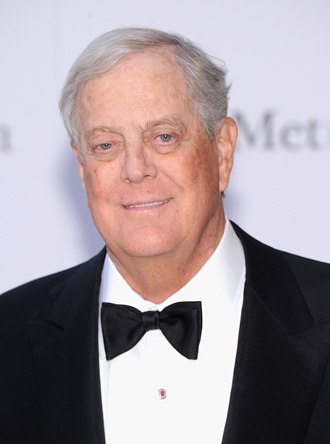
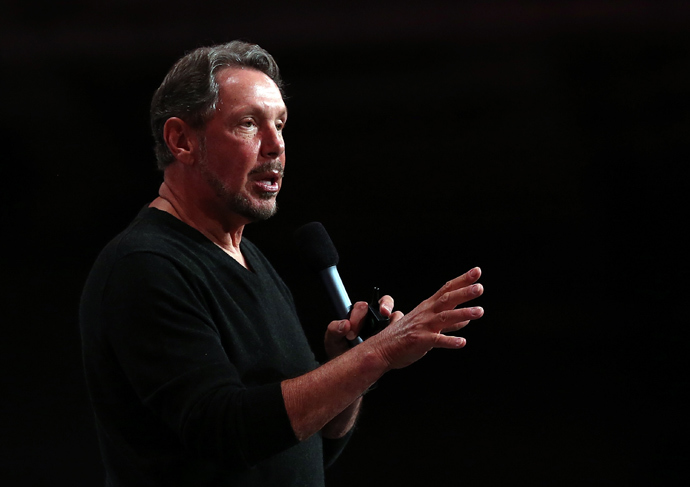
limit — in 2012 campaign. Three of the five richest Americans —
Larry Ellison, Charles Koch and David Koch — and one in every six
US billionaires gave up to the contribution limit. Their
donations totaled more than $150 million, with 56 percent going
to Republicans and 41 percent to Democrats and the rest to
independents and PACs, the study showed.
More than 80 per cent of the elite donors come from America’s
richest 10 percent of neighborhoods as measured by per capita
income. Wall Street and the financial sector dominate the ranks,
accounting for 28 percent of the donors, the study says. One
tenth of them are lawyers or lobbyists.
Less than one-in-50 of the top donors live in communities which
are predominantly African-American or Hispanic, the study showed.
Only about one quarter of the elite donors are female.
“You’re going to end up having politics be e-Bay for
millionaires and billionaires,” said Nick Nyhart, president
and chief executive of Public Campaign in a reference to the
popular online shopping service.
But former Federal Elections Commission Chairman Brad Smith said
worries about a small group of people having disproportionate
influence are unfounded.
“Historically, this is how campaigns have always been funded.
A handful of people, from their personal fortunes, kept the
revolution going,” he told Reuters.
Smith’s Center for Competitive Politics has filed an amicus brief
in the case arguing against the contribution limits.
The 2012 election cycle was the most expensive on record,
according to Washington research group The Center for Responsive
Politics. It featured more than $6 billion in spending across
federal campaigns.
Copyright: RT