Thomas Mackaman’s New Immigrants and the Radicalization of American Labor, 1914-1924
Immigration and socialist strategy in America, past and present
By
Eric London
24 October 2017
In his book New Immigrants and the Radicalization of American Labor, 1914-1924 (2017, McFarland & Company, $35), author and Wilkes-Barre, Pennsylvania Kings College professor Thomas Mackaman calls “the phenomenon of mass international immigration” the “most consciously-experienced element” of the contradiction between the growth in the productive forces and capitalist social relations based in the nation-state system.
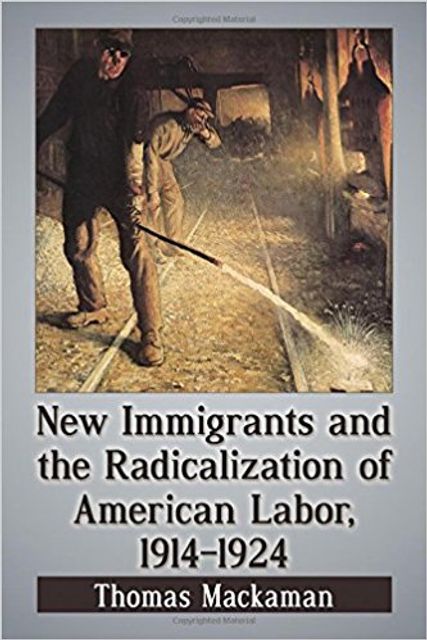
The massive influx of people from all corners of the world over the course of centuries—from 1620, really—is a critical foundation of a great American contradiction: On the one hand, a diverse working class has grown up through decades of racial, ethnic and cultural cross-pollination and carries forth the country’s democratic, egalitarian, and cosmopolitan traditions. On the other hand, the powerful xenophobic and backward tendencies promoted by the capitalist class and its state and military institutions, which increasingly dominate all aspects of political and cultural life.
Mackaman, who writes historical articles and book reviews for the World Socialist Web Site, takes up this question from the standpoint of historical materialism. He has done what historians must strive to do: hold a lantern to those overlooked but decisive moments in history the lessons of which must be assimilated to combat political reaction today. New Immigrants and the Radicalization of American Labor is not a general labor history of the 1914-24 period. Instead, the book is centered on three…