Edward Yang’s Taipei Story (1985) depicts a city of sadness and alienation
By
Fred Mazelis
18 April 2017
Taipei Story (1985), one of the early films of Edward Yang (1947-2007), a major Taiwanese director, was recently screened in the US for the first time, and the brief commercial run will be followed by its release on DVD.
Yang was one of a number of Taiwanese filmmakers who emerged in the 1980s, insisting on a more realistic and serious approach to life, as opposed to the largely escapist films of the 1970s. The new Taiwanese Cinema has been compared in some respects to Italian neorealism in the post-World War II period, and also to some of the early films of the French New Wave.
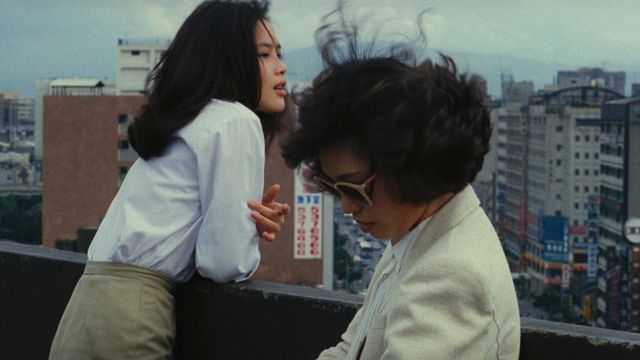
Taiwanese films in the 1980s began to grapple, at least indirectly, with the island’s history under Japanese colonial rule up until 1945, followed by the dictatorial regime of Chiang Kai-shek’s Kuomintang, after the victory of the Chinese Communist Party under Mao in 1949 led to the flight of Chiang’s government from the mainland to Taiwan. Yang himself was born in Shanghai, but grew up on Taiwan in the 1950s and 1960s, under the martial law administration of Chiang’s Nationalists.
In Taipei Story, Yang depicts a world far removed from the usual picture of Taiwan as one of the so-called Asian Tigers, characterized by uninterrupted economic growth, harmony and progress for every section of the population. The postwar decades, particularly beginning in the 1970s in Taiwan, were certainly ones of rapid industrialization, but this was accompanied by huge class conflict, dislocation and crisis.
Some of the tensions are brought to life through the two main characters in Taipei Story, Chin (Tsai Chin) and her boyfriend Lung (Hou Hsiao-hsien). Chin is a young woman…