Exclusive: The murders of Saddam Hussein and Muammar Gaddafi – after they surrendered their WMD – taught North Korea’s Kim Jong-un not to give up his, setting the stage for a dangerous crisis, explains Jonathan Marshall.
By Jonathan Marshall
When a hostile government, armed with atomic and chemical weapons and the world’s fourth largest army, declares “the situation is already on the brink of nuclear war,” Americans should sit up and take notice. Compared to North Korea, ISIS and Al Qaeda terrorists are insignificant threats to U.S. security.
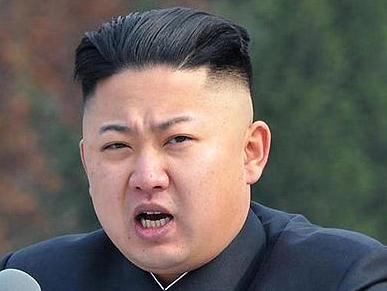
North Korean leader Kim Jong Un.
Experts agree that within a few years, at most, North Korea will have mastered the ballistic missile technology needed to destroy U.S. cities with nuclear warheads. It recently demonstrated the use of solid-fuel technology in intermediate-range missiles, and earlier this month the regime tested a sophisticated new rocket engine that even South Korea called a technical breakthrough.
The Trump administration did take notice. Although North Korea has never threatened to use nuclear weapons except in self-defense, Secretary of State Rex Tillerson warned this month that the regime must “abandon its development of nuclear weapons, ballistic missiles, and other weapons of mass destruction,” or face the threat of the United States and its allies using military force to stop it.
More than a few elite pundits have endorsed preemptive war as an option. A recent Washington Post editorial conceded that striking North Korea’s nuclear and missile facilities could trigger “a potentially catastrophic war,” but declared nonetheless that “further steps by North Korea toward deploying nuclear-armed ICBMs might compel such action.”
Last fall, the influential Council on Foreign Relations issued a major white paper calling North Korea’s weapons program “a grave and expanding threat” and asserting that Washington may have no choice but to “consider more assertive military and political actions, including those that directly threaten the existence of the [North Korean] regime and its nuclear and missile capabilities.”
Such threats are foolhardy and counterproductive.