Exclusive: In berating Russia for alleged interference in the recent U.S. election, the U.S. intelligence community ignores the extensive U.S. role in manipulating political movements around the globe, observes Jonathan Marshall.
By Jonathan Marshall
The Director of National Intelligence’s public report on alleged Russian hacking opens with a “key judgment” that “Russian efforts to influence the 2016 US presidential election represent the most recent expression of Moscow’s longstanding desire to undermine the US-led liberal democratic order.”
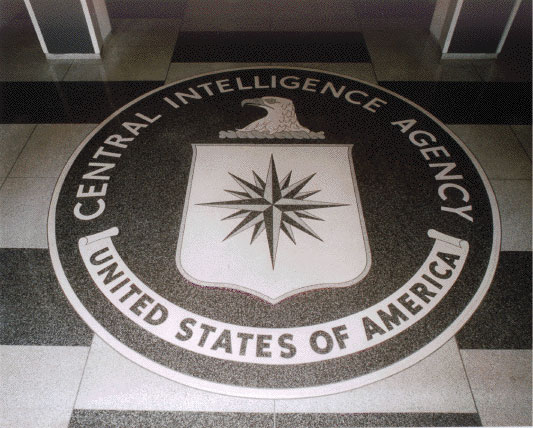
The CIA seal in the lobby of CIA headquarters in Langley, Virginia.
That’s a strong claim. The assertion suggests a fundamental and sustained Kremlin challenge to Western freedom, reminiscent of the early years of the Cold War. That such an unqualified and ideologically charged claim should lead the report speaks volumes about the politicization of the U.S. intelligence community’s leadership. That such a claim has gone mostly unchallenged, aside from Donald Trump, speaks volumes about the powerful ideological consensus in Washington for escalating political and military conflict with Russia.
Yet a recent review of relations with Russia during the Obama years by former U.S. ambassador Michael McFaul — a harsh critic of President Putin — puts the lie to the notion that Moscow has consistently sought to undermine U.S. political interests. At the same time, however, McFaul’s article illustrates the blinders shared by many American policy makers regarding the counterproductive impact on Russian behavior of repeated U.S. electoral and military interventions.
From Cooperation to Conflict
Writing for Foreign Policy, McFaul states that Russian cooperation allowed the Obama administration to negotiate the New START treaty, which slashed the number of missile launchers on each side; implement joint economic sanctions to pressure Iran into dismantling any capability of producing nuclear weapons; open up critical transportation routes for the resupply of NATO forces in Afghanistan; and arrange huge business deals for major U.S. corporations. Russia also cooperated extensively in counterterrorism and…