Being stuck in traffic is daily fare in Baghdad. While checkpoints have been dramatically reduced in recent times, and the number of concrete walls appear markedly decreased, traffic jams still defy description. It doesn’t help in the least that everyone is leaning on their horns. A half-a-million taxis roam around Baghdad spewing pollution as they look for potential fares. Proposals to counter this problem have been put forth to authorities, for example, the creation of taxi stands throughout the city. All attempts to remedy this problem seem futile.
In my travels this trip to Najaf, Karbala, Babylon, and Baghdad, the dilemma of widespread corruption is of predominant concern. Young and old, without exception, feel caught in and strangulated by this reality. One young person related how one of the bosses in their workplace substantially increased their salary by fudging figures. If someone were to speak up they would, at best, be let go.
This past Monday a woman journalist, Afrah Shawqu al Qaisi, was kidnapped from her home in the Saidiya district of Baghdad by men claiming to be security personnel. She had written an article expressing anger that armed groups could act with impunity (BBC news Dec. 27, 2016).
“How do you get up in the morning?” I gently asked a young woman from Baghdad. “How do you manage?”
“With no hope” she replied. “Each morning I get up with no hope.” Her mother is ill and worries each day that her daughter will not get home safely from work. “All Iraqis want hope,” she added, “but they are resigned to bad conditions.”
But a gentleman who was also part of this conversation responded “There is no future if we keep silent.” Although he himself lost his position for speaking out against the corruption, he fears for the future of his children if the problem is not addressed. He believes that an answer for corruption is to educate by setting an example.
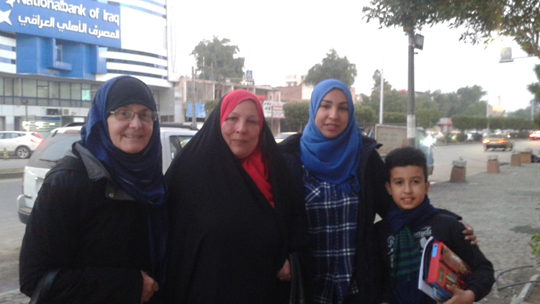
I had the great joy of visiting a family we have not seen for over three years. Kathy Kelly first introduced me to this family in 2002, and we have tried to remain in contact throughout the years. As evening descended, some of us walked the streets of the old neighborhood where this family lives and where Voices rented an apartment, in 2003-2004.
We went to the site of the horrific suicide bombing of July 3, 2016, only two blocks away from the family’s apartment as well as where the Voices apartment was. The night of the bombings was on the eve of EID, ending the fasting month of Ramadan. Many people were out doing the final shopping for this celebration. Vendors with their wares on the sidewalks, children eating ice cream in the blistering heat of summer. It was about 10:00 p.m. The blasts took the lives of over 300 people, many of them children. Over 200 more wounded. In the apartment where some of this family lives, three families lost children, mothers and fathers, sisters and brothers in this explosion. I passed two of…