Exclusive: A pushback is coming to the Internet’s success in giving the world access to diverse opinions and dissenting information. Politicians, mainstream media and technology giants are taking aim at what they call “fake news,” reports Robert Parry.
By Robert Parry
In the wake of Donald Trump’s victory, a hot new issue – raised by President Obama in an international setting on Thursday and touted on The New York Times’ front page on Friday – is the problem of “fake news” being disseminated on the Internet.
Major Internet companies, such as Google and Facebook, are being urged to censor such articles and to punish alleged violators. Also, teams of supposedly “responsible” news providers and technology giants are being assembled to police this alleged problem and decide what is true and what is not.
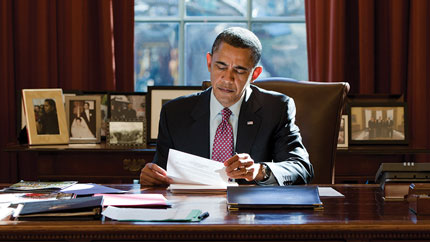
President Obama in the Oval Office.
But therein lies the more serious problem: who gets to decide what is real and what is not real? And – in an age when all sides propagate propaganda – when does conformity in support of a mainstream “truth” become censorship of reasonable skepticism?
As a journalist for more than four decades, I take seriously the profession’s responsibility to verify information as much as possible before publishing it – and as editor of Consortiumnews.com, I insist that our writers (and to the extent possible, outside commenters) back up what they say.
I personally hate “conspiracy theories” in which people speculate about a topic without real evidence and often in defiance of actual evidence. I believe in traditional journalistic standards of cross-checking data and applying common sense.
So, I am surely no fan of Internet hoaxes and baseless accusations. Yet, I also recognize that mainstream U.S. news outlets have made horrendous and wholesale factual errors, too, such as reporting in 2002-03 that Iraq had reconstituted its nuclear weapons program (The New York Times) and was hiding stockpiles of WMD (many TV and print outlets, including The Washington Post).
And, mainstream outlets getting such life-and-death stories wrong was not just a one-off affair around the Iraq invasion. At least since…