Why does the U.S. military invest so much pride in working to the point of tedium, if not exhaustion? A friend of mine, an Army major, worked at the Pentagon. He worked hard during his normal shift, after which he did what sensible people do – he went home. His co-workers, noses to the grindstone, would hassle him about leaving “early.” He’d reply, I can leave on-time because I don’t waste hours at the coffee maker or in the gym.
A caffeinated emphasis on work and fitness, another friend suggested, may be a post-Vietnam War reaction to Secretary of Defense Robert McNamara’s “managerial culture” of the 1960s. As he put it, “One easy way of showing one has the ‘right stuff’ [in the US military] is to be an exercise nut, and the penumbras of that mindset have really distorted the allocation of effort in our military.”
Two recent examples of work- and fitness-mania are Army Generals David Petraeus and Stanley McChrystal. The US media extolled them as ascetic-warriors, yet both flamed out due to serious errors in judgment (Petraeus for an affair with his biographer, with whom he illegally shared highly classified information, and McChrystal for tolerating a climate that undermined his civilian chain of command). Asceticism and sweaty fitness routines, after all, are no substitute for sound judgment and a disciplined mind.
Busy-work within the military is related to Parkinson’s Law, the idea that work expands to fill the time allotted to it. In this case, with America’s wars on terror being open-ended, or “multi-generational” as the US military puts it, the “work” on these wars will continue to expand to fill this time, with the added benefit of “validating” the extra money ($54 billion in 2017 alone) being shoveled to the Pentagon by President Trump.
Along with busy-work are the virtues of suffering, as related by a societal celebration of Navy SEALs and similar special forces (“100 men will test today/but only three win the Green Beret”). I’ve lost count of the times I’ve read articles and seen films featuring these “supermen” and their arduous training. The meme of “sweet–and public–suffering” is related to the whole “warrior” ideal (more on this later) within the US military. There’s a self-righteous shininess here, a triumph of image over substance, or image as substance. (Being physically tough is of course an asset in close quarters combat, but it’s no guarantor of strategic sense or even of common sense.)
In the past, some of America’s finest military leaders had no shame in appearing common, most famously the “shabby” Ulysses S. Grant during the US Civil War.
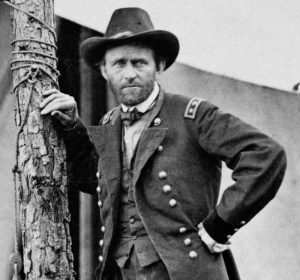
Civil War officers – true citizen-soldiers, most of them – often had unruly hair and unkempt beards, but they sure as hell fought hard and got the job done. Nowadays, as another reader put it, “there appears to be a whole lot of Army officers who think a white sidewall haircut proves…