Despite Republican pressure and State Department hawkishness, the Pentagon and the White House remain reluctant to dive deeper into the fight against the Islamic State, wishing to avoid U.S. combat casualties, writes Gareth Porter for Middle East Eye.
By Gareth Porter
The story published in the Washington Post on June 13 shows how the U.S. military service chiefs — who make decisions on war policy in light of their own institutional interests — prefer an inconclusive war with the Islamic State and existing constraints on U.S. involvement, to one with even the most U.S. limited combat role.
The resistance of top U.S. military officials to deepening U.S. military involvement in the war against the Islamic State came in the wake of a major policy debate within the Obama administration following the collapse of Iraqi military resistance in Ramadi.
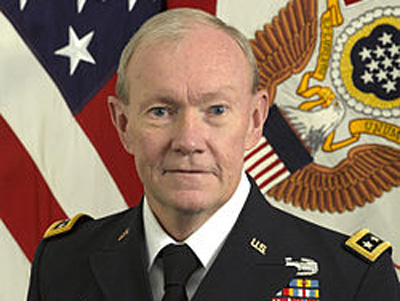
Army Gen. Martin Dempsey, Chairman of the Joint Chiefs of Staff.
In that debate, senior State Department officials reportedly supported the option of putting U.S. advisers into Iraqi combat units to direct airstrikes on Islamic State positions and sending U.S. Apache attack helicopters into urban combat situations. But the chairman of the Joint Chiefs of Staff, Gen. Martin Dempsey, joined top military commanders in opposing that option, the Post story recounted. Dempsey was said to have concluded that the potential gains from such an escalation were not worth the costs in terms of possible U.S. combat losses.
The result of that internal debate was that Obama sent 450 more advisers to Iraq, but only to bases removed from the Islamic State combat zone.
Although President Barack Obama was reported to be keeping future options open, the constraints on the U.S. military effort appear to reflect an alignment between the White House and the U.S. military establishment against a U.S. ground combat role in the battle against the Islamic State.
Obama’s concern to prevent the war against the Islamic State from involving U.S. ground combat troops was clear from the outset. The White House appeared to be guarding against pressure for a combat role by suggesting that the Islamic State is a “deeply-rooted organization” and thus…