The theatrical brutality of the Islamic State has found an audience among Muslims embittered by the West’s longstanding violence against their people, including President George W. Bush’s catastrophic war in Iraq, a dilemma that ex-CIA official Graham E. Fuller examines.
By Graham E. Fuller
The West remains transfixed with ISIS (Islamic State, Da’ish) and the debate about its character goes on. In one sense this discussion is totally understandable, given the movement’s seeming sudden appearance on the public screen not much more than a year ago (although its roots were long since there), combined with its theatrical brutality, and extreme views and actions that make it impossible to ignore.
Over time, this debate seems to center around three key issues:
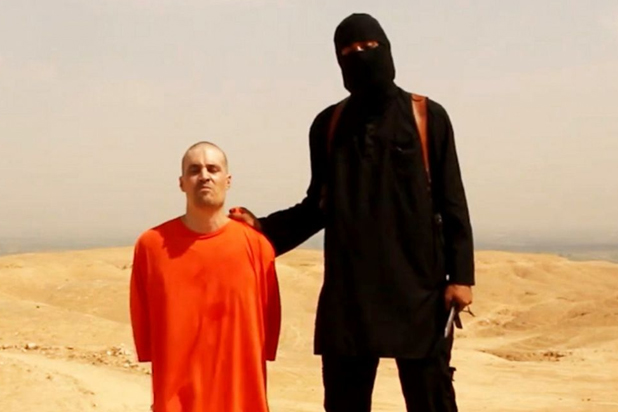
Journalist James Foley shortly before he was executed by an Islamic State operative.
—Is ISIS driven essentially by theological and religious motivations? Or pragmatic political considerations?
—Is ISIS essentially a medieval movement in character – or a “modern” movement?
—Is the movement durable? Or is it a transient, radical, ultra-reactionary spasm in the tortured evolution of Iraq – a country still coming to terms with the U.S. destruction of the country’s political and social infrastructure? And in Syria feeding off the tragic breakdown of order under Assad’s gross and brutal mishandling of early Arab Spring rioting, that invited in the subsequent wars by proxy of external players?
The classic response to many such deep-rooted questions is “all of the above.” This isn’t a cop-out answer, it simply reflects the complexity of the phenomenon we see.
ISIS is undeniably religious in that it draws on solid basis of Quranic scripture and the Hadith (the sayings and doings of the Prophet Muhammad.) It knows its theology and texts, but it is indeed highly selective in what texts it stresses–one might call it exegetical cherry-picking, something well-known in all religious traditions when scripture is invoked to political ends.
But ISIS is also undeniably political in that it has a clear political (not just moral) agenda, and a political strategy (though often improvised to meet…