The neocons who dominate Official Washington speak most loudly through their flagship newspaper, The Washington Post, almost always seeking confrontation rather than cooperation in addressing the world’s problems, such as Cold War-era hostility toward Cuba, as ex-CIA analyst Paul R. Pillar explains.
By Paul R. Pillar
A Washington Post editorial proclaims in its headline, “Failure in Cuba,” with a bank head that declares, “Mr. Obama’s opening is not leading to positive change.” One should not expect anyone, including editorial boards, who have been opposed to a policy departure to change their own position quickly. But what the Post has to say about Cuba illustrates some unfortunate tendencies that have warped policy debate on other issues as well.
The biggest problem is the failure to ask, “What’s the alternative?” And to ask as well, “Why should the alternative be expected to bring any better results, especially on the very criteria on which the policy at hand is being criticized?”
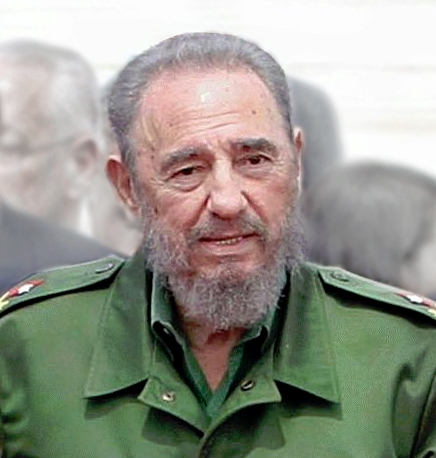
Cuban leader Fidel Castro in 2003. (Photo credit: Antonio Milena – ABr)
This failure was quite apparent in much of the opposition to the agreement to limit Iran’s nuclear program, an agreement that was clearly superior to the only real alternative, which was the absence of an agreement, on most of the very topics that opponents themselves were raising, from the size of uranium stockpiles to the frequency of international inspections.
With regard to Cuba, this deficiency of the argumentation is even more glaring because the alternative to Mr. Obama’s opening — i.e., a continued attempt to isolate and ostracize Cuba — has had an enormously long time to show what it can, or cannot do. In fact, it’s had half a century to show that; the United States instituted a full economic embargo on Cuba in 1962.
The U.S. embargo and attempted isolation of Cuba are the archetype of a failed policy. That policy has failed to bring about hoped-for change either small (the Post editorial talks about rates for wi-fi service in Cuba) or large (fundamental political change in the Castro regime) or much in between (including various human rights issues).
The inconsistency of…