On President Trump’s first full day in office, he went to the CIA and promised to back the nation’s spy agencies, but his time would be better spent downsizing the sprawling intelligence community, says Ivan Eland.
By Ivan Eland
Originating from the dispute over whether the Russians hacked the U.S. election and tried to influence it, rumblings came from the Trump transition team about reorganizing the intelligence community or parts thereof. That’s not a bad idea at all.
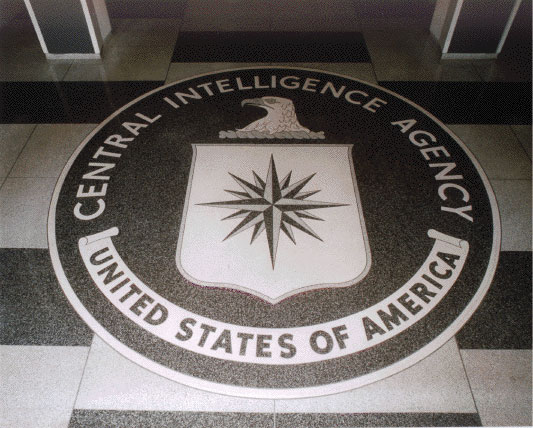
CIA seal in lobby of the spy agency’s headquarters. (U.S. government photo)
Prior to 9/11, the U.S. intelligence community had grown to 16 sprawling, secretive agencies, which stayed in their stovepipes, thus cooperating insufficiently. For example, the CIA and FBI had coordination problems that really impaired the government’s warning of the 9/11 attacks.
Logically, coordination problems tend to multiply the more intelligence agencies the government has and the bigger they get. Yet after 9/11, the George W. Bush administration and Congress instead used political logic. They wanted to be perceived as “doing something,” often anything, about the problem — no matter whether it would be effective in dealing with it, a mere placebo with no effect but looked good, or an action that was actually counterproductive.
“Reform” of the intelligence community after 9/11 fell into the last category. After a crisis, politicians often add government bureaucracy to show the public they are not letting a problem slide. In this case, they added yet a 17th intelligence agency — the Office of the Director of National Intelligence — to “coordinate” the CIA, FBI, NSA and other mostly gargantuan organizations of the 16-agency community.
Of course, one person couldn’t herd all these big cats, so the DNI had to have a new bureaucracy to allegedly tame them. Yet the DNI’s bureaucracy did not win control over the budgets of the other 16 agencies. In fact, most of the intelligence community’s budget is controlled by the massive Department of Defense — in which many of the intelligence agencies reside.
Complicated enough? In the government, like everywhere else, controlling…