Official Washington’s demonization of Vladimir Putin and the neocon “group think” about “Russian aggression” have fueled a reckless drive to move NATO forces up to Russia’s border, thus heightening risks of nuclear war and not serving real U.S. national interests, writes Jonathan Marshall.
By Jonathan Marshall
Twenty-seven years after the fall of the Berlin Wall, NATO is back flexing its muscles as if nothing had changed since the days of the Soviet Union. Defense ministers from the enlarged, 28-member organization agreed recently to strengthen the alliance’s “forward presence” in Eastern Europe. If their new policy is endorsed at a summit in Poland this summer, NATO will begin deploying thousands of troops in Poland and the Baltic states, right up against Russia’s borders.
In other words, the Western alliance will redouble its military commitment to a Polish government whose right-wing, anti-Russian, and autocratic policies are so egregious that even the stanchly neo-conservative editorial page of the Washington Post saw fit to condemn the new leaders’ encroachments on democracy and the rule of law.
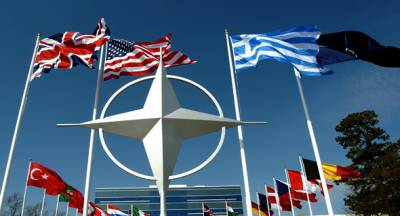
NATO headquarters in Brussels, Belgium.
Worse yet, NATO’s provocative commitment will include a potential threat to start World War III on behalf of that government. Most Americans are unaware that NATO’s policies — reaffirmed by the Obama administration — view nuclear weapons as a “core component” of the alliance’s capacity to repel even a conventional attack on one of its member states.
An accidental clash of forces, perhaps triggered by military exercises gone awry, could potentially lead NATO to use its nuclear weapons against Russian troops on Poland’s borders. Or, just as catastrophically, it could prompt Russian forces to attack NATO’s nuclear stockpiles preemptively.
Either scenario could trigger a much wider nuclear war. The British television channel BBC Two explored such a scenario, involving Latvia, in a chilling “war game” film that aired earlier this month.
Rather than let small, distant countries put U.S. national security at risk, the United States should, as an interim step short of disbanding NATO, demand…