Encouraged by the Bolsheviks, and to the dismay of the Provisional Government and its opportunist allies, factory committees are playing an ever more assertive role in the life of the former imperial capital: from controlling production to enforcing labor discipline, from organizing Red Guards to holding performances of operatic arias and Shakespeare’s dramas, from ensuring the food supply to combating drunkenness. In a congress of factory committees held this week, elected worker-deputies arriving straight from their factory benches vote overwhelmingly for Bolshevik resolutions. Workers declare that they are ready to rule without the “help” of the capitalists and landlords.
Across the ocean, the US ruling class, led by President Wilson, mobilizes millions of soldiers and the immense productive capacity of the American economy to intervene in the Great War. However, the Wilson administration confronts a powerful working-class insurgency involving the largest strike wave in American history. In response, the “liberal” Wilson administration imposes the authoritarian Espionage Act, in effect criminalizing opposition to war.
Petrograd, June 12-18 (May 30-June 5 O.S.): Conference of Petrograd Factory Committees endorses Bolshevik resolutions
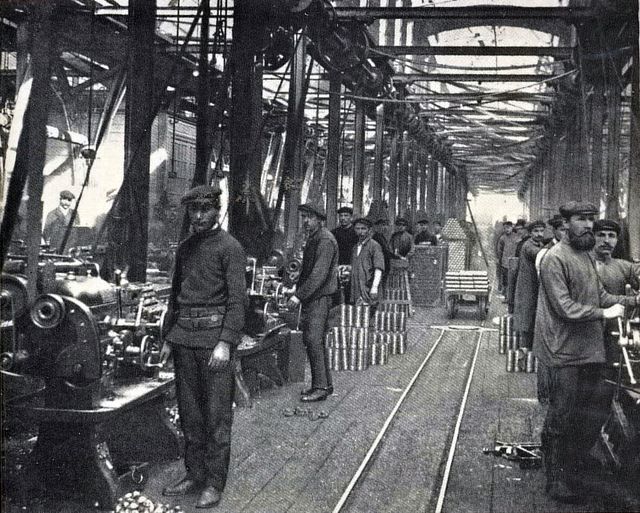
The first full conference of factory committees convenes in Tauride Palace, the same building where the Provisional Government had first assembled during the February upheavals. Encouraged by the Bolsheviks, factory committees elected from the shop floor are playing an increasingly dominant role in the life of the former tsarist capital.
Factory committees unilaterally assert control over the hiring and firing of workers, over wages, and over every aspect of production and distribution at a given workplace. When starvation threatens the capital, the factory…