The U.S. and EU may worry about Rome joining the New Silk Road, but it’s their fault, writes Andrew Spannaus.
By Andrew Spannaus
in Milan
Special to Consortium News
 Italy caused a political firestorm in mid-March when it announced that it would be joining China’s Belt and Road Initiative by signing a memorandum of understanding during Chinese President Xi Jinping’s visit to Rome from March 21 to 23.
As the first G-7 country to accept a formal agreement to participate in the initiative, also known as the New Silk Road, Italy found itself under instant pressure from both the United States and its allies in Europe, all of which worried that it represented an expansion of China’s economic foothold in the West.
The populist government led by the Five-Star Movement and the League was caught off guard by the rapid backlash, which began with a pointed tweet from the U.S. National Security Council on March 9.
Italy is a major global economy and a great investment destination. Endorsing BRI lends legitimacy to China’s predatory approach to investment and will bring no benefits to the Italian people.
— NSC (@WHNSC) March 9, 2019
Garrett Marquis, confidant of U.S. National Security Adviser John Bolton and former Security Council spokesman, followed up with a threat to stop intelligence-sharing between the two countries.
Prior to the Chinese leader’s arrival, Giancarlo Giorgetti, the secretary of the Council of Ministers, a post equivalent to chief of staff in the U.S., confirmed the signing of the memorandum to exploit new economic opportunities, but said important restrictions would be placed on cooperation with China, and that it was “ridiculous to speak of detachment from the United States.”
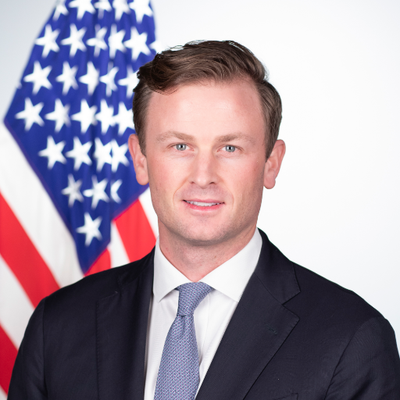
Garrett Marquis. (Twitter)
The government also took practical measures immediately, expanding the scope of the “golden power,” the government’s ability to veto economic operations that it deems a threat to national security. This is aimed in particular at protecting the telecommunications sector and the development of the 5G mobile network, an area where the Trump Administration is putting pressure on other European countries as well.
On March 25,…