Over many decades, the U.S. establishment has become practiced at putting out claims that are completely false or that leave out key details to mislead the public, but now come complaints about “fake news,” observes William Blum.
By William Blum
As the Queen in Alice in Wonderland explained, “Why, sometimes I’ve believed as many as six impossible things before breakfast.” Or as new Secretary of Defense James Mattis has said, “Since Yalta, we have a long list of times we’ve tried to engage positively with Russia. We have a relatively short list of successes in that regard.”
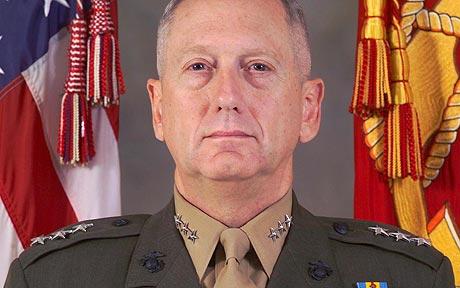
Retired Marine General James Mattis, the new Secretary of Defense.
If anyone knows where to find this long list, please send me a copy.
This delusion is repeated periodically by American military officials. A year ago, following the release of Russia’s new national security document, naming as threats both the United States and the expansion of the NATO alliance, a Pentagon spokesman declared: “They have no reason to consider us a threat. We are not looking for conflict with Russia.”
Meanwhile, in early January, the United States embarked upon its biggest military buildup in Europe since the end of the Cold War – 3,500 American soldiers landed, unloading three shiploads, with 2,500 tanks, trucks and other combat vehicles. The troops were to be deployed in Poland, Romania, Bulgaria, Germany, Hungary and across the Baltics. Lt. Gen. Frederick Hodges, commander of U.S. forces in Europe, said, “Three years after the last American tanks left the continent, we need to get them back.”
The measures, General Hodges declared, were a “response to Russia’s invasion of Ukraine and the illegal annexation of Crimea. This does not mean that there necessarily has to be a war, none of this is inevitable, but Moscow is preparing for the possibility.” (See previous paragraph.)
This January 2017 buildup, we are told, is in response to a Russian action in Crimea of March 2014. The alert reader will have noticed that critics of Russia in recent years, virtually without exception, condemn Moscow’s Crimean action and typically nothing else. Could that be because they…