

“Previous studies suggested hydraulic fracturing does not use significantly more water than other energy sources, but those findings were based only on aggregated data from the early years of fracking,” Avner Vengosh, professor of geochemistry and water quality at Duke’s Nicholas School of the Environment, said in a statement. “After more than a decade of fracking operation, we now have more years of data to draw upon from multiple verifiable sources.”
The researchers predict that spike in water use will continue to climb.
And over the next dozen years, they say the amount of water used could grow up to 50 times higher when fracking for shale gas and 20 times higher when fracking for oil — should prices rise. The paper, titled “The Intensification of the Water Footprint of Hydraulic Fracturing,” was based on a study conducted with funding from the National Science Foundation.
“Even if prices and drilling rates remain at current levels, our models still predict a large increase by 2030 in both water use and wastewater production,” said Andrew J. Kondash, a PhD student in Vengosh’s lab who was lead author of the paper.
More Water Than Oil
The shale industry has been heavily focused on ramping up the amount of fossil fuels it can pump per well by drilling longer horizontal well bores and using more sand, water, and chemicals when fracking (which raises the costs per well and, as DeSmog recently reported, raises risks of water pollution).
But the water use and wastewater production per well have been growing even faster than the per-well fossil fuel production, the researchers found, labeling the water demand and wastewater growth “much higher” than the oil or gas increases.
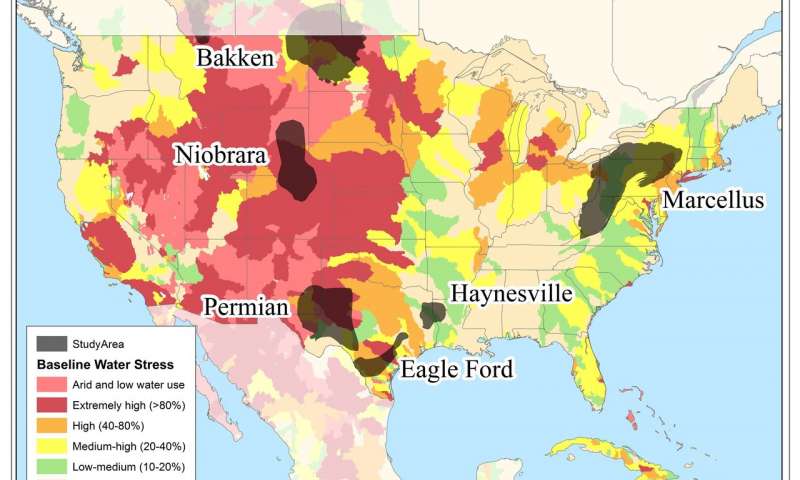
The researchers studied data from over 12,000 oil and gas wells representing each of the major…