Renowned activist and whistleblower Daniel Ellsberg, who released the Pentagon papers in the early 1970s, spoke with Radio Sputnik Wednesday about the alarming nuclear war plans the US had during the Cold War era, plans he had a role in overseeing.
“When I went to the RAND Corporation as a summer consultant in 1958, it was the height of the missile crisis, or the beginning of the missile crisis,” said Ellsberg, author of a new book, “The Doomsday Machine: Confessions of a Nuclear War Planner.”
The working theory at the time when he started at RAND was that “the Russians, who actually launched an operational ICBM in 1957 before we were able to do it, were ahead of us in nuclear intercontinental ballistic missiles,” he said.
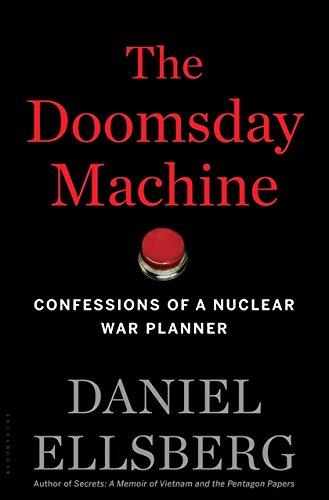
The Doomsday Machine: …
Best Price: $12.00
Buy New $14.75
(as of 09:35 EST – Details)

“By 1961, we had about 40 such missiles. The US Air Force, in particular, was projecting that [Russia] had several hundred, and the head of US Strategic Air Command, General Thomas Power, believed at that time they had 1,000. With 1,000 missiles, or even several hundred, the idea was that they could totally eliminate our ability to retaliate, and they could launch a first strike in which there would really be no retaliation against the Soviet Union,” Ellsberg explained to Loud & Clear hosts Brian Becker and John Kiriakou.
“The reality at that time, in late 1961, turned out to be that they had four ICBMs to our 40 — not several hundred and not 1,000. General Power was wrong by [a multiple of] 250 times, not 250 percent, but 250 times the number of missiles they actually had, which meant that we had a great superiority,” the author continued, noting that…