The U.S. mainstream media excludes almost all reporting and analysis that challenges the neocon/liberal-interventionist “group think” about the supposed Russian threat, but once in awhile a backhand acknowledgement of reality slips through, as Gilbert Doctorow was surprised to find.
By Gilbert Doctorow
The newest issue of Foreign Affairs continues to show a significant drop-off of professionalism in the mostly Russia-phobic essays at the flagship American magazine on international relations. Yet as low-grade as these essays may be, one of them is highly damaging to the dominant Washington narrative against Vladimir Putin’s Russia.
Emma Ashford, a visiting research fellow at the neoliberal/libertarian Cato Institute, produced an essay that is a jumble of statistics and arguments, many of them contradictory, and all of them set out without prioritization. The author clearly lacks experience and judgment. But what makes this essay newsworthy is that hit or miss the author is going up against the U.S. establishment and directly calling for an end to U.S. sanctions against Russia.
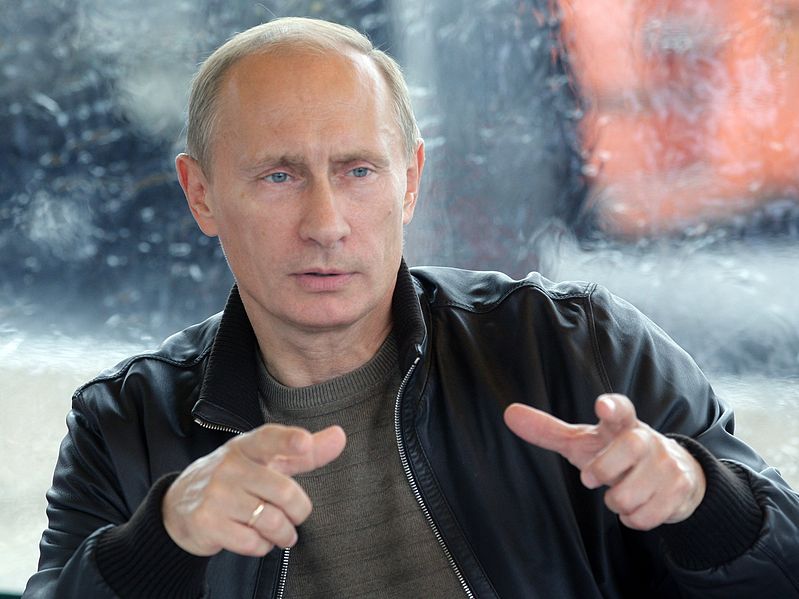
Russian President Vladimir Putin. (Russian government photo)
If I may sequence her arguments properly, the sanctions a) have been totally useless in changing Russian foreign and military policy in the directions desired by the U.S., b) they have caused very little damage to the Russian economy but much harm to immediate European and American economic interests, and c) they have caused the Russians to join with other BRICS members in creating institutions and pursuing financial practices that ultimately will undermine U.S. global hegemony, thereby compromising America’s future.
Along the way, Ashford agrees with IMF predictions that “even with continued low oil prices … growth will return to the Russian economy in 2016.” This means the sectoral prohibitions have not impaired the economy in the ways intended.
The author notes that Moscow circumvented the sanctions partly by turning to China, where it concluded a $400 billion gas deal, a 150 billion yuan currency swap and other major agreements. Moreover, the sanctions on individual targeted companies have been compensated by…