The Paris and Brussels attacks are blowback from what Islamic State terrorists see as betrayal by Western benefactors who thought using jihadists could bring “regime change” in Syria, says Pakistani analyst Nauman Sadiq.
By Nauman Sadiq
France under President Nicolas Sarkozy played a lead role in fomenting the insurgency against the Gaddafi regime in Libya in 2011, and Sarkozy’s successor, Francois Hollande, has been on the forefront of supporting the Sunni militants in Syria against the Alawite-Shi’a regime of Bashar al-Assad.
This arrangement of an informal pact between the Western powers and the Sunni jihadists of the Middle East against the Shi’a-Iranian axis had worked well – at least for the Western powers and the Sunni jihadists – up to August 2014, when Obama Administration made an about-face on its previous “regime change” policy in Syria and started conducting air strikes against one group of Sunni jihadists battling against the Assad regime, the Islamic State.
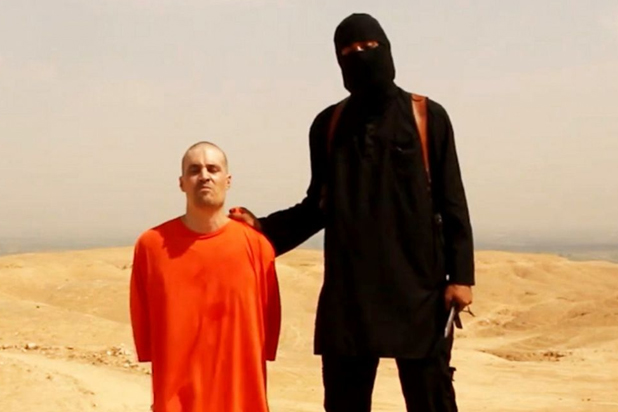
Journalist James Foley shortly before he was executed by an Islamic State operative on Aug. 19, 2014.
The Islamic State had transgressed the prescribed mission of “regime change” in Syria and overran Mosul and Anbar in Iraq. The Islamic State also threatened the capital of another steadfast American ally: Masoud Barzani’s Erbil in the oil-rich Iraqi Kurdistan — and began decapitating Western hostages.
(However, other Sunni jihadist forces, such as Al Qaeda’s Nusra Front and its close ally, Ahrar al-Sham, continued to focus on ousting Assad and thus continued receiving Western weapons, including U.S.-made TOW missiles that were crucial for last year’s successful offensive by the Saudi-backed Army of Conquest in Syria’s Idlib Province.)
After the West’s 2014 shift in the Syrian strategy (bombing Islamic State forces both in Iraq and Syria) and the Russian military intervention in 2015 on the side of Syria’s Alawite-Shi’a regime, the momentum of Sunni jihadists’ expansion in Syria stalled. Many now feel that their Western “allies” betrayed the Sunni jihadist cause, engendering bitterness and a desire for revenge.
If we look at the chain of…