Coinciding with the release of his new book 12 Rules for Life: An Antidote to Chaos, Dr. Jordan B. Peterson sat down with me earlier this week in New York City to provide powerful new insights on the historical transition from sacrifice of others to self-sacrifice. We explored how to dismantle mob violence and defeat witch hunts; his response to his recent controversial interview with Channel 4’s Cathy Newman, and how the imitation of Christ can save our civilization. Along the way, Dr. Peterson engaged synergies between his own insights and the groundbreaking anthropological work of the late René Girard and his Mimetic theory.
Interview Reflections
The ancient Greeks had a word for antidote, pharmakos, that they very much used as a cure for chaos. In the pharmakos ritual, a deformed, weak, or mentally ill person would be wined and dined as a god, paraded through the streets, and then ritually murdered outside the city. It is easy for us moderns to look back at such rituals and sneer at the primitive barbarity of it all. Yet, to the Greeks, it was very much a necessary transference of pent up all-against-all aggression and resentment before it spilled into runaway chaos. In other words, as the High Priest who led the plot to execute Jesus Caiaphas said, It is better that one man die than the whole nation perish.
Today, we see clearly that the ancient world’s antidote to chaos—collective violence against an innocent person (or at least, no more guilty than anyone else for social tensions)—is nothing more than crowd madness and scapegoating. We are able to see this because of the lens the Bible provides us after two millenia of its narrative and ethic clarifying our perspective.
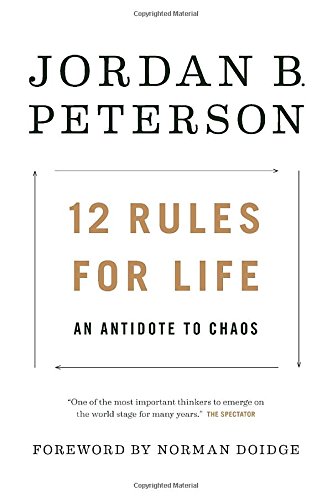
12 Rules for Life: An …
Best…