Exclusive: The usual narrative of the Greek economic tragedy is that the country is paying for its past profligacy, but there is deeper back story of political repression fueled by major powers intervening in Greece and contributing to a dysfunctional political system, recalls ex-U.S. diplomat William R. Polk.
By William R. Polk
Focusing exclusively on the monetary aspects of the Greek crisis the media misses much of what disturbs the Greeks and also what might make a solution possible.
For over half a century, Greeks have lived in perilous times. In the 1930s, they lived under a brutal dictatorship that modeled itself on Nazi Germany, employing Gestapo-like secret police and sending critics off to an island concentration camp. Then a curious thing happened: Benito Mussolini invaded the country.
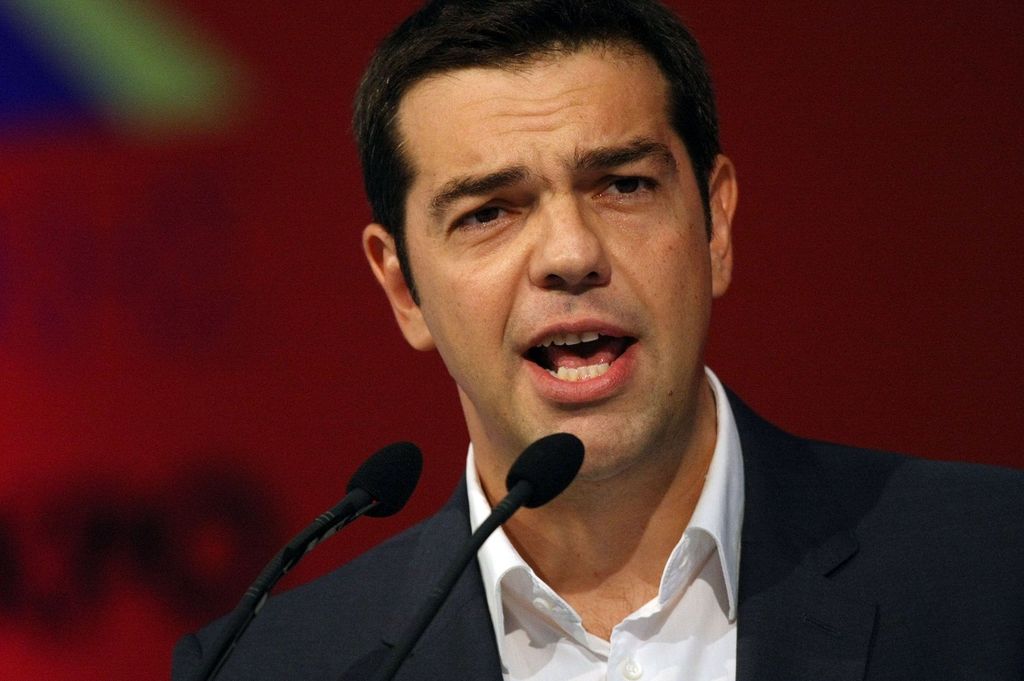
Alexis Tsipras, leader of Greece’s Syriza party. (Photo credit: FrangiscoDer)
Challenged to protect their self-respect and their country, Greeks put aside their hatred of the Metaxis dictatorship and rallied to fight the foreign invaders. The Greeks did such a good job of defending their country that Adolf Hitler had to put off his invasion of Russia to rescue the Italians. That move probably saved Josef Stalin since the delay forced the Wehrmacht to fight in Russia’s mud, snow and ice for which they had not prepared. But, ironically, it also saved the Metaxis dictatorship and the monarchy. The king and all the senior Greek officials fled to British-occupied Egypt and, as new allies, they were declared part of the “Free World.”
Meanwhile, in Greece, the Germans looted much of the industry, shipping and food stuffs. The Greeks began to starve. As Mussolini remarked, “the Germans have taken from the Greeks even their shoelaces…”
Then, the Greeks began to fight back. In October 1942, they set up a resistance movement that within two years became the largest in Europe. When France could claim less than 20,000 partisans, the Greek resistance movement had enrolled about 2 million and was holding down at least two divisions of German soldiers. And they did it without outside help.
As the war’s outcome became apparent, British Prime Minister Winston Churchill was…