Facing the Democratic “#Resistance,” President Trump has jumped into the arms of congressional Republicans and is following the old GOP pattern of tax cuts, military hikes and ballooning deficits, as Ivan Eland explains.
By Ivan Eland
The White House is now planning a humongous ten percent hike in defense spending, while making comparable deep cuts in domestic government programs—excluding big entitlement programs, such and Medicare and Social Security, which President Trump has promised not to touch.
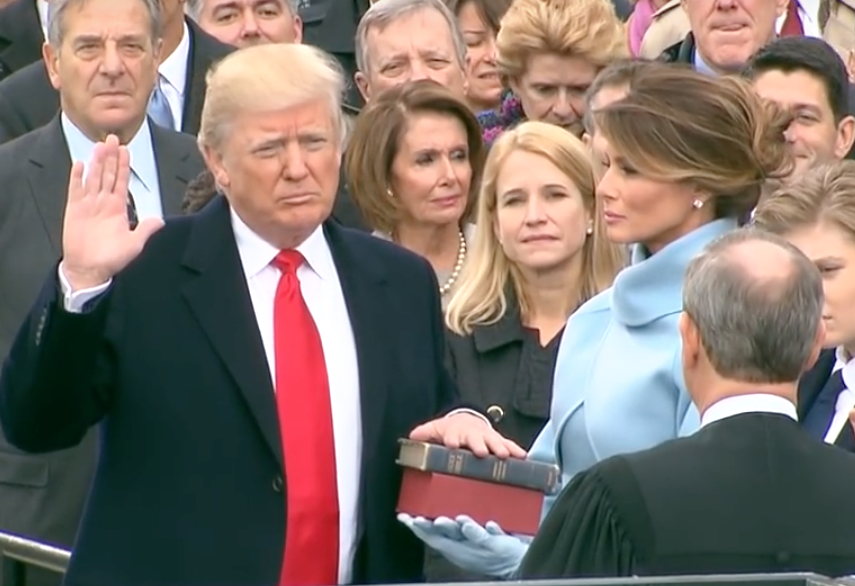
President Donald Trump being sworn in on Jan. 20, 2017. (Screen shot from Whitehouse.gov)
During his campaign, the president also talked about a massive $1 trillion infrastructure program and just recently pledged again to spend “big” on it. Finally, he plans to slash taxes significantly. Those who have been paying attention for a while could be excused for having a sense of Republican deja vu—expanding government deficits leading to rapidly expanding national debt.
When Ronald Reagan came into office in 1981, his plan included the contradictory goals of massively increasing the Pentagon’s budget, cutting income taxes substantially, and balancing the budget. However, his defense budget hikes and initial tax reductions ballooned the federal budget deficit so much, especially since proposed domestic spending cuts didn’t work out so well, that he had to raise taxes six out of eight years as president.
Thus, contrary to popular belief, Reagan had the smallest net tax reduction during his presidency of any post-World War II Republican. In the end, despite his reputation as an advocate for small government, his splurge in government spending increased the size of the federal government as a portion of GDP, and he was first among post-World War II presidents in debt accumulation as a percentage of GDP.
Similarly, George W. Bush racked up huge deficits and debt by following the Reagan precedent of instituting “fake tax cuts”–that is, tax cuts while increasing government spending, which leave budget deficits and debt for future generations to pay off with interest and may even require the inflationary printing of money to finance…