 <!–Mahdi D. Nazemroaya–>
Mahdi Darius Nazemroaya is sociologist, award-winning author, and noted geopolitical analyst.
The changing internal situation in Syria is putting a new set of plans into motion, which involve Israeli aggression against Syria.
Not only have the US and its allies been trying to militarily
buttress the retreating anti-government militias, but now they aim
to create a new phase in the conflict where states start asserting
leverage against Syria in place of the weakening anti-government
forces. In other words, external pressure is being applied to
replace the declining internal pressure.
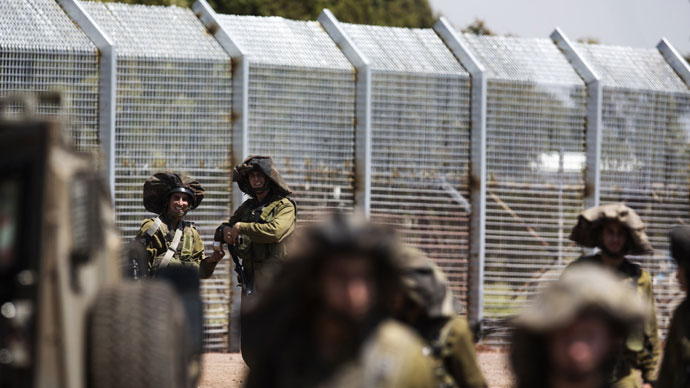
The entry of Israeli troops and the Mossad security service into
Syria with repeated Israeli air strikes via illegal use of Lebanese
airspace, on the Syrian military research facility in the town of
Jamraya clarifies Israel’s role in destabilizing Syria. Israel has
also admitted that “intense intelligence activity” is being
maintained in Syria by Israeli forces and that it is even thinking
of occupying more Syrian territory as a new “buffer zone.” Fox
News, which is openly biased in favour of Israel, has released a
video of Israeli troops illegally crossing the Syrian border.
Reports have also come out of Syria that an Israeli military
vehicle was seized during fighting with anti-government forces in
the town of Qusair, inside Syrian territory.

Epicentre of a Regional War?
The events involving Israel are part of the trend to expand and
internationalize the Syrian conflict by creating violent
spillovers. In the words of one British newspaper: “If anyone had doubts that
Syria’s gruesome [conflict] is already spinning into a wider Middle
East conflict, [Israeli attacks in] the past few days should have
laid them to rest.” Turkey and Israel, like the Hashemite Kingdom
of Jordan, are themselves undeniably involved in the fighting as
aggressors against Syria. Turkey has conducted reconnaissance work
for NATO in Syria, it hosts NATO Patriot missiles aimed at Syria
(with the possibility of deployment against Iran and Russia), and
openly aids the anti-government forces. Israel has been the more
discreet of the two, but it has sent the Mossad into Syria and
built facilities in the Golan Heights to aid the insurgency. Both
countries have continuously threatened Syria and pushed for NATO
intervention and no-fly zones. All the while, the US has been
prodding Ankara and Tel Aviv to continue with the war footing and
has even examined selling Turkey natural gas from the US to
economically de-link the Turks from Syria’s allies Russia and Iran
and the leverage they have over Turkey.
In reality, Syria is merely one front in a broader hegemonic
struggle that spans from NATO-garrisoned Afghanistan and Iraq to
Lebanon and the Gaza Strip. The Lebanese Republic looks like the
next target for destabilization in the broader struggle that Syria
is a front in. There are fears that there may be a parliamentary
and governmental vacuum in Beirut as a result of the spillover from
Syria that could be capitalized to ignite another Lebanese internal
conflict. Tensions between the pro-Syrian Hezbollah-led March 8
Alliance and the anti-Syrian Hariri-led March 14 Alliance have been
building as a result of the conflict in Syria. Both sides in
Lebanon are involved in the Syrian conflict.
Lebanon has been dragged into the conflict, because Syria is
being used as an arena for striking and crippling Hezbollah and the
March 8 Alliance with the aim of turning Lebanon into a colony
controlled by Washington and its allies that will be run by the
corrupt Hariri-led March 12 Alliance. Hezbollah has begun fighting
on the Syrian side of the Lebanese-Syrian border whereas the March
12 Alliance began sending weapons and funding to the insurgents
from the very start of the upheaval in 2011. After months of lying,
the Hariri camp in Lebanon was exposed in November 2012 when
evidence was provided that proved Hariri’s Future Party member
Okab Sakr was behind weapons shipments destined for
the Syrian insurgents in coordination with Turkish and Qatari
intelligence officers.
In regards to Hezbollah, its members began fighting on the
Syrian side of the border under their own initiative. Then the
insurgents in Syria began launching attacks on Shiite Muslim villages on
both sides of the Lebanese-Syrian border. The anti-government
forces in Syria began doing everything they could to provoke
Hezbollah into retaliating, including kidnapping Lebanese travellers and, in 2012,
deliberately attacking Shiite Muslim shrines in Syria. After the
mosque where Hujr ibn Adi Al-Kindi and his son were buried in Syria
was desecrated by the insurgents, Hezbollah and Iraqi Shia Muslims
were drawn further into the Syrian conflict to protect the Sayyidah
Zaynab Mosque.
Not only have sacrosanct buildings revered by Shiite Muslims
been targeted, Sunni Muslim leaders have been murdered and
Christian churches have also been desecrated in
Syria. Christian spiritual leaders have also been targeted.
Iranian officials have pointed the finger at the US, Israel, and
the Saudis for the desecration of these Syrian holy sites and the
targeting of minorities.
While the majority of Syria’s Arab population and Sunni Muslim
population support the Syrian government against the insurgents and
their foreign backers, there is a real push to draw the Syria
conflict along the sectarian lines of Arabs versus non-Arabs and
Sunni Muslims versus Alawites and the Shiite Muslim community.
Various minority groups have been systematically targeted. The
Druze, Maronite Catholic Christians, Melkite Greek Catholic
Christians, Greek Orthodox Christians, Armenian Orthodox
Christians, Syriac Orthodox Christians, Alawites, and Twelver
(Jaffari) Shiite Muslims all have all been targeted as religious
minorities. Armenians, Assyrians, Kurds, and Turkoman have been
targeted as ethnic minorities.
Iraq knows all too well about the nightmare that Syria is
facing. Many of the insurgents in Syria are from Iraq and linked to
sectors of Al-Anbar’s Awakening Movement (or the Sons of Iraq
Movement), which was tied to Al-Qaeda and began to collaborate and receive funding from the United
States during the Anglo-American occupation. If these militants
succeed in Syria, they will eventually return to Iraq and ignite an
insurgency against the federal government in Baghdad too.
On the other hand, the conflict in Syria has been the catalyst
for a strengthening Russia position in the Middle East and the
forging of new ties between Hezbollah and Moscow. In October 2011, Hezbollah sent a delegation to Russia
to discuss the fighting in Syria. It is clear now that Moscow is
coordinating with the Iranian-led “Axis of Resistance” or
Resistance Bloc that includes Syria, Hezbollah, Michel Aoun, and
the Palestinians. After holding discussions about Syria in Tehran,
Russian Deputy Foreign Minister Mikhail Bogdanov’s April 26 visit
to Beirut, during the absence of a formal Lebanese government,
embodies this strategic cooperation. Bogdanov’s trip to Lebanon is
important, because it was a clear indicator that Russia has forged
direct strategic ties with Hezbollah and recognizes the Resistance
Bloc as an extension of its own security sphere.
Like Hezbollah, Iran is also a target of the conflict in Syria.
This is one of the reasons that Hassan Nasrallah, the
secretary-general of Hezbollah, made a rare visit to Tehran on
April 29 (after meeting with Mikhail Bogdanov) to discuss a common
front with the Iranians. The same group of countries targeting
Syria and Hezbollah are also targeting Iran. It has been reported
that “Israel is preparing to agree a defence co-operation deal with
Turkey and three Arab states aimed at setting up an early warning
system to detect Iranian ballistic missiles.” Uzi
Mahnaimi has explained that this “proposal, referred to by the
diplomats involved as ‘4+1’, may eventually lead to technicians
from Turkey, Saudi Arabia, the United Arab Emirates and Jordan
working alongside Israelis in joint command-and-control centres.”
Just as Hezbollah has confirmed that it is involved in the
fighting in Syria and promised that Syria’s “real friends”–meaning
Iran, Russia, China, and the March 8 Alliance in Lebanon–will not
let Syria fall into the hands of the US and its allies, Tehran has
told Washington and its allies several times that Syria is the
Iranian “redline.” Iranian military commanders have said that
Syria is an extension of Iran’s own security
parameters. What’s more, the Iranians have openly admitted that
they are aiding their Syrian allies and willing to provide further
training and assistance to Damascus, as well as intervene
militarily to help Syria if the US and its allies attack.
Syria and the Project for the “New Middle East”
What happens in Syria will have major regional and global
repercussions. Attempts to create a sectarian war are part of the
logic of divide and conquer. This is part of the US and Israel
“constructive chaos” strategy to fragment and re-sculpt the
entire Middle East along the lines of the Yinon
Plan and rehashed versions of it. Iran’s Foreign Minister
Salehi has warned that if the conflict in Syria is not ended that
it will result in the partition of Syria and the spreading of the
conflict throughout the Middle East. The same warnings have been
echoing from Russia, Syria, and other places. While the Chinese
have kept mostly silent, they realize that the siege of Syria is part of the Pentagon’s roadmap against
China. Days before Benjamin Netanyahu was scheduled to arrive
in Beijing, CNN even reported that “China’s foreign ministry
spokesman suggested Netanyahu may get a tough, unwelcome message
from his Chinese hosts” due to the Israeli strikes on Jamraya.
The situation in Syria is akin to the situation that was created
in Iraq during the Anglo-American occupation. It is a continuation
of the same process of destabilization that wants to tear the
pluralistic fabric of the ancient societies of the Middle East. It
is this project that has driven the Christians out of Iraq and
destroyed the mixed neighbourhoods of Shiites and Sunnis and Arabs
and Kurds.
Contemporary Iraq suffers from the virtual realization of both
the Yinon Plan and the Biden Plan, which say Iraq should be divided
into three sectors. The Kurdistan Regional Government, which is
openly working against the sovereignty of Iraq and aligned with
Turkey and Israel, is at loggerheads with the federal government
Baghdad and has de facto independence. The corrupt leaders of the
Kurdistan Regional Government have prevented the Iraqi military
from manning certain Iraqi-Syrian border crossings in the north
used by the insurgents in Syria and they have allowed the Israelis
to use Iraqi Kurdistan as a base of operations against Syria and
Iran.
Like they did in Iraq during the chaos, the US and its allies
are using money and sectarianism. The insurgency in Syria is being
financed by the US and members of its anti-Syrian coalition, such
as the Saudis and Qataris. In addition, groups opposed to the
Syrian government are being financially co-opted by the Syrian
branch of the Muslim Brotherhood with the foreign funding it has
been receiving to topple the Syrian government. One Damascene
opposition figure has admitted that the Muslim Brotherhood “just
asked us how much we needed, we told them, and they immediately
sent that amount.” Moreover, foreign funds were not
only used to pay what he needed, but the Muslim Brotherhood told
activists and government opponents that “they should take one per
cent of the funding for their personal salaries.”

There should be no doubt that the insurgents in Syria and Israel
are on the same side. The anti-government forces in Syria have even
thanked Israel on several occasions and were jubilant about the Israeli attacks on Jamraya.
As a result of the embarrassing attention they received for being
aligned with Israel, the insurgents in Syria have changed gears and
tried to save face by ridiculously claiming that Israel is secretly
aligned with Bashar Al-Assad, Iran, and Hezbollah.
It says something of significance when Israeli officials say
that they do not see an Al-Qaeda takeover of Syria as a threat to
Tel Aviv. Amos Gilad, an Israeli military official, has
stated very frankly Al-Qaeda is no concern for Israel and “although
[its] elements are gaining a foothold in Syria amidst the chaos of
the country’s civil war, the Syria-Iran-Hezbollah axis which
preceded it [is] far more threatening” for Israel.
In reality, the governments of Israel, Turkey, Saudi Arabia,
Qatar, the United Kingdom, France, and the United States are in
league with the supposed terrorists that some of them say they
oppose or are fighting. They have been using the groups that have
been designated as branches of Al-Qaeda as foot soldiers on the
ground in Syria and Libya. If successful, they will eventually try
to use the same militants to ignite insurgencies in places like the
Russia’s North Caucasian Federal District.
While Lebanon, Iran, Iraq, and the Palestinians are being
targeted through the destabilization of Syria, the countries
targeting Syria are also preparing the flames that they themselves
will also burn in if America’s “New Middle East” comes into fruition through a
baptism of fire and blood. Syrian instability and a possible
partition of Syria could ignite a civil war in Turkey and even
result in the partition of Turkey itself. Jordan too will be
consumed by the flames that are burning Syria. If Syria collapses,
the Iranians have delivered an unequivocal warning to King Abdullah
II of Jordan about his future. Tehran’s message to Abdullah II, a
despot who has foreigners arrested merely for talking negatively
about him, but is invited to the White House to talk about
democracy in Syria, is simple: “You must be aware that if the US
decides to go to war with Syria, your kingdom
will go in the process.” Nor will Saudi Arabia and Qatar be
spared from the flames that the House of Saud and the rival House
of Al-Thani are stoking for the Obama Administration and Israel in
their Syrian gambit that could eventually ignite a major all-out
war in the Middle East and beyond.
The statements, views and opinions expressed in this column are solely those of the author and do not necessarily represent those of RT.
This article originally appeared on : RT