The major U.S. news media has consistently slanted its coverage of the Syrian conflict to back neocon desires for more U.S. military intervention in support of “regime change,” Gareth Porter wrote for FAIR.
By Gareth Porter
Coverage of the breakdown of the partial ceasefire in Syria illustrated the main way corporate news media distort public understanding of a major foreign policy story. The problem is not that the key events in the story are entirely unreported, but that they were downplayed and quickly forgotten in the media’s embrace of themes with which they were more comfortable.
In this case, the one key event was the major offensive launched in early April by Al Nusra Front — the Al Qaeda franchise in Syria — alongside U.S.-backed armed opposition groups. This offensive was mentioned in at least two “quality” U.S. newspapers. Their readers, however, would not have read that it was that offensive that broke the back of the partial ceasefire.
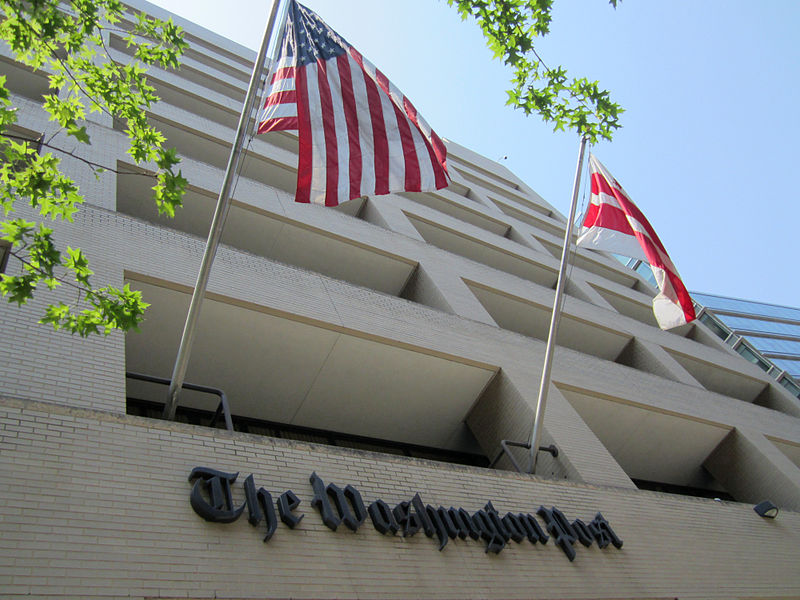
The Washington Post building. (Photo credit: Daniel X. O’Neil)
On the contrary, they would have gotten the clear impression from following the major newspapers’ coverage that systematic violations by the Assad government doomed the ceasefire from the beginning.
Corporate media heralded the ceasefire agreement when it was negotiated by the United States and Russia in February, with the Los Angeles Times (2/3/16) calling it “the most determined diplomatic push to date aimed at ending the nation’s almost five-year conflict.” The “partial cessation of hostilities” was to apply between the Syrian regime and the non-jihadist forces, but not to the regime’s war with Nusra and with ISIS.
The clear implication was that the U.S.-supported non-jihadist opposition forces would have to separate themselves from Nusra, or else they would be legitimate targets for airstrikes.
But the relationship between the CIA-backed armed opposition to Assad and the jihadist Nusra Front was an issue that major U.S. newspapers had already found very difficult to cover (FAIR.org, 3/21/16).
U.S. Syria policy has been dependent on the military potential of the Nusra Front (and its close ally, Ahrar al…