Exclusive: When a severe drought hit Syria a decade ago, the U.S. government chose not to help but rather exploit the environmental crisis to force a “regime change,” a decision that contributed to a humanitarian crisis, writes Jonathan Marshall.
By Jonathan Marshall
For Republican presidential front-runner Donald Trump, the only thing to fear about climate change is fear itself. As he declared in a 2014 tweet, “This very expensive GLOBAL WARMING bullshit has got to stop.” Perhaps taking his words to heart, the four major U.S. TV networks cut their already minimal coverage of climate issues to a combined total of just two-and-a-half hours for all of 2015.
So it should come as little surprise that few media bothered to cover a frightening new report this month by Germany’s prestigious Max Planck Institute, which concluded that searing temperatures in the Middle East and North Africa could render much of the region uninhabitable by the end of this century and create a “climate exodus” that dwarfs today’s mass migration of refugees from the area.
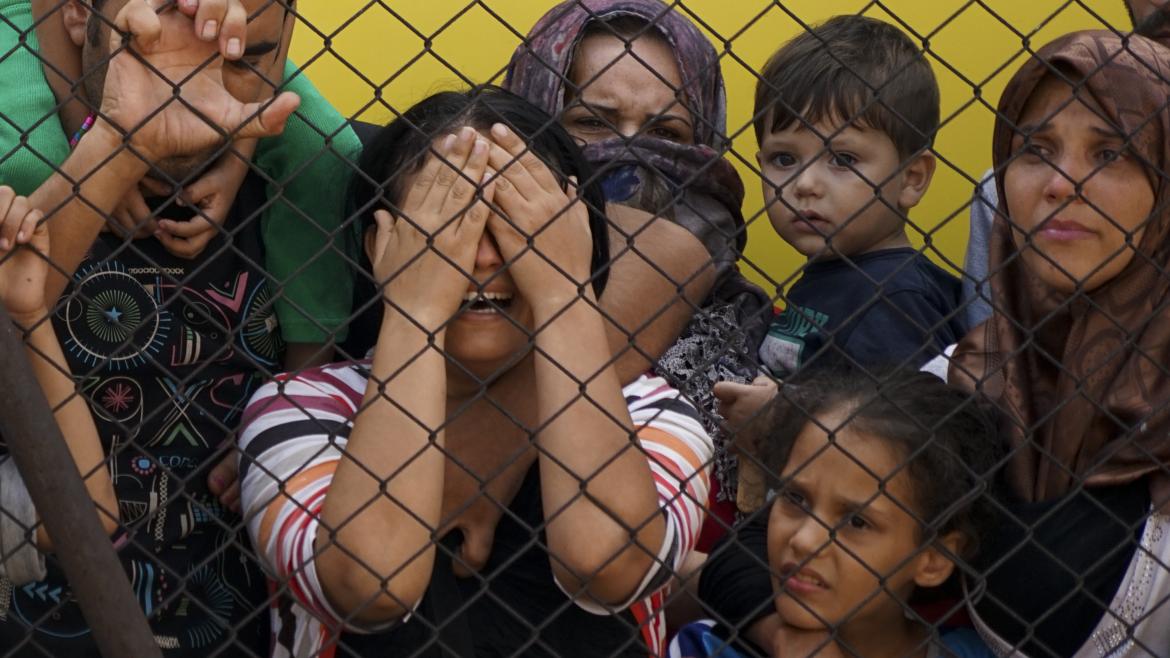
Syrian women and children refugees at Budapest railway station. (Photo from Wikipedia)
But we don’t have to wait decades to see the explosive impact of climate change on the Middle East. For the past decade, scientists, humanitarian workers and U.S. diplomats have watched as devastating heat and drought disrupted Syria, causing hunger, unemployment, internal migration and civil unrest.
Aggravated by government mistakes and foreign intervention, those ills helped trigger the tragic violence that has killed nearly half a million Syrians and displaced more than half its population.
As a study published last year by the National Academy of Sciences declared, “Before the Syrian uprising that began in 2011, the greater Fertile Crescent experienced the most severe drought in the instrumental record. For Syria . . . the drought had a catalytic effect, contributing to political unrest.”
Thanks to documents released by Wikileaks, we know that none of this came as any surprise to Washington.
In August 2006, the U.S. embassy in Damascus reported that Syria faced a “water crunch” that could…